A high-seas adventure exploring the 'bossy' sounds of R-controlled vowels 'ar' and 'or'. Students learn to identify, decode, and encode these unique vowel teams through interactive games and decodable stories.
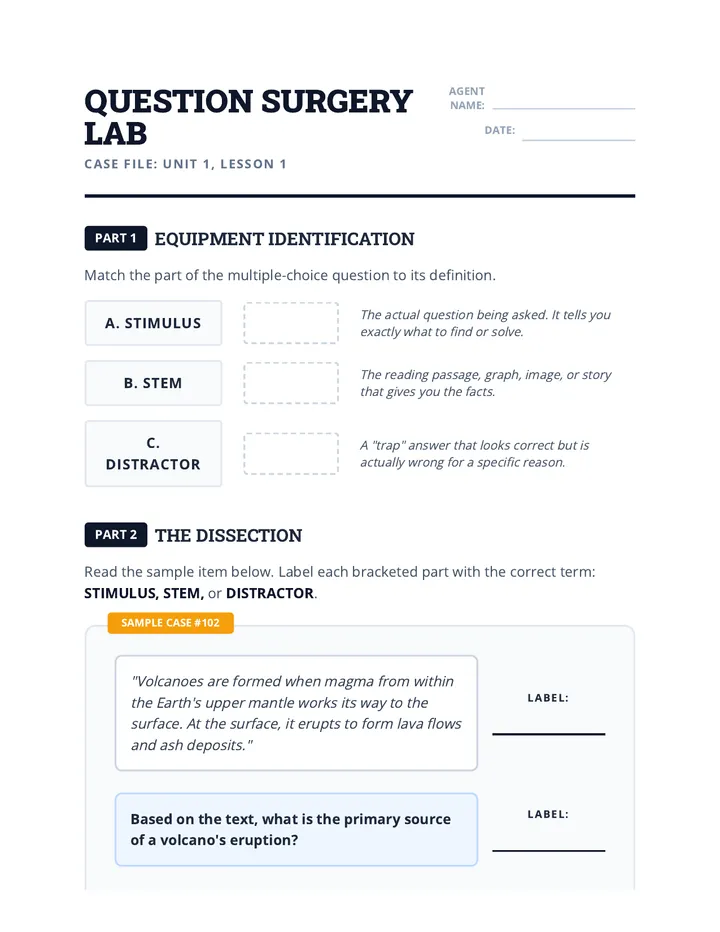
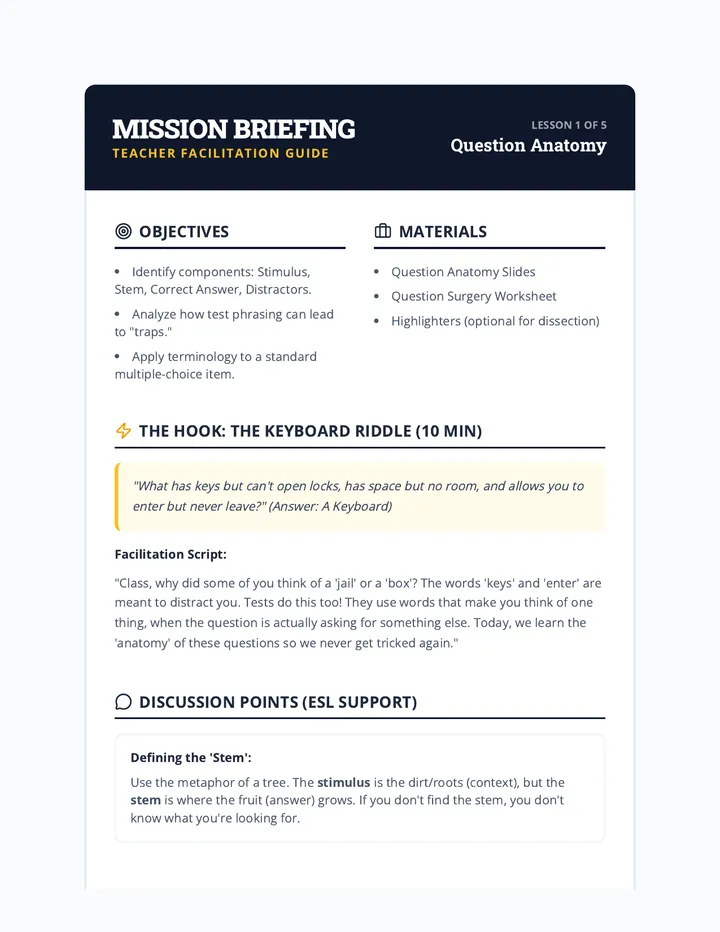
This sequence targets the analytical skills required to dismantle multiple-choice questions for 7th Grade ESL learners. Students move from understanding the anatomy of a question to identifying common logical fallacies and 'trap' answers, utilizing game-based learning and deductive reasoning.
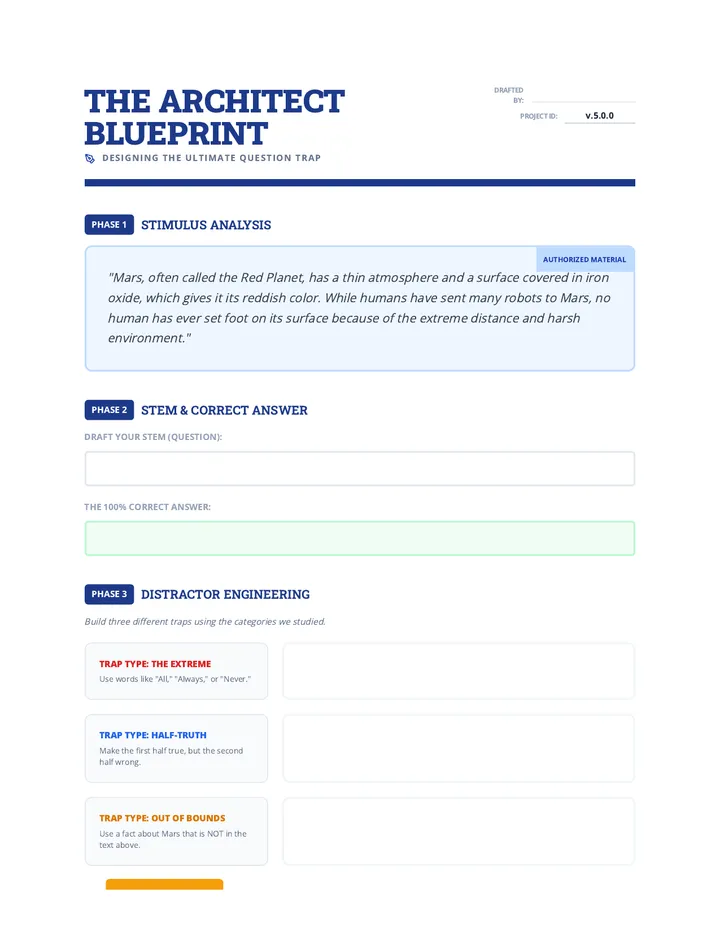
Students switch roles and become the test-makers. They write their own multiple-choice questions based on a shared text, intentionally creating plausible distractors.
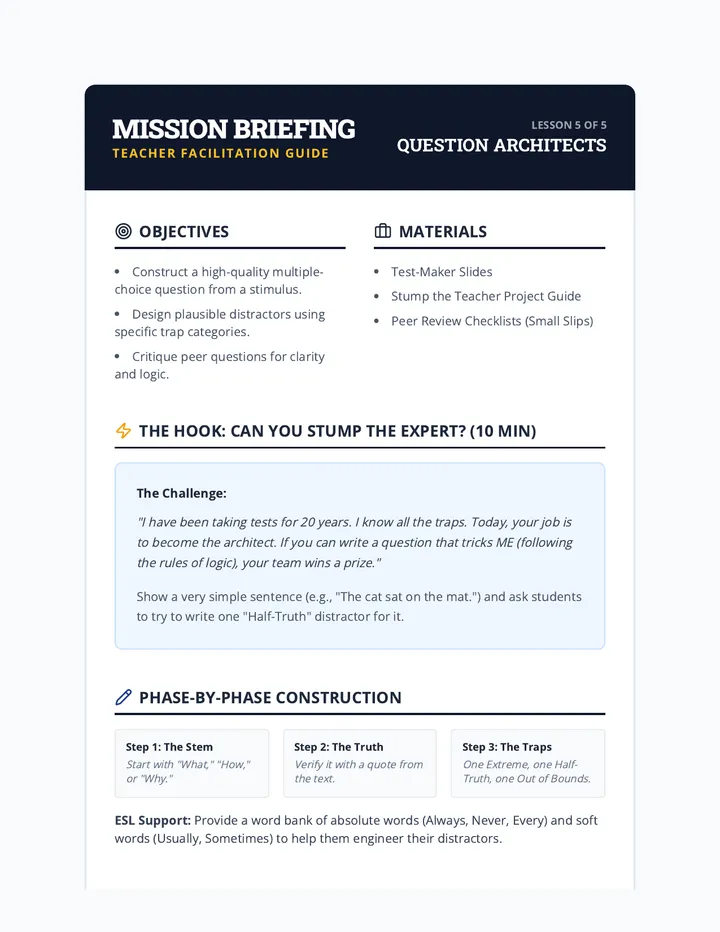
Facilitation guide for Lesson 5, including the "Stump the Expert" hook, phase-by-phase question construction steps, and a peer review protocol.
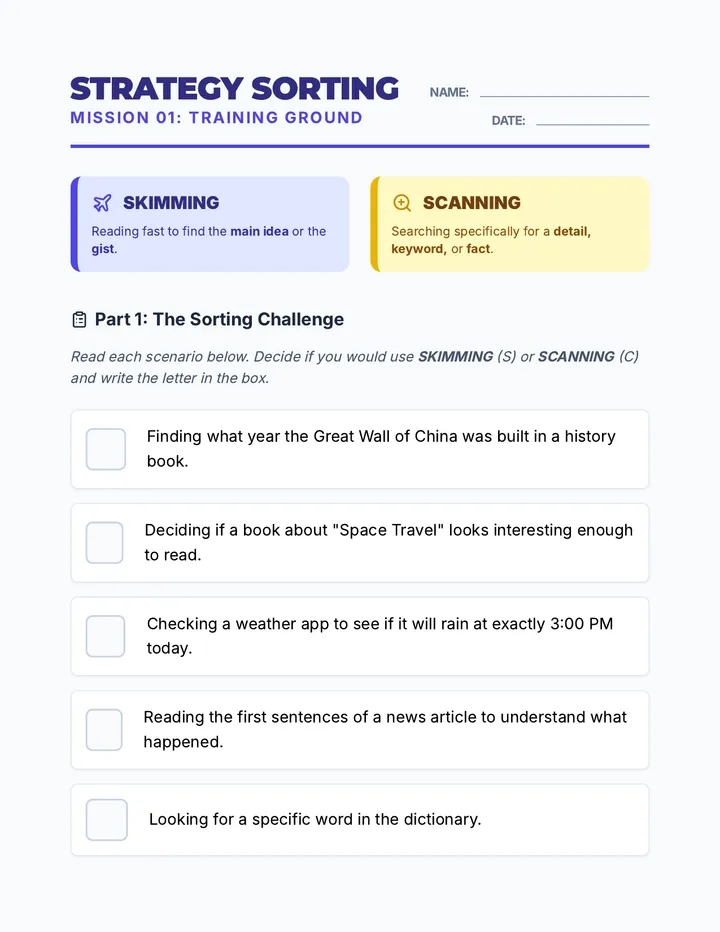
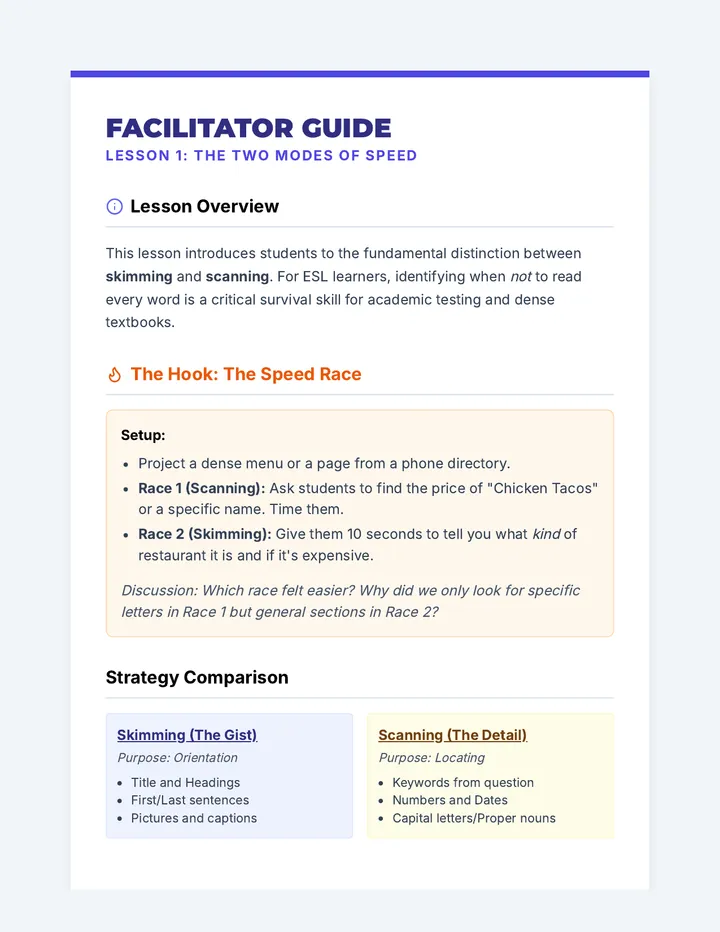
This sequence teaches 6th-grade ESL students the essential test-taking strategies of skimming and scanning. Through a 'Speed Scout' academy theme, students learn to navigate academic texts efficiently, identifying when to look for the 'gist' versus specific details to save time and improve accuracy on standardized tests.
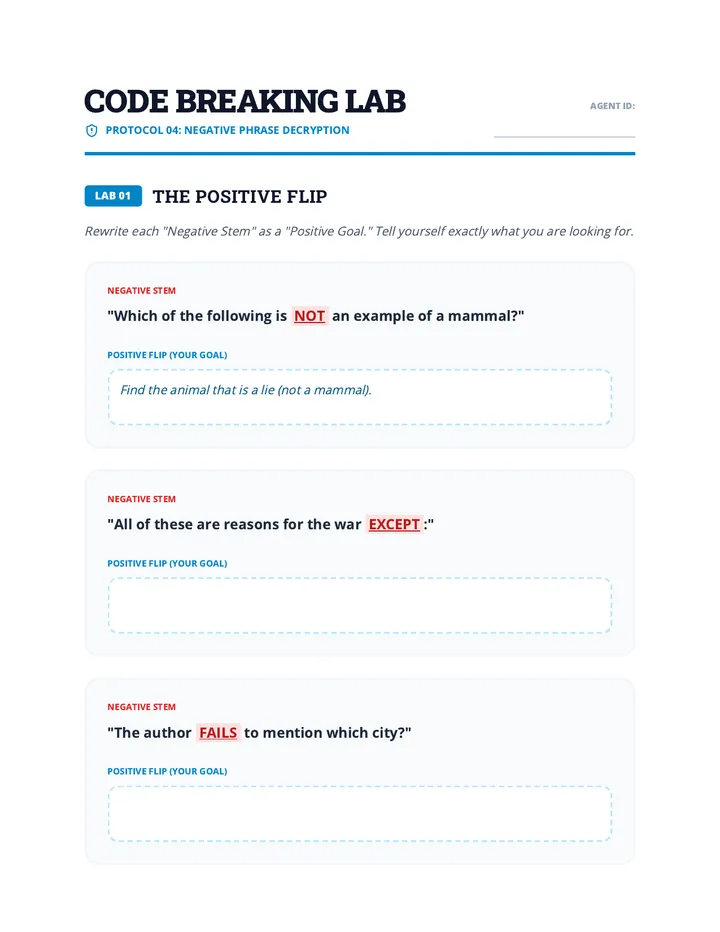
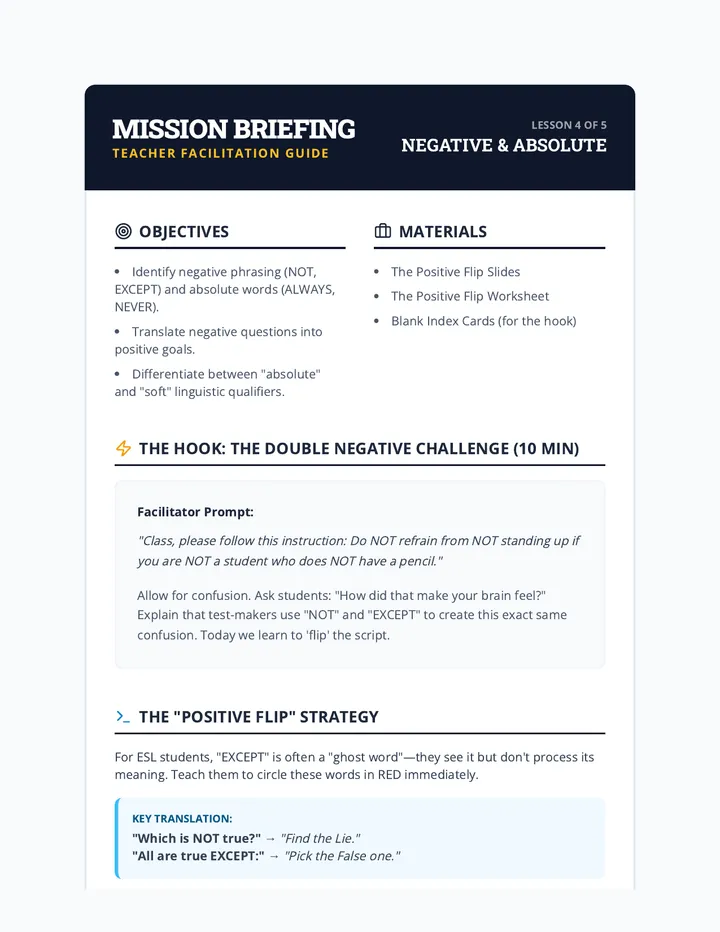
Students specifically target questions using words like 'NOT,' 'EXCEPT,' 'ALWAYS,' or 'NEVER.' They rewrite these questions in positive terms to clarify meaning.
Facilitation guide for Lesson 4, including the "Double Negative Instructions" hook, translation strategies for "NOT" and "EXCEPT," and an answer key for the Positive Flip worksheet.
A 2nd-grade ESL sequence focused on academic discourse, teaching students to state opinions, cite evidence, and engage in respectful debate using structured sentence frames.
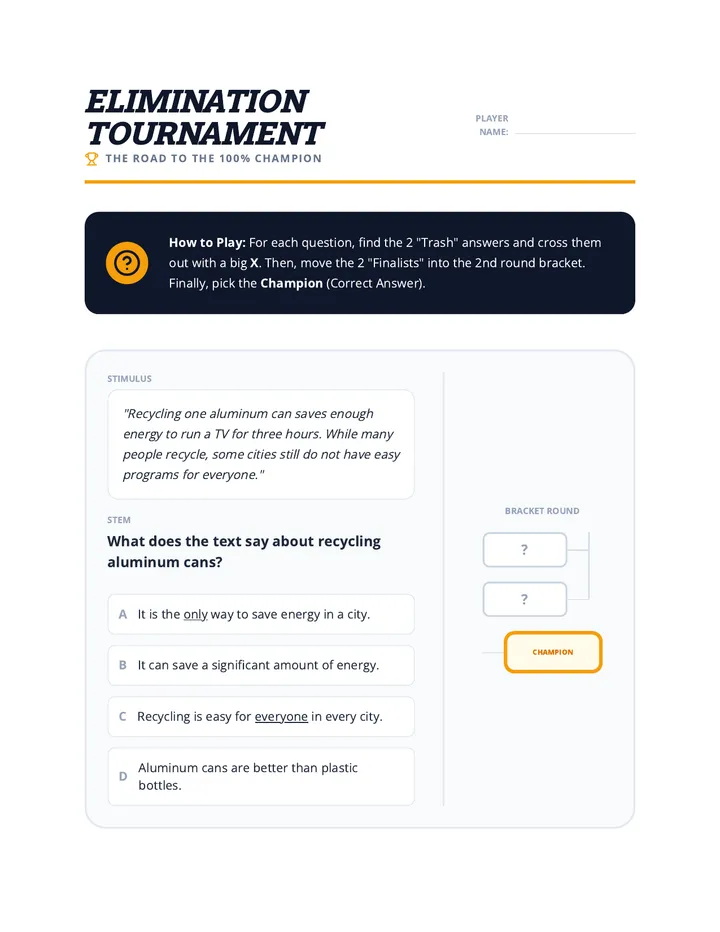
Students practice the physical and mental habit of crossing out clearly wrong answers to increase their probability of success. The lesson focuses on narrowing choices down to two options and using text evidence to make the final selection.
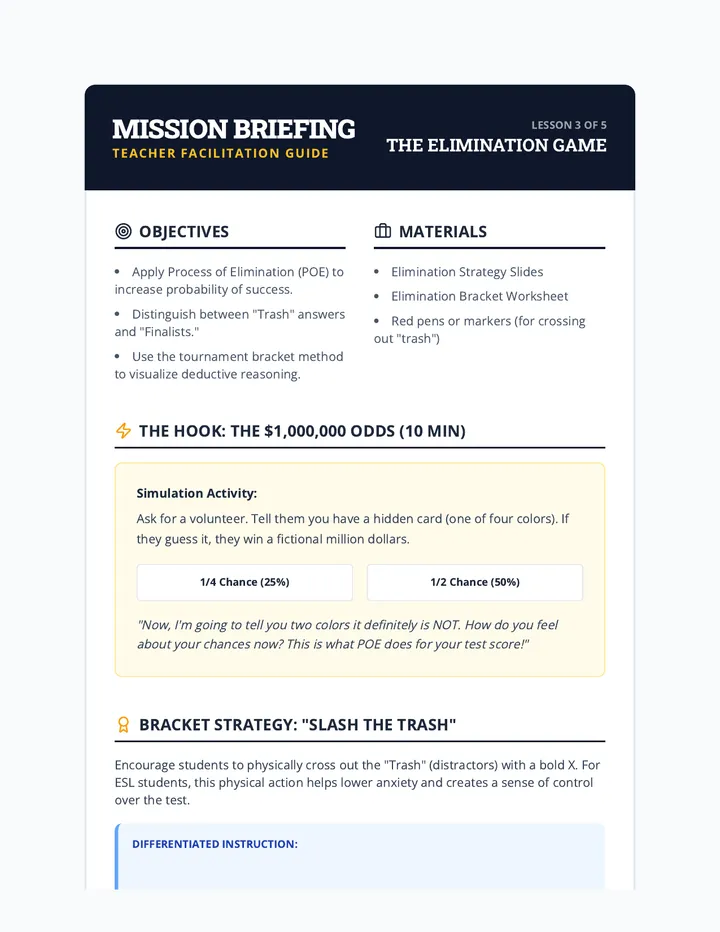
Facilitation guide for Lesson 3, including the odds simulation hook, the "Slash the Trash" technique, and an answer key for the Elimination Bracket worksheet.
A 5-lesson sequence for 2nd Grade ESL students focusing on the precise academic language needed for scientific observation, classification, and description. Students move from basic sensory adjectives to sophisticated properties of materials and comparative analysis.
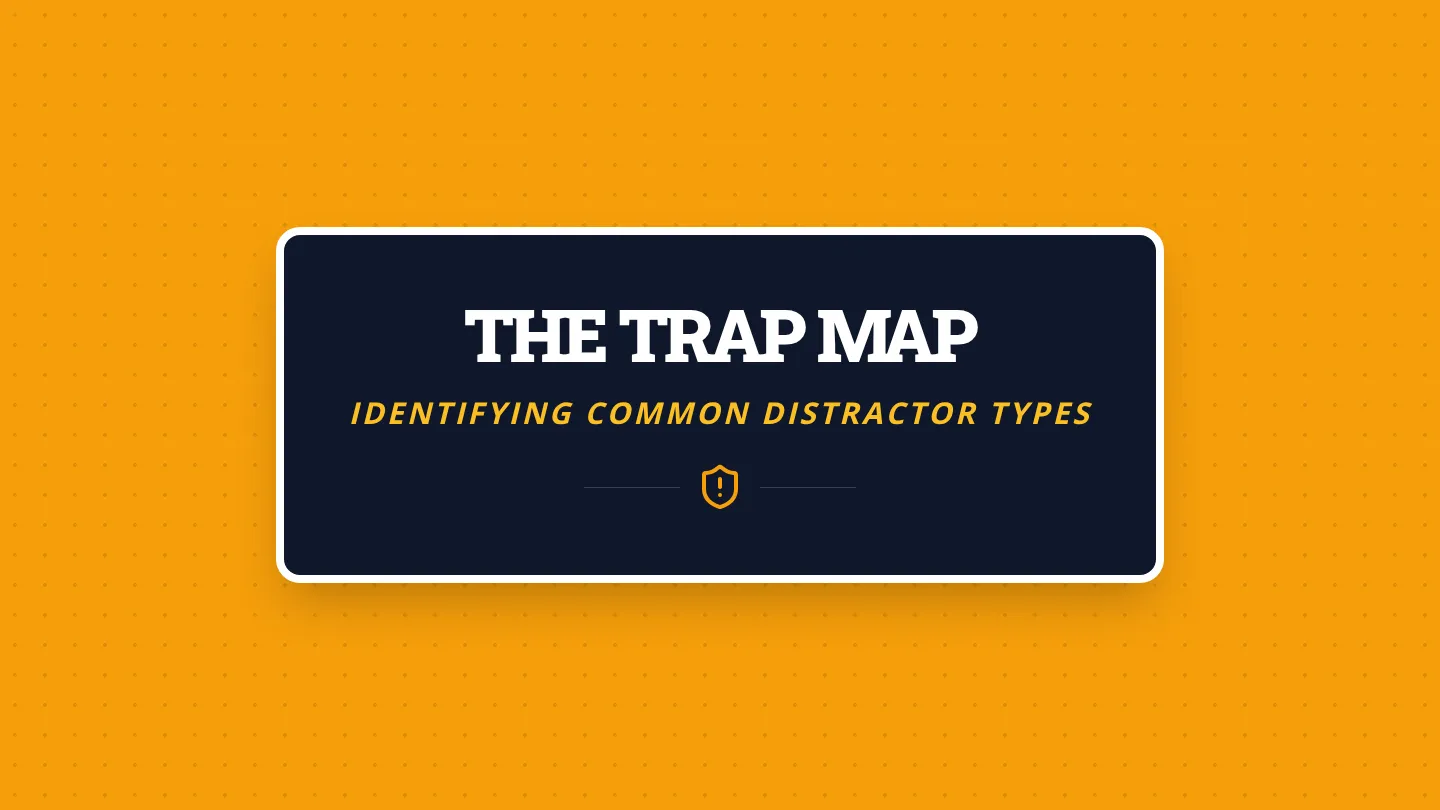
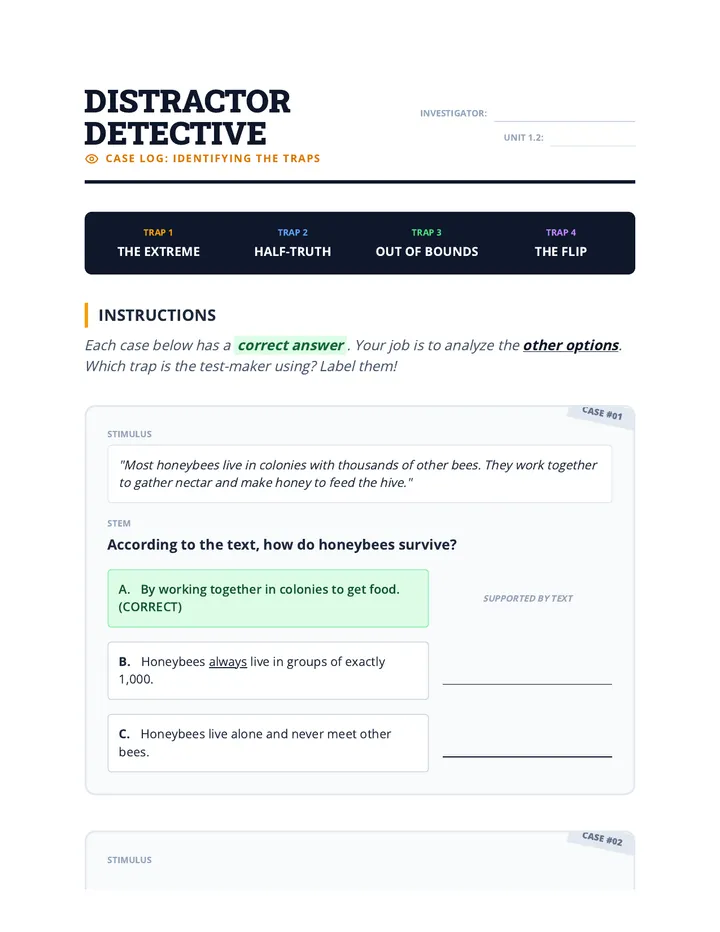
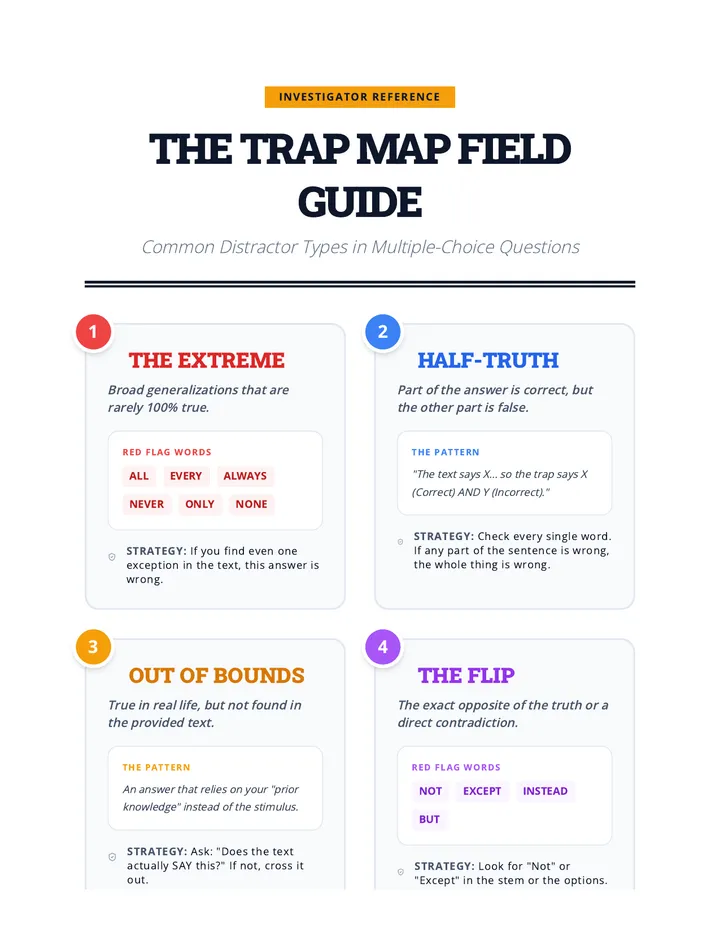
This lesson categorizes common types of wrong answers, such as 'too extreme,' 'partially true,' or 'irrelevant info.' Students label incorrect answers in sample questions with these categories.
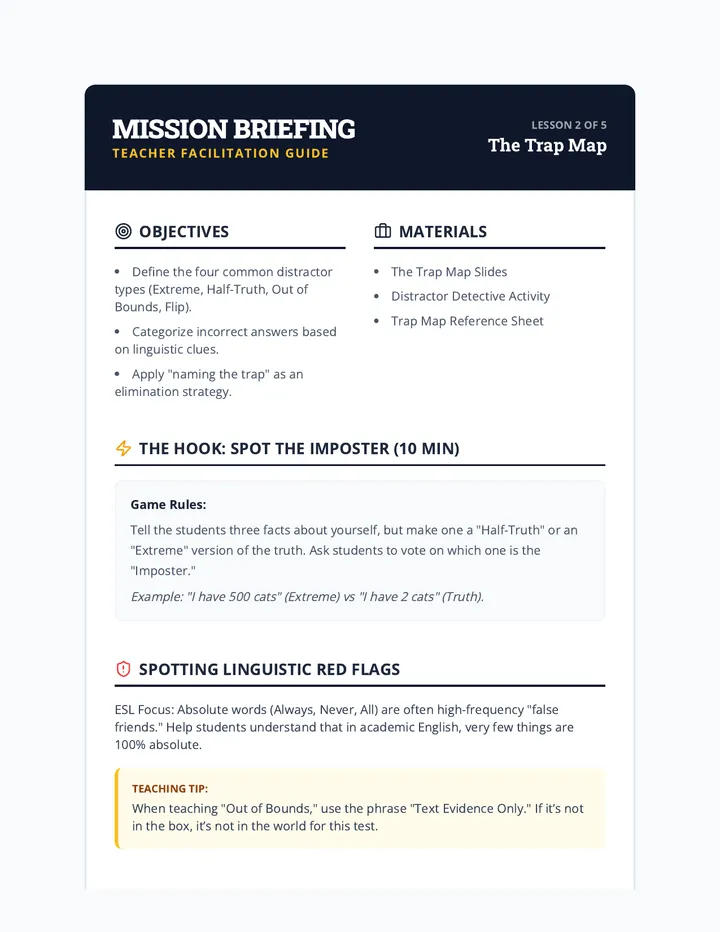
Facilitation guide for Lesson 2, including the 'Spot the Imposter' hook, linguistic red flags for ESL learners, and an answer key for the Distractor Detective activity.