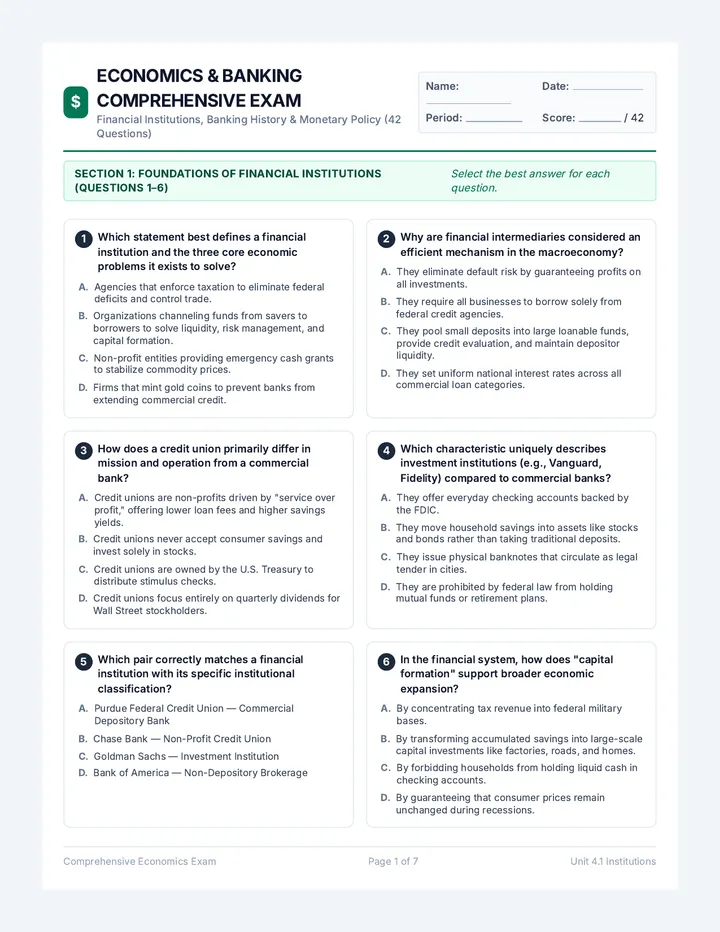
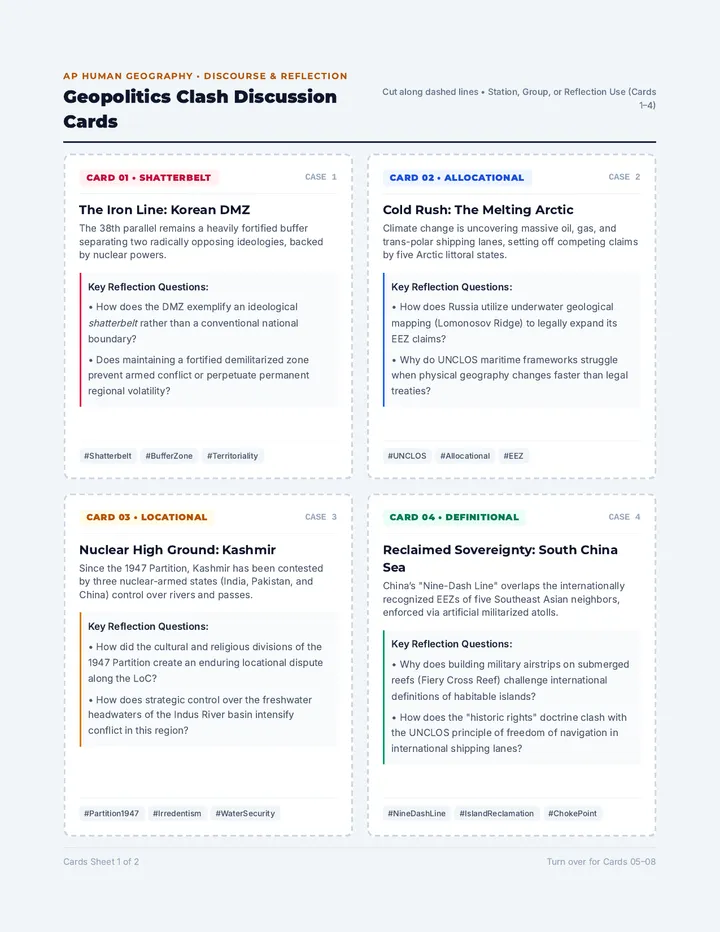
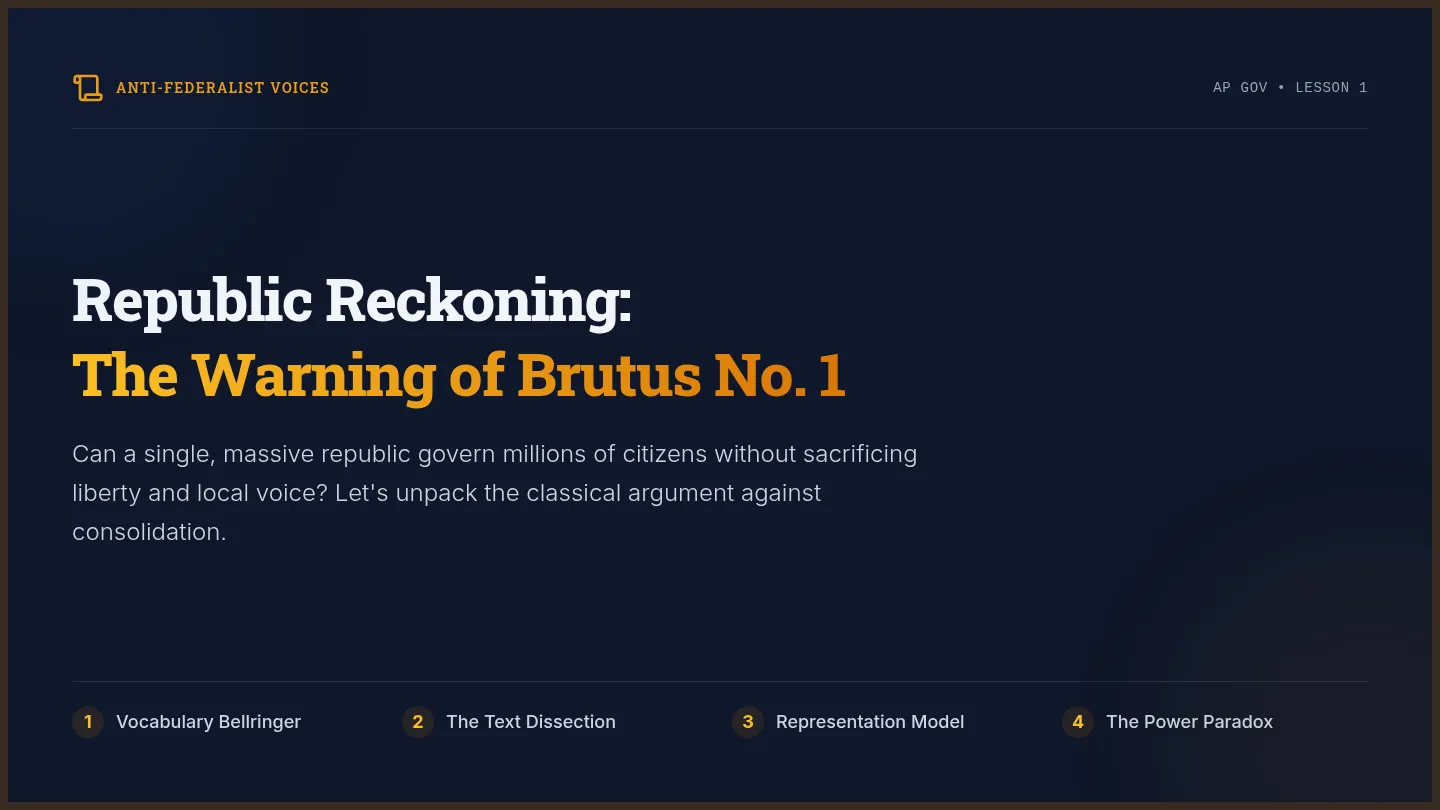
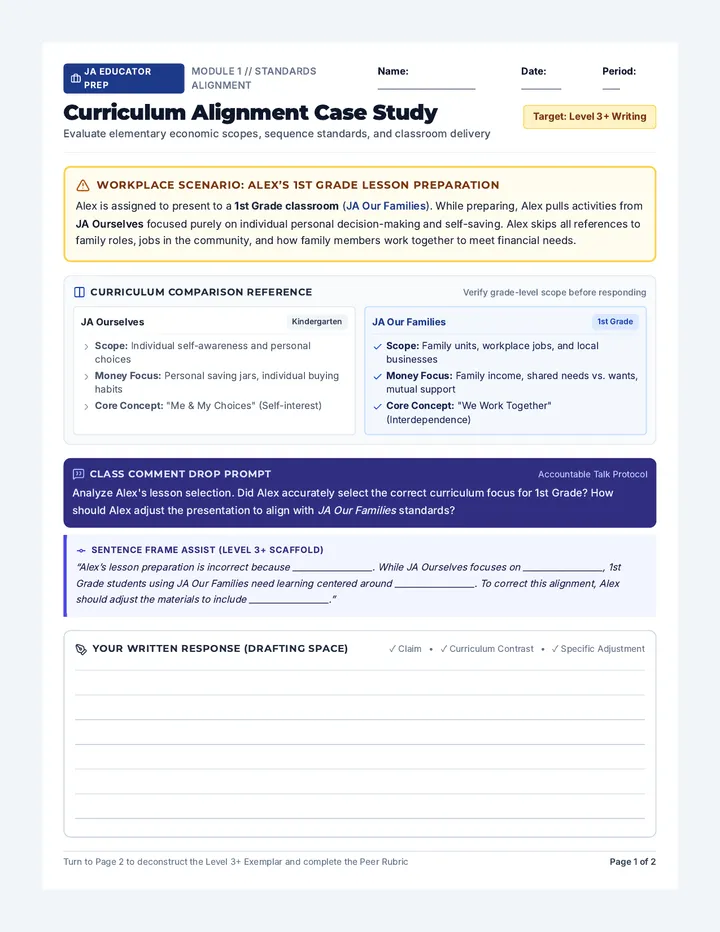
Articulatory Mechanics Slides Articulatory Mechanics
Foundations of Phoneme Manipulation
Linguistics Lab: Session 01
The "Buh" Problem
Why do we struggle to isolate /b/ without adding a vowel?
/b/ → [bə]
"Schwa intrusion" distorts the acoustic signal and complicates the cognitive task of deletion.
Task: Vocalic Release Analysis
Record yourself saying "bat" vs "b-at". Where does the extra energy come from?
Feature Salience
Manner
Stops (/p, b, t/) are transient. Fricatives (/s, f, v/) are continuous.
Continuous sounds are physically easier to isolate than discrete bursts.
Place
Anterior sounds (labials) are visually accessible.
Velar and glottal sounds lack visual cues, increasing reliance on auditory processing.
Voicing
Voiced vs. Voiceless pairs.
Voicing requires laryngeal coordination, adding a layer of motor planning to the manipulation.
Cognitive Bottlenecks
"Say 'cup' without the /k/."
The student must inhibit the initial stop's aspiration.
They must maintain the vocalic nucleus [ʌp] while removing the onset.
Error [kʌp] → [p] suggests failure in phonological working memory or feature parsing.
Schwa Intrusion Handout The Schwa Trap Handout
Linguistic Lab 01: Articulatory Distortion Analysis
Name: __________________________
Date: ___________________________
Technical Definition: Vocalic Release
When a student is asked to isolate a phoneme (especially a voiced stop like /b/, /d/, or /g/), they often produce a vocalic release or "schwa" to make the sound audible. This changes the phoneme from a single consonant to a CV syllable: /b/ → [bə]. This distortion can disrupt the cognitive representation of the word during manipulation tasks.
1. Consonant Isolation Matrix
For each phoneme, attempt to isolate the sound as purely as possible. Record whether it naturally requires a schwa (vocalic release) for audibility.
Phoneme (IPA) Manner of Articulation Requires Schwa? Manipulation Risk (Low/High) /p/ Voiceless Stop ☐ Yes ☐ No /s/ Voiceless Fricative ☐ Yes ☐ No /ɡ/ Voiced Stop ☐ Yes ☐ No /m/ Nasal ☐ Yes ☐ No /v/ Voiced Fricative ☐ Yes ☐ No
2. Theoretical Application
Explain why a student might have more difficulty deleting the first sound in "game" than in "fame" , specifically referencing articulatory mechanics and schwa intrusion.
How does the concept of "Auditory Feedback" relate to the mistake of adding a schwa when isolating consonants? Why can't we simply "stop" the sound perfectly?
The Phoneme Myth Slides The Phoneme Myth
Investigating Co-articulation and the Fluidity of Speech Signals
Segmentation vs. Reality
The Myth (Discrete Units)
C
A
T
Speech is like beads on a string.
The Reality (Co-articulation)
CAT
Sounds overlap, influence, and "blend" into one another.
Co-articulation: The articulation of two or more speech sounds together, so that one influences the other.
If phonemes aren't discrete, how does the brain "manipulate" them?
Cognitive Load Theory suggests that the brain must perform an extra step of "acoustic parsing" before the manipulation can occur.
Visualizing the Blur
/s/ frication
/p/ burst
Vowel Formants
WHERE DOES /s/ END?
Parallel Transmission
The acoustic signal for /p/ starts while the tongue is still positioned for /s/. Information is transmitted in parallel.
Cognitive Cost
Deletion (e.g., 'spoon' → 'poone') requires removing information that is acoustically present in the subsequent vowel.
The Research Question
"If a student cannot delete a phoneme, is it a cognitive deficit of 'removal,' or an auditory failure to 'untangle' the signal?"
Linguistic Parsing Motor Planning Acoustic Perception
Spectrogram Detective Lab Spectrogram Detective Lab
Session 02: Co-articulation & Boundary Identification
LAB ID: LAB-PHON-02
Clinical Note
Acoustic cues for one phoneme often extend 50-100ms into the neighboring sound. We call this "anticipatory co-articulation."
Student Information
Name: ________________
Partner: ______________
Task 1: Boundary Localization
Below are three visual representations of the word "STAND" /stænd/. Your goal is to mark where you believe the transition between /s/ and /t/ occurs.
Specimen A: /st/ Transition
Frication Noise
Silent Gap (Closure)
How many milliseconds of noise overlap with the silence of the stop?
Specimen B: /æ/ Nasalization
Vowel nucleus
Nasal Murmur
Can you find a point where the vowel is 100% oral and 0% nasal?
2. Theoretical Analysis
In the word "stand," the /æ/ is heavily nasalized due to the following /n/. If a student is asked to delete the /n/, why might they still produce a nasalized vowel (e.g., [stæ̃])? Is this a successful manipulation?
3. Clinical Application
How does co-articulation explain why deleting the /l/ from "slip" is harder than deleting the /s/ from "slip"? Use the term anticipatory coloring in your answer.
Sonority Hierarchy Slides 1 2 3 4 5 6 7
The Sonority Hierarchy
Why some clusters resist deletion.
Lesson 03: Constraints on Cluster Manipulation
Ranking "Loudness"
Sonority is a linguistic ranking of a sound's relative loudness and openness compared to other sounds.
The Rule of Thumb:
The more open the vocal tract, the more sonorous the sound.
Manipulation becomes difficult when we violate the expected "shape" of a syllable.
7 Vowels
6 Glides (w, j)
5 Liquids (l, r)
4 Nasals (m, n, ŋ)
1 Stops (p, t, k)
The Syllabic Wave
s
l
ɪ
p
SLIP
Clean rise, clean fall. Follows SSP.
"Say 'slip' without the /l/."
Result: SIP . This creates a more "stable" sonority profile by jumping from a 1 to a 7.
The Manipulation Gap:
Distance between phonemes on the hierarchy predicts error. Narrow gaps (SL) are harder to parse than wide gaps (SP).
Cluster Deletion Challenge
Case A
SPORT → SORT
Delete /p/. This removes a stop, leaving a fricative. Sonority jump is large.
Case B
SPORT → PORT
Wait! Why is Case B often physically harder to pronounce in isolation?
"We prefer to reduce clusters to the least sonorous onset consonant."
Cluster Reduction Matrix Worksheet Sonority & Cluster Analysis
Research Laboratory: Phonic Constraints 03
ID: SYLL-SSP-99
NAME: __________________
Reference
Stops (1)
Fricatives (2)
Nasals (3)
Liquids (4)
Glides (5)
Vowels (6)
-
1. Manipulation Difficulty Matrix
Rank the following deletion tasks from 1 (Likely Successful) to 5 (Highly Error-Prone) based on the sonority distance between the remaining phonemes.
Target Word Deletion Task Remaining Gap Predicted Difficulty (1-5) TRAP Say "trap" without the /r/ Stop → Vowel _____ SLIDE Say "slide" without the /s/ Liquid → Vowel _____ PLANE Say "plane" without the /l/ Stop → Vowel _____ SMITH Say "smith" without the /s/ Nasal → Vowel _____
2. Error Prediction
Scenario:
A student is asked to delete the /s/ from "sport." They consistently respond with "port." However, when asked to delete the /p/, they struggle or say "s-uh-ort."
Question:
Explain this difference using the Sonority Sequencing Principle. Why is "port" a more 'natural' syllable structure than "sort"?
Cluster Reduction Patterns:
Younger children often reduce "blue" to "bu" or "black" to "back."
Question:
Analyze the sonority of these reductions. Are children choosing the more sonorous or less sonorous consonant to keep? Propose a linguistic theory for why this occurs.
Dialect Variation Slides Linguistic Diversity
Dialectal Variation in Phoneme Manipulation
Session 04: Assessment Bias Mitigation
The "Pin-Pen" Dilemma
"Say 'pin.' Now change the /ɪ/ to /ɛ/."
Student Response:
"Pin."
Is this a phonological deficit? Or is it a conditioned merger ?
Regional Distribution
Southern and Midland U.S. dialects often merge /ɪ/ and /ɛ/ before nasals. To these speakers, the words are homophonous.
Diagnostic Trap: Misinterpreting Variation
AAEV Features
Final consonant cluster reduction (e.g., "test" → "tes").
Assessment Bias: Marking as "error" instead of "rule-governed deletion."
NYC / Philly
Cot-Caught merger (becoming merged in many younger speakers).
Assessment Bias: Expecting discrimination of phonemes that don't exist in the student's inventory.
Boston / NE
Non-rhoticity (r-dropping). "Park" → [pa:k].
Assessment Bias: Scoring as "final sound omission" when it is a dialectical feature.
Clinical Framework
Identify the student's inventory first.
Use Contrastive Analysis (Difference vs. Error).
Distinguish between production and perception .
"A student cannot manipulate what they do not distinguish."
Dialect Assessment Guide Contrastive Analysis Guide
Clinical Tool: Dialect vs. Deficit
Common North American Phonological Variations
Feature Phonological Rule Manipulation Example Scoring Consideration Pin-Pen Merger /ɪ/ → /ɛ/ / __ [nasal] "Say pin , change /ɪ/ to /ɛ/" → "Pin" Difference. Phonemes are homophonous in student's dialect. Final Cluster Reduction C → Ø / C __ # "Say hand without the /d/" → "Han" Difference. Common in AAEV and Caribbean English. Cot-Caught Merger /ɑ/ → /ɔ/ merger "Which word has the /ɔ/ sound: cot or caught?" Difference. Over 60% of US speakers merge these sounds. Interdental Fricative Shift /θ/ → [f, t], /ð/ → [v, d] "Say thin , change /θ/ to /s/" → "Sin" Potential Difference. Check student's conversational speech for [f/t].
Clinical Case Practice
Observation:
A 7-year-old student from South Carolina is asked to "Say 'bent', now change the /ɛ/ to /ɪ/." The student looks confused and says, "They the same word."
Clinical Analysis:
Observation:
A student is asked to delete the final sound in "task." They say "tas." Then, when asked to delete the final sound in "milk," they say "mi."
Diagnostic Question:
Is this a consistent linguistic rule (dialect) or a phonological deficit in final sound processing? Justify your answer.
Educational Resource for SLP Graduate/Undergraduate Training. Not for clinical diagnosis.
Error Analysis Workshop Slides Classified: Research Data
Diagnostic Reasoning
Synthesizing Articulatory, Acoustic, and Syllabic Constraints to Explain Manipulation Errors.
PHON-LAB-FINAL
The 3-Tier Analysis Model
01
Feature Parsing
Did the error occur because of a shared articulatory feature? (e.g., [p] for [b] is a voicing error).
CHECK: Place, Manner, Voicing
02
Structural Analysis
Did the error involve violating the Sonority Sequencing Principle or syllable structure?
CHECK: Sonority distance, Cluster constraints
03
Contextual Analysis
Did co-articulation or dialectal variation influence the signal?
CHECK: Mergers, R-dropping, Nasalization
Mystery Data: Subject 402
Task: Deletion Result
"Braid" w/o /b/ "Raid"
"Cloud" w/o /l/ "Coud"
"Fast" w/o /s/ "Fas"
"Mist" w/o /s/ "Mit"
Why the inconsistency?
Notice: The student succeeds on **onset** clusters but fails on **coda** clusters involving fricatives.
Linguistic Explanation:
In this student's dialect (AAEV), final consonant clusters are reduced to the first consonant. The task of "deleting the /s/" is impossible because the /s/ is not present in their mental representation of the coda.
Diagnostic Lab Workshop
You will now receive a full dossier of "Subject Errors." Your goal is to write a linguistic profile explaining their patterns using the terminology from this course.
Spectrograms Sonority Graphs Feature Matrices
Mystery Student Dossier Final Mystery Student Dossier
Subject Profile: CASE-77-DELTA
Confidential Educational Data
Linguistics Lab Final
Subject Info
Grade: Undergraduate SLP Clinic (Standardized Assessment)
L1: English (Mid-Atlantic Dialect)
Complaint: Difficulty with Phoneme Deletion and Substitution tasks.
The Error Pattern
"The student appears to struggle specifically with tasks involving voiced stops in the onset position. They often introduce an extra syllable or fail to isolate the sound."
Recorded Performance
TASK: Delete /ɡ/ in "game" "G-uh-ame"
TASK: Delete /p/ in "pit" "It"
TASK: Change /b/ to /p/ in "bat" "Pat-uh"
TASK: Delete /k/ in "kite" "Ite"
TASK: Delete /d/ in "dog" "D-uh-og"
Note: Subject shows successful manipulation of voiceless stops but failure on voiced stops.
1. Feature Gap Analysis
Using your knowledge of articulatory features , explain why the student succeeds with /p/ and /k/ but fails with /b/, /d/, and /ɡ/. Reference "Voice Onset Time" or "Vocalic Release" in your answer.
2. Acoustic/Syllabic Integration
Could the student's difficulty with "voiced stops" be related to schwa intrusion ? Analyze the response "G-uh-ame." How does adding a schwa change the cognitive task from phoneme deletion to something else?
3. Proposed Diagnostic Report
Based on your analysis, is this a global phonological awareness deficit, or a specific articulatory-motor constraint? What specific linguistic advice would you give to their teacher?
End of Dossier // CASE-77-DELTA