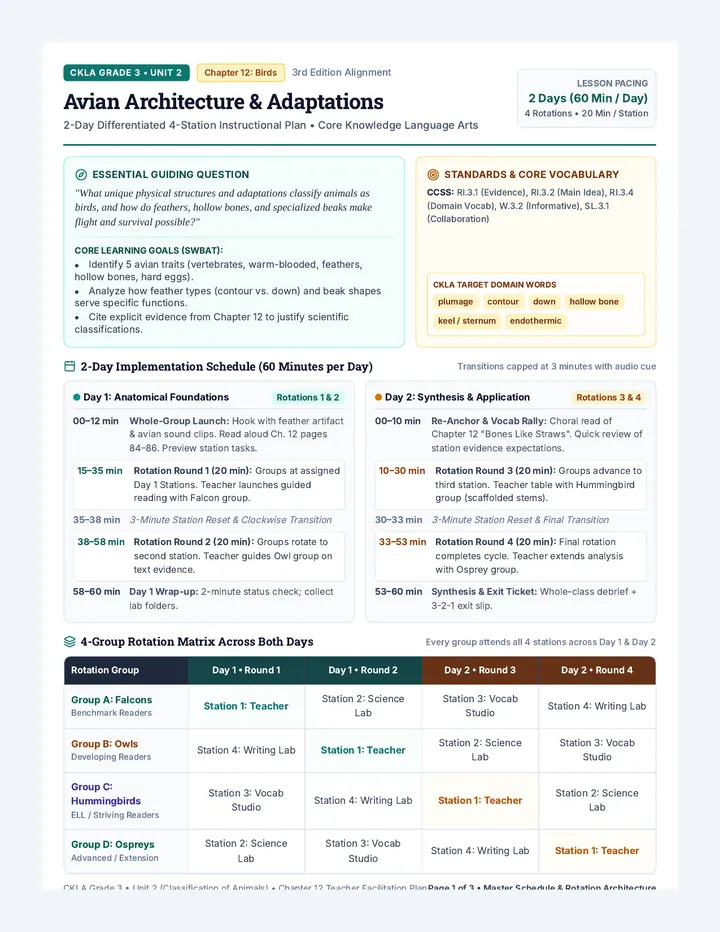
Lava Layers Lesson PlanLava Layers Teacher Facilitation Guide Duration 45 MIN Learning Objective Students will explain how volcanoes grow over time through the cooling of lava layers by creating a "Pancake Volcano" physical model. Key Vocabulary Magma: Melted rock inside Earth. Lava: Magma on the surface. Vent: The tube magma flows up. Crater: The opening at the top. Eruption: The release of lava and gas. Materials List Playdough (Multiple Colors) Plastic Knives (Safety) Mountain Maker Worksheets Pencils & Colored Pencils Digital Presentation Slides Lesson Timeline 5m Warm-up: Mountain Talk Ask: "How do mountains grow? Do they grow like trees (from the ground up) or like a pile of laundry (from the top down)?" Teacher Tip: Most kids think they grow like plants. Hint that volcanoes are "built" rather than "grown." 5m Video Investigation Focus on Timestamps 1:08-1:26. Discuss the 'layers' visual. Pause at 1:21: "If a volcano grows layer by layer, how long do you think it takes to become a mountain?" 25m Activity: Pancake Volcanoes Give students 3-4 colors of playdough. Flatten small pieces into "pancakes" (lava flows). Stack them one by one. The Rule: Between each layer, they must chant: "Eruption... Cooling... Rock!" Once they have a mountain, use the plastic knife to cut a cross-section (slice it down the middle). 10m Closure: Cross-Section Diagram Students use the worksheet to draw what they see inside their sliced volcano. They must label the layers, vent, and crater. Extension Activities Rock Detectives Show photos of real stratified (layered) rock in mountains. Ask if they see similarities to their models. Viscosity Test Compare 'explosive' playdough (dryer) vs 'oozing' playdough (softer) to see how shape changes.
Lava Layers SlidesLava Layers How Volcanoes Grow Into Mountains Grades 2-4 SciShow Kids Edition How do mountains grow? Do they grow like trees from the ground? Or do they get built layer by layer? Watch & Learn Focus: 1:08 - 1:26 Embedded media Pay close attention to how the mountain gets taller! MAGMA Melted rock inside the Earth. LAVA Magma that breaks through to the air! Inside a Volcano CRATER VENT The Vent is the tube. The Crater is the top! How a Volcano Grows ERUPTION Hot lava comes out COOLING Lava loses heat ROCK It turns into a layer REPEAT FOR MILLIONS OF YEARS! Pancake Volcanoes 1 Make "Lava Pancakes" with different colors of playdough. 2 Stack them one by one to build a mountain. 3 Say the chant for every layer: "Eruption... Cooling... Rock!" Building Layers... THE BIG REVEAL Use your plastic knife to slice your volcano right down the middle. What do you see inside? Look for the colorful layers you built! Time to Map! Draw your "Slices" on your worksheet and label your layers, vent, and crater. Great job, Vulcanologists!
Mountain Maker WorksheetMountain Maker Tracking Volcanic Growth Name: Date: 1 Draw Your Cross-Section Look at the inside of your sliced "Pancake Volcano." Draw exactly what you see! Use different colors for each layer of rock. 2 Anatomy Check Draw a line from each word to the correct part of your drawing above. Vent (The Tube) Crater (The Opening) Lava Layers (Cooled Rock) 3 How does it grow? Finish this sentence: My volcano grew taller because every time an eruption happens, the lava cools down and turns into a new ______________________ of ______________________.
Mountain Maker KeyAnswer Key Mountain Maker Worksheet Teacher Resource 1 Sample Cross-Section VENT (TUBE) CRATER (OPENING) Students should draw colored stripes representing their playdough layers. Look for a central vertical tube (vent) if they included one! 2 Anatomy Check (Labels) Vent: Pointing to the middle tube/channel. Crater: Pointing to the top indent/opening. Lava Layers: Pointing to the colored stacks of playdough. 3 Sentence Completion My volcano grew taller because every time an eruption happens, the lava cools down and turns into a new layer of rock (or cooled lava). Grading Guidance Award full credit if the drawing clearly shows distinct layers and labels correctly identify the top (crater) and center (vent). The explanation should mention "layer" and "rock/hardened lava."