A primary science unit exploring animal body coverings, focusing on the differences between shedding and growing scales in reptiles and fish.
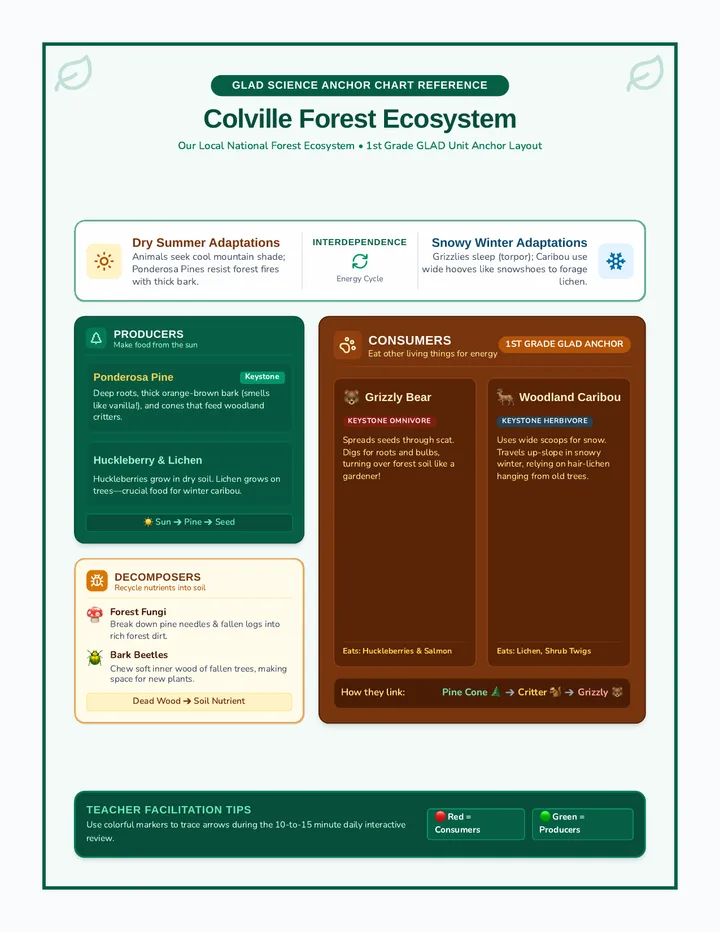
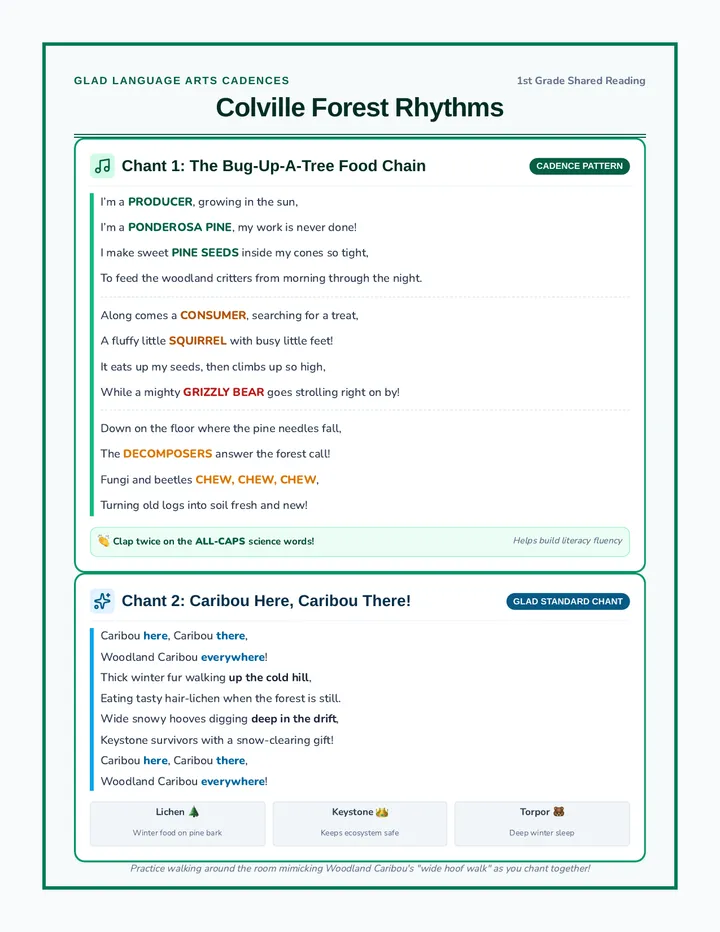
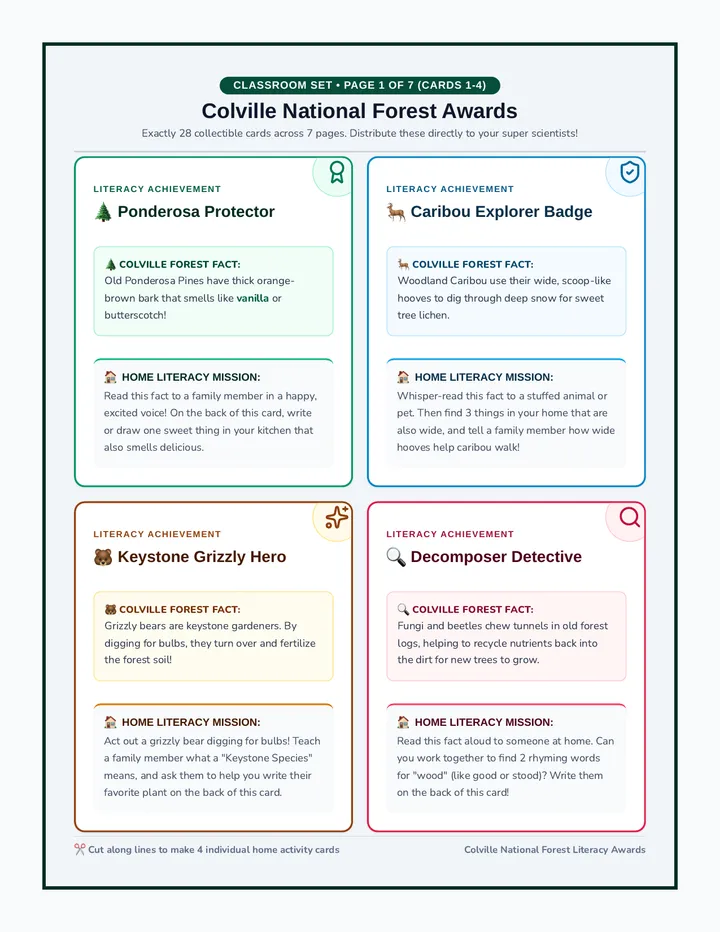
An immersive 1st-grade GLAD unit focused on the Colville National Forest ecosystem. Students explore food chains, interdependence, seasonal changes, and local keystone species through visual charts, rhythmic chants, and rewarding literacy achievements.
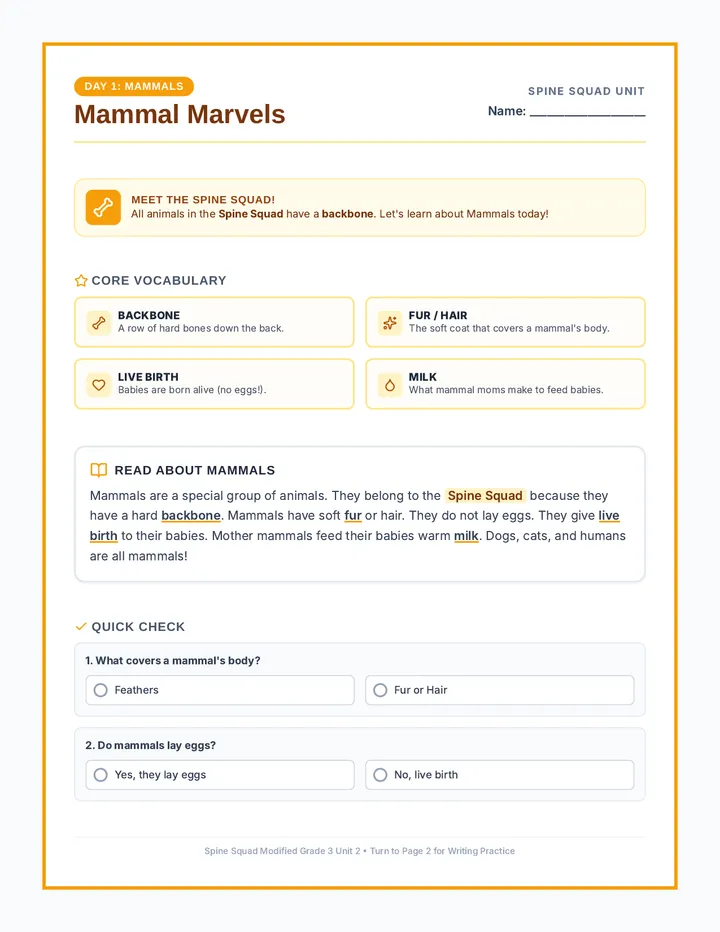
A five-day modified animal classification unit focusing on the five main vertebrate groups, designed with extensive visual support, sentence frames, and tracing options for modified learning.
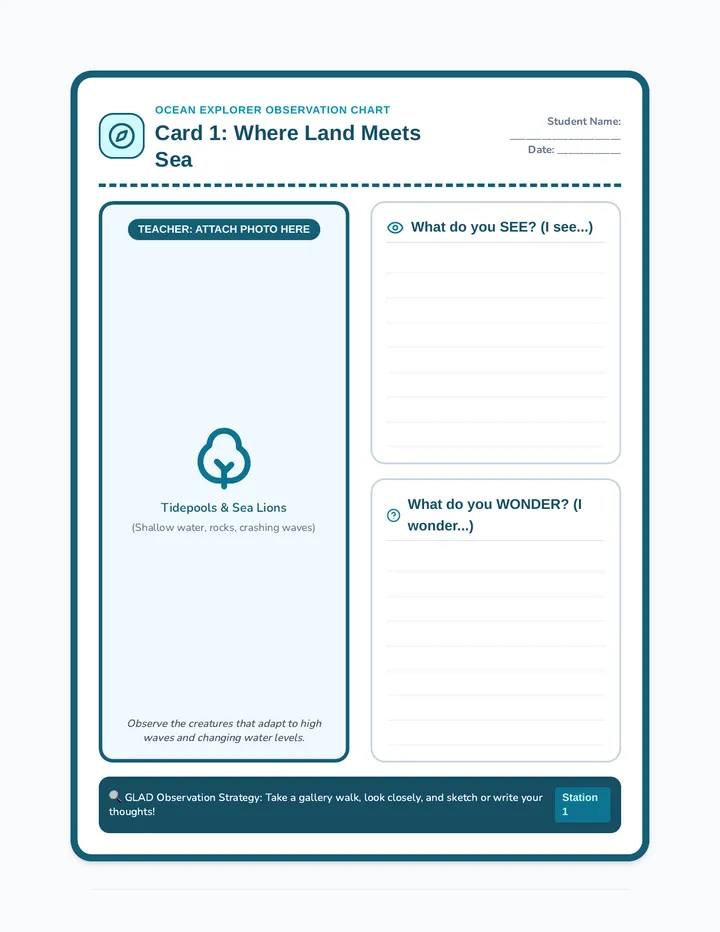
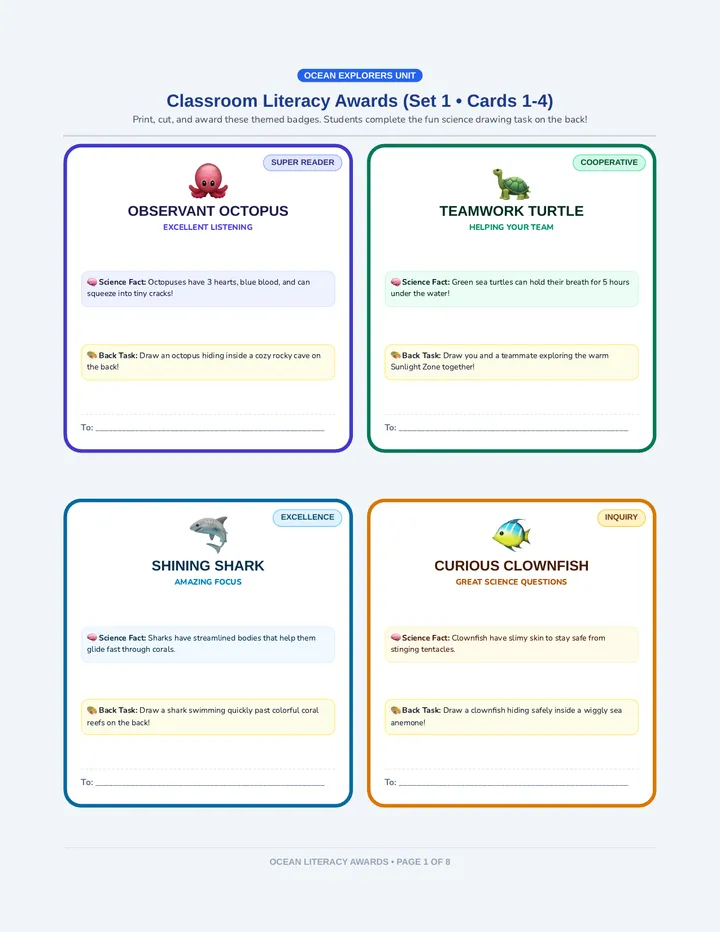
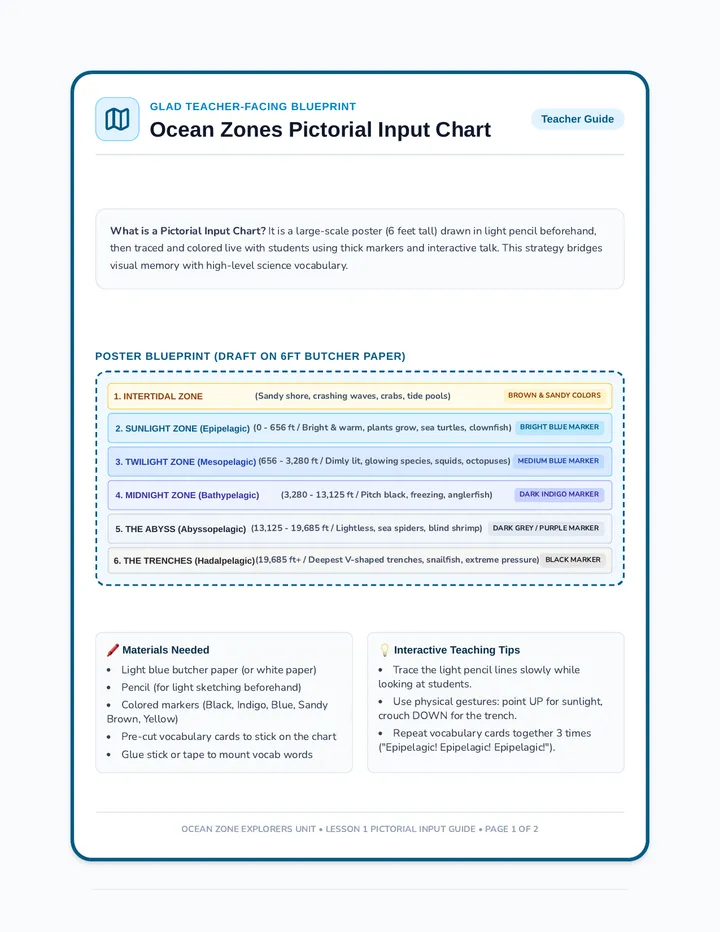
An immersive 1st-grade GLAD science and literacy sequence that guides young learners from the sunny surface to the deepest, darkest trenches, using cooperative learning, narrative inputs, and hands-on modeling.
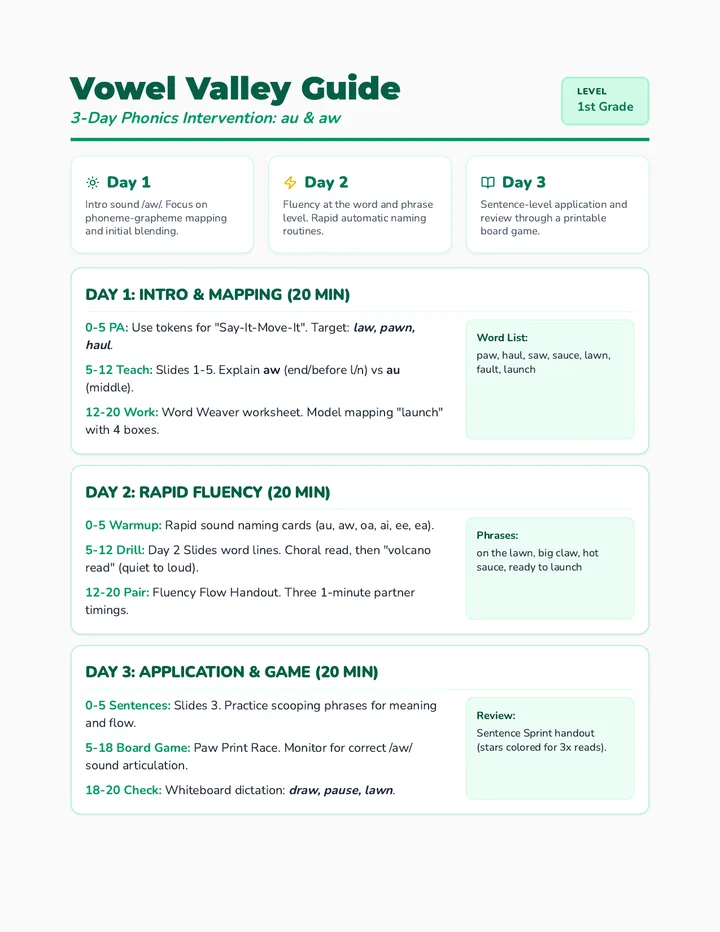
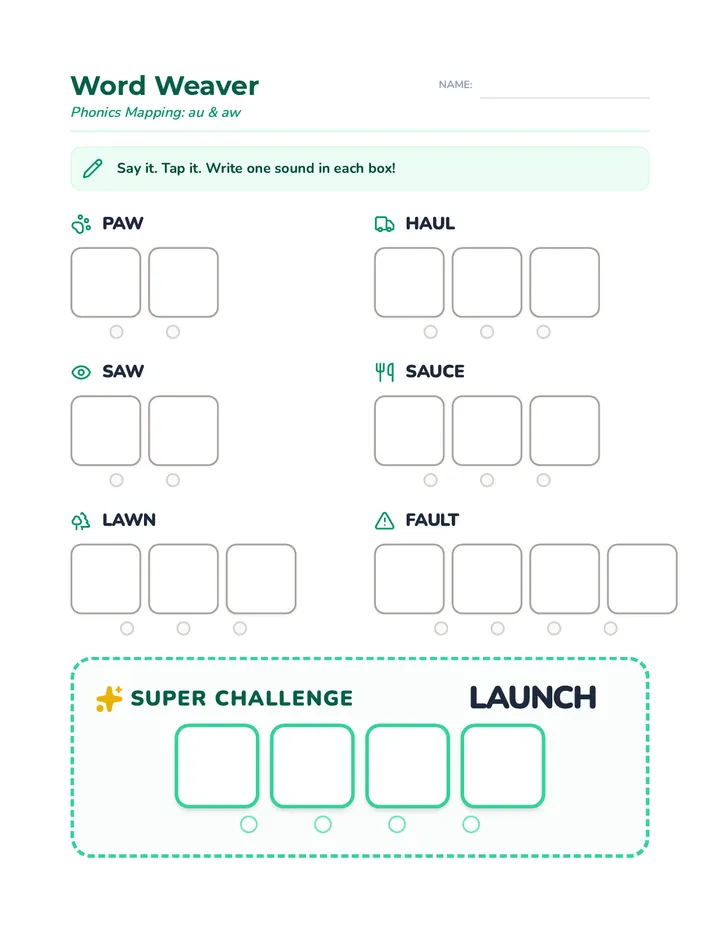
A 3-day phonics intervention sequence for first graders focusing on the 'au' and 'aw' diphthongs through direct instruction, fluency building, and game-based learning.
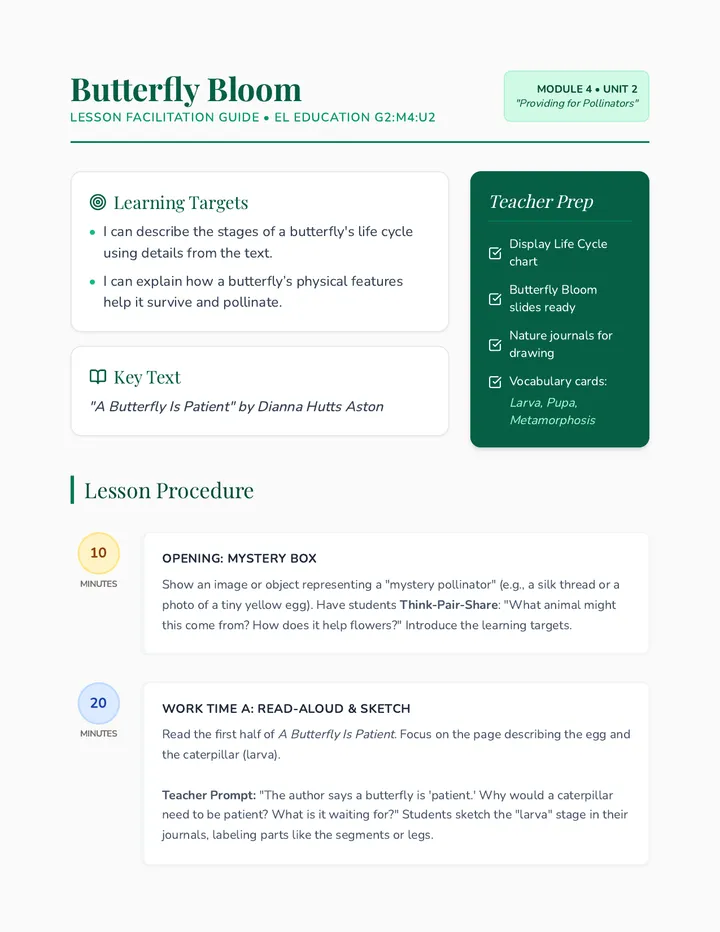
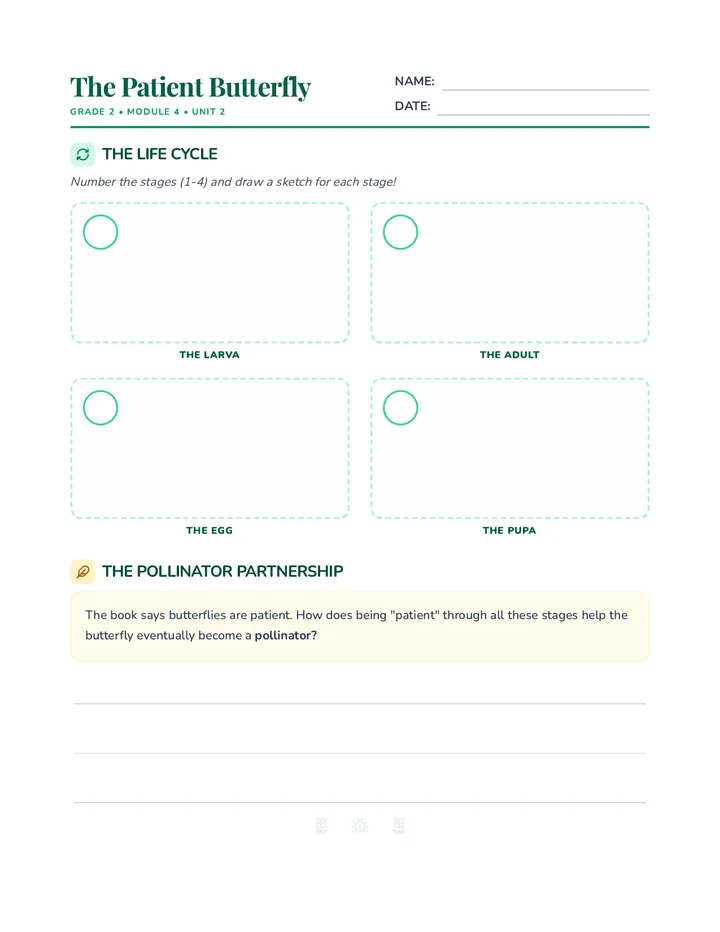
Grade 2, Module 4: 'Providing for Pollinators' focuses on the life cycles of pollinators, specifically butterflies, and how they interact with their habitats to support our environment. This sequence covers the core of Unit 2, moving from the physical characteristics and life cycles to the specific ways these insects provide for our ecosystem.
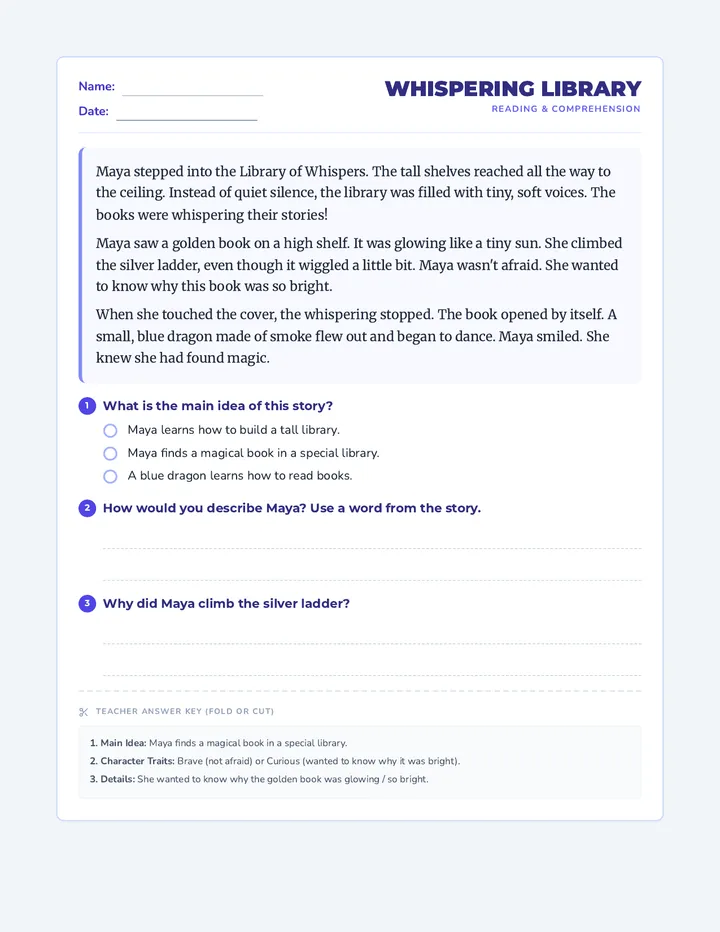
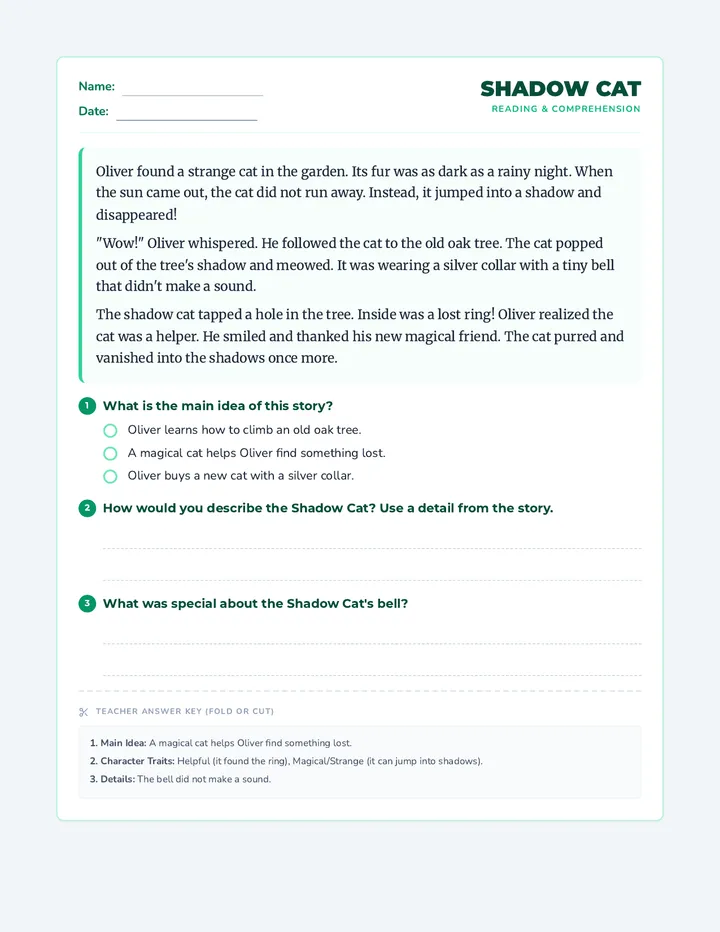
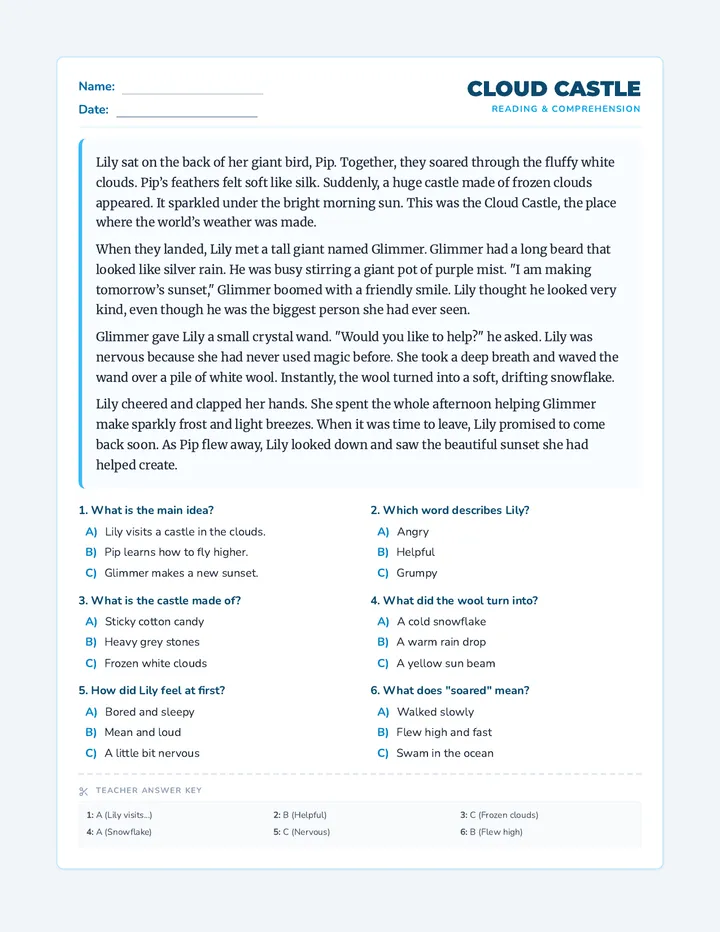
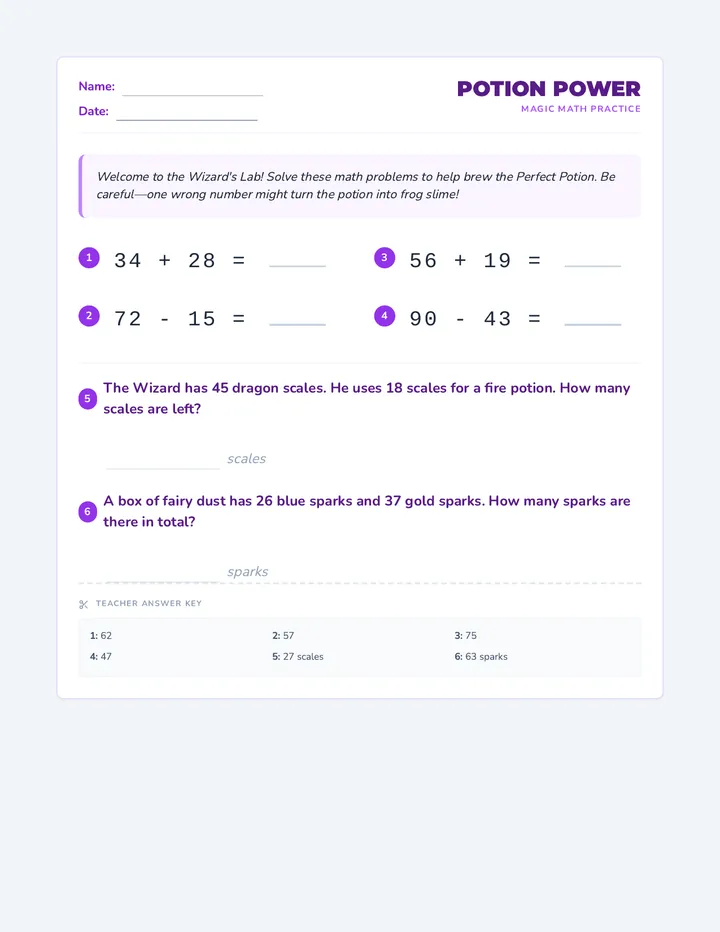
A collection of magical-themed lessons covering reading comprehension and early mathematics for primary students.
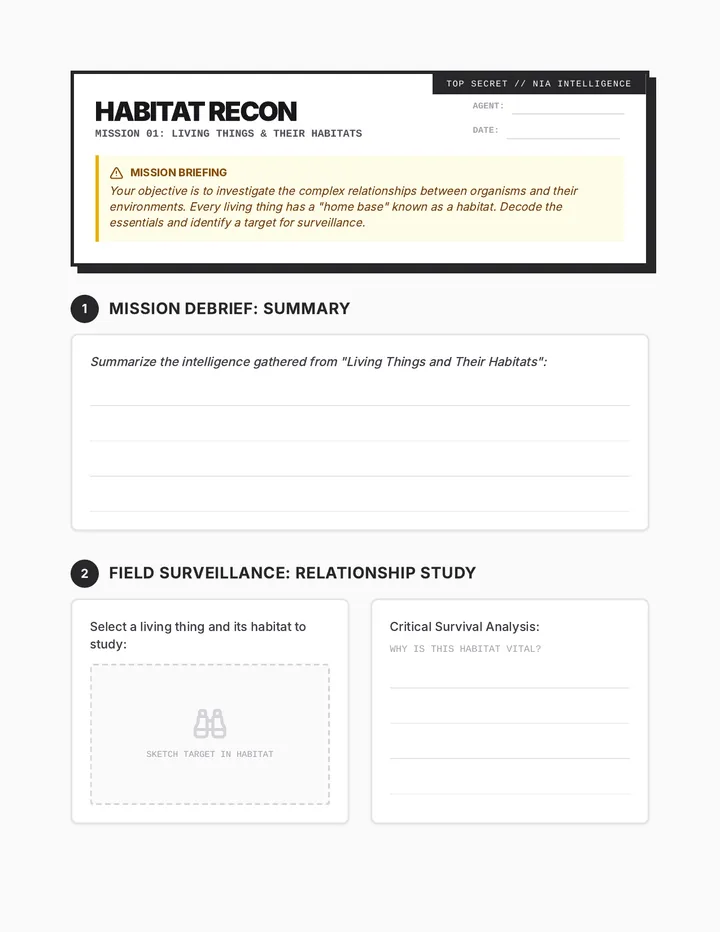
A series of secret agent-themed ecology missions where students act as Eco-Detectives for the Nature Intelligence Agency (NIA) to study habitats, food chains, and environmental impacts.
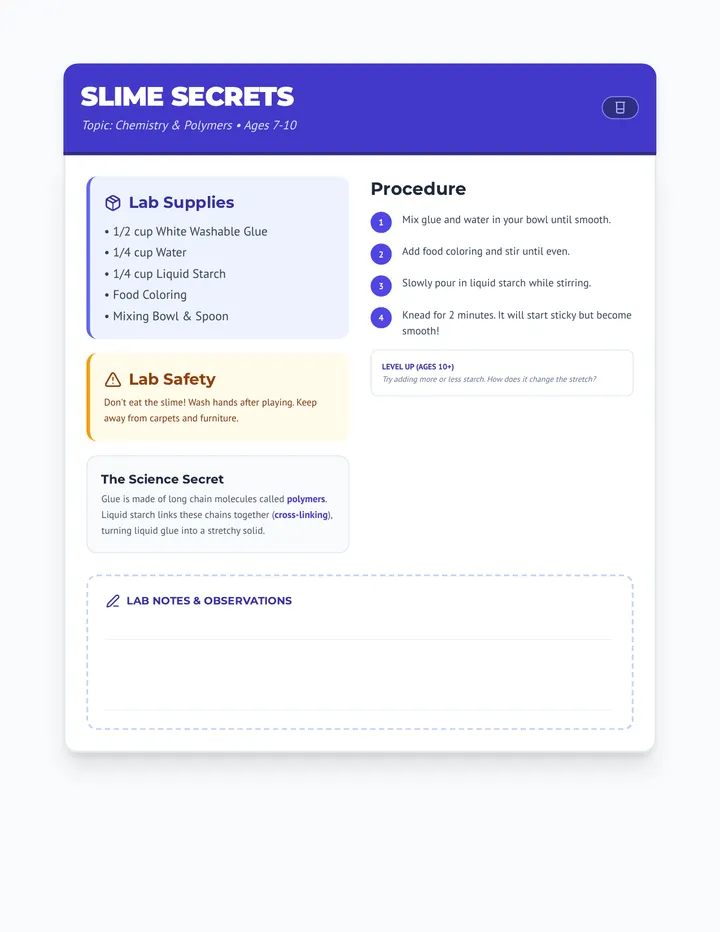
A collection of 8 hands-on science activities designed for elementary-aged children, covering chemistry, space, botany, and physics with a mix of instruction cards, journals, and lesson plans.
A series of lessons focused on understanding different natural disasters, their causes, impacts, and safety protocols through structured writing and investigation.
A 20-day phonics drill program for first graders using the Sound Sliders routine to master consonant blends (initial/final) and open syllables (IMSE 36-42).
A comprehensive weekly unit for 2nd Grade covering 3D geometric solids (Math TEKS 2.8B) and patterns of movement (Science TEKS 2.6C) through a "Curiosity Lab" theme.
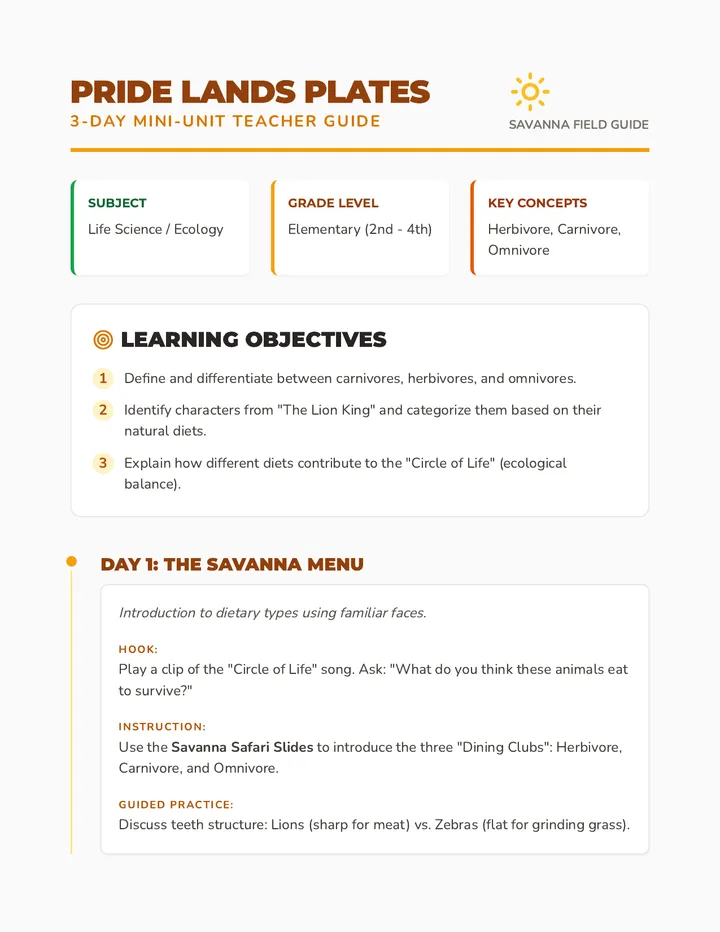
A 3-day mini-unit exploring carnivores, herbivores, and omnivores through the lens of The Lion King. Students will identify animal diets, categorize characters, and understand the ecological balance of the Pride Lands.
A hands-on exploration of animal diets, focusing on identifying and classifying herbivores, carnivores, and omnivores through text evidence and visual clues.