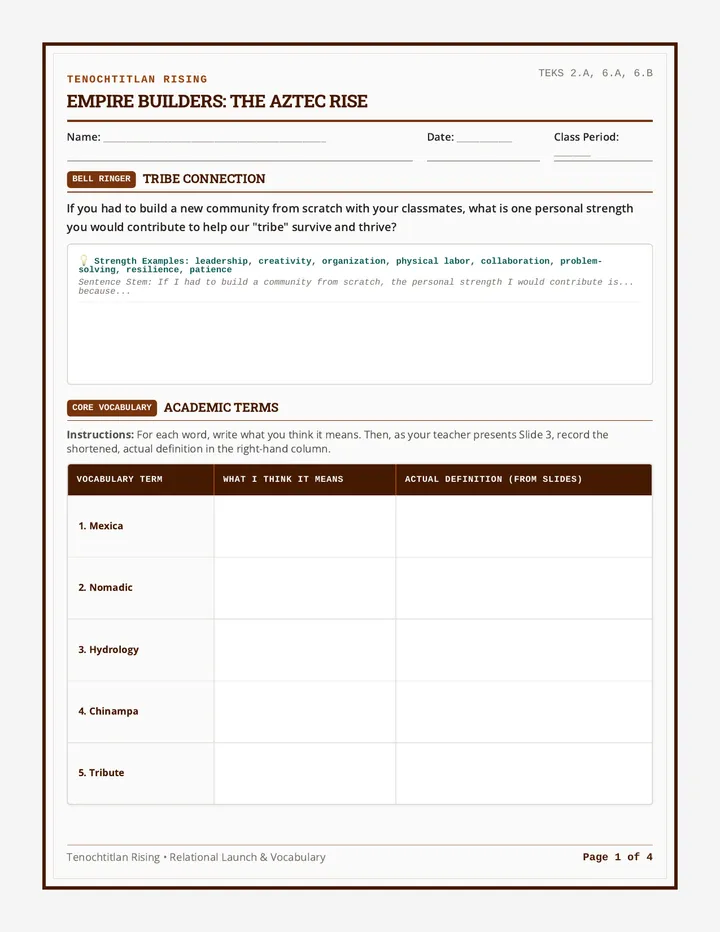
A lesson sequence focusing on how text features like timelines, tables, and maps help organize complex historical information for better comprehension.
A comprehensive 5-lesson exploration of the West region of the United States, covering geography, climate, resources, culture, and states/capitals through reading passages and interactive activities.
A comprehensive 5-lesson unit exploring the unique geography, climate, natural resources, diverse cultures, and political boundaries of the Southwest region of the United States.
A comprehensive 6-lesson Black History Month curriculum for 5th-8th graders, exploring historical excellence, emotional expression, and community through the lens of five core values: Virtus, Kenkyo, Sankofa, Ubuntu, and Ganas. Inspired by a century of resilience and brilliance.
A 6-lesson sequence divided by grade level (5th, 6th, and 7th), celebrating 100 years of Black history through school values. Each grade explores two distinct lessons focusing on community joy, personal excellence, and mental health advocacy.
A 4th-grade unit focused on kindness, fairness, and understanding how our words can make everyone feel like they belong, regardless of their background or skin color.
A series of three investigative modules where middle school students analyze hypothetical disruptions to science, history, and society to develop critical cause-and-effect reasoning skills.
A comprehensive unit introducing the foundational concepts of geography, focusing on the Five Themes of Geography as a framework for understanding human and physical world interactions.
A unit exploring the human geography of the United States, focusing on population distribution, migration waves, and urban challenges.
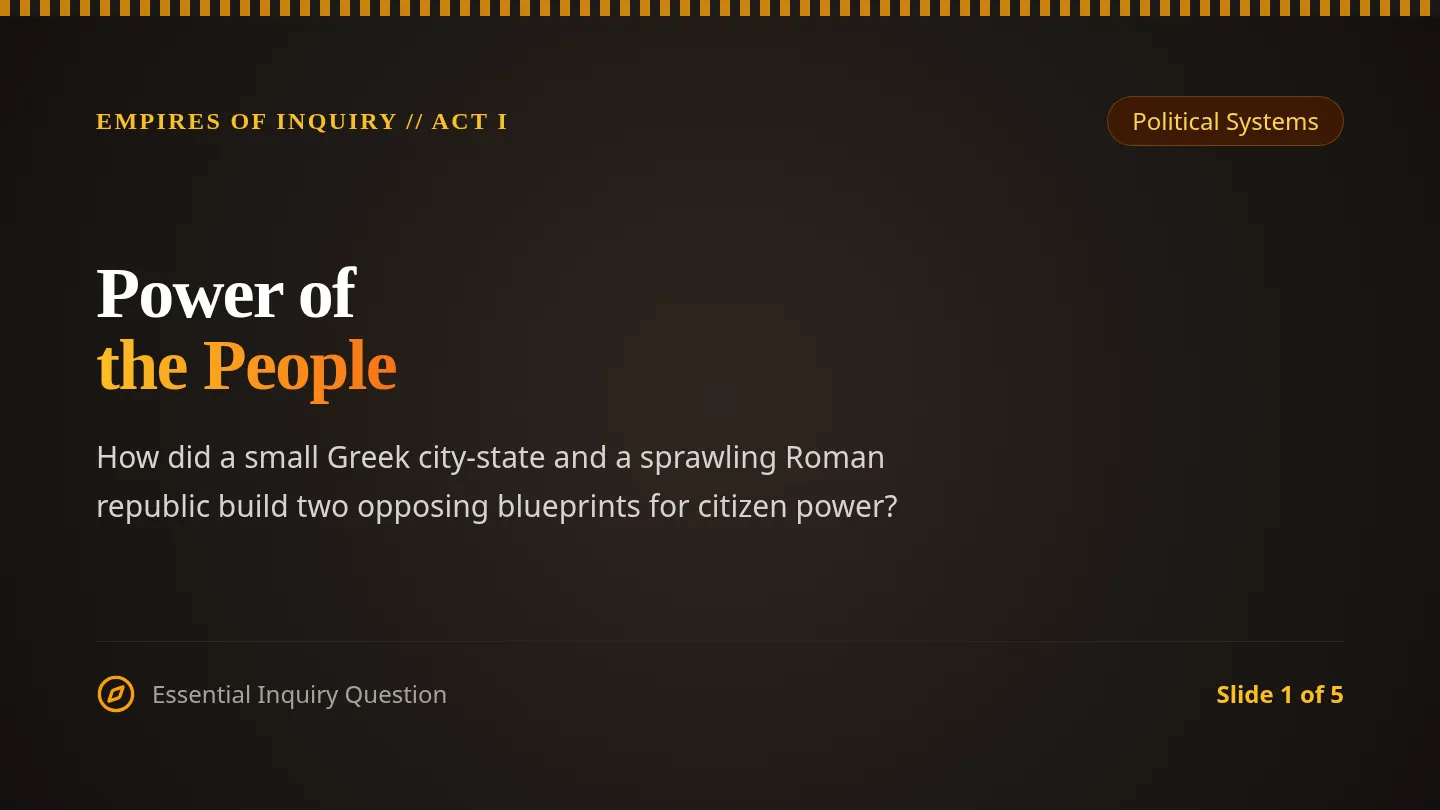
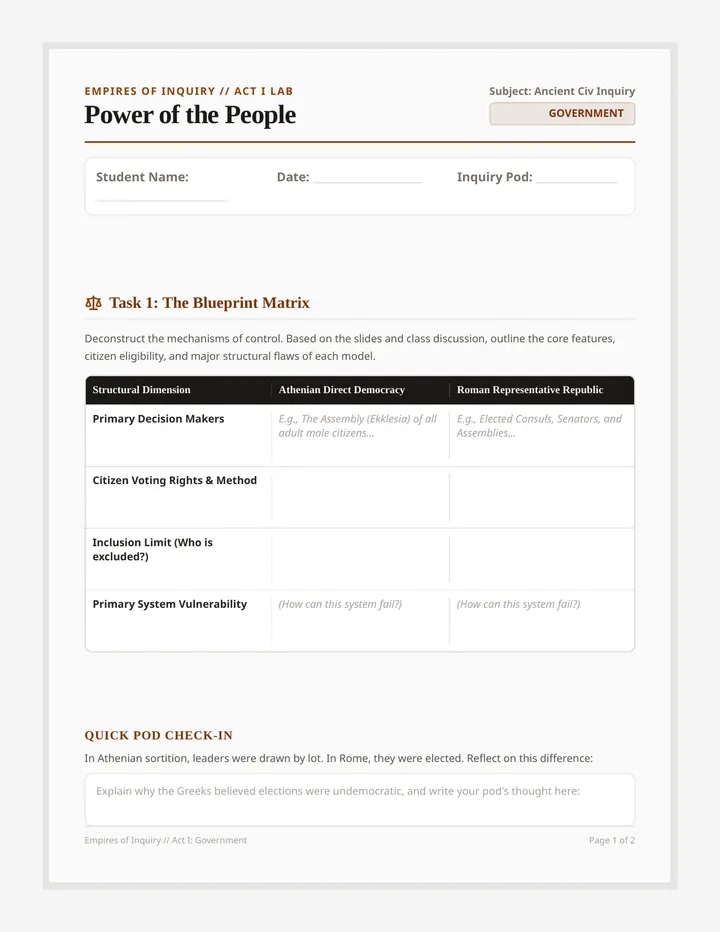
A series of lessons exploring the rise and impact of major global empires, focusing on their geographical expansion, governance strategies, and cultural legacies during the first global age.
A lesson sequence exploring the intersection of geography and history through the lens of place naming, focusing on the cultural significance of Uluru and local place name origins.
A short unit focusing on the rise of labor unions, the Industrial Revolution's impact on workers, and the subsequent social reform movements including education and abolitionism.
A series of lessons exploring how major historical events and social shifts have shaped the cultural and religious identity of the United States.
A comprehensive lesson analyzing how the Great Schism between the Western and Eastern Christian churches directly contributed to the eventual collapse of the Byzantine Empire. Students use video evidence to trace a chain of cause-and-effect events spanning centuries of history.