A project-based unit where 2nd-grade students act as biomechanical engineers to build mechanical models of human body systems, exploring bones, joints, muscles, the heart, and the nervous system.
A comprehensive unit exploring inherited traits, talents, and character analysis through the lens of Kamal's story. Students will distinguish between genetic traits and learned talents, analyze character motivations, and document their own unique 'code'.
A collection of science and phonics resources designed for hands-on classroom activities.
A primary science unit exploring animal body coverings, focusing on the differences between shedding and growing scales in reptiles and fish.
A foundational science unit for early elementary students exploring the concepts of energy, force, and gravity through hands-on investigation and real-world observation.
A lesson sequence for K-2 students focusing on scientific inquiry, making predictions, and using tools to measure and compare mass. Students learn to distinguish between mass (how heavy) and volume (how big) through hands-on experiments.
A short sequence for lower elementary students exploring how humans adapt farming techniques to grow food in challenging environments like crowded cities and outer space without using soil.
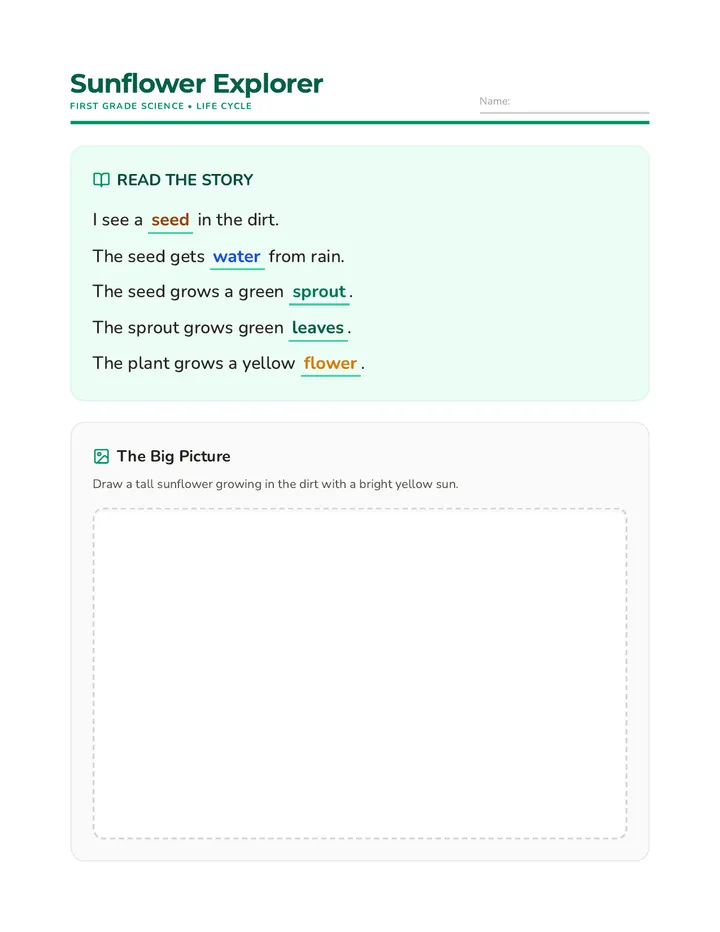
A primary science unit exploring the life cycles of plants, from dormant seeds to flowering adults. Students engage in inquiry-based experiments to understand what plants need to survive and thrive.
A fun, science-based lesson for K-3 students and their parents to explore pet hygiene, the mystery of 'wet dog smell,' and responsible animal care through a SciShow Kids video and a creative brochure activity.
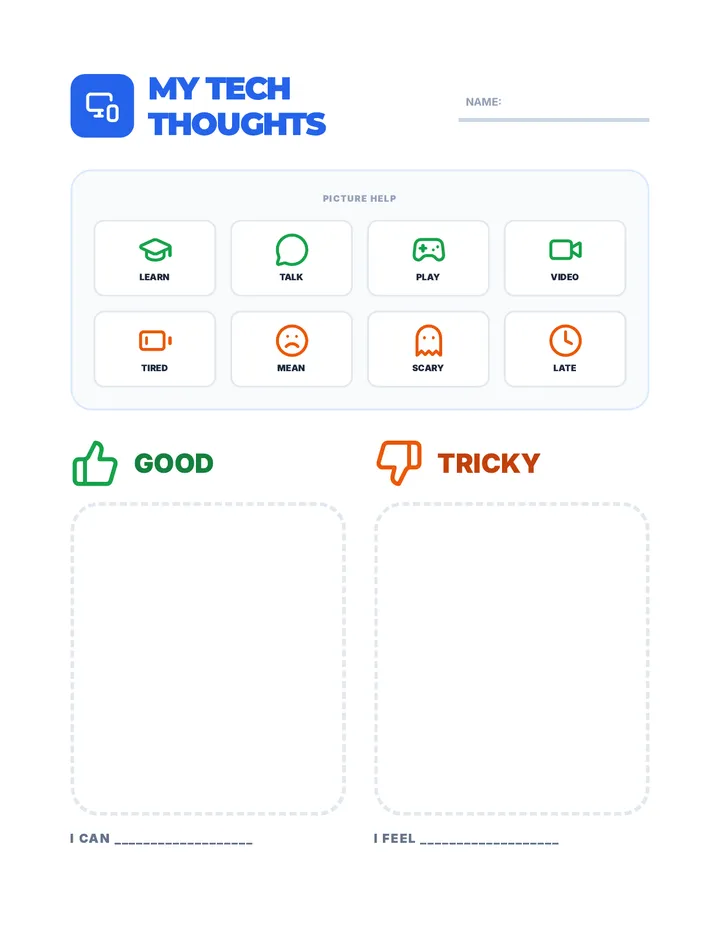
A technology and computer science unit exploring the history of computing, how hardware and software work together, and the future of digital innovation. Students move from understanding basic components to imagining the next generation of technology.
A Kindergarten through 2nd-grade art-integrated science unit exploring the properties of magnets through creative character design and hands-on testing.
A series of lessons exploring the world of farming, from the science of growing crops to the importance of sustainable agriculture and animal care.
A lesson sequence exploring how volcanoes grow through the accumulation and cooling of lava layers, featuring hands-on modeling and visual analysis.
A sequence focused on understanding the origins and structure of our solar system, starting with the formation of the sun and planets from a cloud of dust and gas.
A beginner's introduction to electricity and circuits for 2nd graders, focusing on the three essential components: power source, path, and load. Students explore how electricity travels in a loop through video, discussion, and hands-on labeling activities.
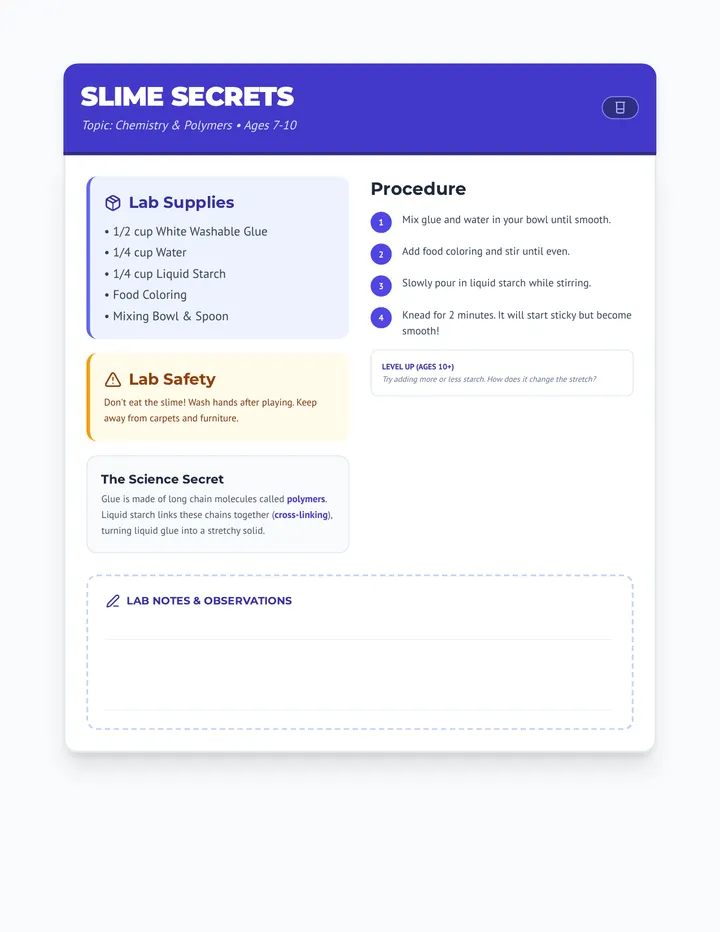
A beginner science sequence where students explore the world of chemistry through everyday household items, focusing on observations, reactions, and the scientific method.
A series of lessons exploring animal adaptations, survival strategies, and the clever ways nature tricks our eyes.
A comprehensive lesson sequence exploring gravity as an invisible pull force, featuring hands-on experiments, video analysis, and historical context.
A series of integrated PE and Science lessons exploring the physics of human movement, biomechanics, and exercise physiology for early elementary students.