A simulation-heavy exploration of how physical traits and behavioral instincts allow animals to survive in diverse environments, from the depths of the ocean to the icy tundra.
A professional development series for PreK-12 educators that reframes Computer Science as a "Superpower" through Computational Thinking. Teachers explore how CS concepts like decomposition, abstraction, and automation are already present in their daily instructional practices and Iowa Core content.
A series of lessons exploring the mysterious and dangerous creatures of the deep ocean, focusing on unique adaptations and survival strategies.
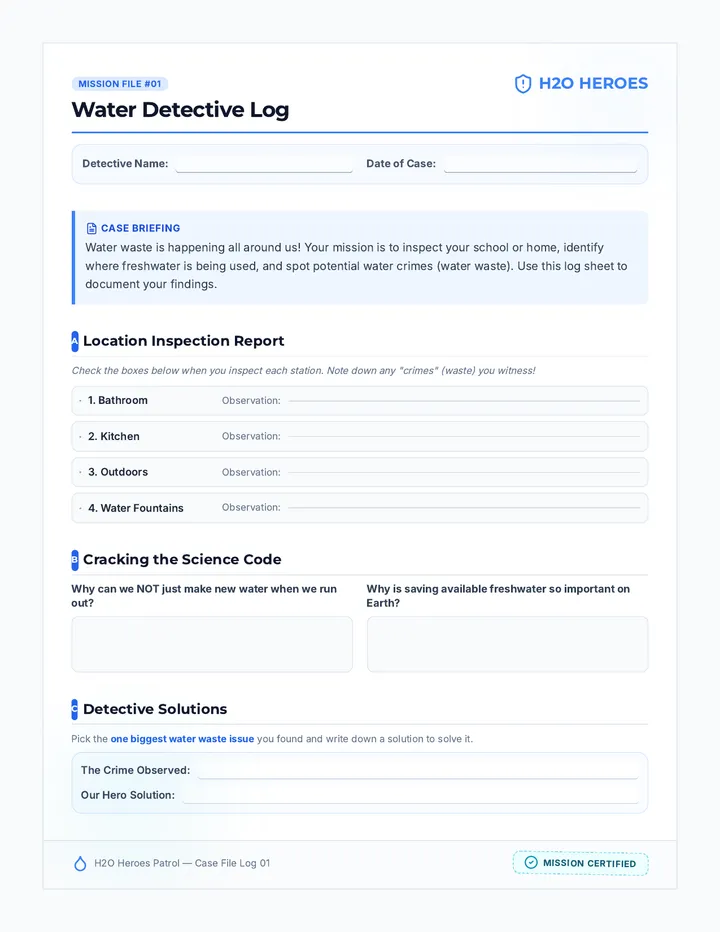
A comprehensive unit focused on environmental stewardship, exploring waste management, conservation, and sustainable living through hands-on activities.
A 10-day project-based learning unit integrating 4th grade Math (multiplication/division) and Science (photosynthesis/life cycles). Students choose between designing a community garden or creating a garden business plan, applying their knowledge of plant systems to real-world calculations.
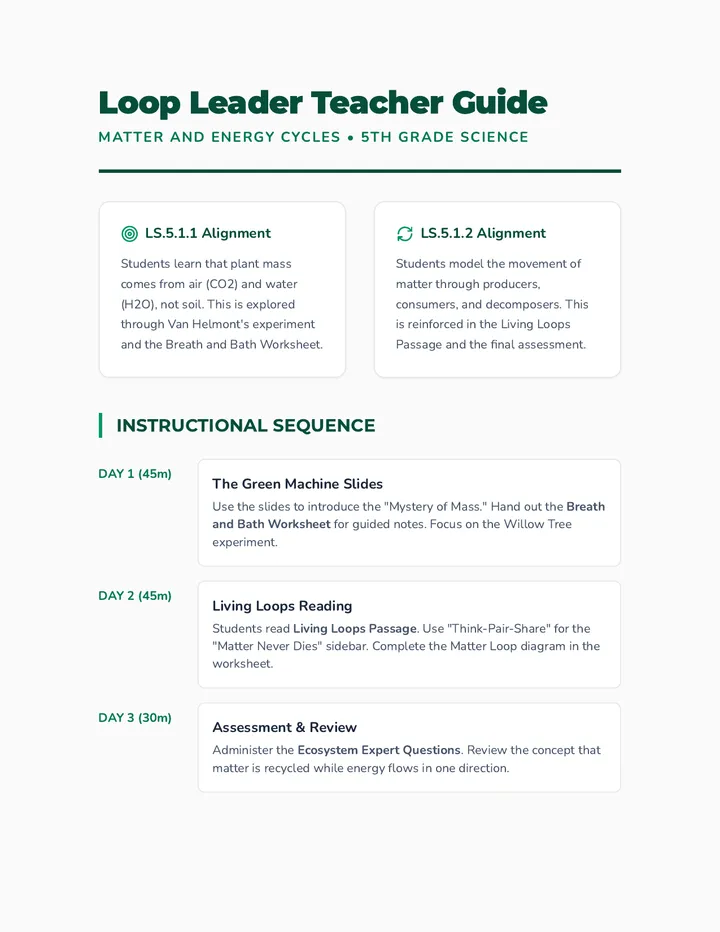
A comprehensive unit for 4th-grade students to explore the flow of energy in ecosystems, the roles of producers and consumers, and the intricate connections within food webs. Students engage in hands-on stations to model energy movement and predict the effects of environmental changes.
A two-day science unit for 2nd-3rd graders exploring how energy moves through nature. Students learn the basics of food chains on day one and expand their understanding to complex food webs on day two.
A comprehensive end-of-year review for 5th Grade NGSS science standards, organized by domain to ensure mastery of physical, life, and Earth sciences.
A comprehensive review of all 5th Grade NGSS Science standards, covering matter, ecosystems, Earth systems, and space science through vocabulary practice, graphic organizers, and critical thinking questions.
A comprehensive exploration of Earth's diverse biomes, covering climates, geography, and complex biological adaptations. Each lesson focuses on a different environment, starting with the arid world of deserts.
A celebratory Earth Day sequence focused on environmental stewardship and the interconnectedness of ecosystems, centered around the book 'The Great Kapok Tree' by Lynne Cherry. Students explore the perspectives of various rainforest inhabitants and create a collaborative bulletin board display.
A series of nature-based investigations helping young learners connect with seasonal changes using their senses and scientific observation.