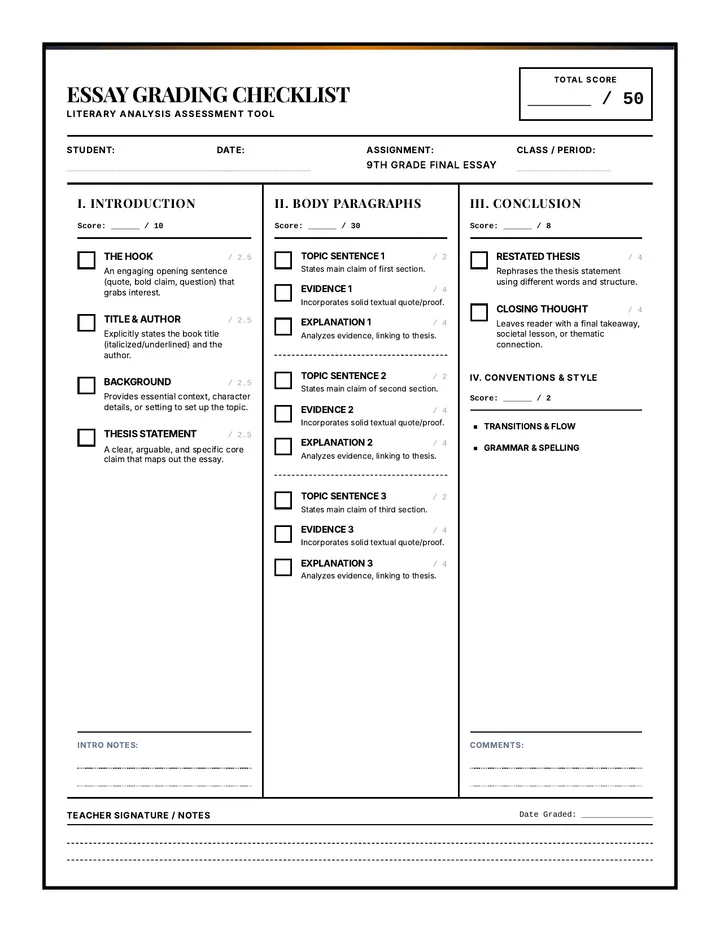
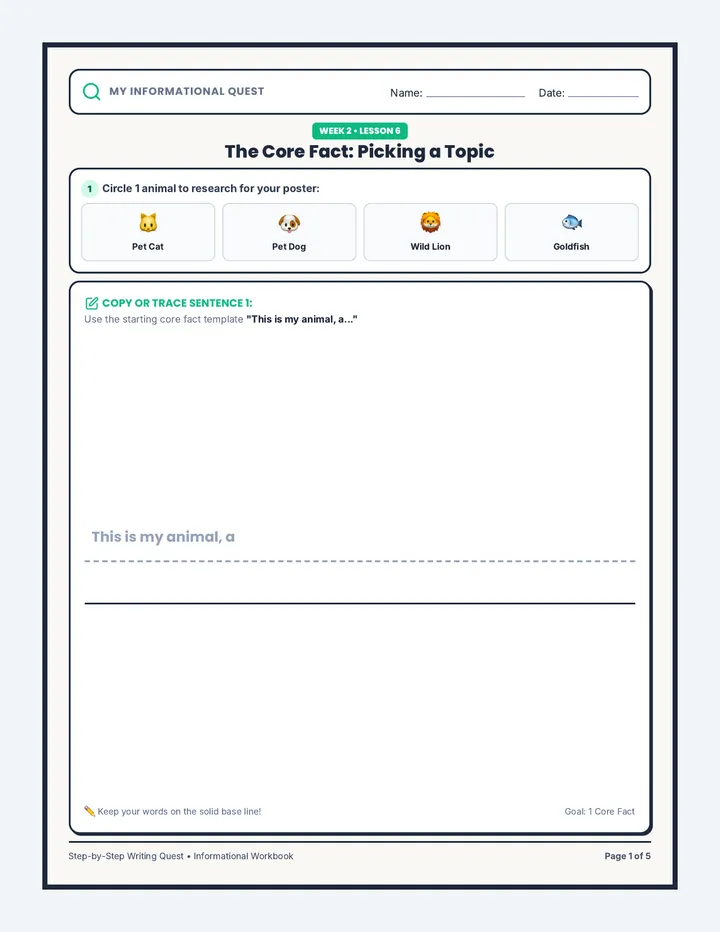
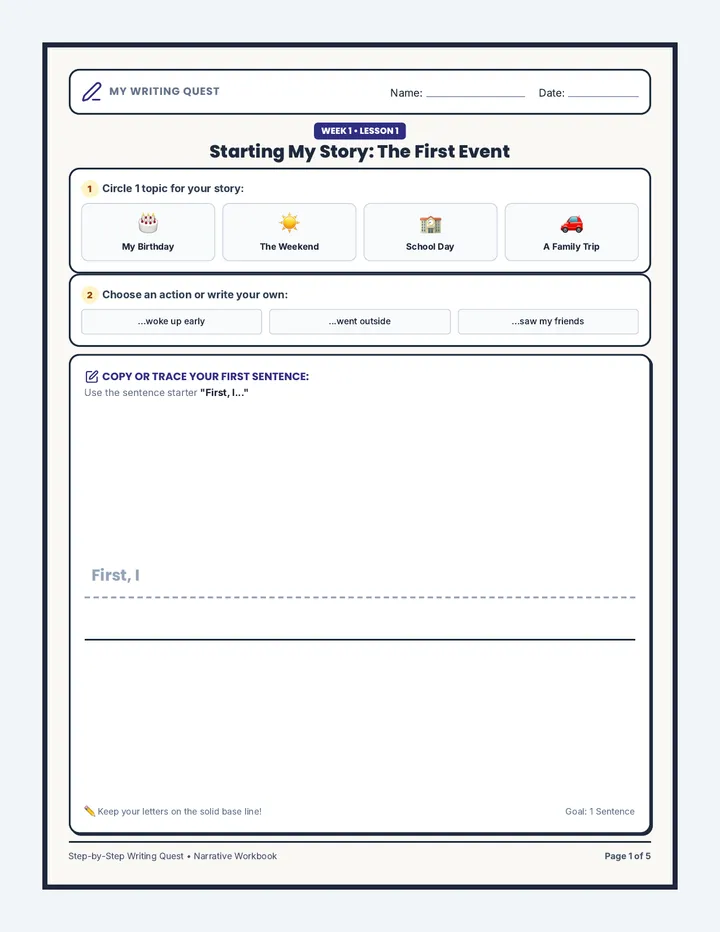
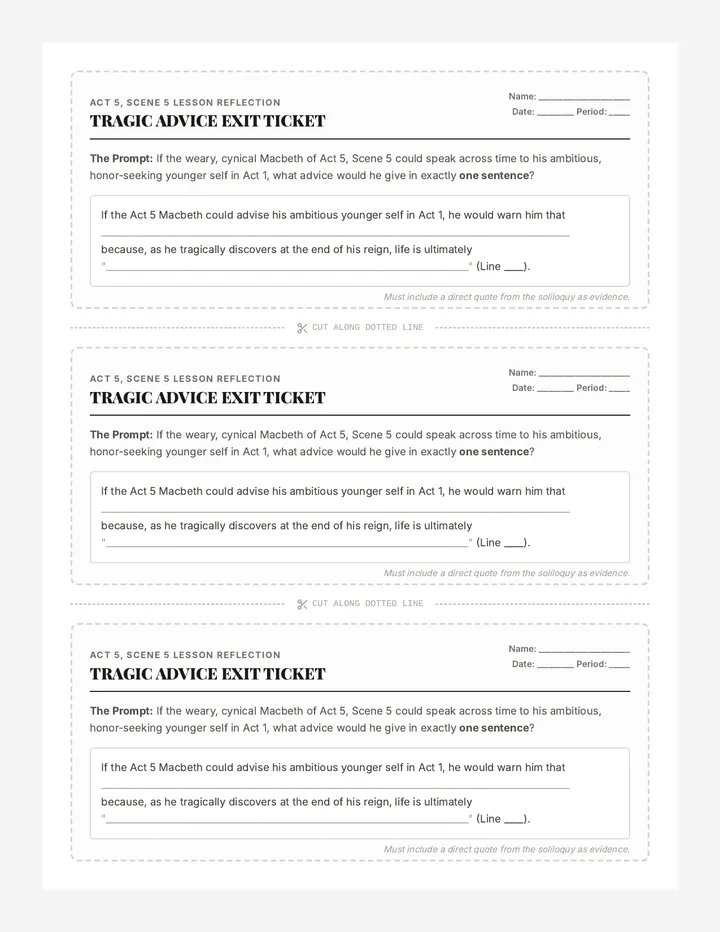
Session 2 Warm Up Activity Card. A high-engagement 5-minute warm-up focused on feedback reflection and audience analysis to bridge Sessions 1 and 2.
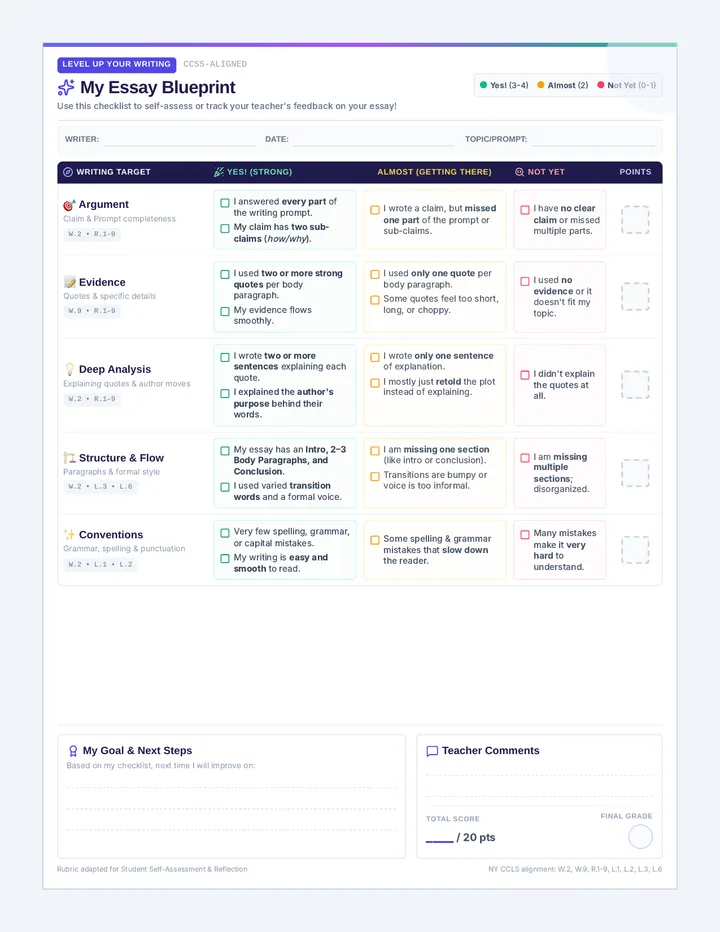
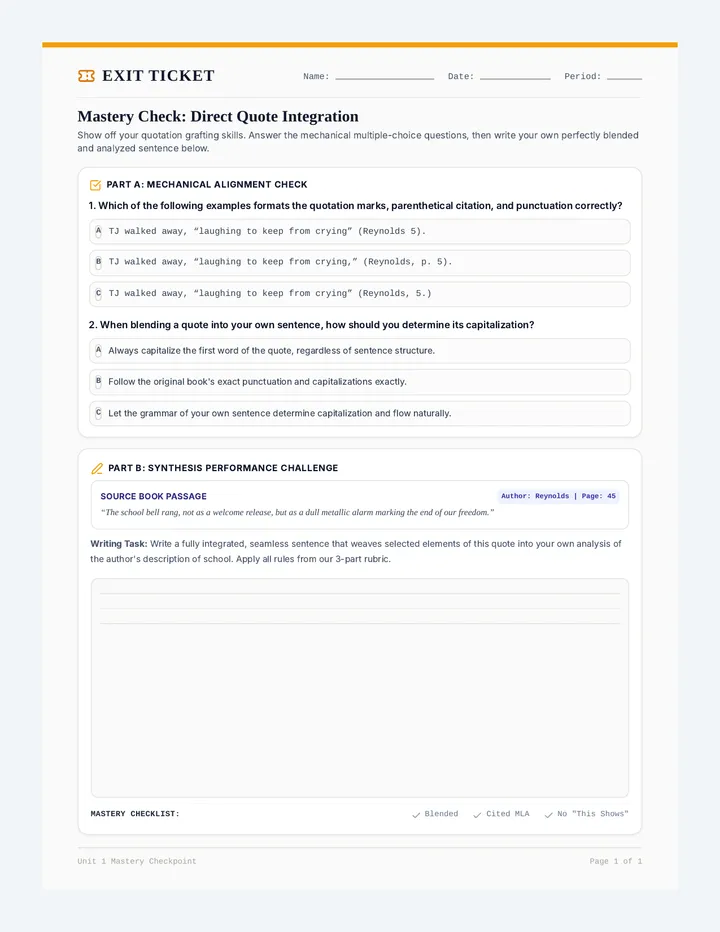
Combined assessment and exit ticket for Lesson 1, updated to ensure all student content fits on page one and all teacher content fits on page two. Features a print-friendly design and rubric.
Student worksheet for Lesson 1, updated to ensure all content fits on a single page. Includes vocabulary, matching, and short response areas with optimized spacing. Character counts in fill-in-the-blanks corrected.
Comprehensive teacher guide and script for Lesson 1, updated to fix page breaks and ensure consistent facilitation labeling. Covers timing, alignment, and specific prompts.
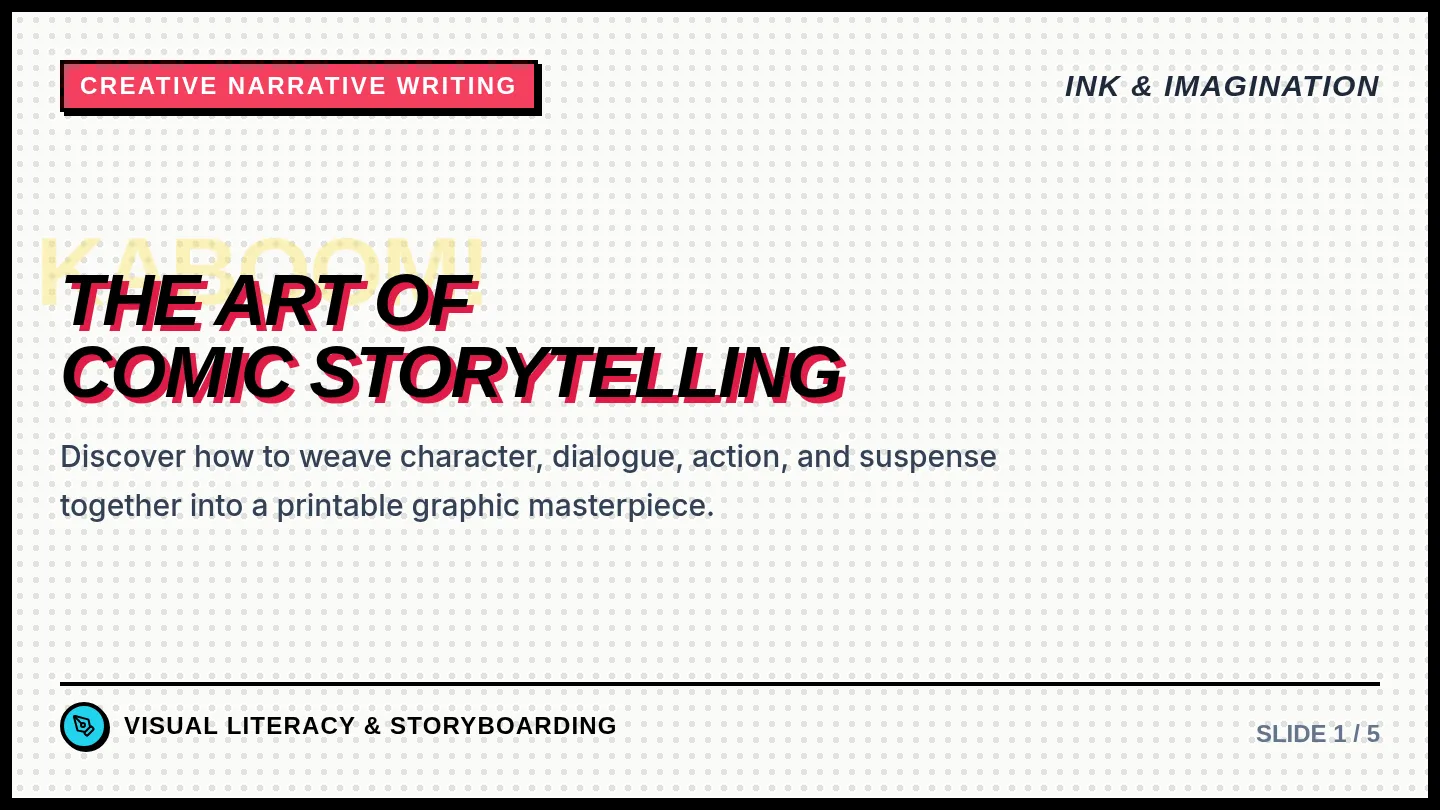
Introductory slide deck for Grade 9 information literacy, focusing on distinguishing between different types of information resources within the ecosystem. Updated for better student prompts and visual clarity.
A comprehensive final assessment for 'The Crucible' including multiple choice questions, quote identification, and extended response prompts focusing on integrity and societal themes.
A final slide deck summarizing Act 4 of 'The Crucible', highlighting John Proctor's moral dilemma, the theme of personal integrity, and the resolution of the Salem witch trials.
A worksheet focused on Acts 2 and 3 of 'The Crucible', asking students to analyze character relationships, dramatic irony, and the shifting power dynamics within Salem.
A slide deck covering Acts 2 and 3 of 'The Crucible', focusing on the Proctor household tensions, the poppet evidence, and the climactic courtroom scene.
A student worksheet for Act 1 of 'The Crucible', featuring historical context questions, character identification, and analysis of the plot's inciting incidents.
An introductory slide deck for 'The Crucible' Act 1, covering the historical context of Puritanism and McCarthyism, key characters, and the initial plot developments.
A scaffolded analysis worksheet providing pre-filled paraphrasing for 'Still I Rise', visual connotation mapping spaces for 'Hope is the thing with feathers', and a guided 'Your Turn' section for independent practice. Corrected layout issues and writing space.
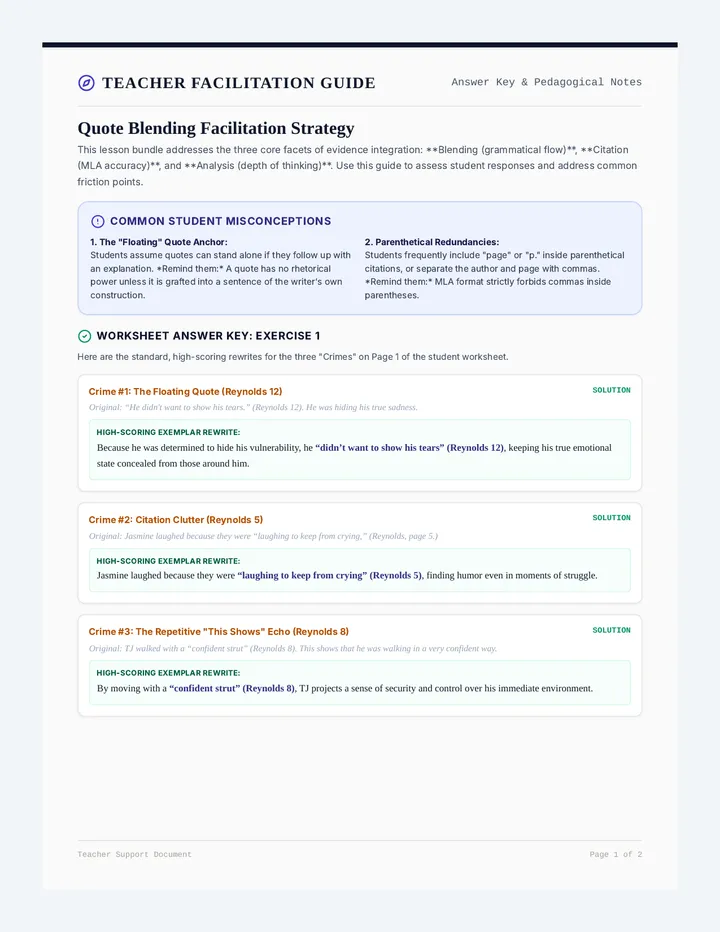
A teacher's reference guide for the CEA Writing lesson. It provides session goals, instructional strategies for academic writing, answer keys for practice activities, and solutions for common student writing misconceptions.
A student-facing checklist for constructing arguments using the Claim-Evidence-Analysis (CEA) framework. It includes specific criteria for each component and a modeled academic example about high school lunch periods.
A 9-slide presentation deck explaining the Claim-Evidence-Analysis (CEA) writing framework for 8th-grade students. It includes session goals, clear definitions, a simplified modeled paragraph on high school lunch breaks, and an interactive practice case.
A comprehensive teacher's answer key for the 10 poems in the Poetry Gallery Walk, providing a detailed TPCASTT analysis for each poem in the requested table format.
A teacher reference guide providing summaries and key TPCASTT analysis details for the 10 poems featured in the Gallery Walk activity.
A comprehensive teacher's facilitation guide for the Verse Vault lesson, updated to include the scaffolded Verse Support Worksheet and related differentiation strategies.
A 2-up printable bell ringer handout featuring 6 multiple-choice questions about the TPCASTT poetry analysis method.
A 2-up printable exit ticket cutout divided crosswise (top and bottom) into two identical halves, featuring reflection questions, a self-assessment scale, and plenty of writing space.
A teacher's answer key providing correct responses for the 6 Bell Ringer MCQs, the modeled analysis of Robert Frost, and key themes for the poetry gallery walk.
A student response sheet for the Poetry Gallery Walk, providing structured spaces to analyze two selected poems using the TPCASTT framework.
A collection of 10 poems for a classroom gallery walk, formatted into stations for easy printing and display, covering diverse authors from Emily Dickinson to Nikki Grimes.
A 2-up printable cutout sheet divided into two identical halves, providing the TPCASTT poem analysis framework for student interactive notebooks.
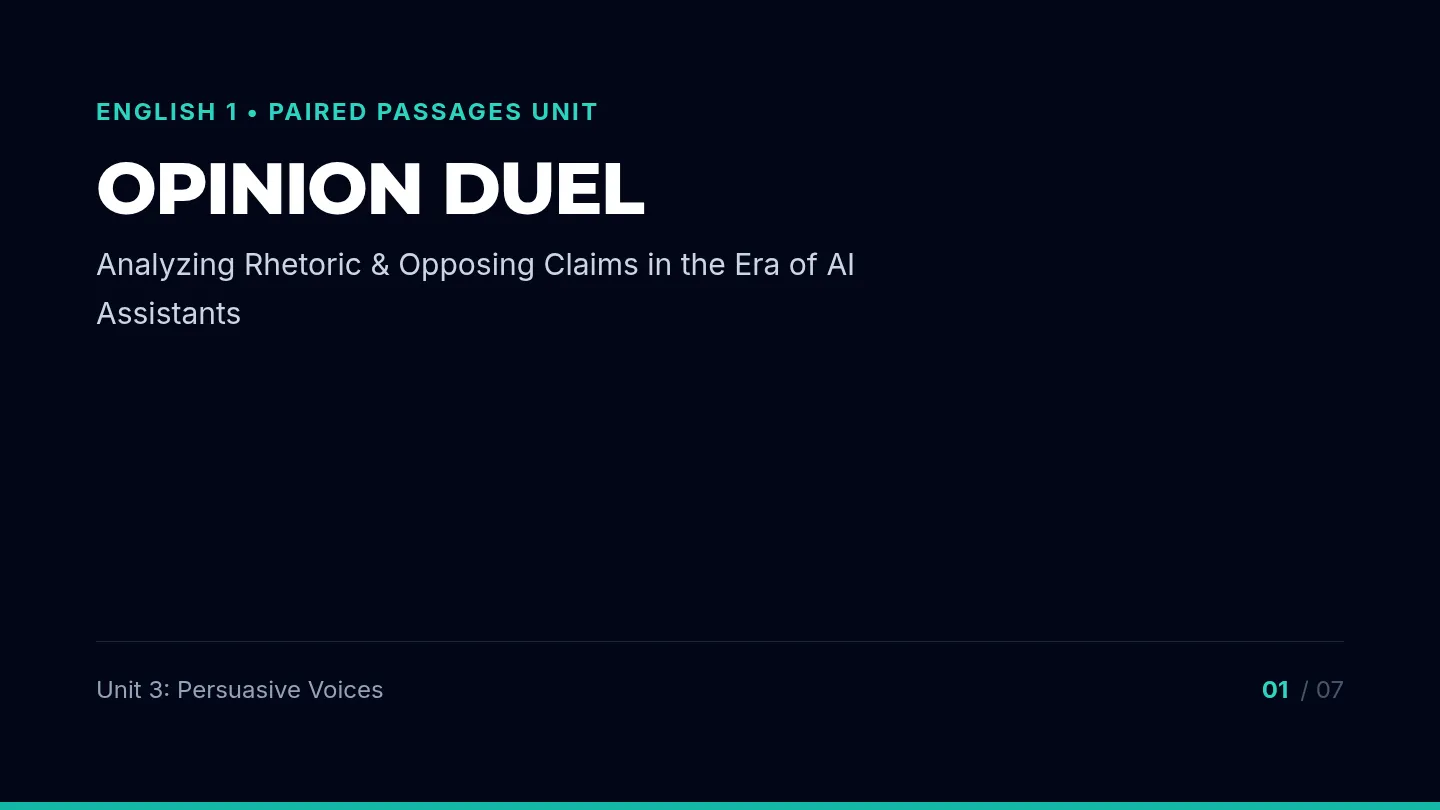
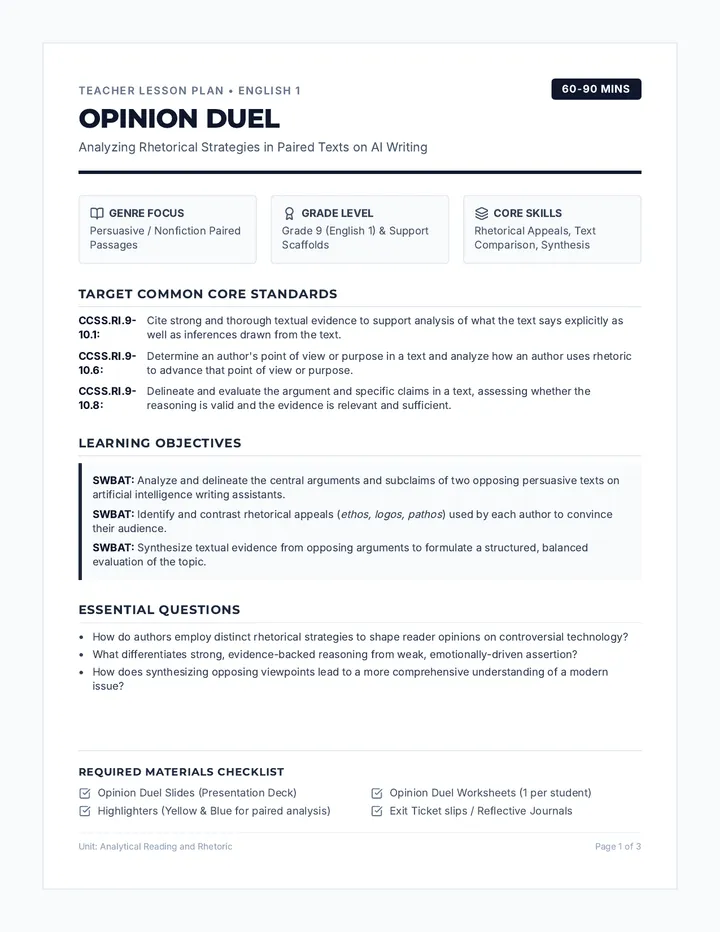
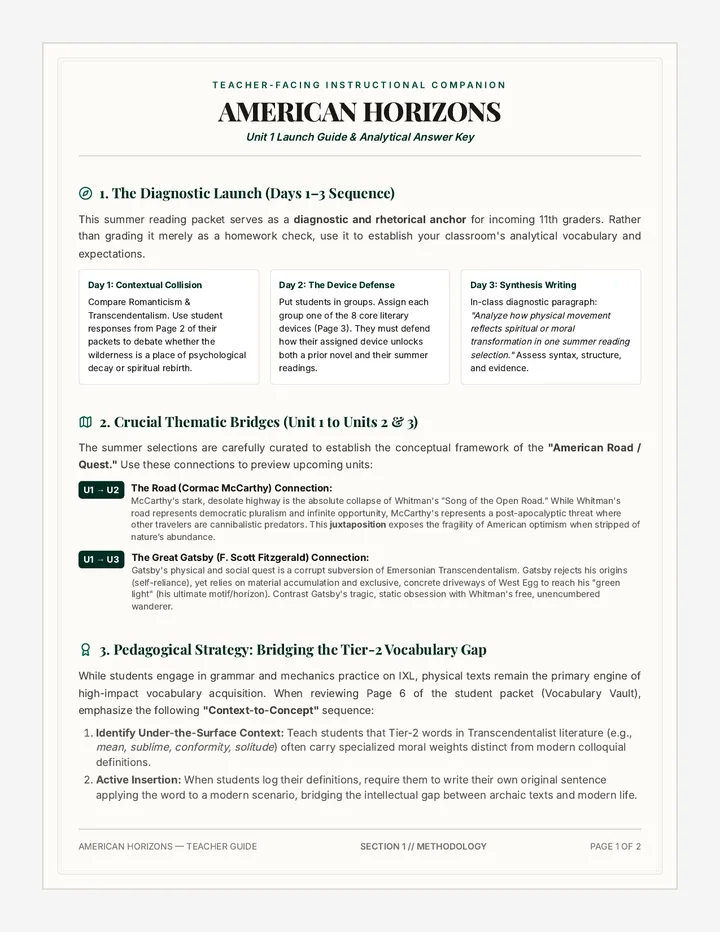
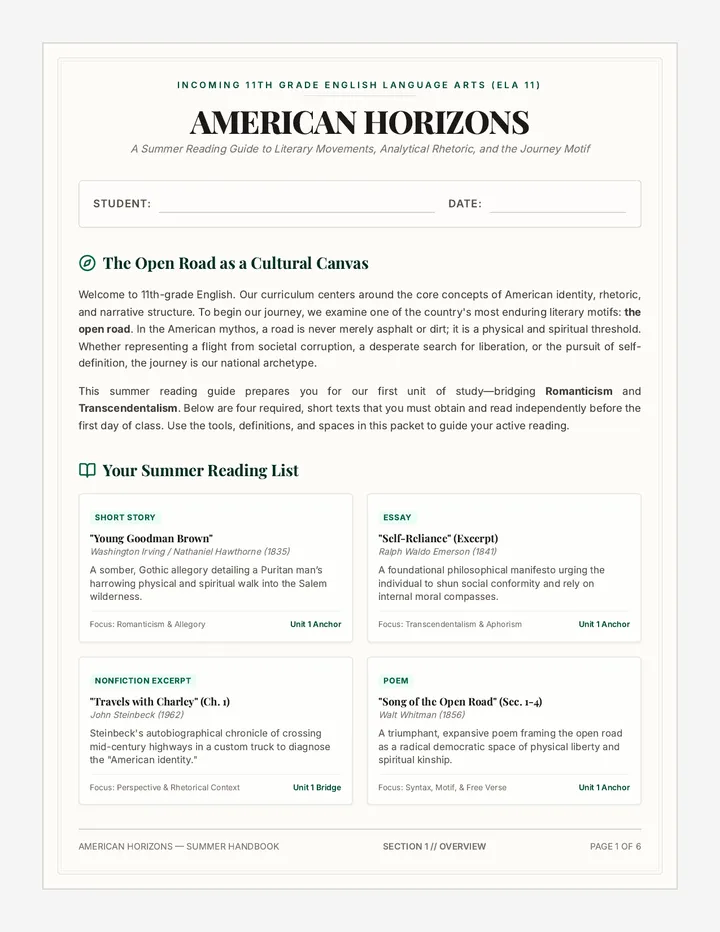
Updated presentation now includes a detailed TPCASTT analysis chart for 'The Road Not Taken' and a Gallery Lineup overview slide immediately following the poem modeling, serving as a student guide for the gallery walk. All original content is preserved.
An advanced exit ticket for the Cyclops encounter, requiring students to analyze the conflict between cunning and pride through a literary lens.
An advanced reading passage about Odysseus and the Cyclops, featuring complex vocabulary, literary analysis of irony, and the hero's paradox.
A biweekly progress monitoring and data tracking sheet for nonsense word fluency, including interpretation guides for instructional adjustments.
A consolidated one-page cross-reference sheet identifying phonetic challenges for speakers of Spanish, Swahili, Burmese, and Vietnamese.
A concise 5-week teacher-facing intervention guide for high school ELs, detailing session routines and weekly objectives.
A comprehensive teacher's guide for the Cyclops lesson, including differentiation strategies and answer keys for Advanced, On-Grade, and Foundational levels.
A foundational level exit ticket for below-grade readers, focusing on identifying key plot points and simple cause-effect reasoning.
An on-grade level exit ticket focused on analyzing character traits (guile and hubris) and predicting plot outcomes.
A below-grade level reading passage about Odysseus and the Cyclops, featuring simplified text and foundational comprehension questions.
An on-grade level reading passage about Odysseus and the Cyclops, featuring vocabulary and high-order thinking questions.
An introductory slide deck for the story of Odysseus and the Cyclops, featuring vocabulary, background context, and differentiated reading paths (Advanced, On-Grade, Foundational).
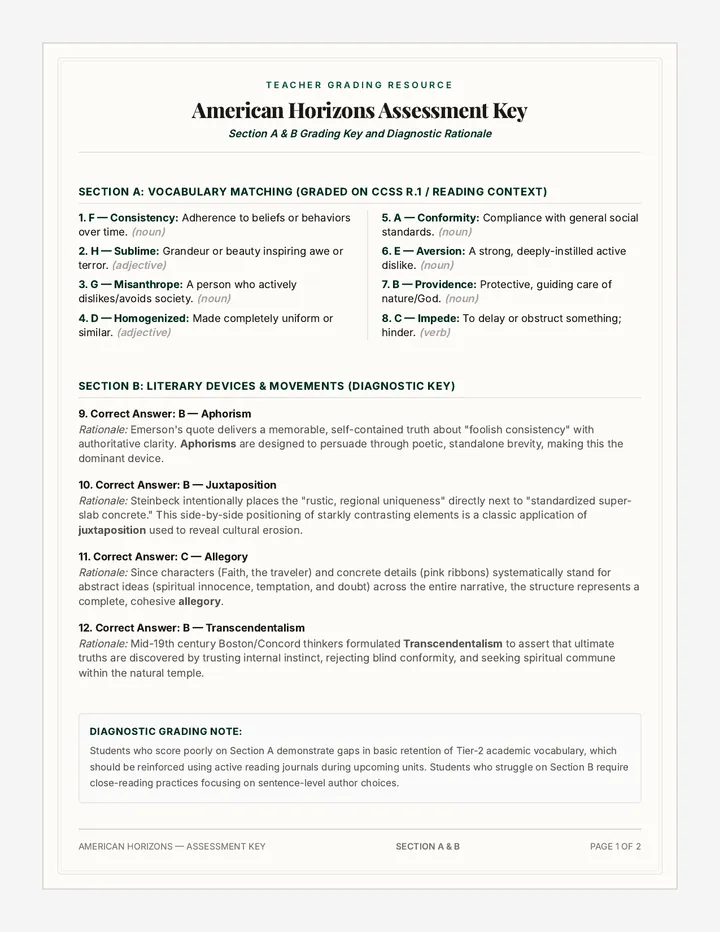
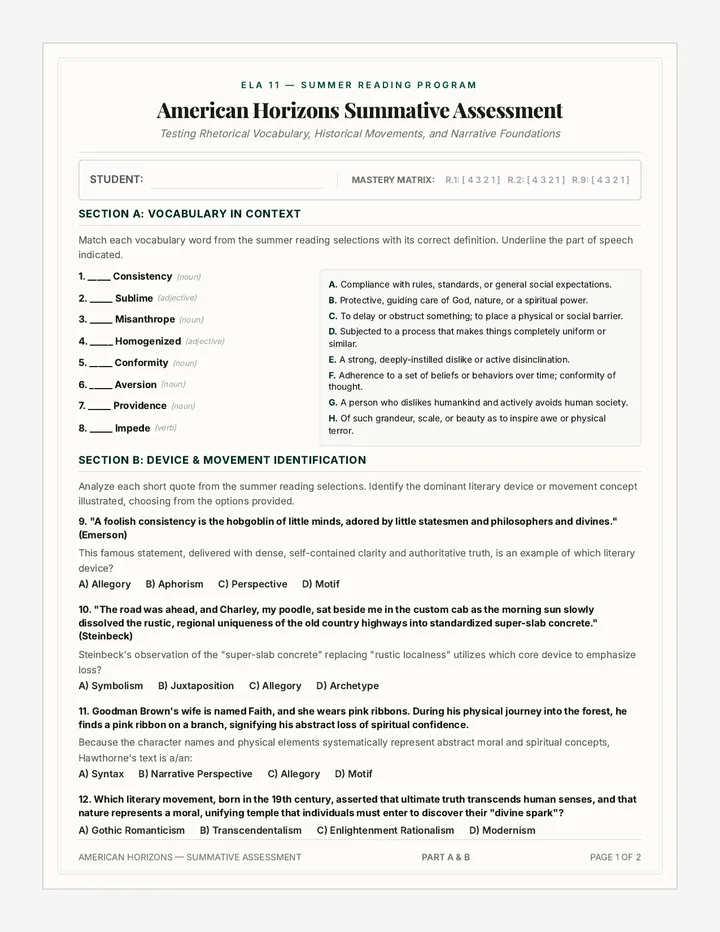
A comprehensive answer key for all mentor texts, revision/editing exercises, and the cumulative test in the Shadows and Superstition remediation packet. Revised to fit on a single page. Adjusted spacing and naming for consistency.
A grayscale version of the cumulative test, featuring the cold-read passage and assessment questions with all color removed. Fixed word spacing in headers and increased writing lines. Standardized distractor order.
A grayscale version of the revision and editing practice passages, with the yellow highlight updated to gray. Consolidated layout to group Revision questions on Page 1 and Editing questions on Page 2. Fixed word spacing issues. Removed excessive whitespace and min-height constraints.
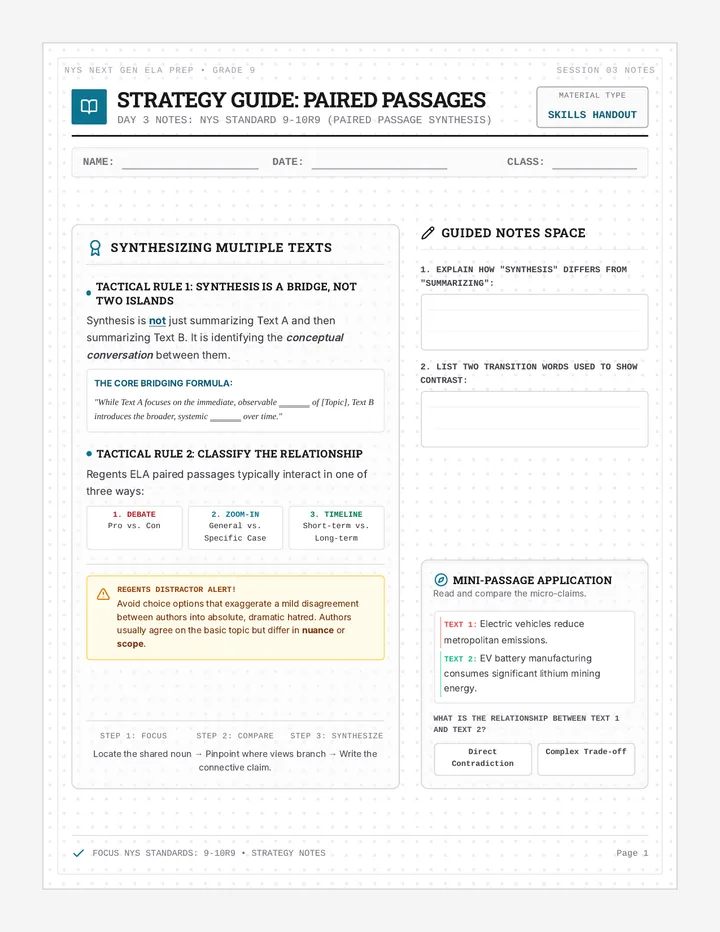
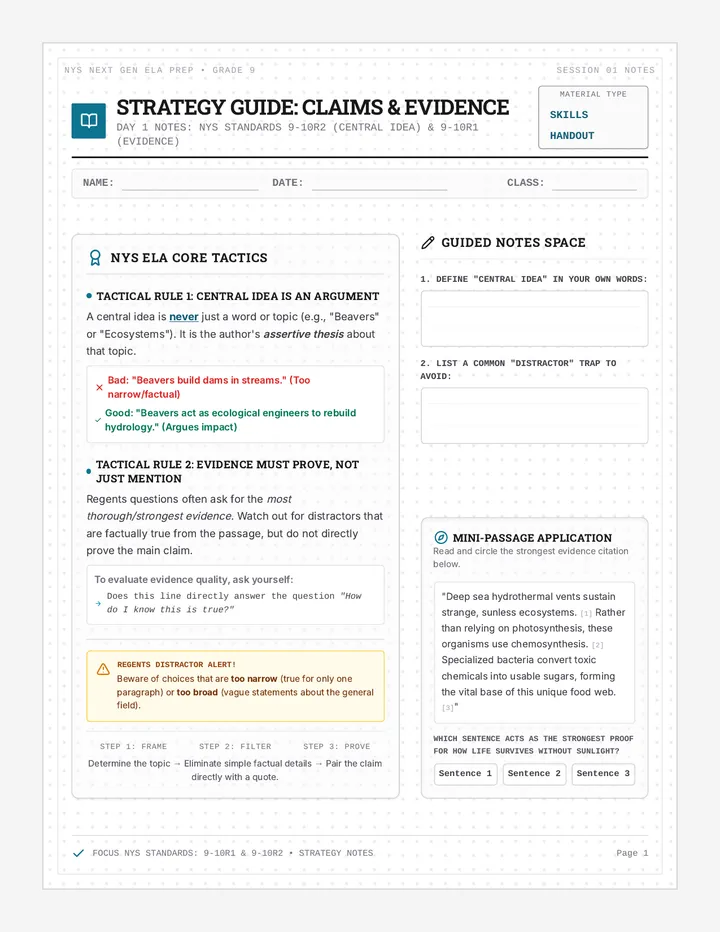
A grayscale version of the argumentative analysis document, with colors updated to slate shades and text references adjusted to reflect gray highlights. Consolidated layout to 2 pages and fixed work area line spacing. Fixed radio button alignment and constructed response container.
A grayscale version of the non-fiction analysis document, with colors updated to slate shades and text references adjusted to reflect gray highlights. Fixed invisible legend labels. Corrected work area rule thickness.
A grayscale version of the fiction analysis document, with colors updated to slate shades and text references adjusted to reflect gray highlights. Corrected prompt colors and consolidated layout to 2 pages. Fixed word spacing in sidebars.
A grayscale version of the poem analysis document, with colors updated to slate shades and text references adjusted to reflect gray highlights. Revised to fit entire poem and sidebars on a single page. Margin callouts precisely aligned.
A grayscale version of the student progress checklist for the remediation packet, featuring a structured list of all required texts and activities.
A comprehensive unit quiz for the Salem Shadows recovery packet, covering McCarthyism, historical context, literary genres, and key themes of The Crucible.
An instructional handout explaining the concept of genre, focusing specifically on Tragedy (Classical vs. Modern), Allegory, and Historical Fiction as they apply to The Crucible.
An inquiry-based worksheet that guides students through research tasks on Puritan life, the 1950s Red Scare, and Arthur Miller's own trial before the House Un-American Activities Committee.
A teacher's guide and answer key for the Salem Shadows recovery packet. Includes grading rationales, key discussion points, and a simplified rubric for the final project.
A final project menu for students to demonstrate their cumulative learning. Students choose between writing a legal closing argument for John Proctor or creating a historical newspaper front page.
An analytical worksheet that explores the literary genres of The Crucible, focusing on its structure as a modern tragedy and its function as an allegory.
A worksheet for analyzing the major themes of The Crucible (Reputation, Intolerance, Hysteria) and investigating the motivations of key characters like John Proctor and Abigail Williams.