A student activity sheet for the 'Slowest Drop' challenge, featuring a design sketch area, a 3-trial data table, and a structured reflection section for applying air resistance vocabulary.
A 2-page print-ready teacher instructional plan and facilitation guide for running the Force Field Engineers magnet maze lab. Includes NGSS standards, a materials checklist, lesson pacing, inquiry prompts, a 3-tier grading rubric, and classroom troubleshooting tips.
A 2-page collection of printable layout templates, assembly components, and cutouts for building custom student magnet mazes. Includes a 1-inch printable grid board and a materials folding lab sheet.
A 2-page print-ready student lab handbook for the Magnet Maze engineering challenge. It includes a material testing matrix, maze blueprinting grid, testing logs, and reflective engineering prompts.
A 1-page printable resource containing 2 identical high-impact exit tickets to easily print, cut, and distribute for quick formative assessment on Group 7 trends.
A 1-page printable resource featuring 4 distinct collaborative task cards covering shielding mechanisms, displacement equations, everyday uses, and state transitions.
A 2-page laboratory investigation guide detailing simulated halogen displacement reactions with clear procedures, observations grids, and a CER analysis framework.
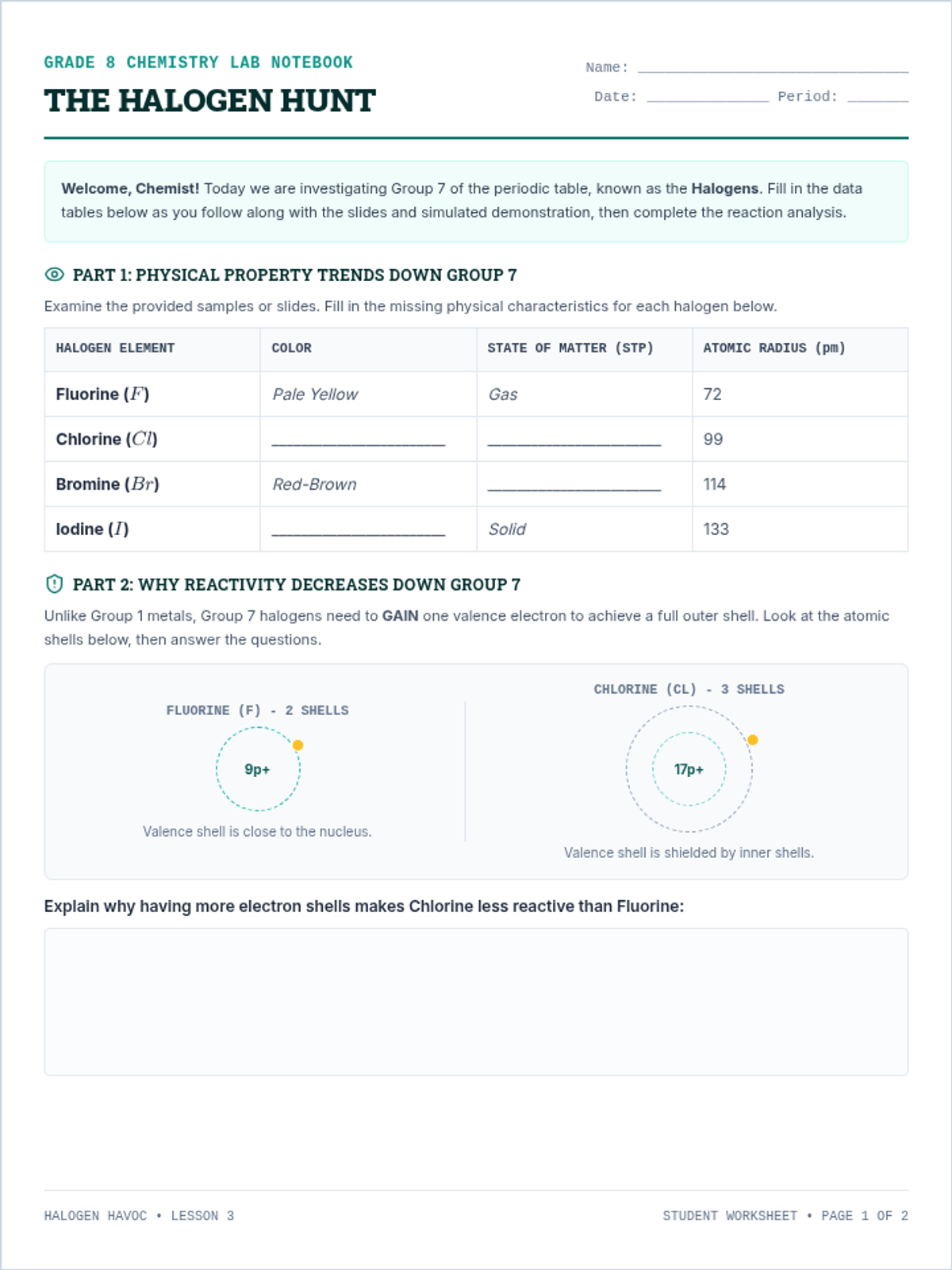
A 2-page print-ready guided worksheet with name/date fields, physical properties completion table, atomic shielding diagram questions, and displacement equation practice problems.
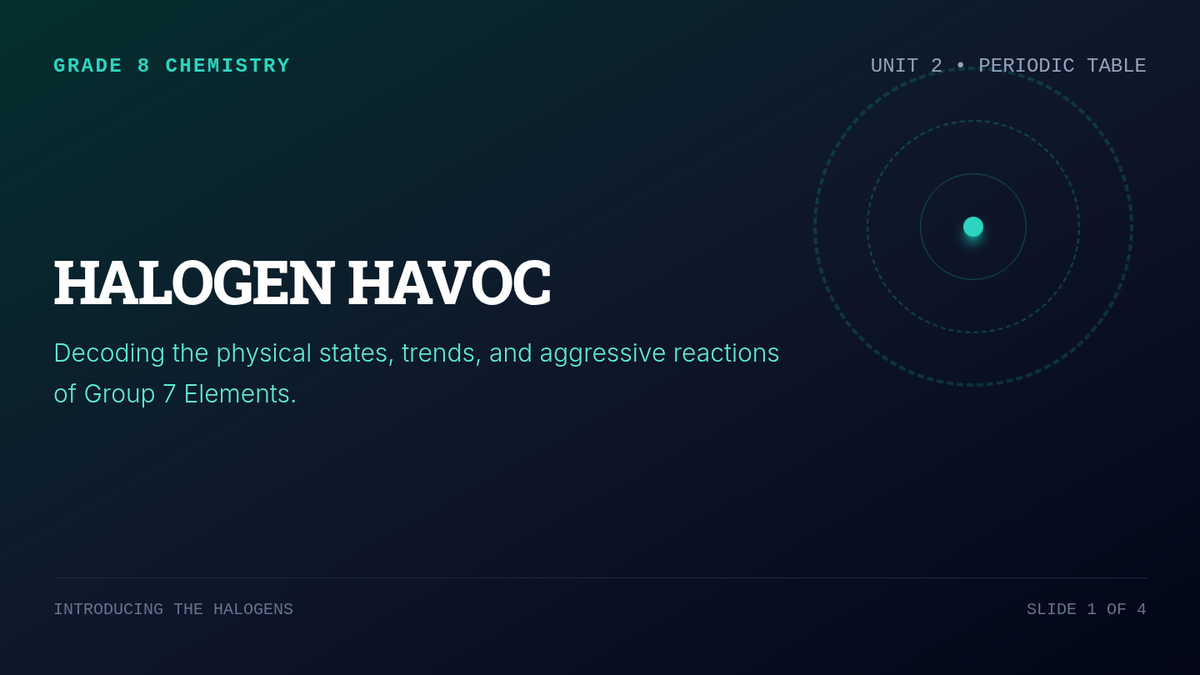
A high-impact, visual slide presentation covering Group 7 trends, color changes, subatomic shielding, and displacement rules. Optimized for 1440x810 layout.
A 2-page print-ready teacher guide detailing lesson pacing, pedagogical strategies, common student misconceptions, questioning guides, and answer keys for the entire Halogen Havoc unit.
A single-page formative assessment exit ticket where students analyze vague steps for logical loopholes, practice writing highly precise instructions, and explain why exact detail is crucial for programming.
A highly-structured 2-page student worksheet that helps kids brainstorm, sketch, and systematically draft chronological, step-by-step algorithms for building a marshmallow fluff and jelly sandwich.
A comprehensive, step-by-step facilitation guide for teachers on how to execute the literal-interpretation marshmallow fluff and jelly demo, complete with loophole guides, common student instruction errors, and reflection prompts.
A vibrant, projection-ready slide presentation that guides students through the 'Exact Instructions Challenge'. It establishes the rules of the robot-teacher demo, showcases ingredients, sets up the writing activity, and leads the class debrief on the importance of clarity.
A 2-page complete teacher facilitation guide and answer key for the Microbot Mission viewing unit. It provides lesson timelines, pre- and during-viewing classroom discussion prompts, and fully explained numerical solutions for all math and geometry challenges.
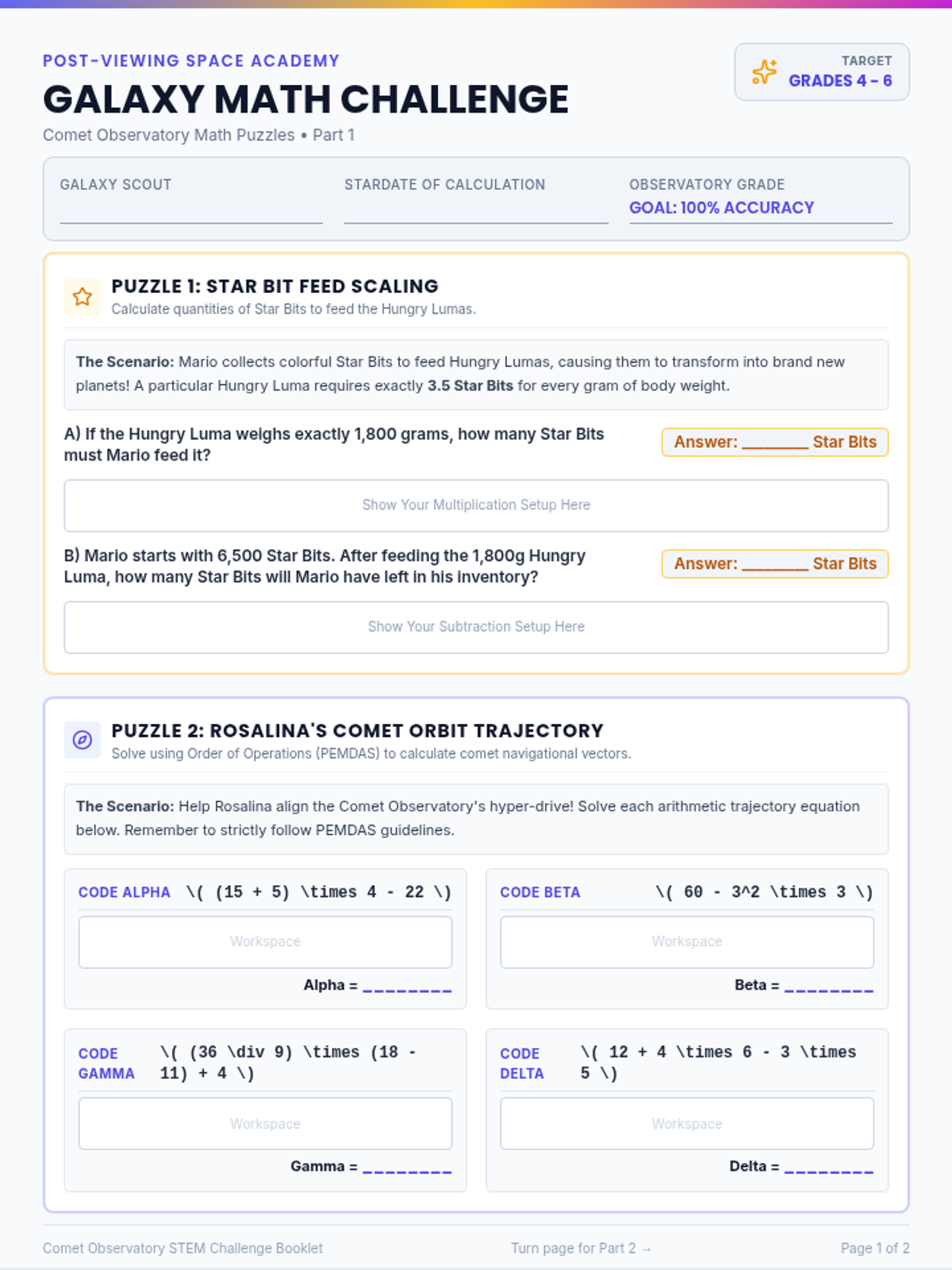
A high-energy 2-page math challenge booklet based on the physics, orbits, and story of Super Mario Galaxy. It presents Grade 4-6 aligned puzzles covering Star Bit scaling, PEMDAS navigational vectors, distance word problems, and orbital geometry.
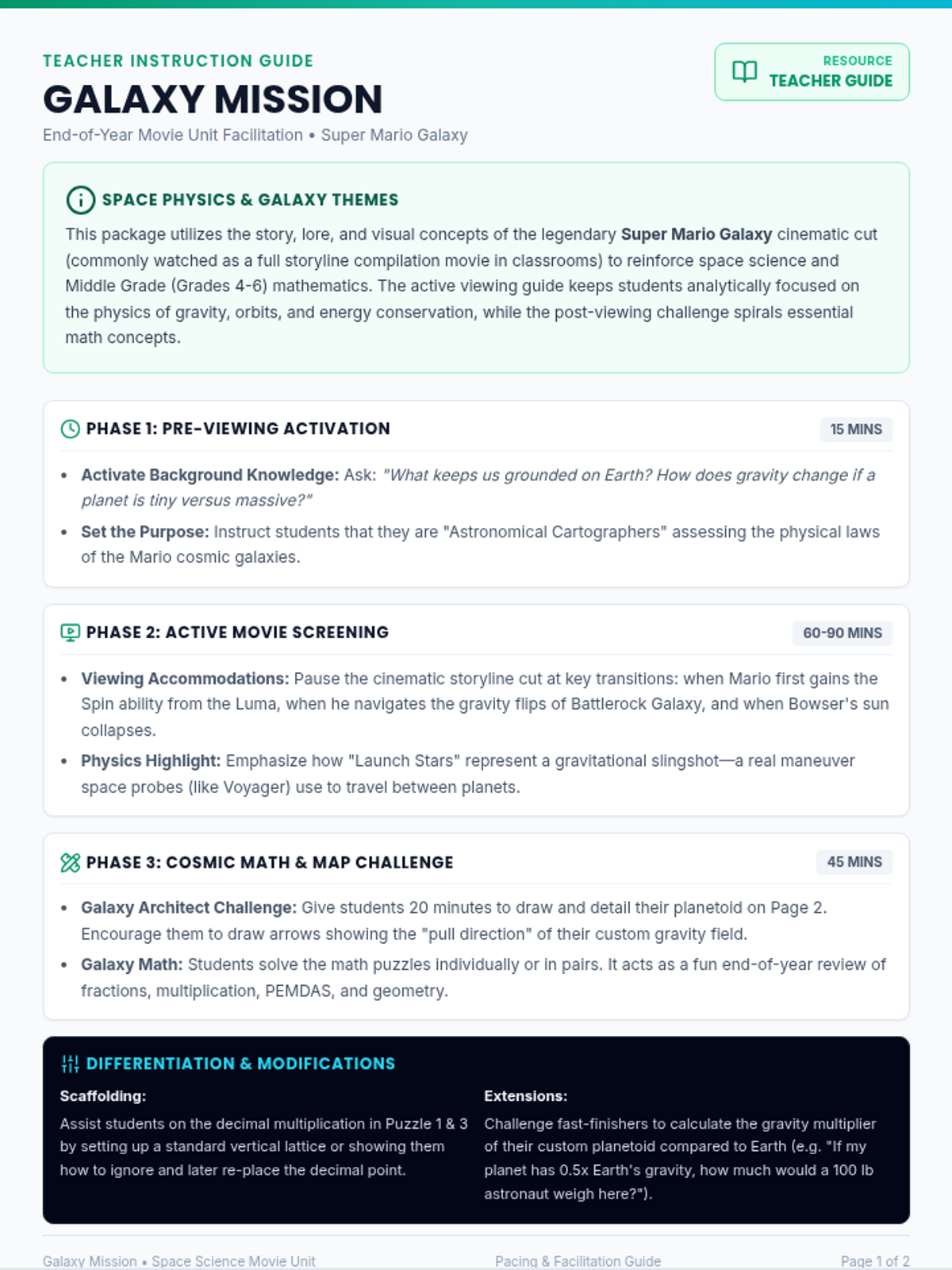
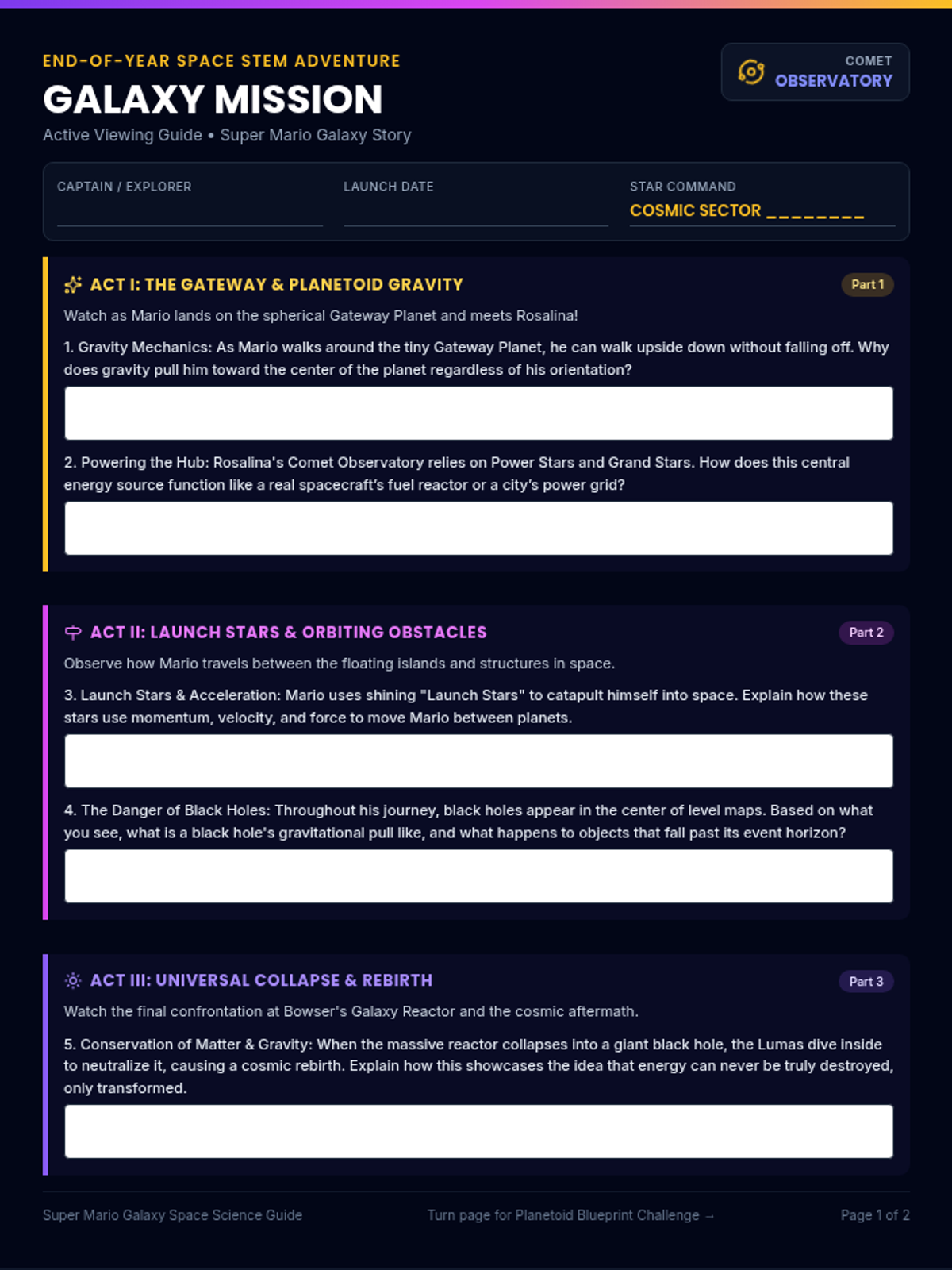
A 2-page active viewing and creative space-science guide based on the story of Super Mario Galaxy. Students explore gravity, orbits, energy transfer, and black holes, followed by designing and mapping their own gravitational planetoid.
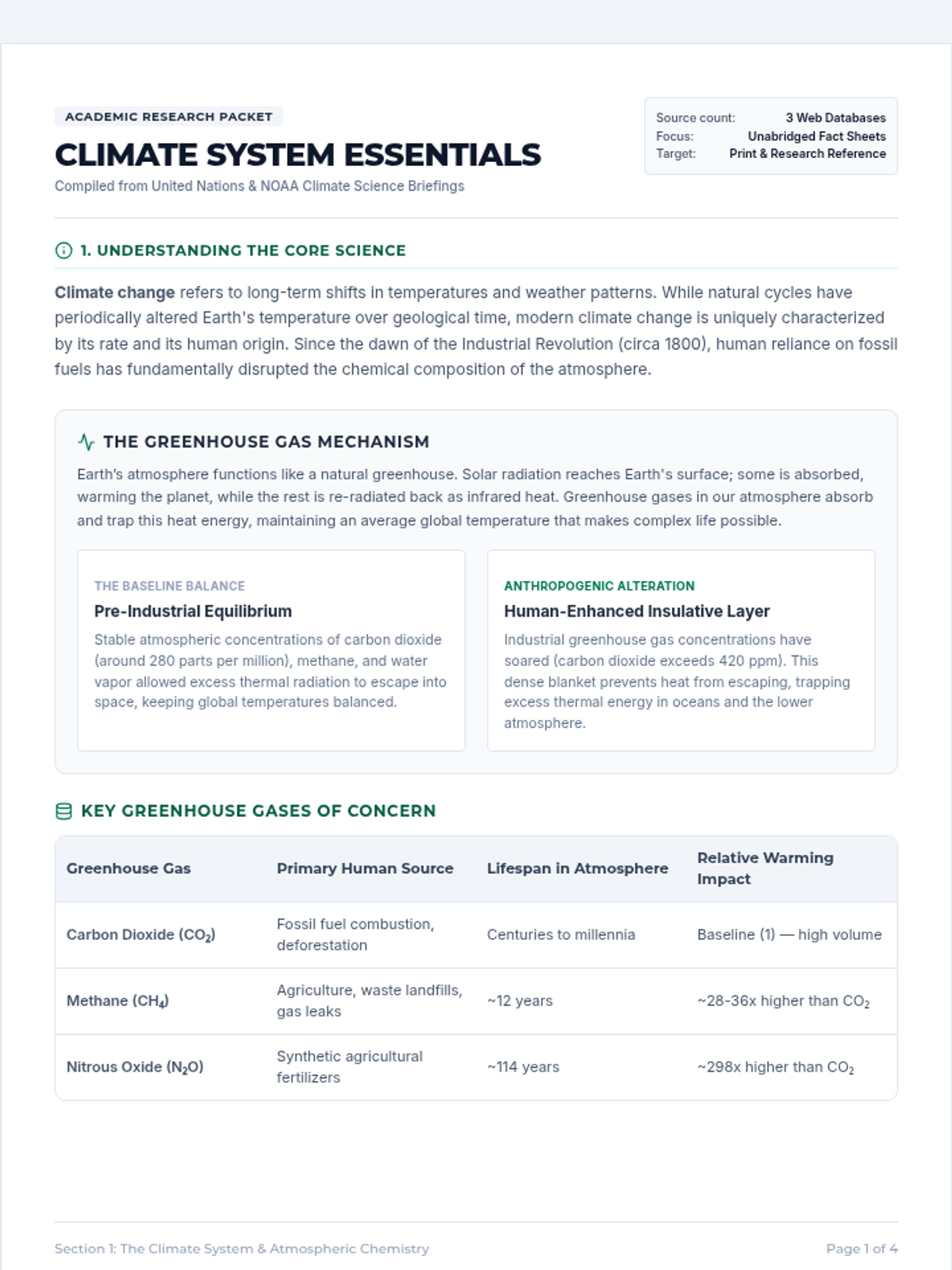
A print-optimized, high-density reference guide detailing the specific 7 causes and 8 effects of climate change outlined by the United Nations. Designed to replace graphic-heavy webpage prints with structured, high-density factual text.
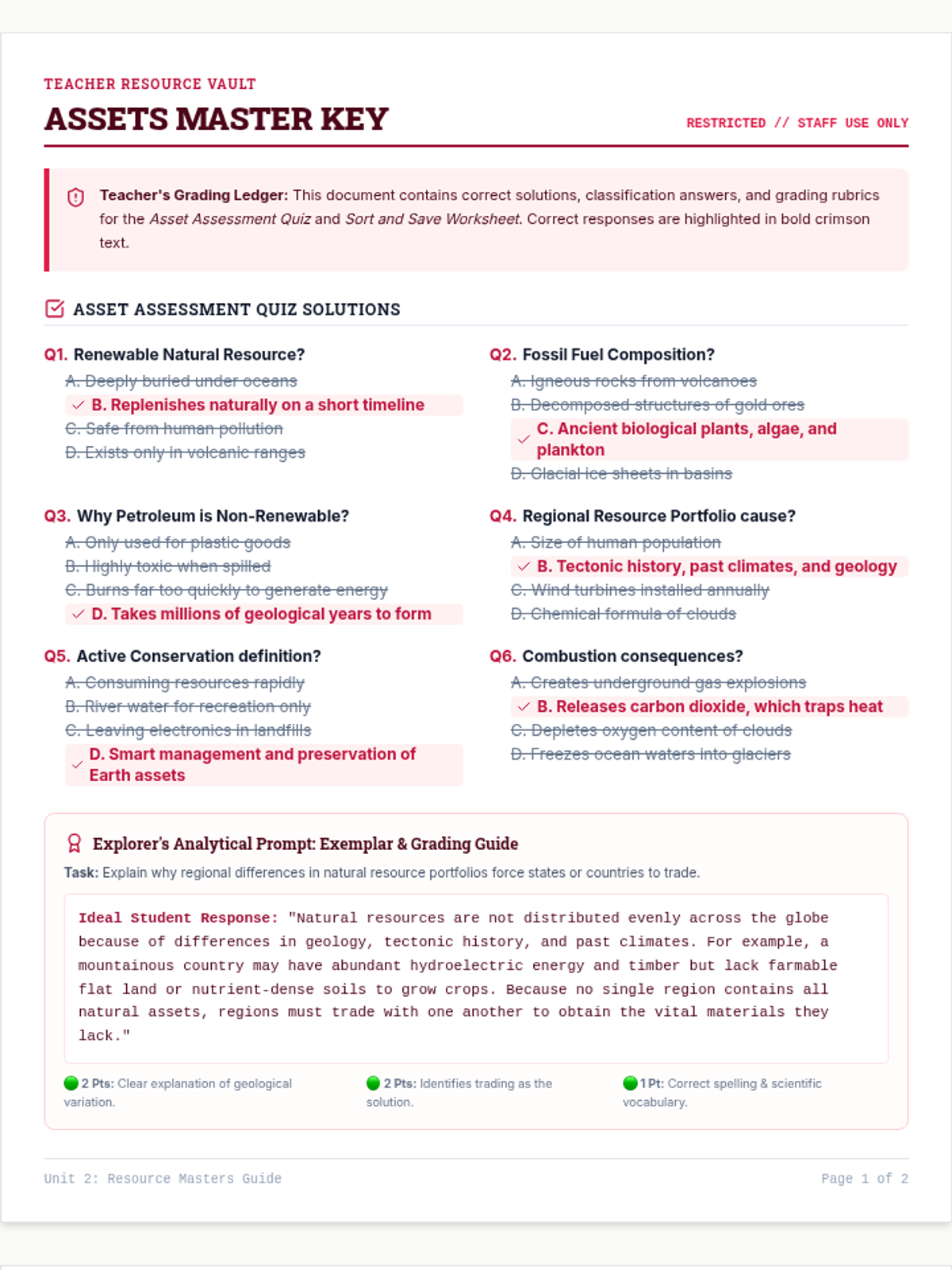
A comprehensive, 2-page teacher answer key matching the unit's quiz and worksheets. It includes answers to all multiple-choice questions, sorting tables, matching layouts, and evaluation rubrics.
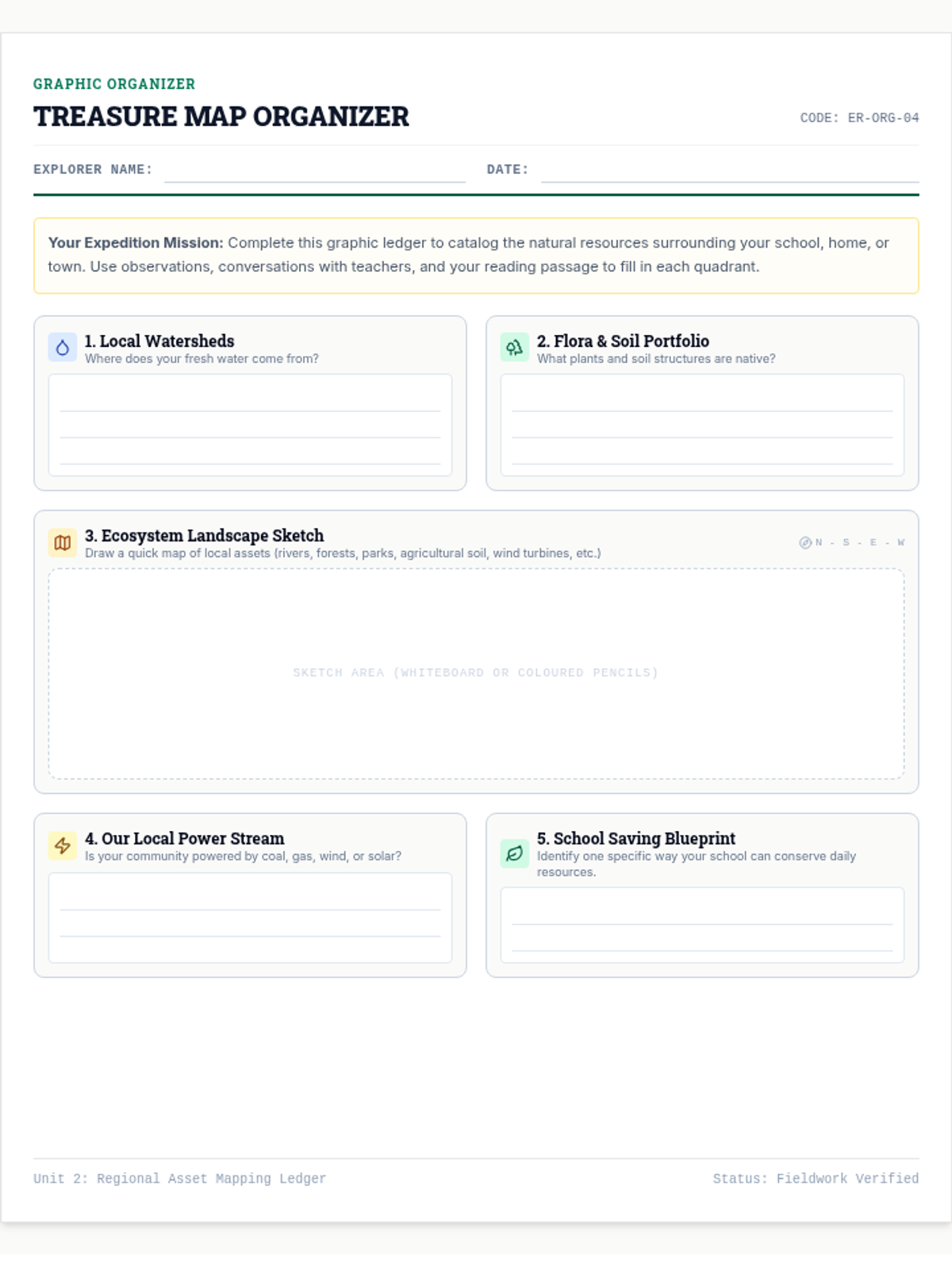
A visually striking graphic organizer that guides students in mapping out local resources, renewable flows, and non-renewable energy deposits.
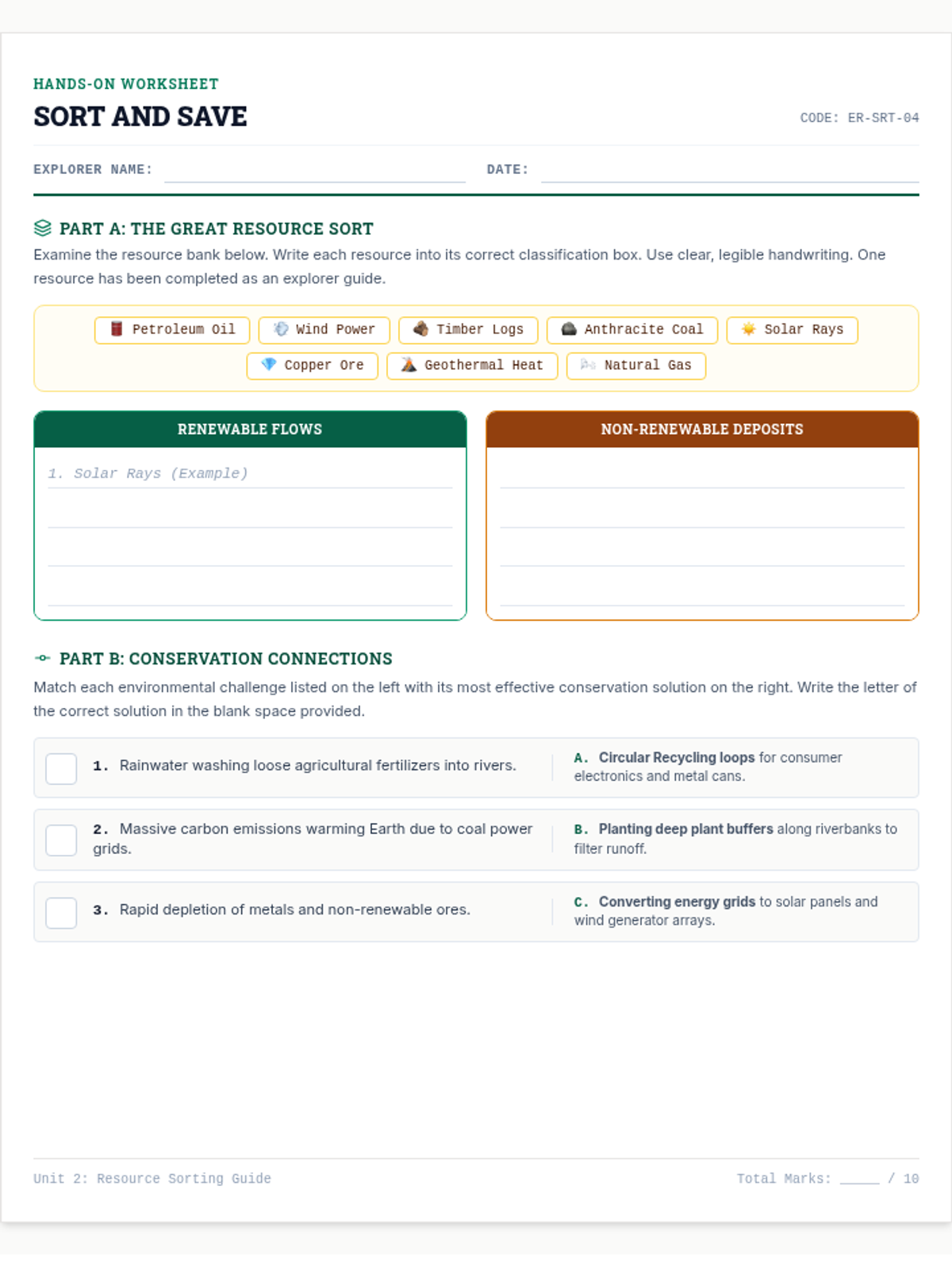
A matching and sorting worksheet where students categorize resources and align conservation actions with ecological benefits.
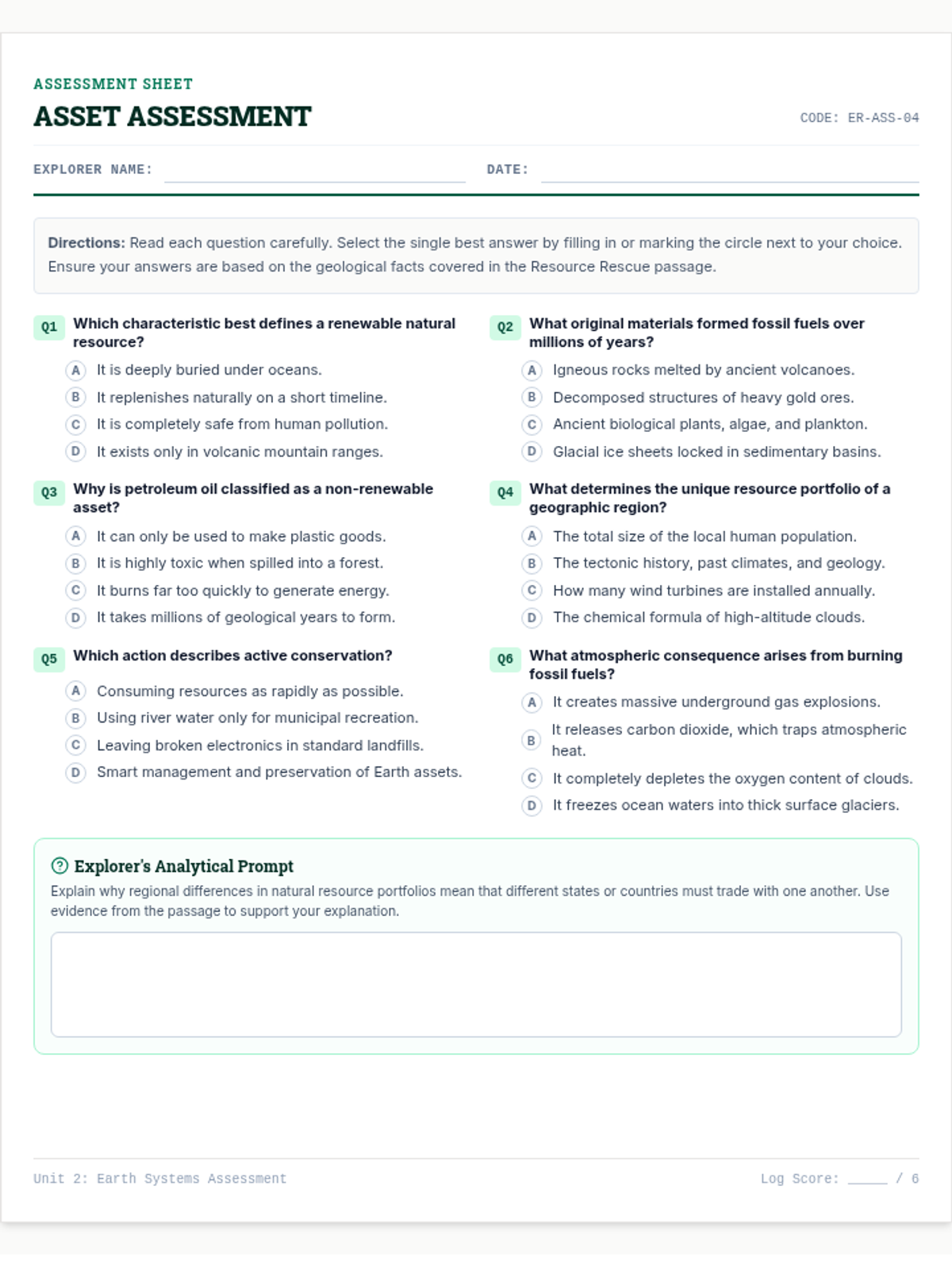
A student-facing quiz sheet containing six carefully aligned multiple-choice questions and one critical thinking short-response prompt on natural resources. All multiple-choice answer elements follow uniform design principles.
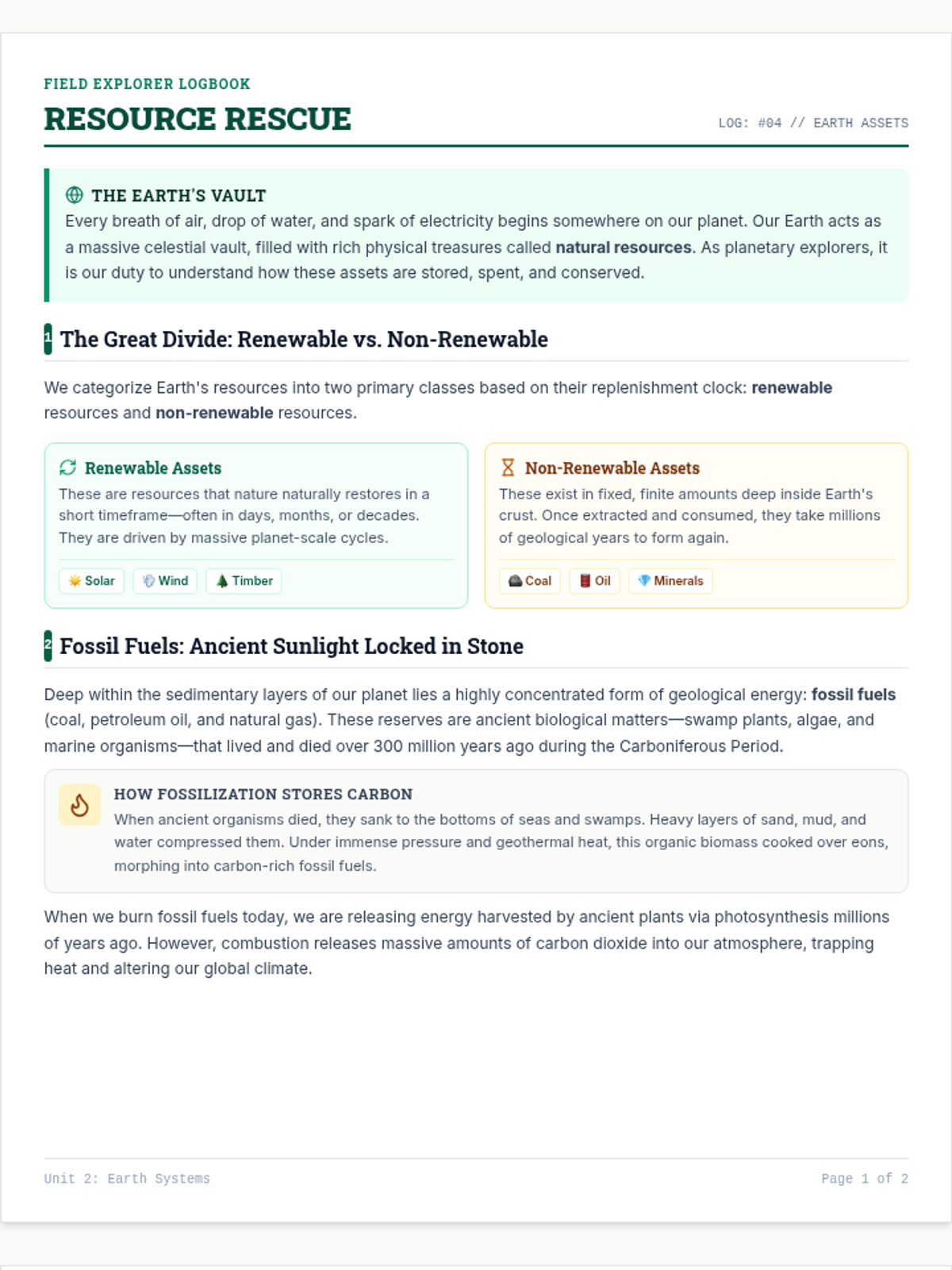
A beautifully formatted, 2-page reading passage styled as an explorer's field journal. It covers renewable vs non-renewable resources, fossil fuel formation, geographic distribution variations, and active conservation frameworks.
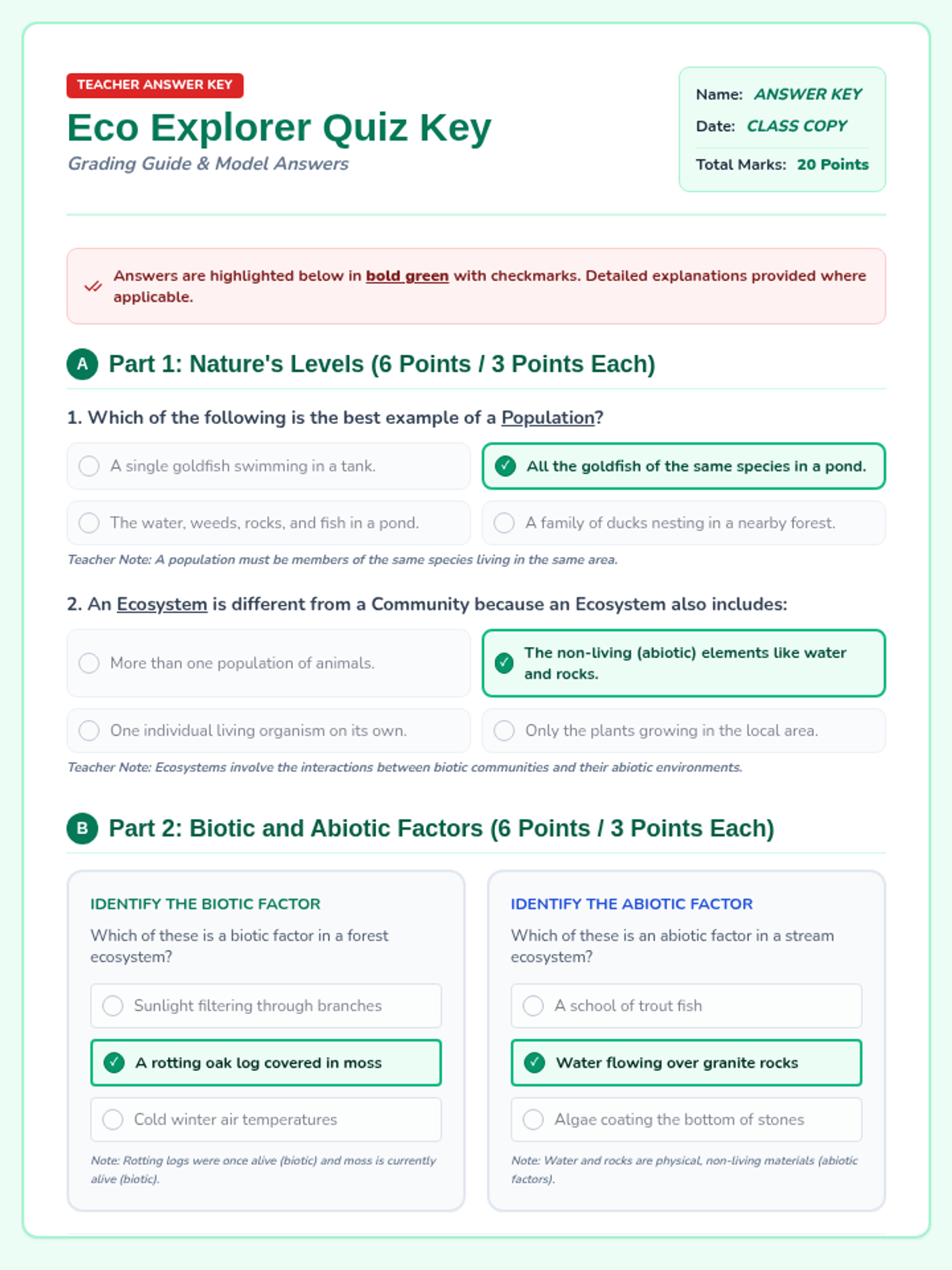
A 2-page print-ready teacher answer key with highlighted answers, grading guidance, and model responses for the Eco Explorer Practice Quiz.
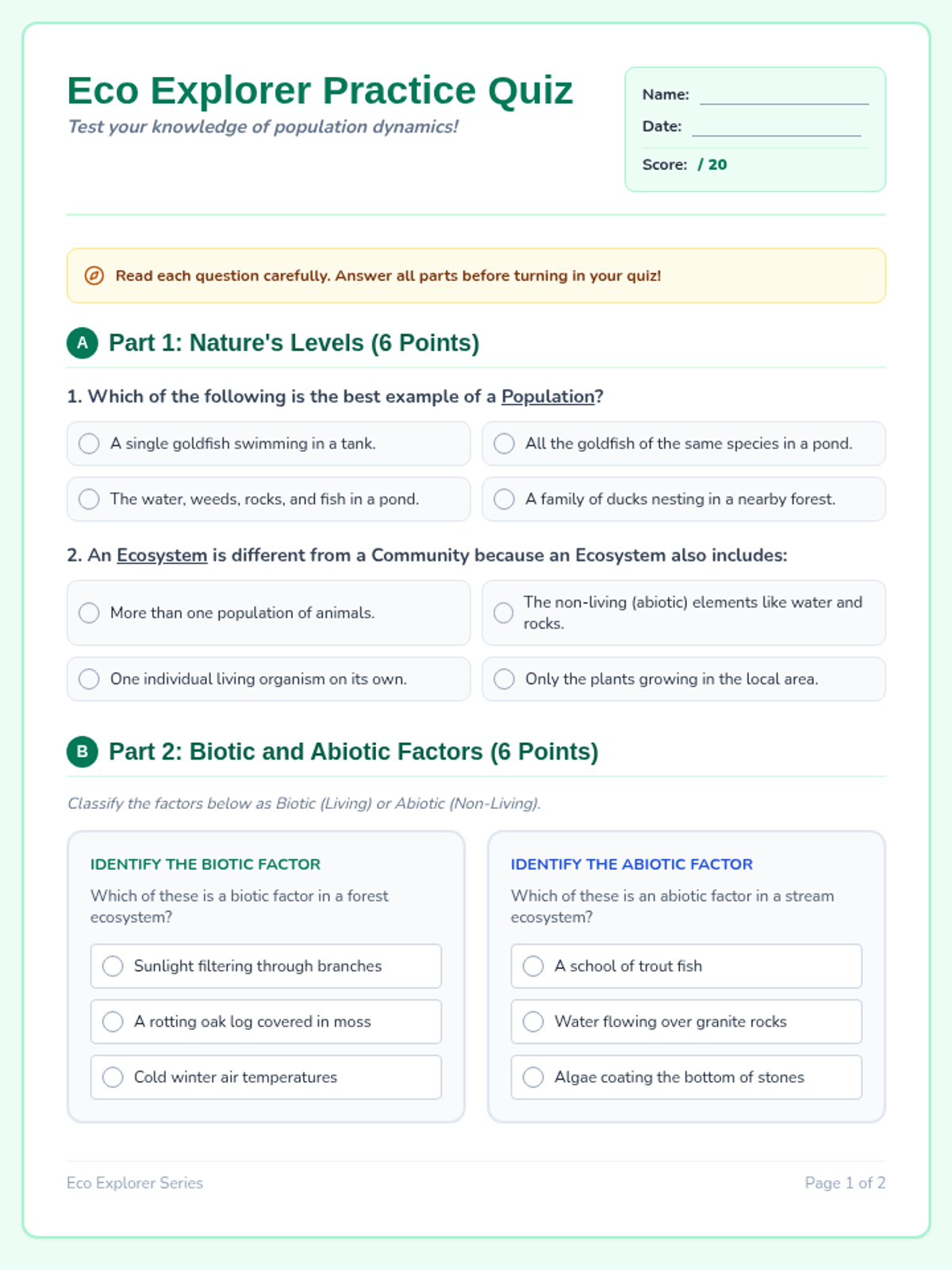
A 2-page print-ready practice quiz covering population dynamics, ecological levels, biotic/abiotic factors, density-dependent/independent limiting factors, and a carrying capacity graph analysis. Designed to align with the Eco Explorer series visual theme.
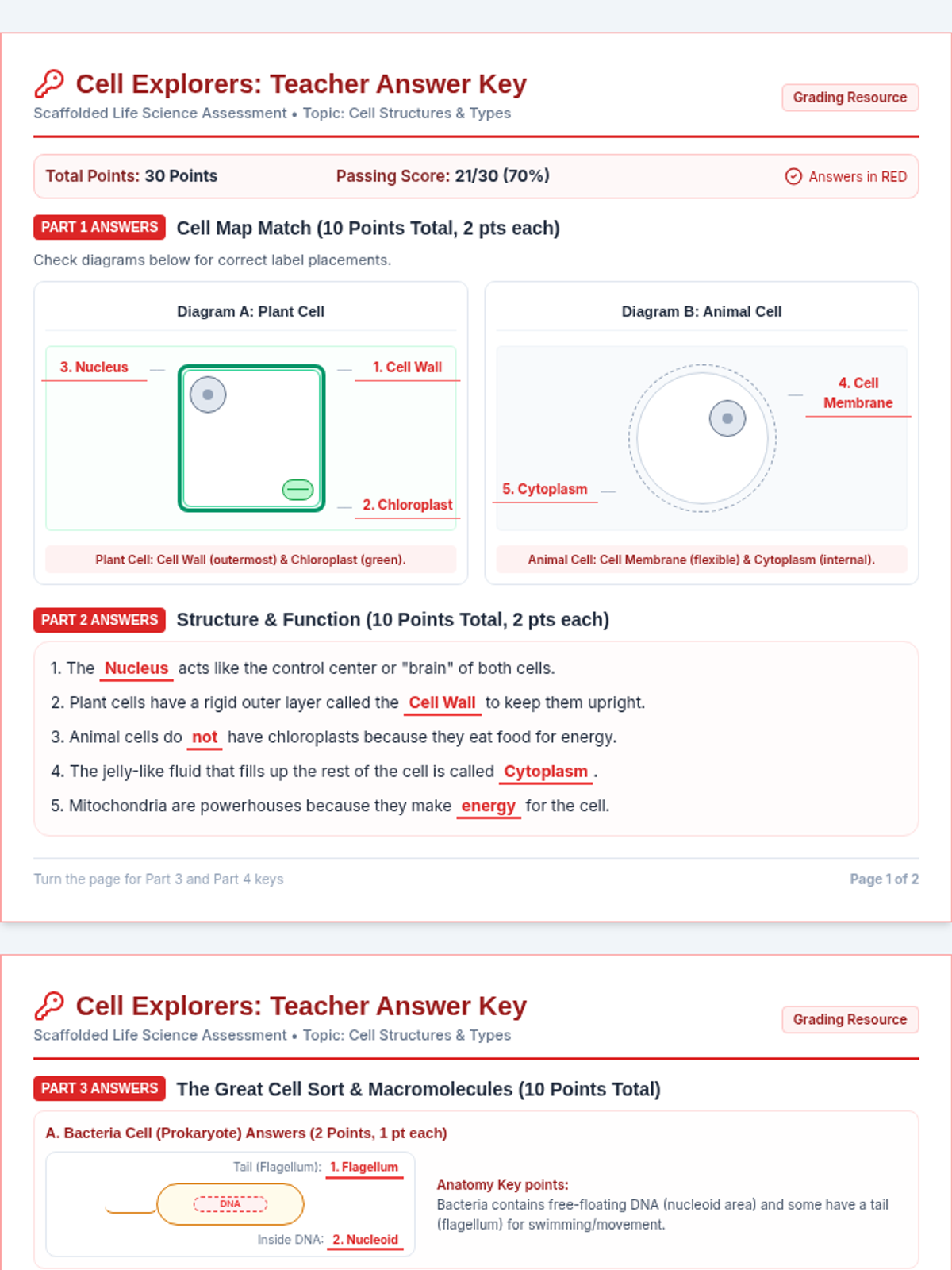
A 2-page teacher answer key companion for the scaffolded cell unit assessment, featuring highlighted correct diagrams, finished sentence frames, and student model short answers.
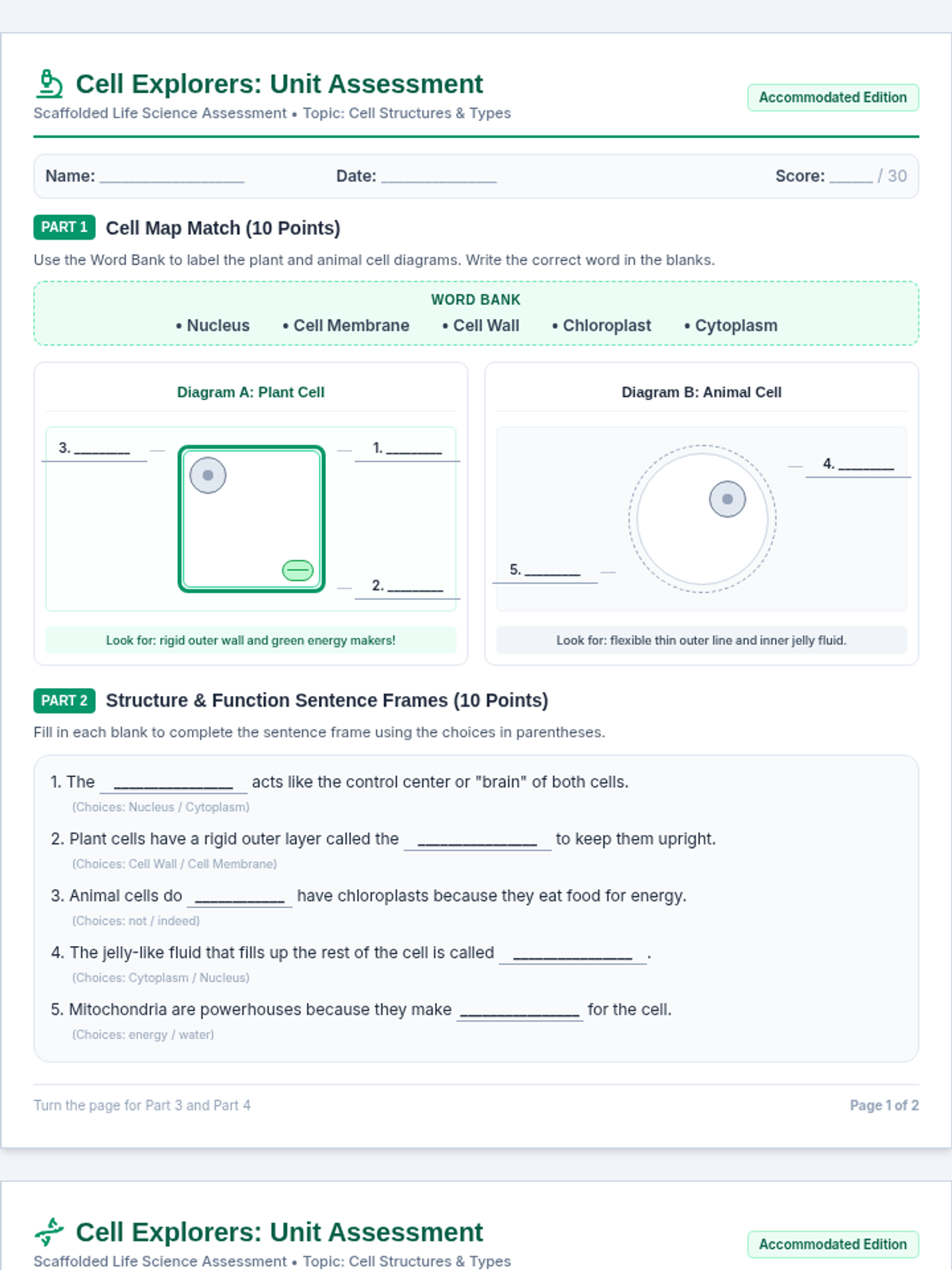
A 2-page scaffolded student assessment covering cell organelles, prokaryotic and eukaryotic structures, plant vs. animal cells, and bacterial anatomy. Features word banks, sentence frames, and guided sentence starters.
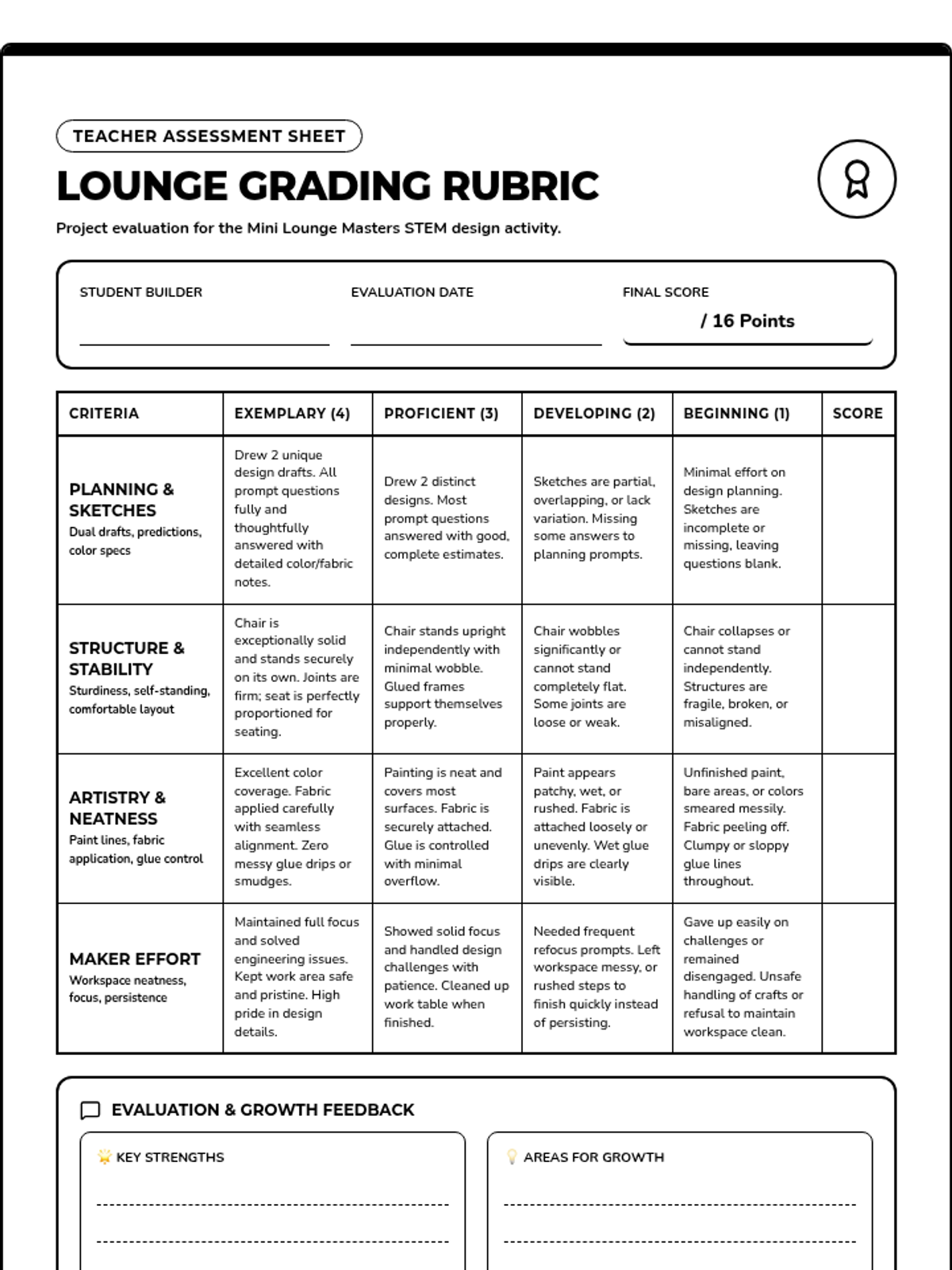
A black and white print-friendly single-page teacher-facing grading rubric containing a 4-tiered criteria grid mapping directly to the student milestones, combined with a manual evaluator profile and structured feedback boxes.
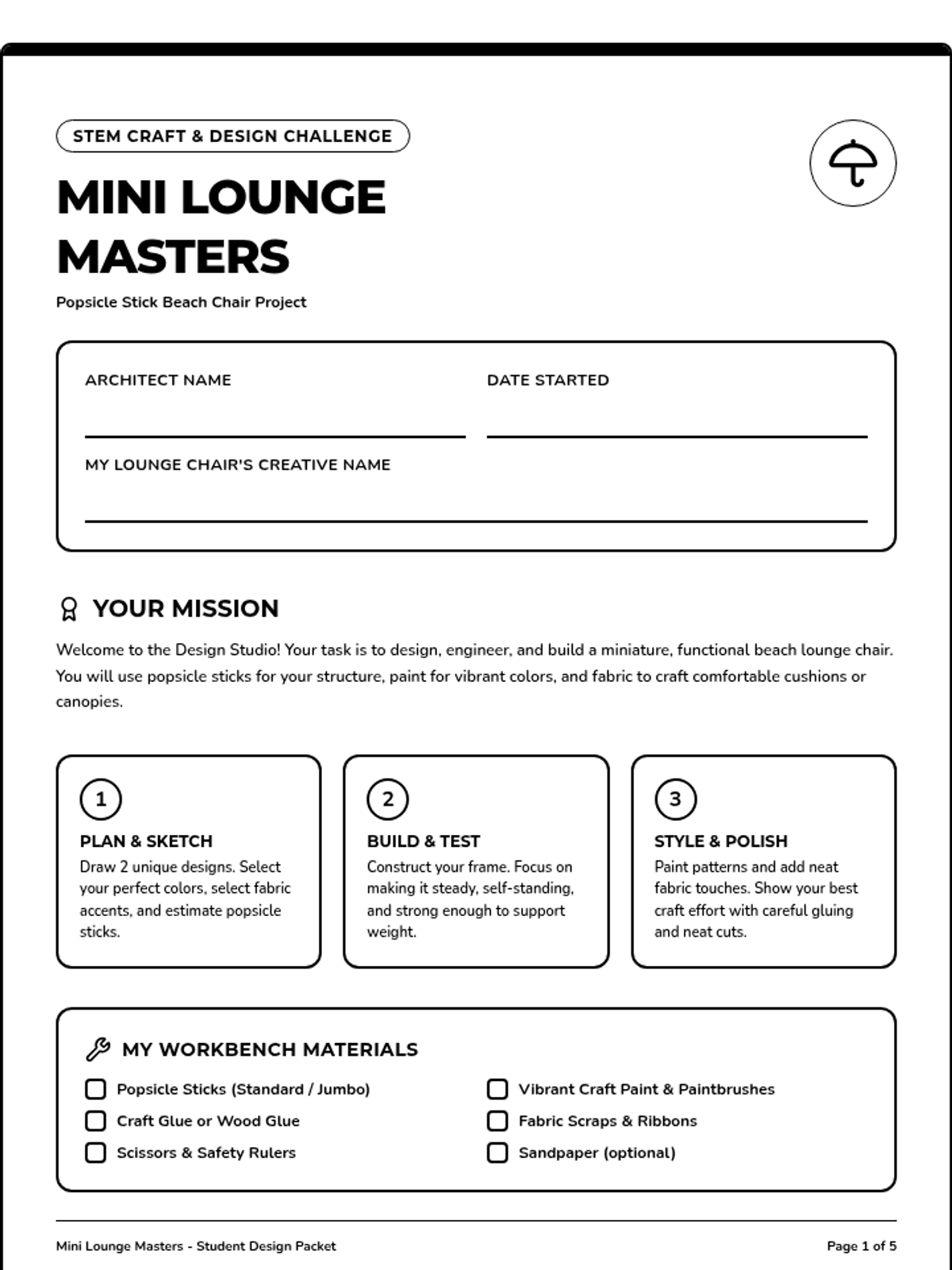
A black and white print-friendly 5-page student design booklet with name lines, materials checklists, drawing studio boxes, milestone timelines, and evaluation prompts.
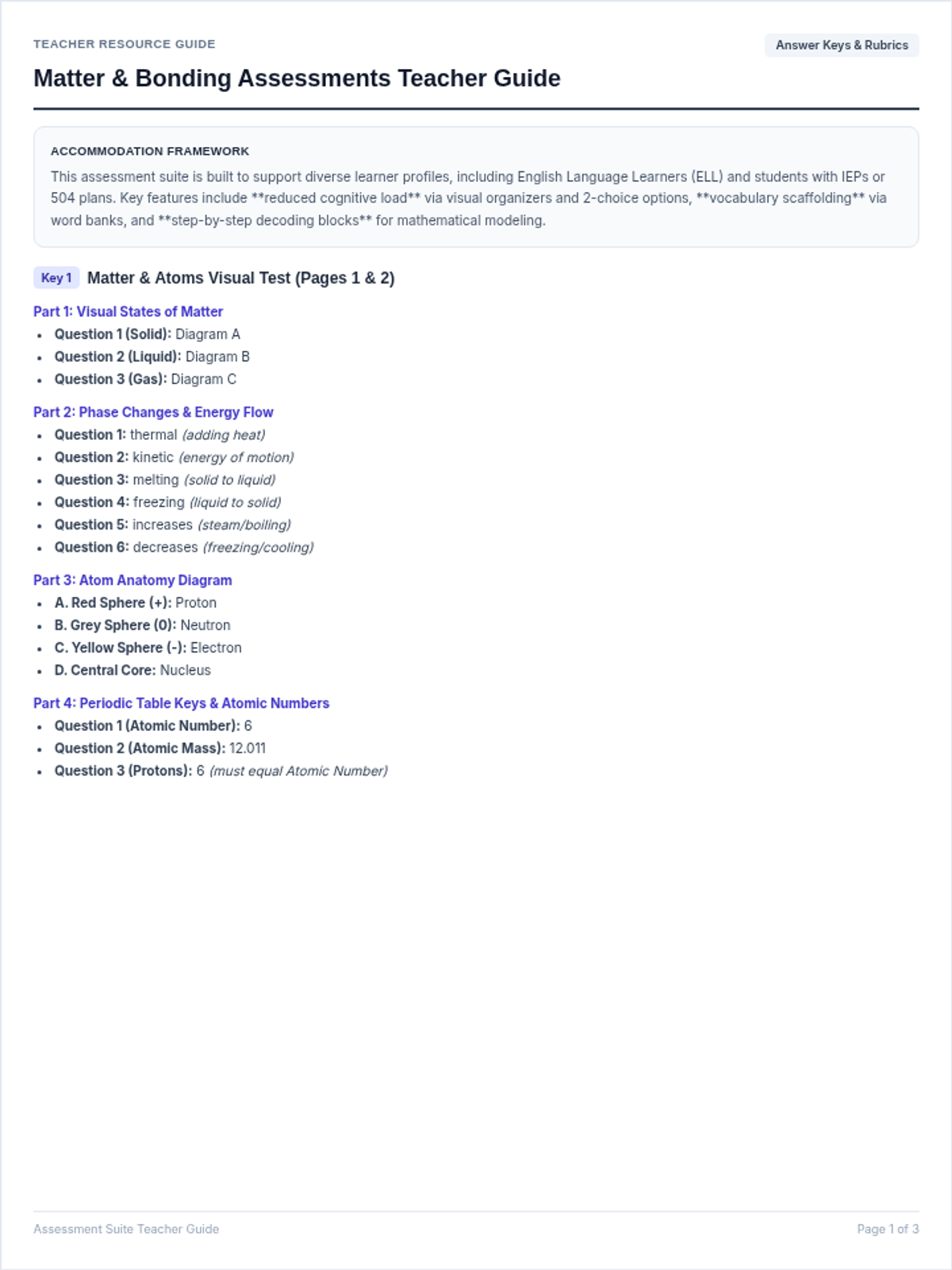
A teacher-facing master key and instruction guide for the Matter and Bonding assessments. Includes full correct answers, explanatory scoring advice, and mathematical derivations of the Coulomb's Law tiered challenges.