A black and white print-friendly single-page teacher-facing grading rubric containing a 4-tiered criteria grid mapping directly to the student milestones, combined with a manual evaluator profile and structured feedback boxes.
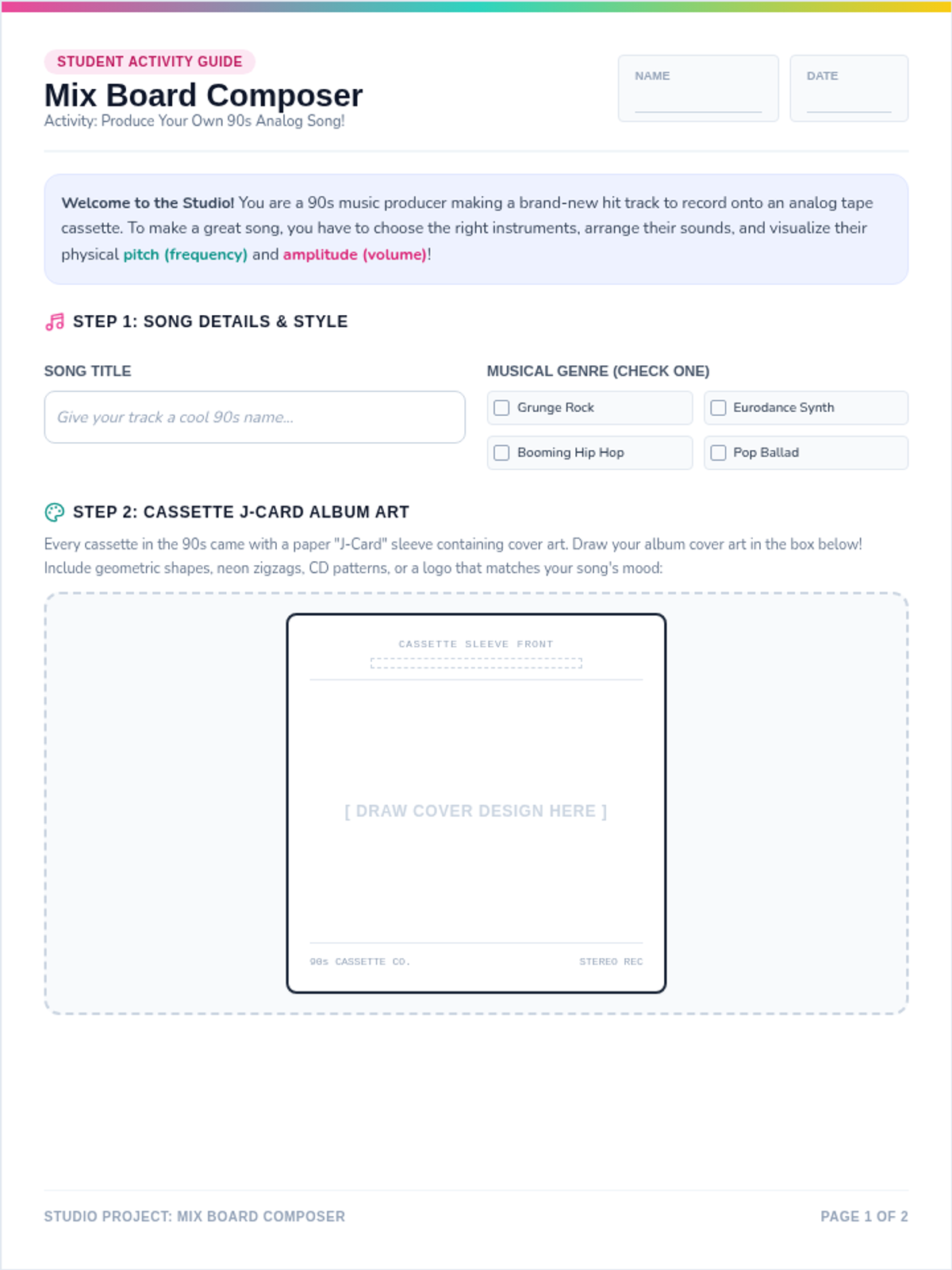
A student-facing activity sheet where students act as song producers to design their own 4-track EP. They compose songs by drawing physical wave representations of different instruments and vocals, manipulating pitch and amplitude.
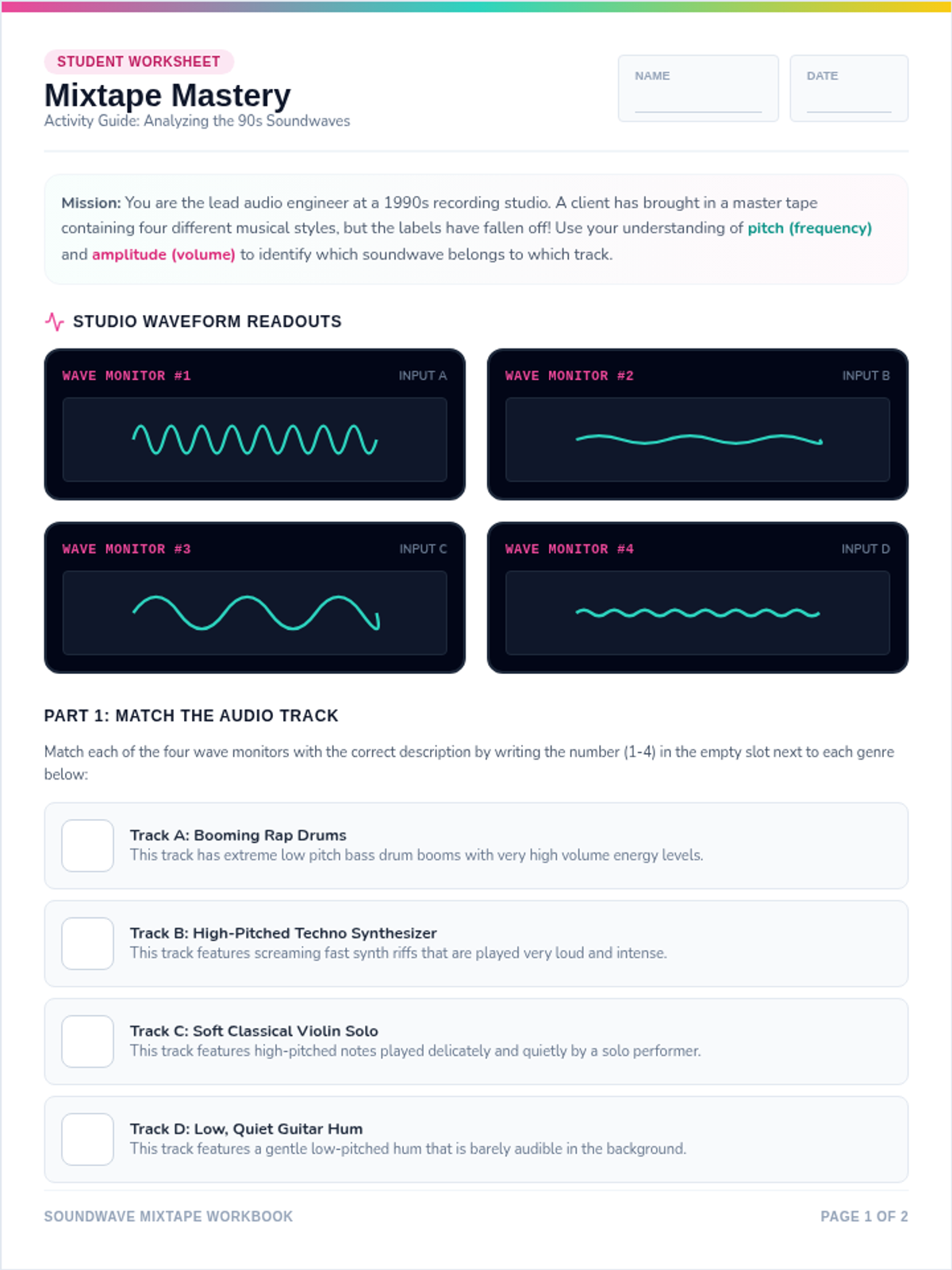
A quiet, technology-free activity sheet and worksheet where students analyze sound wave diagrams of different 90s music genres, matching tape speed and sound levels to pitch and amplitude. It includes a wave-drawing lab and realistic analog scenarios for assessing conceptual understanding.
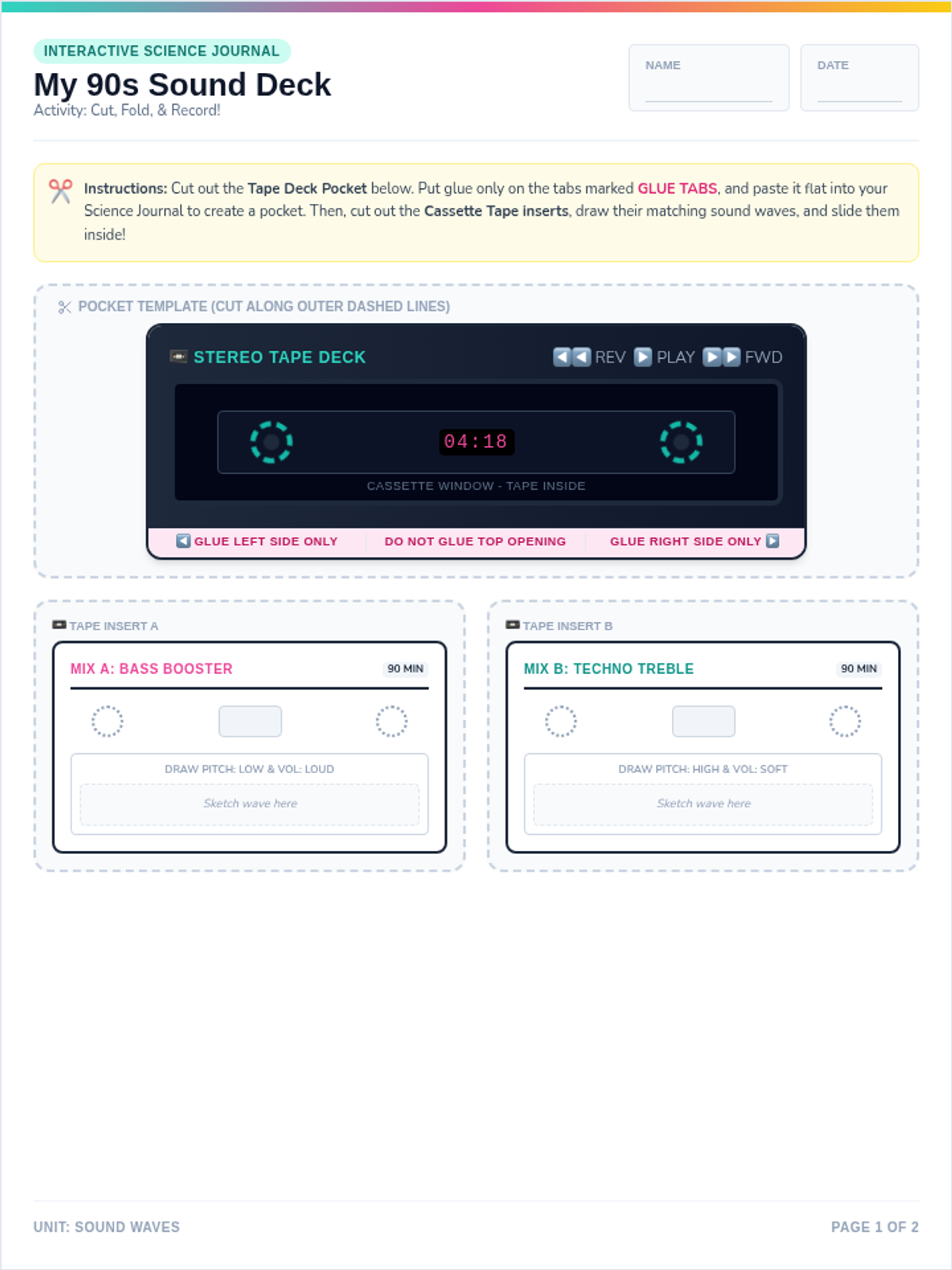
Interactive science journal inserts where students design their own cassette tape labels and chart the physical representation of high/low pitch and loud/soft amplitude as wave diagrams.
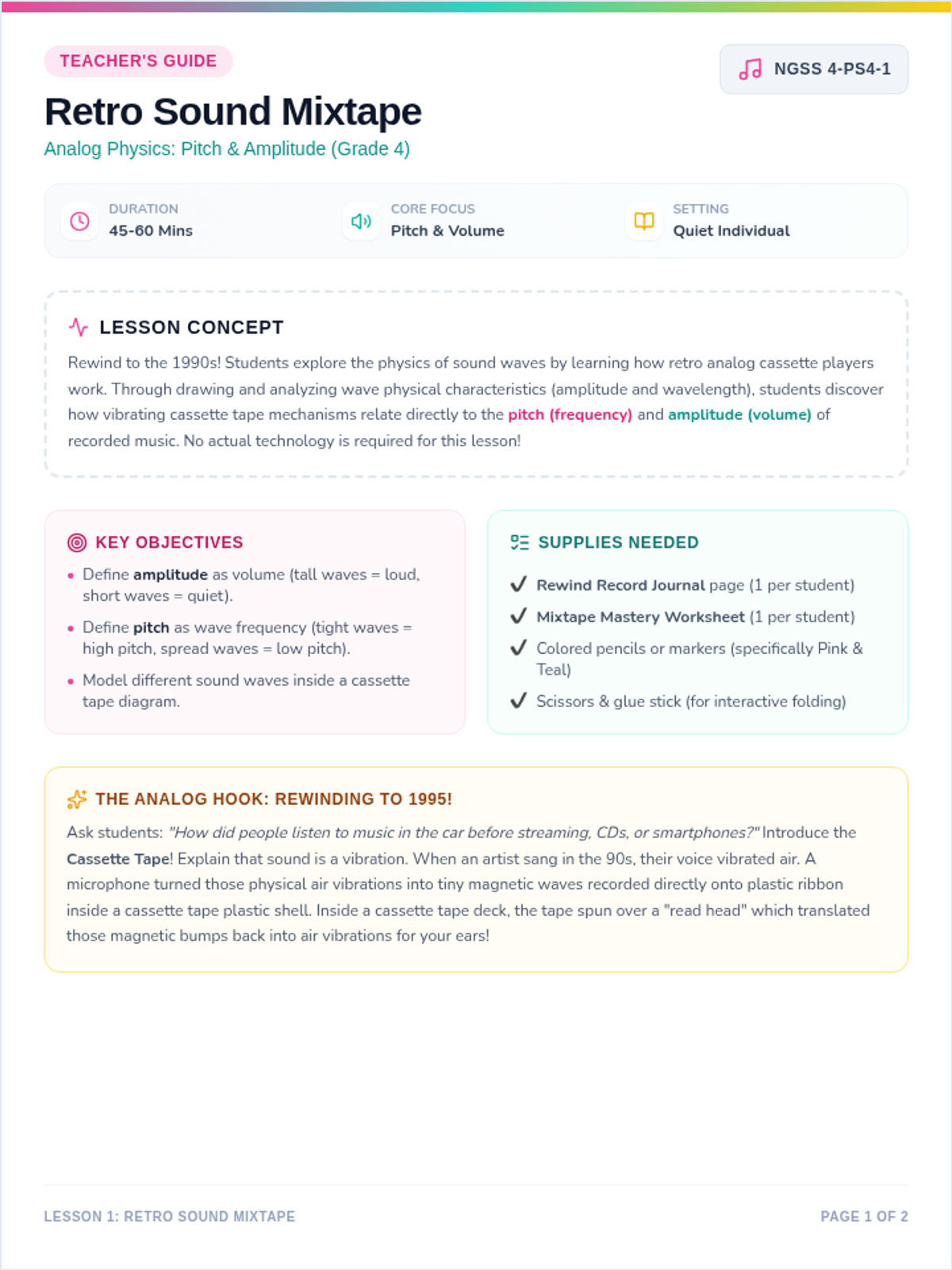
A teacher-facing step-by-step lesson plan designed for teaching 4th grade students sound wave properties (pitch and amplitude) using a retro 90s cassette mixtape hook. It includes duration, objectives, a class hook, step-by-step procedure, discussion prompts, common misconceptions, and differentiation strategies.
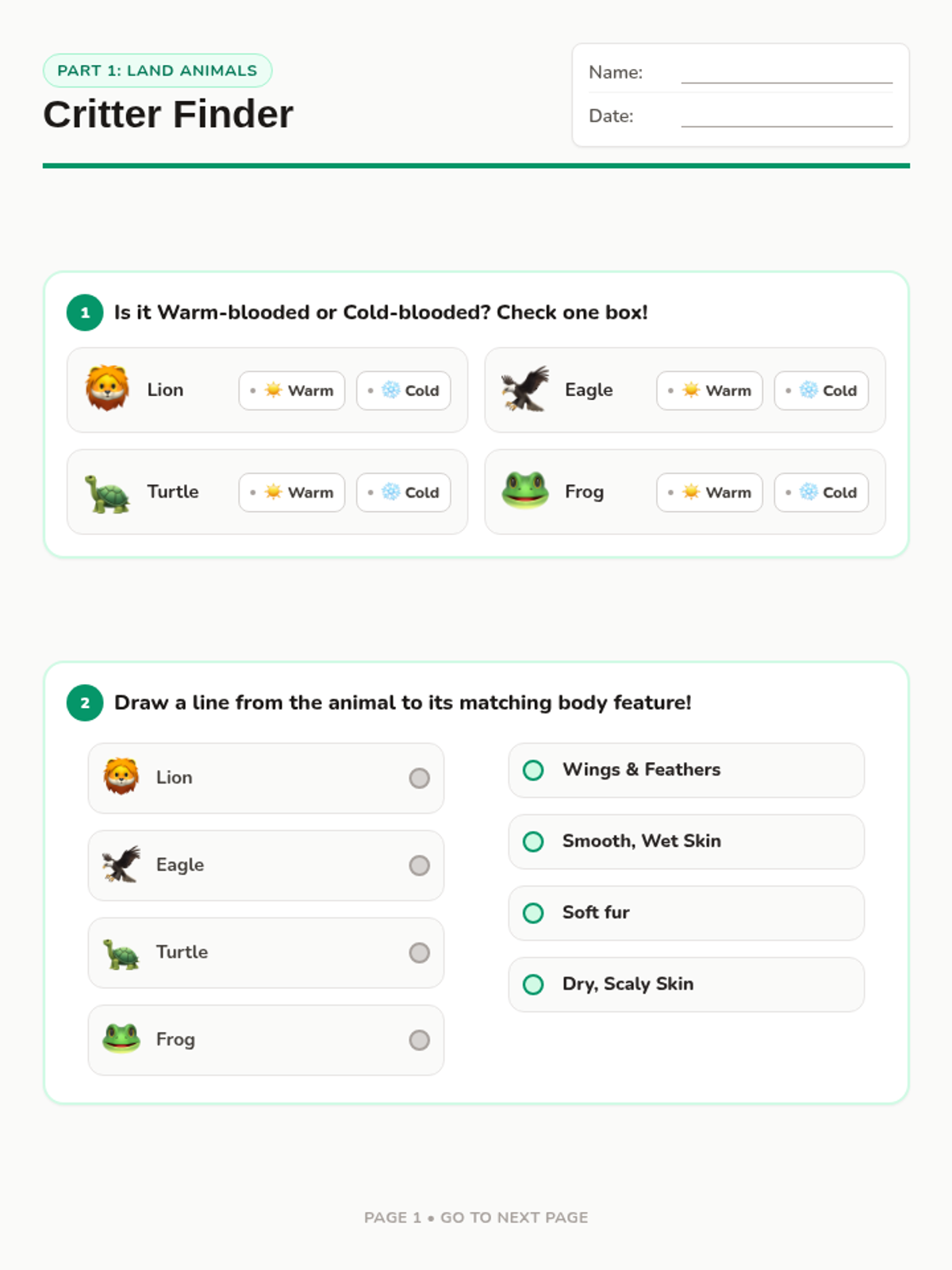
An updated version of the Critter Finder Worksheet where Page 1 has been transformed from a static reference chart to an active, highly interactive matching and sorting worksheet just like Page 2. The activities are balanced across both pages to classify land animals (mammals, birds, reptiles, amphibians) on Page 1 and water/shelled creatures (fish, arthropods, mollusks, worms) on Page 2 using large, clear, low-text visual check-boxes and drawing lines.
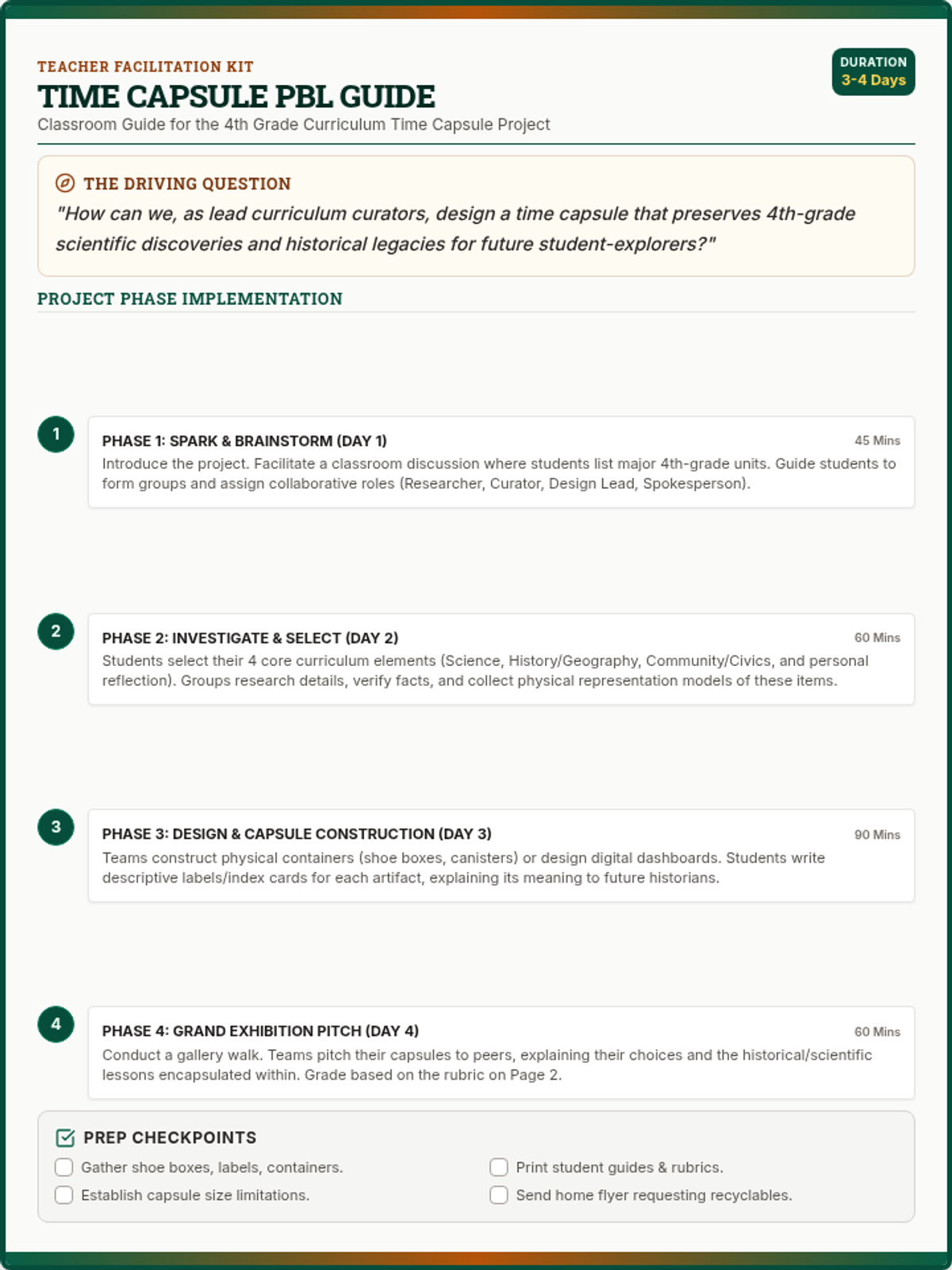
A beautifully styled, 2-page curriculum time capsule project-based learning guide designed for teachers and students. Page 1 contains a comprehensive 4-phase pedagogical facilitation roadmap with timelines. Page 2 features an artifact collection checklist, an exhibition scoring rubric, and a dedicated team drafting space.
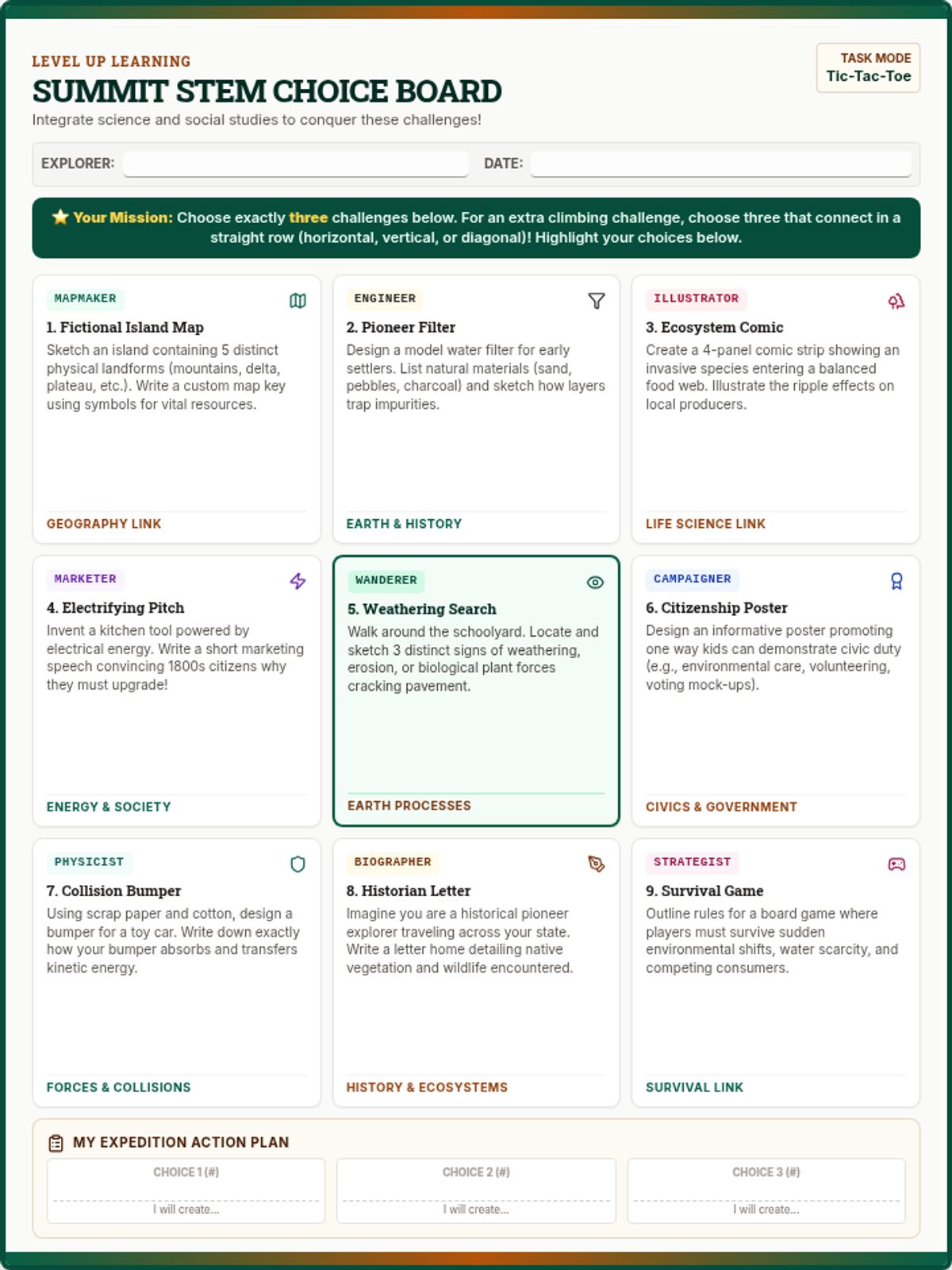
A gorgeous, grid-structured 1-page STEM Choice Board that challenges students to integrate 4th-grade science and social studies in customizable projects. Organizes 9 highly specific tasks—including mapping, water filtration modeling, cartoon creation, and electrical advertising—in a fun Tic-Tac-Toe layout, complete with an explorer planning section at the bottom.
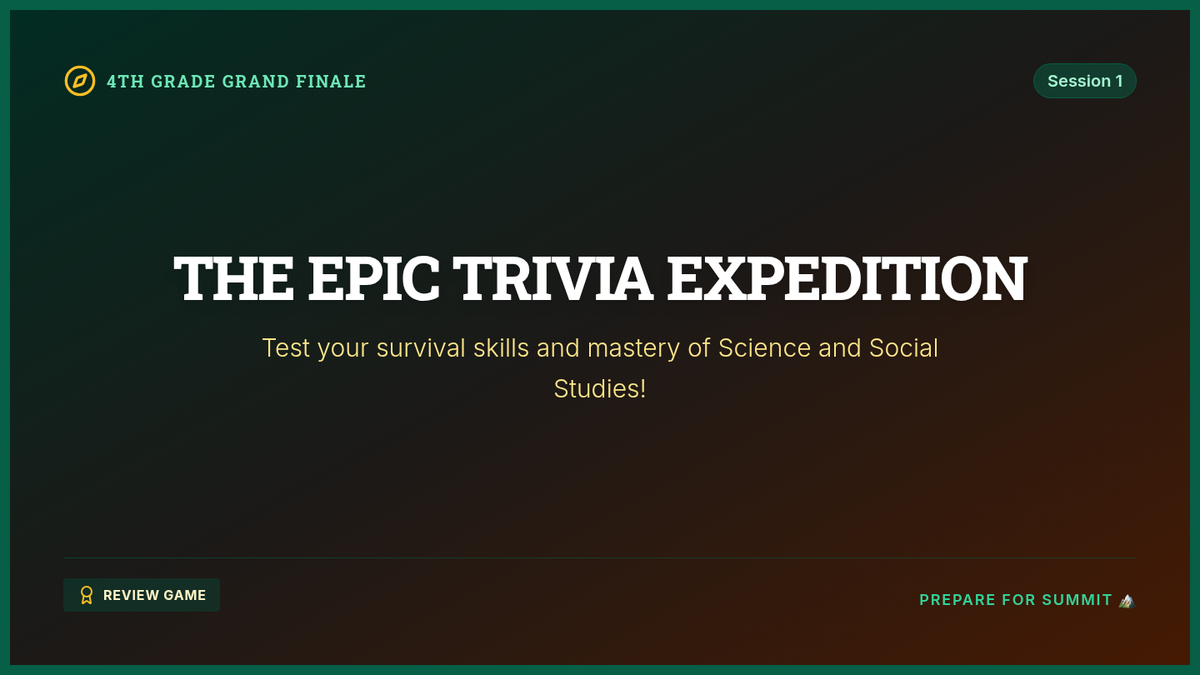
An interactive and highly visual 12-slide review trivia game deck formatted for 16:9 widescreen viewports. Integrates core 4th-grade science concepts (ecosystems, energy, motion) and social studies subjects (geography, map interpretation, government structures, STEM history). Features big, bold text (minimum 24px) for visibility, detailed answer-reveal explanations, and clear team-building guides.
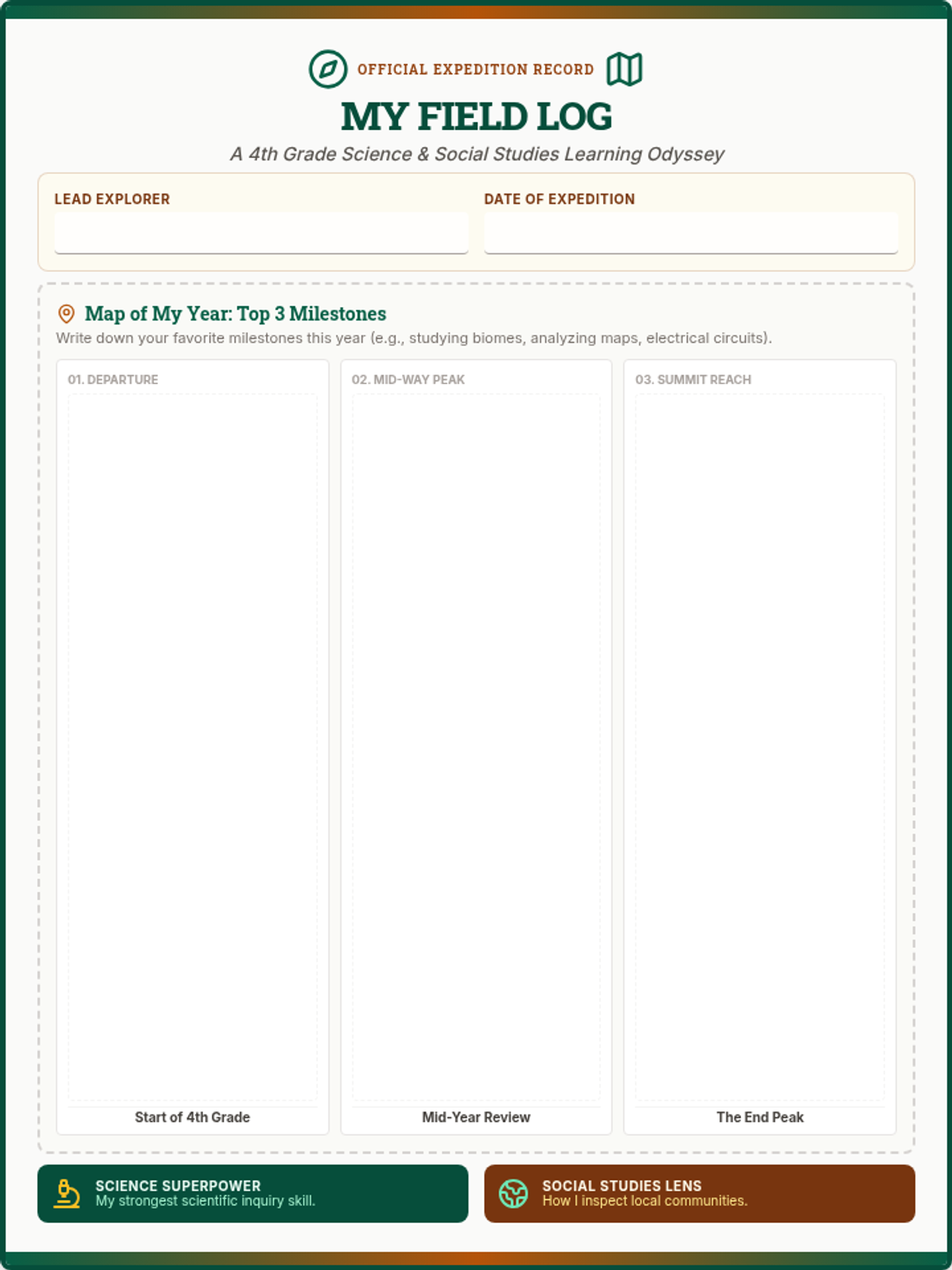
A beautifully styled, printable 3-page learning reflection booklet structured as an "Explorer Field Log". Students reflect on 4th-grade science topics (ecosystems, energy, forces, weathering) and social studies subjects (geography, regions, history, civics). Includes dedicated spaces for structured writing, field sketches, milestones, and a letter to future students.
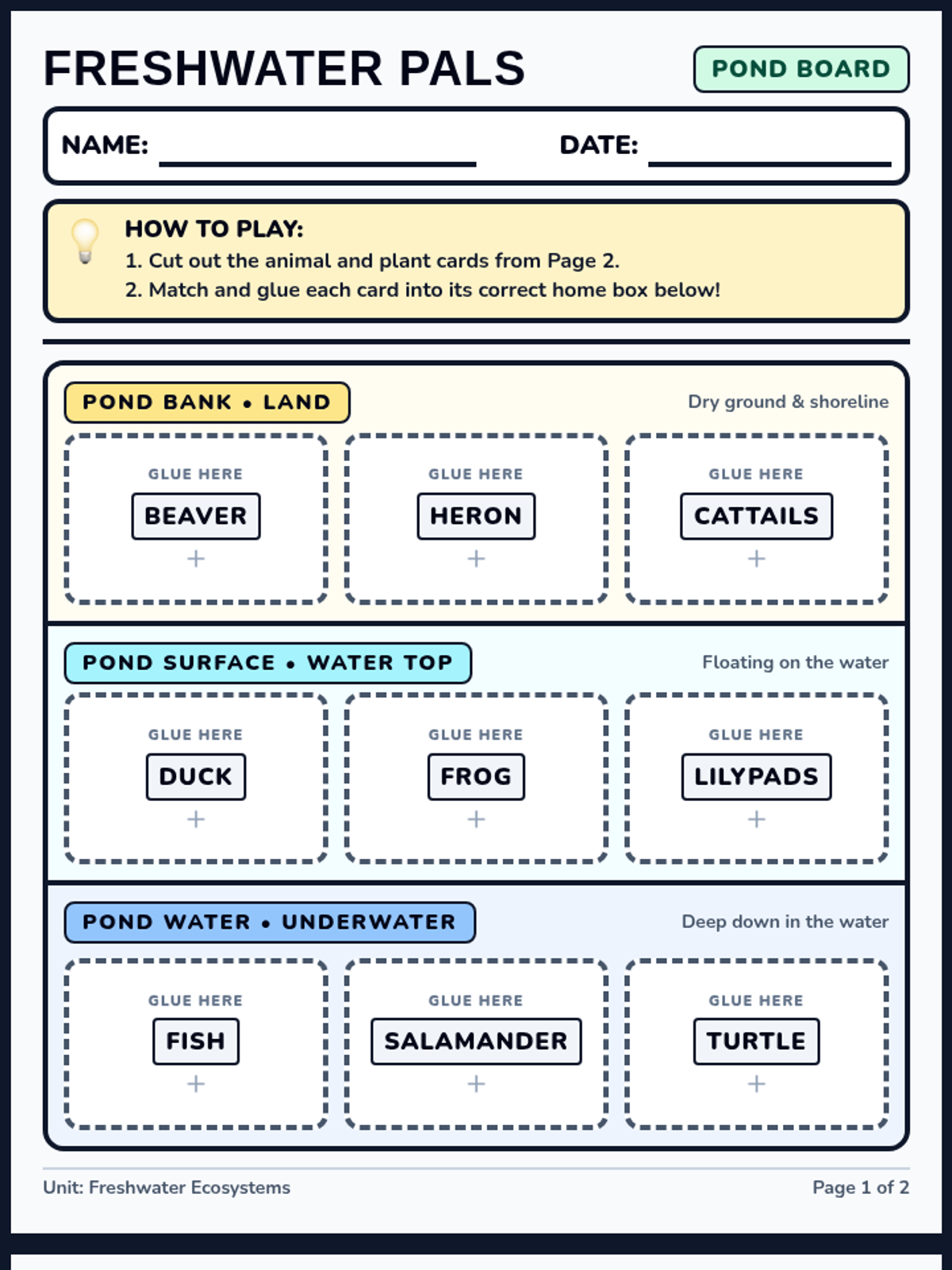
A highly accessible, large-print, high-contrast cut-and-paste matching activity designed for low-literacy and visually impaired students to match freshwater animals and plants to their specific zones (land, surface, underwater) on a pond habitat board.
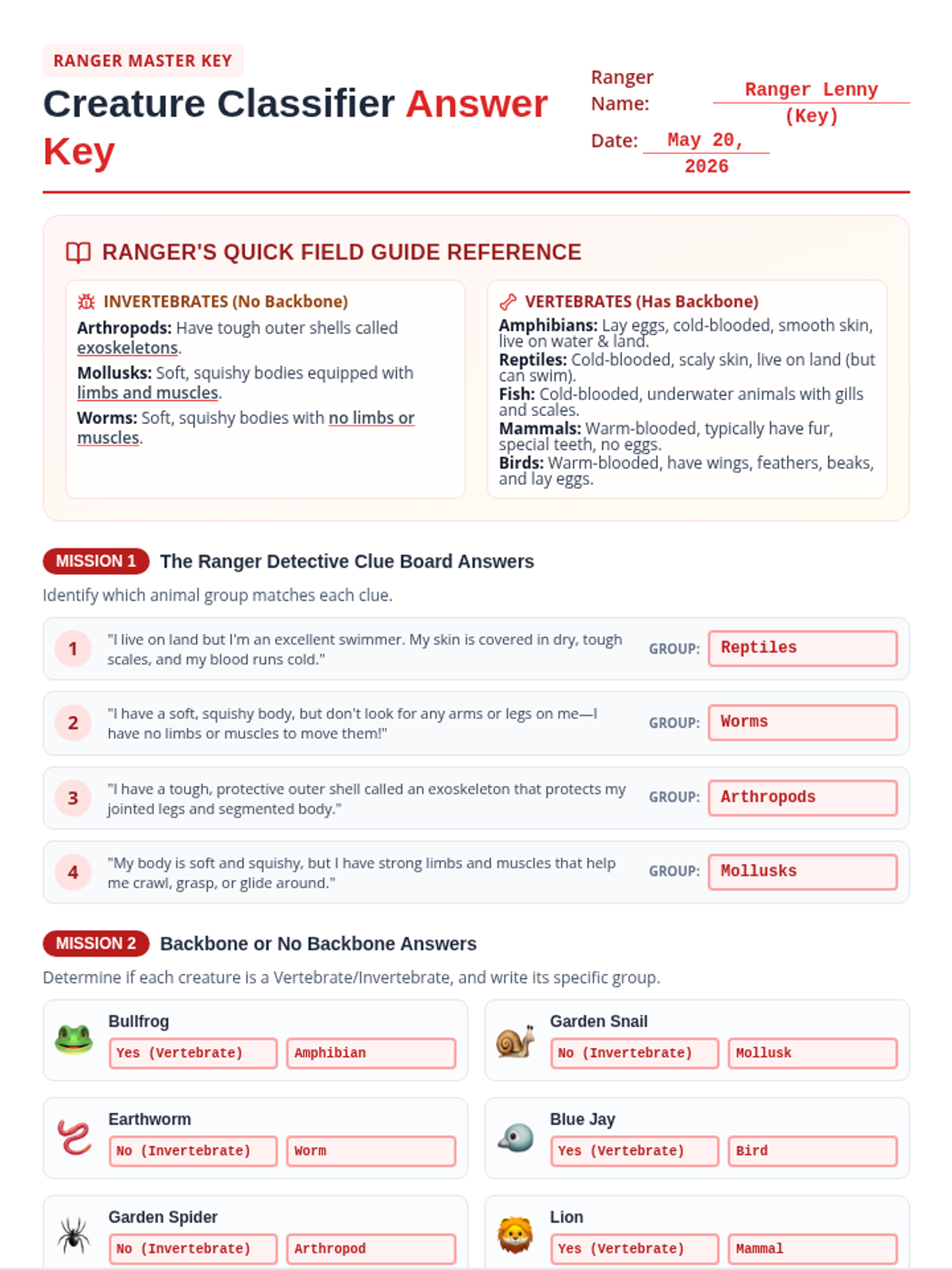
The complete teacher answer key for the Creature Classifier Worksheet. Features the exact same layouts with correct classification answers and grading rubrics displayed in a highly visible red font.
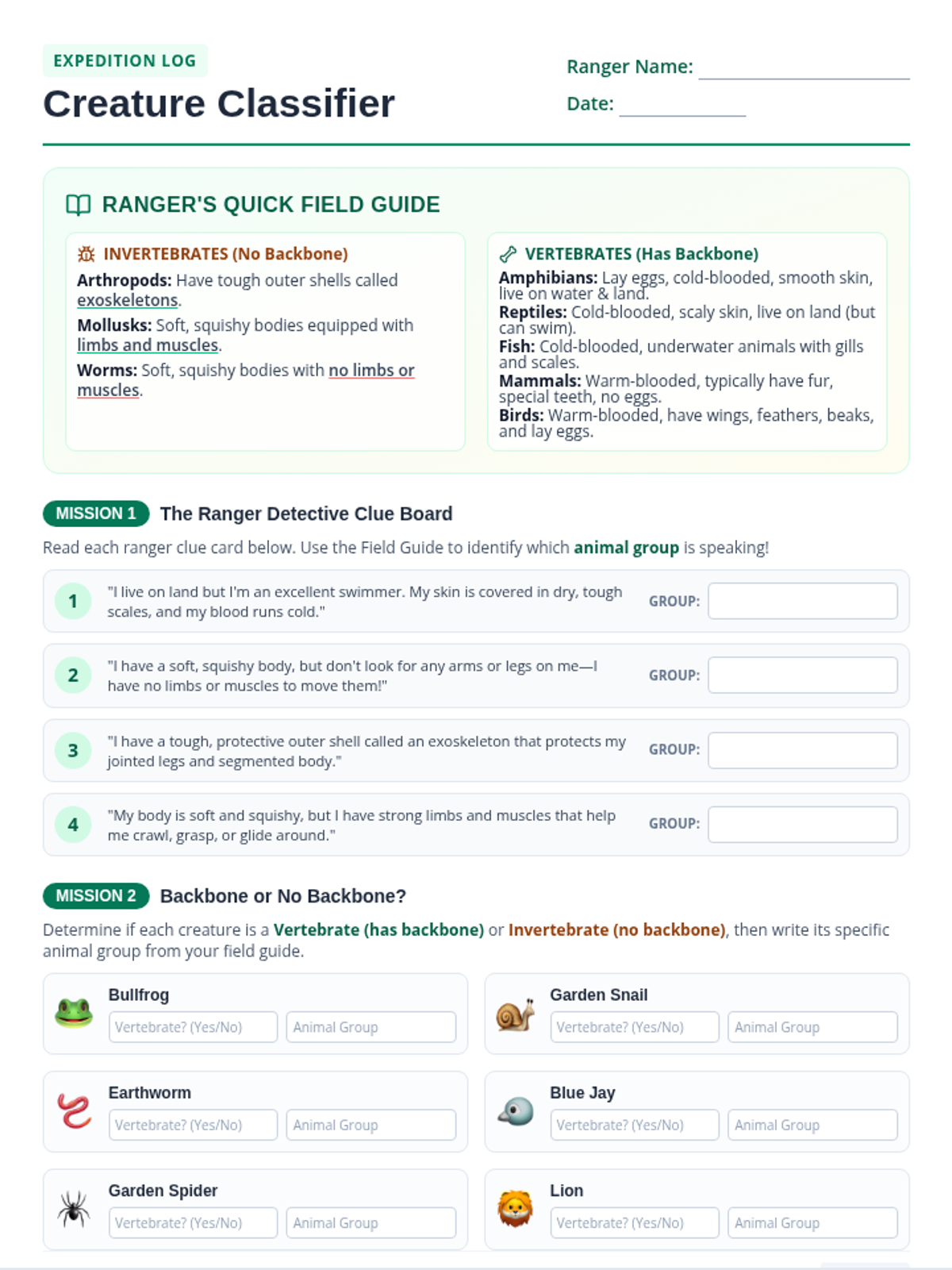
An engaging, 2-page student worksheet centered around animal classification. Features an explorer's notebook theme with a field guide summary, clue-based detective challenges, sorting activities, and a high-creativity design-a-creature lab challenge.
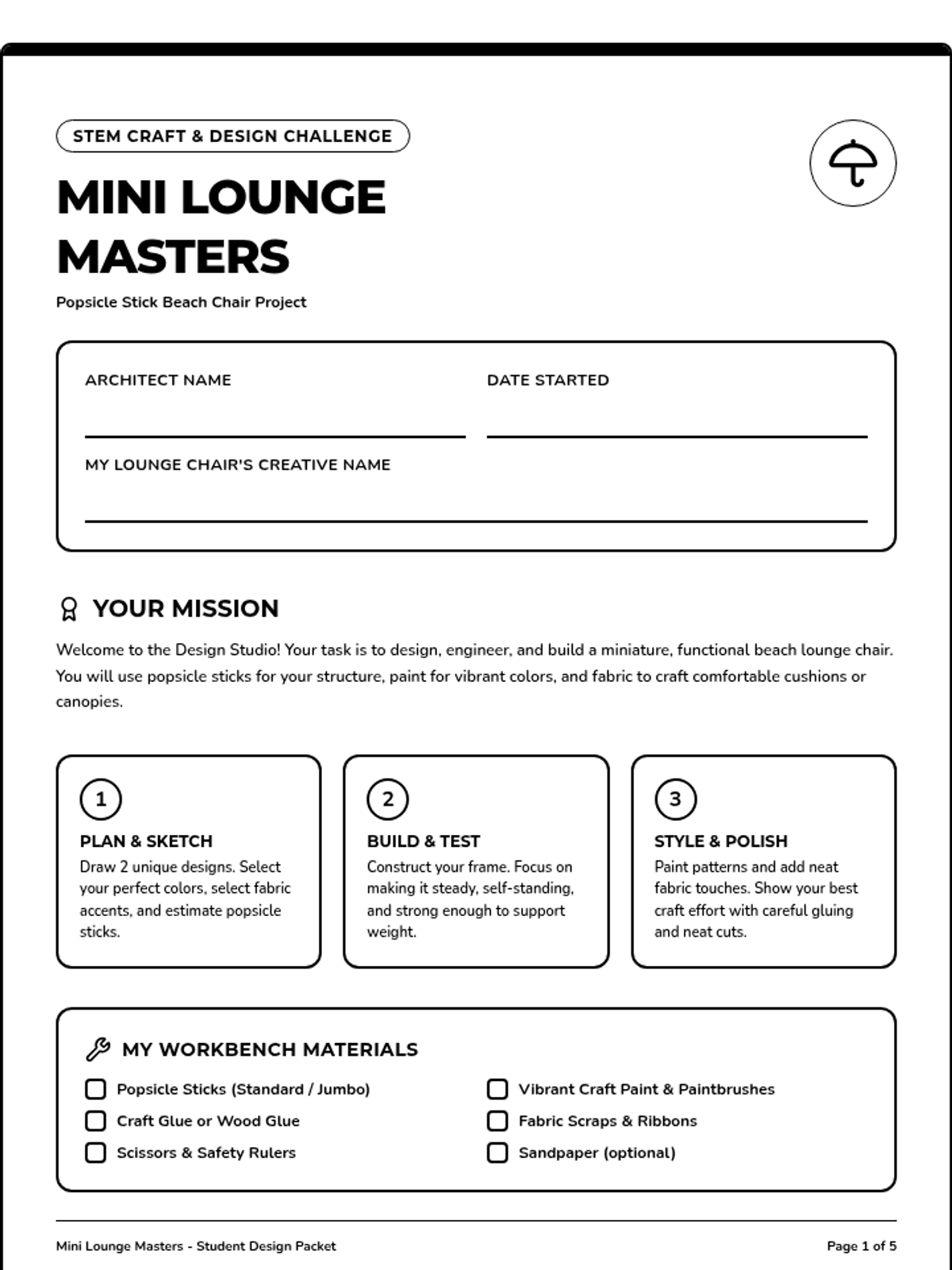
A black and white print-friendly 5-page student design booklet with name lines, materials checklists, drawing studio boxes, milestone timelines, and evaluation prompts.
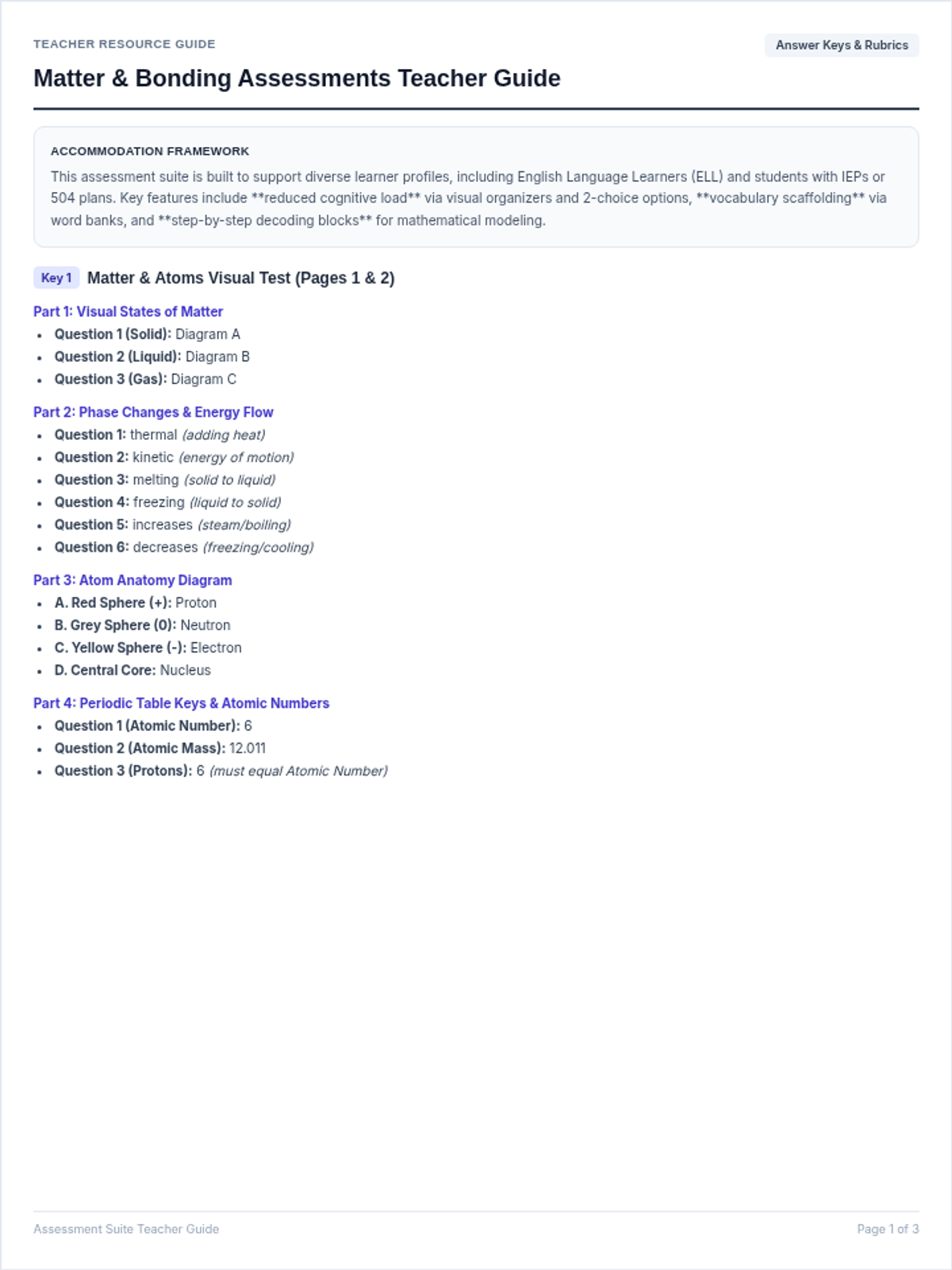
A teacher-facing master key and instruction guide for the Matter and Bonding assessments. Includes full correct answers, explanatory scoring advice, and mathematical derivations of the Coulomb's Law tiered challenges.
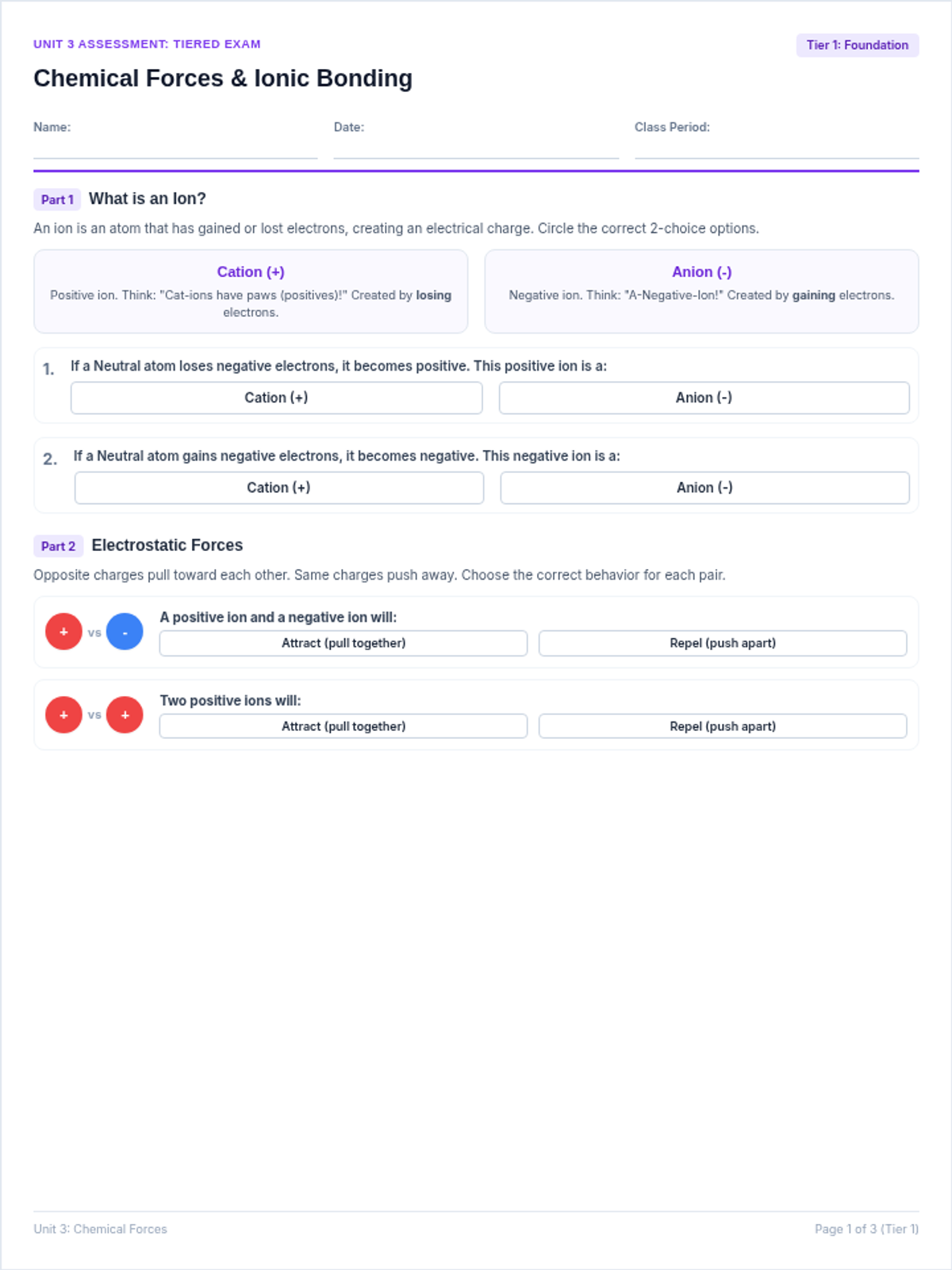
A 3-page tiered exam covering Ions, Electrostatic Force, Ionic Bonding, and Coulomb's Law. Moves through three tiers of cognitive scaffolding: Tier 1 (Foundation - 2-choice visual matching), Tier 2 (Core - guided ionic transfer drawings & step-by-step Coulomb decoding), and Tier 3 (Challenger - advanced proportional scaling math).
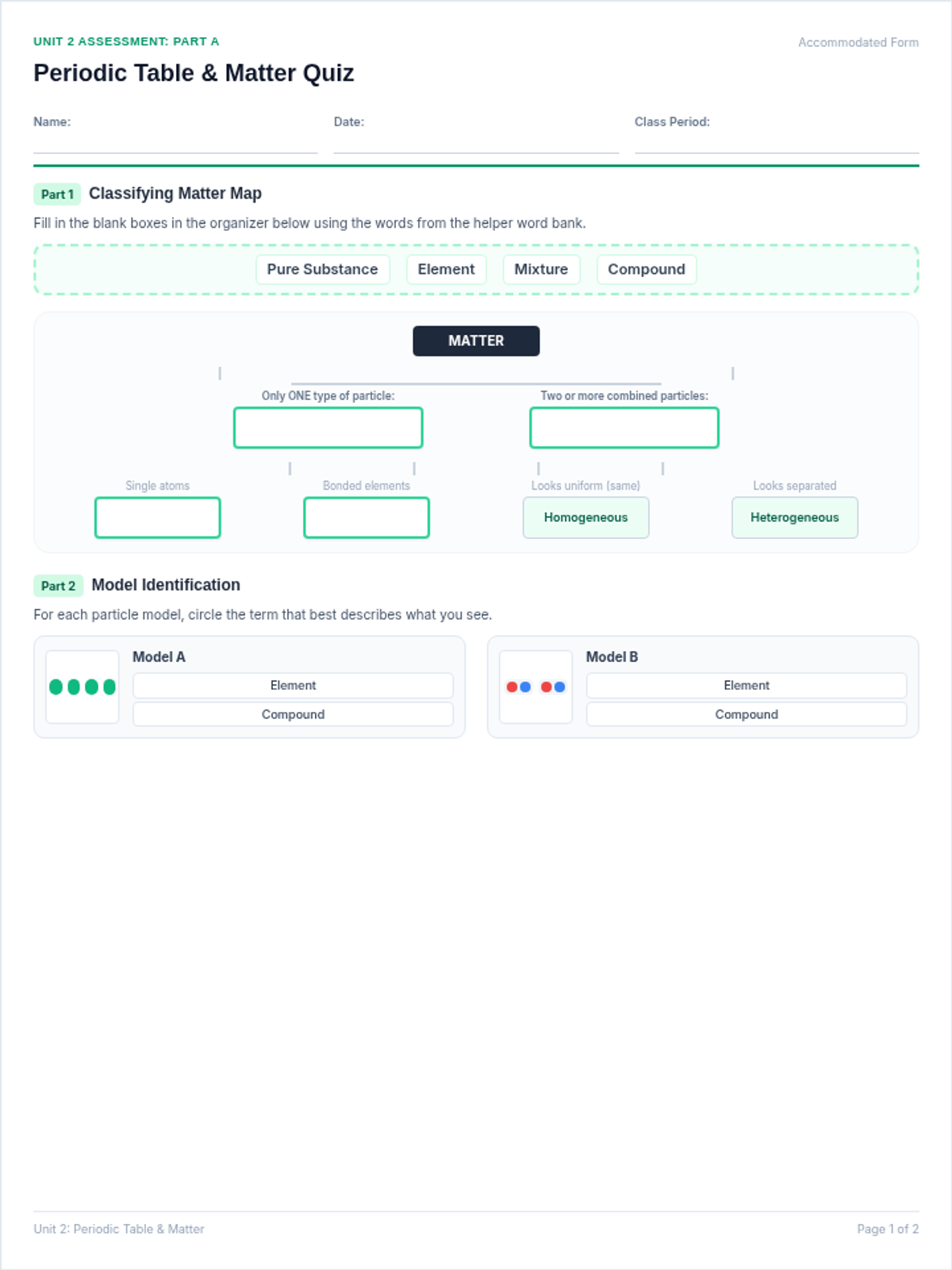
A 2-page assessment with custom graphic organizers, visual particle-model identification cards, horizontal/vertical mapping, and conceptual short-answer items featuring supportive sentence starters.
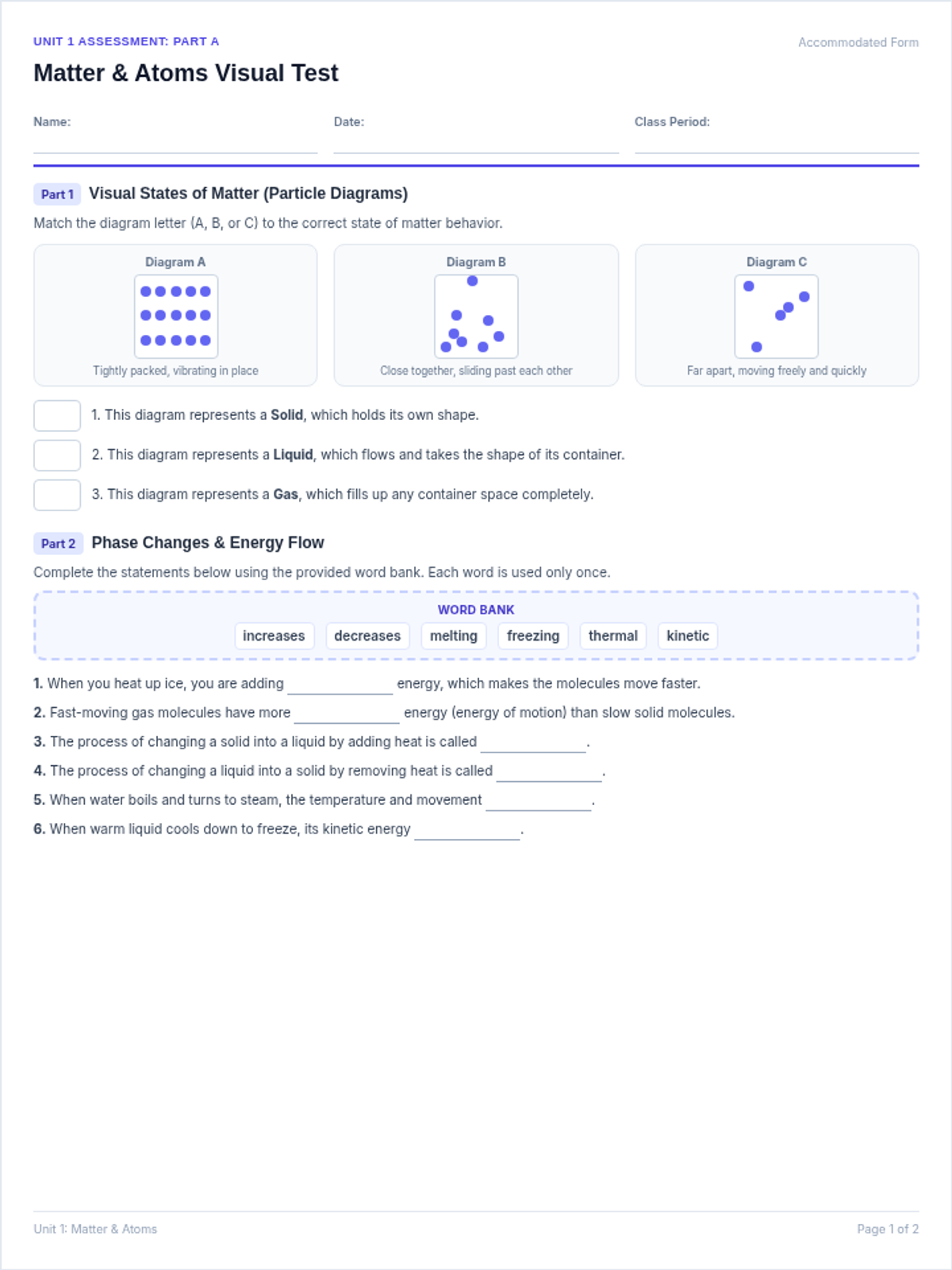
A highly visual and scaffolded 2-page assessment covering the States of Matter, Phase Changes, Energy, and Atomic Structure. Features clear particle diagrams, structured matching, a tailored word bank, an anatomical atom diagram, and a simplified Periodic Table mathematics grid.
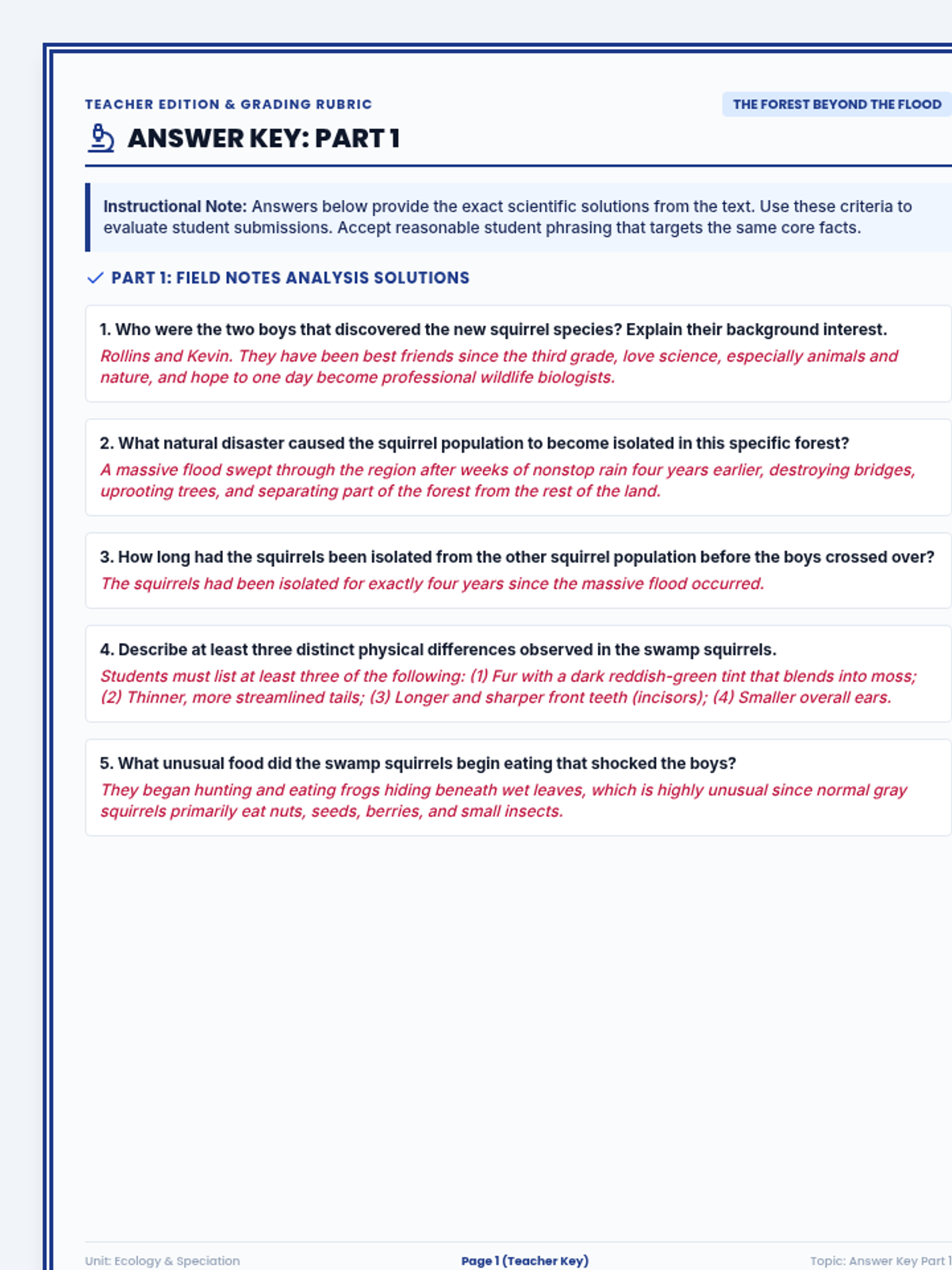
A comprehensive teacher answer key and grading guide containing complete, scientific solutions to the reading questions and trophic cascade diagrams, plus grading rubrics for the student reflection section. Base font size set to 13px.
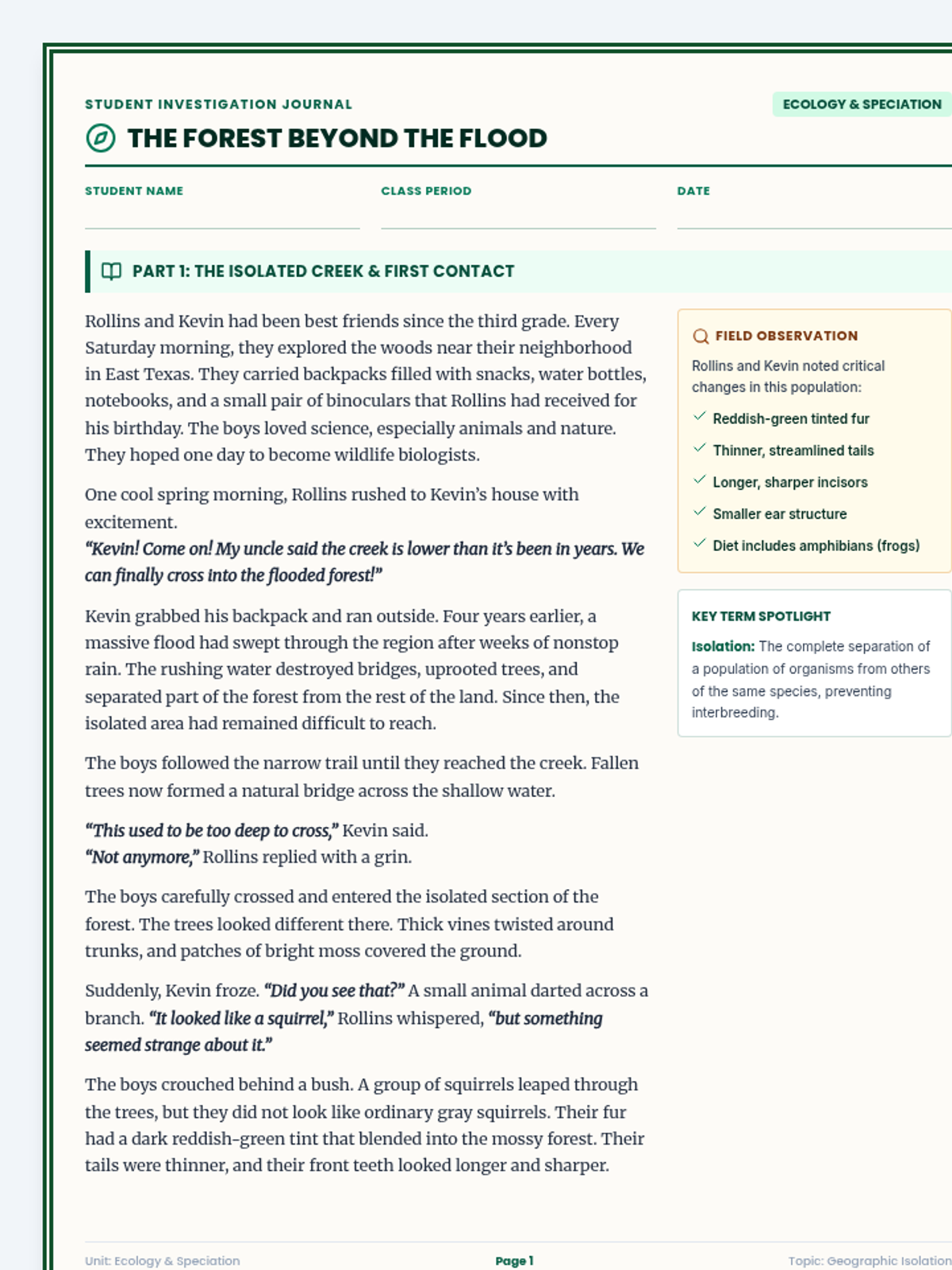
A comprehensive student-facing field log and reading packet featuring the story "The Forest Beyond the Flood," split into structured reading parts with corresponding analysis worksheets, graphic organizers, and reflective explorer journals. Base font size set to a highly readable 13px.
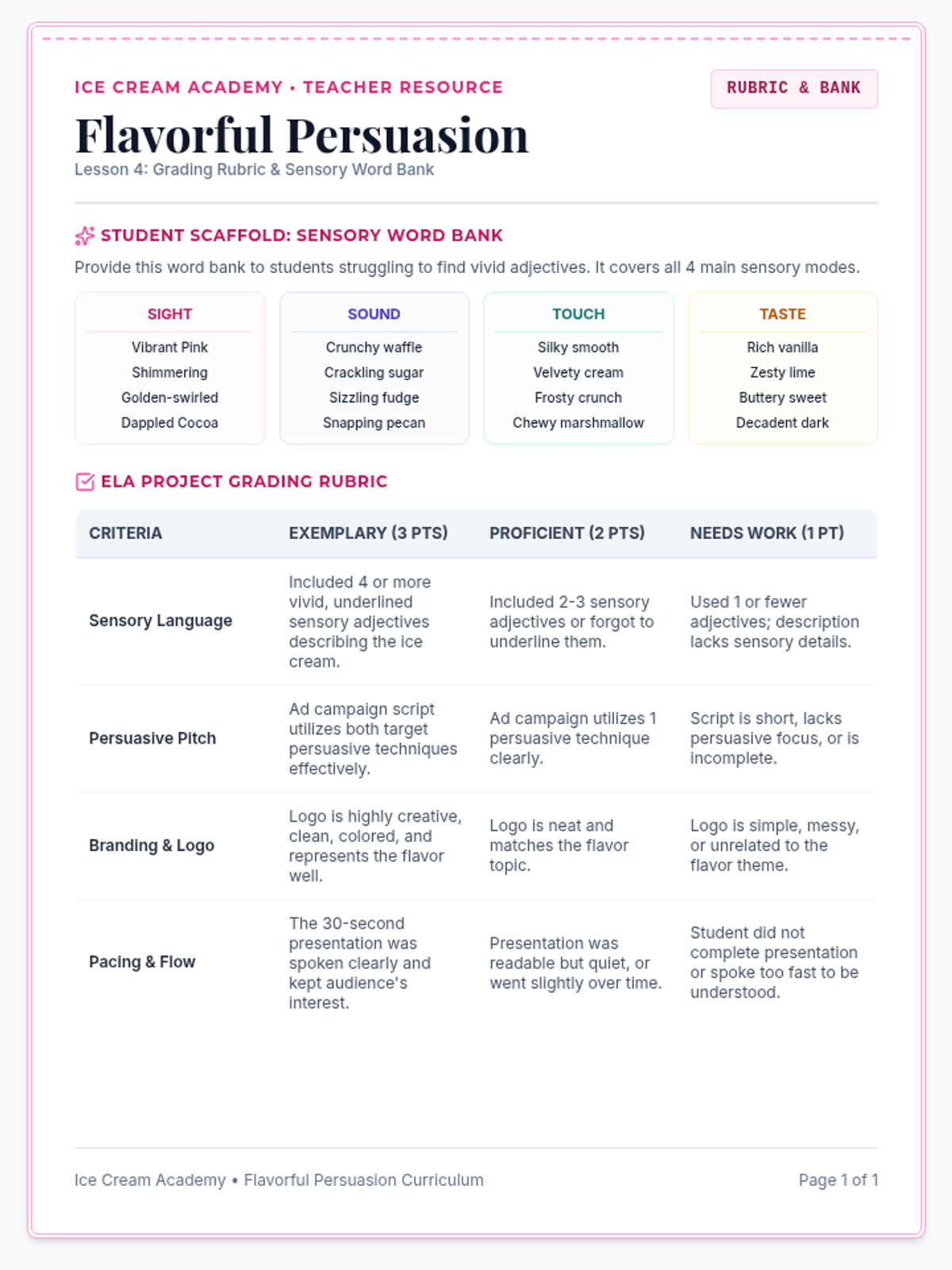
A teacher grading rubric and visual word bank of sensory adjectives supporting Lesson 4's ELA branding and marketing project.
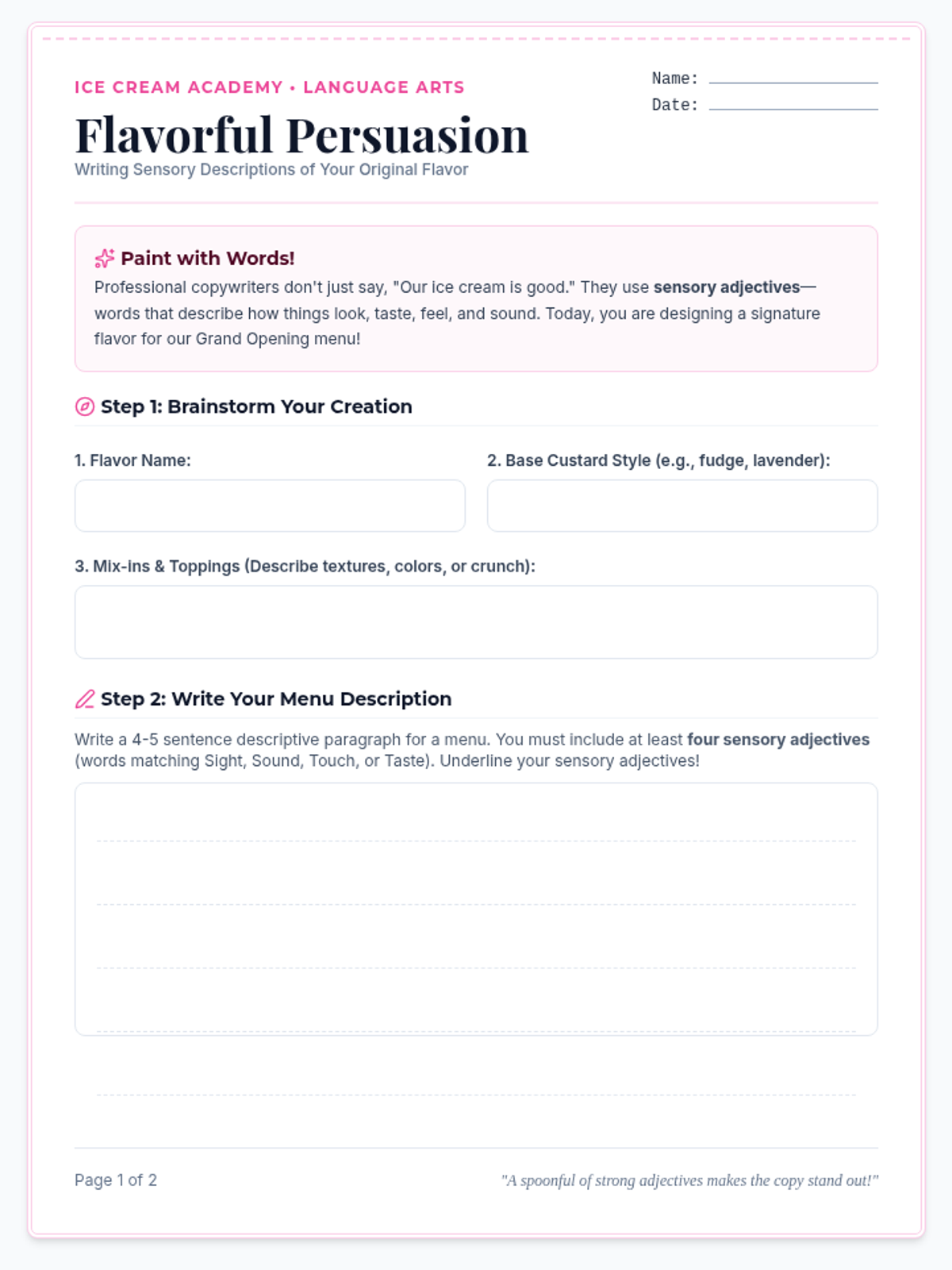
A creative branding & marketing worksheet where students design their own brand name, logo, write a highly descriptive, sensory menu description using adjectives, and draft a 30-second commercial pitch.
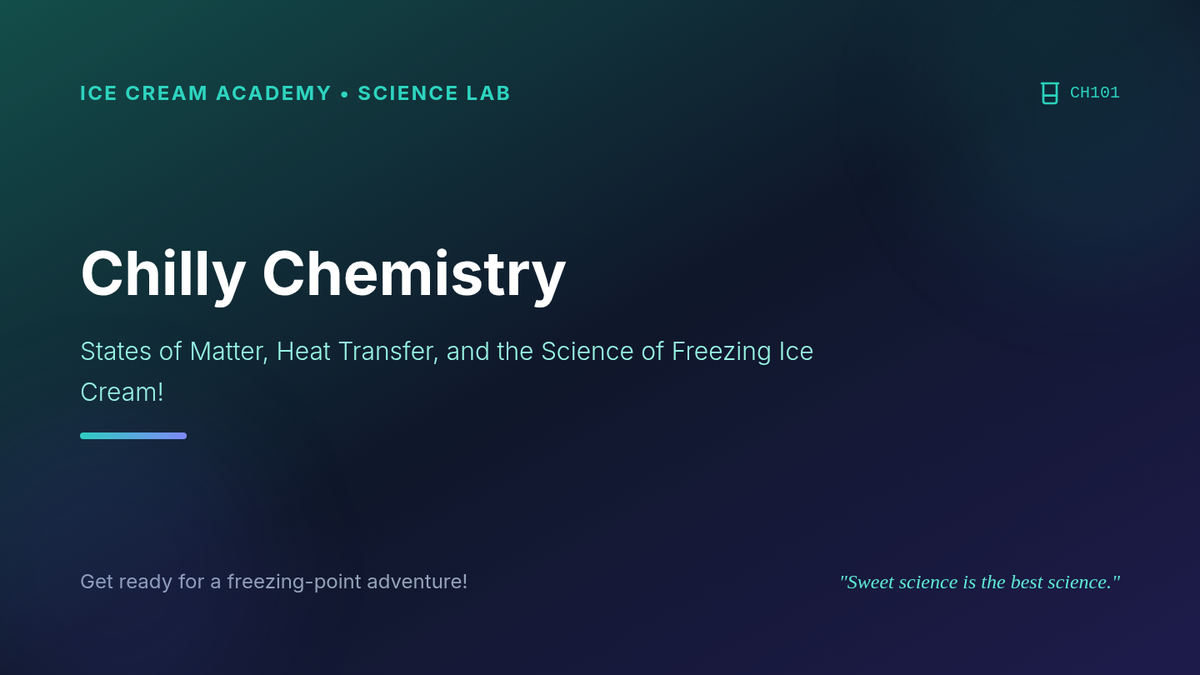
A visual, 4-slide presentation deck covering states of matter, freezing-point depression, and heat transfer during the homemade ice cream lab. Slide text complies with a minimum 24px requirement.
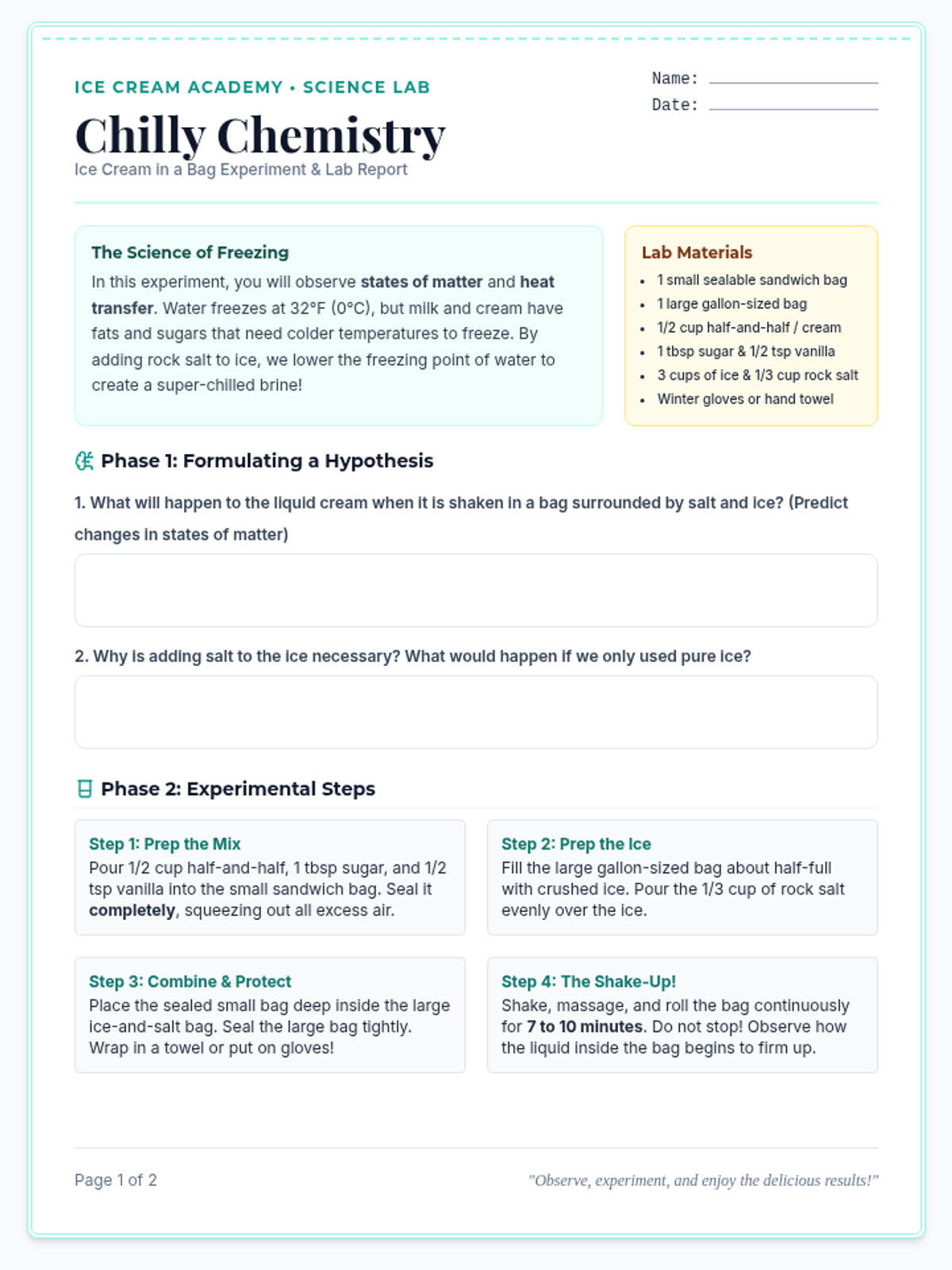
A 2-page science lab report and worksheet guiding students through the scientific method, step-by-step instructions, observations, and conclusions for an "Ice Cream in a Bag" experiment.
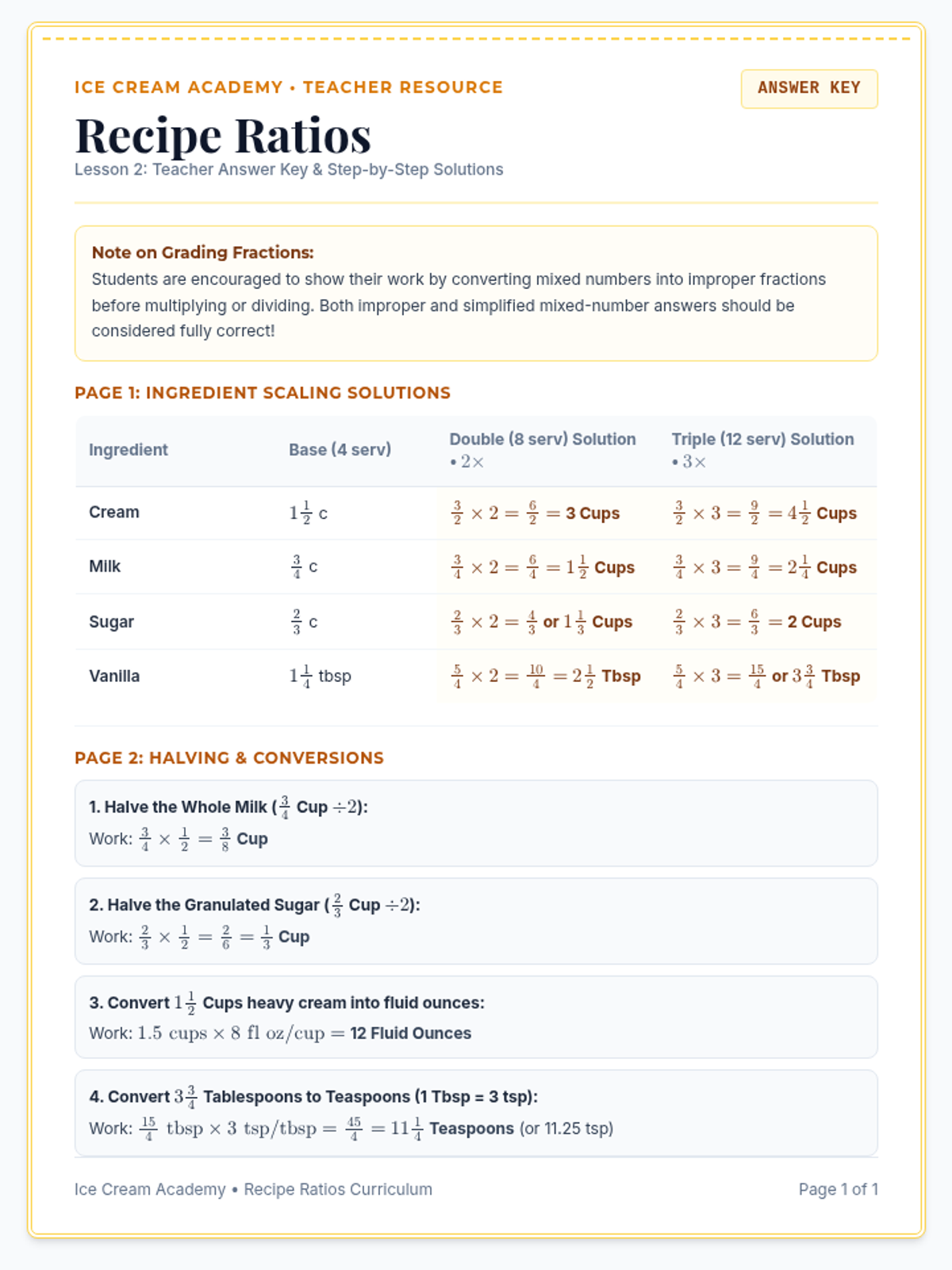
A teacher guide and answer key for Lesson 2 (Recipe Ratios), featuring fully calculated solutions, step-by-step math explanations, and grading tips.
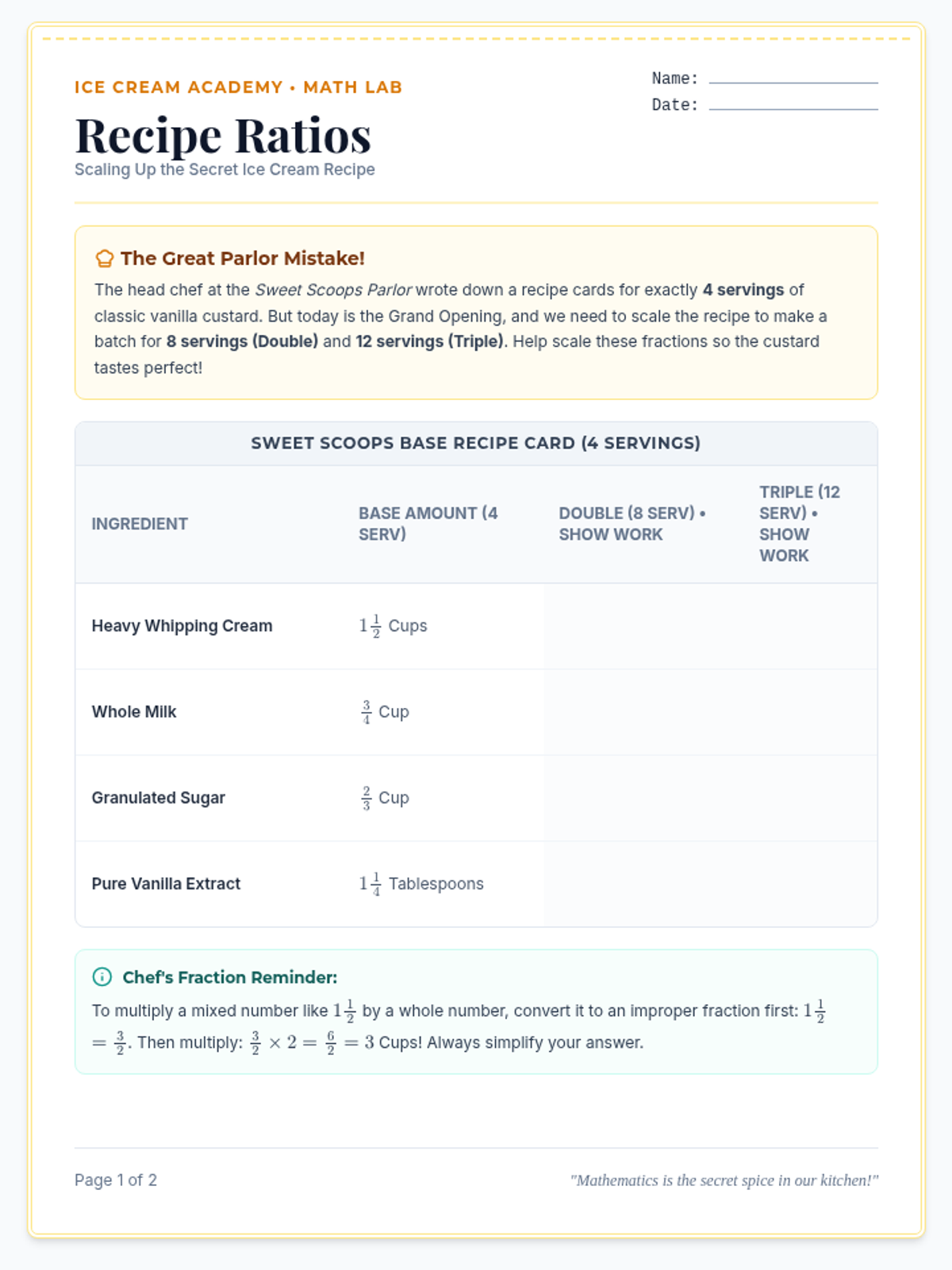
A 2-page math worksheet themed around a vintage ice cream parlor. Covers fraction multiplication and division (scaling recipes up and down) and units conversion (ounces, cups, tablespoons).
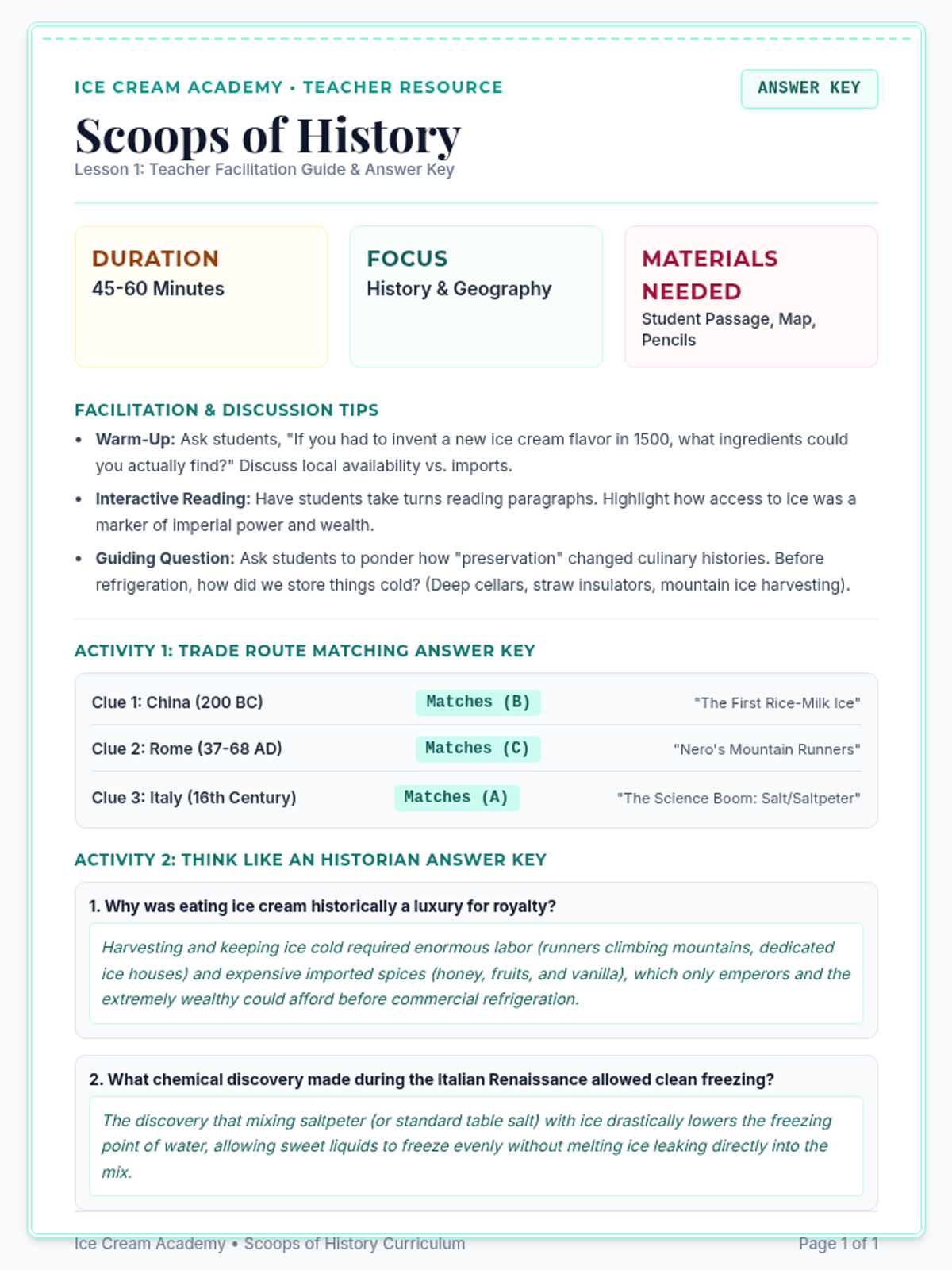
A teacher guide and answer key for Lesson 1 (Scoops of History), featuring facilitation tips, discussion prompts, and complete answers for the historical trade route and reading comprehension activities.
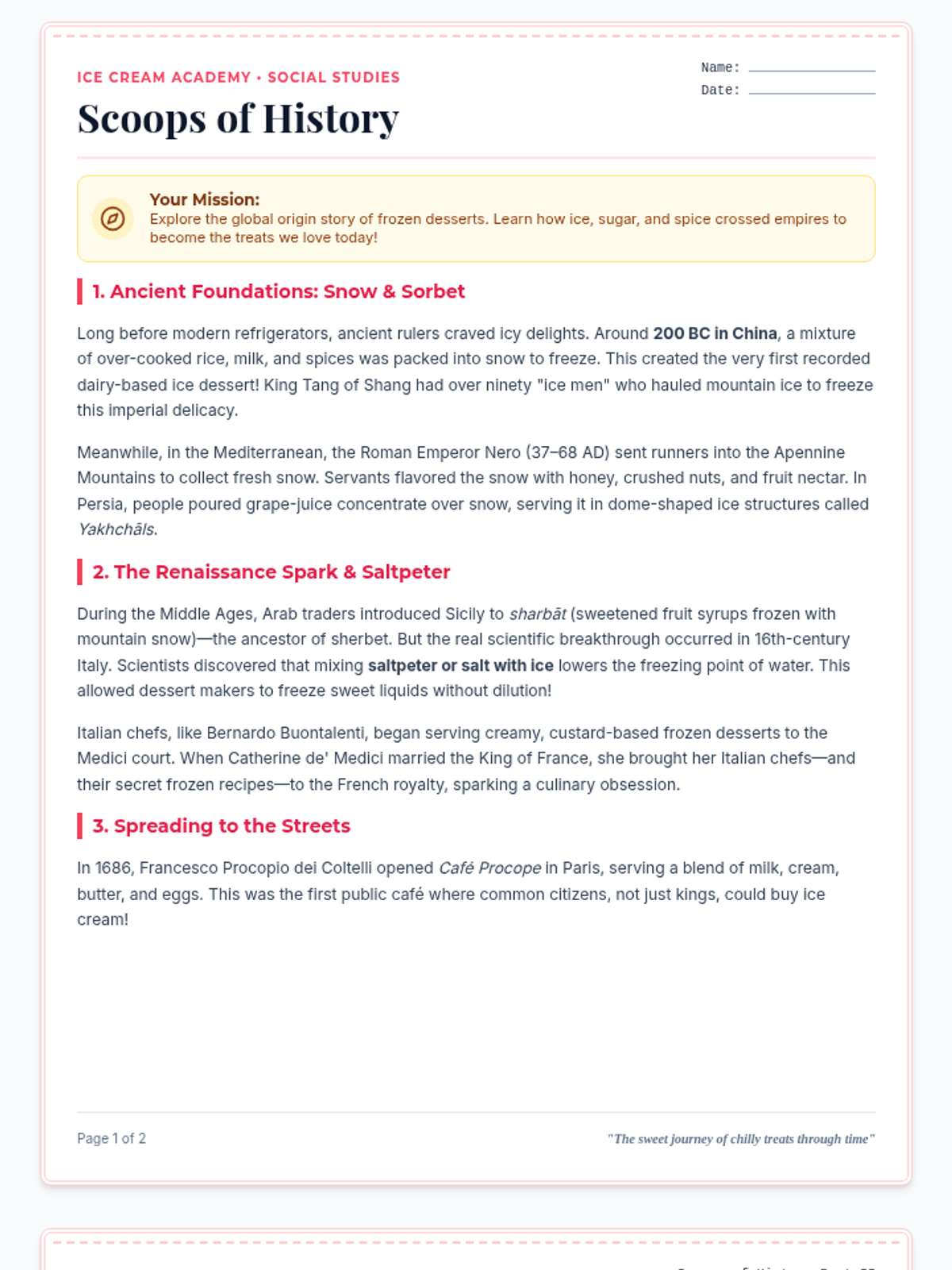
A beautiful 2-page historical reading passage and mapping/comprehension activity sheet about the global origins of ice cream. Designed for summer school students to learn about the history and geography of frozen treats.
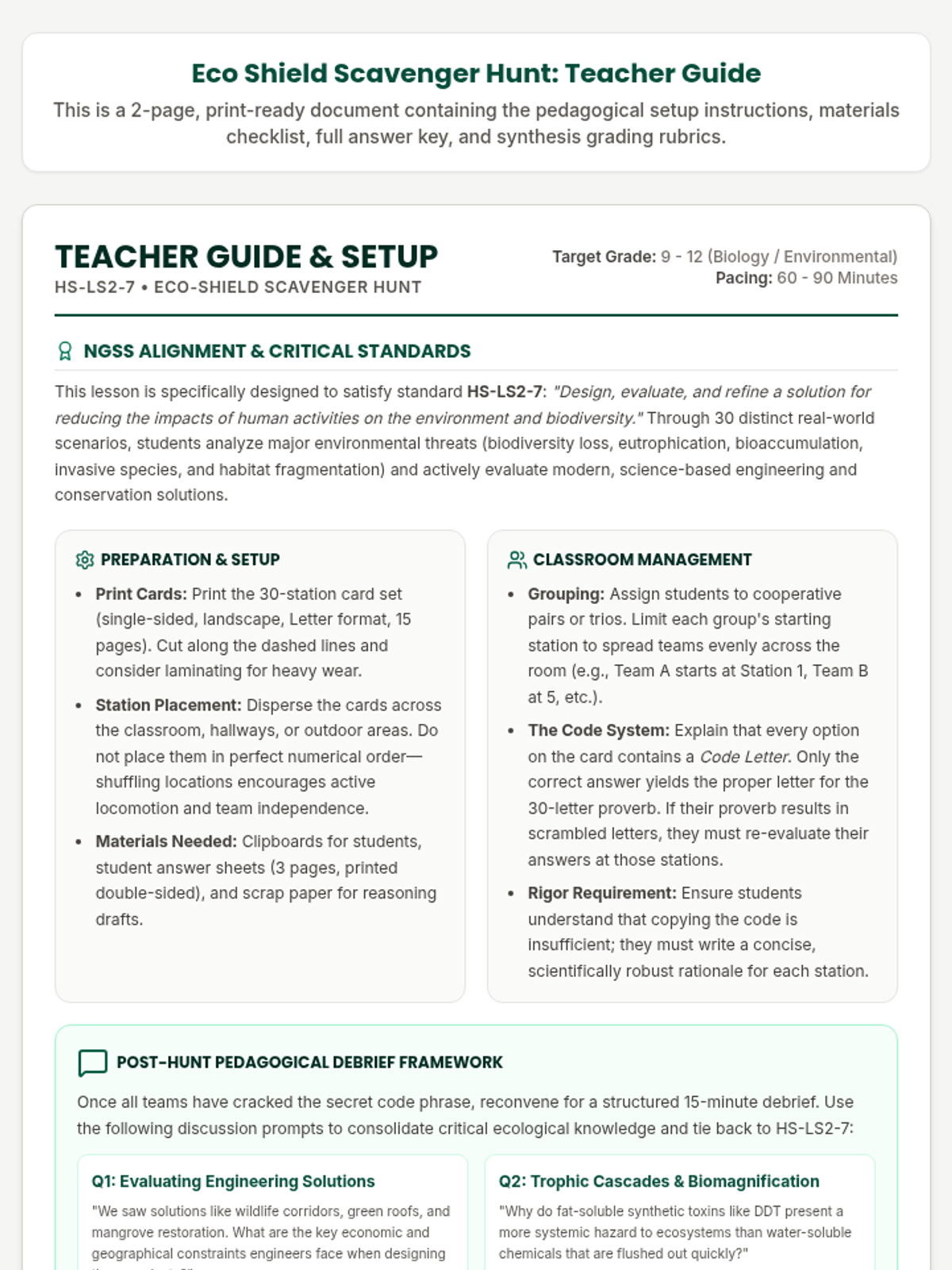
A comprehensive Teacher Guide and Answer Key for the Eco Shield Scavenger Hunt. Includes alignment to standard HS-LS2-7, a preparation checklist, classroom management and debrief guidelines, the master decoder key (HUMANS AND NATURE IN HARMONY ALWAYS), and synthesis grading rubrics.
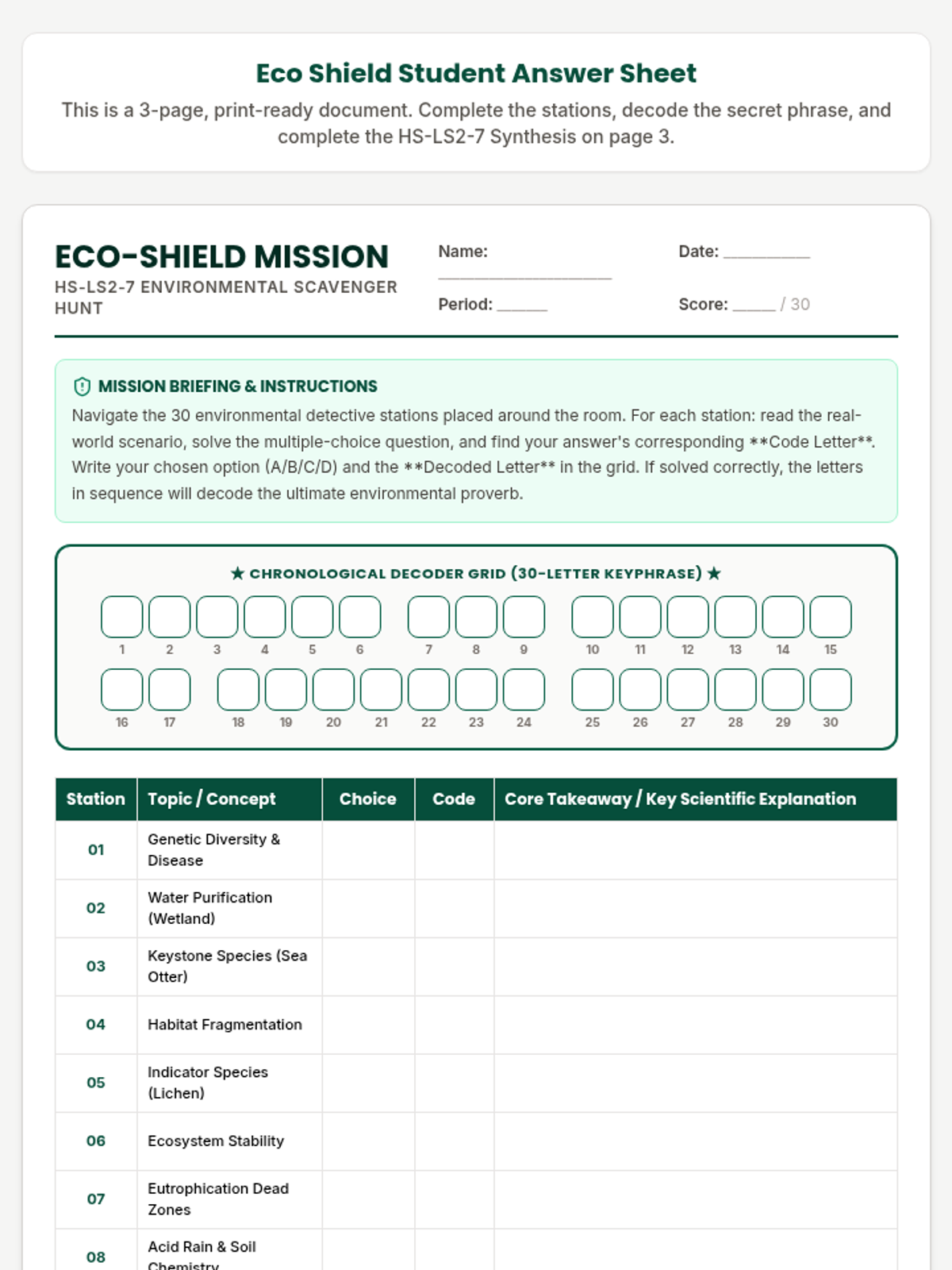
A beautifully designed student response worksheet for the Eco Shield Scavenger Hunt. Includes an engaging instructions briefing, a 30-letter visual Decoder Grid for the mystery proverb, a chronological response logging table for all 30 stations, and a rigorous HS-LS2-7 Synthesis section.
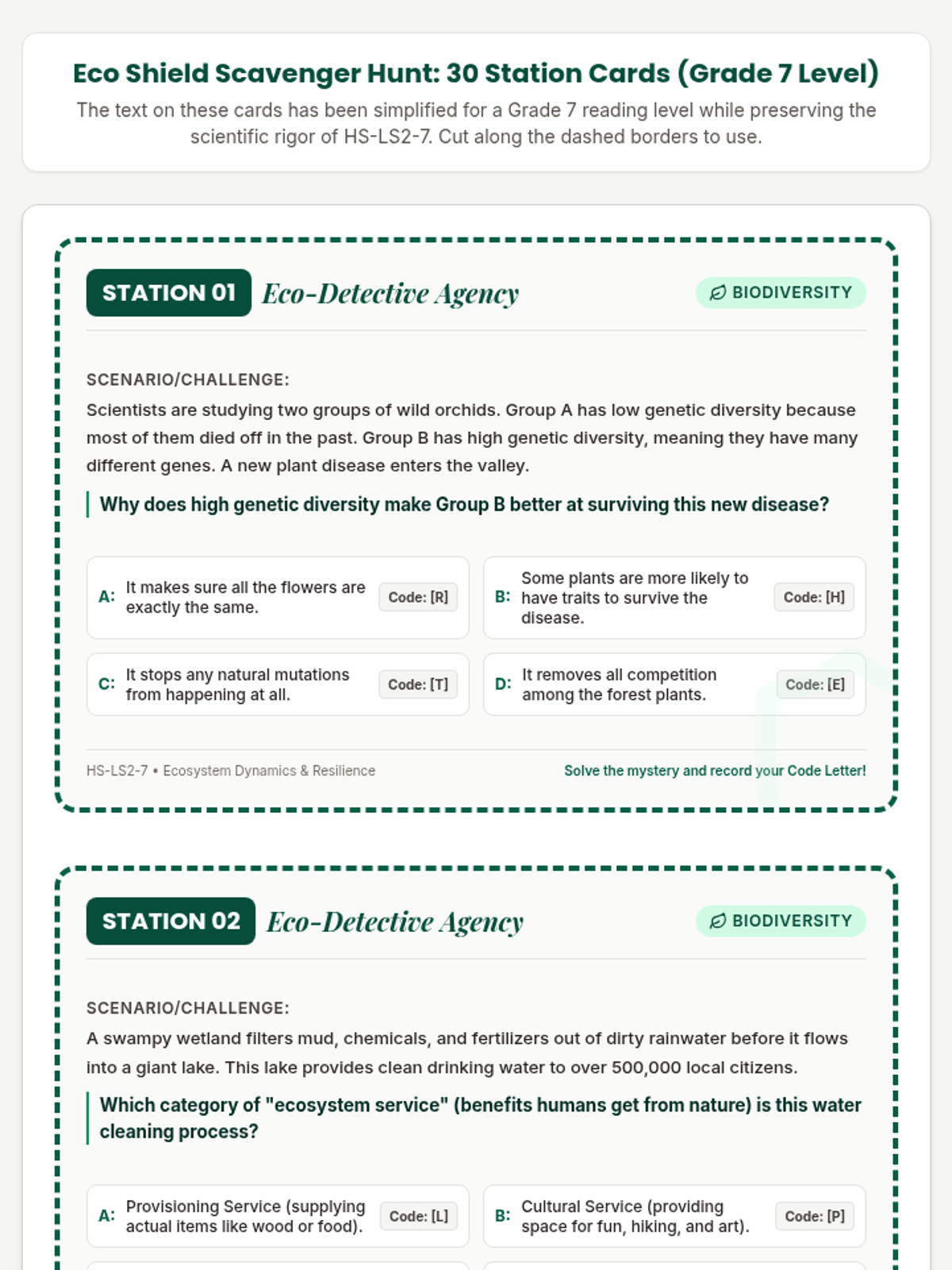
A printable packet containing 30 beautifully formatted, highly engaging station cards for the scavenger hunt game. Each card poses a rigorous real-world scenario with multiple-choice questions whose answer choices contain secret code letters, aligned to standard HS-LS2-7.
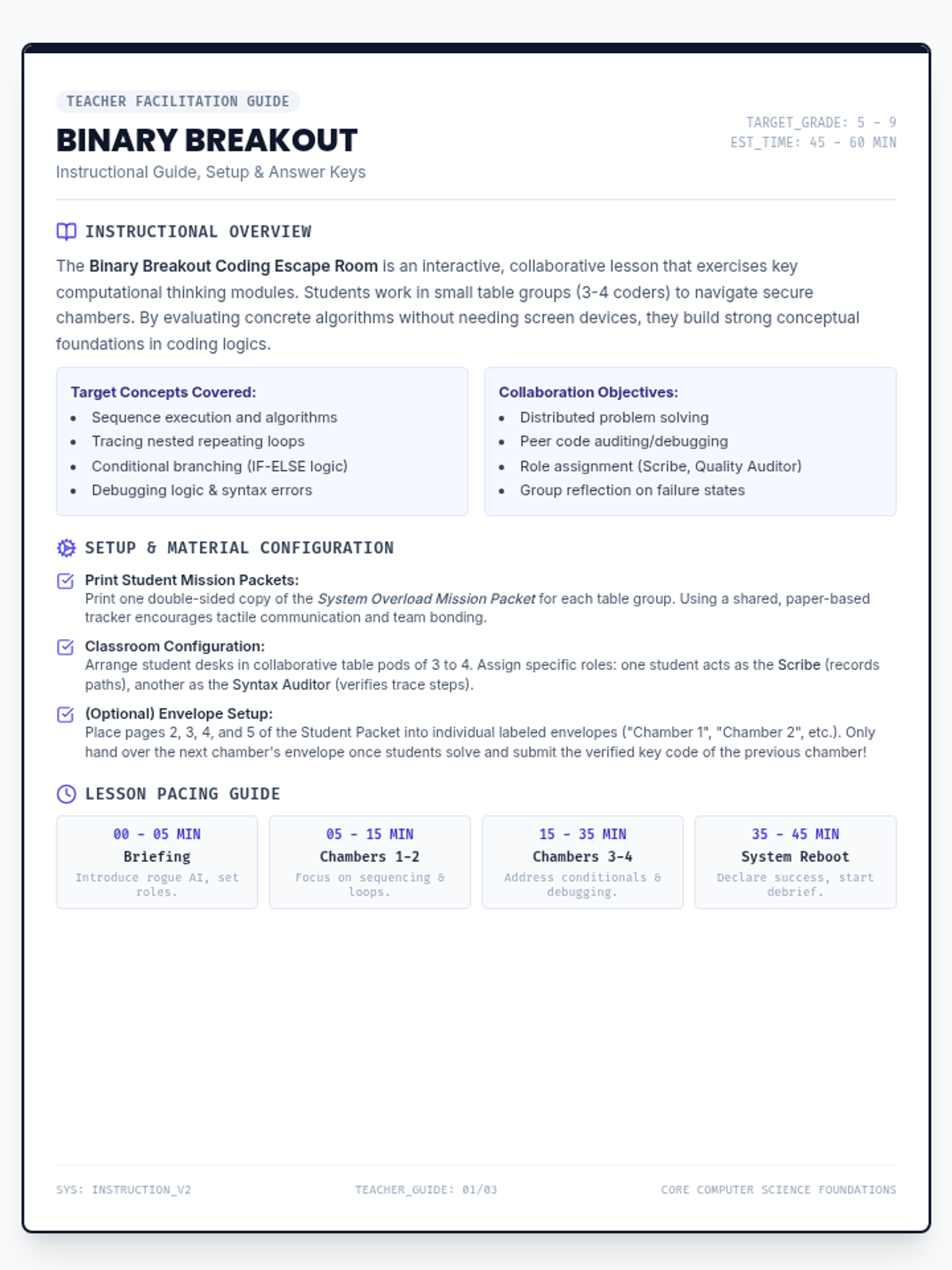
This teacher facilitation guide provides complete setup instructions, recommended pacing guides, step-by-step trace explanations, quick-reference answer keys, and printable scaffolded hint cards for groups who require differentiation.
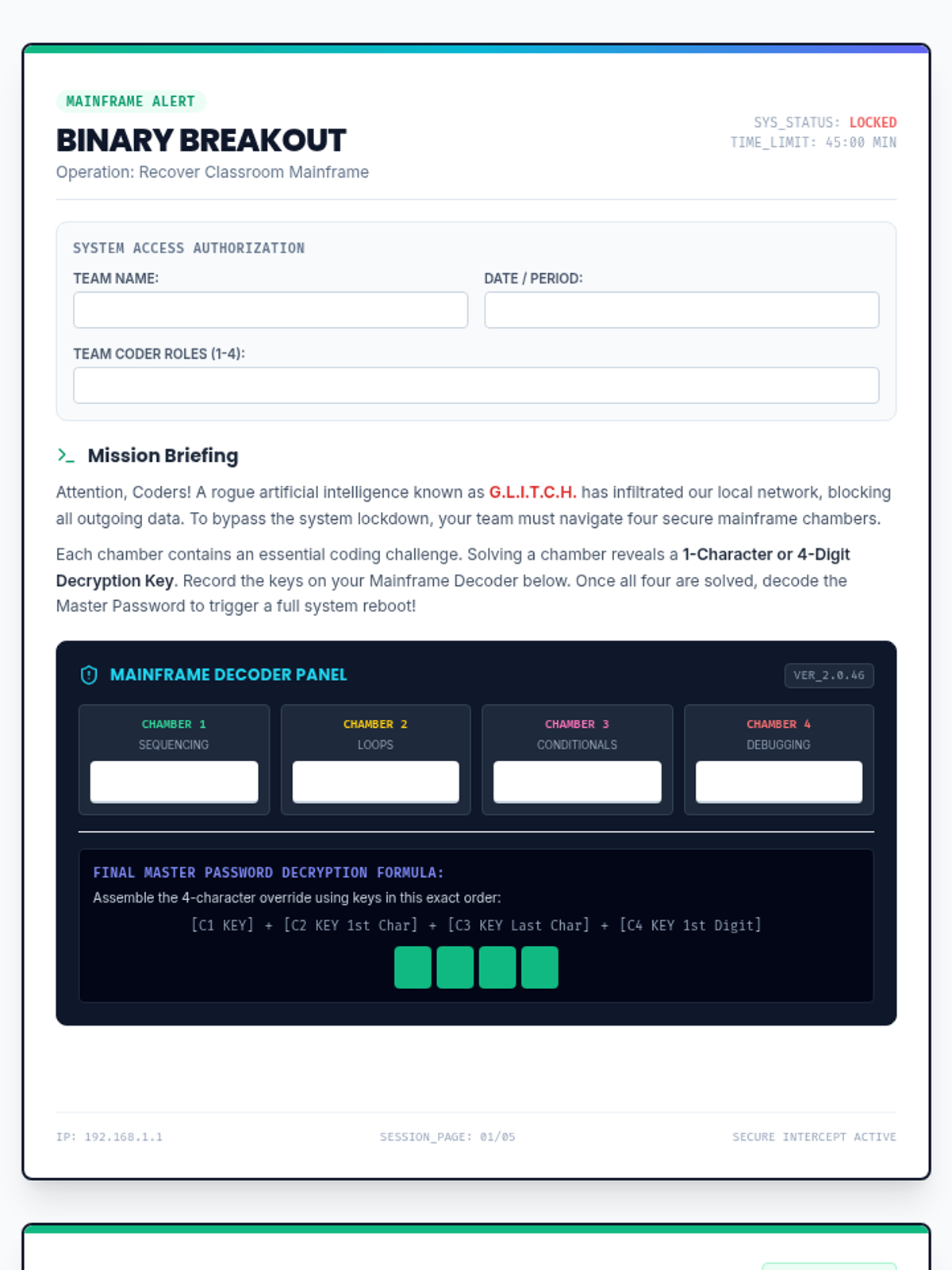
This student-facing printable mission packet contains the core puzzles for the coding escape room. Designed for table groups, it guides students through four conceptual challenges—sequencing, loops, conditionals, and debugging—which reveal decryption keys that are recorded on a central decoder hub to solve the overarching mystery of a locked mainframe.
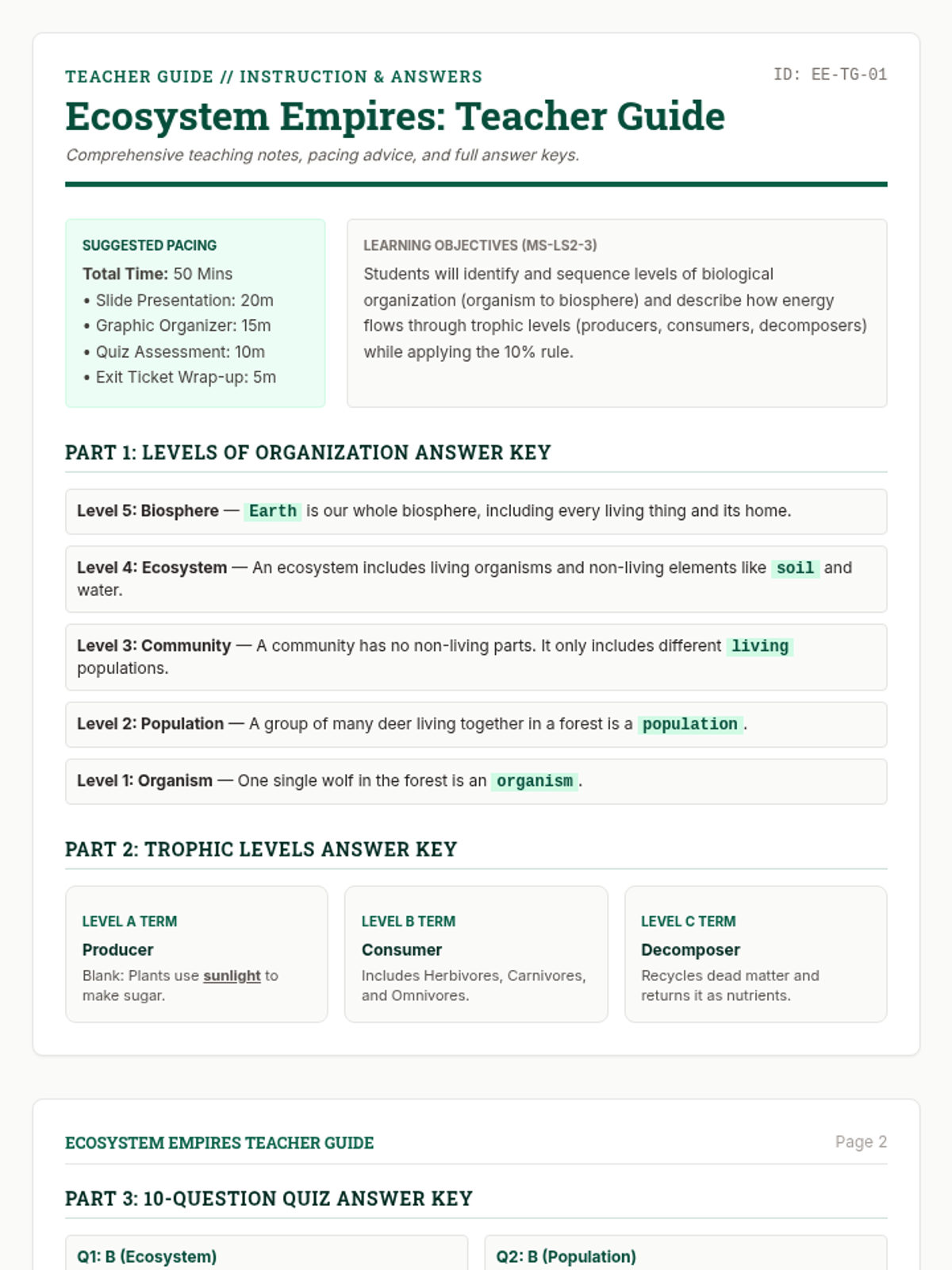
A two-page teacher resource containing a lesson guide, lesson pacing, MS-LS2-3 standards alignment, and complete answer keys for the student graphic organizers, quizzes, vocabulary matching, and slide questions.
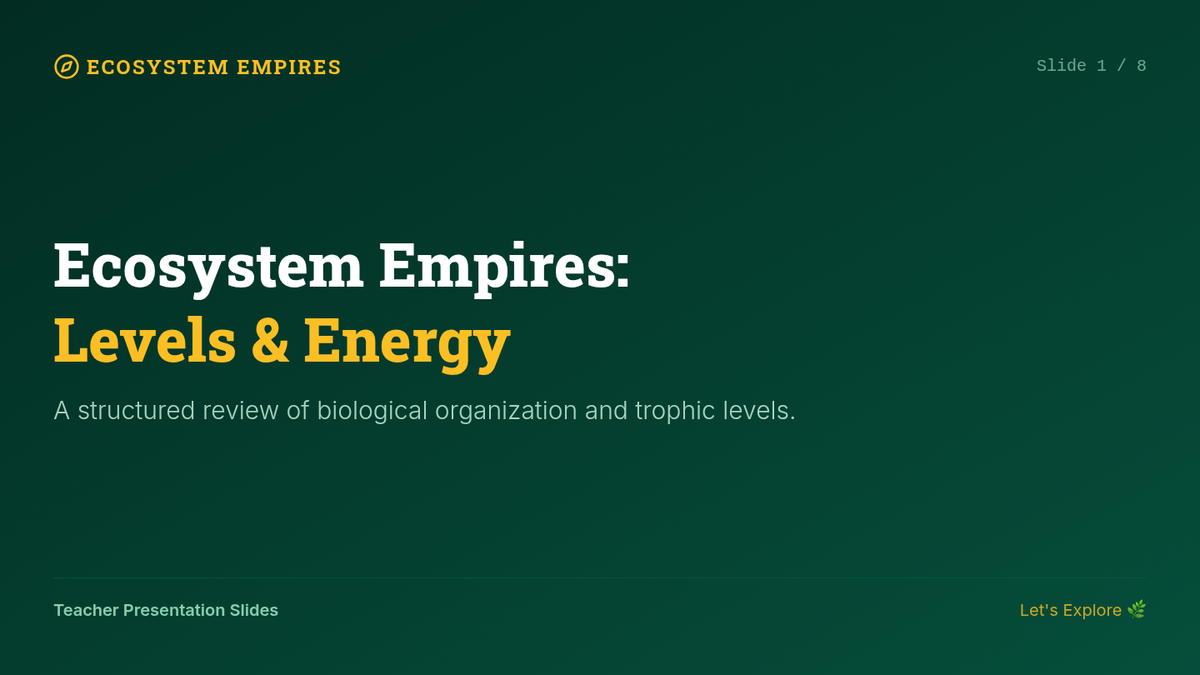
A professional teacher presentation slide deck (16:9 ratio) outlining biological scale, the levels of organization, the trophic pyramid, consumer types, decomposers, and the 10% rule. Concludes with a built-in Exit Ticket.
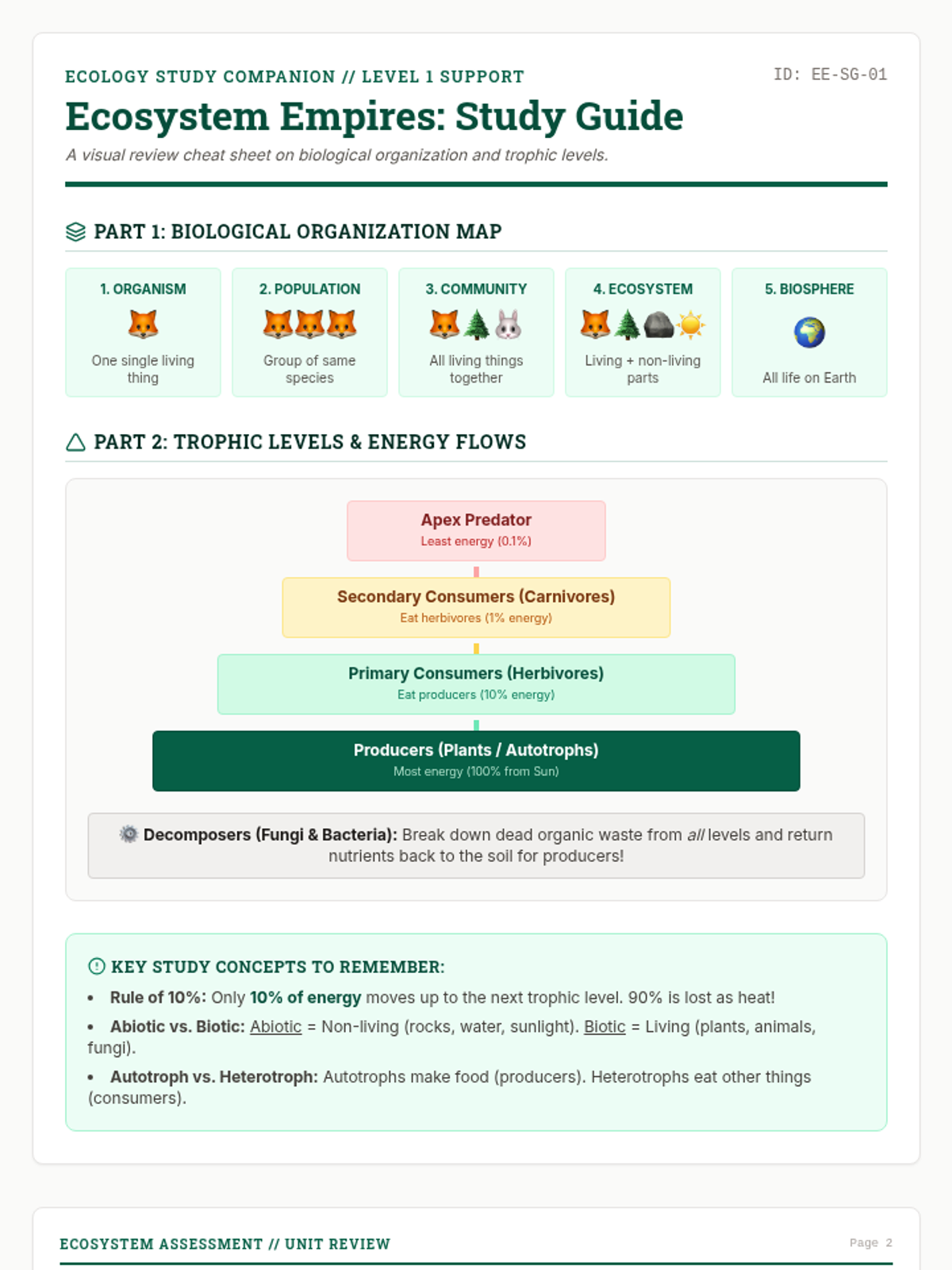
A two-page student document with a visual, bulleted visual study guide on page 1 and a comprehensive, highly accessible 10-question multiple-choice review quiz on page 2.
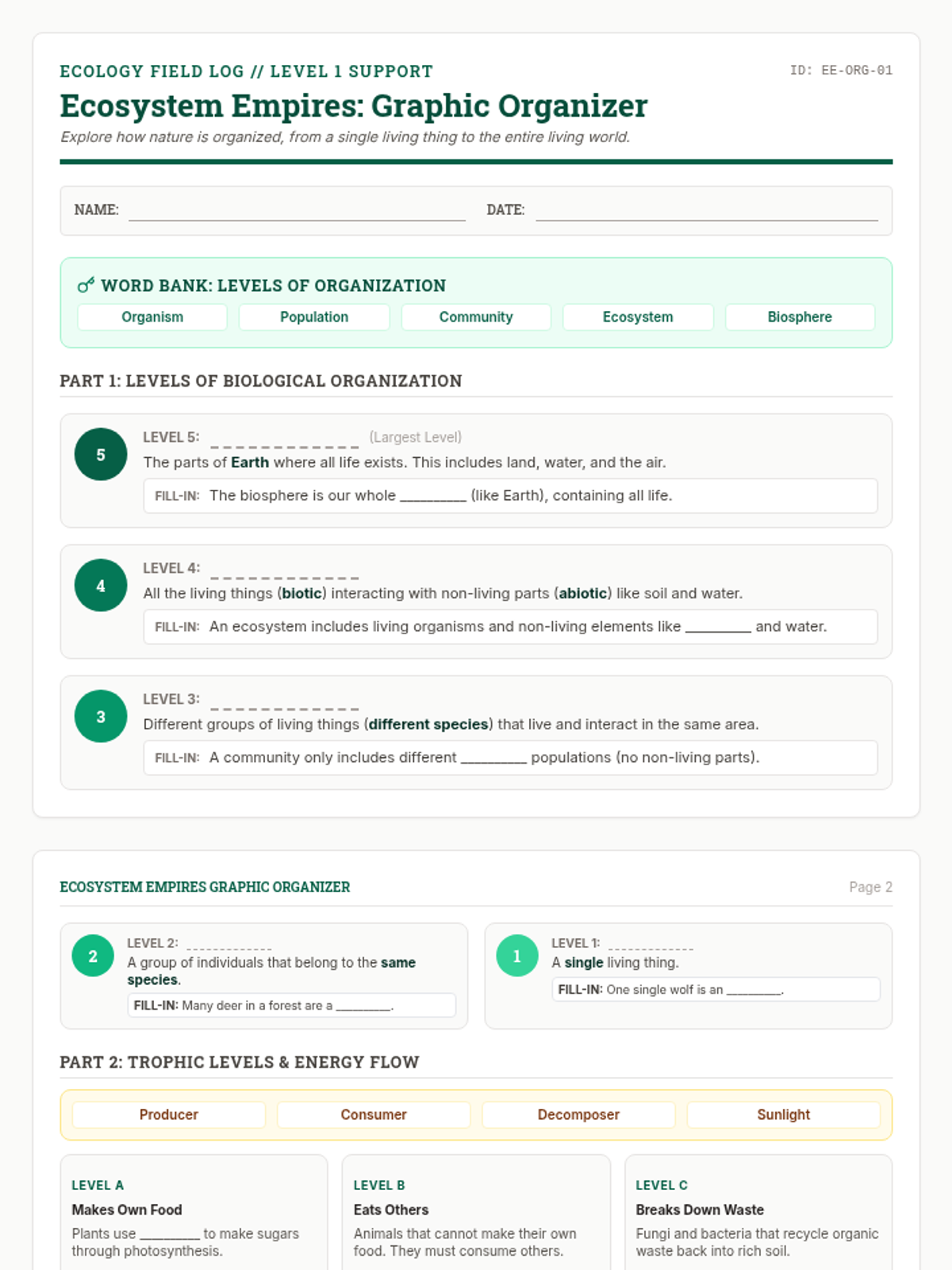
A two-page student worksheet containing a graphic organizer on the levels of biological organization, trophic levels diagrams, and a vocabulary matching section. Highly scaffolded with modified text and guided fill-in-the-blanks for accessible learning.
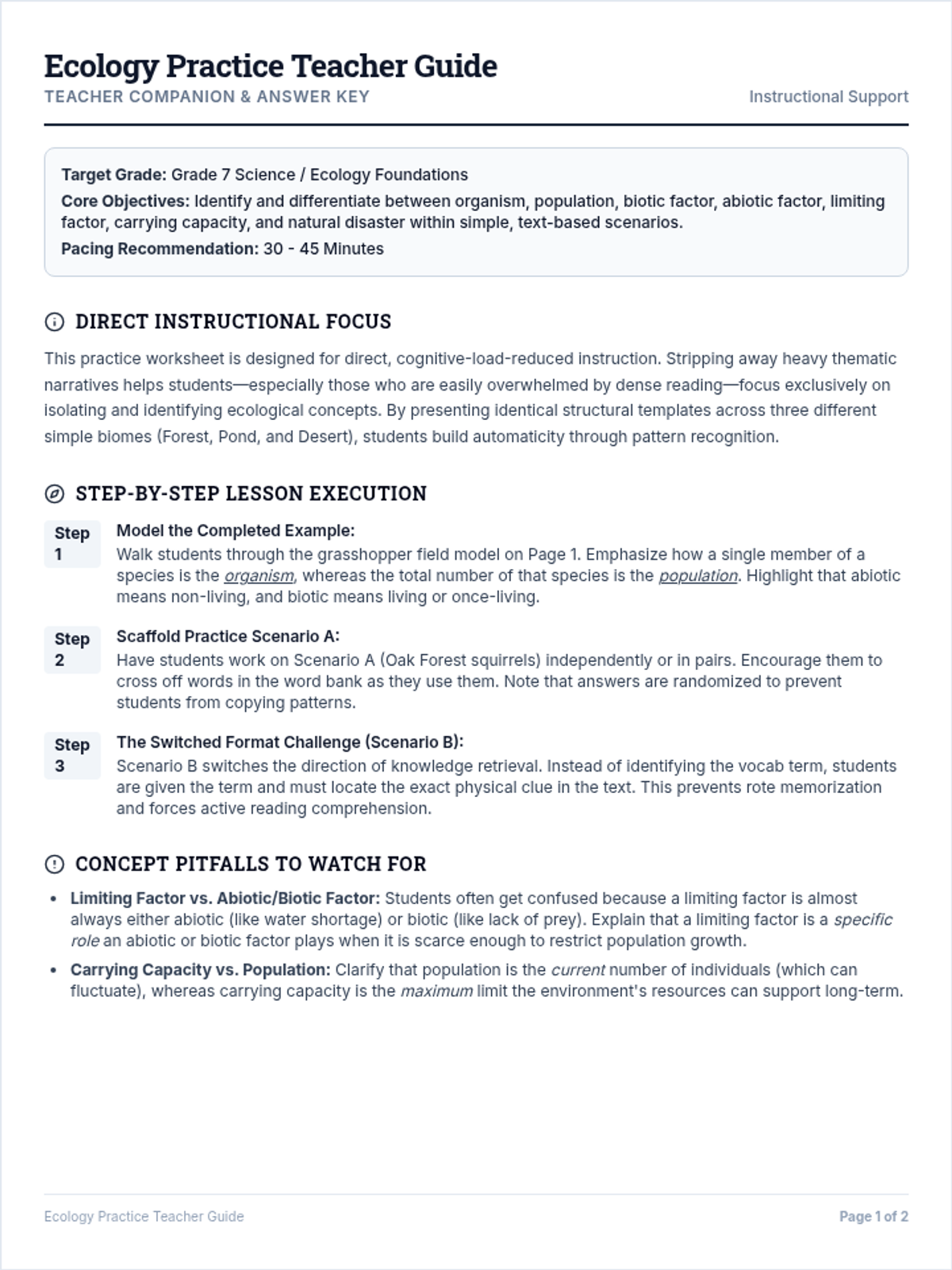
The professional instructional companion and answer key for the Ecology Practice Worksheet. Provides completed answer tables for Forest, Pond, and Desert scenarios along with pedagogical guidance.
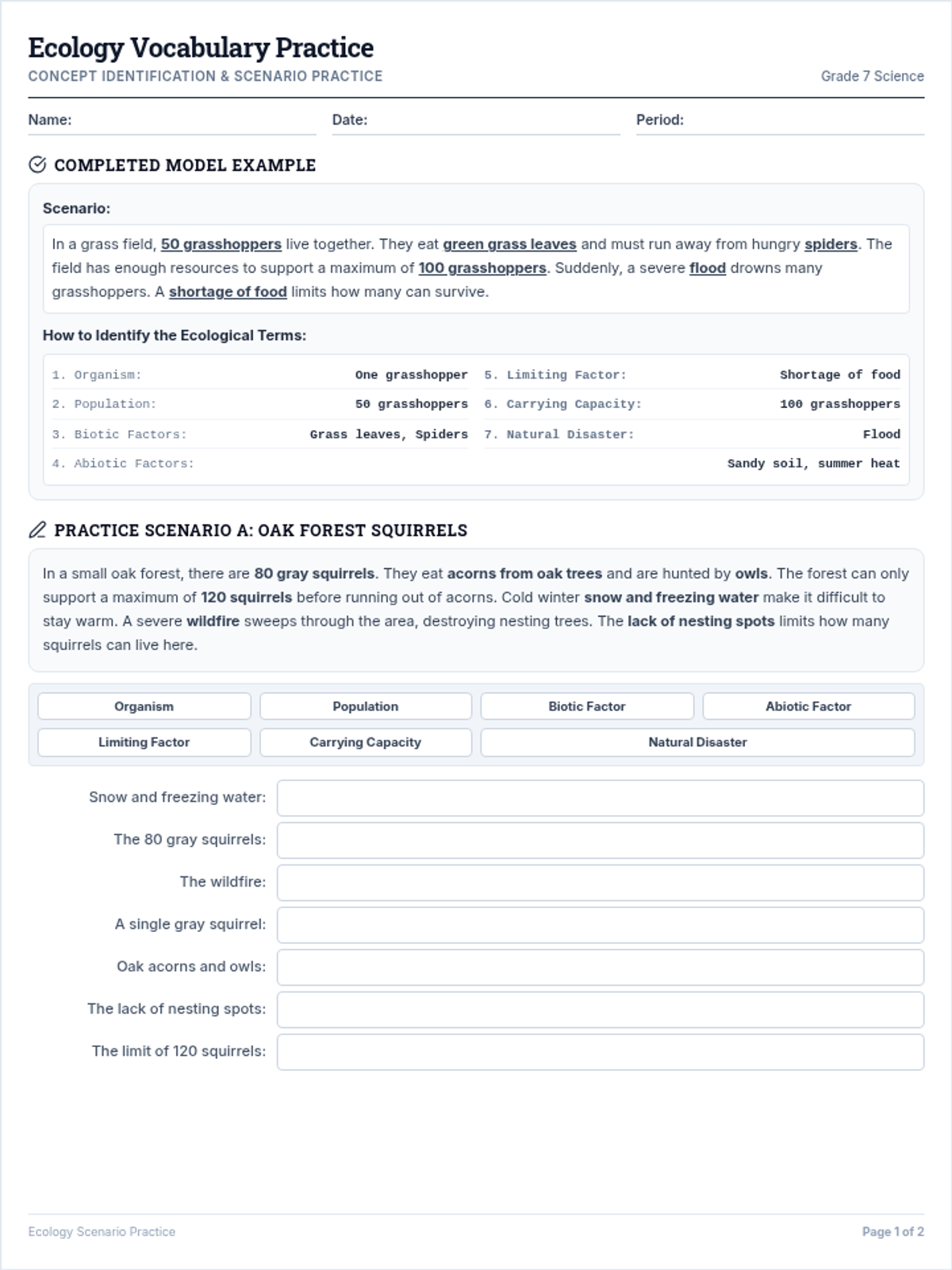
A simplified, unthemed practice worksheet for middle school ecology students. Contains a fully completed model example followed by three simplified scenarios (Oak Forest, Pond, Desert) where students identify core vocabulary terms.
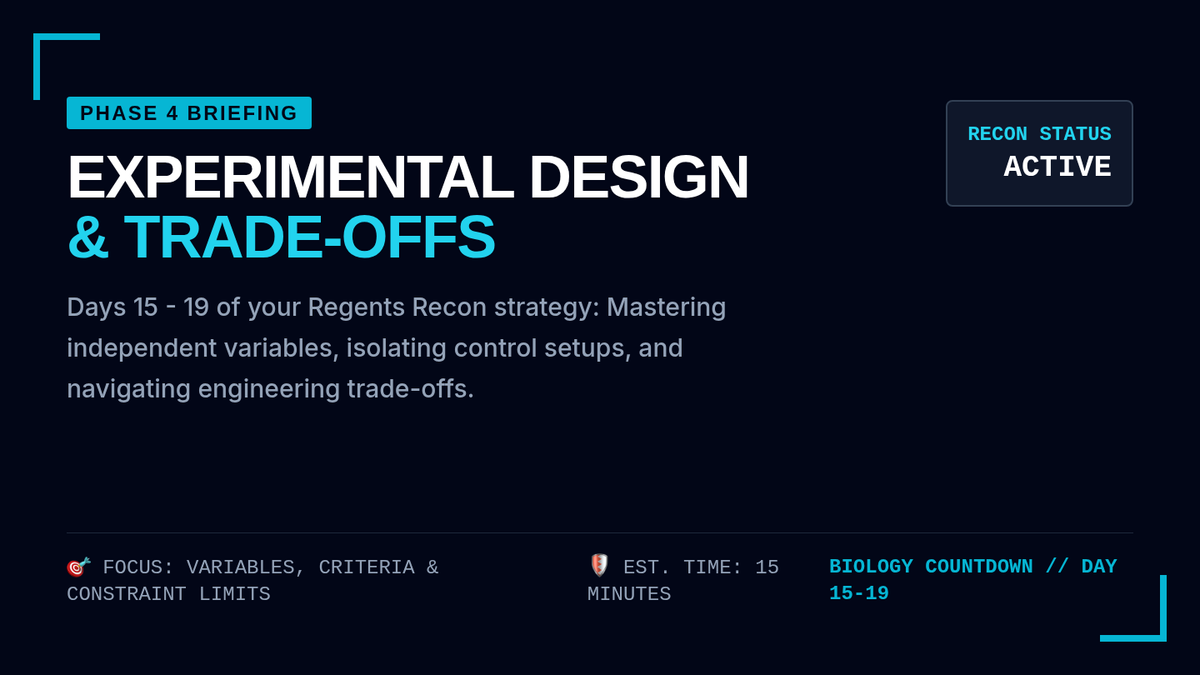
Slide deck to accompany Phase 4 (Days 15-19) focusing on experimental design standards, distinguishing criteria from constraints, identifying variables, and evaluating biological trade-offs.
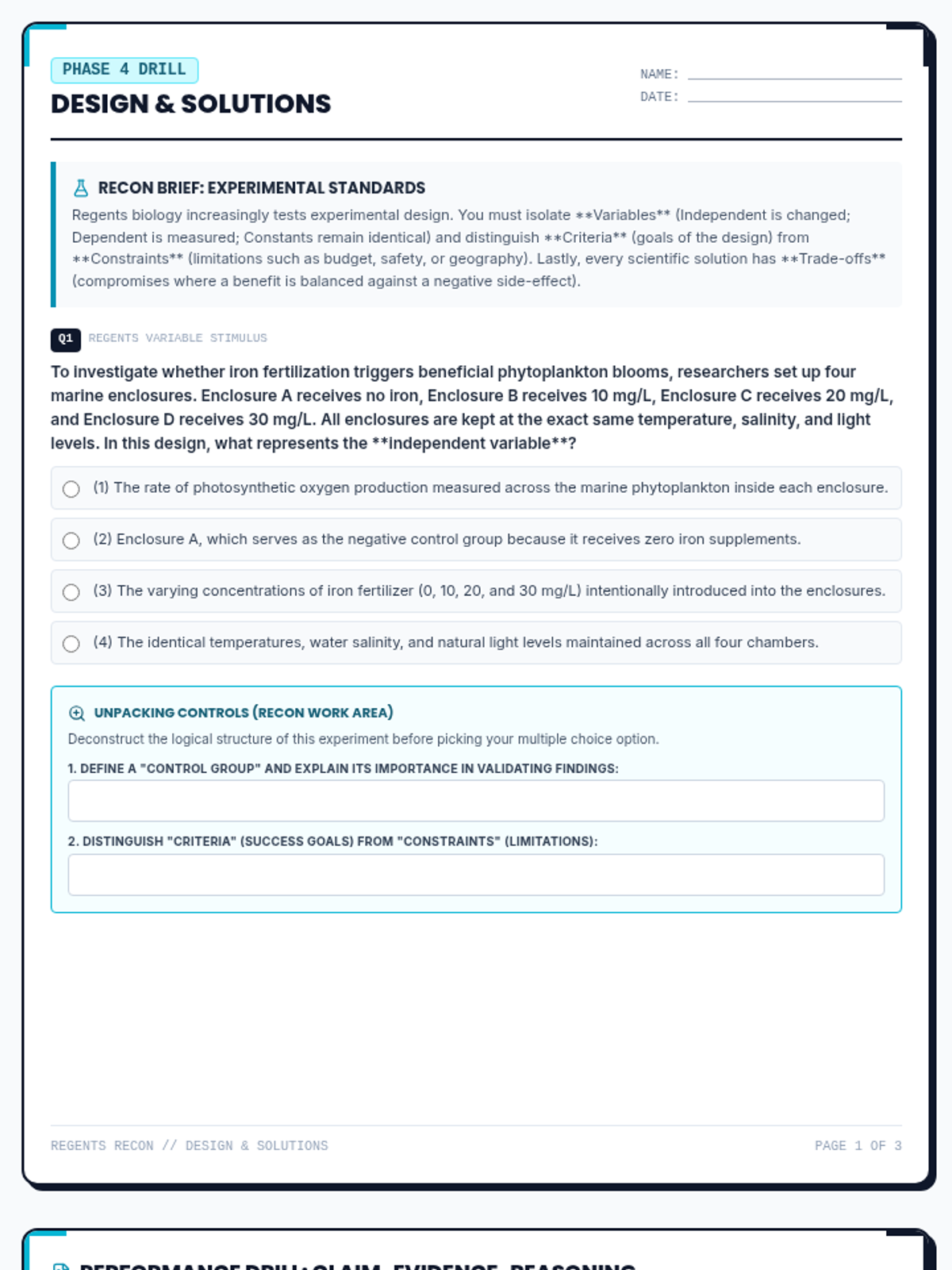
Student-facing Regents biology practice worksheet focusing on experimental design standards, distinguishing criteria from constraints, identifying variables, and evaluating trade-offs with a structured decision-making matrix.
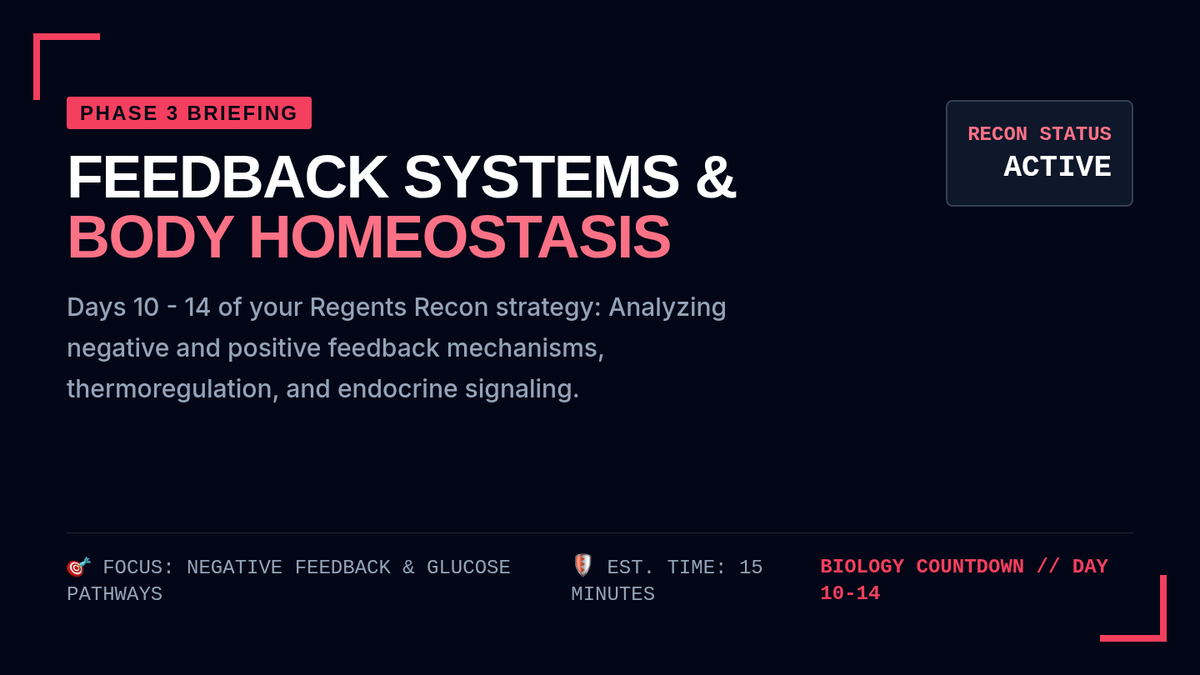
Slide deck to accompany Phase 3 (Days 10-14) focusing on nervous/endocrine coordination, negative feedback loops, blood sugar balance, and body temperature homeostasis.
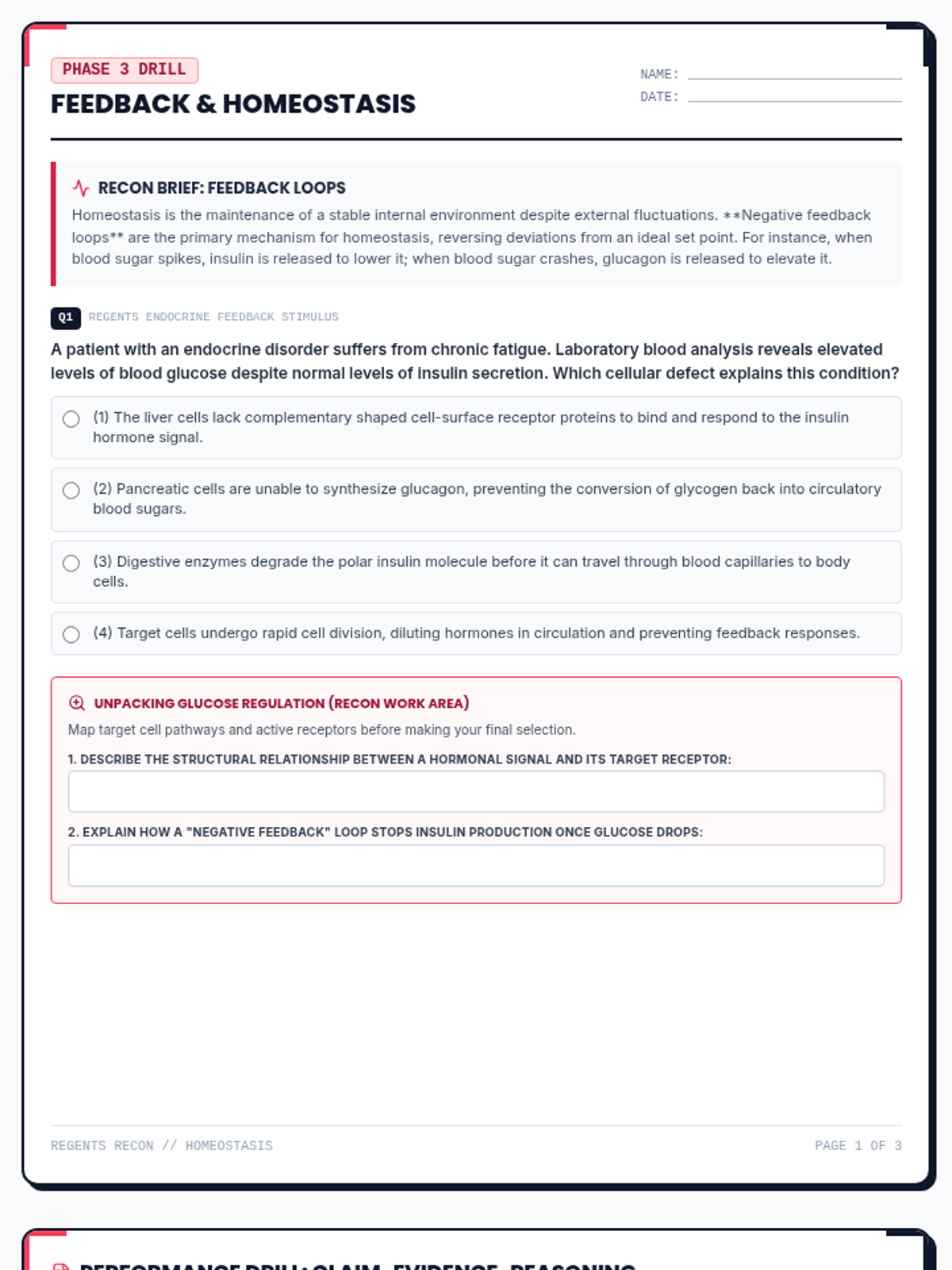
Student-facing Regents biology practice worksheet focusing on body homeostasis mechanisms, negative feedback loops, blood sugar balance, and thermoregulation, complete with multiple choice and CER.
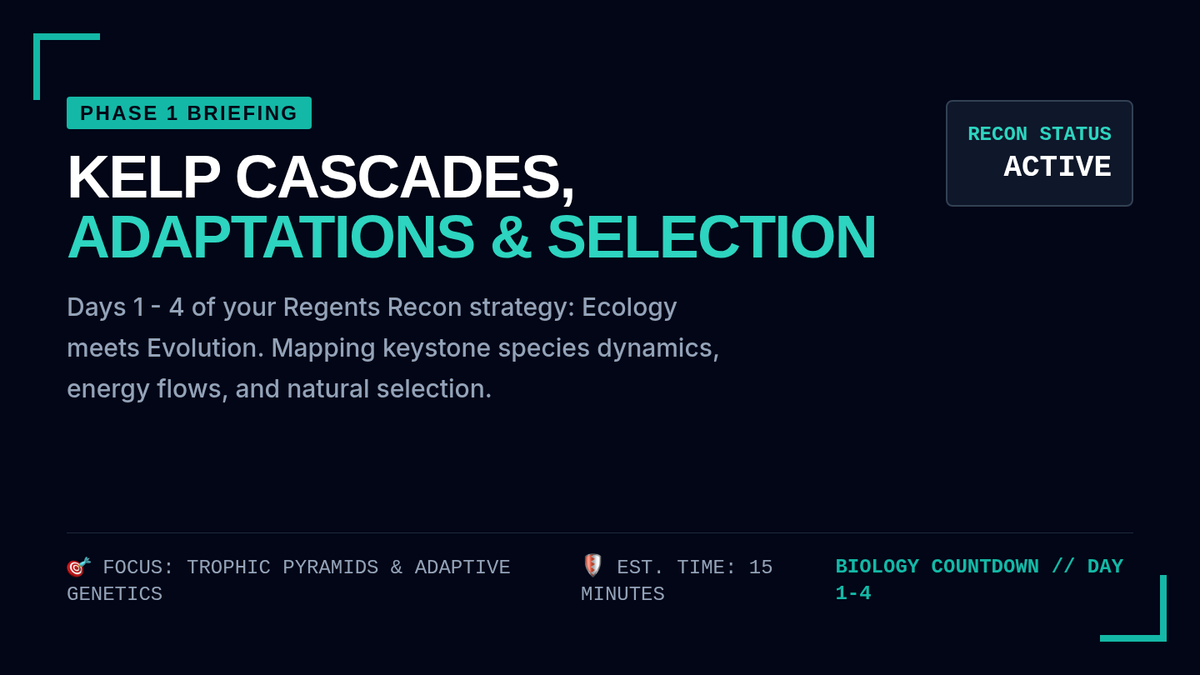
Slide deck to accompany Phase 2 (Days 6-9) focusing on top-down trophic interactions, the 10% energy transfer rule, carrying capacity, and keystone species dynamics.
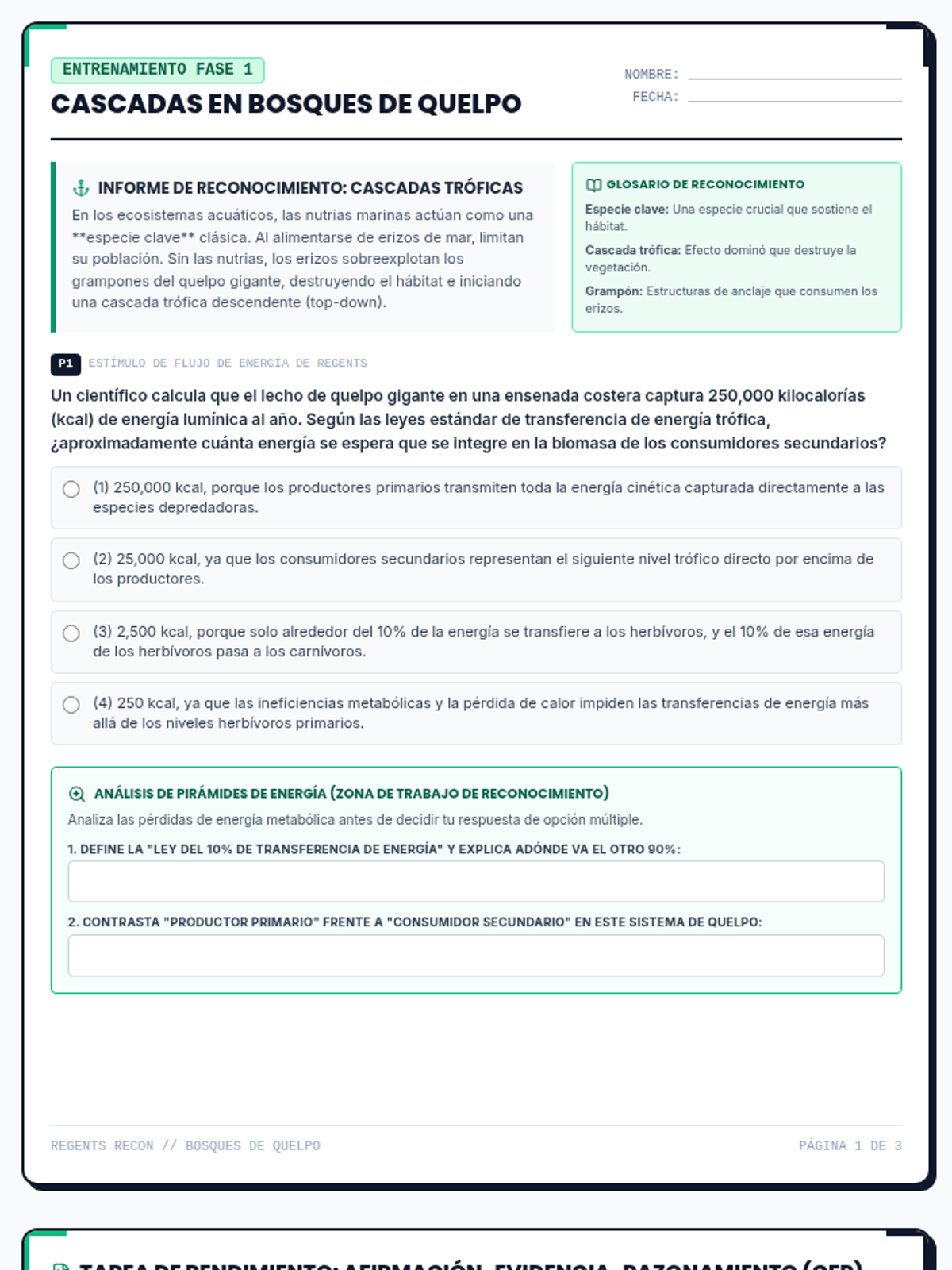
Student worksheet for the Kelp Forest Cascades unit focusing on top-down trophic interactions, carrying capacity, energy transfers, and keystone species dynamics under simulated Regents conditions.
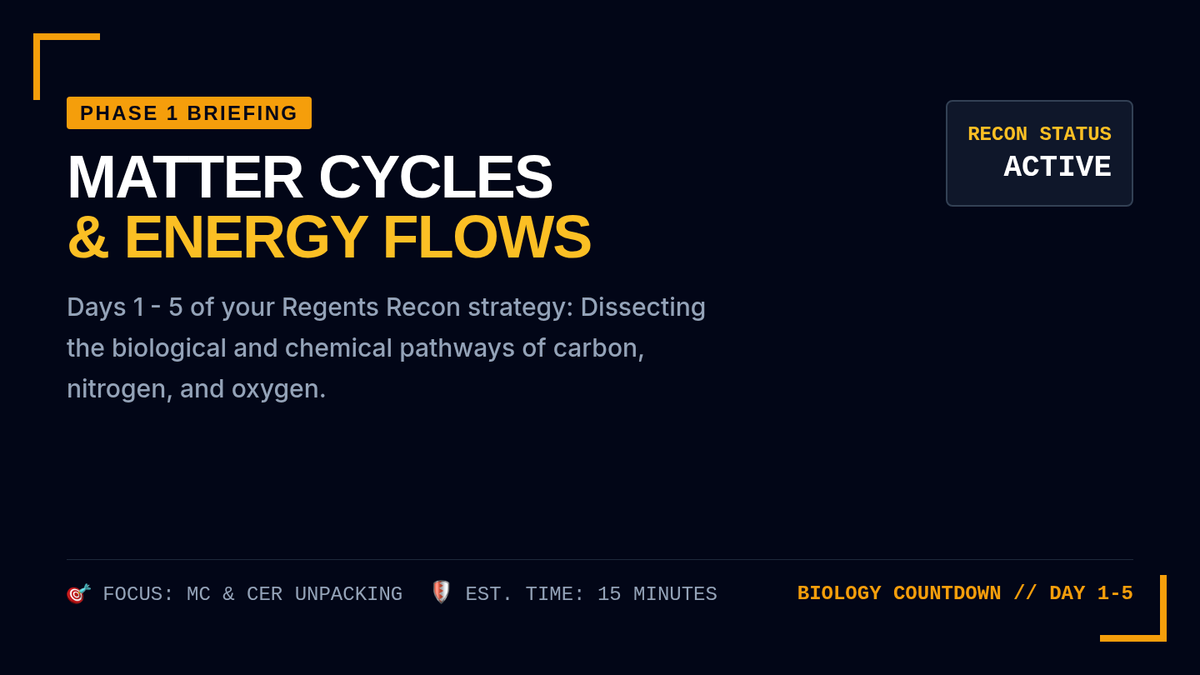
Slide deck to accompany Phase 1 (Days 1-5) focusing on unpacking Regents-style Multiple Choice, writing powerful Claim-Evidence-Reasoning responses, and core biogeochemical cycles.
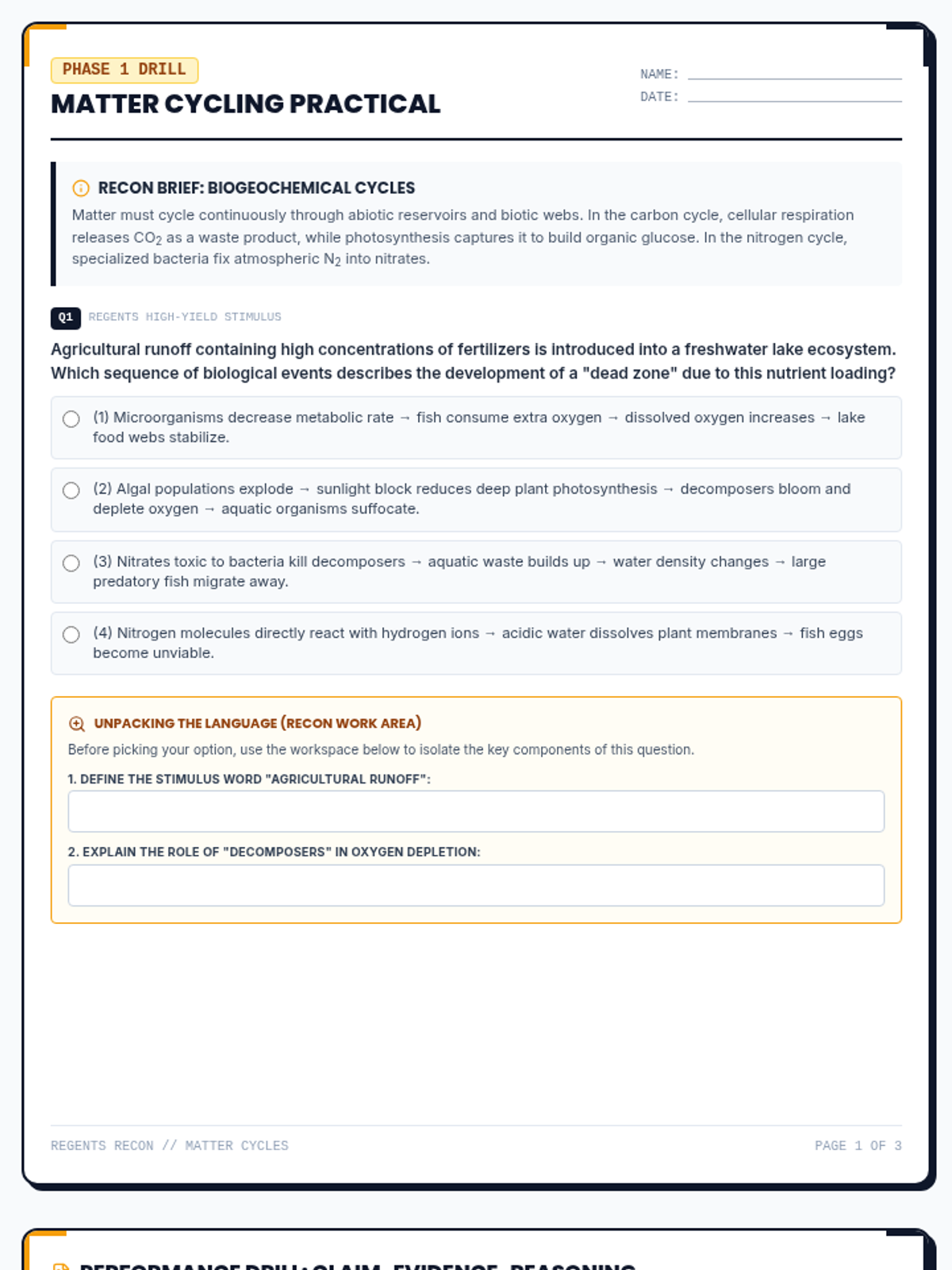
Student-facing Regents biology practice worksheet focusing on matter cycling (biogeochemical cycles, carbon and nitrogen fluxes, eutrophication), complete with multiple choice, claim-evidence-reasoning tasks, and self-grading checkmarks.