A teacher-facing master key and instruction guide for the Matter and Bonding assessments. Includes full correct answers, explanatory scoring advice, and mathematical derivations of the Coulomb's Law tiered challenges.
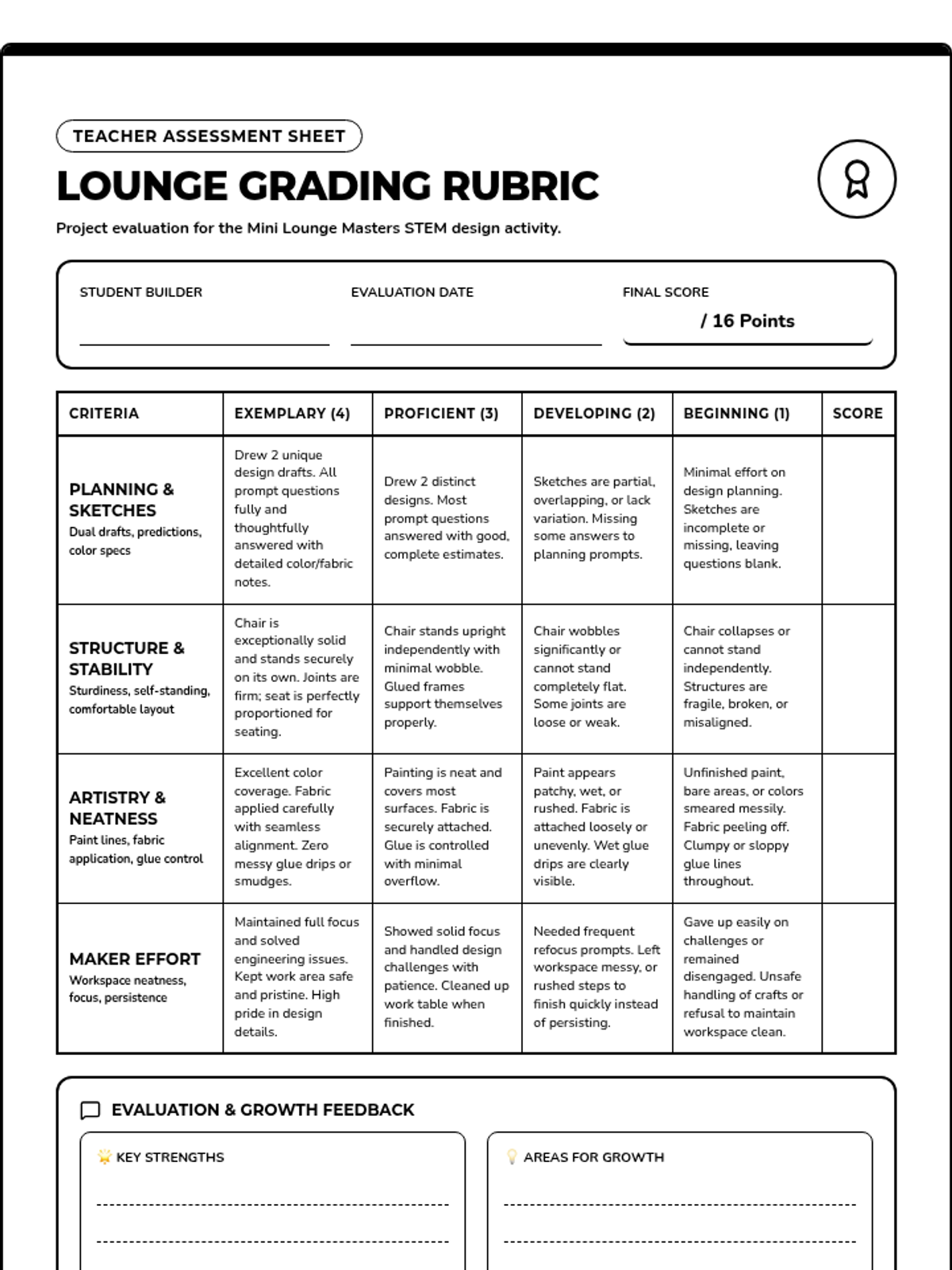
A black and white print-friendly single-page teacher-facing grading rubric containing a 4-tiered criteria grid mapping directly to the student milestones, combined with a manual evaluator profile and structured feedback boxes.
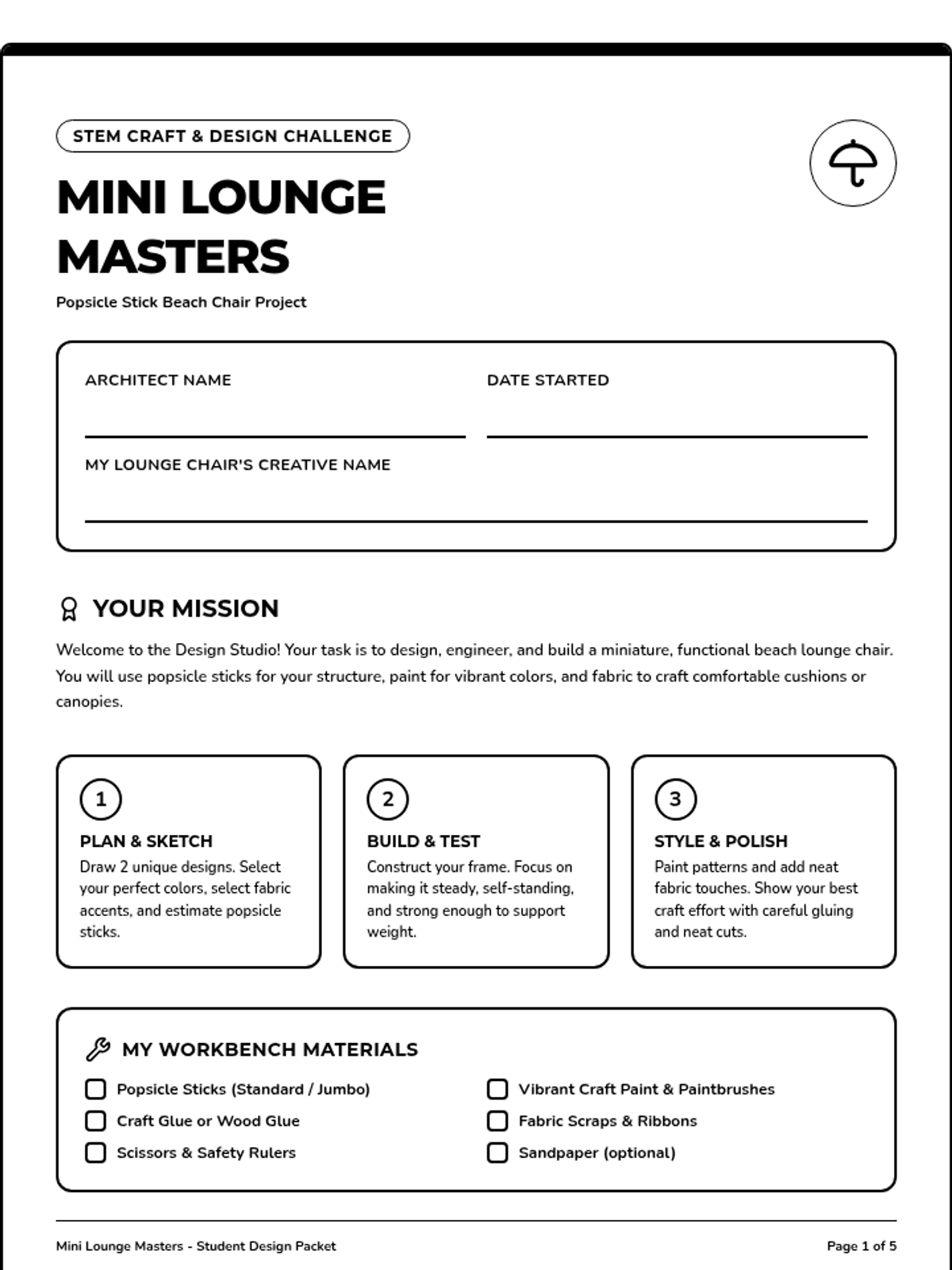
A black and white print-friendly 5-page student design booklet with name lines, materials checklists, drawing studio boxes, milestone timelines, and evaluation prompts.
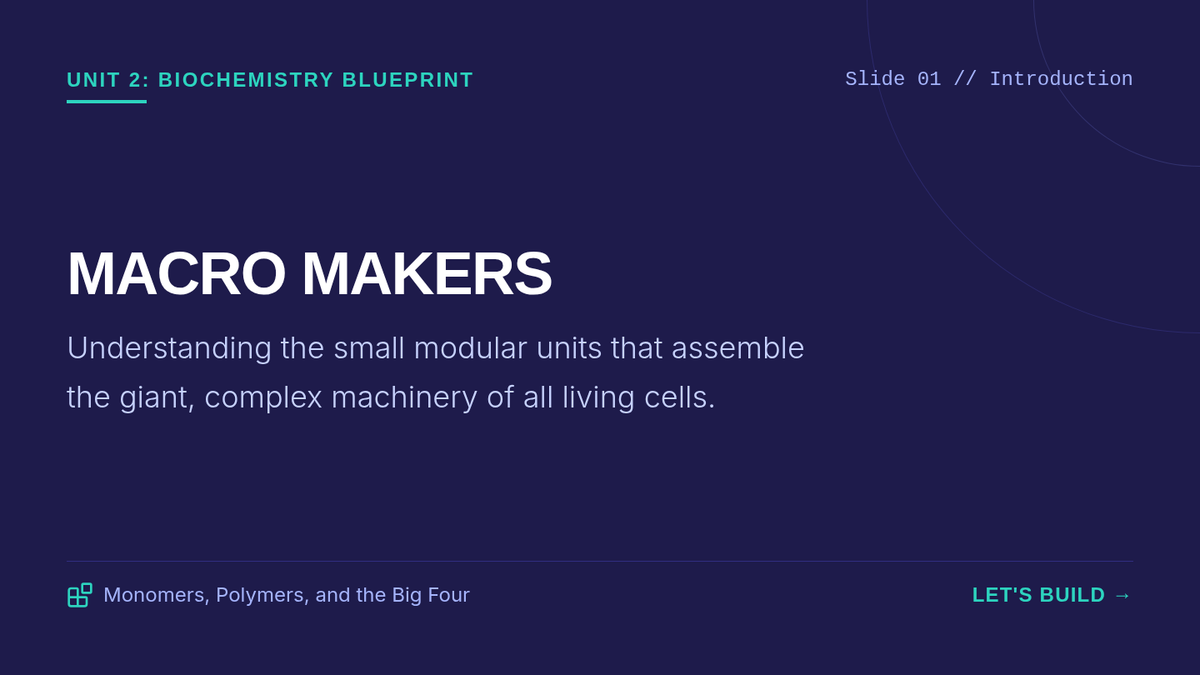
A high-impact, geometric blueprint-themed slide presentation introducing biological macromolecules. It visually explains molecules, monomers, polymers, synthesis, hydrolysis, and details the four major macromolecule families with minimum 24px text sizing.
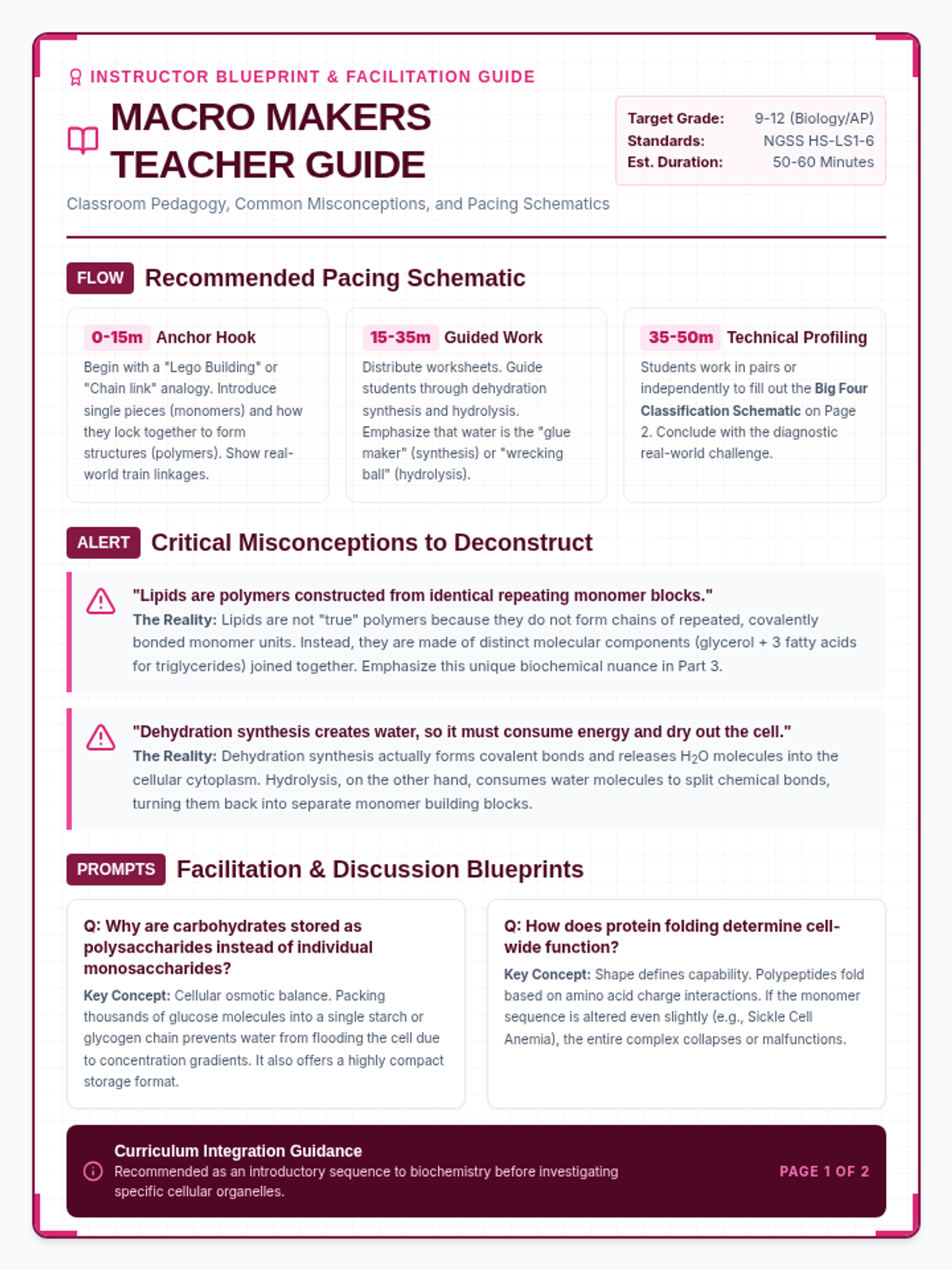
A comprehensive, technical blueprint-themed 2-page teacher's guide and answer key. It contains pedagogical strategies, common misconceptions, visual lecture cues, and precise answer sheets for all parts of the student worksheet.
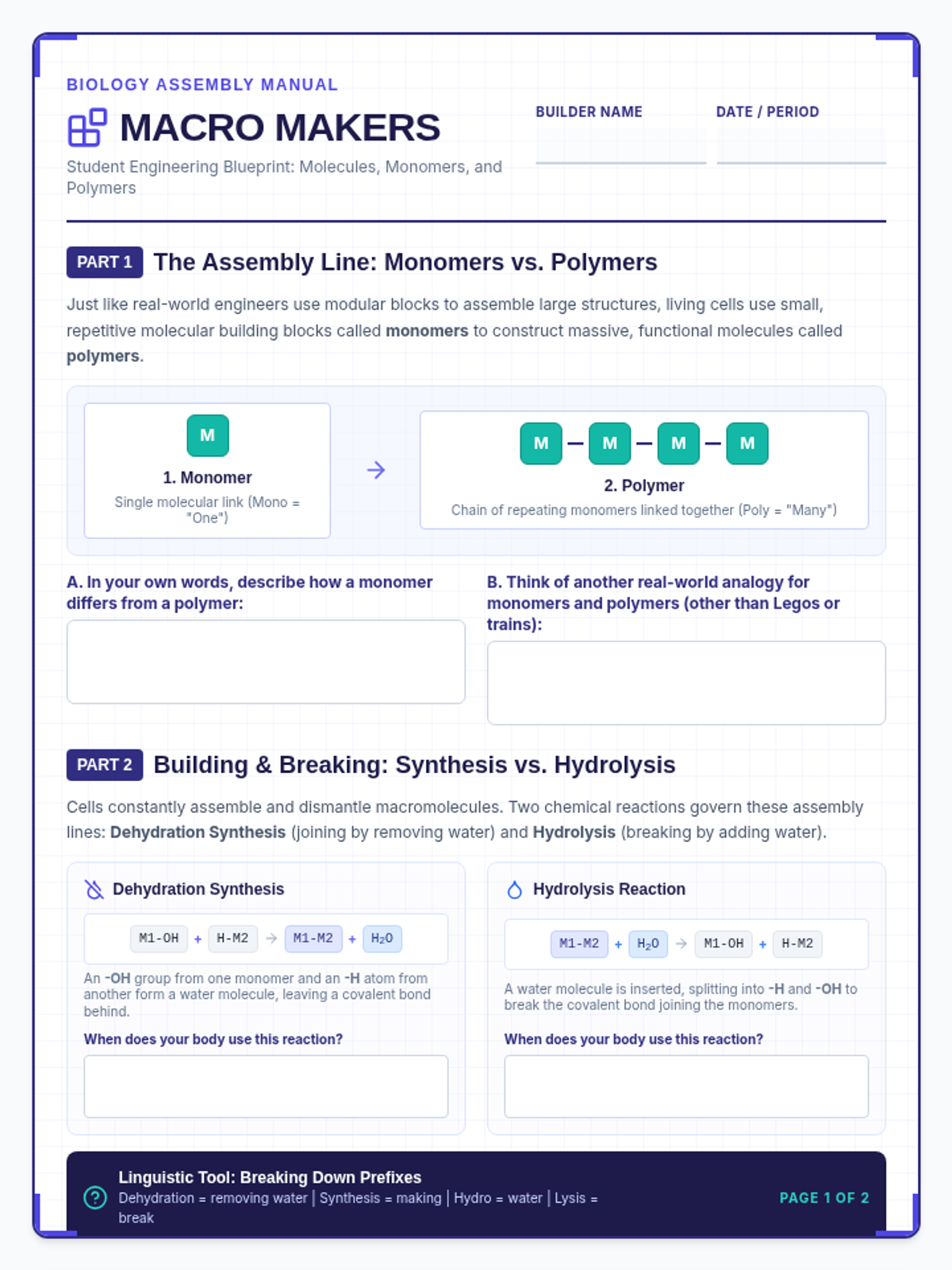
A high-contrast, technical blueprint-themed 2-page student worksheet. It introduces monomers versus polymers with visual analogies, breaks down synthesis vs. hydrolysis reactions, maps out a complete profile for the four primary macromolecules, and challenges students with diagnostic conceptual questions.
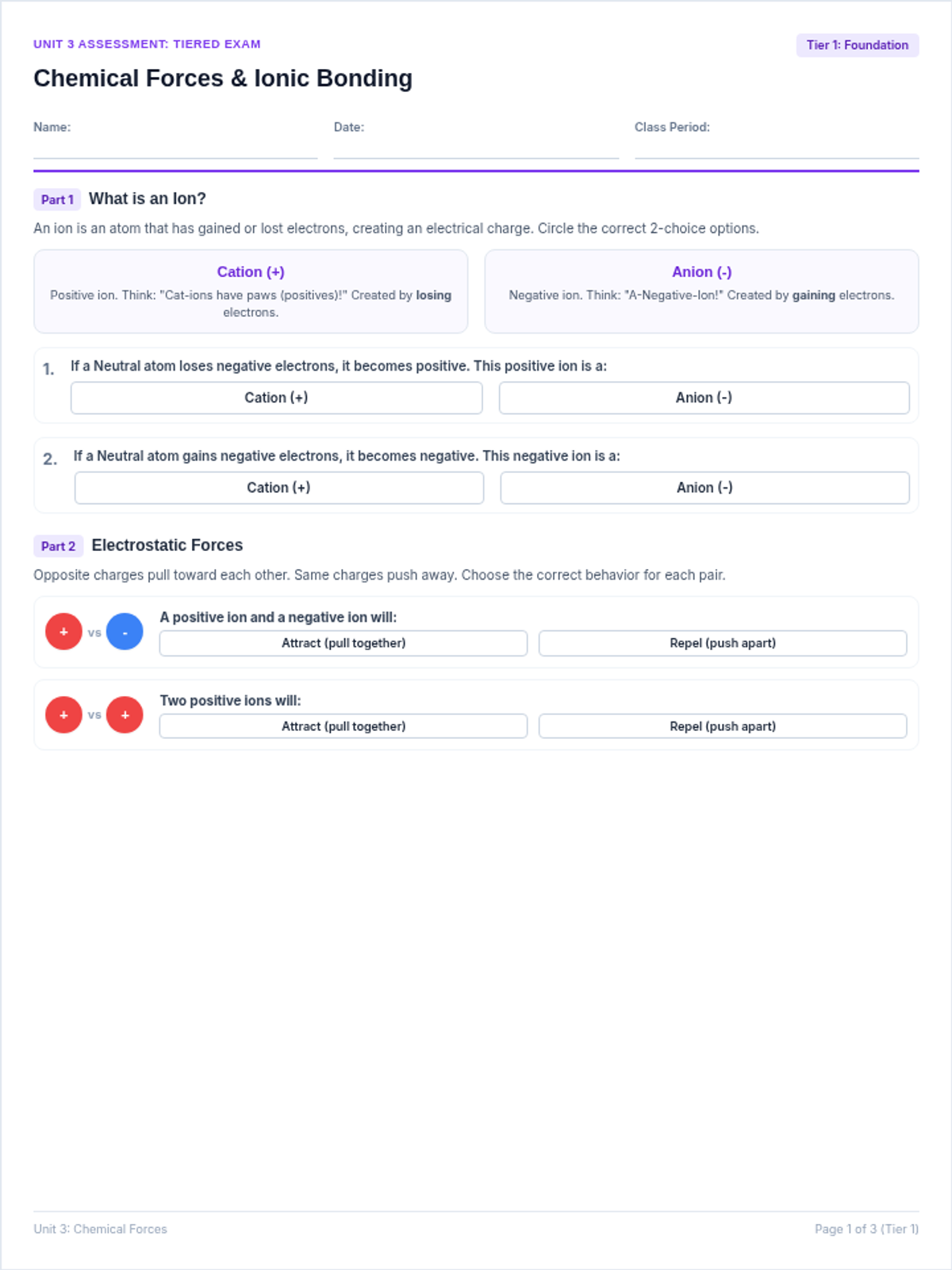
A 3-page tiered exam covering Ions, Electrostatic Force, Ionic Bonding, and Coulomb's Law. Moves through three tiers of cognitive scaffolding: Tier 1 (Foundation - 2-choice visual matching), Tier 2 (Core - guided ionic transfer drawings & step-by-step Coulomb decoding), and Tier 3 (Challenger - advanced proportional scaling math).
A 2-page assessment with custom graphic organizers, visual particle-model identification cards, horizontal/vertical mapping, and conceptual short-answer items featuring supportive sentence starters.
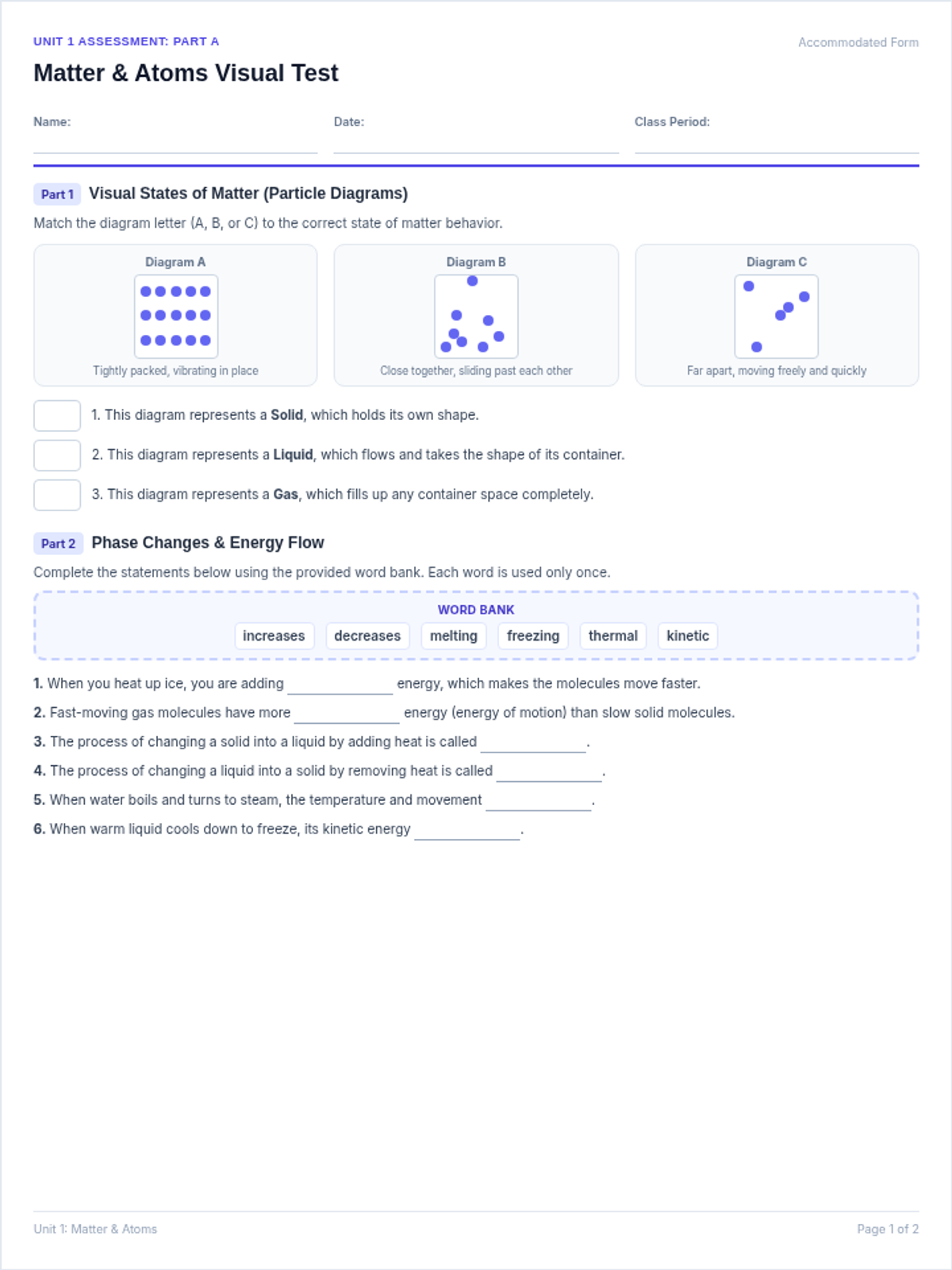
A highly visual and scaffolded 2-page assessment covering the States of Matter, Phase Changes, Energy, and Atomic Structure. Features clear particle diagrams, structured matching, a tailored word bank, an anatomical atom diagram, and a simplified Periodic Table mathematics grid.
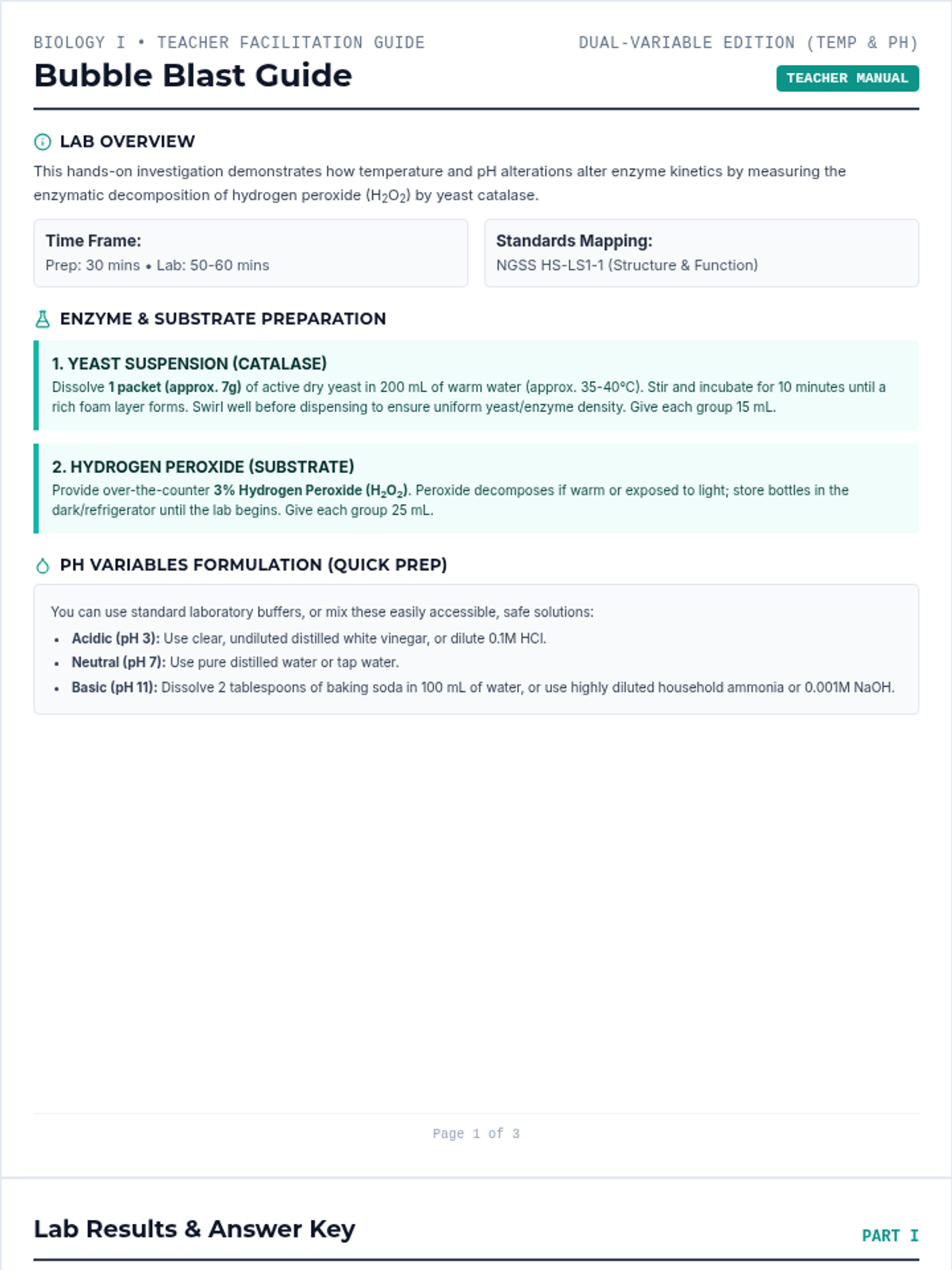
A teacher facilitation manual and solution key for the catalase enzyme lab. Includes step-by-step chemical preparation guidelines, troubleshooting tips, realistic student experimental values, and exemplar answers for all pre-lab and post-lab prompts.
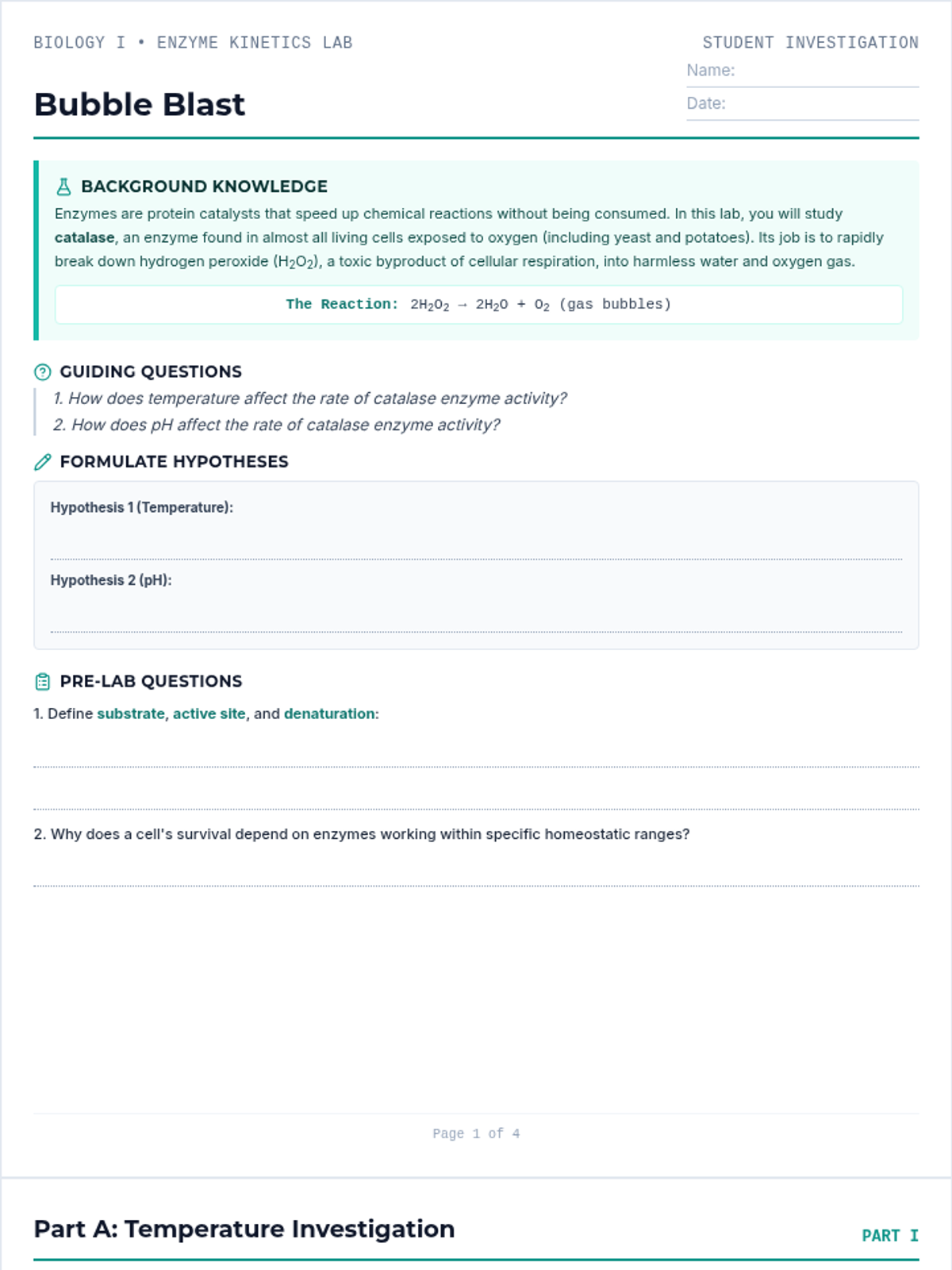
A guided student worksheet for the catalase enzyme lab, expanding on both temperature and pH variables, including pre-lab questions, instructions, two structured data tables, dual graphing grids, and deep post-lab analysis.
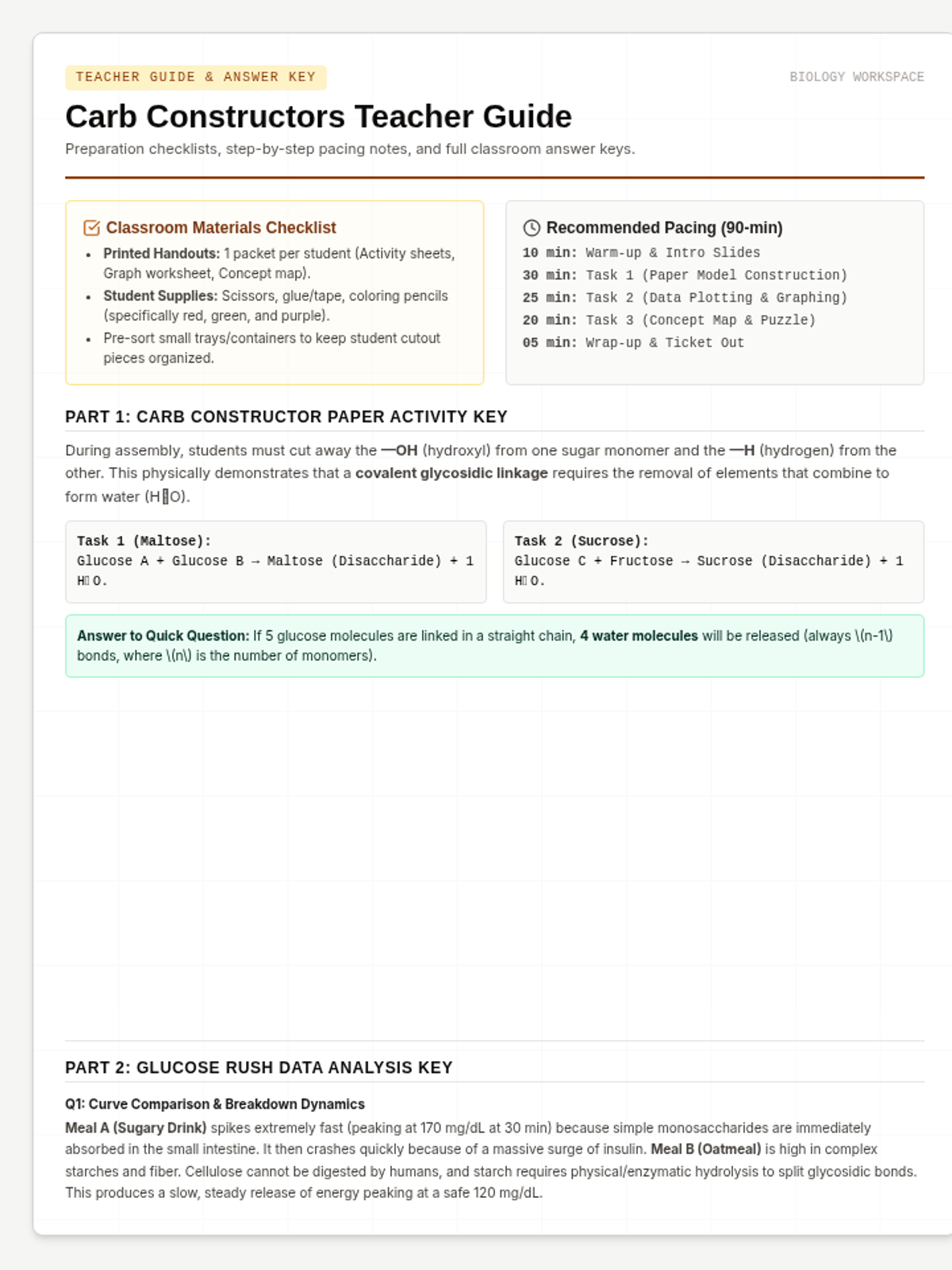
A printable teacher guide containing classroom pacing recommendations, preparation guidelines, and complete answer keys for the three-part carbohydrates lesson.
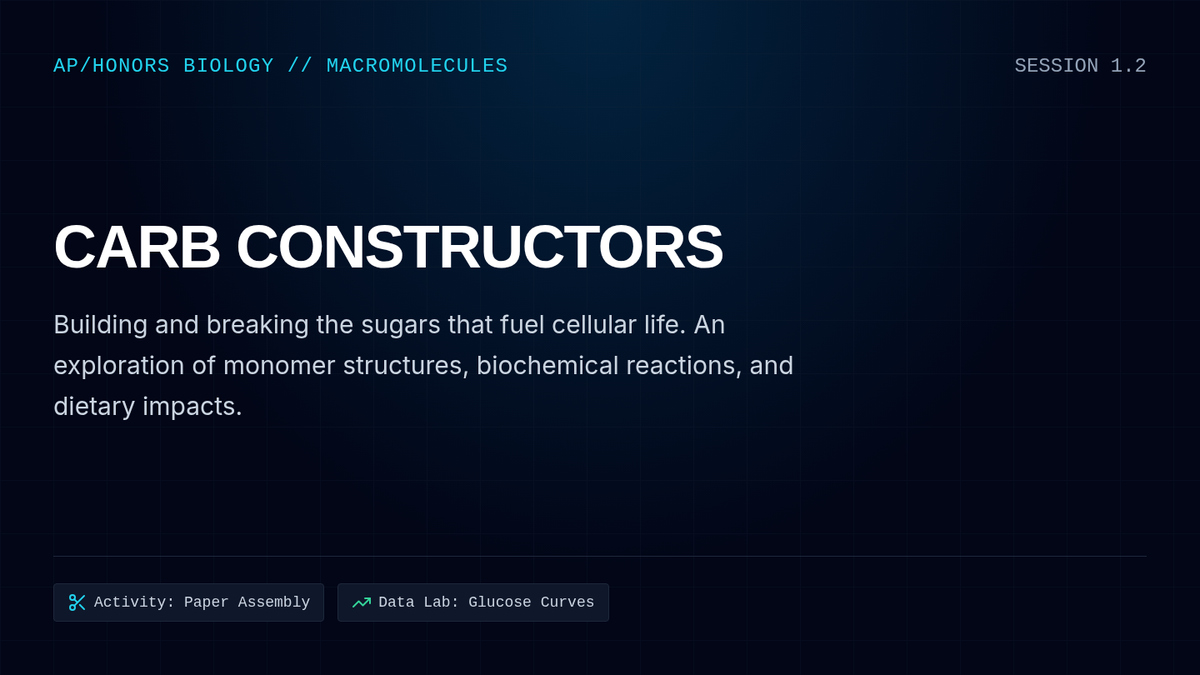
A 5-slide visual presentation to guide students through carbohydrate structure hierarchies, dehydration synthesis vs hydrolysis, blood glucose graphs, and classroom directions.
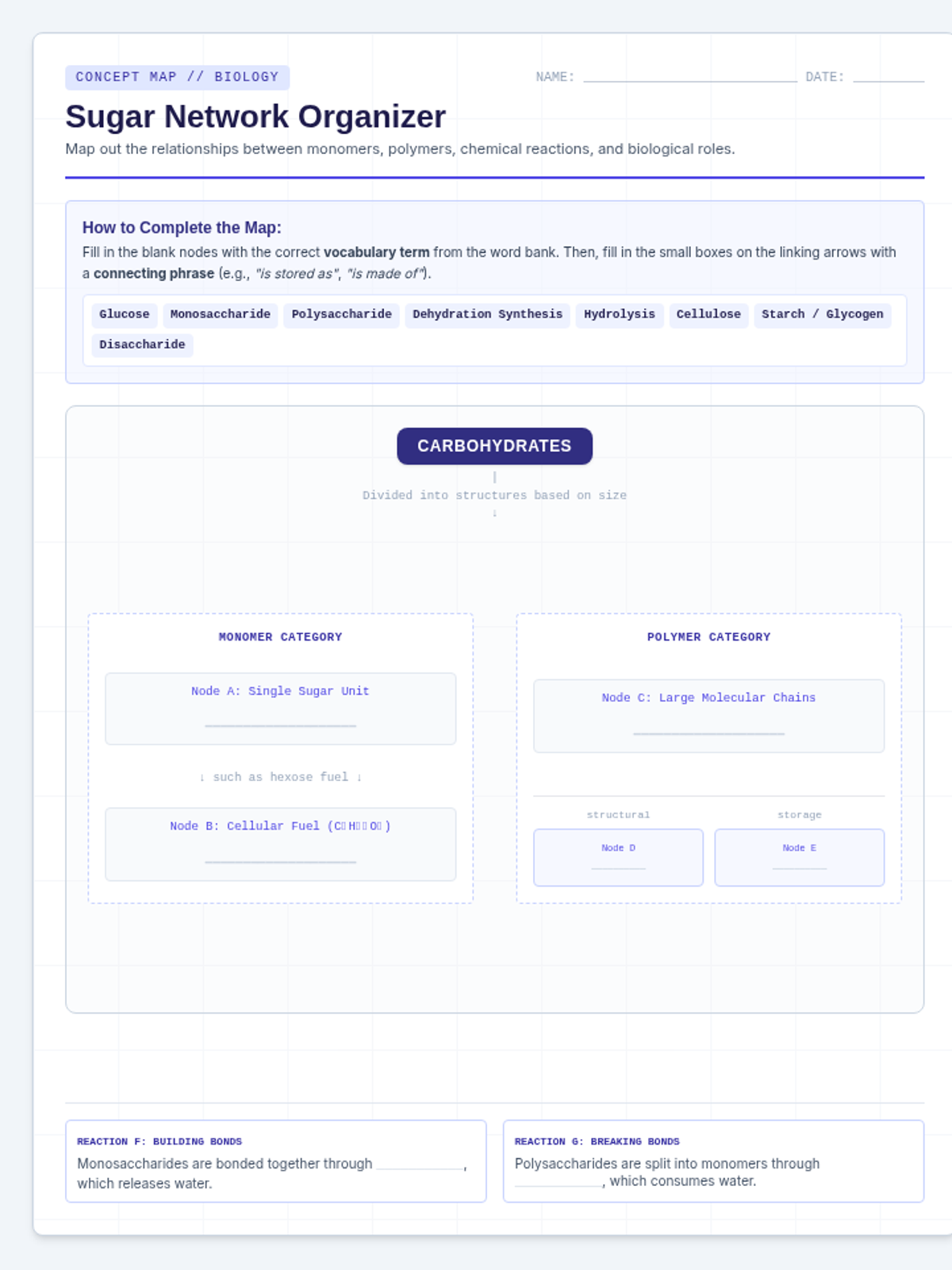
A two-page printable concept map and vocabulary match activity sheet. Page 1 structures carbohydrate classification and dehydration/hydrolysis synthesis; Page 2 presents structural clues and biological terms.
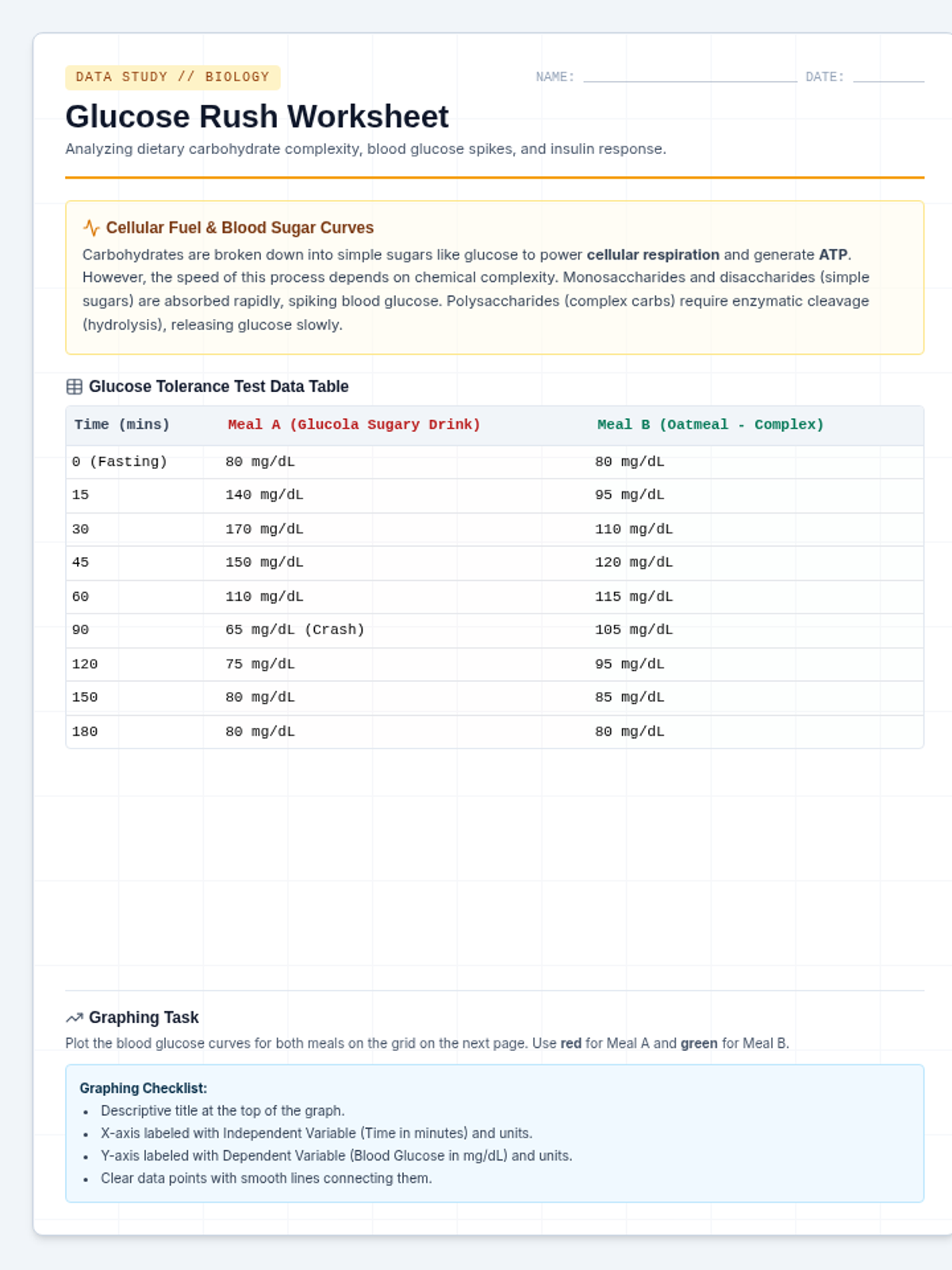
A two-page printable worksheet for plotting and analyzing a glucose tolerance test comparing simple sugary drinks against complex steel-cut oats. Features a custom graphing grid and biology analysis questions.
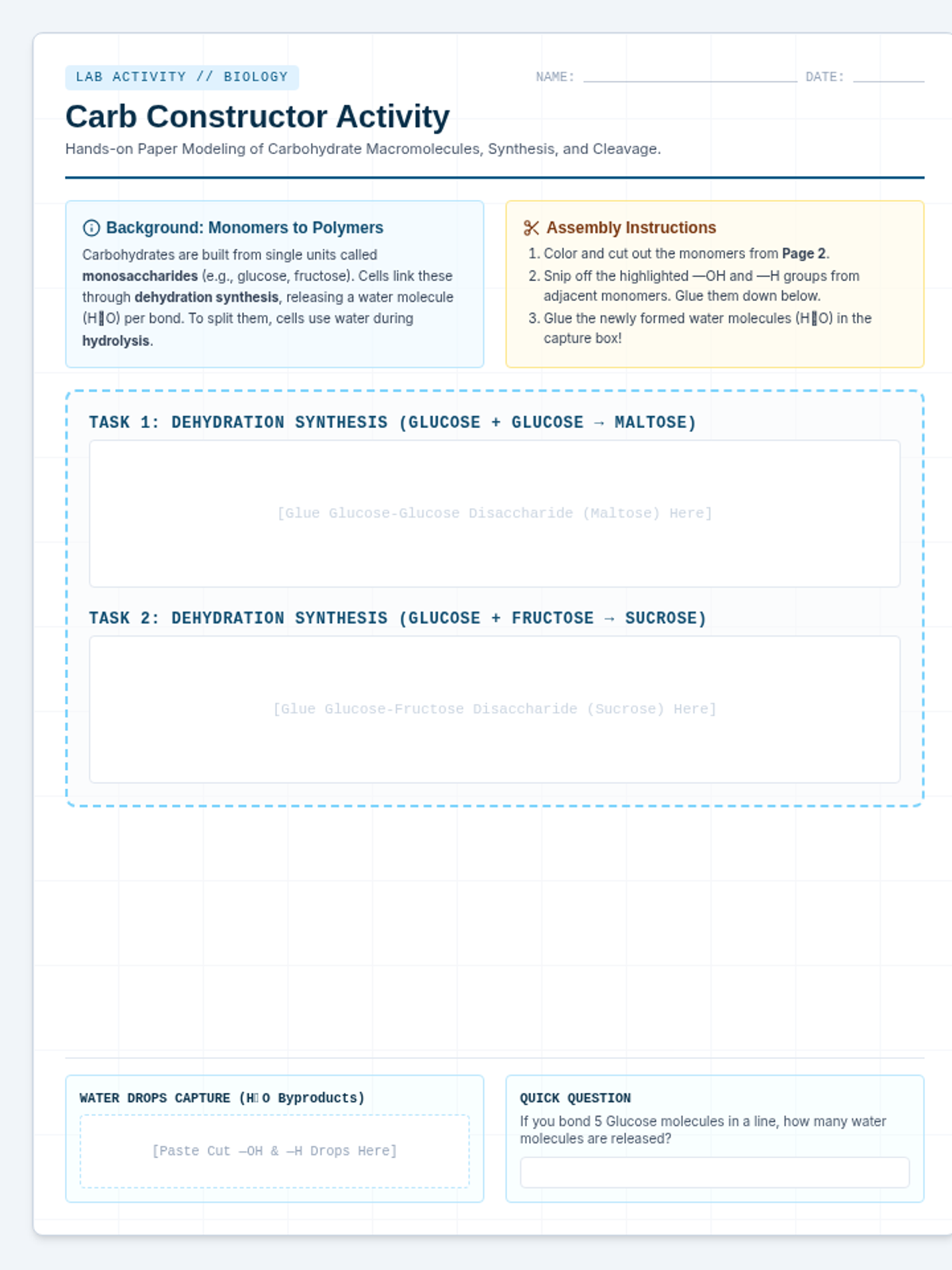
A hands-on, two-page printable activity for building structural models of maltose and sucrose using glucose and fructose monosaccharides. Includes clear cut-and-paste guidelines and workspaces.
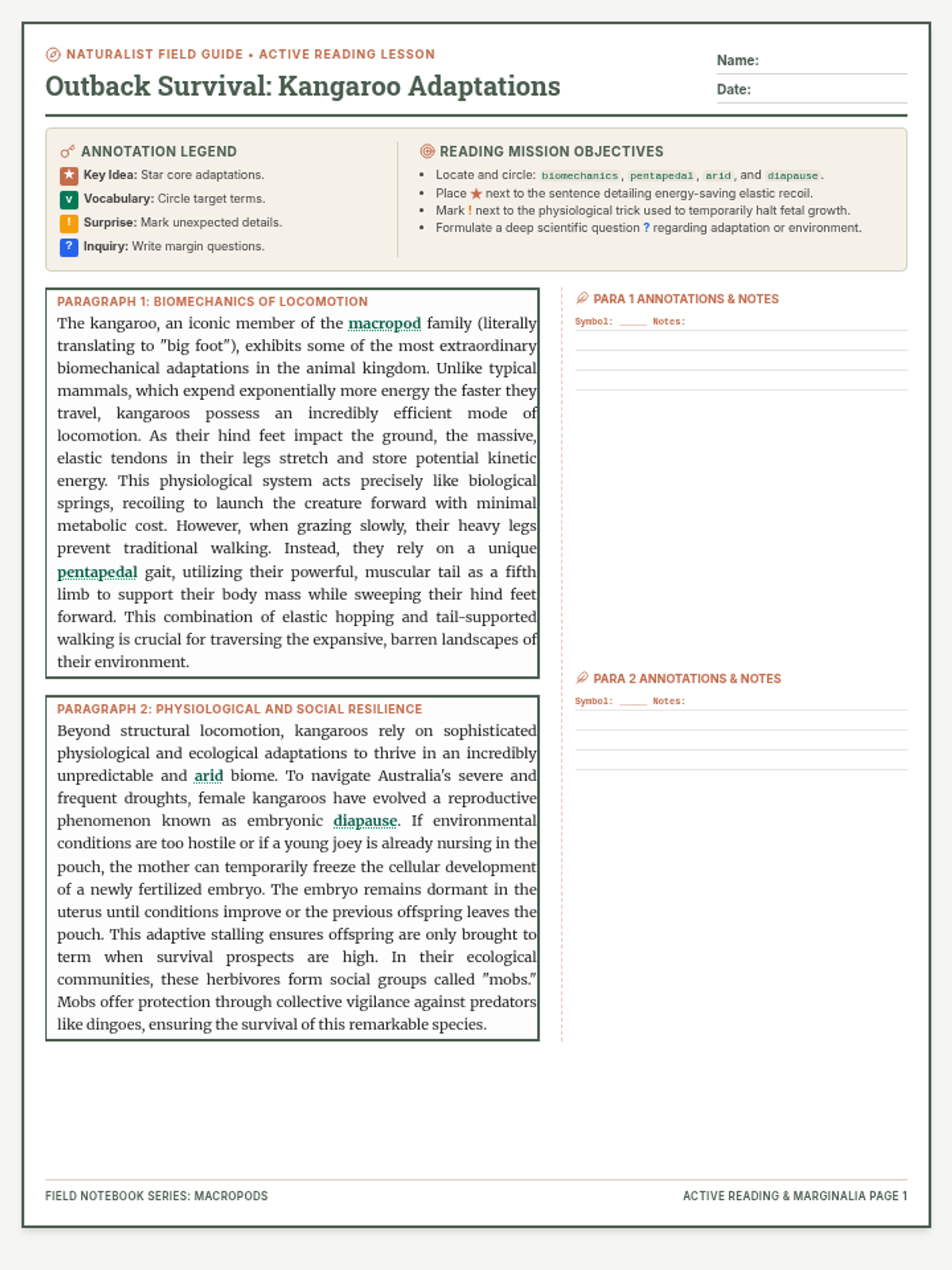
A highly polished 9th-grade reading worksheet guiding students to actively read, annotate, and summarize a sophisticated text on kangaroo biomechanics and reproduction. Includes scaffolding, vocabulary prompts, and an Outback field notebook aesthetic.
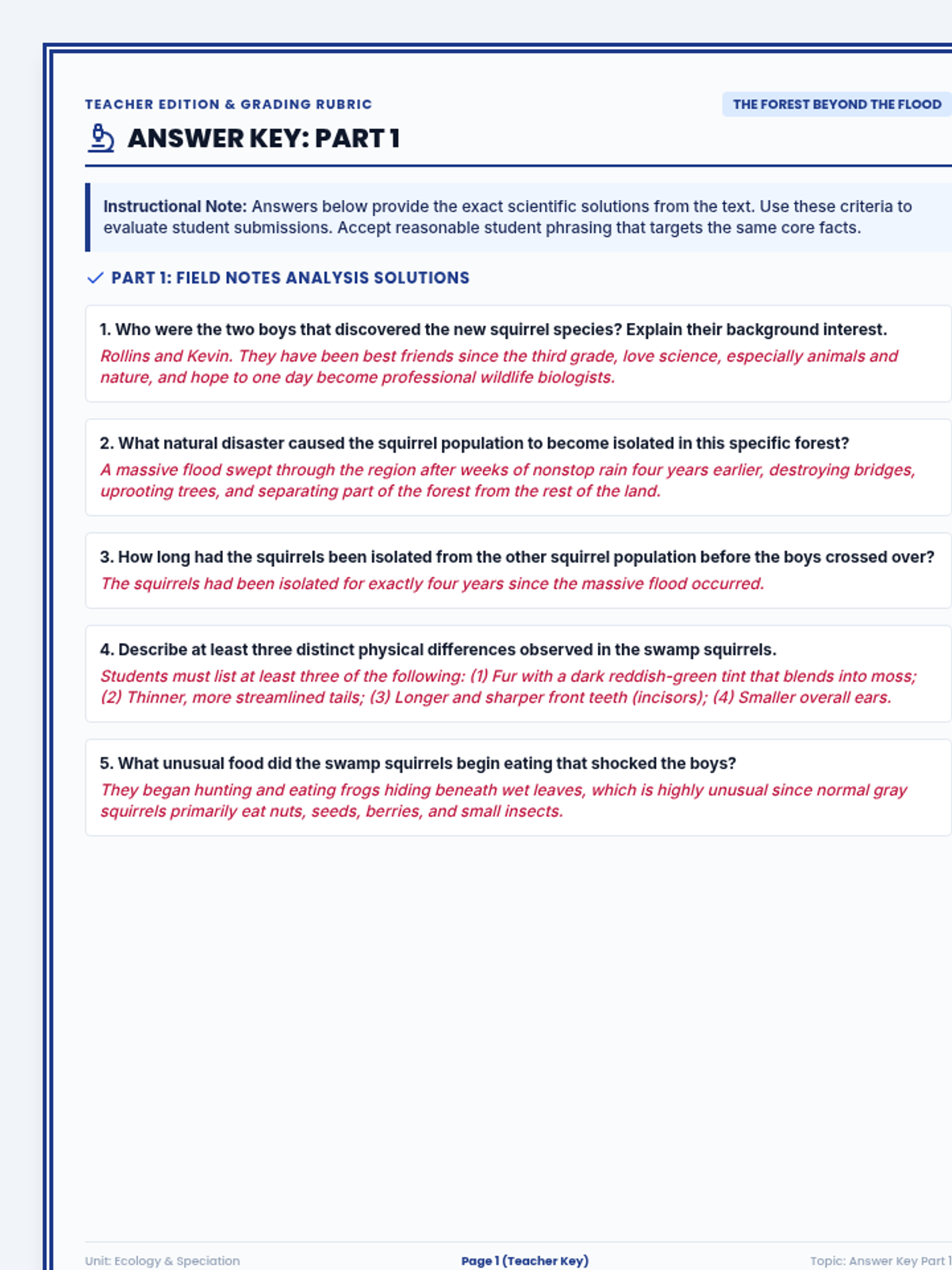
A comprehensive teacher answer key and grading guide containing complete, scientific solutions to the reading questions and trophic cascade diagrams, plus grading rubrics for the student reflection section. Base font size set to 13px.
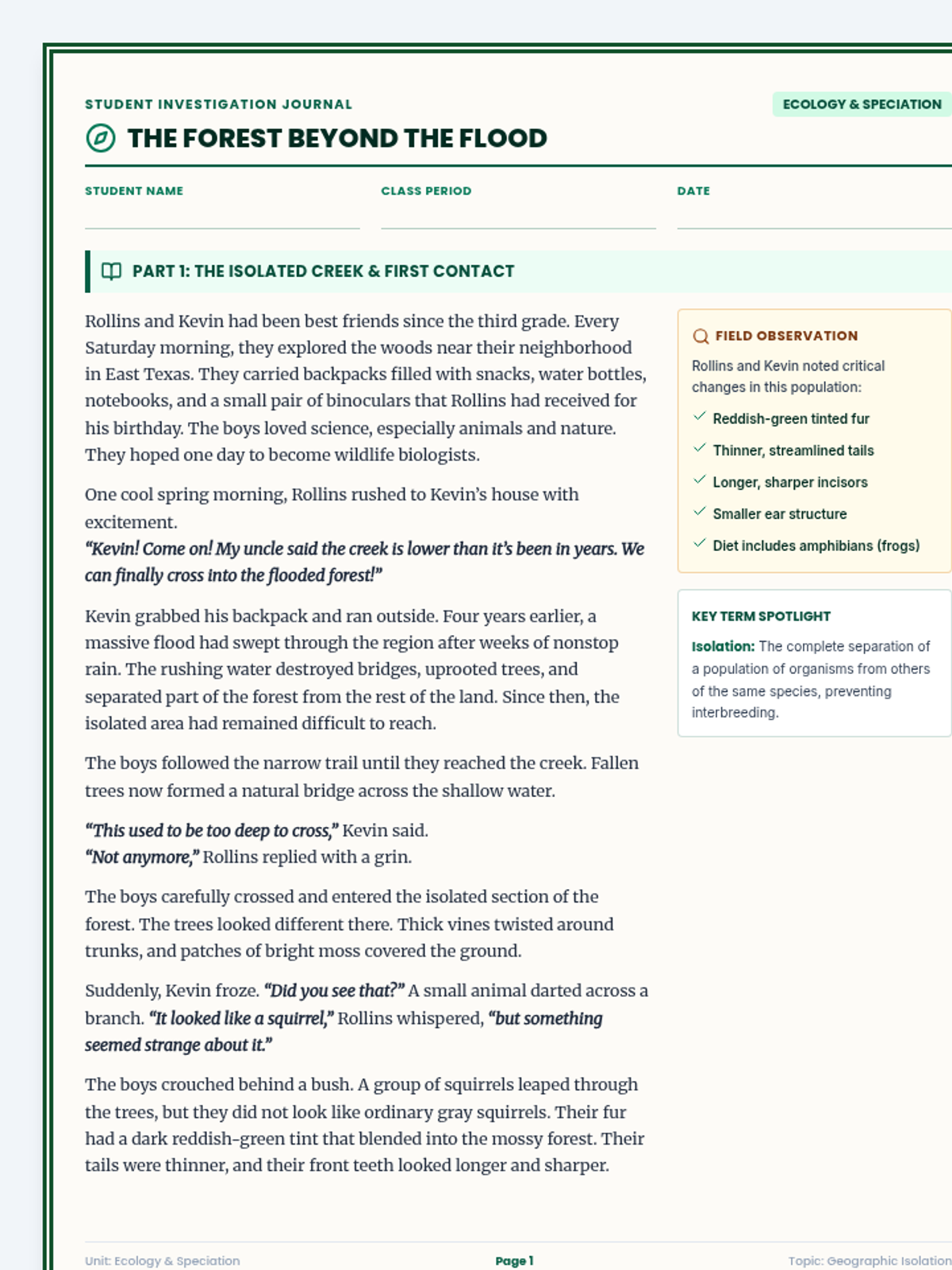
A comprehensive student-facing field log and reading packet featuring the story "The Forest Beyond the Flood," split into structured reading parts with corresponding analysis worksheets, graphic organizers, and reflective explorer journals. Base font size set to a highly readable 13px.
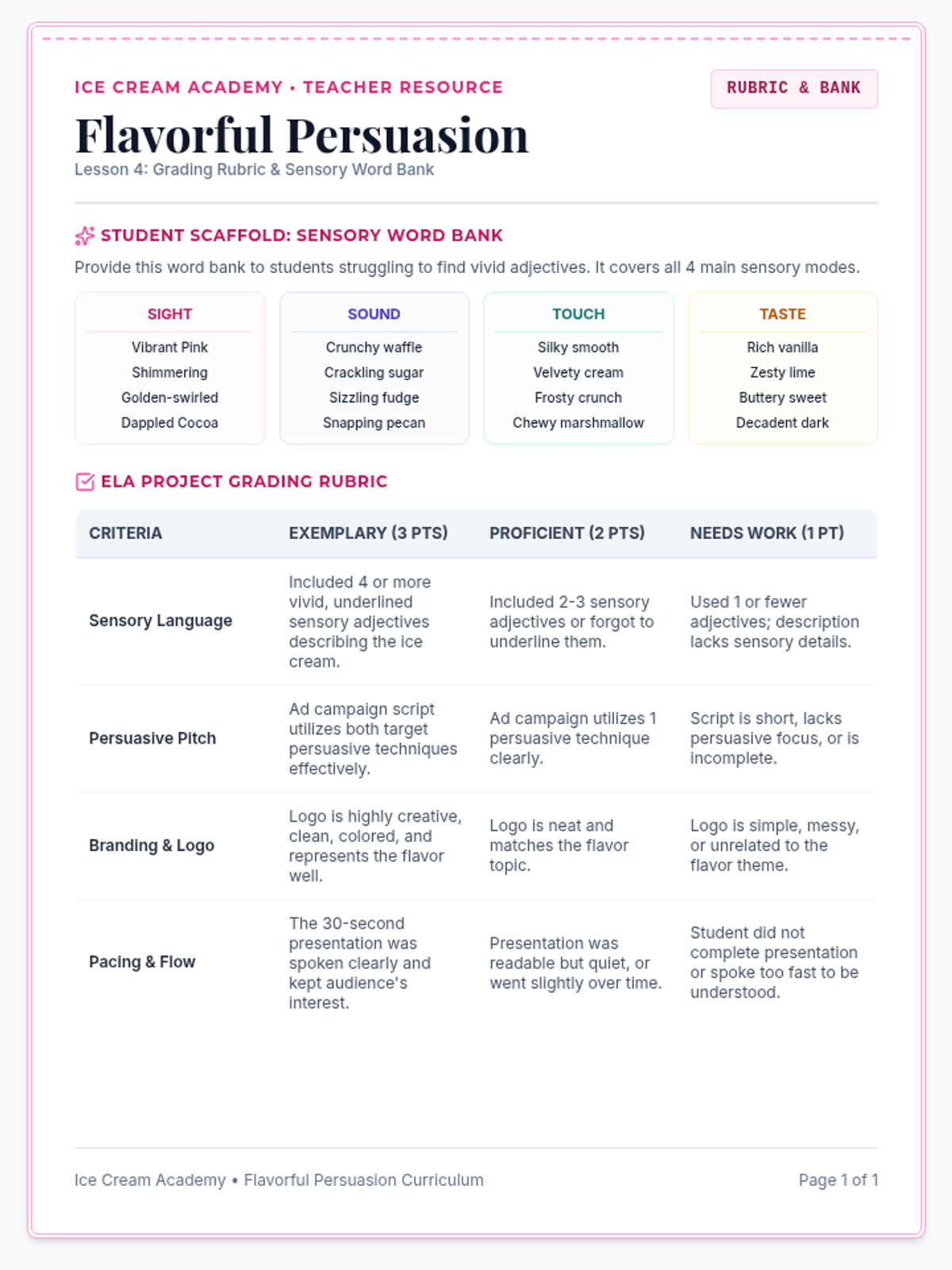
A teacher grading rubric and visual word bank of sensory adjectives supporting Lesson 4's ELA branding and marketing project.
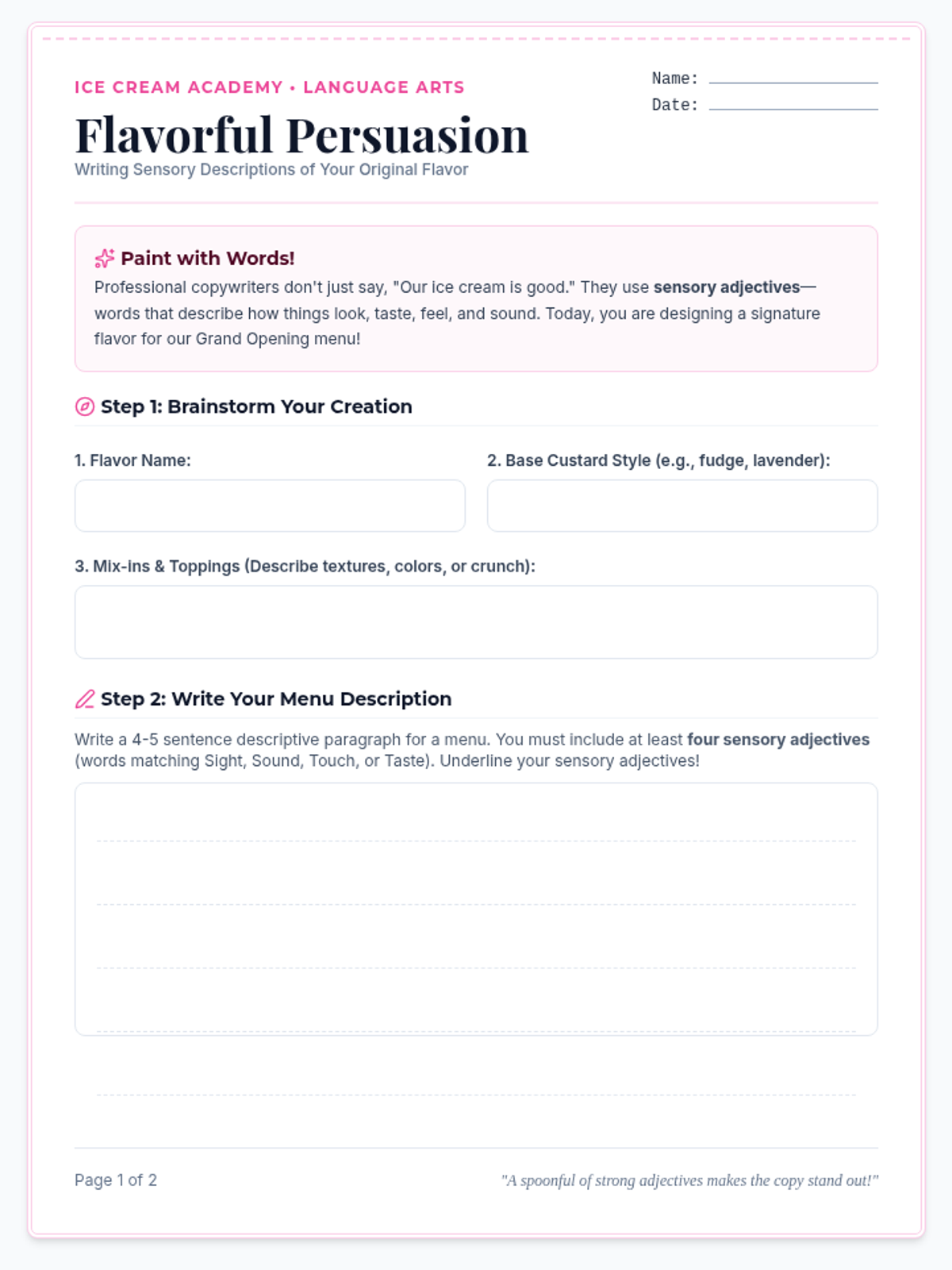
A creative branding & marketing worksheet where students design their own brand name, logo, write a highly descriptive, sensory menu description using adjectives, and draft a 30-second commercial pitch.
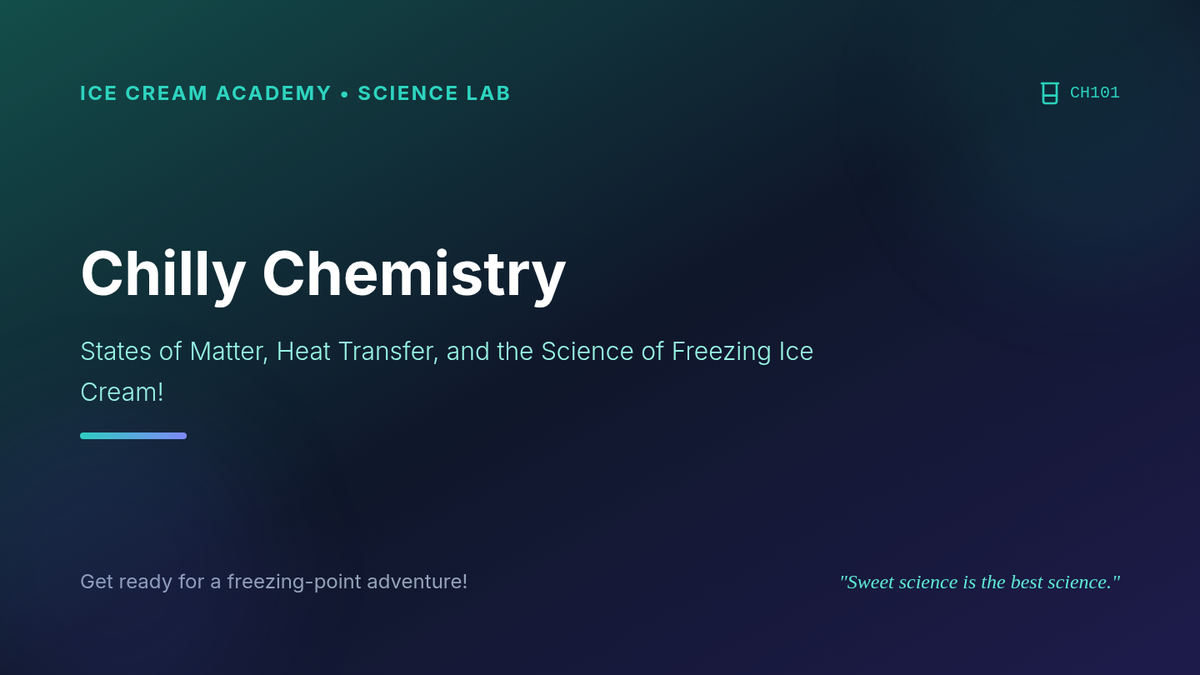
A visual, 4-slide presentation deck covering states of matter, freezing-point depression, and heat transfer during the homemade ice cream lab. Slide text complies with a minimum 24px requirement.
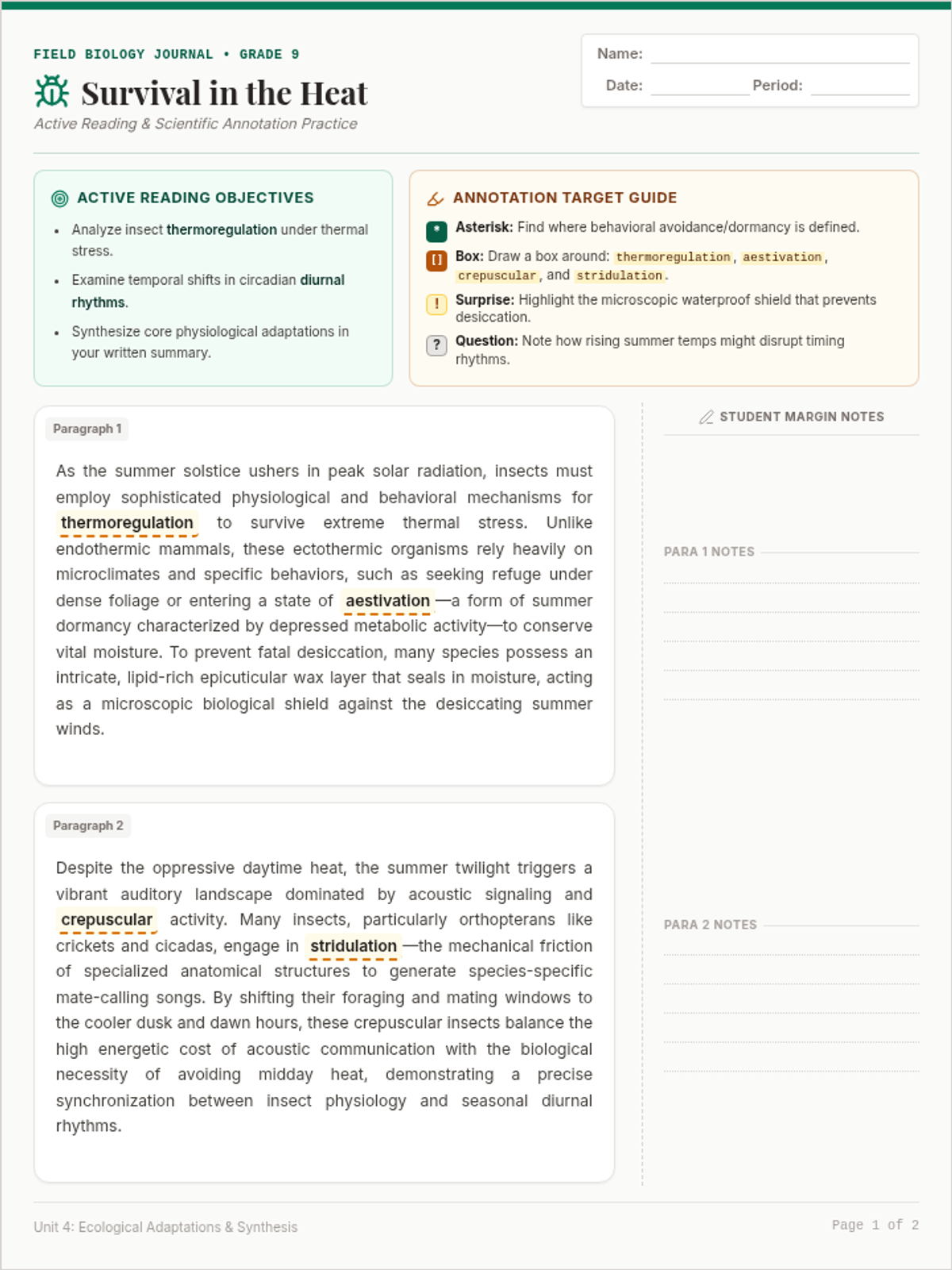
A 2-page active reading, annotation, and summary writing worksheet designed for 9th-grade biology and ELA students. It includes a high-interest nature science passage, dedicated annotation margins with custom keys detailing specific vocab terms, surprising facts, and notes/questions prompts to target.
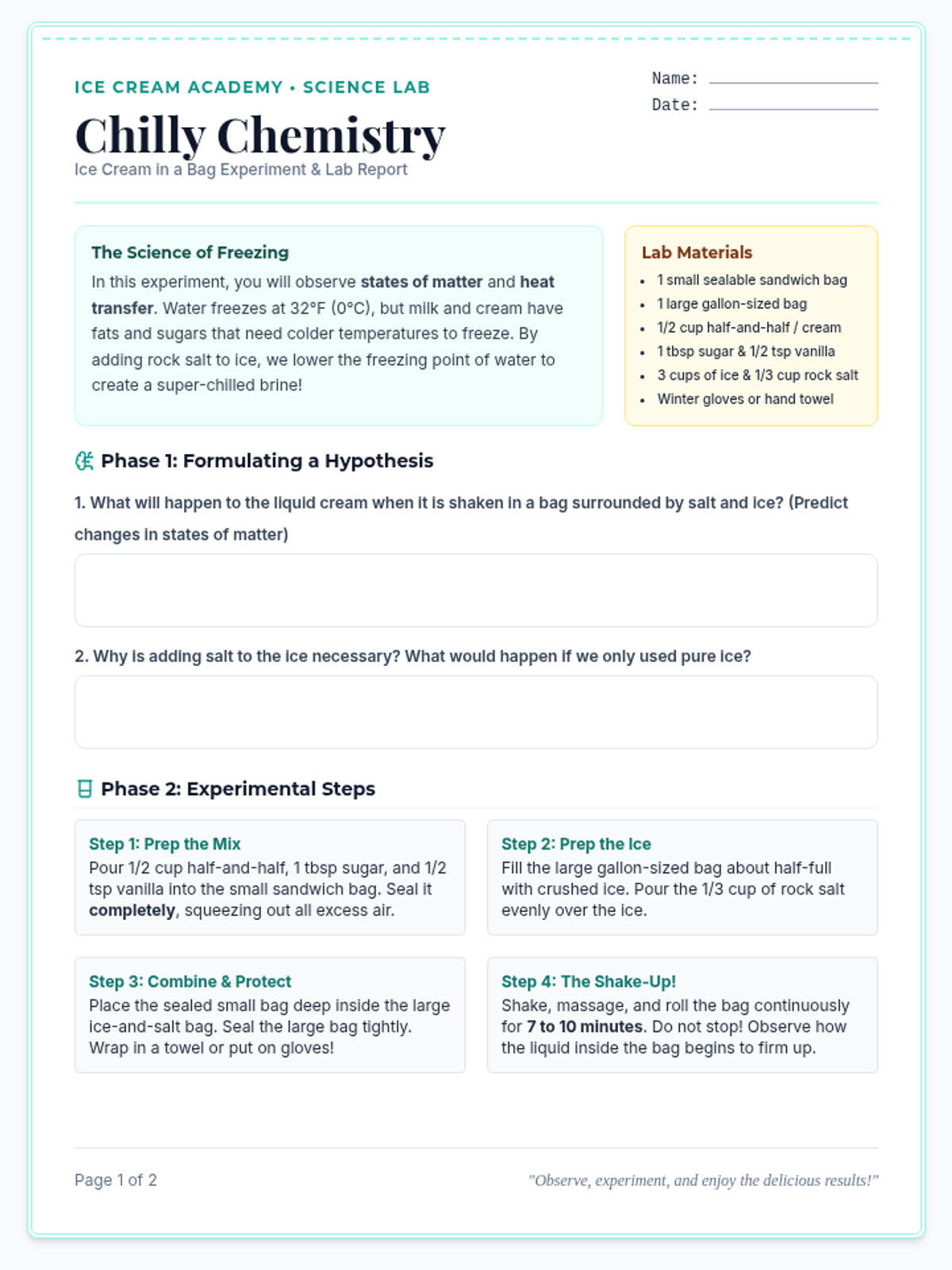
A 2-page science lab report and worksheet guiding students through the scientific method, step-by-step instructions, observations, and conclusions for an "Ice Cream in a Bag" experiment.
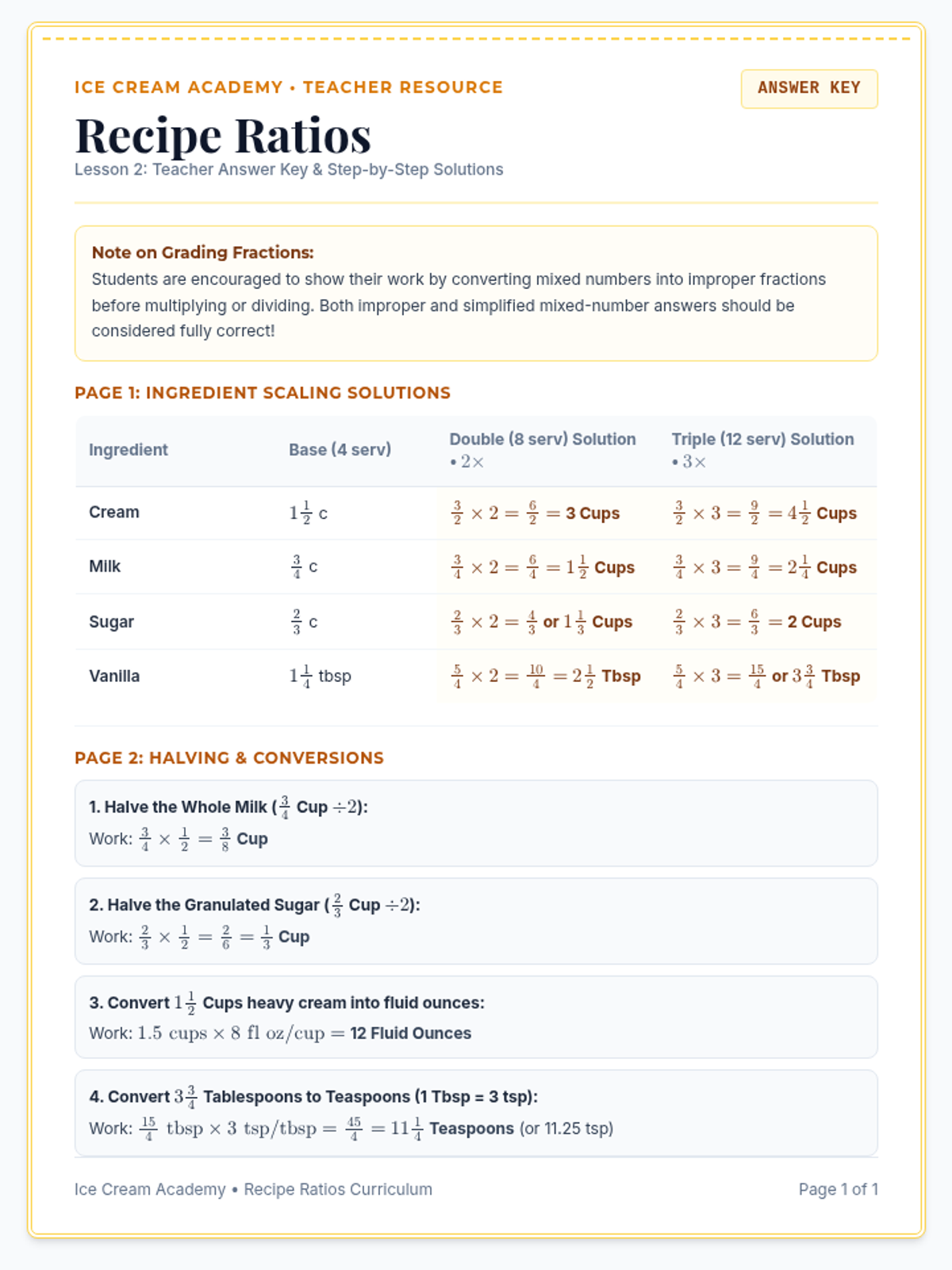
A teacher guide and answer key for Lesson 2 (Recipe Ratios), featuring fully calculated solutions, step-by-step math explanations, and grading tips.
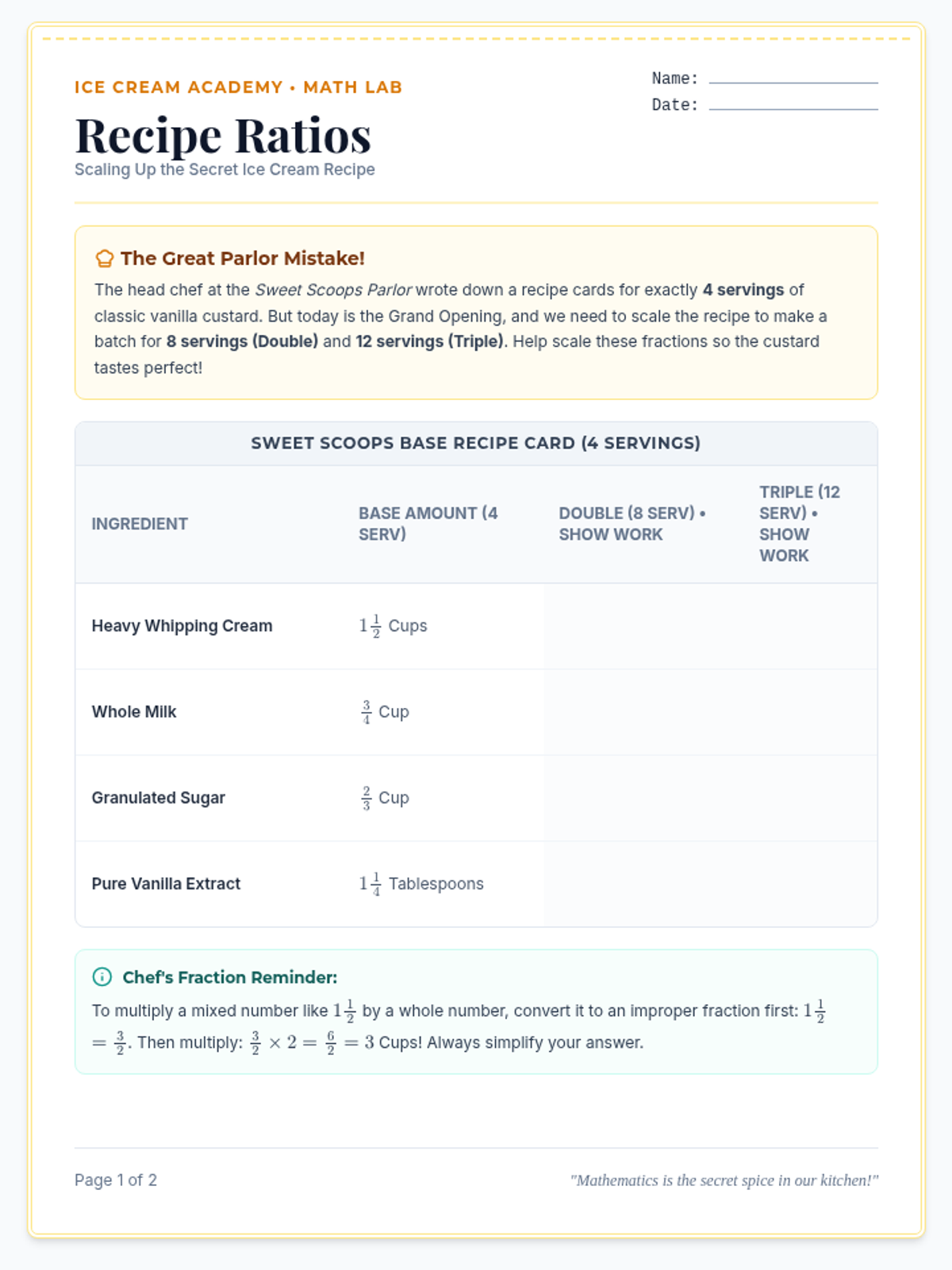
A 2-page math worksheet themed around a vintage ice cream parlor. Covers fraction multiplication and division (scaling recipes up and down) and units conversion (ounces, cups, tablespoons).
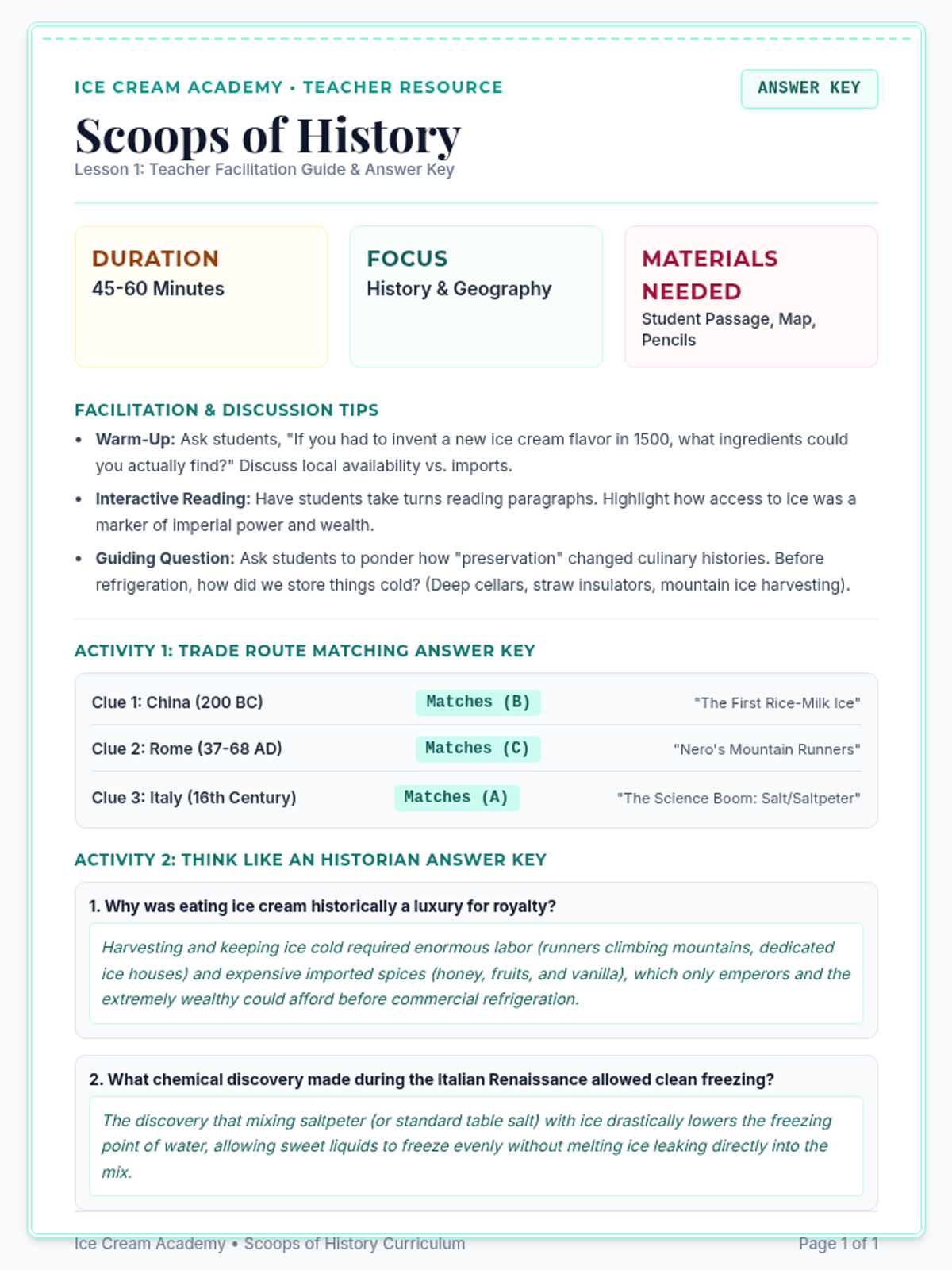
A teacher guide and answer key for Lesson 1 (Scoops of History), featuring facilitation tips, discussion prompts, and complete answers for the historical trade route and reading comprehension activities.
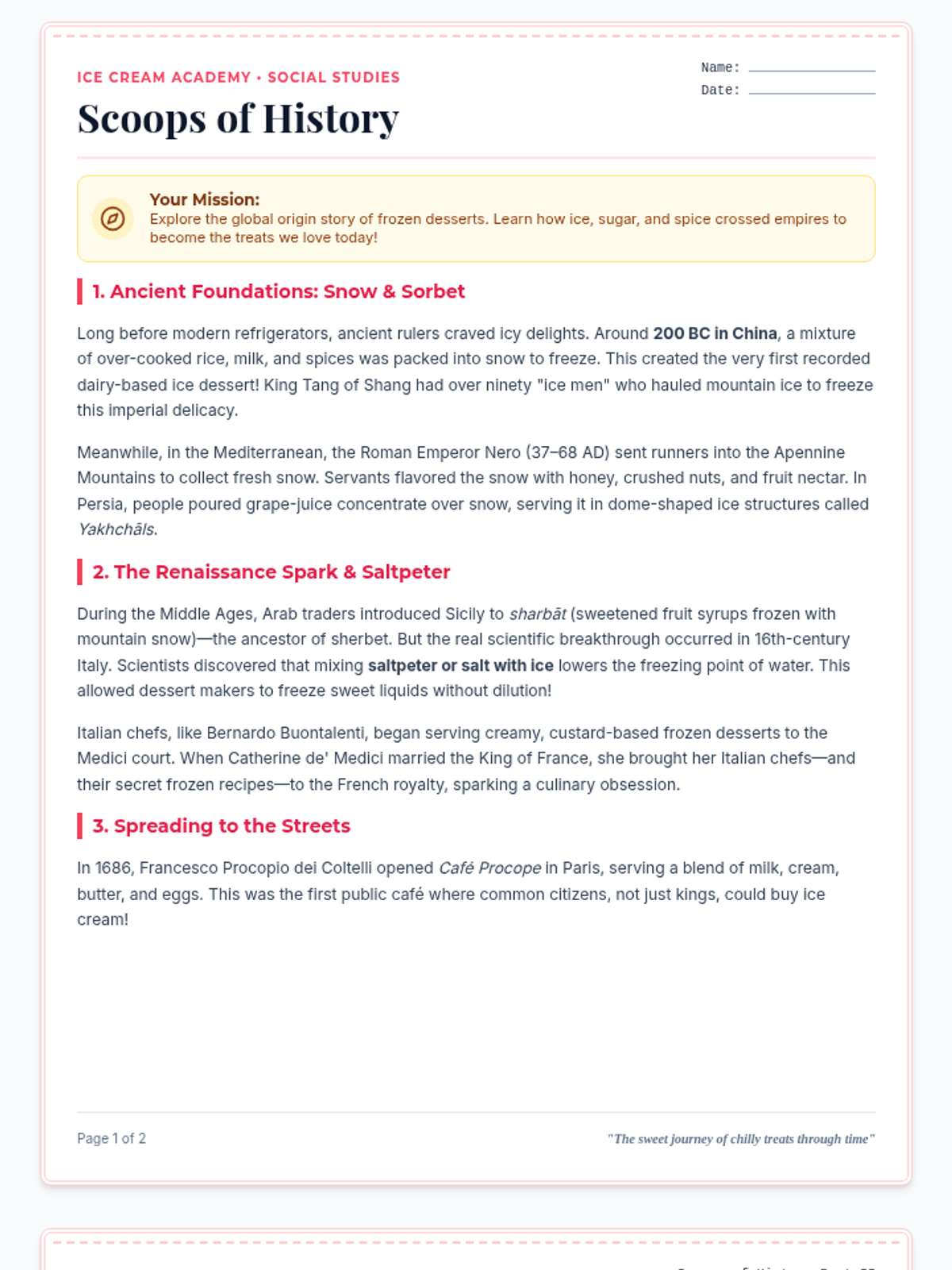
A beautiful 2-page historical reading passage and mapping/comprehension activity sheet about the global origins of ice cream. Designed for summer school students to learn about the history and geography of frozen treats.