A teacher's answer key for the Sight Squad materials, including TEKS alignment, scoring guides for written responses, and instructional tips for second grade.
A STAAR-aligned assessment for second grade students focusing on the sense of sight passage. Includes main idea, vocabulary, text evidence, and detailed recall questions.
An engaging reading passage for second graders about the sense of sight, including numbered paragraphs for easy reference and a built-in text evidence task.
A visual presentation introducing the sense of sight, key parts of the eye, and how eyes protect themselves. Includes engagement prompts for second-grade students.
A student lab worksheet for investigating the pH of various common substances. Includes a pH scale reference, data collection table, and analysis questions connecting pH to water's role as a universal solvent and its impact on life.
A teacher-facing answer key for the Penny Power Lab, pH Power Lab, and the Unit Quiz. Updated to reflect the removal of weathering content and addition of pH/acidity.
A short unit quiz covering the physical properties of water (solubility, adhesion, cohesion), pH basics, and watershed definitions including estuaries and human impact. Replacement for weathering content.
A student lab sheet for the 'Penny Power' investigation. Includes sections for hypothesis, data tables for multiple trials (plain vs. soapy water), sketching observations, and analysis questions focused on cohesion and surface tension.
A vibrant anchor chart visualizing the unique physical properties of water: polarity, cohesion, adhesion, and universal solubility. Includes an updated bottom banner focusing on climate, chemistry/pH, and life processes.
A comprehensive teacher guide for a 3-week unit on water properties, chemical nature (pH), and watersheds, aligning Virginia SOL standards. Includes weekly pacing, lab instructions for Penny Power and pH testing, and assessment strategies.
A visual guide for students to understand the science fair research project process. Covers topic selection, research goals, poster layout tips, and an overview of the grading rubric.
A formal evaluation sheet for teachers to grade elementary science fair research projects. It features scoring sections, evidence checklists for each criterion, and space for professional feedback.
A student-friendly science fair rubric designed for elementary research projects. It features clear, descriptive language and levels (Super Scientist to New Beginner) with space for self-reflection.
A teacher guide for the Carbonate Submarine Fans lesson, featuring a minute-by-minute pacing guide, instructional script, and answer keys for the student activity.
A student-facing activity worksheet designed for master's students to apply the architectural and facies concepts from Bishop et al. (2023) to hypothetical field observations.
A 30-35 minute slide presentation for graduate geology students covering the carbonate submarine fan deposits of the Lake Valley Formation as described by Bishop et al. (2023).
A clear, teacher-facing answer key for the Cosmic Syllable Sort, including a scoring rubric and the reasoning for each classification.
Engaging slides for presenting the "Syllable Space Mission" lesson, covering the rules for open and closed first syllables with clear visual examples.
A comprehensive teacher facilitation guide for the Syllable Space Mission lesson, including instructional steps, pacing, and differentiation strategies.
Updated Cosmic Syllable Worksheet with words segmented into syllables on the cut-out cards to help students identify the first syllable for sorting.
Detailed answer key for the Charge Force worksheet with full step-by-step Coulomb's Law calculations.
A practice worksheet for Coulomb's Law covering electrostatic force calculations, charge relationships, and the inverse square law.
Detailed answer key for the Current Flows worksheet with step-by-step solutions and conceptual explanations.
A practice worksheet for Ohm's Law featuring conceptual matching questions and calculation problems for voltage, current, and resistance.
A sequencing worksheet where students order the steps of making a sandwich to practice algorithmic thinking, including a drawing area for the final result.
A set of printable task cards for students to reorder and 'code' simple everyday tasks like washing hands or building a tower.
A bright, high-contrast slide deck for K-2 students that explains algorithms using the 'Robot Chef' metaphor. Features large text, engaging icons, and a sequencing puzzle.
A comprehensive teacher's guide for introducing algorithmic thinking to K-2 students through a 'Kitchen Coding' metaphor, including lesson steps, discussion prompts, and key vocabulary.
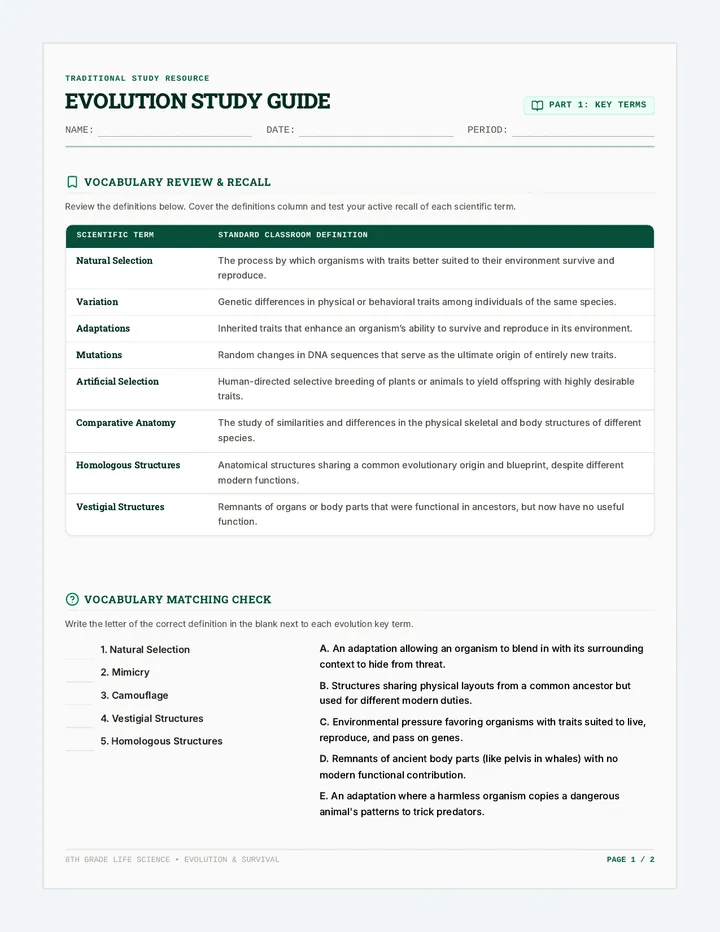
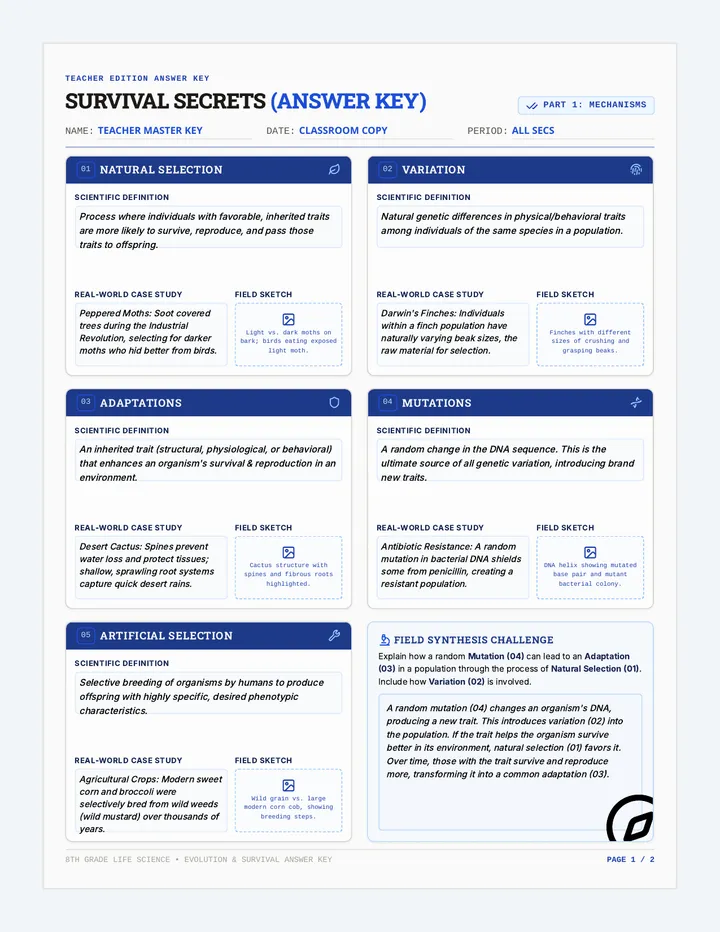
Visual presentation slides covering genetics, classification, and succession, with a focus on EOC-relevant concepts and vocabulary.
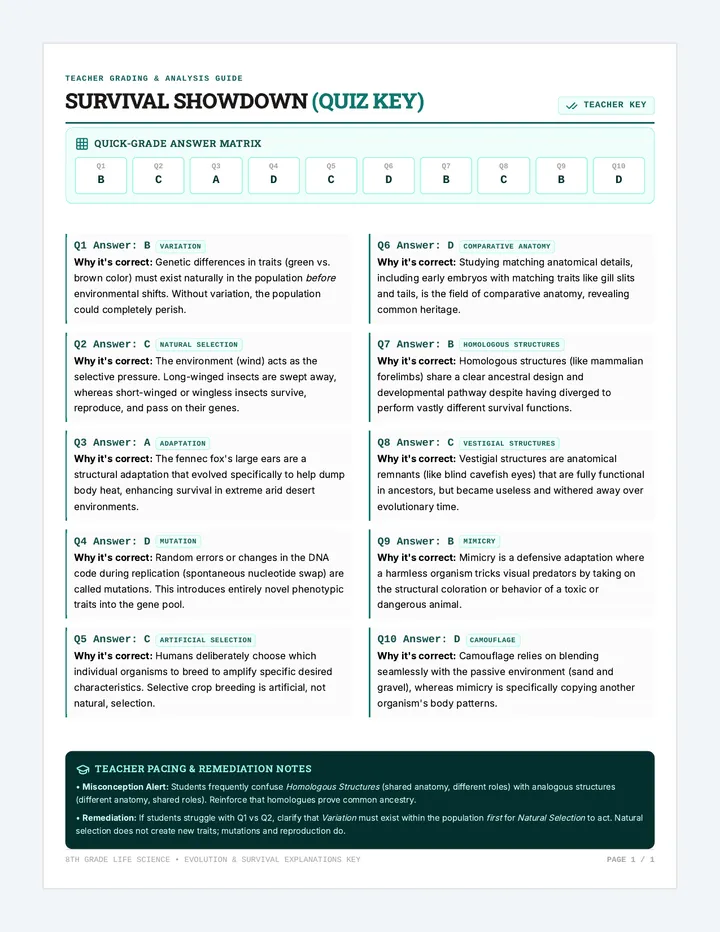
Detailed answer key and scoring rubric for the Mastery Mission Test, including TEKS alignment for each question.
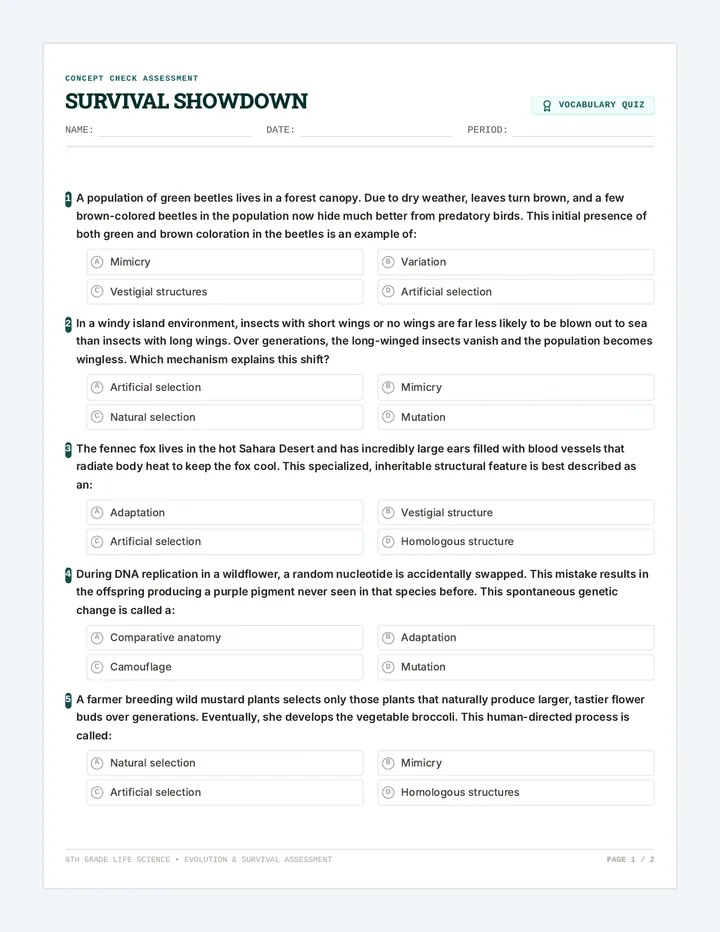
A 22-question assessment designed to mirror the Texas Biology EOC, featuring 20 multiple-choice questions, one multi-answer question, and one short constructed response (SCR).
A set of informational texts and comprehension questions covering genetics, classification, and succession, designed to provide foundational knowledge and critical thinking practice.