A set of informational texts and comprehension questions covering genetics, classification, and succession, designed to provide foundational knowledge and critical thinking practice.
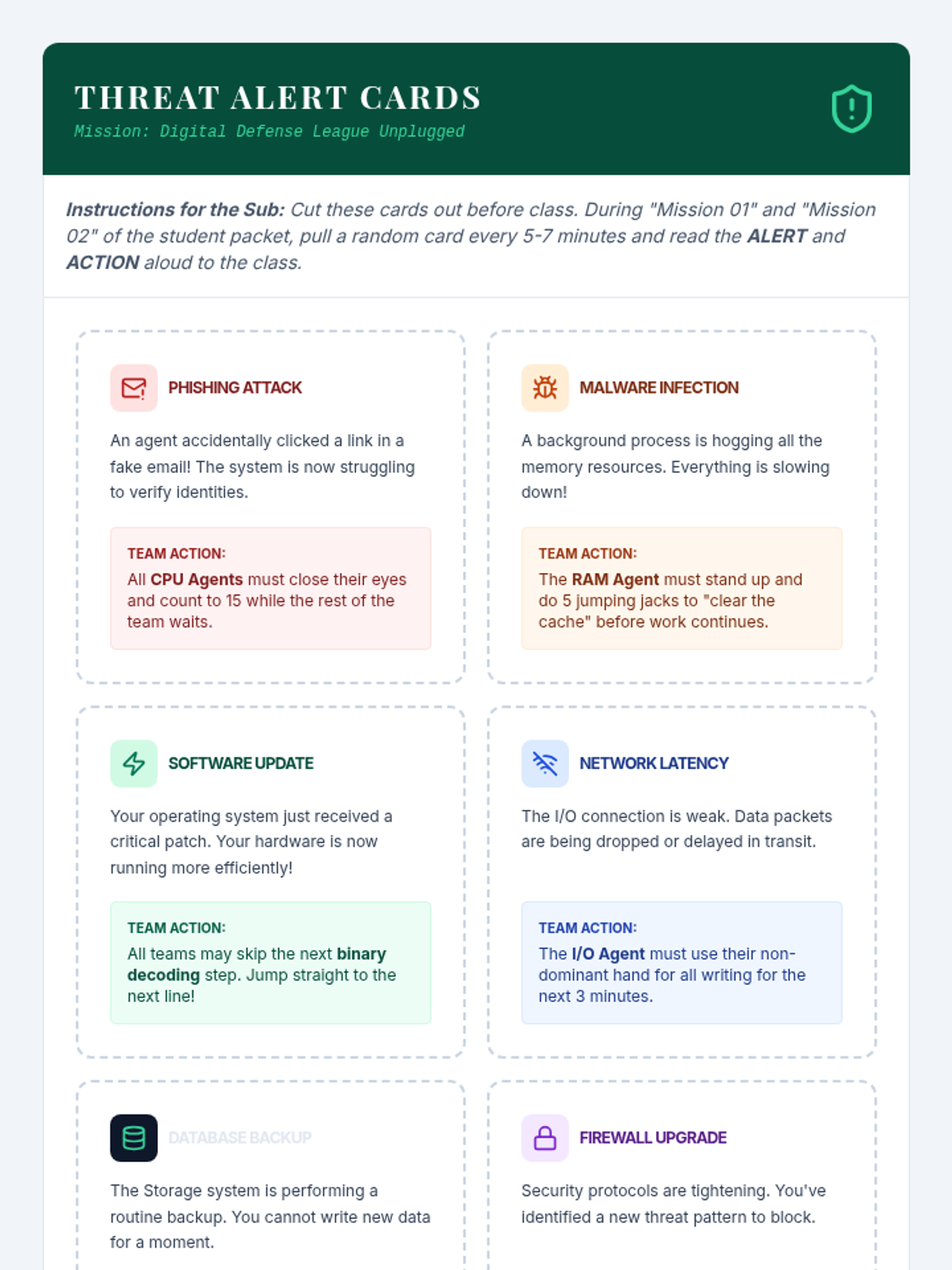
A set of cut-out cards for a substitute teacher to use during the Digital Defense League activity, introducing dynamic "Threat Alerts" that require physical or logic-based student responses.
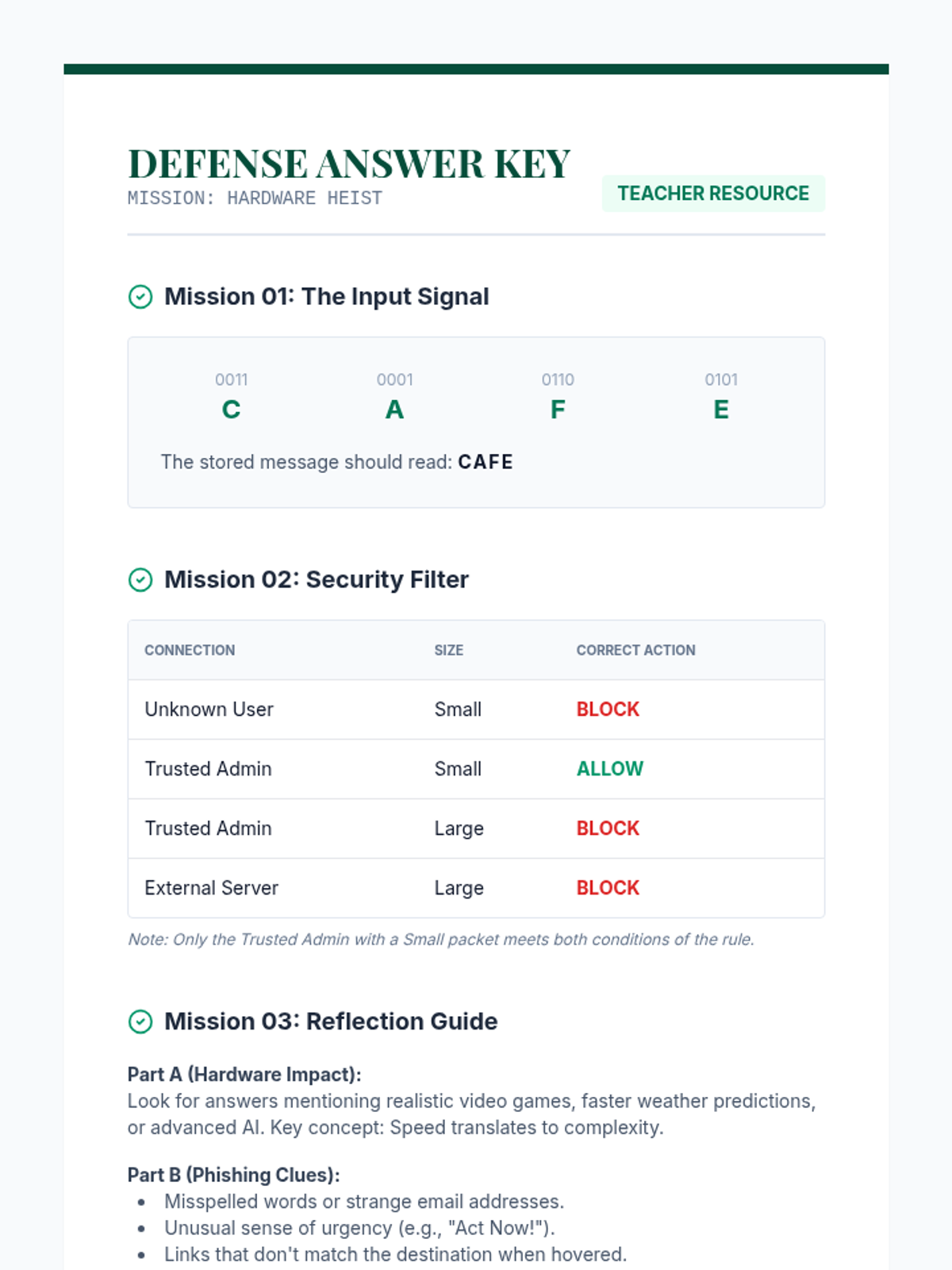
An answer key for the Digital Defense League unplugged activity, providing solutions for binary decoding, firewall logic, and discussion prompts for hardware impact and cybersecurity.
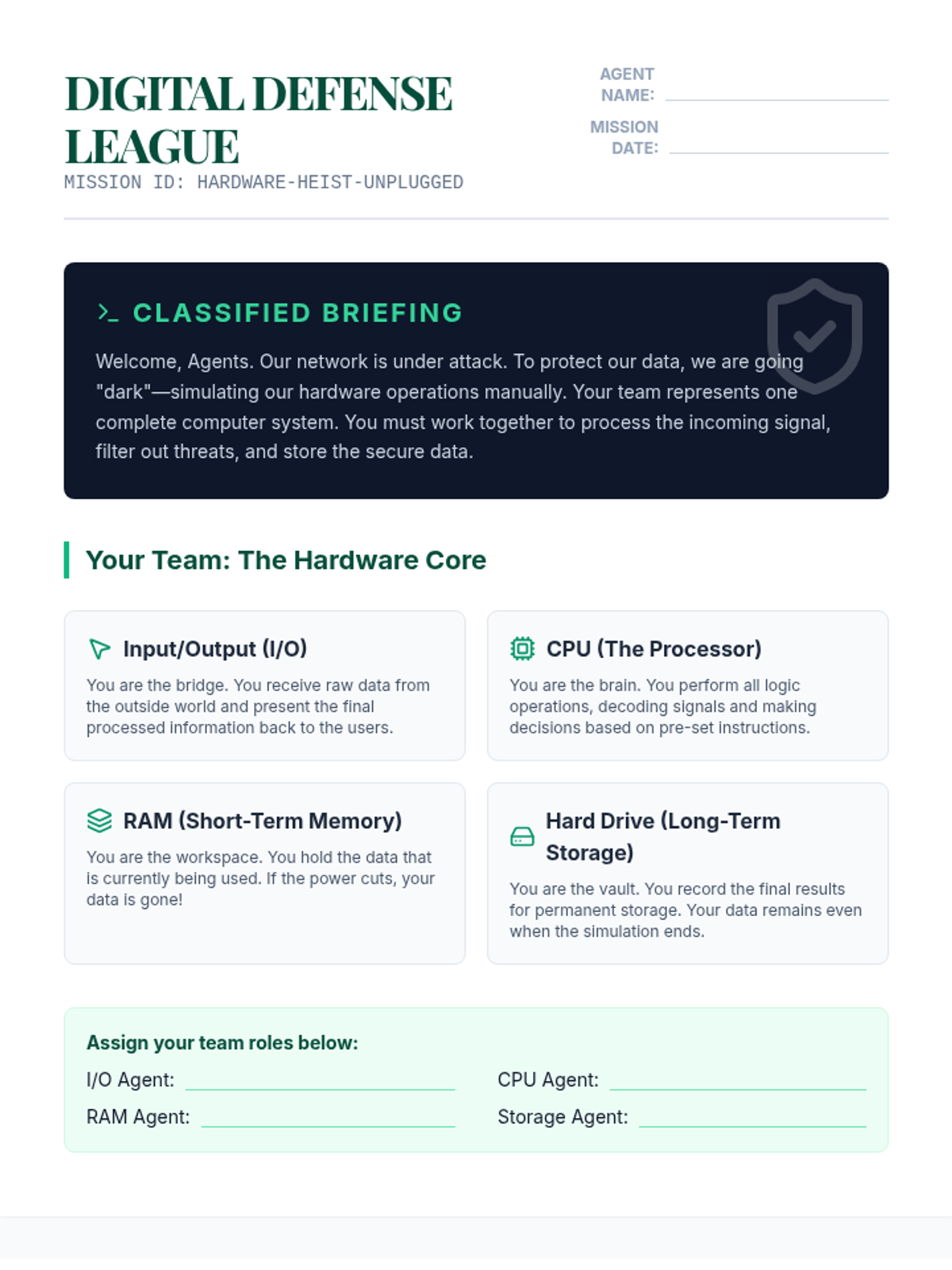
A student worksheet for an unplugged computer science activity where students simulate hardware components (I/O, CPU, RAM, Storage) while completing binary decoding and cybersecurity tasks.
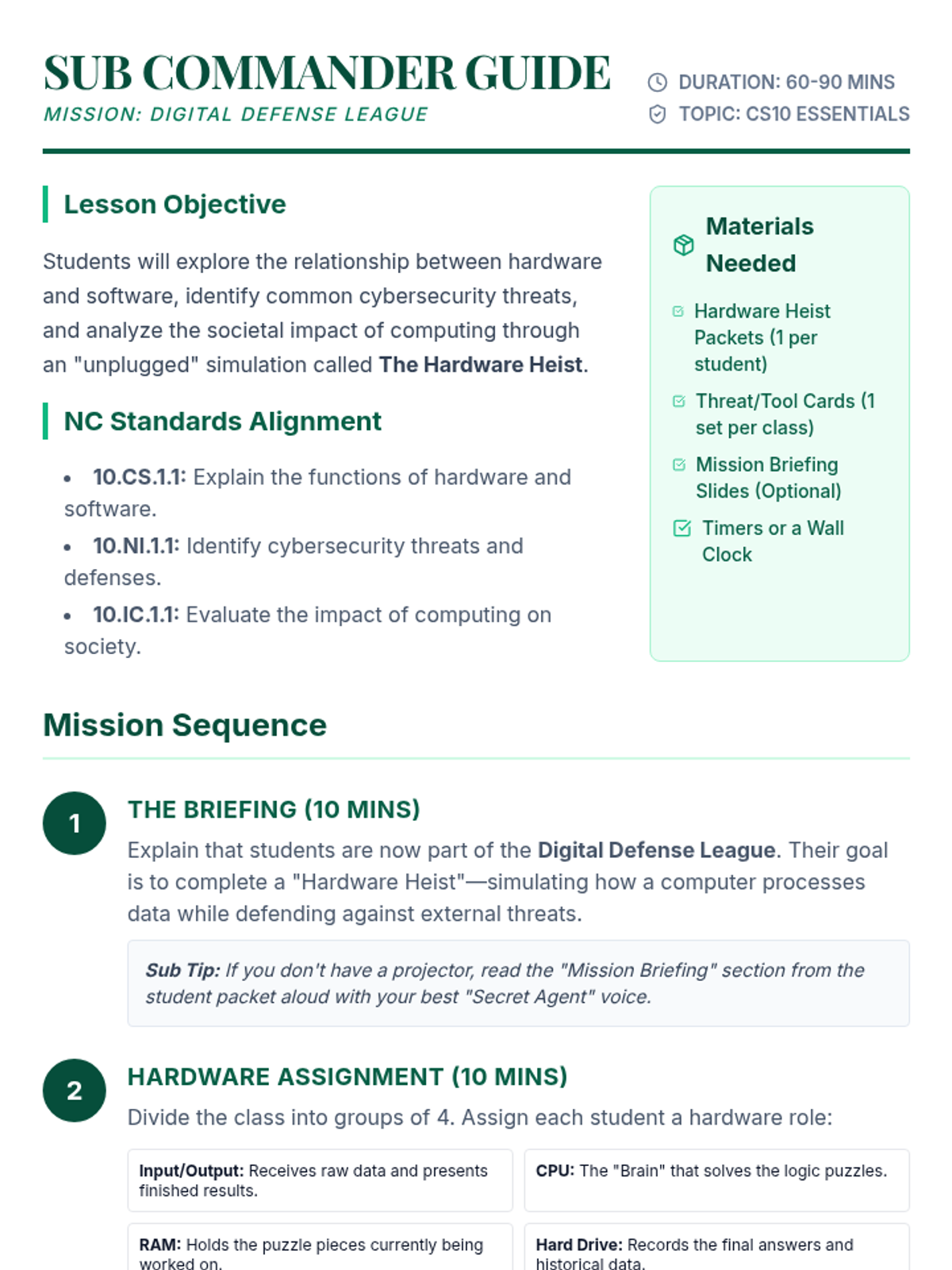
A detailed substitute teacher guide for a Computer Science unplugged lesson, including step-by-step instructions, materials checklists, and classroom management tips focused on hardware and cybersecurity.
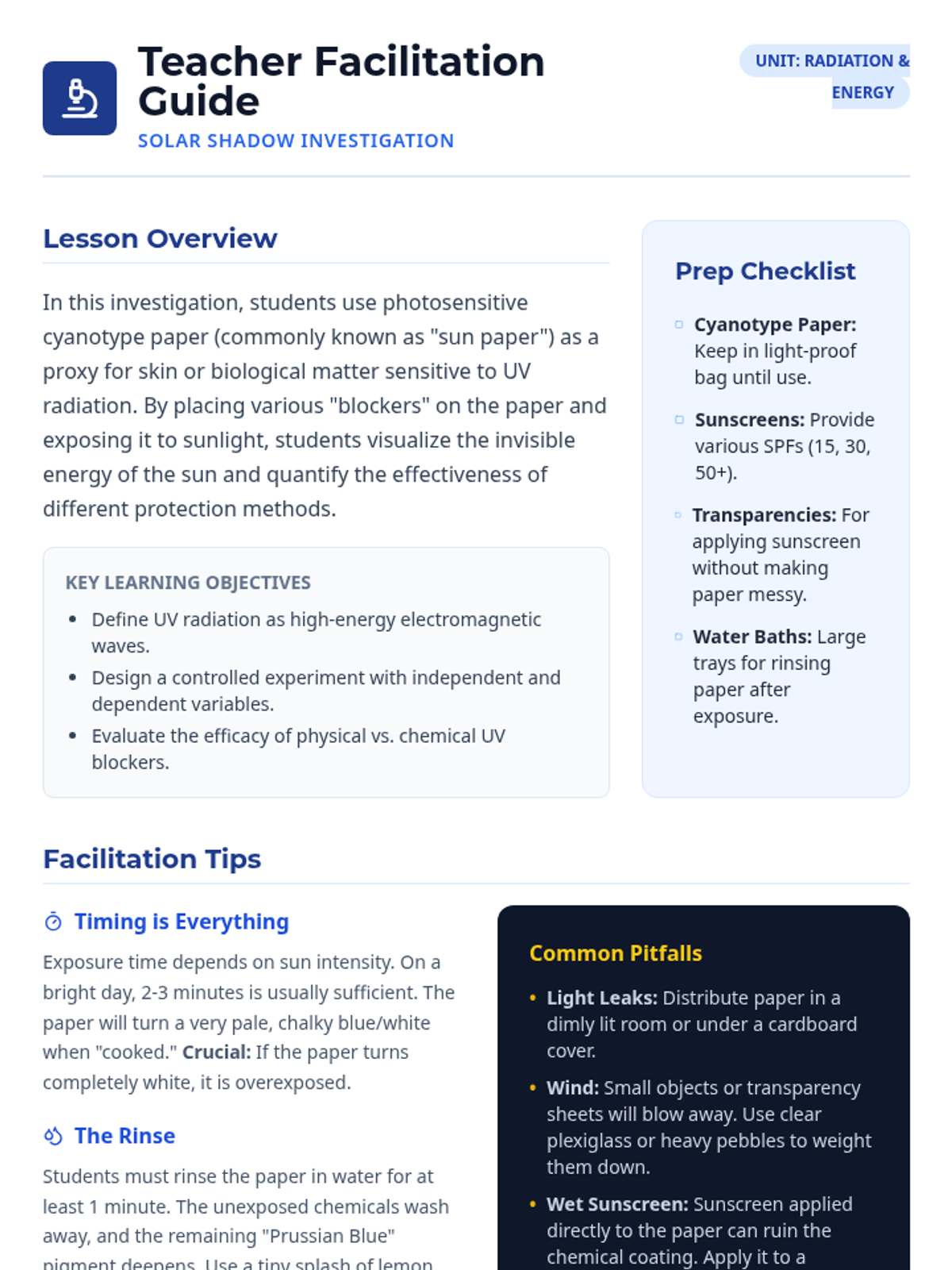
A teacher facilitation guide for the Solar Shadow Lab, featuring setup instructions, common pitfalls, a discussion guide, and a complete answer key for the student worksheet.
An introductory slide deck explaining the properties of UV radiation, the chemistry of cyanotype (sun paper), and the objectives of the solar shadow lab.
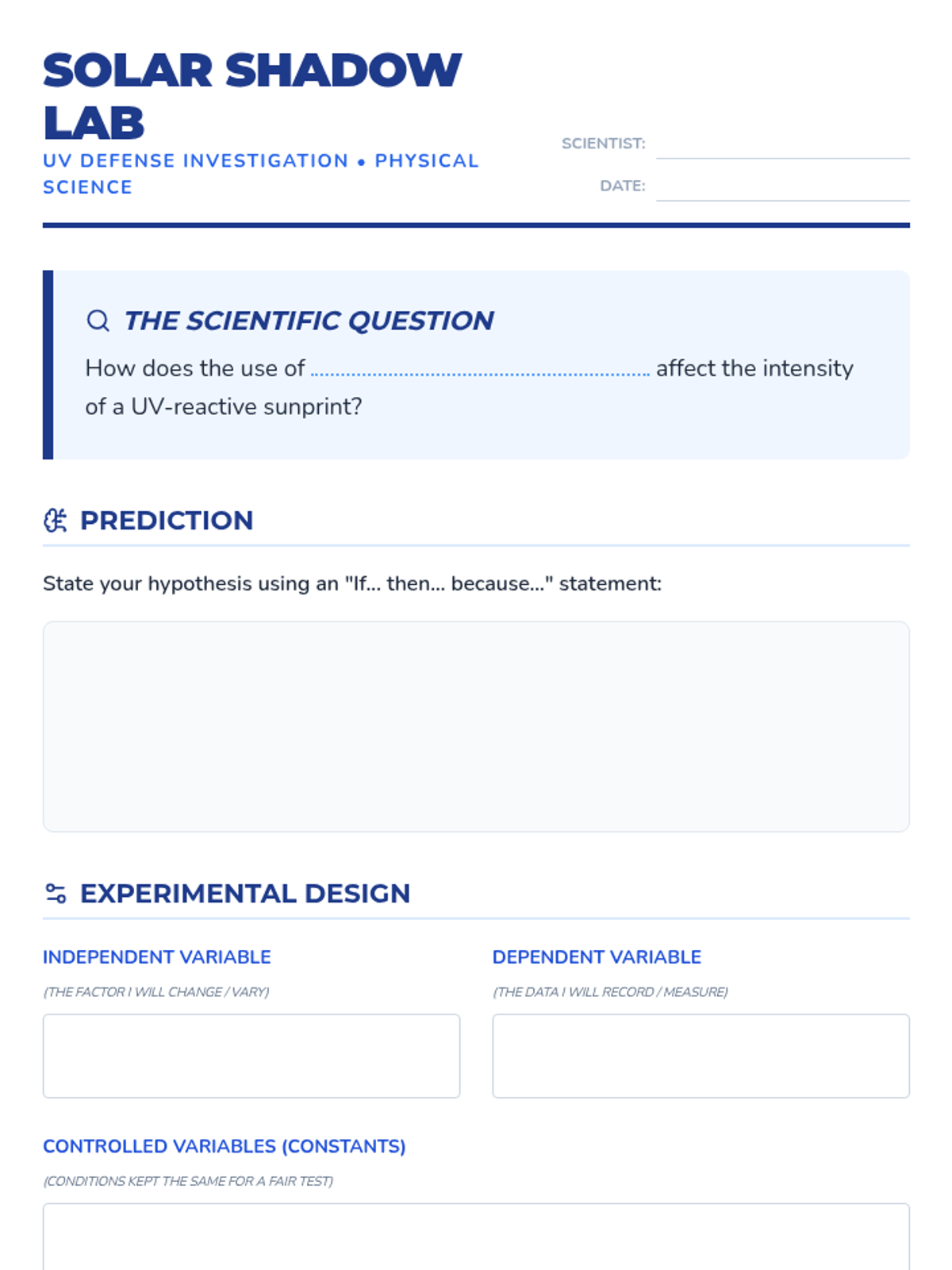
A comprehensive lab write-up template for a sun paper (cyanotype) experiment, featuring sections for hypothesis building, variable identification, data collection via sketching and ranking, and reflective analysis.
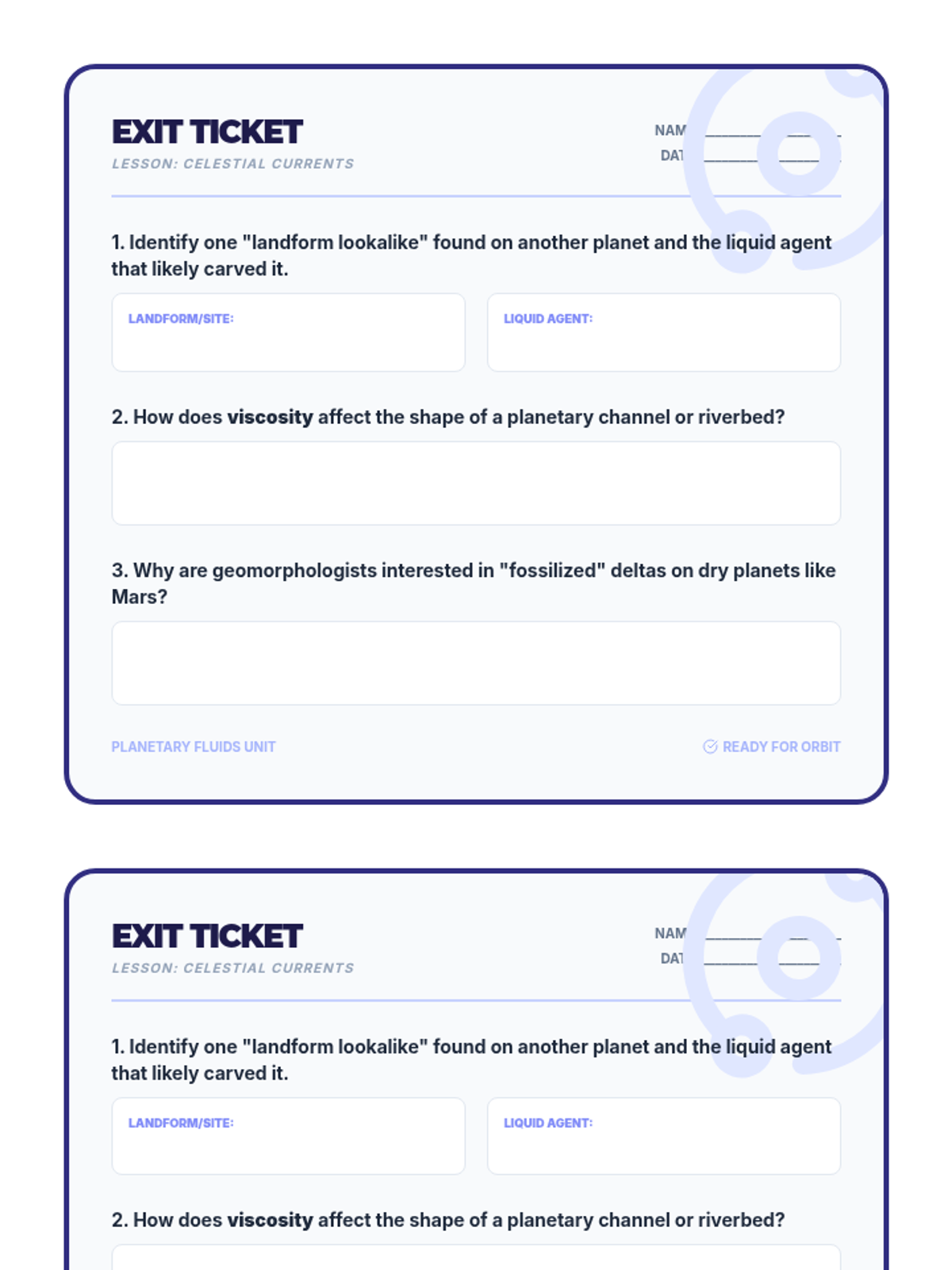
A compact exit ticket for the Celestial Currents lesson, featuring 3 critical thinking questions about comparative geomorphology and liquid properties in space.
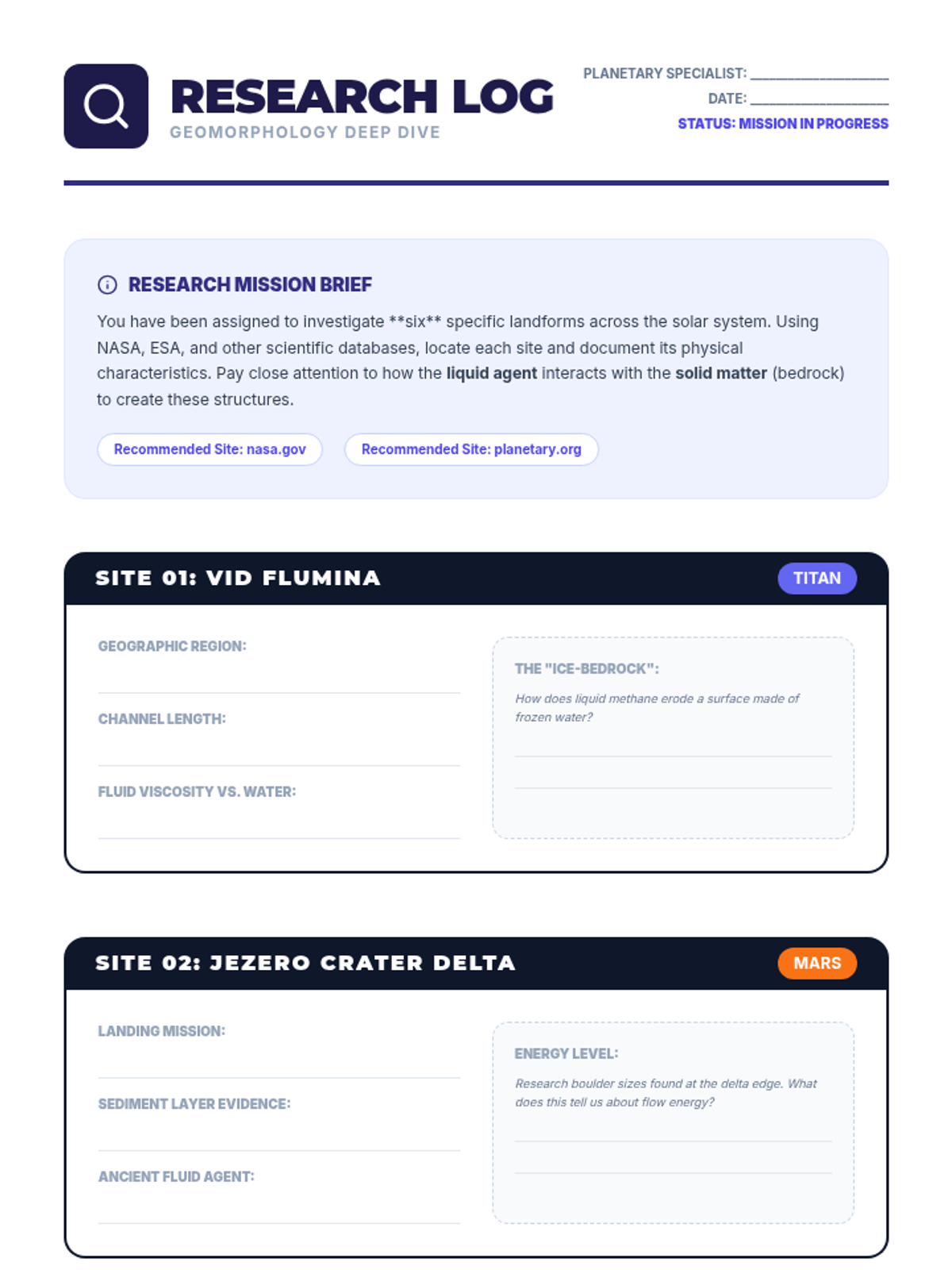
A multi-page independent research log where students investigate specific landforms across the solar system (Vid Flumina, Jezero Crater, Baltis Vallis, Kraken Mare, Kasei Valles, Hadley Rille) and document their physical properties.
Visual presentation slides for the unit review, focusing on plant responses (thigmotropism), vascular transport, human body system interactions, homeostasis, viral vs. cellular structures, and environmental impacts on enzymes.
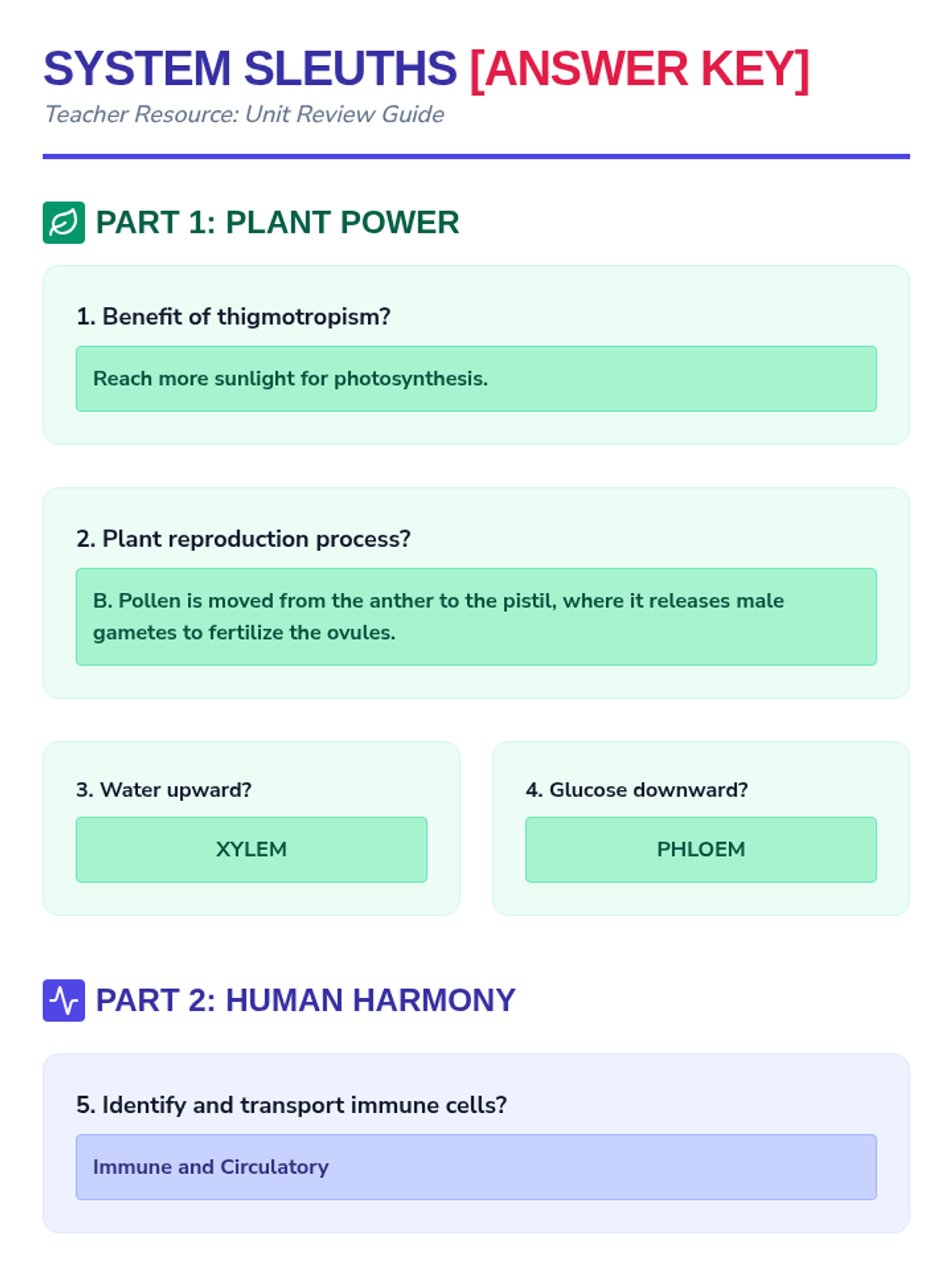
Updated teacher answer key for the revised System Sleuths worksheet.
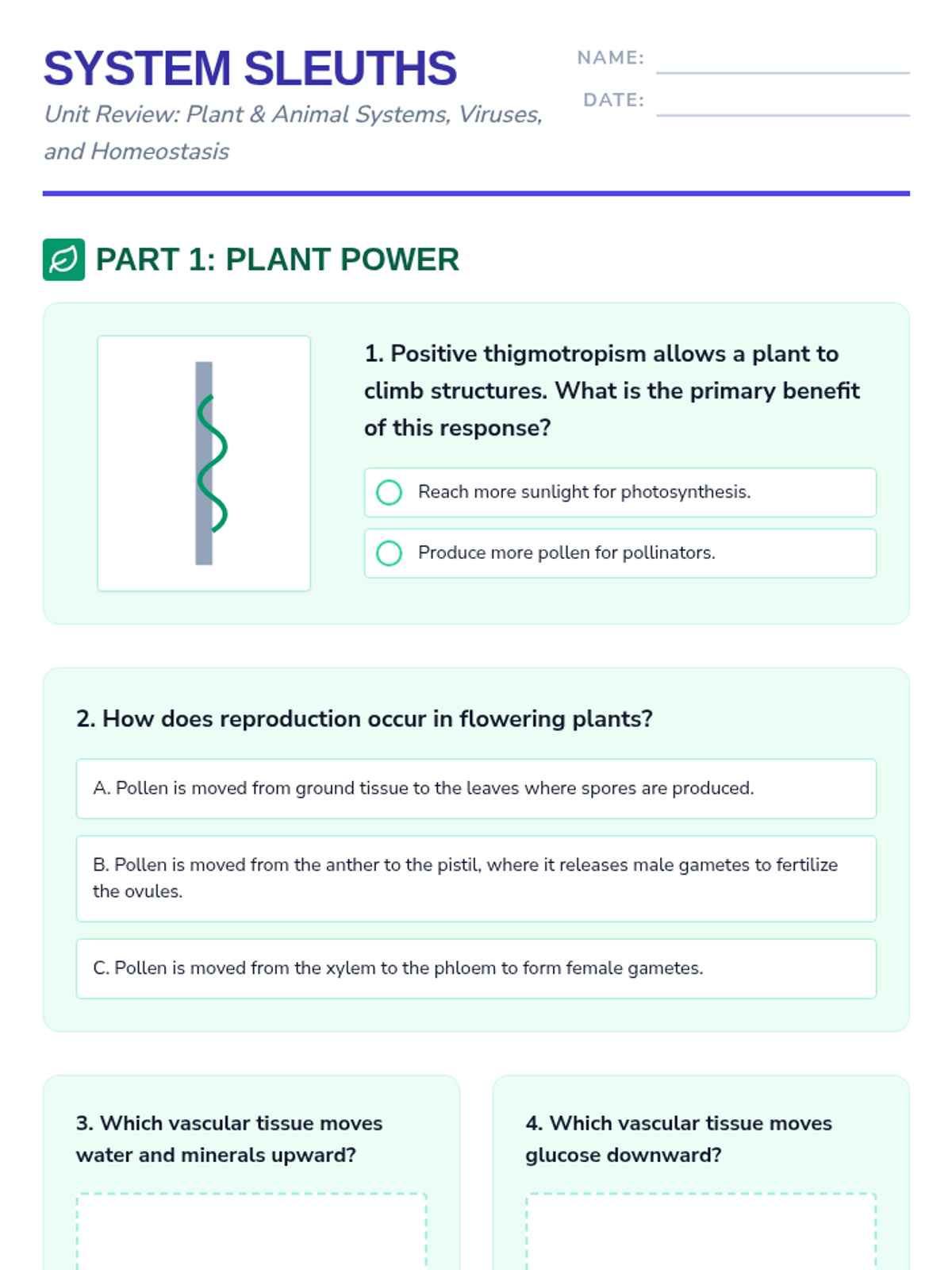
Updated unit review worksheet for body systems, now including plant reproduction and clear space for all required student responses.
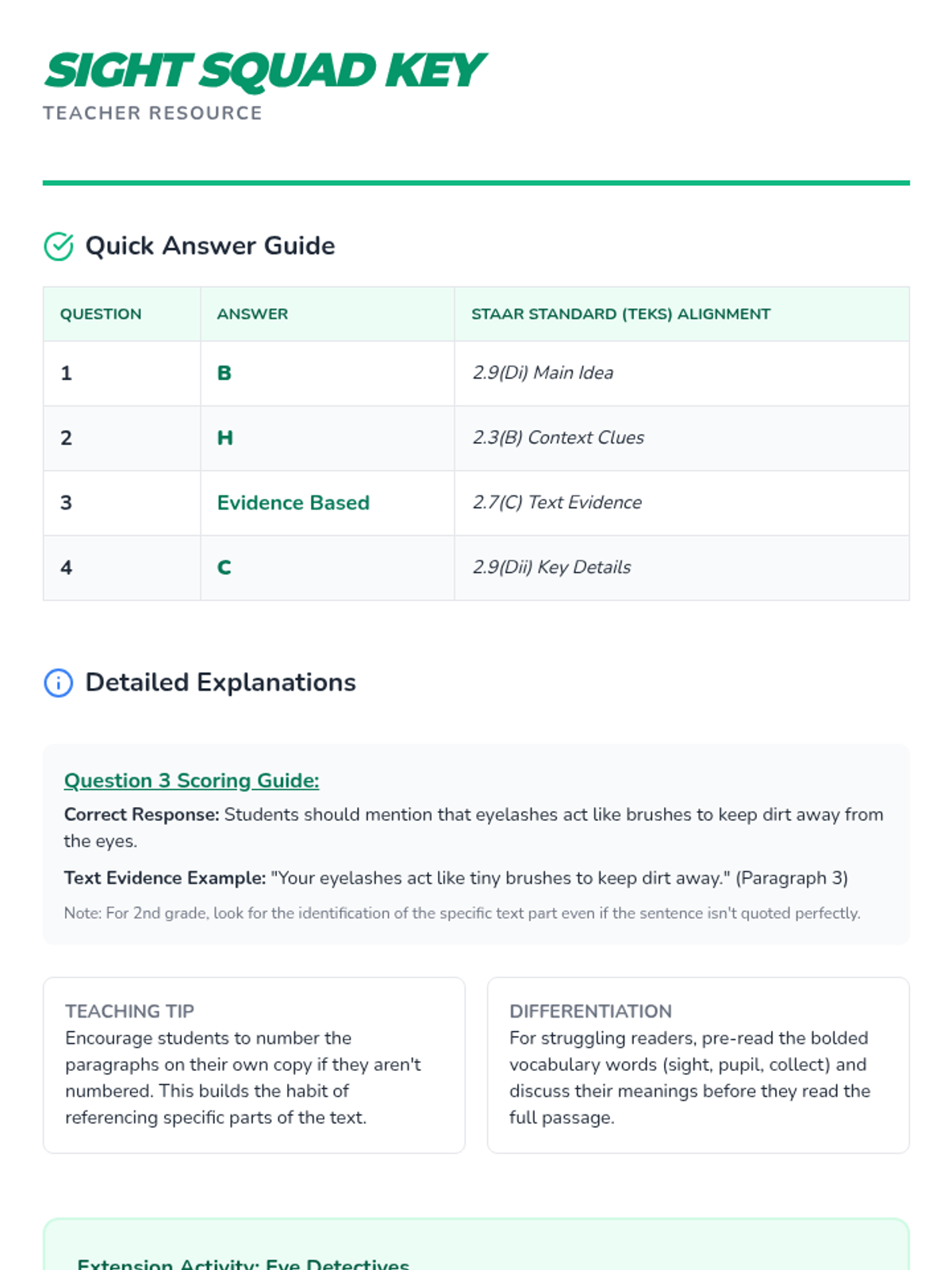
A teacher's answer key for the Sight Squad materials, including TEKS alignment, scoring guides for written responses, and instructional tips for second grade.
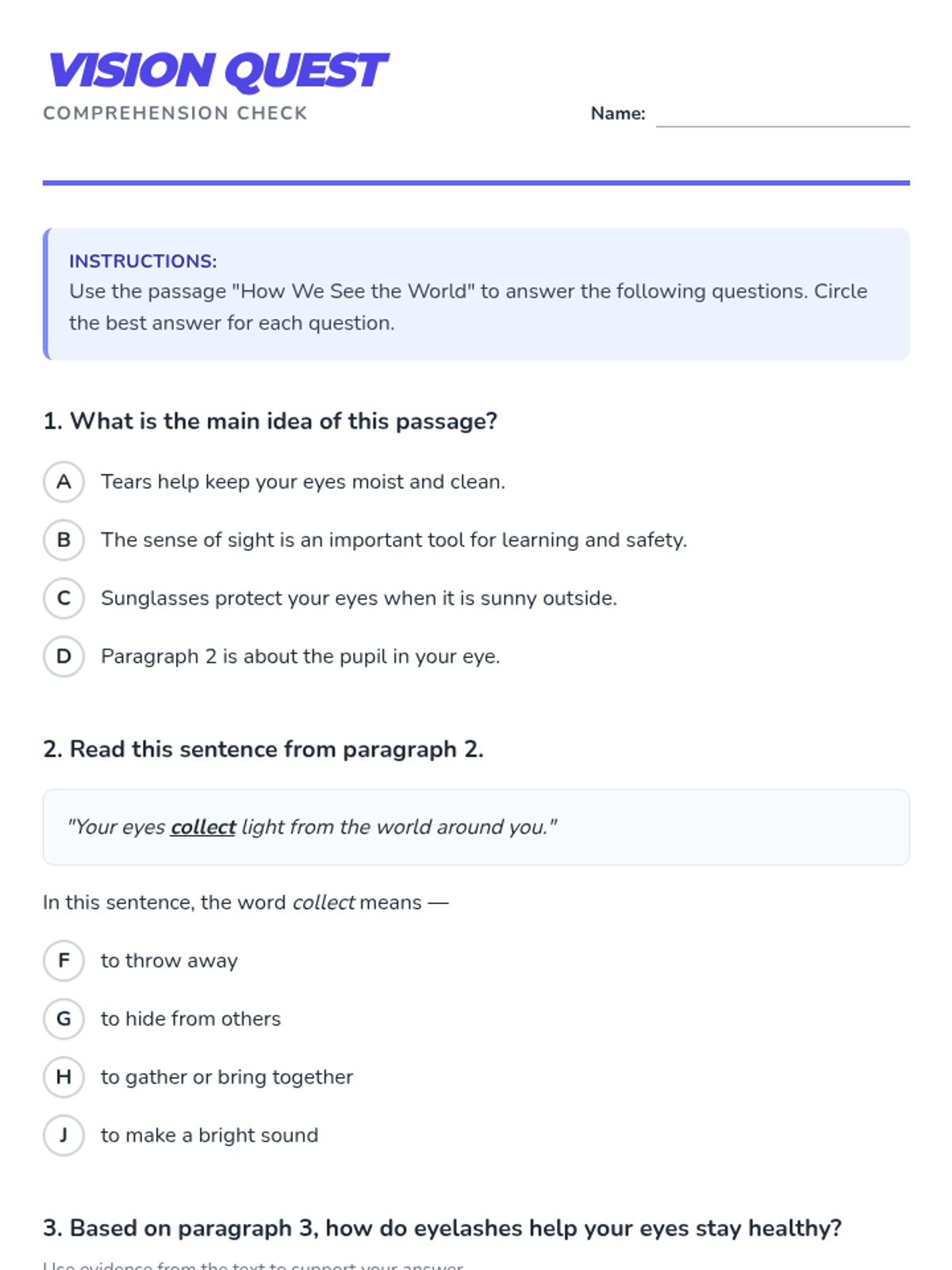
A STAAR-aligned assessment for second grade students focusing on the sense of sight passage. Includes main idea, vocabulary, text evidence, and detailed recall questions.
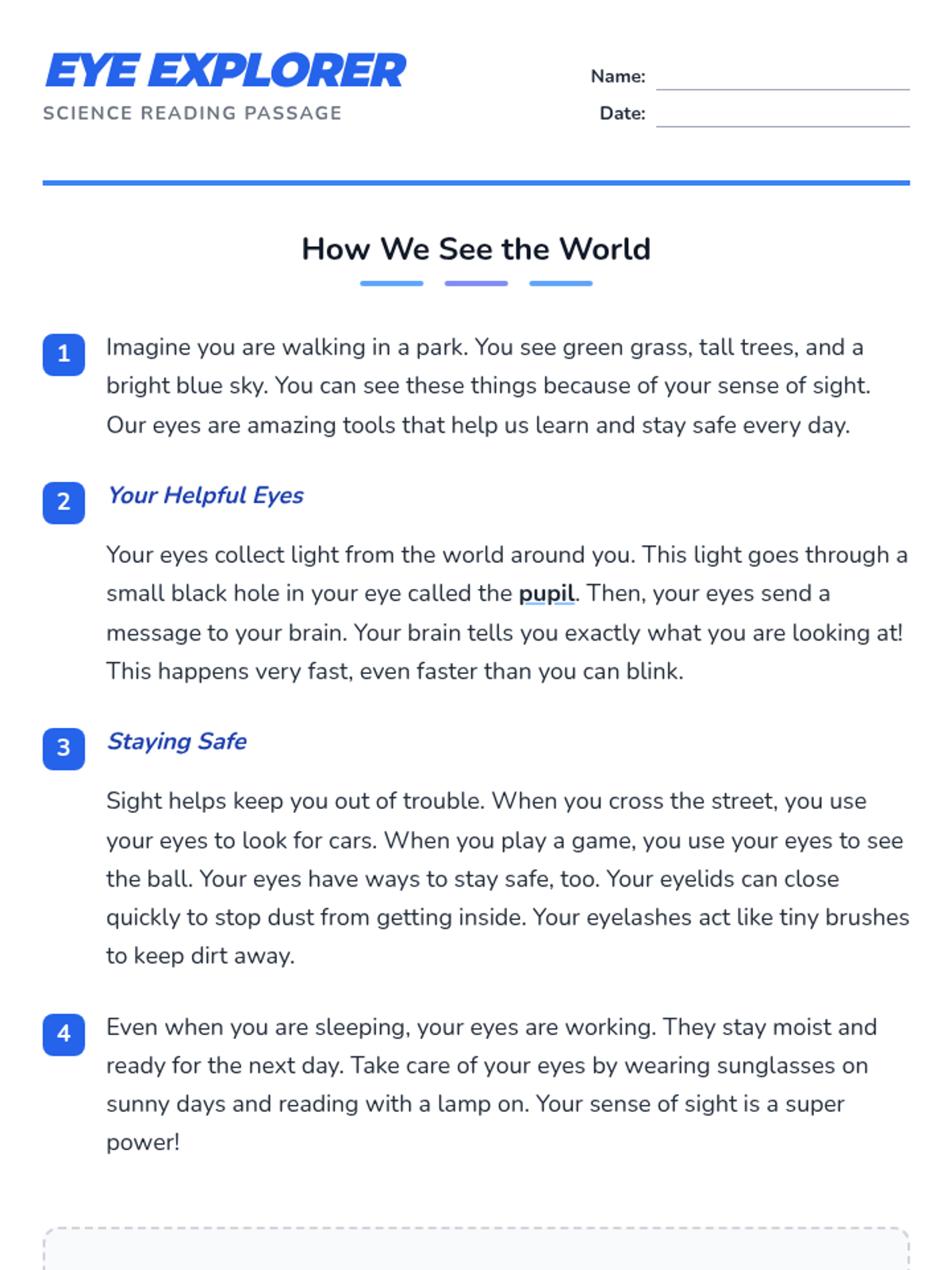
An engaging reading passage for second graders about the sense of sight, including numbered paragraphs for easy reference and a built-in text evidence task.
A visual presentation introducing the sense of sight, key parts of the eye, and how eyes protect themselves. Includes engagement prompts for second-grade students.
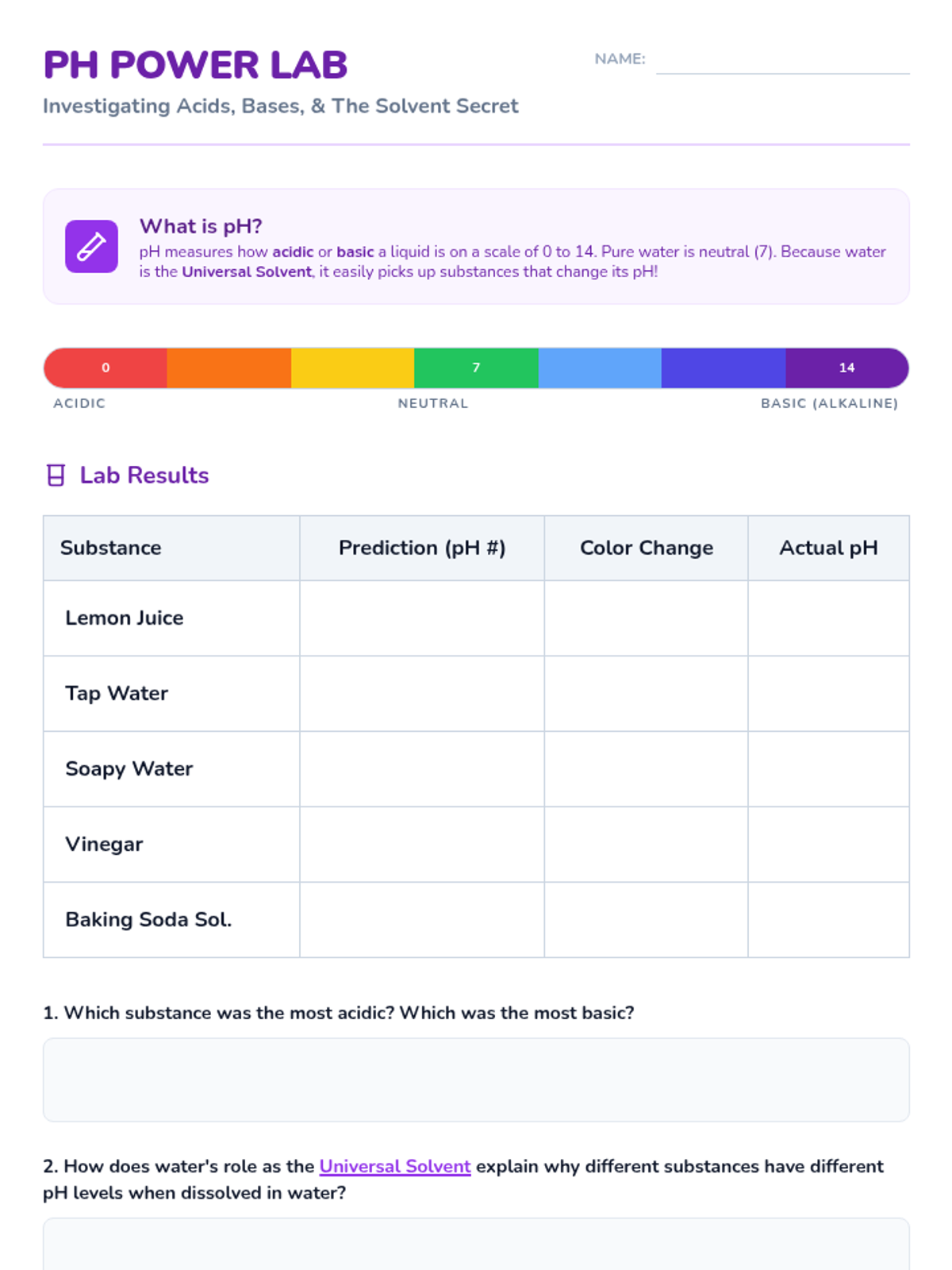
A student lab worksheet for investigating the pH of various common substances. Includes a pH scale reference, data collection table, and analysis questions connecting pH to water's role as a universal solvent and its impact on life.
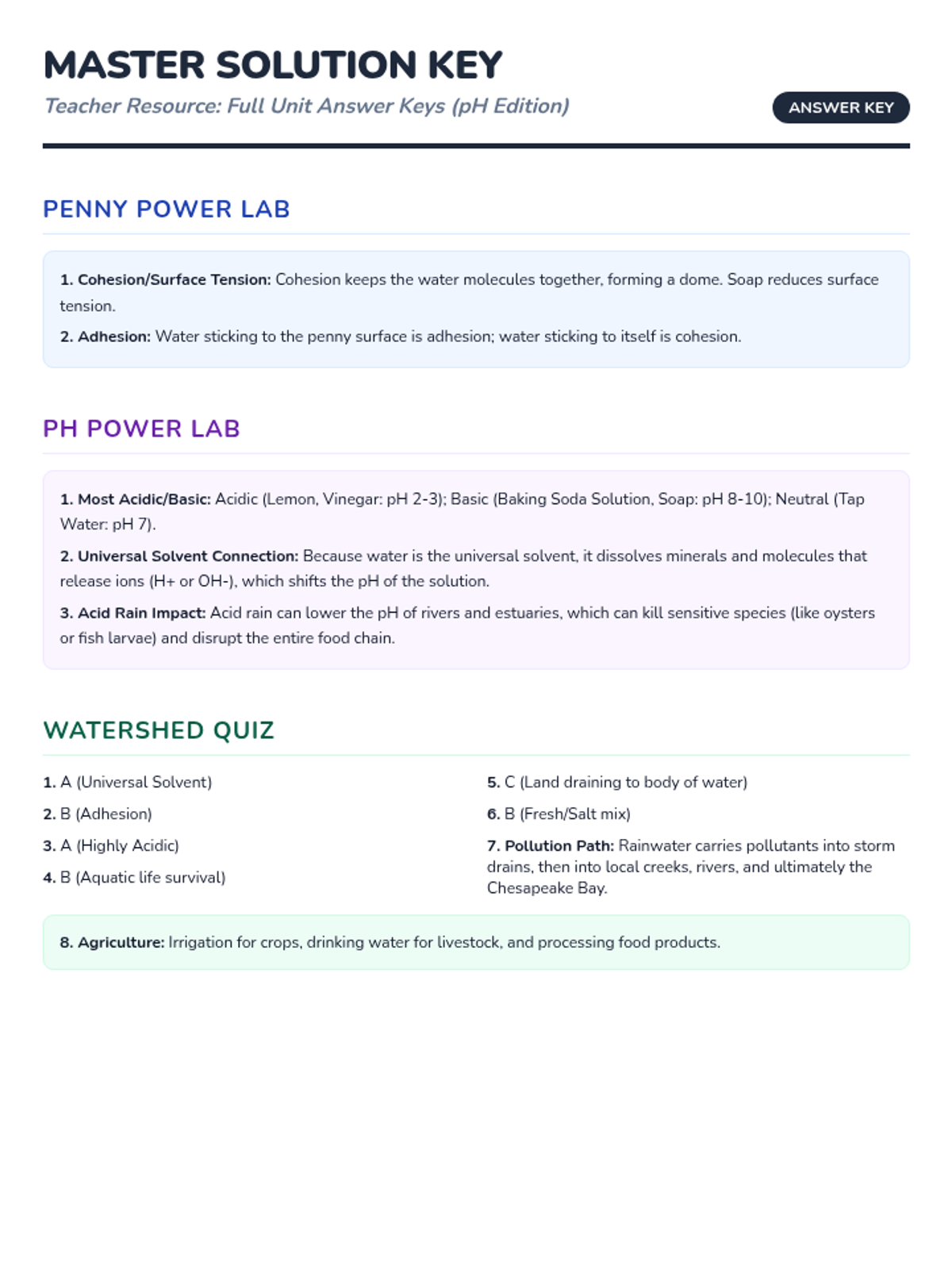
A teacher-facing answer key for the Penny Power Lab, pH Power Lab, and the Unit Quiz. Updated to reflect the removal of weathering content and addition of pH/acidity.
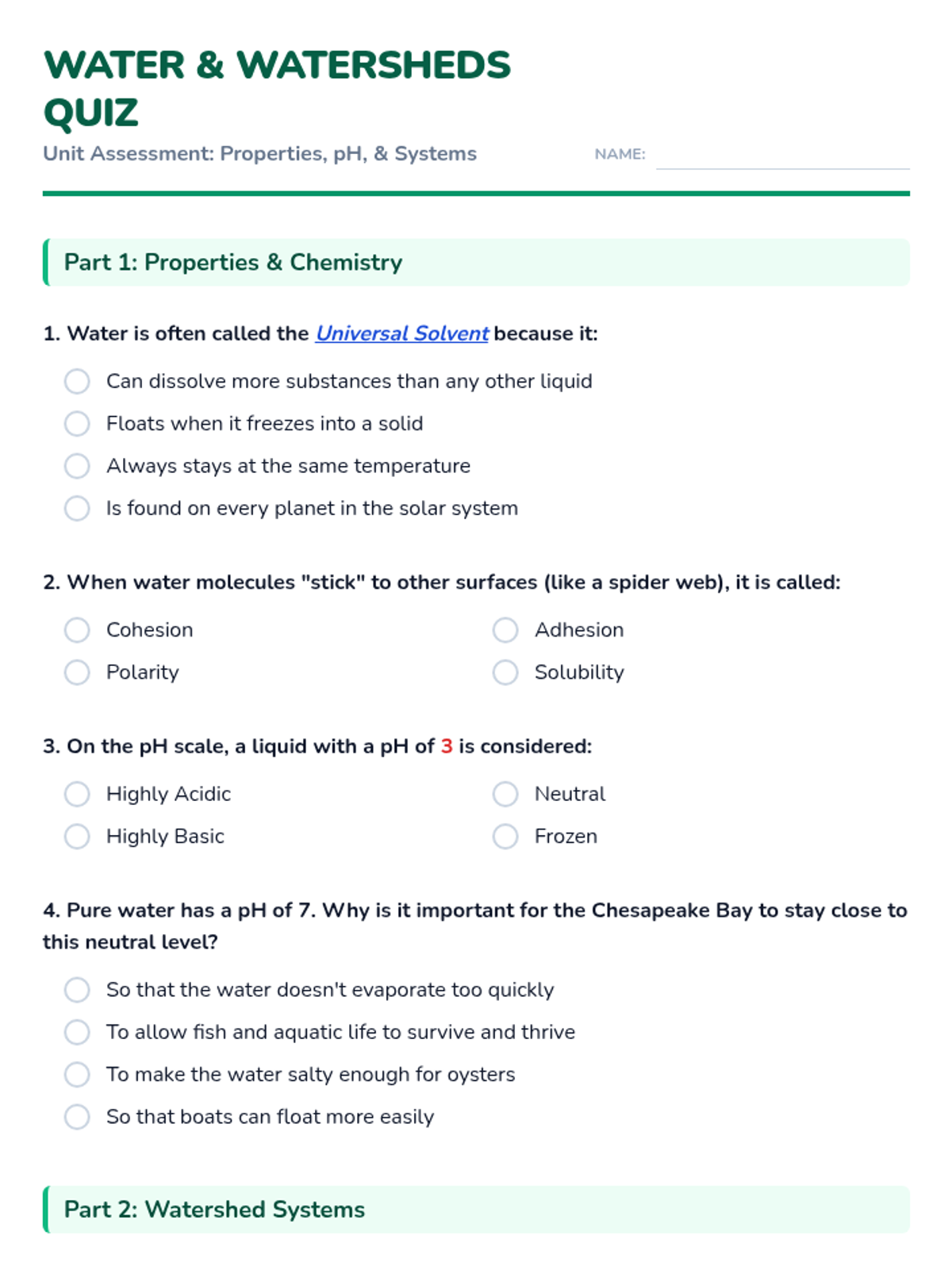
A short unit quiz covering the physical properties of water (solubility, adhesion, cohesion), pH basics, and watershed definitions including estuaries and human impact. Replacement for weathering content.
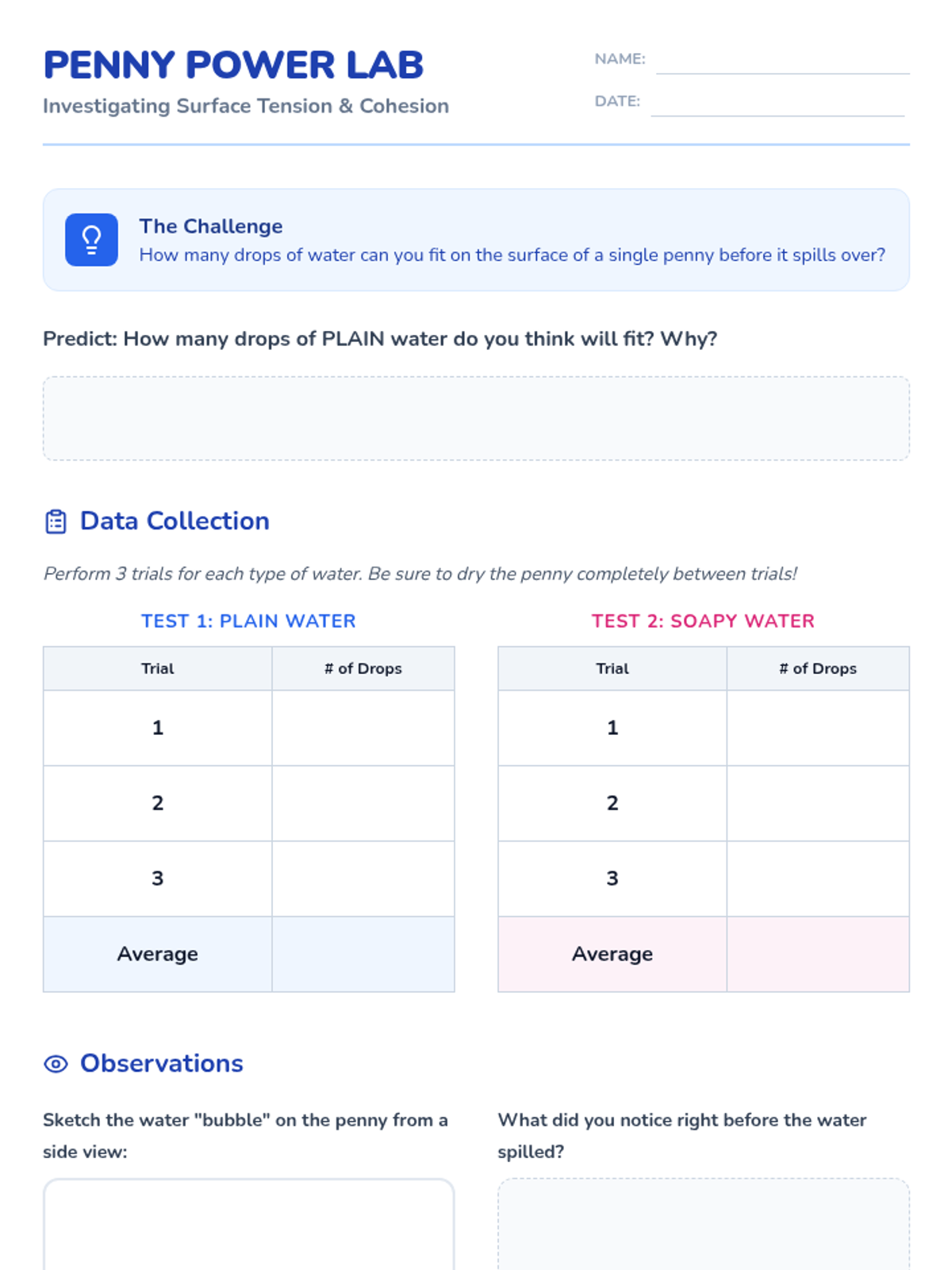
A student lab sheet for the 'Penny Power' investigation. Includes sections for hypothesis, data tables for multiple trials (plain vs. soapy water), sketching observations, and analysis questions focused on cohesion and surface tension.
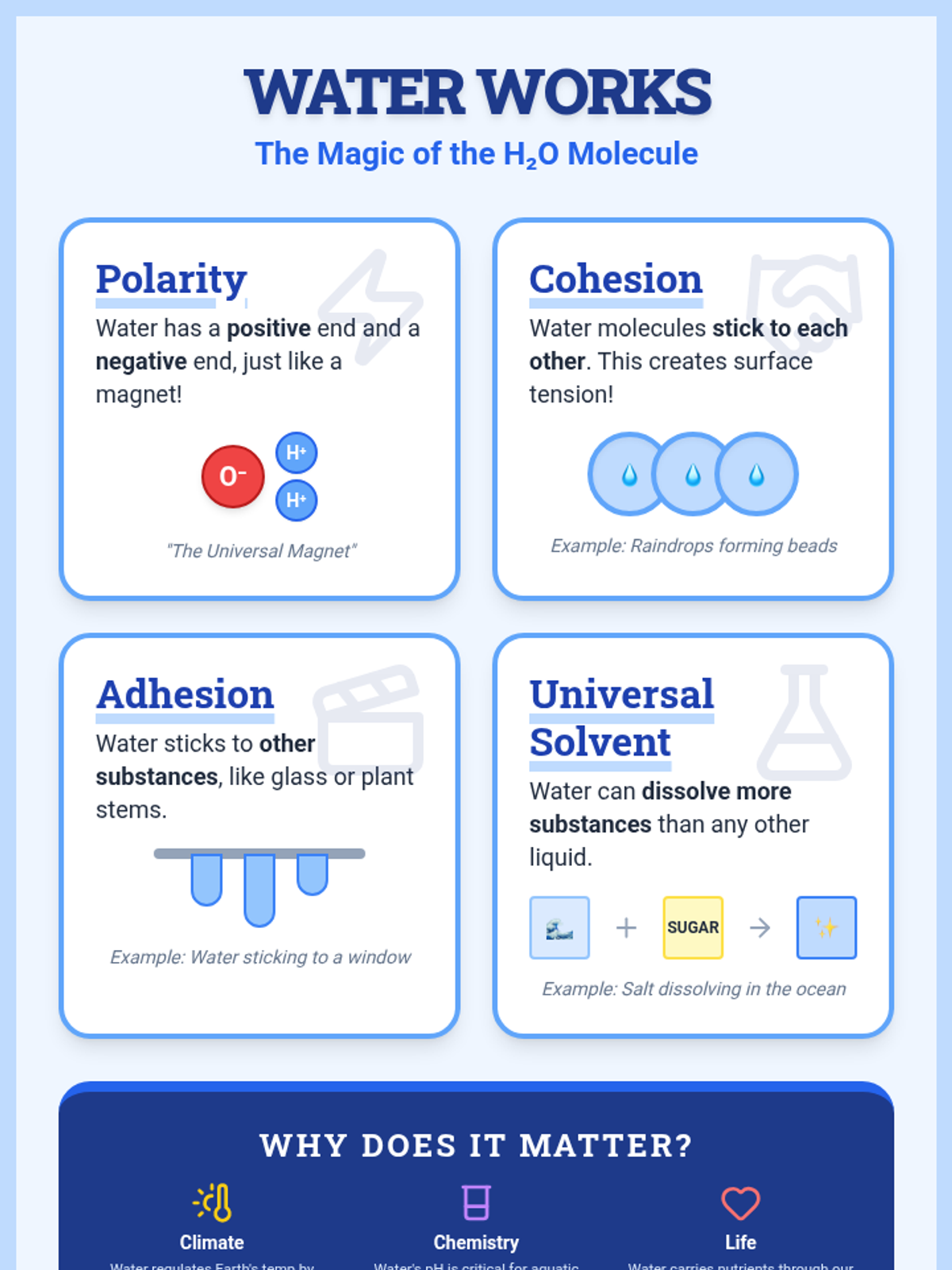
A vibrant anchor chart visualizing the unique physical properties of water: polarity, cohesion, adhesion, and universal solubility. Includes an updated bottom banner focusing on climate, chemistry/pH, and life processes.