A clean, simplified Periodic Table reference sheet for student use, color-coded by element type and featuring clear explanations for groups, periods, and atomic cells. Now includes a complete Period 5 for continuity.
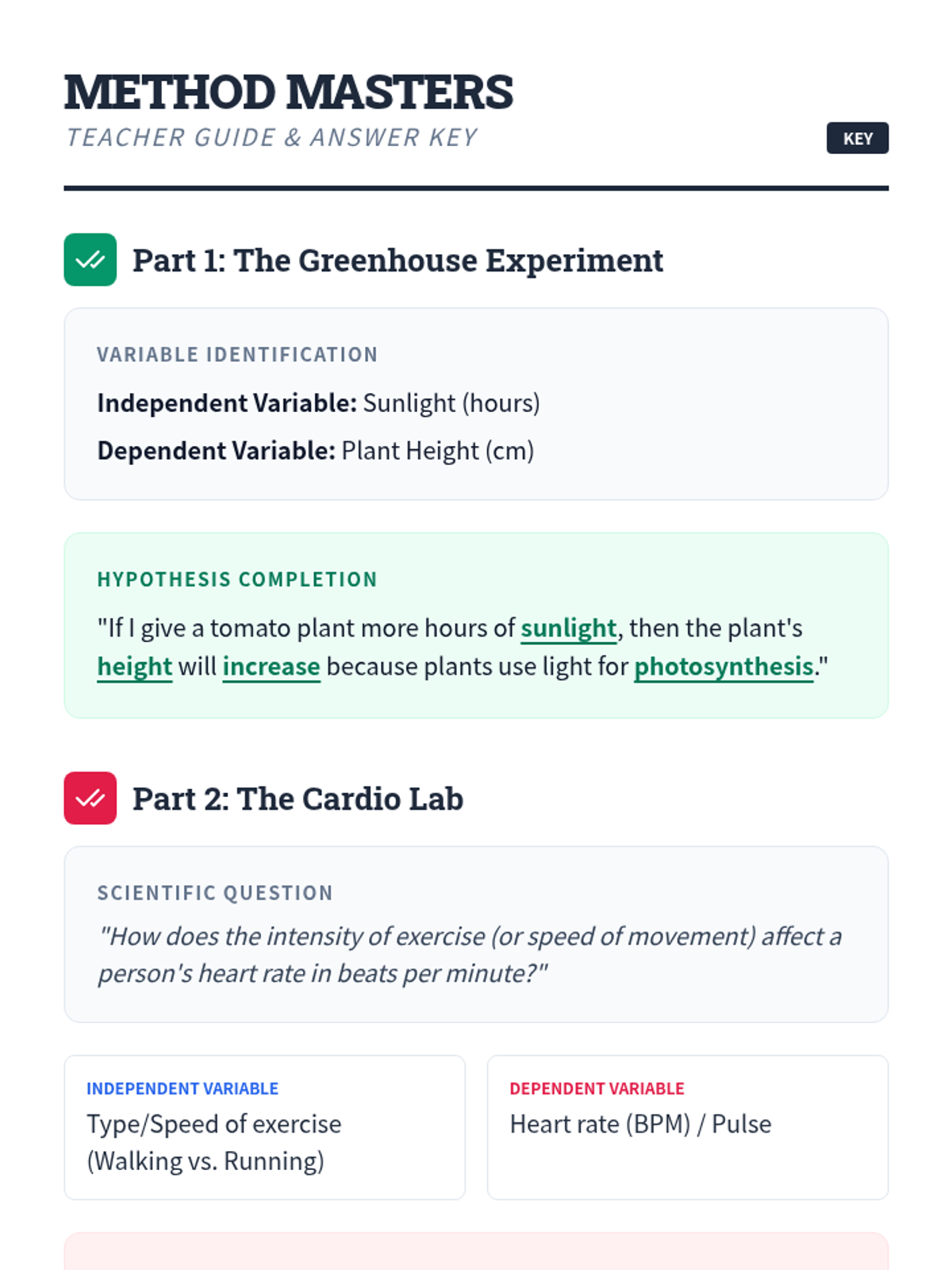
Teacher guide and answer key for the Method Masters homework, including sample responses for the open-ended cardio lab and grading tips for variables and hypotheses.
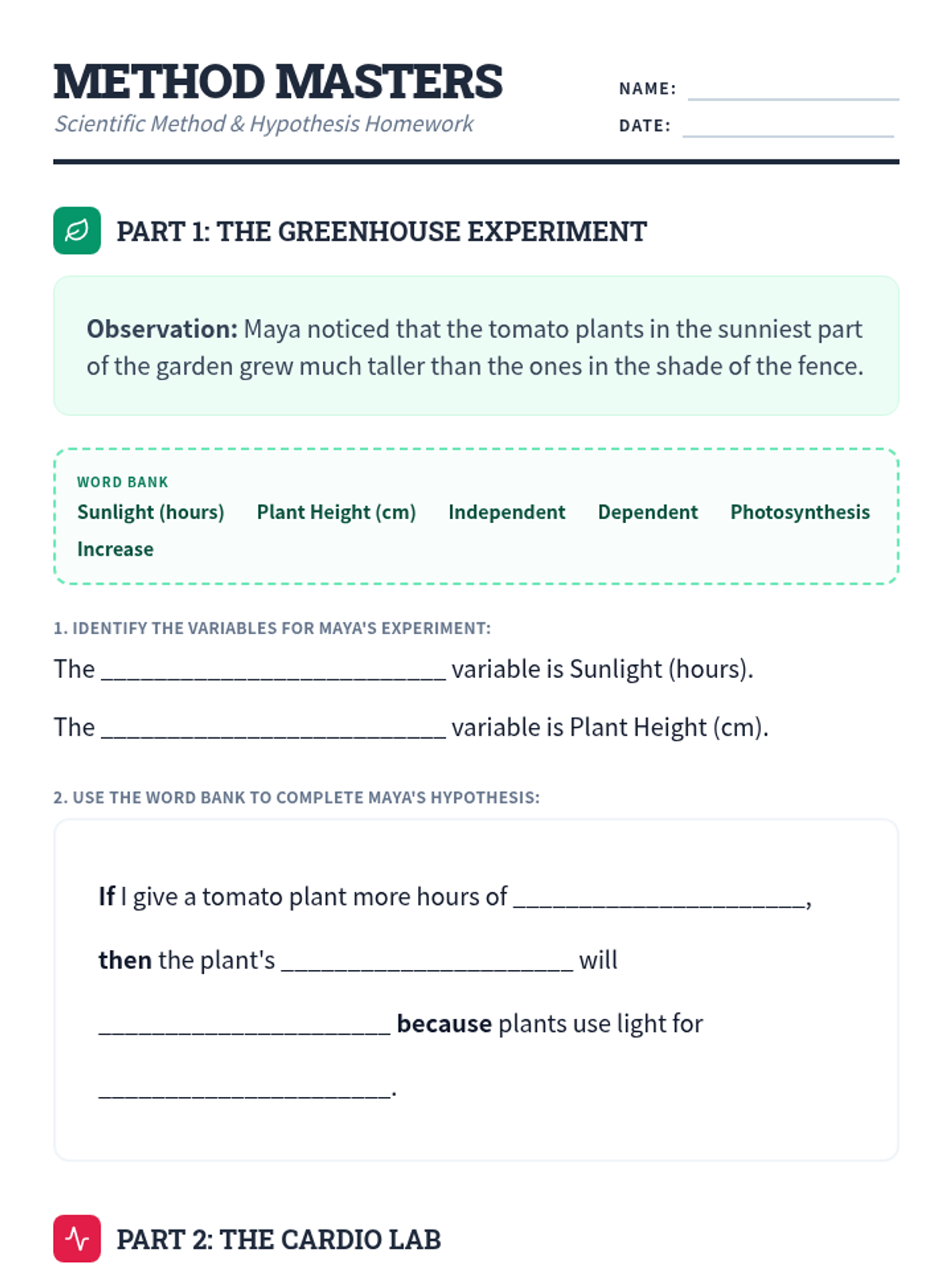
A two-part homework worksheet on the scientific method. Part 1 uses plant growth as a context with sentence starters and a word bank. Part 2 uses heart rate and exercise with open-ended written responses.
Introductory slides for a lesson on the scientific method and hypothesis formation, featuring visual breakdowns of the "If... Then... Because..." formula and case studies on plant growth and heart rate.
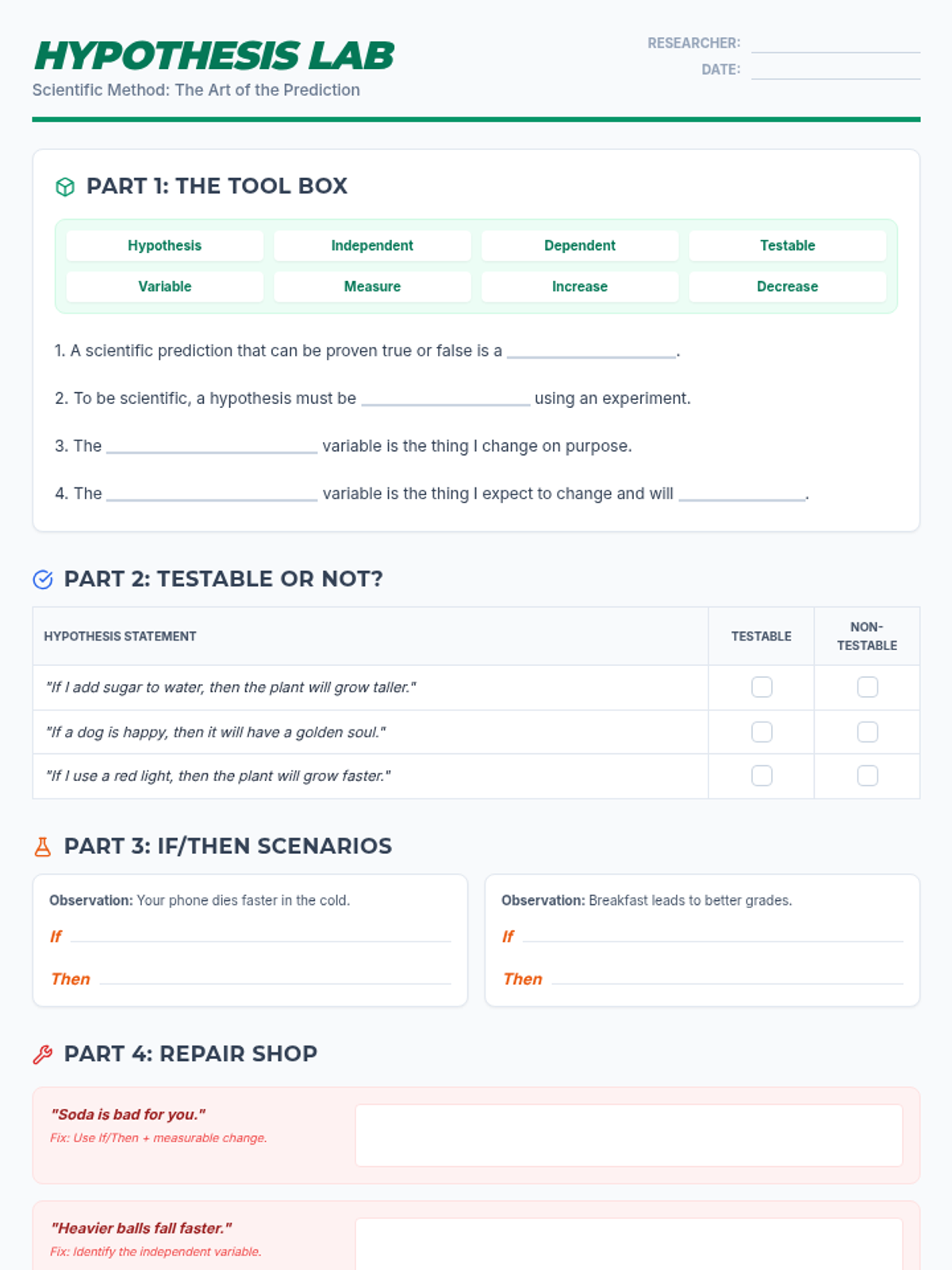
A highly condensed scientific method homework sheet focusing on hypothesis construction. Features a vocabulary tool box, testability classification, If/Then scaffolding, and a hypothesis Repair Shop. Designed to fit on a single page.
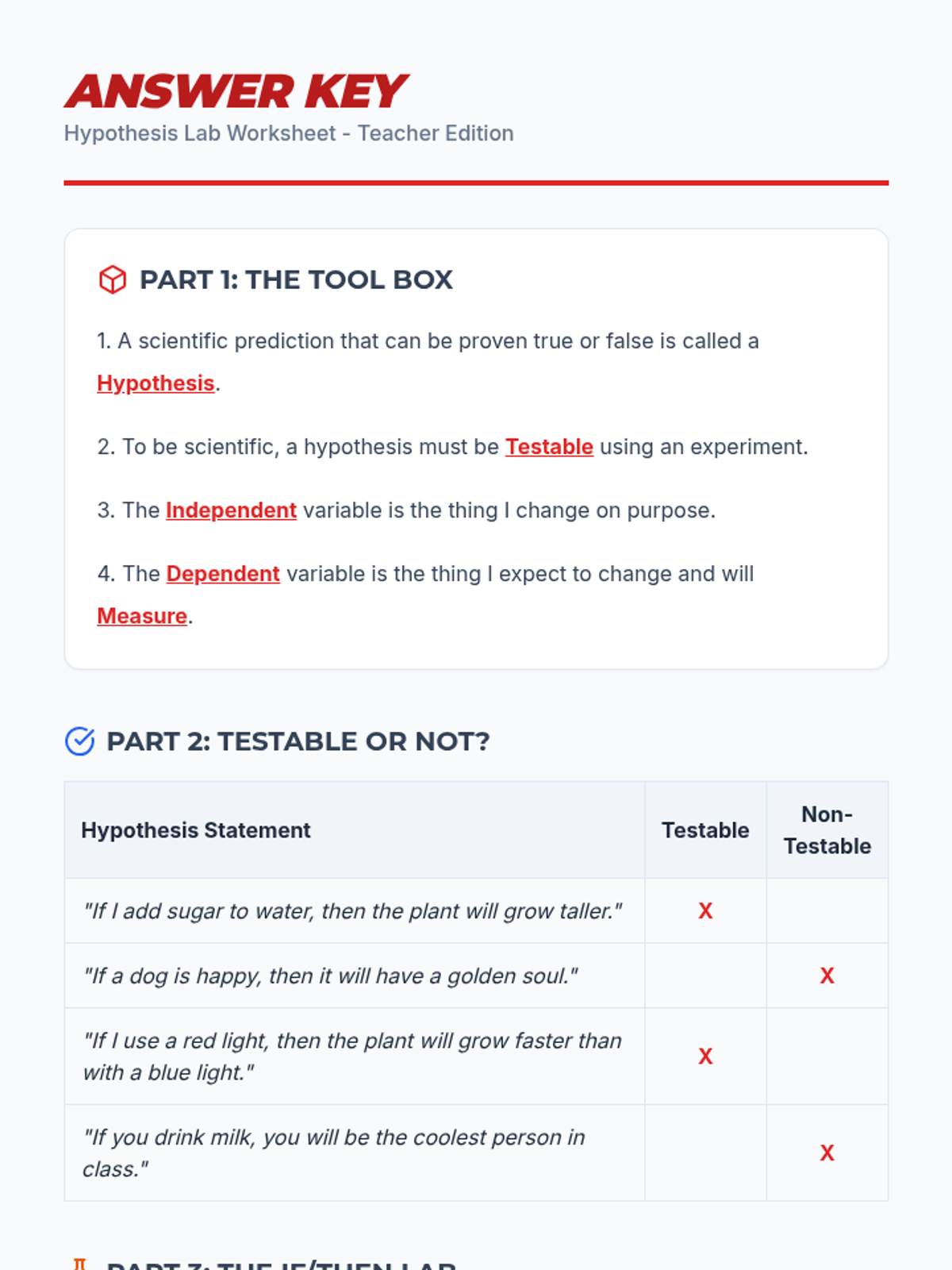
Answer key for the Hypothesis Lab Worksheet, featuring sample 'If/Then' statements and correct vocabulary pairings.
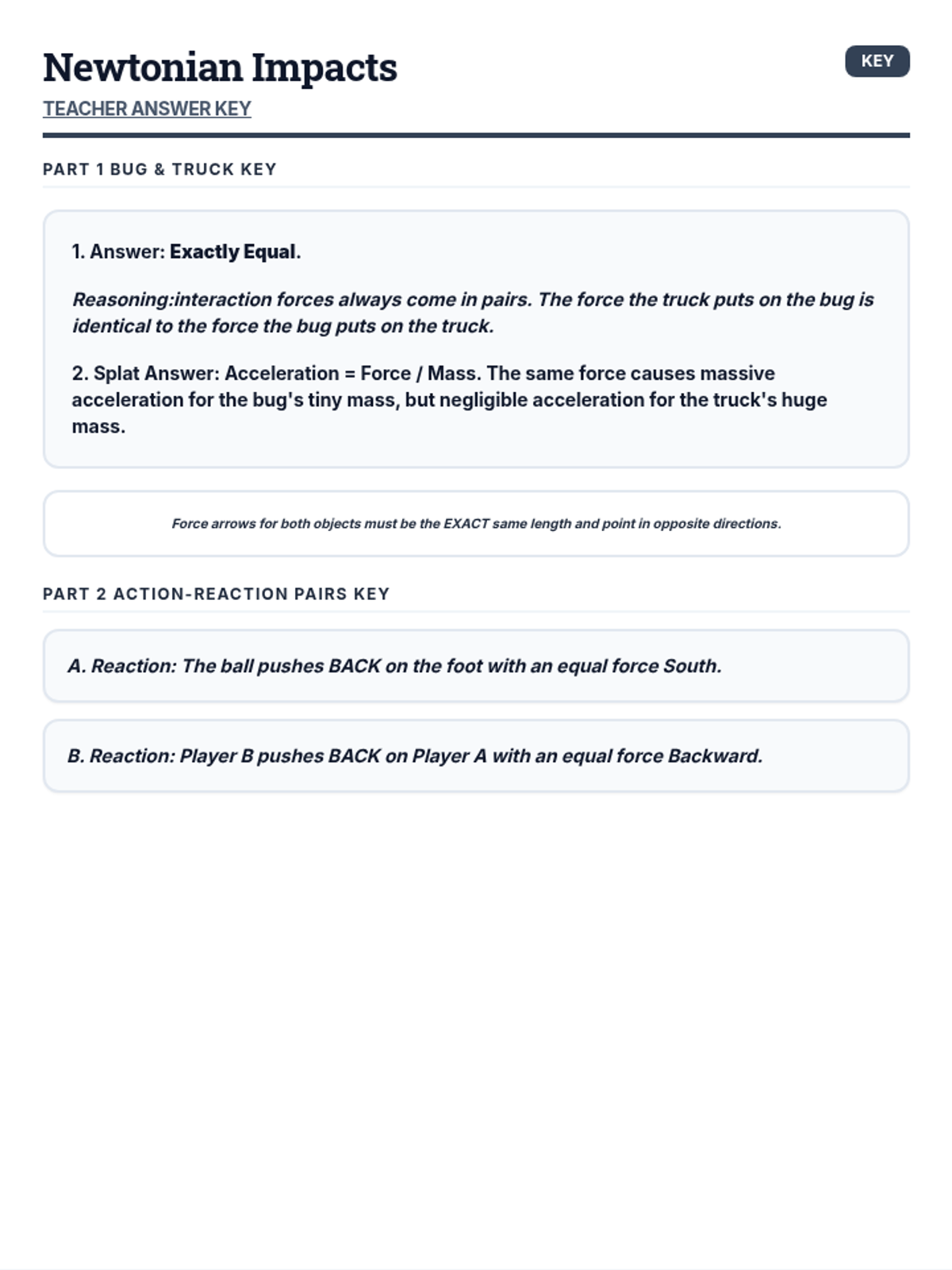
Teacher's answer key for the Newtonian Impacts Worksheet, clarifying the "bug vs truck" paradox and the link between Newton's 3rd law and impulse.
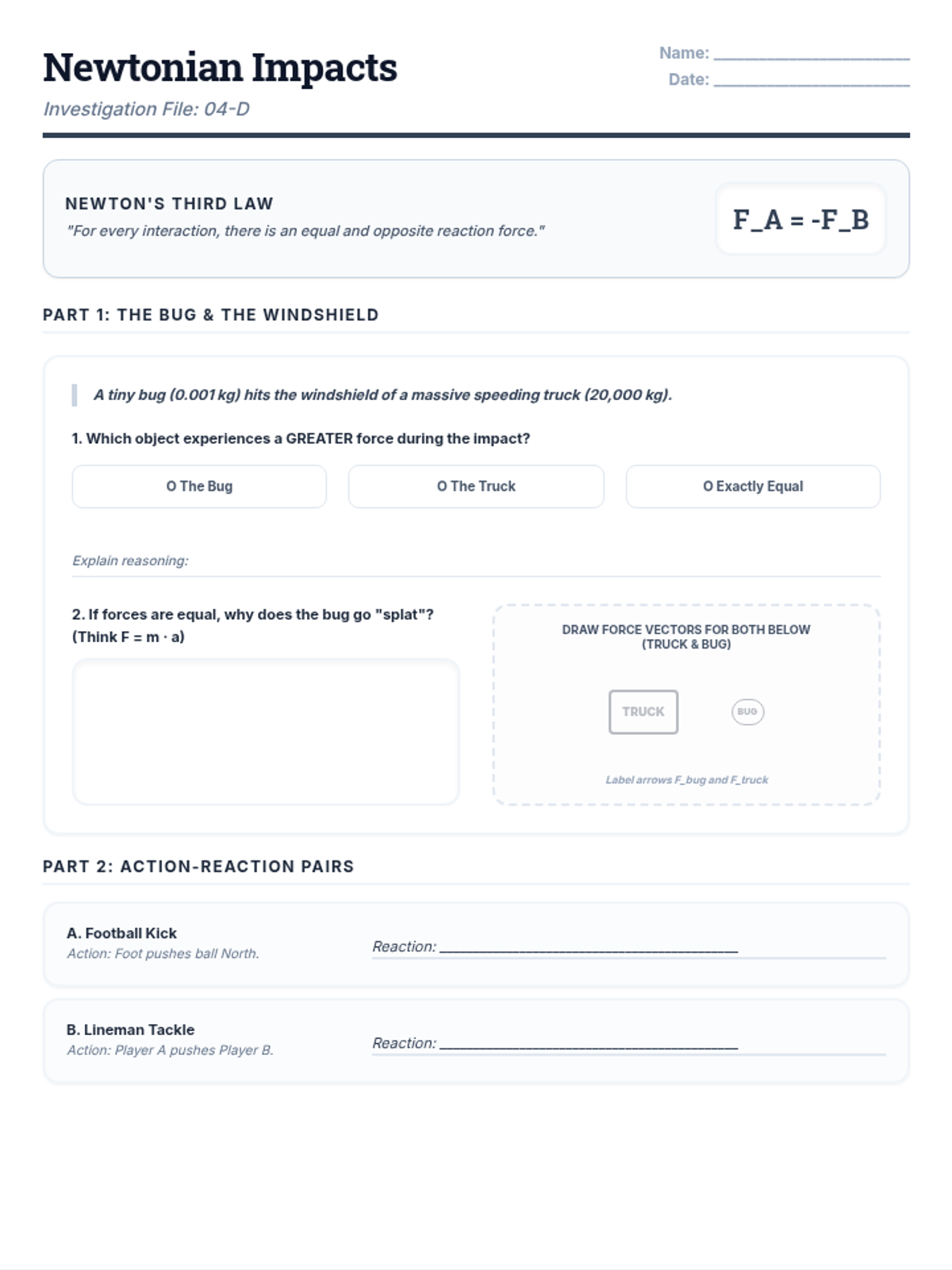
A conceptual worksheet connecting Newton's Third Law to collisions. It covers equal and opposite forces using the "bug vs windshield" example, action-reaction pairs in sports, and the link between impulse and momentum changes.
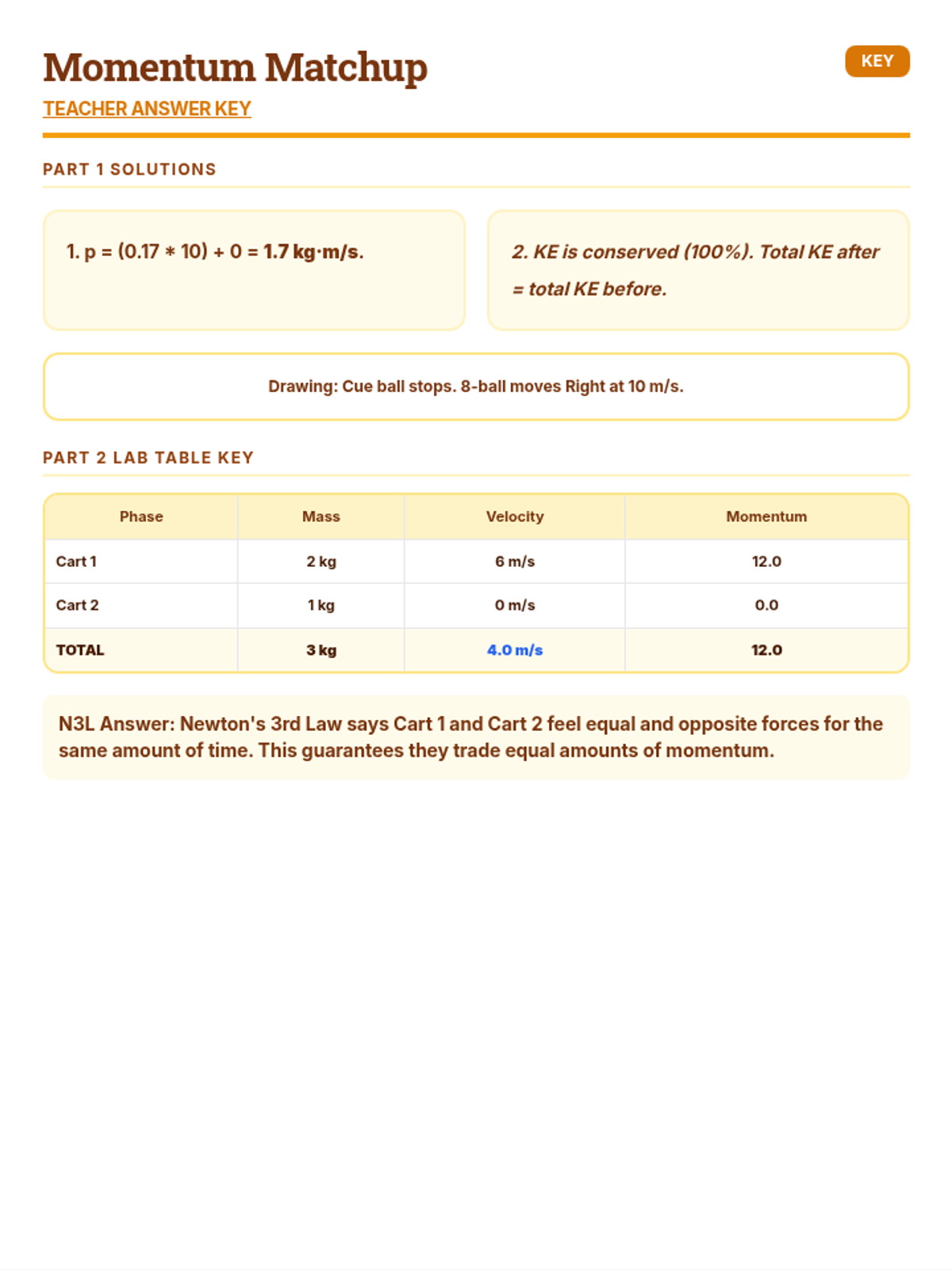
Teacher's answer key for the Momentum Matchup Worksheet, with step-by-step solutions for lab cart calculations and skater explosion physics.
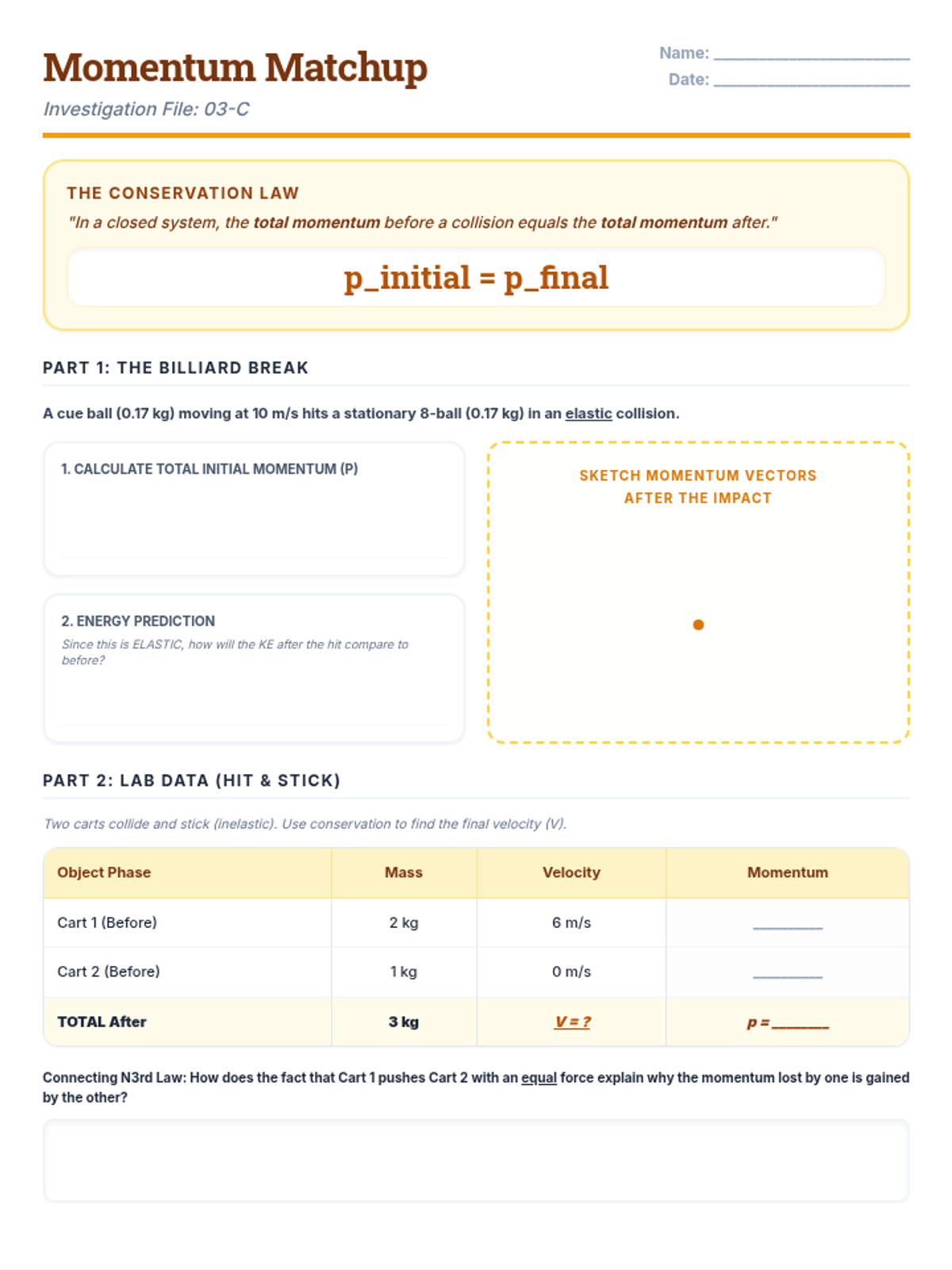
A detailed worksheet on the conservation of momentum. Features billiard ball calculations, inelastic lab cart tables, and an "explosion" scenario with ice skaters. Focuses on the principle that total initial momentum equals total final momentum.
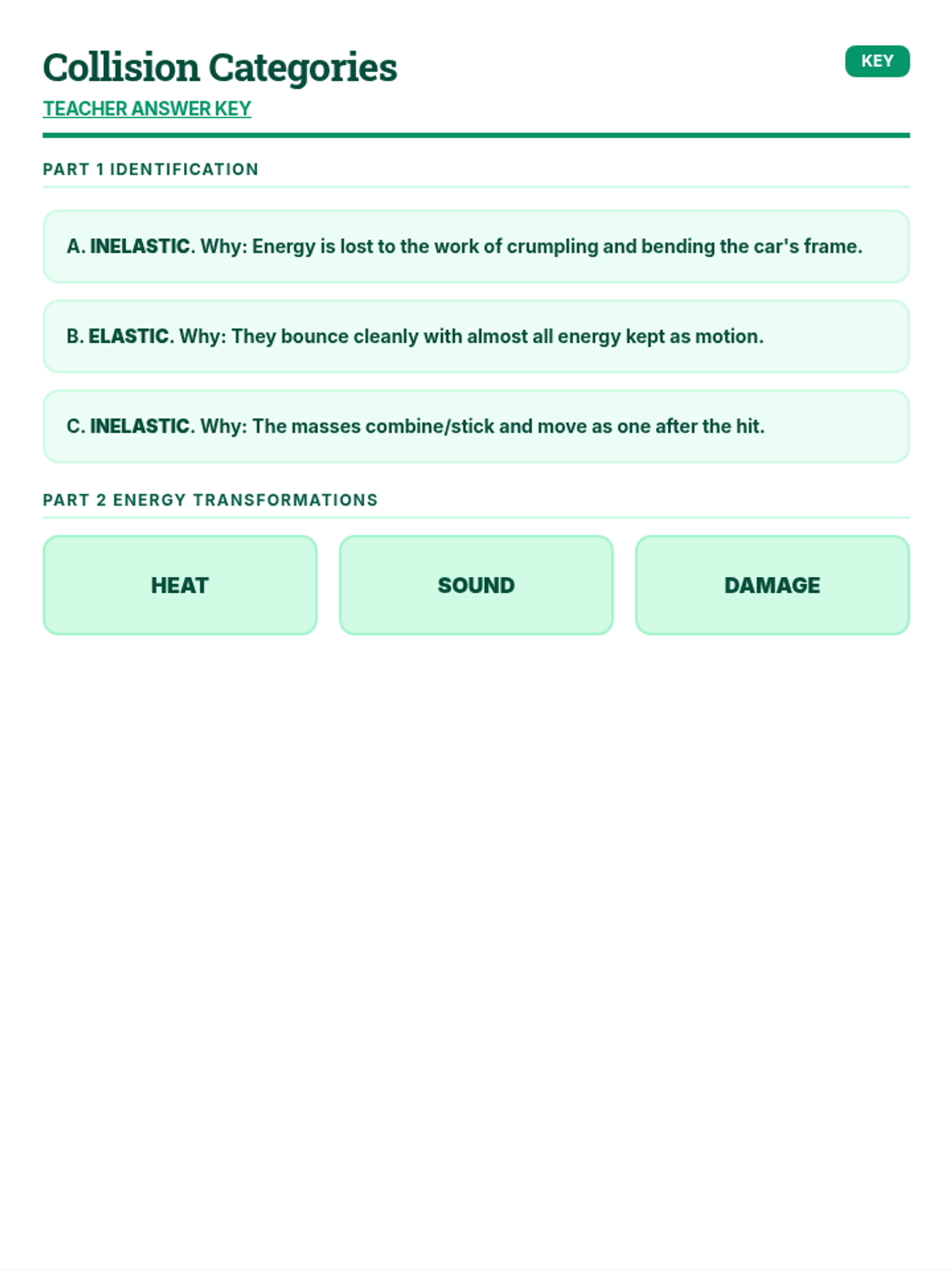
Teacher's answer key for the Collision Categories Worksheet, featuring classification reasoning, diagram descriptions, and the physics of crumple zones.
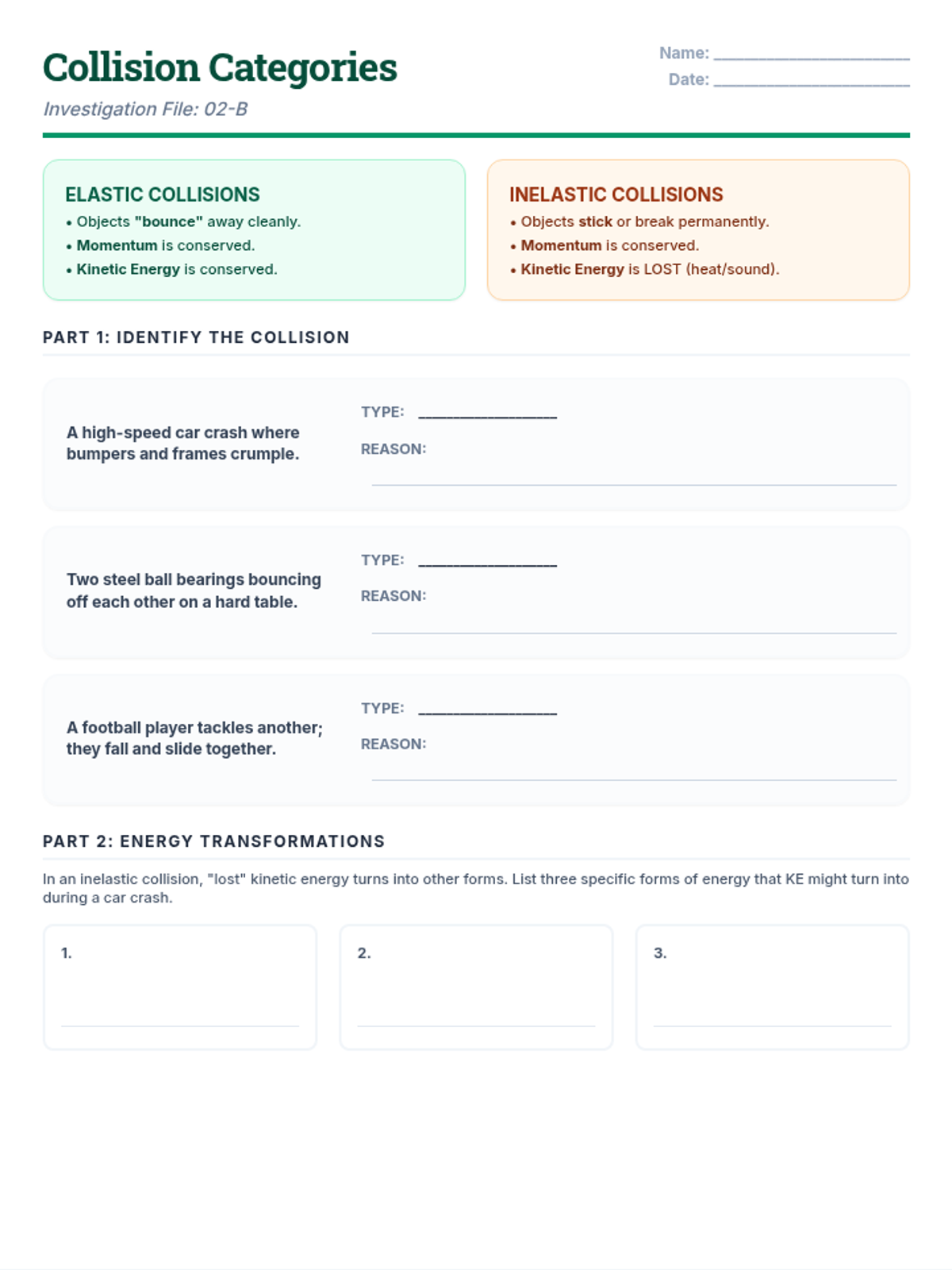
A worksheet focusing on identifying and differentiating between elastic and inelastic collisions. Students classify real-world scenarios, diagram lab cart results, and analyze energy transformation in car crashes.
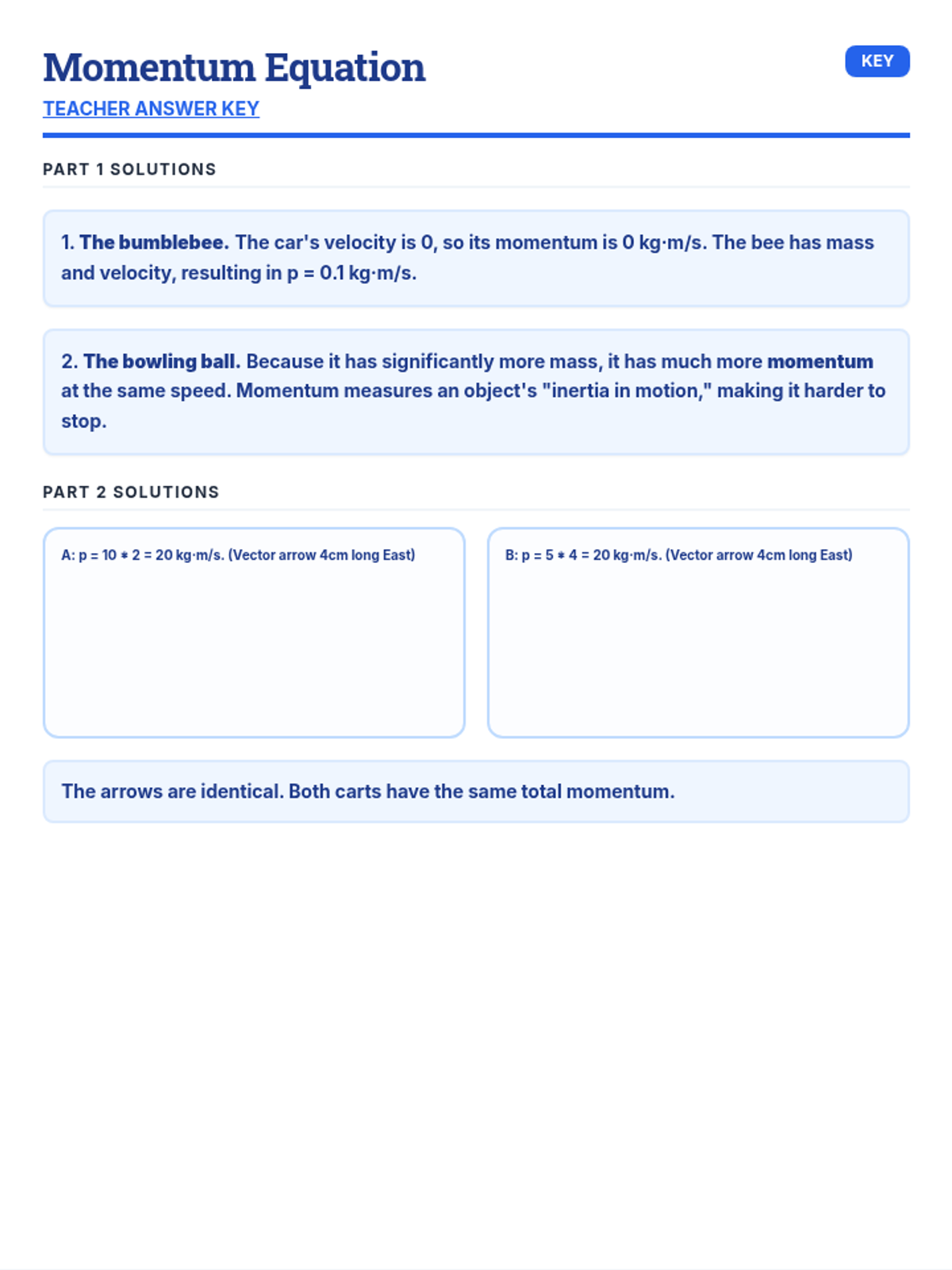
Teacher's answer key for the Momentum Mission Worksheet, featuring completed calculations, diagrams, and conceptual explanations.
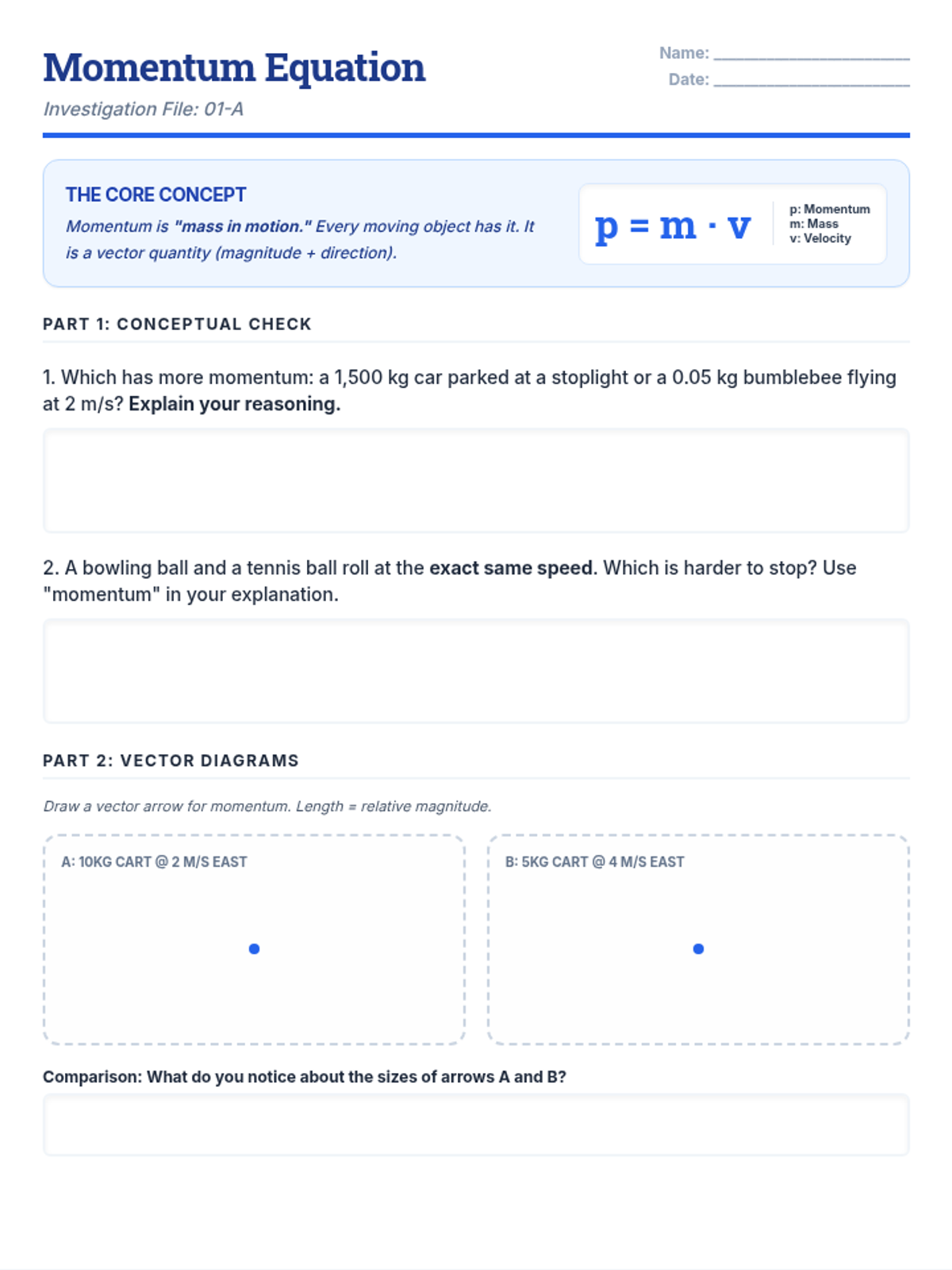
A comprehensive worksheet for 9th-grade physics students covering the momentum equation (p=mv), units, vector nature, and conceptual comparisons between mass and velocity. Includes drawing prompts and real-world calculation problems.
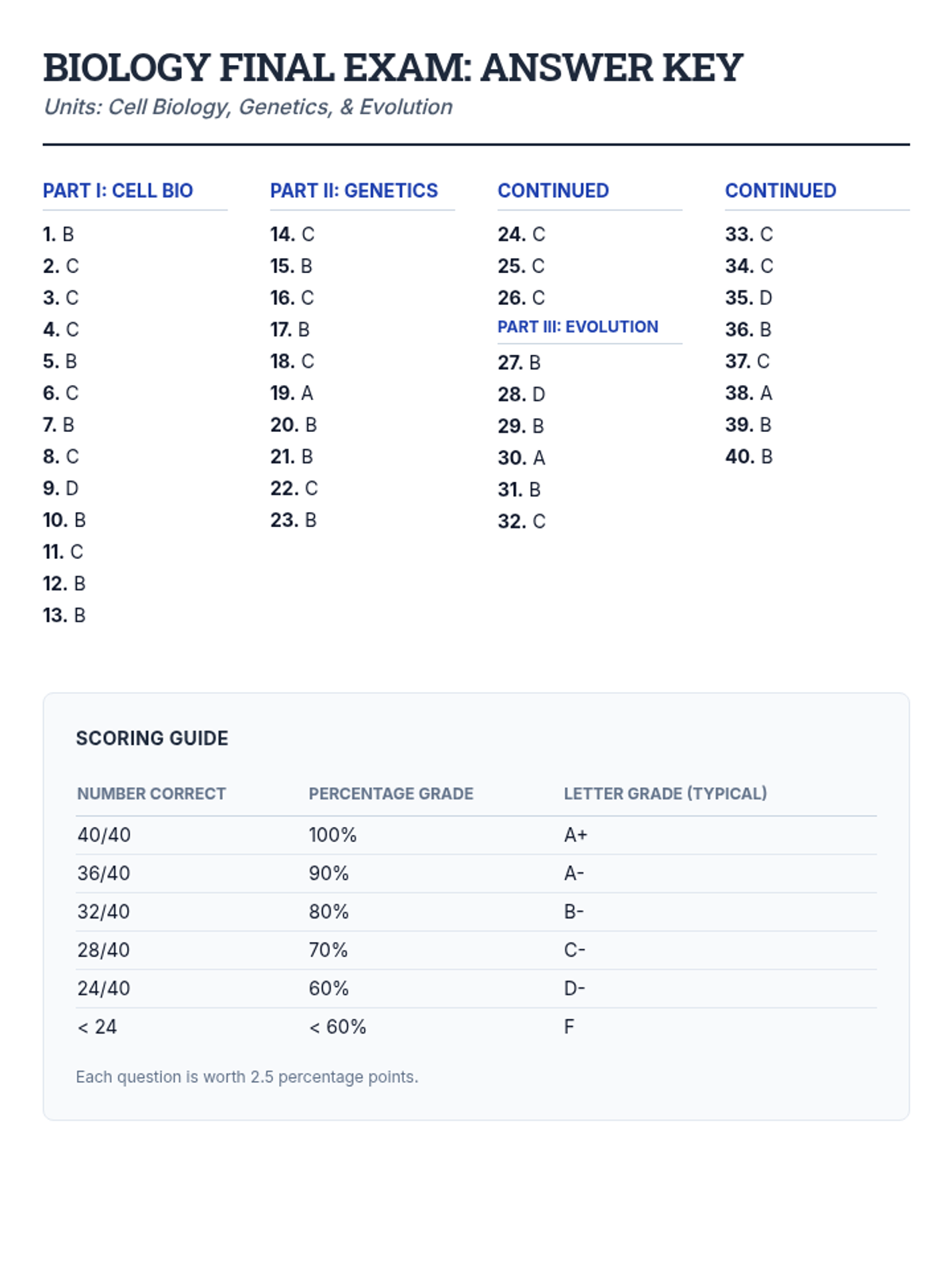
The answer key for the 40-question Biology Final Exam. Includes a compact key for quick grading and a standard scoring guide with percentage calculations.
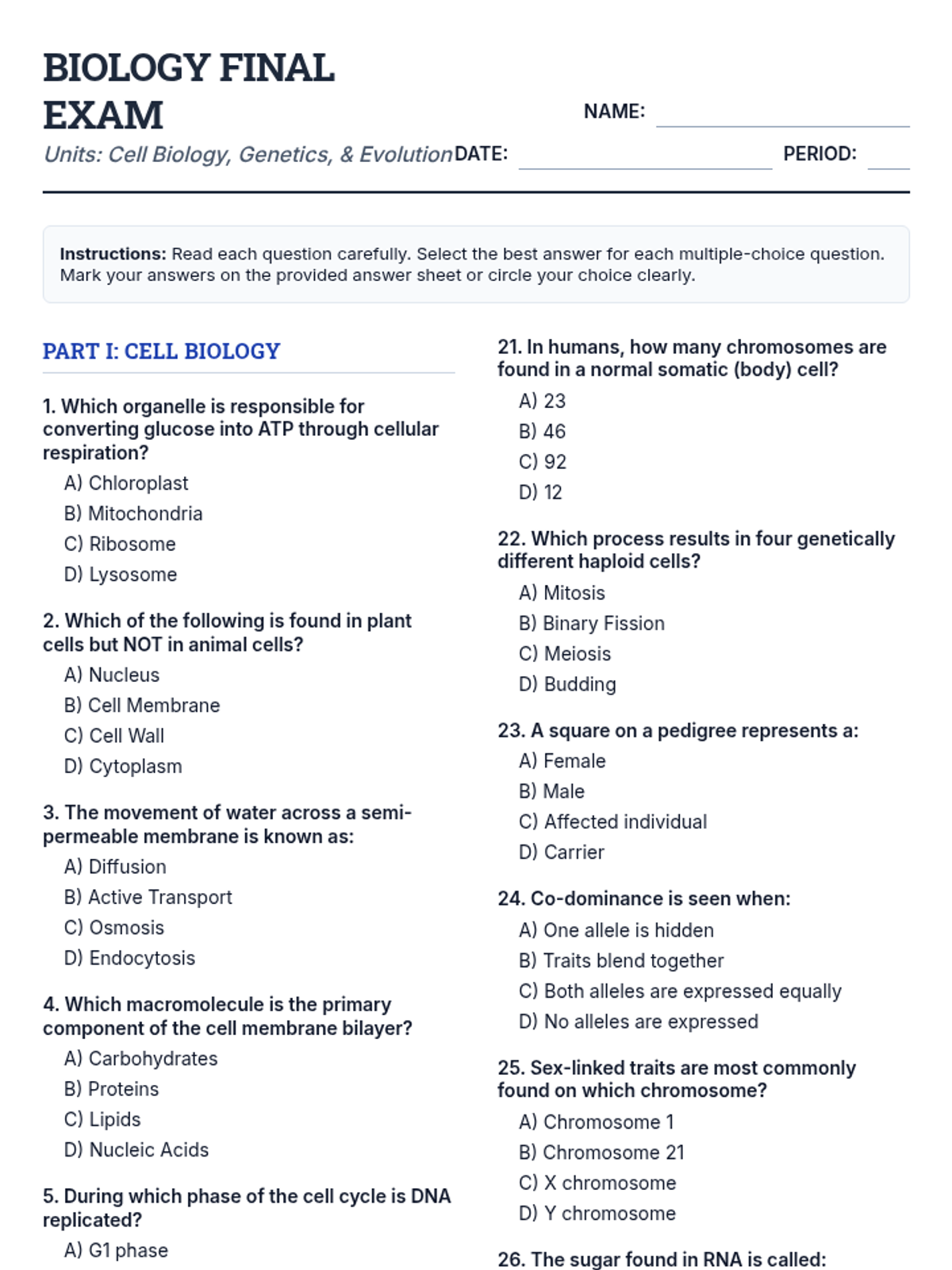
A 40-question multiple-choice biology final exam covering Cell Biology, Genetics, and Evolution. It is designed with a two-column layout to optimize page use while maintaining high readability.
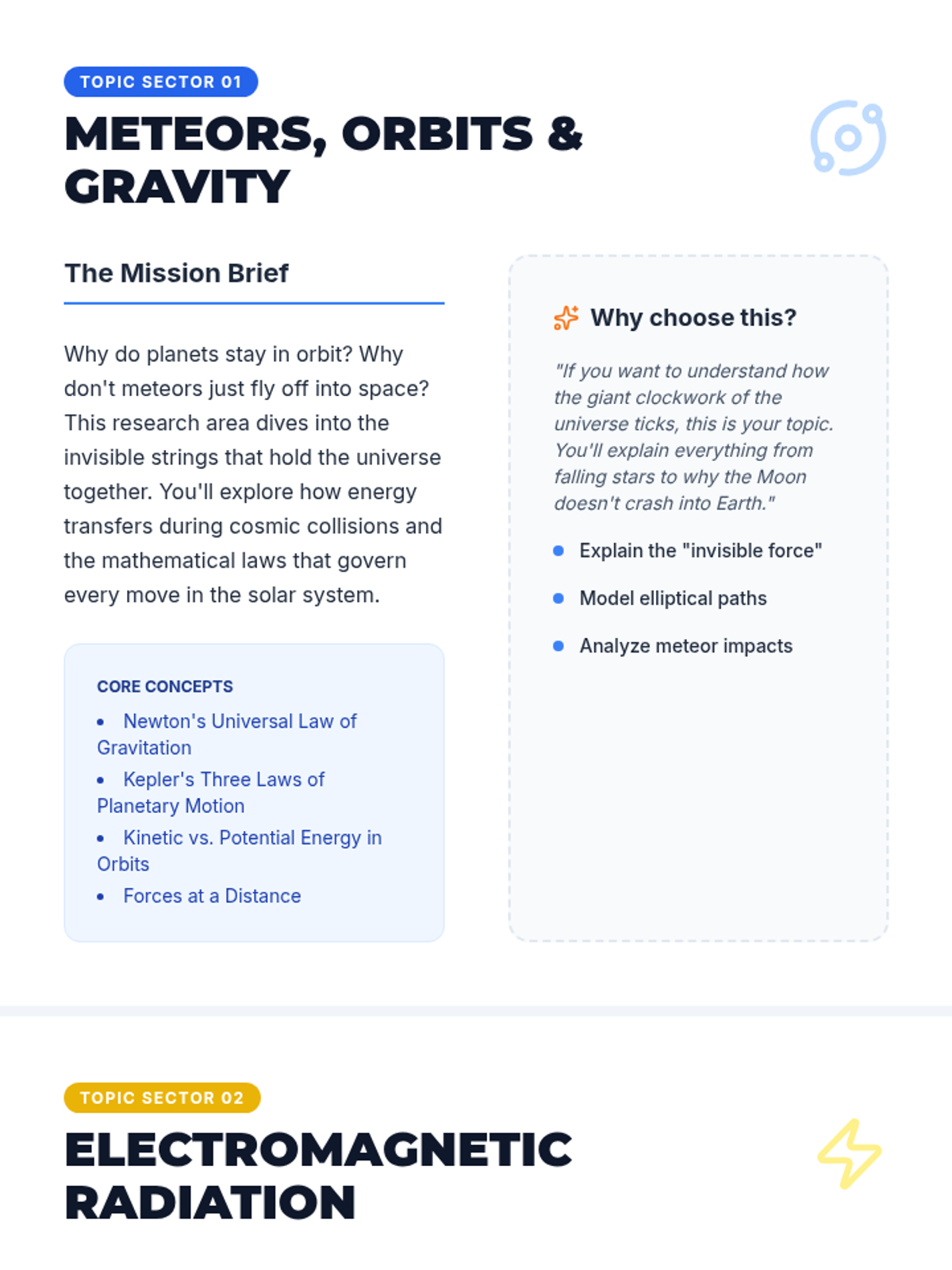
A detailed topic guide featuring a deep dive into all six research areas, including mission briefs, core concepts, and 'Why Choose This?' hooks to help students select their research focus.
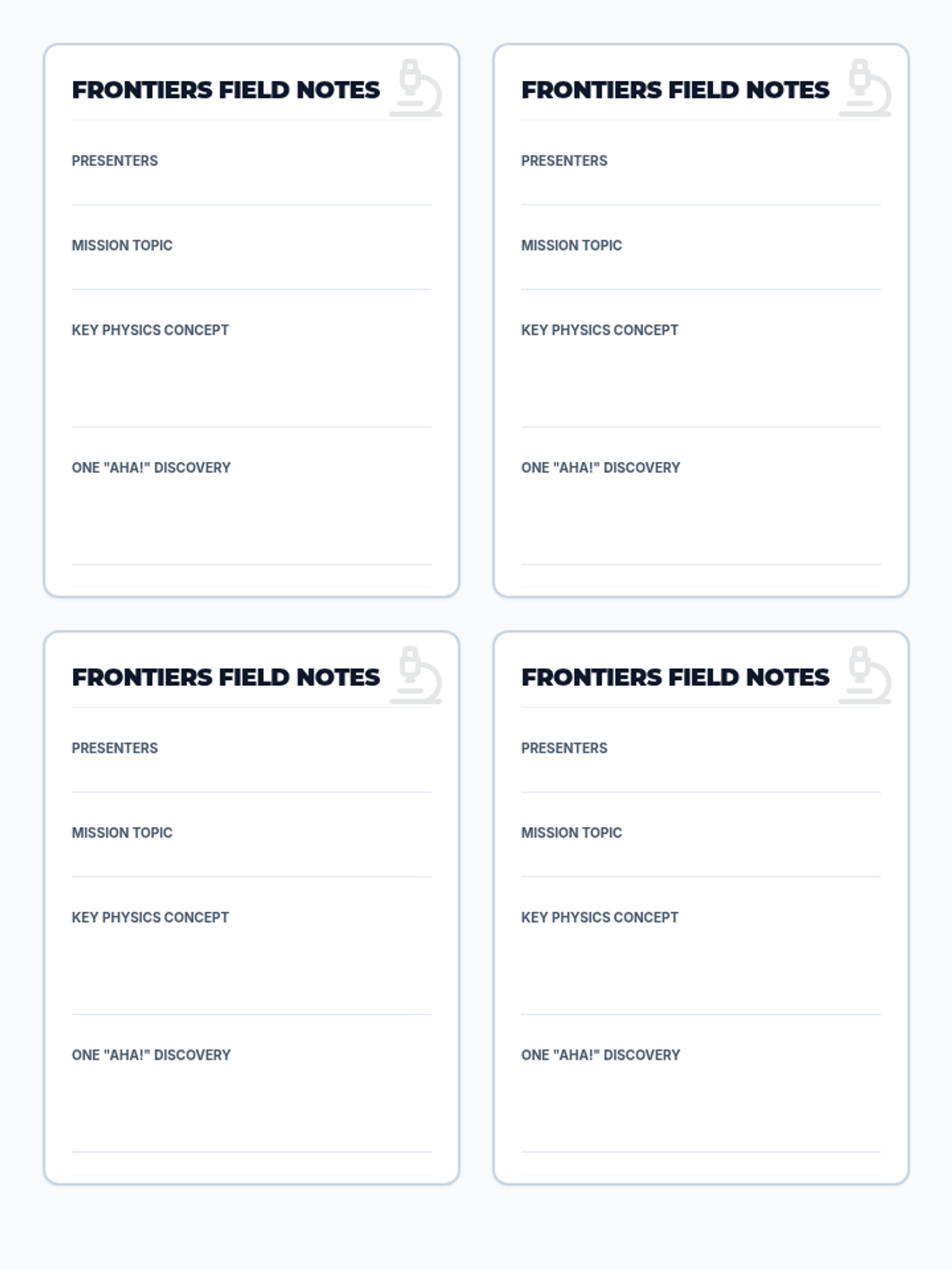
Small, quadrant-based note sheets for students to use while observing peer presentations, featuring space for key concepts and discoveries. Revised for higher contrast and better space utilization.
An introductory slide deck for teachers to launch the Physics Frontiers research project, covering mission goals, topic options, and source requirements.
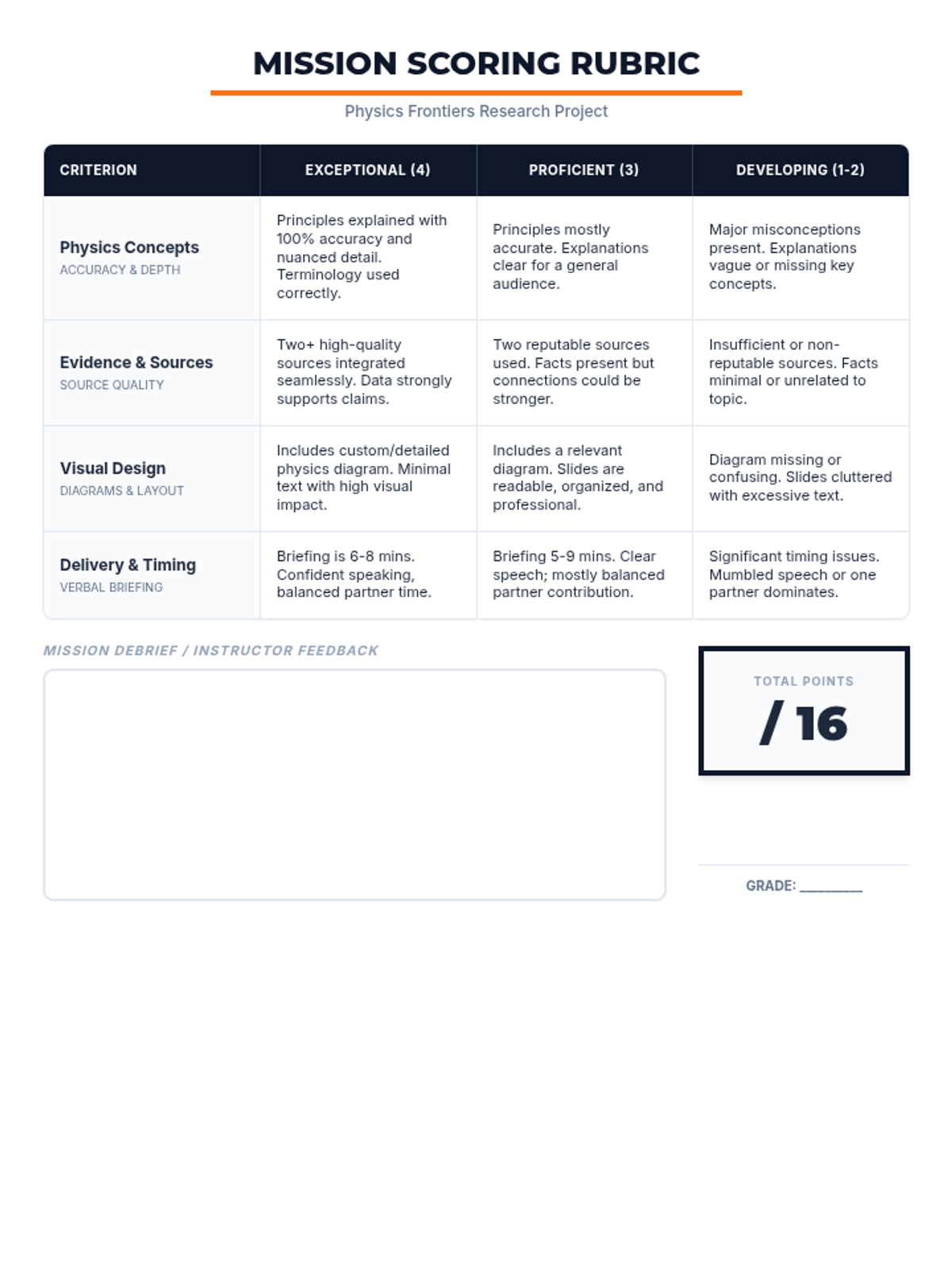
A grading rubric for the Physics Frontiers project, evaluating physics accuracy, source quality, visual design, and oral delivery. Optimized for single-page layout.
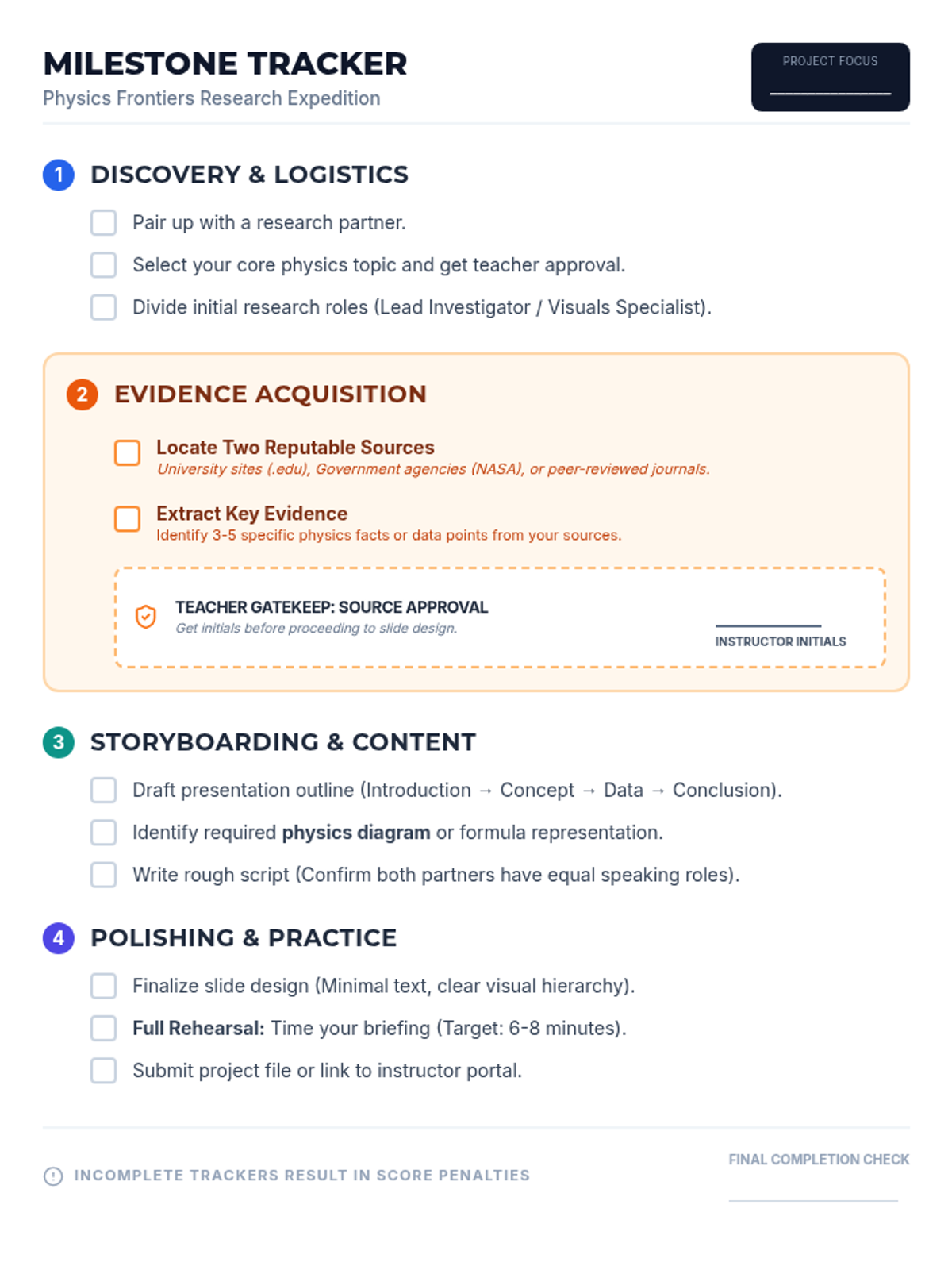
A task-based progress tracker for the Physics Frontiers project, featuring a mandatory teacher checkpoint for source verification and clear categorical phases. Revised for single-page fit.
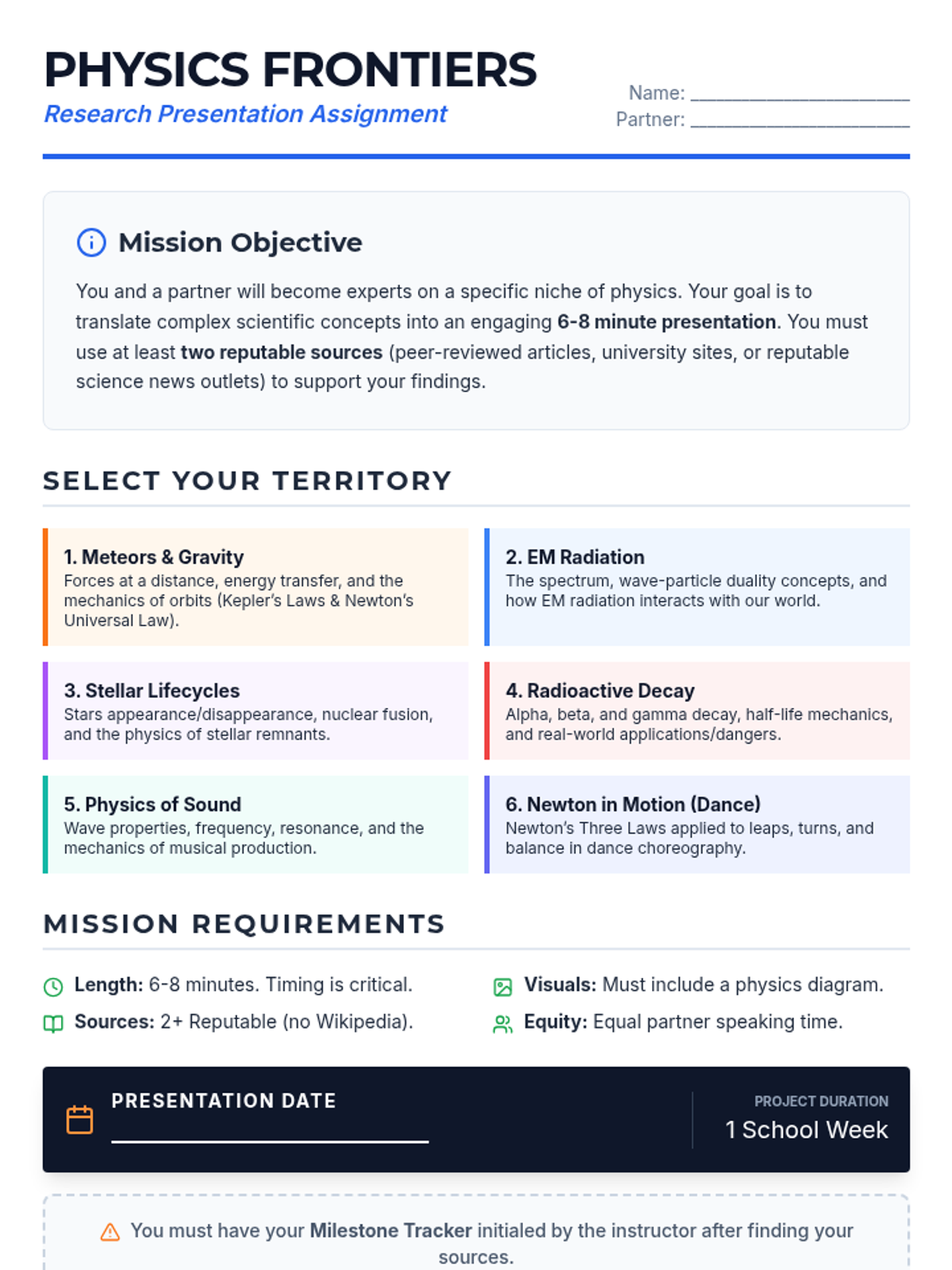
The main project handout for the Physics Frontiers research assignment, detailing topics, requirements, and mission objectives. Optimized for single-page printing.
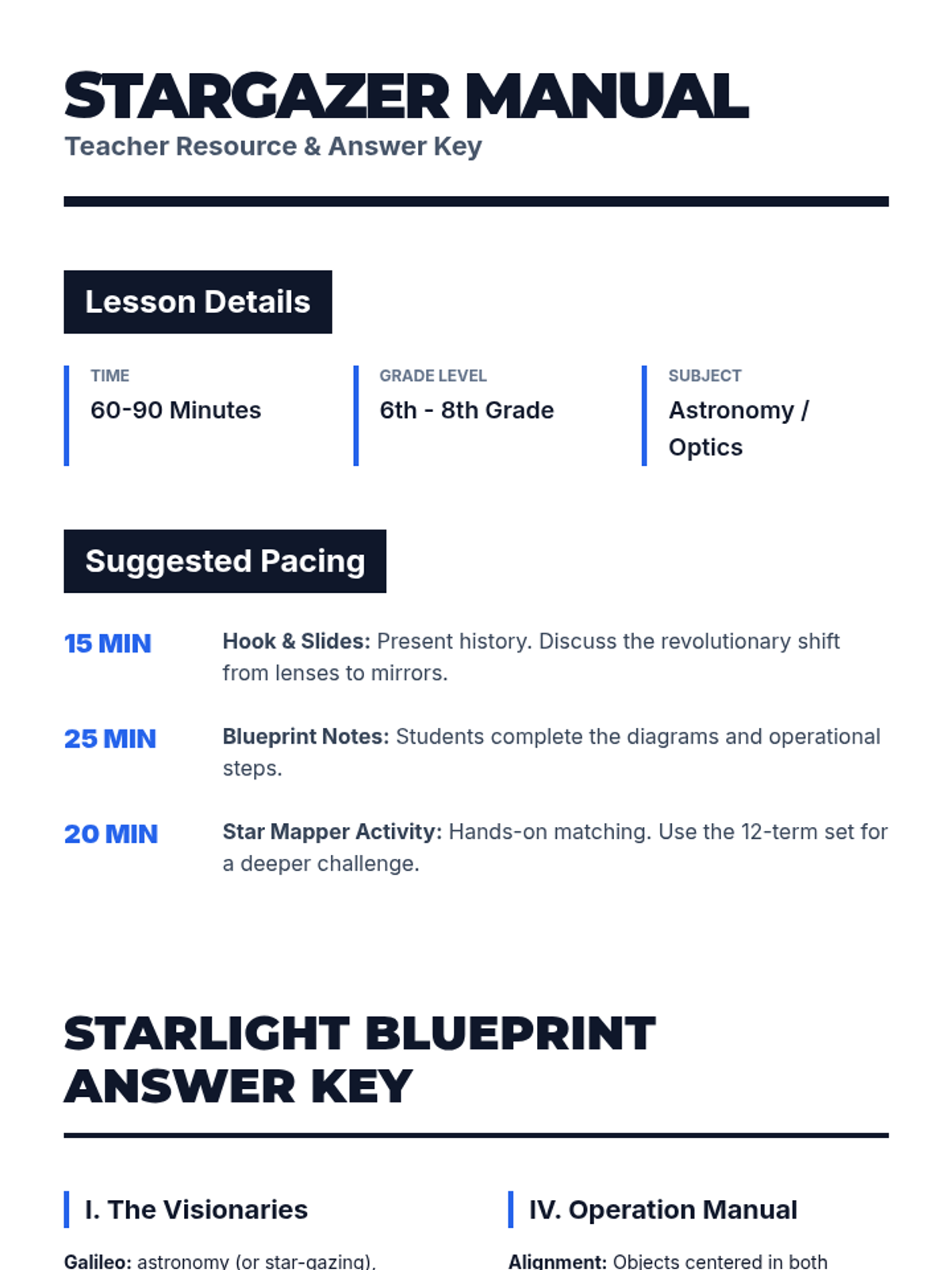
A comprehensive teacher's resource containing lesson pacing guidelines, teaching tips for the telescope unit, and a complete answer key for the student guided notes and the expanded vocabulary card set. Provides clarity on instructional flow and expected student outcomes.
An instructional slide deck covering the history of telescopes (Galileo and Newton), the differences between refractors and reflectors, key vocabulary, and practical operational steps. Designed for classroom presentation with high-contrast visuals and clear, large text.
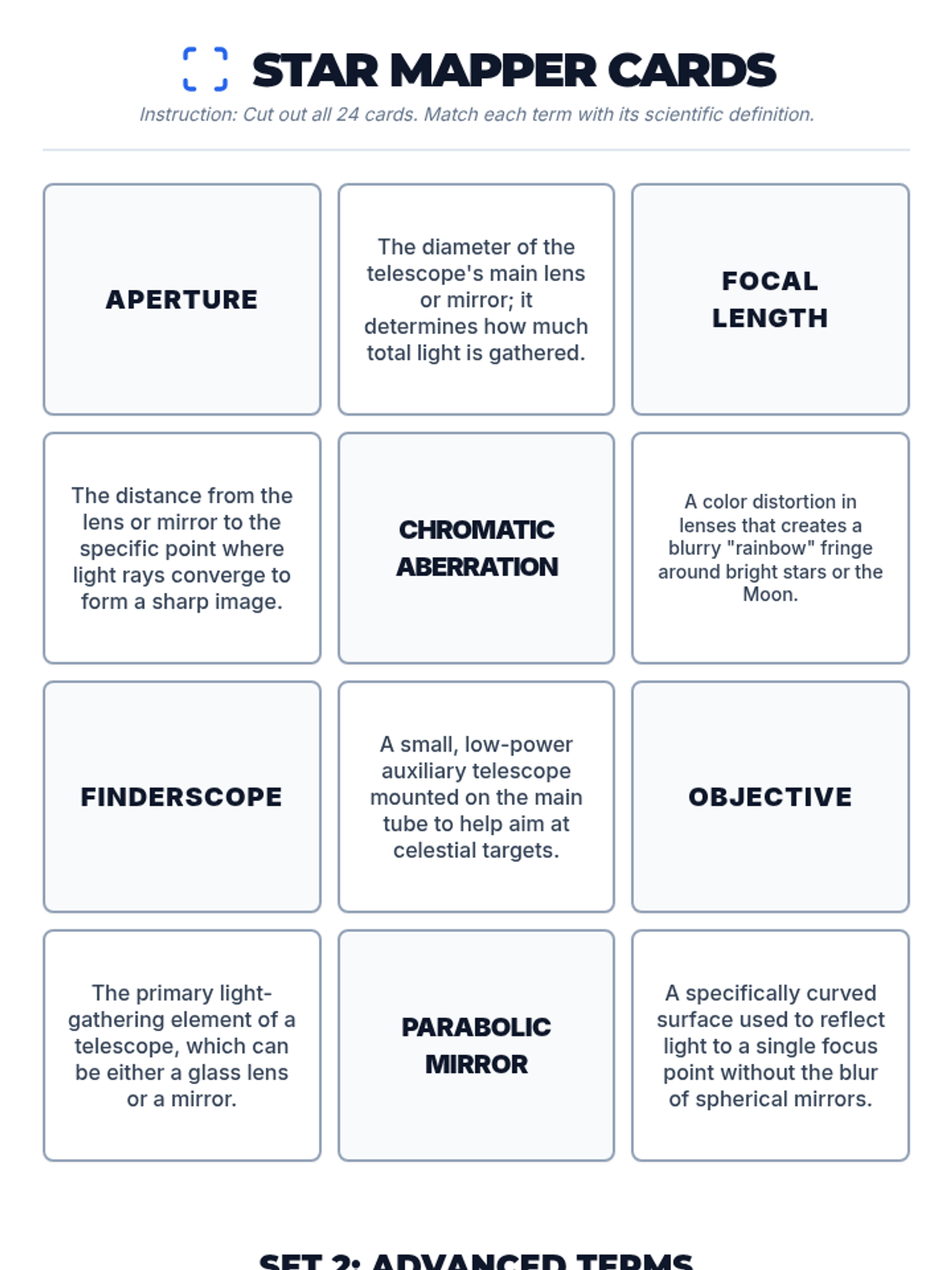
A comprehensive set of 24 vocabulary matching cards (12 terms and 12 definitions) across two pages. Terms include essential optics like Aperture and Focal Length, as well as advanced concepts like Barlow Lenses and Light Pollution. Designed for cut-out matching activities.
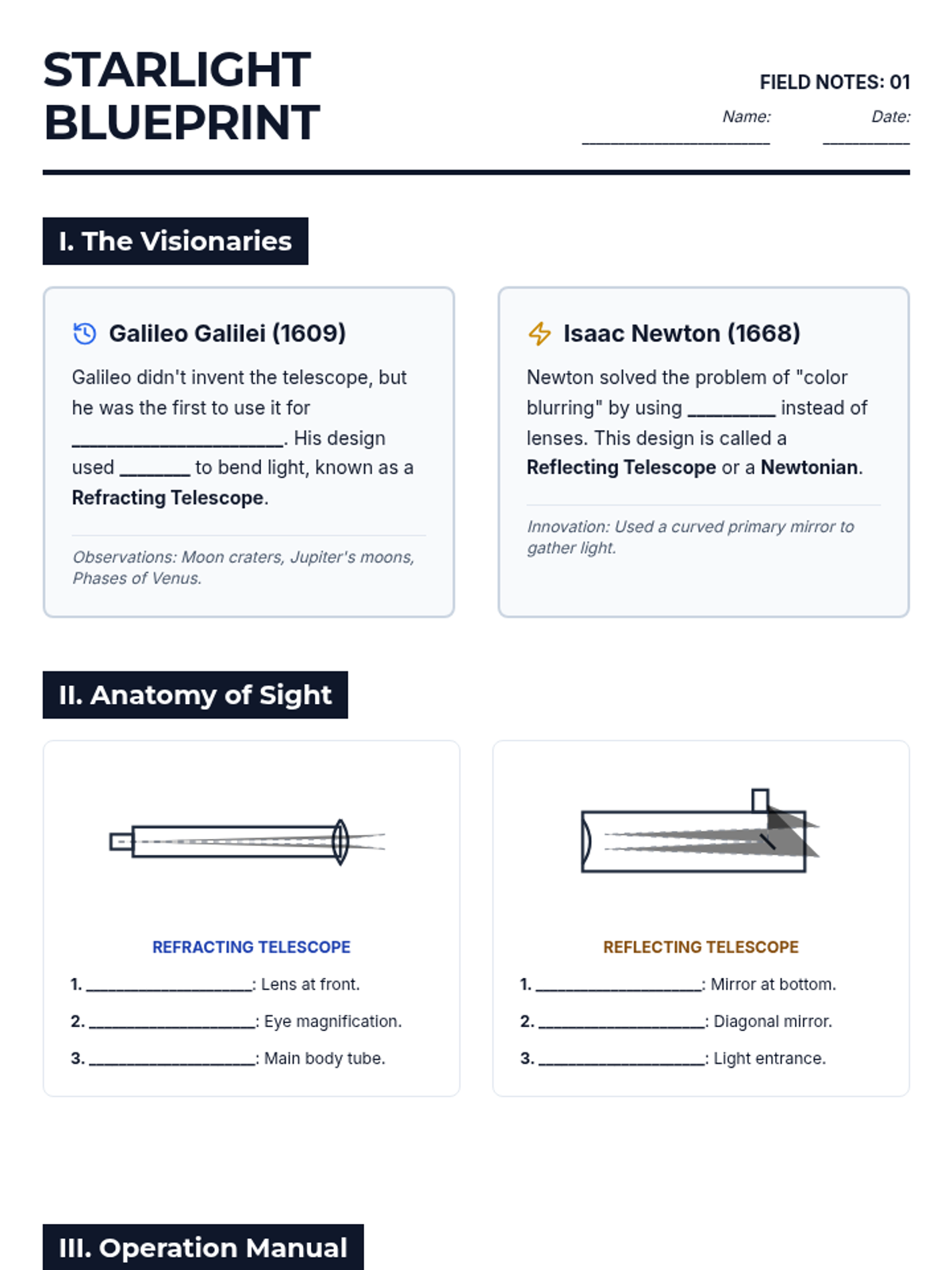
A detailed guided notes packet featuring diagrams of refracting and reflecting telescopes, historical context on Galileo and Newton, and practical tips for telescope operation. Includes fill-in-the-blank sections and a comparison table.
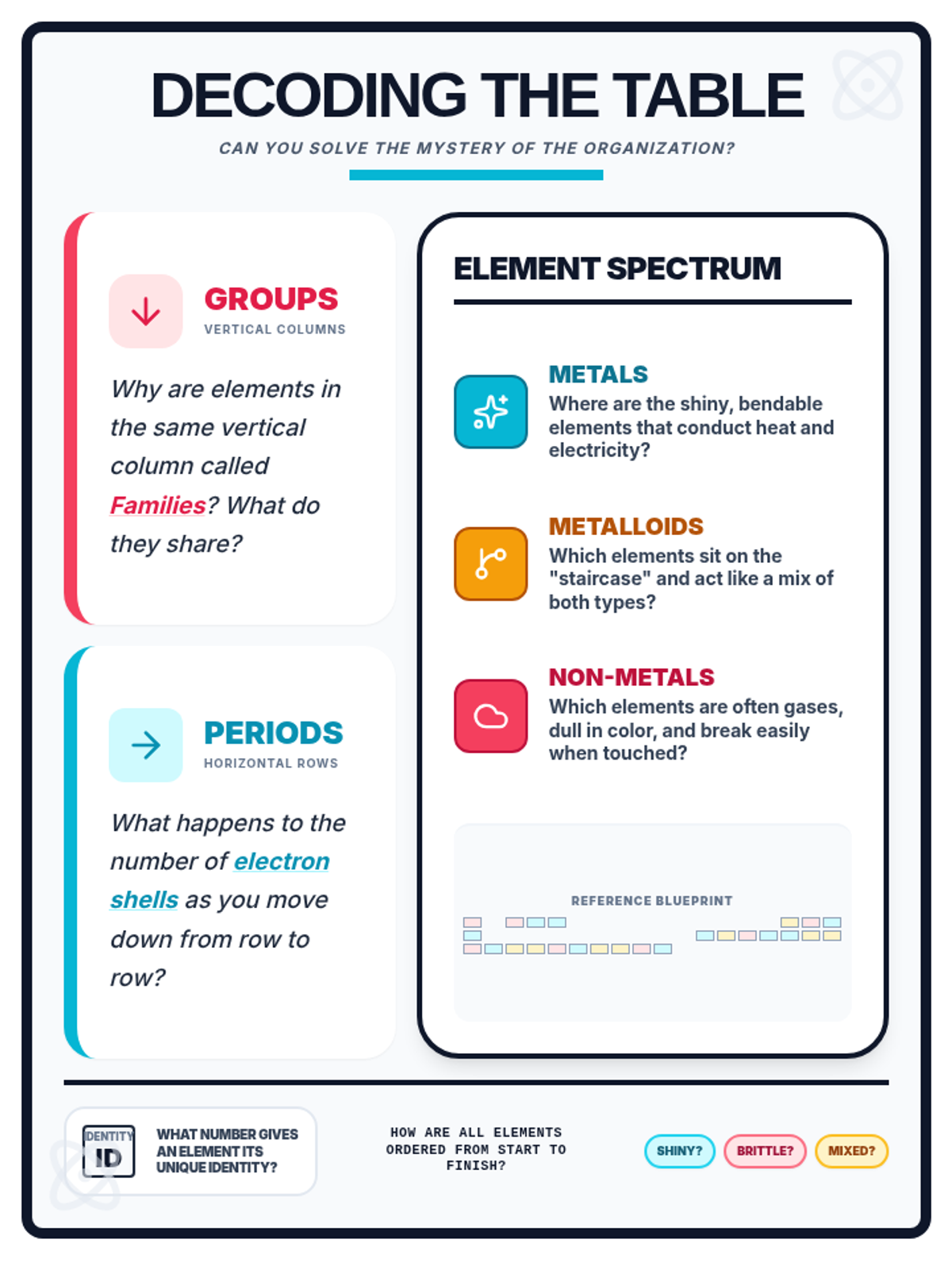
A visual inquiry-based anchor chart for classroom display, using questions to prompt students to think about the organization of the Periodic Table, groups, periods, and element types. Updated with a white-themed Spectrum section and a mini reference grid for improved clarity and utility.
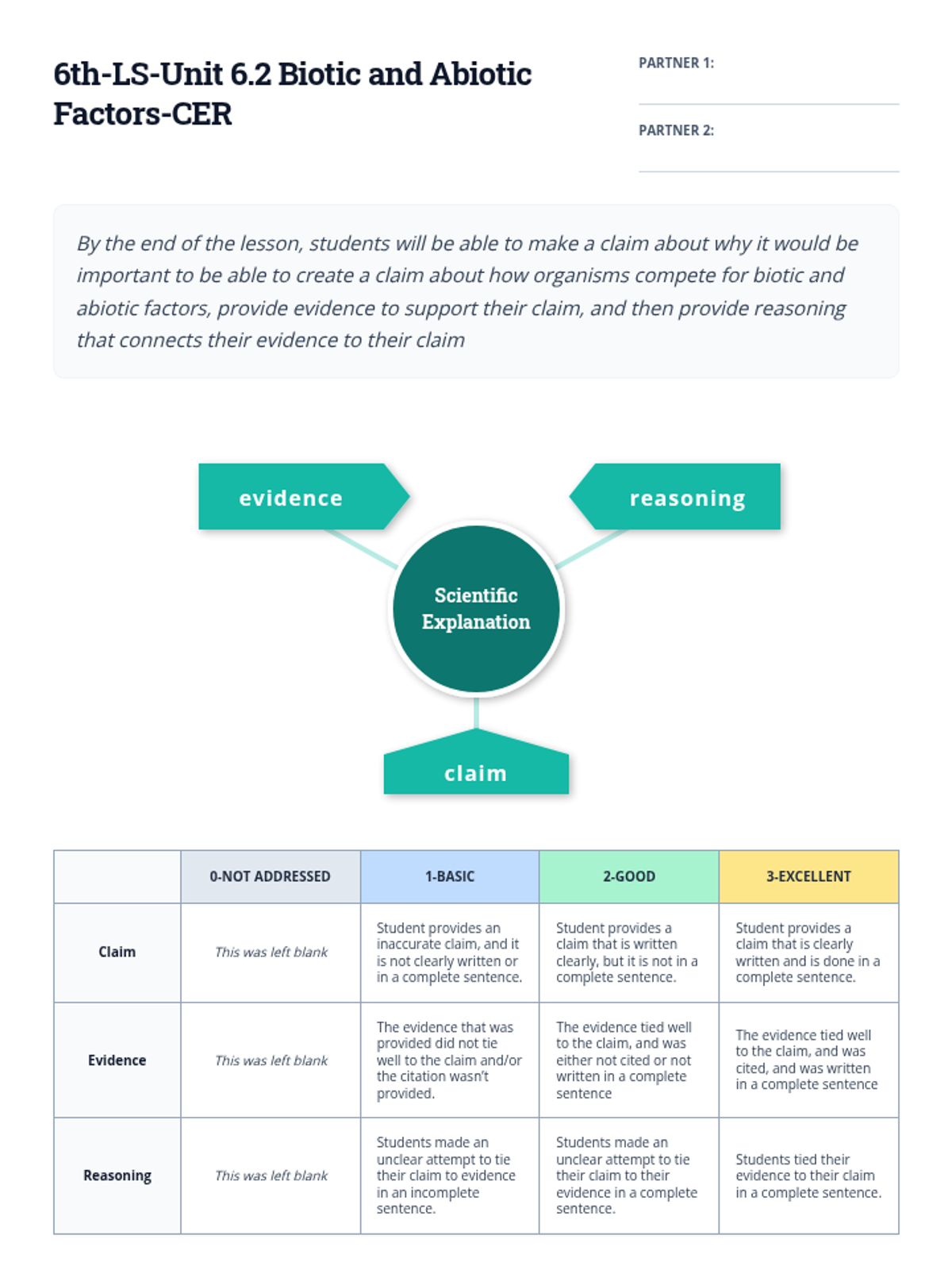
A verbatim restoration of the original CER packet for biotic and abiotic factors, featuring a reconstructed central graphic and significantly expanded writing space across four pages for classroom use. Claim section has been reduced to three writing lines and Evidence section to eight lines as requested. Header contrast and graphic connections have been further polished.
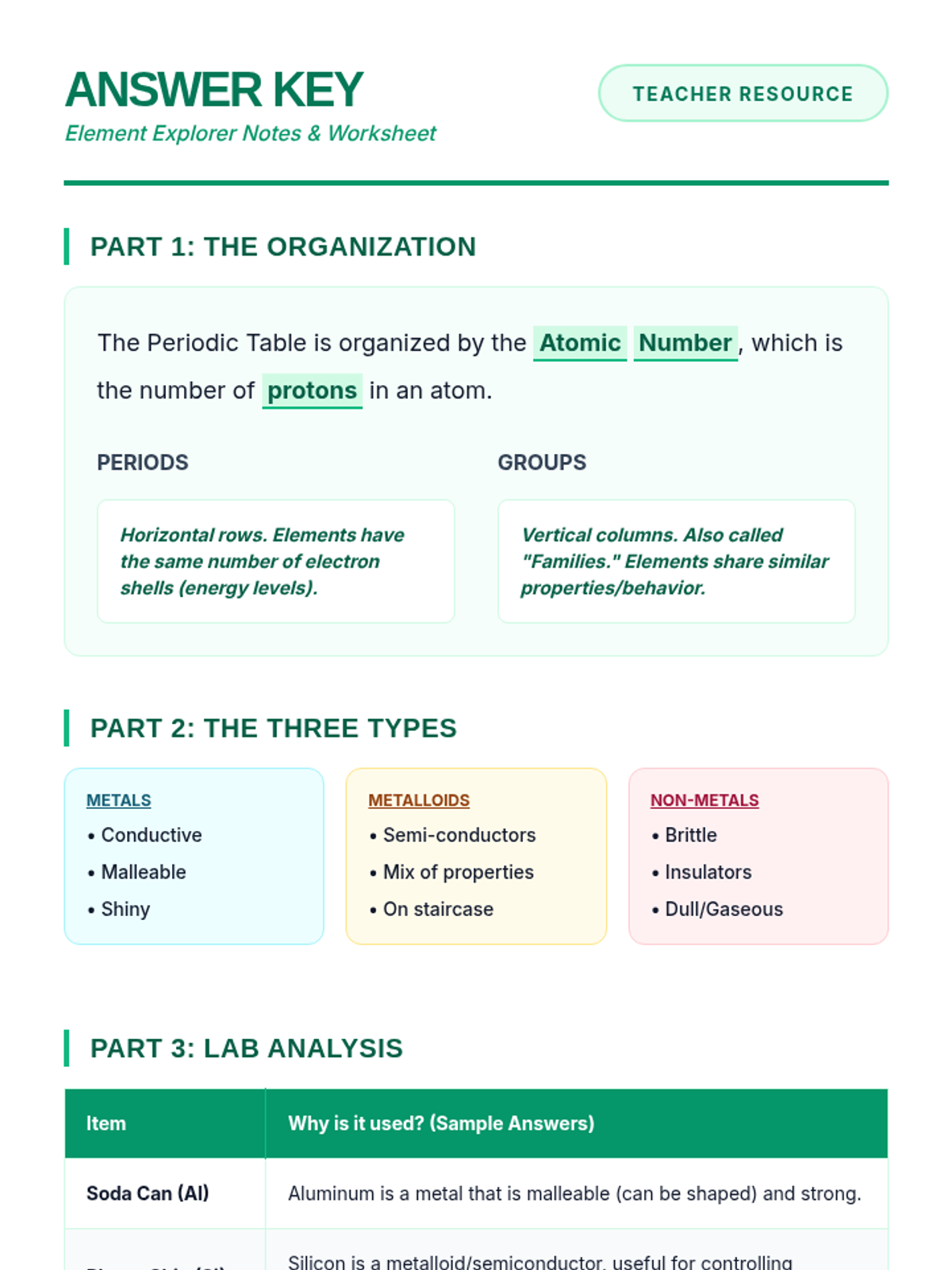
Comprehensive answer key for the Element Explorer Notes and Worksheet, providing sample responses and teaching points for the lab analysis and synthesis questions.
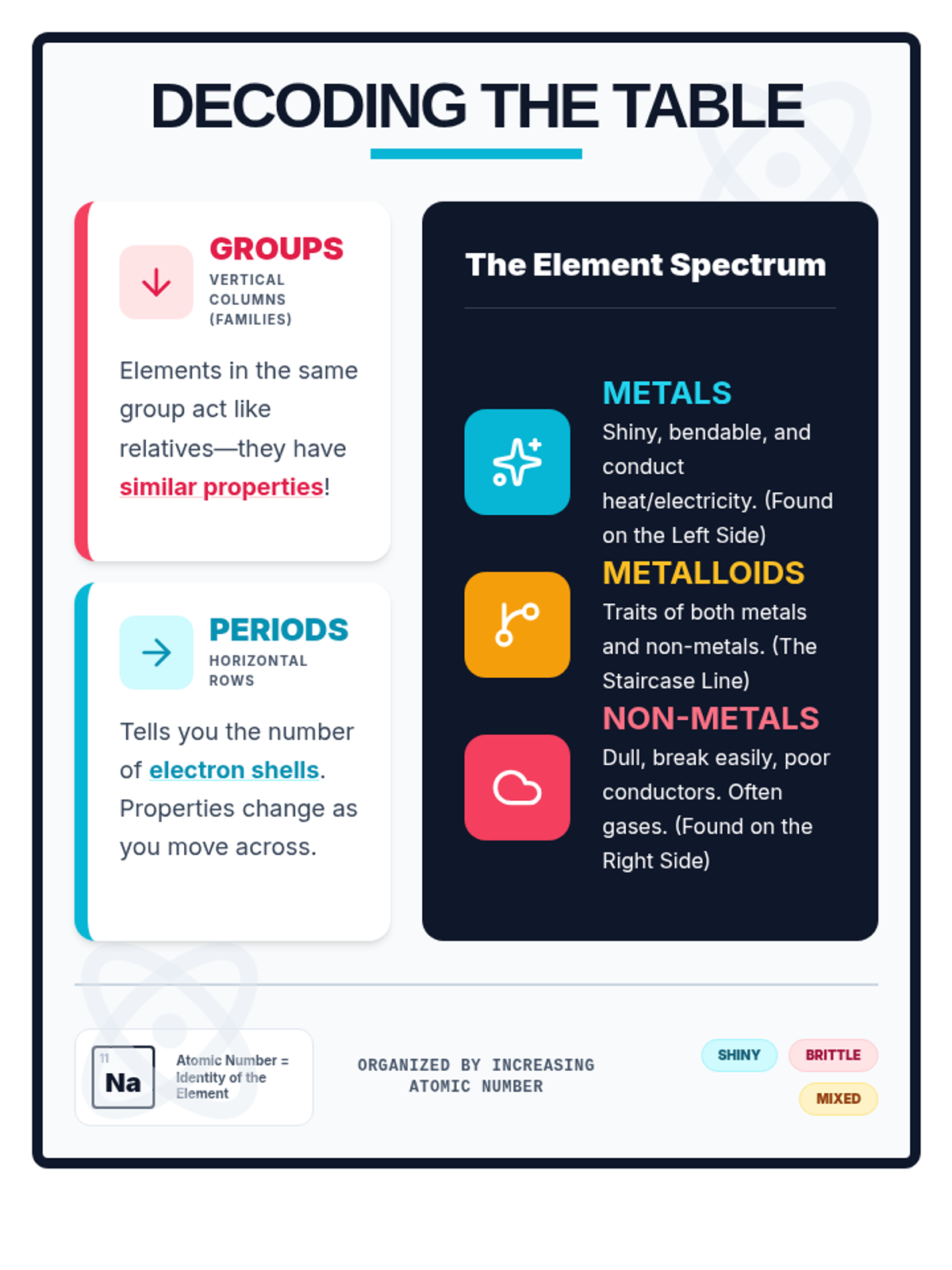
A visual inquiry-based anchor chart for classroom display, using questions to prompt students to think about the organization of the Periodic Table, groups, periods, and element types.
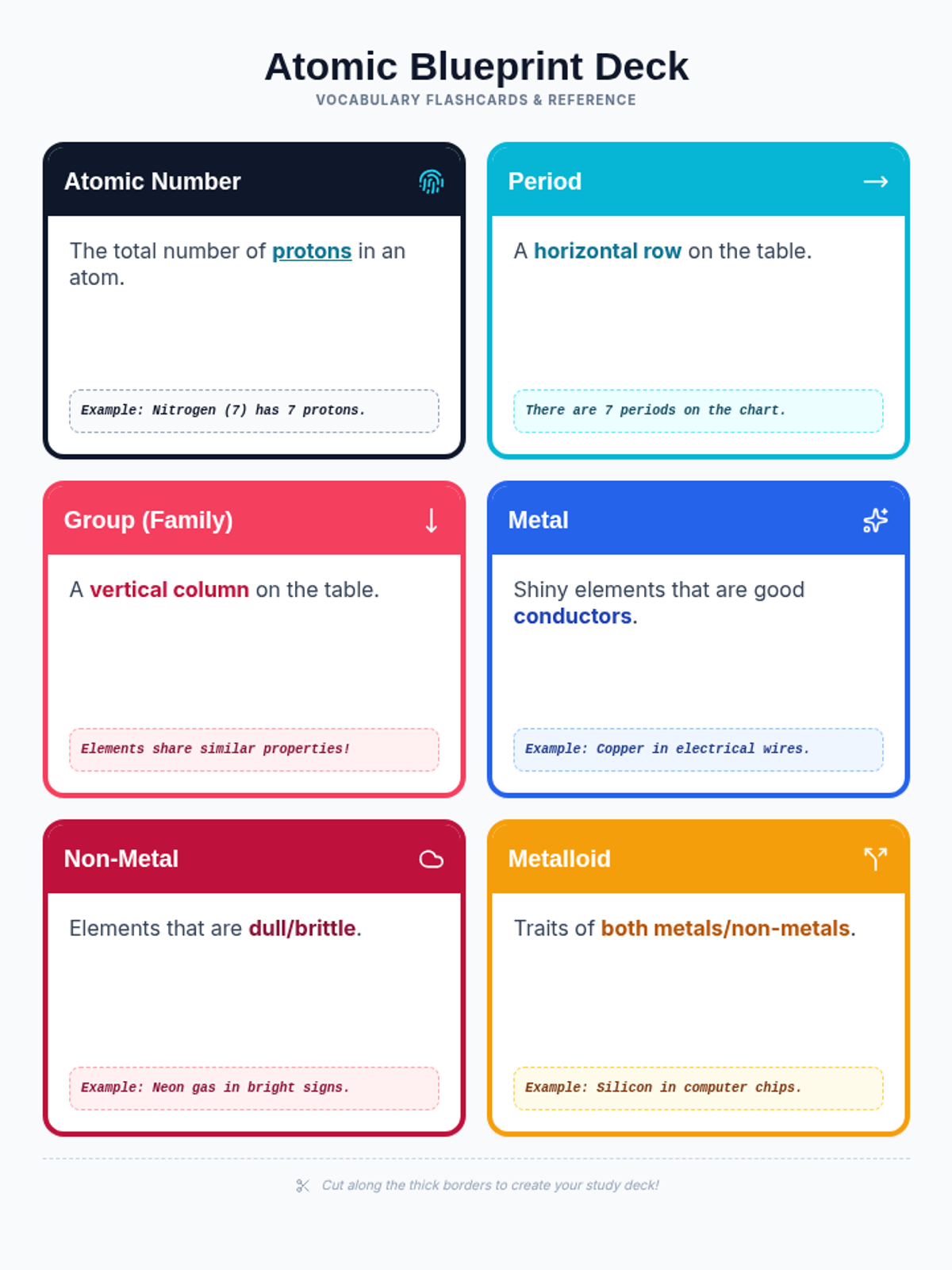
A set of high-contrast vocabulary cards covering key Periodic Table terms with clear definitions, visual icons, and "key point" summaries for student study.
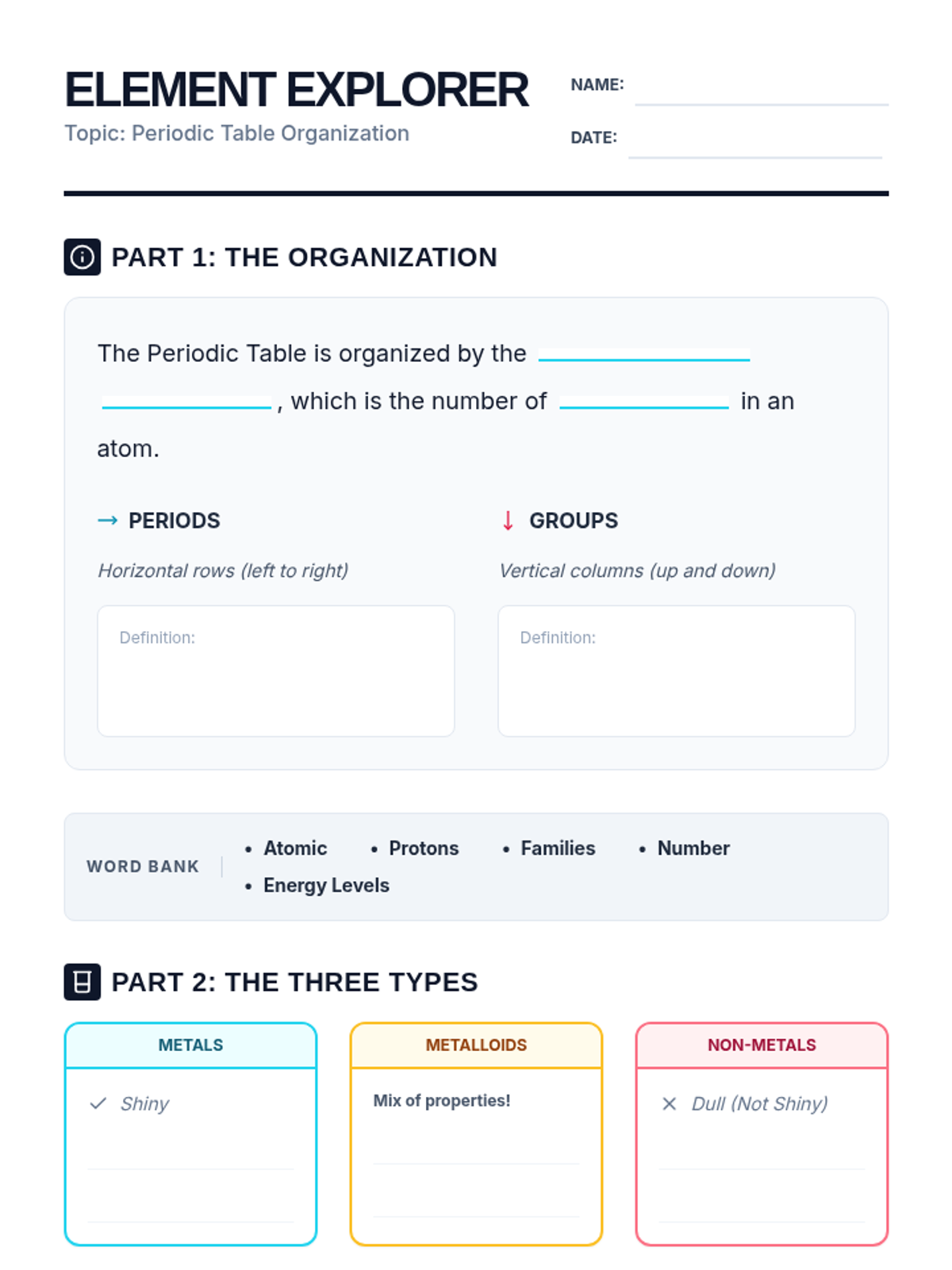
Guided notes and analysis worksheet for student exploration of Periodic Table organization, including word banks for simplified learning and real-world identification exercises.
Interactive slide deck introducing the Periodic Table, featuring clear visuals for groups and periods, color-coded sections for metals/non-metals, and real-world examples.