A detailed guided notes packet featuring diagrams of refracting and reflecting telescopes, historical context on Galileo and Newton, and practical tips for telescope operation. Includes fill-in-the-blank sections and a comparison table.
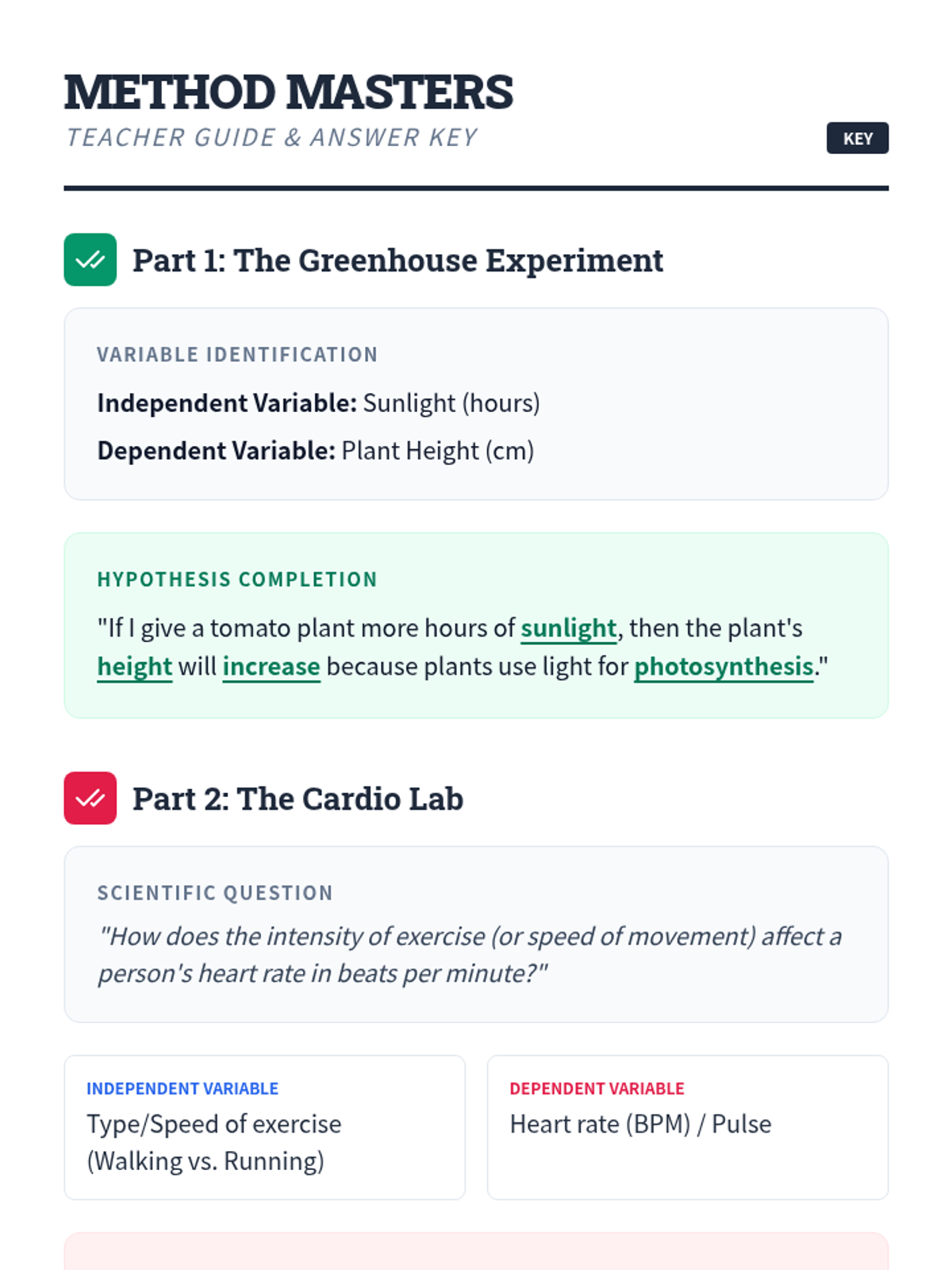
Teacher guide and answer key for the Method Masters homework, including sample responses for the open-ended cardio lab and grading tips for variables and hypotheses.
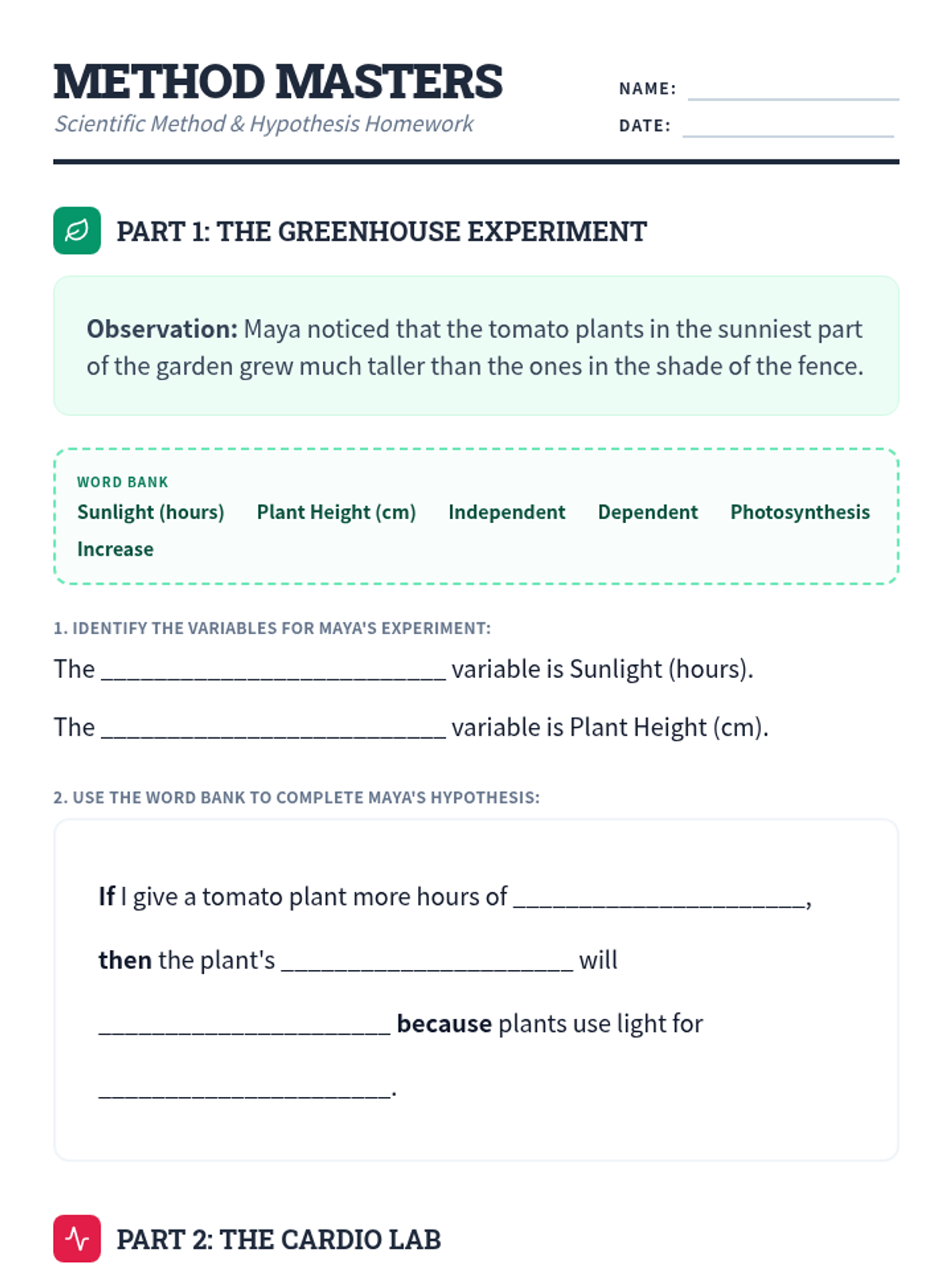
A two-part homework worksheet on the scientific method. Part 1 uses plant growth as a context with sentence starters and a word bank. Part 2 uses heart rate and exercise with open-ended written responses.
Introductory slides for a lesson on the scientific method and hypothesis formation, featuring visual breakdowns of the "If... Then... Because..." formula and case studies on plant growth and heart rate.
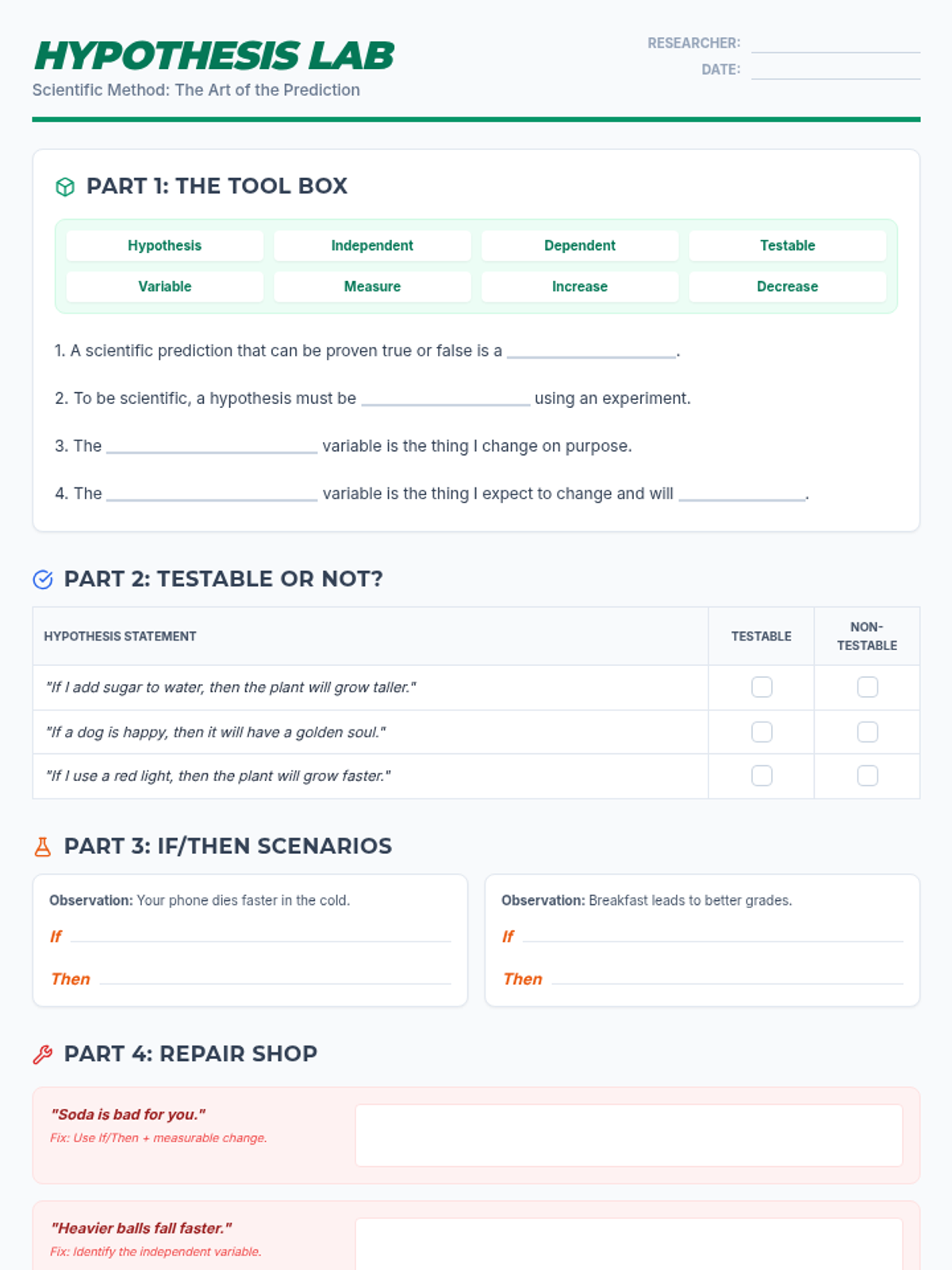
A highly condensed scientific method homework sheet focusing on hypothesis construction. Features a vocabulary tool box, testability classification, If/Then scaffolding, and a hypothesis Repair Shop. Designed to fit on a single page.
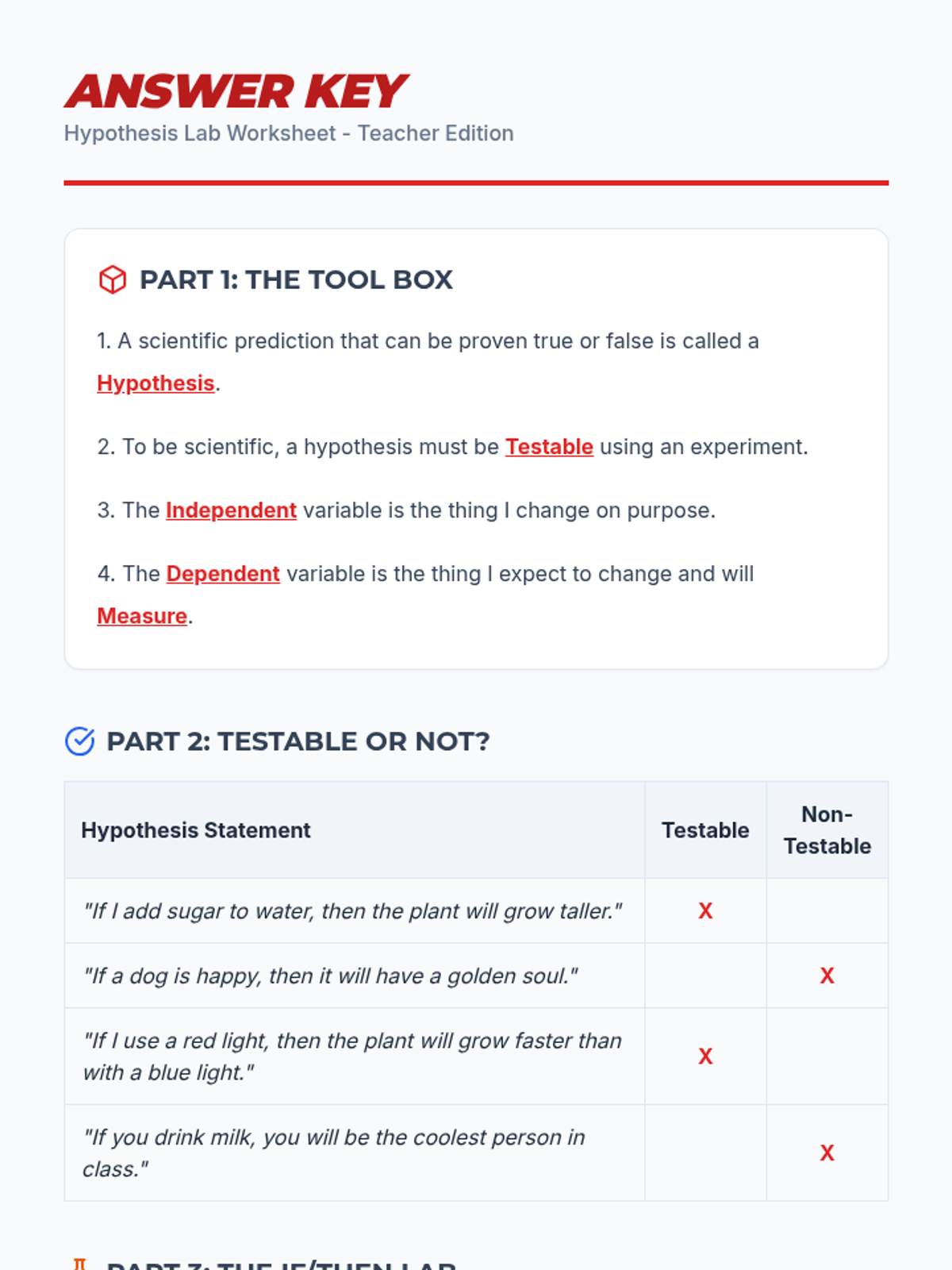
Answer key for the Hypothesis Lab Worksheet, featuring sample 'If/Then' statements and correct vocabulary pairings.
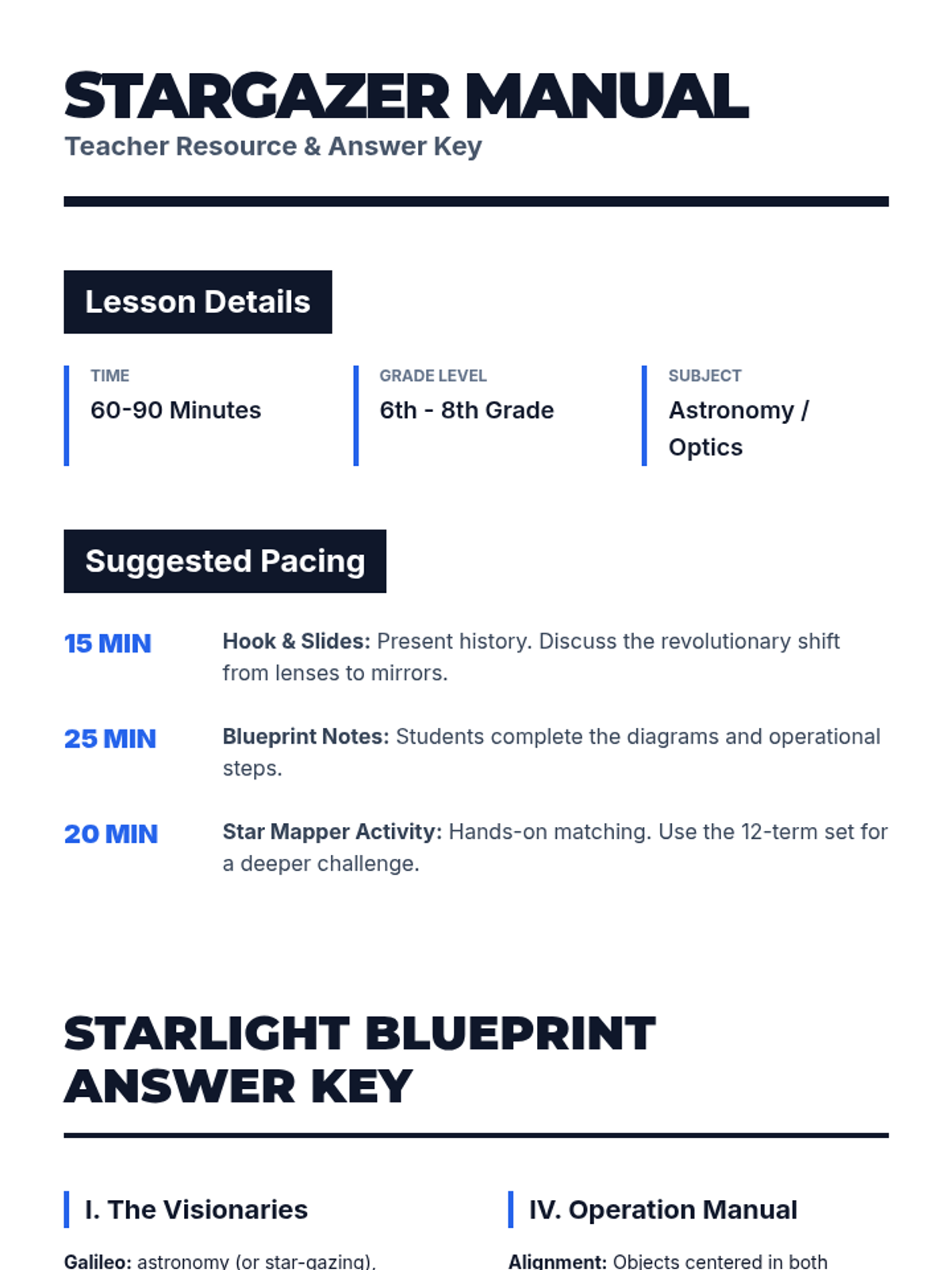
A comprehensive teacher's resource containing lesson pacing guidelines, teaching tips for the telescope unit, and a complete answer key for the student guided notes and the expanded vocabulary card set. Provides clarity on instructional flow and expected student outcomes.
An instructional slide deck covering the history of telescopes (Galileo and Newton), the differences between refractors and reflectors, key vocabulary, and practical operational steps. Designed for classroom presentation with high-contrast visuals and clear, large text.
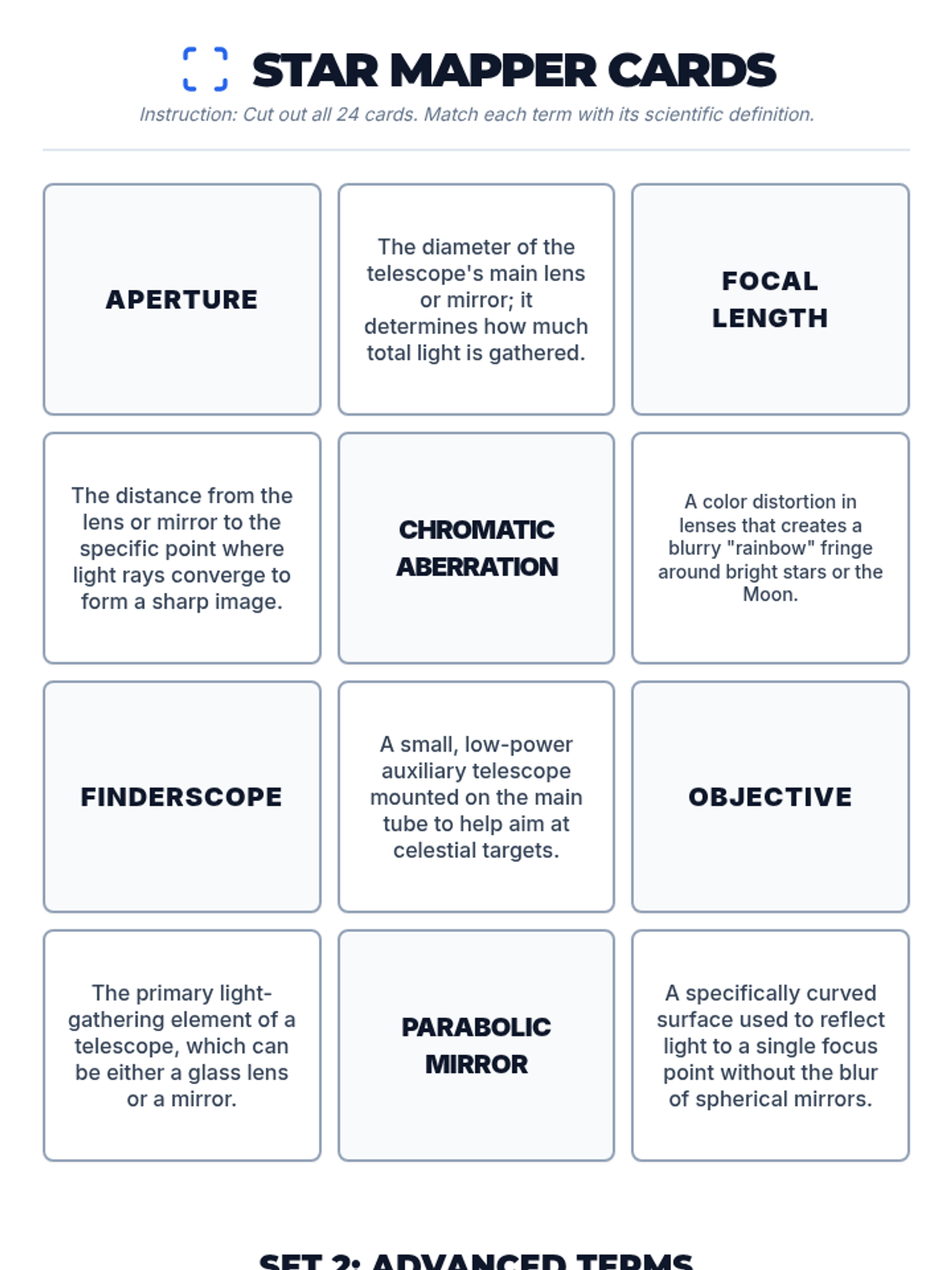
A comprehensive set of 24 vocabulary matching cards (12 terms and 12 definitions) across two pages. Terms include essential optics like Aperture and Focal Length, as well as advanced concepts like Barlow Lenses and Light Pollution. Designed for cut-out matching activities.
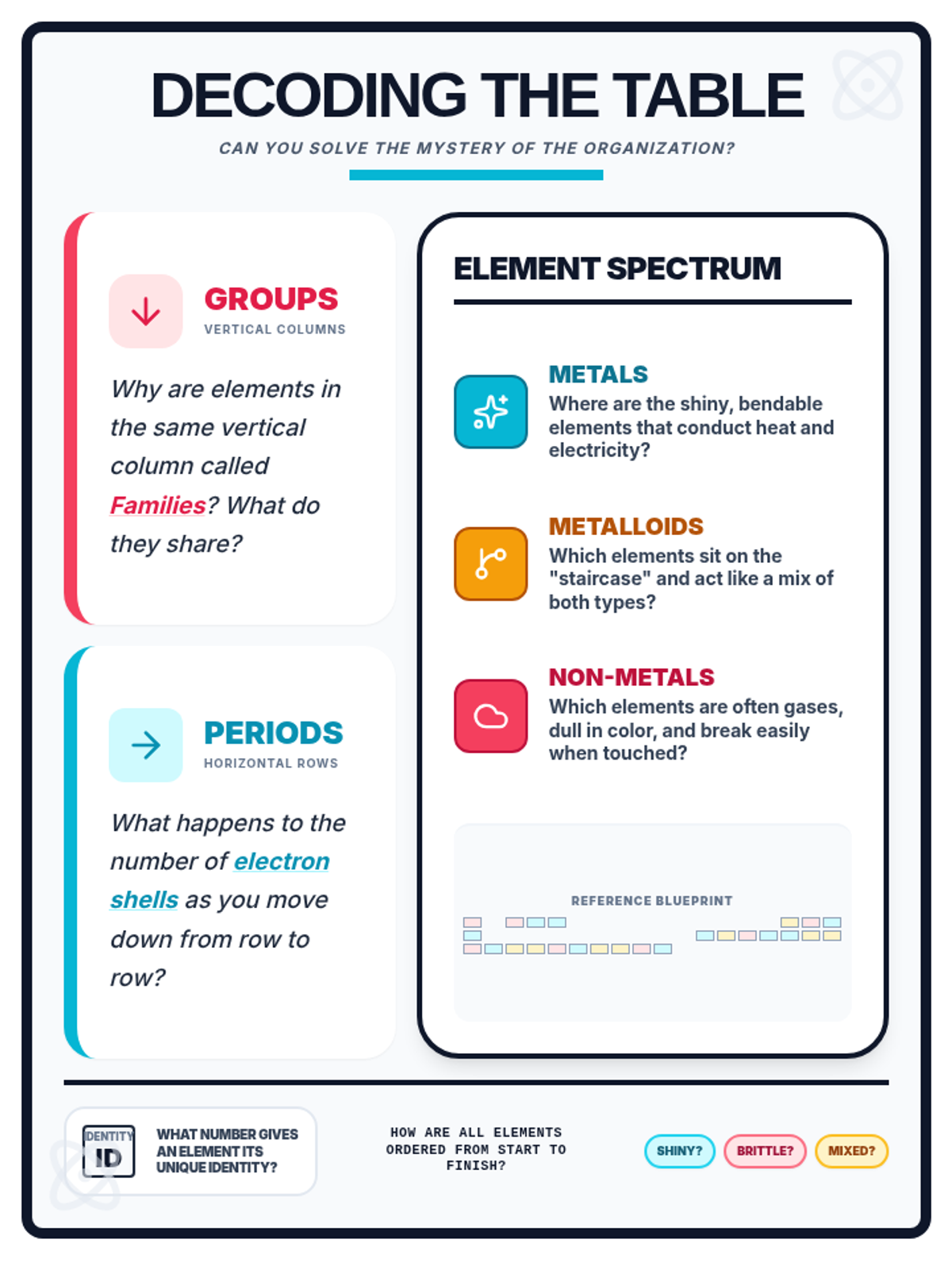
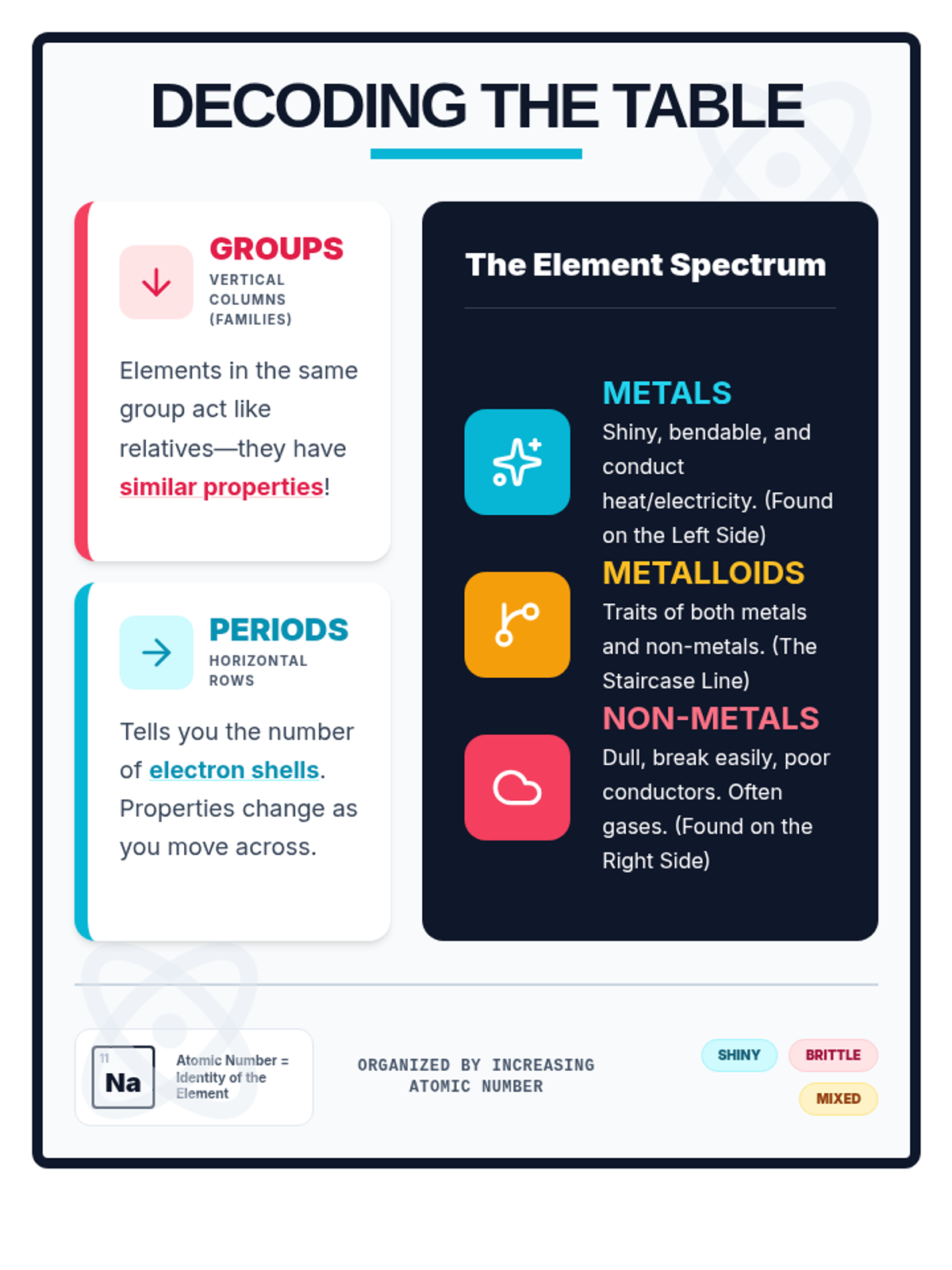
A visual inquiry-based anchor chart for classroom display, using questions to prompt students to think about the organization of the Periodic Table, groups, periods, and element types. Updated with a white-themed Spectrum section and a mini reference grid for improved clarity and utility.
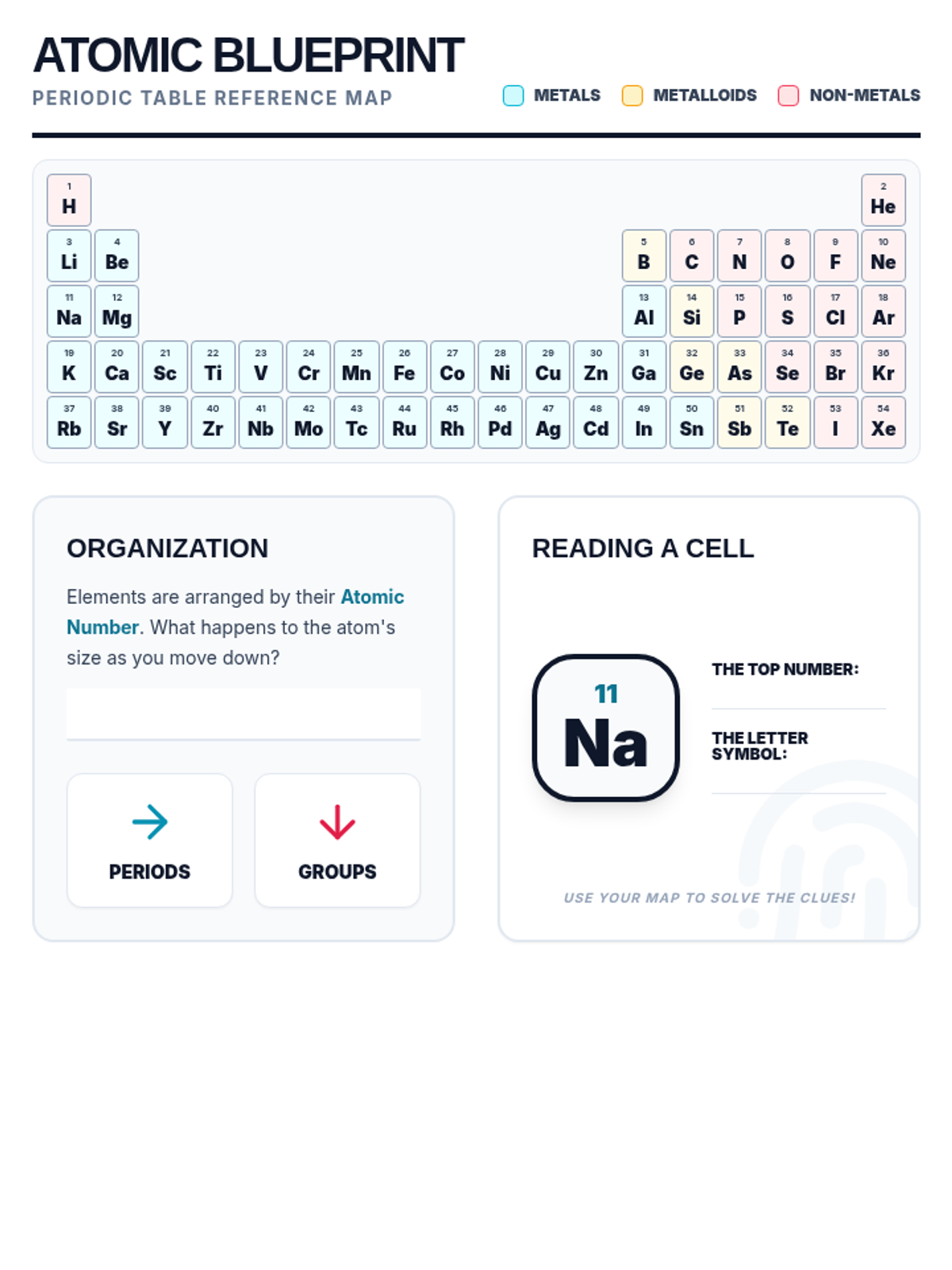
A clean, simplified Periodic Table reference sheet for student use, color-coded by element type and featuring clear explanations for groups, periods, and atomic cells. Now includes a complete Period 5 for continuity.
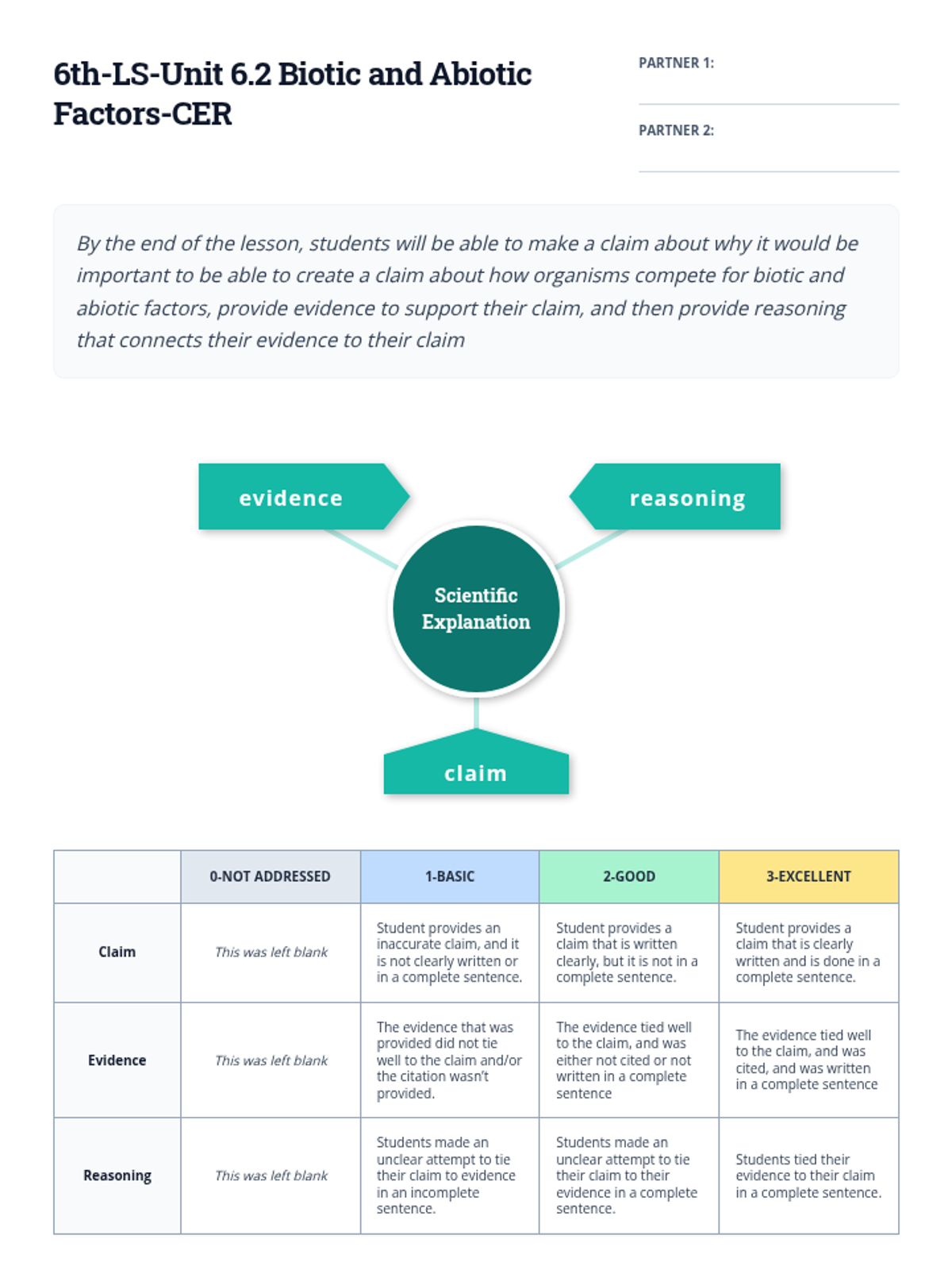
A verbatim restoration of the original CER packet for biotic and abiotic factors, featuring a reconstructed central graphic and significantly expanded writing space across four pages for classroom use. Claim section has been reduced to three writing lines and Evidence section to eight lines as requested. Header contrast and graphic connections have been further polished.
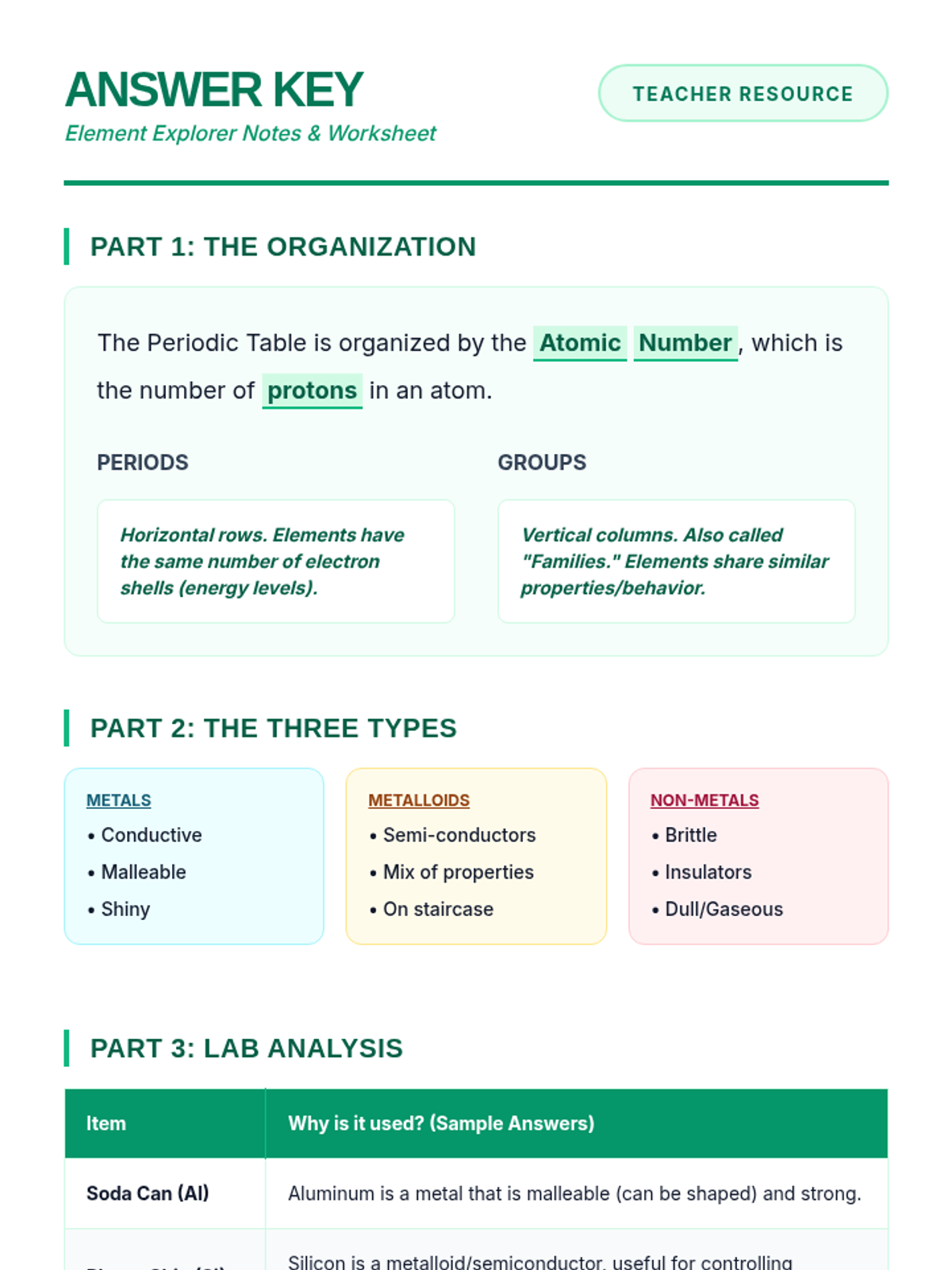
Comprehensive answer key for the Element Explorer Notes and Worksheet, providing sample responses and teaching points for the lab analysis and synthesis questions.
A visual inquiry-based anchor chart for classroom display, using questions to prompt students to think about the organization of the Periodic Table, groups, periods, and element types.
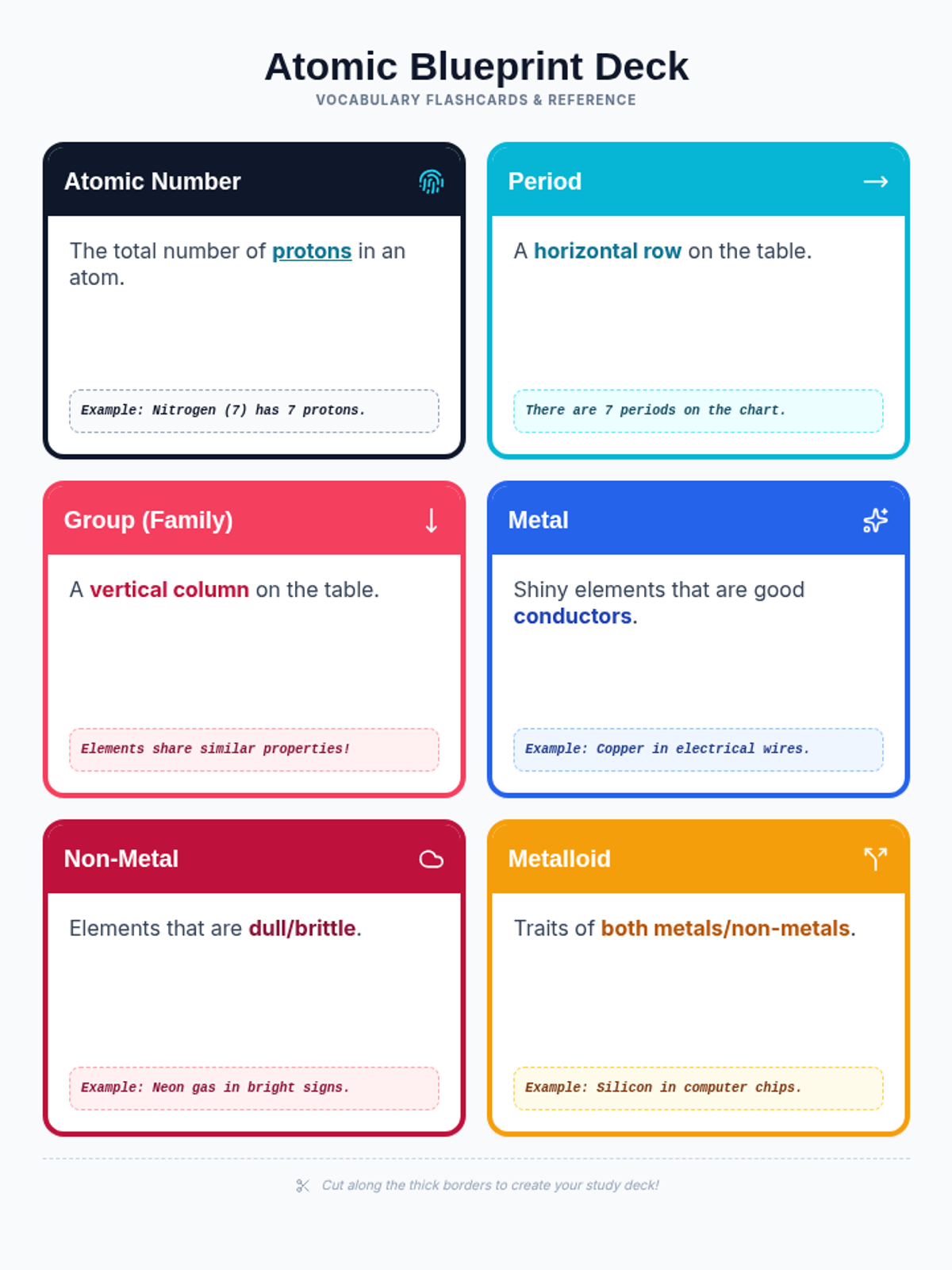
A set of high-contrast vocabulary cards covering key Periodic Table terms with clear definitions, visual icons, and "key point" summaries for student study.
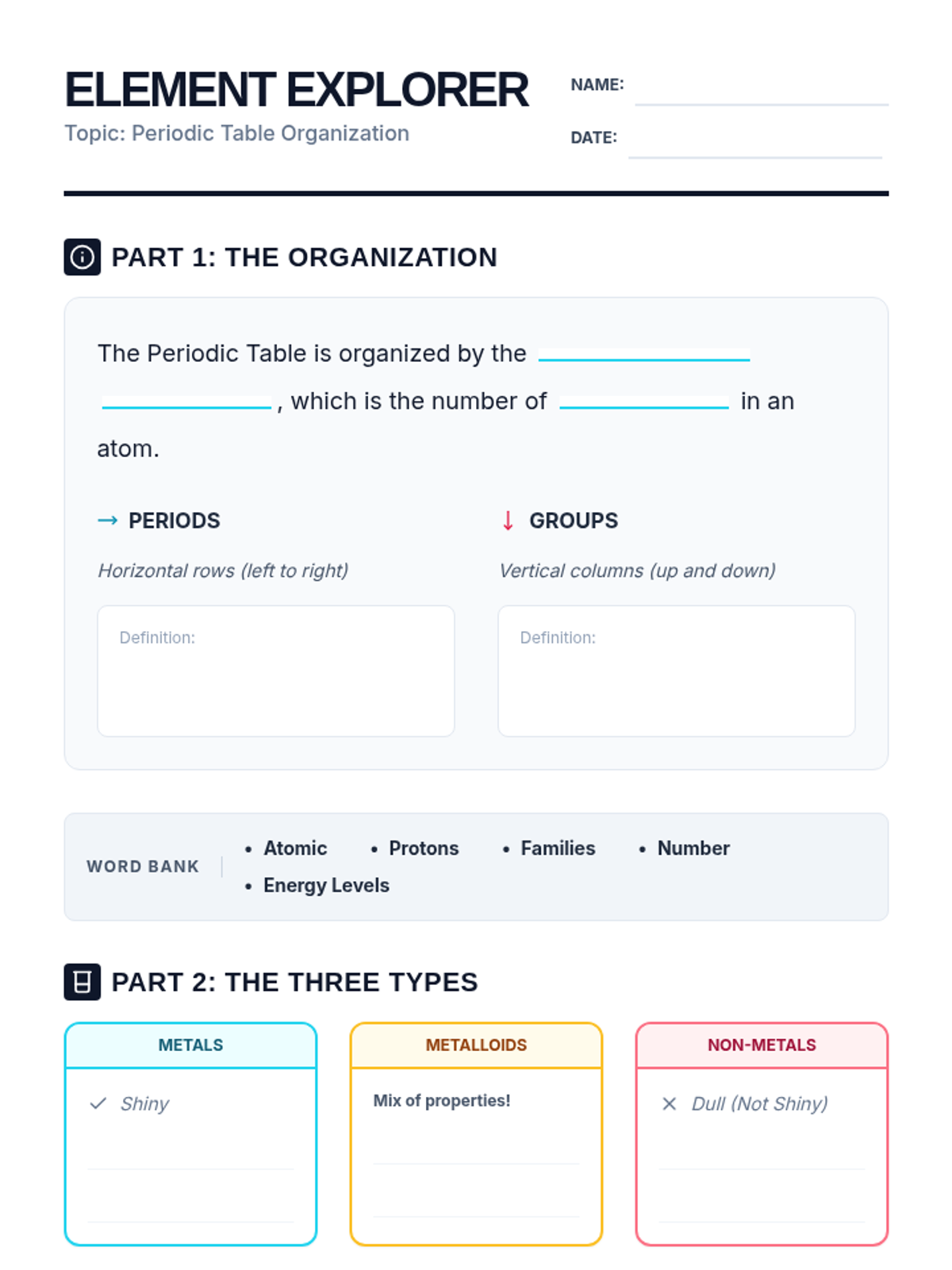
Guided notes and analysis worksheet for student exploration of Periodic Table organization, including word banks for simplified learning and real-world identification exercises.
Interactive slide deck introducing the Periodic Table, featuring clear visuals for groups and periods, color-coded sections for metals/non-metals, and real-world examples.
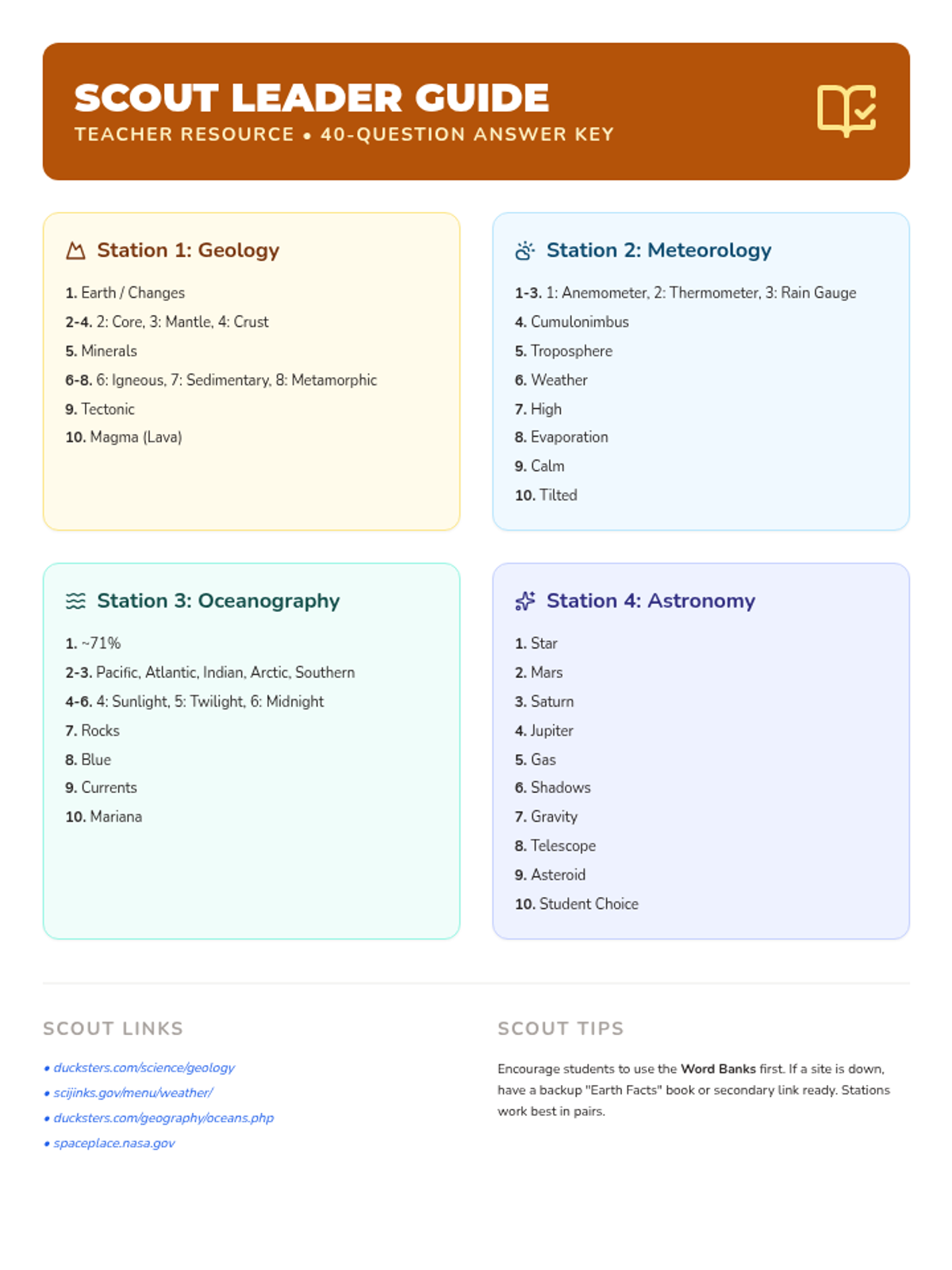
An expanded teacher guide for the Earth Science webquest, containing the full 80-question answer key and updated facilitation tips for a successful digital scavenger hunt.
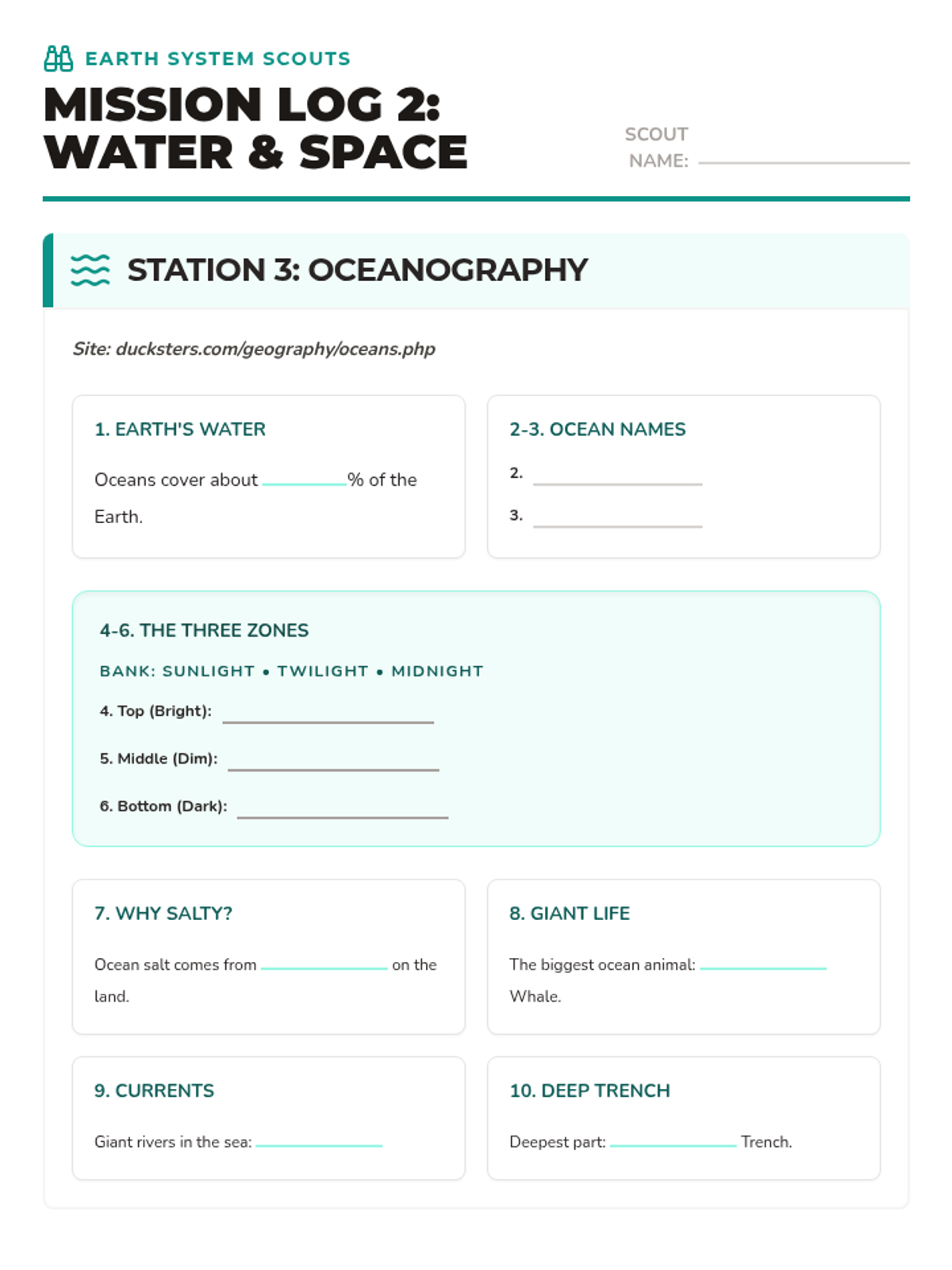
The second day's student worksheet for the Earth Science webquest, expanded to include 20 questions for Oceanography and 20 for Astronomy with visual tasks and simplified text. Each station now occupies two full pages for better readability.
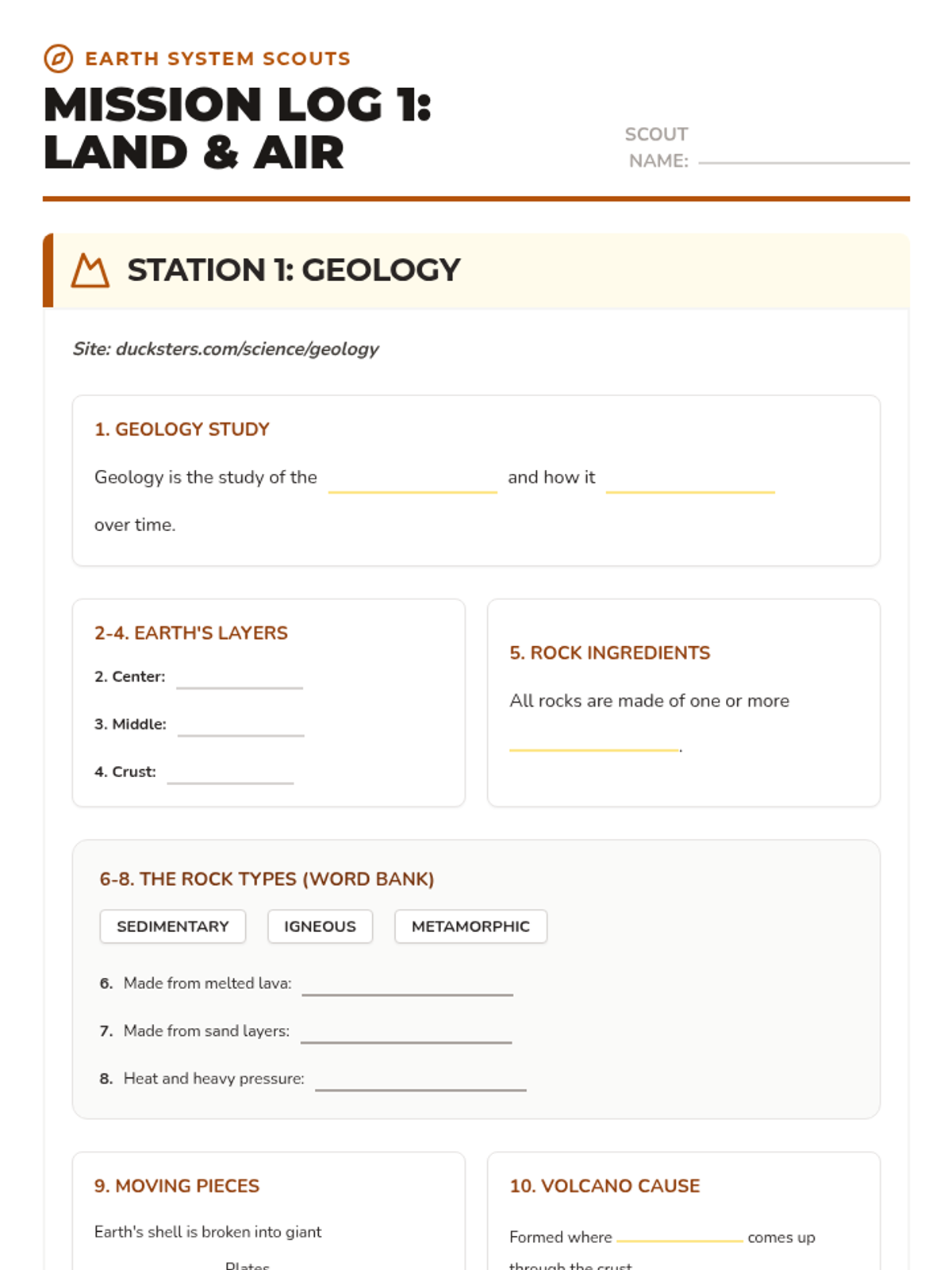
The first day's student worksheet for the Earth Science webquest, expanded to include 20 questions for Geology and 20 for Meteorology. The layout is split into 4 pages to provide ample writing space and include word banks for each set of questions.
An introductory slide deck for the Earth Science webquest, defining the four branches and setting the "Scout" theme for the mission.