Student activity worksheet for Lesson 4, providing a matrix for mapping voluntary social performance vs. involuntary leakage and generating hypotheses about internal emotional states.
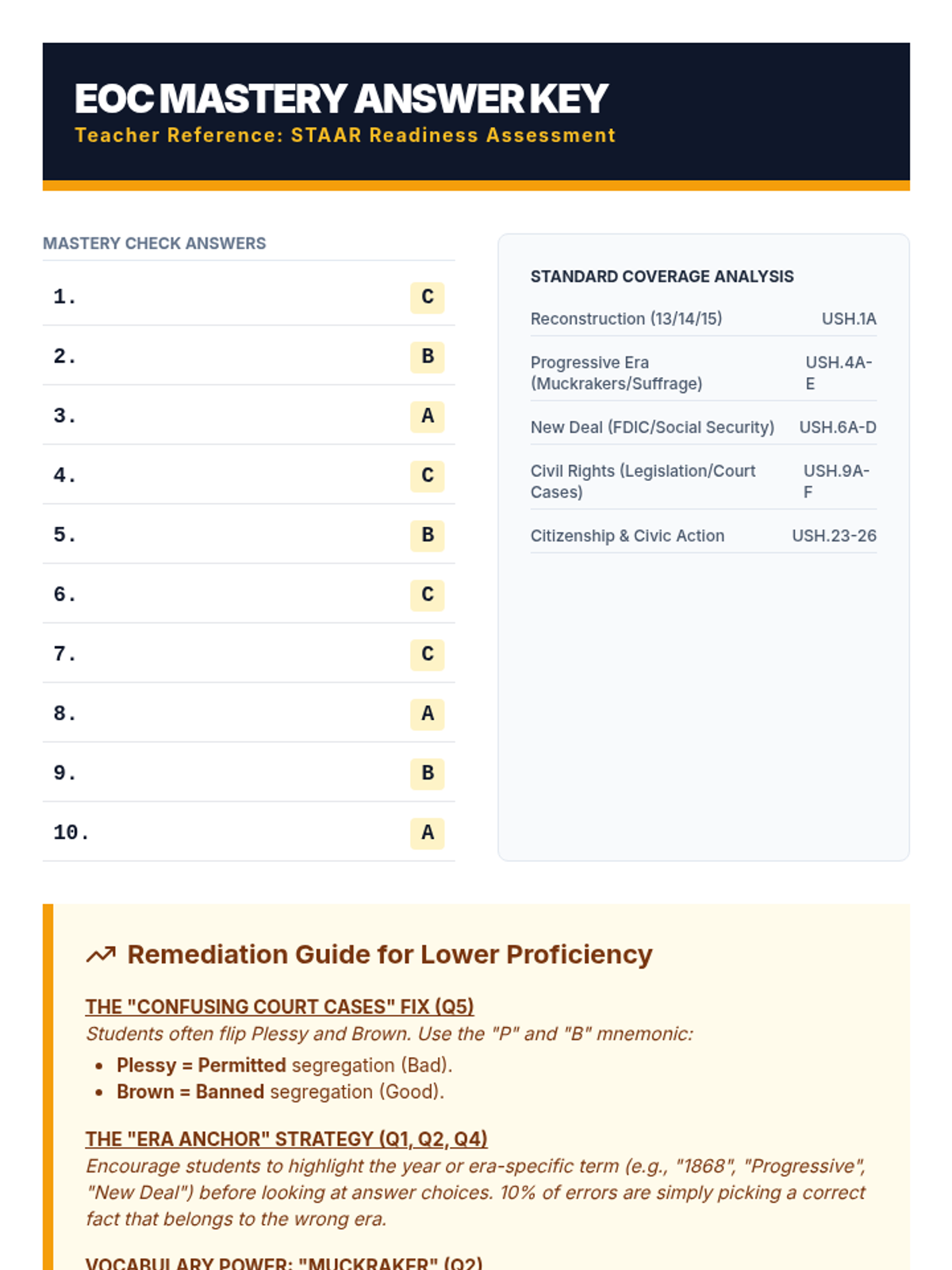
An answer key and teacher remediation guide for the Citizen Power Mastery check quiz and Era Navigator worksheet, featuring TEKS alignment and instructional strategies.
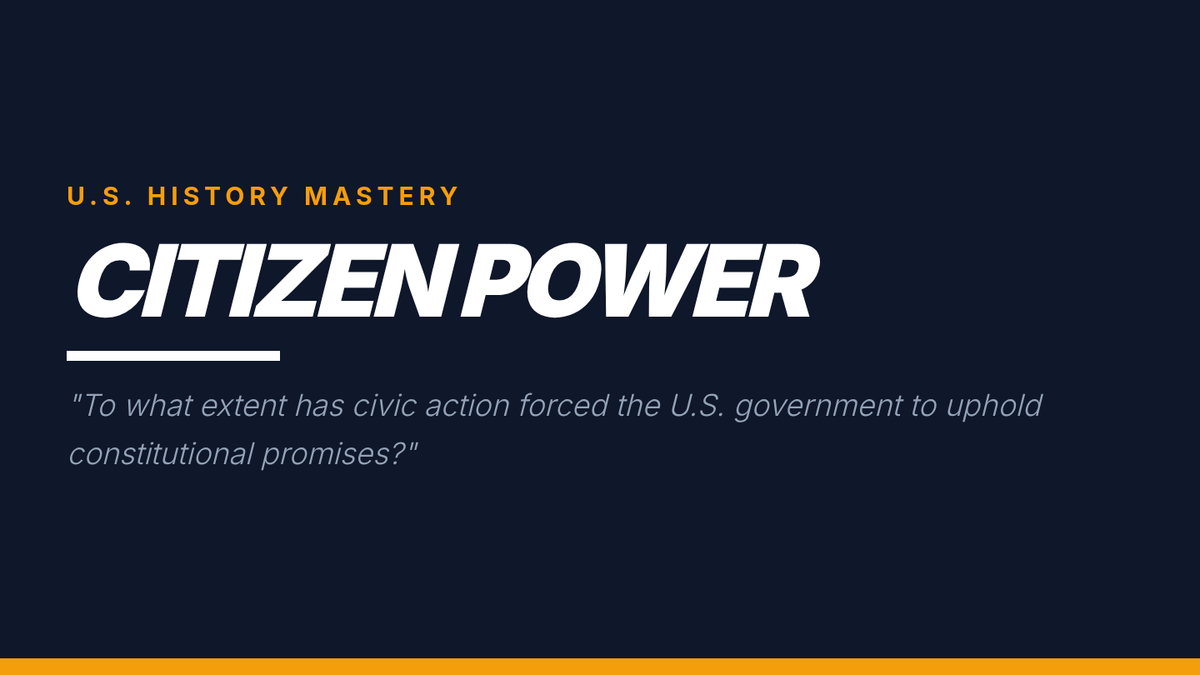
An introductory presentation for the Citizen Power Mastery lesson, featuring the inquiry arc, era overviews, and the P.E.S. mastery strategy.
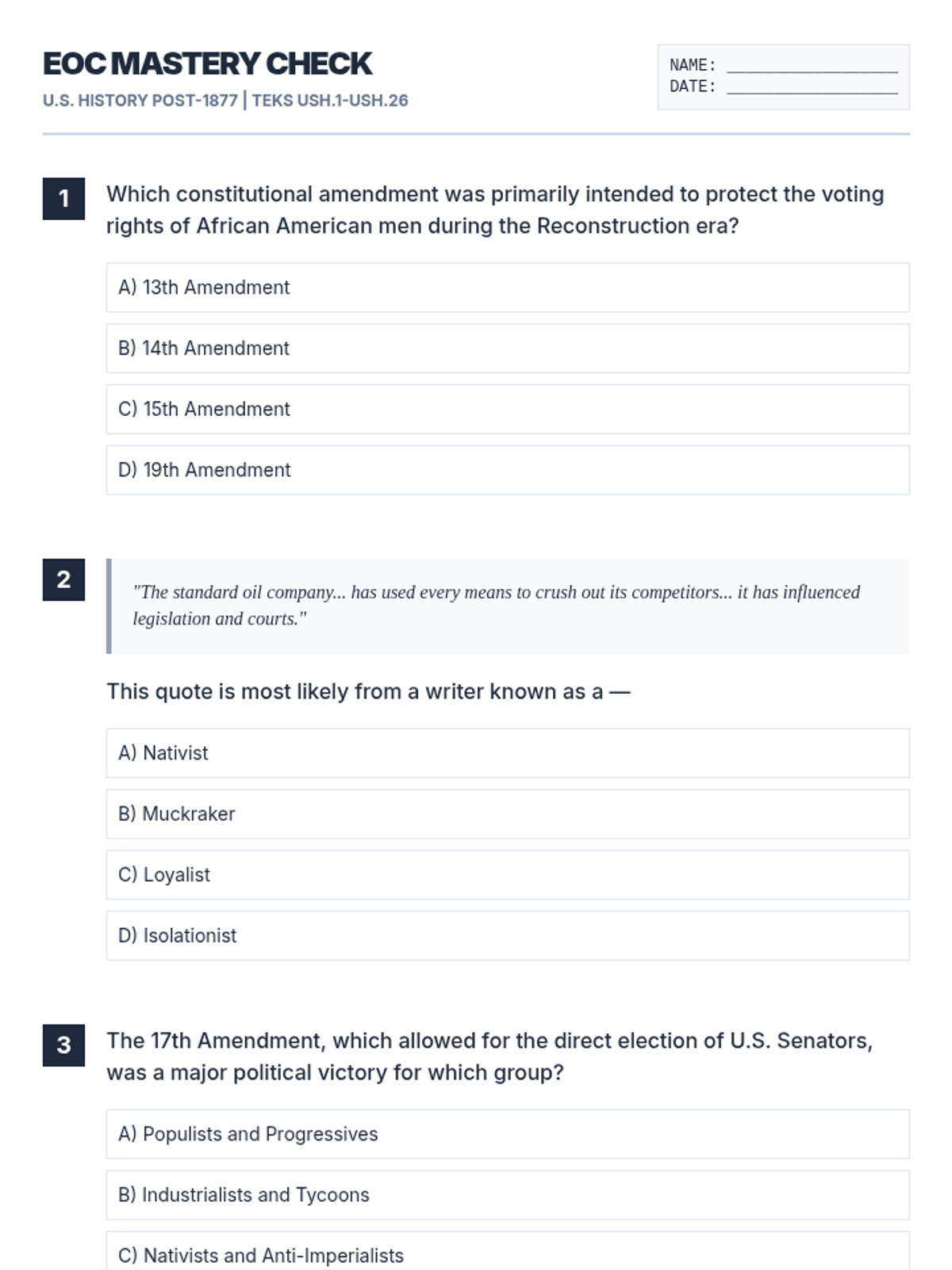
A 10-question practice quiz formatted to mimic the STAAR U.S. History EOC, covering major eras from Reconstruction through the Civil Rights Movement.
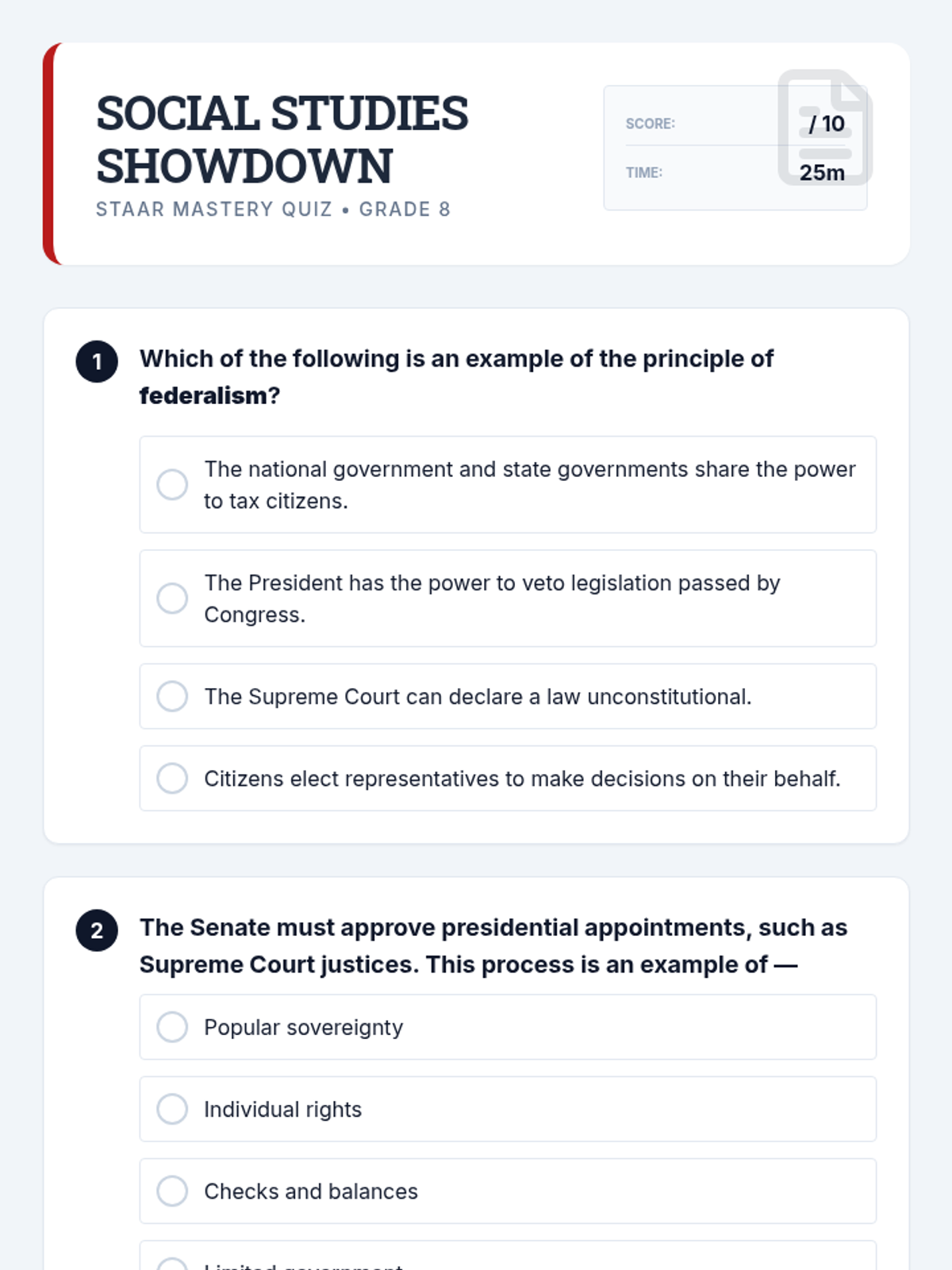
A 10-question multiple-choice quiz formatted to match the Grade 8 Social Studies STAAR assessment. It covers high-stakes TEKS including government principles, geographic factors, and economic systems, designed to test student mastery of challenging concepts.
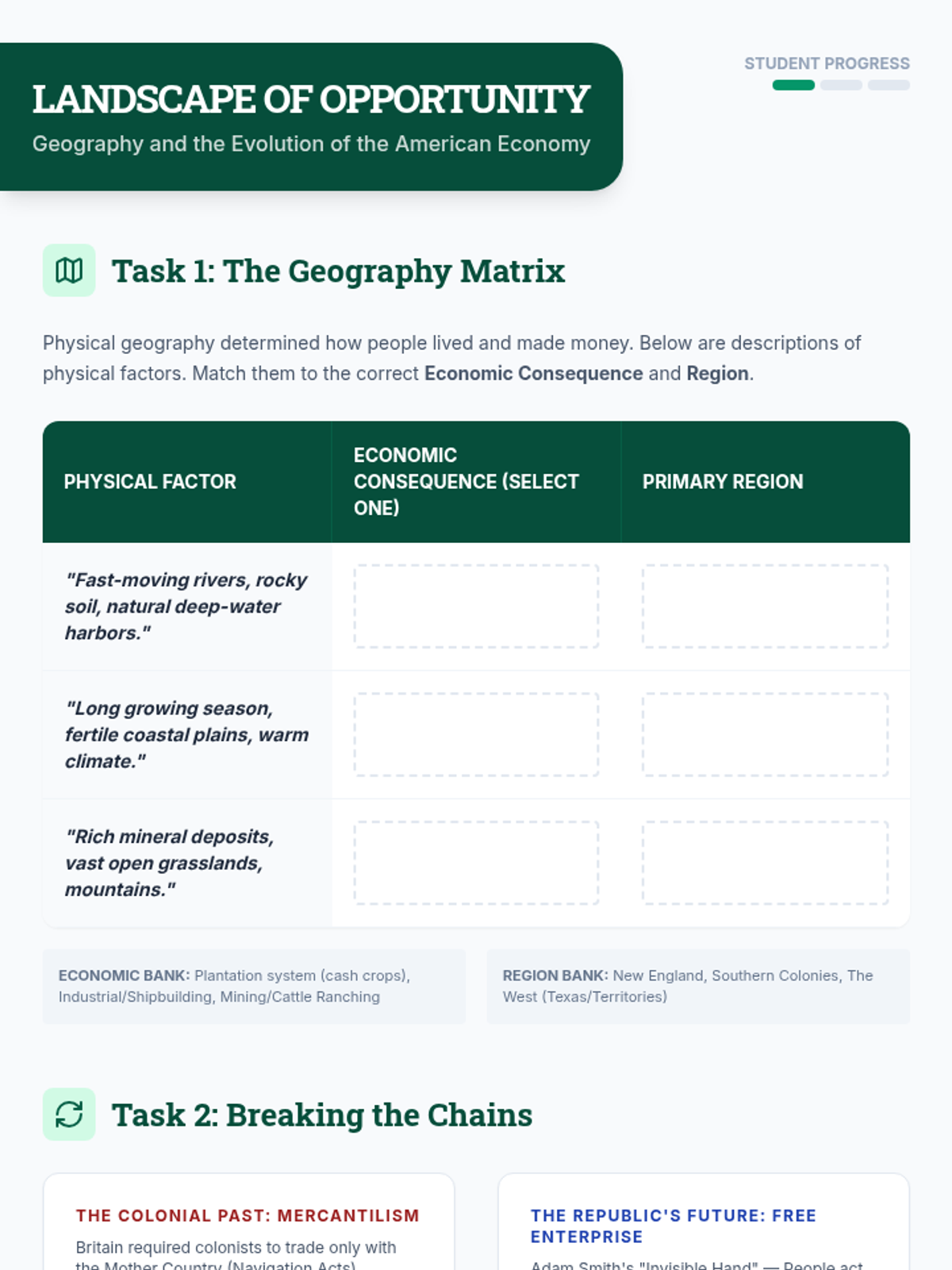
An activity sheet connecting physical geography to economic systems and settlement patterns. Students analyze how land and resources dictated the development of colonial regions, the transition from mercantilism to free enterprise, and the impact of industrial innovations.
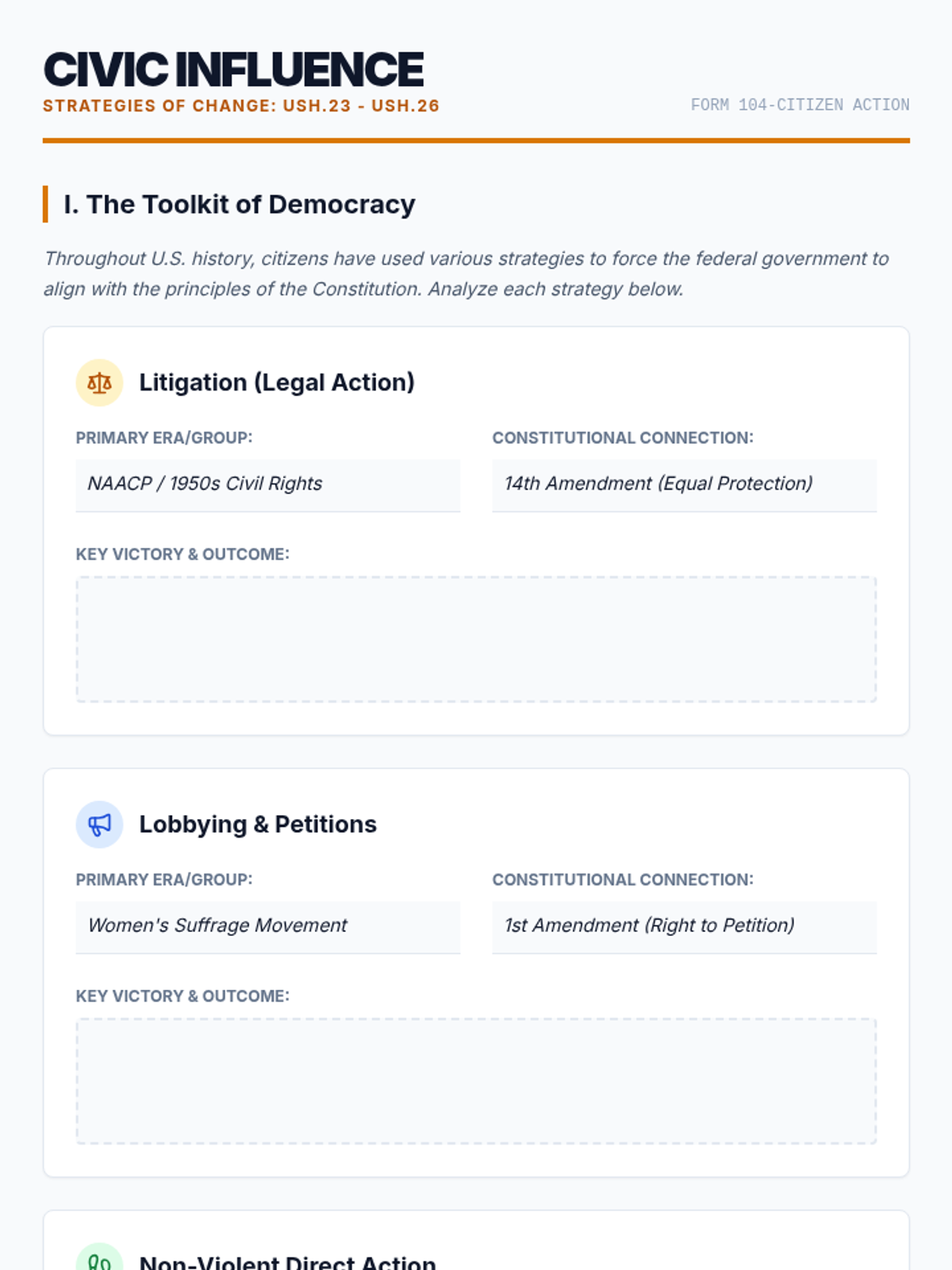
A civic participation analysis worksheet focusing on the strategies of litigation, lobbying, and direct action used by citizens to influence U.S. government policy.
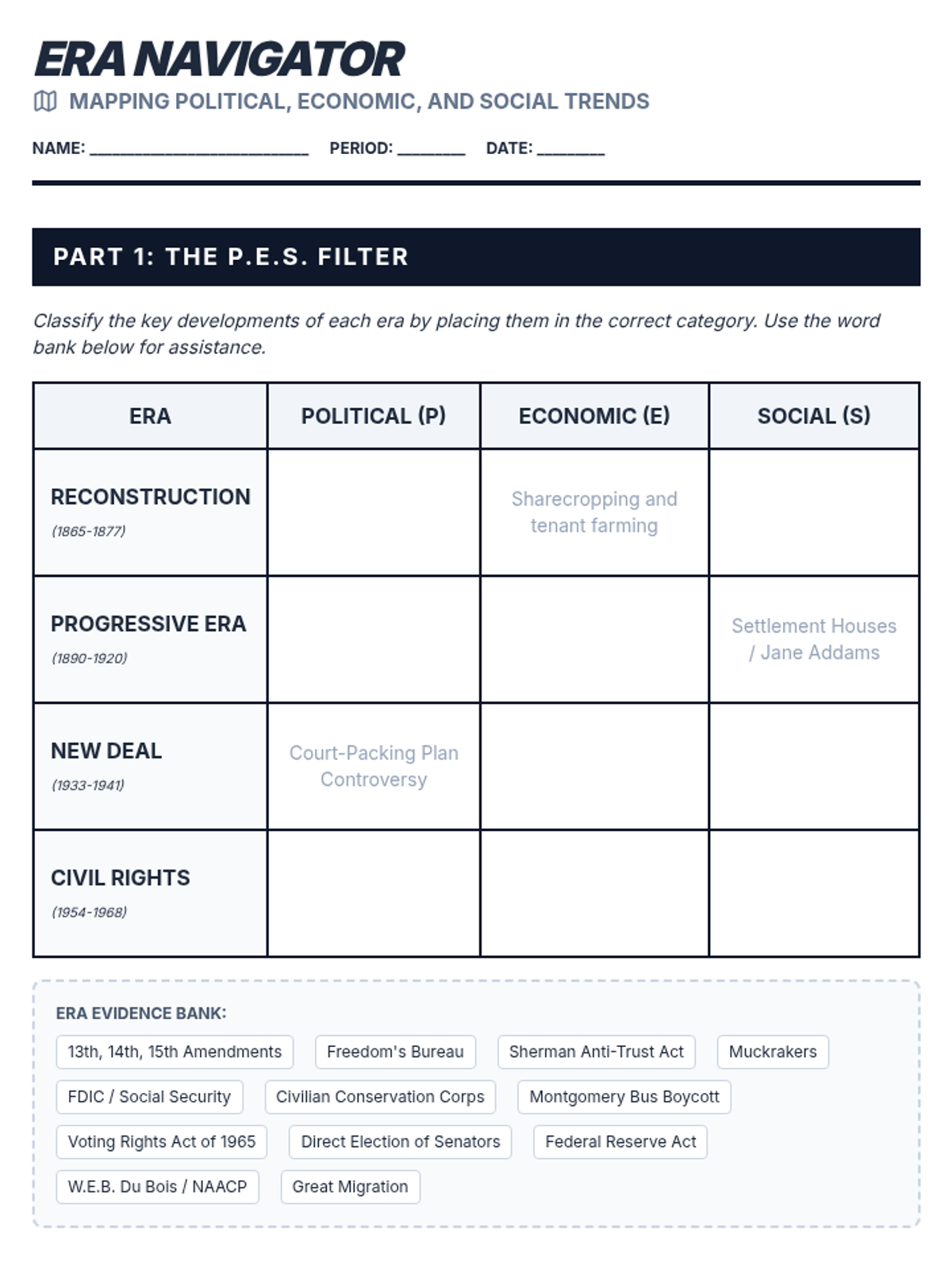
An era navigator worksheet featuring a P.E.S. matrix for classifying historical developments and a timeline for connecting key legislative acts across U.S. history eras.
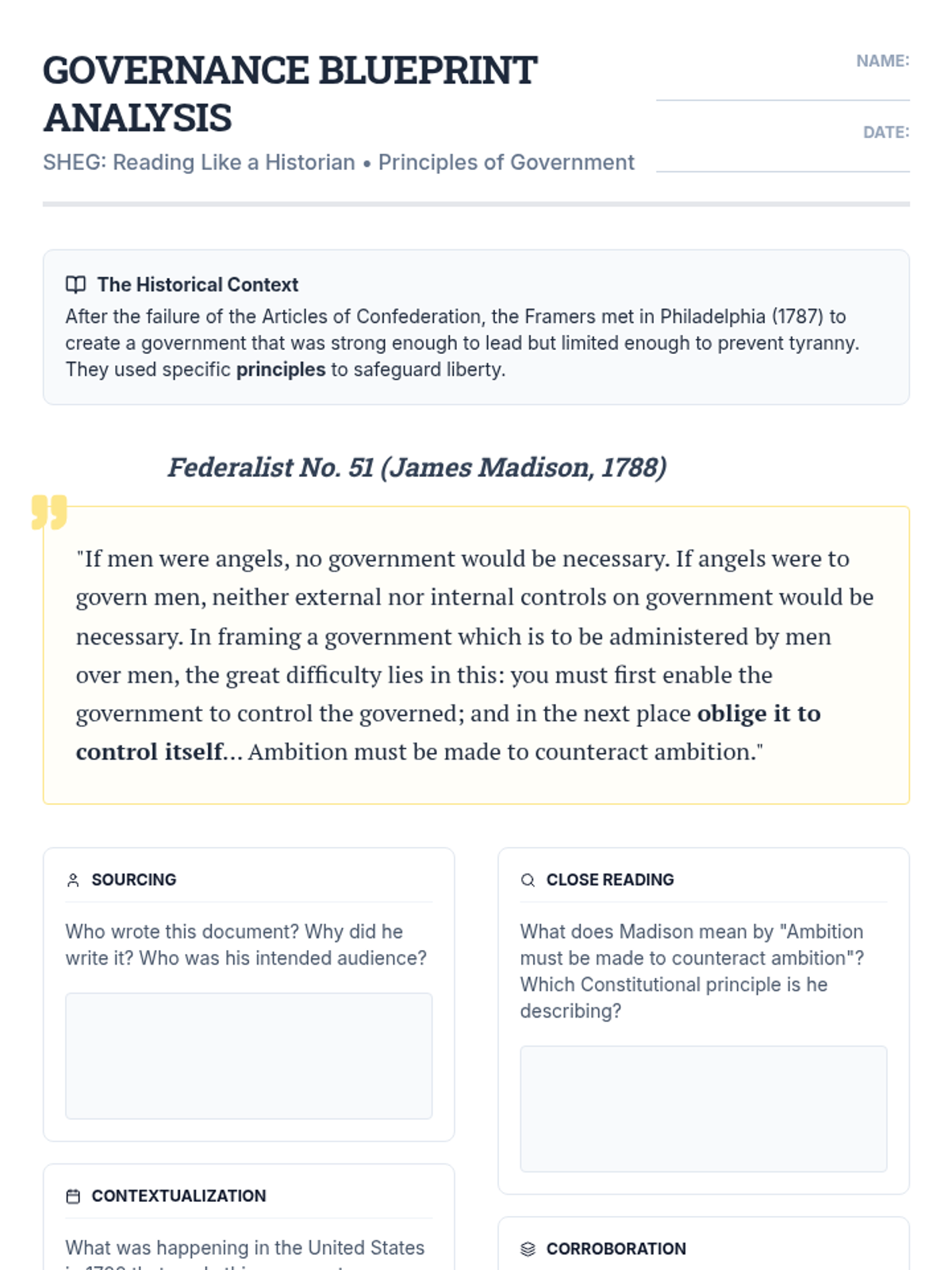
A primary source analysis worksheet based on James Madison's Federalist No. 51. Using the SHEG 'Reading Like a Historian' methodology, students practice sourcing, contextualization, and close reading to understand the principles of checks and balances and separation of powers.
An engaging slide deck for the Power and Progress lesson, visually explaining the 7 principles of government, the relationship between geography and economic development, and the transition from mercantilism to free enterprise. Designed for Grade 8 STAAR social studies preparation with high-visibility text and graphics.
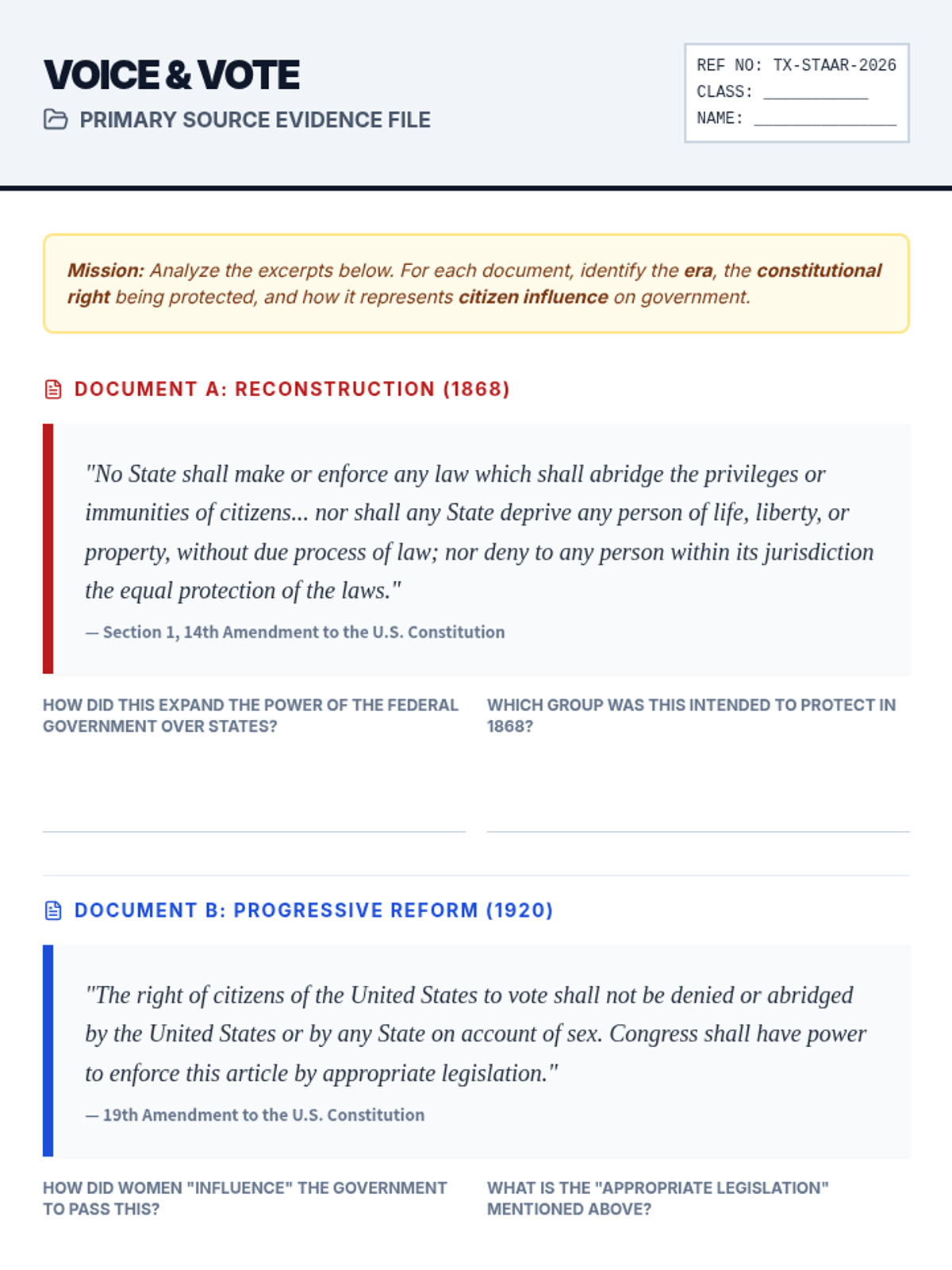
A primary source document analysis worksheet featuring key constitutional and legislative excerpts from Reconstruction through the Civil Rights Movement, with guided inquiry questions.
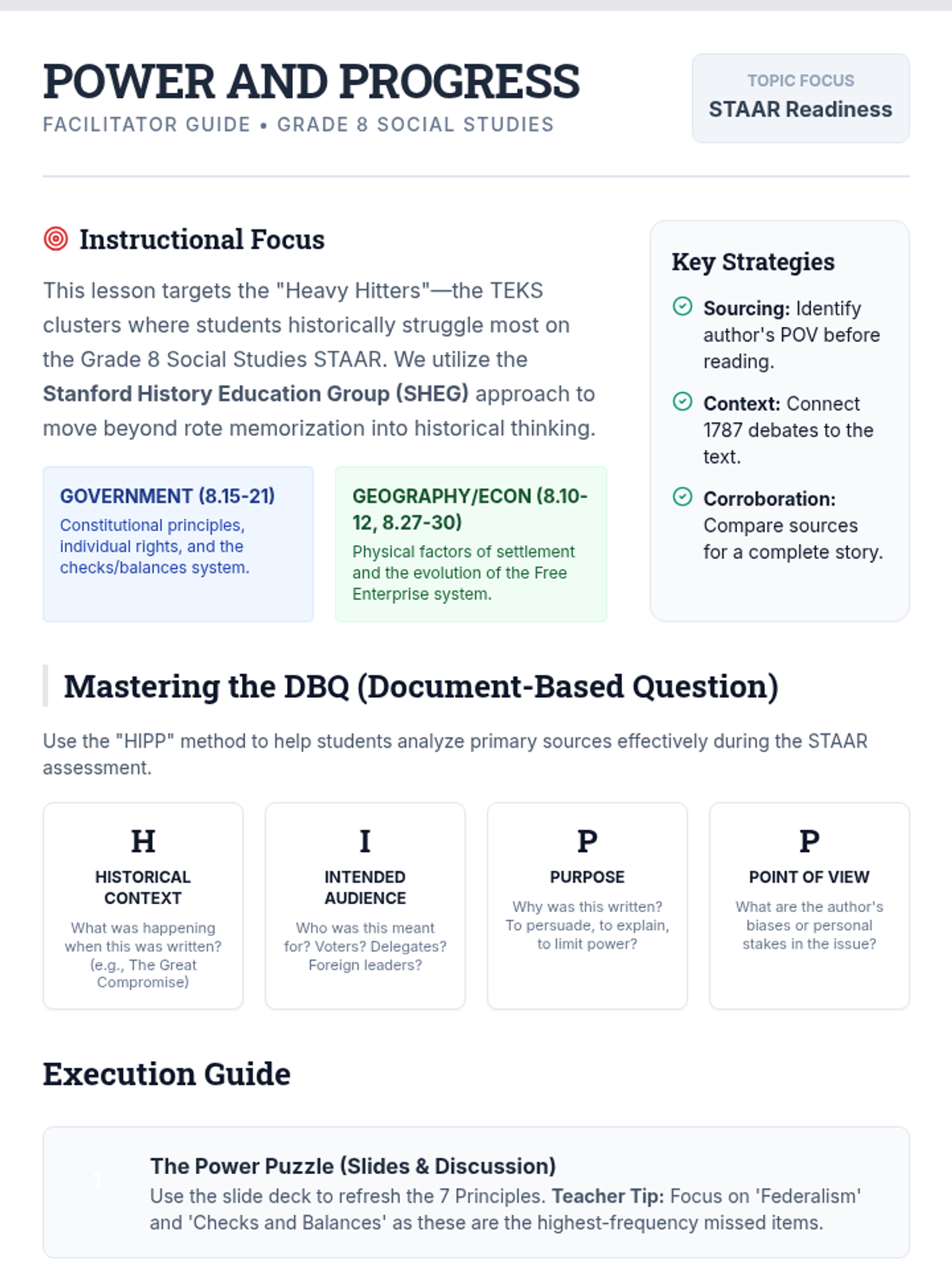
A comprehensive facilitator guide for the Power and Progress lesson, providing document-based question (DBQ) strategies, TEKS alignment, and a guide for historical thinking through primary source analysis. Includes a detailed answer key and common student misconceptions for STAAR preparation.
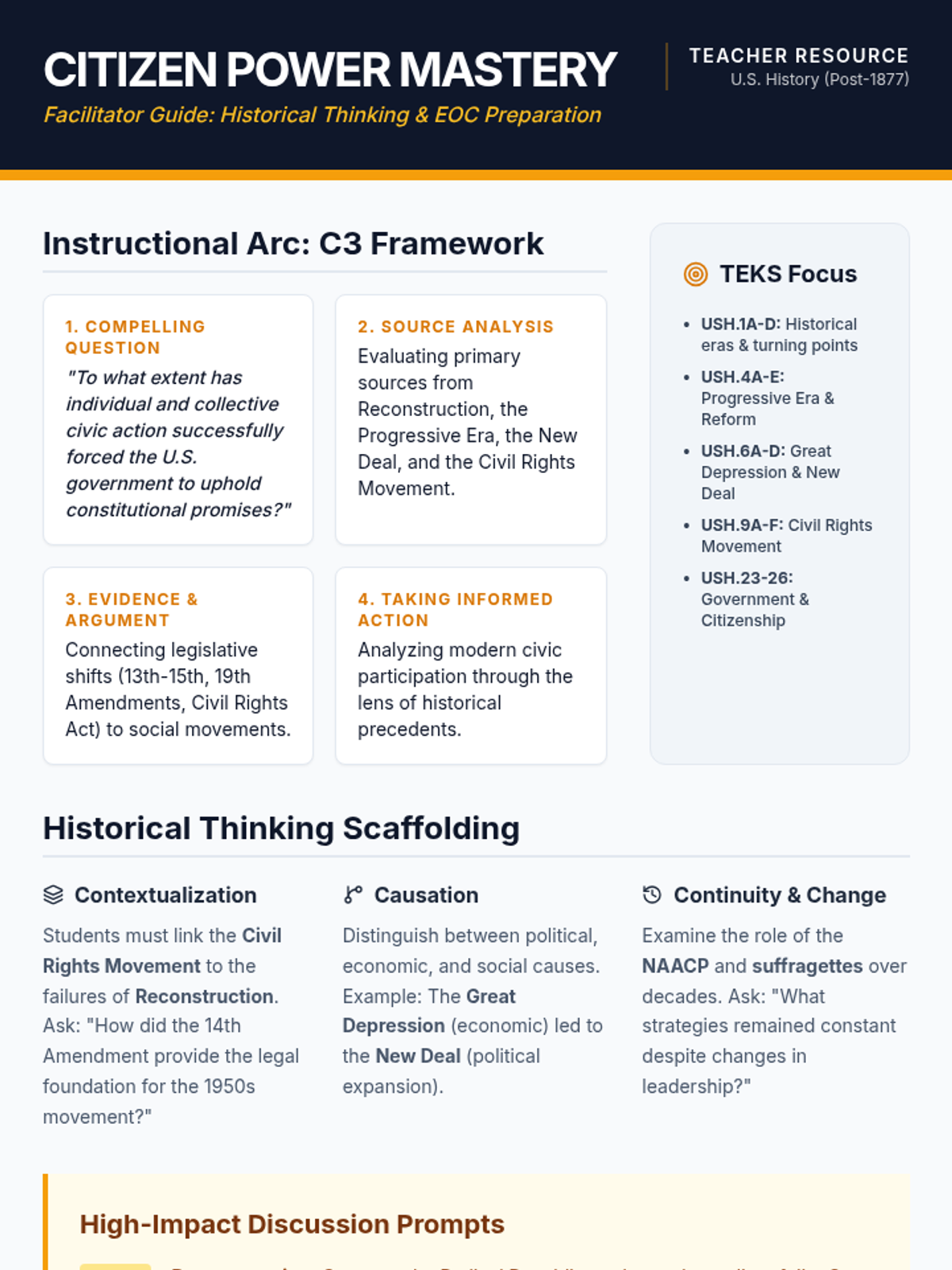
A comprehensive facilitator guide for the Citizen Power Mastery lesson, featuring C3 inquiry arcs, historical thinking scaffolds, and TEKS-aligned discussion prompts across major U.S. history eras.
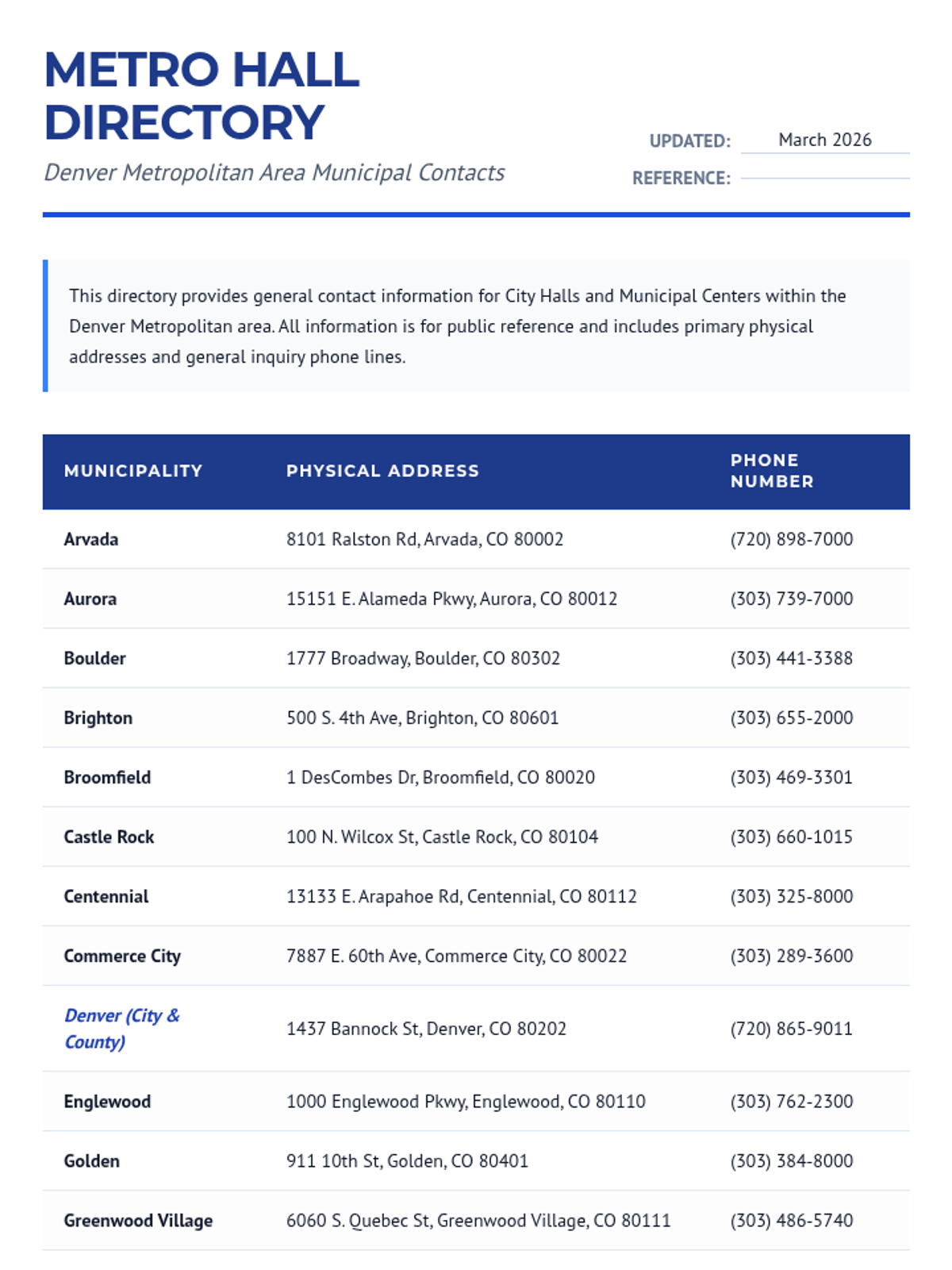
A clean, professional printable reference sheet listing City Hall addresses and phone numbers for municipalities across the Denver Metro area, organized alphabetically for quick reference.
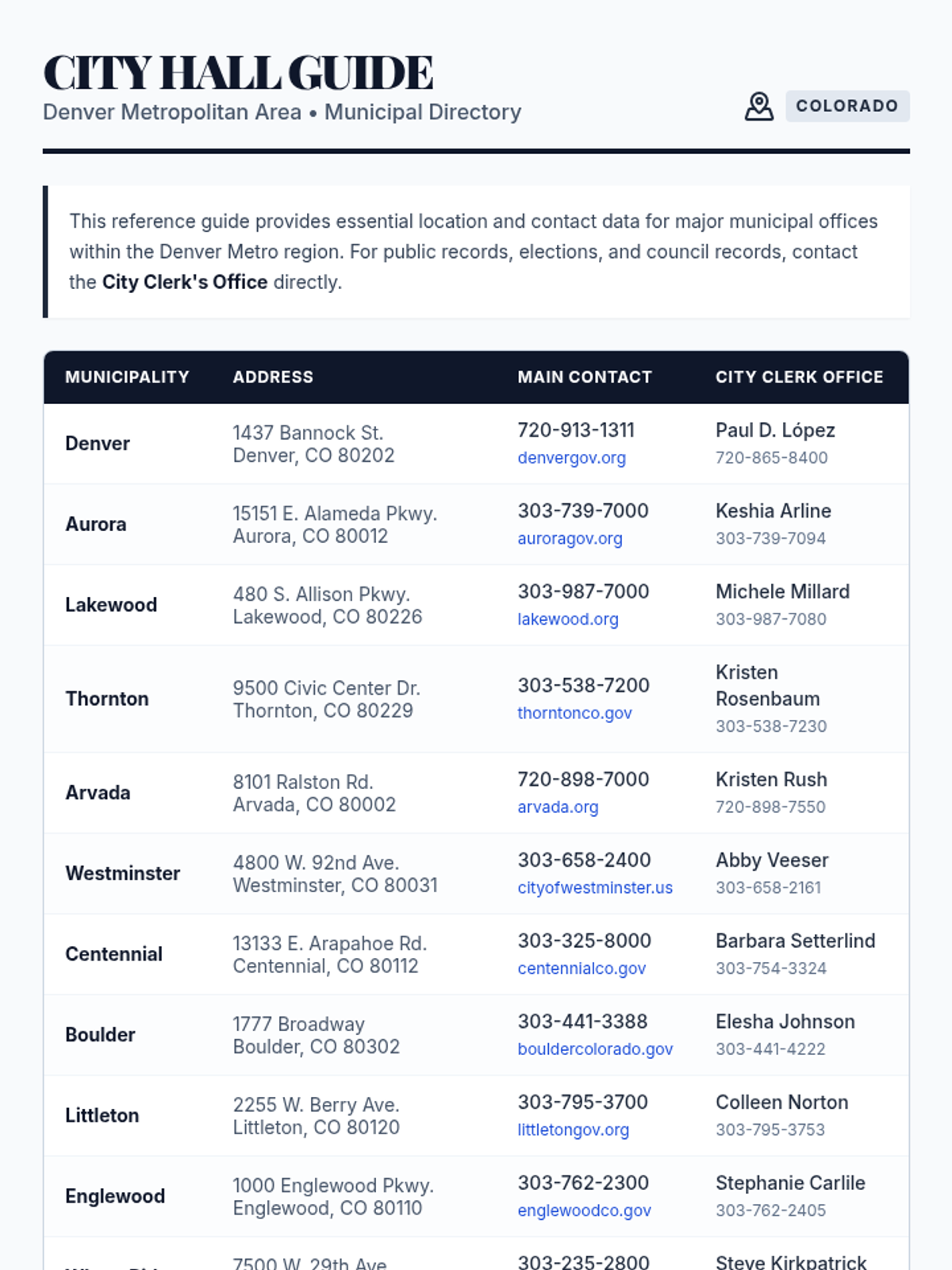
A polished one-page reference sheet with City Hall locations, main contact info, and City Clerk details for 12 Denver Metro municipalities. High contrast and professional layout for quick reference.
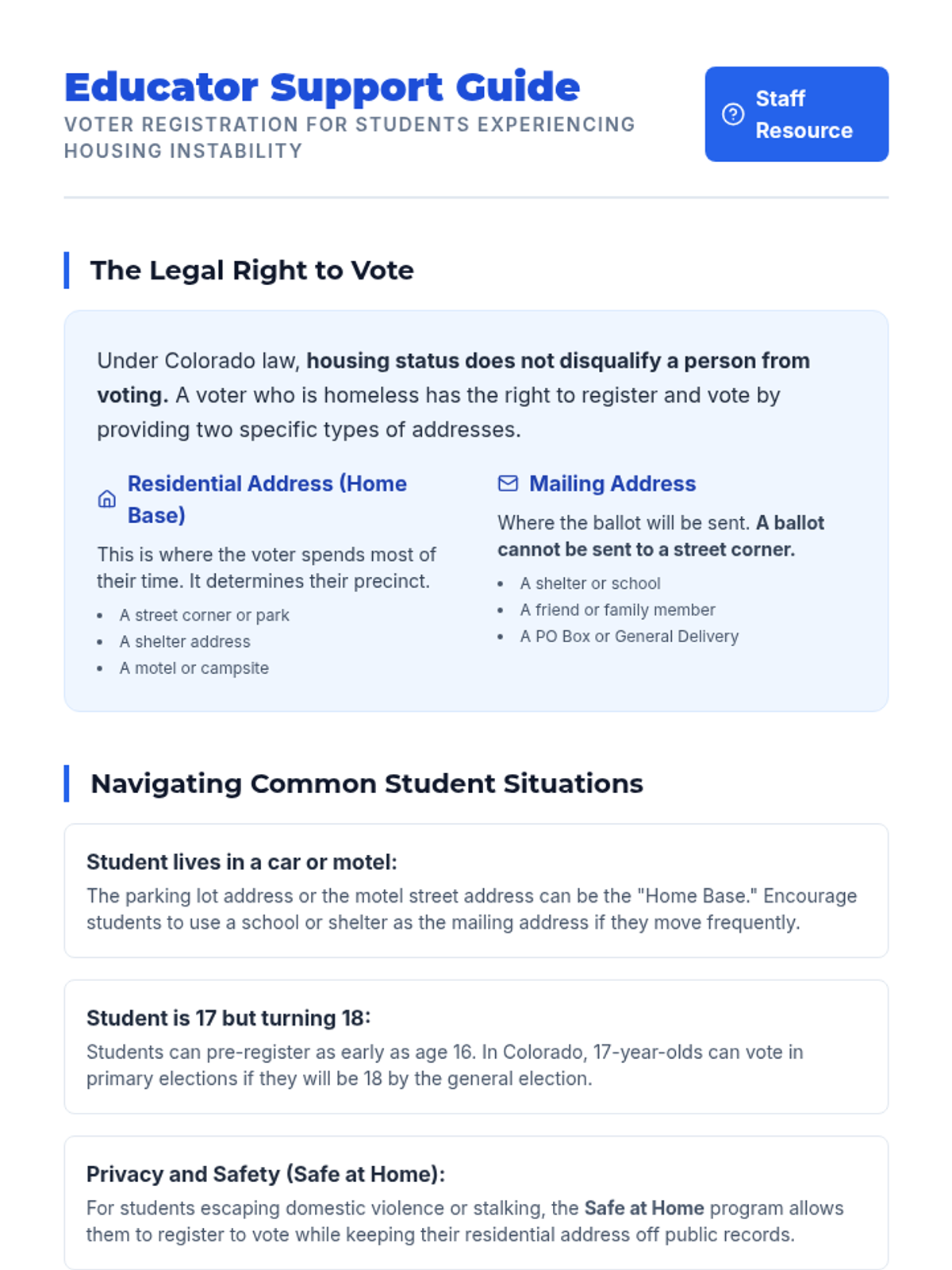
A professional guidance document for educators and support staff to assist students experiencing housing instability with voter registration in Colorado, including legal rights and practical strategies.
An updated, high-contrast visual roadmap for voter registration in Colorado, optimized for neurodiverse high school students experiencing housing instability. Features a clear vertical flow with checkbox-style options.
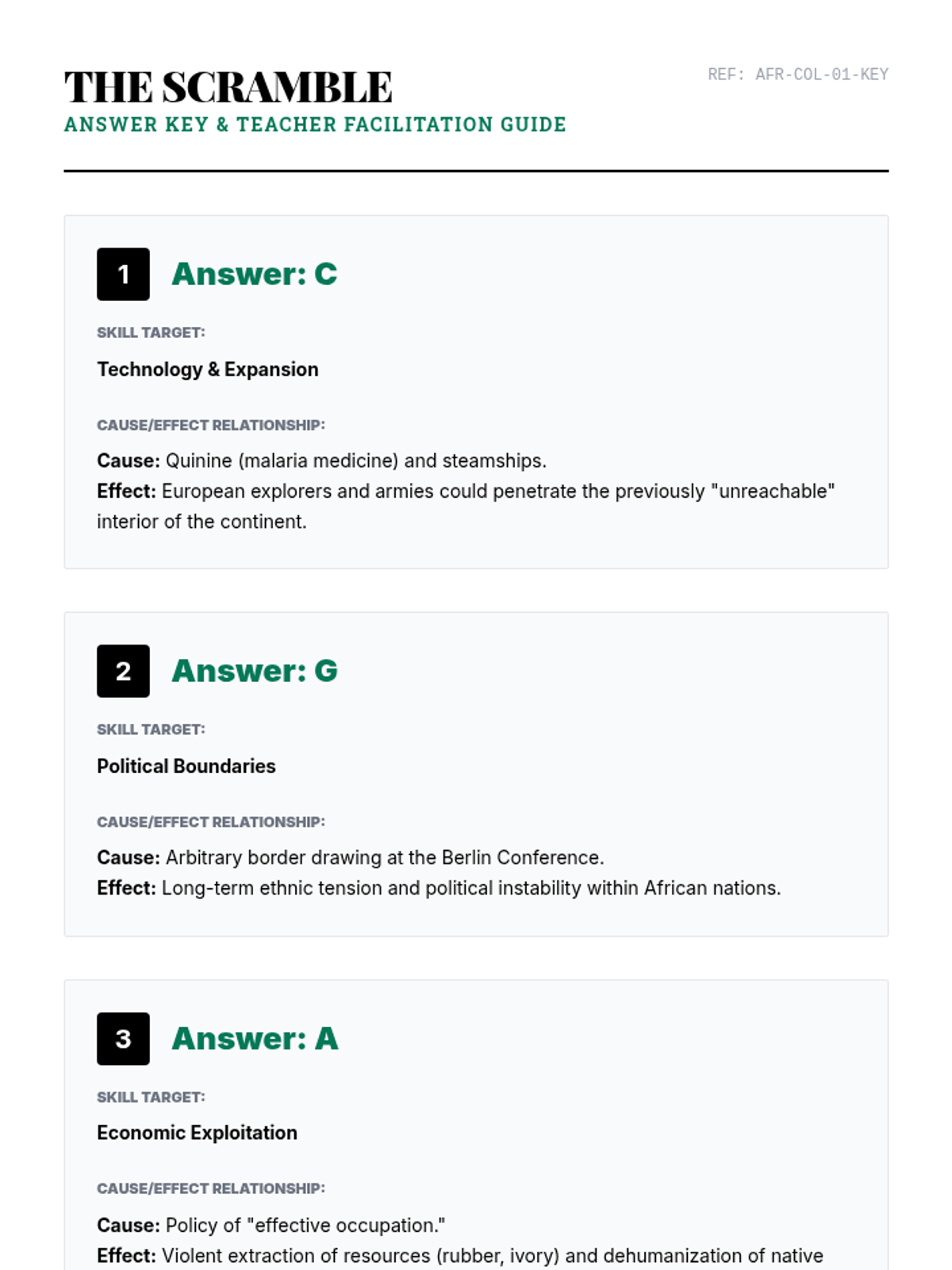
A detailed teacher answer key and facilitation guide for the colonization of Africa worksheet. It provides correct answers, cause-and-effect breakdowns, and instructional insights.
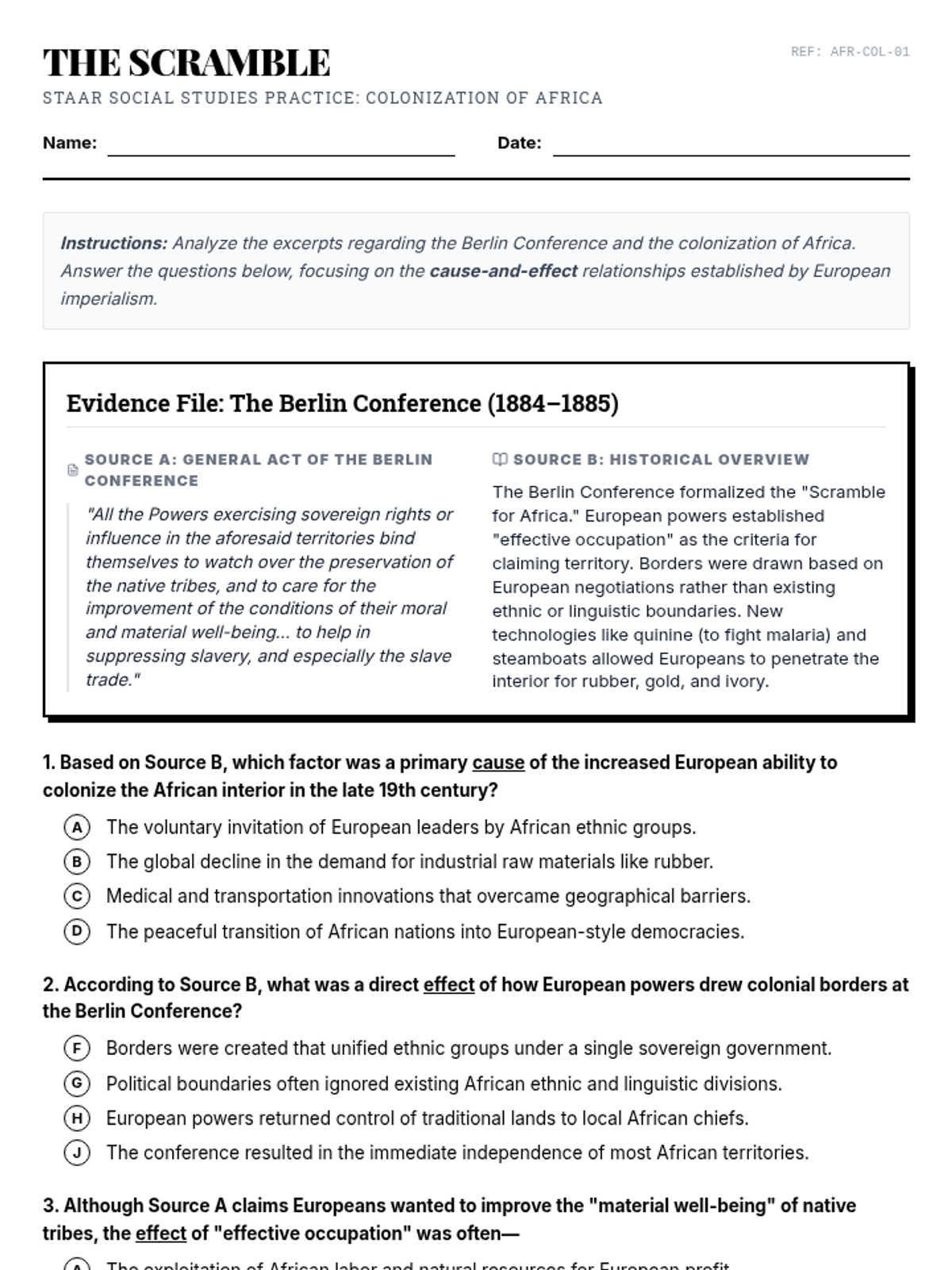
A single-page, 4-question STAAR-style practice worksheet on the colonization of Africa. It includes `break-inside-avoid` to ensure each question and its answers stay together during printing.
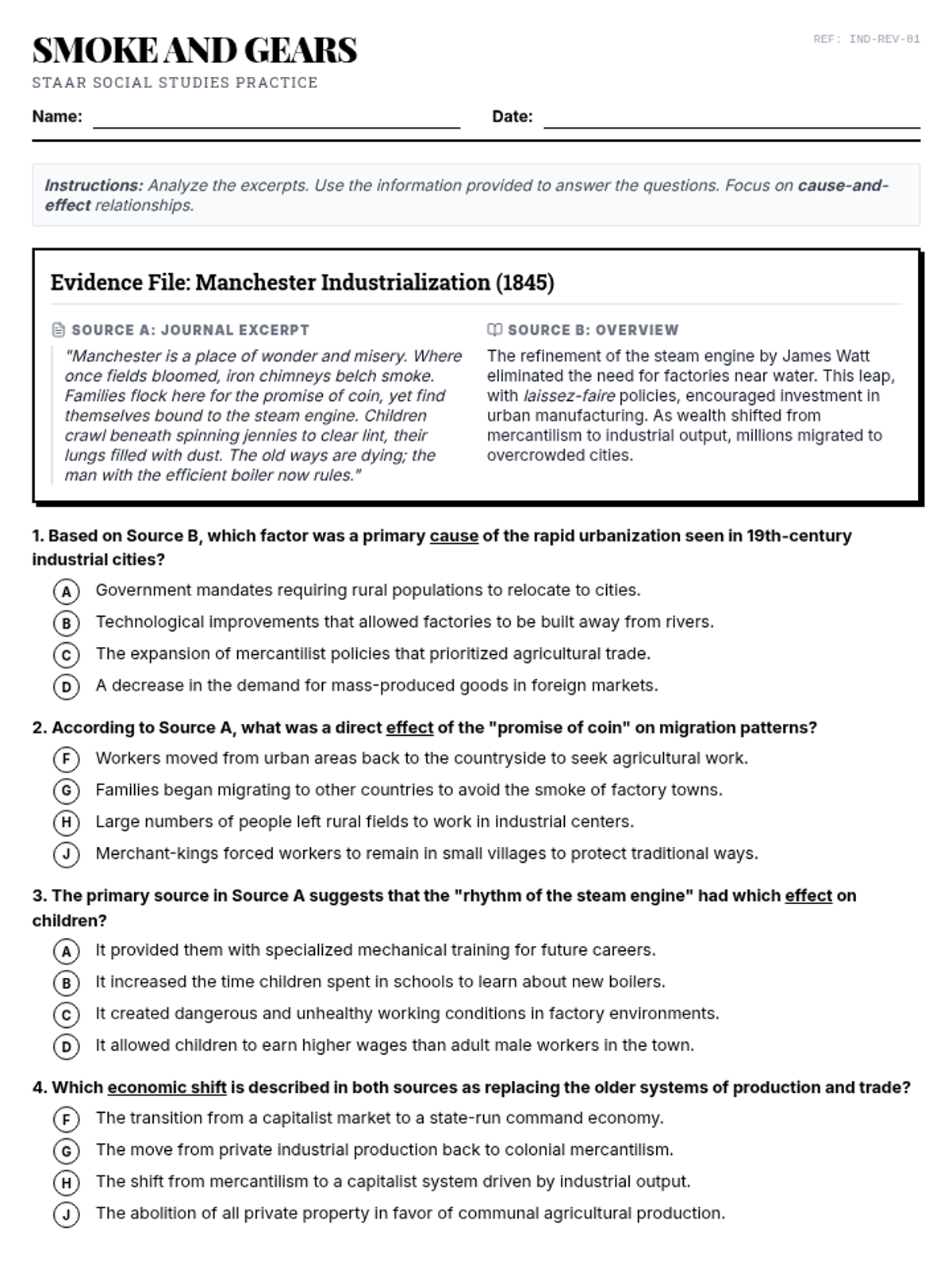
A single-page, 4-question STAAR-style practice worksheet on the Industrial Revolution. Highly optimized for 8.5x11 printing with `break-inside-avoid` to ensure each question and its answers stay together.
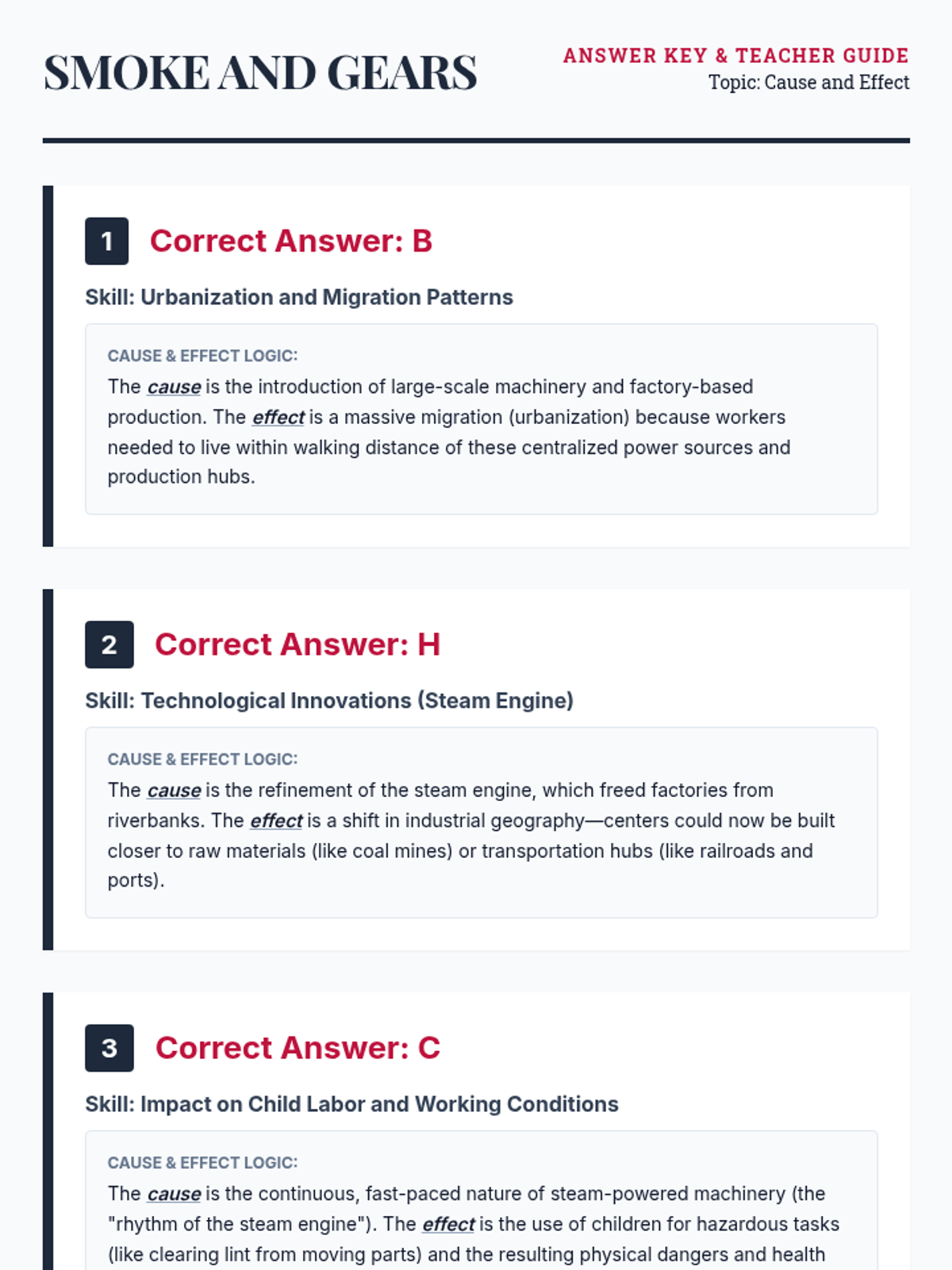
A detailed teacher answer key and facilitation guide for the Smoke and Gears worksheet, formatted for 8.5x11 printing. Includes cause-and-effect breakdowns and instructional strategies.
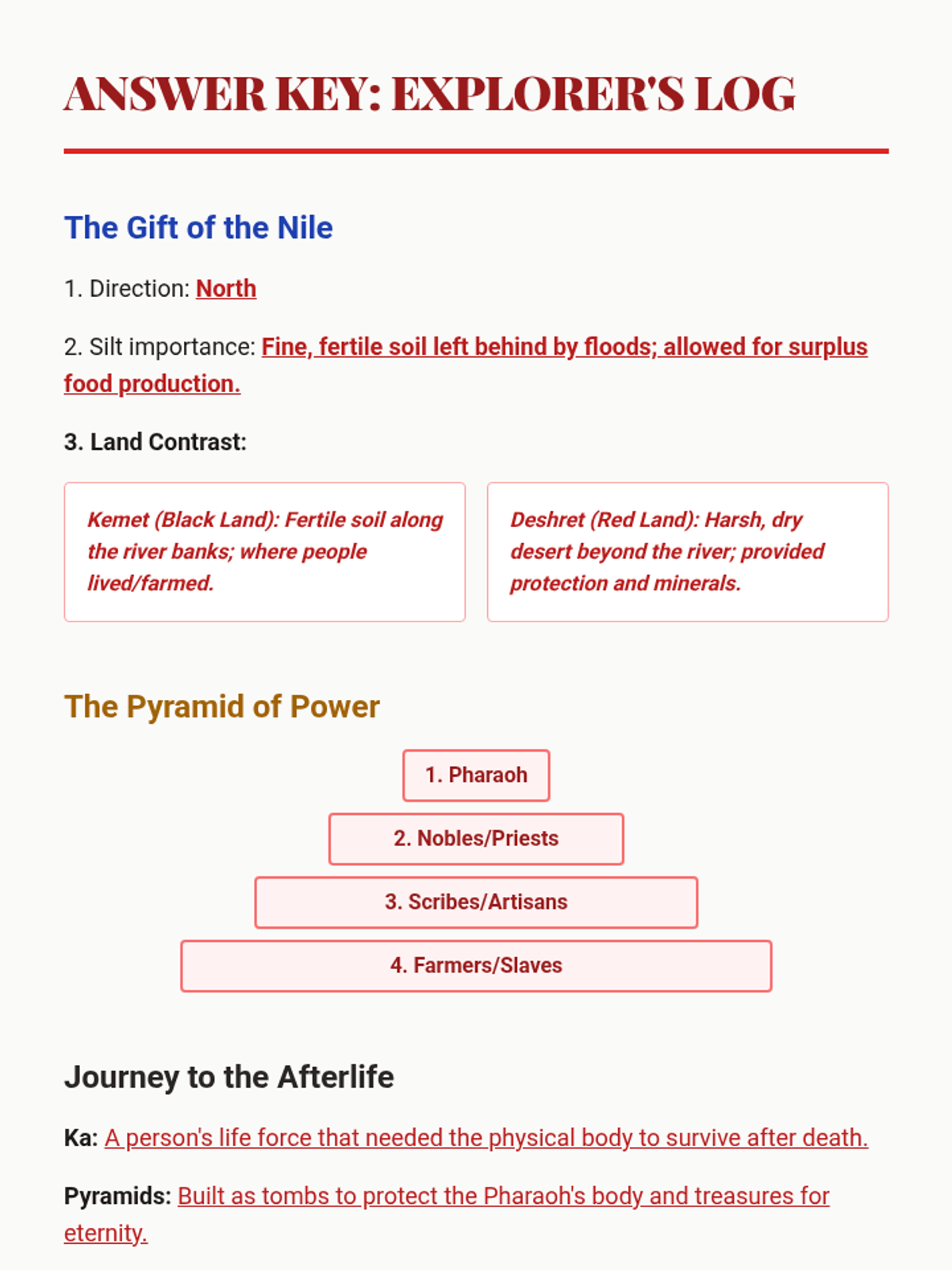
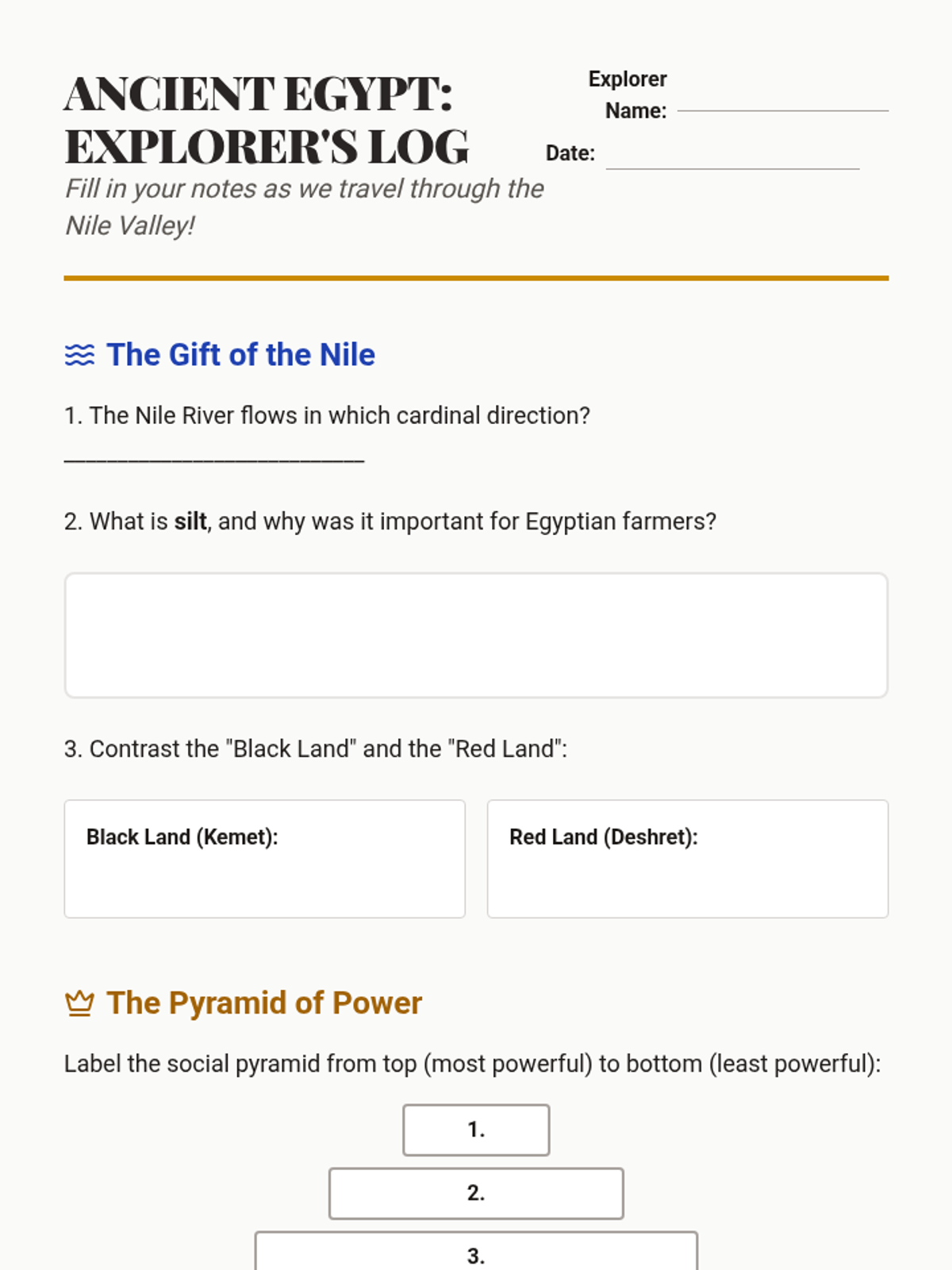
Teacher answer key for the Egypt Exploration Notes Handout, containing all the correct responses and completed diagrams.
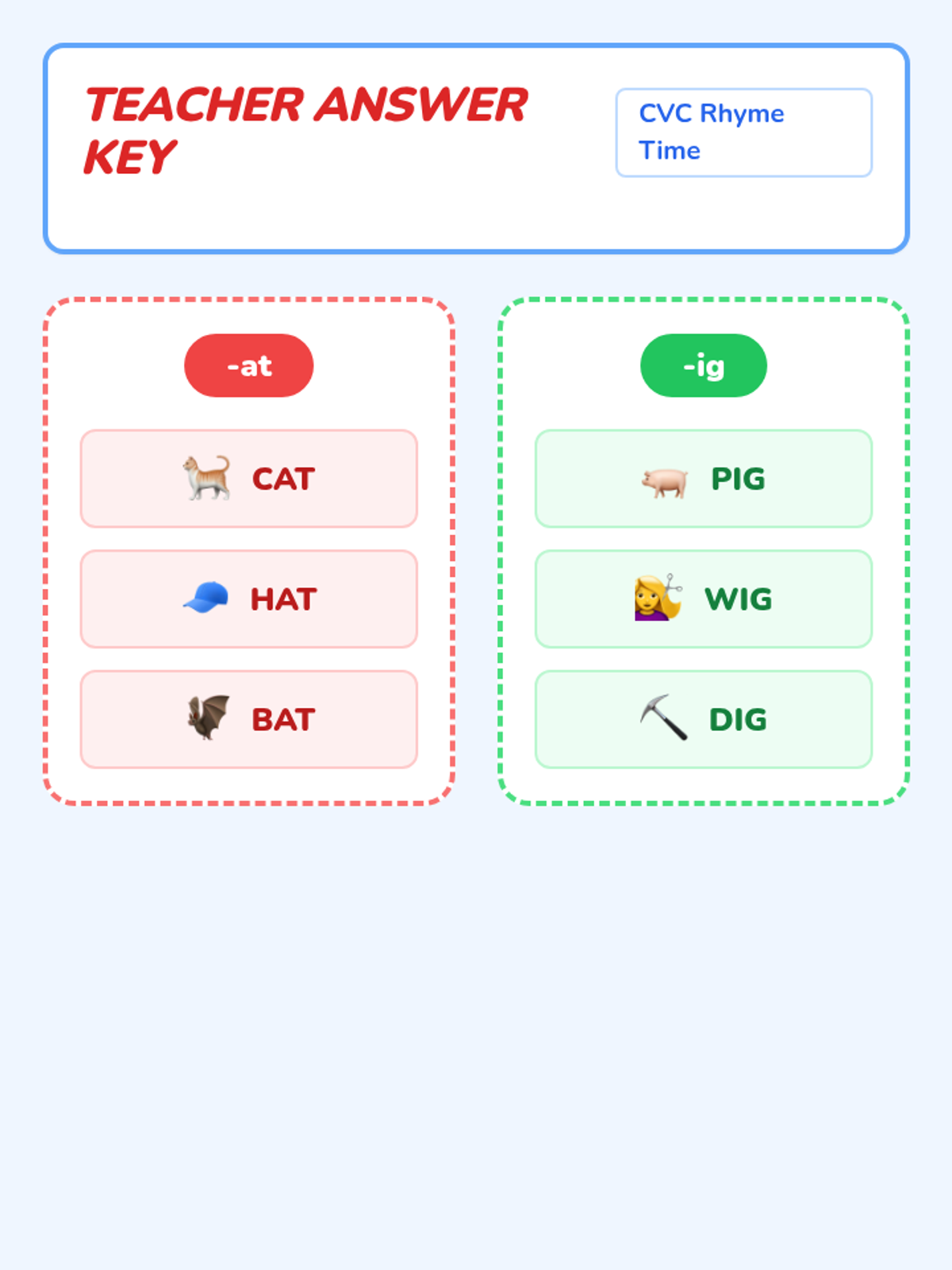
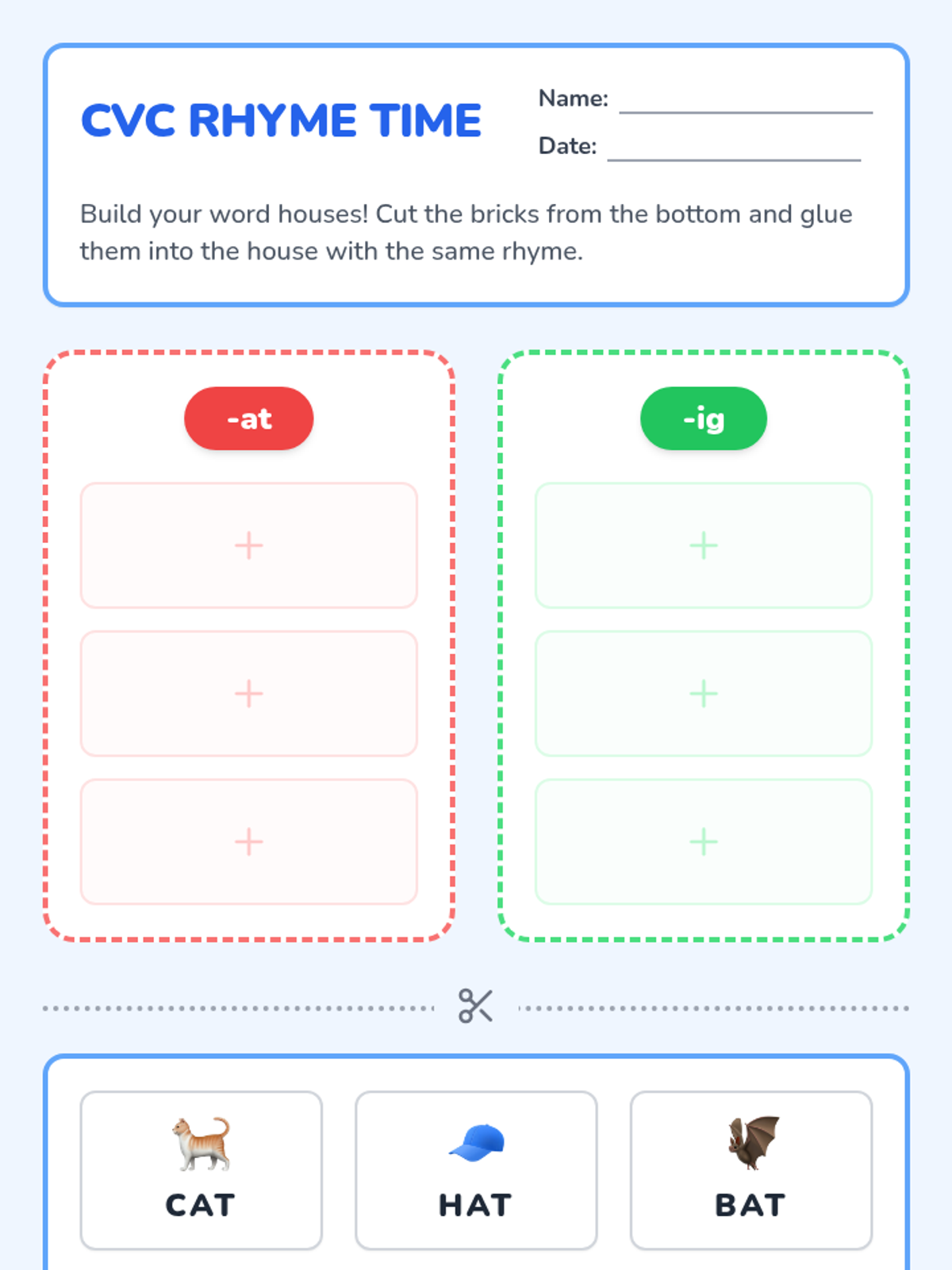
Teacher answer key for the CVC Rhyme Sort Worksheet, showing the correct placement of words in the -at and -ig houses.
A guided notes handout for 6th-grade students to use alongside the Empire of the Nile presentation. It includes sections for geography, social hierarchy, religion, and writing.
A 5-slide instructional presentation for 6th-grade students covering the core elements of Ancient Egyptian civilization, including geography, social structure, the afterlife, and writing systems.
A kindergarten cut-and-paste worksheet focusing on the -at and -ig CVC word families. Students sort six illustrated words into the correct rhyming houses to build phonemic awareness.
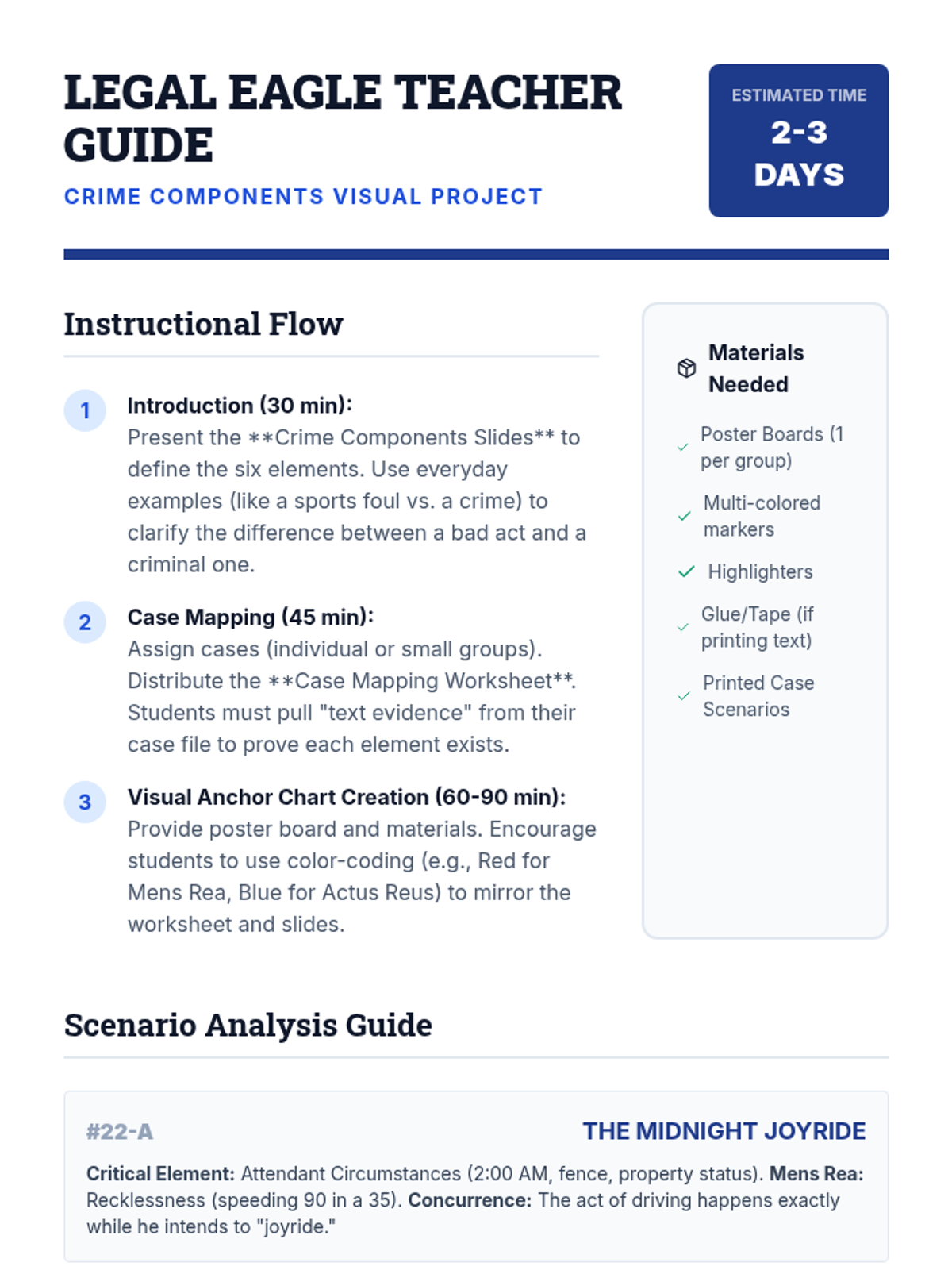
A comprehensive teacher guide for the Crime Components Project, featuring instructional steps, case scenario analysis, and tips for addressing common legal misconceptions.
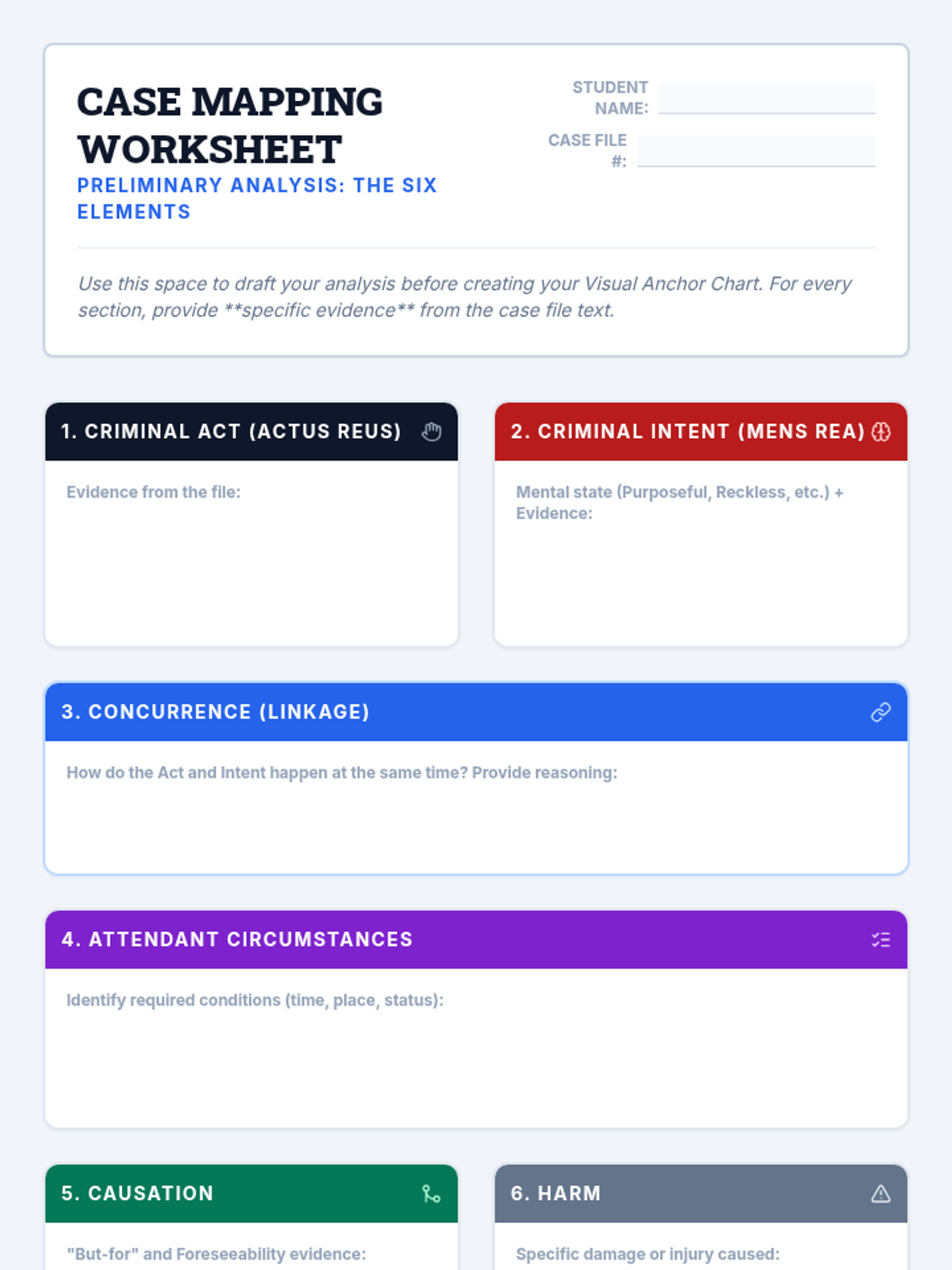
A graphic organizer for students to map out the six elements of a crime for a specific case study before creating their final visual project.
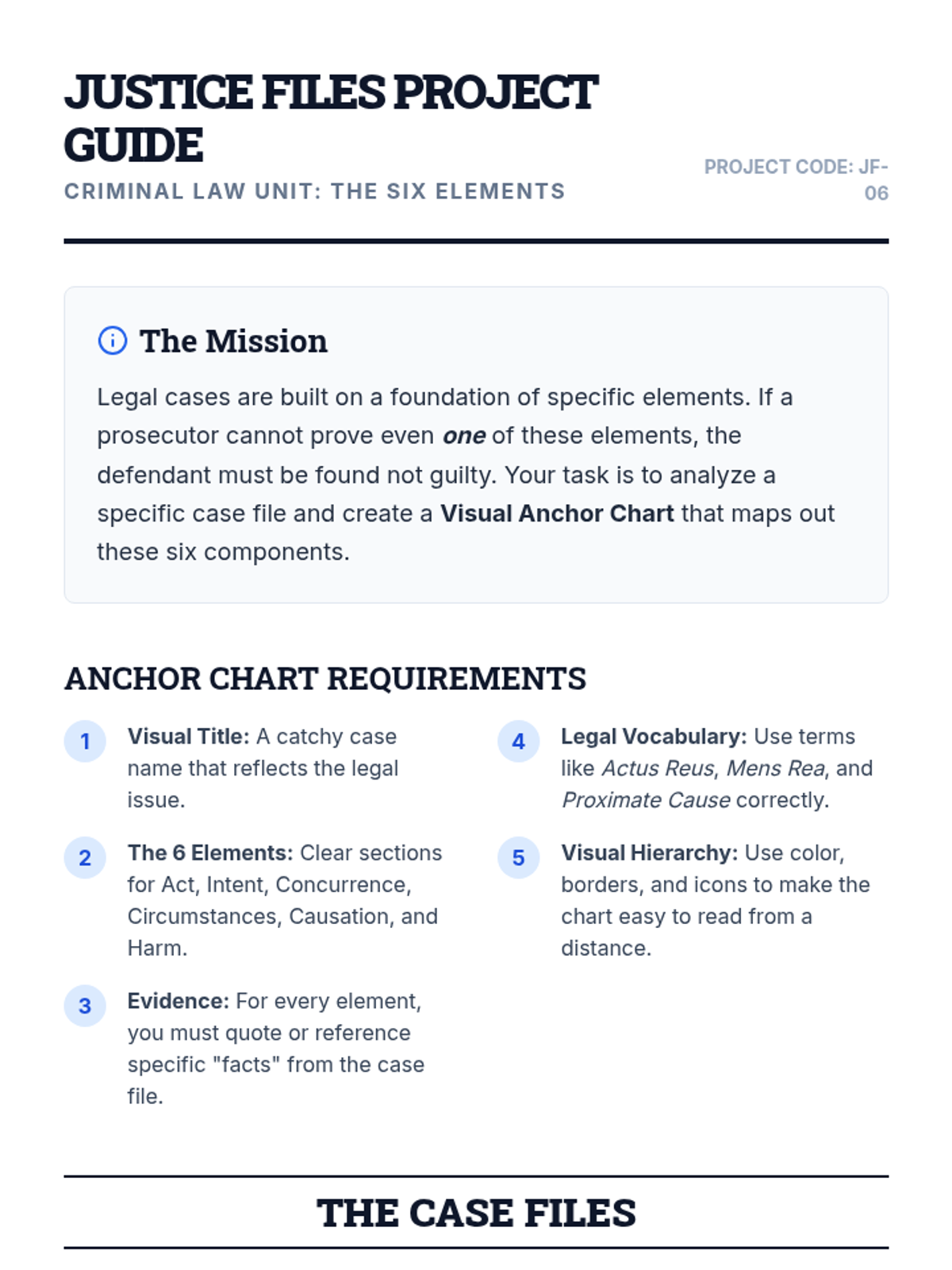
A student-facing project guide that includes instructions for creating a Visual Anchor Chart, a grading rubric, and five detailed criminal case scenarios for analysis.
An introductory slide deck explaining the six elements of a crime (Actus Reus, Mens Rea, Concurrence, Attendant Circumstances, Causation, and Harm) with visual examples and clear definitions.
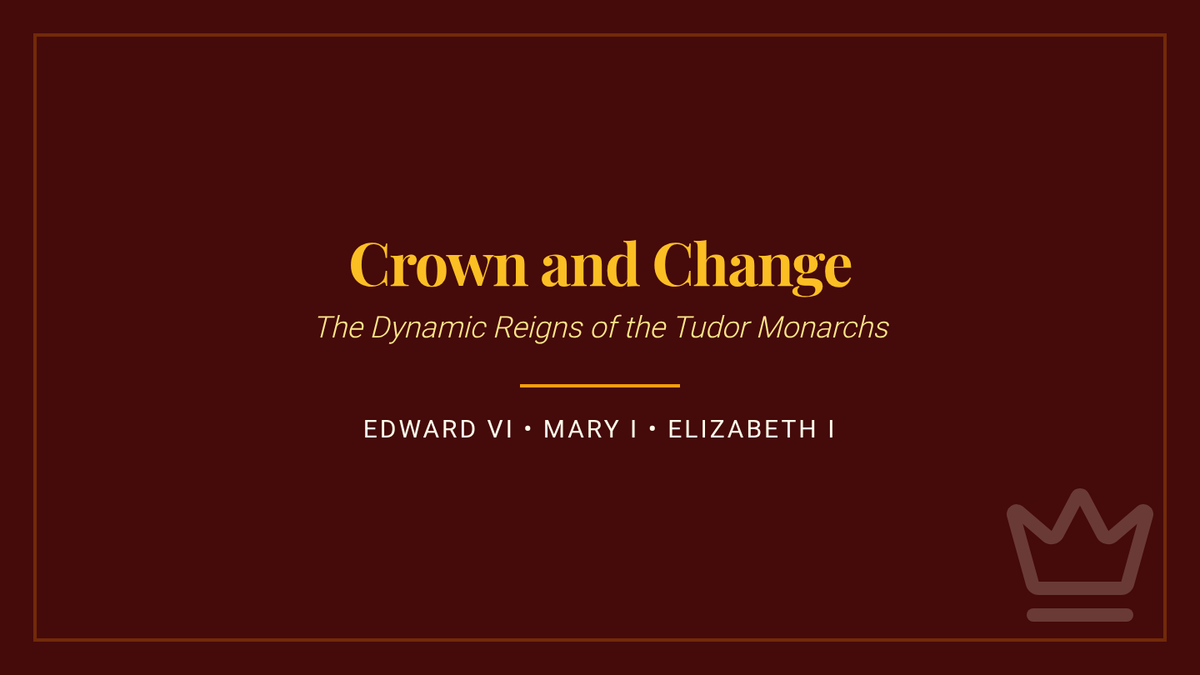
A dense, 20-slide detailed notes presentation covering the entirety of the Tudor dynasty from Henry VII to Elizabeth I, including Lady Jane Grey. The presentation focuses on historical facts, specific legislation, societal context, and analysis of changes and continuities for each monarch.
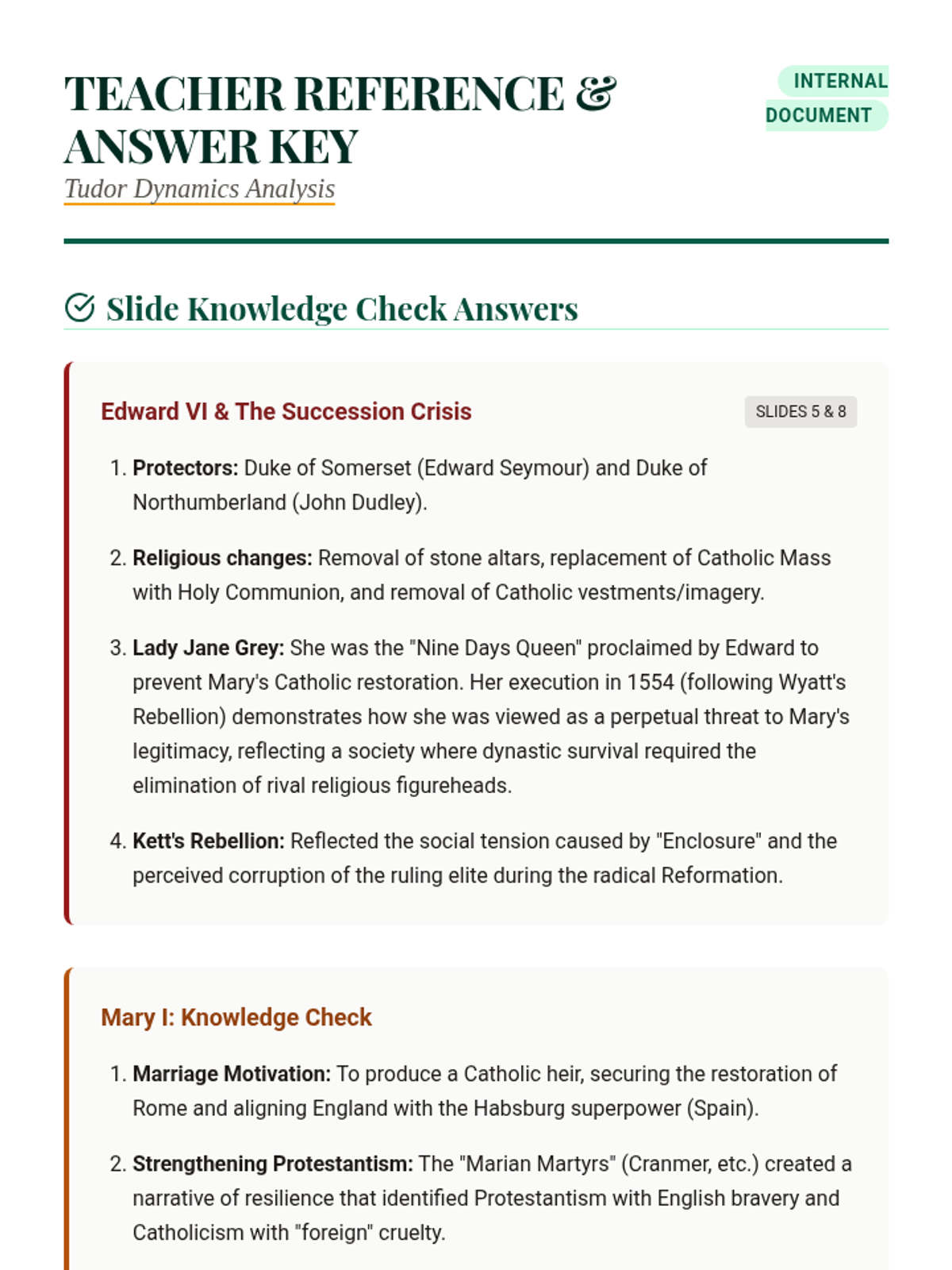
A comprehensive teacher guide and answer key for the Tudor Dynamics lesson. Includes suggested answers for slide comprehension questions, exemplar ALARM matrix entries, and instructional tips for delivery and pacing.
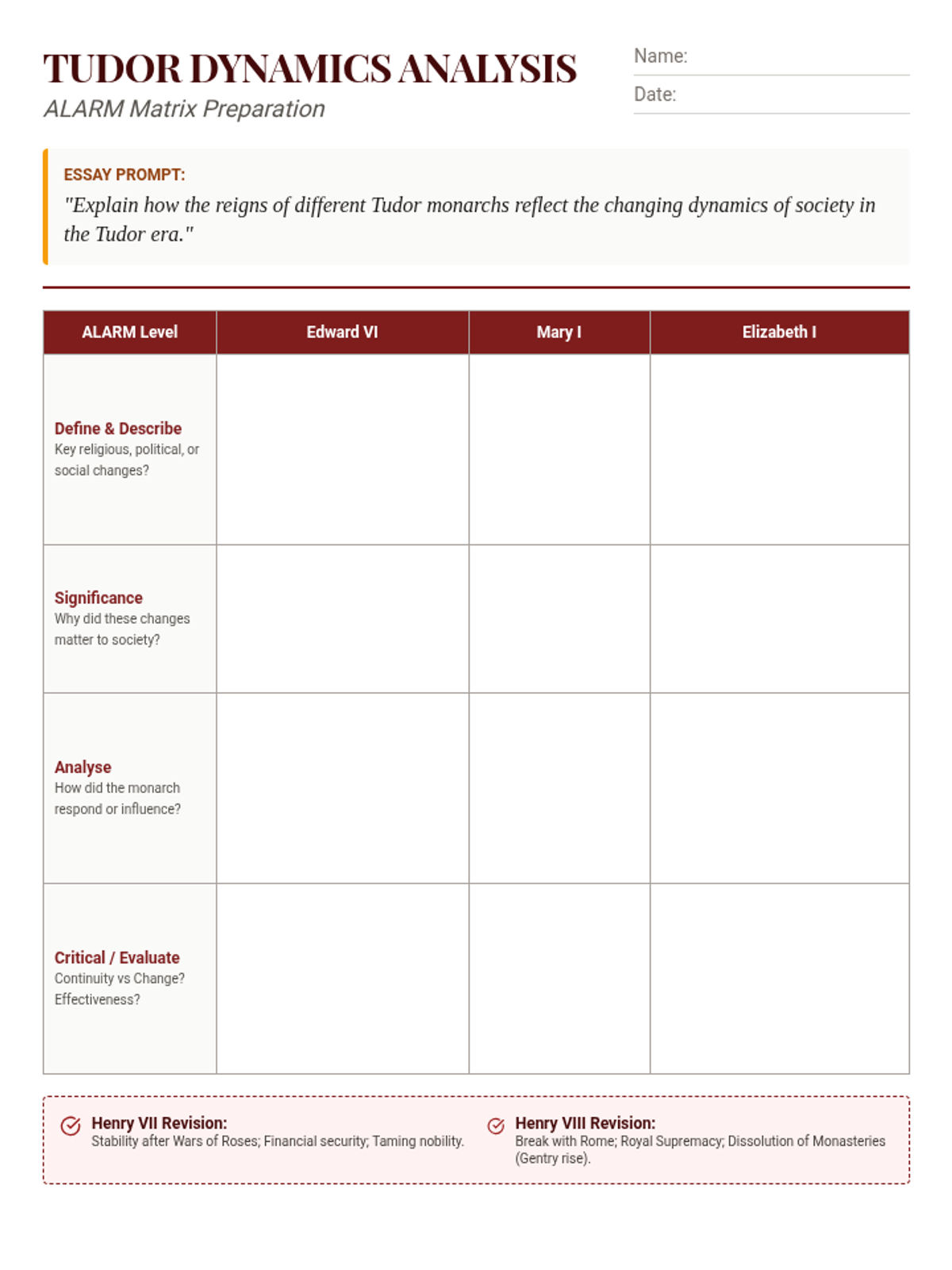
A condensed one-page ALARM matrix worksheet for student analysis of Tudor monarchs. The layout has been optimized to fit all analysis levels and revision notes on a single page, providing clear sections for Edward VI, Mary I, and Elizabeth I.
An updated 20-slide presentation that now includes information on the tragic fate of Jane Seymour (death following Edward's birth) and the 1553 succession crisis involving Lady Jane Grey. The layout remains optimized for single-slide visibility.
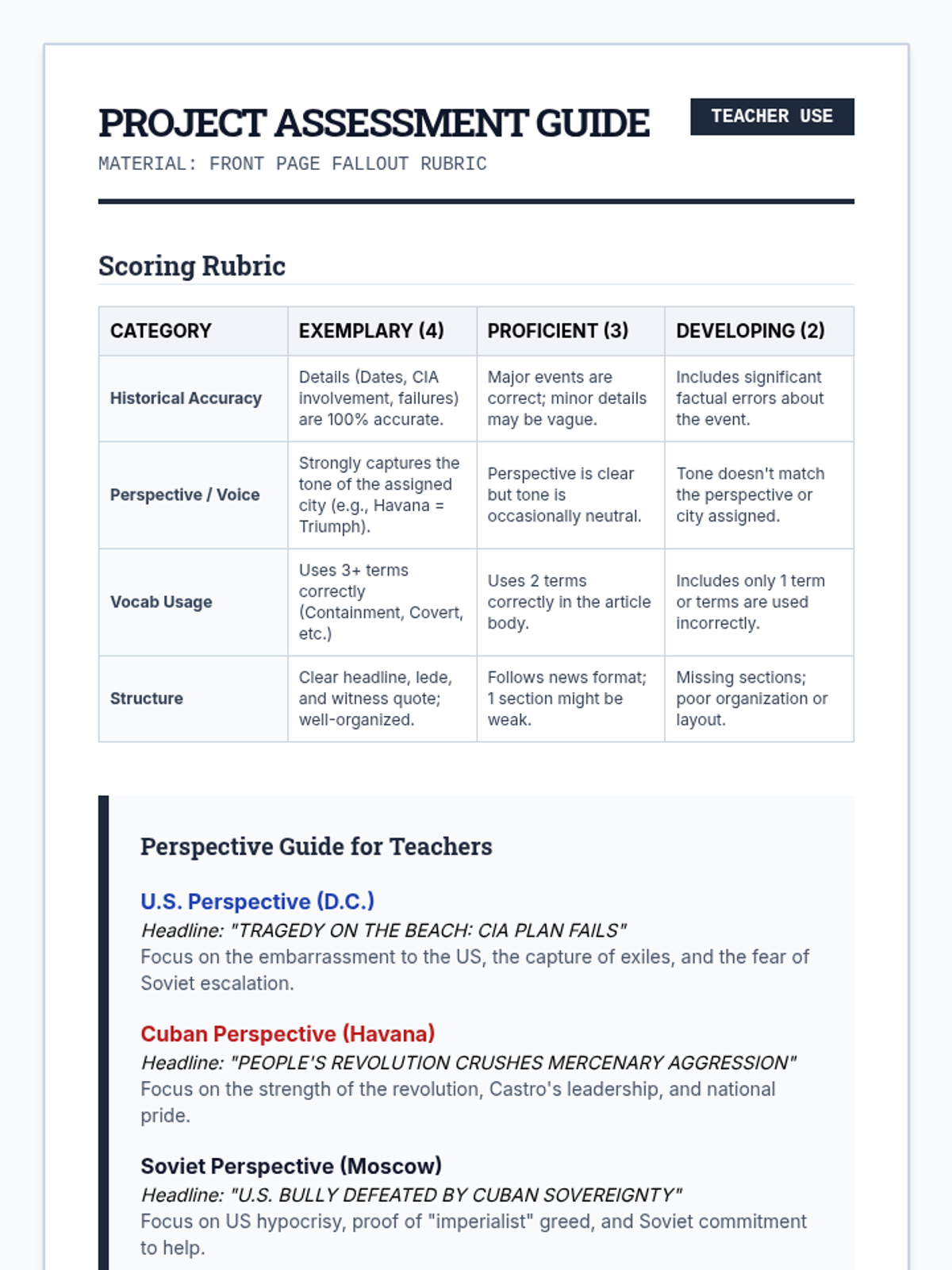
A teacher's assessment guide and rubric for the multi-perspective newspaper project. Includes scoring criteria, perspective prompts, and sample headlines.
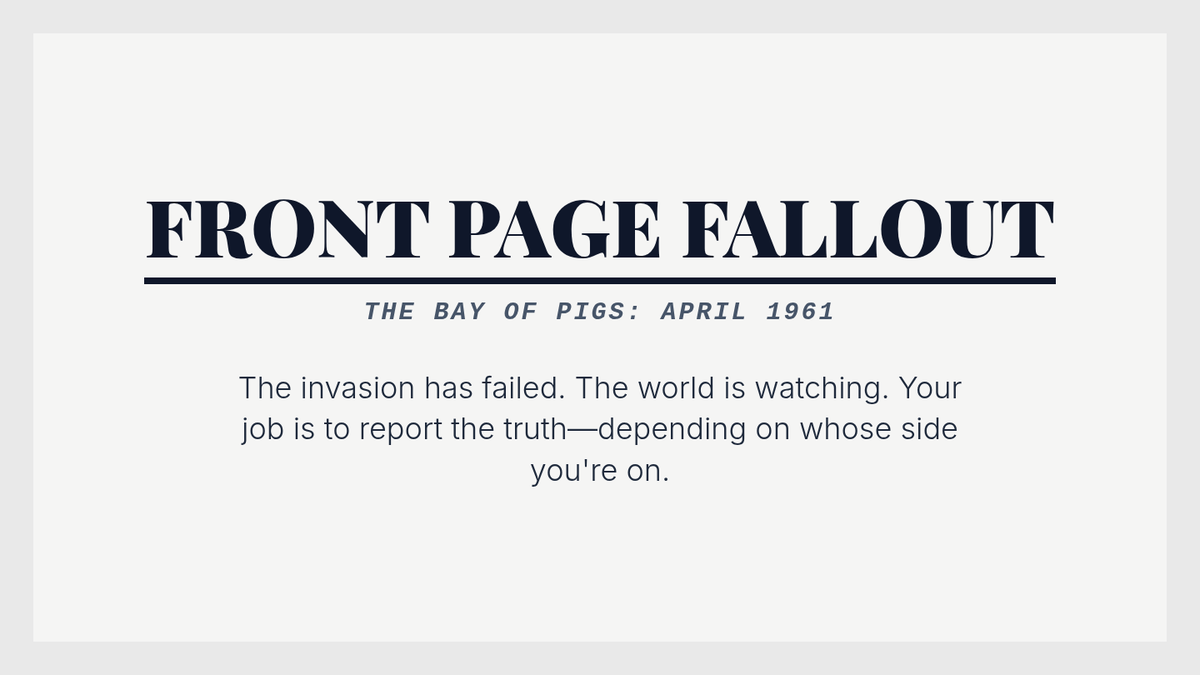
A 1961-style newspaper template for the multi-perspective reporting project. Includes space for headlines, columned articles, witness quotes, and visual captions.
A visual presentation deck for Day 2, focusing on analyzing the fallout from US, Cuban, and Soviet perspectives and providing instructions for the multi-perspective newspaper project.
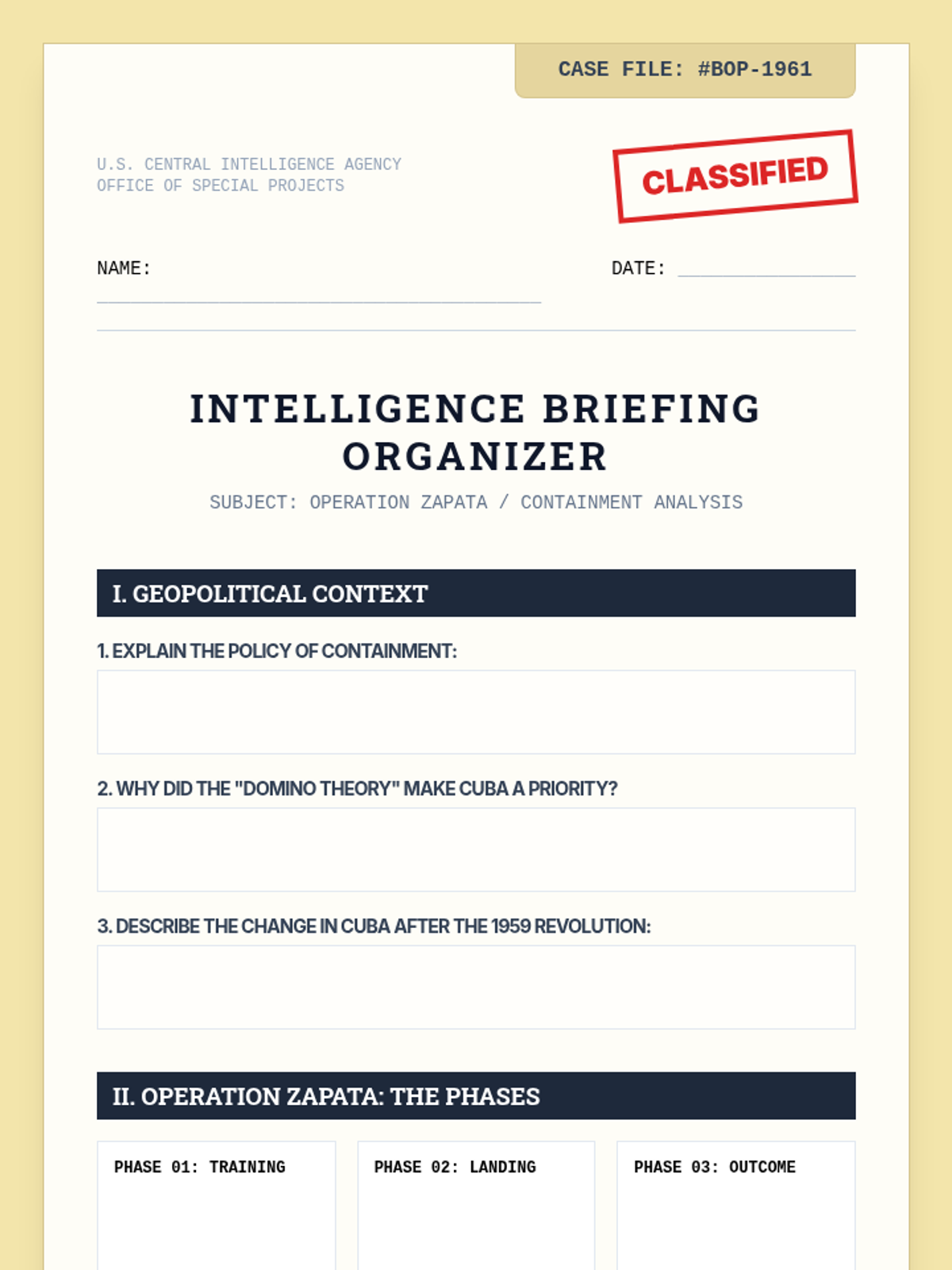
A student-facing graphic organizer designed as a CIA dossier to accompany Day 1's instruction. Includes sections for geopolitical context, invasion phases, and a failure analysis.
A visual presentation deck for Day 1, covering Cold War containment, Castro's revolution, the CIA's Operation Zapata, and the timeline of the failed invasion.
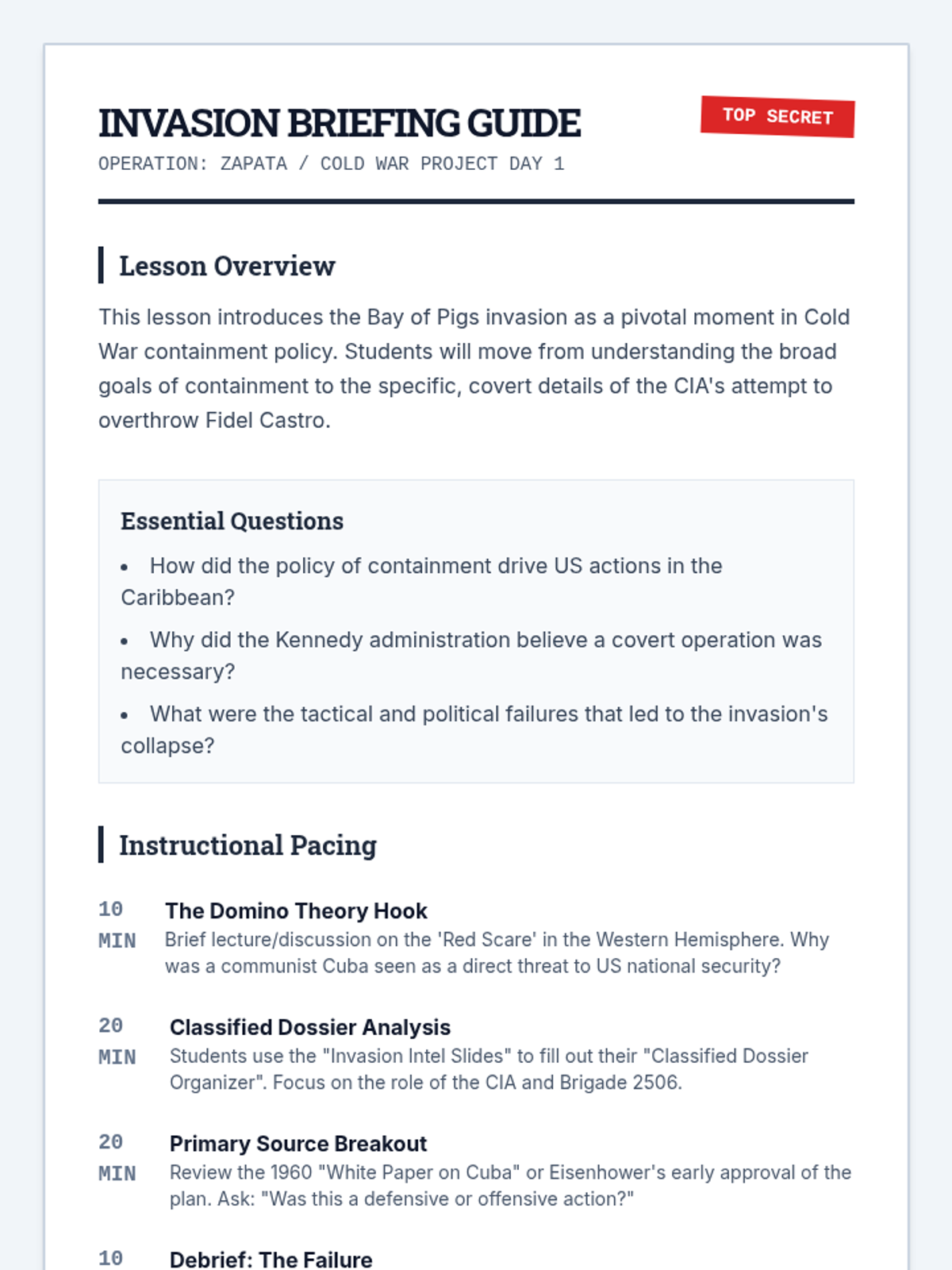
A comprehensive teacher's guide for Day 1 of the Bay of Pigs project, outlining instructional pacing, essential questions, and key Cold War vocabulary.
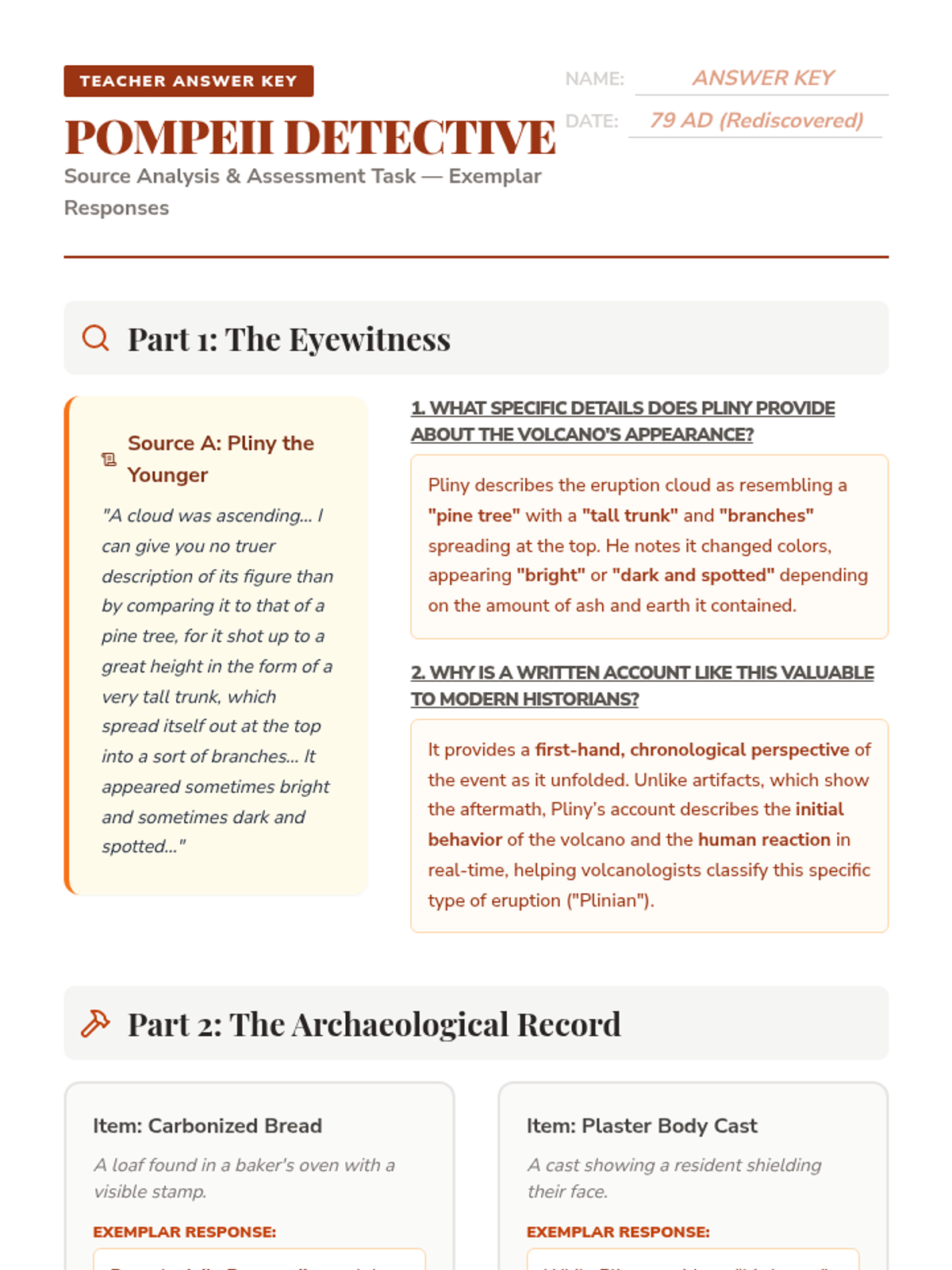
An answer key for the Pompeii Detective worksheet, providing exemplar responses for source analysis questions and a detailed guide for the summative assessment essay.
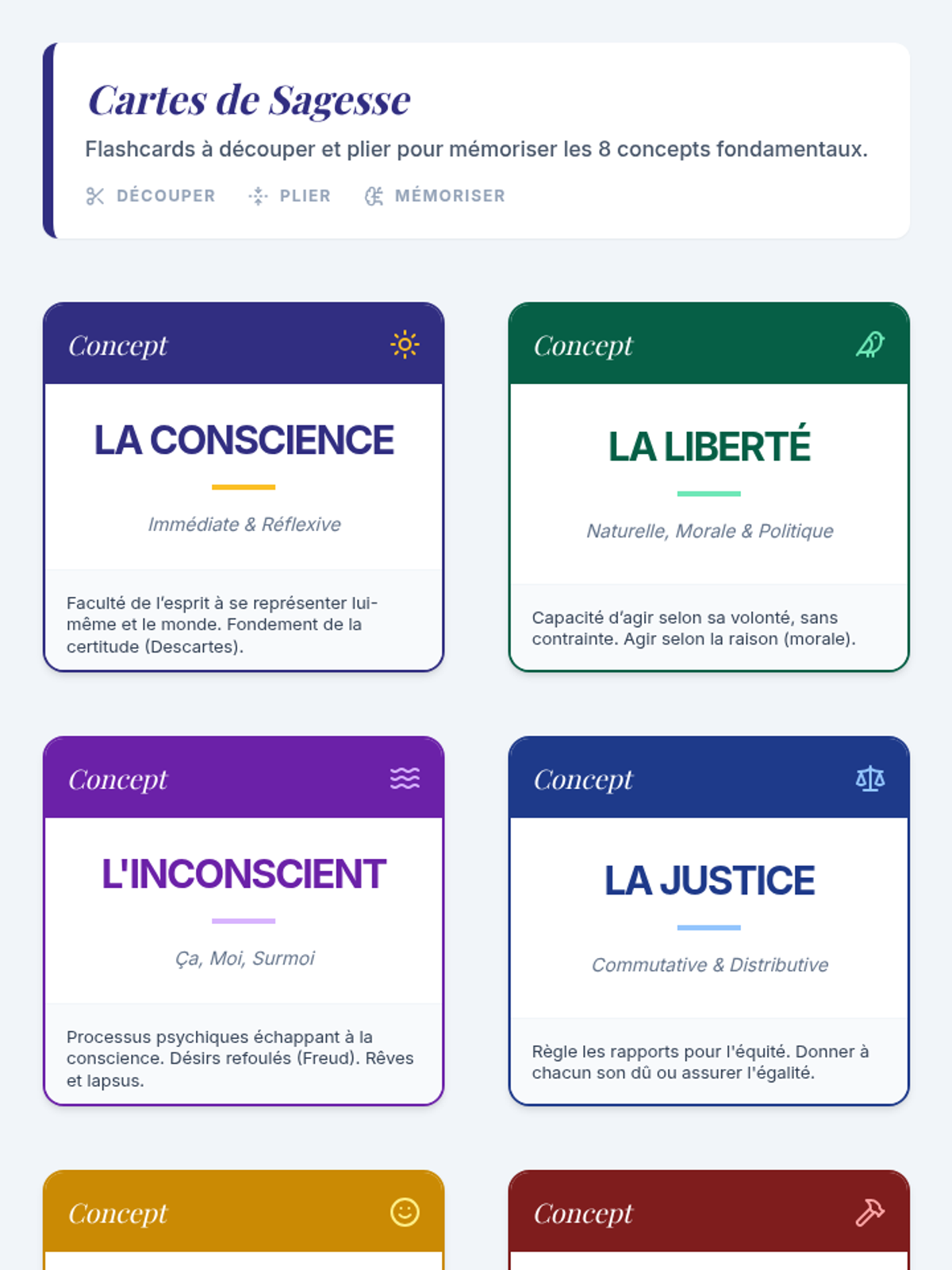
Un ensemble de huit flashcards à découper, présentant au recto le concept philosophique et au verso sa définition synthétique pour une mémorisation rapide.
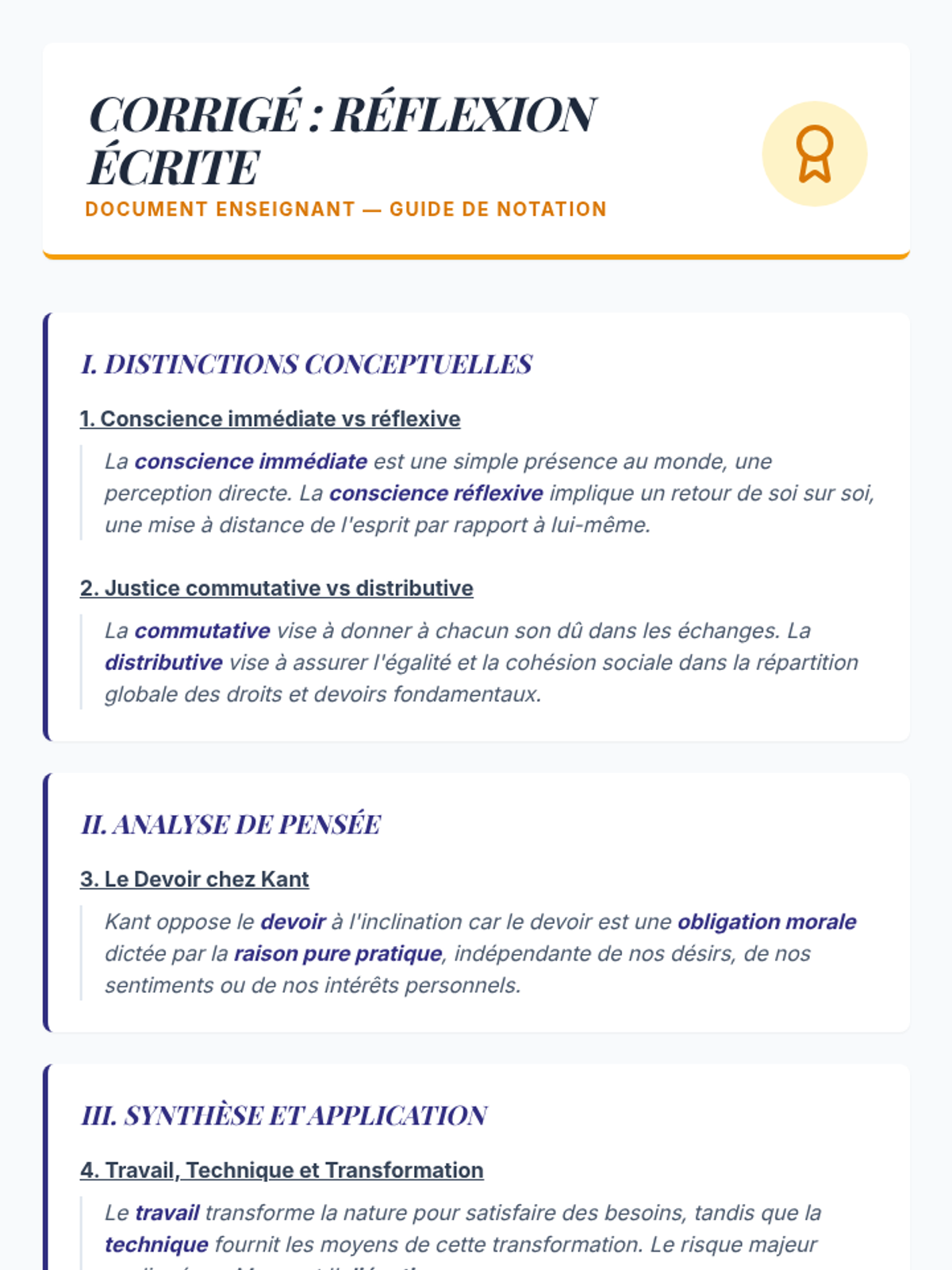
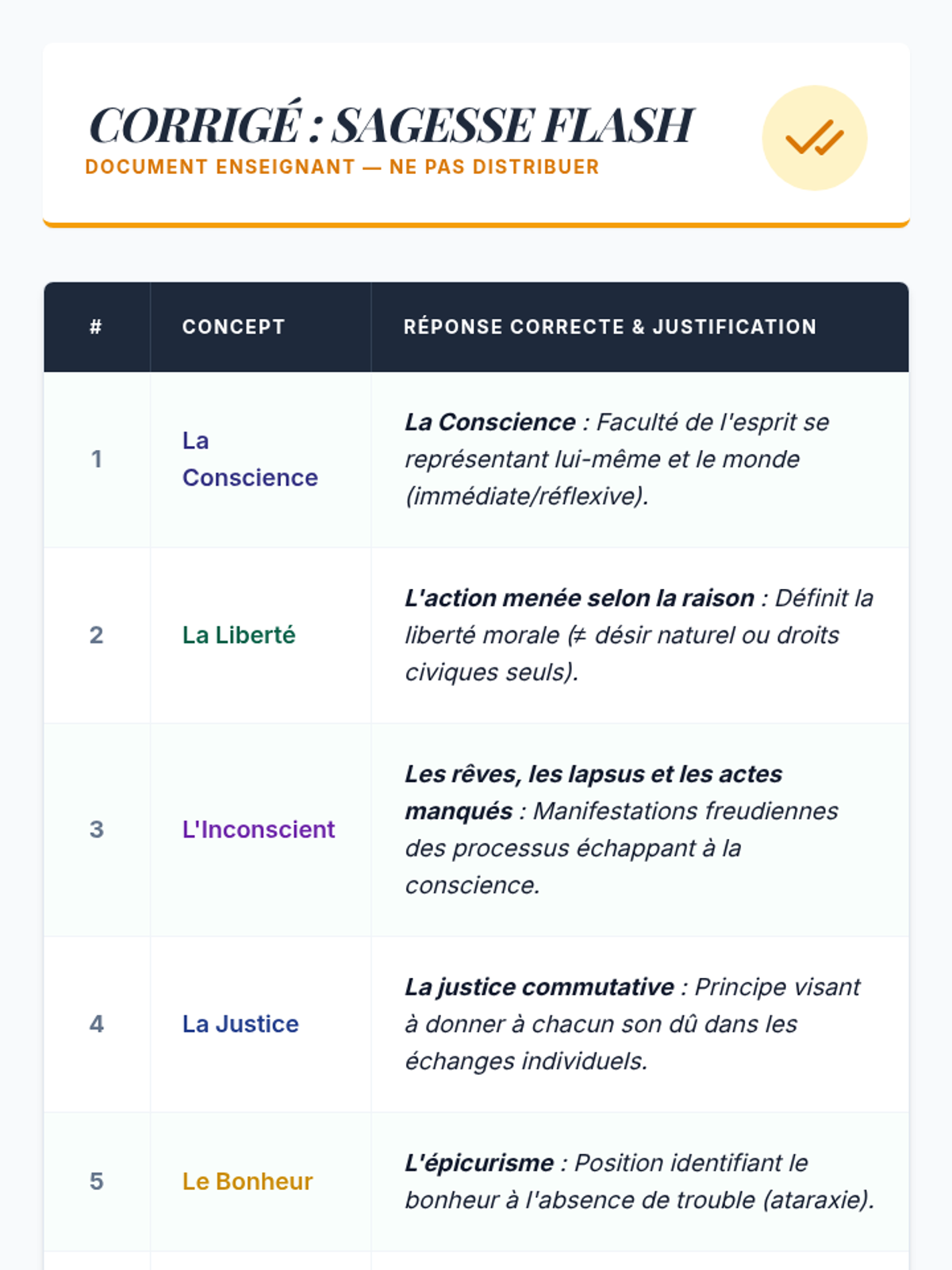
Corrigé détaillé de la fiche de réflexion écrite Sagesse Flash pour l'enseignant, incluant des pistes de notation et les points clés.
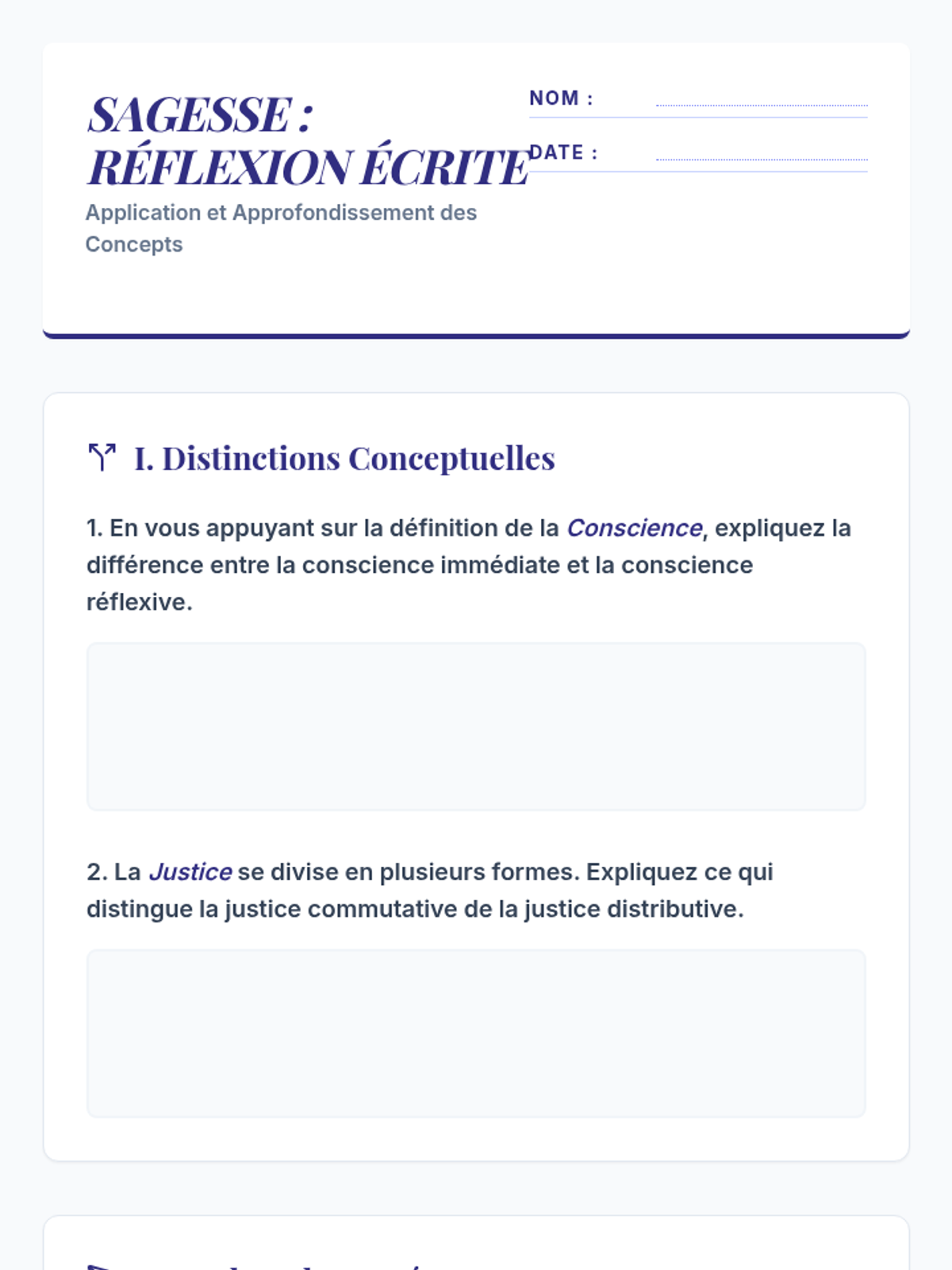
Une fiche d'exercices écrits demandant aux élèves d'expliquer les distinctions et les nuances des huit concepts philosophiques étudiés.
Corrigé détaillé du quiz QCM Sagesse Flash avec justifications basées sur les textes sources pour l'enseignant.
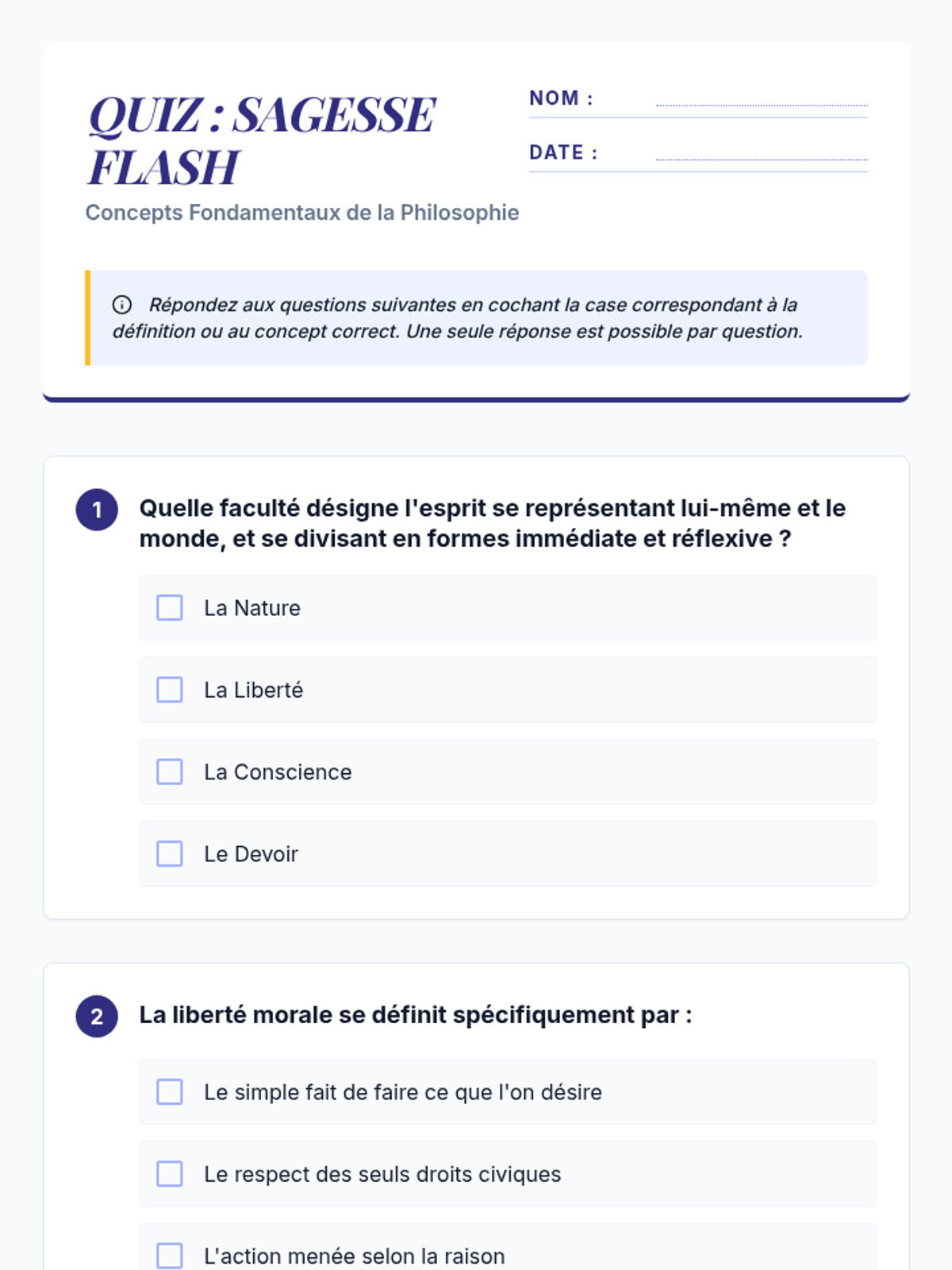
Un questionnaire à choix multiples (QCM) de huit questions testant la compréhension des définitions philosophiques fournies.