A primary source document analysis worksheet featuring key constitutional and legislative excerpts from Reconstruction through the Civil Rights Movement, with guided inquiry questions.
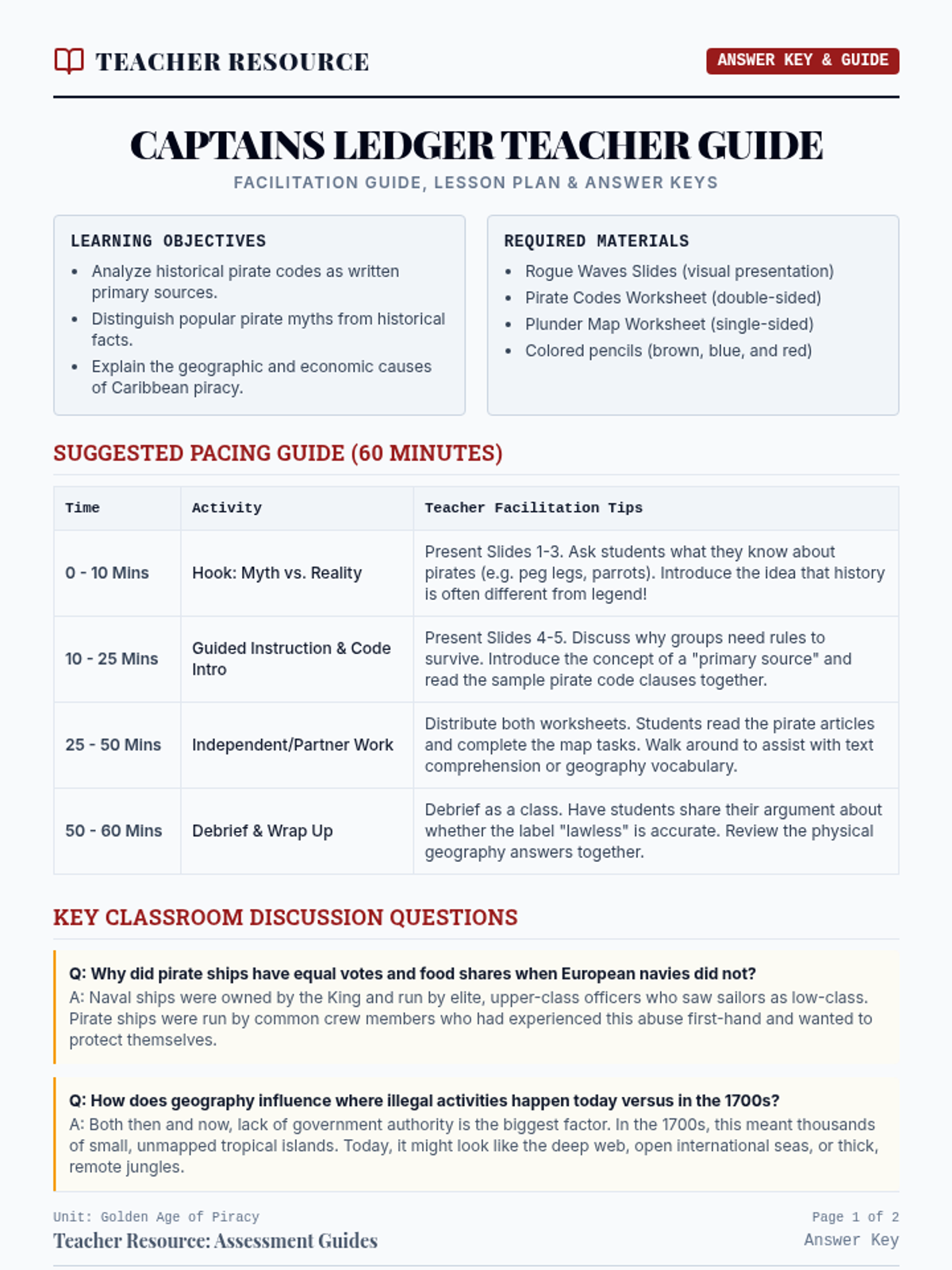
A comprehensive 2-page teacher facilitation guide containing lesson objectives, required materials, a suggested 60-minute pacing timeline, guiding class discussion prompts, and detailed answer keys for both student worksheets.
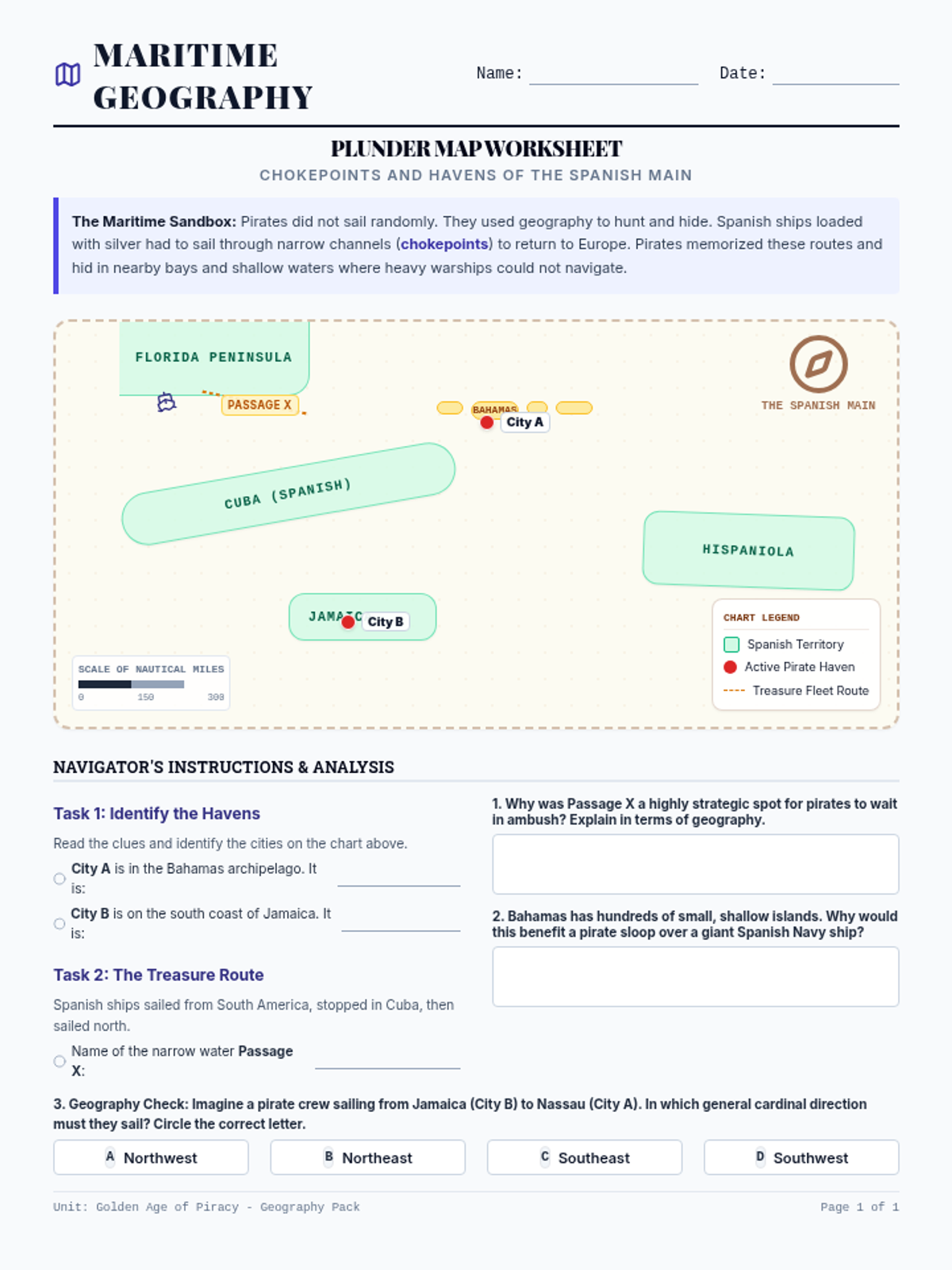
A student-facing guided map worksheet where they trace Spanish treasure fleets, identify major pirate havens (Nassau, Port Royal), and complete geographical analysis questions about maritime chokepoints and island geography.
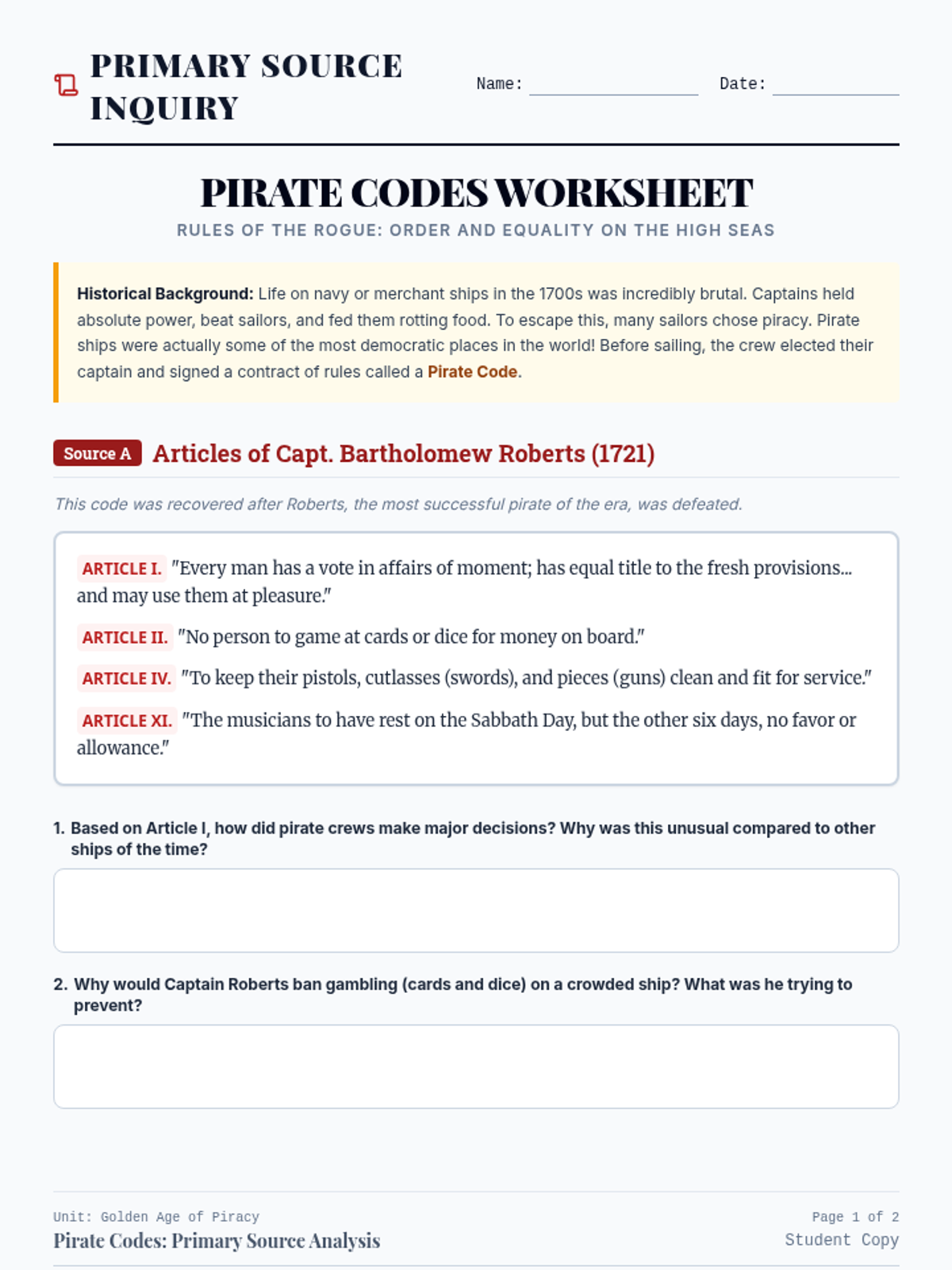
A comprehensive 2-page primary source analysis worksheet where students analyze real pirate codes (Bartholomew Roberts and John Phillips) and answer text-dependent historical inquiry questions about pirate democracy and shipboard rules.
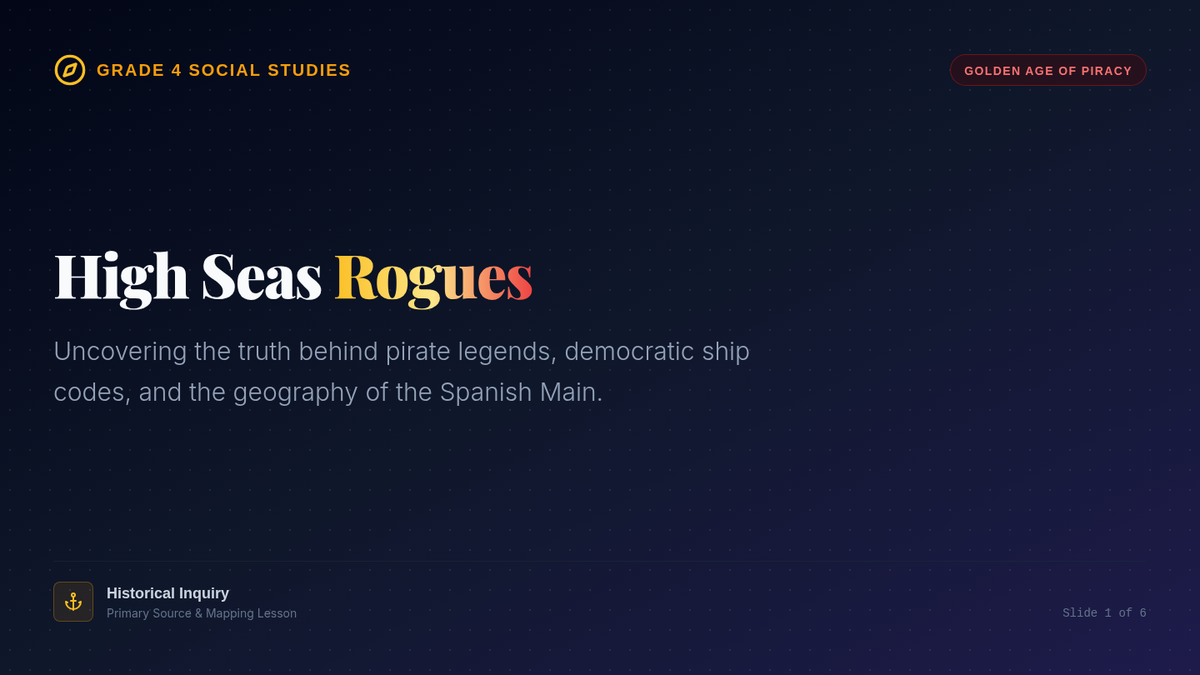
A highly visual, engaging 6-slide presentation that introduces the Golden Age of Piracy, explores pirate myths vs. historical reality, discusses shipboard democracy and pirate codes, introduces Caribbean geography, and briefs students on their work.
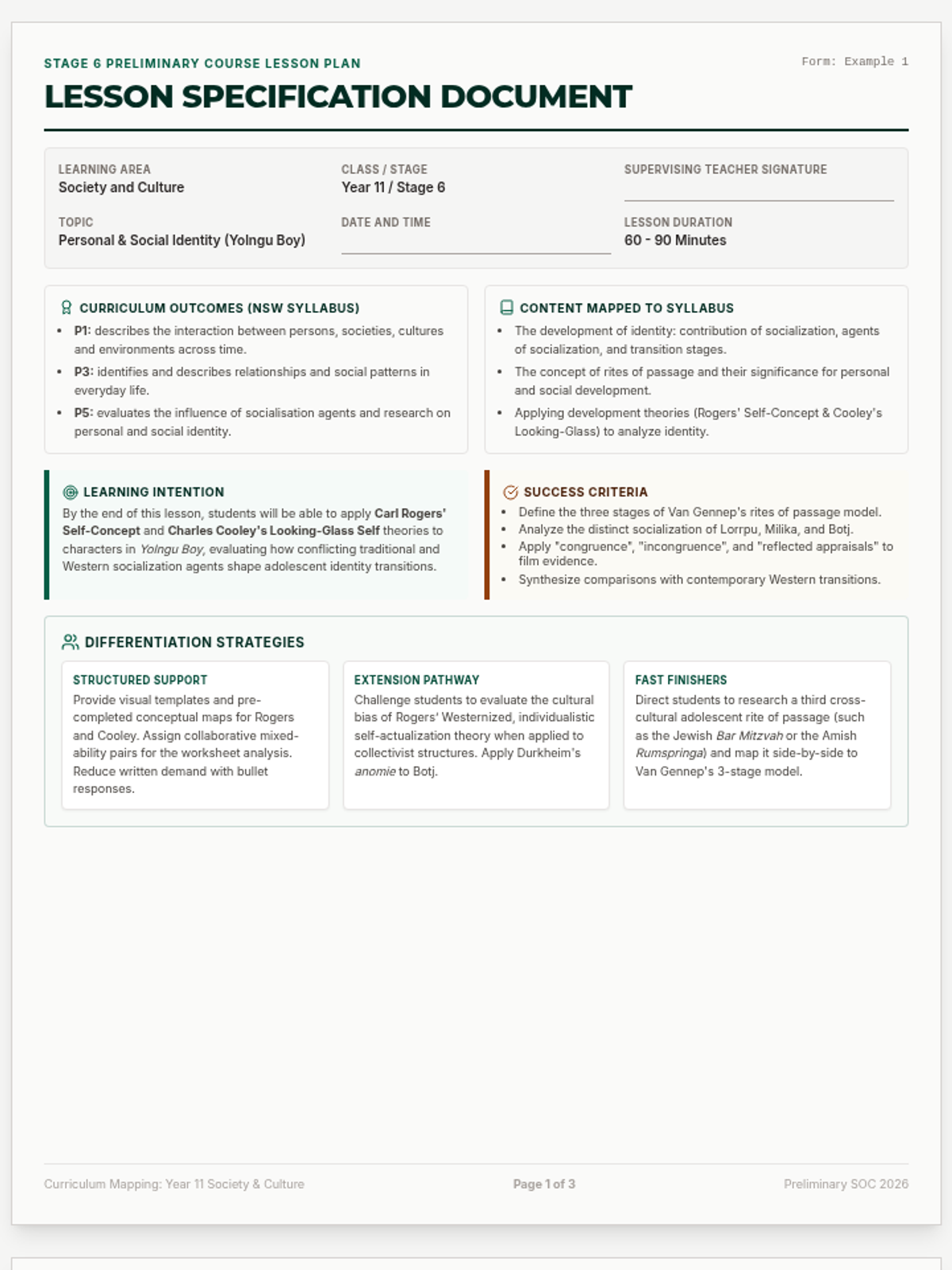
A structured Year 11 Society and Culture lesson plan mapped directly to the NSW Stage 6 syllabus template, detailing outcomes, content, learning intentions, success criteria, and differentiation strategies for the Yolngu Boy lesson.
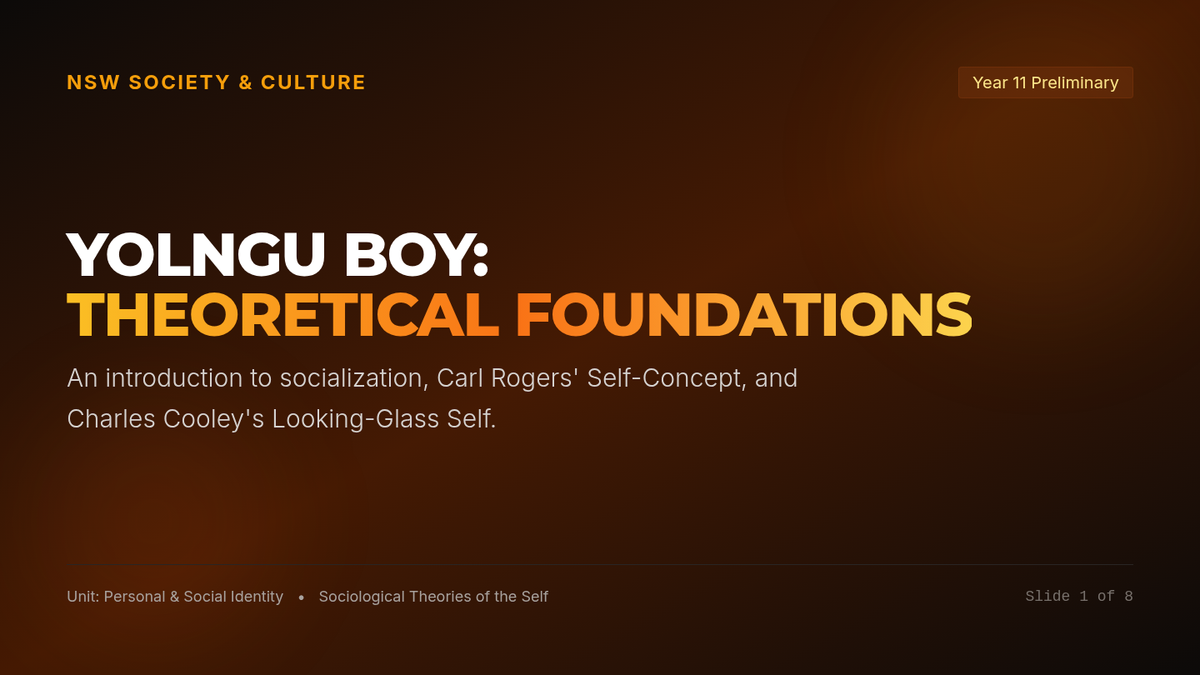
An expanded 16:9 8-slide presentation deck introducing students to Carl Rogers' Self-Concept theory and Charles Cooley's Looking-Glass Self theory, detailing their fundamental pillars and stepping through clear, visual character applications for the film Yolngu Boy.
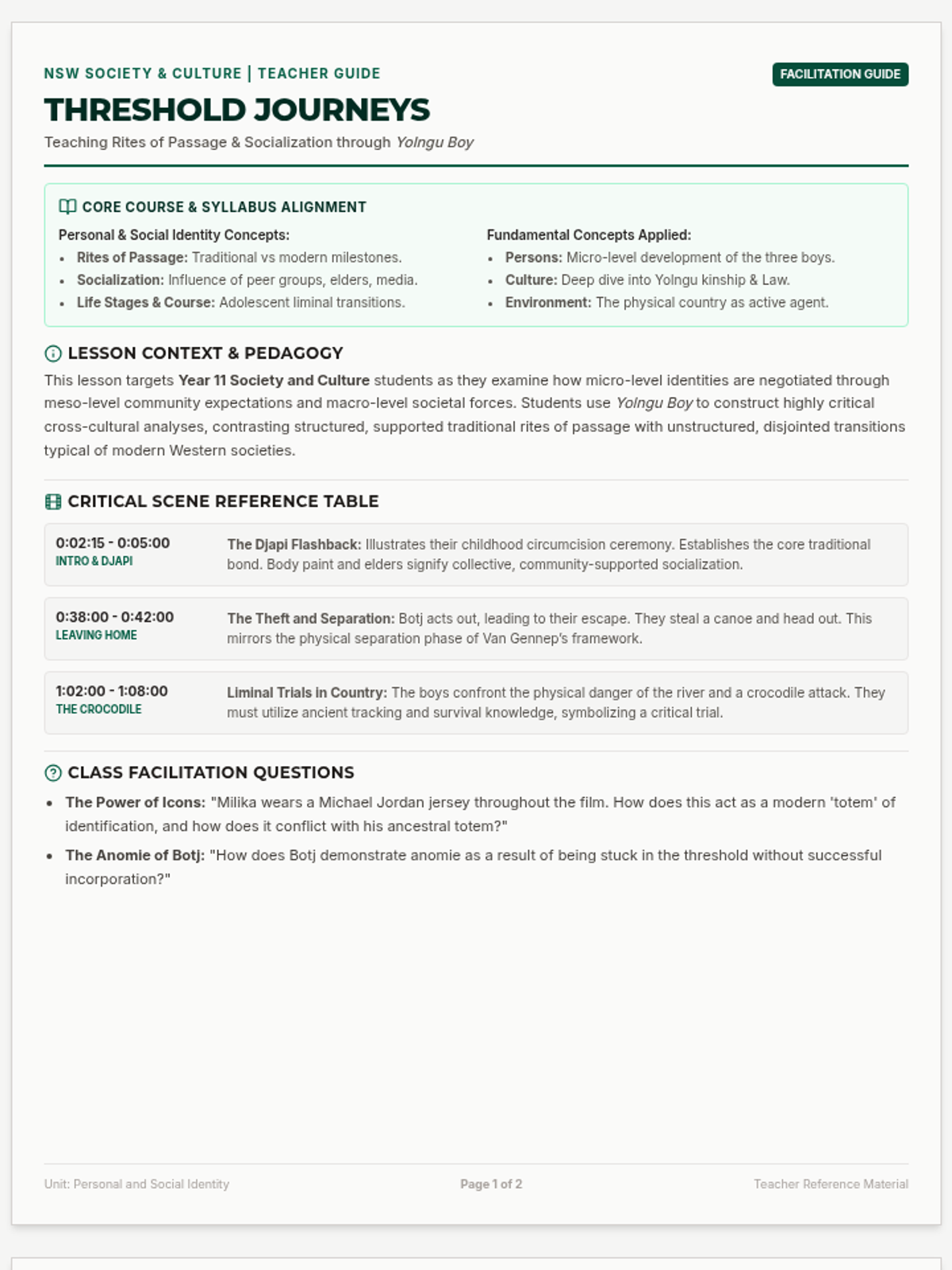
A comprehensive 2-page teacher reference guide with curriculum mapping, lesson planning notes, key film scene timestamps, Socratic questioning strategies, and detailed exemplars and marking rubrics for the student worksheet.
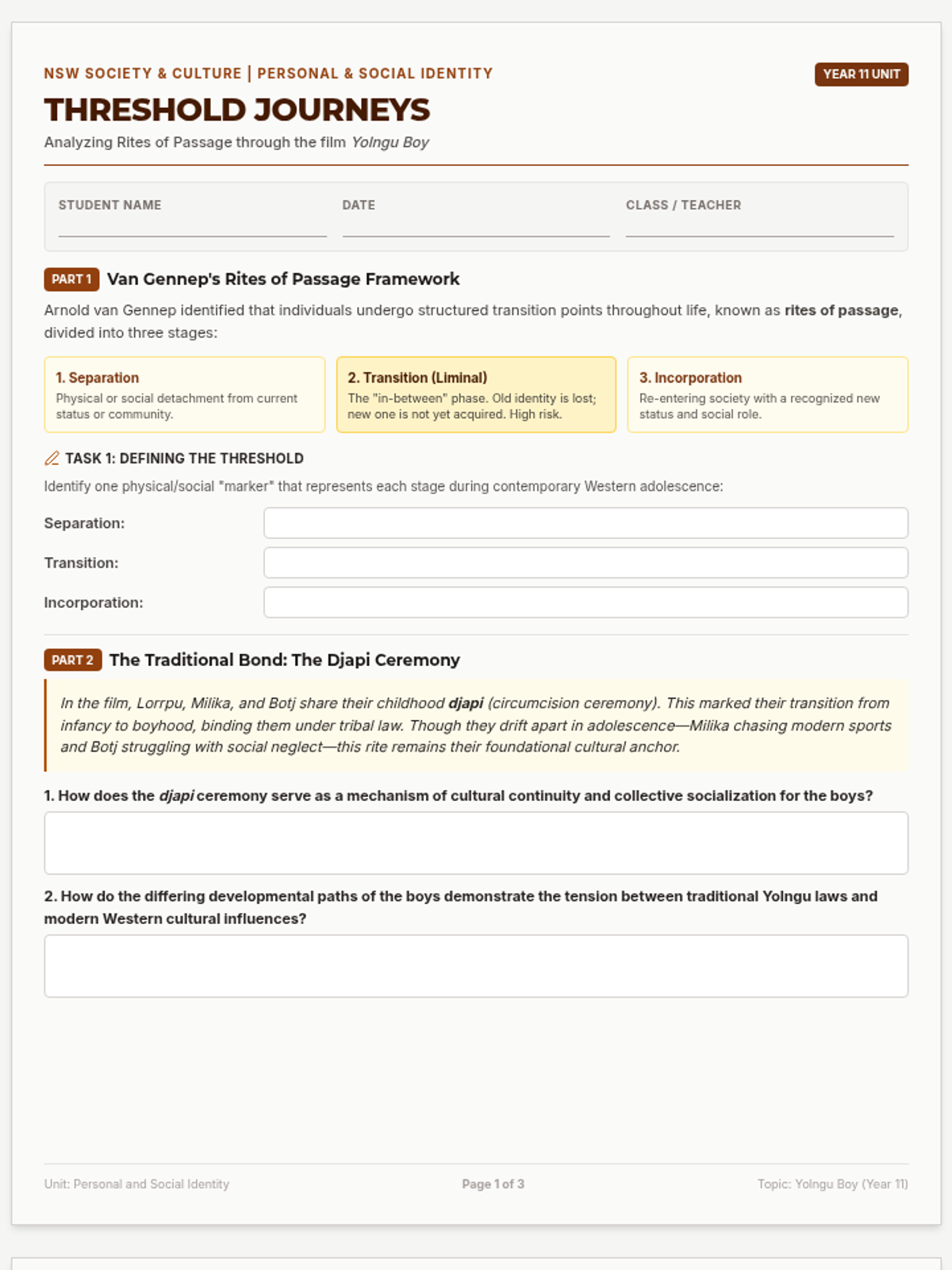
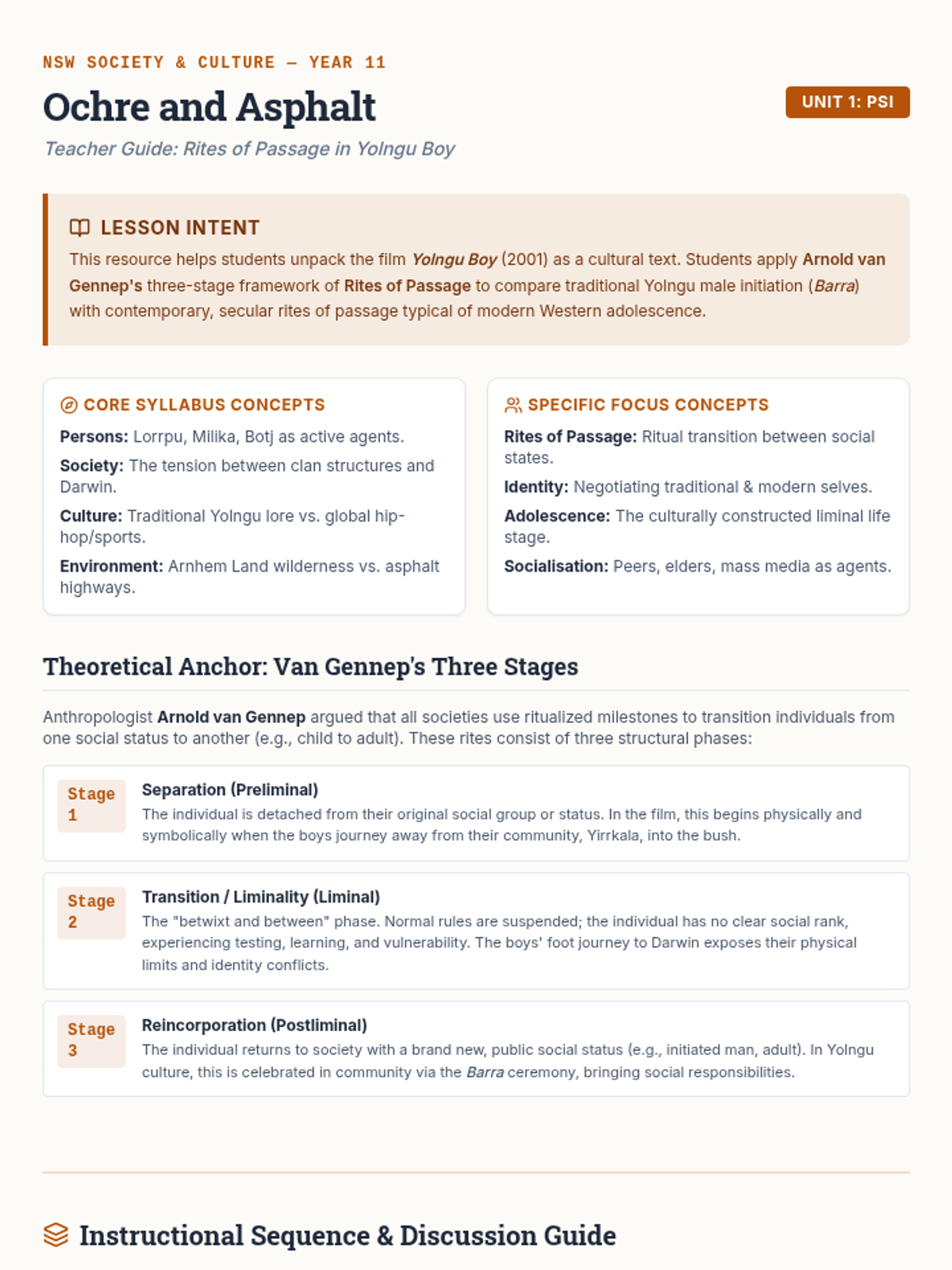
An in-depth 3-page comparative student worksheet designed to analyze Arnold van Gennep's structural stages of rites of passage within the context of the film Yolngu Boy and contemporary Western adolescent milestones. Includes a comparative matrix and an HSC-style 8-mark synthesis writing prompt.
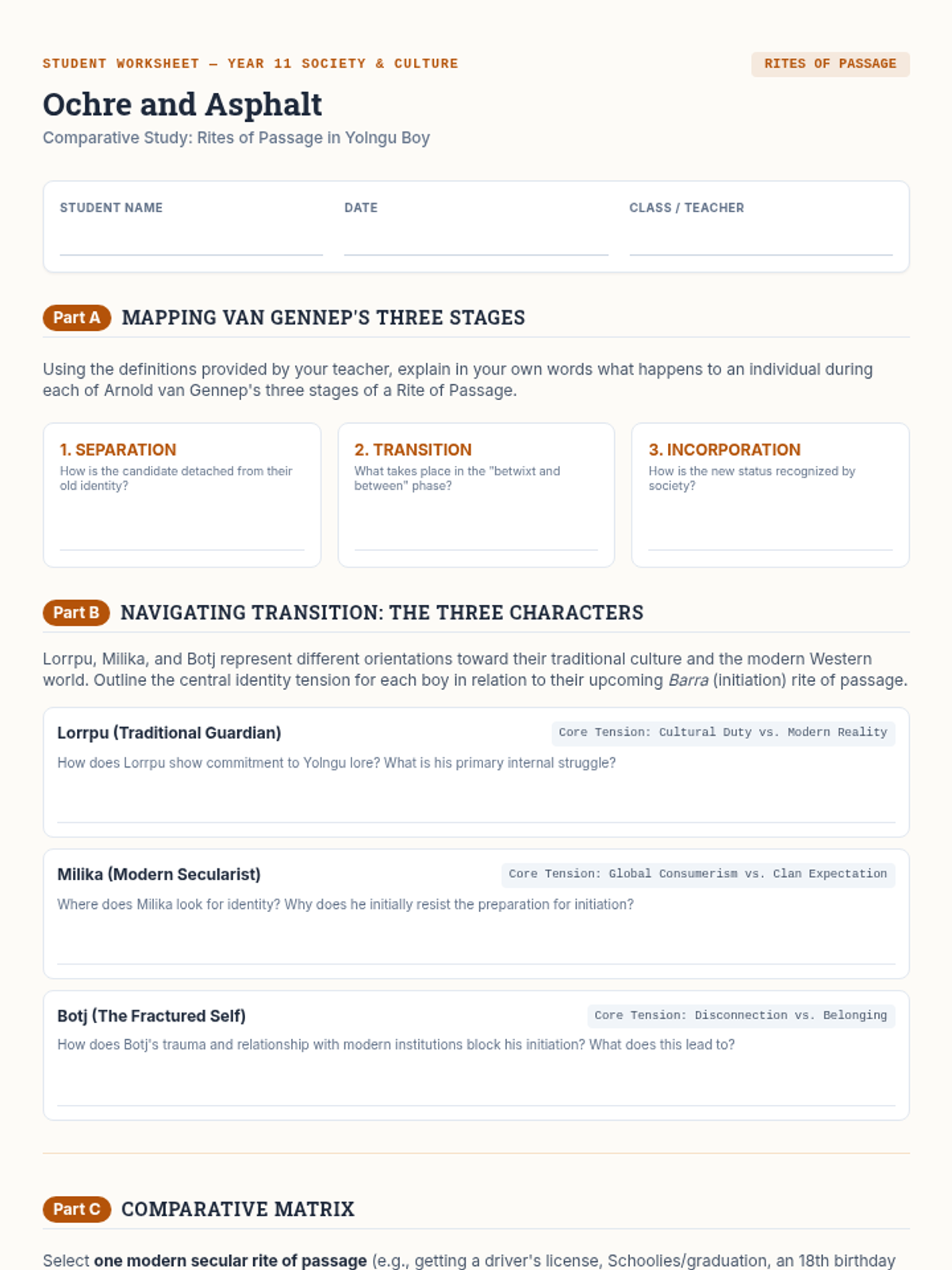
An in-depth comparative student worksheet designed for Year 11 Society & Culture. It guides students through defining Arnold van Gennep's three stages, constructing identity profiles for Botj, Loris, and Milika, completing a structured comparative matrix with secular milestones, and writing a deep analytical paragraph.
A highly detailed, professional Society & Culture teacher guide for Year 11. It outlines the theoretical framework of Arnold van Gennep's three-stage rites of passage and maps out lesson phases, character profiles (Botj, Loris, Milika), and strategic discussion prompts aligned with the film Yolngu Boy.
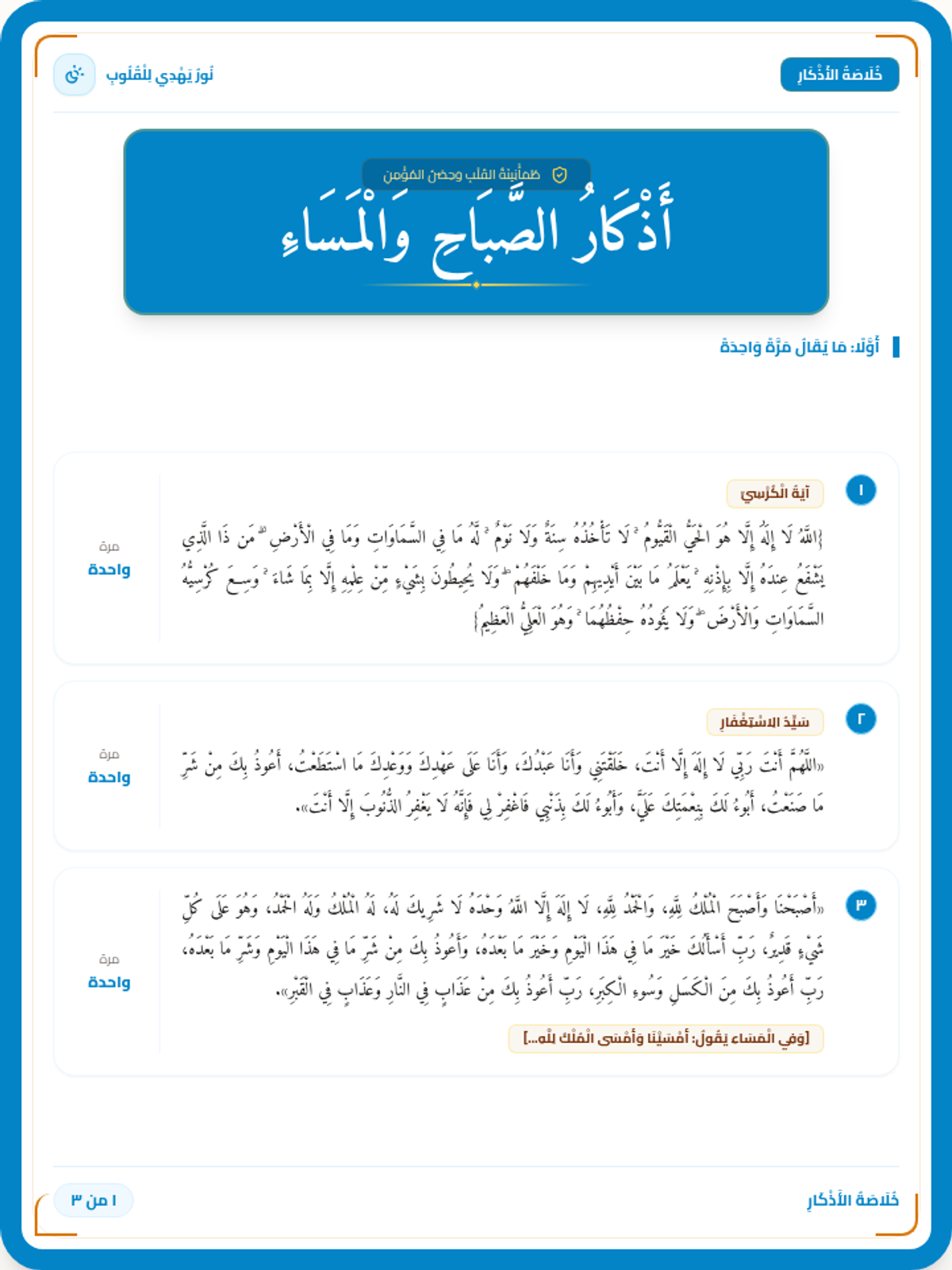
بطاقات أذكار الصباح والمساء بتصميم ملكي فاخر باللون السماوي الغامق والبيج الفاتح الفاتح (Deep Sky Blue & Pale Beige)، يحتوي على العنوان بحجم خط عريض وكبير في وسط الصفحة الأولى داخل شكل بيجي دافئ، مع استبدال النجم بـ شمس وقمر، وحذف عبارة يكن لك حصنا حصينا من النصيحة الروحية.
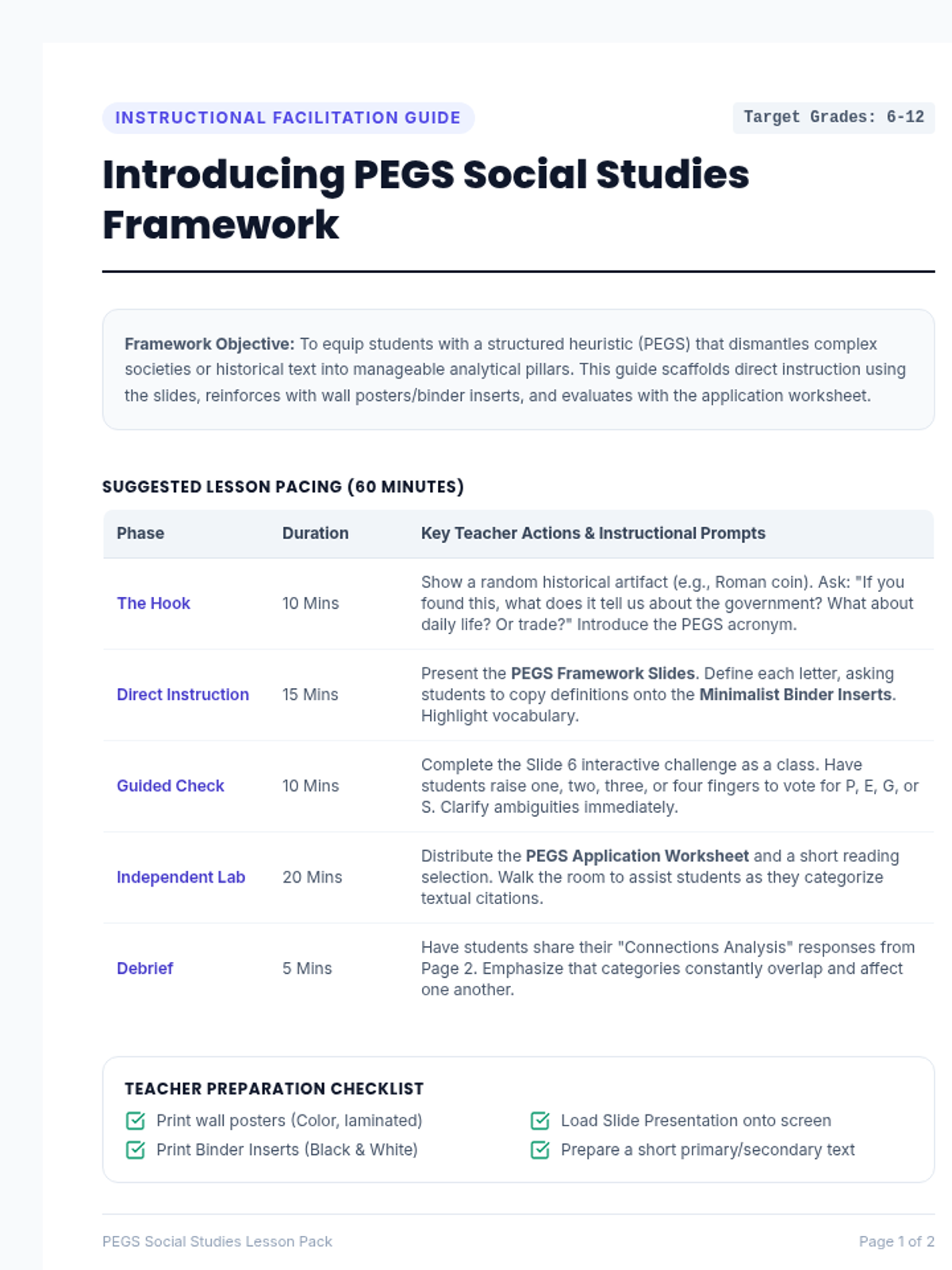
An essential 2-page instructional guide for teachers. Page 1 delivers a clear 60-minute lesson pacing outline, teacher action flows, and a prep checklist. Page 2 offers Socratic questioning strategies, analysis on common student misconceptions, and a highly structured grading rubric.
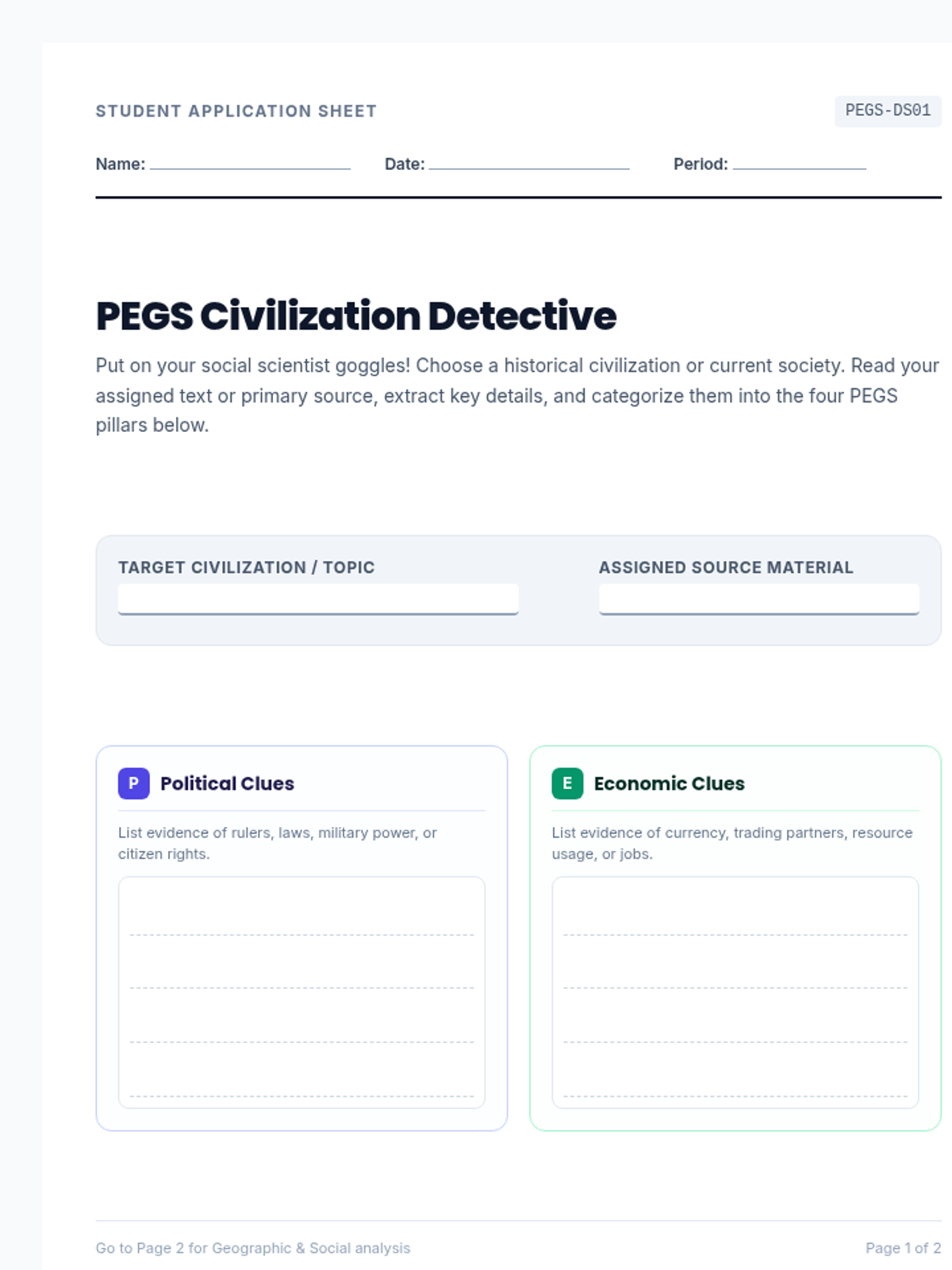
A highly versatile 2-page student analysis worksheet. Features custom, ink-friendly, white-background entry fields for compiling evidence across all 4 PEGS dimensions (Political, Economic, Geographic, Social) and a final critical-thinking synthesis section where students analyze cross-pillar connections.
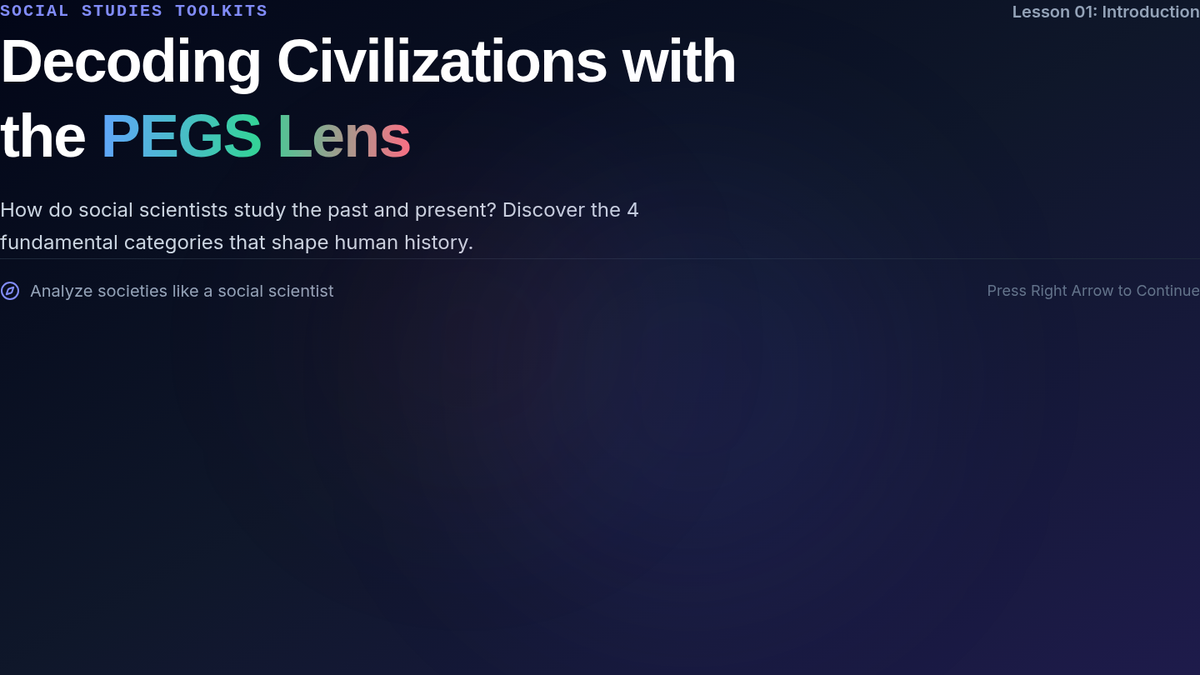
An engaging 6-slide widescreen presentation designed for introducing the PEGS framework to students. Features robust slide breakdowns for Political, Economic, Geographic, and Social criteria, utilizing massive high-visibility text, matching category colors, and a fun interactive naming challenge at the end.