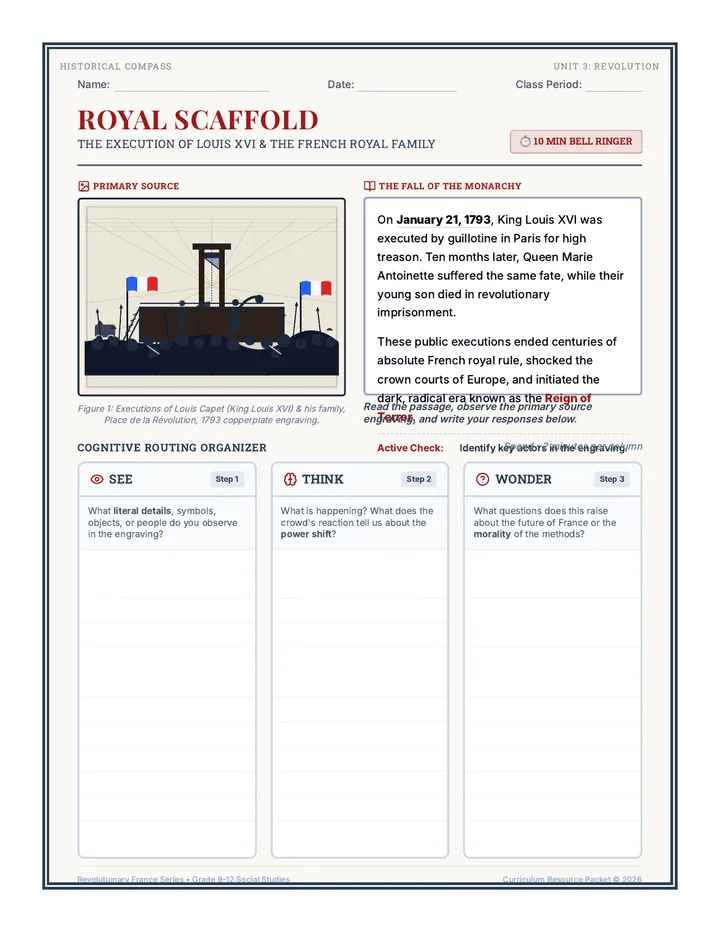
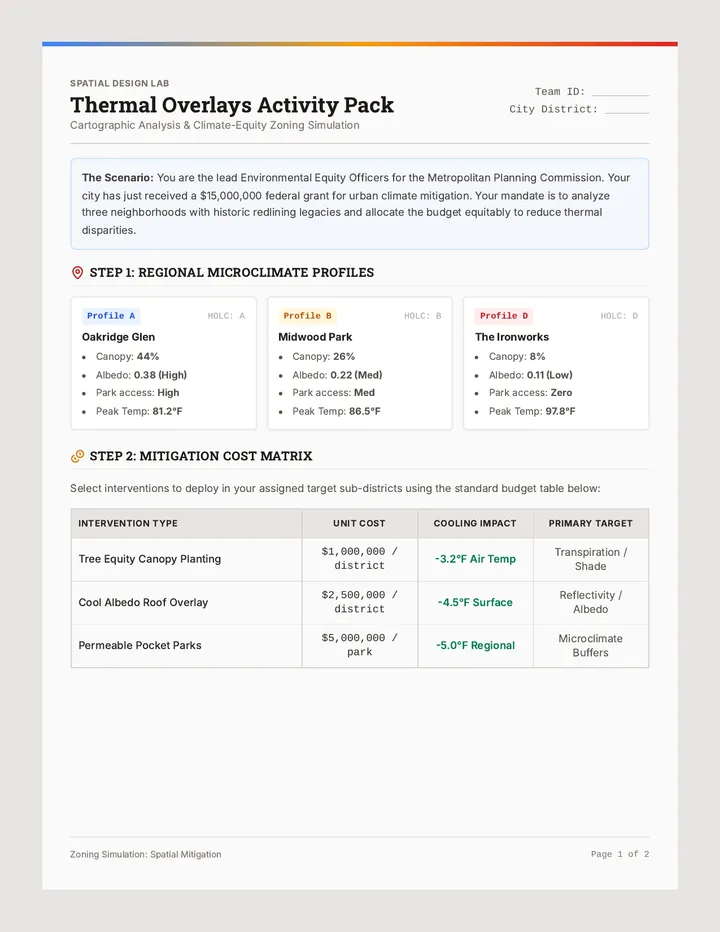
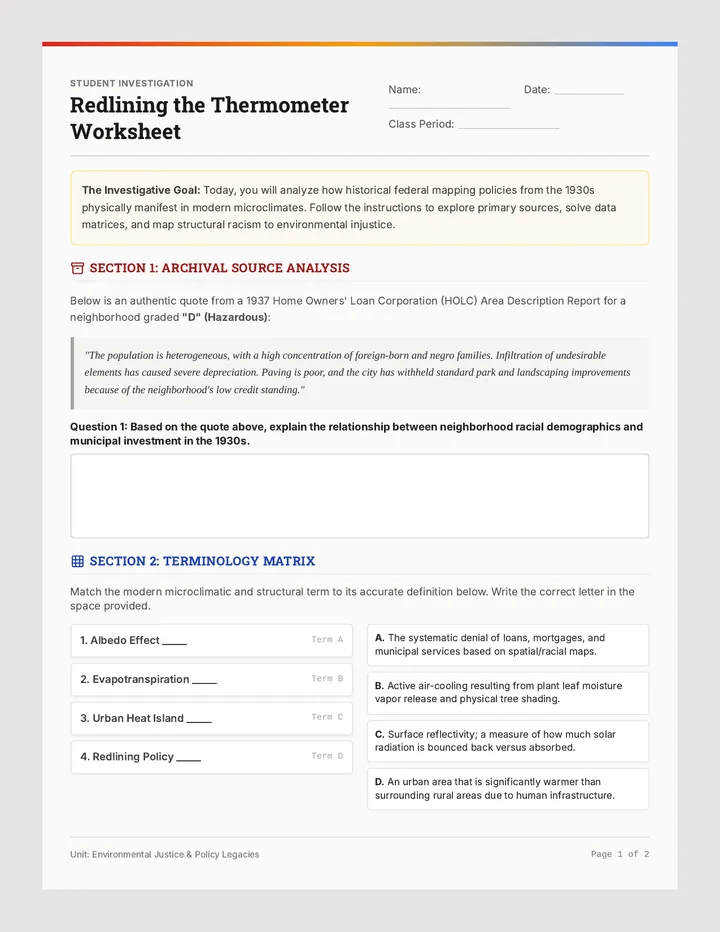
A 2-page student worksheet for guided note-taking, scenario analysis, and a creative scaffolding design task. Features a "blueprint" design with clear work areas.
A 2-page student worksheet for guided note-taking, child development scenario analysis, and a creative scaffolding design task for a developmental milestone.
An 8-slide presentation introducing Lev Vygotsky's sociocultural theory, updated for a Child Development classroom focus. It covers biographical info, the Piaget vs. Vygotsky debate, MKO, ZPD (with child-centric diagrams), Scaffolding, and Play.
A 3-page teacher guide providing a complete lesson plan for Lev Vygotsky's sociocultural theory, updated for a Child Development classroom focus. Includes FCS standards and child-centric instructional flow.
A set of 8 printable task cards designed for small group collaboration. Each card presents a challenge that varies in difficulty, requiring students to identify their MKO and utilize scaffolding to succeed.
An 8-slide presentation introducing Lev Vygotsky's sociocultural theory. It covers biographical info, the Piaget vs. Vygotsky debate, MKO, ZPD (with diagrams), Scaffolding, and Private Speech.
A 3-page teacher guide providing a complete lesson plan for Lev Vygotsky's sociocultural theory. It includes instructional flow, discussion prompts, classroom management tips, and a glossary of key terms.
A scaffolded writing and speaking worksheet for ESOL students. It features sentence stems for drafting a battle cry, an oral presentation framework, and a reflection on the value of research, specifically designed to support emergent bilinguals in meeting TELPAS and TEKS criteria.
A step-by-step craft guide for students to create an 'Echo Banner' using paper, markers, scissors, and tape. This tactile activity reinforces the lesson's themes of making oneself heard and using sensory imagery.
A simplified version of the Battle Field Notes reading worksheet with a Lexile level of approximately 300L. Designed for ESOL students needing high-accessibility text, it covers the same core themes and essential questions as the standard version with simpler vocabulary and sentence structures.
Updated facilitation guide for teachers to deliver the 'Battle Cry Echoes' lesson, now including pacing for the Echo Banner craft activity and differentiation strategies for the 300L worksheet.
A combined sensory word bank (English/Spanish) and activity journal for ESOL students. Includes writing prompts for drafting and revising, and a speaking framework for partner presentations based on the Battle of Puebla.
A comprehensive reading analysis worksheet featuring informational, argumentative, and poetic texts about the Battle of Puebla. Includes targeted questions on characterization, author's purpose, and sensory imagery to meet TEKS 6(A), 7(B), 7(D), 7(E), and 8(A).
Updated slide deck for the 'Battle Cry Echoes' lesson, now including five essential questions. It explores the Battle of Puebla, author's purpose (EQ3), and research skills (EQ4, EQ5), with a split presentation for readability and impact.
A single-page sheet containing twelve historical portraits sized 120x150px. This version is designed as a 'Identity Badge' pack with professional silhouettes and text fallbacks, ensuring it remains 100% usable even if the school network blocks all external image domains. Arrangement is a 4x3 grid for efficient printing.
A single-page sheet containing twelve historical portraits sized 120x150px to fit the WWI Dossiers. This version uses sources from Biography.com and Army.mil, which are optimized for browser performance and school network compatibility. Features a 4x3 grid and high-visibility text fallbacks.
A single-page sheet containing twelve historical portraits sized 120x150px to fit the WWI Dossiers. This version uses official government and educational sources (.gov and .edu) to ensure accessibility on school networks. Features a 4x3 grid and has removed CSS filters to improve rendering compatibility.
A single-page sheet containing twelve historical portraits sized 120x150px to fit the WWI Dossiers. This version uses the direct URL format that was successful for Ludendorff, with an explicit text fallback system and a teacher troubleshooting guide in case of network blocking. Arranged in a 4x3 grid to ensure it fits on one page.