Slides for Lesson 3 introducing formal and perceptual regions with examples like the Rust Belt and the Midwest.
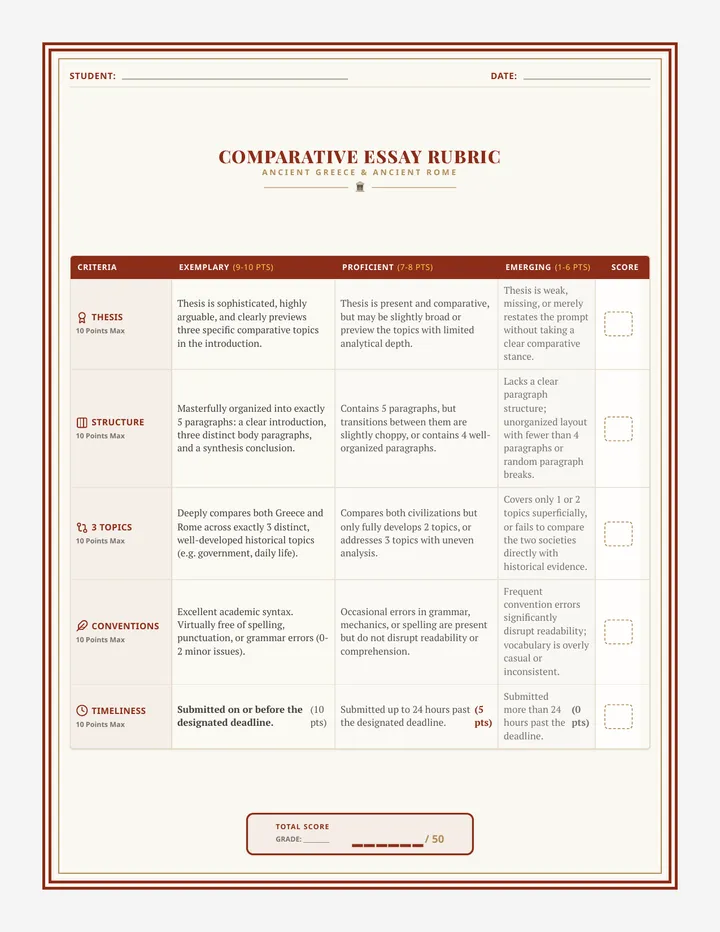
An elegant, classical-themed rubric for a comparative essay on Ancient Greece and Ancient Rome. Evaluates thesis statements, 5-paragraph structure, comparative topics, writing conventions, and timeliness across a 50-point scale. Modified with streamlined headers and an expanded, comfortable layout to prevent vertical clipping.
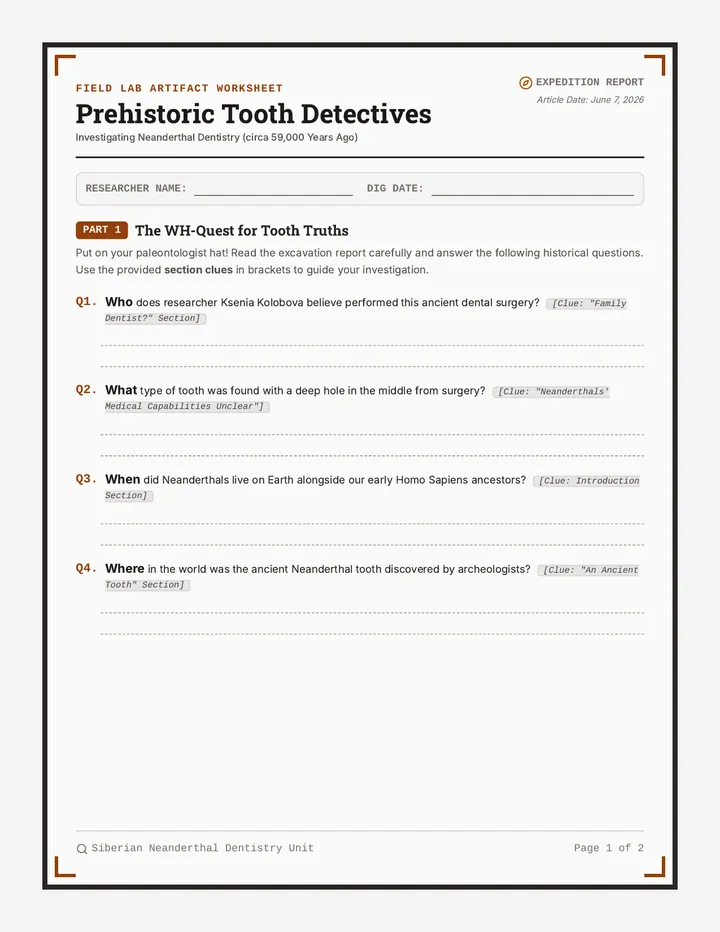
A beautifully designed prehistoric-themed reading comprehension worksheet with 7 WH questions and 7 fill-in-the-blank sentences based on the Neanderthal dentist discovery article. Includes helpful section clues for scaffolding student learning.
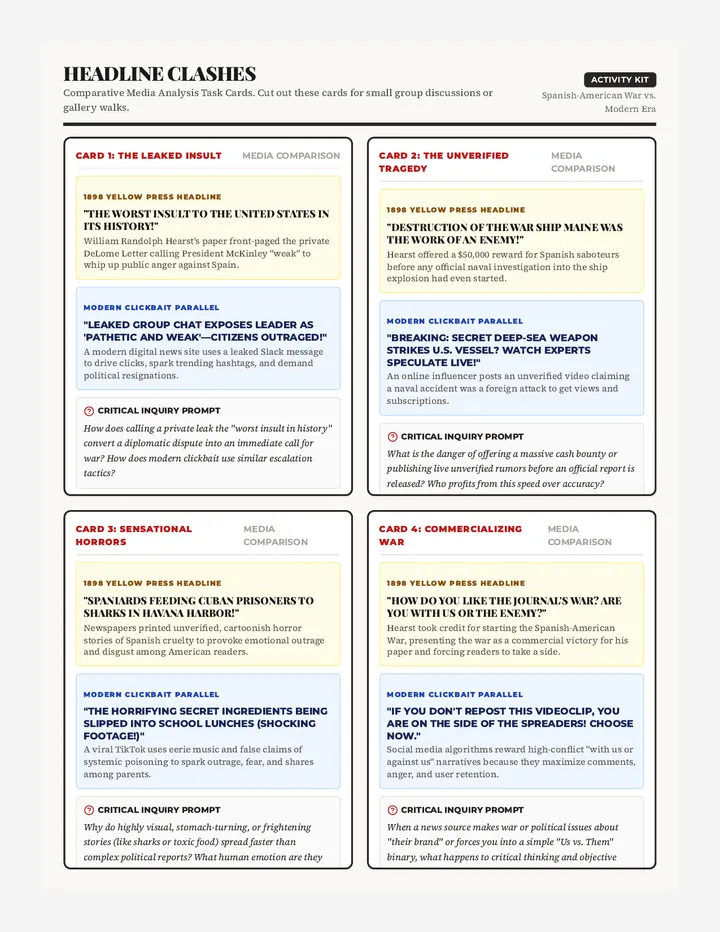
A printable page containing four comparative task cards. Each card contrasts a historical 1898 yellow journalism headline (such as the DeLome letter insult or the USS Maine explosion) with a modern digital clickbait parallel, prompting students to analyze media sensationalism across centuries.
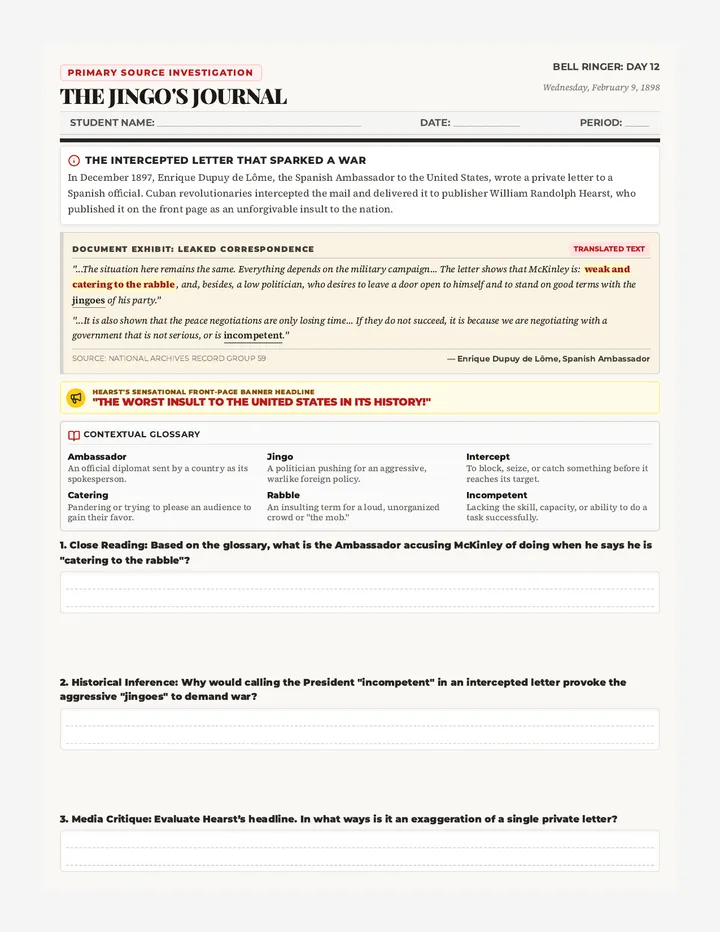
A comprehensive, full-page printable analysis worksheet on the DeLome Letter leak of 1898. It includes an expanded primary source translation, contextual vocabulary terms (ambassador, jingo, intercept, catering, rabble, incompetent), detailed historical context, and structured analysis questions.
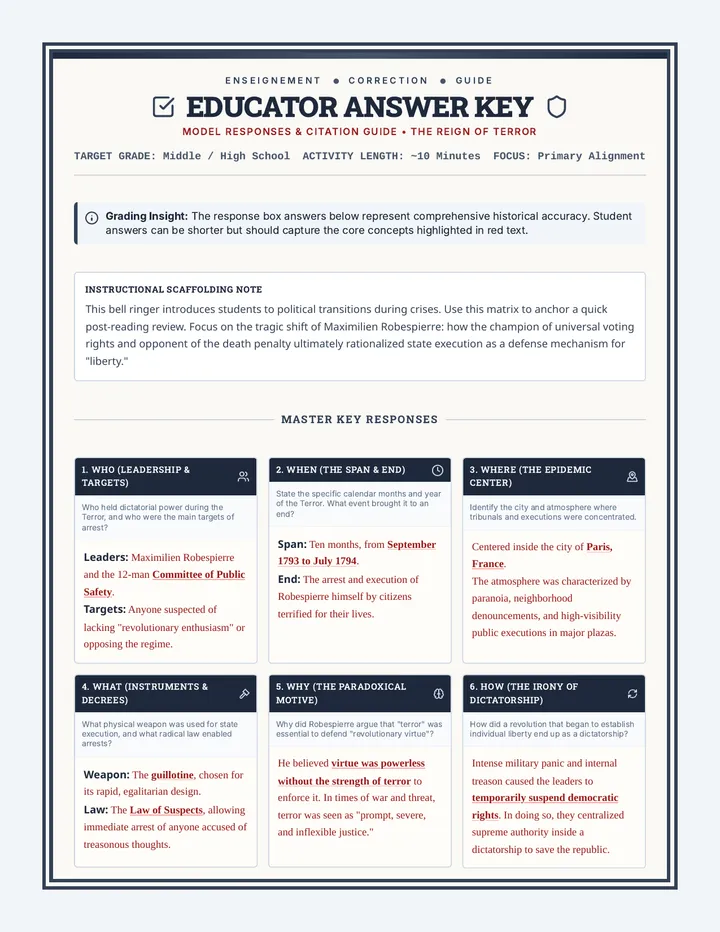
A detailed educator guide and answer key for the Reign of Terror Bell Ringer, containing model student responses and direct historical citations.
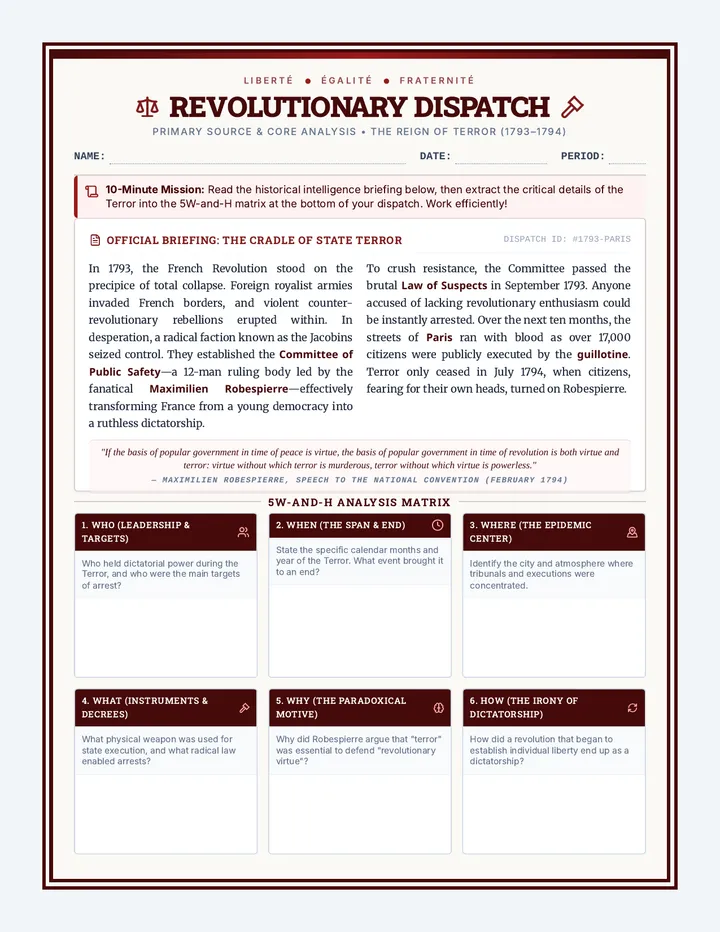
A high-impact, 10-minute historical bell ringer featuring a primary-aligned source reading on the Reign of Terror and a structured 5W-and-H student comprehension matrix.
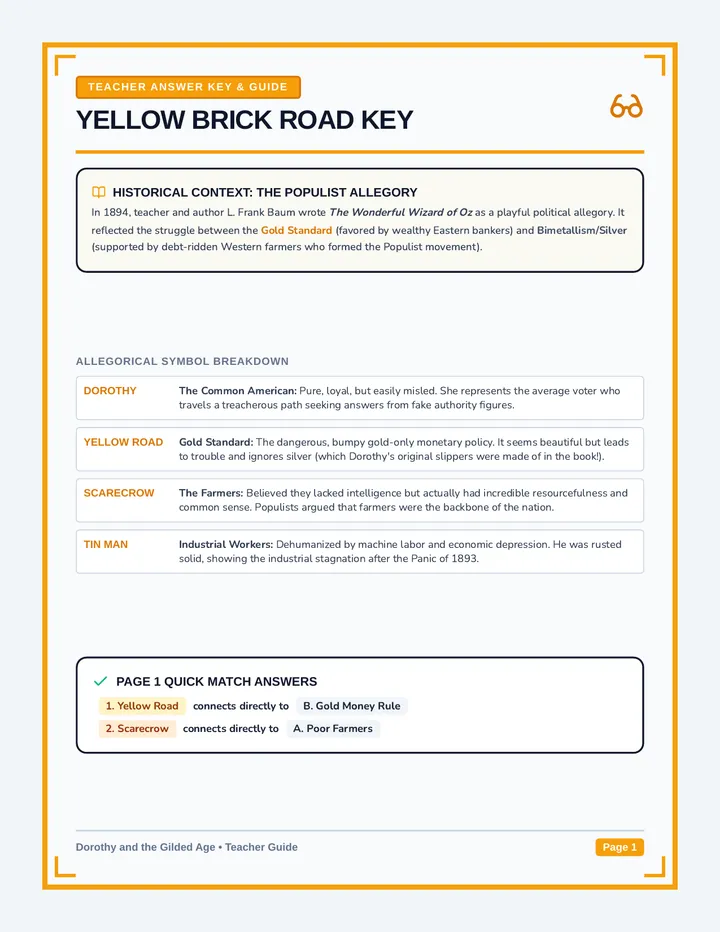
A teacher-facing reference guide and completed answer key for the Yellow Brick Road Watch Guide. Features high-contrast annotations, lesson delivery tips, and historical background connecting the 1939 film to Populism, the gold standard debate, and industrial labor struggles.
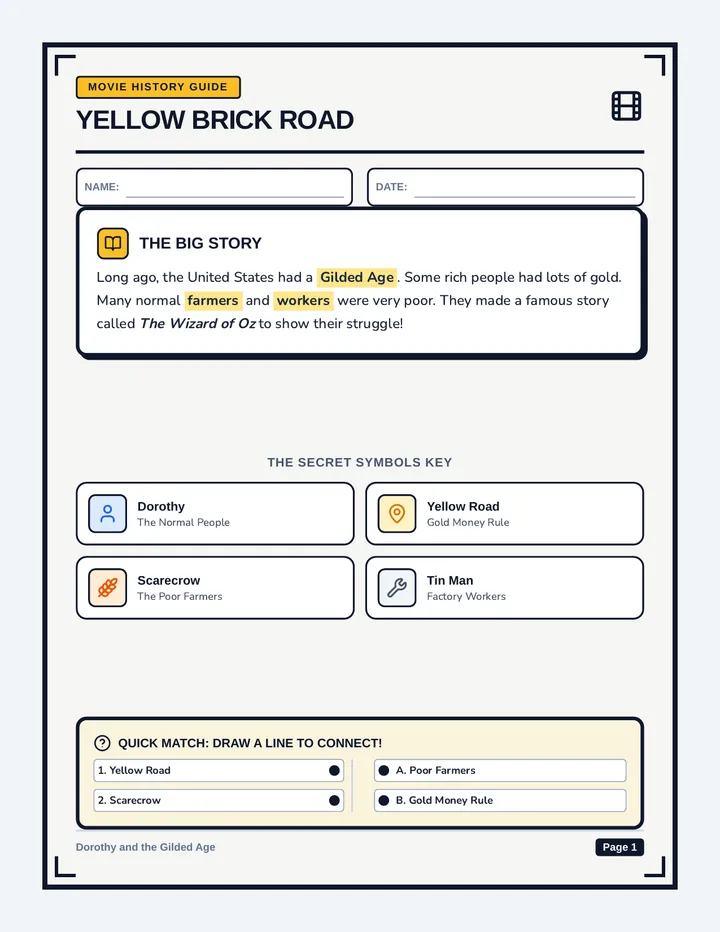
An extremely accessible watch guide packet connecting The Wizard of Oz (1939) to Gilded Age politics, tailored for middle schoolers reading at a 1st-grade level. It is fully formatted as multiple-choice questions for both literal movie events and historical connections.
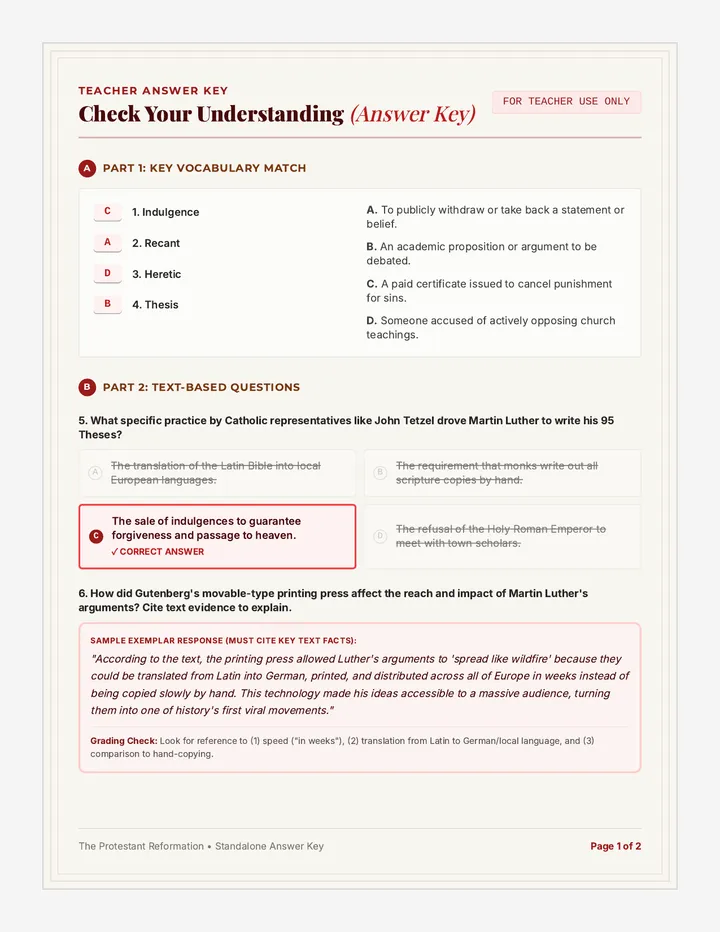
A 2-page standalone answer key for the Martin Luther Guided Reading Packet, reproducing student worksheets with all correct answers and sample text-based responses filled in.
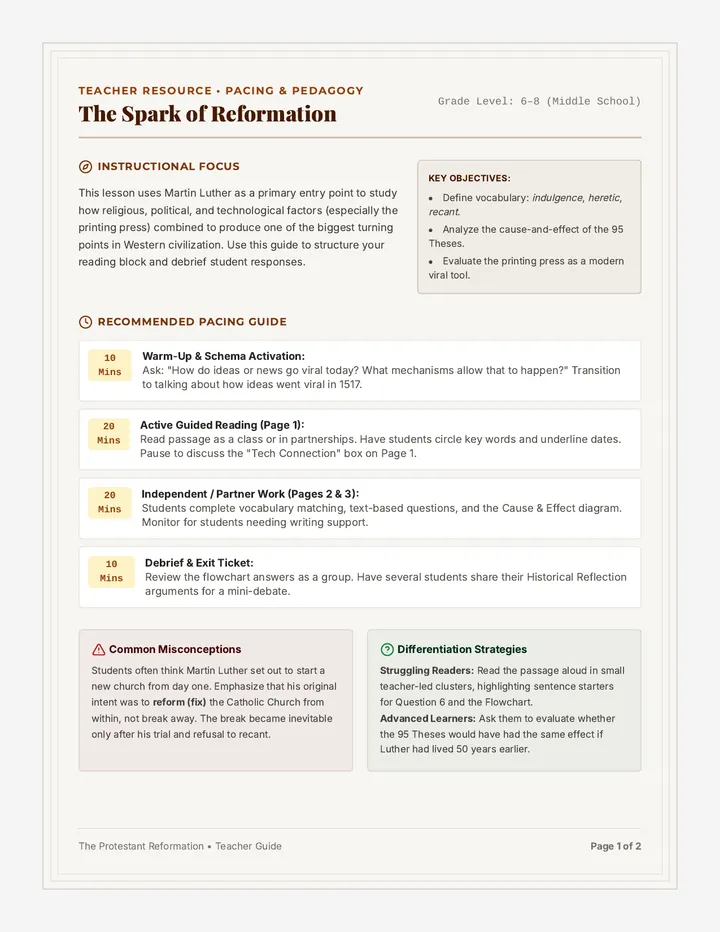
A 2-page teacher guide and instructional manual for the Martin Luther Guided Reading Packet, containing pacing suggestions, common student misconceptions, inquiry-based discussion prompts, and a multi-level grading rubric.
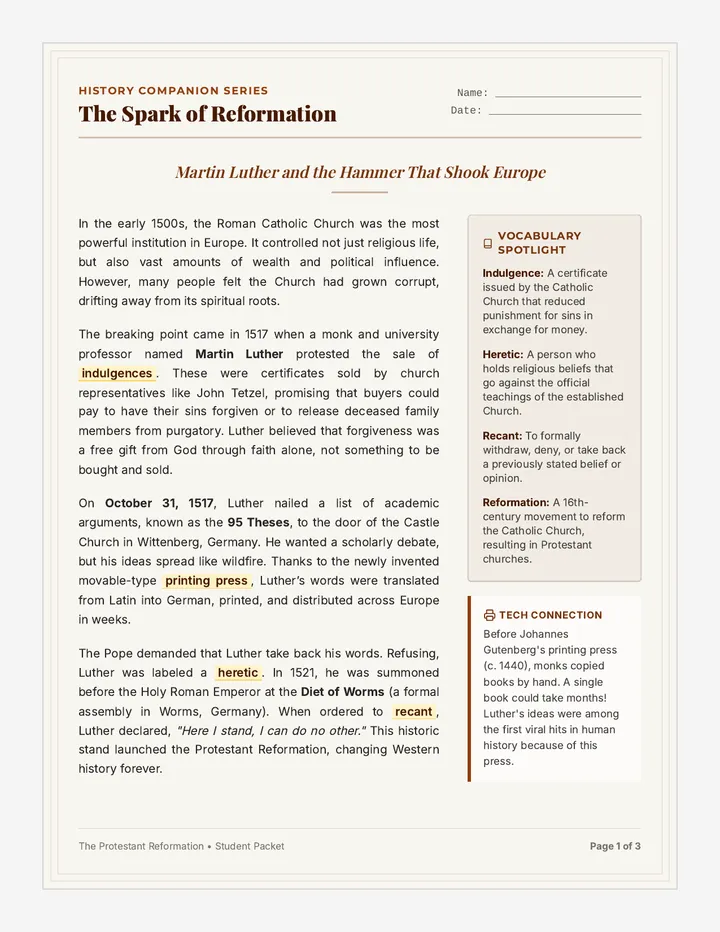
A 3-page guided reading packet for middle school students, including a biographical text about Martin Luther, vocabulary definitions, comprehension questions, and a cause-and-effect graphic organizer.
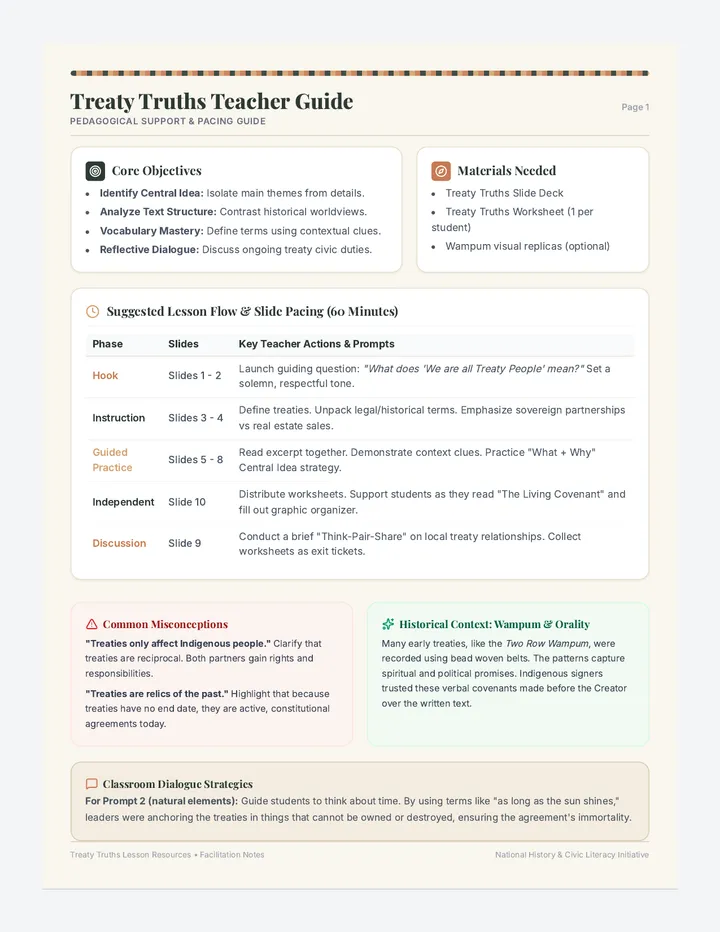
A 2-page print-ready teacher resource containing lesson pacing suggestions, key historical background context, common student misconceptions, and a complete answer key with exemplars for the student worksheet.
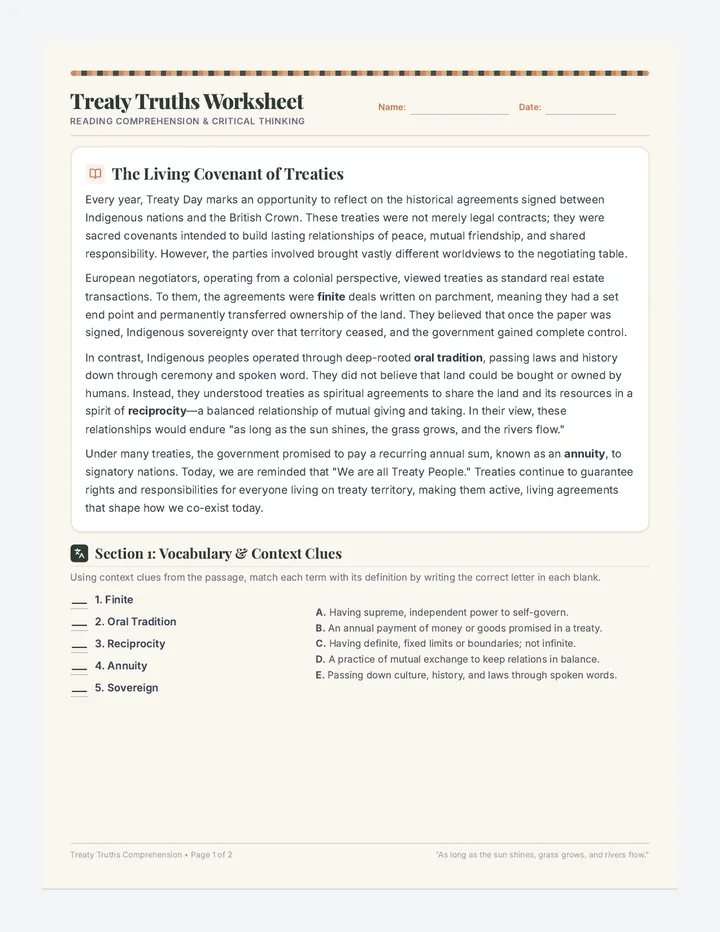
A 2-page print-ready student worksheet featuring a comprehensive reading passage on the history and spirit of treaties, a context-clues vocabulary matching exercise, and a guided graphic organizer for crafting an objective central idea and summary.
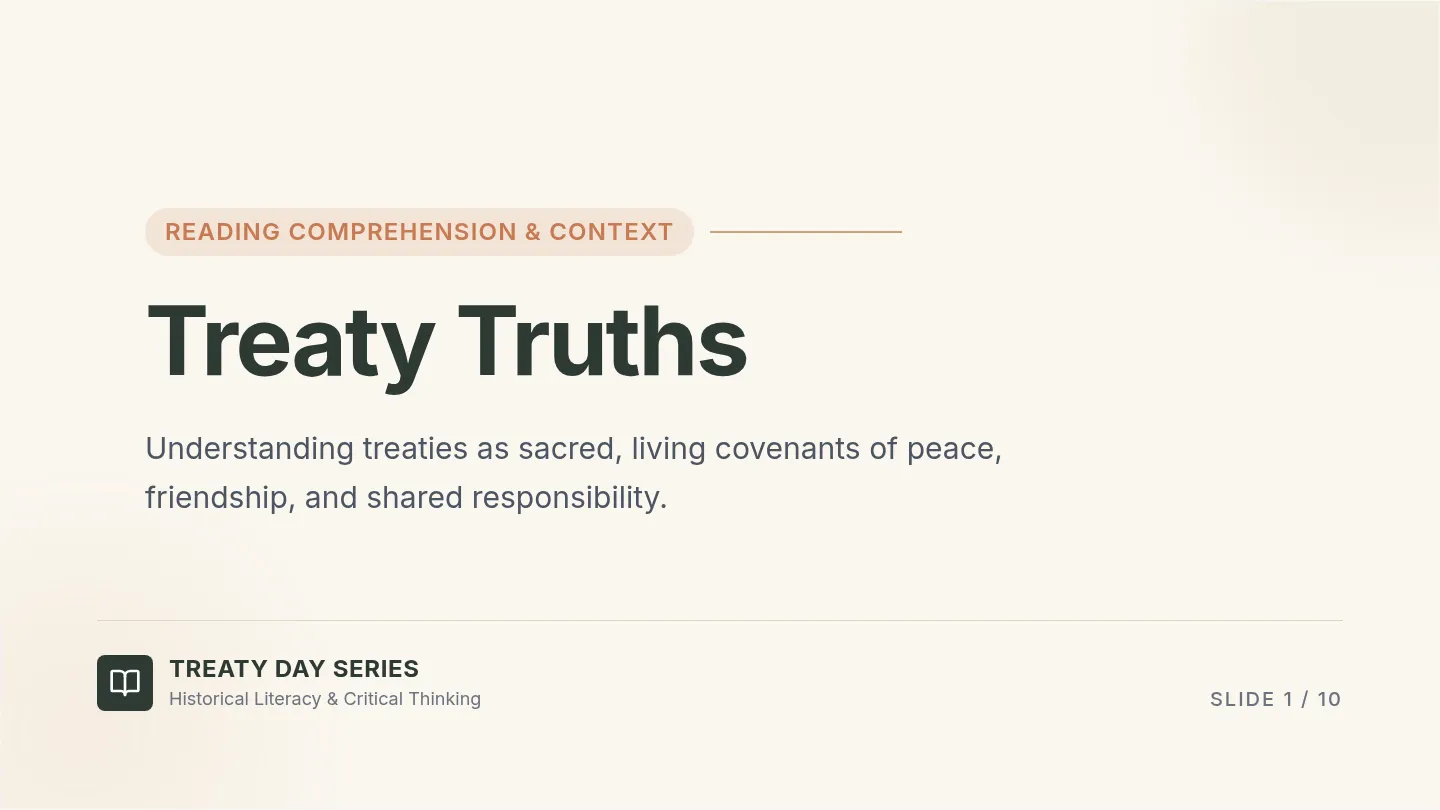
An interactive slide deck featuring 10 beautiful, high-impact slides to guide whole-class instruction on Treaty Day, historical context, key legal and cultural vocabulary, and reading comprehension strategies (Central Idea and Summarizing).
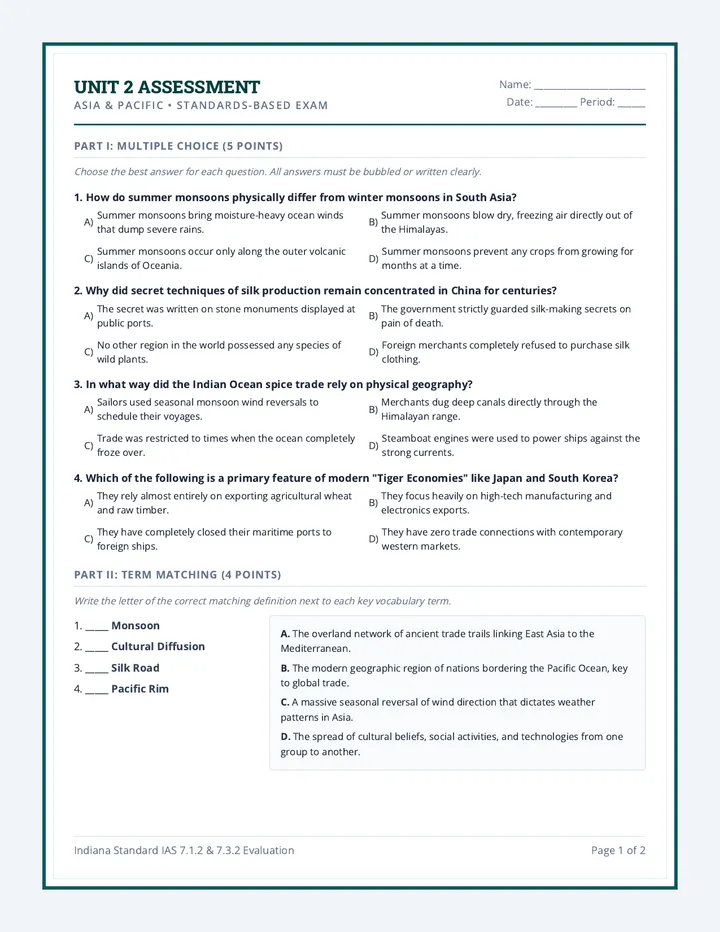
A 2-page student assessment including a 5-question multiple-choice exam, a primary-source Document-Based Question (DBQ) on the Silk Road, and an analytical writing rubric.
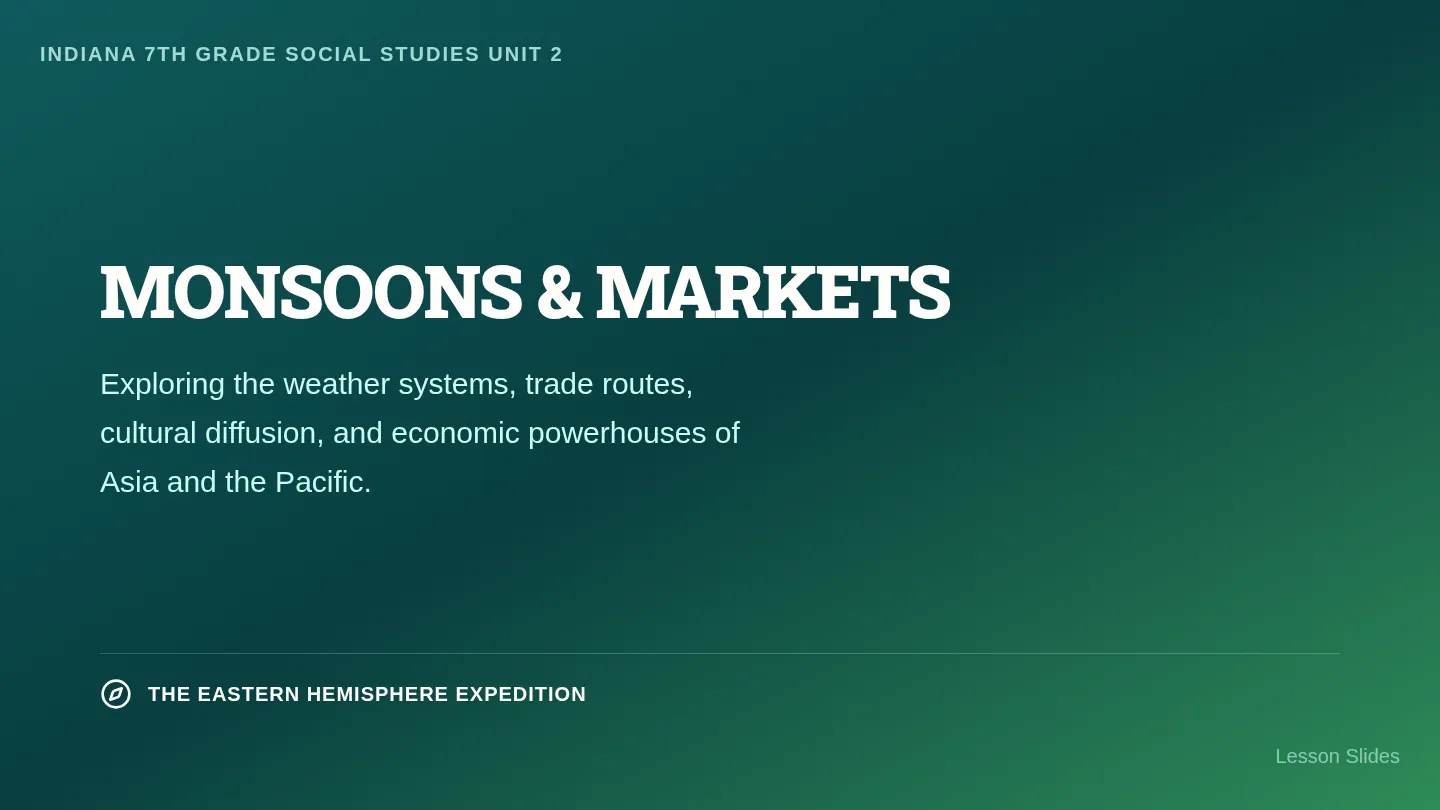
A 5-slide visual presentation deck for direct instruction on Asia and the Pacific, illustrating monsoon weather patterns, Silk Road commerce, and Pacific Rim markets.
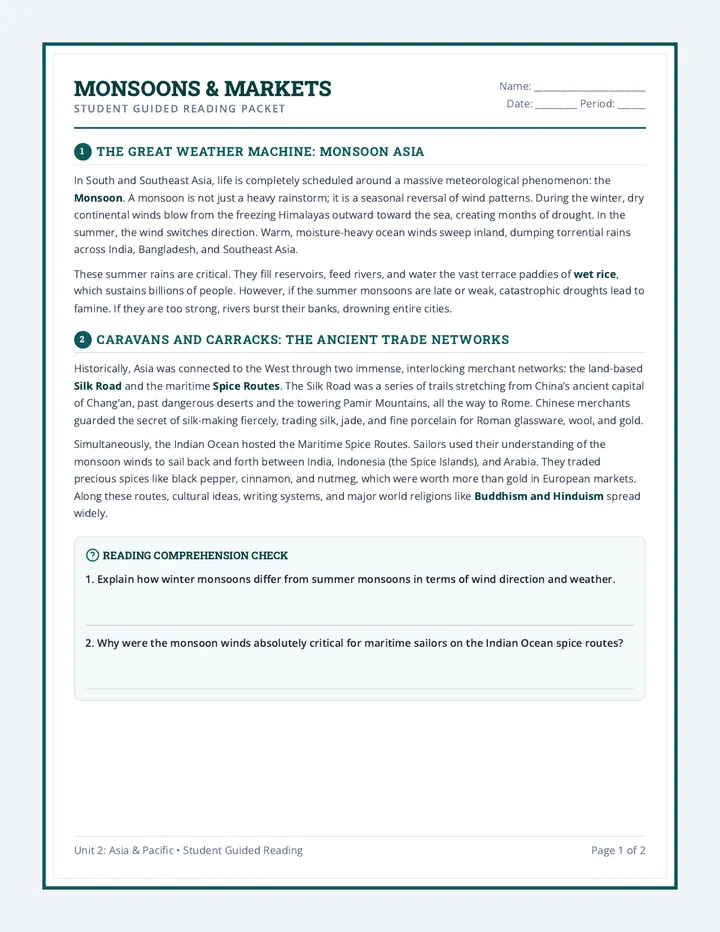
A 2-page student worksheet containing guided reading passages on Monsoons, Silk Roads, and East Asian markets, with map flowcharts and economic comparison activities.
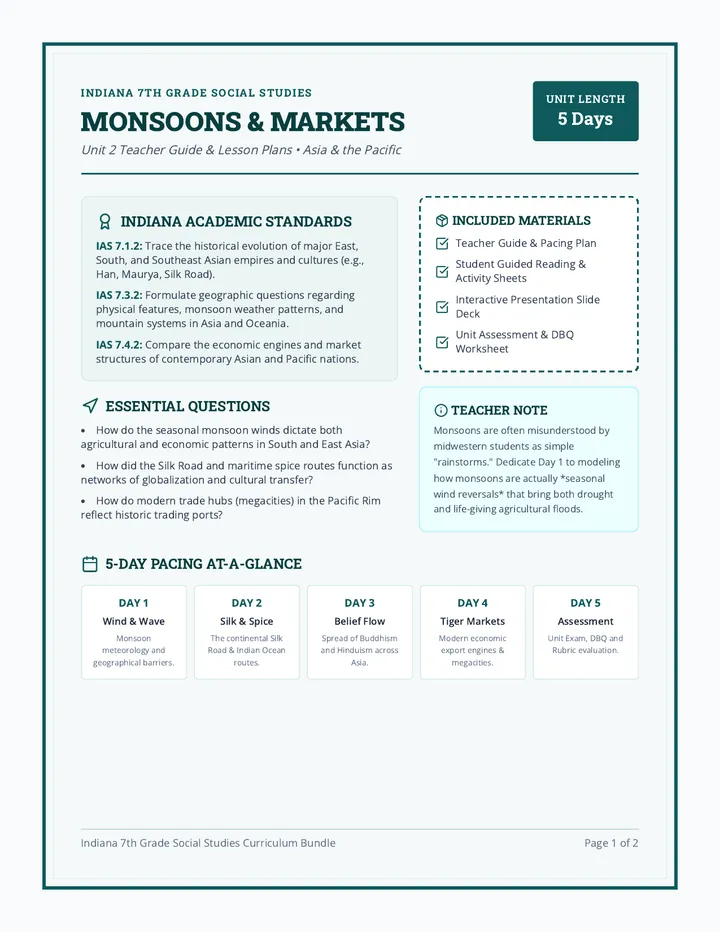
A 2-page comprehensive teacher's guide and lesson plans for the Asia and Pacific unit. Aligned to Indiana 7th Grade Academic Standards, it includes weekly pacing, guided discussion prompts, and pedagogical notes.
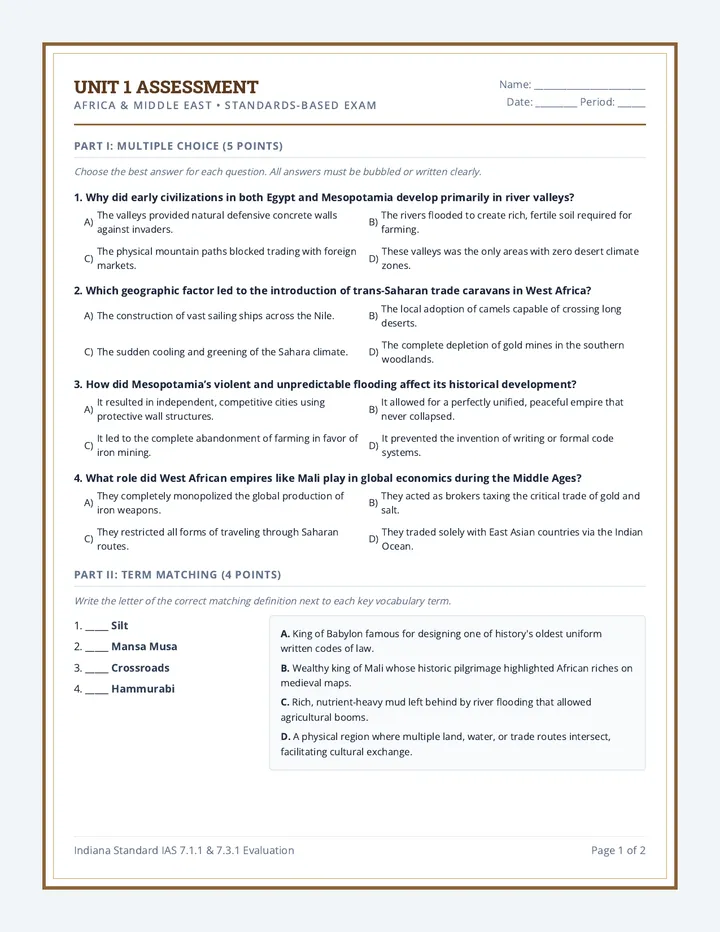
A 2-page student assessment including a 5-question multiple-choice exam, a primary-source Document-Based Question (DBQ) on Mali, and an analytical writing rubric.