A visual presentation for Lesson 1, introducing the concept of Black Codes, their historical context, and specific examples like vagrancy laws.
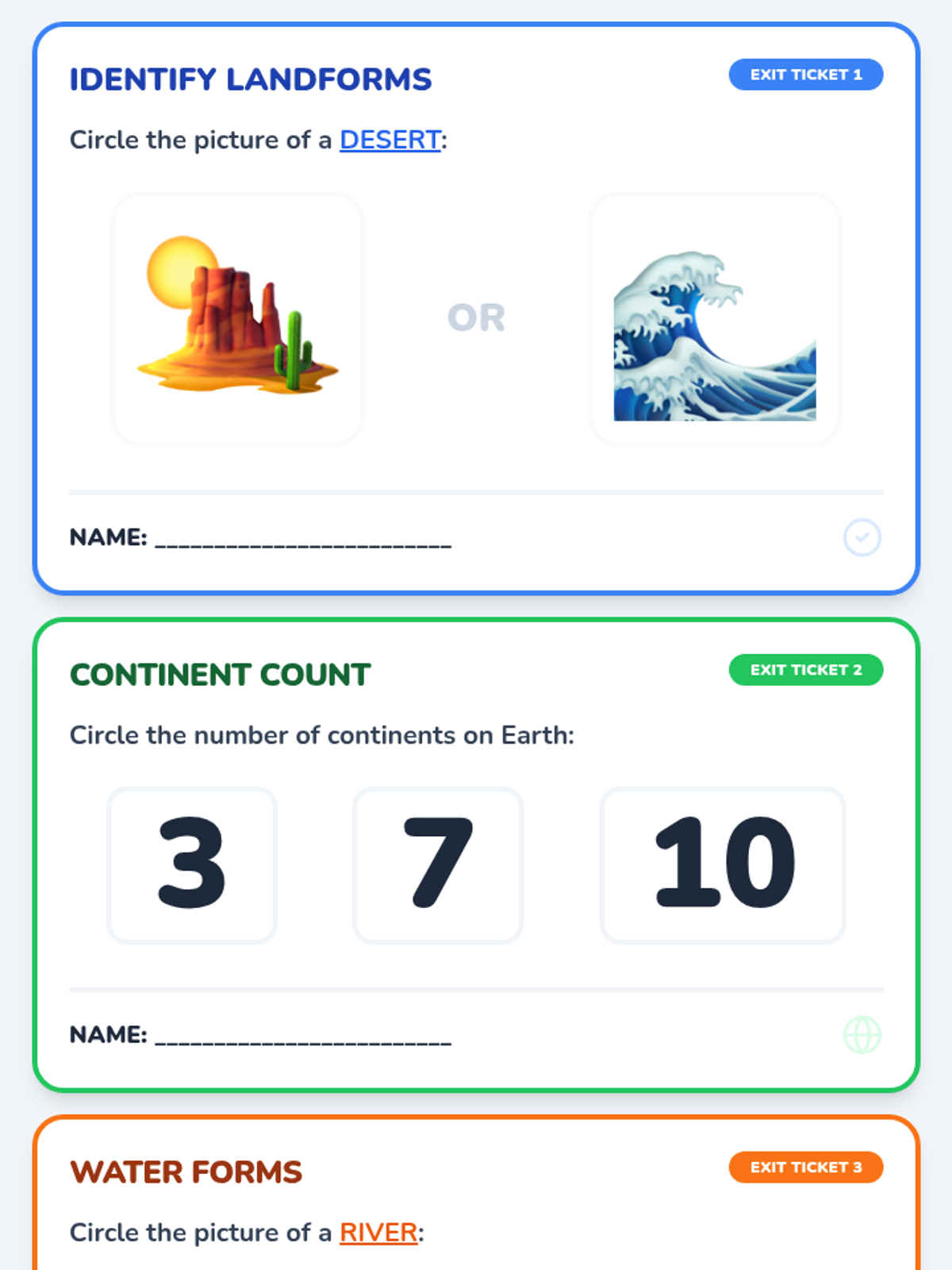
Three visual exit tickets for formative assessment of geography concepts including landforms (now featuring Desert and Ocean), continent count, and map symbols. Now optimized for high-contrast text and removed labels in choices.
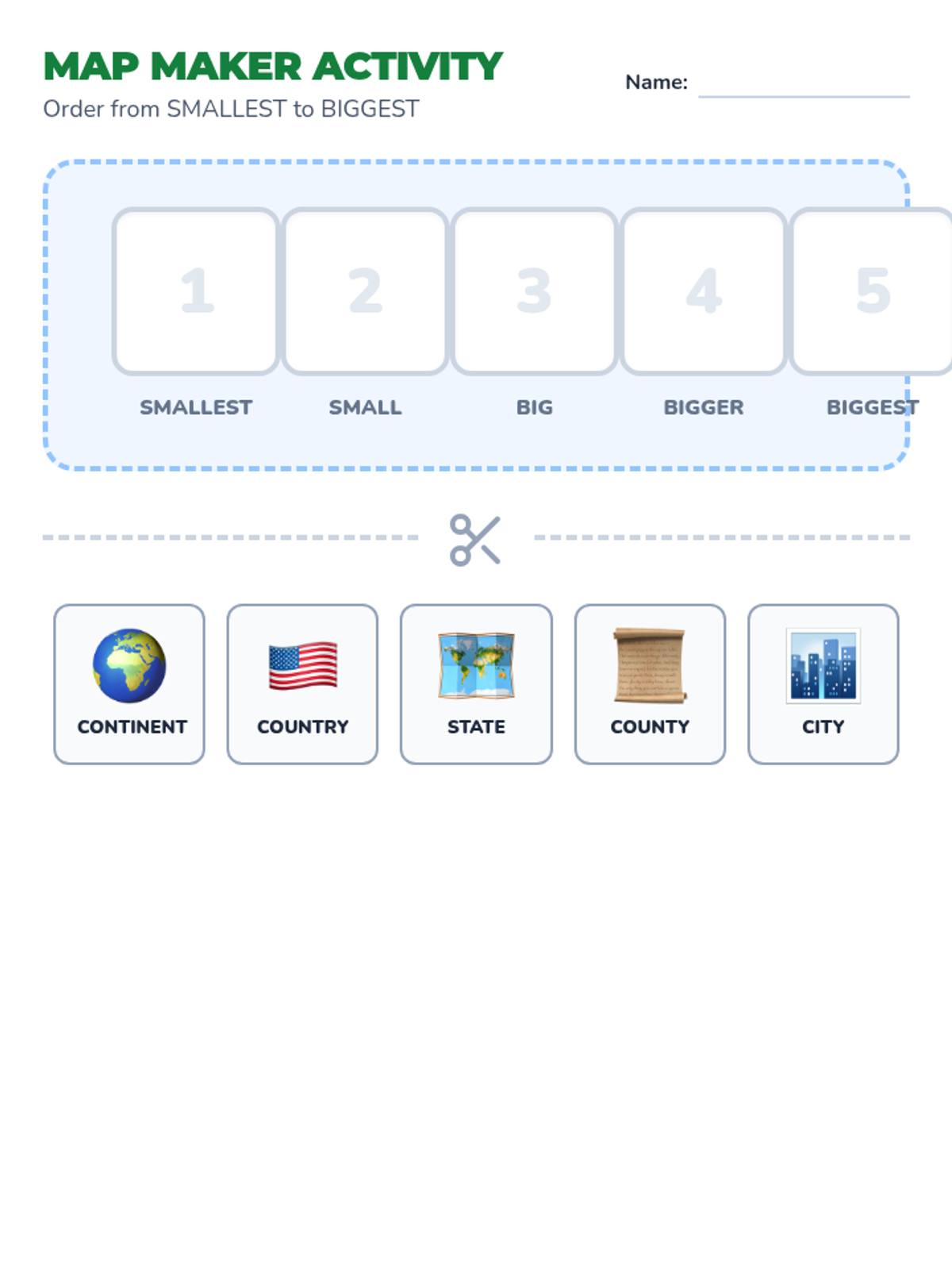
A cut-and-paste activity for students to practice organizing geographic hierarchy from city to continent, using visual icons and clear sorting boxes. Now includes County and updated arrow visuals.
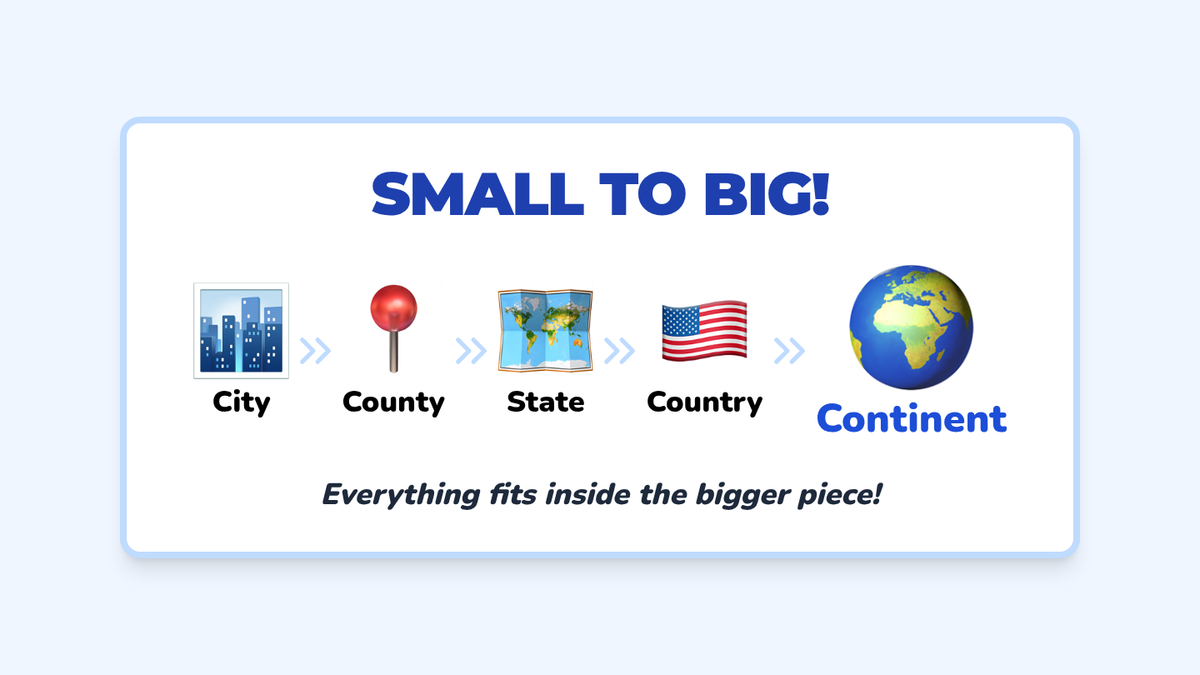
A modified 4-slide presentation introducing geographic hierarchy, the seven continents, and now a wider variety of landforms including Ocean, Desert, and Lake. Now updated with consistent iconography.
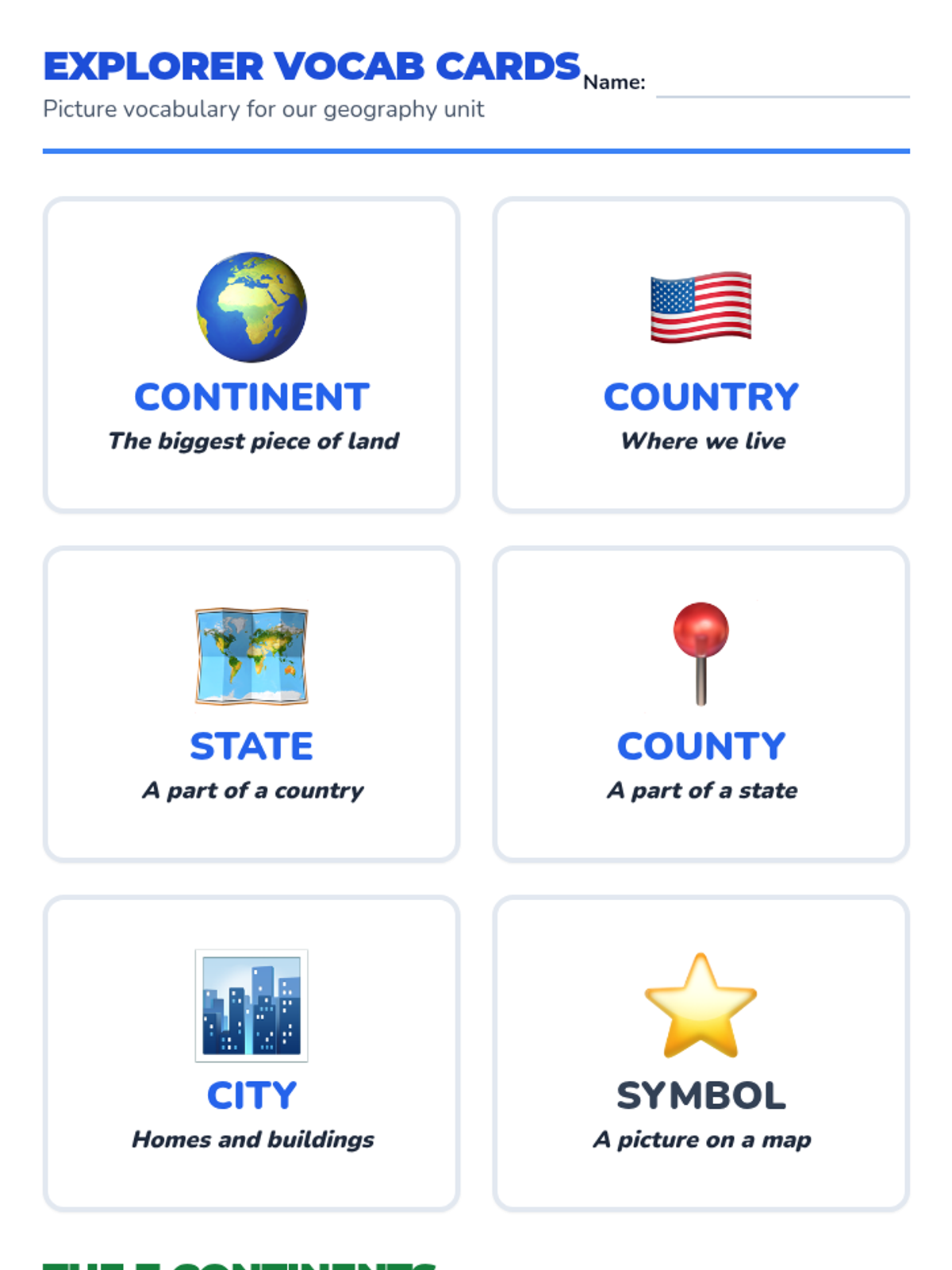
Visual vocabulary cards for geography units, featuring large icons, simple definitions, and high-contrast text for students with limited literacy. Now includes more landforms like Desert, Ocean, and Lake. Now updated with consistent iconography.
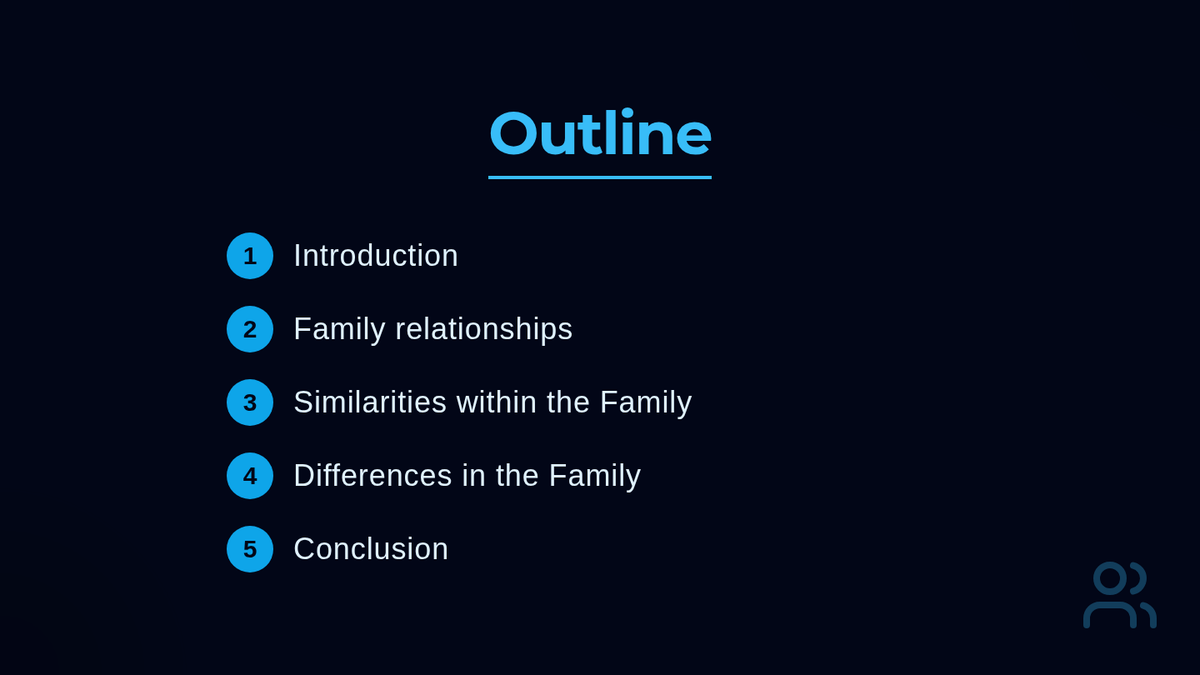
Updated outline slide with a navy blue background and sky blue text/accents for a professional look.
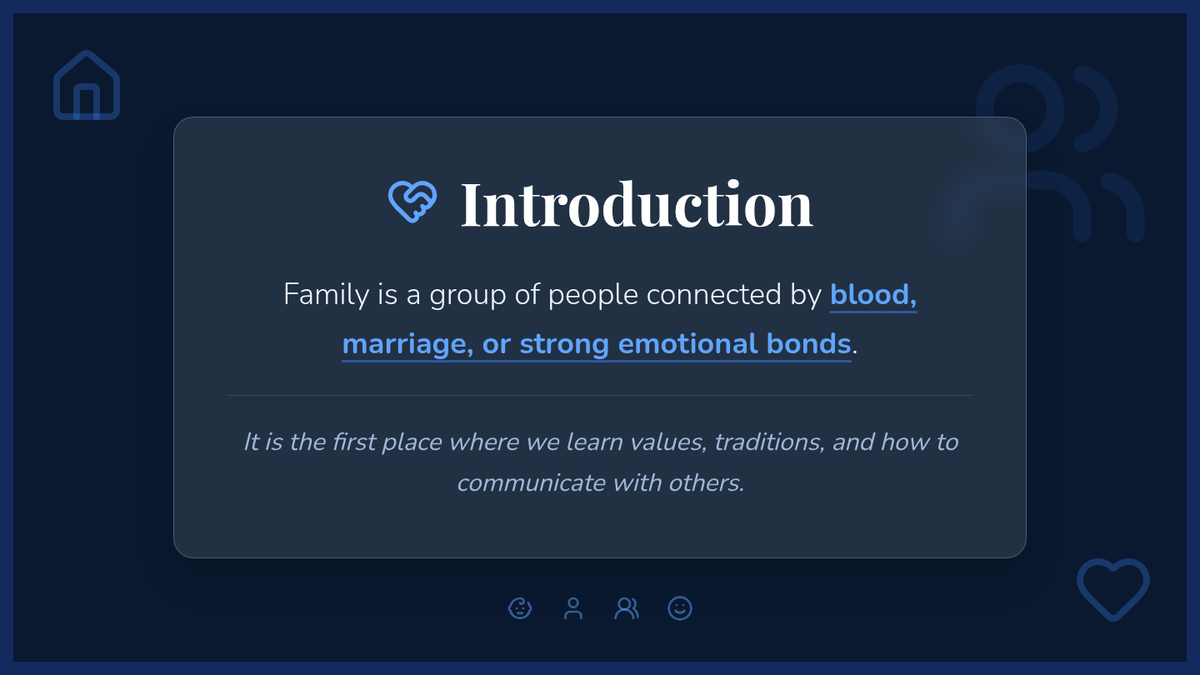
An introductory slide defining family as a core social unit, updated with a professional navy blue theme.
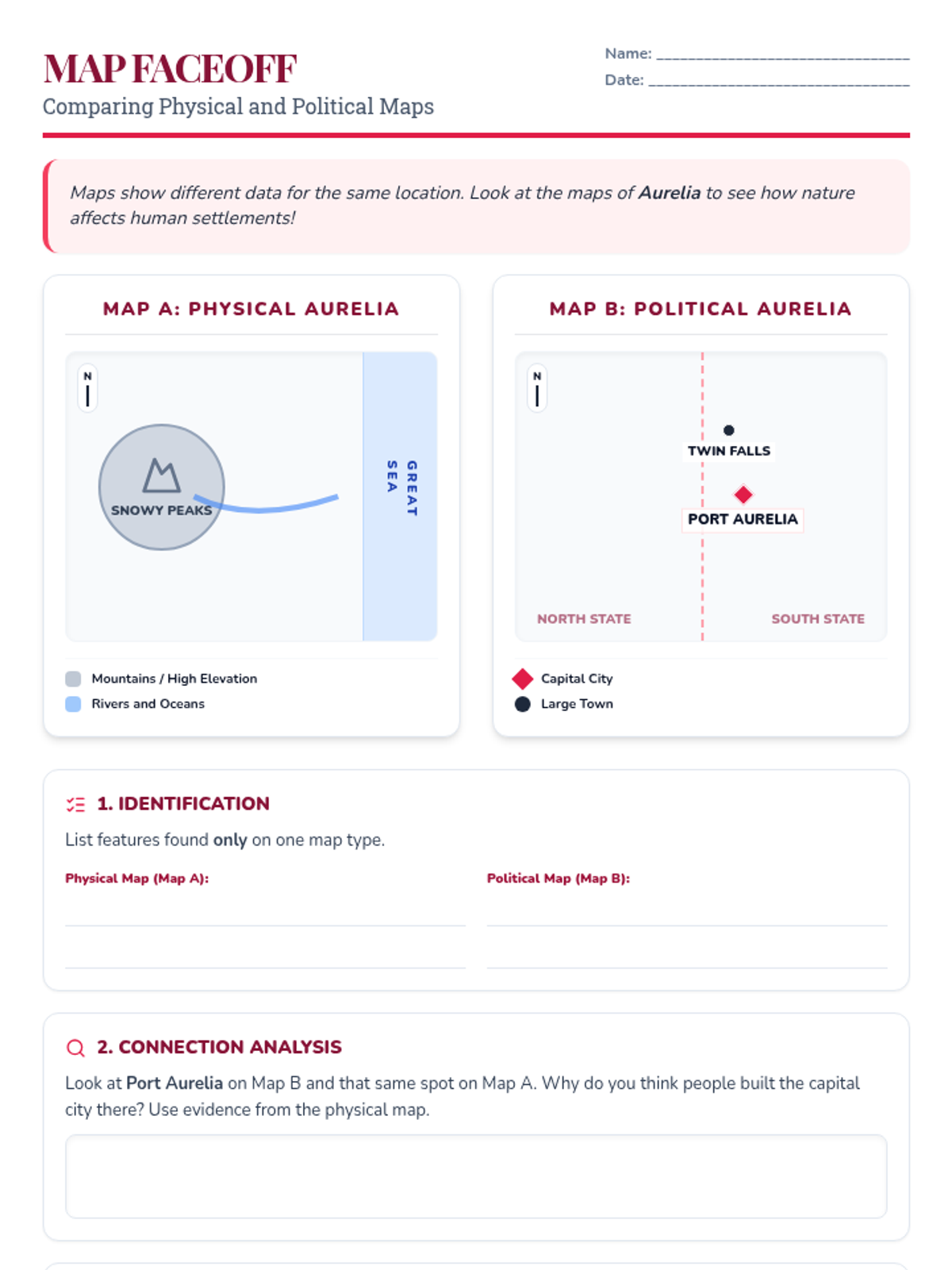
A comparison worksheet where students analyze a physical map and a political map of the same region to understand how geographical features influence human settlements and borders.
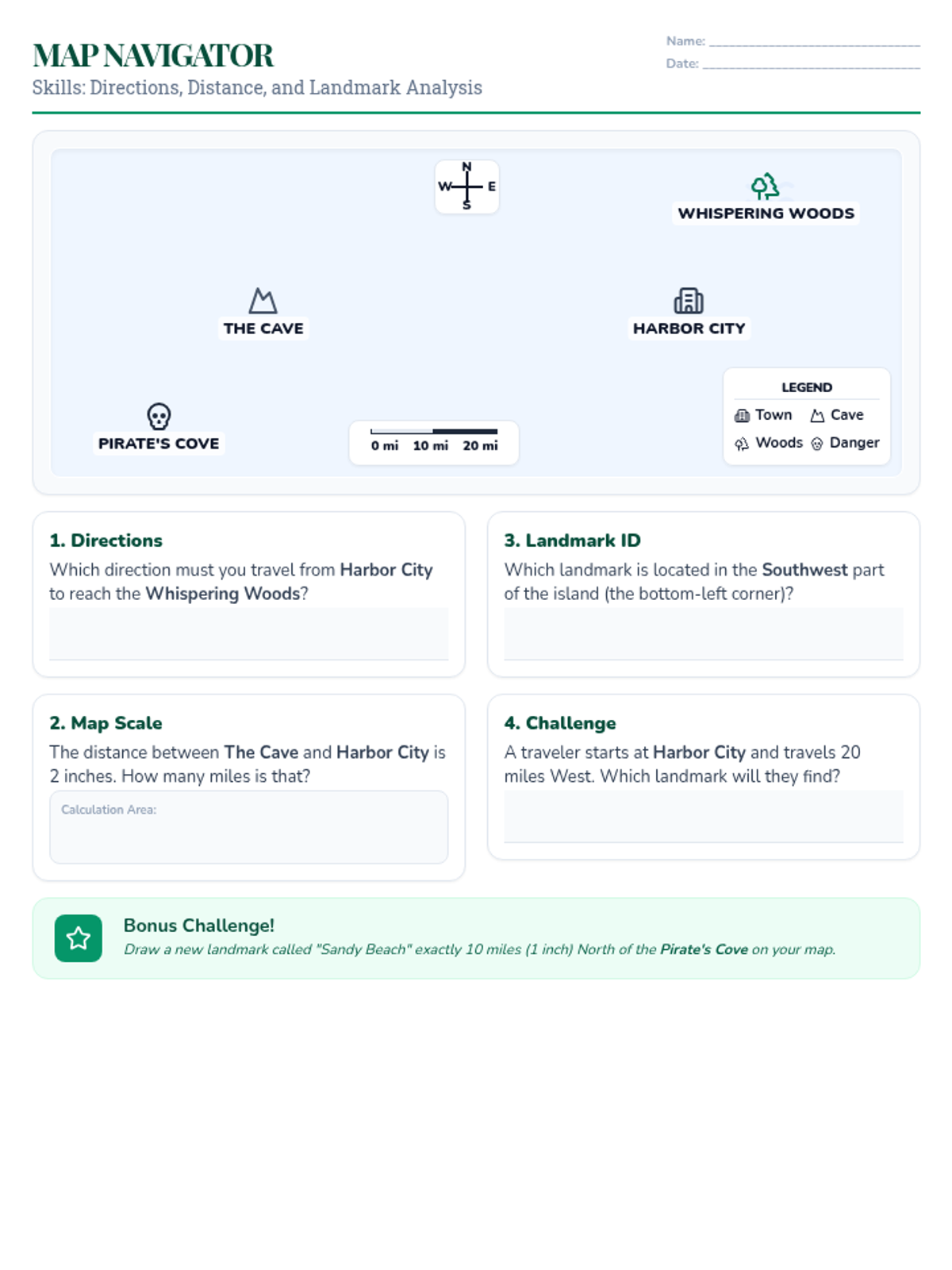
A hands-on map navigation worksheet where students use a compass rose and map scale to find landmarks, calculate real-world distances, and describe relative locations on a fictional map.
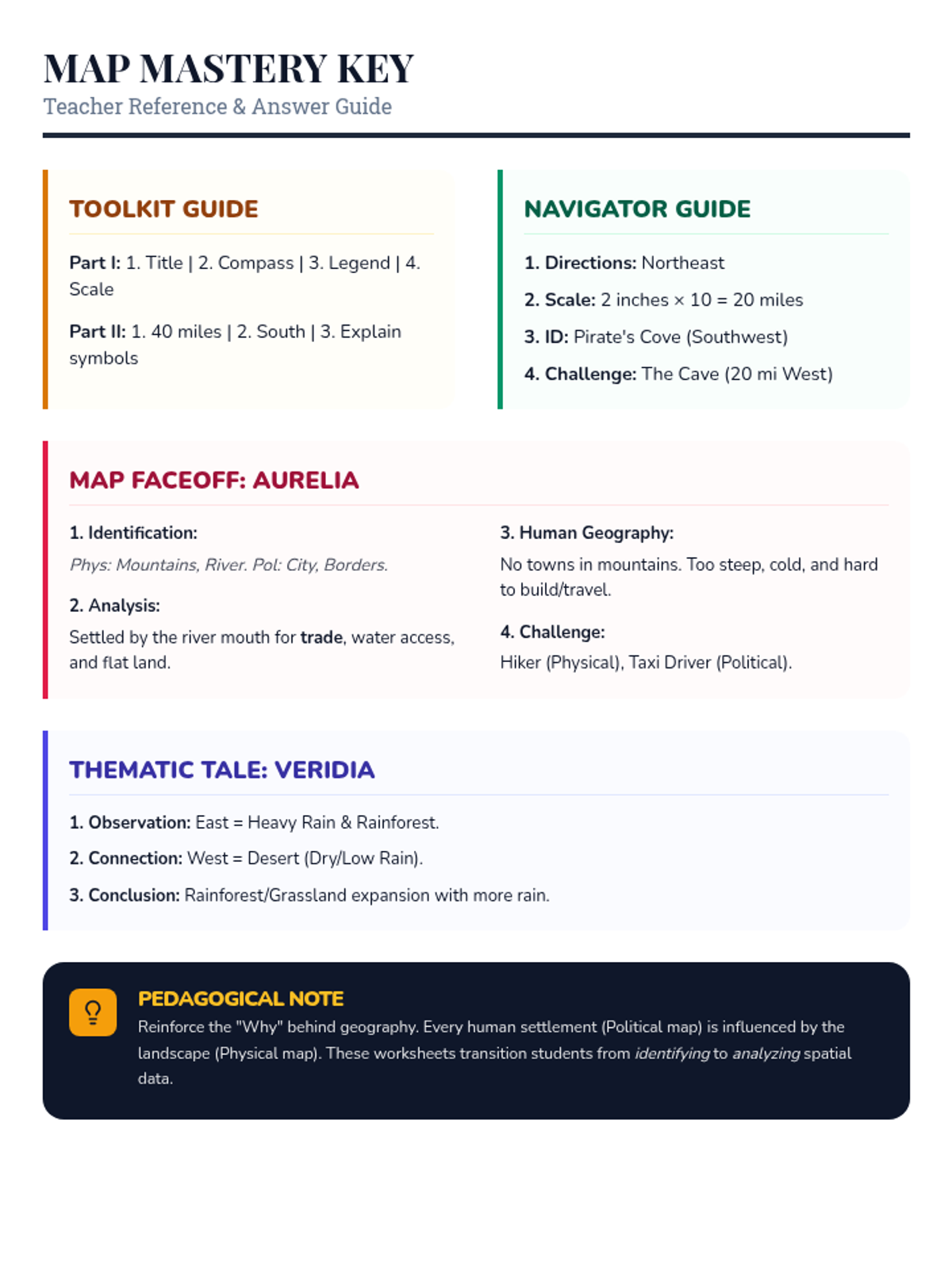
A teacher's answer key for the Cartographer's Toolkit, Map Navigator, Map Faceoff, and Thematic Tale worksheets, including sample responses and instructional notes.
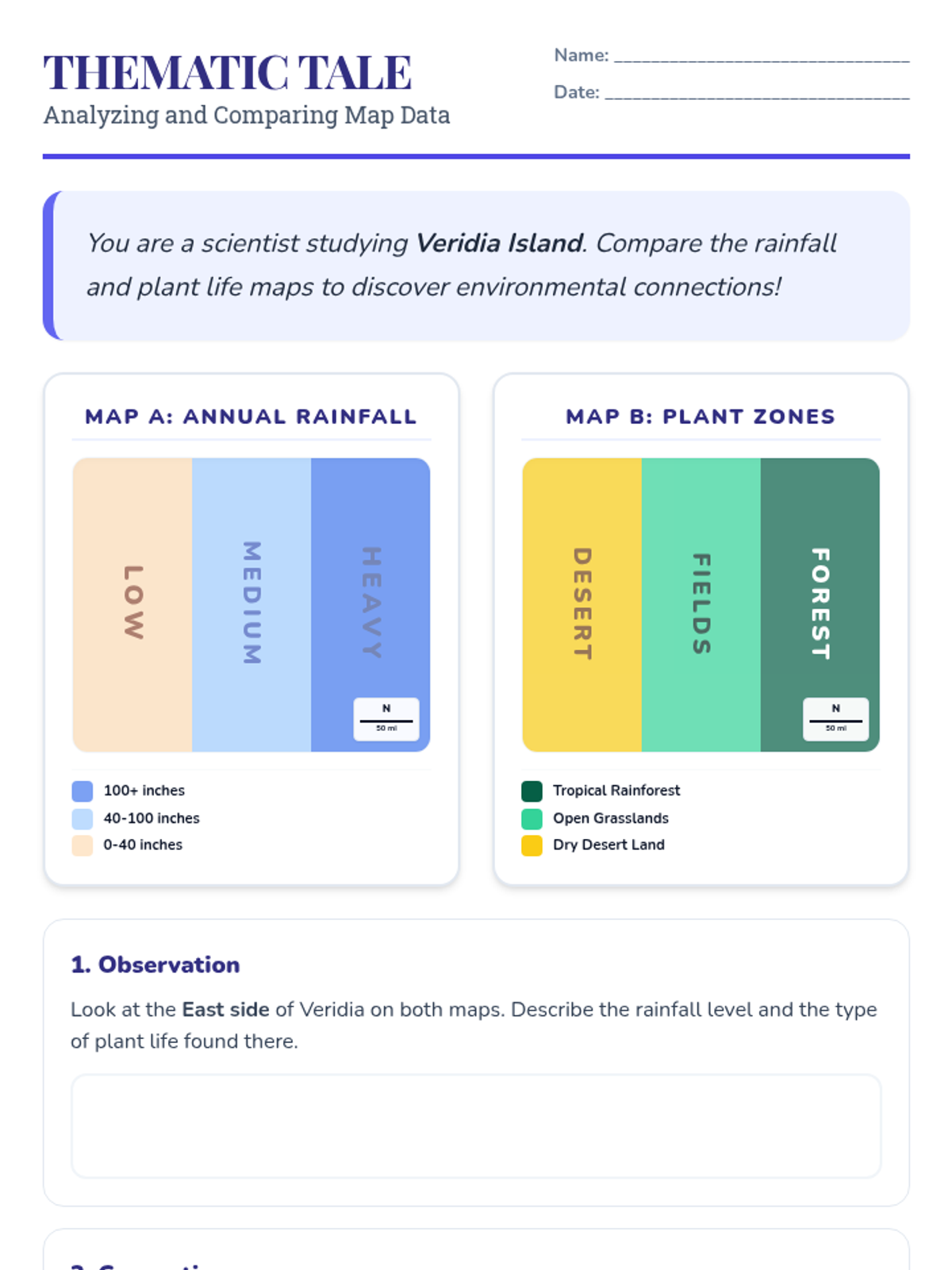
An analysis worksheet that tasks students with comparing two thematic maps (Rainfall vs. Vegetation) to understand geographical relationships and draw evidence-based conclusions.
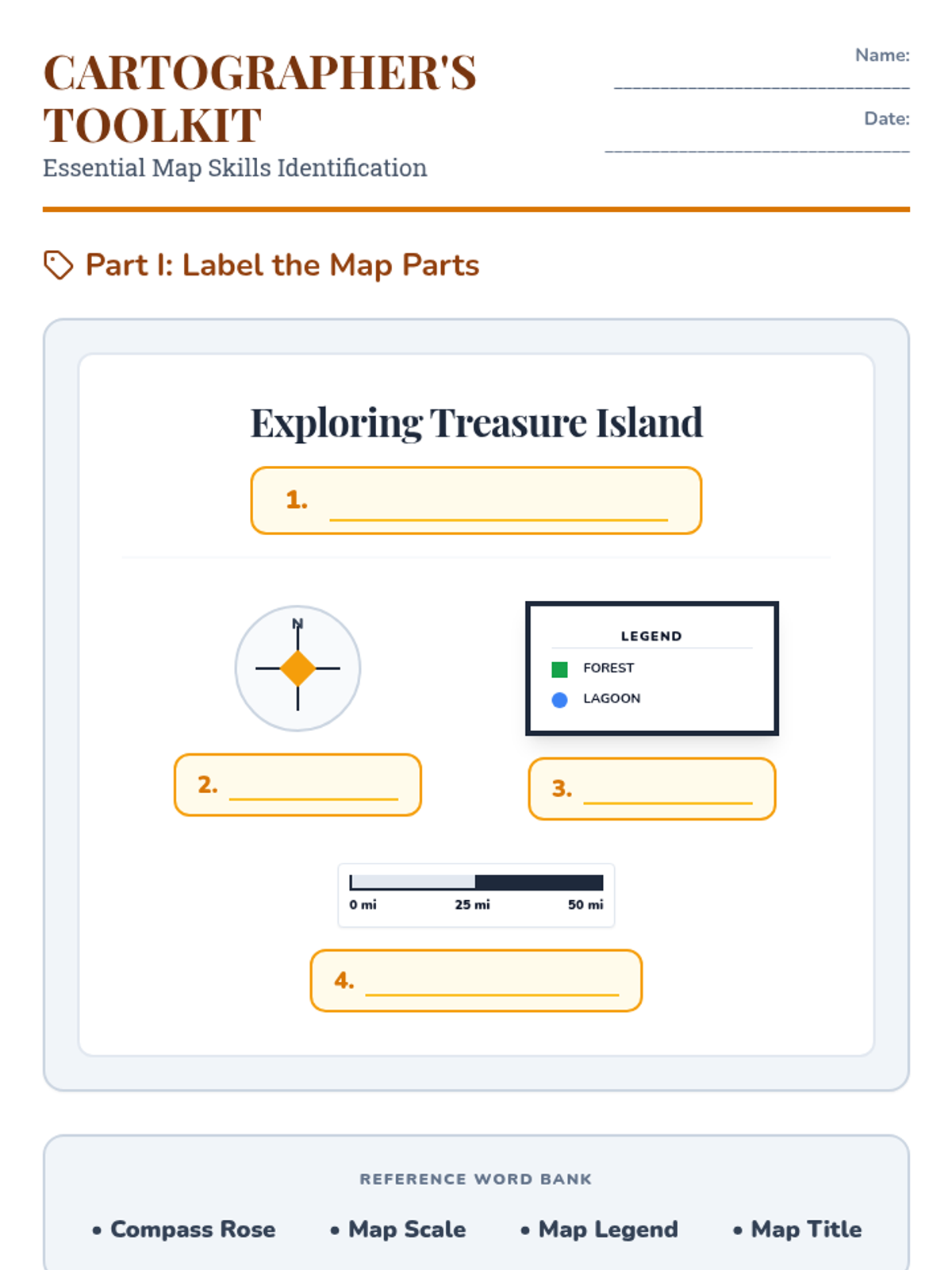
A foundational worksheet for 5th-grade students to identify map parts (title, scale, legend, compass rose) and perform basic map math and directional tasks.
An instructional slide deck introducing 5th-grade students to essential map features like the compass rose, scale, and legend, as well as an introduction to analyzing thematic maps.
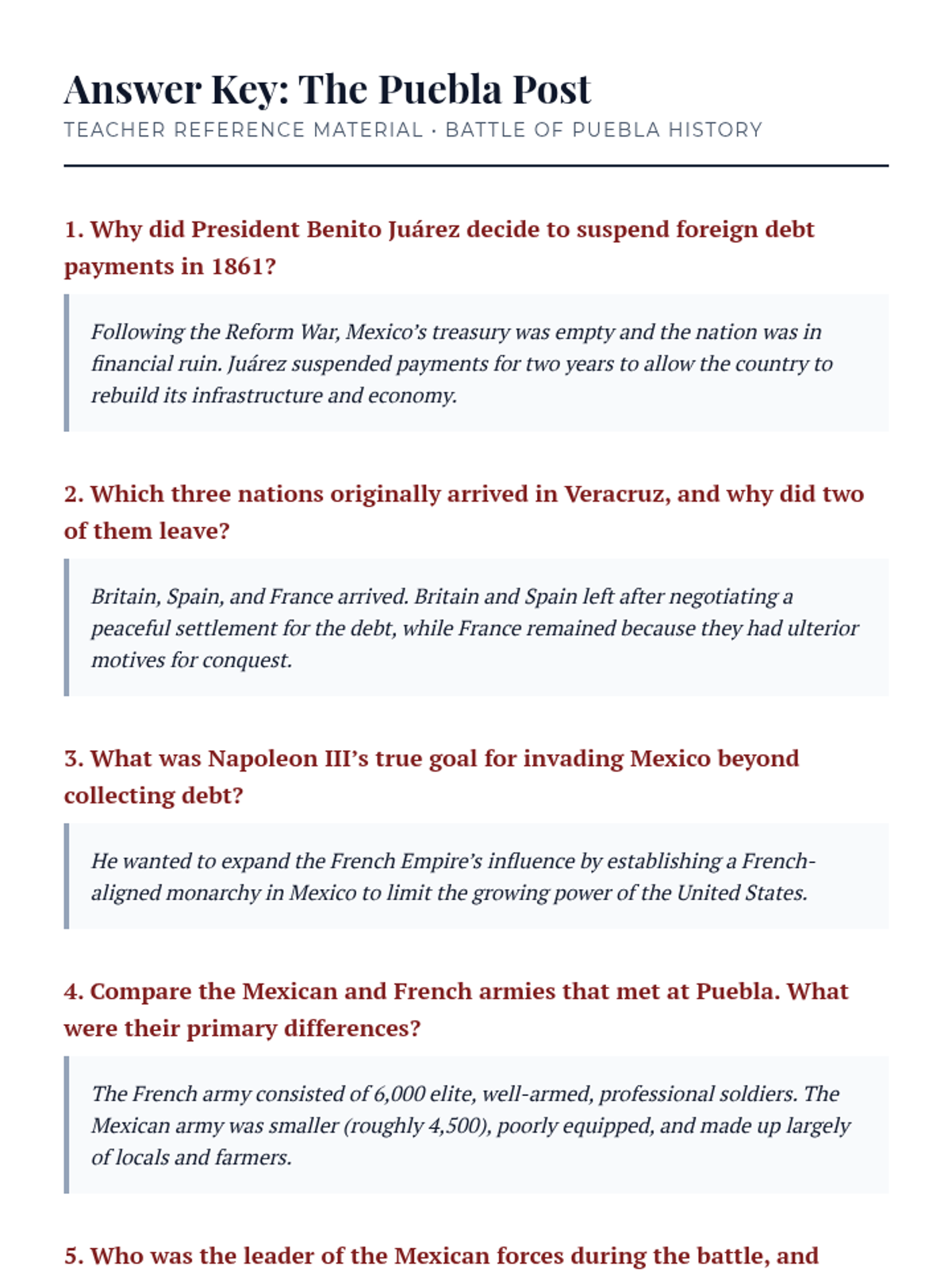
A teacher answer key for the Puebla Post reading comprehension worksheet, including suggested answers and instructional tips.
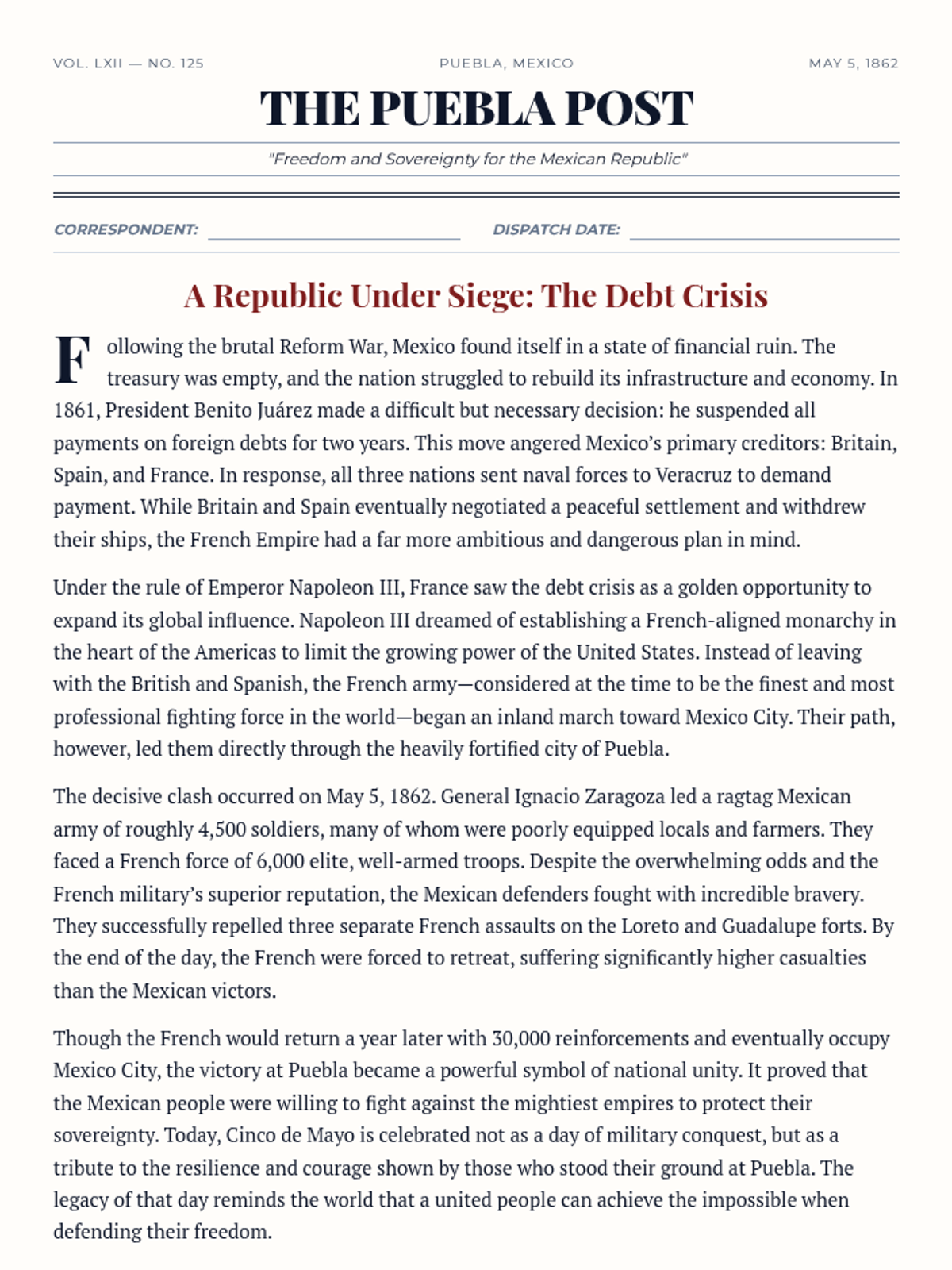
A reading comprehension worksheet styled as a 19th-century newspaper, telling the story of the debt crisis and the Battle of Puebla with seven analysis questions.
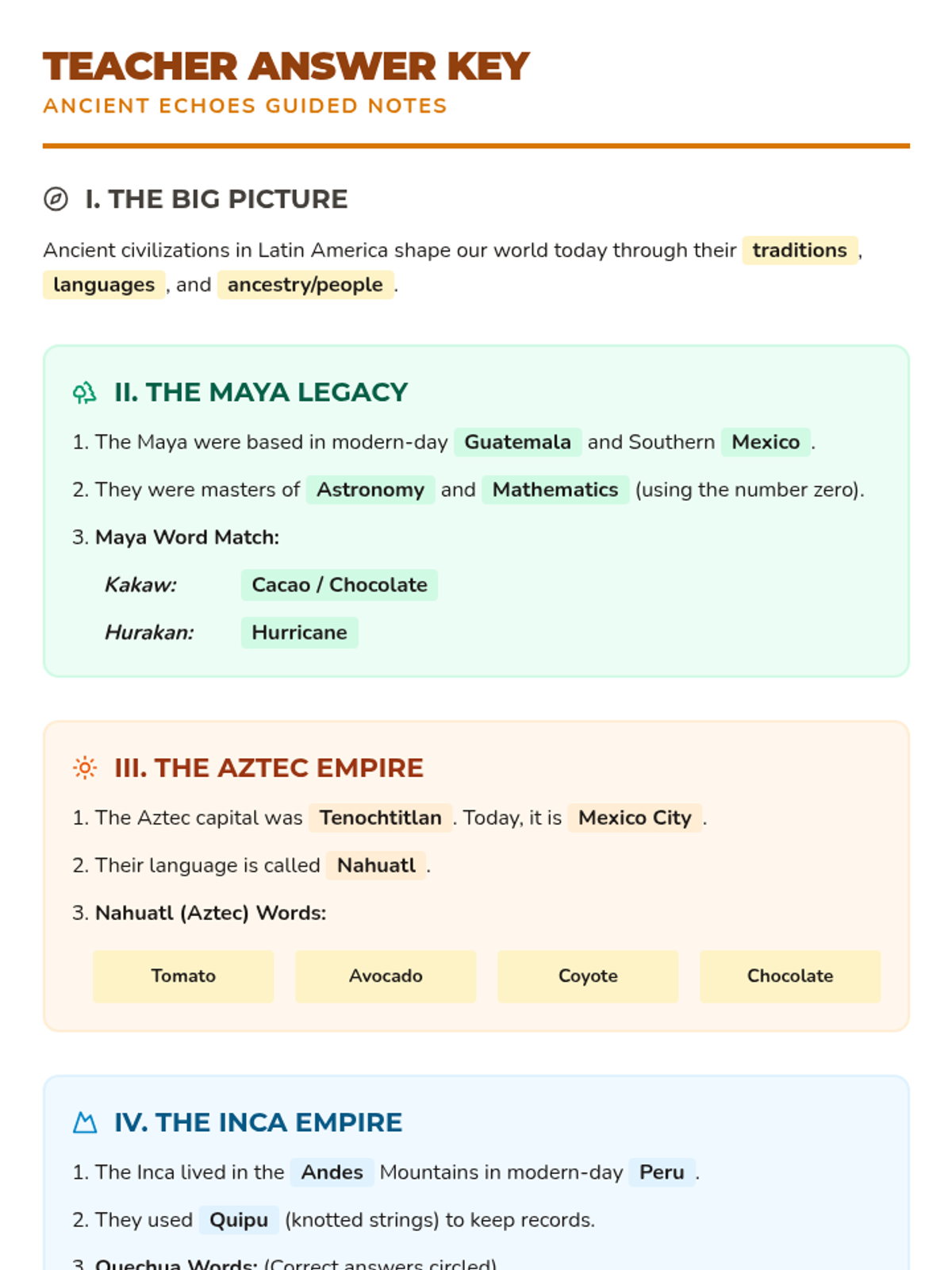
A complete answer key for the "Ancient Echoes Notes Worksheet" with improved visual clarity and layout consistency for teachers.
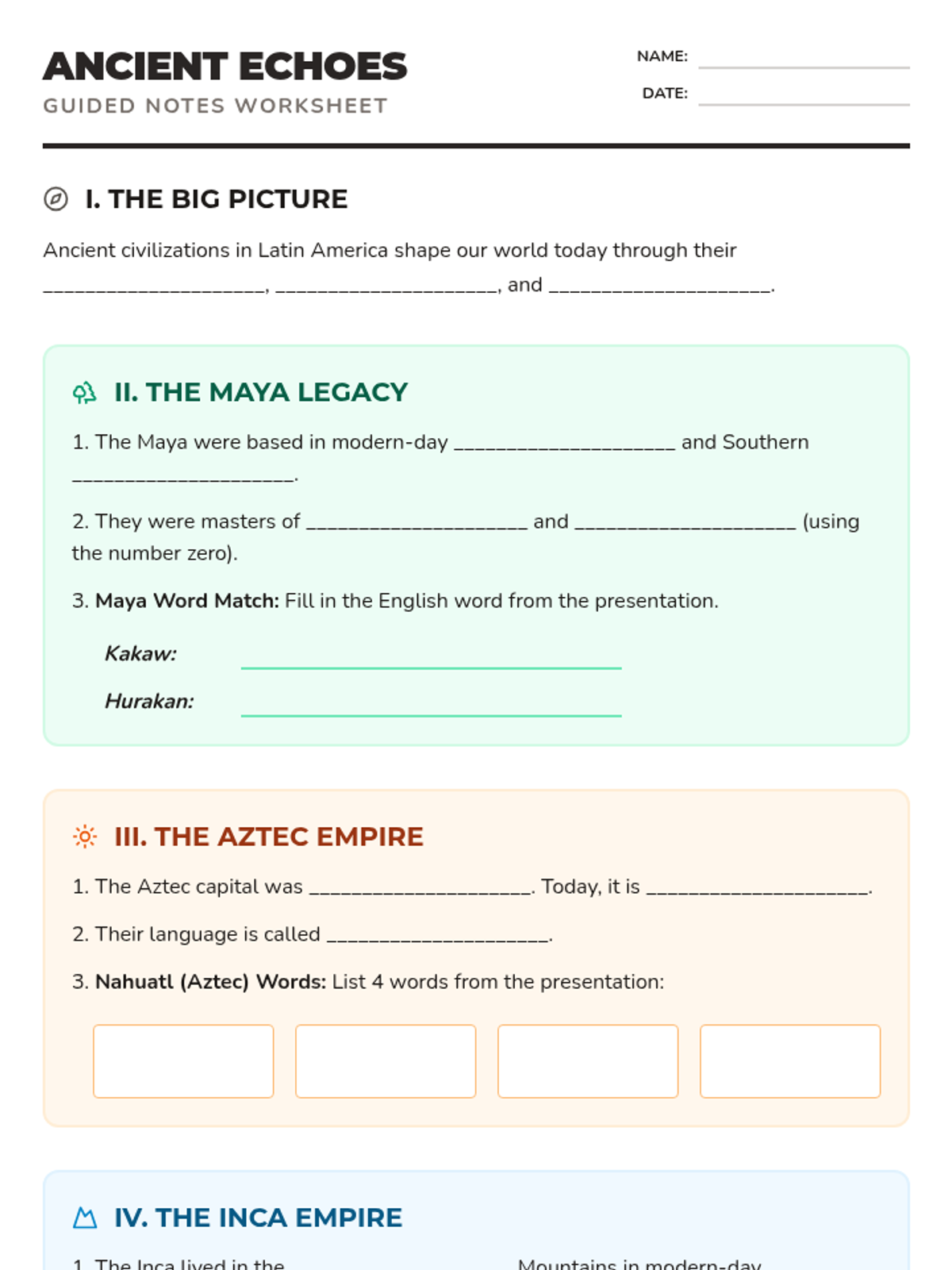
A guided notes worksheet for 5th-grade students to complete while viewing the "Ancient Echoes" presentation. Improved layout for printing and handwriting legibility.
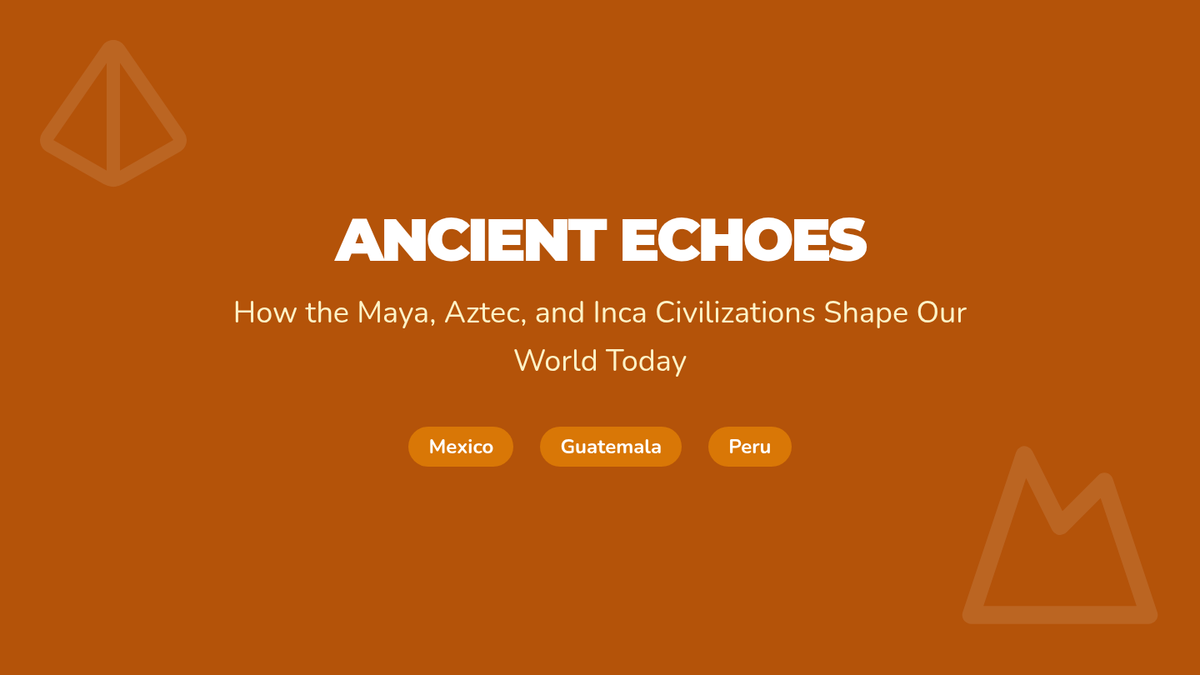
An engaging 10-slide presentation exploring the connections between the Maya, Aztec, and Inca civilizations and modern-day Latin American countries. Refined for etymological accuracy and visual polish.
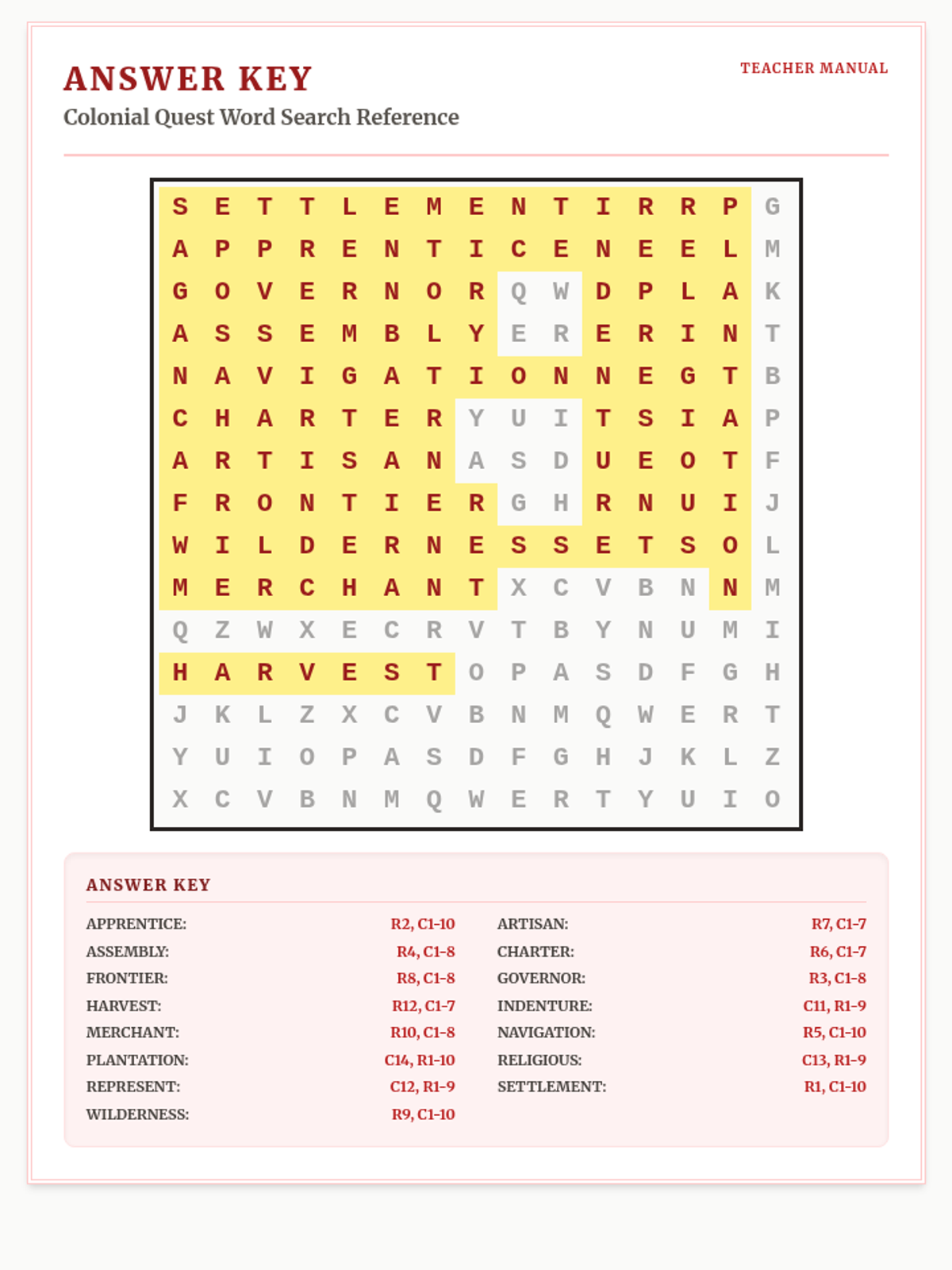
The teacher's answer key for the Colonial Quest Word Search, featuring a highlighted solution grid and a map of word locations for easy grading.
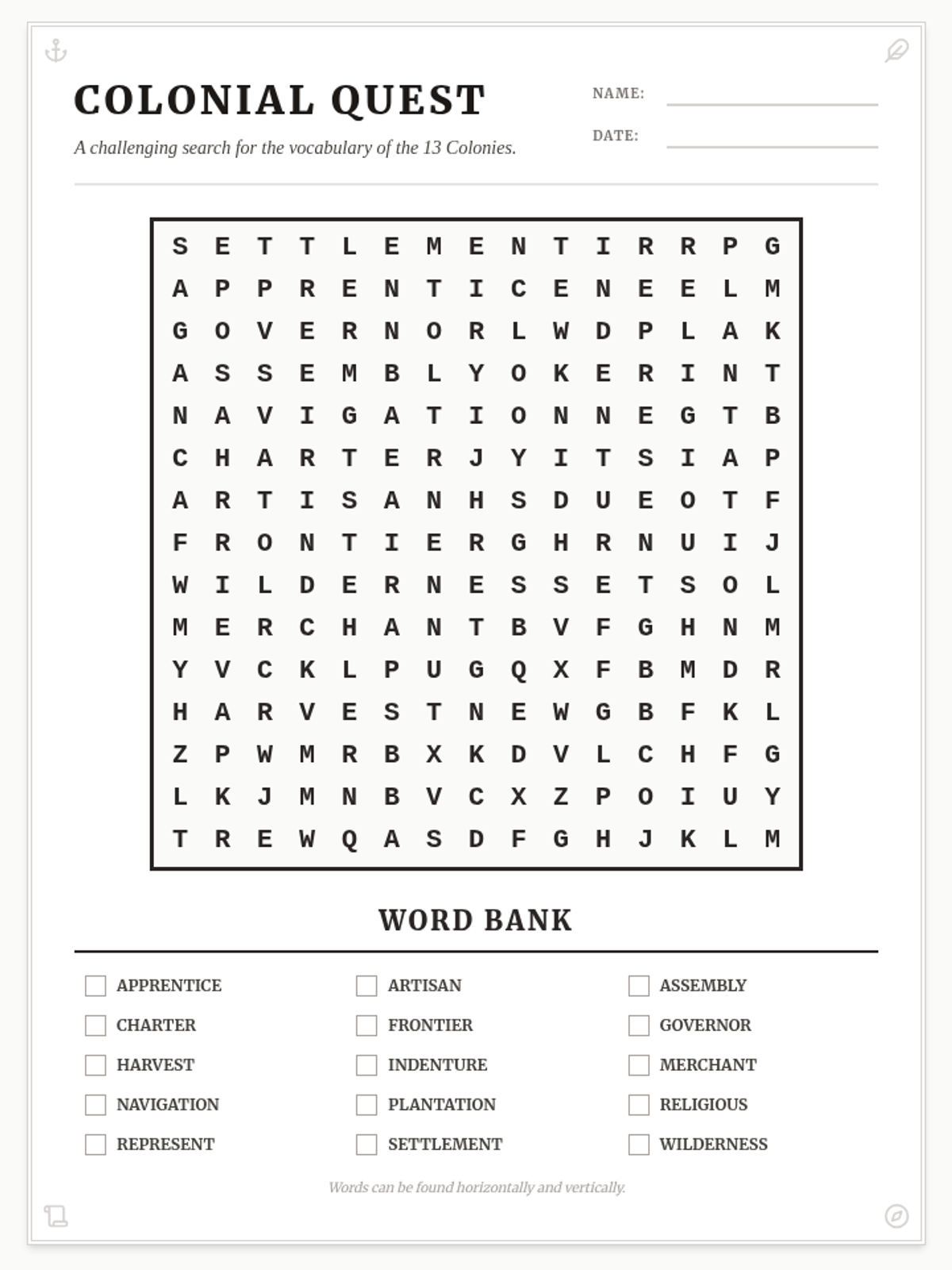
A themed word search for 3rd graders featuring 15 challenging colonial-era words like 'indenture', 'artisan', and 'frontier'. The layout uses a vintage parchment aesthetic.
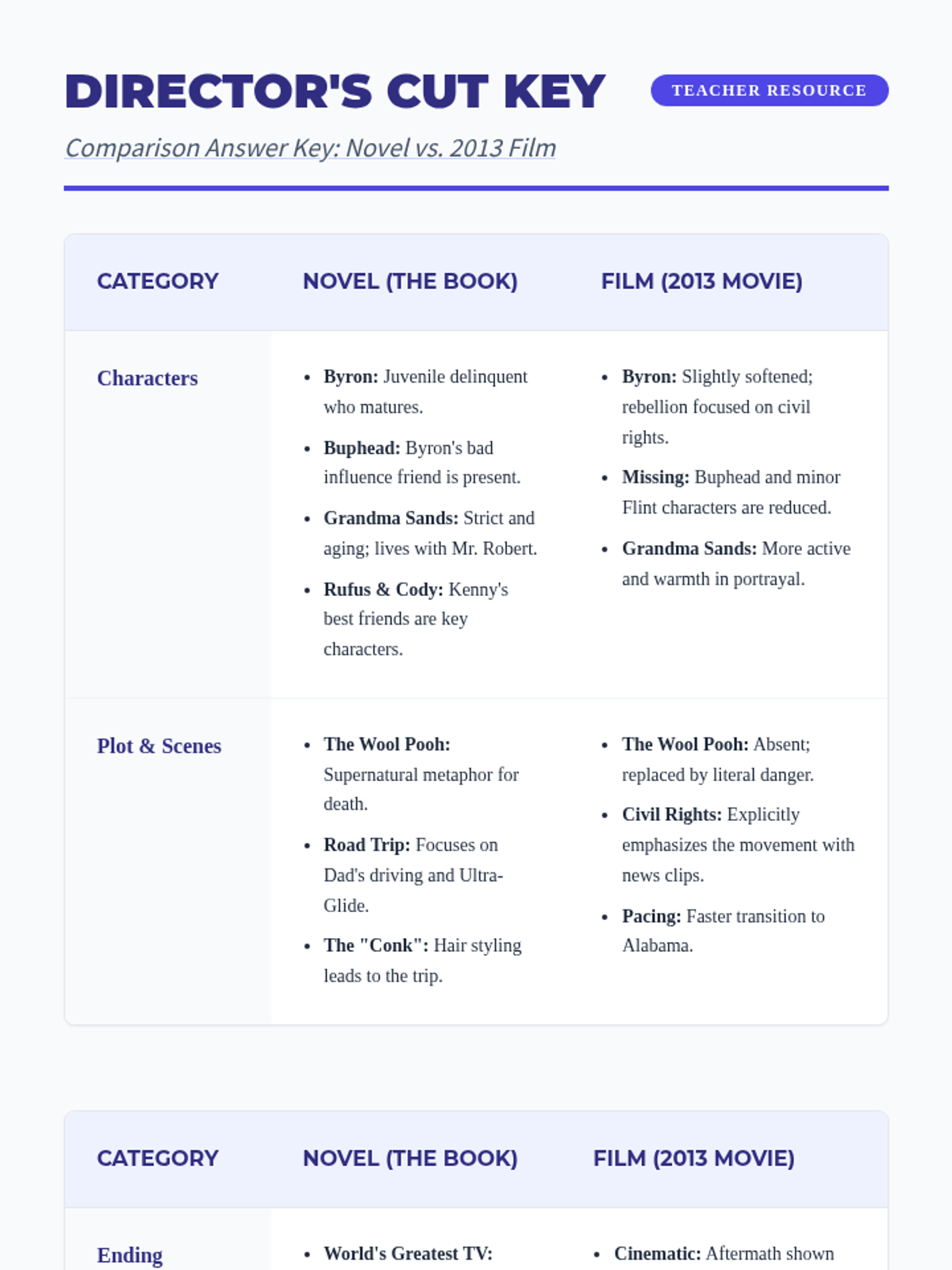
A comprehensive answer key for teachers comparing the book and movie versions of 'The Watsons Go to Birmingham', featuring character changes, plot adjustments, and ending variations.
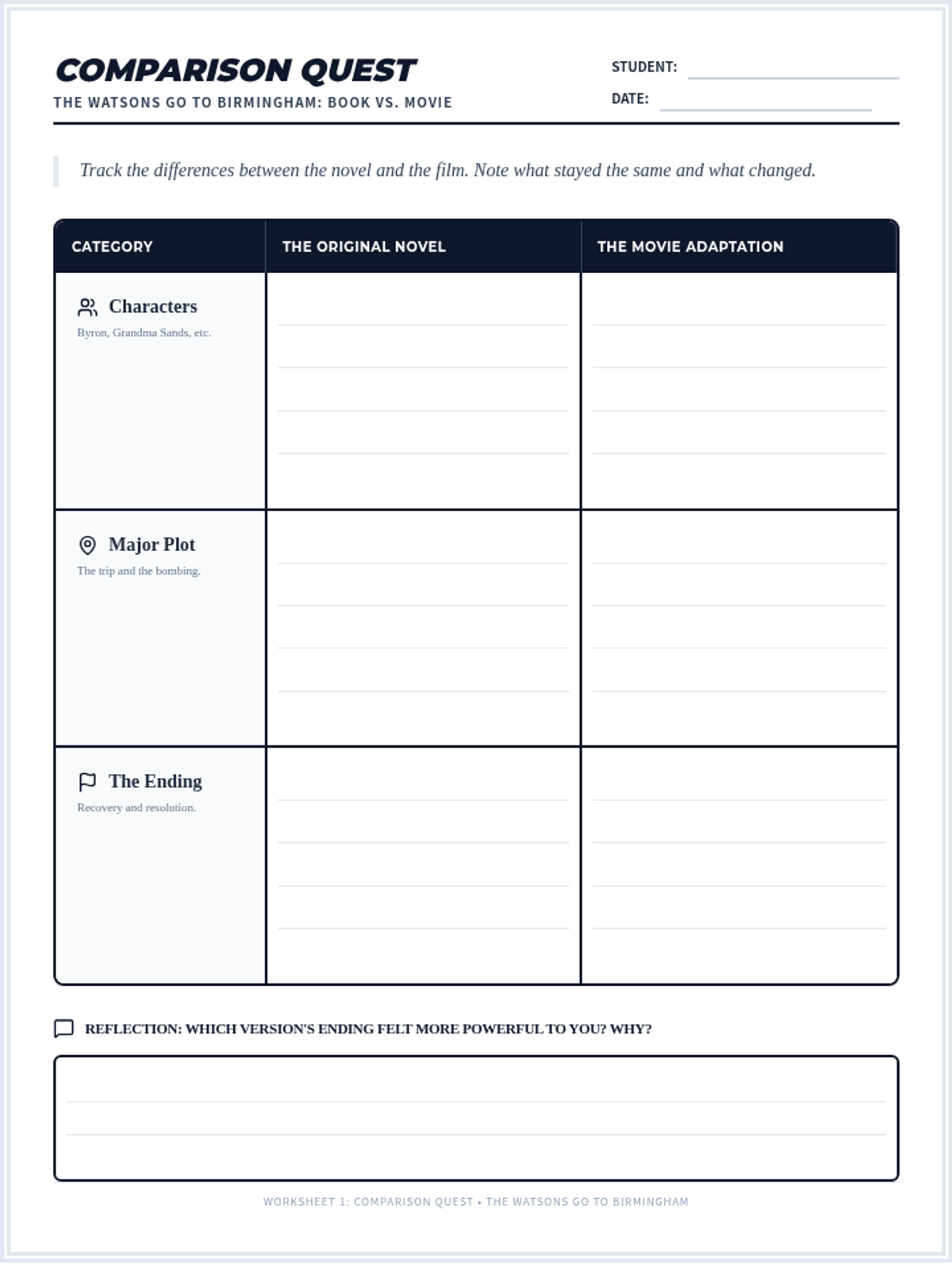
A single-page student worksheet featuring a category-based comparison table to analyze differences between 'The Watsons Go to Birmingham' novel and its movie adaptation. This version uses fixed-height elements to ensure reliability when printing.
An introductory slide deck for CKLA Grade 5 Unit 8 on Native Americans. These slides cover the geographical diversity of indigenous nations, the role of oral traditions and myths, and the historical impact of European exploration.
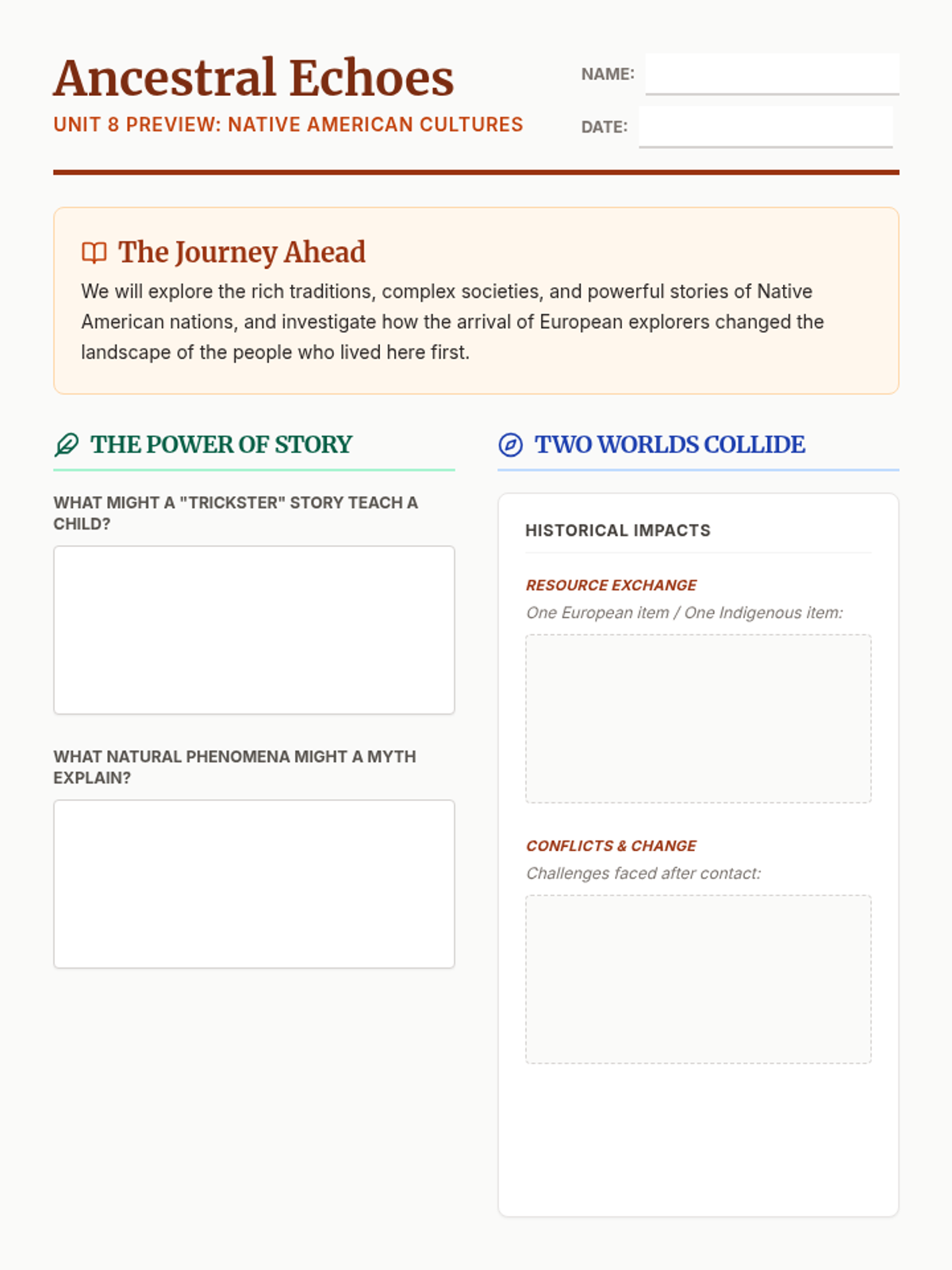
An introductory unit preview worksheet for CKLA Grade 5 Unit 8 on Native Americans. It features sections for predicting the roles of traditional myths, analyzing the historical impact of European exploration, and exploring key vocabulary.