Geometric classification, measurement of area and volume, and the study of transformations and rigid motions. Builds toward complex proofs, trigonometry for general triangles, and the algebraic representation of conic sections.
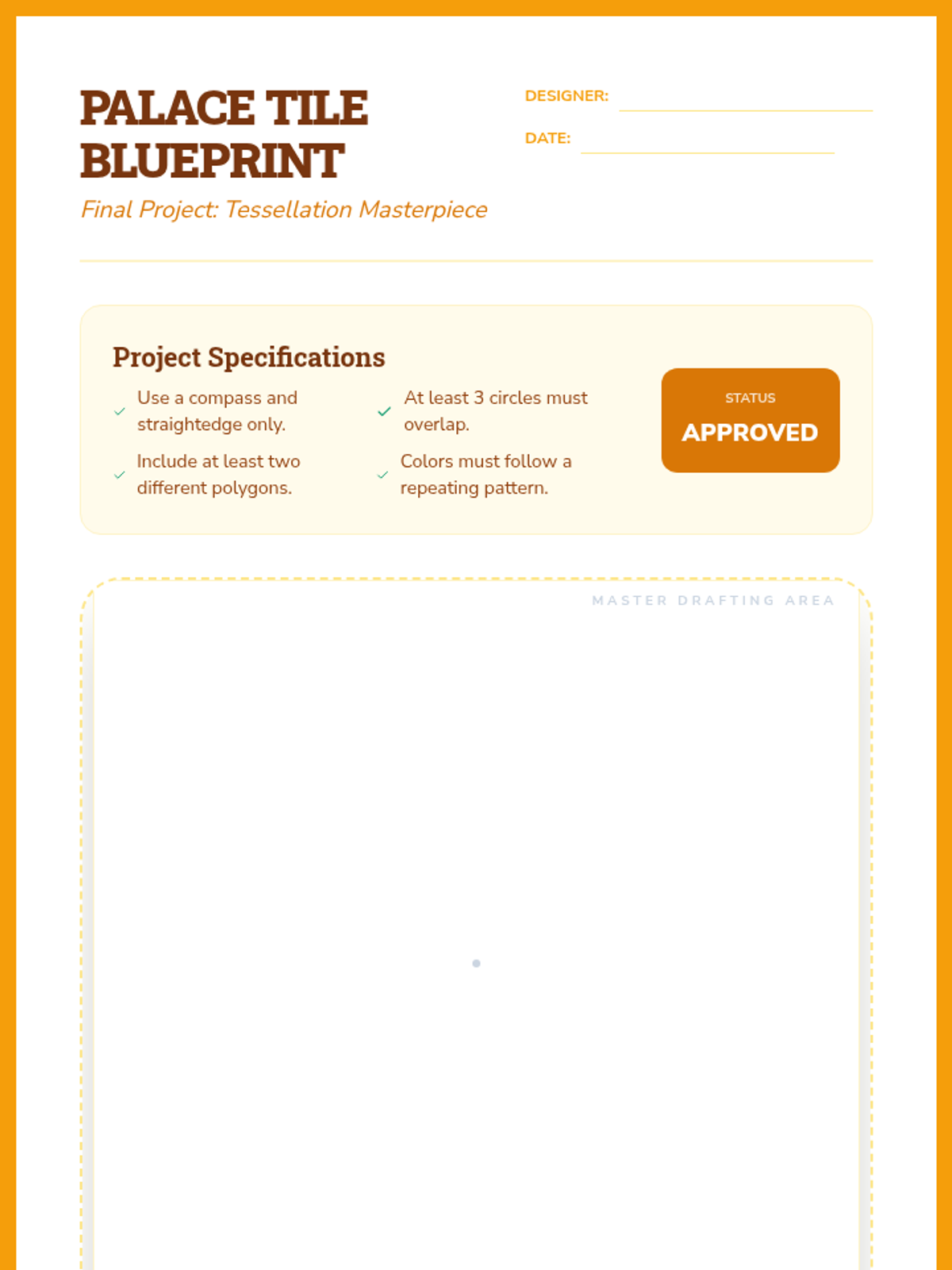
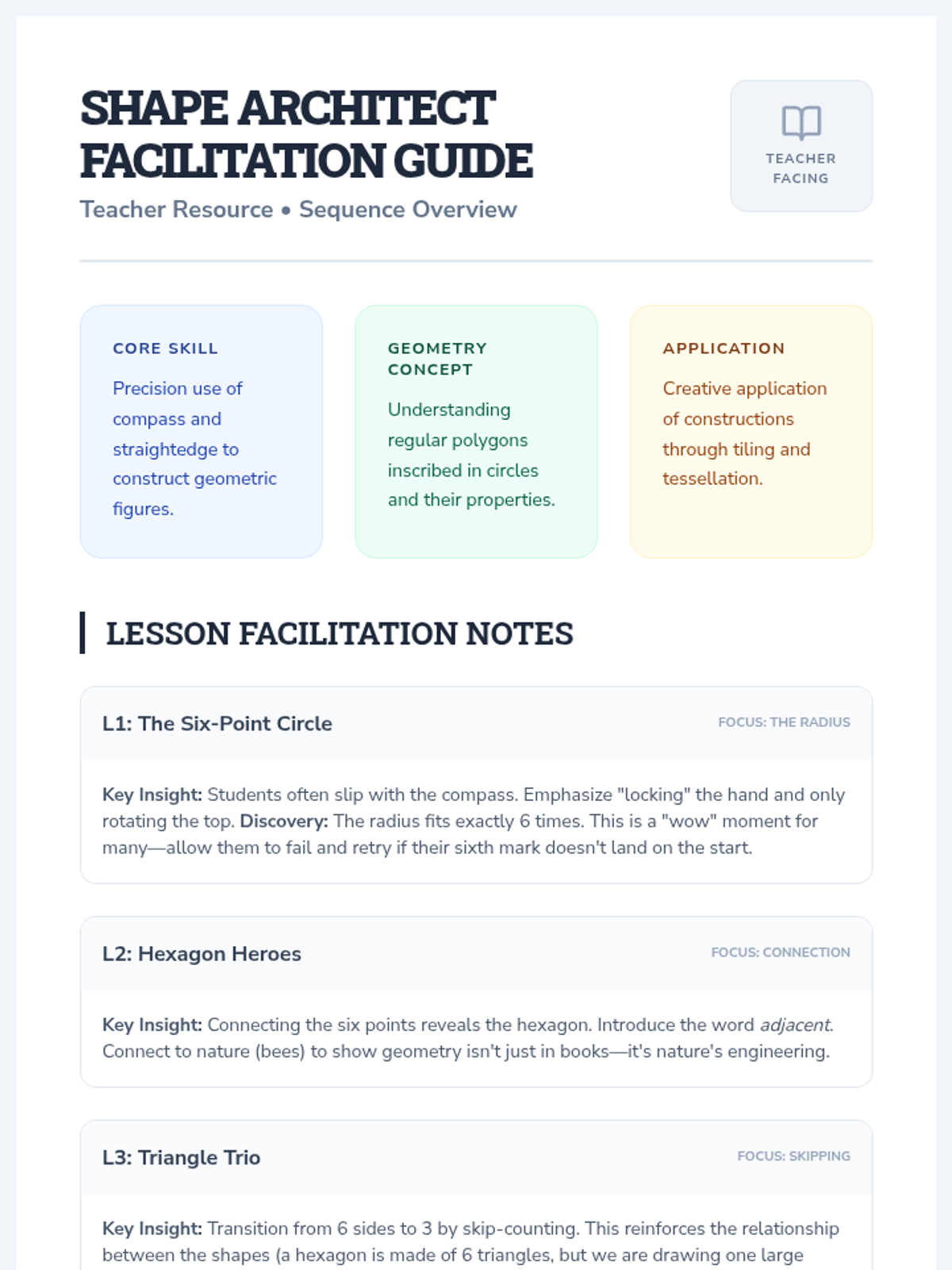
Students apply their construction skills to create a tessellating tile pattern, acting as geometric designers for a palace.
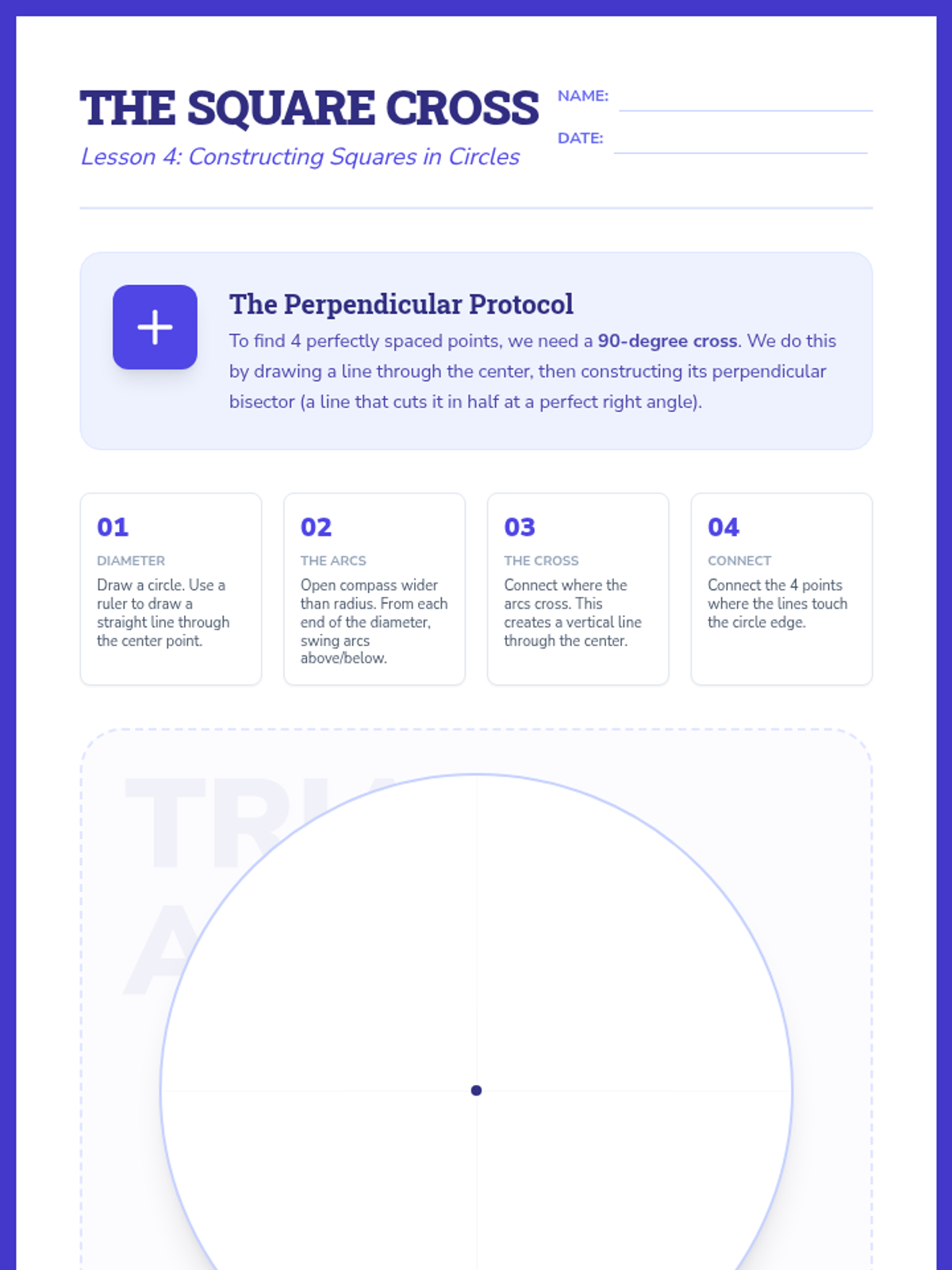
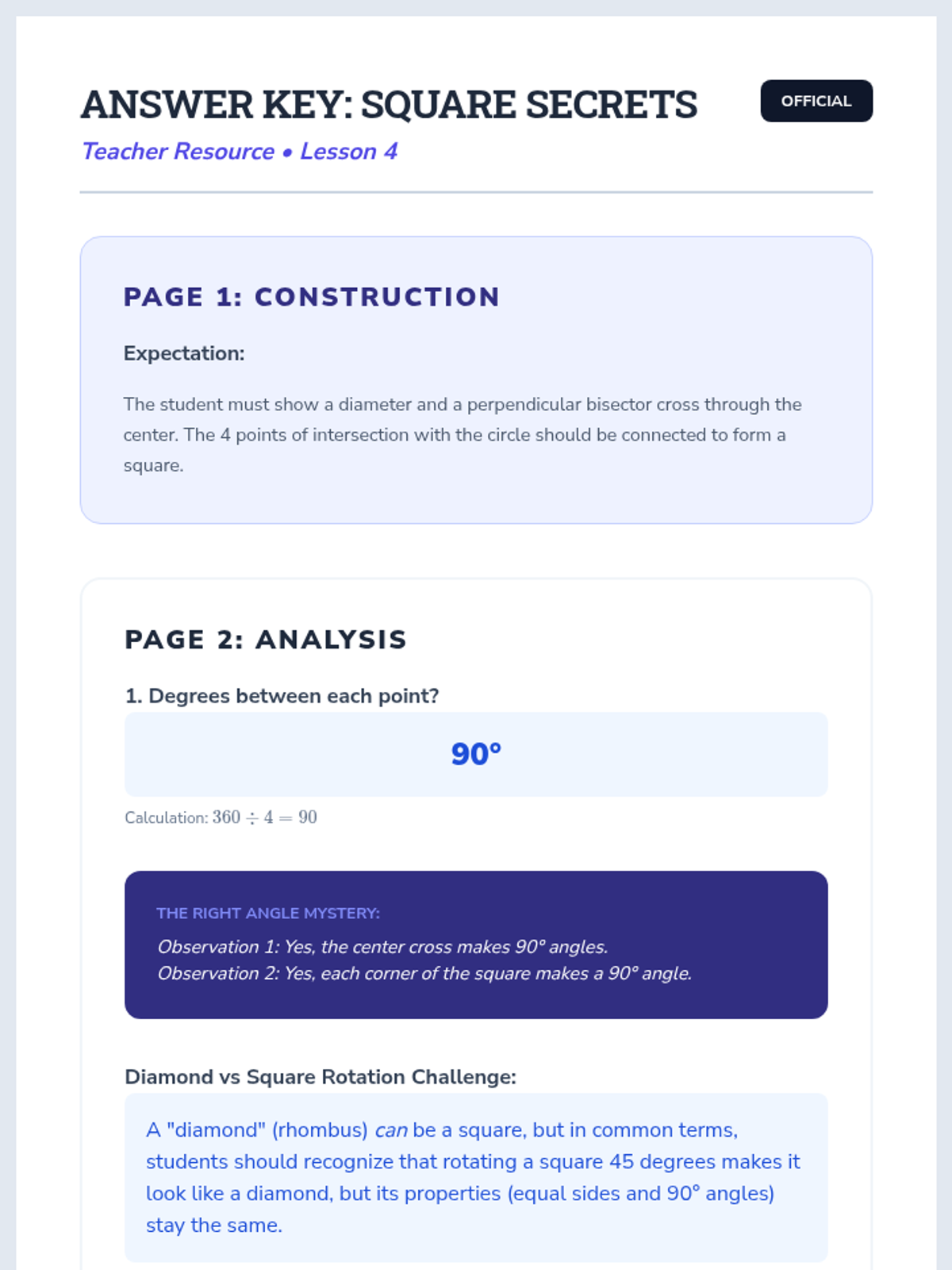
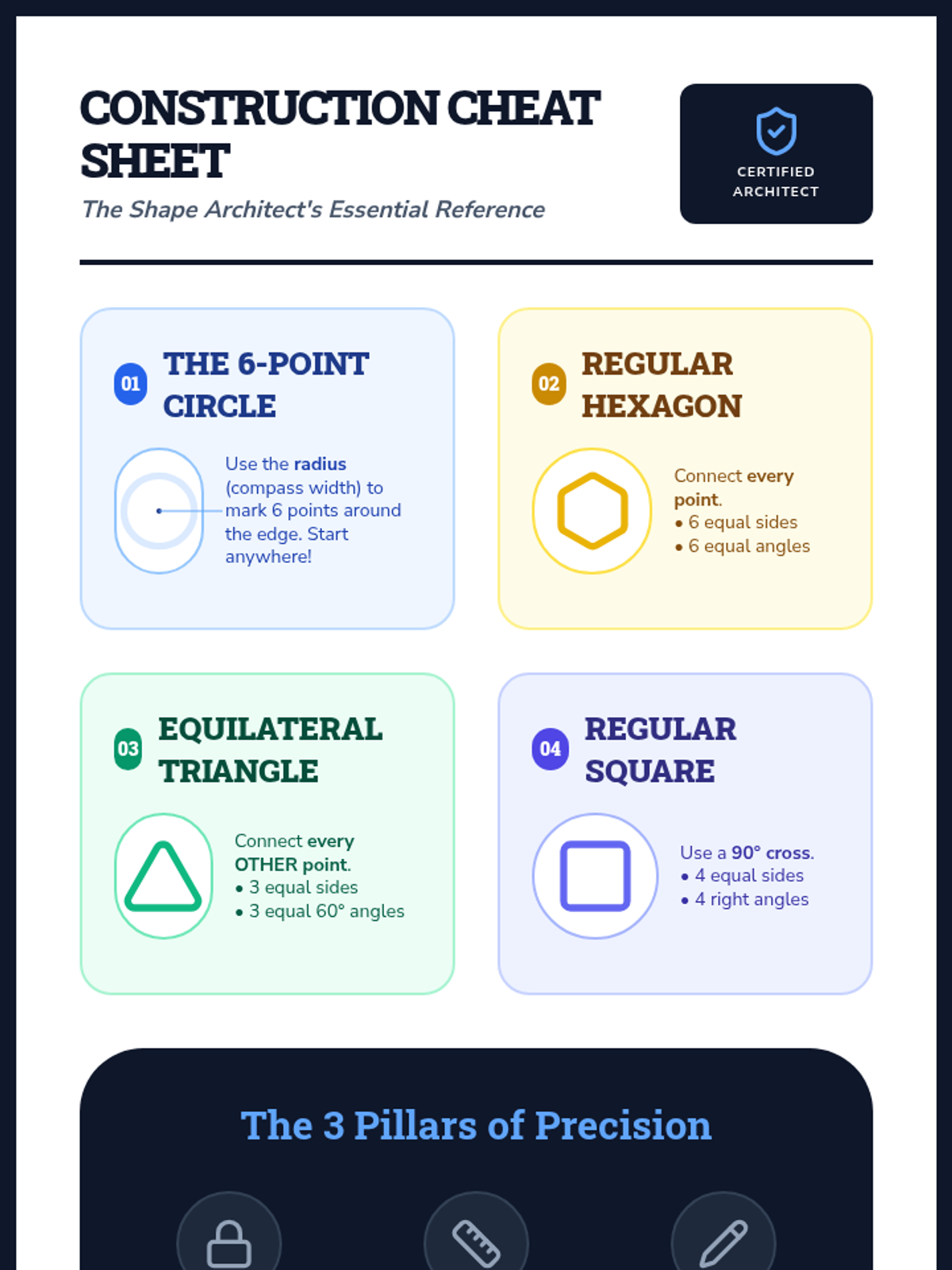
Students use perpendicular diameters to find four equidistant points on a circle, allowing them to construct perfect squares.
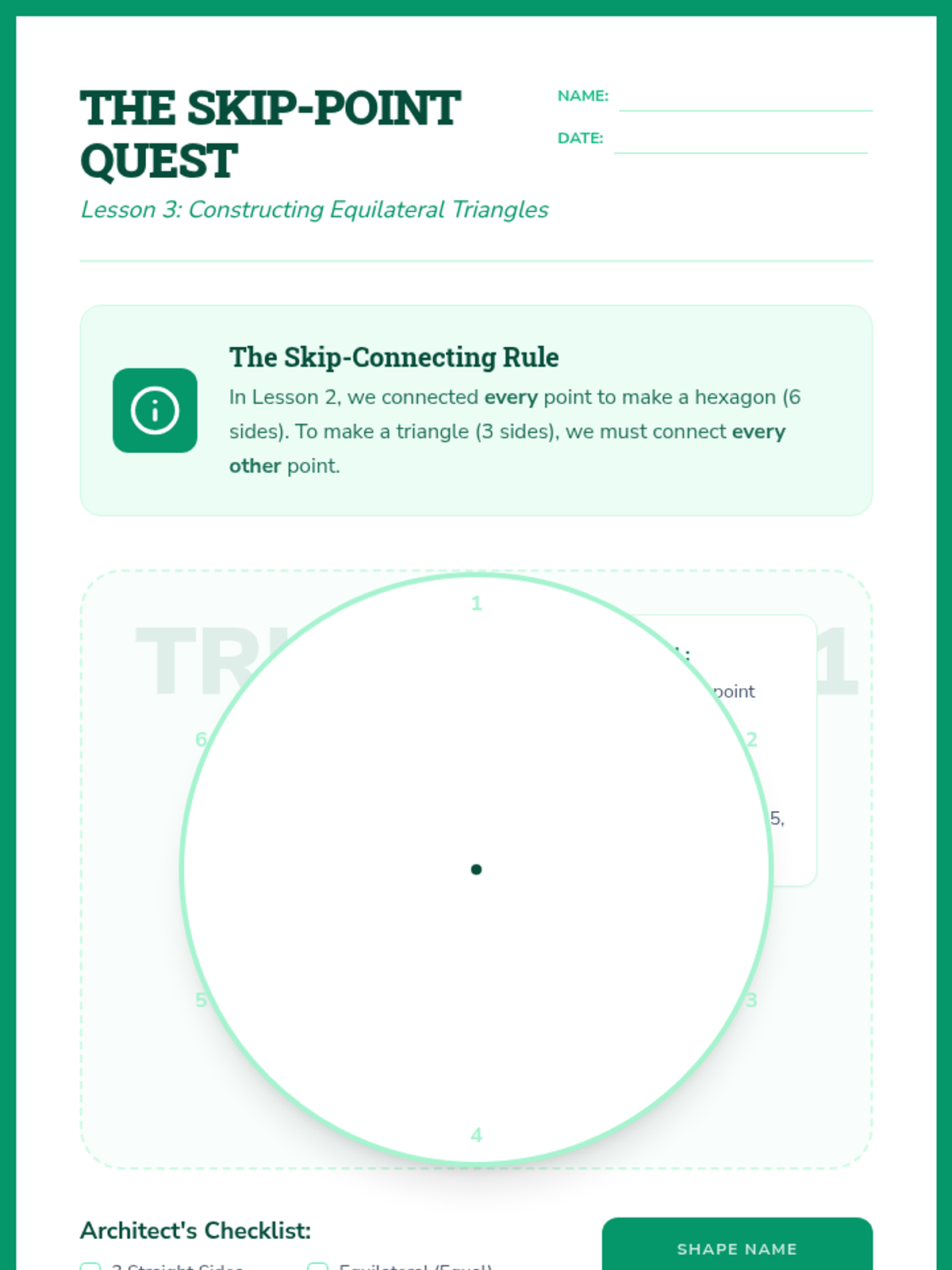
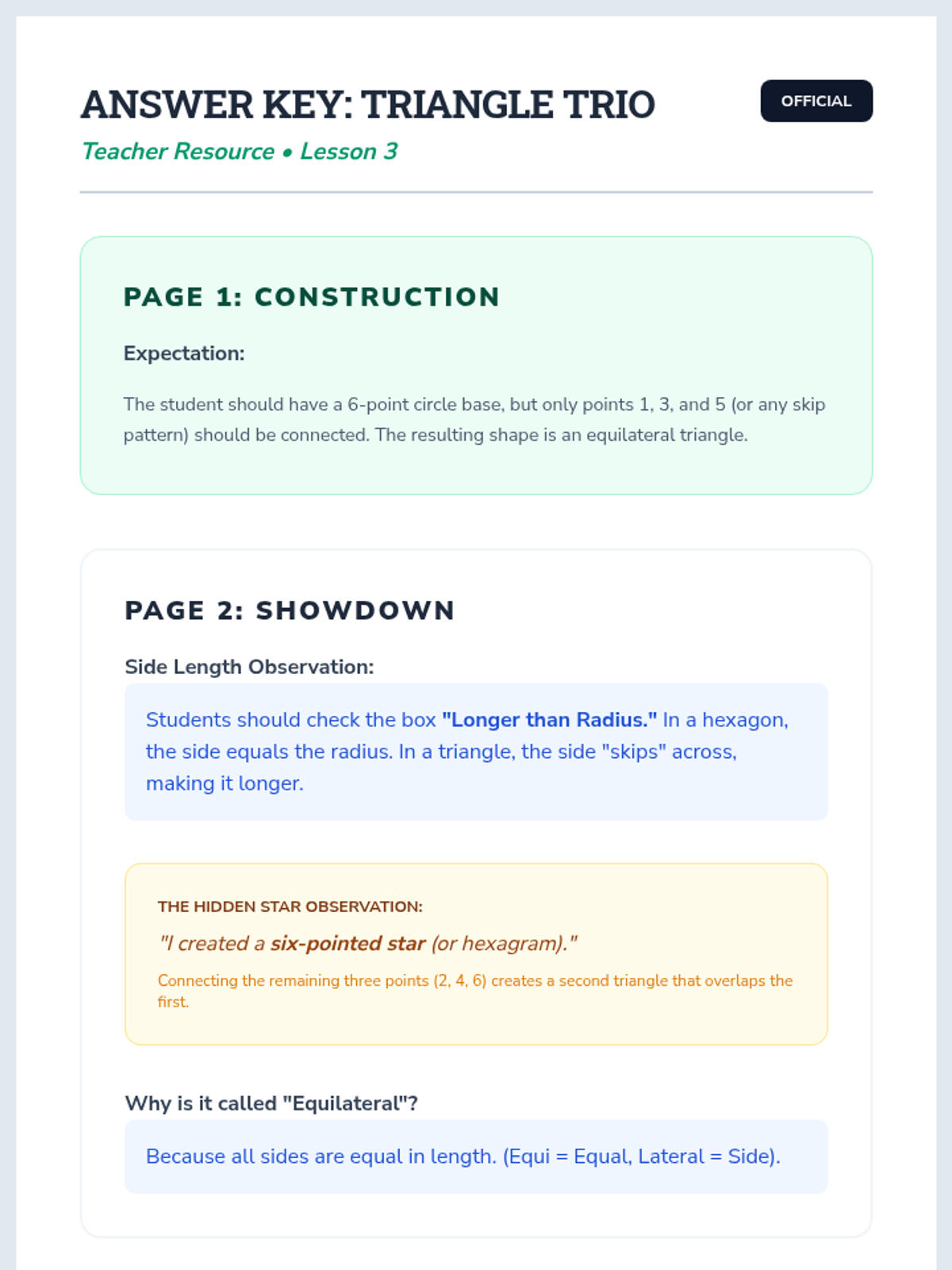
Students learn to connect every other point on the six-point circle to create equilateral triangles, comparing them to hexagons.
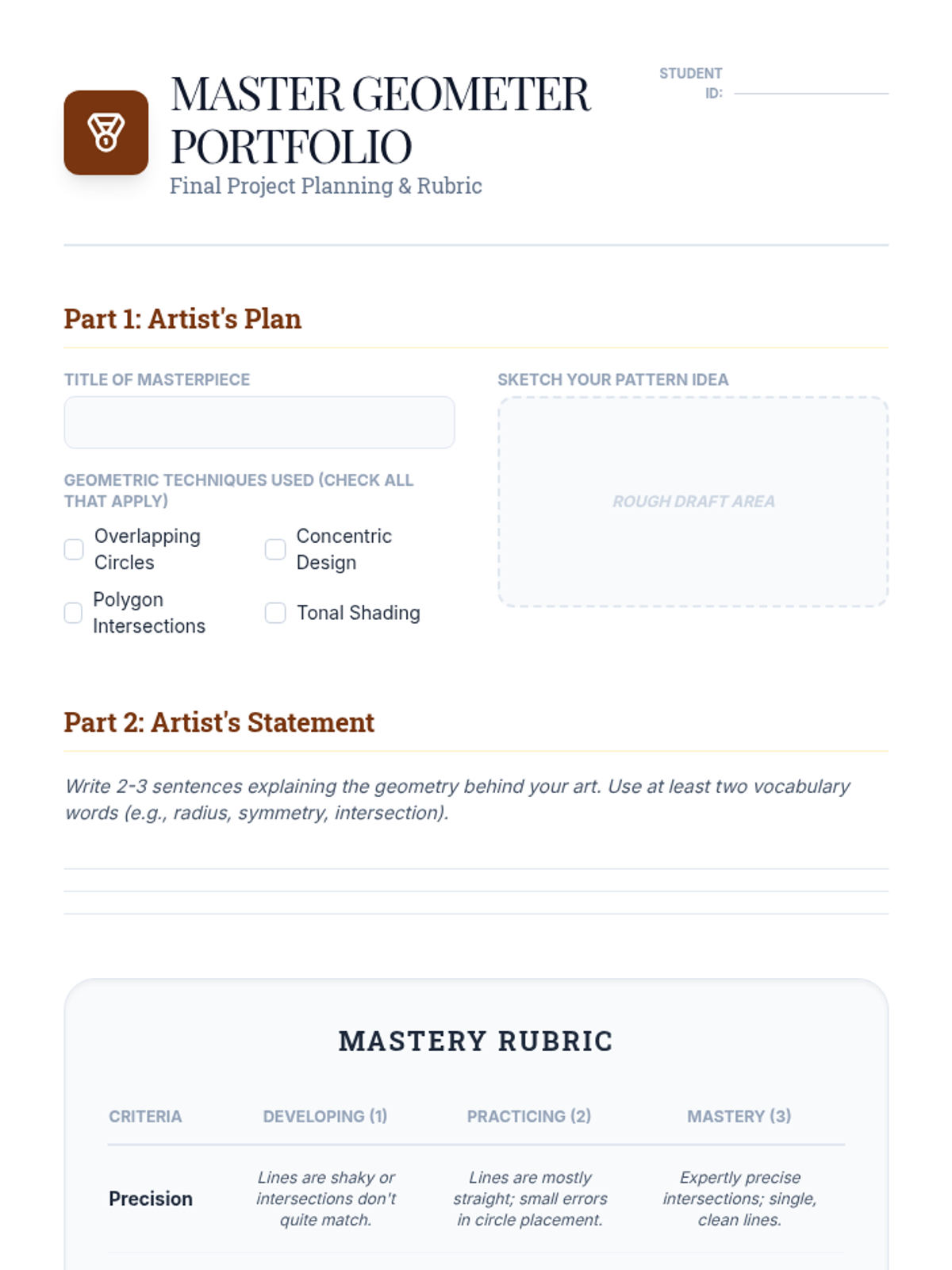
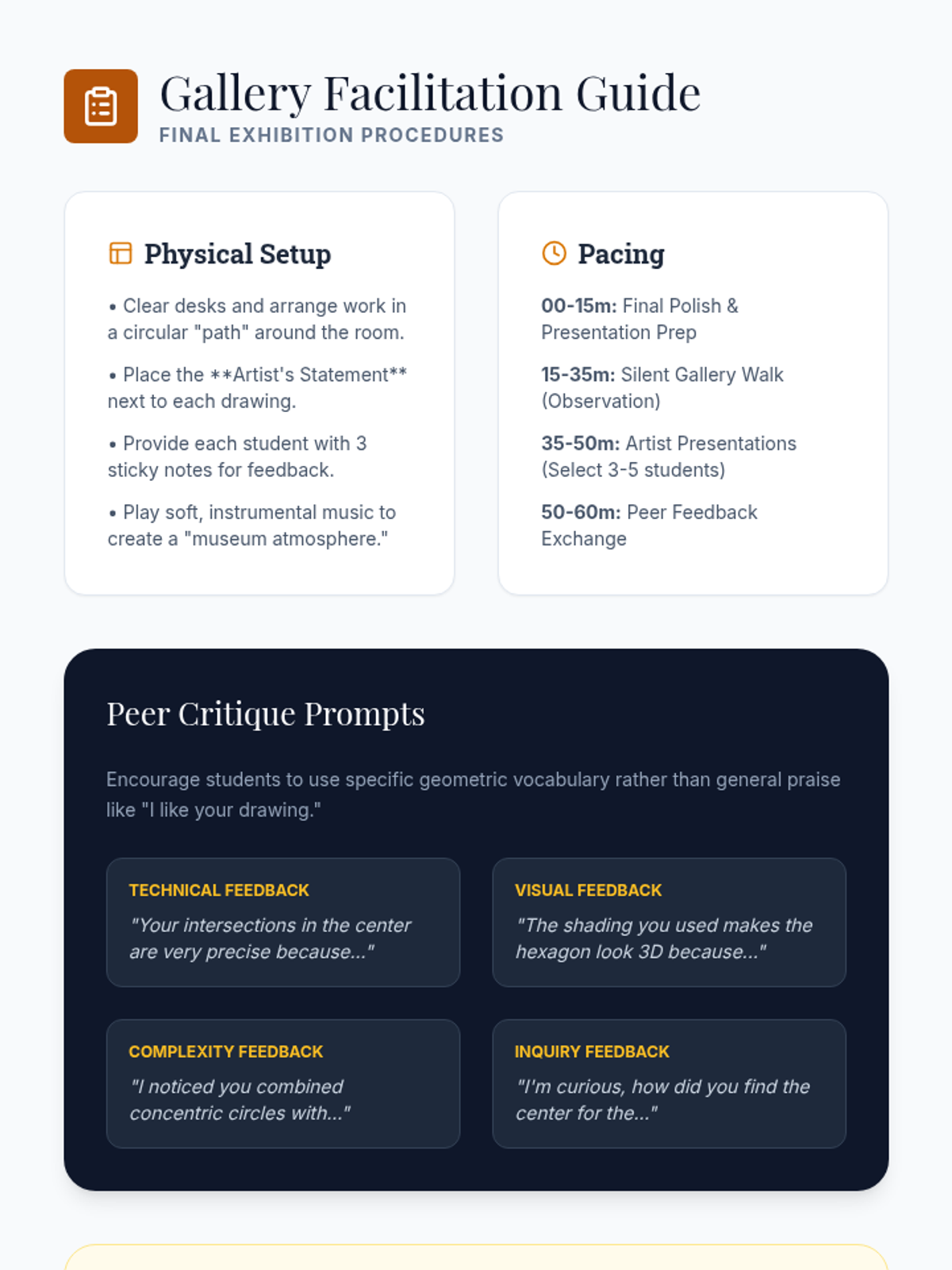
Students create a final geometric masterpiece using their learned skills and present it in a classroom gallery walk.
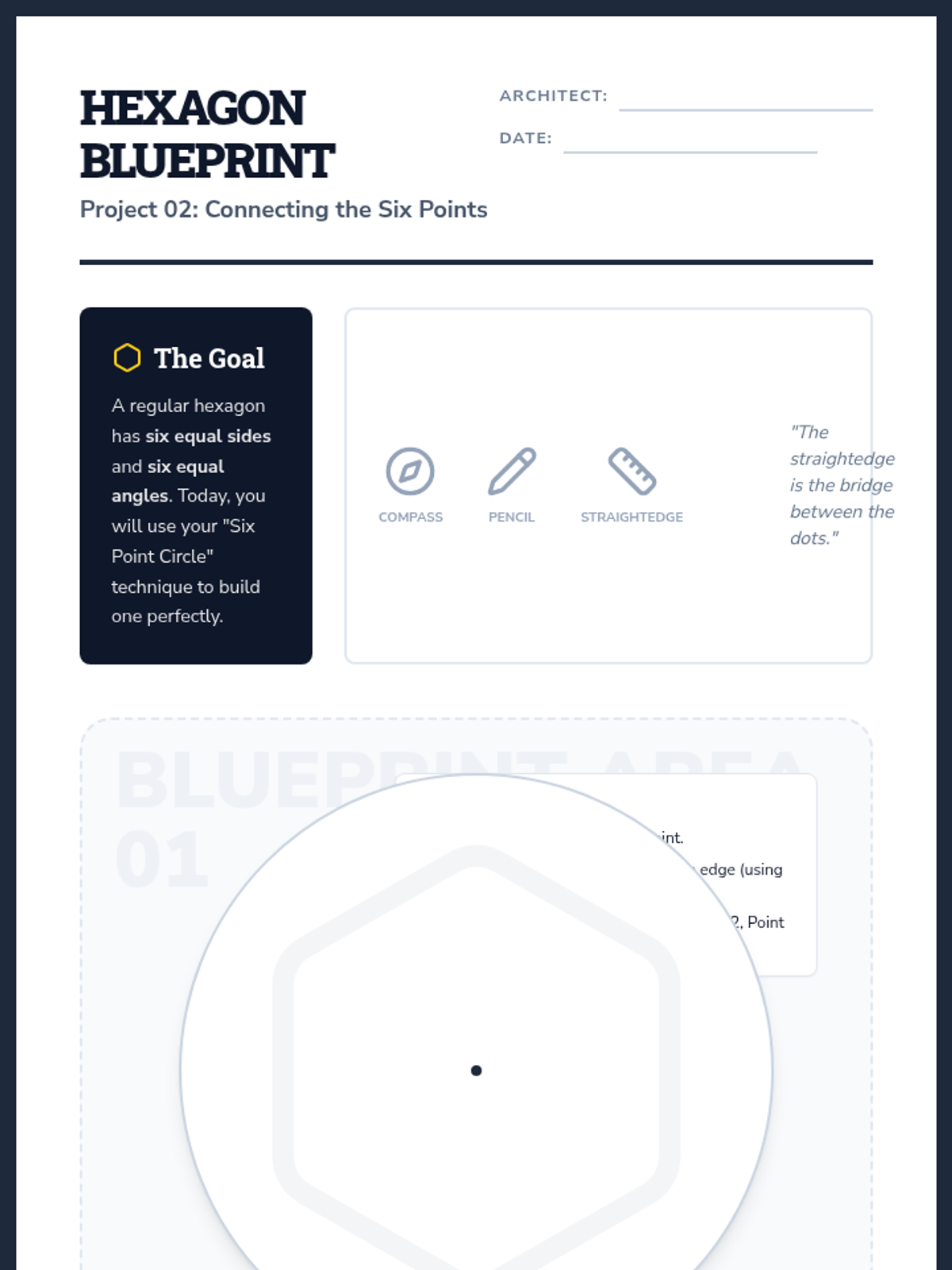
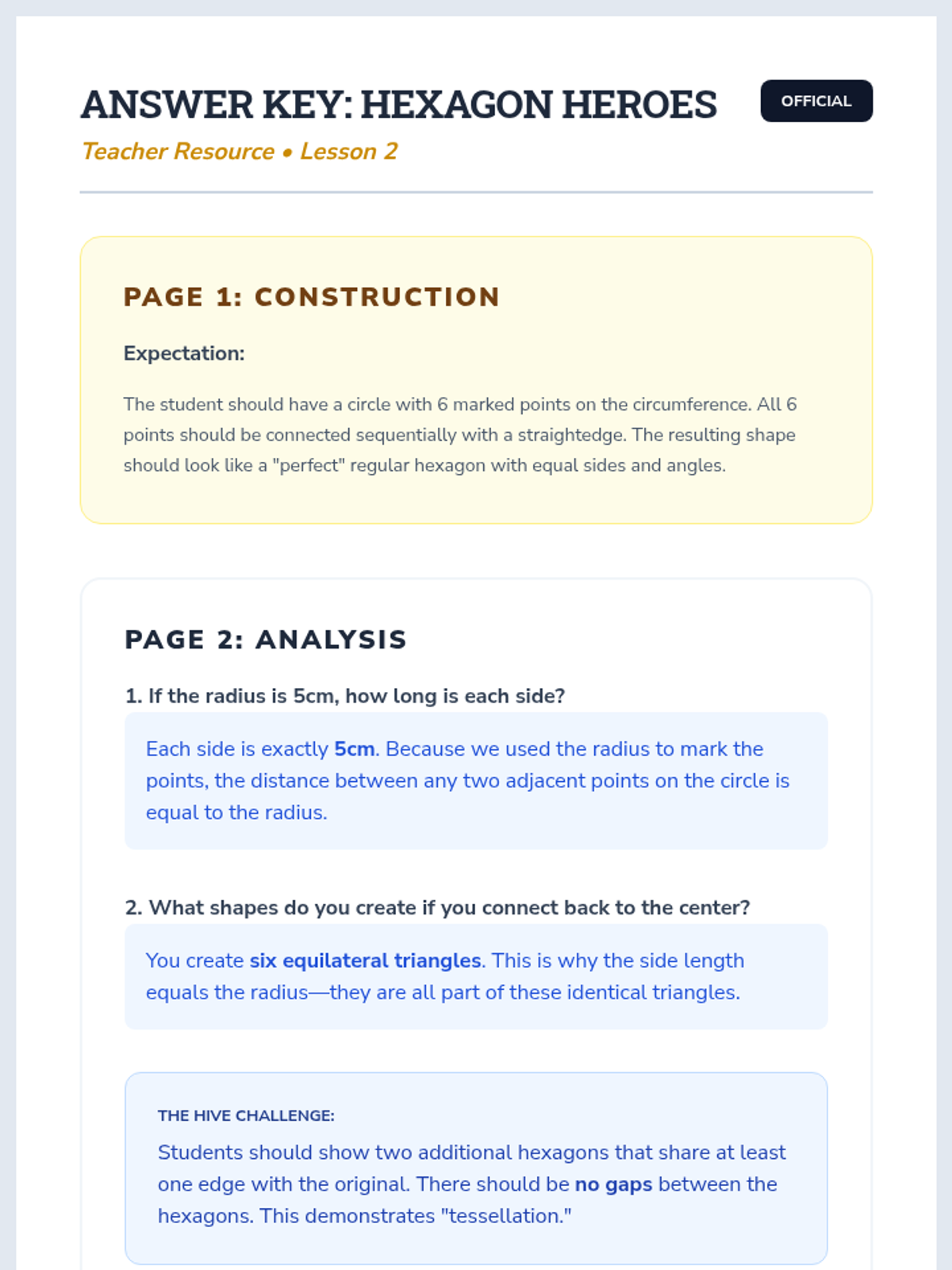
Students connect the six points discovered in the previous lesson to form a regular hexagon, exploring its properties and presence in nature.
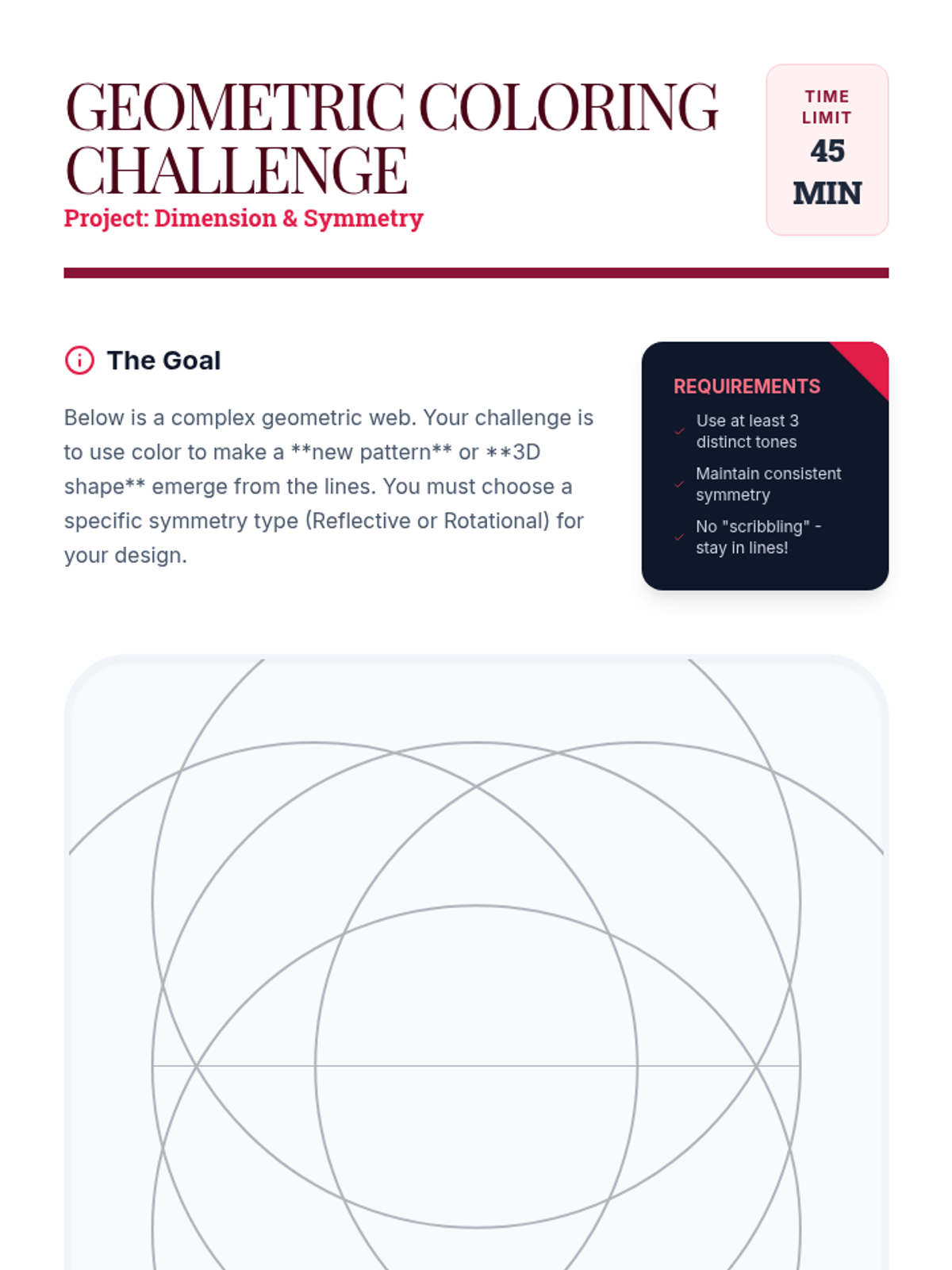
Students use color and shading to emphasize specific symmetries and 3D shapes within complex geometric webs.
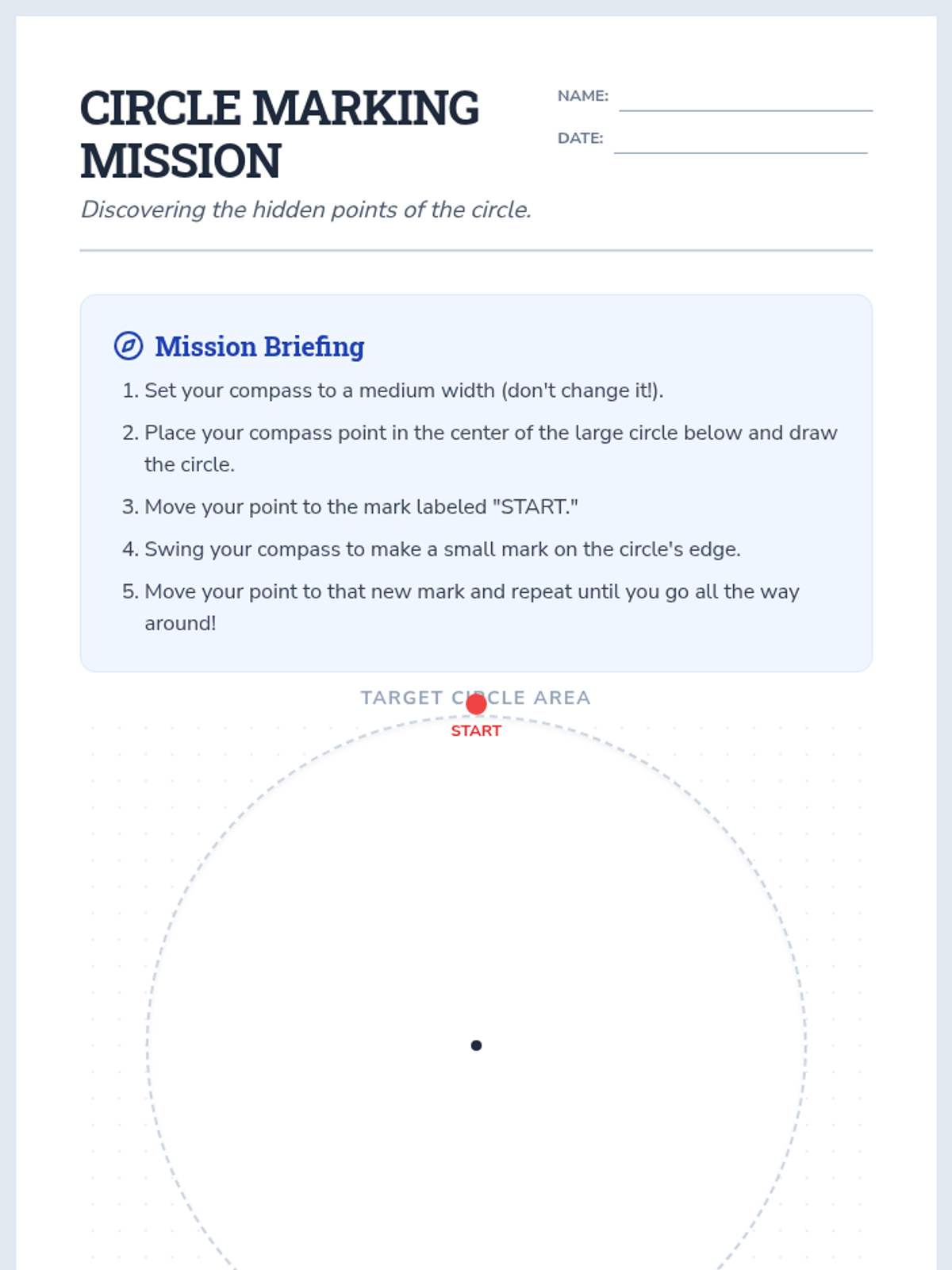
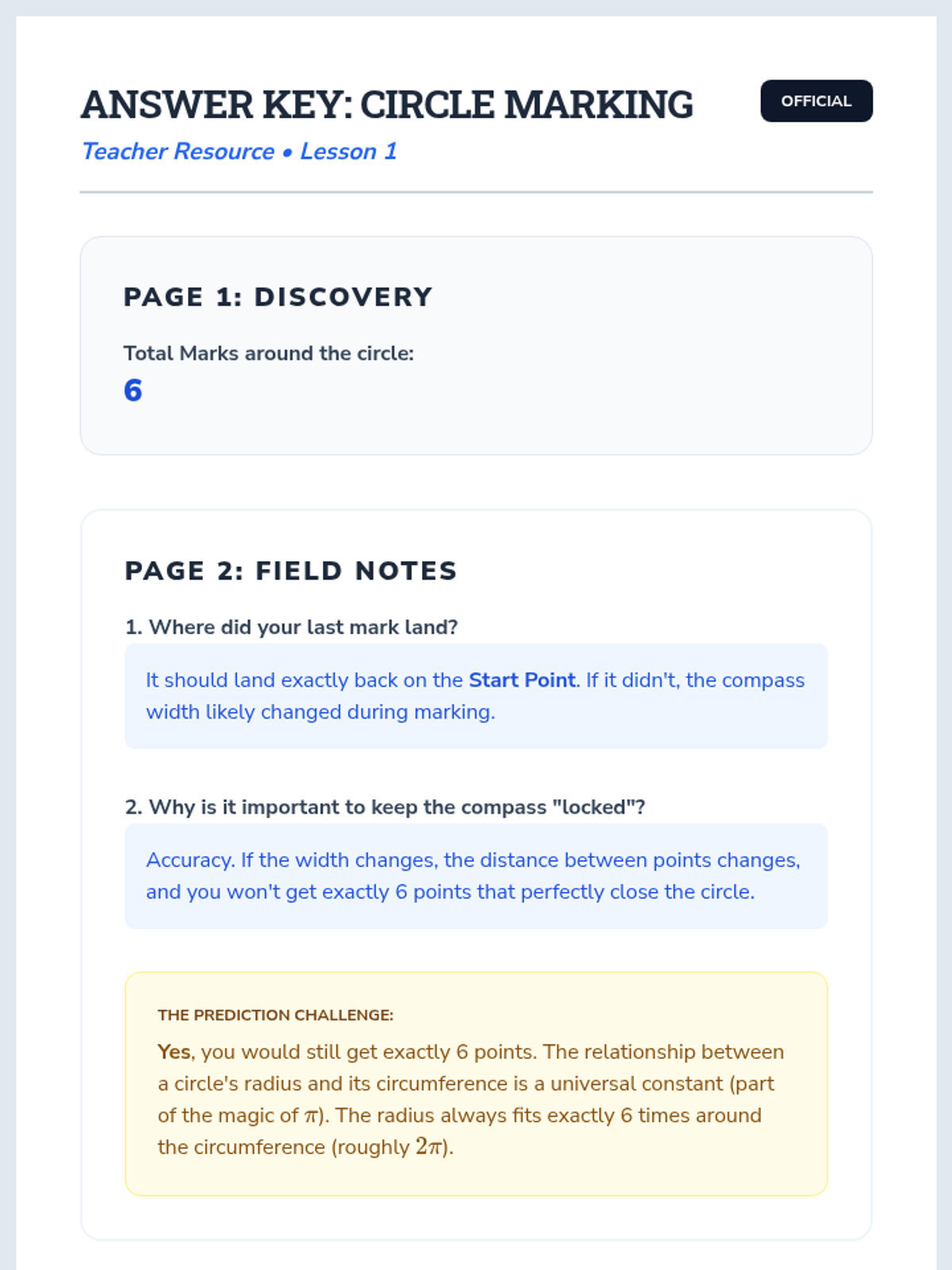
Students discover that the radius of a circle fits exactly six times around the circumference, creating a 'six-point' foundation for future constructions.
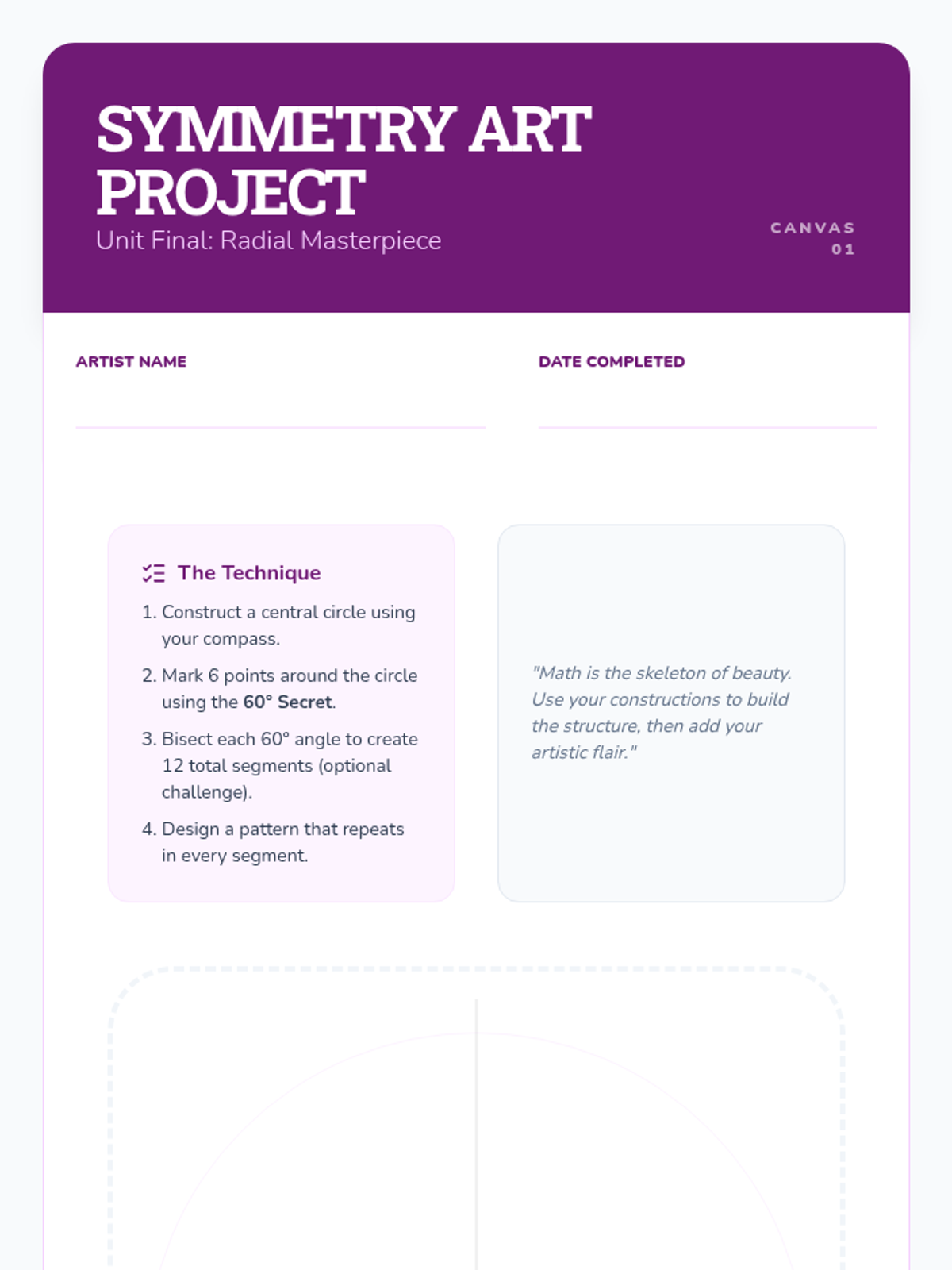
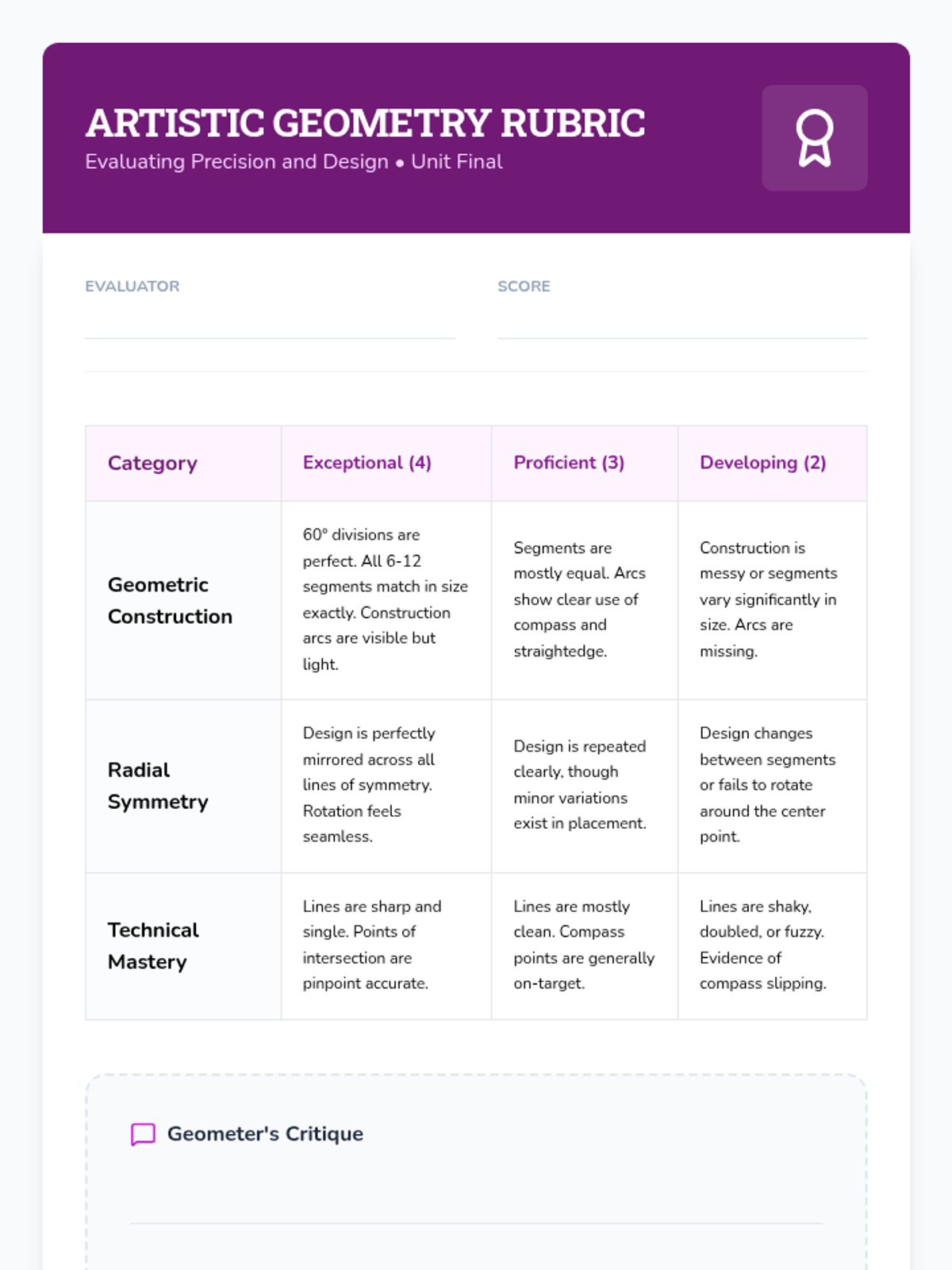
Students apply their construction skills to create a radially symmetrical mandala or flower design, analyzing their work for geometric precision.
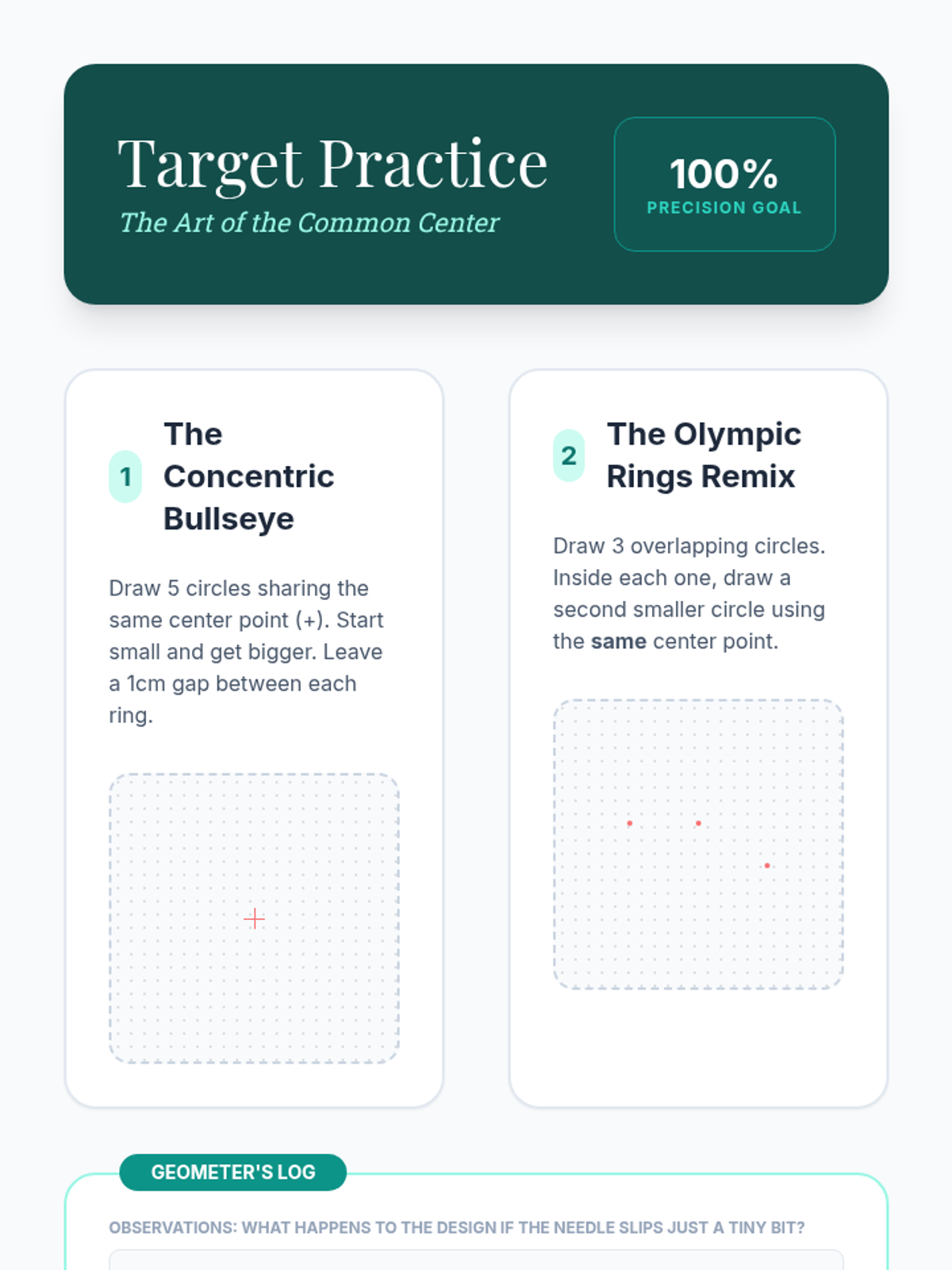
Students experiment with changing the radius of the compass to create concentric circles and rings, focusing on precision and tool control.
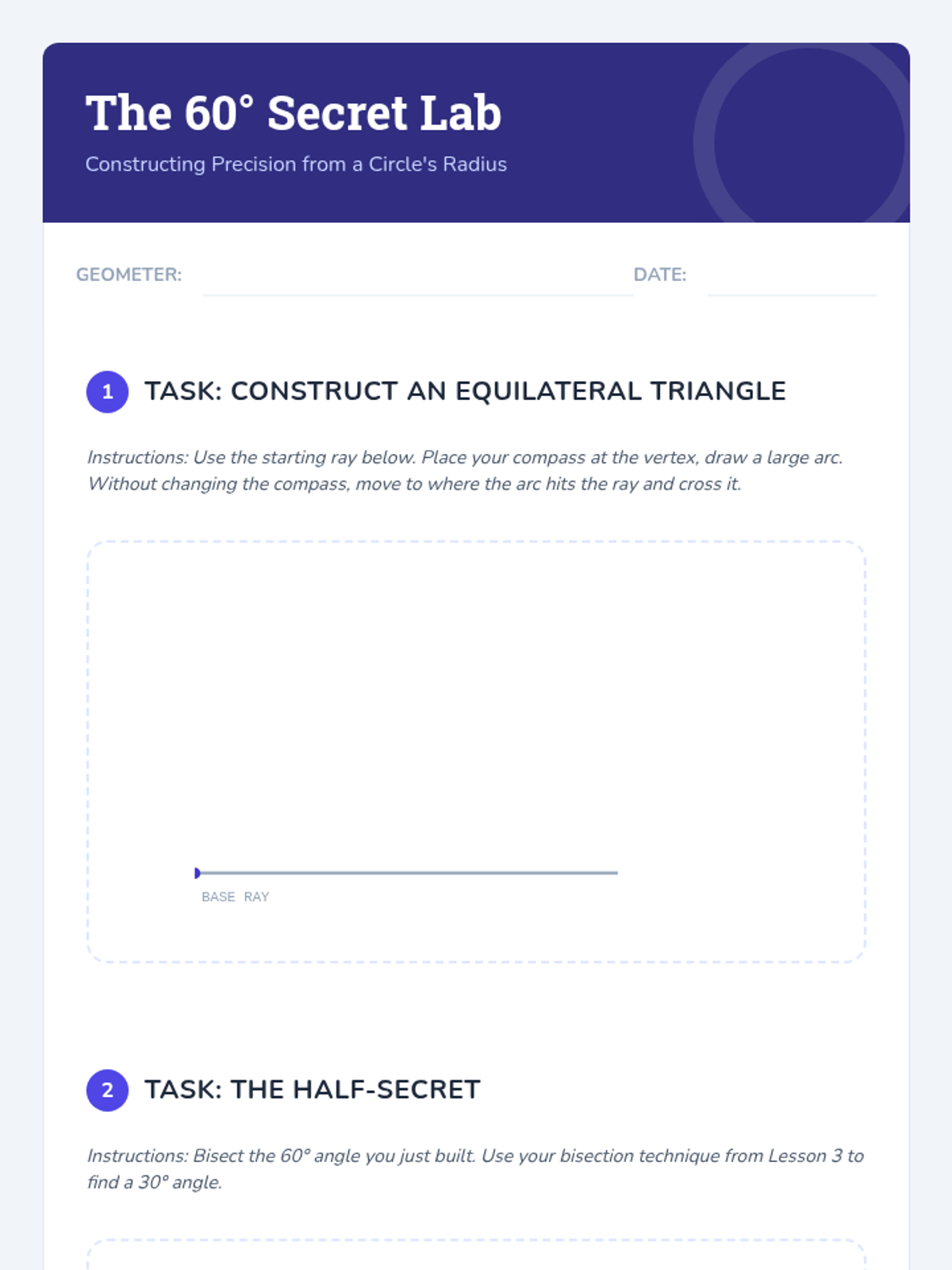
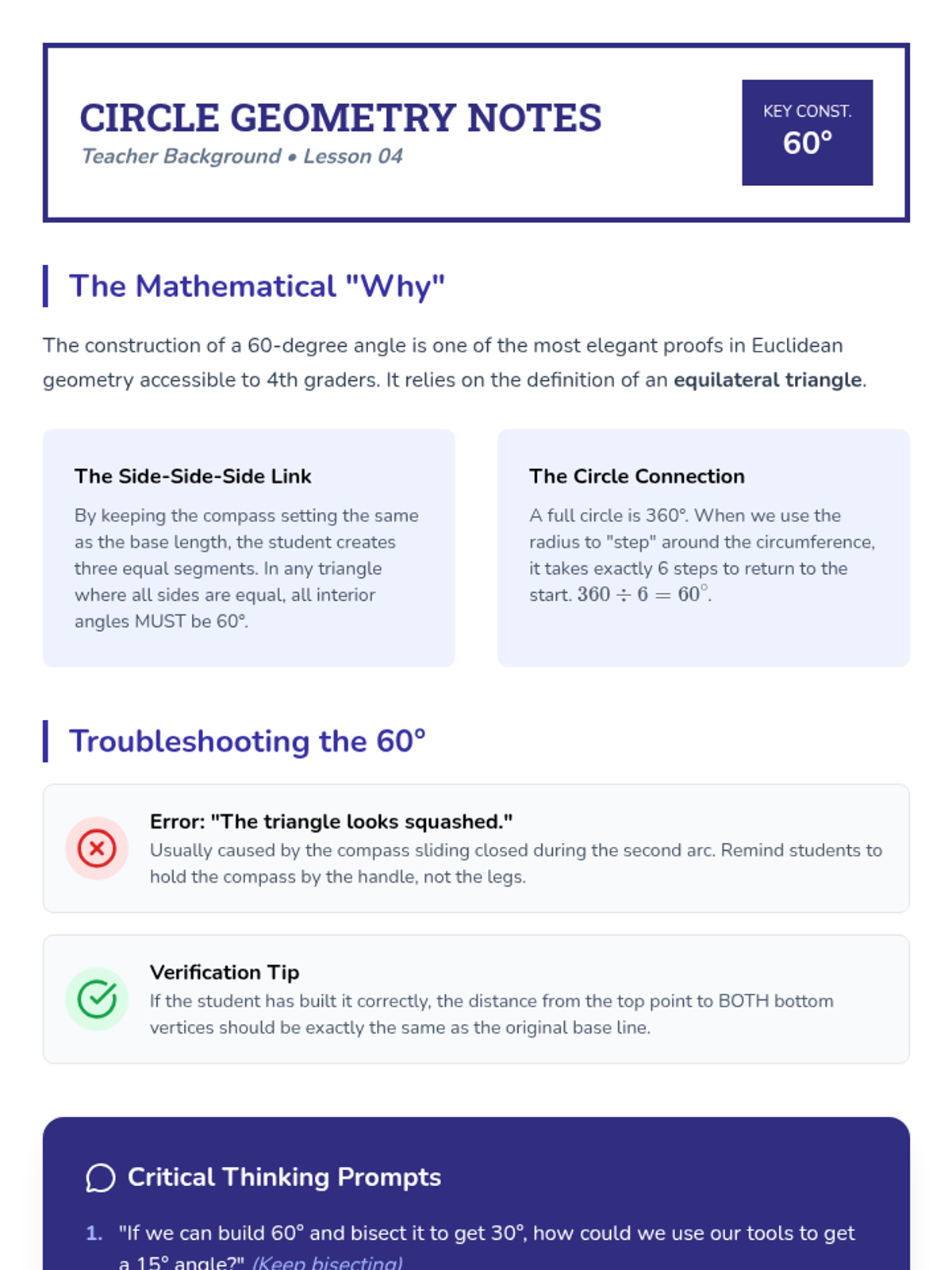
Students discover how the radius of a circle can be used to construct a perfect 60-degree angle and an equilateral triangle.
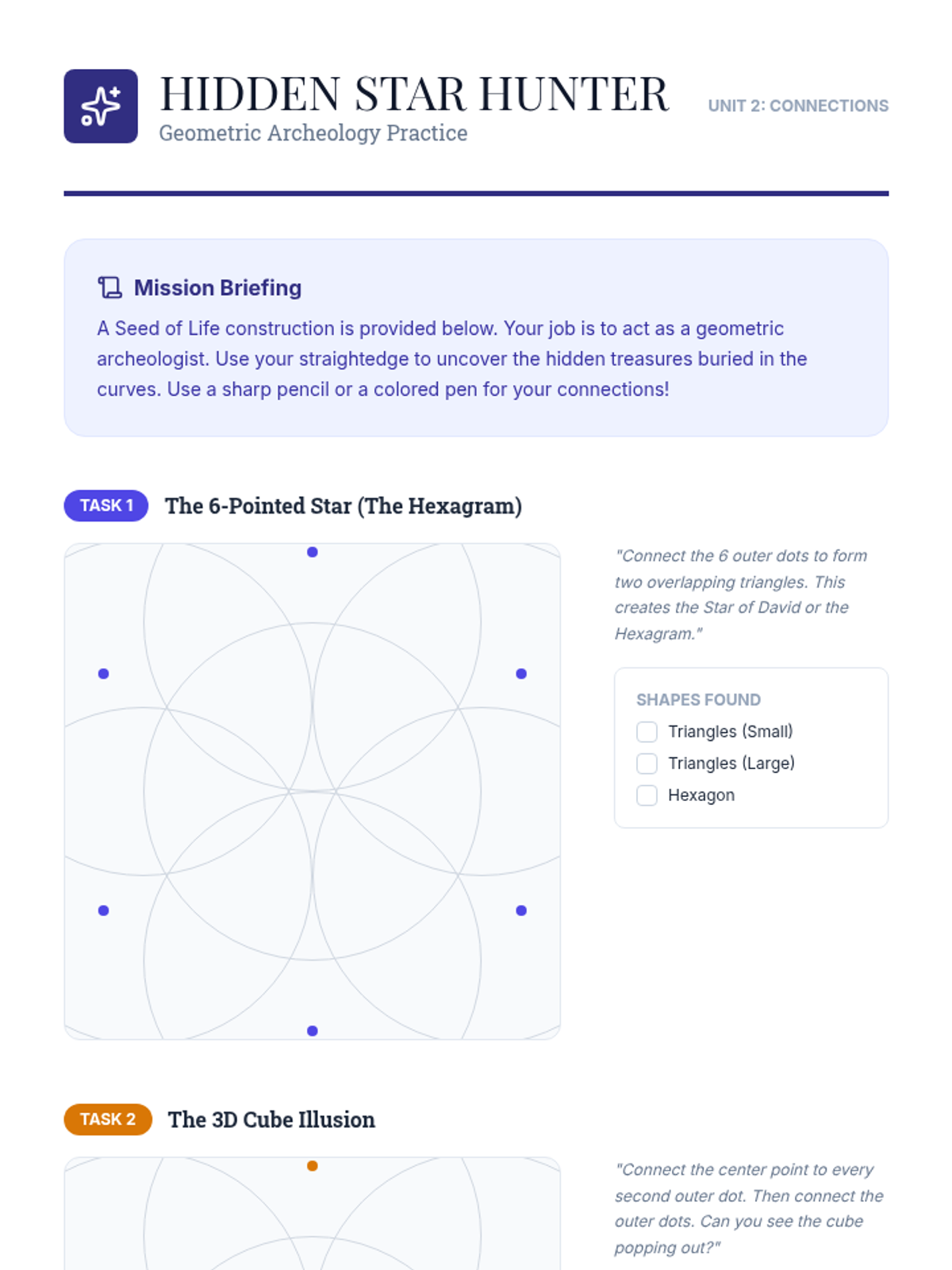
Students use a straightedge to connect the intersection points of their circle patterns, revealing hidden stars, hexagons, and other polygons.
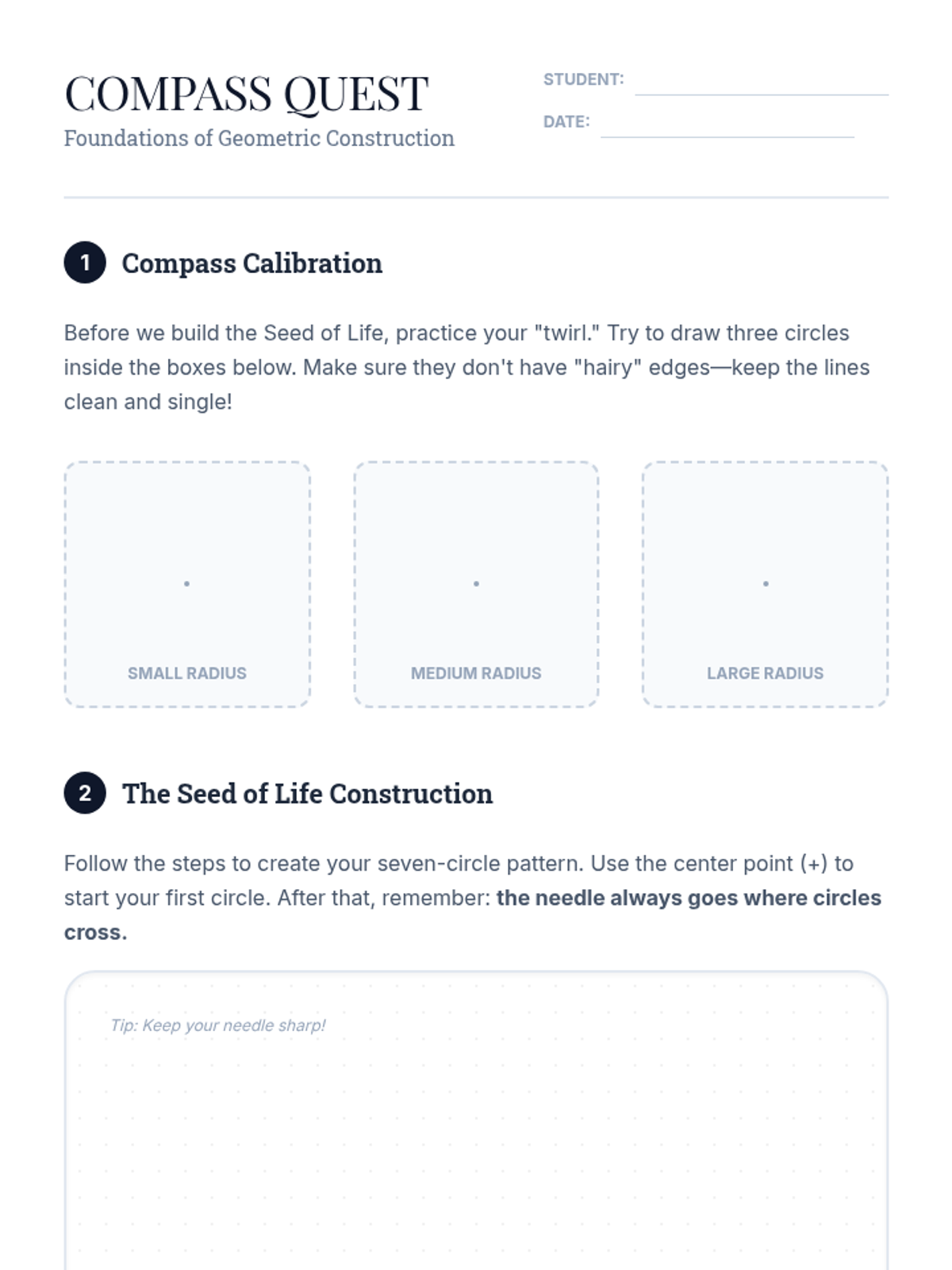
Students learn the classic construction of seven overlapping circles. This fundamental pattern serves as the basis for many complex geometric designs.
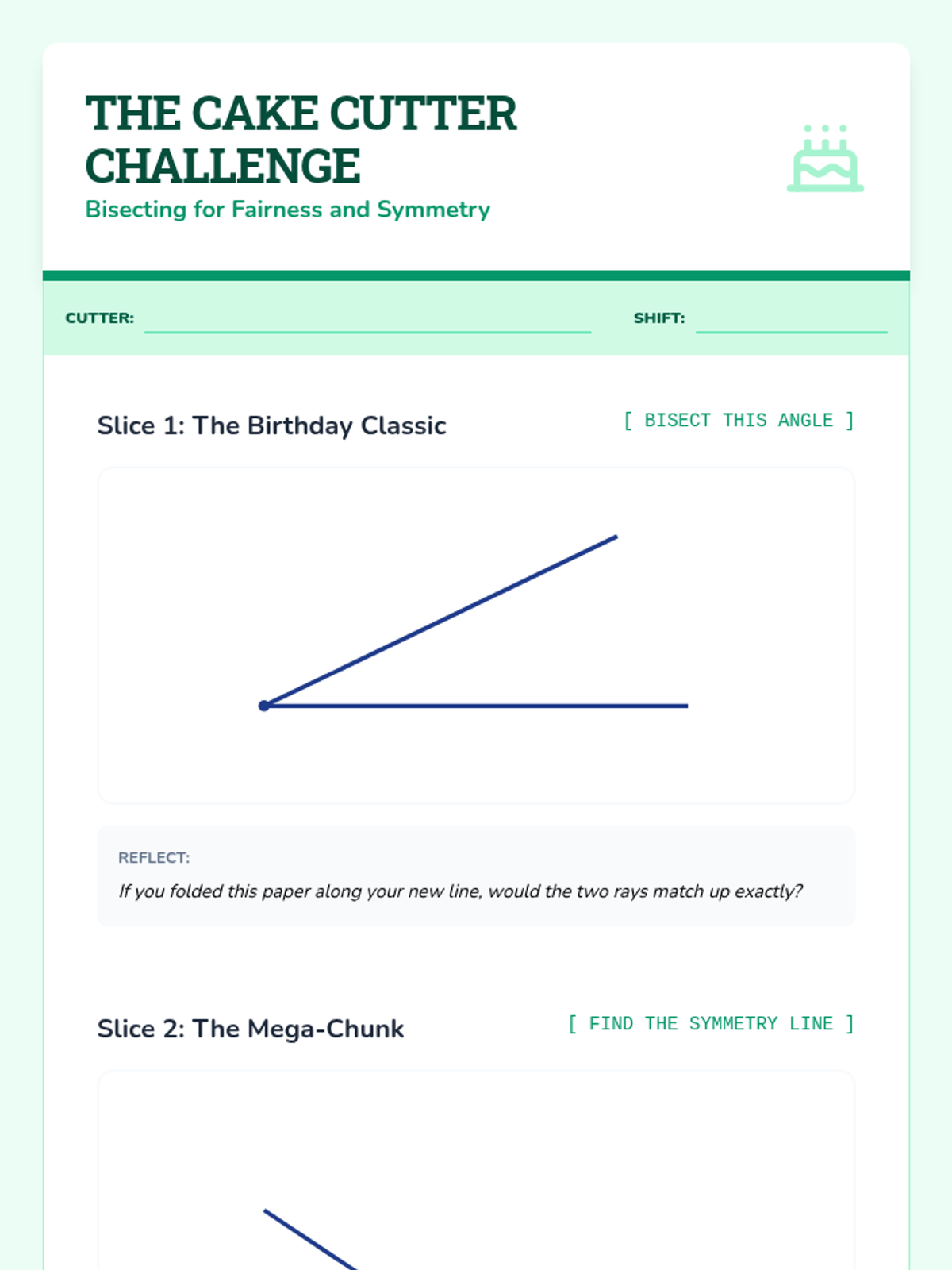
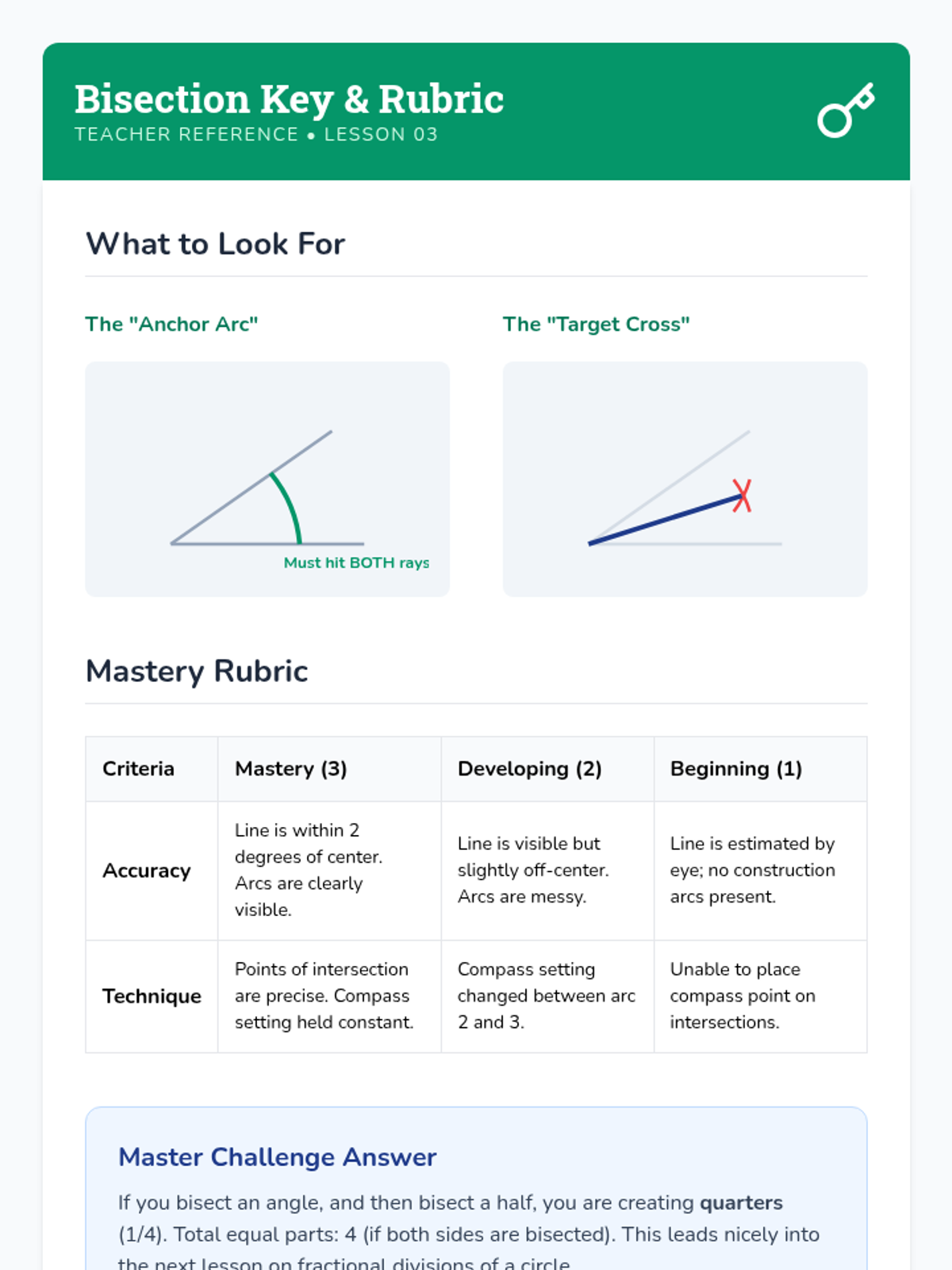
Students investigate how to divide an angle into two equal parts using a compass, exploring the intersection of arcs to find the line of symmetry.
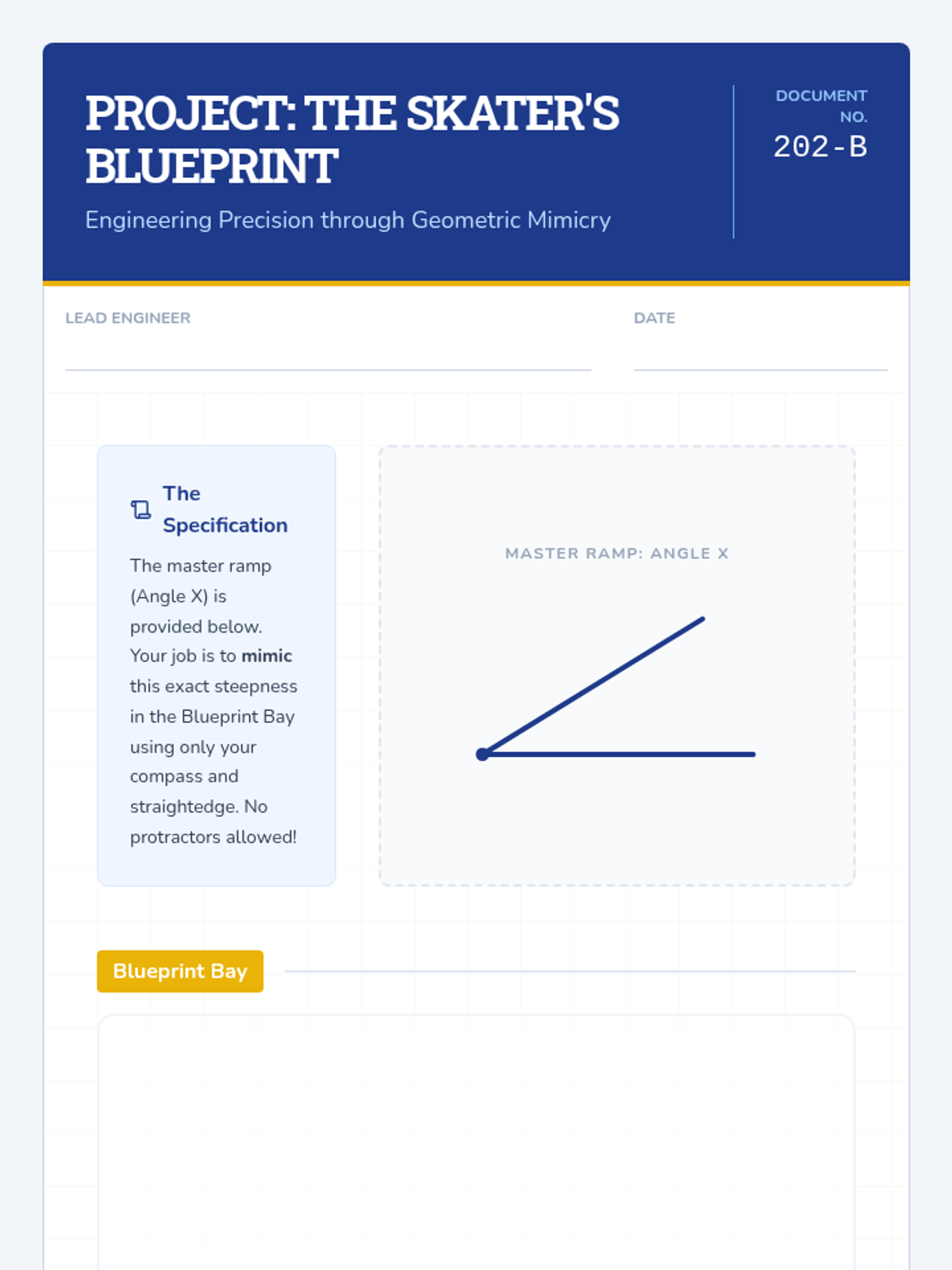
Students learn the precise process of copying an angle using only a compass and straightedge, focusing on the concept of 'congruence' without numerical measurement.
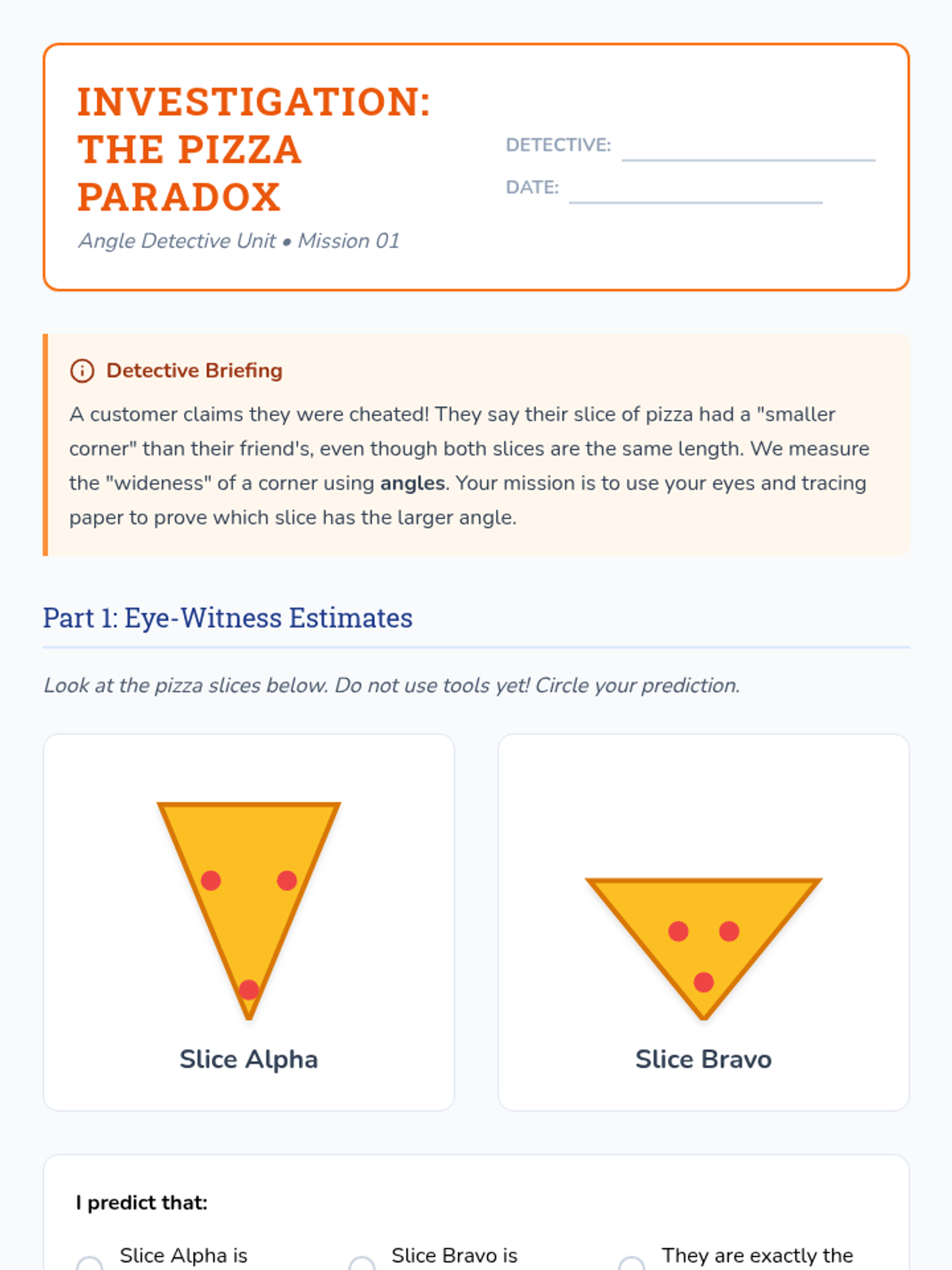
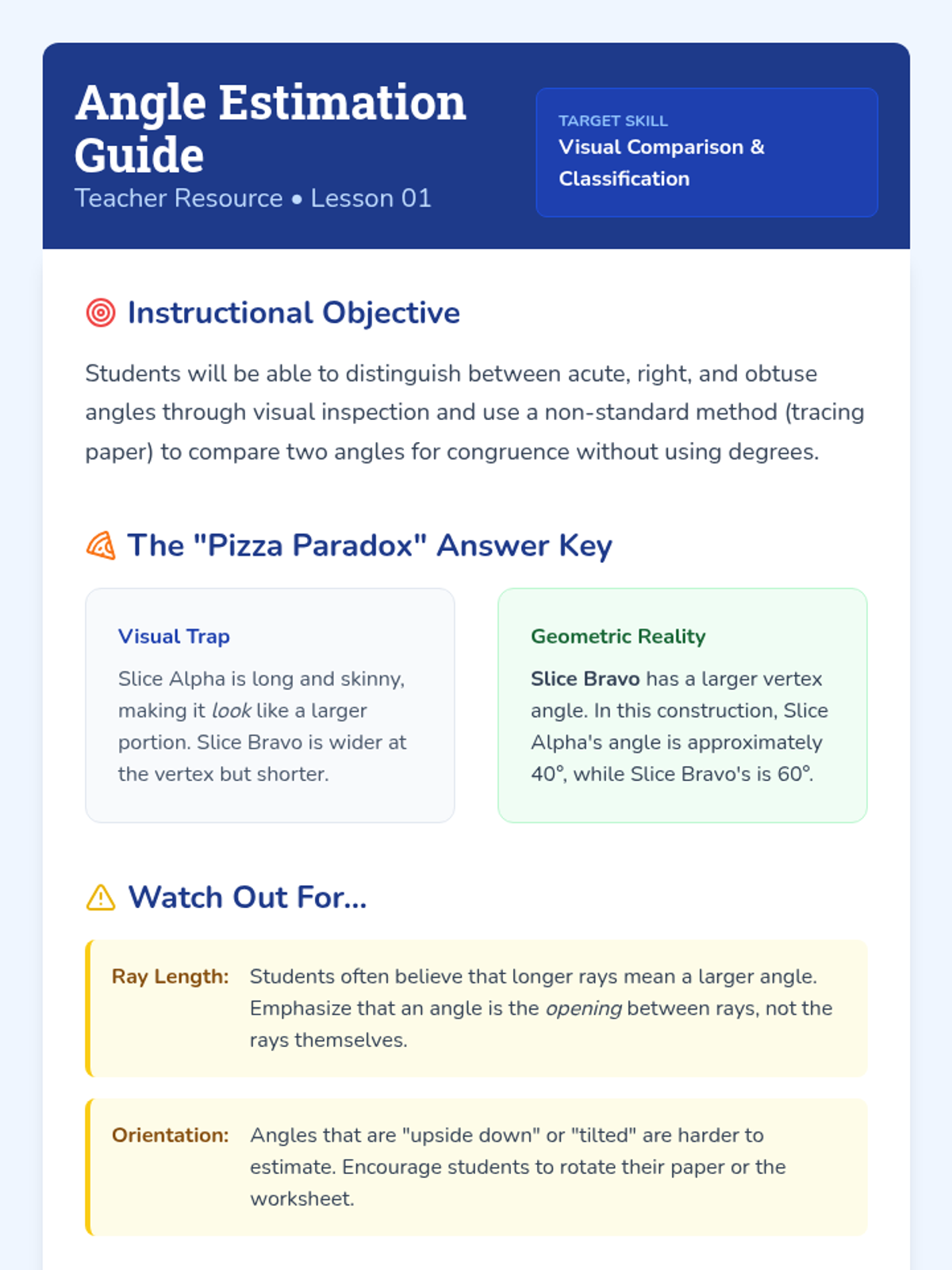
Students review acute, right, and obtuse angles and practice estimating sizes through visual comparison and tracing paper.
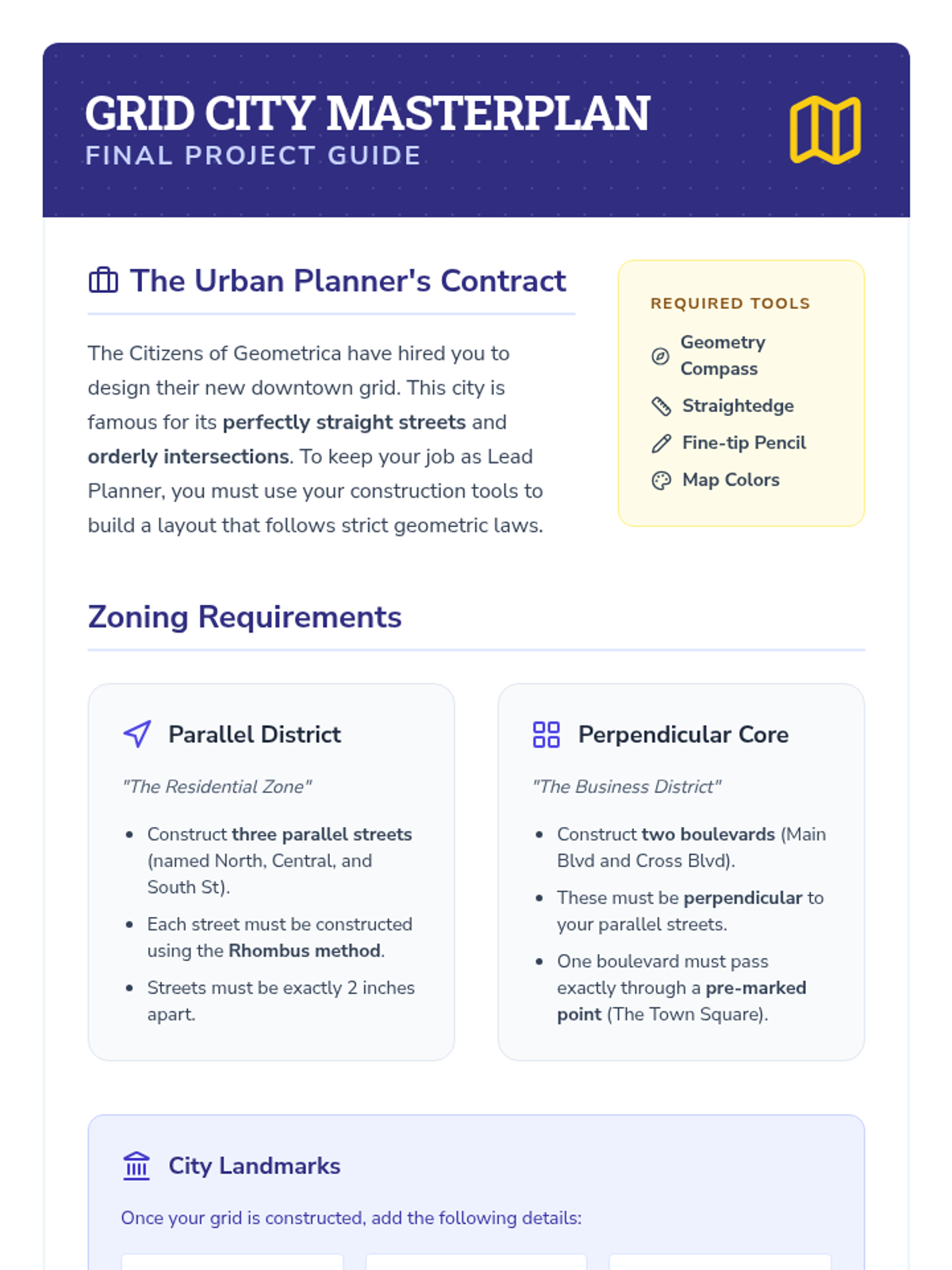
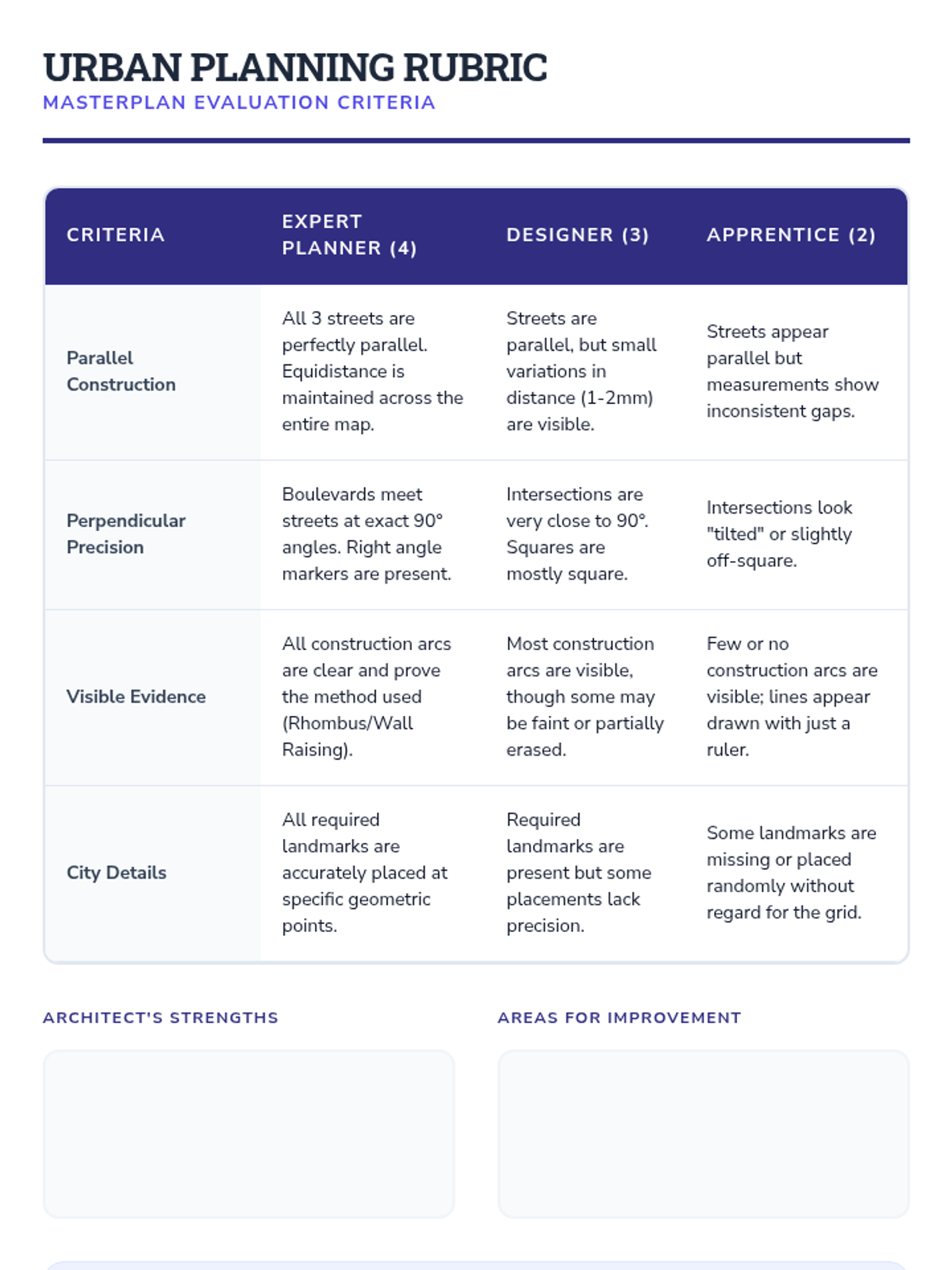
Students act as urban planners to design a city grid using only their constructed parallel and perpendicular lines.
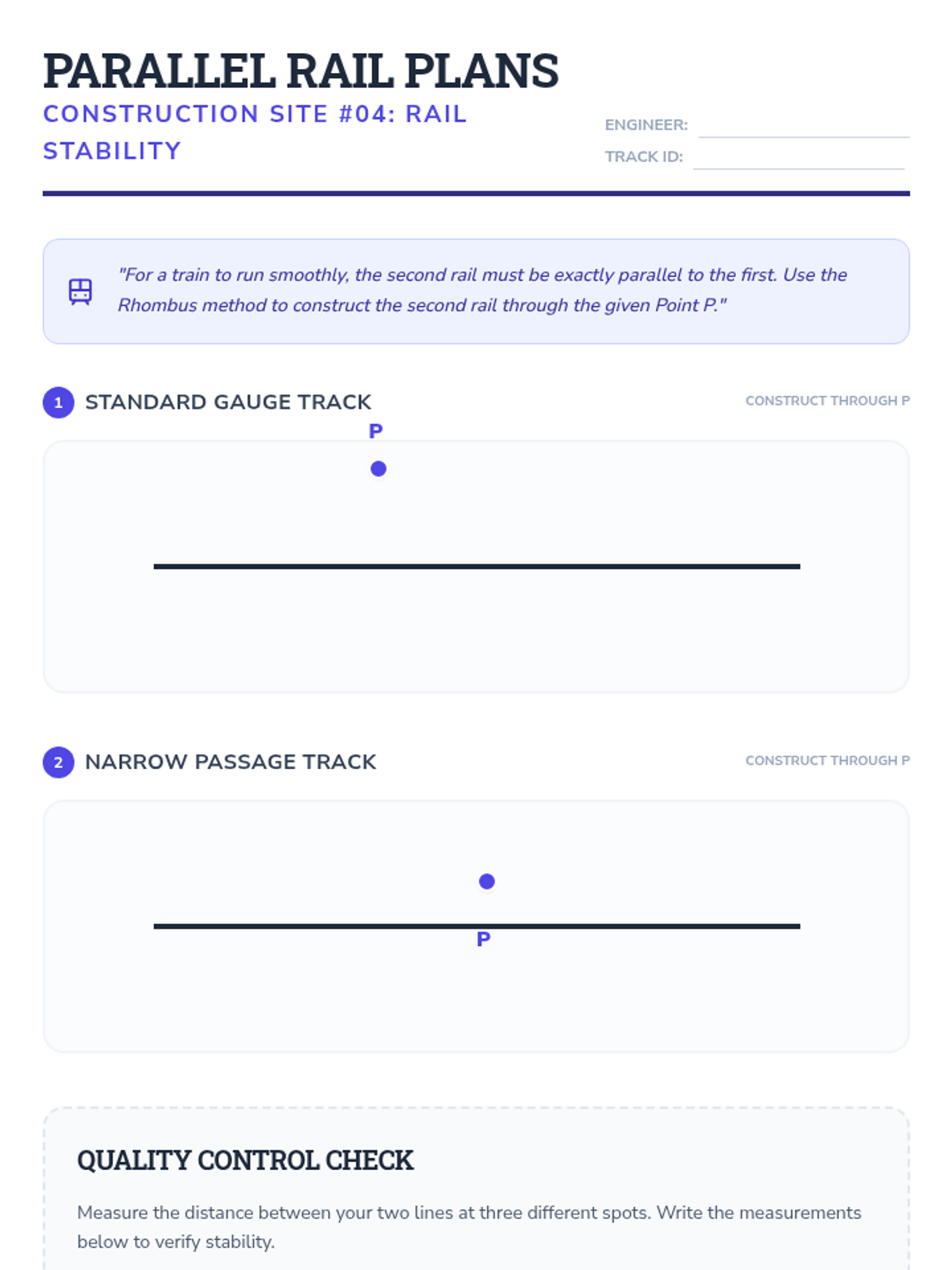
Students use geometric methods to create perfectly parallel lines and verify their work by measuring equidistance.
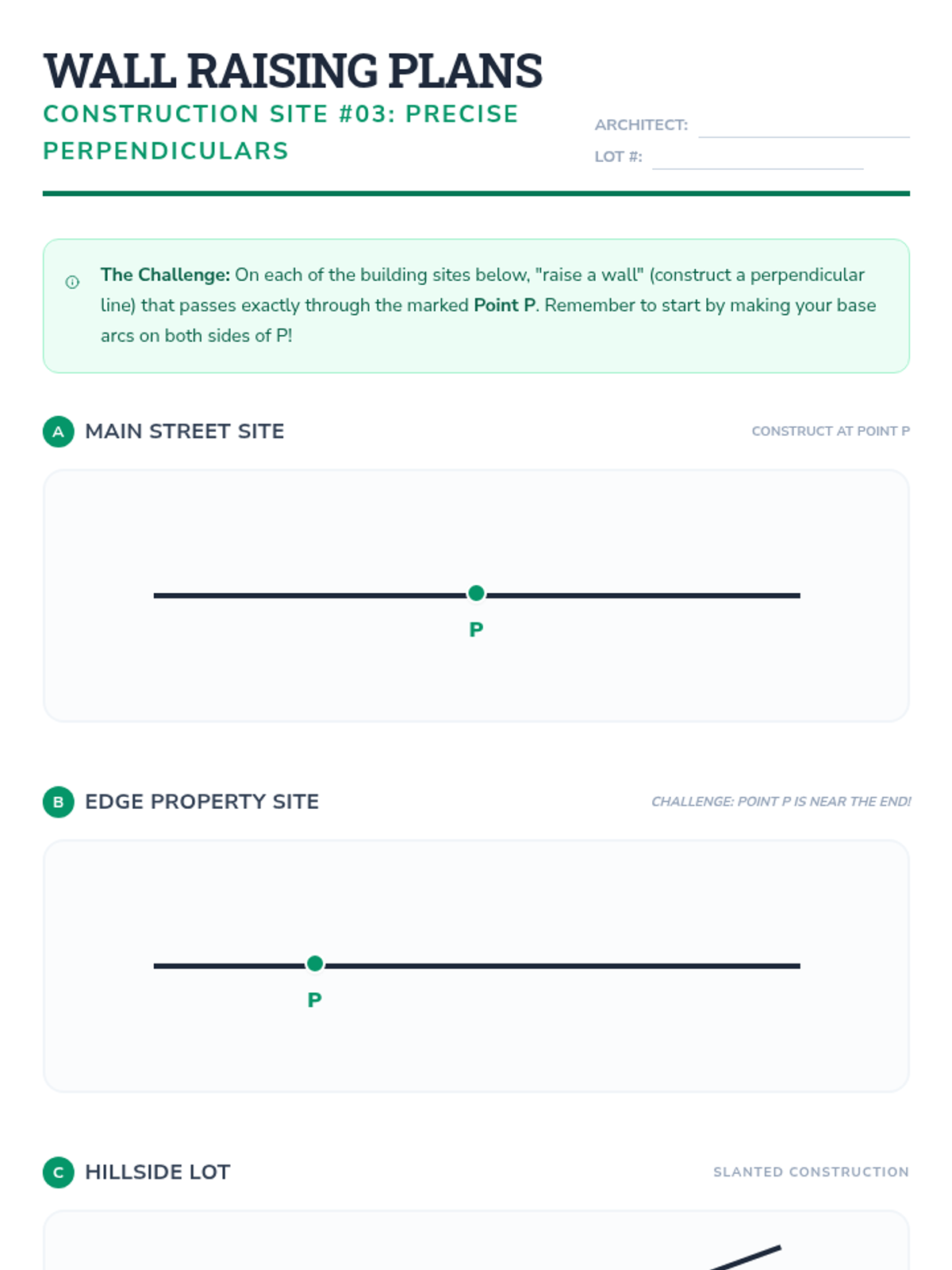
Students practice constructing a perpendicular line through a specific point on a line, framed as 'raising a wall' on a construction site.
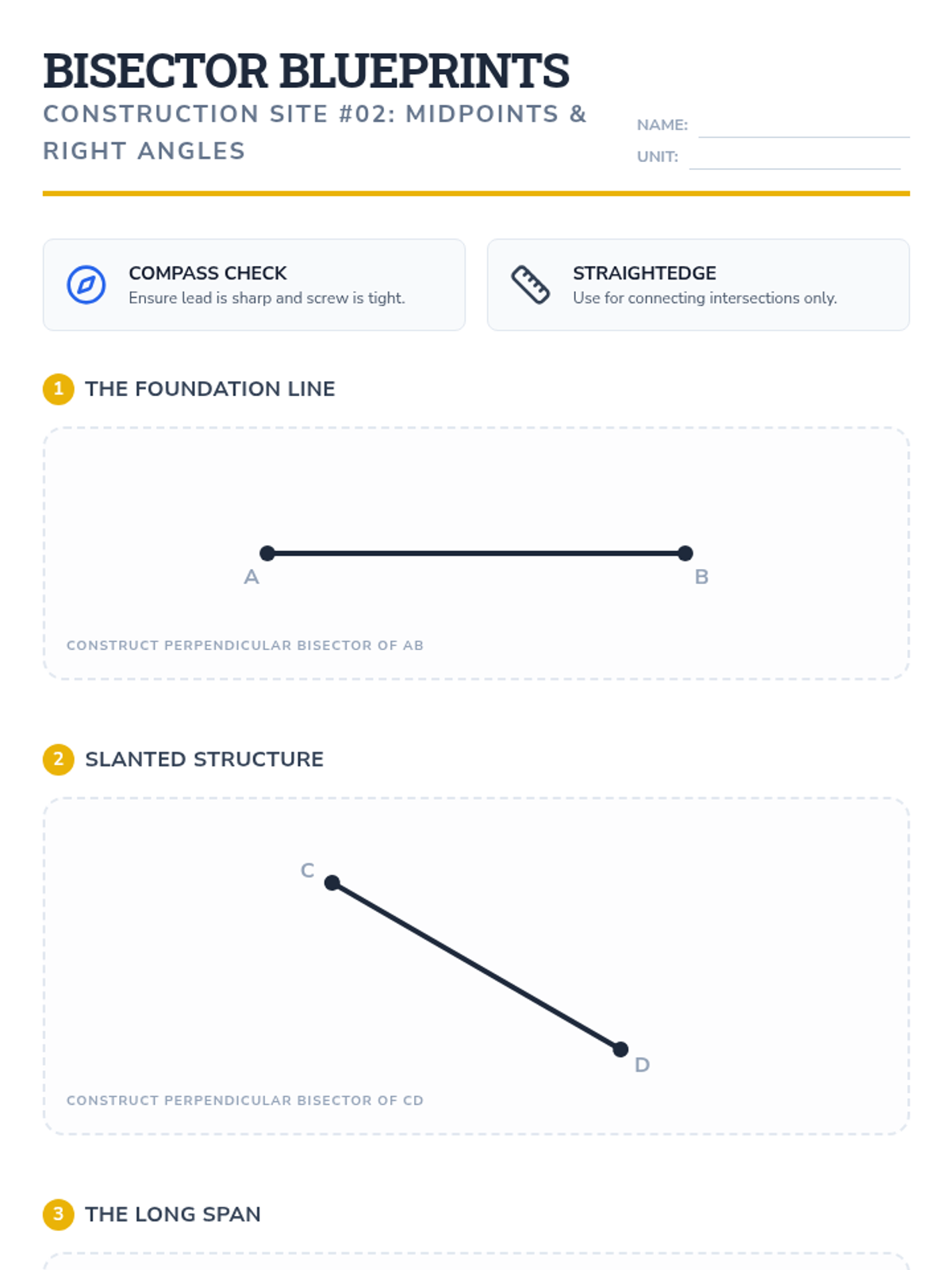
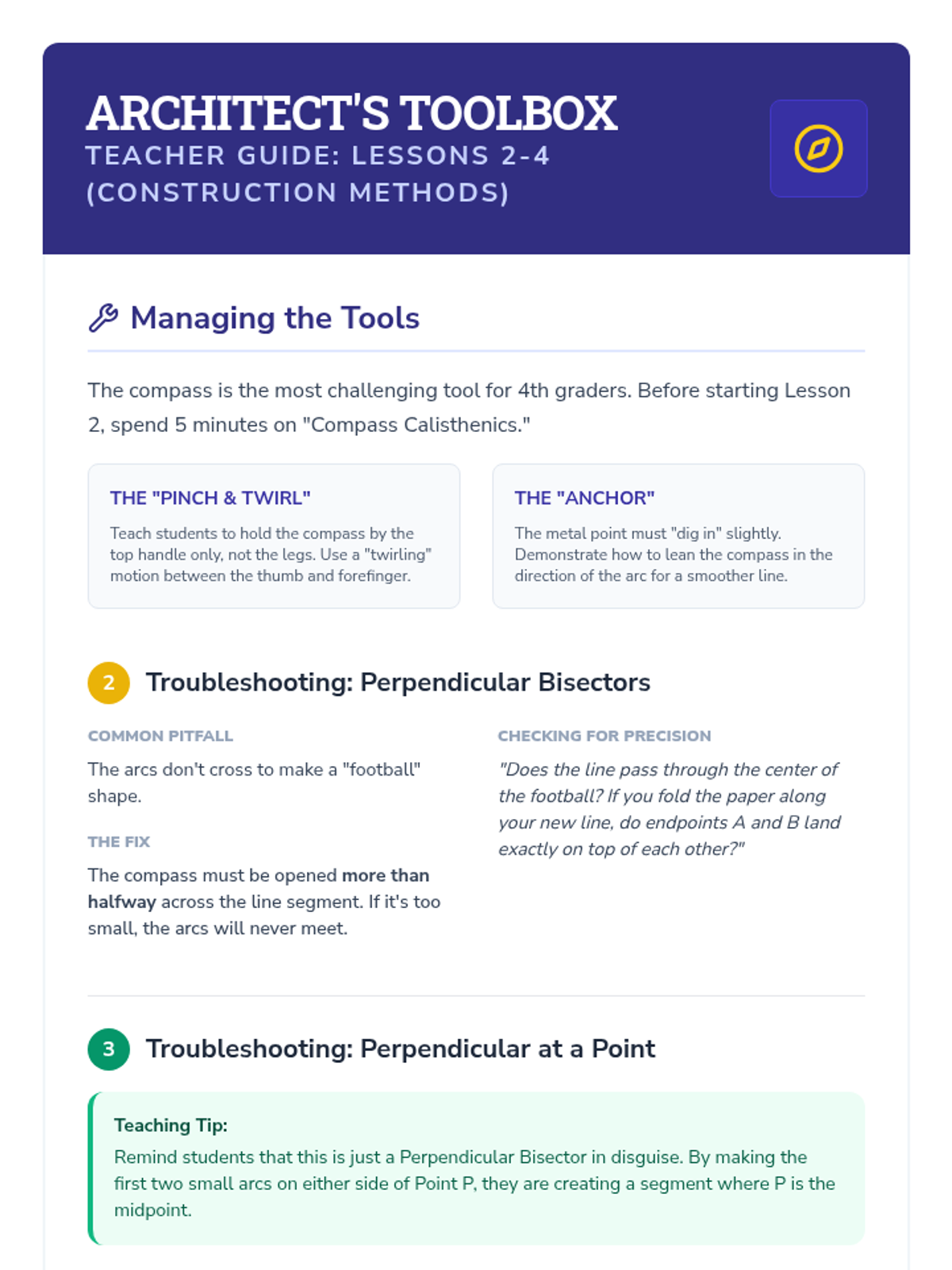
Students learn the 'football' construction method (intersecting arcs) to find the exact midpoint of a segment and draw a perpendicular line through it.
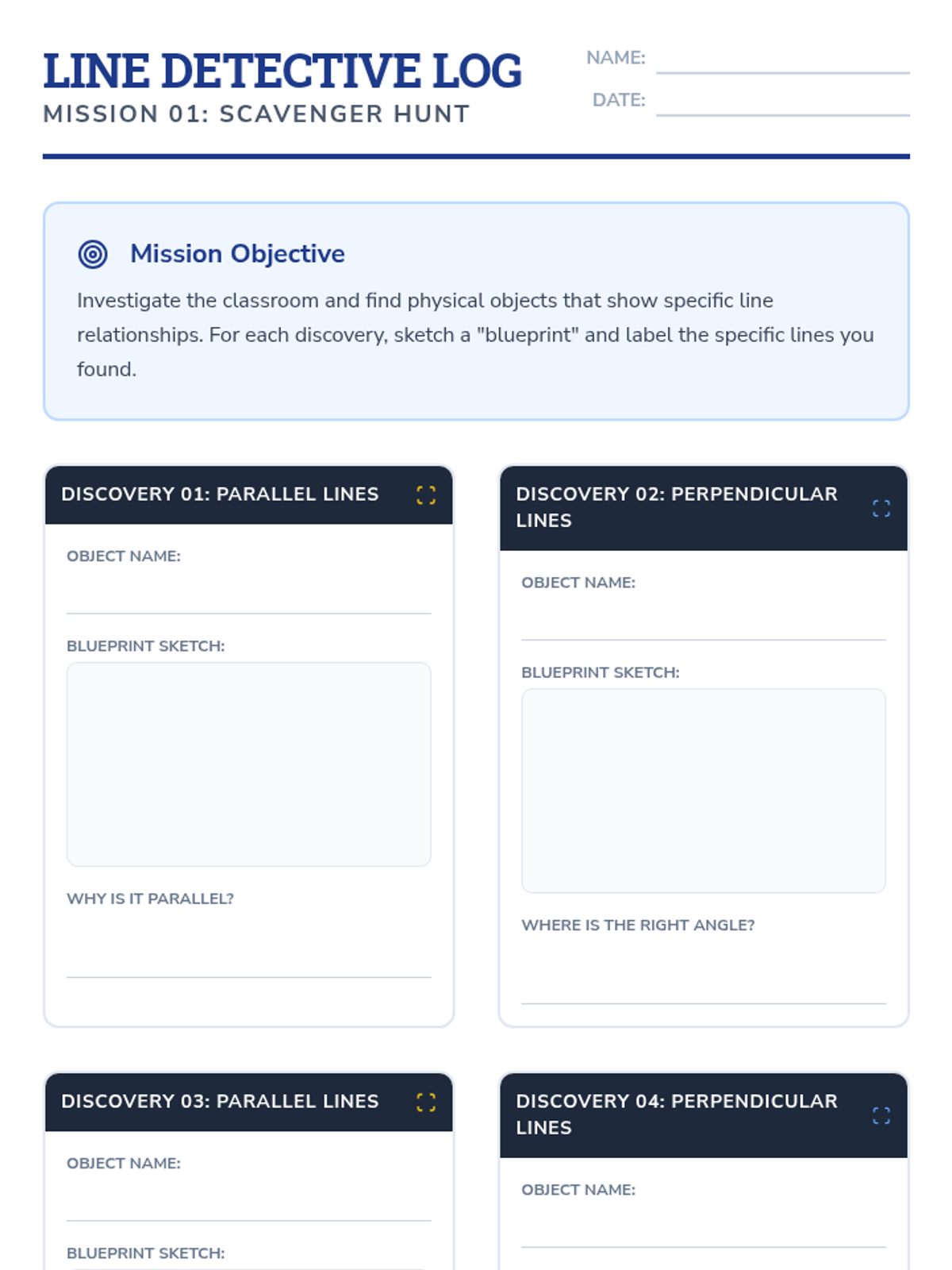
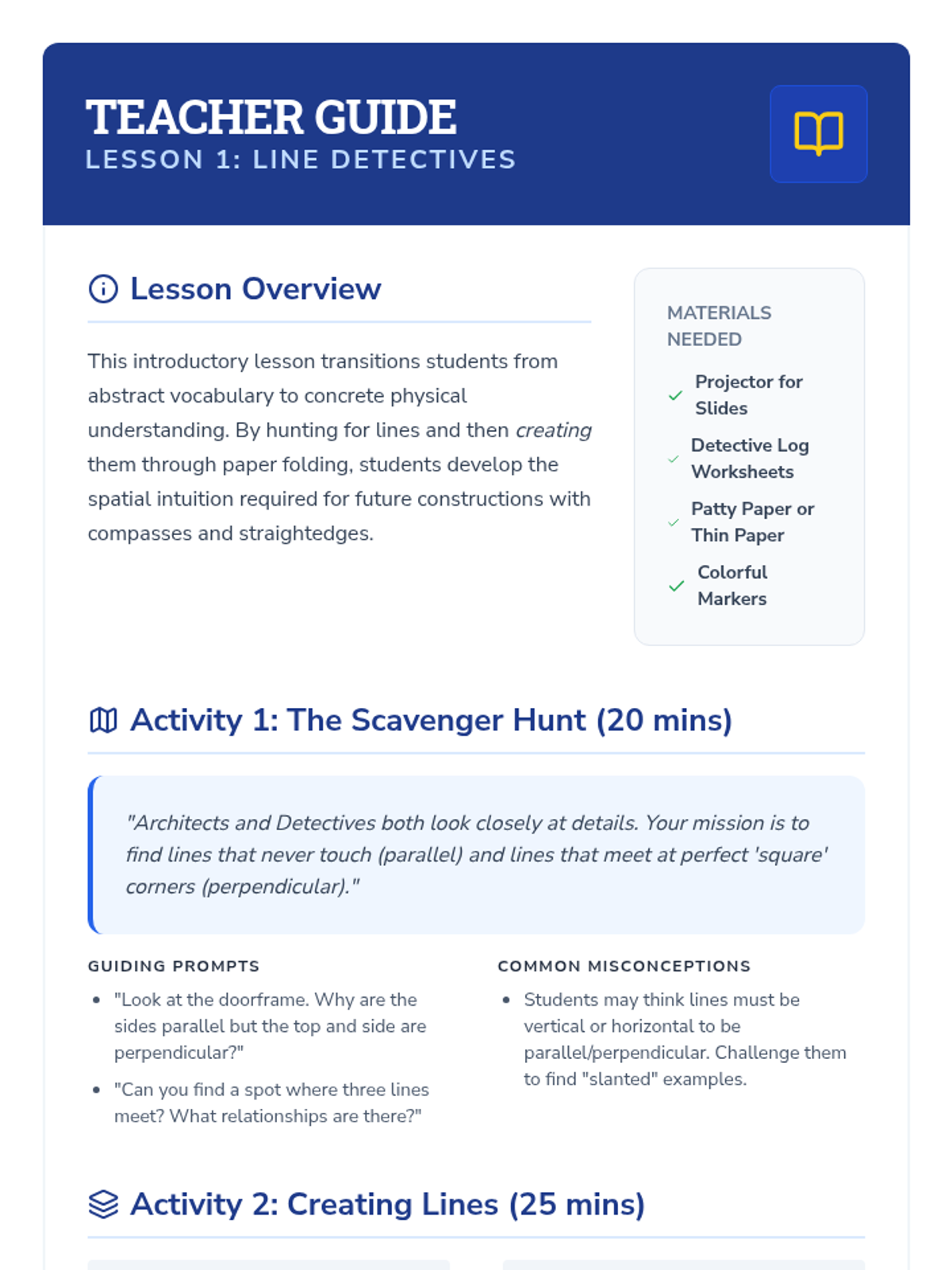
Students identify and define parallel and perpendicular lines through a scavenger hunt and paper-folding activities.
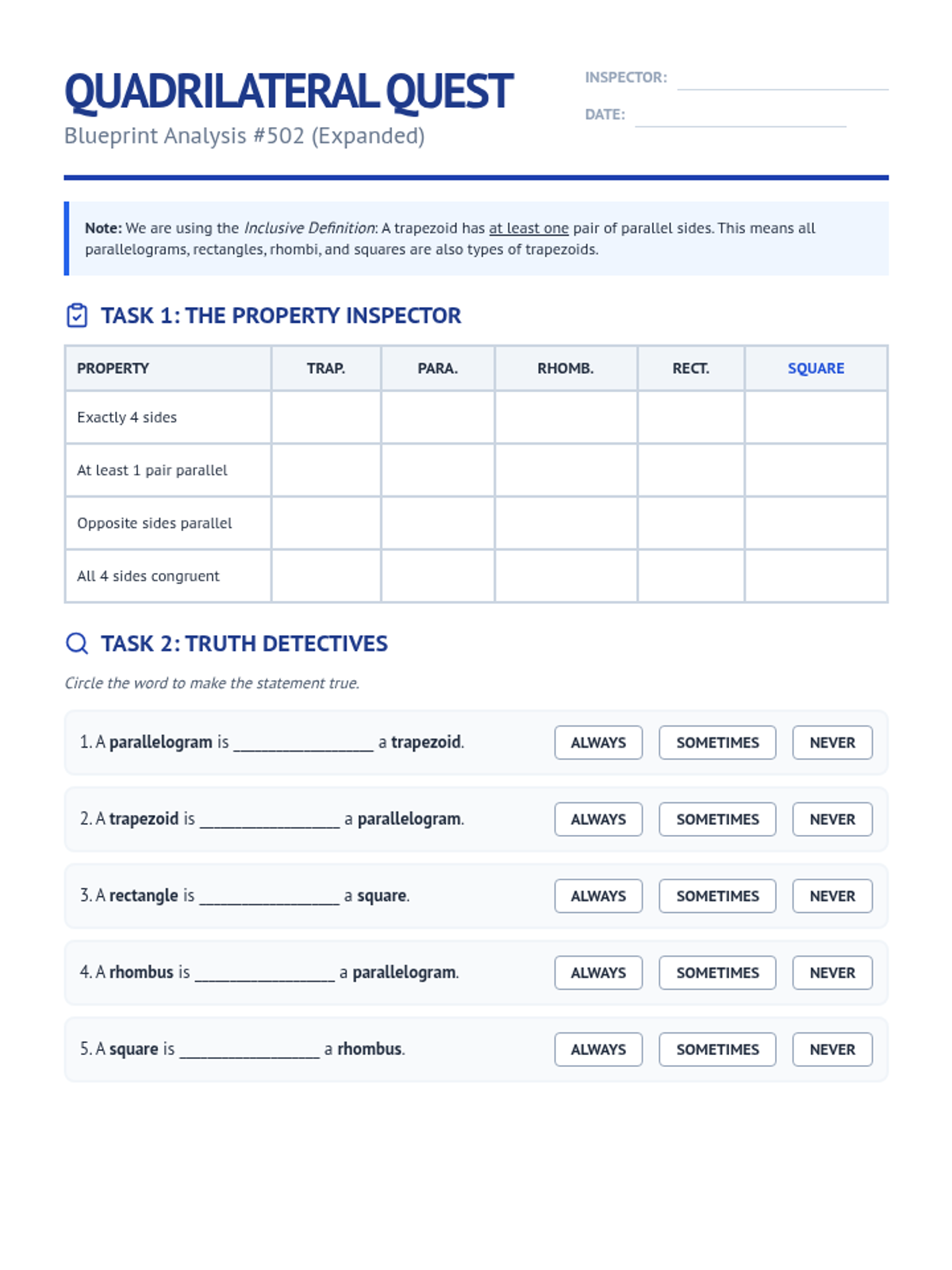
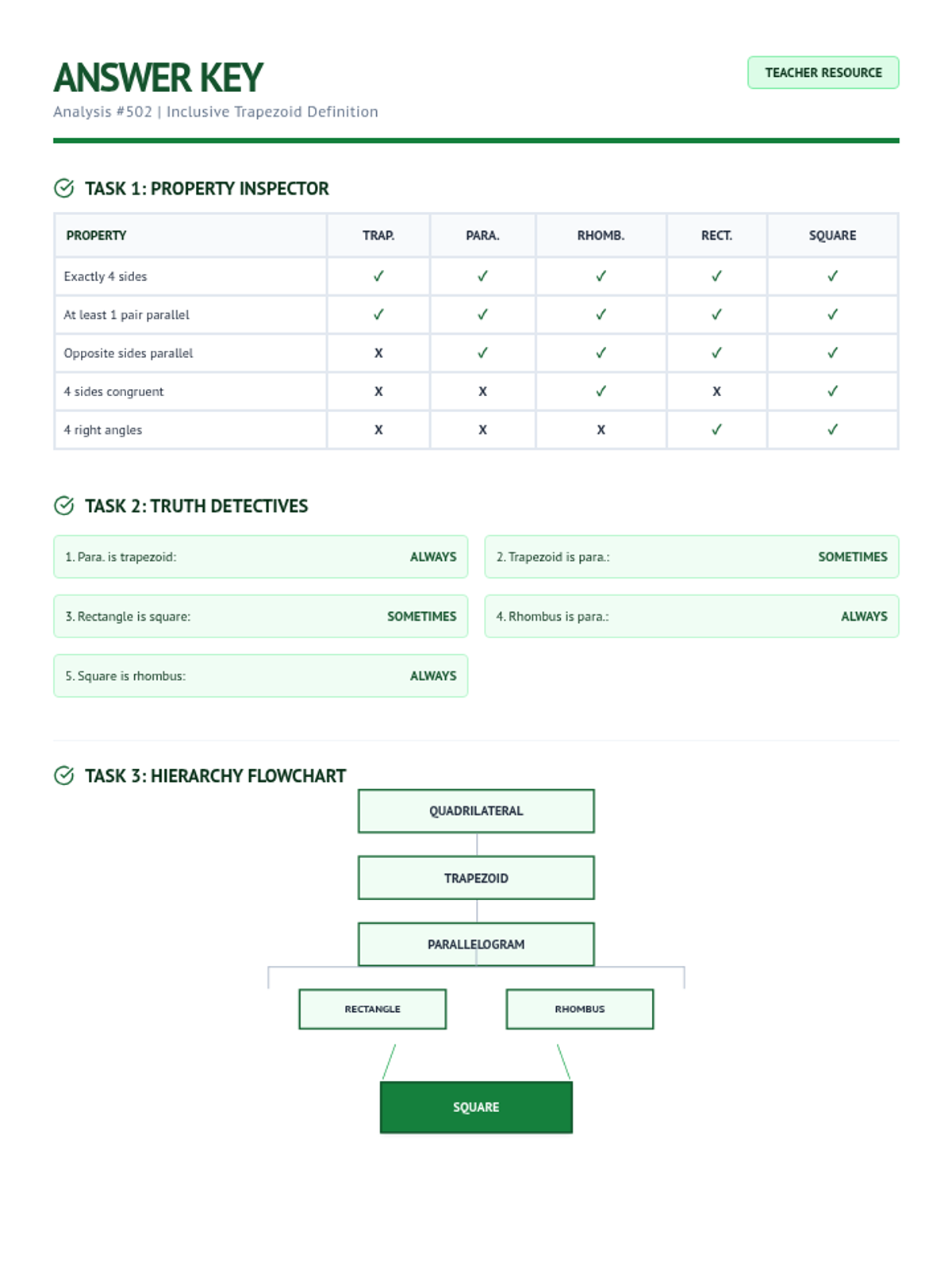
This lesson focuses on the hierarchical classification of quadrilaterals, helping students understand that subcategories inherit properties from their parent categories.
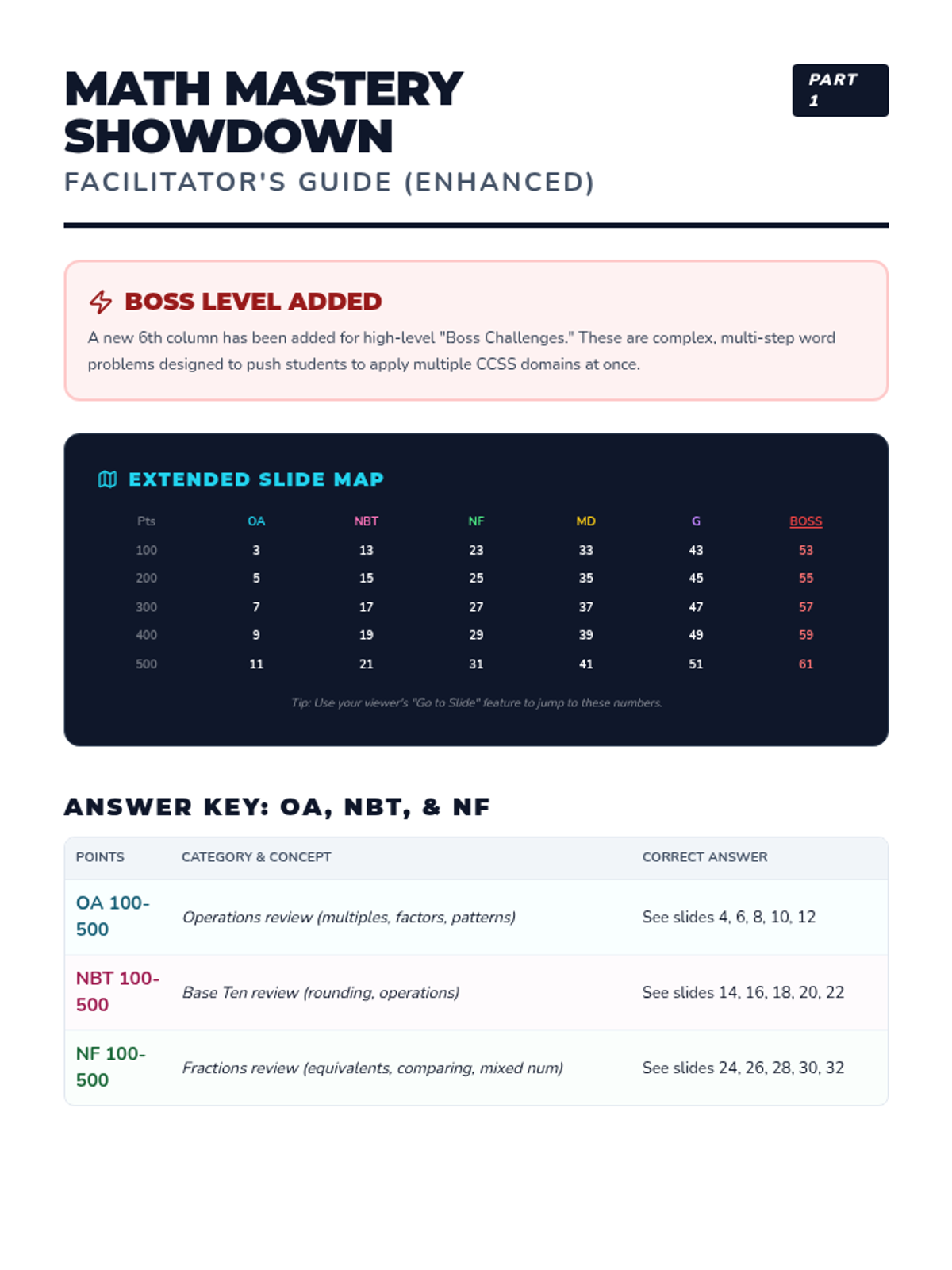
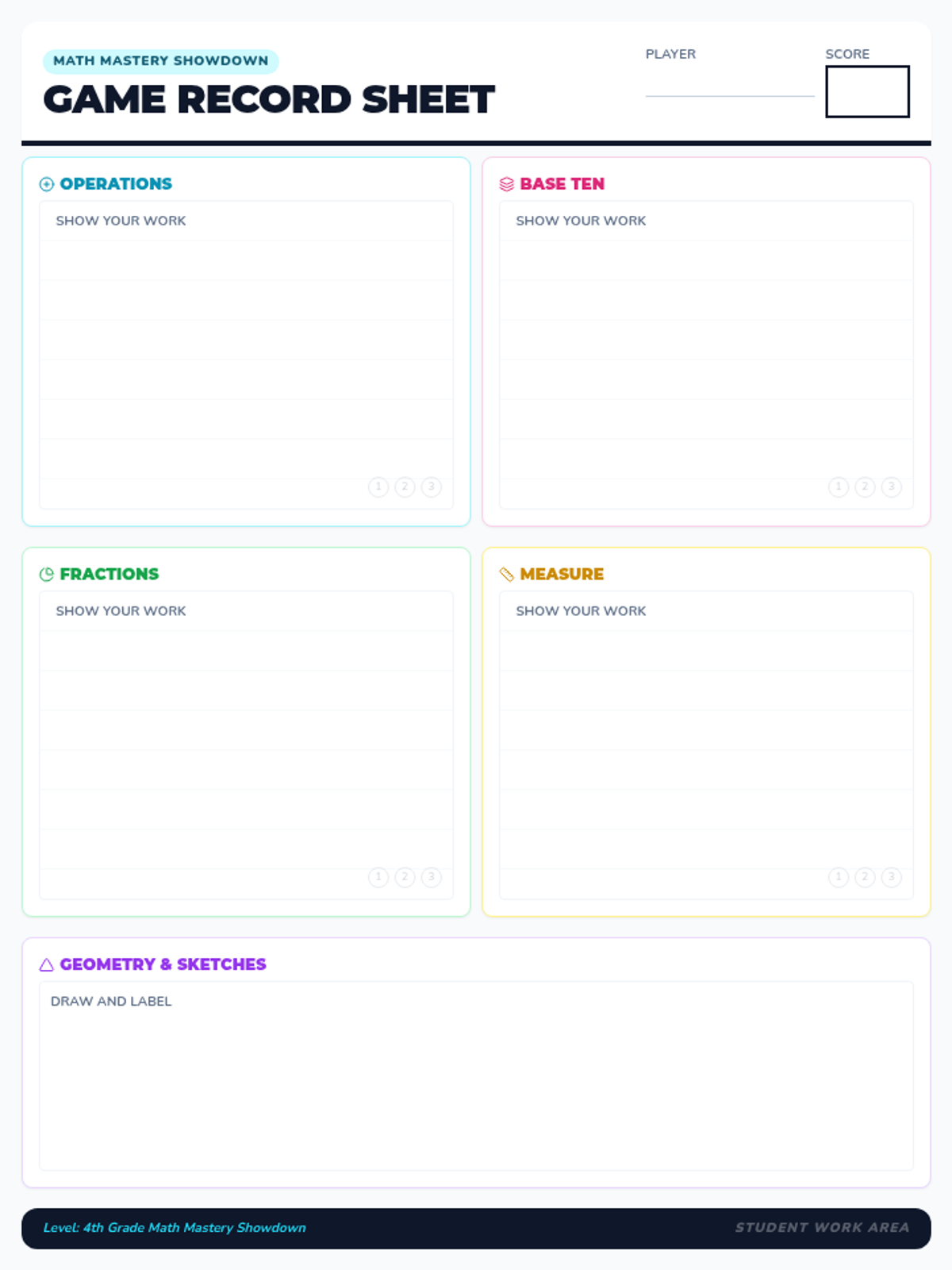
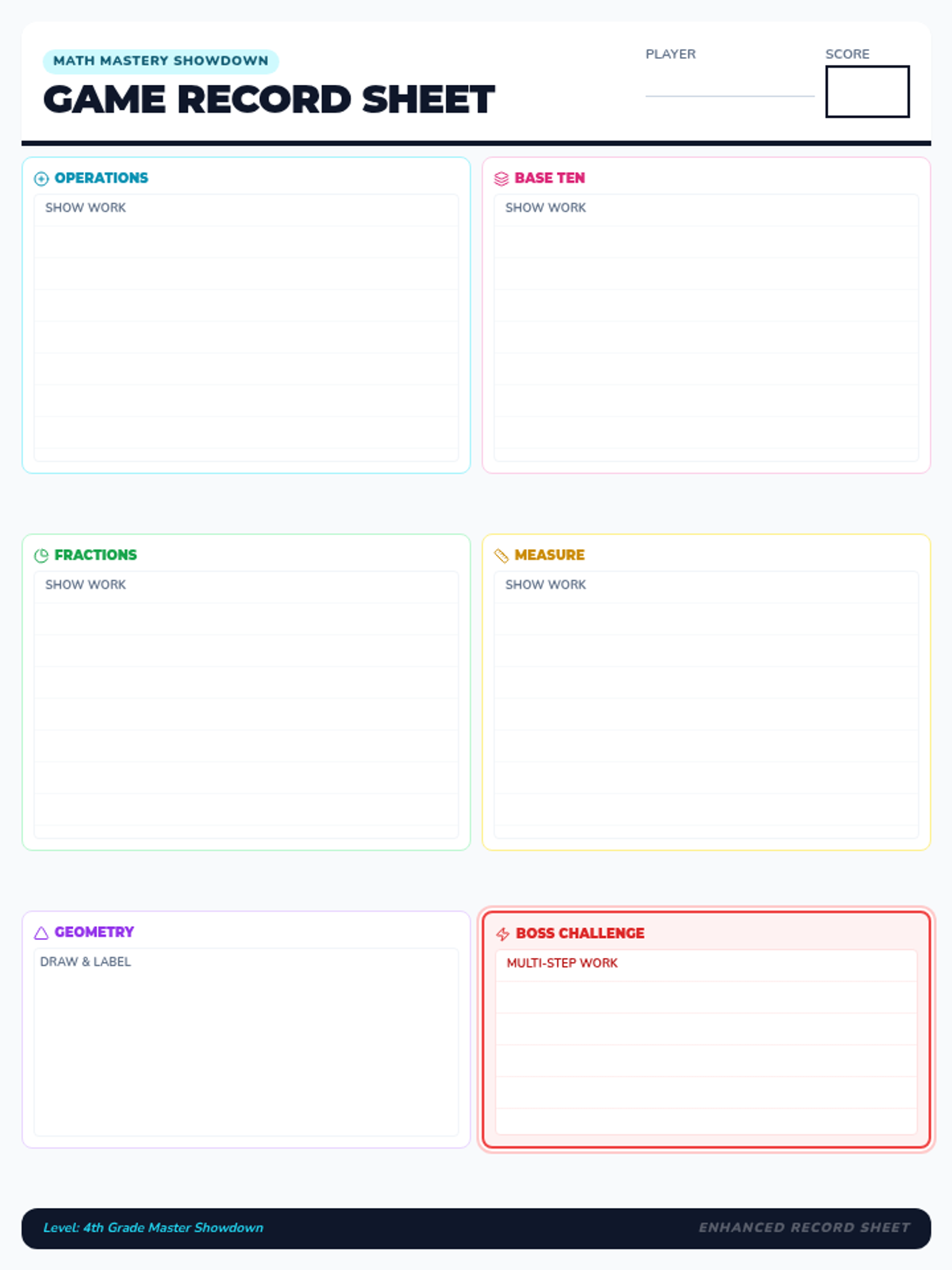
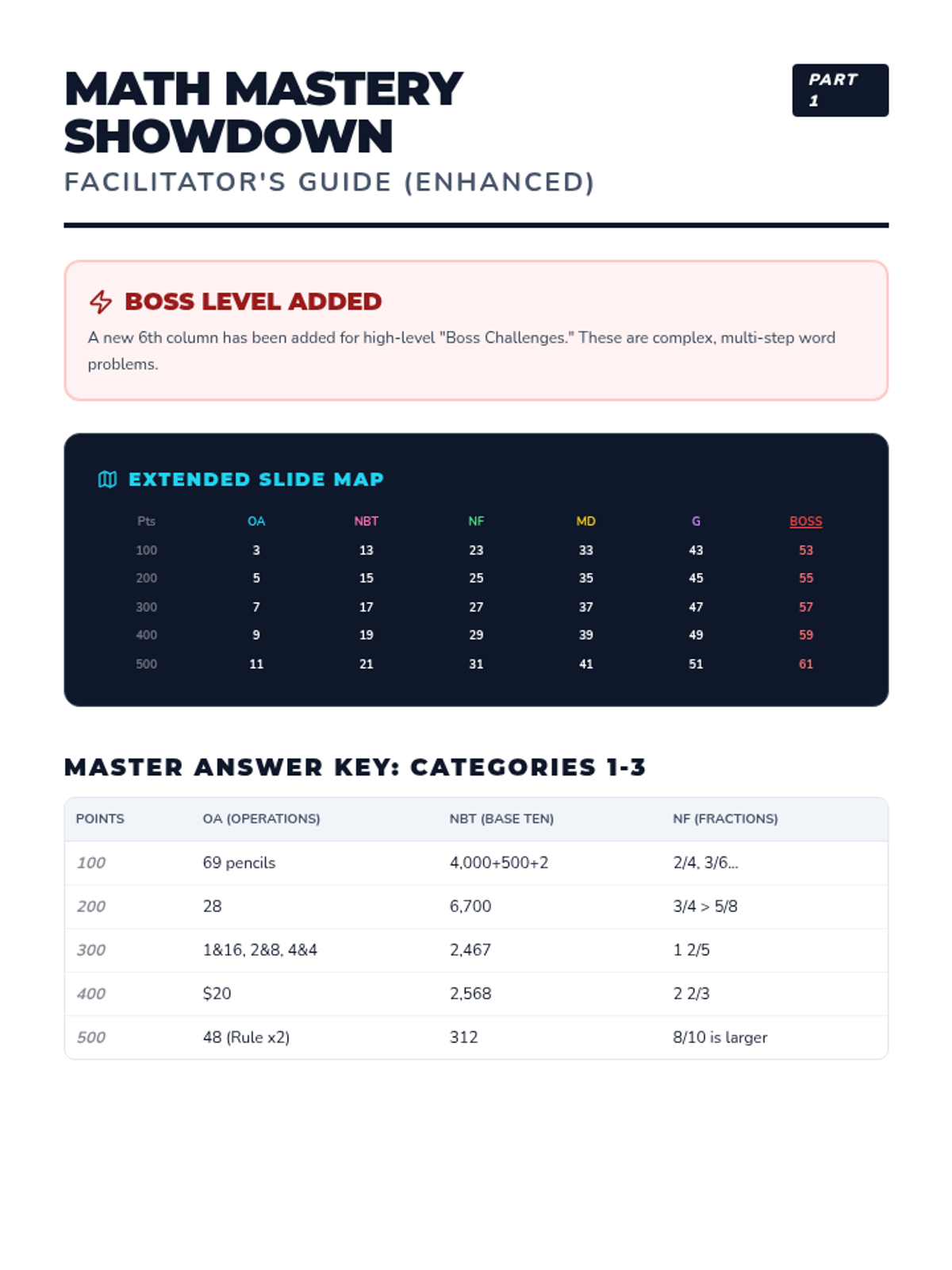
A comprehensive 4th-grade math review using a Jeopardy-style game format covering all Common Core domains: Operations, Base Ten, Fractions, Measurement, and Geometry.
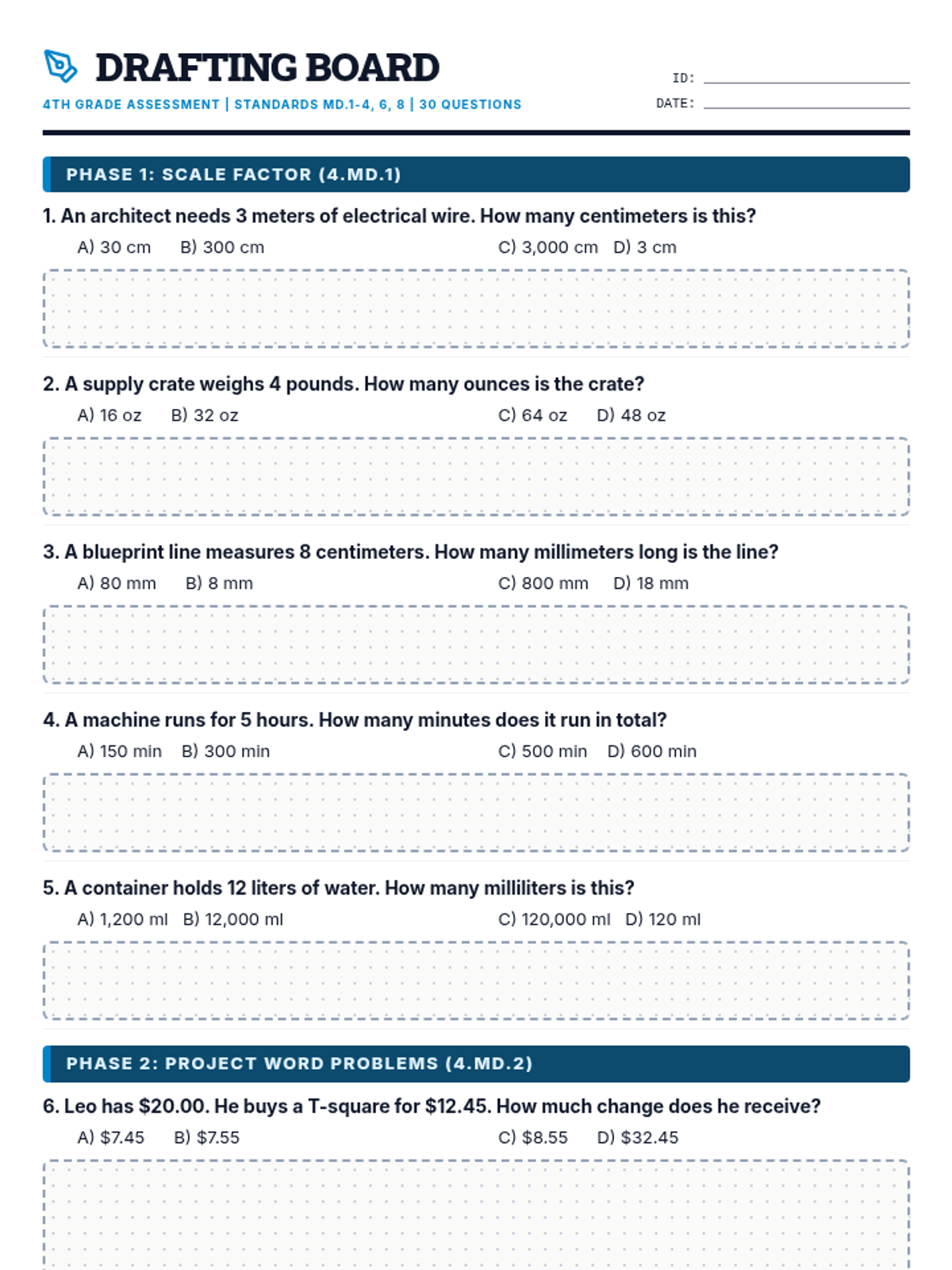
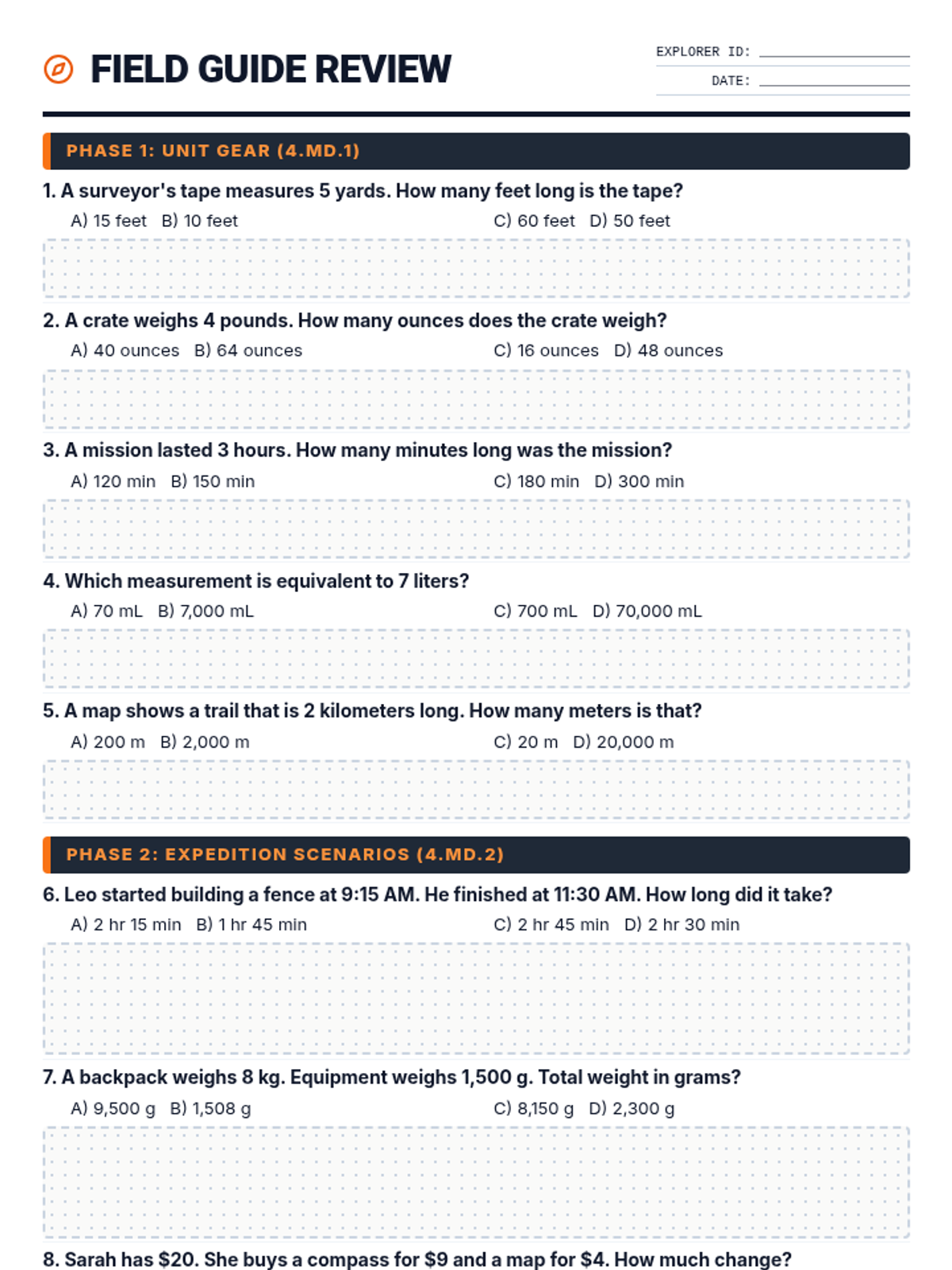
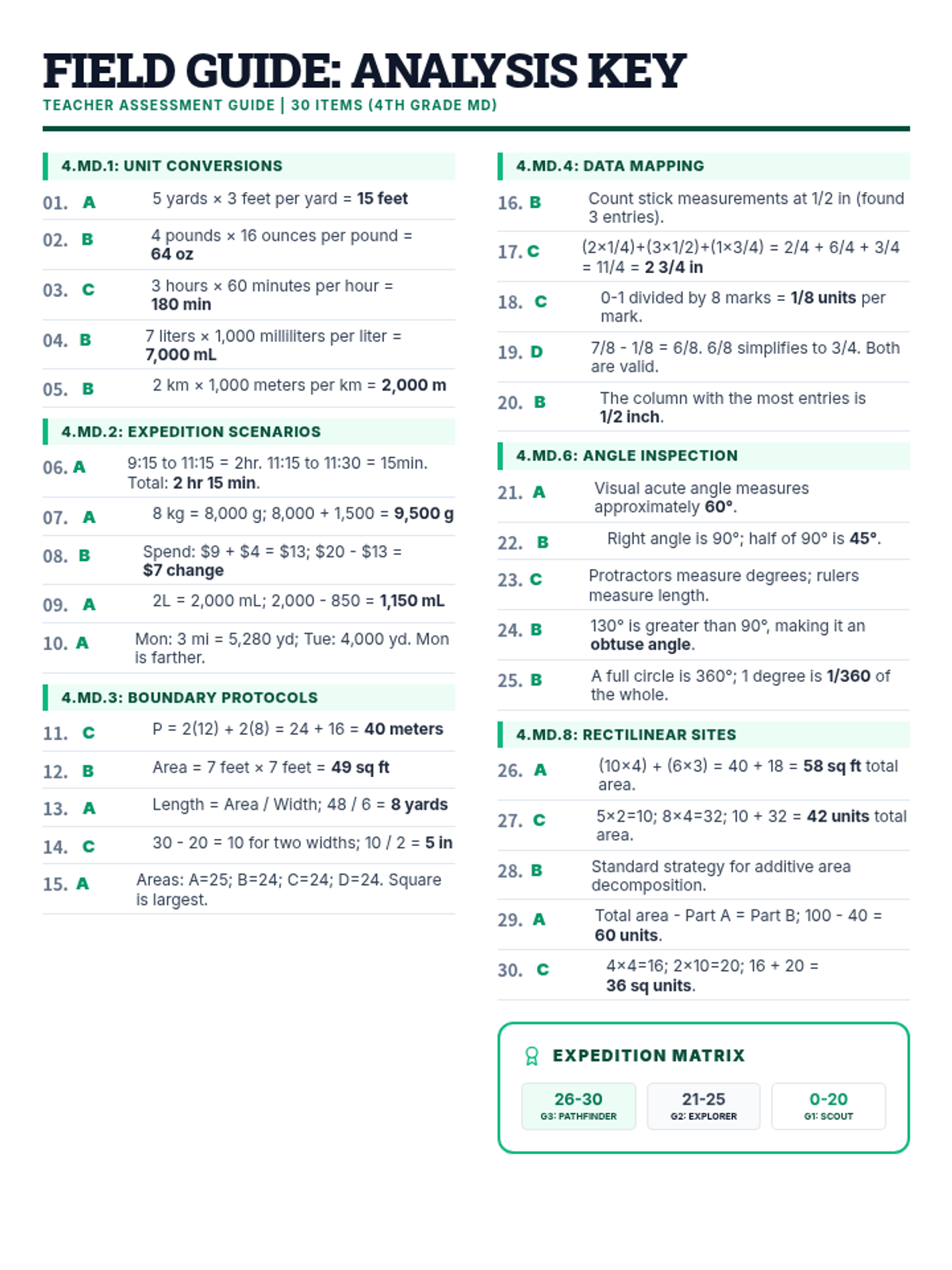
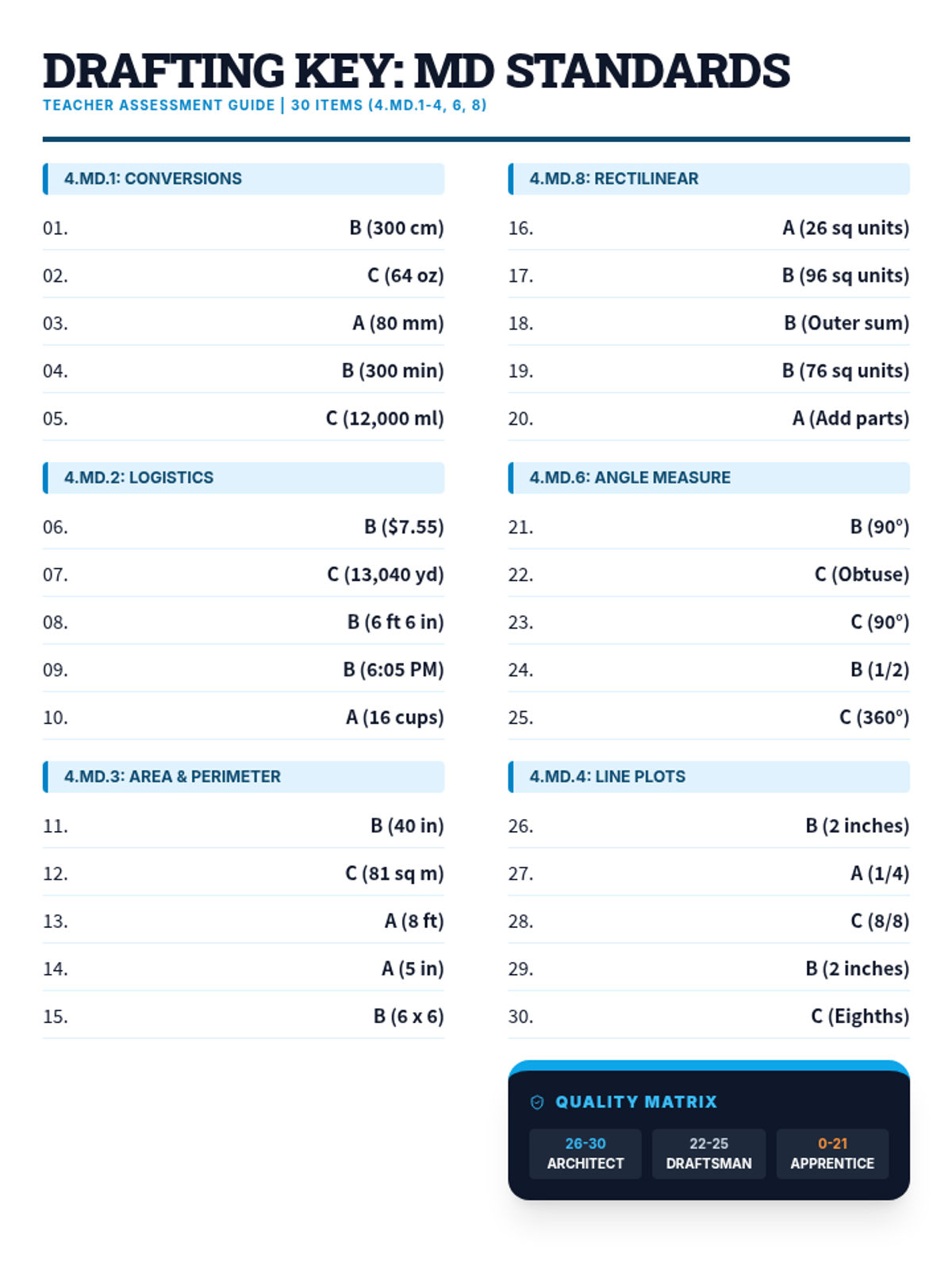
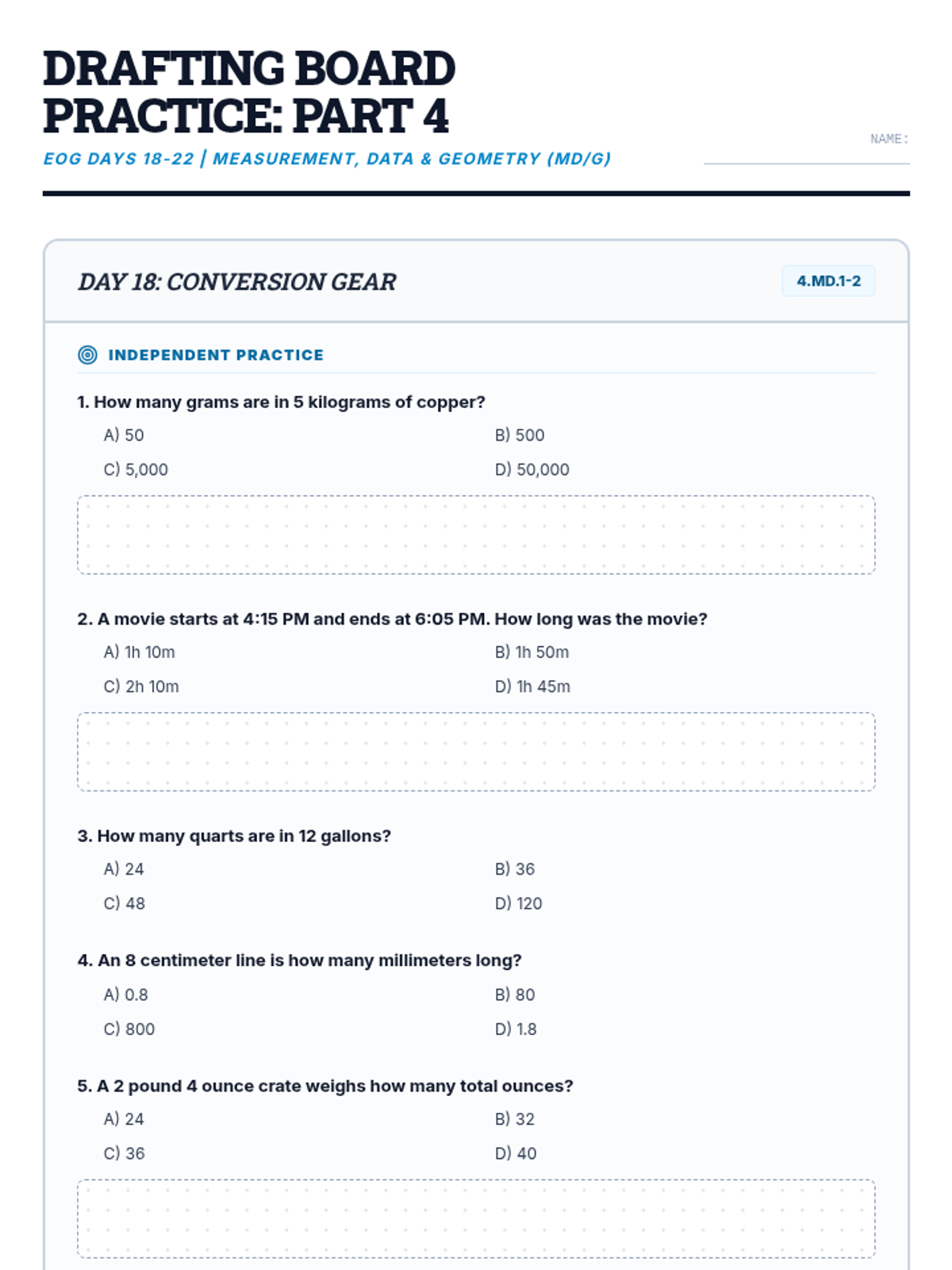
A precision-focused drafting-themed review of 4th grade Measurement and Data (MD) standards. Covers units and conversions (MD.1), measurement word problems (MD.2), area and perimeter (MD.3), line plots (MD.4), and angle measurement and addition (MD.6-7). Division has been removed from the curriculum.
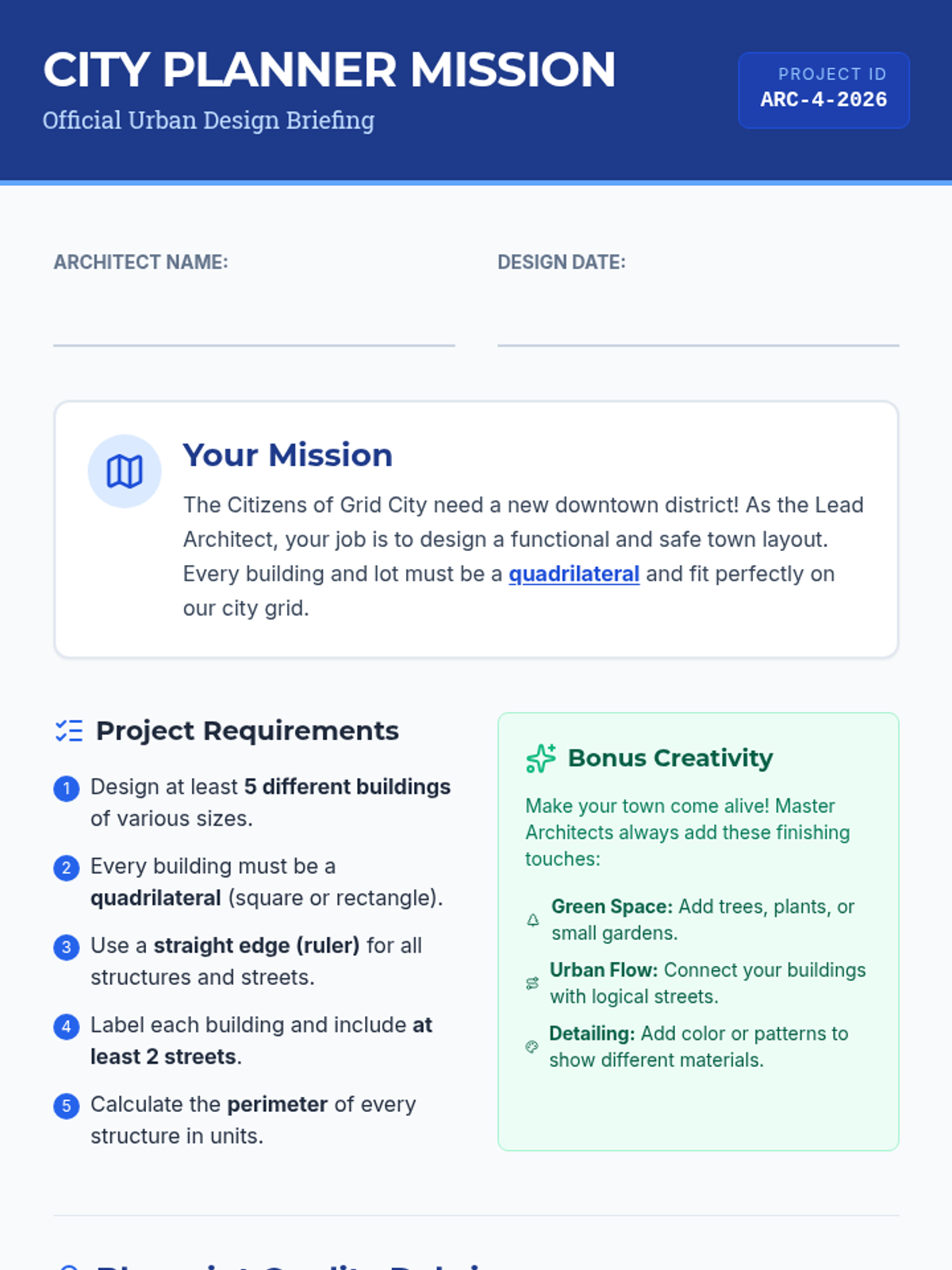
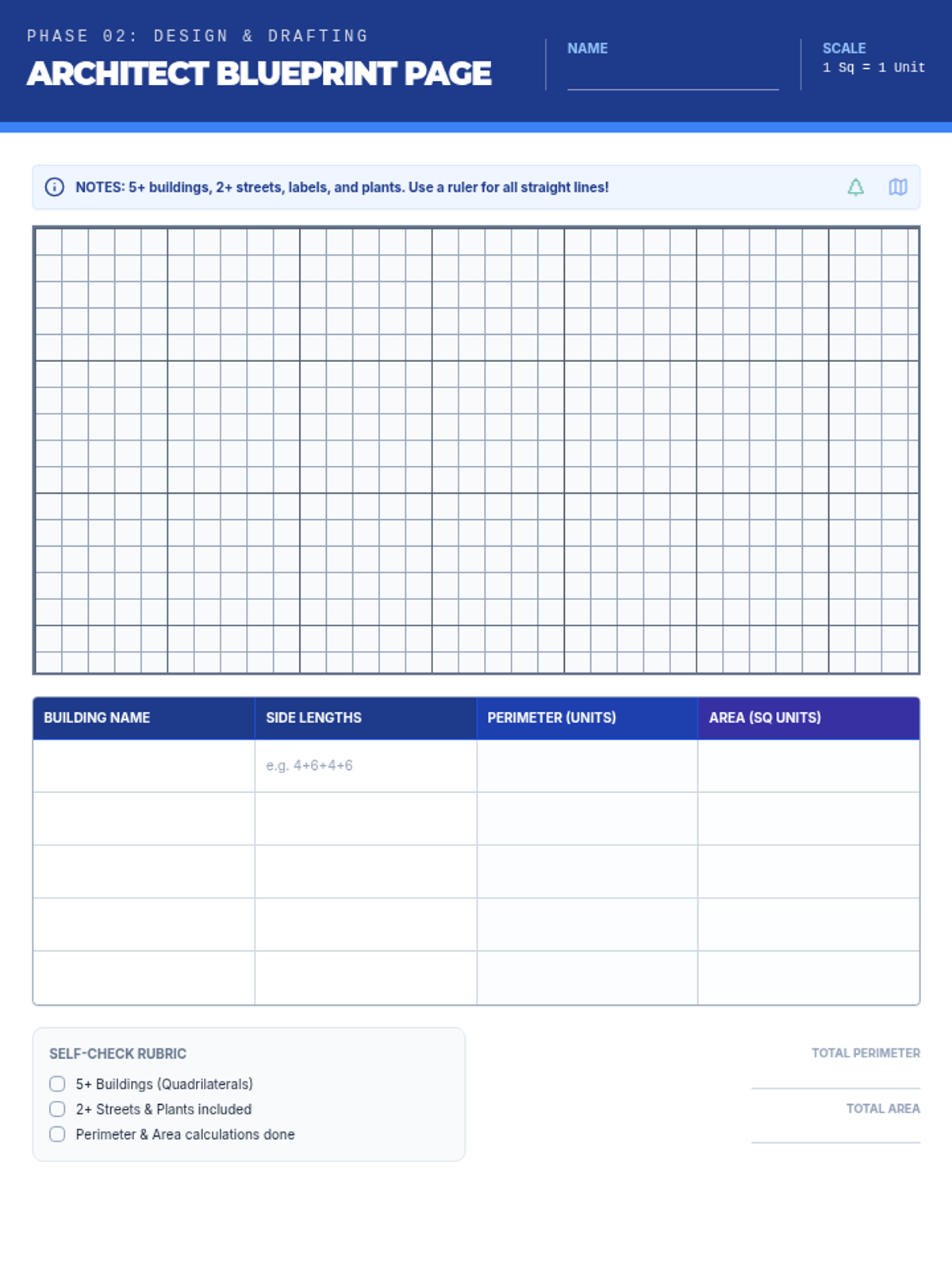
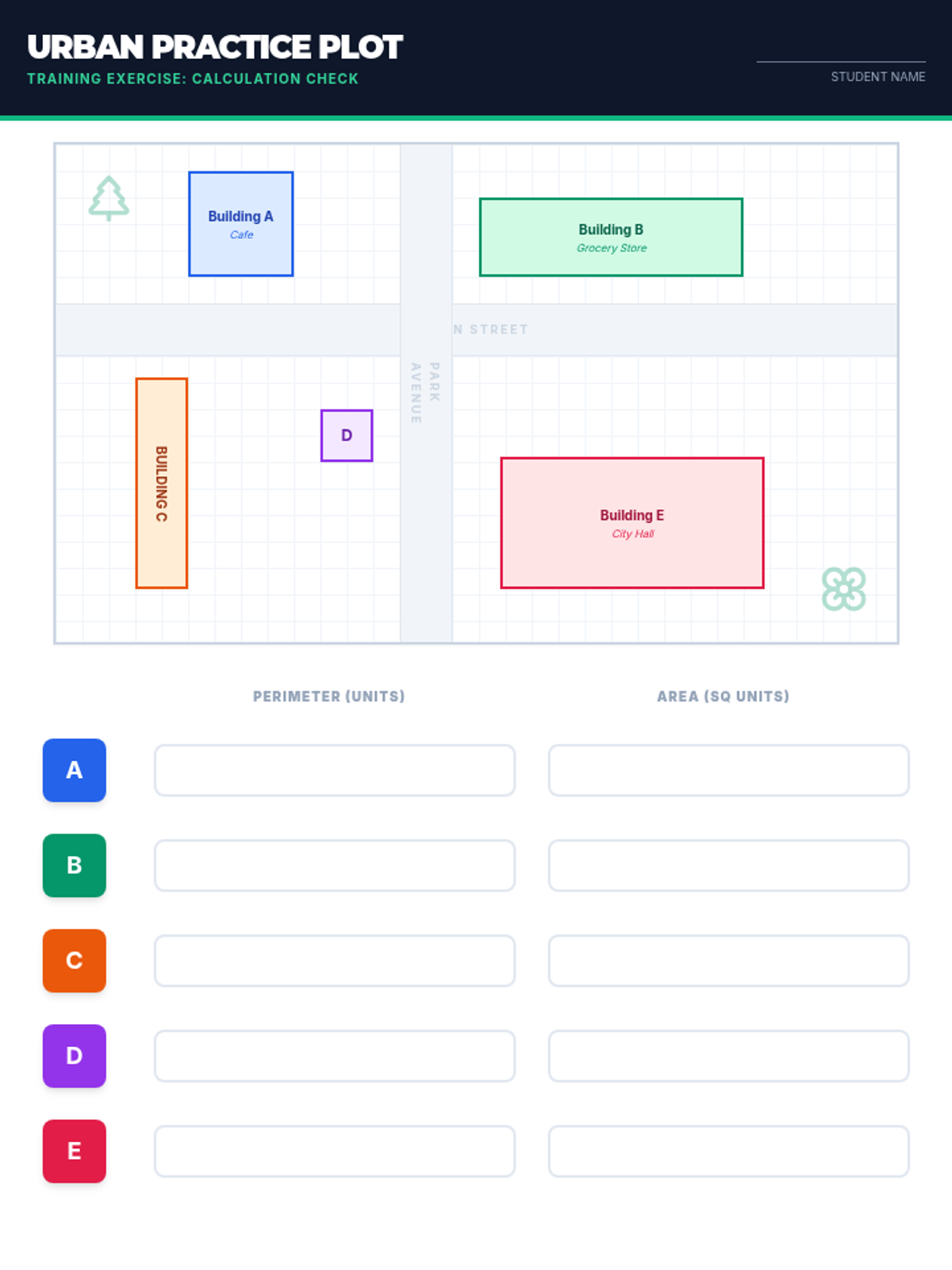
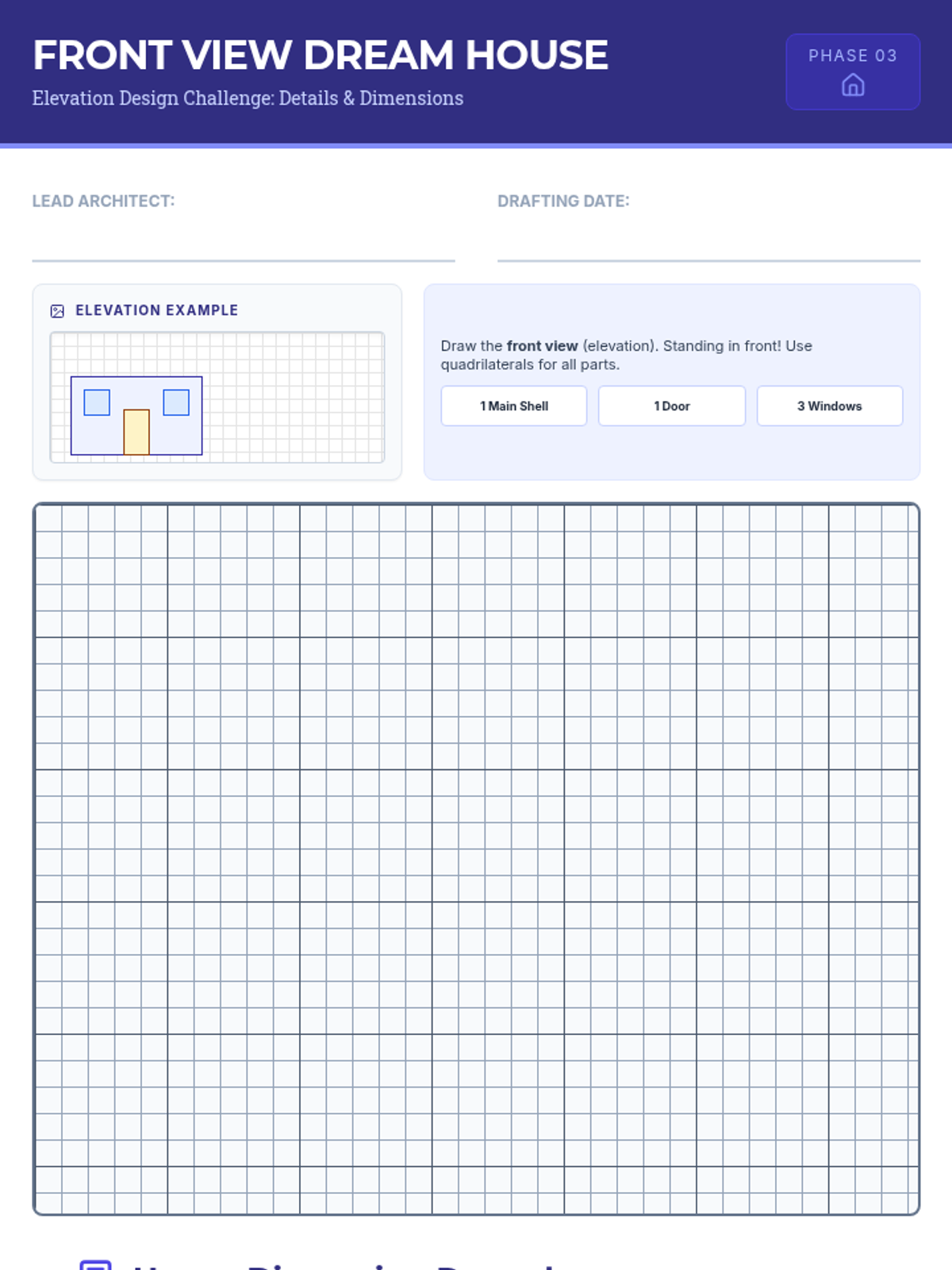
Students act as urban architects to design a town using quadrilaterals on a grid, calculating perimeter and area for their structures.
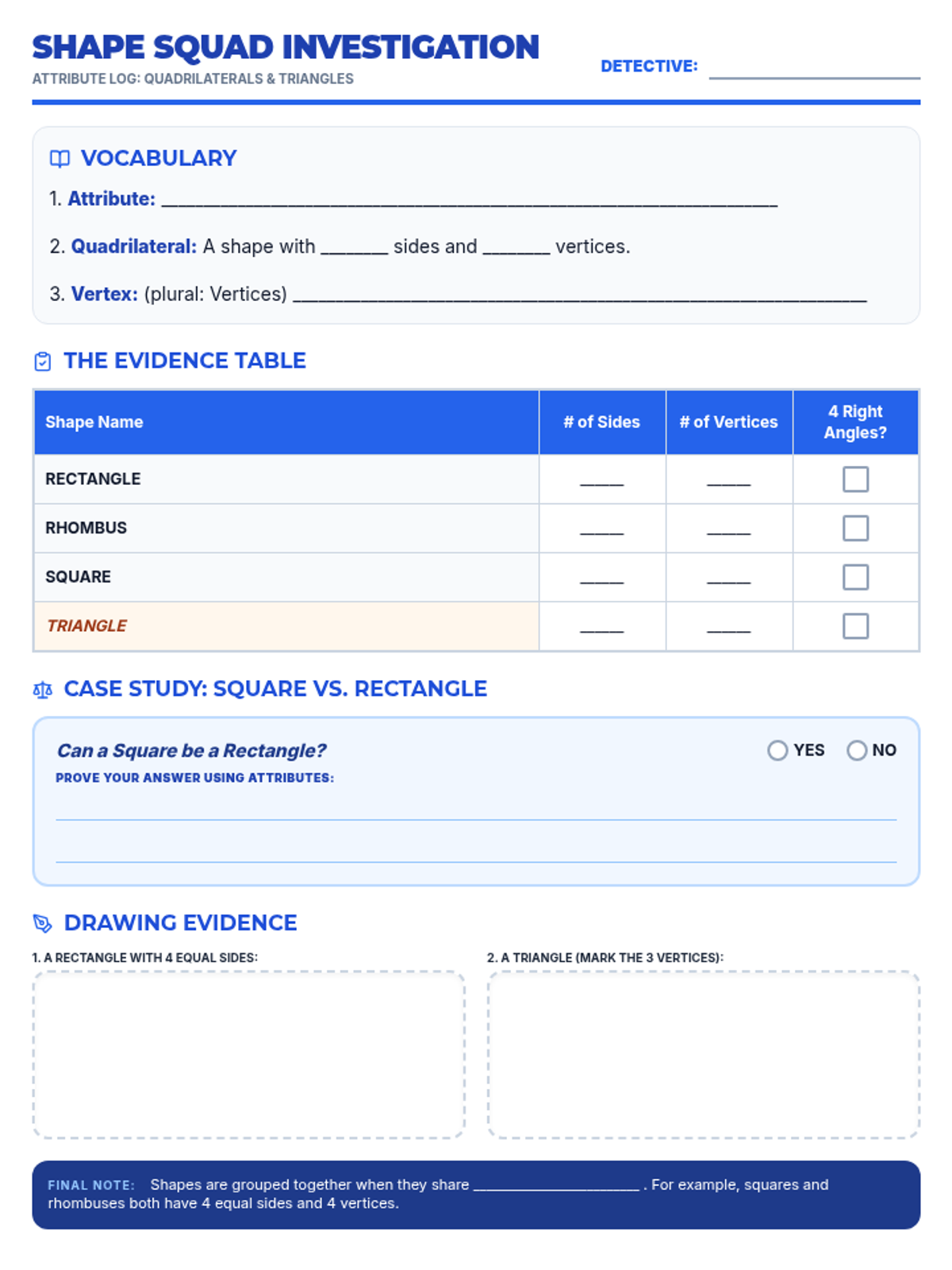
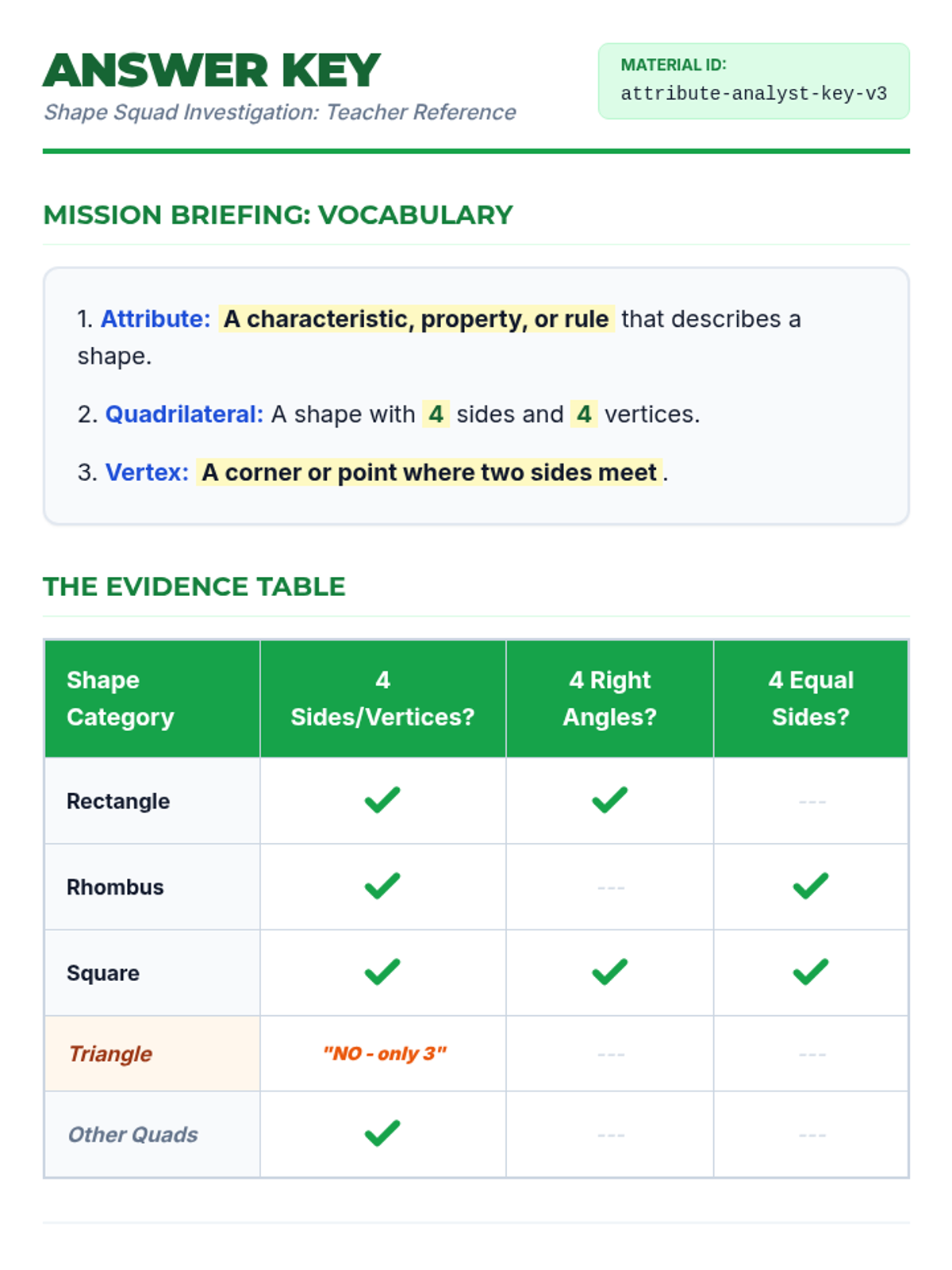
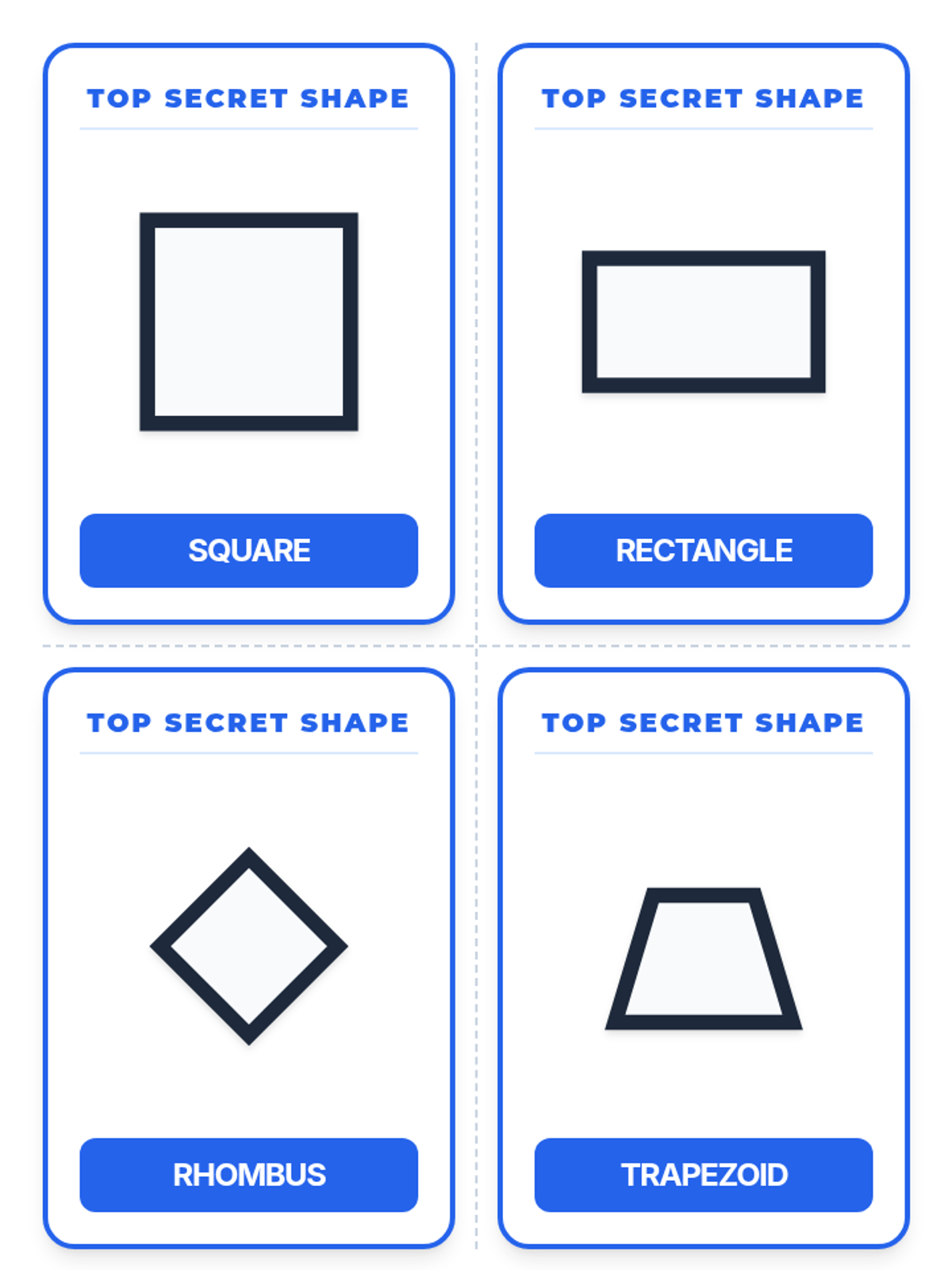
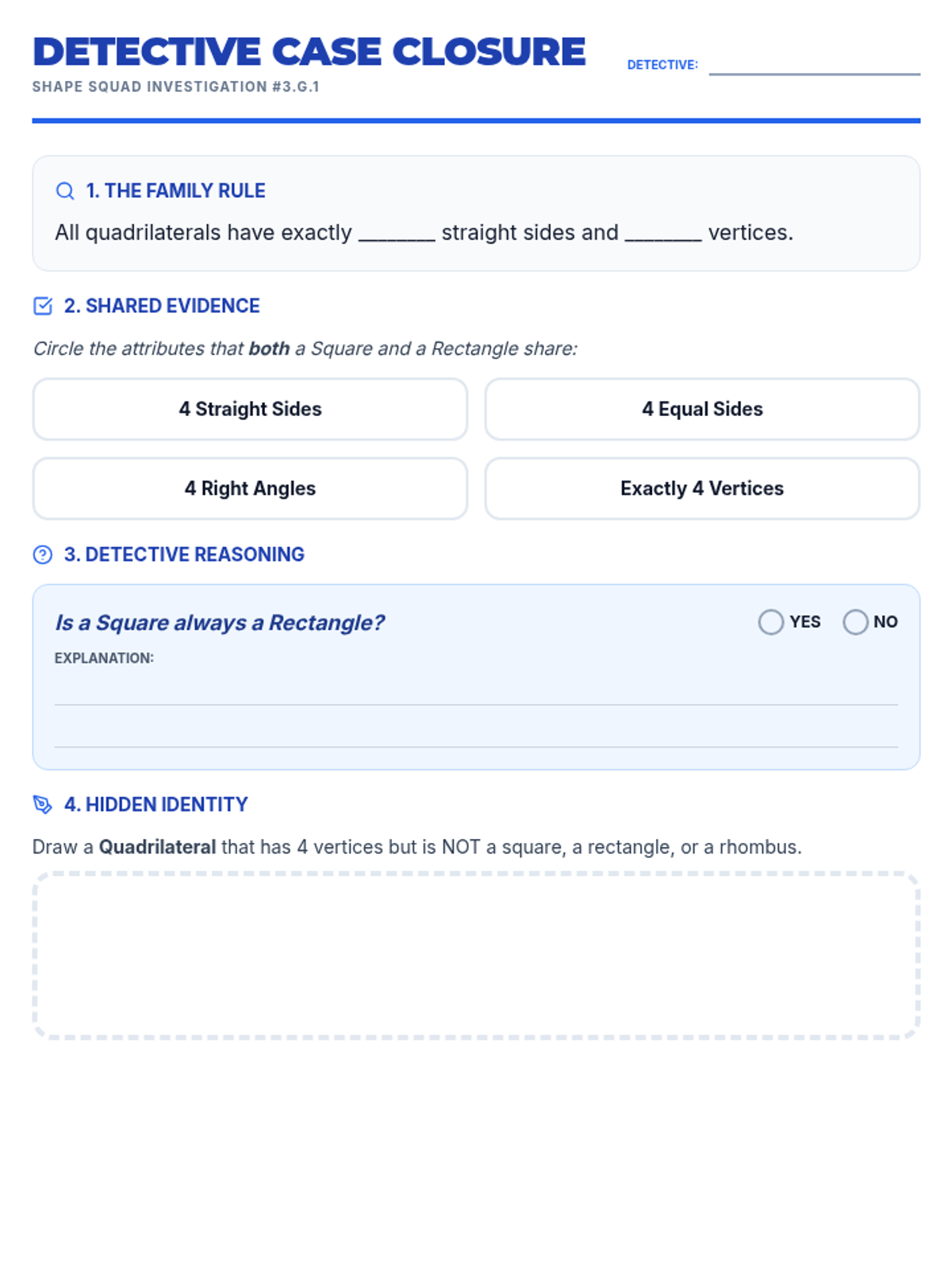
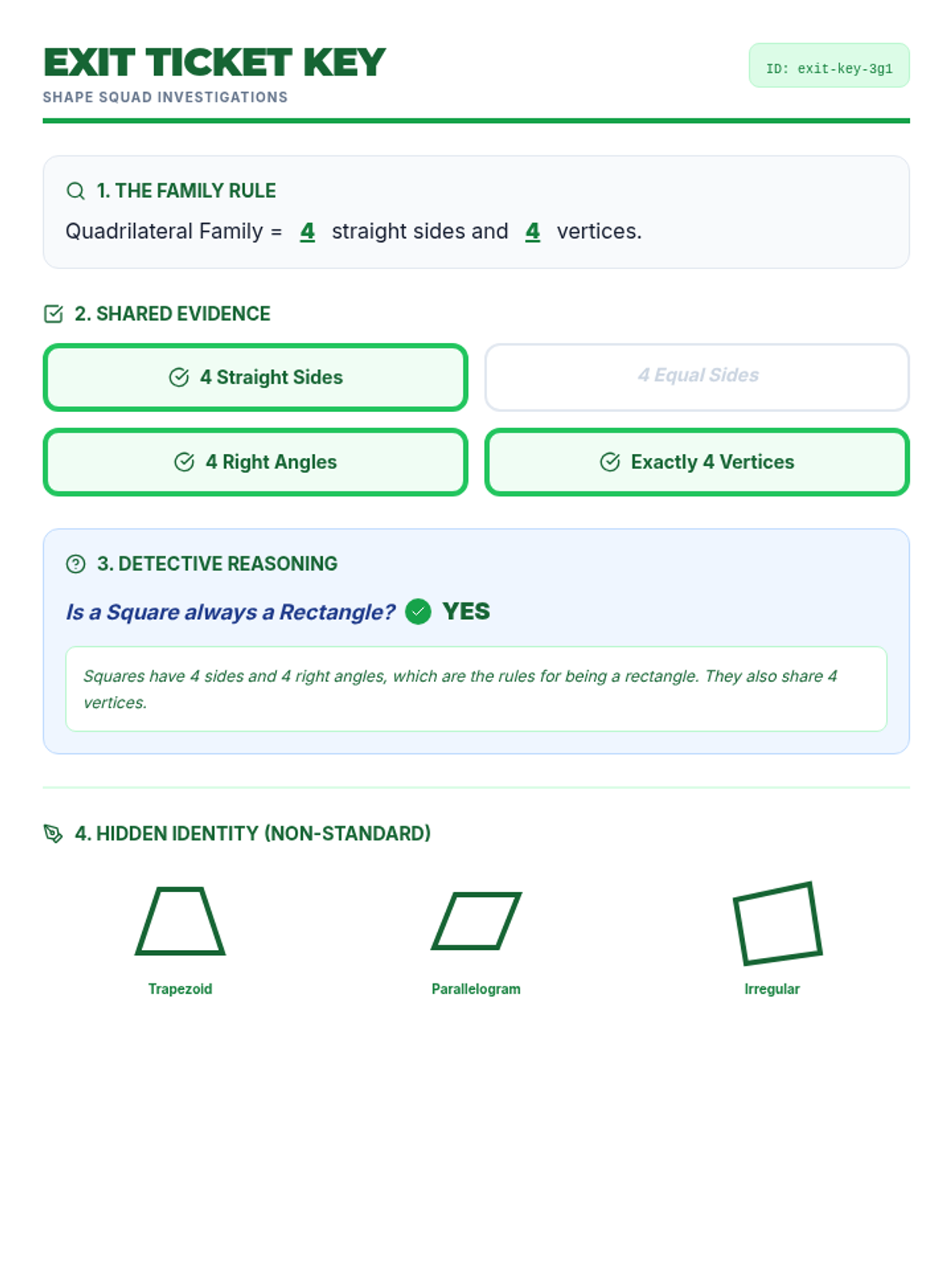
Students explore shared attributes of shapes to understand the category of quadrilaterals, specifically identifying squares, rectangles, and rhombuses while also creating non-standard quadrilaterals.
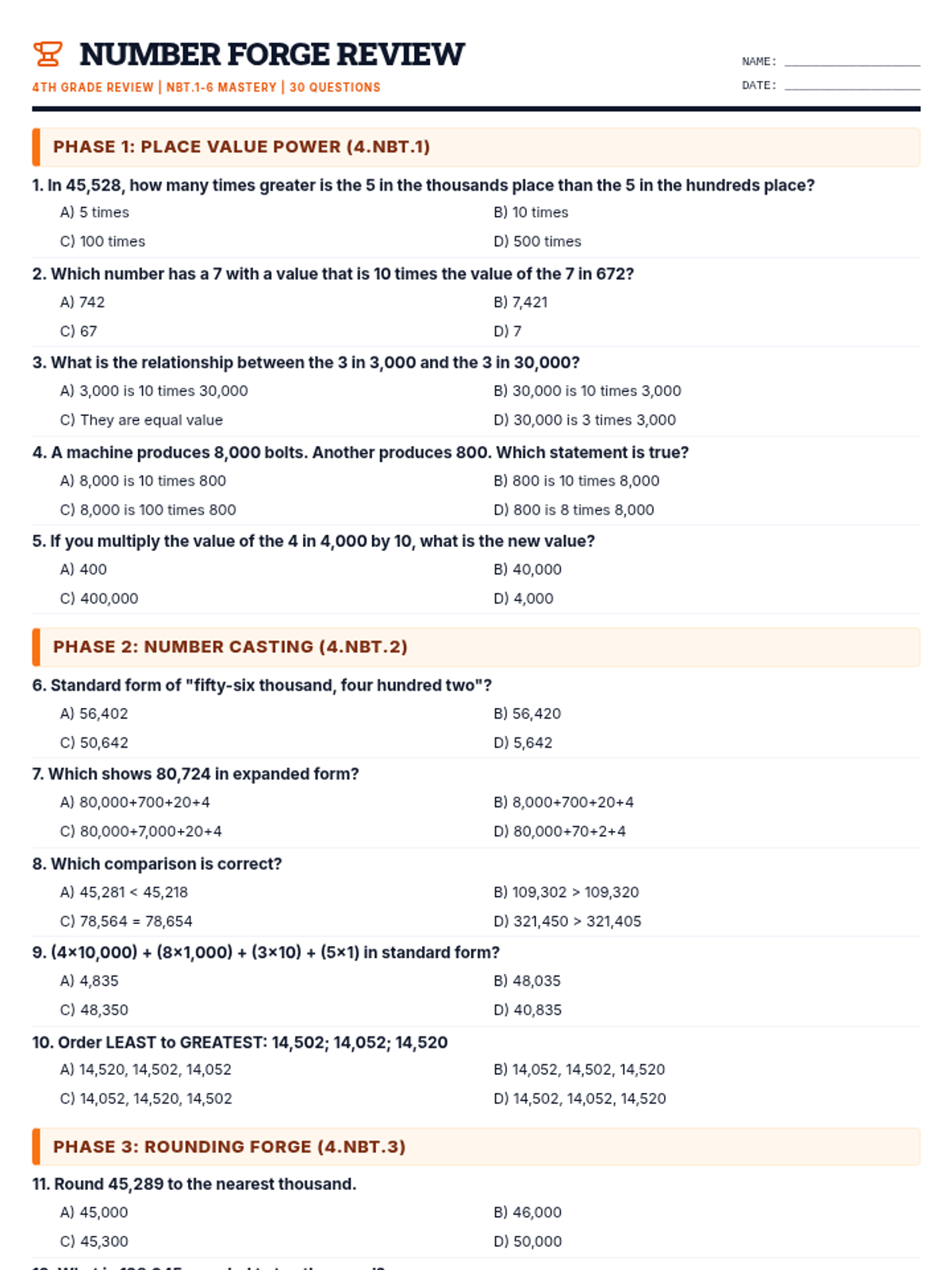
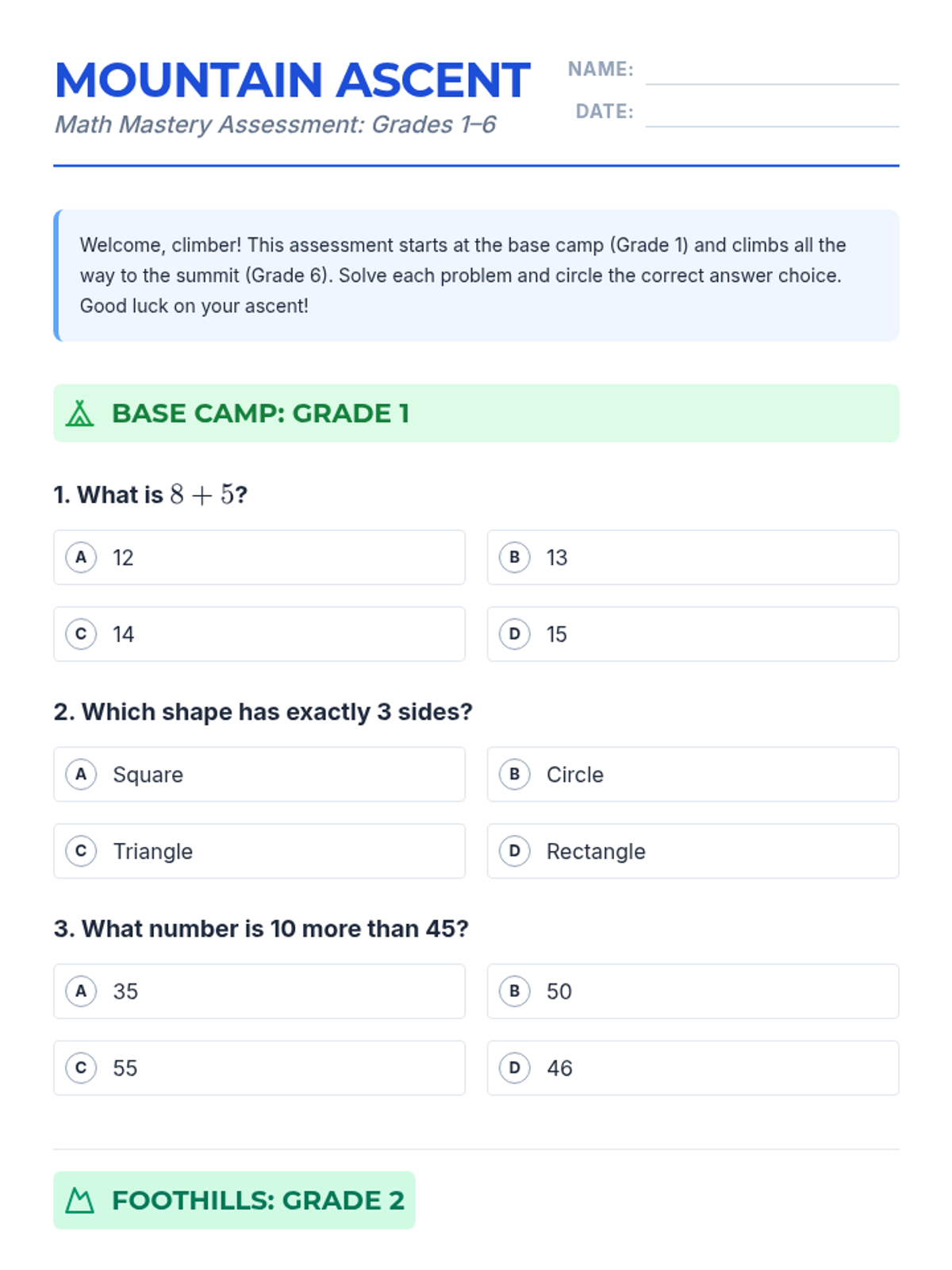
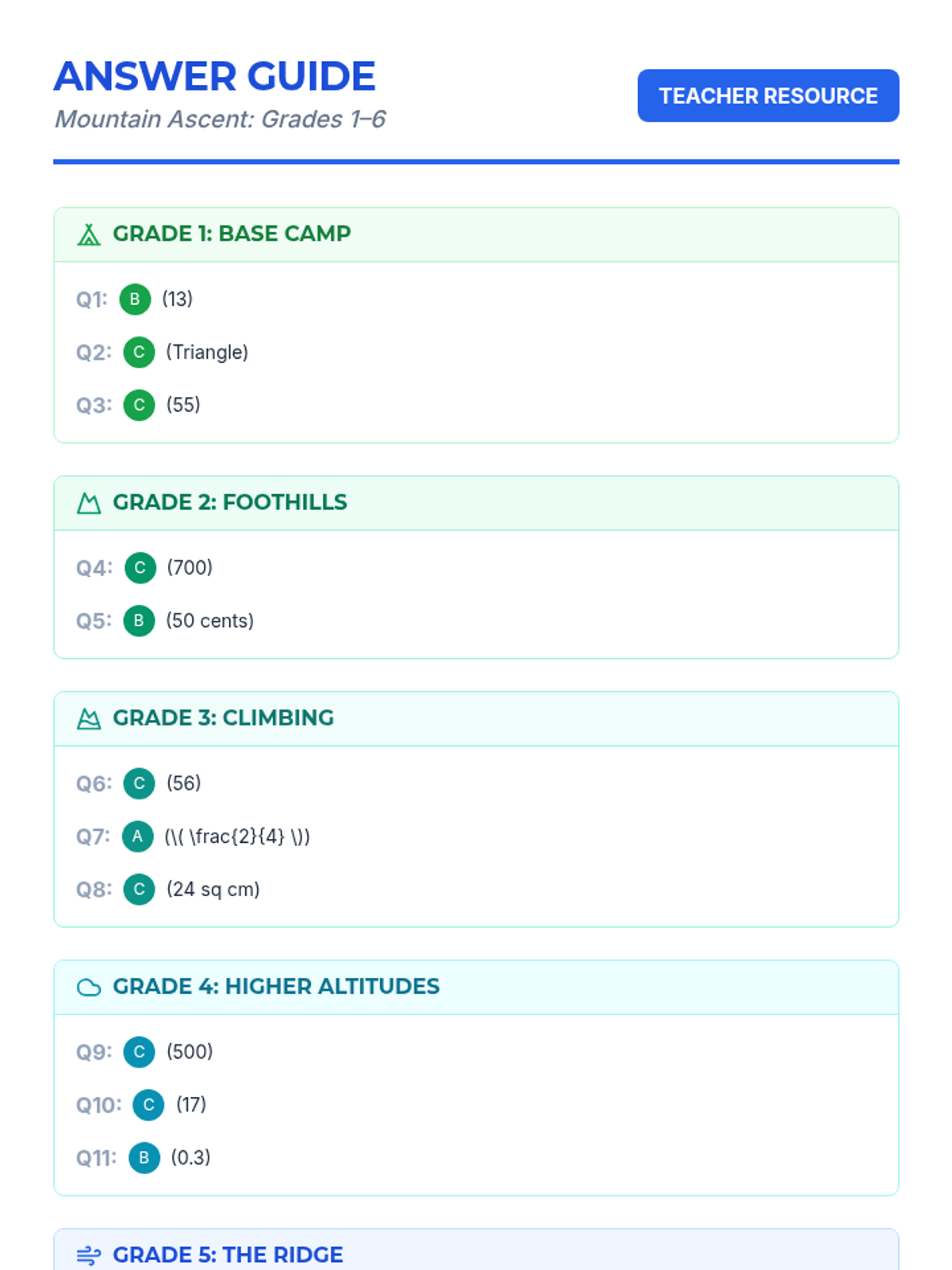
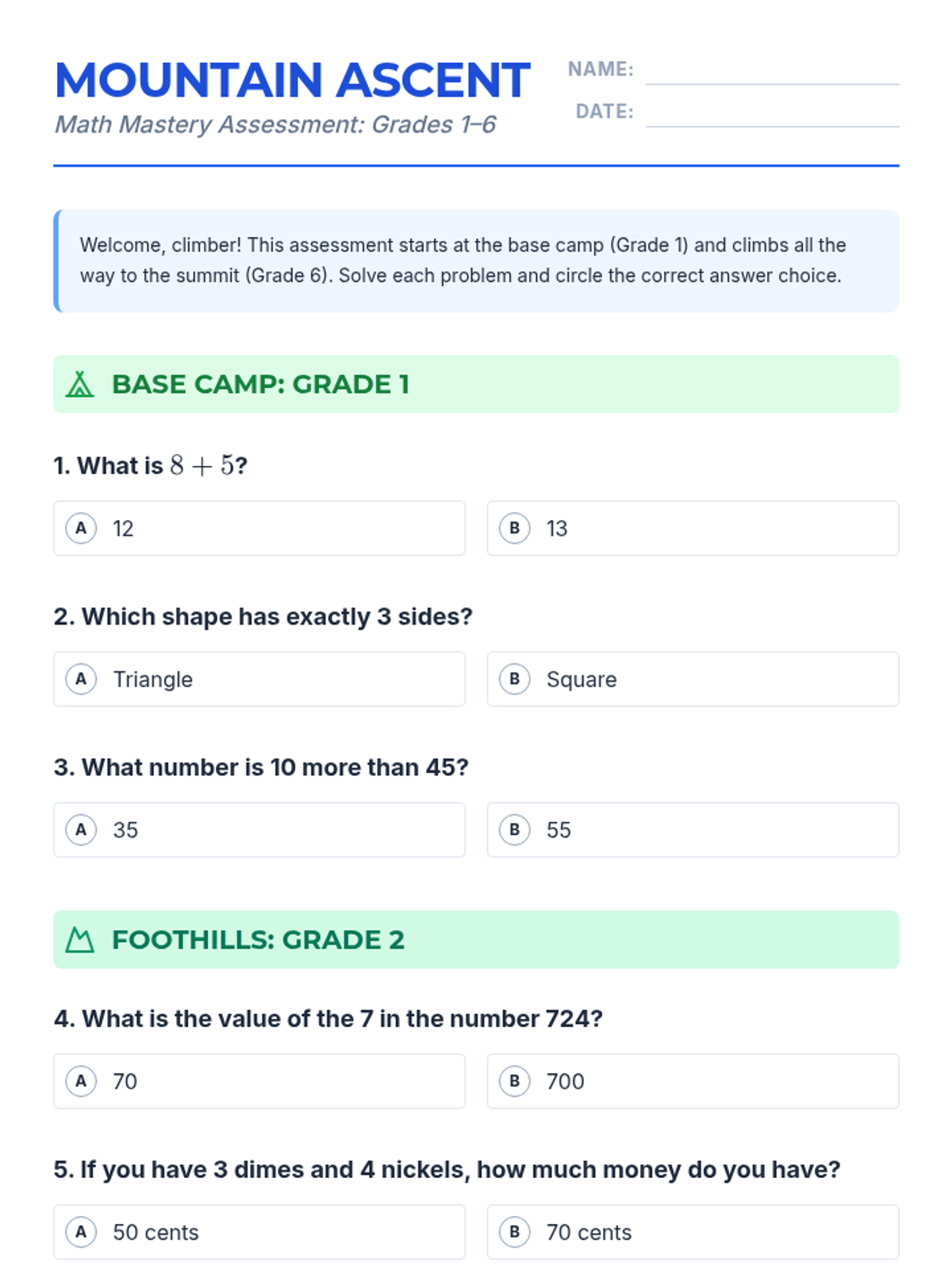
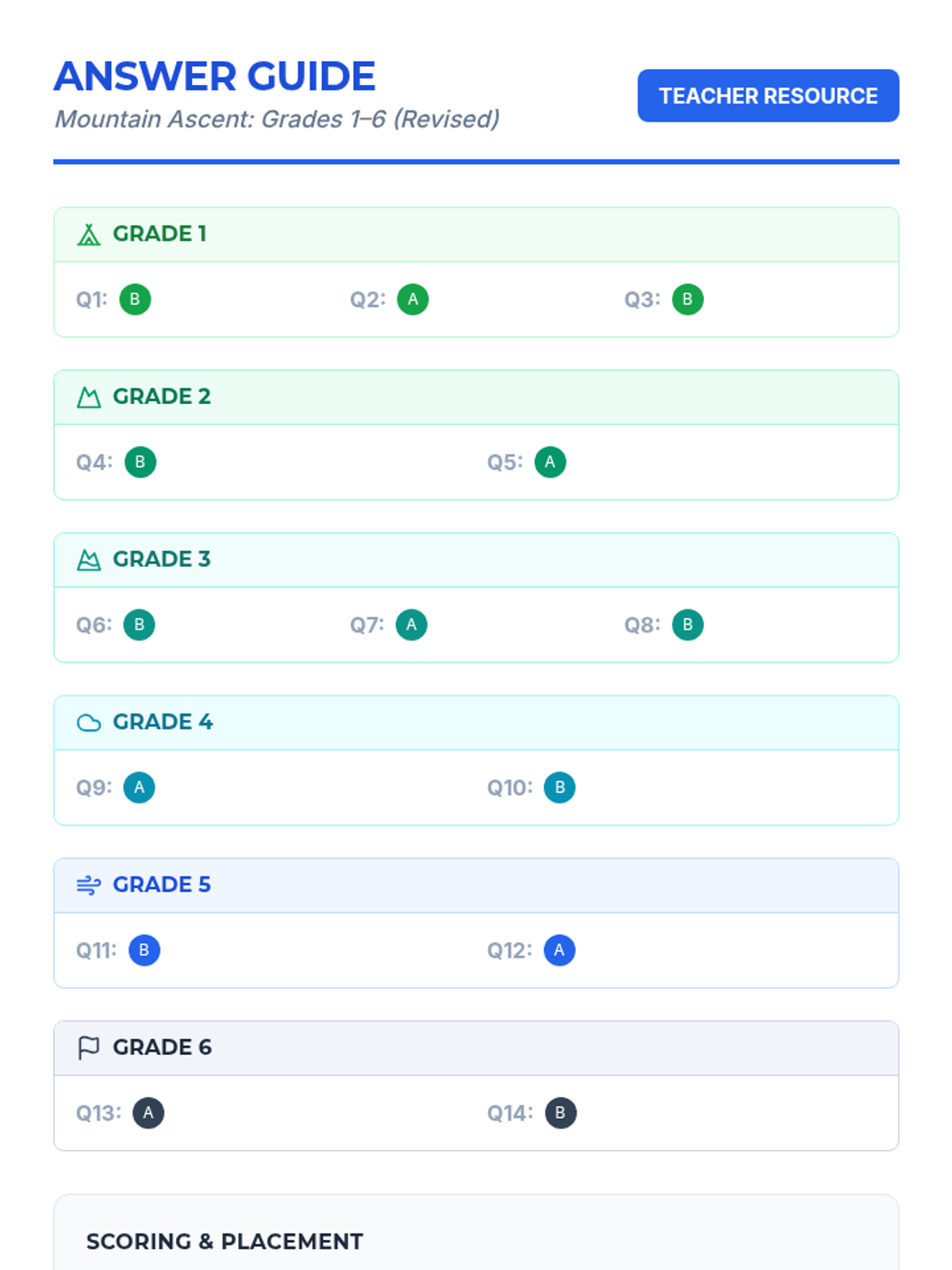
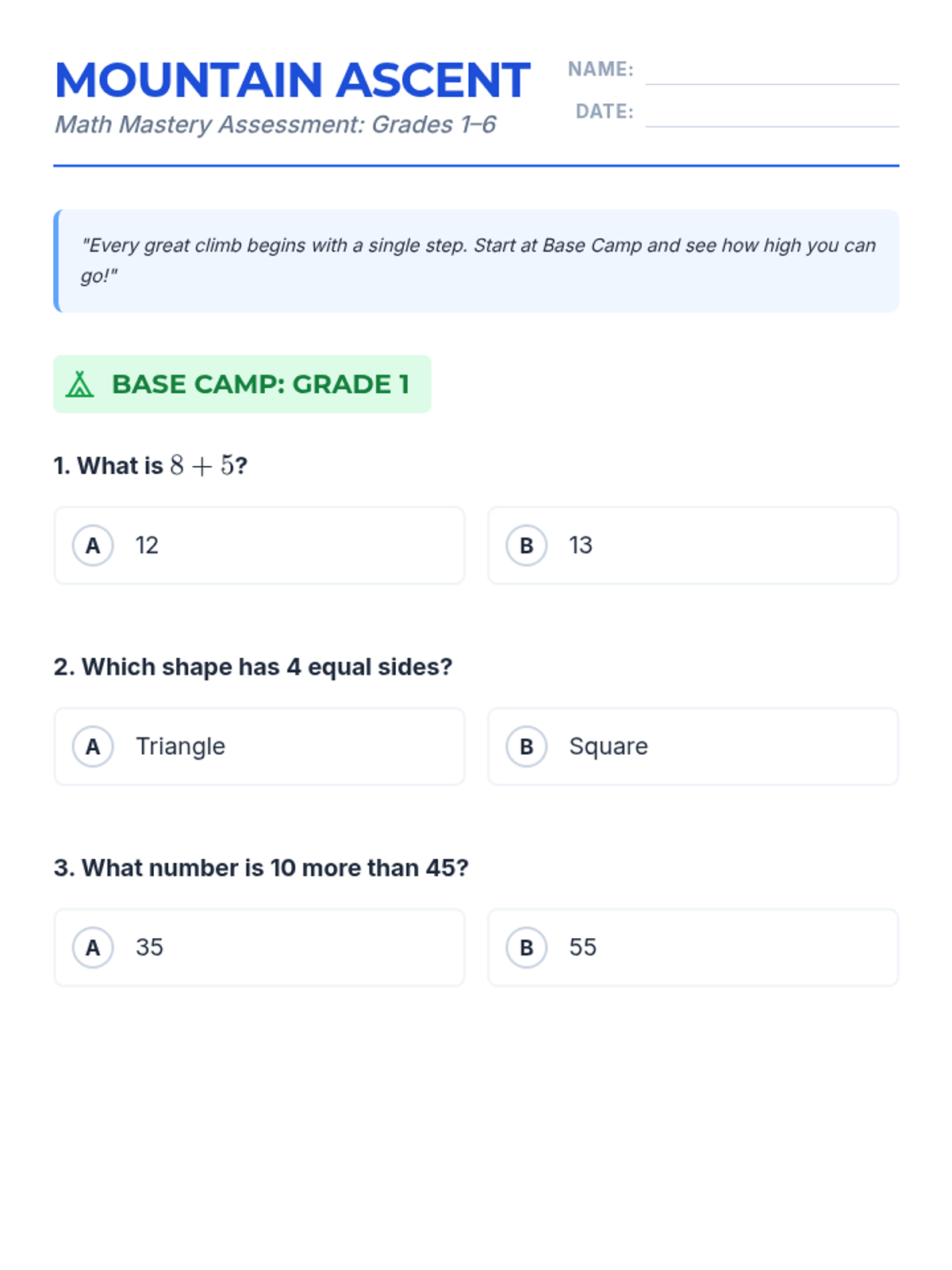
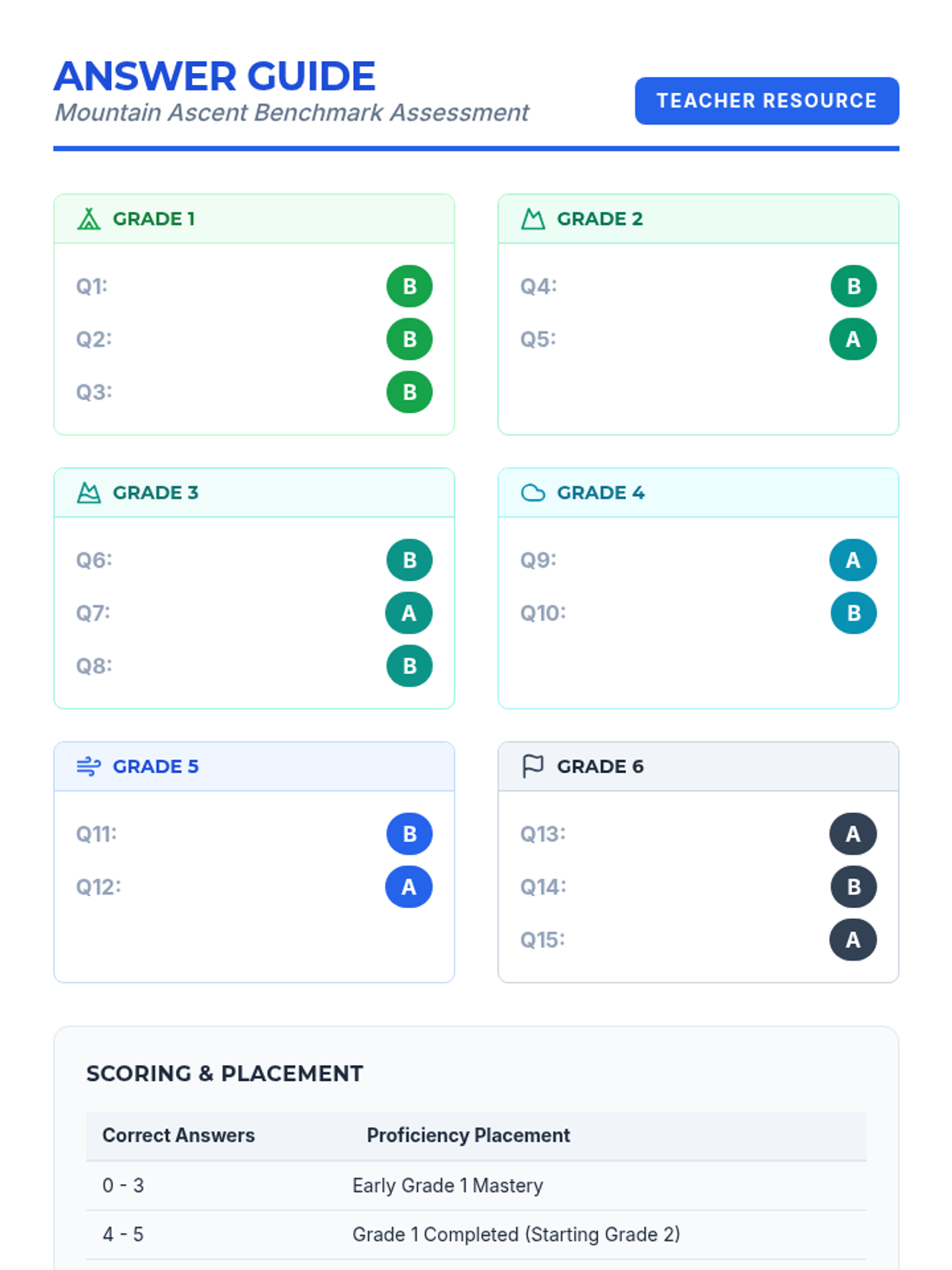
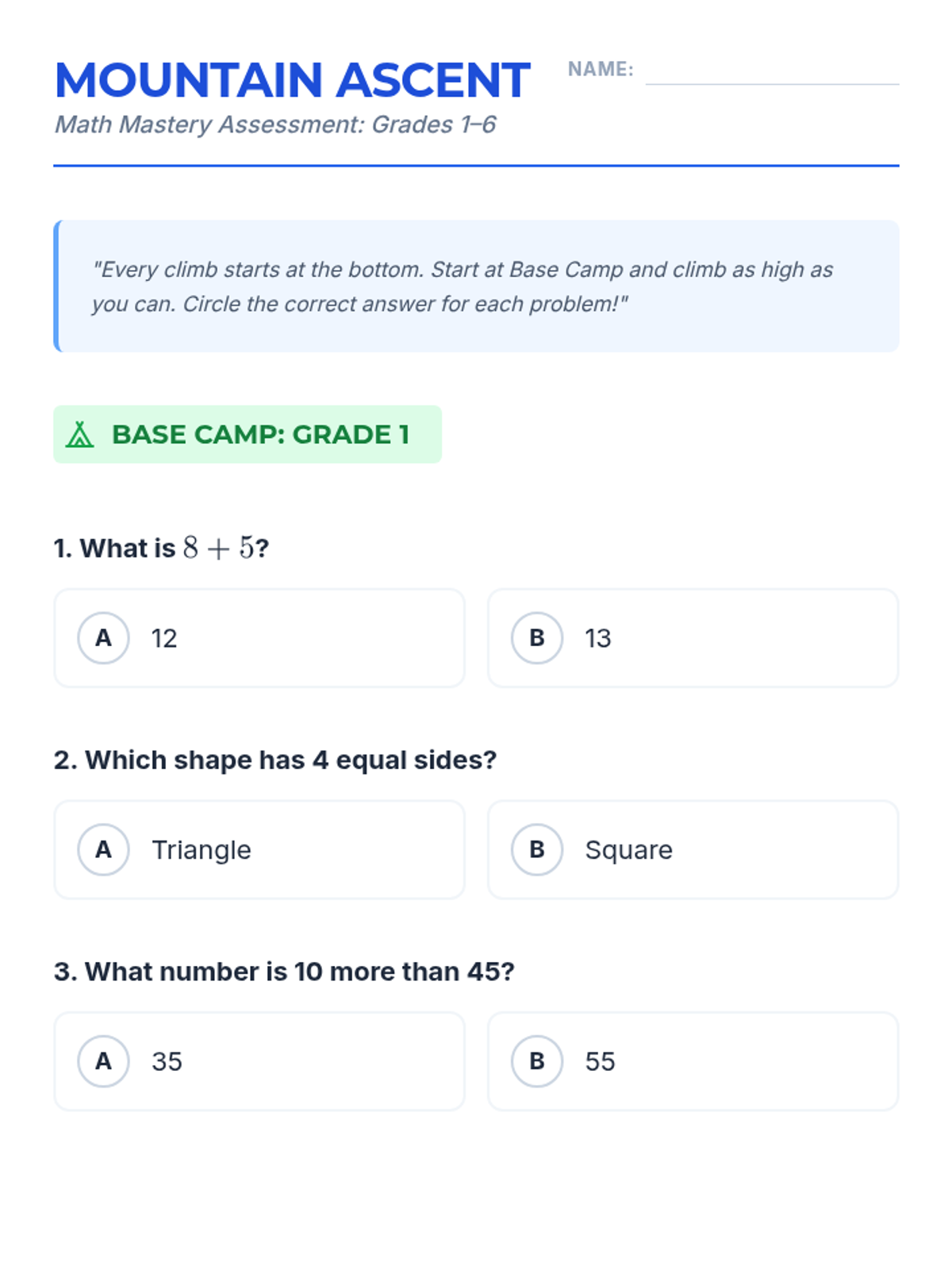
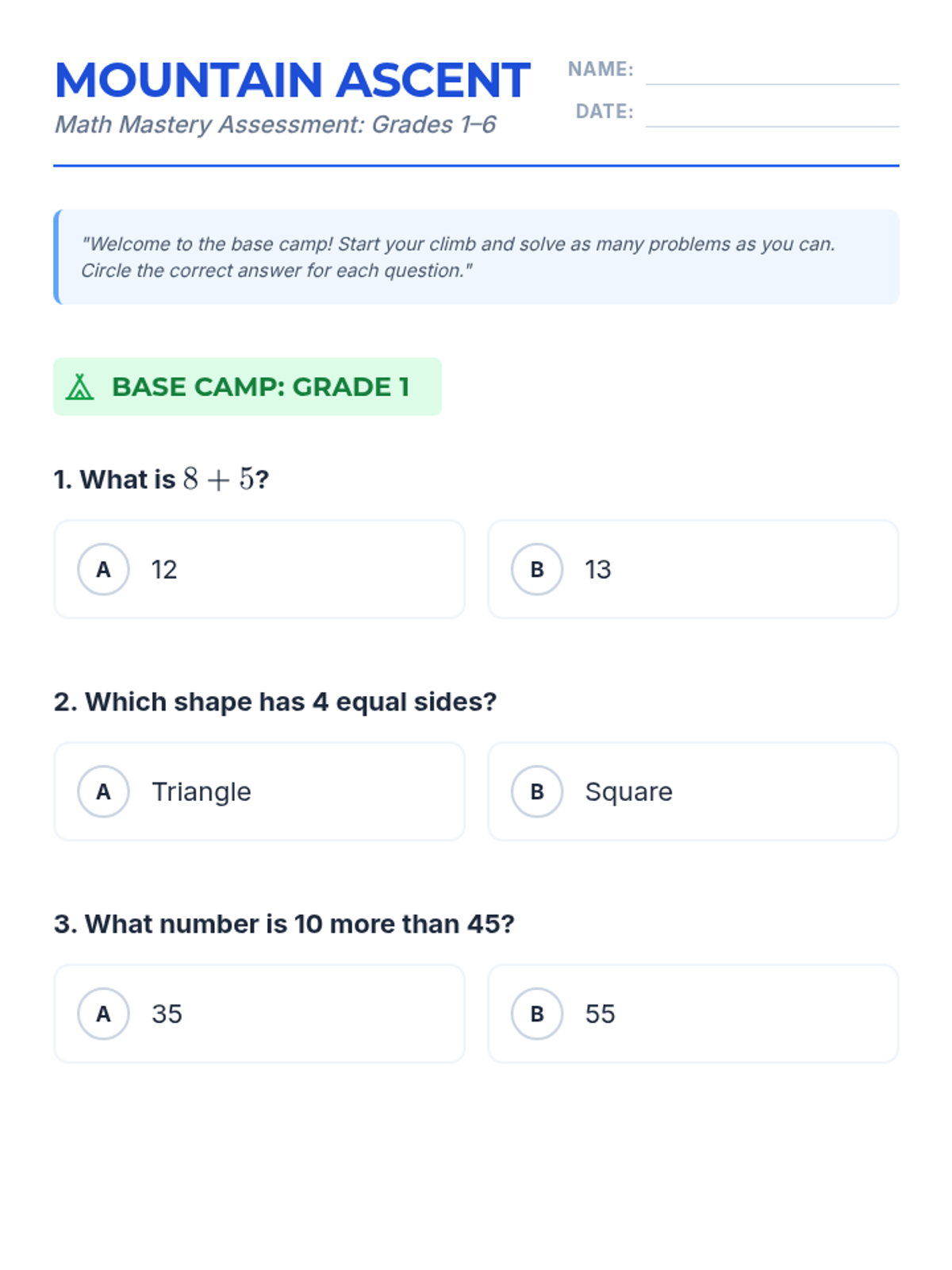
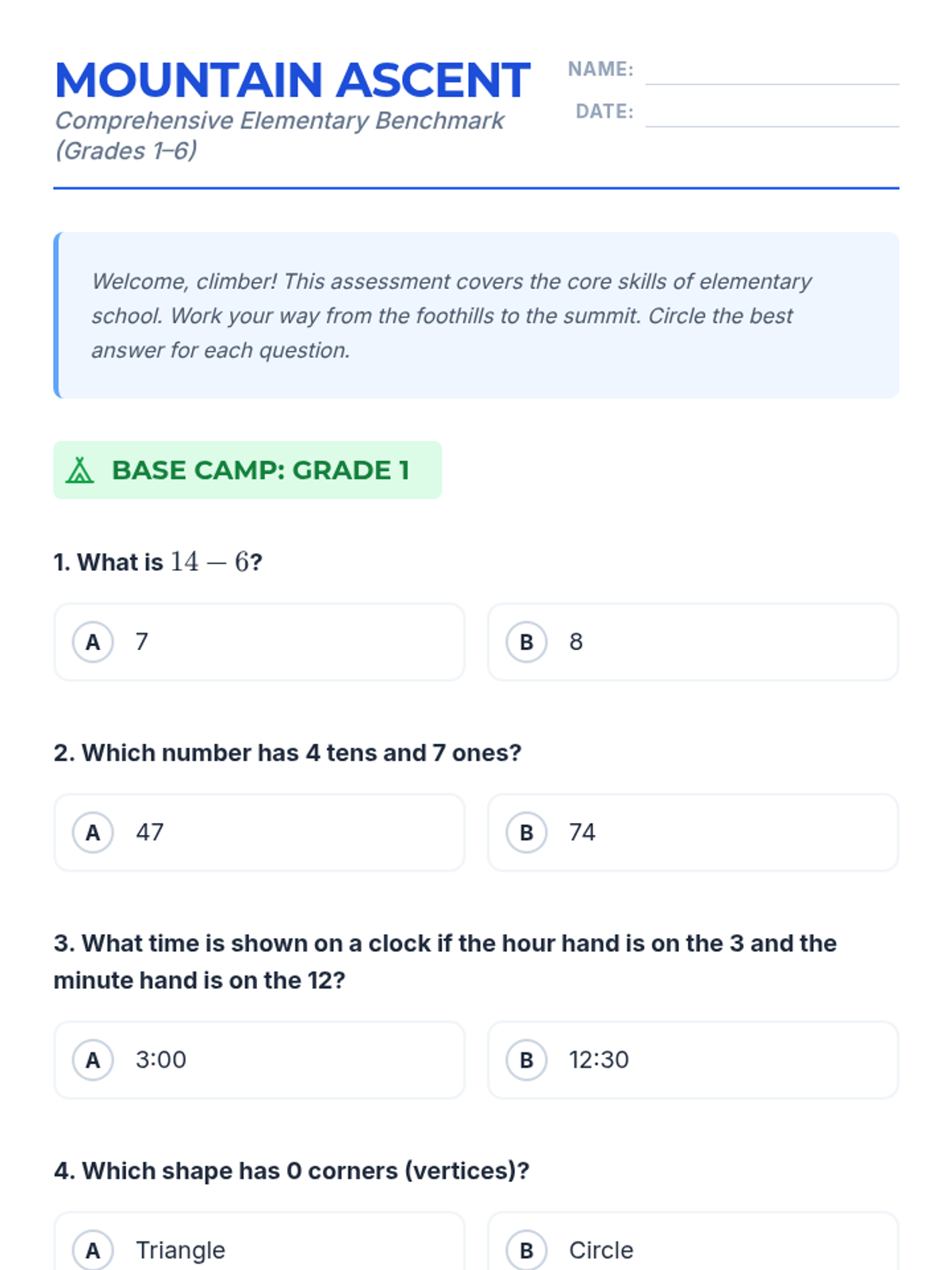
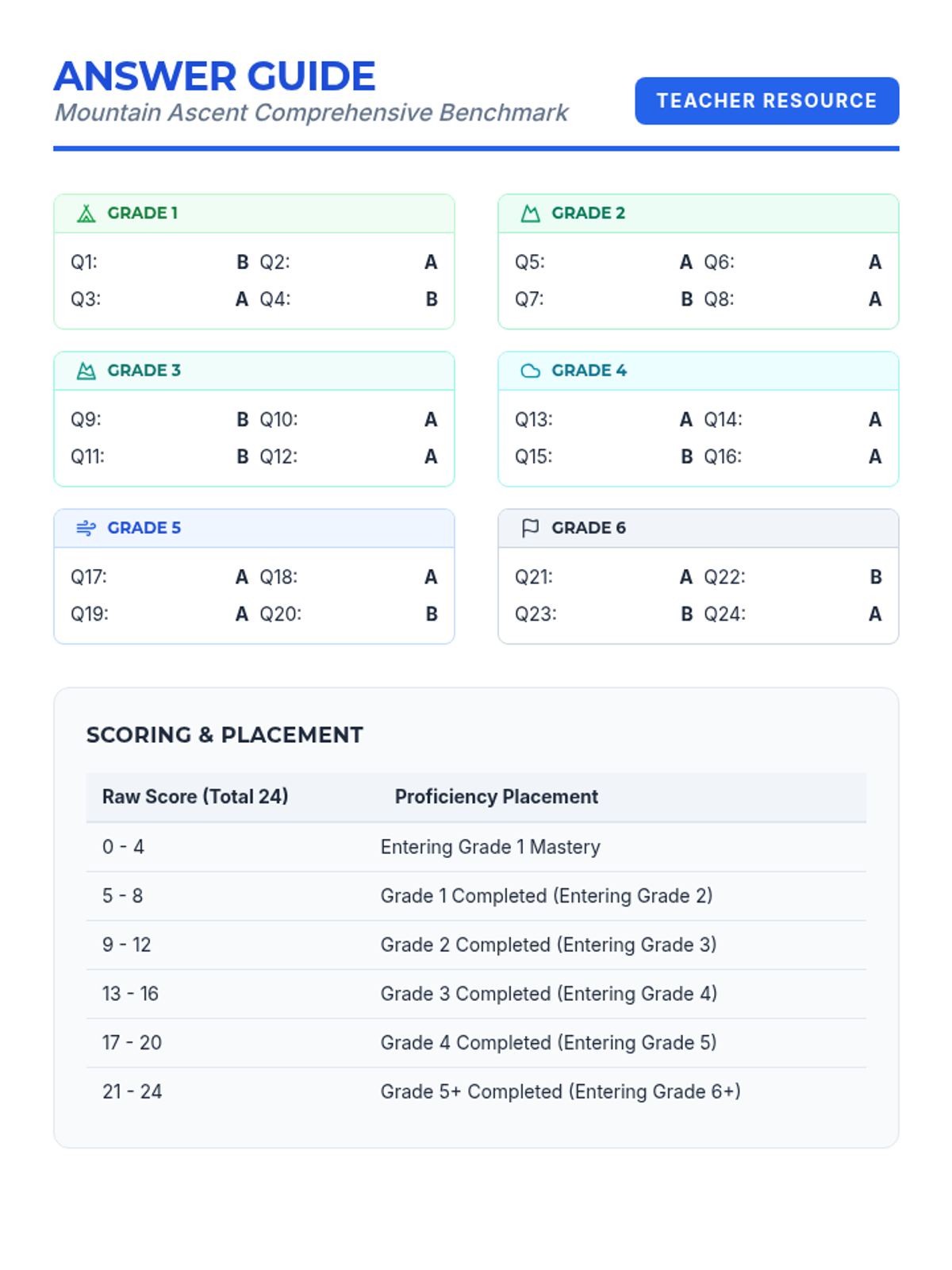
A comprehensive math benchmark assessment covering key standards from Grade 1 through Grade 6, designed to track student progress and identify skill gaps.
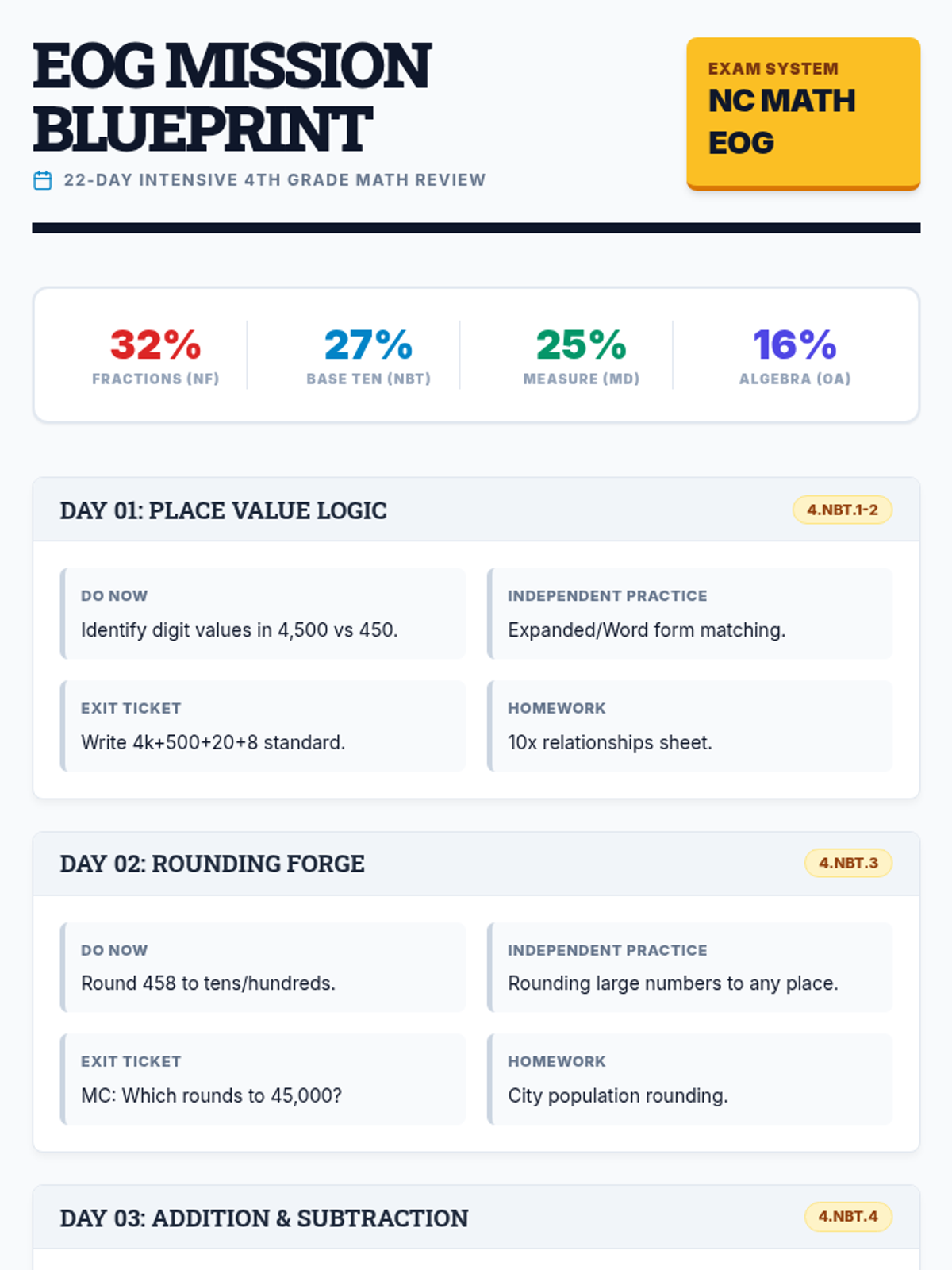
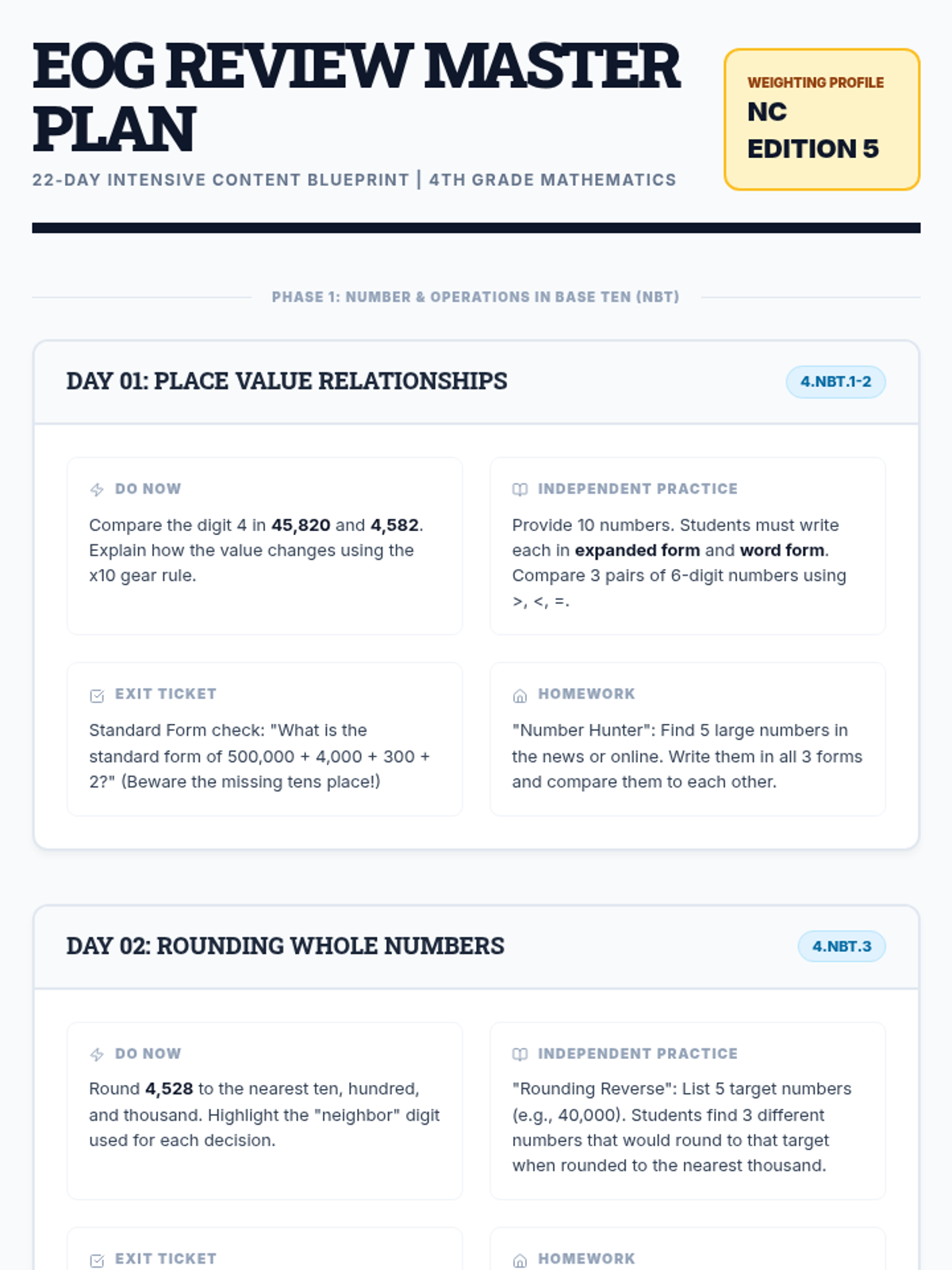
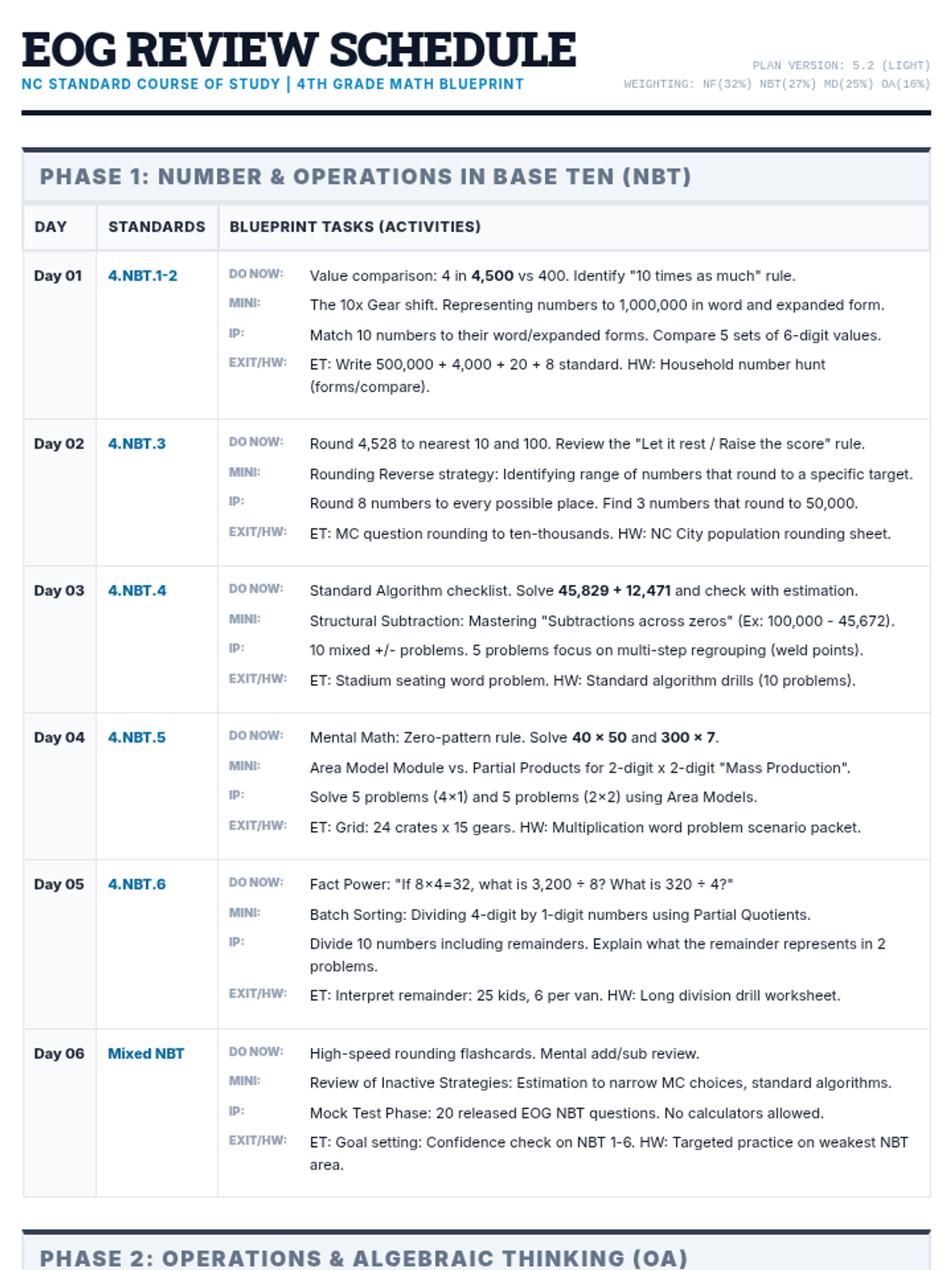
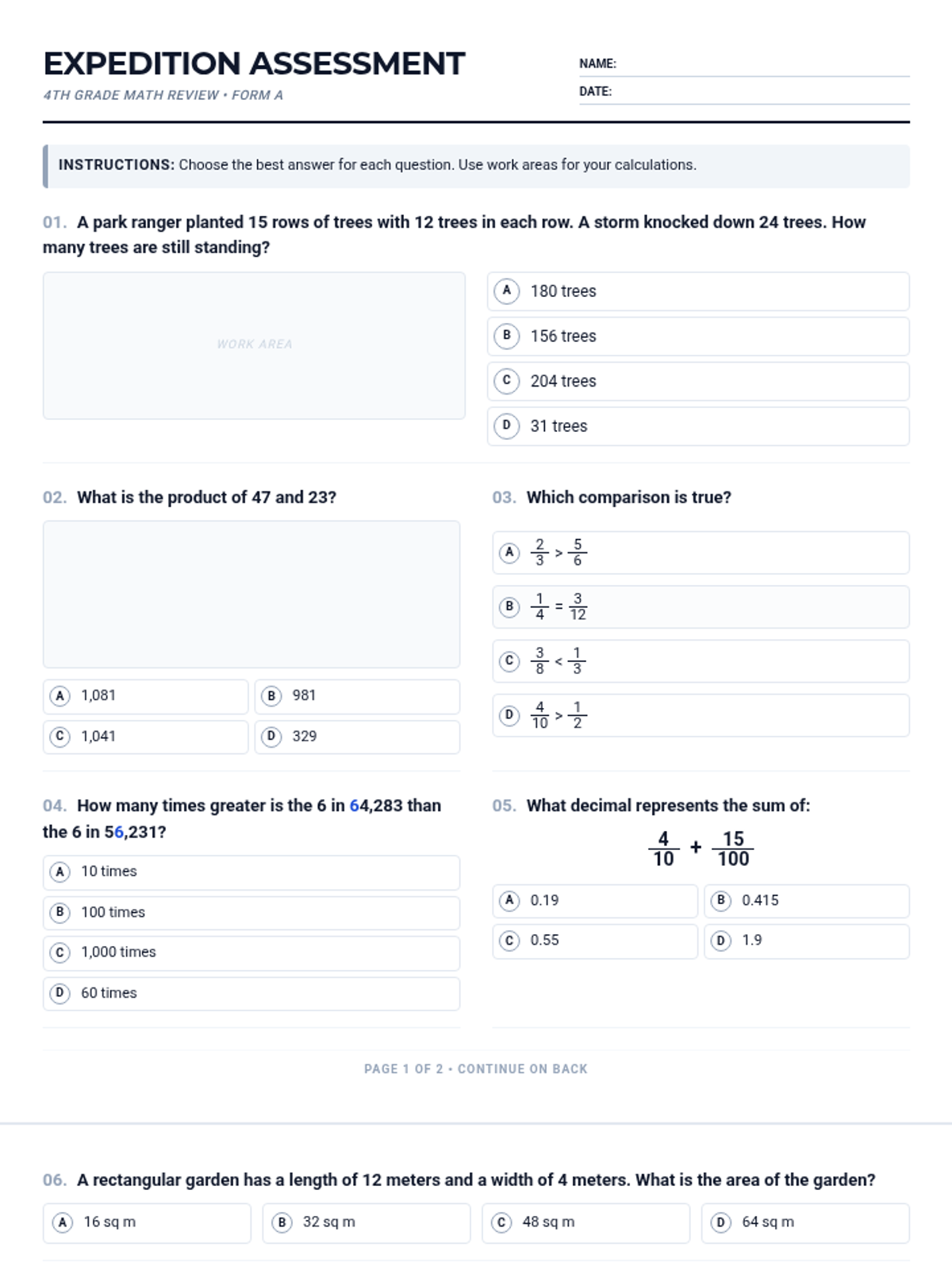
A high-stakes review lesson covering all 4th-grade math domains (OA, NBT, NF, MD, G) with a focus on multi-step problem solving and EOG-style questions.
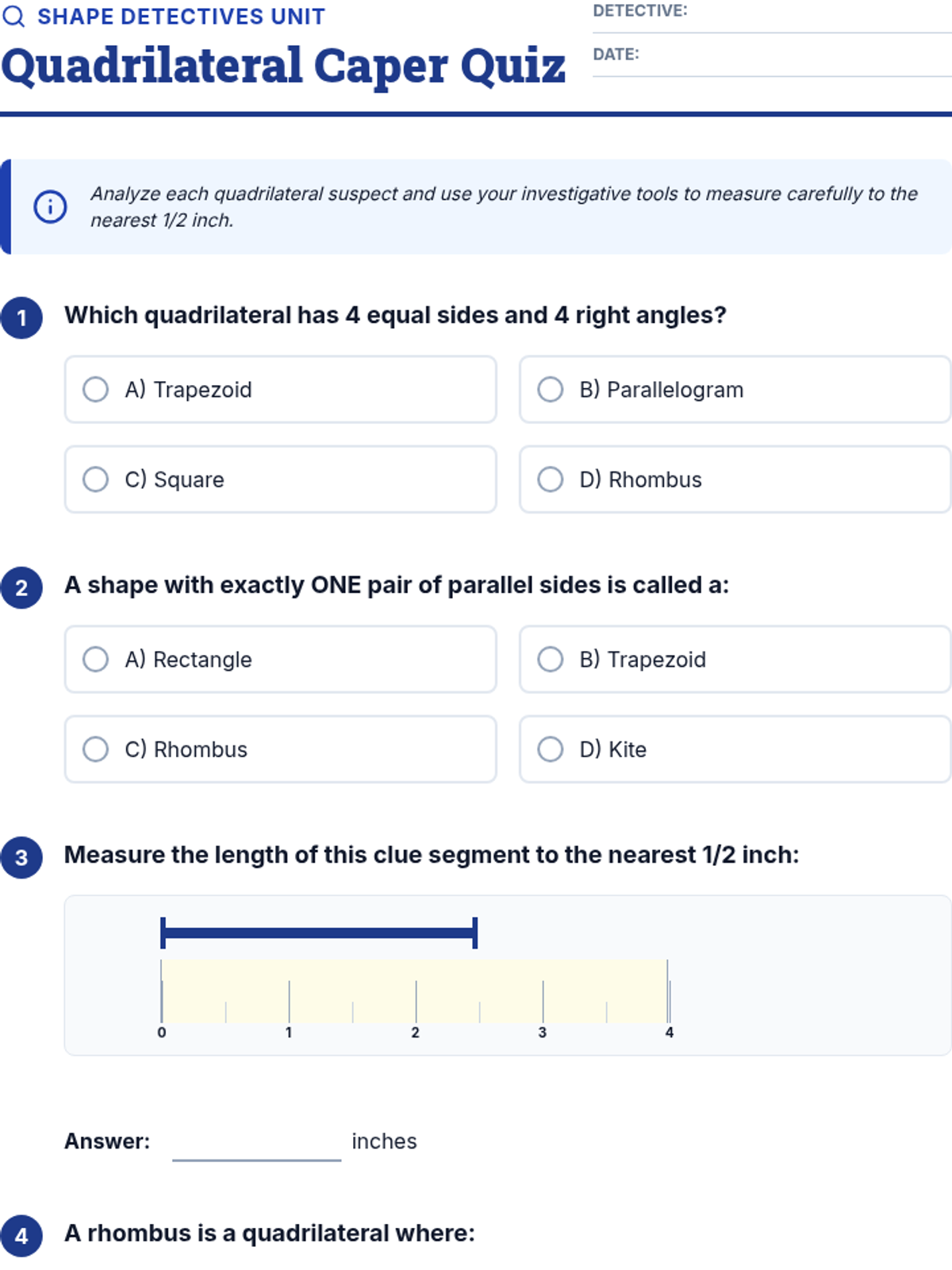
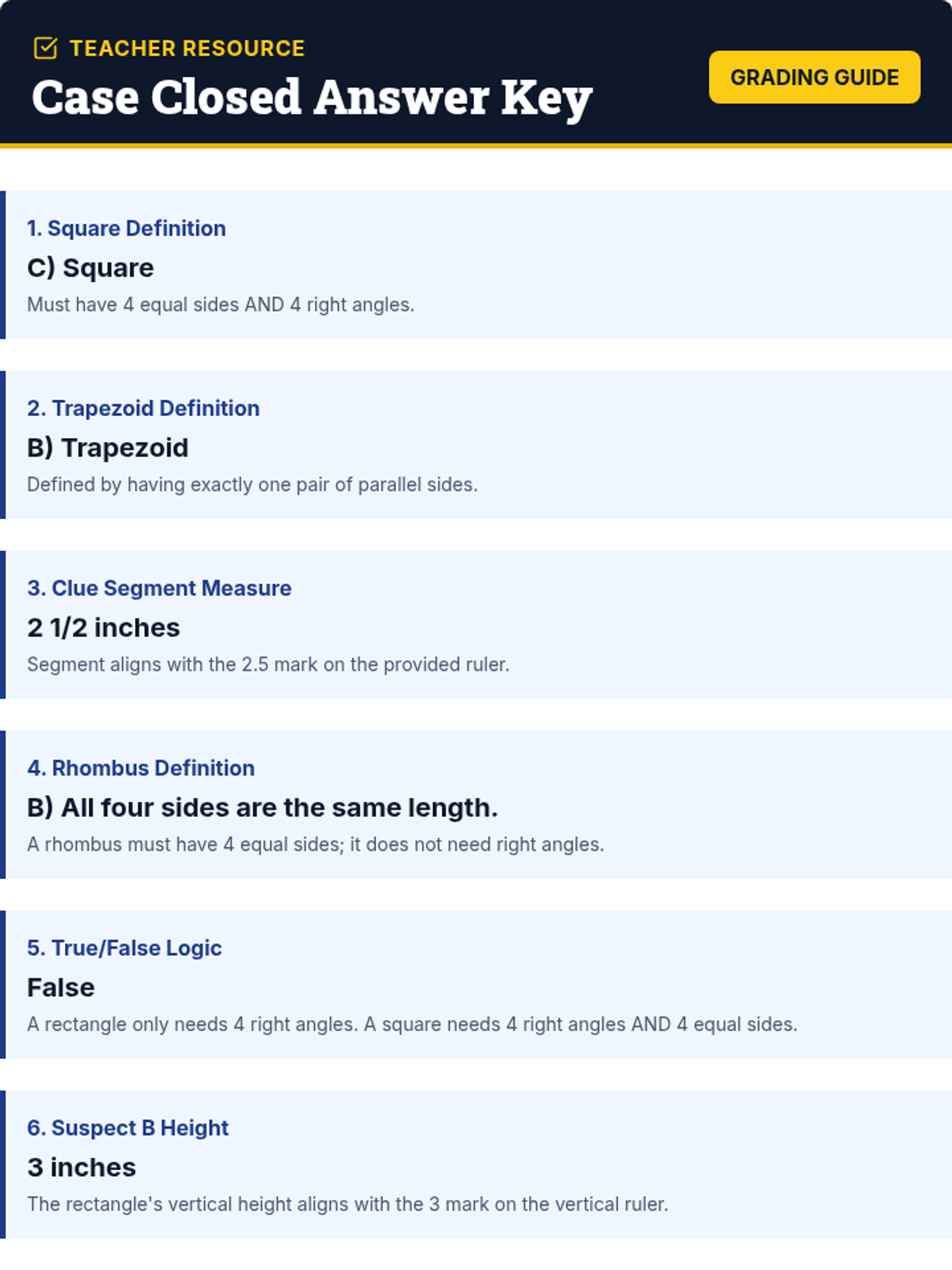
Students will identify various quadrilaterals by their attributes and practice measuring lengths to the nearest half-inch in this detective-themed lesson.
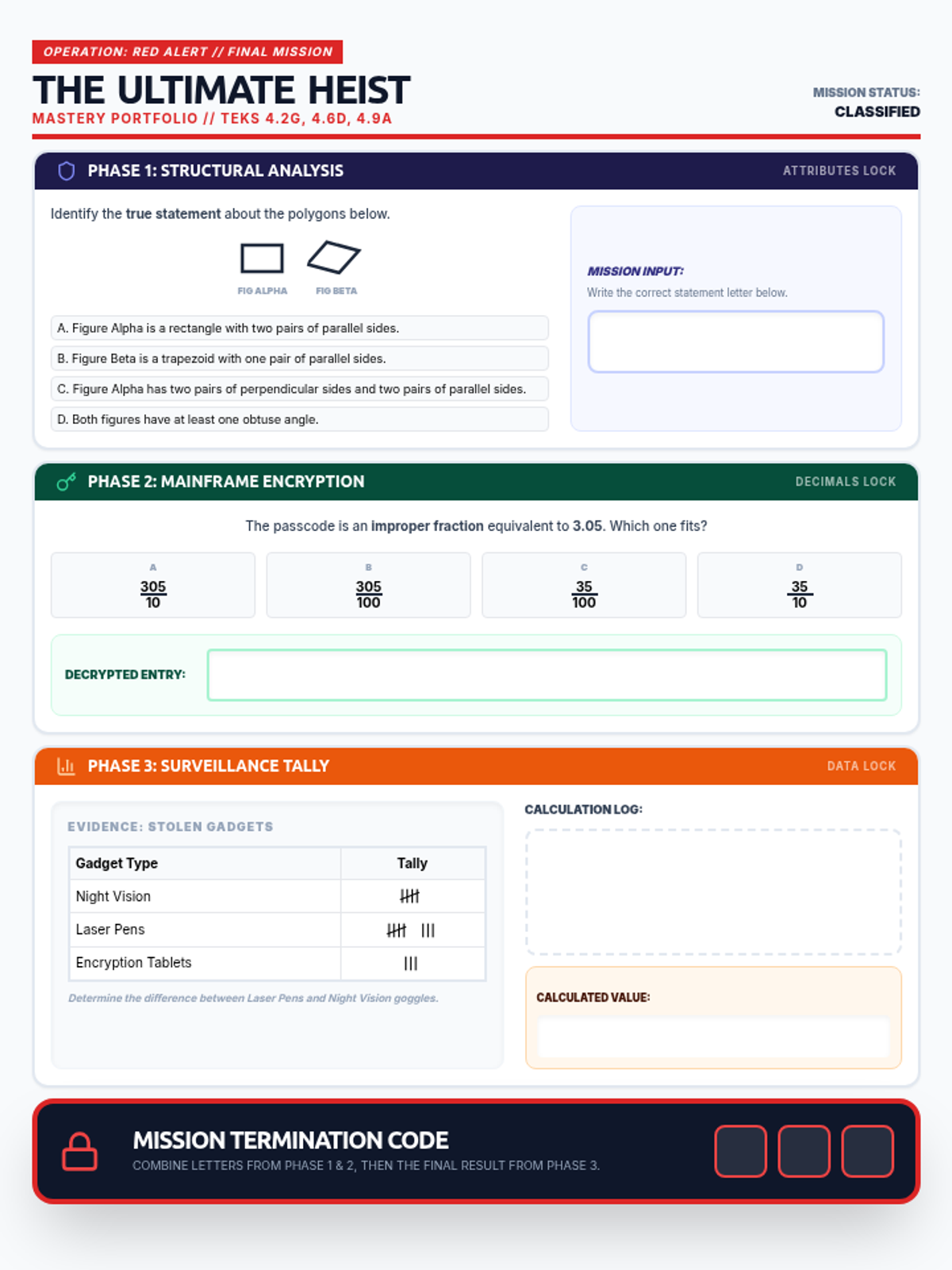
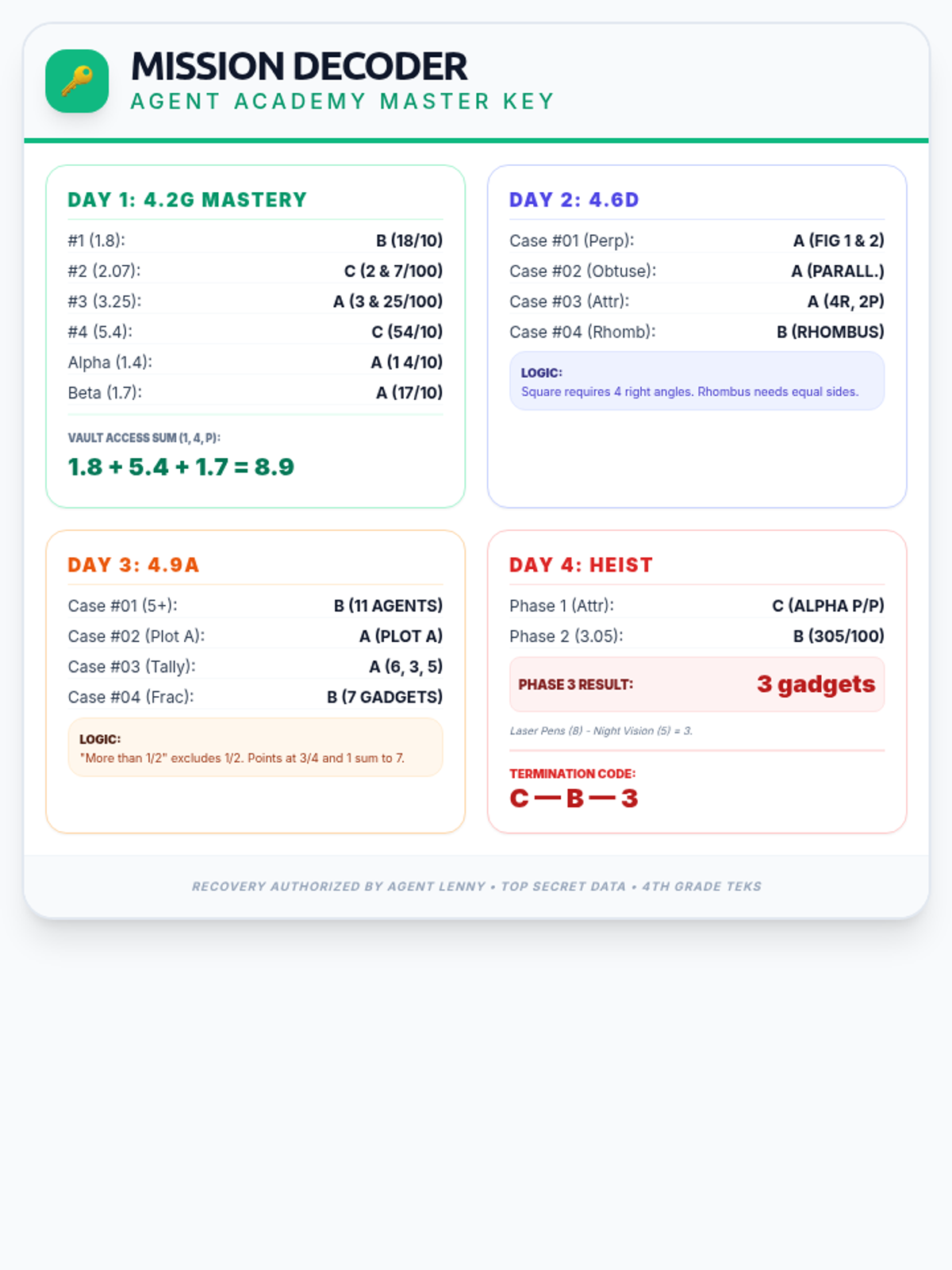
A comprehensive review of 4.2G, 4.6D, and 4.9A through a final mission. This lesson integrates all three standards into a culminating "Ultimate Heist" escape room challenge.
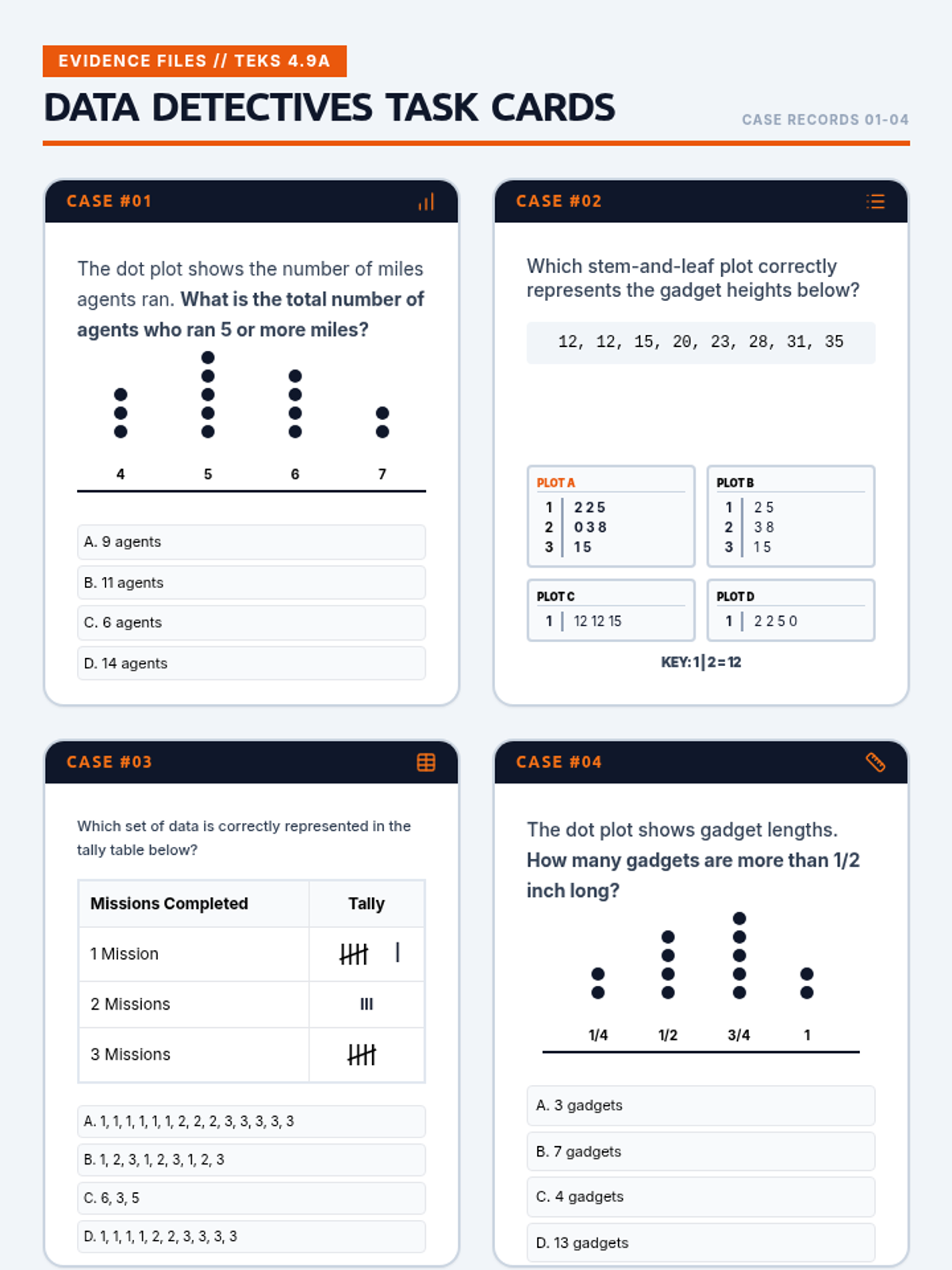
Focuses on TEKS 4.9A: Representing data on frequency tables, dot plots, and stem-and-leaf plots. Students act as investigators analyzing evidence files to solve a data-driven mystery.
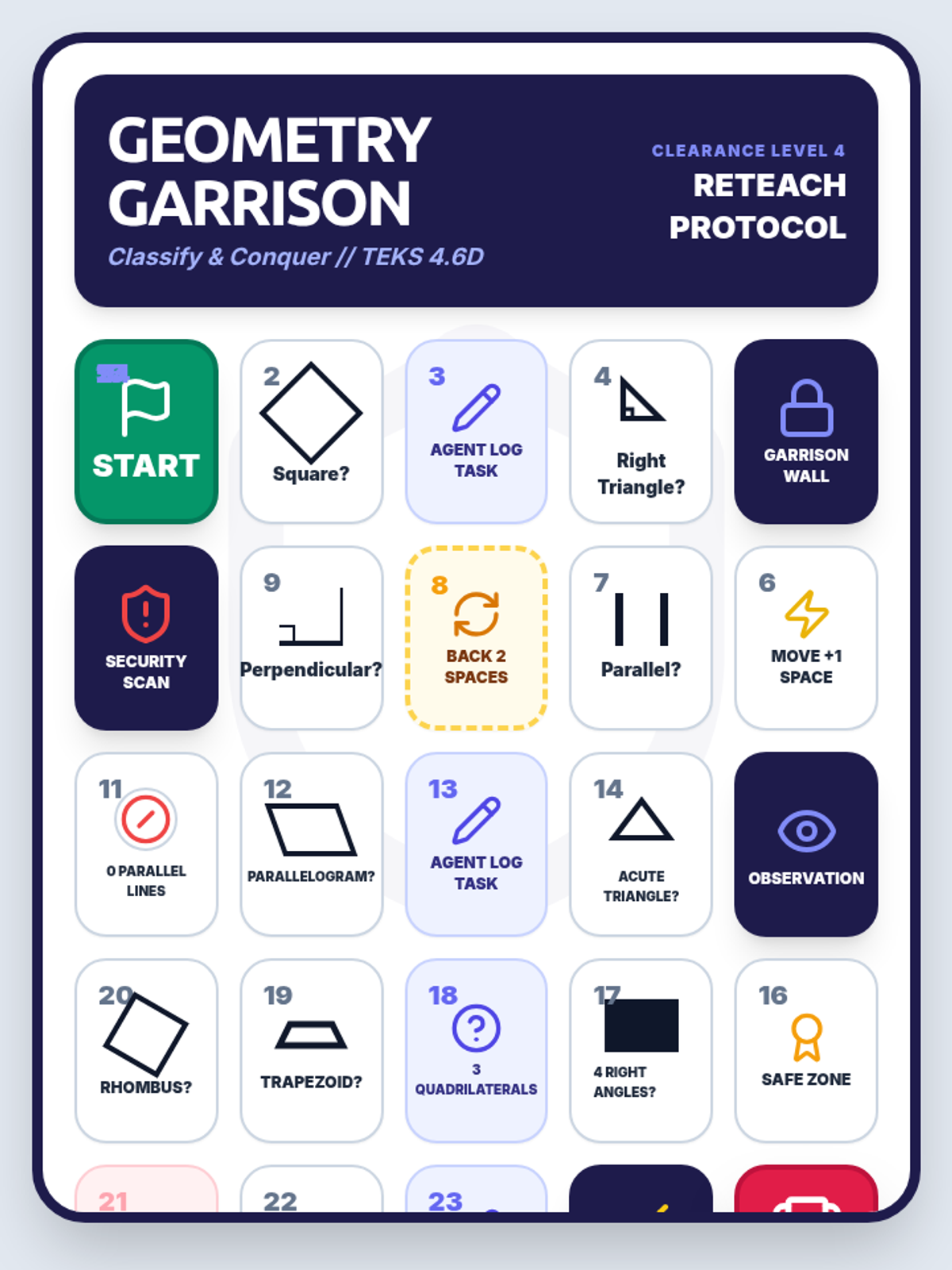
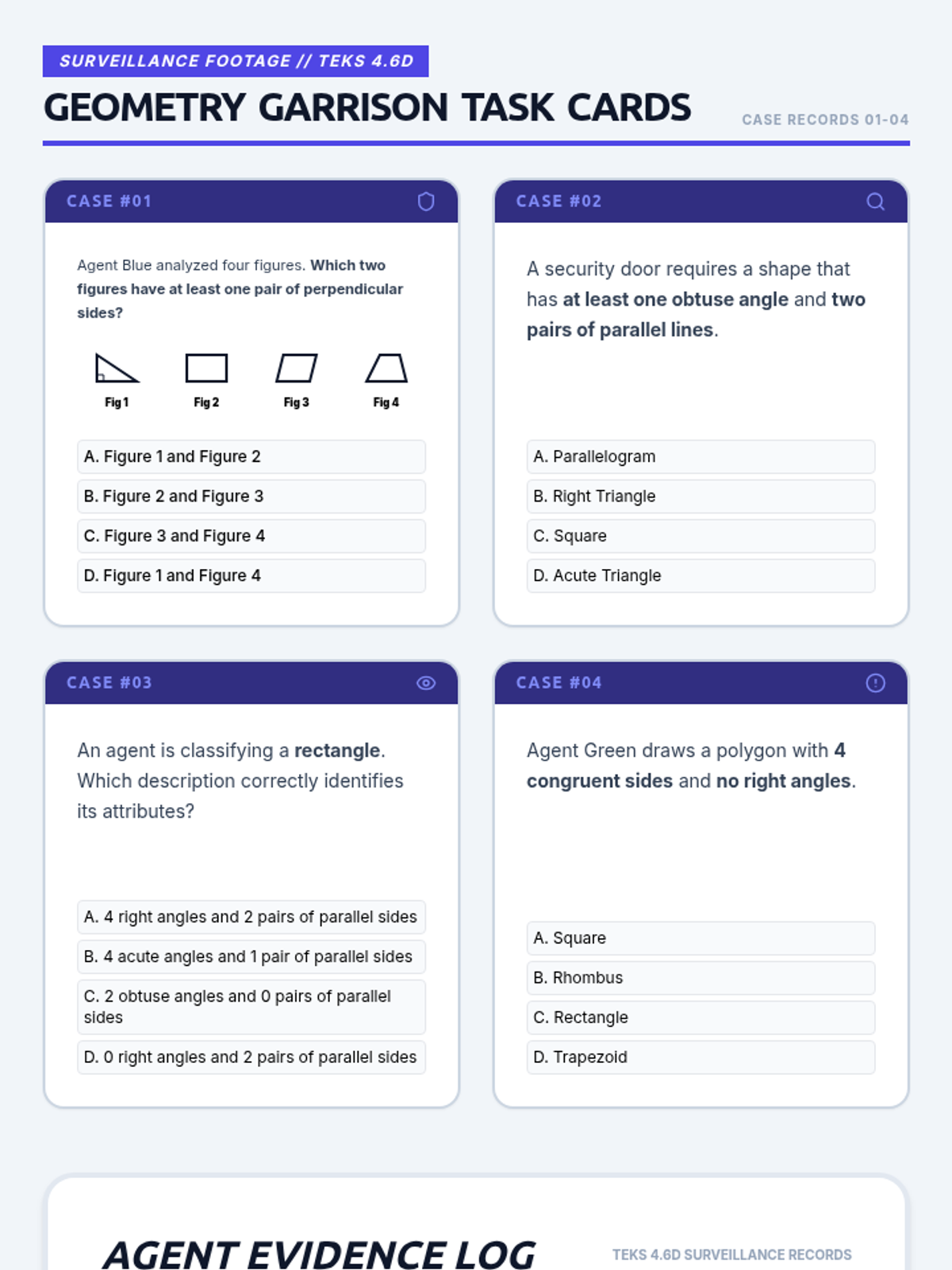
Focuses on TEKS 4.6D: Classifying two-dimensional figures based on parallel and perpendicular lines and angle types. Students analyze evidence files (Task Cards) to identify high-security shapes.
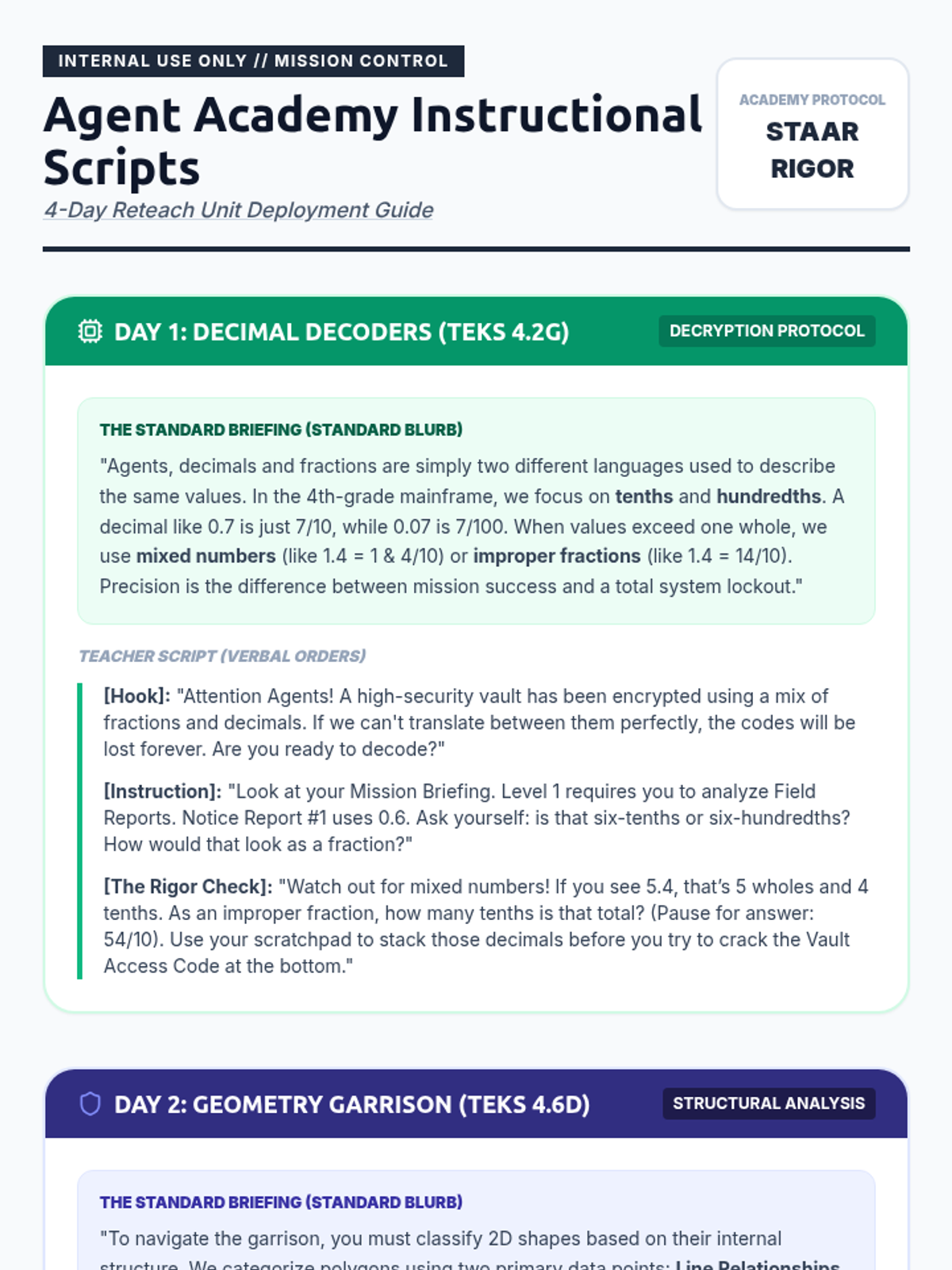
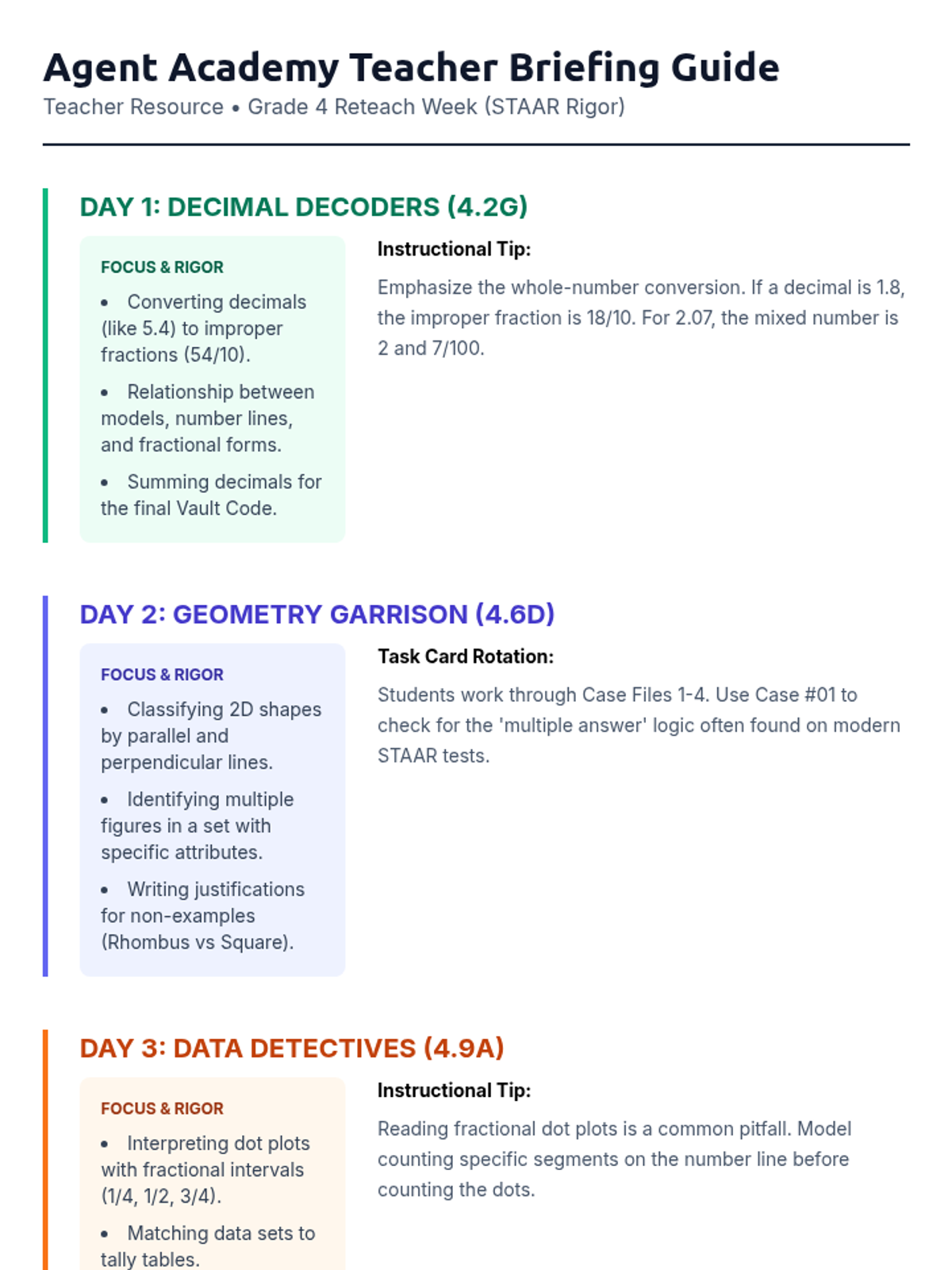
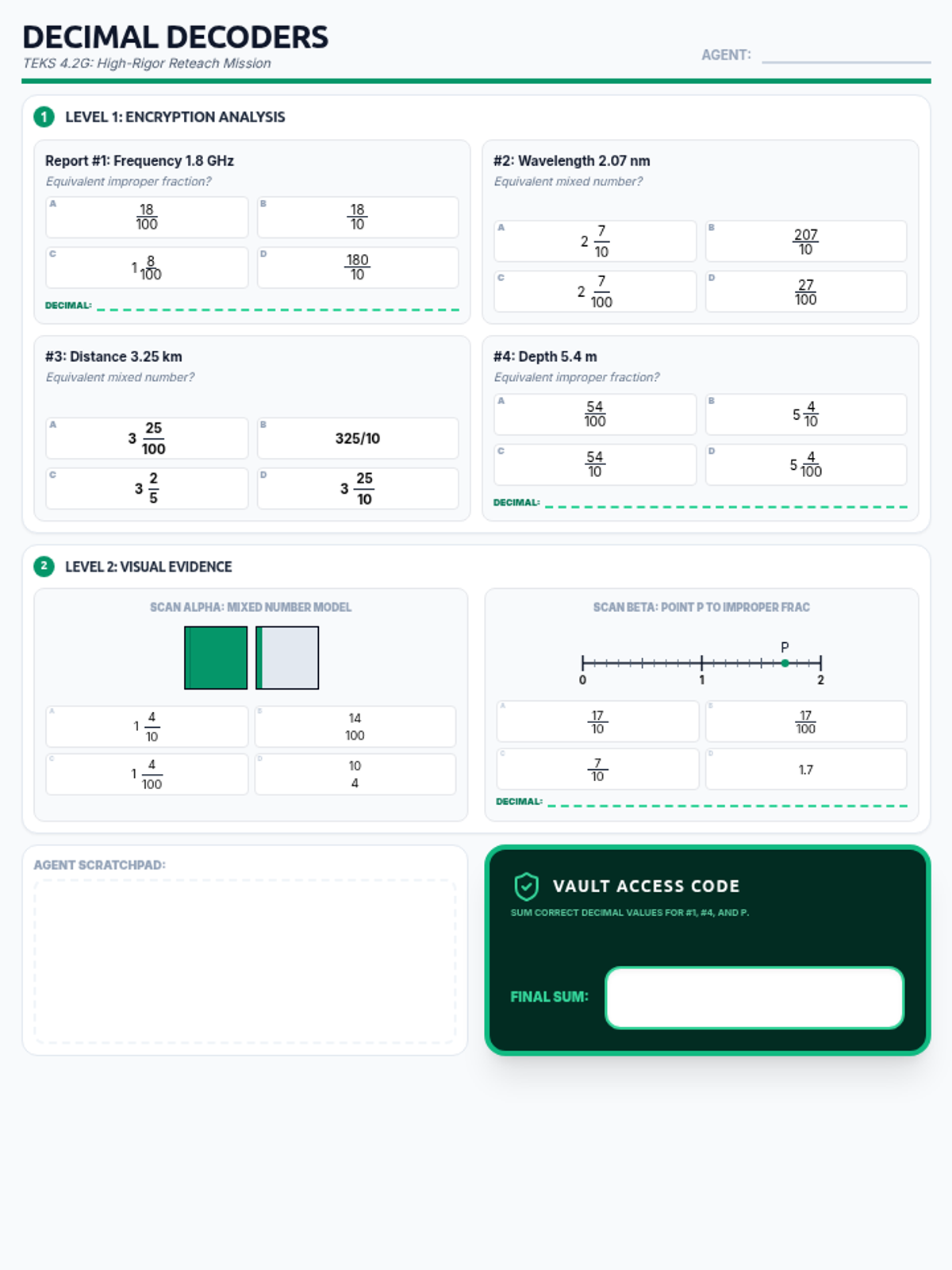
Focuses on TEKS 4.2G: Relating decimals to fractions that name tenths and hundredths. Students take on the role of codebreakers to unlock a digital vault by matching values across different representations.
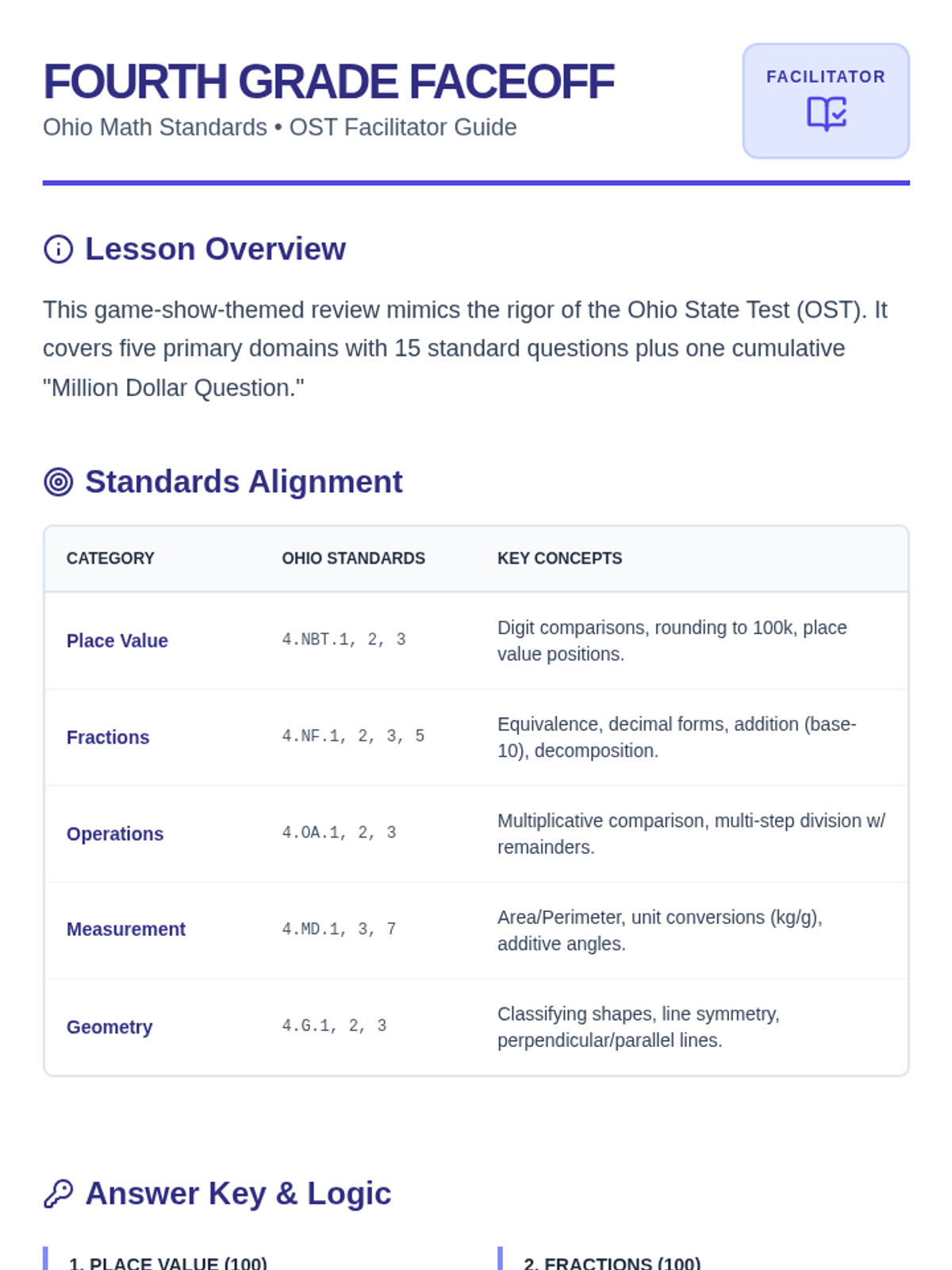
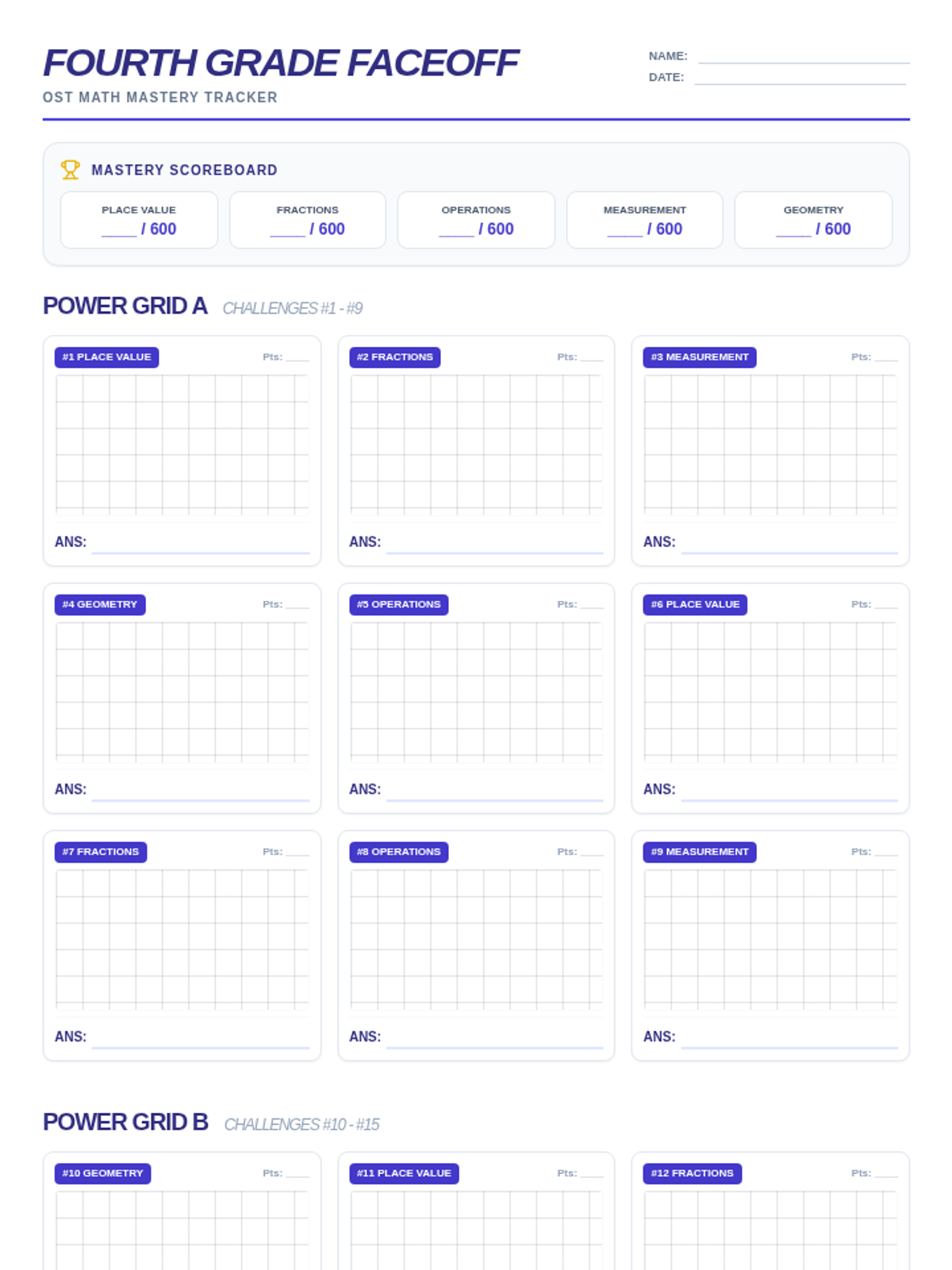
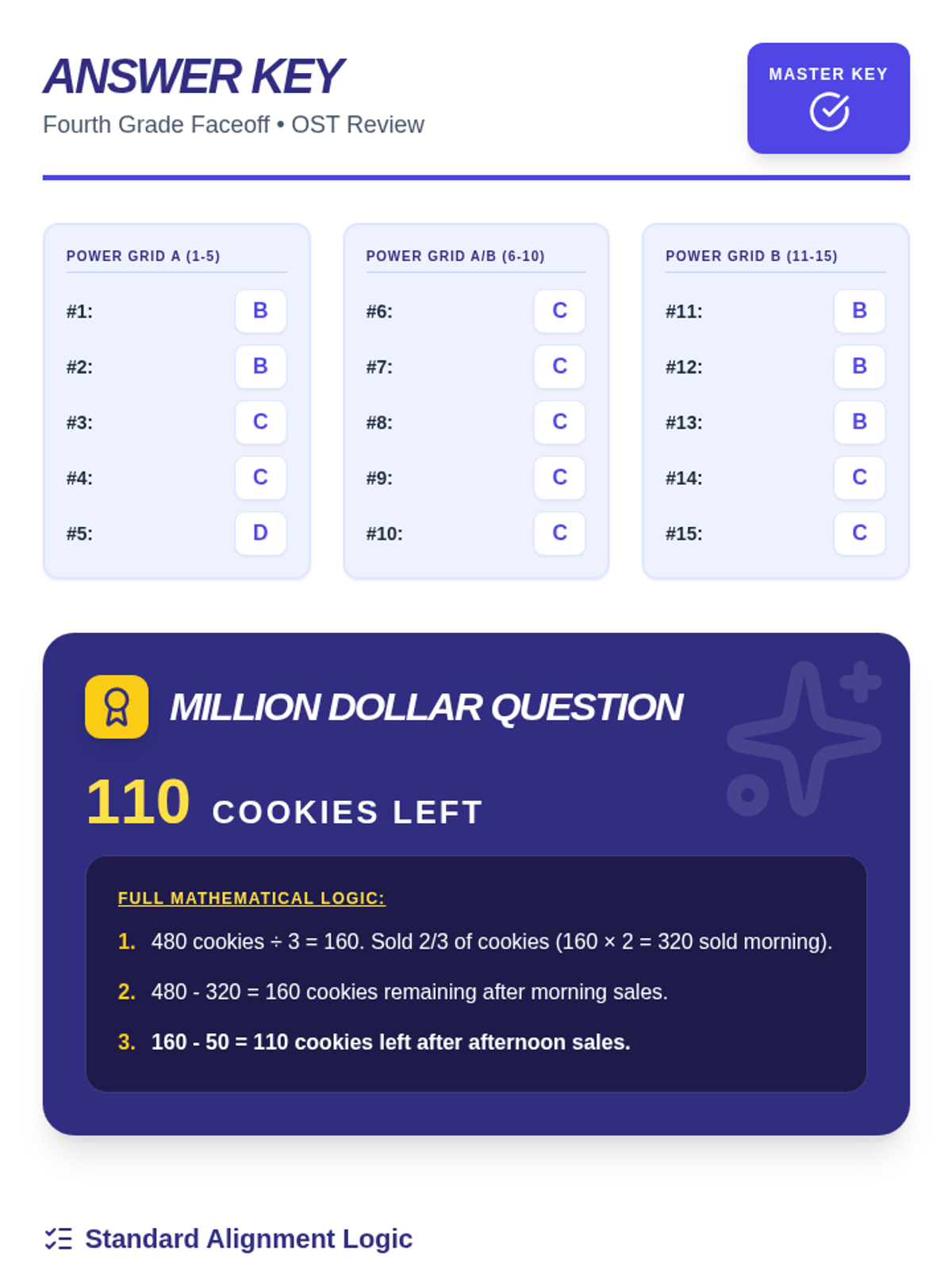
A high-energy, game-show-themed review session covering the full spectrum of 4th Grade Ohio Math Standards to prepare students for the OST.
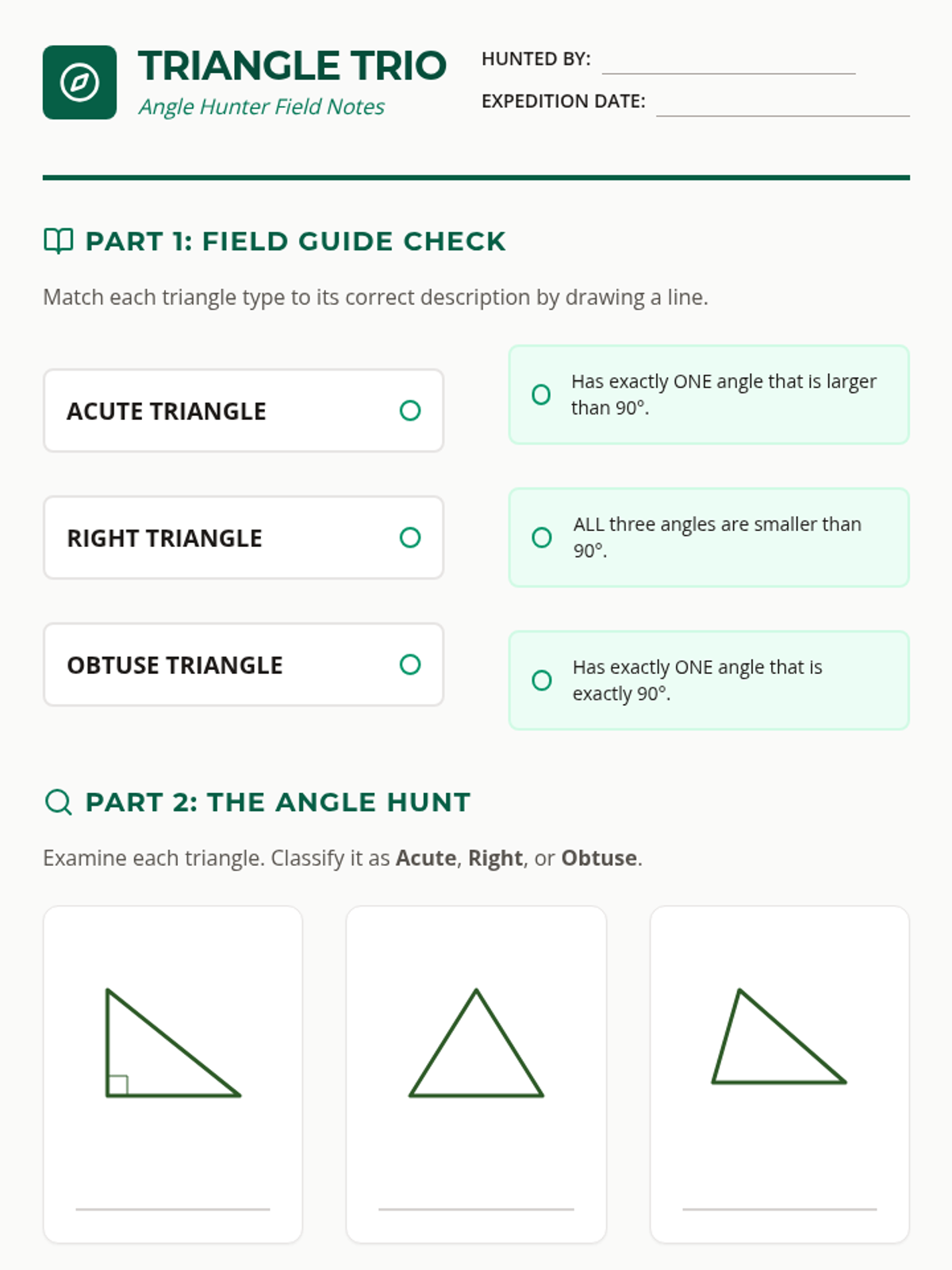
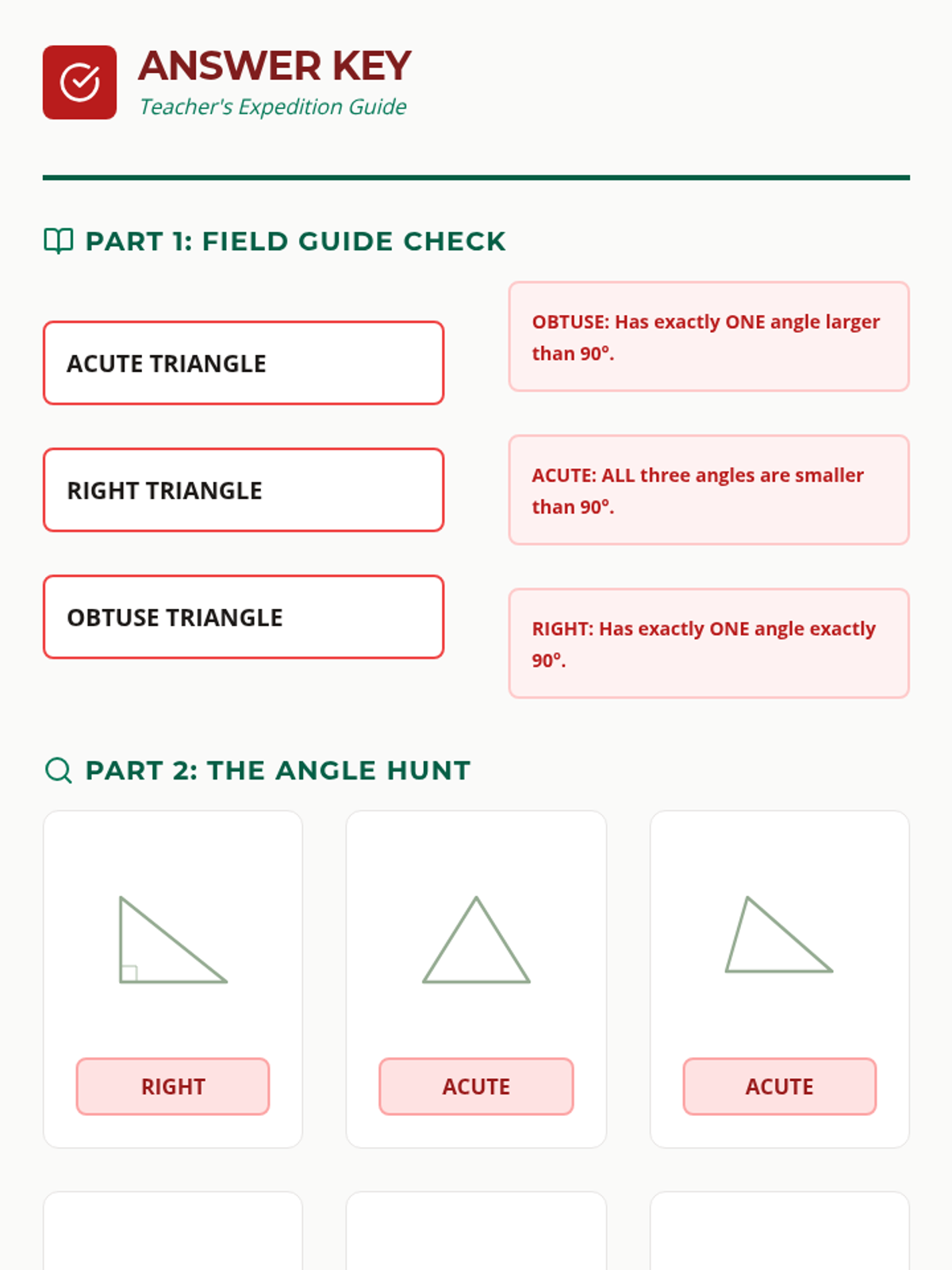
A 4th-grade lesson focusing on identifying and classifying triangles based on their internal angles: acute, right, and obtuse. Students will explore angle benchmarks and practice sorting triangles in a 'Geometry Safari' theme.
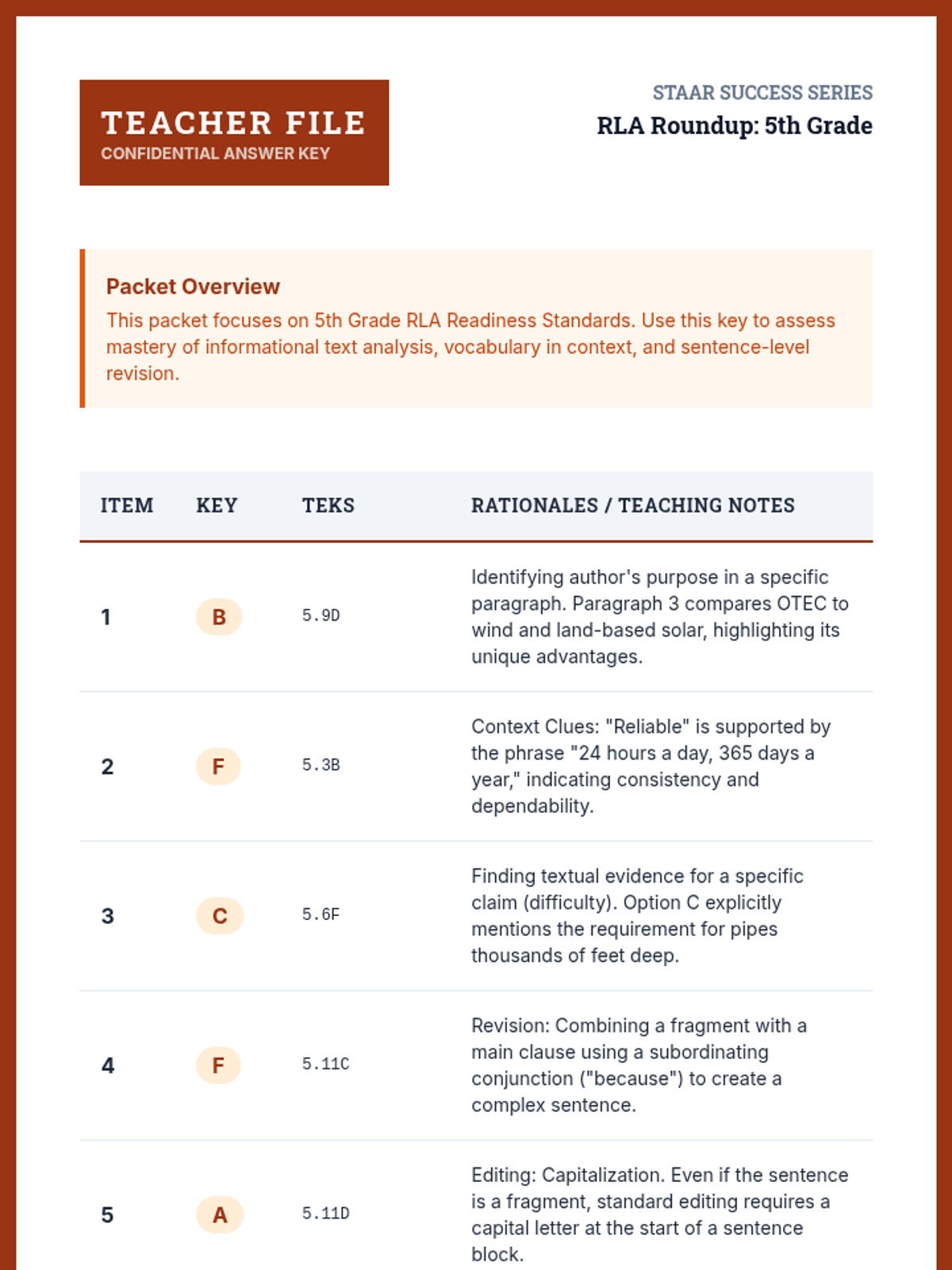
5th grade RLA review emphasizing theme, author's purpose, synthesis of information, and polished expository writing.
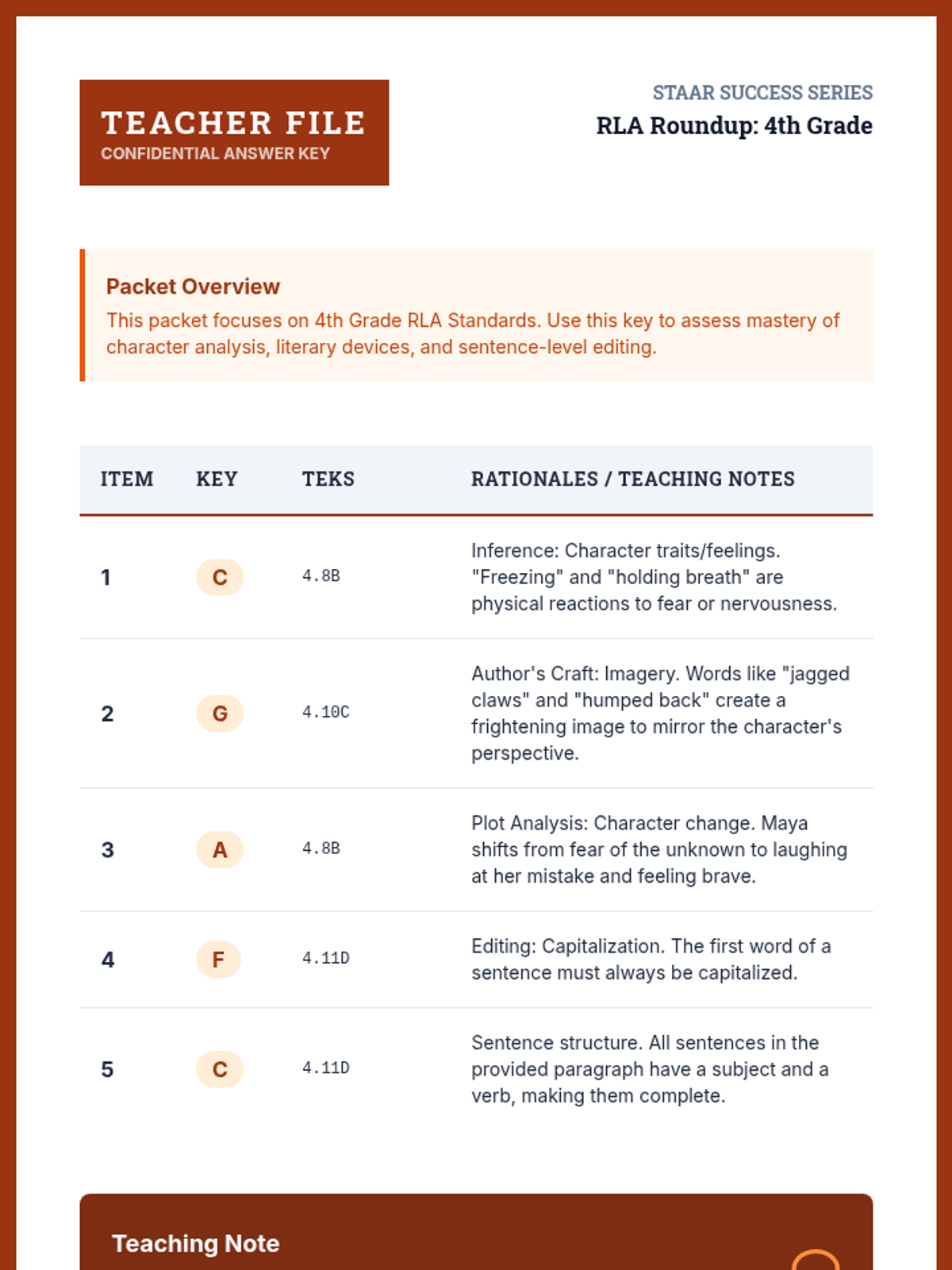
4th grade RLA mastery practice including complex text analysis, context clues, and multi-paragraph writing prompts.
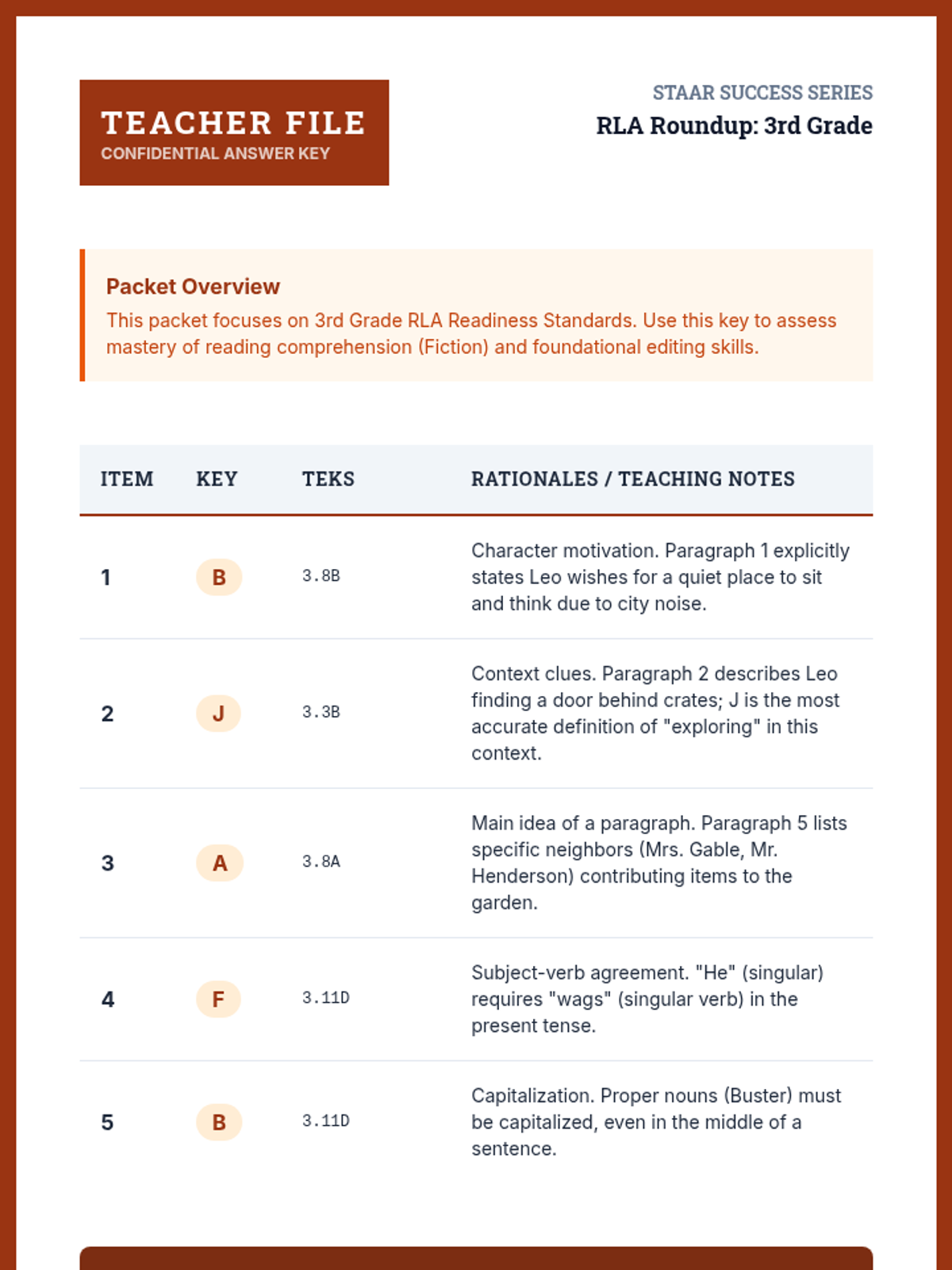
3rd grade RLA practice focusing on reading comprehension of fiction and non-fiction, as well as basic editing and revising skills.
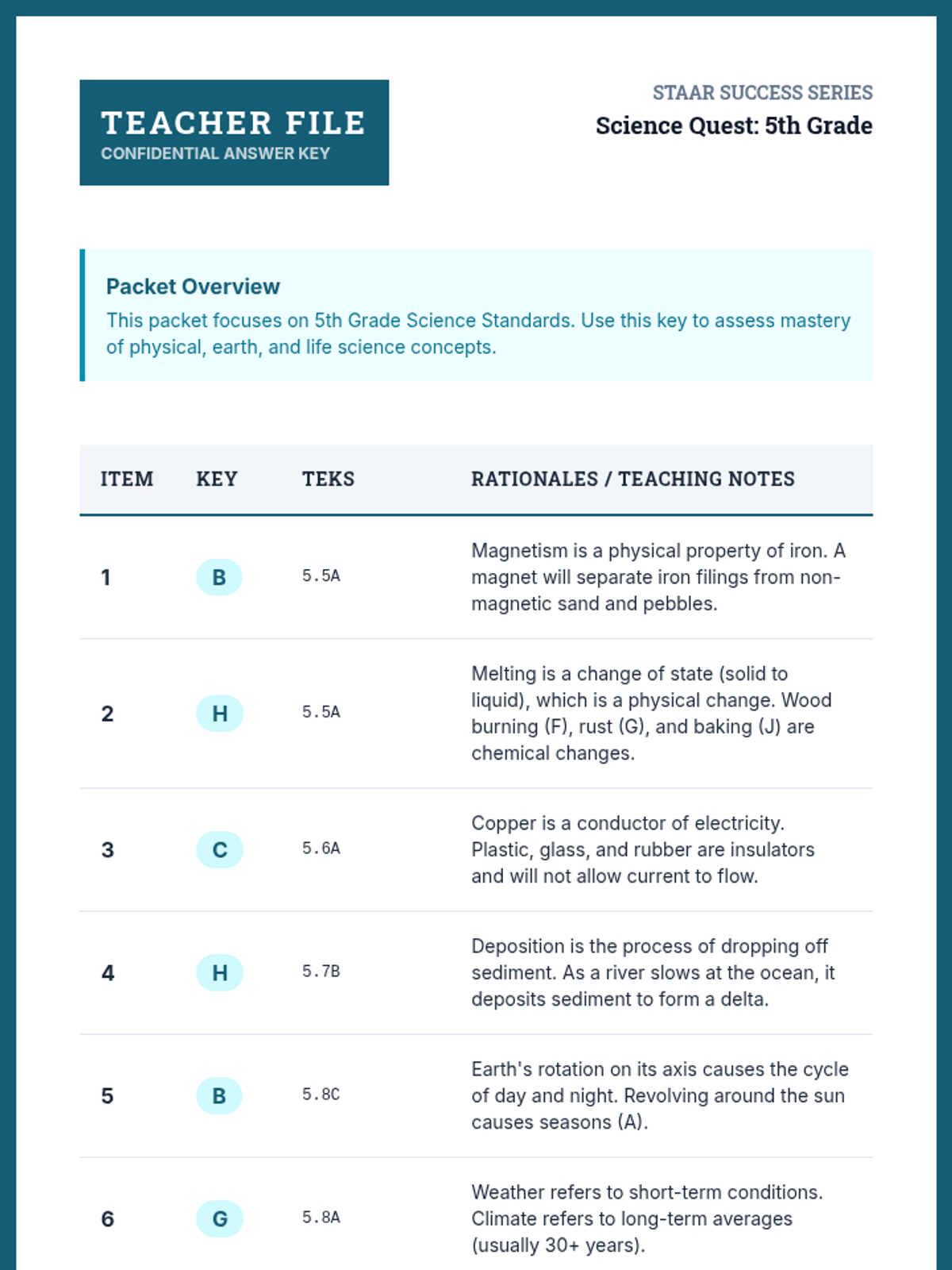
Comprehensive 5th grade science review of life, earth, and physical science topics from the TEKS curriculum.
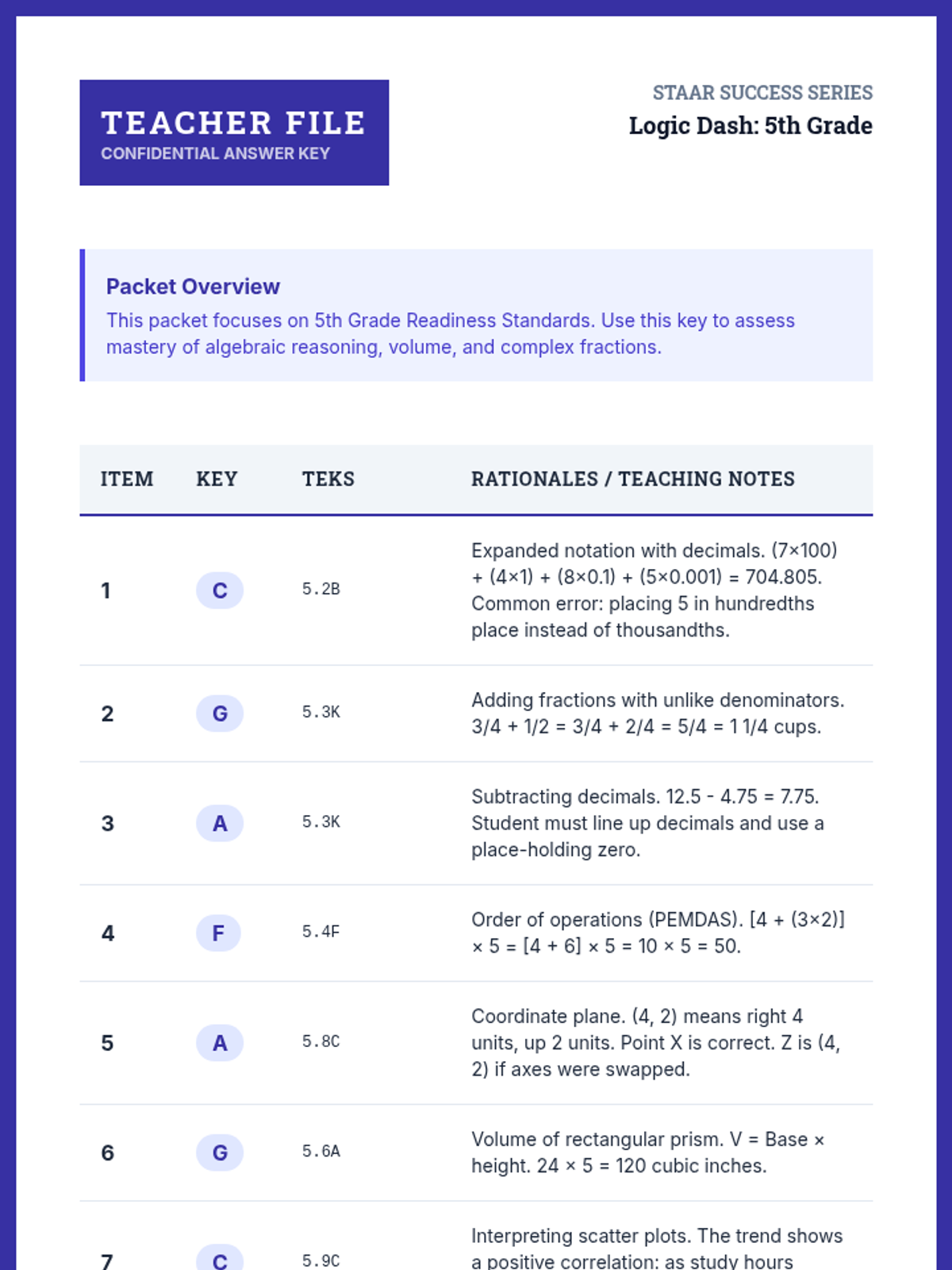
Rigorous 5th grade math review including coordinate planes, volume, order of operations, and adding/subtracting fractions.
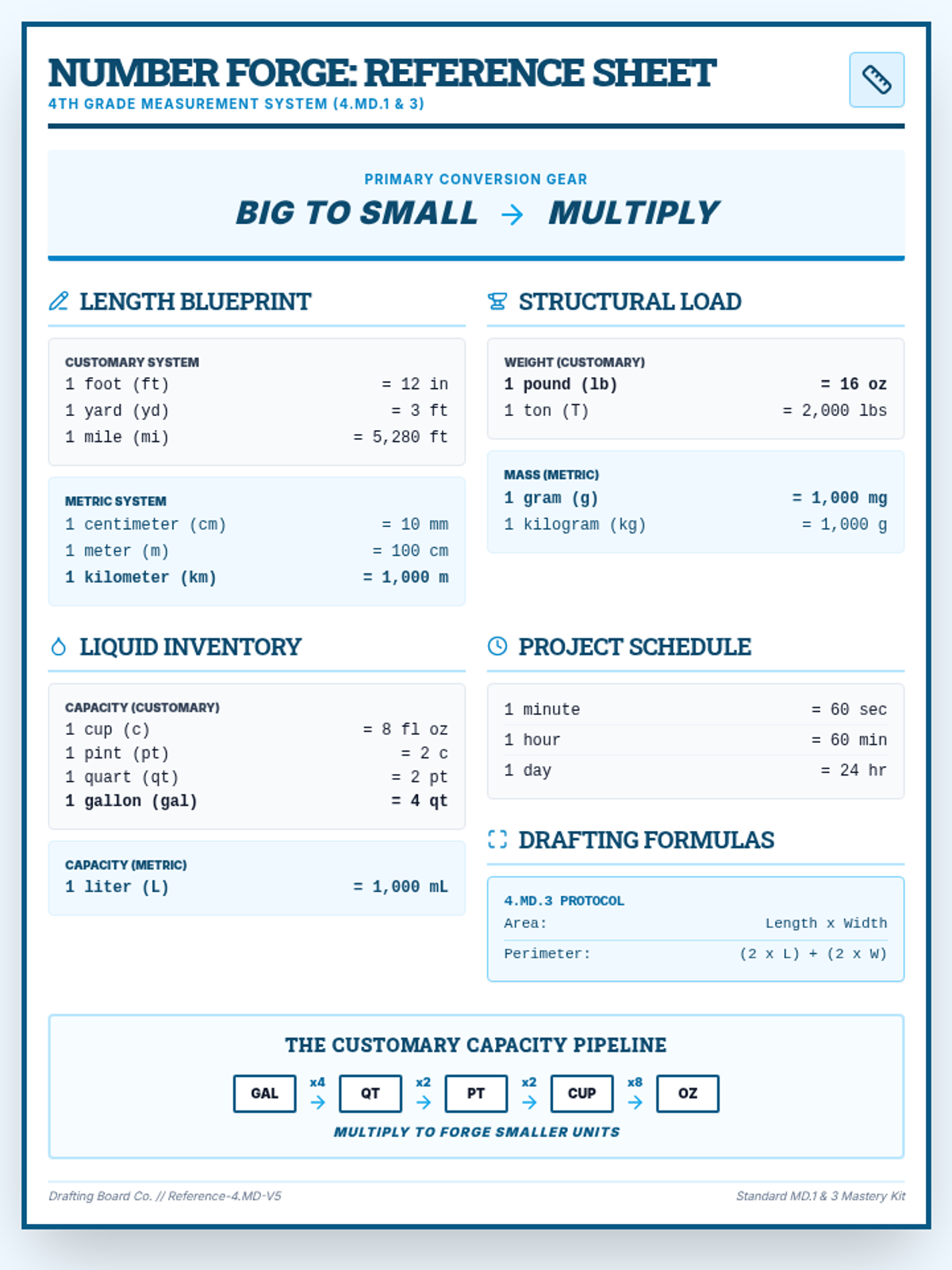
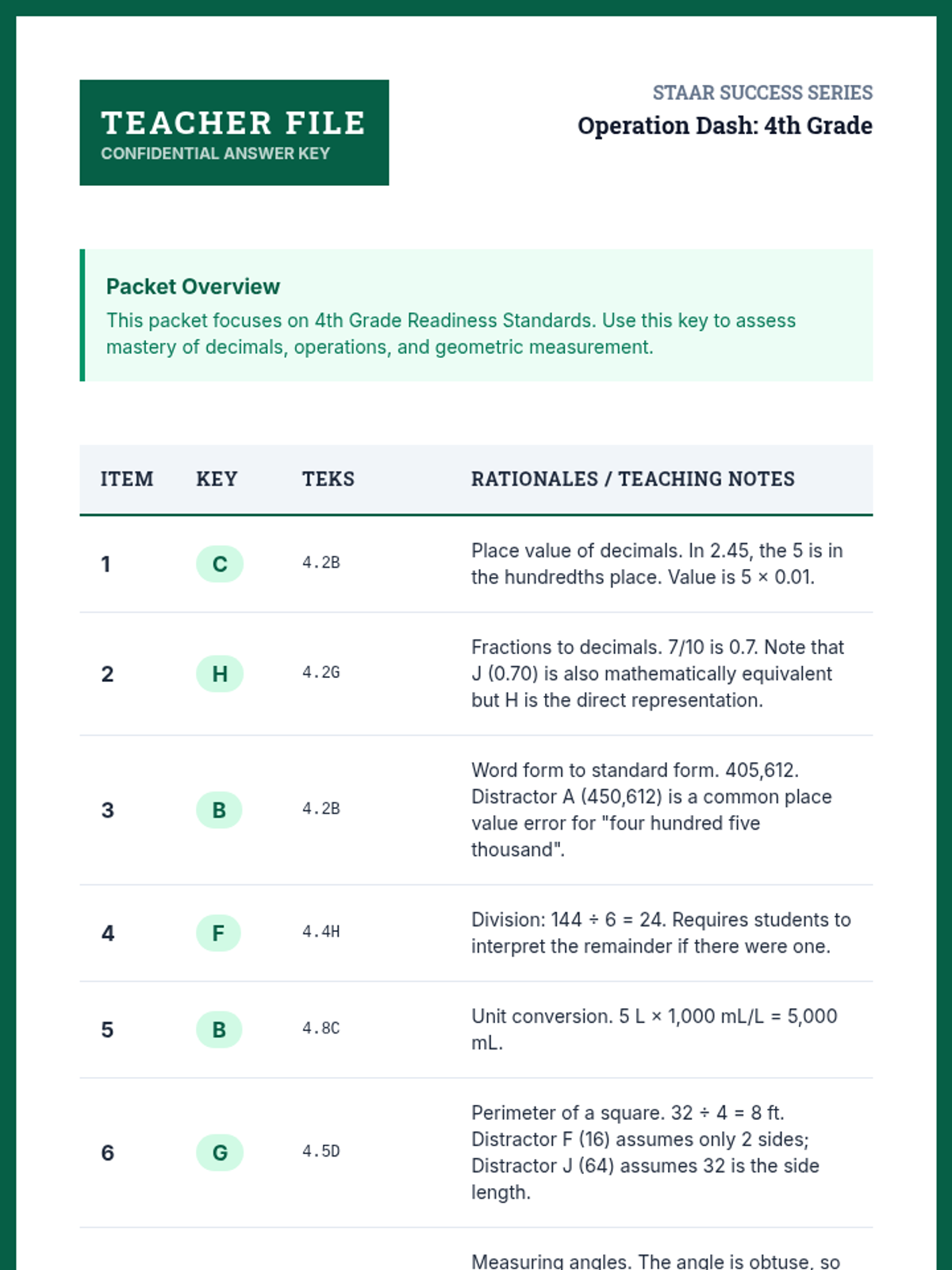
Advanced 4th grade math practice covering decimal operations, long division, measurement conversions, and angle measurement.
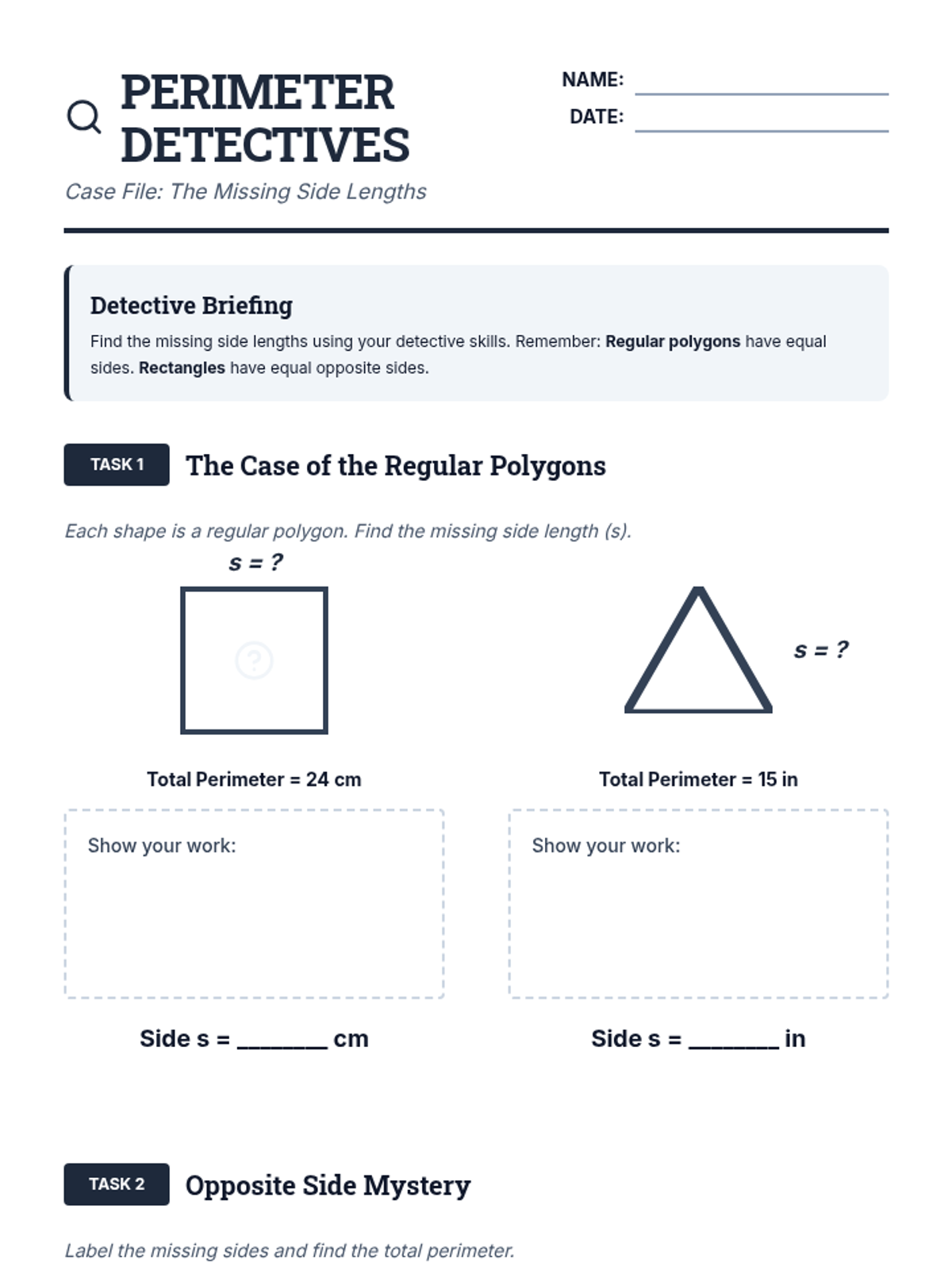
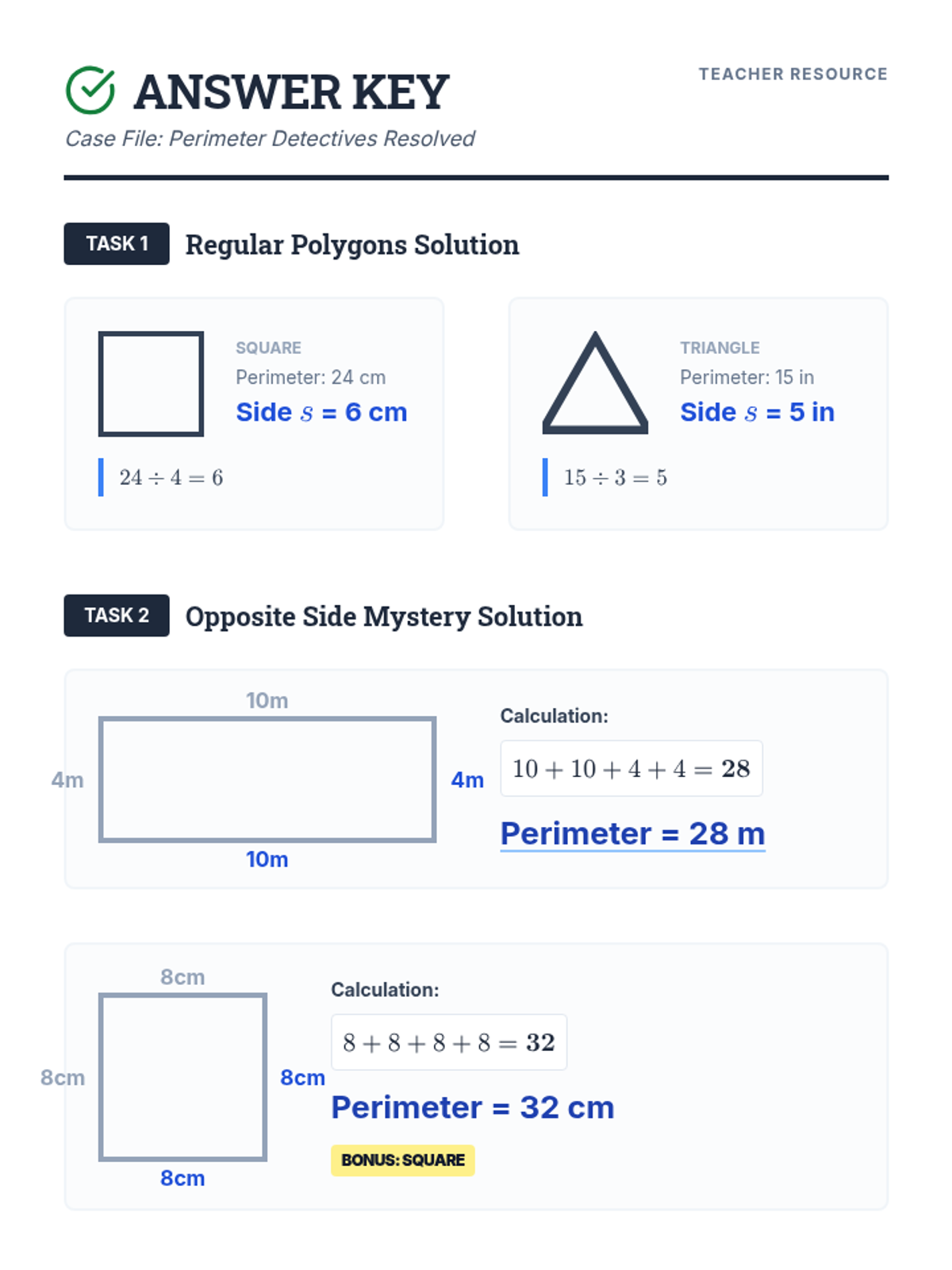
In this lesson, students become 'Perimeter Detectives' to solve for missing side lengths in regular polygons and rectangles. They use their knowledge of polygon properties and addition/subtraction to calculate perimeters and individual side measurements.
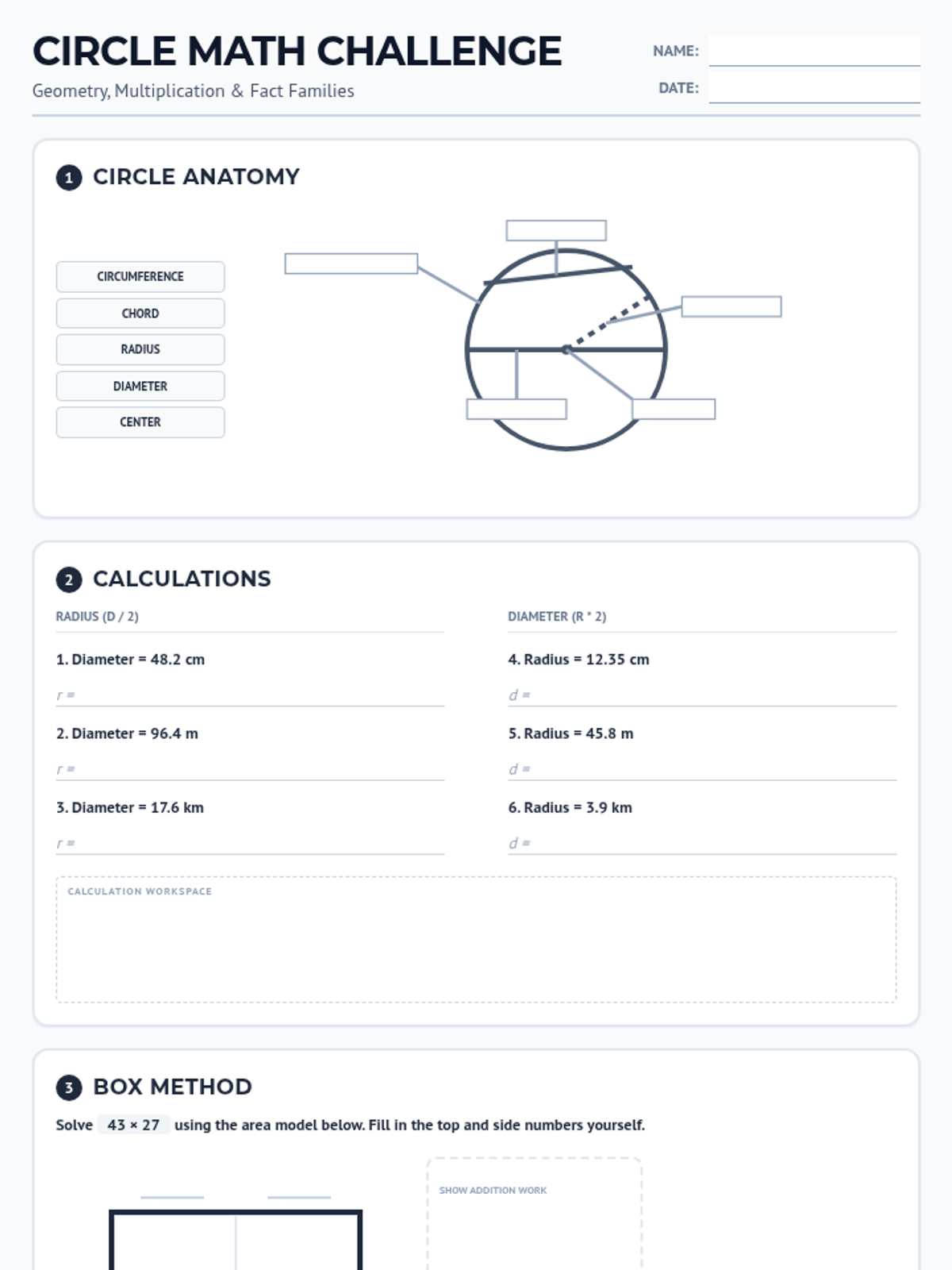
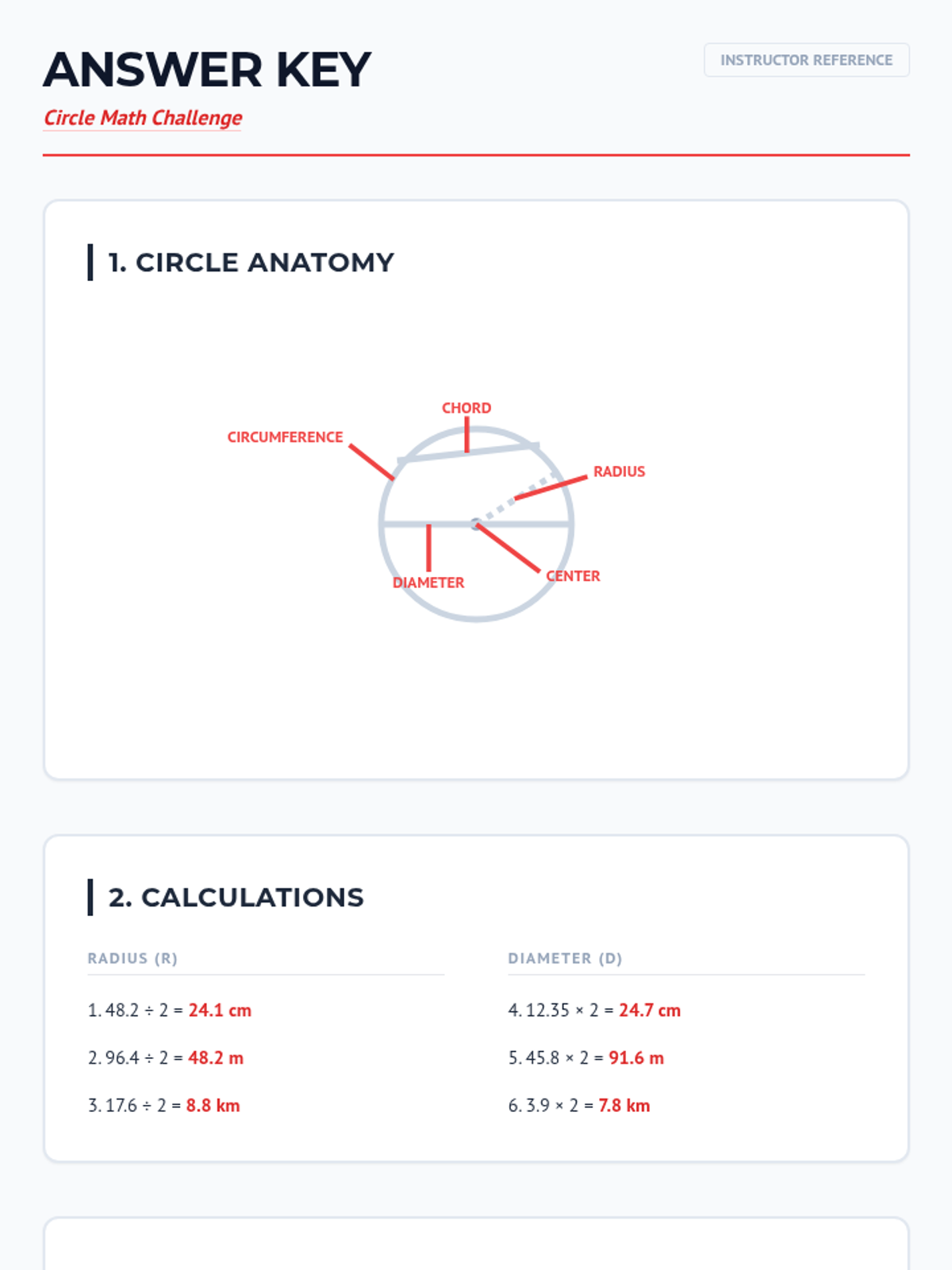
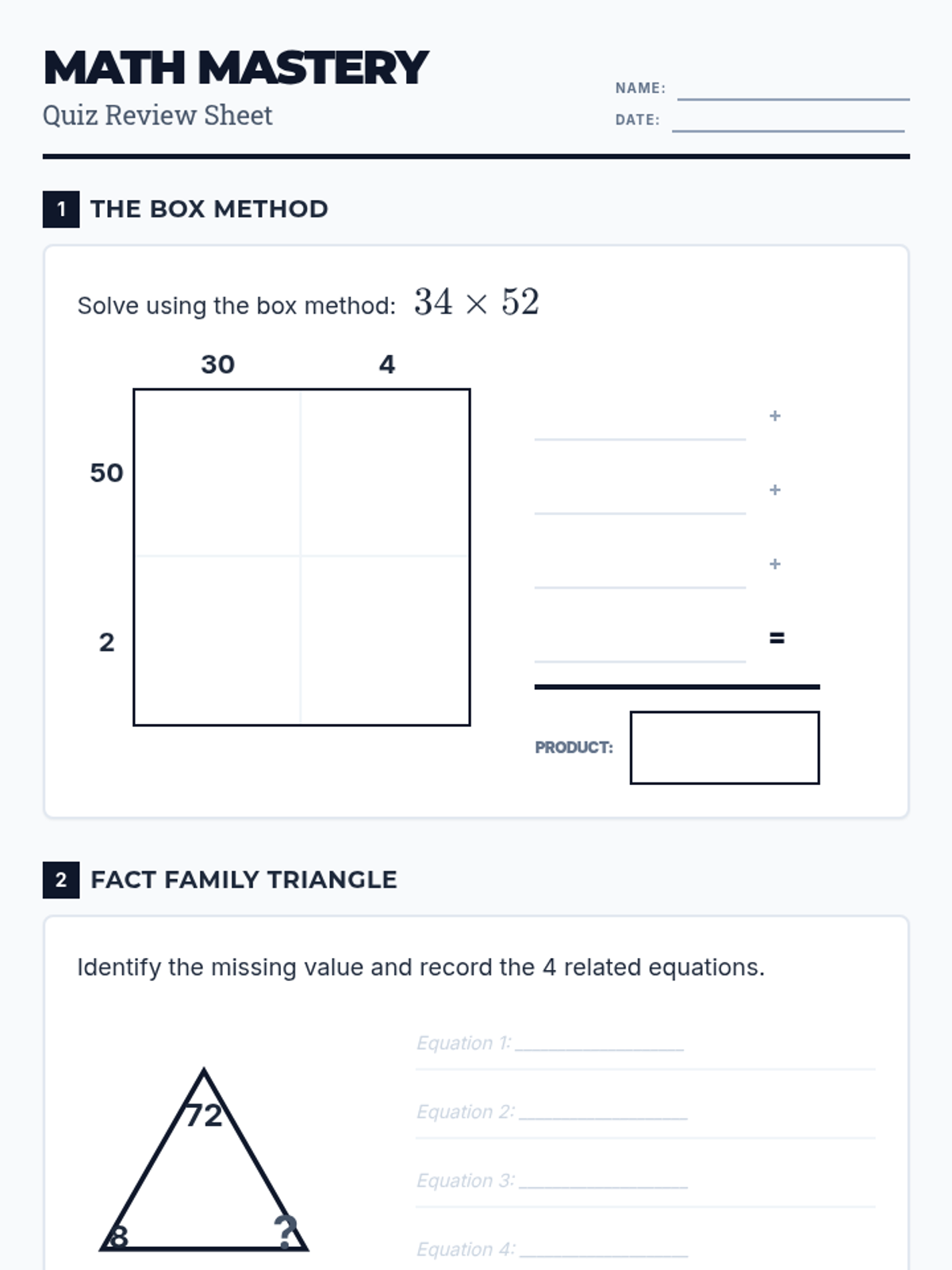
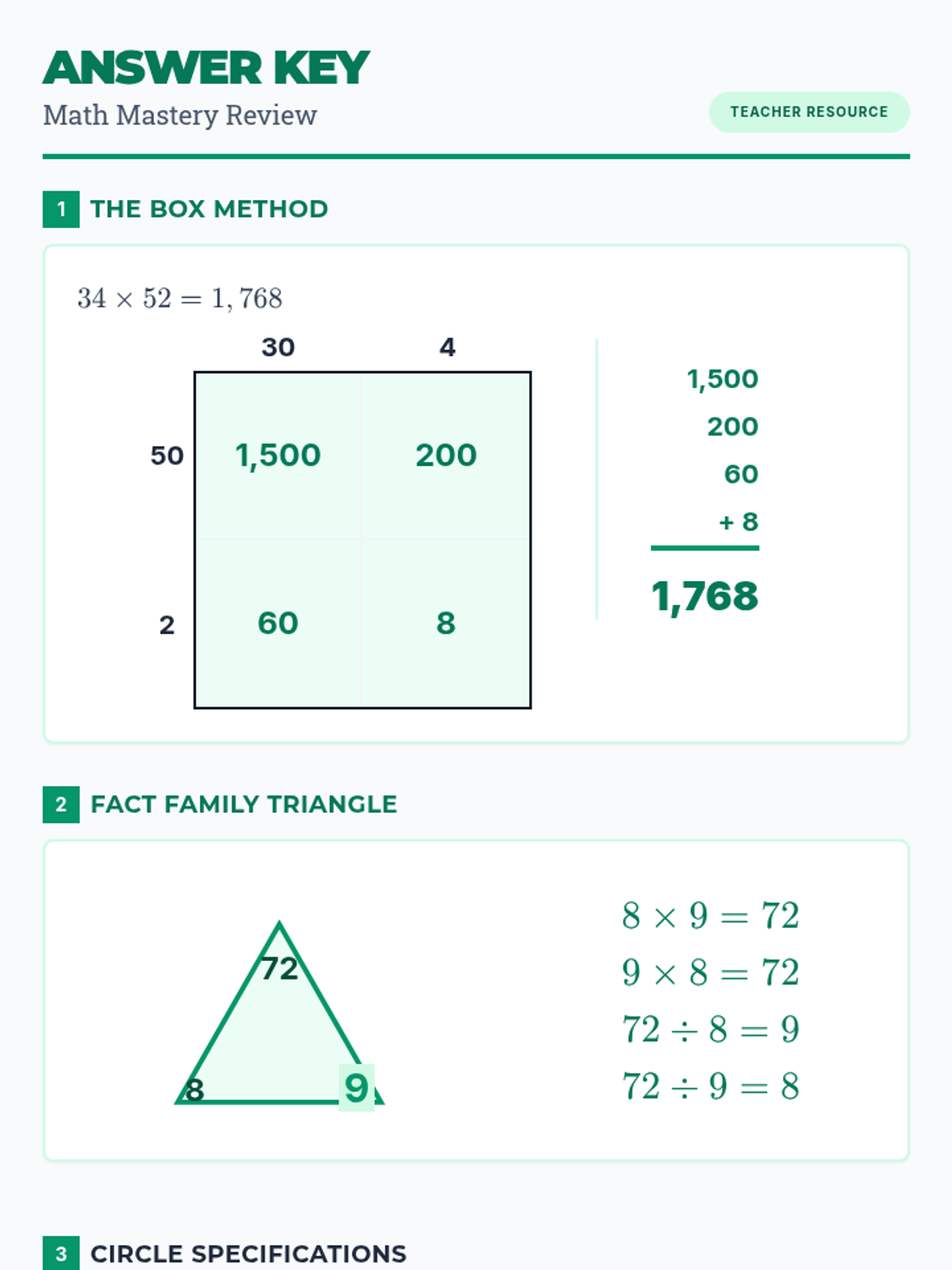
A comprehensive assessment covering circle geometry, area model multiplication, and multiplication/division fact families. Students will demonstrate their understanding of geometric parts, calculation skills, and algebraic relationships.
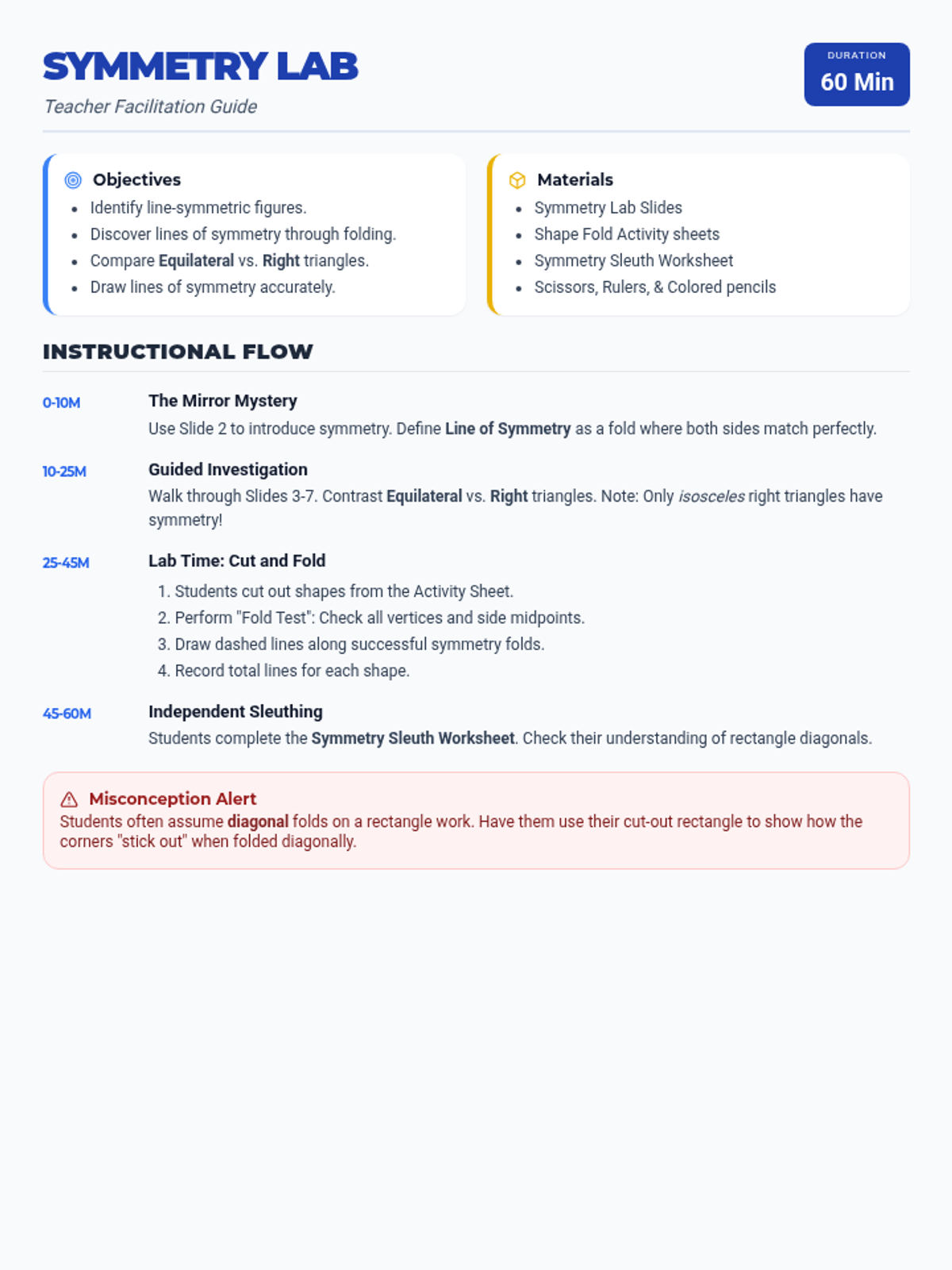
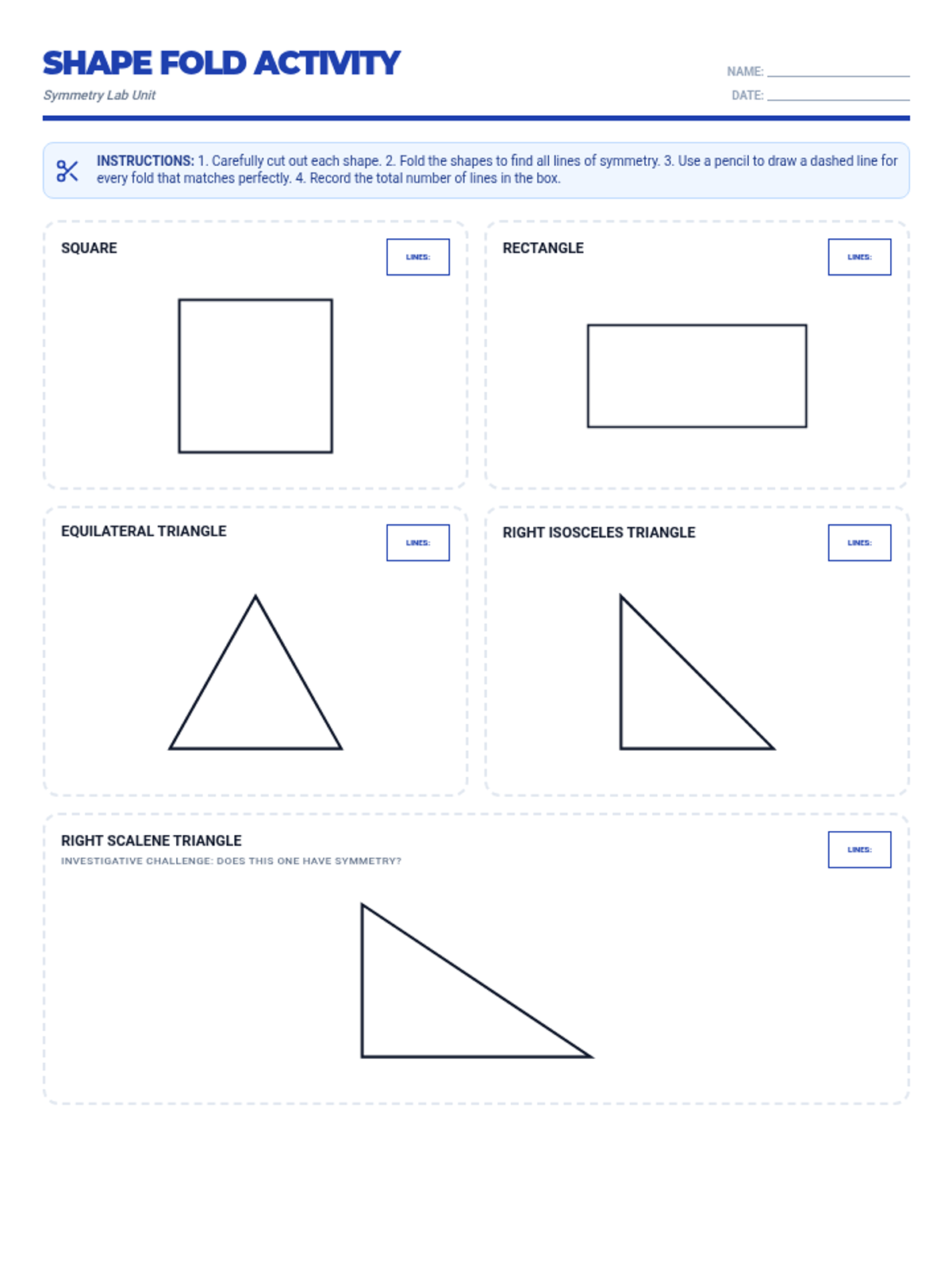
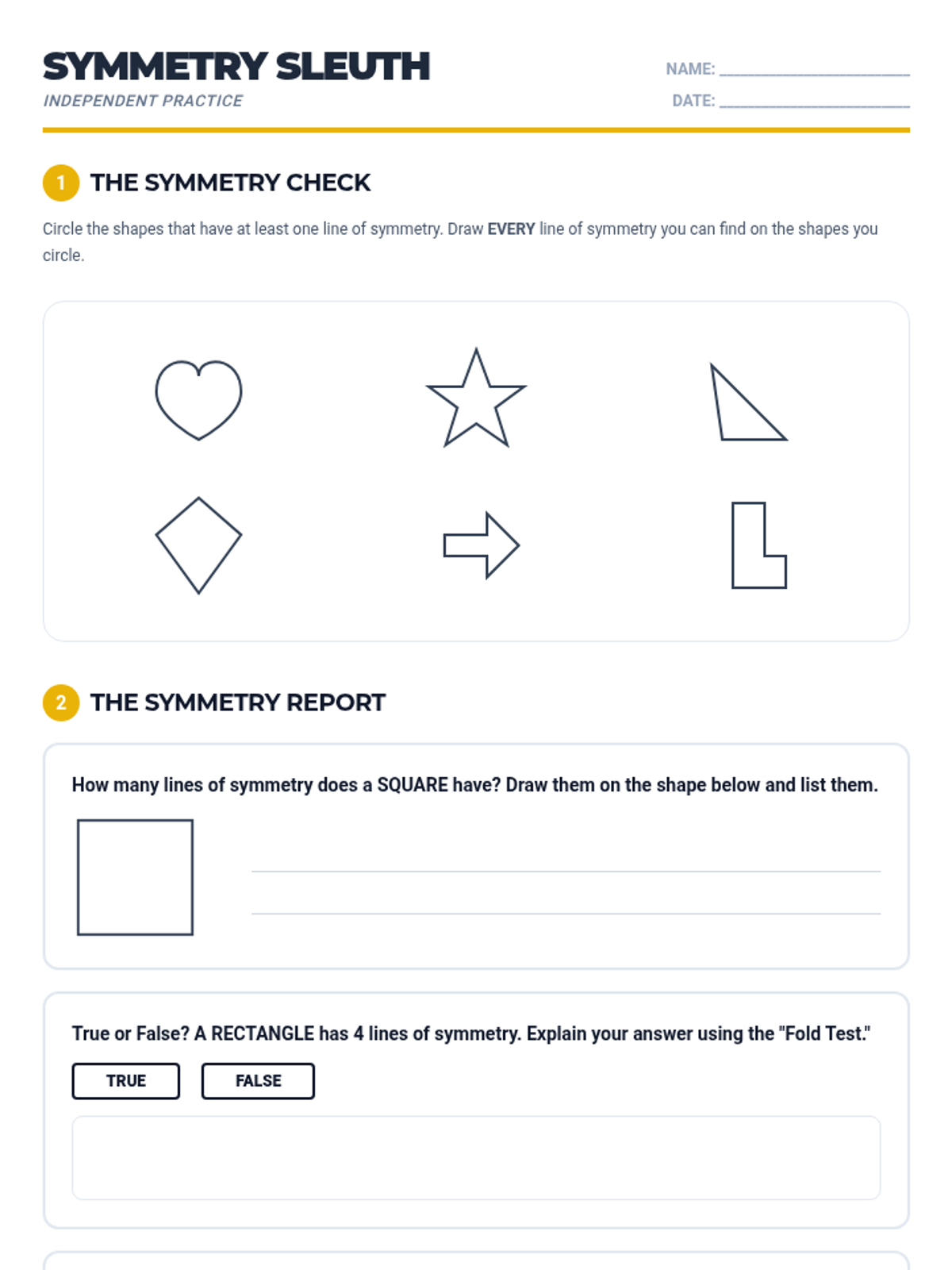
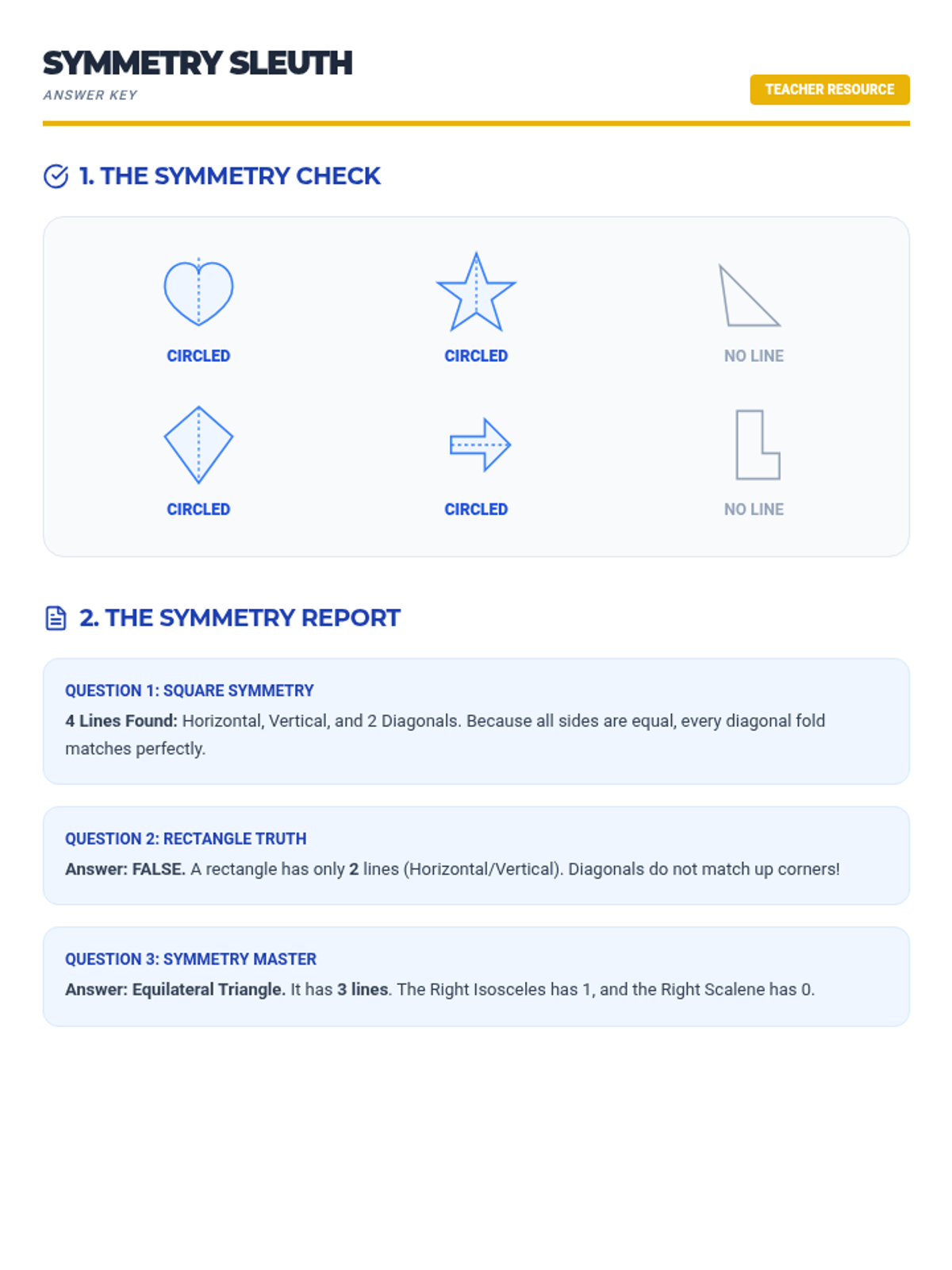
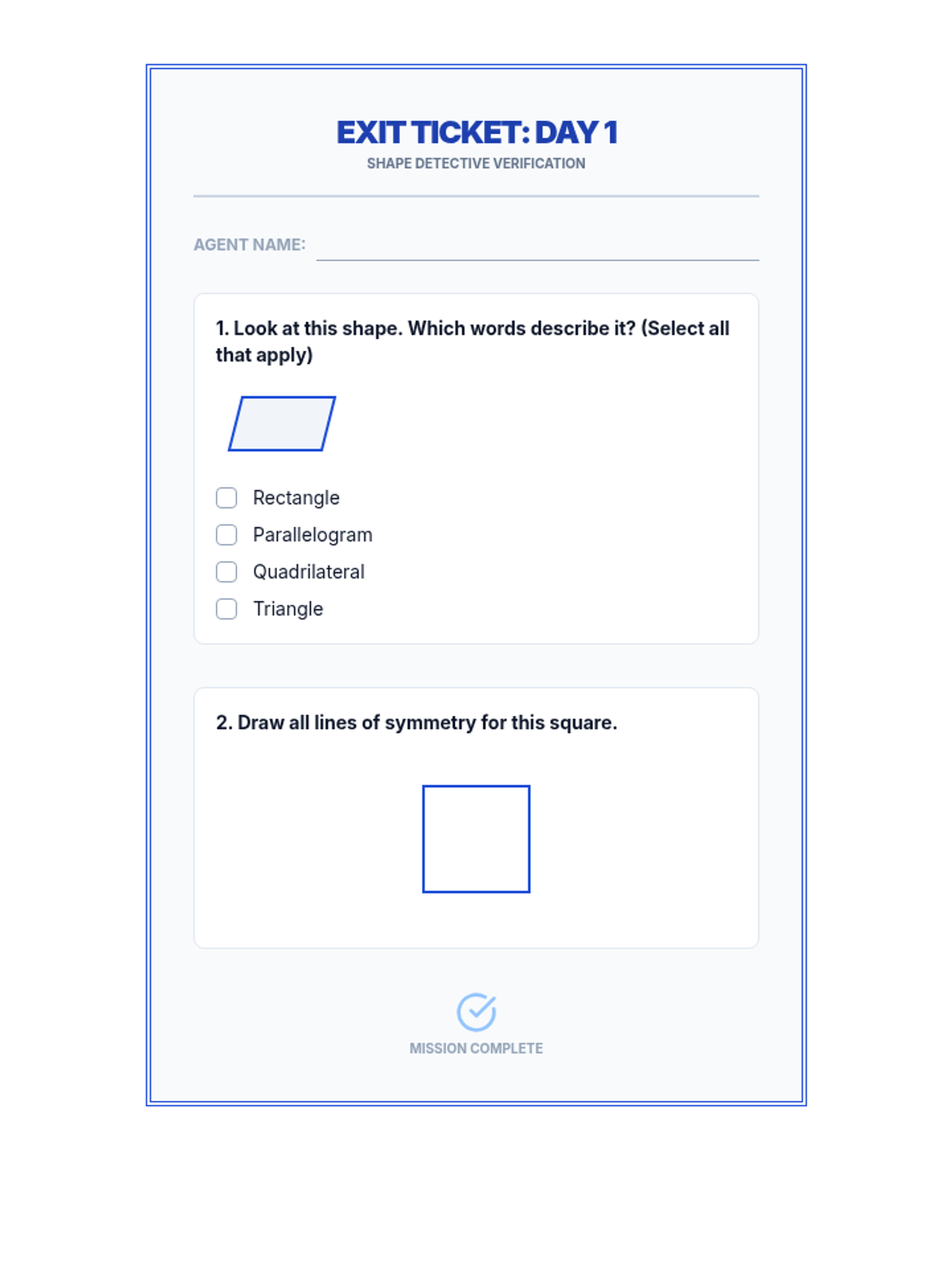
An investigative lesson where students use a 'cut and fold' technique to discover lines of symmetry in quadrilaterals and triangles.
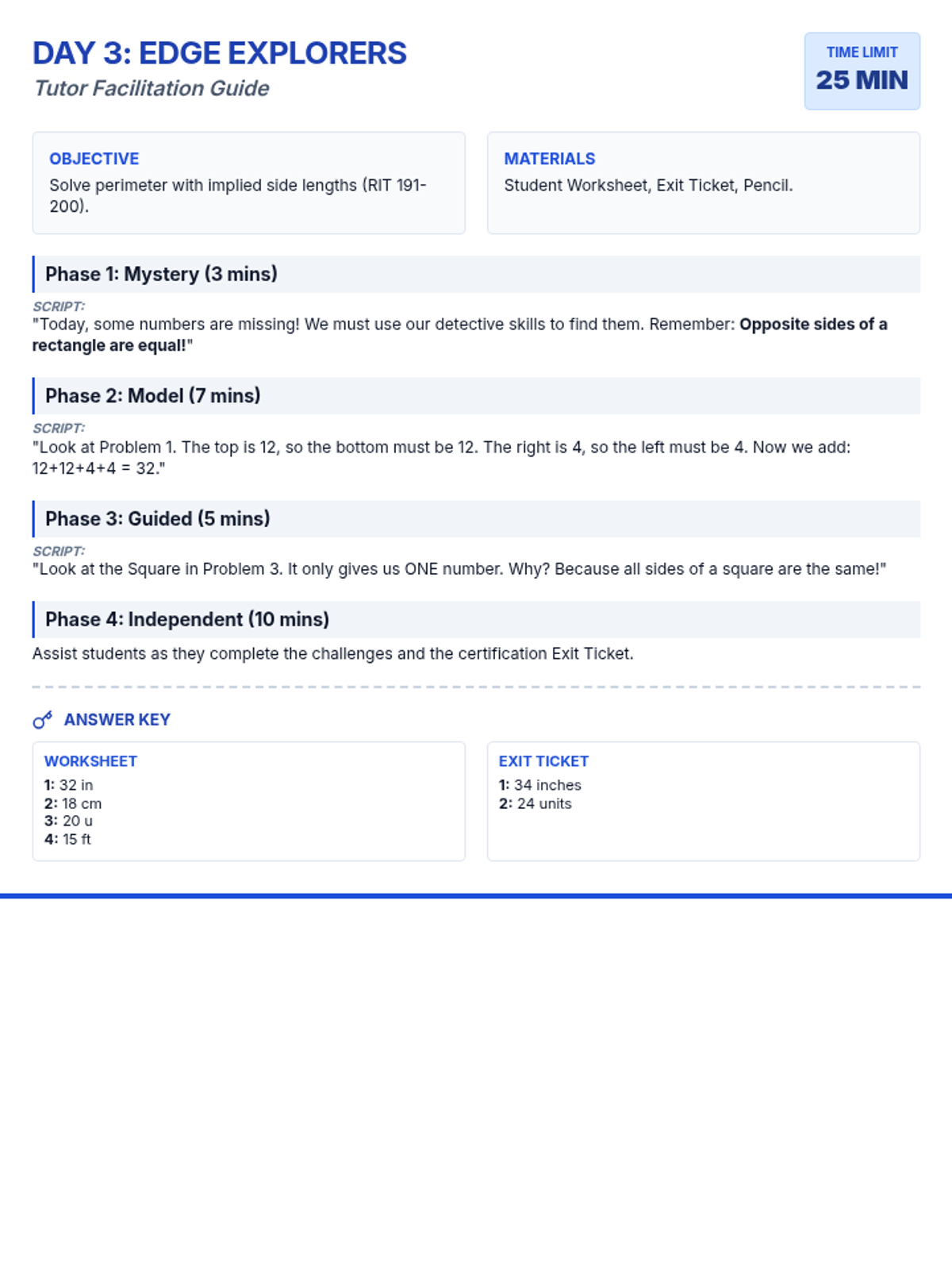
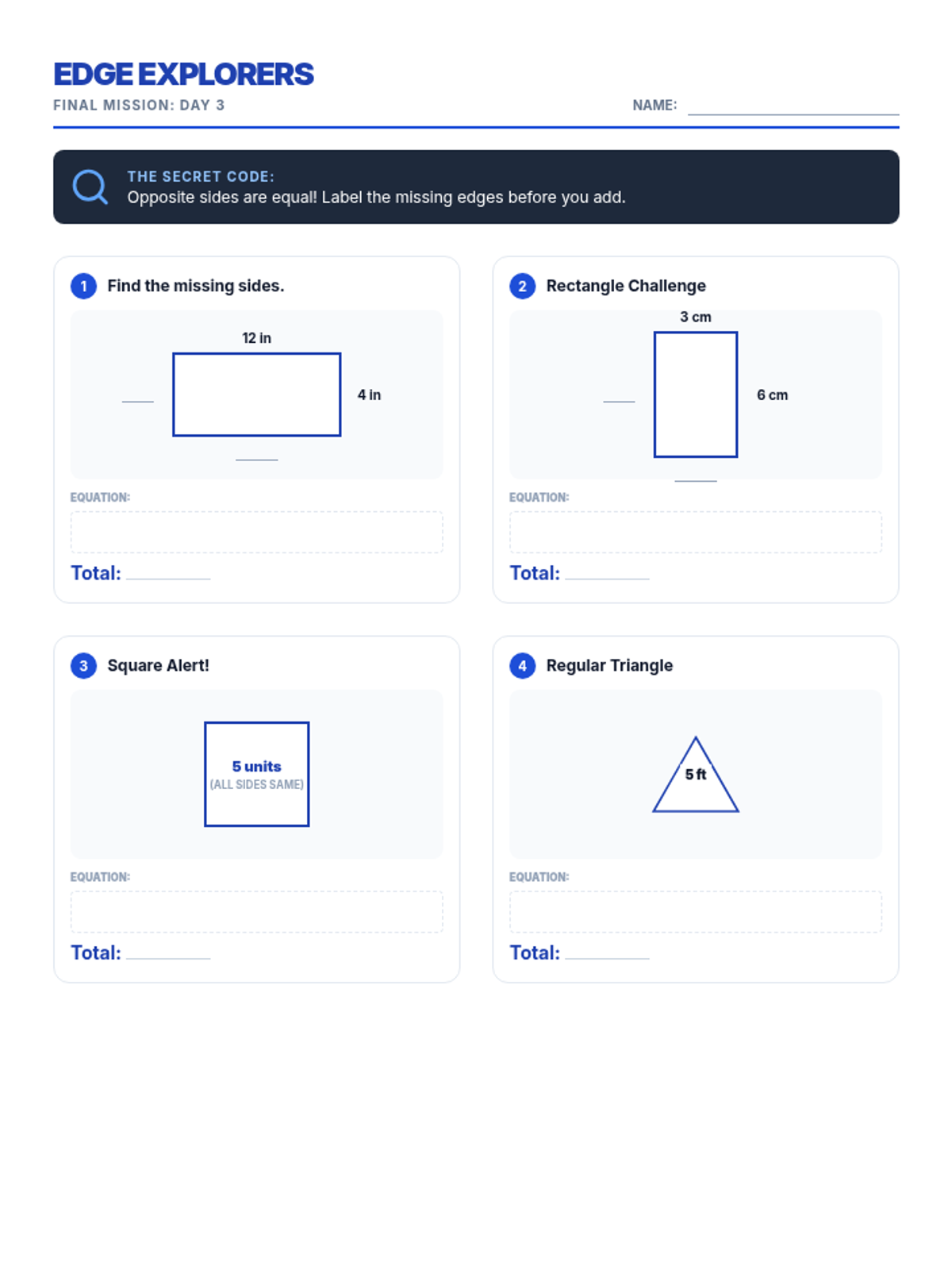
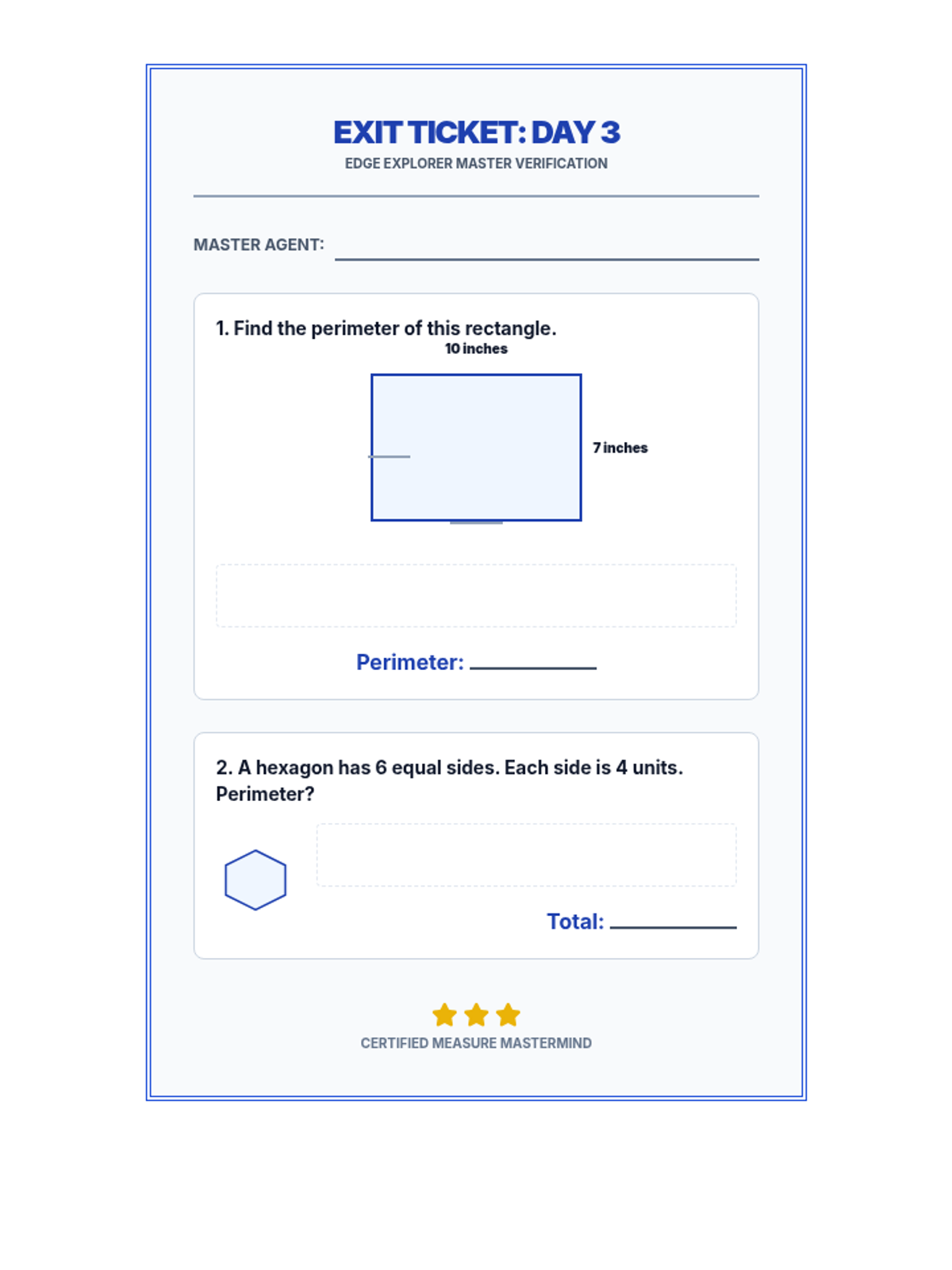
Students solve perimeter problems where some side lengths are implied or shapes are complex (191-200 focus).
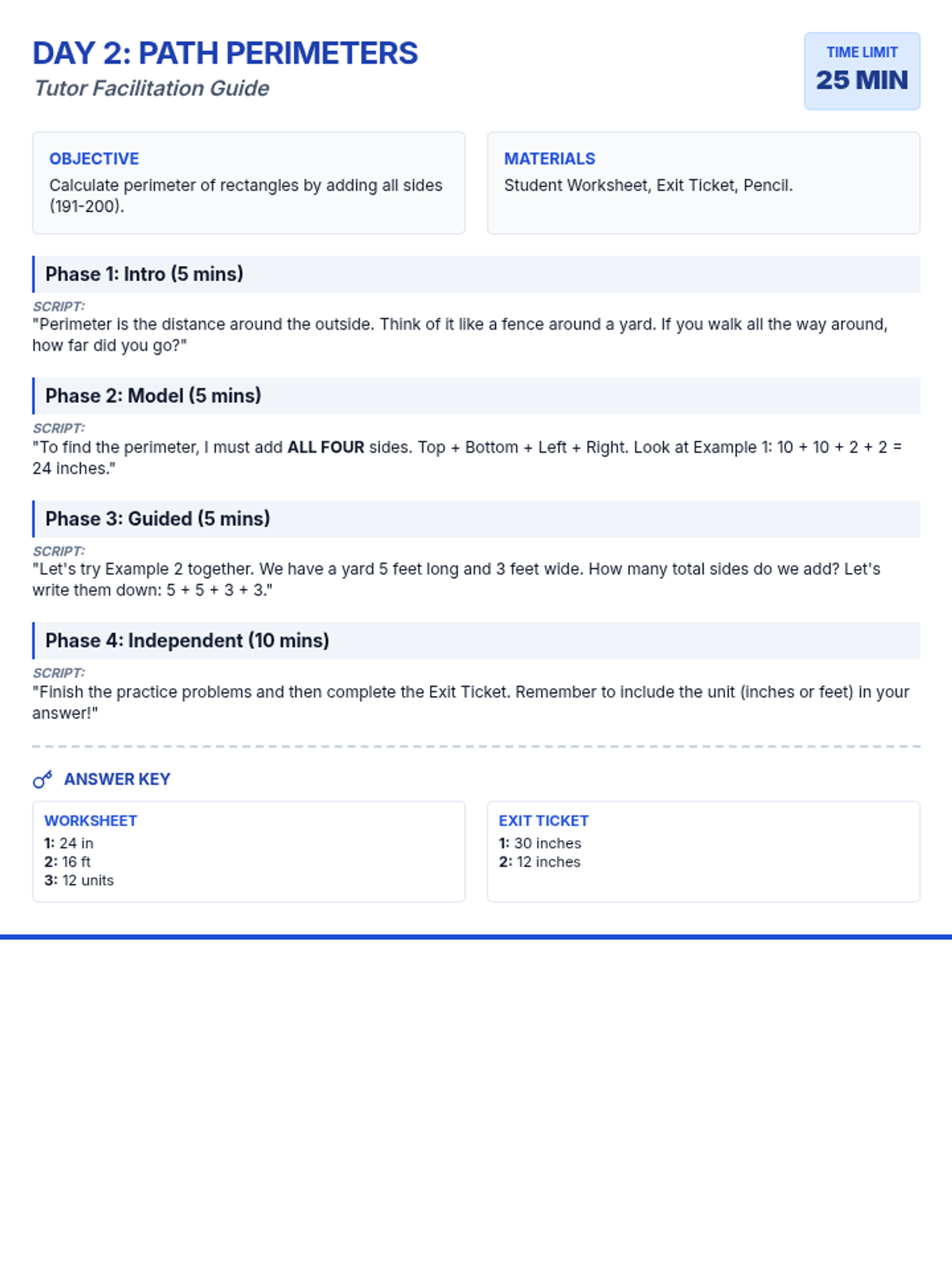
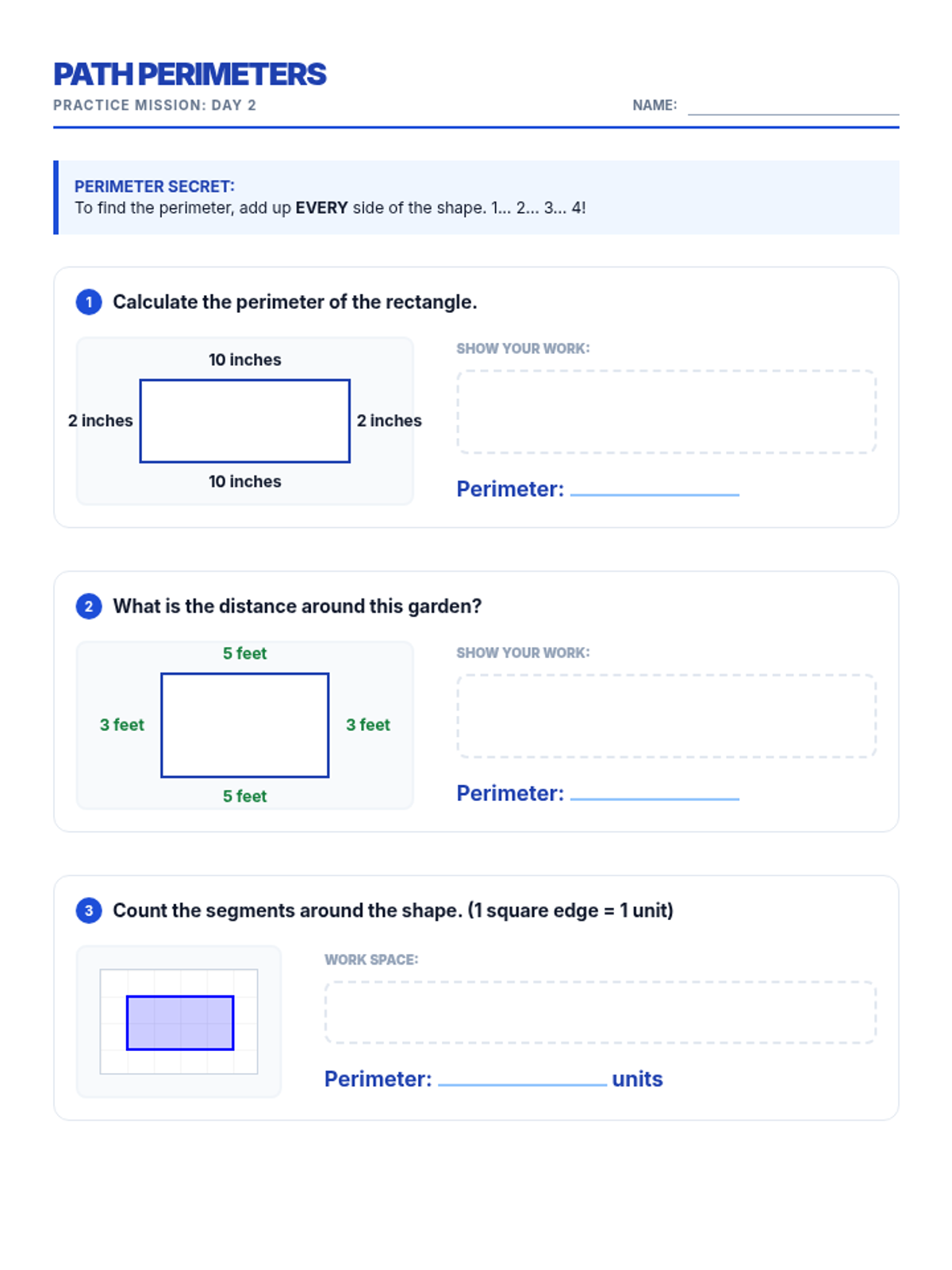
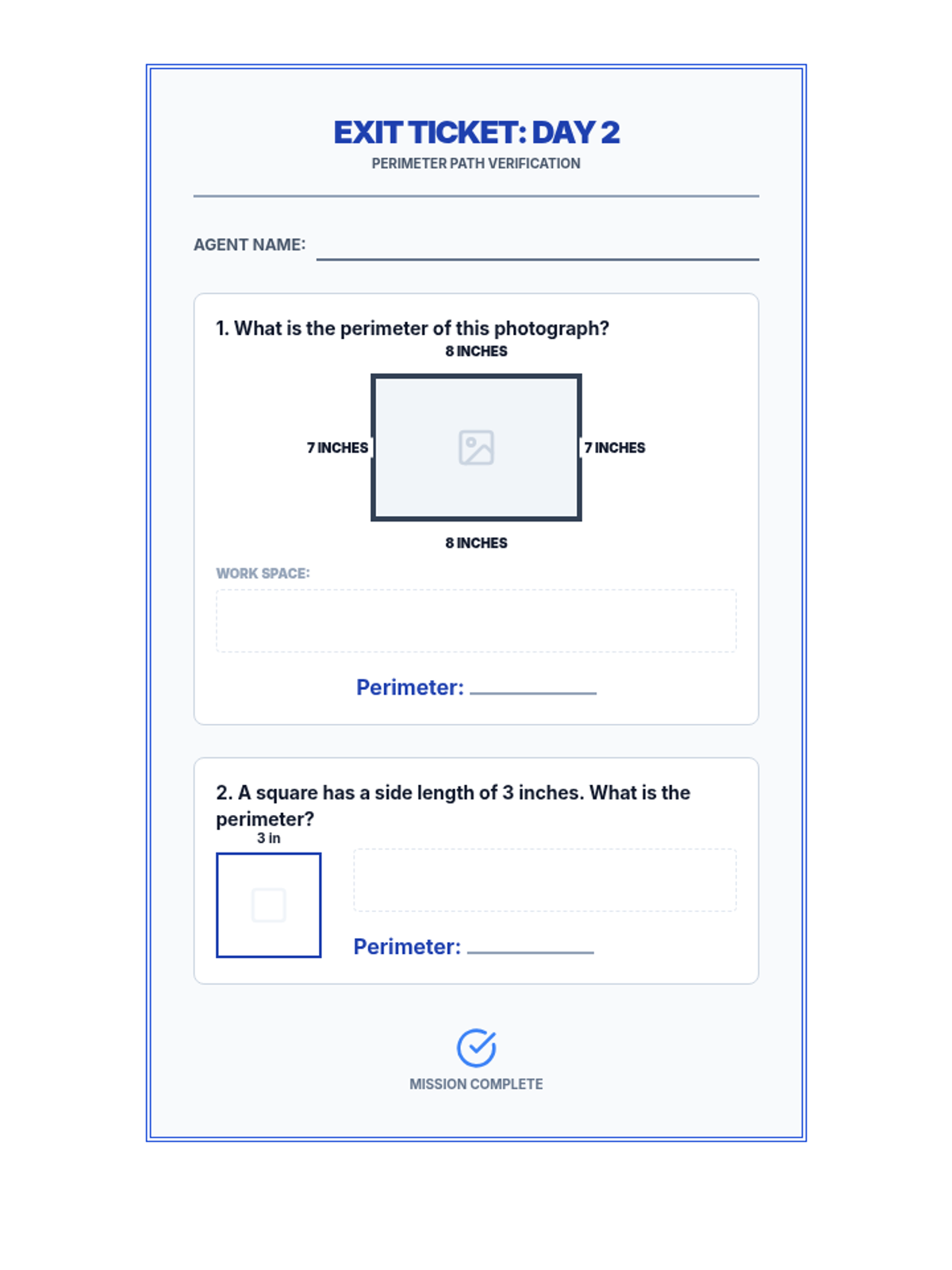
Students transition from basic counting and addition to calculating the perimeter of rectangles (191-200).
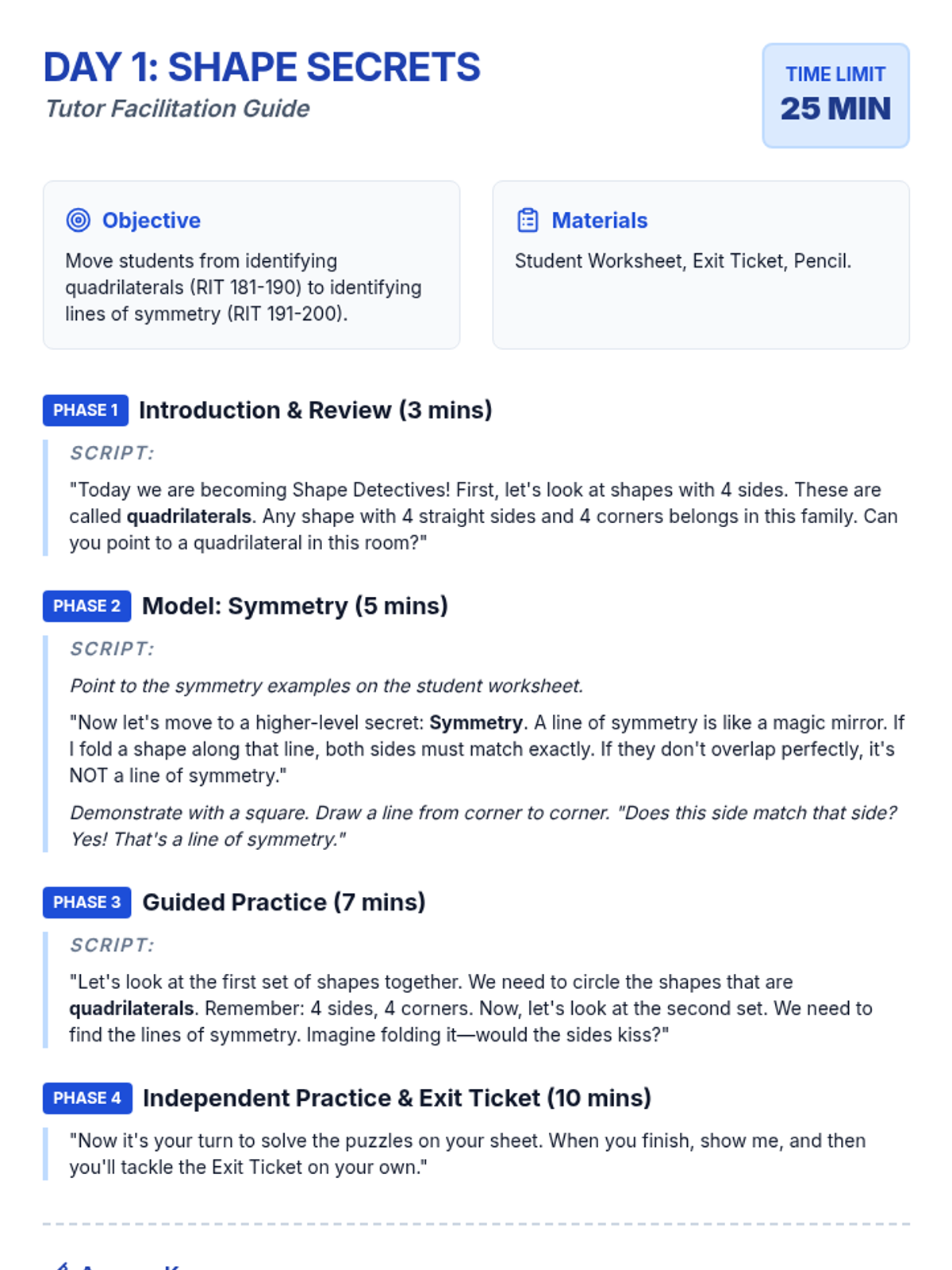
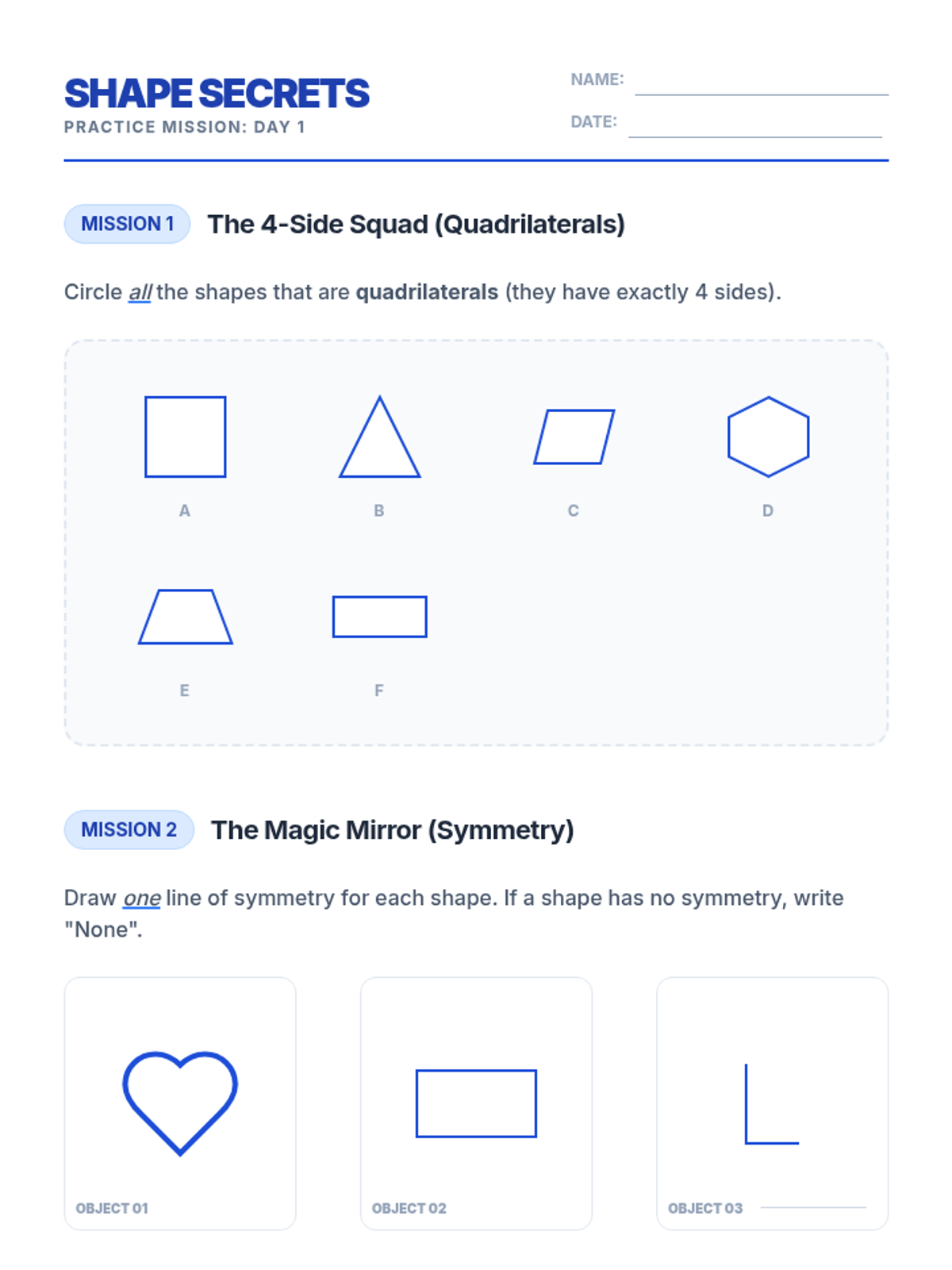
Students identify attributes of quadrilaterals (181-190) and explore lines of symmetry in 2D shapes (191-200).
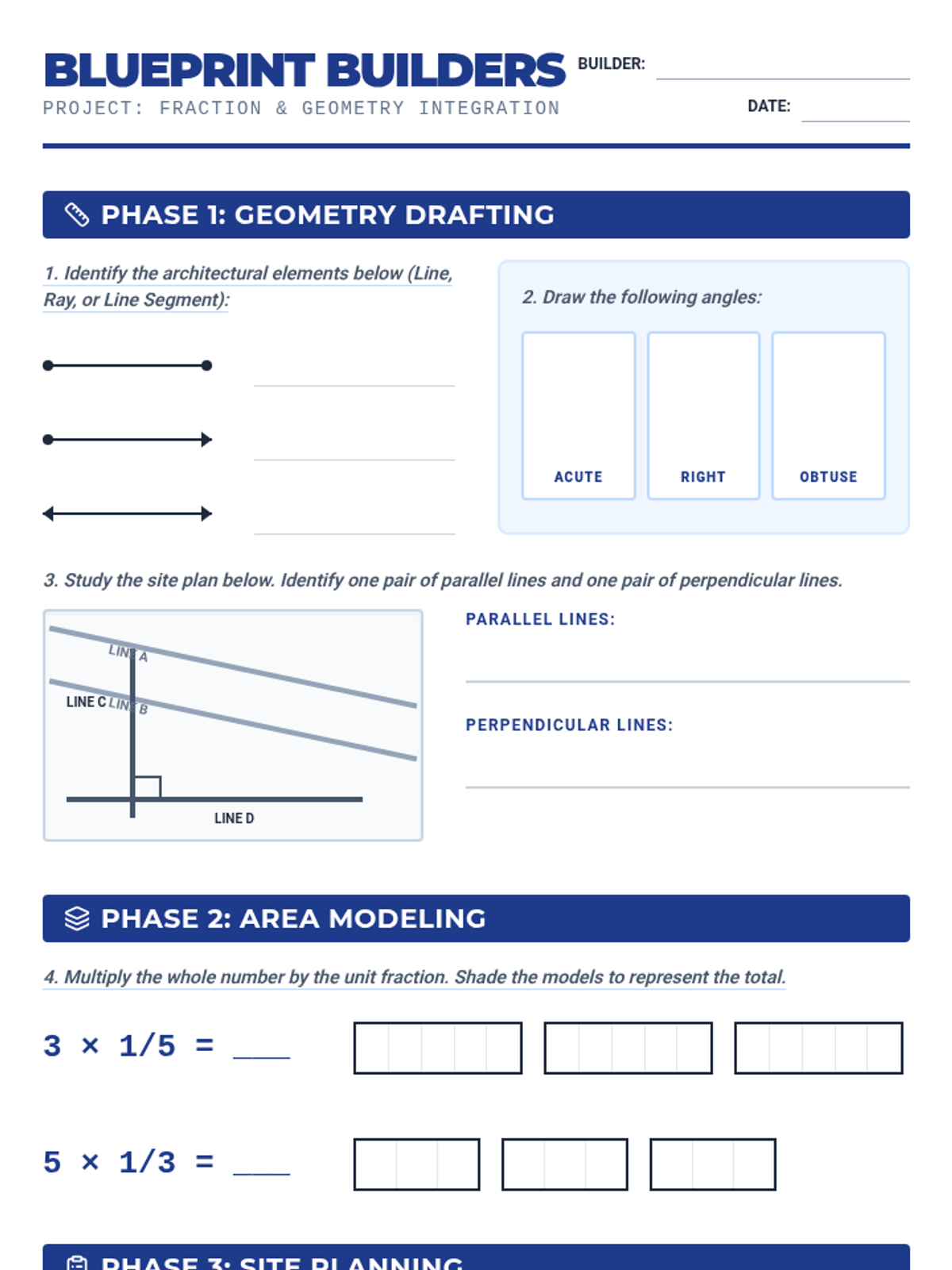
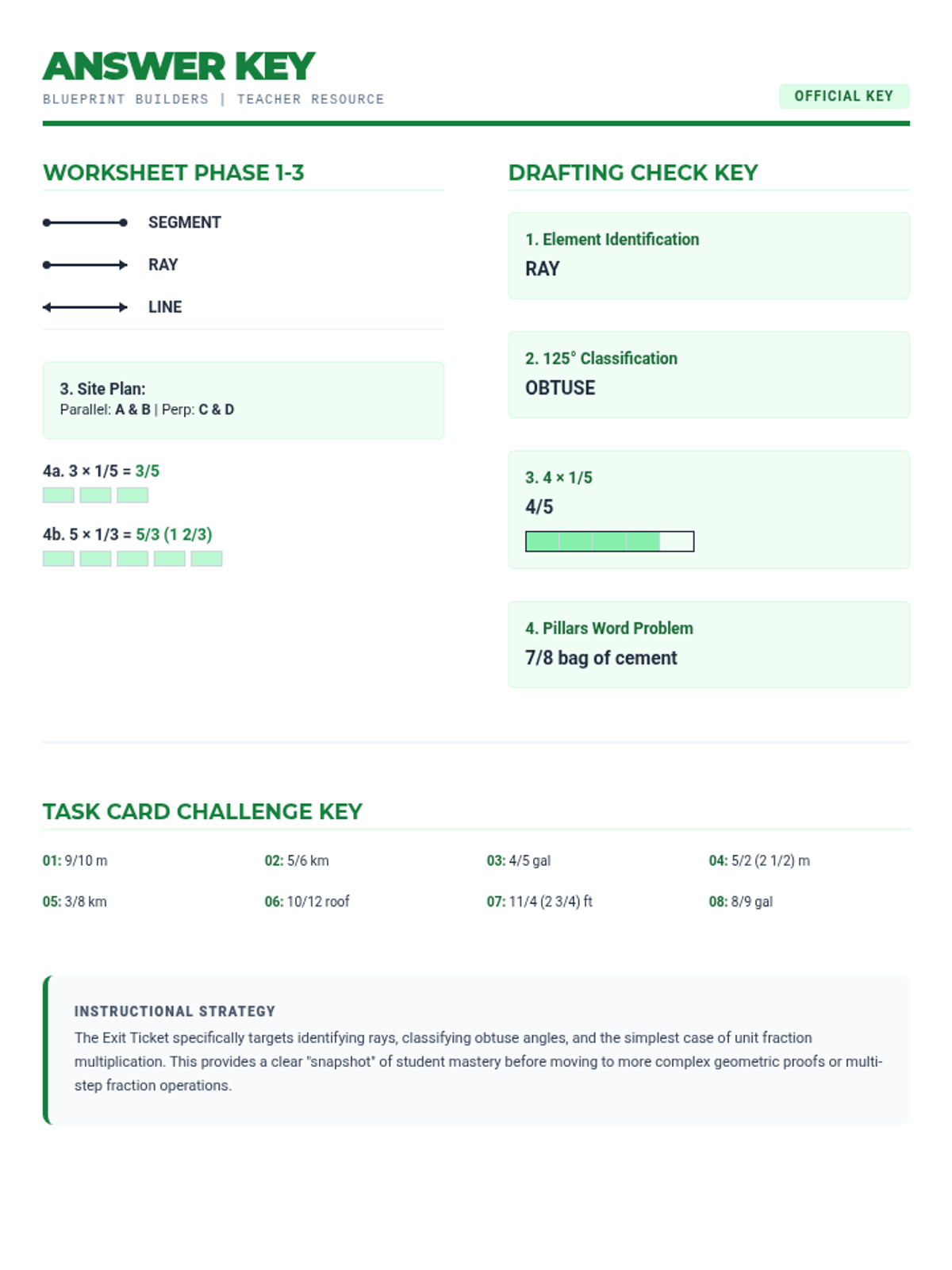
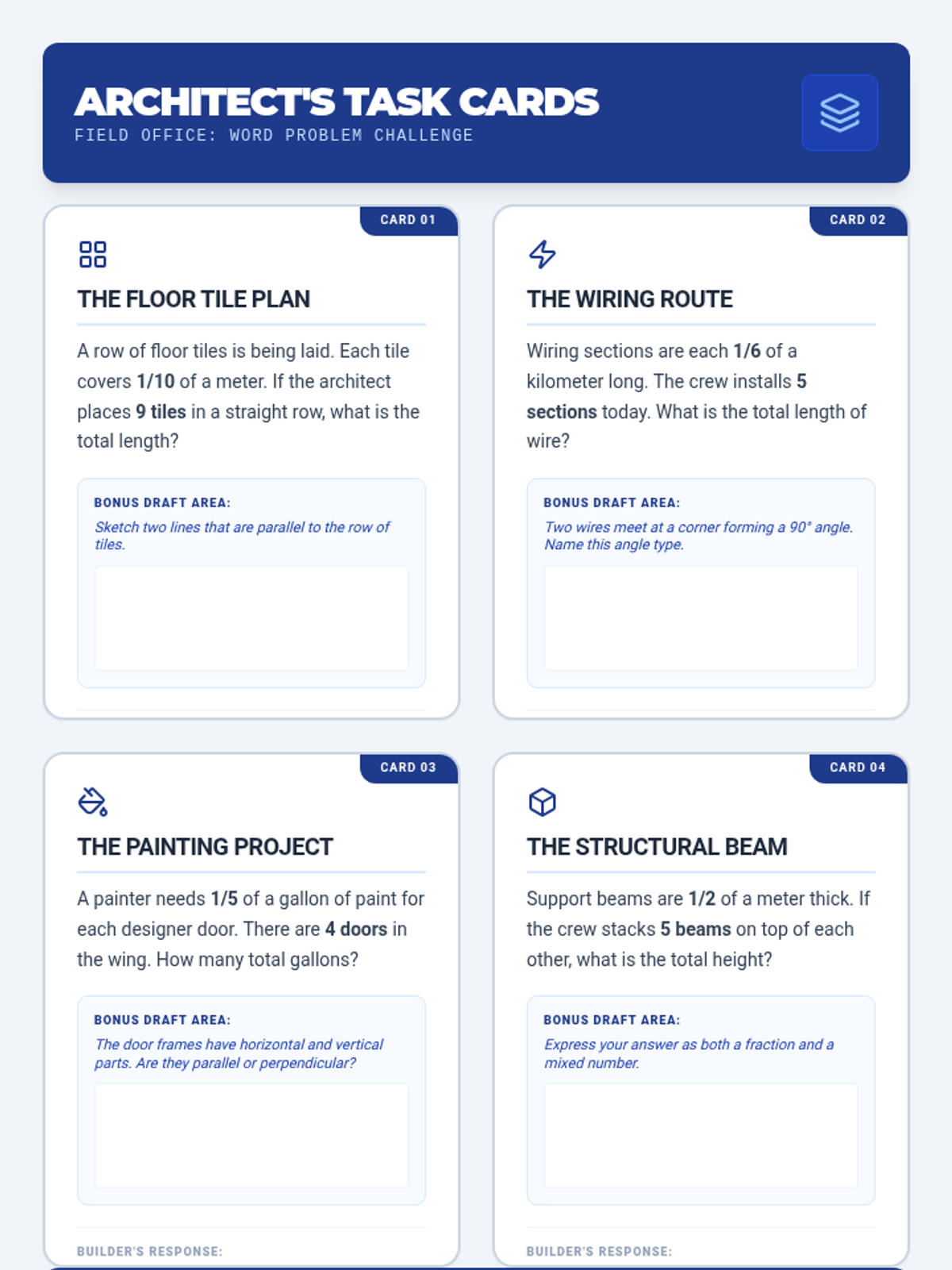
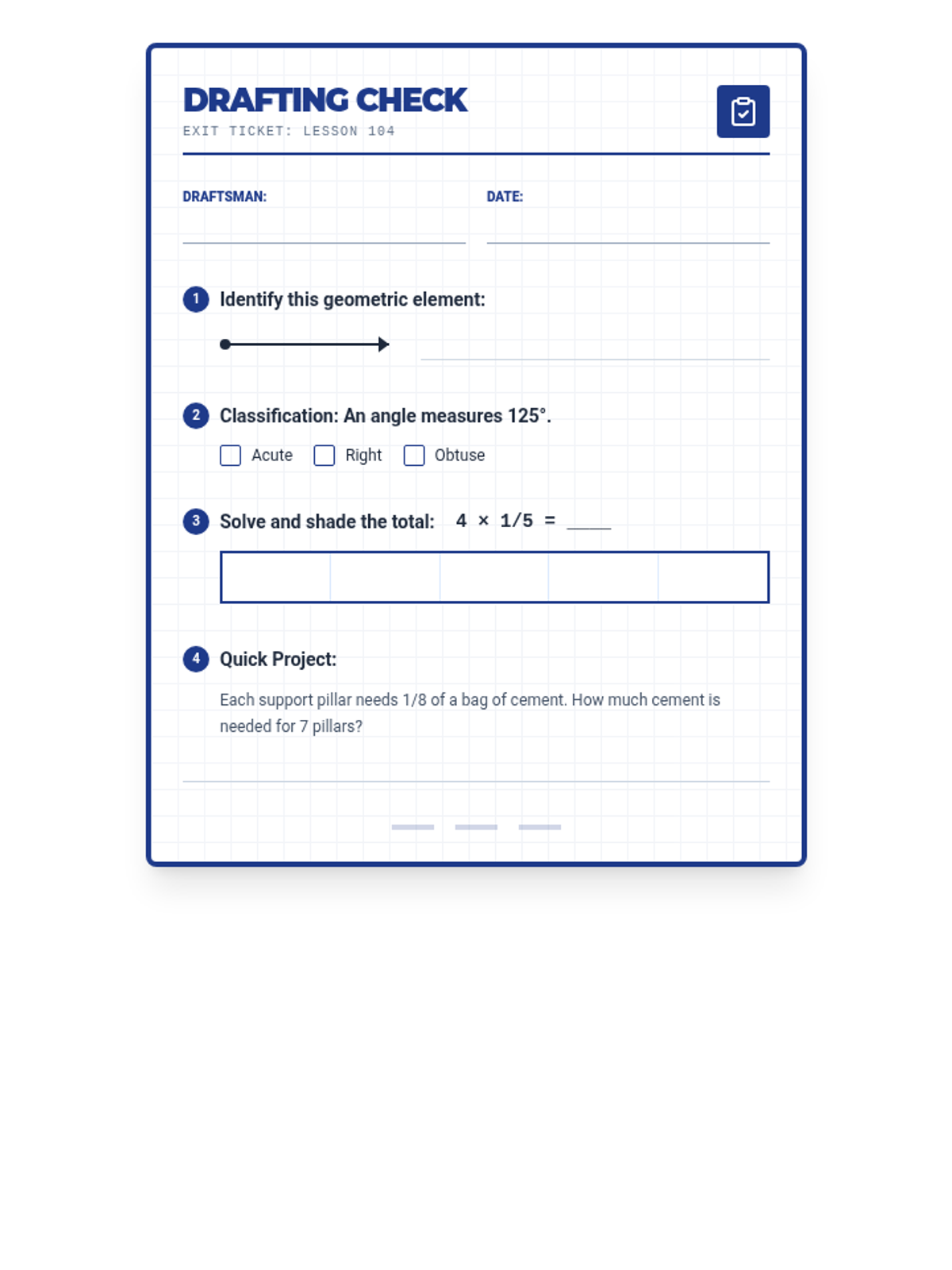
This lesson integrates fraction multiplication with geometric identification, using an architectural theme to explore area models, unit fractions, angles, and line types. Students apply these skills to solve real-world 'blueprint' problems.
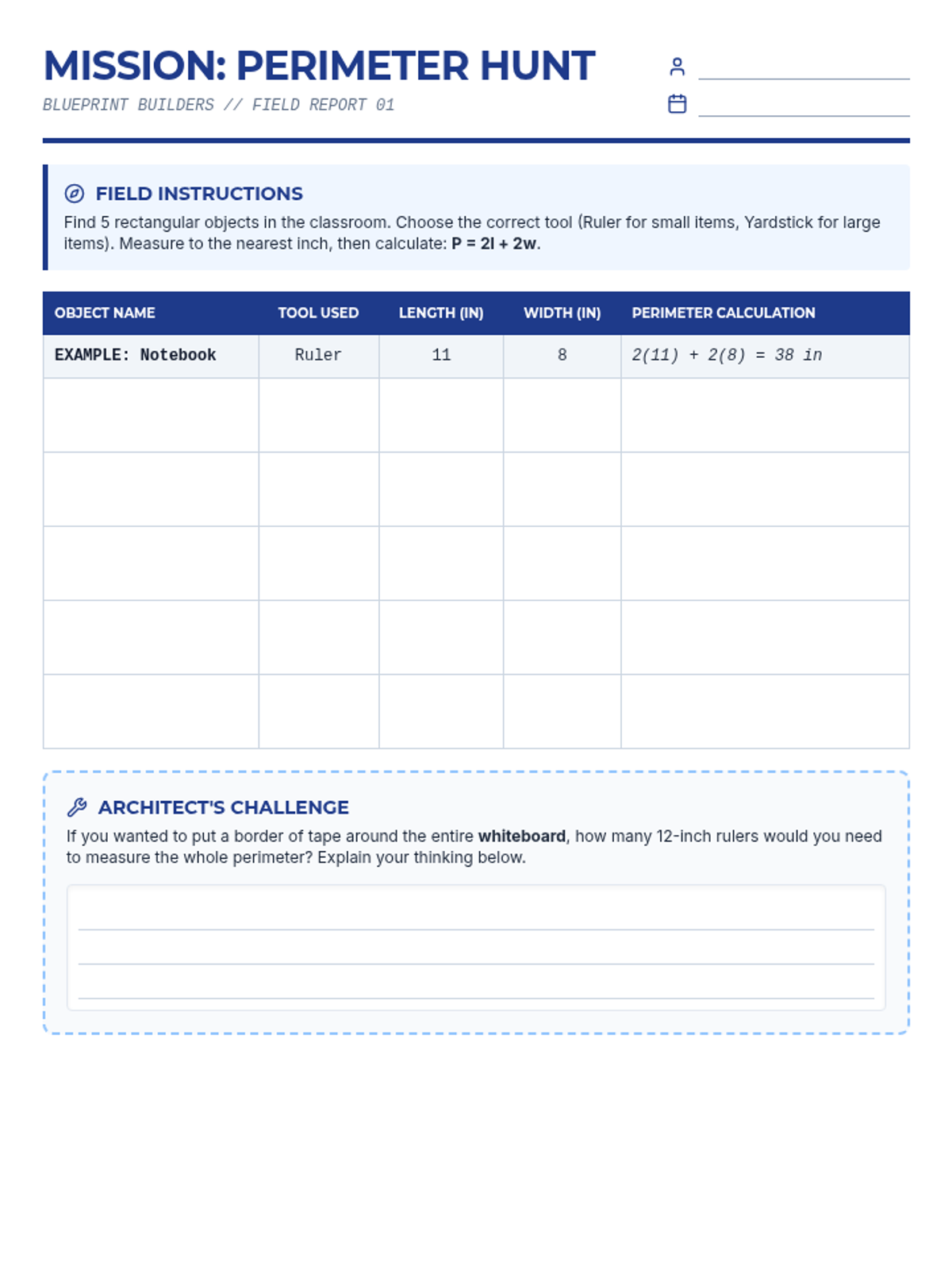
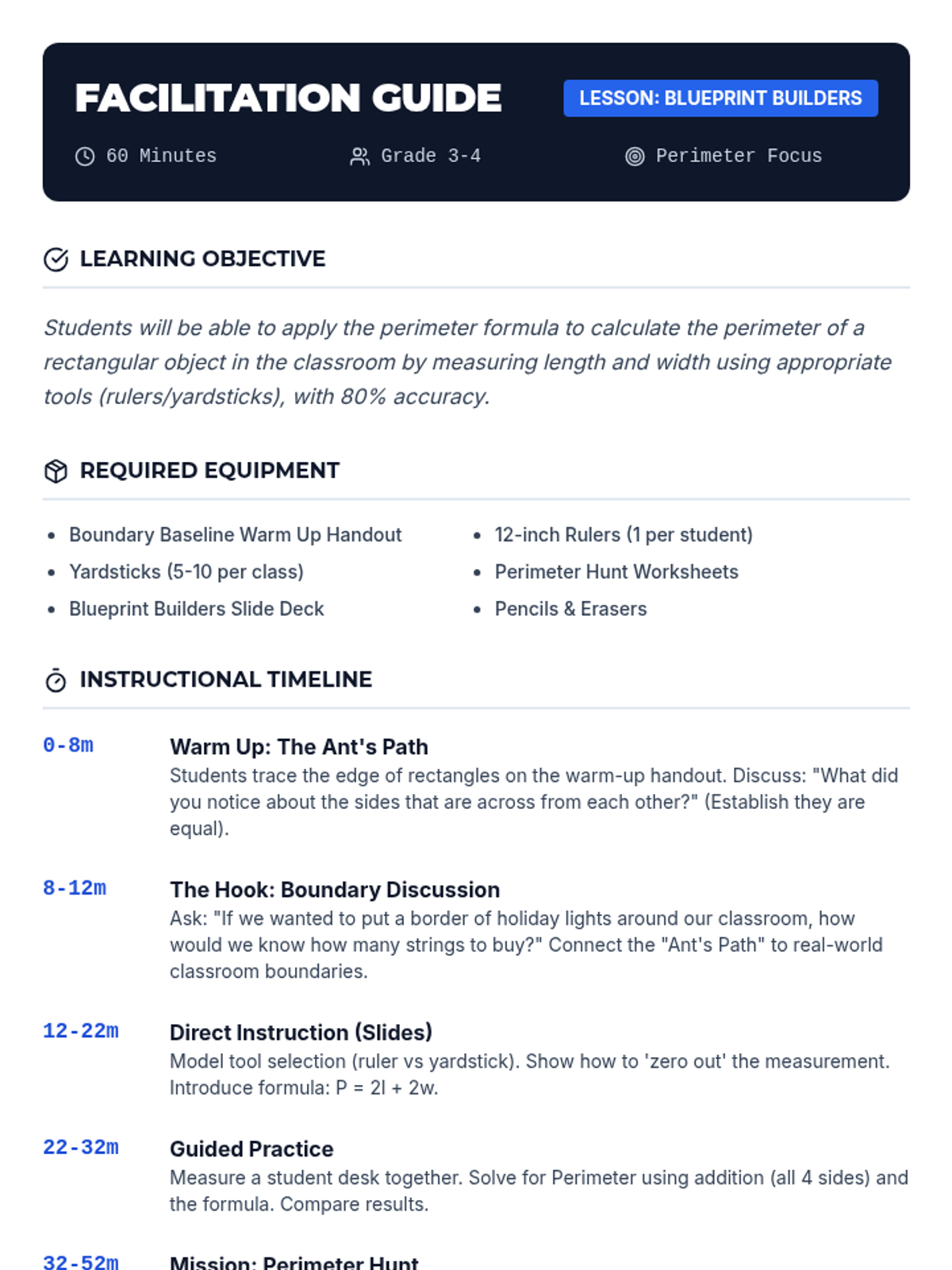
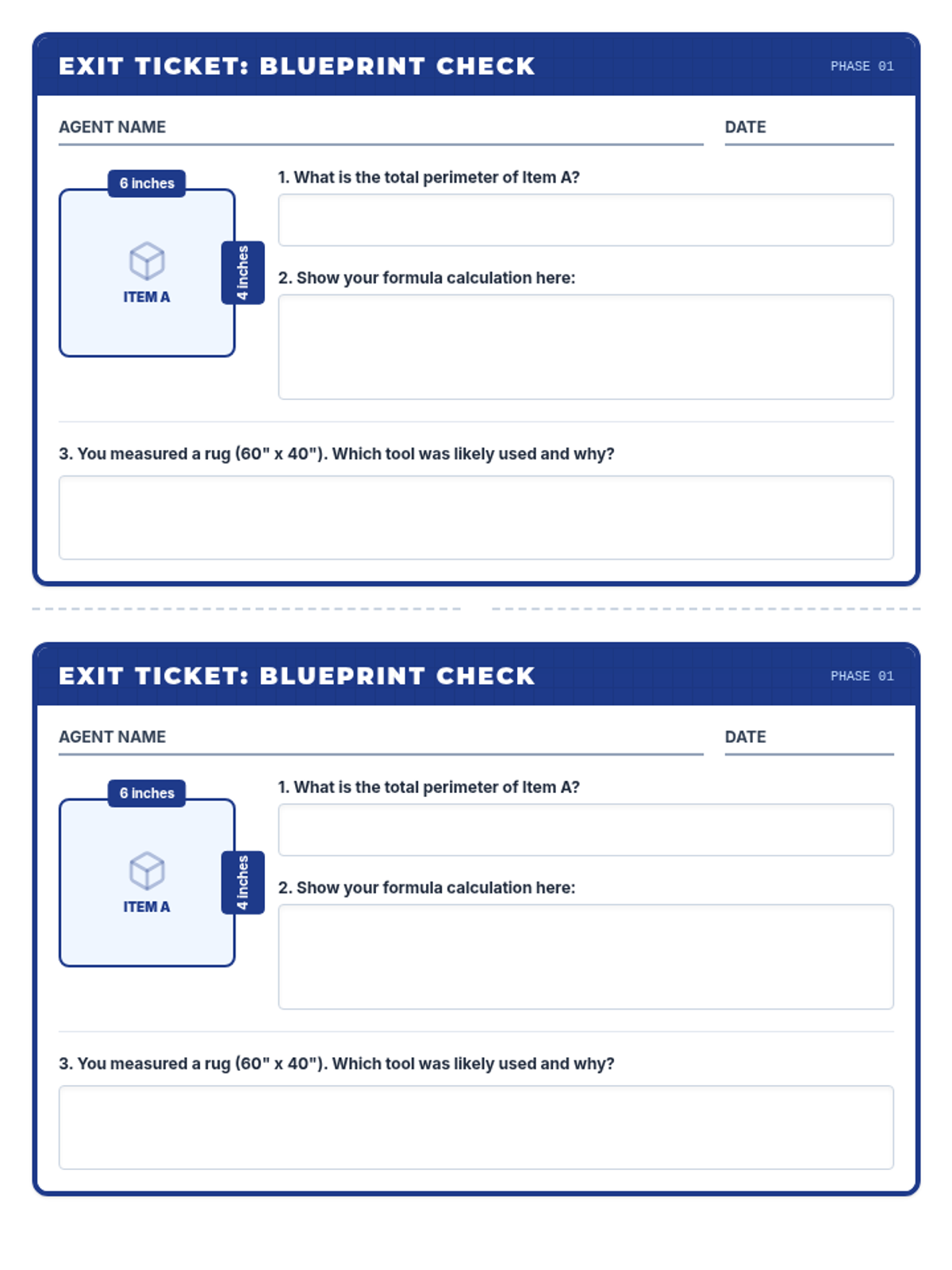
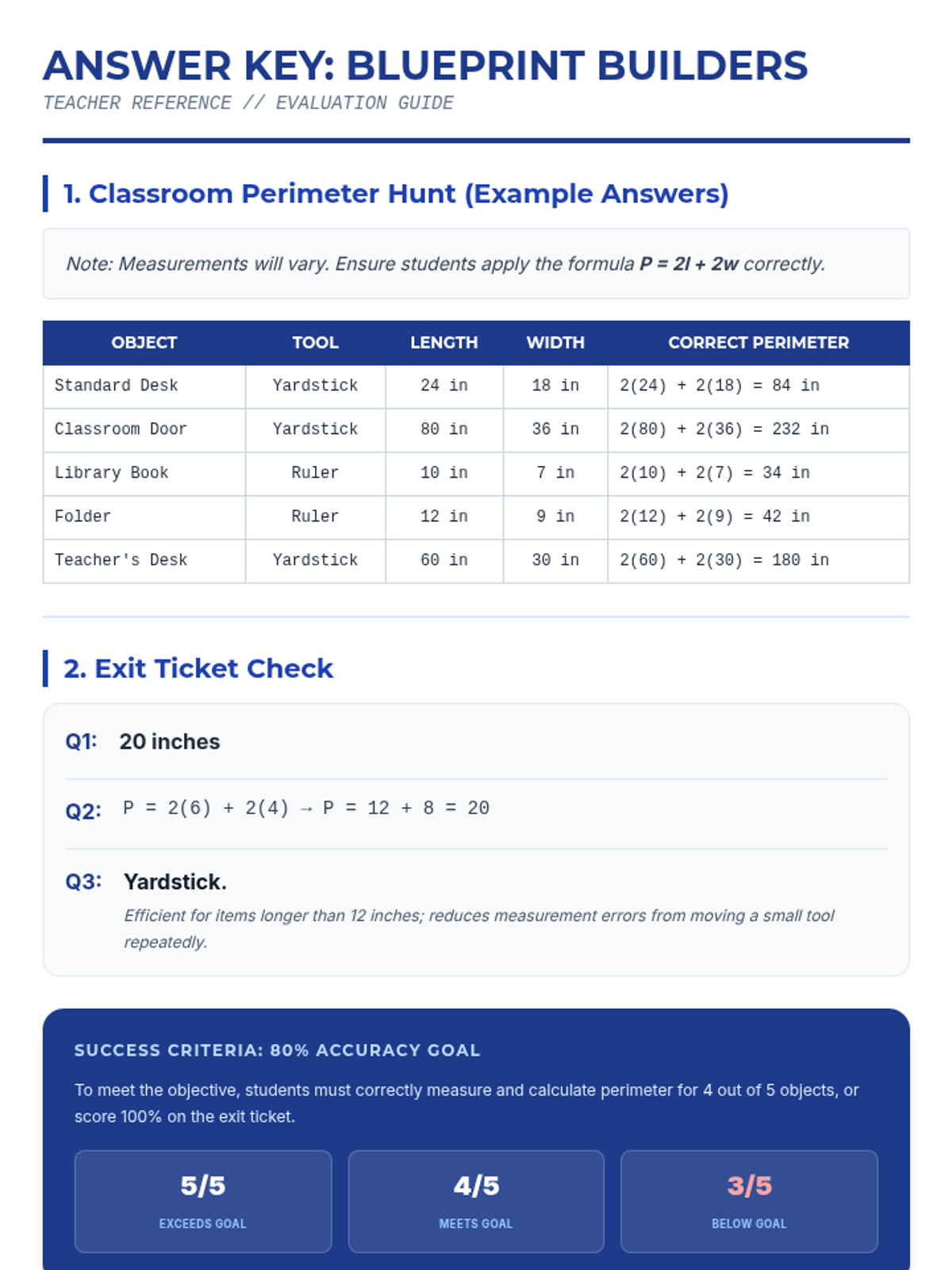
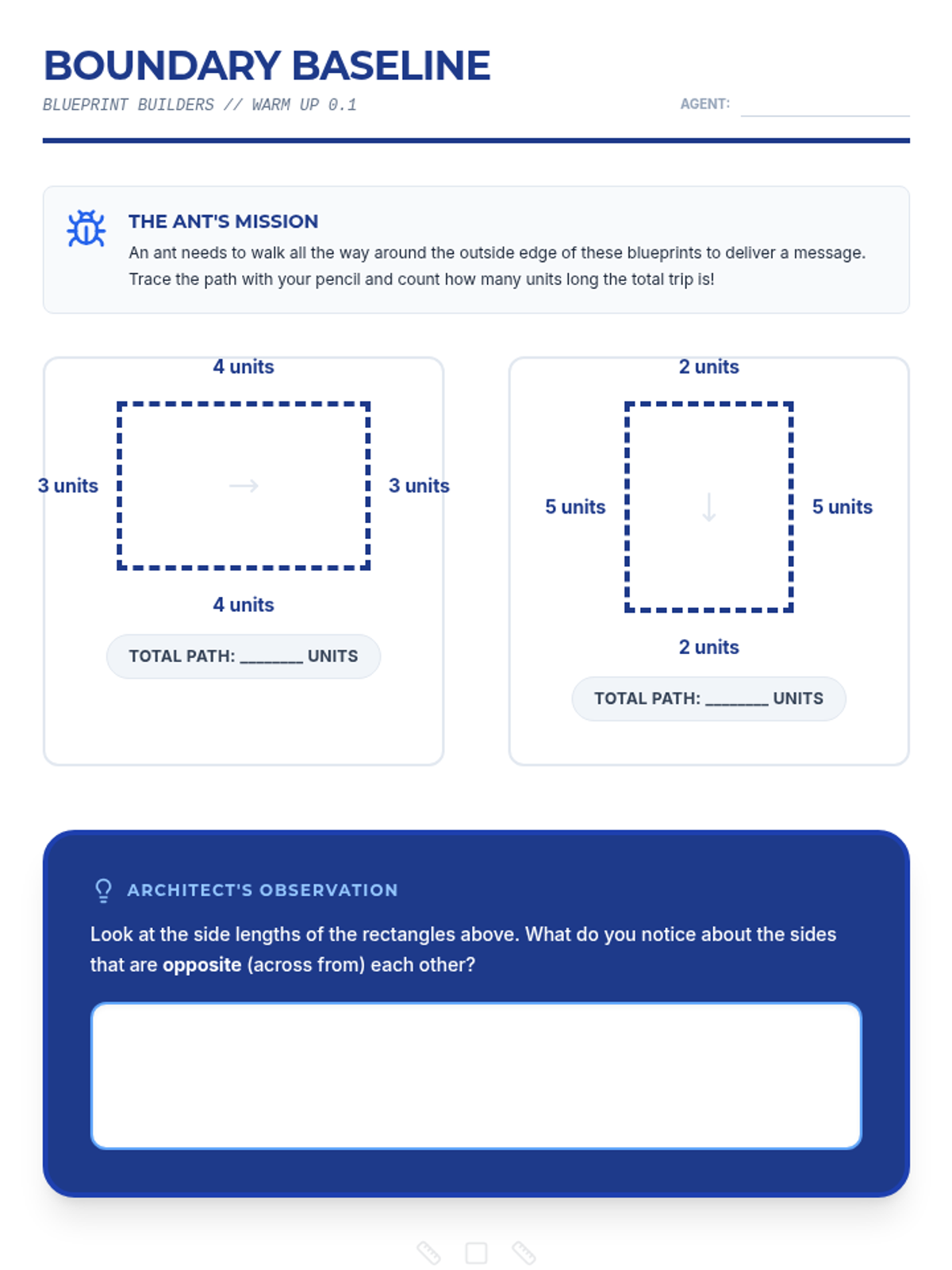
A hands-on geometry lesson where students measure classroom objects and apply the perimeter formula as architect-apprentices.
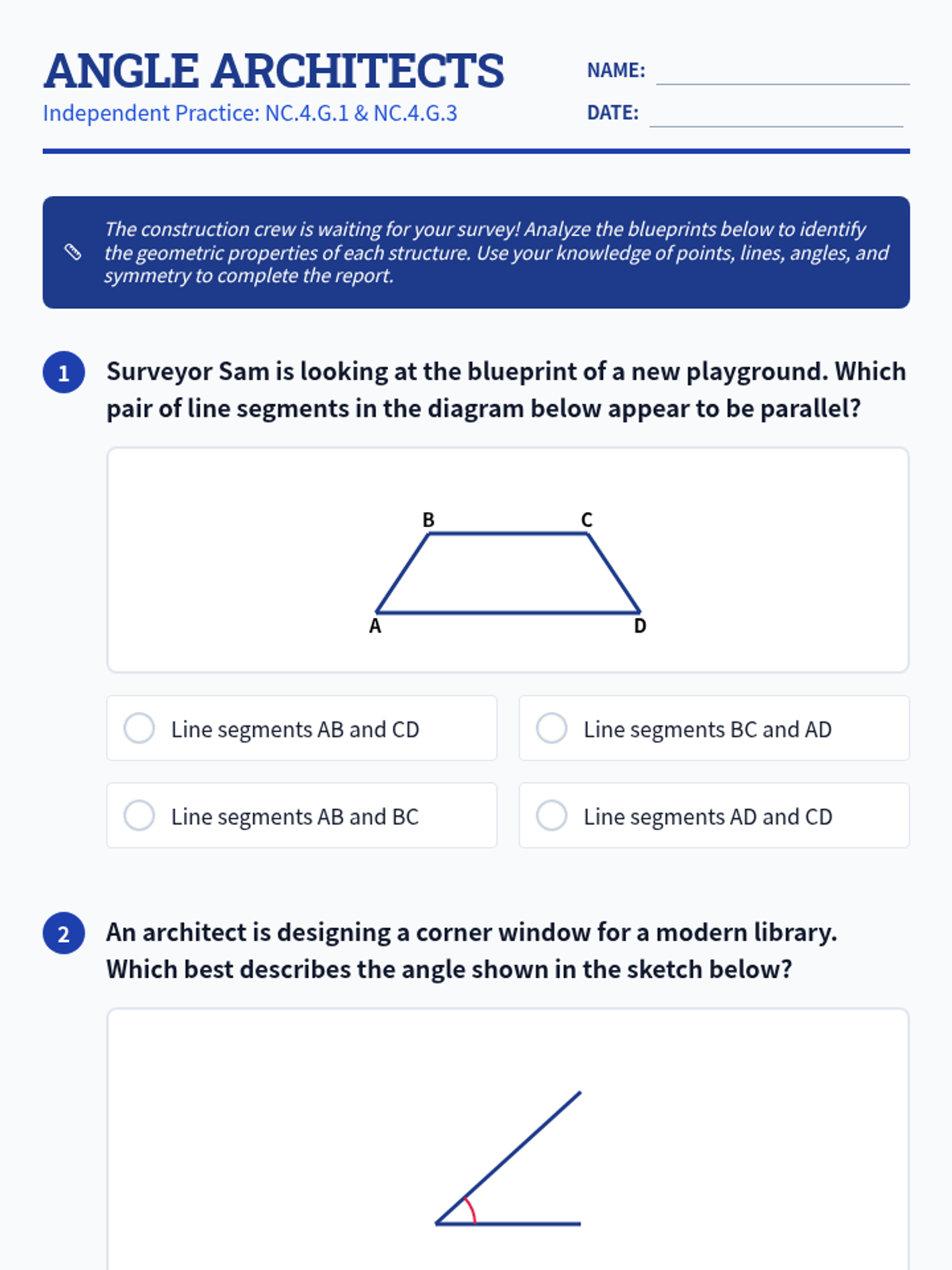
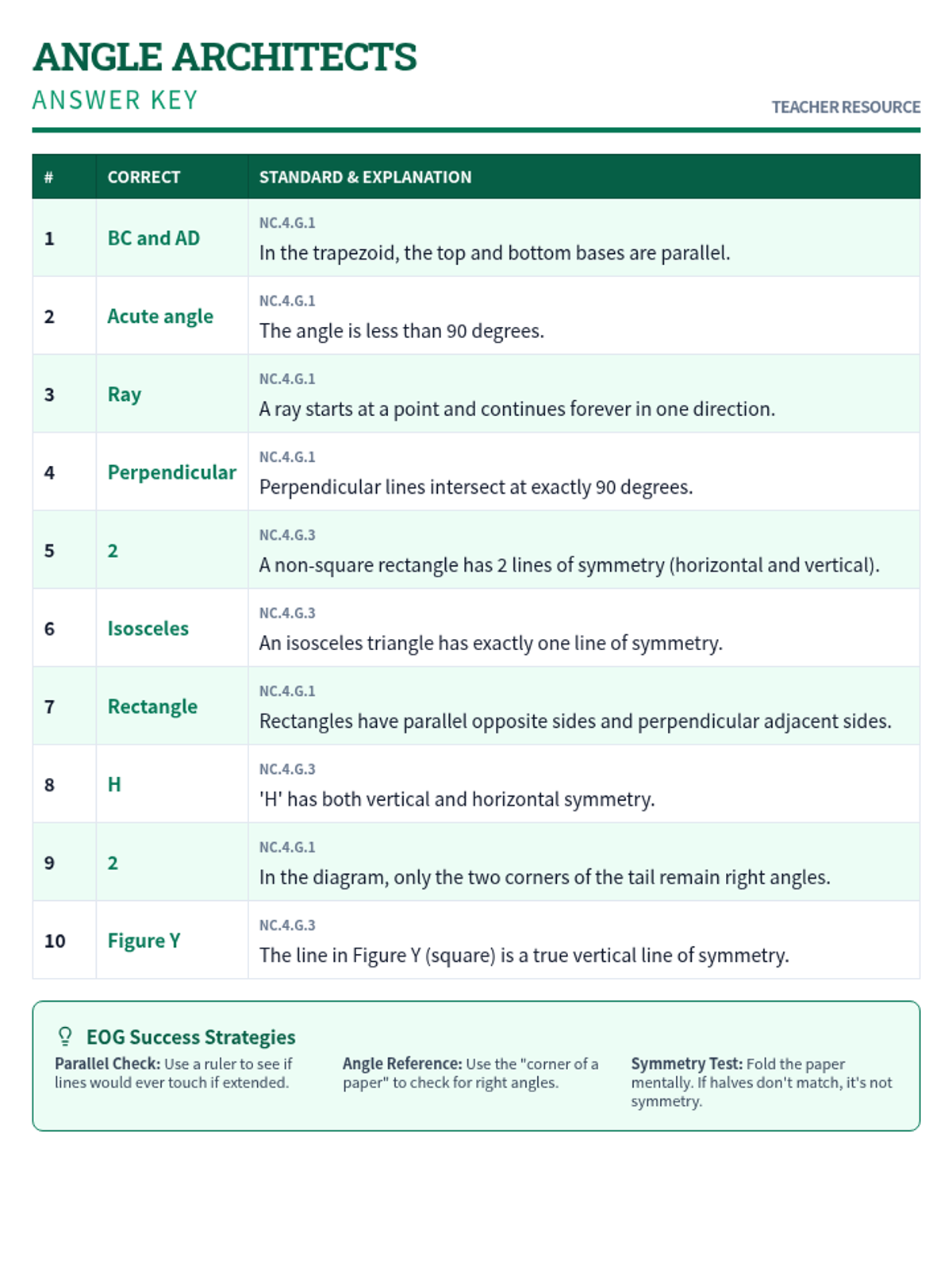
A rigorous exploration of points, lines, angles, and symmetry in two-dimensional figures, aligned with NC Grade 4 standards. Students apply geometric concepts to real-world architectural contexts and complex shapes.
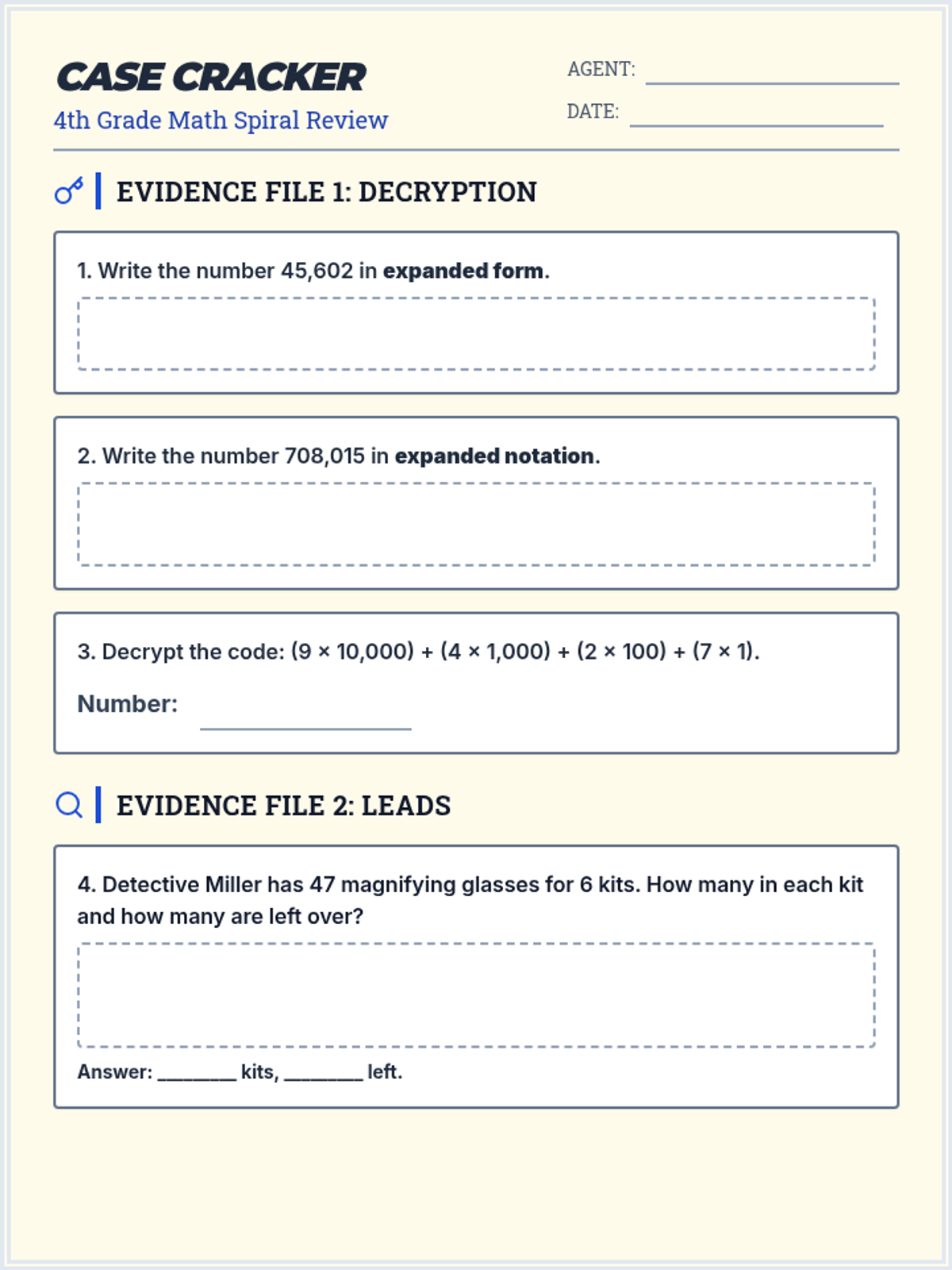
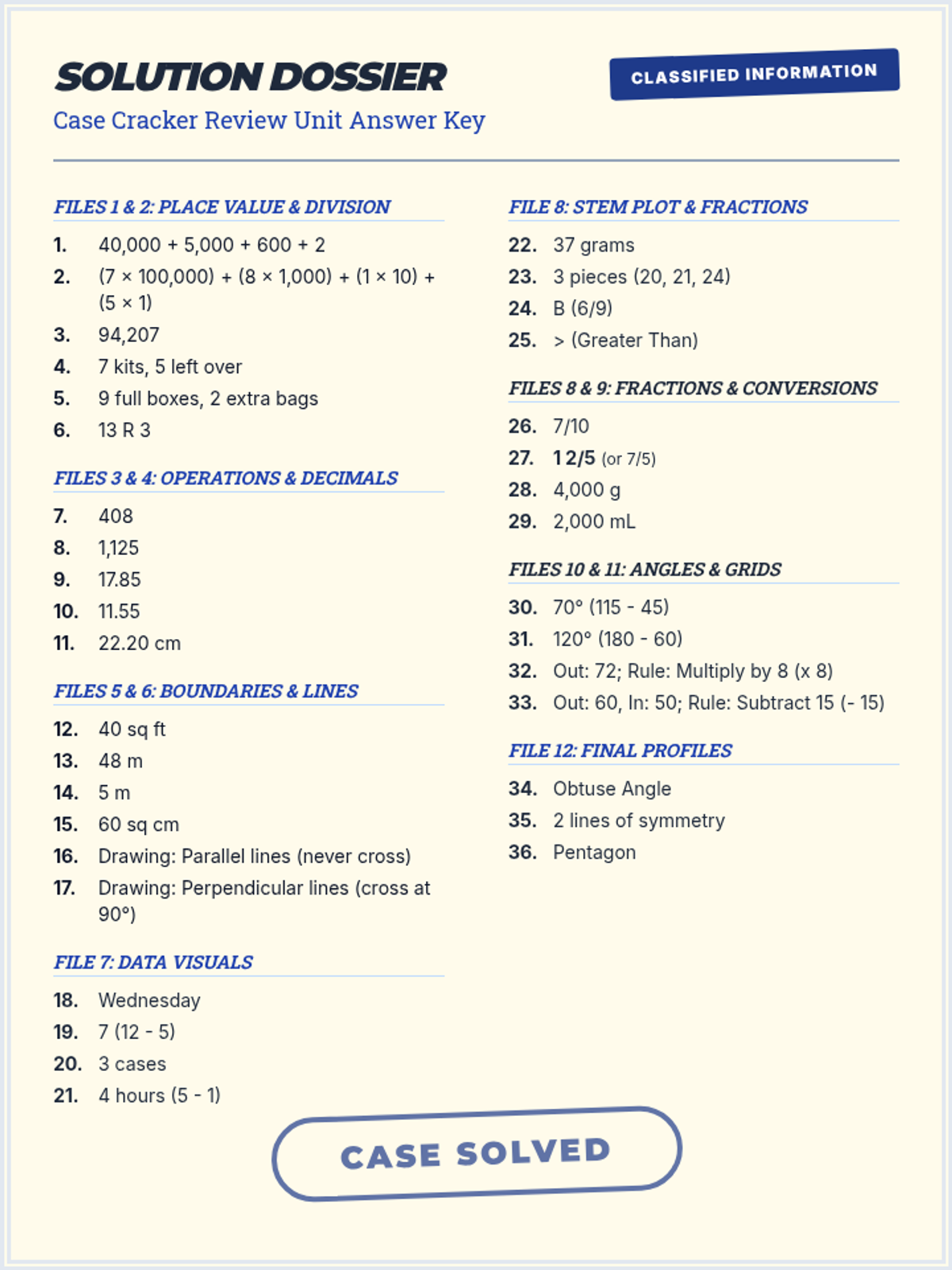
A comprehensive spiral review of 4th-grade math standards presented as a detective mystery. Students solve place value, operations, fractions, measurement, and geometry problems to crack the cases.
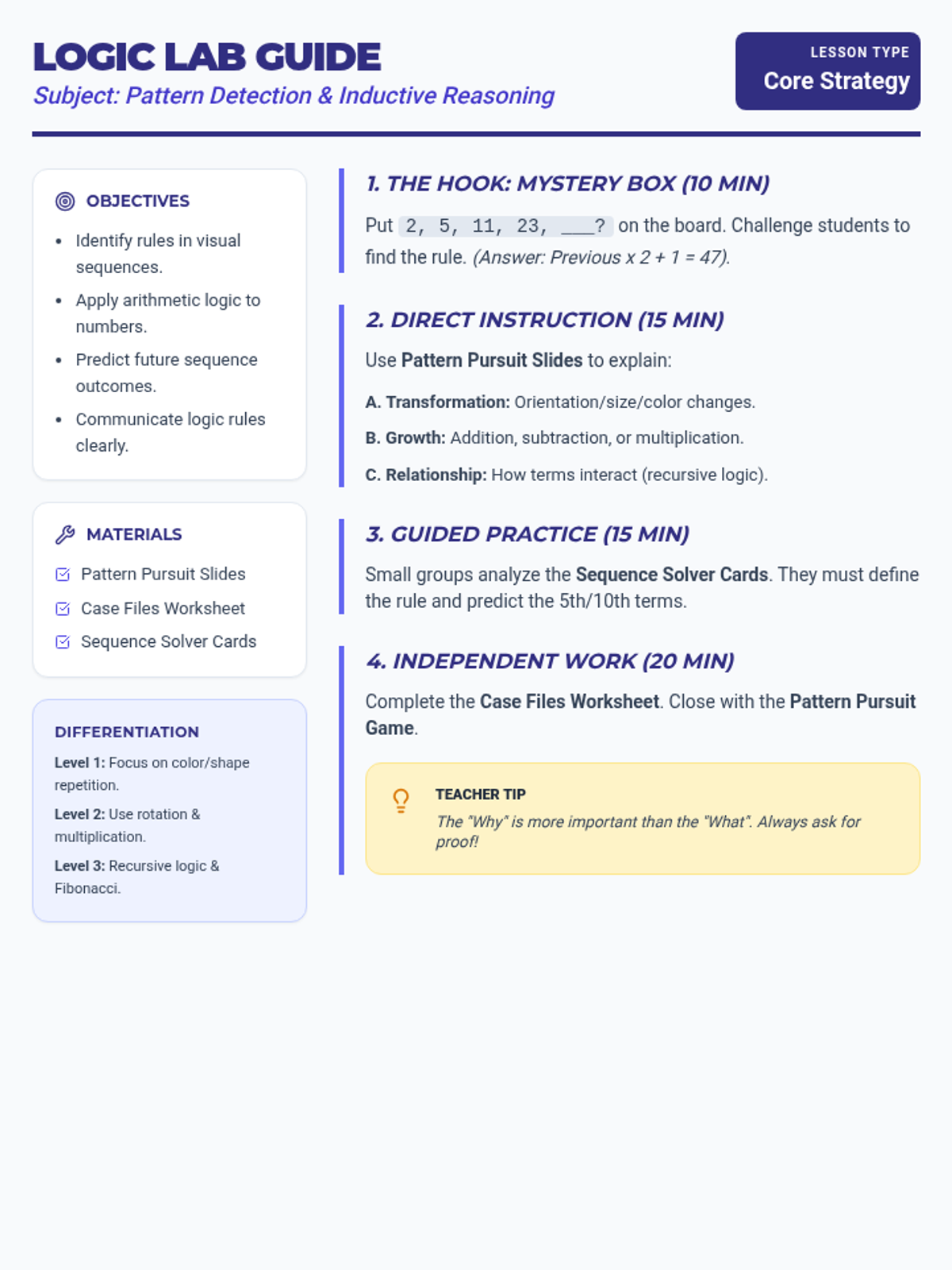
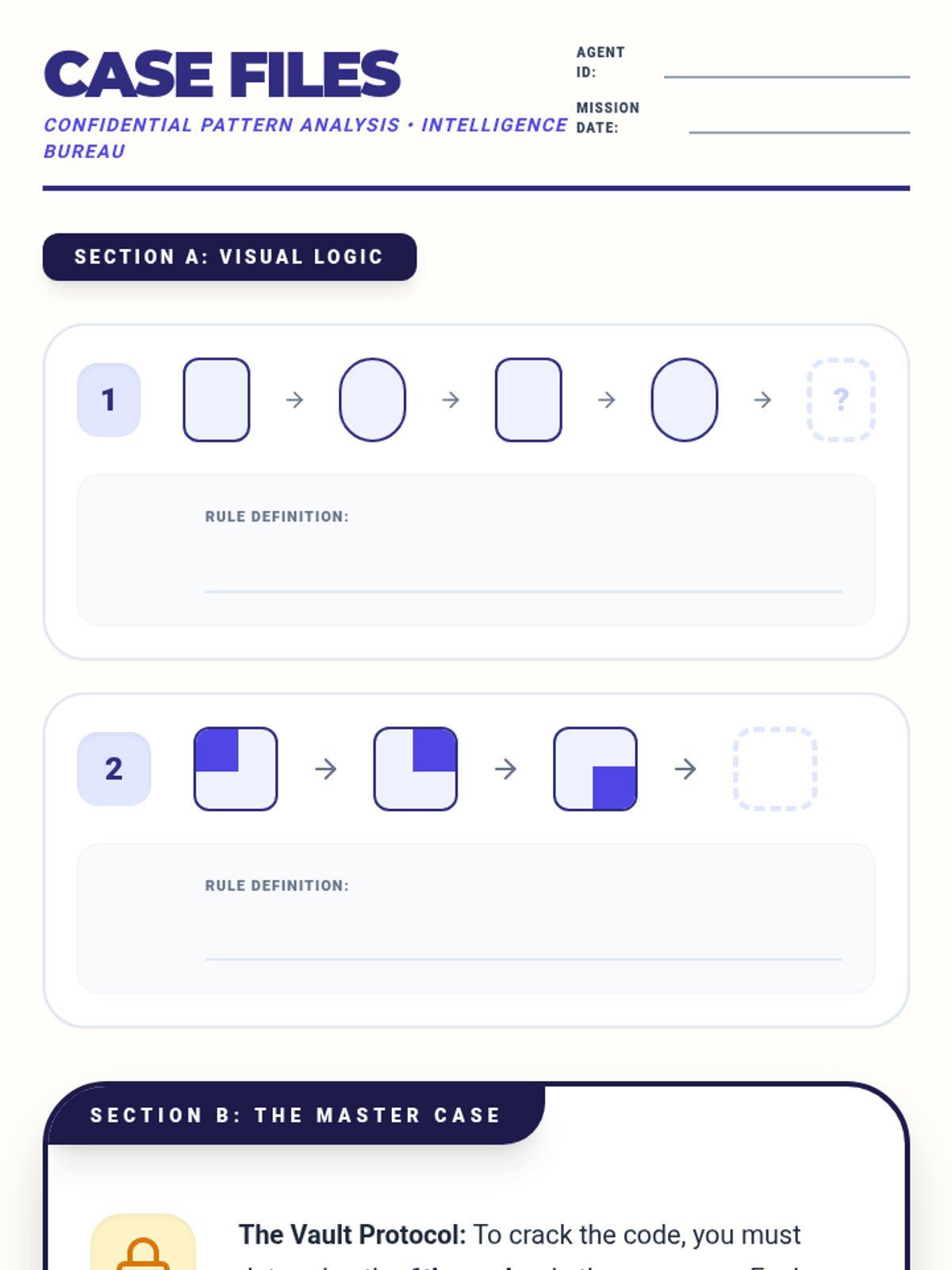
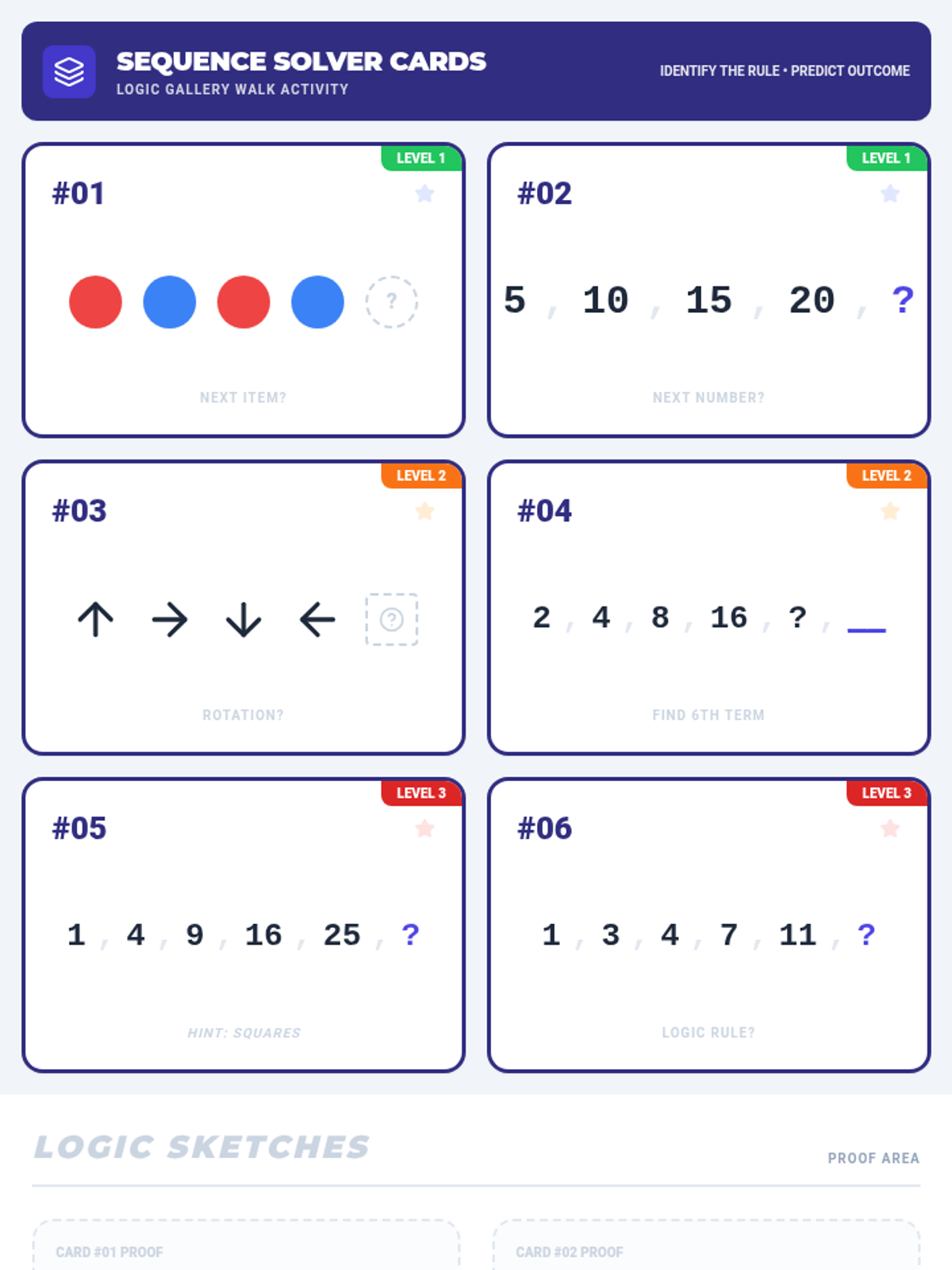
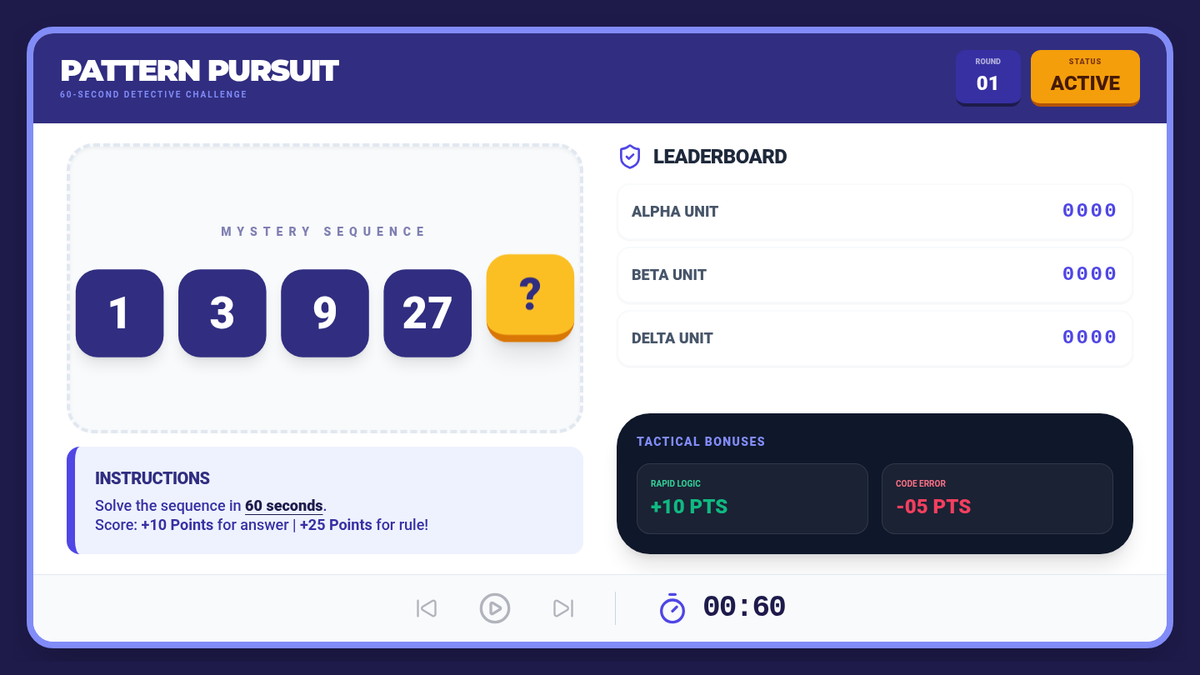
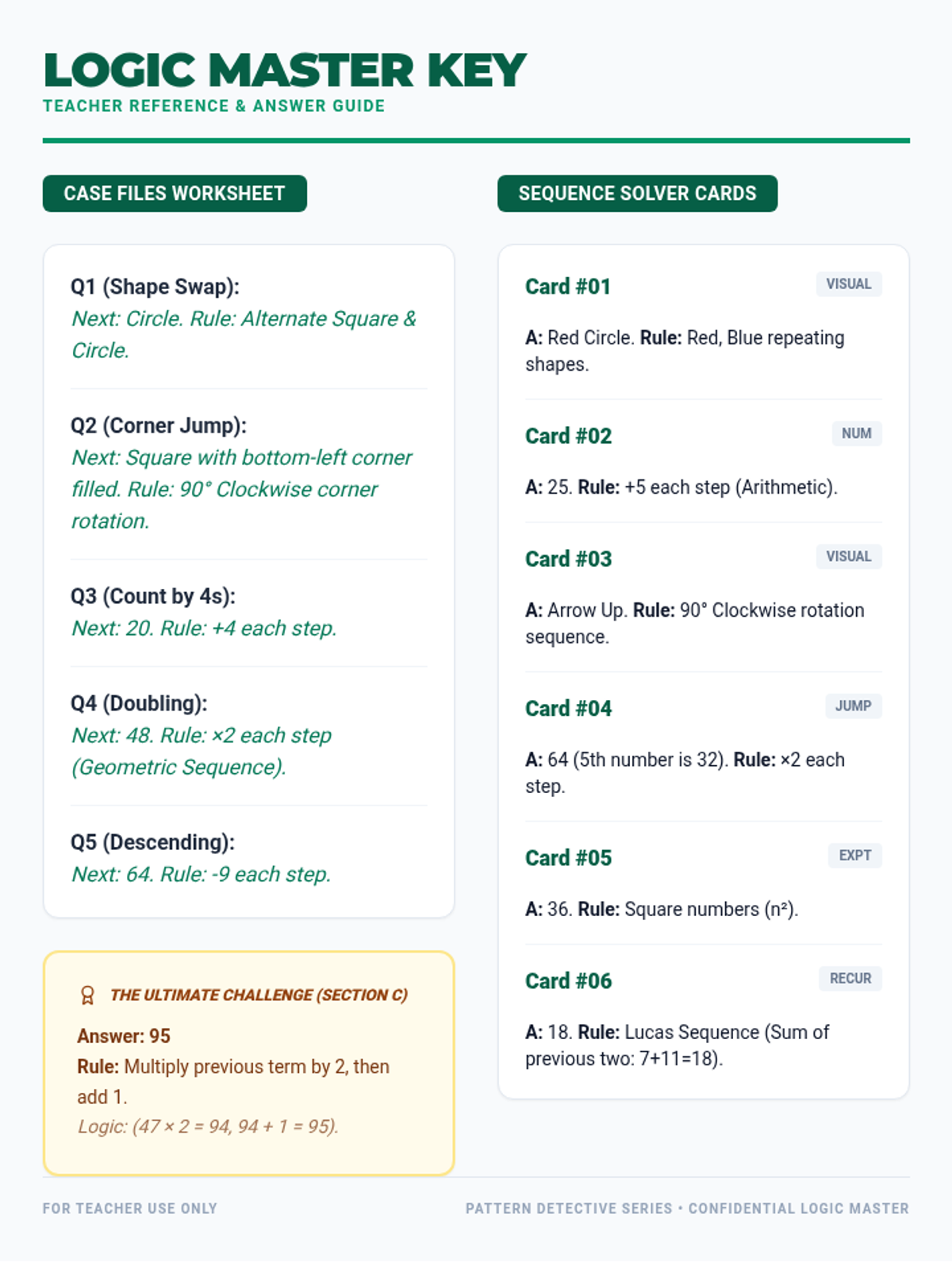
A comprehensive logic lesson where students act as detectives to identify rules in visual and numerical sequences, building inductive reasoning and prediction skills.
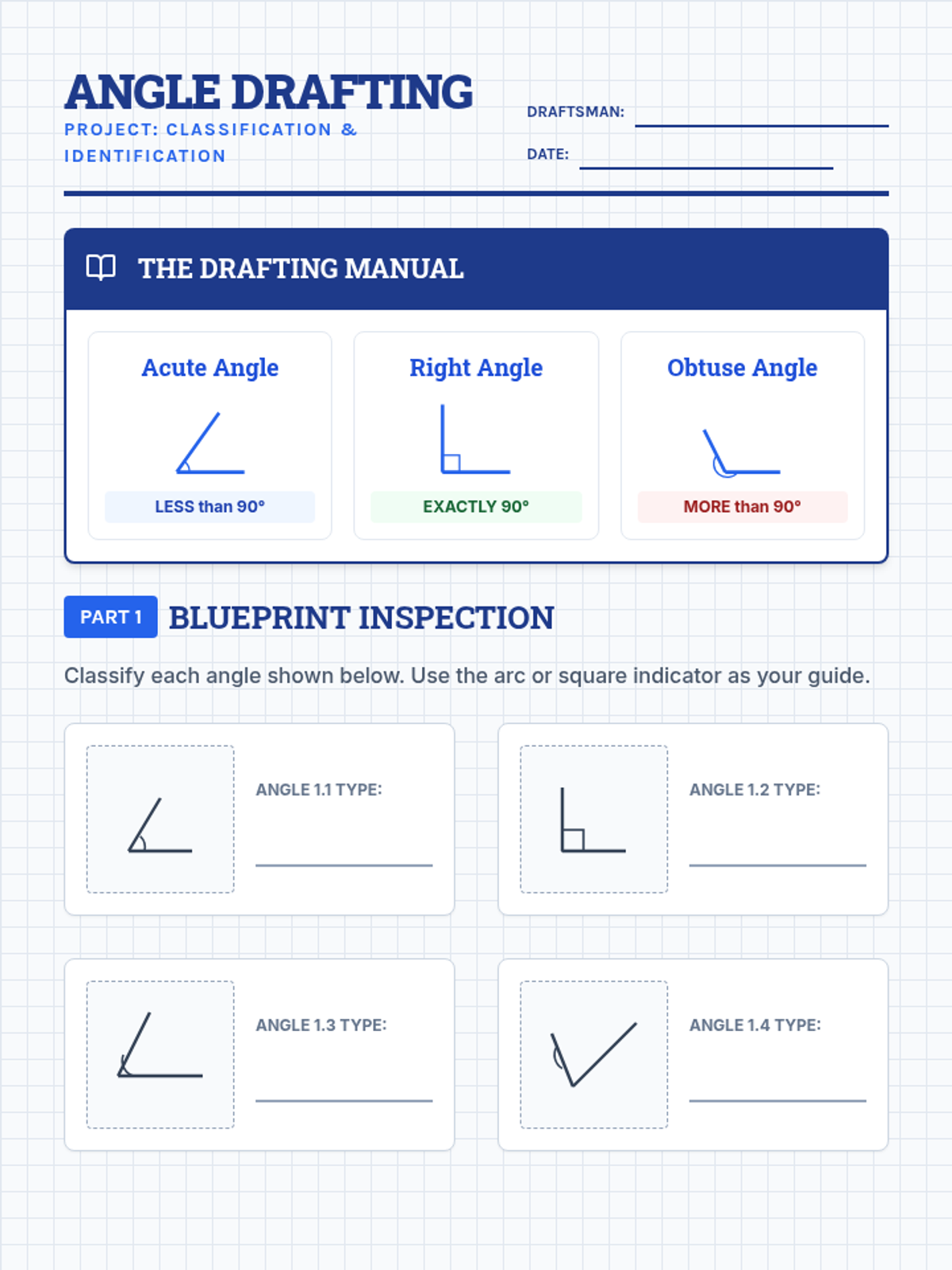
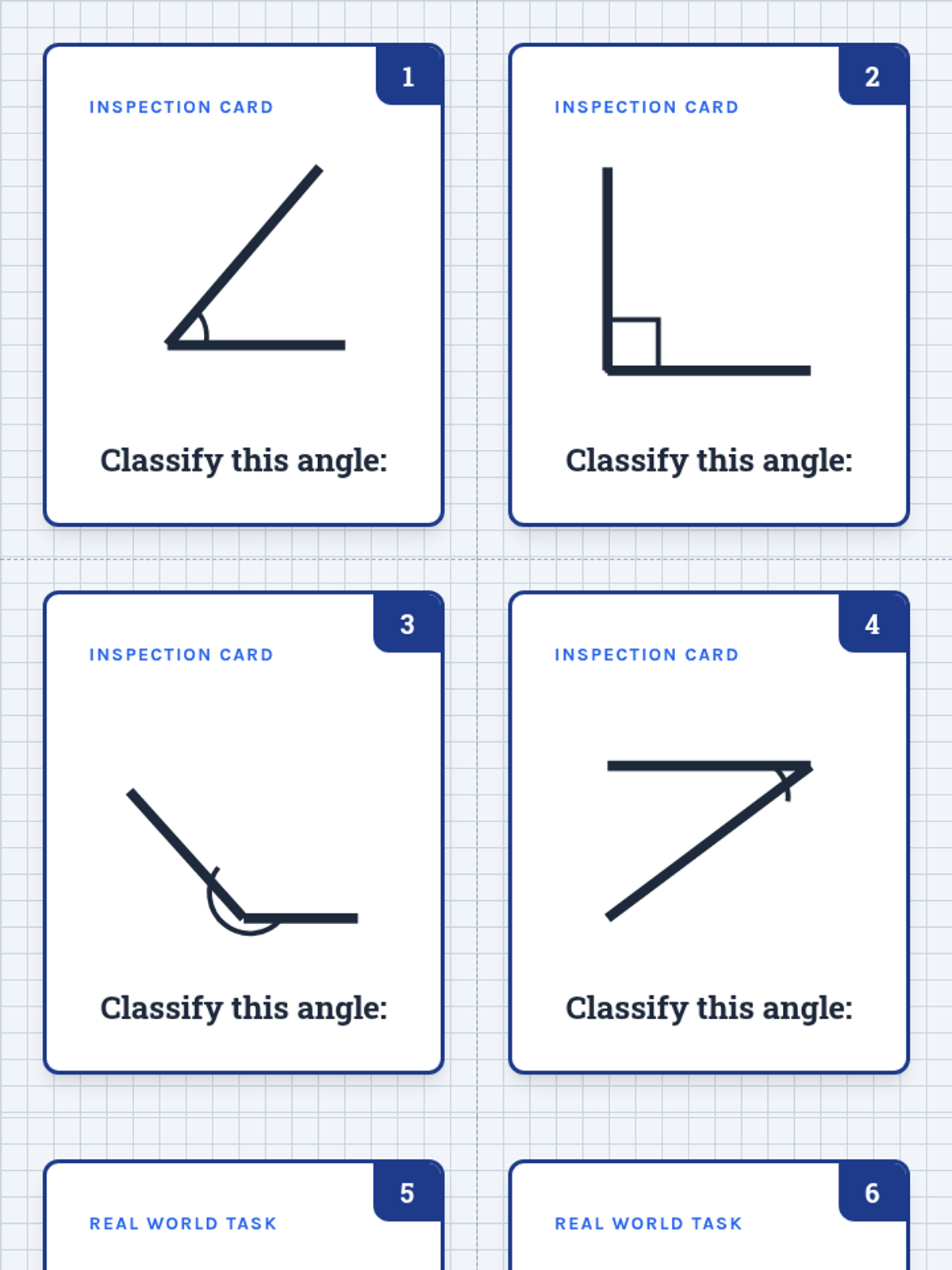
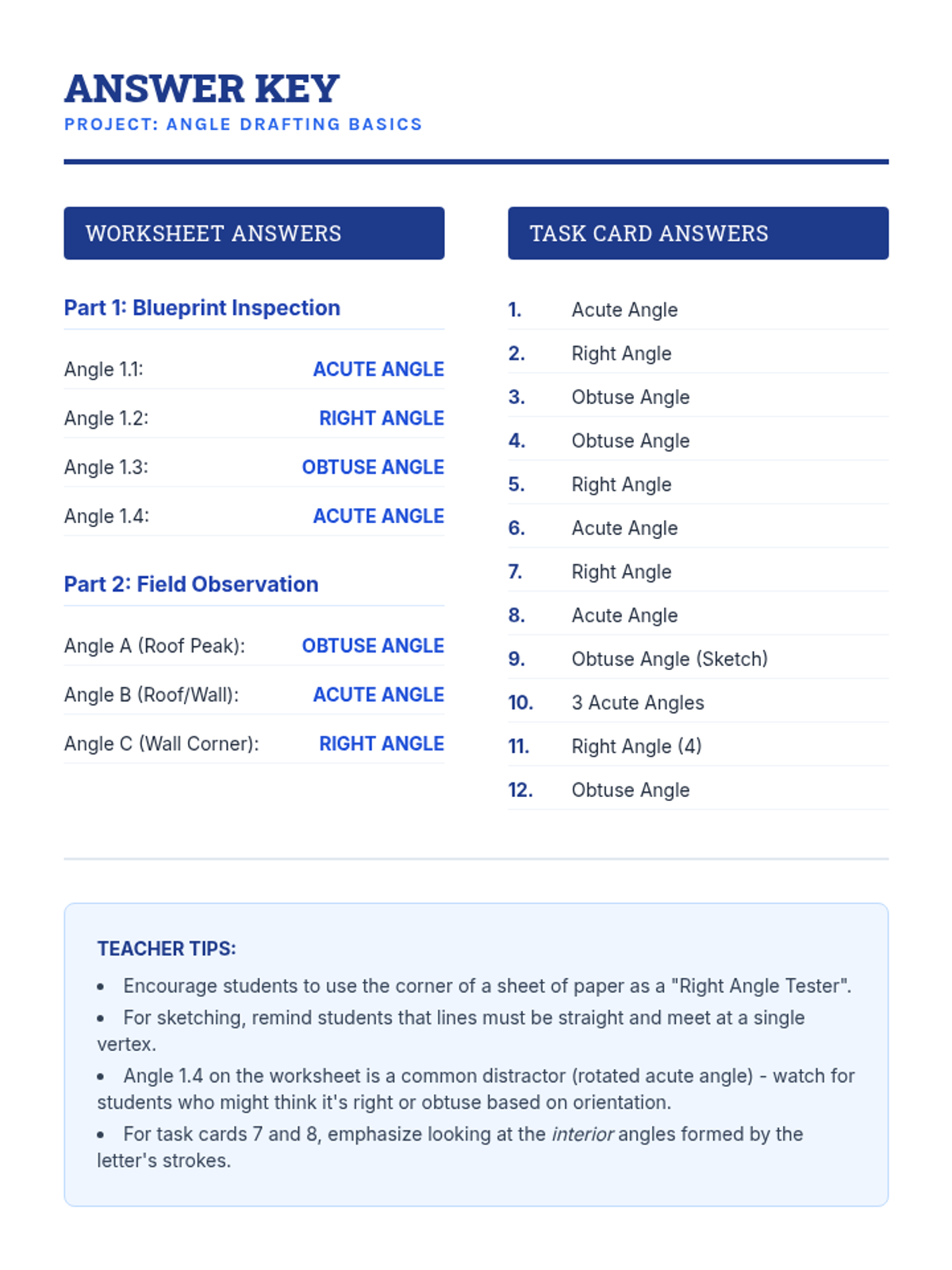
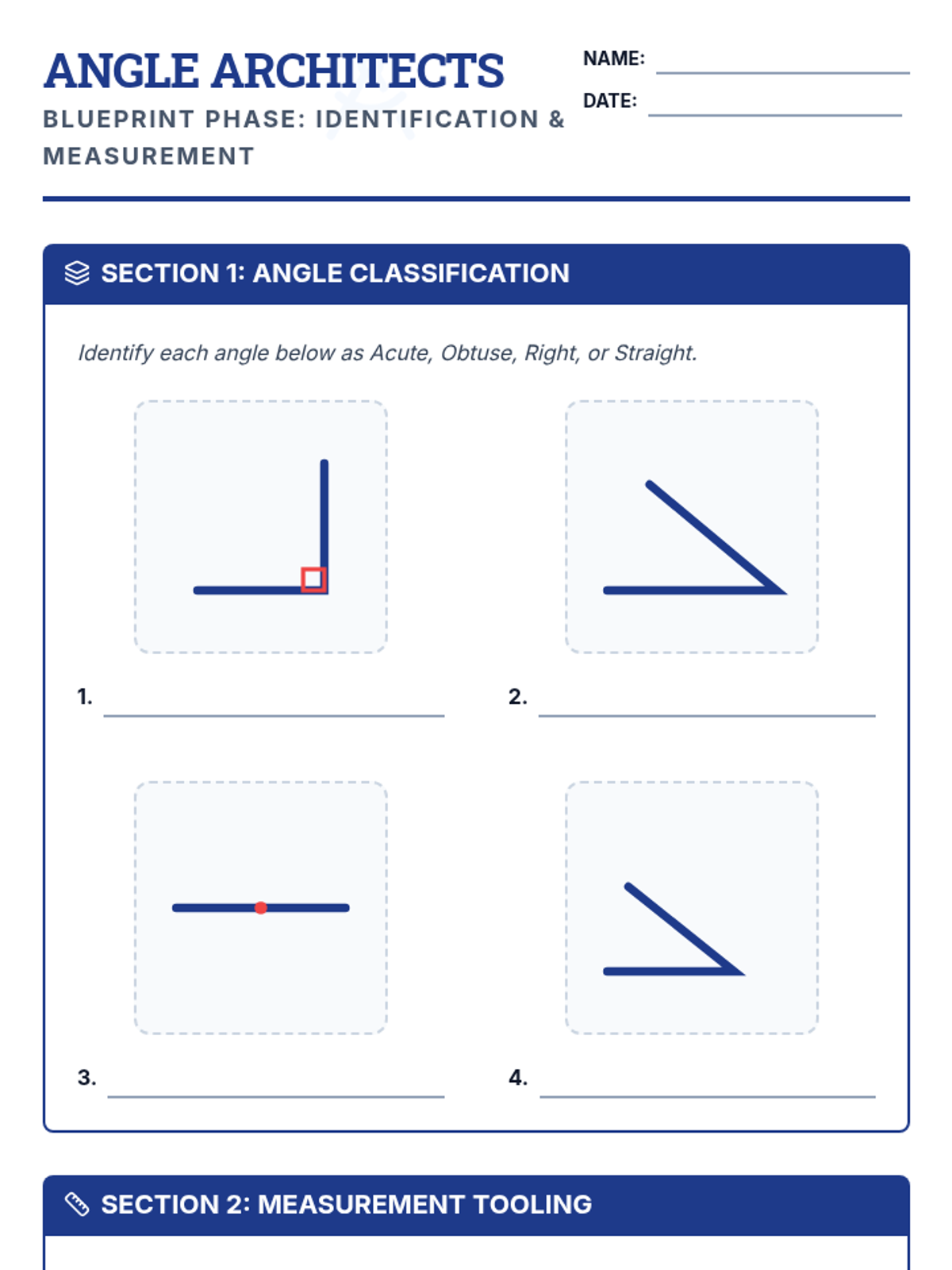
A foundational lesson on classifying angles as acute, obtuse, or right, serving as a prerequisite for measuring with a protractor. Students will identify, classify, and sketch angles within a technical blueprint-themed environment.
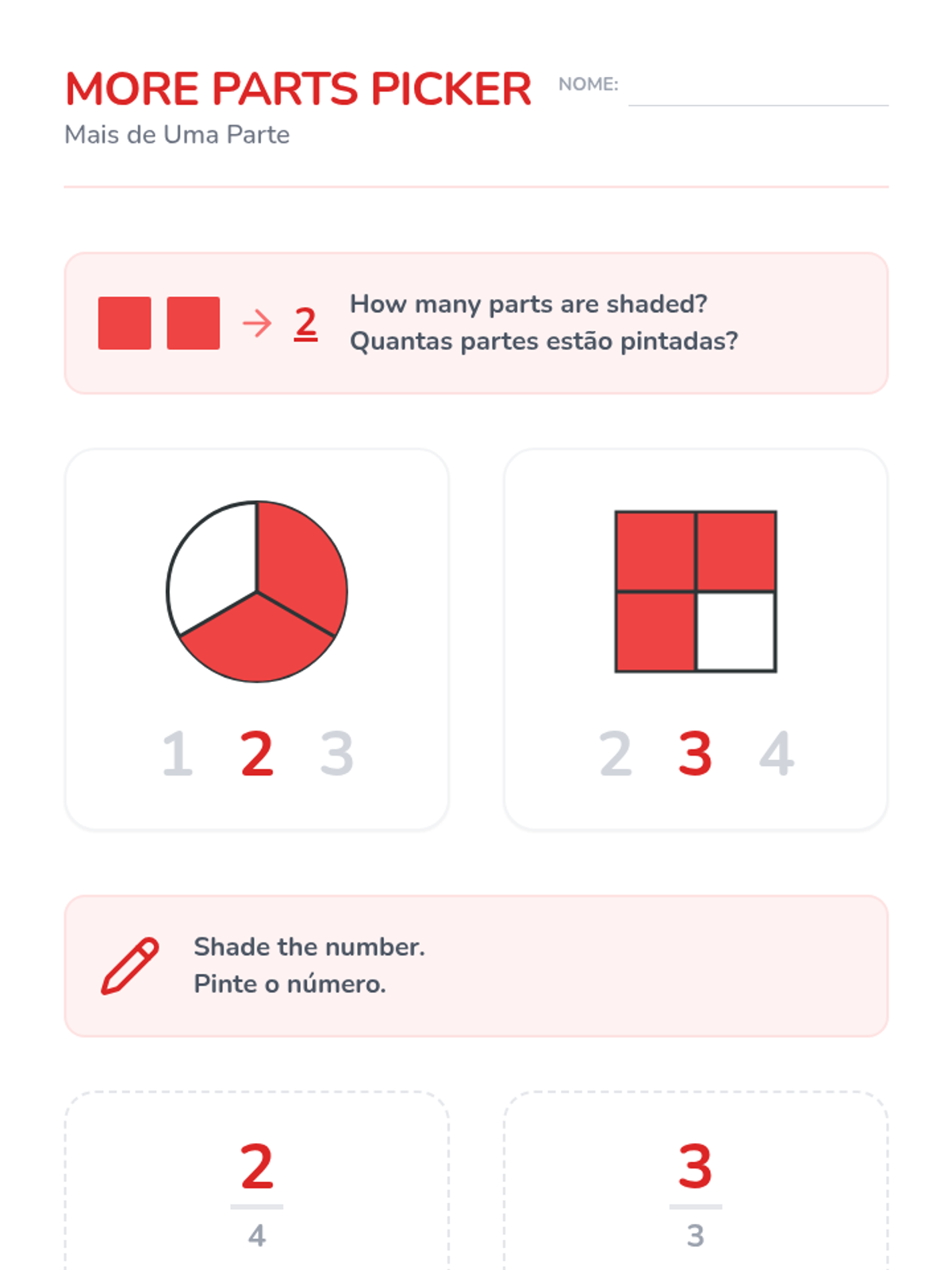
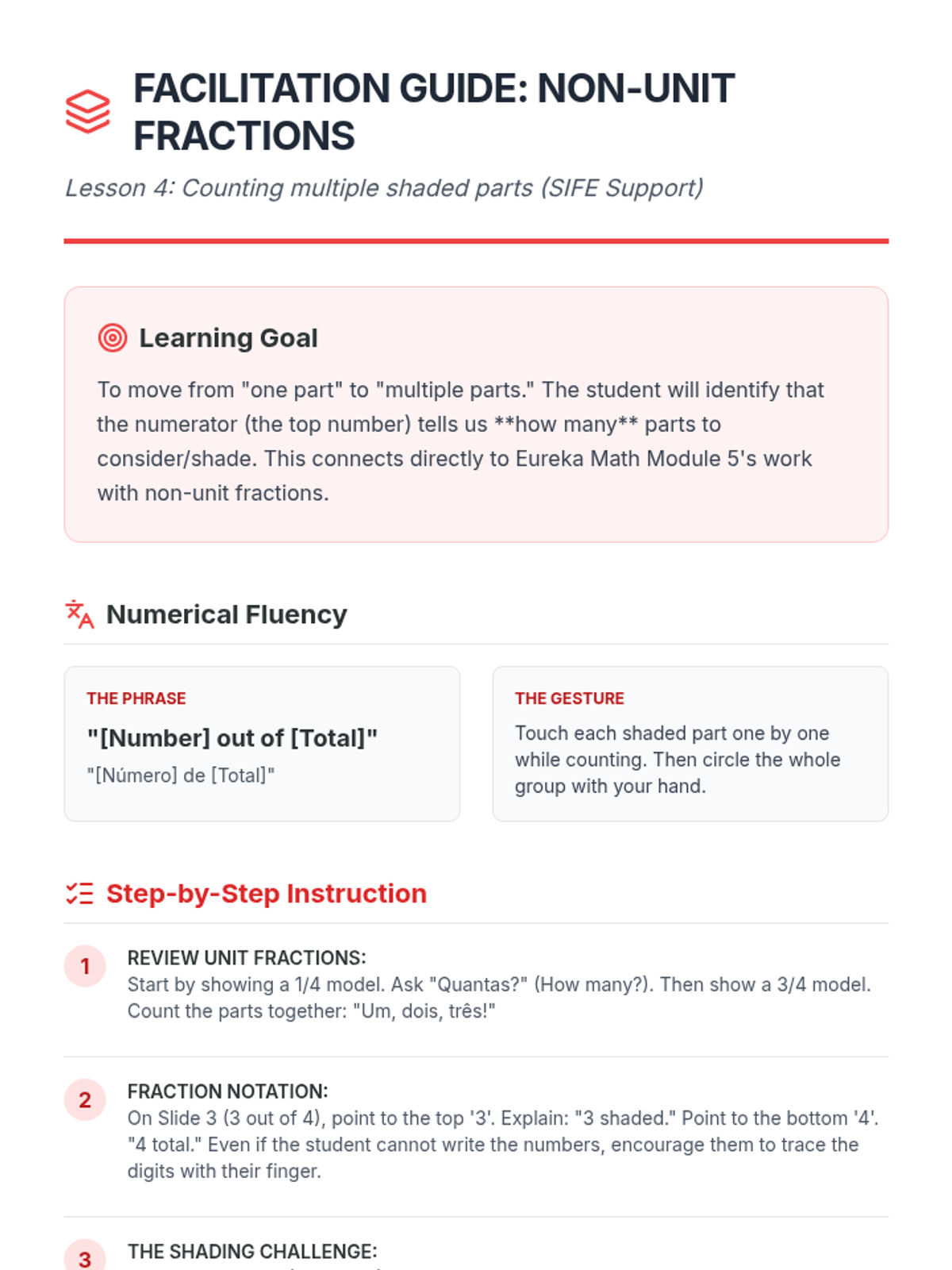
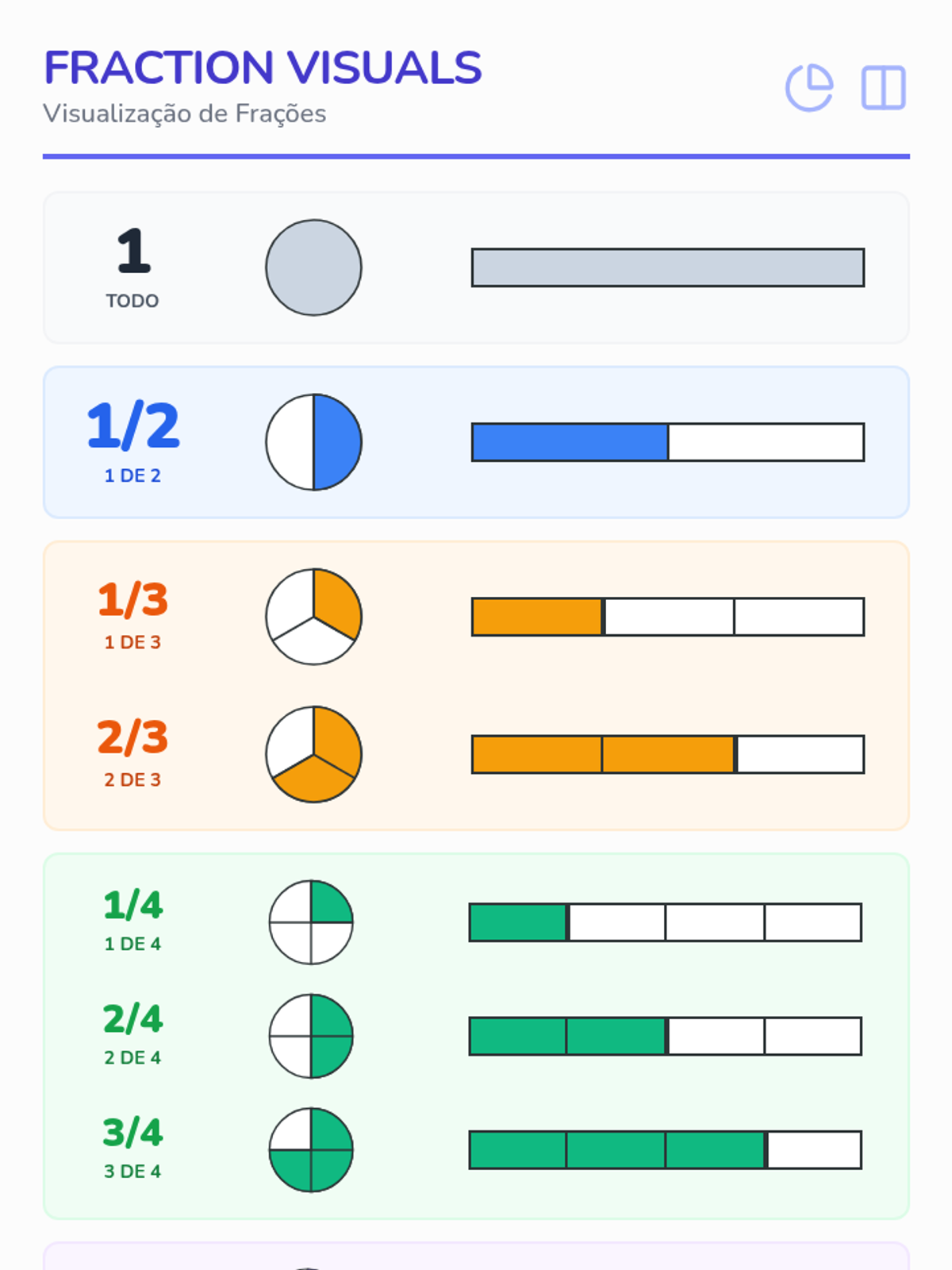
Introduces non-unit fractions by counting multiple shaded parts (e.g., 2 out of 3, 3 out of 4). Focuses on the verbal transition from "one part" to "many parts" while maintaining visual consistency.
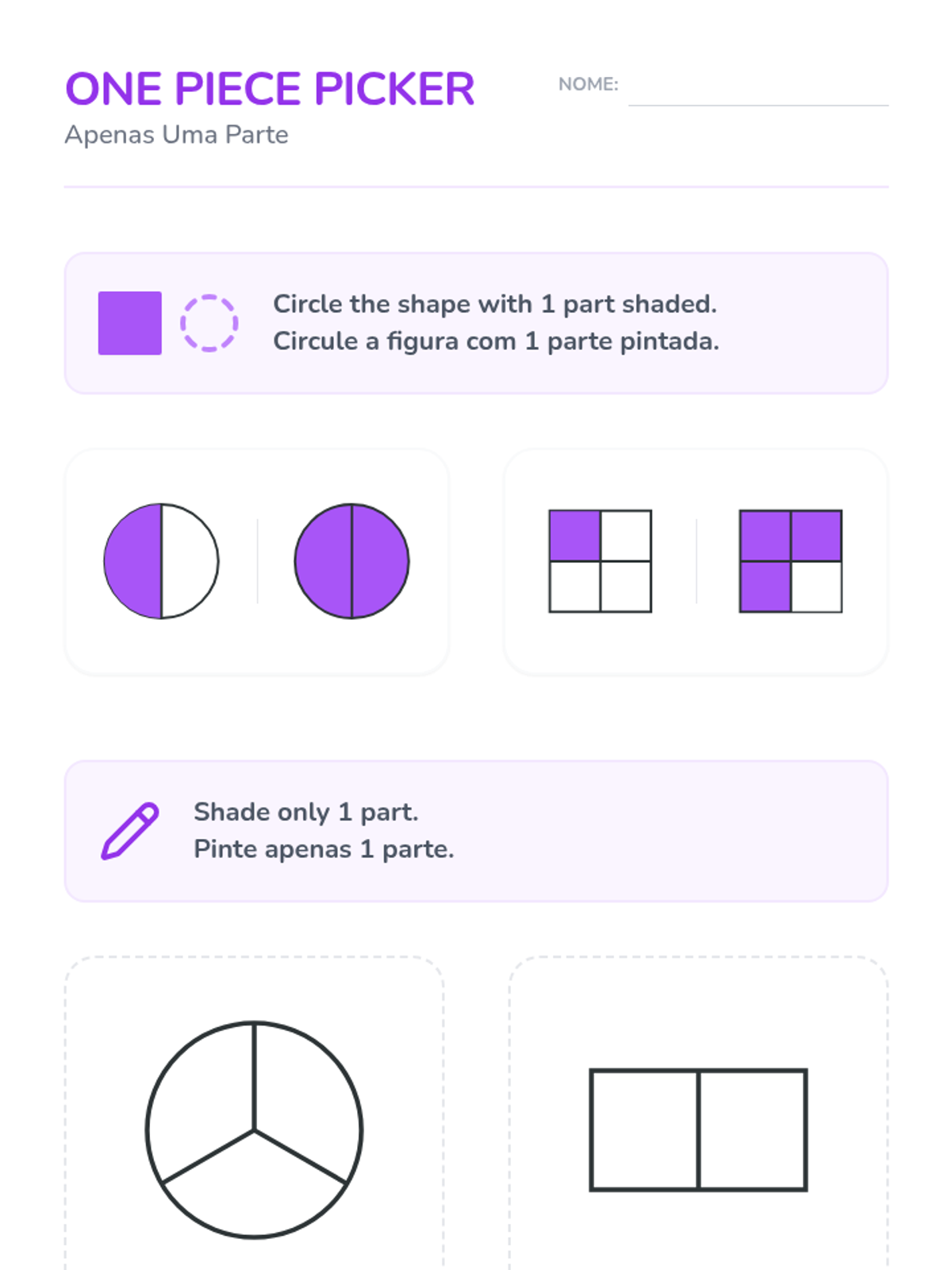
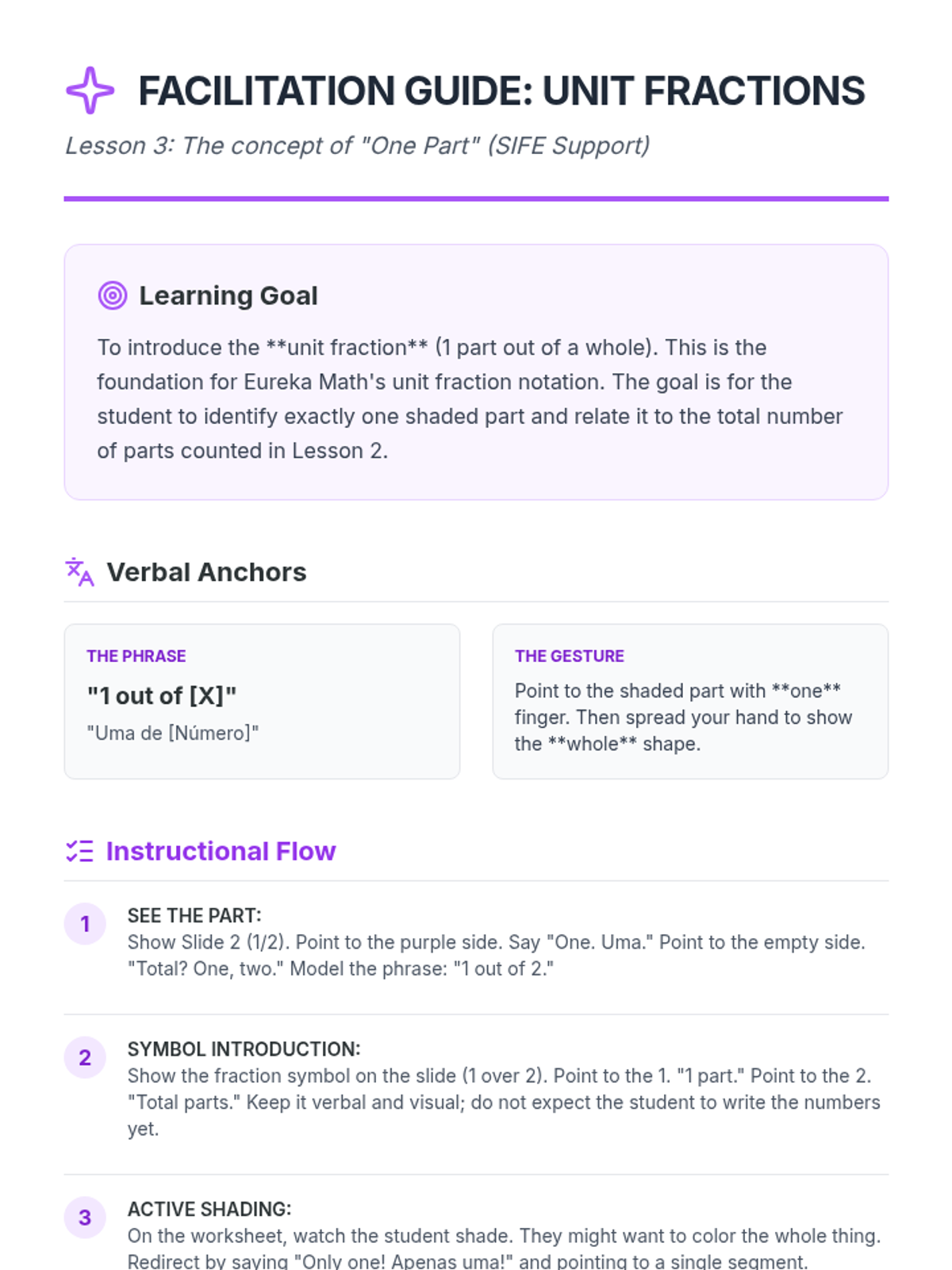
Introduces the concept of a unit fraction by identifying 'one part' out of a whole. Focuses on visual recognition of one shaded part and introduces the verbal phrasing 'one out of x' in English and Portuguese.
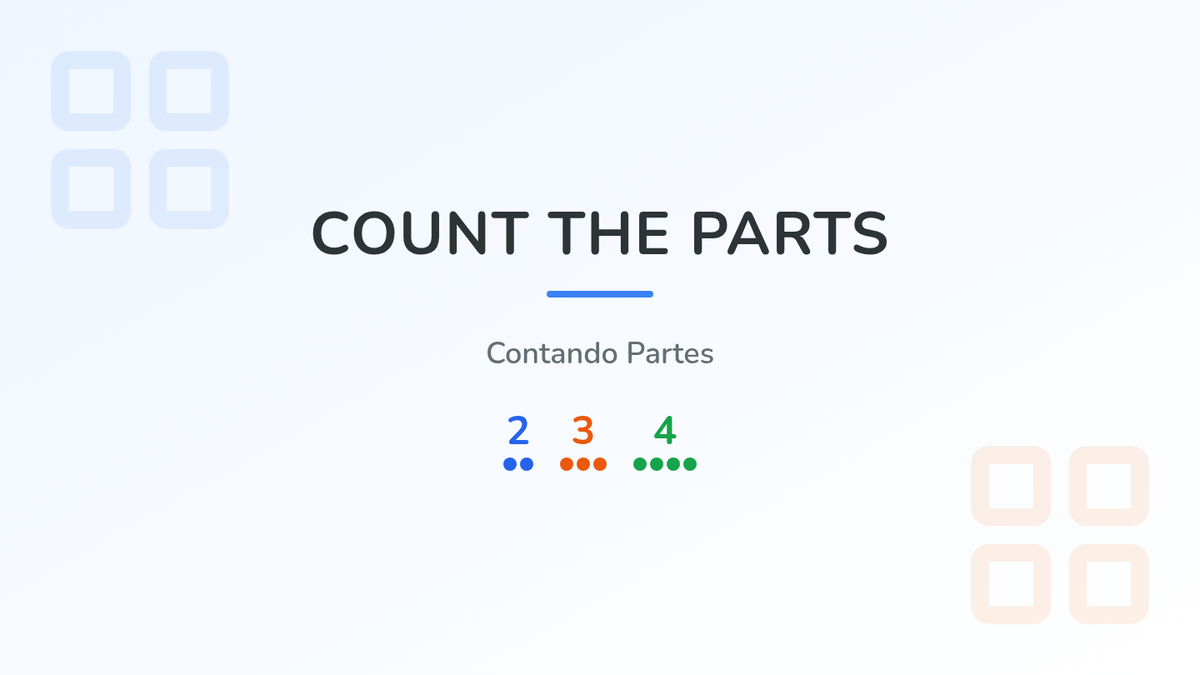
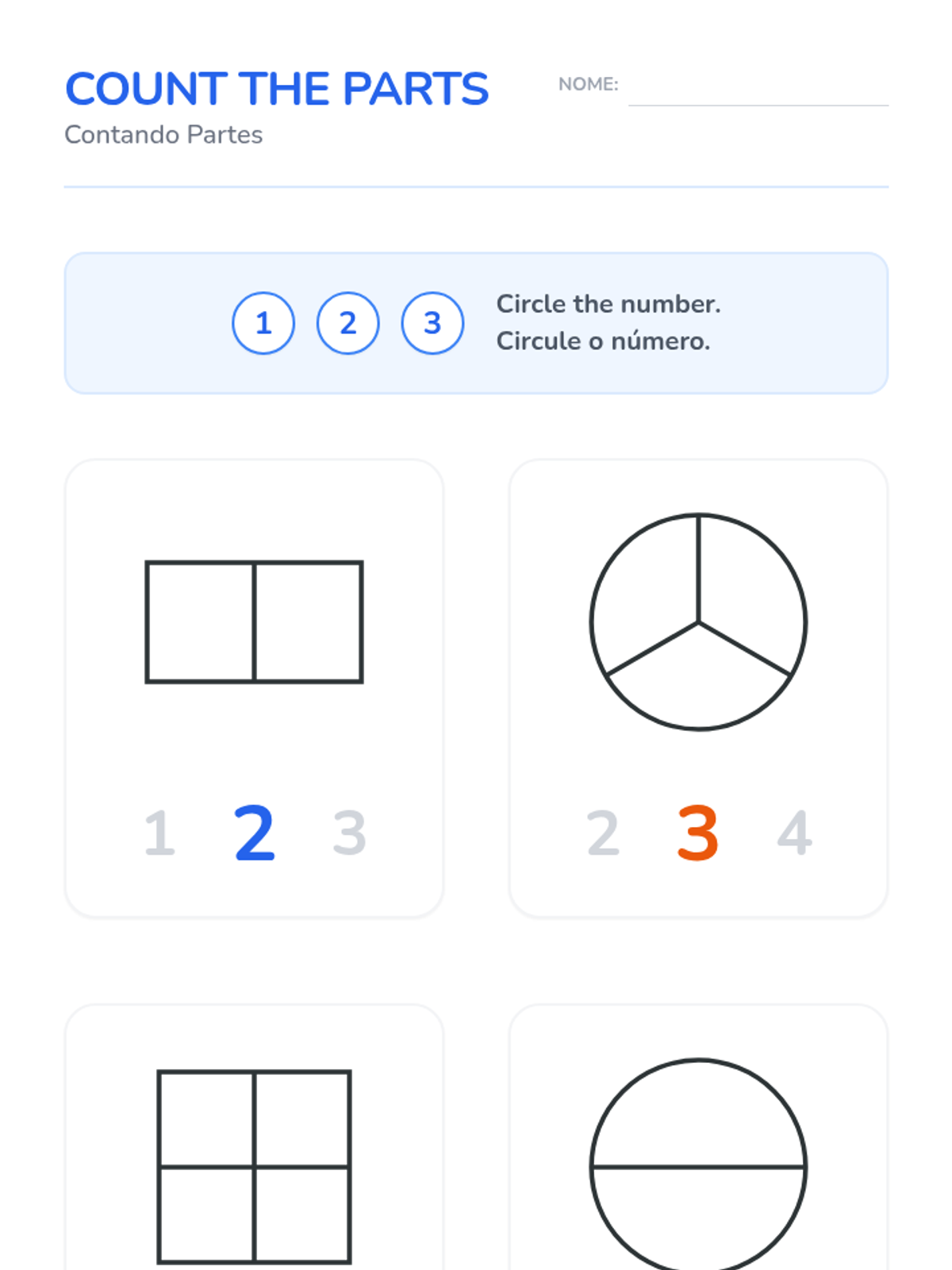
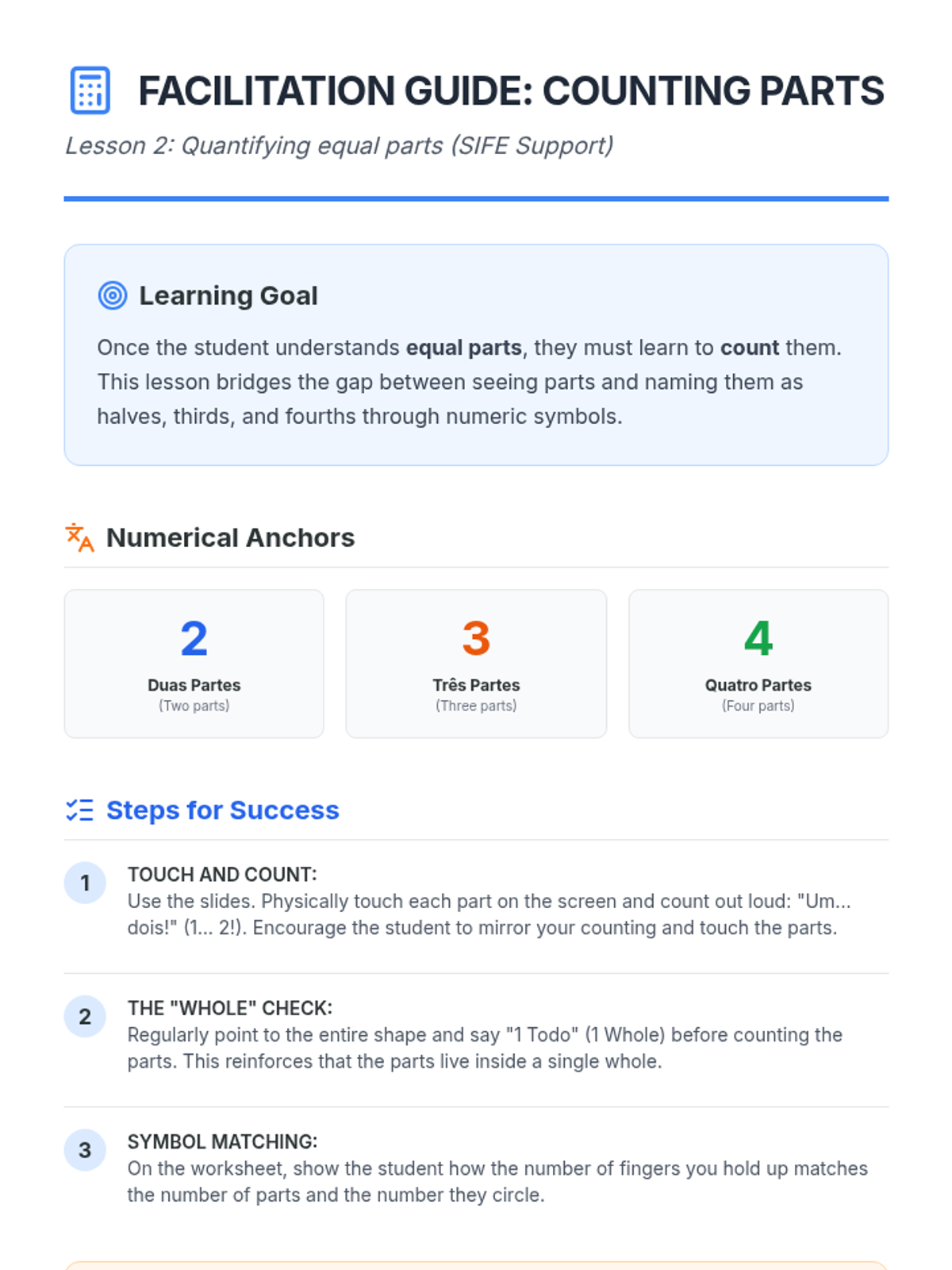
Focuses on identifying the number of equal parts (2, 3, and 4) in a whole. Introduces the vocabulary for halves, thirds, and fourths through visual counting and symbols, maintaining a low-literacy approach.
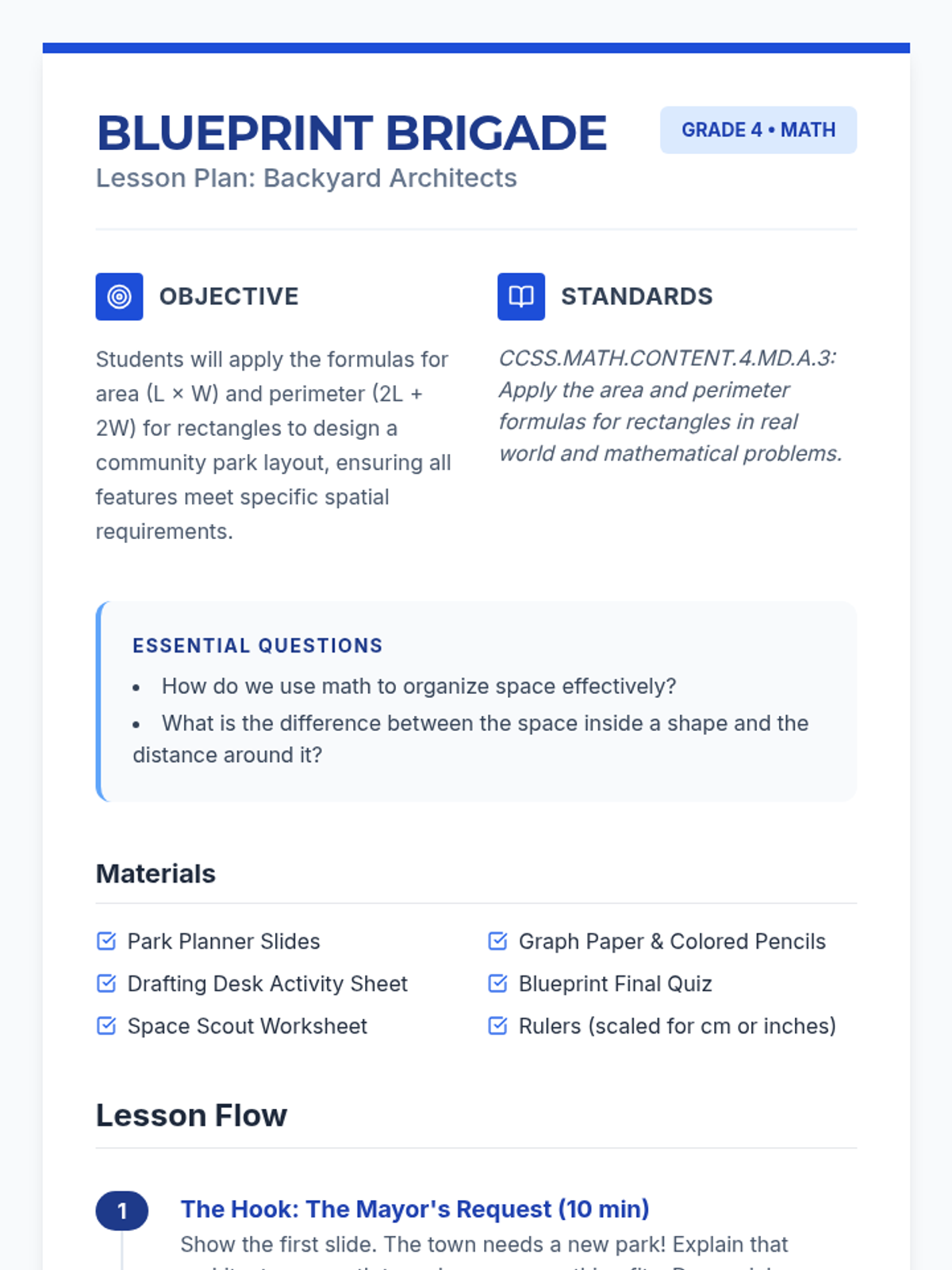
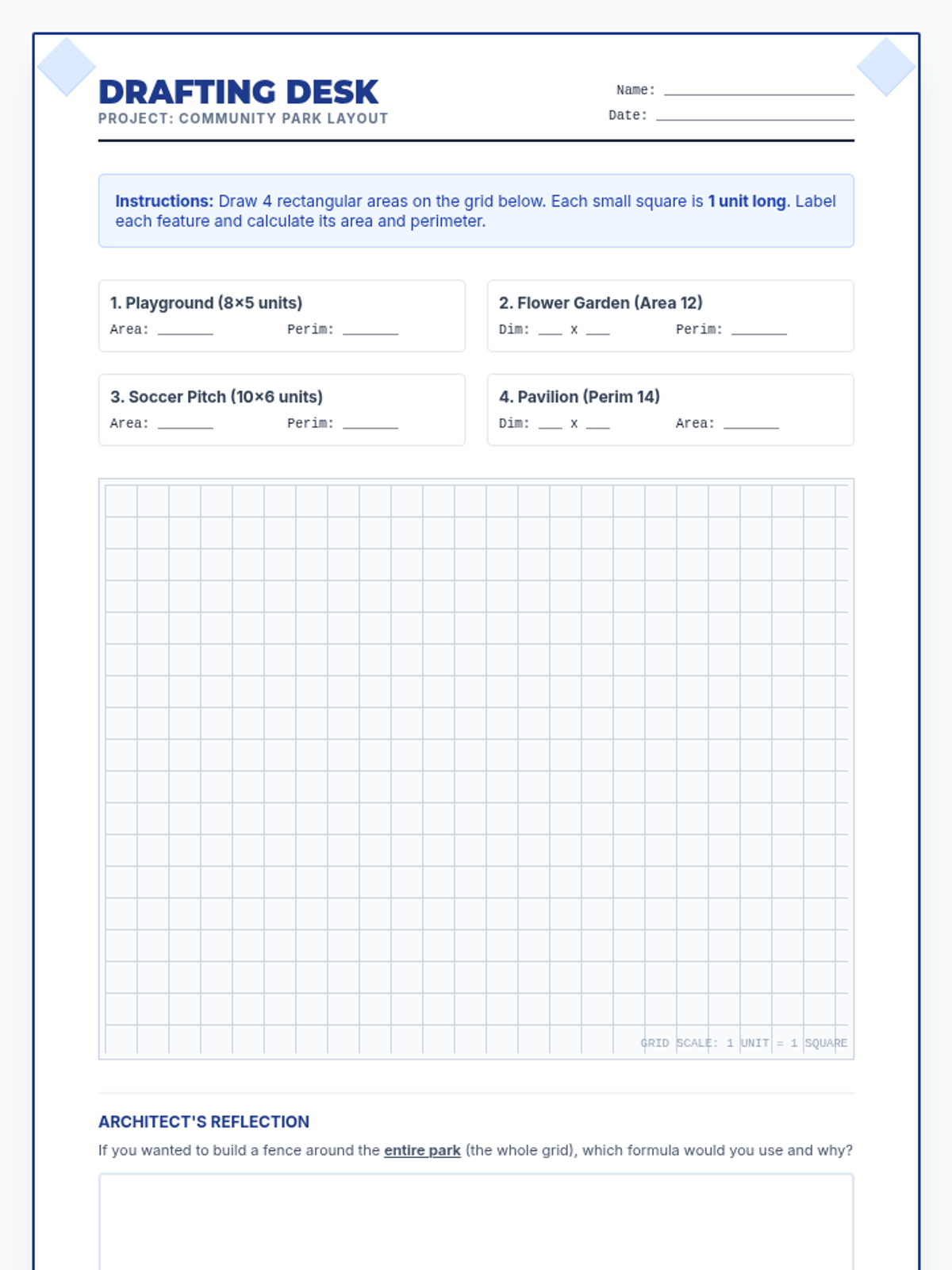
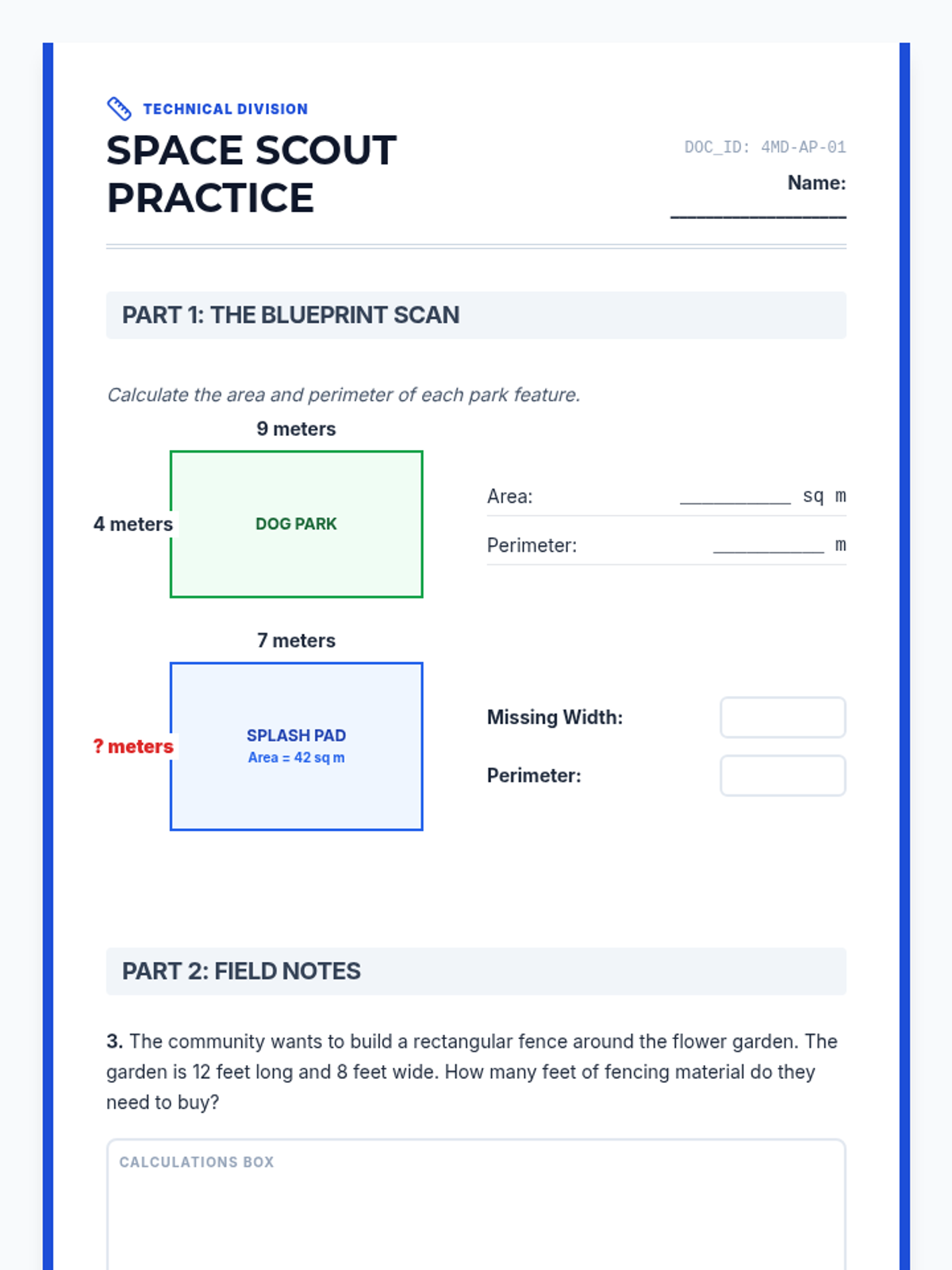
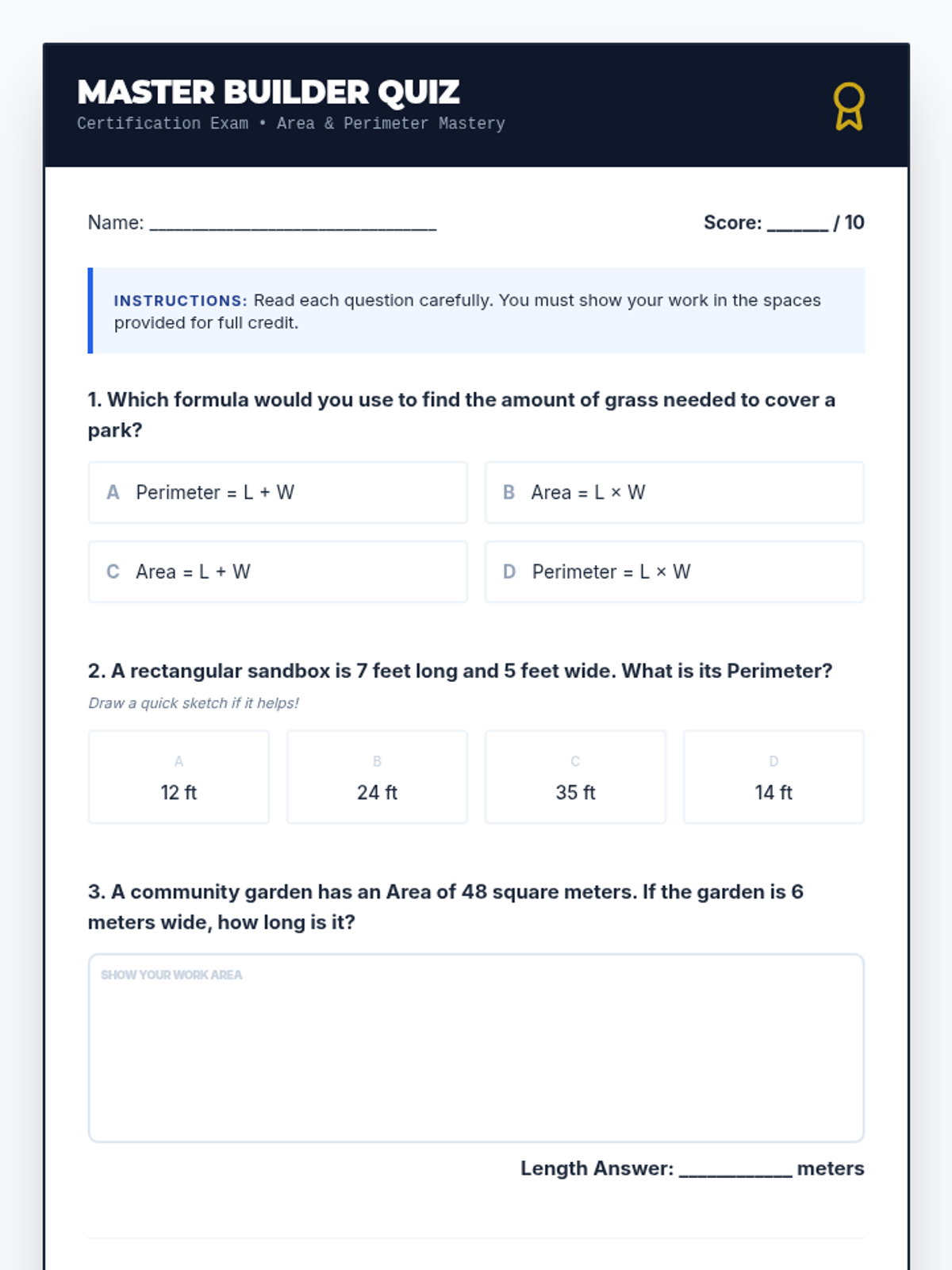
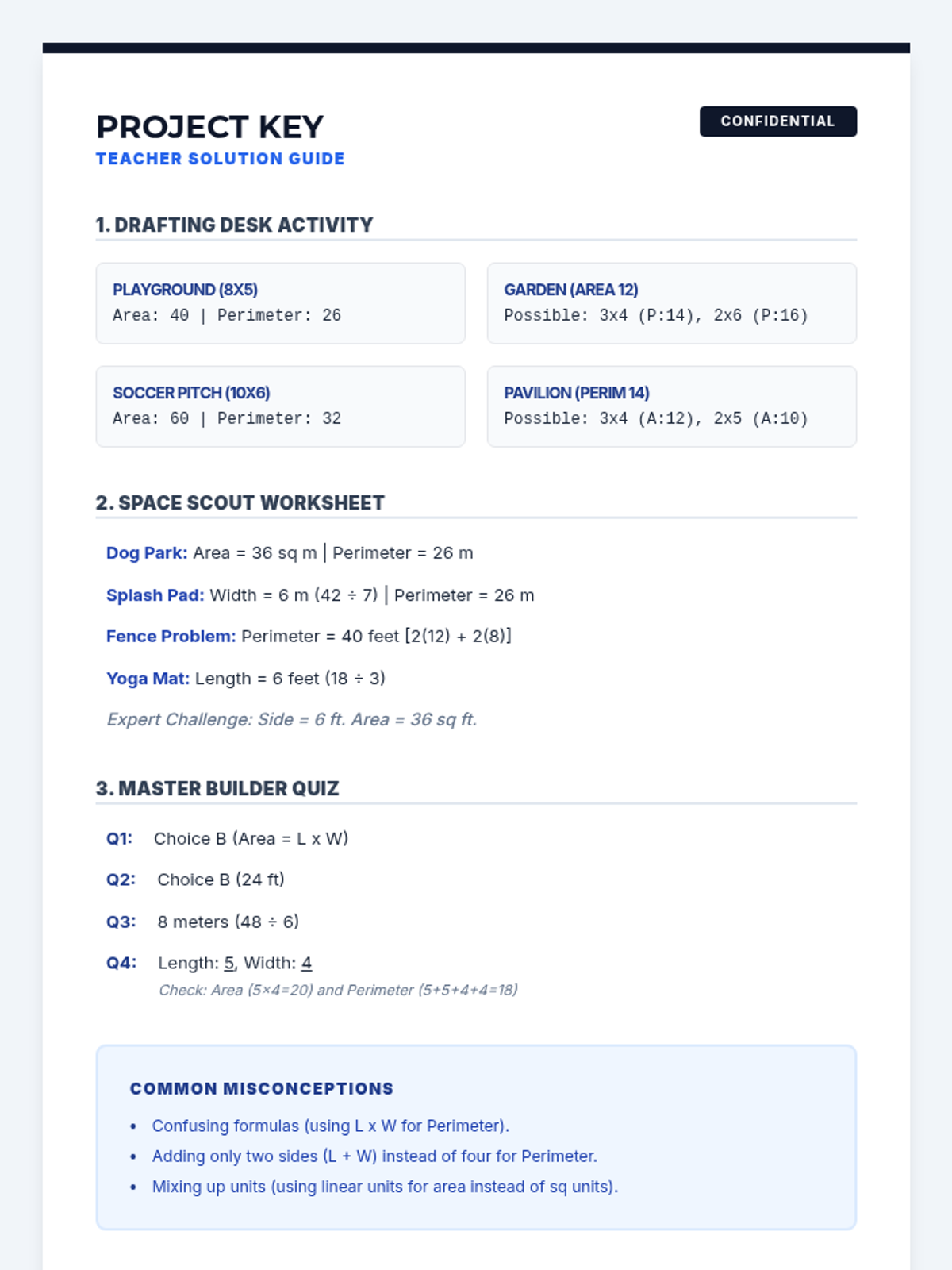
Students become backyard architects, designing a community park by calculating area and perimeter of rectangular features. This lesson bridges multiplicative thinking with real-world spatial planning for 4th graders.
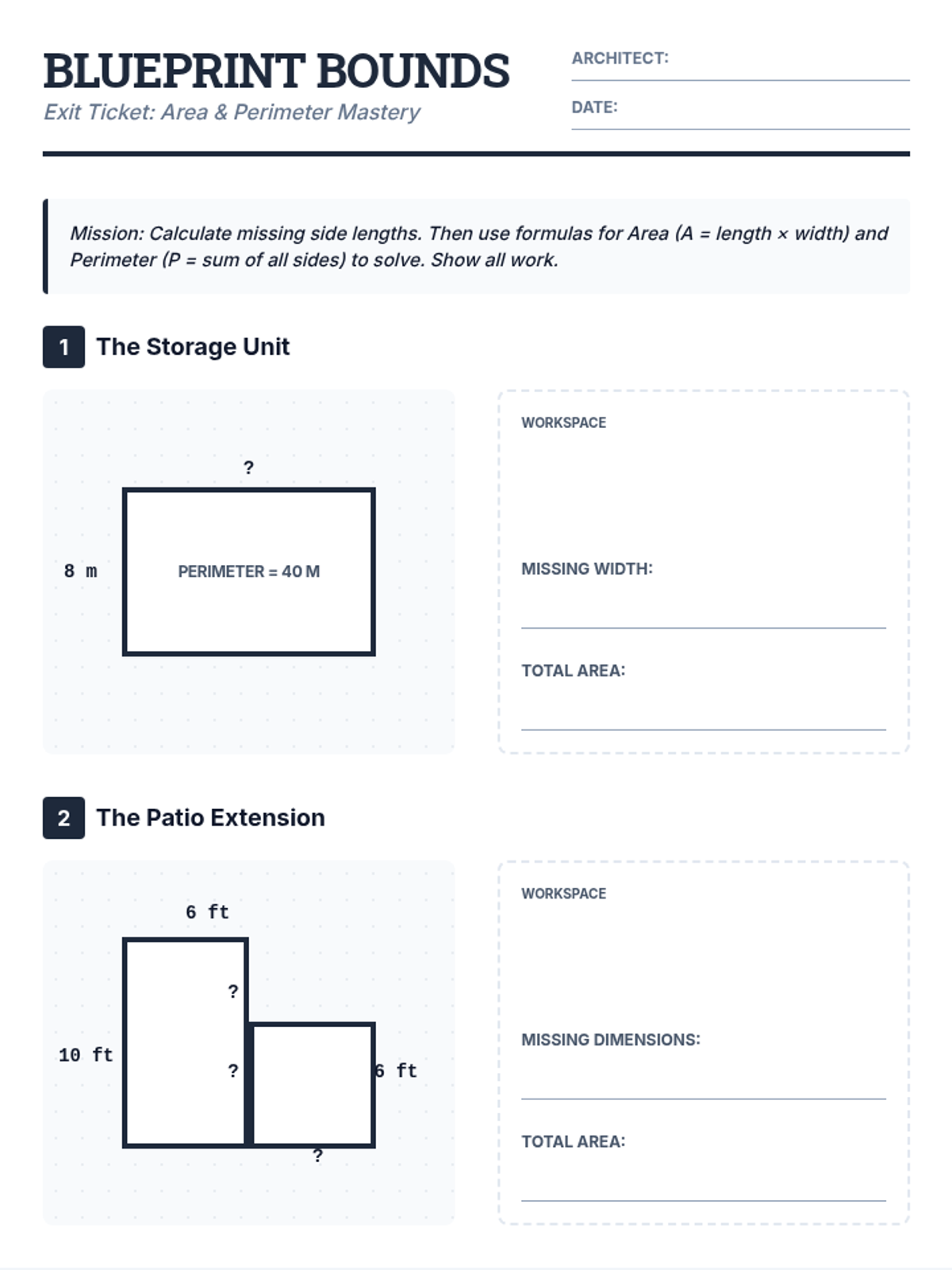
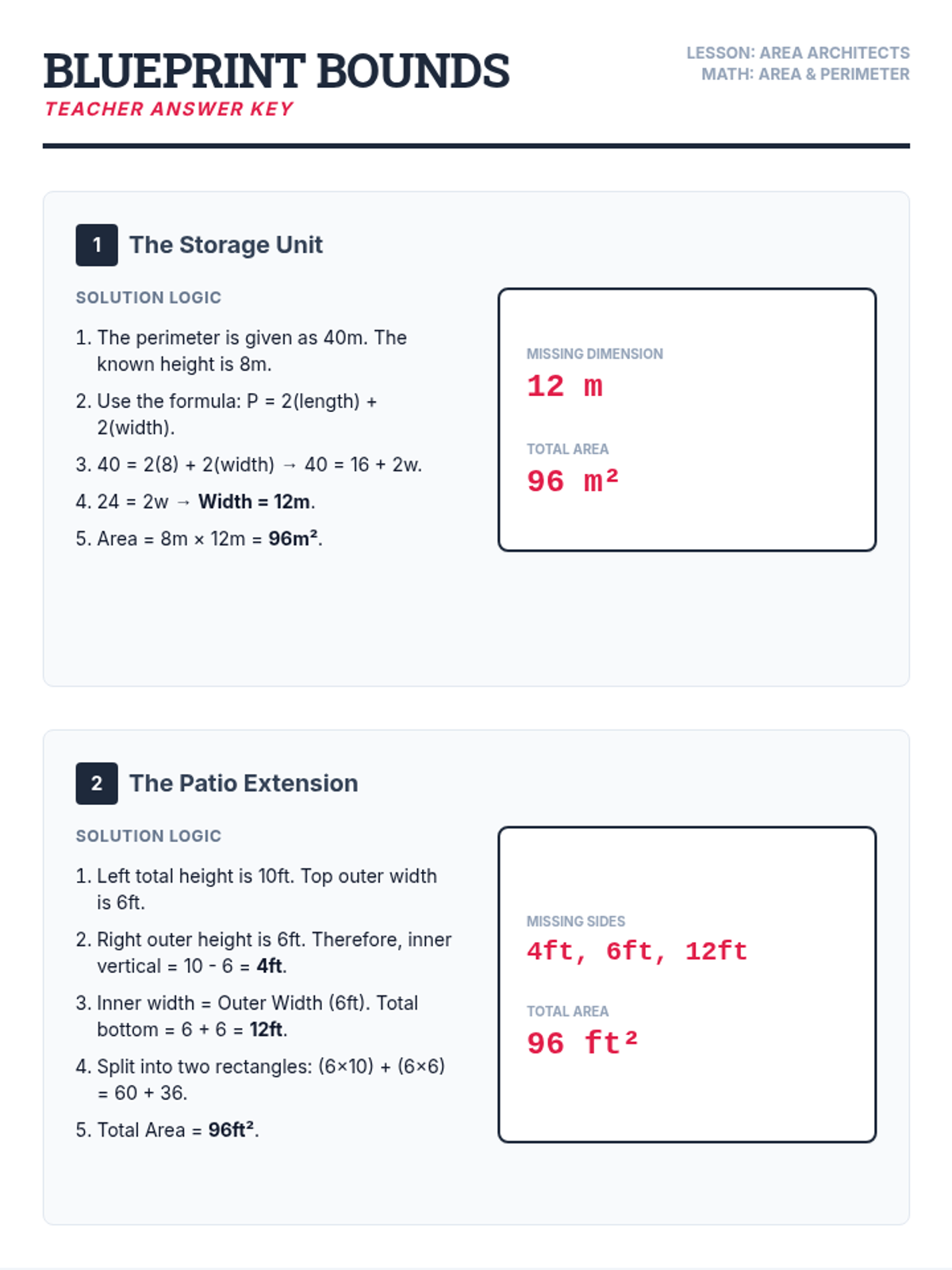
A focused lesson on calculating area and perimeter of complex rectilinear shapes by determining missing side lengths and applying geometric formulas.
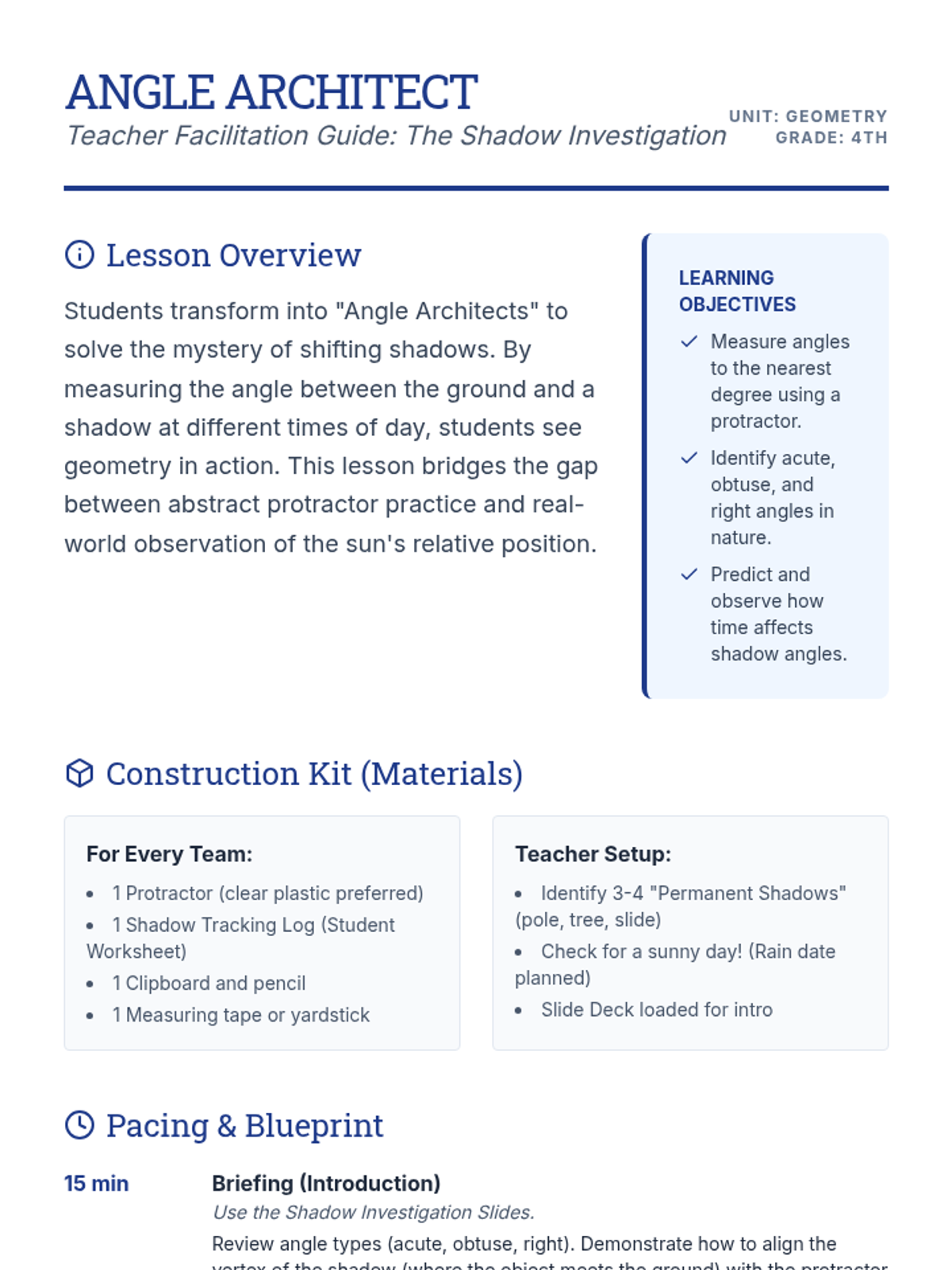
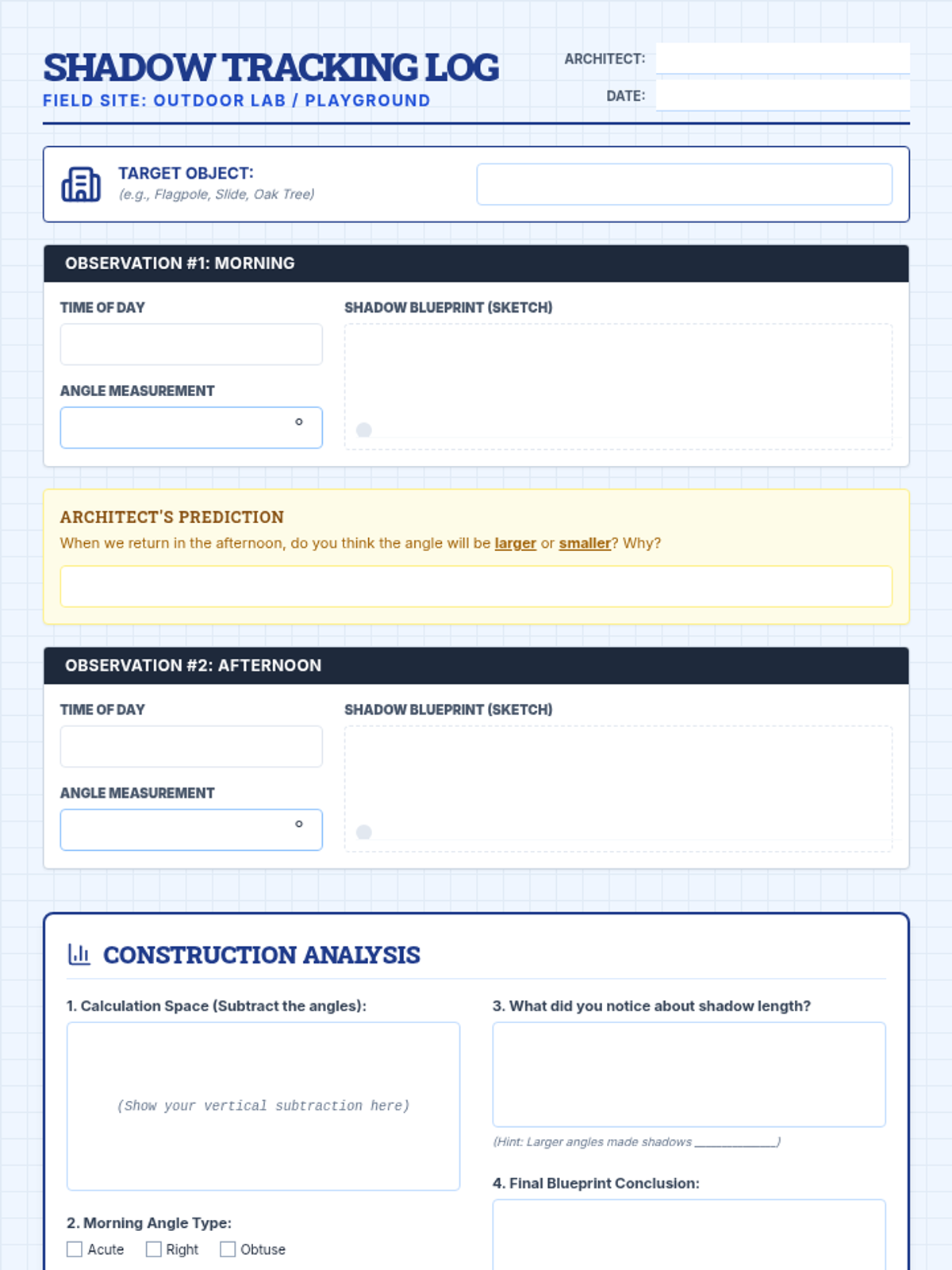
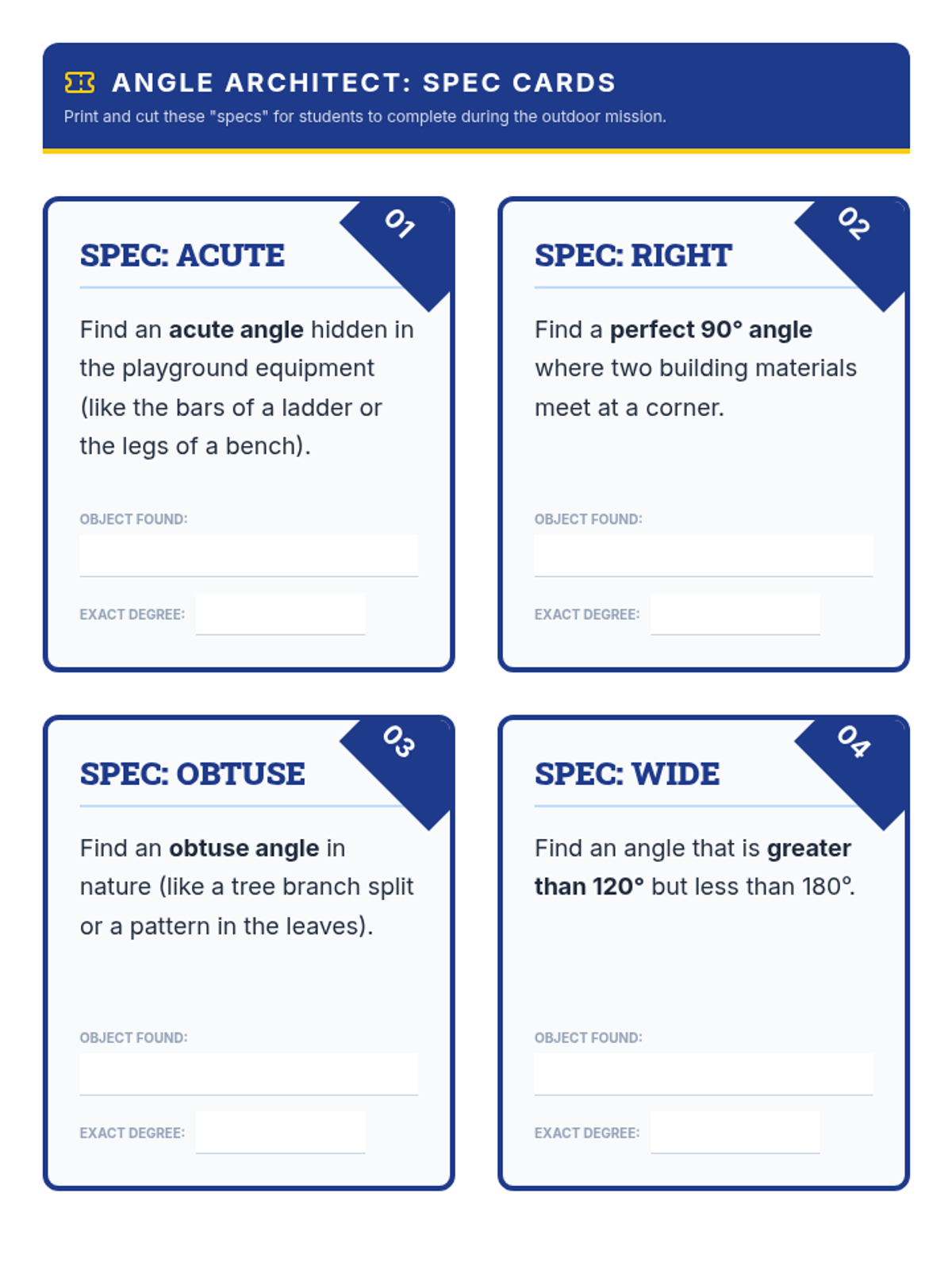
In this hands-on geometry exploration, students venture outside to measure the angles of shadows cast by playground equipment and trees at different times of day. They apply their protractor skills to record data and analyze how the sun's position changes angle measurements.
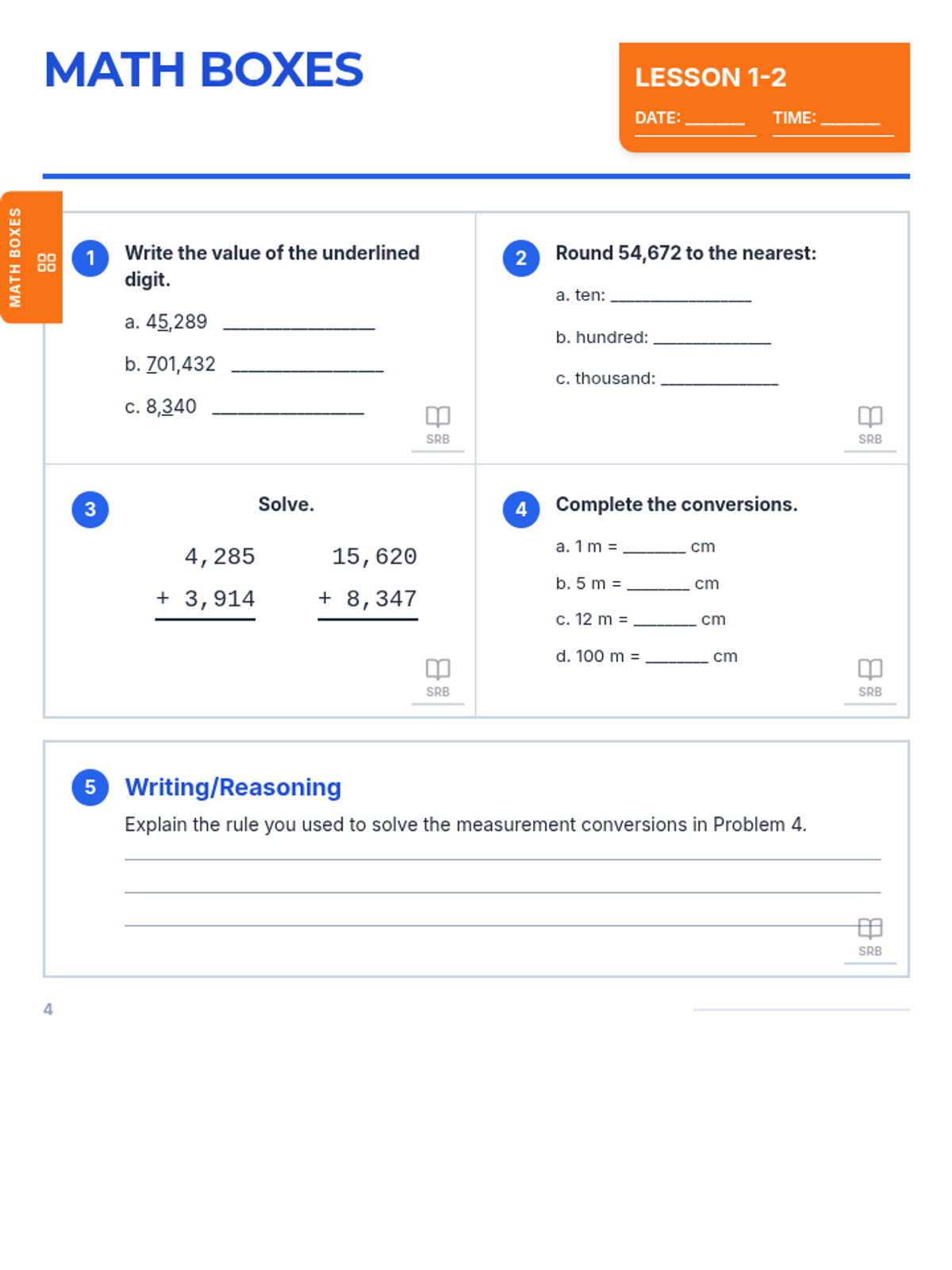
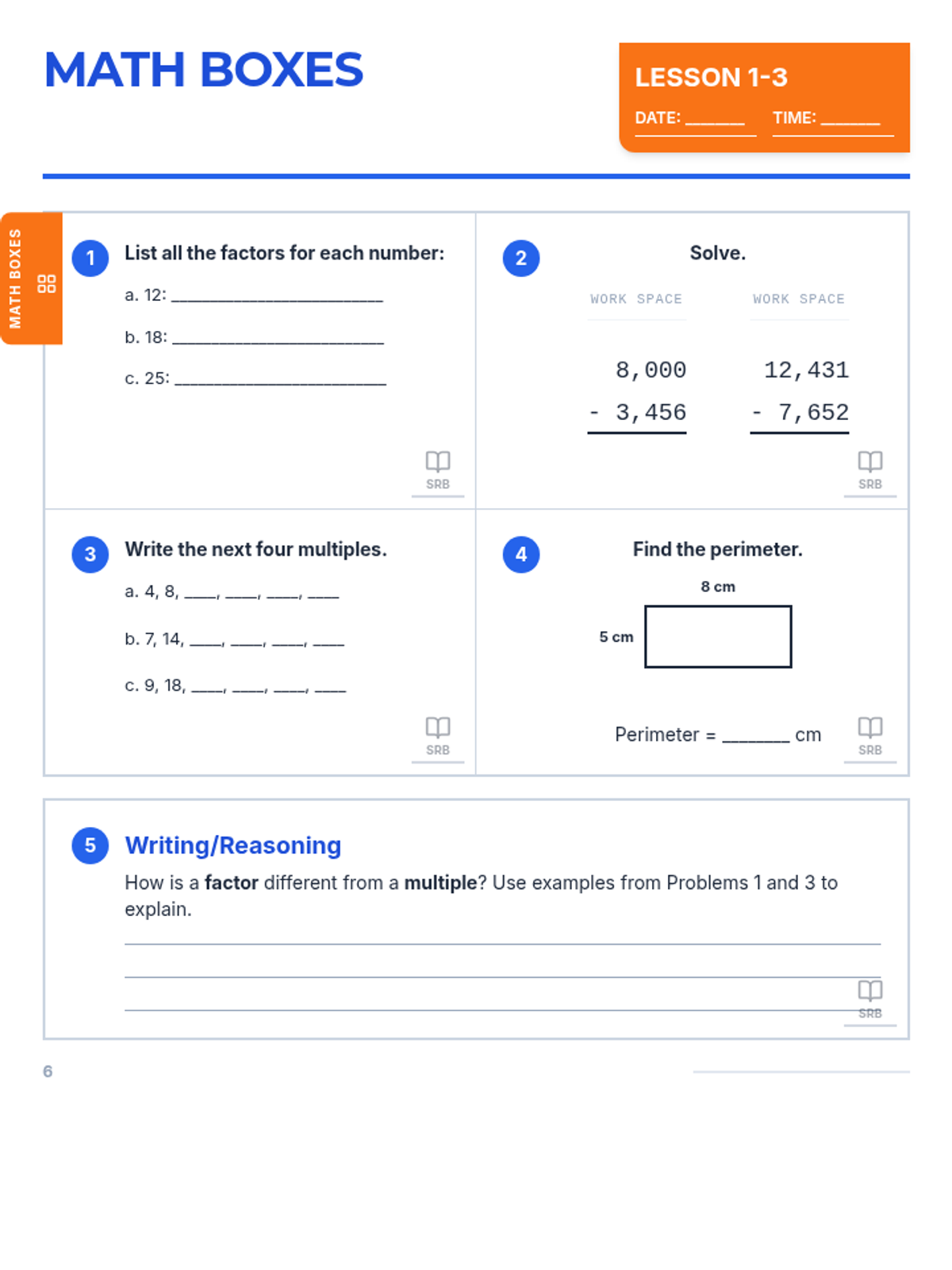
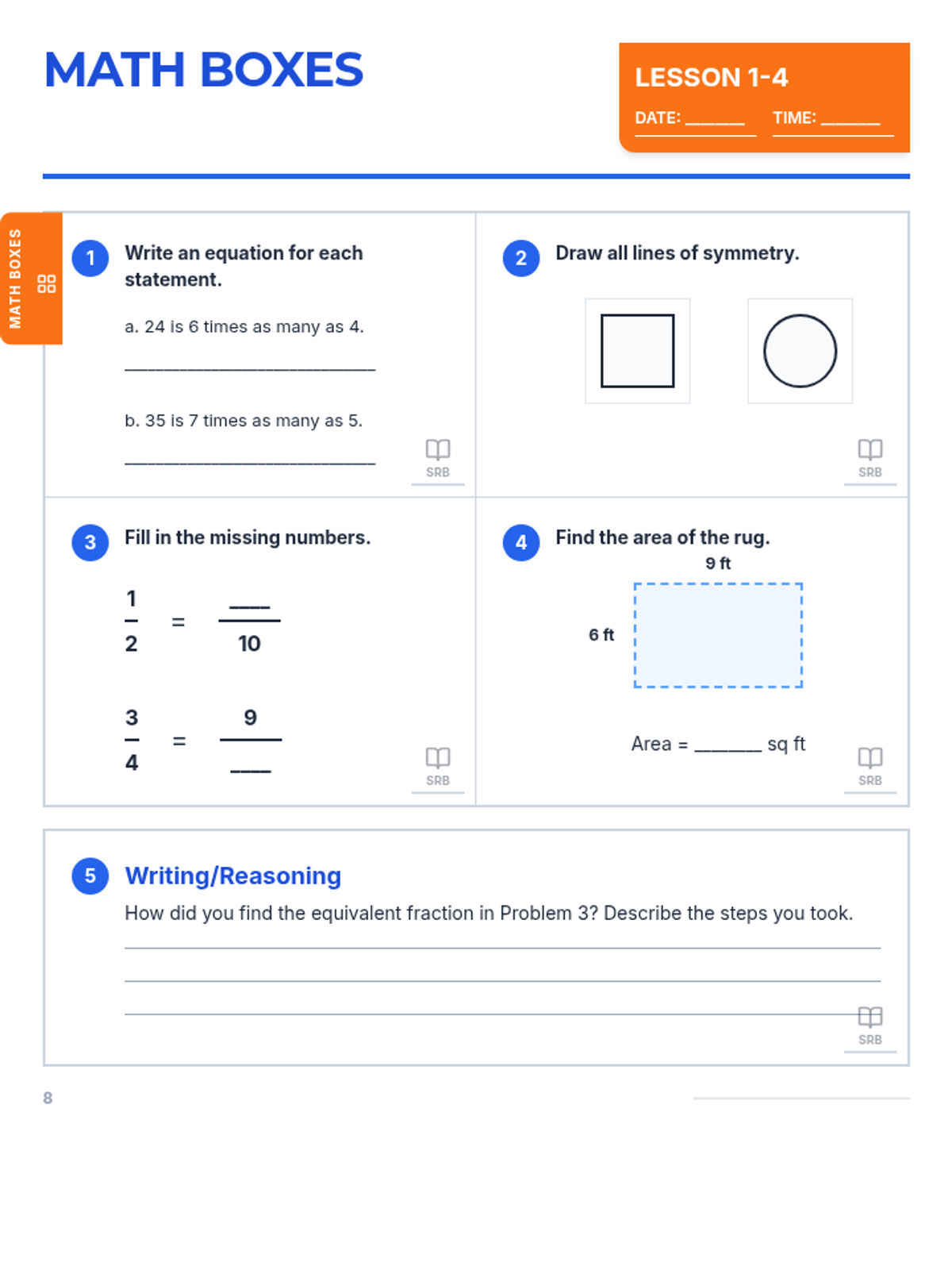
A series of mixed-review math worksheets designed for daily practice or formative assessment, covering key 4th-grade standards.
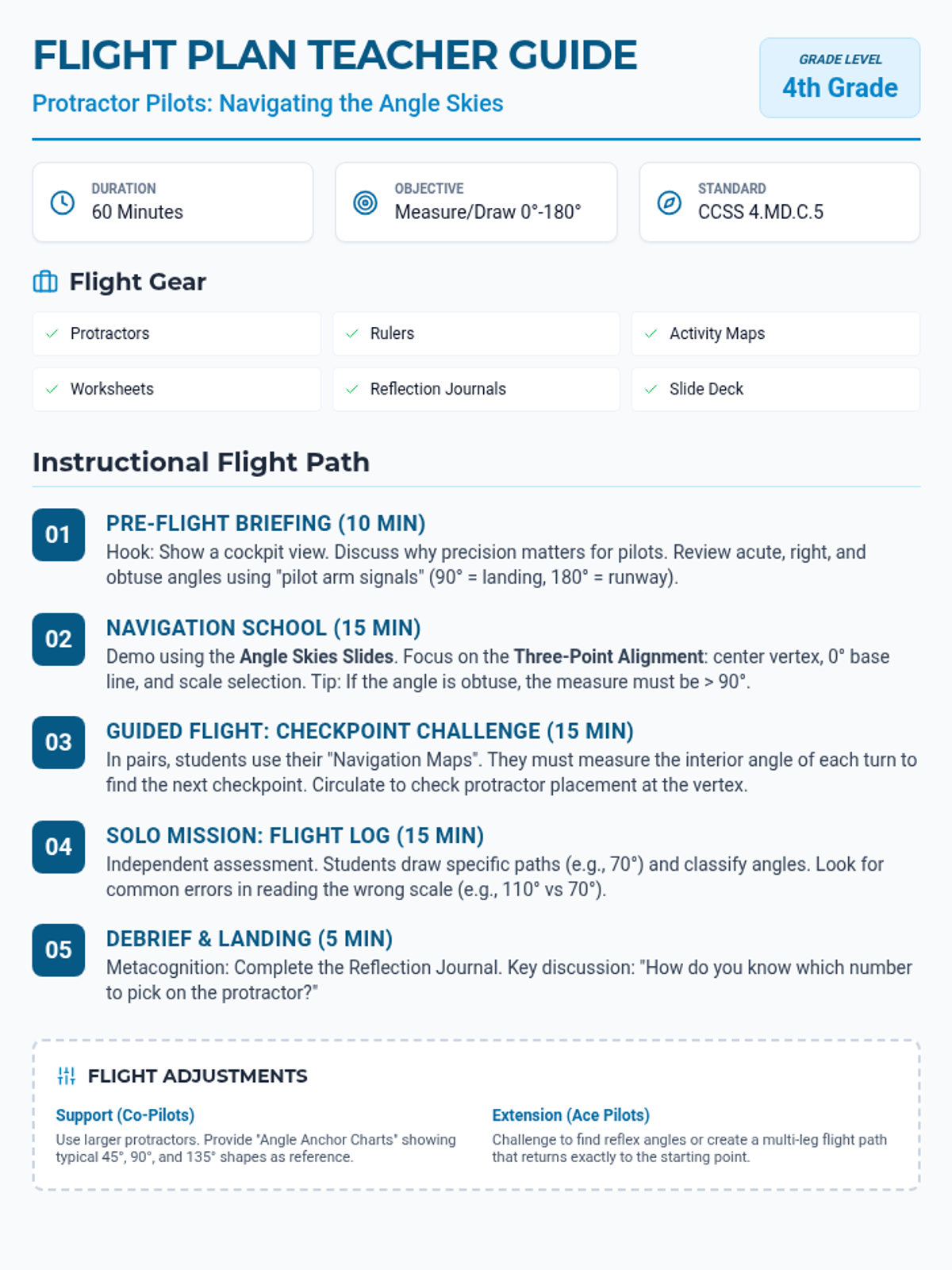
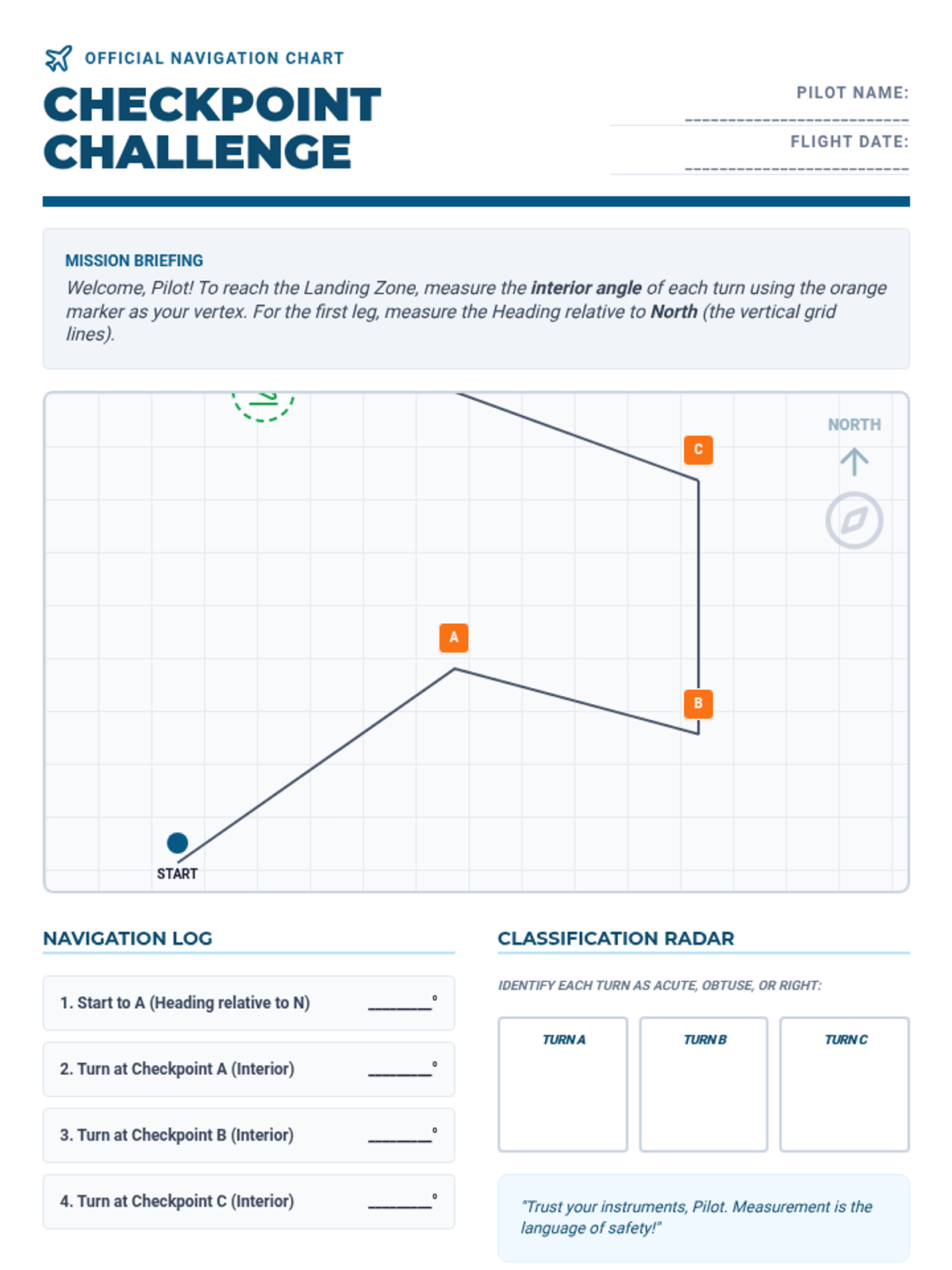
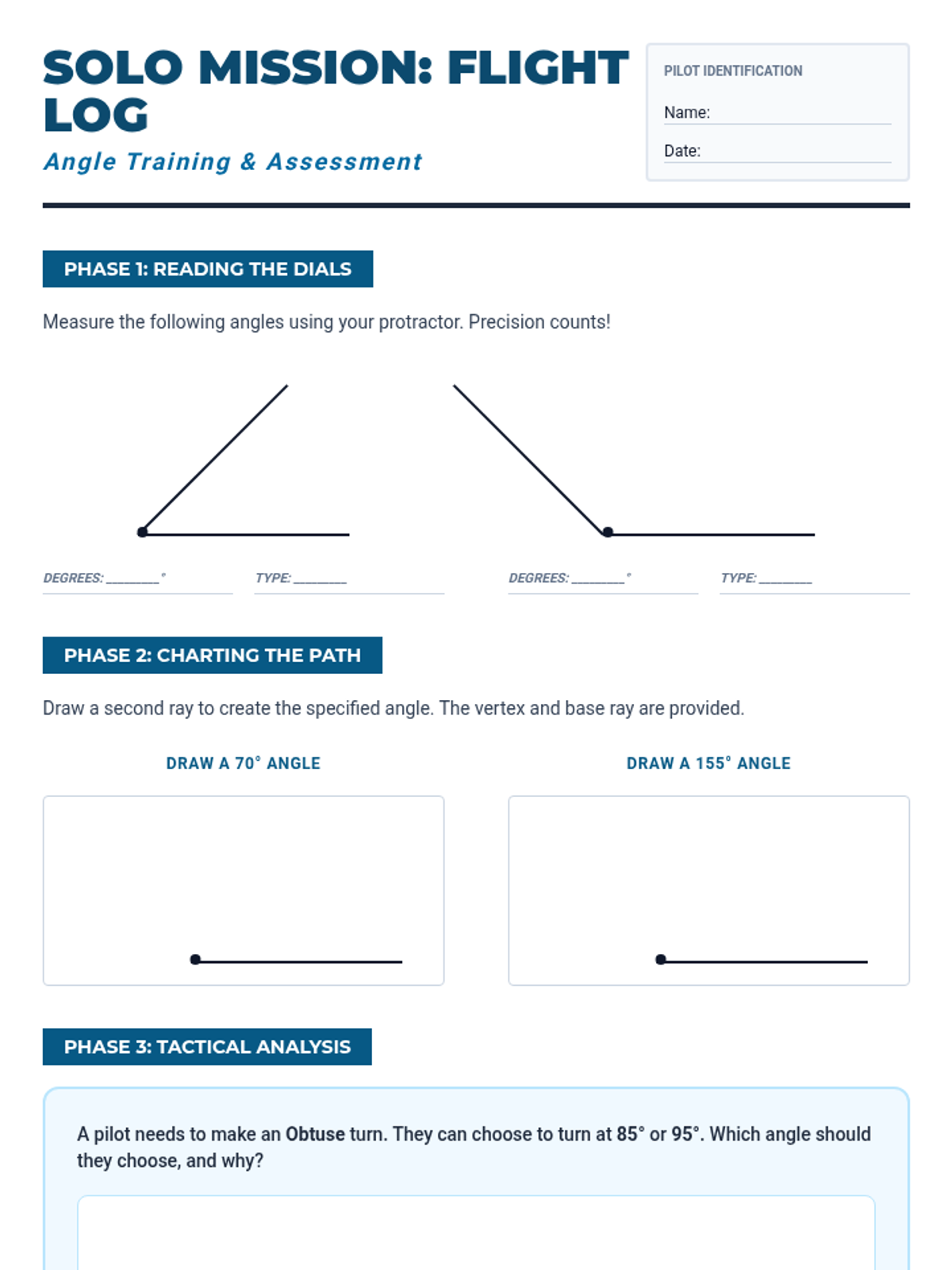
Students take to the skies as 'Protractor Pilots' to master measuring and drawing angles. This aviation-themed lesson focuses on precision, classifying angles, and spatial reasoning through a flight navigation simulation.
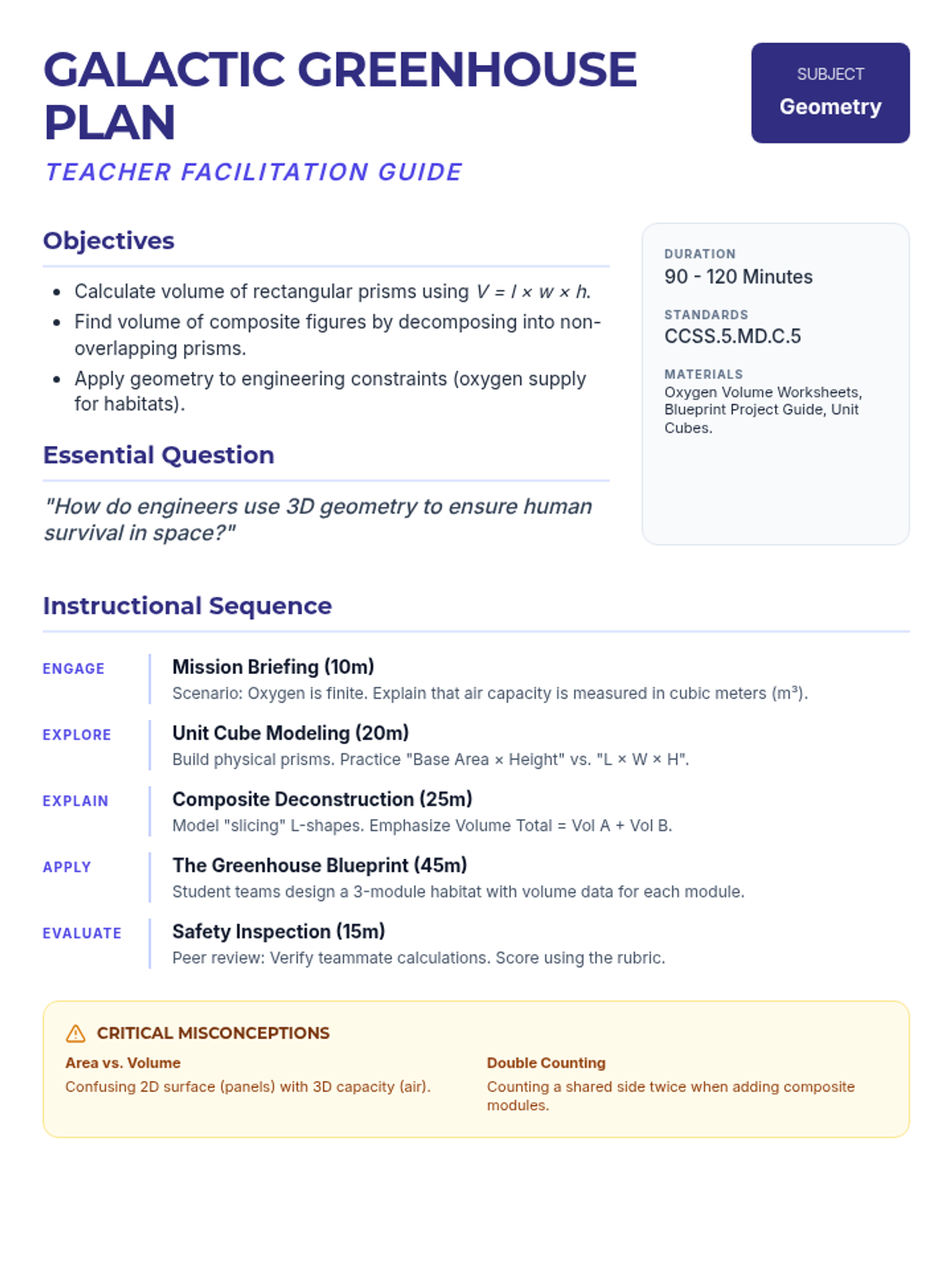
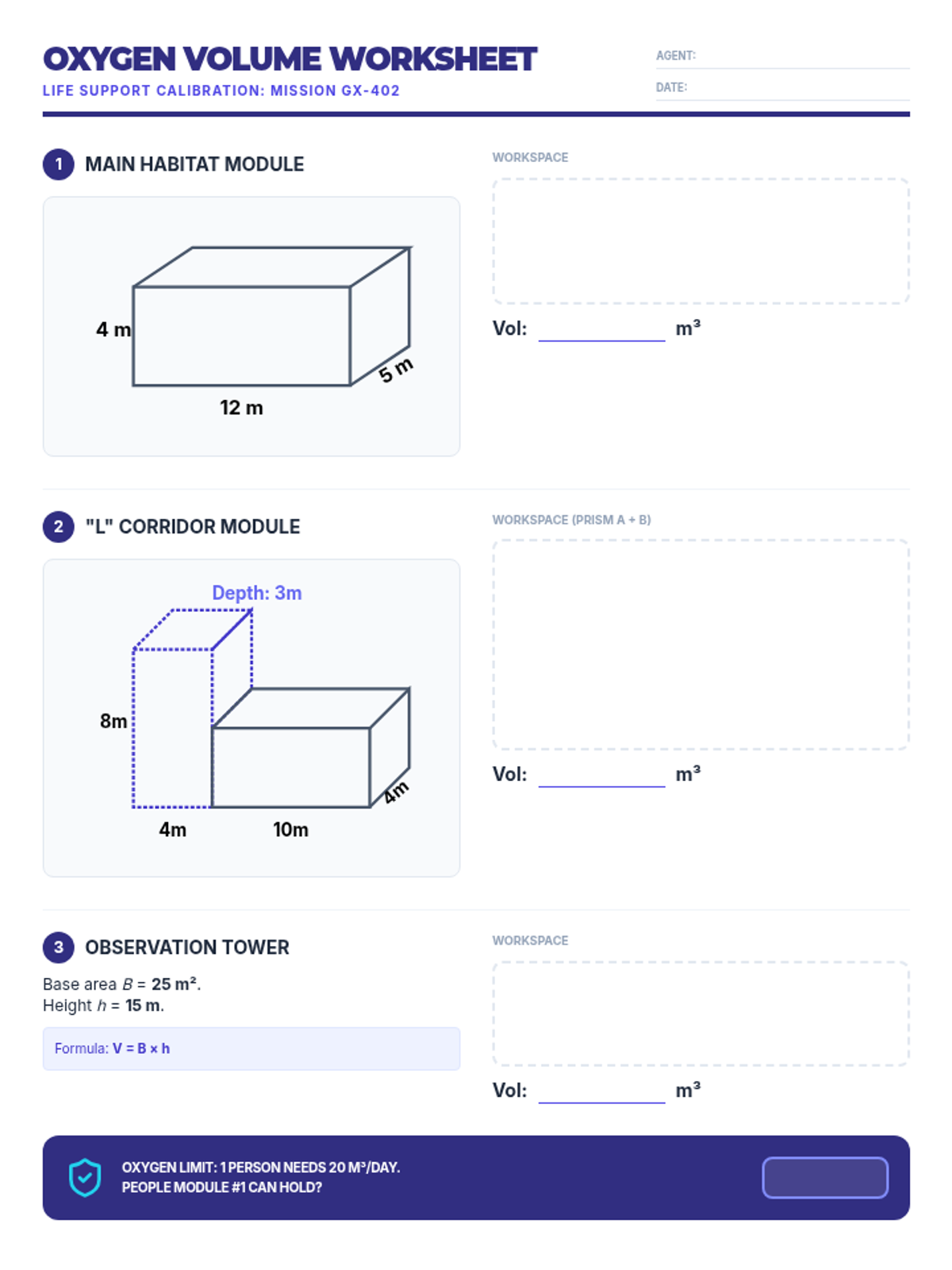
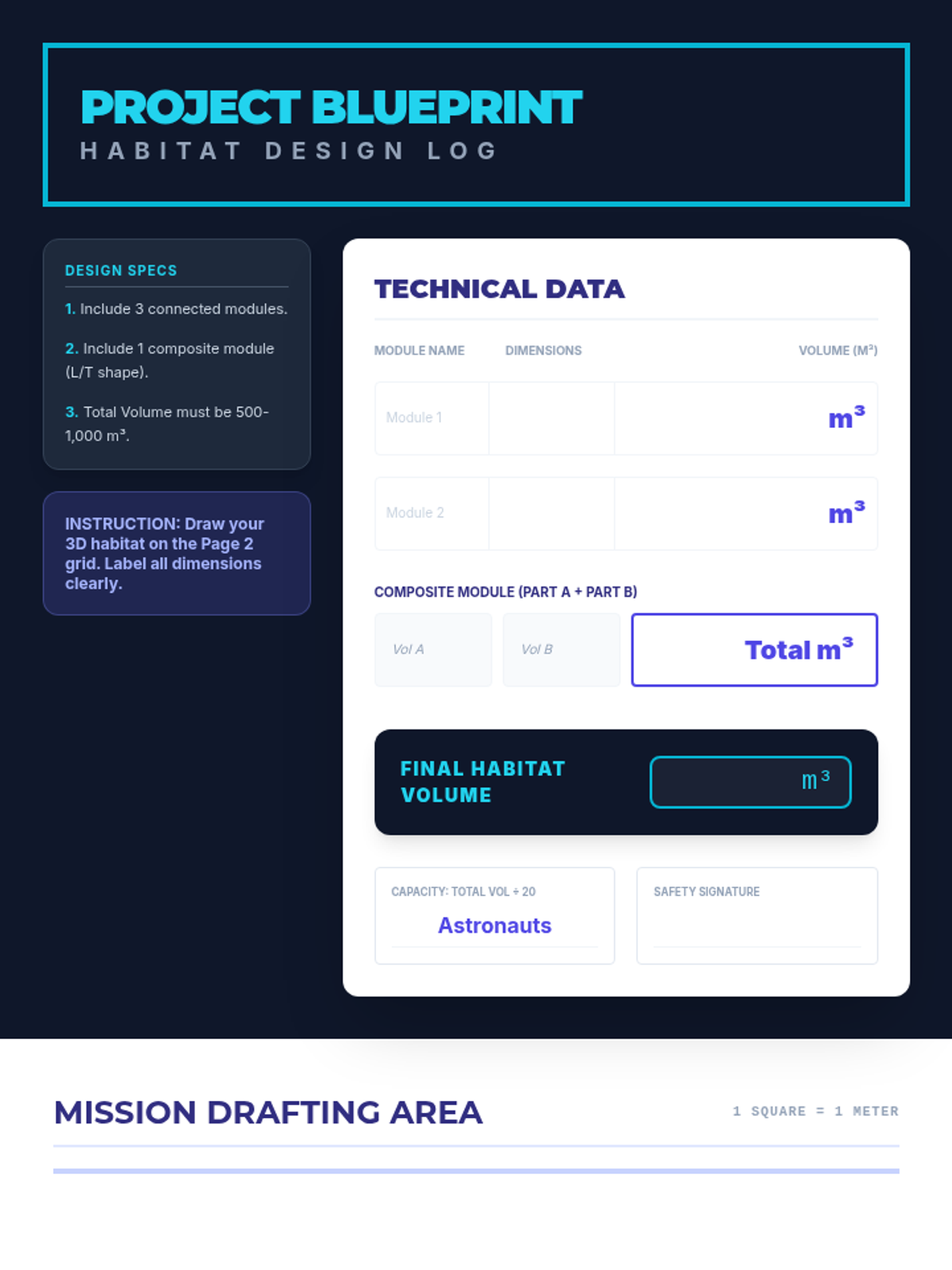
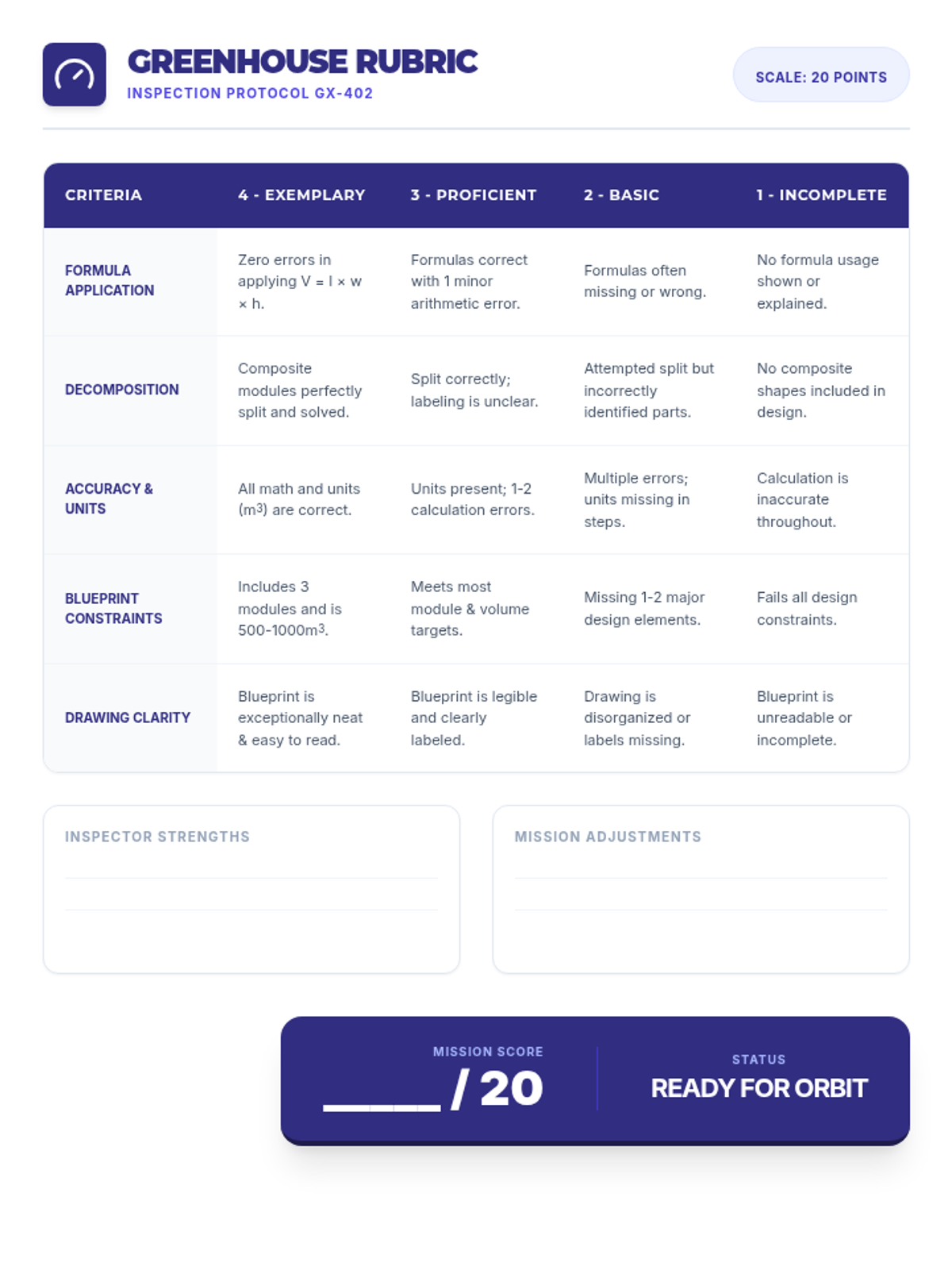
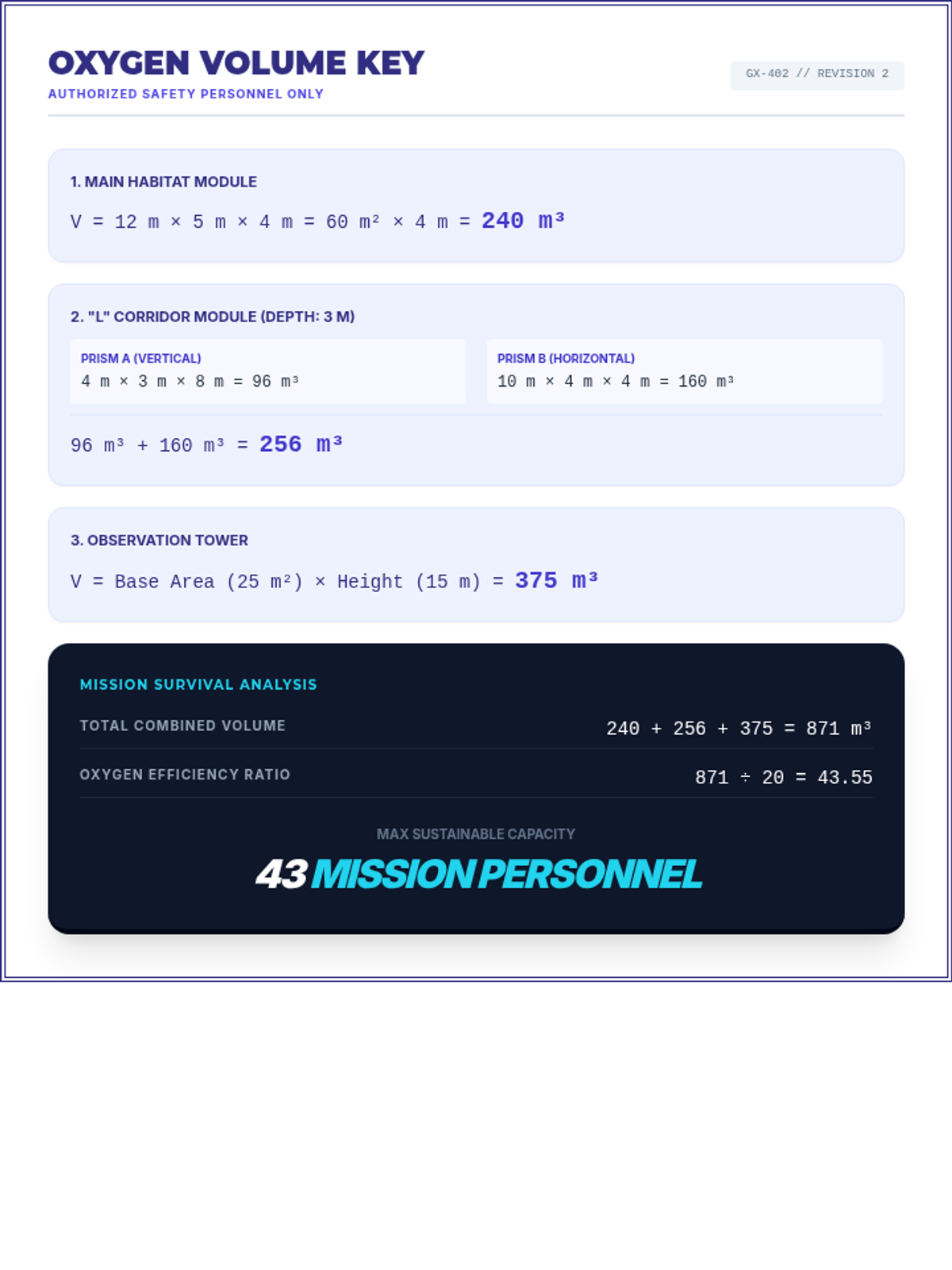
Students design futuristic space habitats by calculating the volume of rectangular prisms and composite figures to determine oxygen requirements. This lesson blends geometry with space exploration concepts for 4th and 5th grade students.
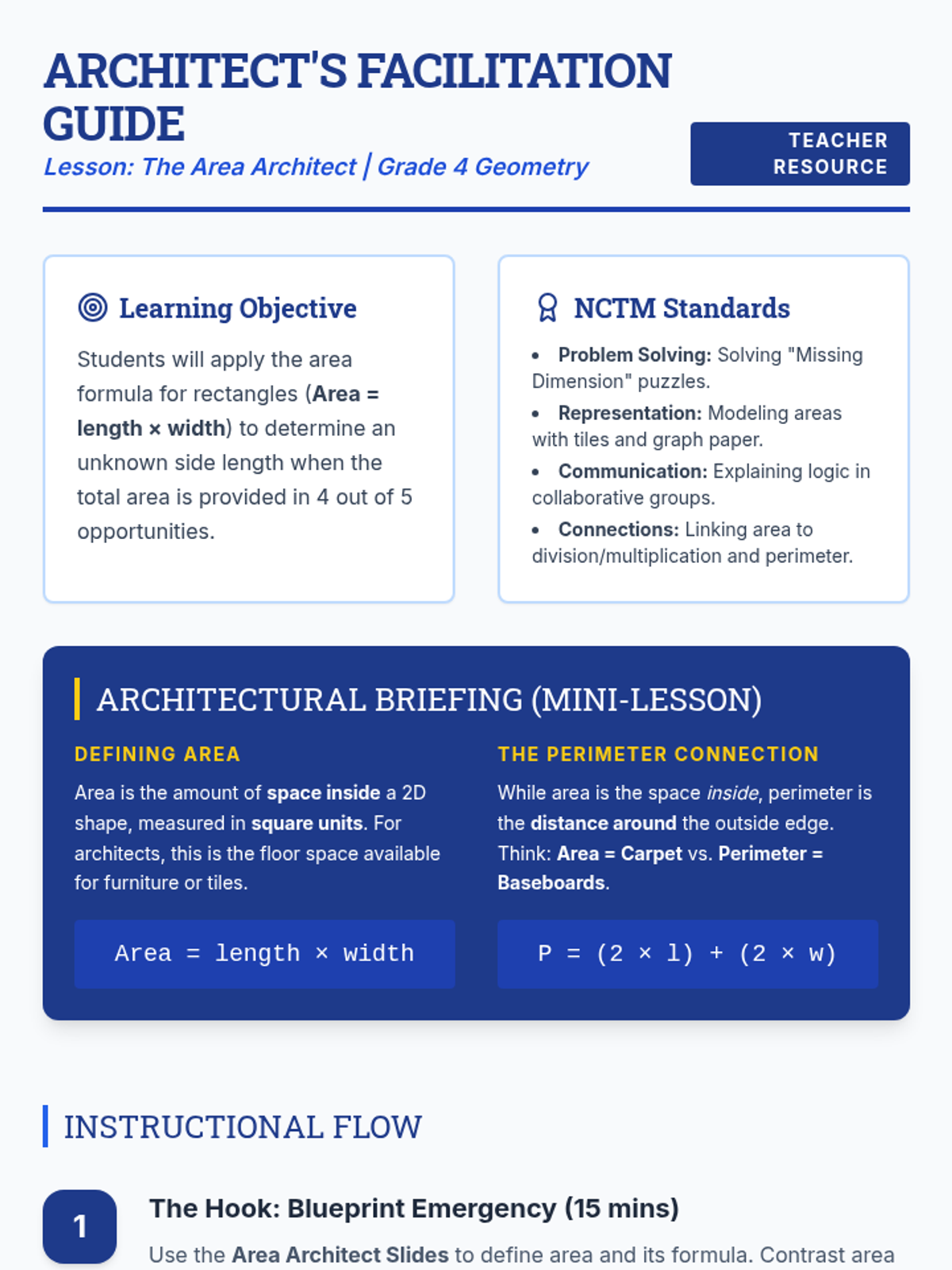
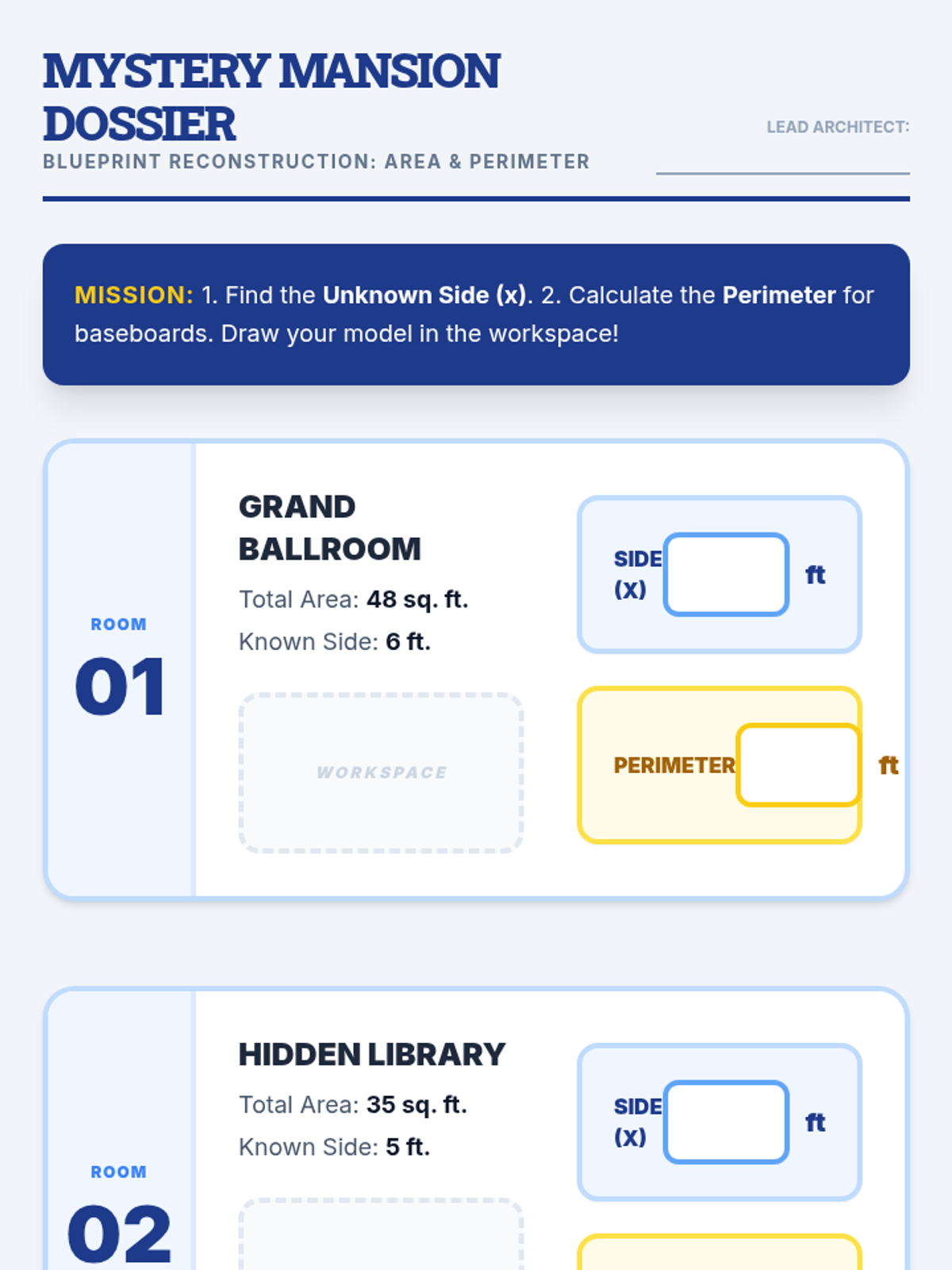
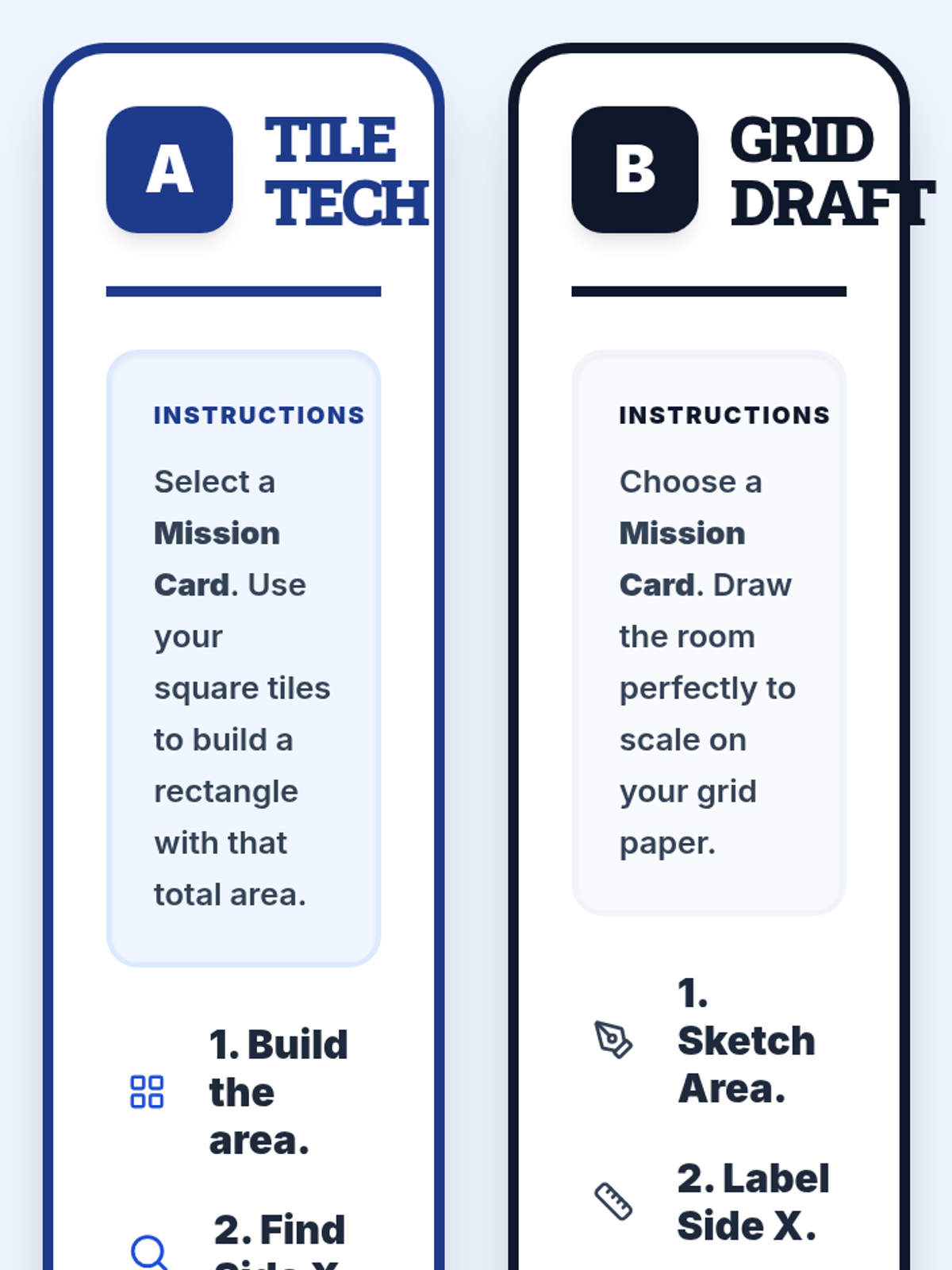
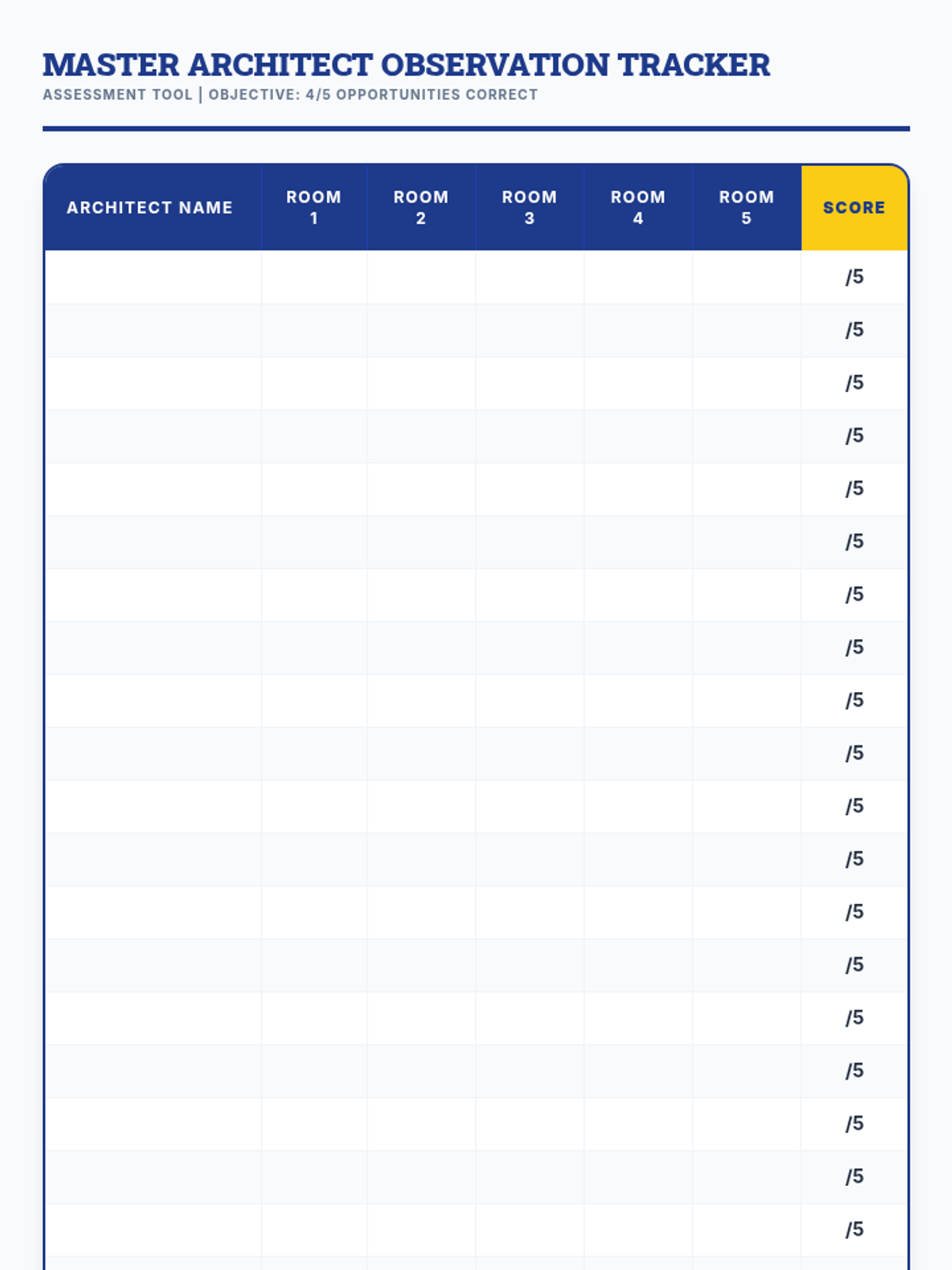
A hands-on, activity-based lesson where 4th graders act as architects to solve area mysteries. Students rotate through stations using tiles and graph paper before collaborating on an 'Escape the Blueprint' challenge to find unknown side lengths.
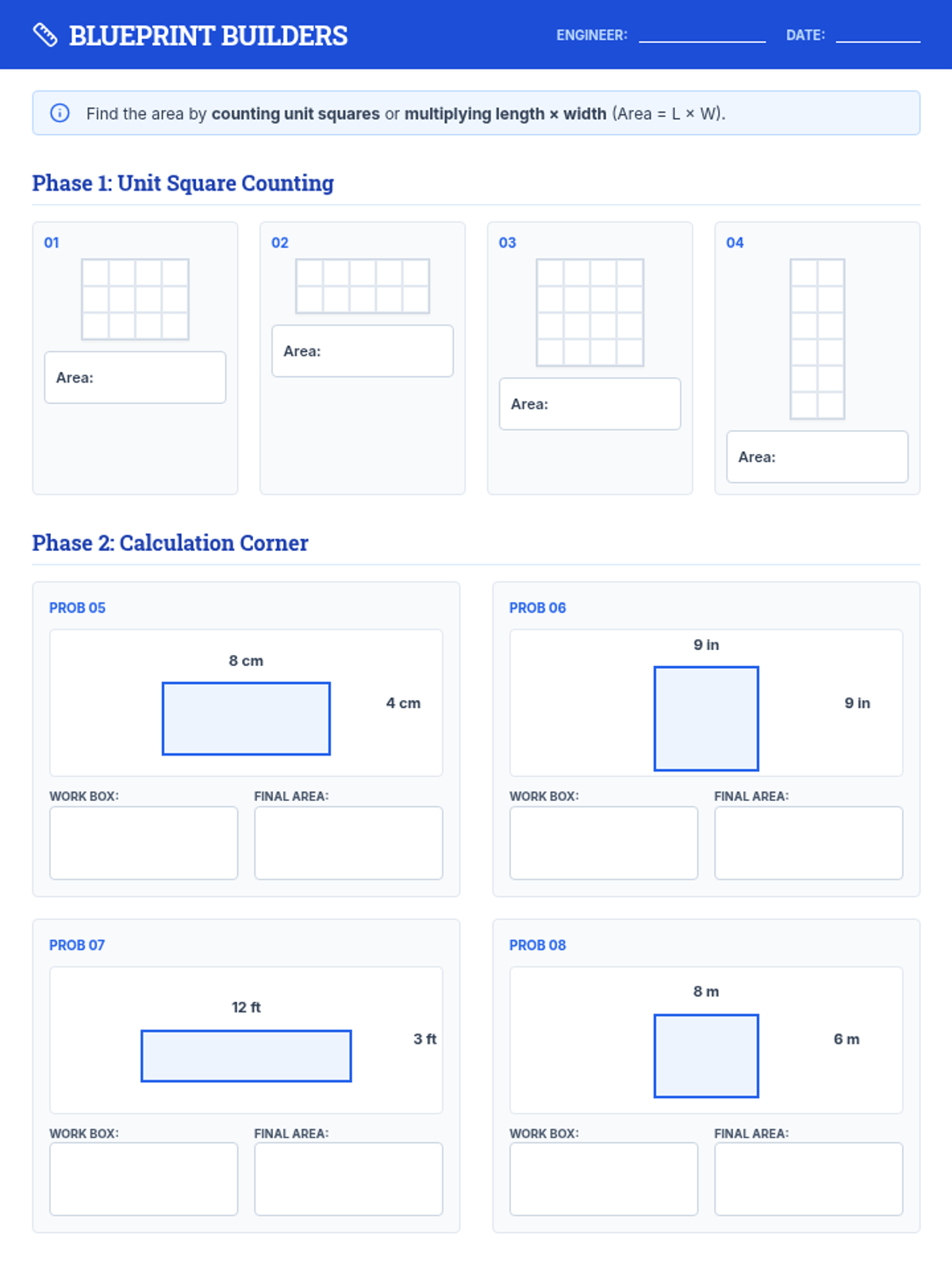
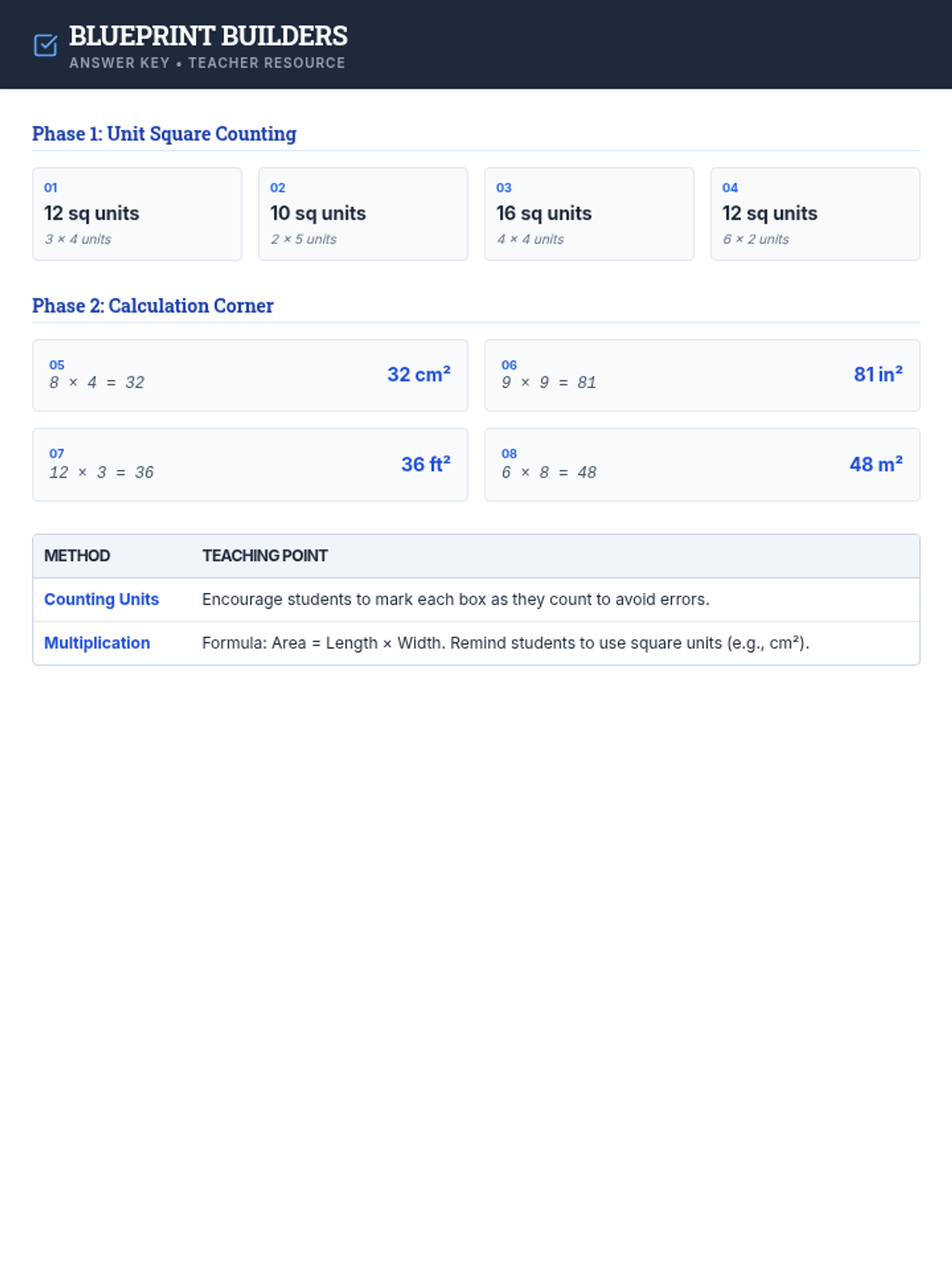
Students learn to calculate the area of rectangles and squares using two methods: counting unit squares on a grid and multiplying side lengths. This lesson provides hands-on practice with whole number measurements to build a solid foundation in geometry.
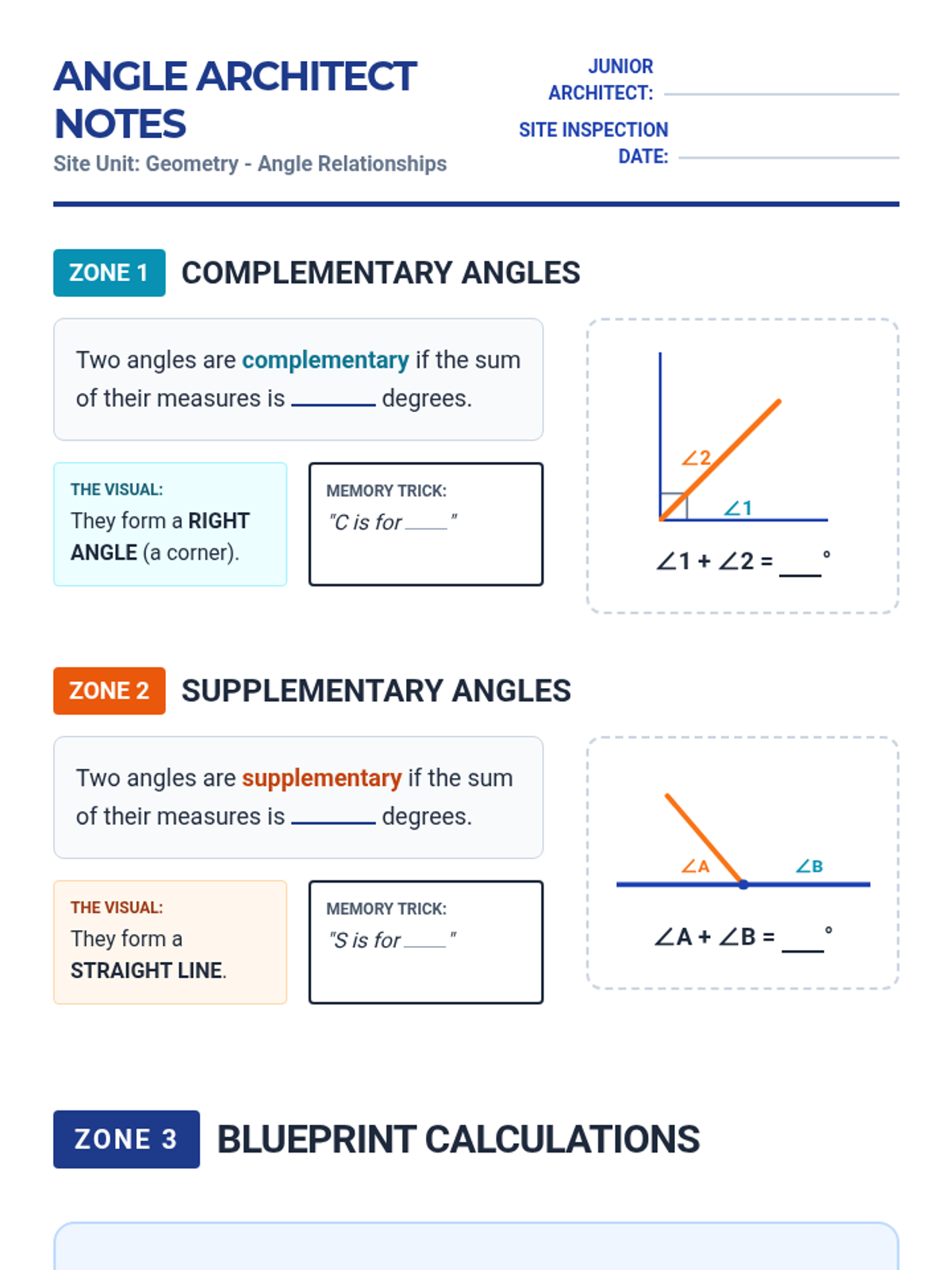
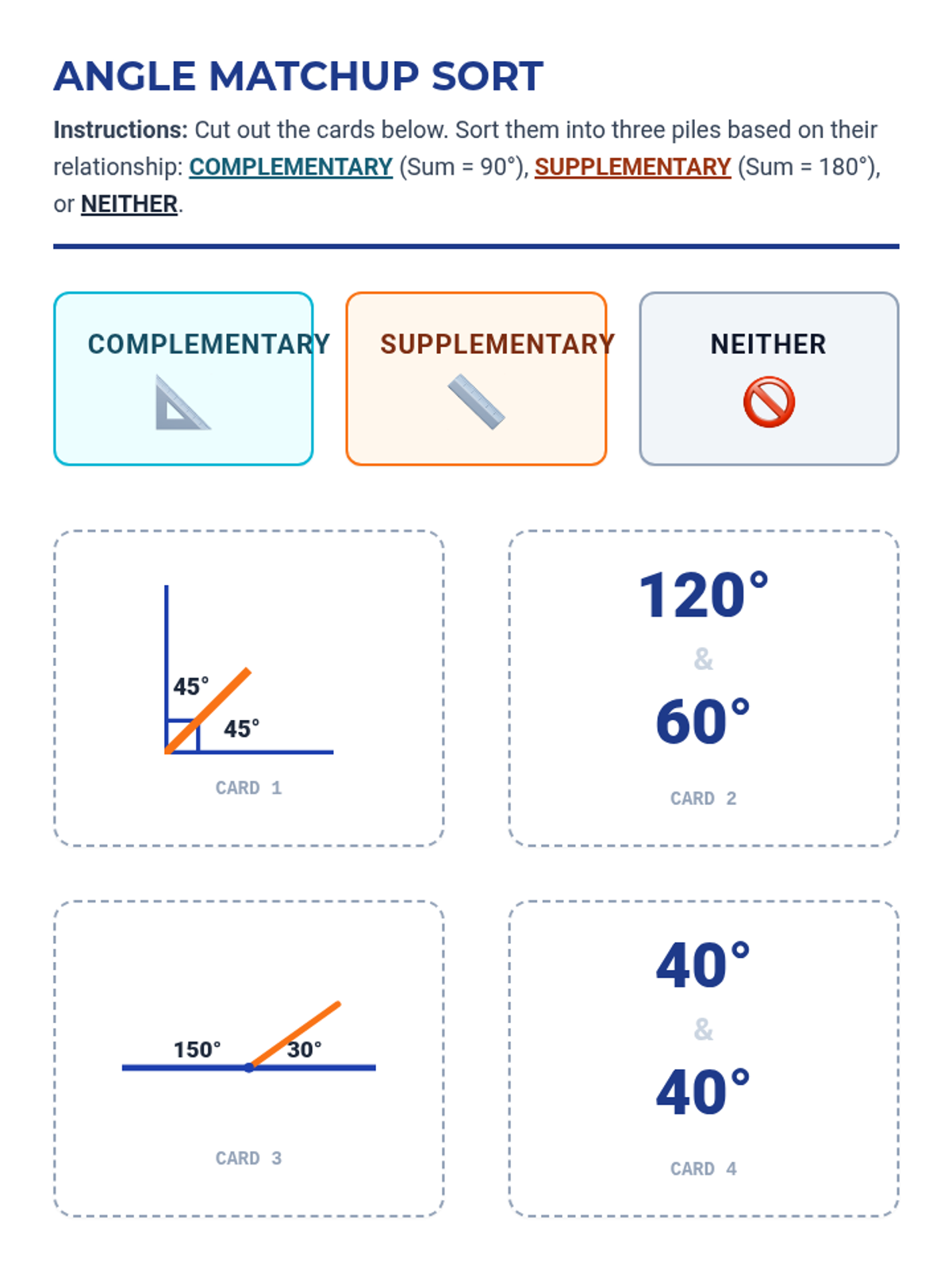
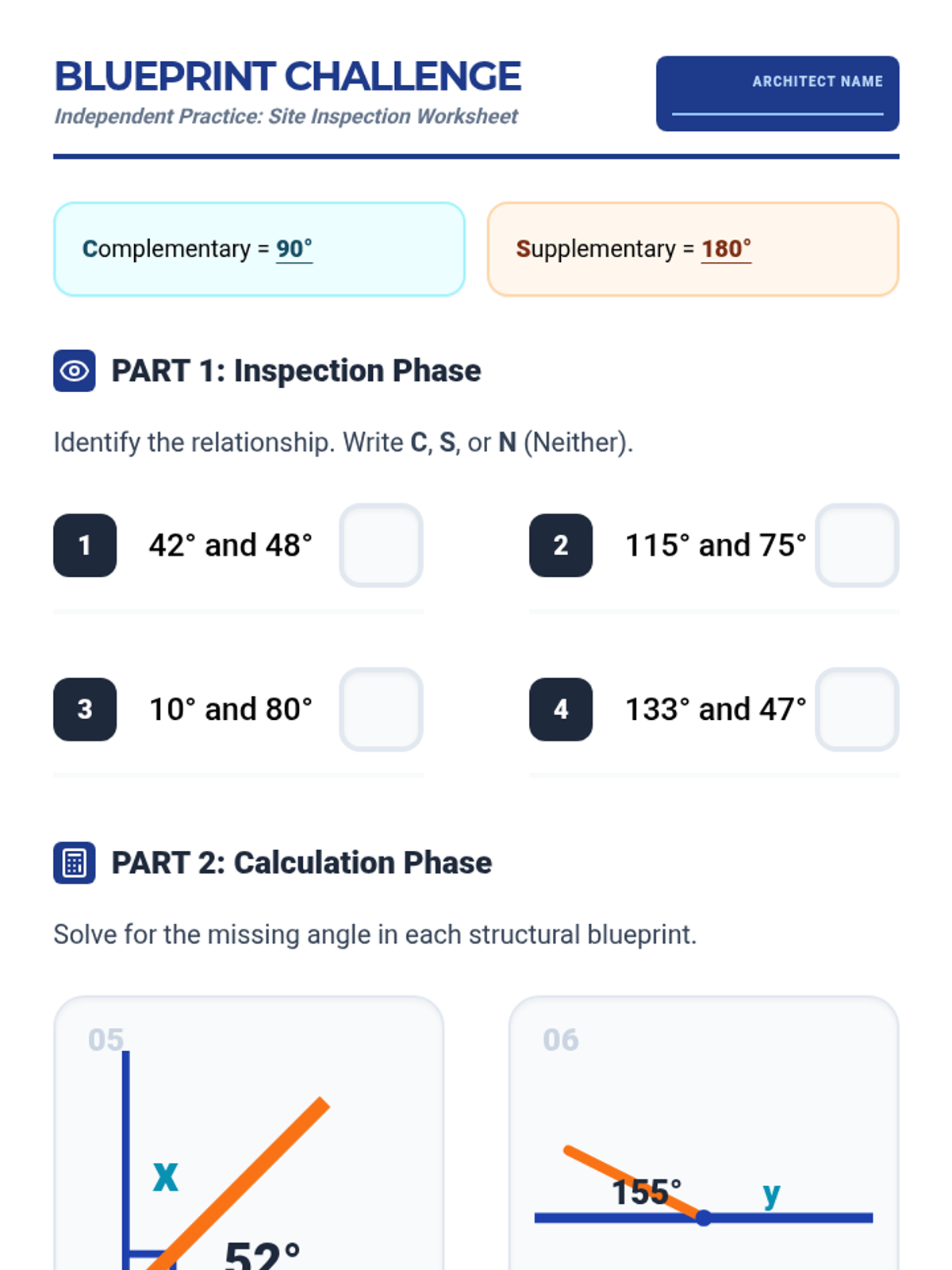
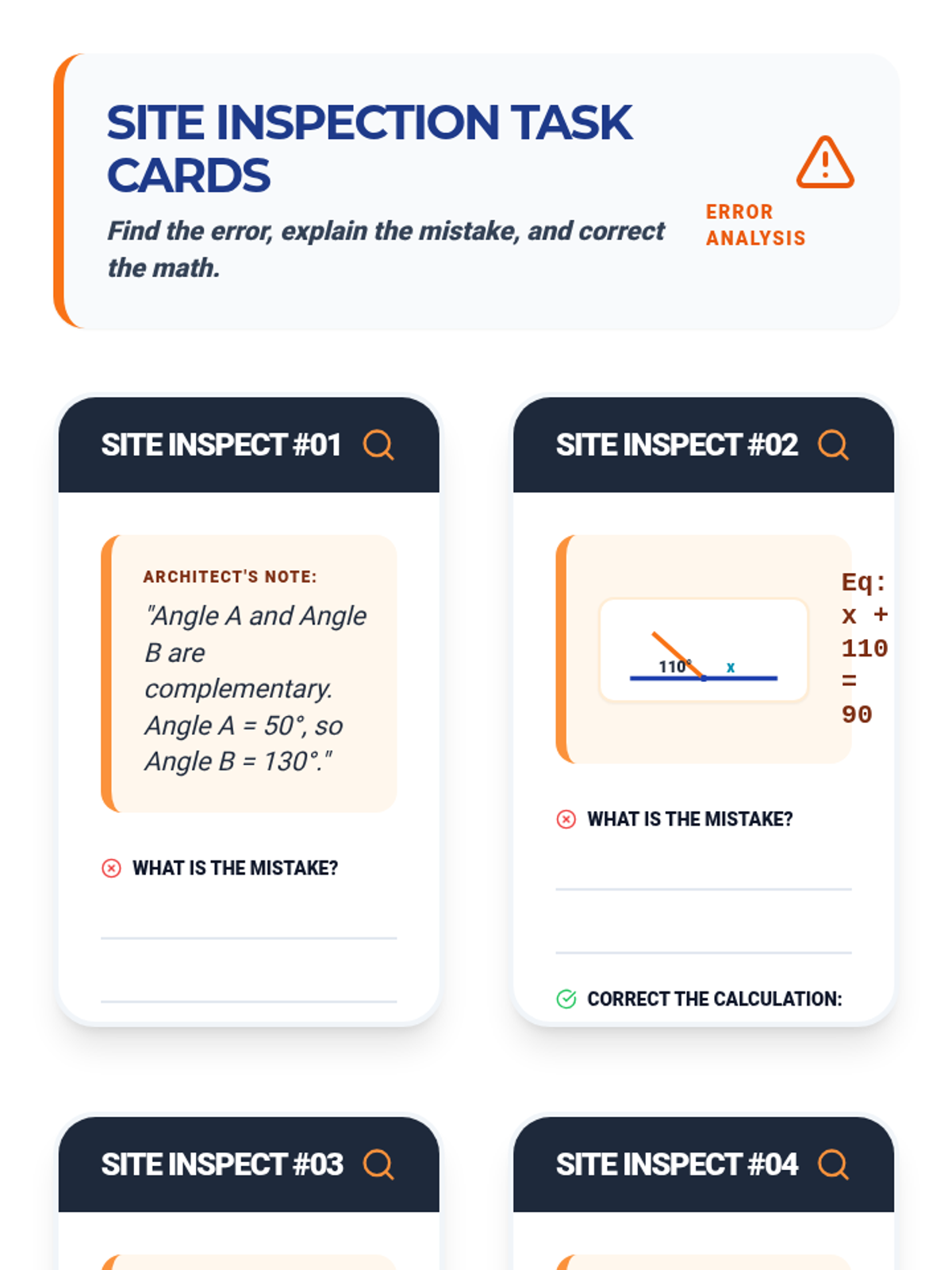
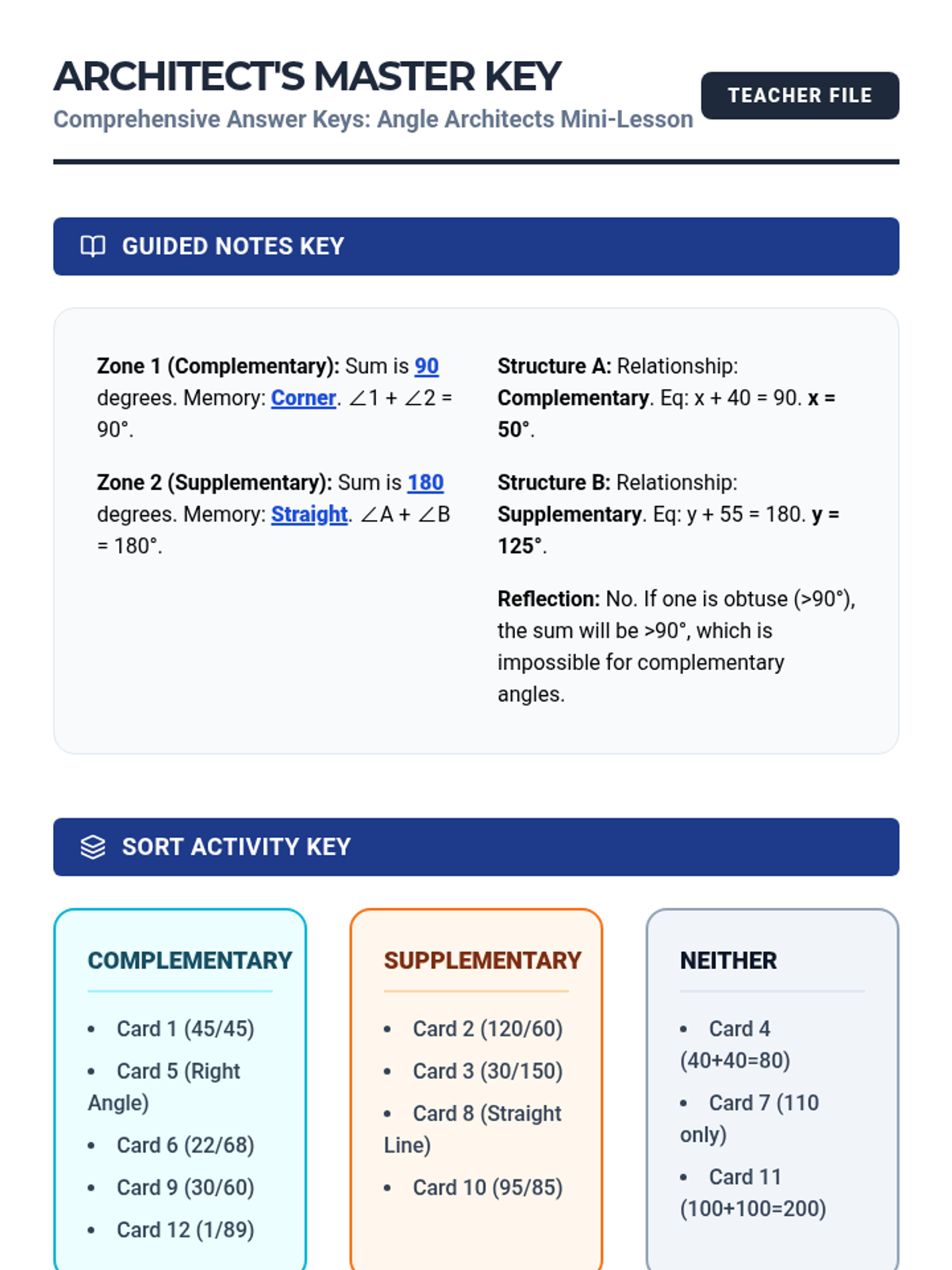
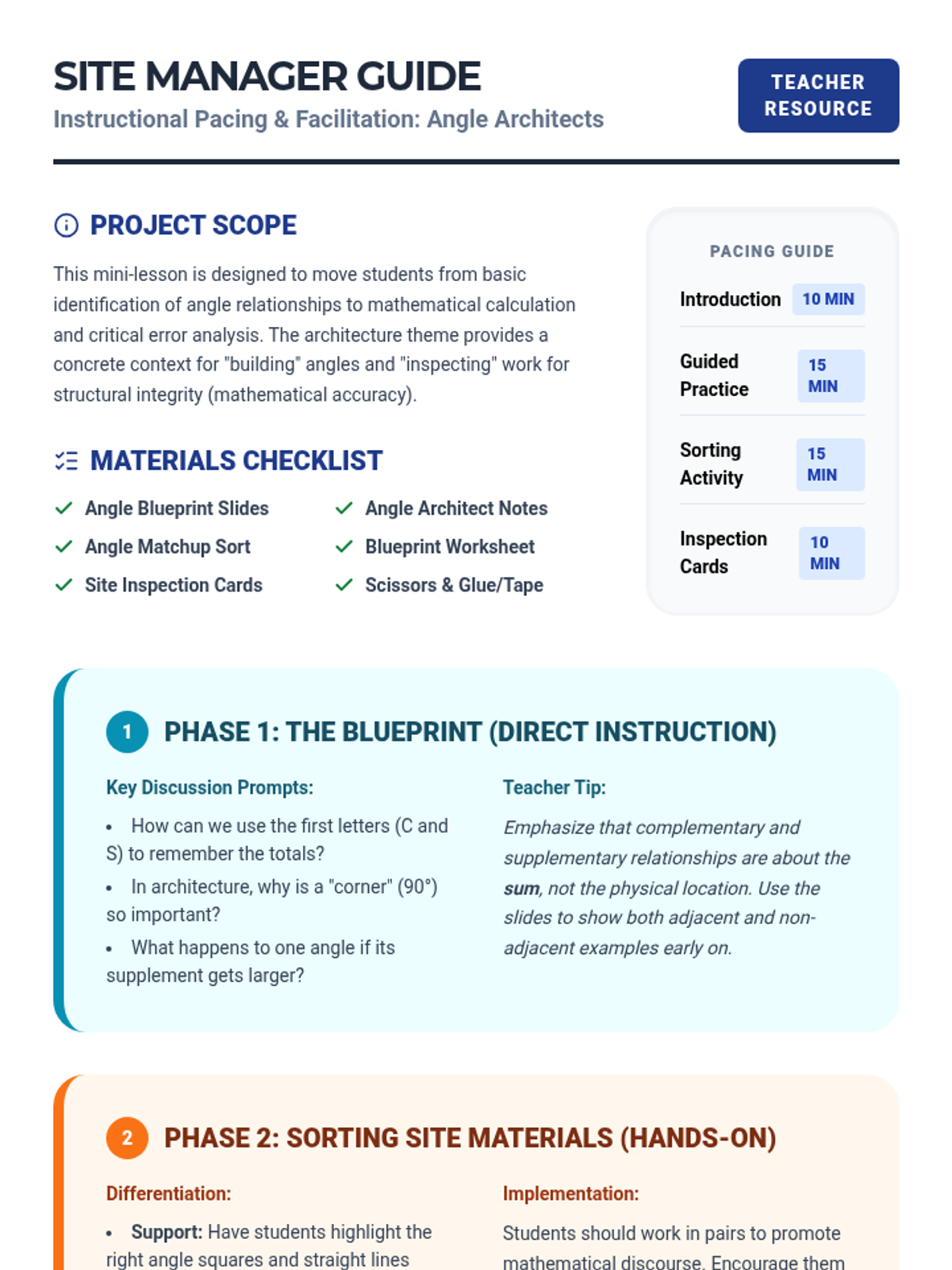
A focused mini-lesson on identifying, calculating, and analyzing complementary and supplementary angles using color-coded visual supports and real-world architect-themed scenarios.
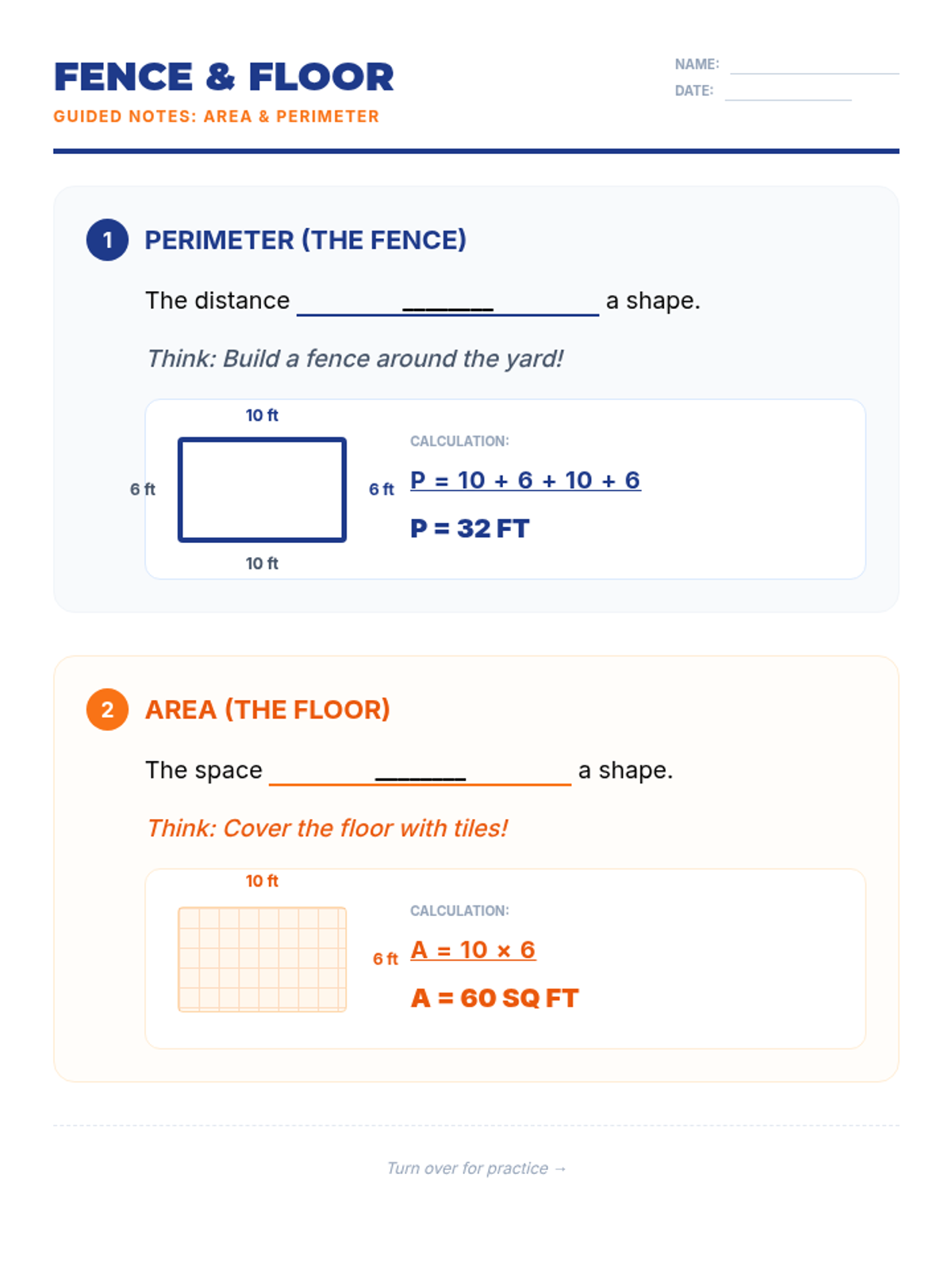
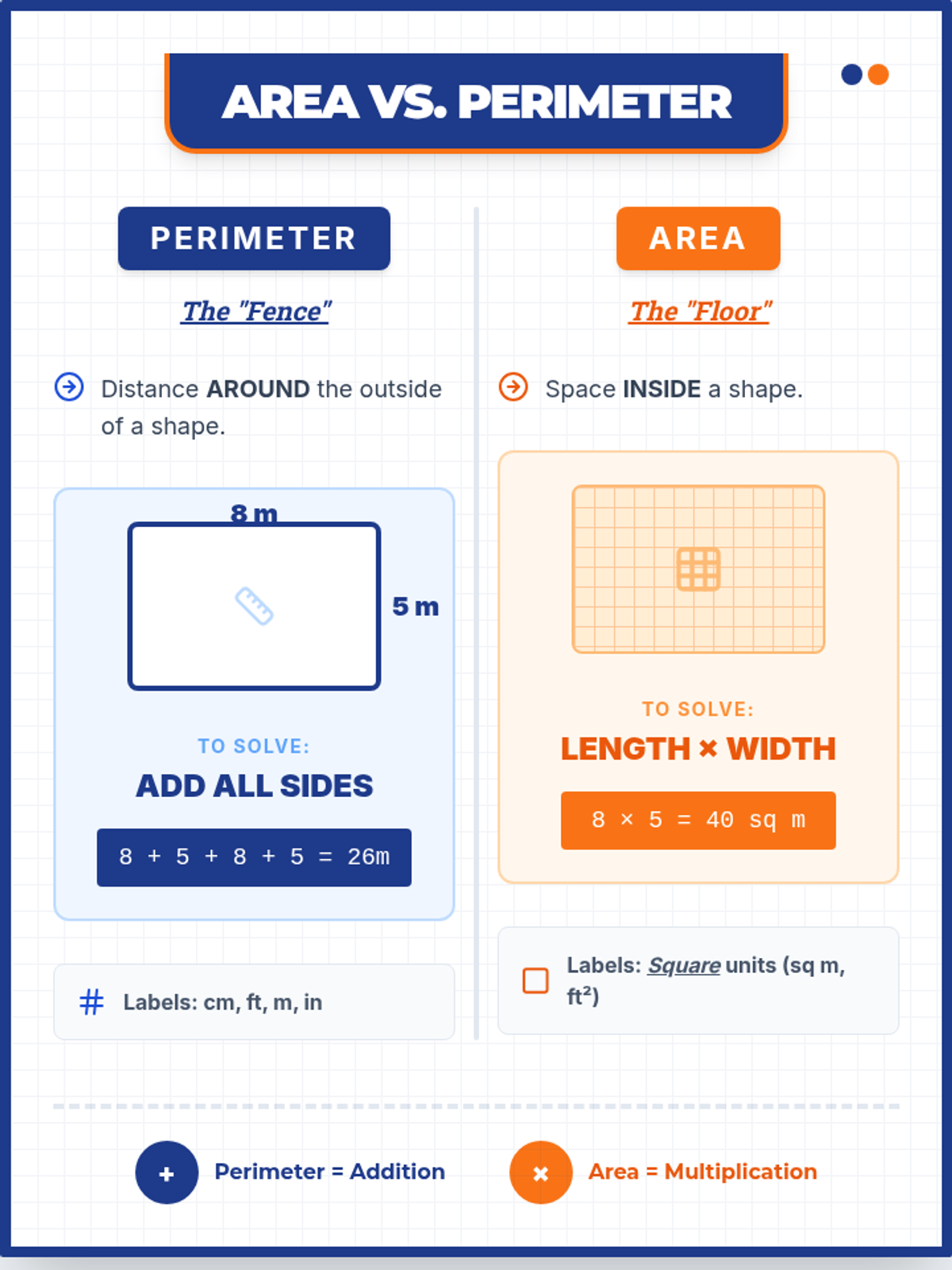
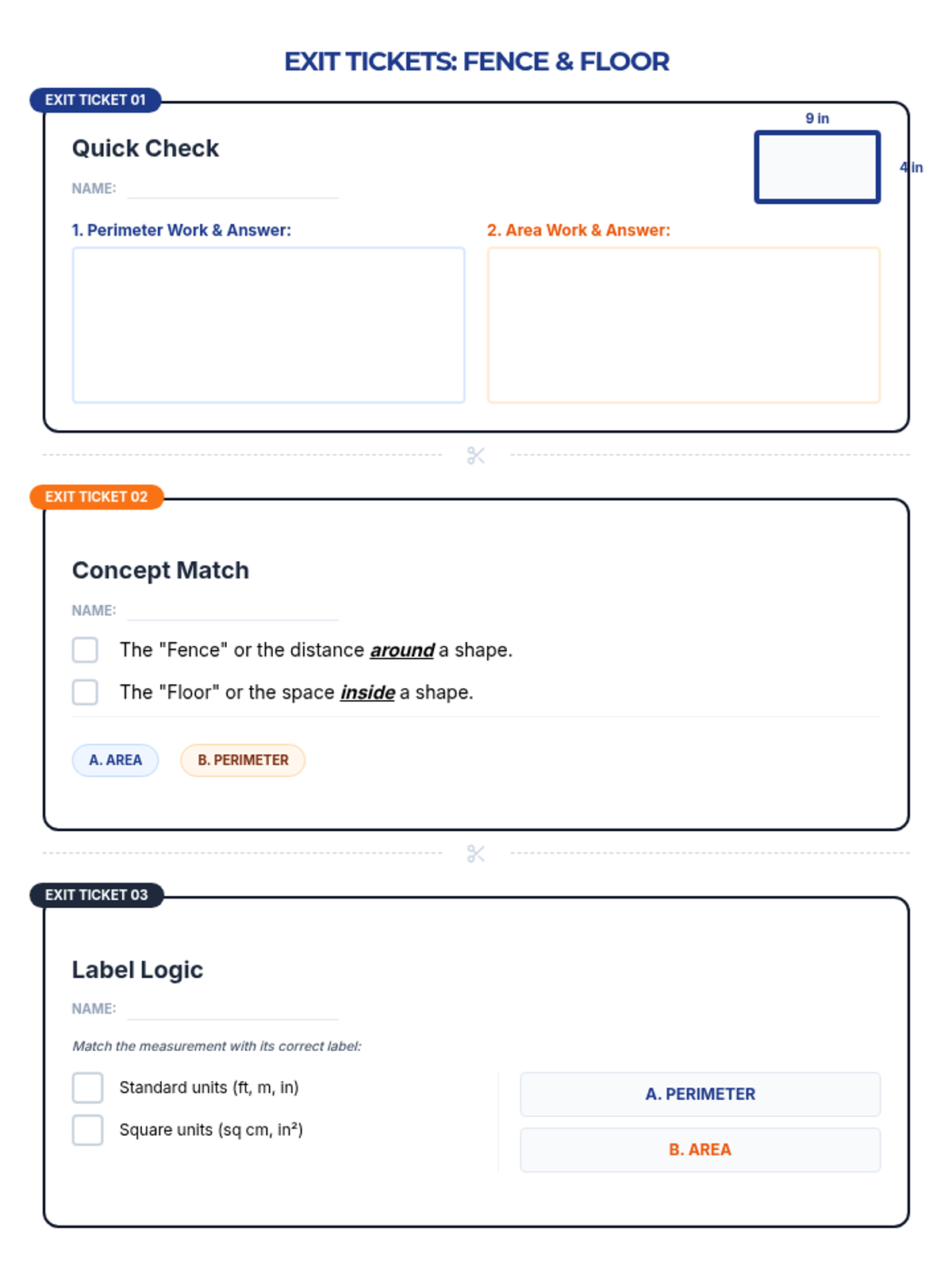
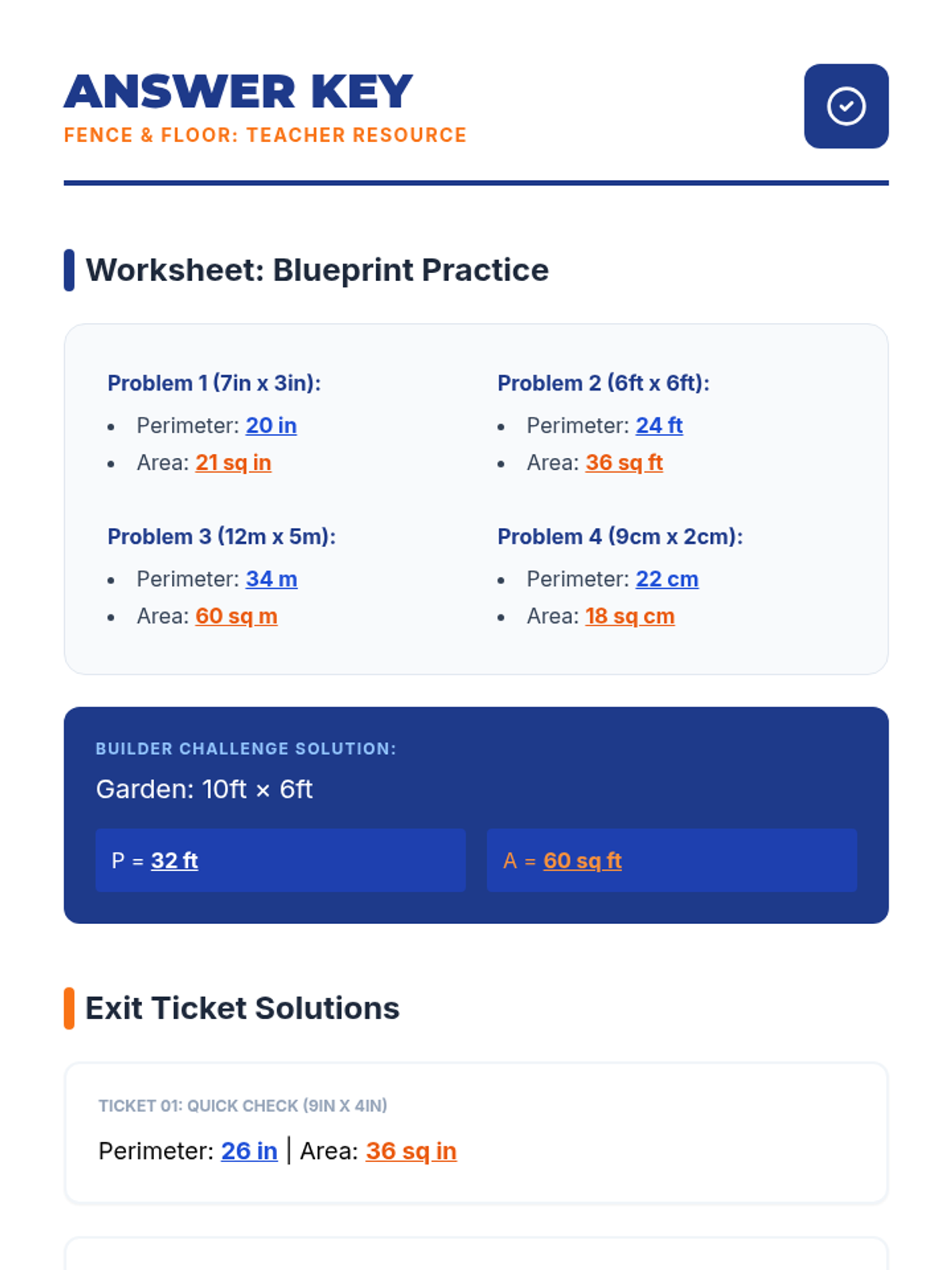
An introductory lesson on area and perimeter using the 'Fence and Floor' analogy. Students will learn the definitions, formulas, and real-world applications through visual aids and practice.
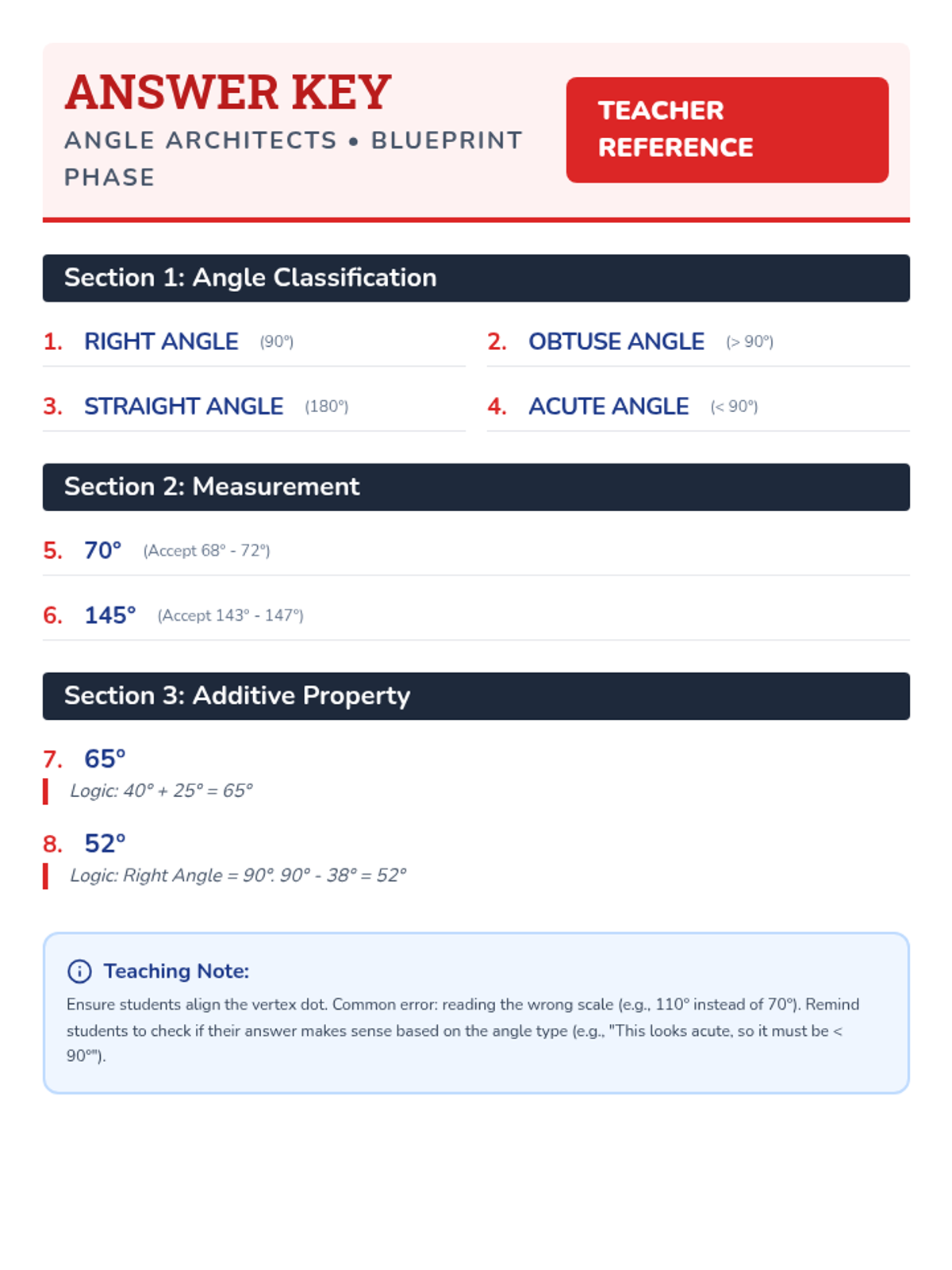
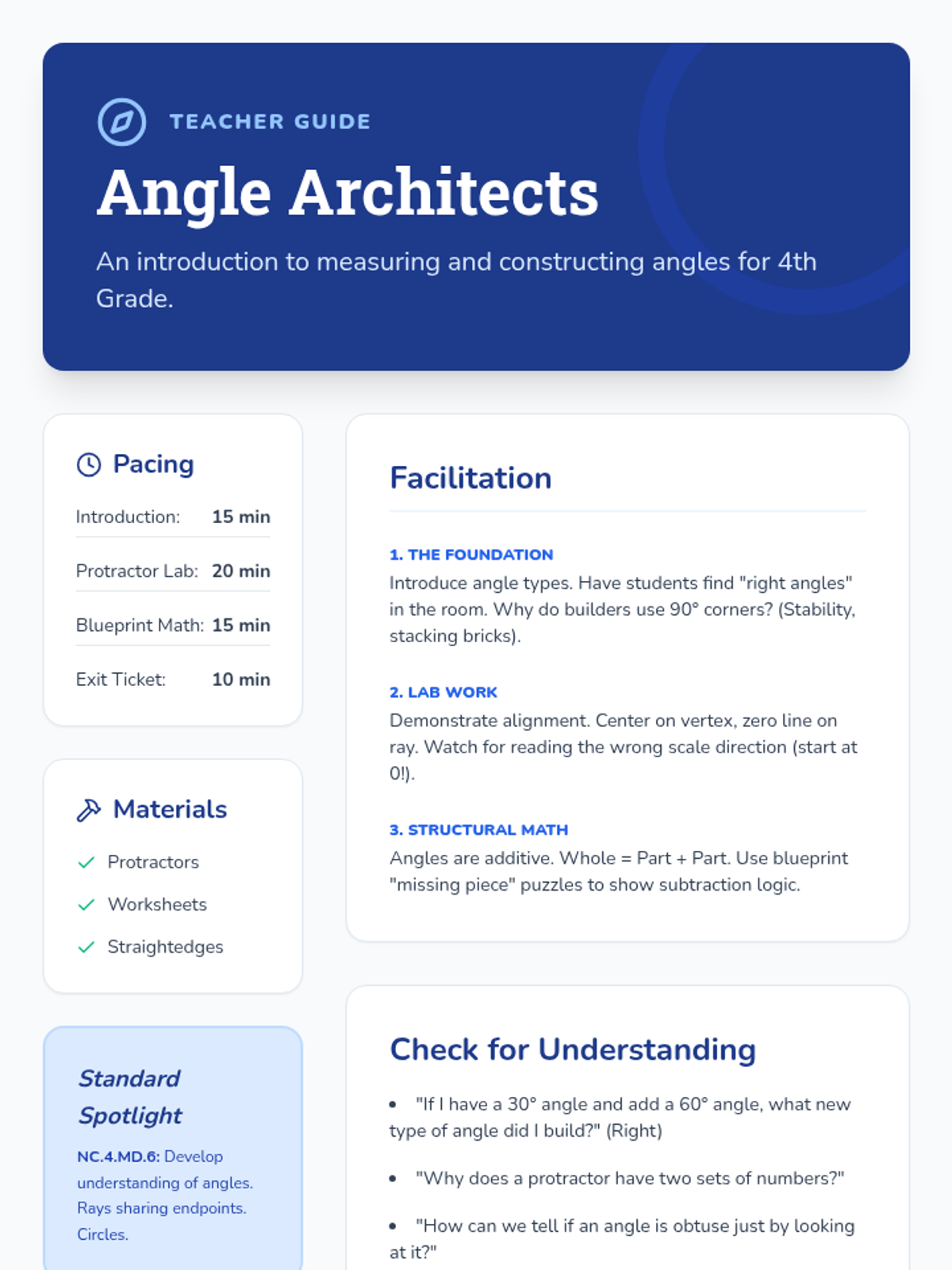
A comprehensive introduction to angles, protractor usage, and the additive property of angles, designed for 4th-grade students with a blueprint construction theme.
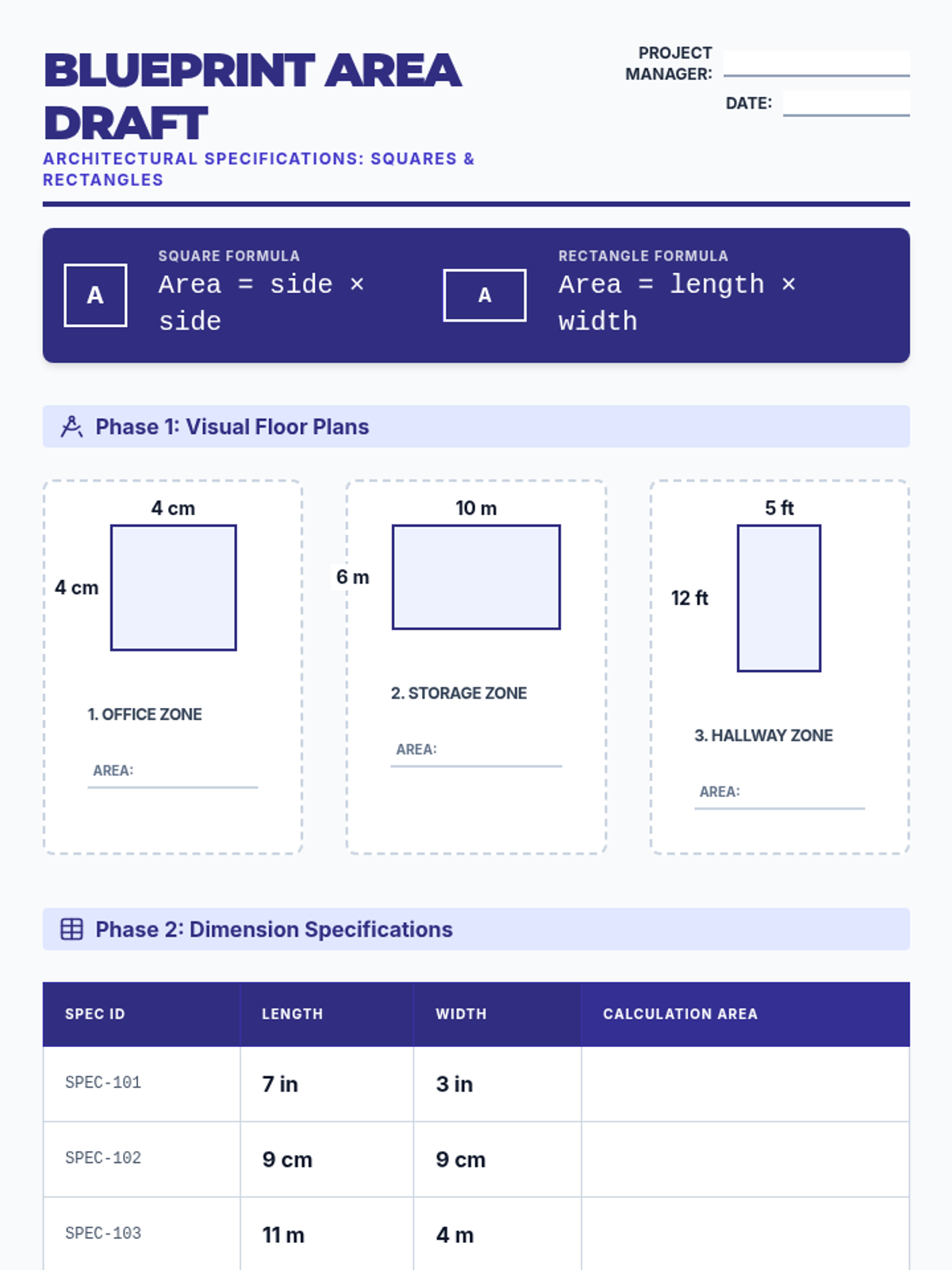
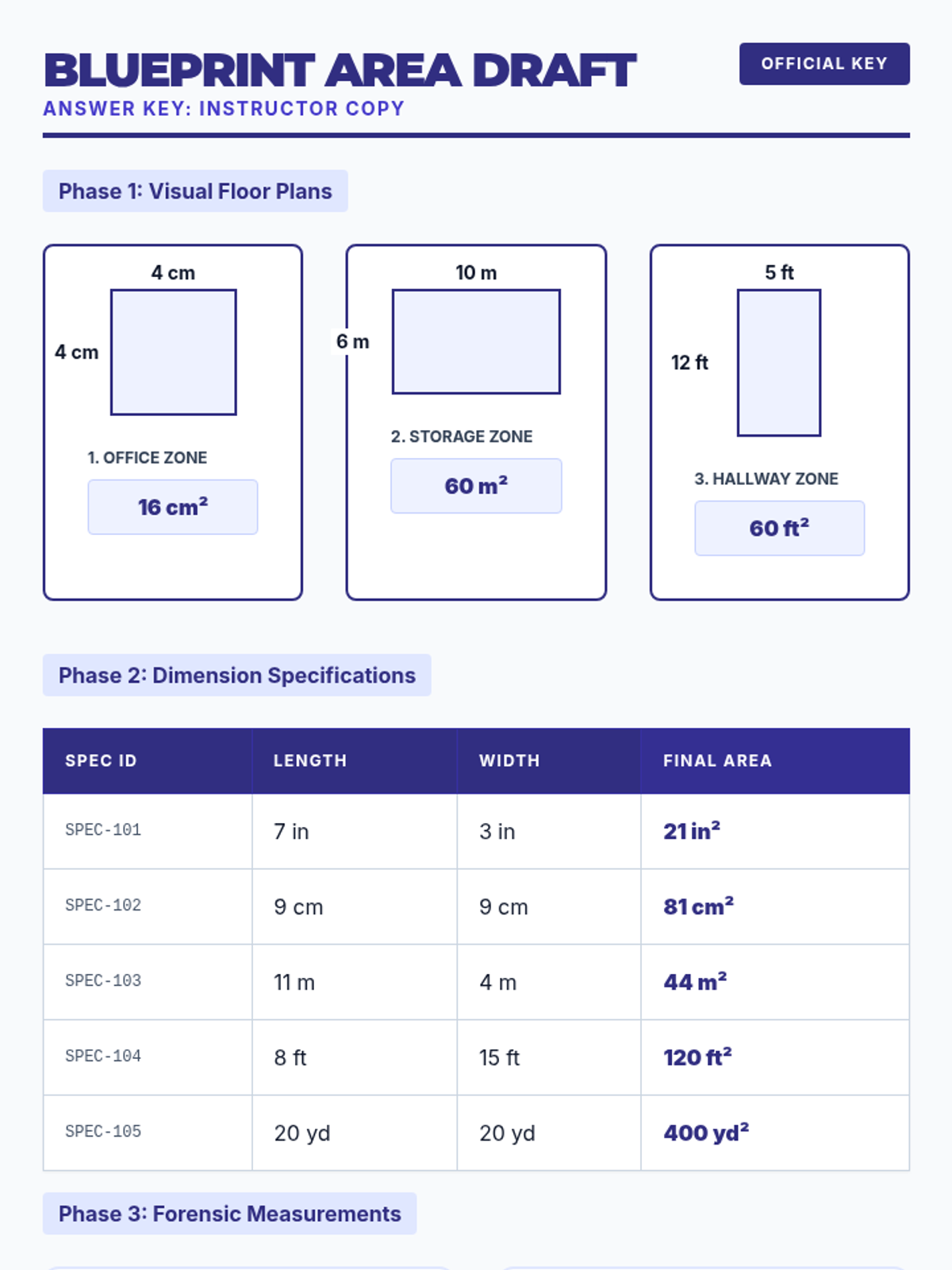
A lesson focused on calculating the area of squares and rectangles using whole numbers, themed around architectural blueprints.
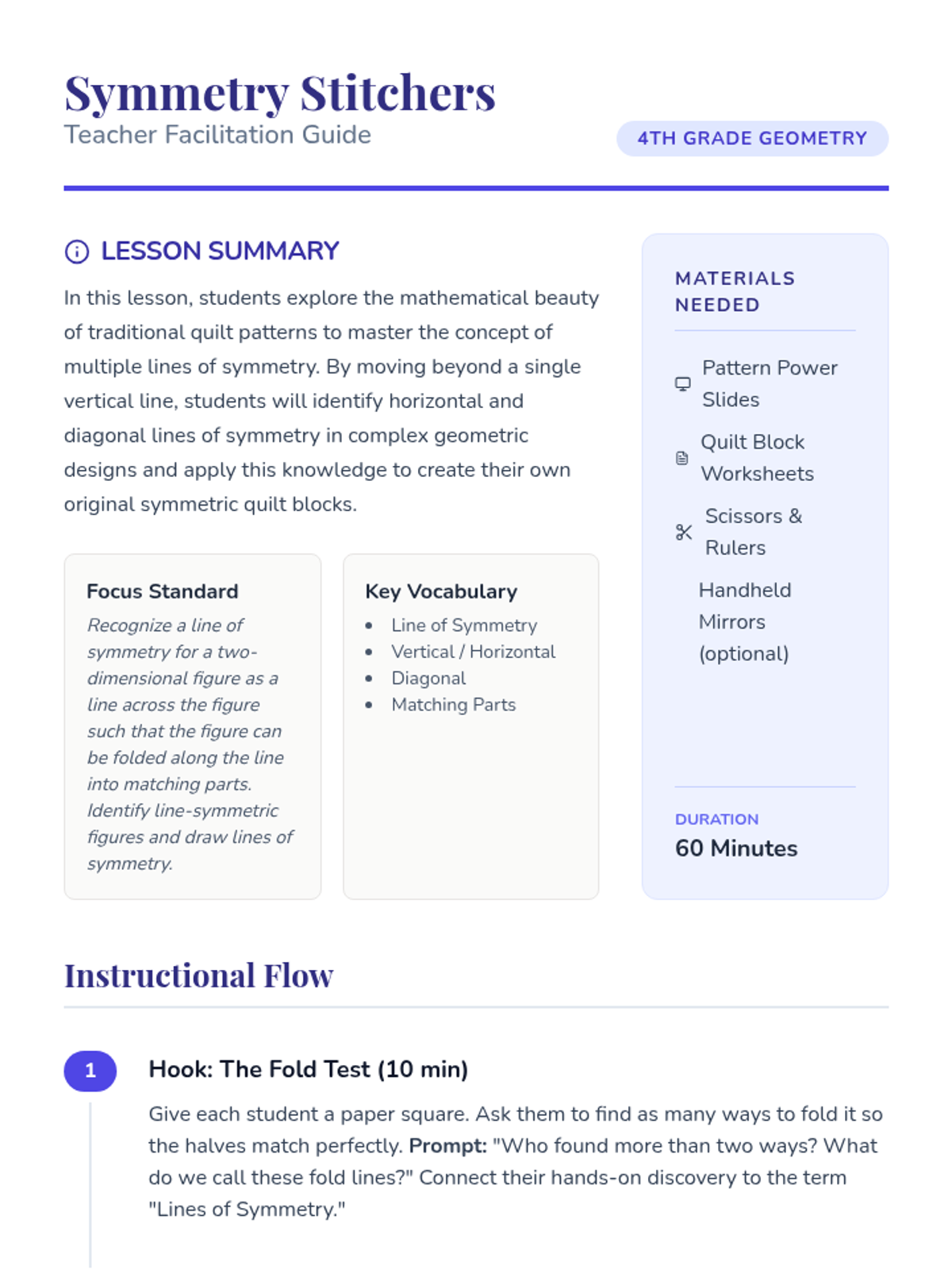
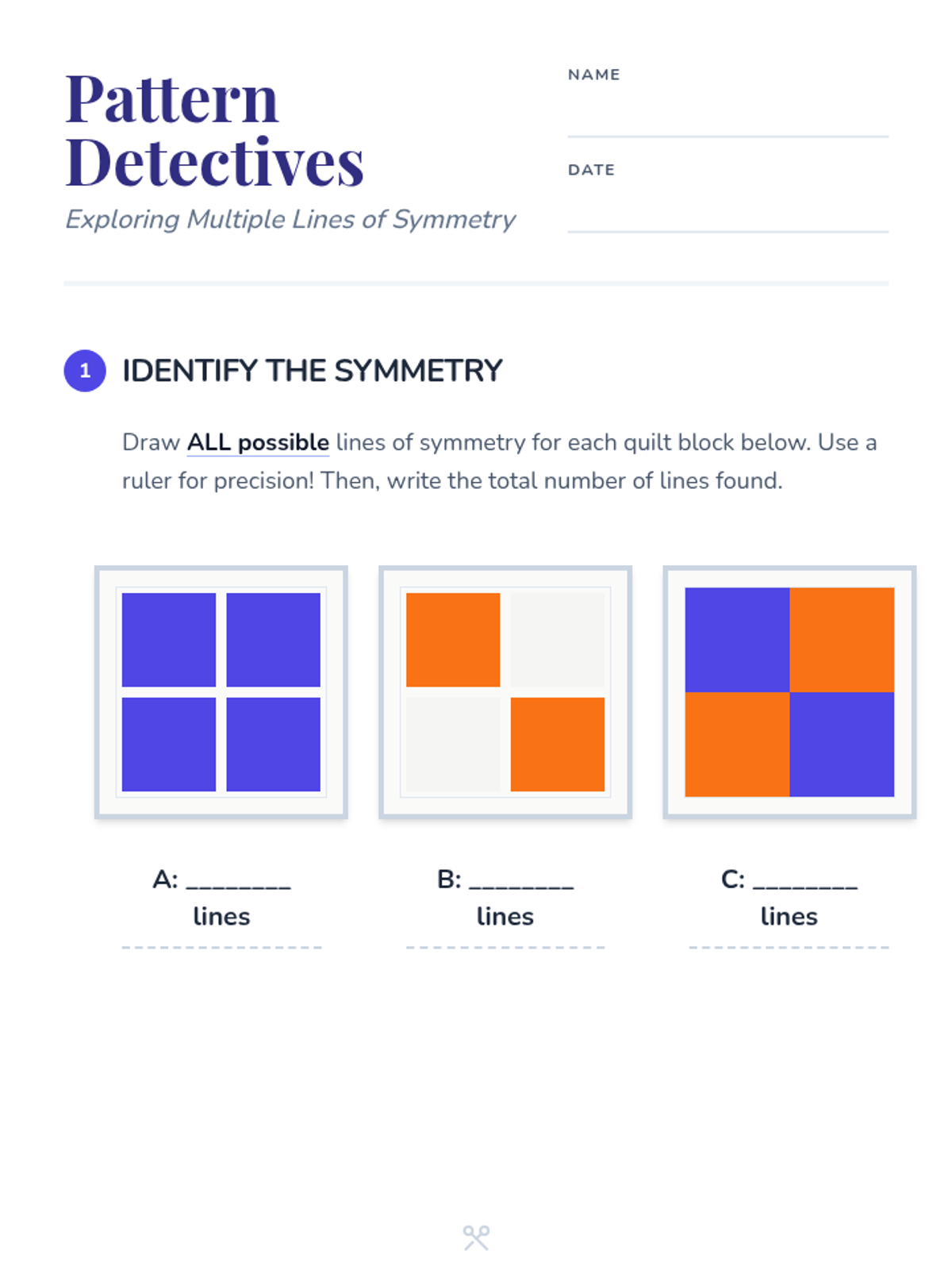
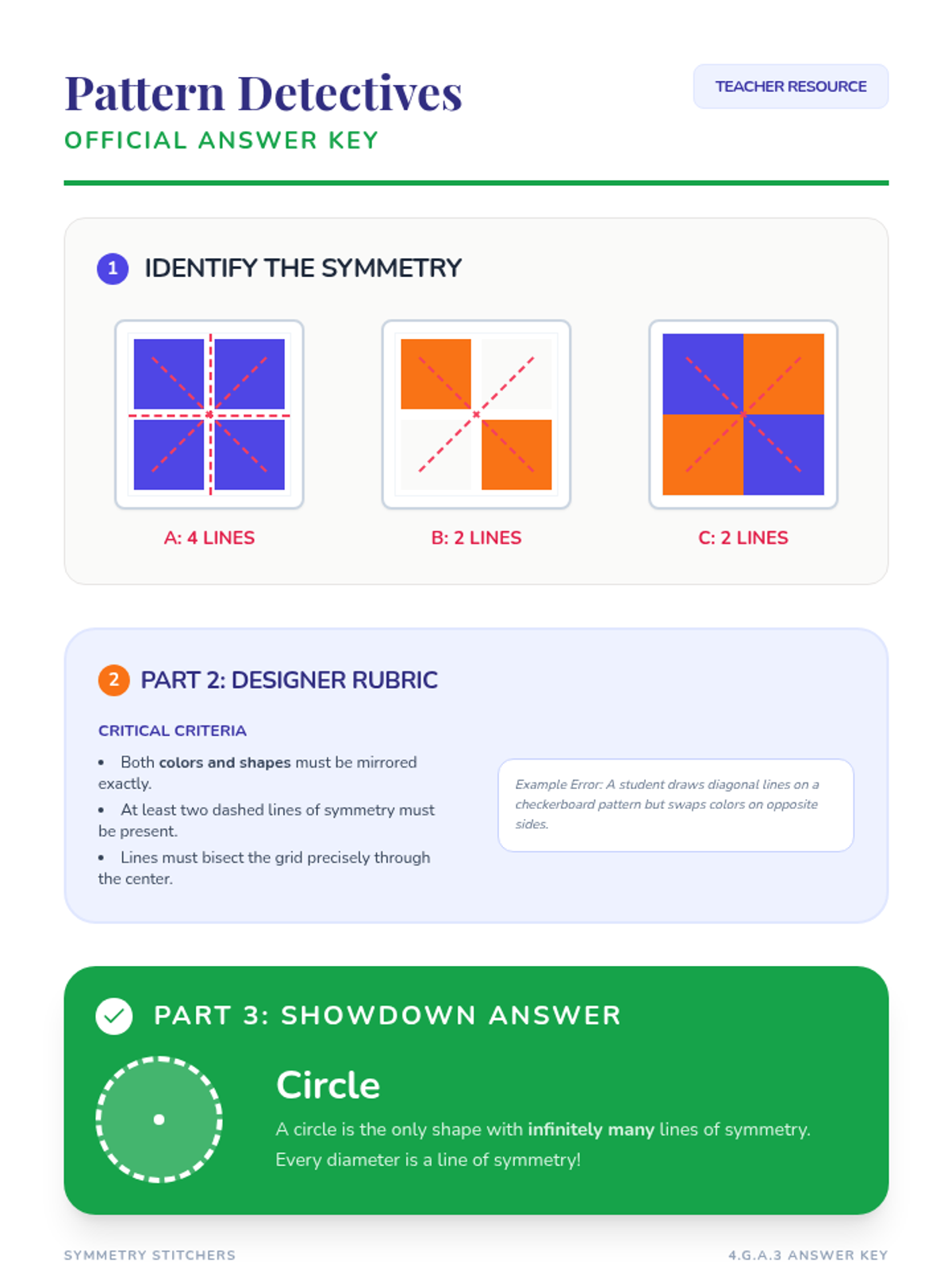
A geometry lesson focused on identifying and creating multiple lines of symmetry through the lens of traditional quilting patterns. Students explore how geometric shapes can have horizontal, vertical, and diagonal symmetry.
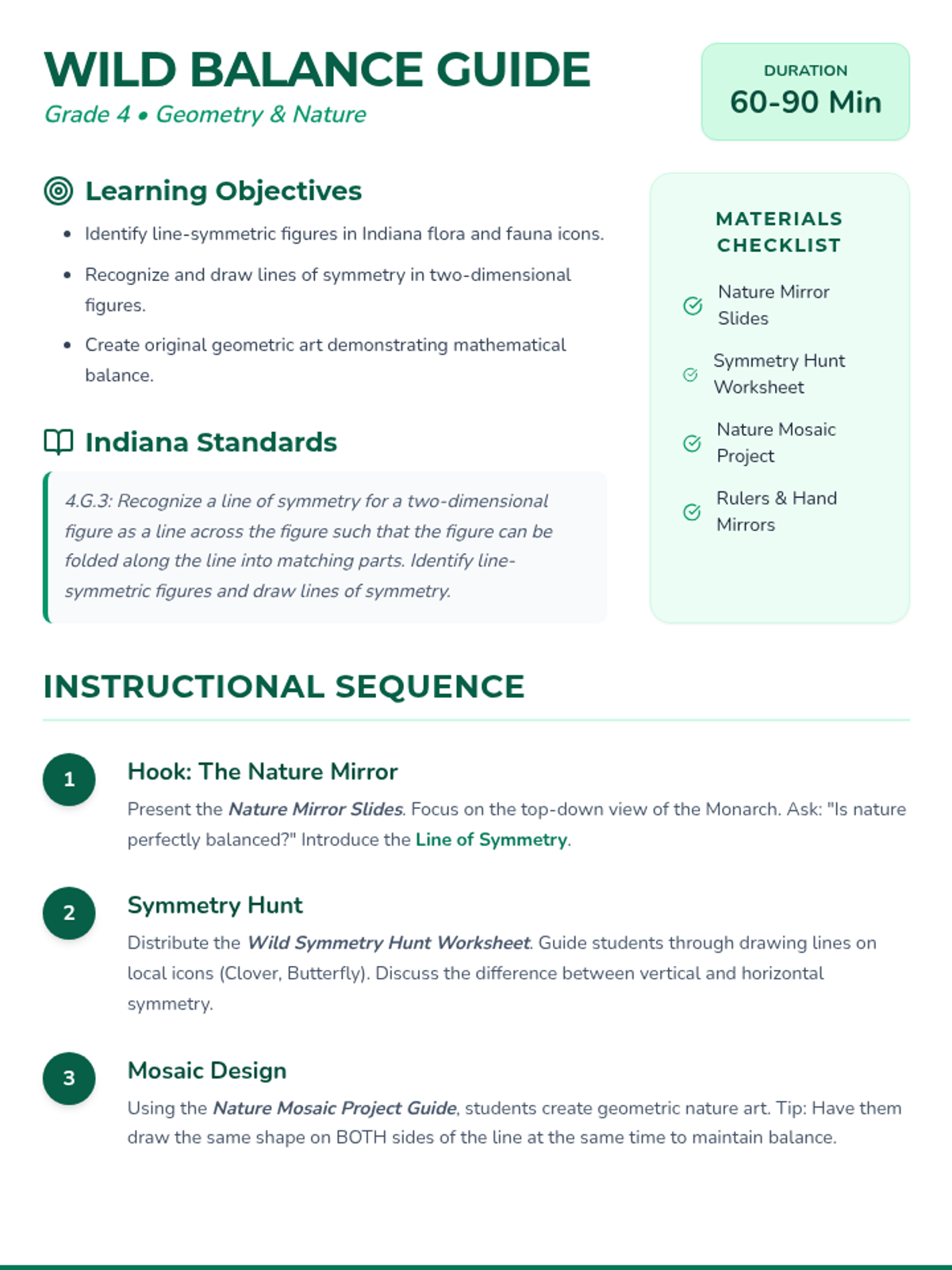
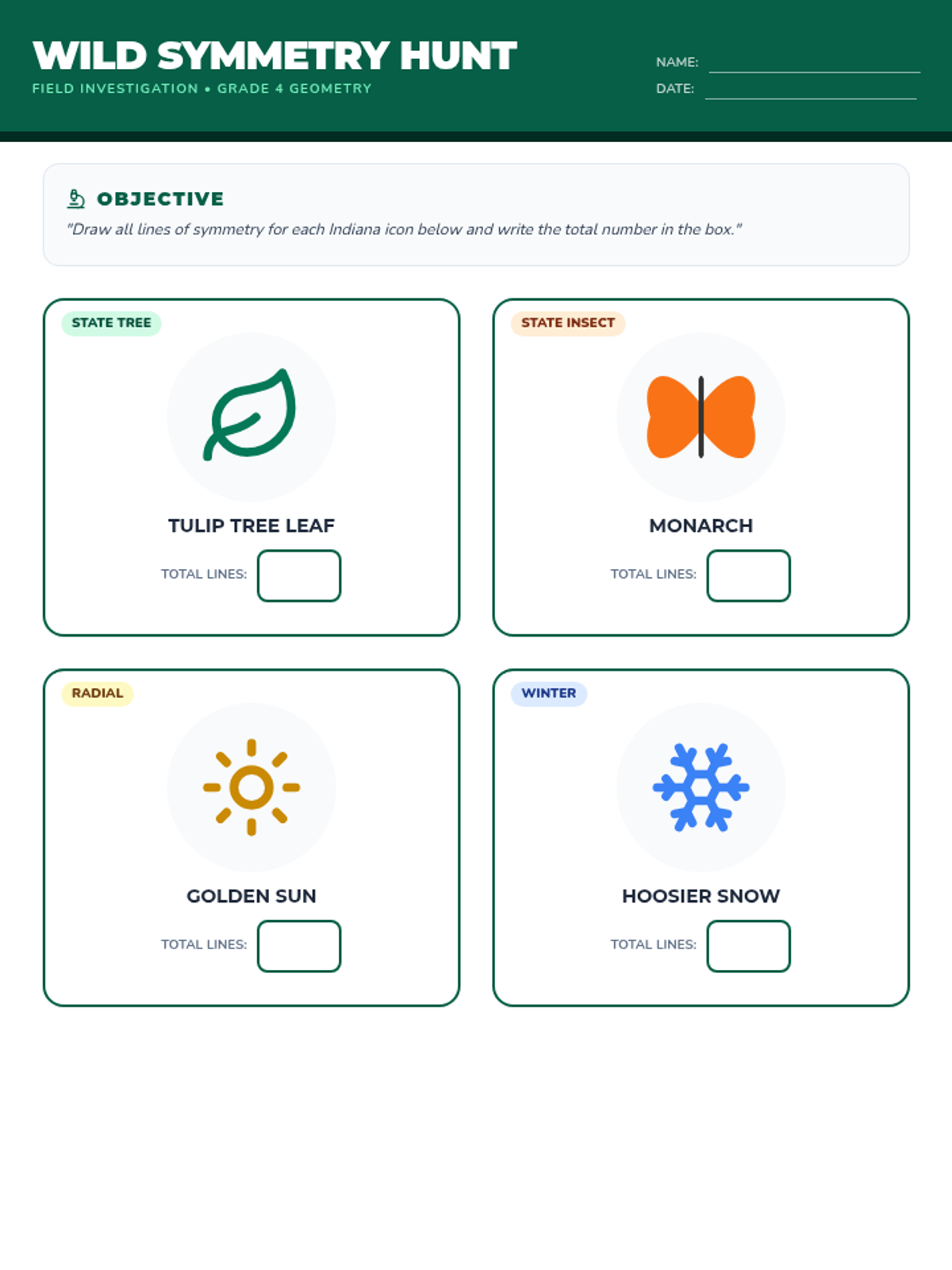
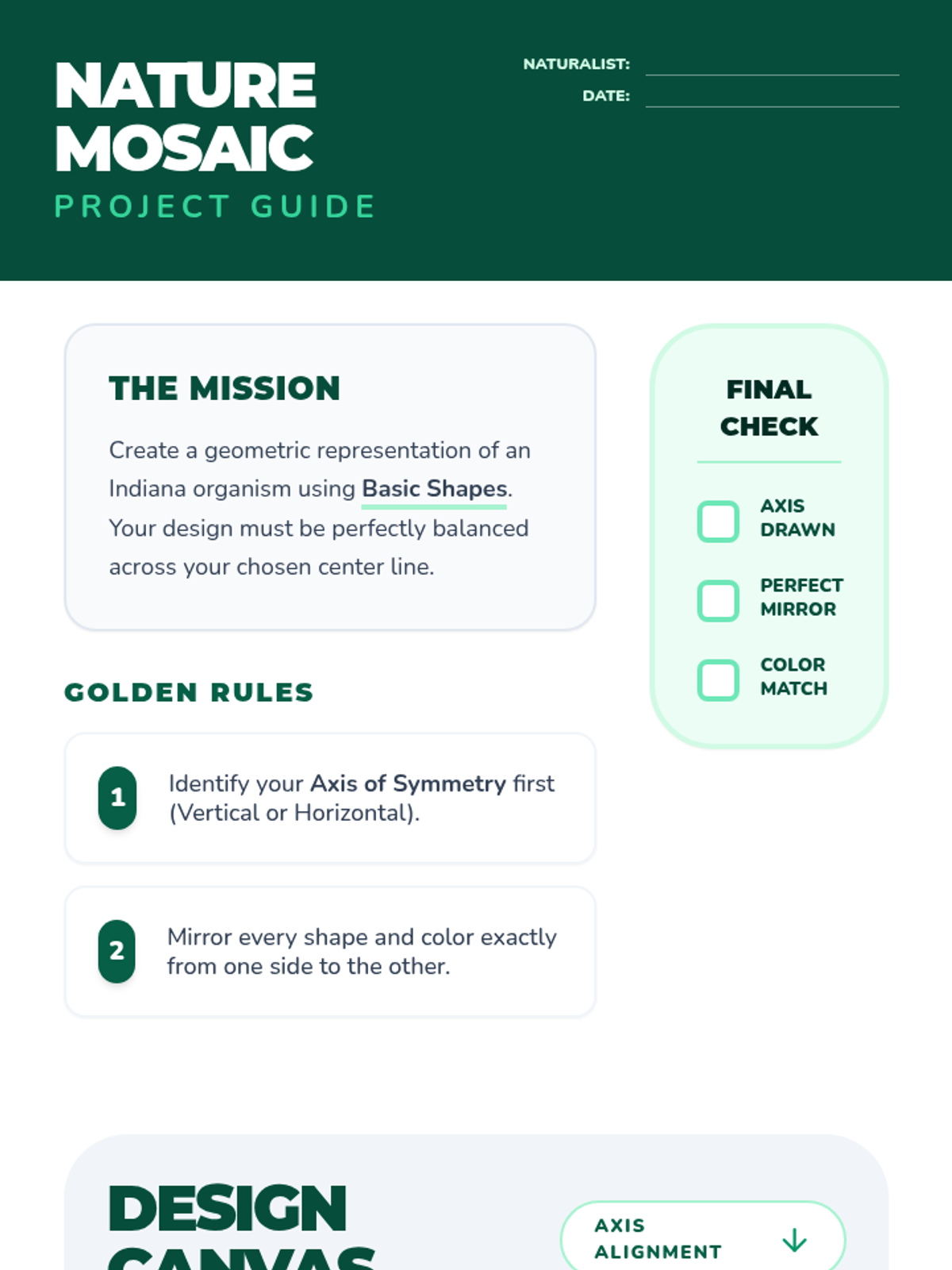
Fourth graders explore line symmetry through Indiana's local flora and fauna, identifying mathematical patterns in nature and creating original geometric art.
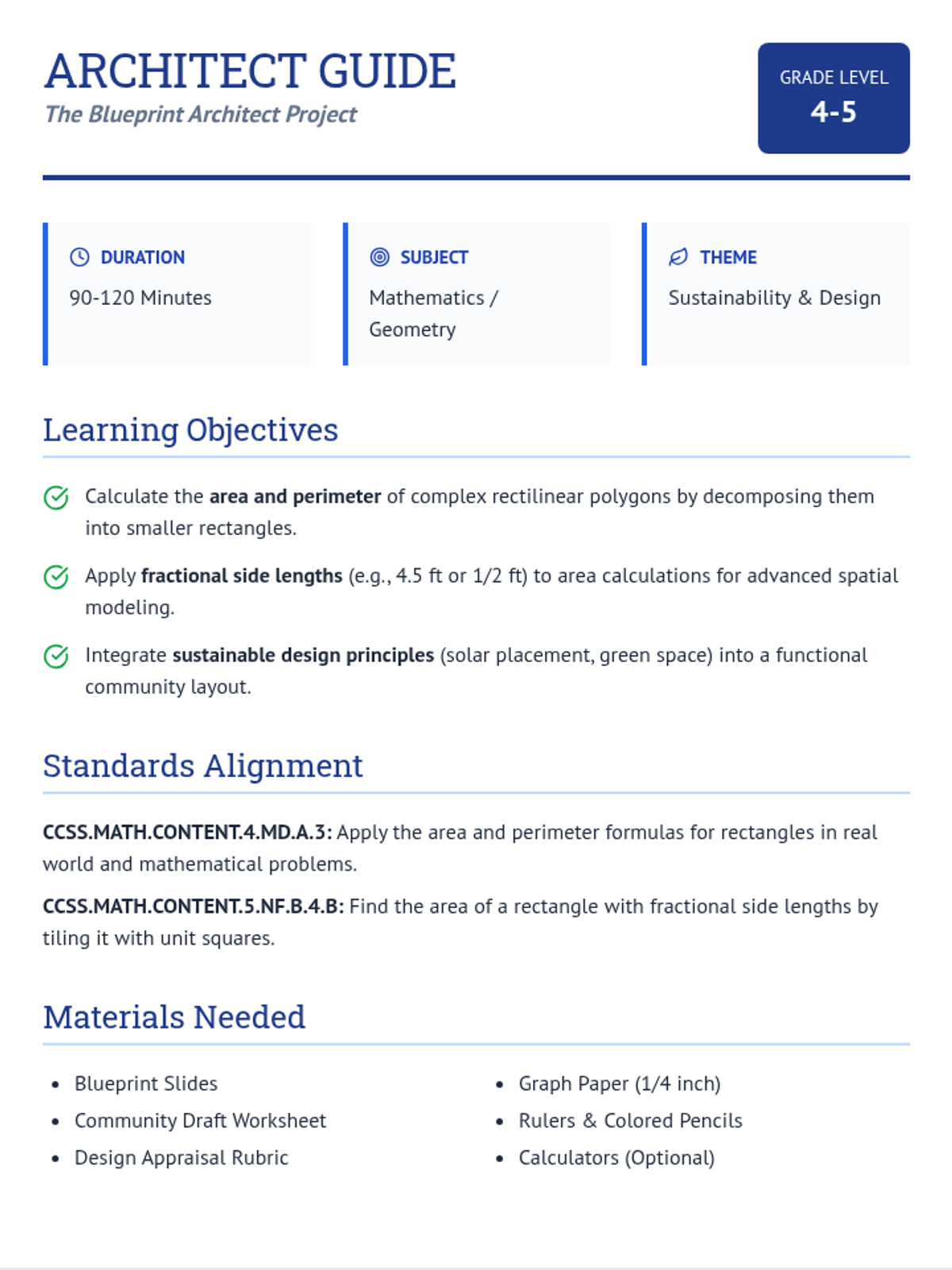
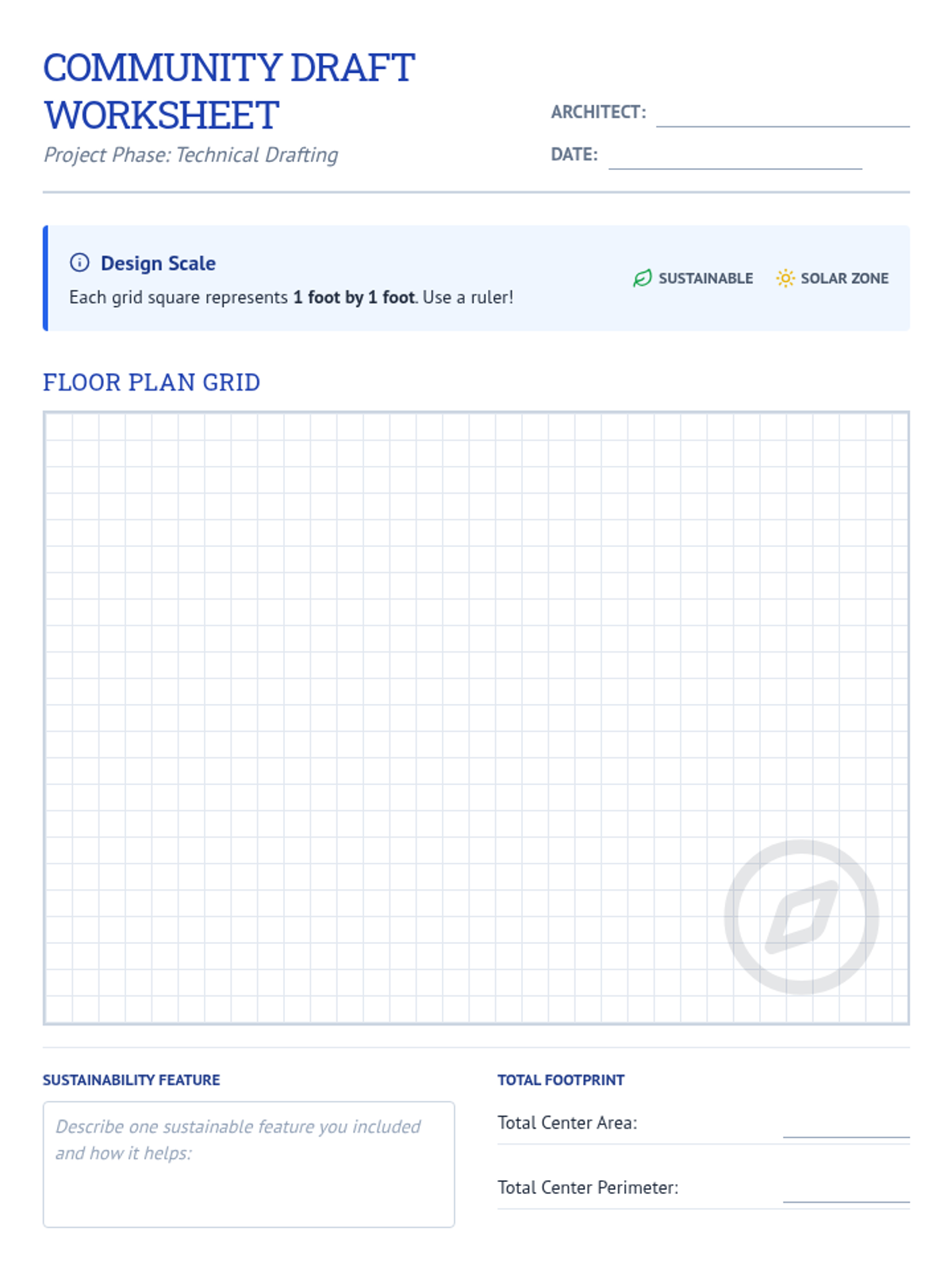
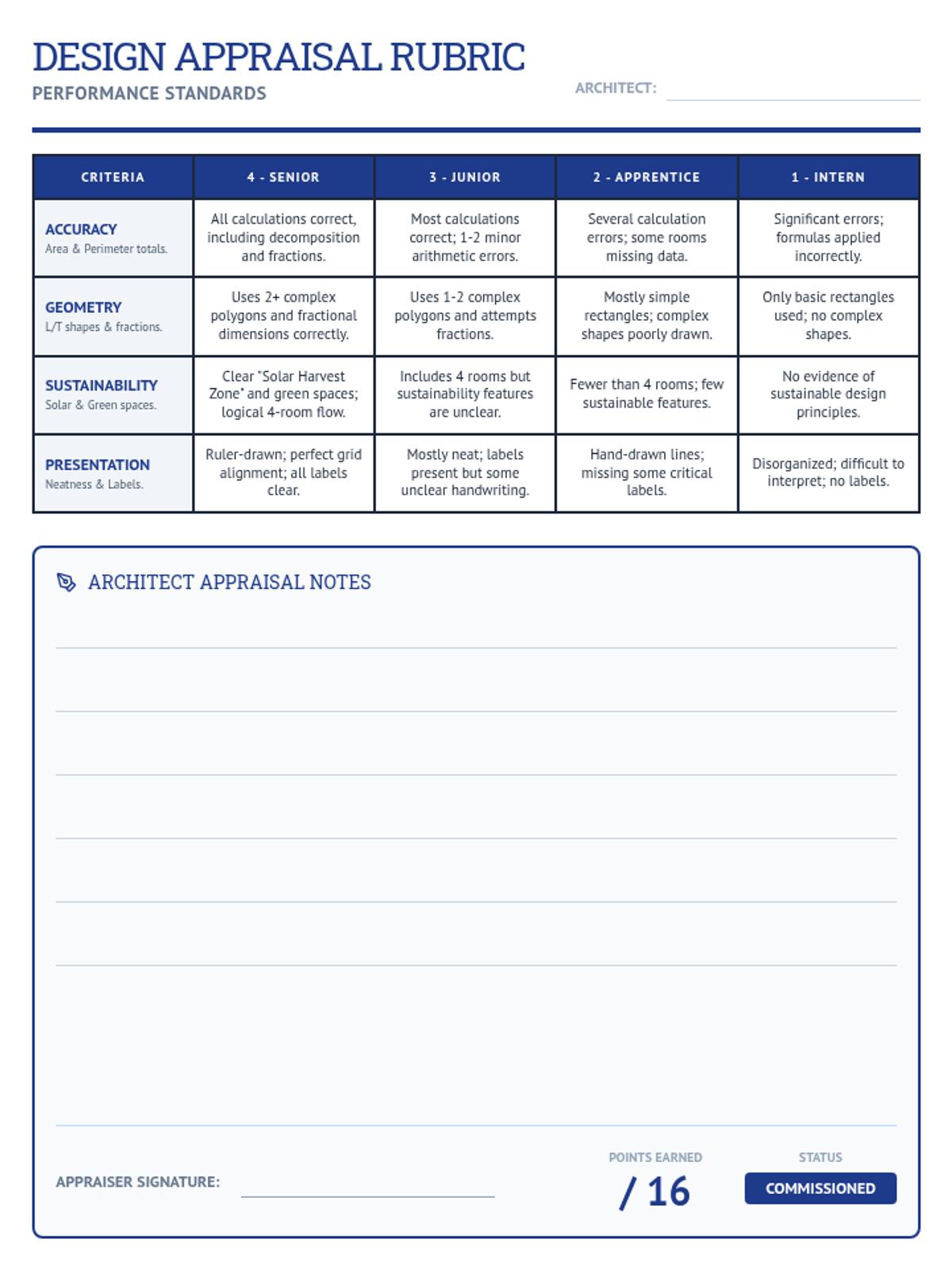
A project-based lesson where students design a sustainable community center, applying area and perimeter calculations to complex polygonal floor plans with fractional dimensions.
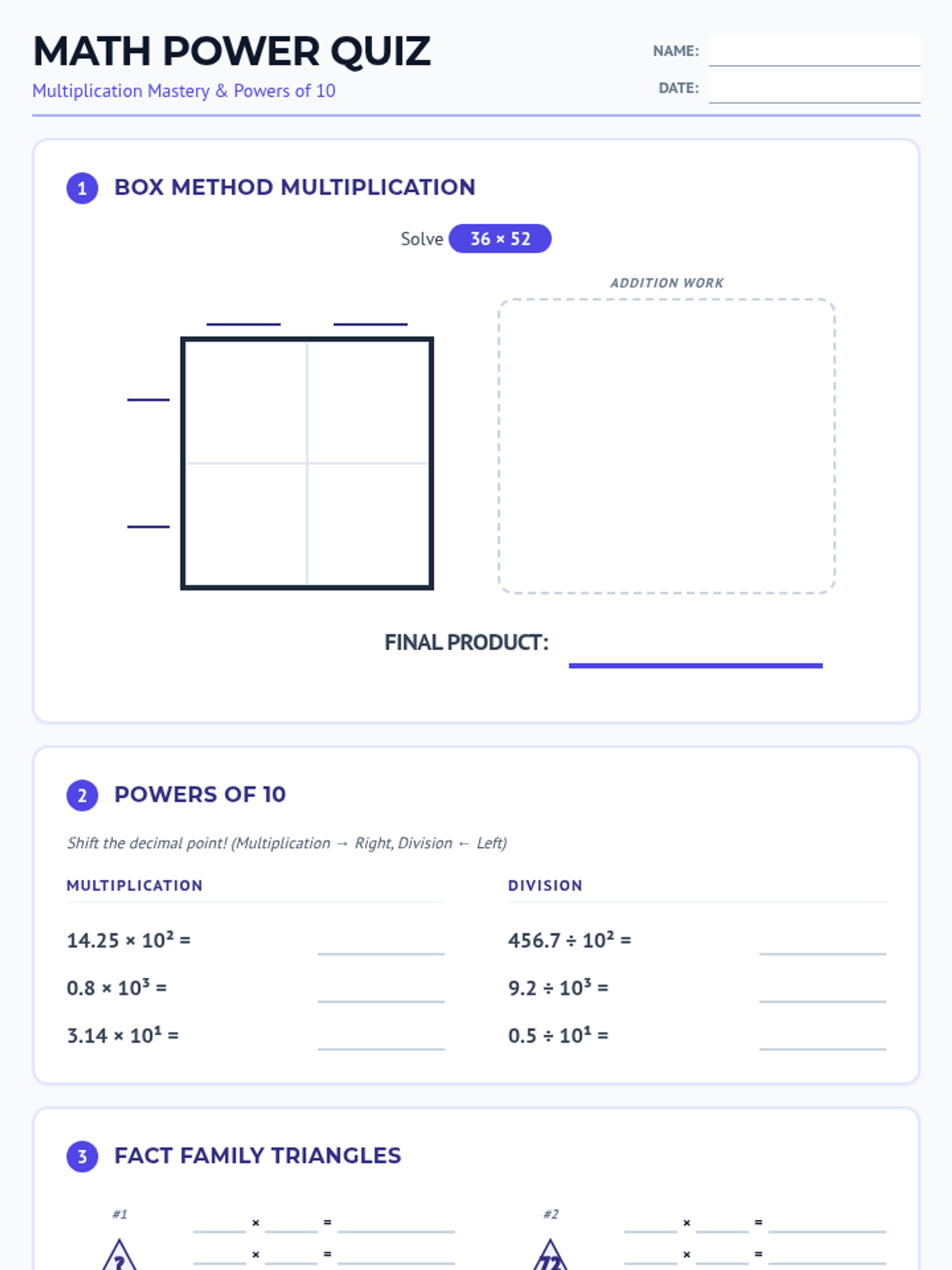
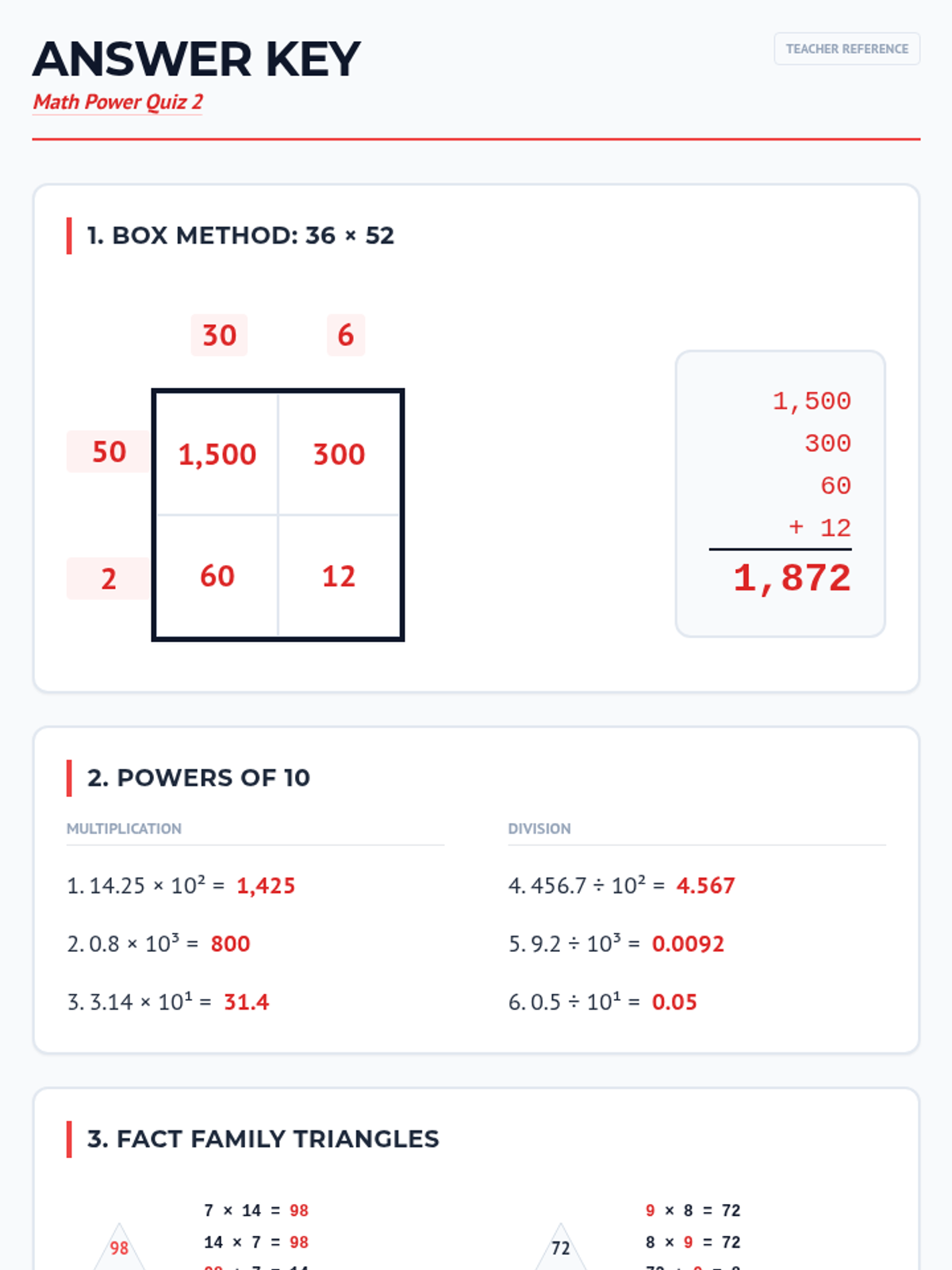
A comprehensive review lesson covering multi-digit multiplication, circle geometry, fact families, and decimal operations with powers of ten.
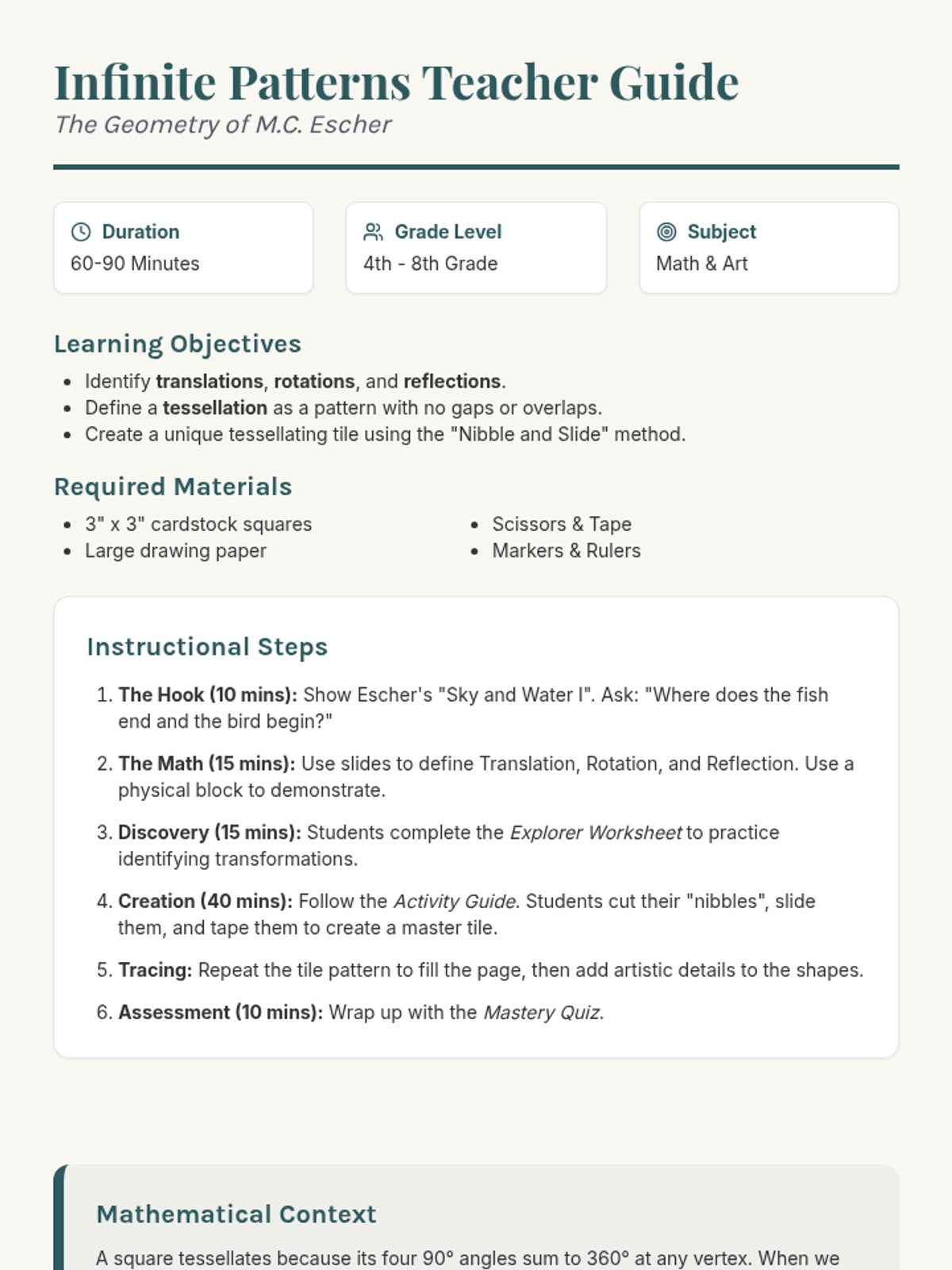
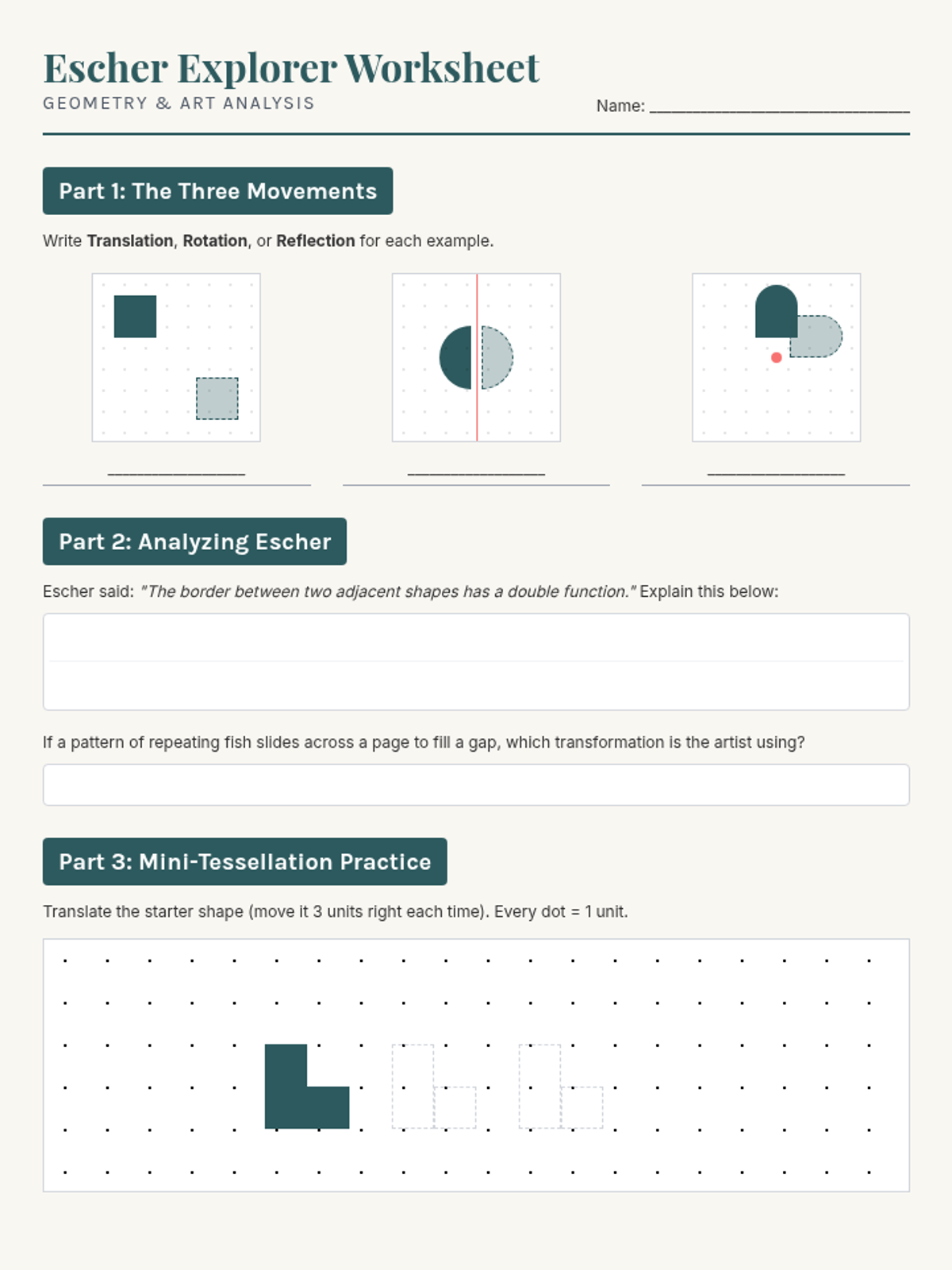
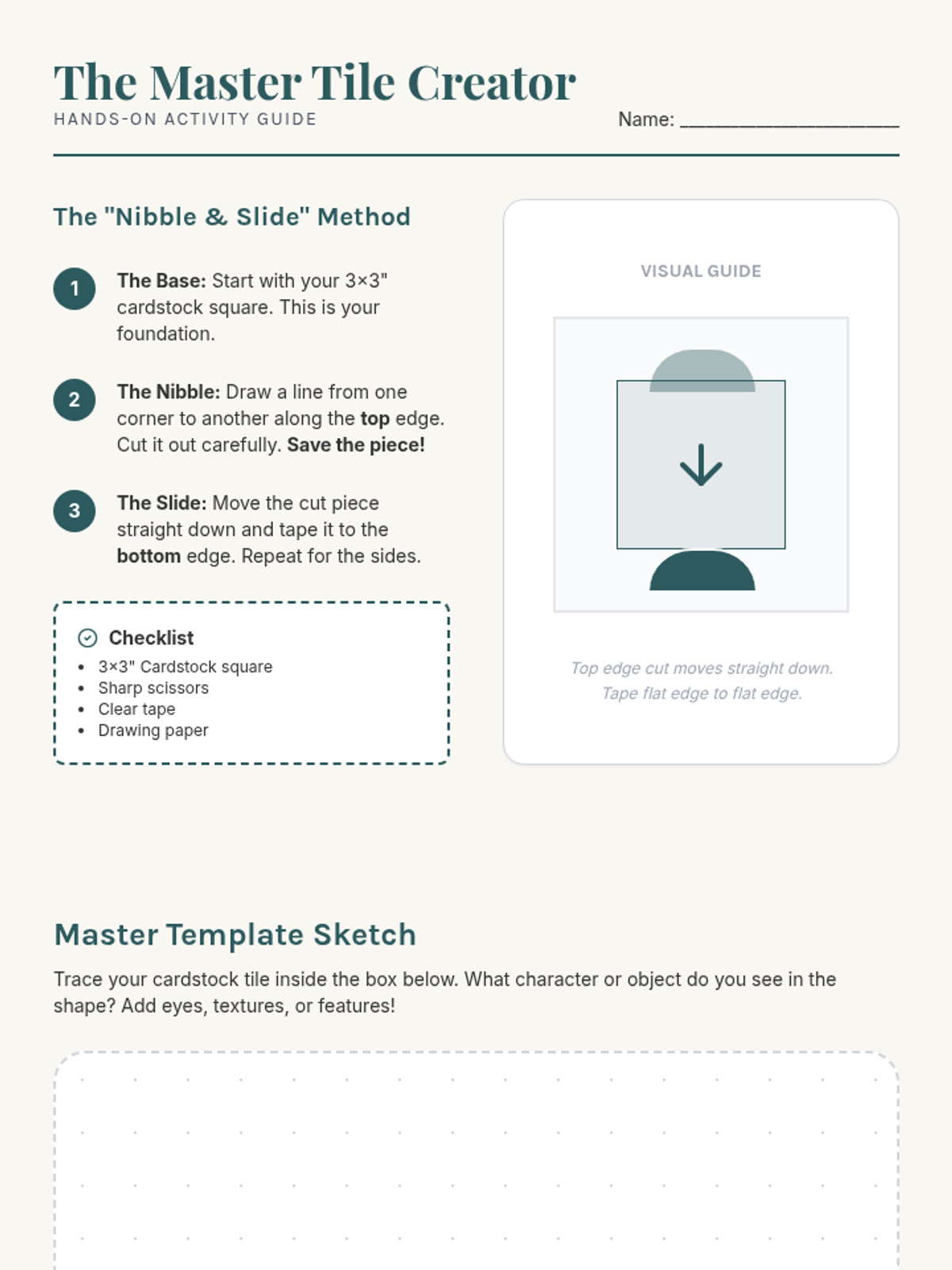
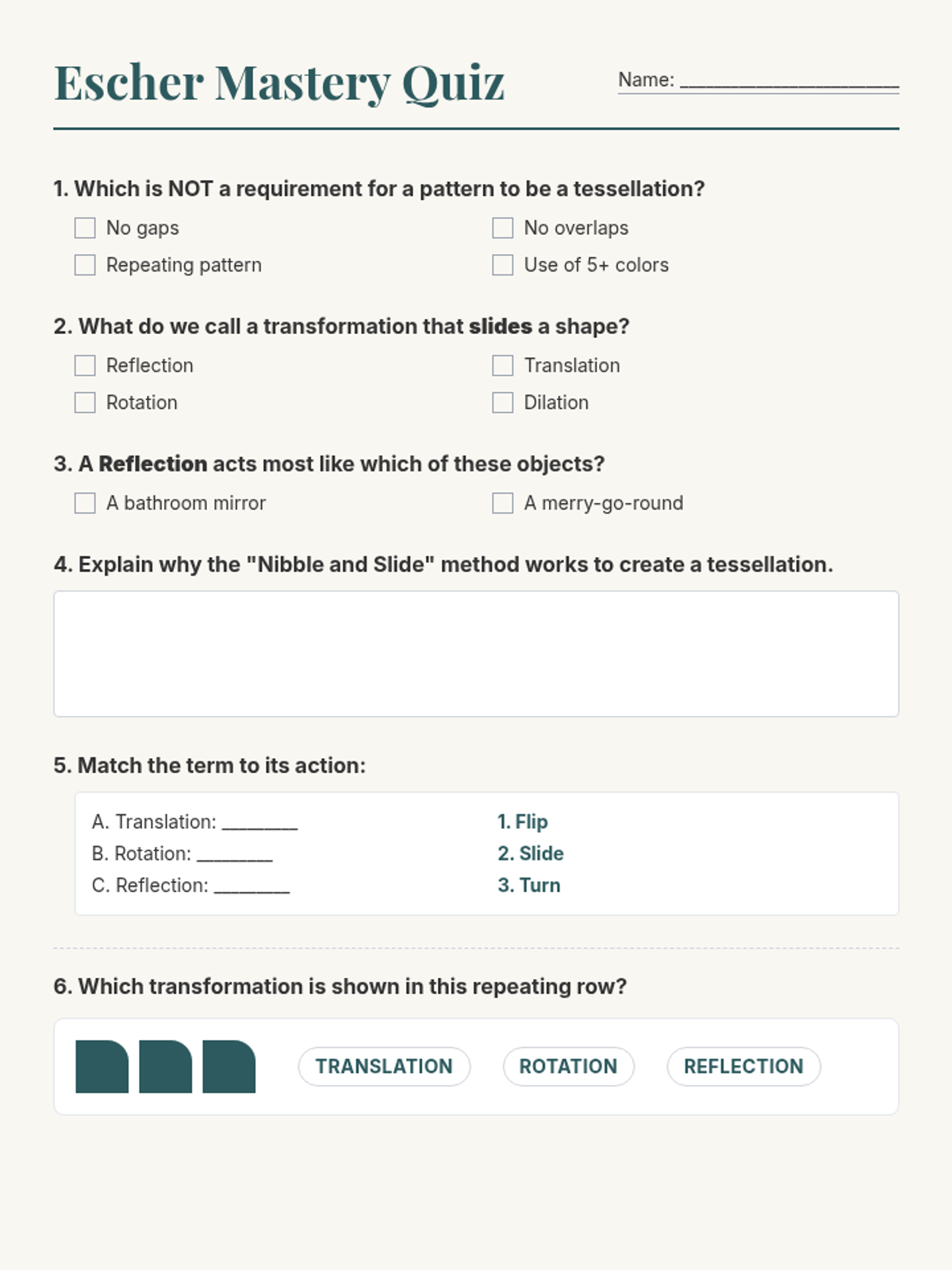
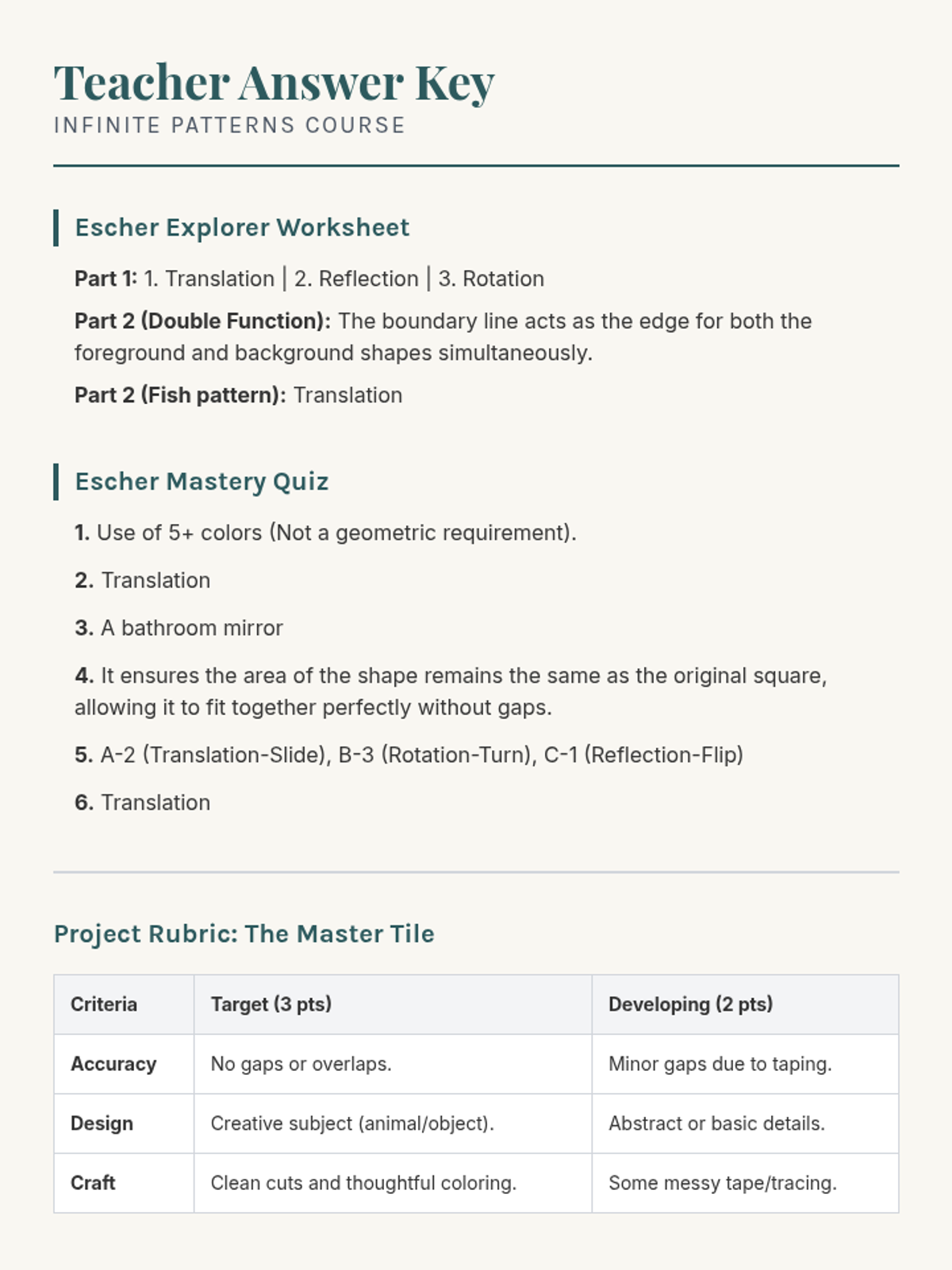
A hands-on interdisciplinary lesson blending geometry and art. Students explore M.C. Escher's work to understand and apply translations, rotations, and reflections through the creation of original tessellating patterns.
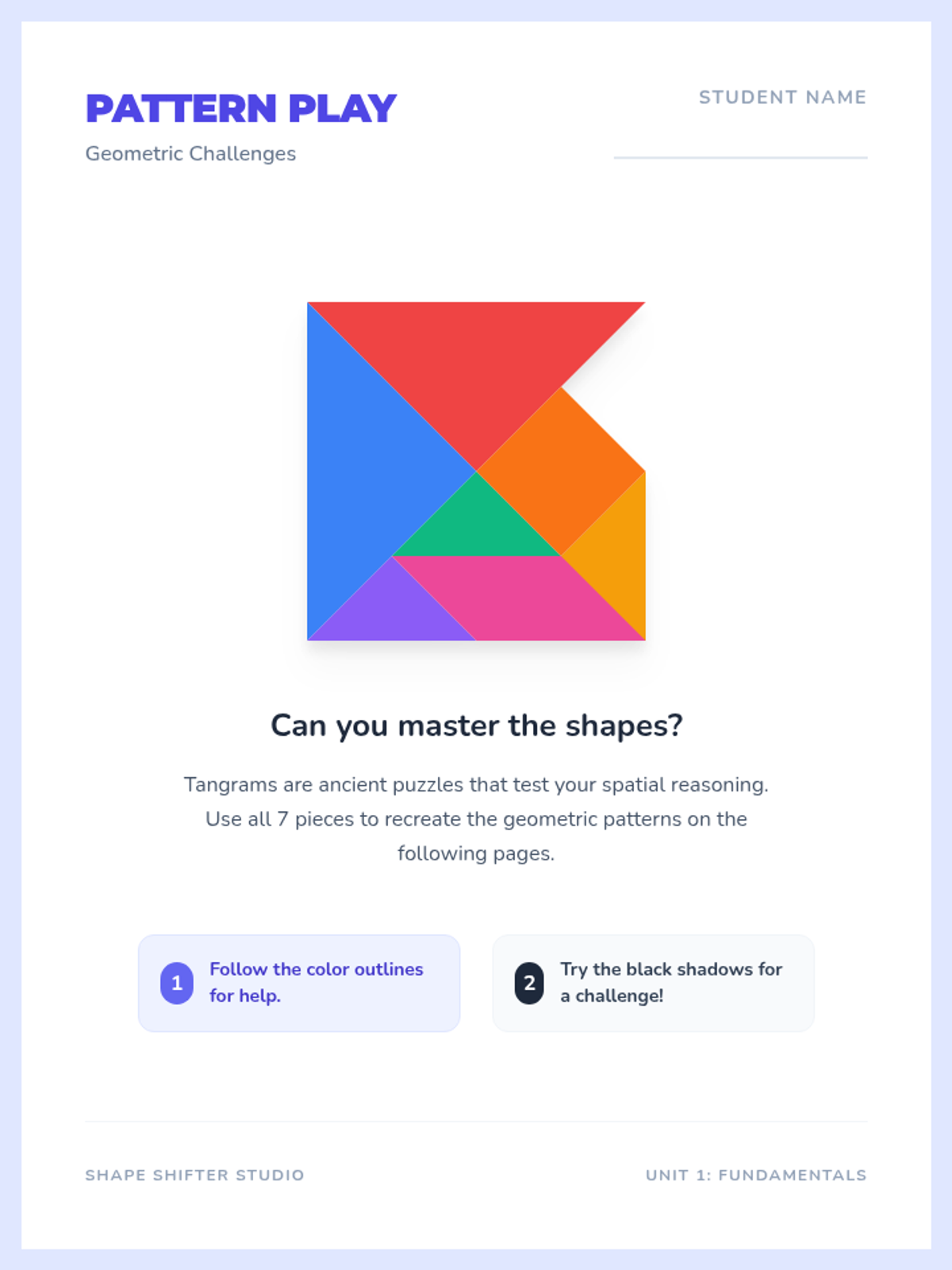
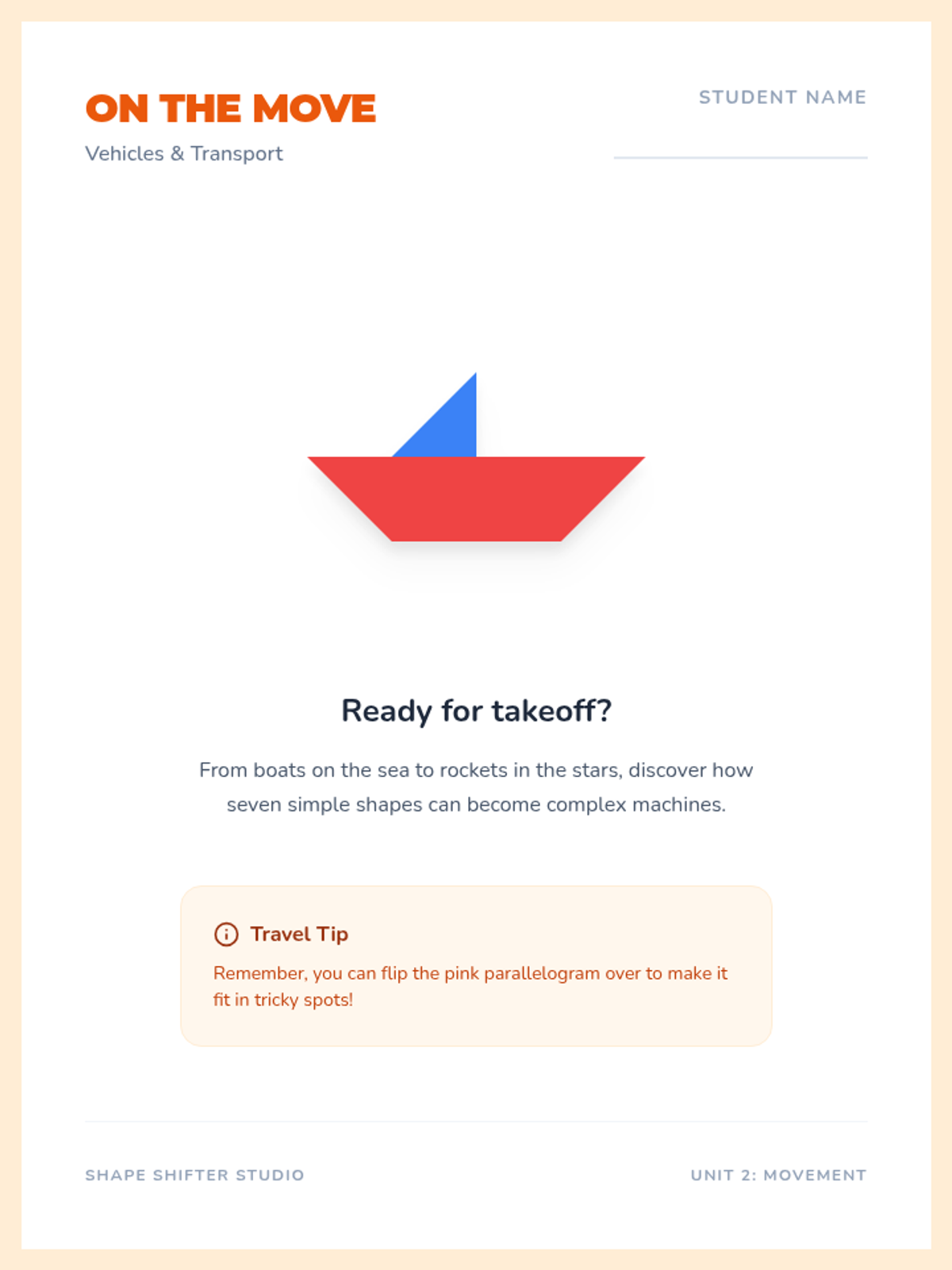
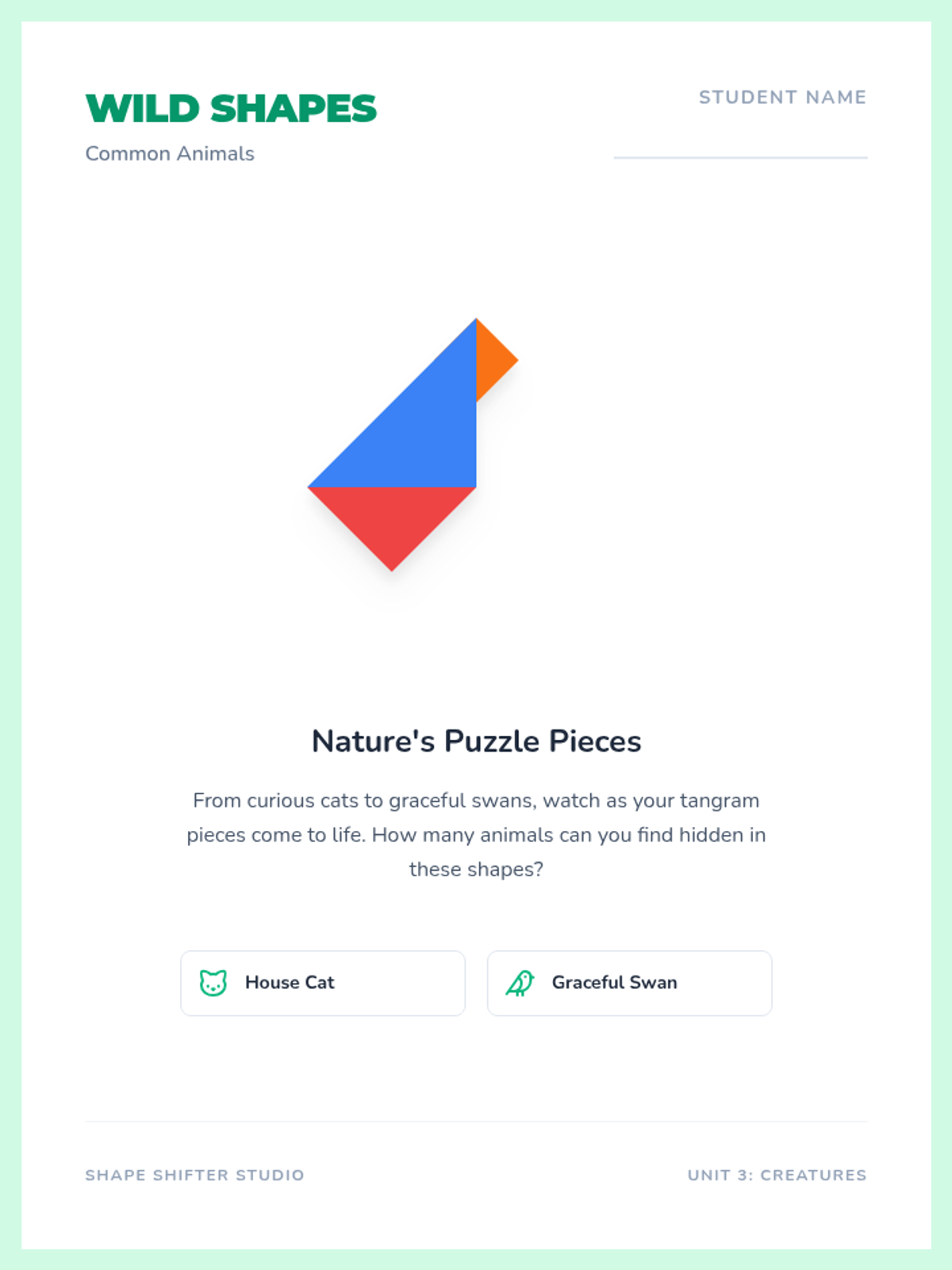
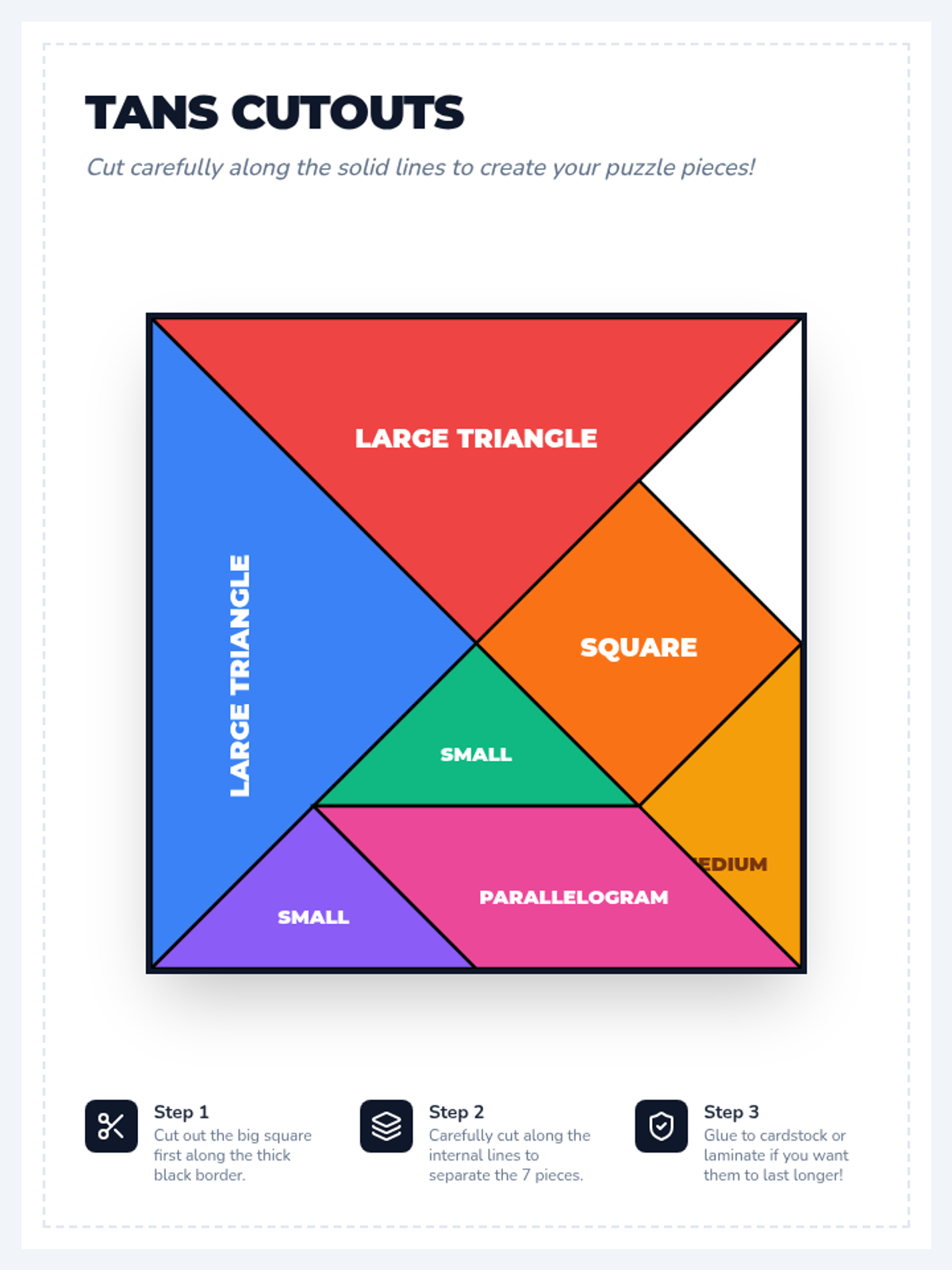
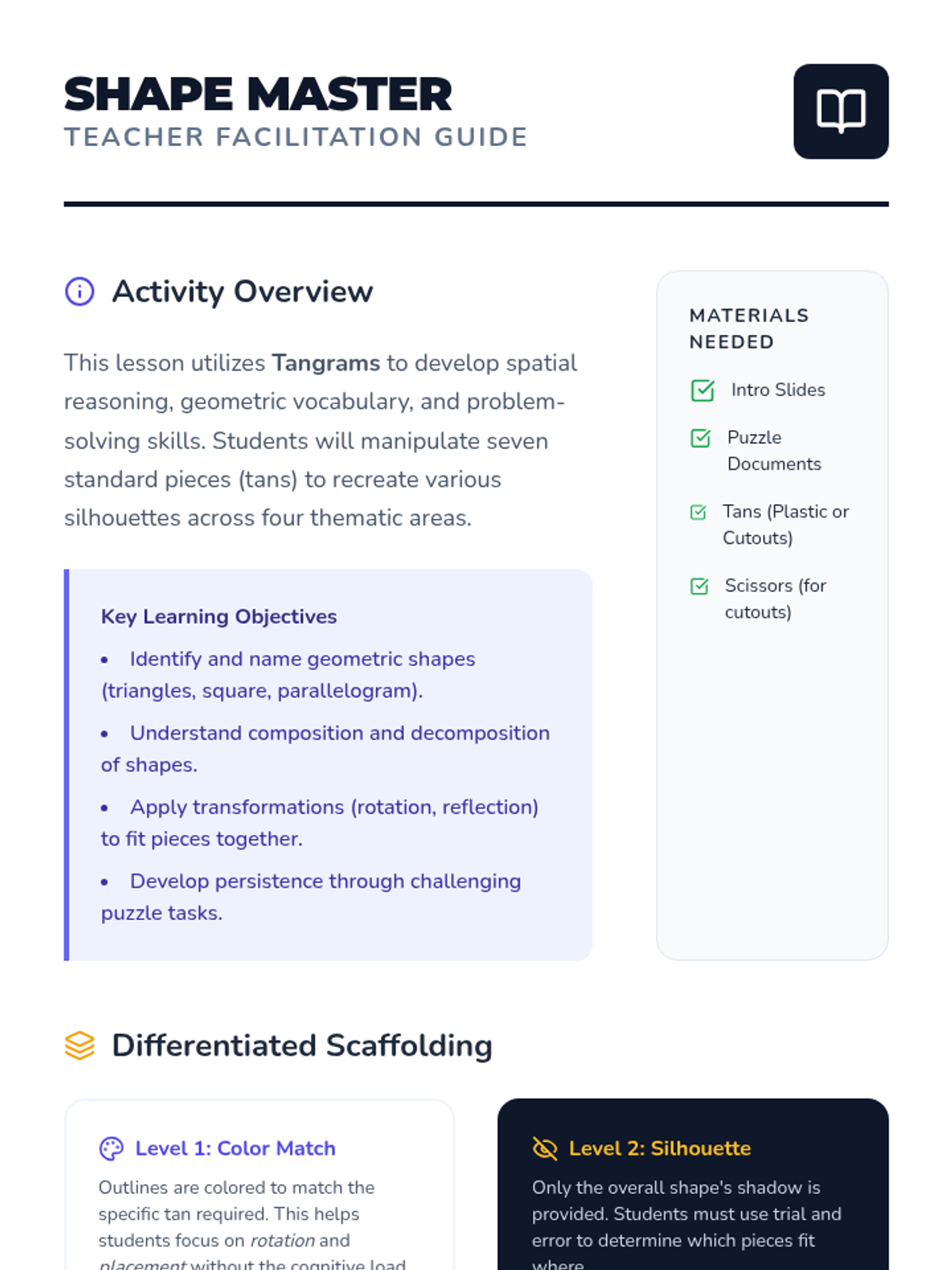
A hands-on exploration of geometry and spatial reasoning using tangrams, featuring puzzles across four diverse themes with varying difficulty levels.
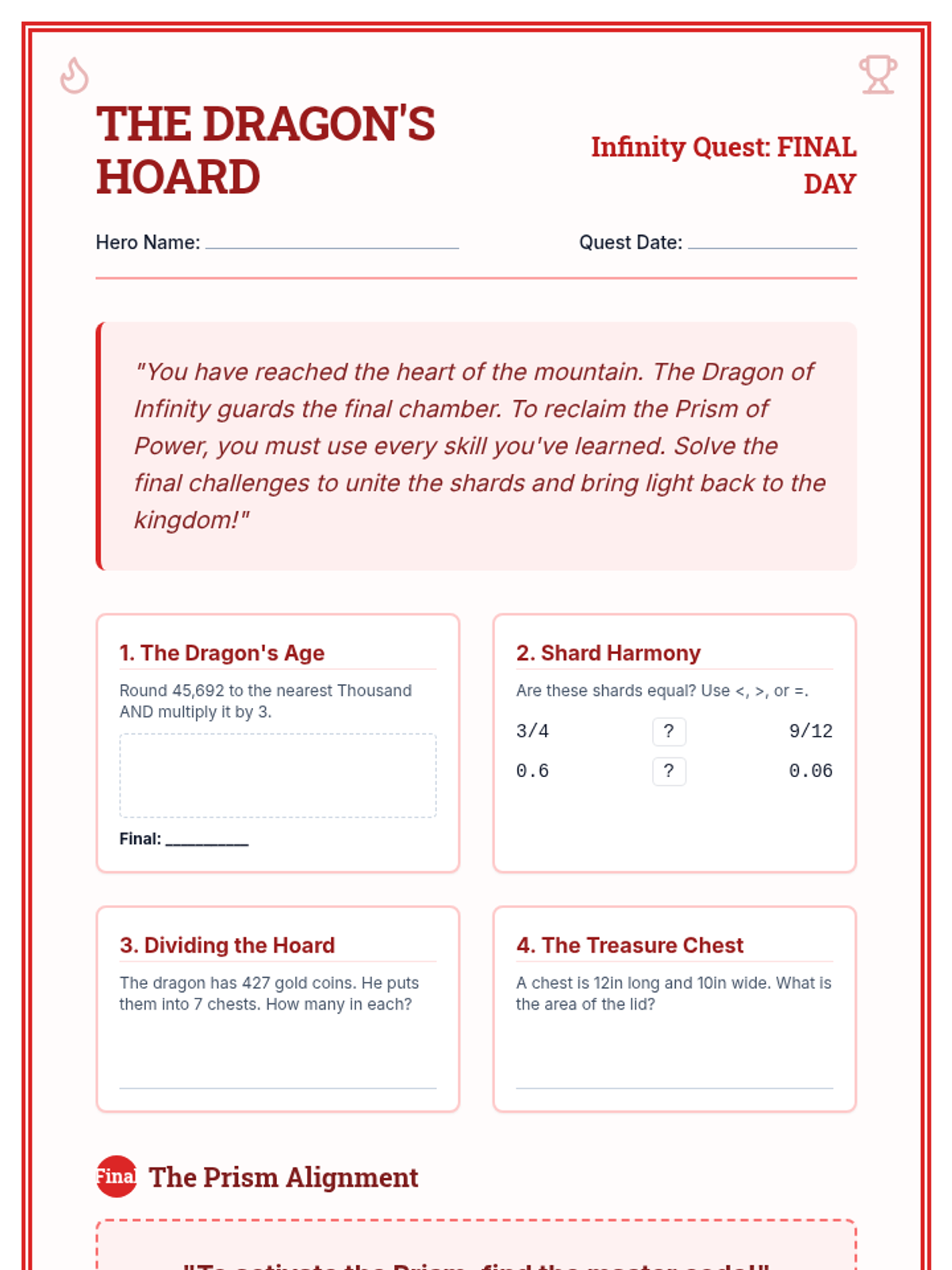
The final confrontation in the Dragon's Hoard using all skills learned to reclaim the complete Prism of Power.
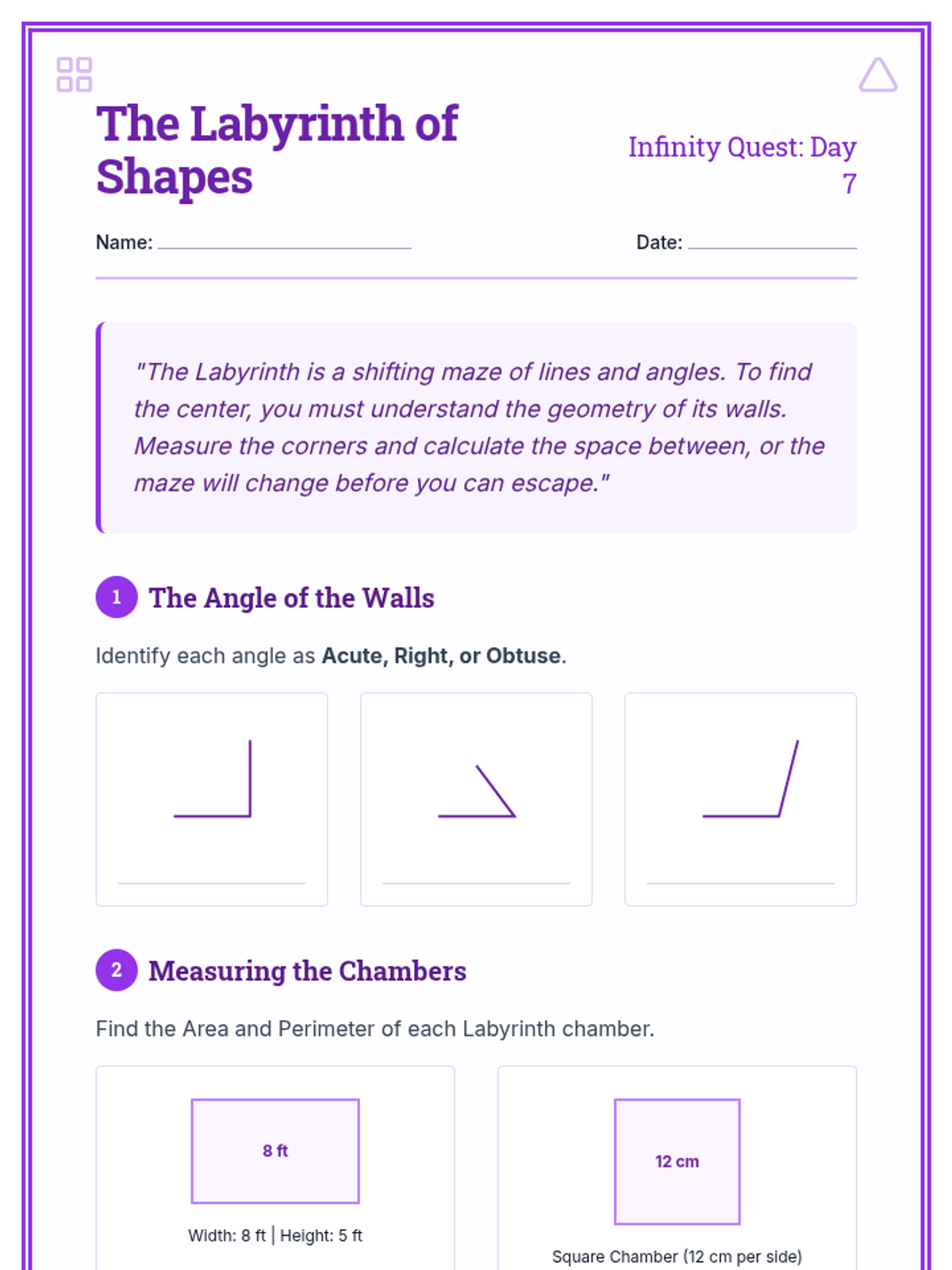
Solving the mysteries of the Labyrinth using geometry, angles, and area/perimeter calculations.
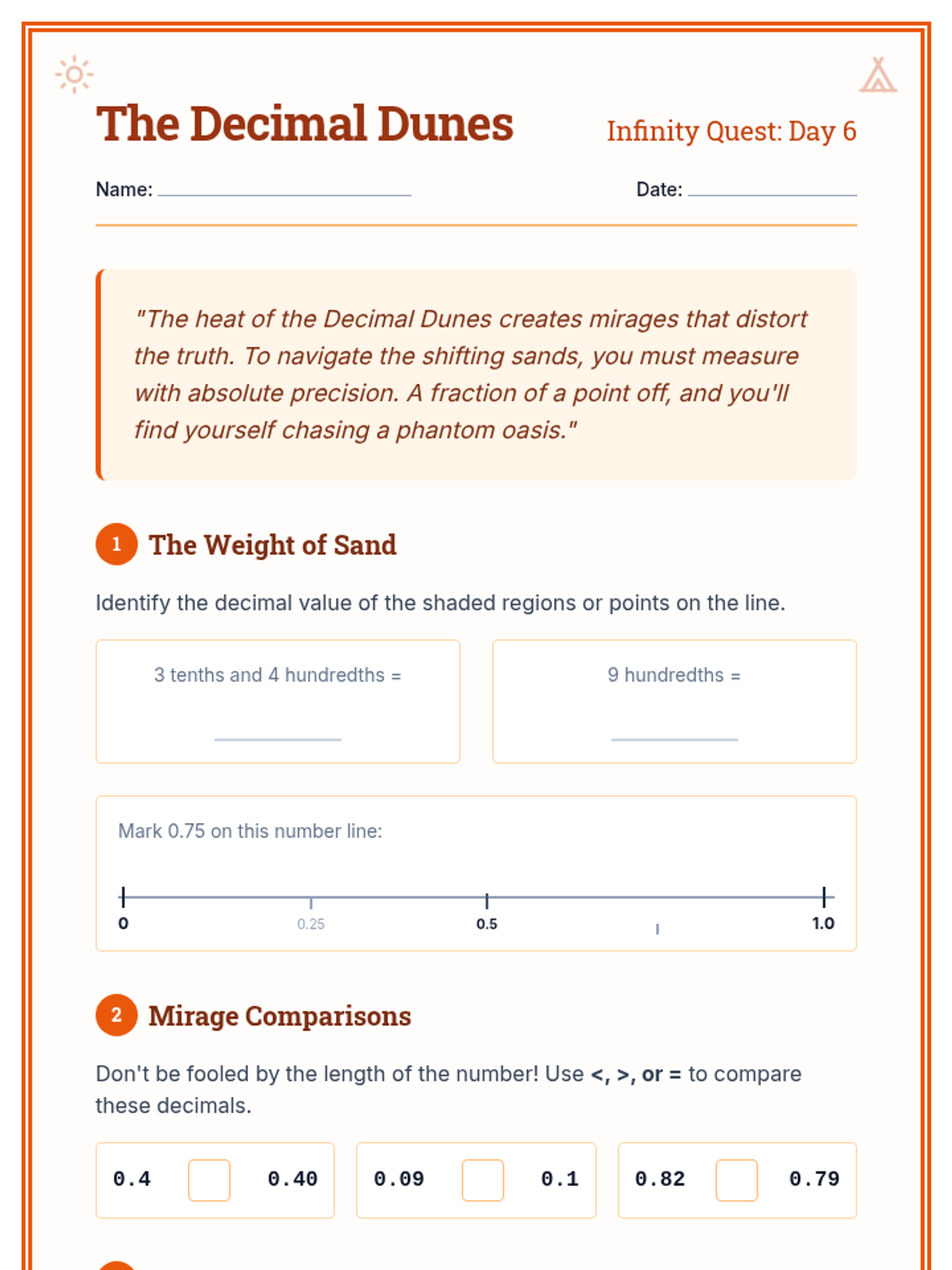
Navigating the Desert of Decimals by comparing, ordering, and adding decimal values in the shifting sands.
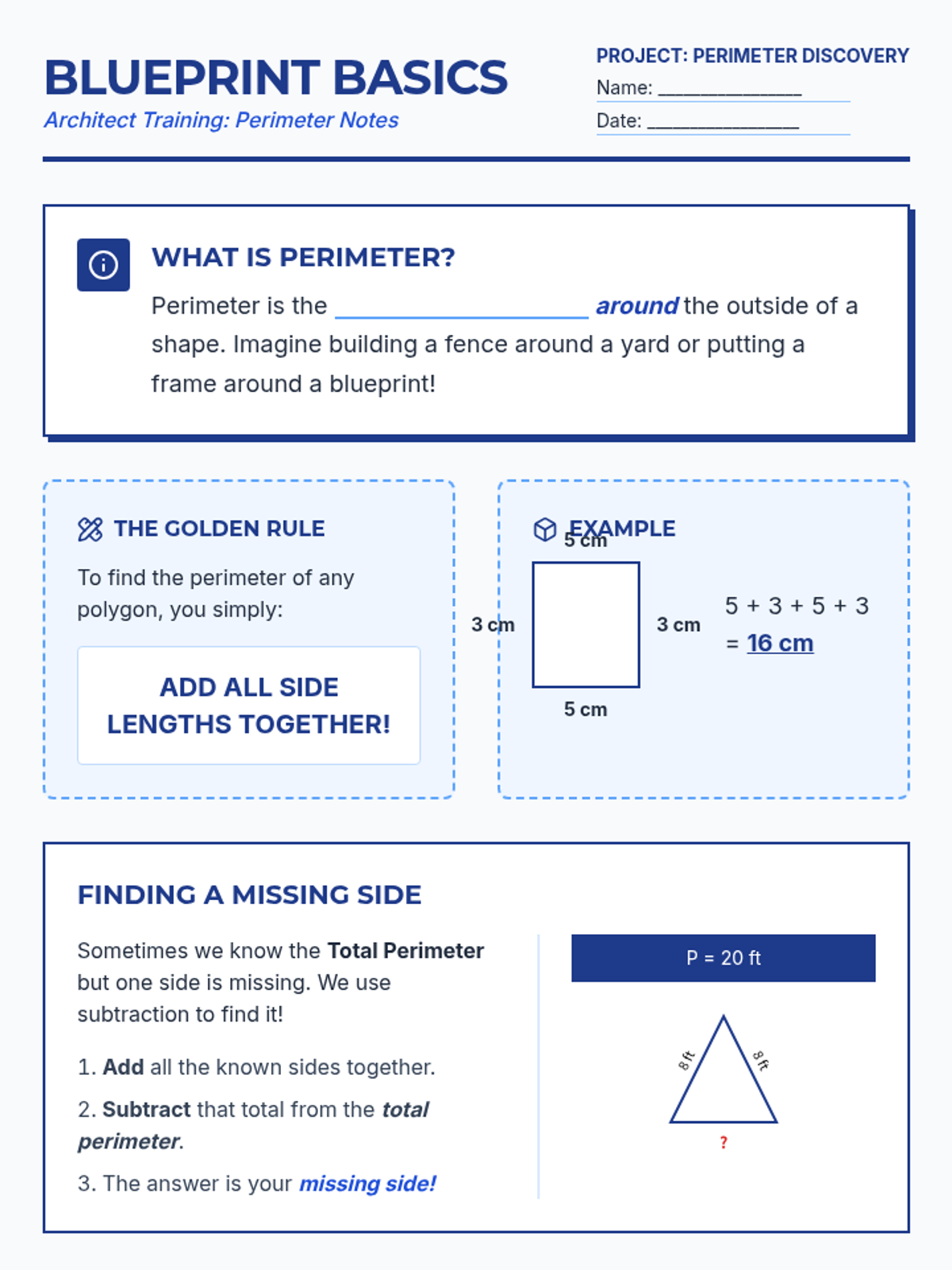
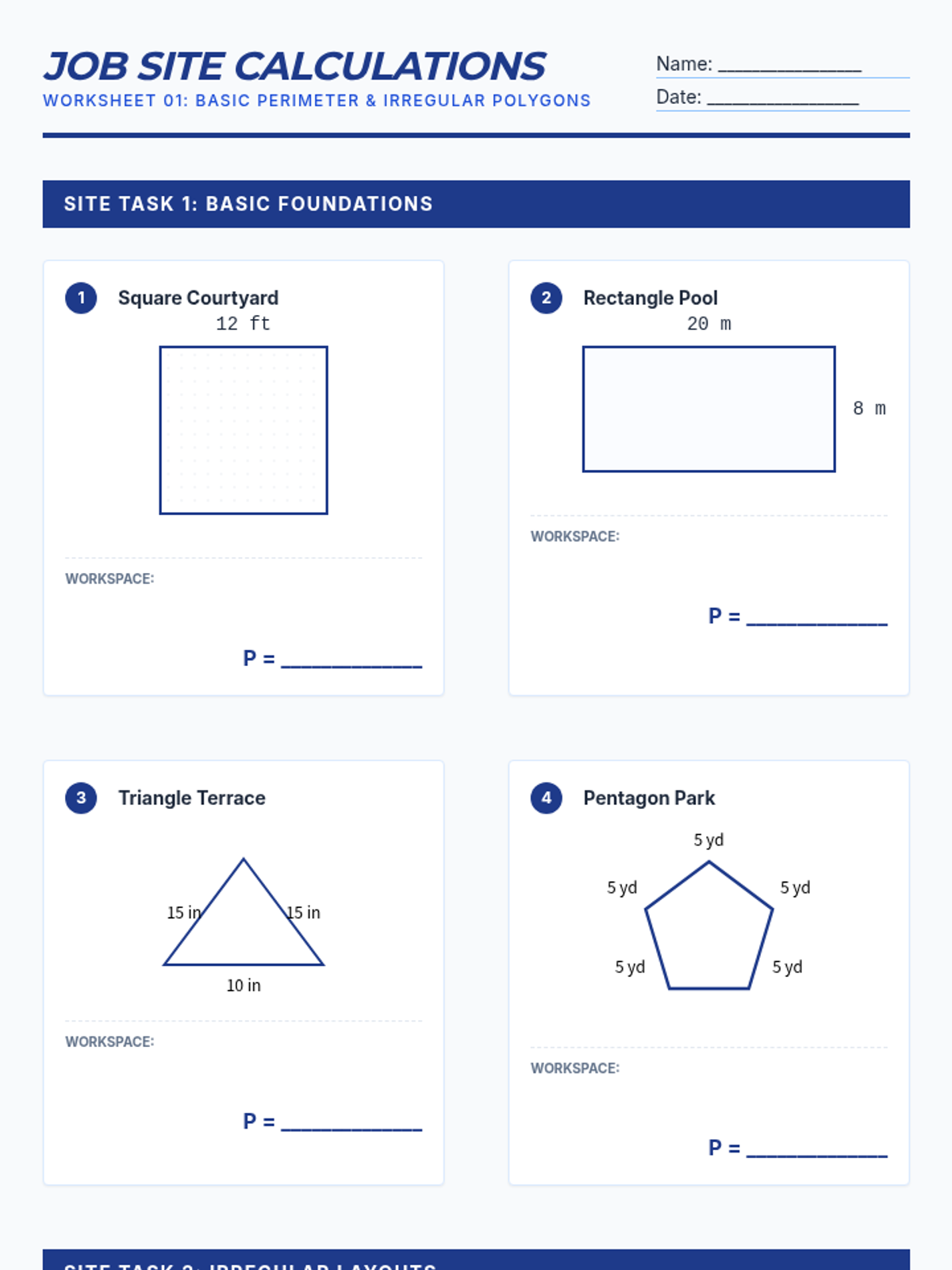
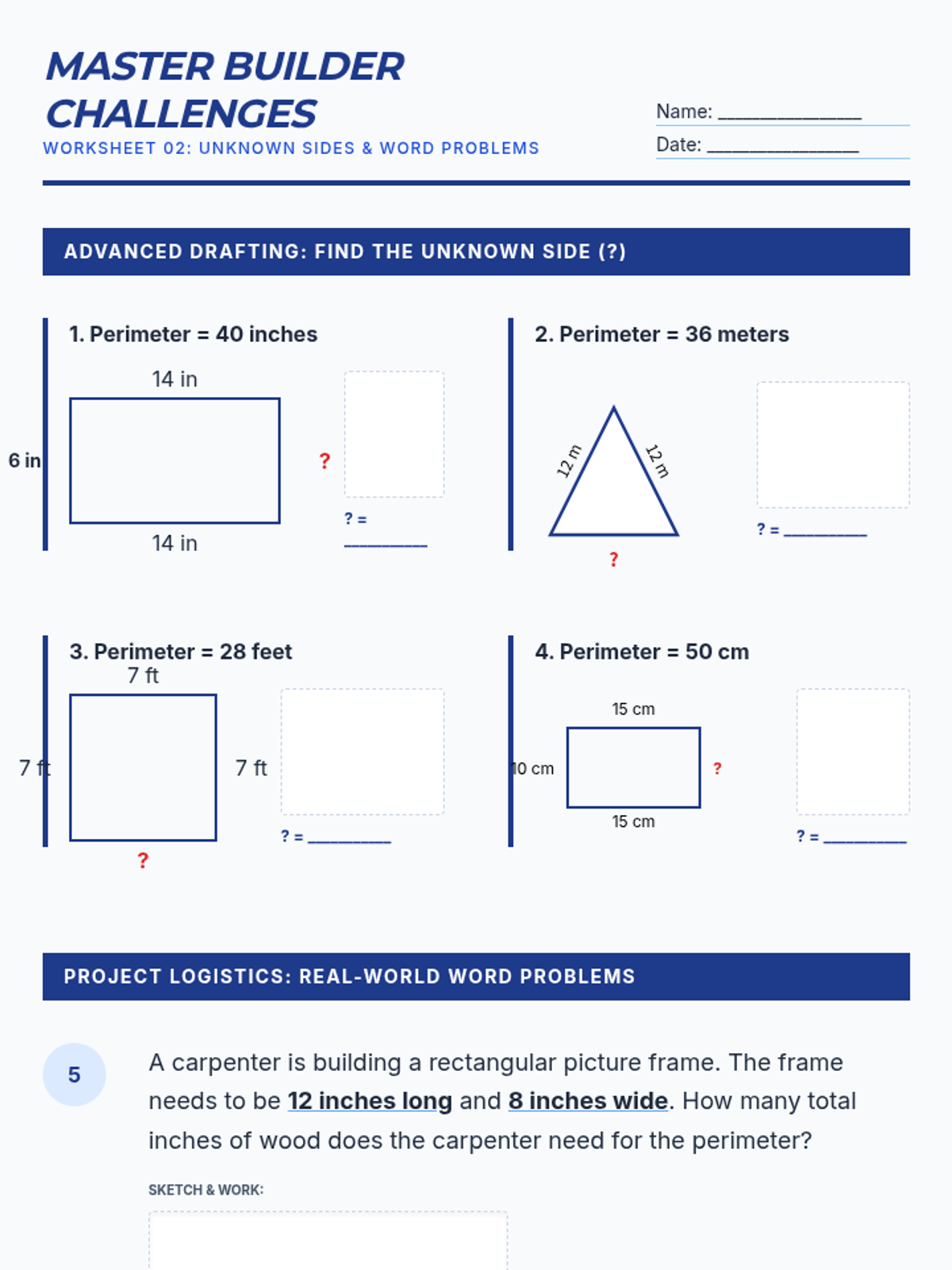
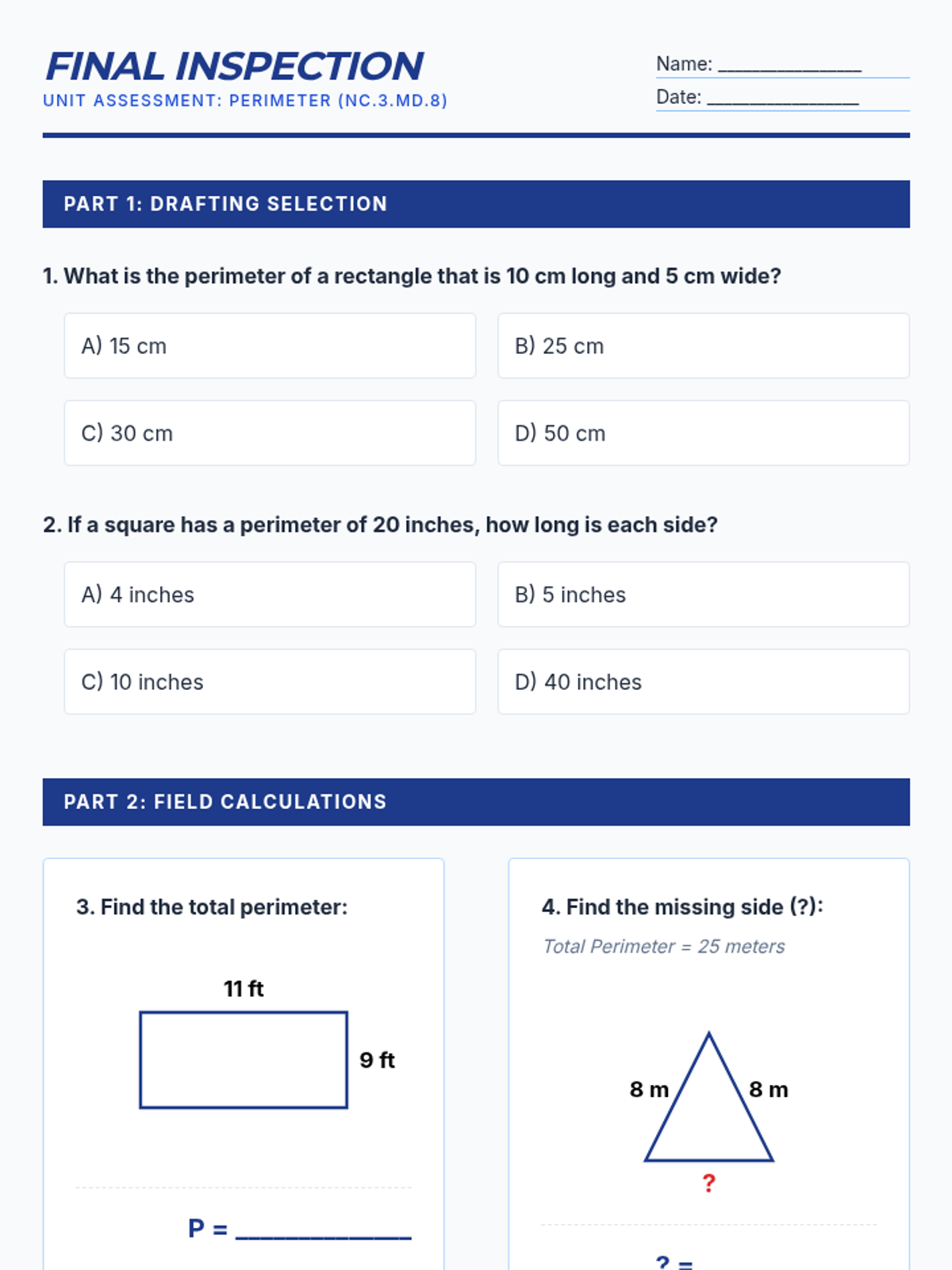
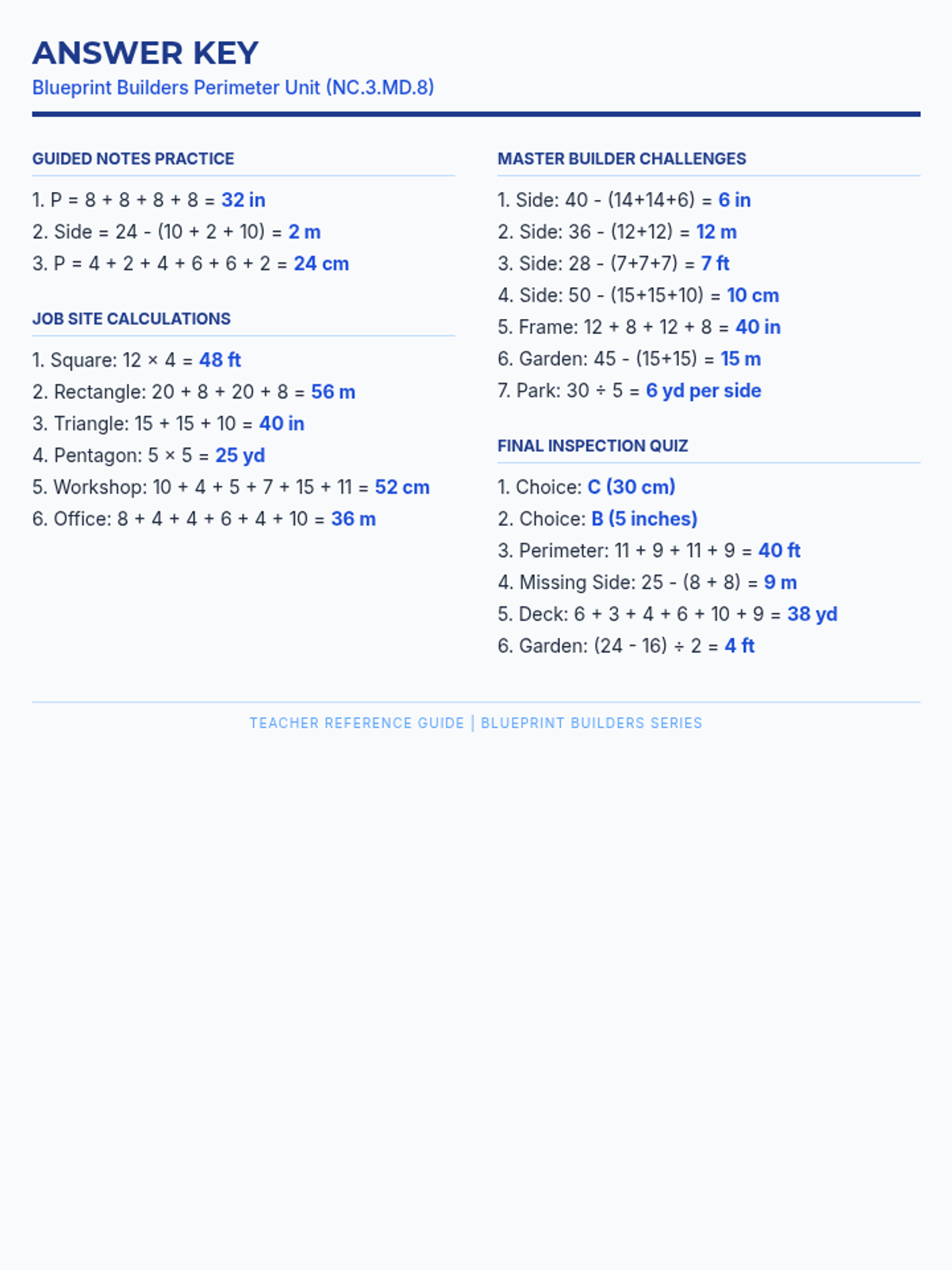
A comprehensive unit on finding the perimeter of various polygons, including unknown side lengths and real-world word problems, themed around architectural blueprints.
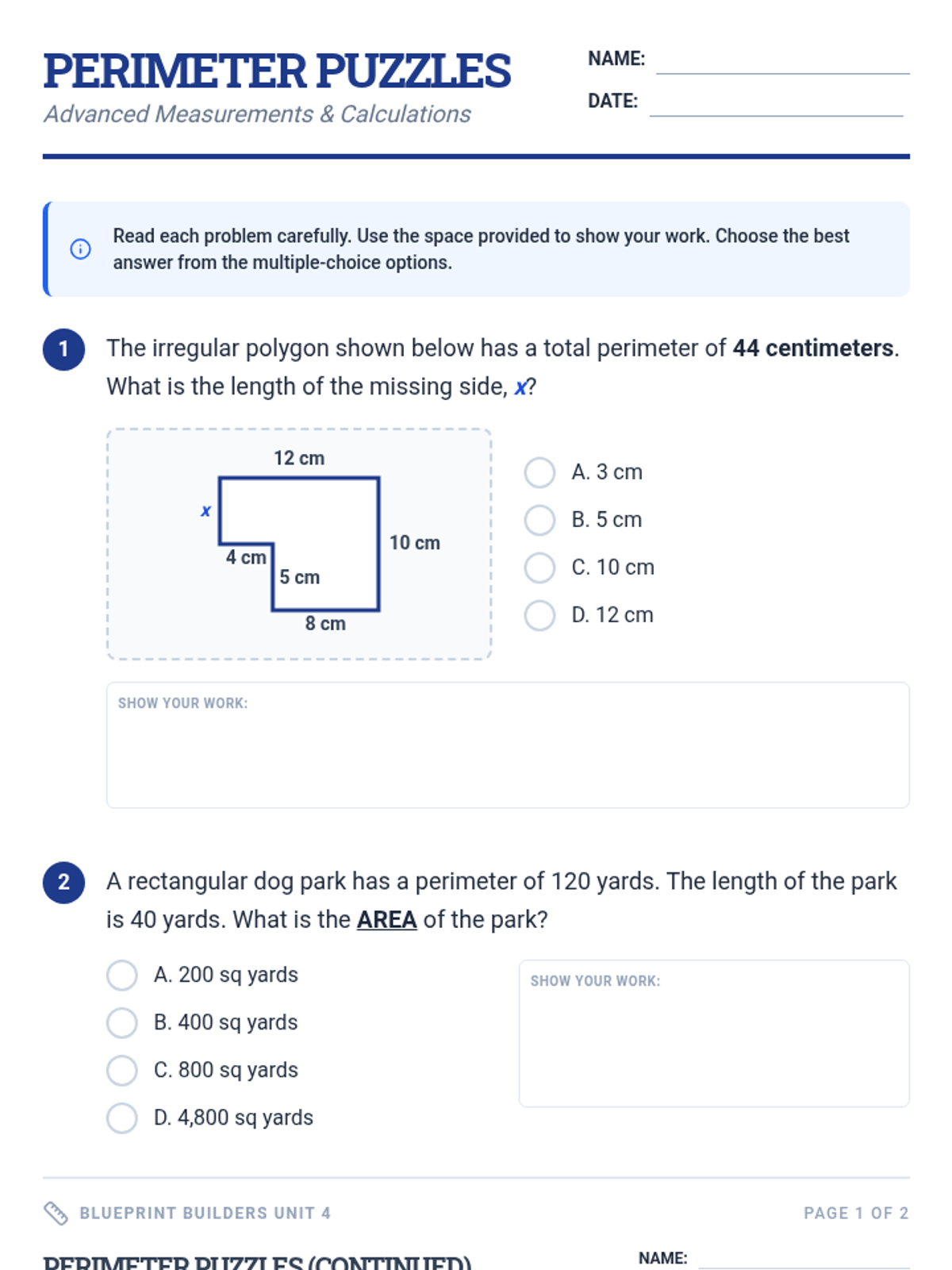
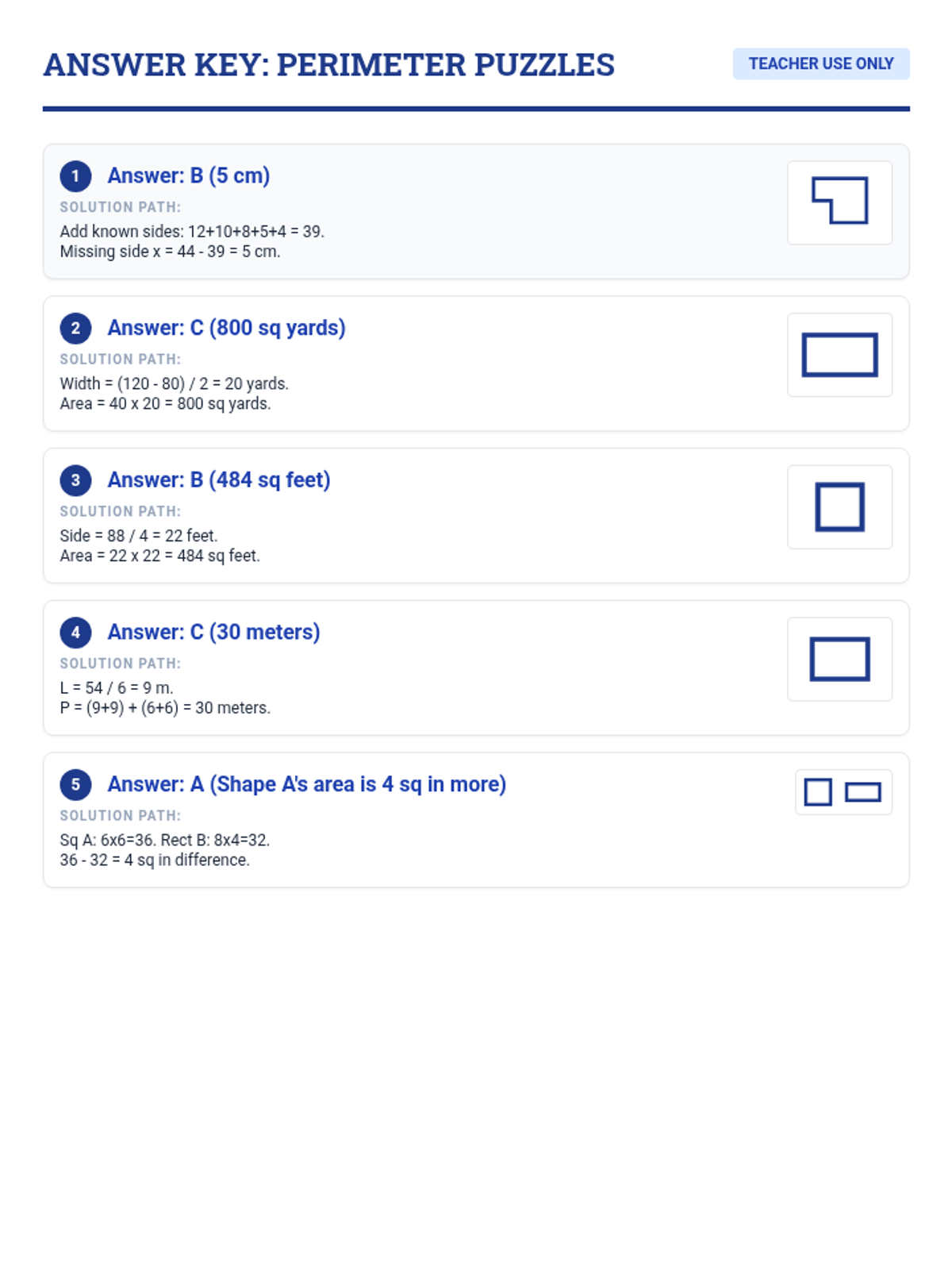
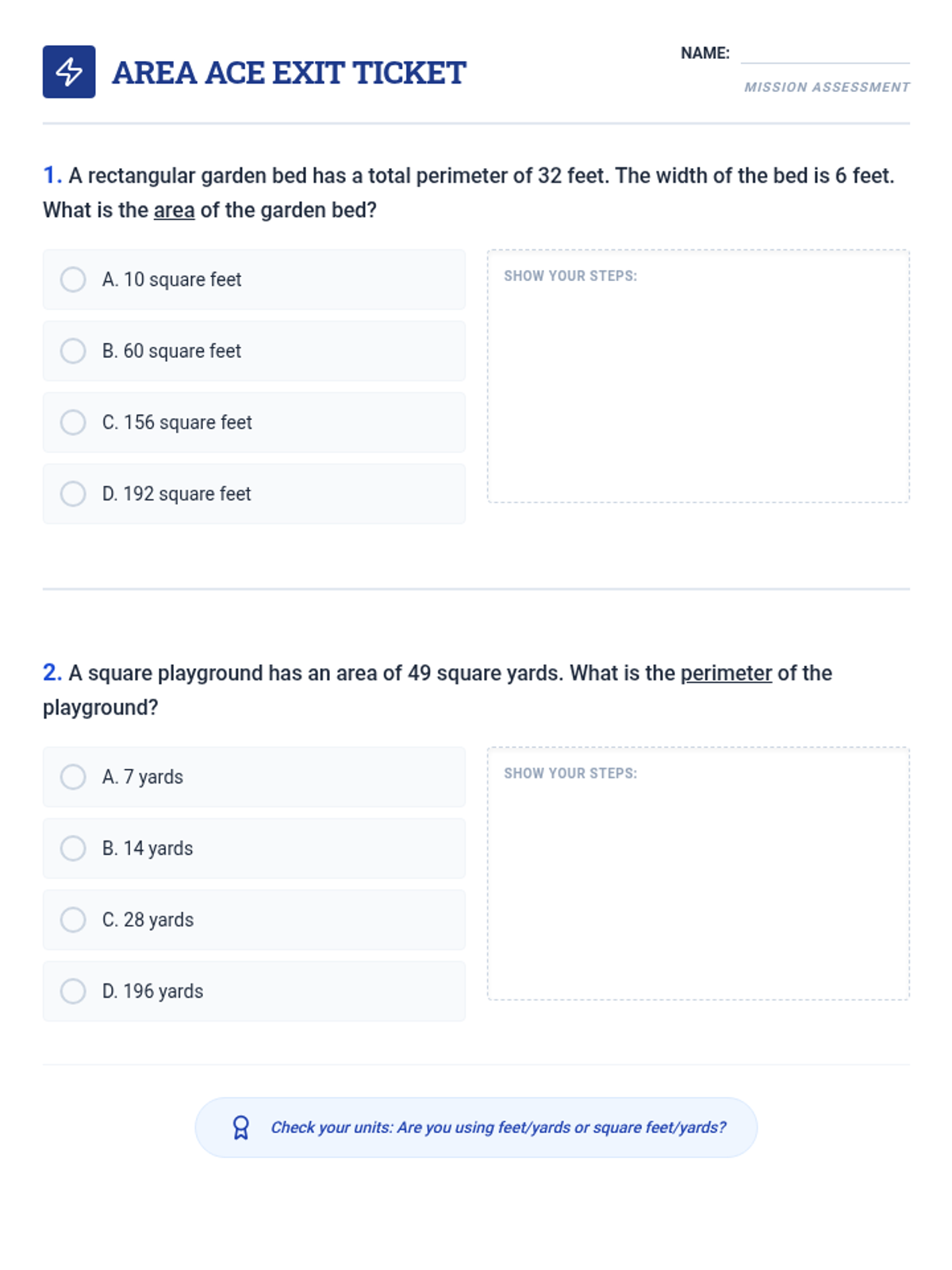
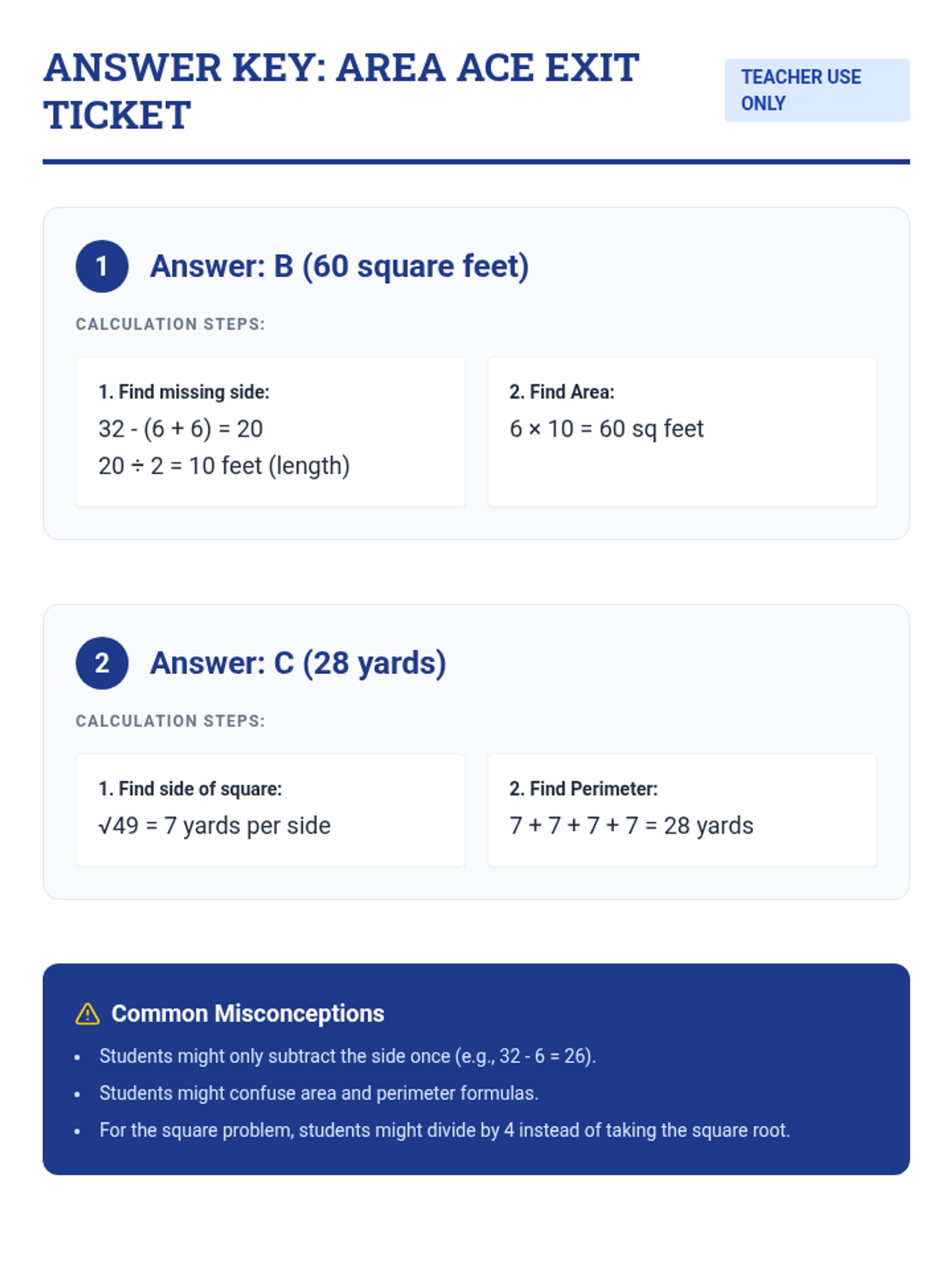
A rigorous math lesson focused on solving complex area and perimeter problems, including multi-step calculations to find area from perimeter and identifying missing side lengths in polygons.