Geometric classification, measurement of area and volume, and the study of transformations and rigid motions. Builds toward complex proofs, trigonometry for general triangles, and the algebraic representation of conic sections.
A comprehensive unit on classifying two-dimensional figures based on their properties and understanding the hierarchical relationships between different quadrilaterals.
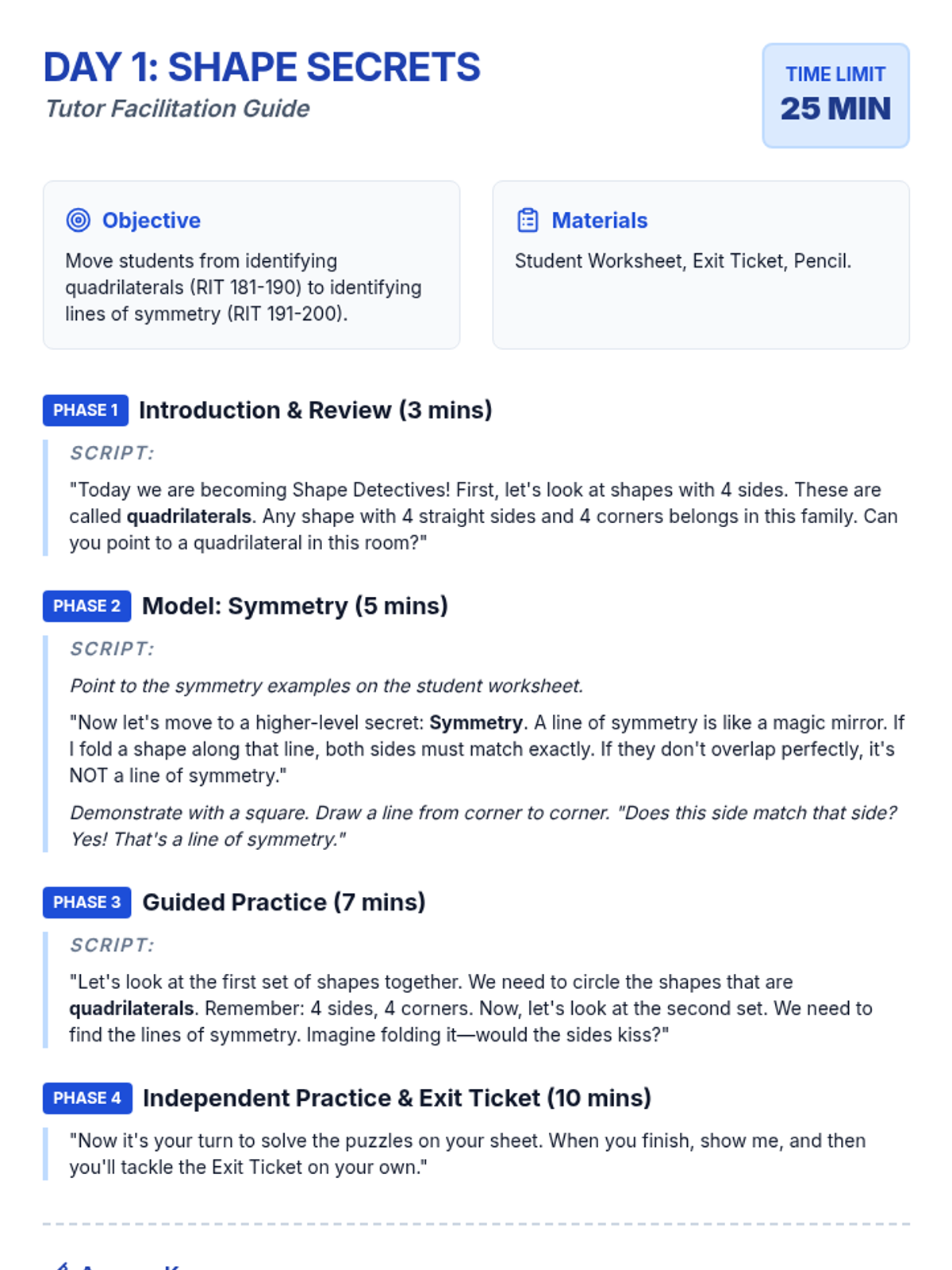
A 3-day targeted tutoring sequence designed to move students from RIT 181-190 to 191-200 in the MAP Growth Geometry and Measurement strand, focusing on shape attributes, symmetry, and perimeter.
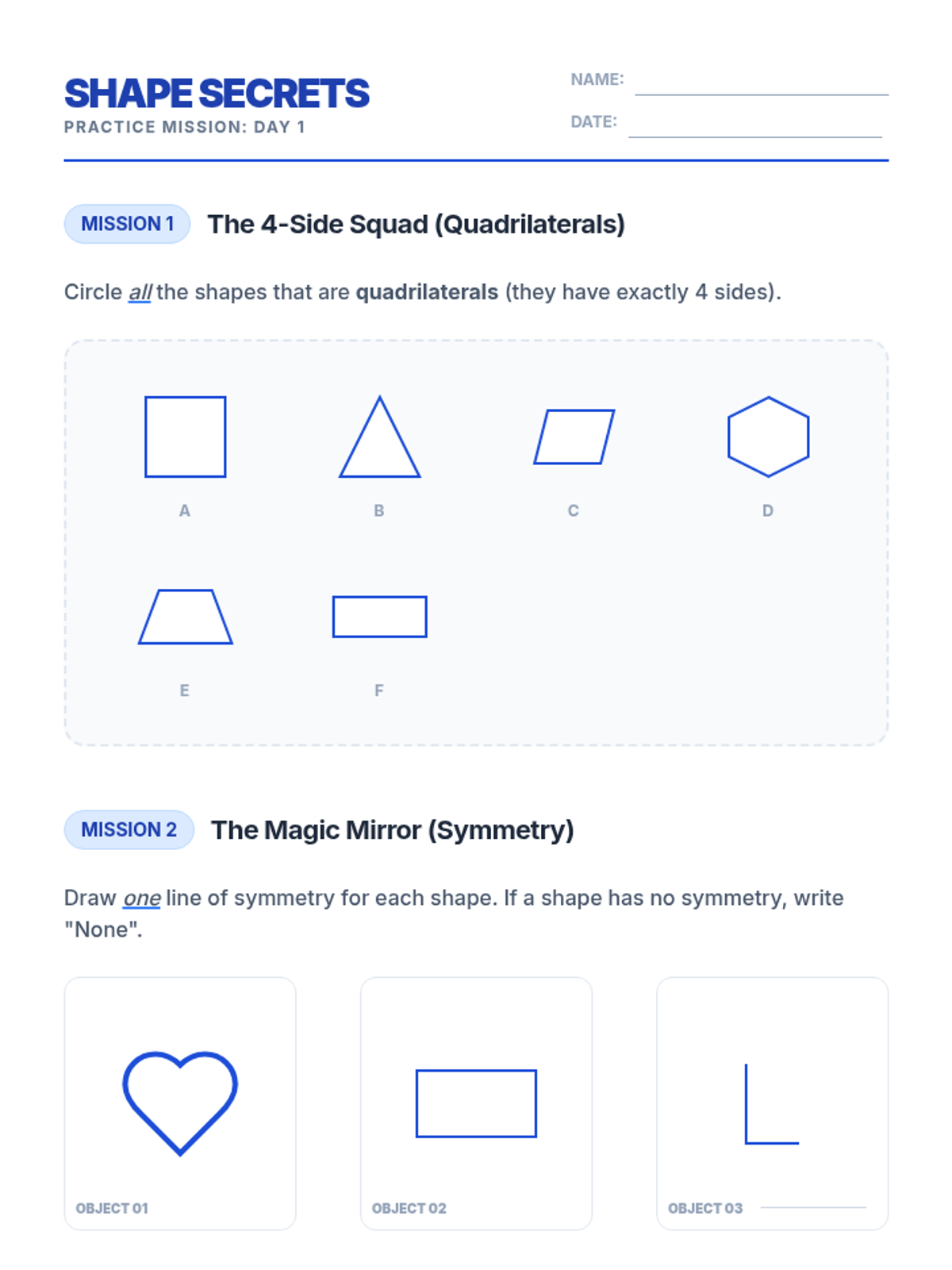
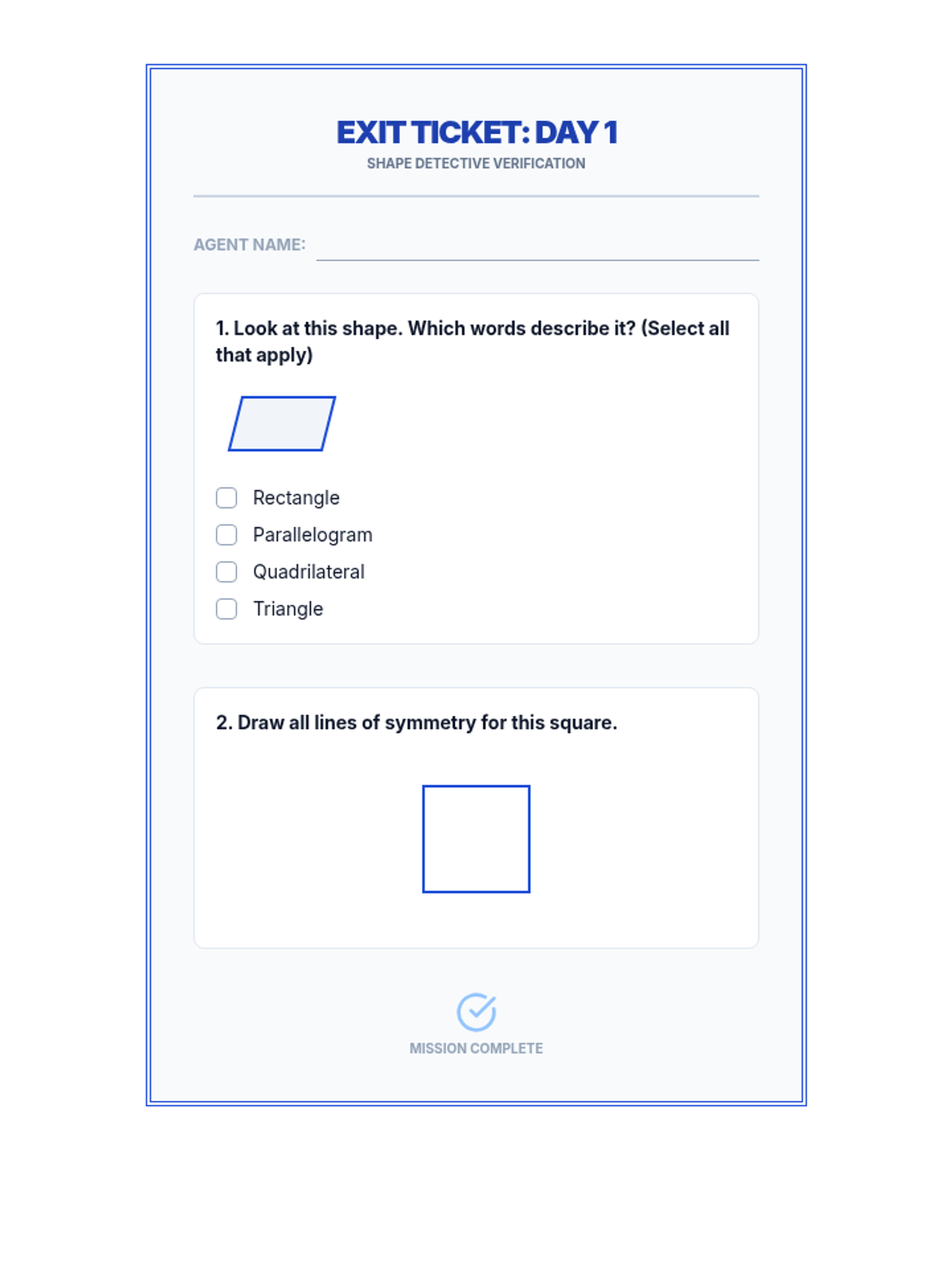
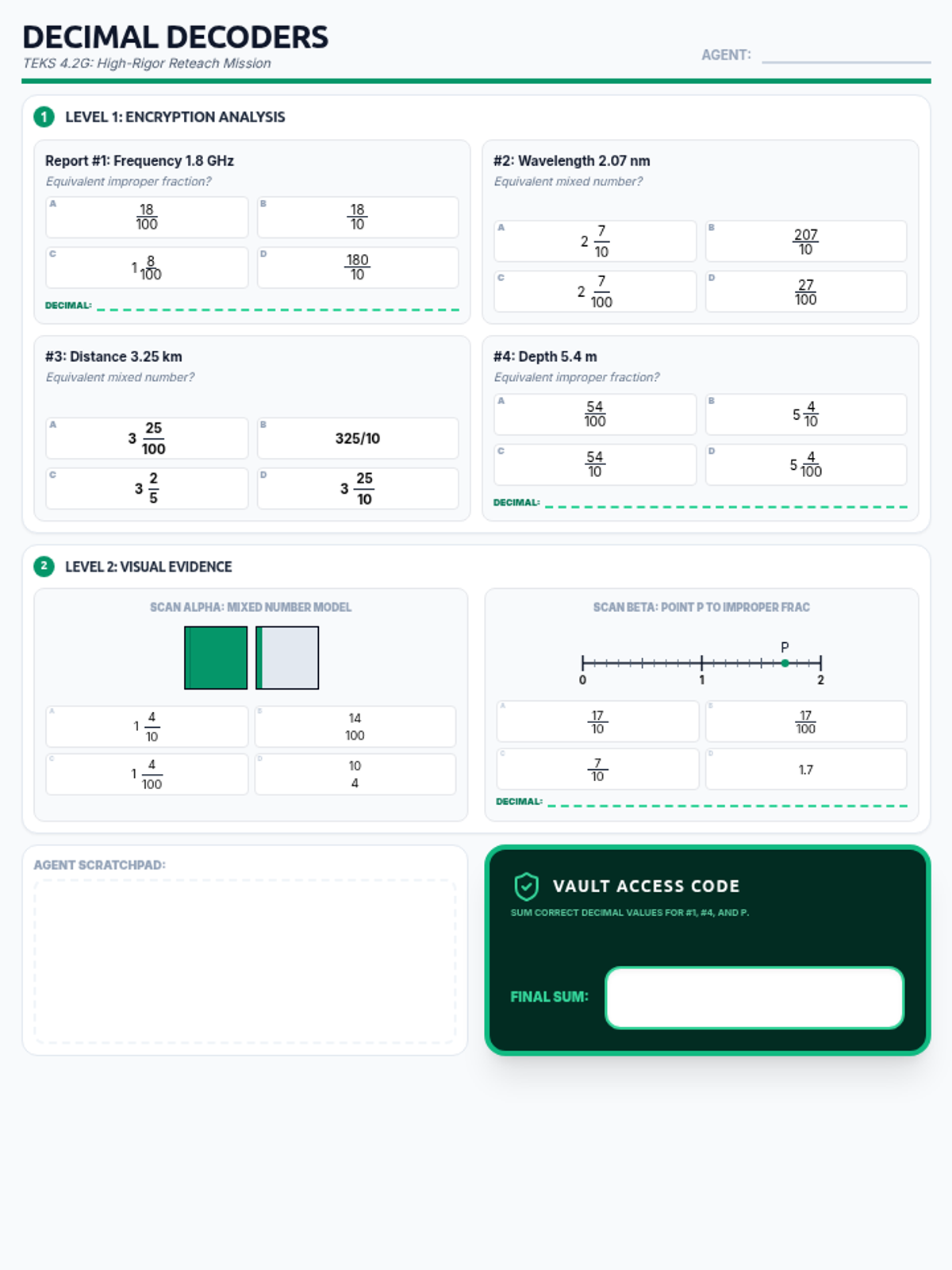
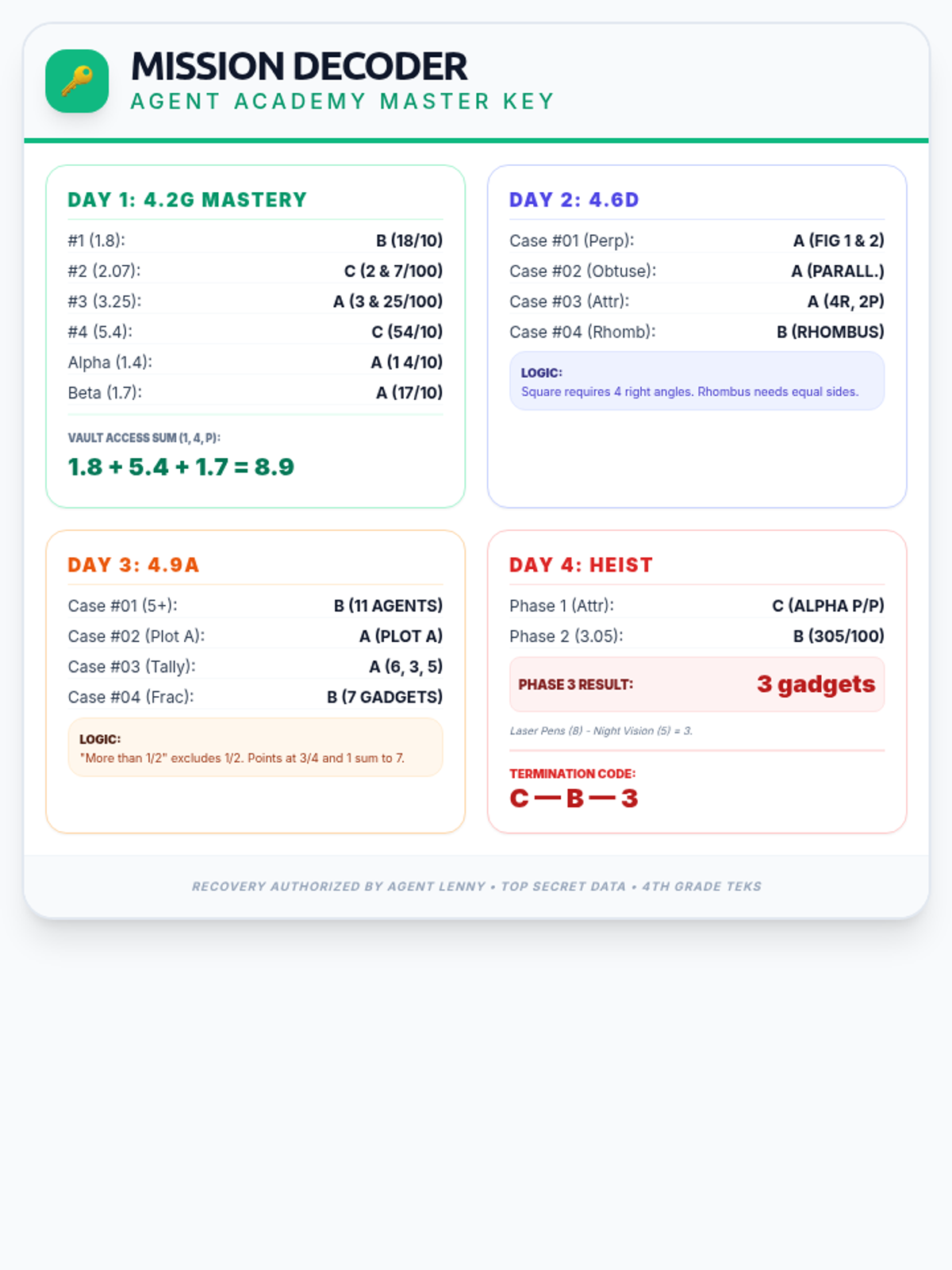
A 4-day intensive reteach unit focused on TEKS 4.2G, 4.6D, and 4.9A. This sequence uses a "Secret Agent" theme to engage students in high-stakes math challenges, primarily through rigorous task card investigations and escape room scenarios. No board games are used to maximize instructional focus.
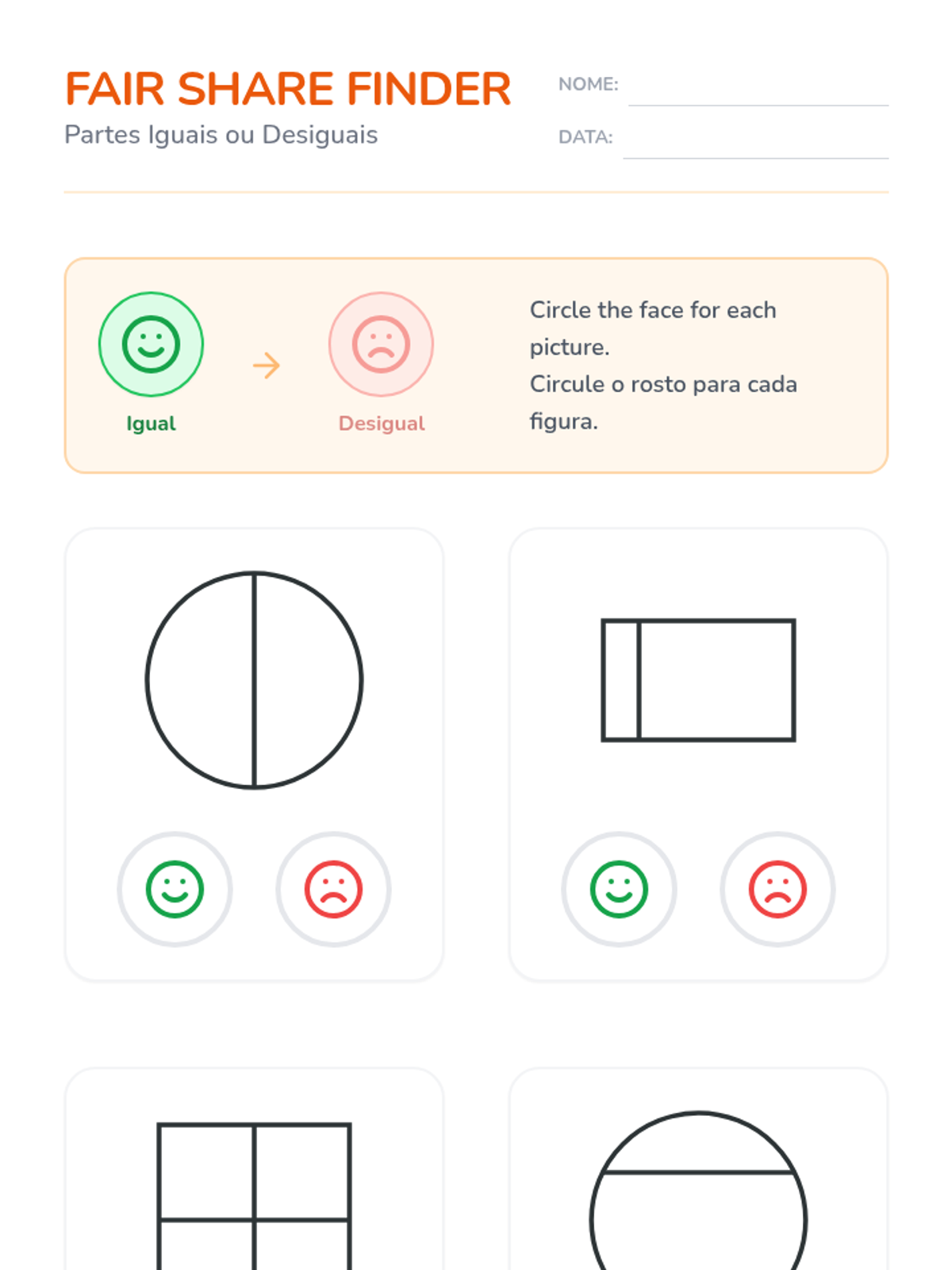
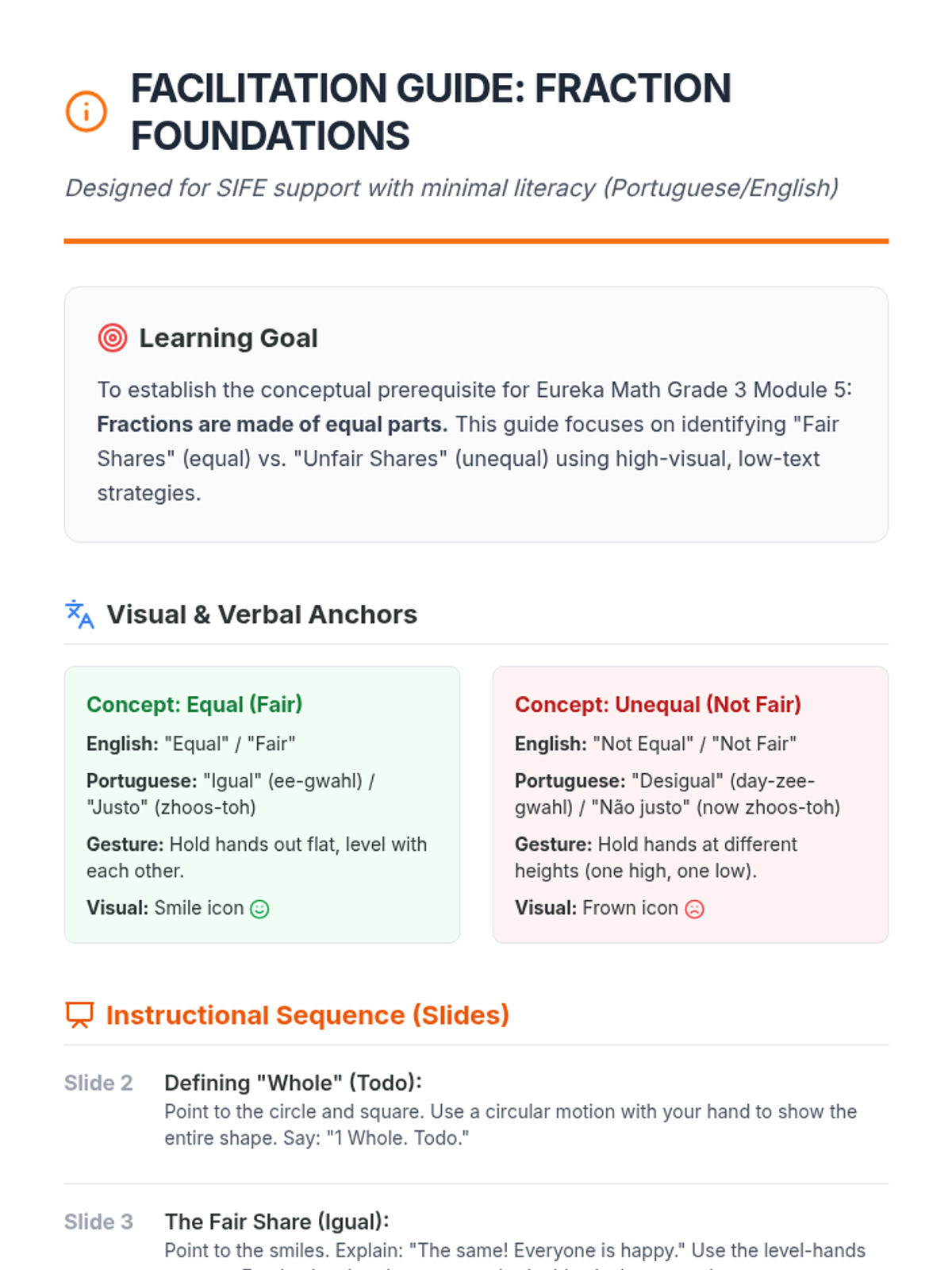
A scaffolded introduction to fractions designed for SIFE students with no literacy. This sequence moves from the concept of fair shares to counting equal parts and understanding unit fractions through high-visual support and Portuguese verbal anchors.
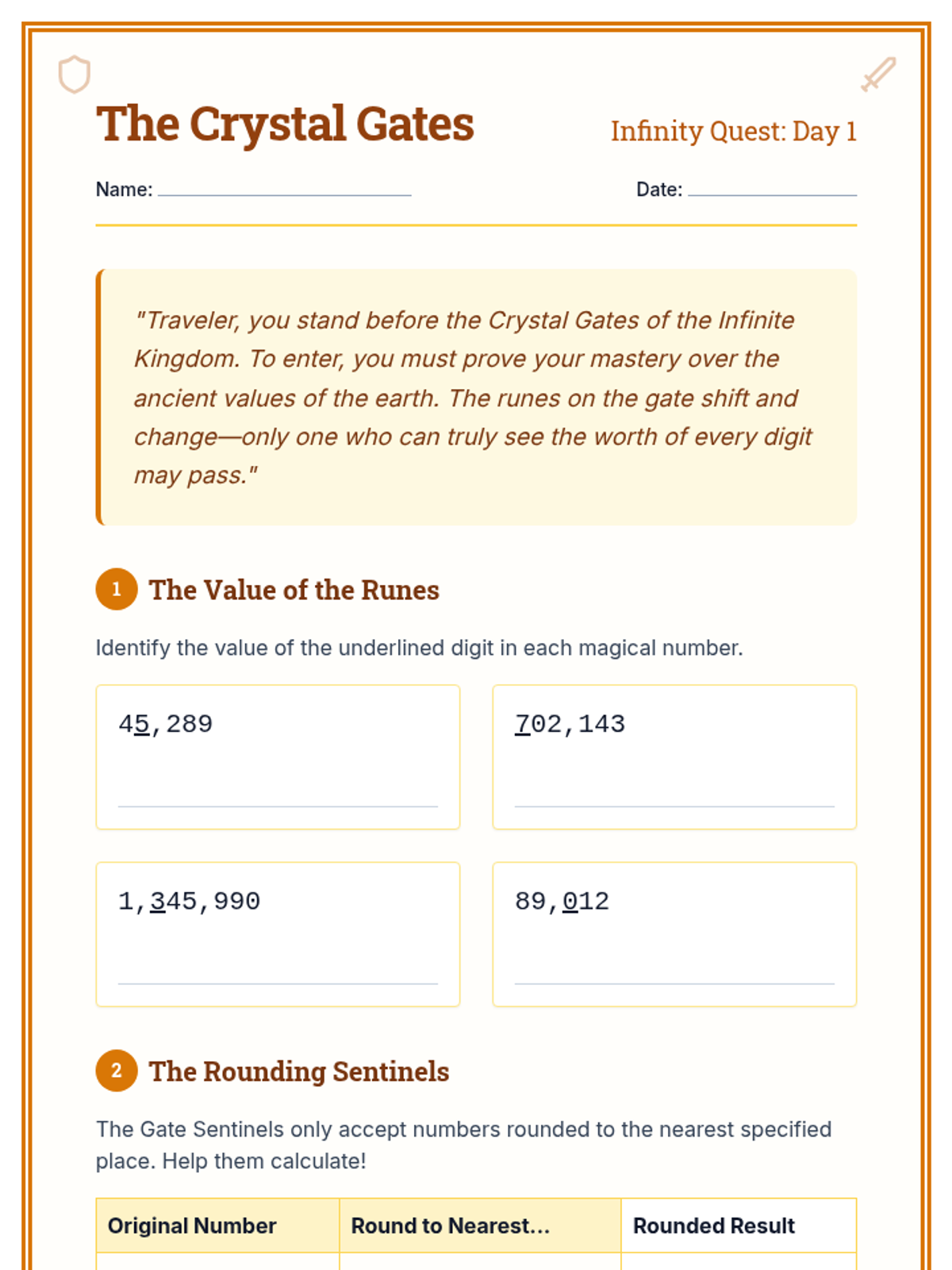
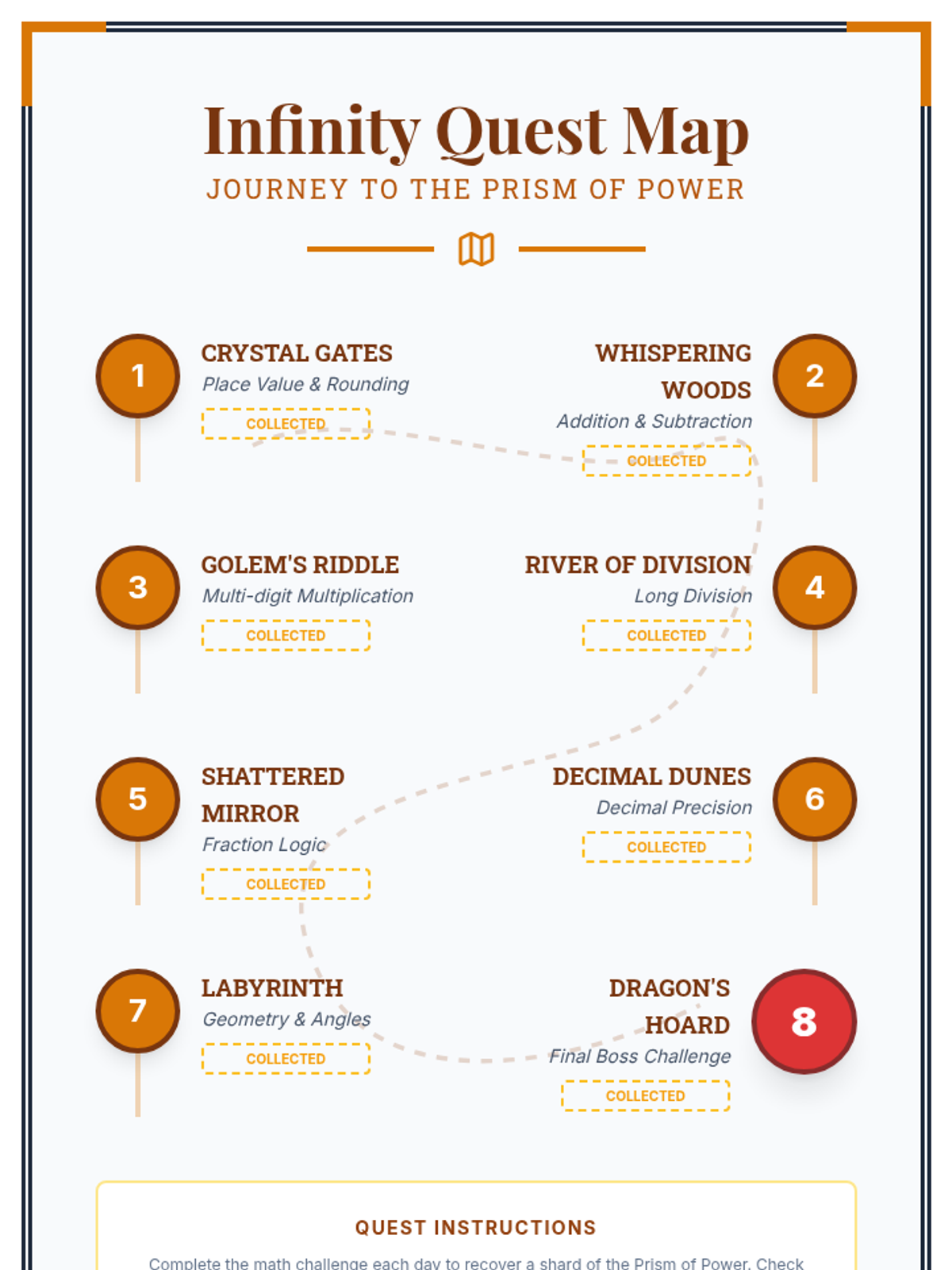
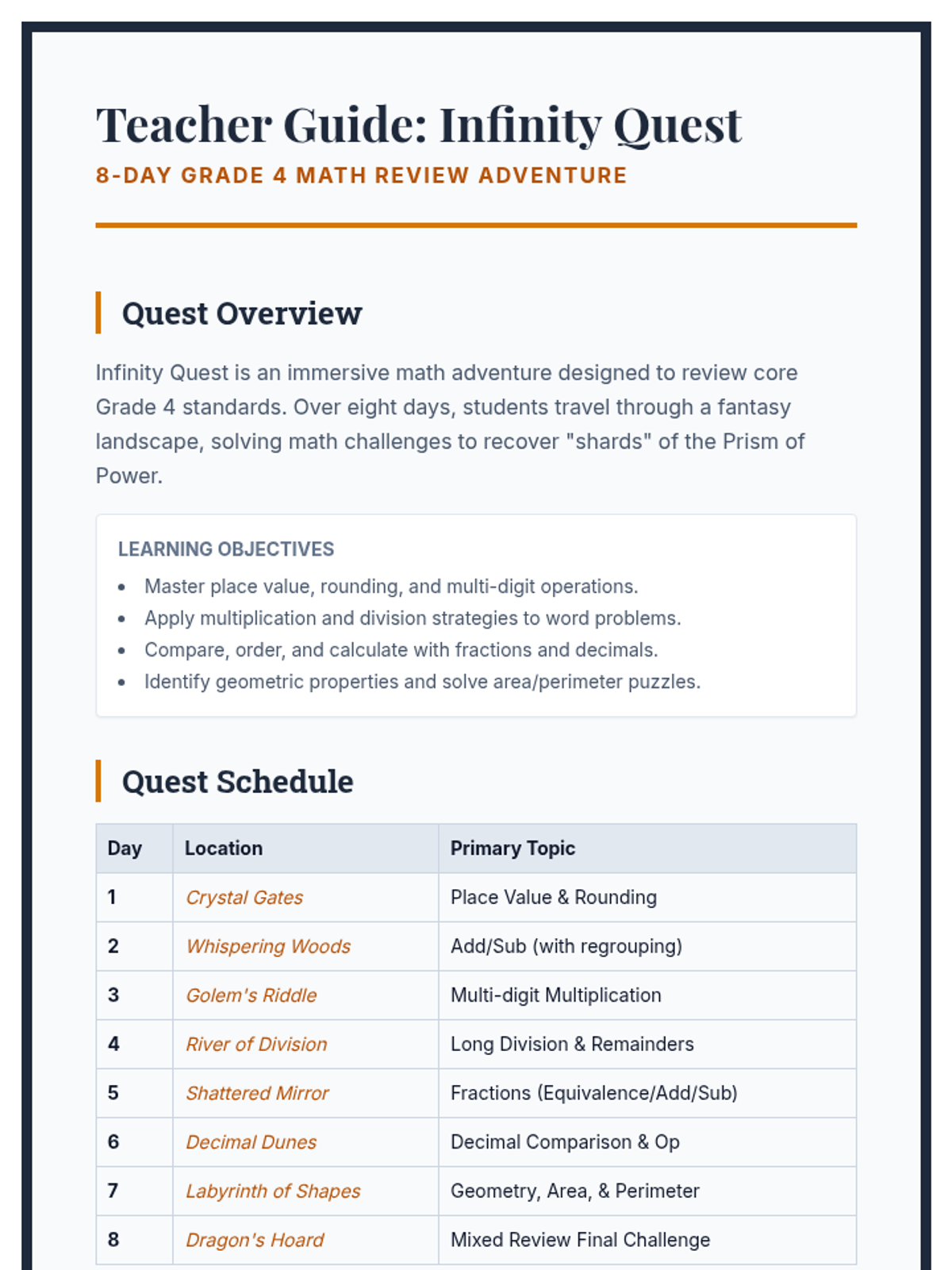
An eight-day mathematical adventure where students solve challenges to recover the lost shards of the Prism of Power. Each day focuses on a different core math domain, culminating in a grand final challenge.
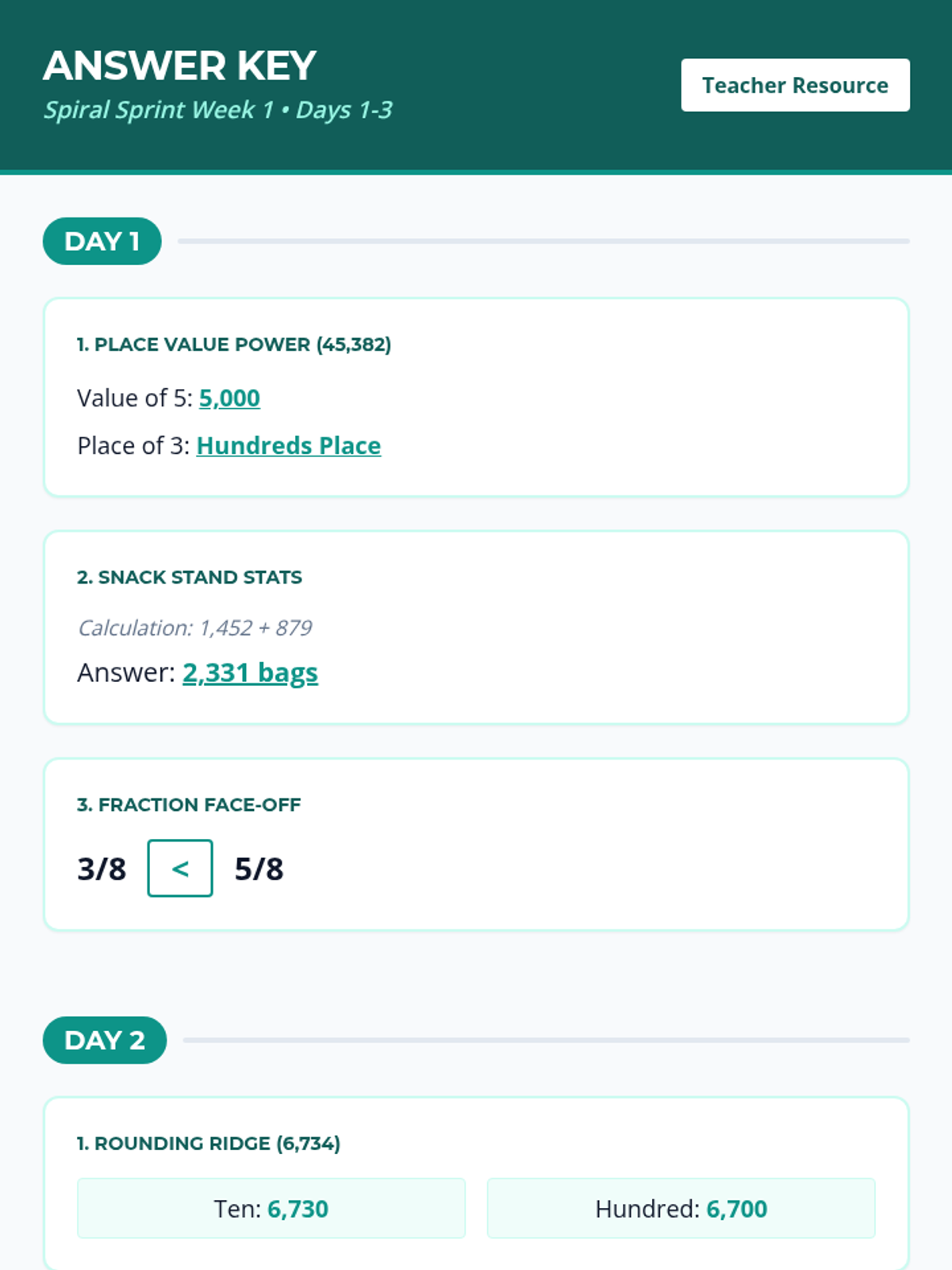
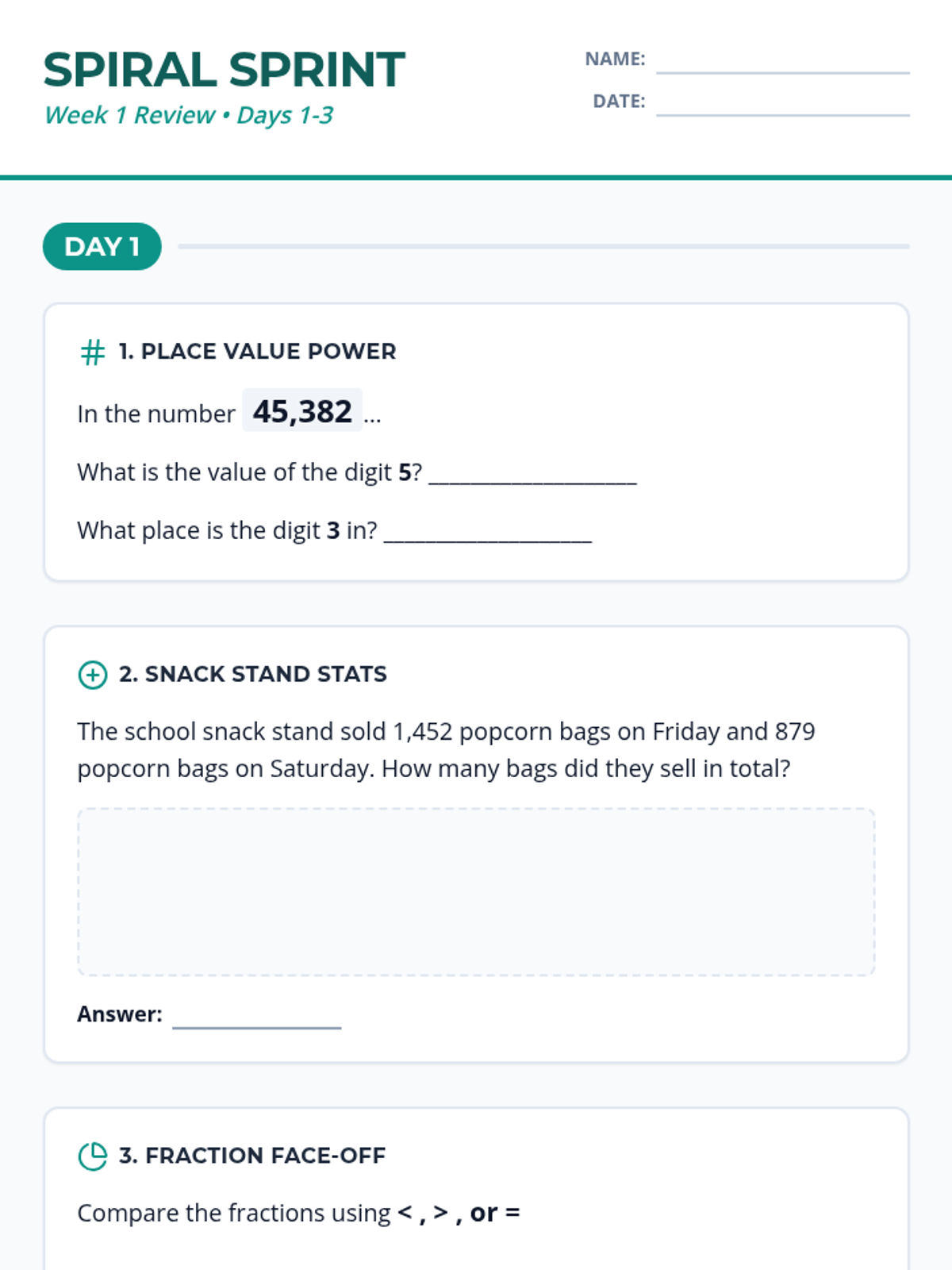
A two-week intensive spiral review of 4th-grade math standards designed for 5th-grade RSP students to bridge foundational gaps through short, focused daily practice.
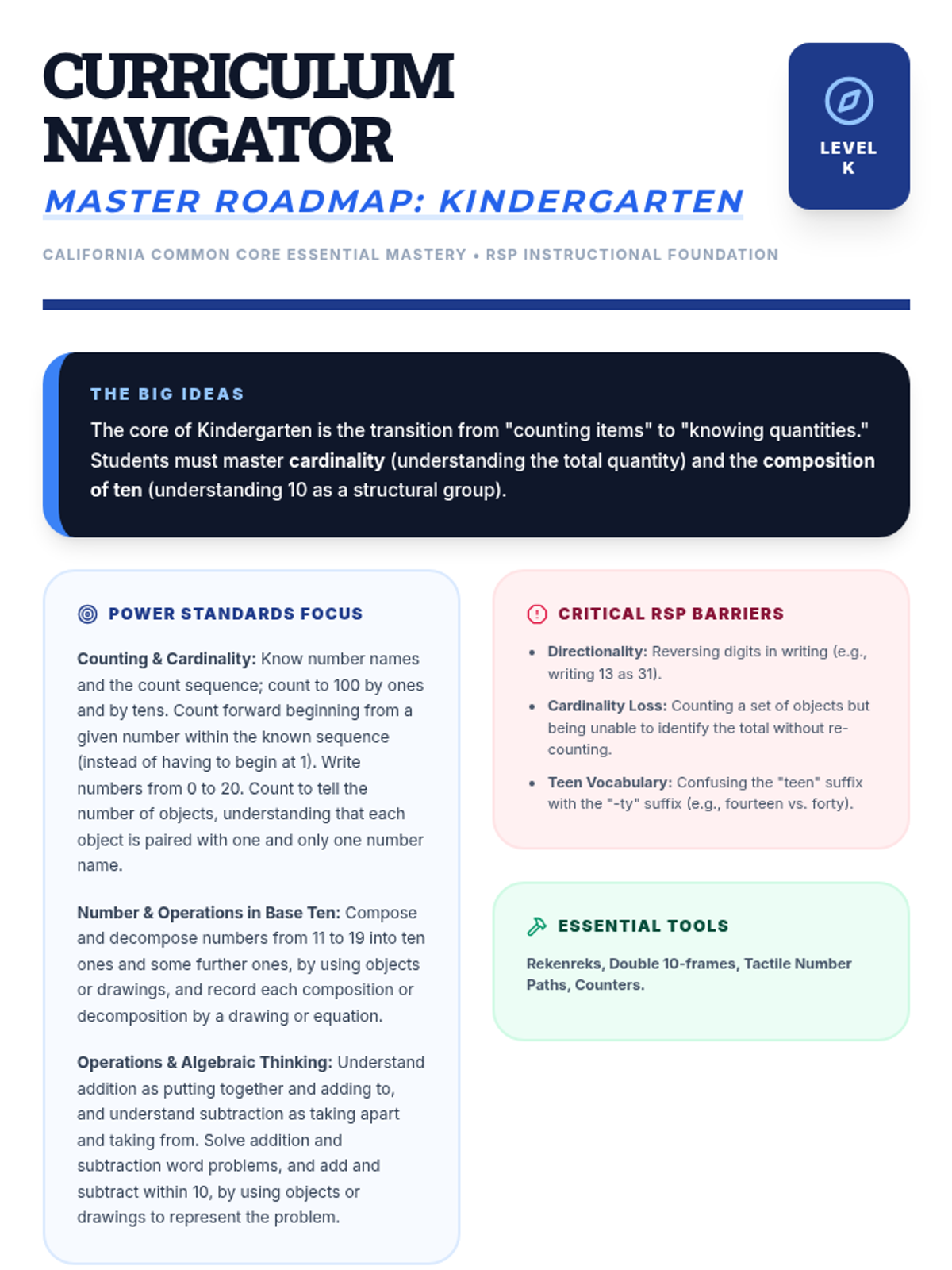
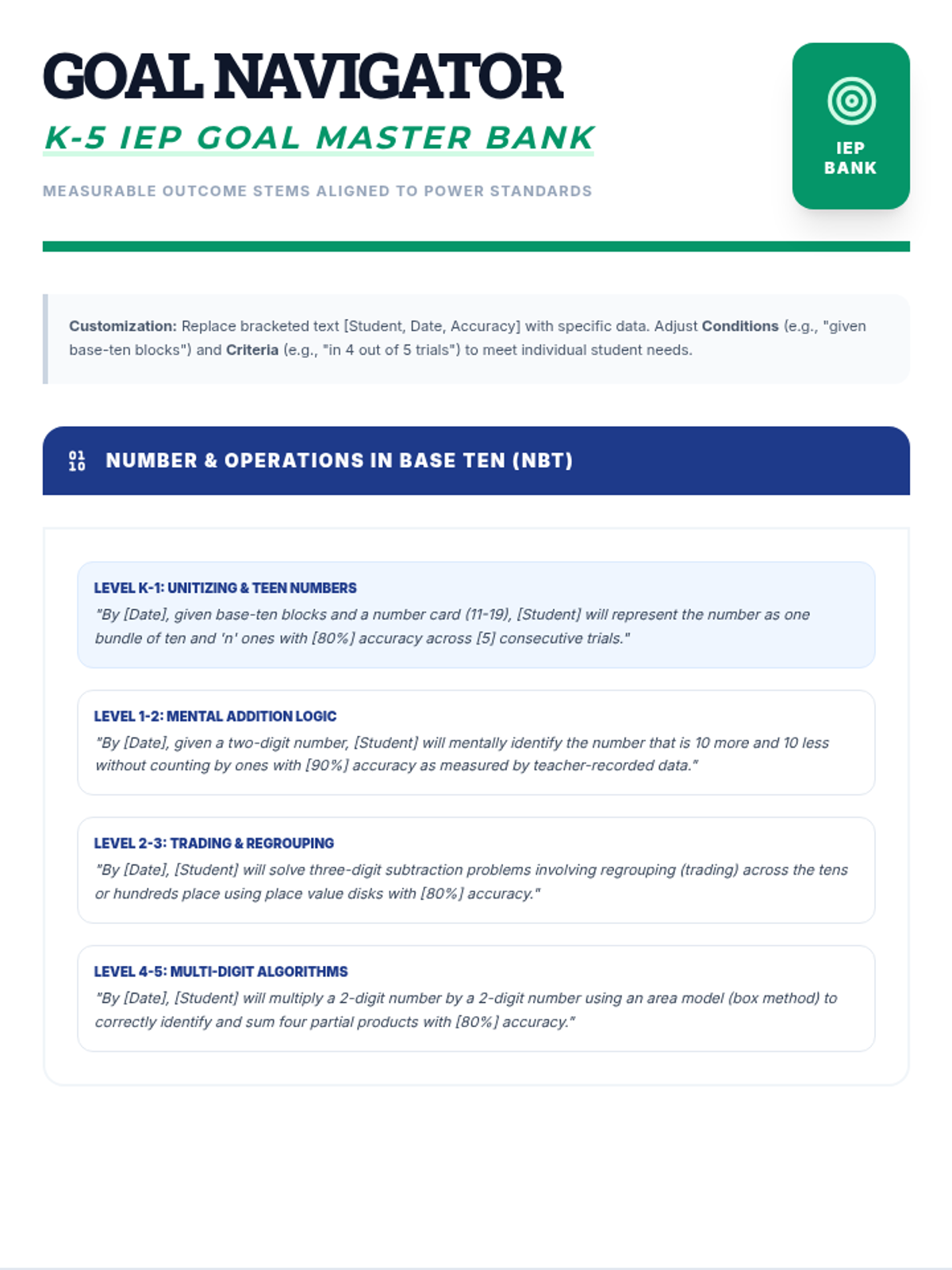
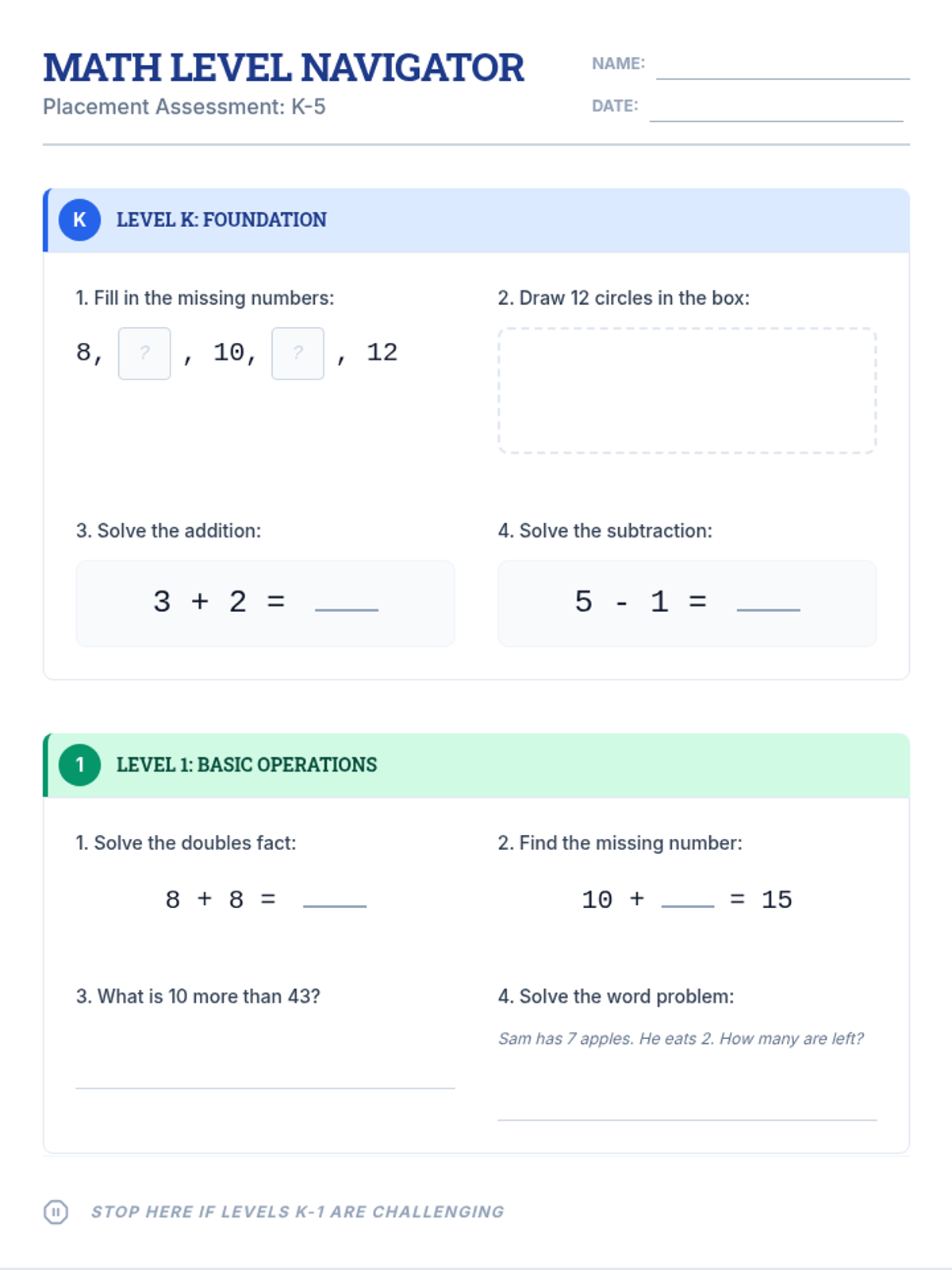
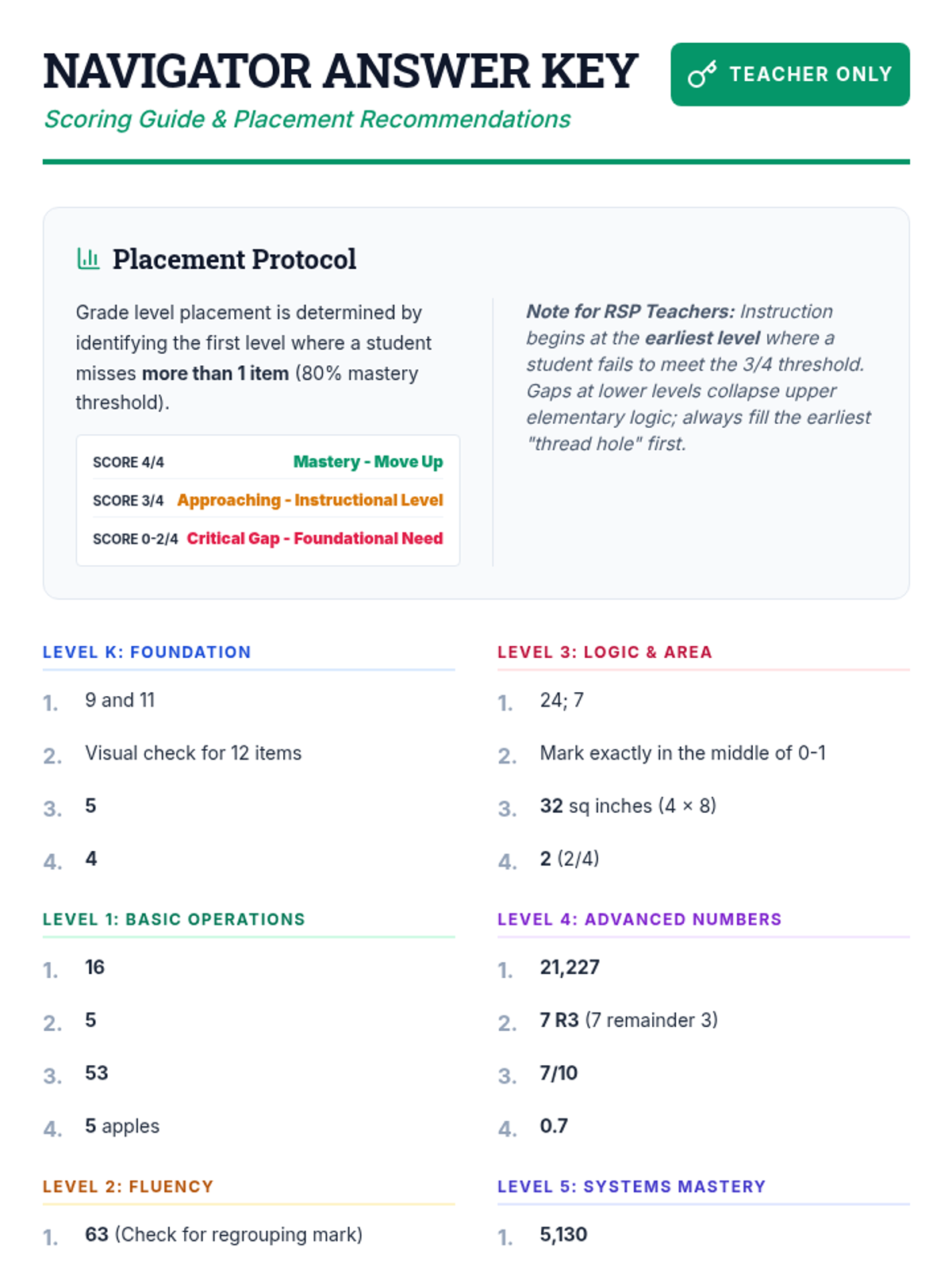
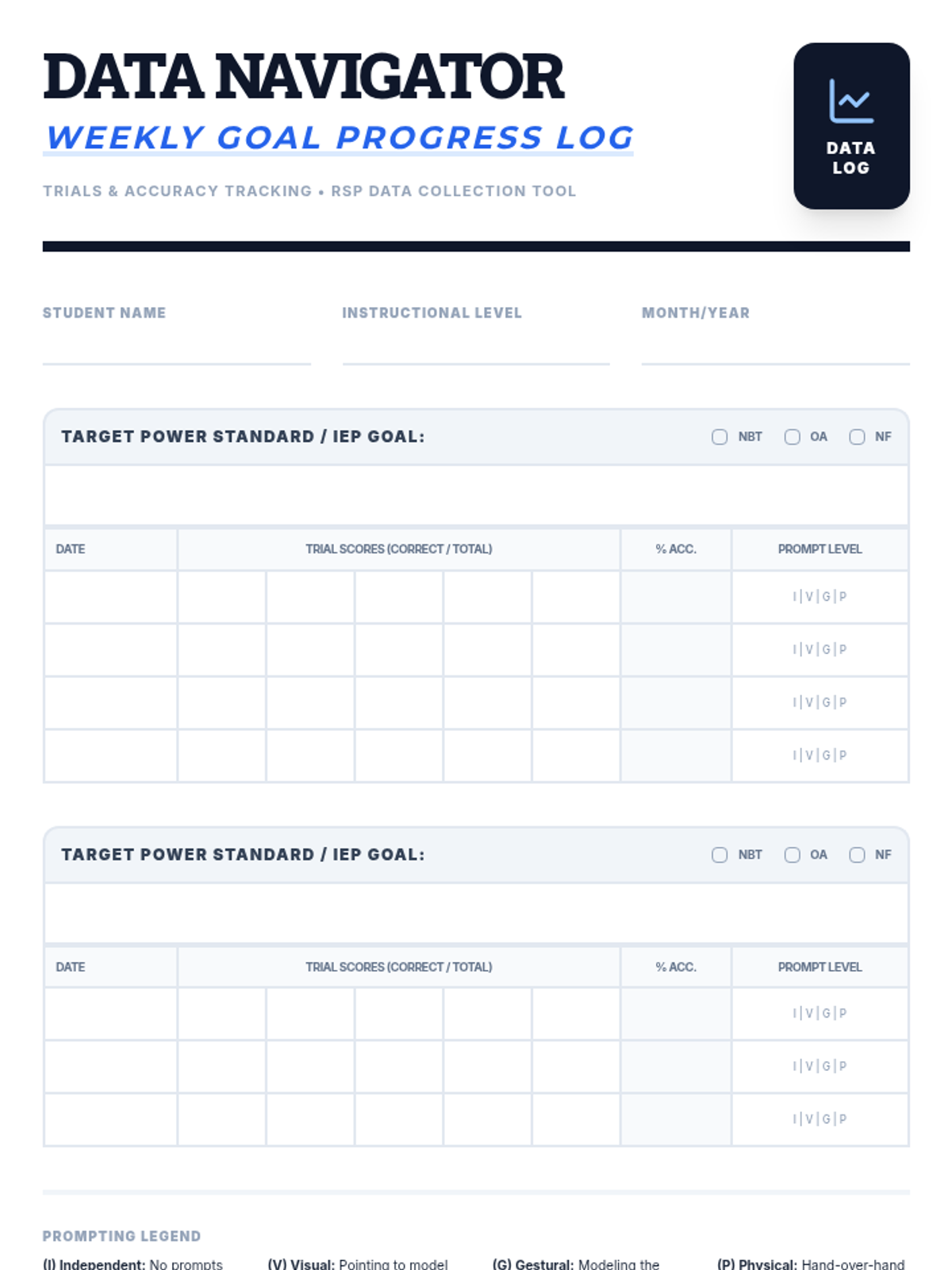
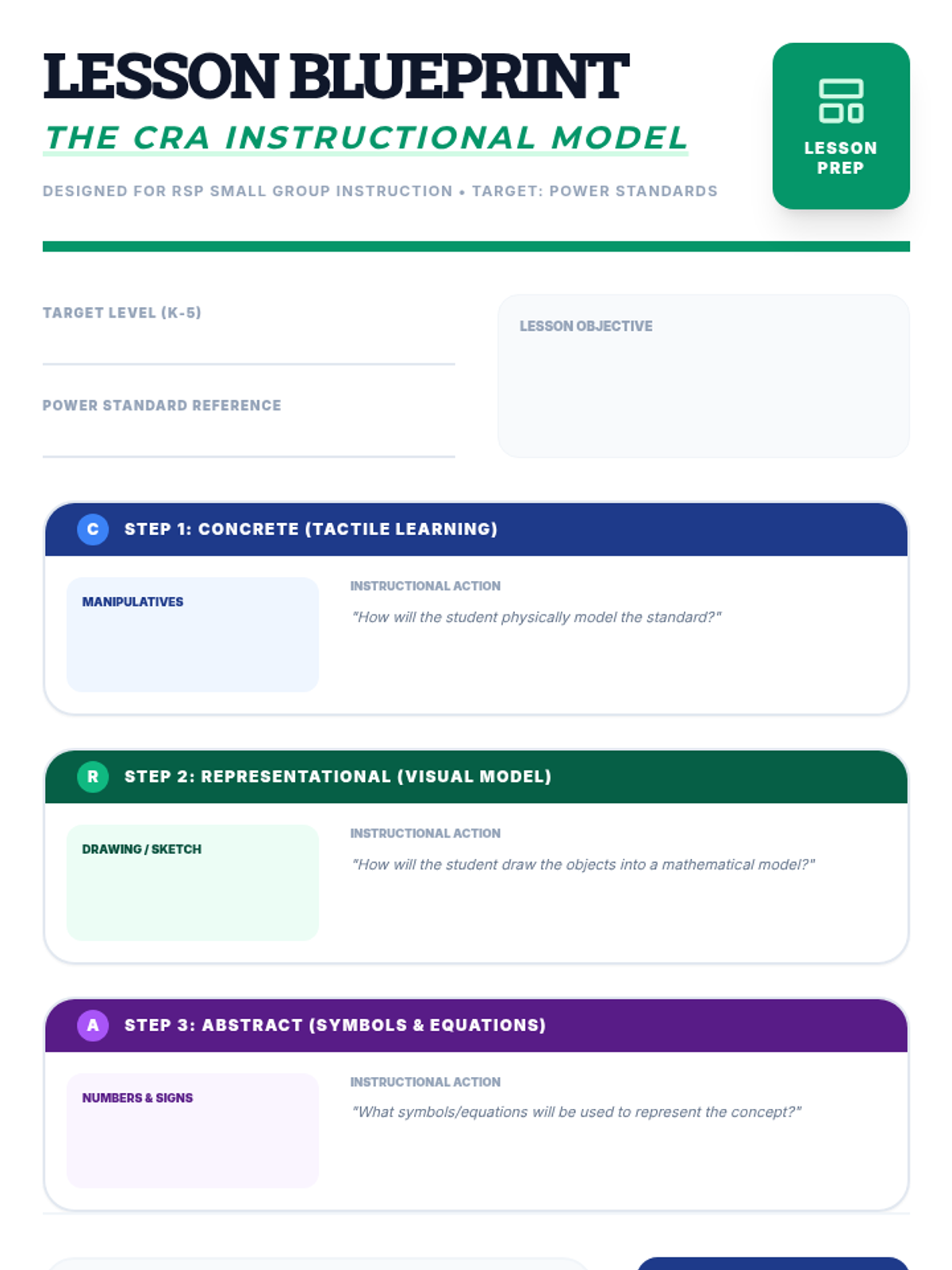
A comprehensive framework for K-5 RSP math instruction, including a California Common Core aligned scope and sequence of power standards and a leveled placement diagnostic.
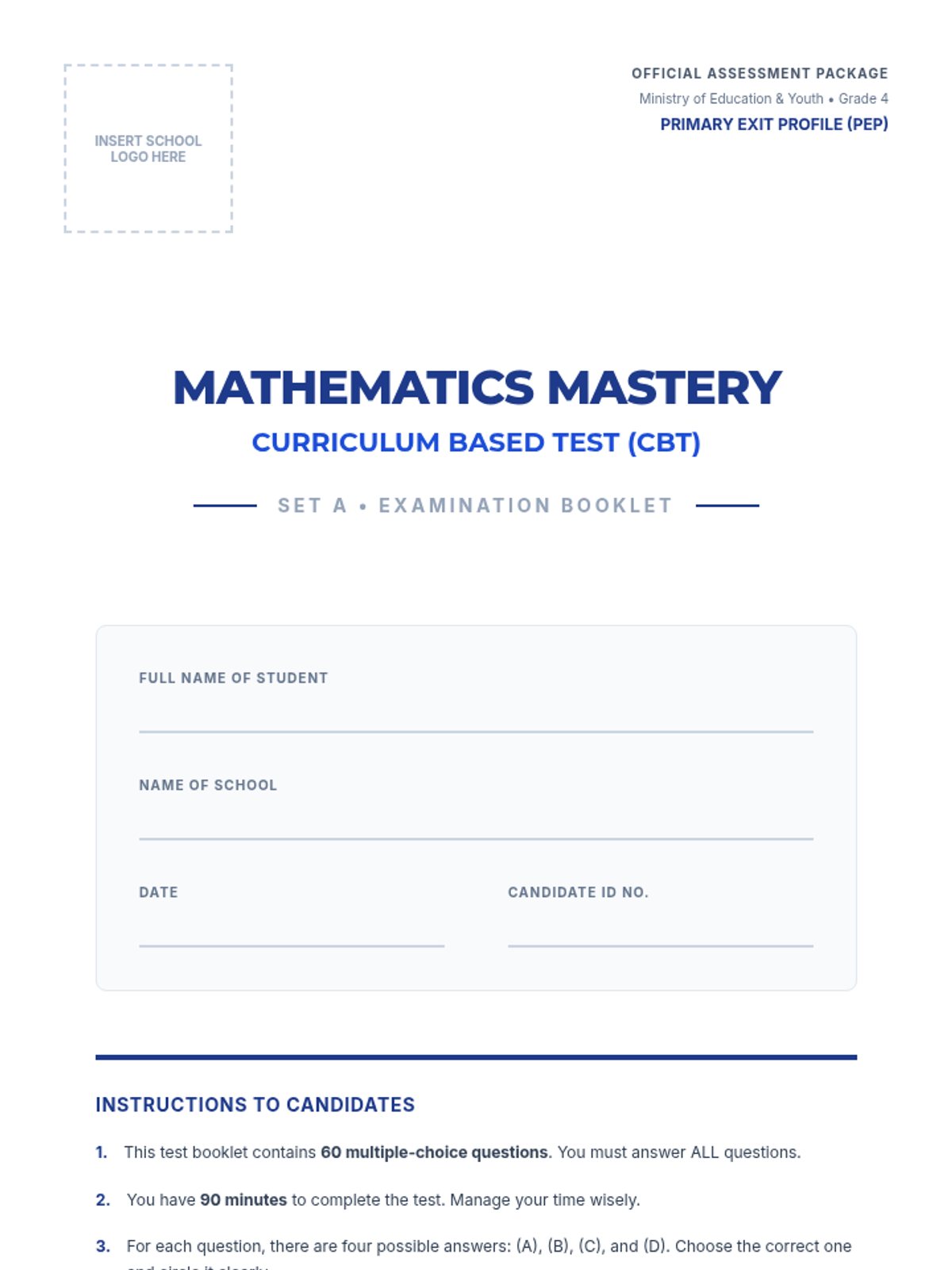
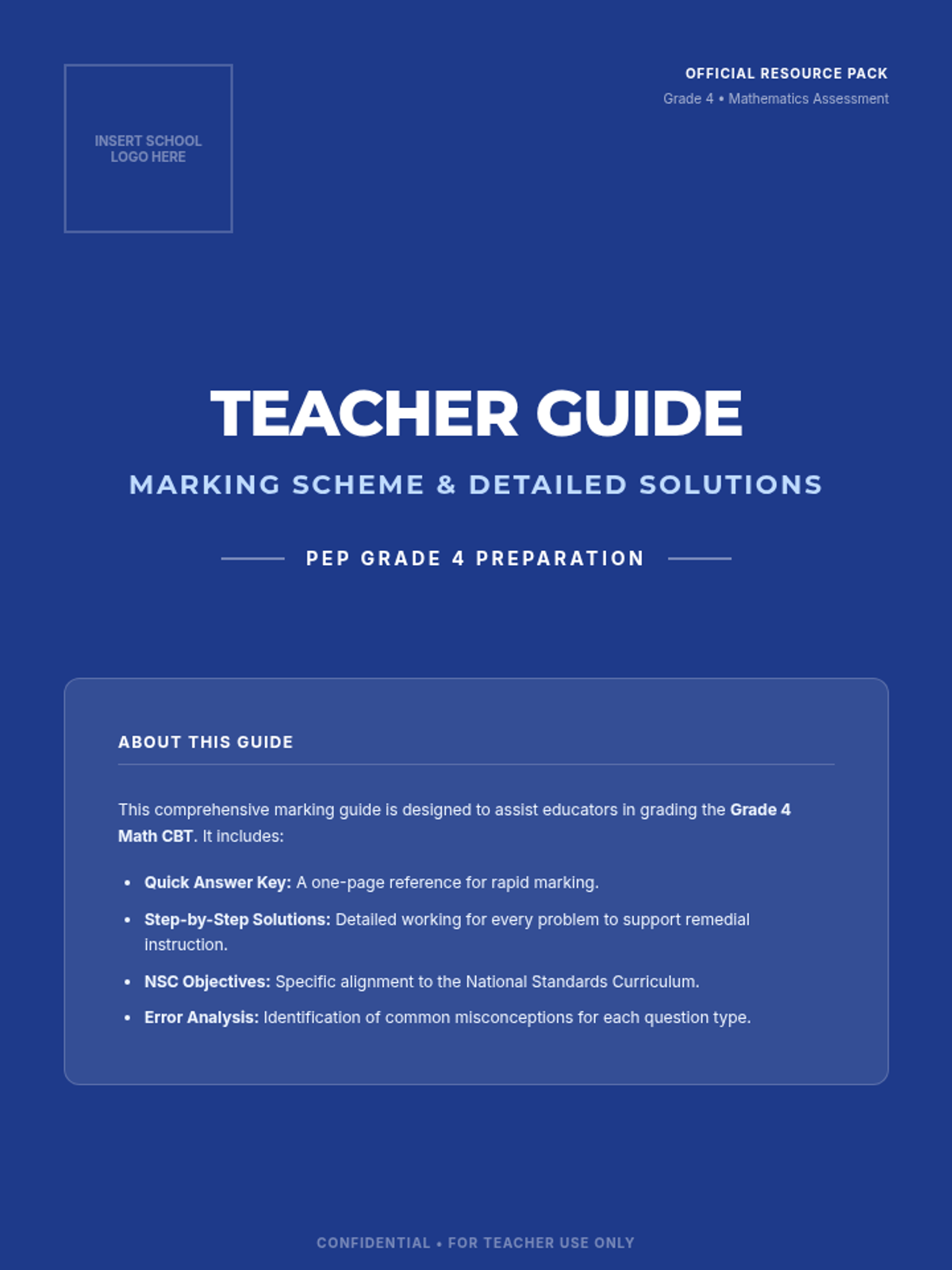
A series of official Grade 4 PEP-style assessments and teacher resources designed to prepare students for the Jamaican Primary Exit Profile, covering all key mathematical domains from the National Standards Curriculum.
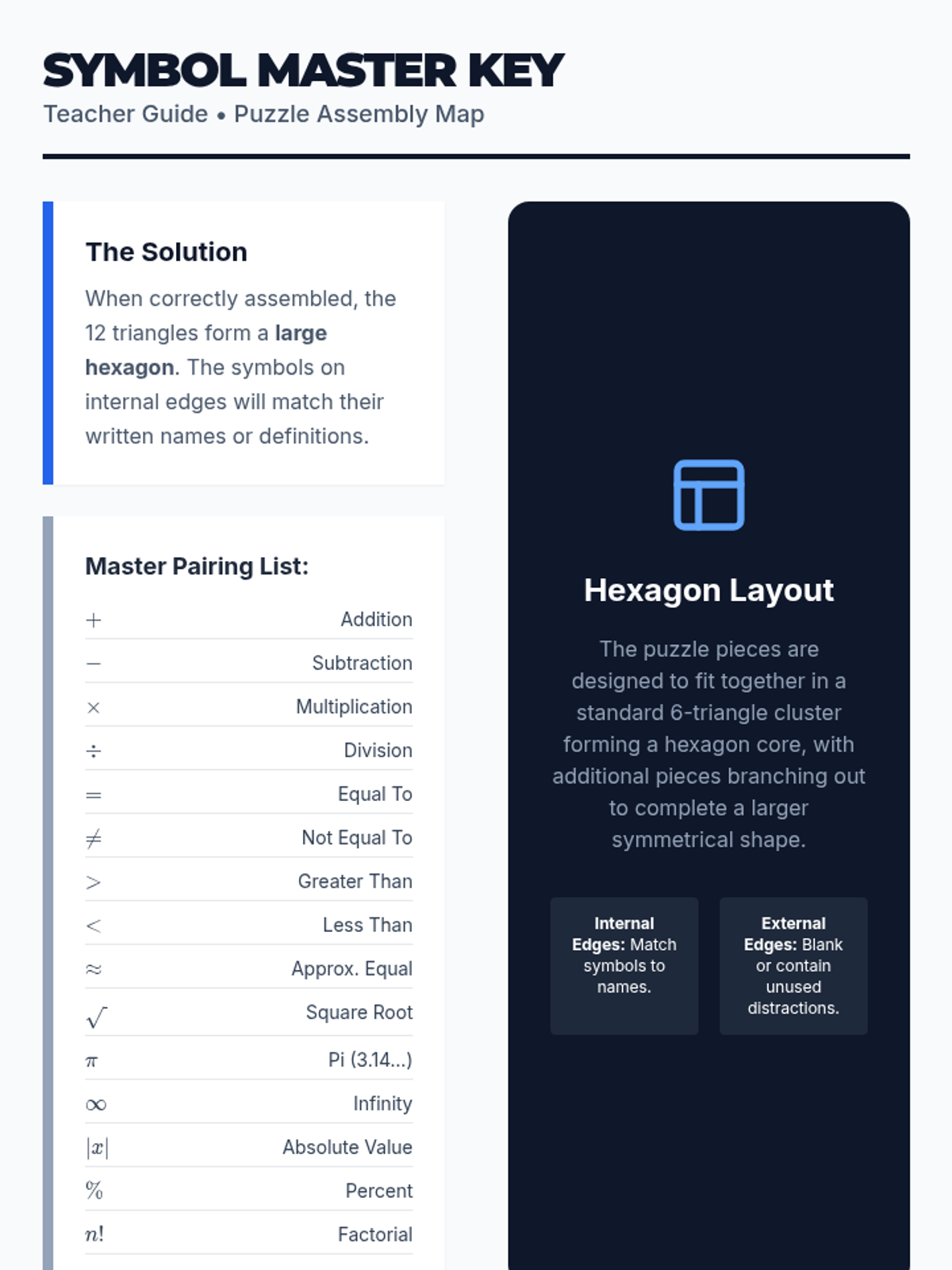
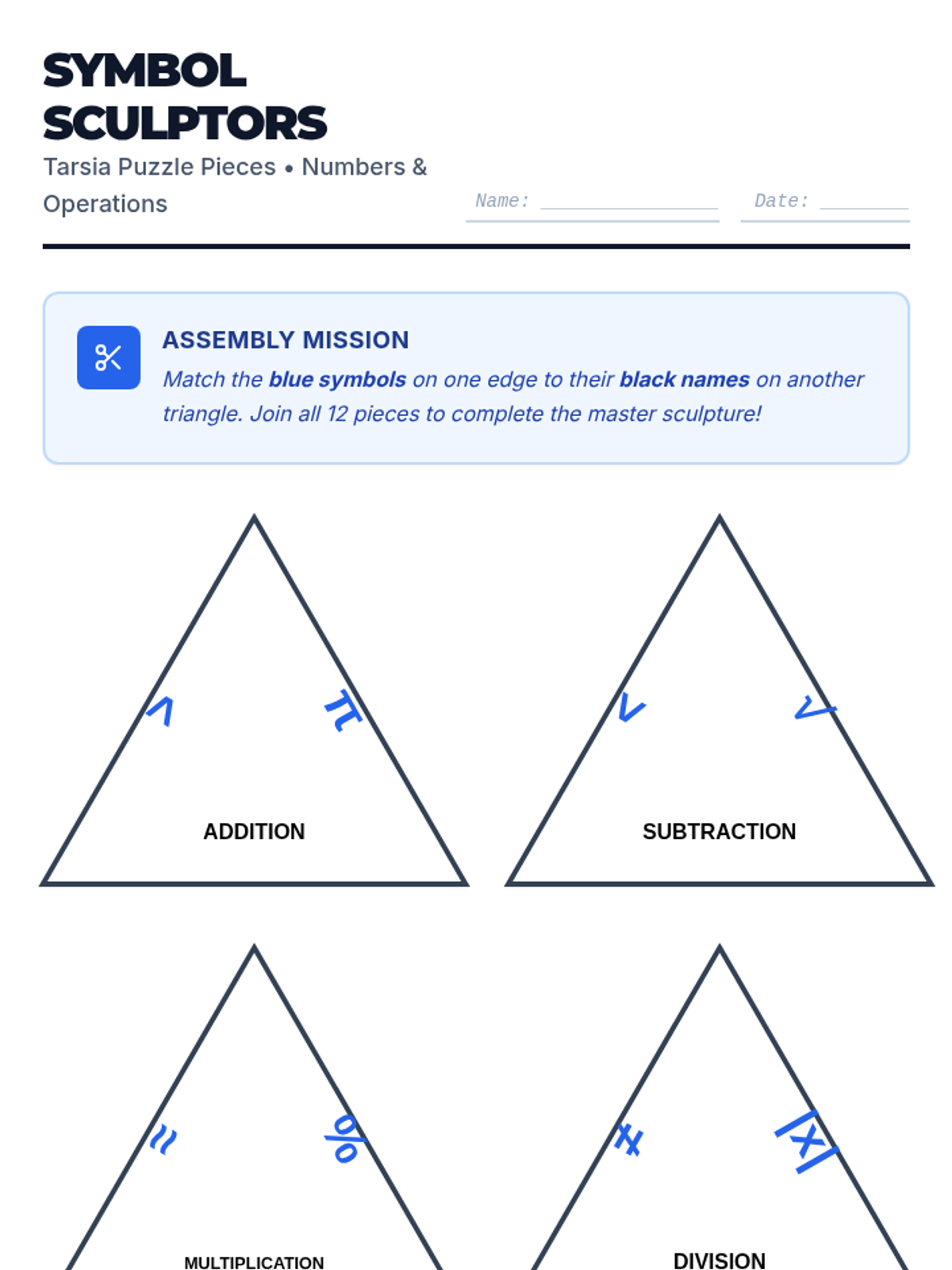
A series of lessons designed to build fluency in mathematical notation and operations through visual and tactile learning.
A multi-day math unit on complex rectilinear figures, progressing from finding area with all labels to identifying missing side lengths and solving multi-step problems.
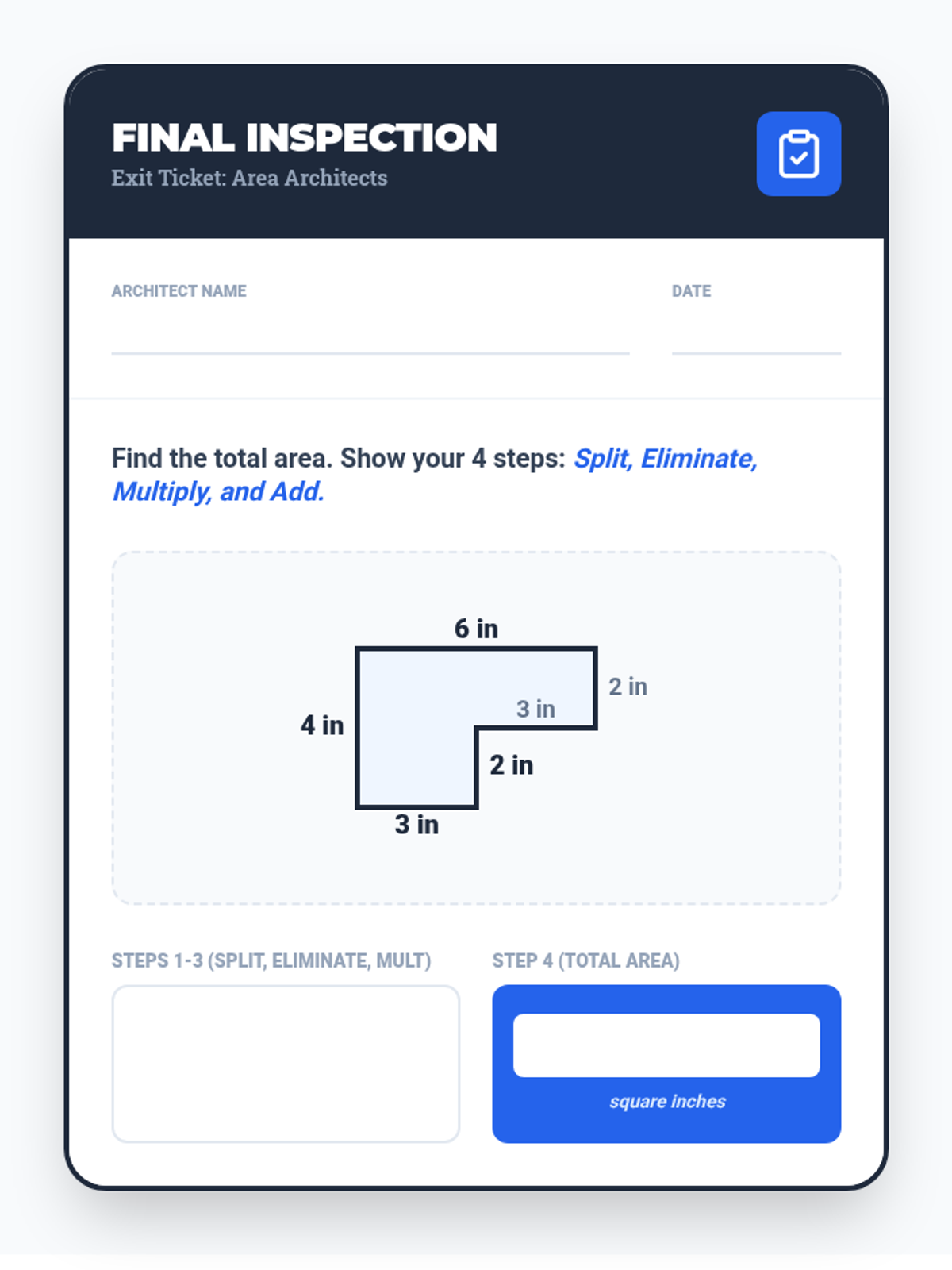
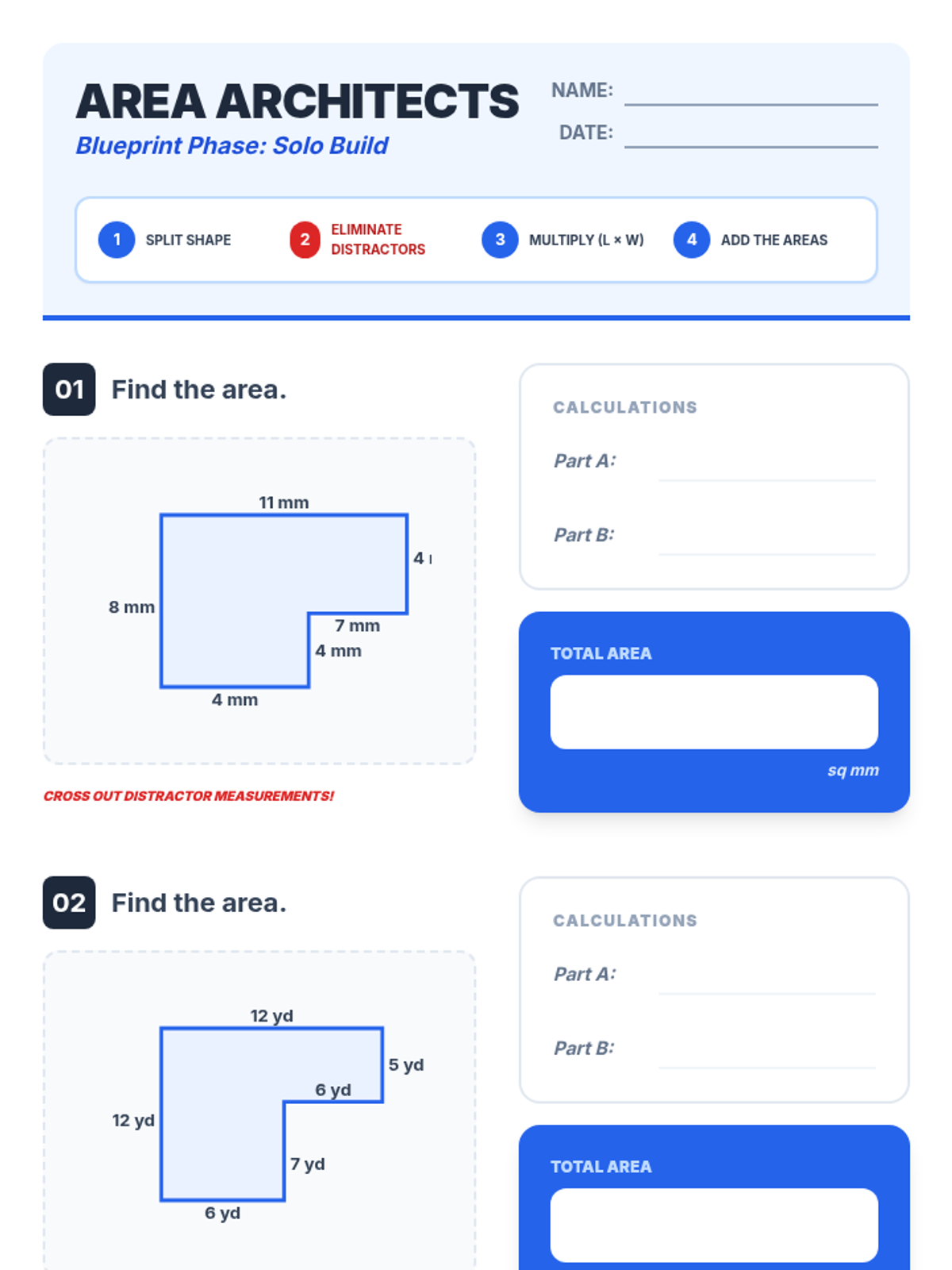
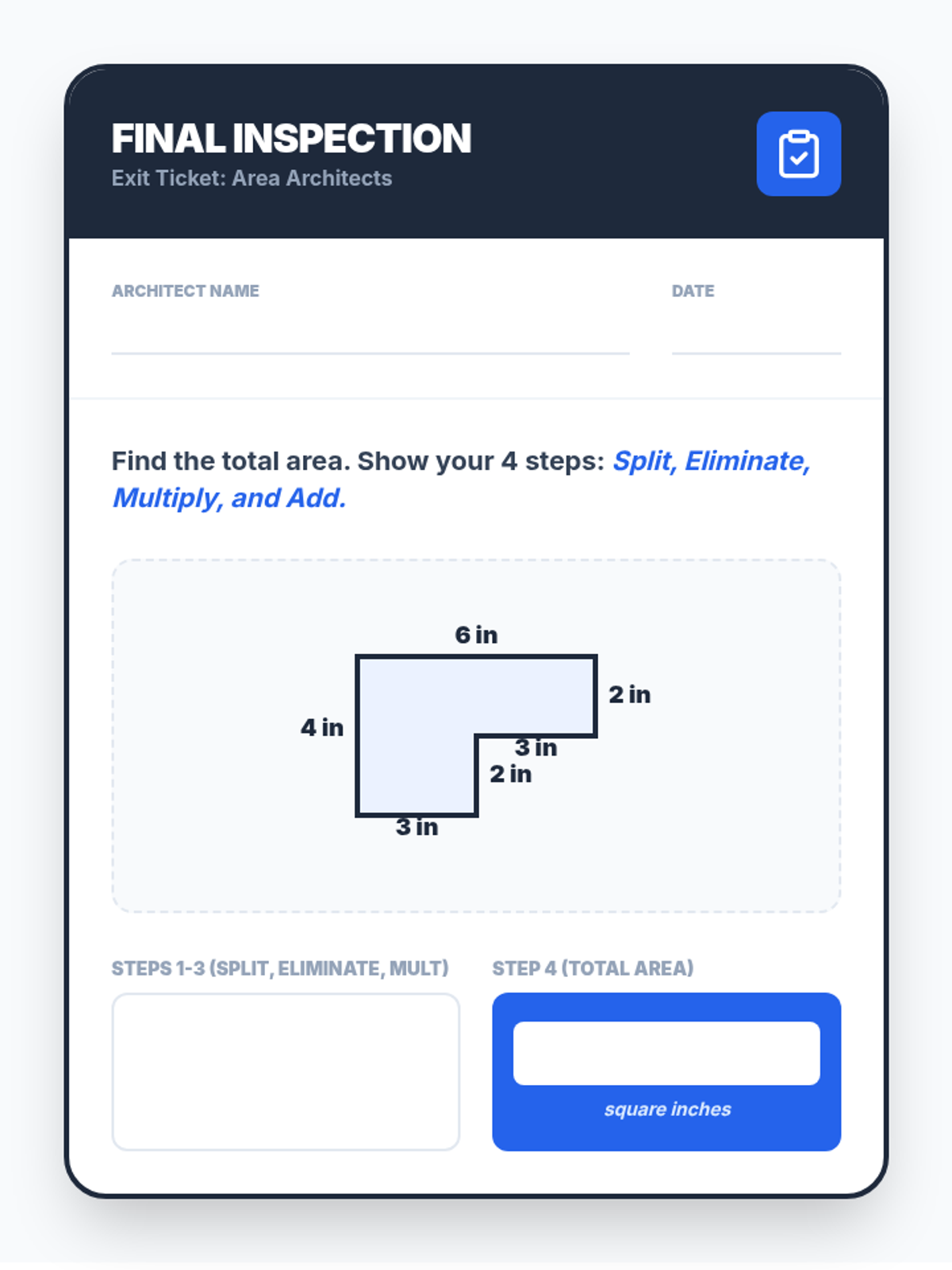
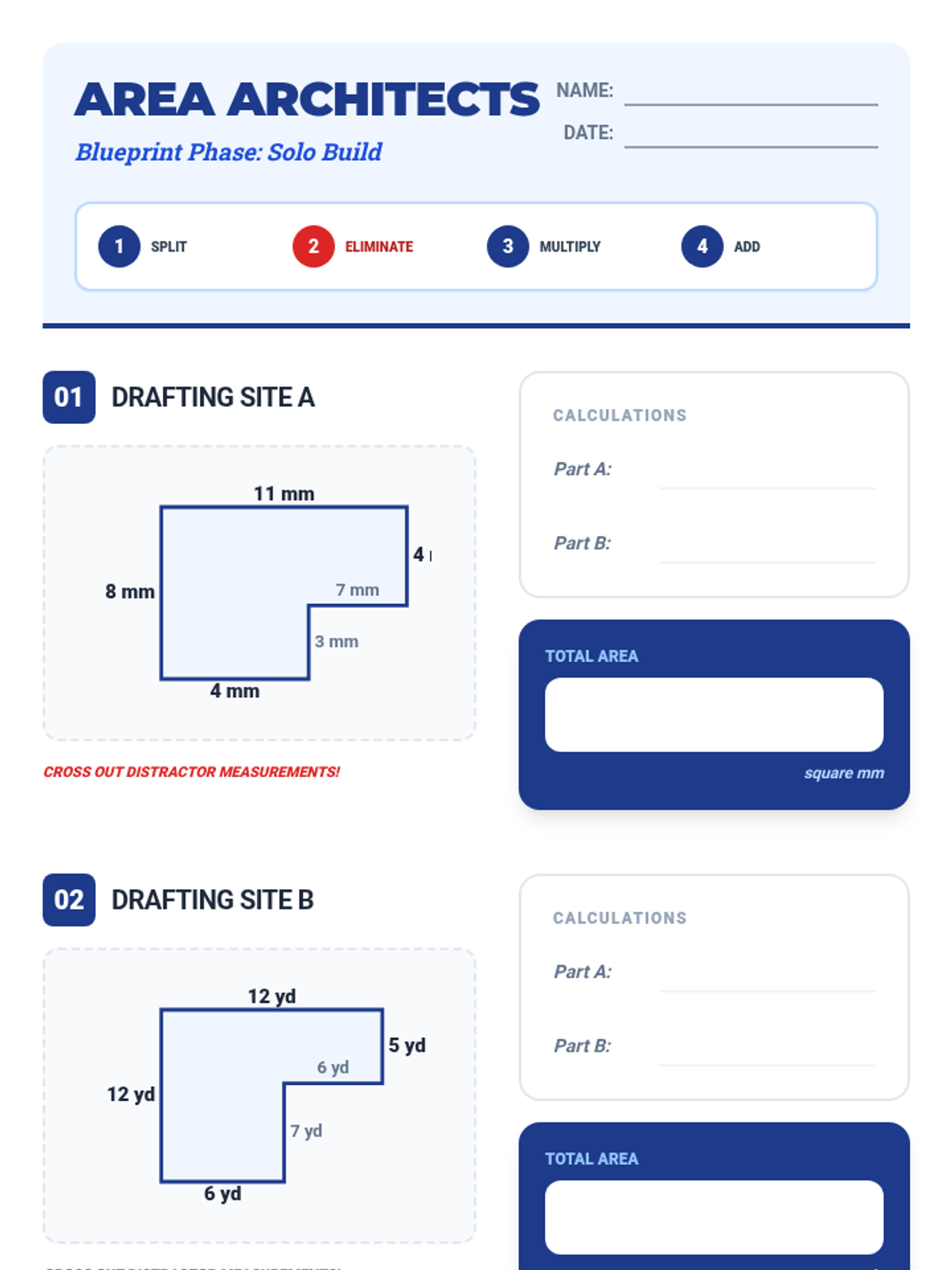
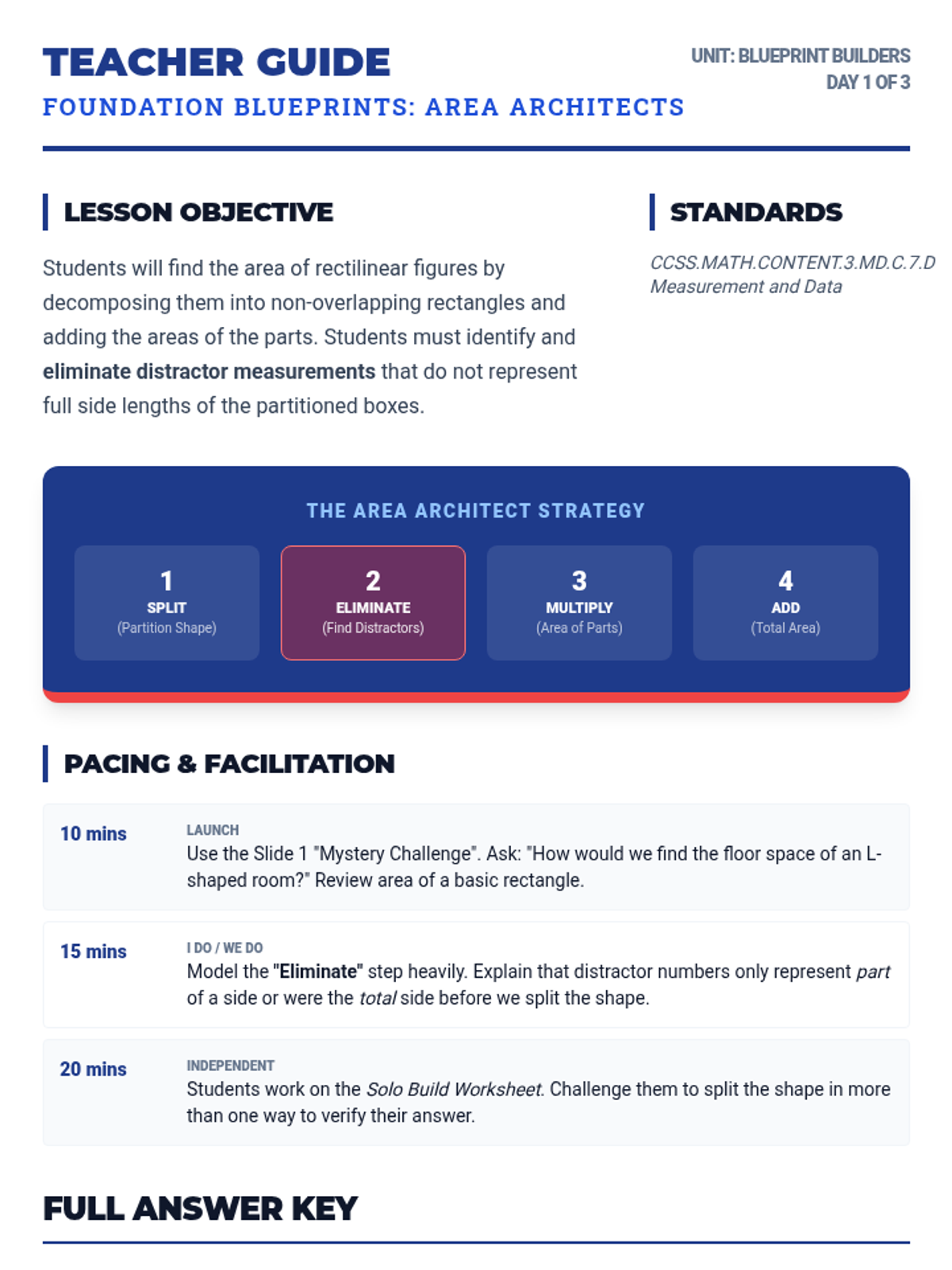
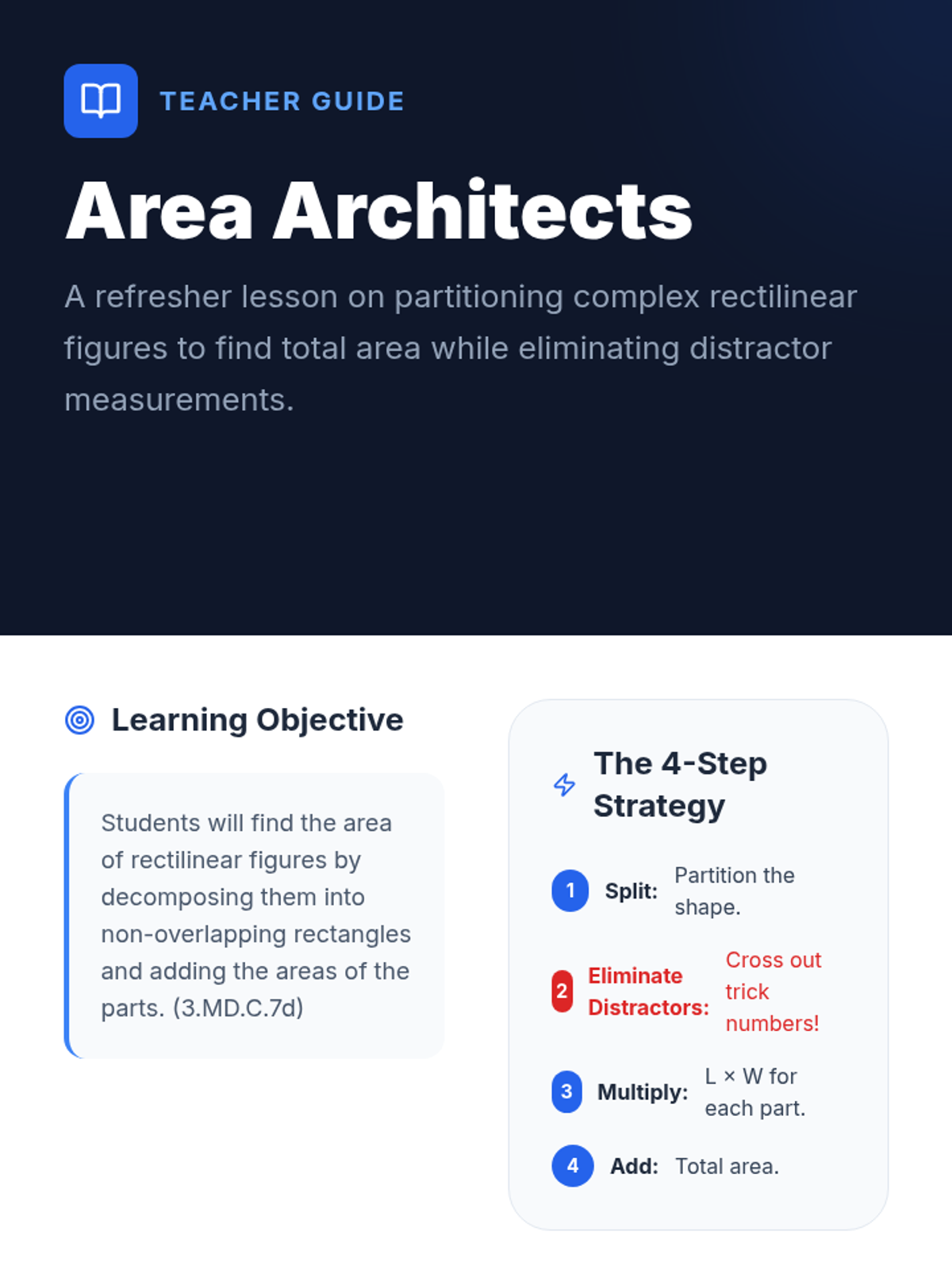
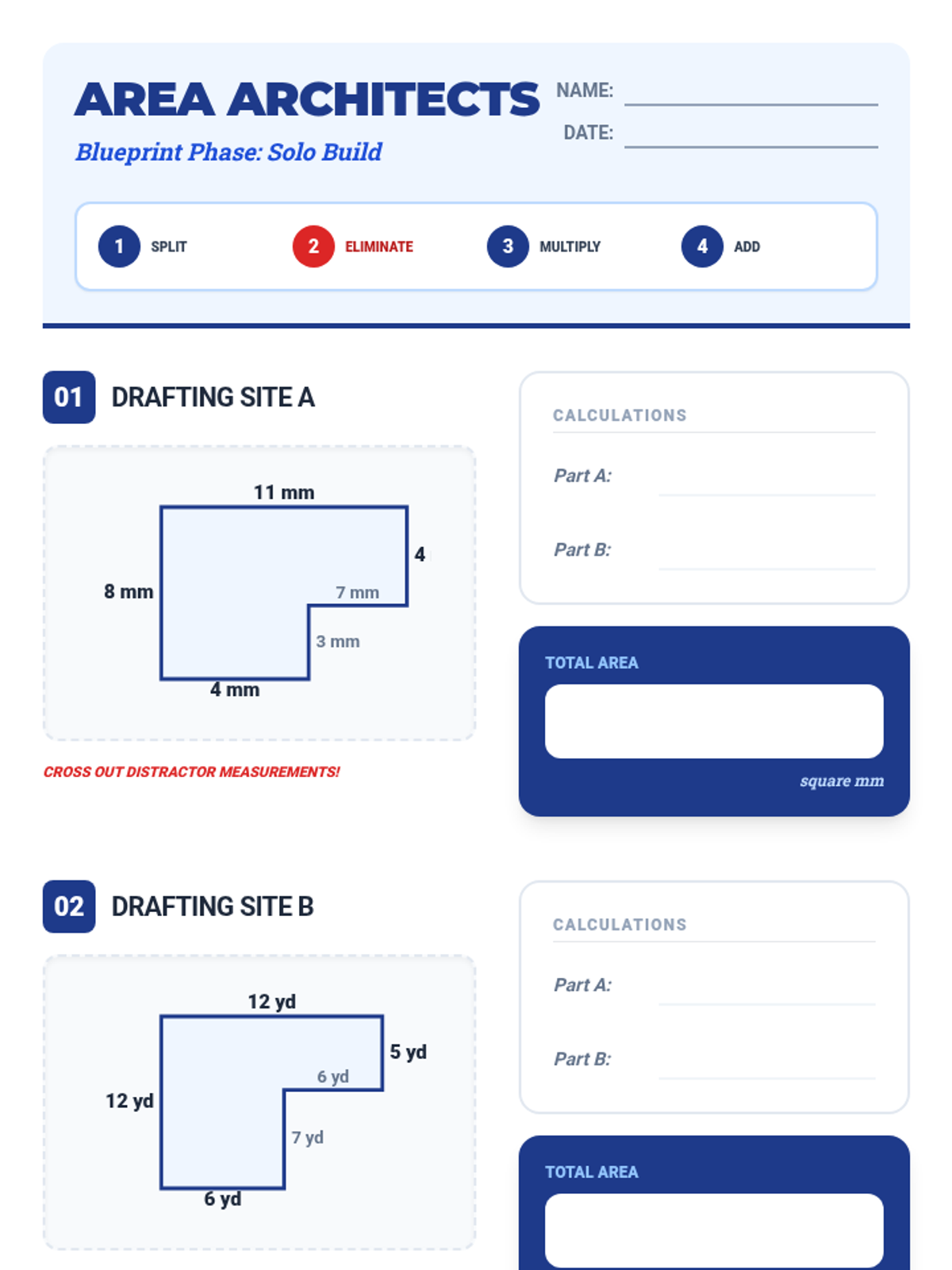
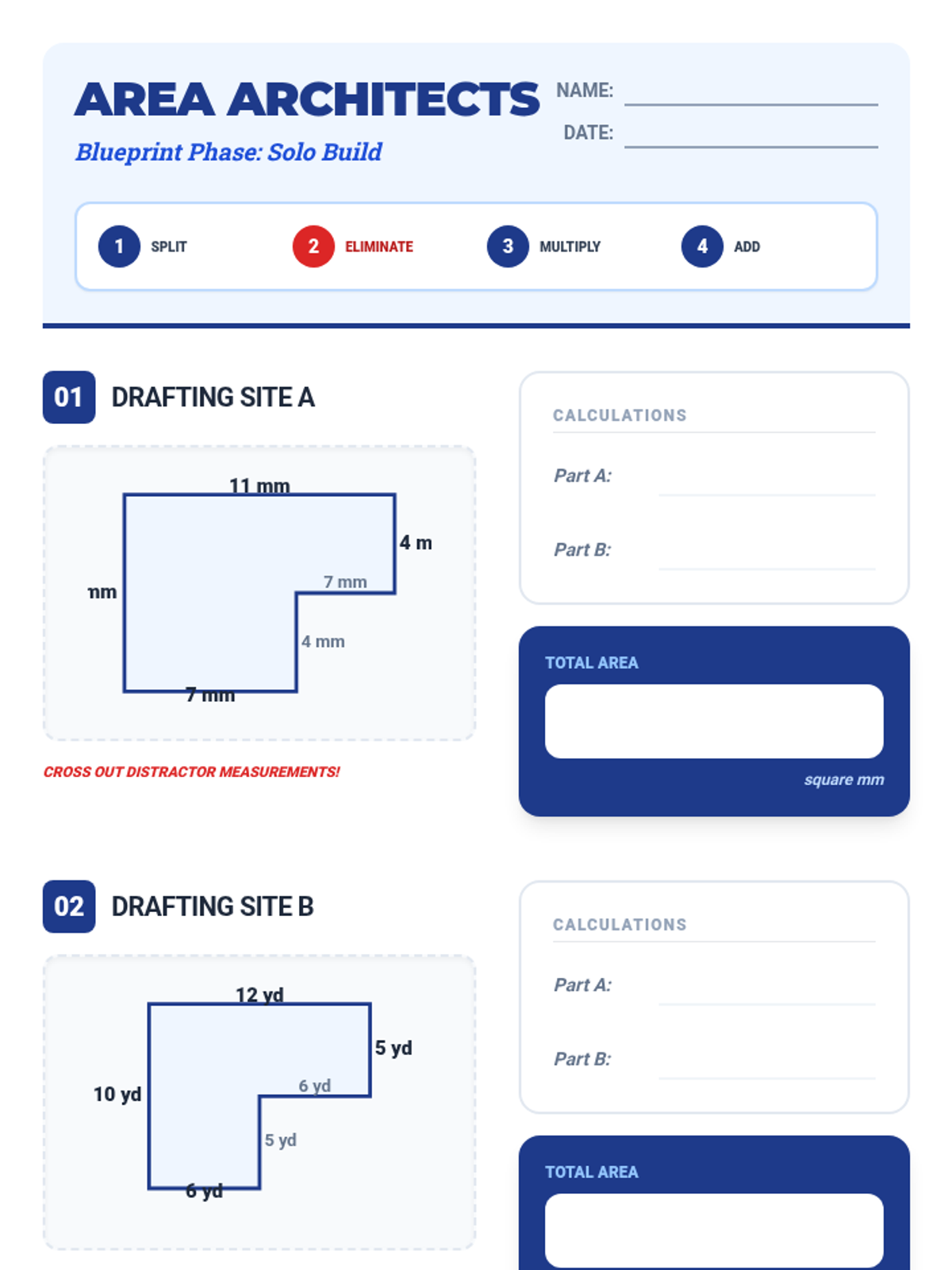
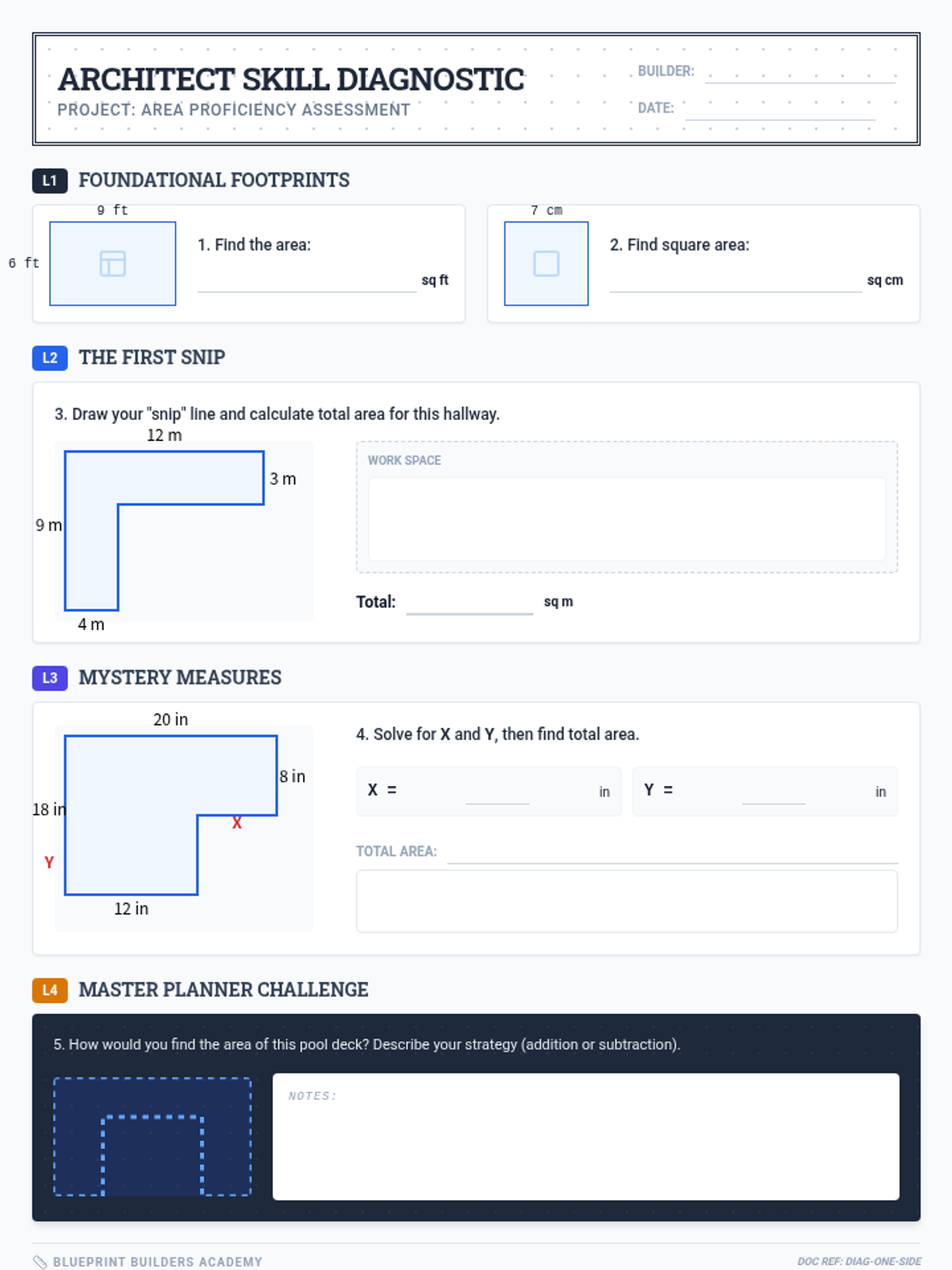
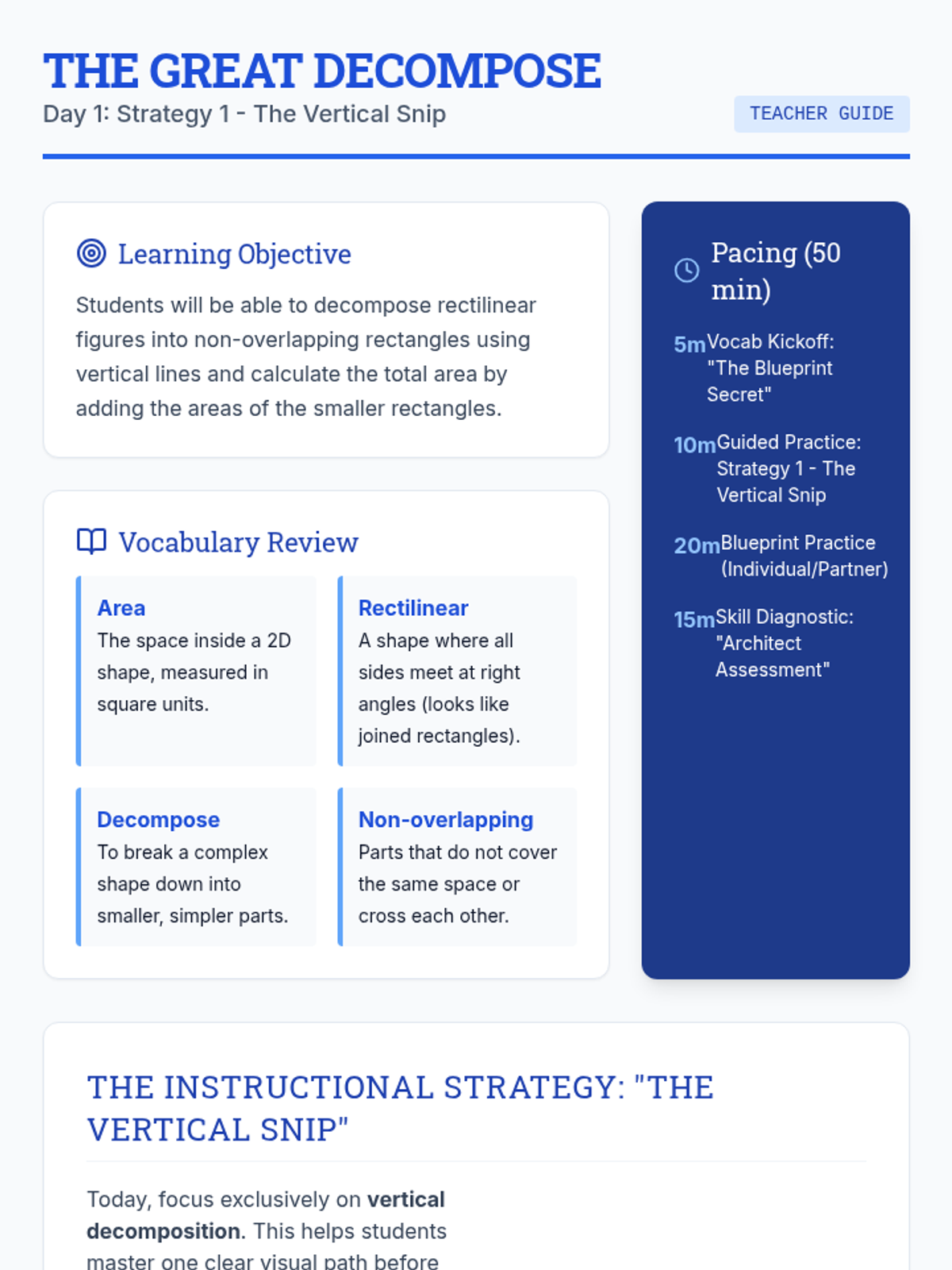
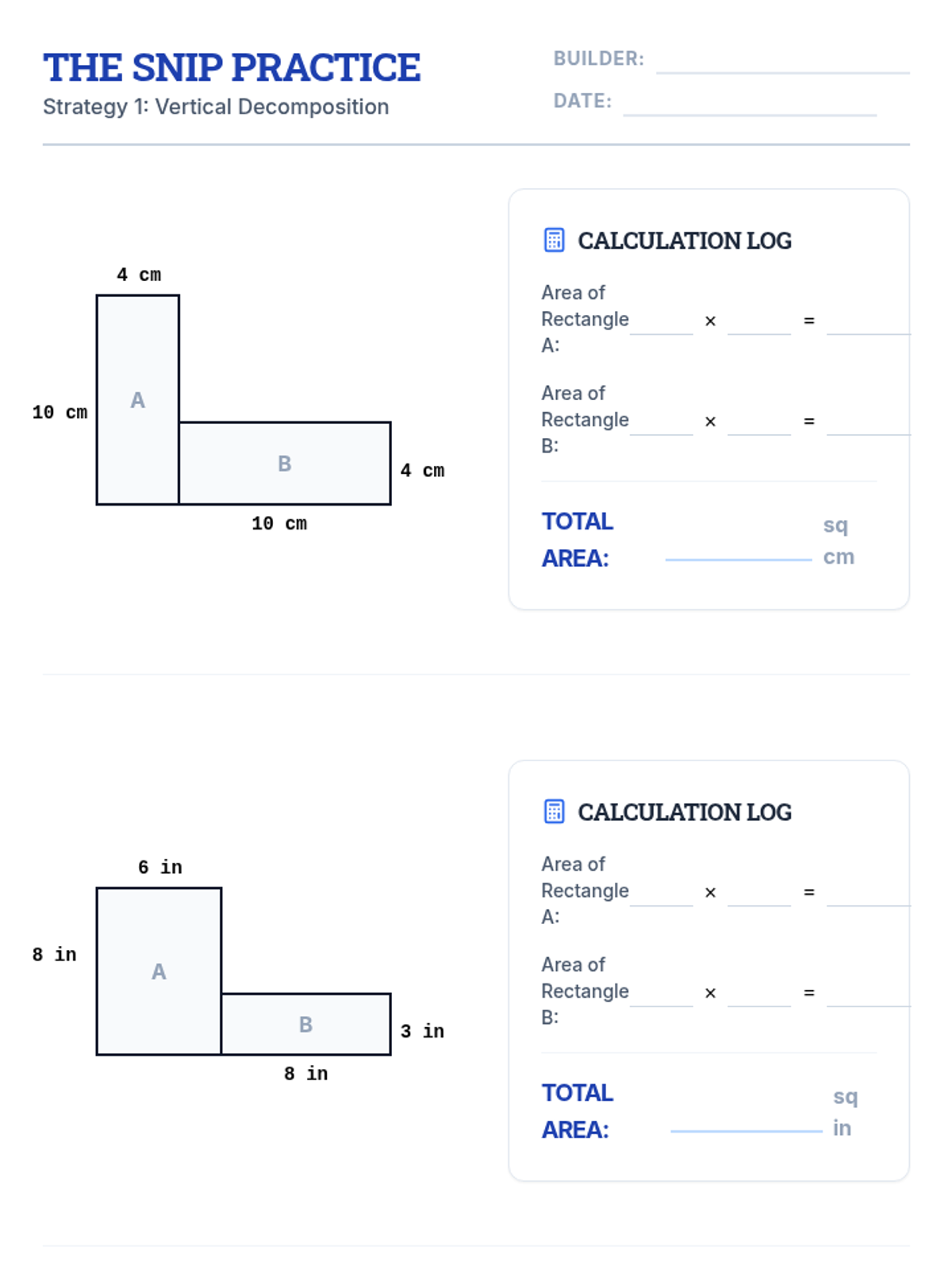
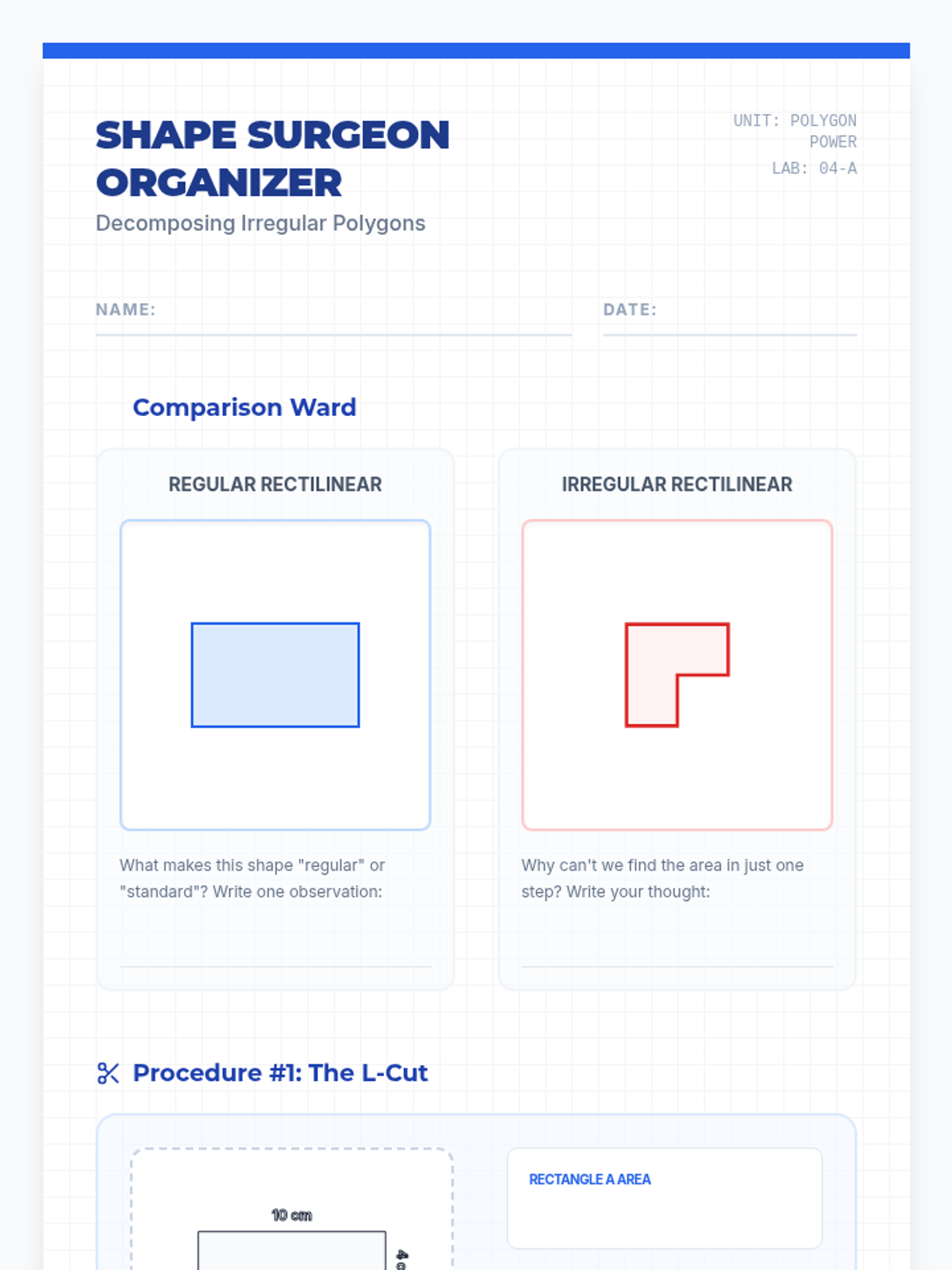
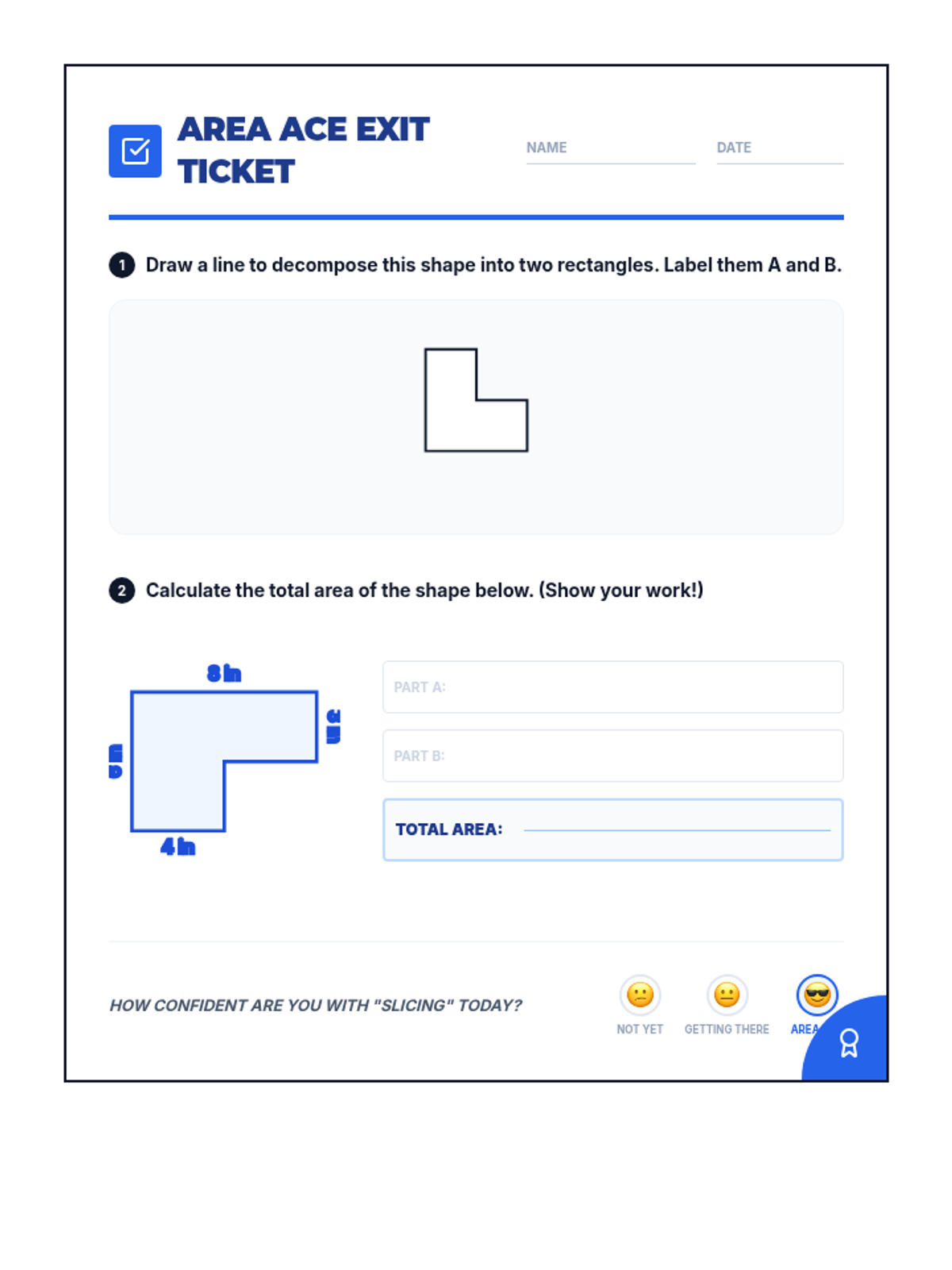
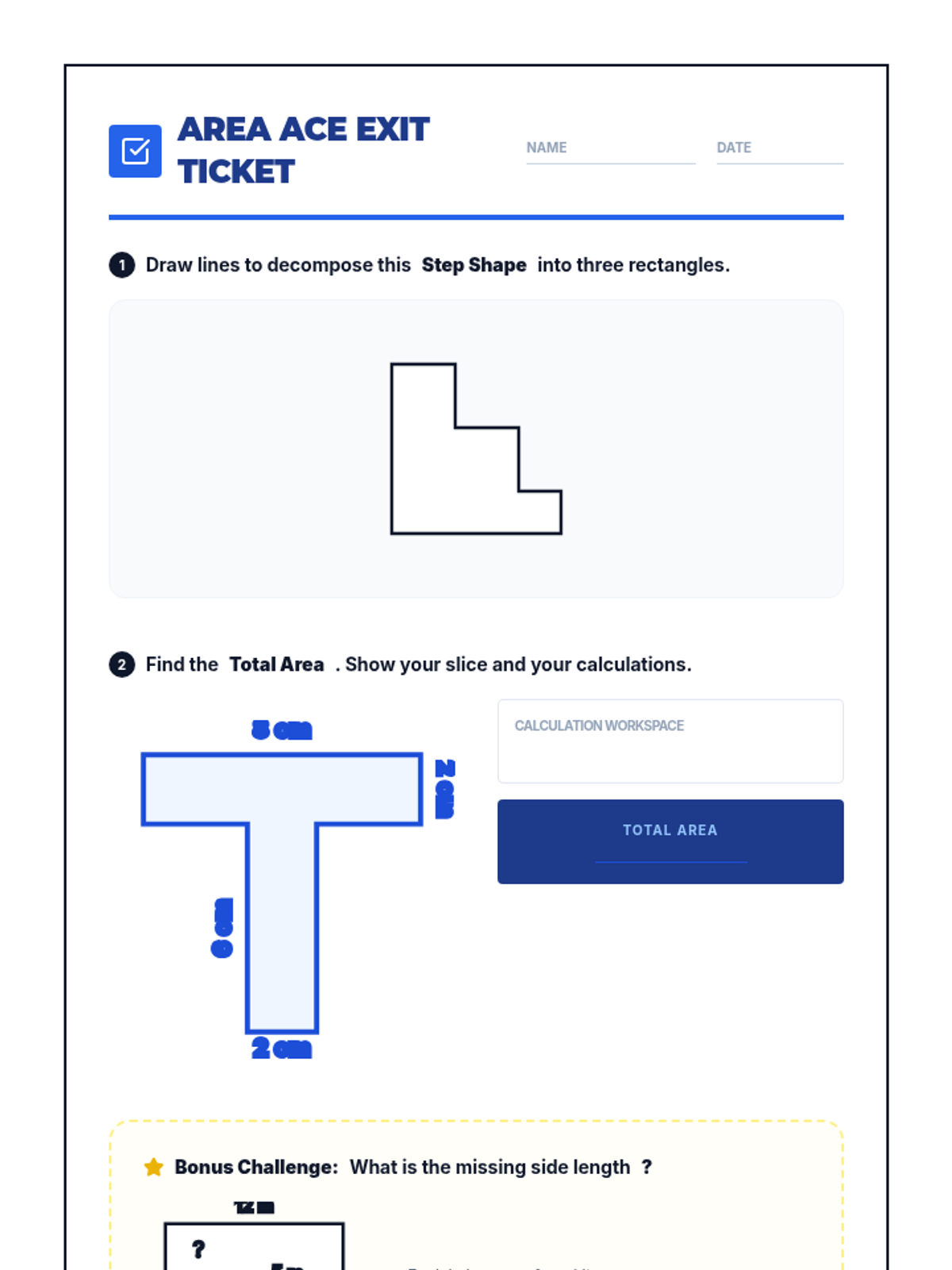
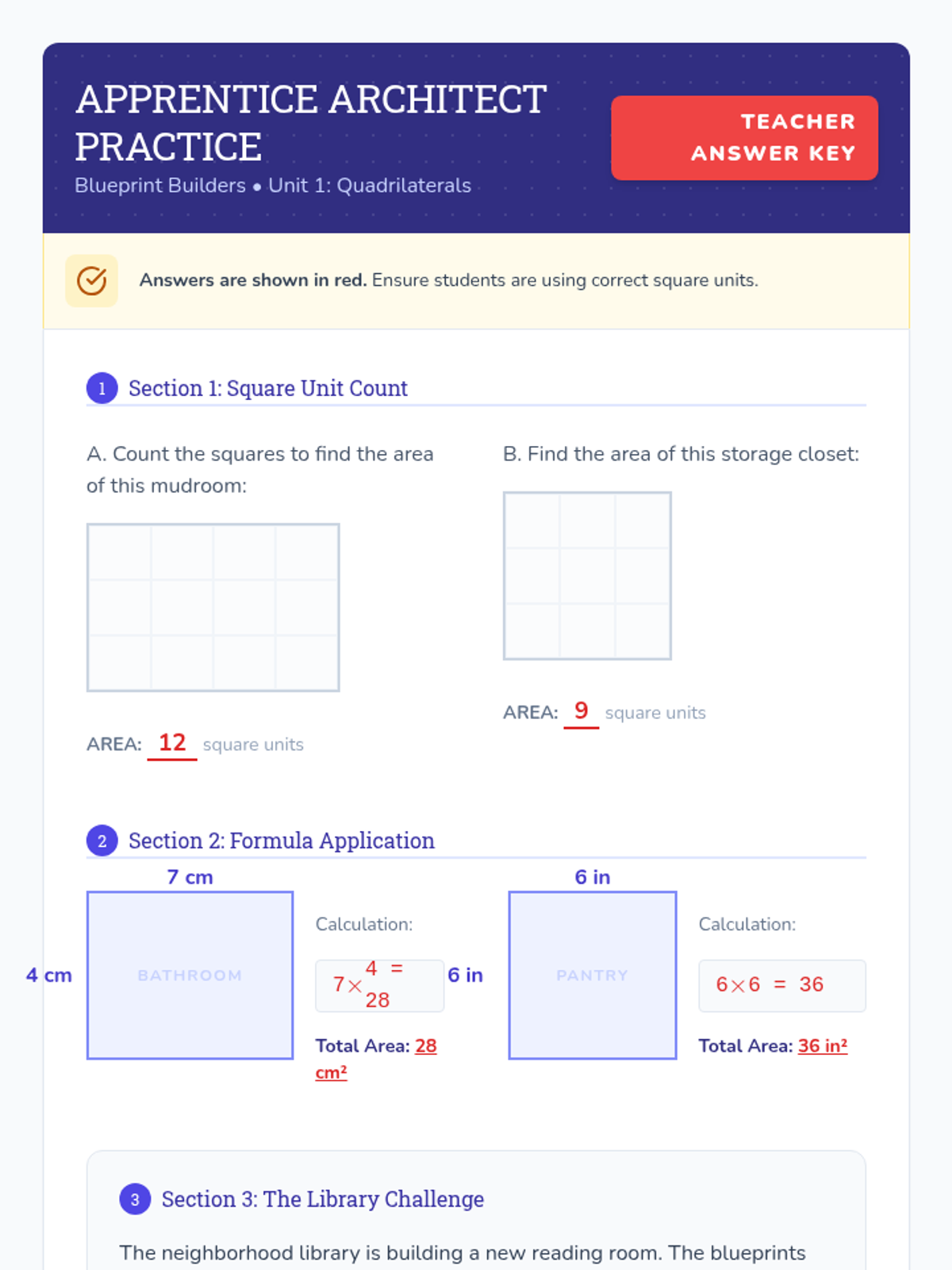
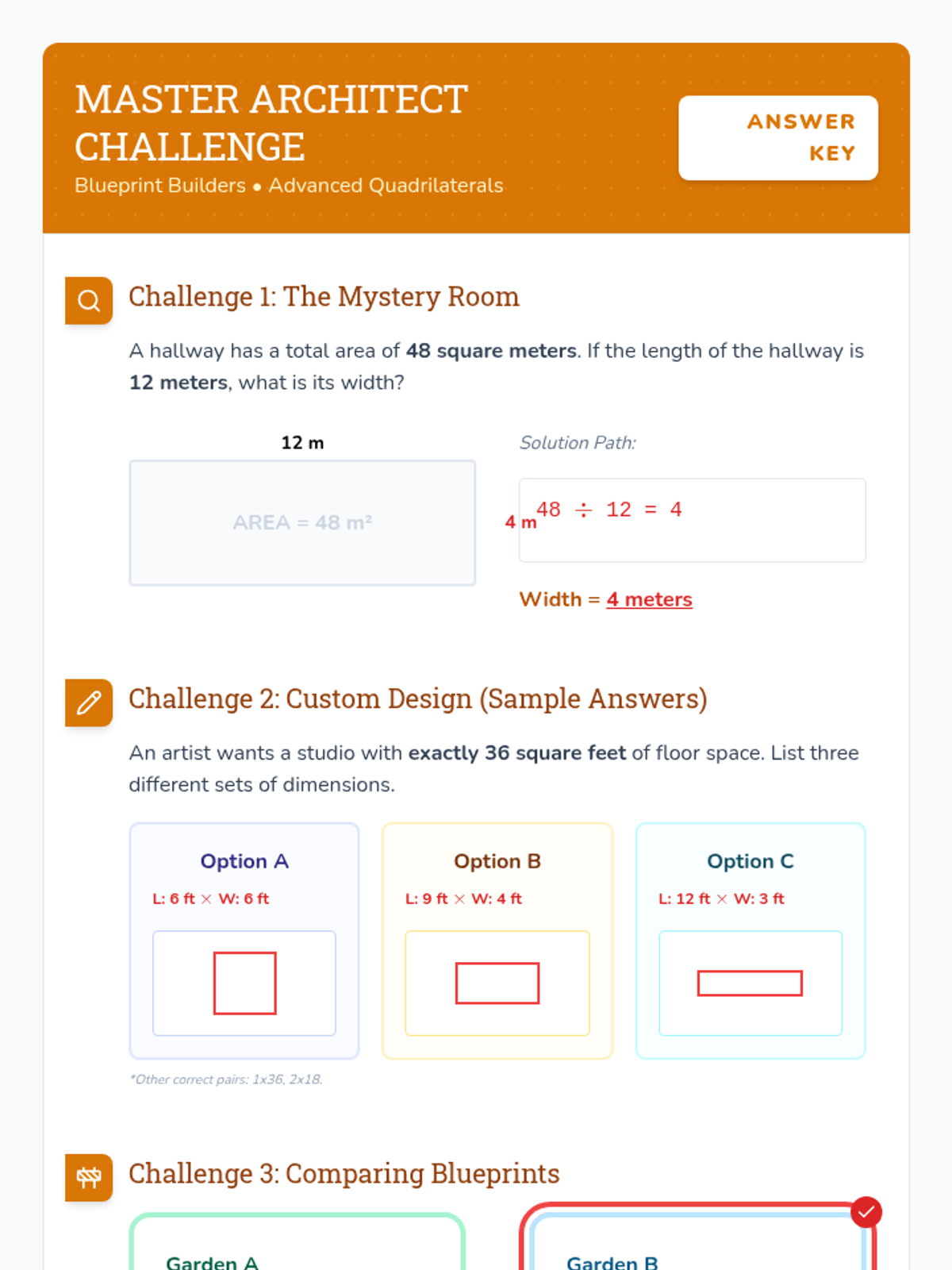
A four-day intensive unit on decomposing rectilinear figures to find total area, progressing from basic strategies to complex real-world architectural challenges. Students act as 'Blueprint Builders' to master vertical cuts, horizontal cuts, and additive/subtractive methods.
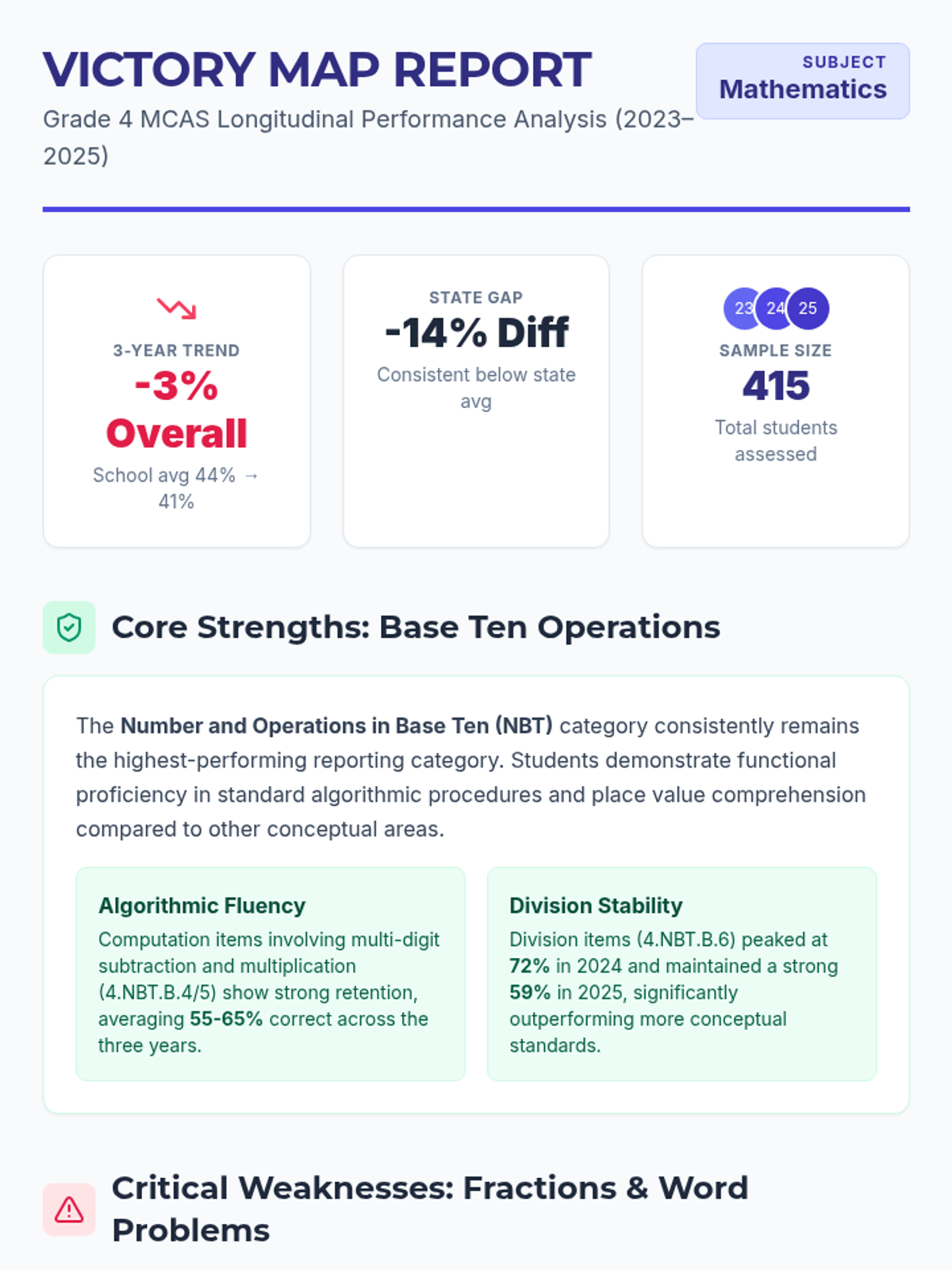
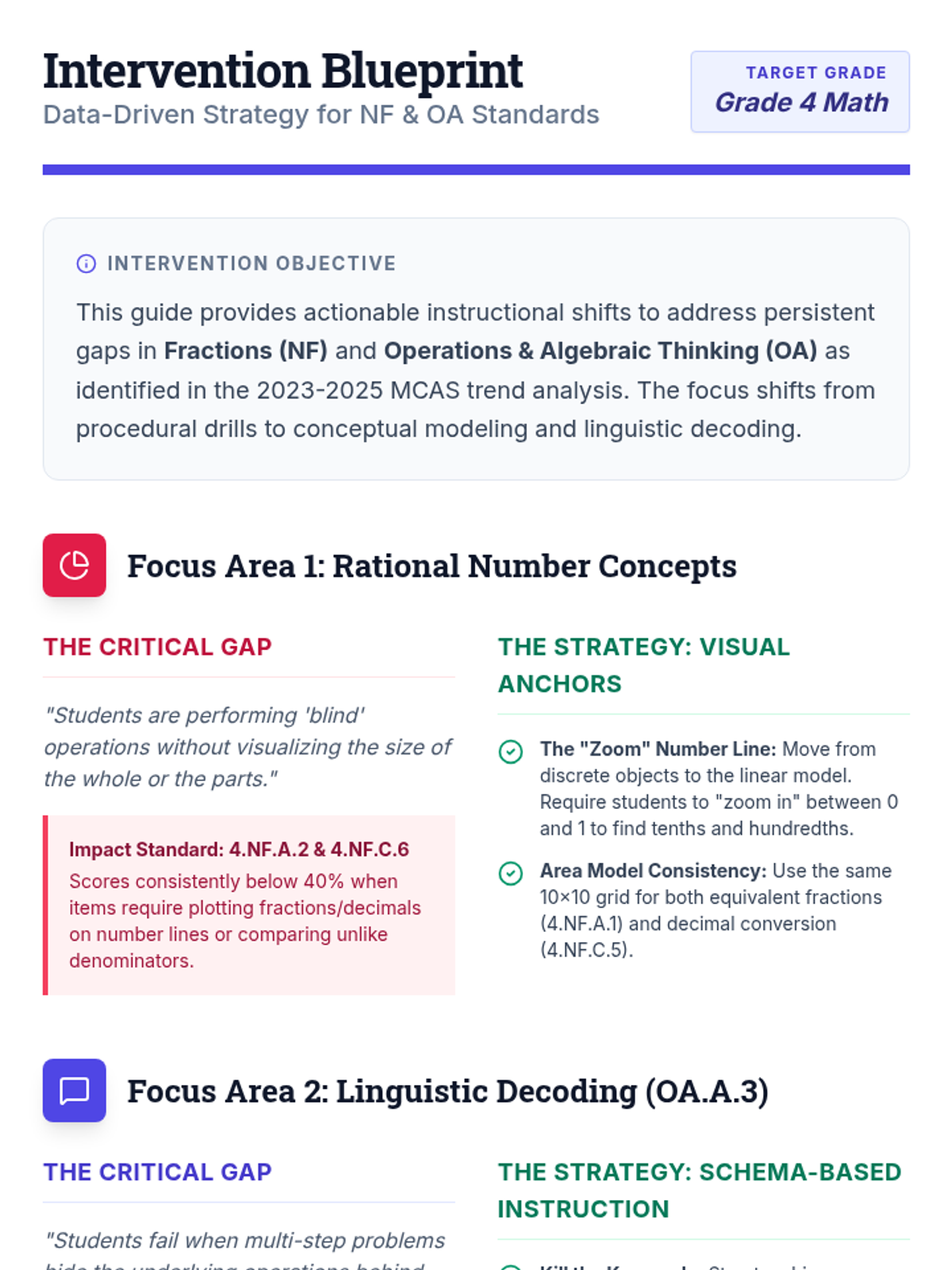
A comprehensive multi-grade longitudinal analysis of MCAS Math data (Grades 3-4) for 2023-2025. This sequence provides diagnostic reporting, visual aids, and instructional intervention strategies based on identified categorical trends.
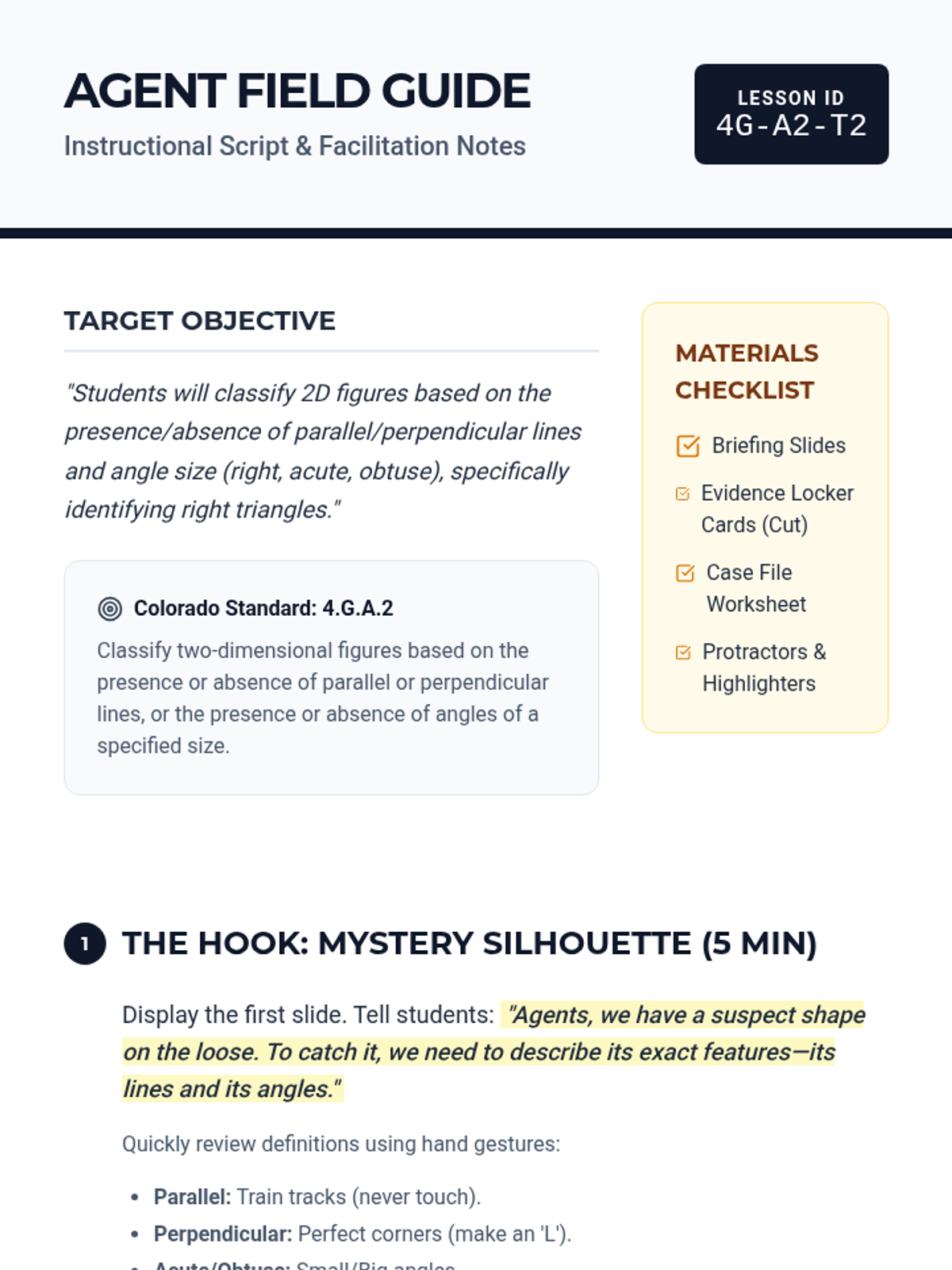
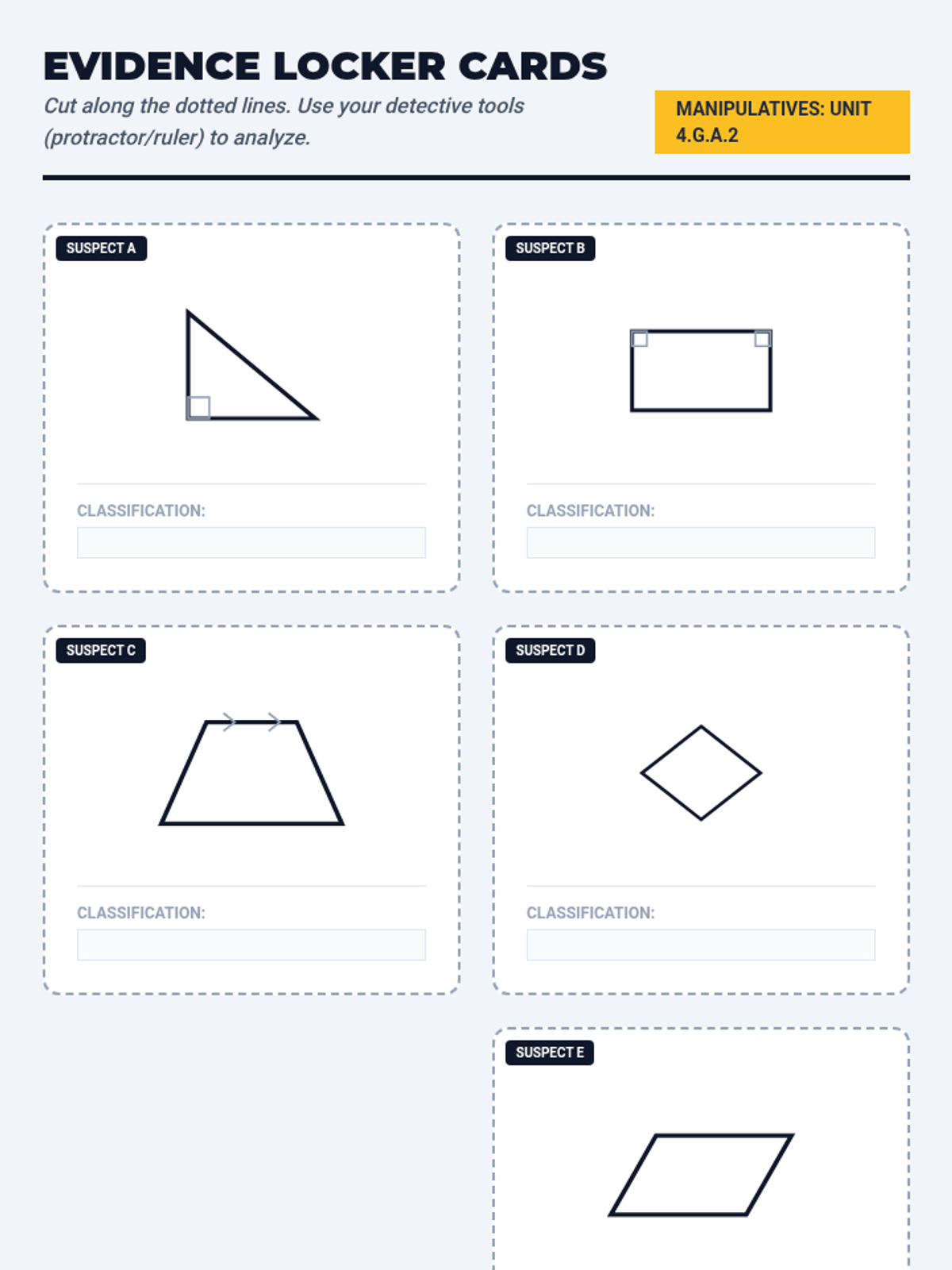
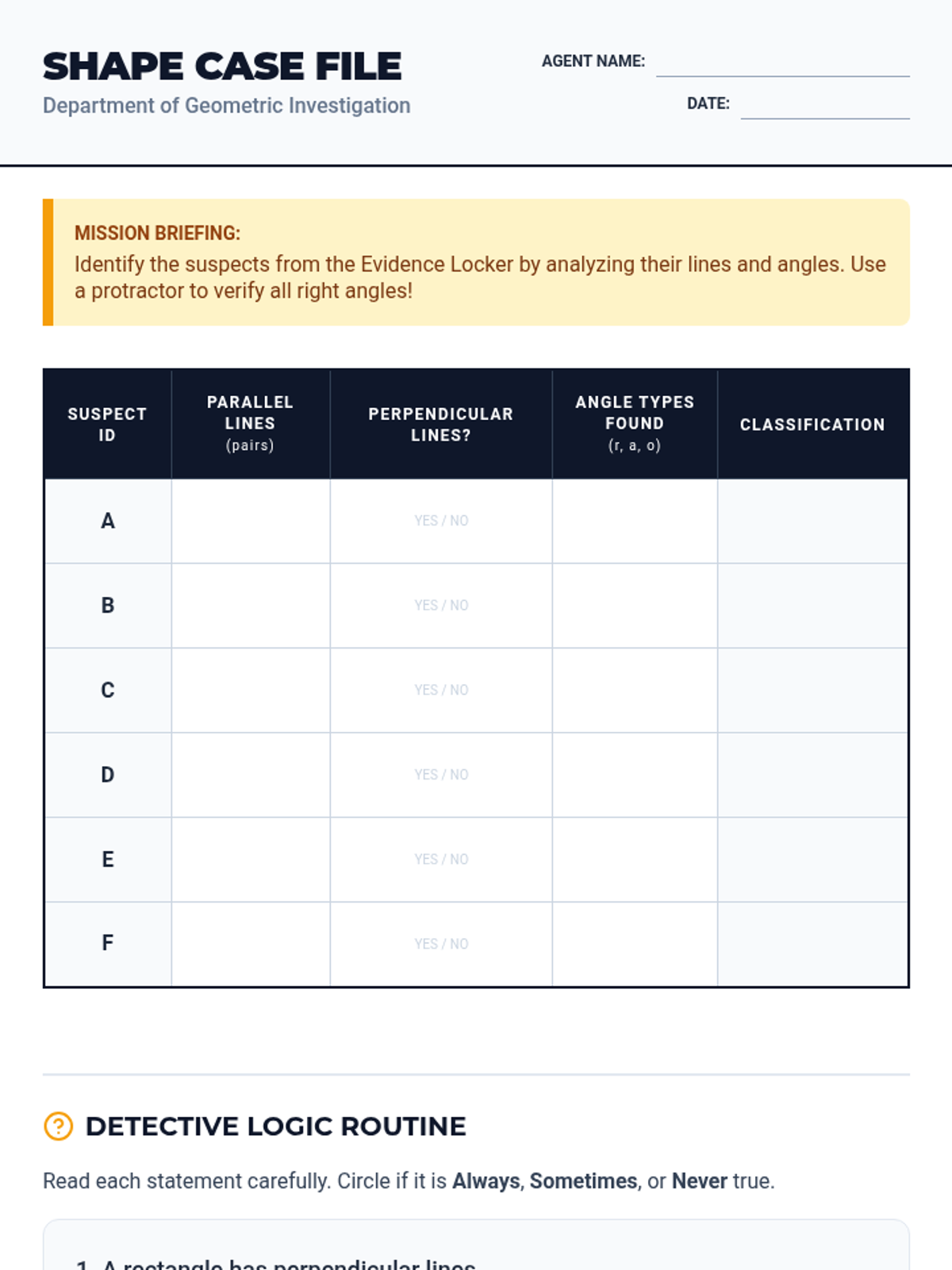
A targeted intervention sequence for Grade 4 students to master the classification of 2D figures using properties of lines and angles. The theme of a 'Shape Detective Agency' provides an engaging context for rigorous attribute analysis and evidence-based justification.
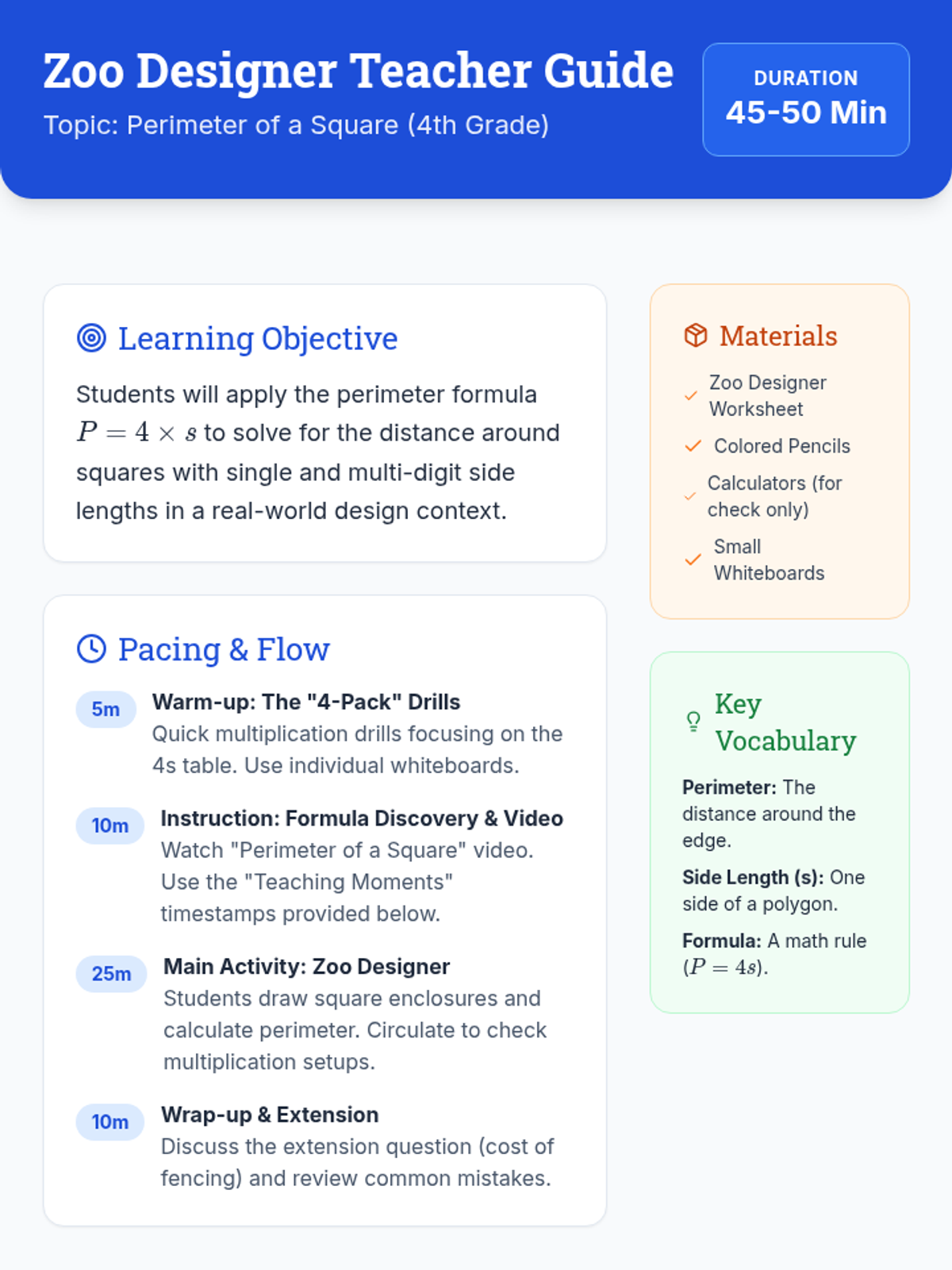
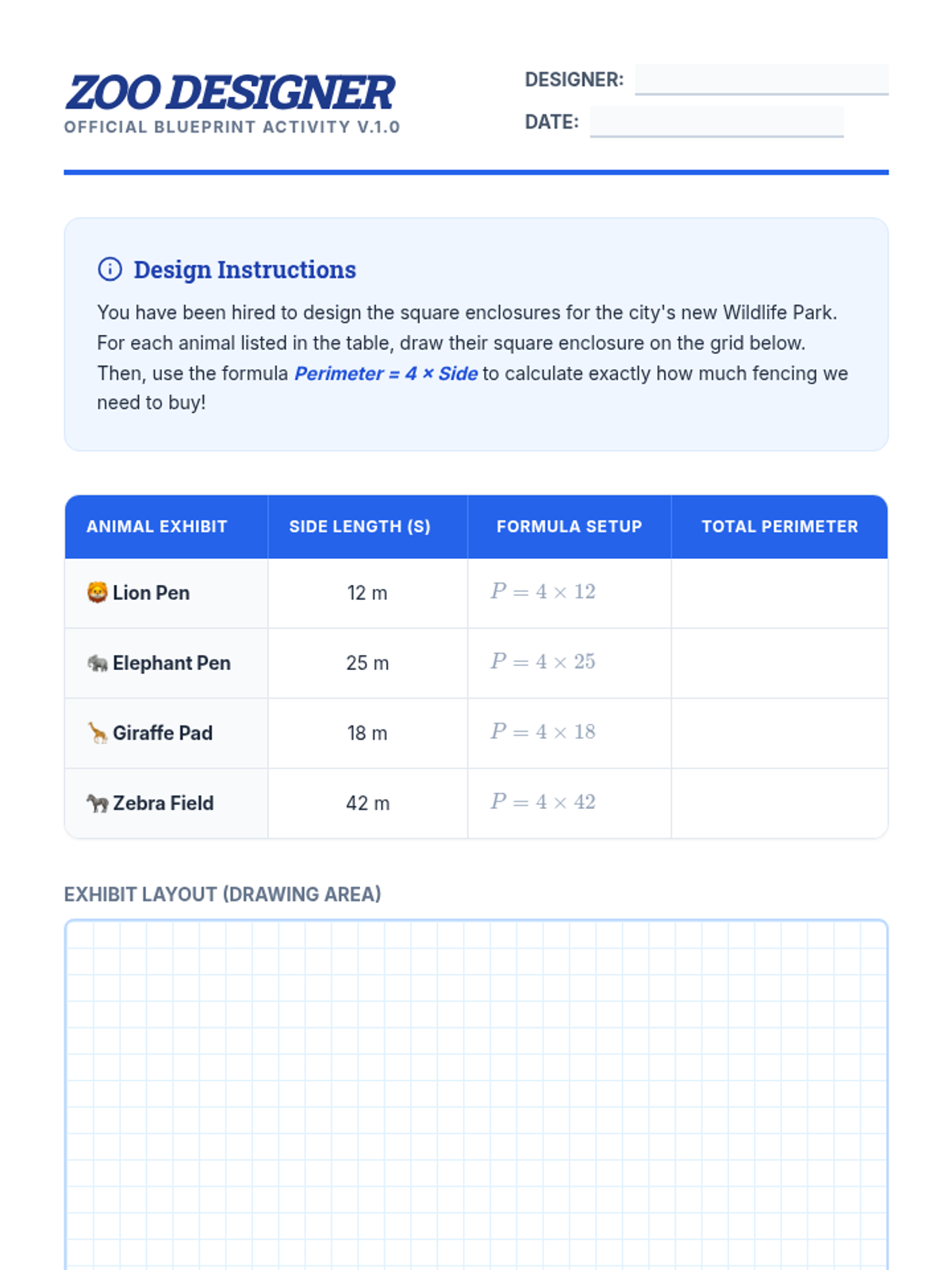
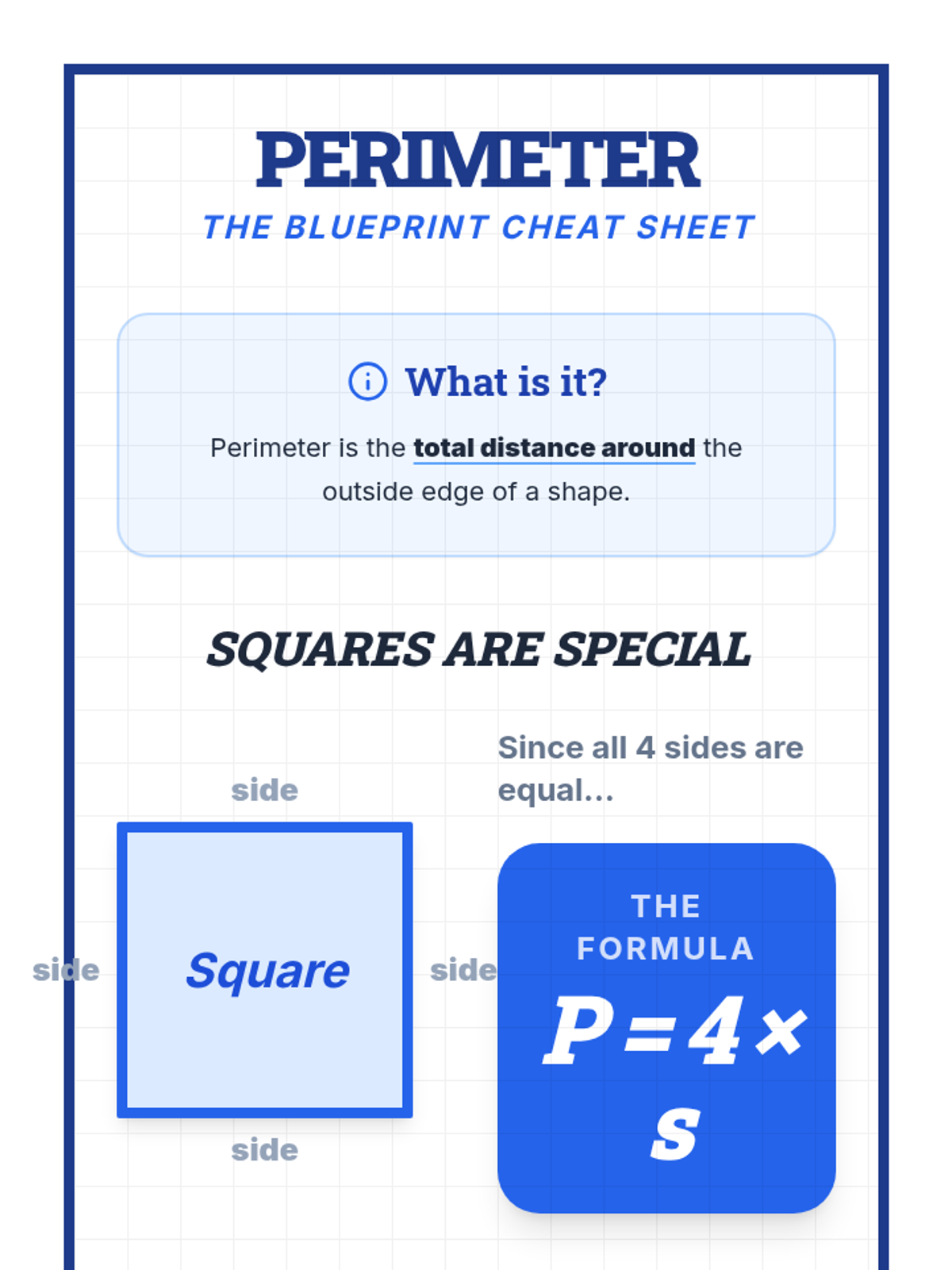
A math sequence for 4th graders focused on mastering the perimeter formula for squares, specifically applying multi-digit multiplication in real-world contexts.
A mastery-based sequence focusing on the logical hierarchy of geometric shapes, addressing complex classifications and property-based definitions through Venn diagrams and logic puzzles.
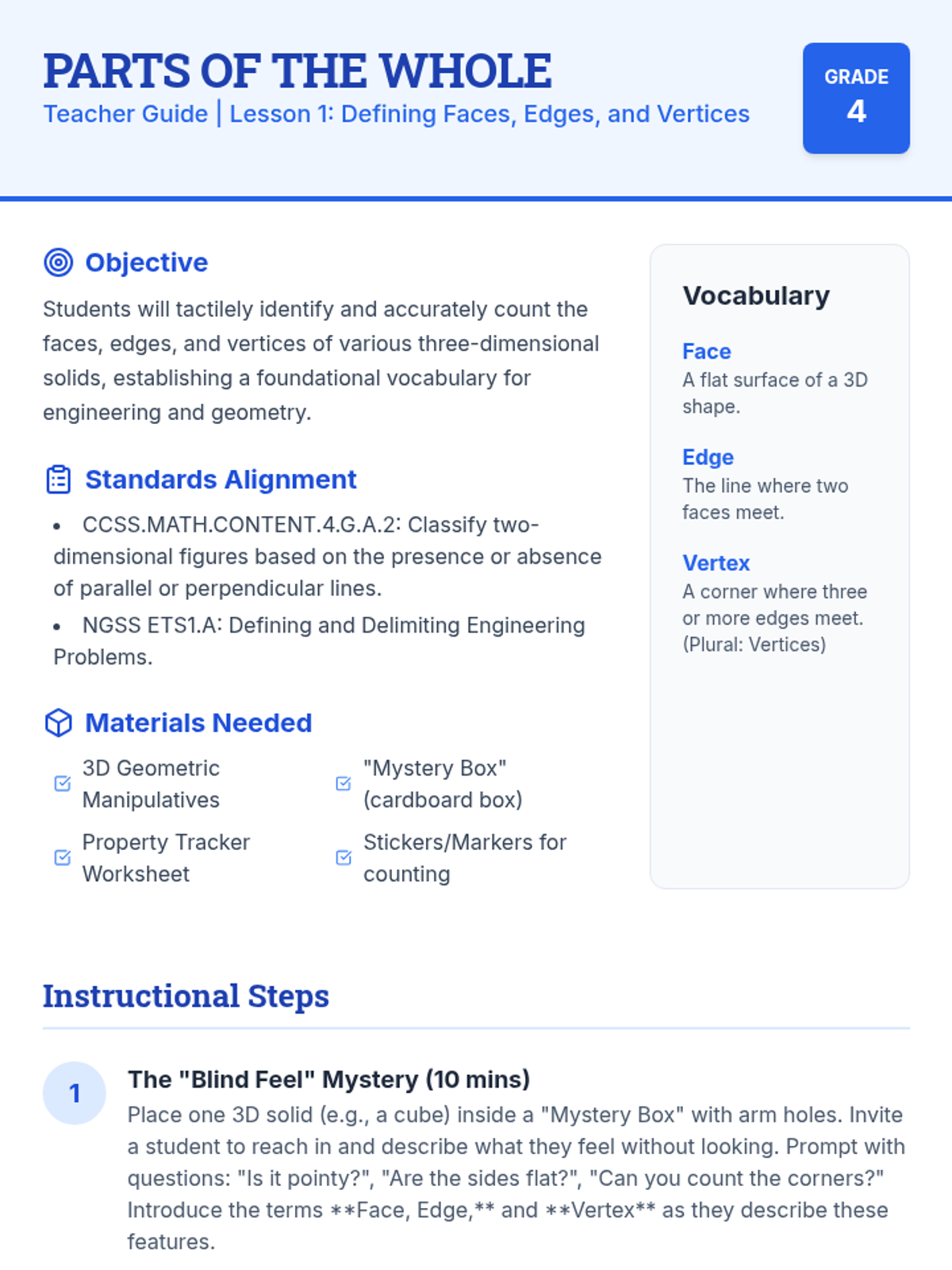
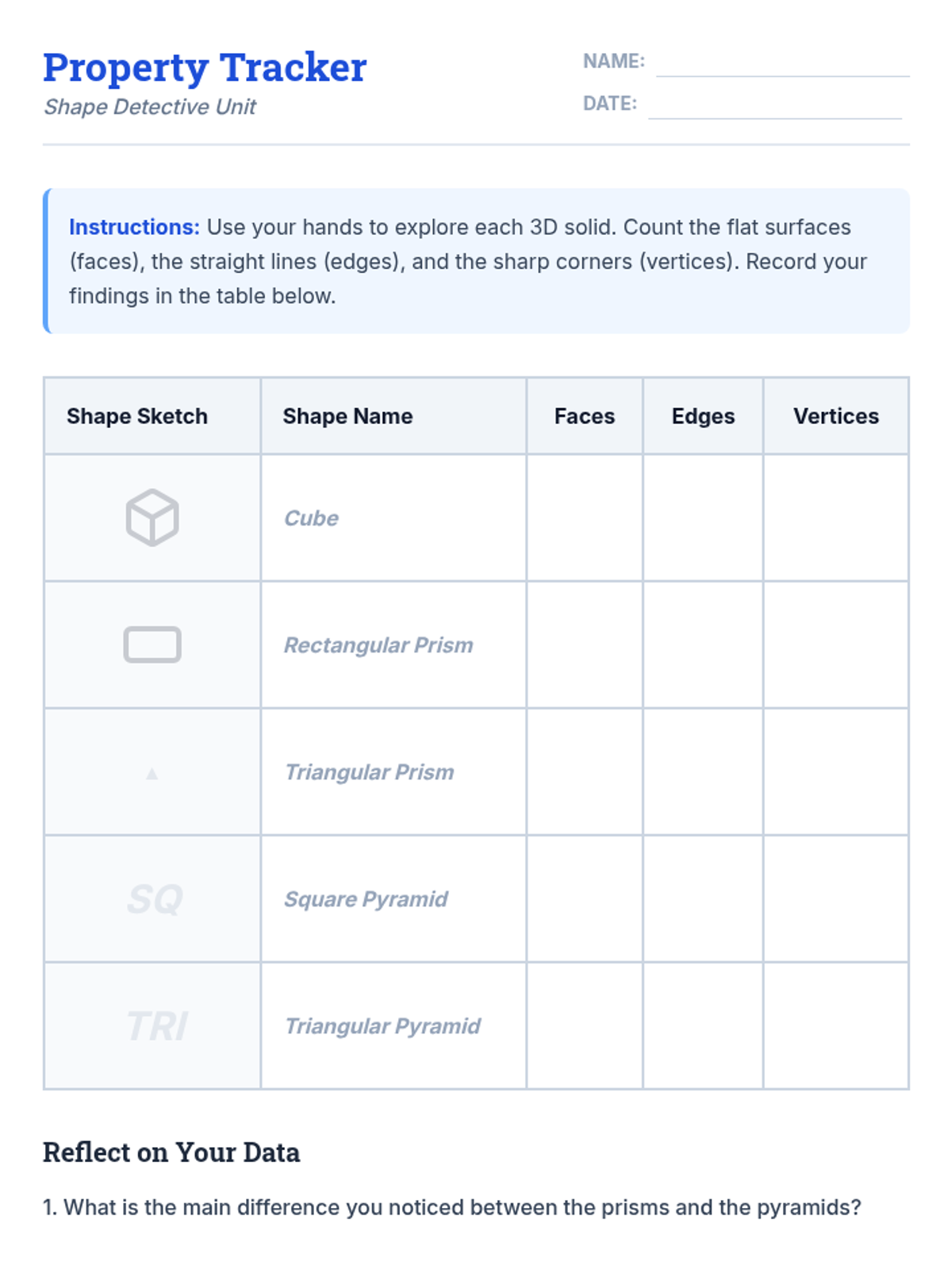
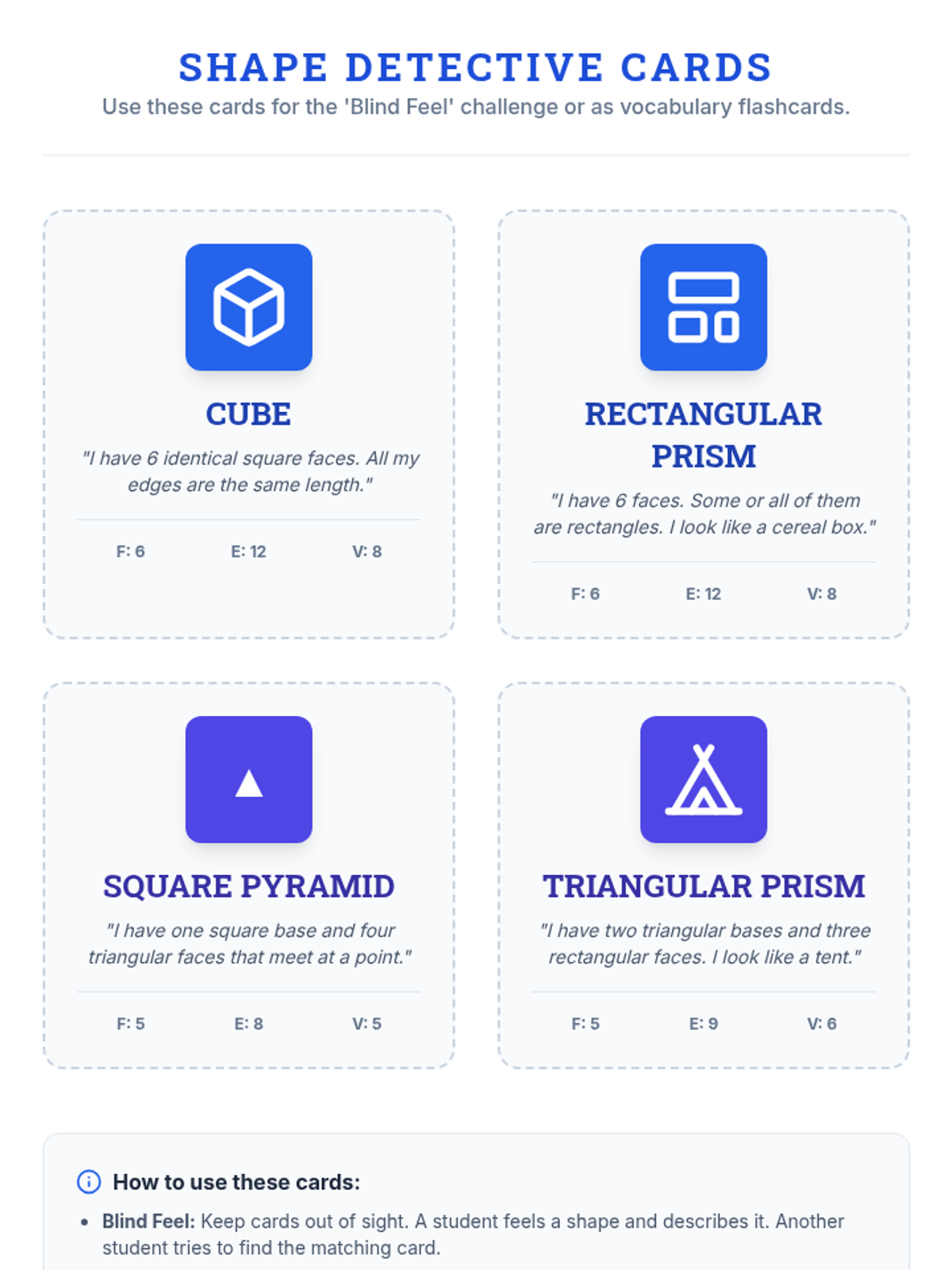
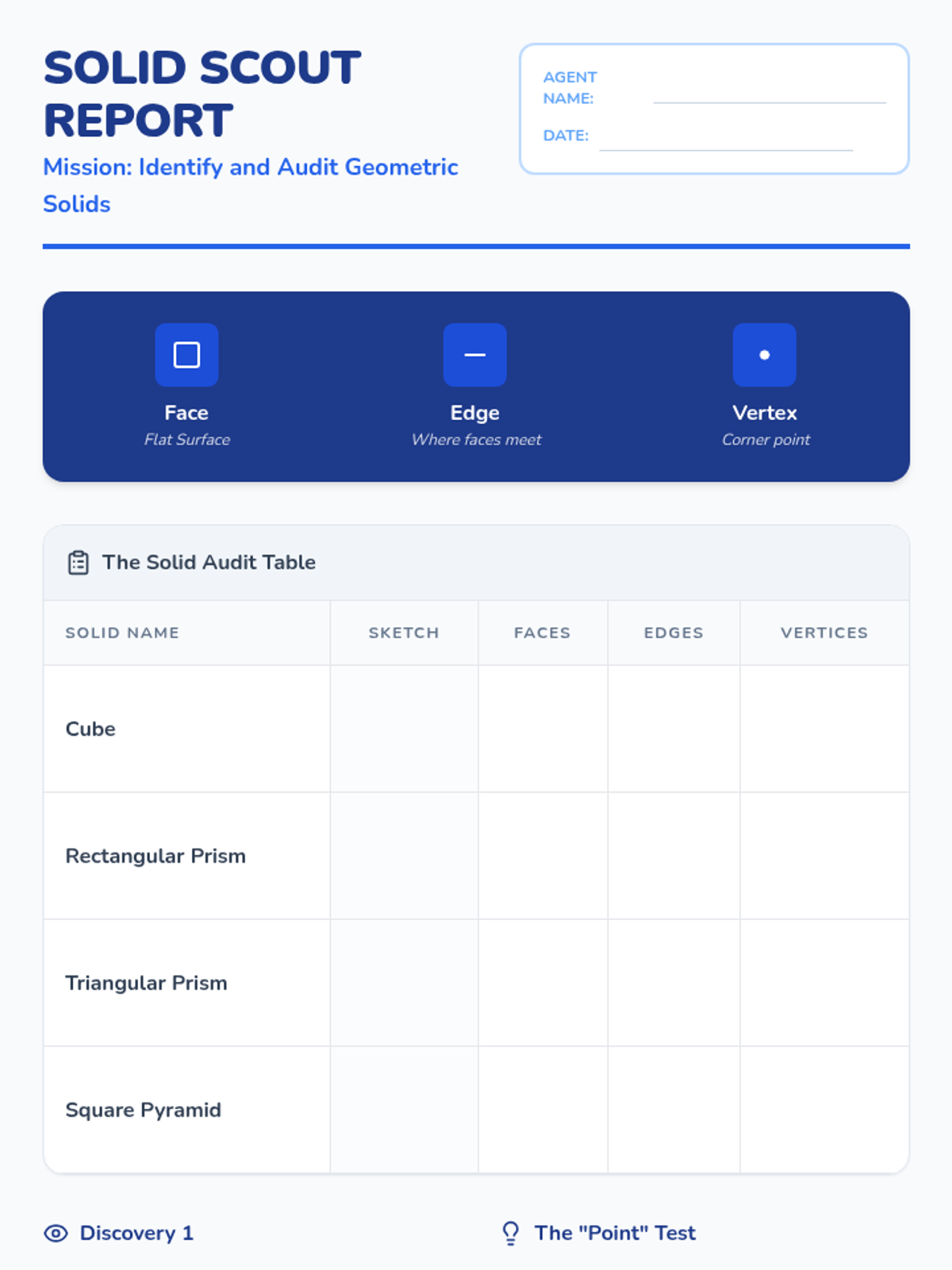
A project-based sequence for 4th graders exploring 3D geometry through the lens of engineering and structural design. Students transition from identifying properties like faces, edges, and vertices to testing structural stability and designing a geometric city block.
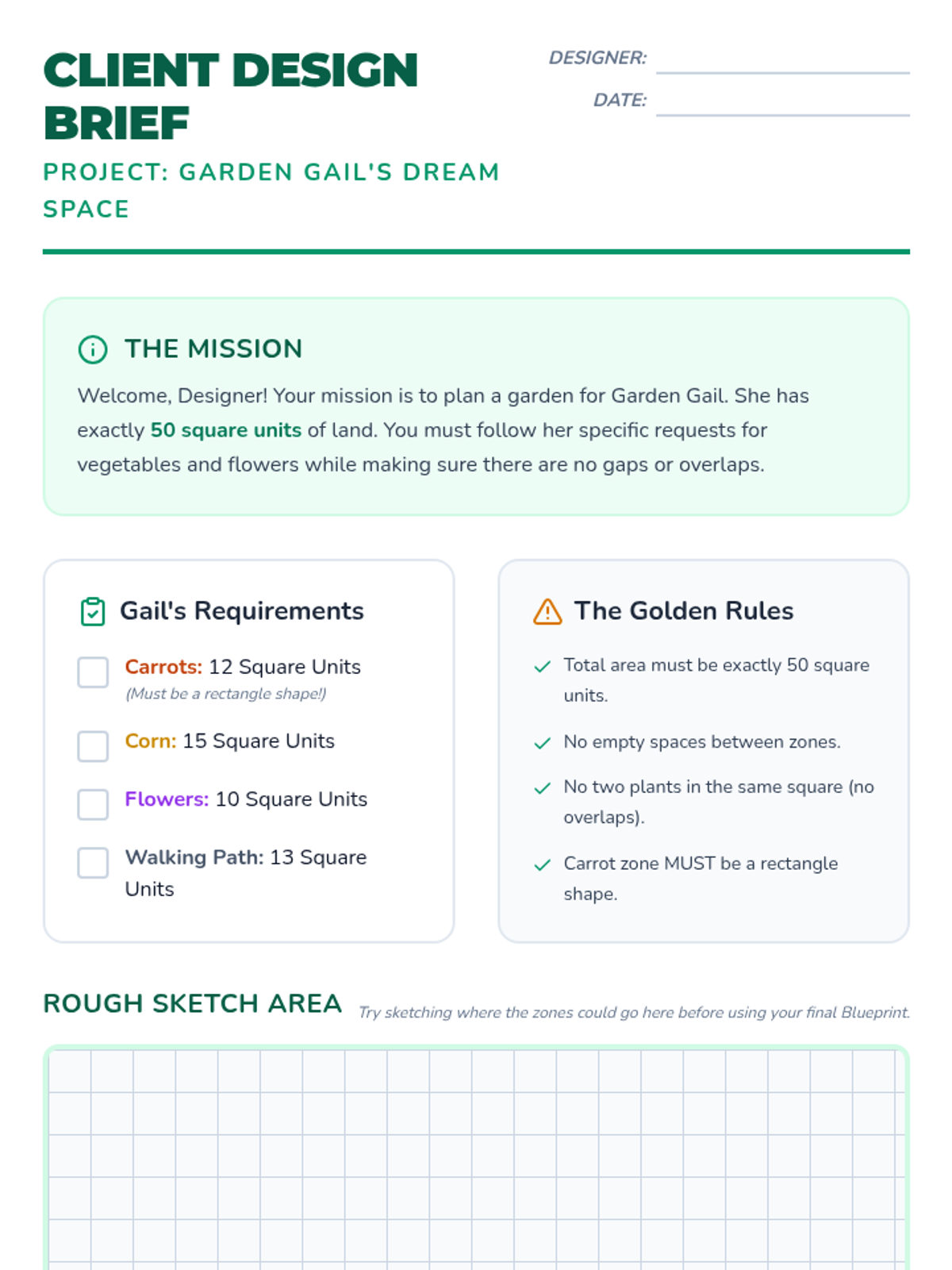
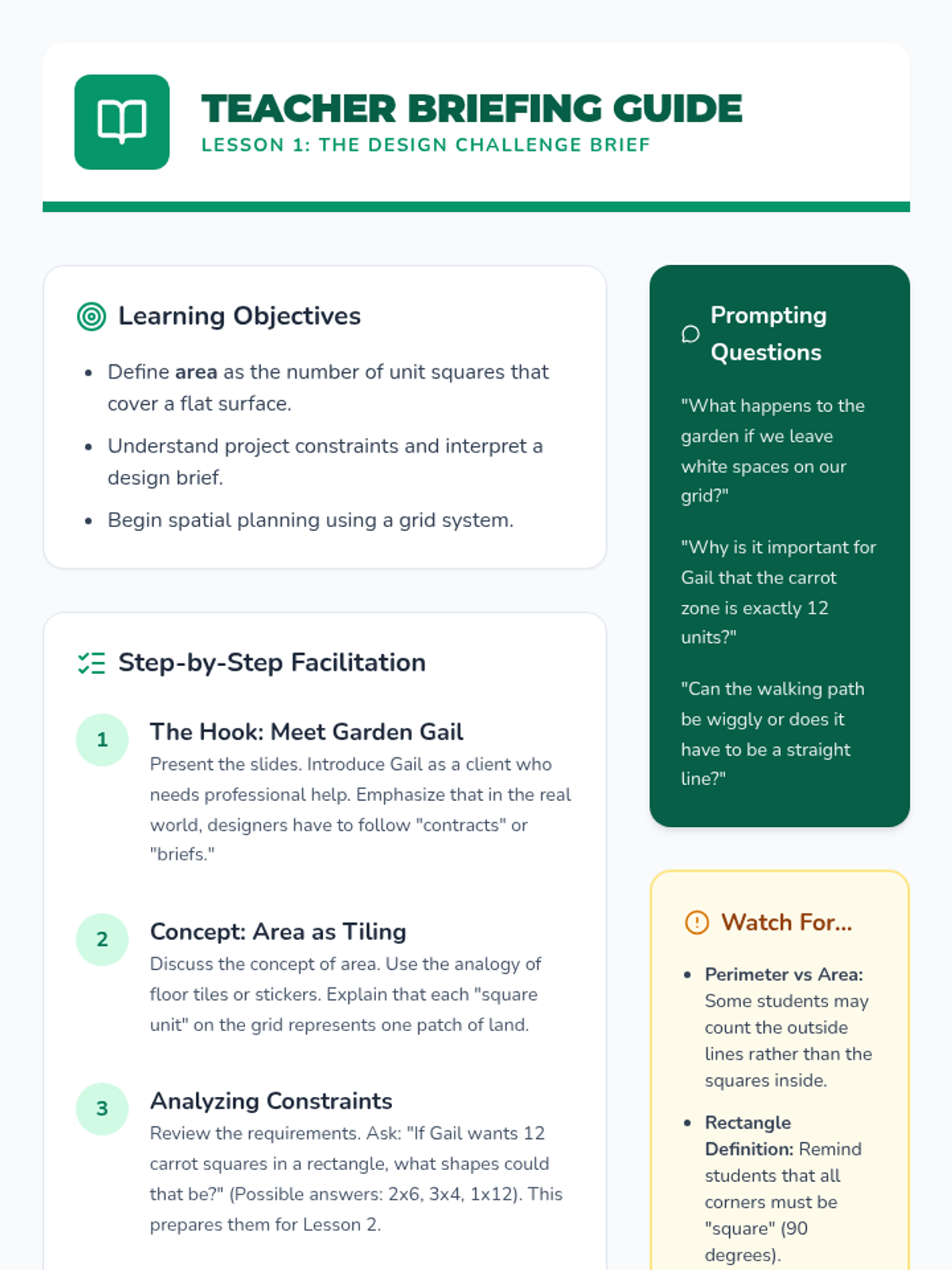
Students step into the shoes of garden designers to learn area. They use 1-inch grids to plan, calculate, and verify the layout of 'Dream Gardens', connecting the concept of square units to real-world spatial planning.
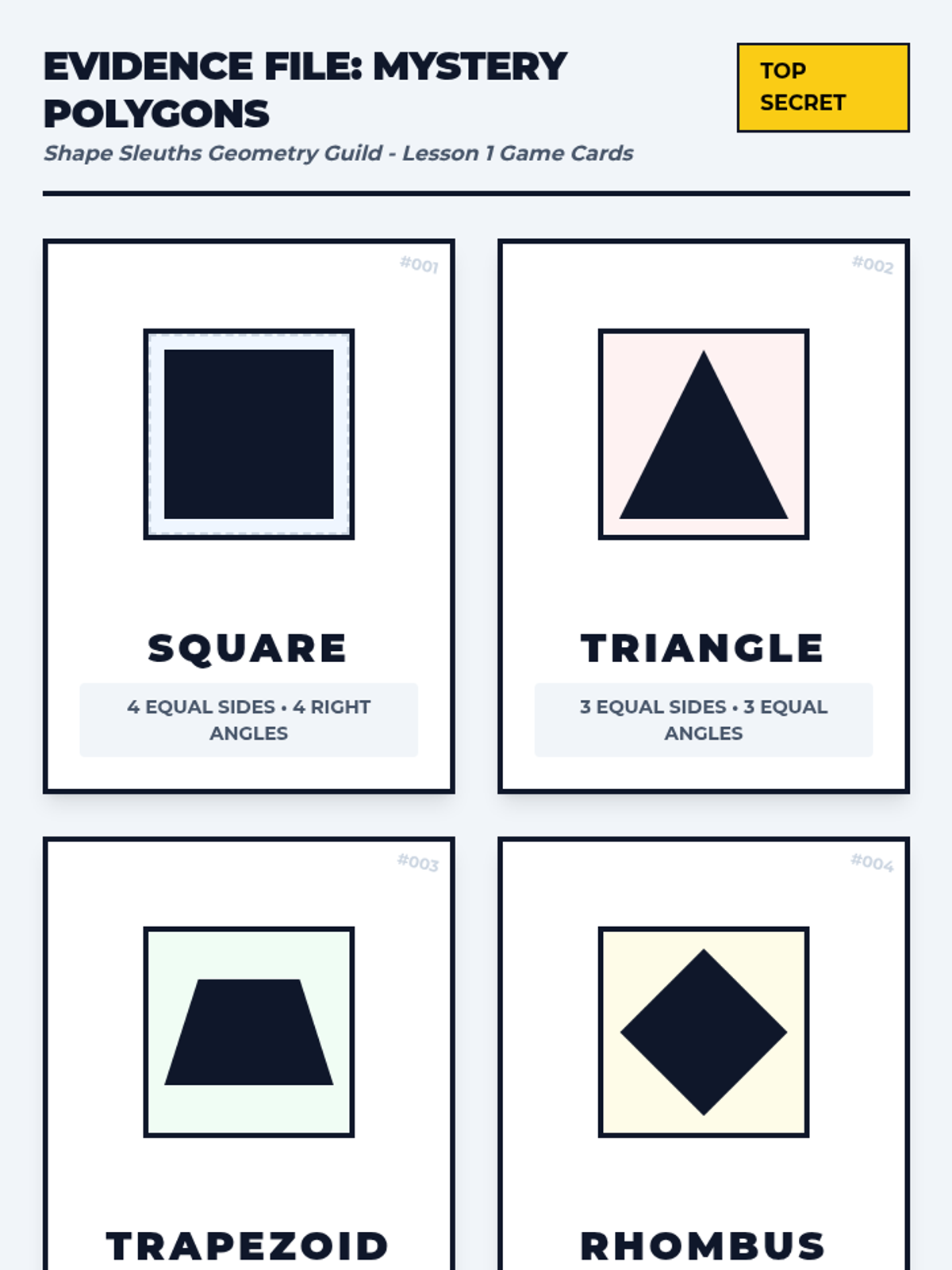
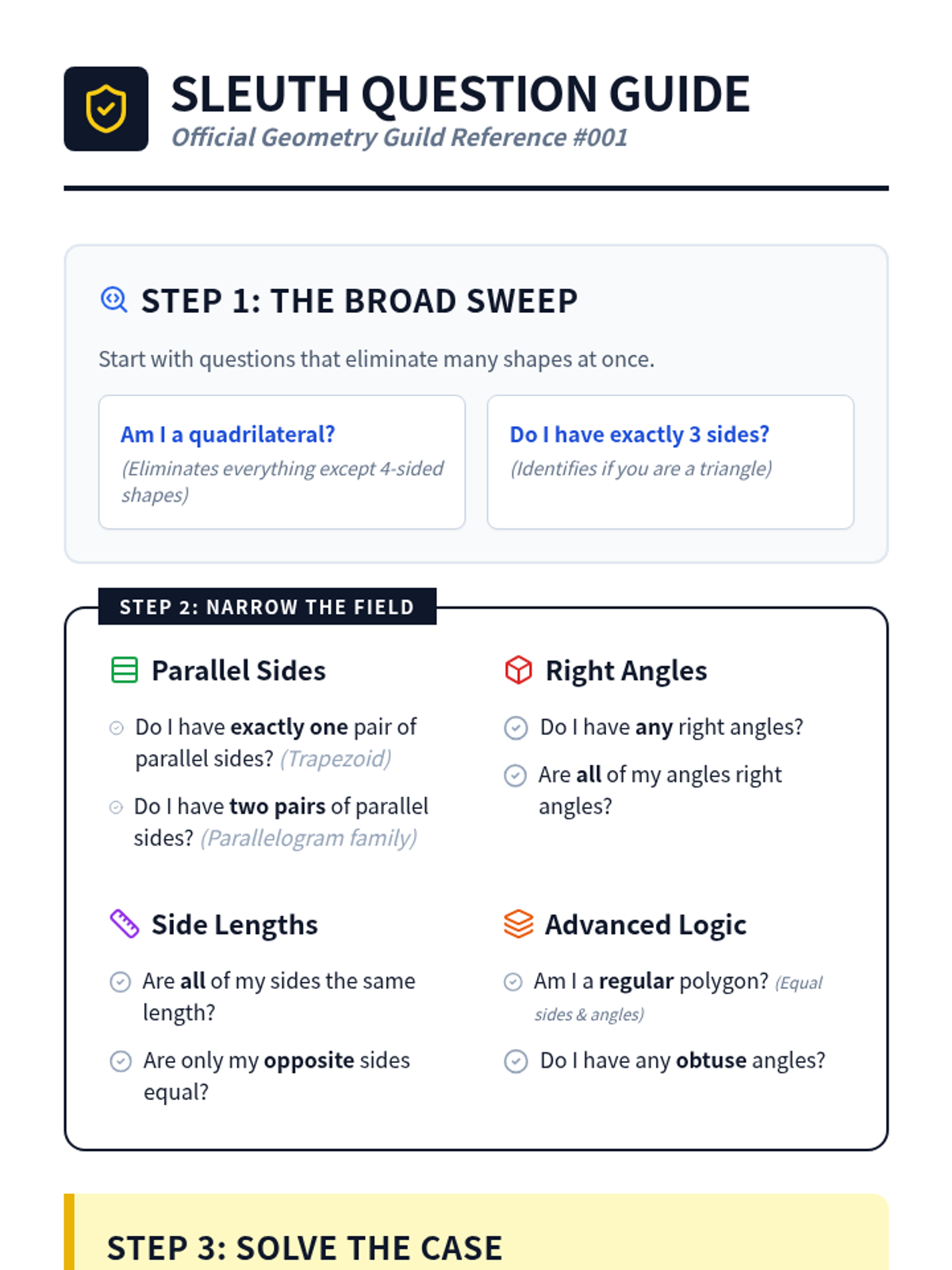
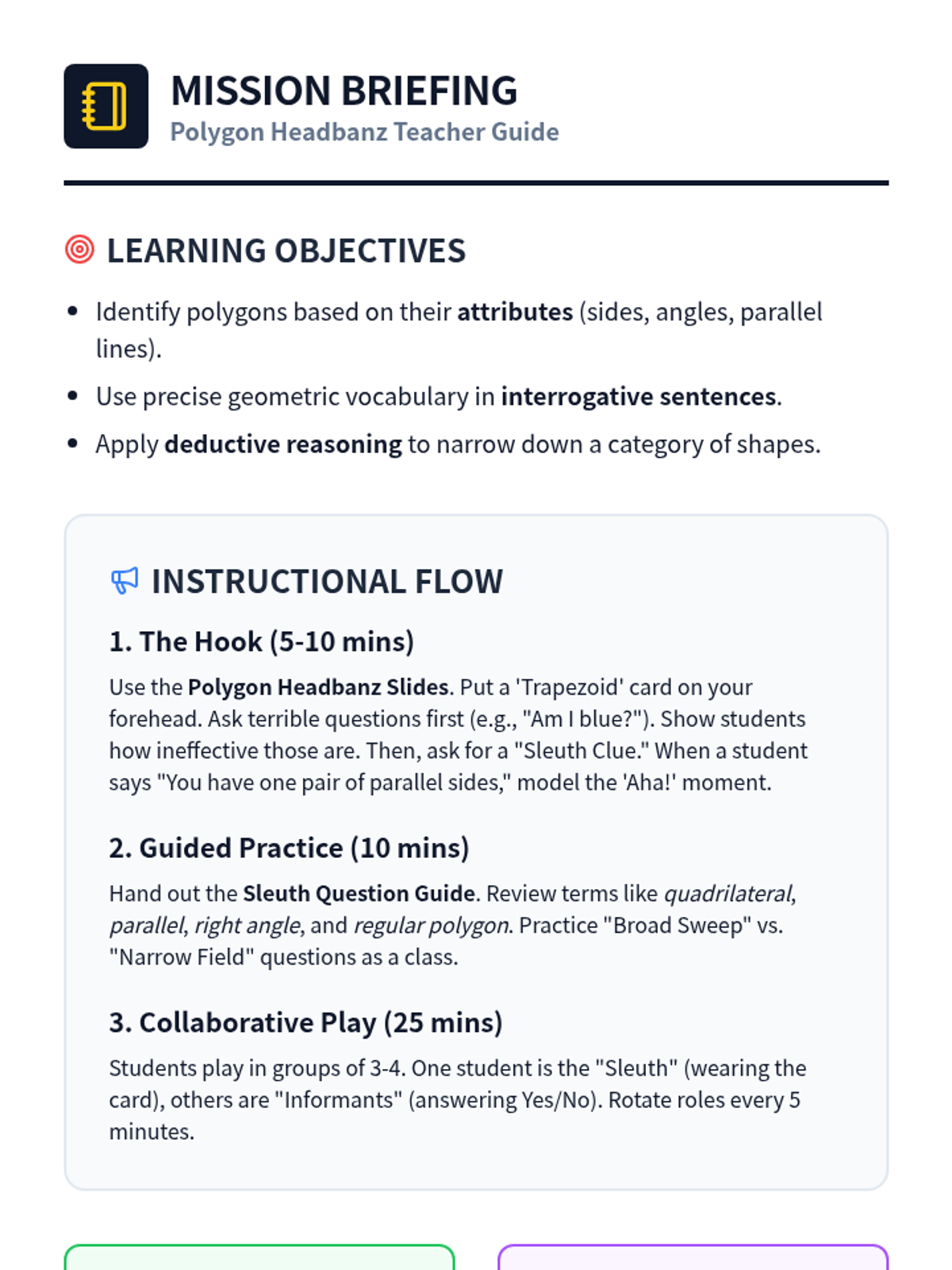
A gamified geometry unit where 3rd grade students become 'Shape Sleuths' to master the classification of 2D figures through strategic play and deductive reasoning. Students progress from attribute identification to complex spatial composition and hierarchical classification.
This sequence guides 4th-grade students through the exploration of three-dimensional geometry, starting with the properties of solids and progressing to the conceptual and formulaic understanding of volume. Students move from concrete manipulation with unit cubes to abstract calculation using dimensions.
A comprehensive geometry sequence for 4th graders exploring angles as geometric elements and rotations. Students move from basic definitions to precise measurement and classification of 2D shapes based on angle properties.
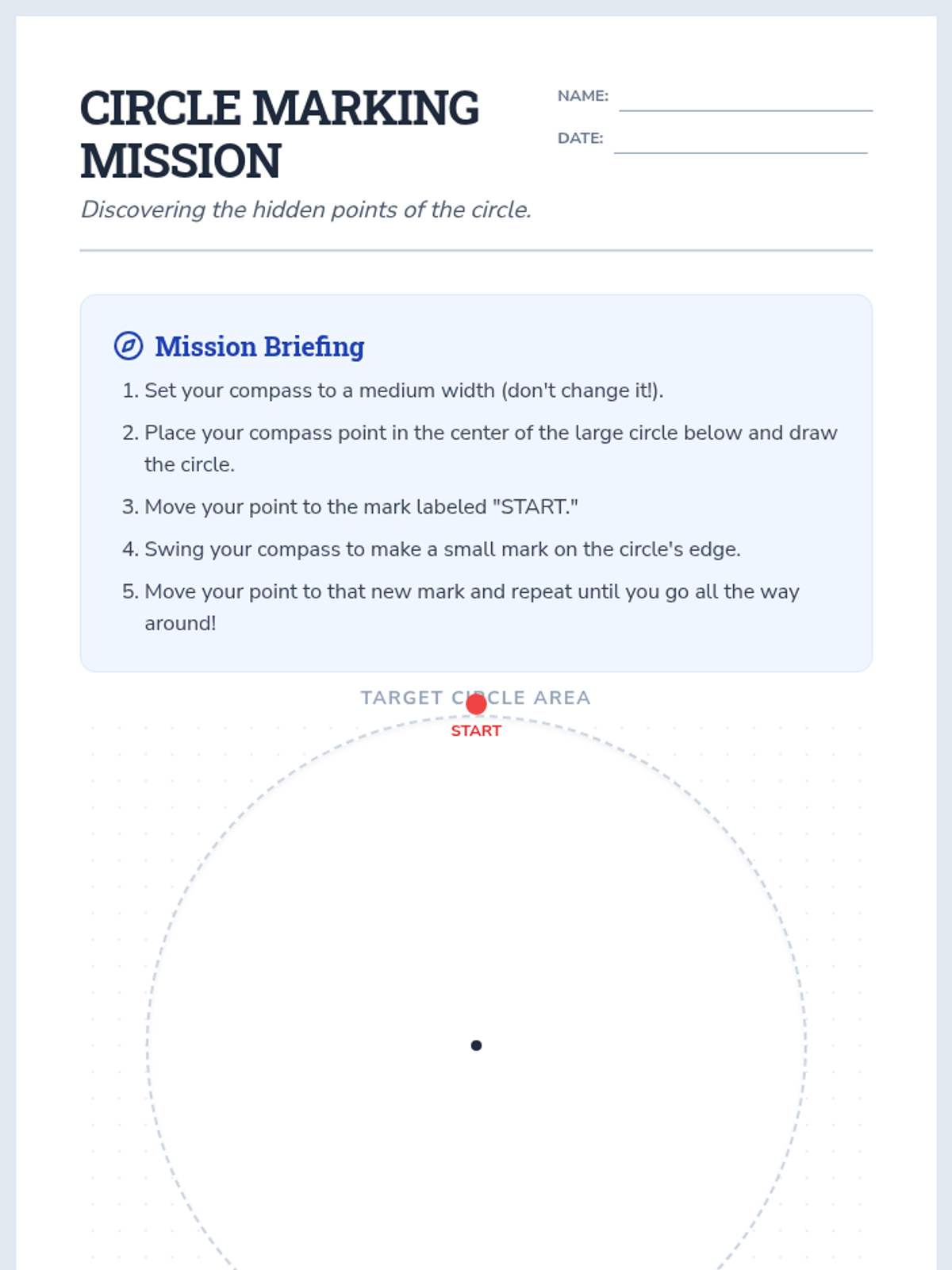
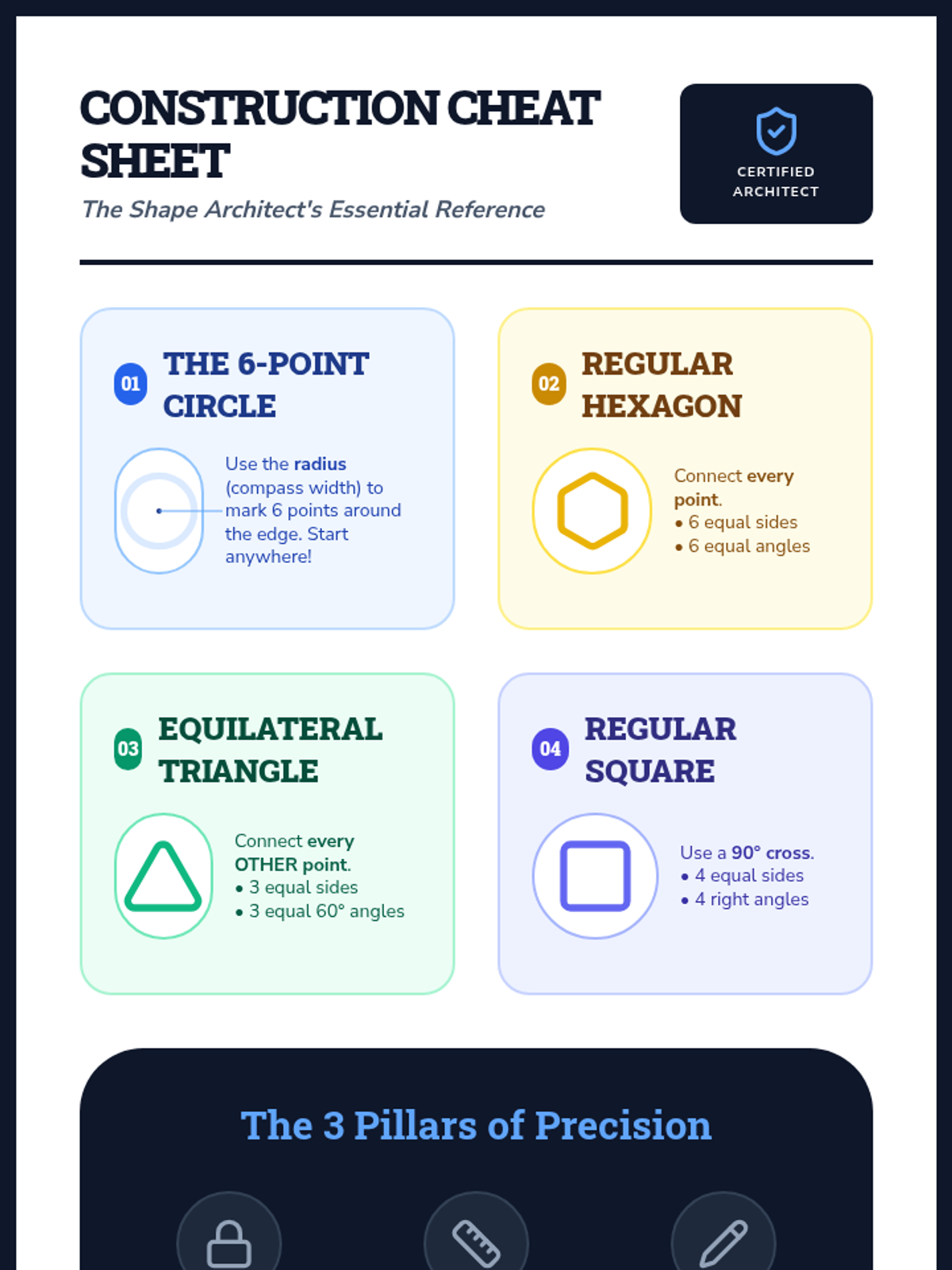
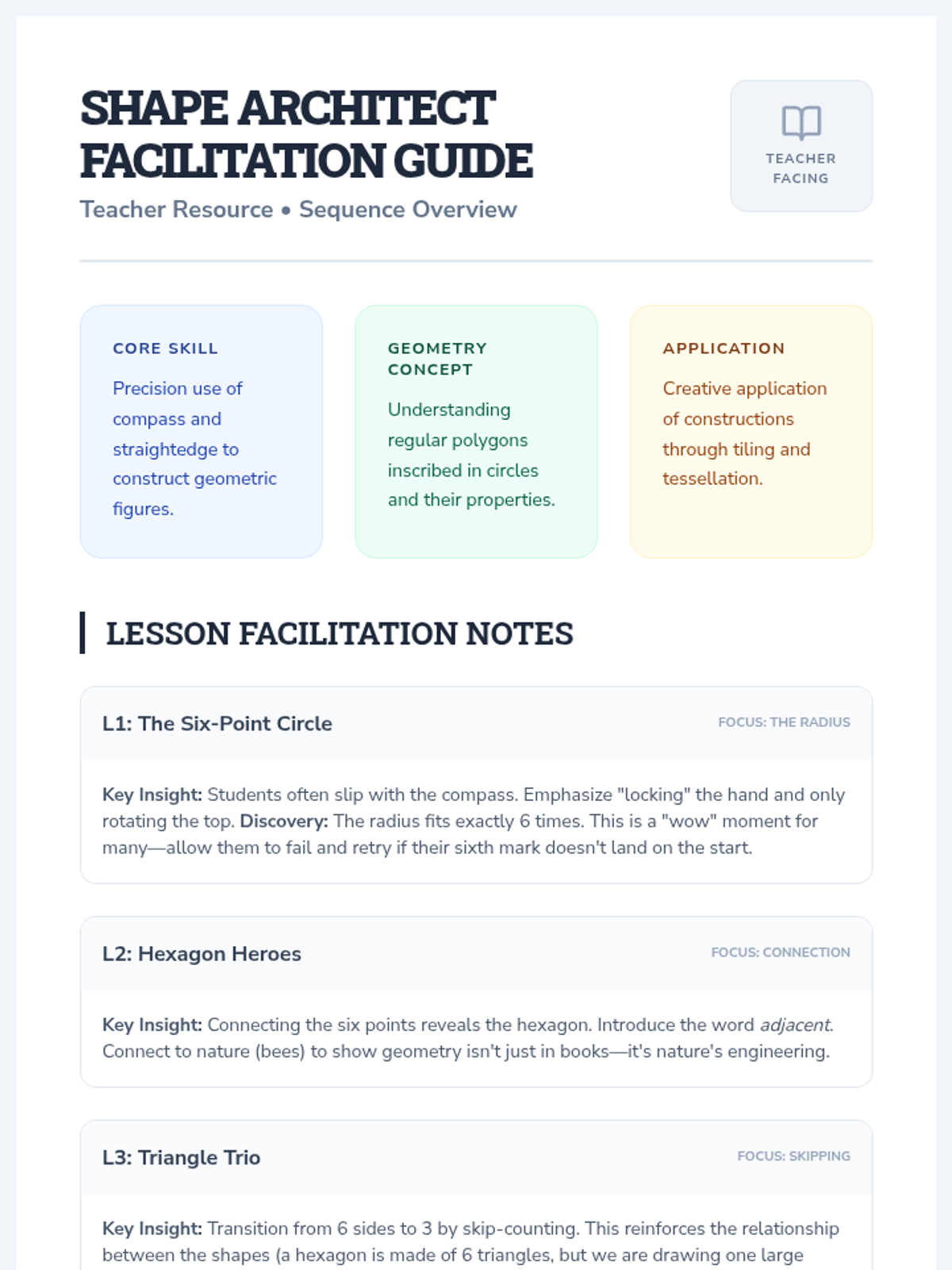
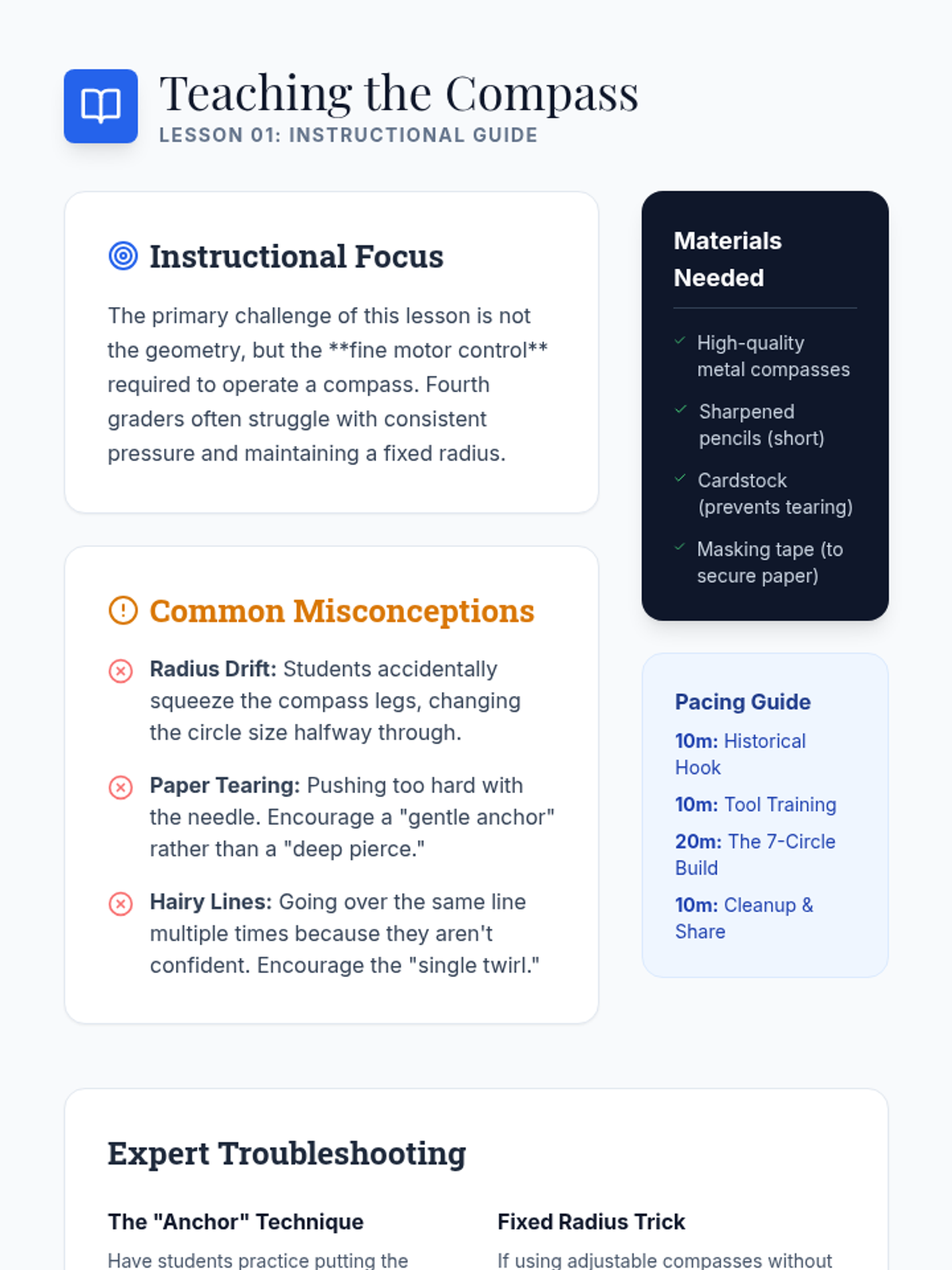
A 4th-grade geometry sequence where students use a compass and straightedge to construct regular polygons (triangles, hexagons, and squares) inscribed in circles, culminating in a creative tile design project.
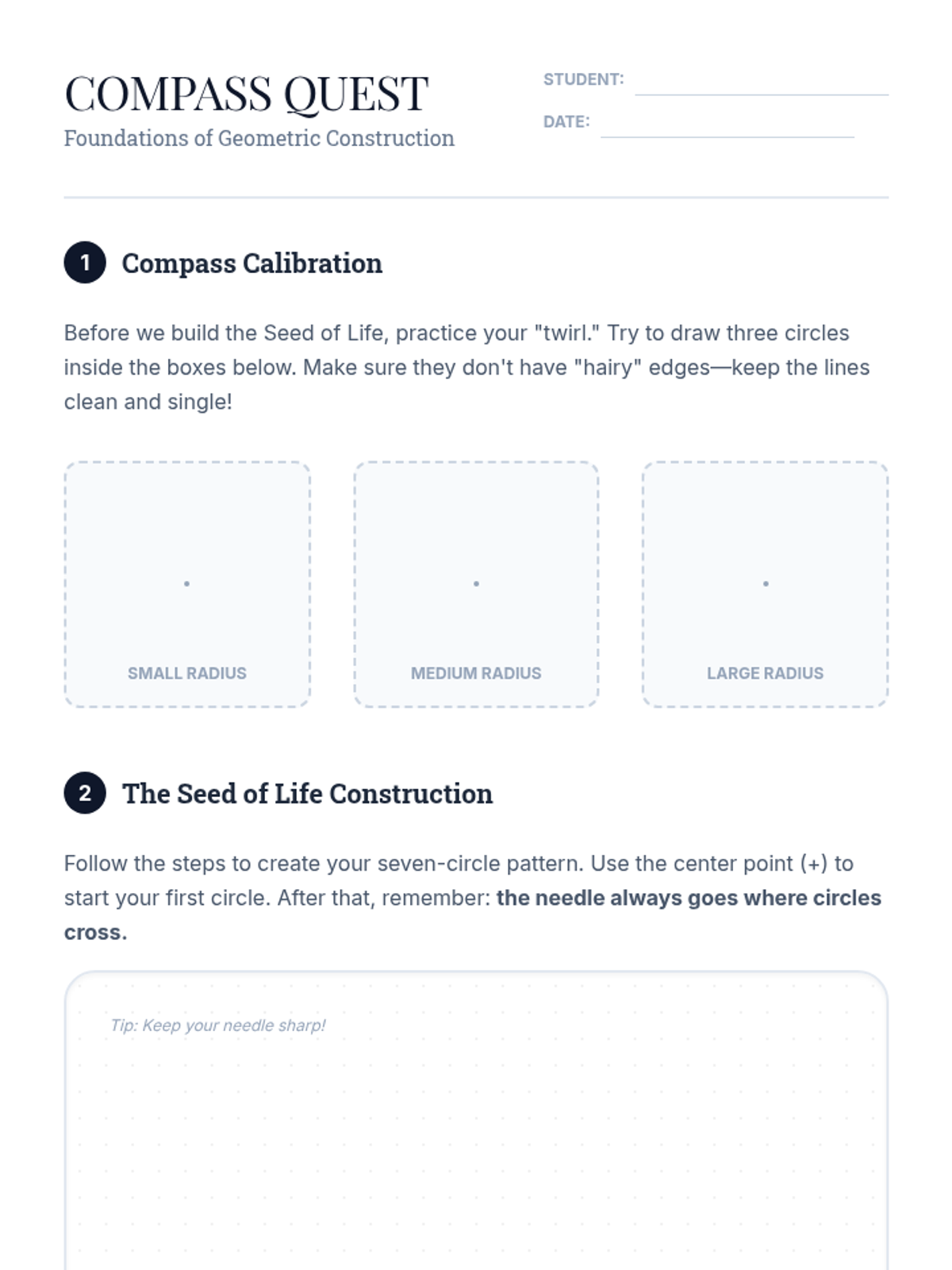
A 4th-grade geometry sequence exploring the intersection of math and art. Students master compass and straightedge constructions, moving from basic overlapping circles to complex geometric patterns and optical illusions.
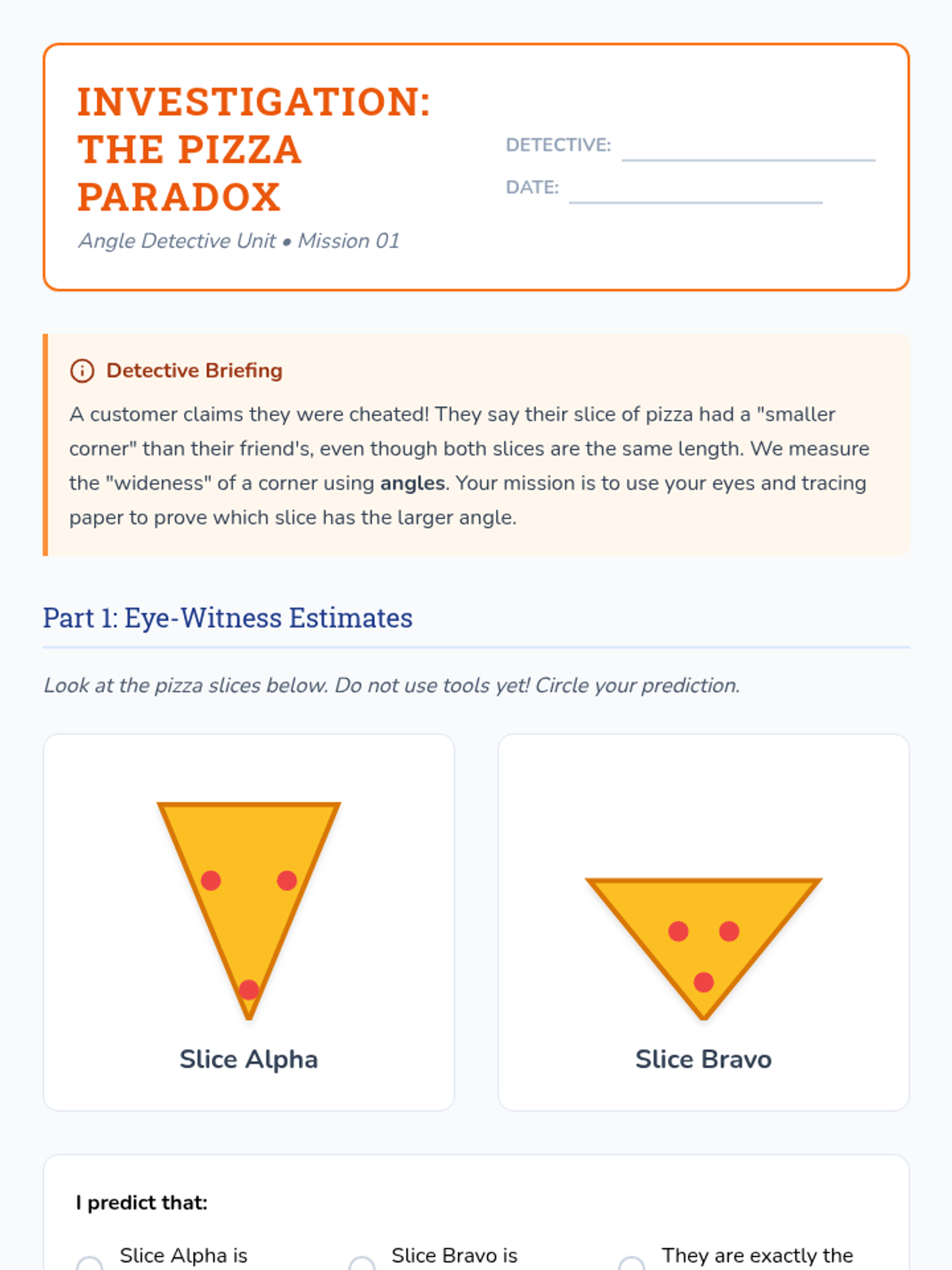
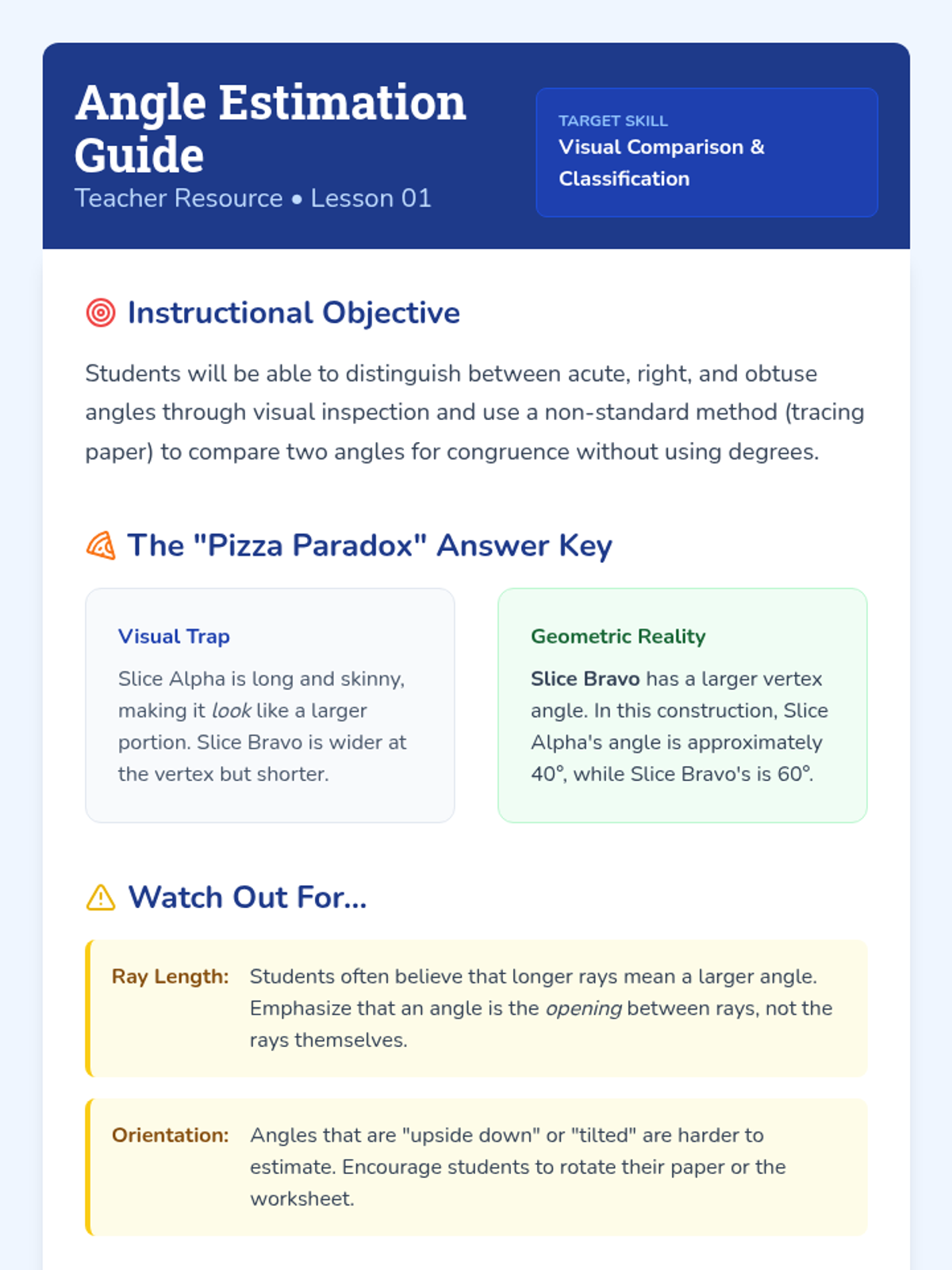
A 4th-grade geometry sequence focusing on the art and science of geometric constructions. Students move from estimating angles to using compasses and straightedges to copy, bisect, and construct specific angles, culminating in a radially symmetrical art project.
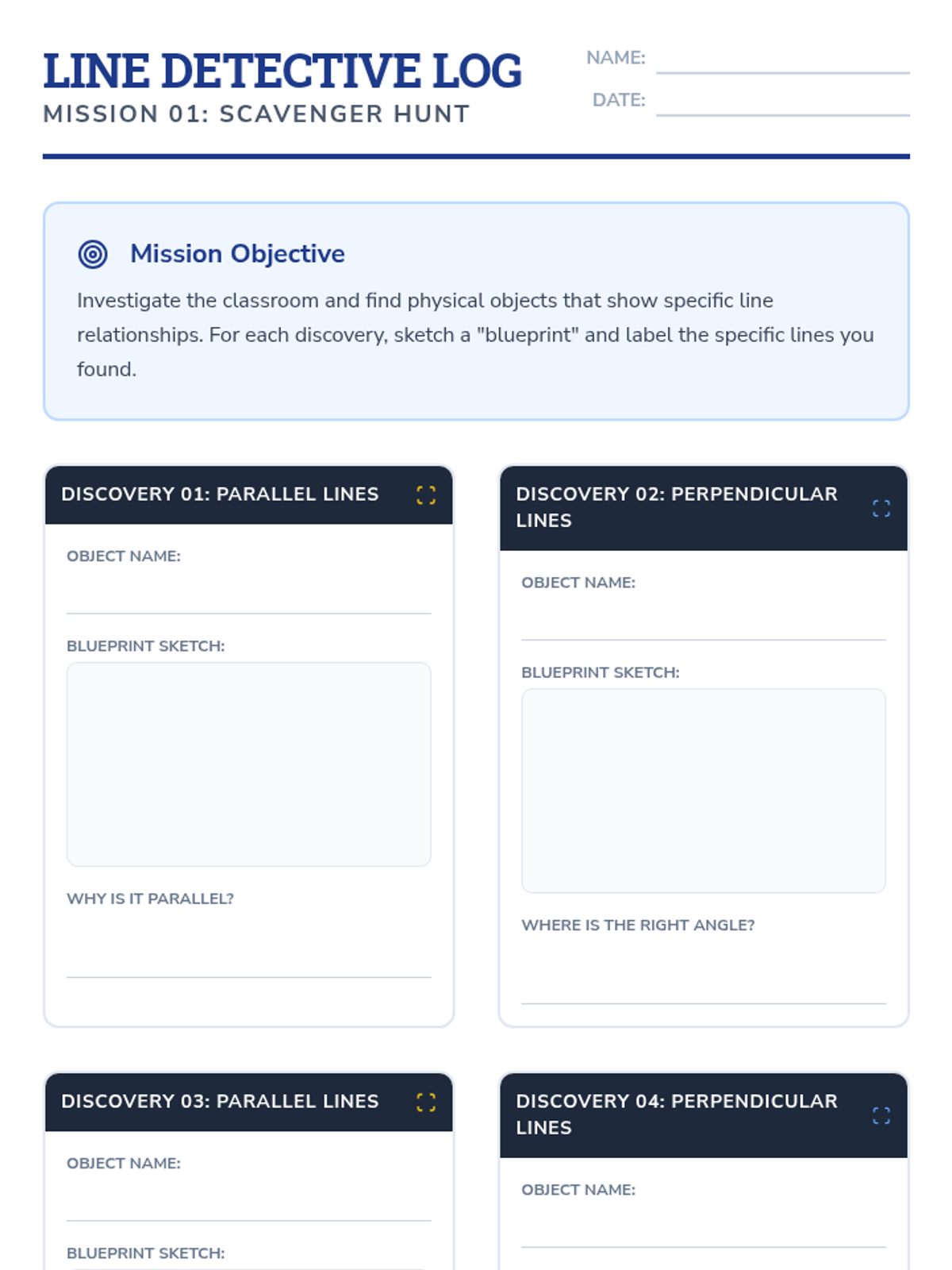
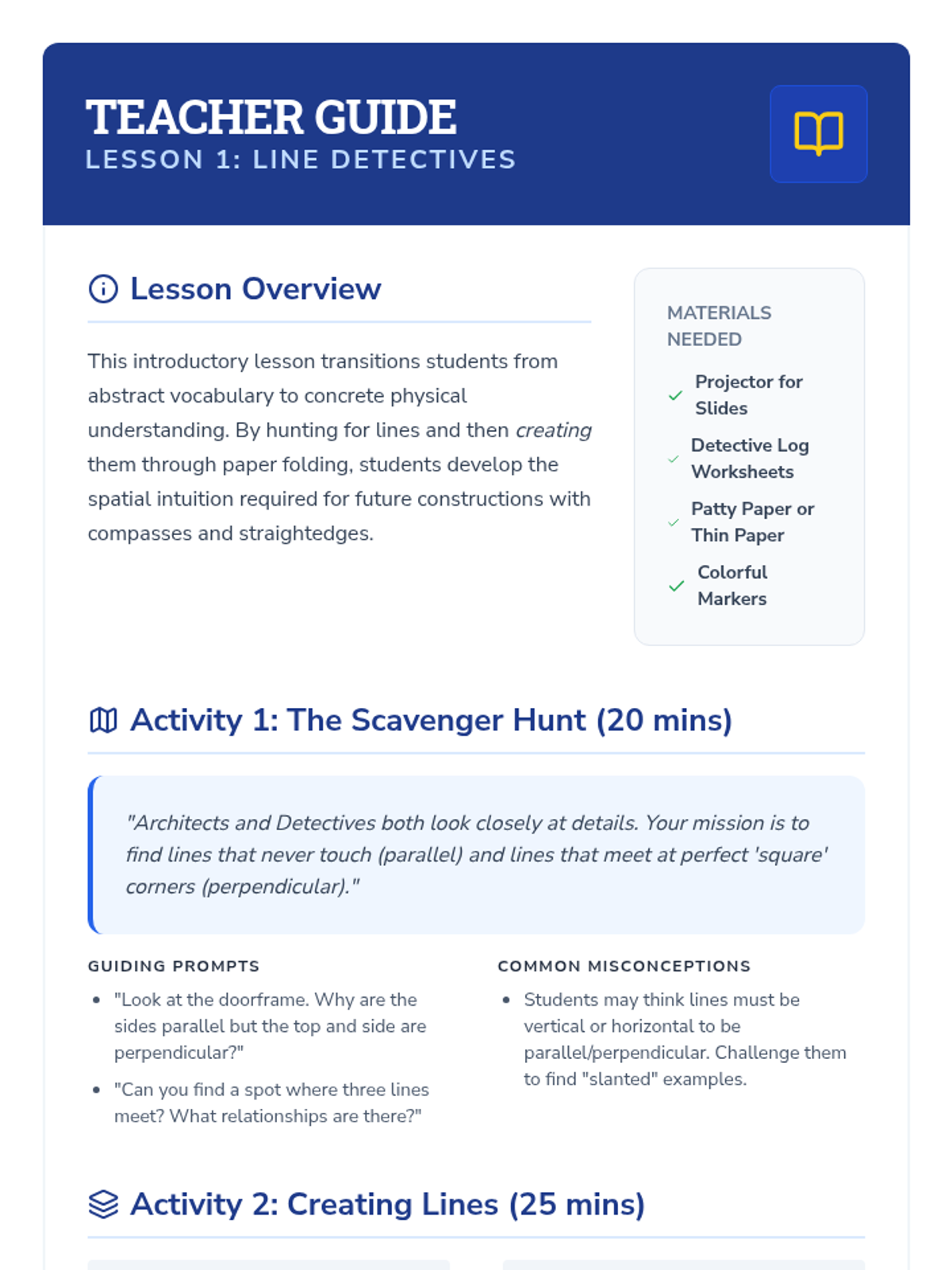
Students explore geometric constructions focusing on parallel and perpendicular relationships using tools and folding techniques, culminating in a city grid design project.
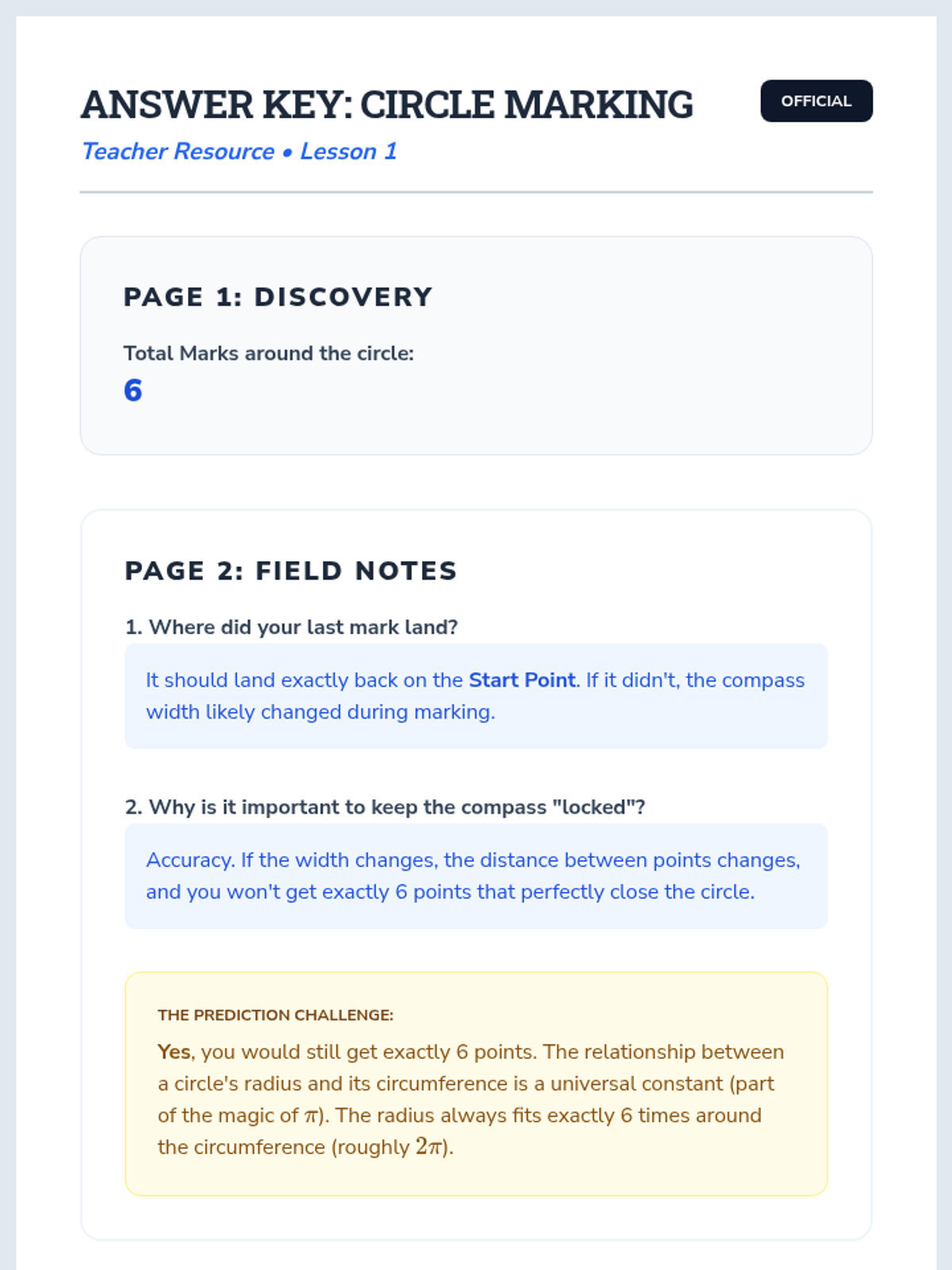
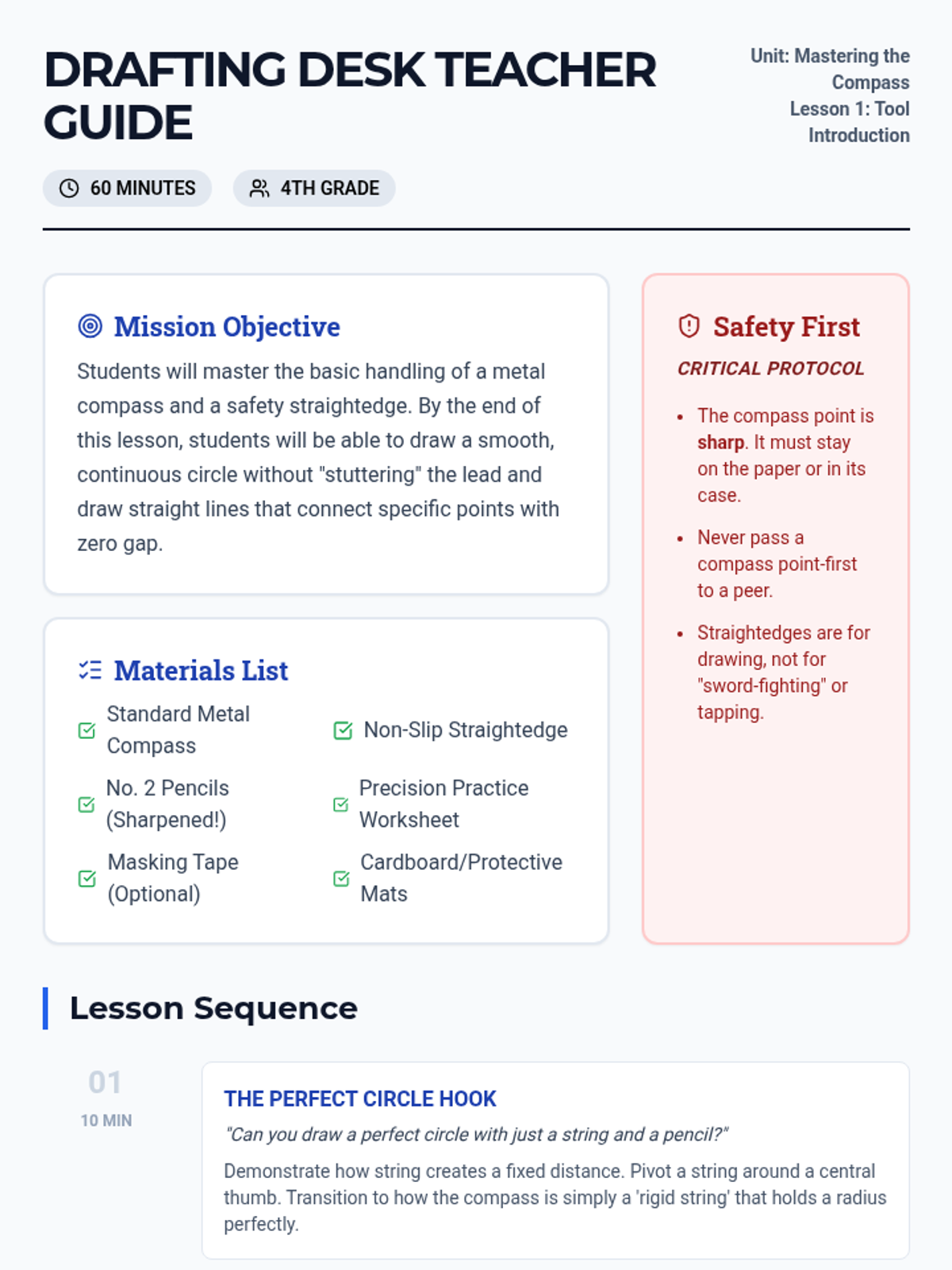
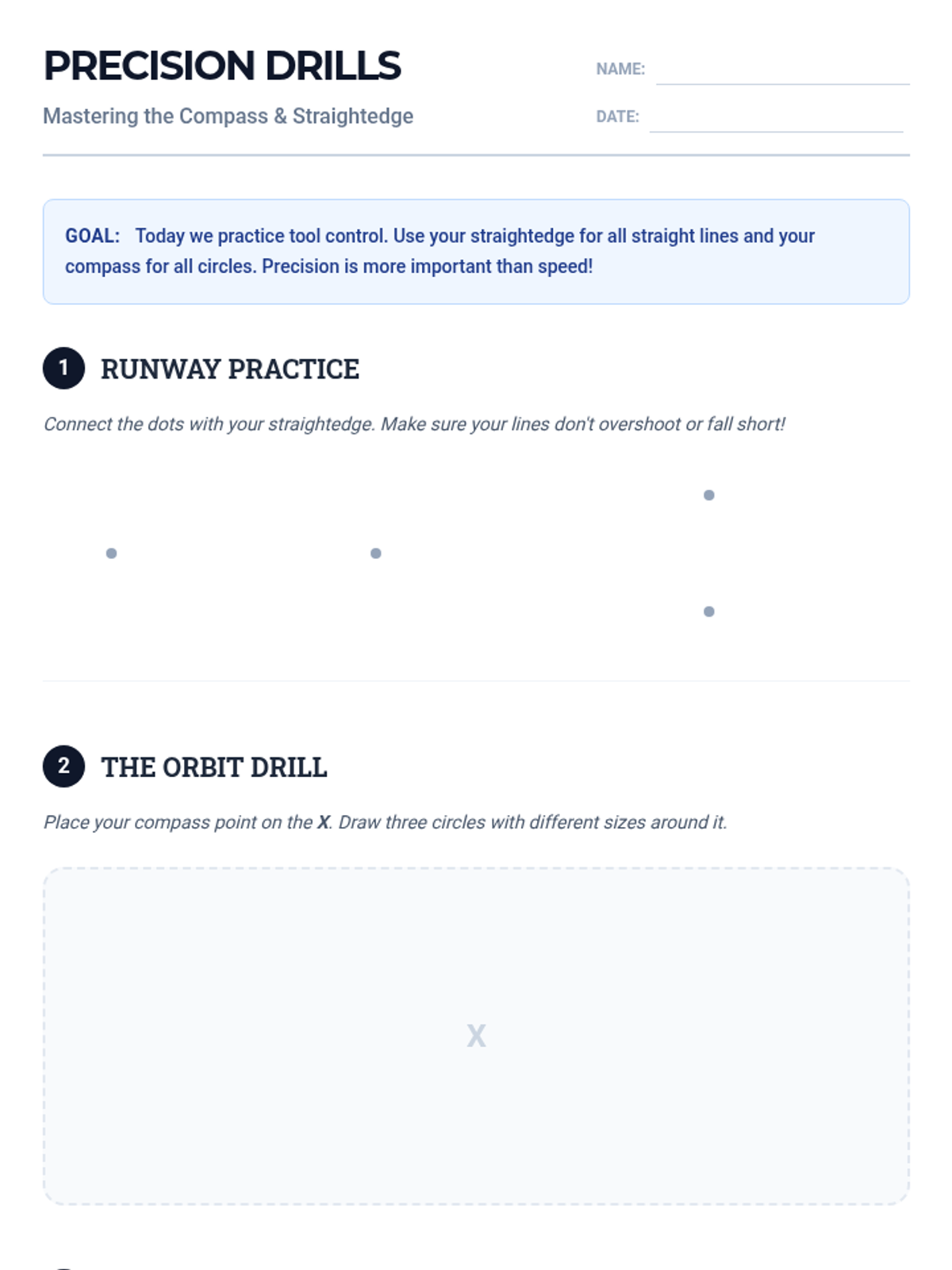
A comprehensive introduction to geometric constructions for 4th graders, focusing on tool mastery, segment copying, and the fundamental properties of circles using a compass and straightedge.
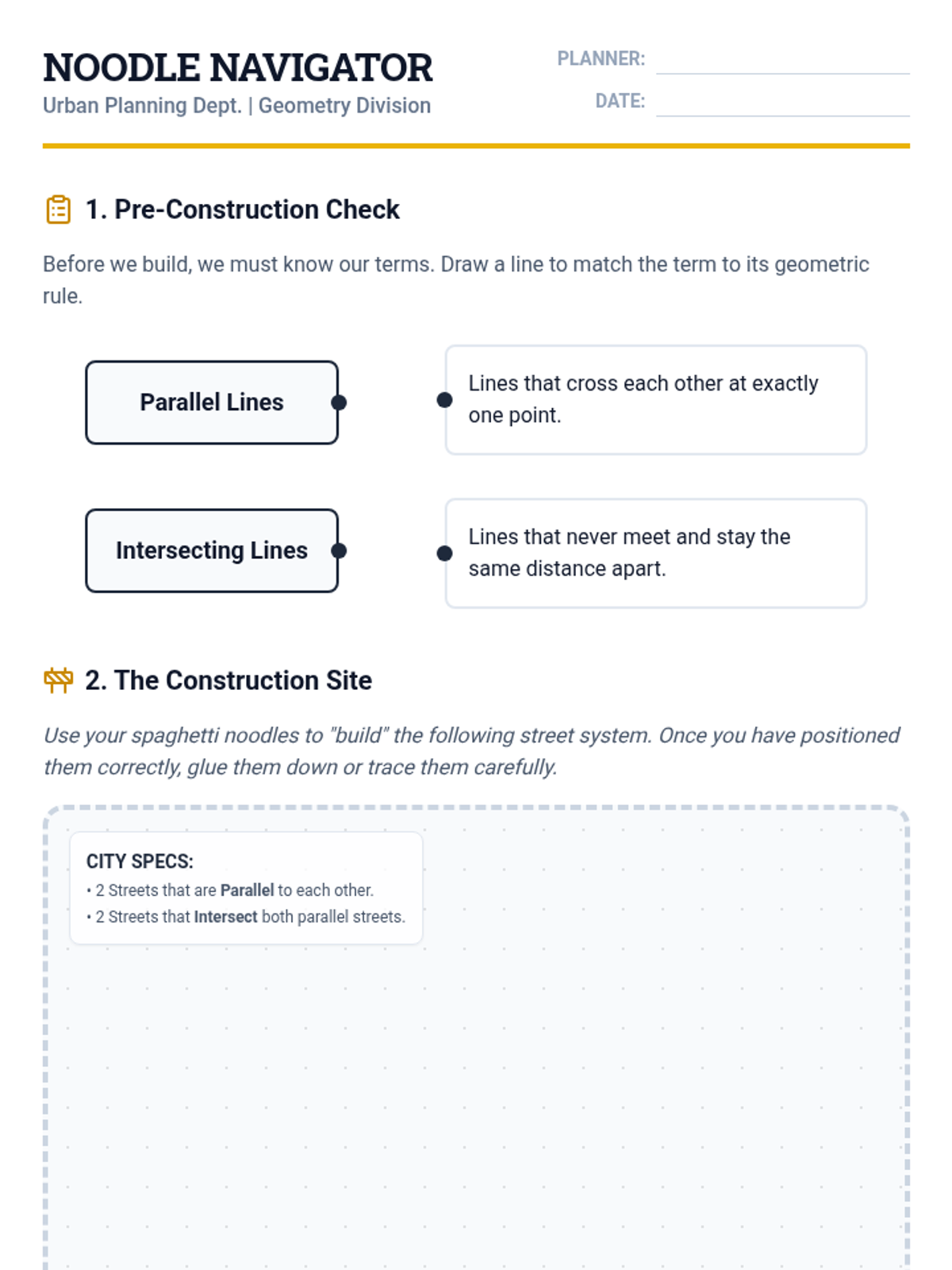
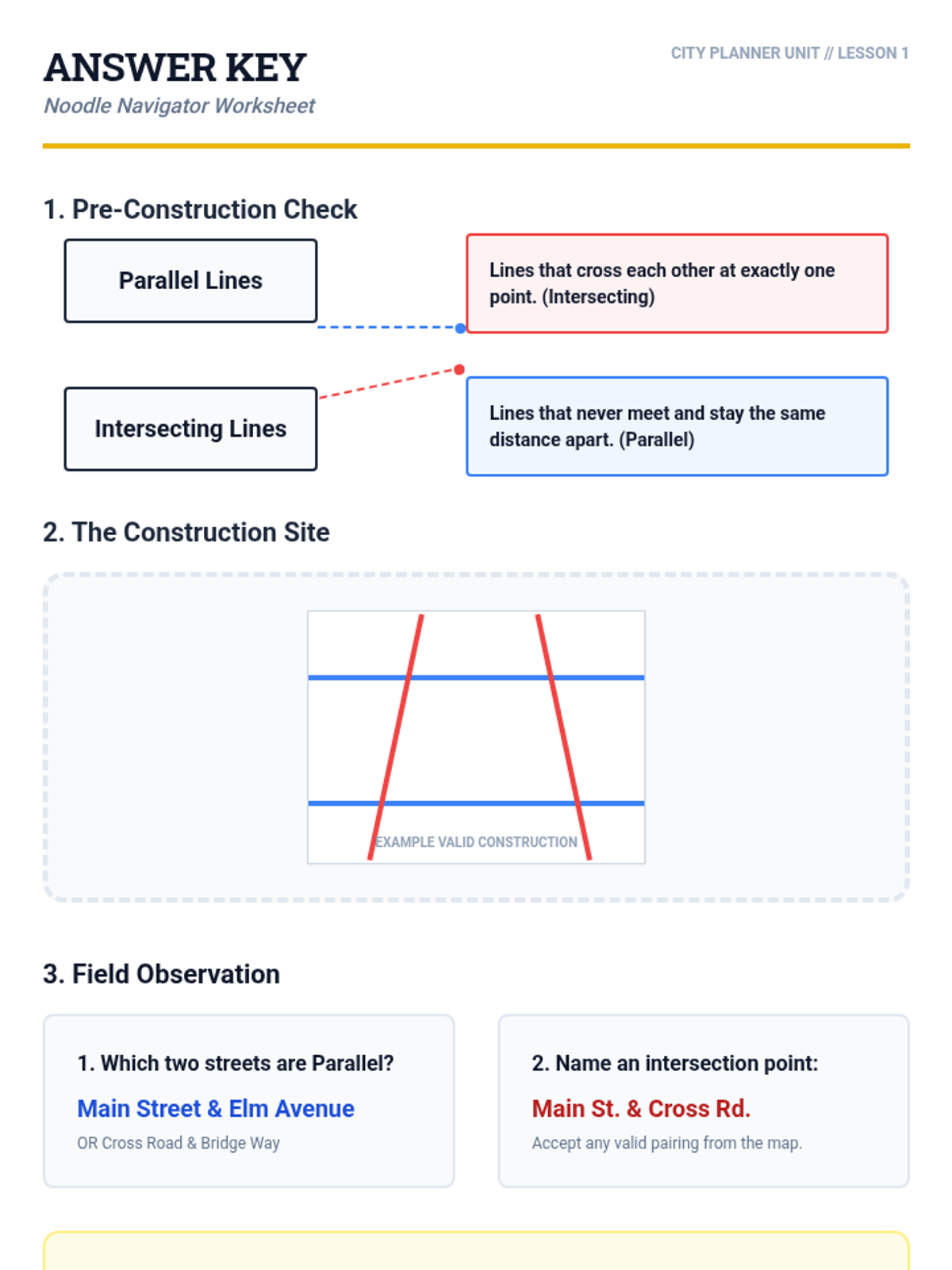
A project-based 4th Grade geometry unit where students act as city planners to design urban layouts. They learn to identify, construct, and verify parallel, perpendicular, and intersecting lines while building a final city map project.
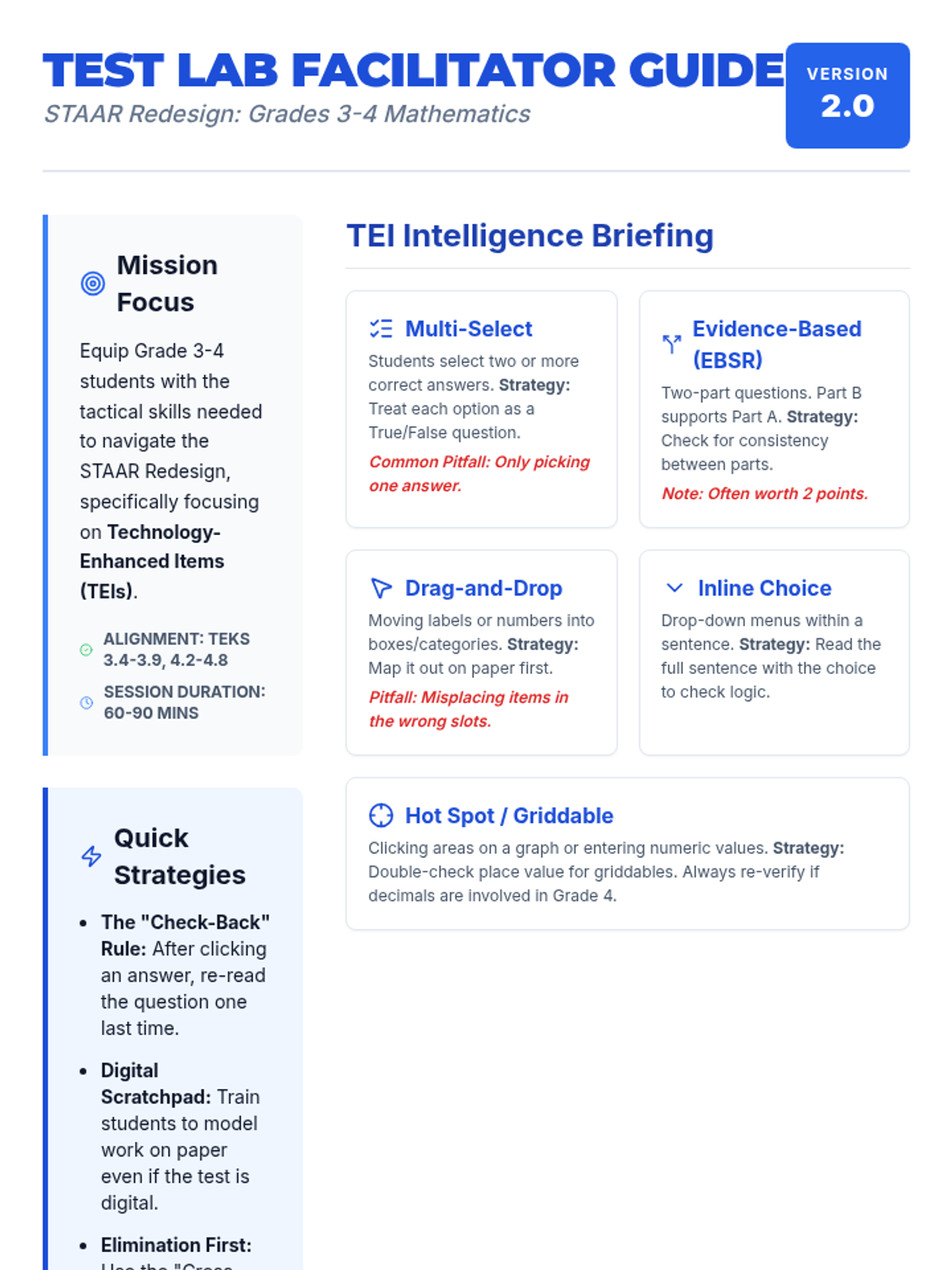
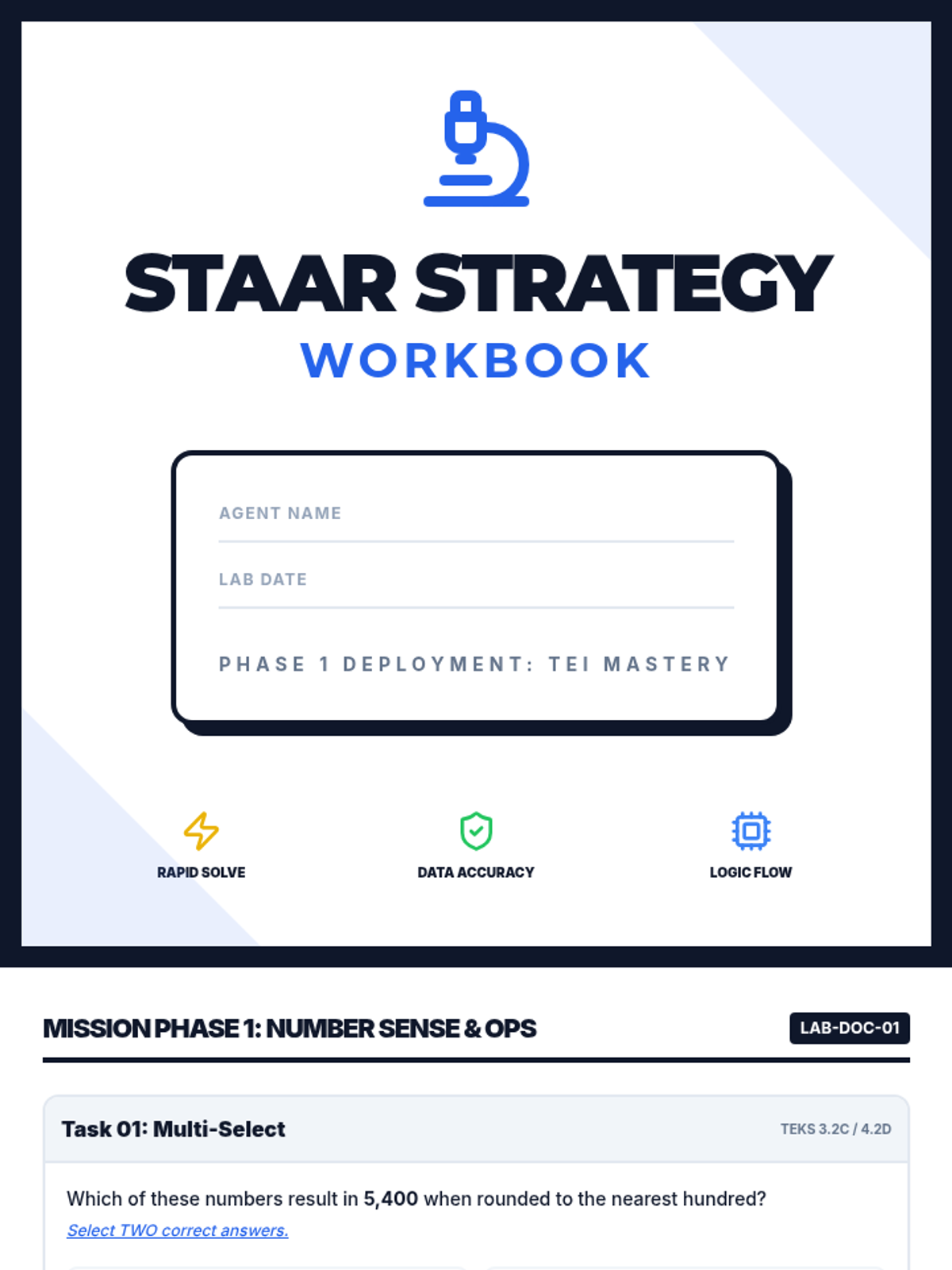
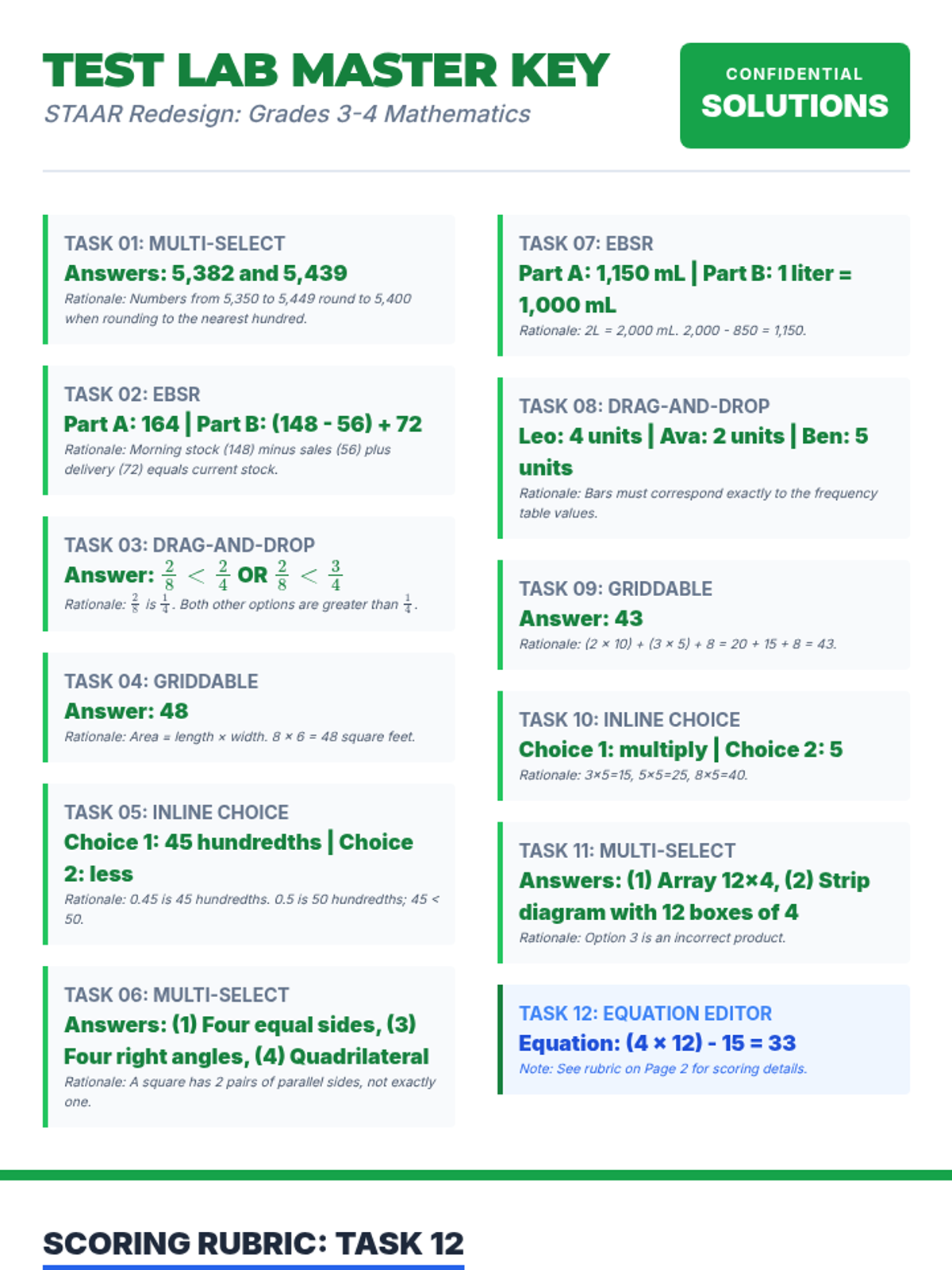
A series of resources designed to prepare Grade 3 and 4 students for the STAAR Mathematics assessment, with a specific focus on the STAAR Redesign and technology-enhanced items.
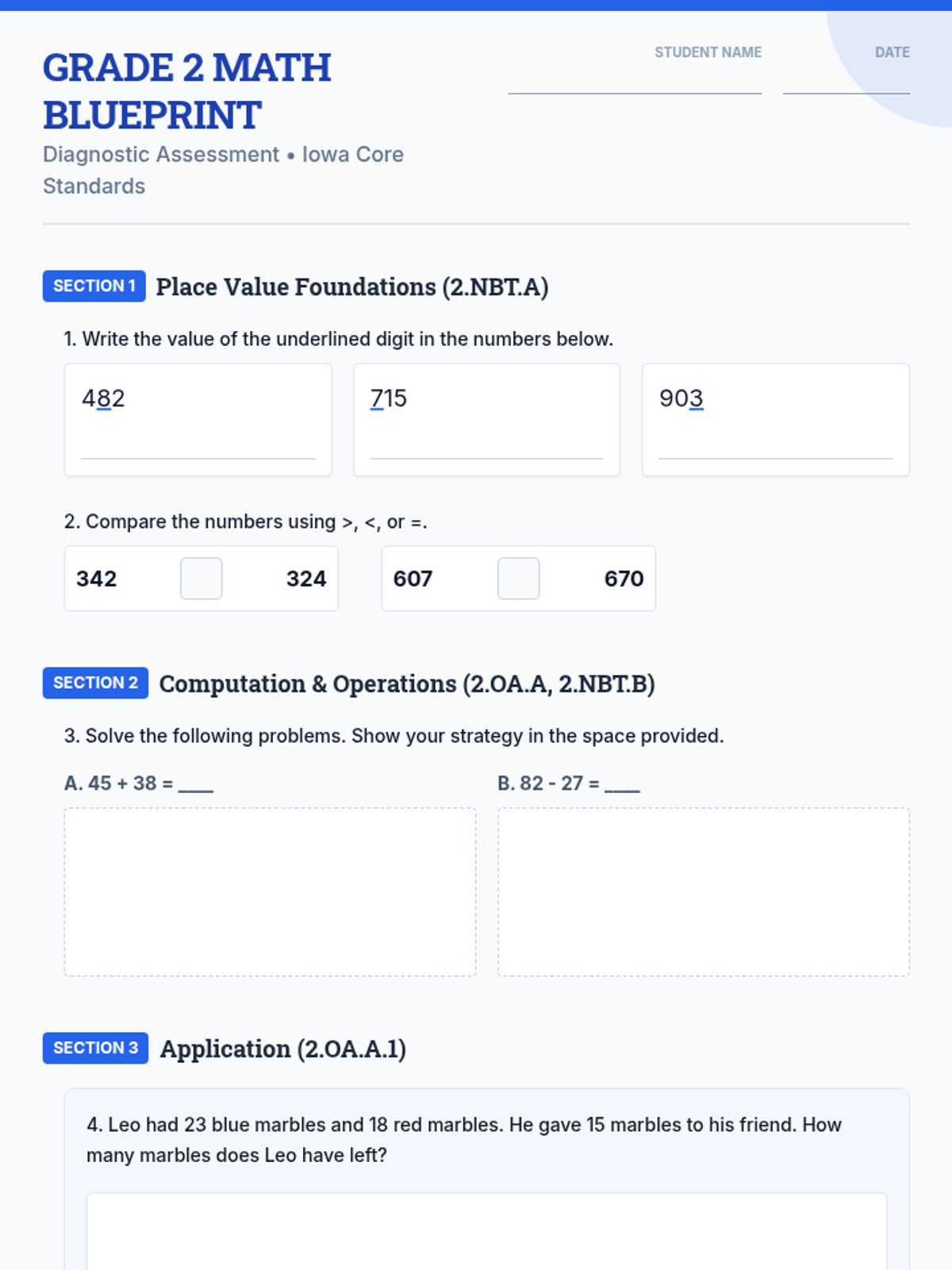
A comprehensive diagnostic suite for grades 2-5 designed to identify specific skill gaps in foundational math domains aligned to the Iowa Core standards. This series helps educators pinpoint exactly where students have discrepancies in place value, arithmetic, and early rational numbers.
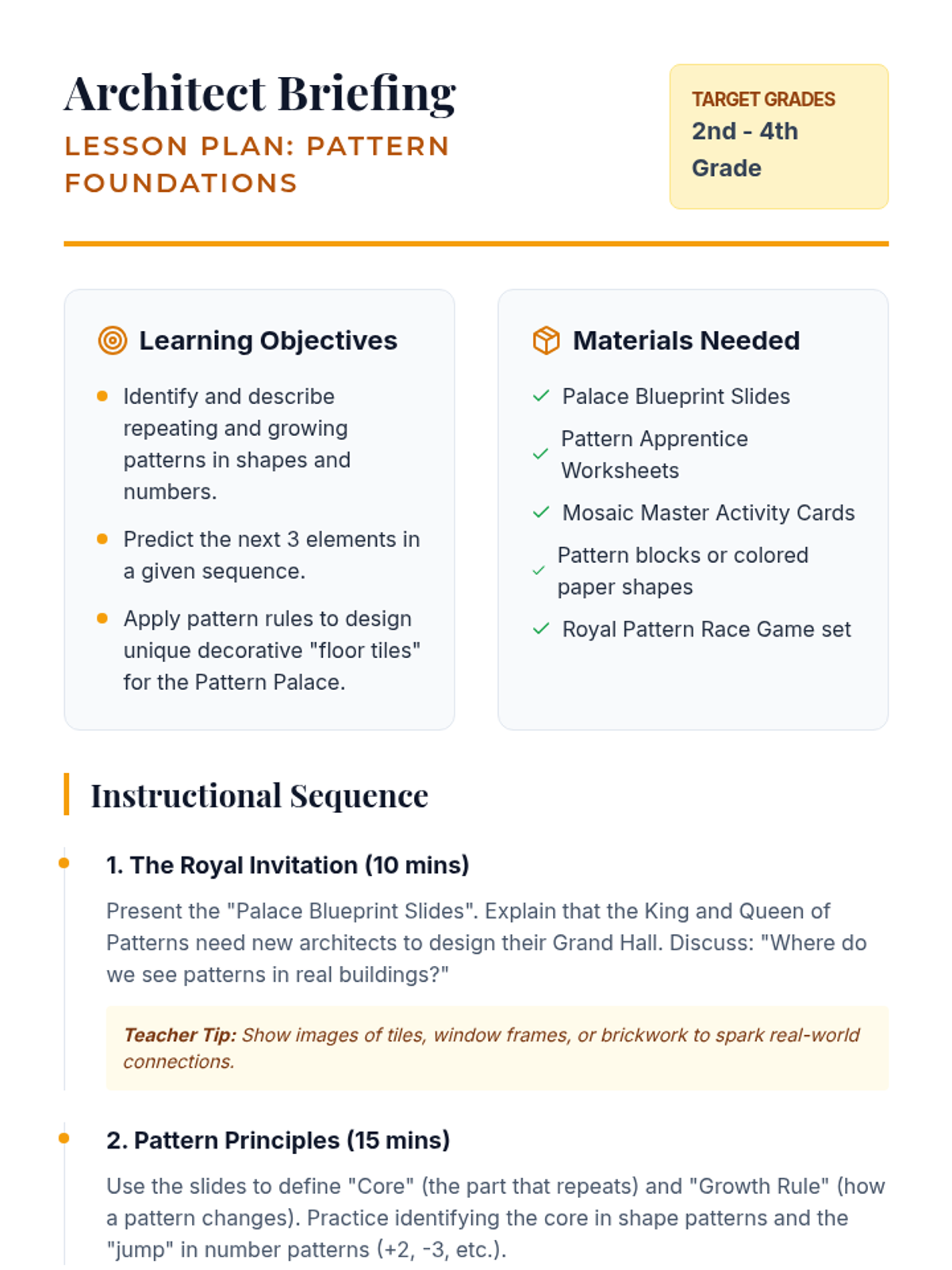
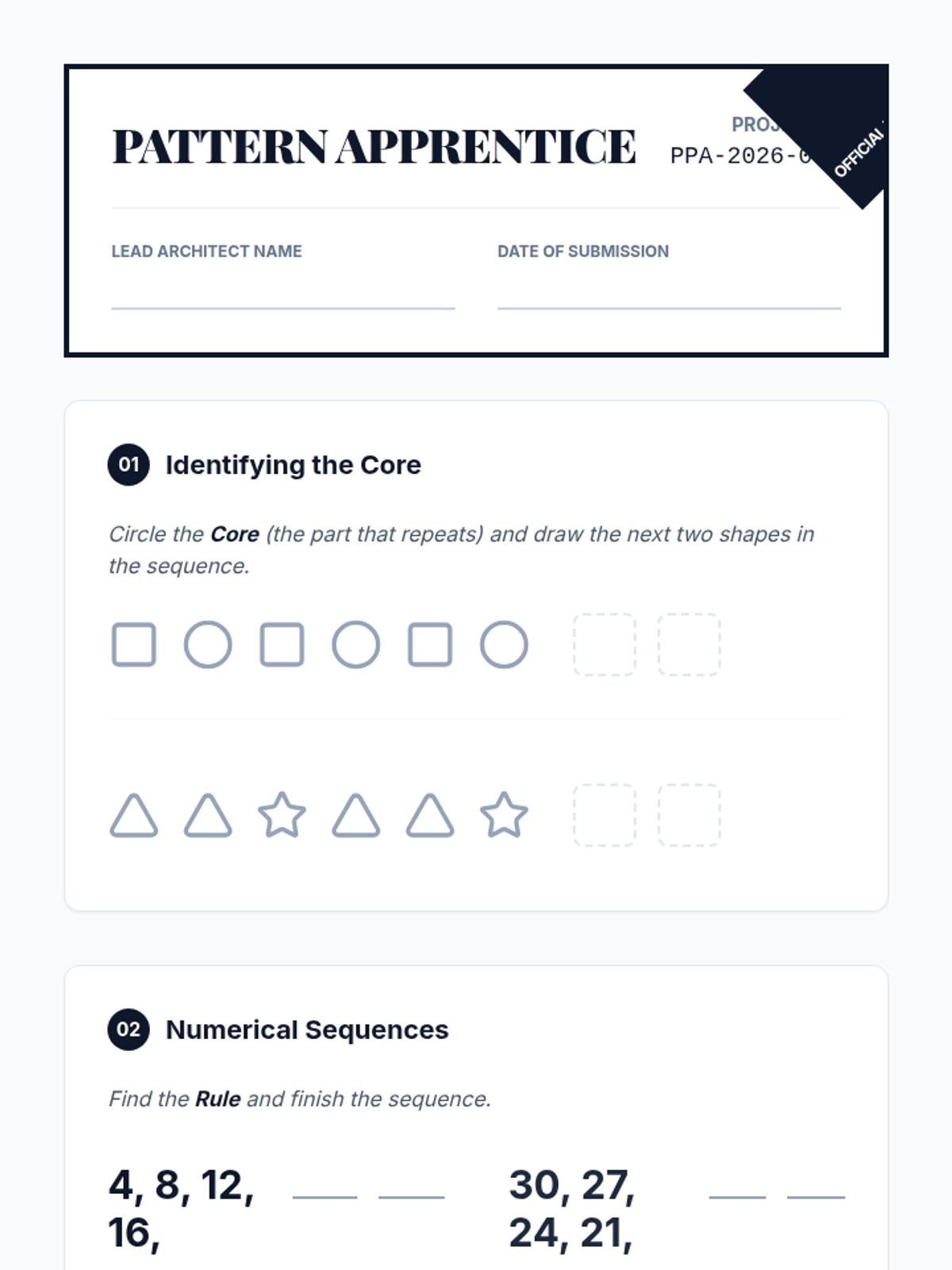
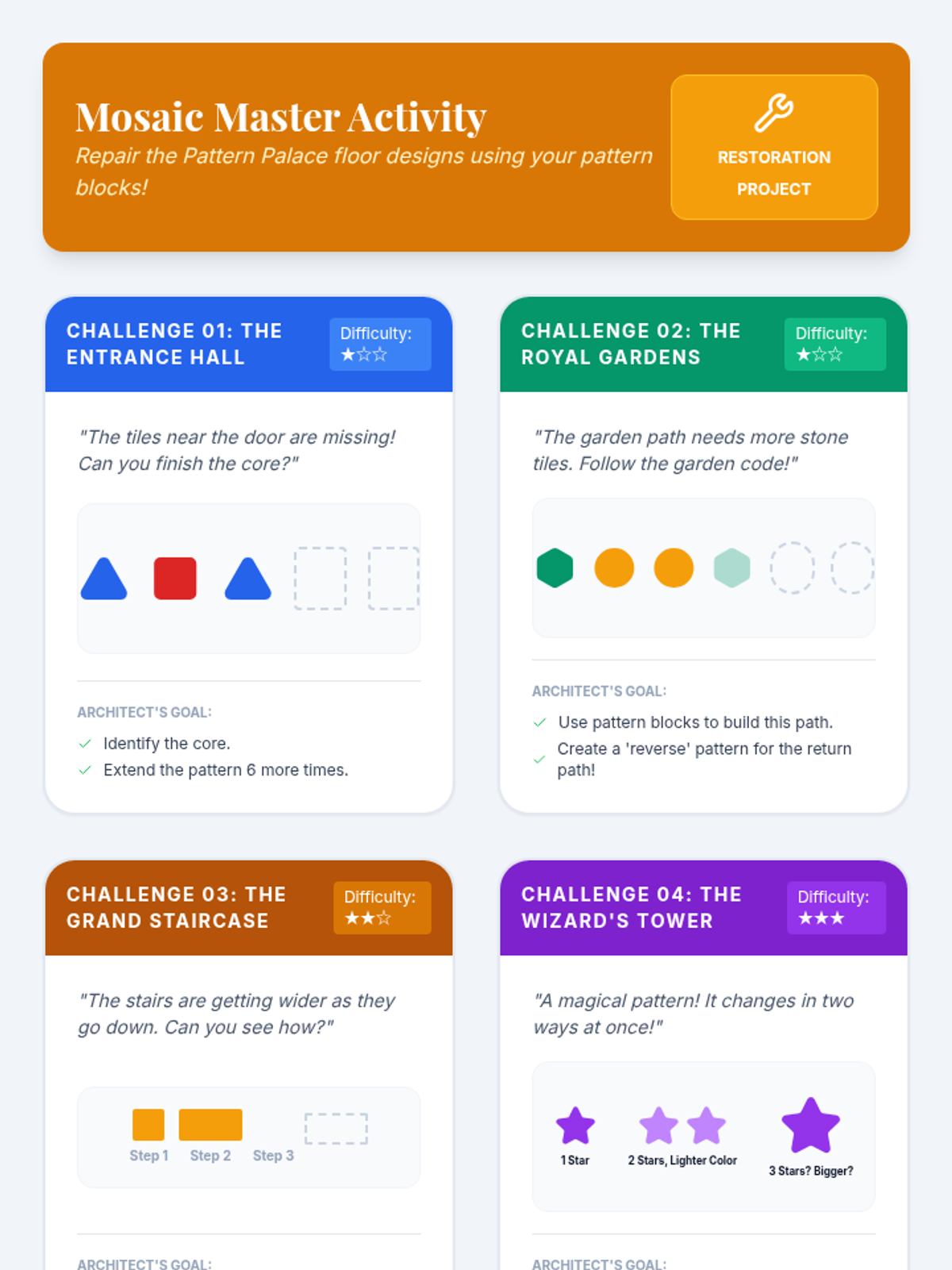
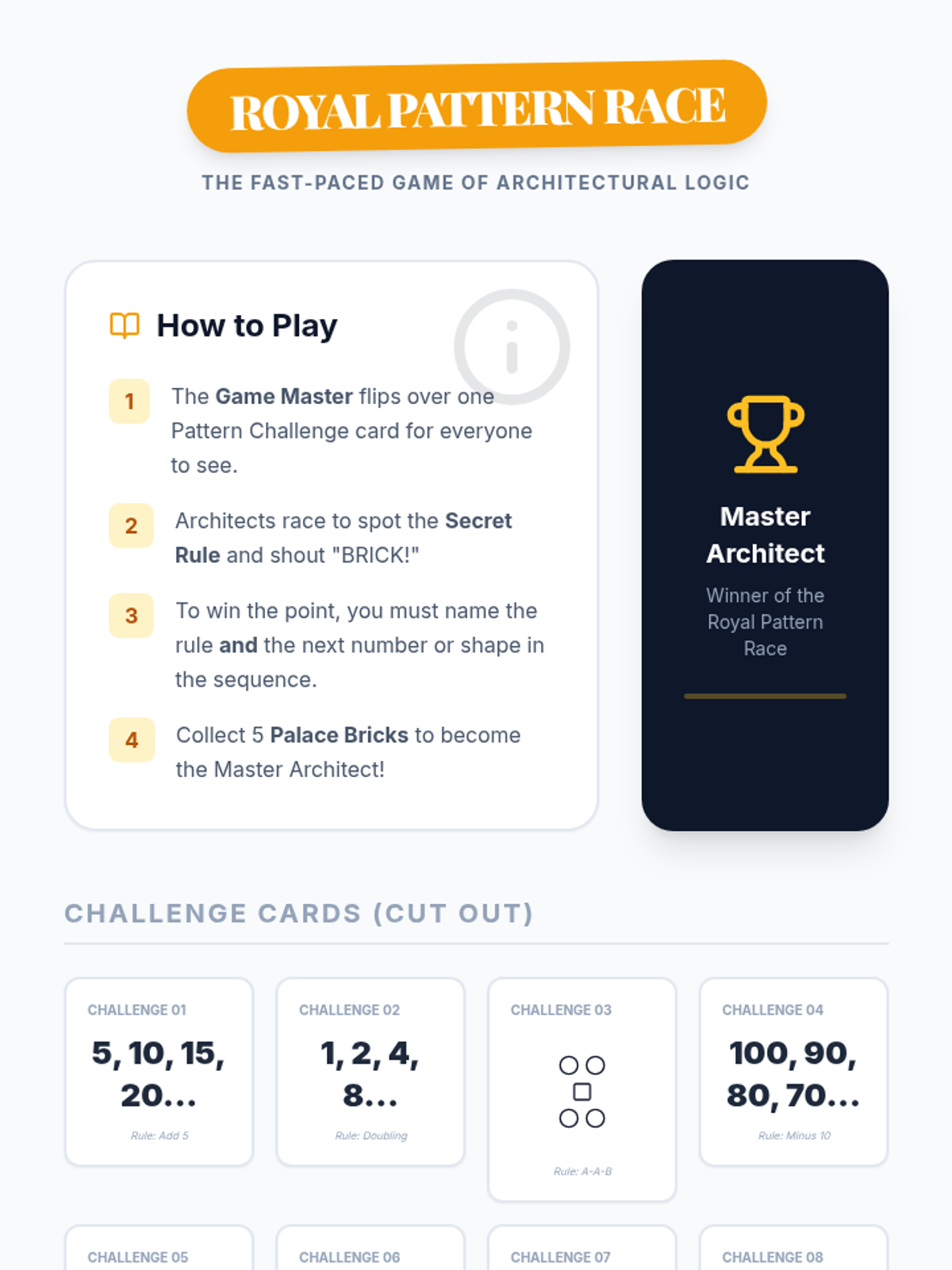
A comprehensive unit where students become architects in the 'Pattern Palace', learning to identify, extend, and create complex shape and number patterns. Students develop algebraic thinking through hands-on tiling activities, visual challenges, and numerical sequences.
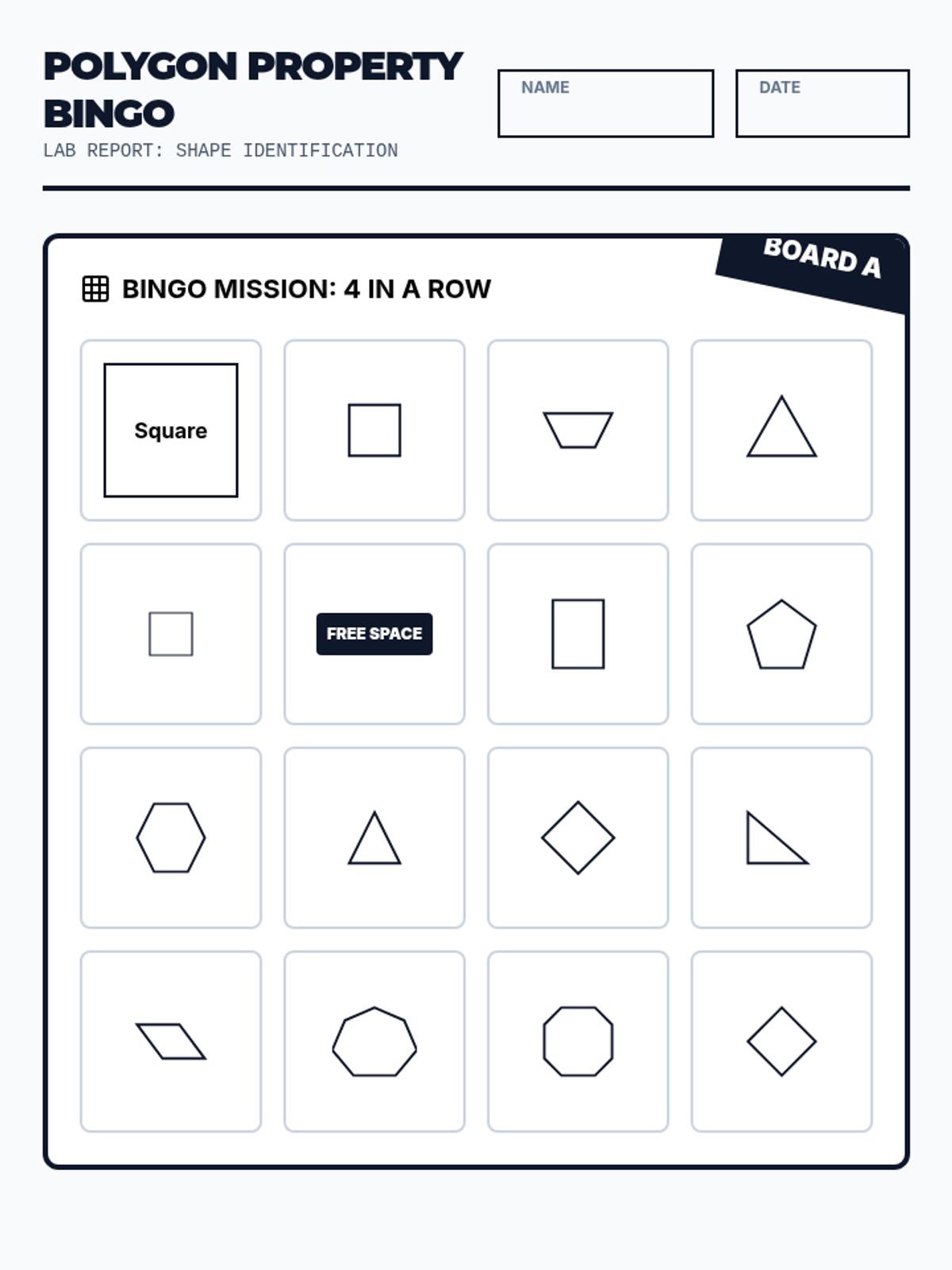
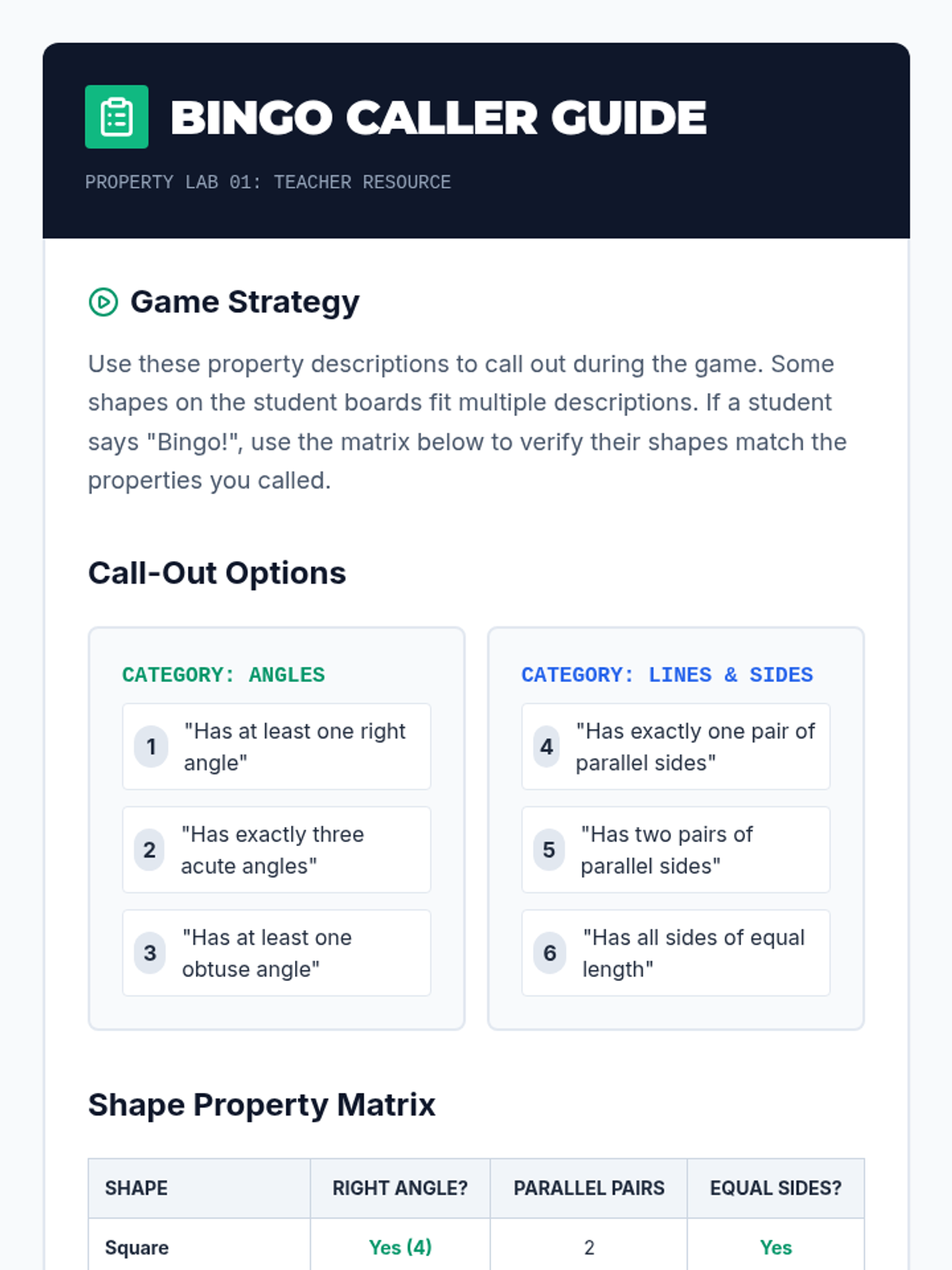
A game-based sequence focused on rapid identification and logical deduction using polygon properties through bingo, riddles, and simulations. Students build fluency in identifying shapes and distinguishing between subtle differences.
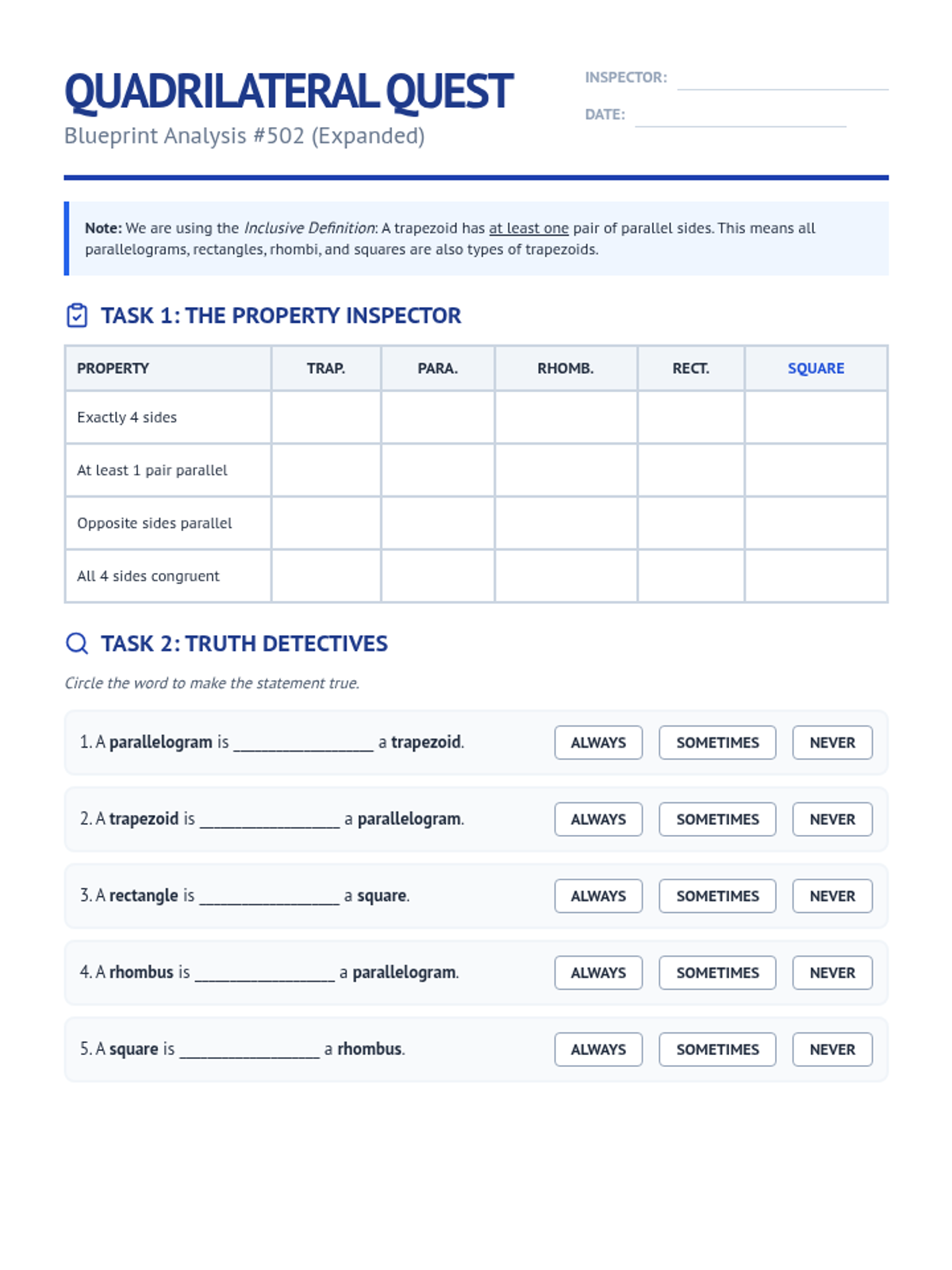
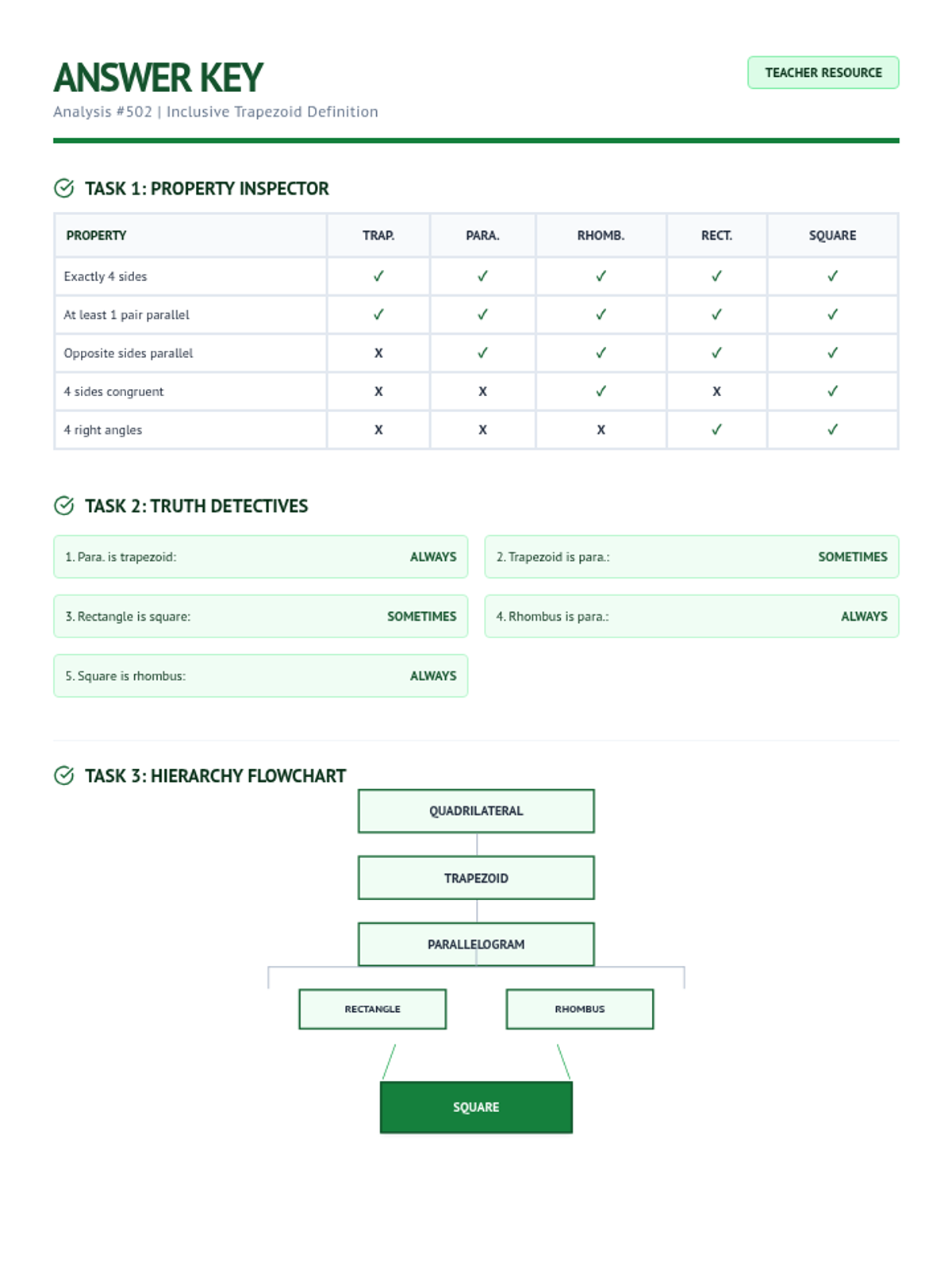
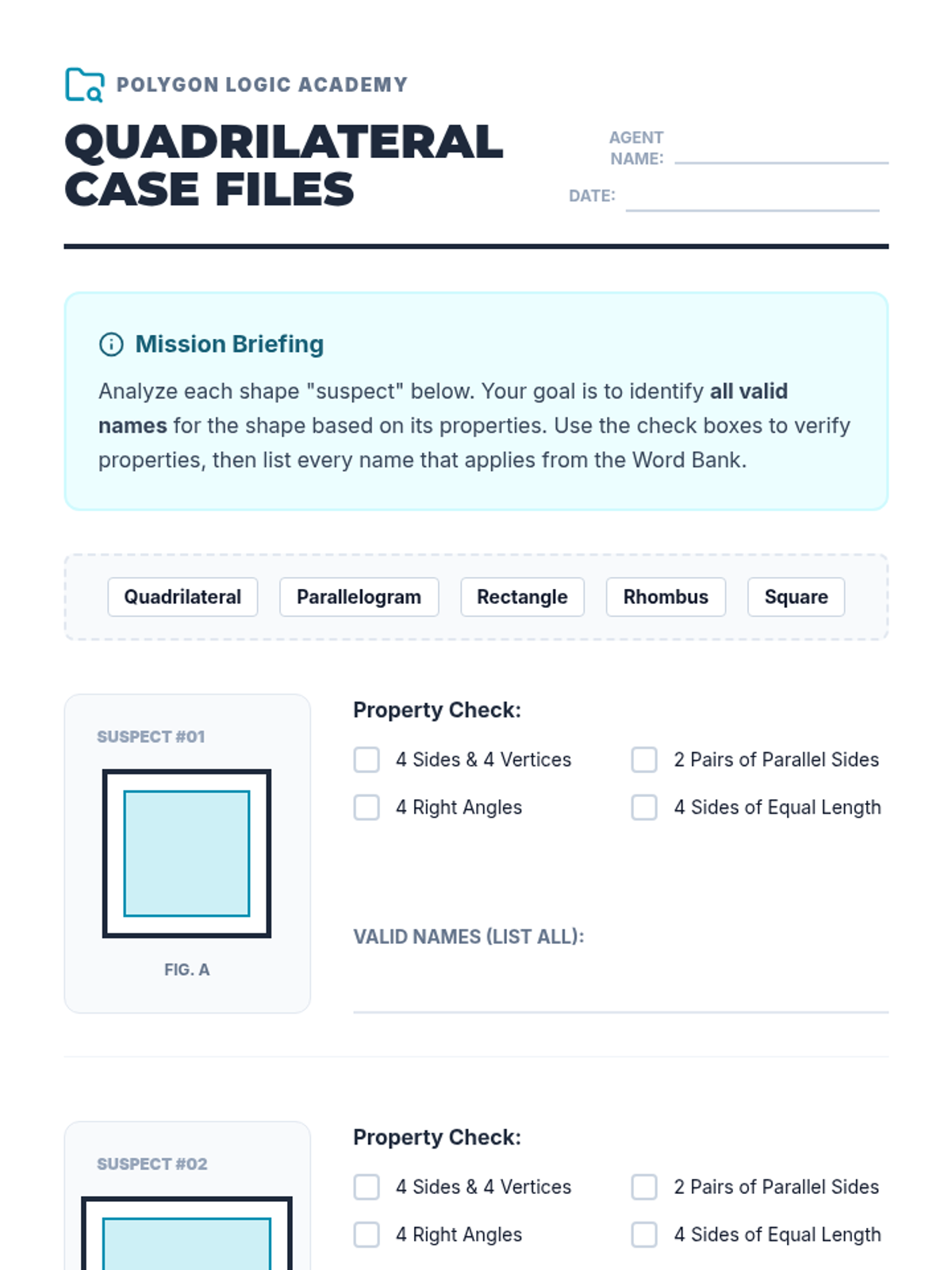
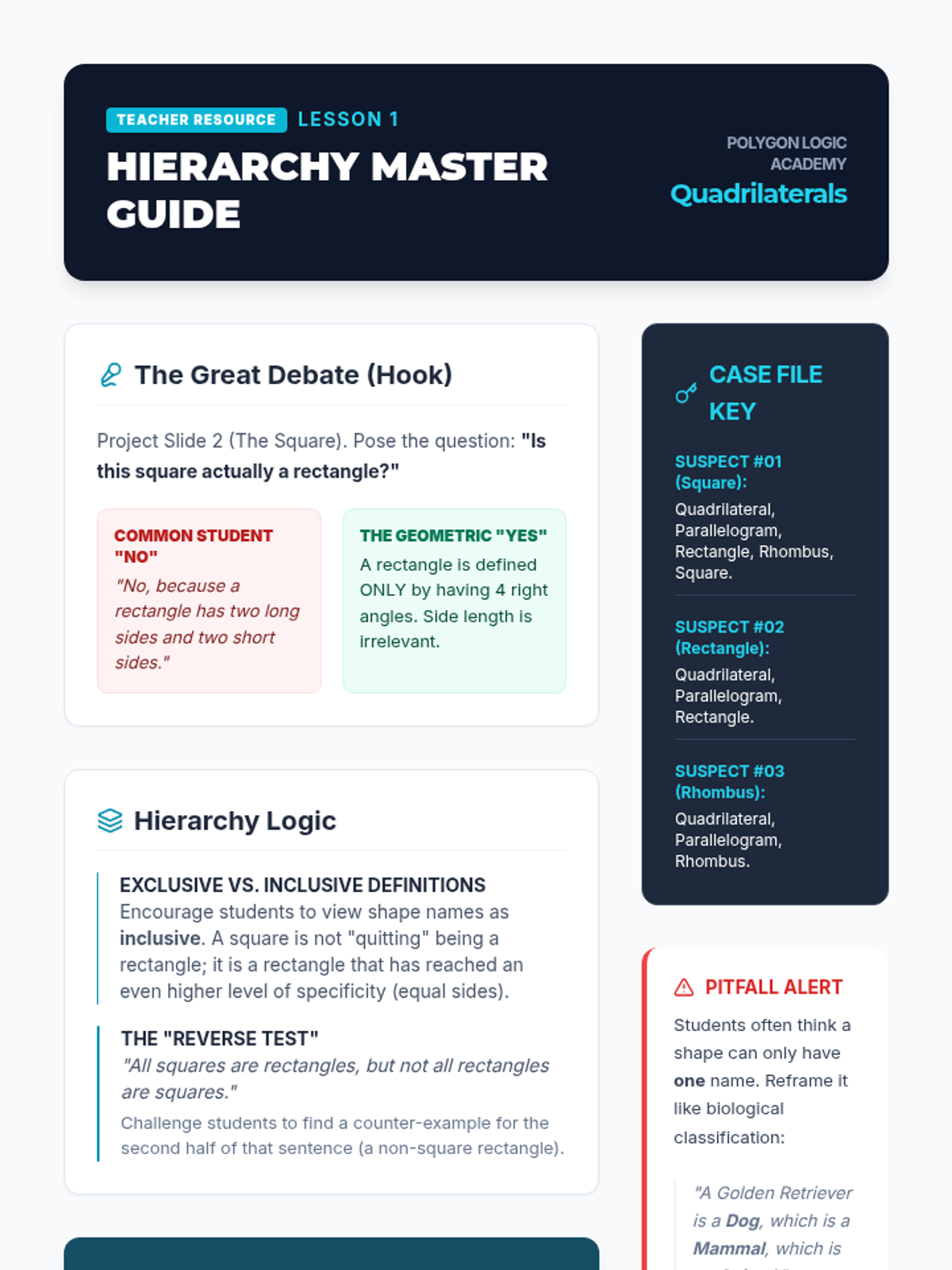
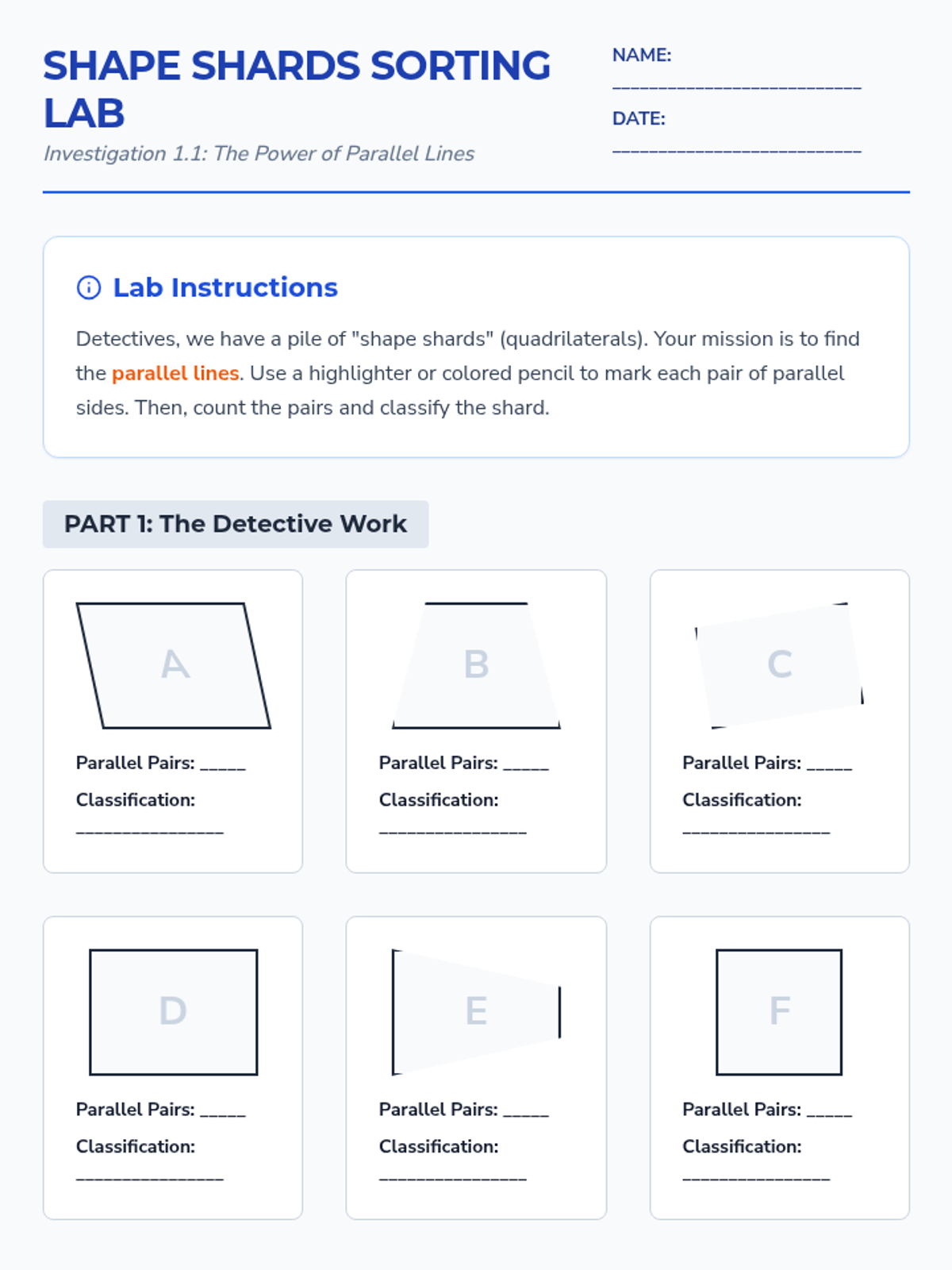
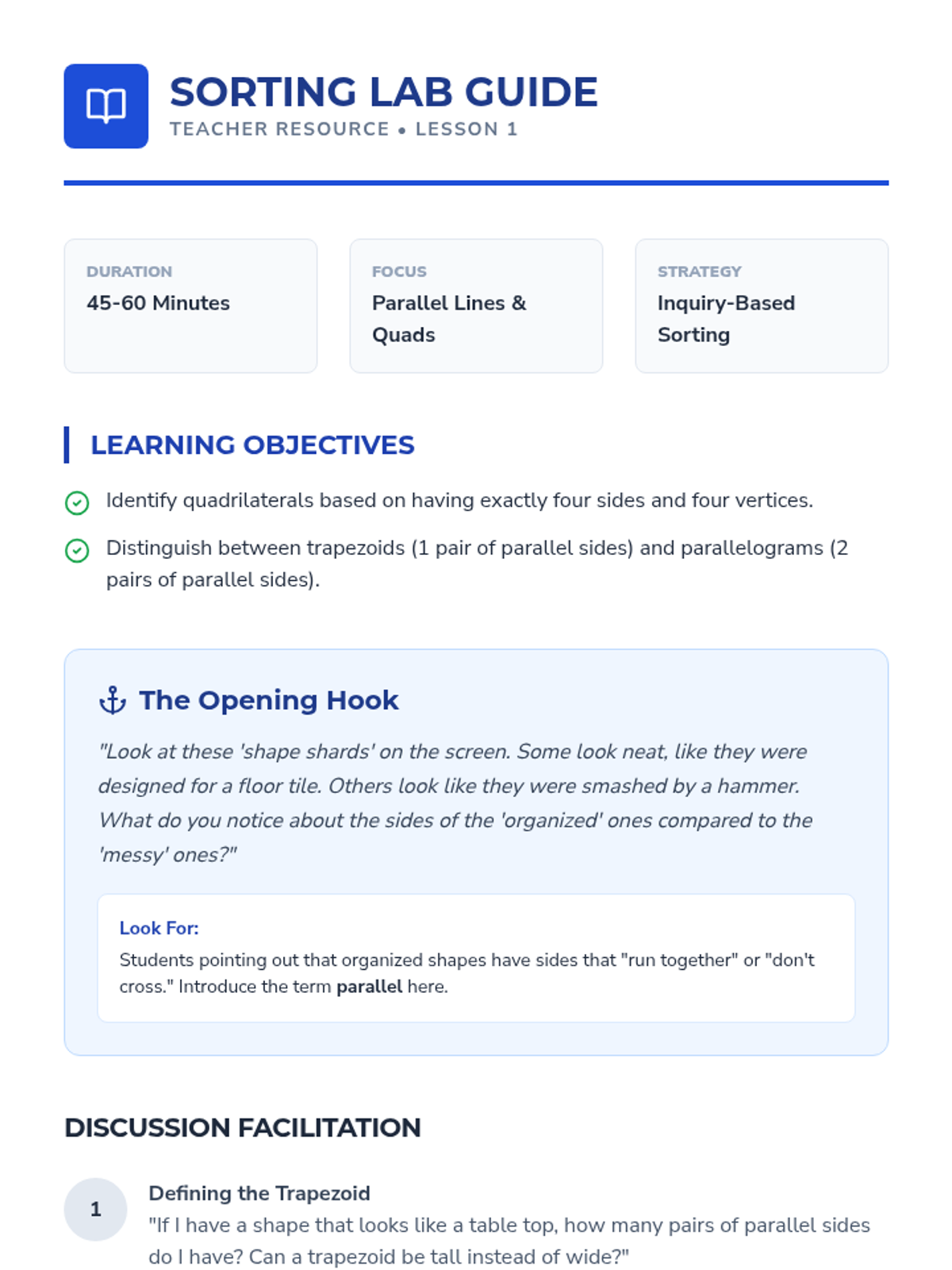
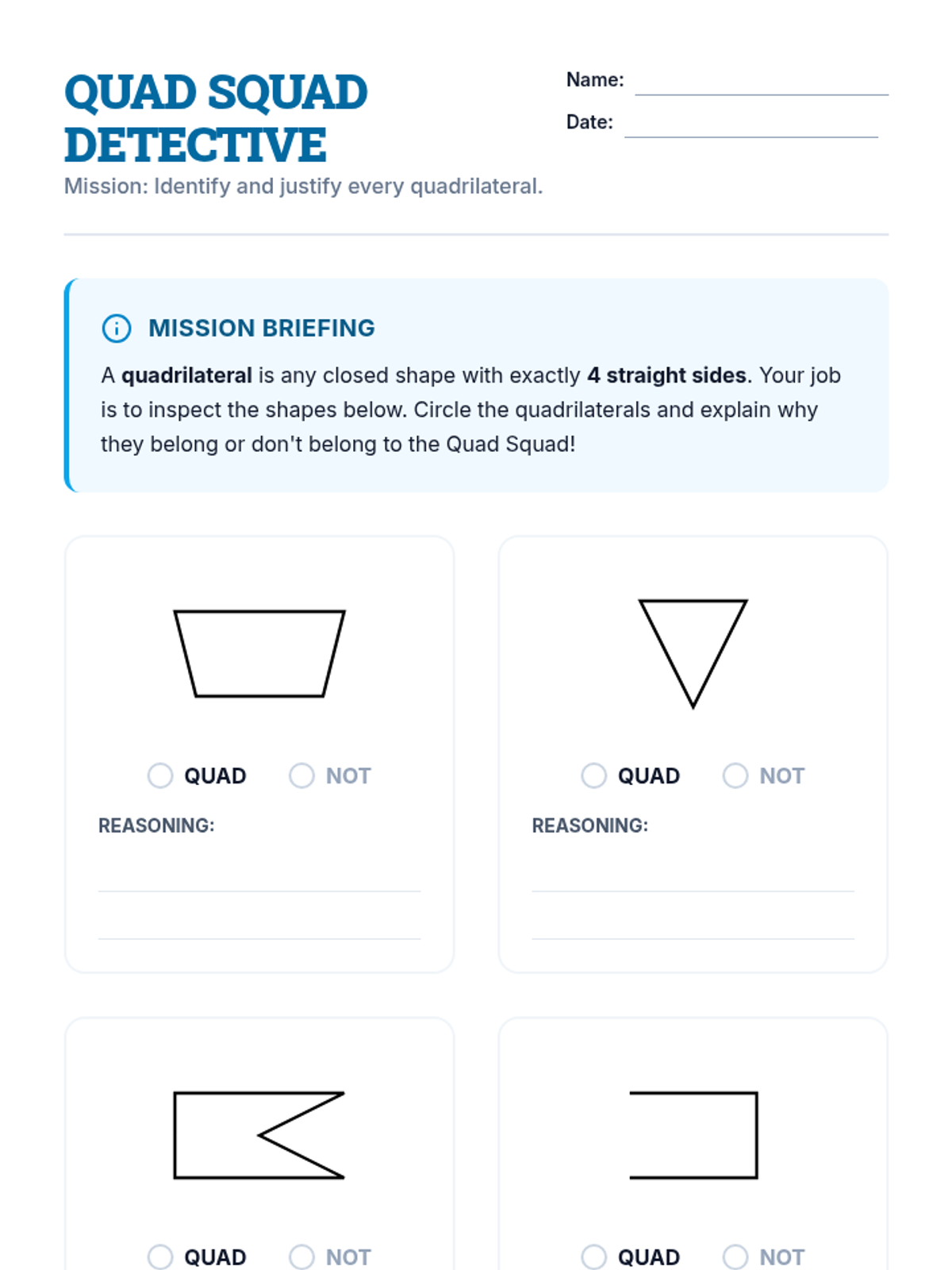
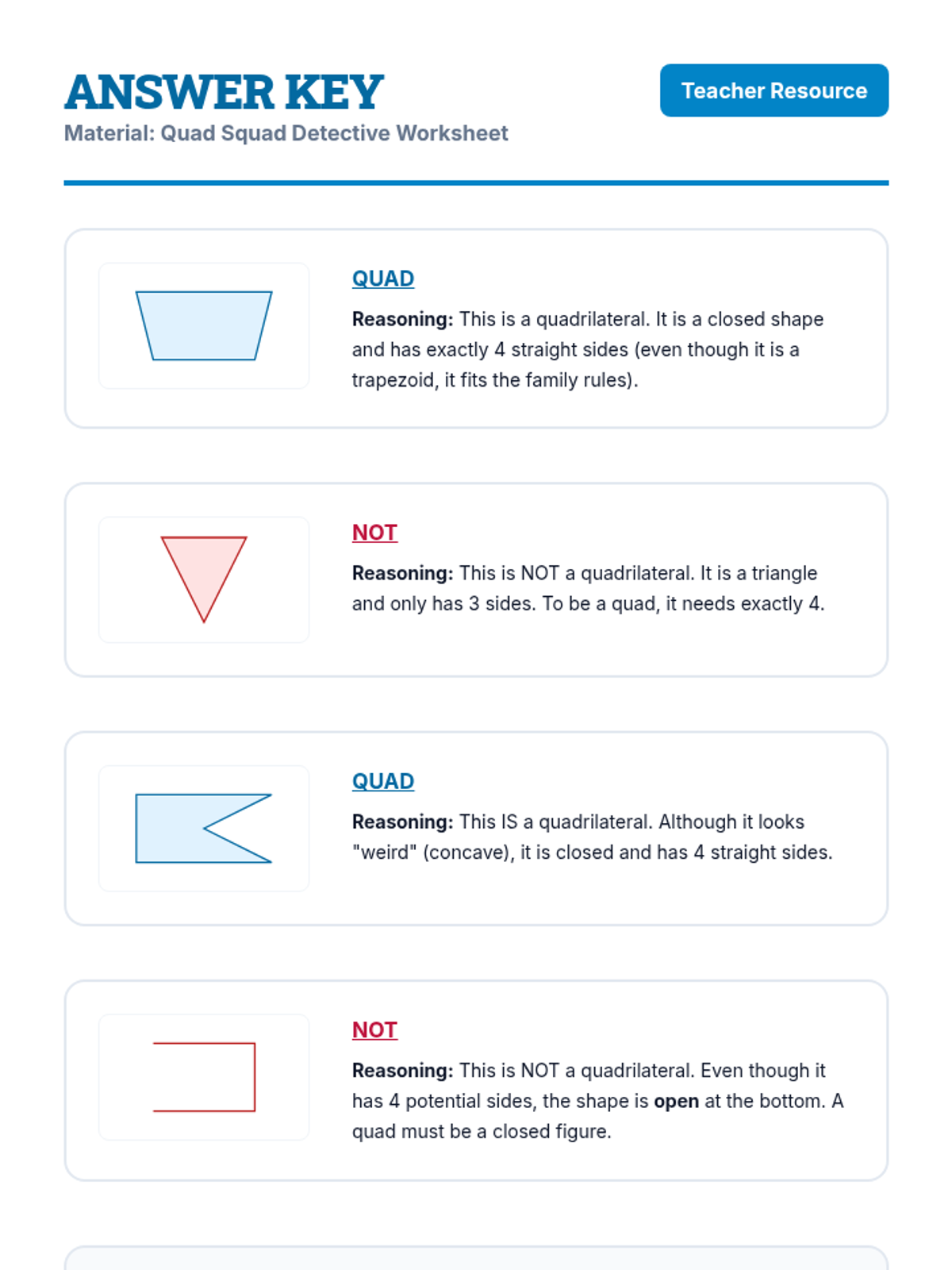
A comprehensive 4th-grade geometry unit focusing on the hierarchical classification of quadrilaterals through inquiry, logic games, and design projects.
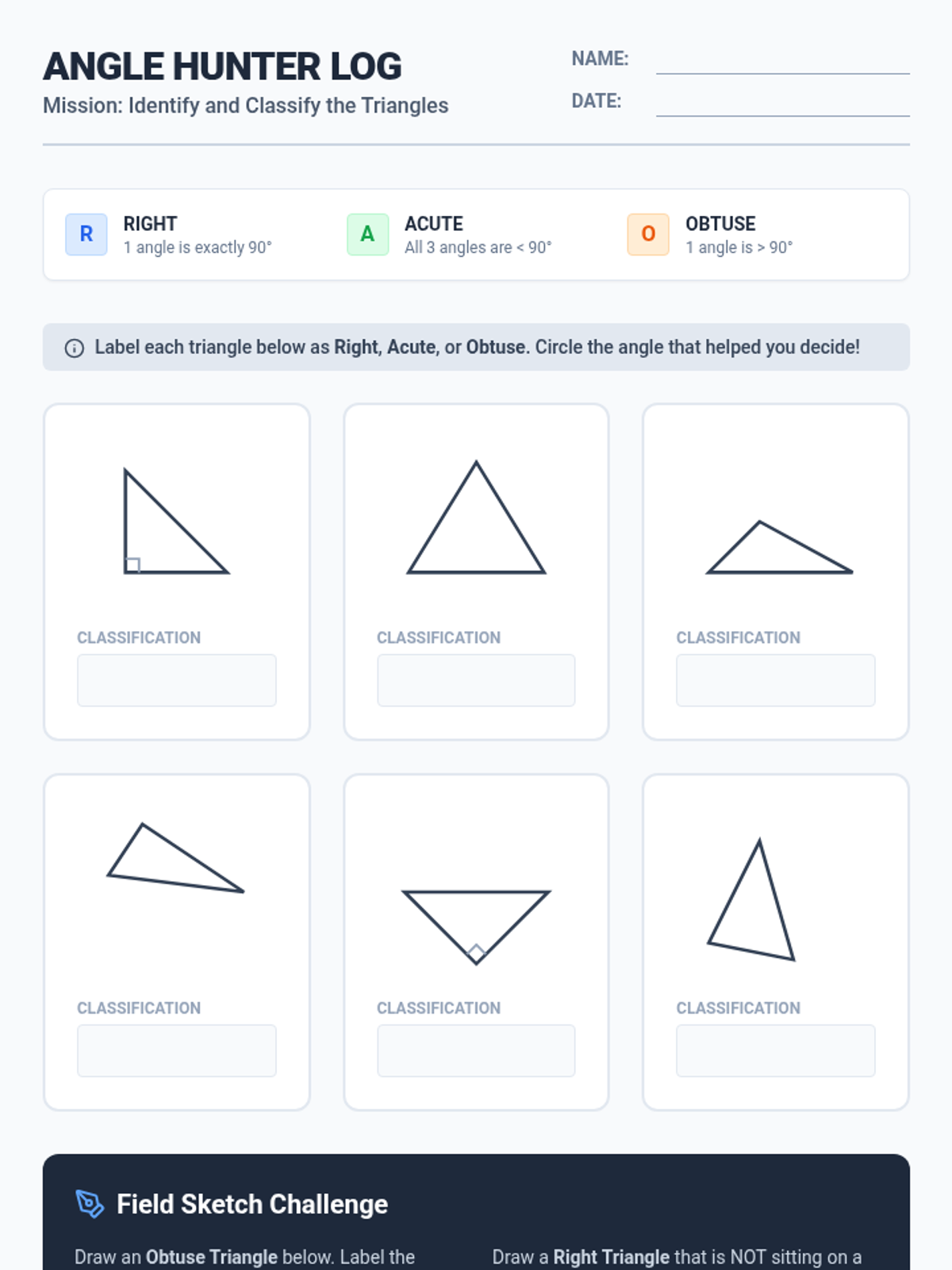
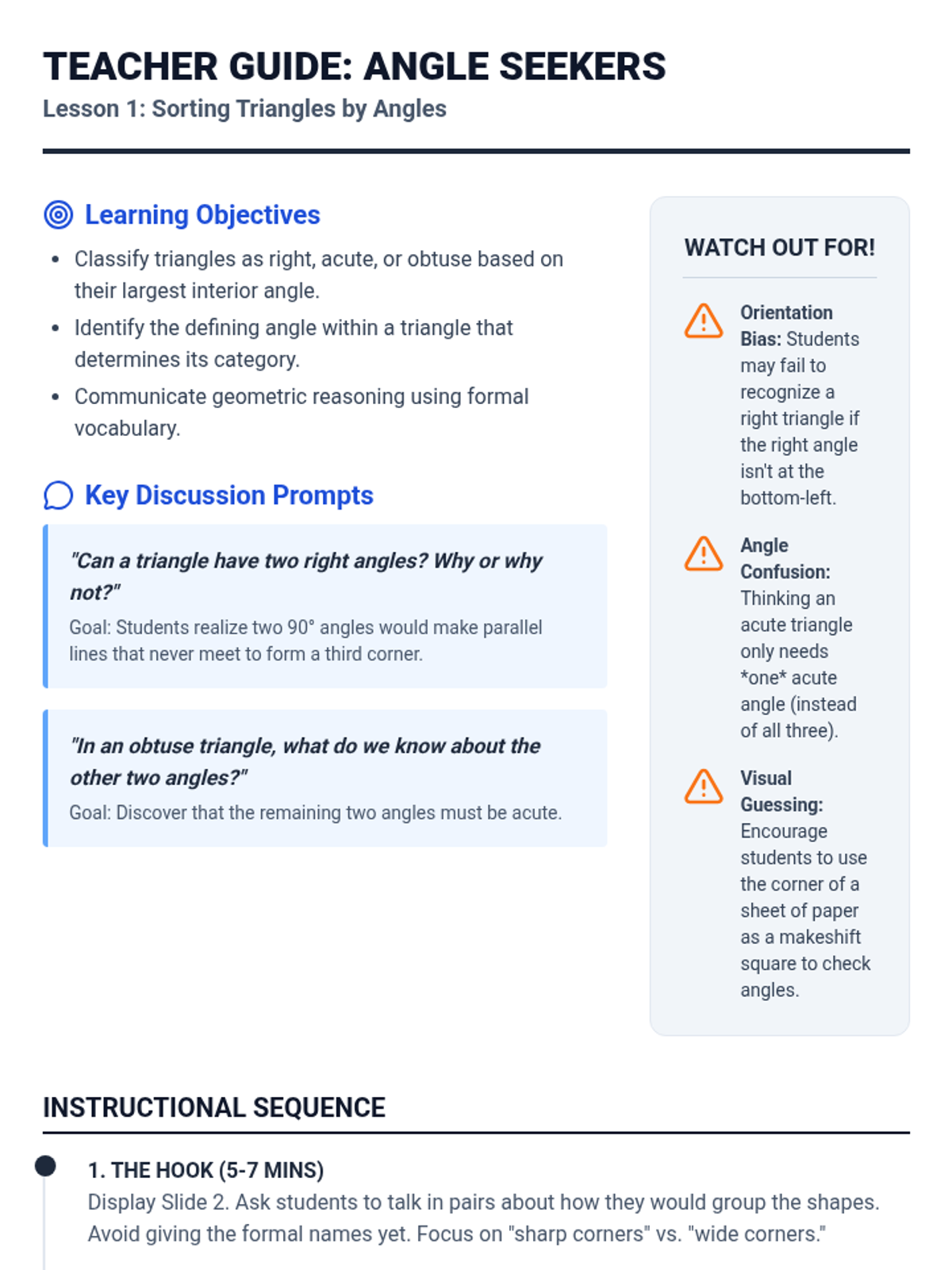
This sequence guides 4th-grade students through the rigorous classification of triangles by both angle measure (acute, right, obtuse) and side length (equilateral, isosceles, scalene). Students progress from simple sorting to dual-property categorization and construction, culminating in a deductive reasoning 'detective' challenge.
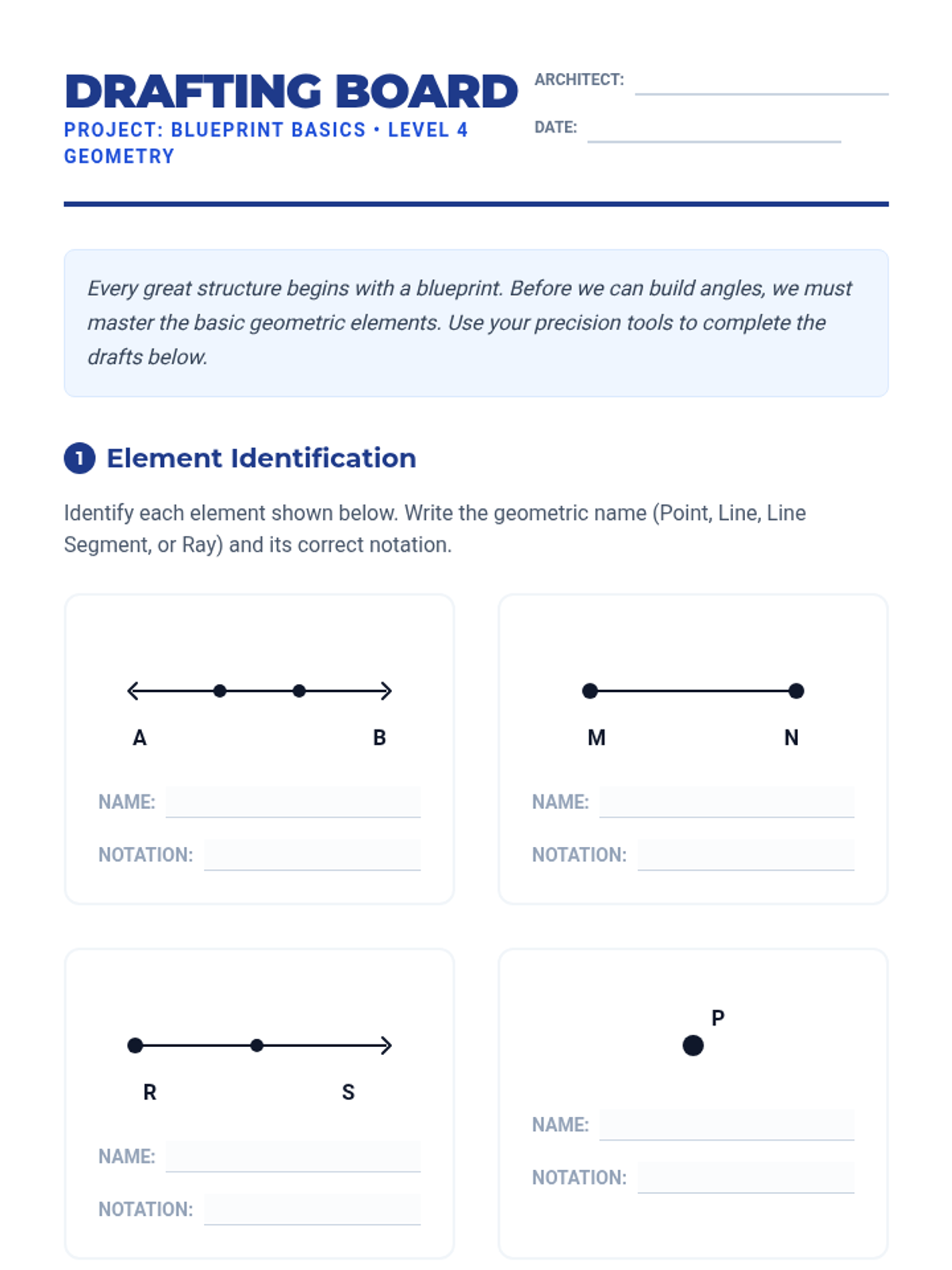
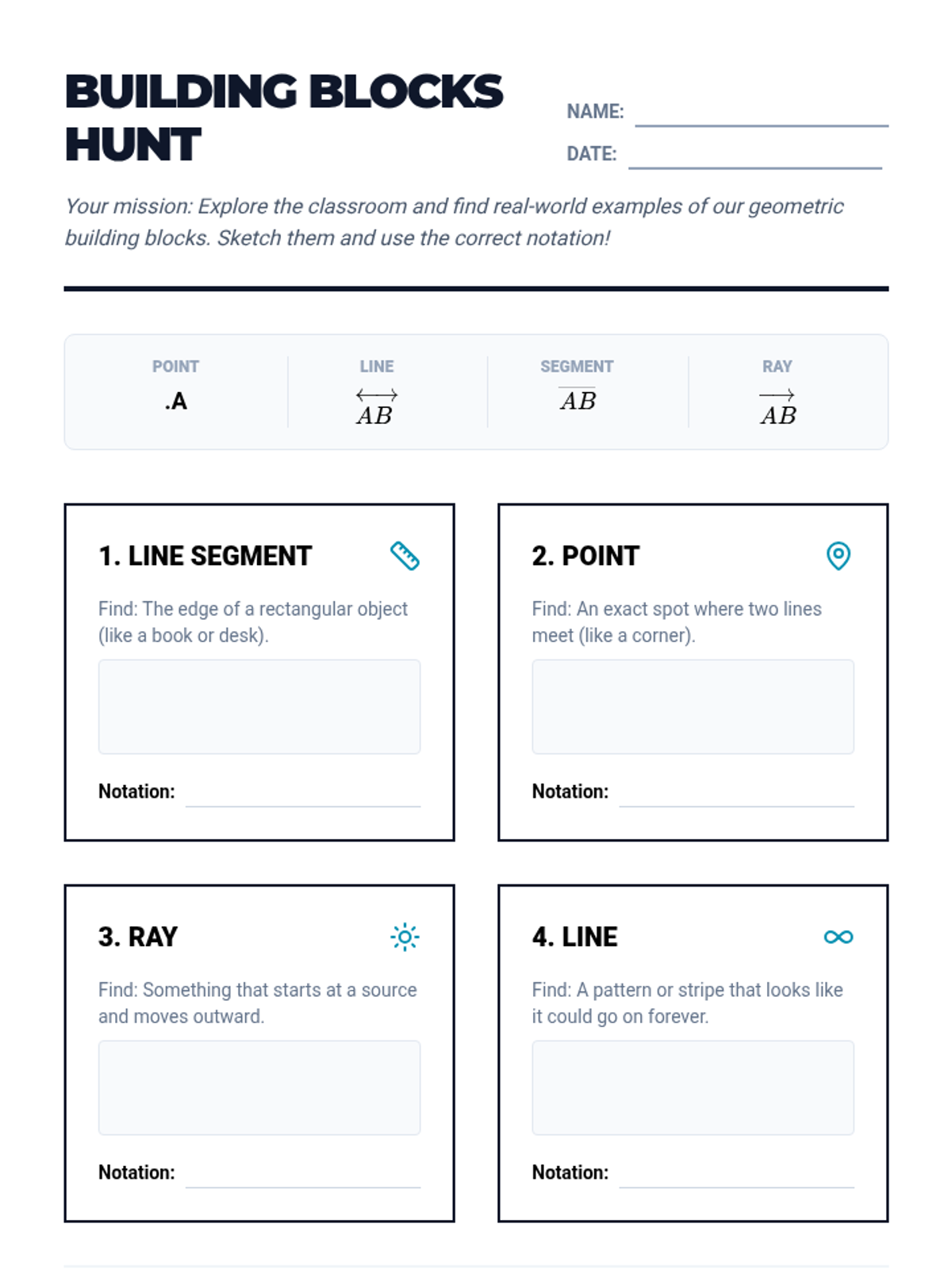
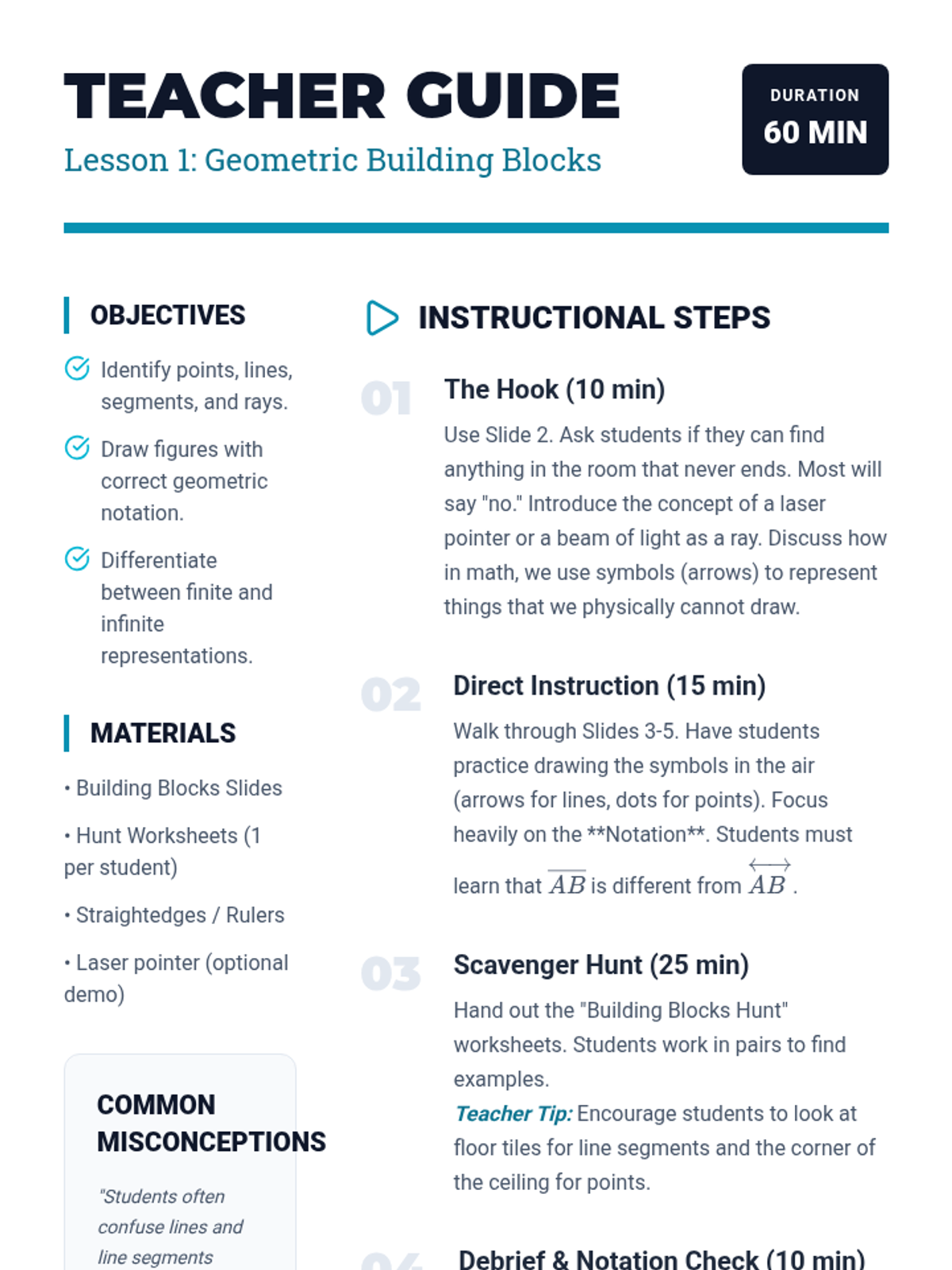
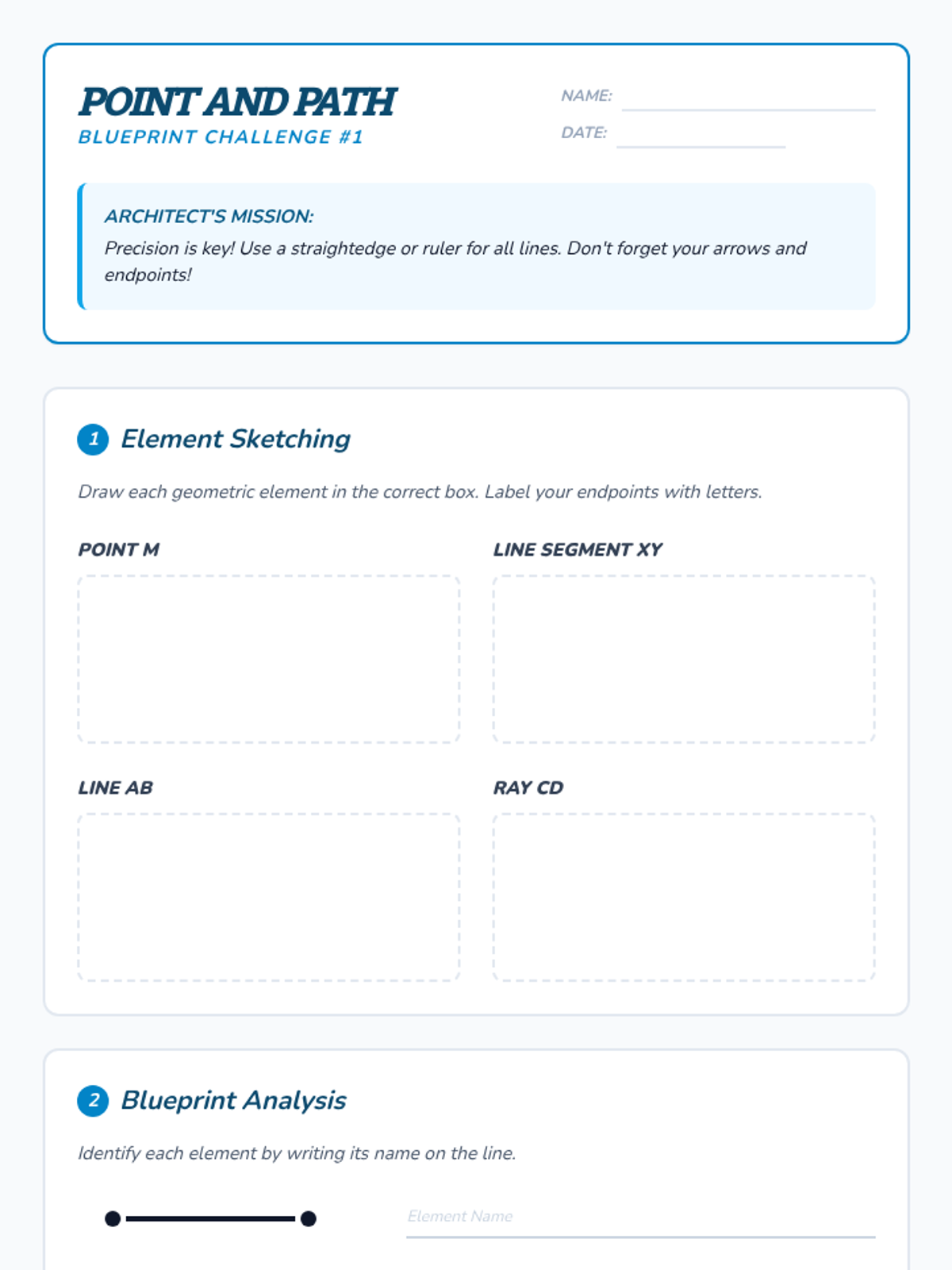
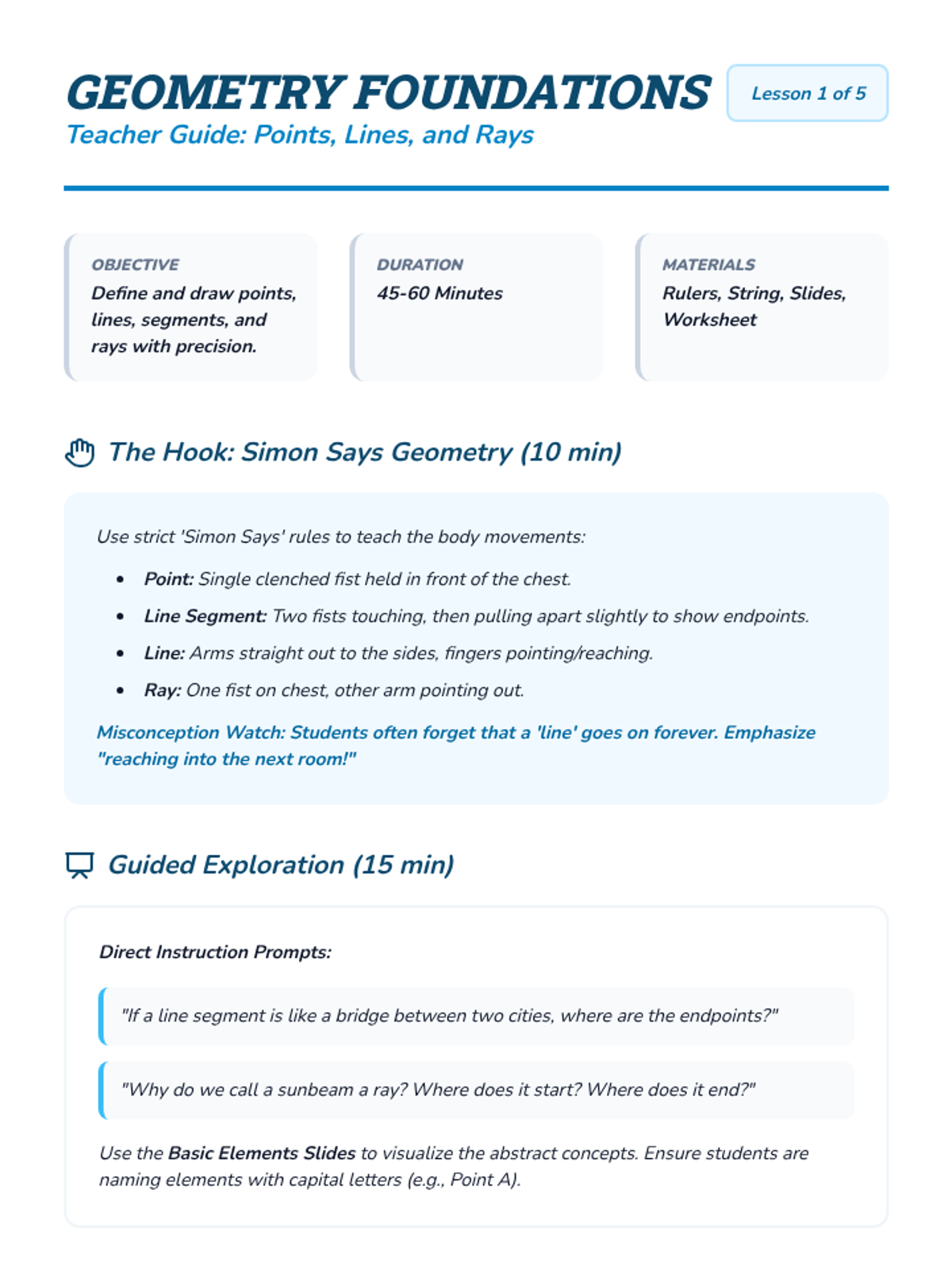
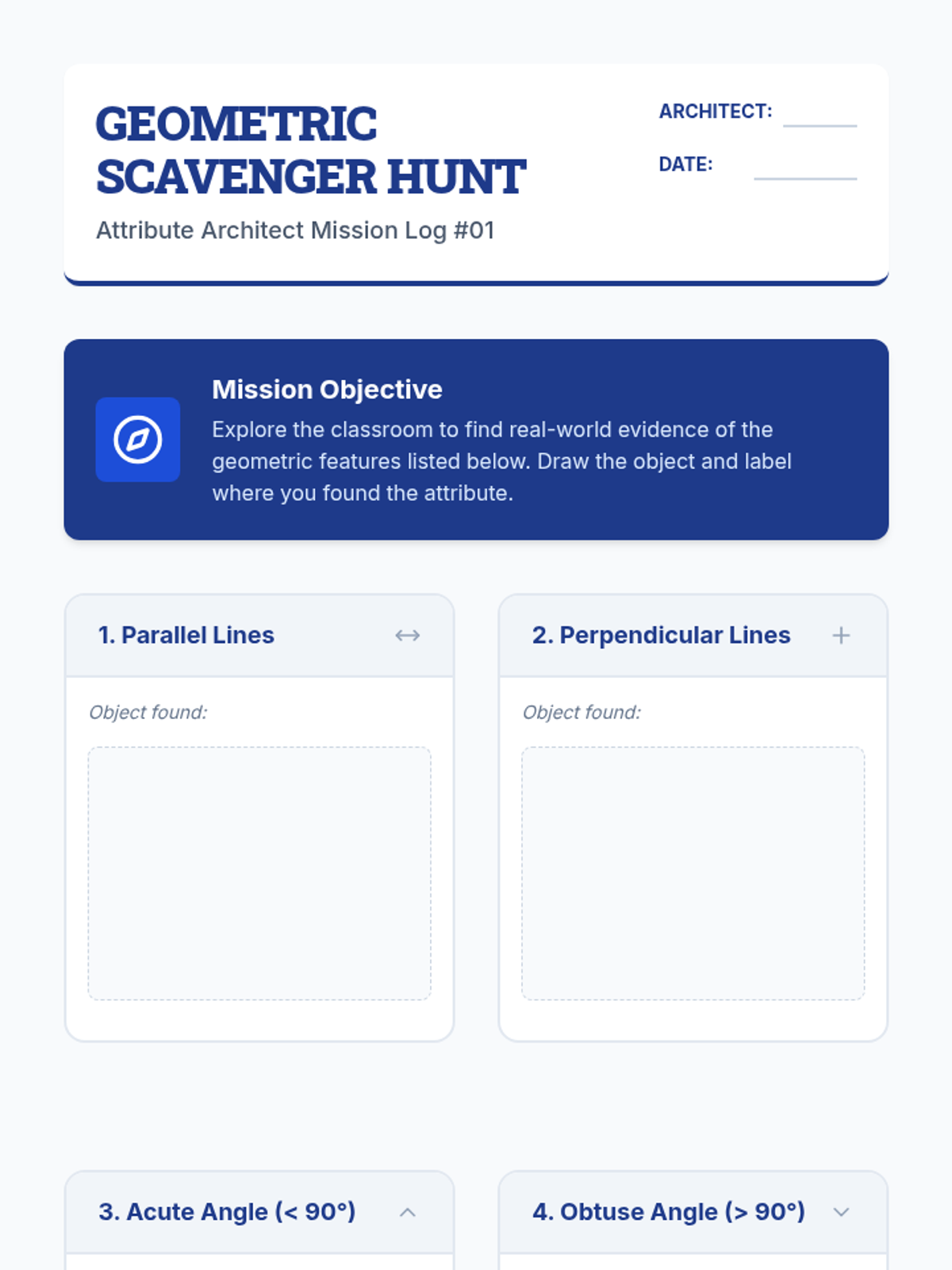
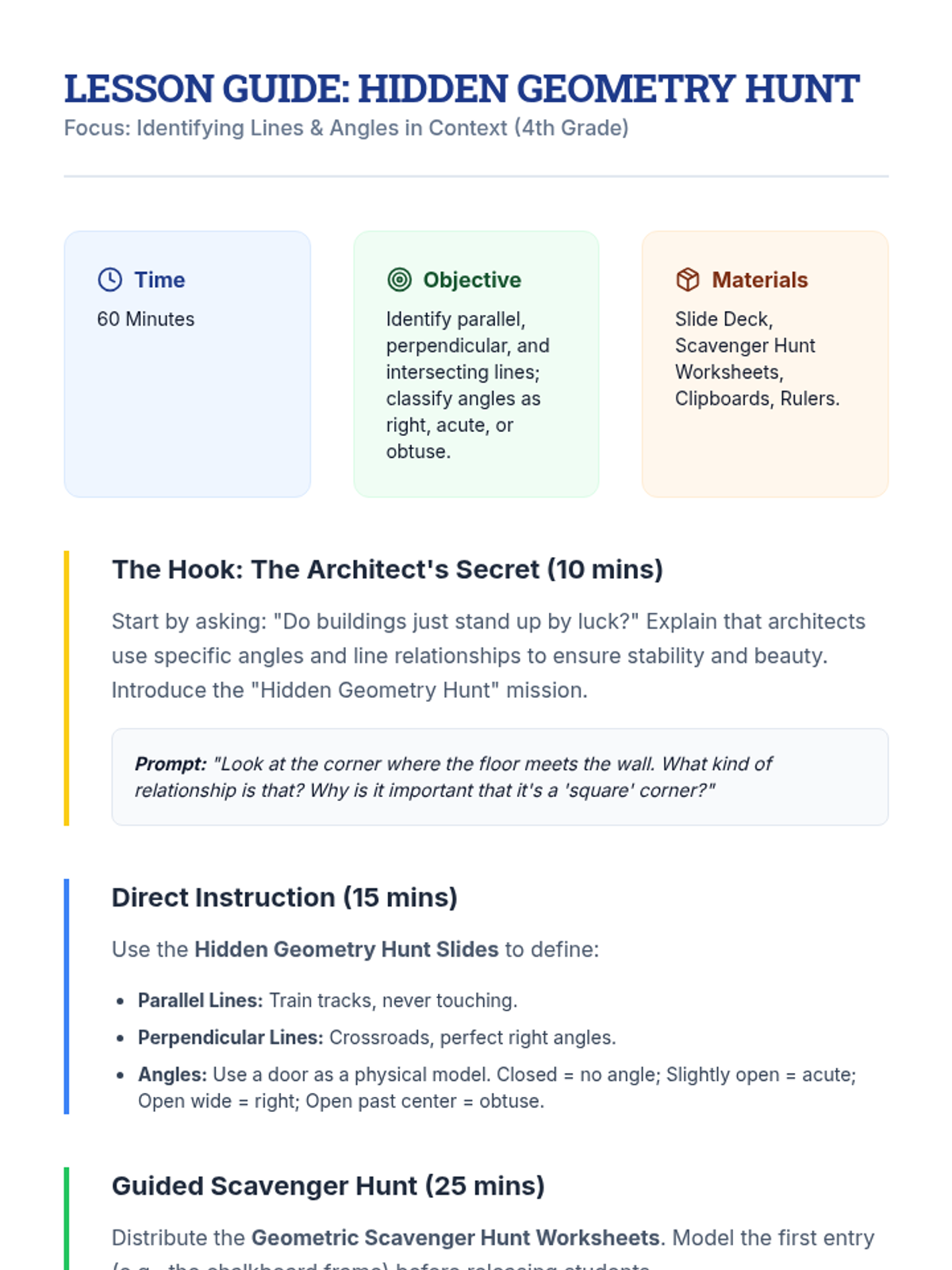
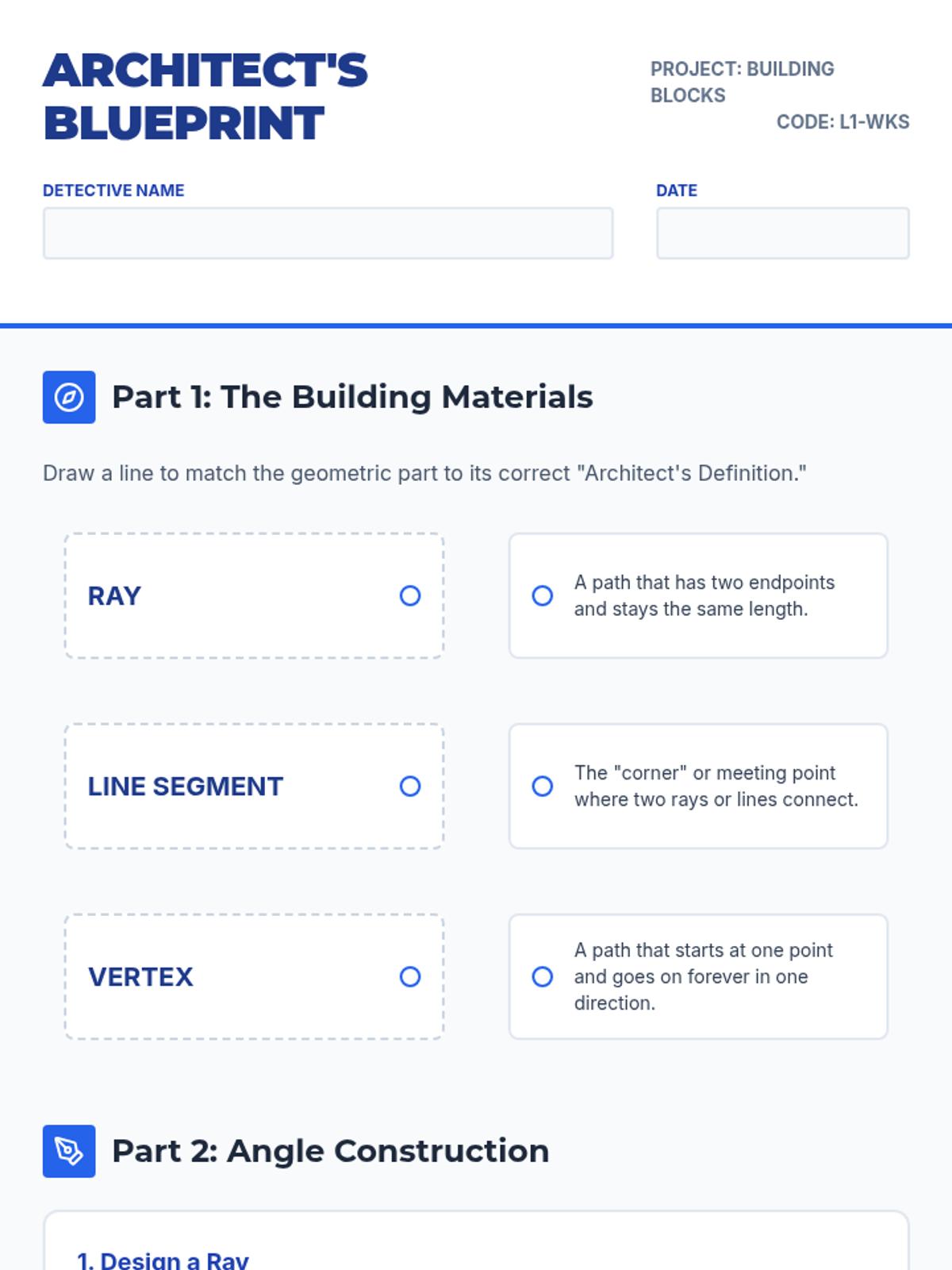
This sequence introduces 4th-grade students to the fundamental properties of geometry, focusing on identifying points, lines, rays, and angles, and using these attributes to classify two-dimensional figures. Students will progress from recognizing basic building blocks to constructing complex polygons based on specific geometric constraints.
This mastery-based sequence focuses on precise mathematical communication and reasoning. Students engage in discussions and logic exercises to refine their definitions of shapes, moving beyond basic naming to attribute-based definitions and hierarchical relationships.
This sequence explores the fundamental building blocks of geometry—points, lines, rays, and angles—and how they combine to form polygons. Students will progress from identifying these elements in isolation to synthesizing them into complex shapes, using formal mathematical terminology to describe and decompose geometric figures.
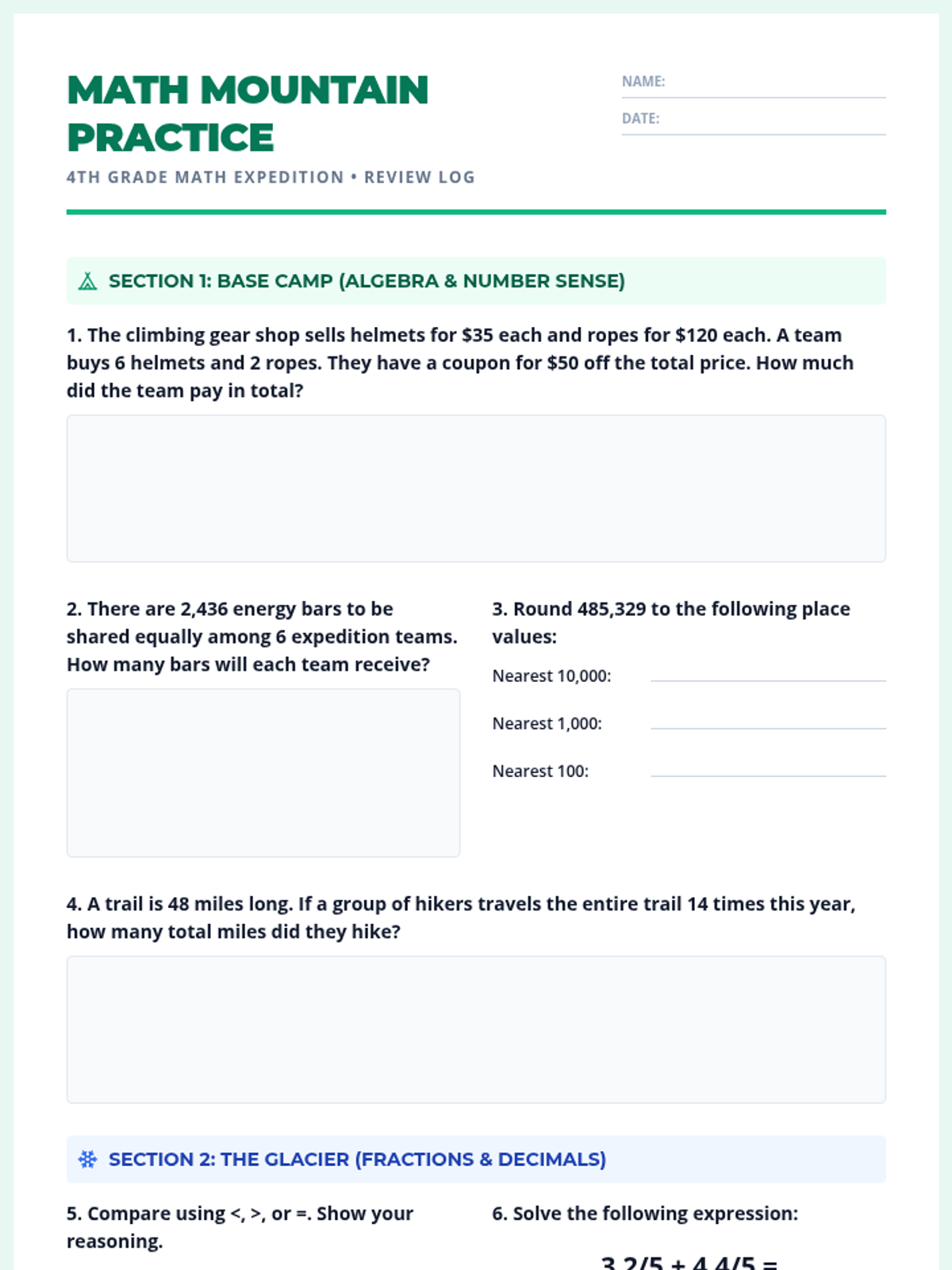
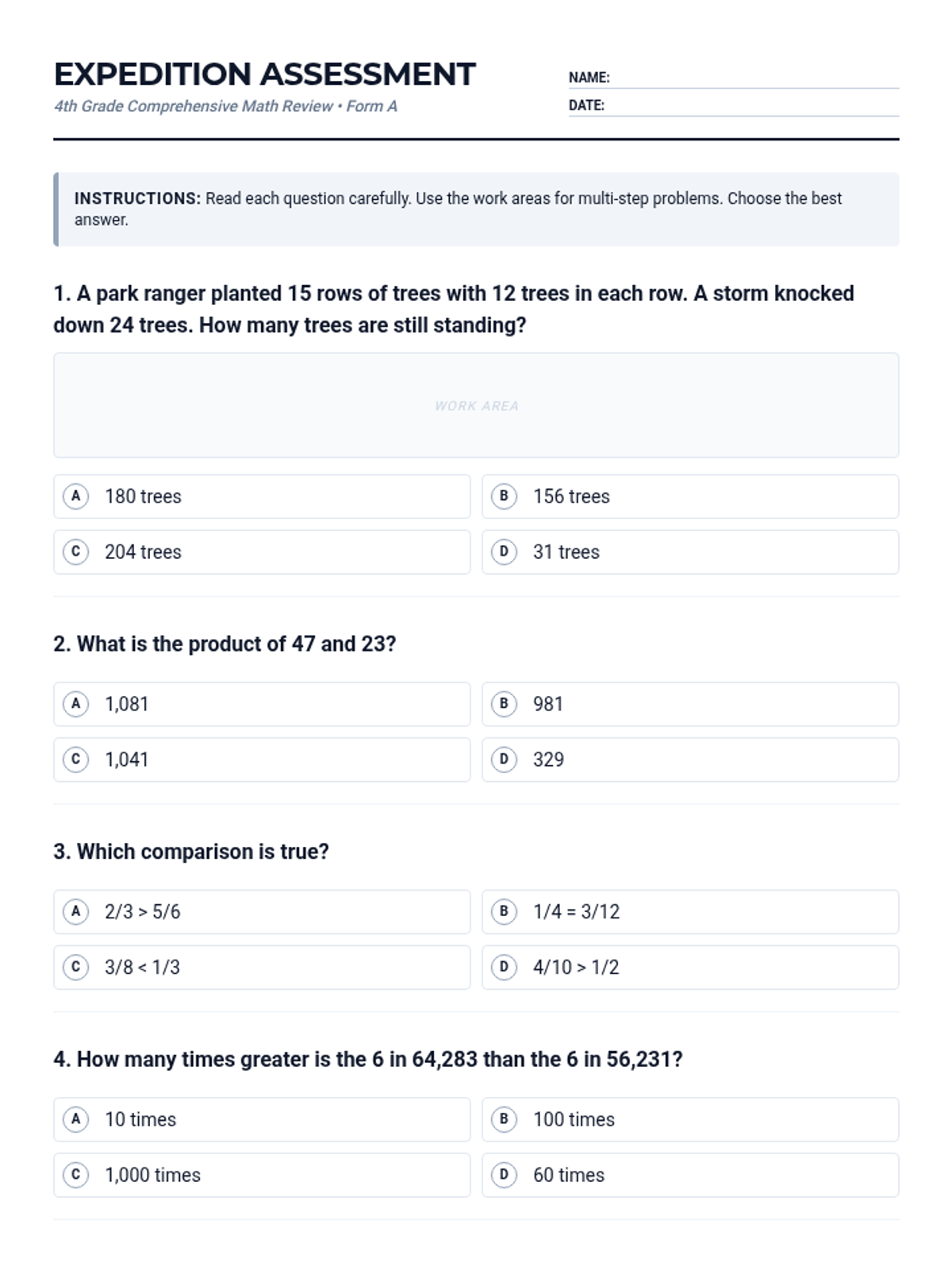
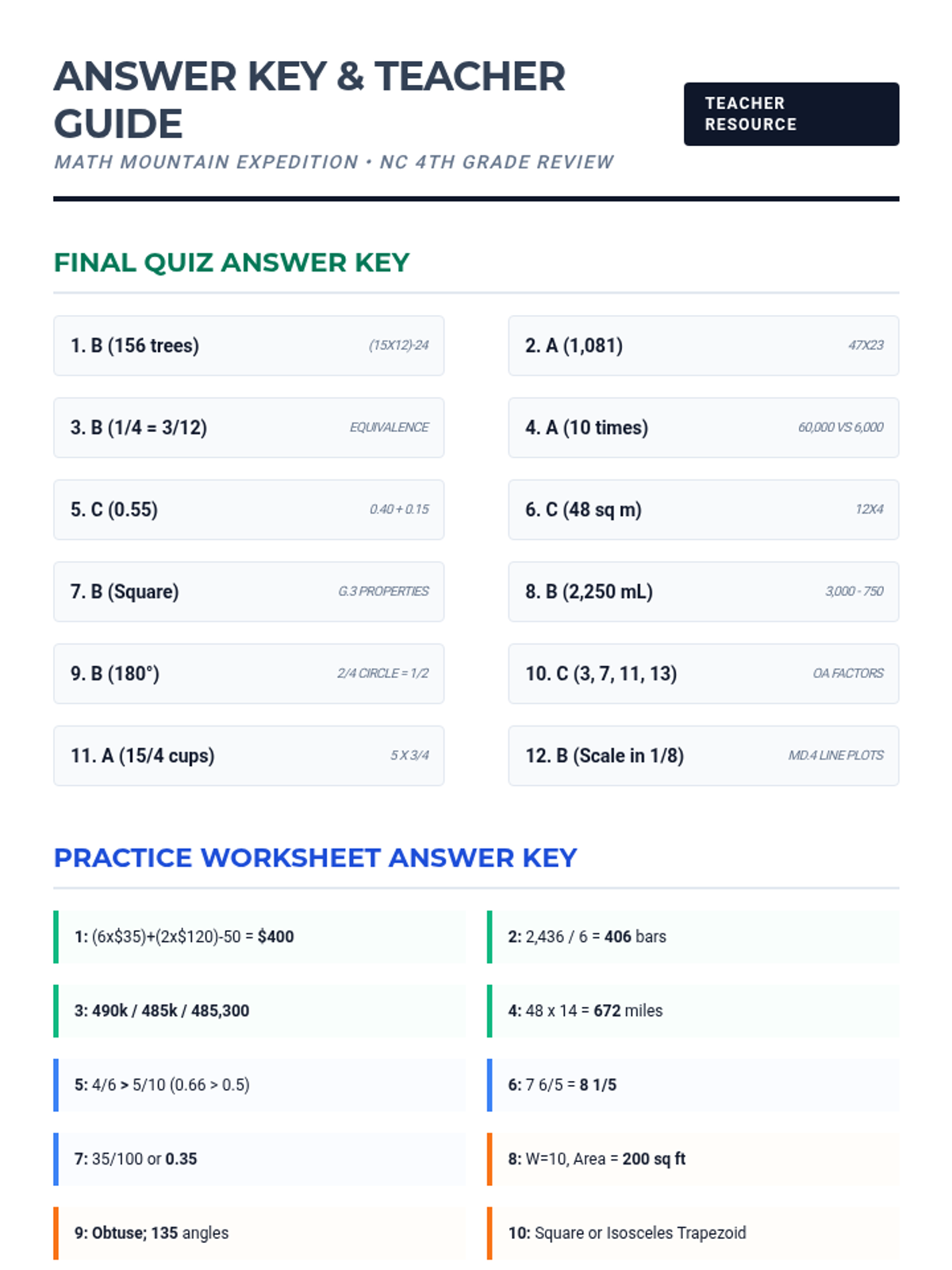
A comprehensive review series for North Carolina 4th-grade students, focusing on all math domains including multi-step word problems and critical thinking challenges.
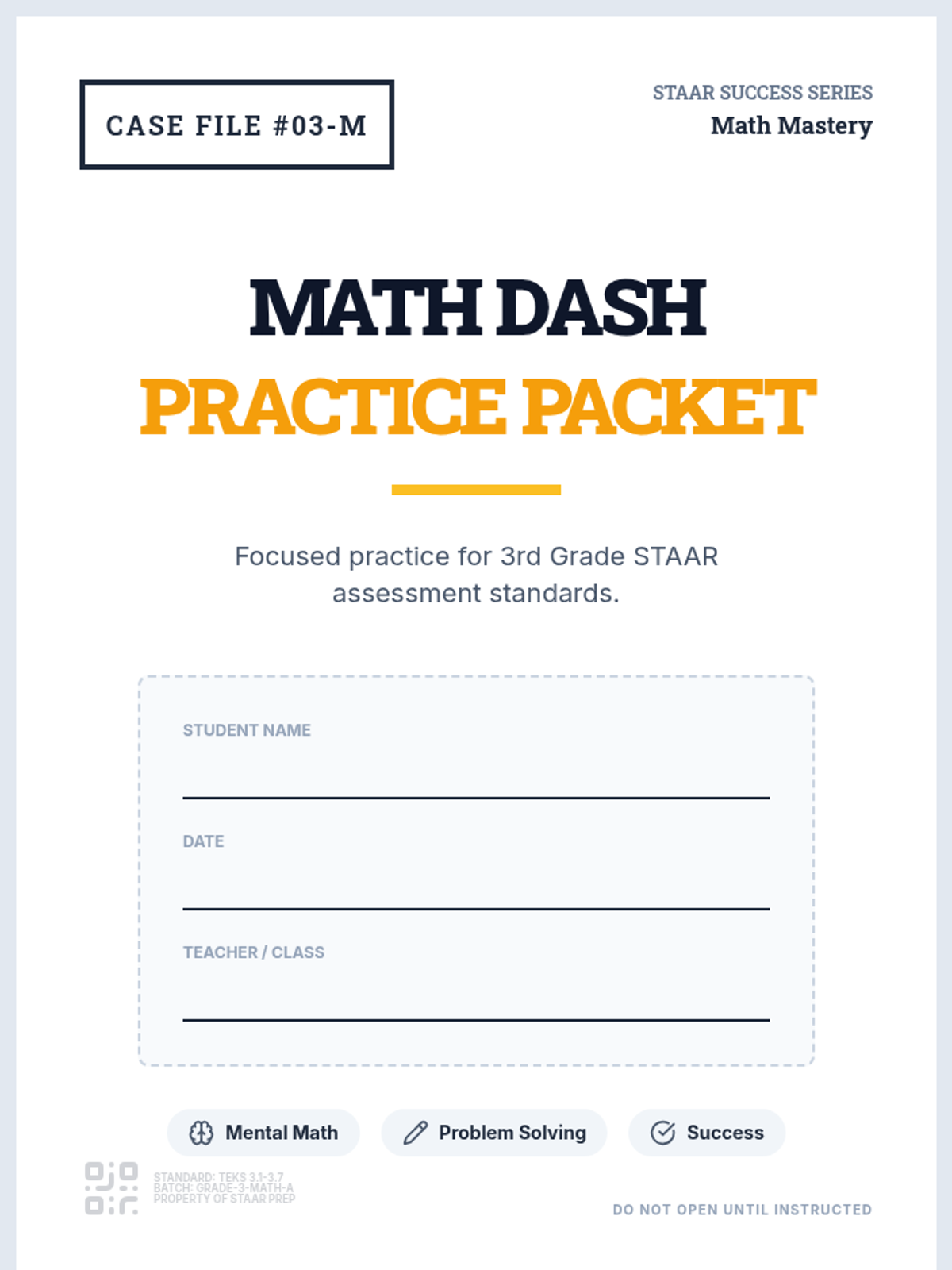
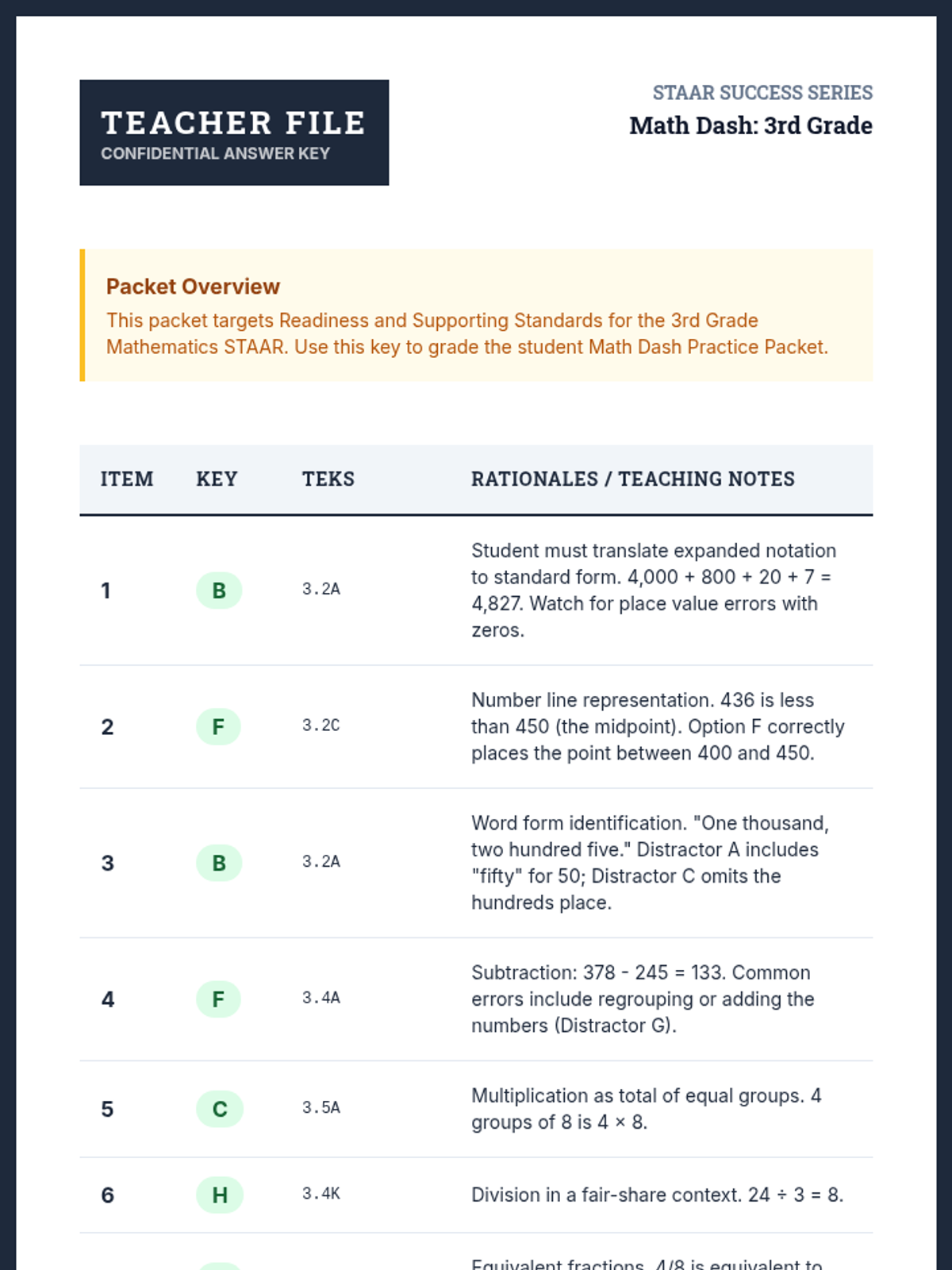
A comprehensive collection of STAAR-aligned practice packets for 3rd-5th grade Math, RLA, and 5th grade Science, designed to build confidence and mastery through authentic test-style questions.
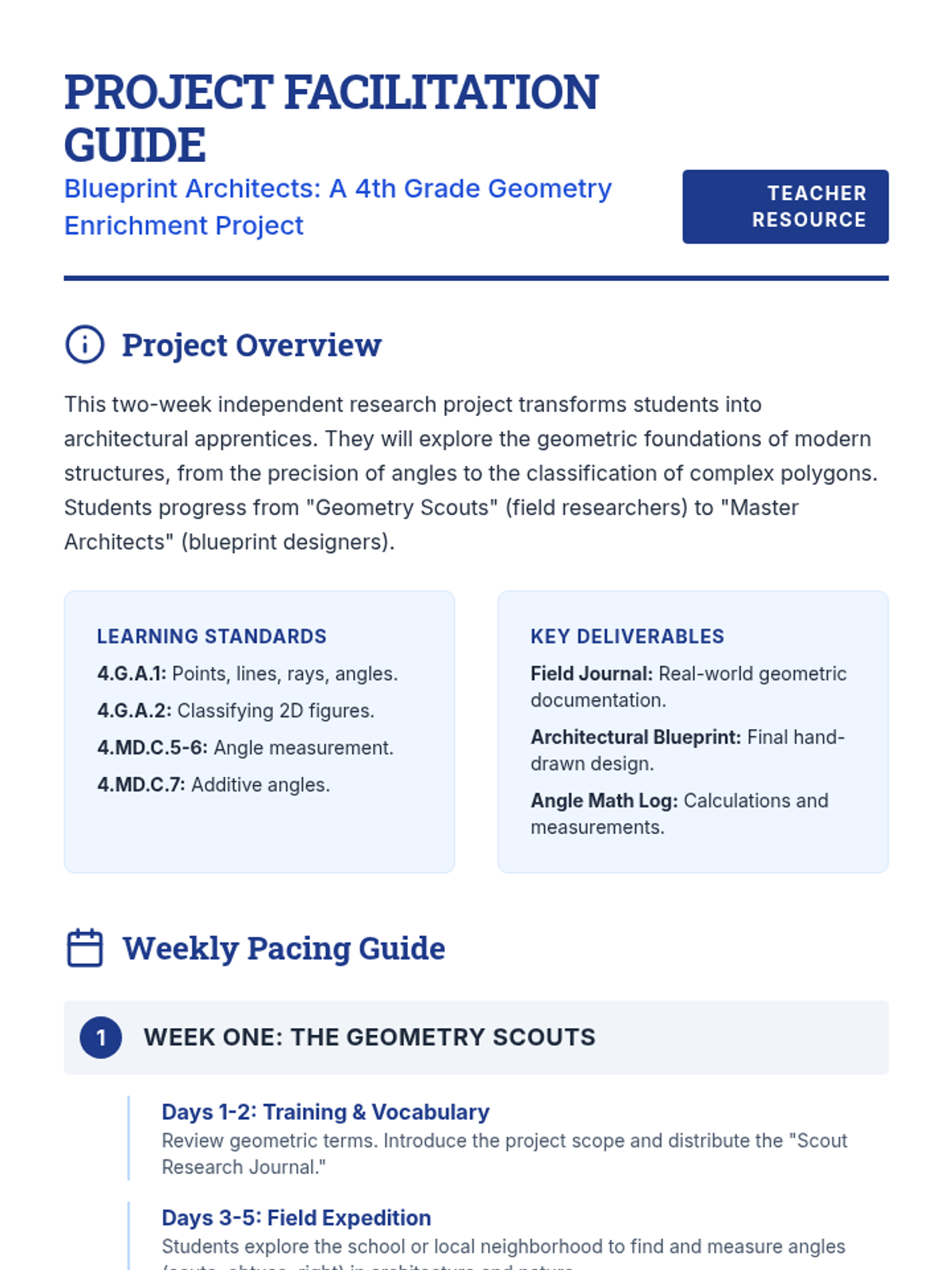
A two-week enrichment project where students act as architects to research, design, and calculate the geometry of a modern structure. The project covers points, lines, angles, and 2D shape classification through real-world application and creative design.
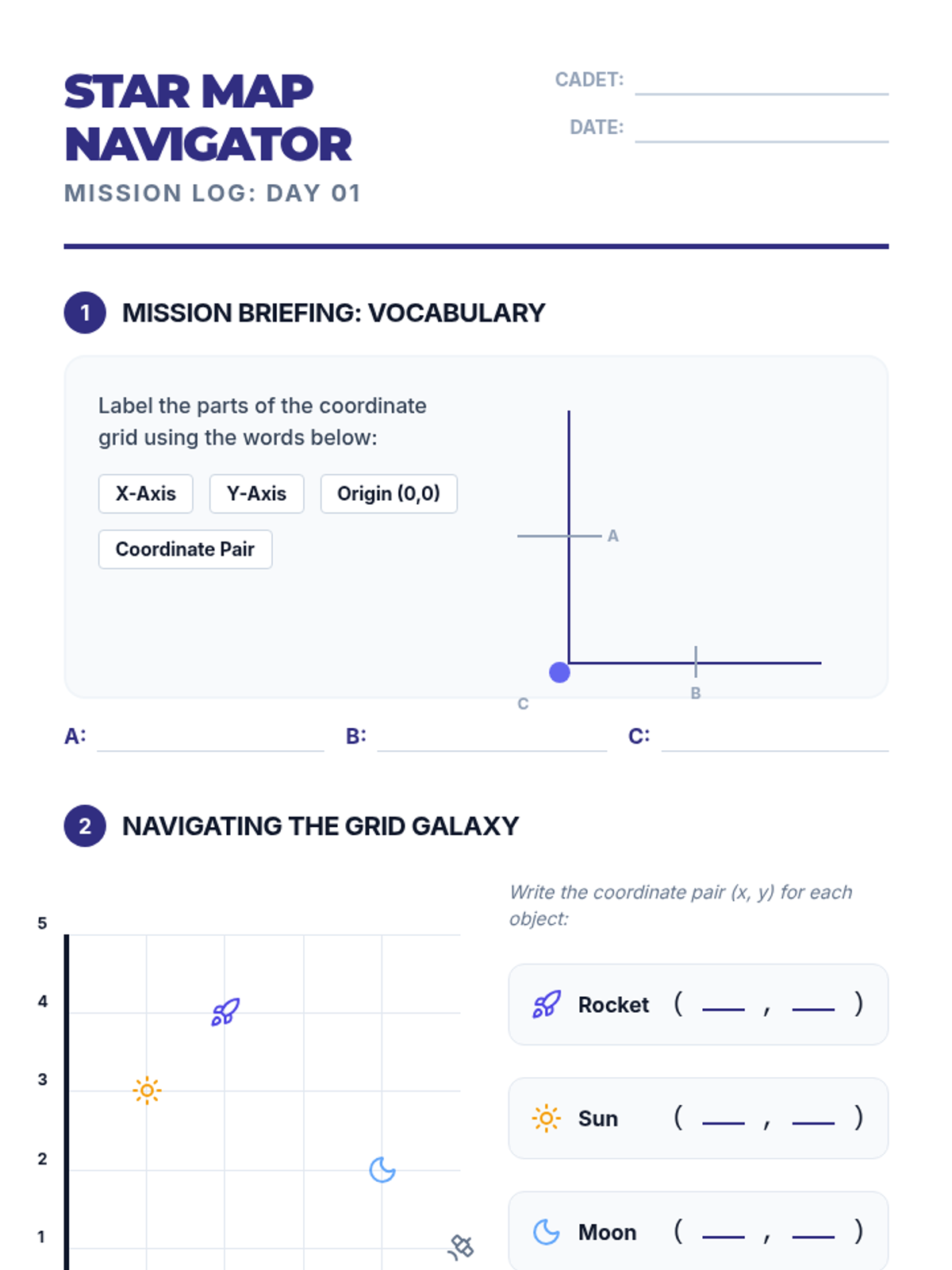
A game-based introduction to coordinate geometry where students learn to navigate grids, plot points, and transform shapes within a space exploration theme. Students transition from basic location-finding to complex mapping and translations.
A 4th-grade geometry unit focused on identifying and classifying lines, angles, and polygons, and exploring concepts of symmetry through hands-on investigation and artistic application.
A hands-on geometry sequence where students explore the building blocks of angles, identify right angles in their environment, and classify angles as acute, obtuse, or straight through inquiry and shape analysis.
A project-based unit where 4th-grade students explore geometric classification through art and architecture, culminating in the creation of a 'Mathematical Mosaic' with a detailed geometric legend.
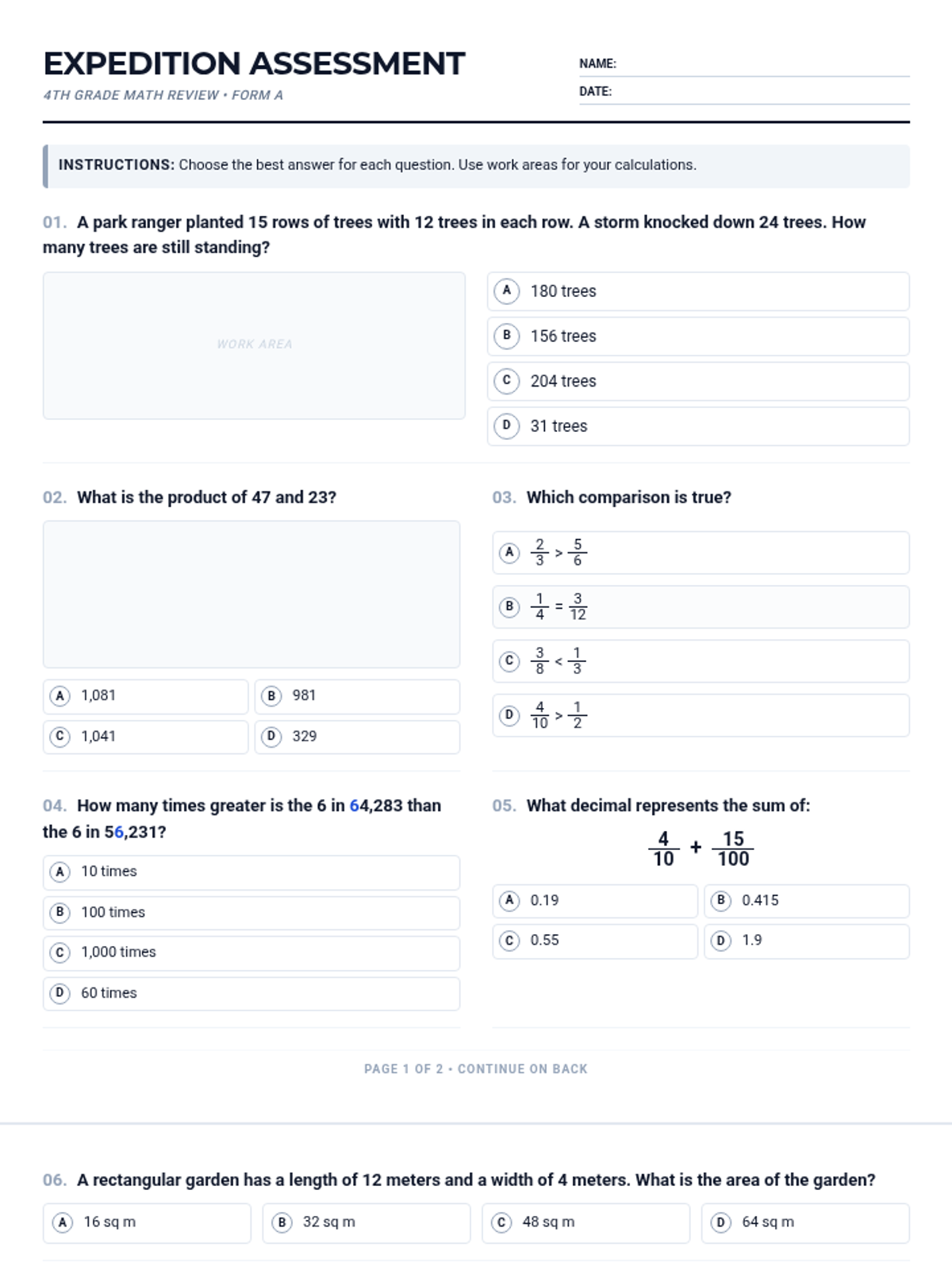
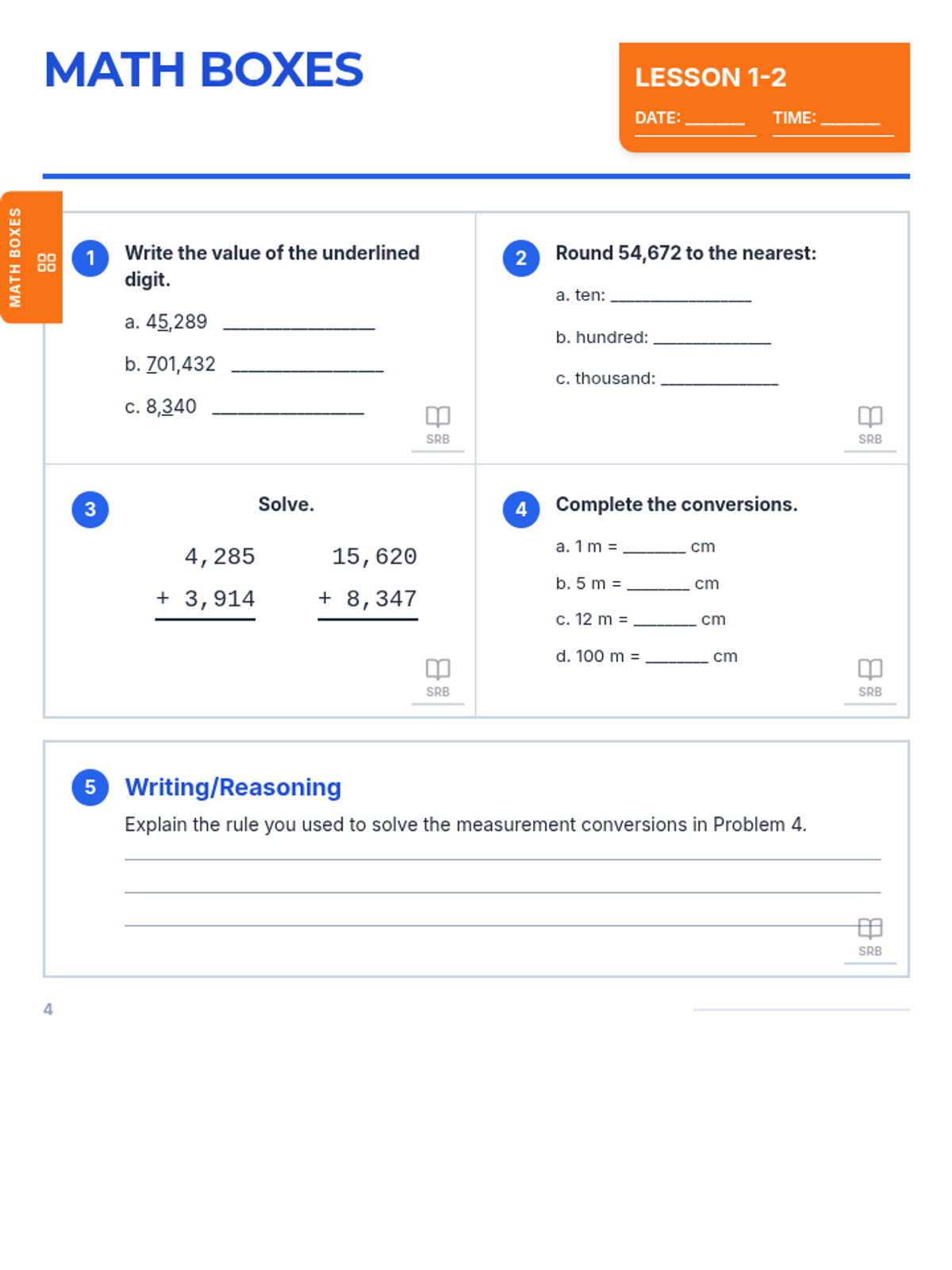
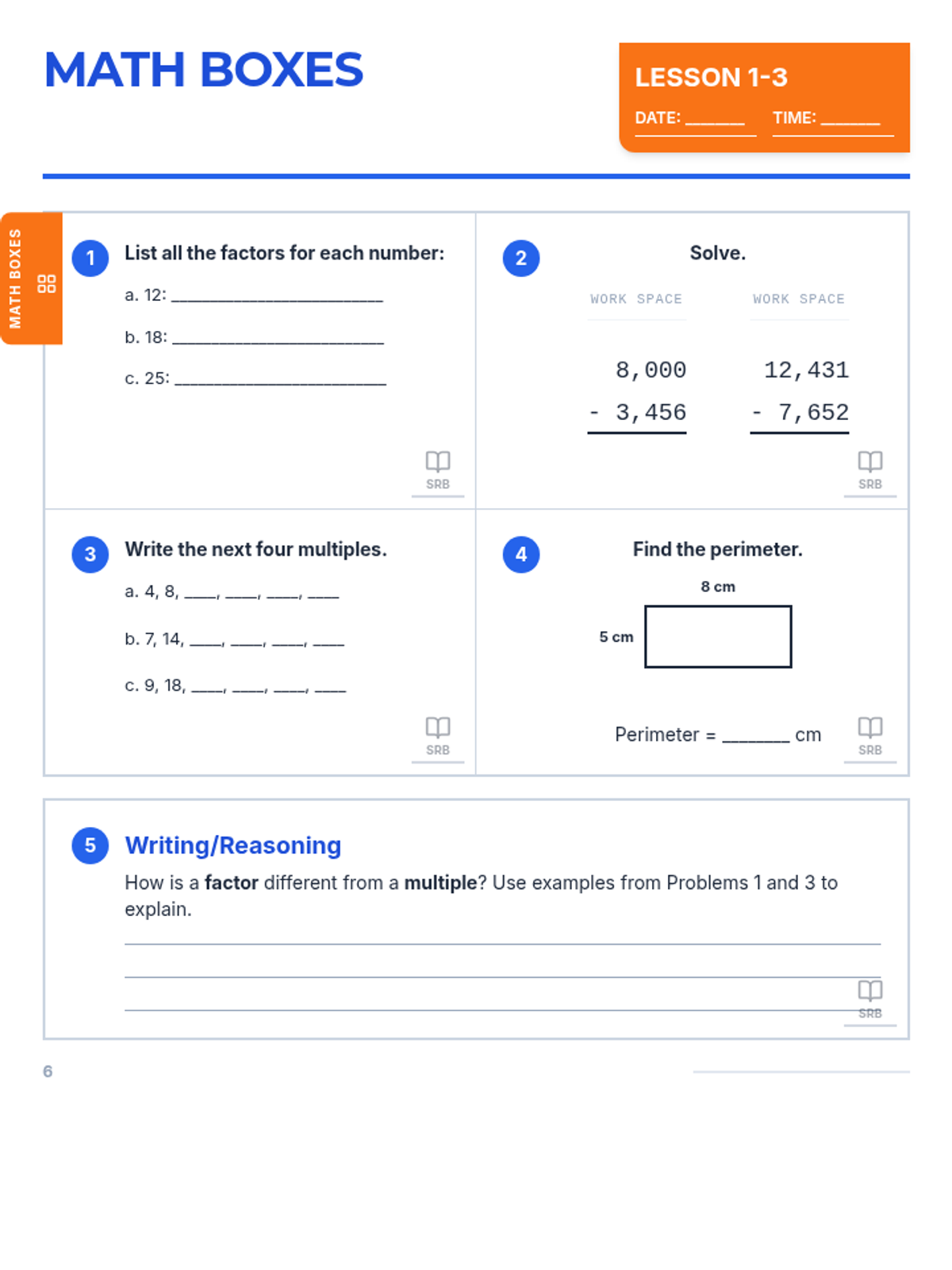
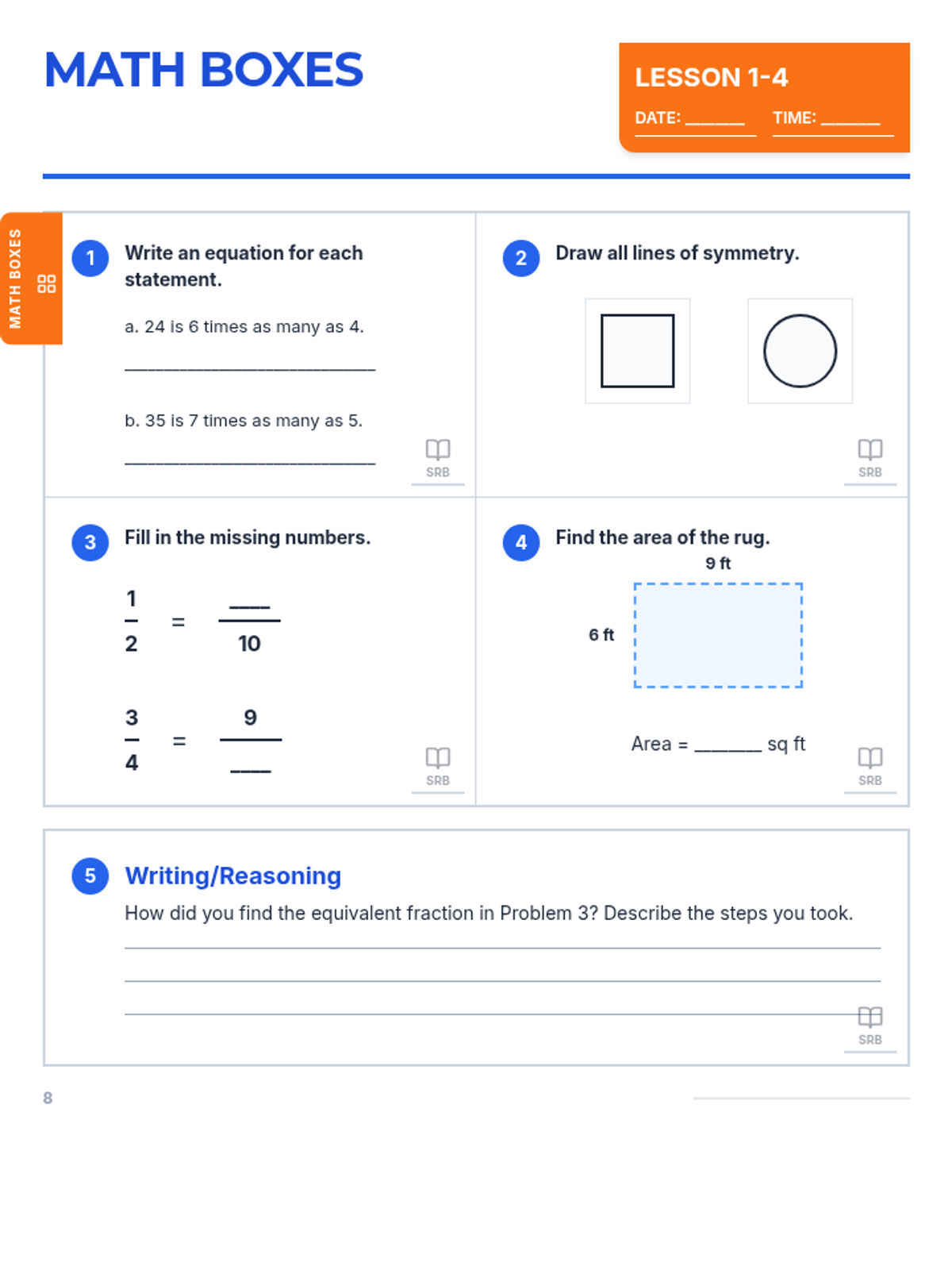
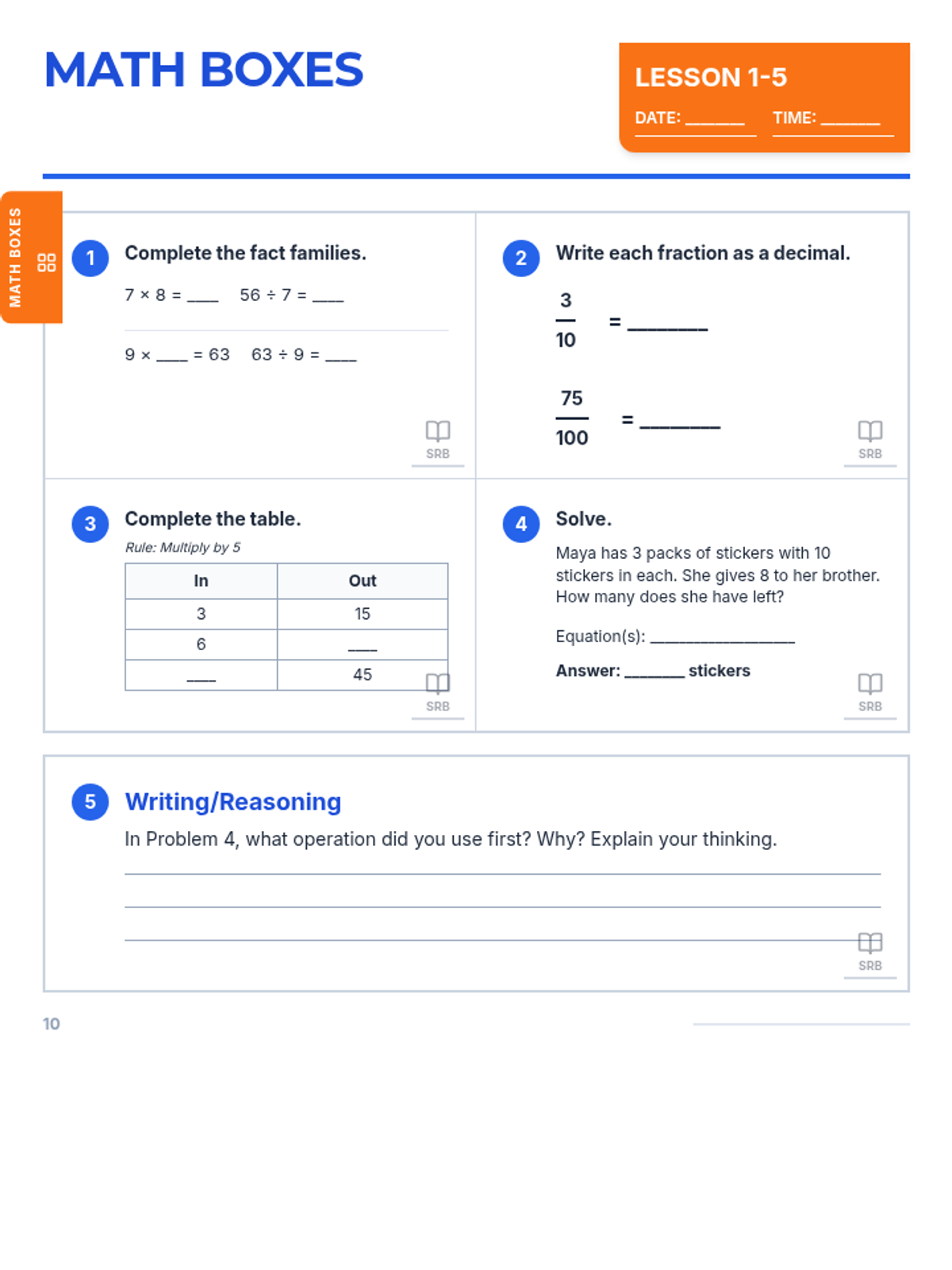
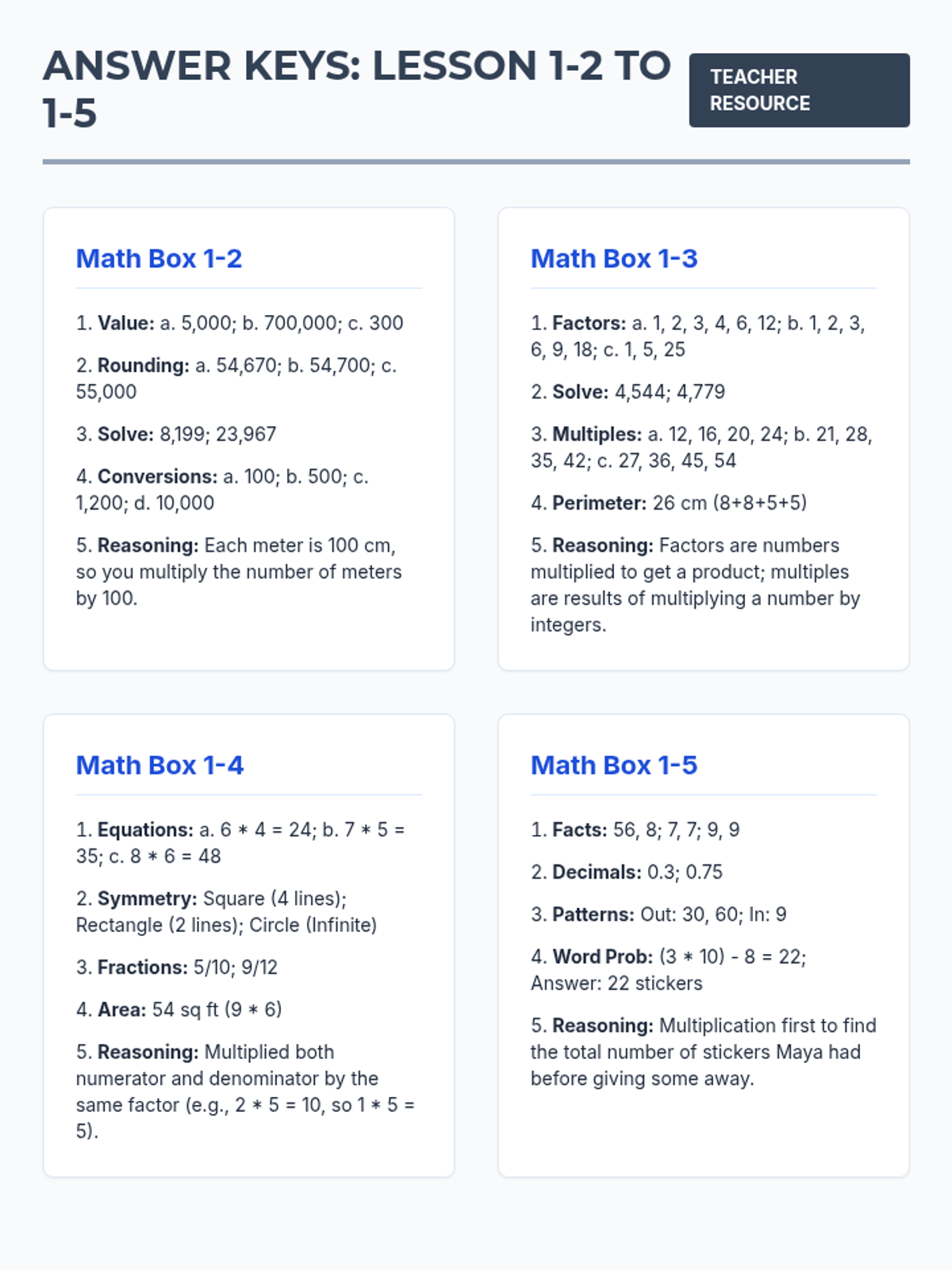
A collection of 4th-grade math review sheets modeled after the 'Math Boxes' format, focusing on mixed skills practice, mental math, and written reasoning.
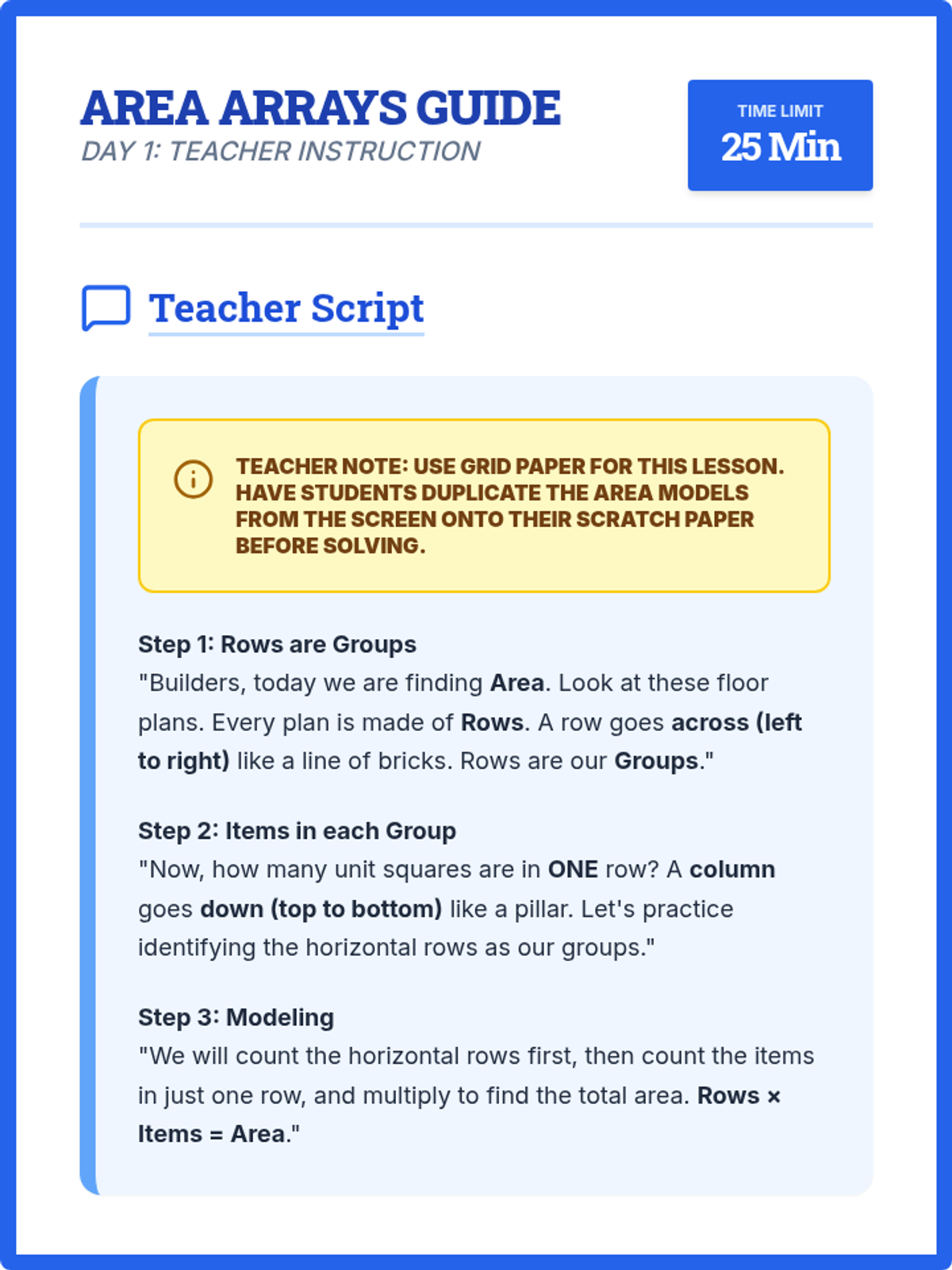
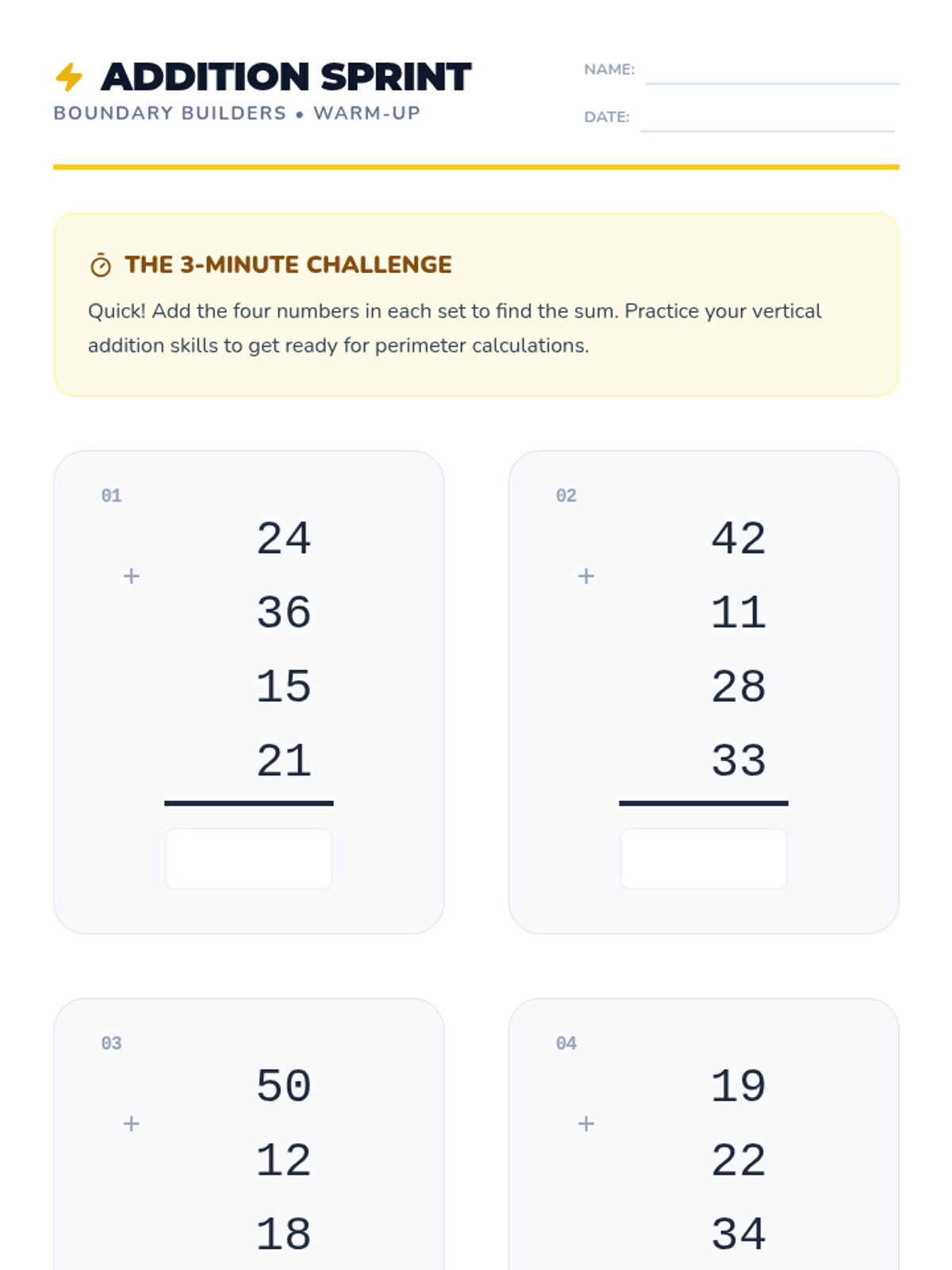
A 5-day intensive intervention sequence focused on determining area using multiplication (3.6C) and calculating perimeter including missing side lengths (3.7B). The unit uses a 'Boundary Builders' construction theme to make geometric concepts concrete and engaging for small group instruction.
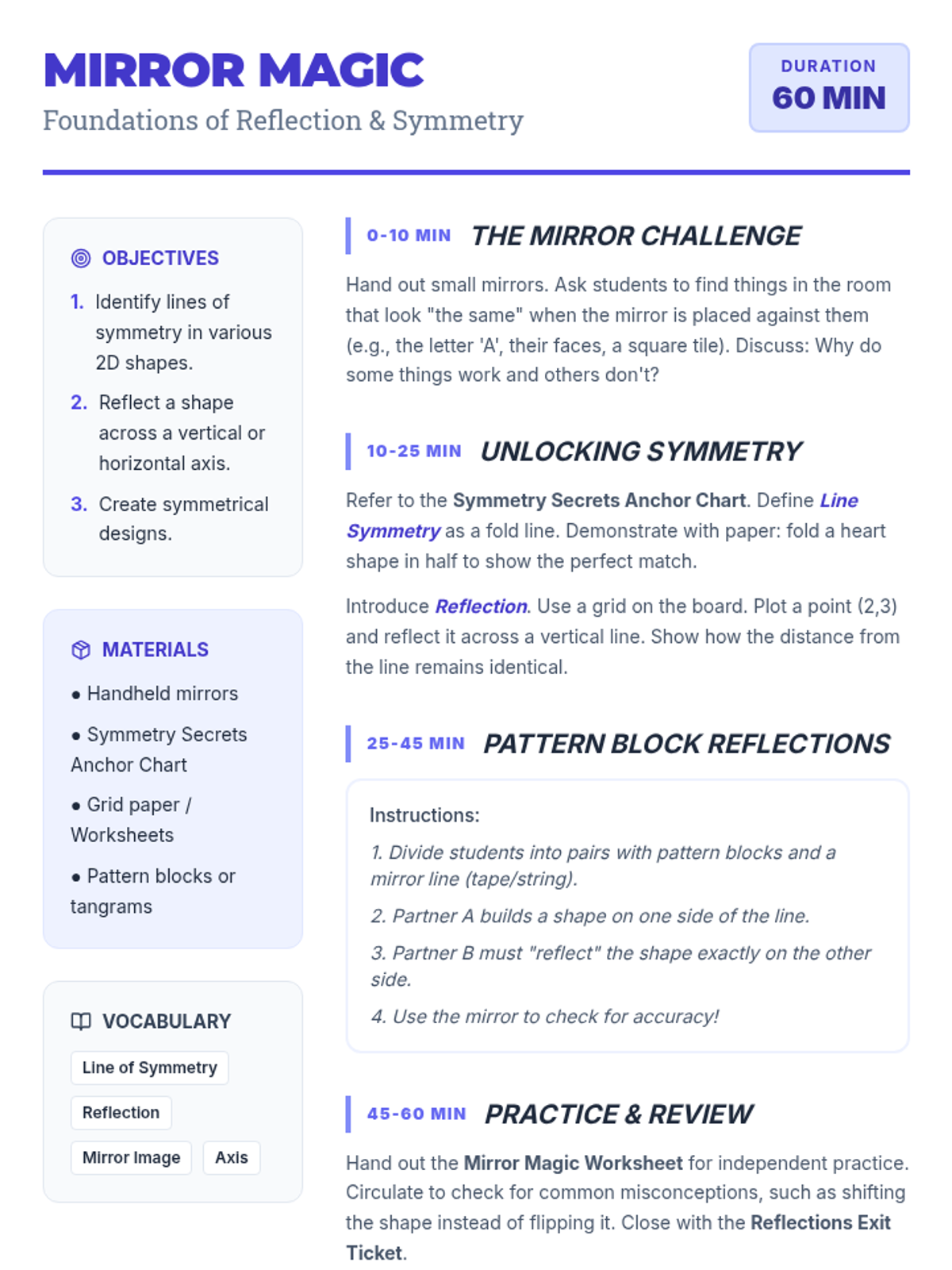
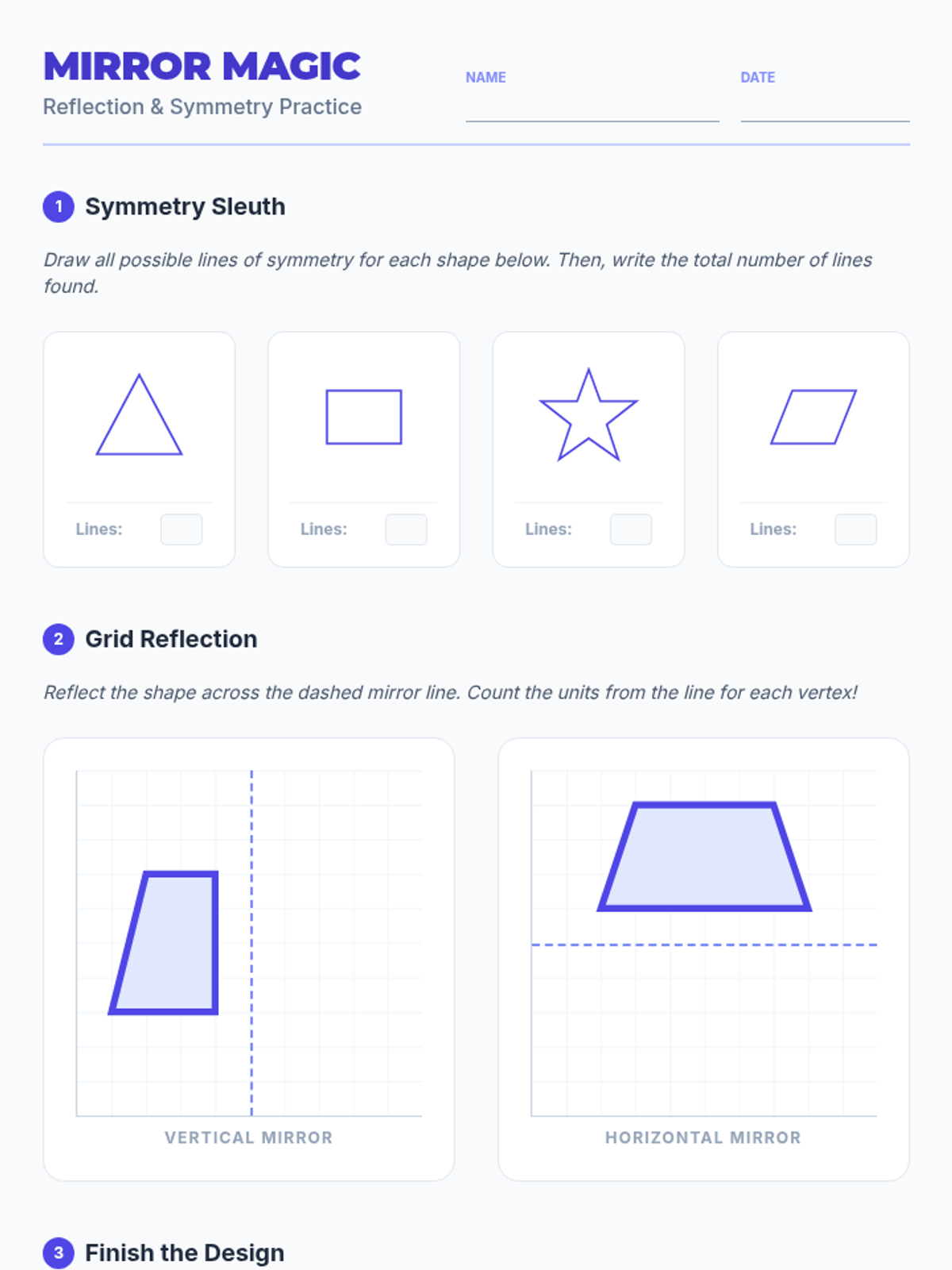
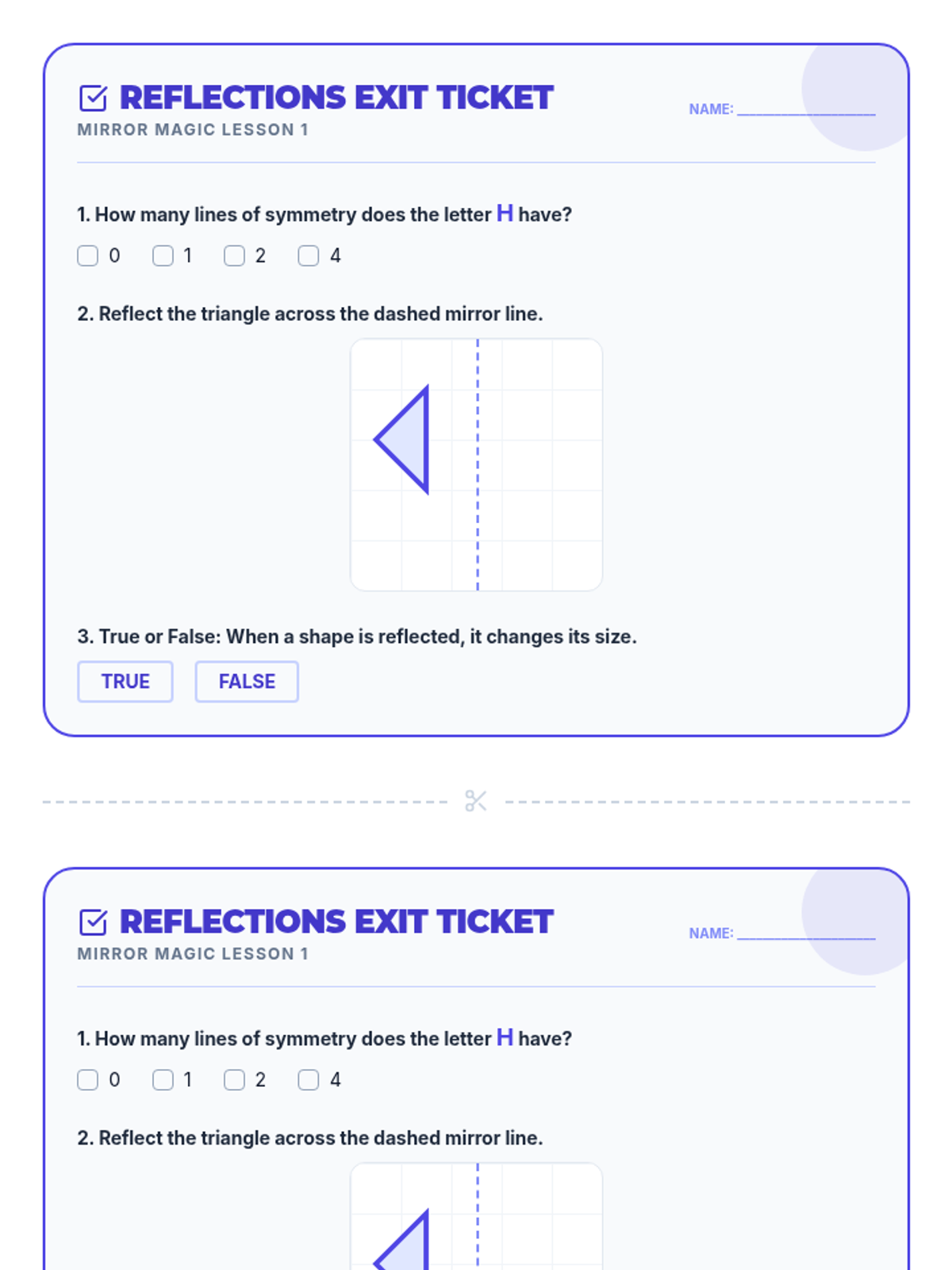
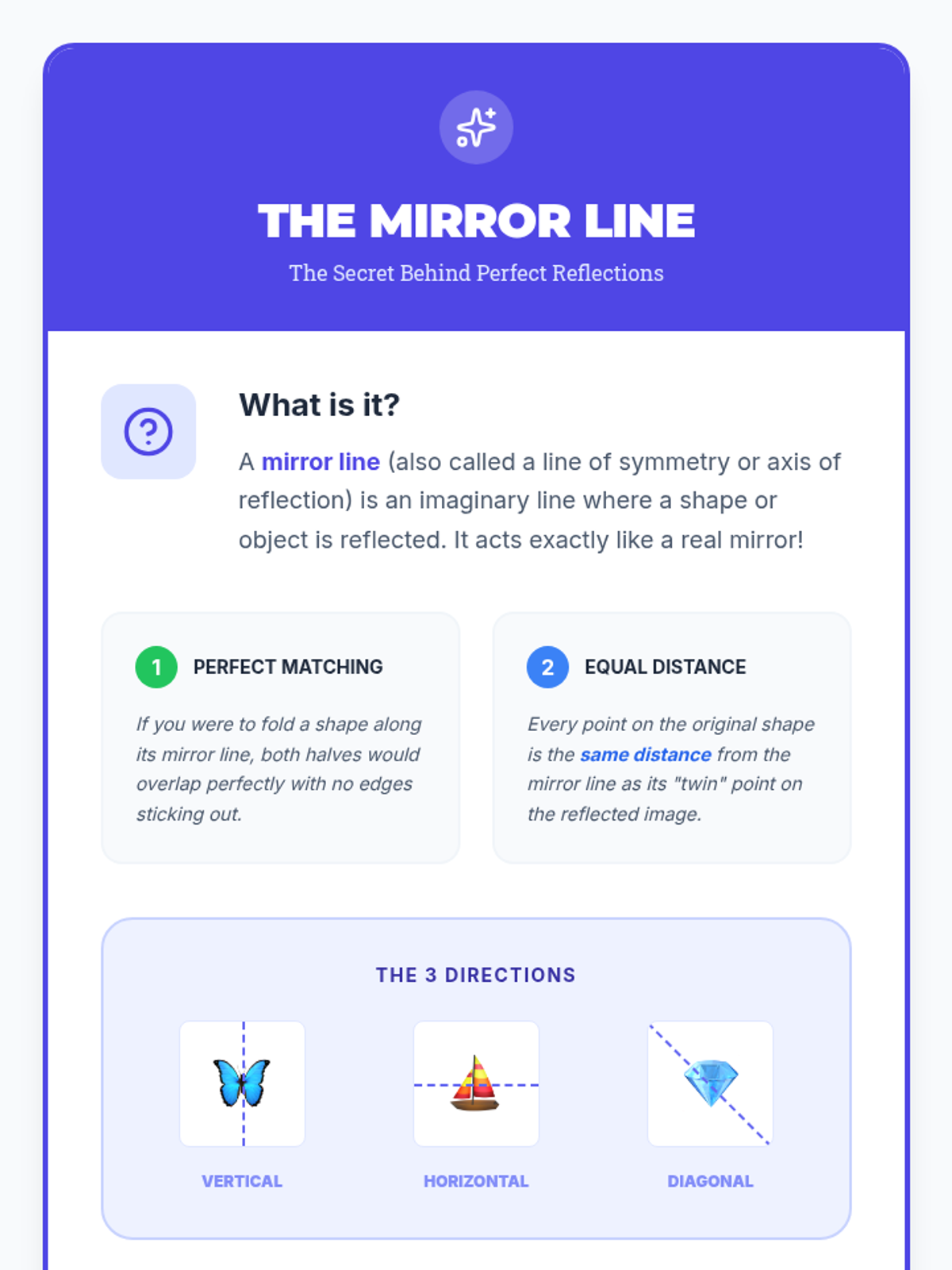
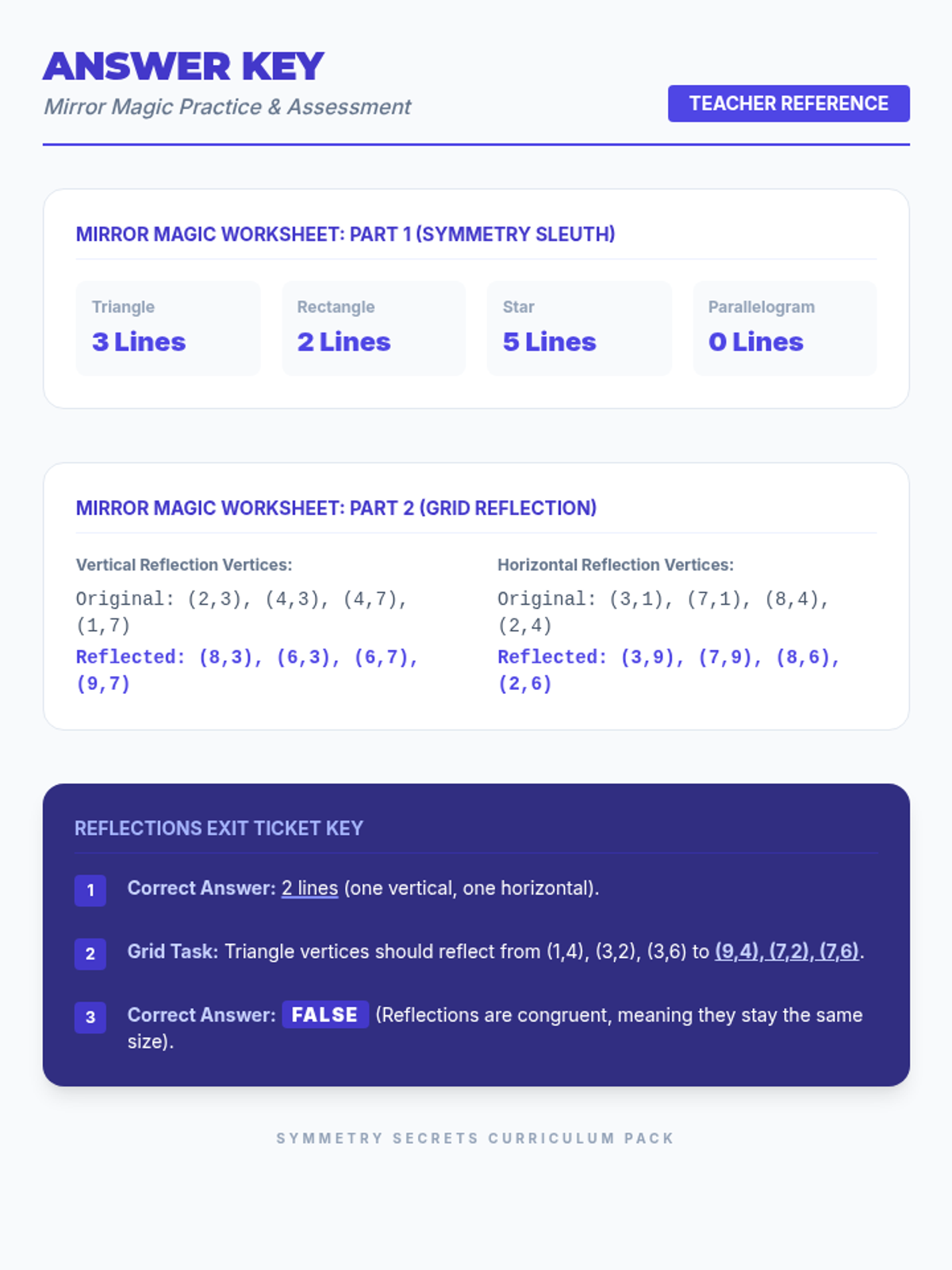
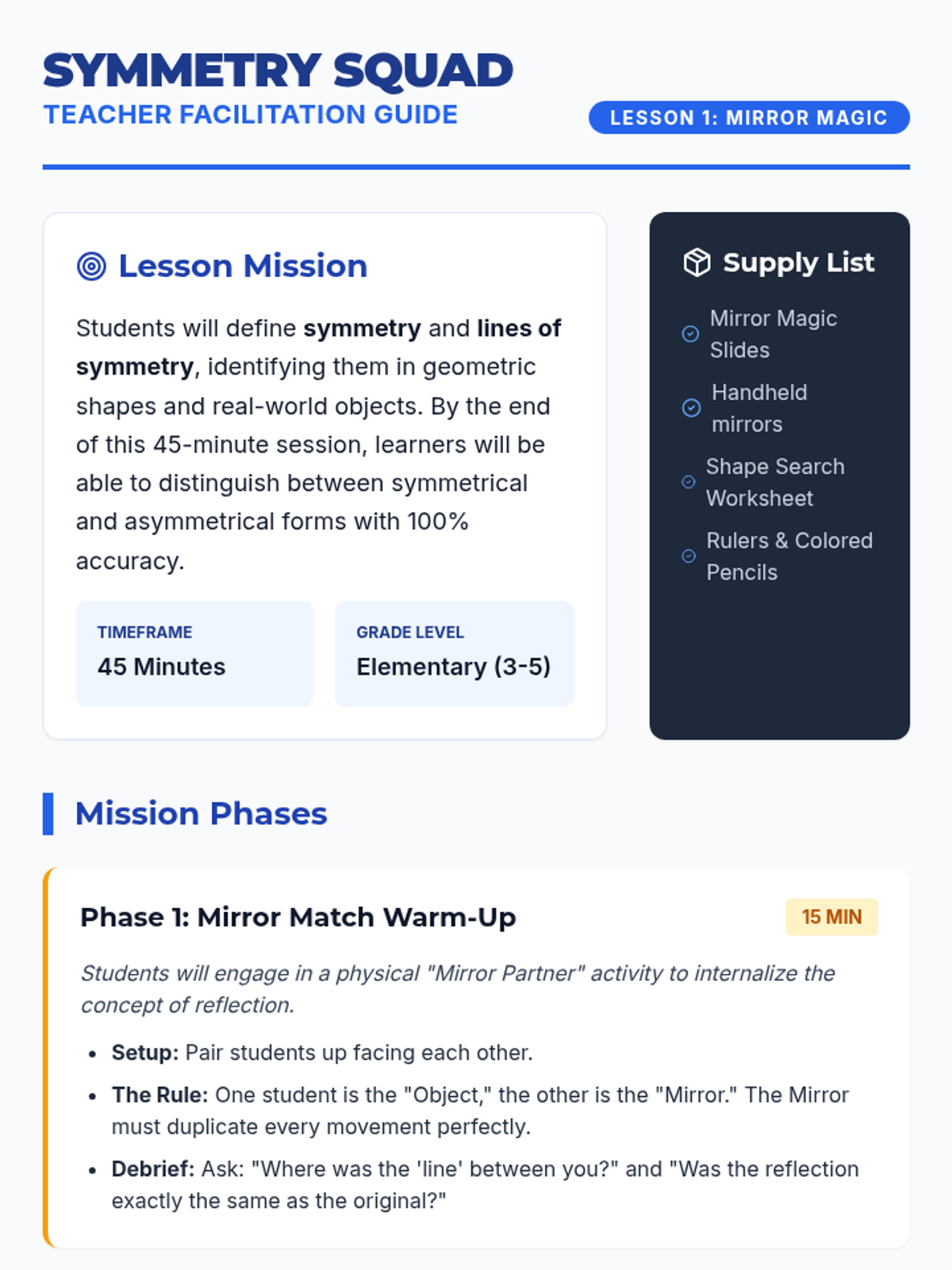
A deep dive into geometric transformations, starting with the foundational concepts of symmetry and reflection through hands-on exploration and visual practice.
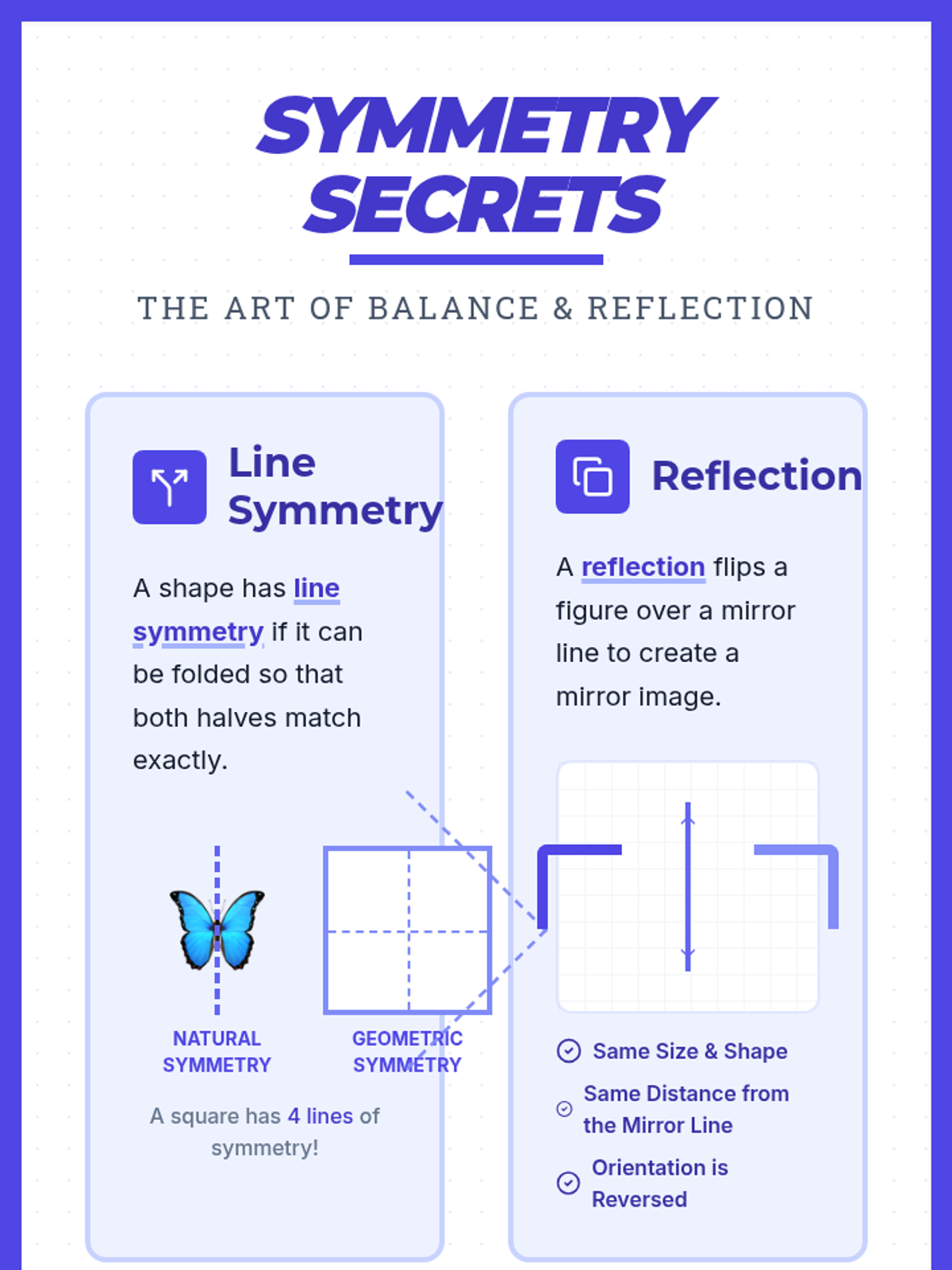
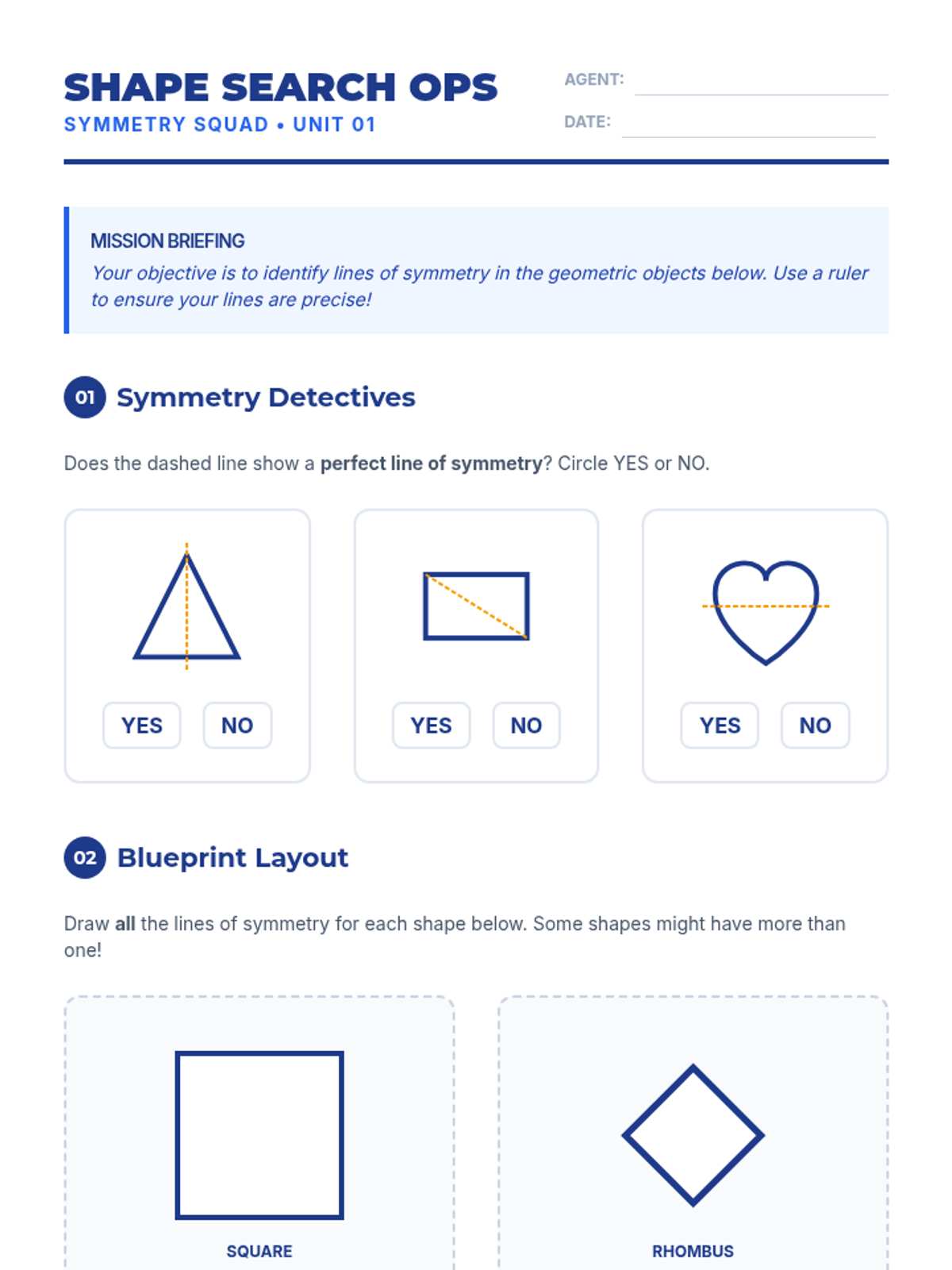
A comprehensive unit on lines of symmetry, exploring identification, drawing, and real-world applications through geometric and organic forms. Students will develop a deep understanding of balance and reflection.
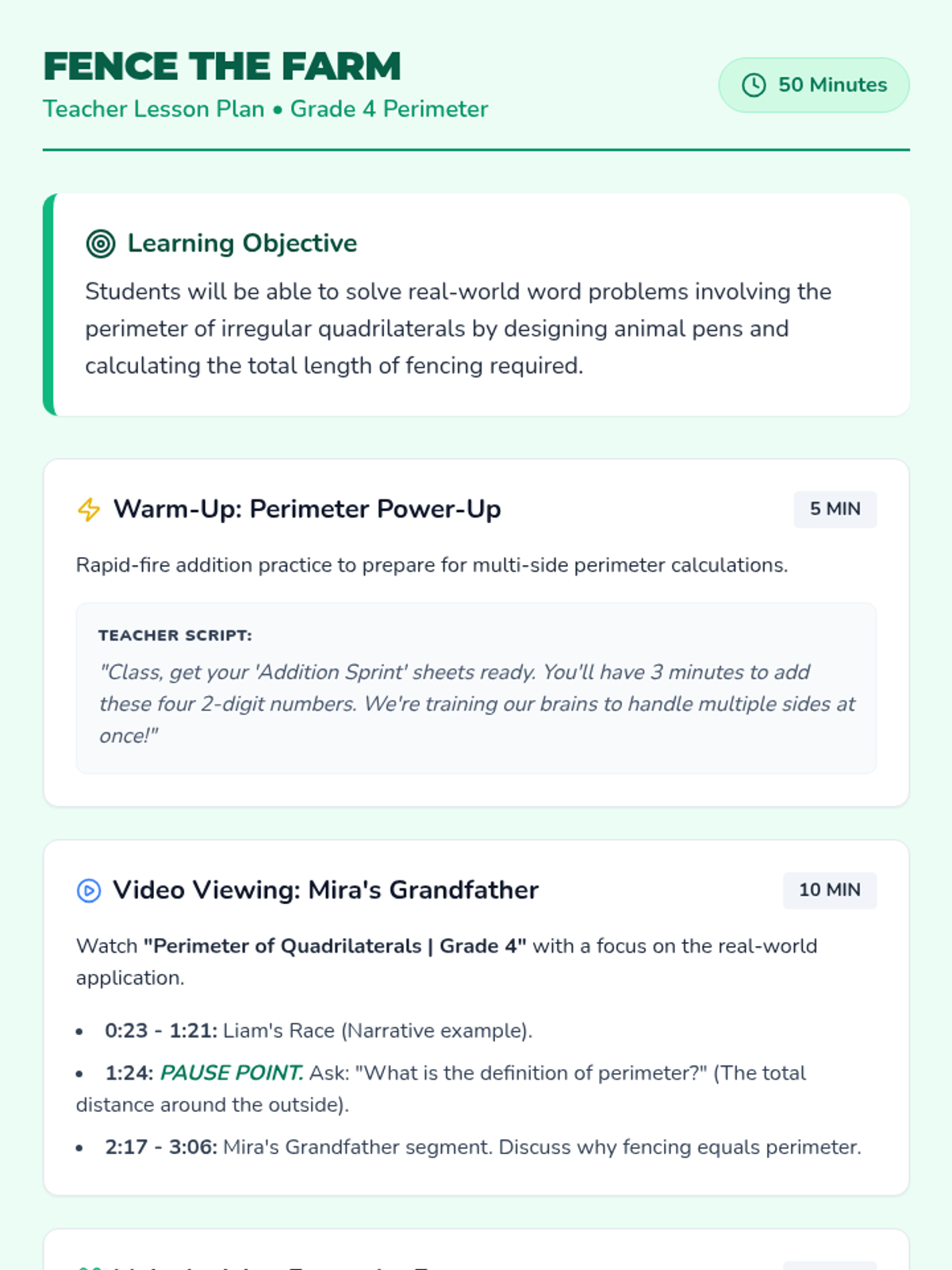
A math sequence focused on understanding and calculating the perimeter of irregular quadrilaterals through real-world scenarios like fencing a farm.
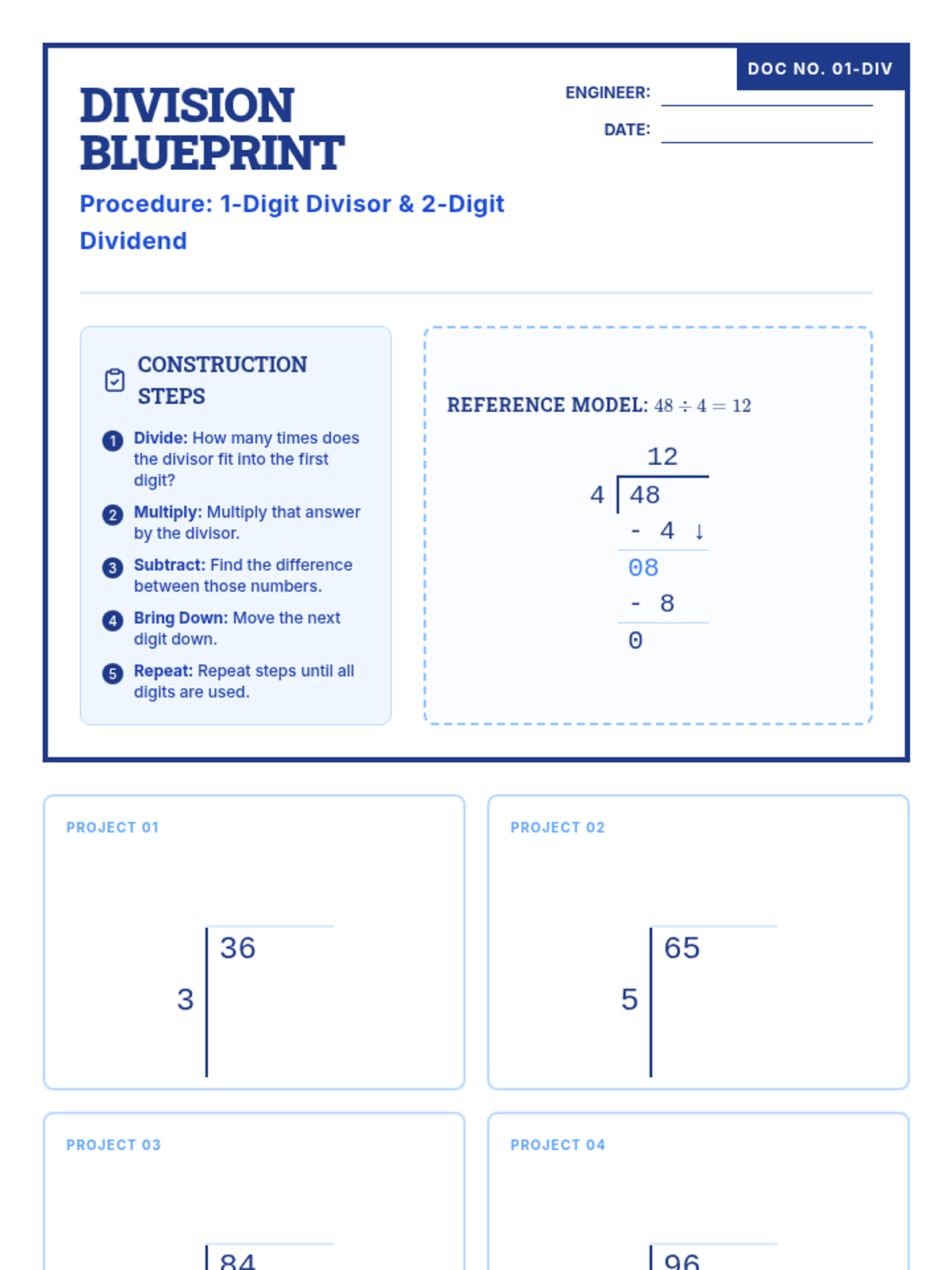
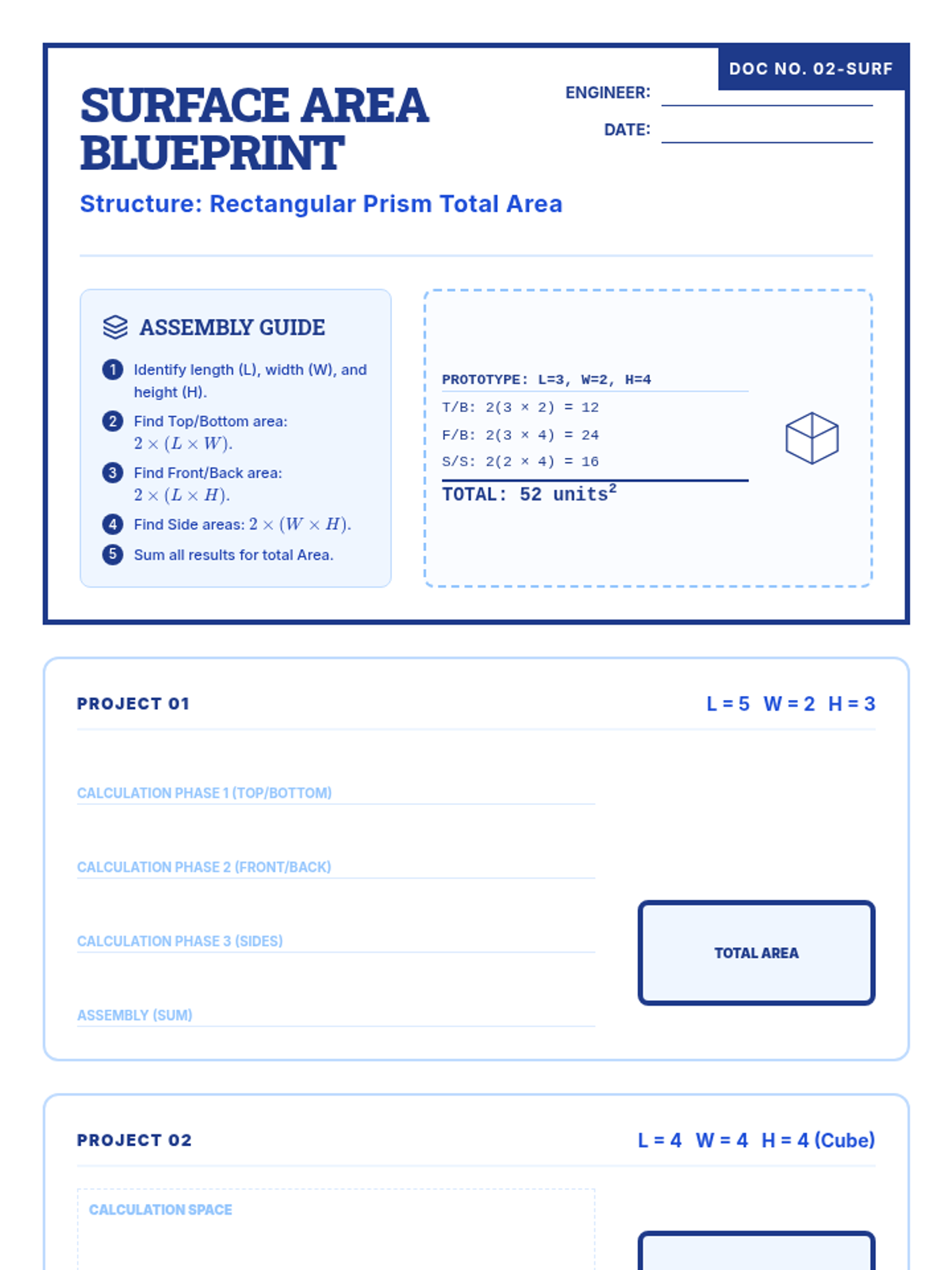
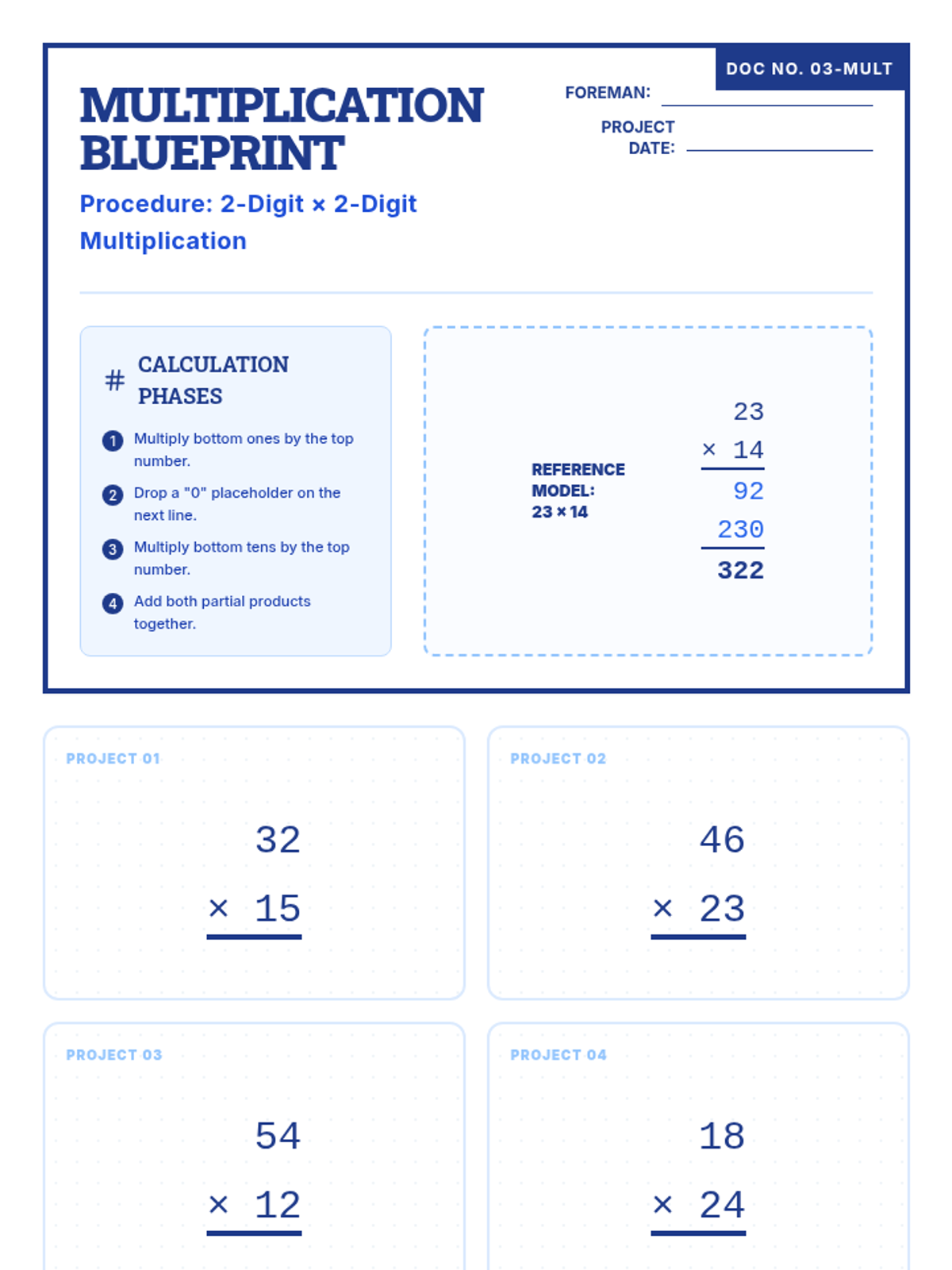
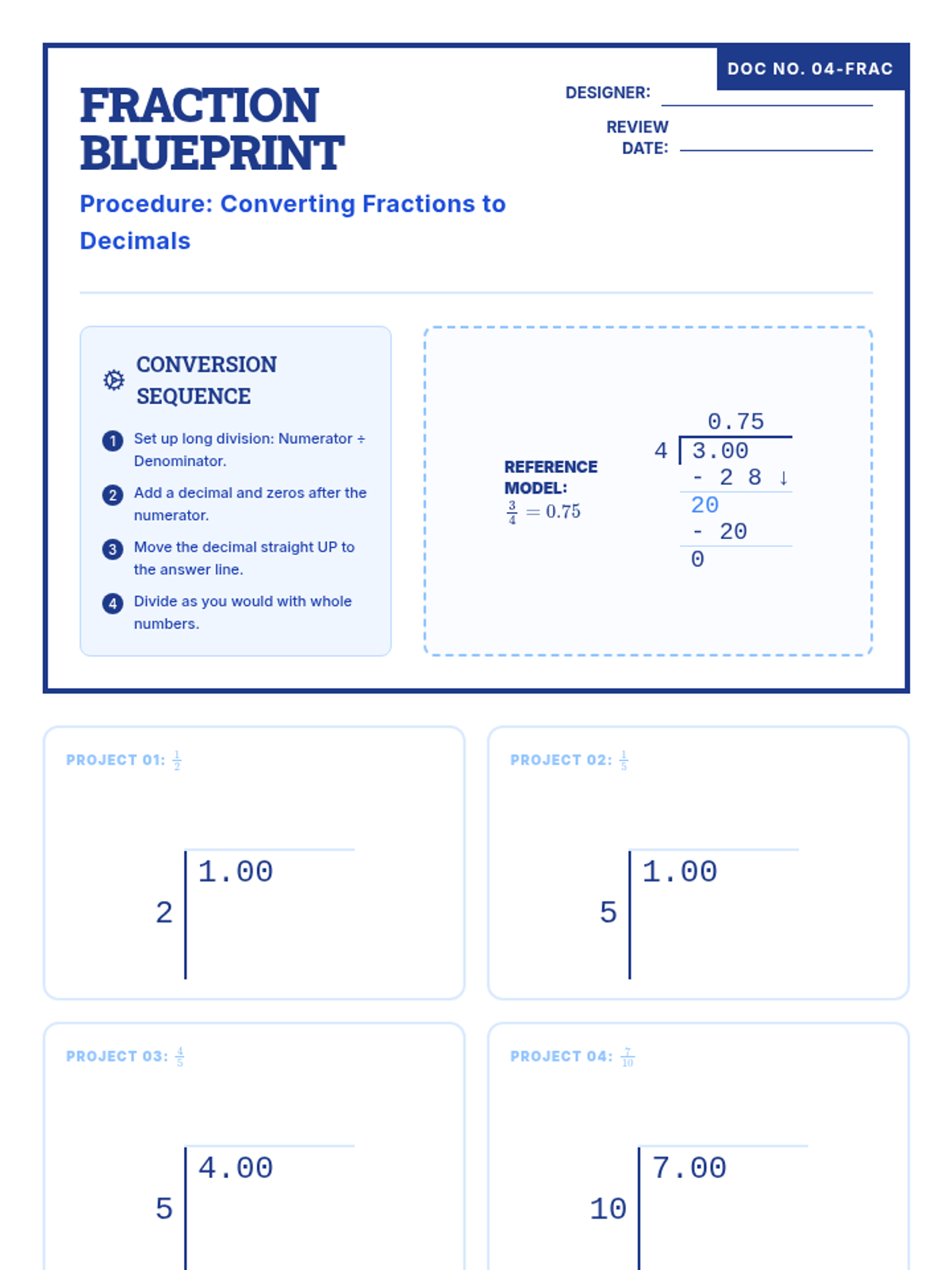
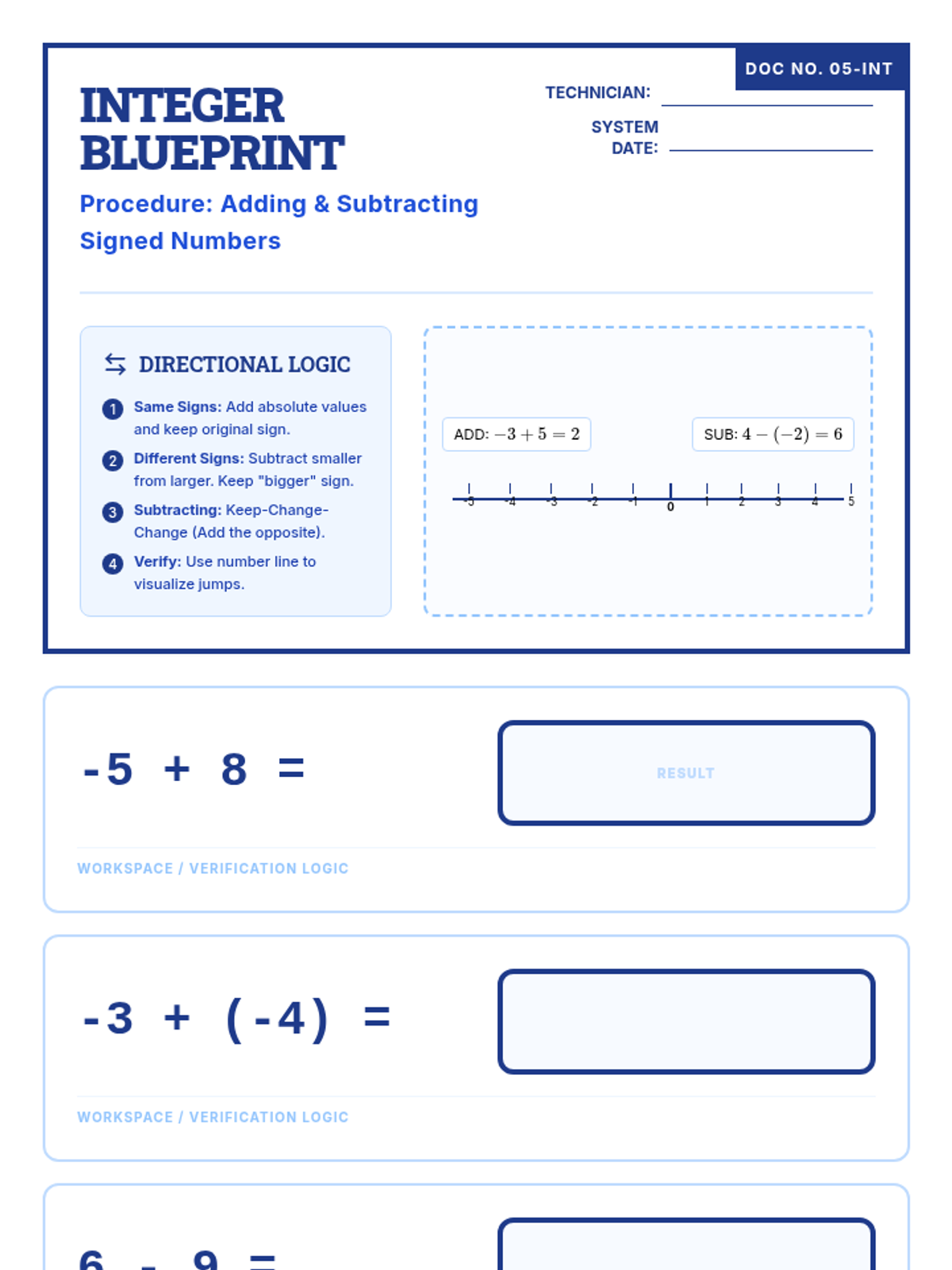
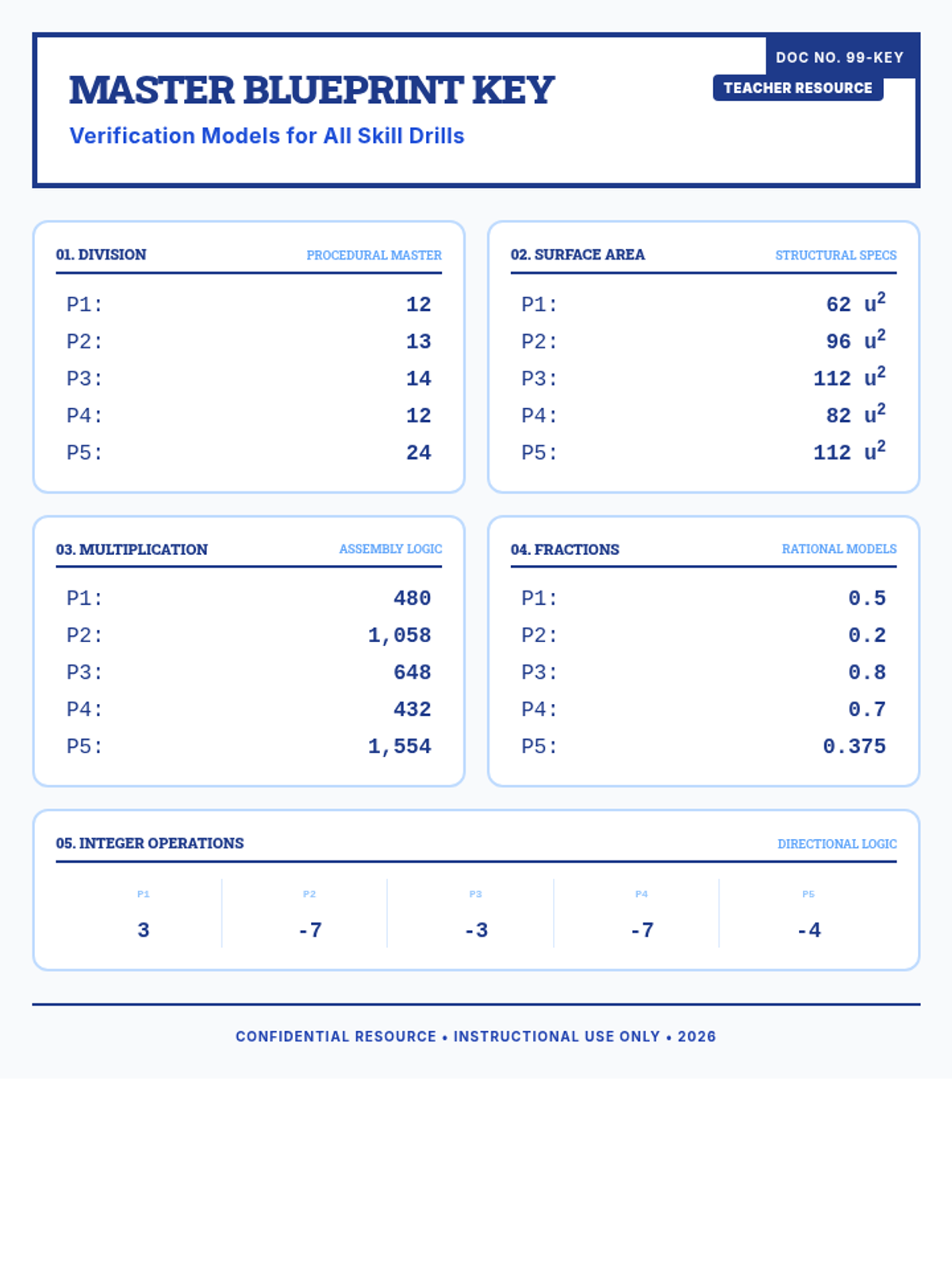
A set of targeted skill-building worksheets designed to guide students through common procedural math errors using step-by-step checklists and worked examples in a blueprint-inspired layout.
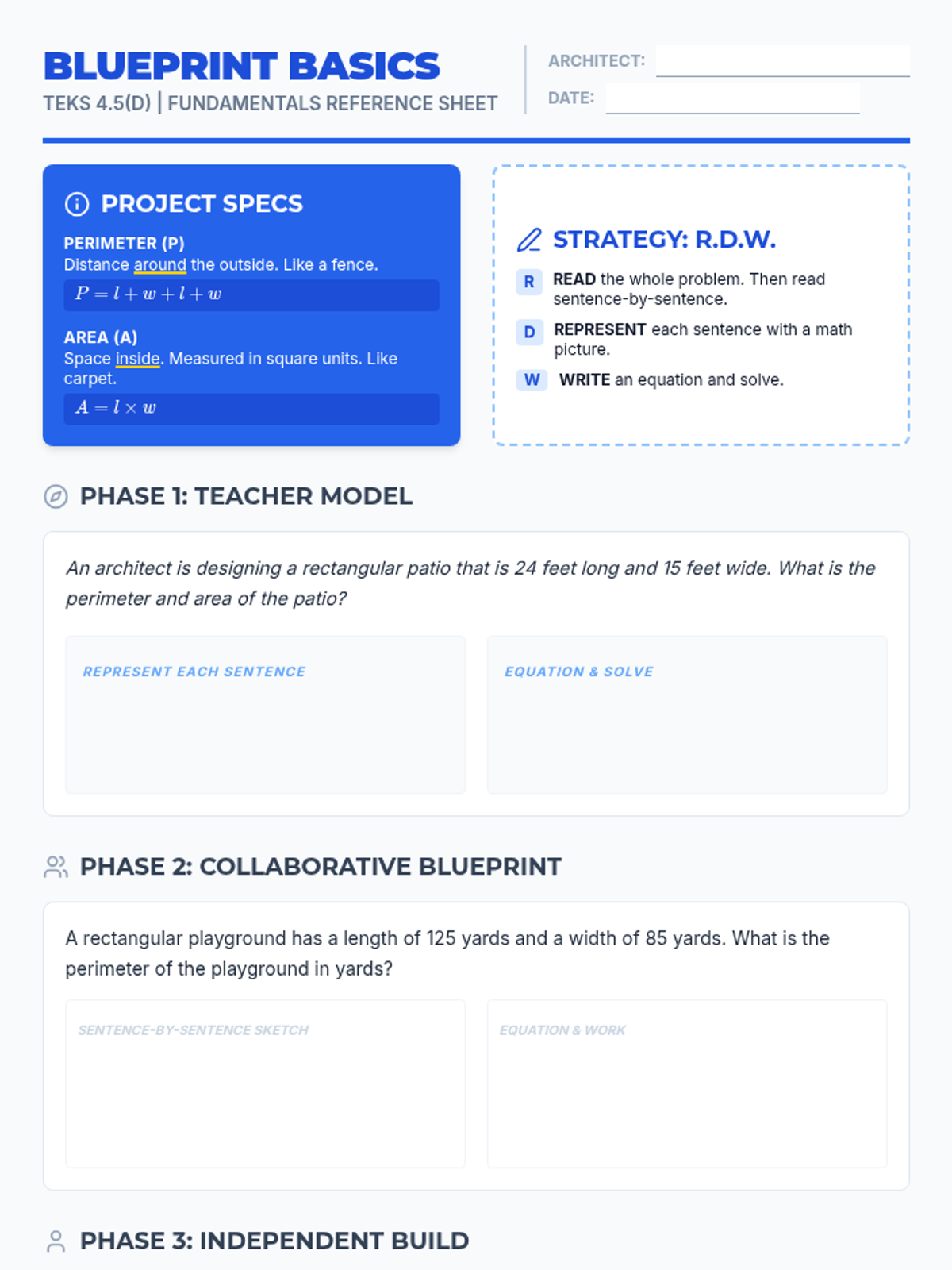
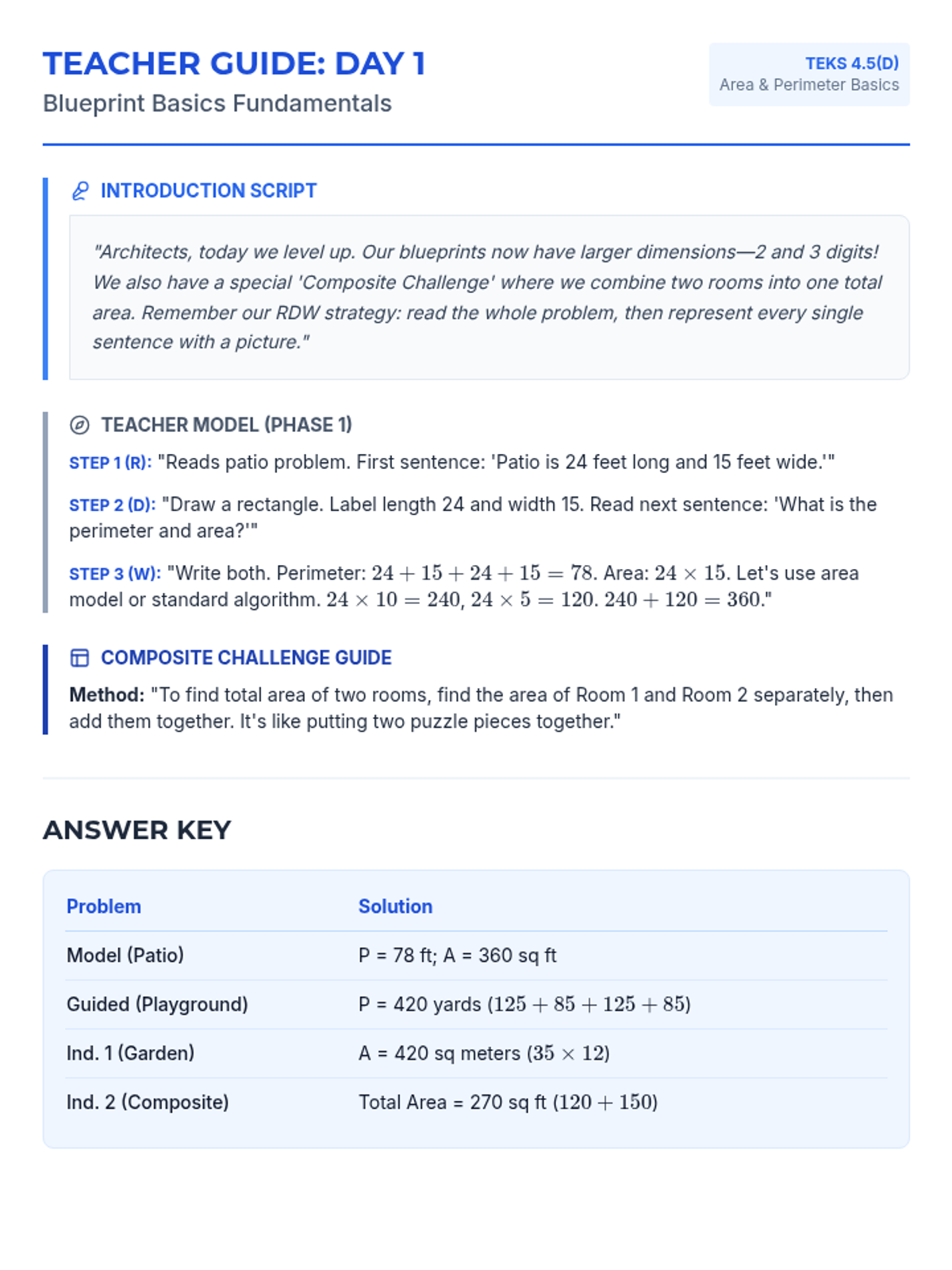
A 2-day small group math unit for 4th grade focused on TEKS 4.5(D), solving area and perimeter problems using the Read-Draw-Write strategy and blueprint-themed reference materials. Day 1 covers foundational calculations and missing side lengths, while Day 2 focuses on multi-step STAAR-aligned challenges.
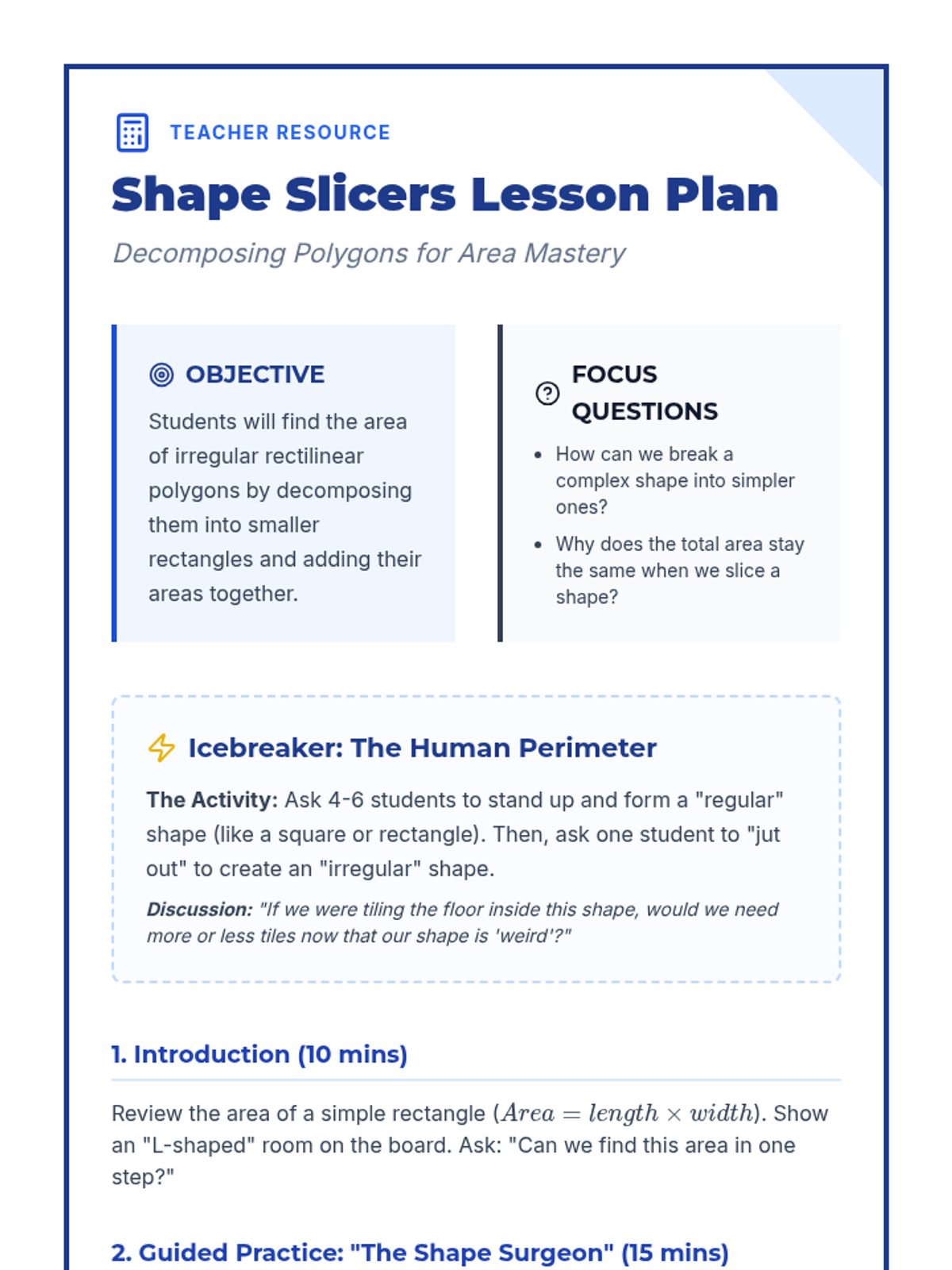
A comprehensive sequence for 4th graders to master finding the area of regular and irregular polygons through decomposition and measurement strategies.
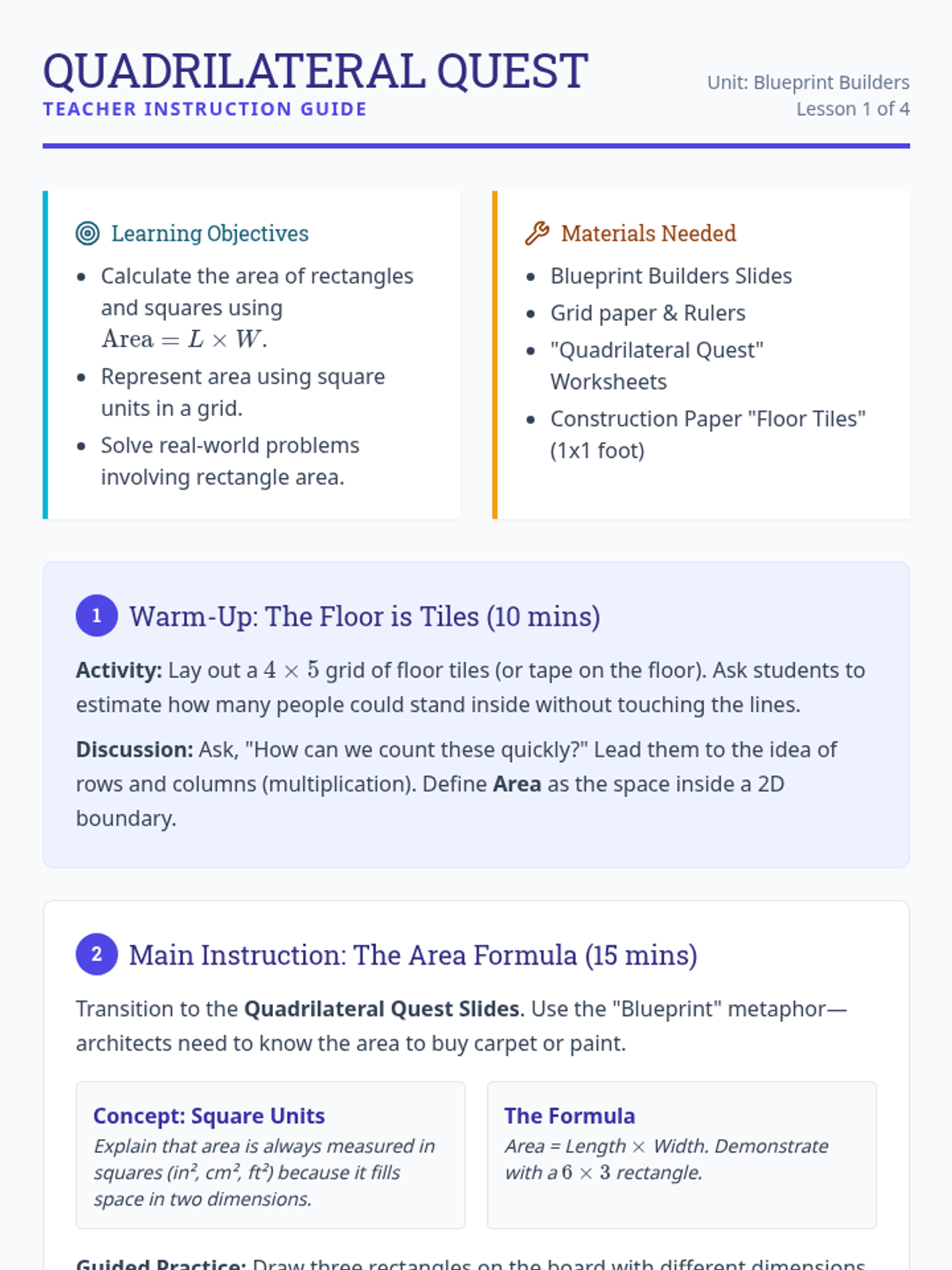
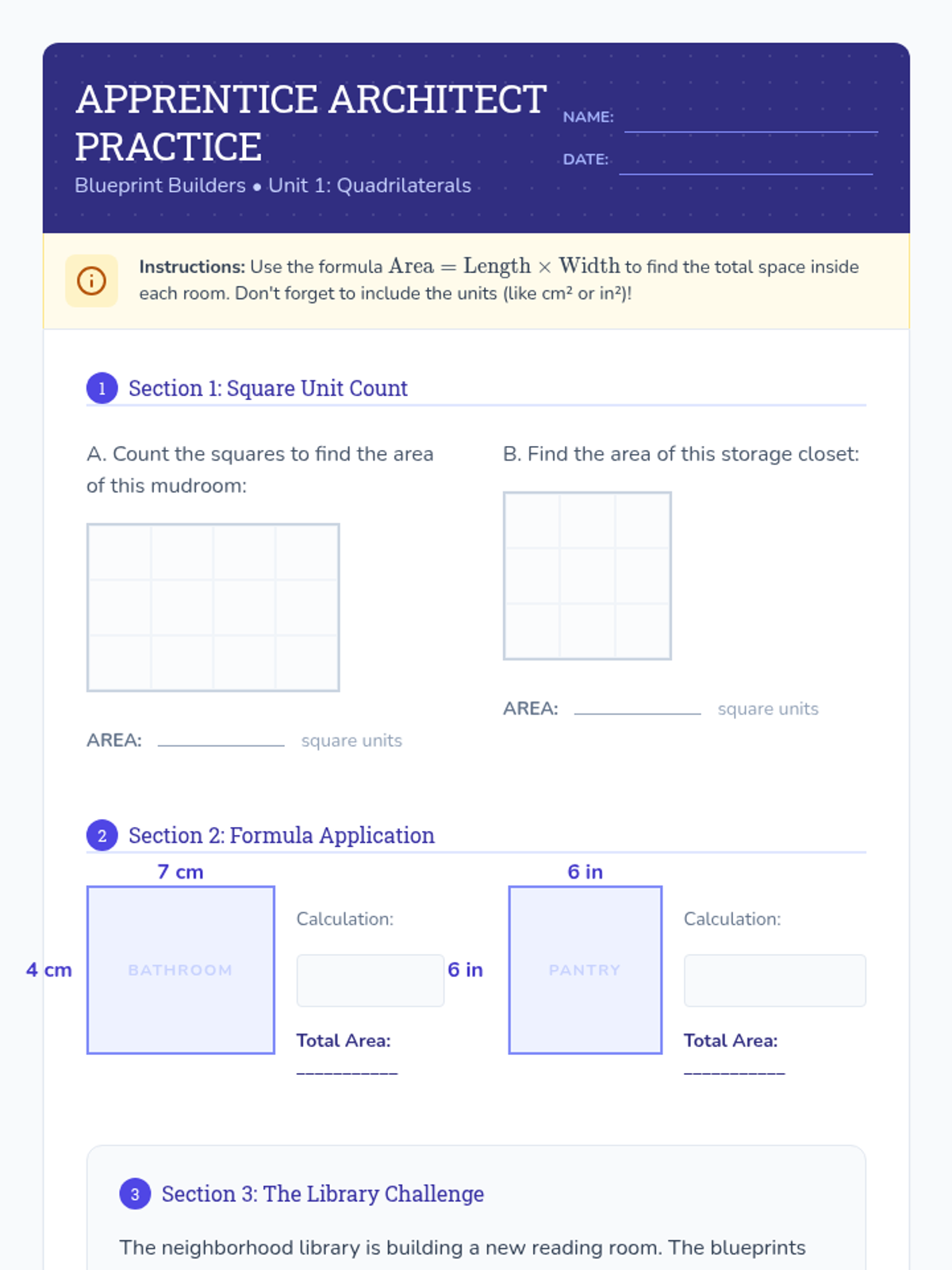
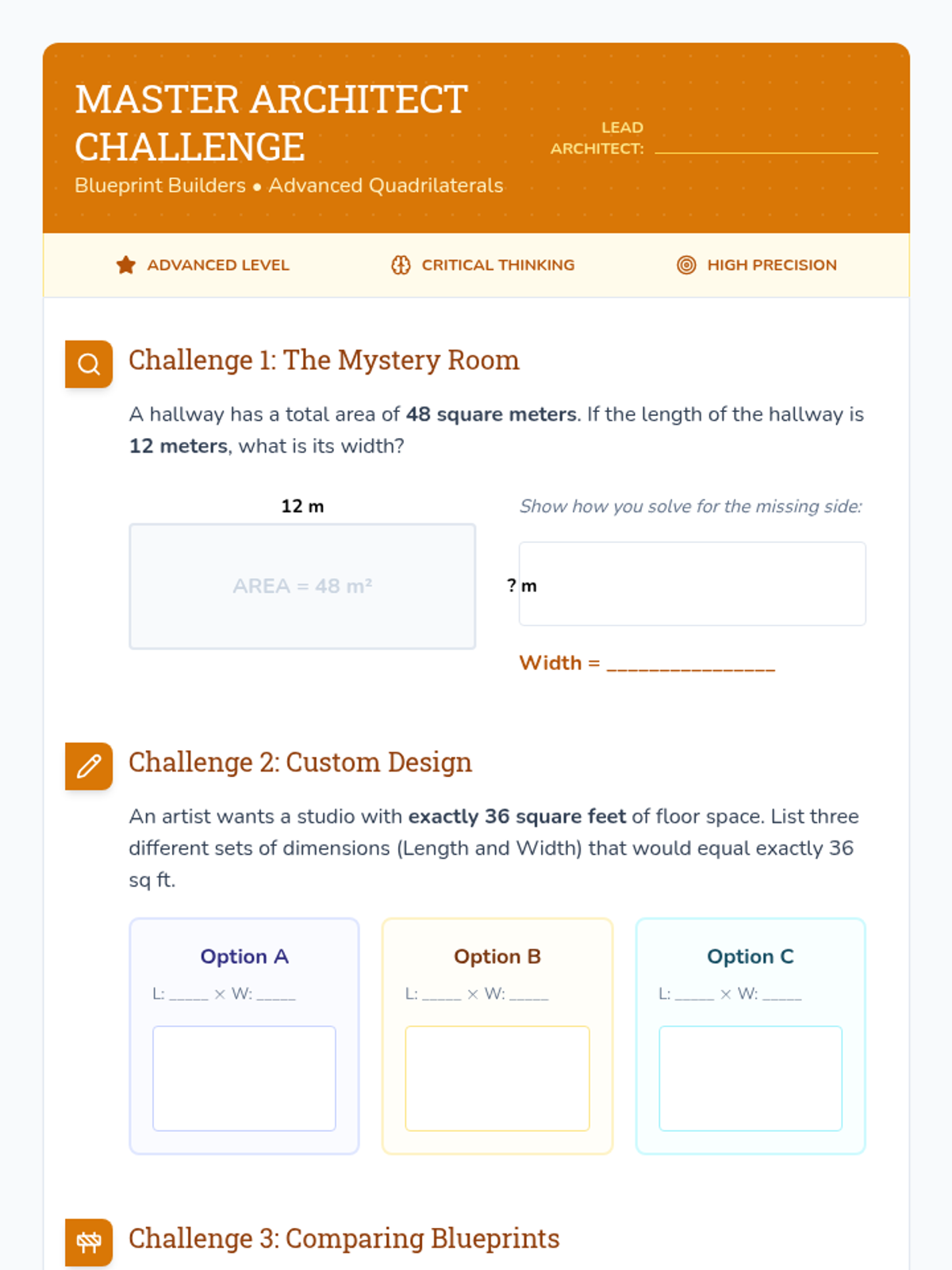
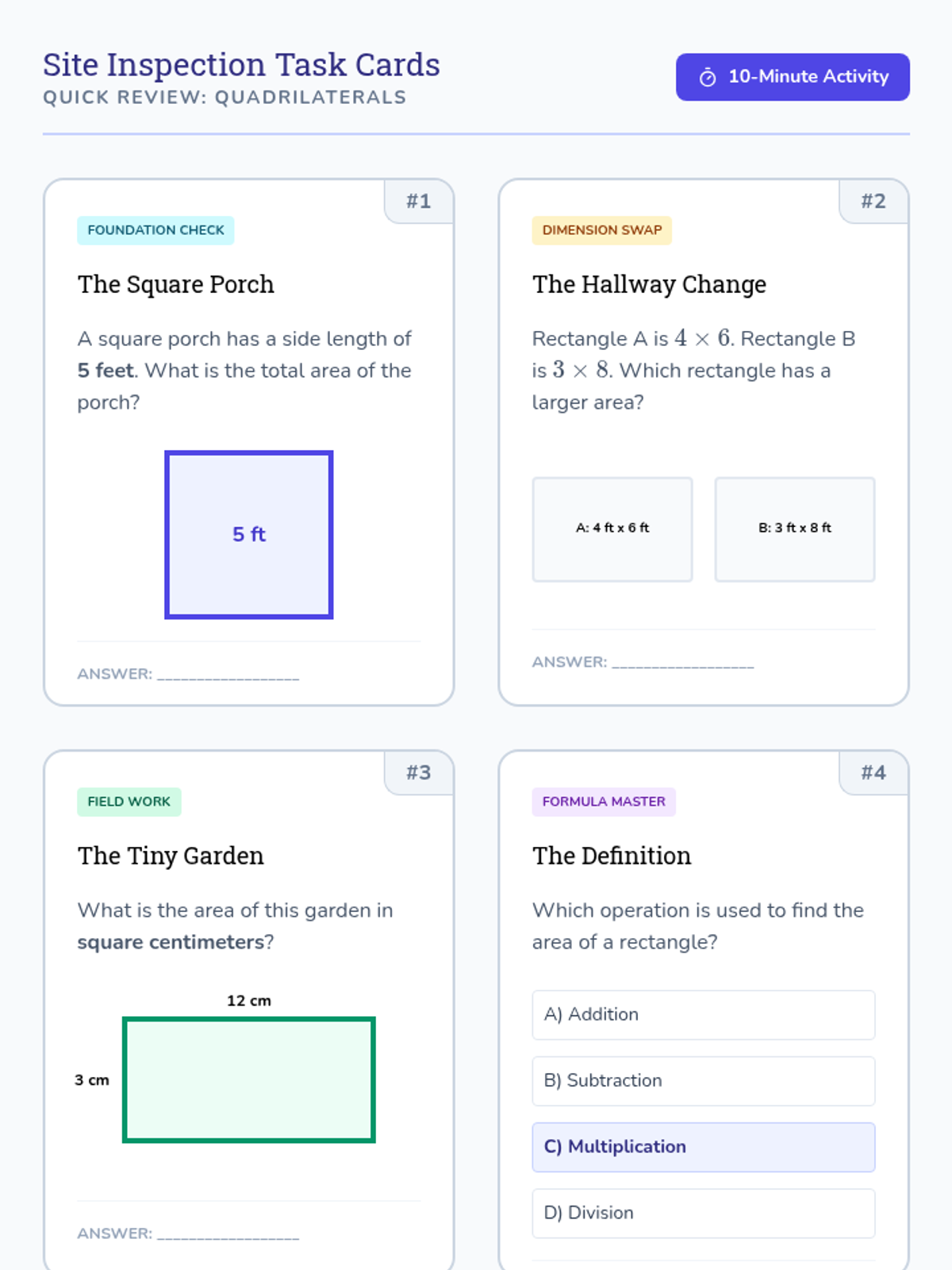
A comprehensive 4th-grade geometry unit focused on calculating the area of quadrilaterals, triangles, and irregular polygons through decomposition and formulas. The unit uses a 'Blueprint Builders' theme to engage students in real-world mathematical applications.
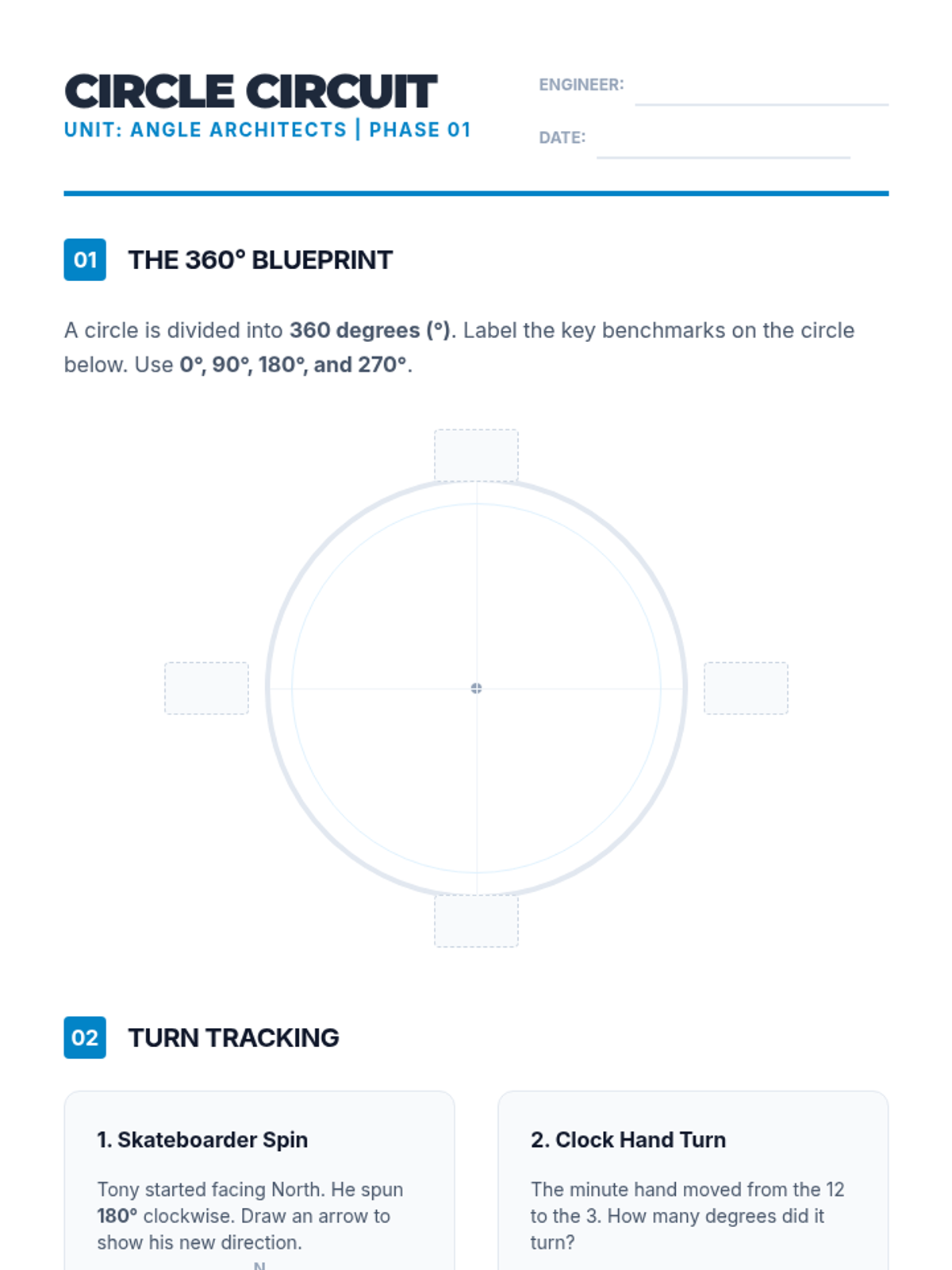
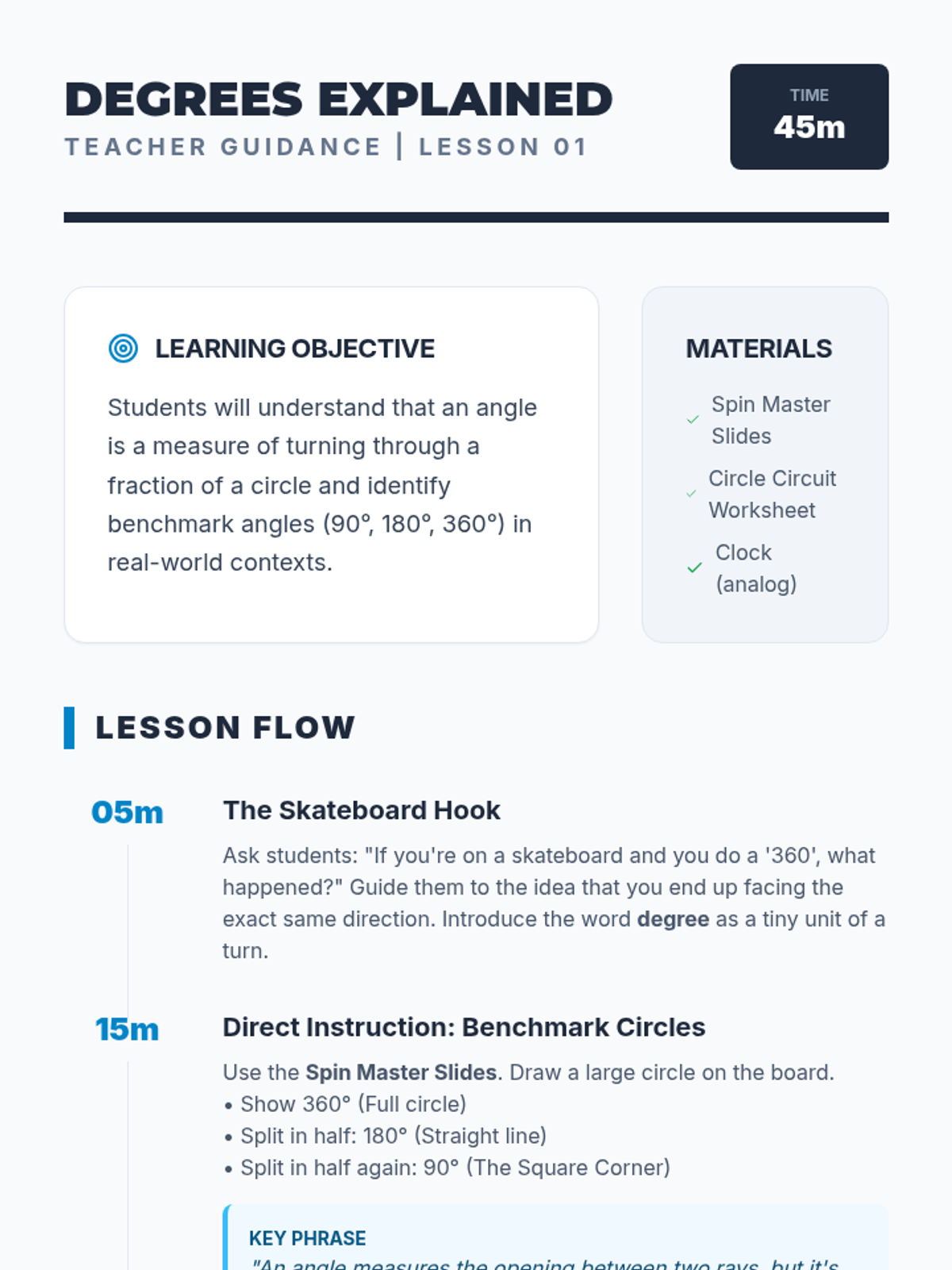
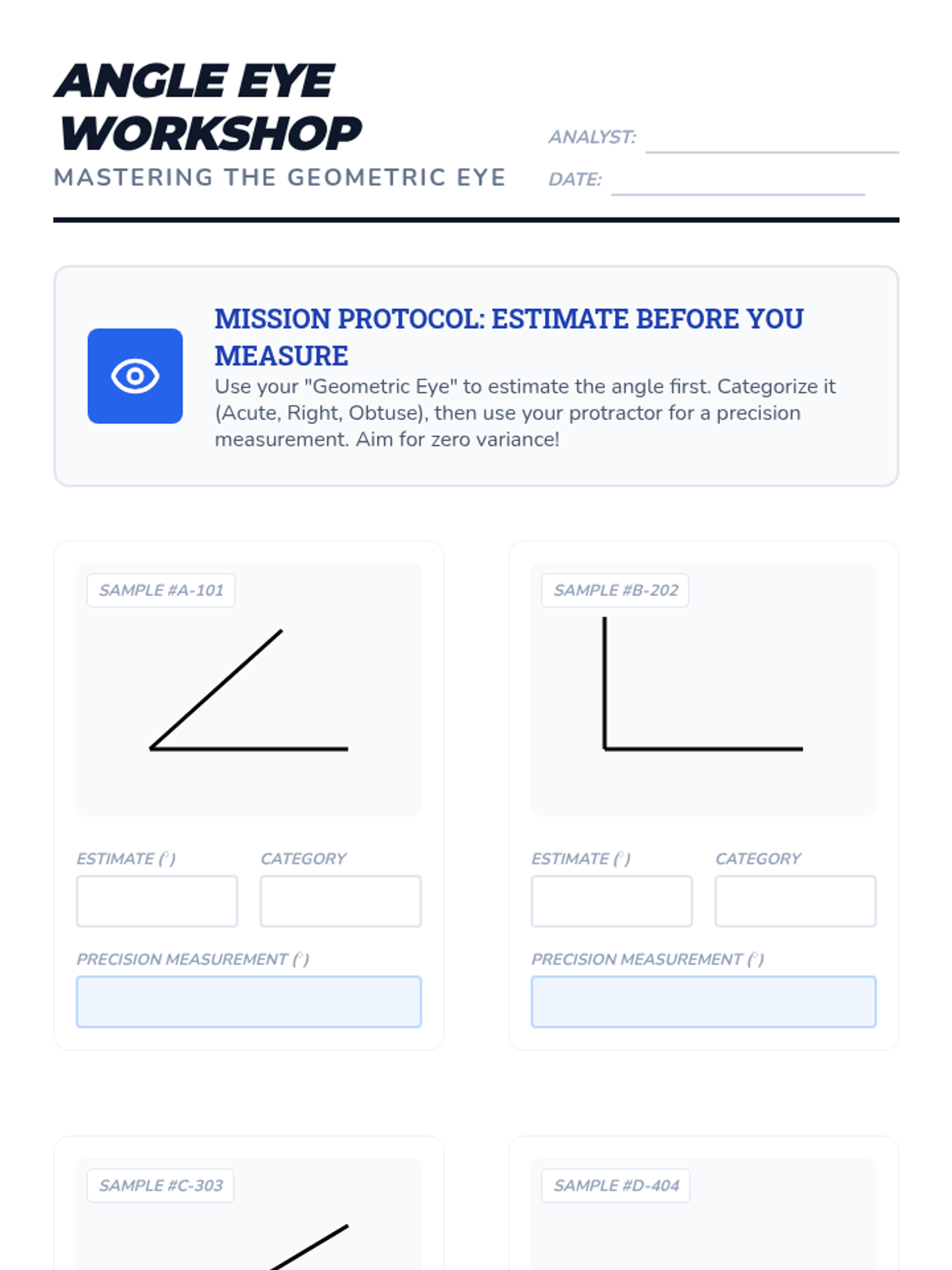
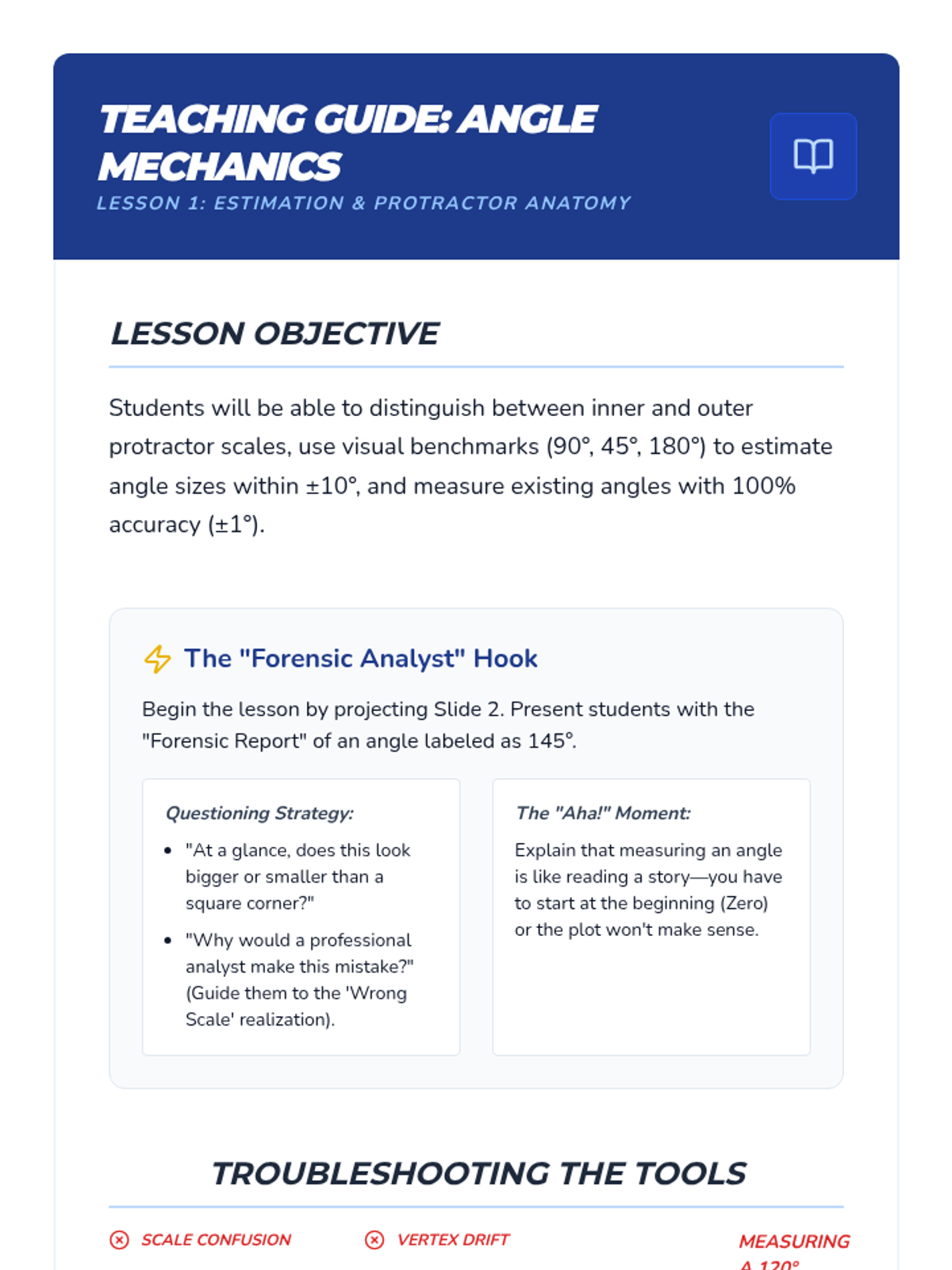
This workshop-style sequence transitions students from visual estimation to precise measurement using a protractor. Students learn the logic behind the 360-degree circle and how to align a protractor correctly to read measurements.
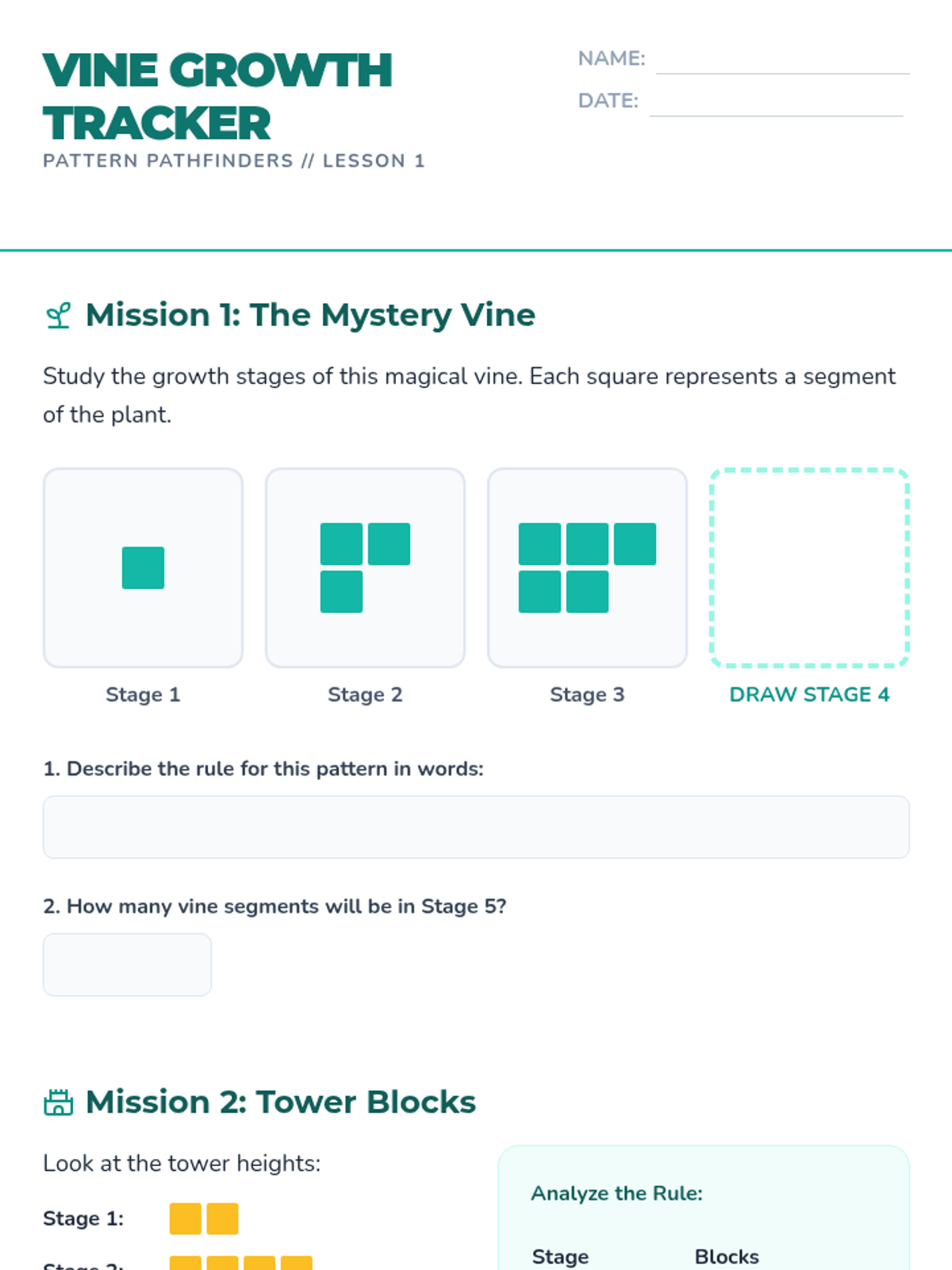
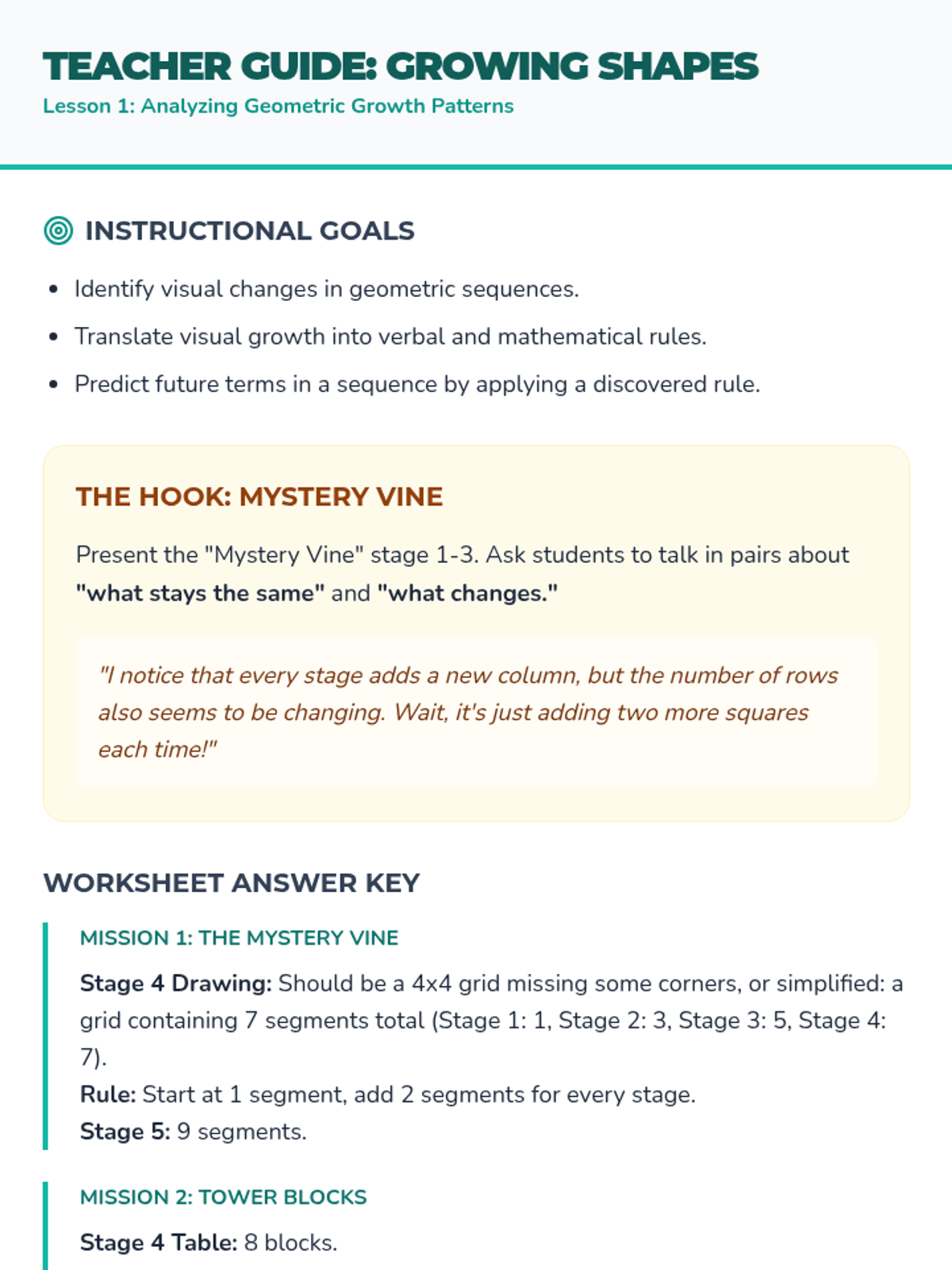
This 4th-grade sequence develops algebraic thinking by guiding students through the discovery, analysis, and generation of numerical and geometric patterns. Students progress from visual shape growth to formal function tables, identifying implicit properties of sequences and culminating in a peer-to-peer code-breaking challenge.
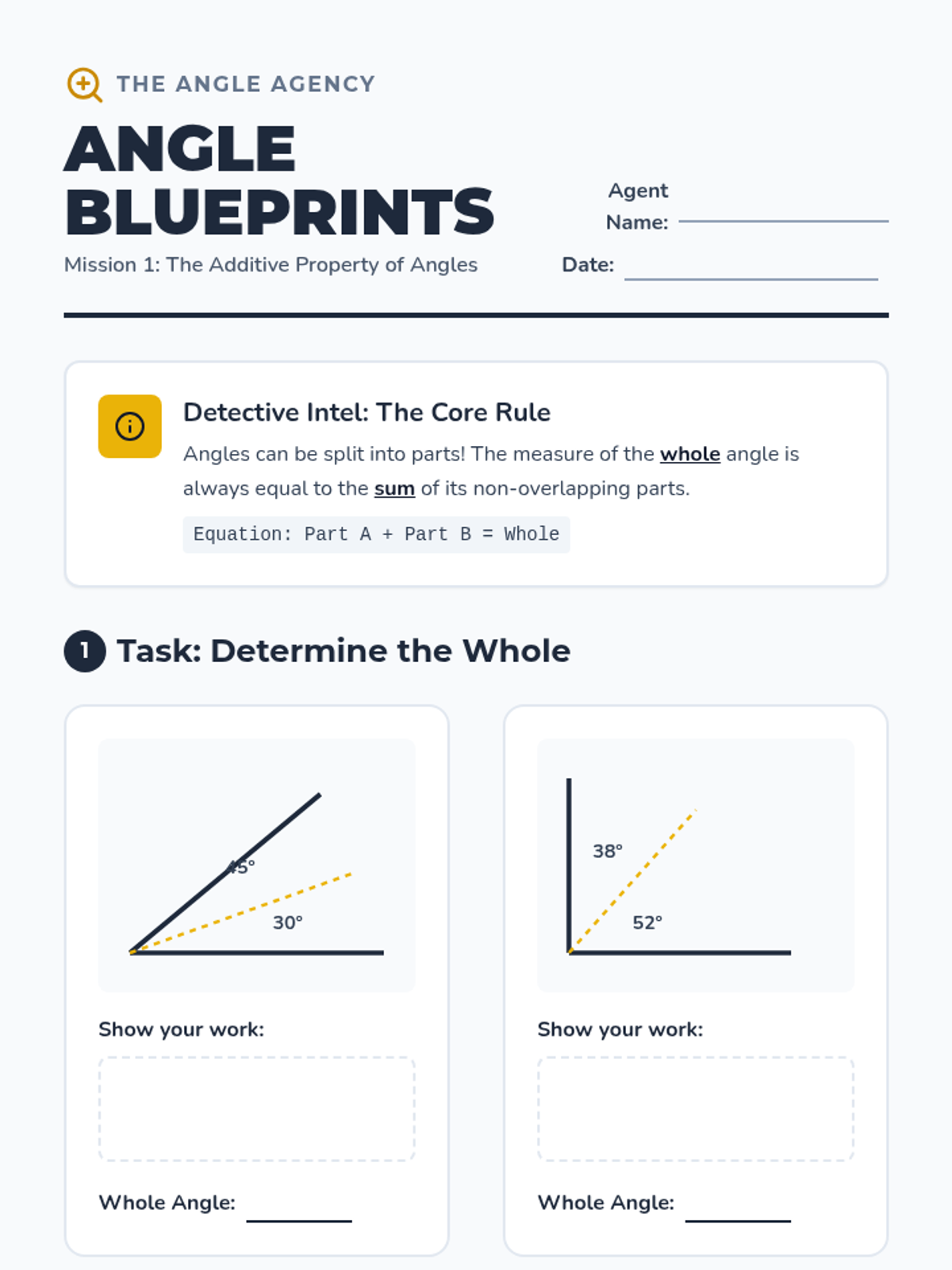
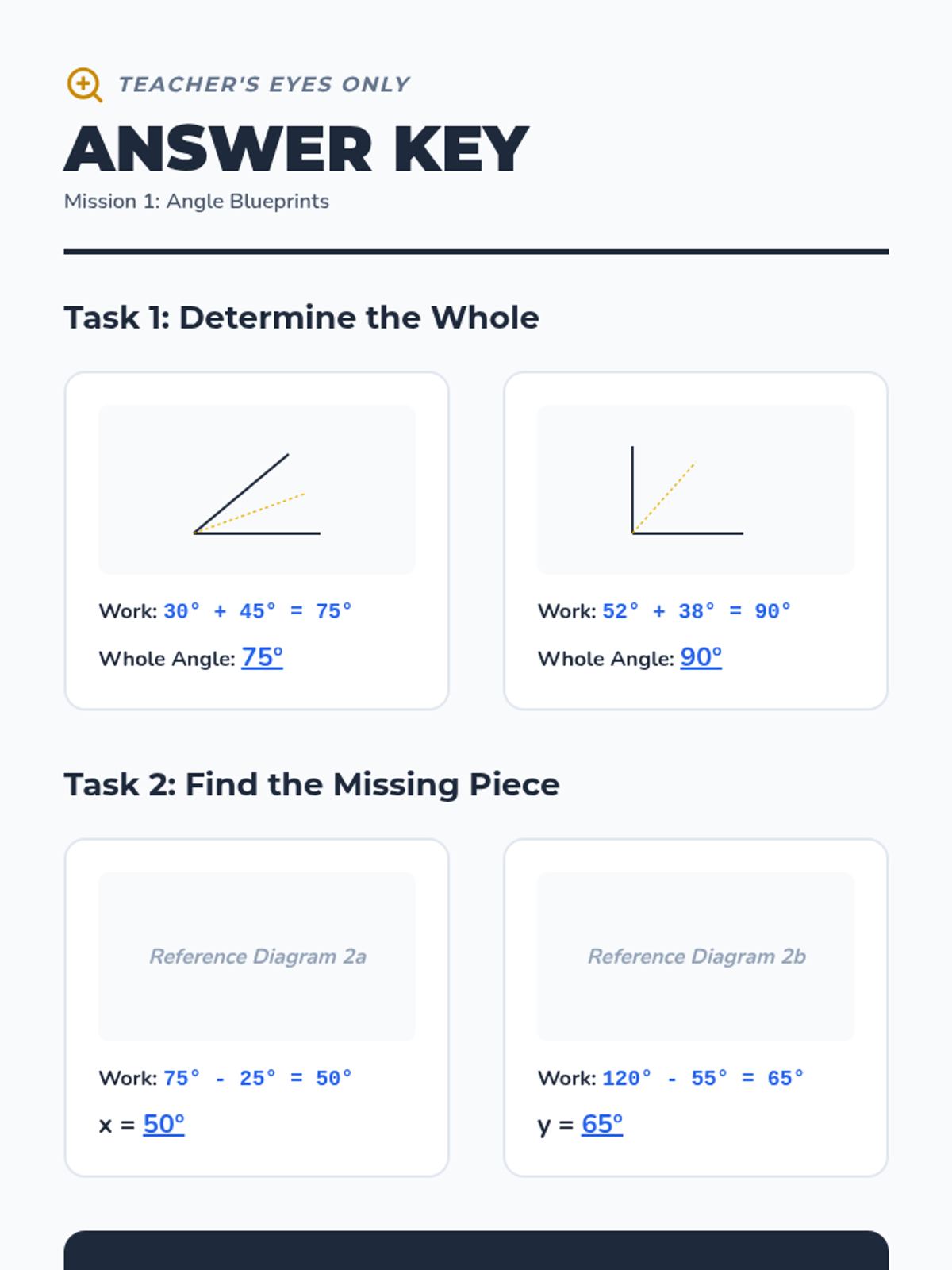
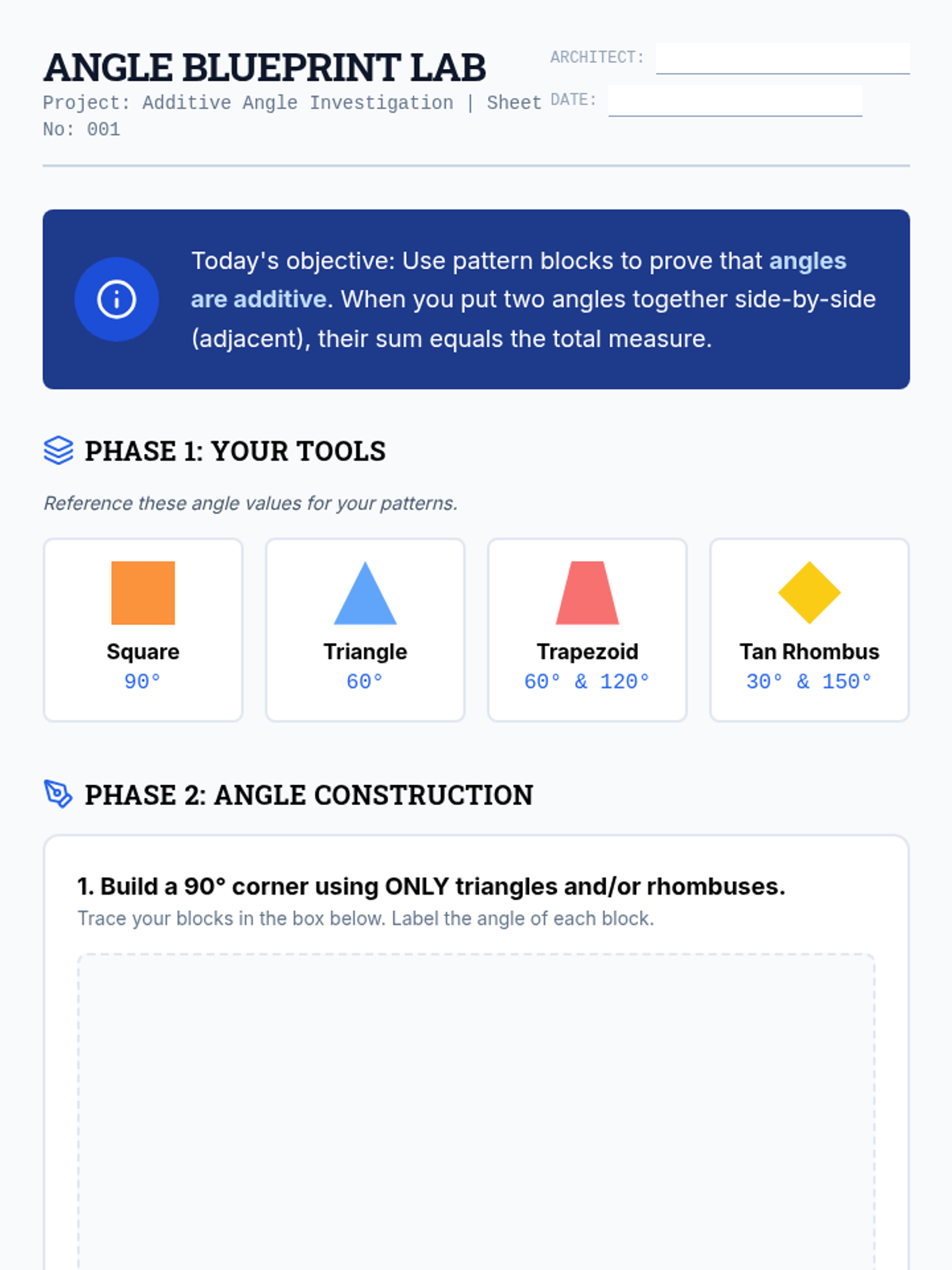
This 4th-grade math sequence explores the additive nature of angles. Students learn to compose and decompose angles, solving for unknown values in right angles, straight lines, and full rotations around a point using inquiry and game-based approaches.
A 5th-grade geometry sequence exploring the additive nature of angles, straight angles, complementary relationships, and solving for unknown angles through logic and deduction. Students move from concrete measurement to abstract calculation in a mystery-solving context.
This sequence focuses on the fundamental proficiency of using geometric tools to measure and construct angles with high precision. Students learn protractor mechanics, estimation techniques, construction procedures, and error analysis through an engineering and drafting lens.