Develops proficiency in estimating and measuring length, area, volume, and mass using standard units and unit conversions. Integrates time, money, angle measurement, and data classification through counting and arithmetic applications.
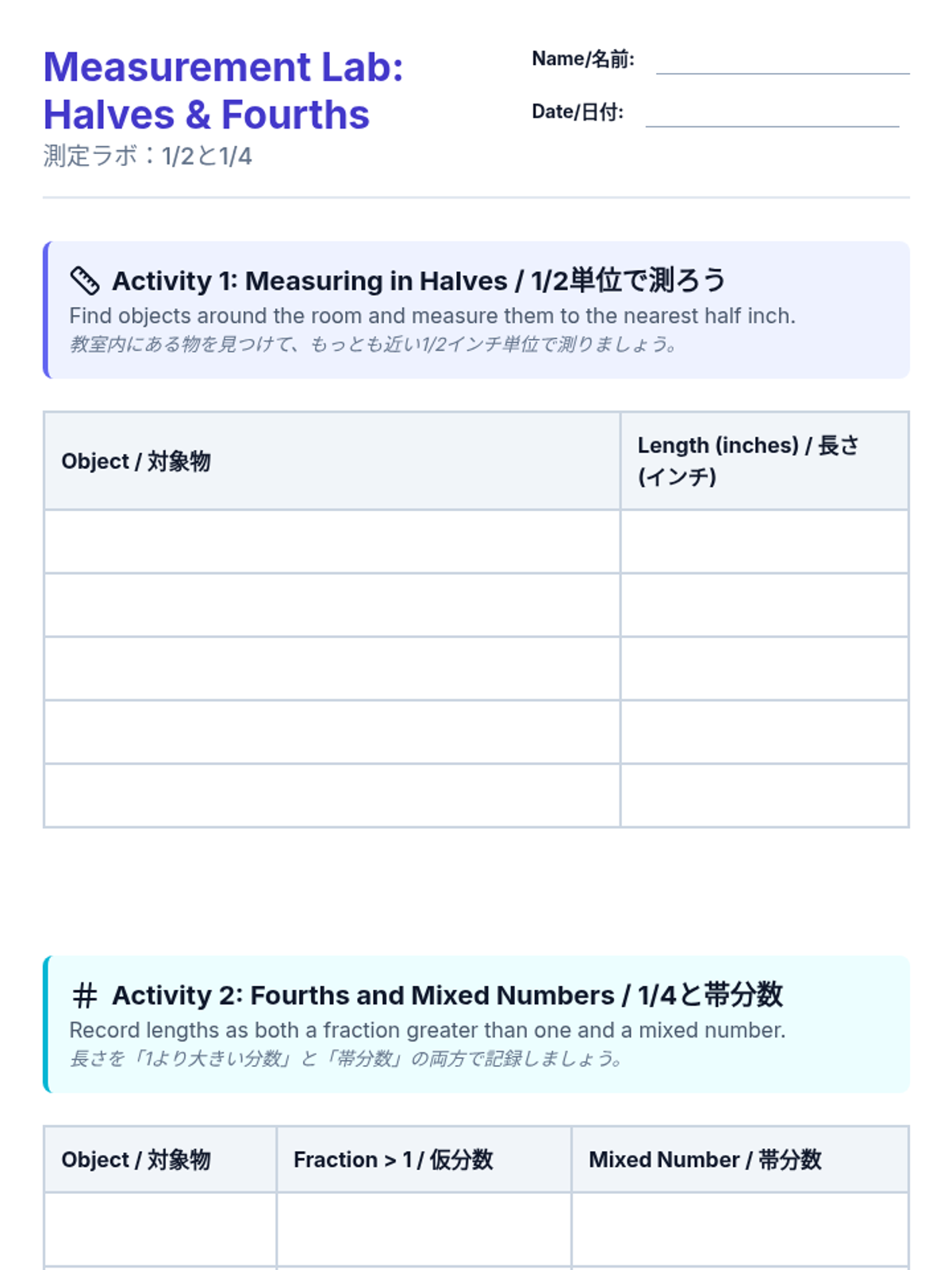
A comprehensive unit on measurement focusing on inches, fractions (halves and fourths), mixed numbers, and representing data on line plots. Translated into Japanese.
A comprehensive unit on measuring length in inches using halves and fourths, recording data, and interpreting line plots, presented in both English and Japanese.
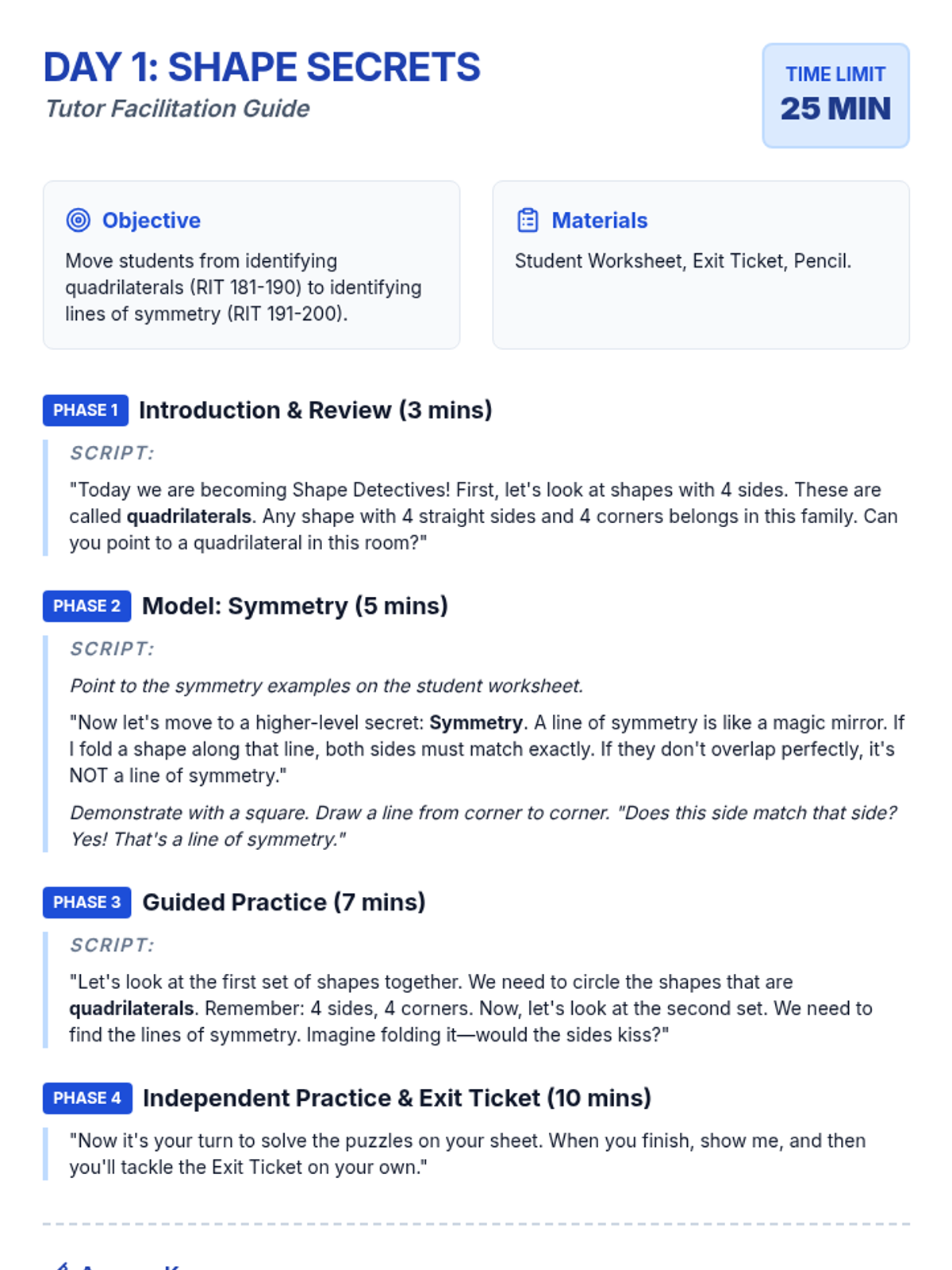
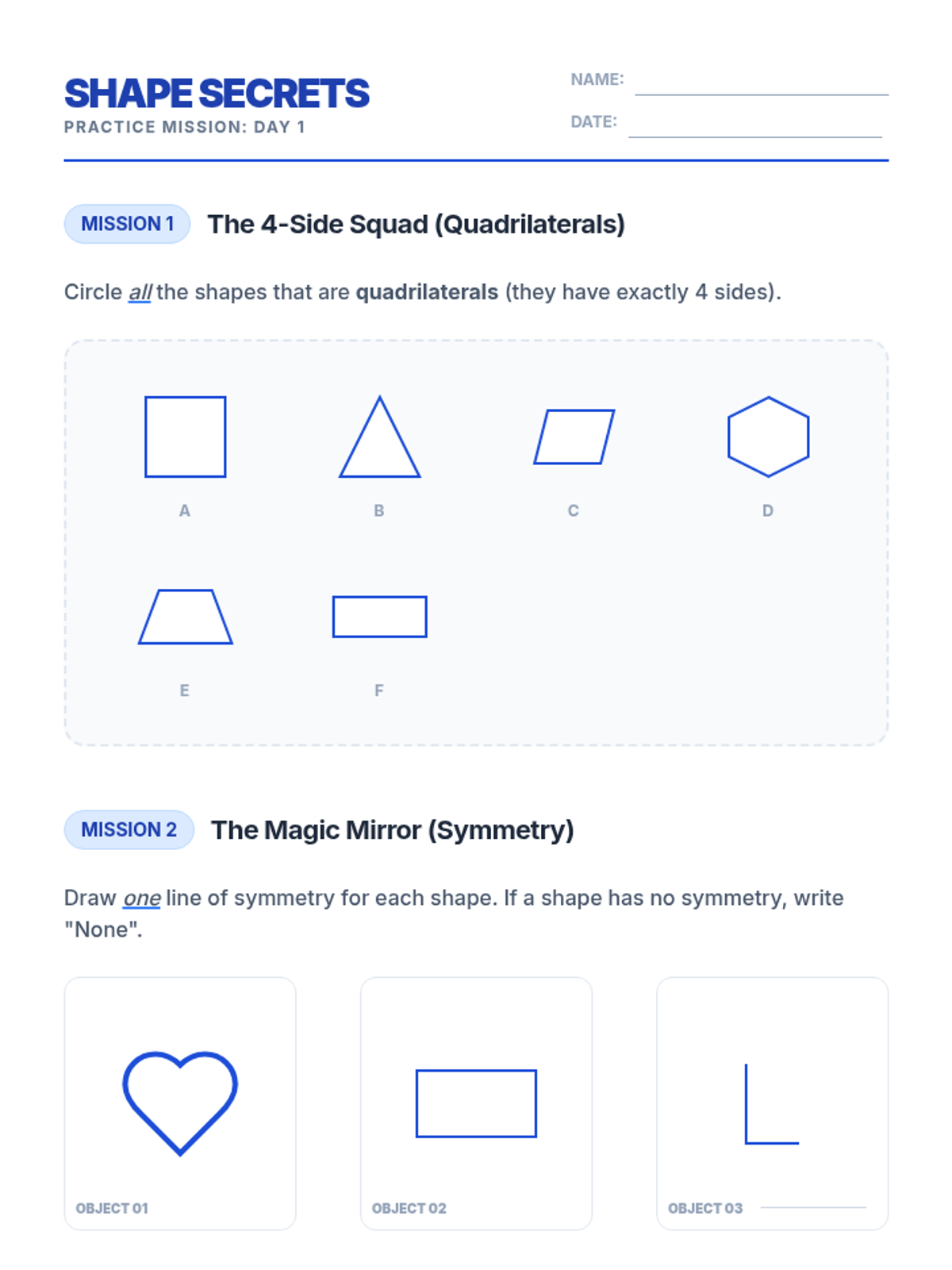
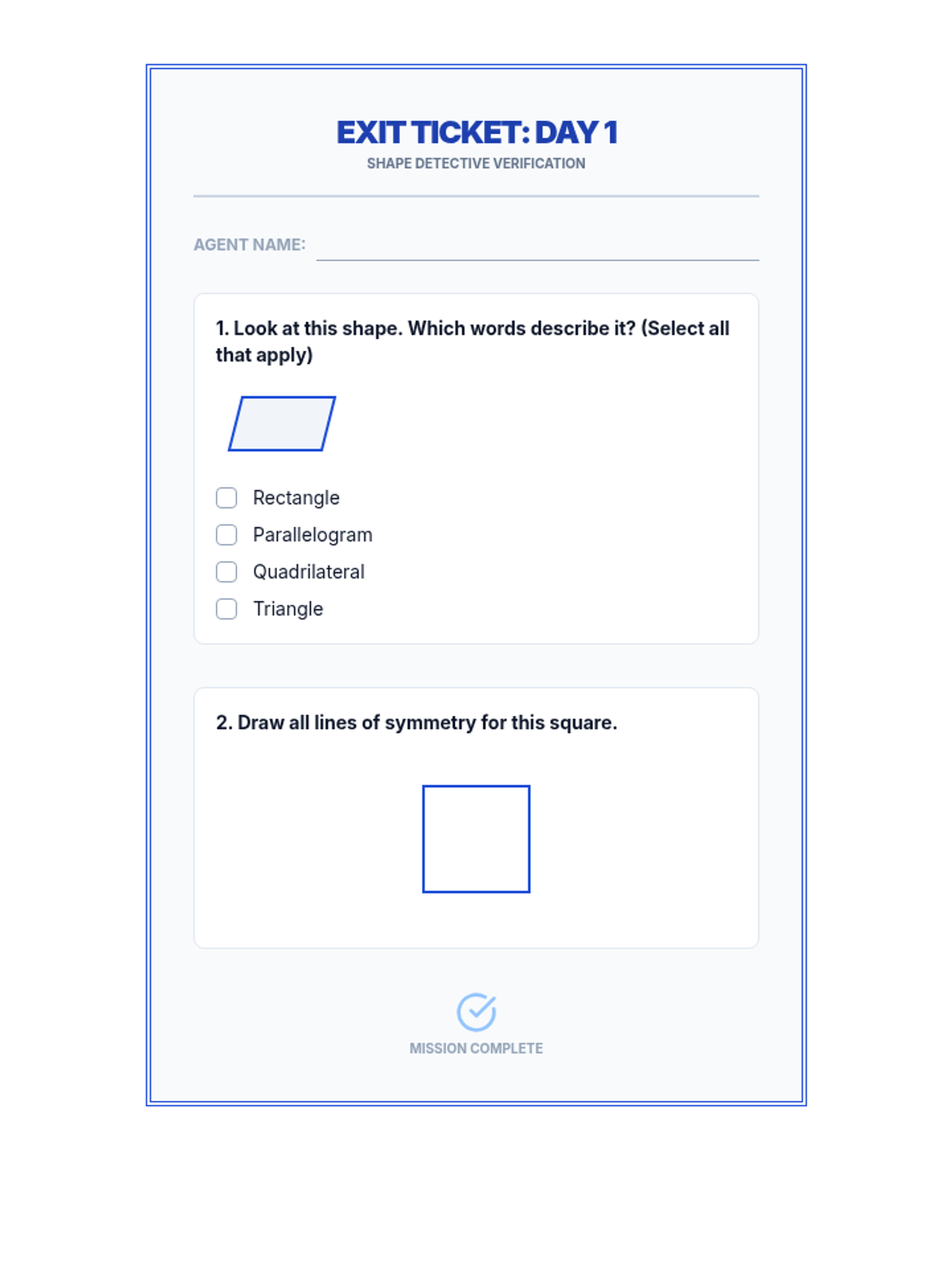
A 3-day targeted tutoring sequence designed to move students from RIT 181-190 to 191-200 in the MAP Growth Geometry and Measurement strand, focusing on shape attributes, symmetry, and perimeter.
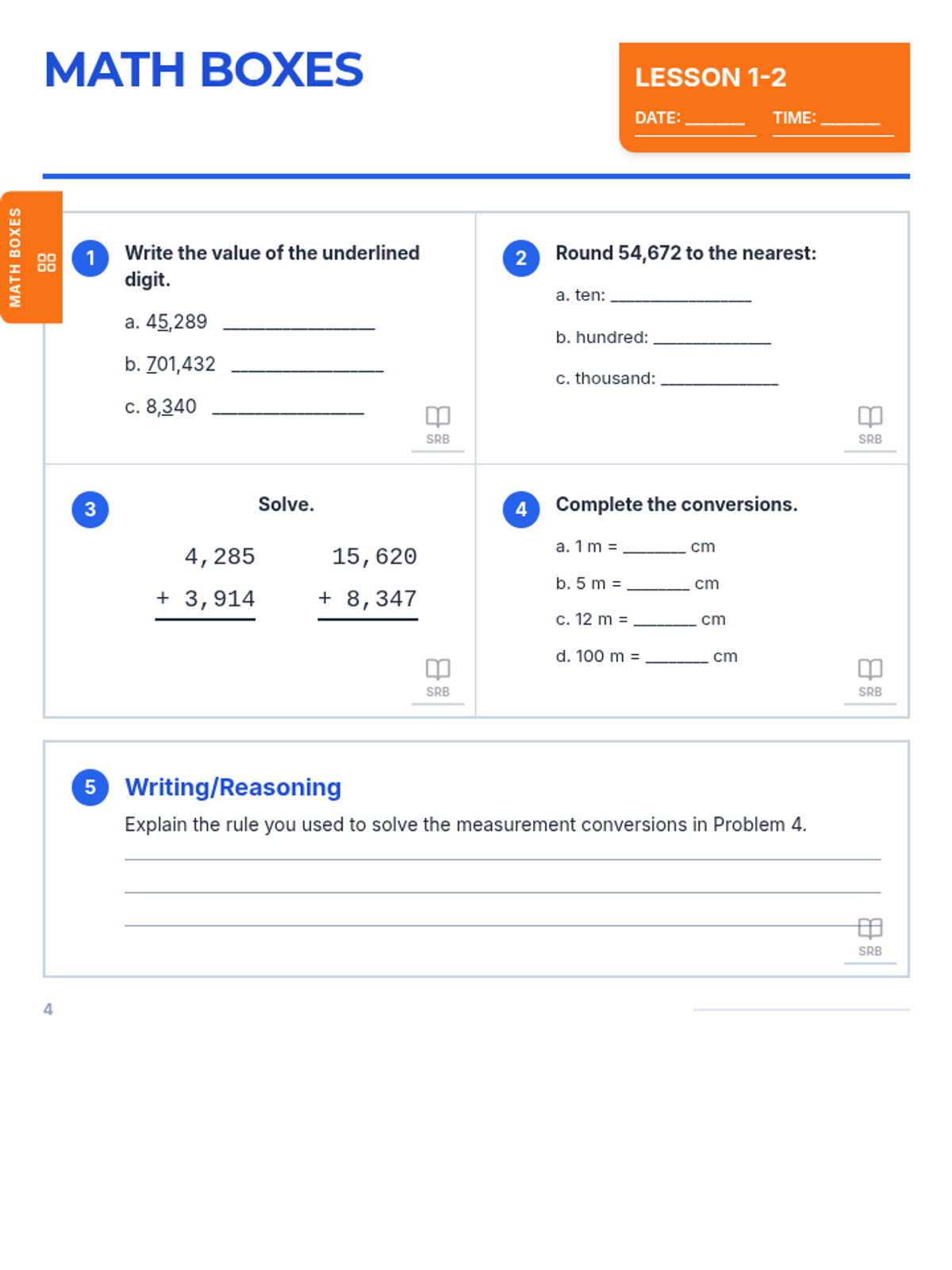
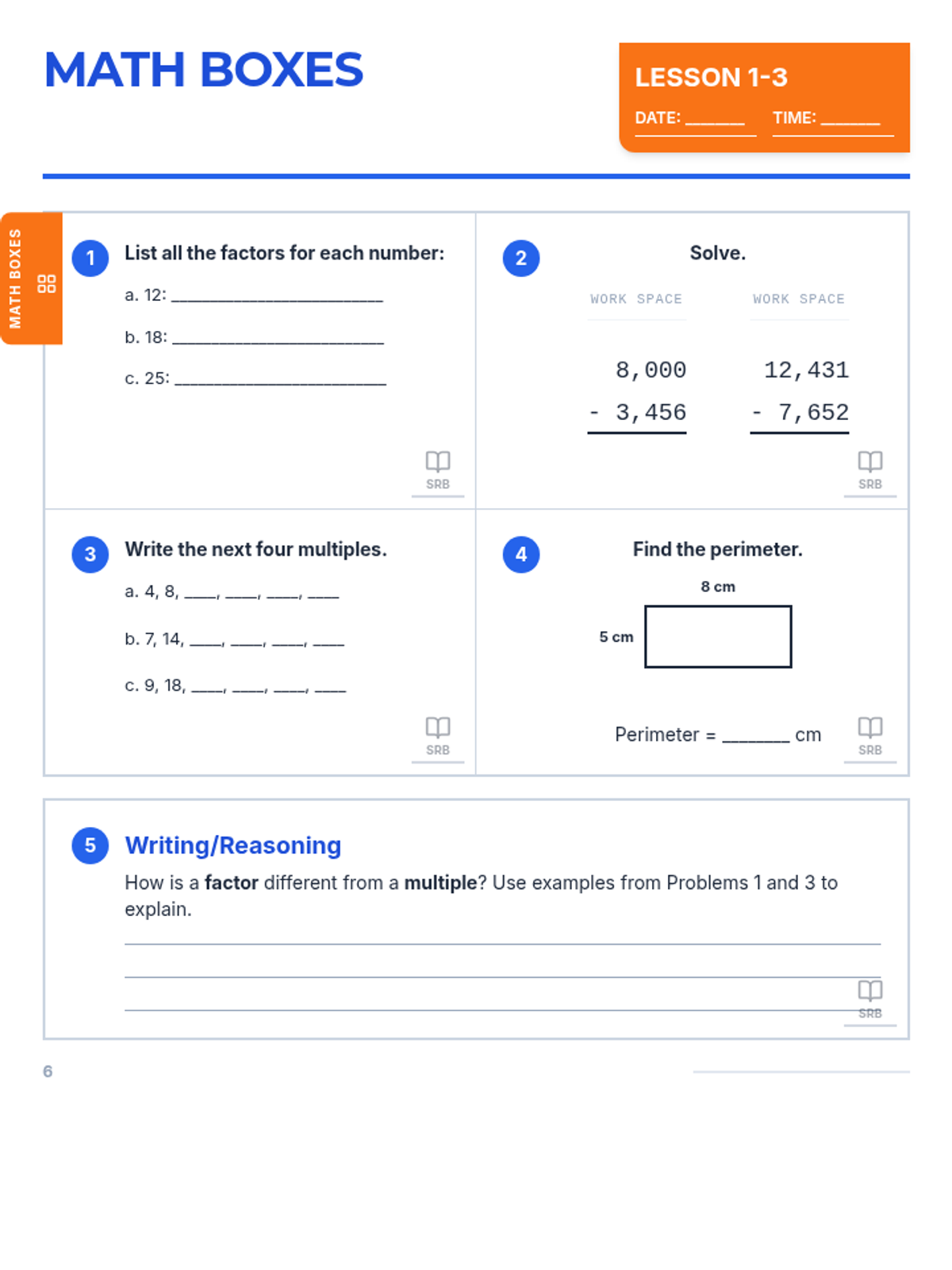
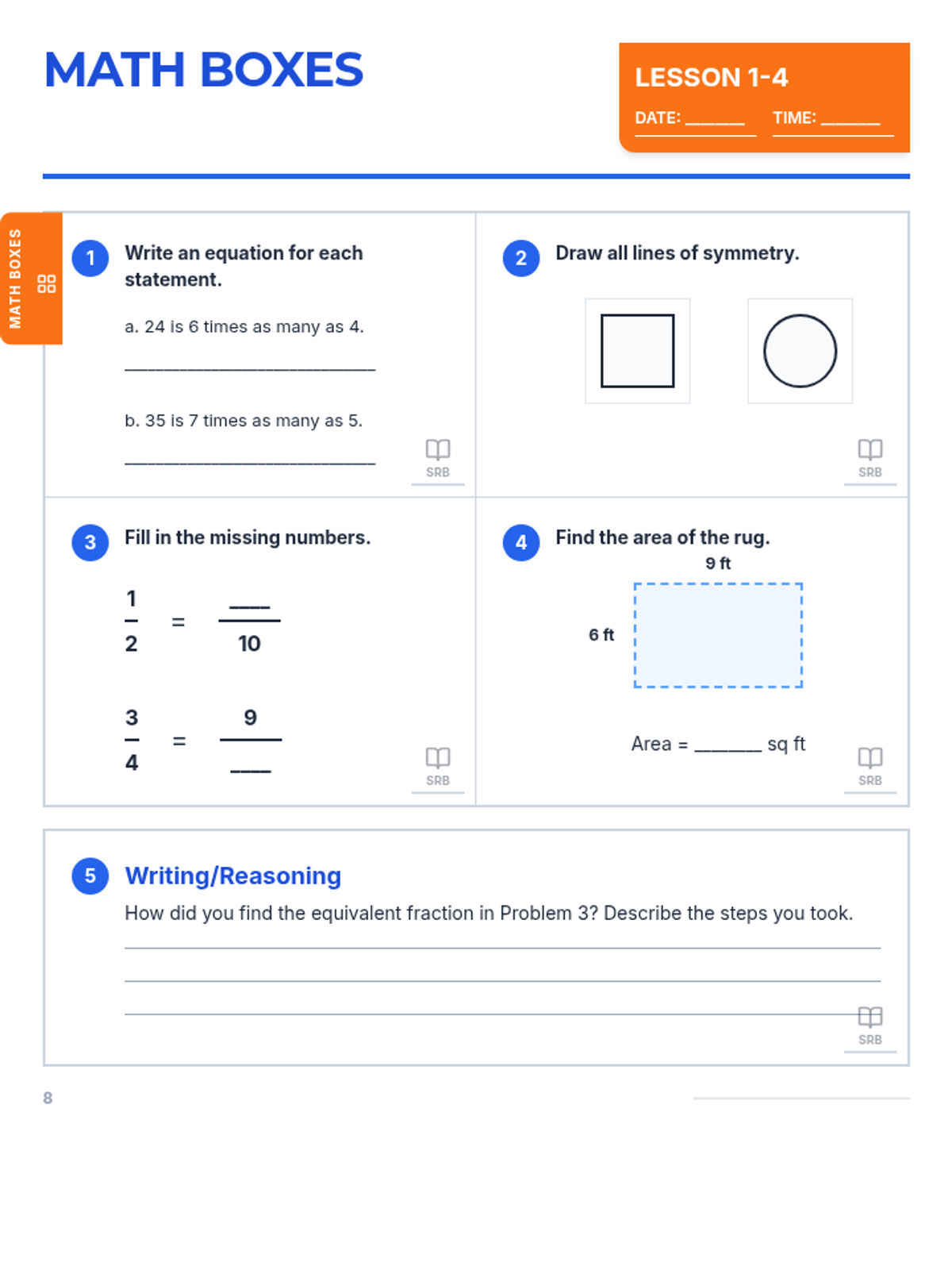
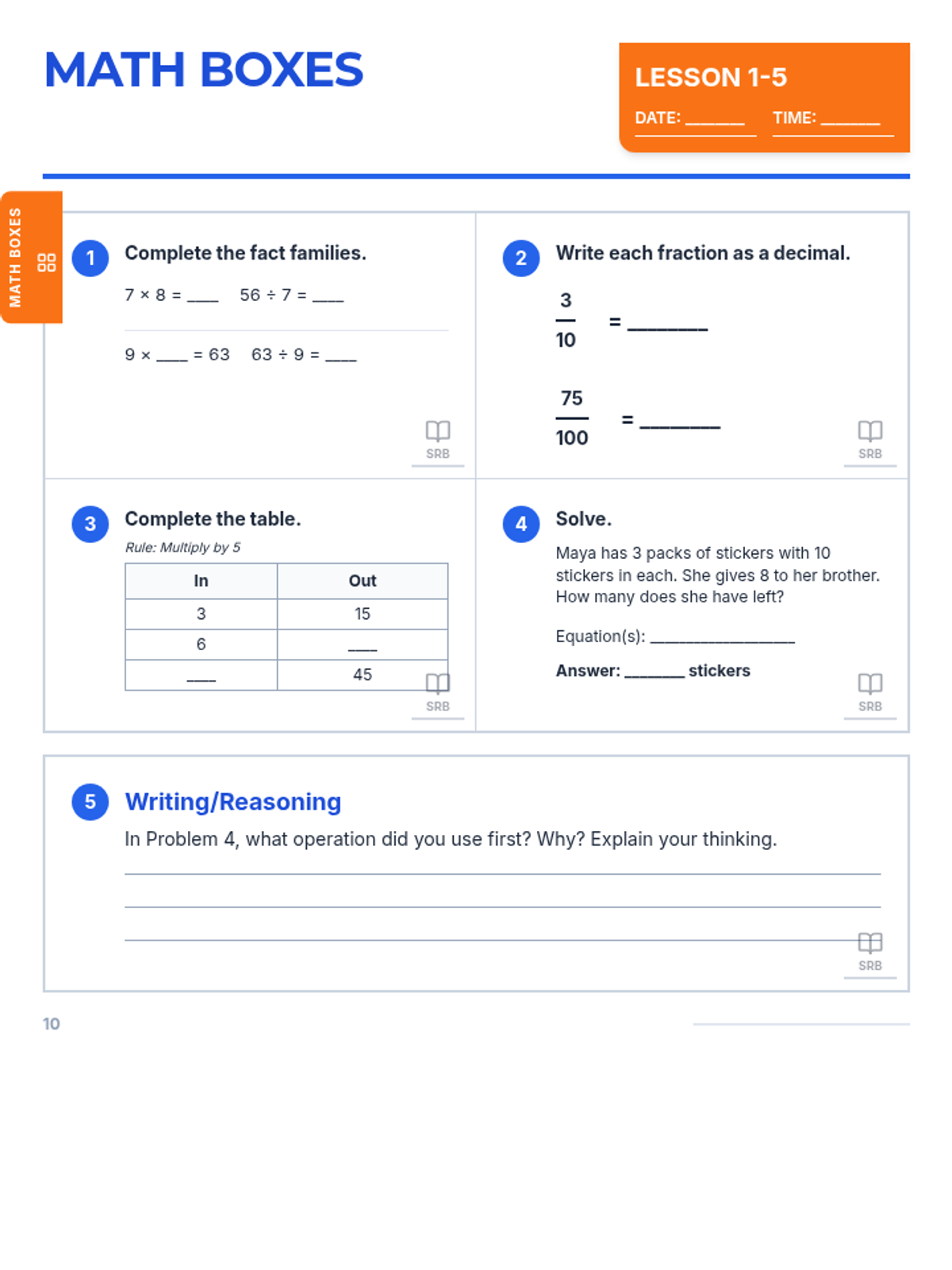
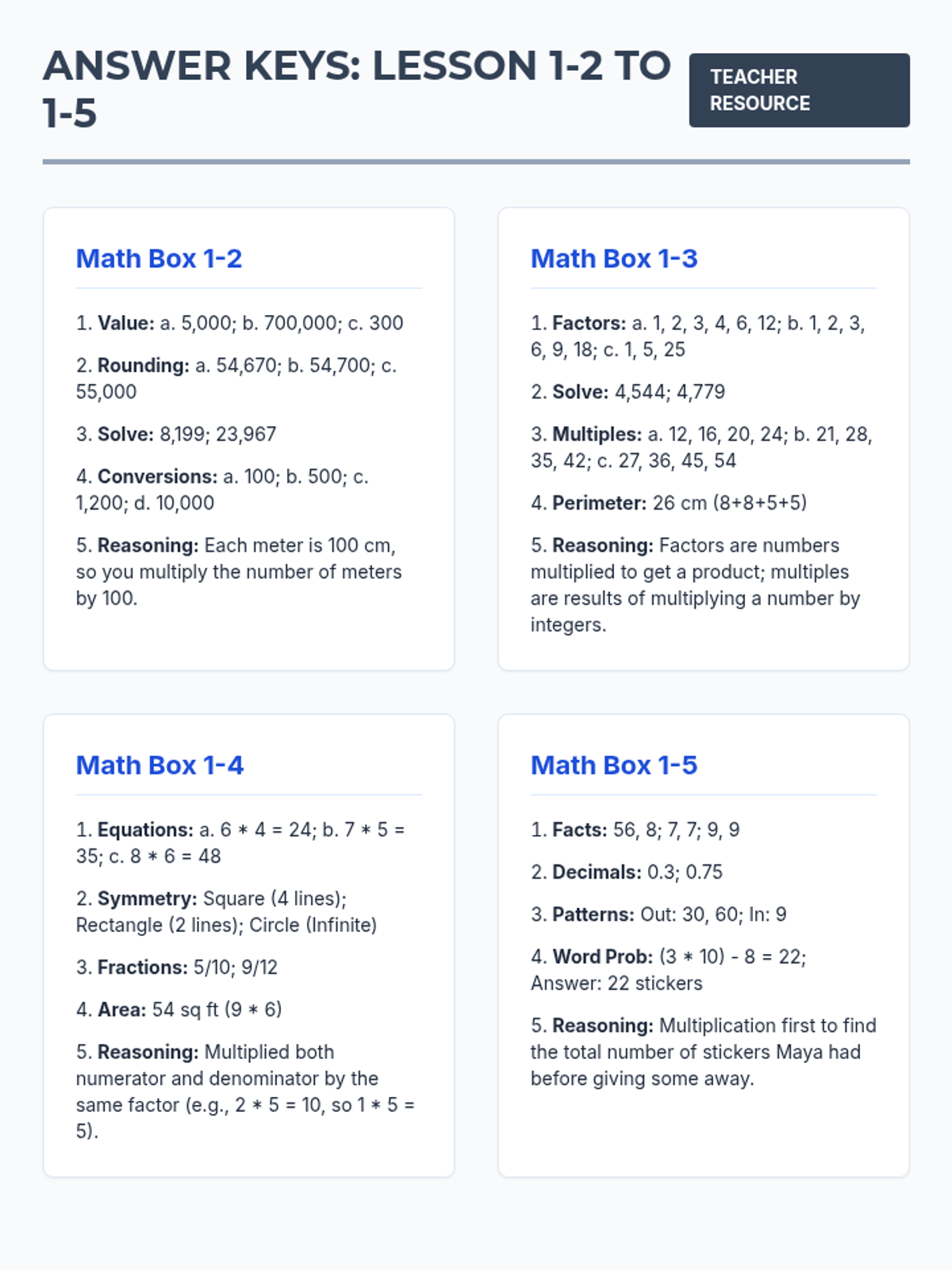
A collection of 4th-grade math review sheets modeled after the 'Math Boxes' format, focusing on mixed skills practice, mental math, and written reasoning.
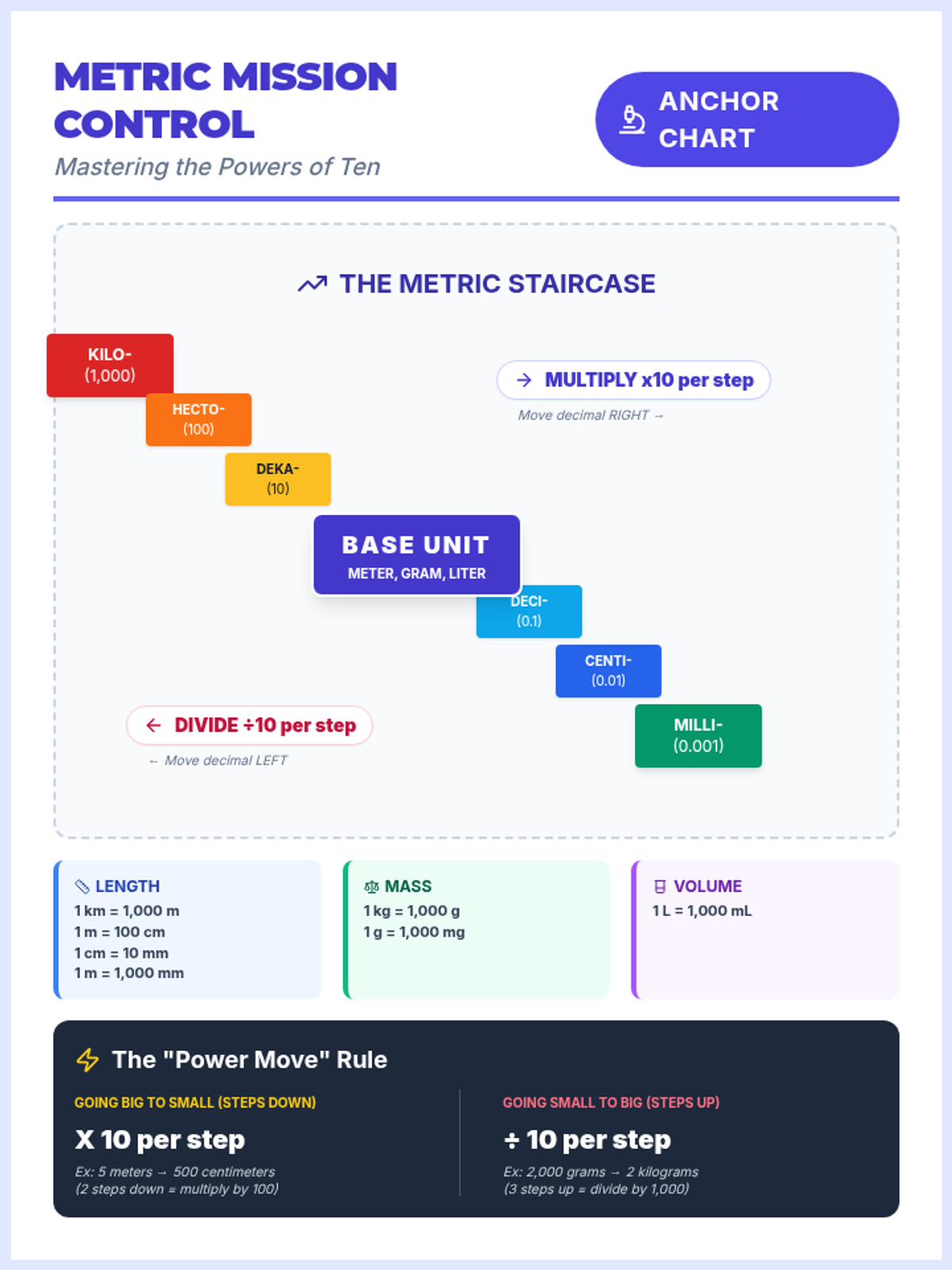
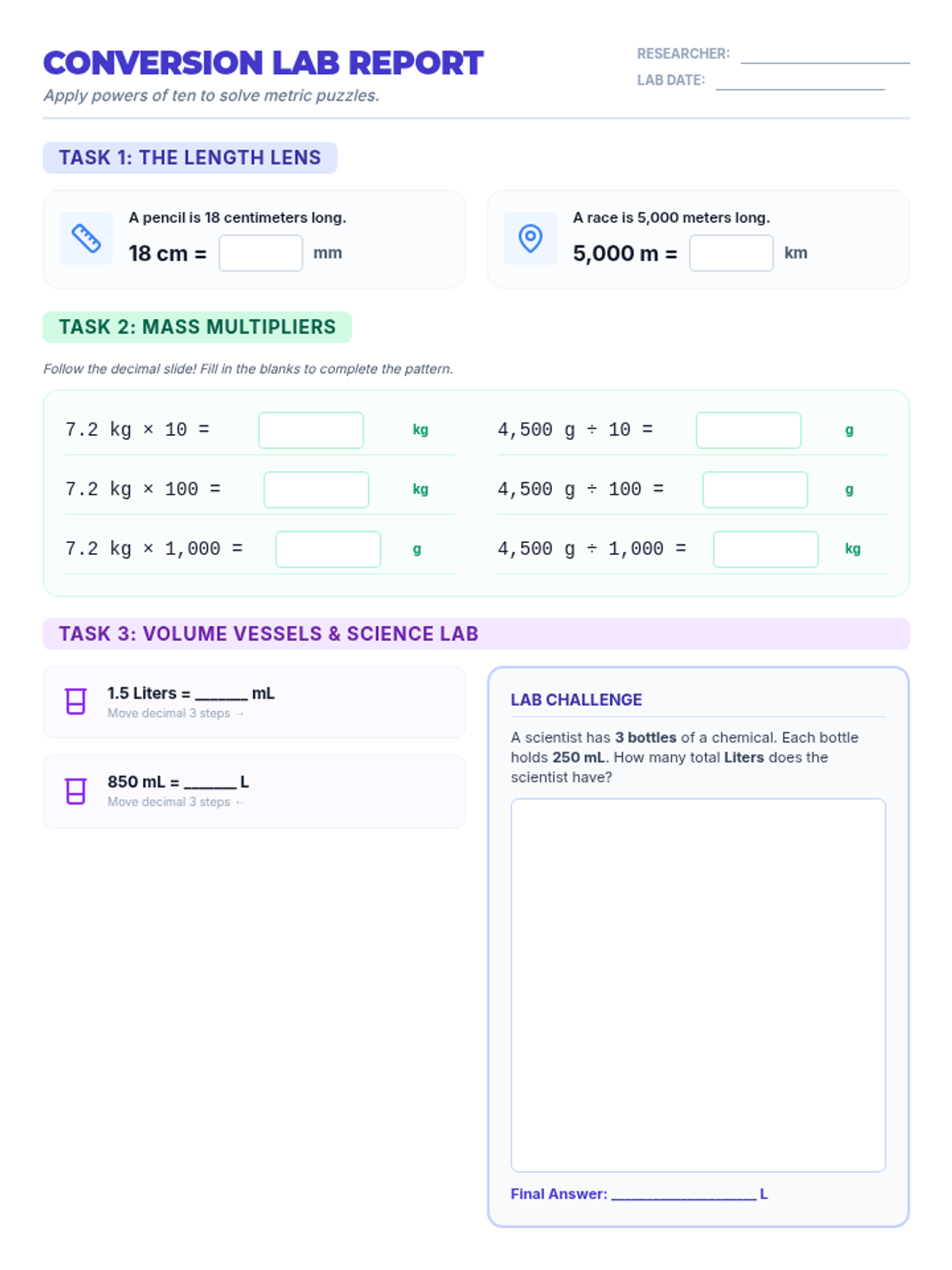
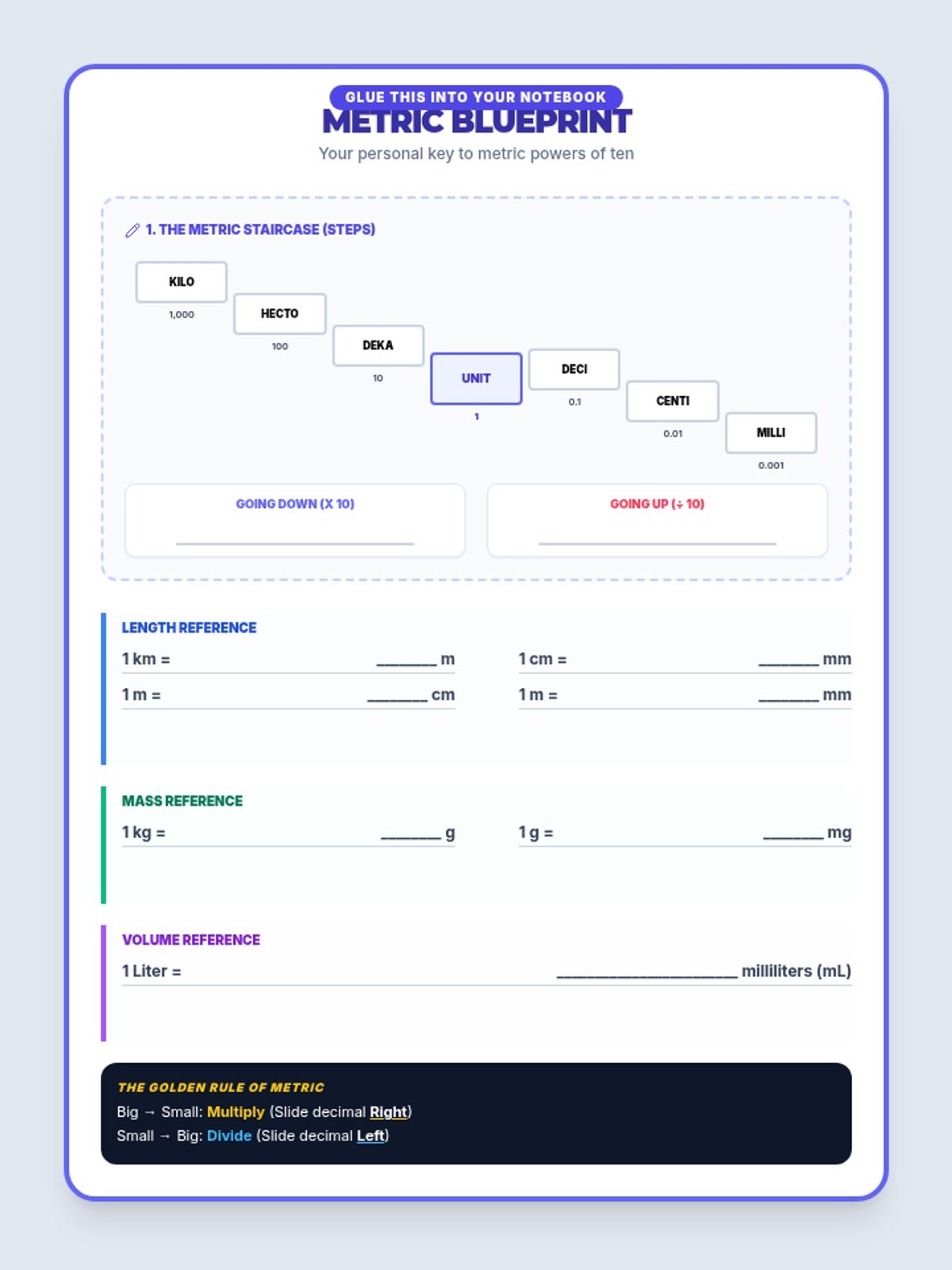
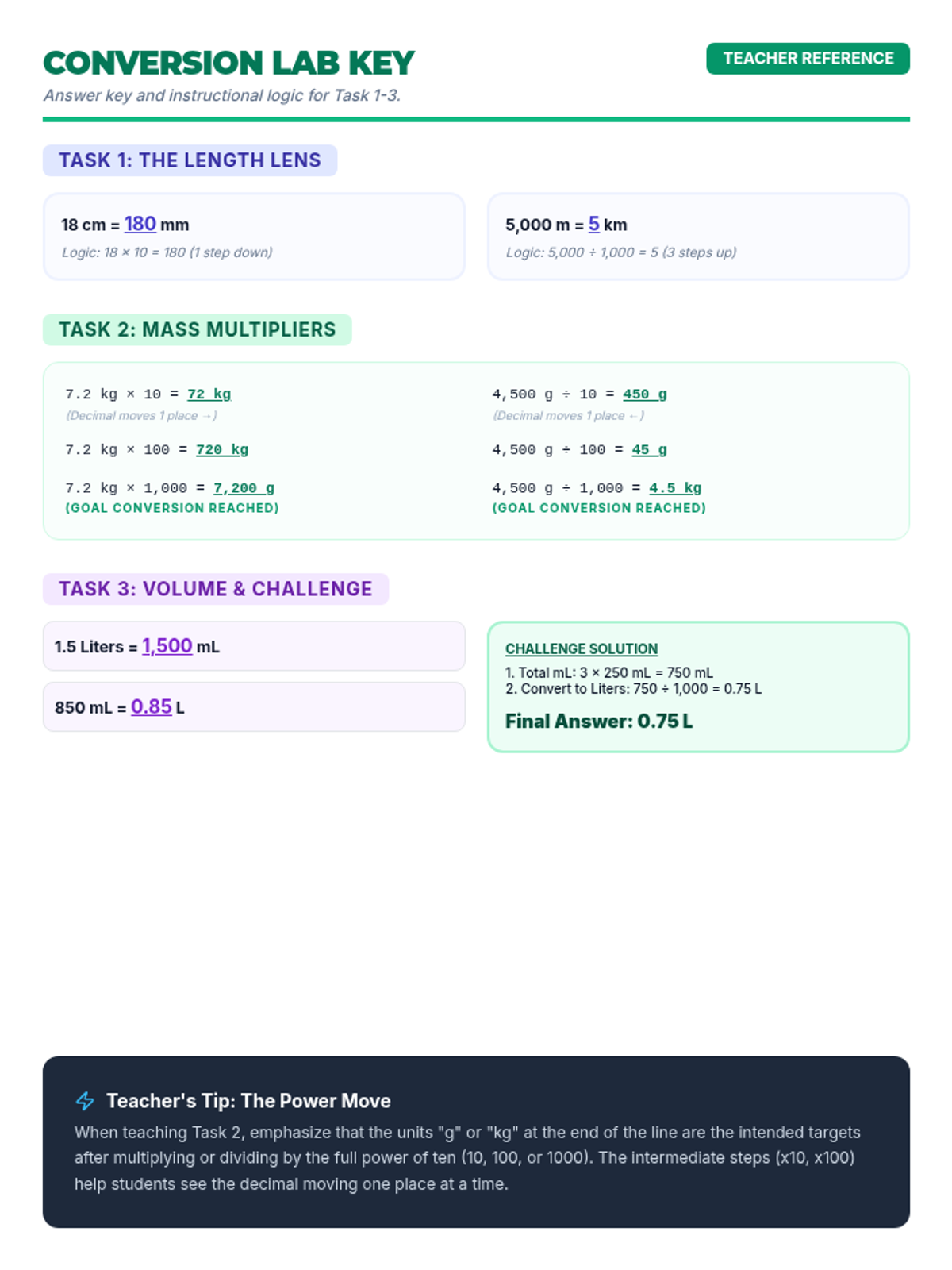
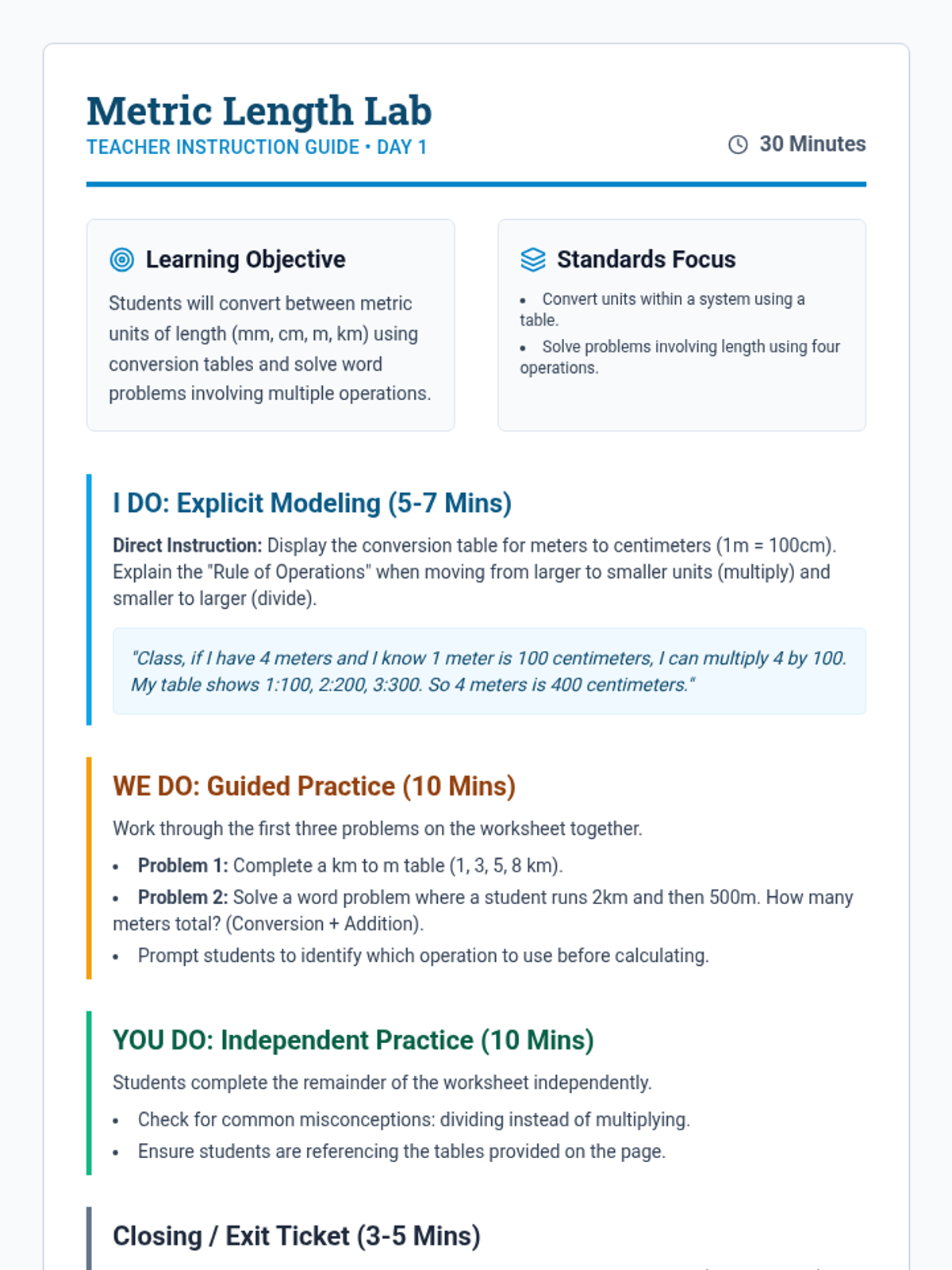
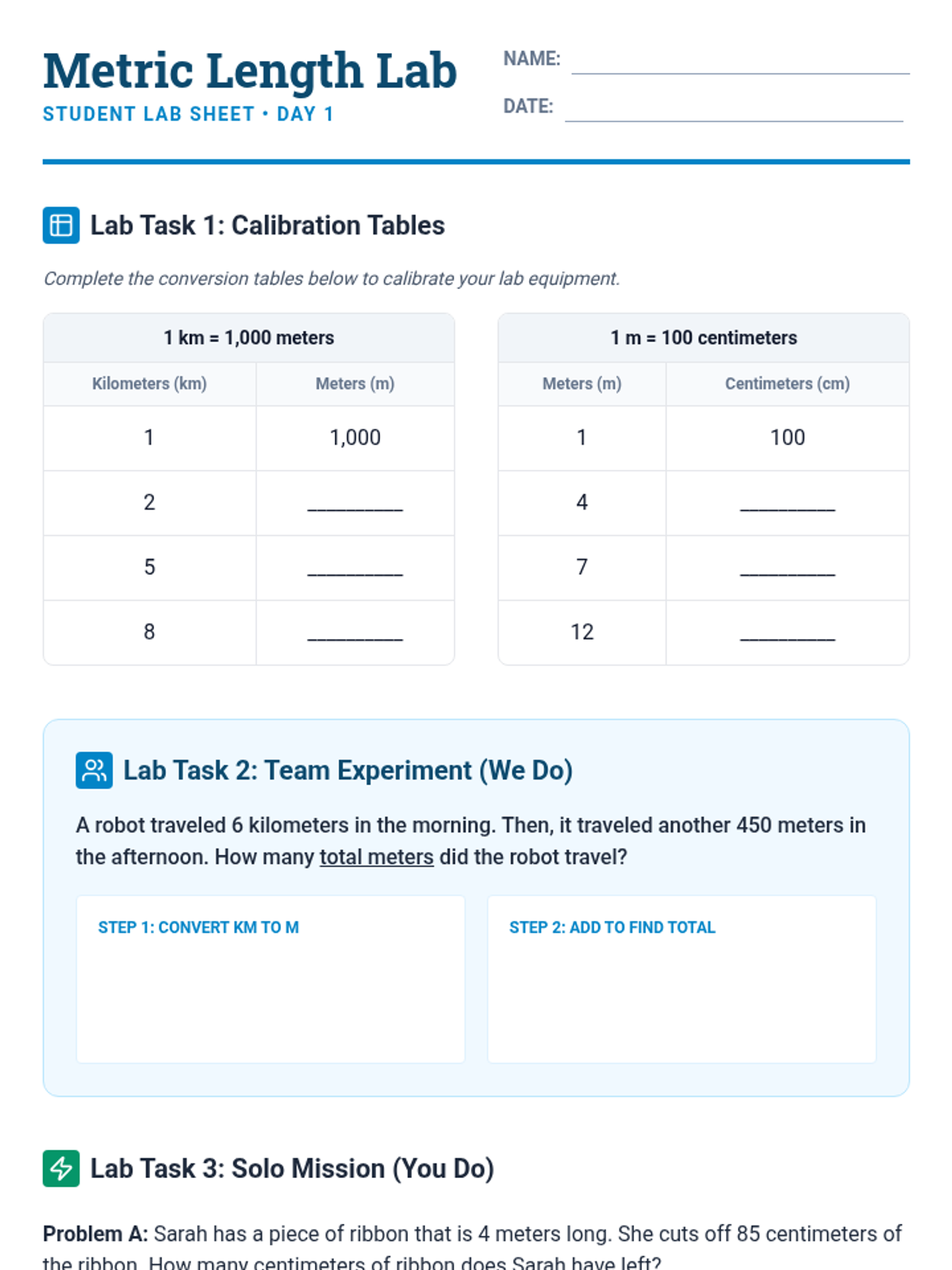
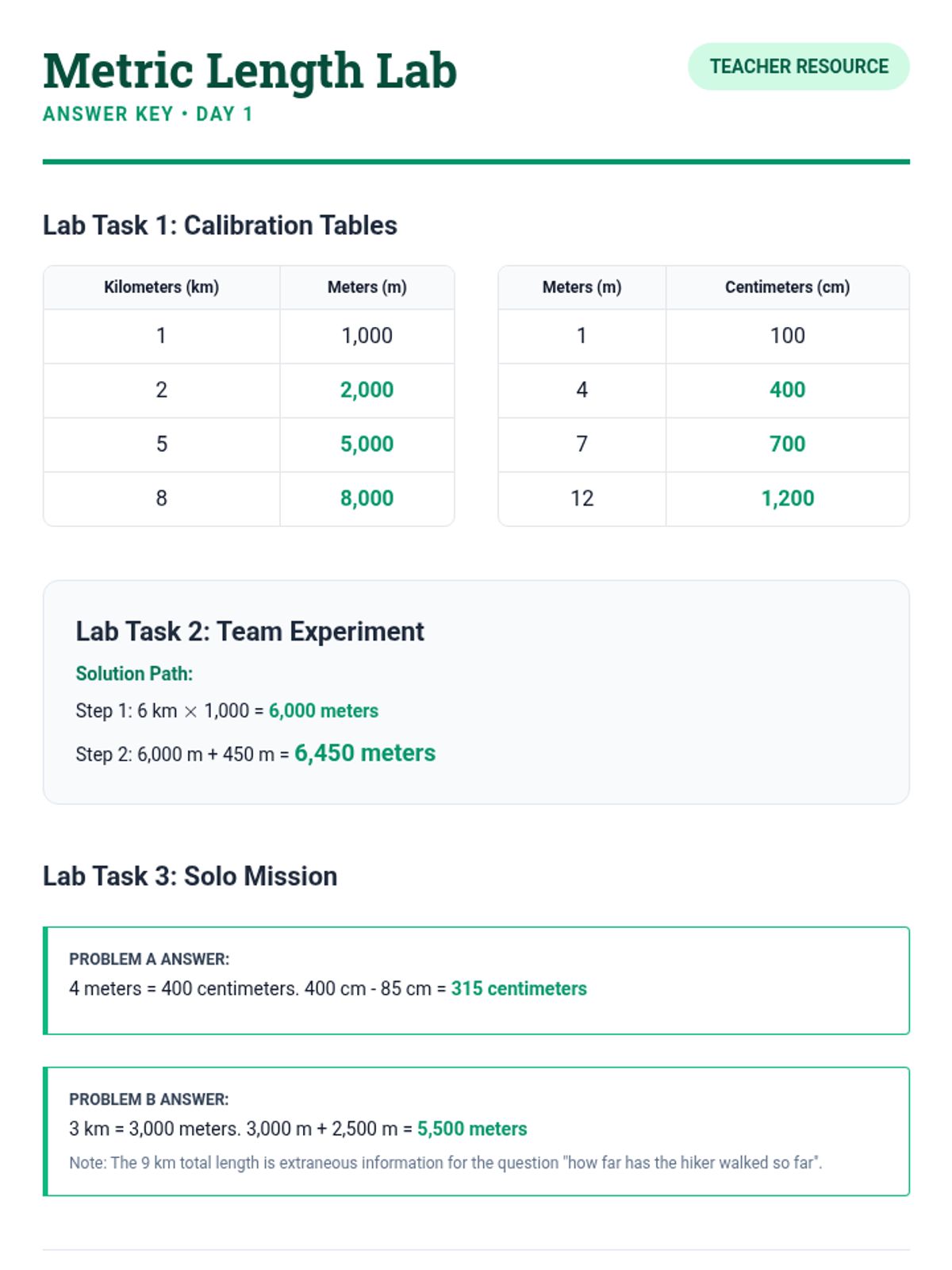
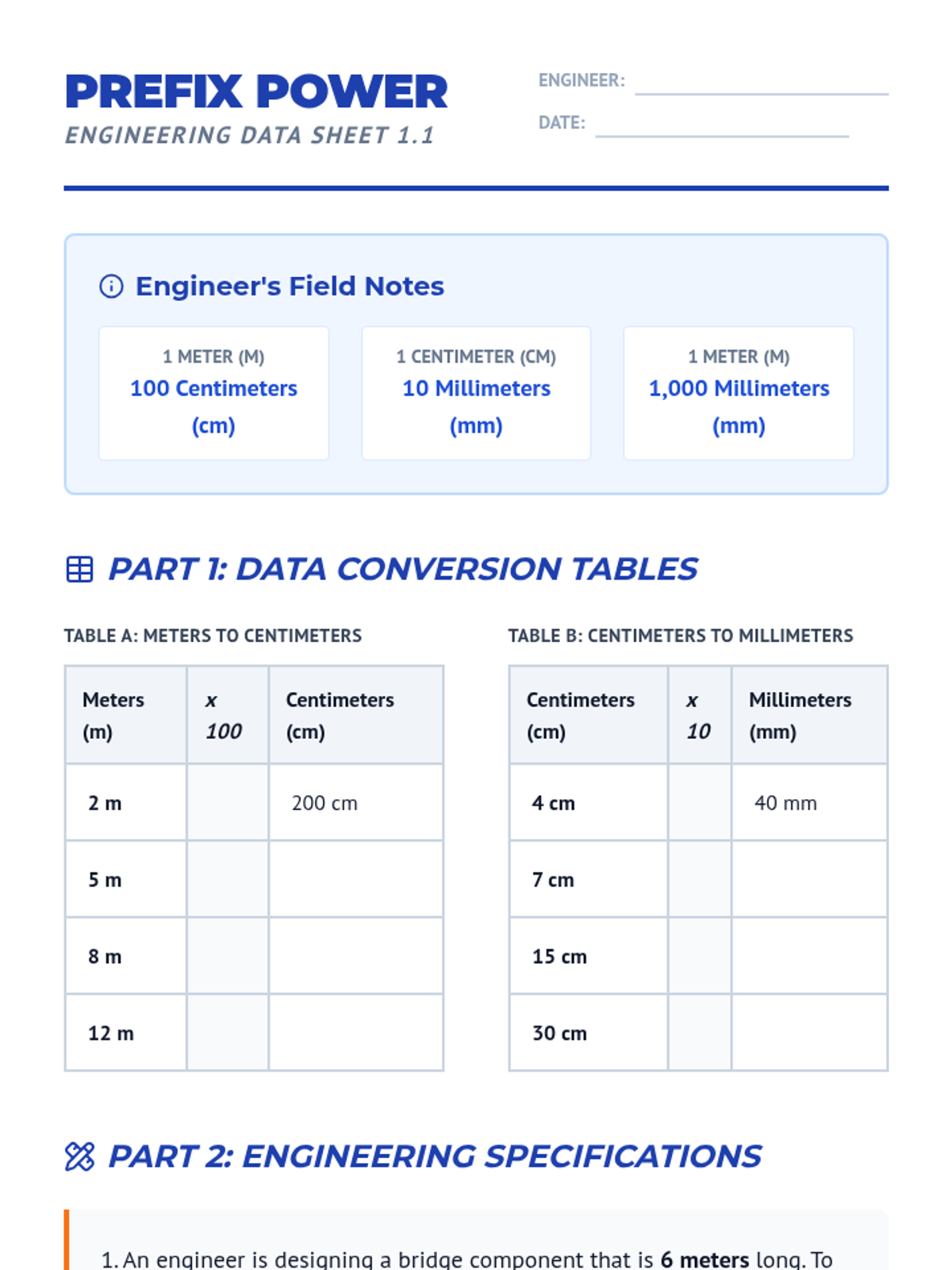
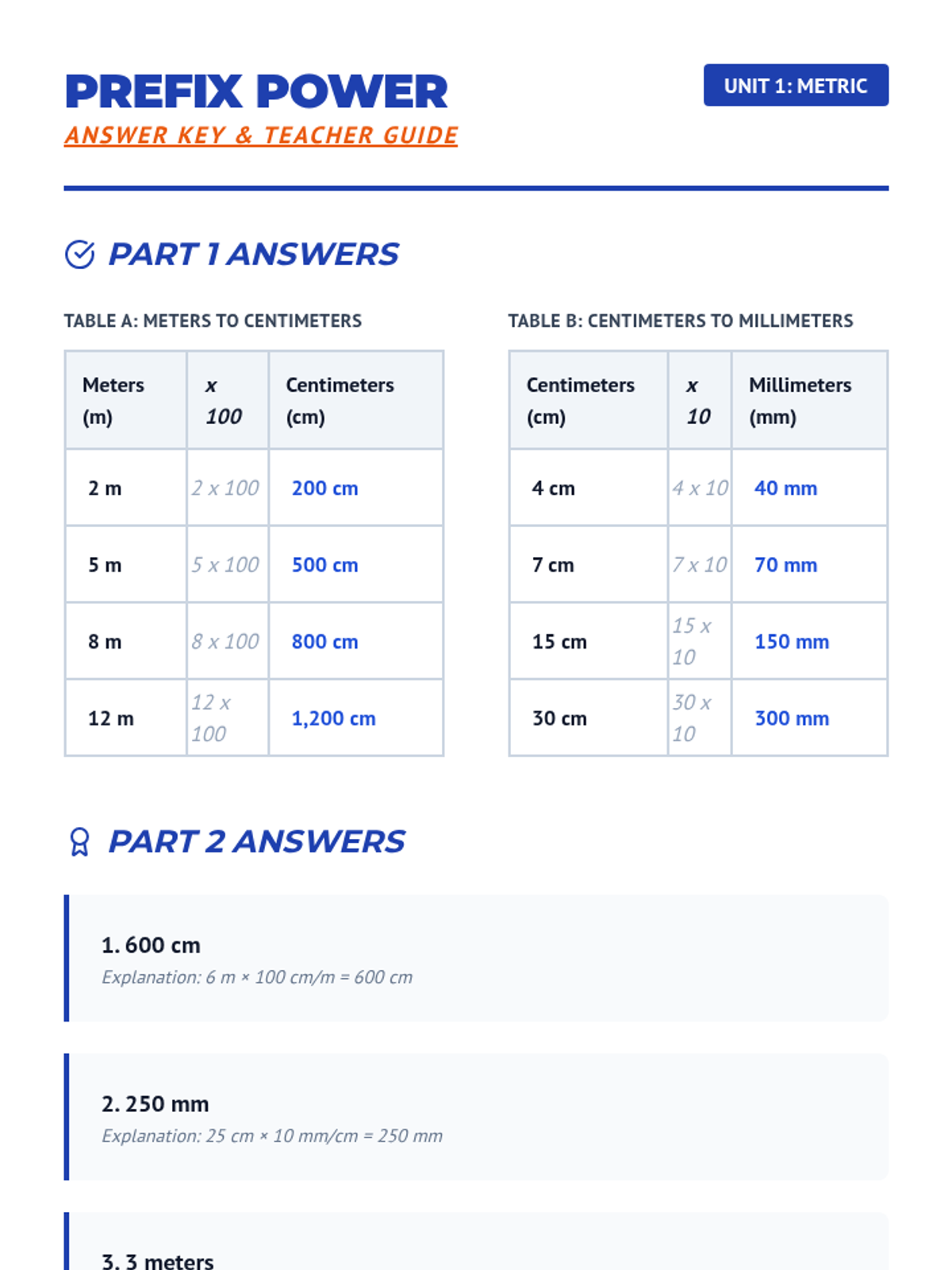
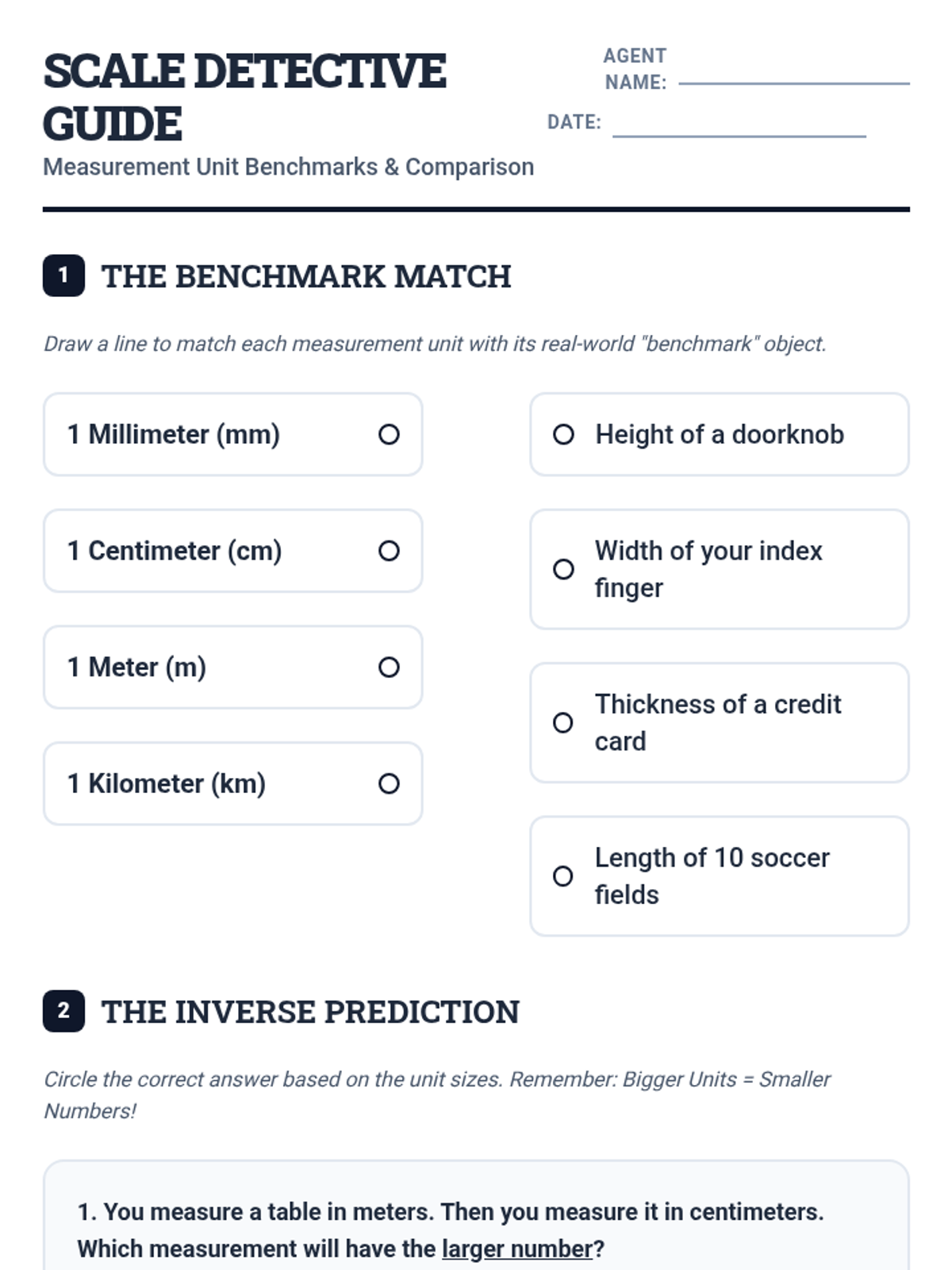
A comprehensive guide to understanding metric conversions and powers of ten through visual models and laboratory-themed activities. Students learn to navigate length, mass, and volume using the decimal nature of the metric system.
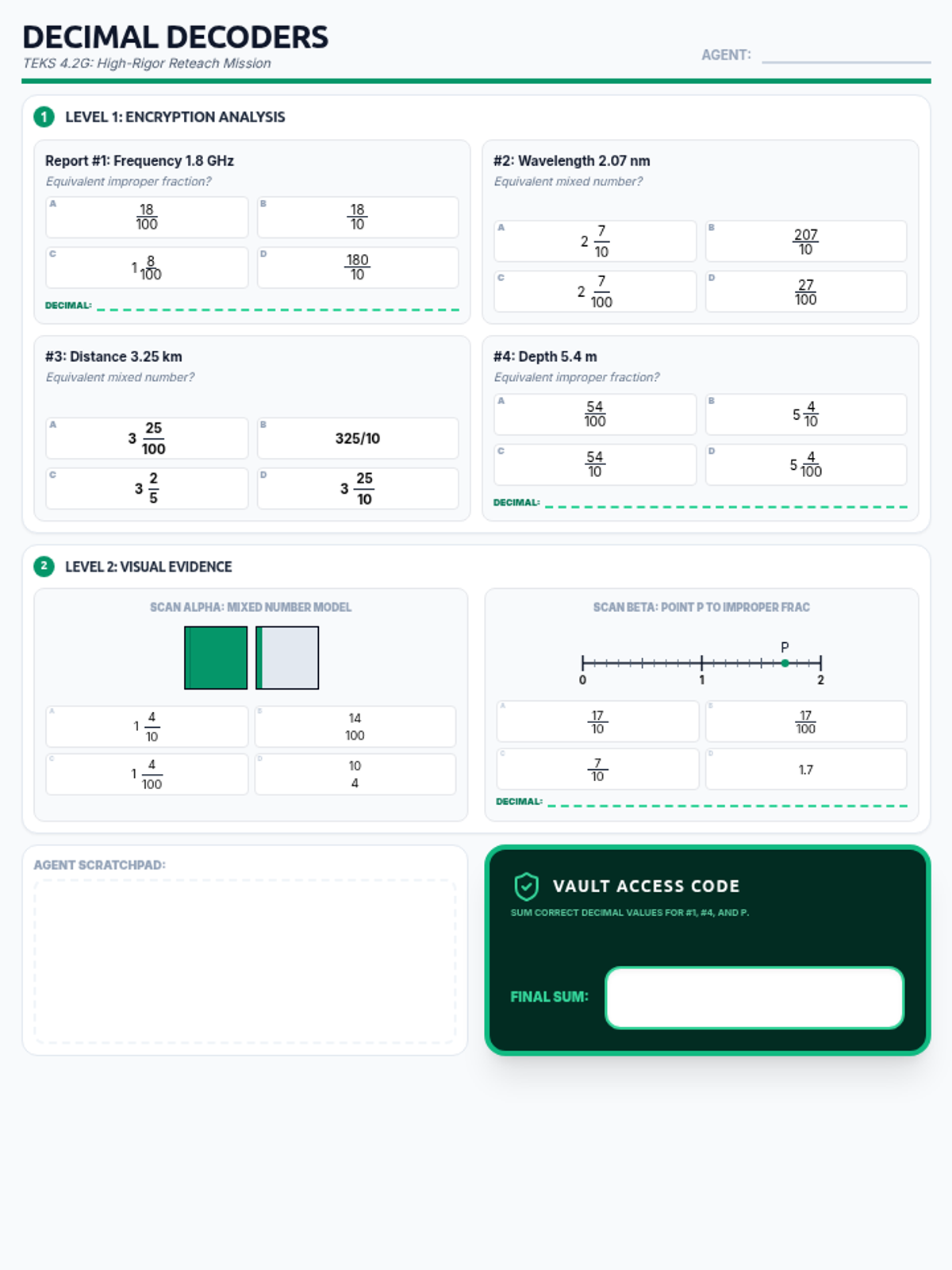
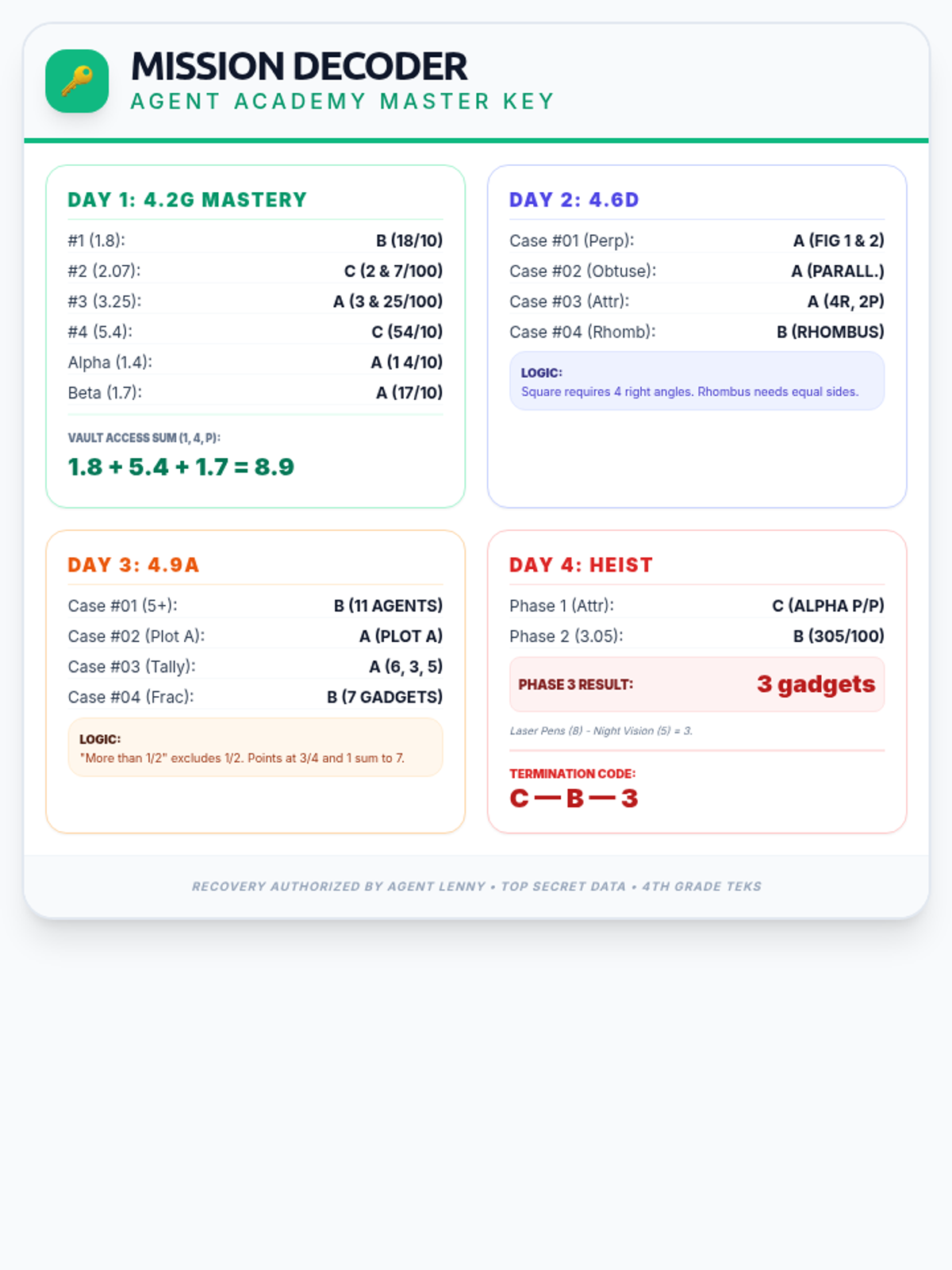
A 4-day intensive reteach unit focused on TEKS 4.2G, 4.6D, and 4.9A. This sequence uses a "Secret Agent" theme to engage students in high-stakes math challenges, primarily through rigorous task card investigations and escape room scenarios. No board games are used to maximize instructional focus.
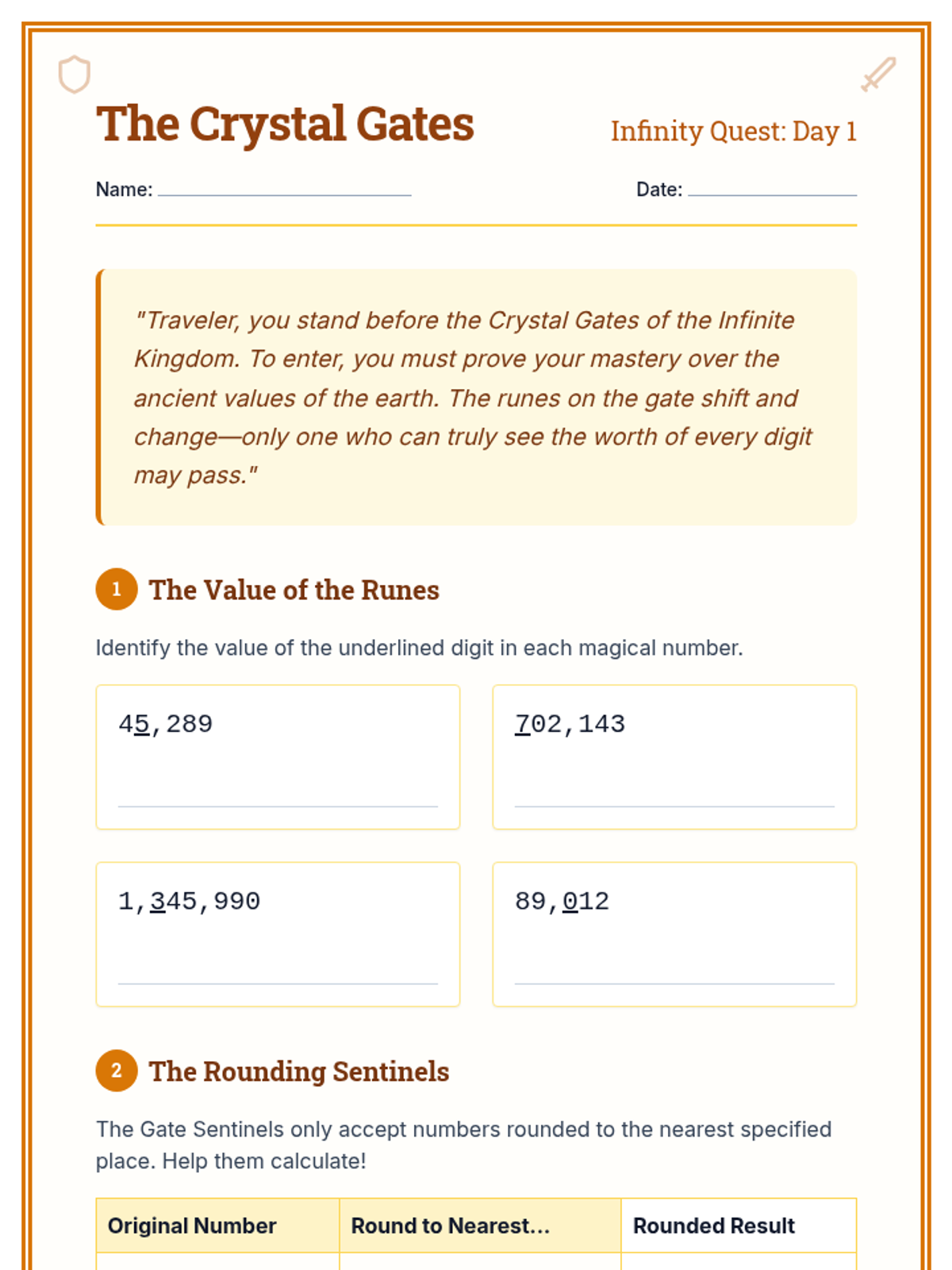
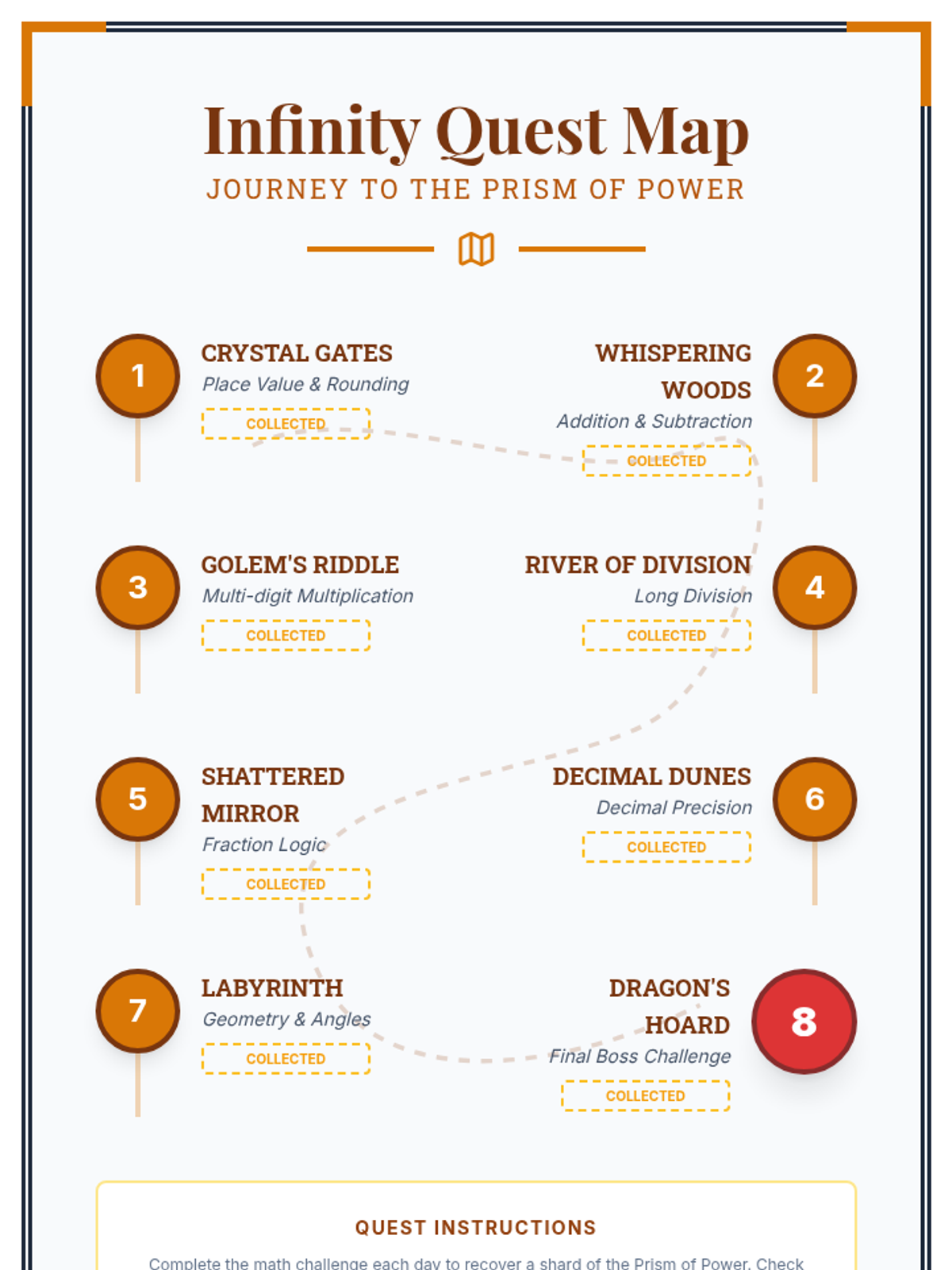
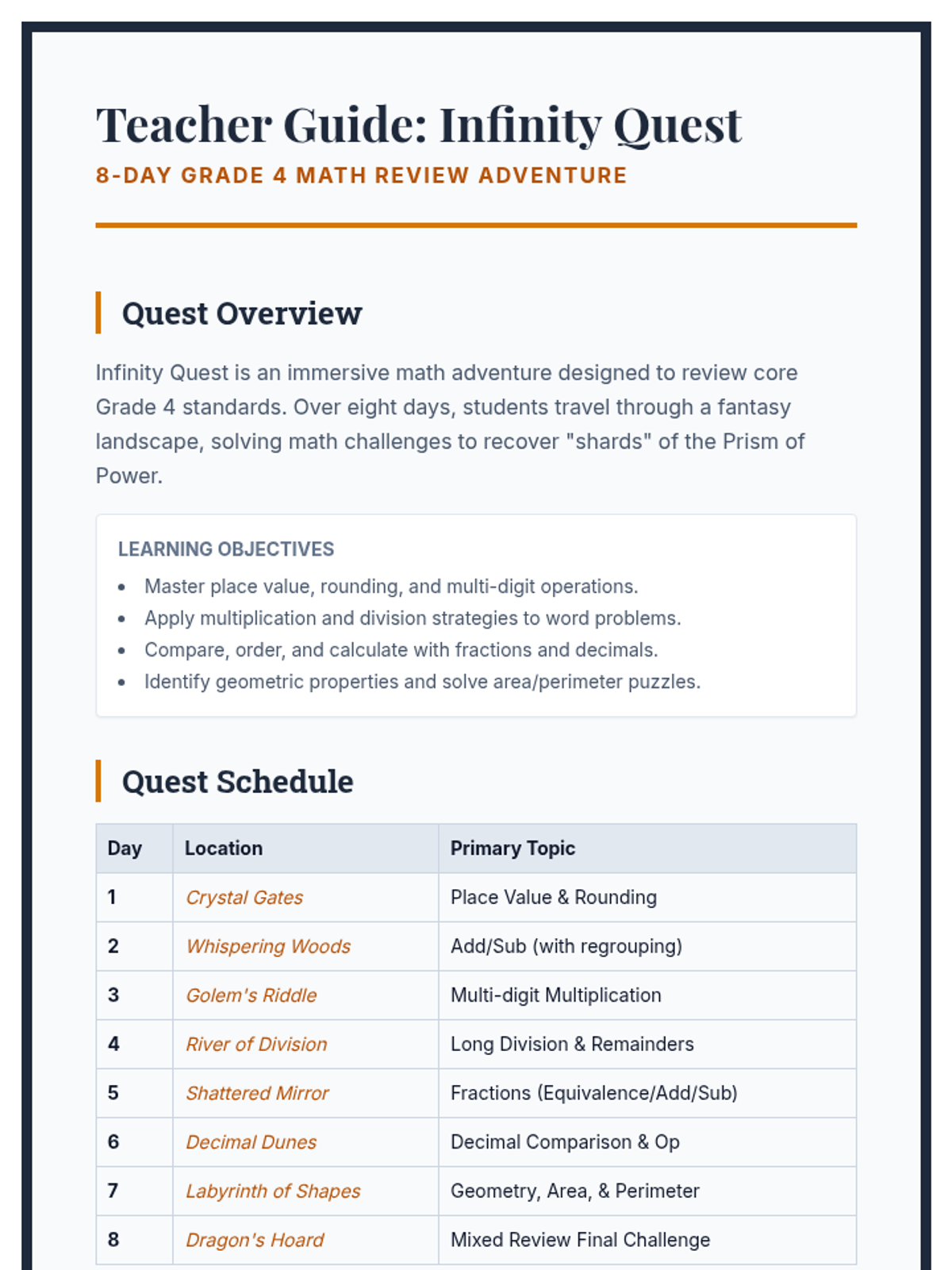
An eight-day mathematical adventure where students solve challenges to recover the lost shards of the Prism of Power. Each day focuses on a different core math domain, culminating in a grand final challenge.
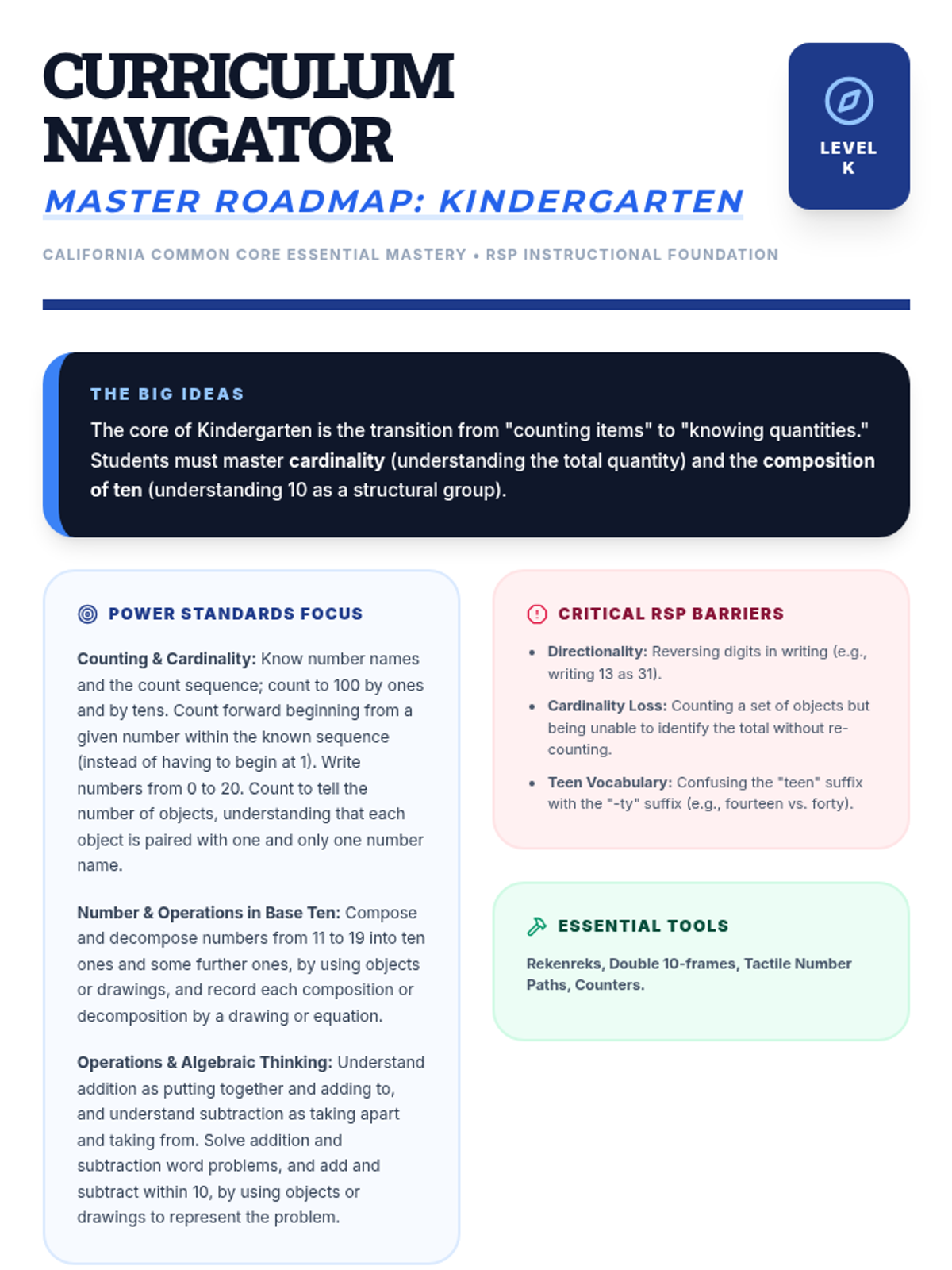
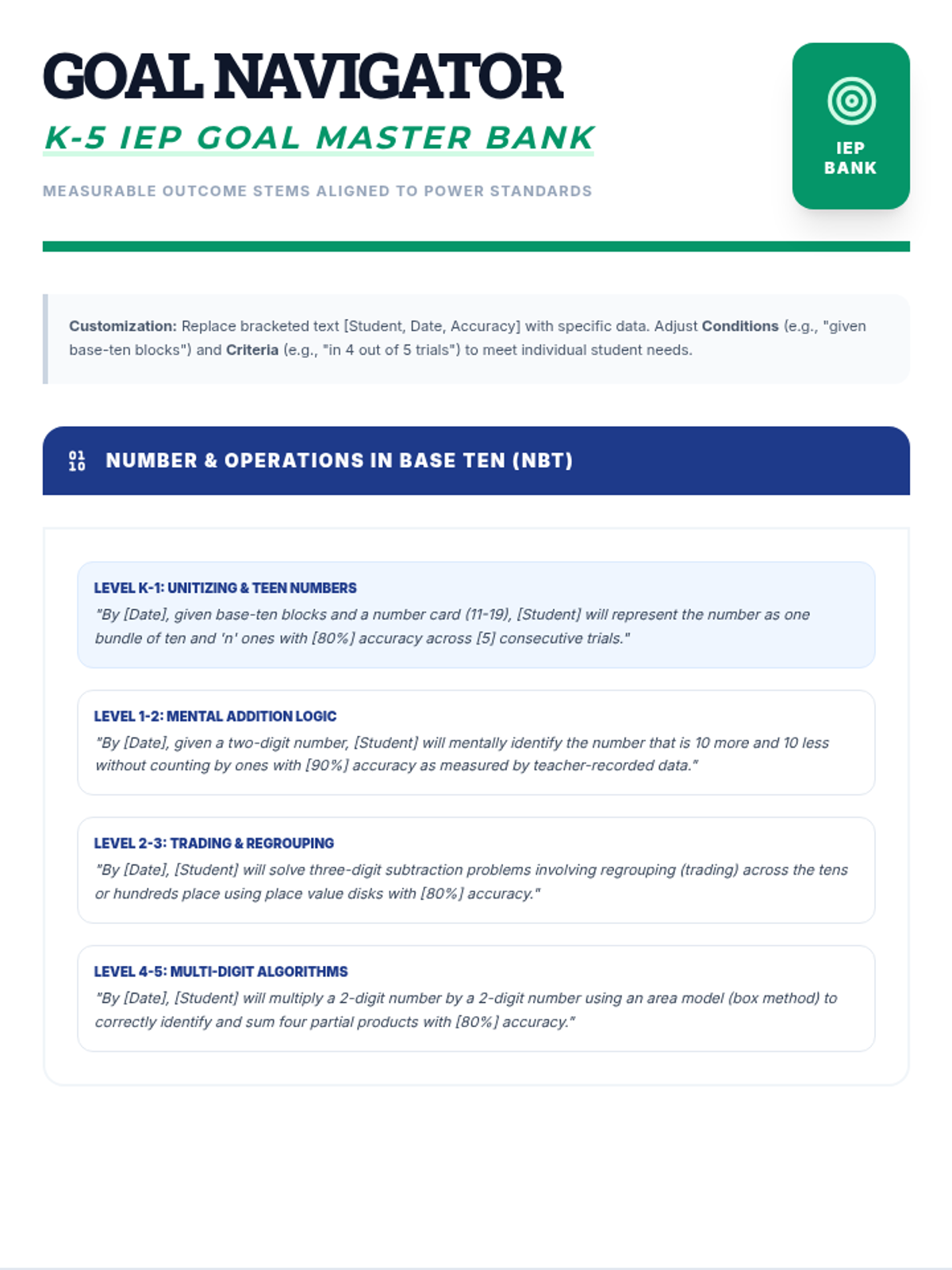
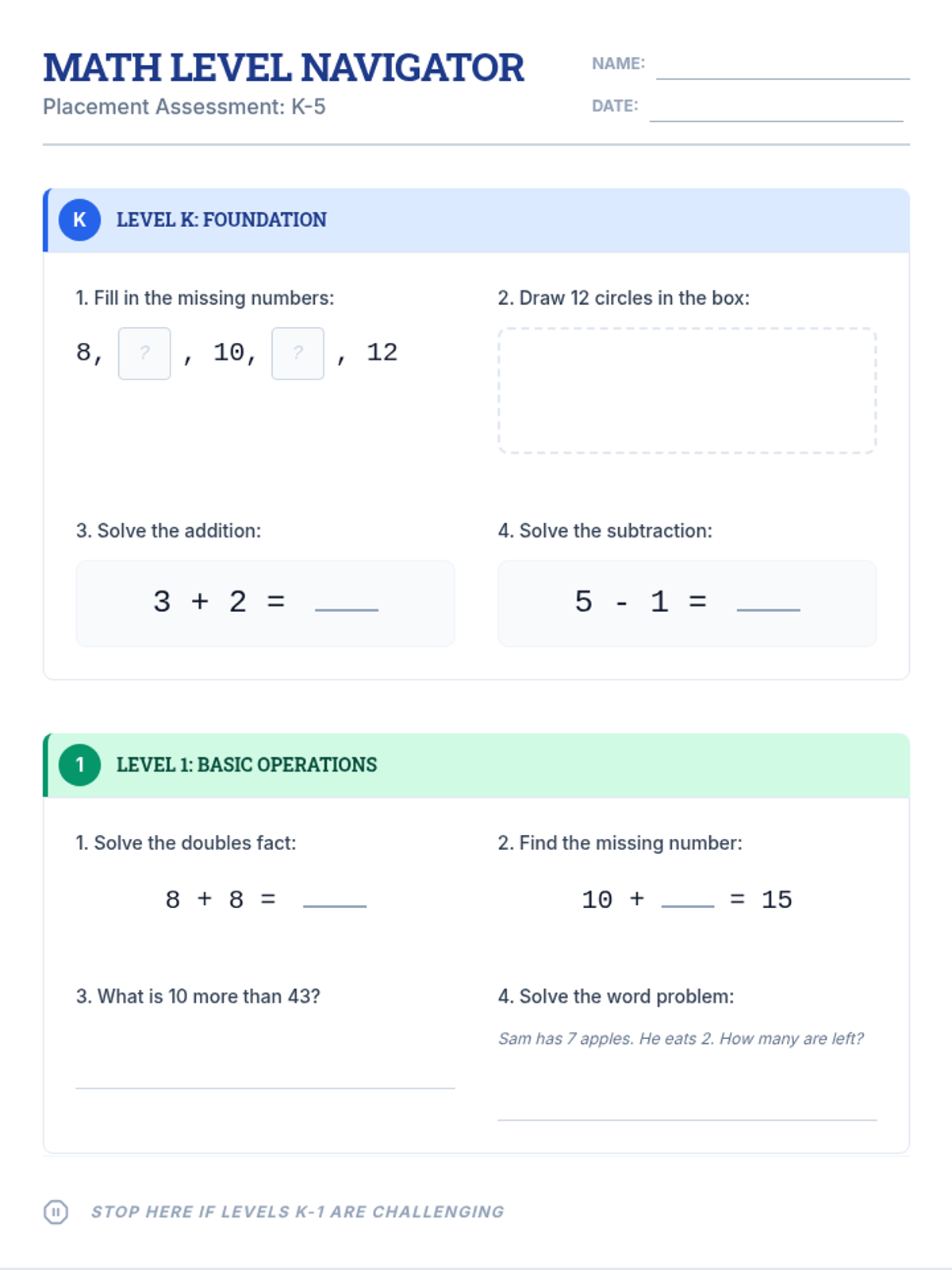
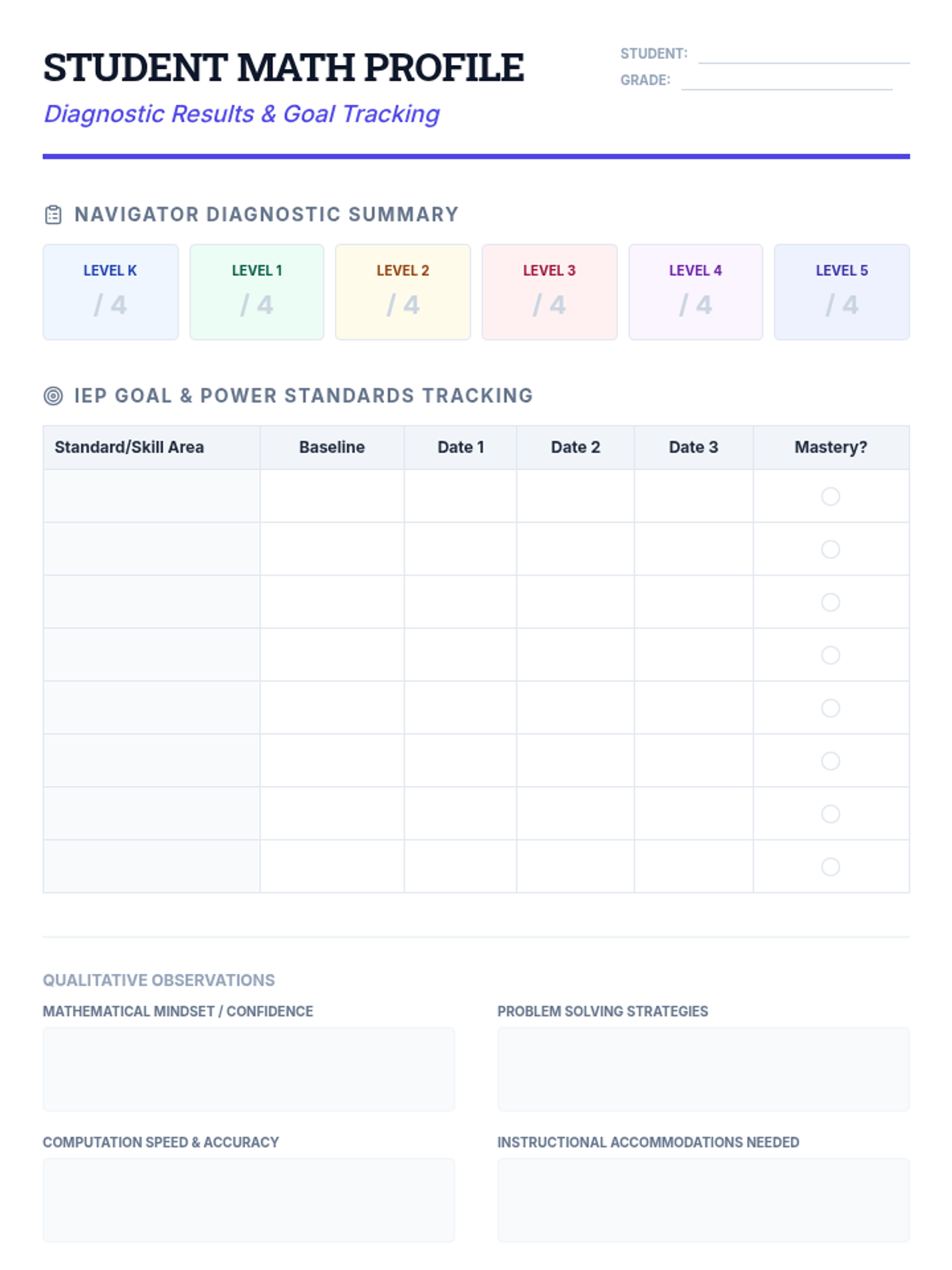
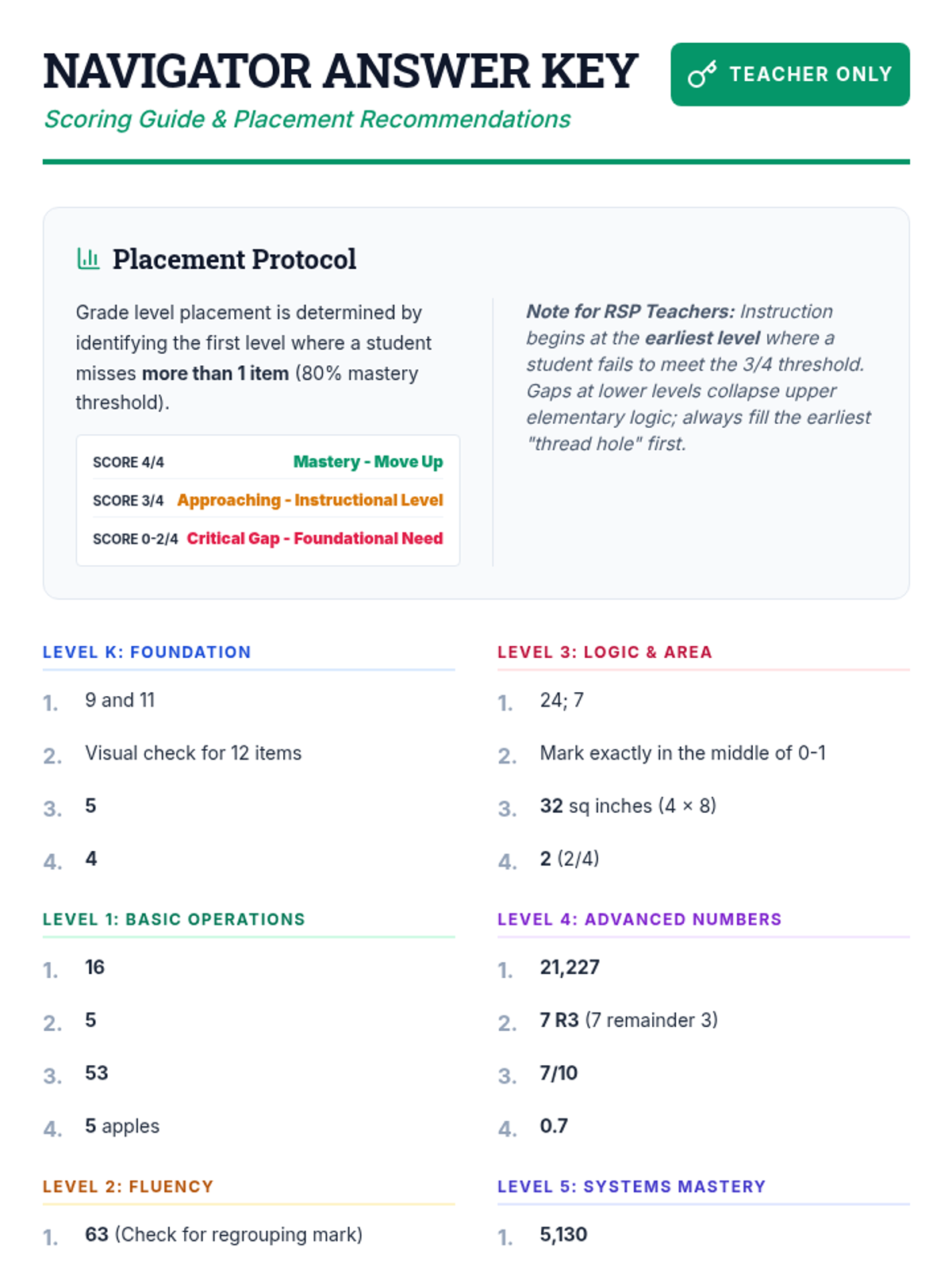
A comprehensive framework for K-5 RSP math instruction, including a California Common Core aligned scope and sequence of power standards and a leveled placement diagnostic.
A series of official Grade 4 PEP-style assessments and teacher resources designed to prepare students for the Jamaican Primary Exit Profile, covering all key mathematical domains from the National Standards Curriculum.
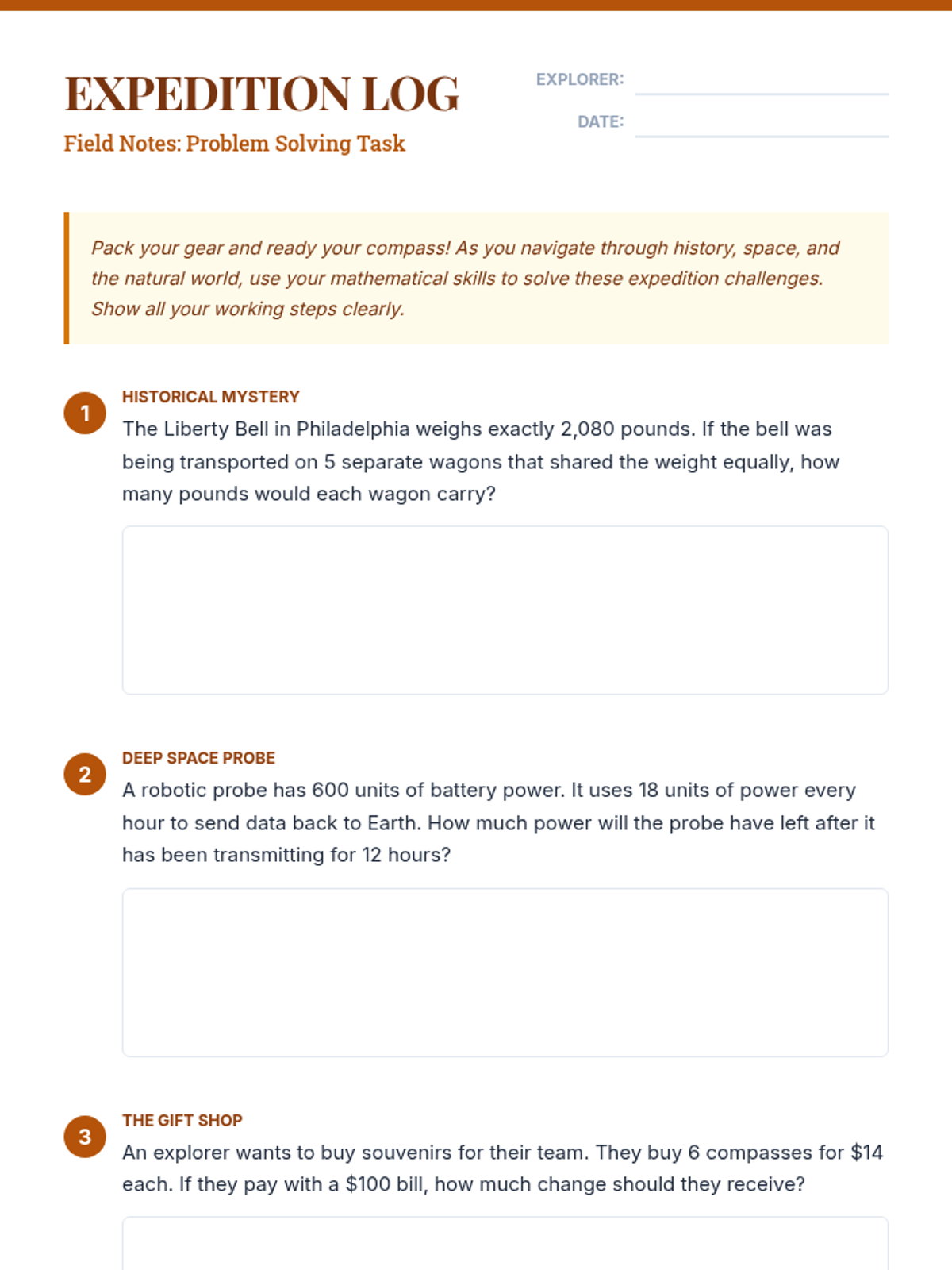
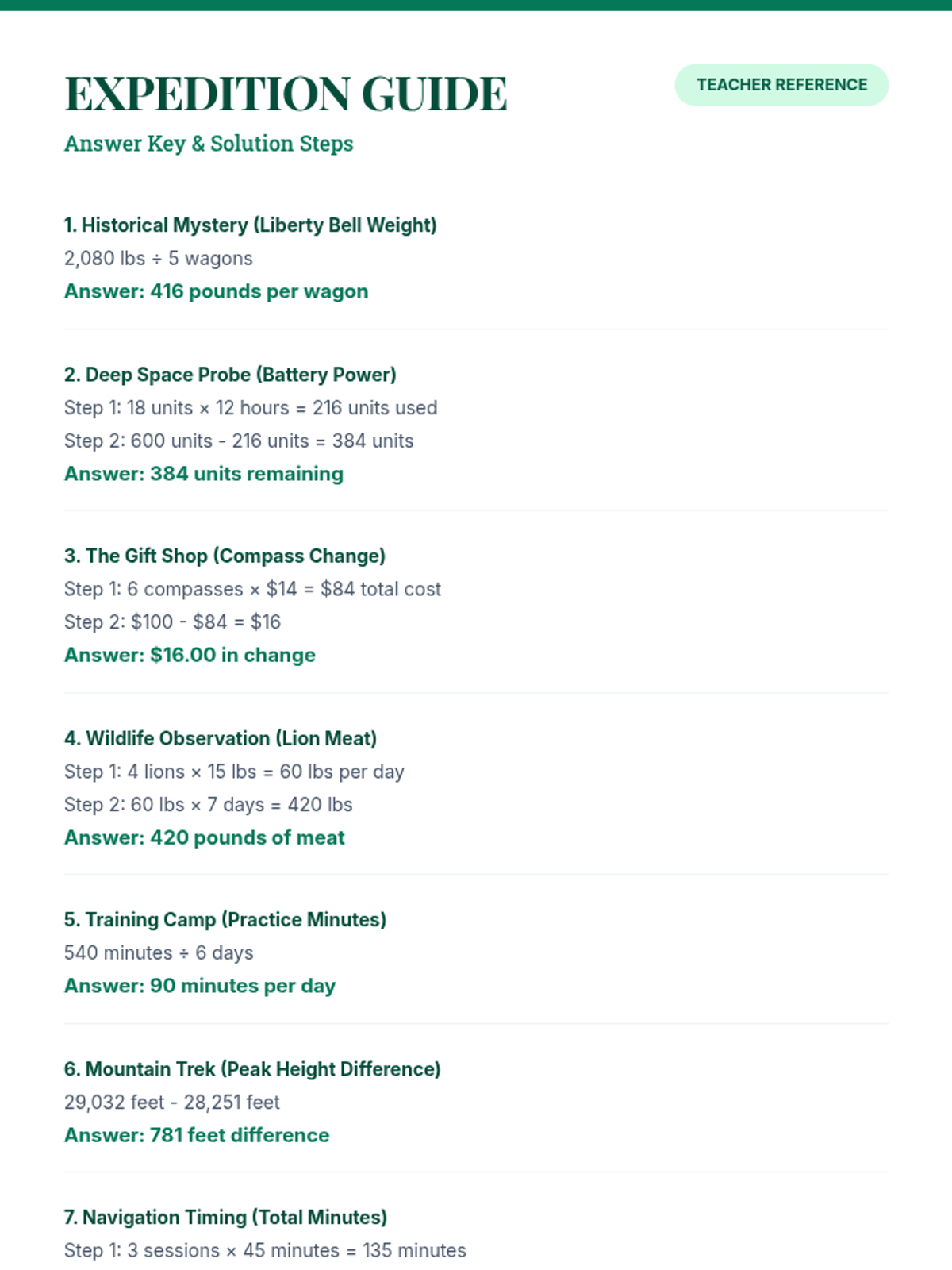
A week-long series of math challenges that transport students through history, science, and across the globe while reinforcing multi-step problem solving with the four operations.
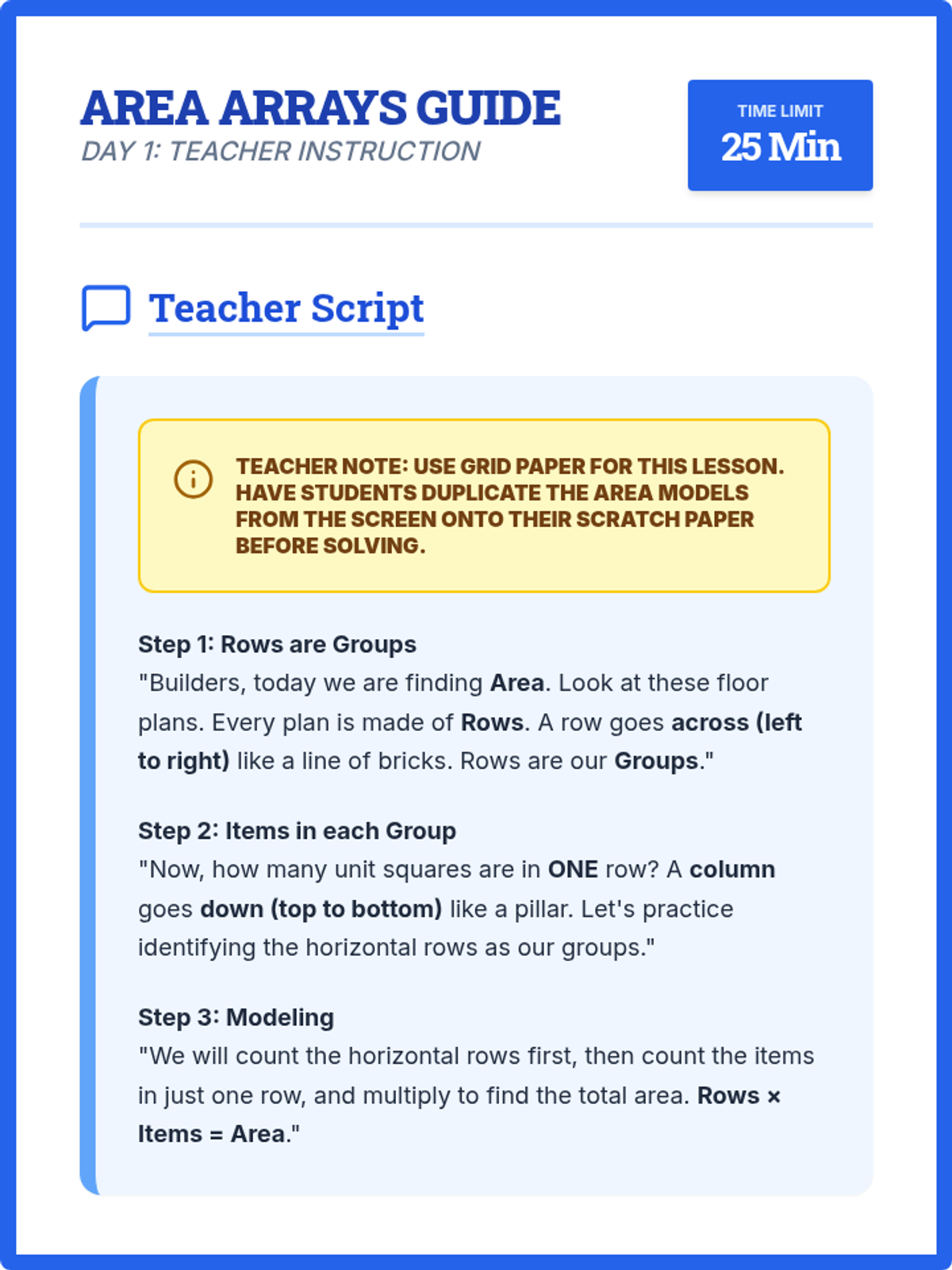
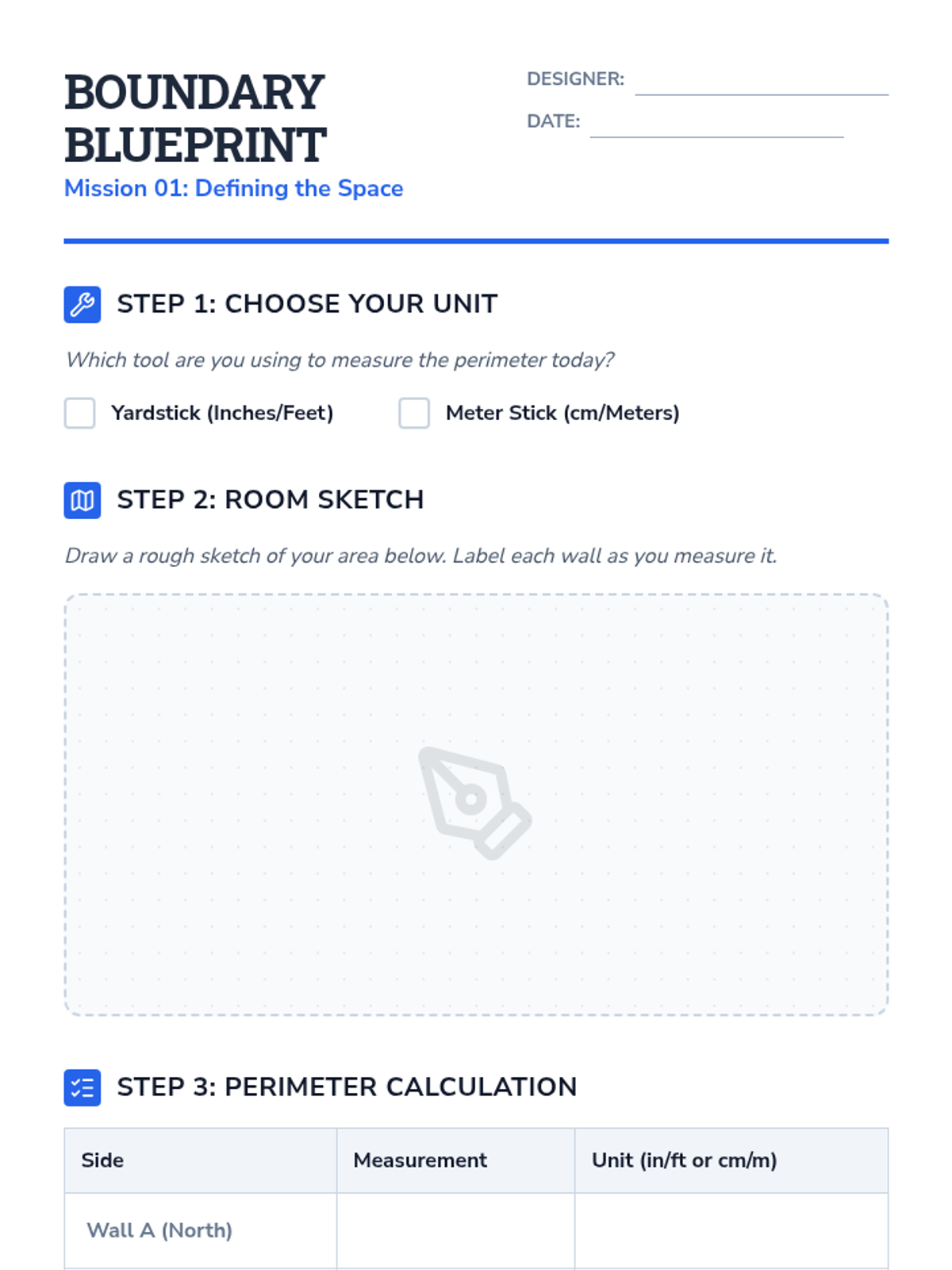
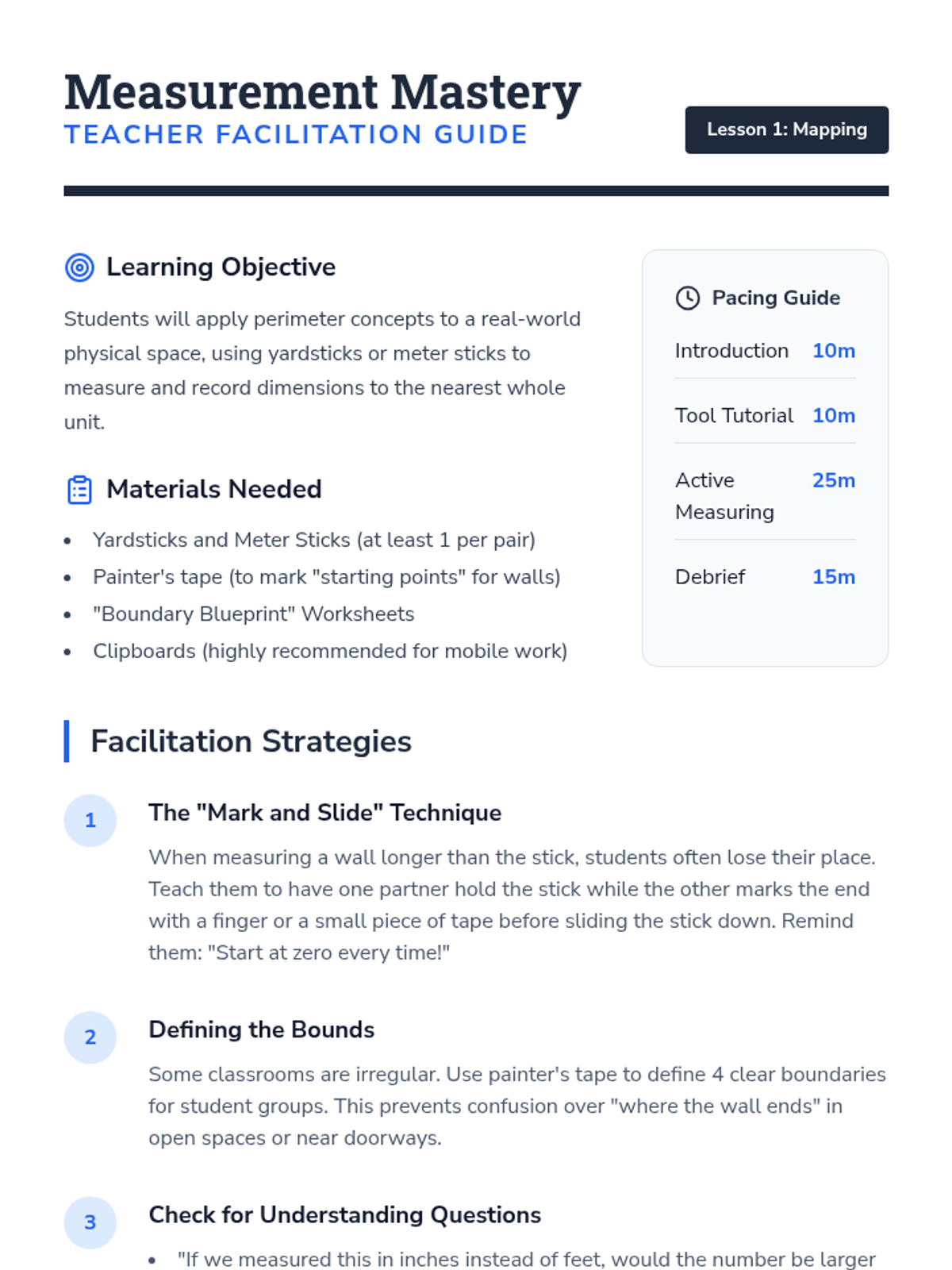
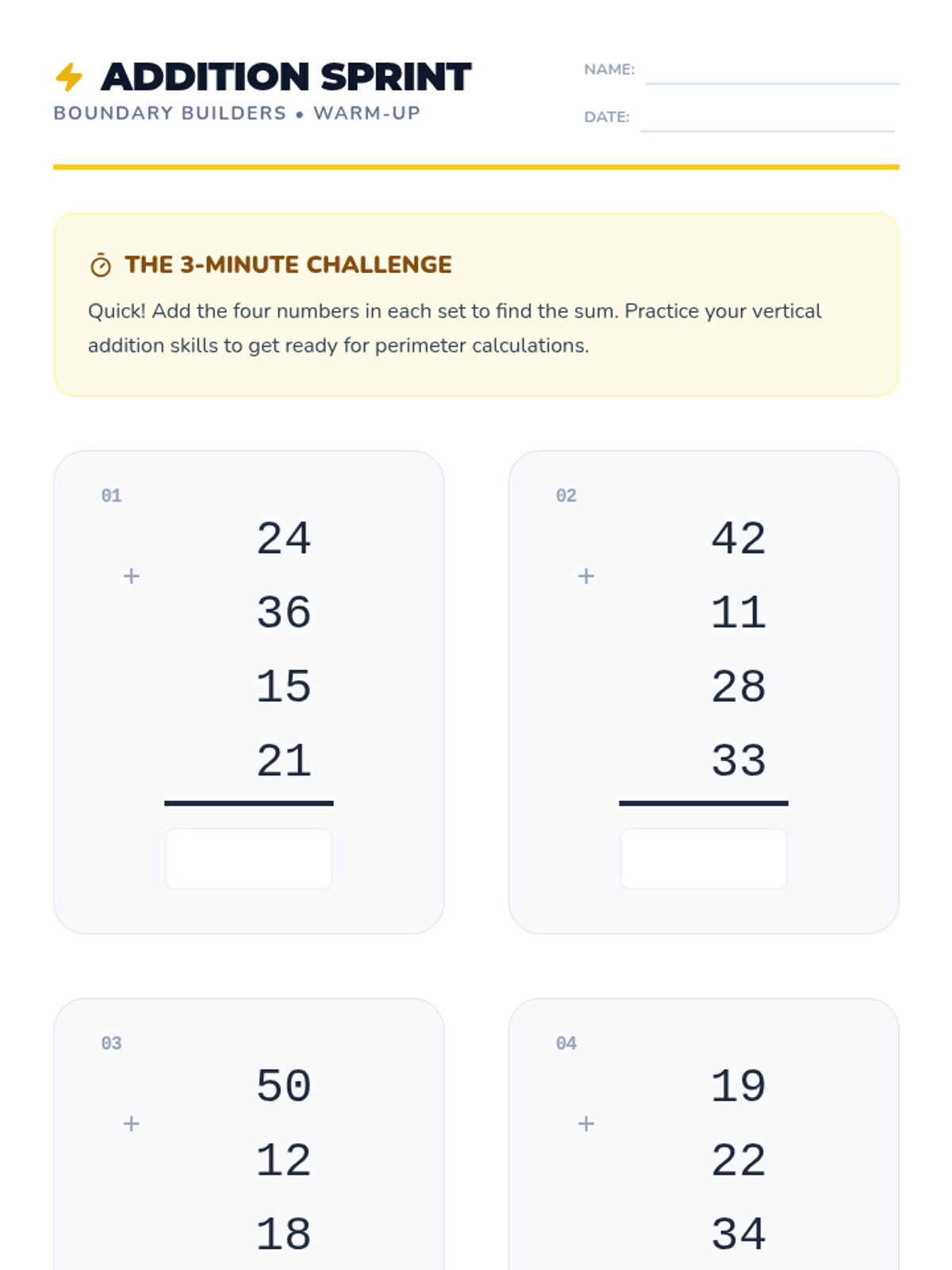
A 5-day intensive intervention sequence focused on determining area using multiplication (3.6C) and calculating perimeter including missing side lengths (3.7B). The unit uses a 'Boundary Builders' construction theme to make geometric concepts concrete and engaging for small group instruction.
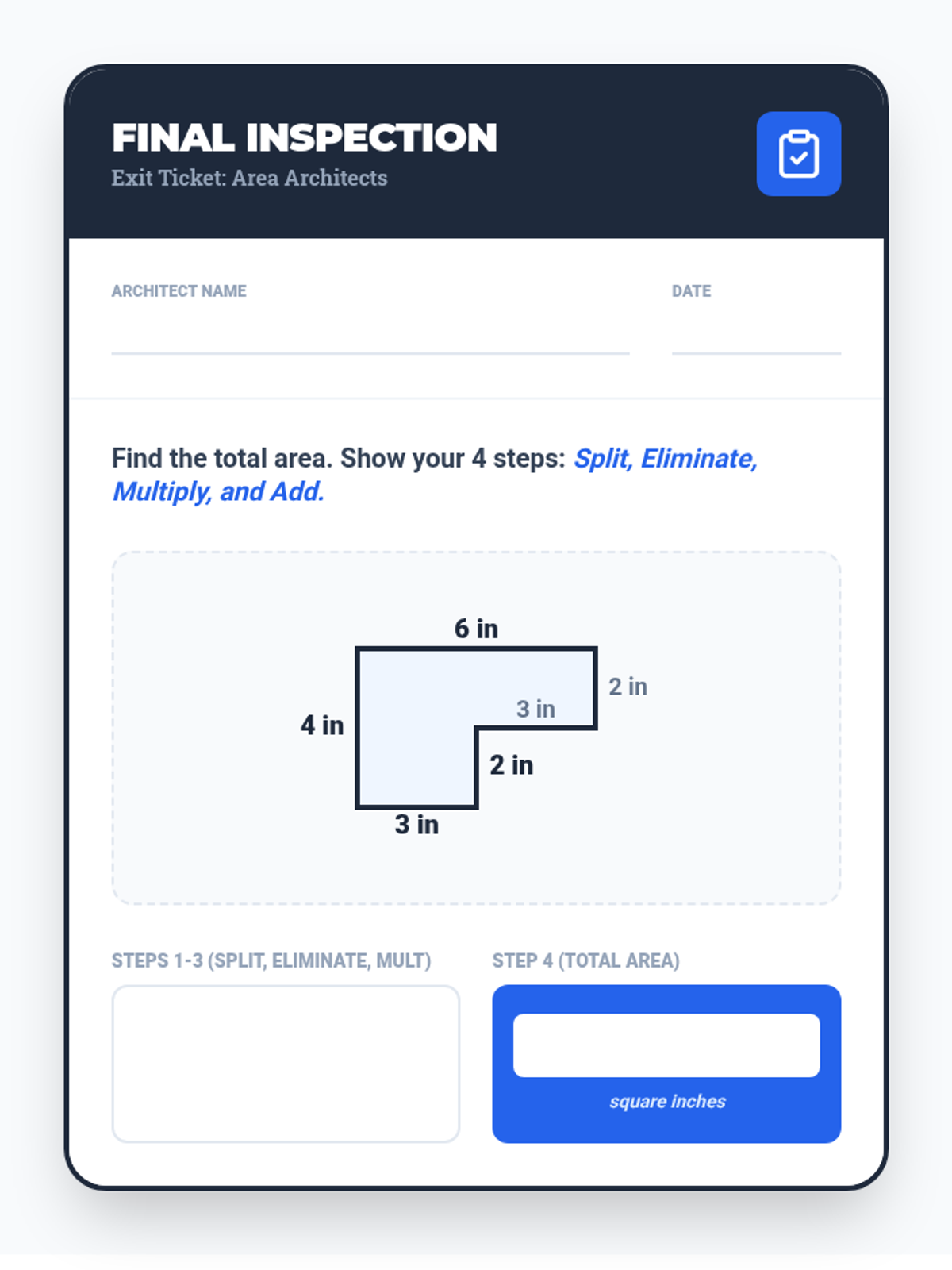
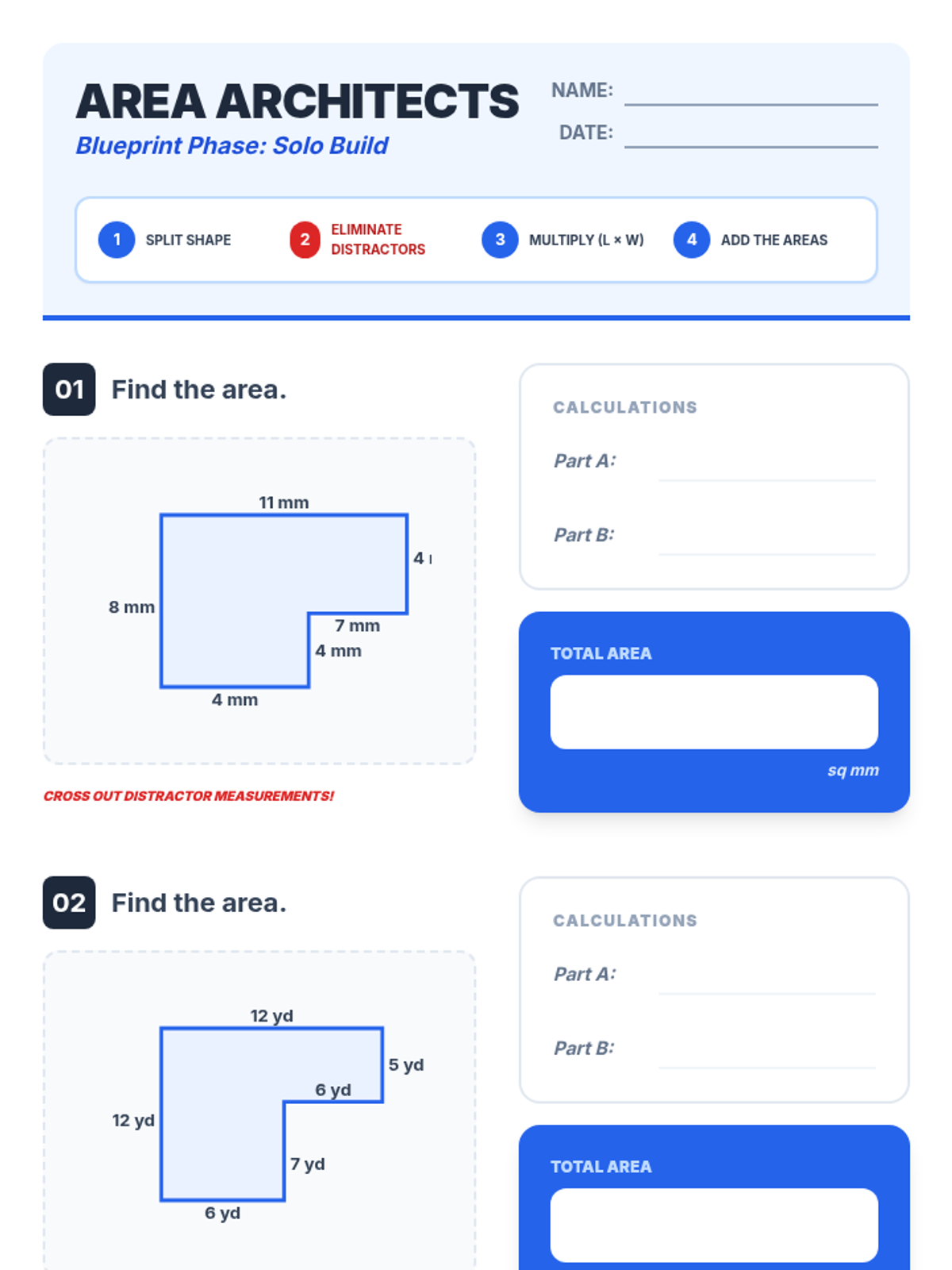
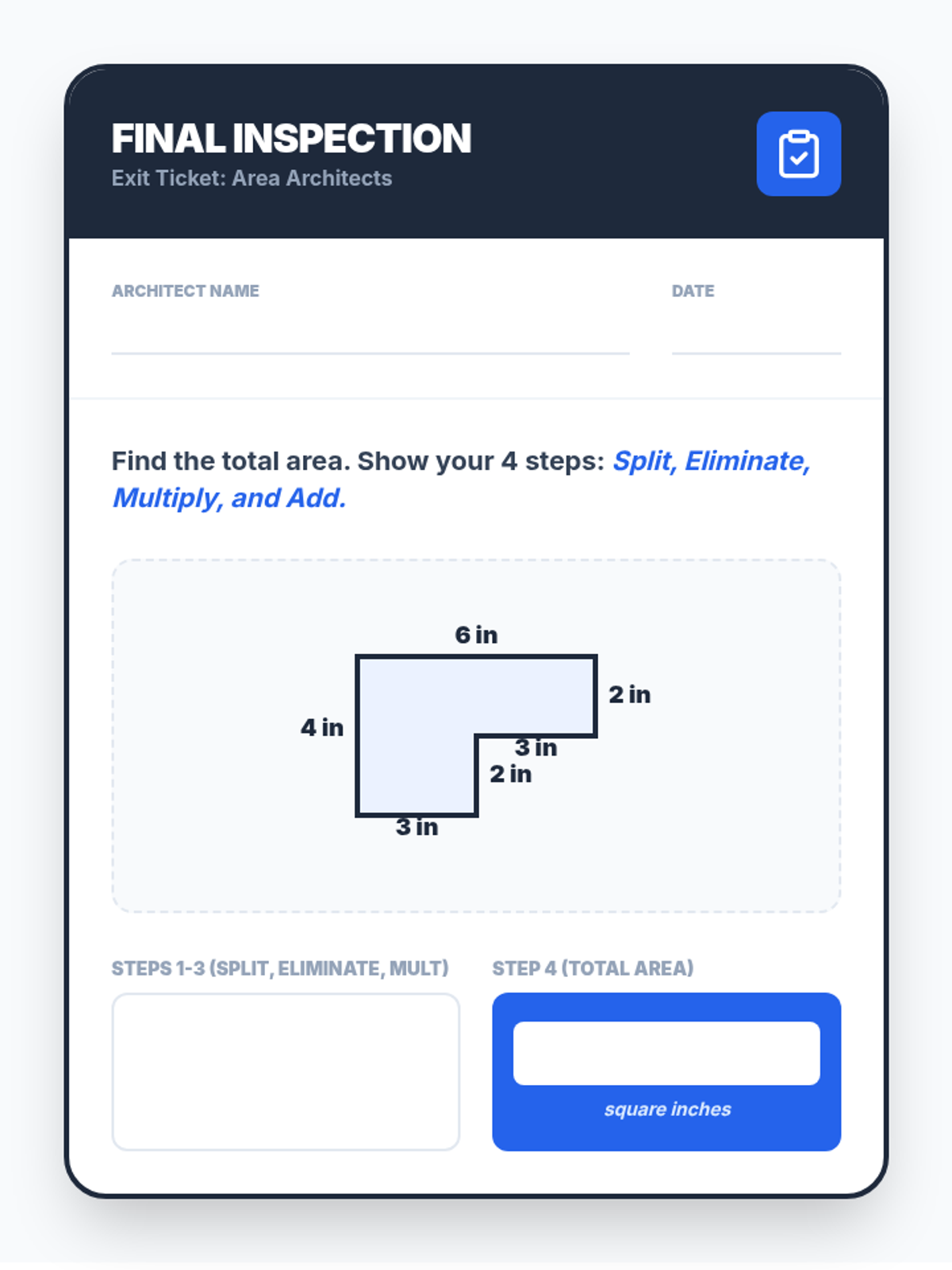
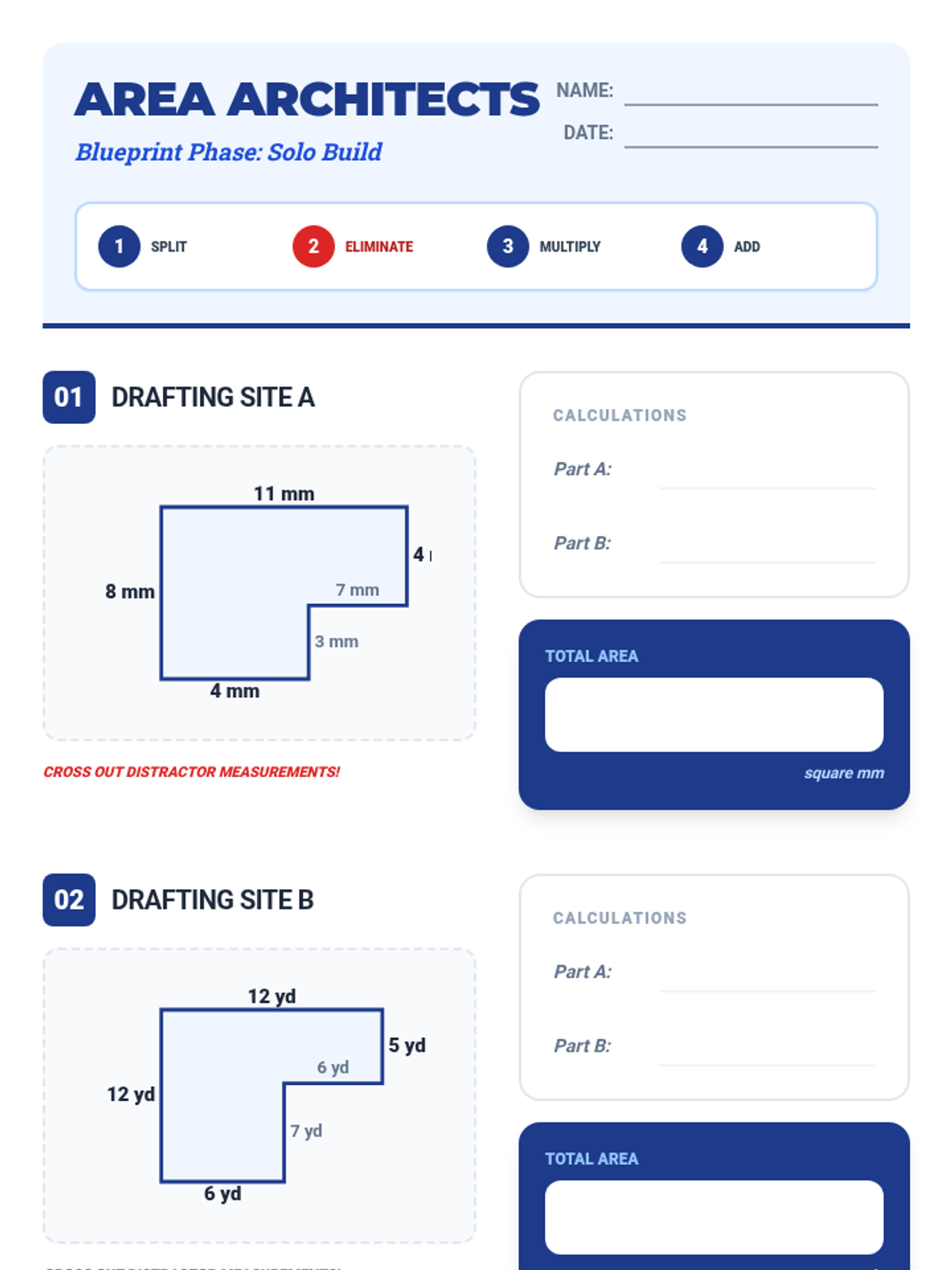
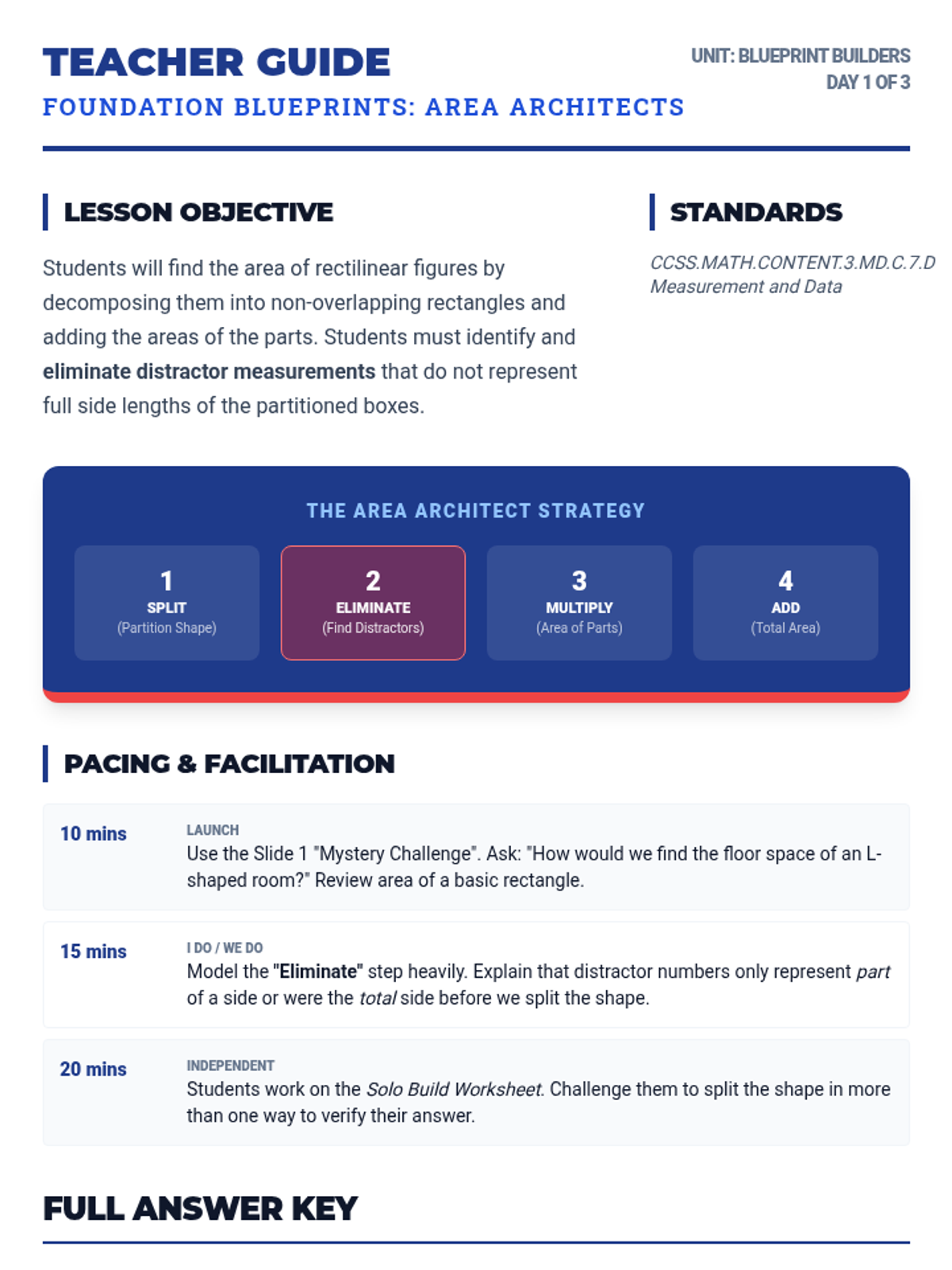
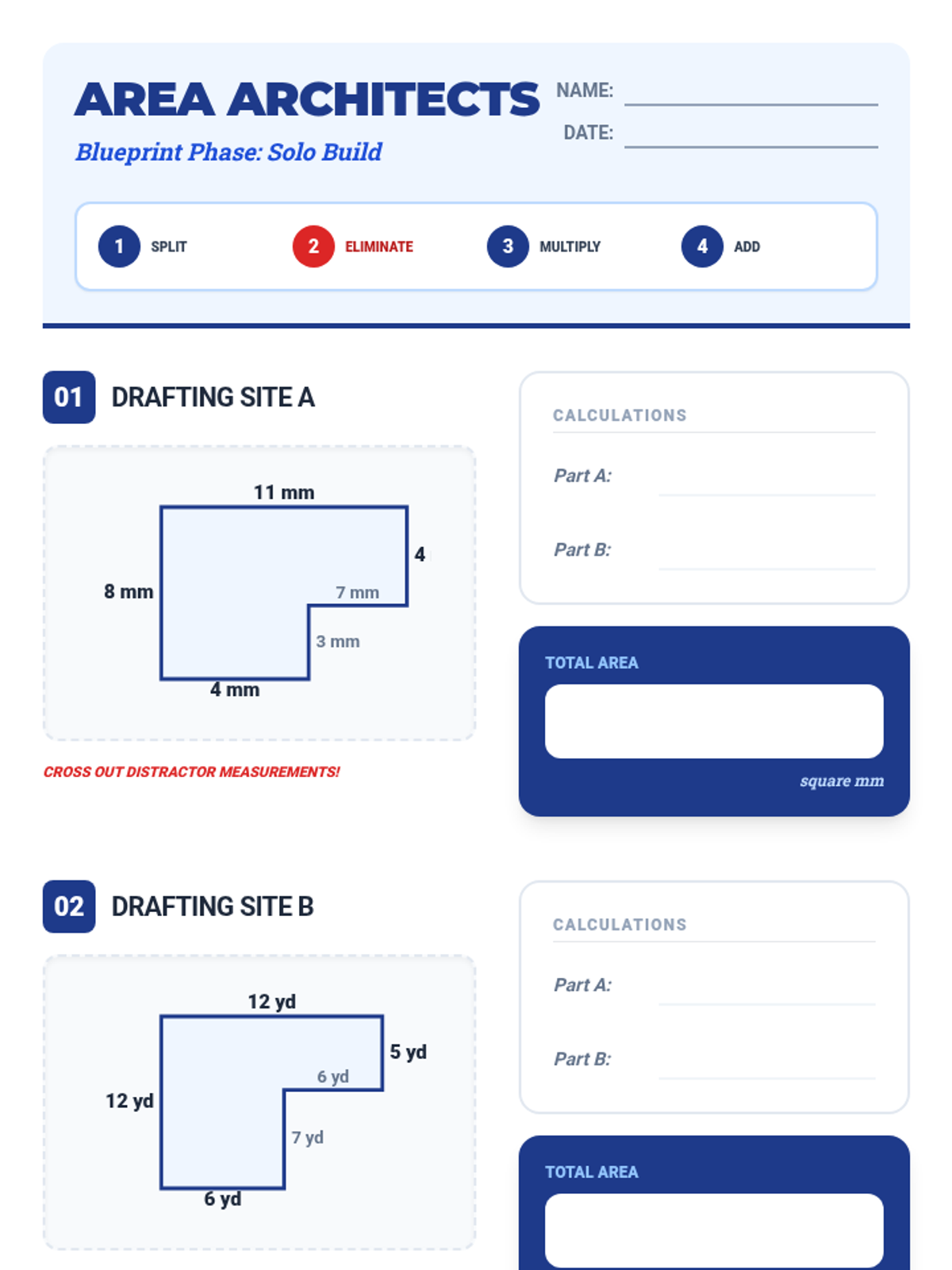
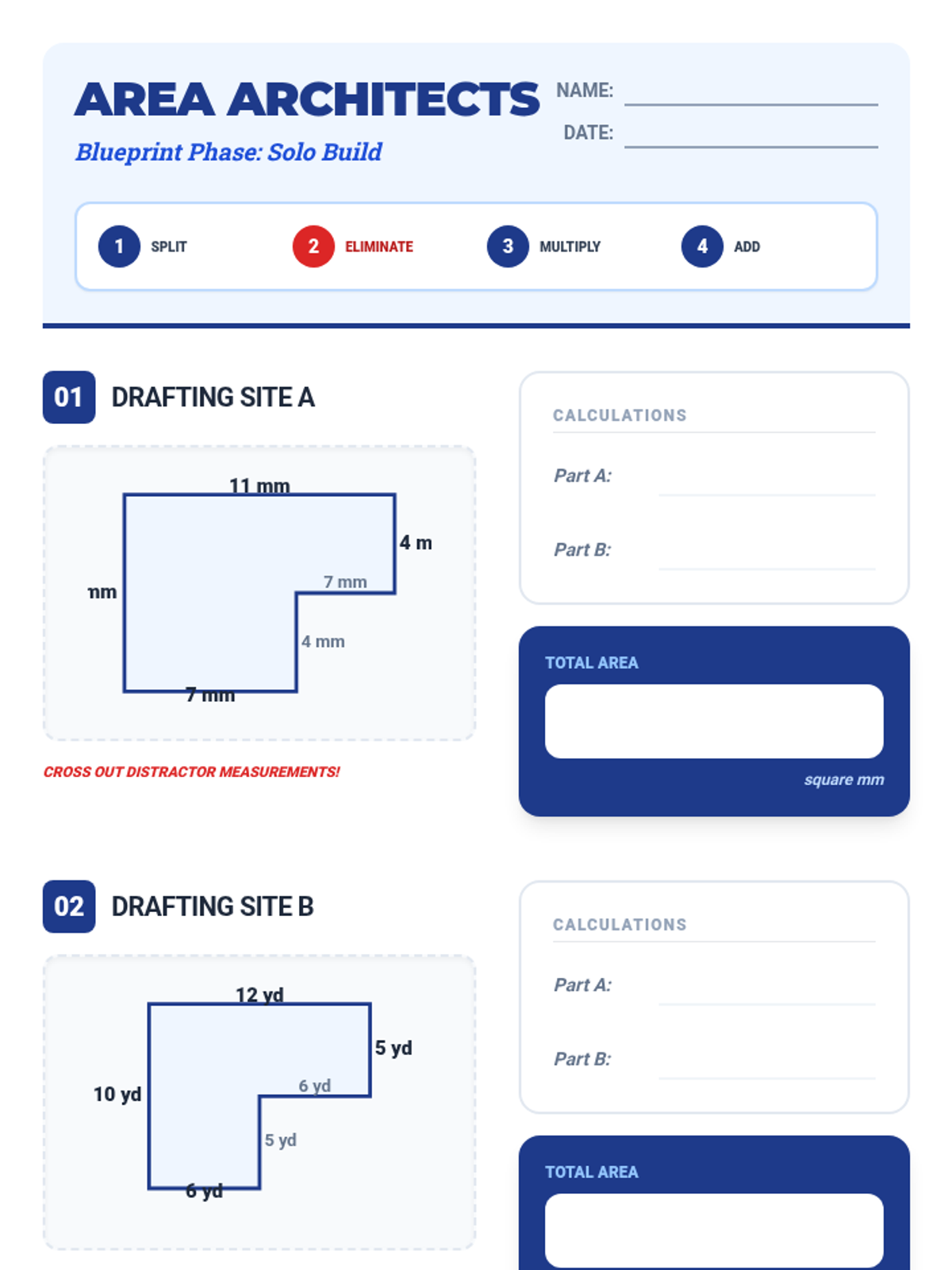
A multi-day math unit on complex rectilinear figures, progressing from finding area with all labels to identifying missing side lengths and solving multi-step problems.
A 5-day intensive reteach sequence focused on converting measurements within metric and customary systems and solving real-world measurement word problems using the four operations.
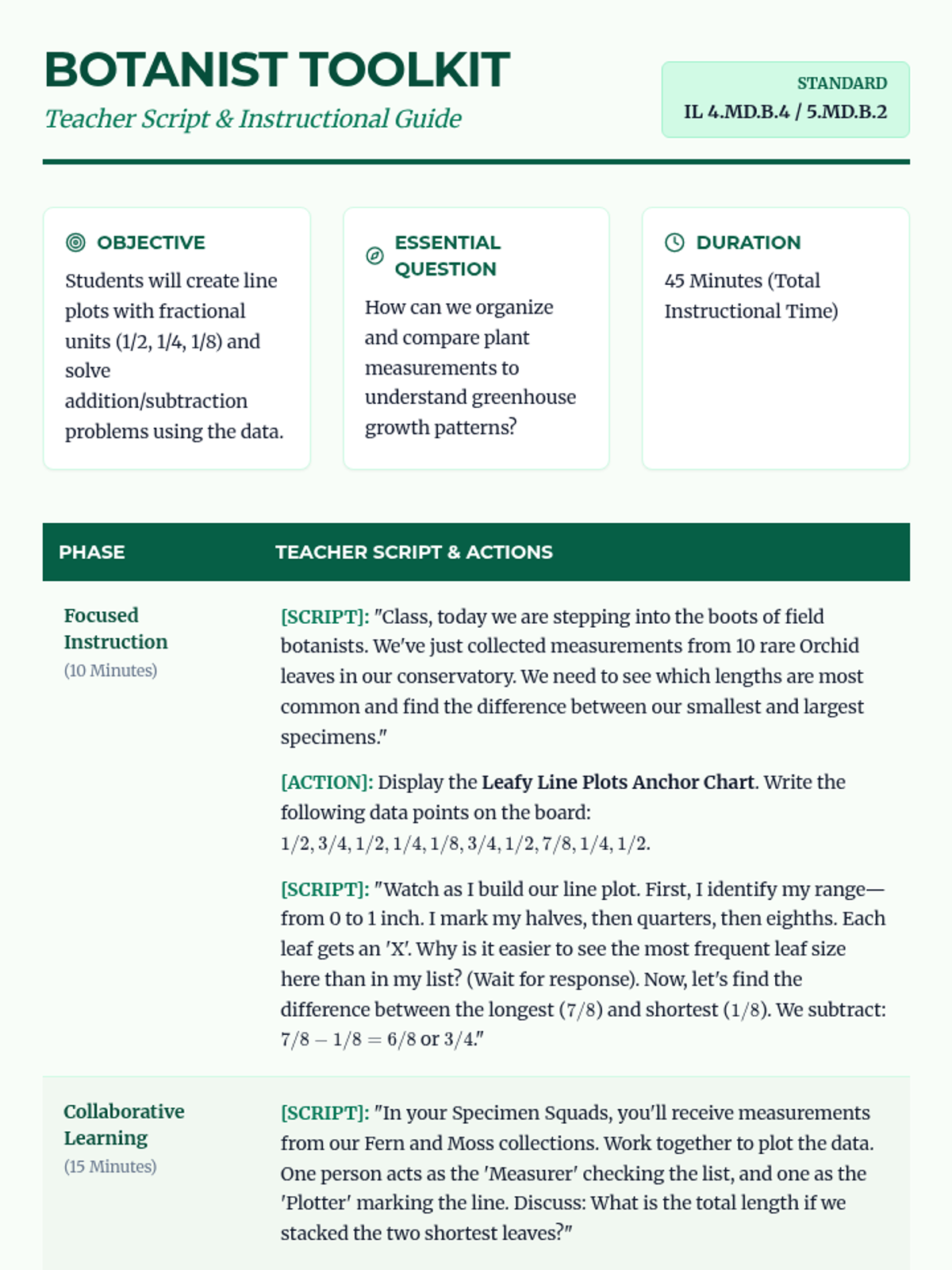
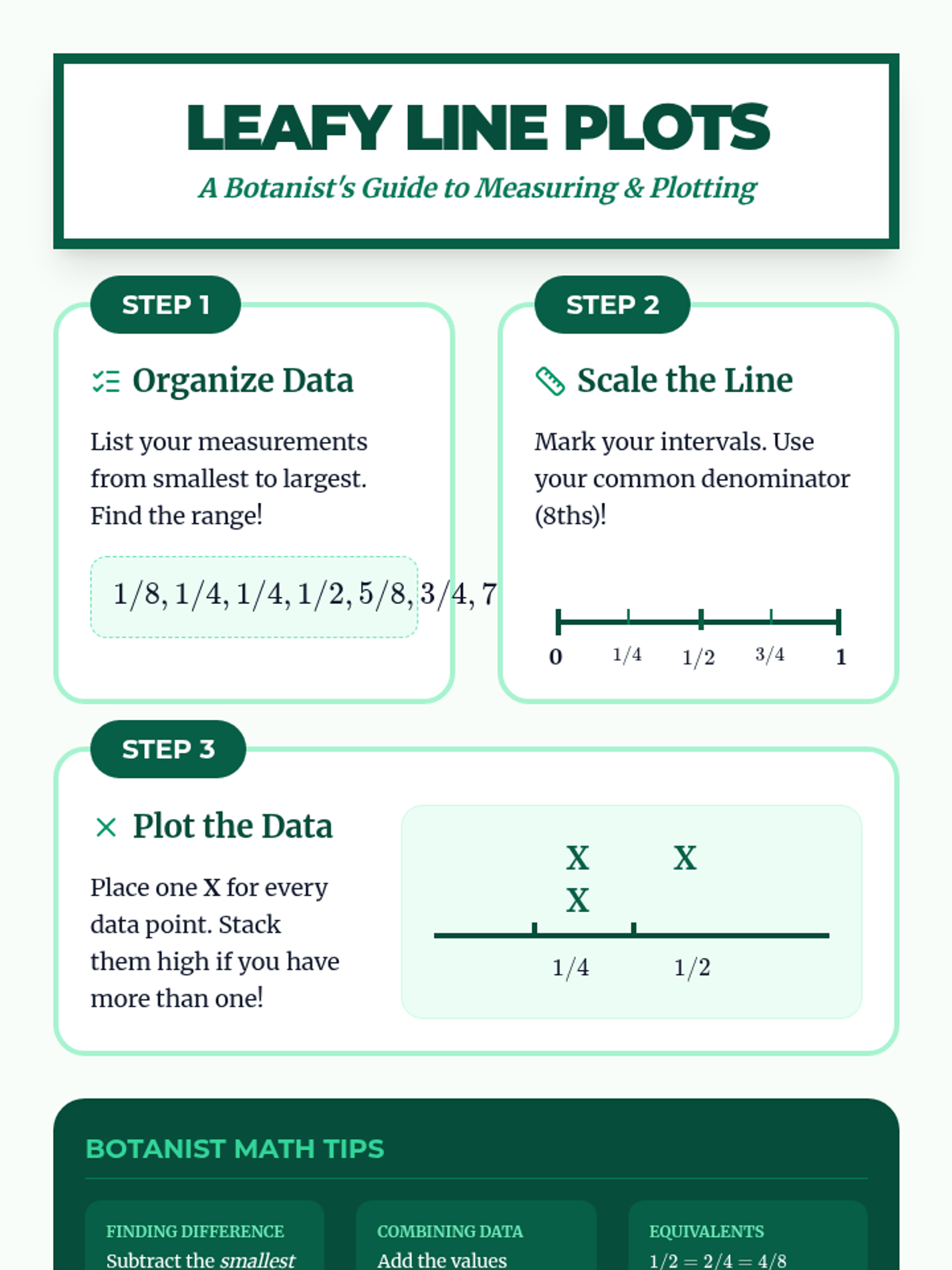
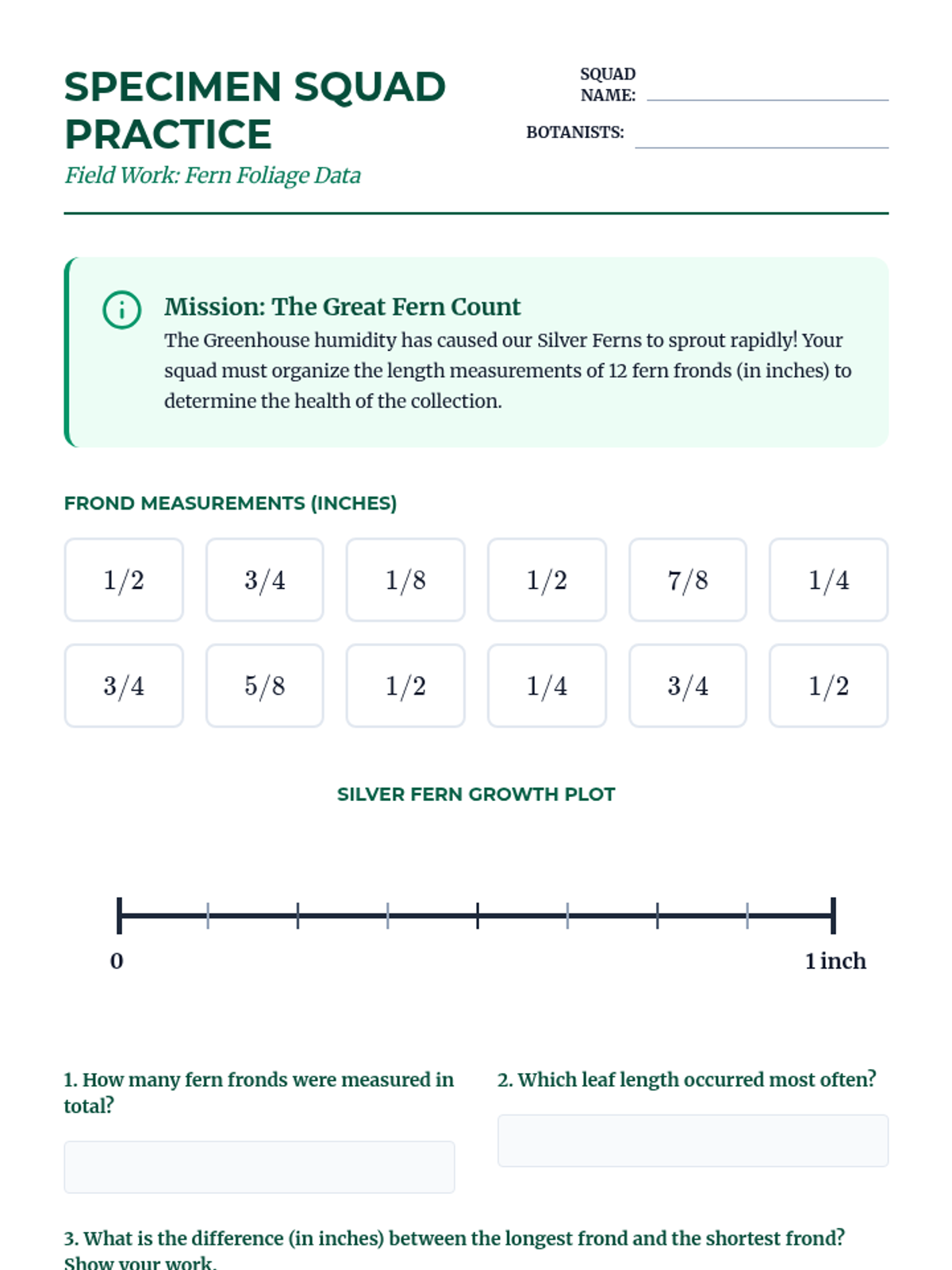
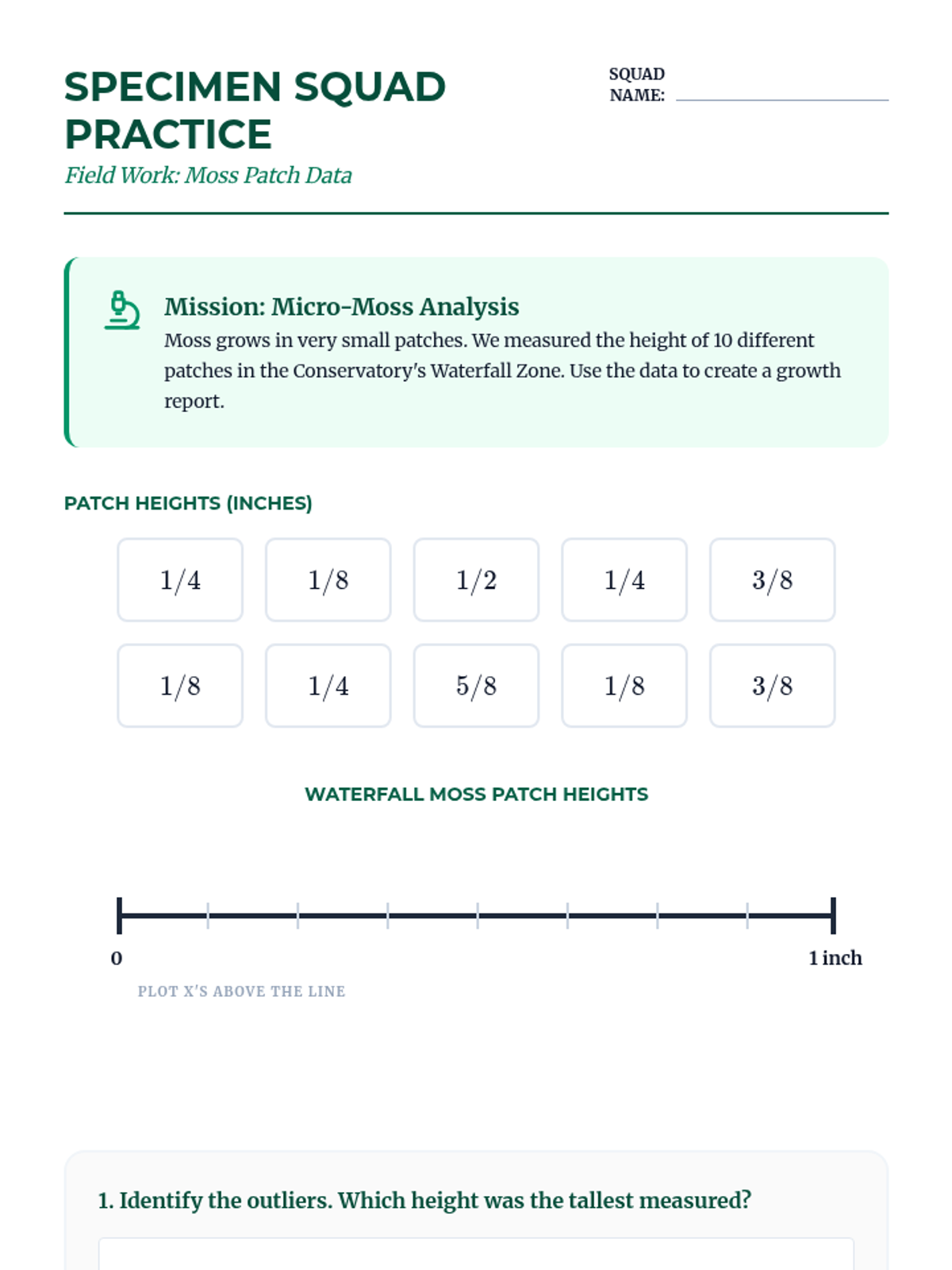
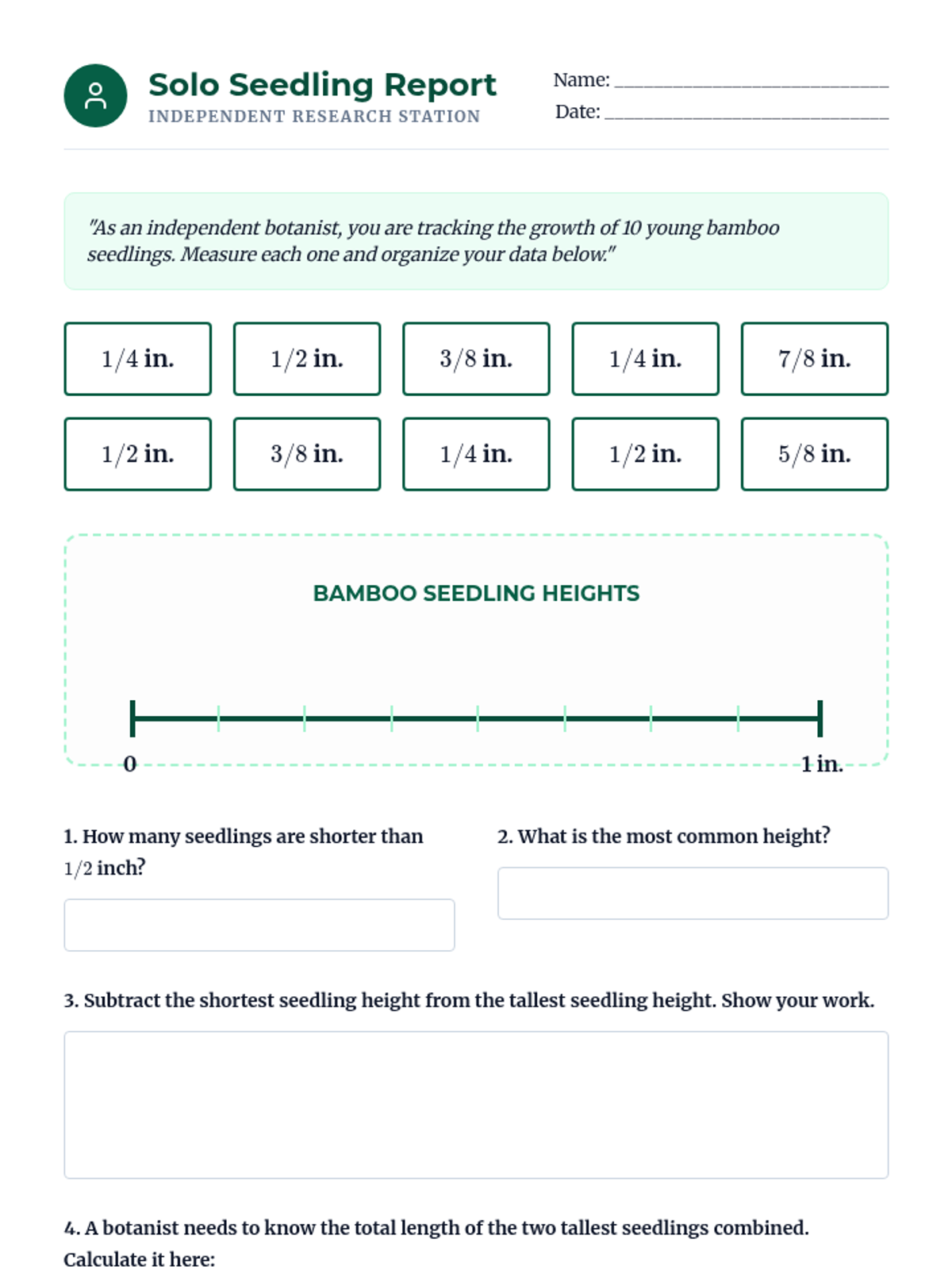
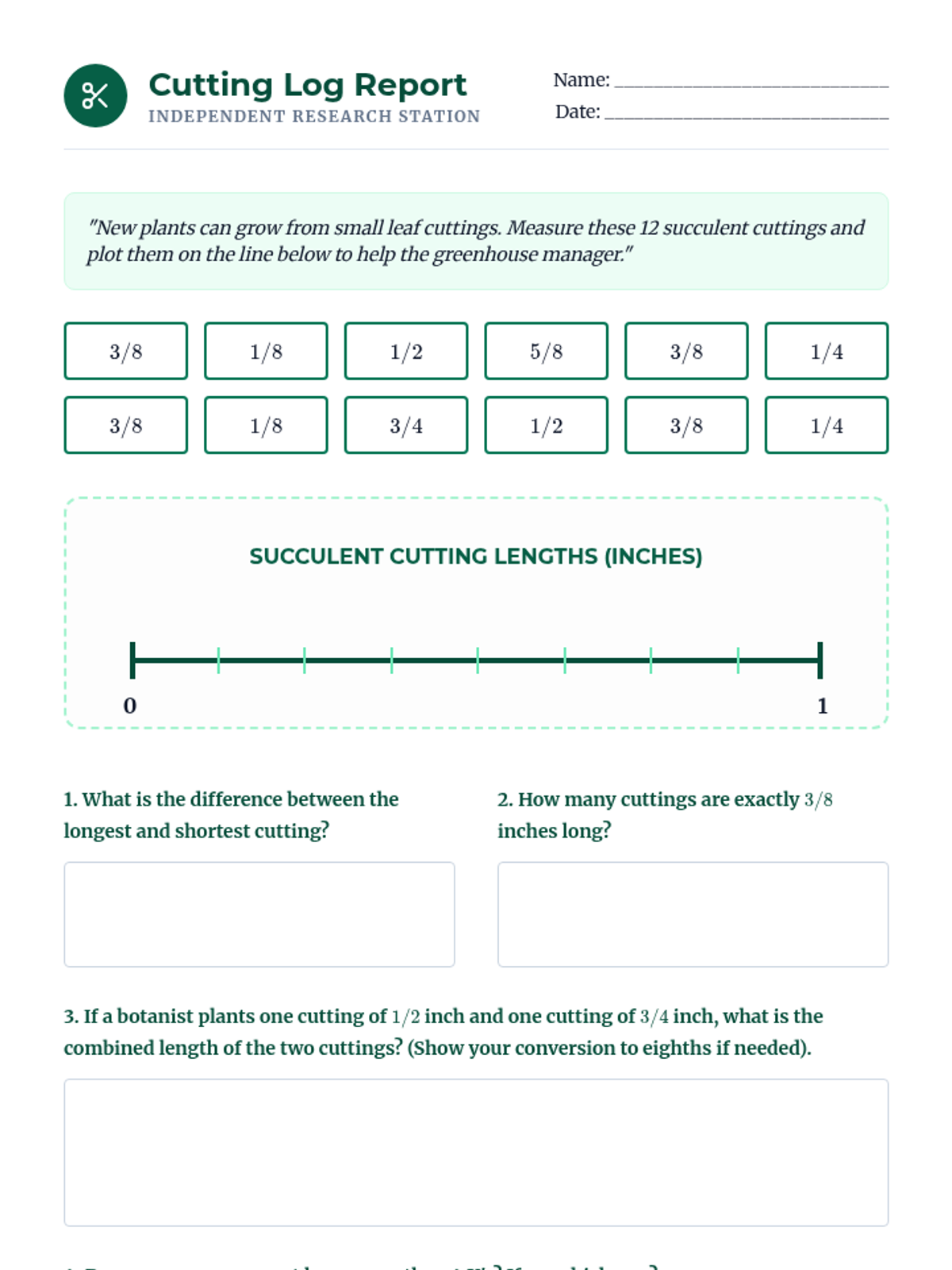
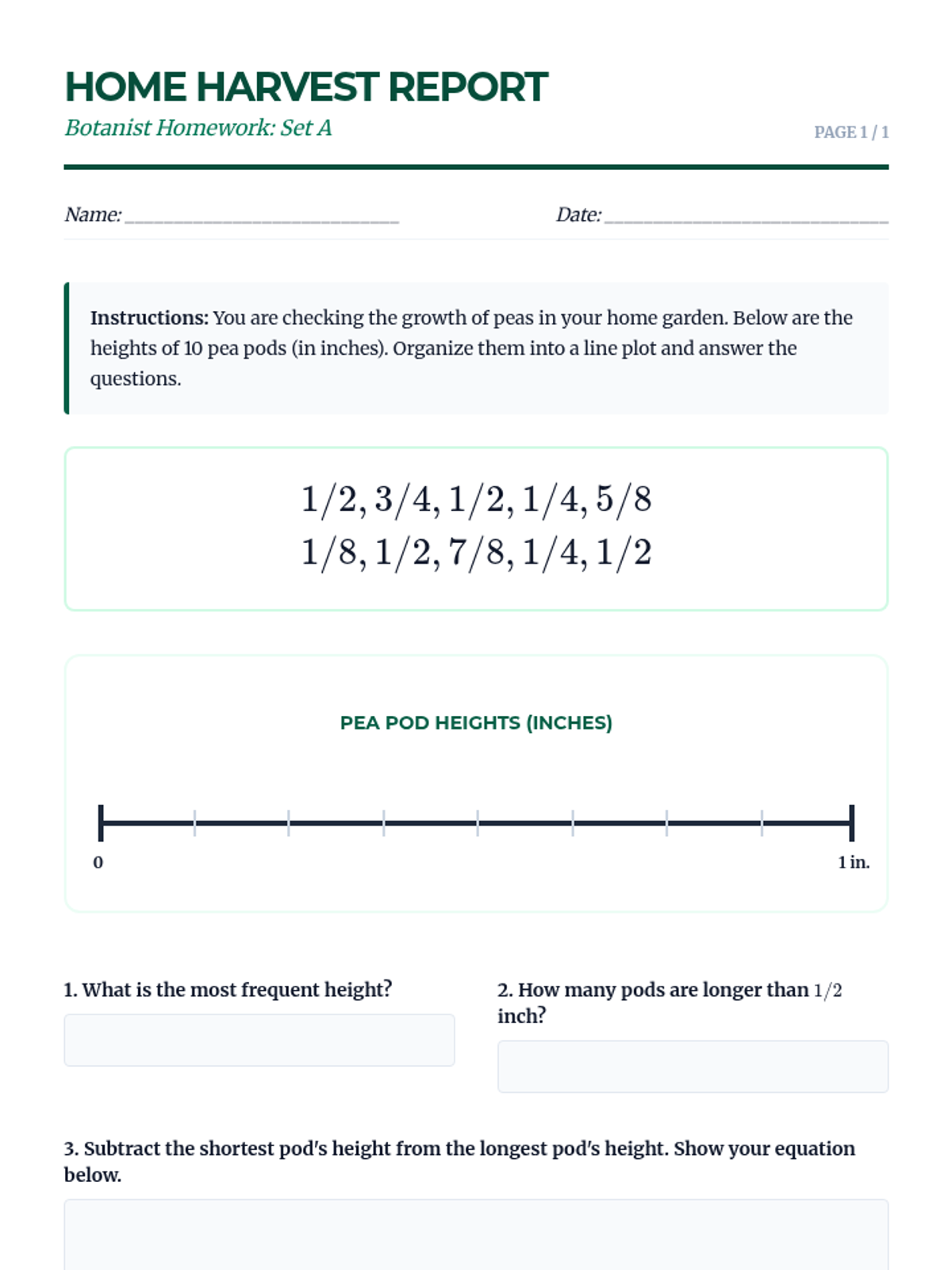
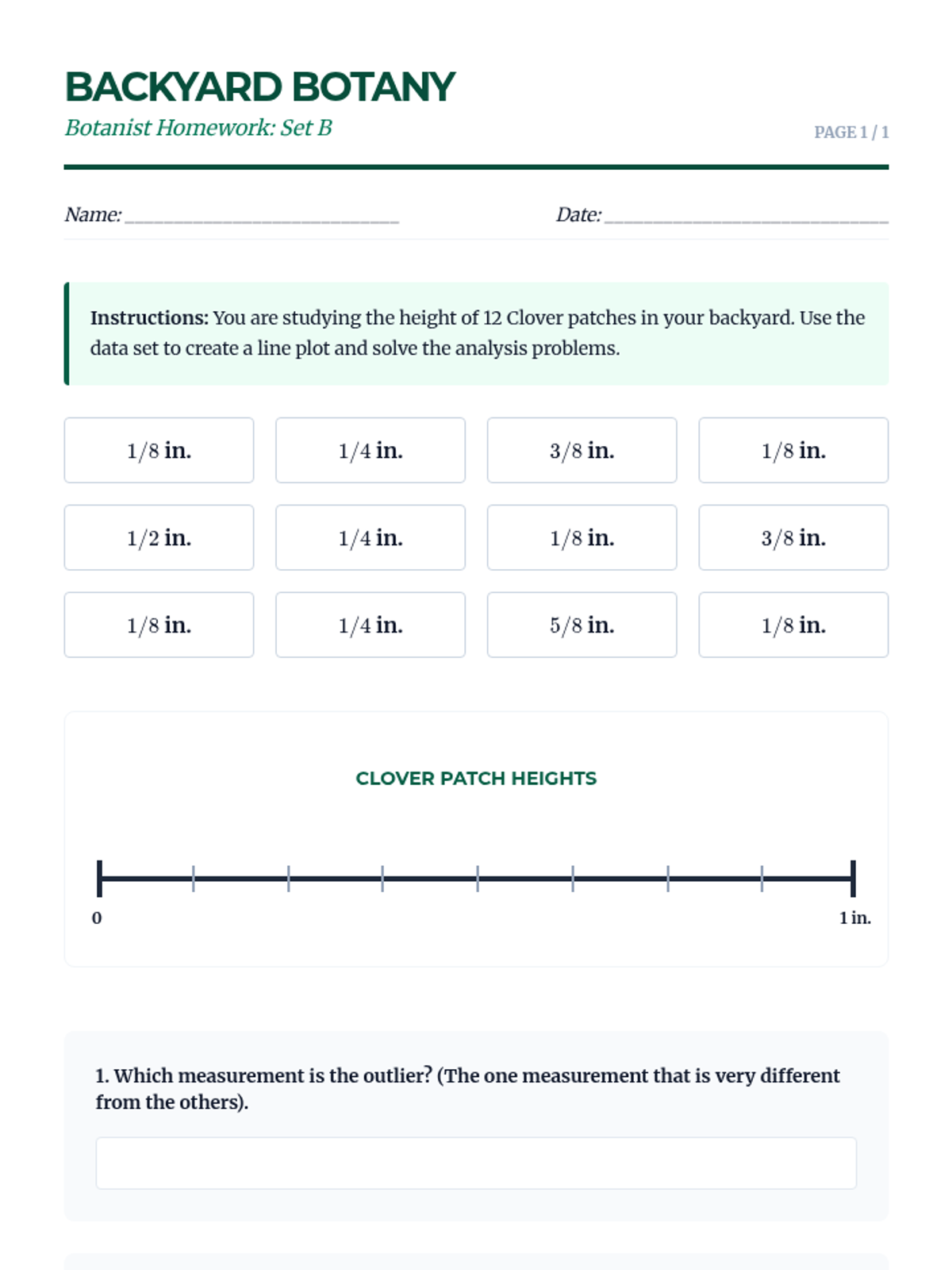
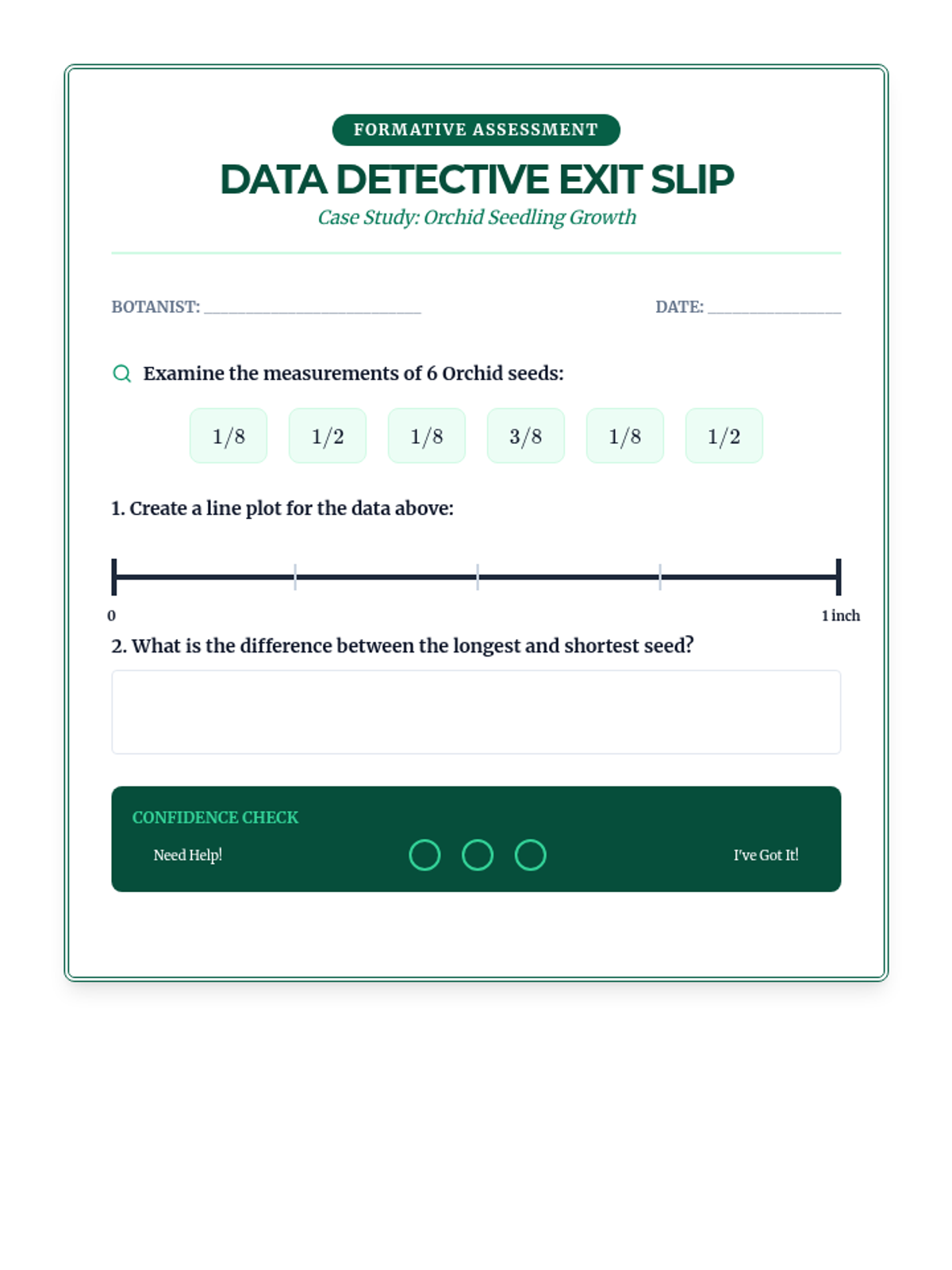
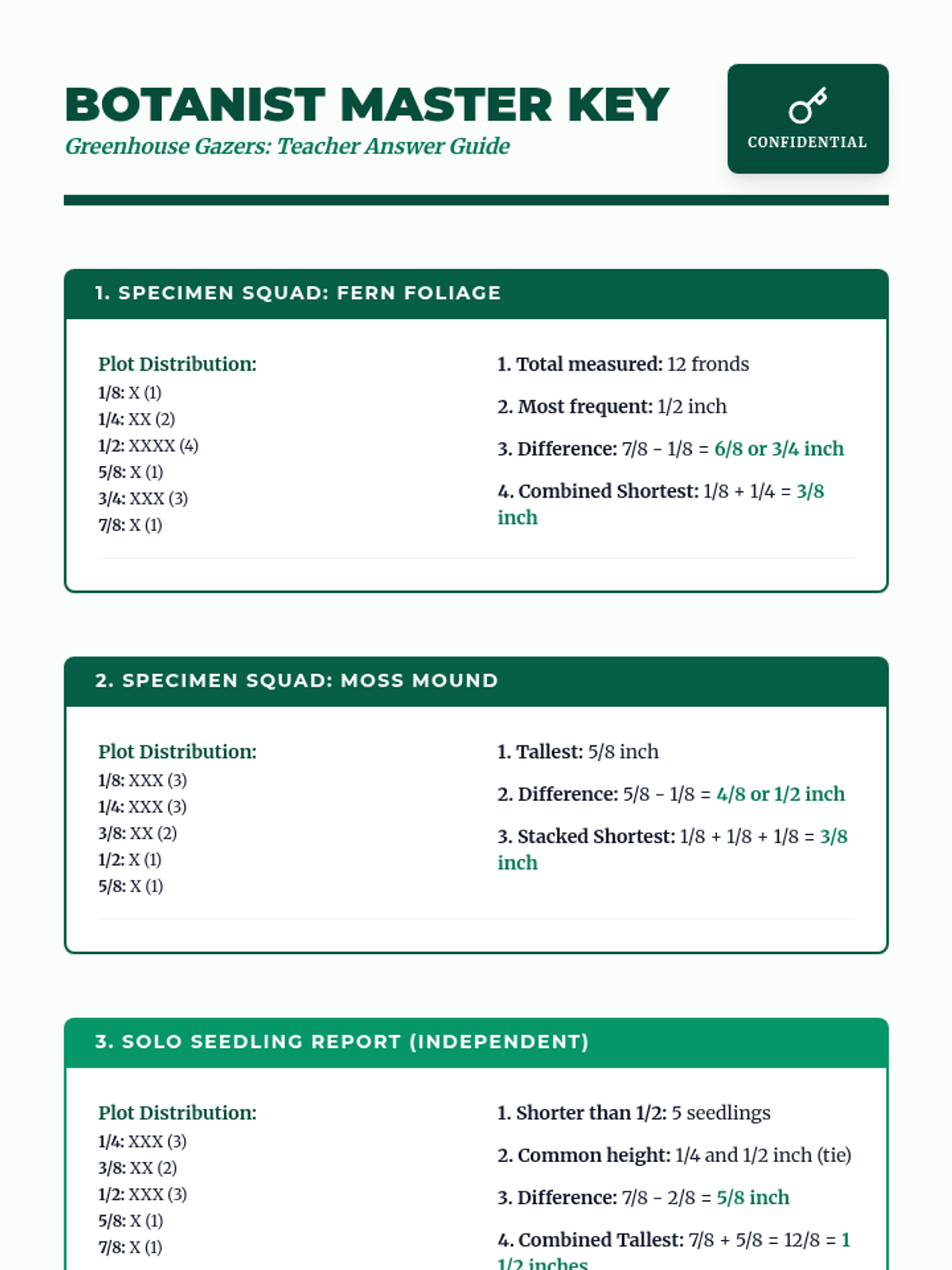
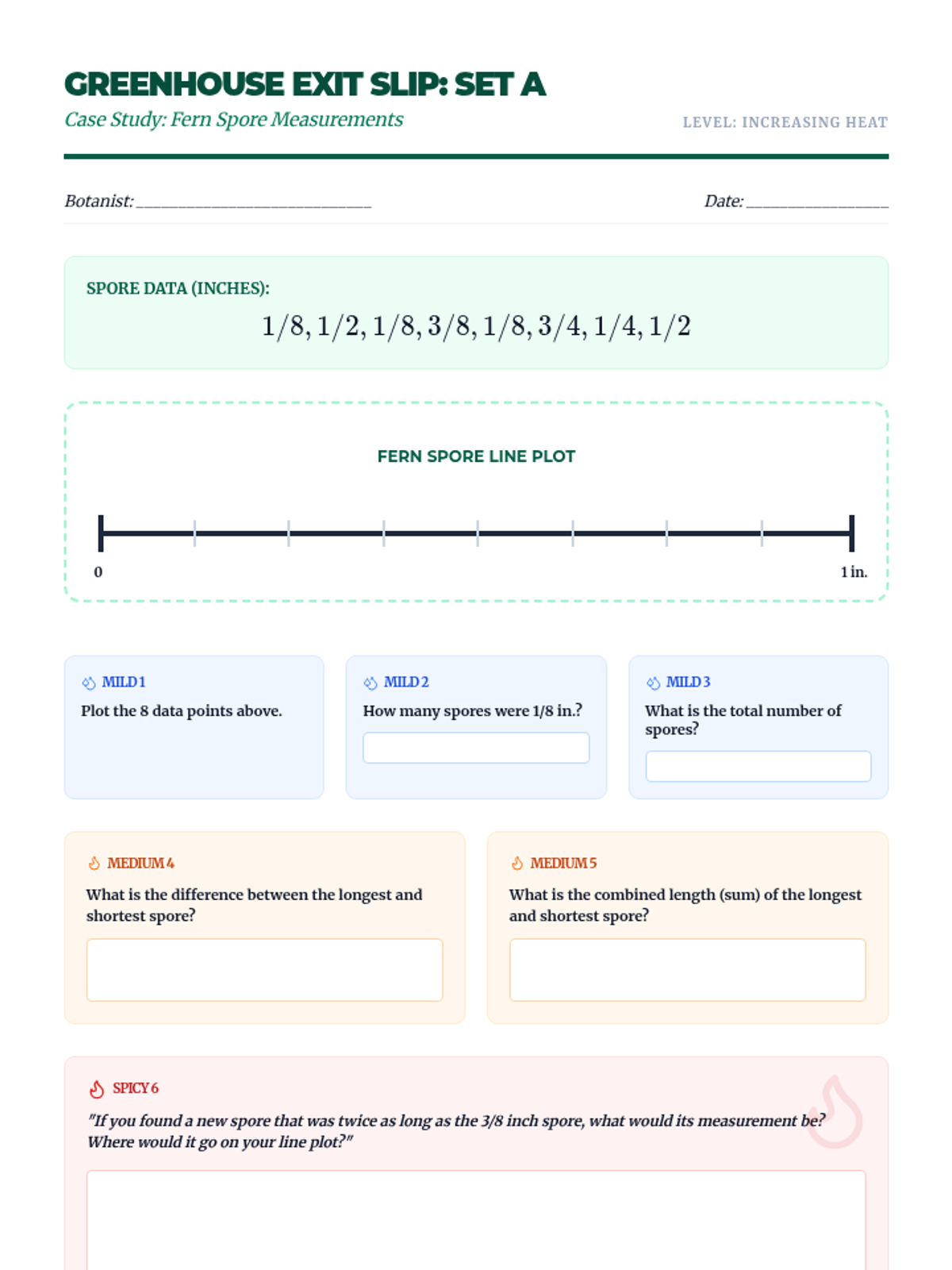
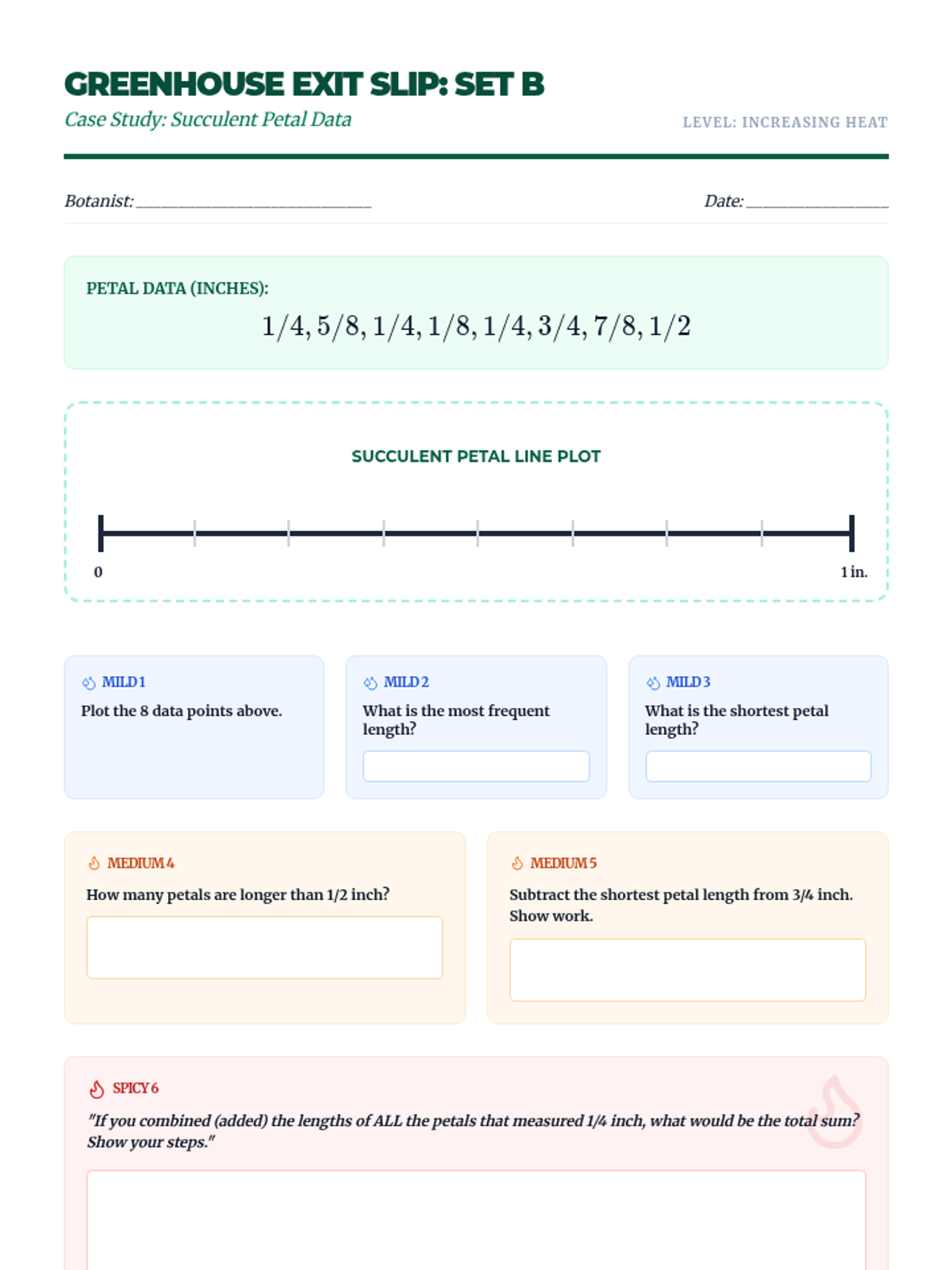
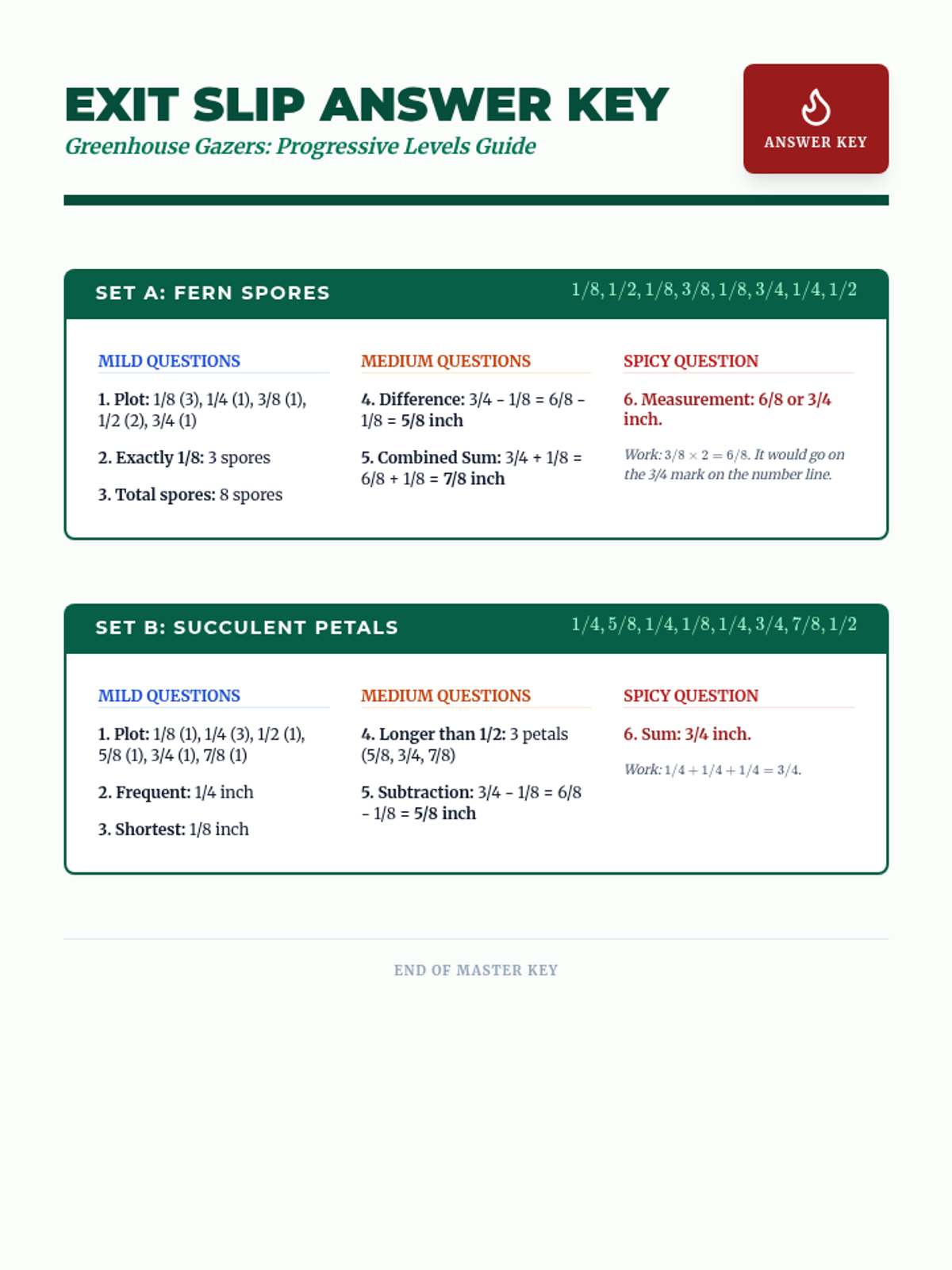
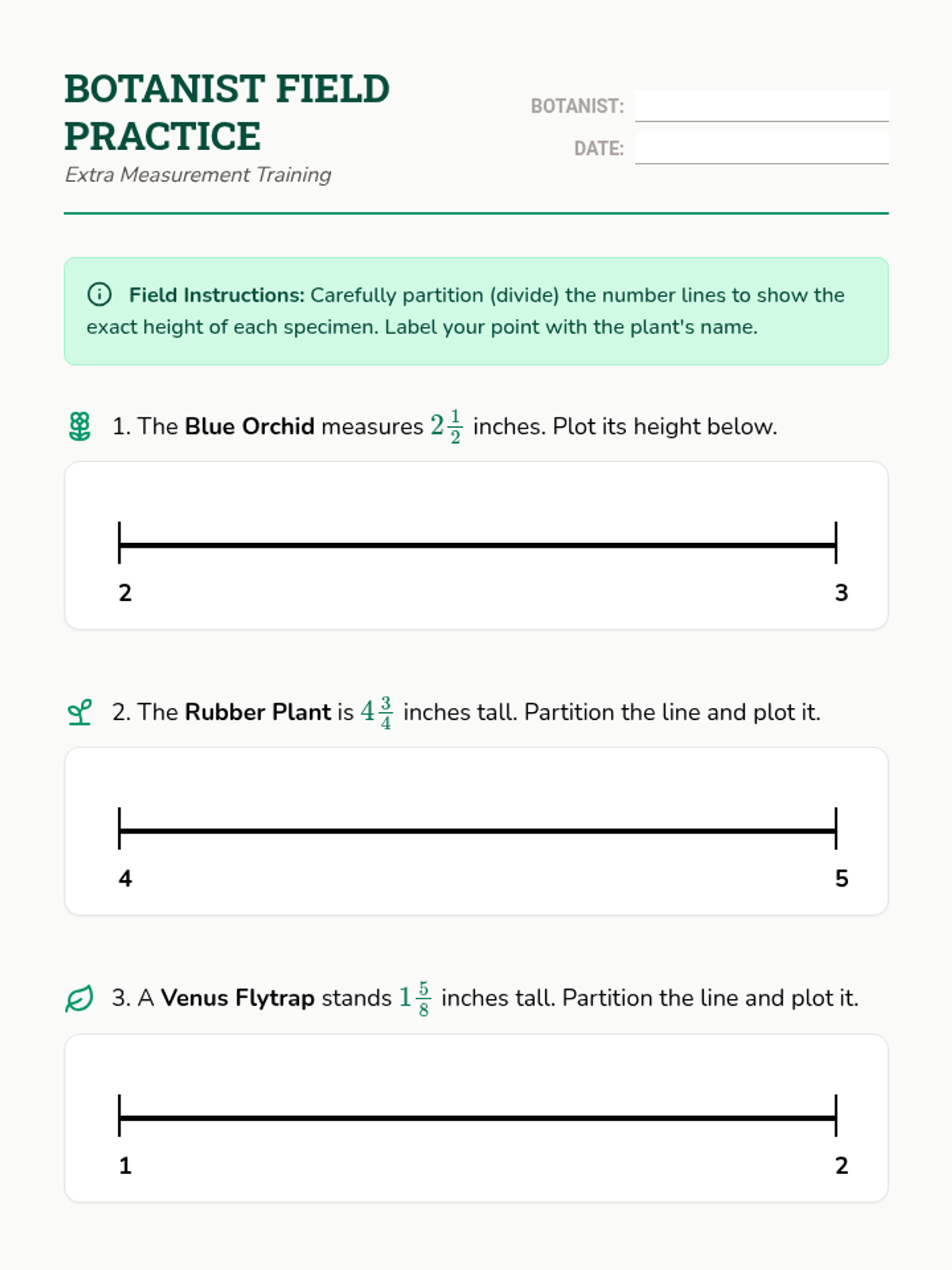
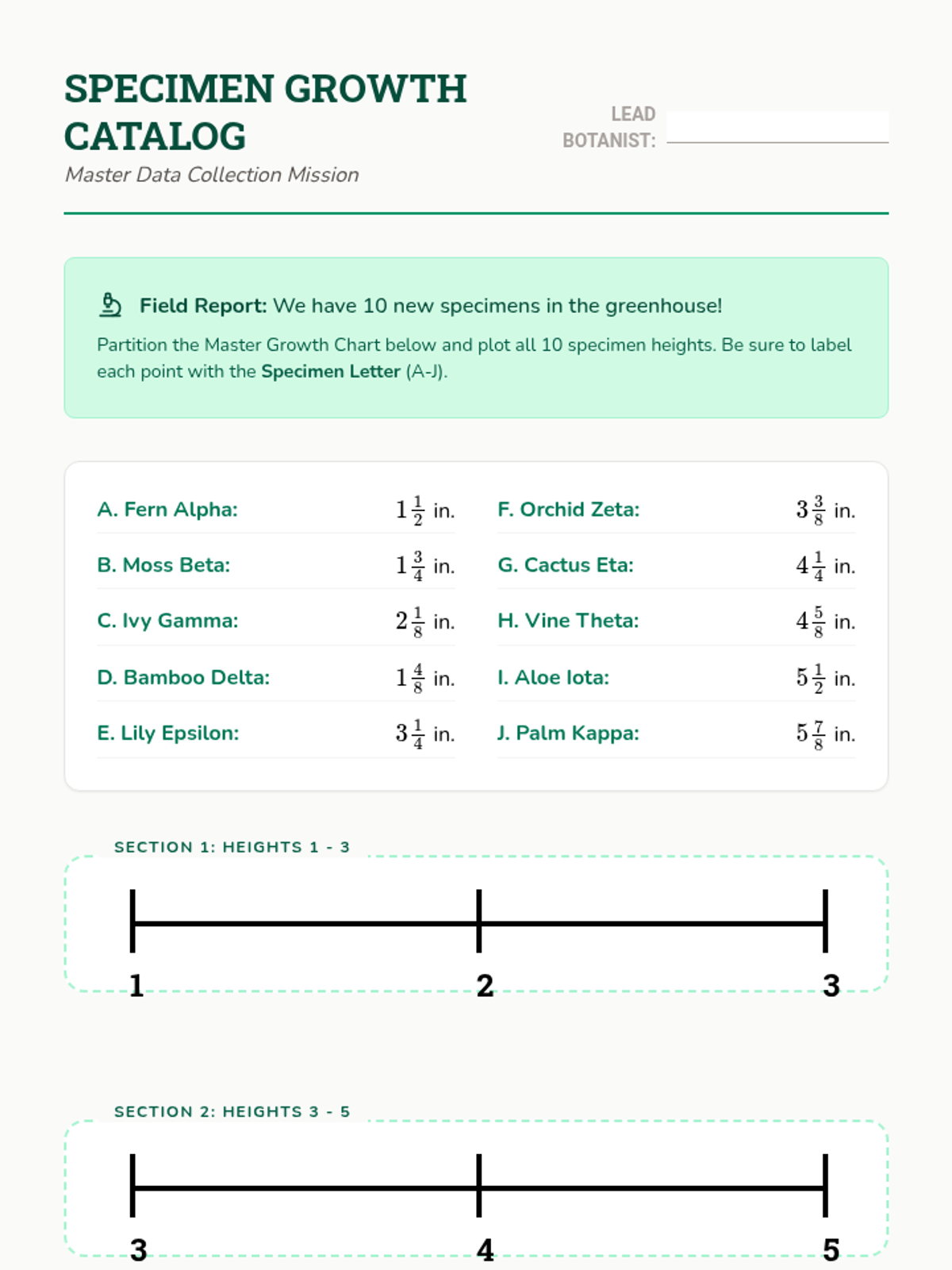
A mathematical exploration of data representation where students act as botanists, measuring plant specimens and using line plots with fractions (1/2, 1/4, 1/8) to analyze growth patterns and solve problems.
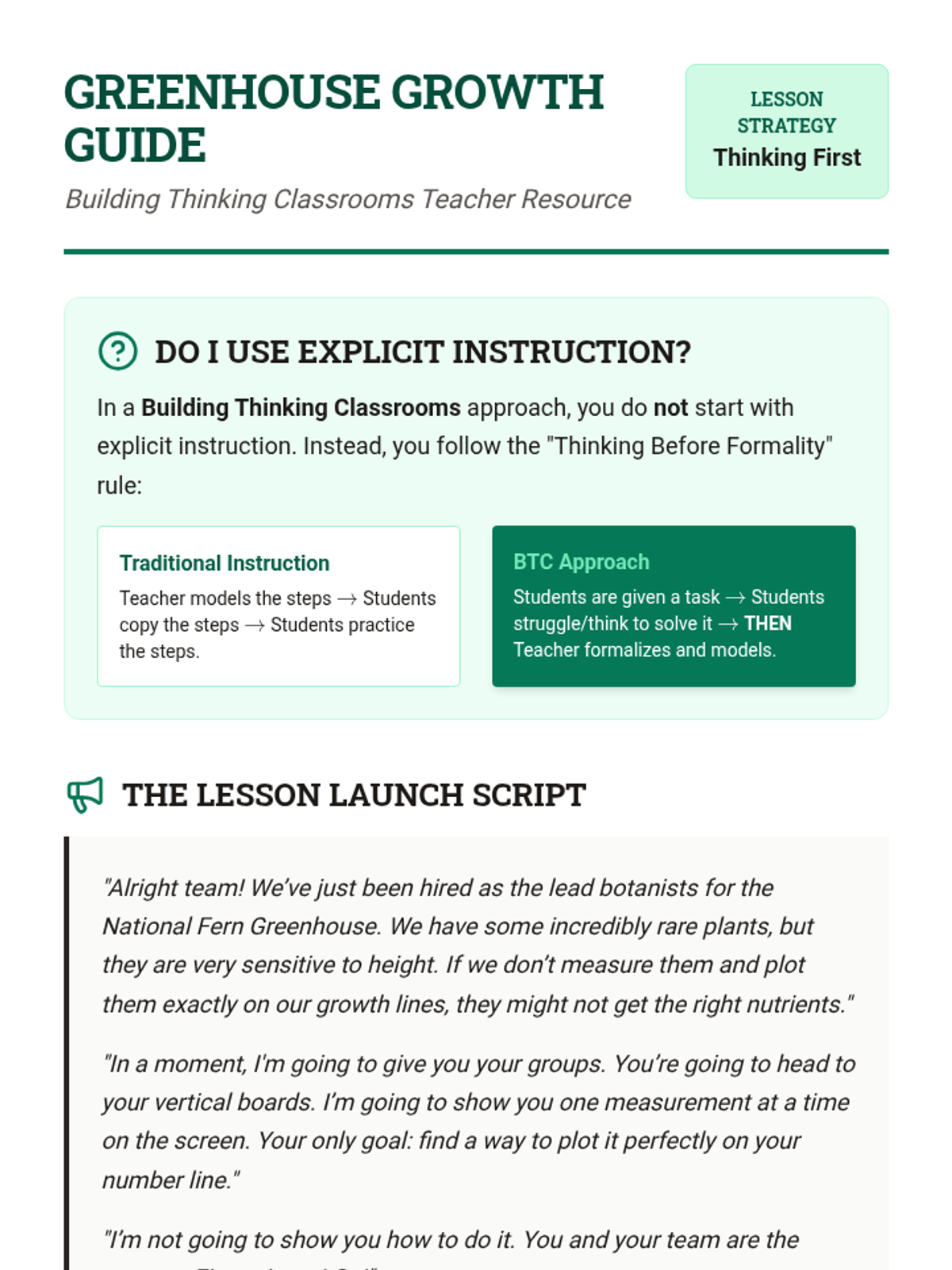
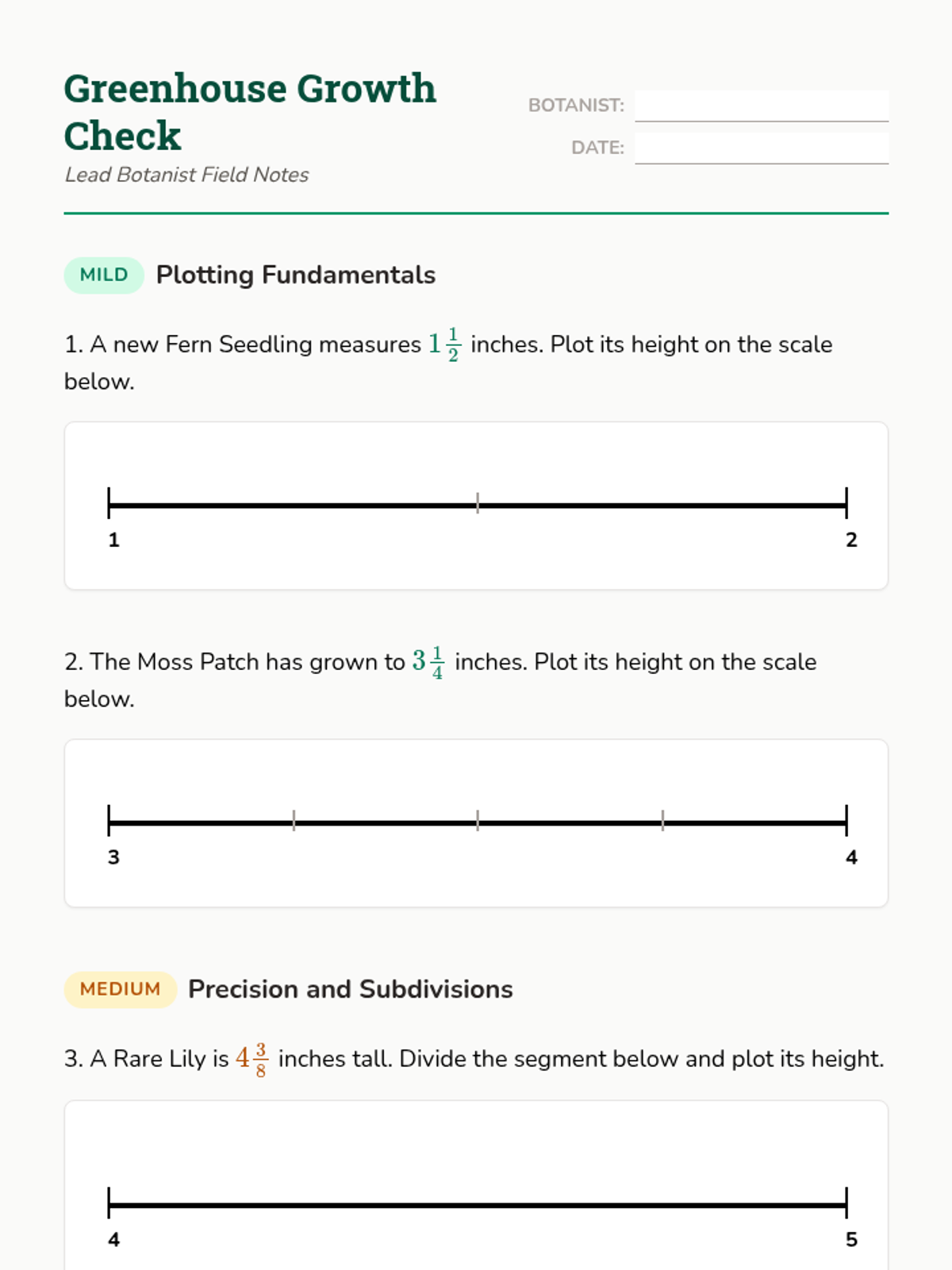
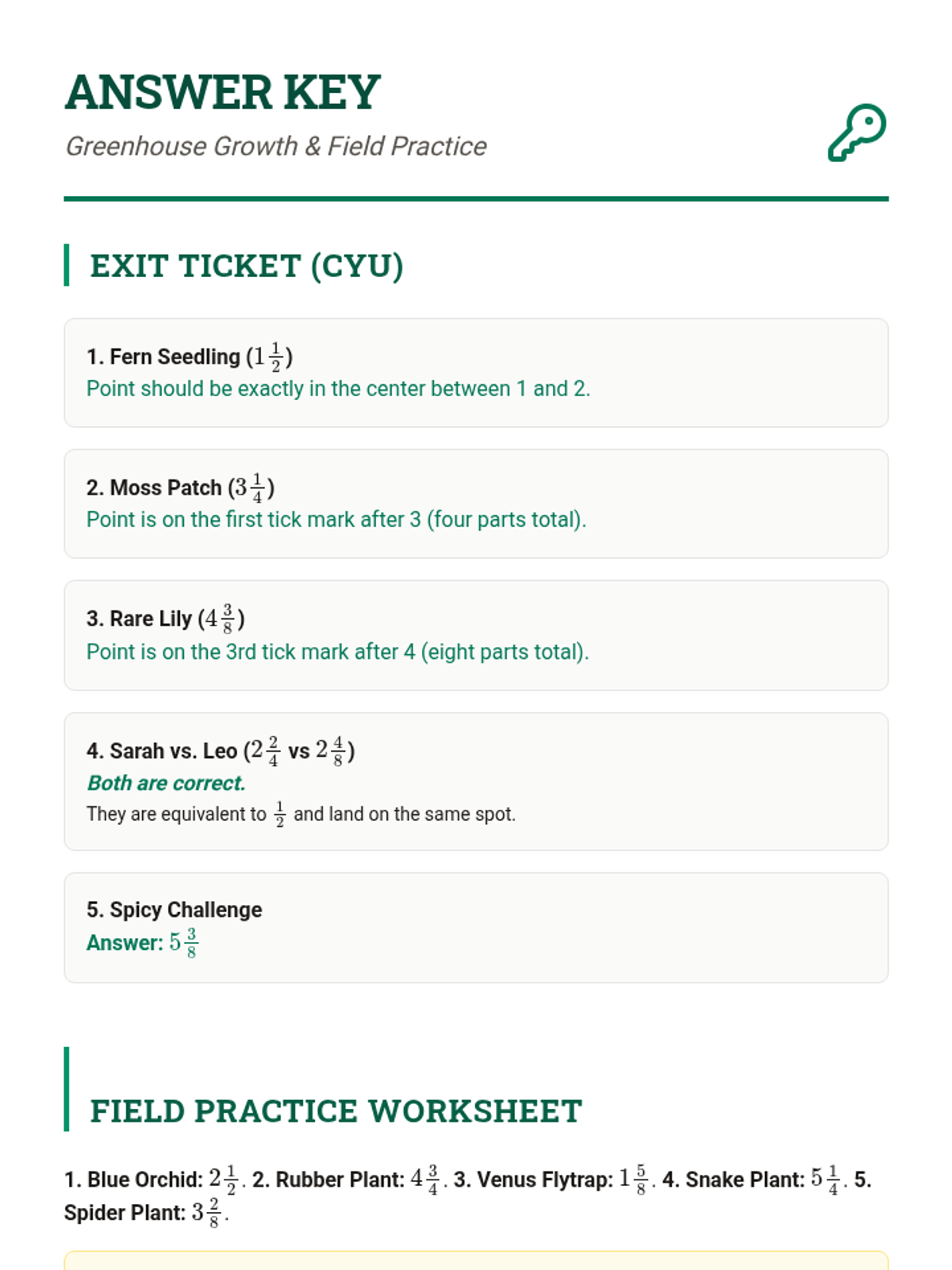
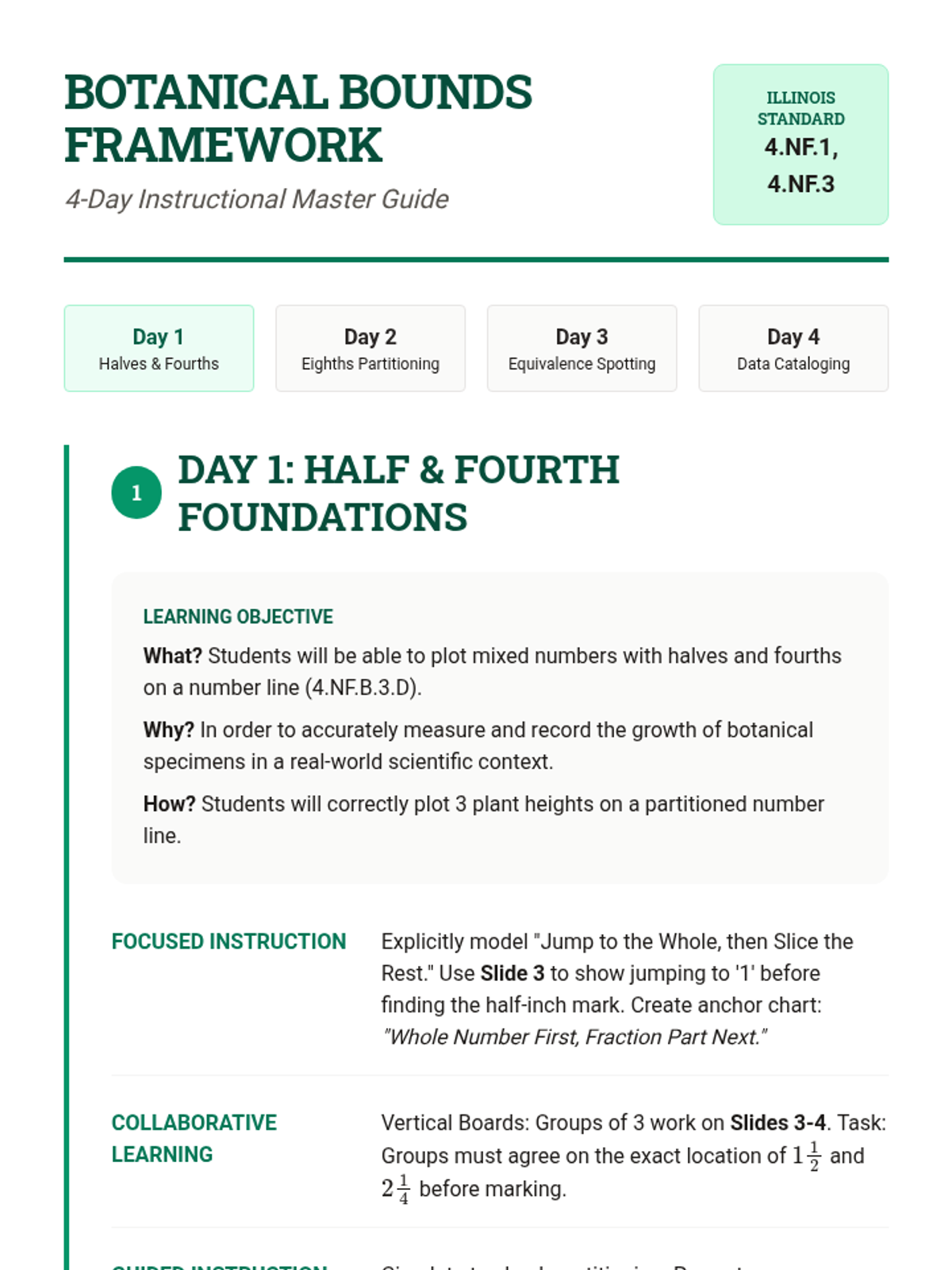
A four-day intensive math sequence for 4th grade, focused on mastering mixed numbers on number lines through partitioning and equivalence in a botanical greenhouse context.
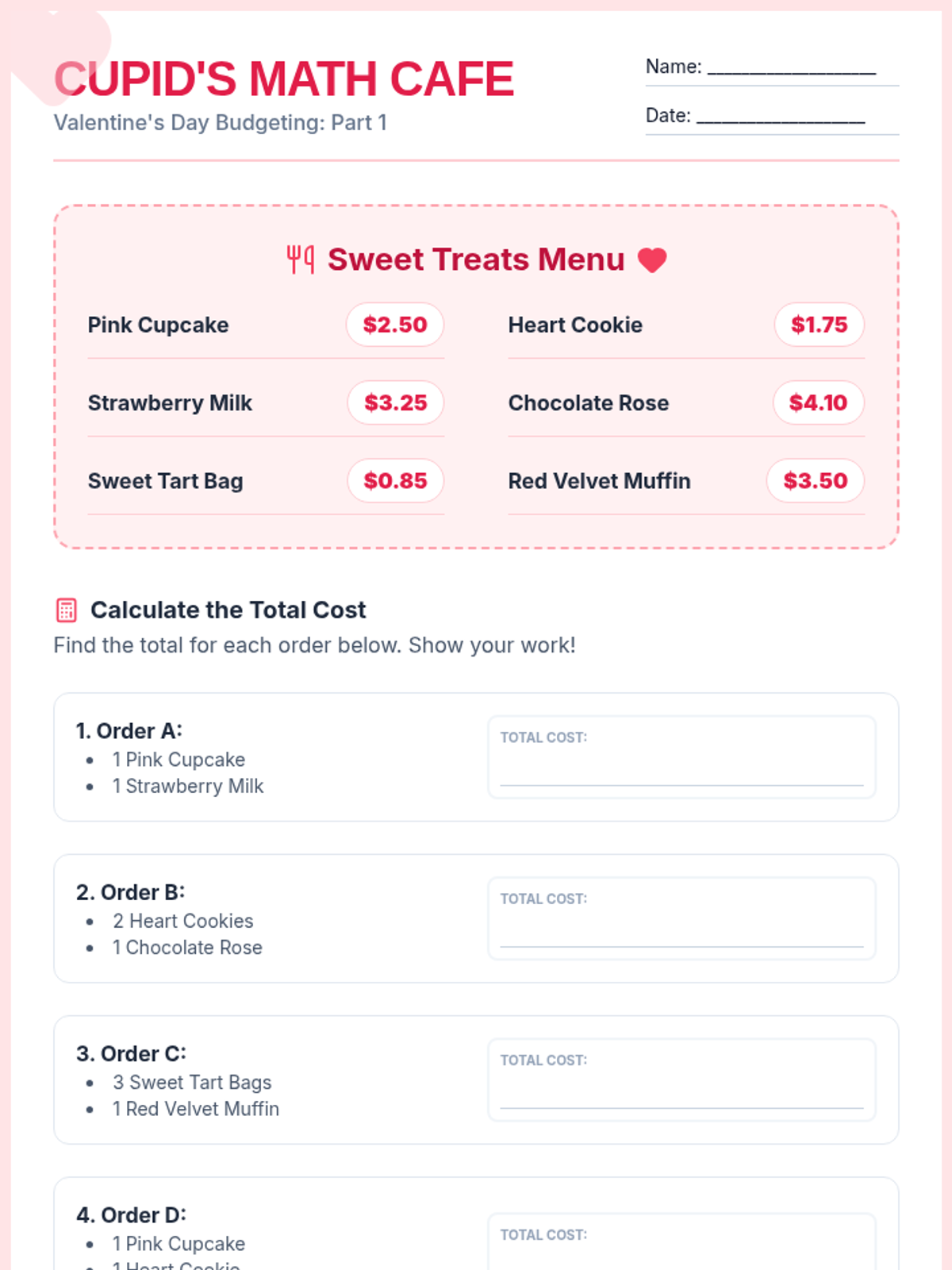
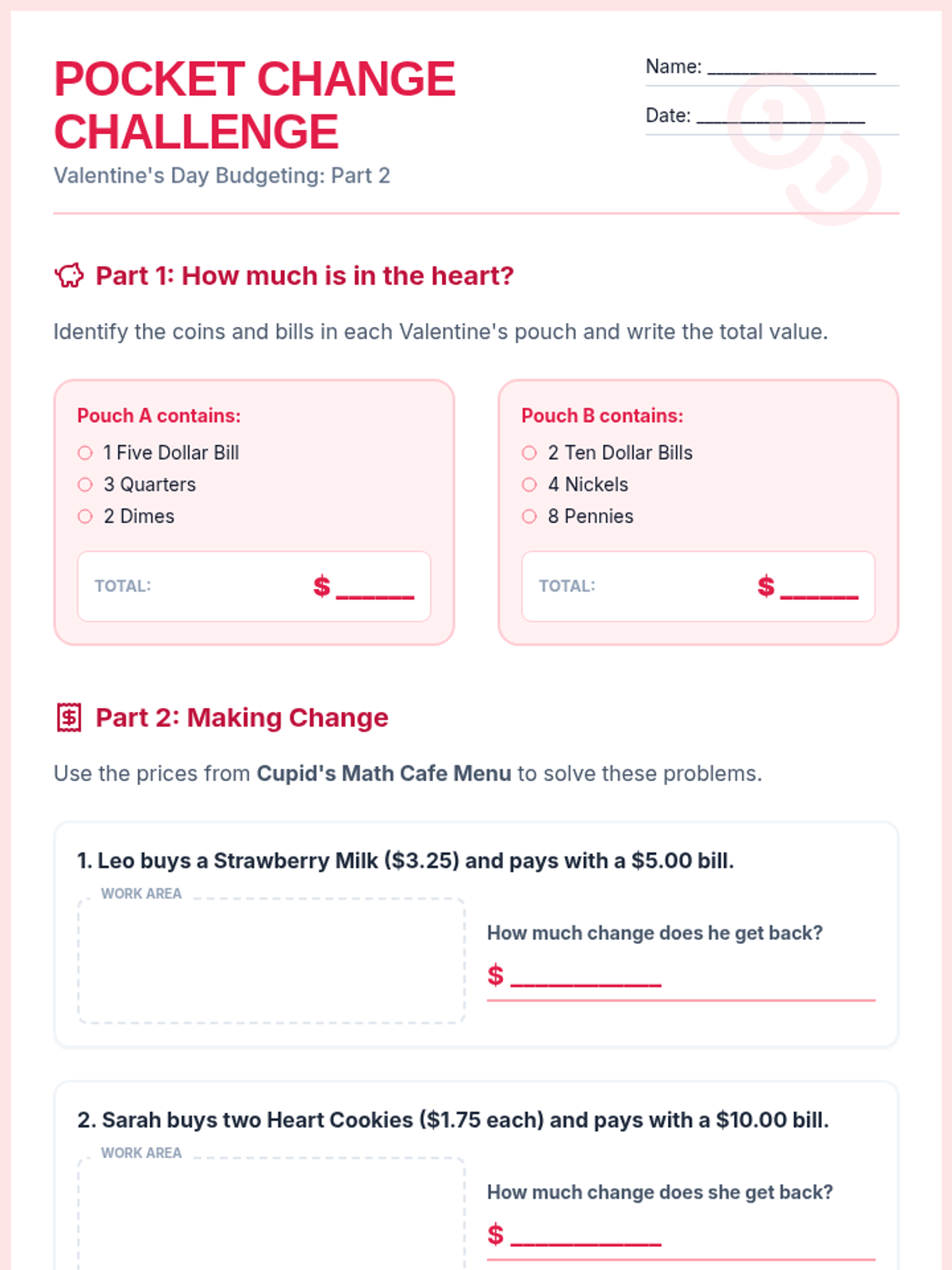
A collection of Valentine's Day math packets at two different levels (Level 1 and Quest), covering budgeting, graphing, measurement, time, and word problems.
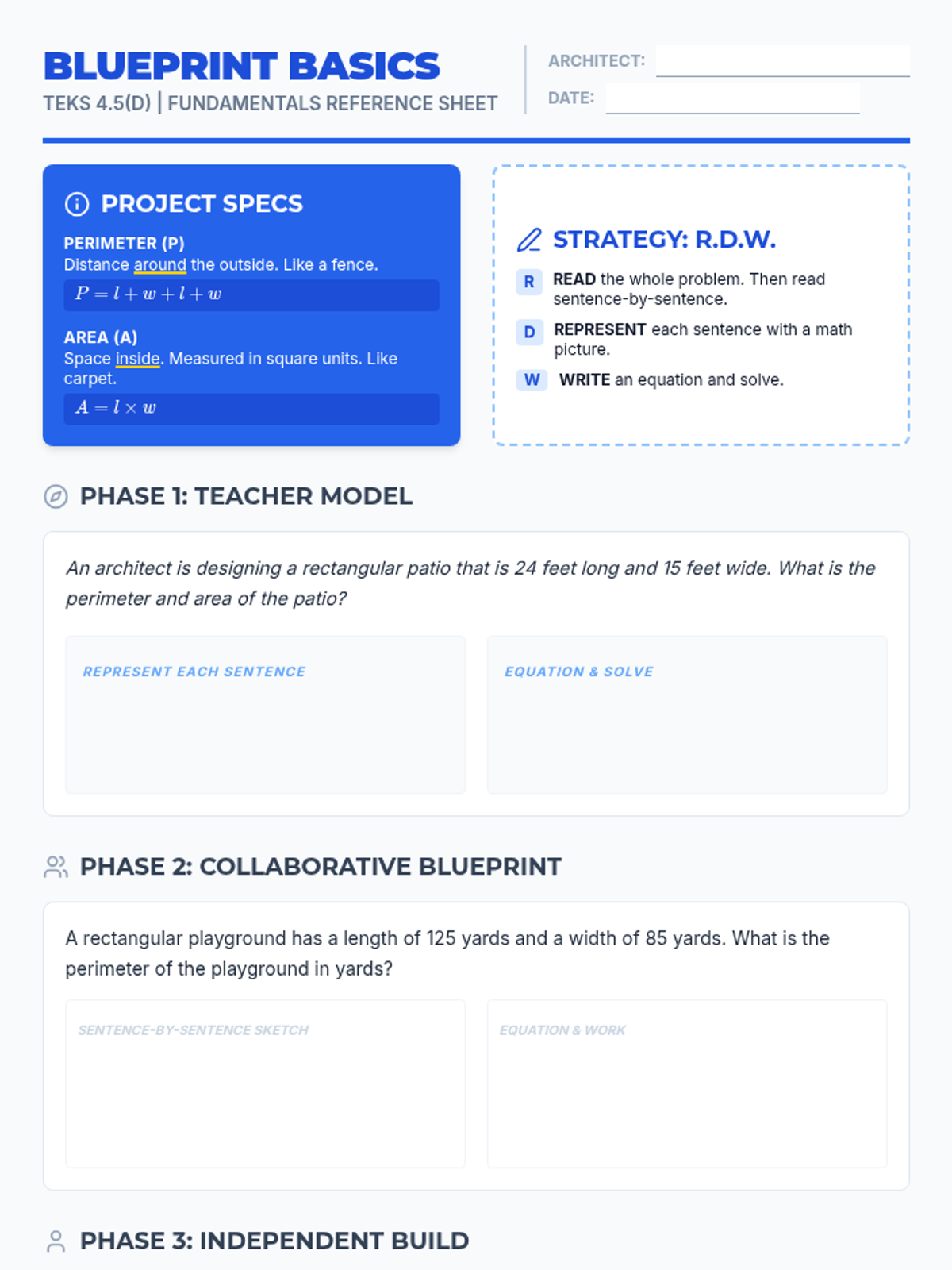
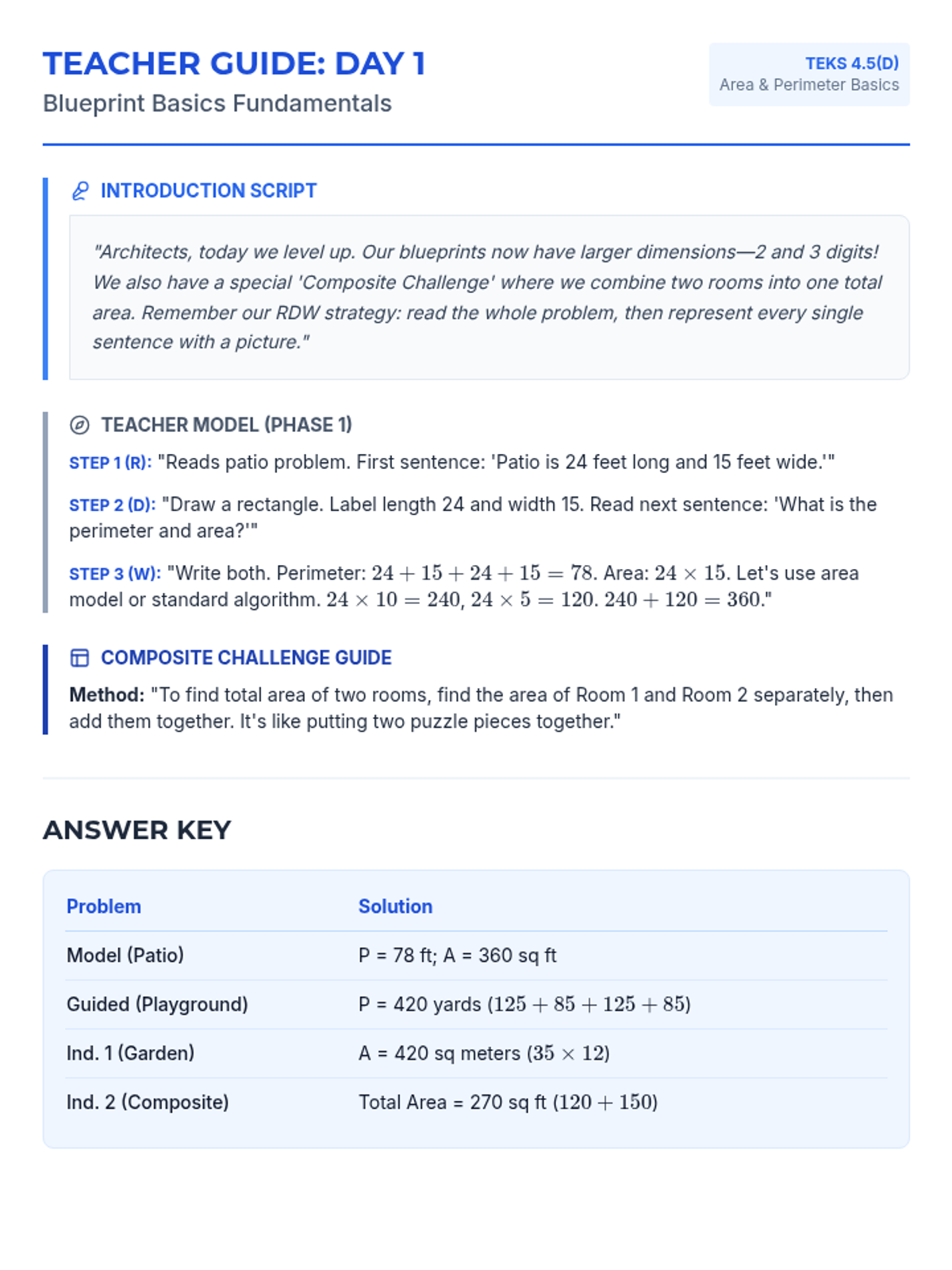
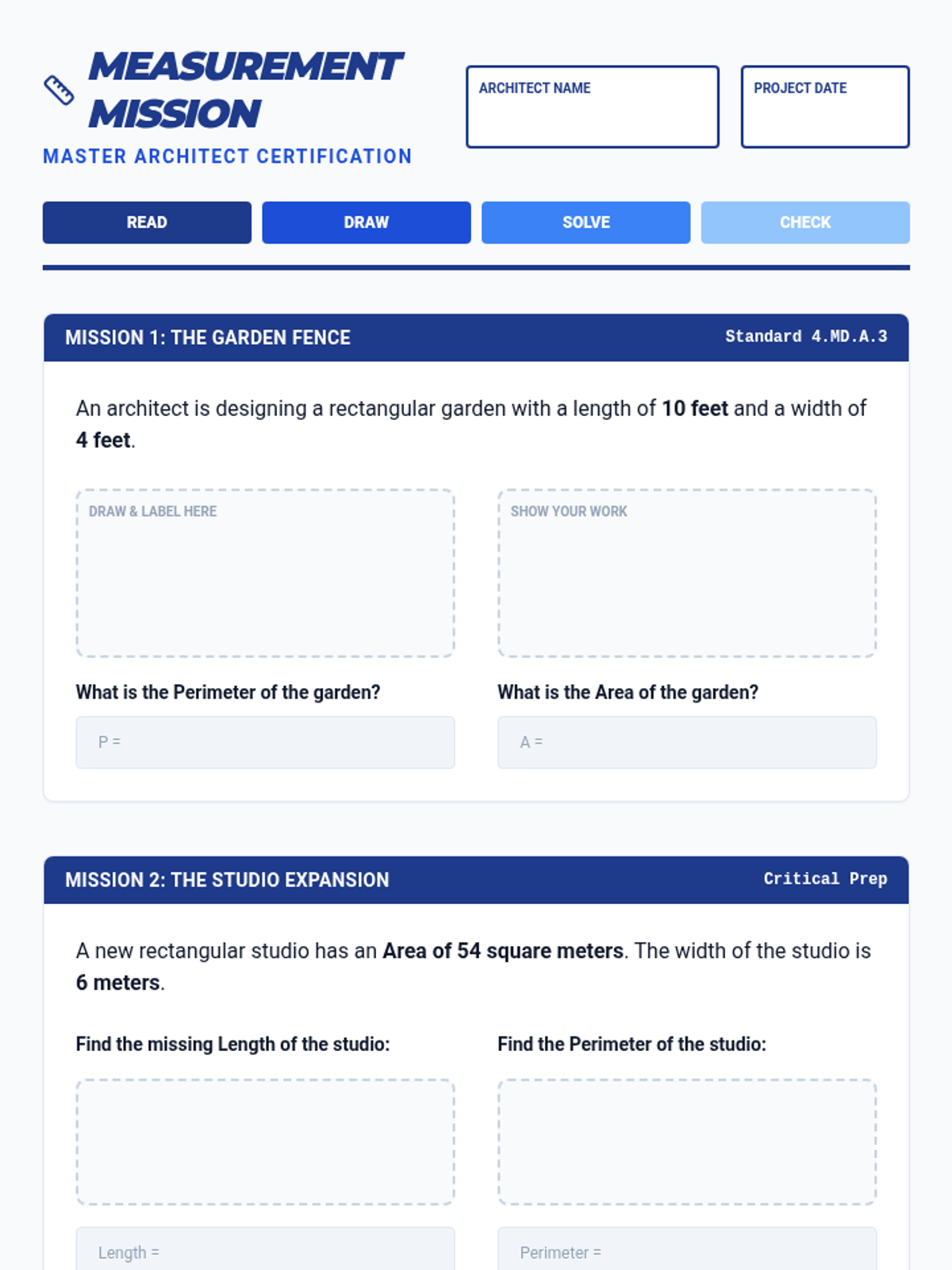
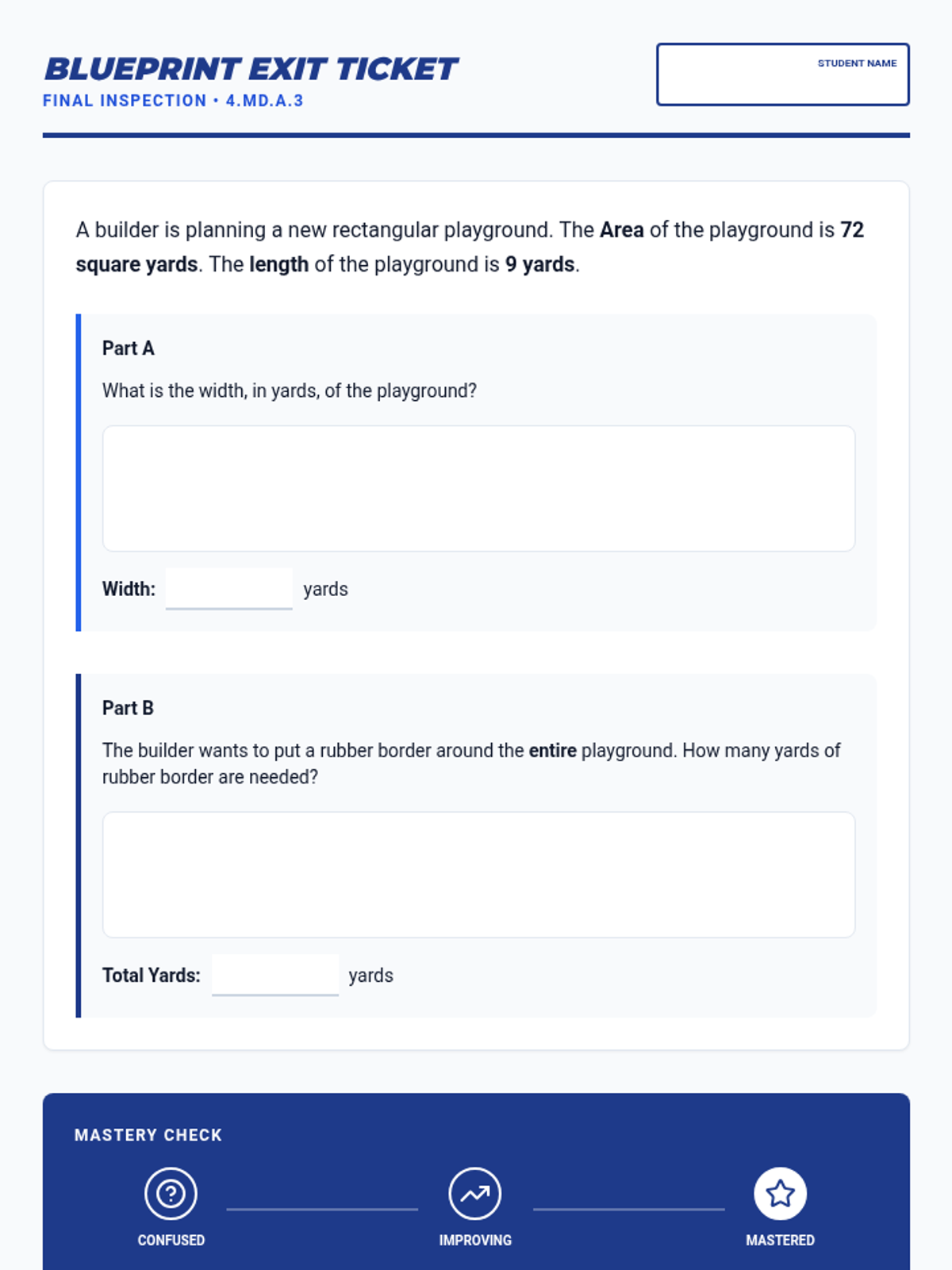
A 2-day small group math unit for 4th grade focused on TEKS 4.5(D), solving area and perimeter problems using the Read-Draw-Write strategy and blueprint-themed reference materials. Day 1 covers foundational calculations and missing side lengths, while Day 2 focuses on multi-step STAAR-aligned challenges.
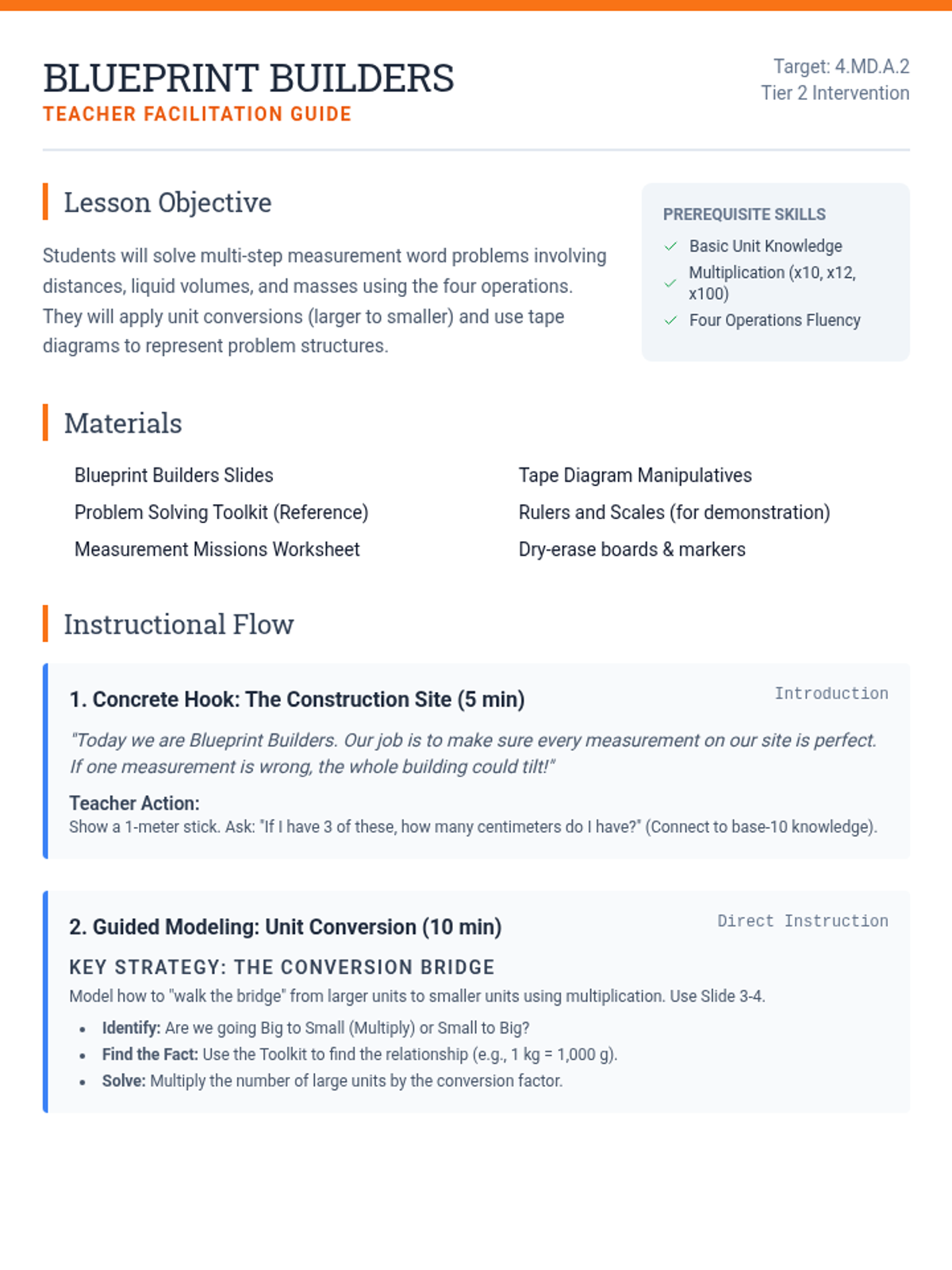
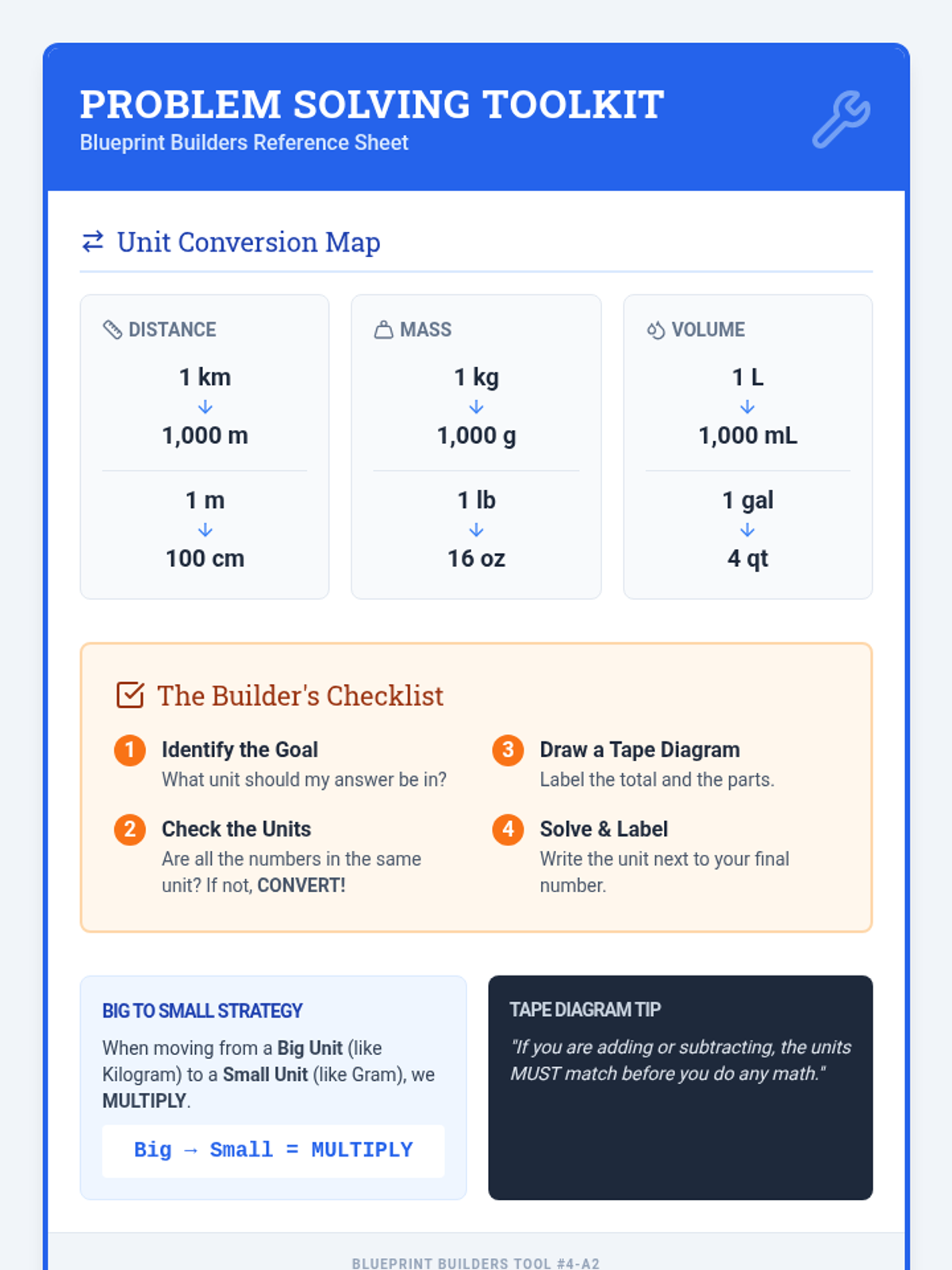
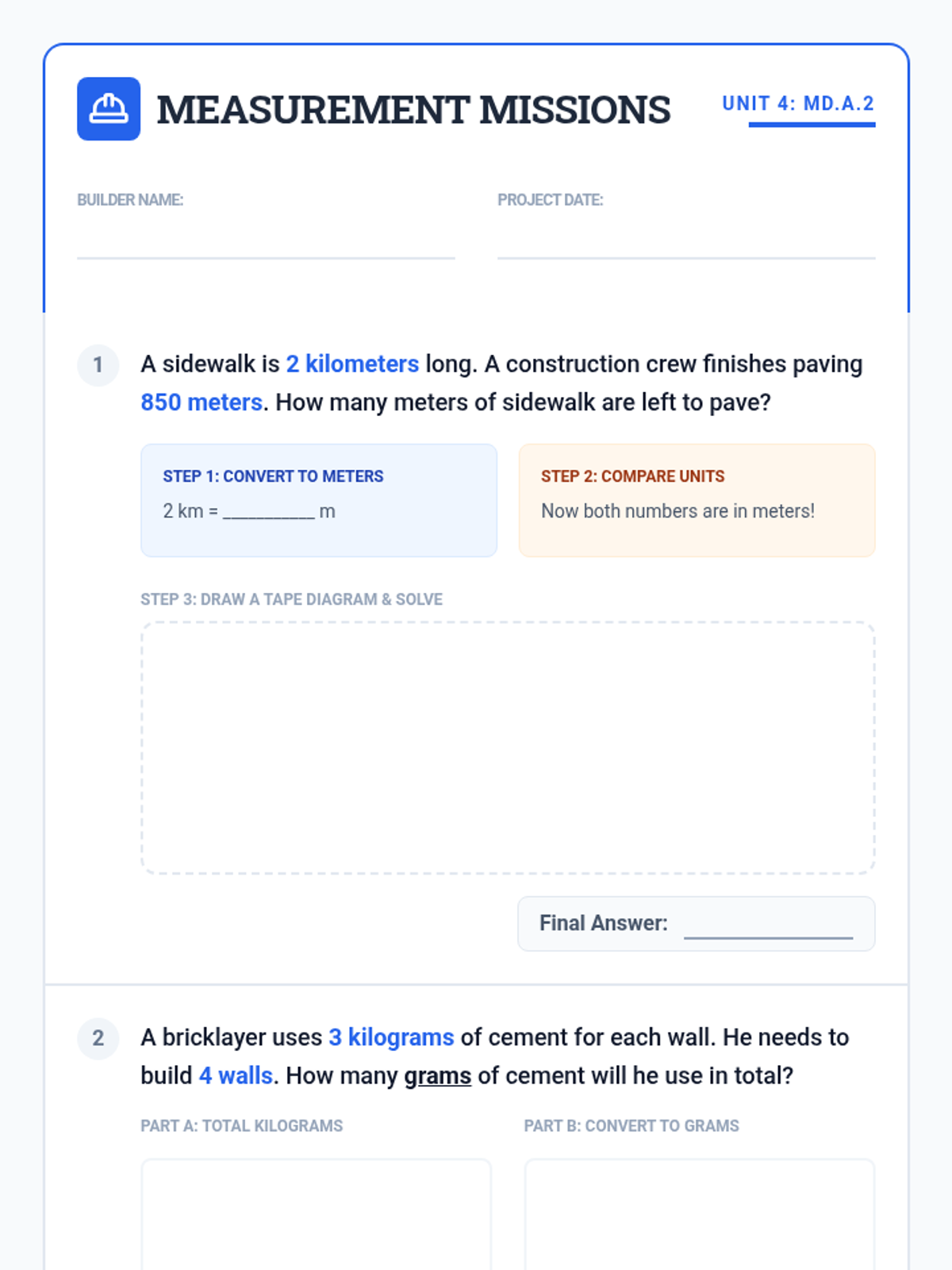
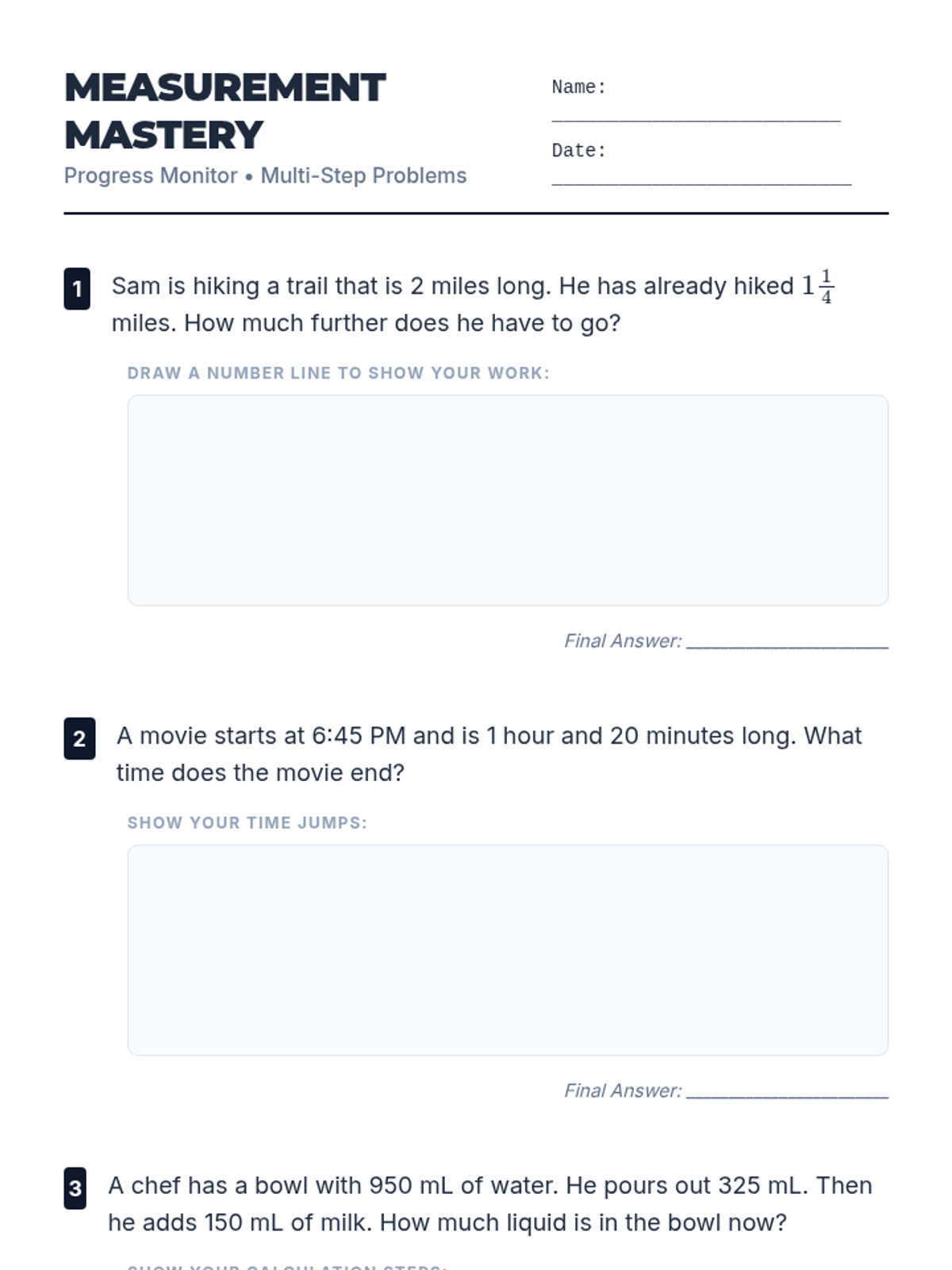
A Grade 4 Tier 2 intervention sequence focused on solving measurement word problems using all four operations and unit conversions. This sequence emphasizes visual models, step-by-step scaffolding, and concrete-to-abstract transitions.
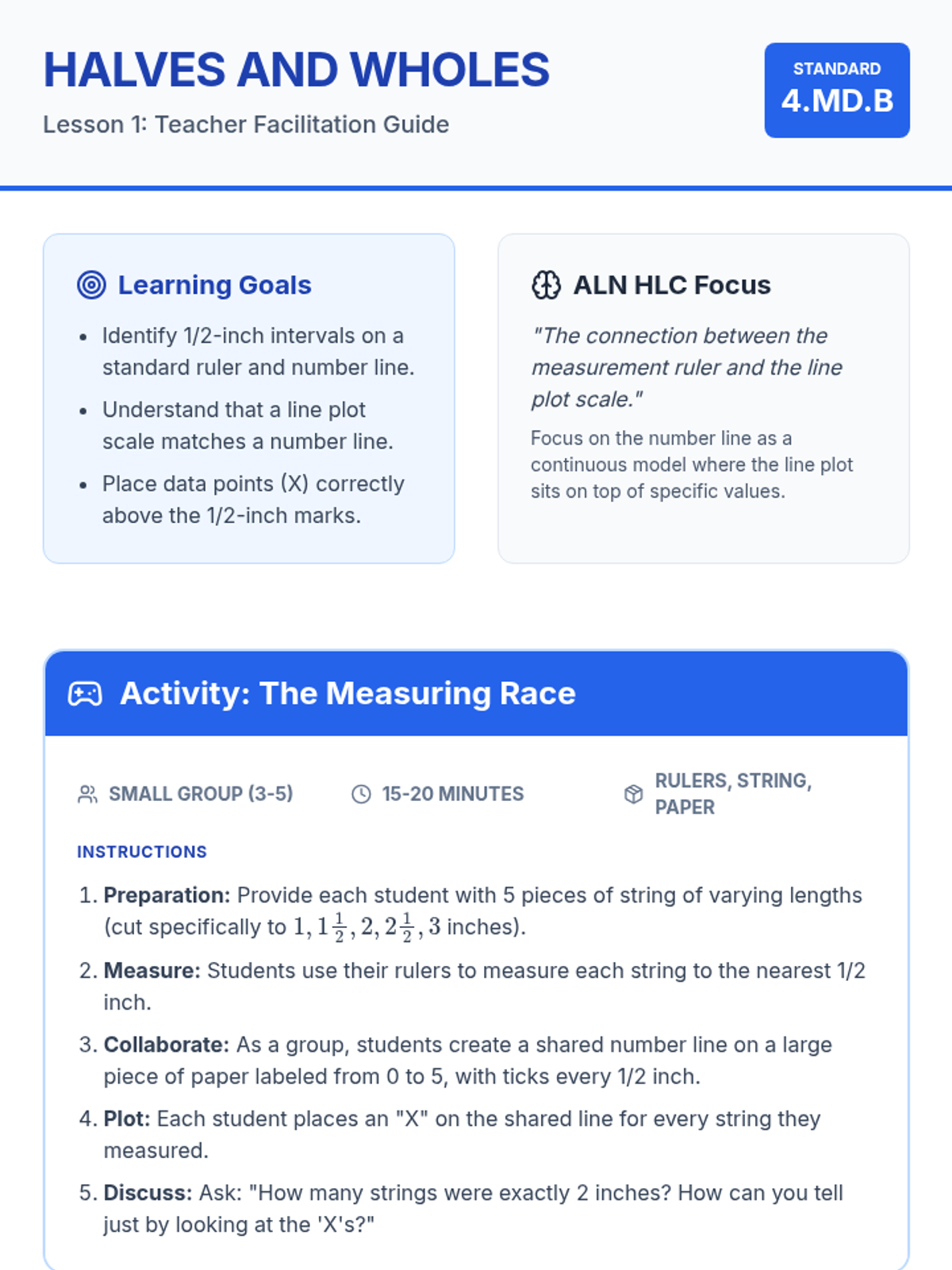
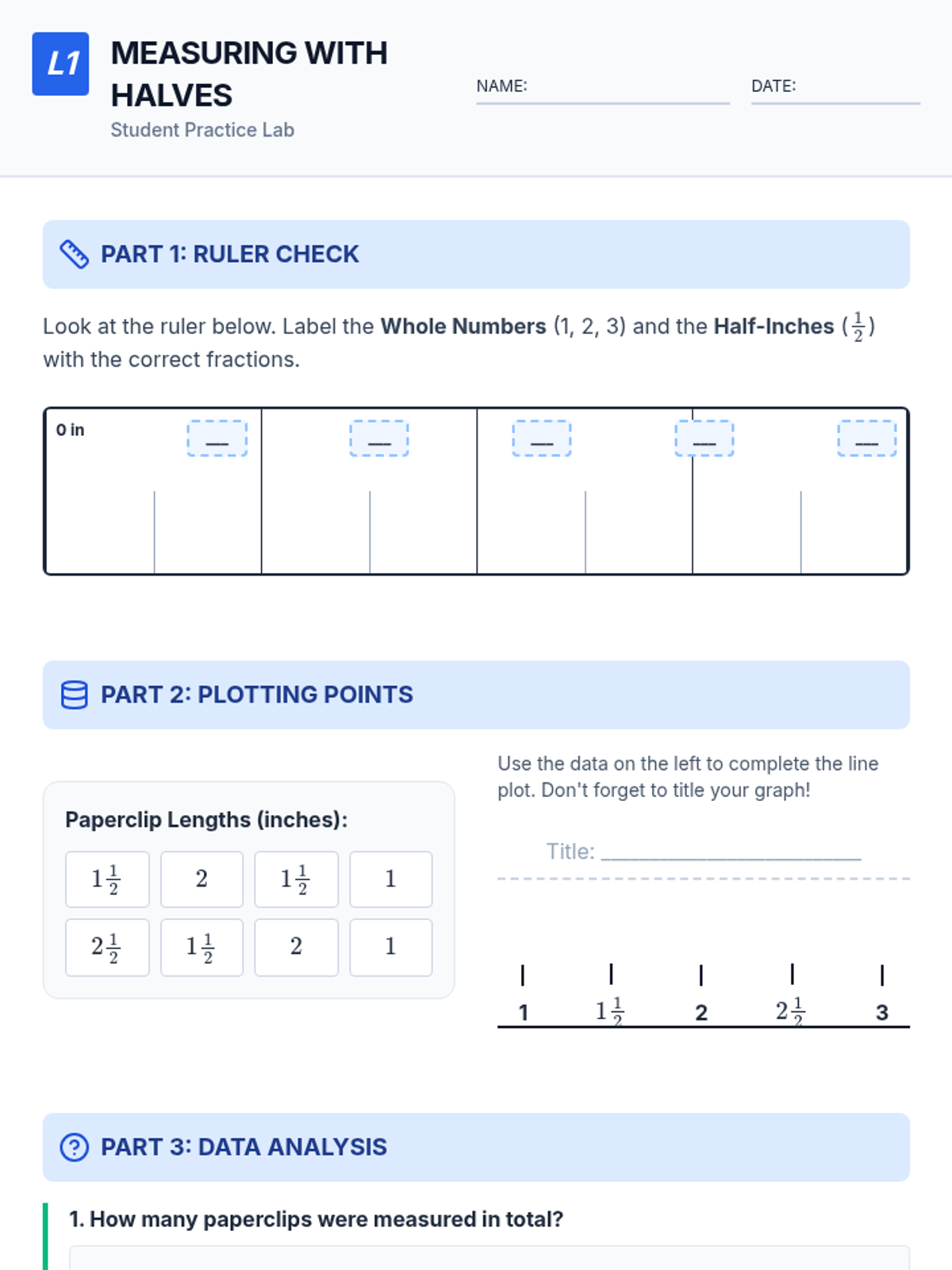
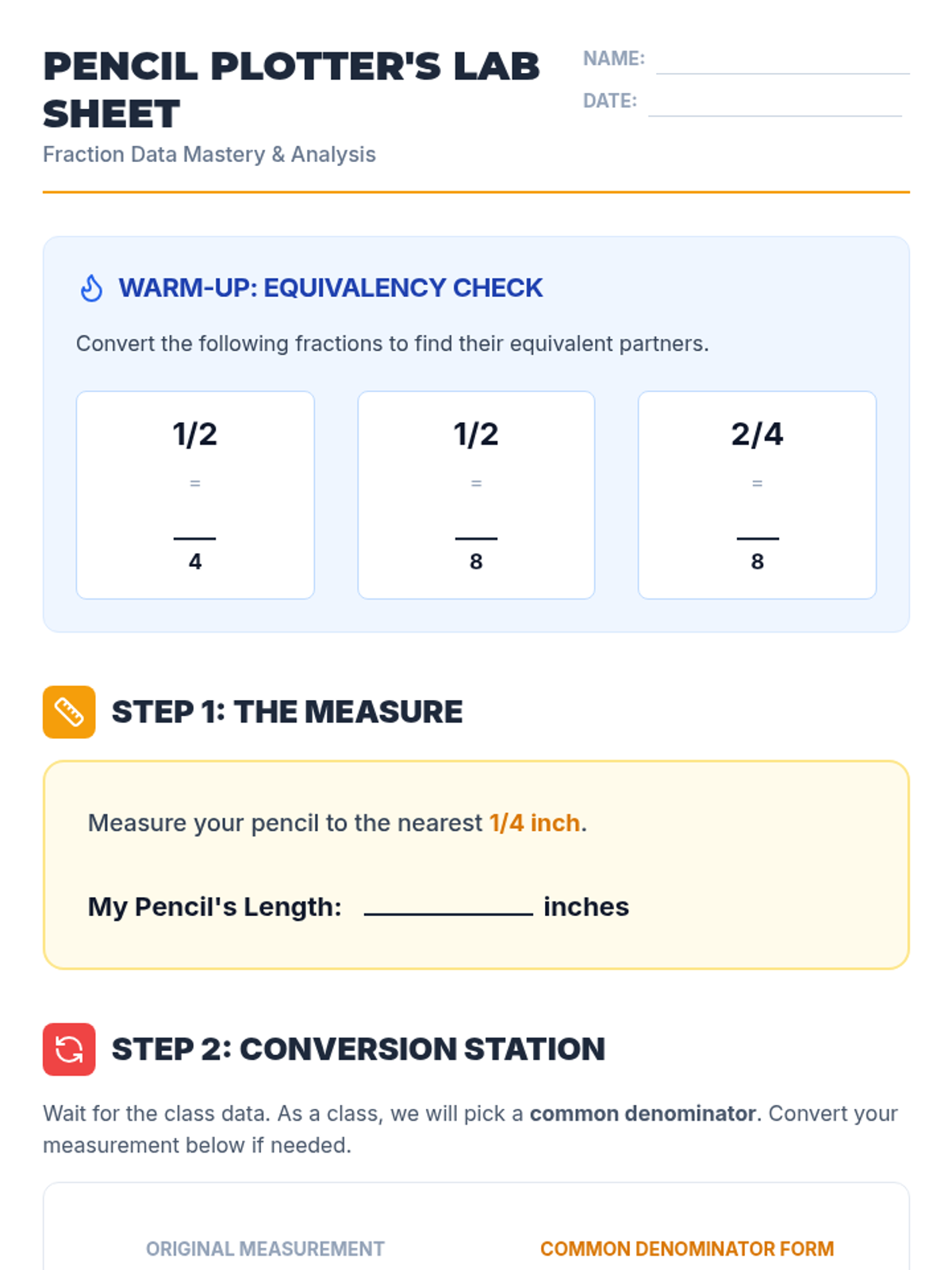
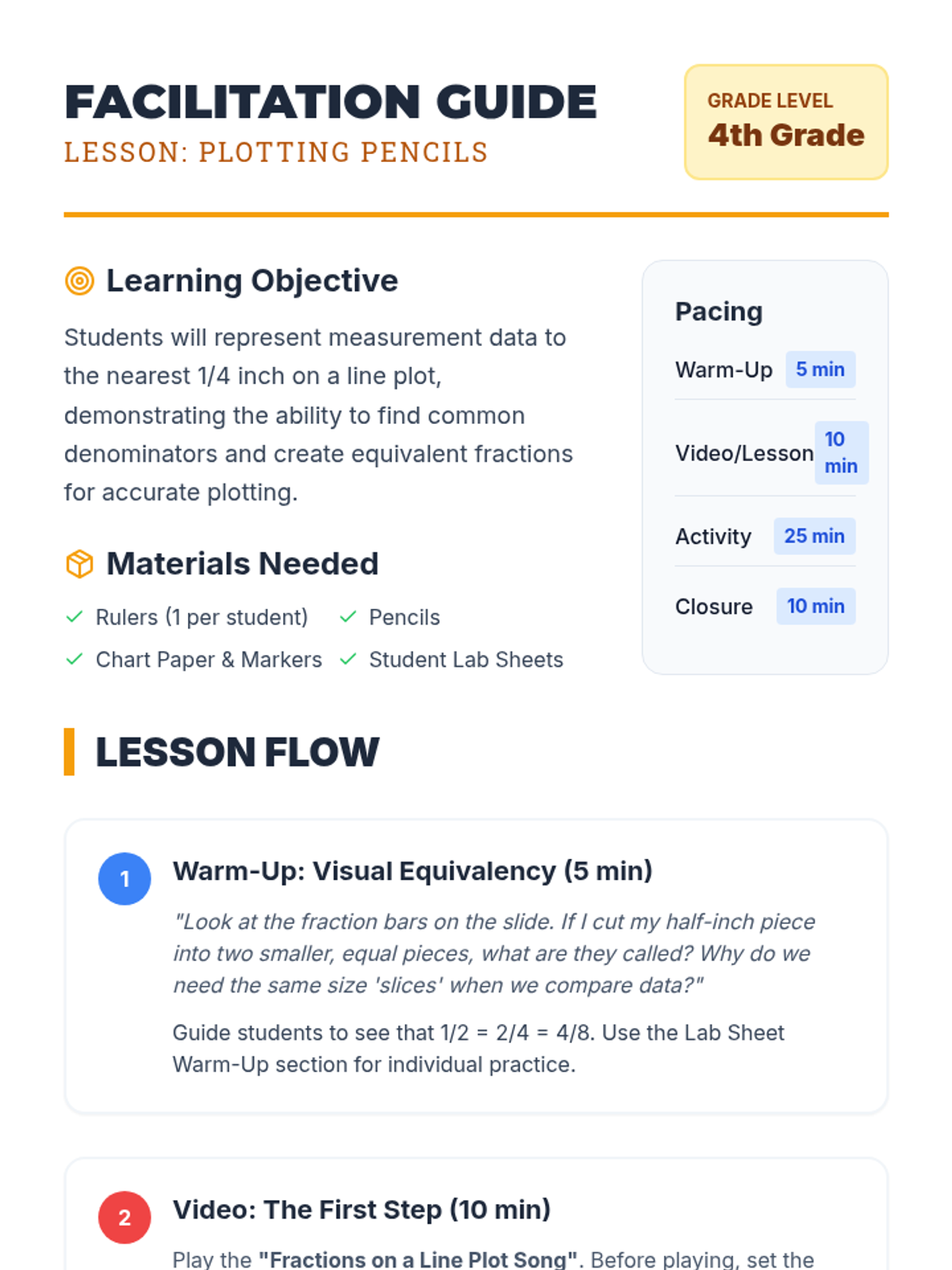
A comprehensive 12-lesson tier 2 intervention sequence for 4th grade students focused on measuring with fractional units (1/2, 1/4, 1/8) and representing that data on line plots to solve addition and subtraction problems. The sequence follows All Learners Network (ALN) High Leverage Concepts and Illustrative Mathematics (IM) routines.
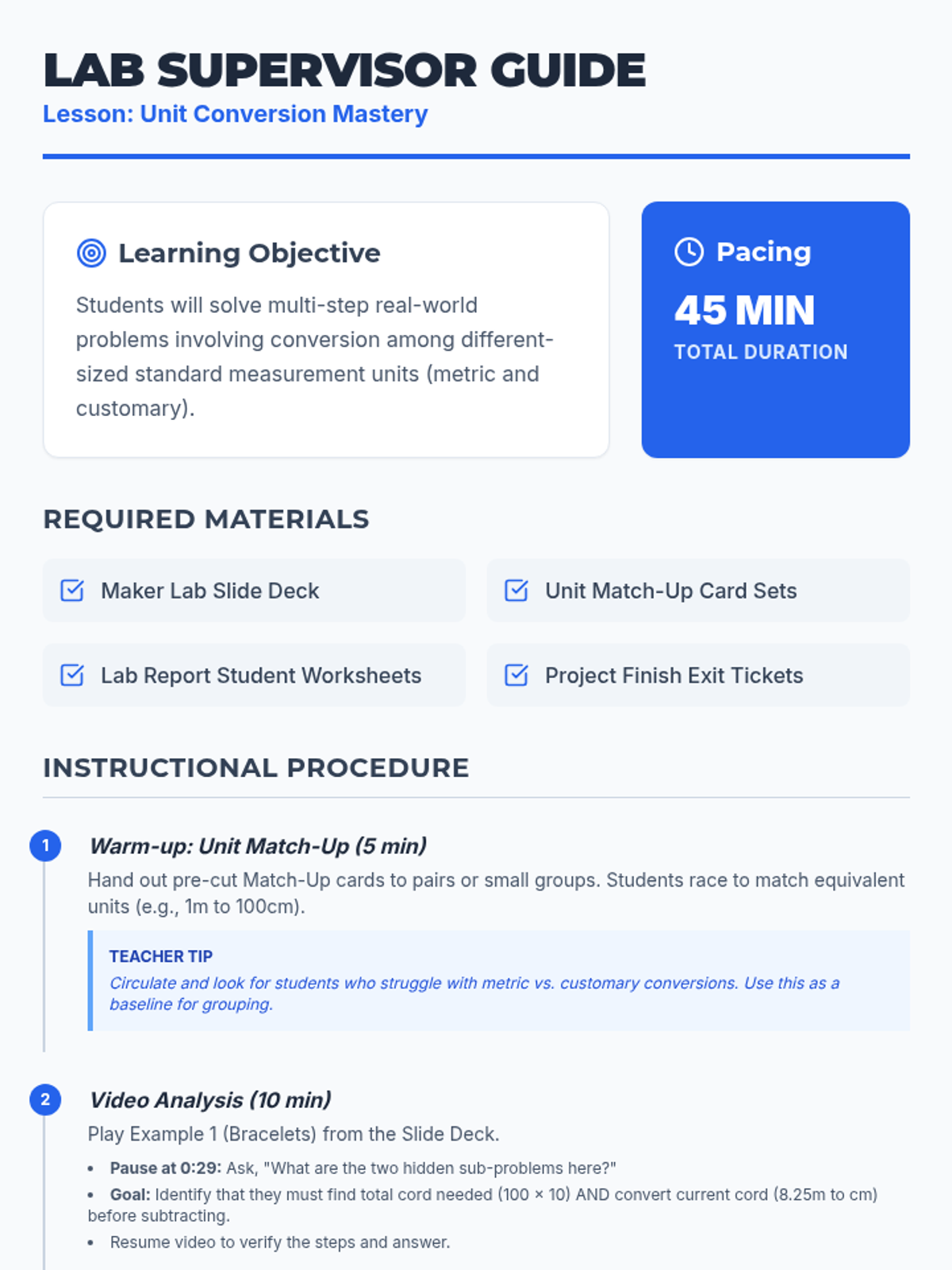
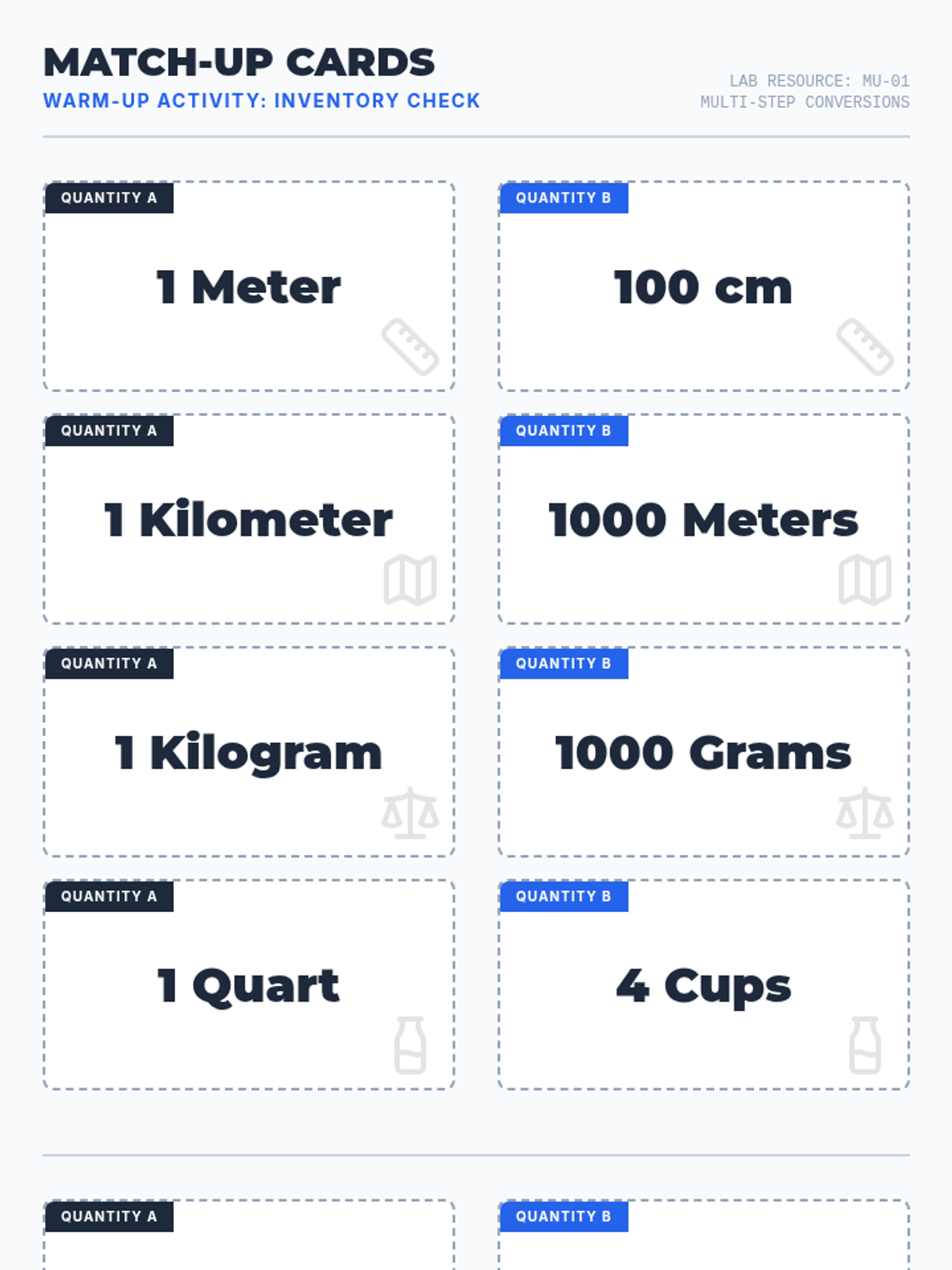
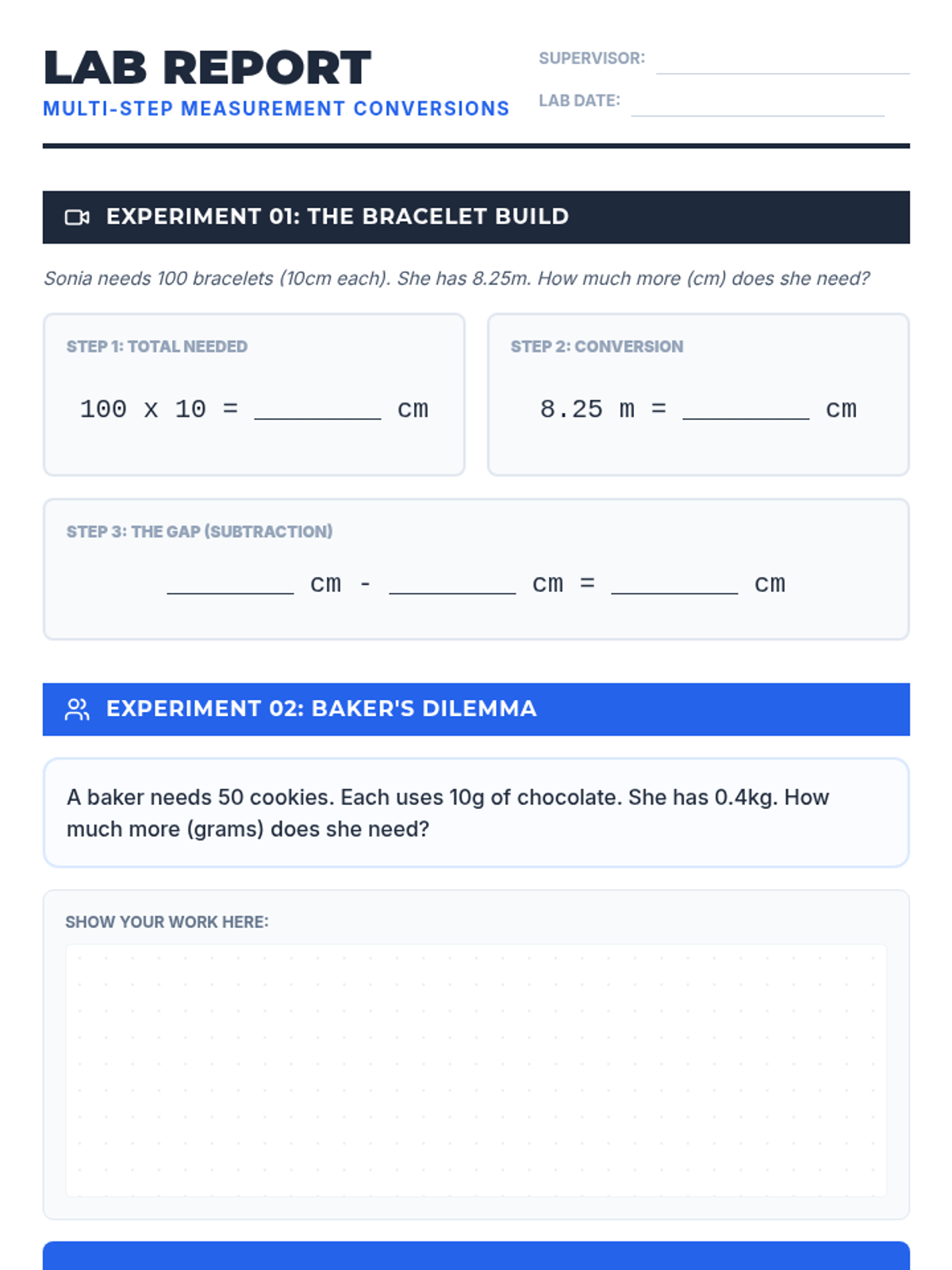
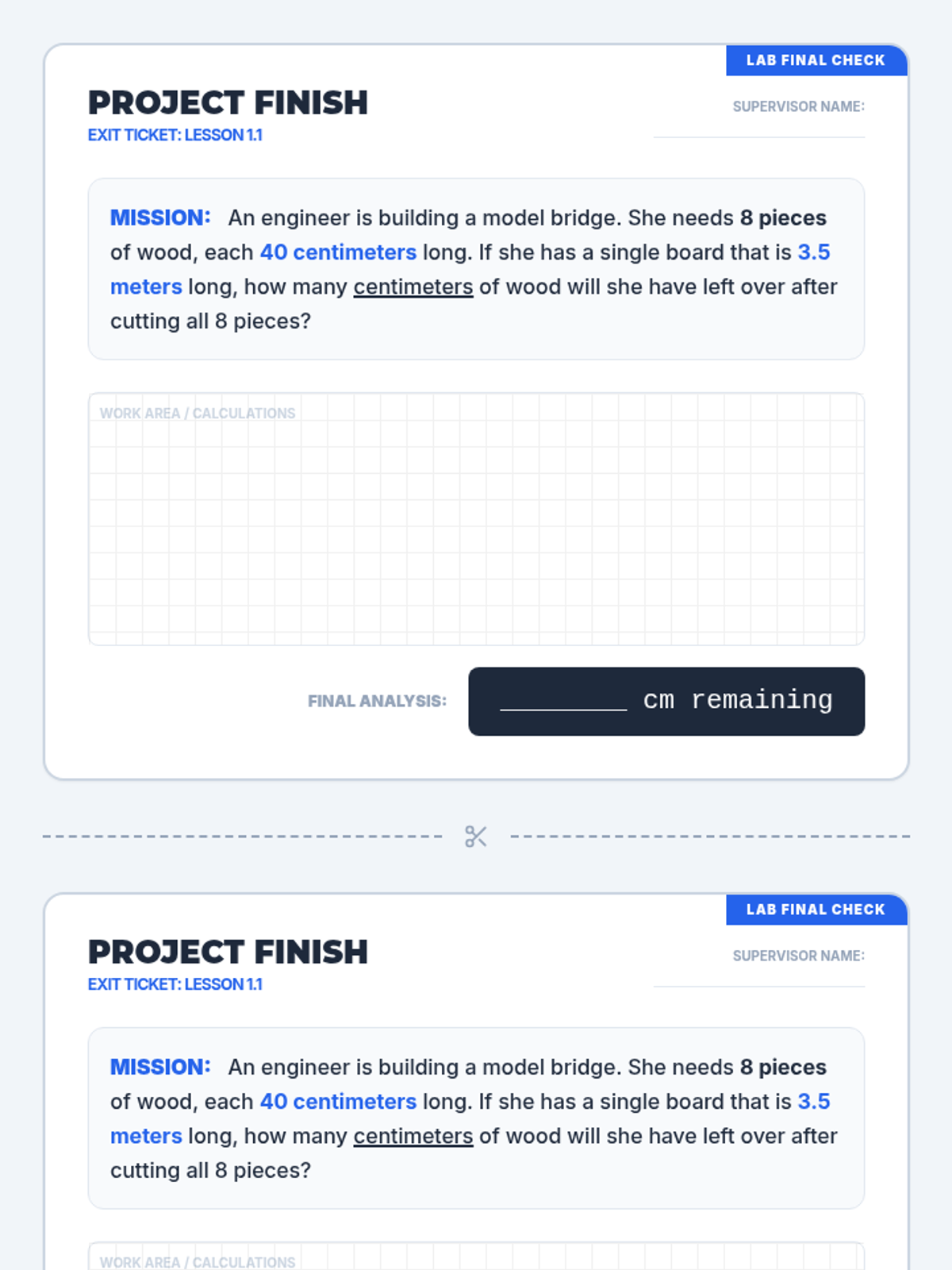
A comprehensive math lesson focused on solving multi-step real-world problems involving standard measurement unit conversions using a 'Maker Lab' theme.
A sequence focused on data representation and analysis using fractions, where students collect real-world data and use line plots to interpret their findings.
A 4th-grade chemistry and engineering sequence focusing on the analysis and manipulation of measurement data. Students explore metric and customary conversions, benchmark comparisons, and data accuracy through a project-based blueprint scaling challenge.
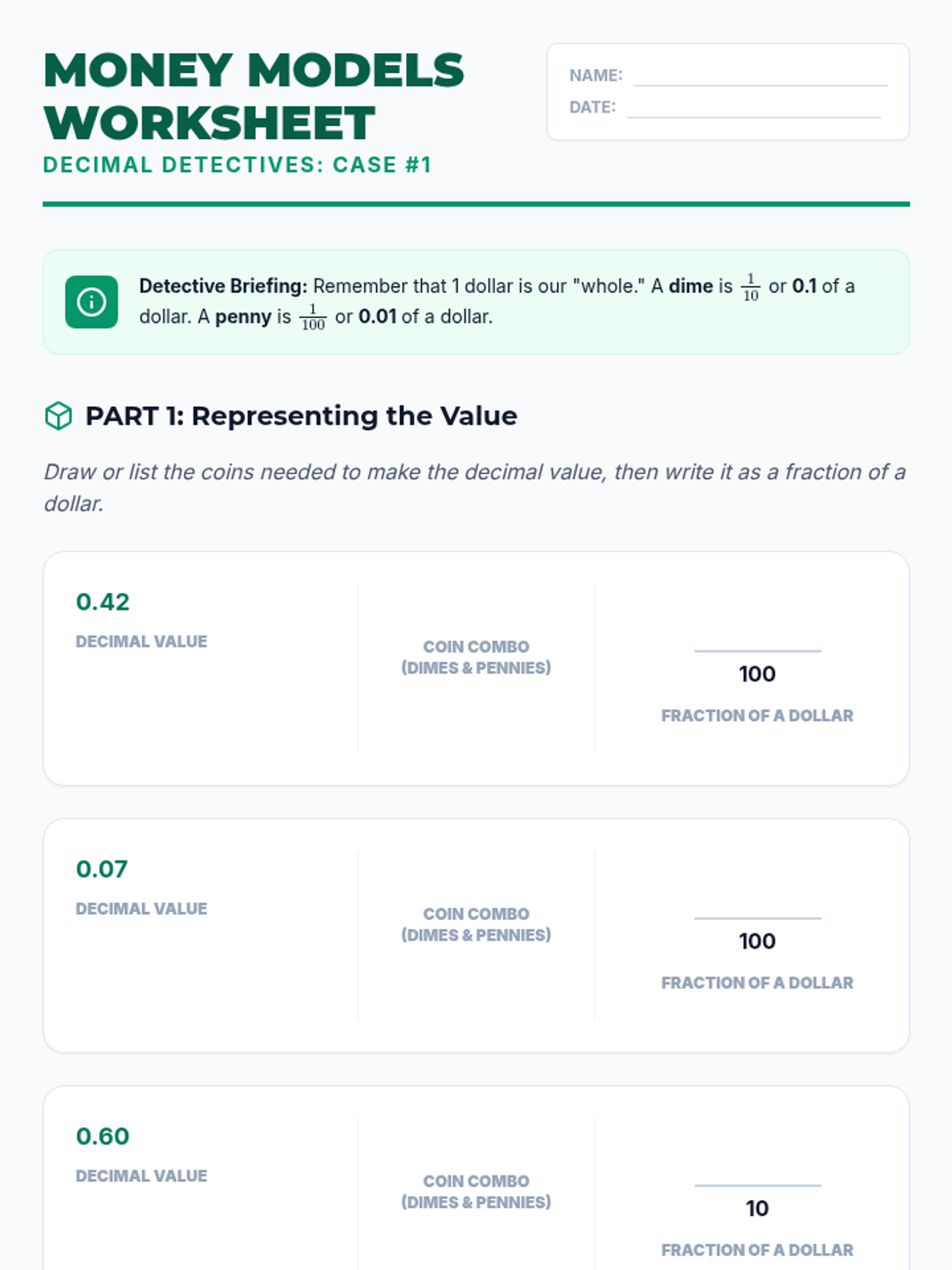
A 4th-grade sequence connecting decimal fractions to real-world applications in money and metric measurement, emphasizing the practical importance of tenths and hundredths.
This sequence connects abstract decimal fractions to tangible measurement and data analysis. Students act as scientists and analysts using metric tools, financial data, and sports timing to understand the necessity of precise decimal notation.
A 5-lesson sequence applying decimal fractions to measurement, money, and data analysis. Students act as scientists and analysts to master tenths and hundredths through hands-on simulations and real-world budgeting.
A project-based unit where 4th-grade students explore geometric classification through art and architecture, culminating in the creation of a 'Mathematical Mosaic' with a detailed geometric legend.
Students step into the role of interior designers to redesign a classroom or bedroom space. They apply measurement skills in both customary and metric systems to calculate perimeters, inventory furniture dimensions, and create scaled layout drafts.
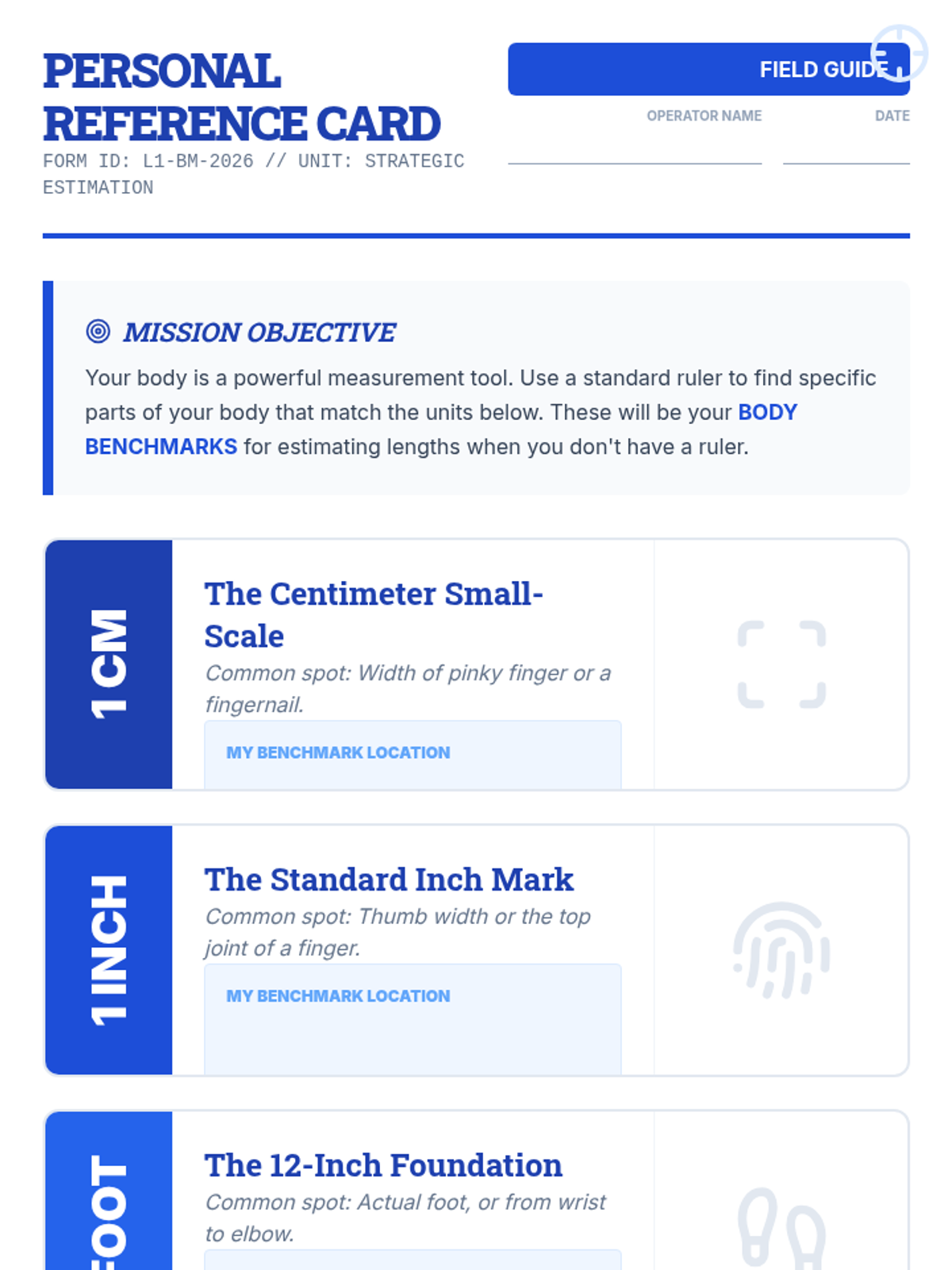
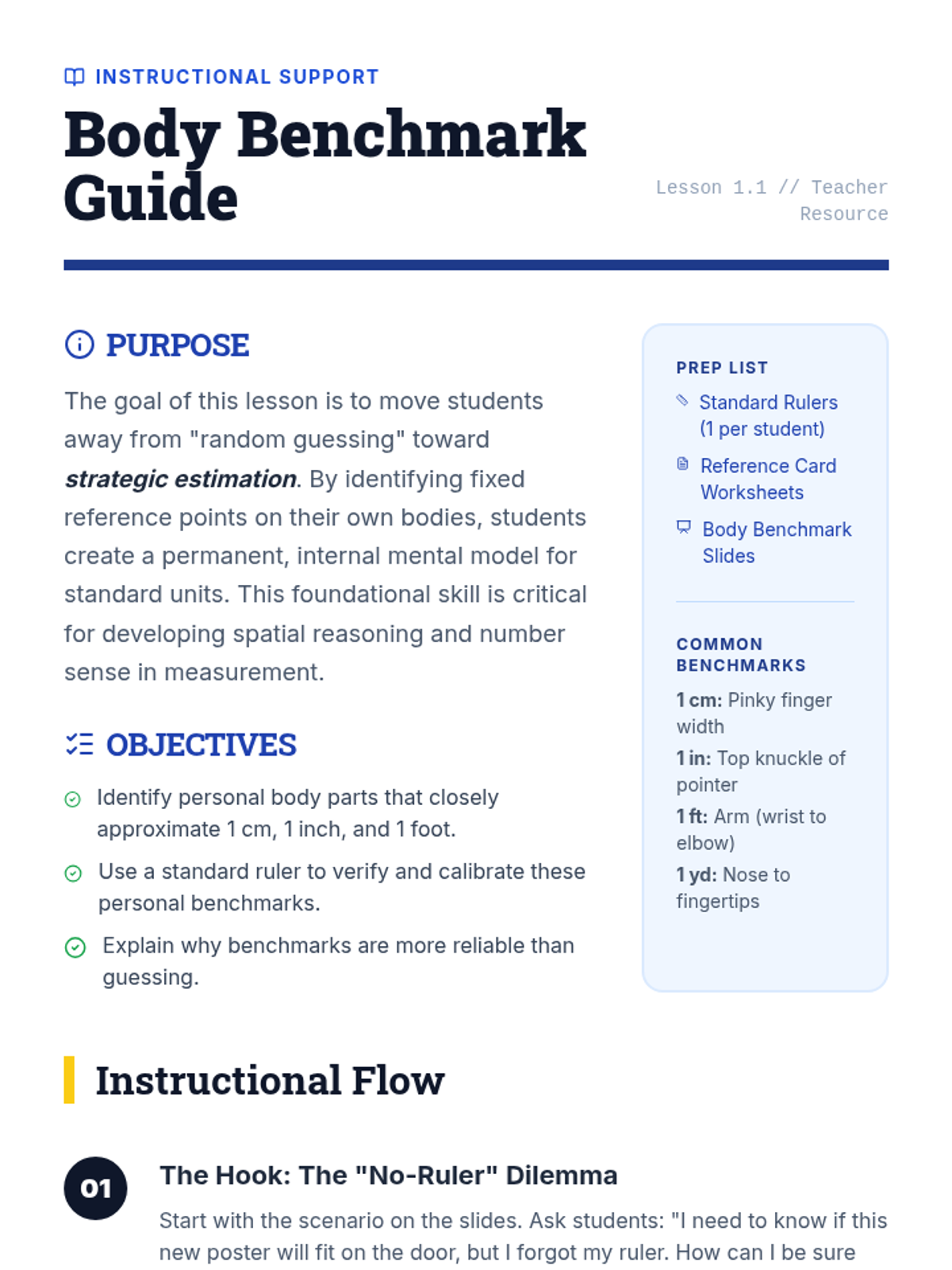
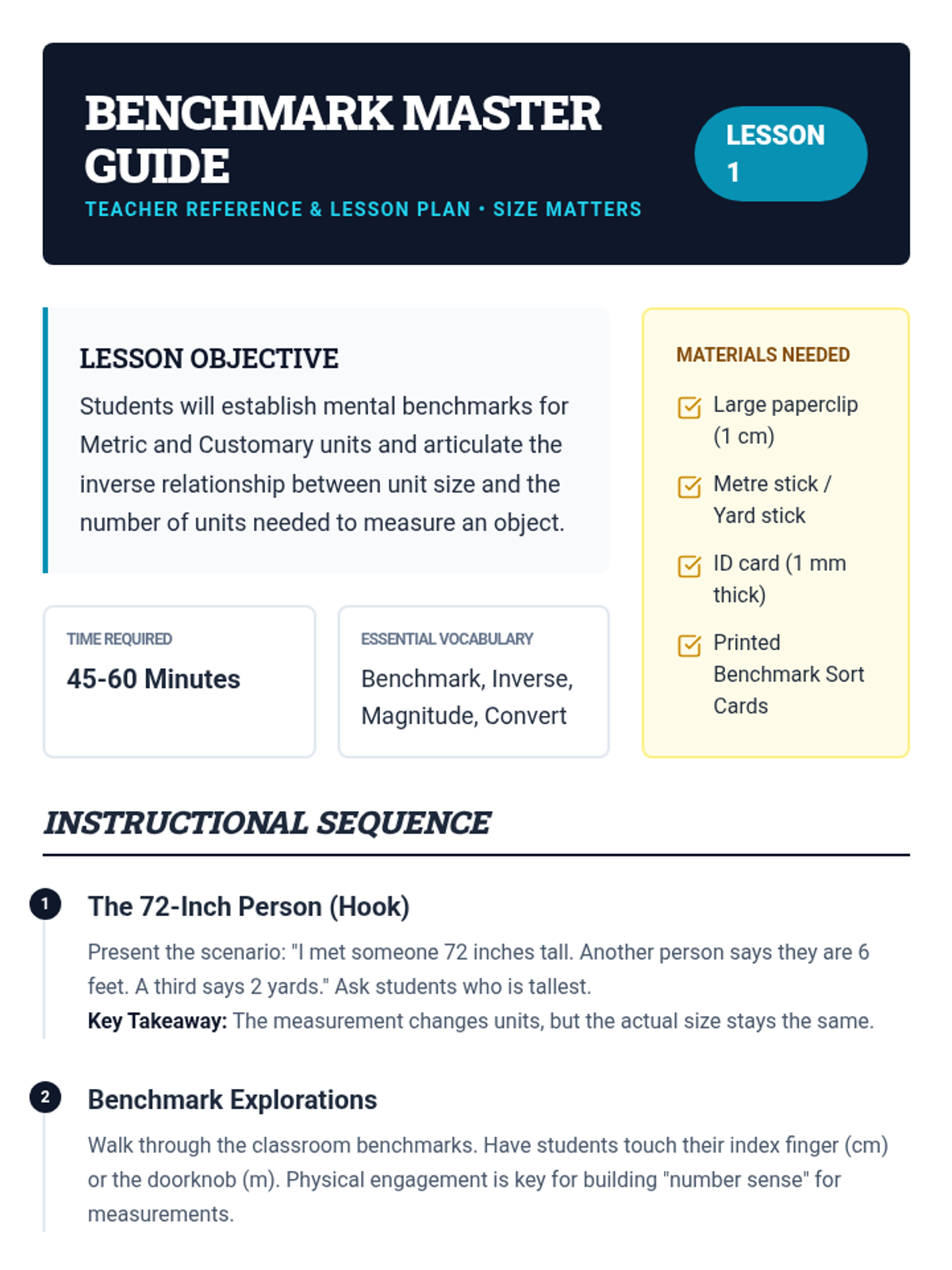
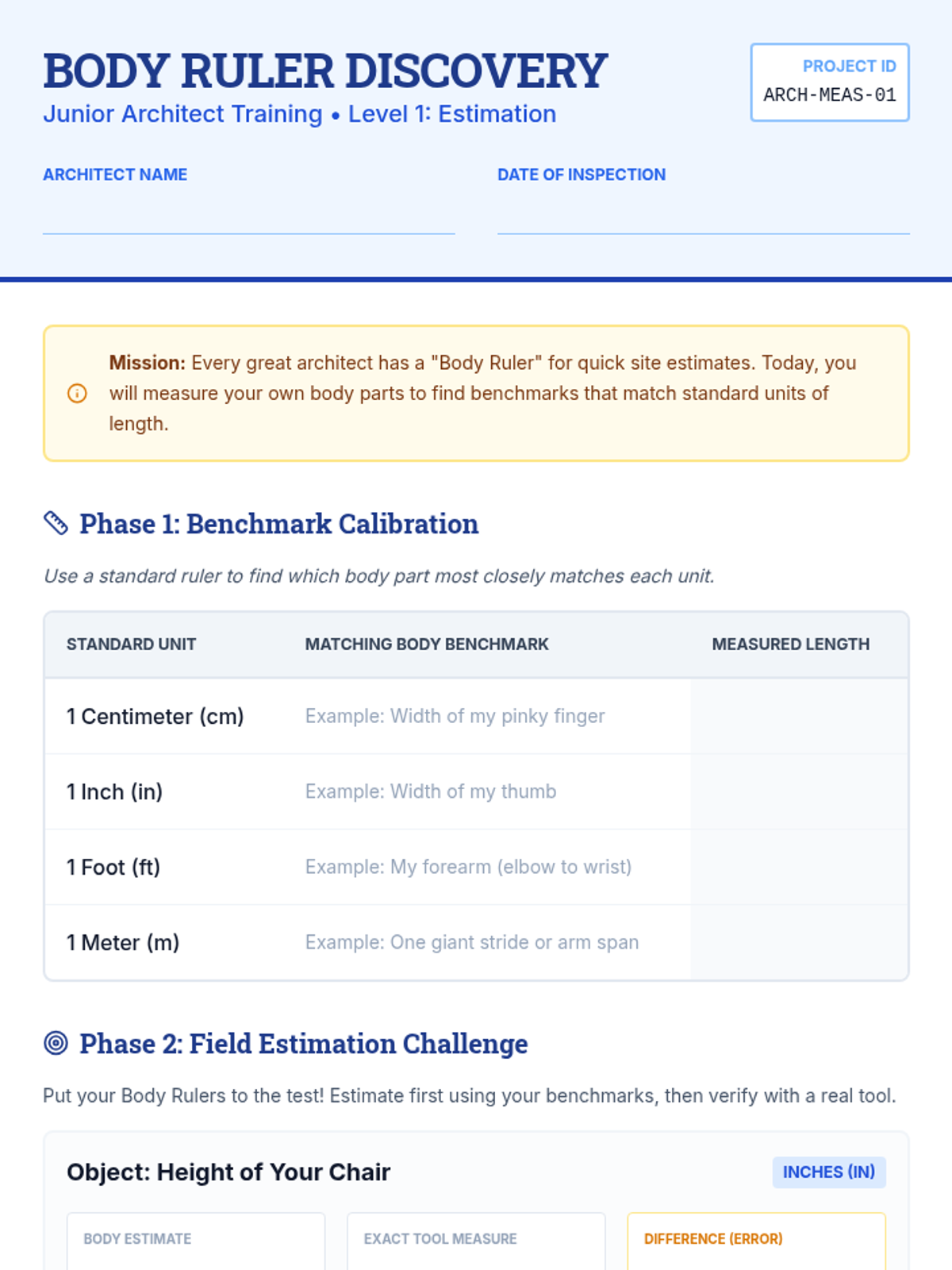
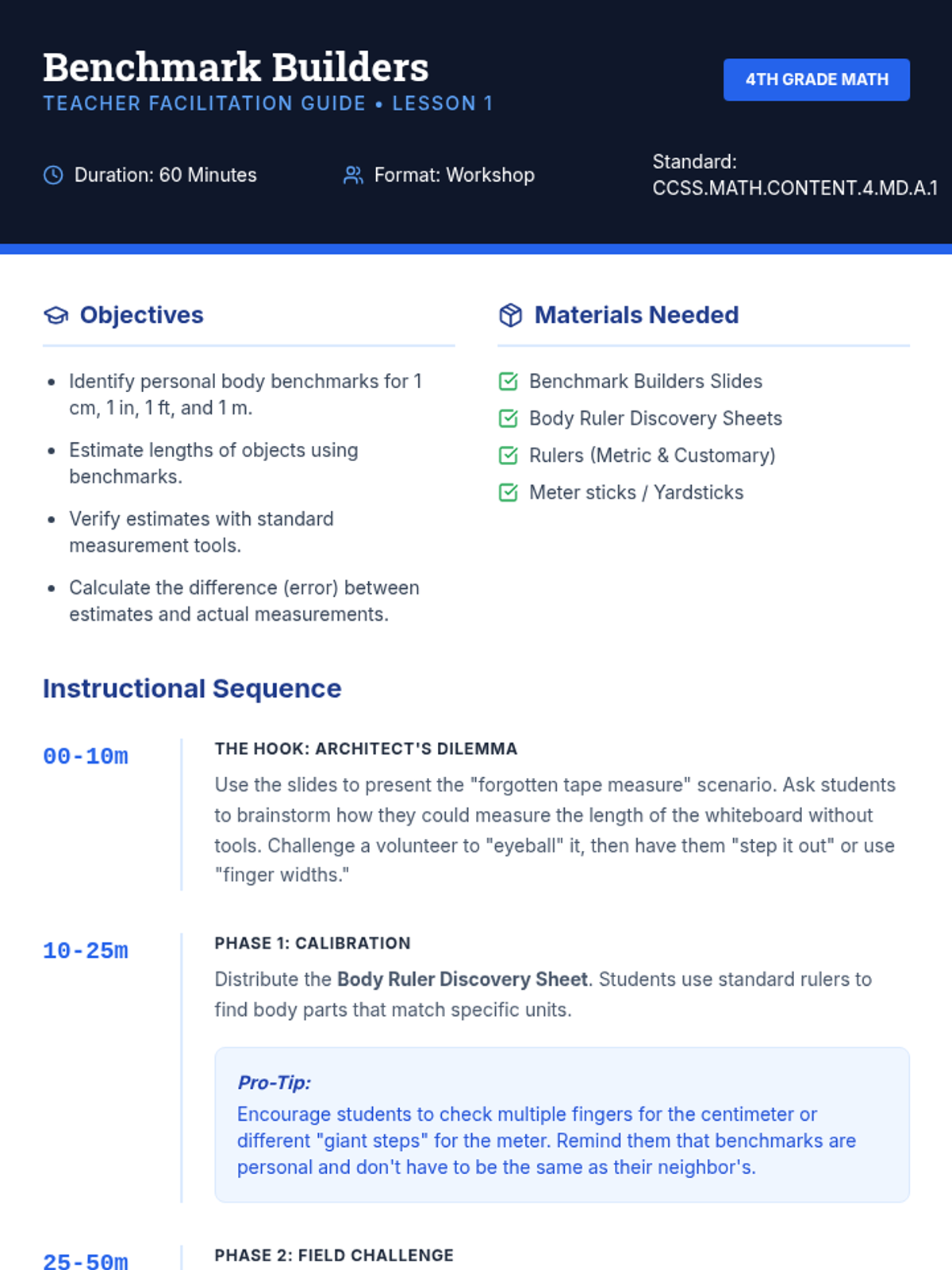
A 4th-grade math unit focused on developing mental benchmarks for length, selecting appropriate tools for measurement, and mastering estimation through hands-on workshops and games.
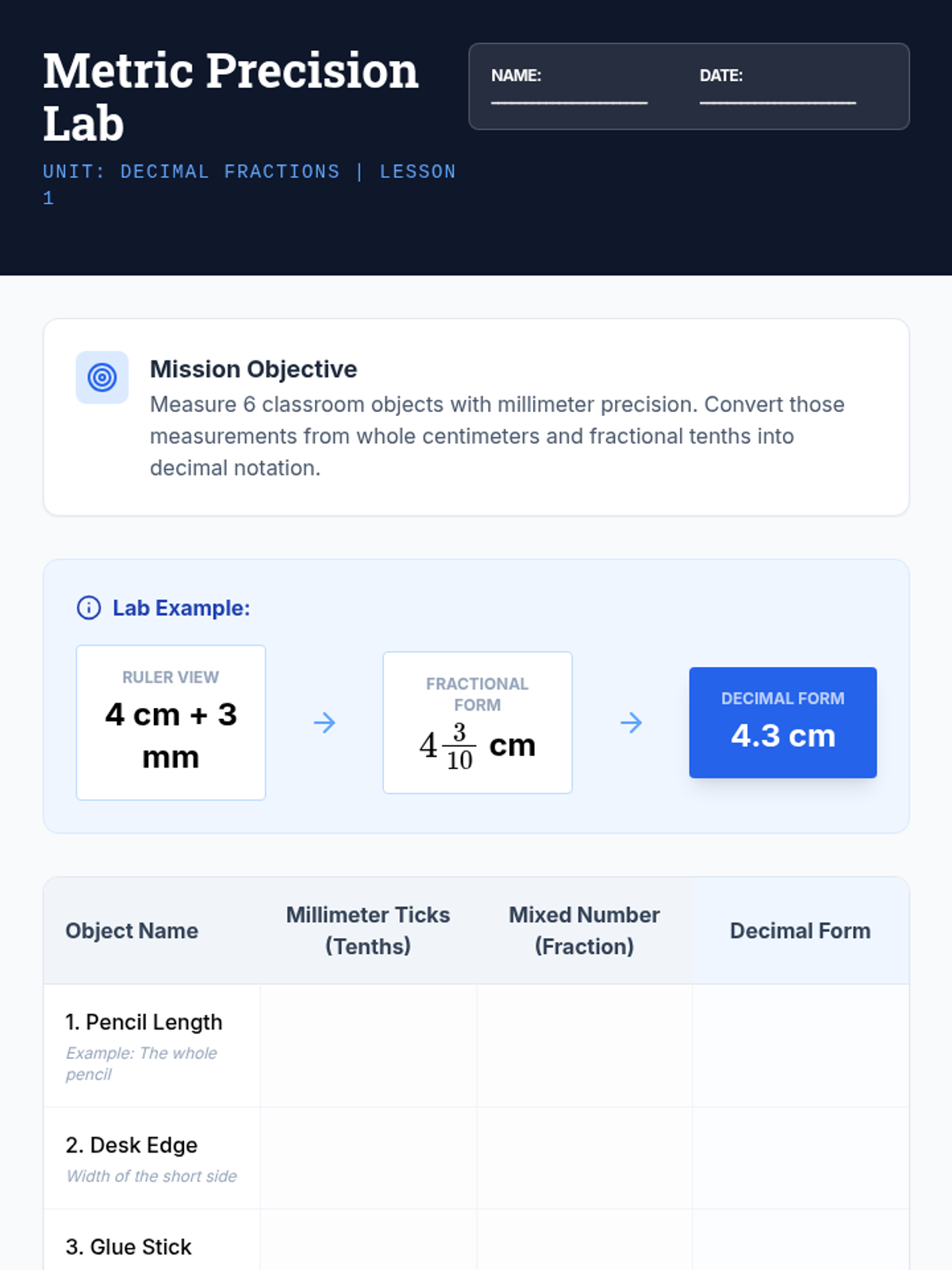
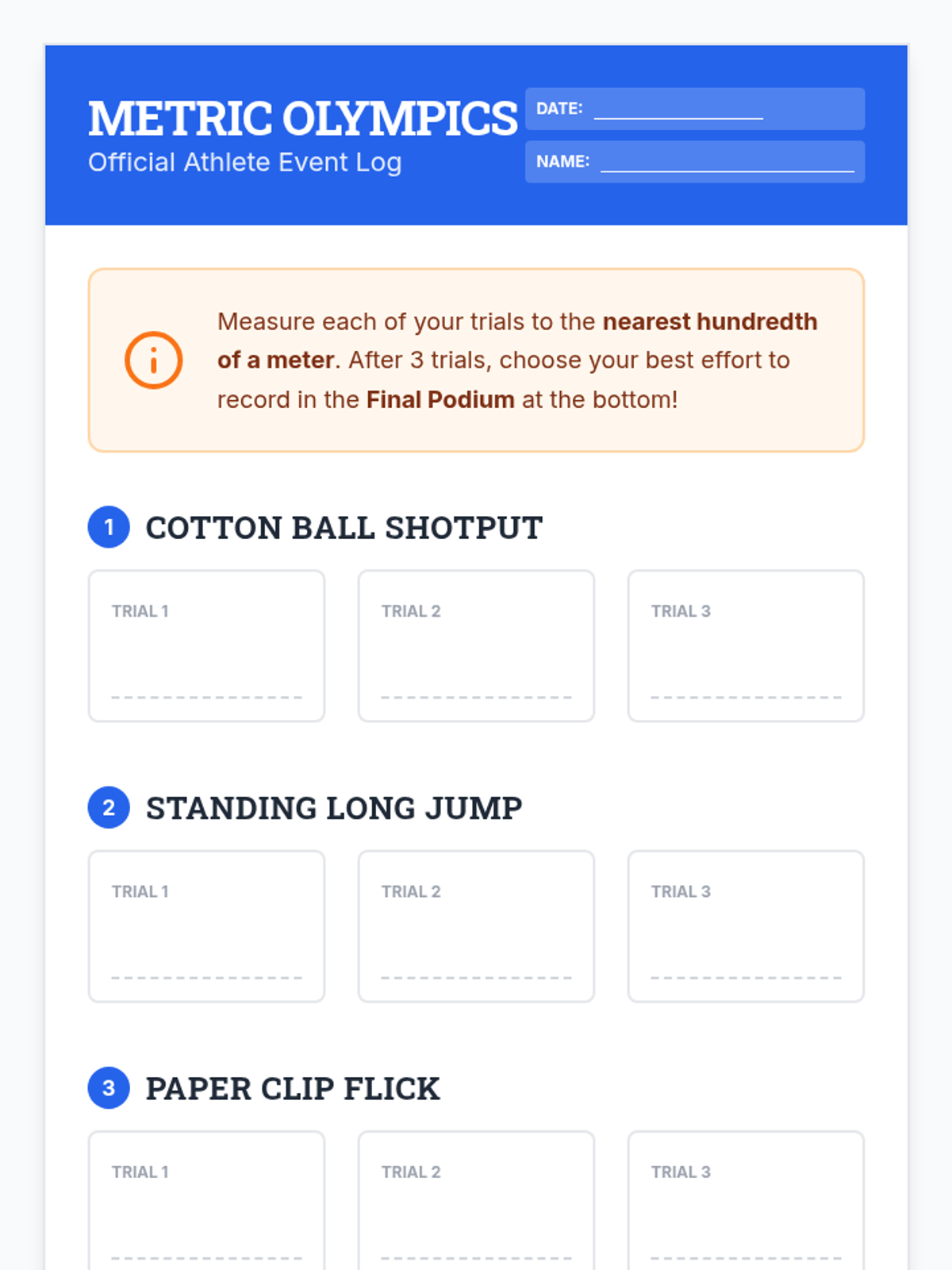
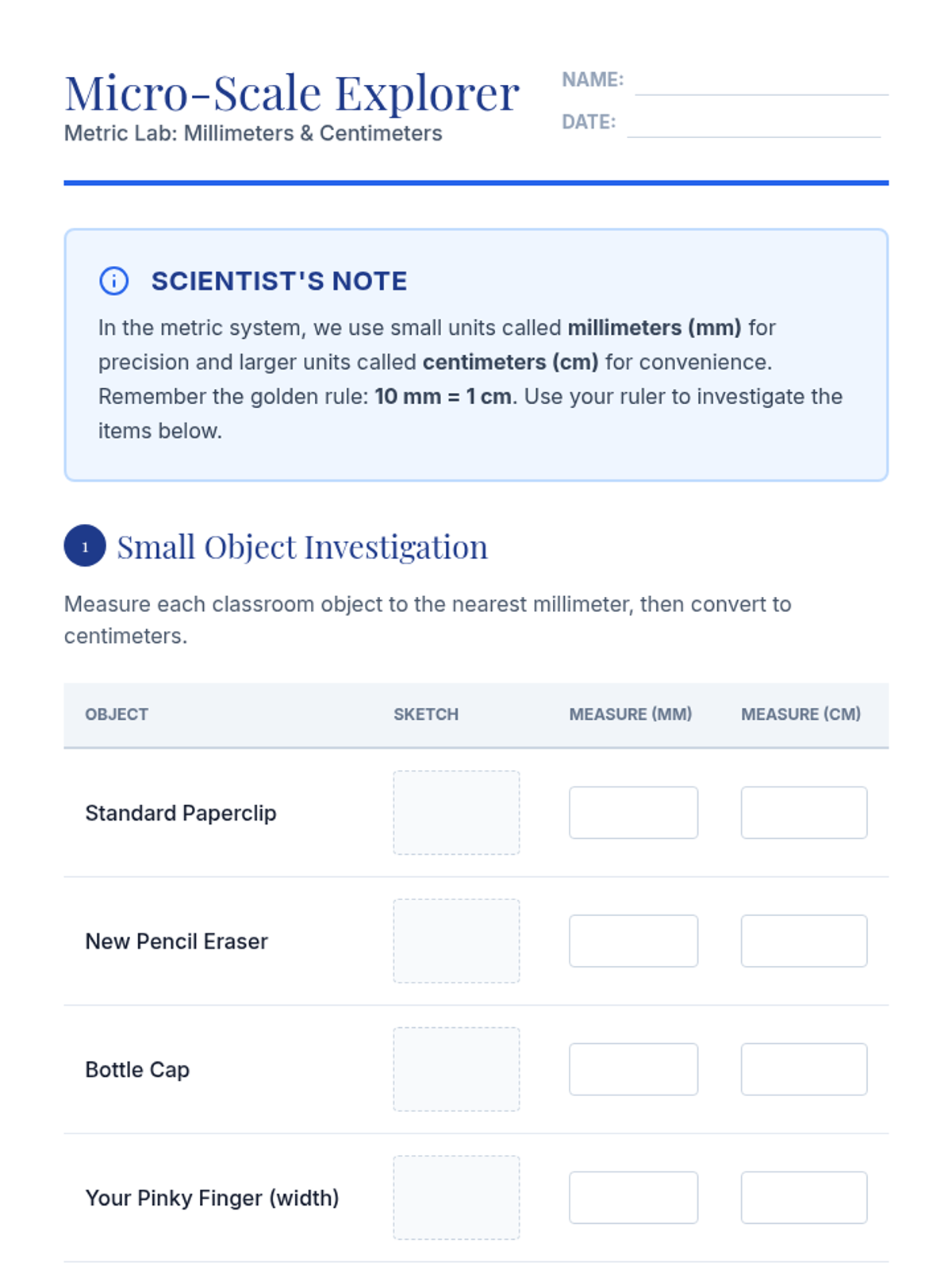
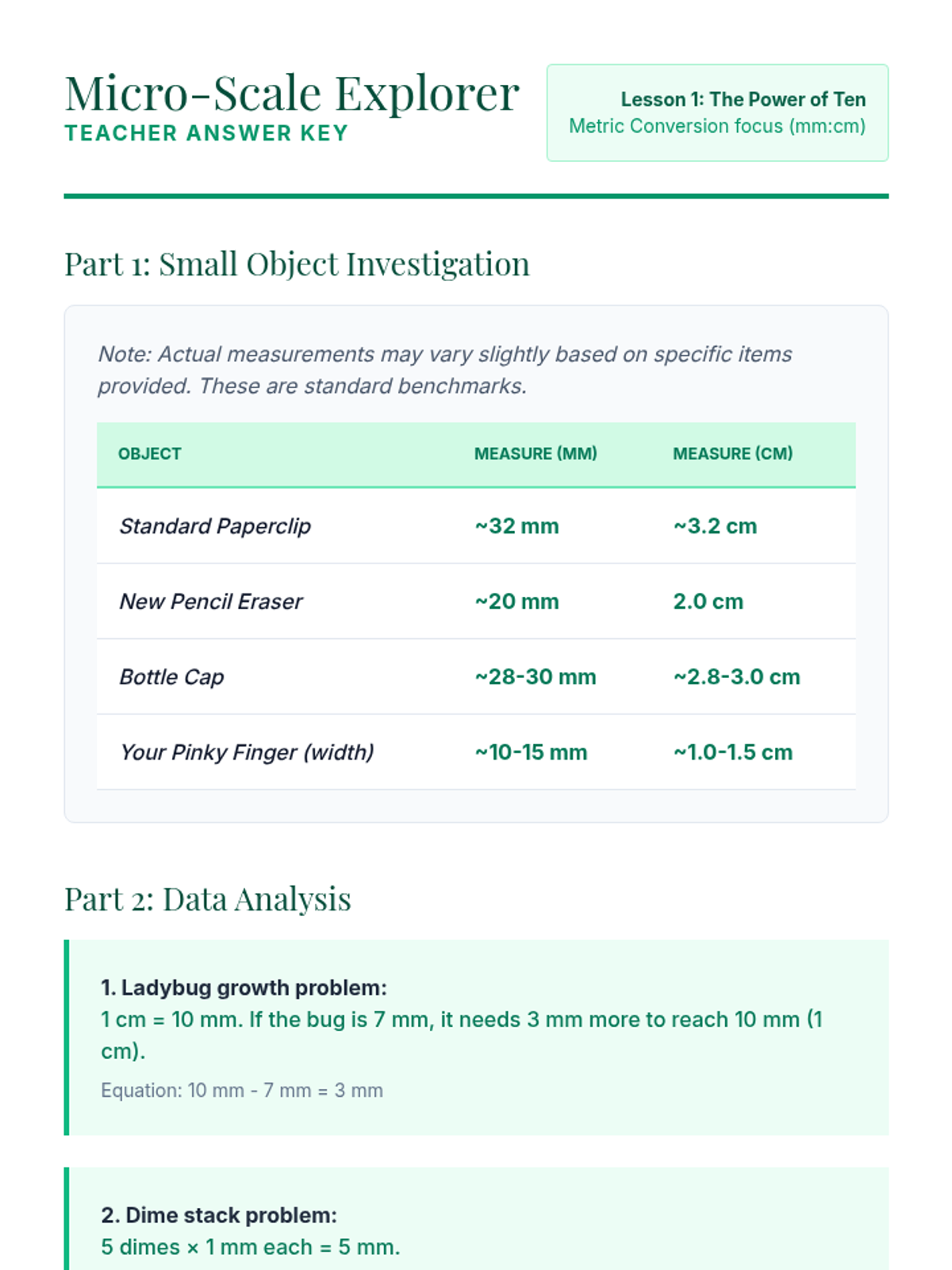
A comprehensive 5-lesson unit for 4th graders to master metric length measurement (mm, cm, m). Students transition from investigating micro-units on a ruler to measuring classroom-scale distances and conducting a 'Metric Olympics' to solidify their understanding of the base-ten measurement system.
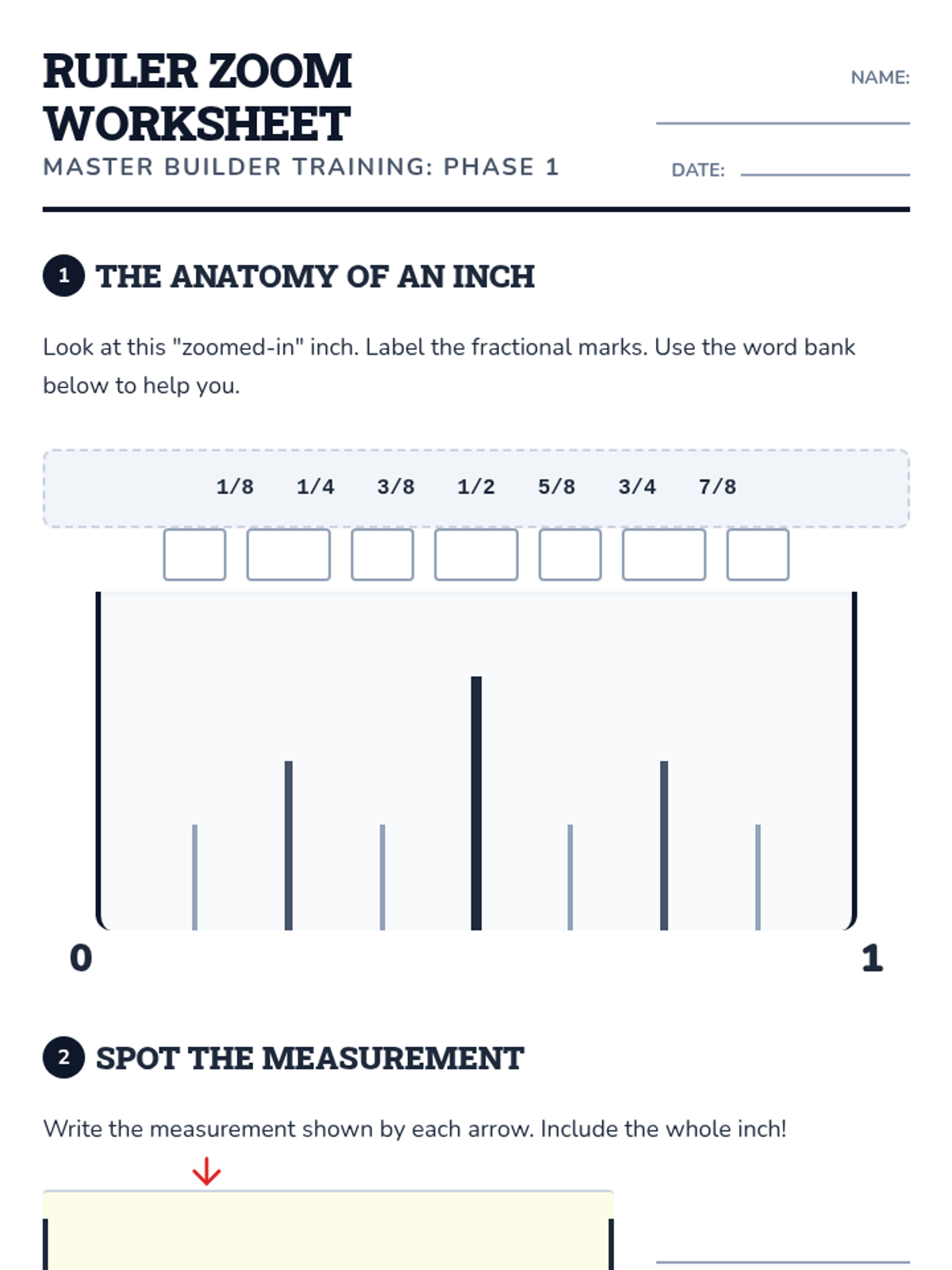
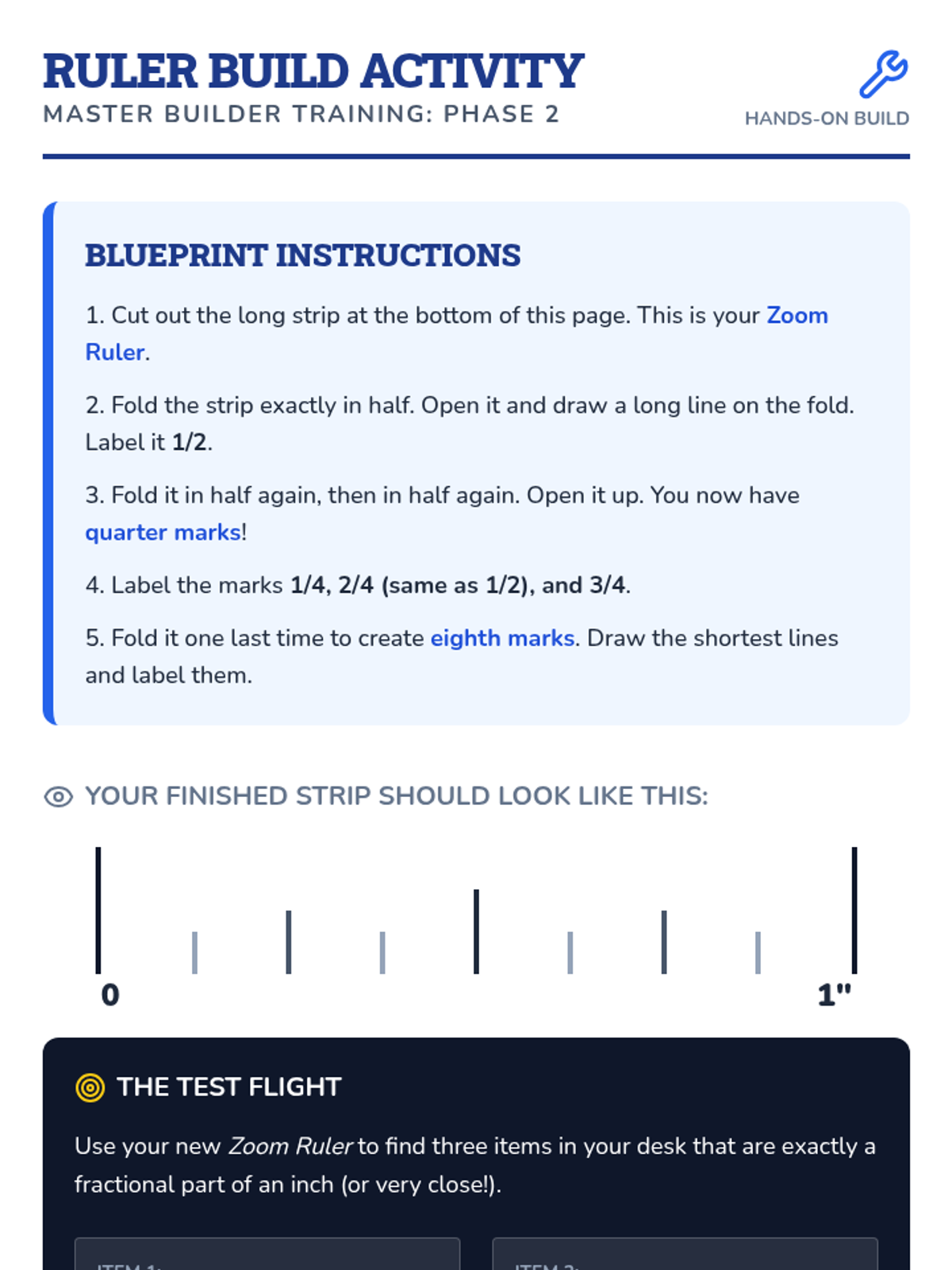
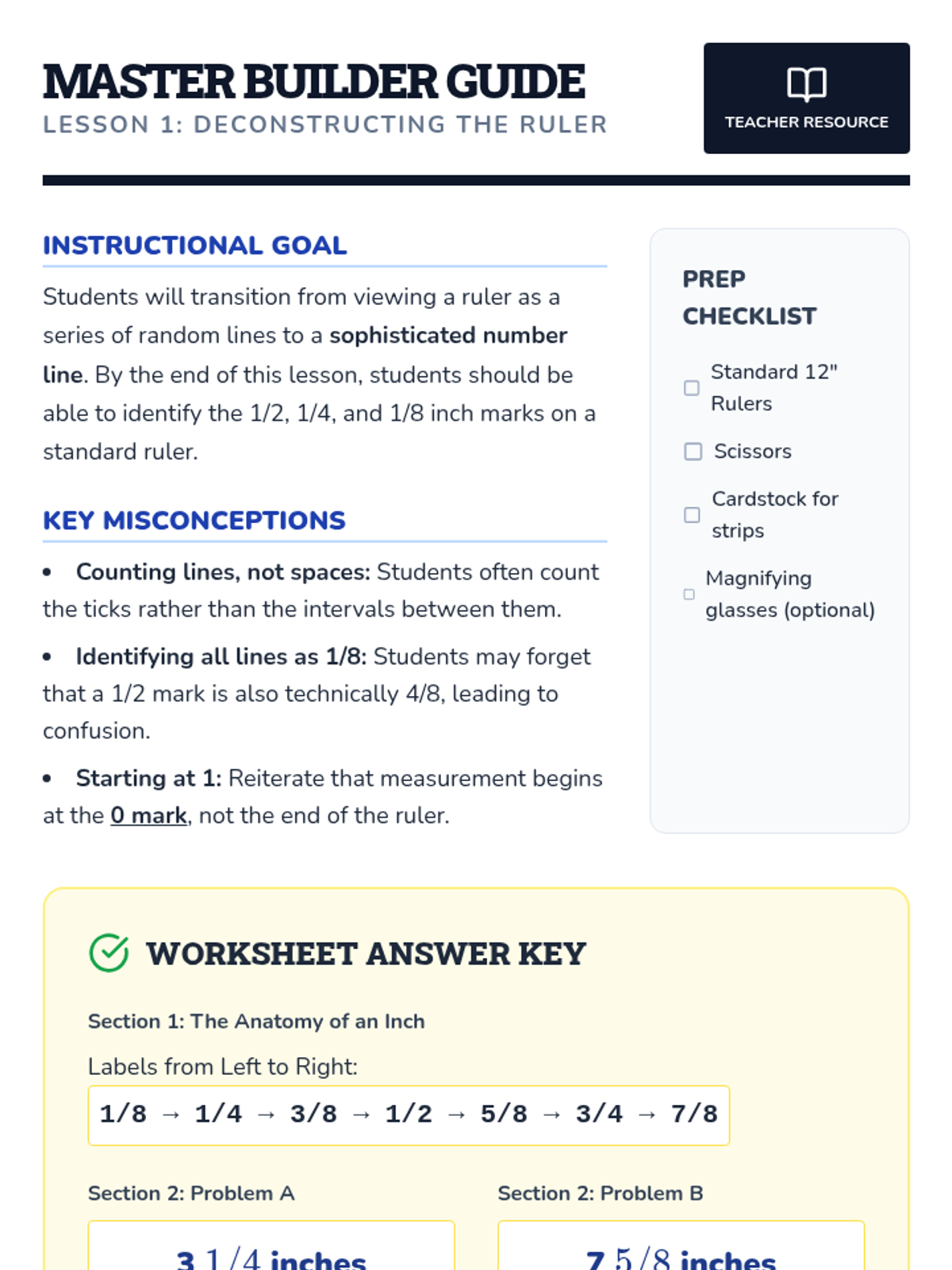
This 4th-grade sequence focuses on precision and mechanics of the U.S. Customary system. Students learn to measure to fractional parts of an inch (1/2, 1/4, 1/8), understand the relationships between inches, feet, and yards, and solve problems involving non-standard starting points.
A foundational sequence for 4th graders to distinguish between linear distance (perimeter) and 2D space (area) through hands-on exploration, grid modeling, and standard unit application.
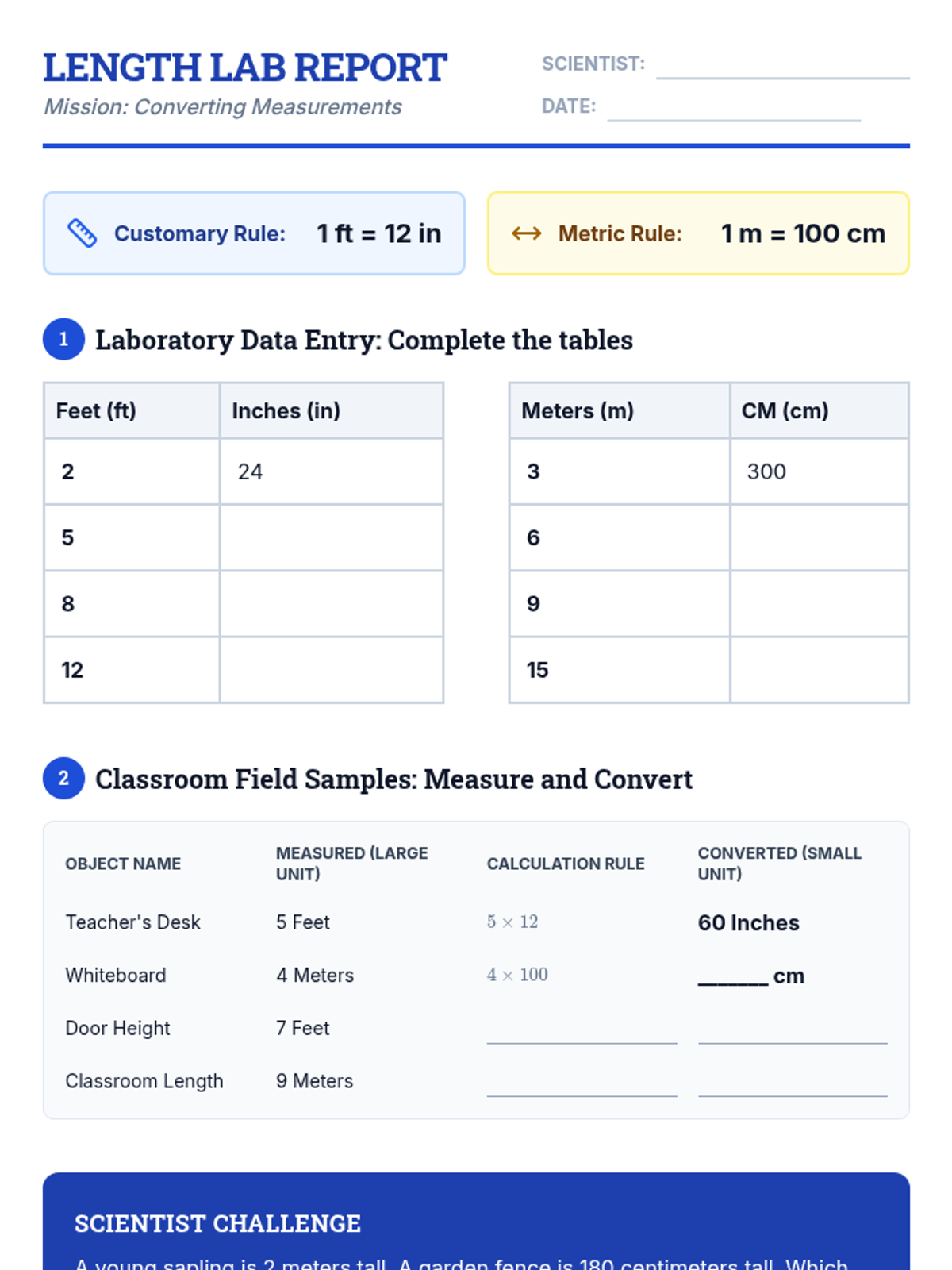
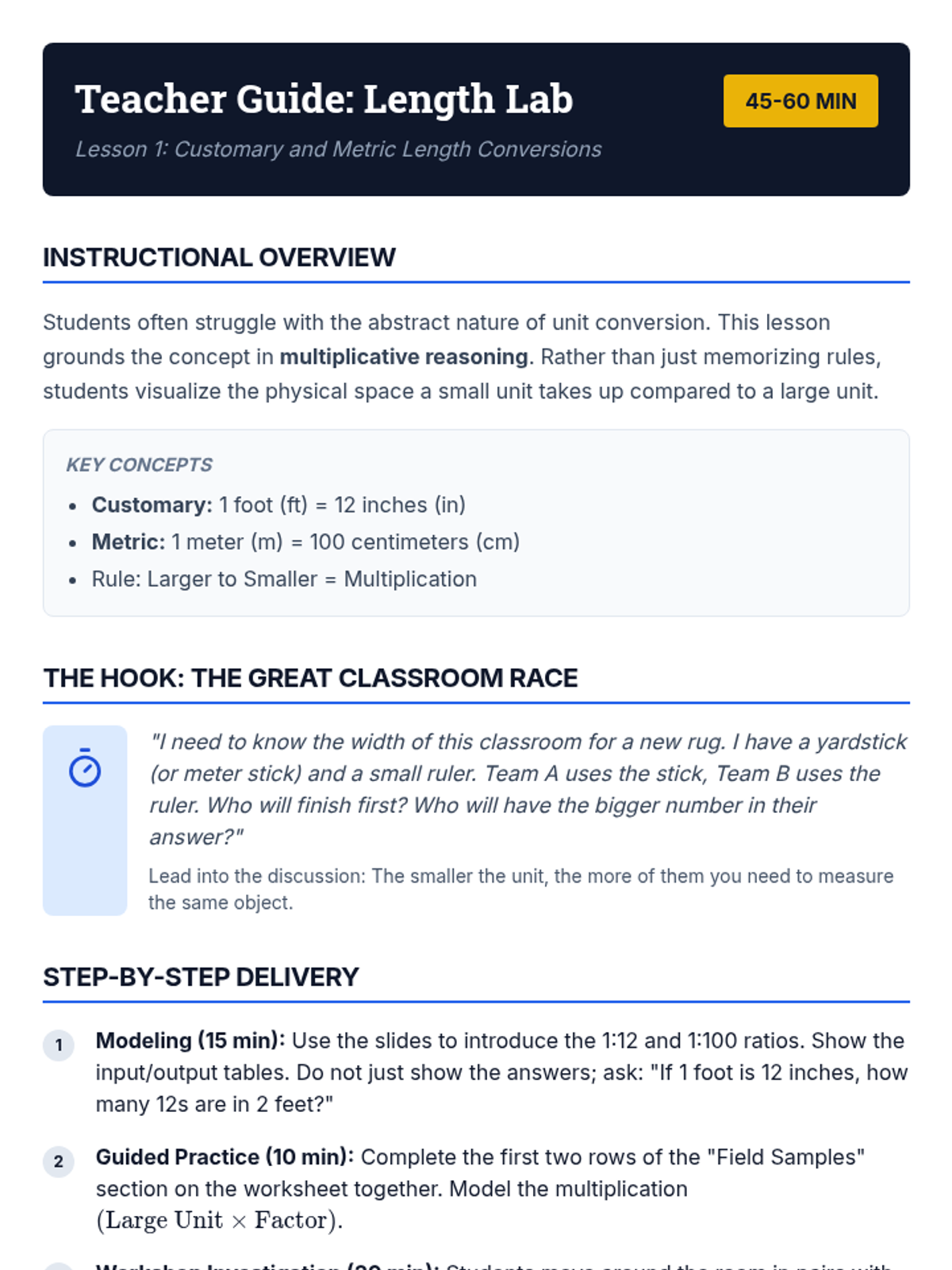
A comprehensive sequence on measurement unit conversions for 4th Grade, focusing on relative sizes, input-output tables, and real-world problem-solving across Metric and Customary systems.
Students become junior architects, mastering estimation and precise measurement using metric and customary units to design classroom floor plans.
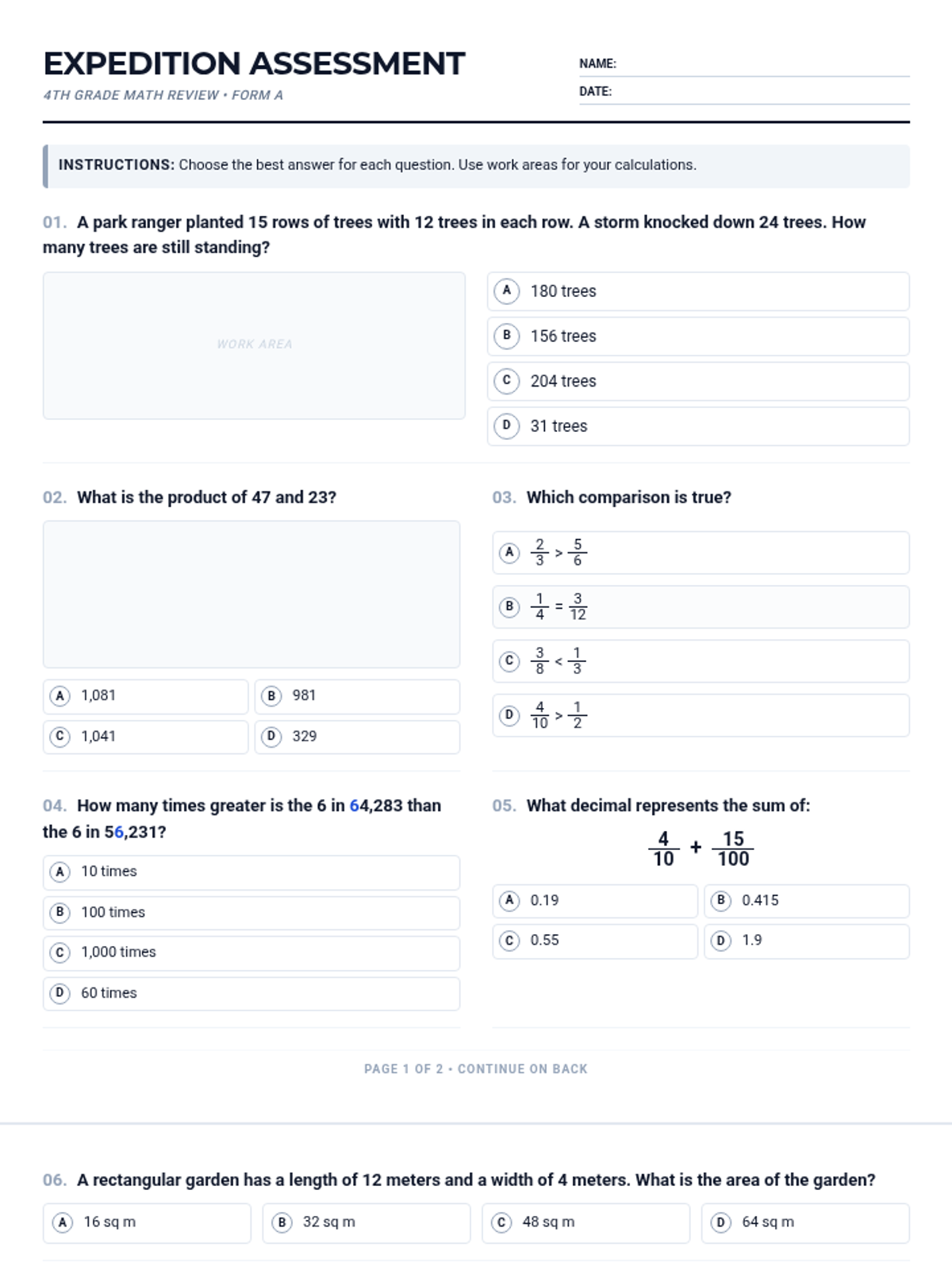
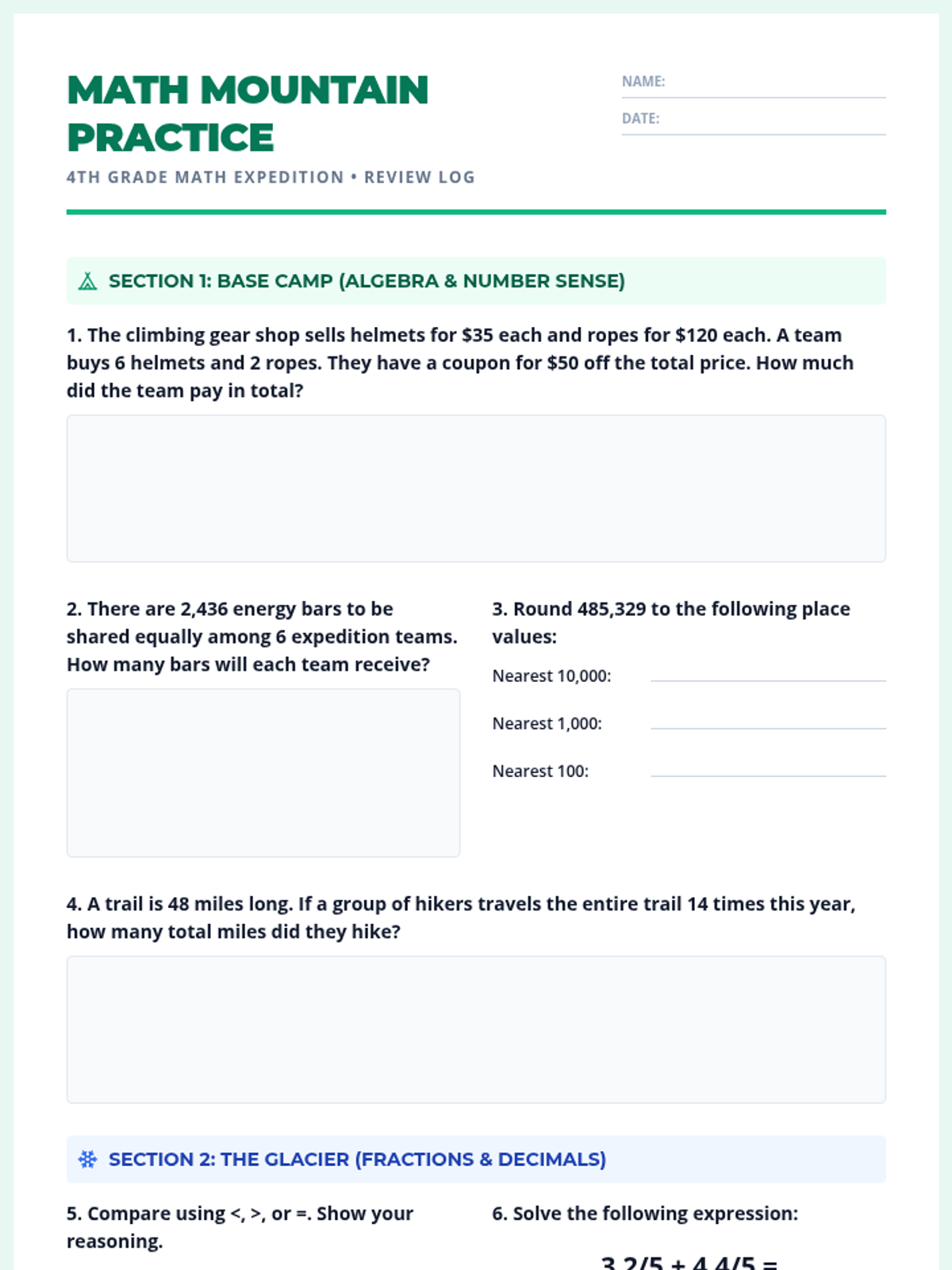
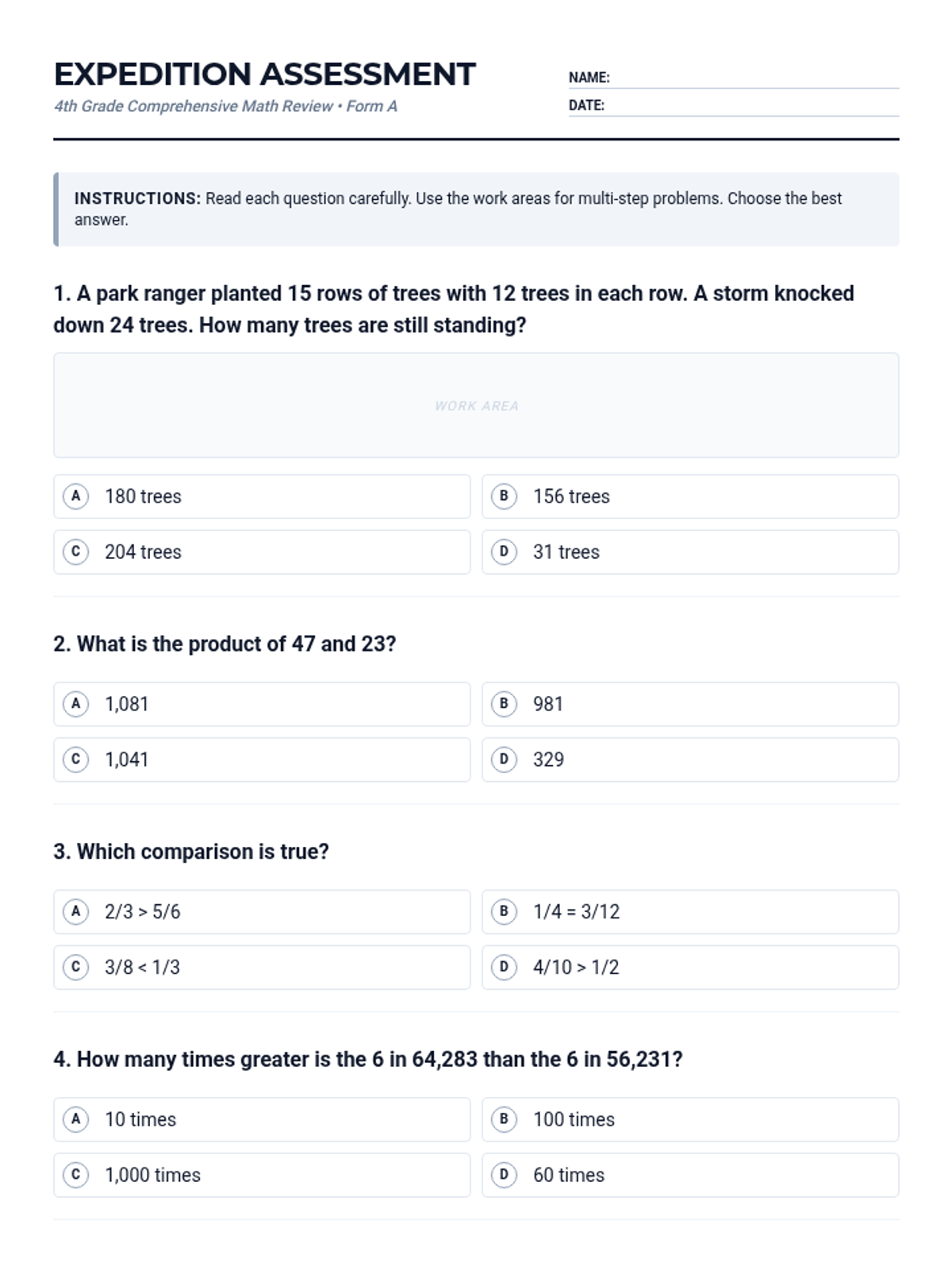
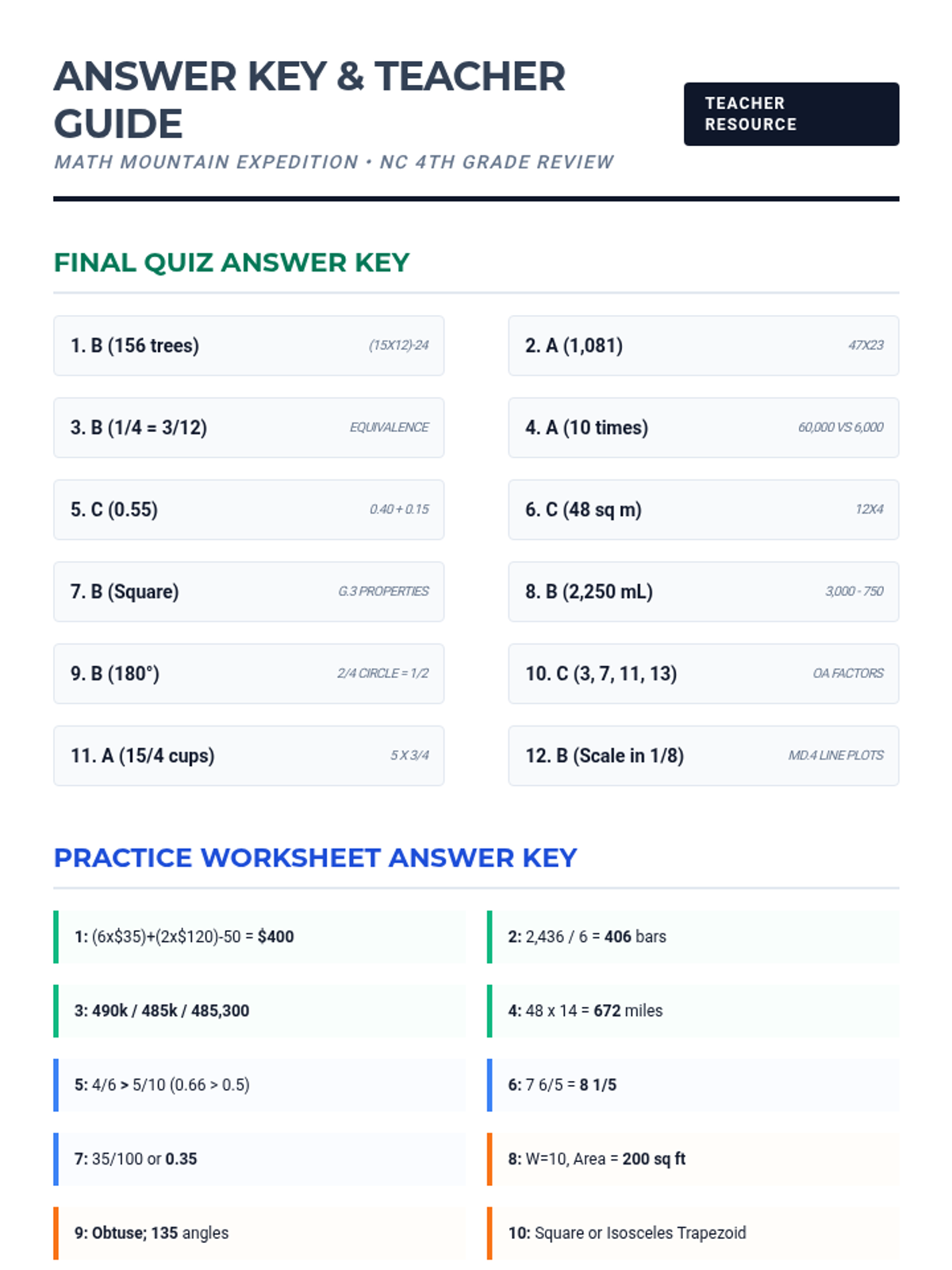
A comprehensive review series for North Carolina 4th-grade students, focusing on all math domains including multi-step word problems and critical thinking challenges.
A targeted test preparation sequence designed to build confidence and accuracy in key math domains through engaging, themed challenges.
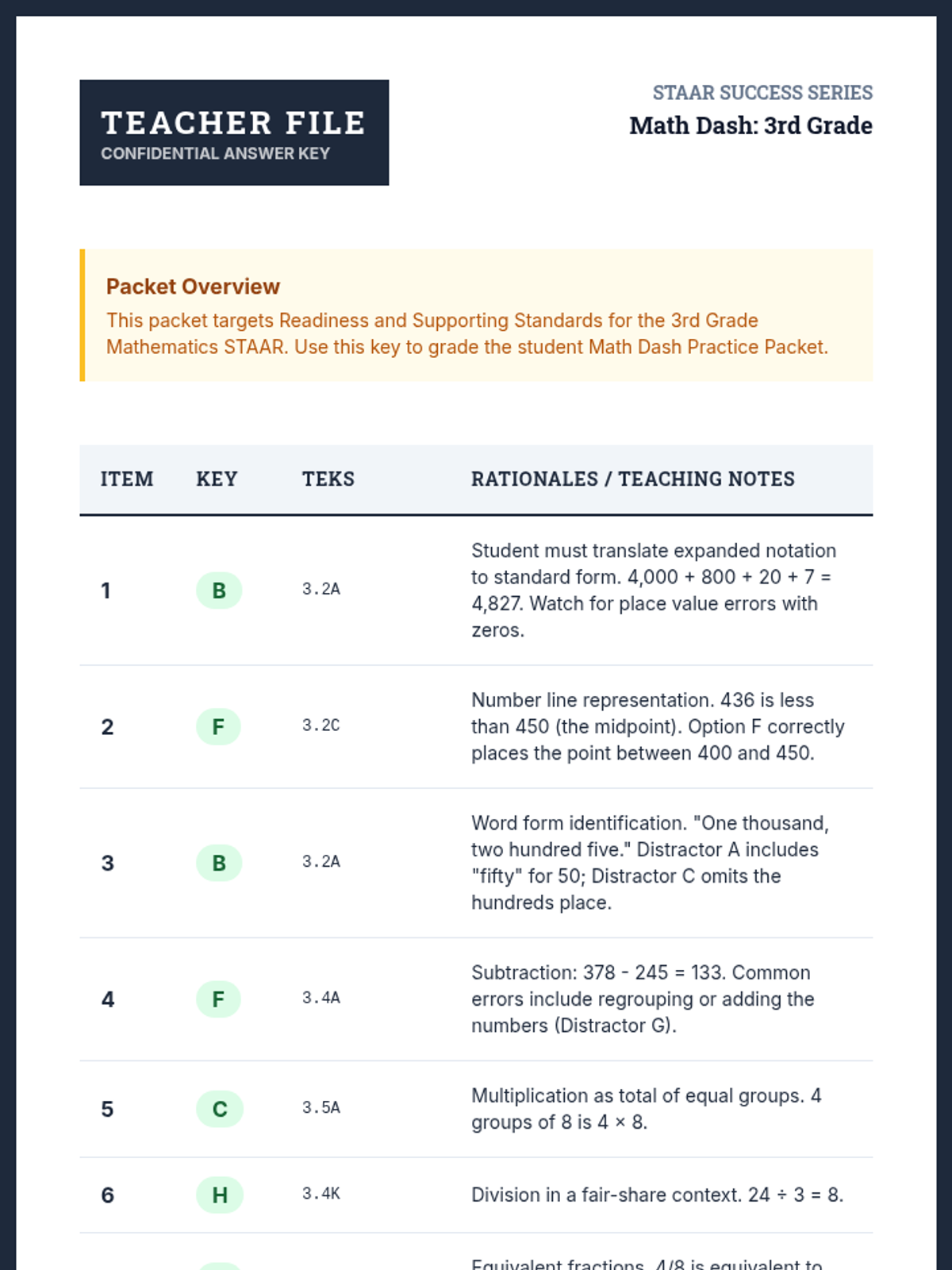
A comprehensive collection of STAAR-aligned practice packets for 3rd-5th grade Math, RLA, and 5th grade Science, designed to build confidence and mastery through authentic test-style questions.
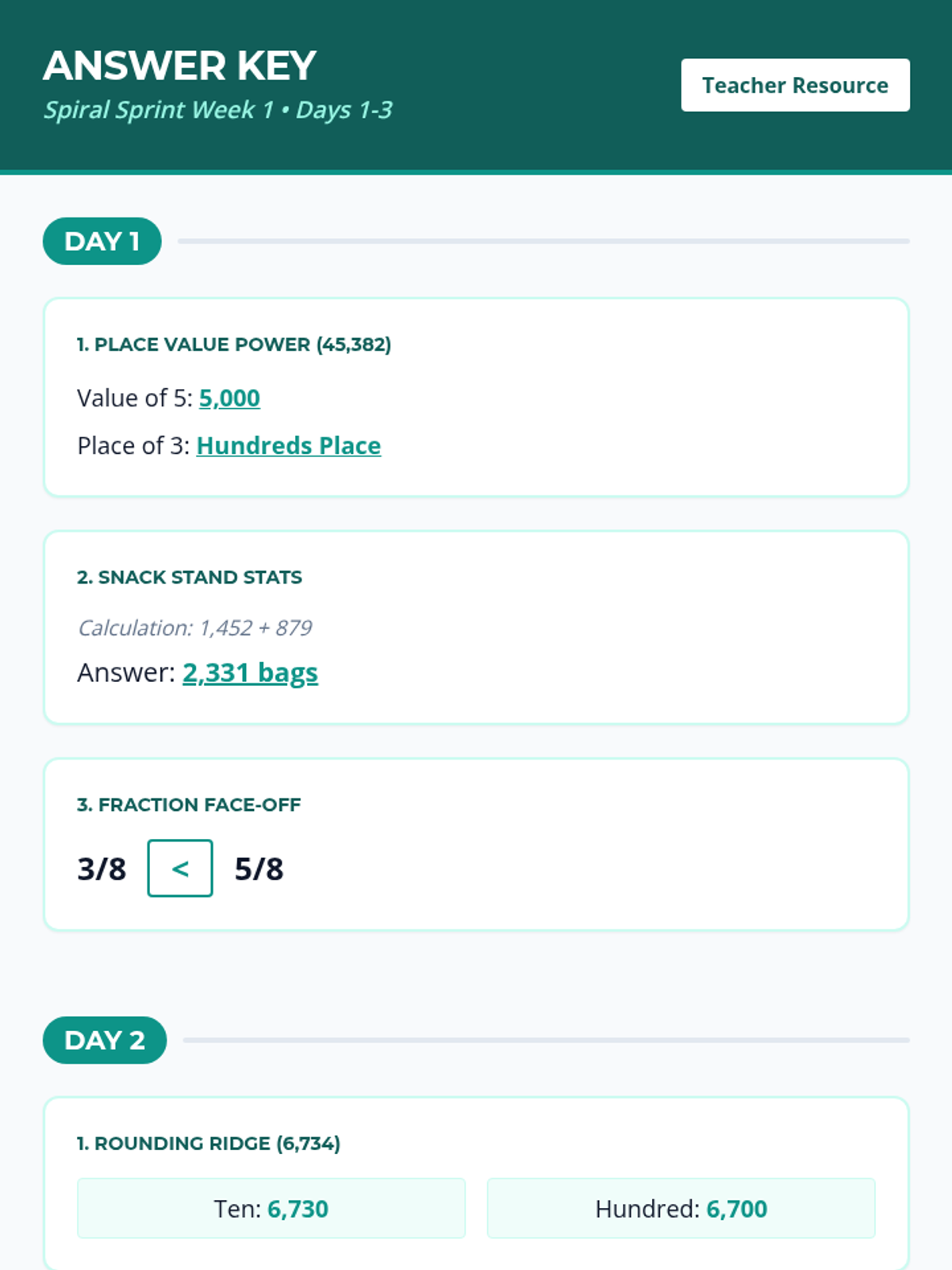
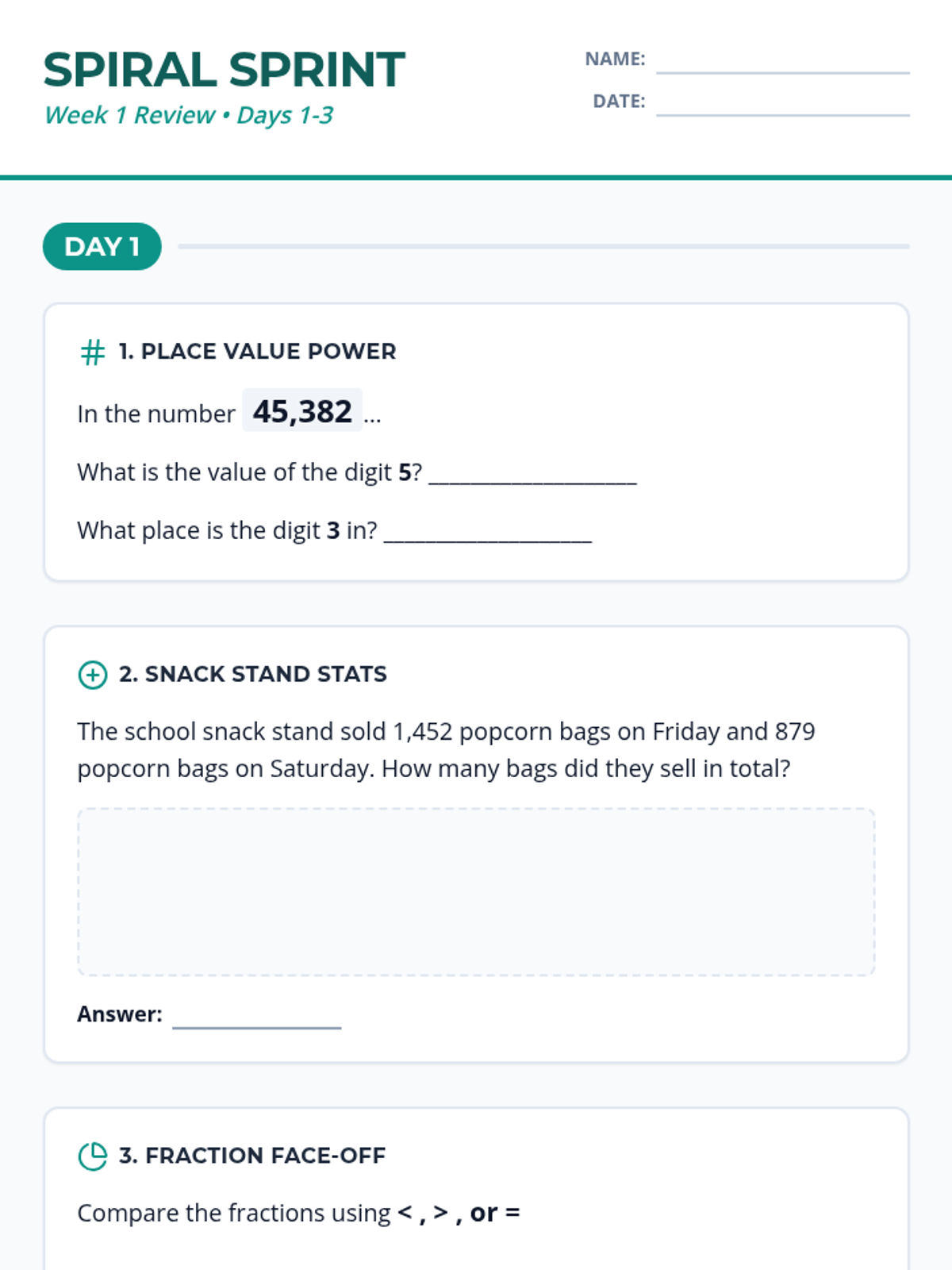
A two-week intensive spiral review of 4th-grade math standards designed for 5th-grade RSP students to bridge foundational gaps through short, focused daily practice.
A comprehensive 4-lesson unit designed to empower 4th and 5th grade girls with the skills and confidence to master the ILEARN assessment through mindset, strategy, and subject-specific practice.
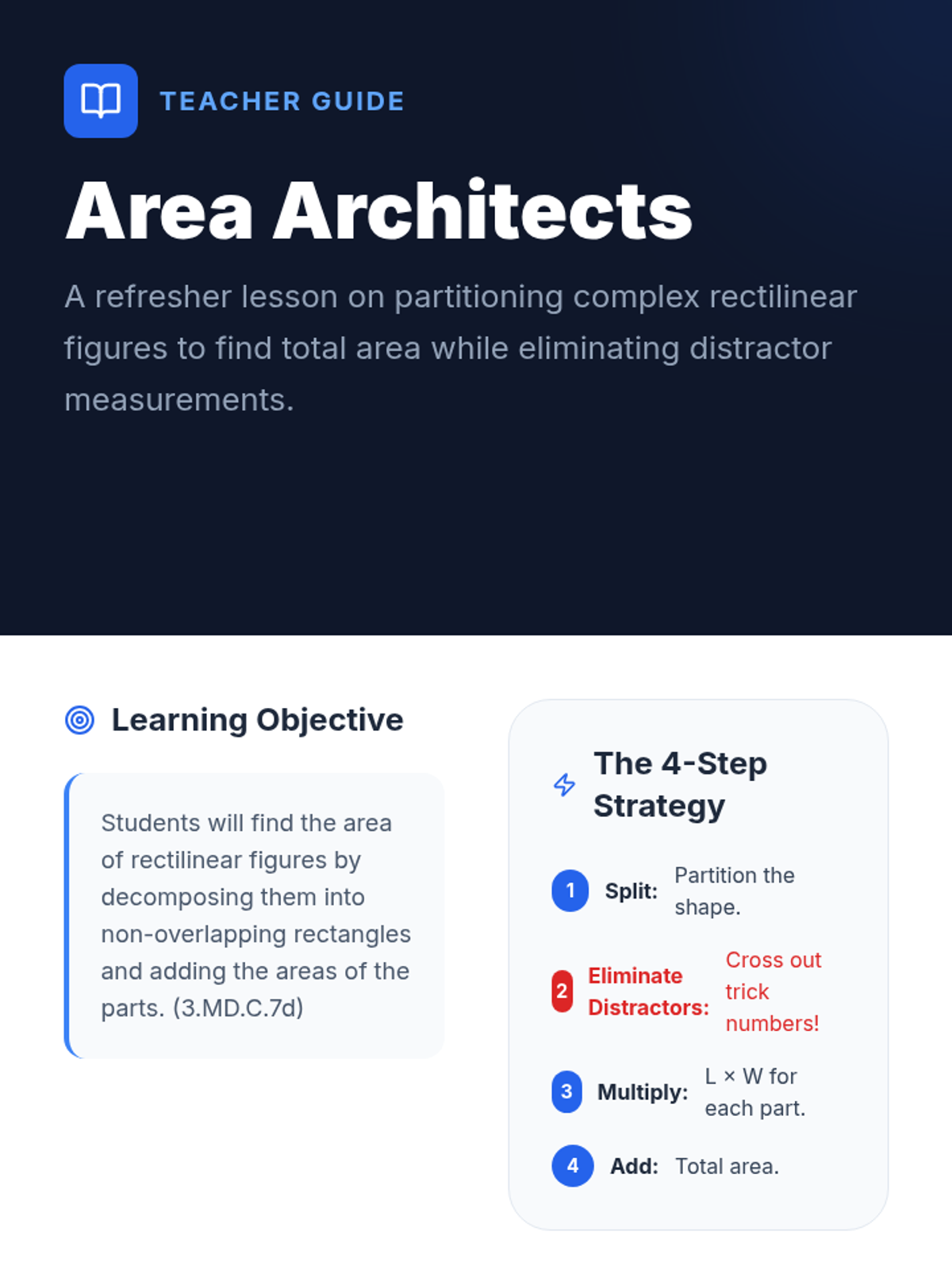
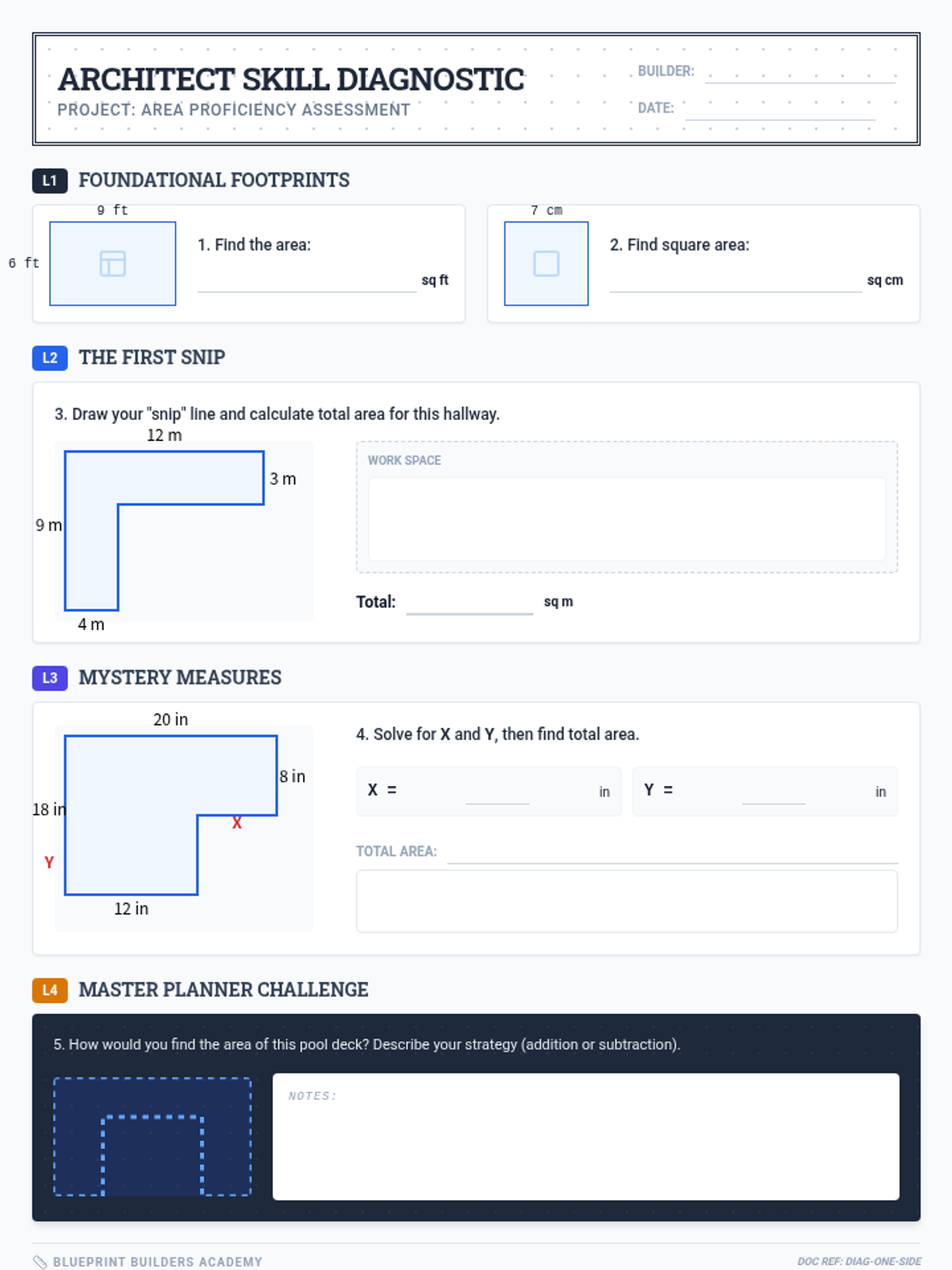
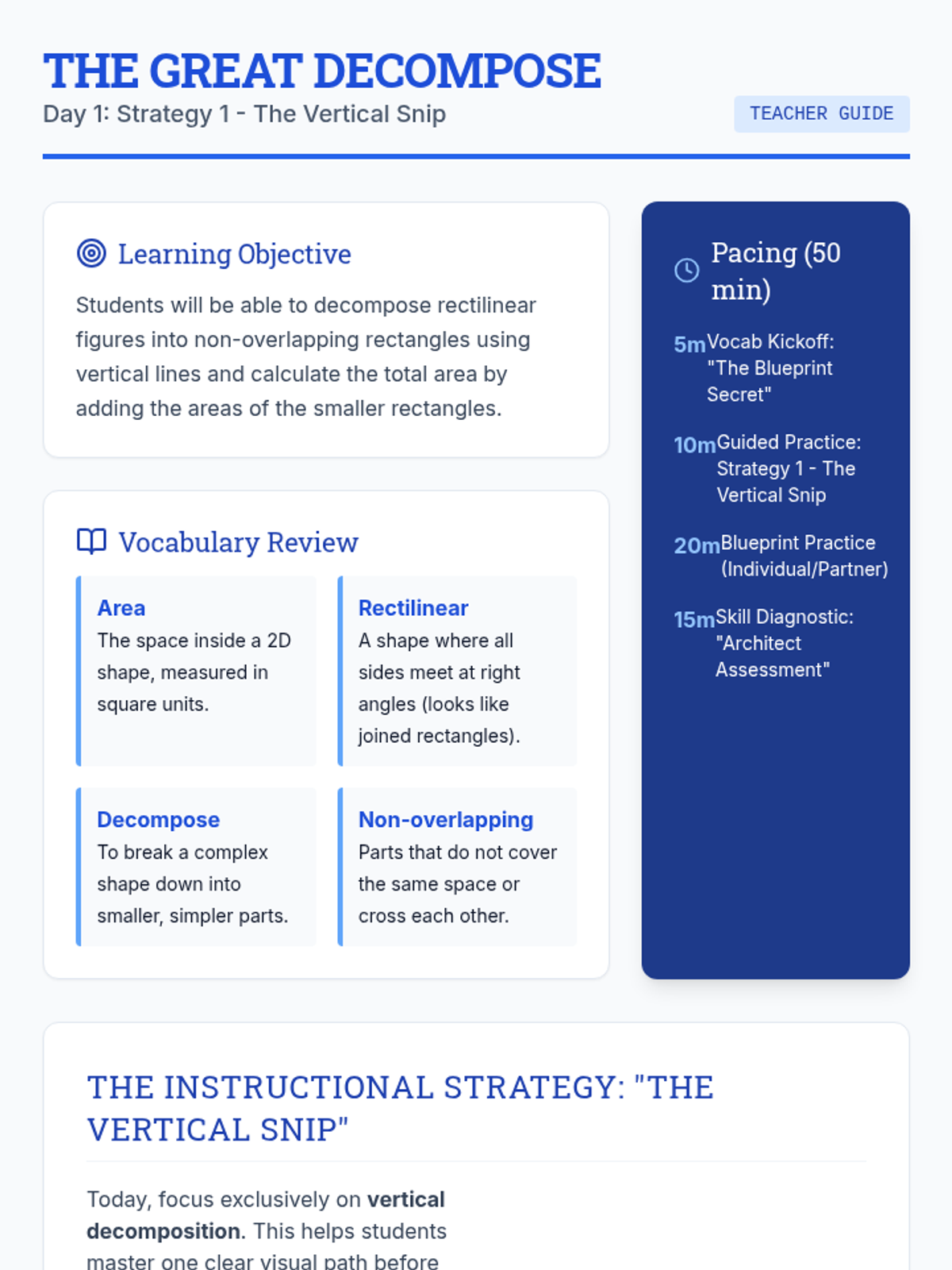
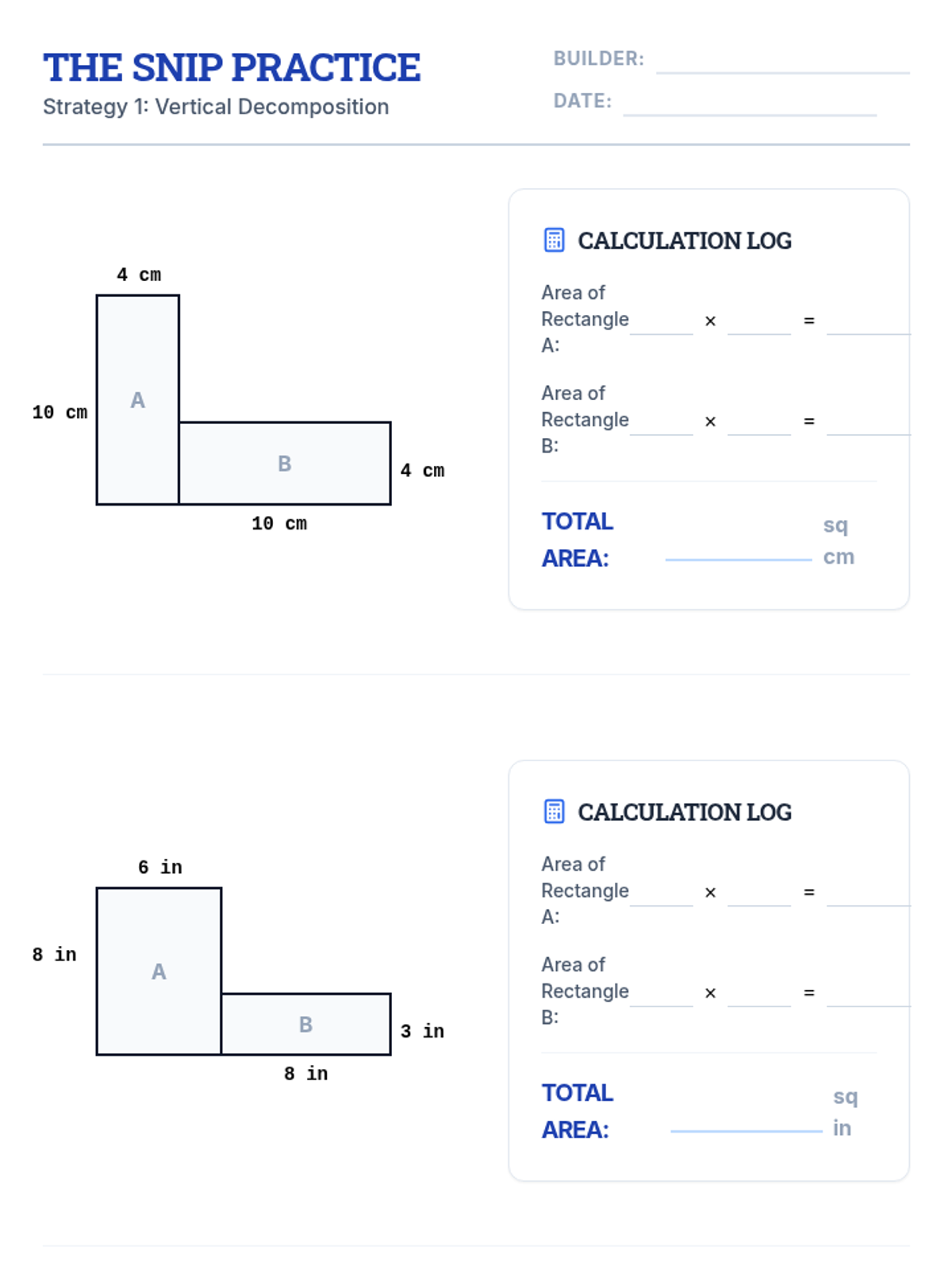
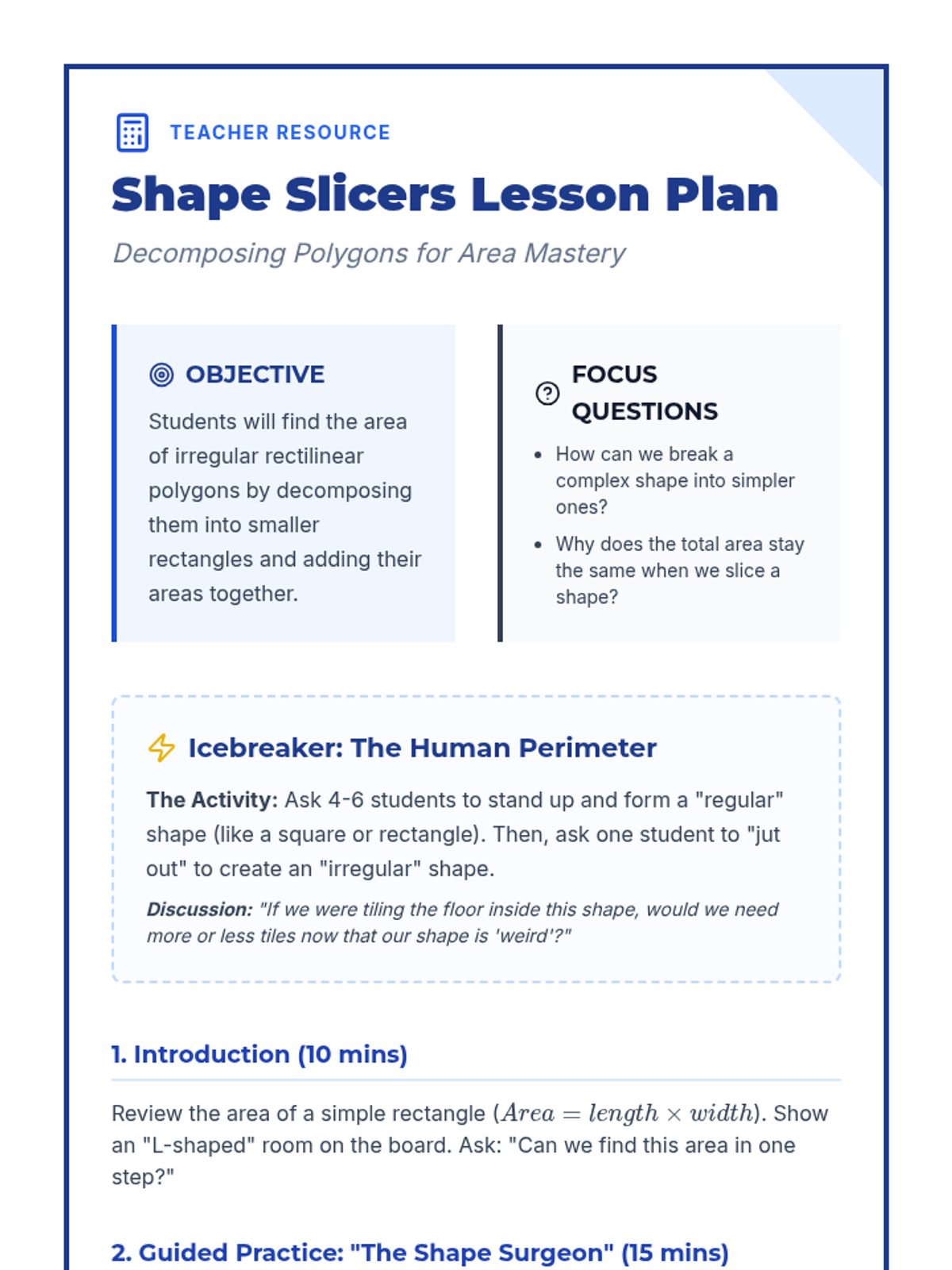
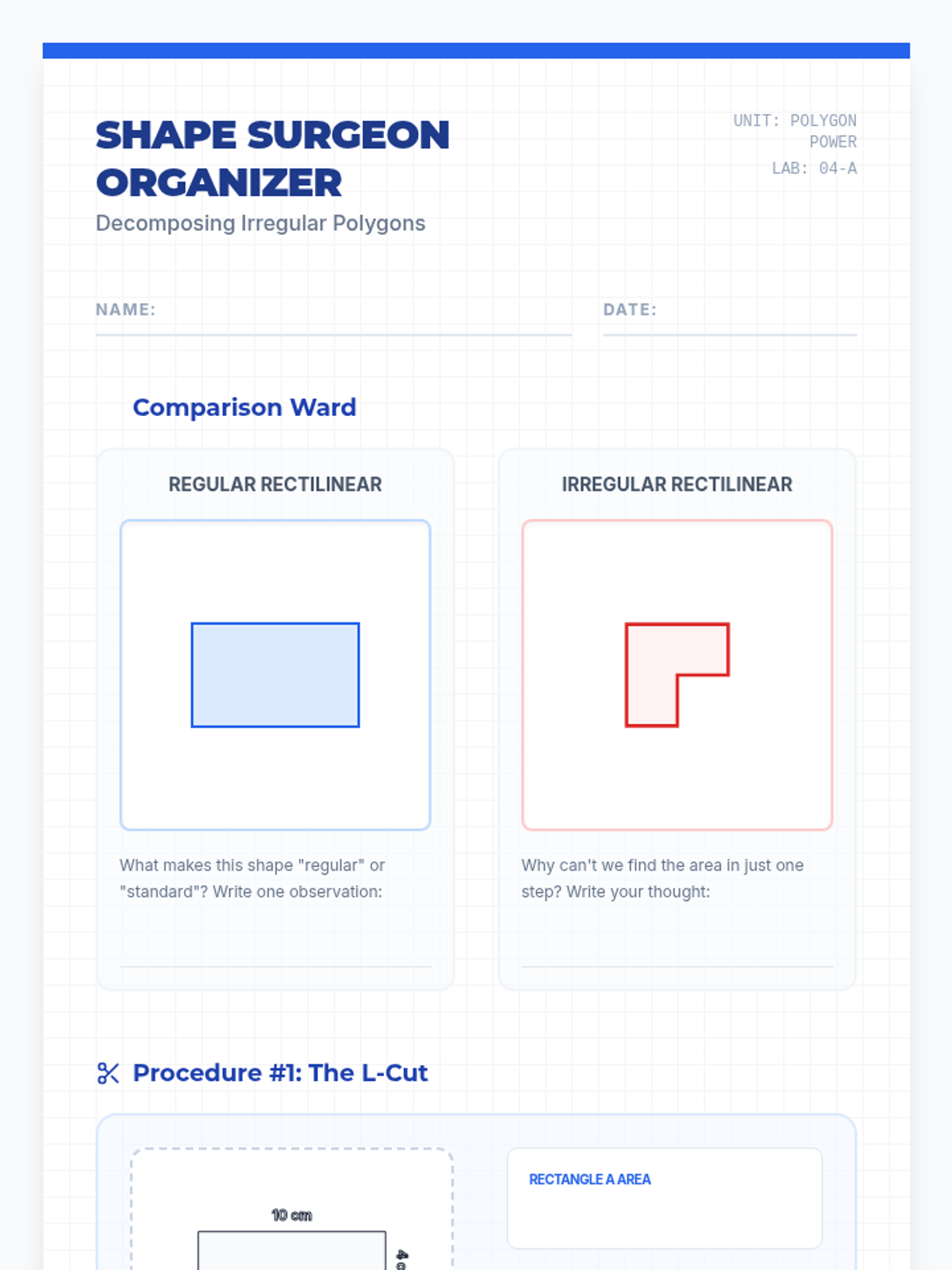
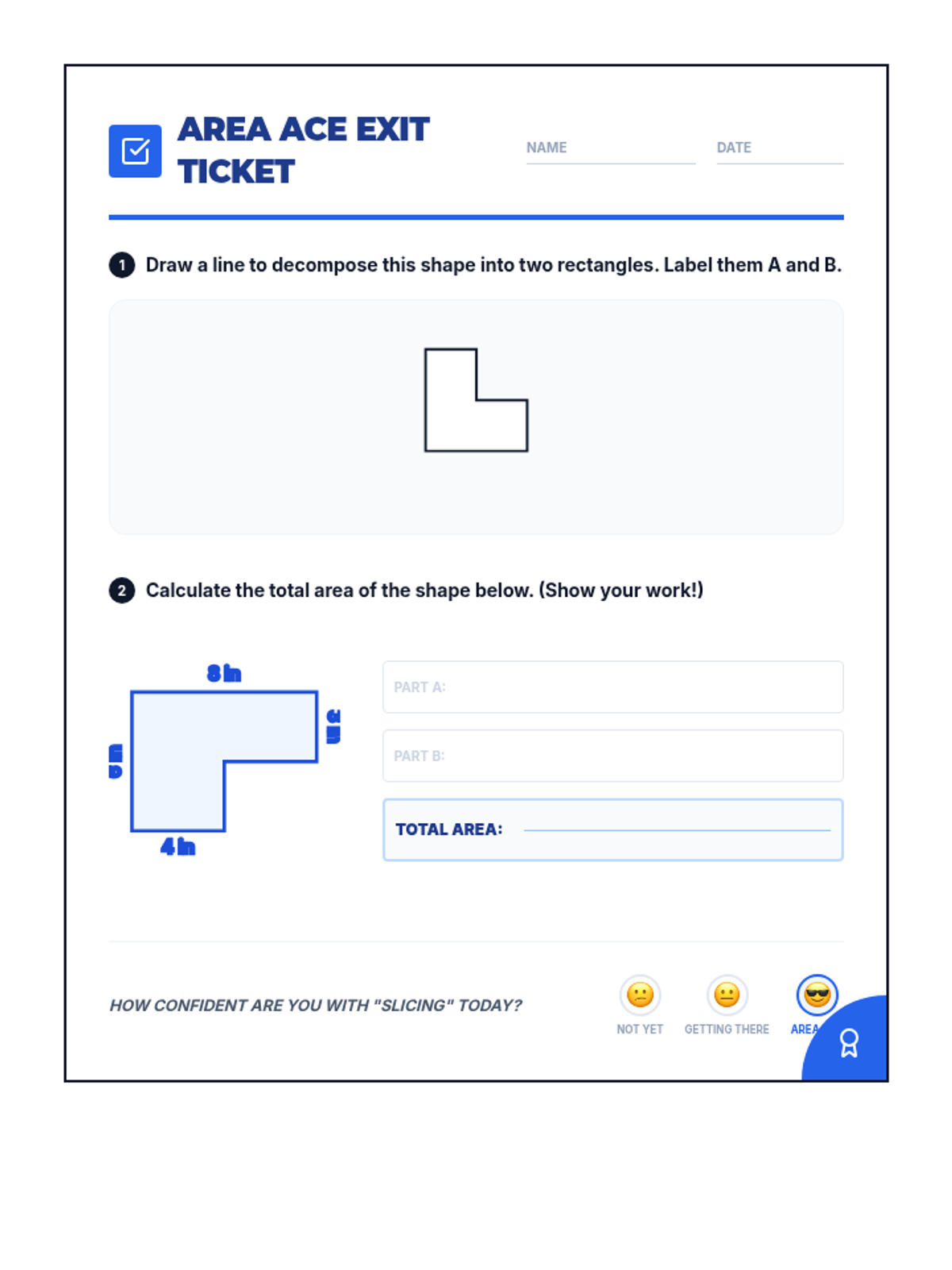
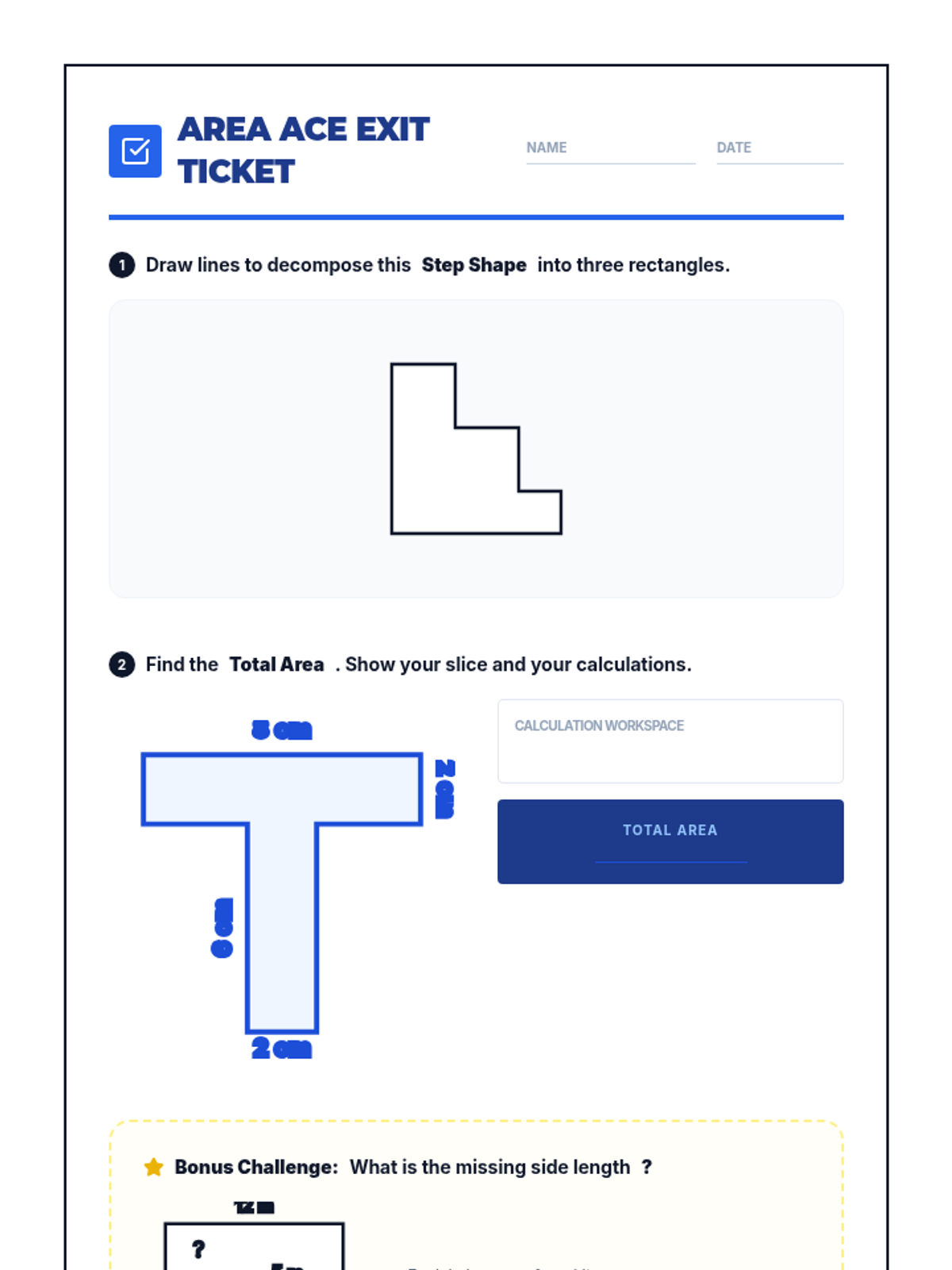
A four-day intensive unit on decomposing rectilinear figures to find total area, progressing from basic strategies to complex real-world architectural challenges. Students act as 'Blueprint Builders' to master vertical cuts, horizontal cuts, and additive/subtractive methods.
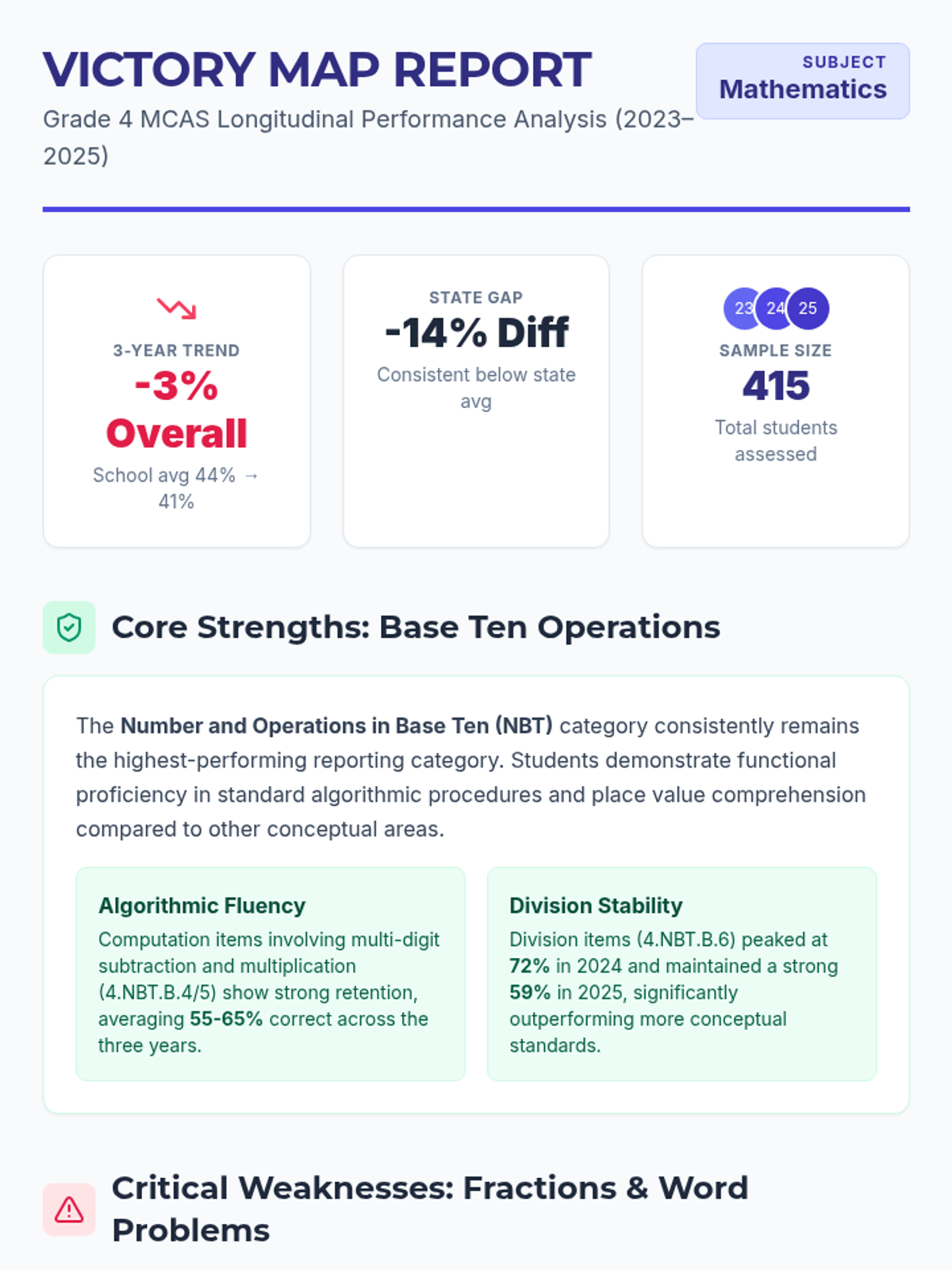
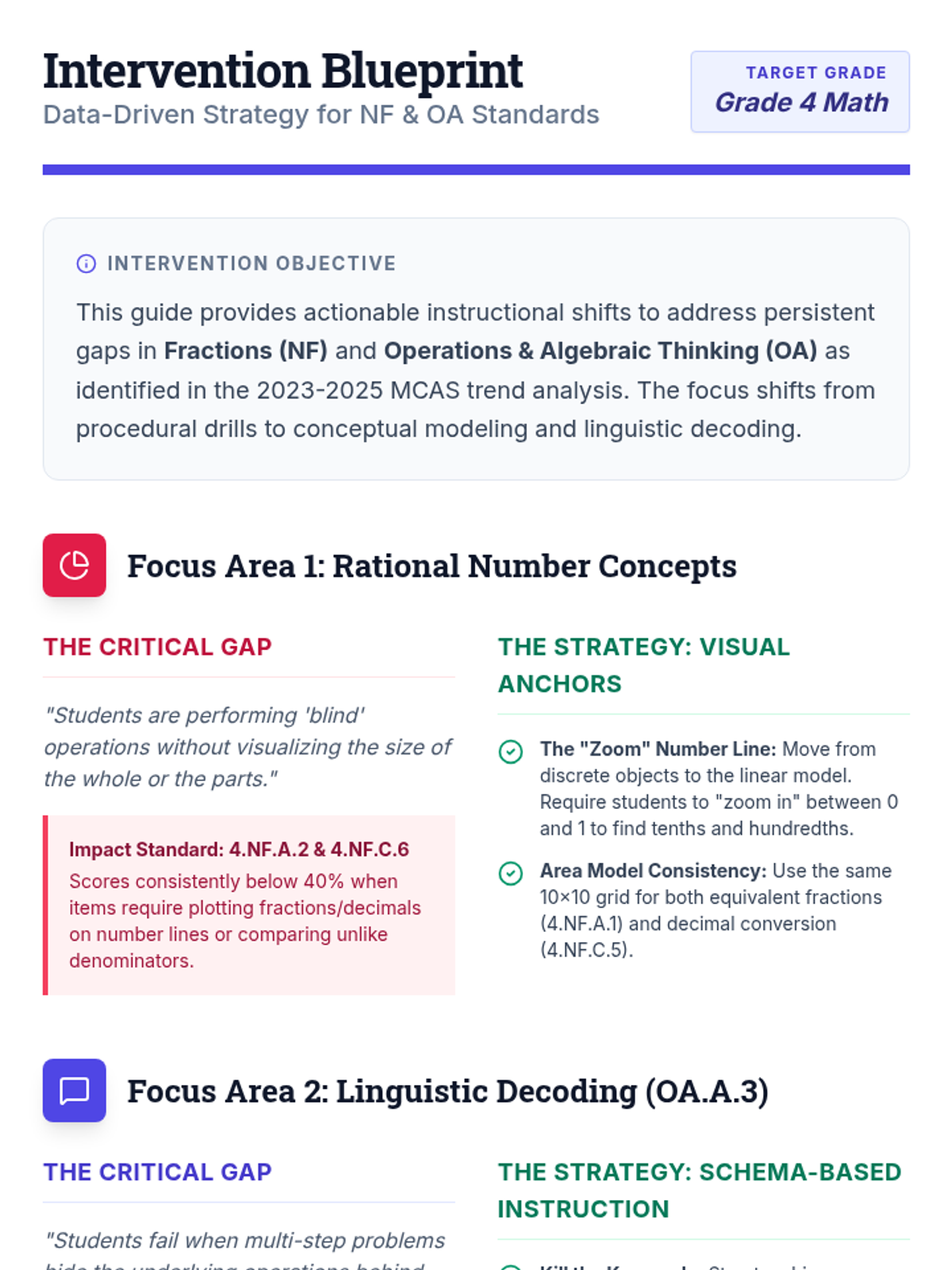
A comprehensive multi-grade longitudinal analysis of MCAS Math data (Grades 3-4) for 2023-2025. This sequence provides diagnostic reporting, visual aids, and instructional intervention strategies based on identified categorical trends.
A comprehensive sequence for 4th graders to master finding the area of regular and irregular polygons through decomposition and measurement strategies.
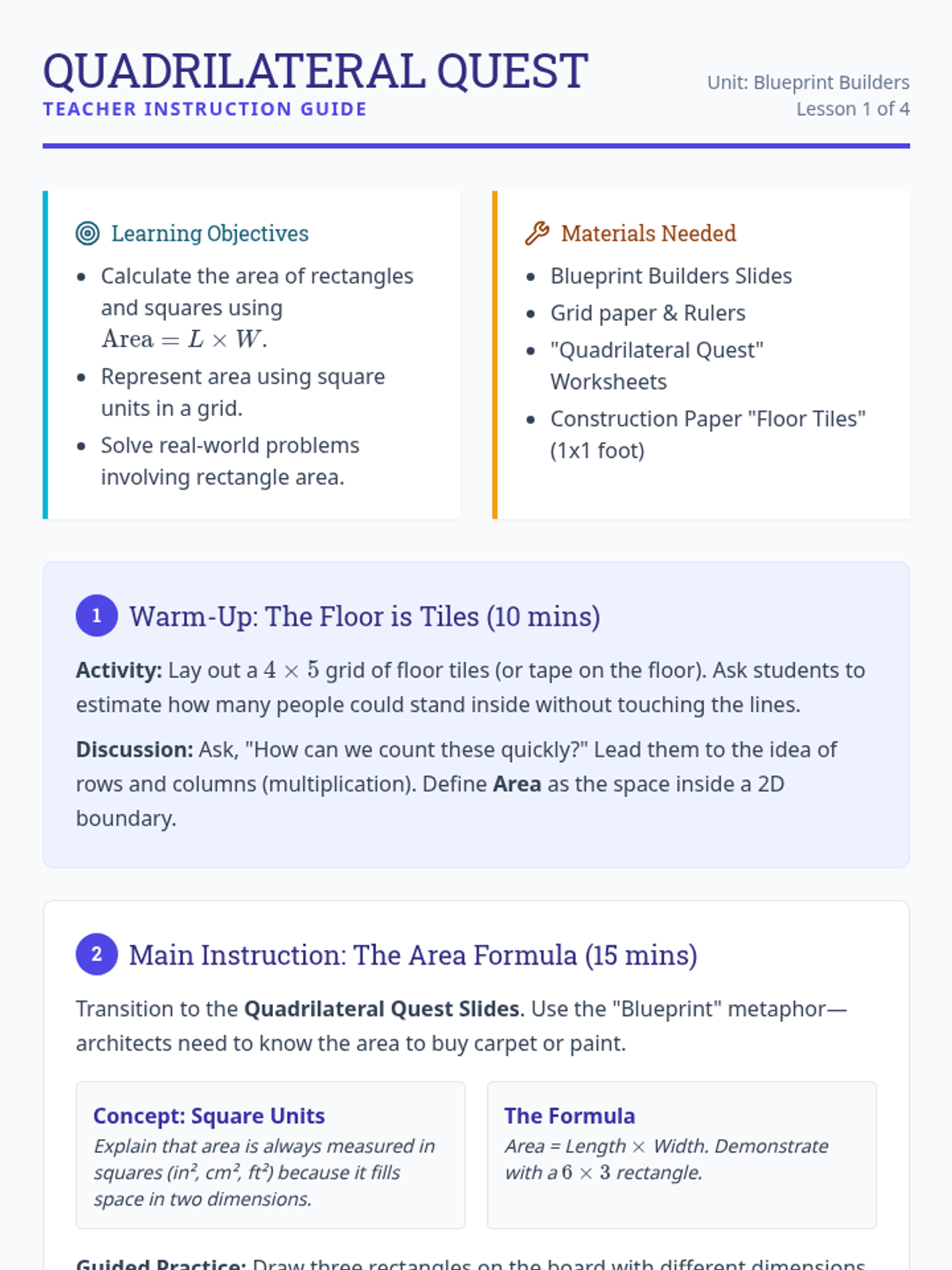
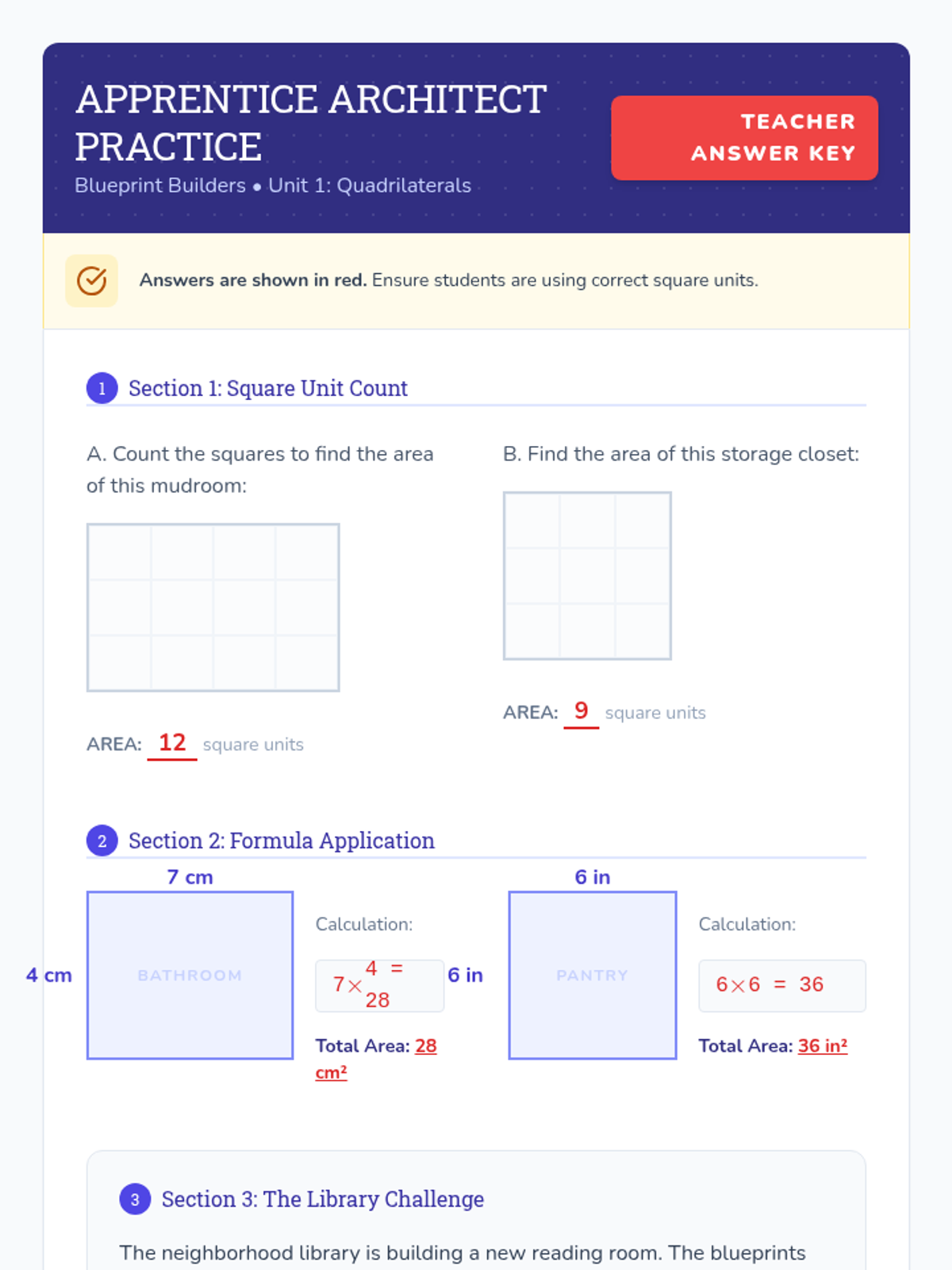
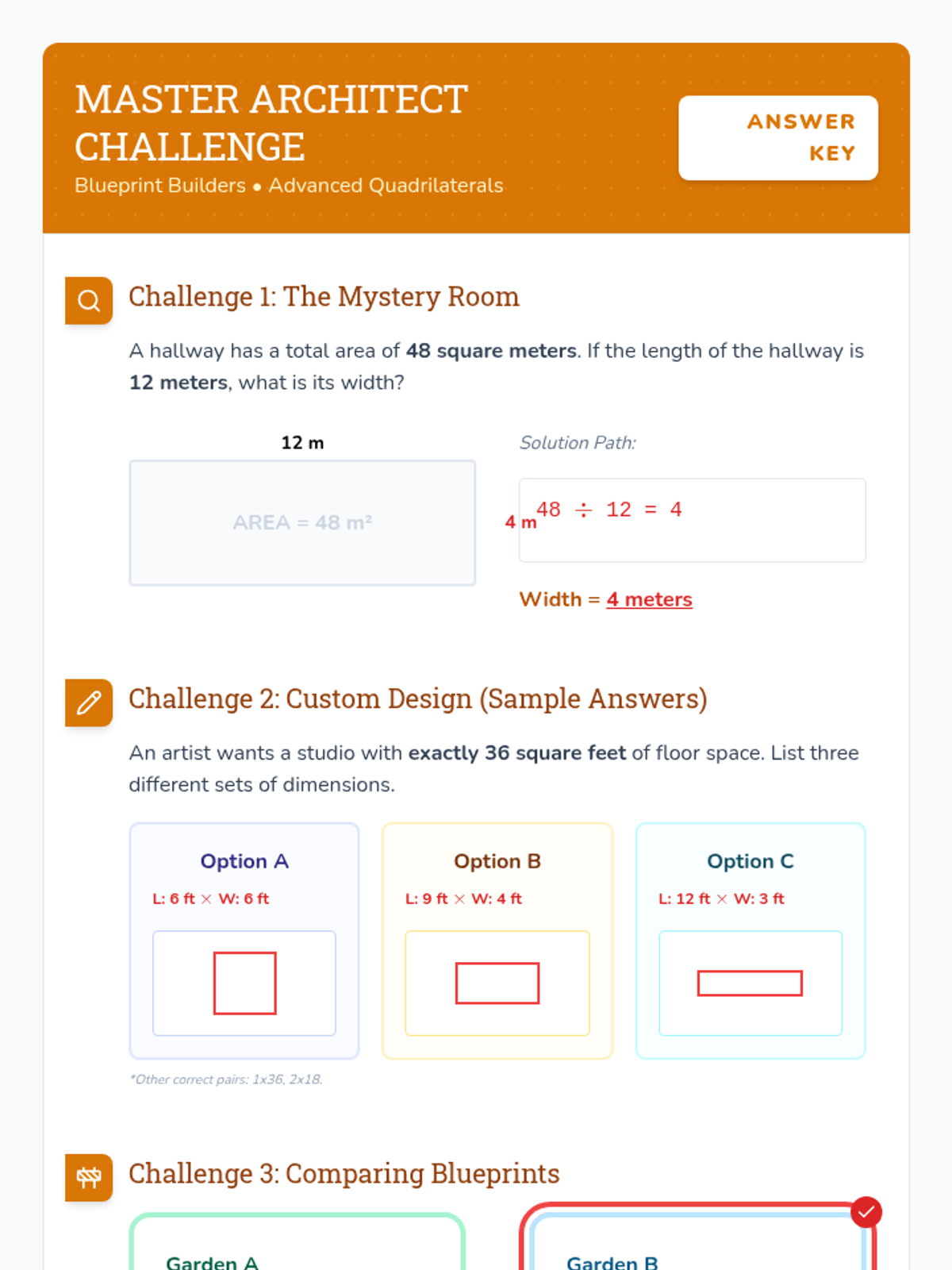
A comprehensive 4th-grade geometry unit focused on calculating the area of quadrilaterals, triangles, and irregular polygons through decomposition and formulas. The unit uses a 'Blueprint Builders' theme to engage students in real-world mathematical applications.
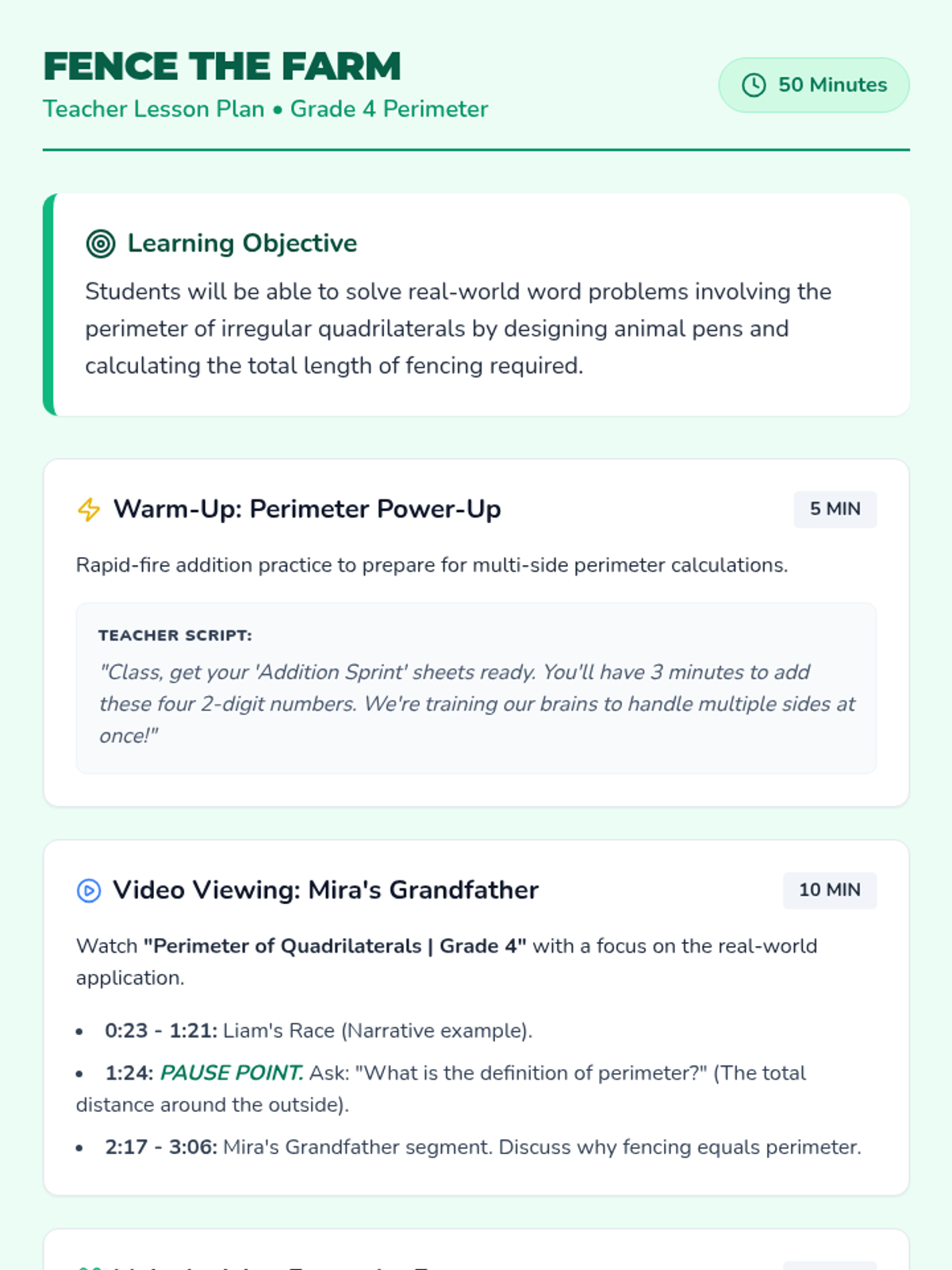
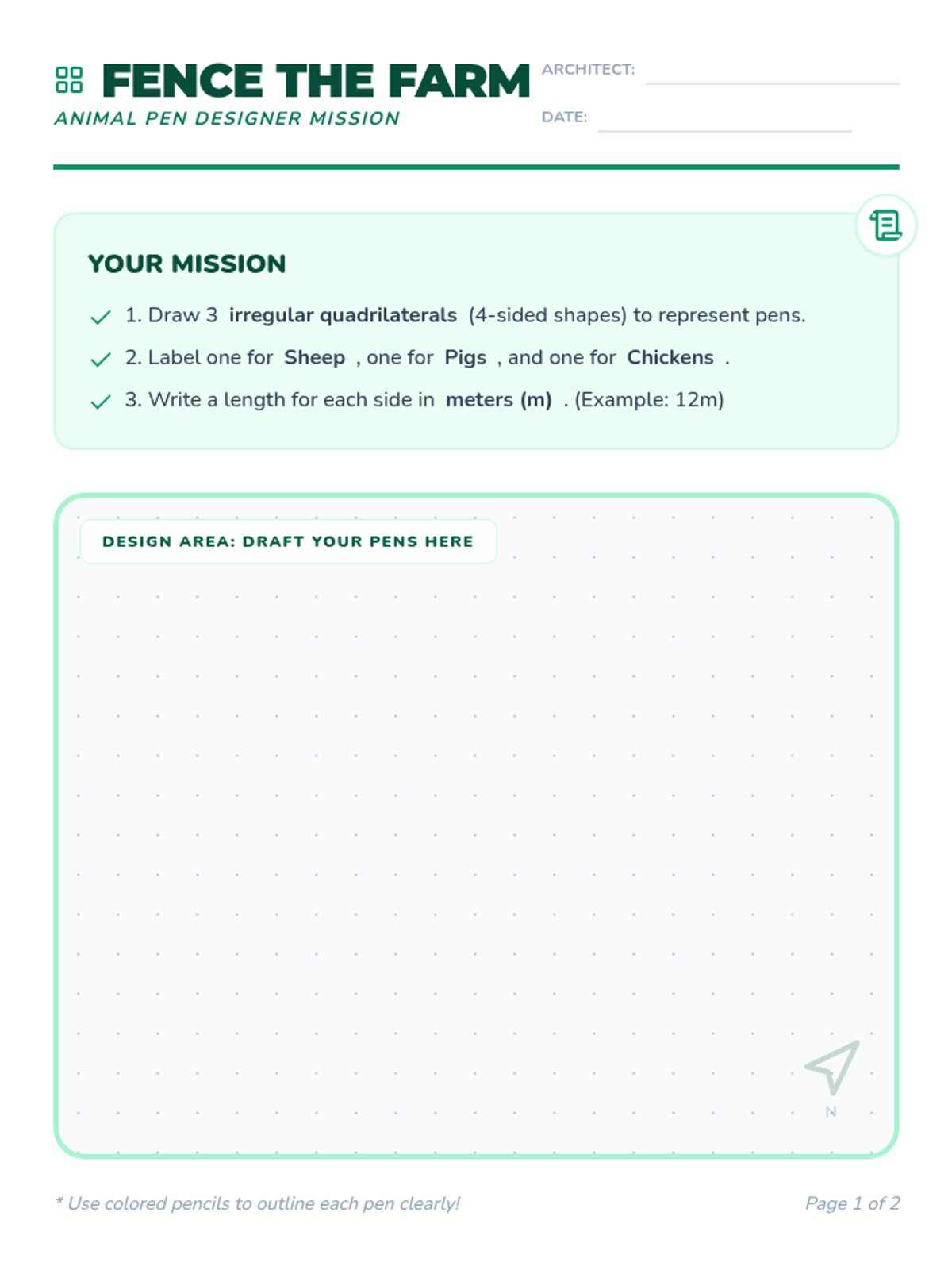
A math sequence focused on understanding and calculating the perimeter of irregular quadrilaterals through real-world scenarios like fencing a farm.
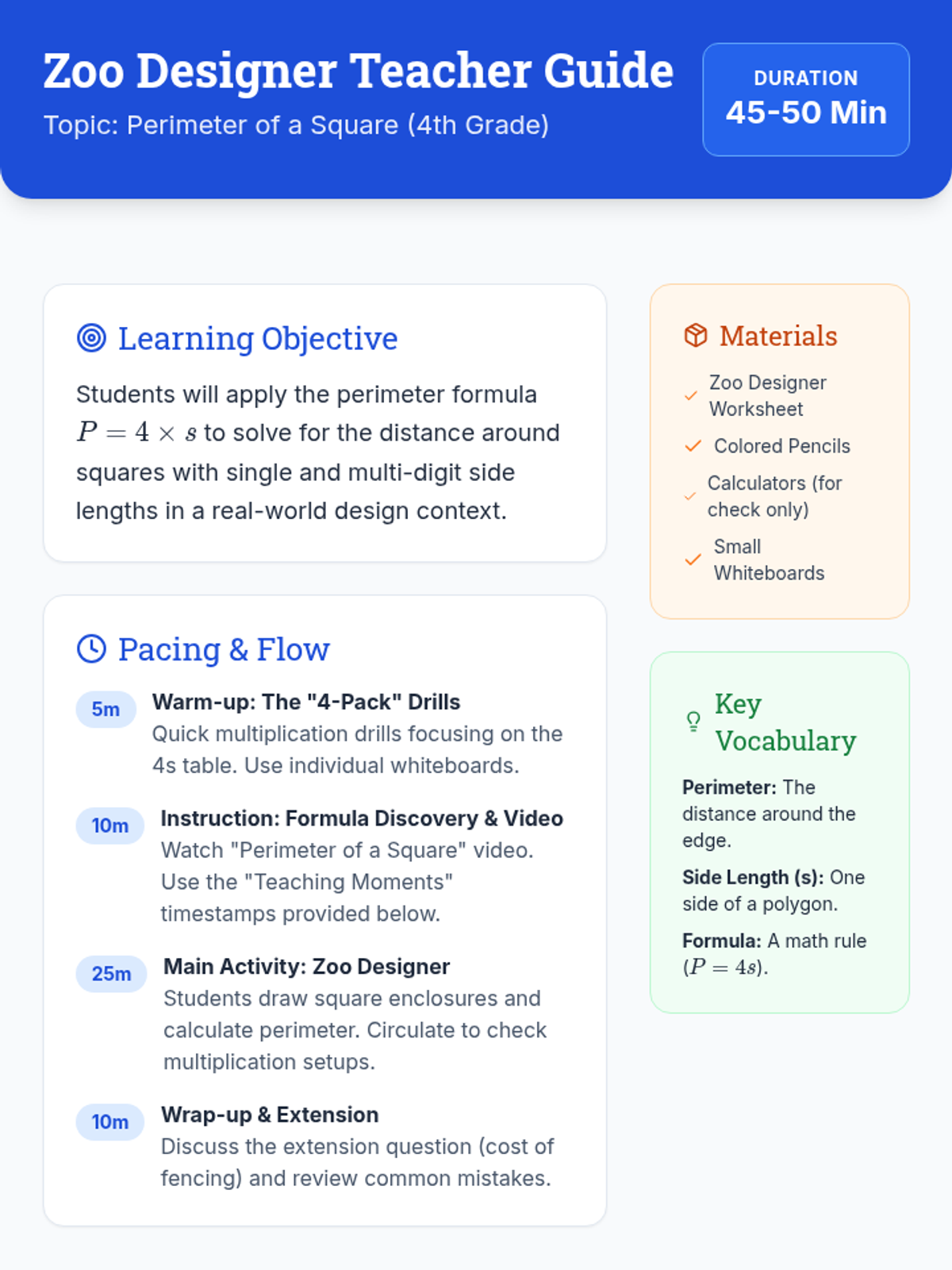
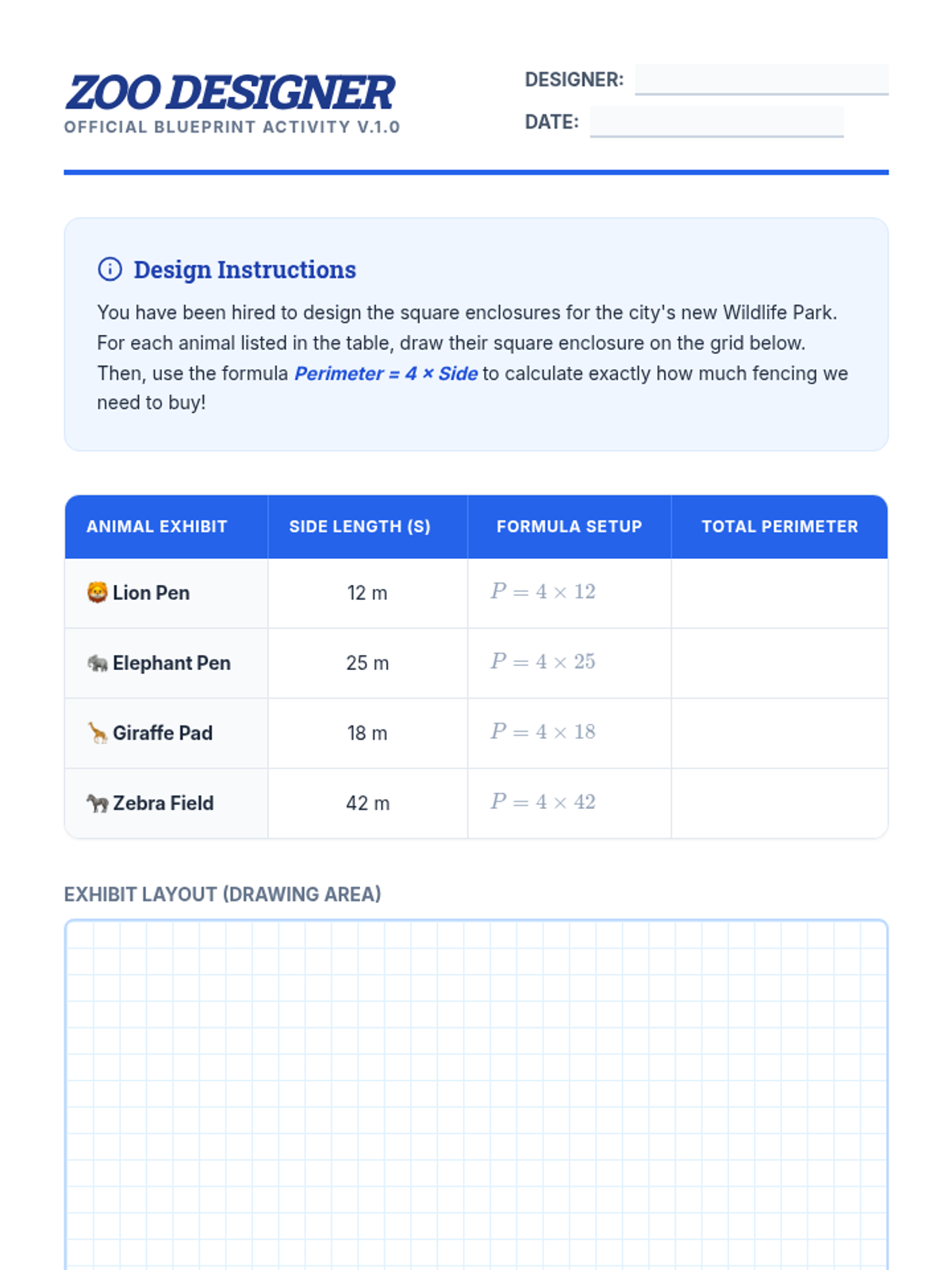
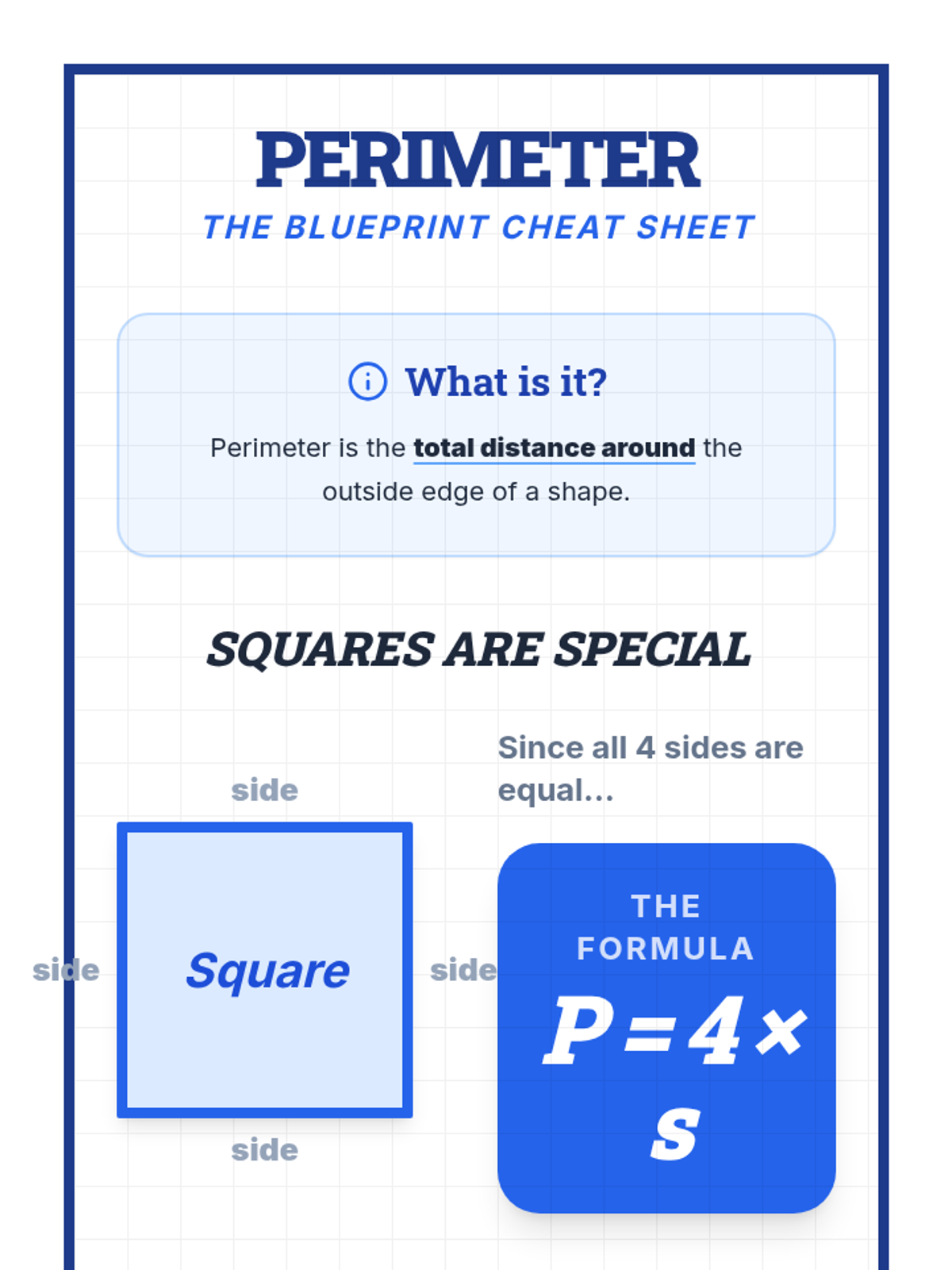
A math sequence for 4th graders focused on mastering the perimeter formula for squares, specifically applying multi-digit multiplication in real-world contexts.
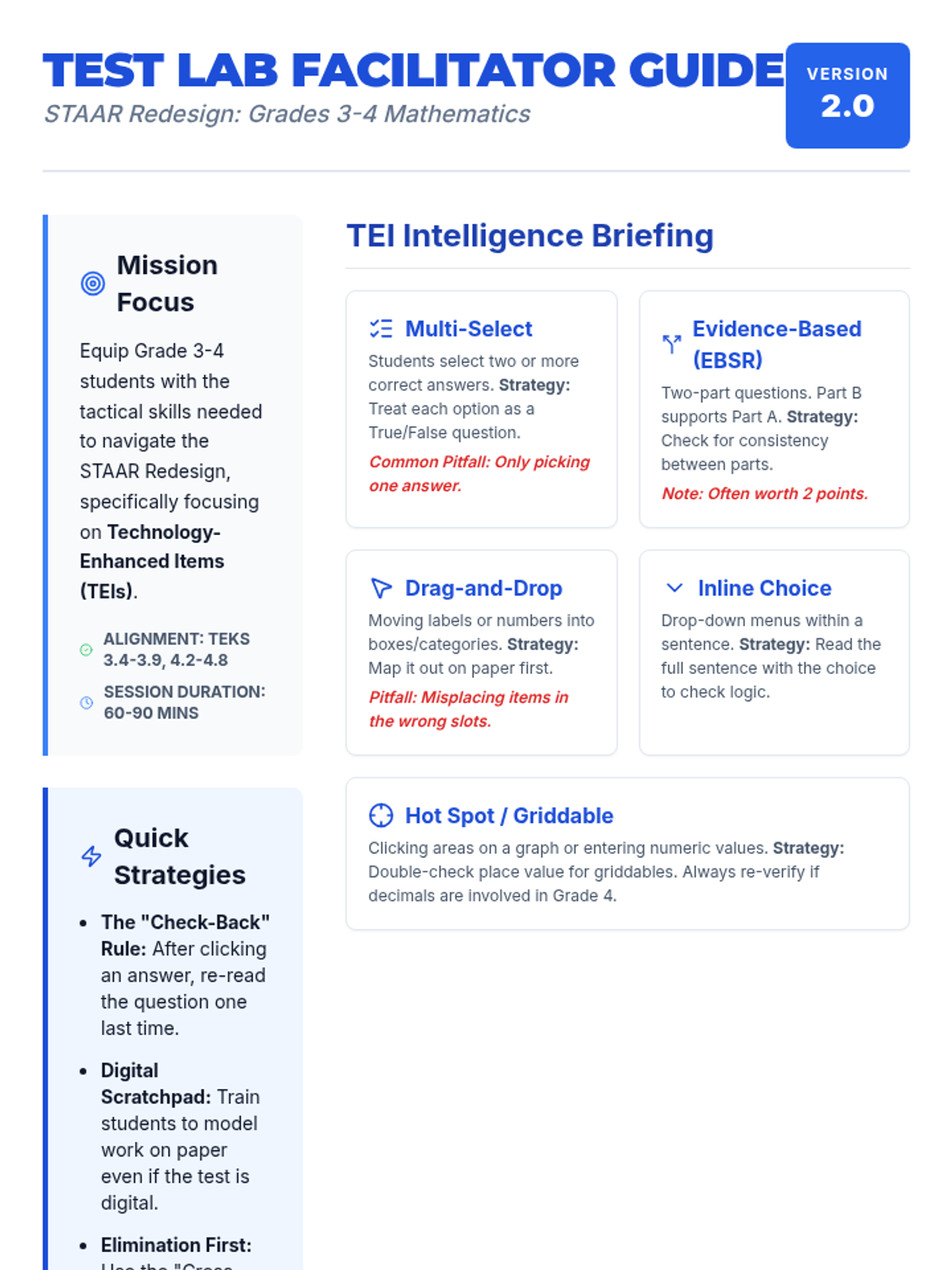
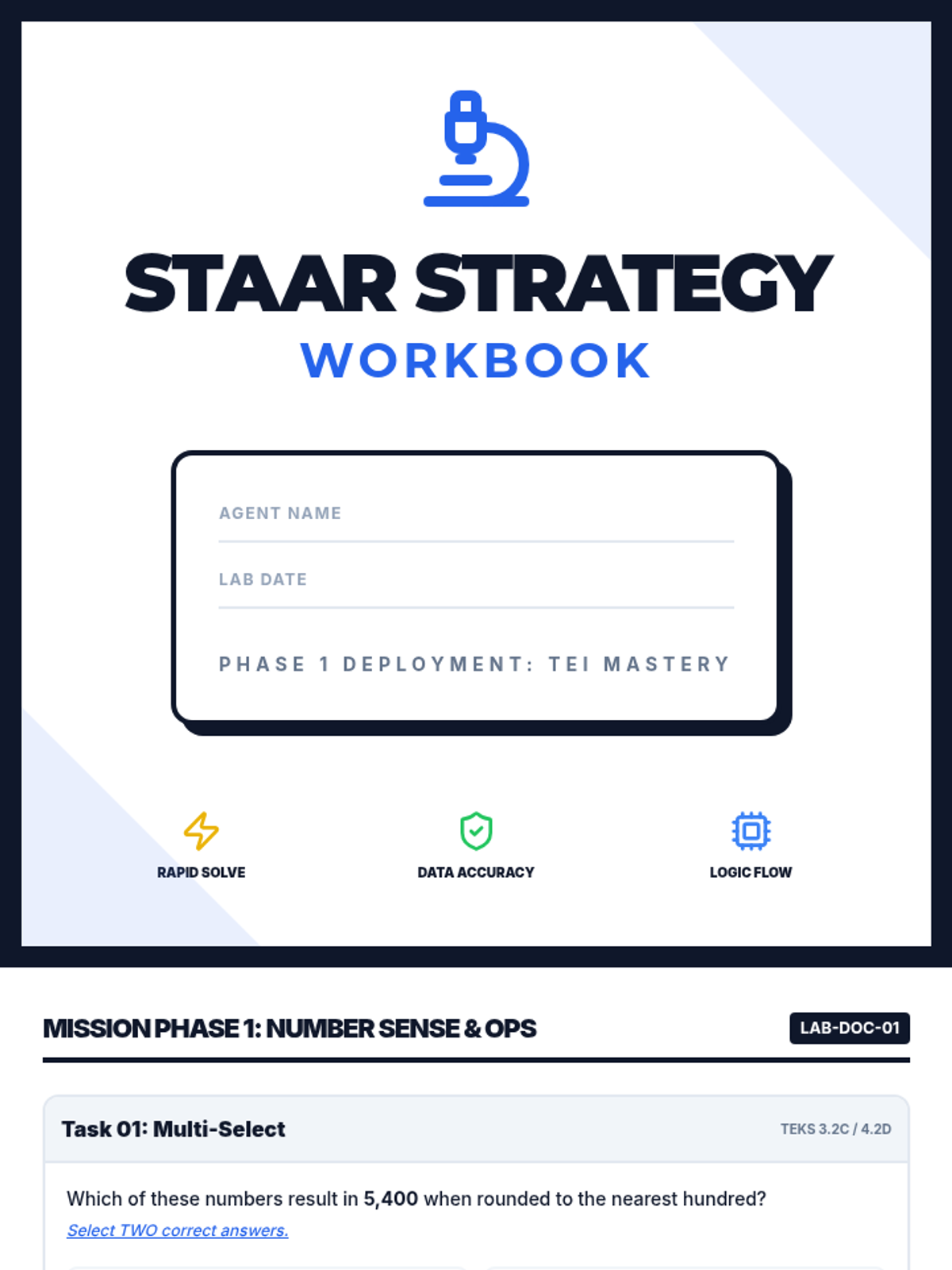
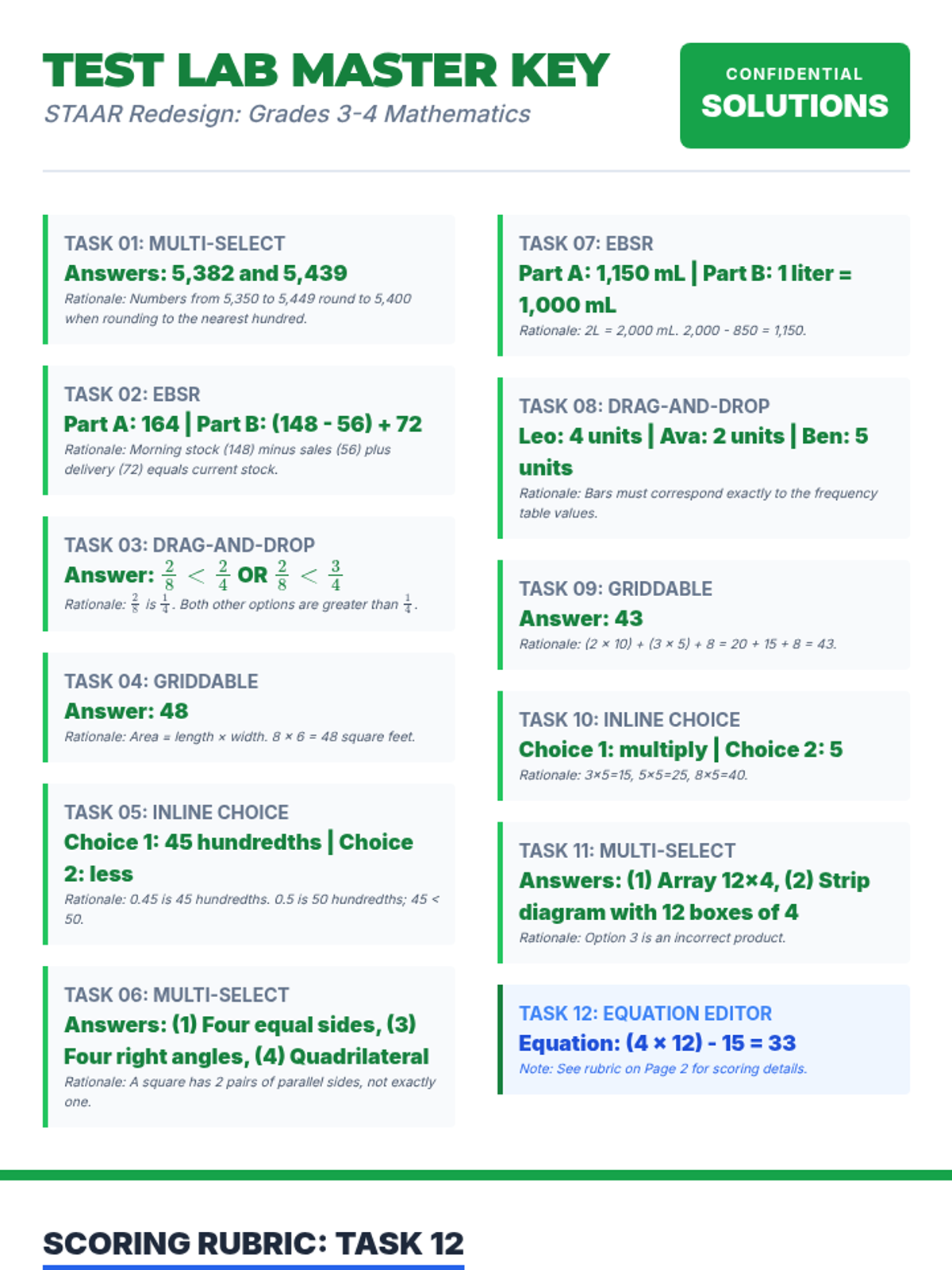
A series of resources designed to prepare Grade 3 and 4 students for the STAAR Mathematics assessment, with a specific focus on the STAAR Redesign and technology-enhanced items.
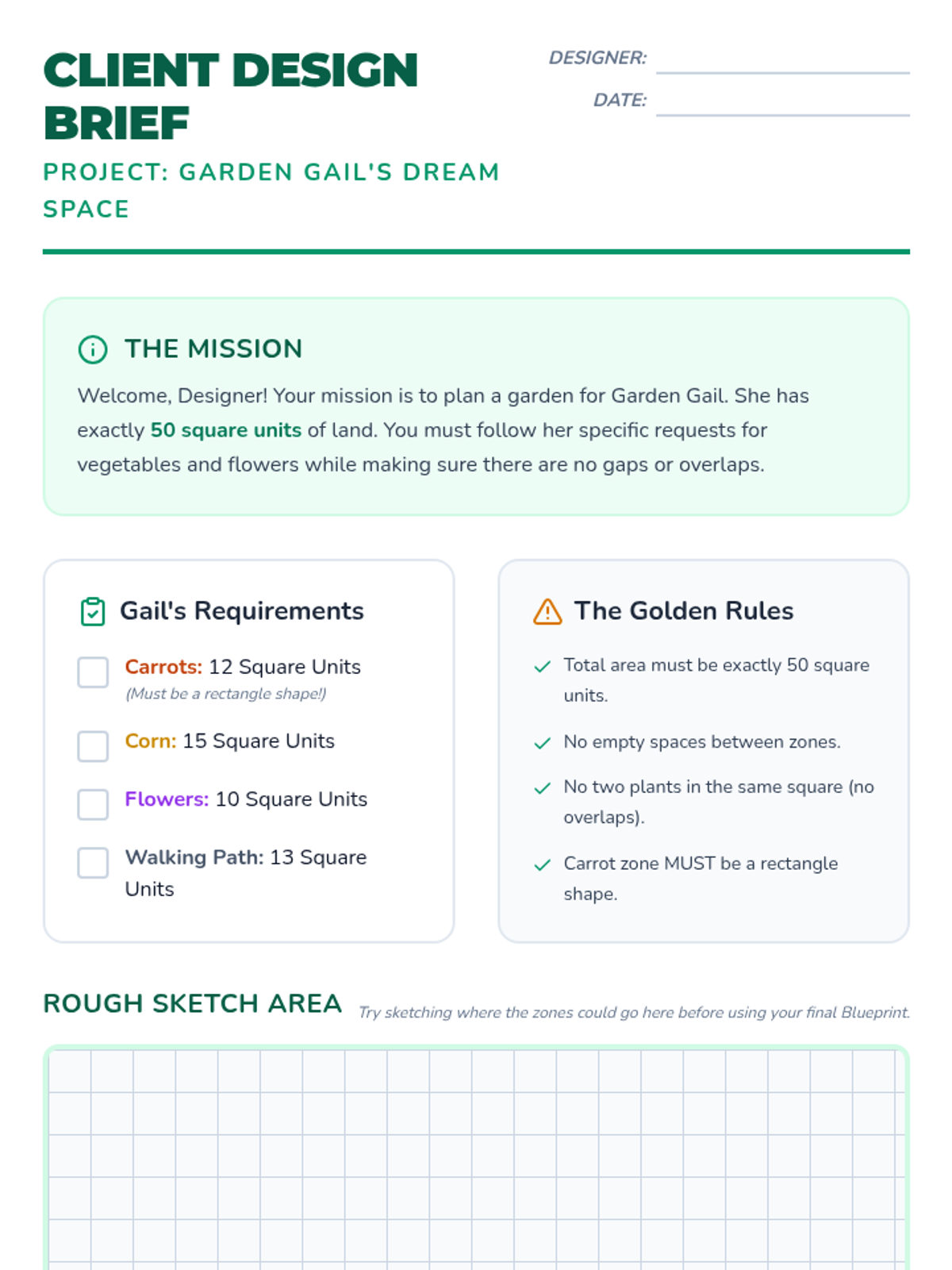
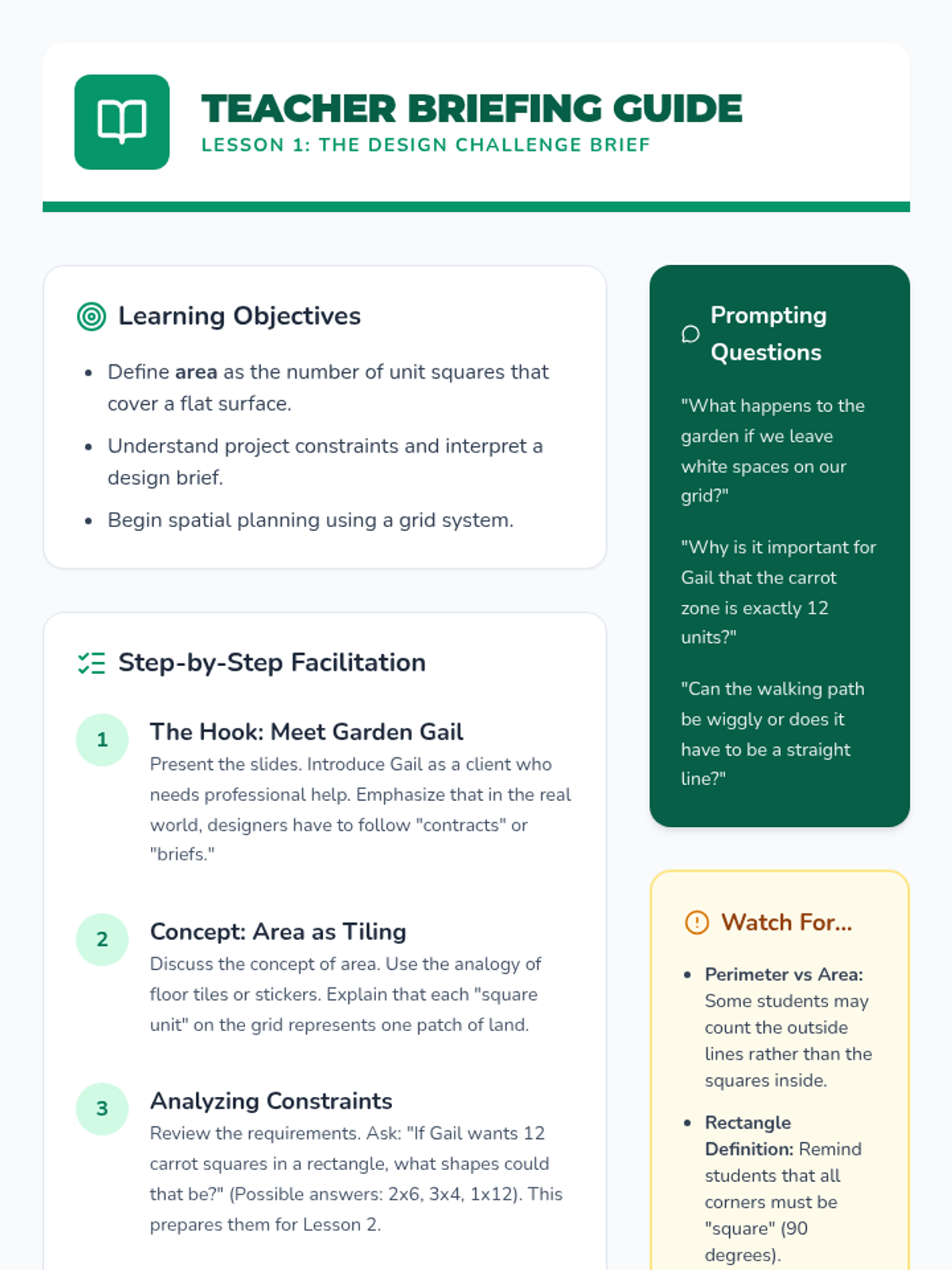
Students step into the shoes of garden designers to learn area. They use 1-inch grids to plan, calculate, and verify the layout of 'Dream Gardens', connecting the concept of square units to real-world spatial planning.
This sequence guides 4th-grade students through the exploration of three-dimensional geometry, starting with the properties of solids and progressing to the conceptual and formulaic understanding of volume. Students move from concrete manipulation with unit cubes to abstract calculation using dimensions.
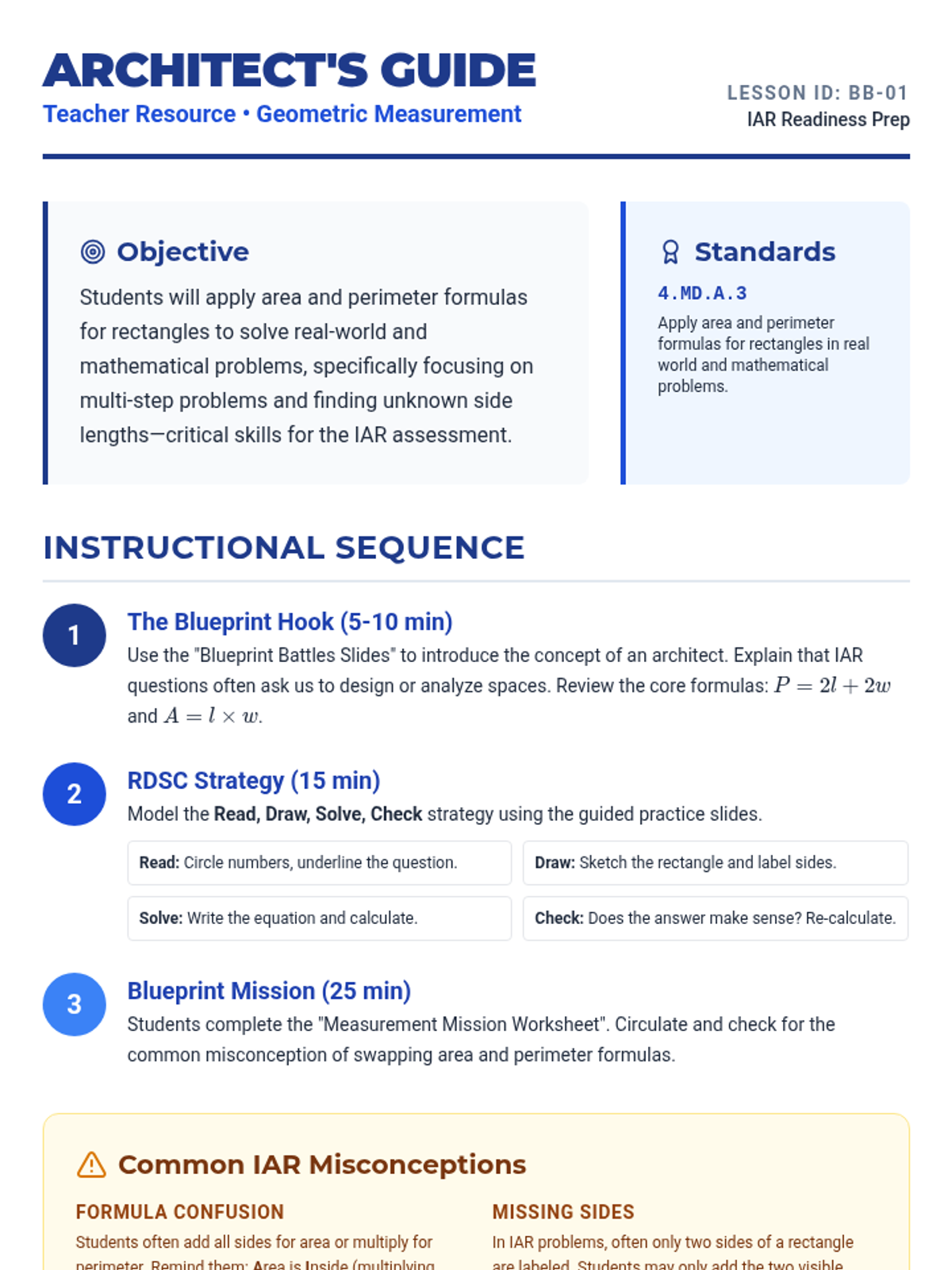
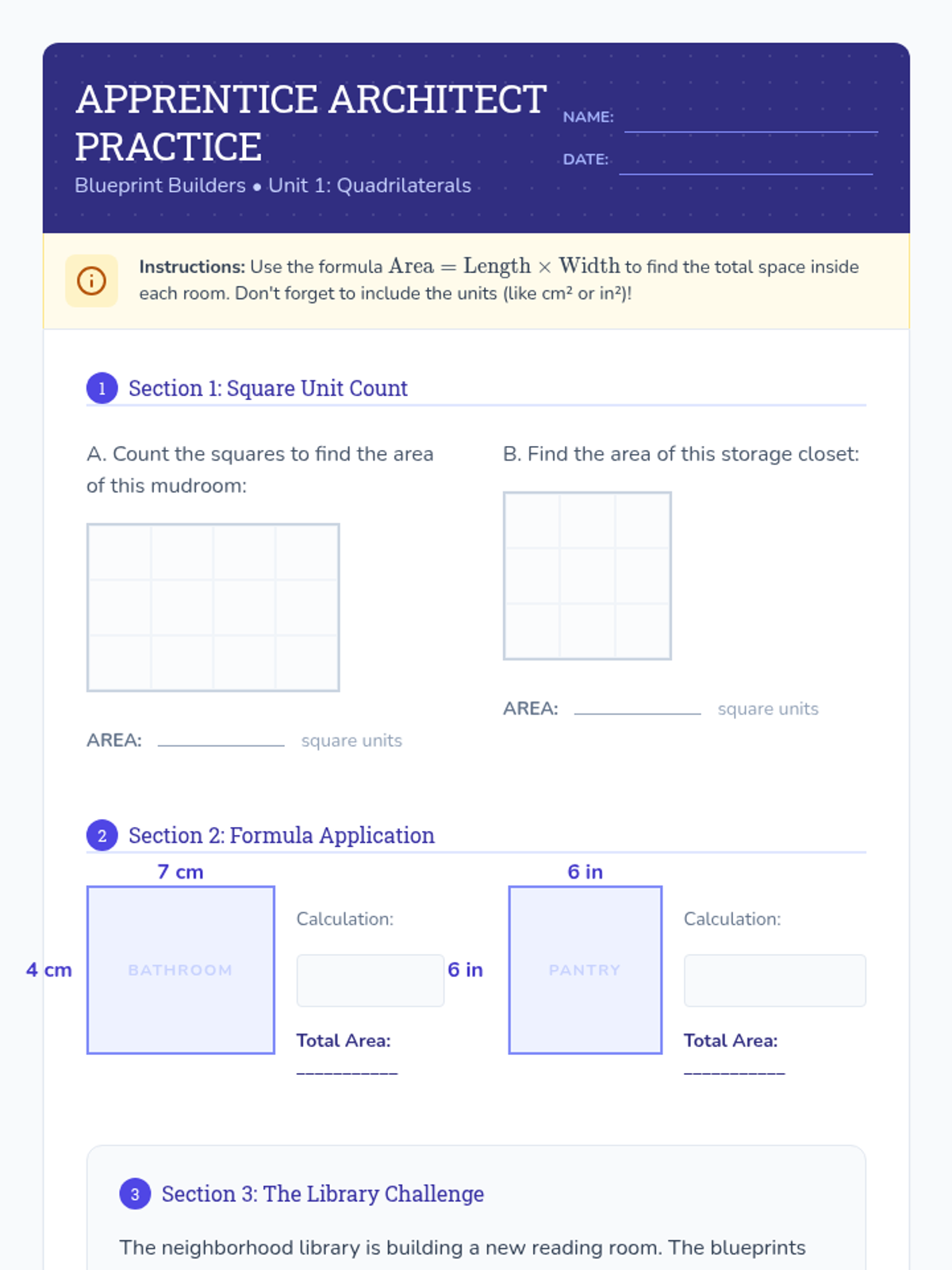
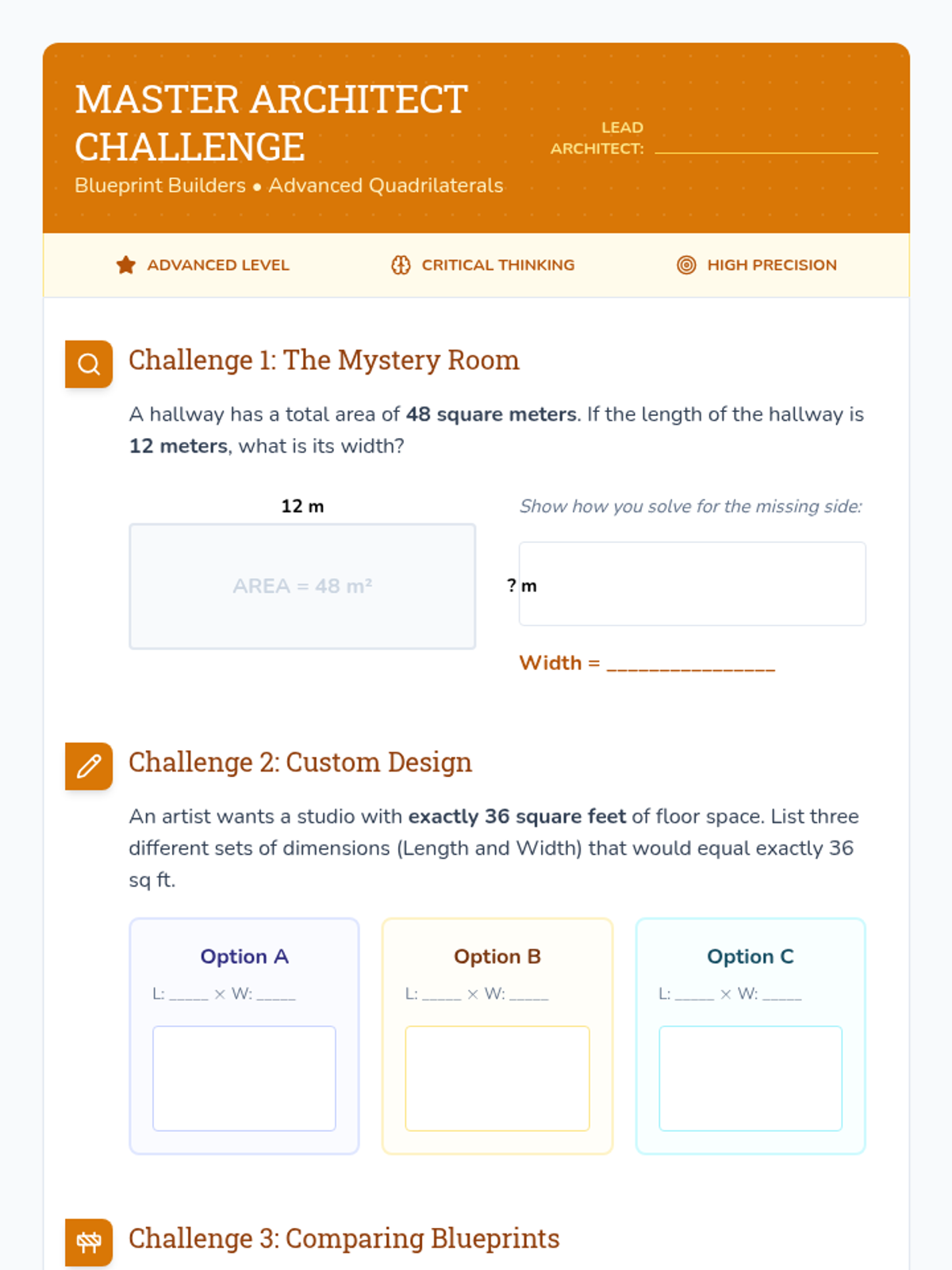
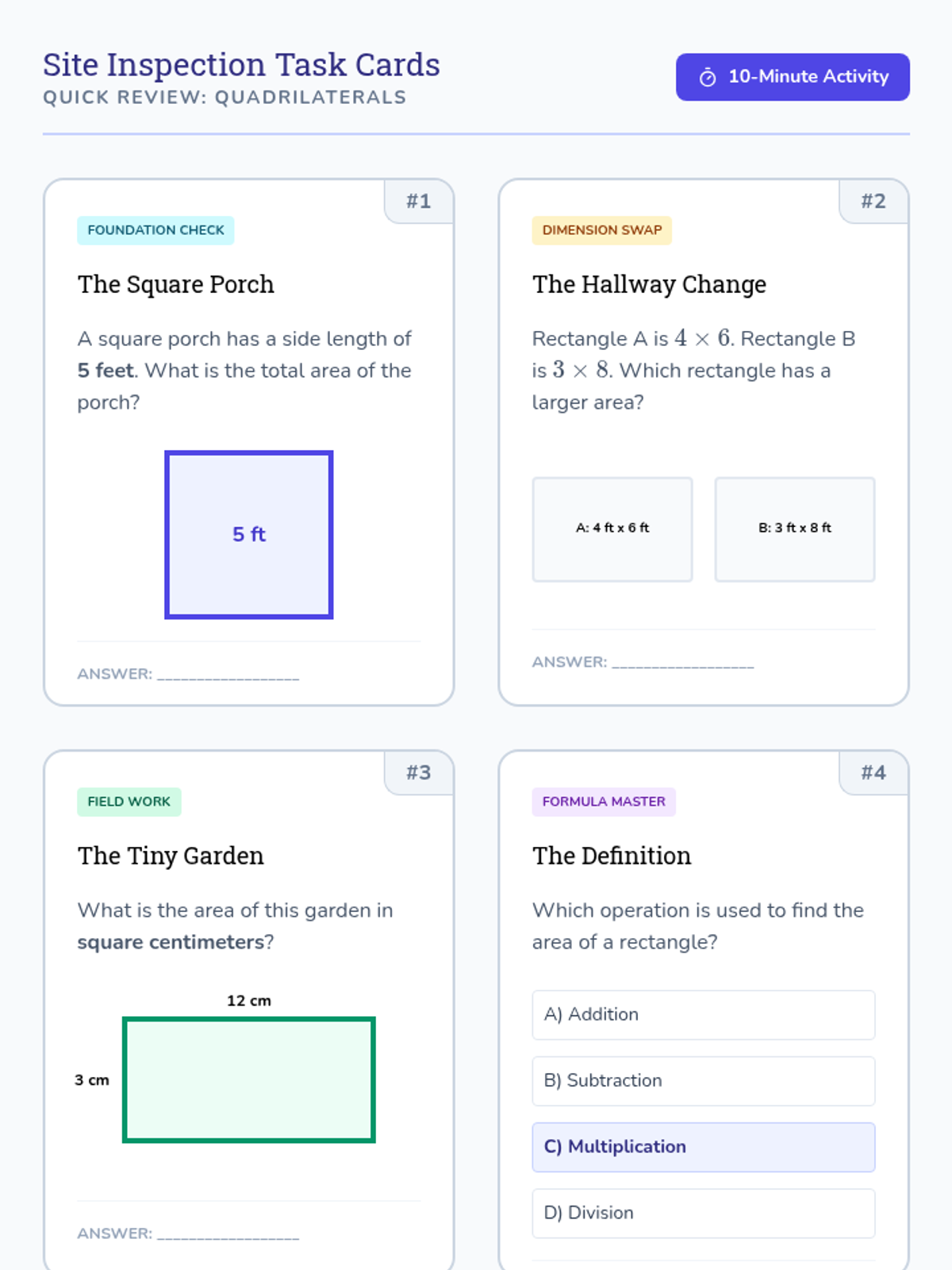
A comprehensive 4th Grade geometry unit focused on mastering area and perimeter of rectangles. Students act as 'Junior Architects' to explore formulas, missing dimensions, and complex shapes through blueprint-themed activities and investigations.
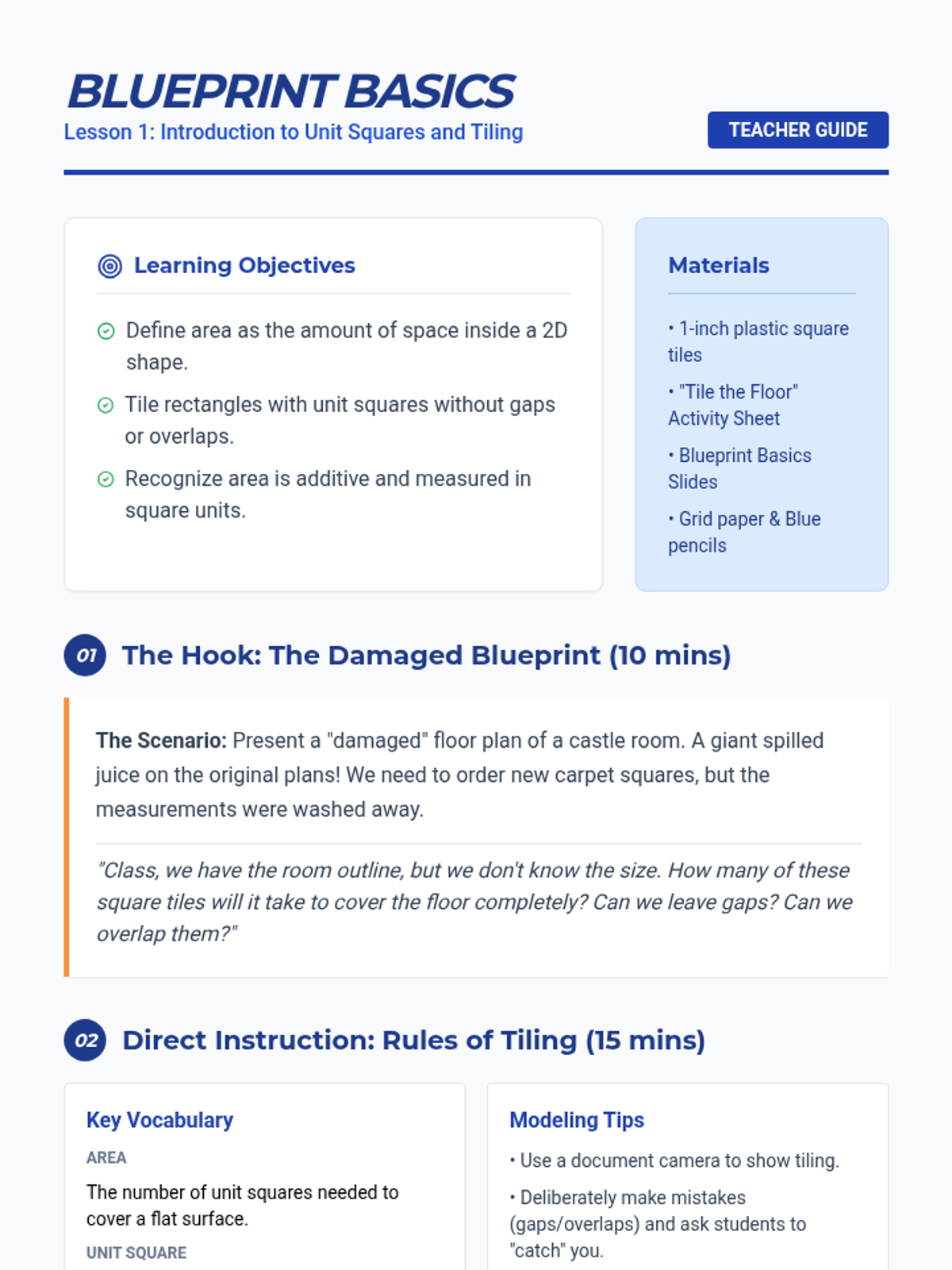
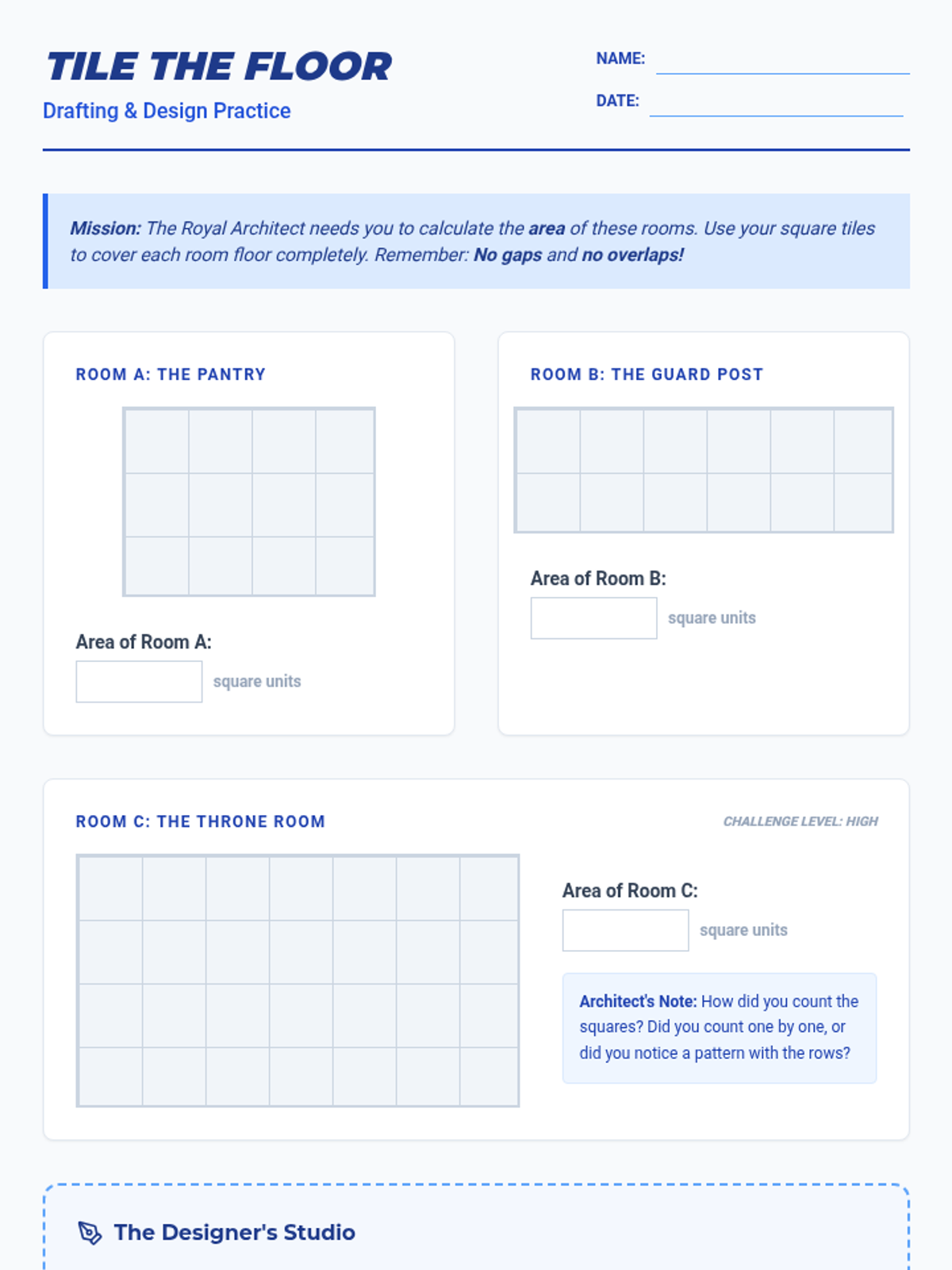
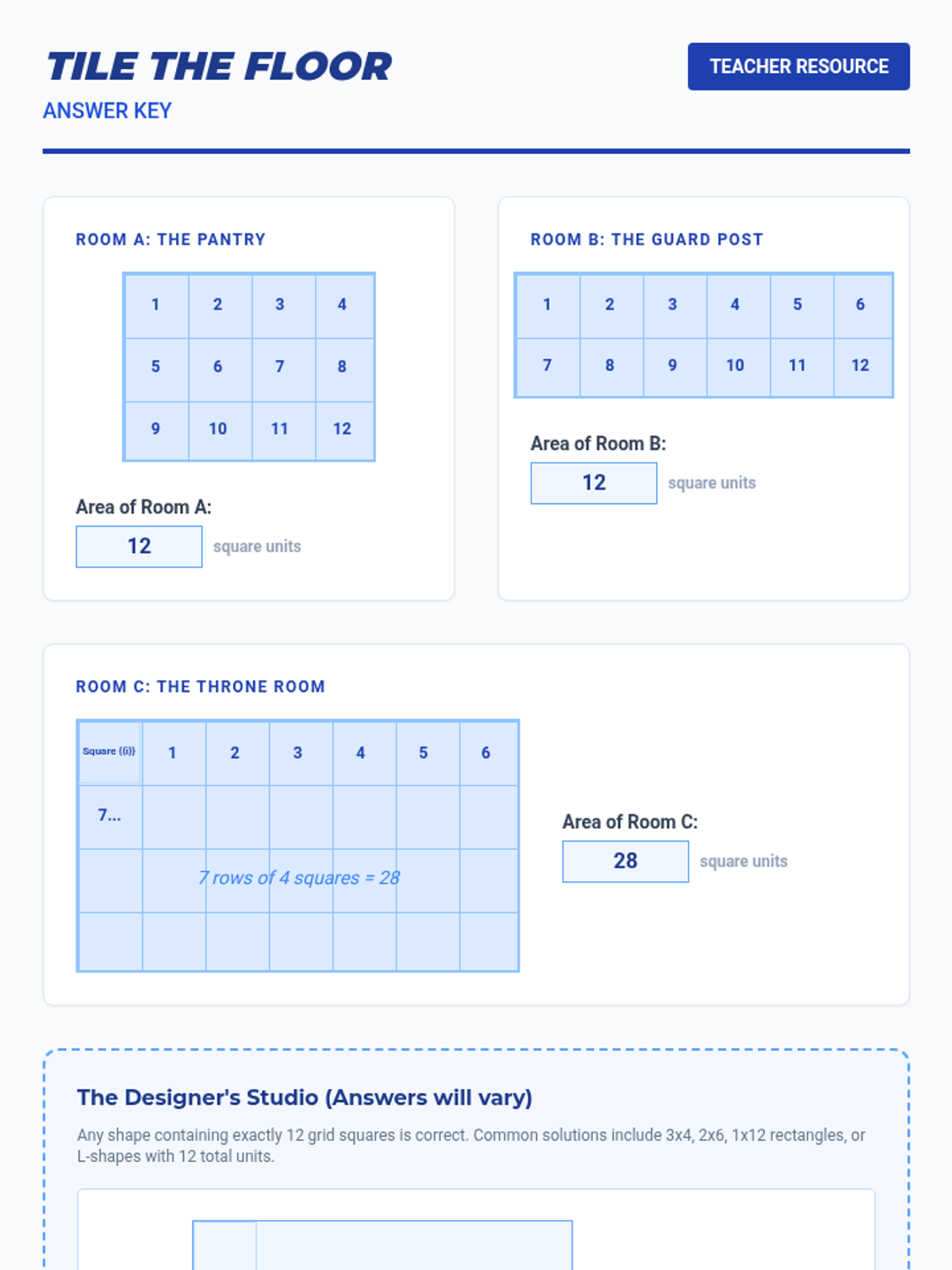
This sequence introduces the concept of area as an attribute of plane figures, distinguishing it from linear measurement. Students progress from tiling shapes with unit squares to discovering the relationship between side lengths and multiplication.
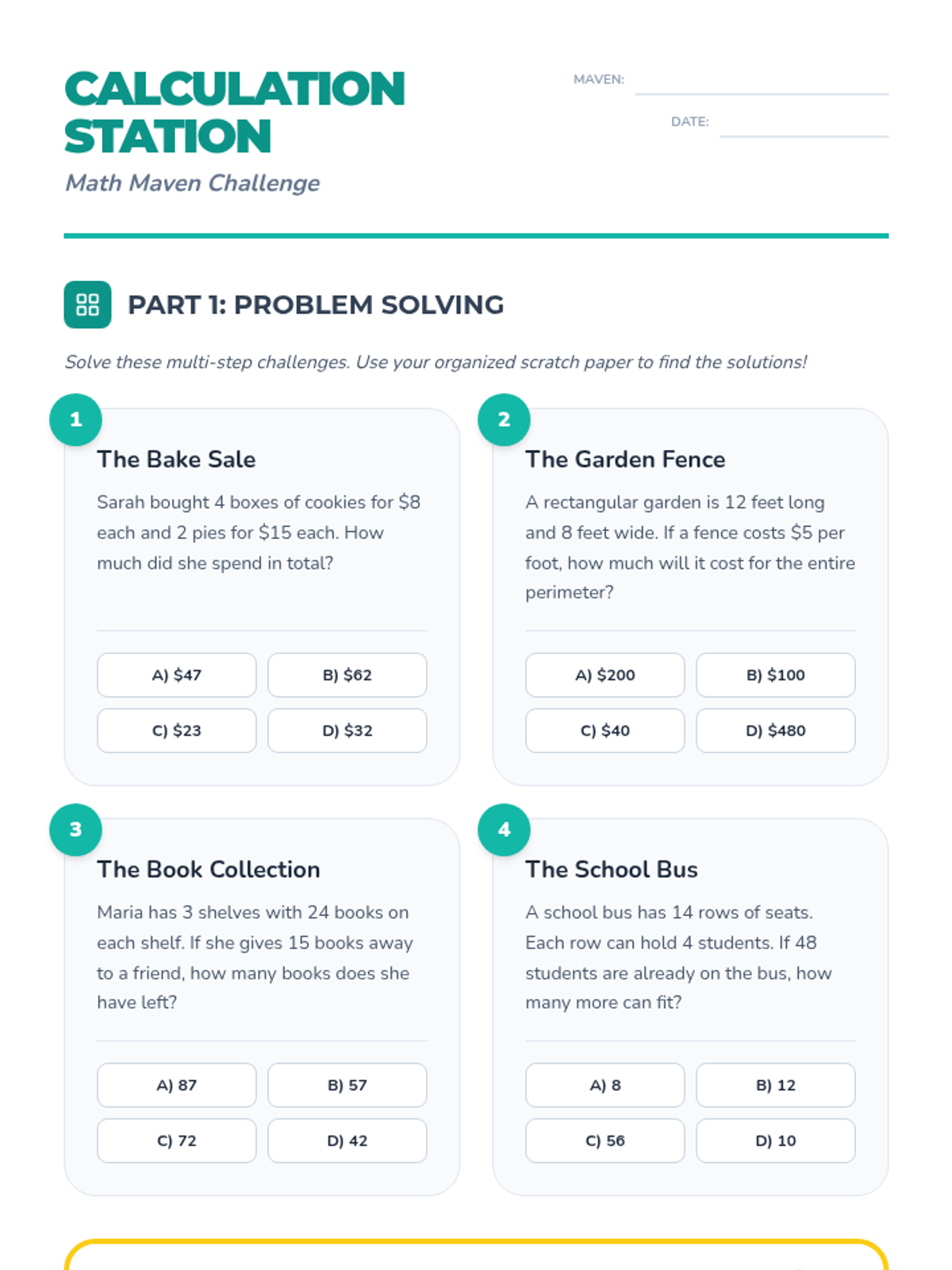
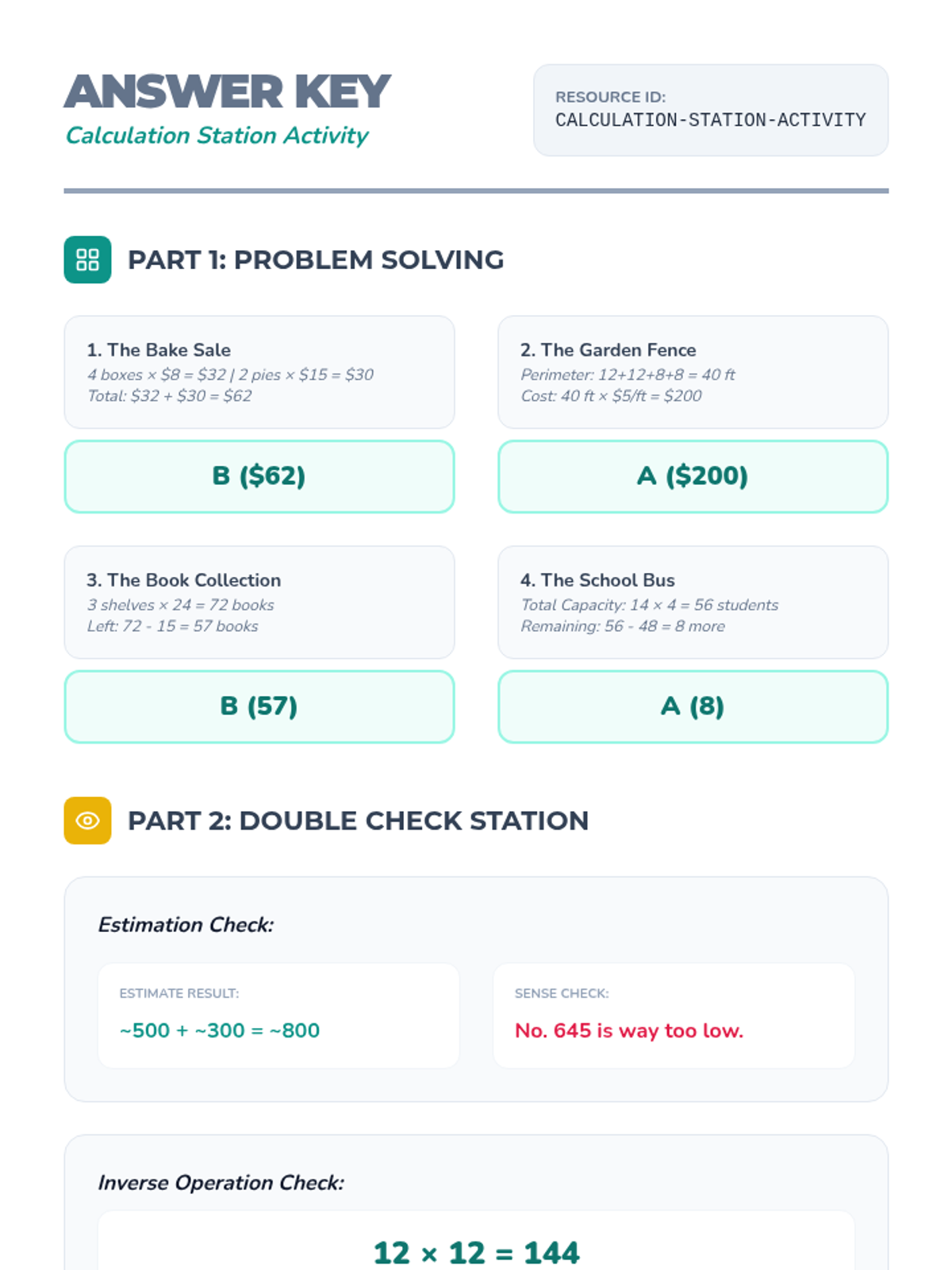
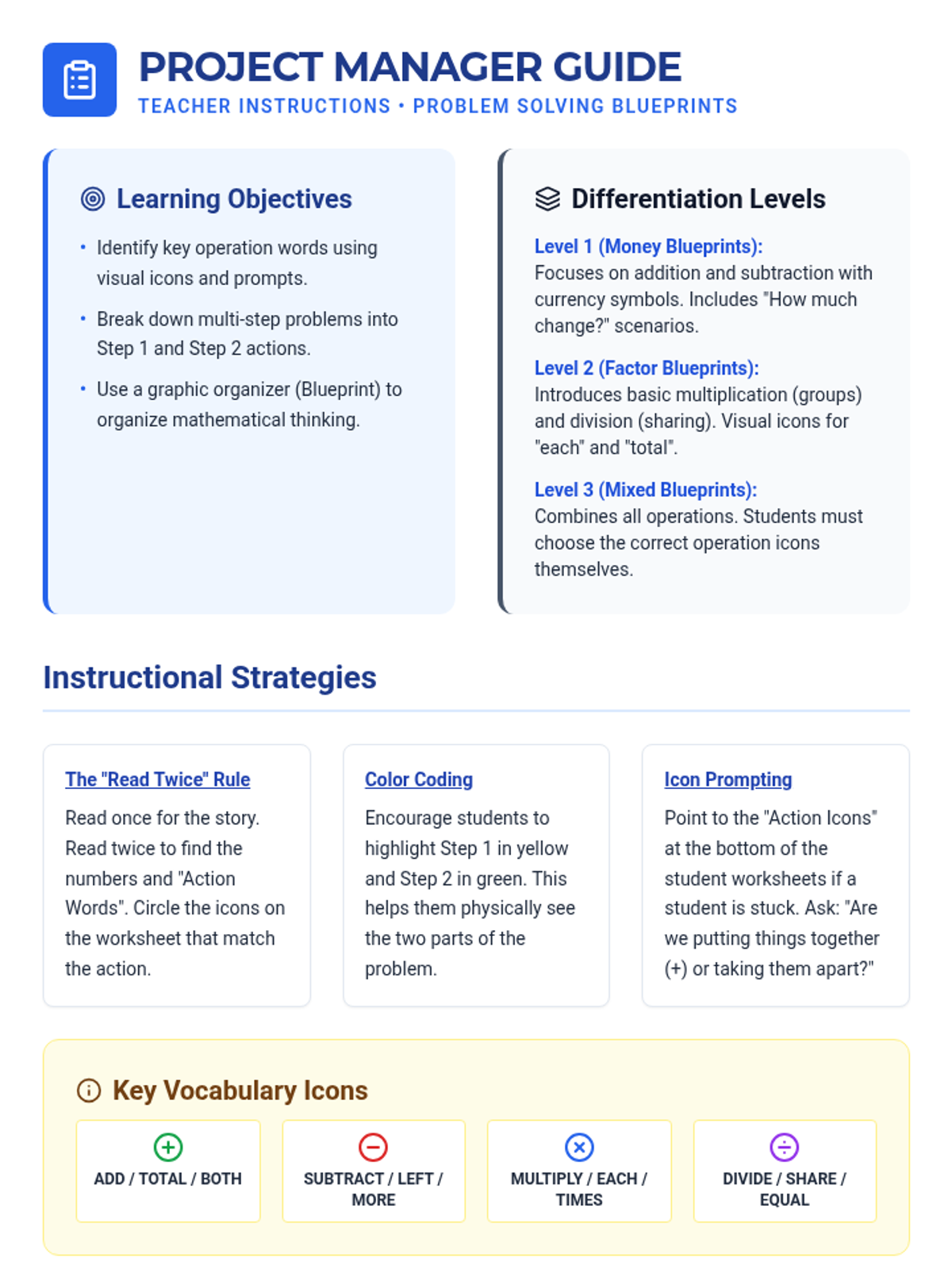
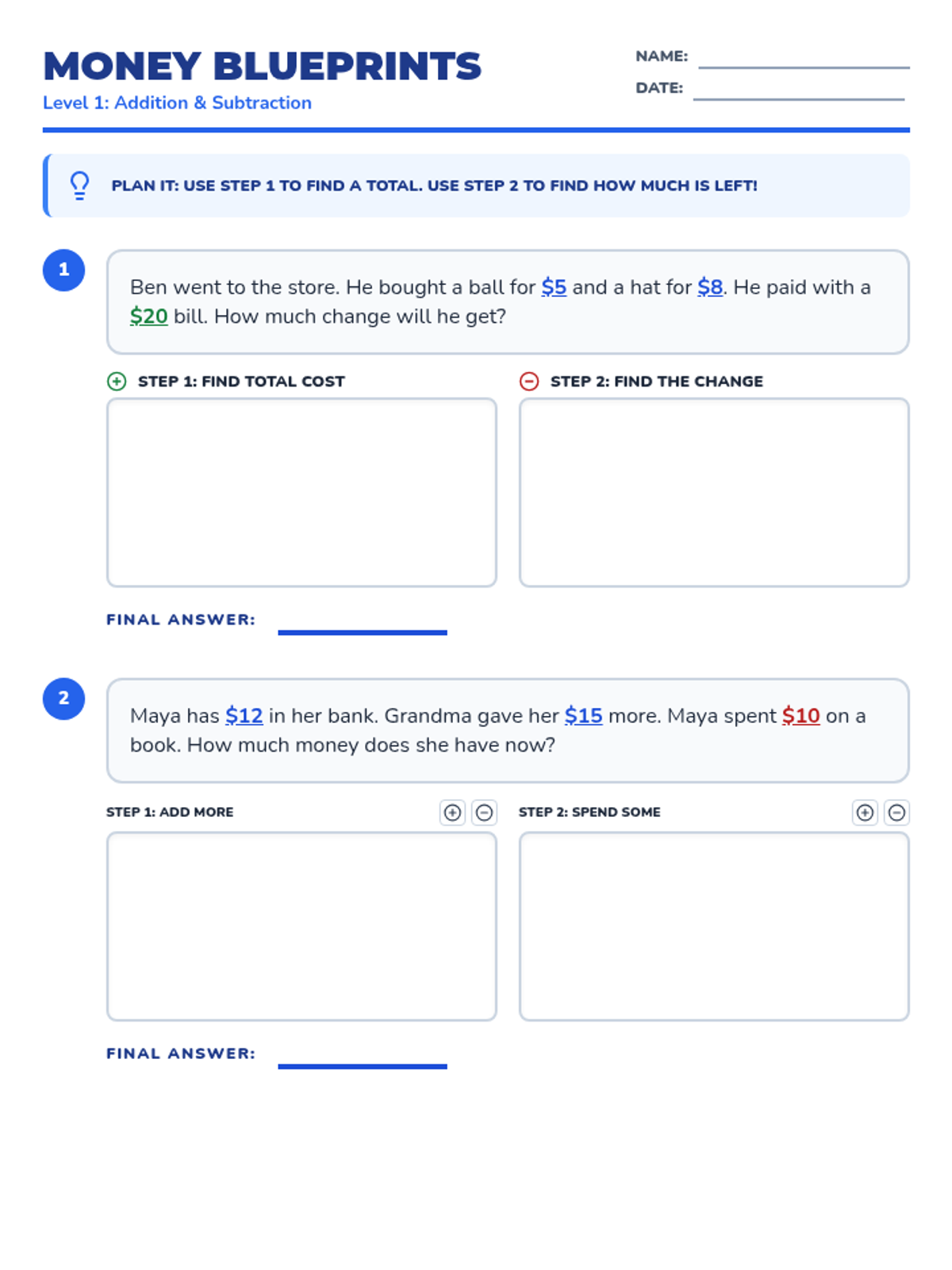
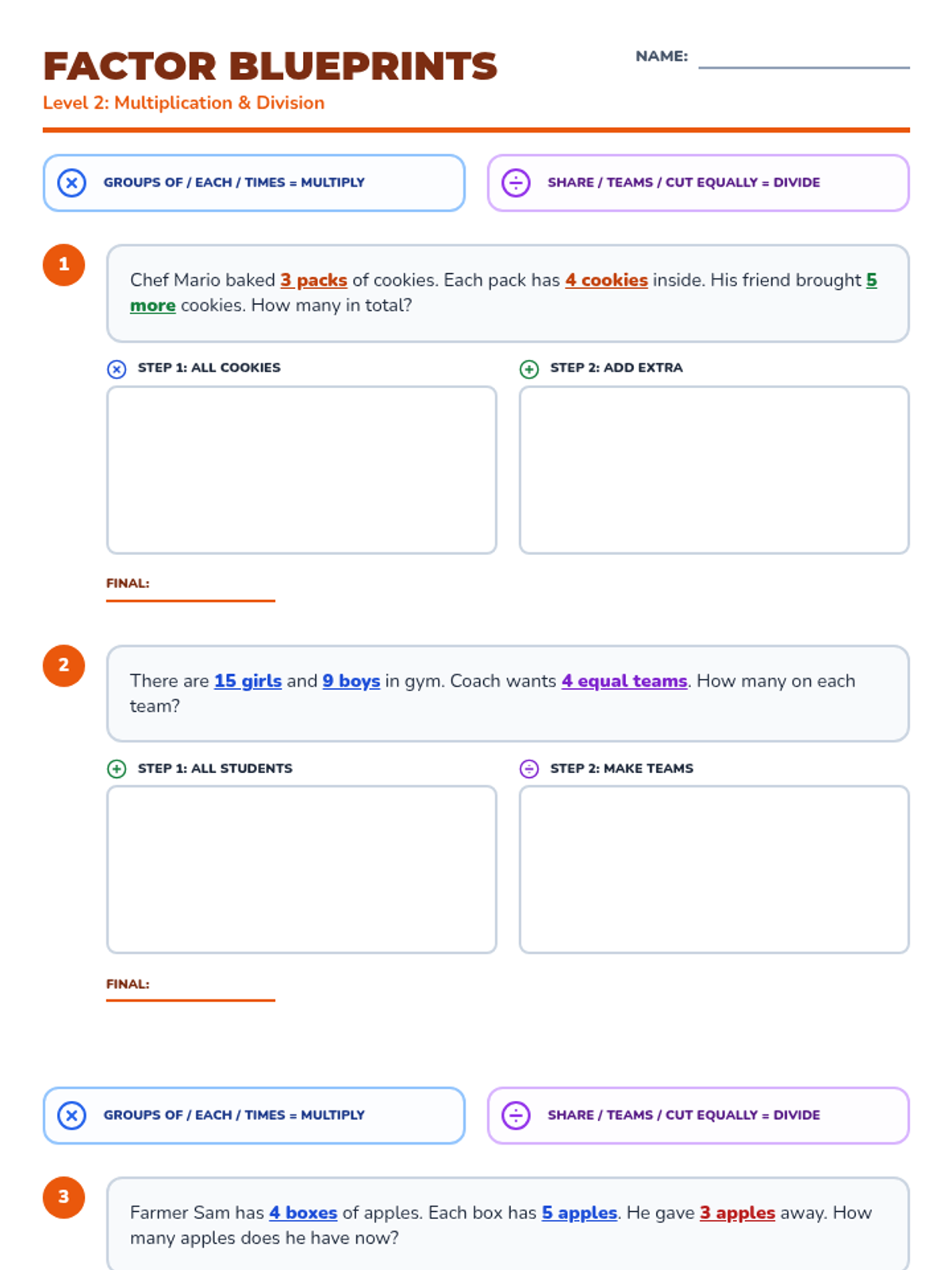
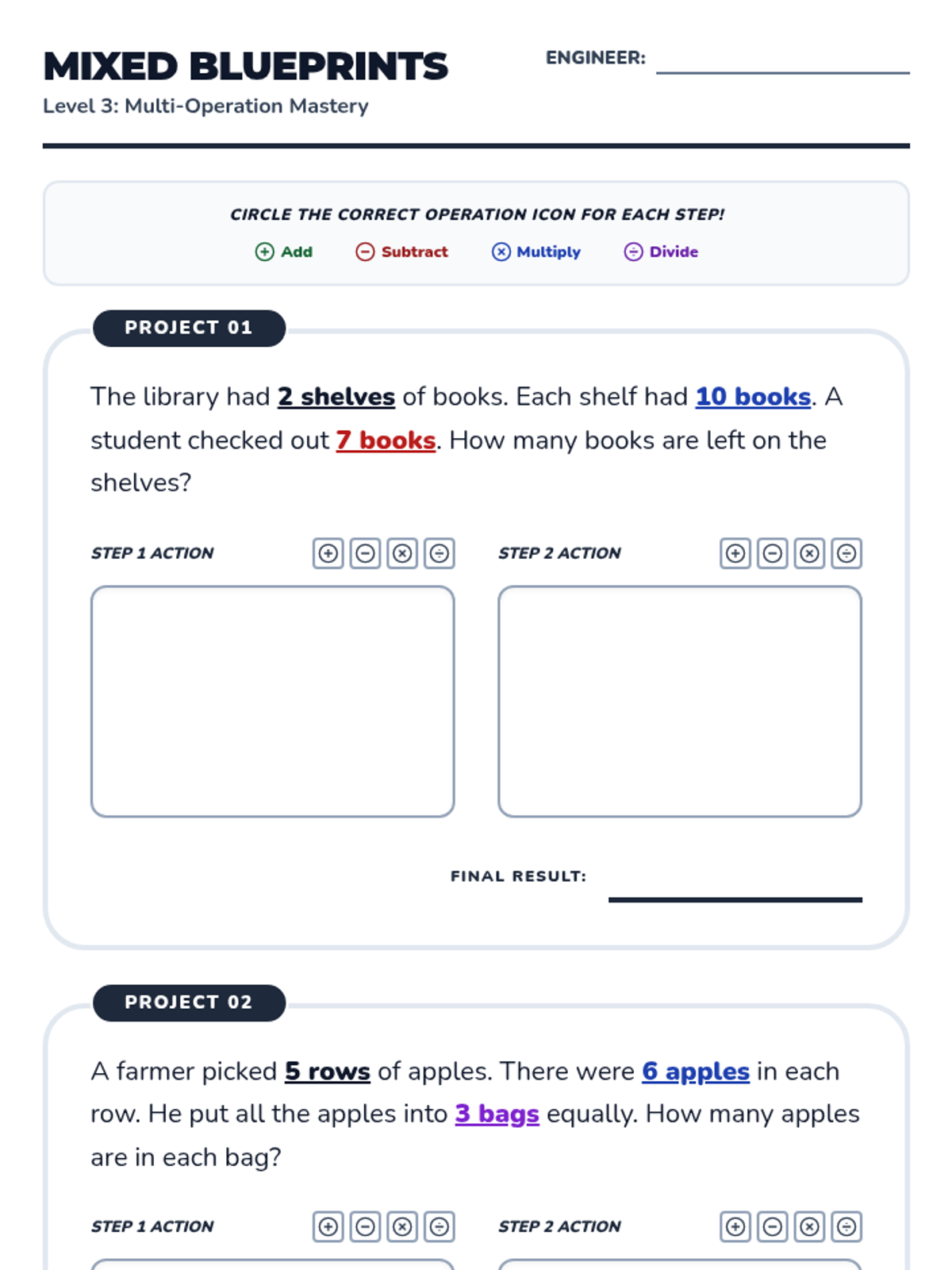
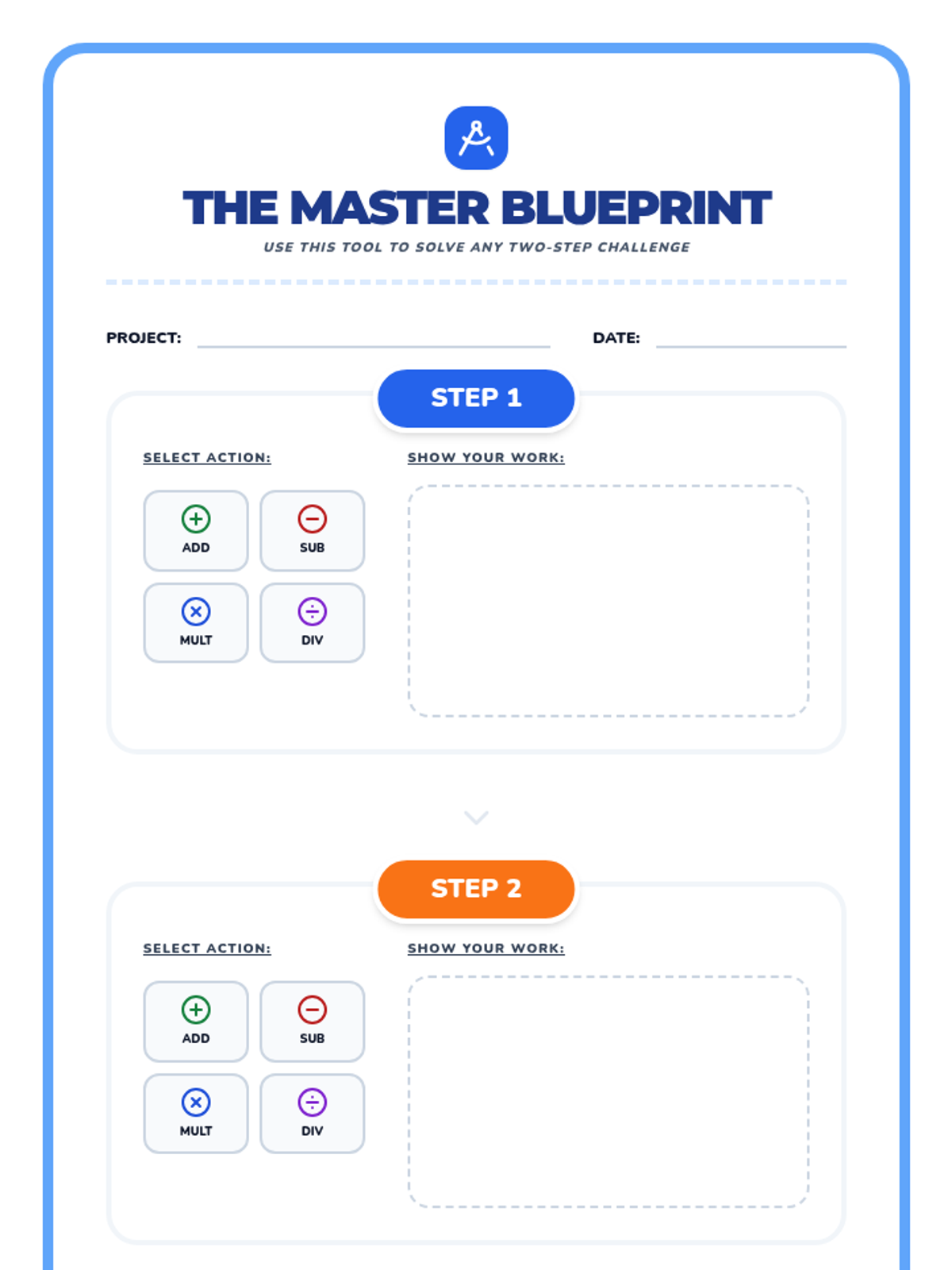
A comprehensive math sequence designed for students with IEPs, focusing on breaking down multi-step word problems into manageable visual blueprints. It covers mixed operations with money, basic multiplication and division, and foundational addition and subtraction.
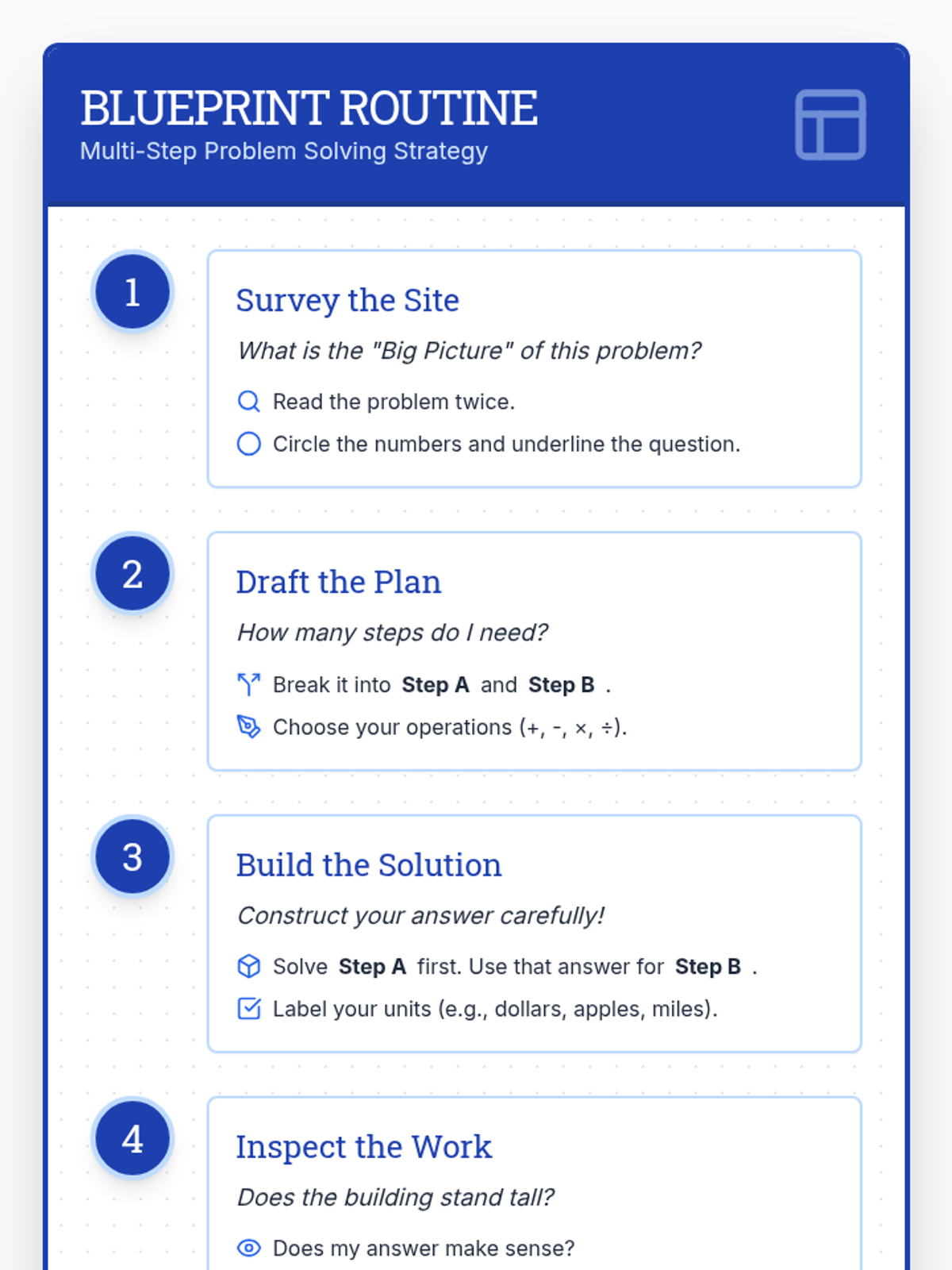
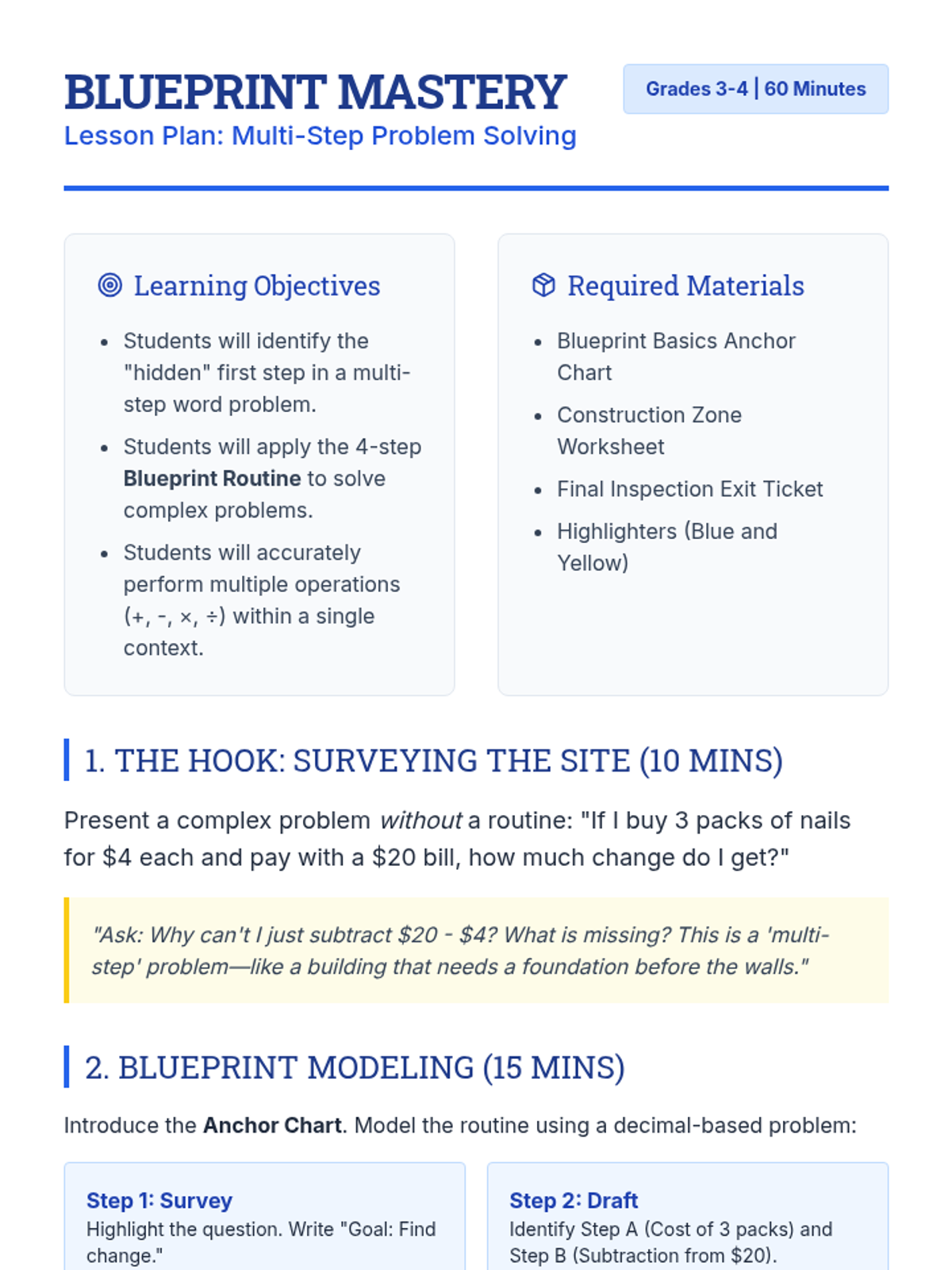
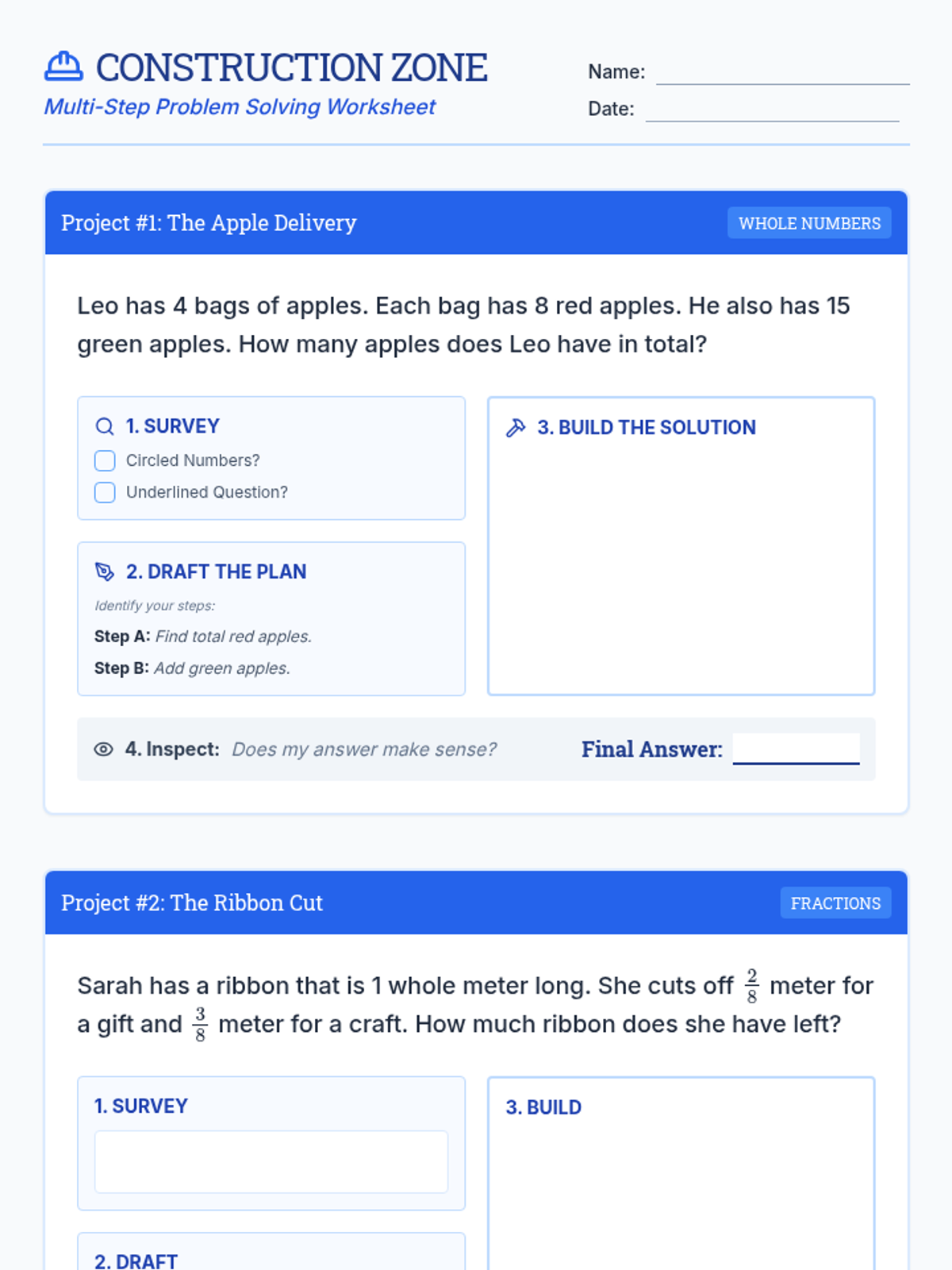
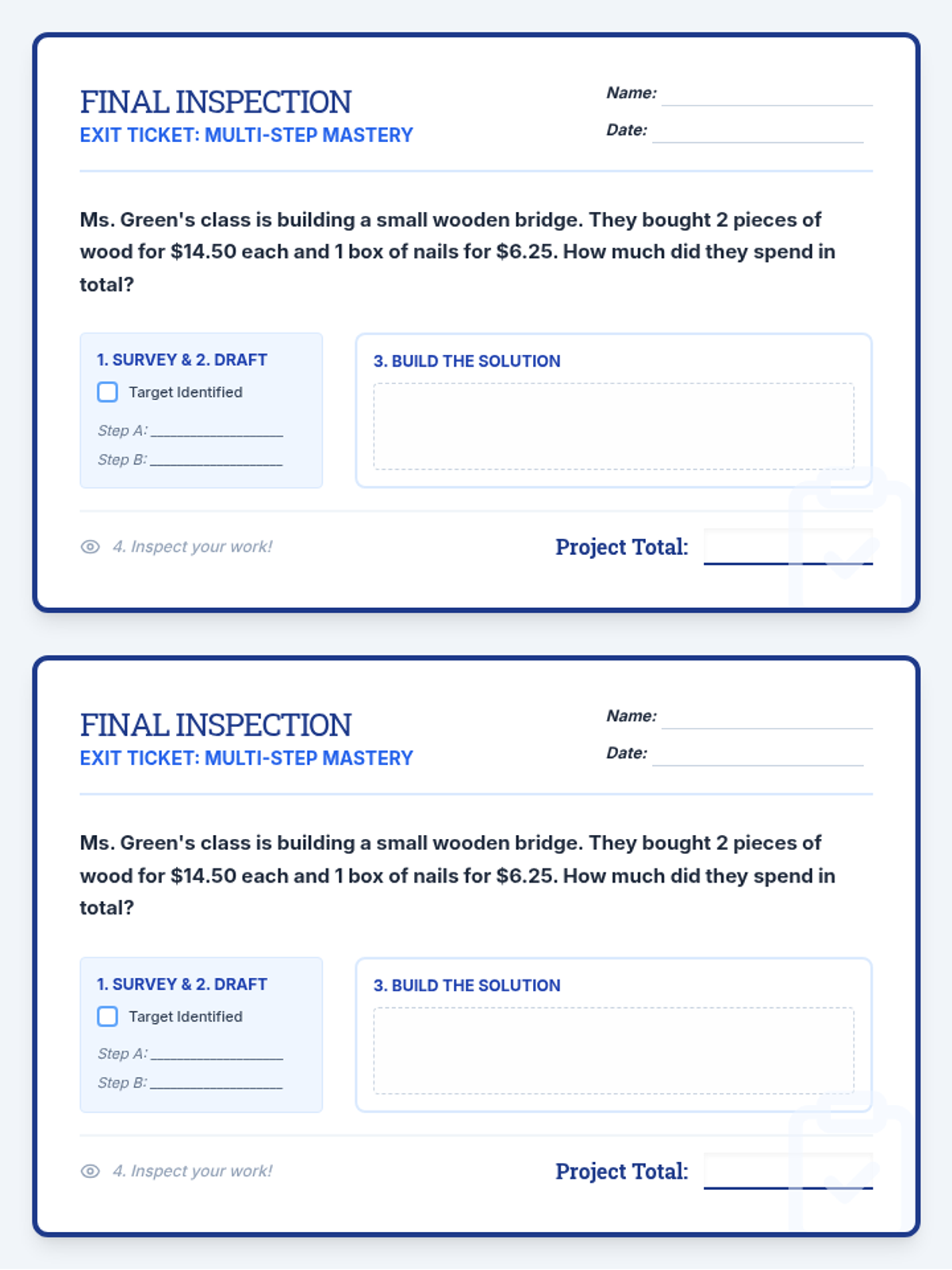
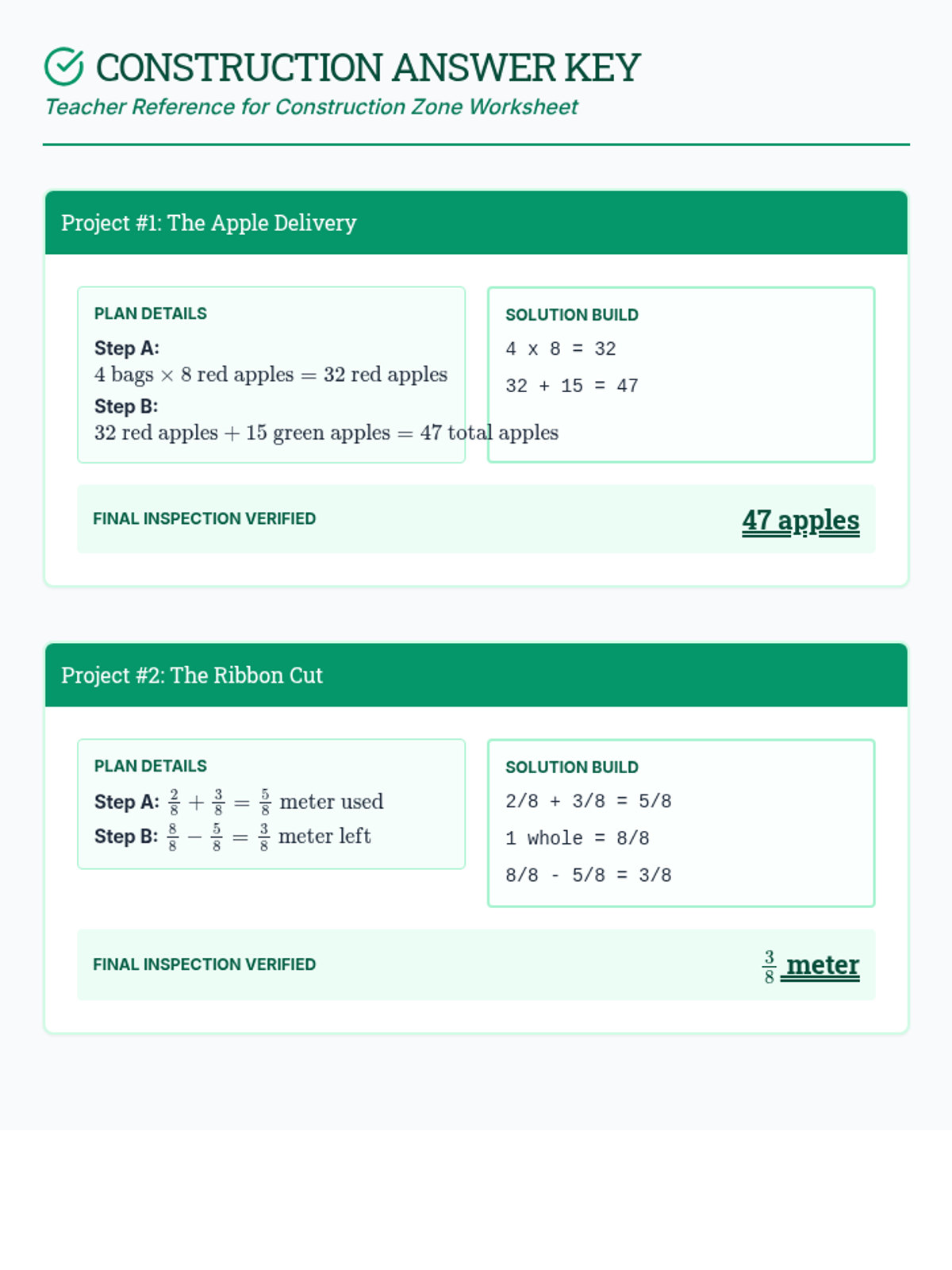
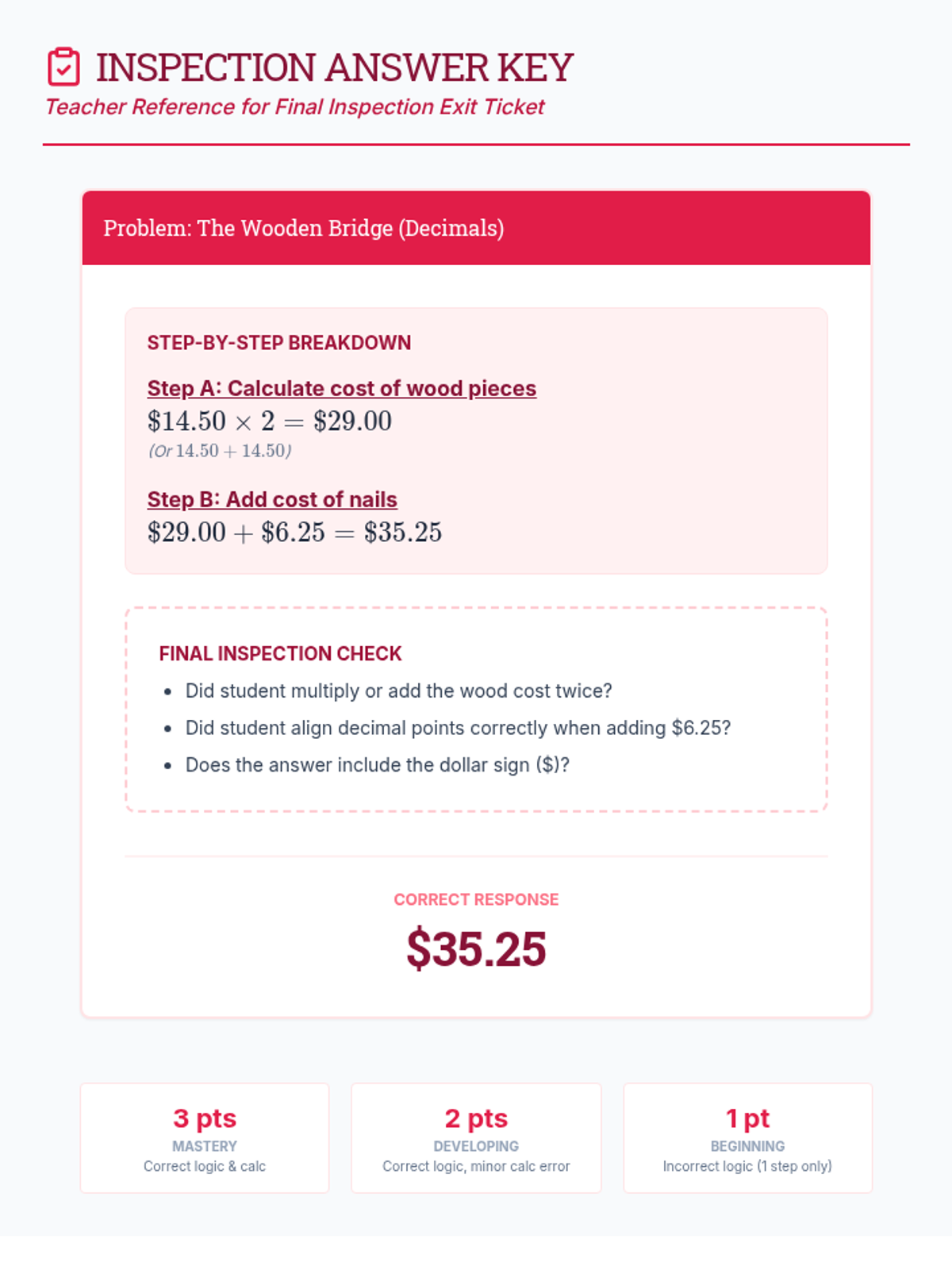
A comprehensive unit focusing on mastering multi-step word problems using a structured problem-solving routine. Students learn to break down complex problems involving whole numbers, fractions, and decimals using 'blueprint' thinking.
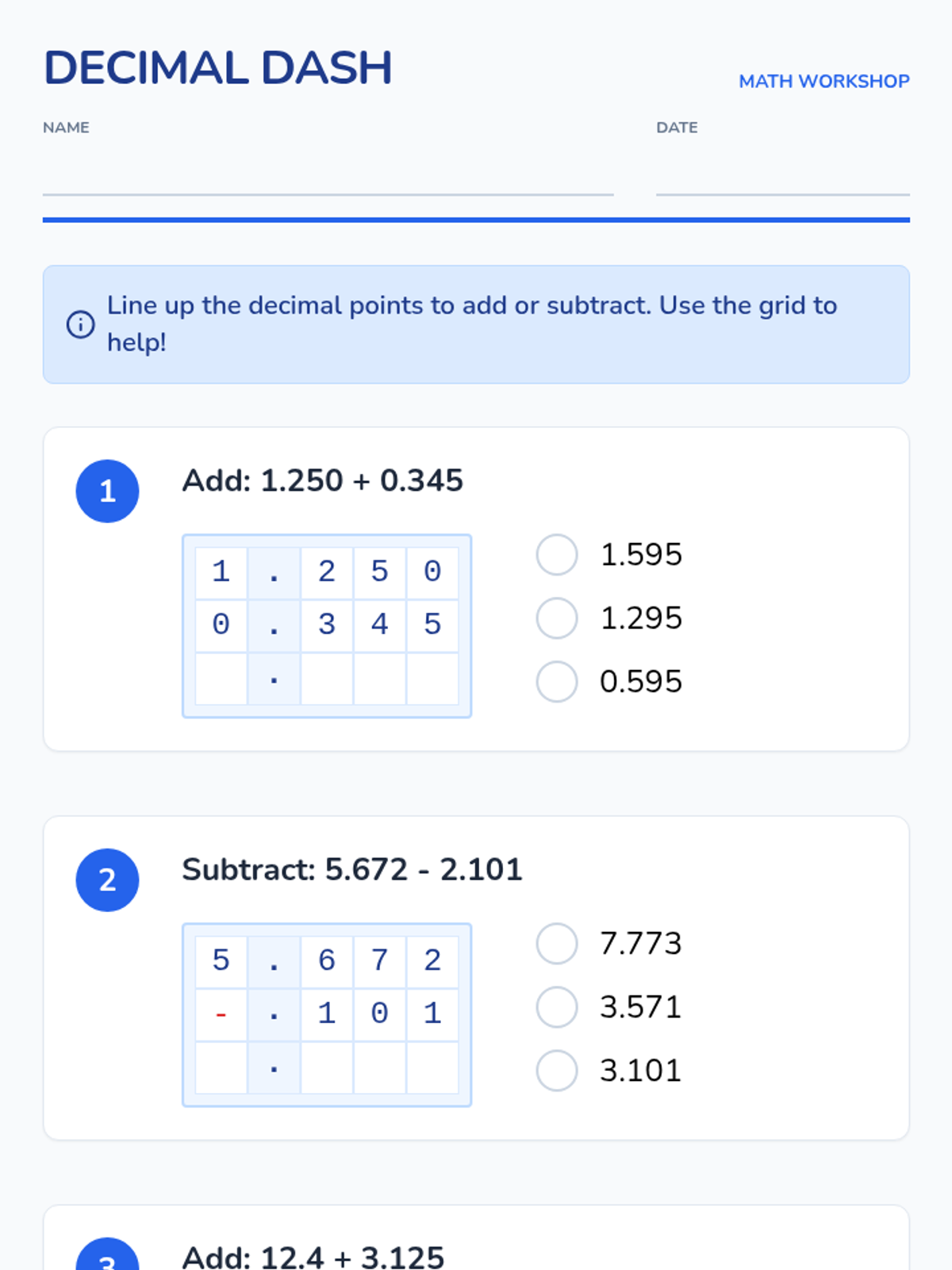
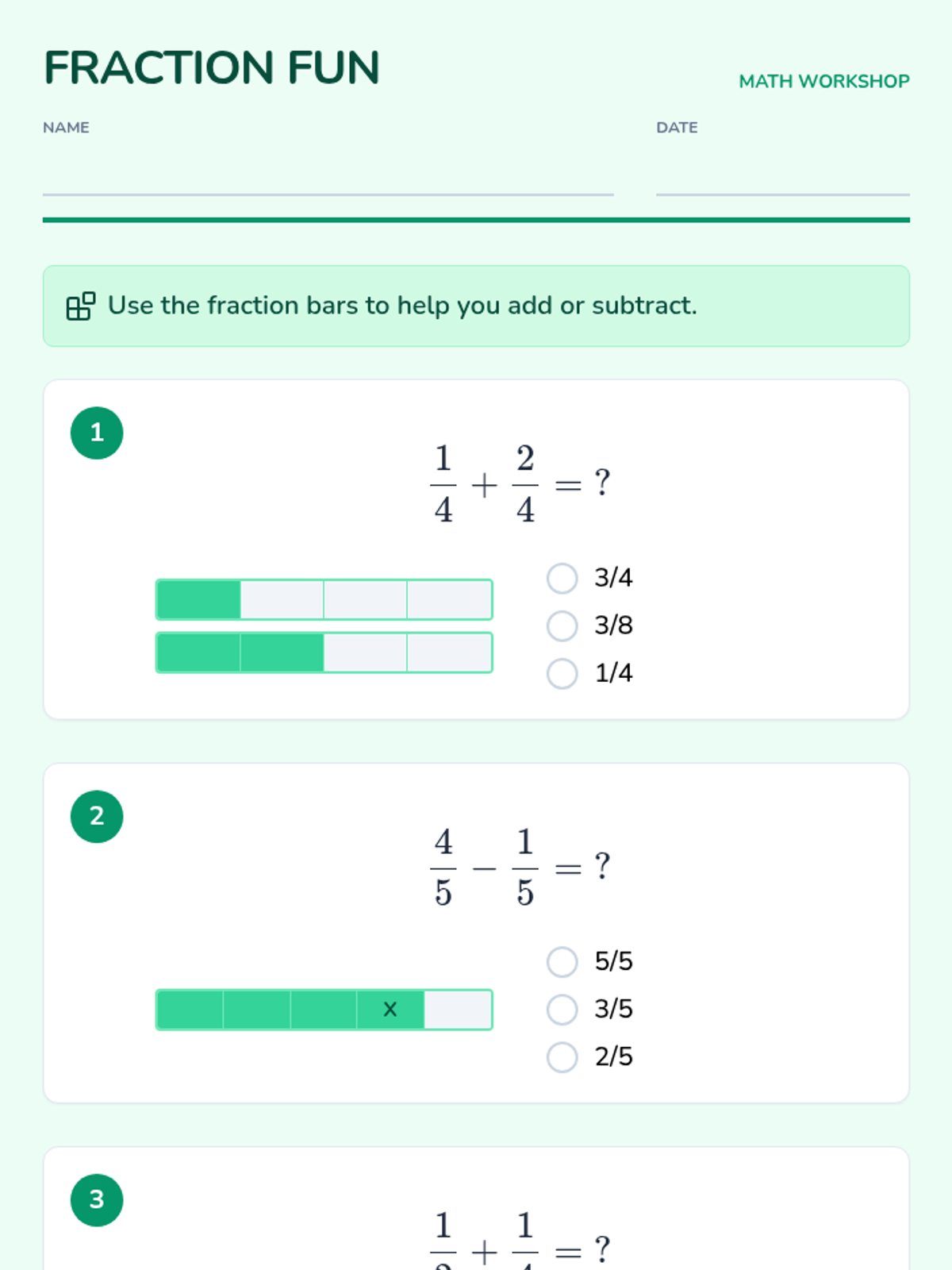
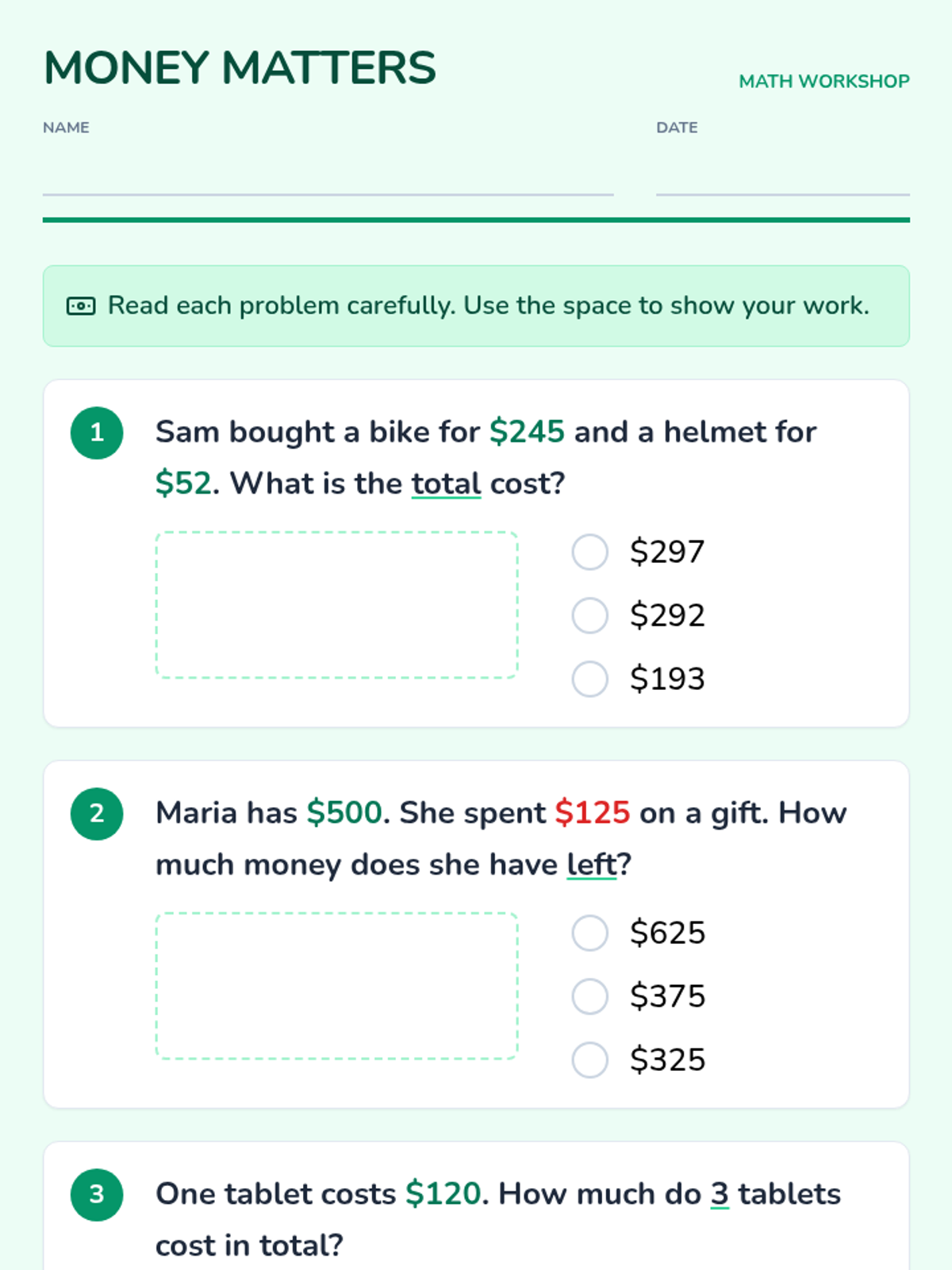
A collection of math worksheets focusing on decimals, fractions, and money operations with built-in visual supports and simplified language.
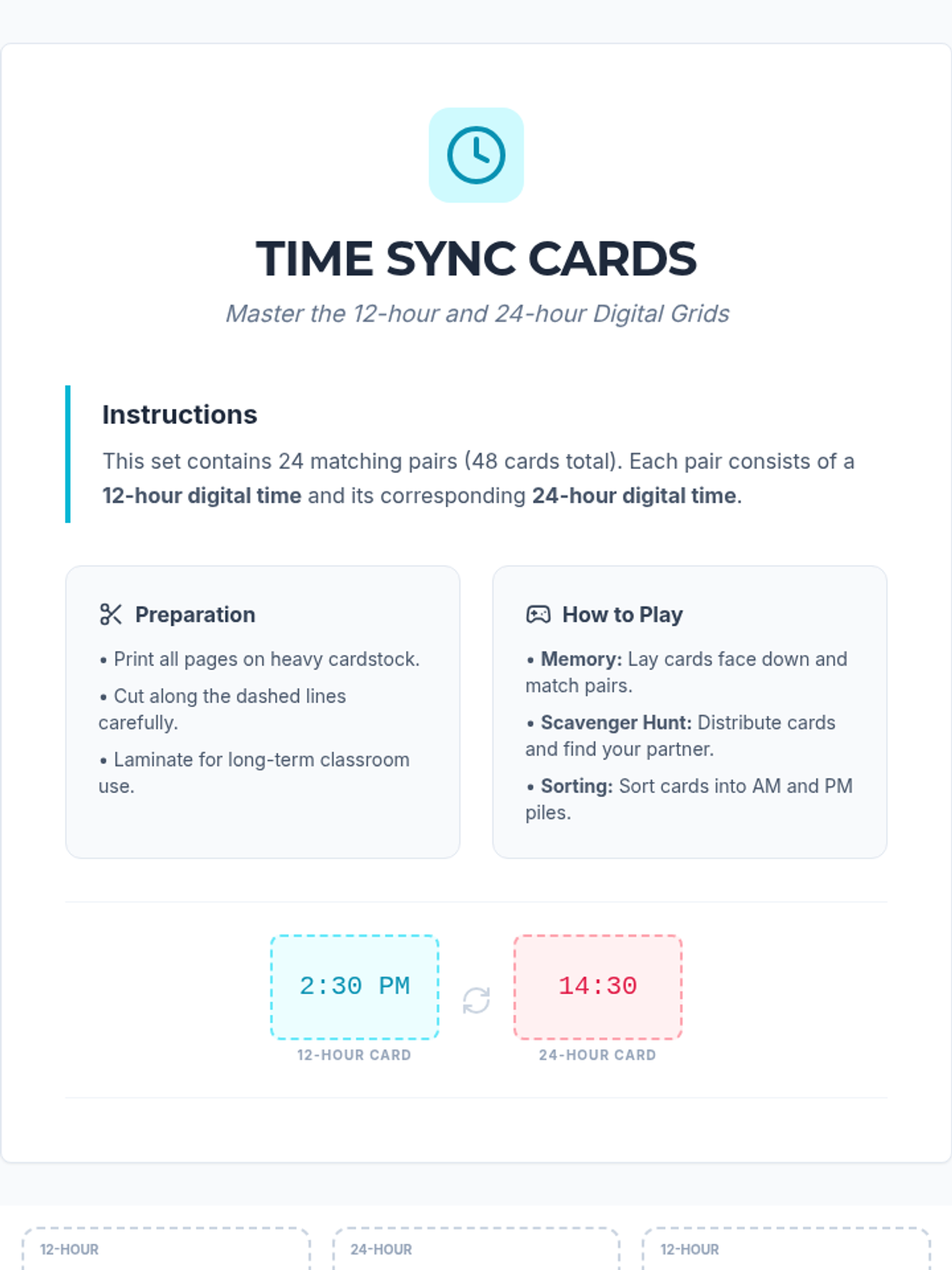
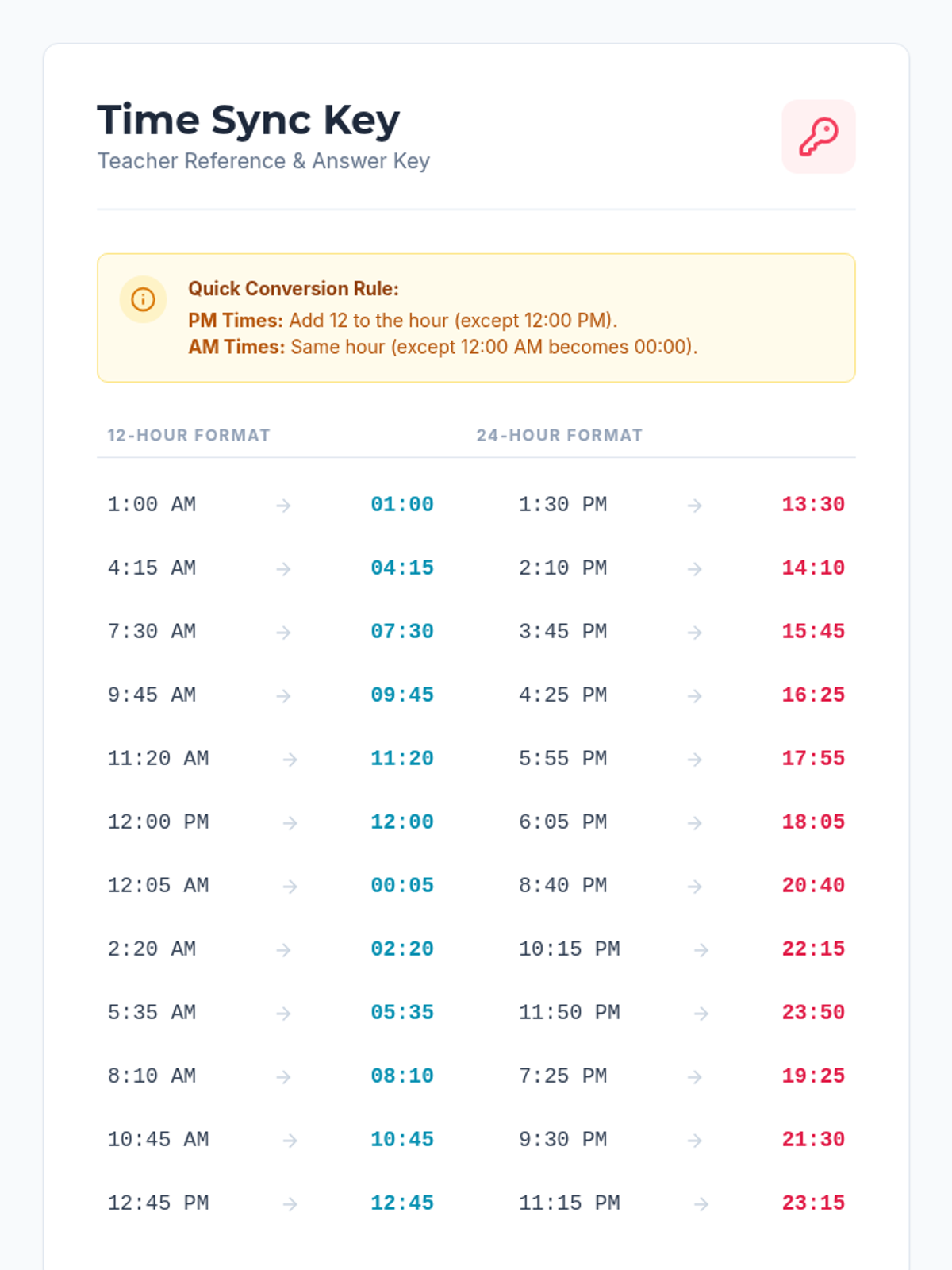
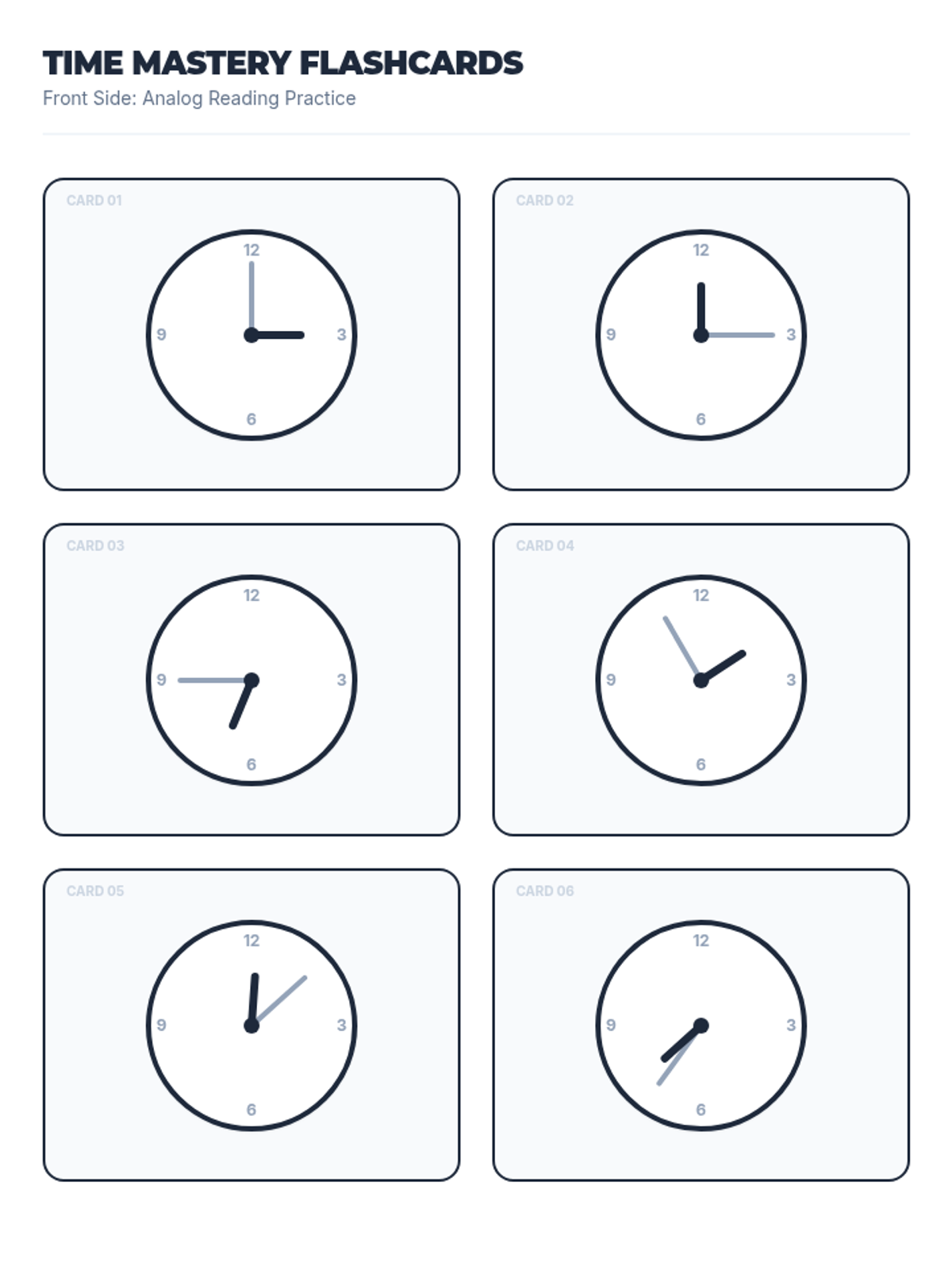
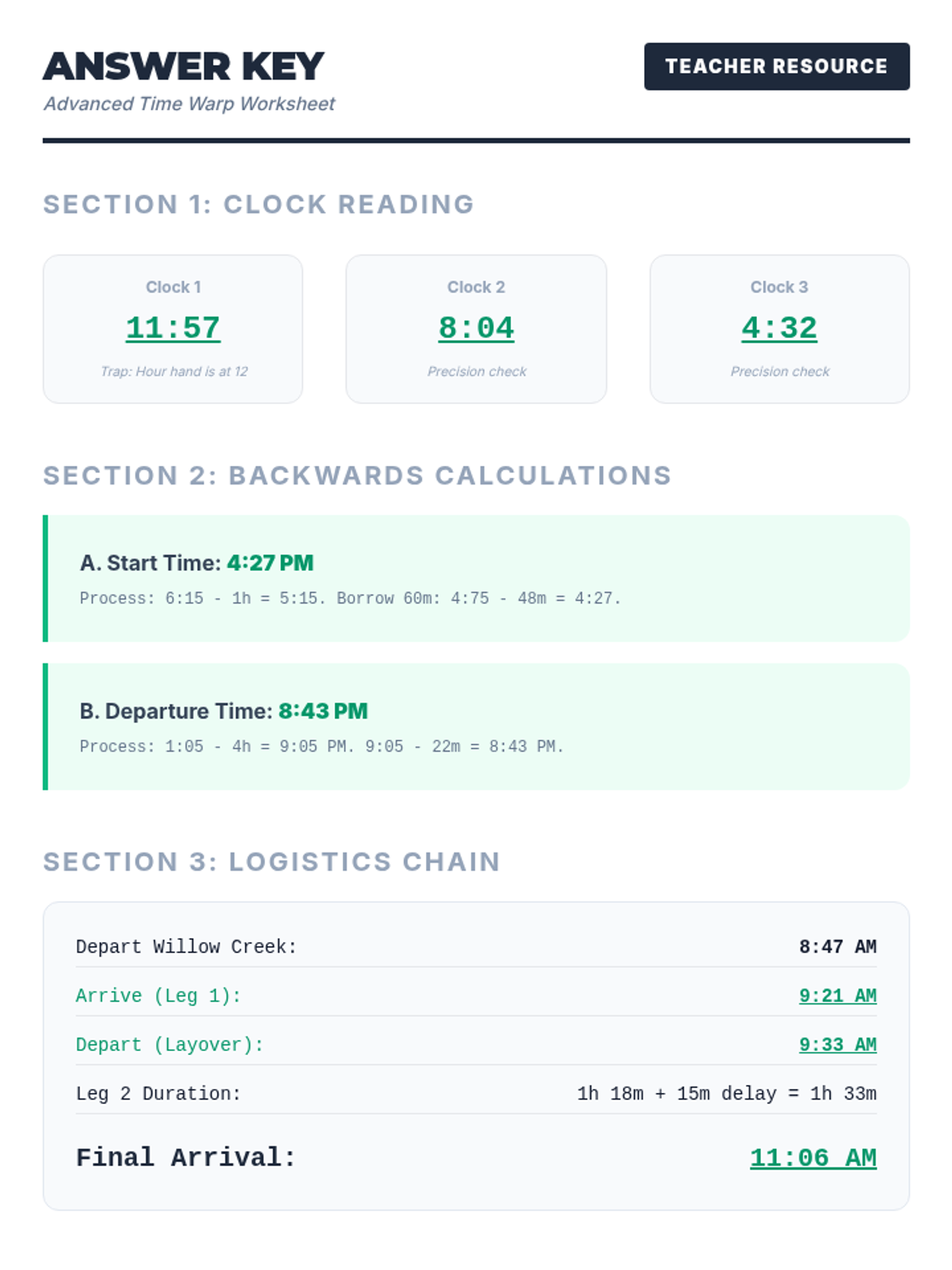
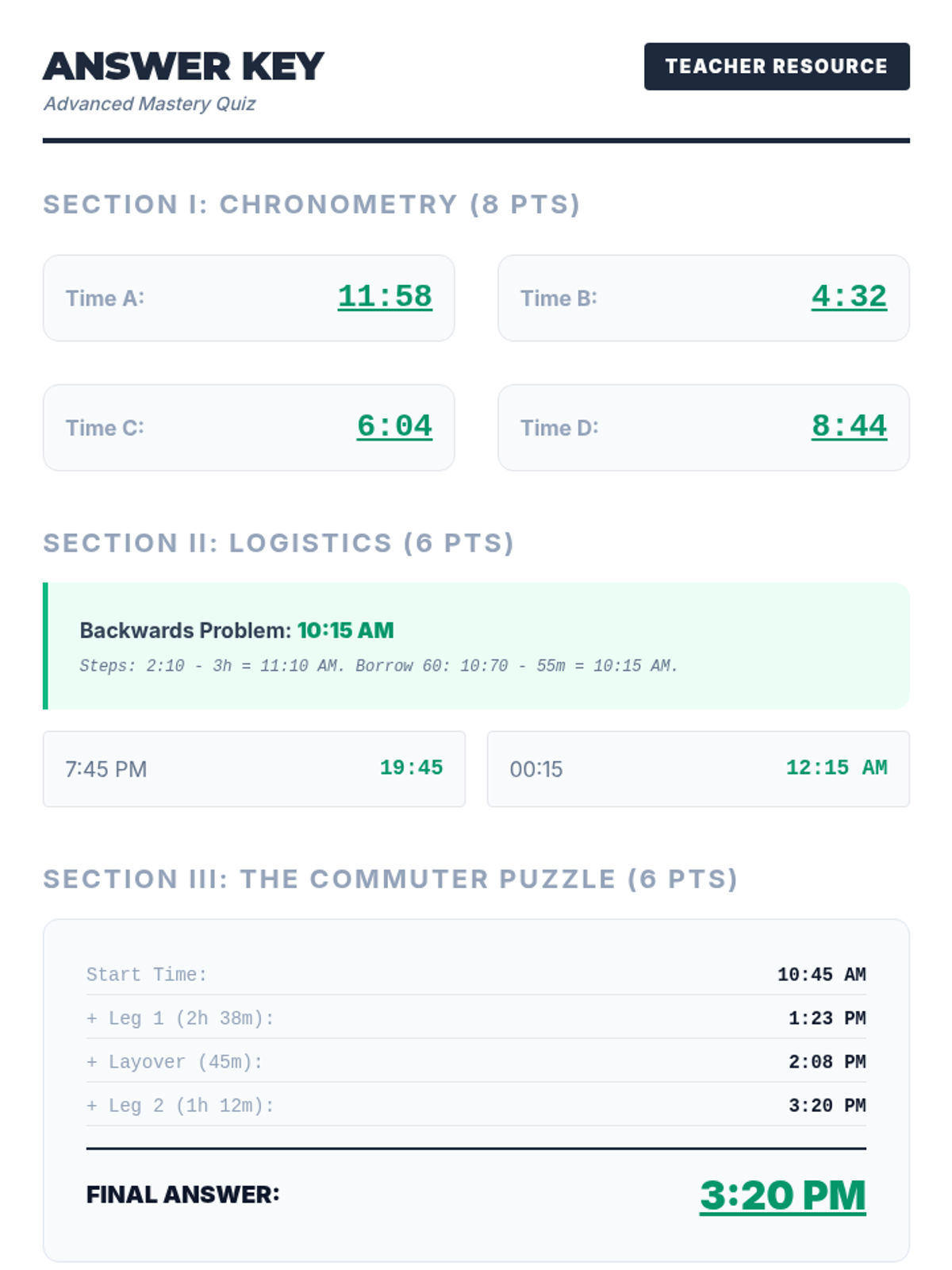
A unit focused on mastering digital time formats, including 12-hour and 24-hour clock synchronization and conversion.
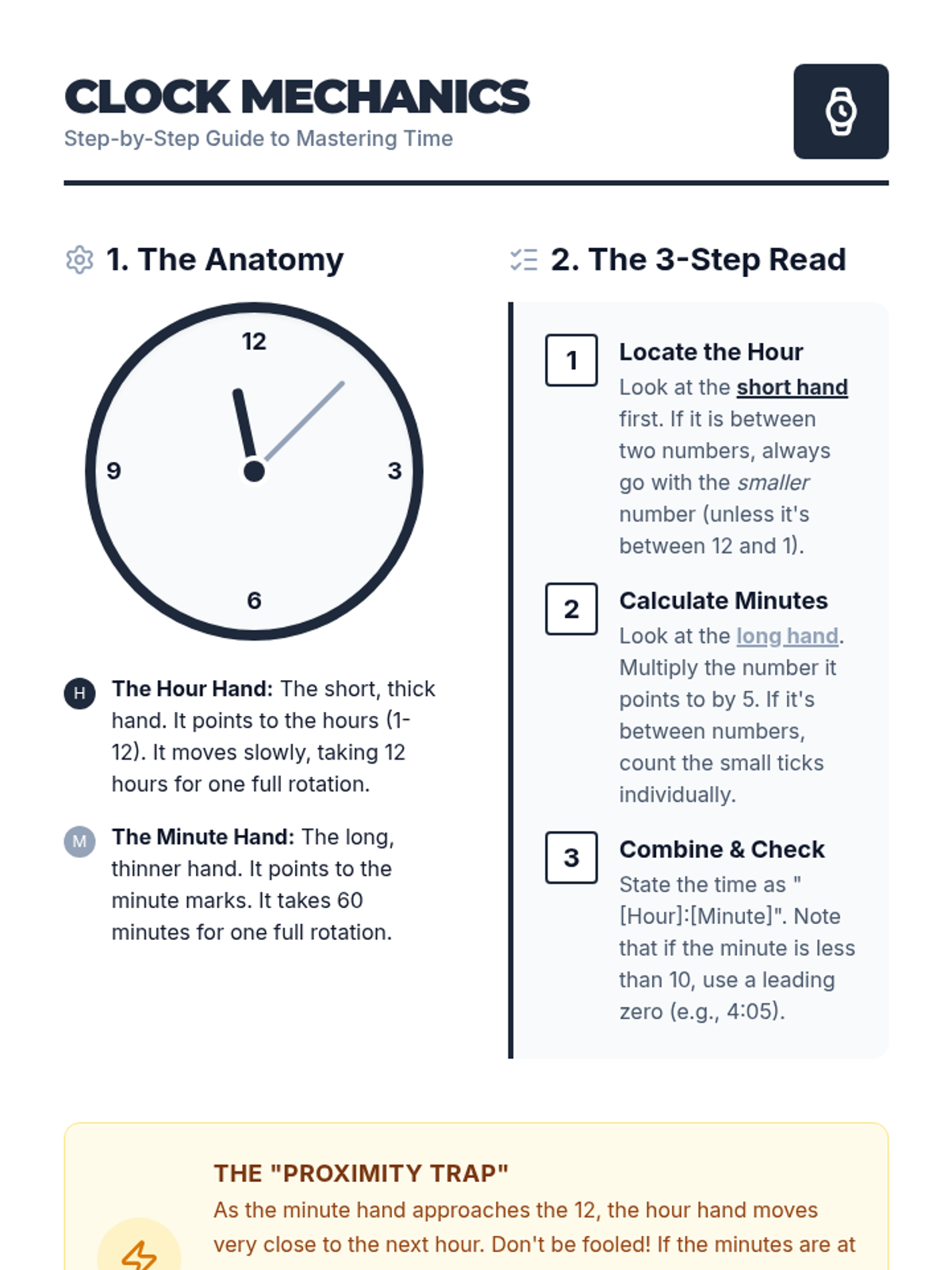
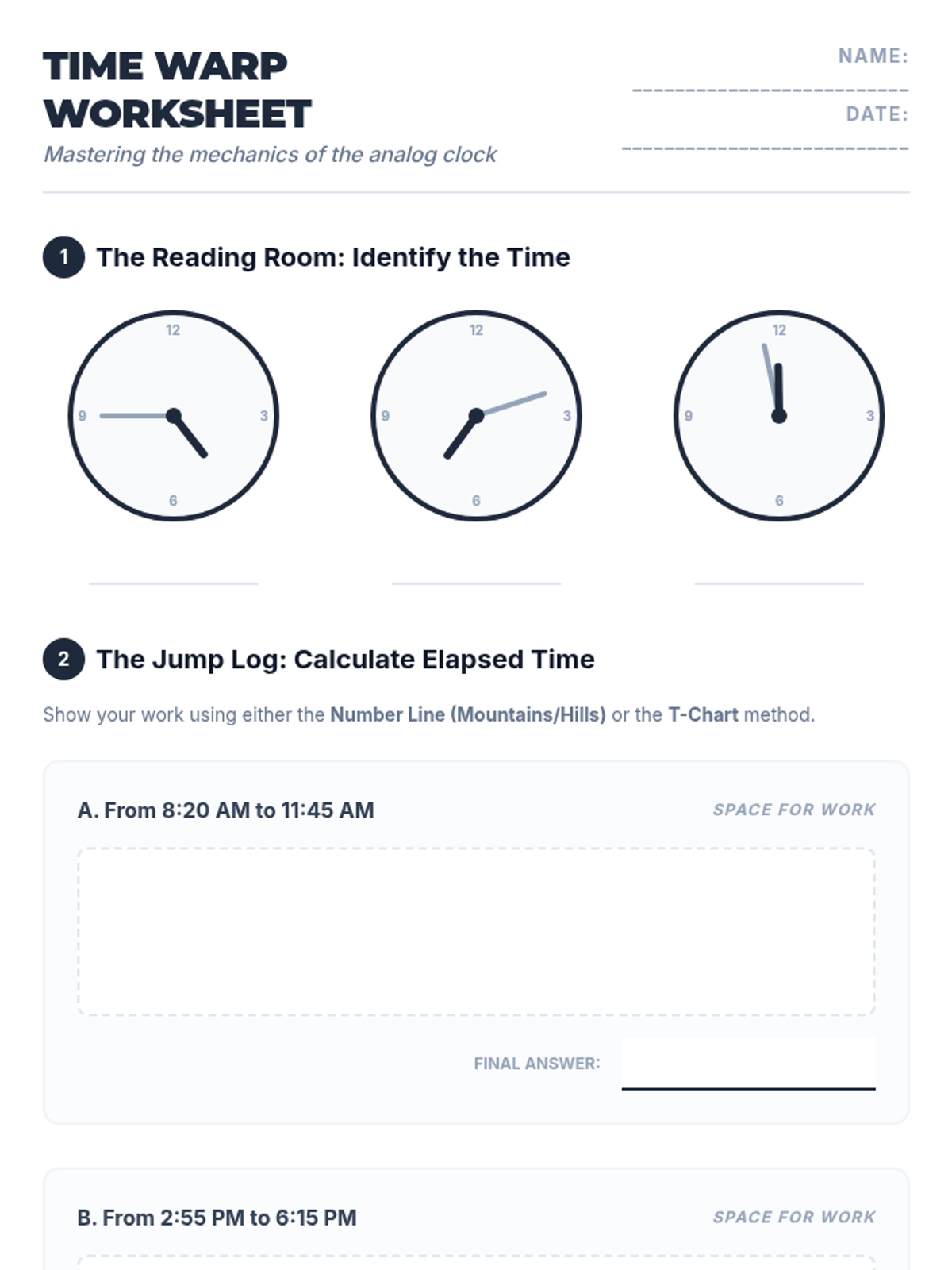
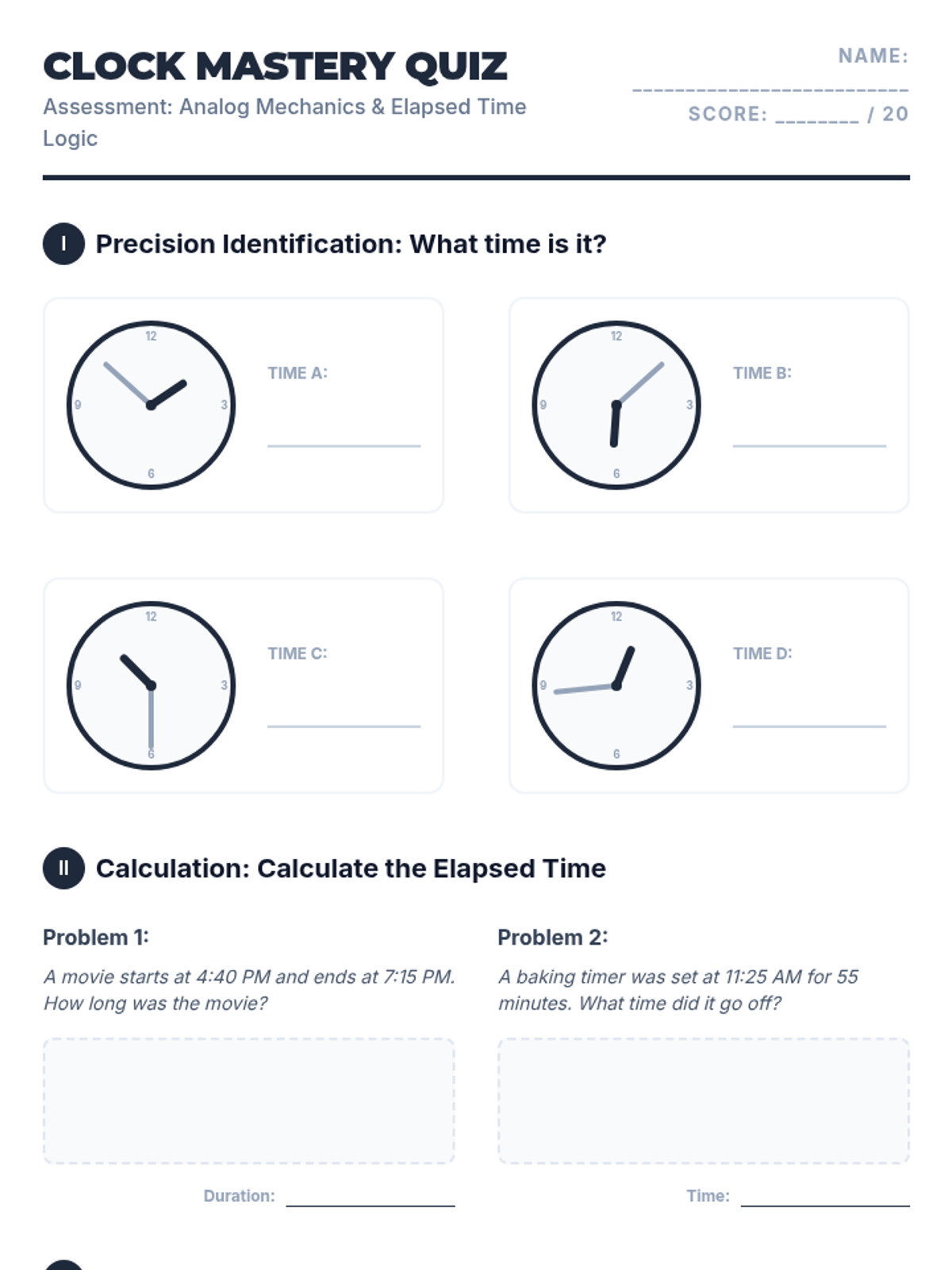
A series of lessons focused on time management and measurement, starting with the mechanics of analog clocks and moving into complex elapsed time scenarios.
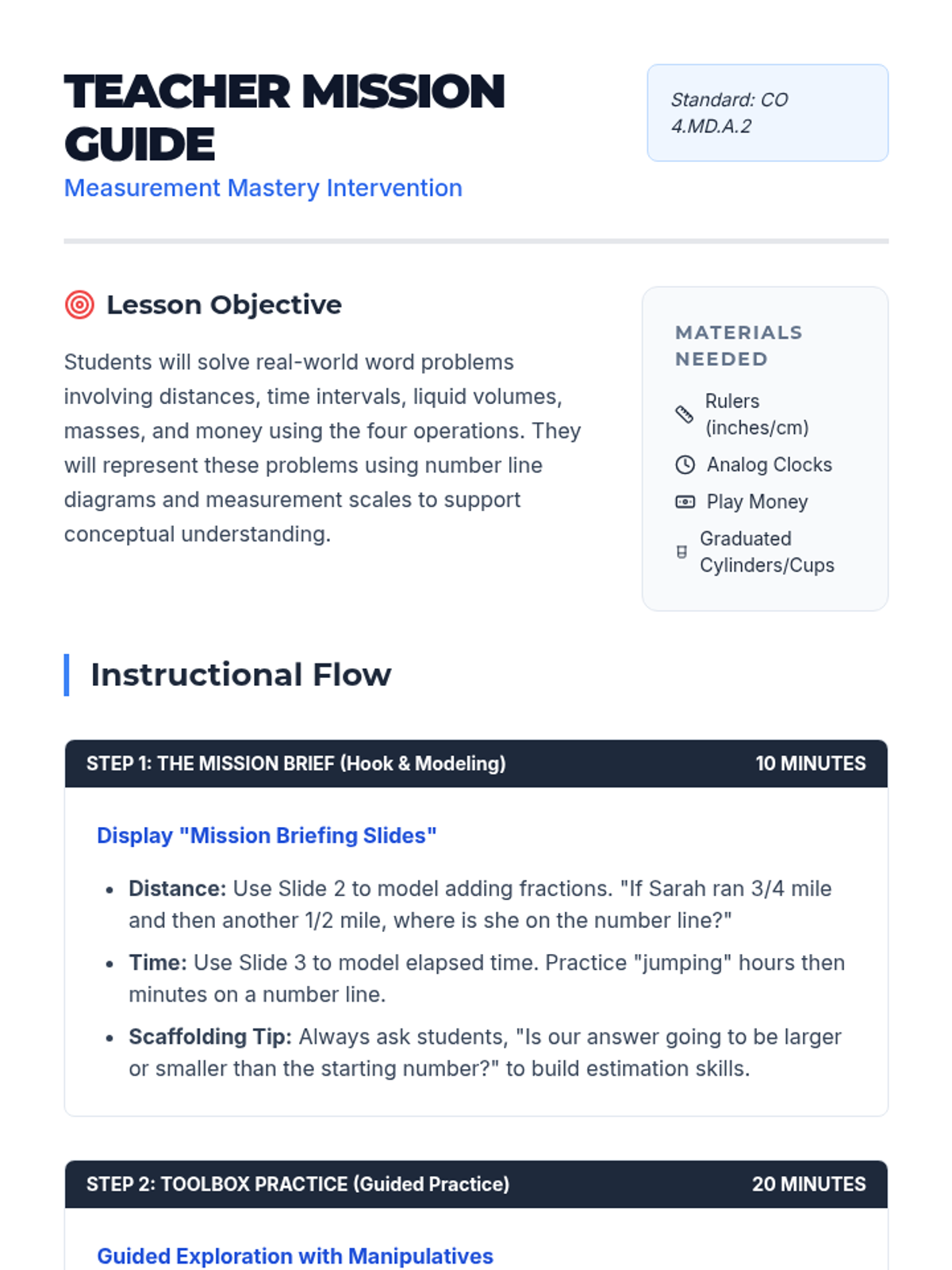
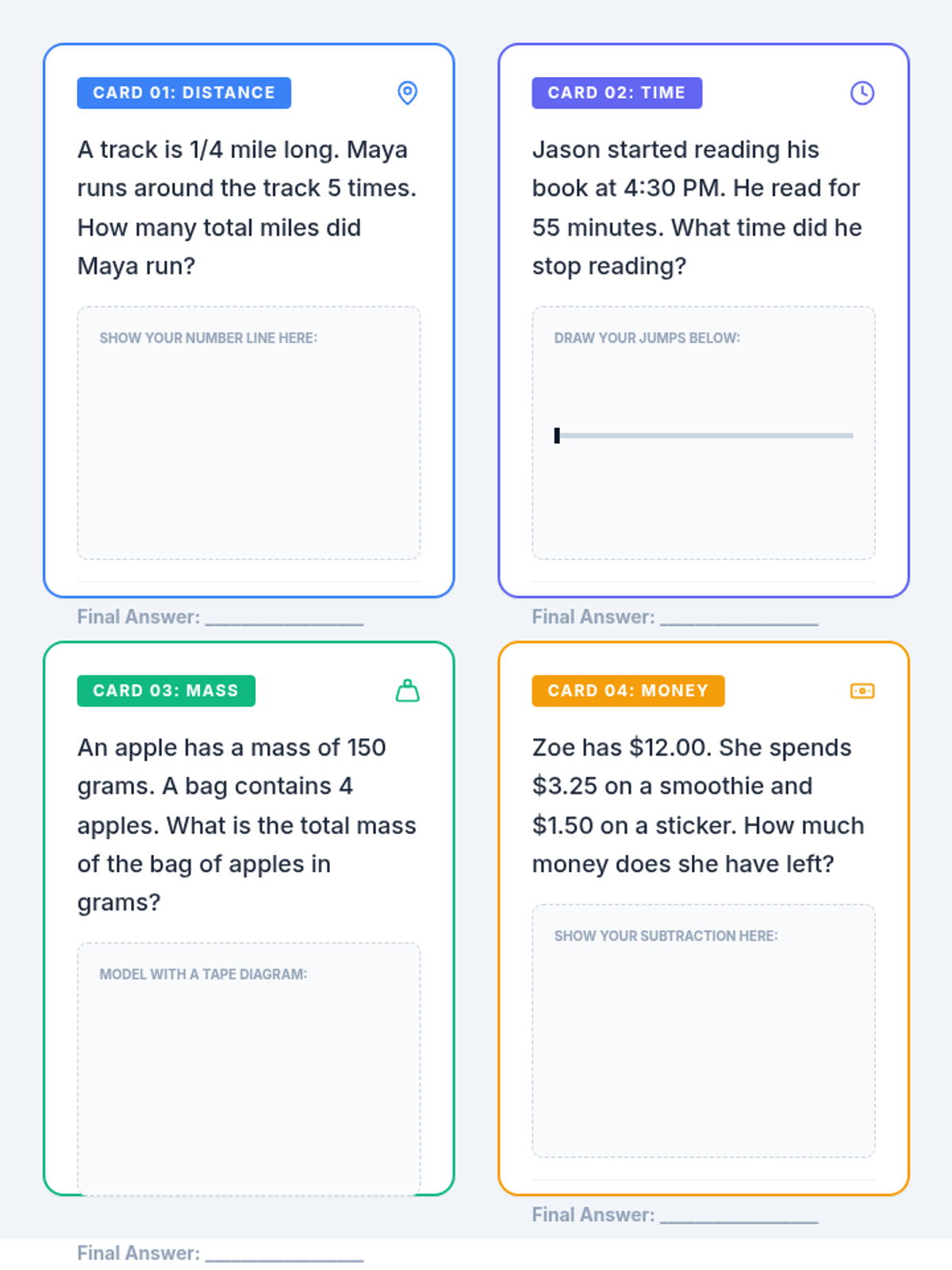
A Tier 2 intervention sequence focused on solving measurement word problems involving distance, time, volume, mass, and money. Students use number lines and manipulatives to master complex multi-step problems with fractions and decimals.
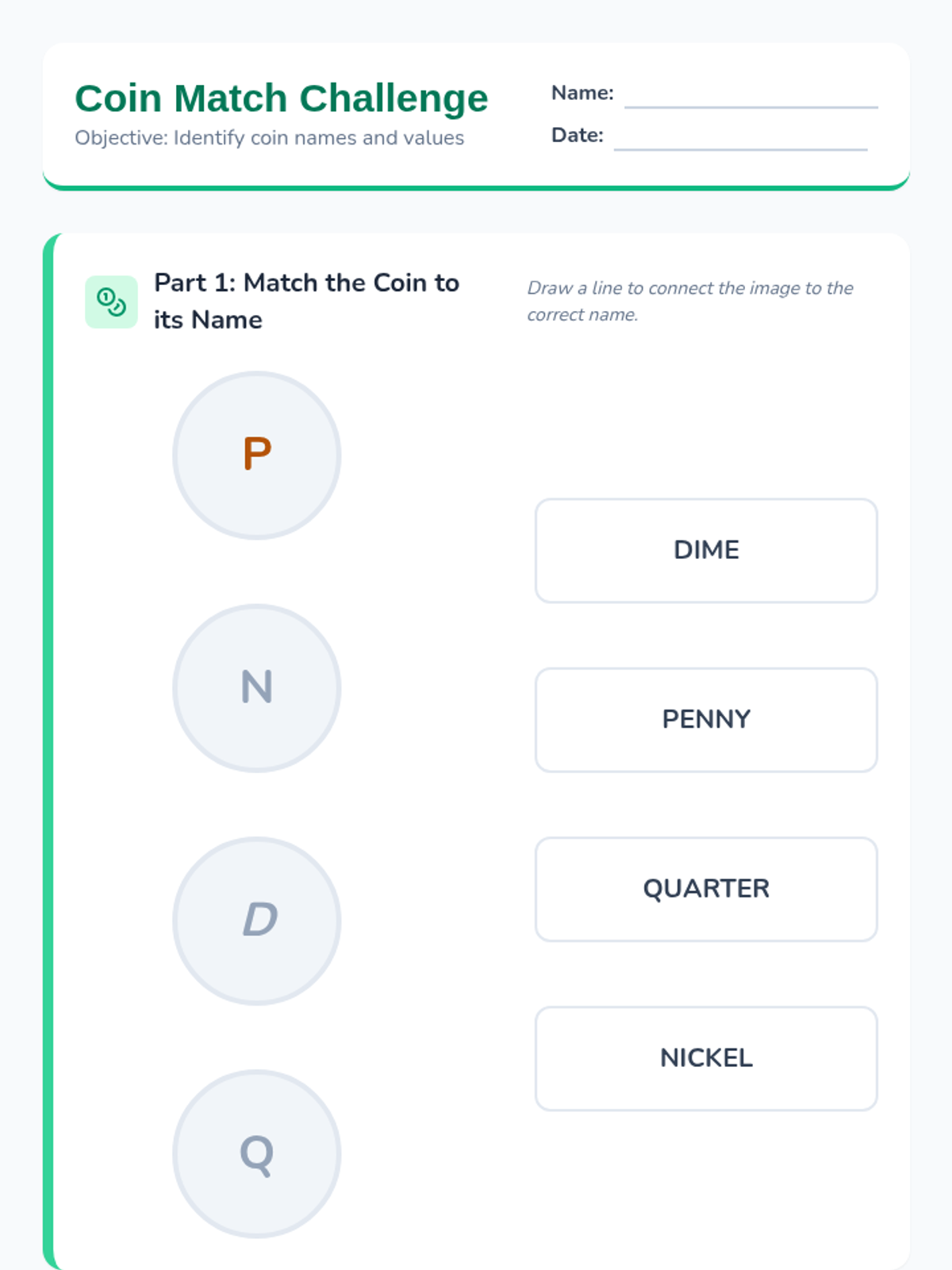
A comprehensive week-long math unit focused on identifying coin values and performing addition and subtraction of money up to $20 using a calculator in real-world contexts.
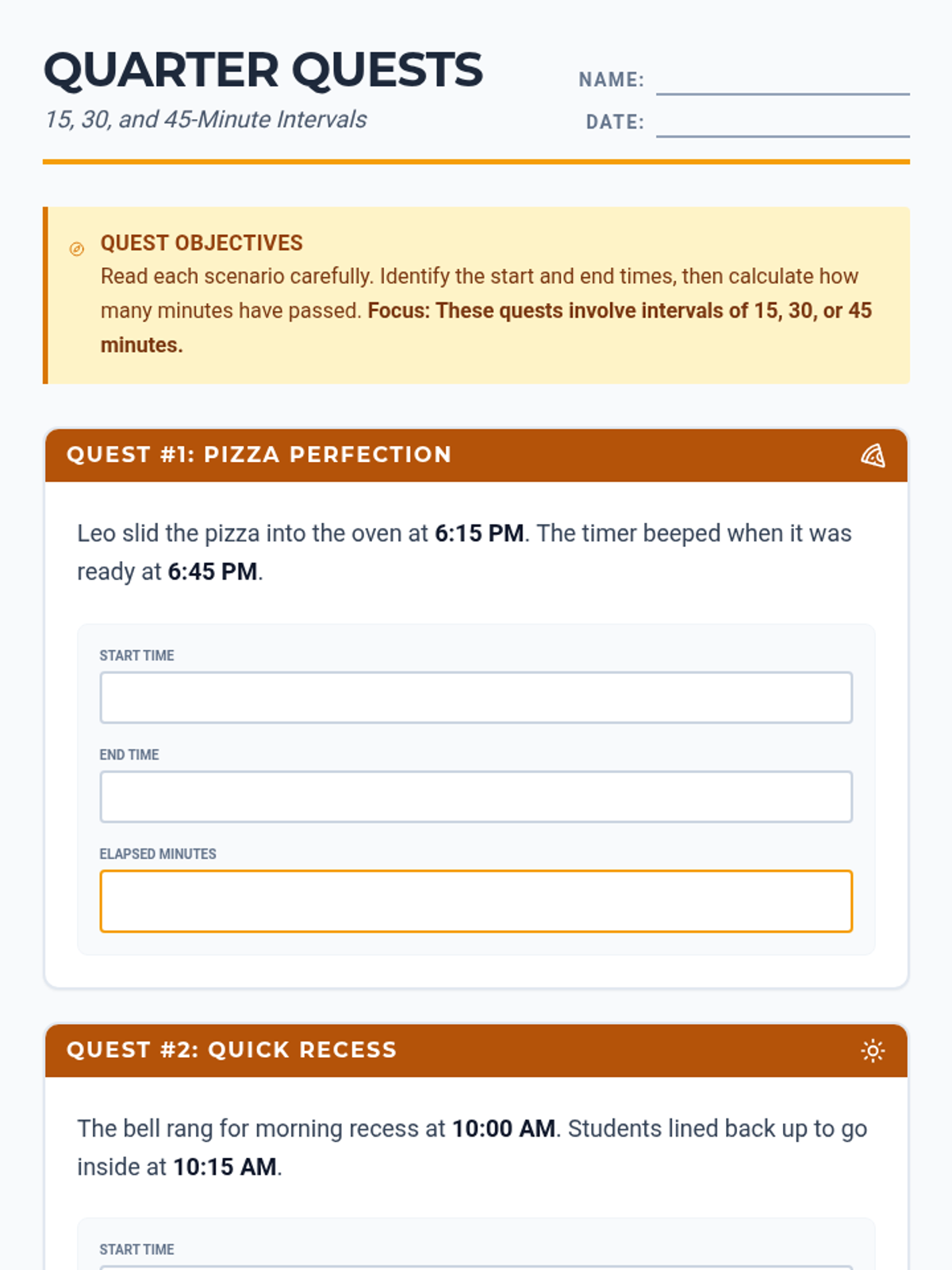
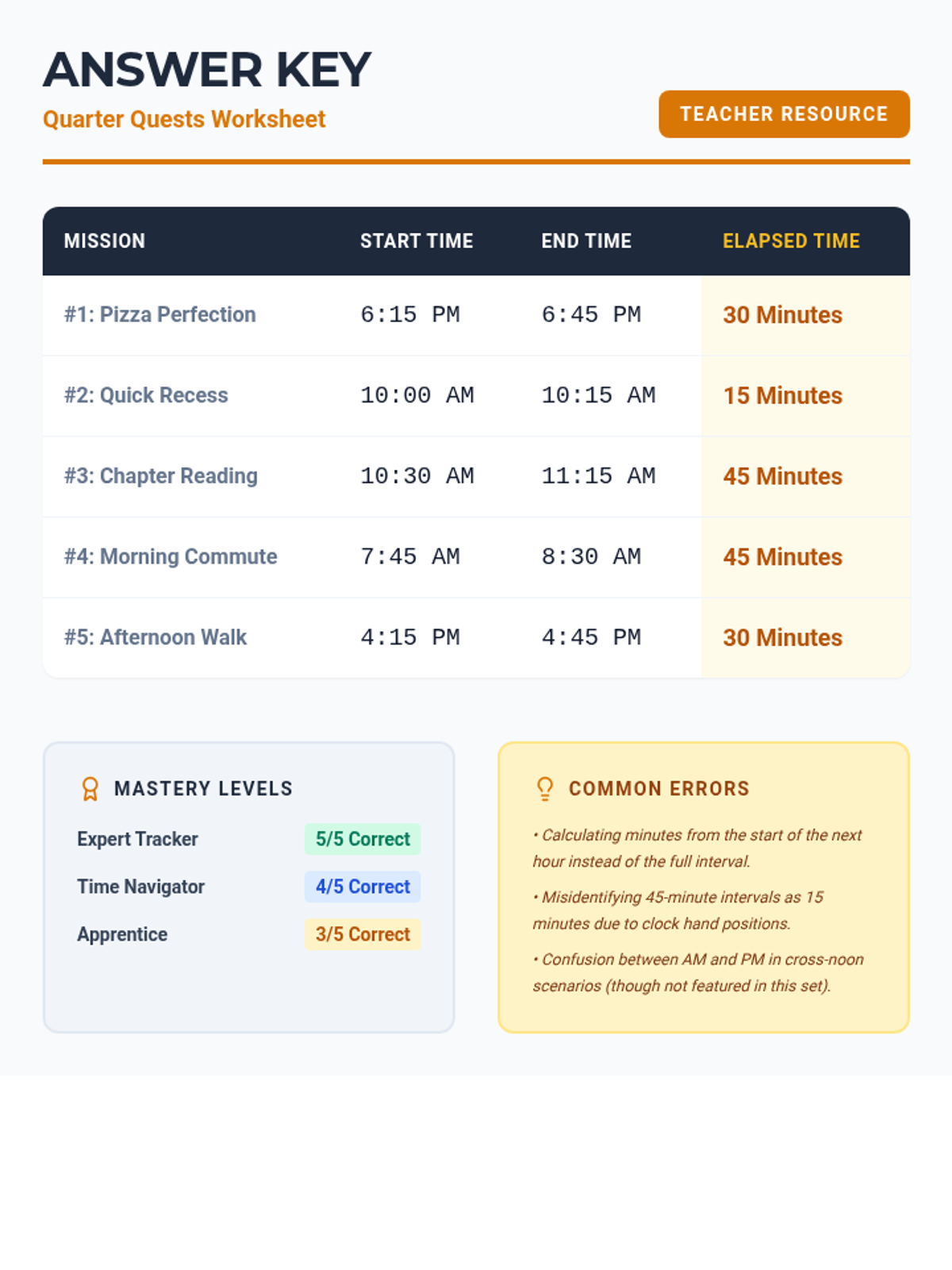
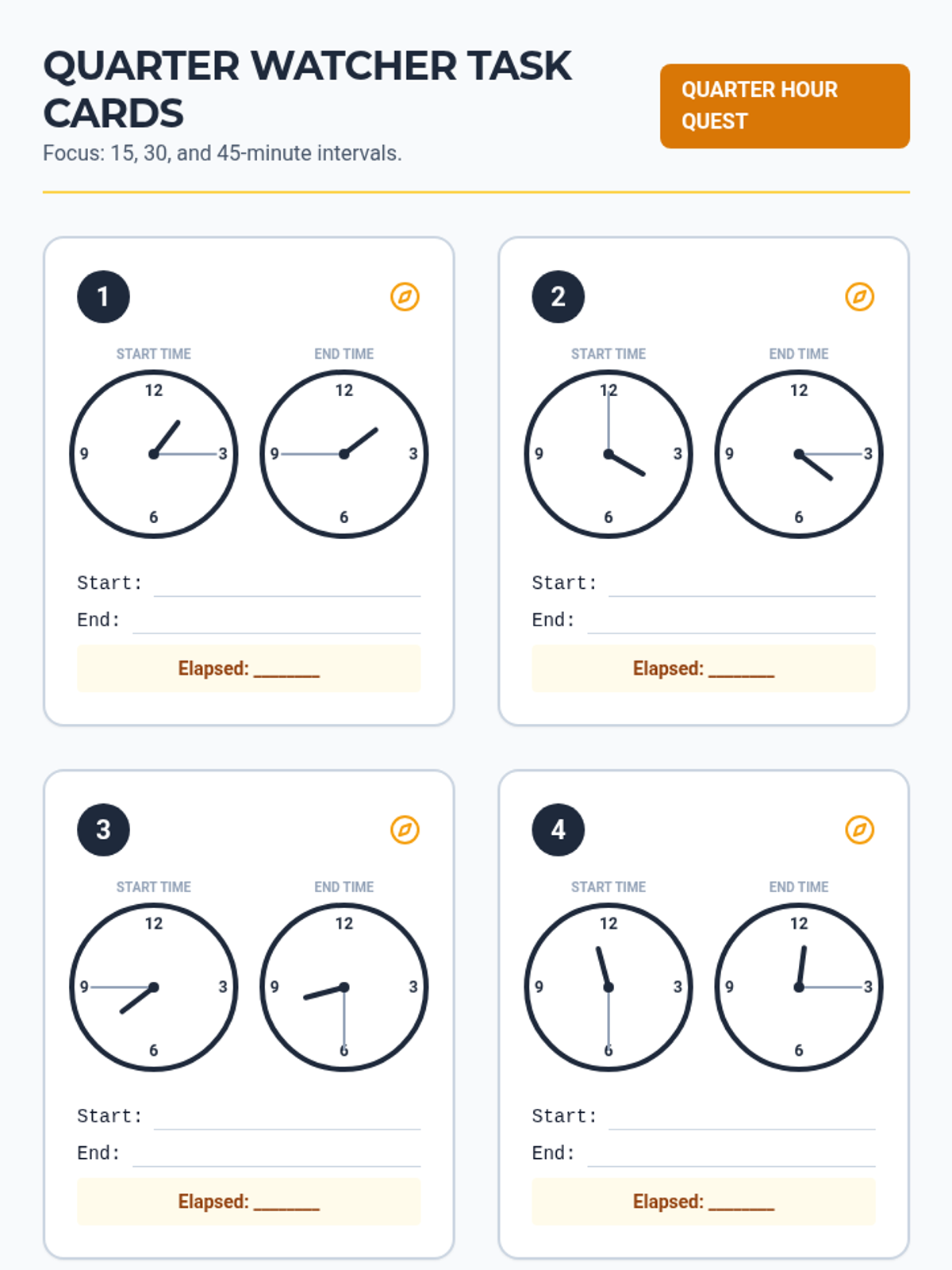
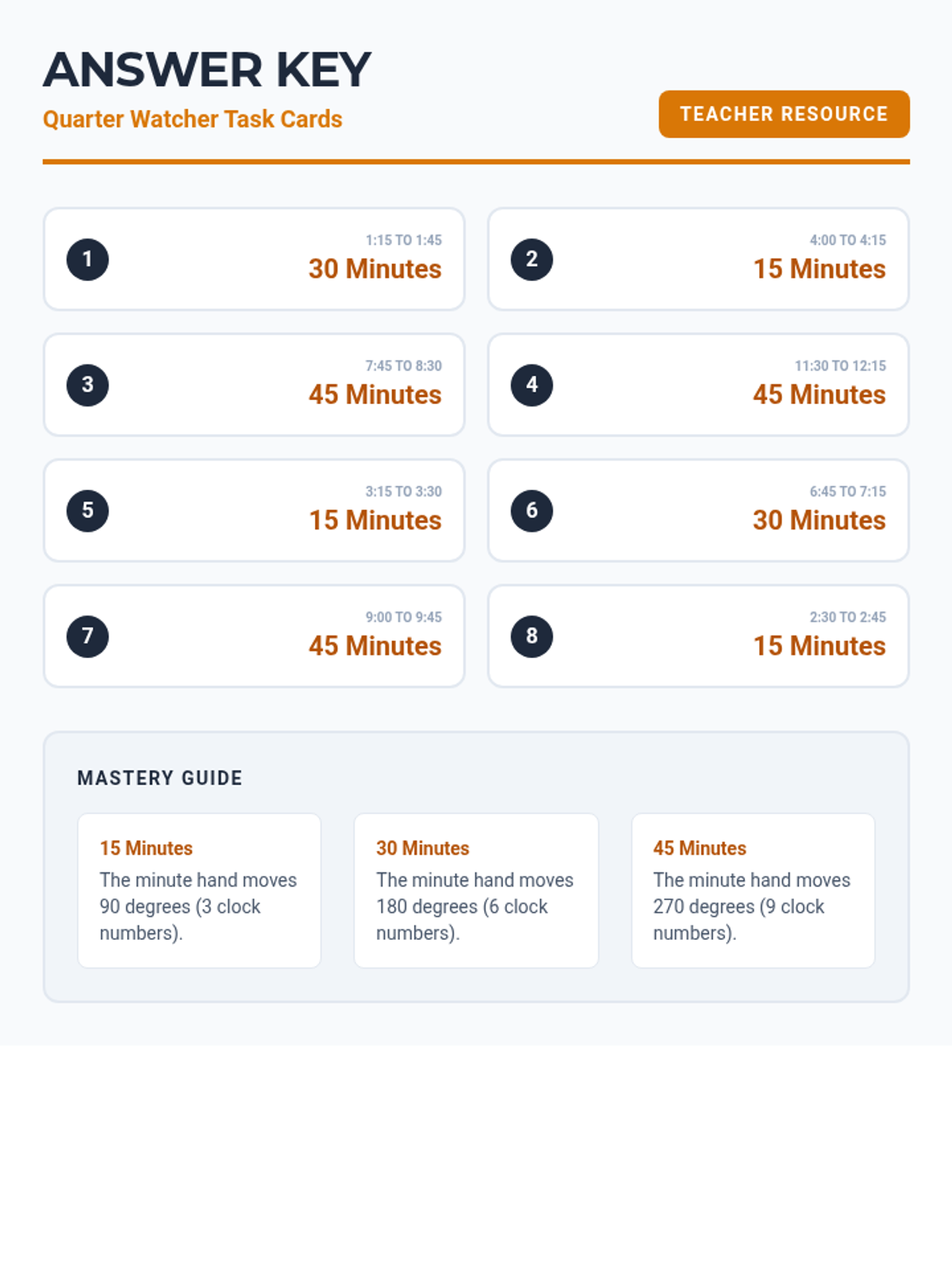
A comprehensive unit on calculating elapsed time, progressing from simple one-hour intervals to quarter-hour and five-minute increments using scenarios and analog clocks.
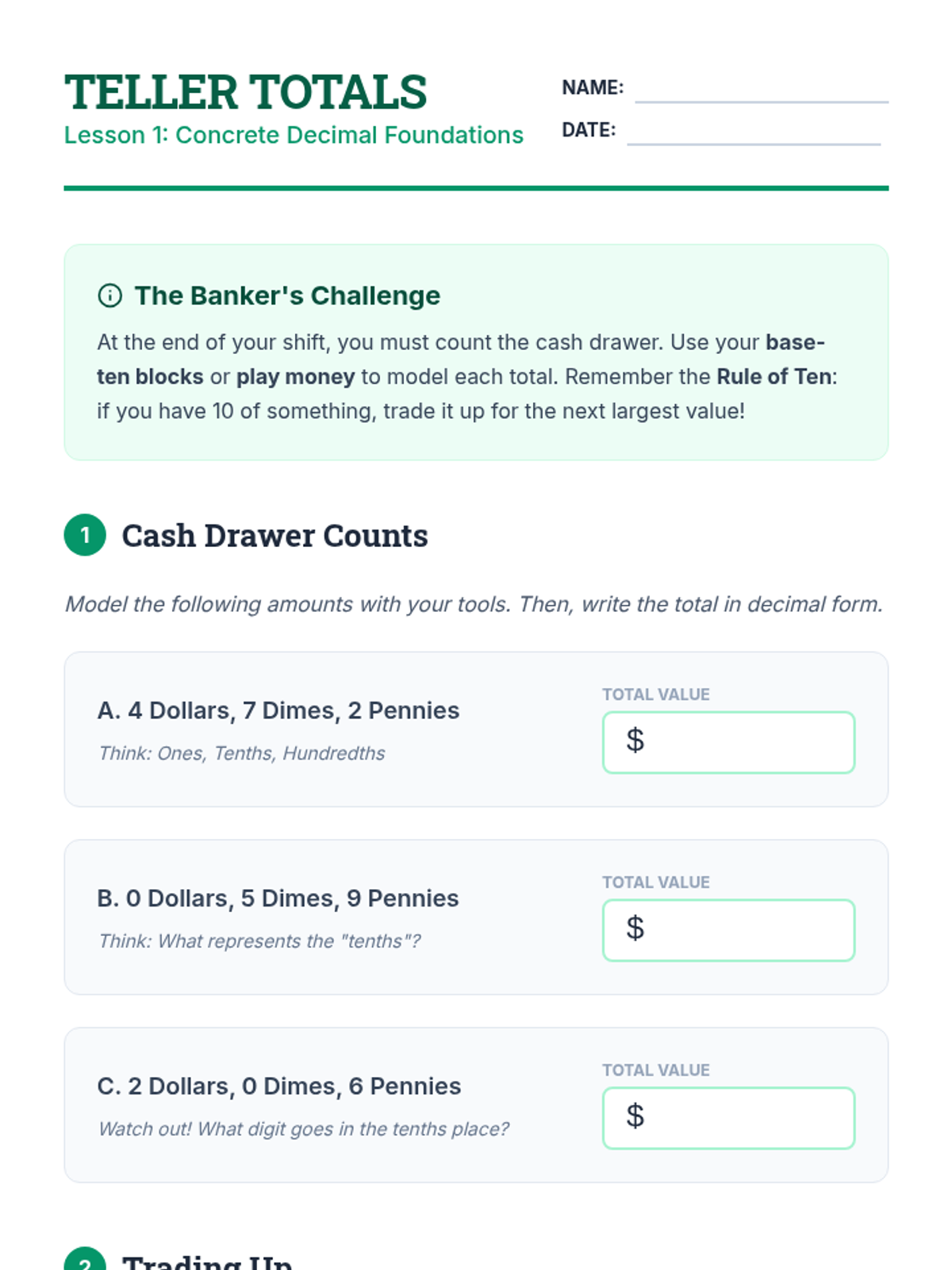
This sequence uses the Concrete-Representational-Abstract (CRA) framework to teach decimal place value through the lens of financial literacy. Students move from manipulating physical currency to drawing models and finally using standard algorithms to manage budgets.
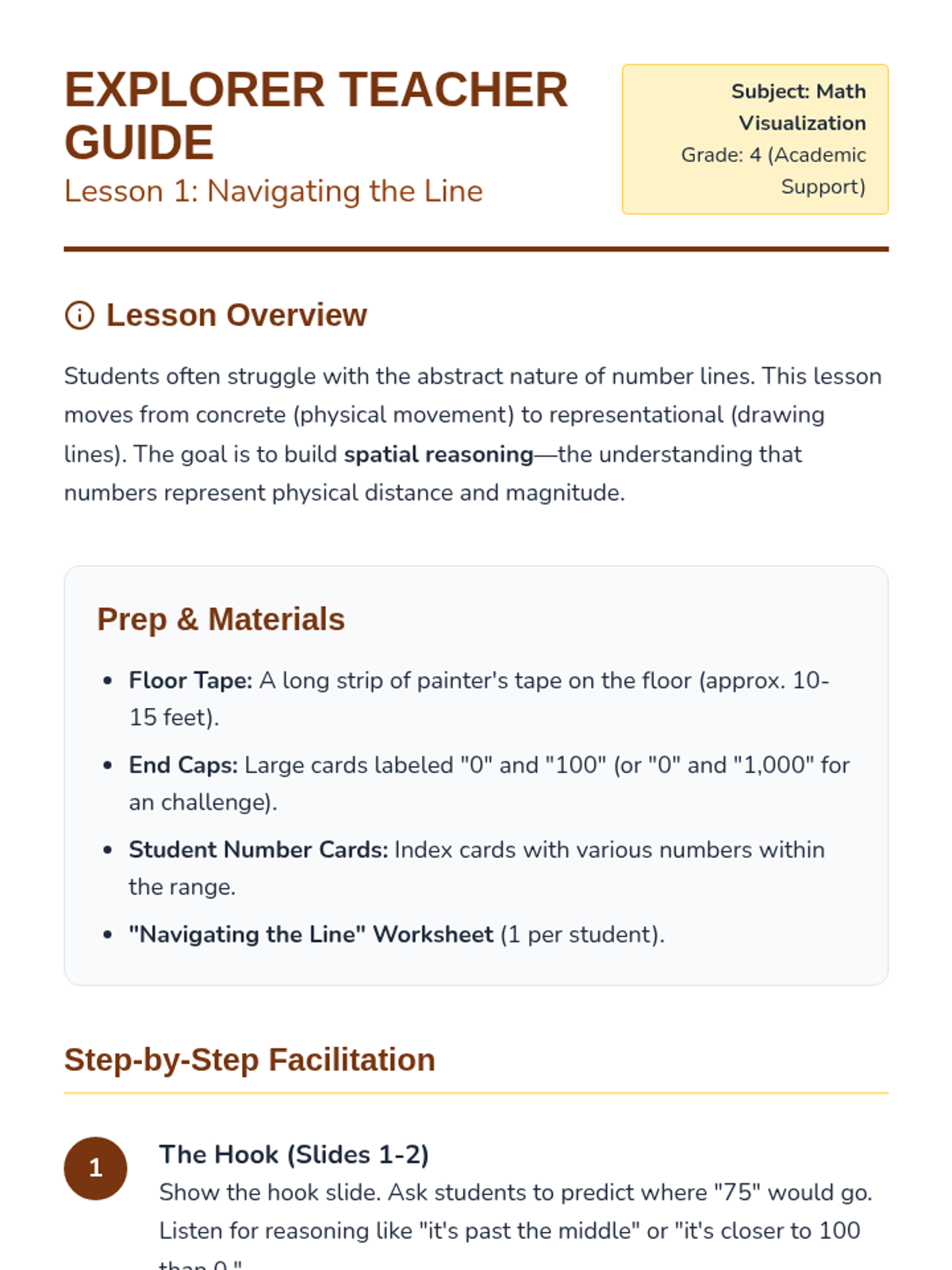
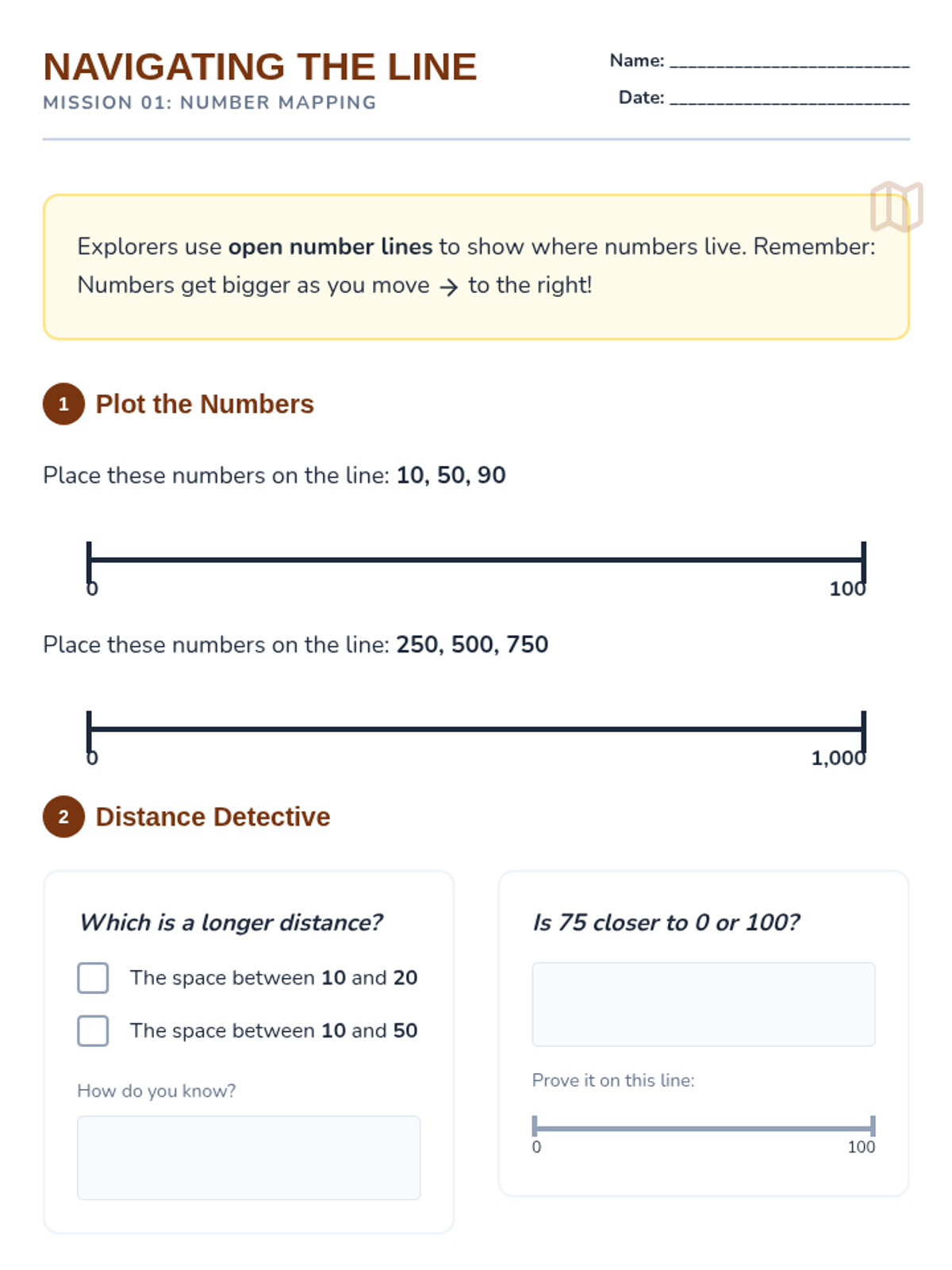
A 4th-grade sequence designed for students needing academic support to master the open number line. Students learn to visualize multi-digit operations, elapsed time, and measurement word problems by mapping them as 'distances' on a line, moving from physical movement to abstract mental math.
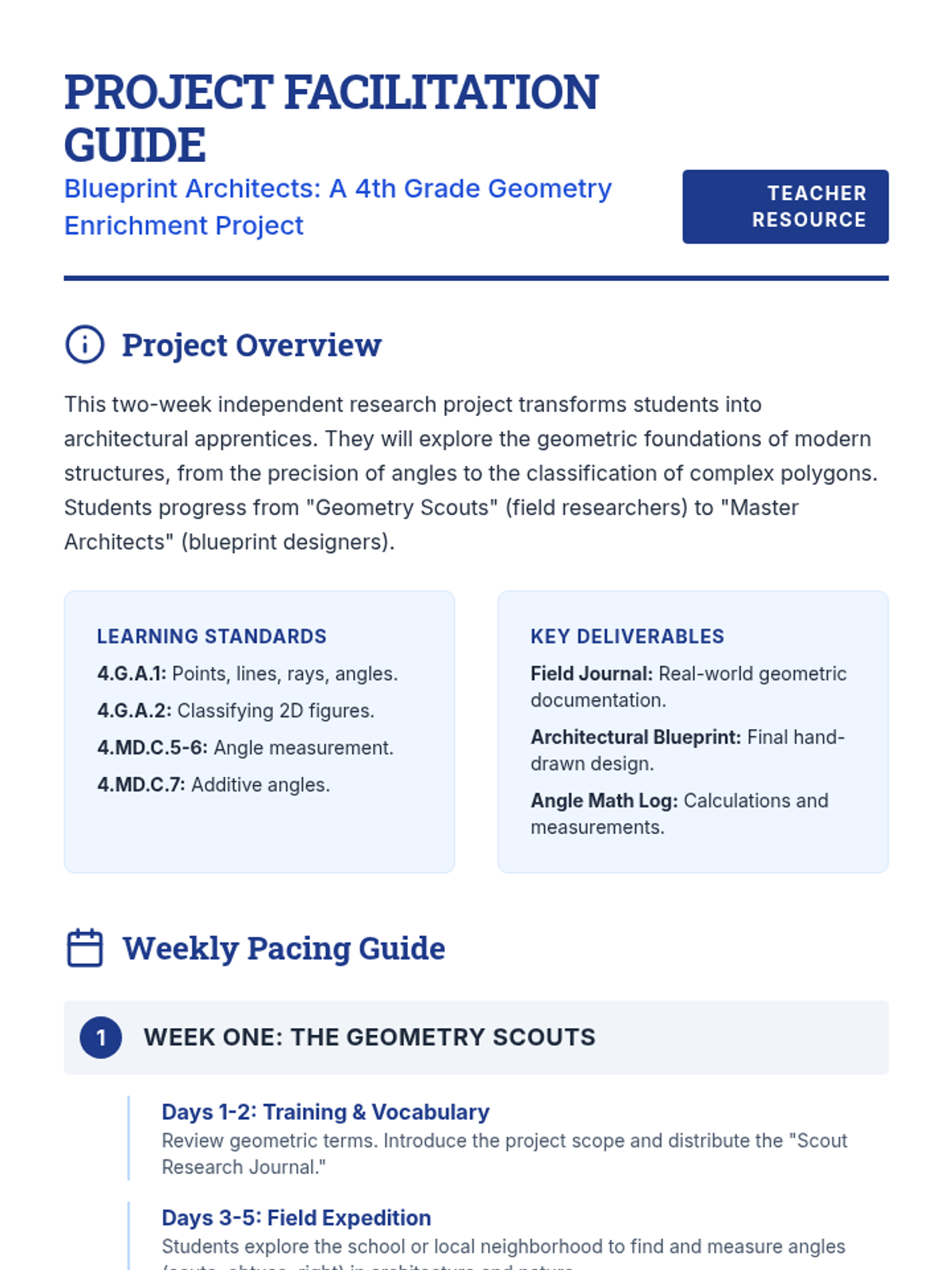
A two-week enrichment project where students act as architects to research, design, and calculate the geometry of a modern structure. The project covers points, lines, angles, and 2D shape classification through real-world application and creative design.
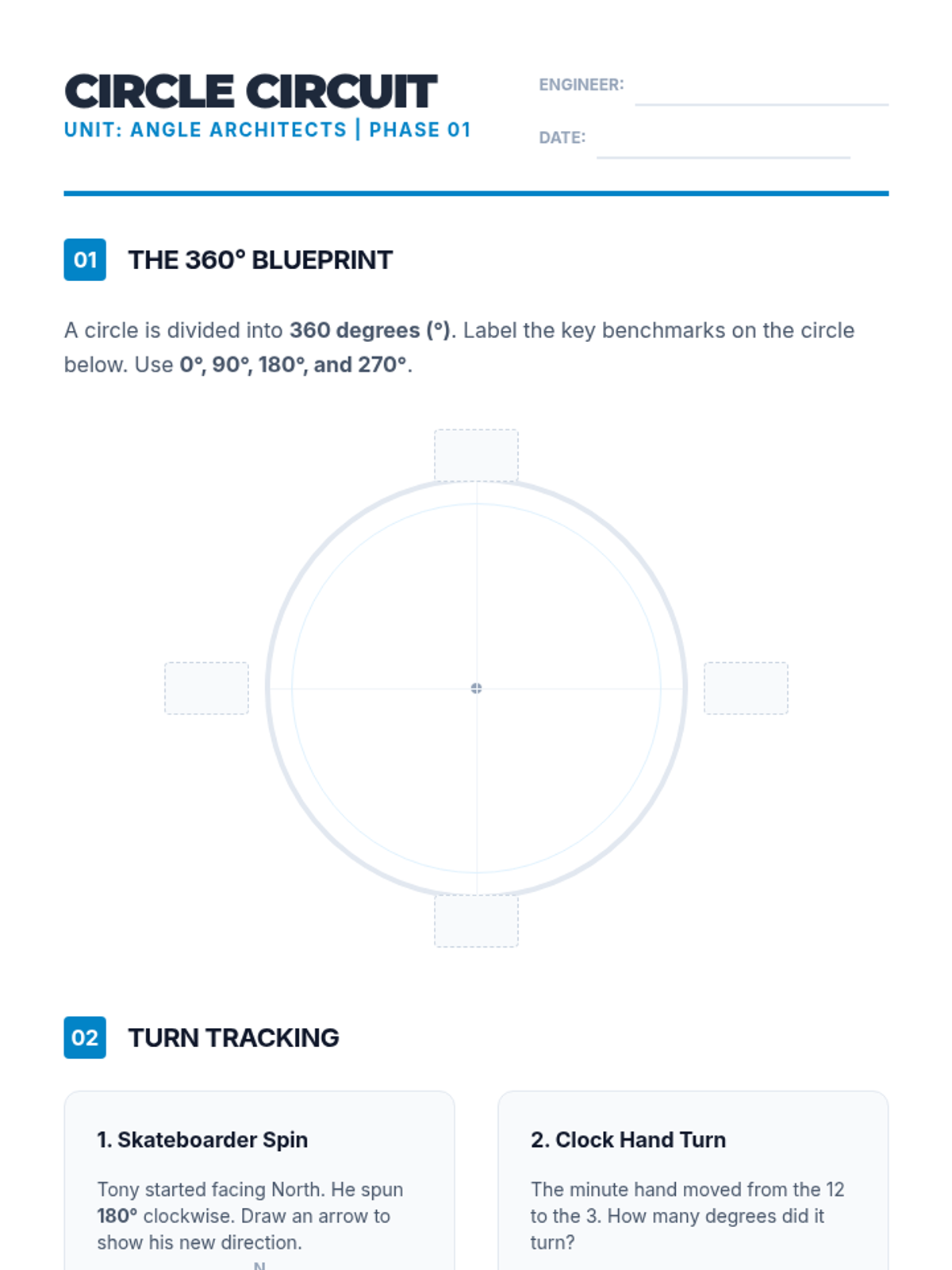
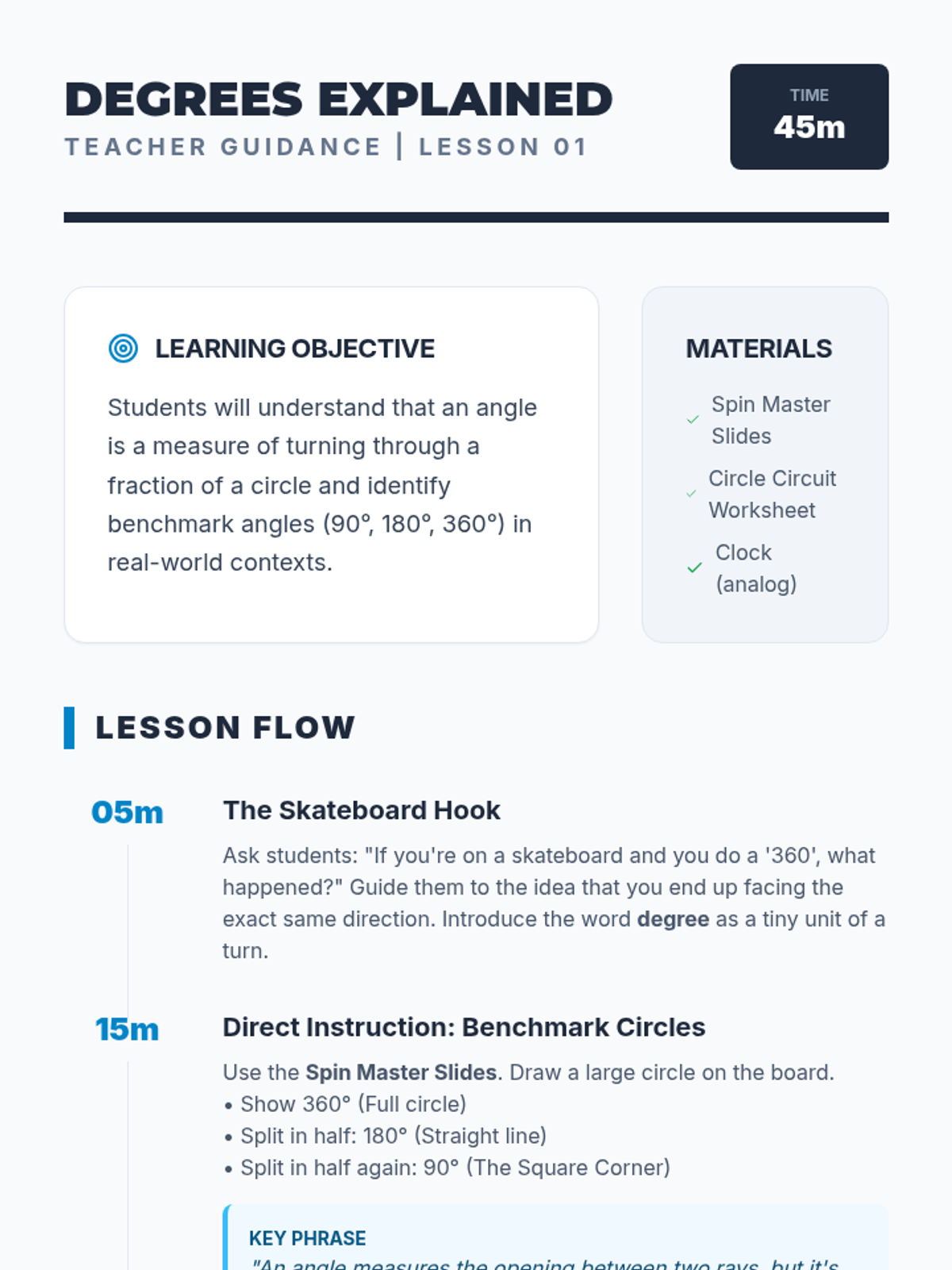
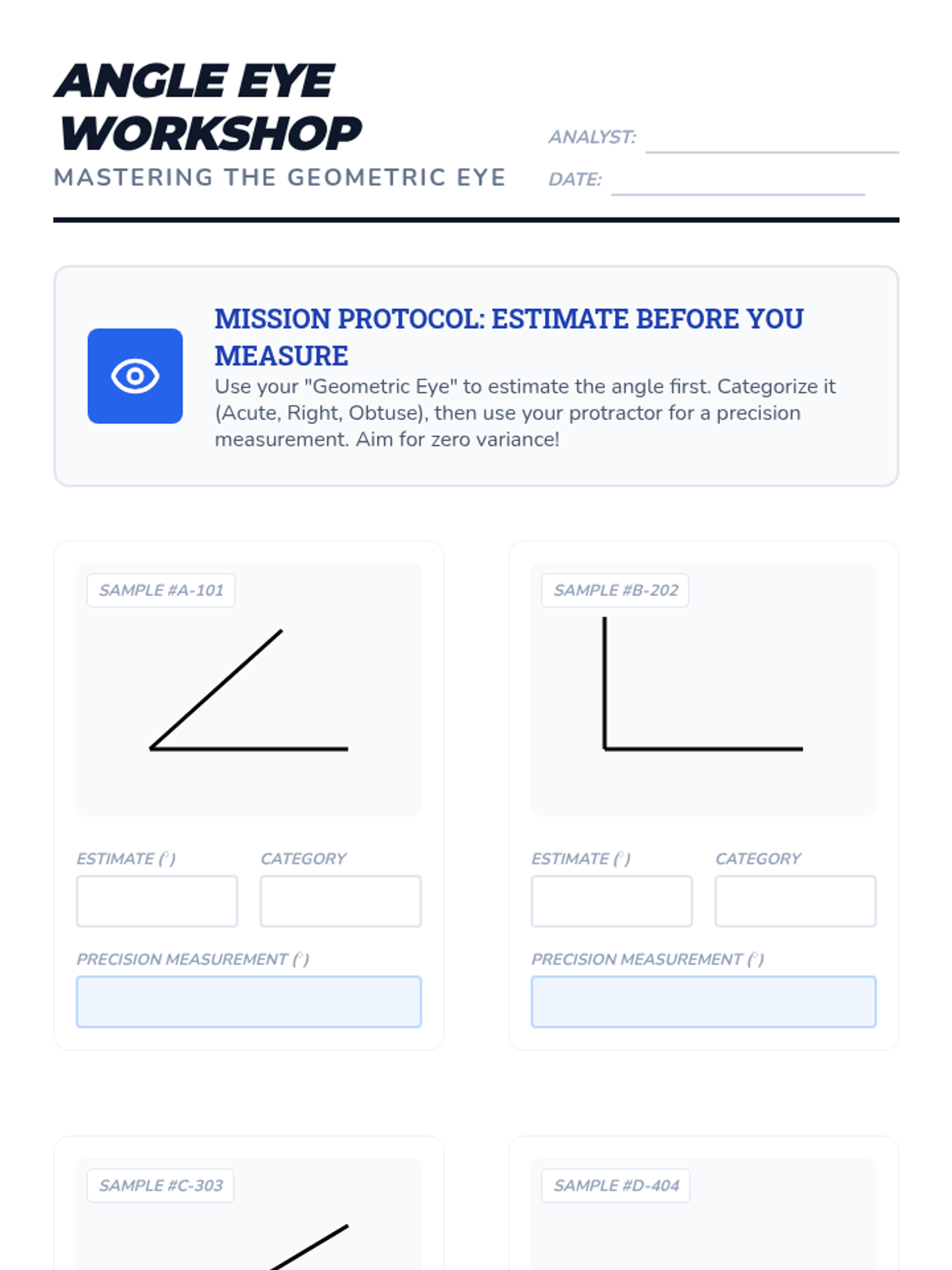
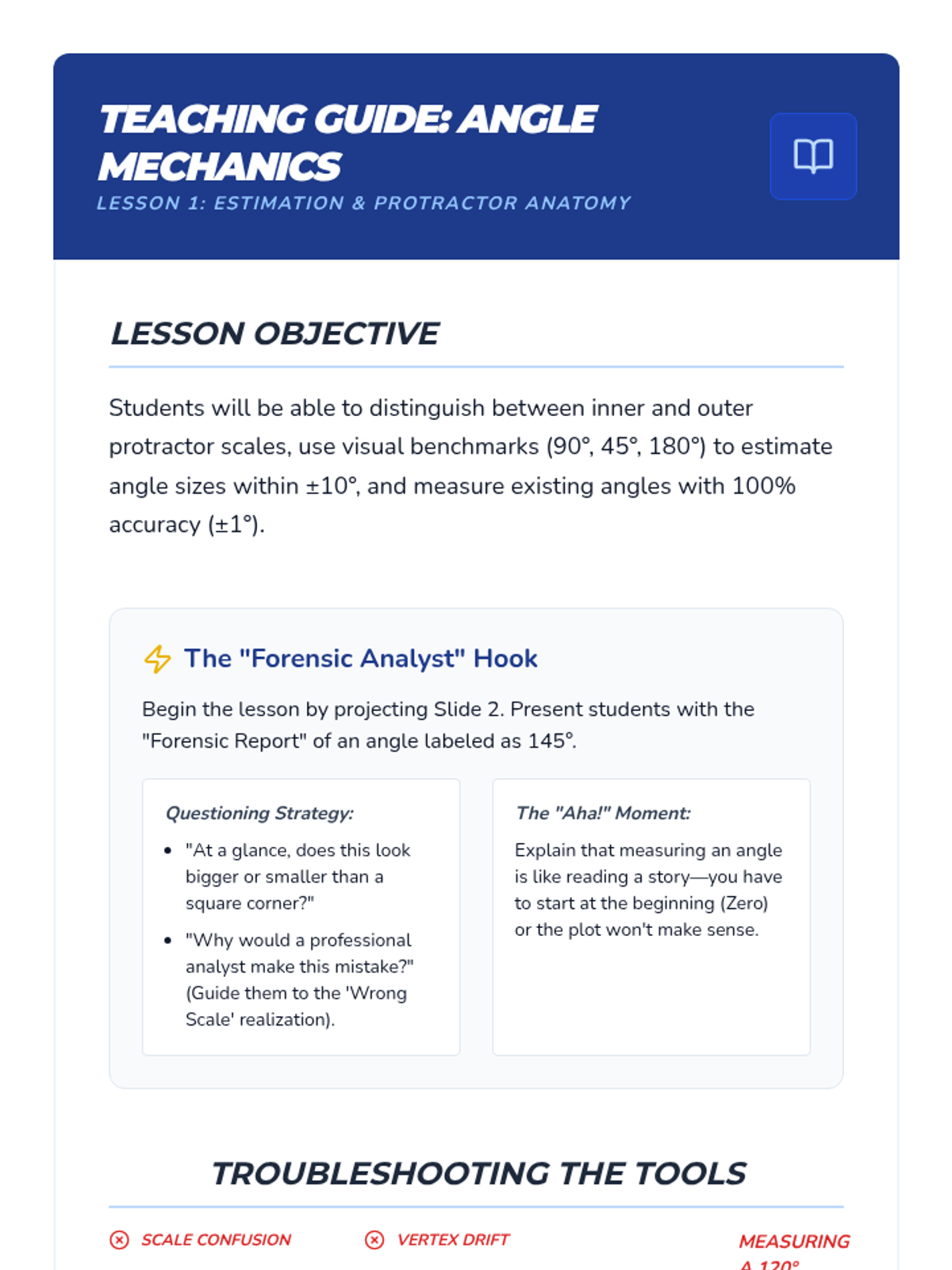
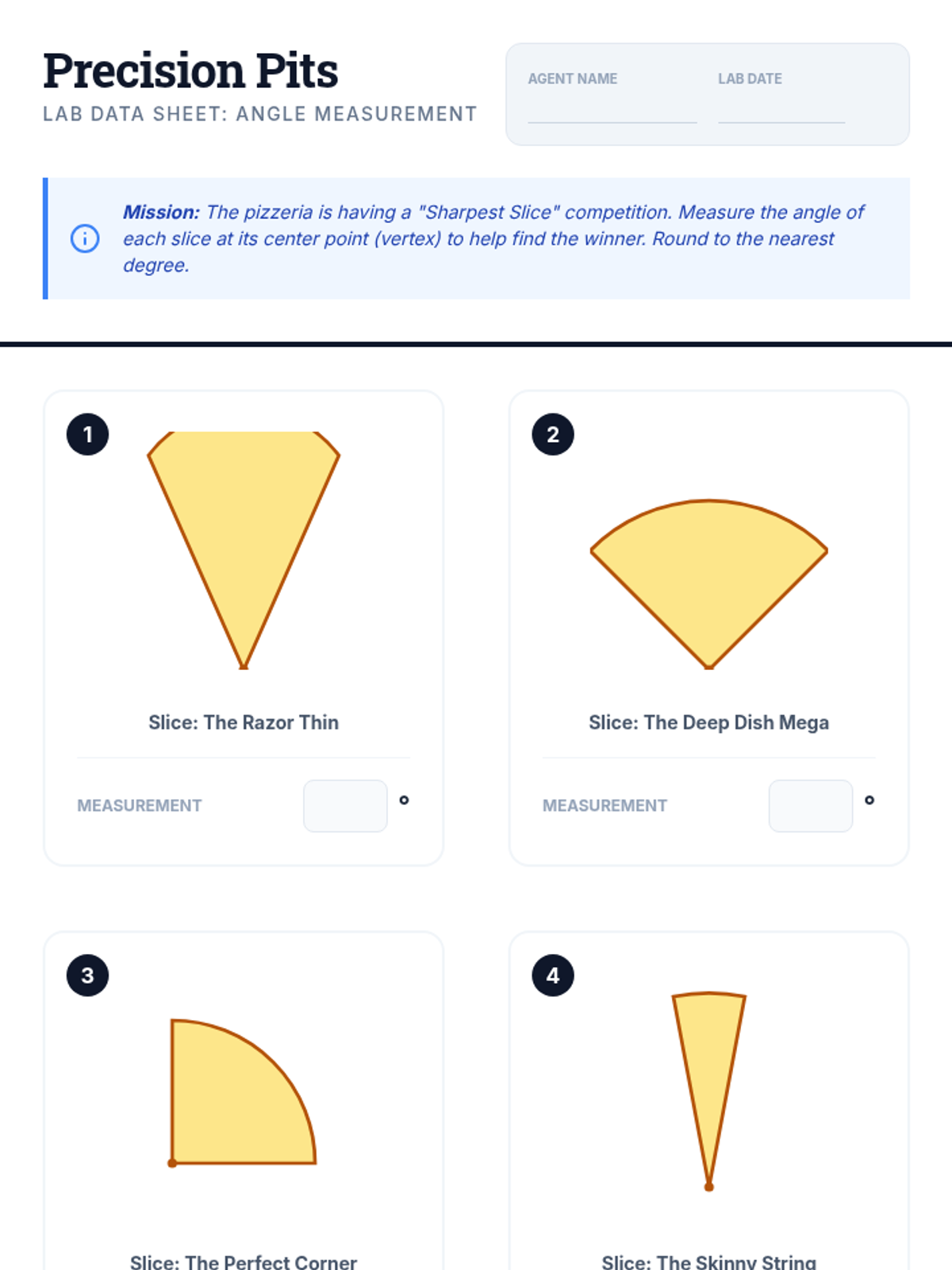
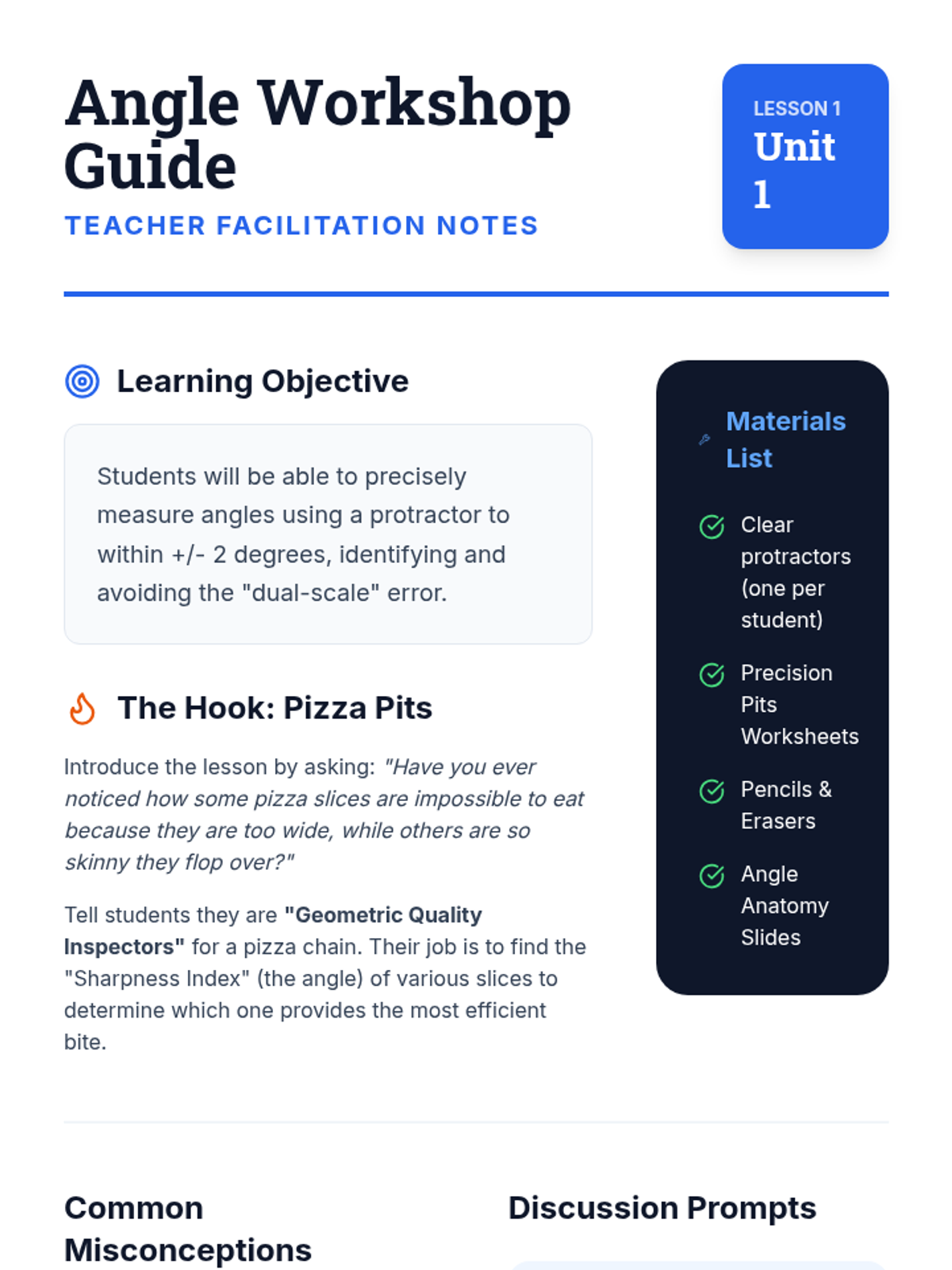
This workshop-style sequence transitions students from visual estimation to precise measurement using a protractor. Students learn the logic behind the 360-degree circle and how to align a protractor correctly to read measurements.
This sequence focuses on the fundamental proficiency of using geometric tools to measure and construct angles with high precision. Students learn protractor mechanics, estimation techniques, construction procedures, and error analysis through an engineering and drafting lens.
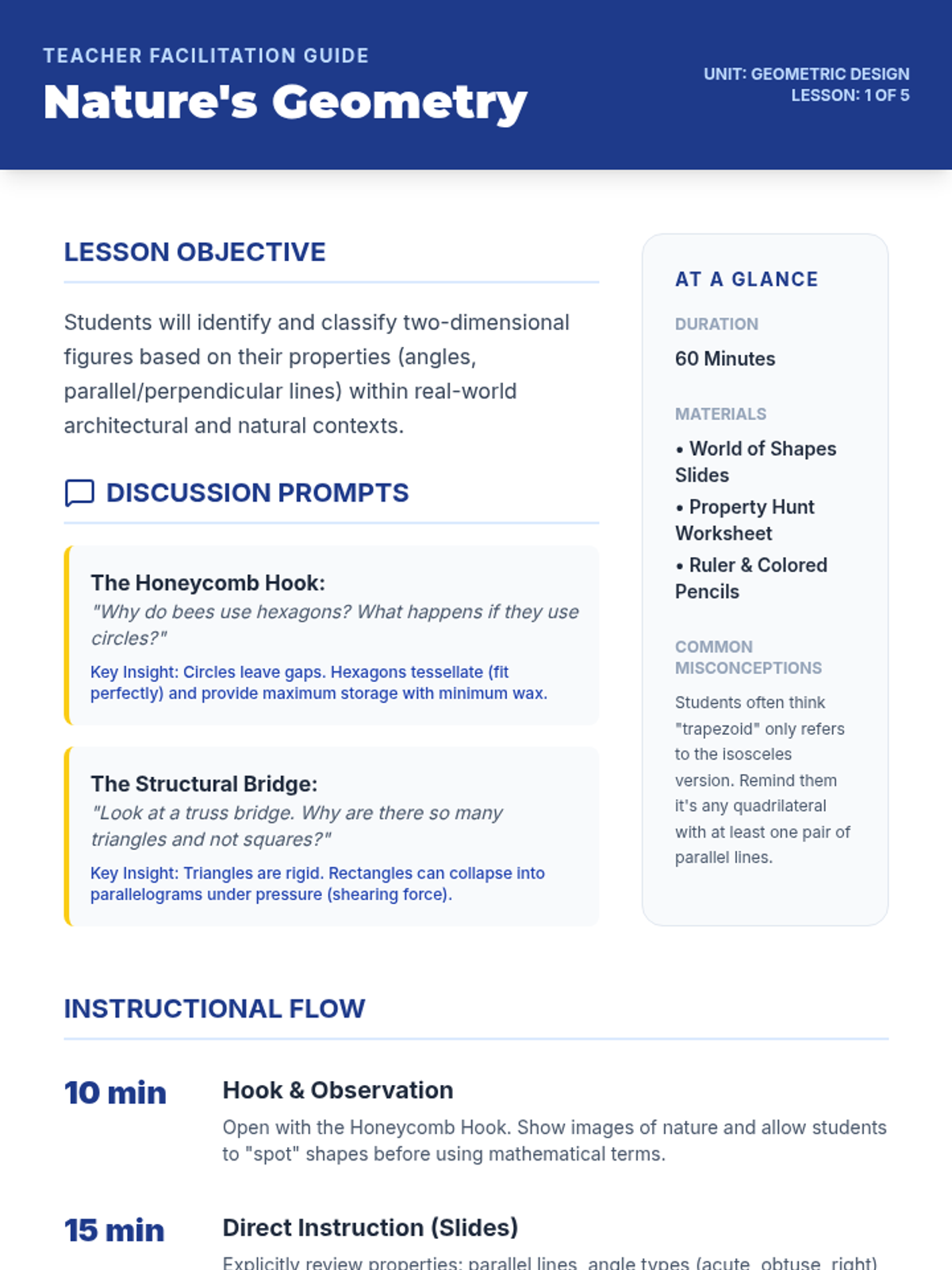
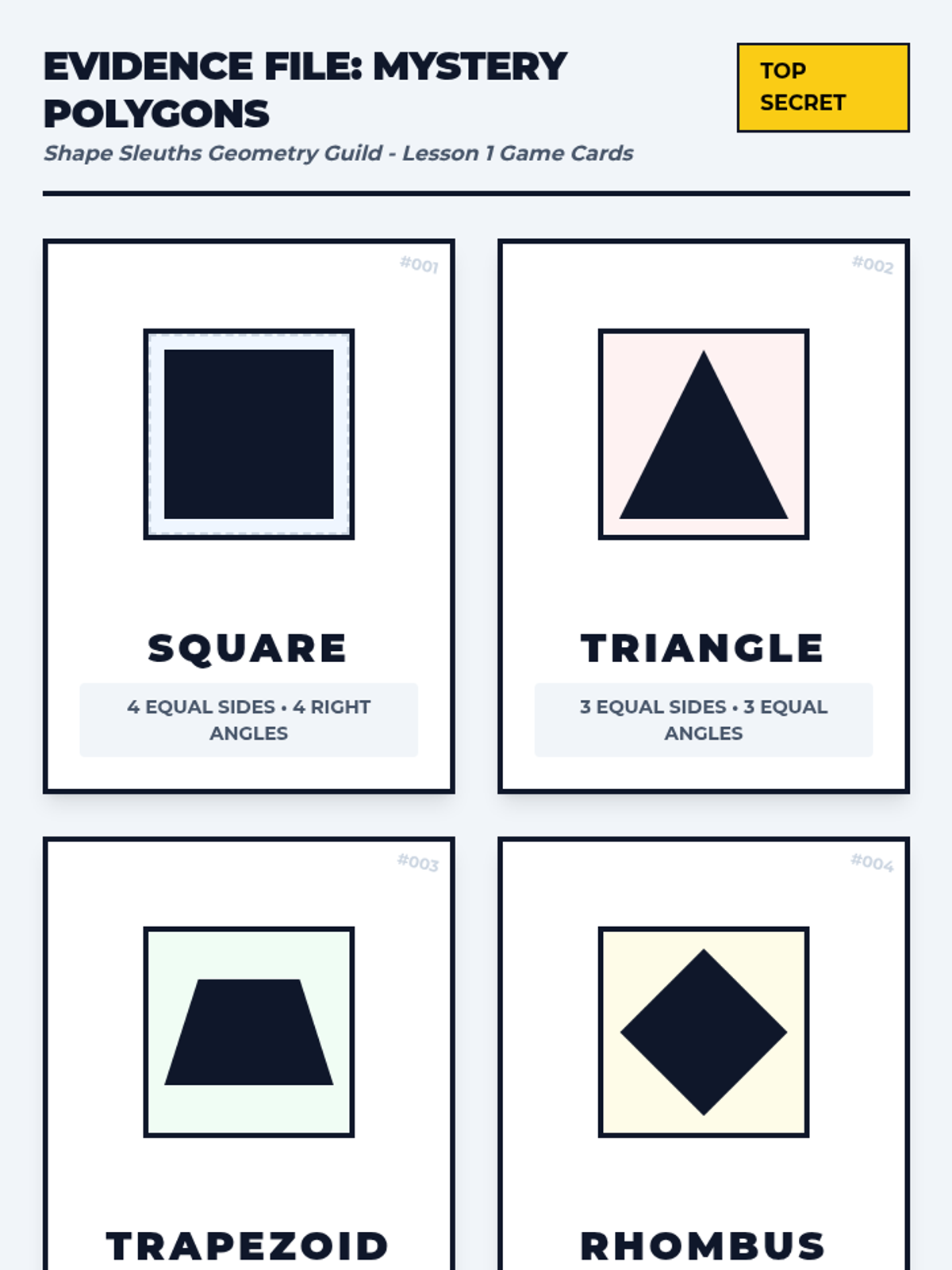
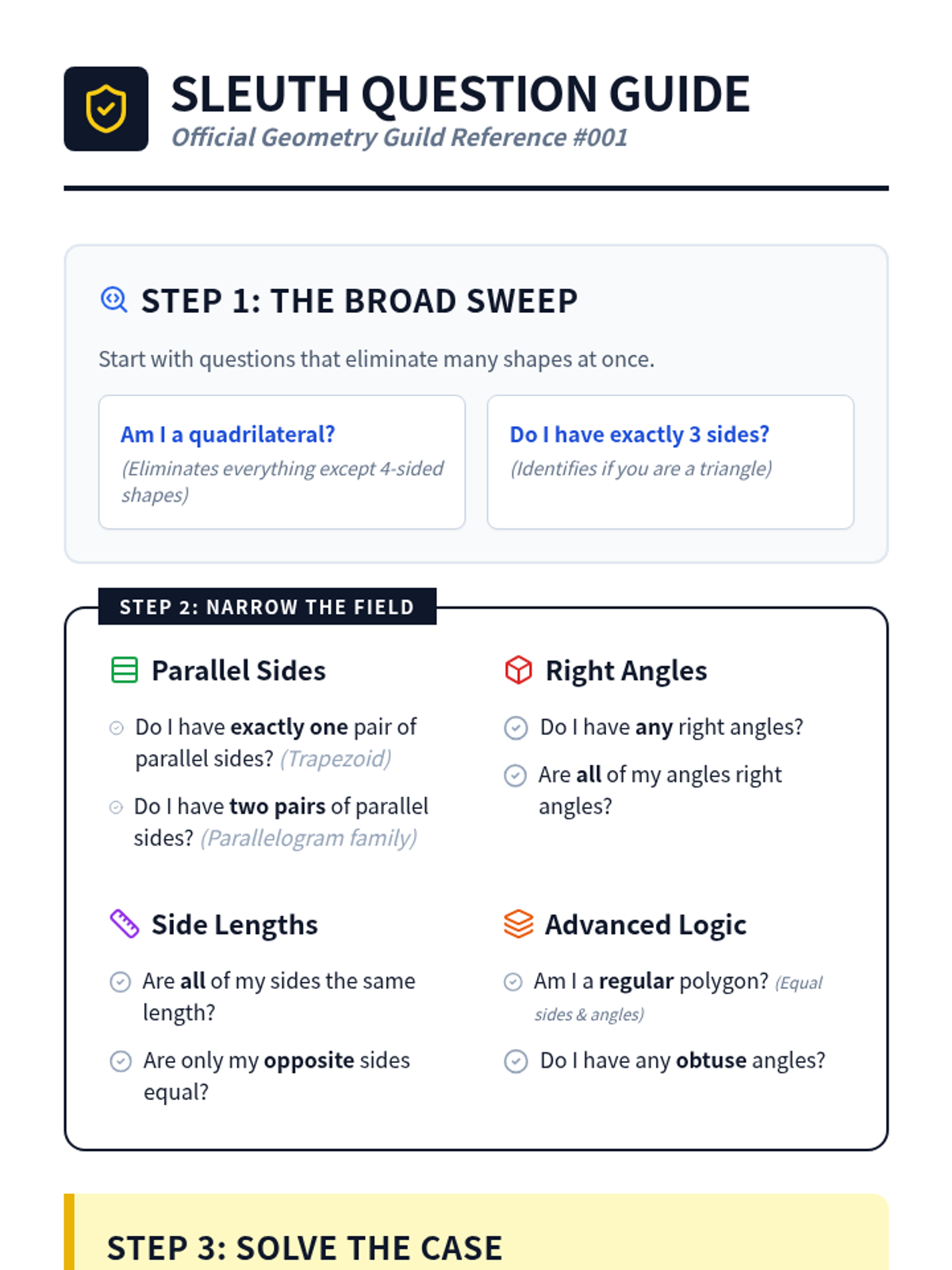
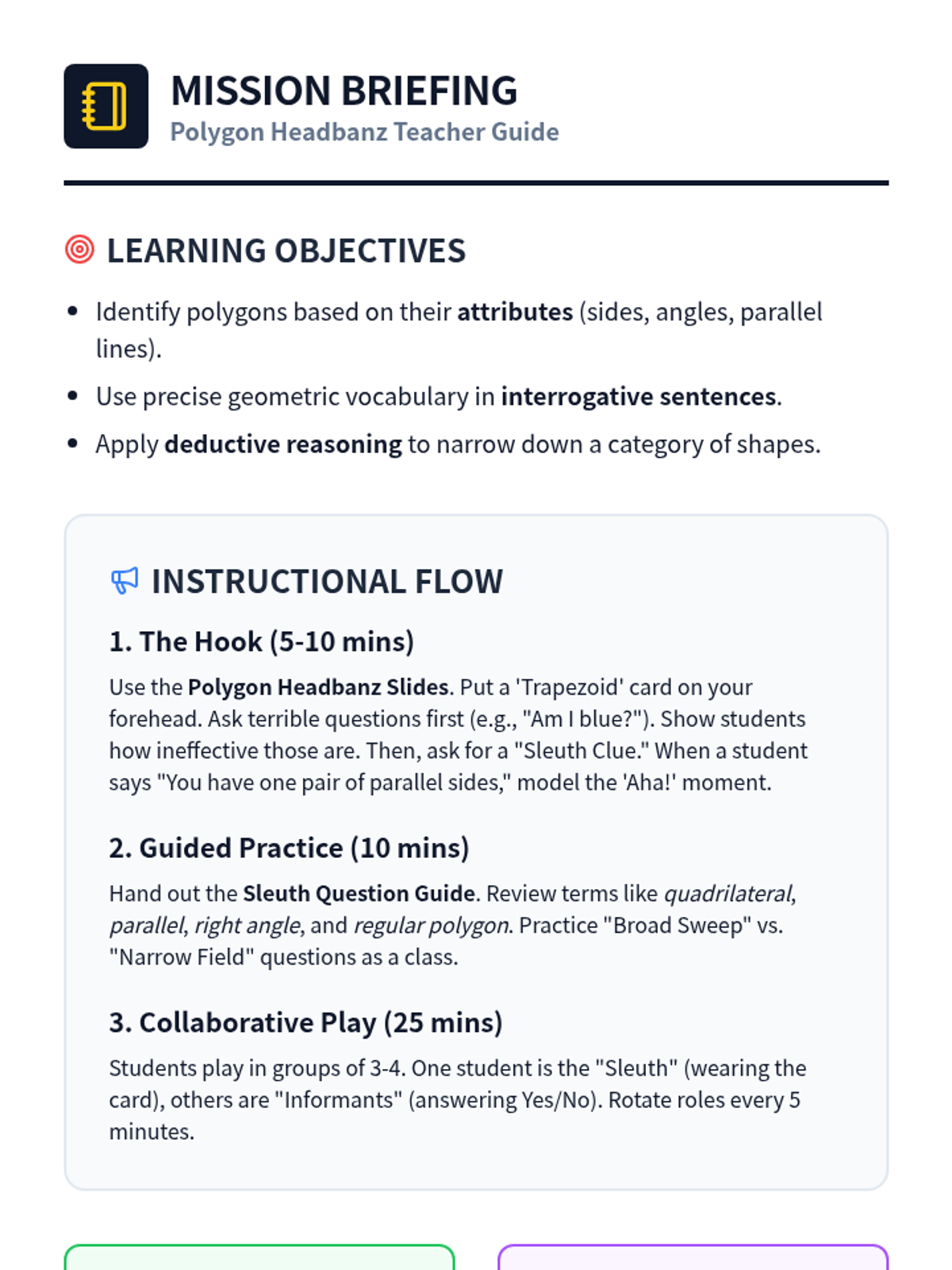
A gamified geometry unit where 3rd grade students become 'Shape Sleuths' to master the classification of 2D figures through strategic play and deductive reasoning. Students progress from attribute identification to complex spatial composition and hierarchical classification.
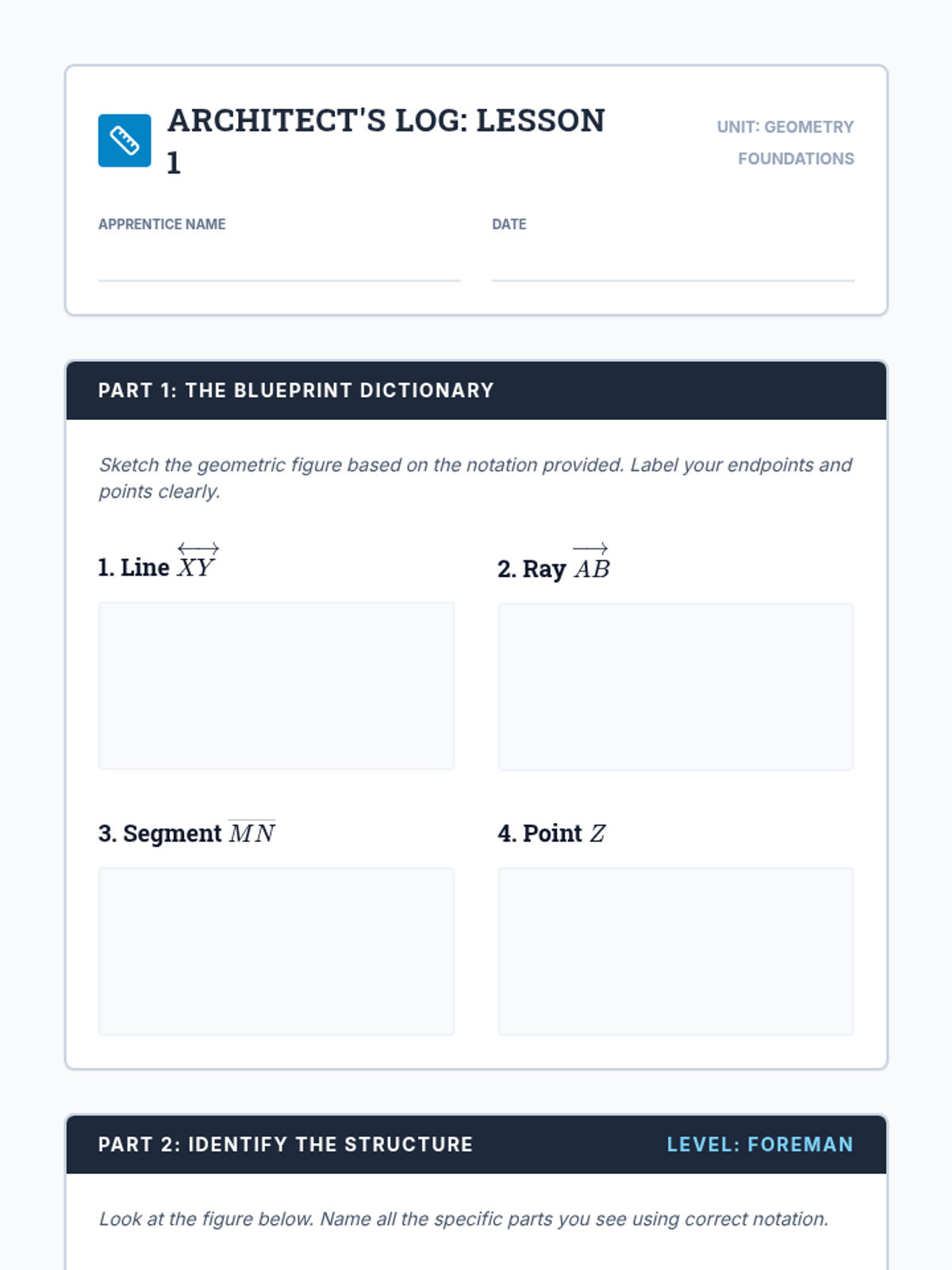
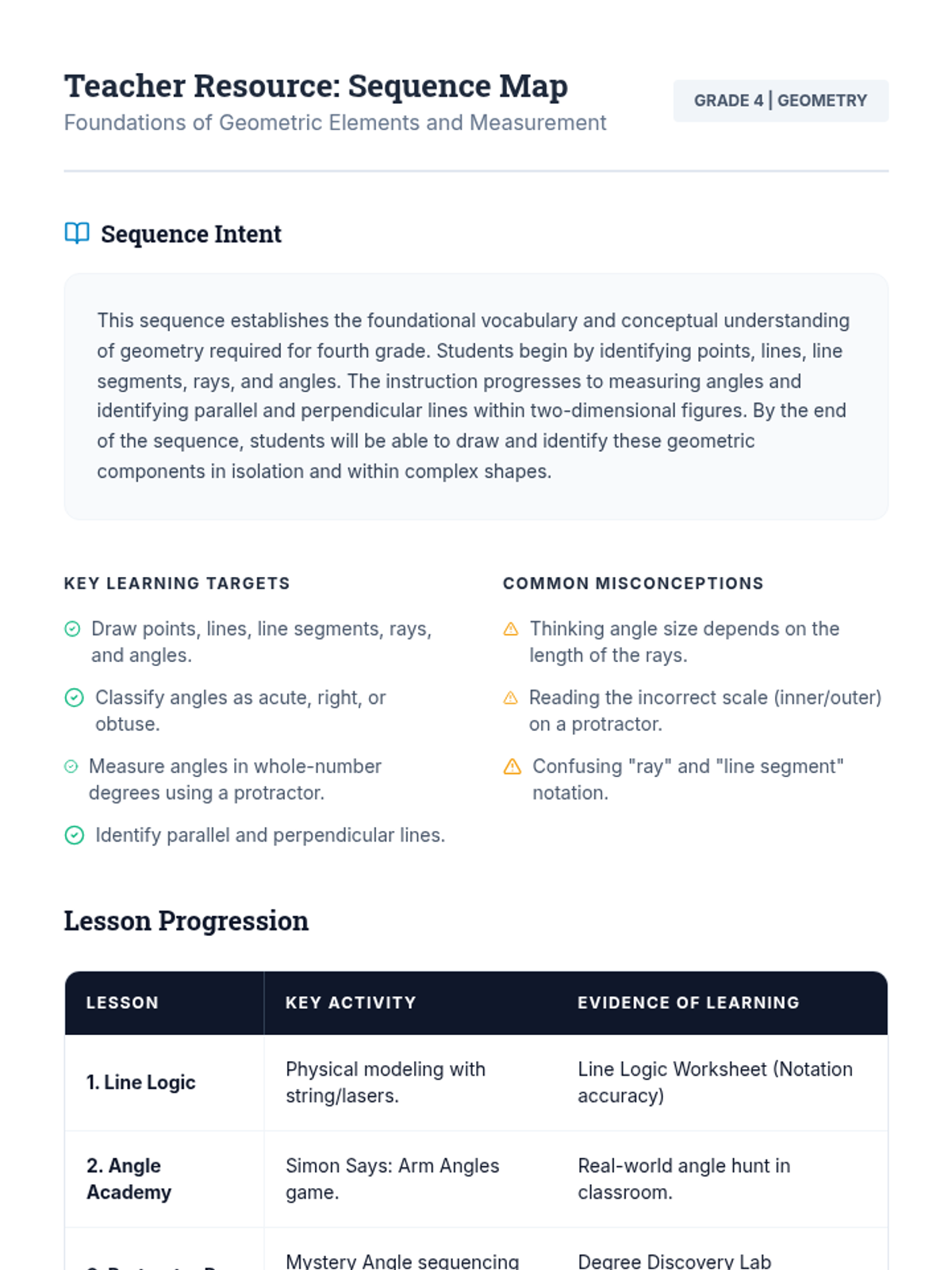
A comprehensive 4th-grade geometry sequence focusing on the foundations of geometric elements, including points, lines, angles, and measurement. Students transition from abstract definitions to practical application in drawing and identifying complex figures.
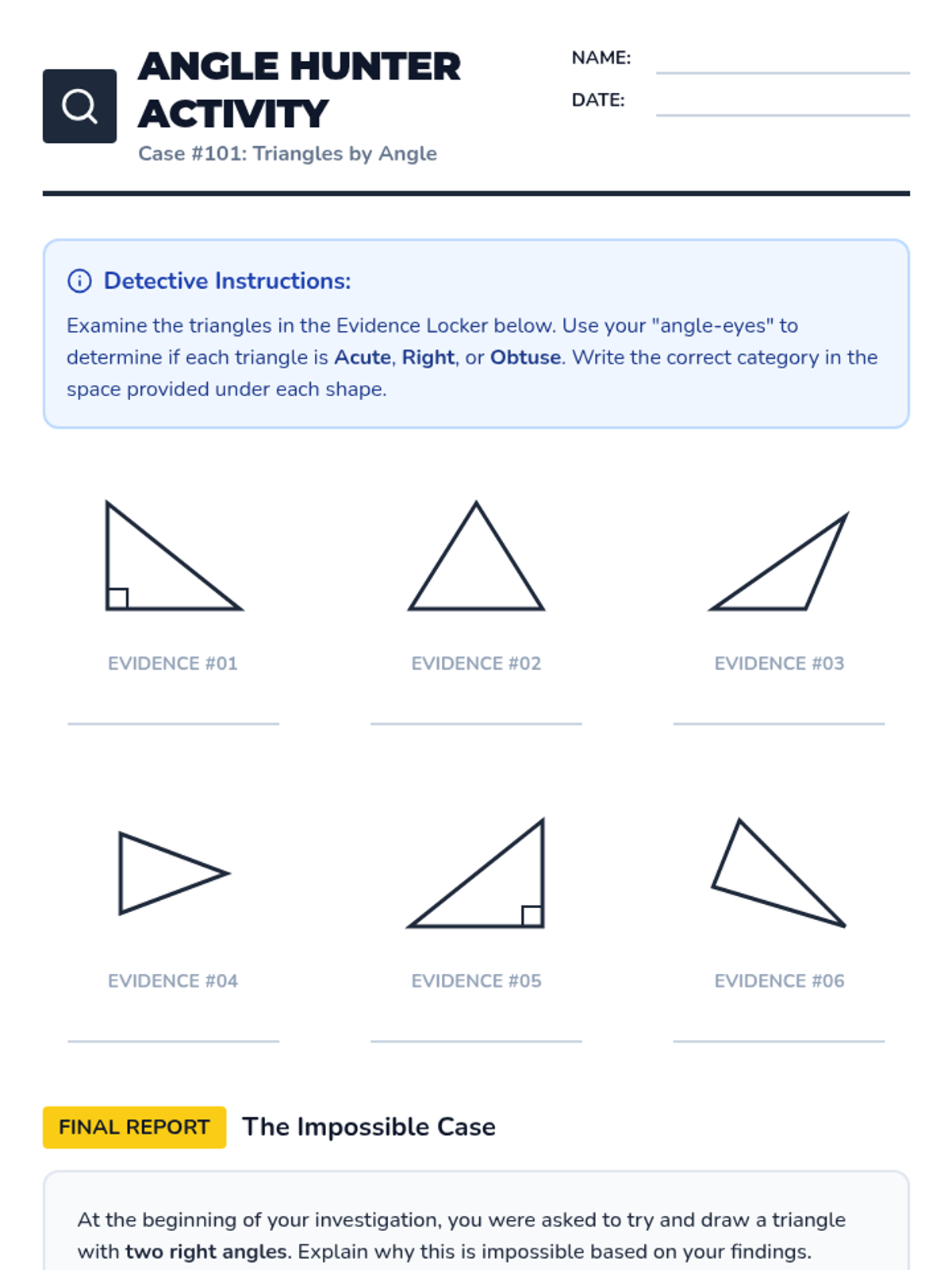
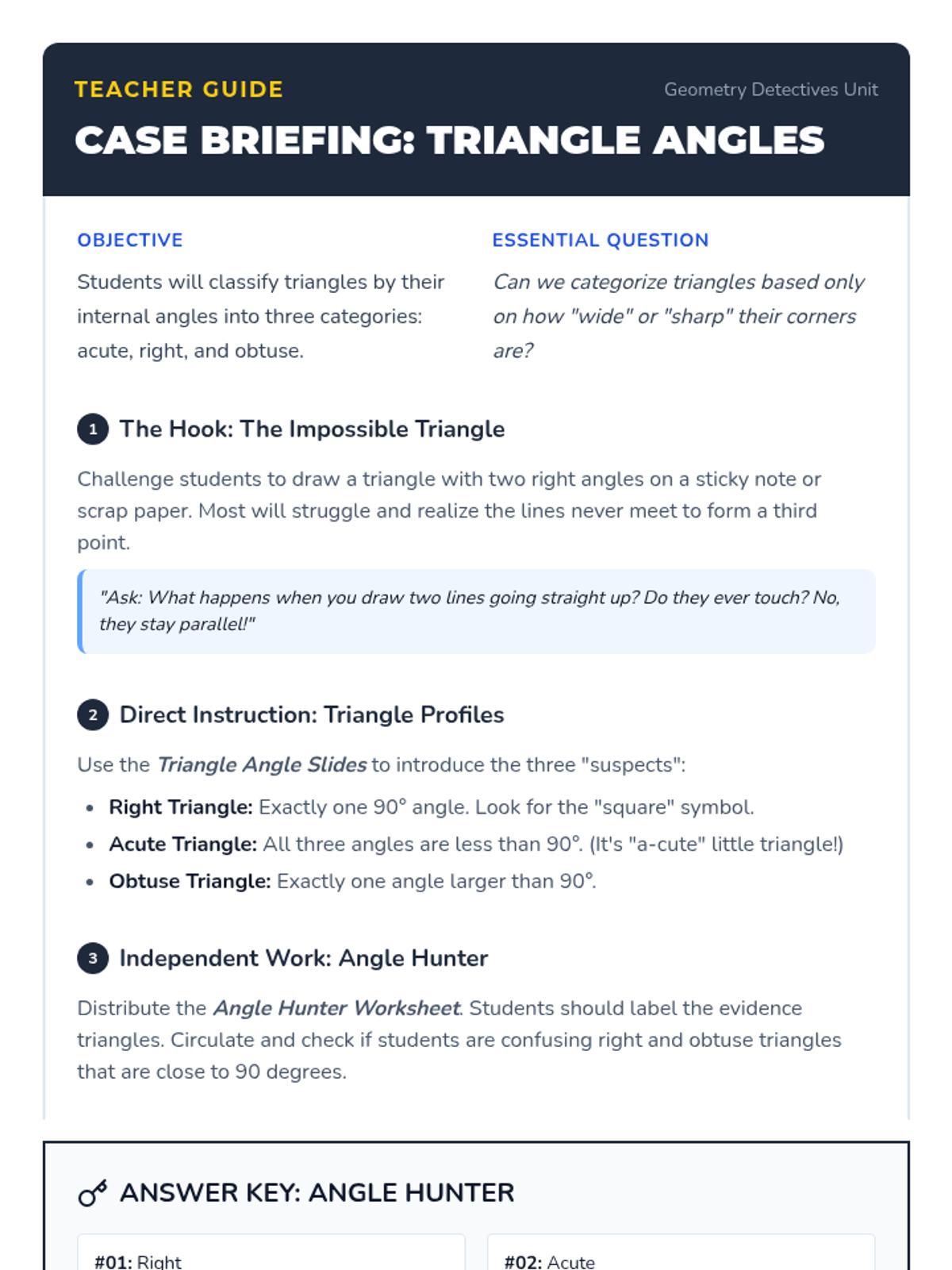
A deep dive into the properties of triangles, focusing on precision measurement and a dual-classification system based on sides and angles. Students use tools to gather data and discover the Triangle Angle Sum Theorem.
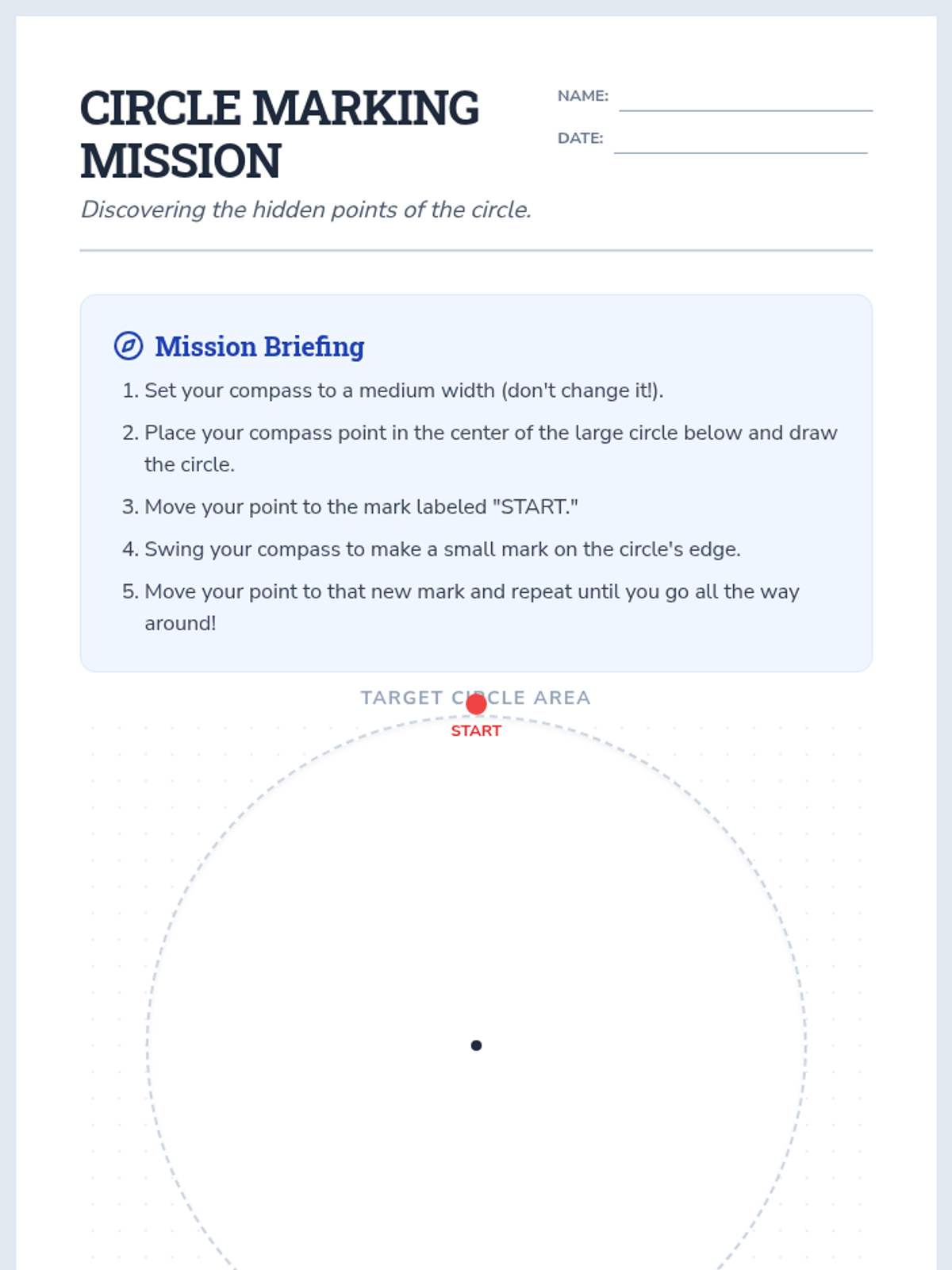
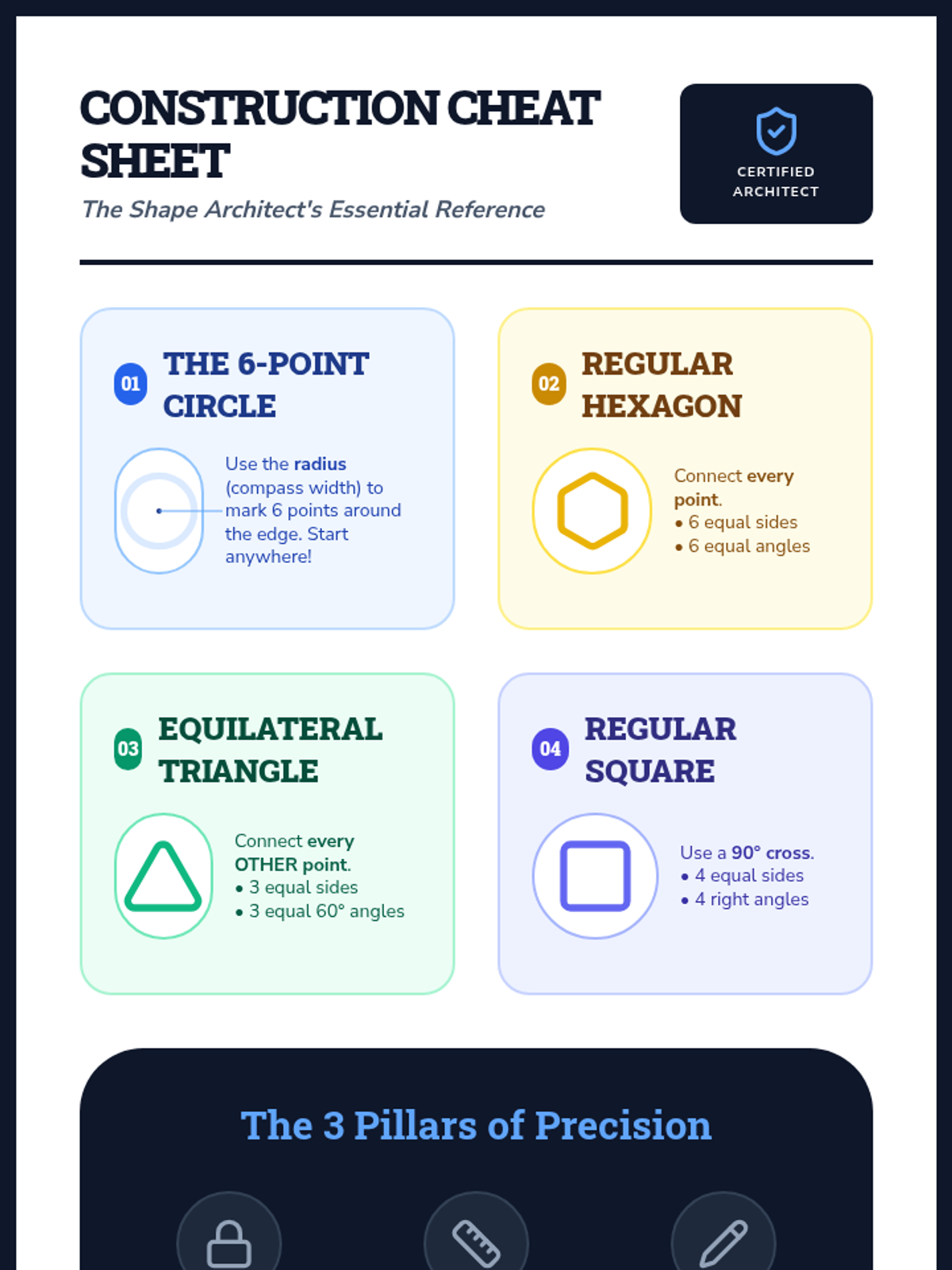
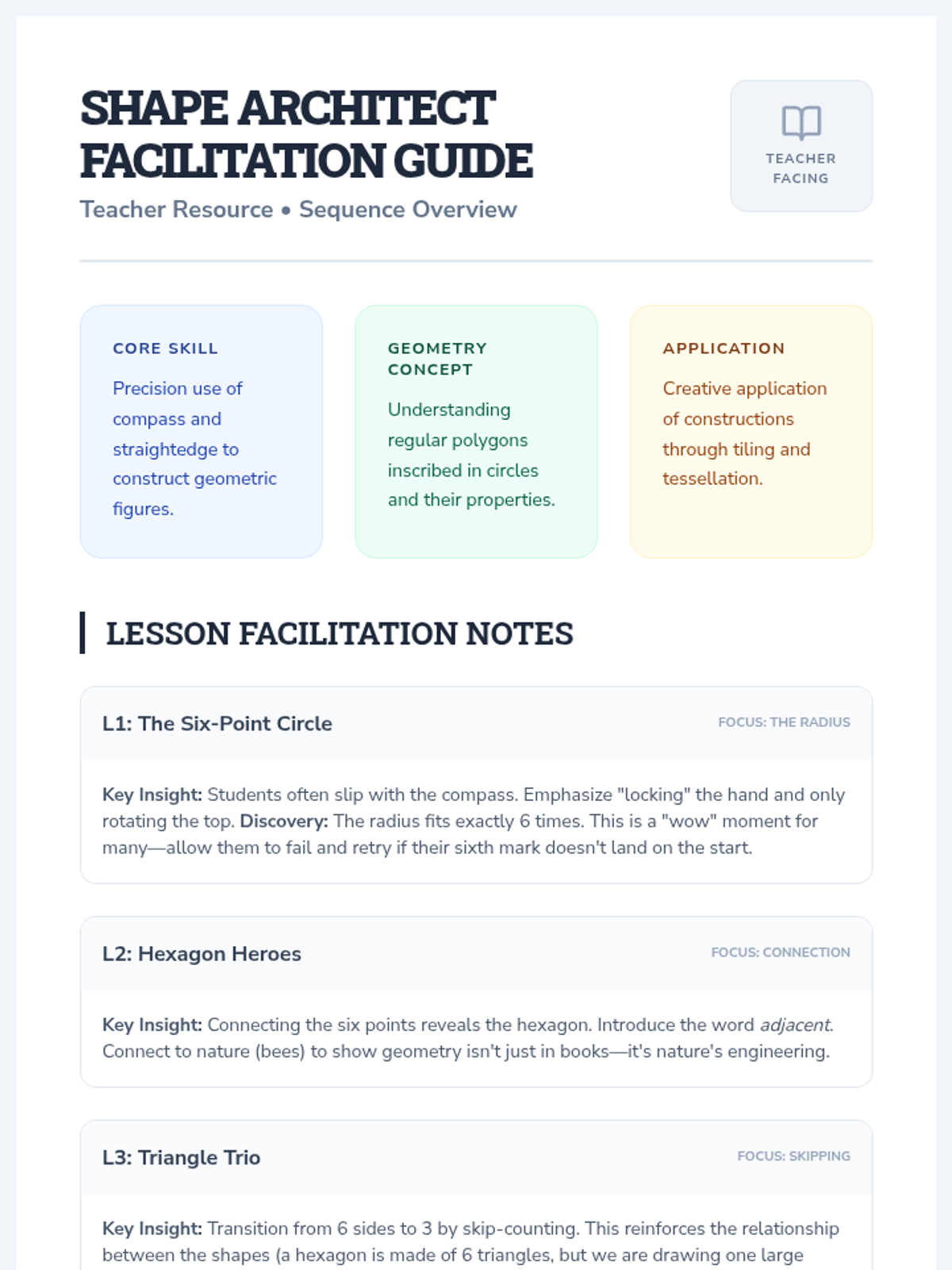
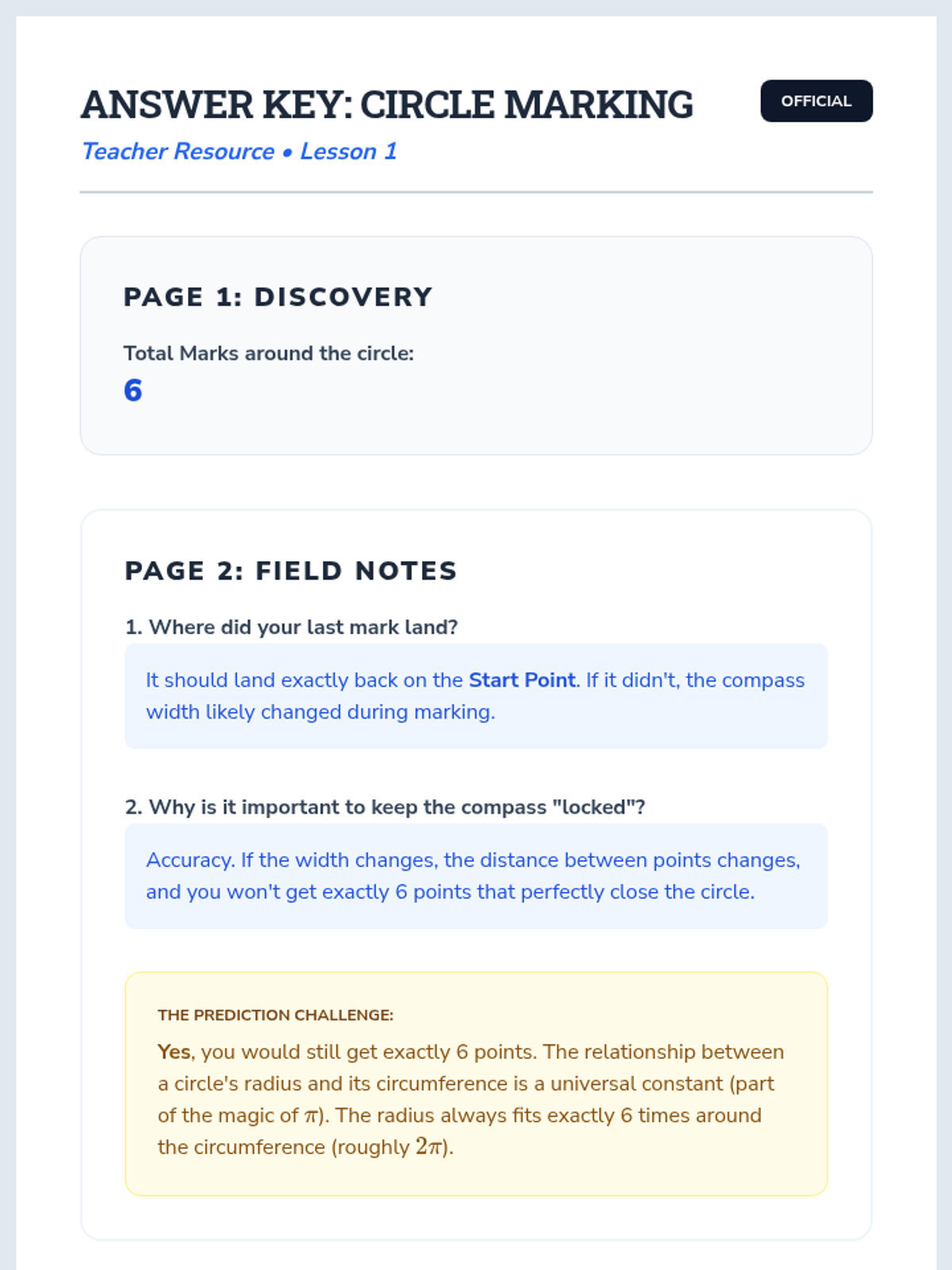
A 4th-grade geometry sequence where students use a compass and straightedge to construct regular polygons (triangles, hexagons, and squares) inscribed in circles, culminating in a creative tile design project.
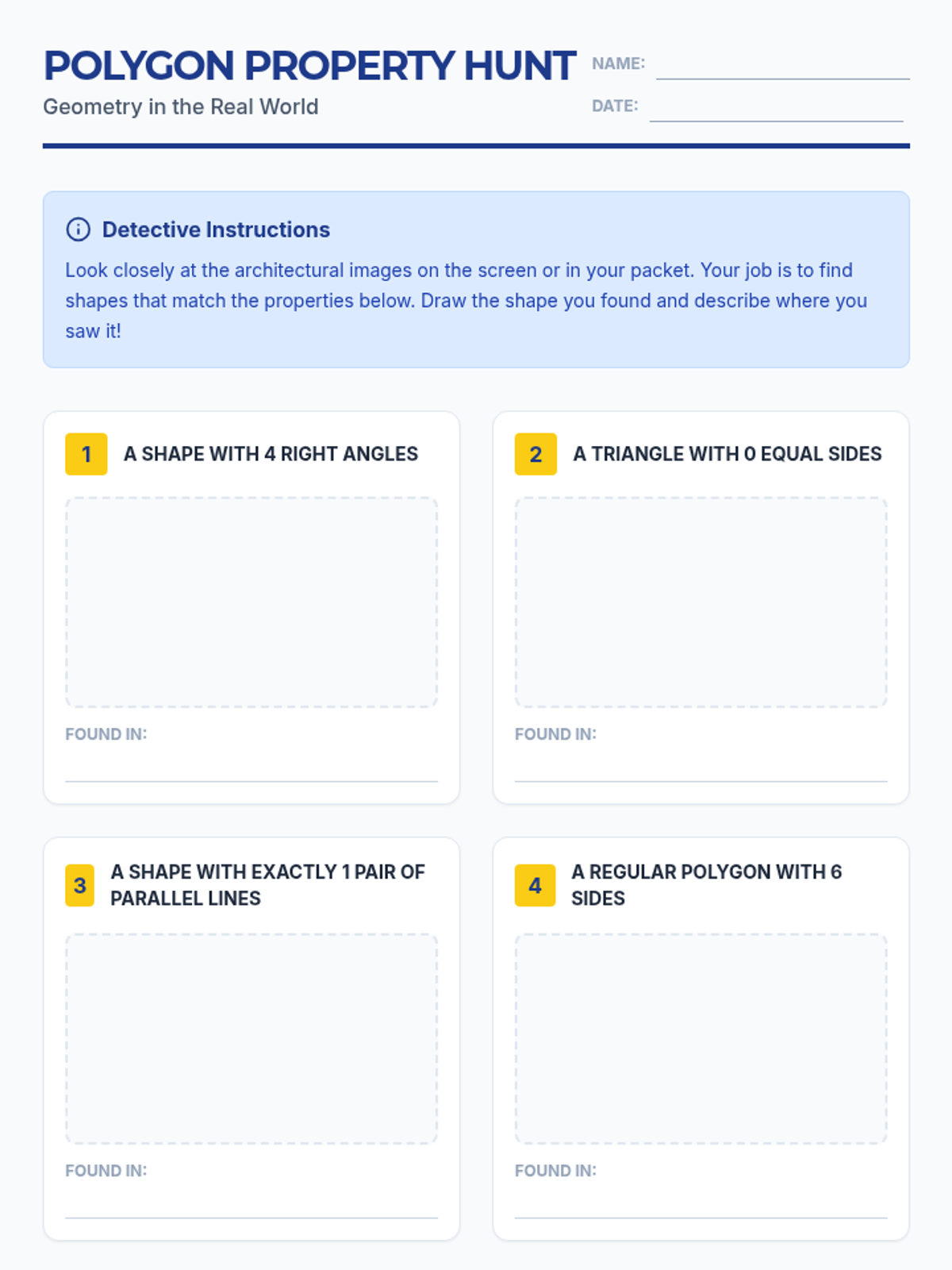
A 4th-grade geometry unit focused on classifying triangles and quadrilaterals by their properties (sides and angles). Students act as 'Geometry Detectives' to solve shape mysteries and understand hierarchical relationships.
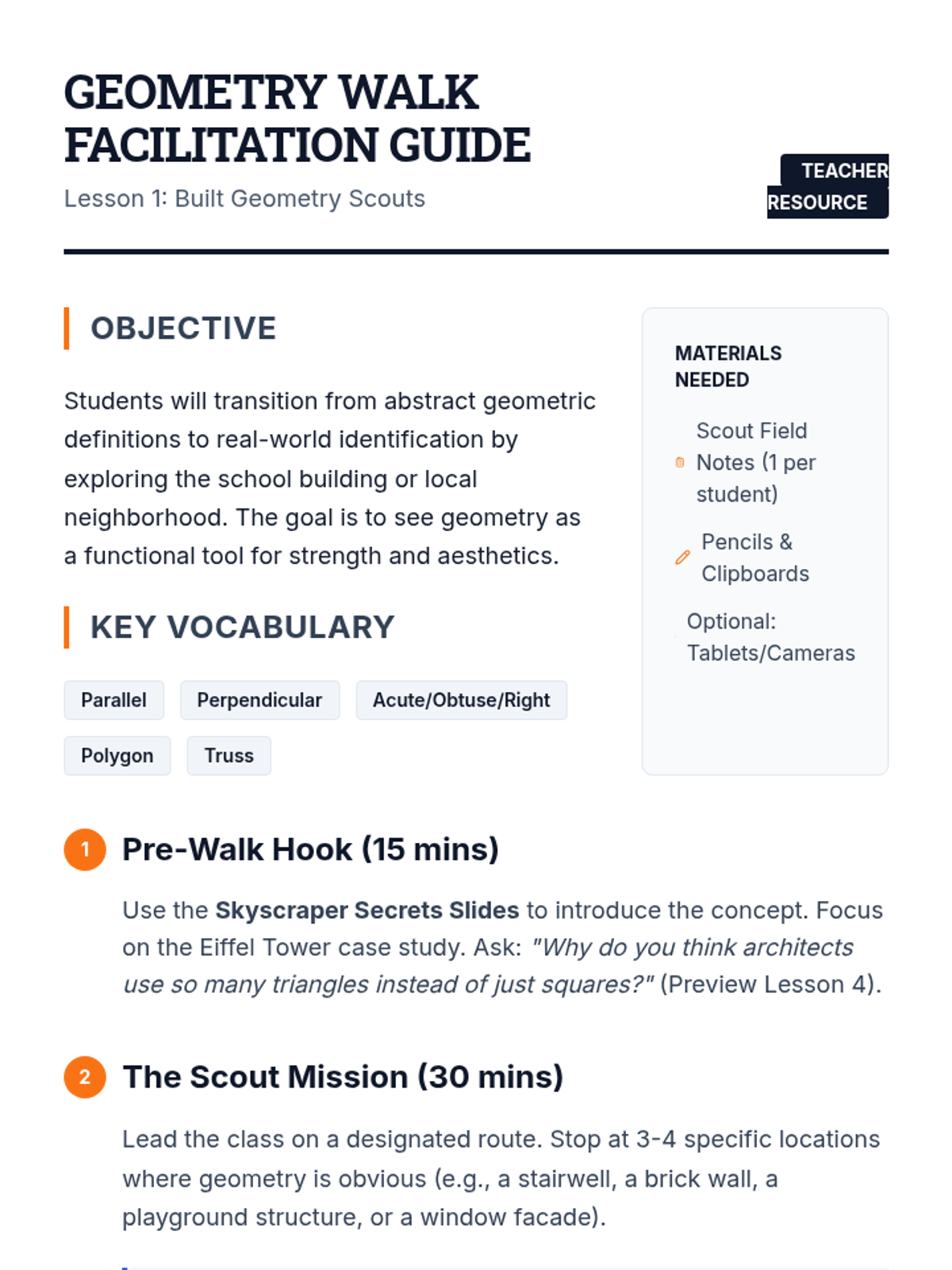
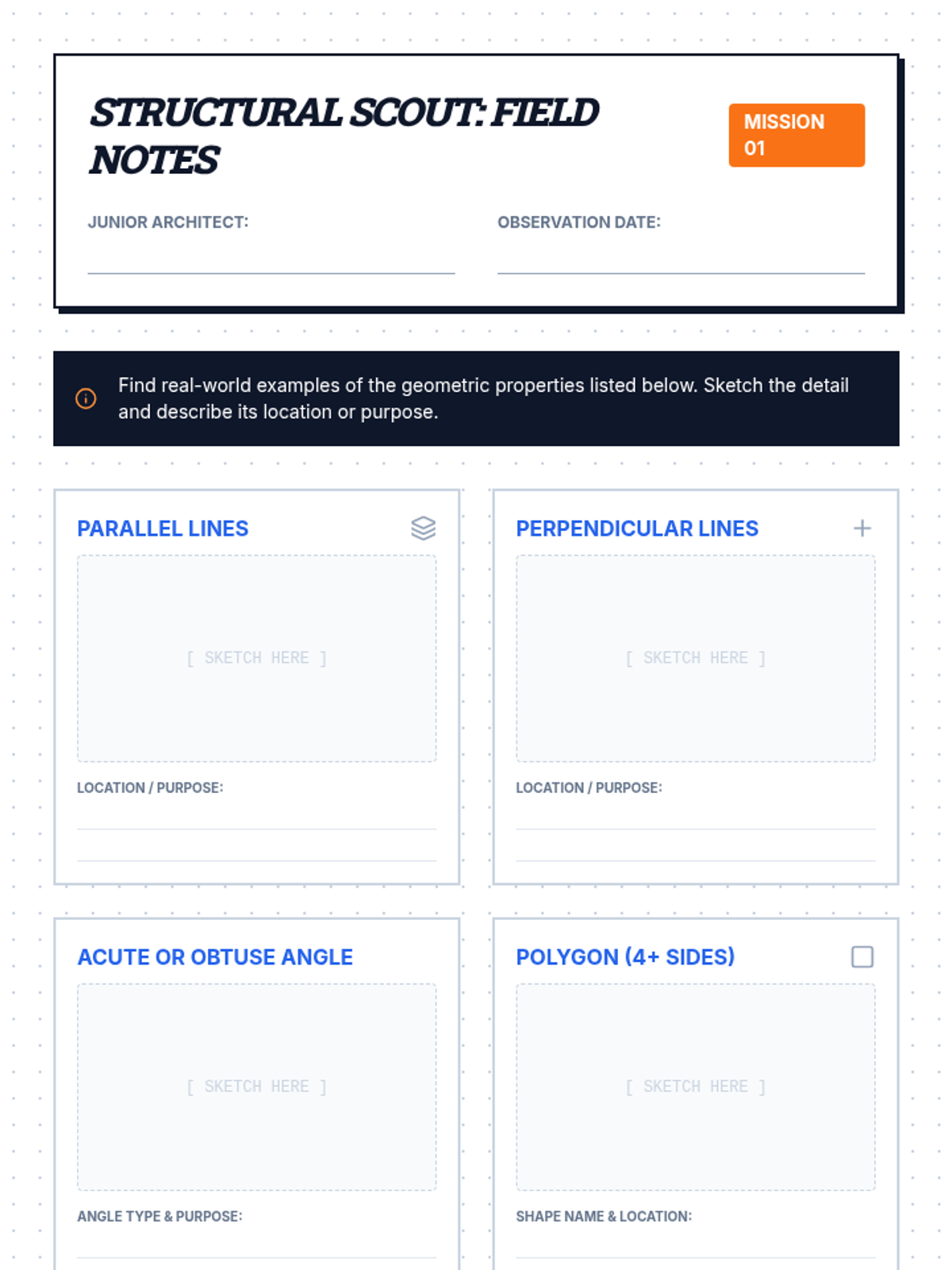
Students act as junior architects to apply geometric concepts (lines, angles, and shapes) to real-world architecture and urban planning. The sequence moves from observing existing structures to designing city maps and building facades, culminating in a geometric portfolio presentation.
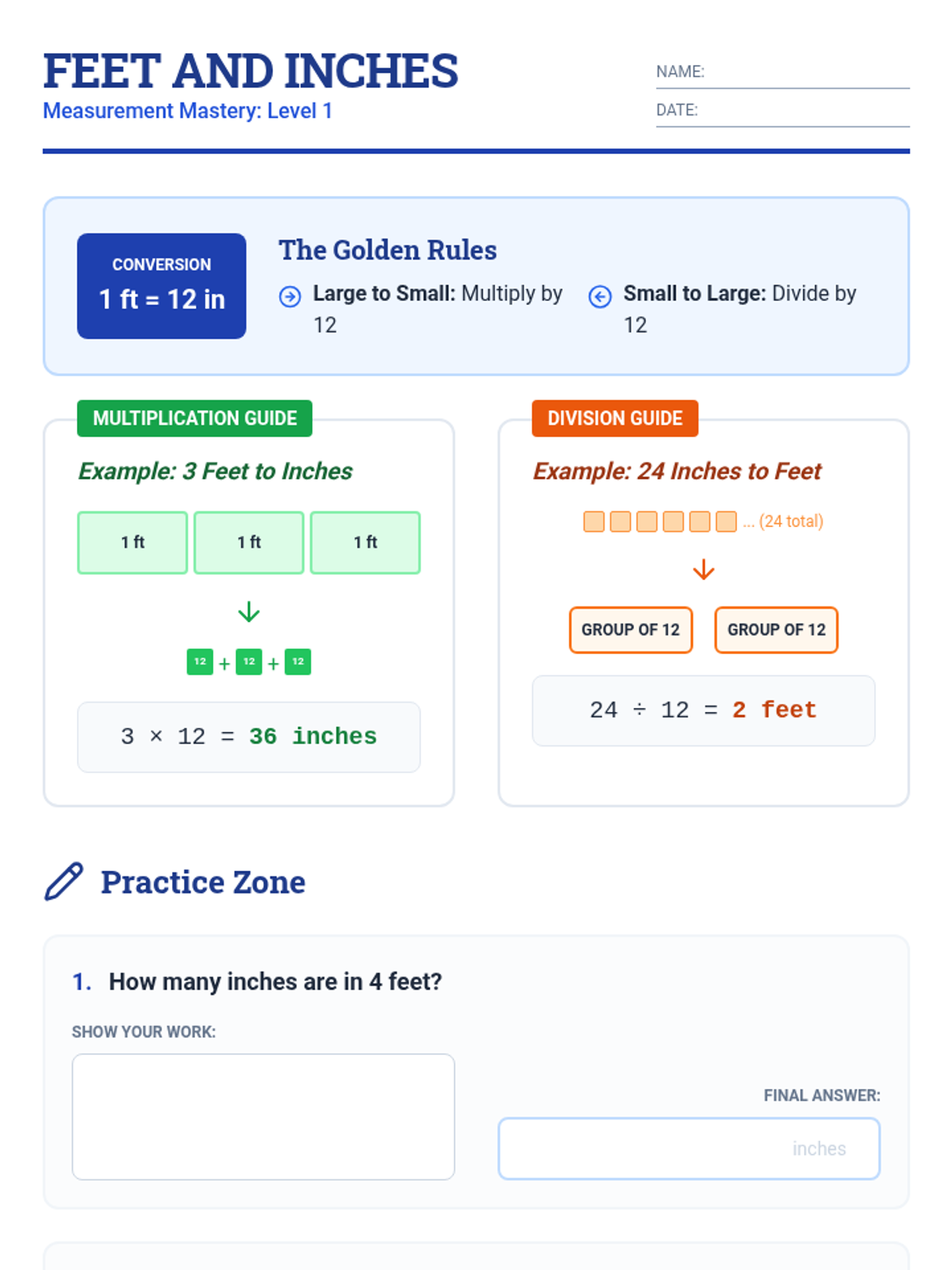
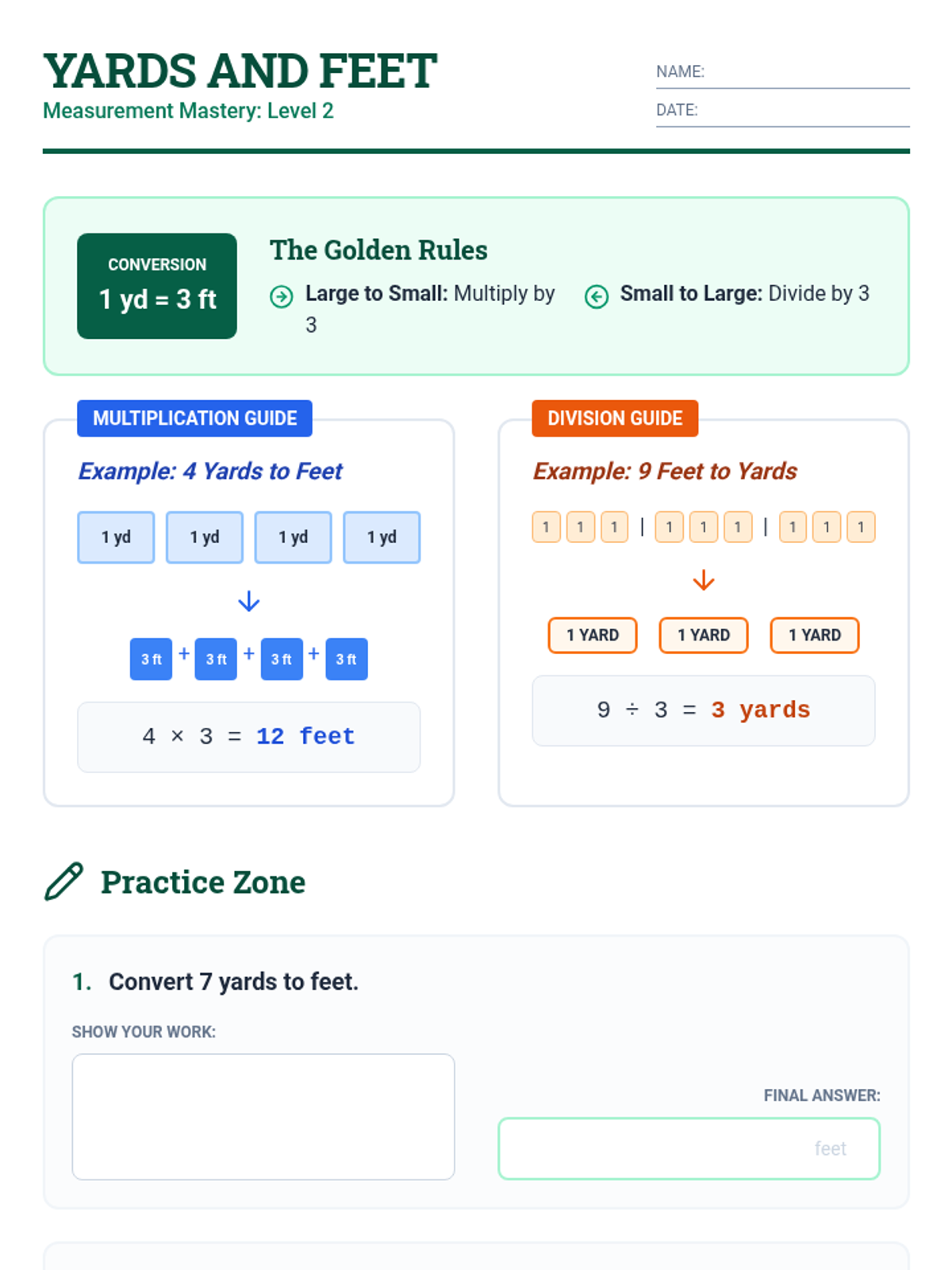
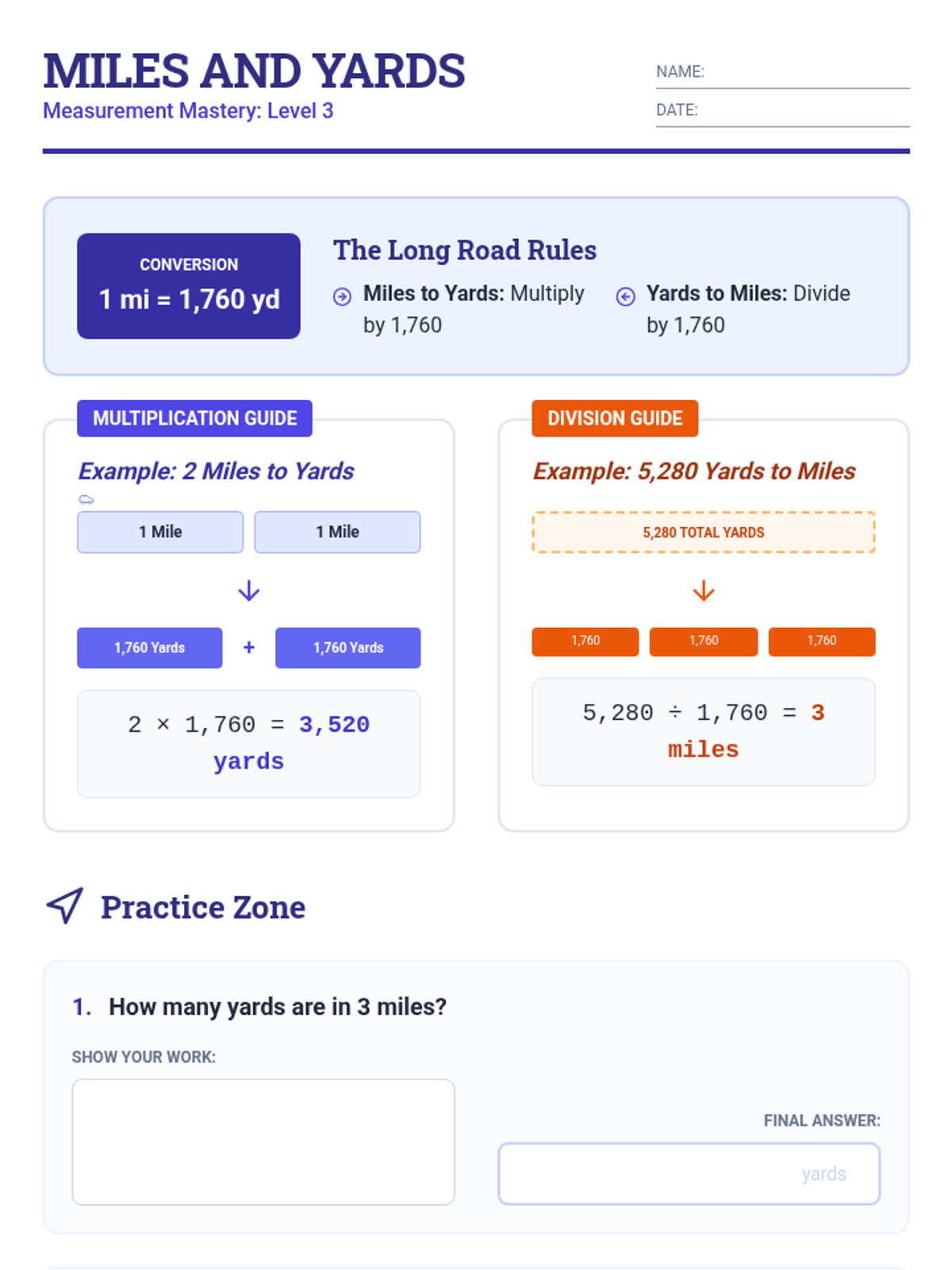
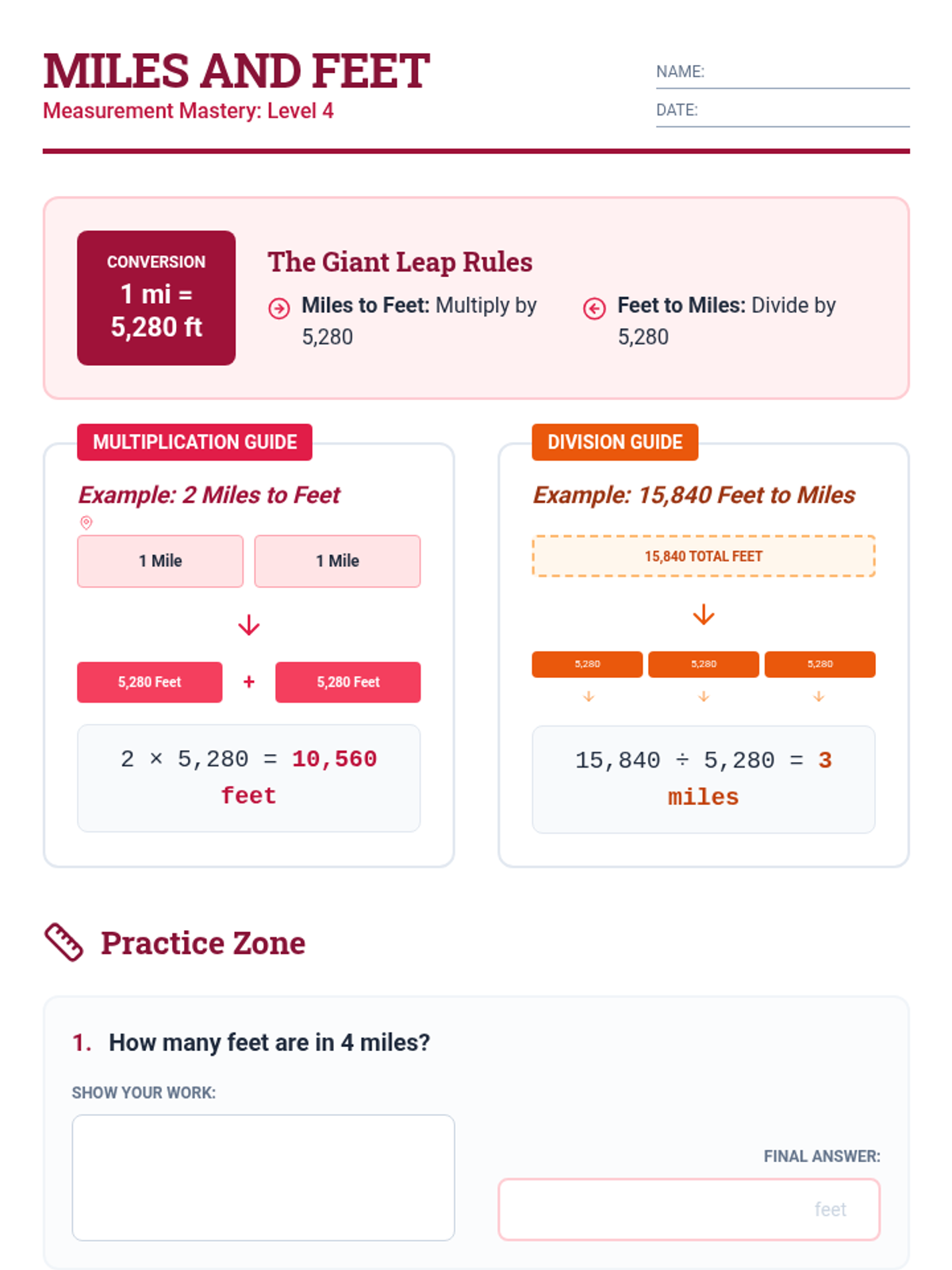
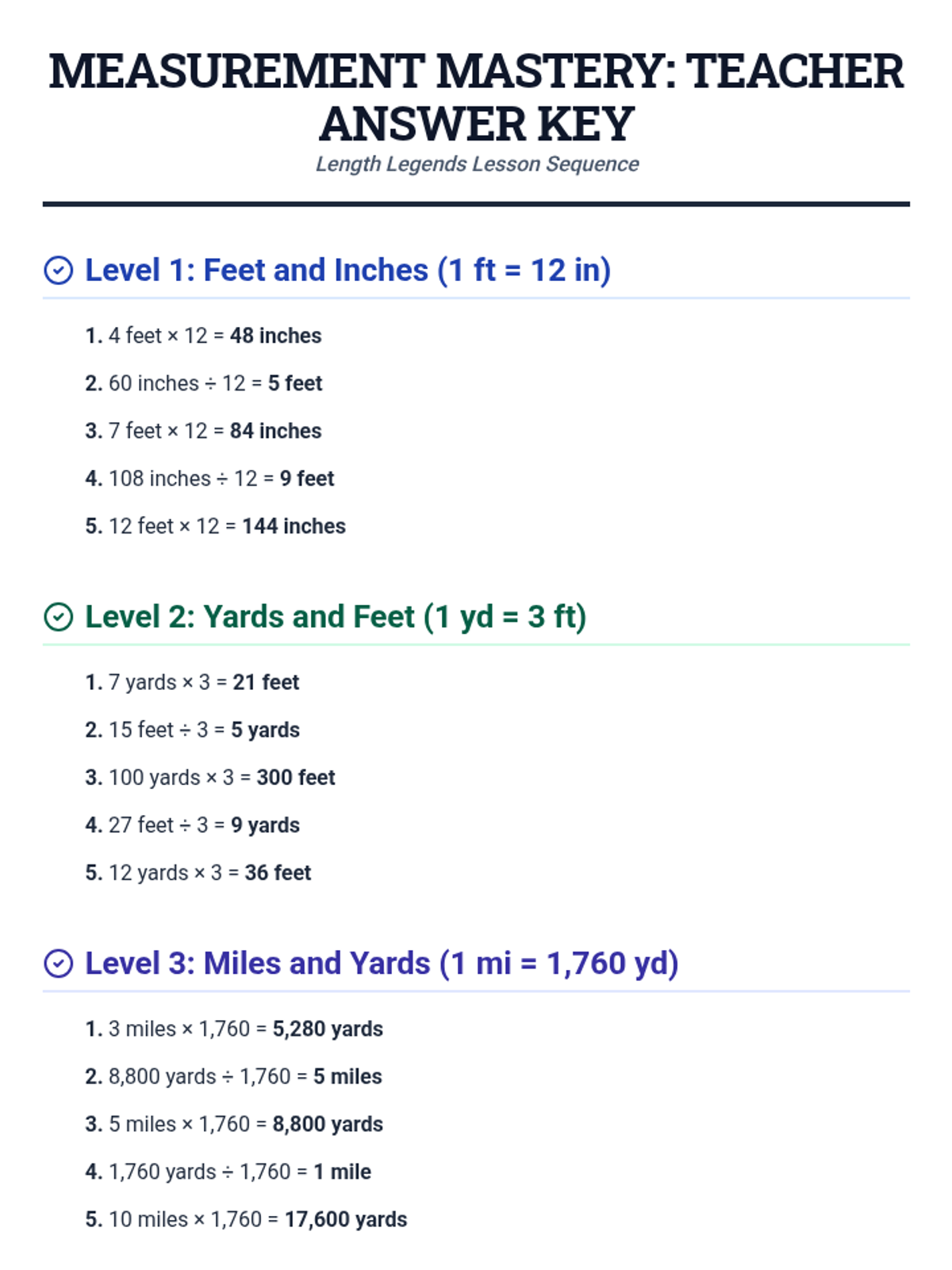
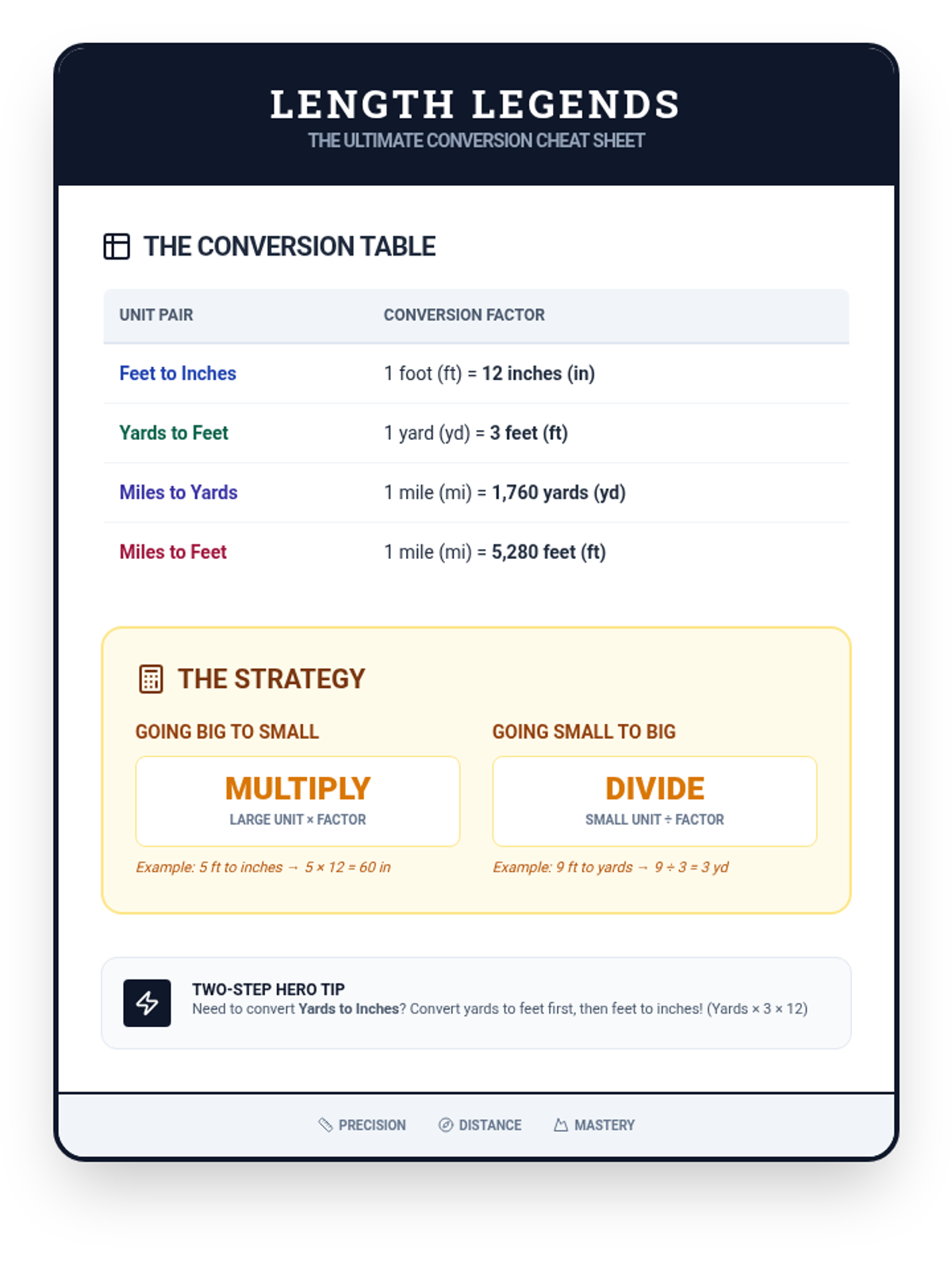
A comprehensive sequence focusing on linear measurement conversions, providing step-by-step visual guides and practice for converting between inches, feet, yards, and miles.
A comprehensive 4th-grade mathematics unit focused on converting larger units of measurement to smaller ones using multiplicative comparison. Students explore length, weight, mass, liquid volume, and time through interactive workshops, games, and real-world problem-solving.
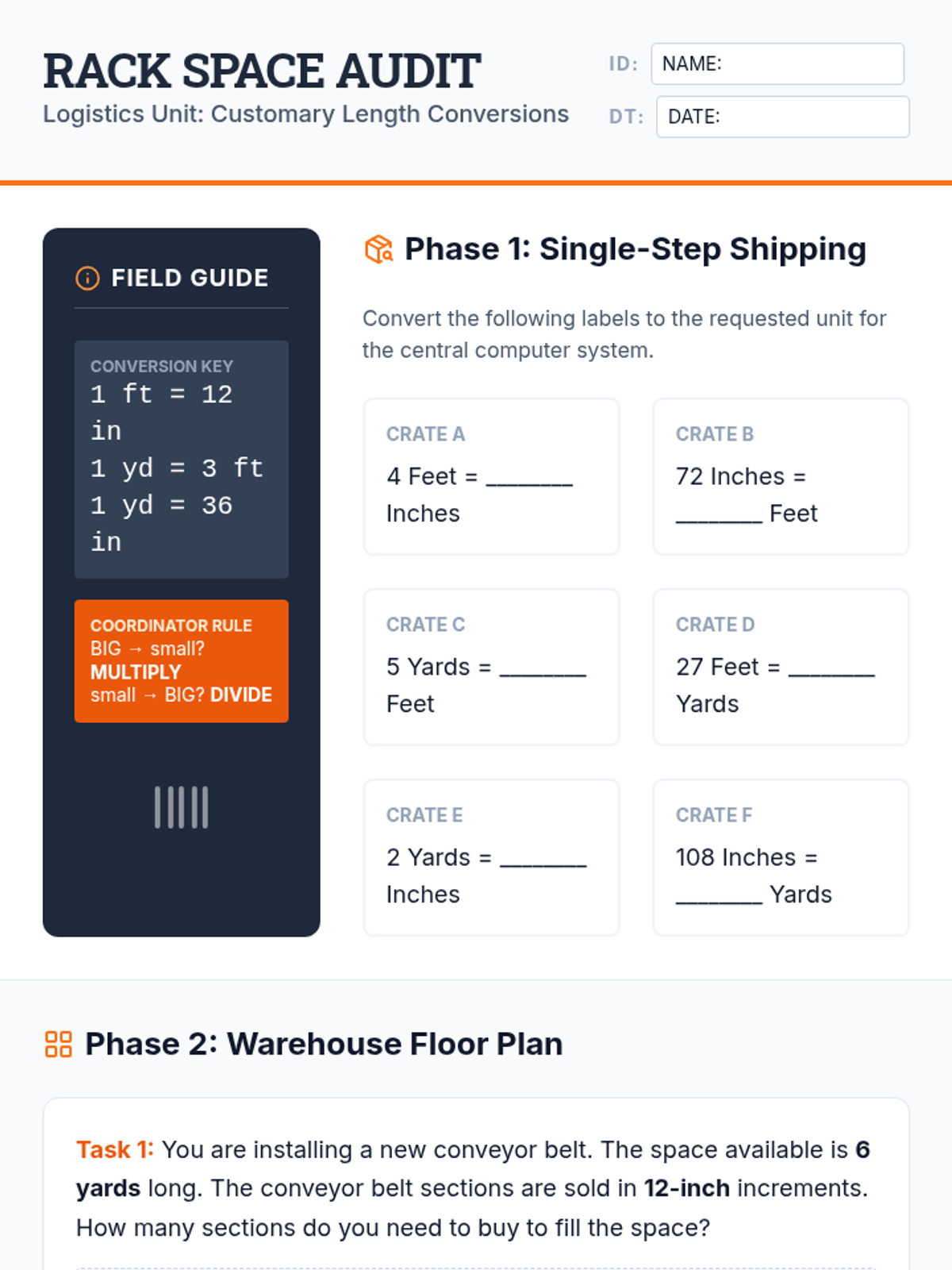
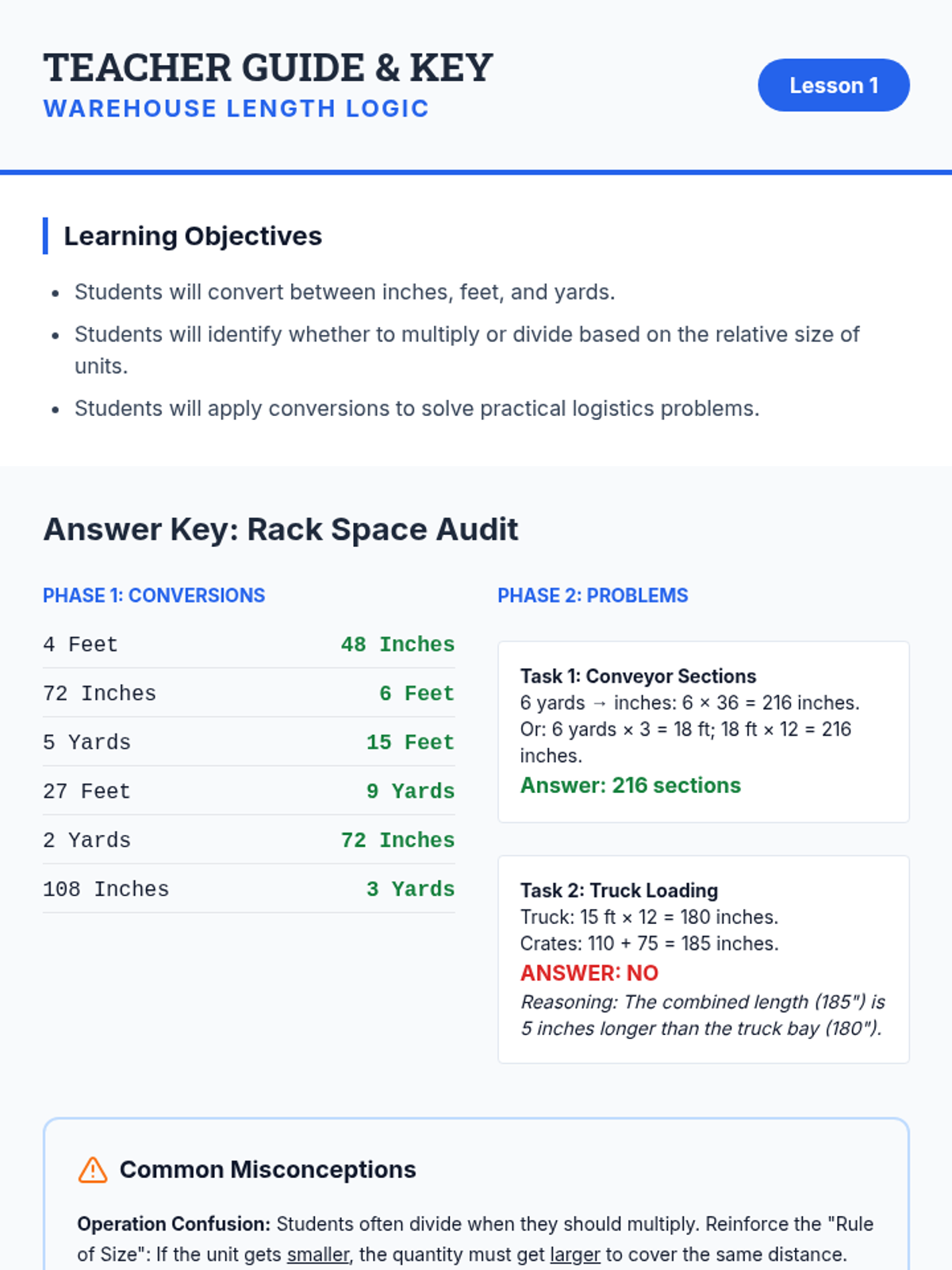
Students step into the role of supply chain coordinators to master unit conversions. They navigate customary and metric systems through the lens of warehouse logistics, international shipping, and multi-step problem solving.
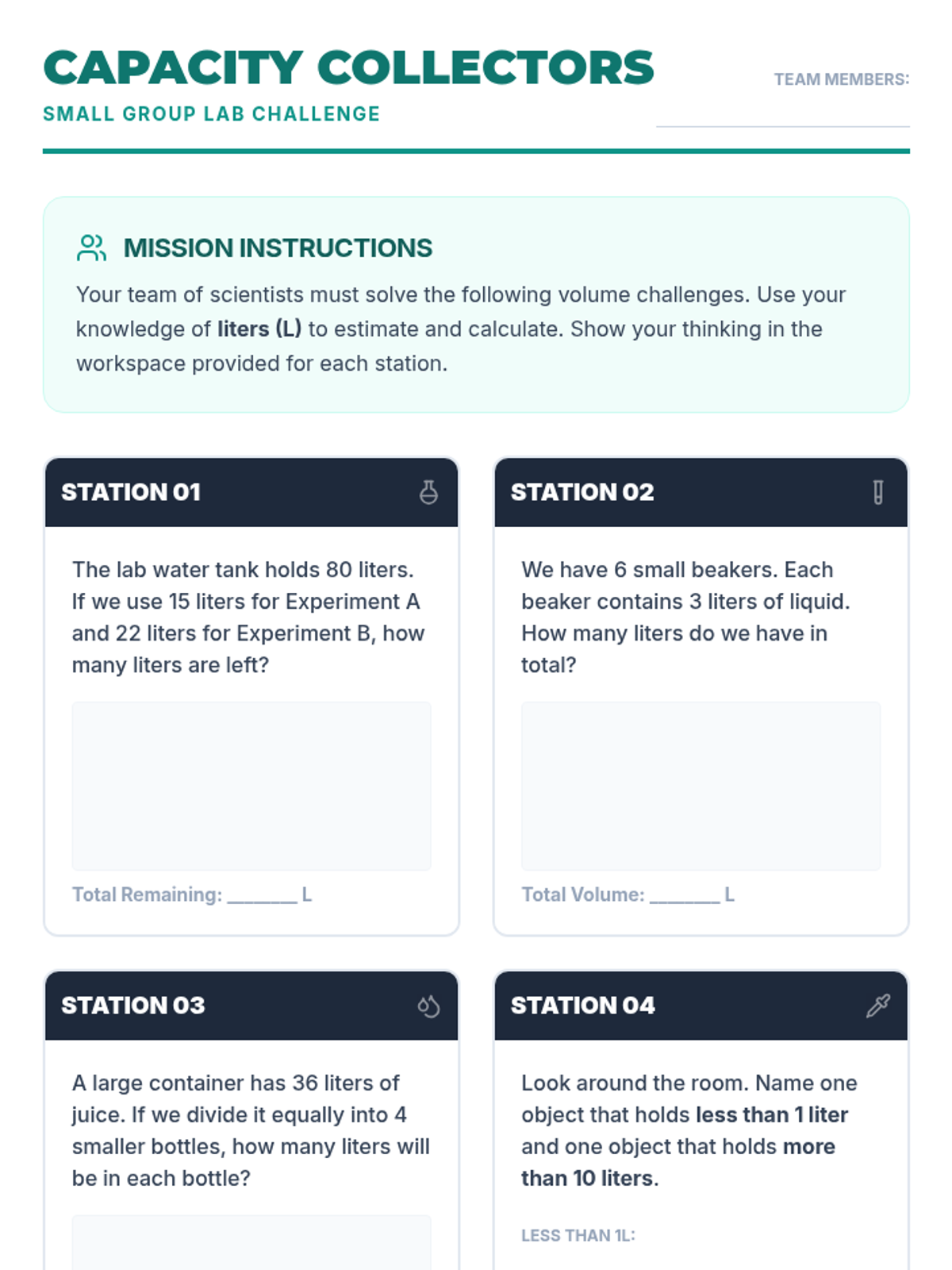
A comprehensive unit focused on measuring, estimating, and calculating liquid volumes in liters and masses in grams and kilograms. Students engage in hands-on lab activities and word problem challenges.
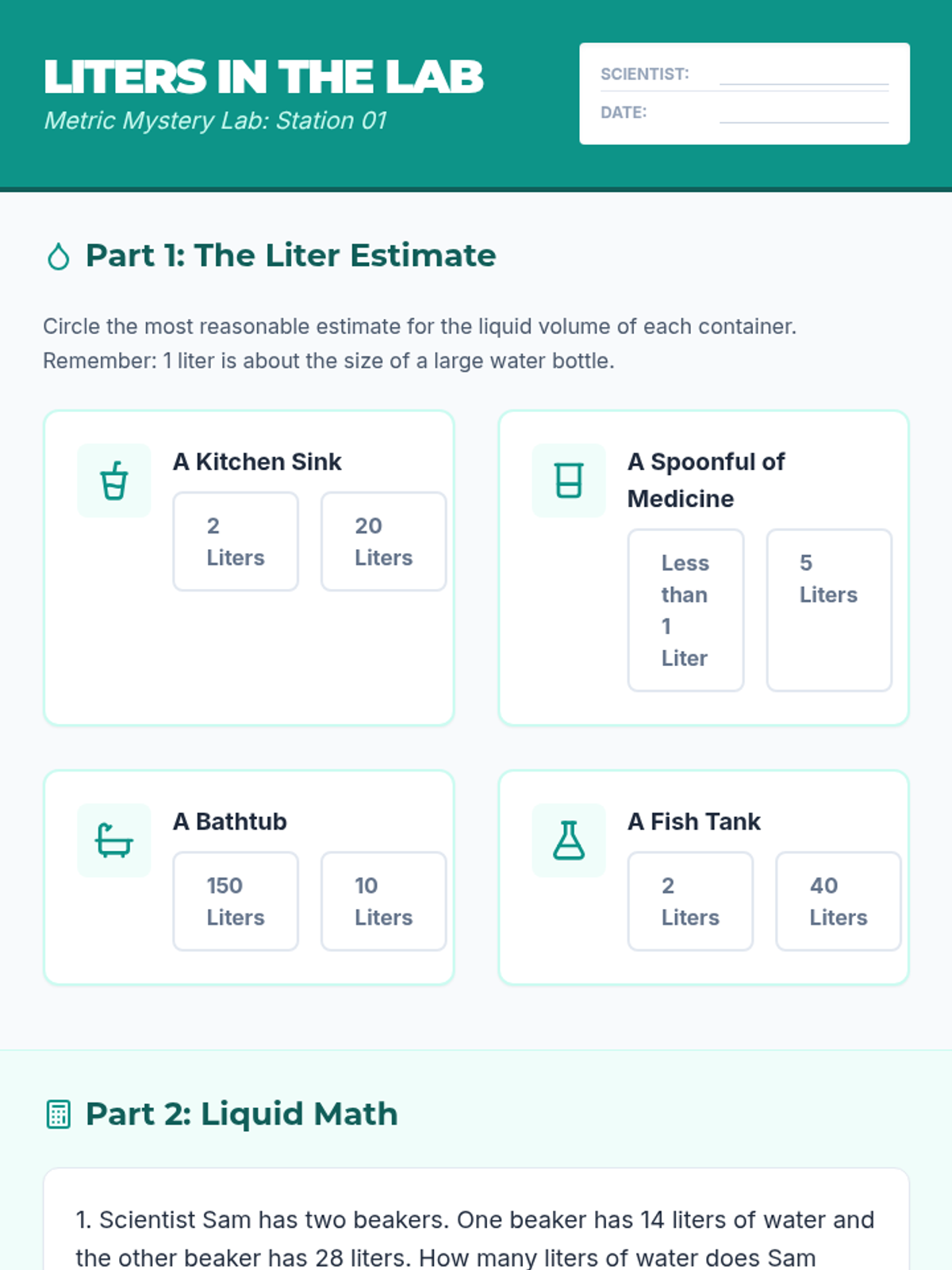
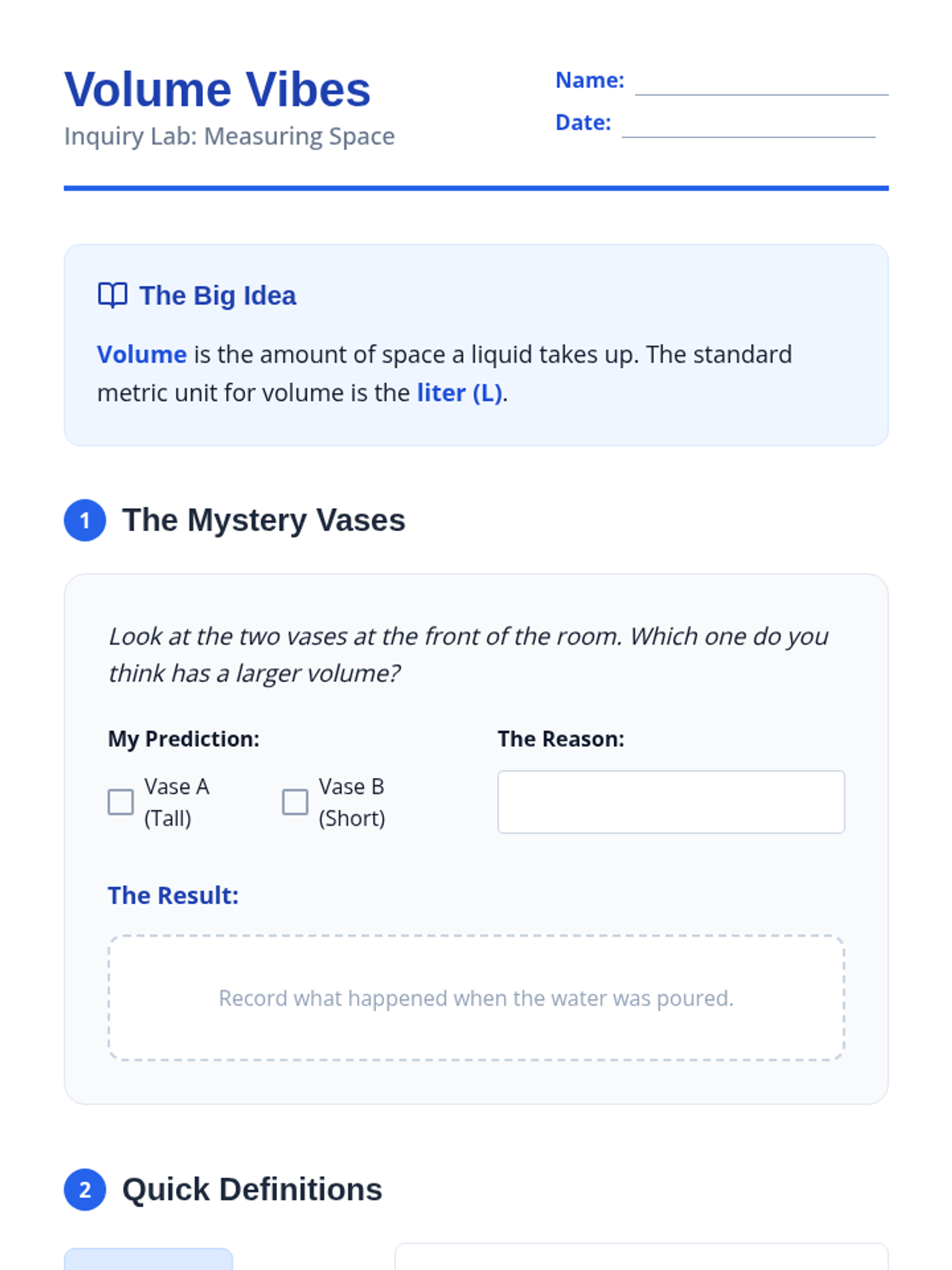
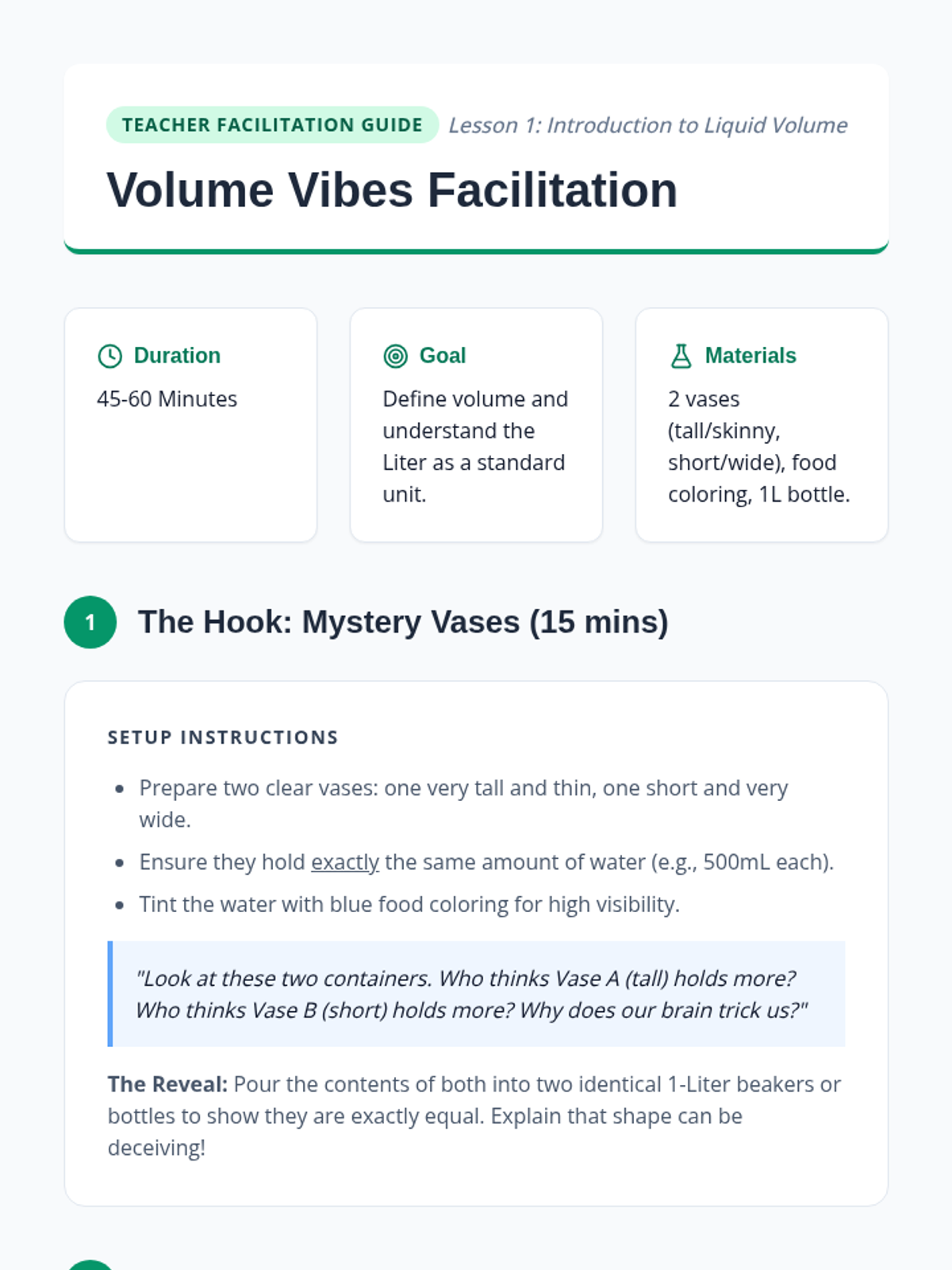
Students explore liquid volume through an inquiry-based approach, focusing on liters. They move from conceptual understanding to estimation, measurement with beakers, and solving arithmetic word problems involving volume.