Geometric classification, measurement of area and volume, and the study of transformations and rigid motions. Builds toward complex proofs, trigonometry for general triangles, and the algebraic representation of conic sections.
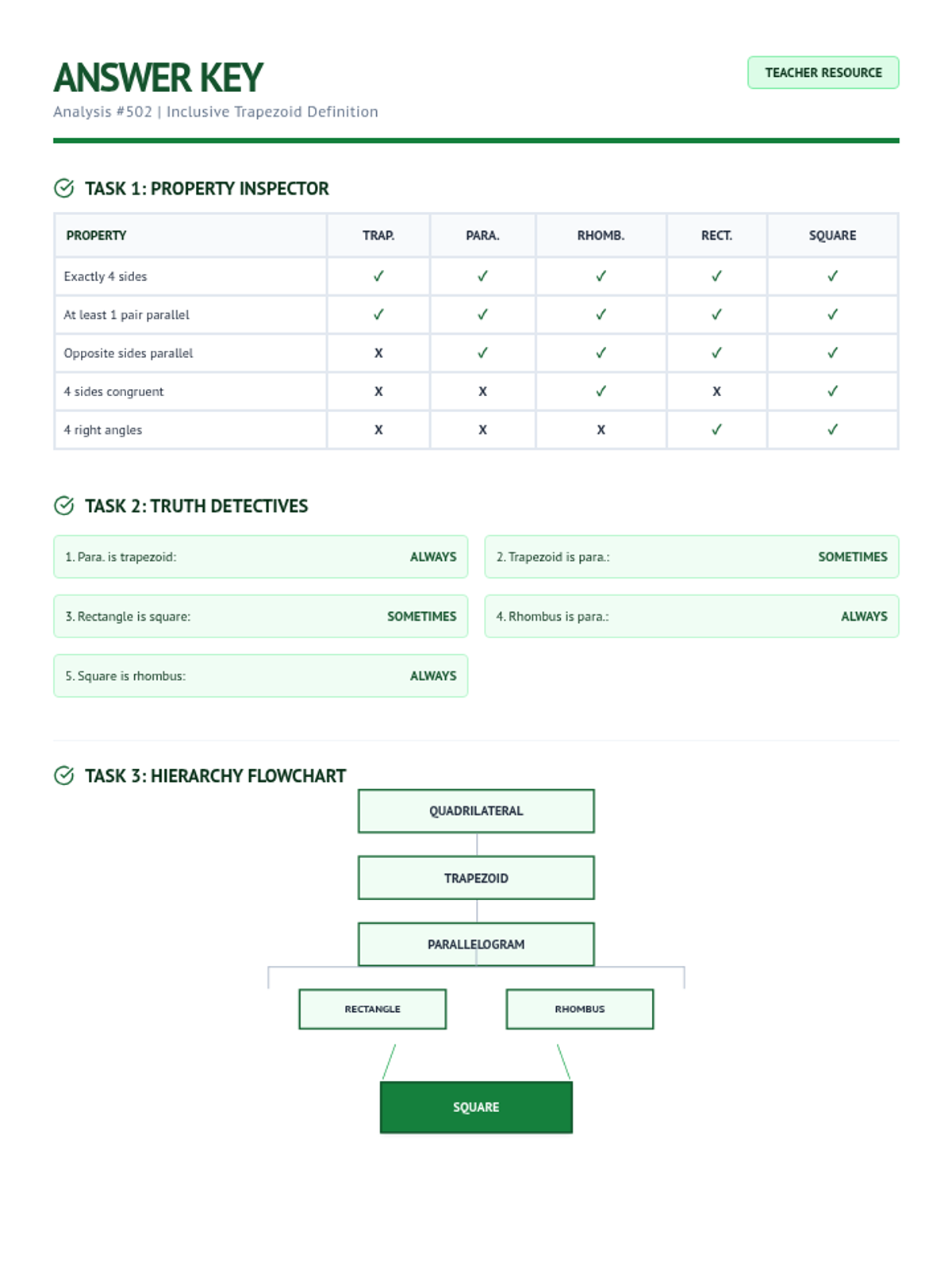
An answer key for the Quadrilateral Quest worksheet, providing solutions for the expanded properties and hierarchy flowchart including trapezoids.
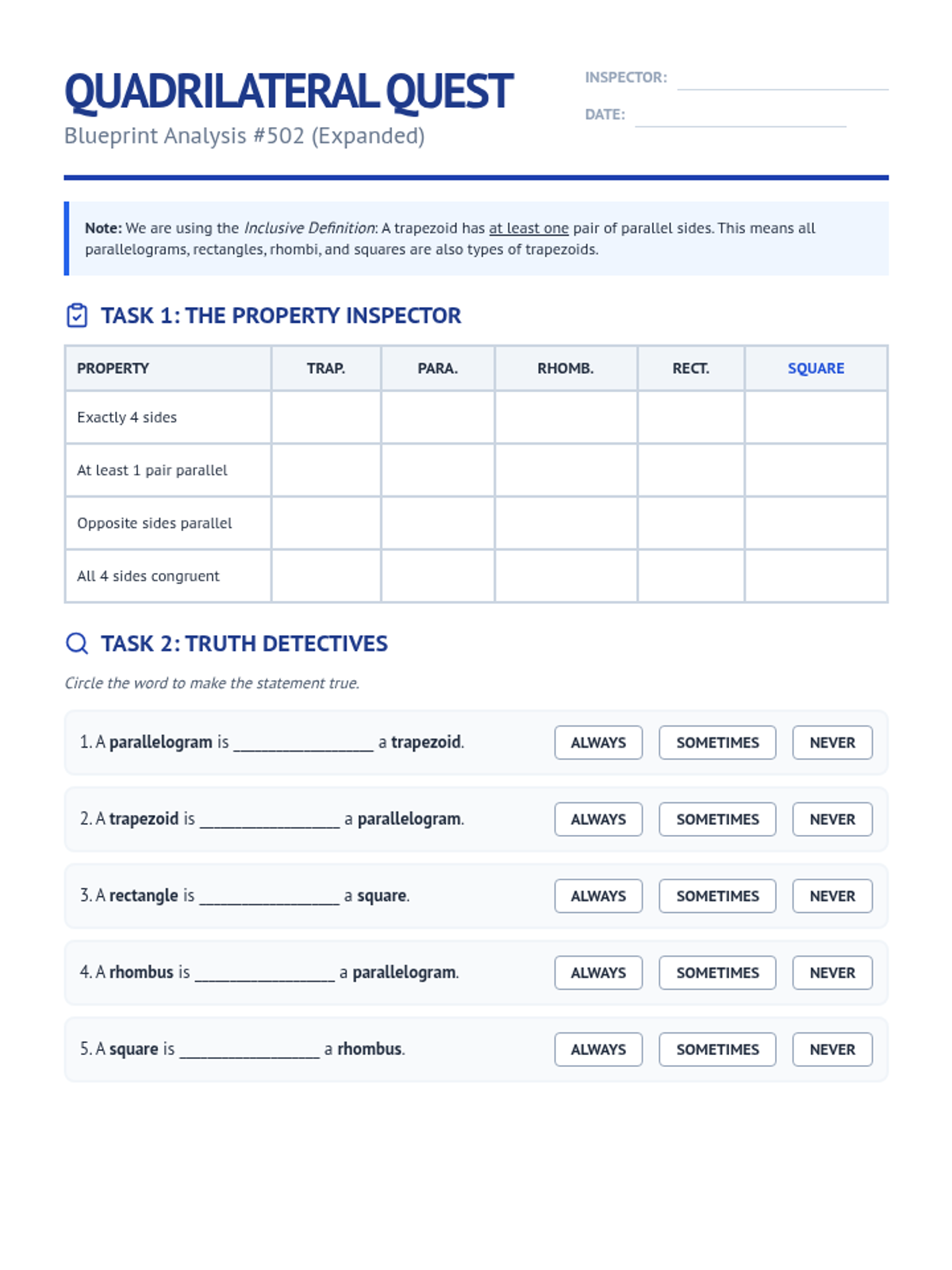
A comprehensive geometry worksheet focusing on quadrilateral hierarchies, now including trapezoids. It includes a property checklist, 'Always/Sometimes/Never' logical reasoning statements, and an expanded hierarchy flowchart.
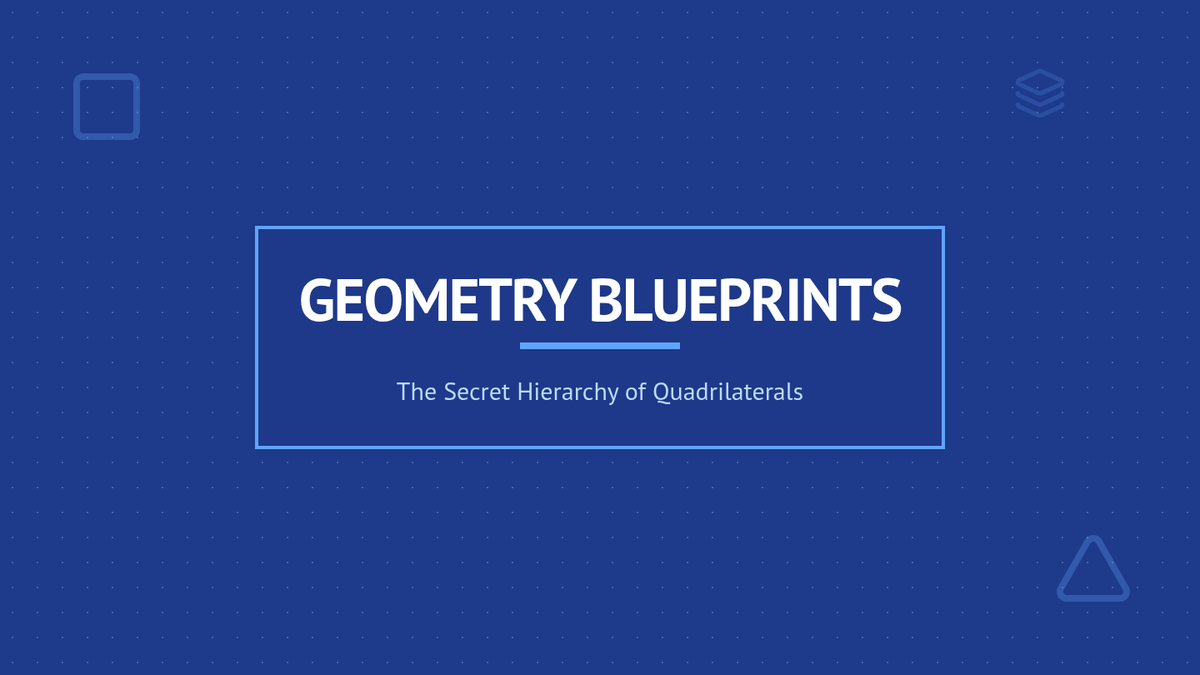
A visually engaging slide deck introducing the hierarchical classification of quadrilaterals using an architect-inspired 'blueprint' theme. It covers definitions, property checklists, and the logic of 'Always, Sometimes, Never' statements, now featuring trapezoids.
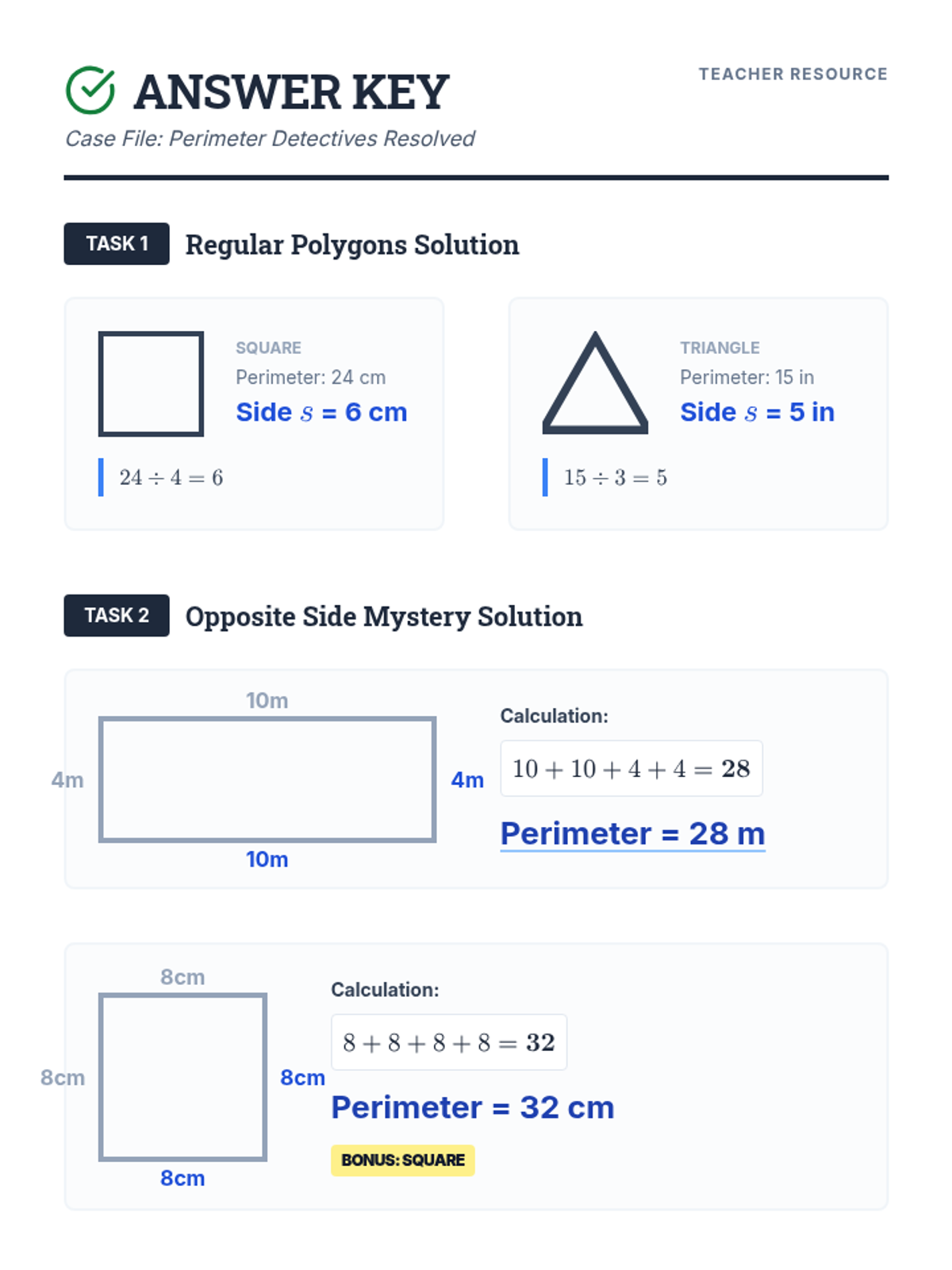
The answer key for the Perimeter Detectives worksheet, providing step-by-step solutions for missing side lengths and perimeter calculations.
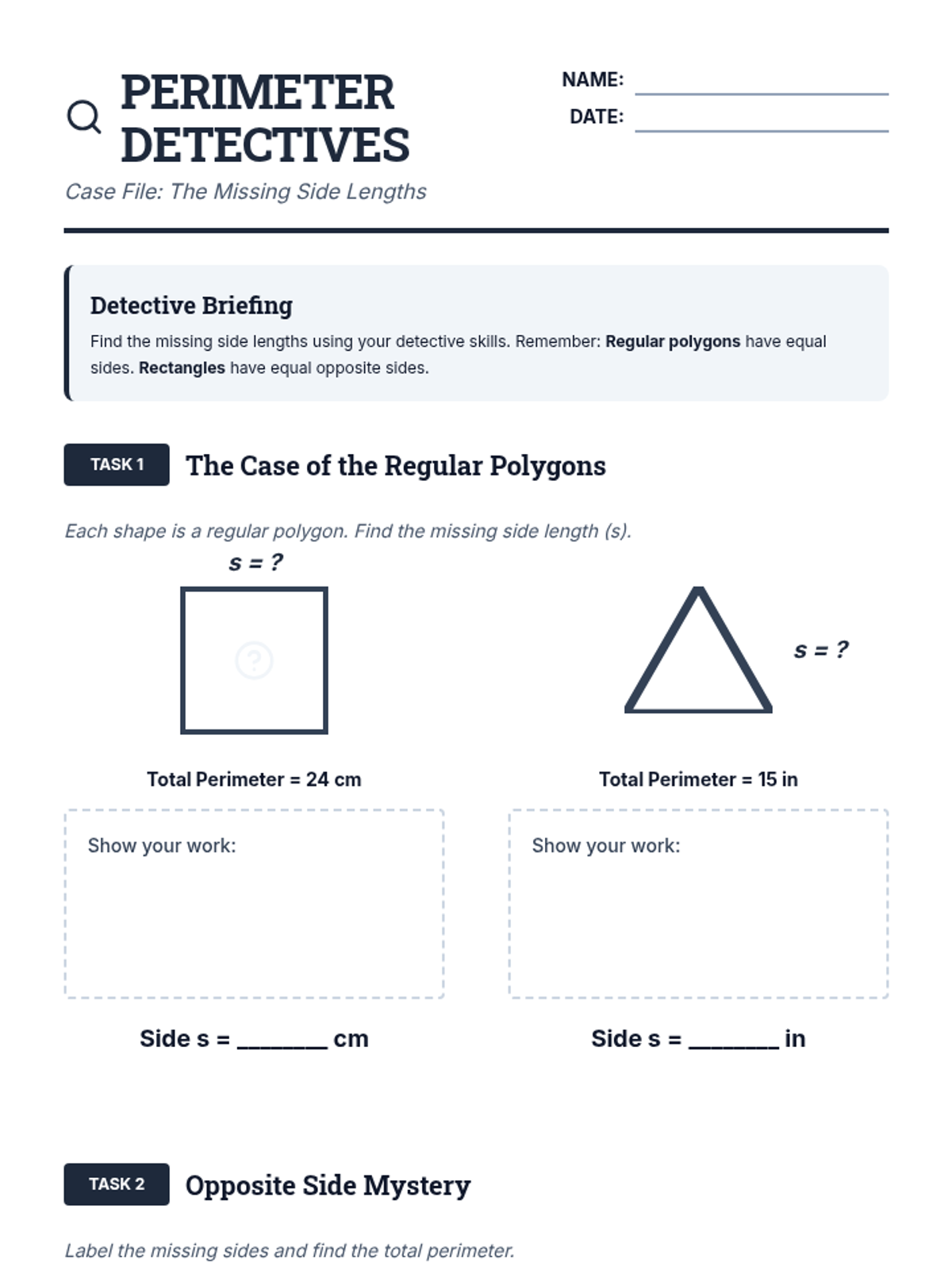
A student homework worksheet for practicing finding missing side lengths in regular polygons and rectangles, themed as a detective case file.
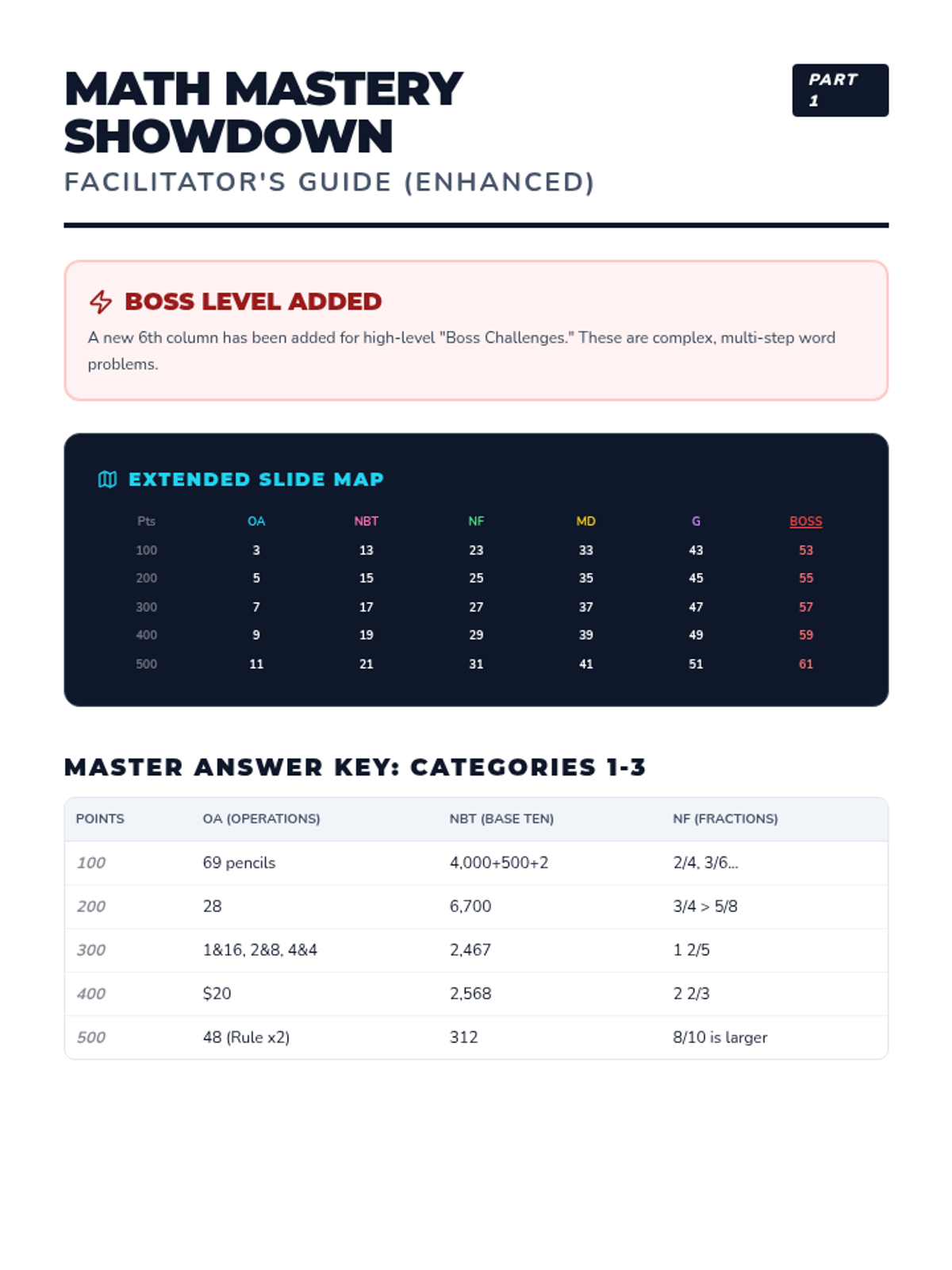
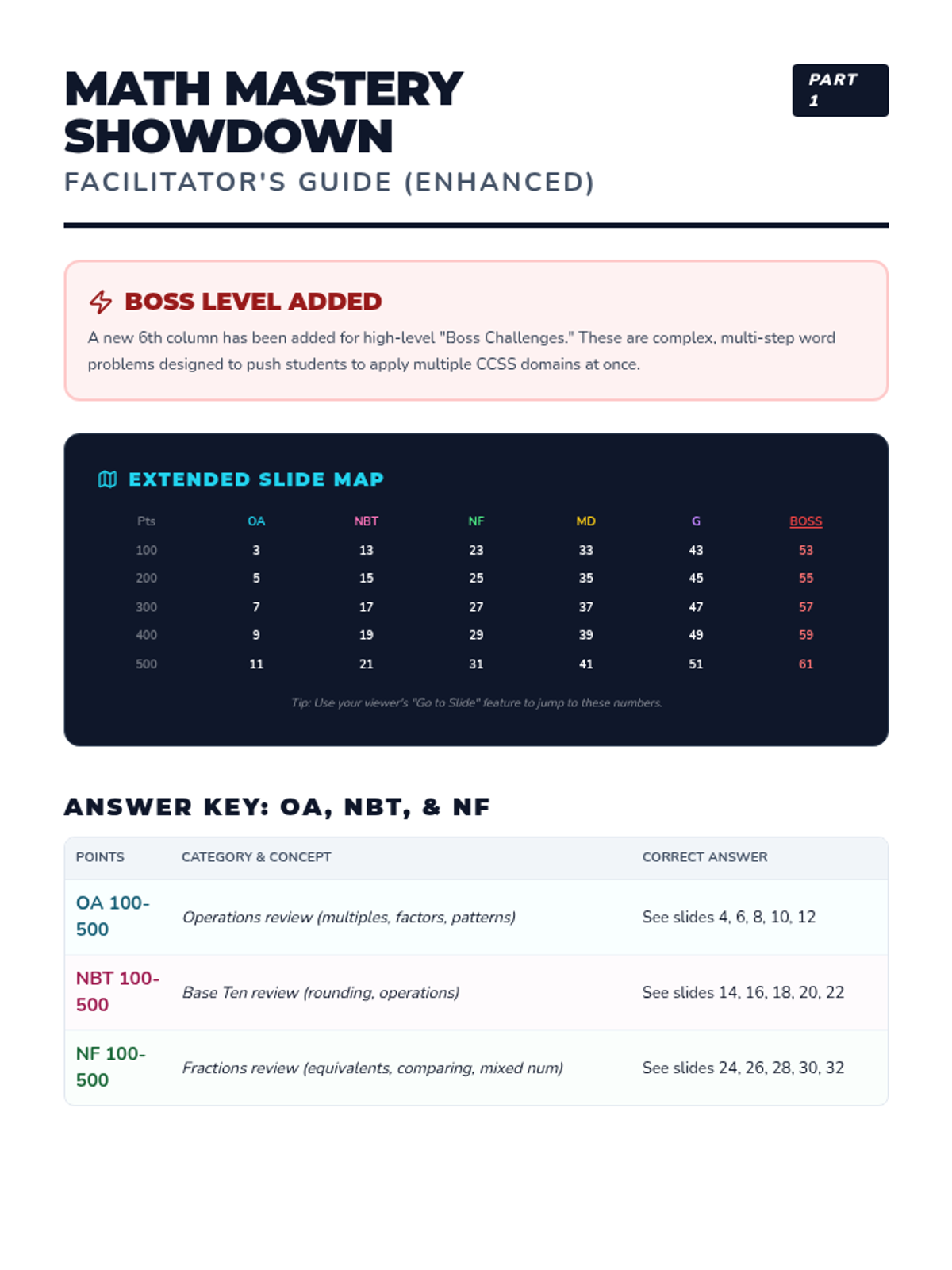
A comprehensive facilitation guide for the 4th-grade math review game. Now includes an "Extended Slide Map" for the 6th category and a dedicated "Boss Level" answer key with multi-step word problem breakdowns.
A complete 63-slide arcade-themed 4th-grade math review deck. Includes full content for all 6 categories (Operations, Base Ten, Fractions, Measurement, Geometry, and Boss Level) with hidden answer slides and navigation aids.
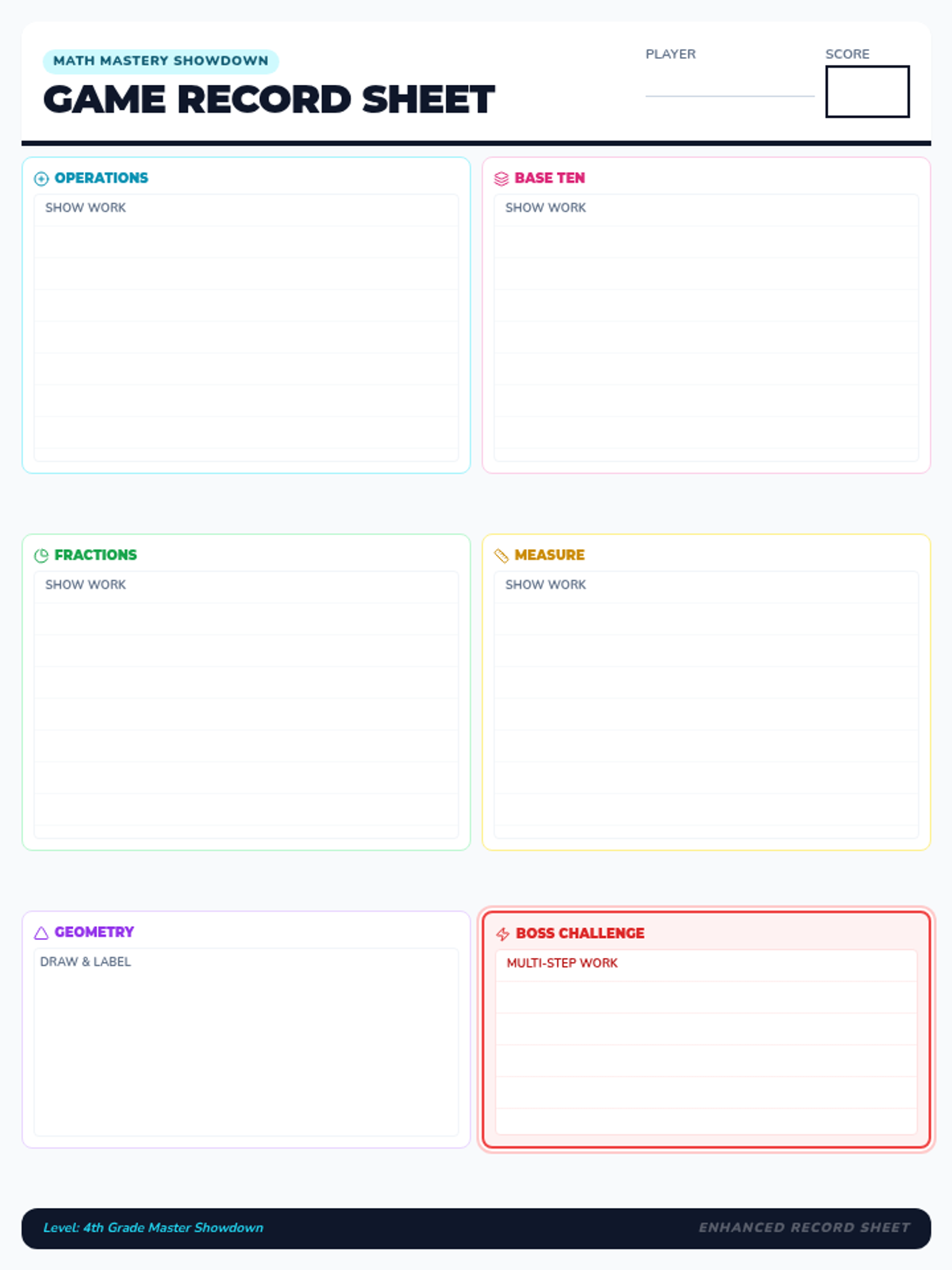
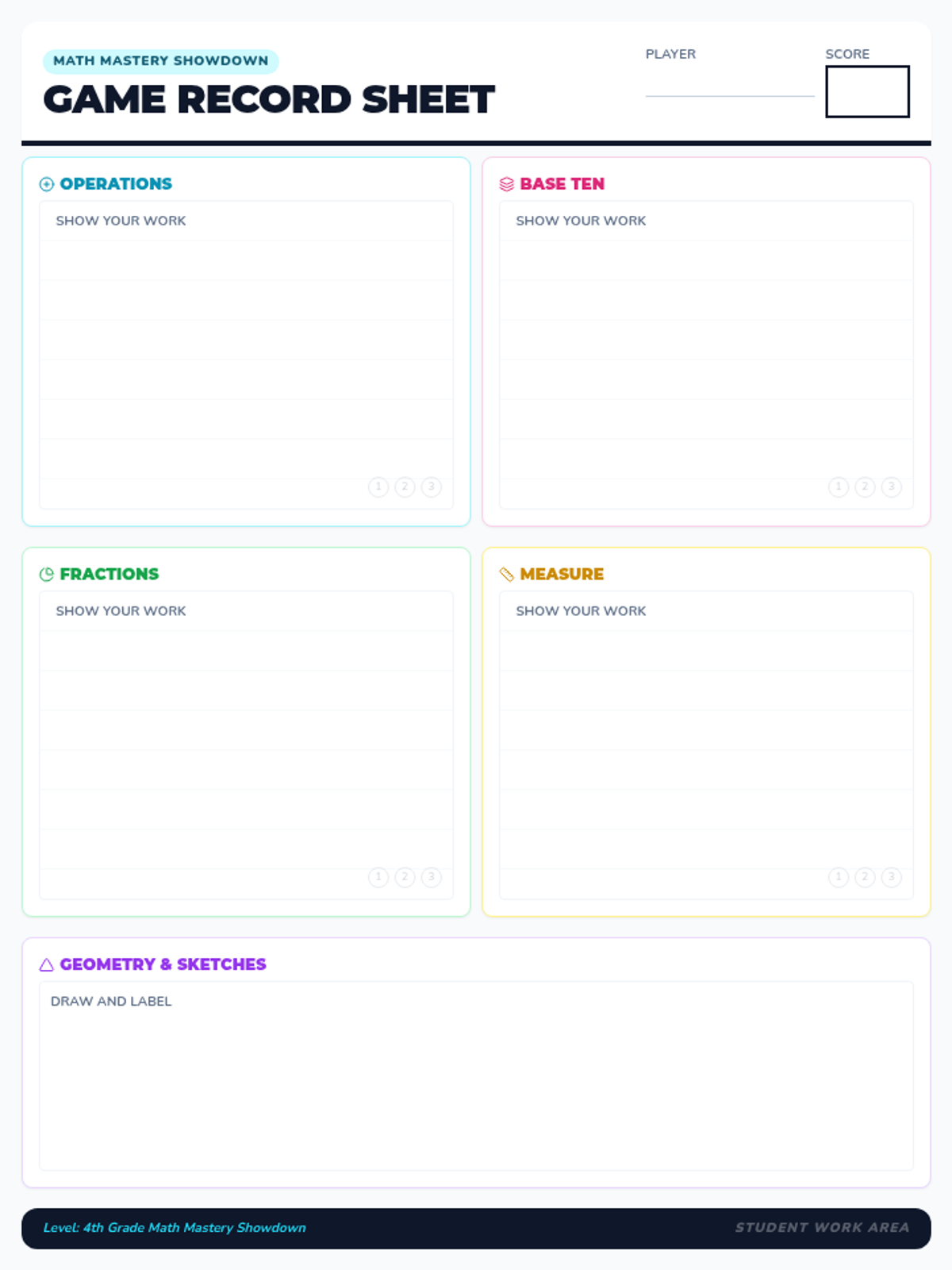
An updated student-facing record sheet for the math review game. Now includes a dedicated "Boss Challenge" work area for complex multi-step word problems, alongside the five standard Common Core domains.
A student-facing record sheet for the math review game. Provides organized, light-colored workspaces for each Common Core domain, a score tally area, and extra scratch space for multi-step calculations.
An arcade-themed 4th-grade math review slide deck in a Jeopardy-style format. Now features a 6th "Boss Level" column with challenging multi-step word problems. Includes 63 slides with hidden answers and slide number indicators for manual navigation.
A black and white, ink-friendly drafting worksheet where students design a town layout from a front view. Includes categorized "Must do" and "May do" requirements, coordinate axis labels for the grid, and a large calculation table for tracking 5+ buildings.
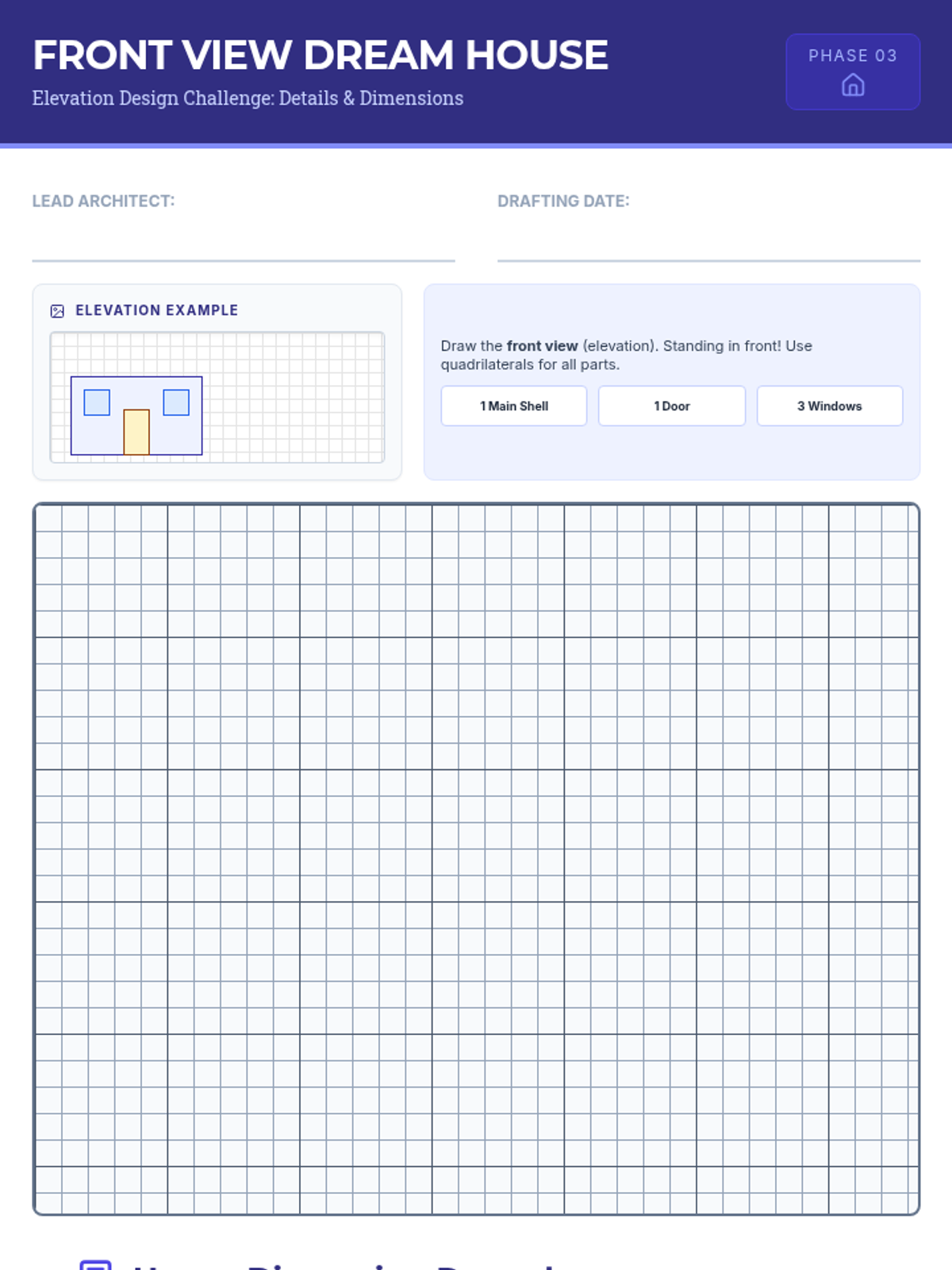
A 6-slide instructional presentation that introduces the Grid City project, defines perimeter and area, and outlines creative requirements like streets and plants, including the Front View House challenge.
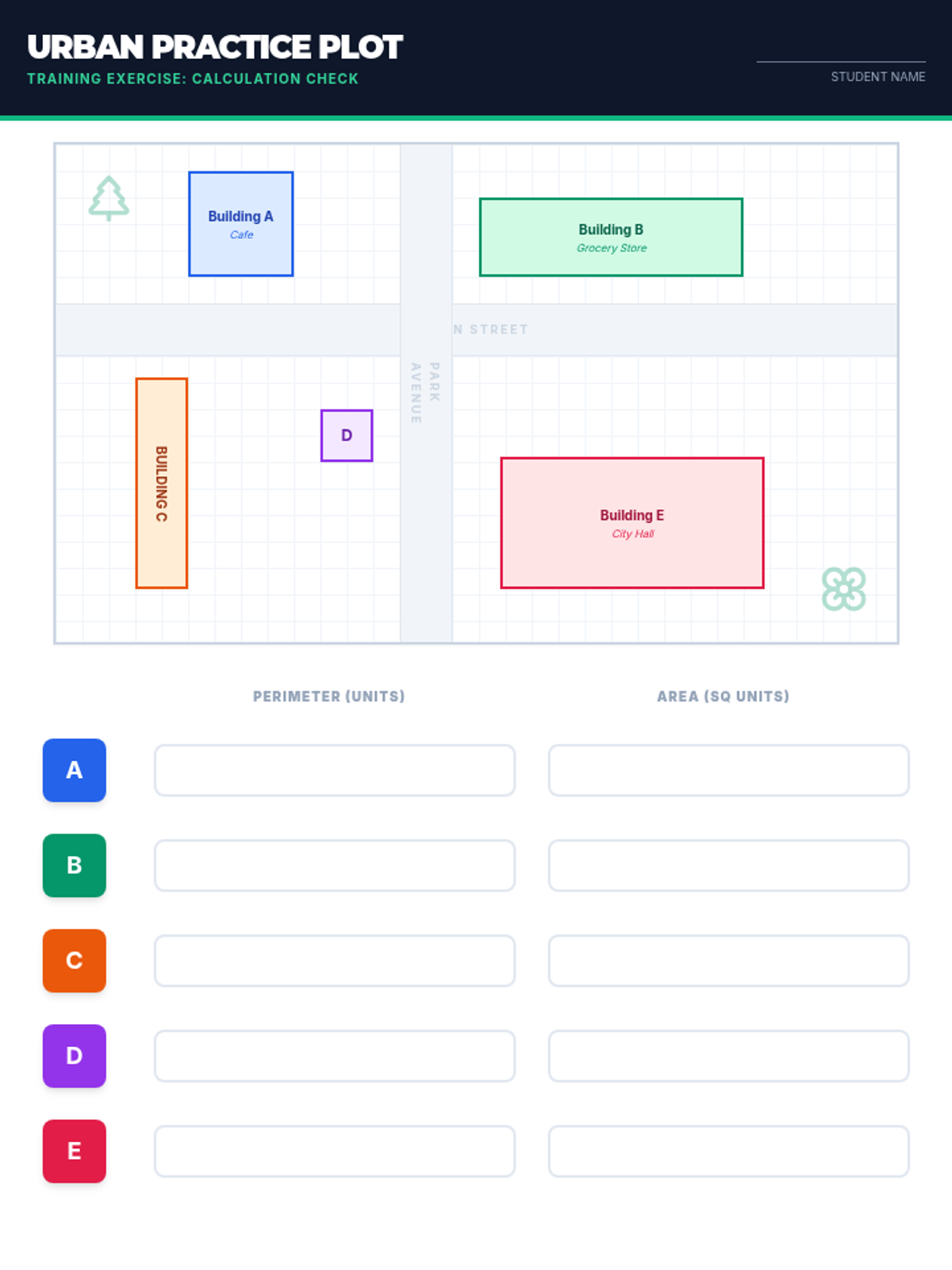
A black and white, ink-friendly practice document featuring a pre-drawn town layout on a grid, allowing students to practice calculating perimeter and area. Drop shadows have been removed and street labels adjusted for clarity. Axis numbering added for ease of measurement.
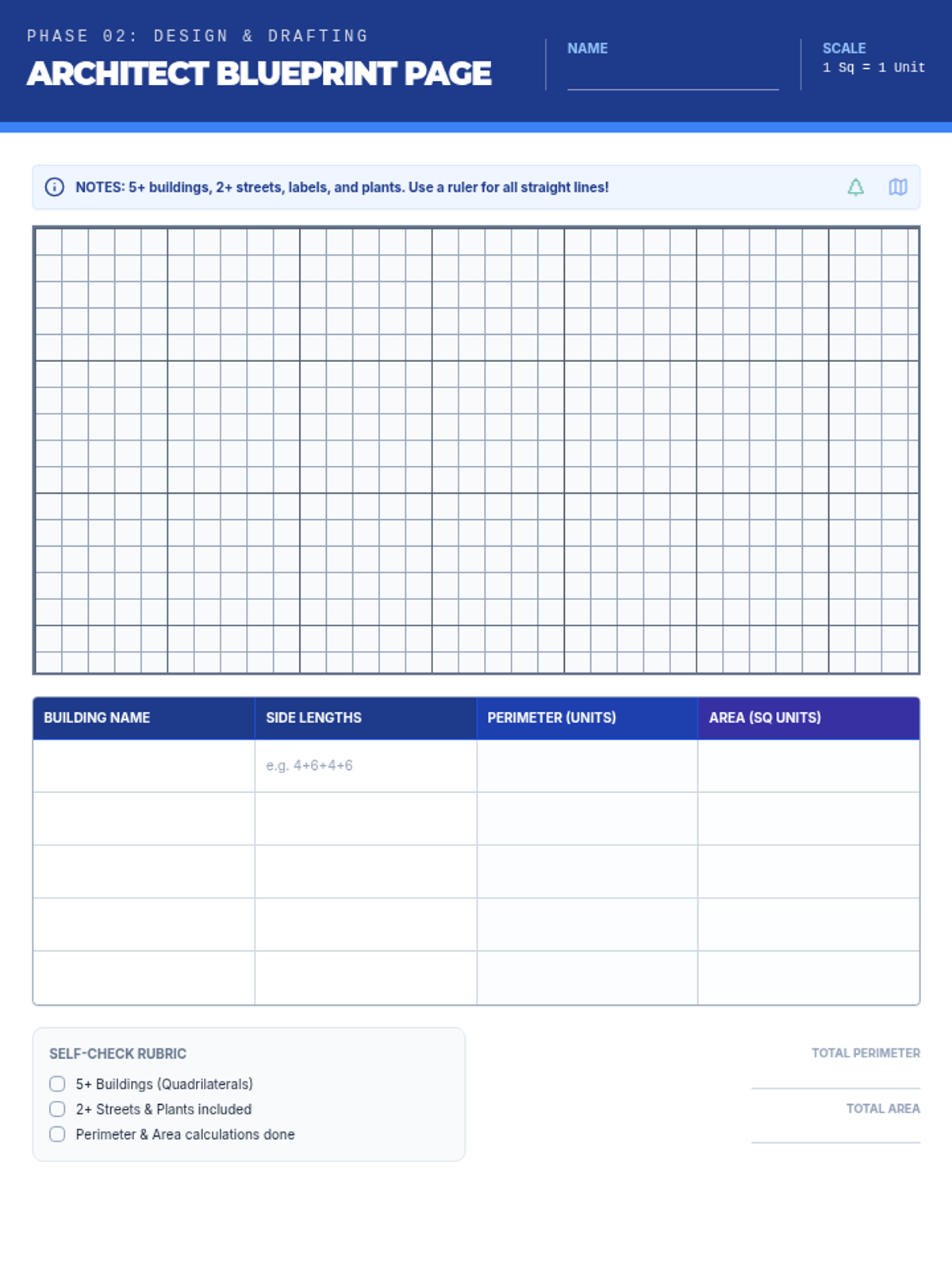
A black and white ink-friendly blueprint page featuring a large custom grid for architectural drawing and a detailed recording table for tracking perimeter and area calculations. Includes specific "Must do" and "May do" drafting notes and coordinate labels for the grid axes.
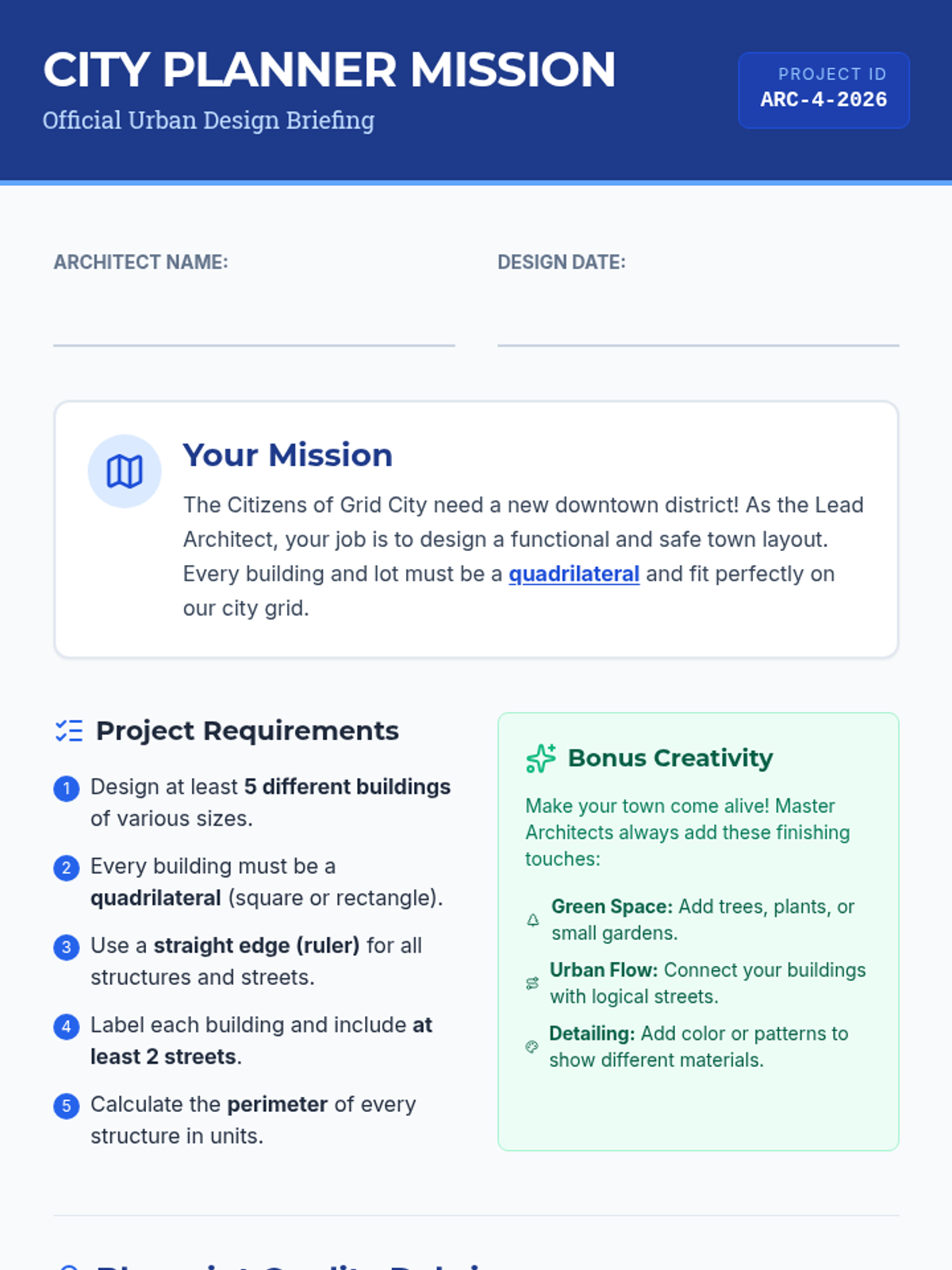
A black and white mission briefing document for 4th-grade students, outlining project requirements for designing a town on grid paper, including specific building criteria, street and plant requirements, and a comprehensive grading rubric.
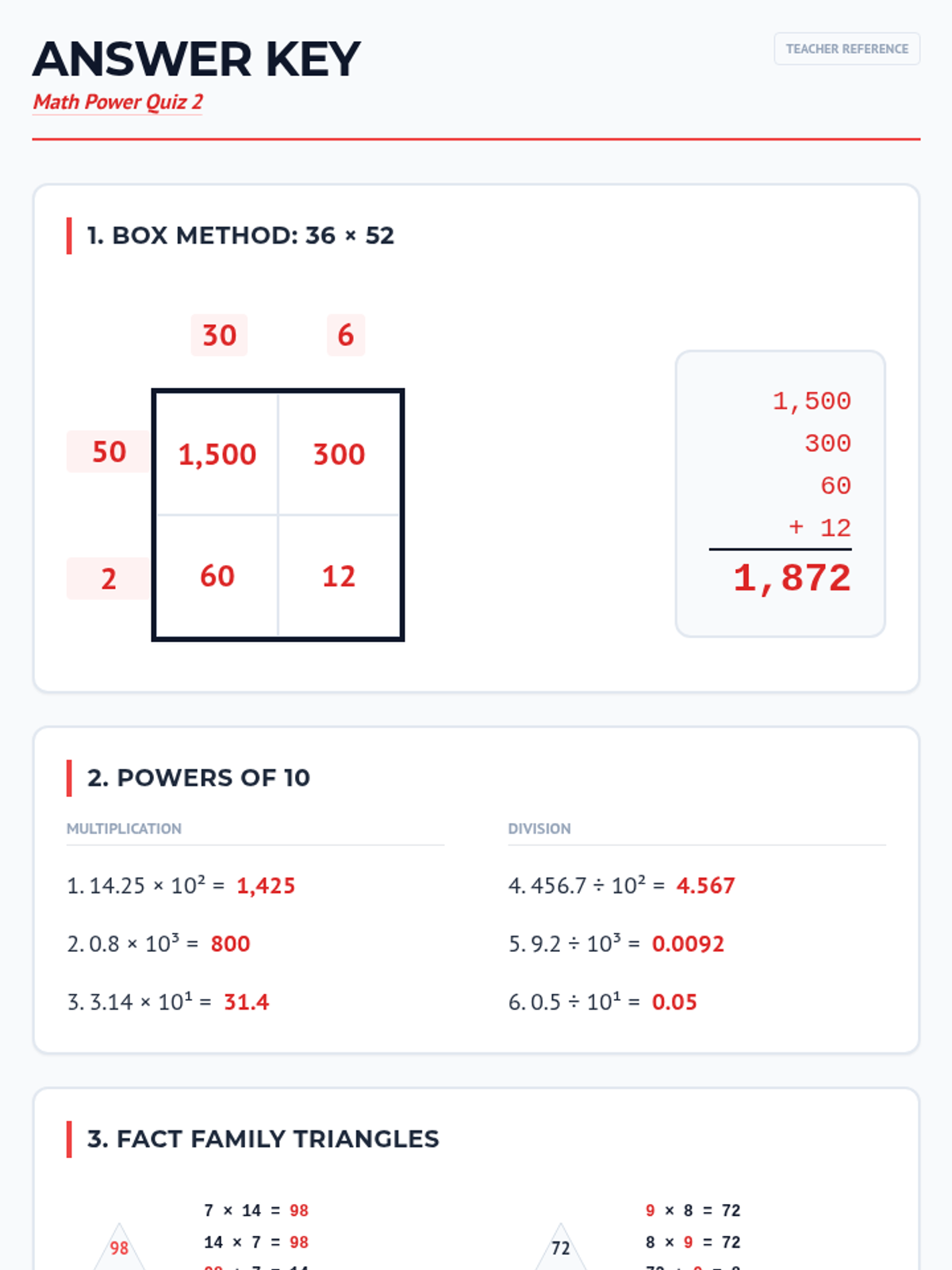
Teacher's answer key for the updated Math Power Quiz 2, providing solutions for box method, decimal operations with powers of 10, and fact family triangles. Features clearly marked solution factors and equations.
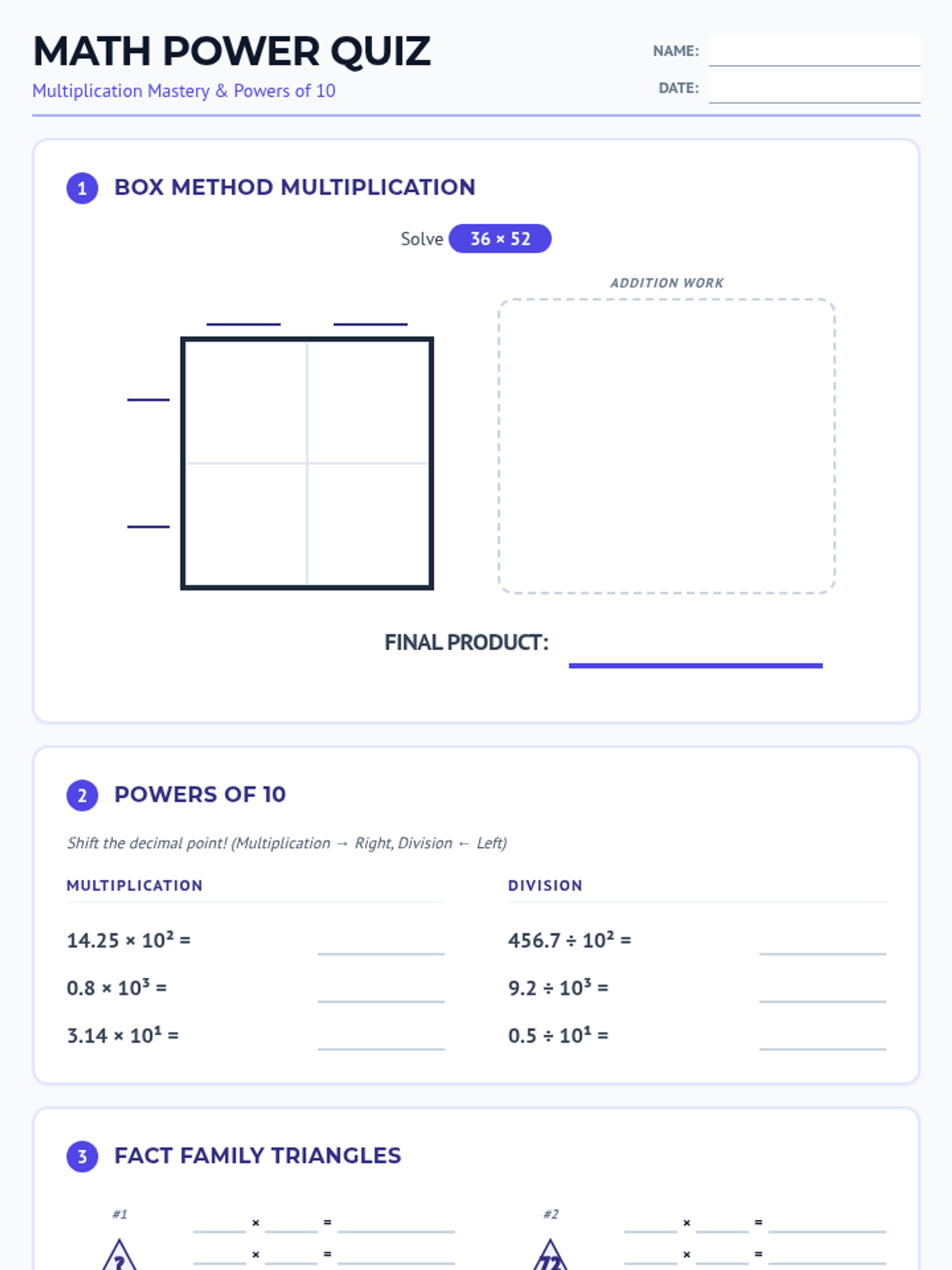
A math quiz focusing on two-digit multiplication using the box method, fact family triangles, and multiplying/dividing decimals by powers of 10. features improved contrast and expanded layout across two pages. Now includes 4 lines for related facts and spacious factor input areas. Use reliable SUP exponents.
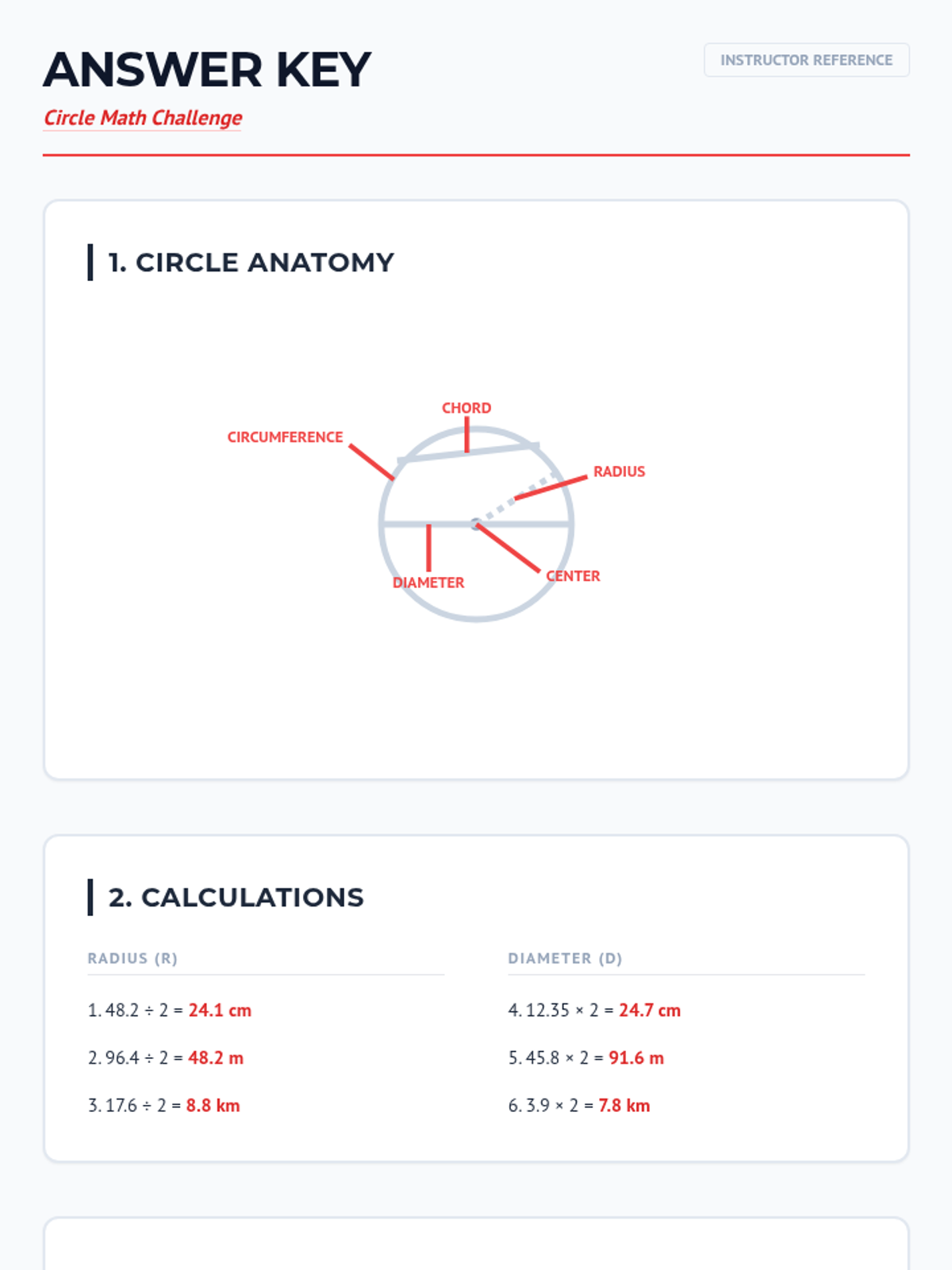
The teacher's answer key for the Circle Math Challenge Quiz, including labeled circle diagrams and step-by-step solutions. Problem #3 updated with smaller numbers. Fixed contrast and label positioning. External factors in Box Method are now red to indicate they are answers.
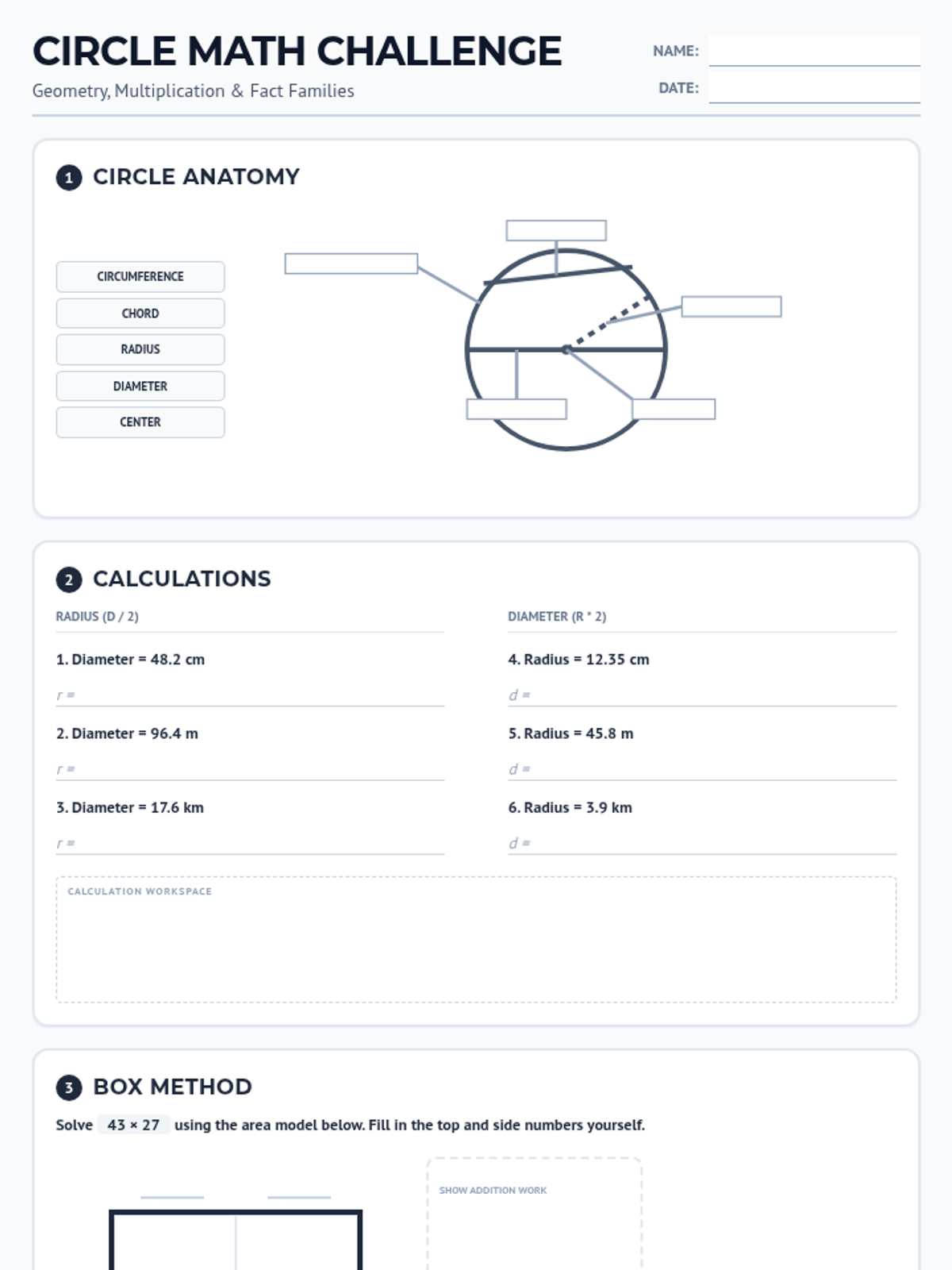
A math quiz assessing circle terminology, radius and diameter calculations (using decimals up to 100), box method multiplication, and fact family triangles. Factors removed from box method to allow student input. Fixed diagram alignment and page distribution.
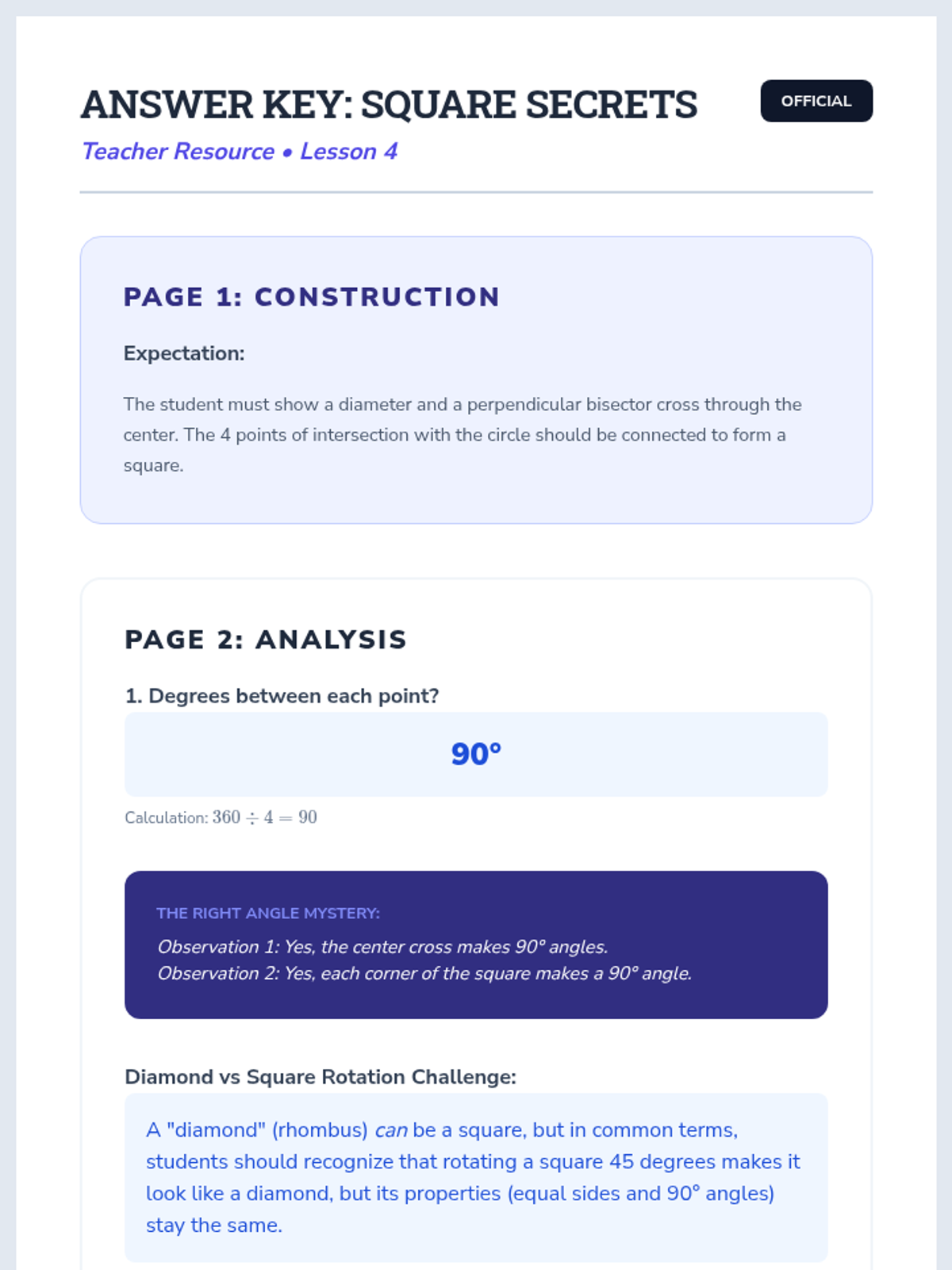
Answer key for the Square Construction Worksheet in Lesson 4, providing mathematical calculations and geometric proofs for teacher use.
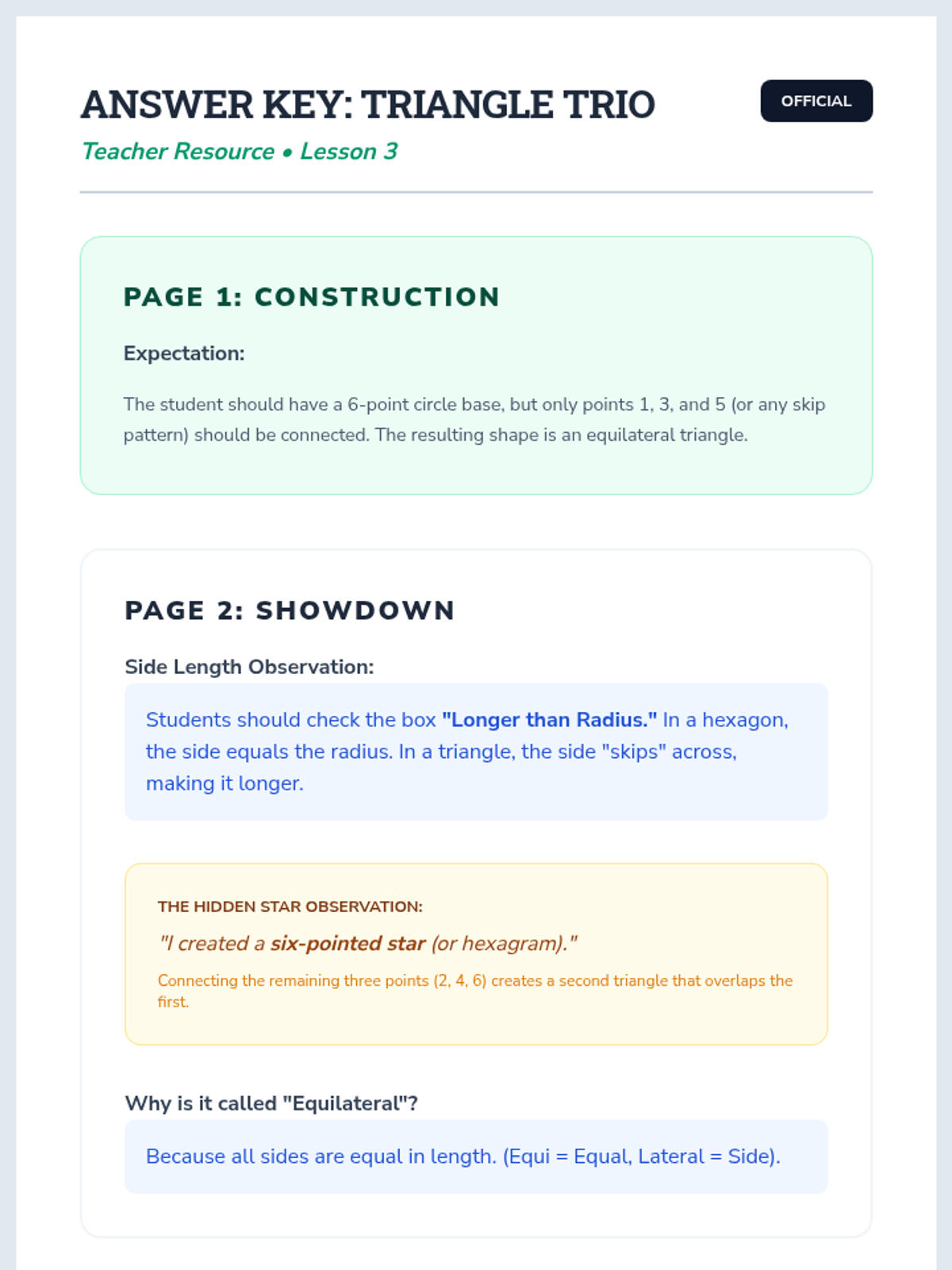
Answer key for the Triangle Construction Worksheet in Lesson 3, providing expected results and geometric comparisons for teacher use.
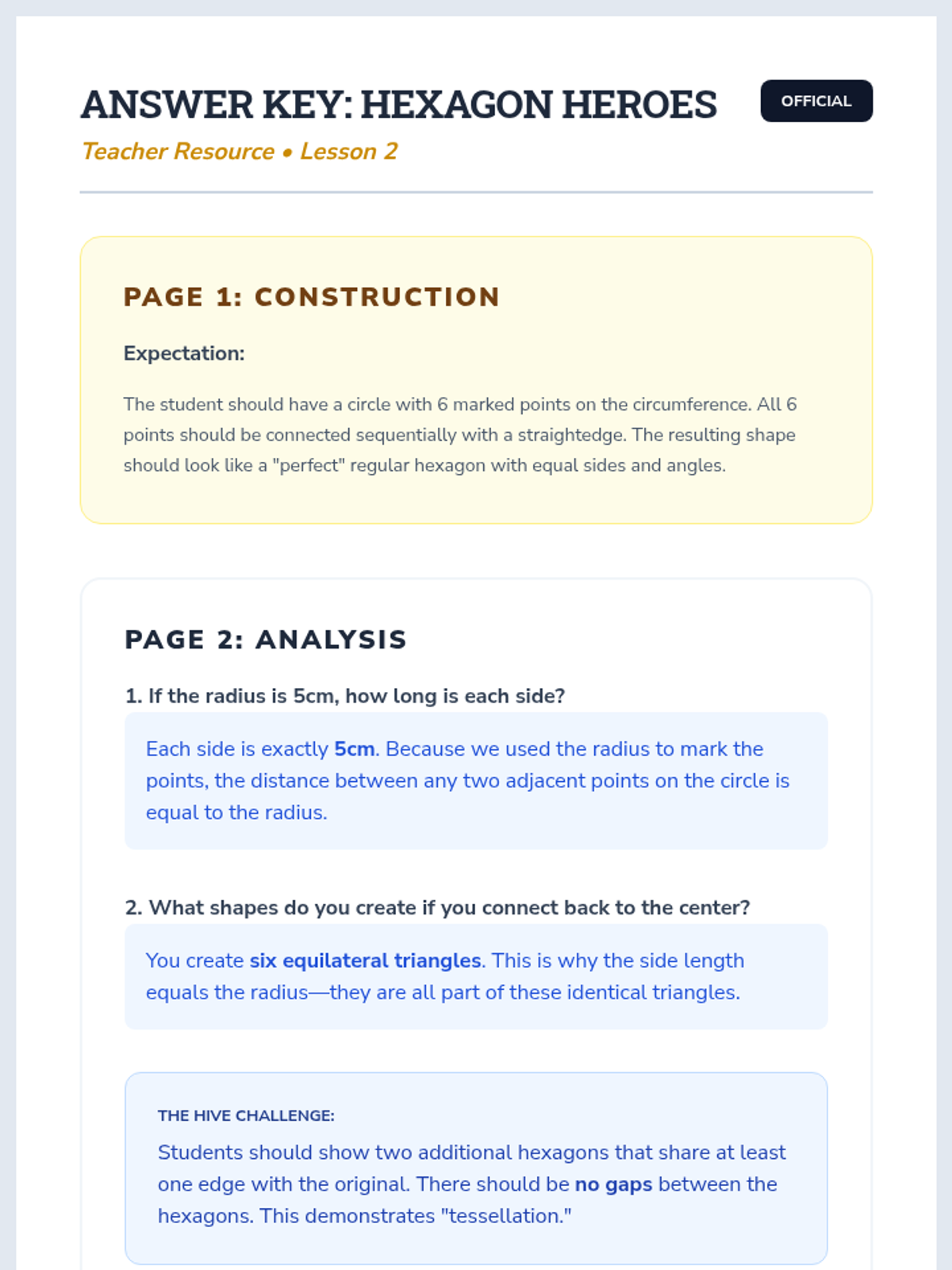
Answer key for the Hexagon Construction Worksheet in Lesson 2, providing expected results and geometric explanations for teacher use.
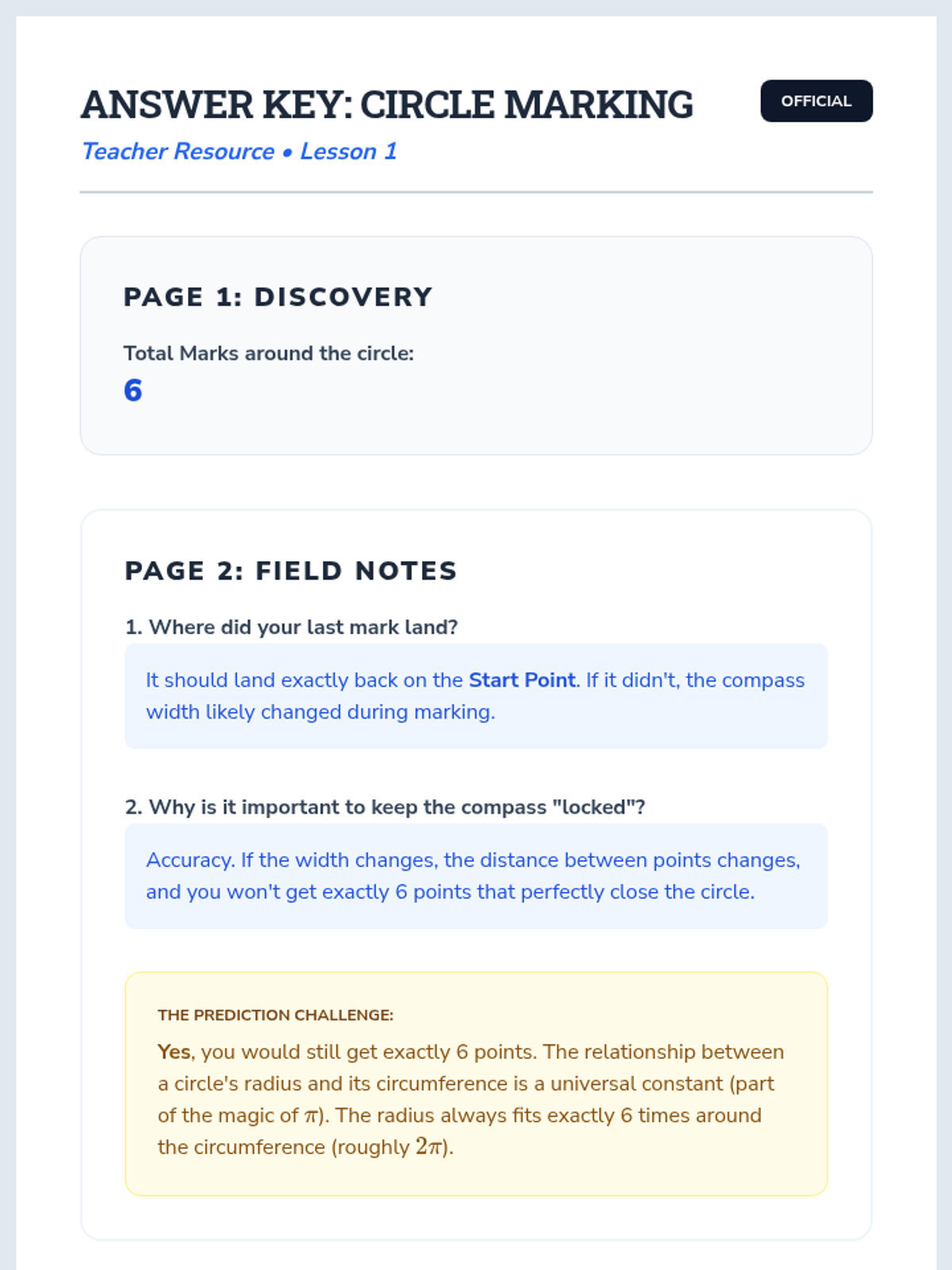
Answer key for the Circle Marking Activity Worksheet in Lesson 1, providing expected results and explanations for teacher use.
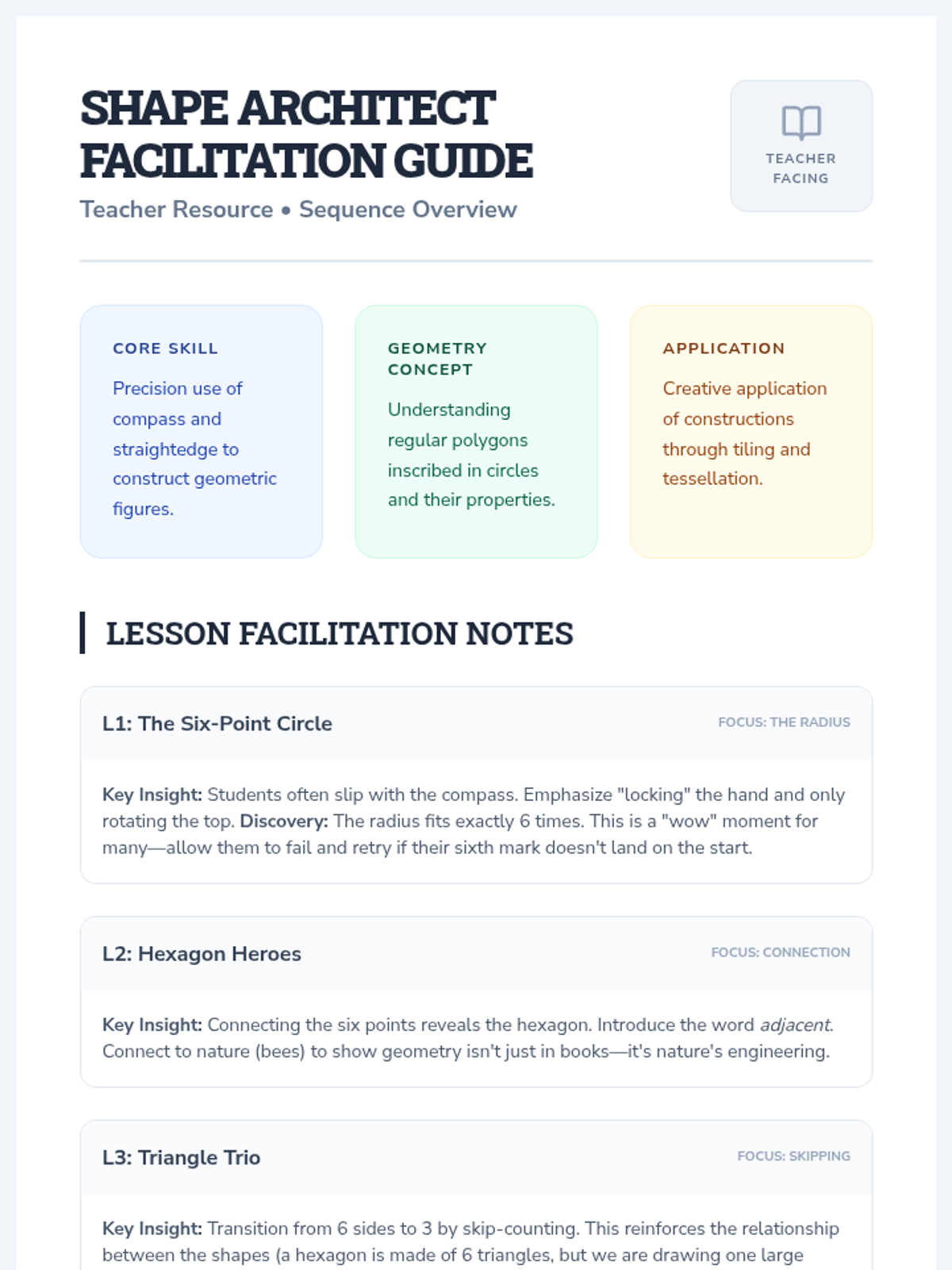
A comprehensive teacher facilitation guide for the Shape Architect expedition, including lesson-by-lesson facilitation notes, material checklists, assessment look-fors, and common misconception redirection.
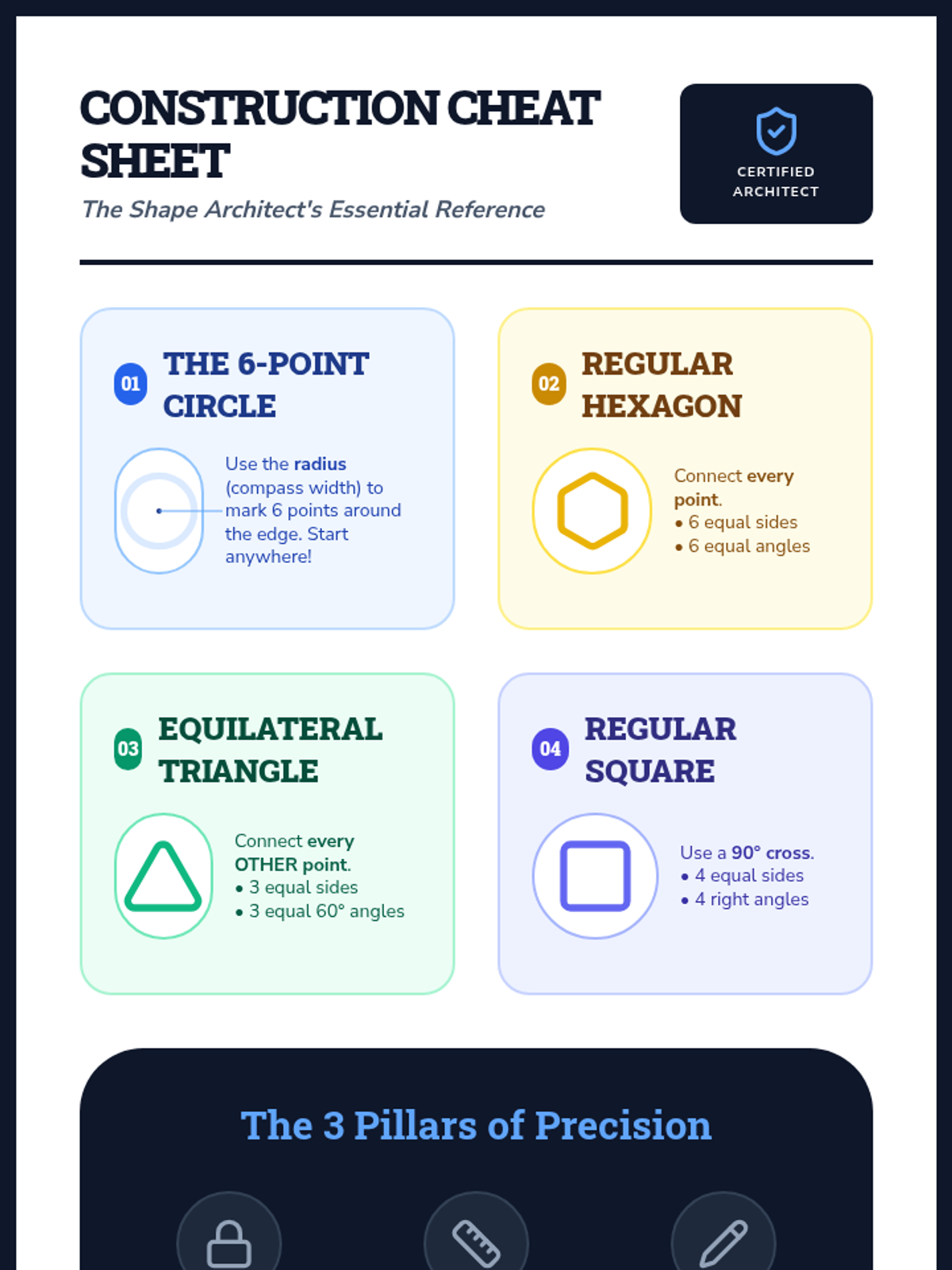
A comprehensive student reference sheet covering the construction methods for hexagons, triangles, and squares, along with key geometric vocabulary and precision tips.
Instructional slides for Lesson 4 that guide students through constructing a regular square using a perpendicular bisector and explain the properties of a regular square.
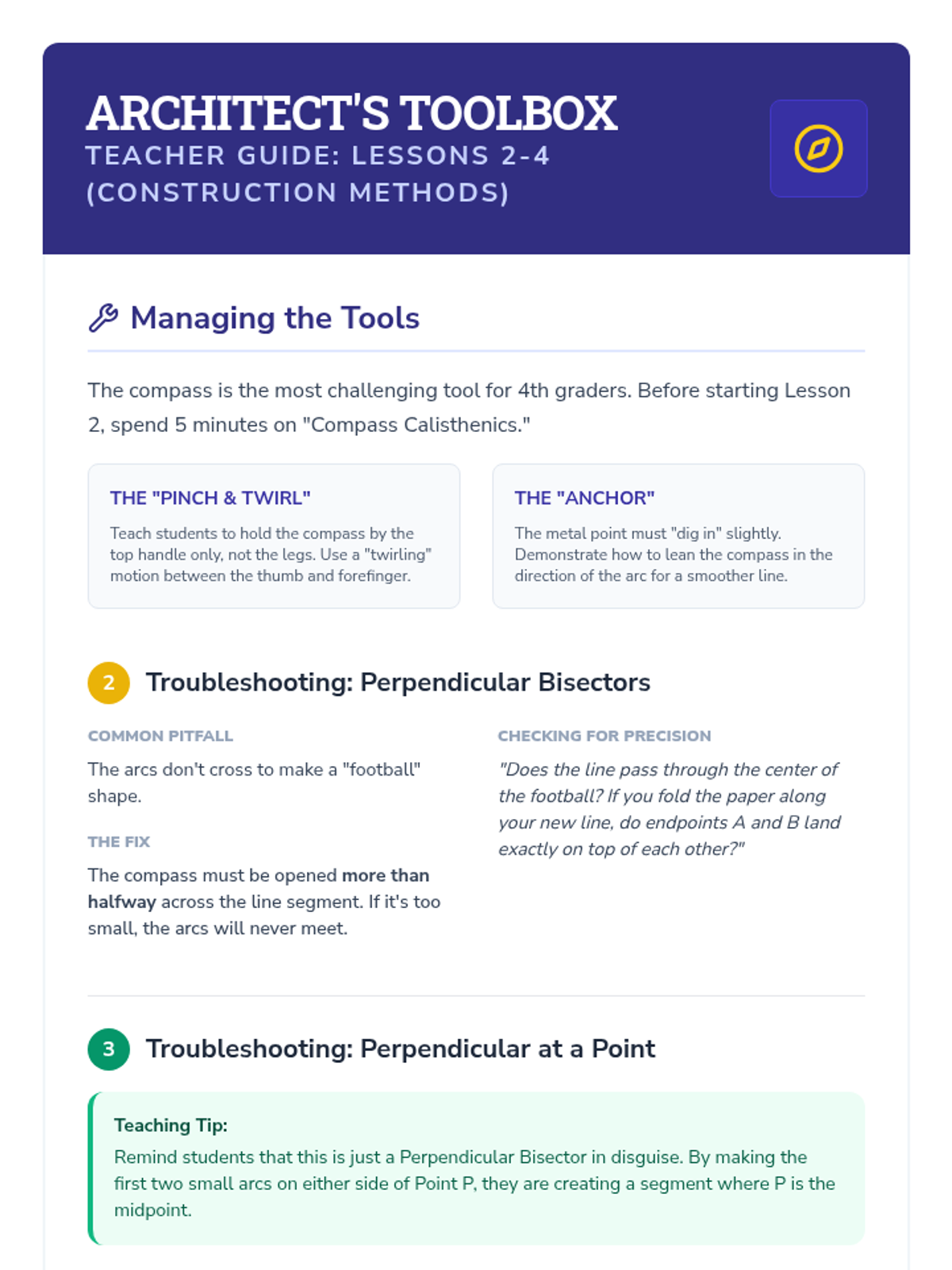
Teacher instructional guide for Lessons 2, 3, and 4, providing troubleshooting tips for compass constructions and strategies for managing student tool use.
Instructional slides for Lesson 3 that guide students through constructing an equilateral triangle by skip-connecting points on a six-point circle.
Instructional slides for Lesson 2 that guide students through constructing a regular hexagon and explain its geometric efficiency.
Final drafting paper for the City Grid project, featuring a pre-marked Town Square point and a subtle grid for guidance.
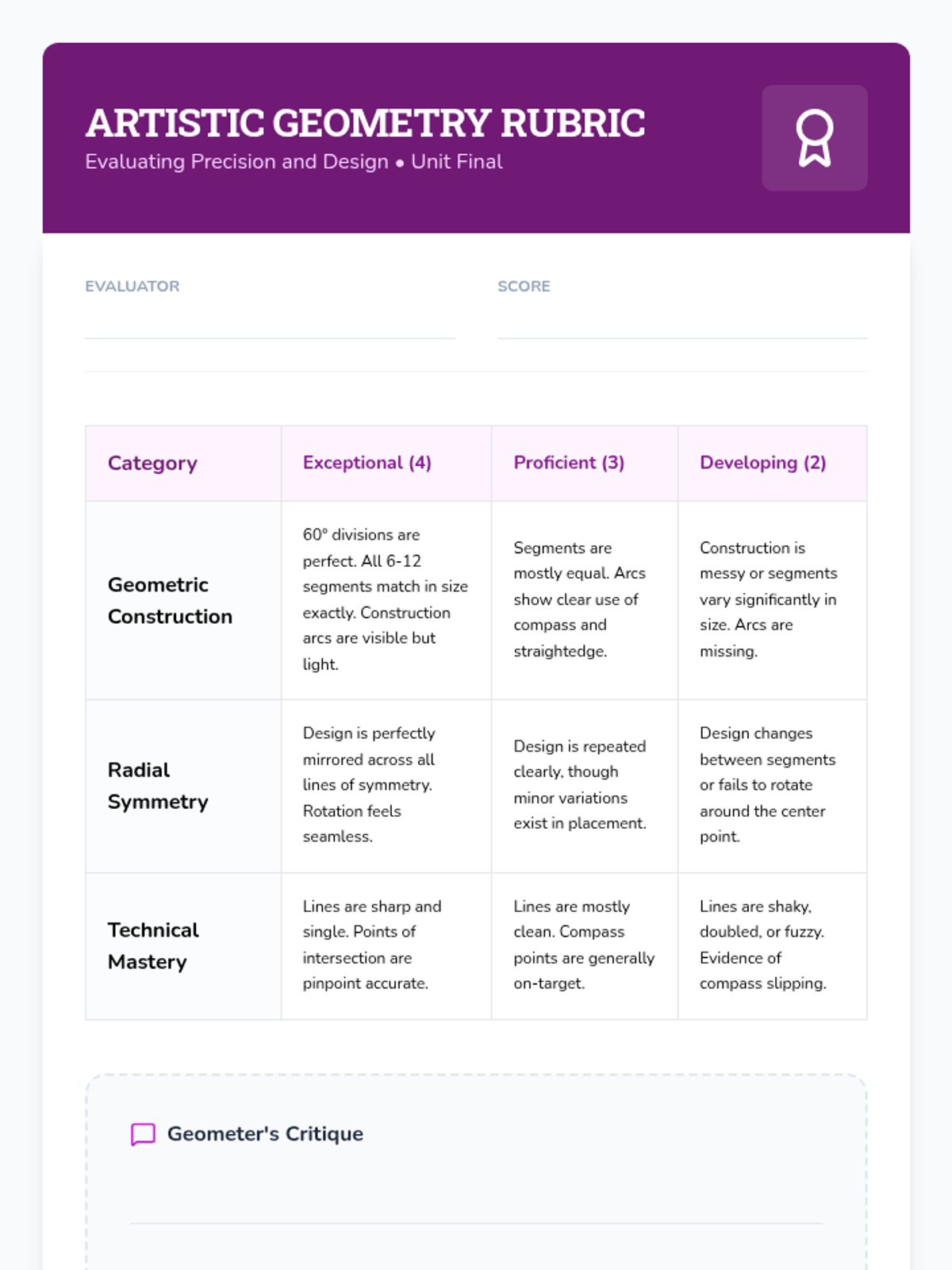
A grading rubric for the final art project, focusing on geometric precision, symmetry, and technical mastery of construction tools.
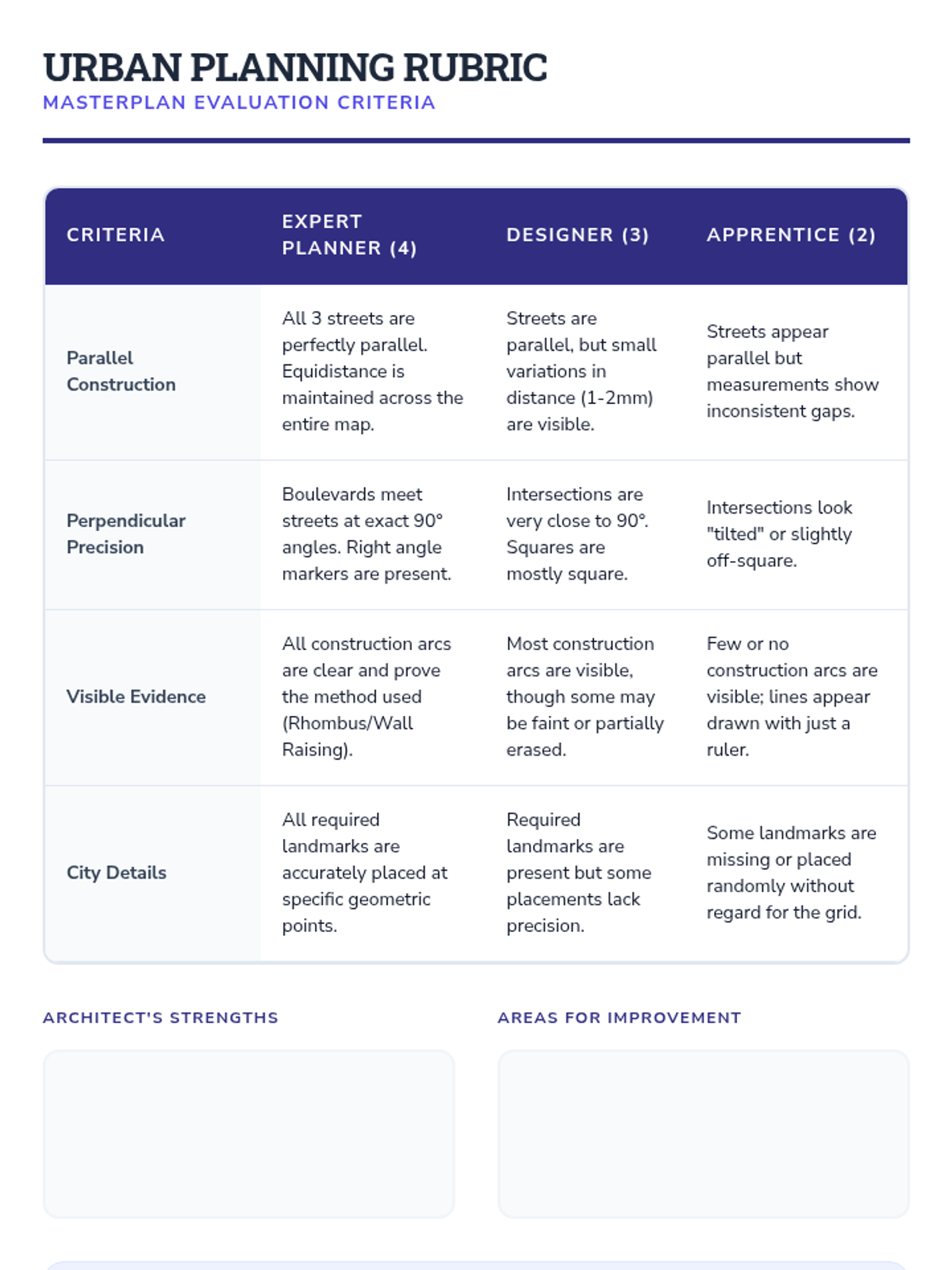
Project rubric for the Grid City Masterplan, evaluating parallel construction, perpendicular precision, and visible construction evidence.
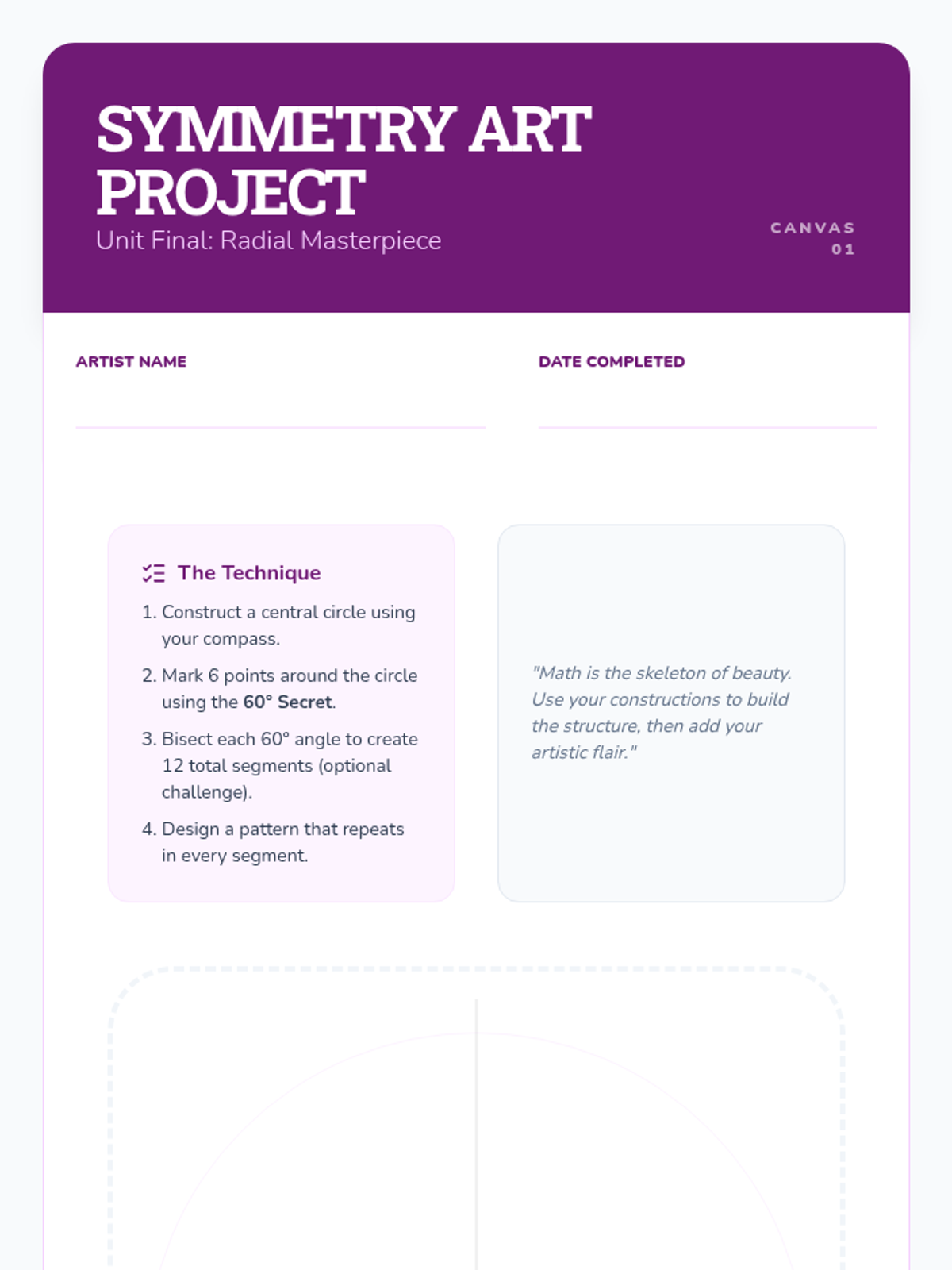
The final project canvas where students apply all their construction skills (copying, bisecting, 60-degree angles) to create a radially symmetrical art piece.
A visually inspiring slide deck that introduces the concept of radial symmetry in art and nature, setting the stage for the final geometric art project.
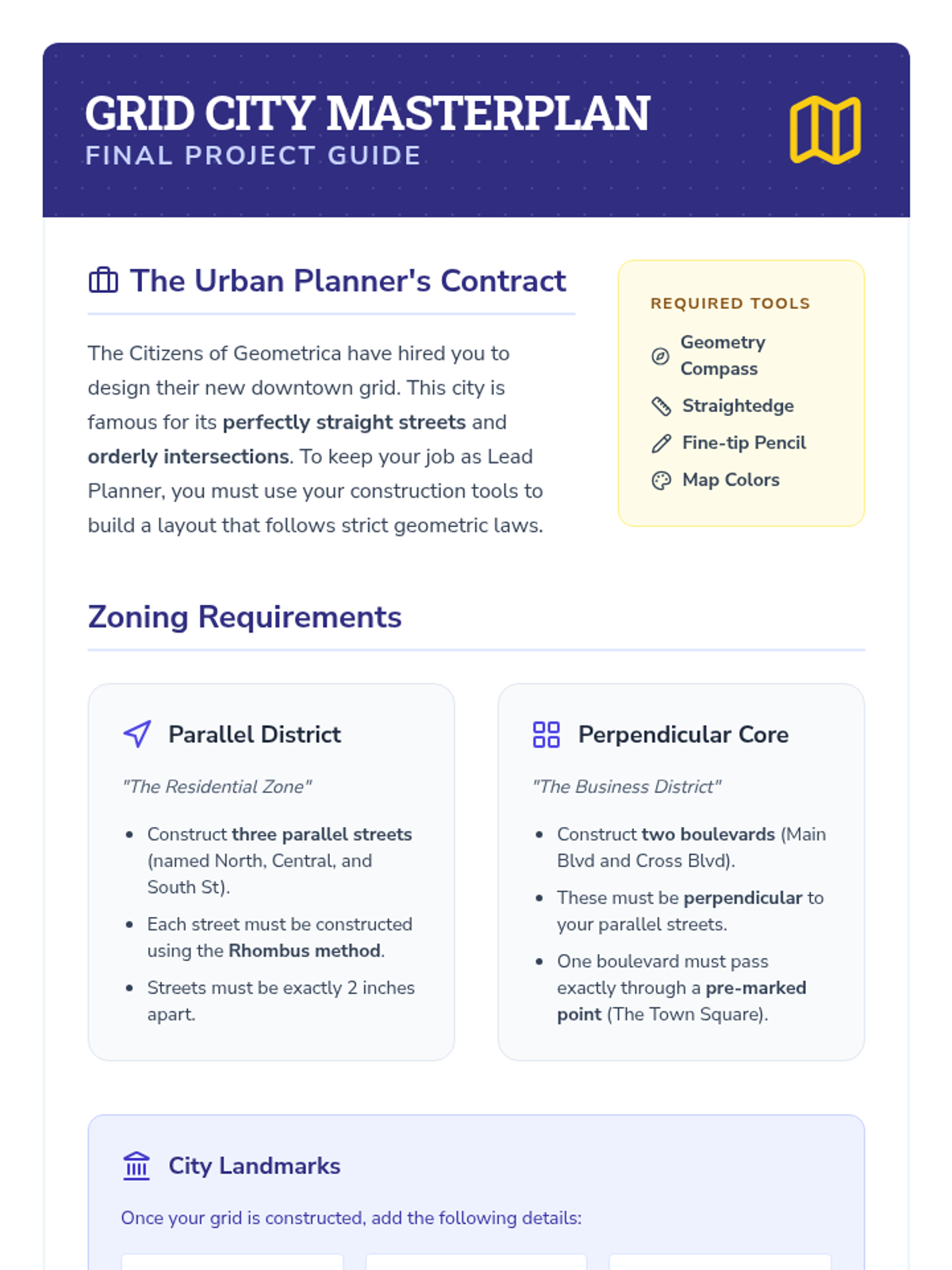
Student project guide for the final city grid design, detailing requirements for parallel and perpendicular construction.
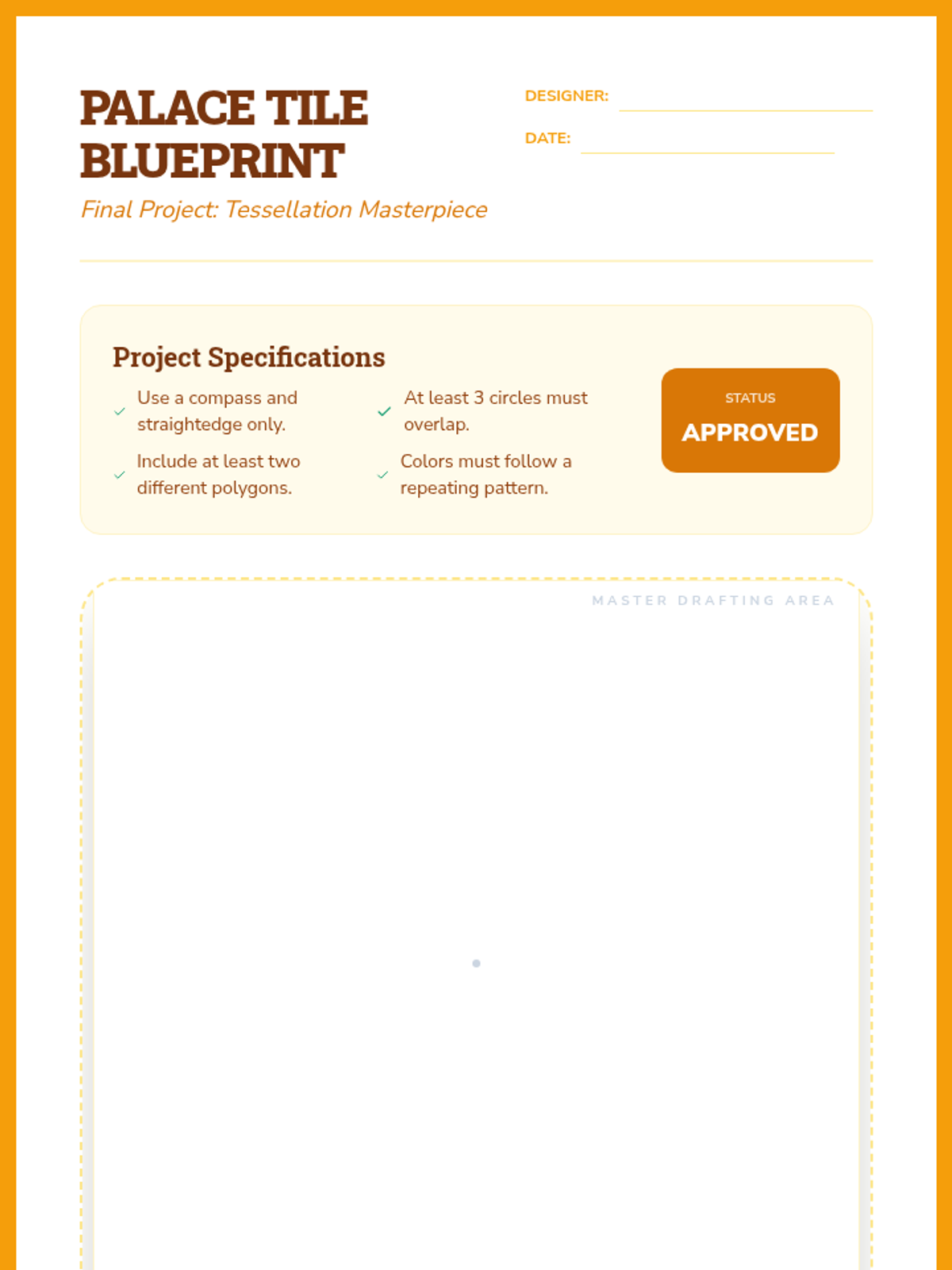
A final project worksheet for Lesson 5 where students apply their construction skills to create a large-scale tessellating tile pattern and reflect on the geometric properties used.
A visual presentation for the final assessment, outlining goals, rubric, and precision drawing tips for students.
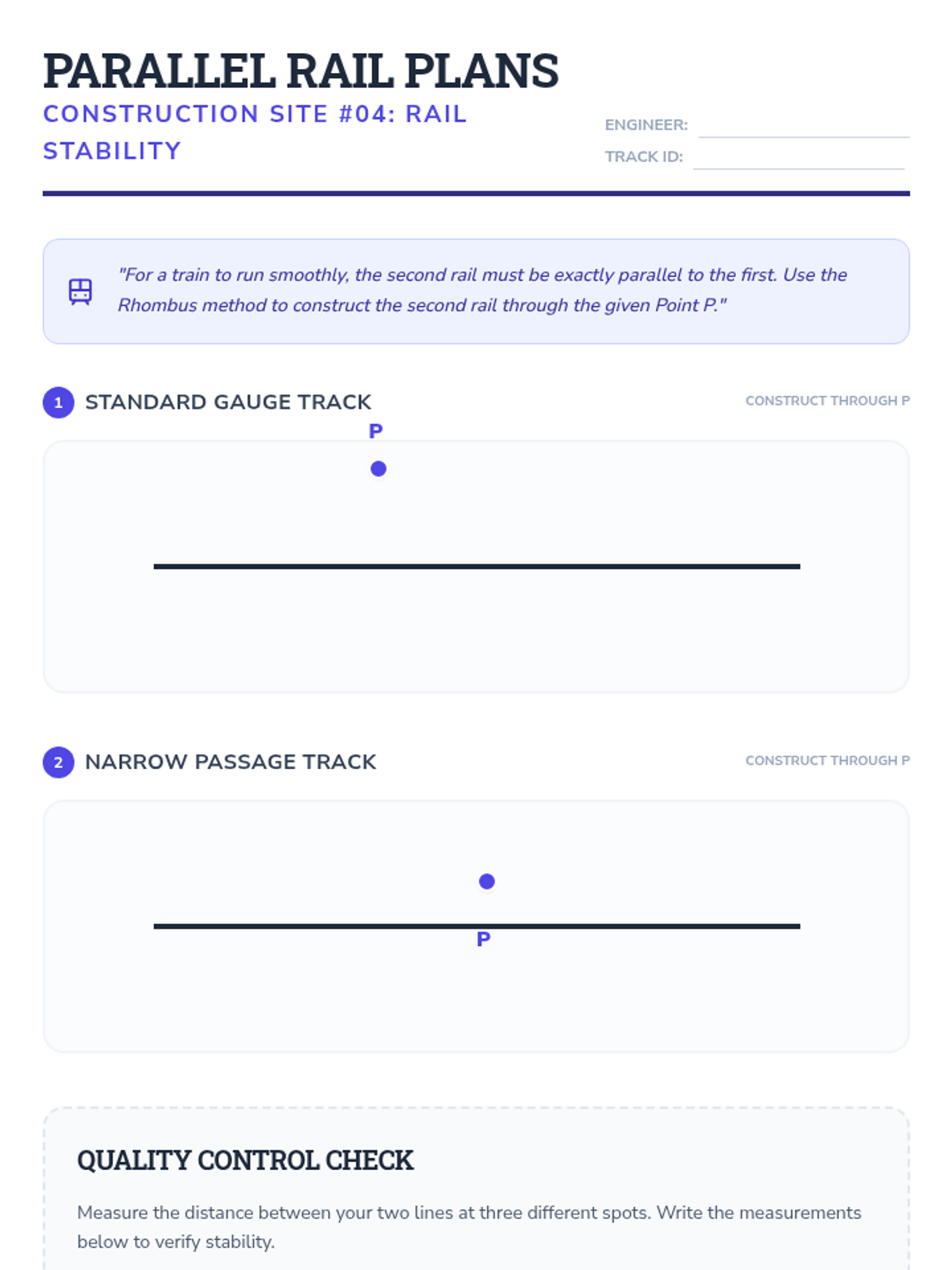
Student practice worksheet for constructing parallel lines and verifying equidistance through measurement.
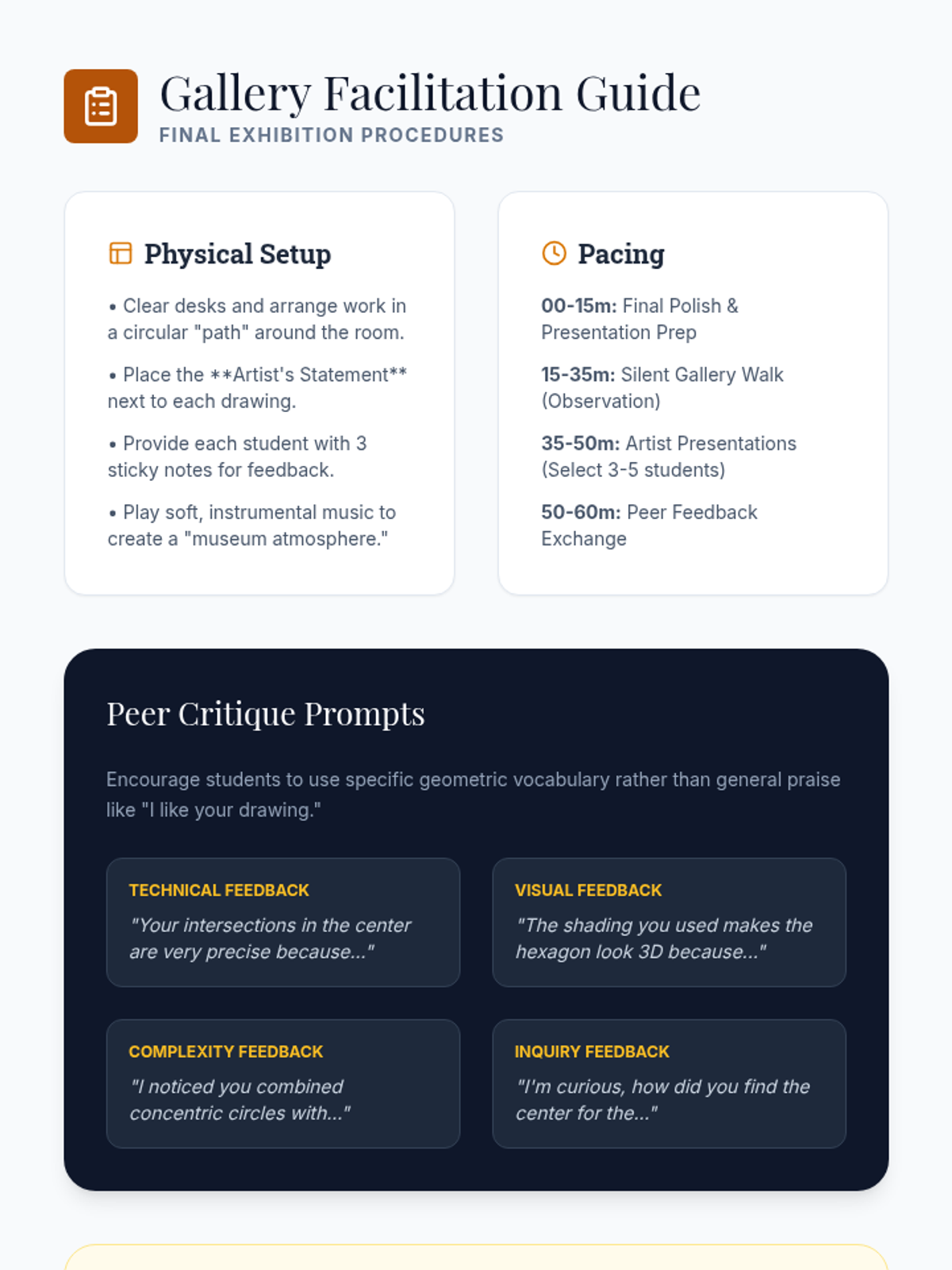
Teacher resource for facilitating the final gallery walk, including setup instructions, feedback prompts, and differentiation strategies.
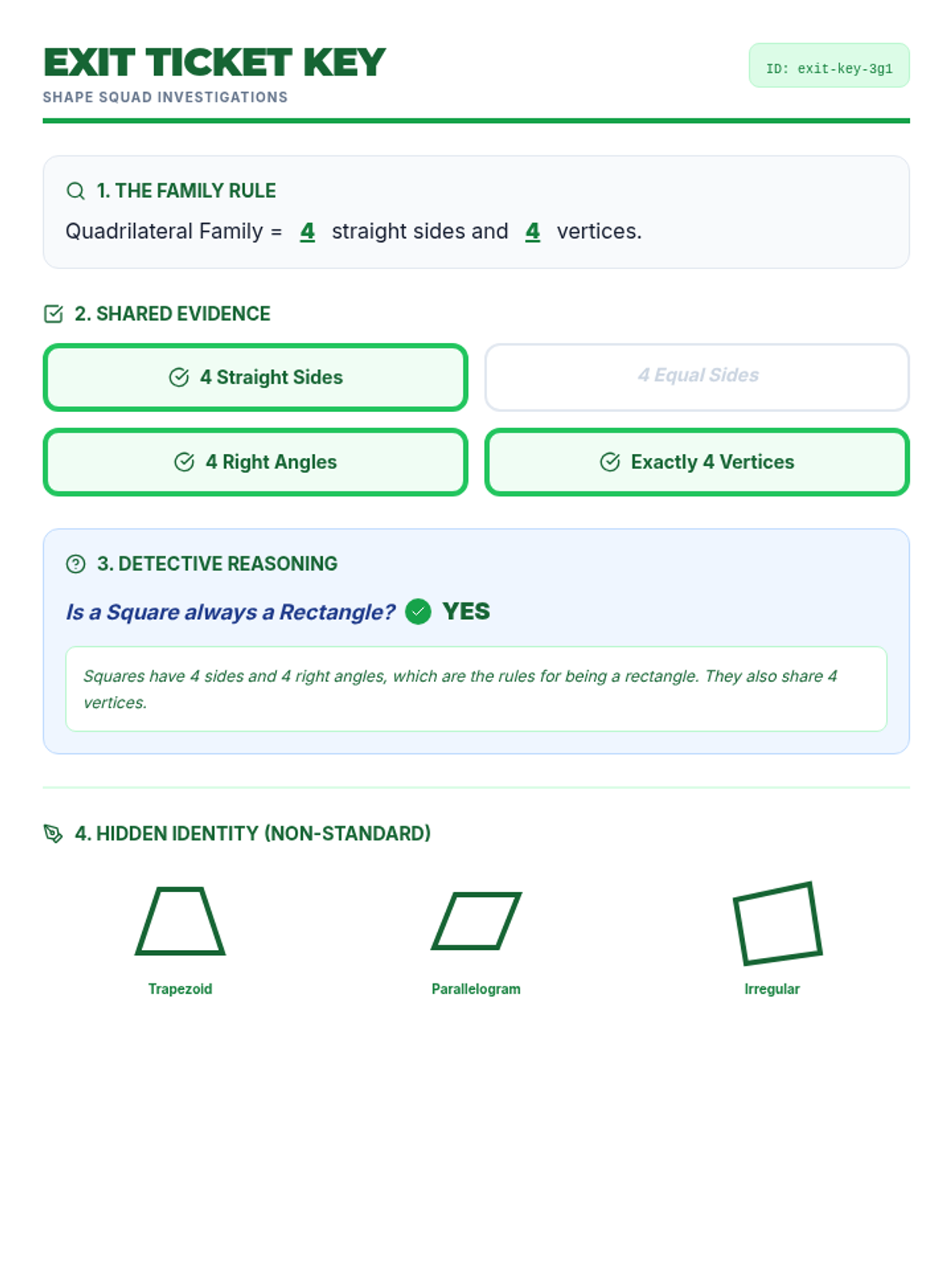
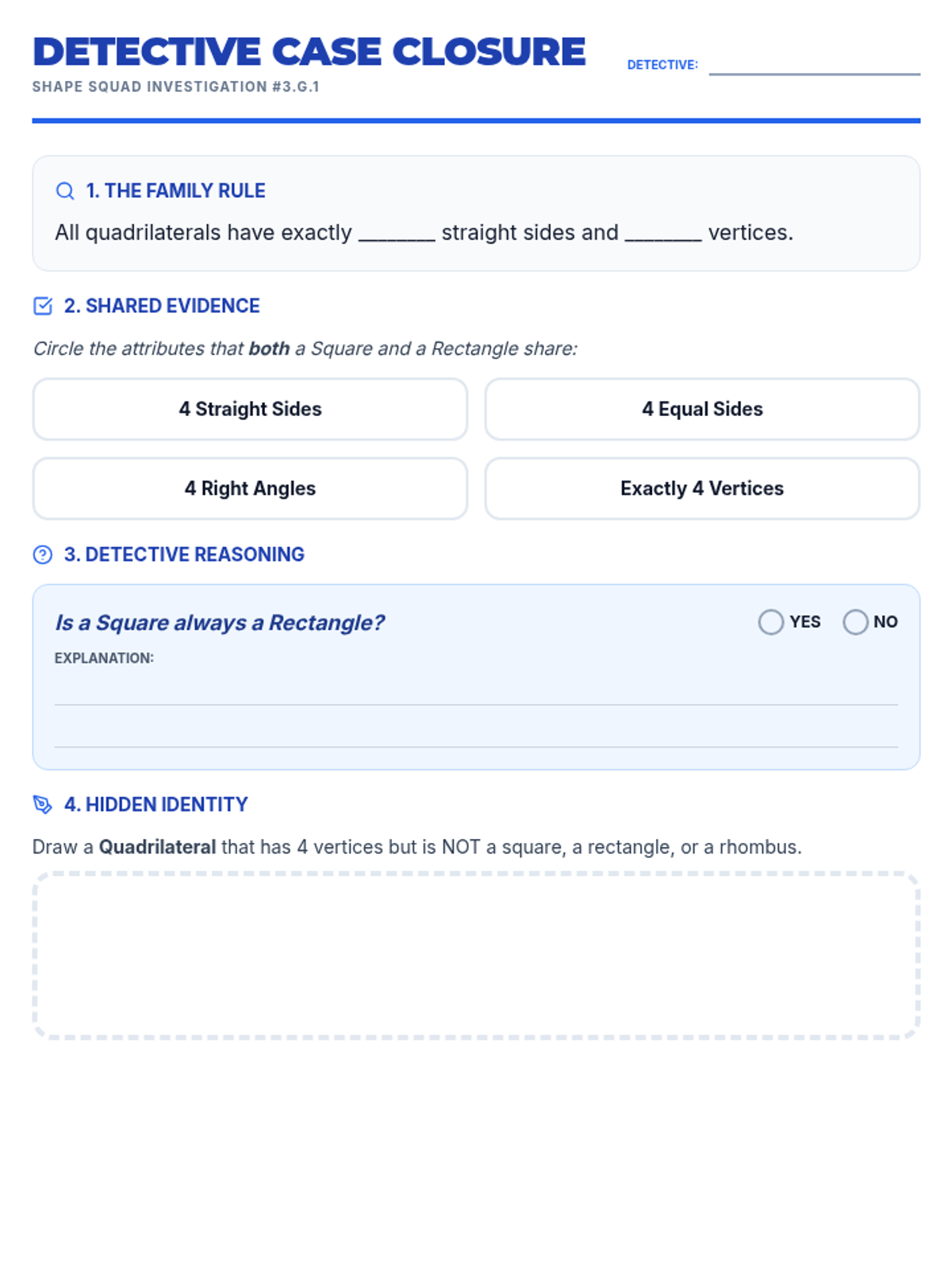
Teacher answer key for the Shape Squad Exit Ticket, including sample explanations and drawing examples. Now includes vertices.
A clean, focused exit ticket for students to demonstrate their understanding of quadrilateral attributes (including vertices), shared categories, and non-standard examples.
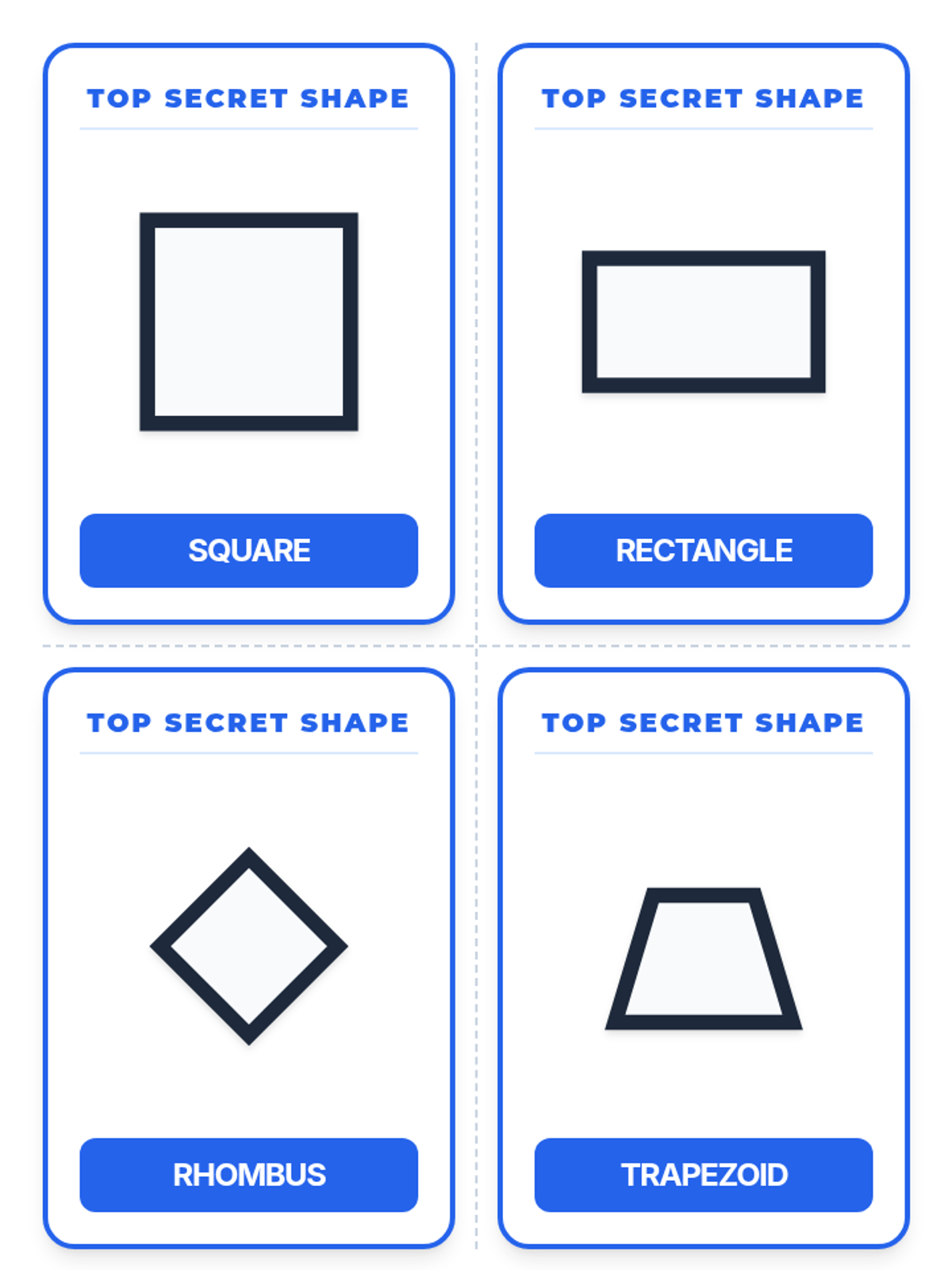
A set of printable shape cards for a Headbands-style guessing game, featuring various quadrilaterals and non-quadrilaterals. Includes a student question guide updated to include vertex terminology.
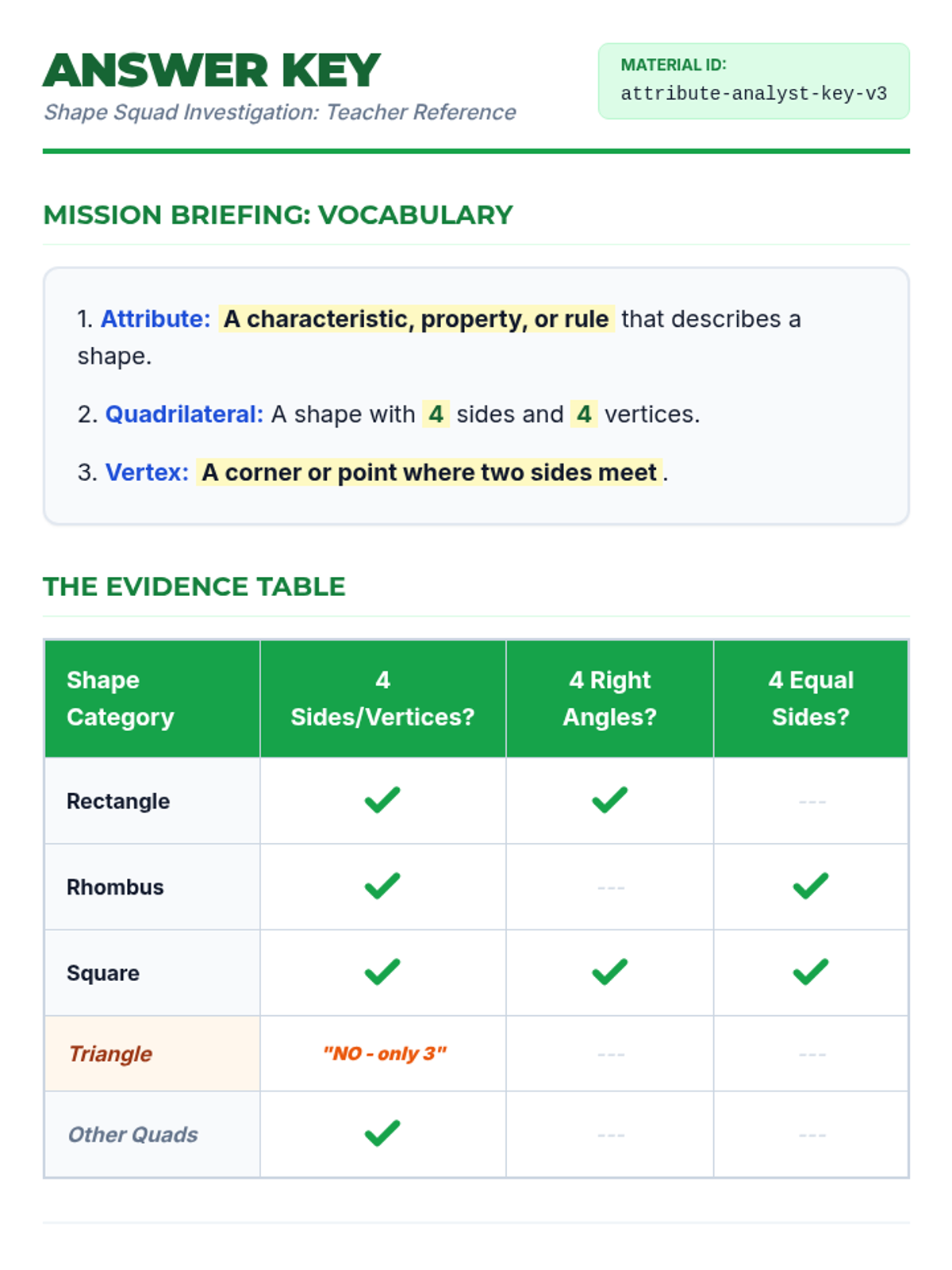
Answer key for the Attribute Analyst Sheet. Includes correct attribute markings for quadrilaterals and triangles, and provides a clear pedagogical explanation for the square-rectangle relationship. Updated with vertex info.
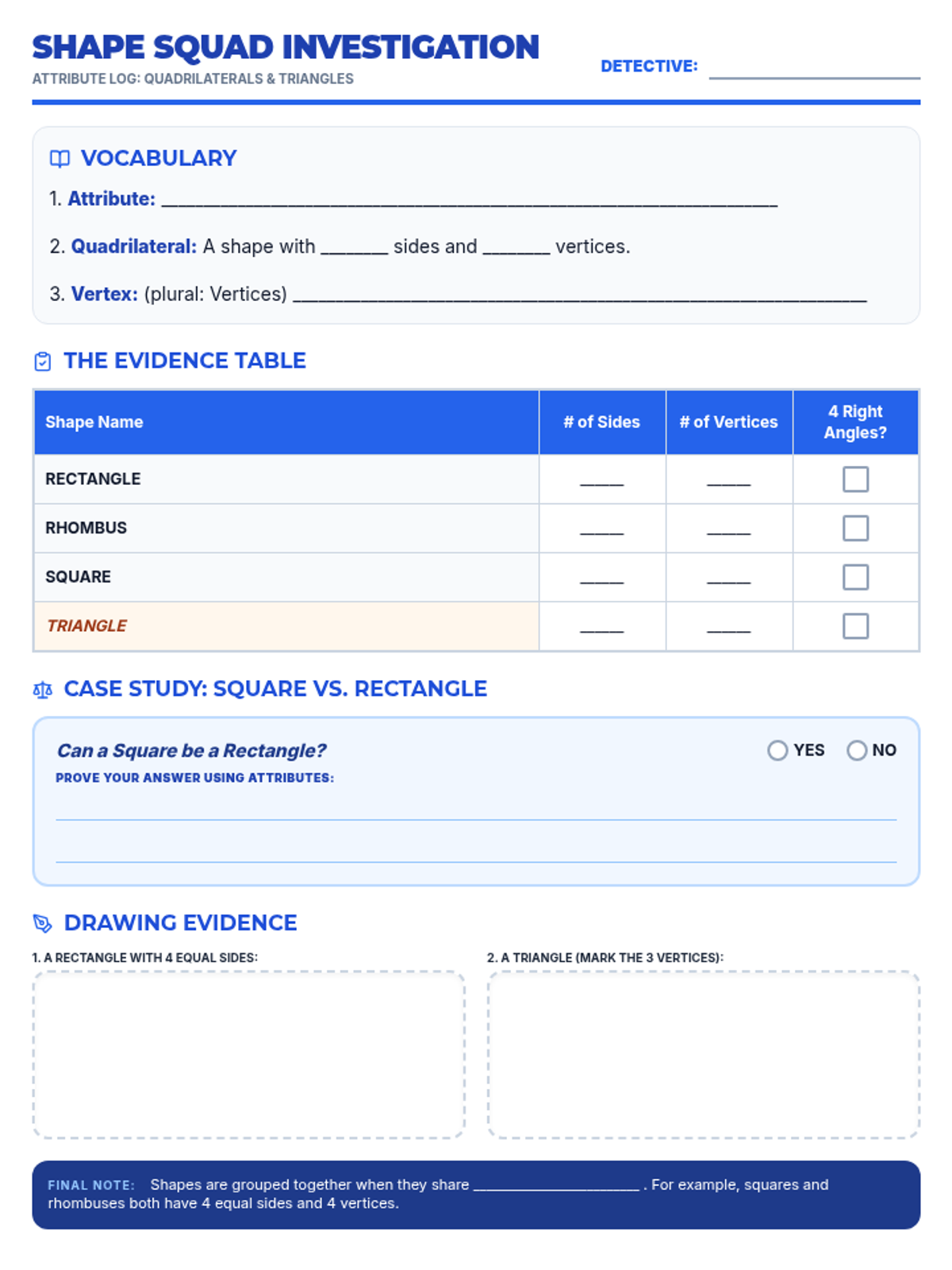
A guided recording sheet for students to document quadrilateral and triangle attributes, including vertices. Features a "Case Study" on the square-rectangle relationship and practice drawing shapes. Now refined for single-page printing.
A visual slide deck introducing the concept of attributes and the quadrilateral family, including specific subcategories like squares, rectangles, and rhombuses. Includes interactive blank tables, a "Square vs Rectangle" debate slide, and a triangle investigation. Now updated with information about vertices.
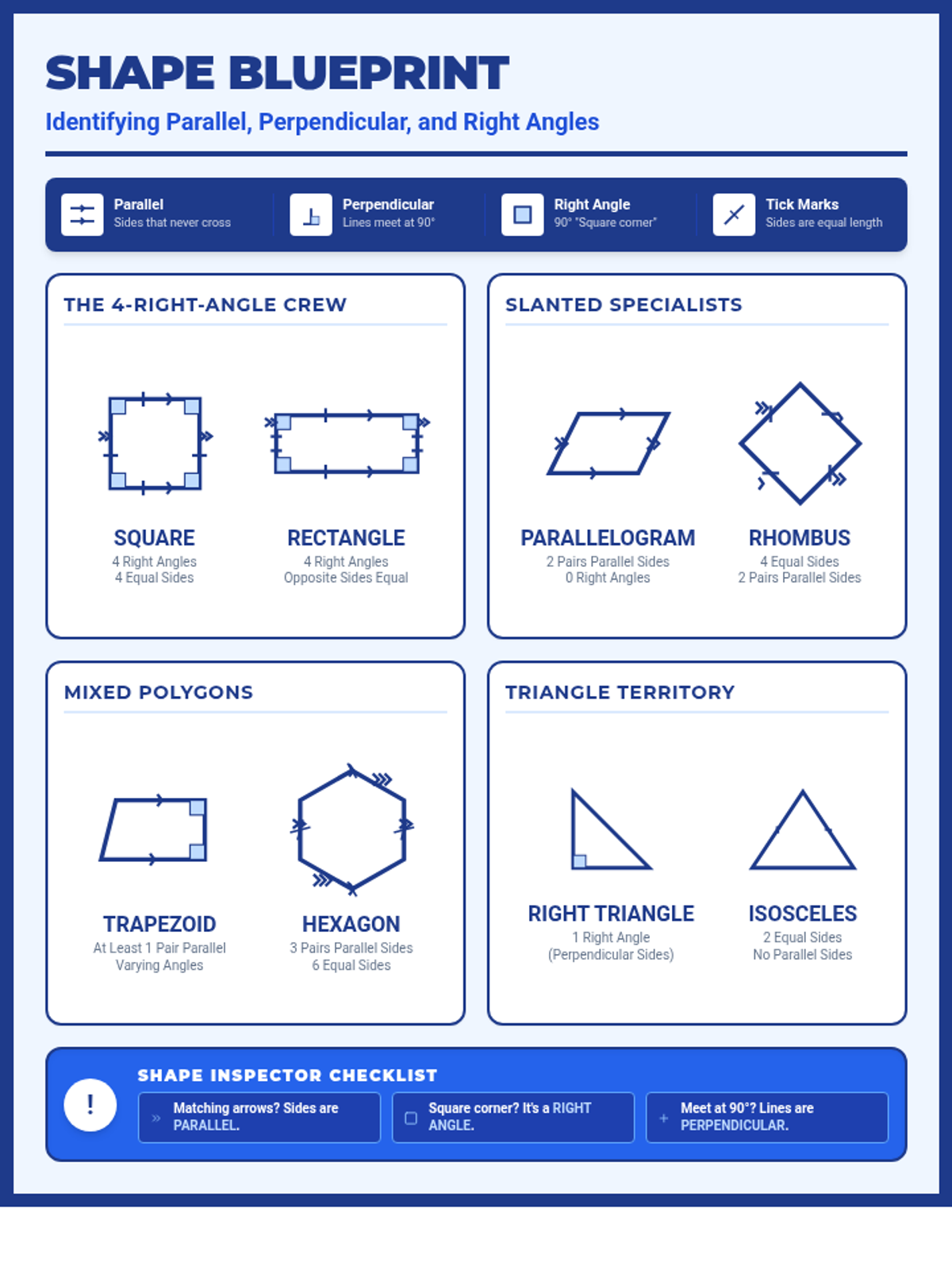
A comprehensive 2D figures anchor chart styled as a technical blueprint. It features squares, rectangles, parallelograms, rhombuses, trapezoids, hexagons, and triangles, clearly marking parallel sides, perpendicular lines, and right angles with geometric symbols and concise definitions.
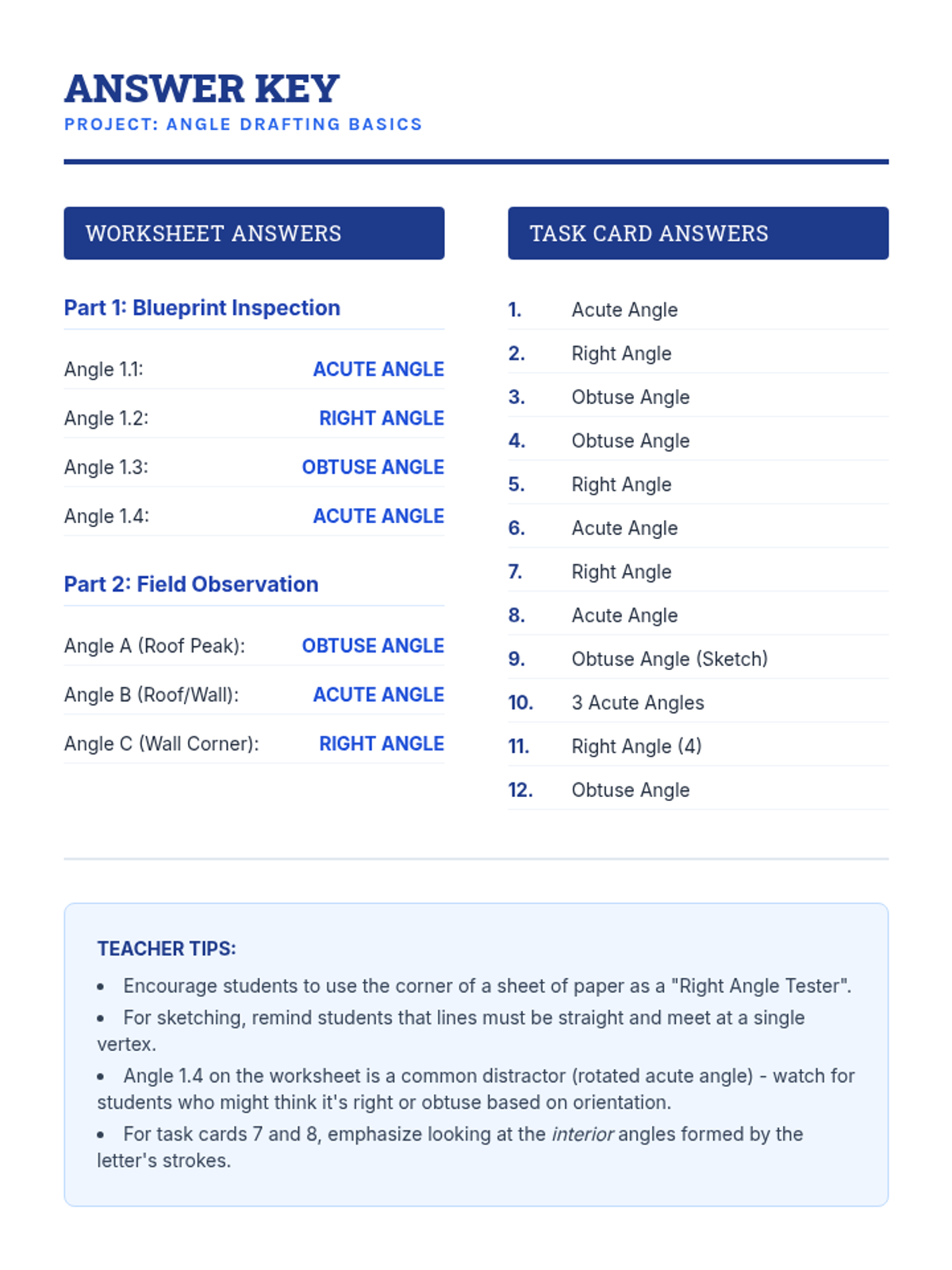
Answer key for the Angle Drafting worksheet and task cards, providing solutions and teaching tips. Revised for better formatting and consistency.
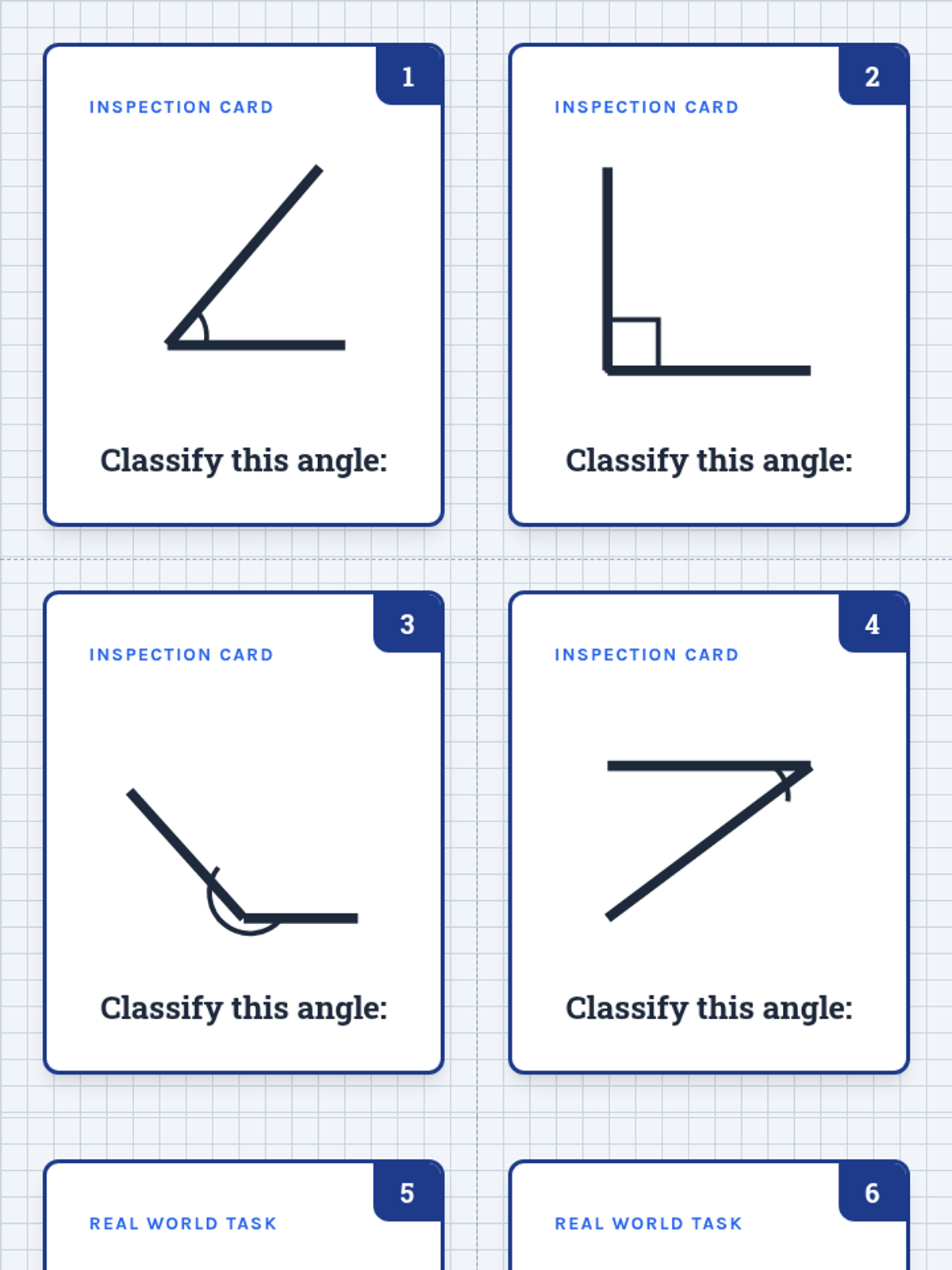
A set of 12 blueprint-themed task cards for small group practice. Includes visual identification, real-world scenarios, and shape analysis. Revised for better page layout and card clarity.
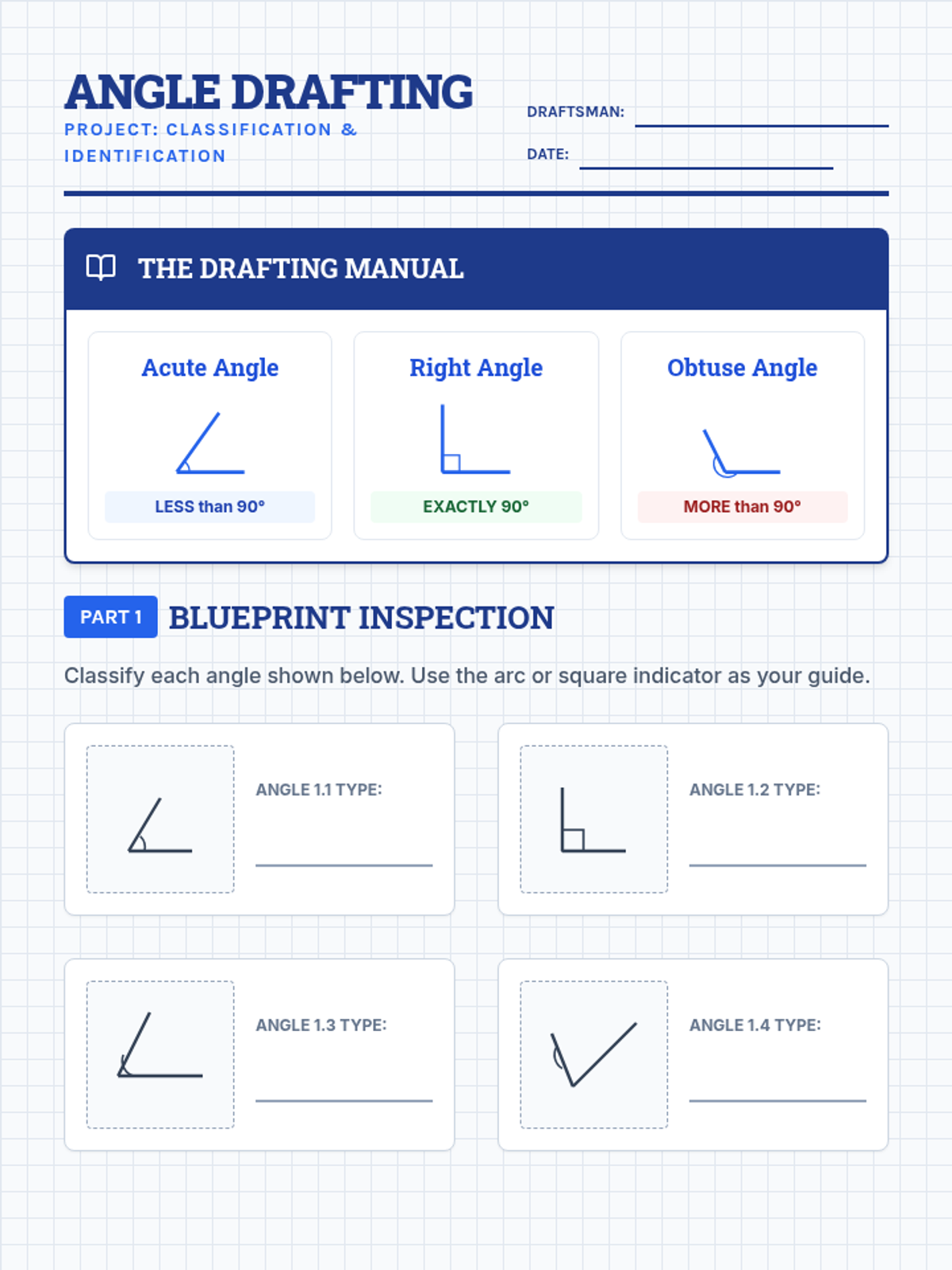
A blueprint-themed worksheet for identifying and sketching acute, obtuse, and right angles. Features technical illustrations, a drafting manual reference section, and real-world application problems. Revised to fix page breaks, contrast issues, and illustration clarity.
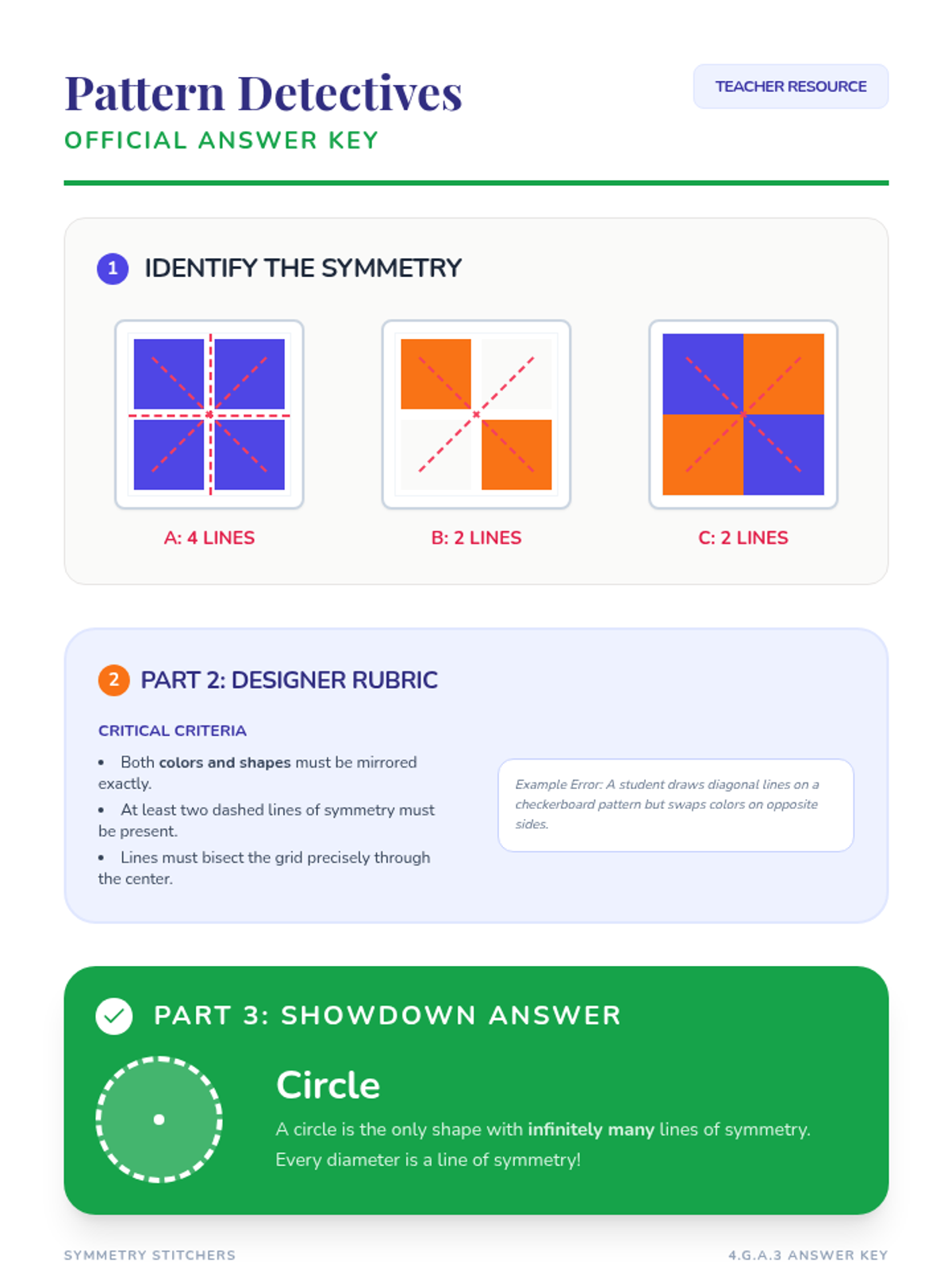
An answer key for the Pattern Detectives worksheet, providing the correct number and location of symmetry lines for the quilt blocks and scoring criteria for the creative section.
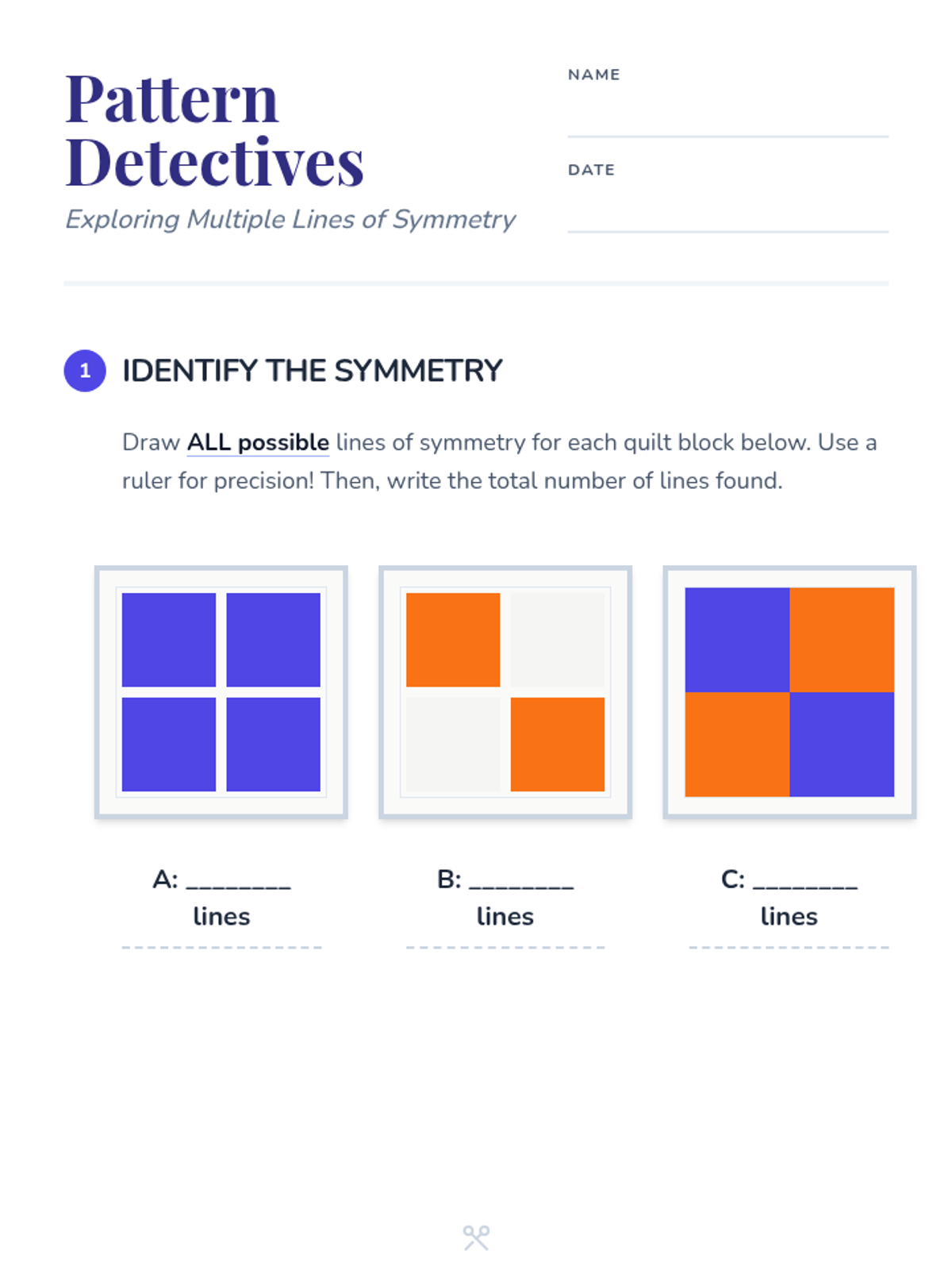
A student worksheet for practicing the identification of multiple lines of symmetry in quilt blocks and creating an original symmetric design using a 4x4 grid.
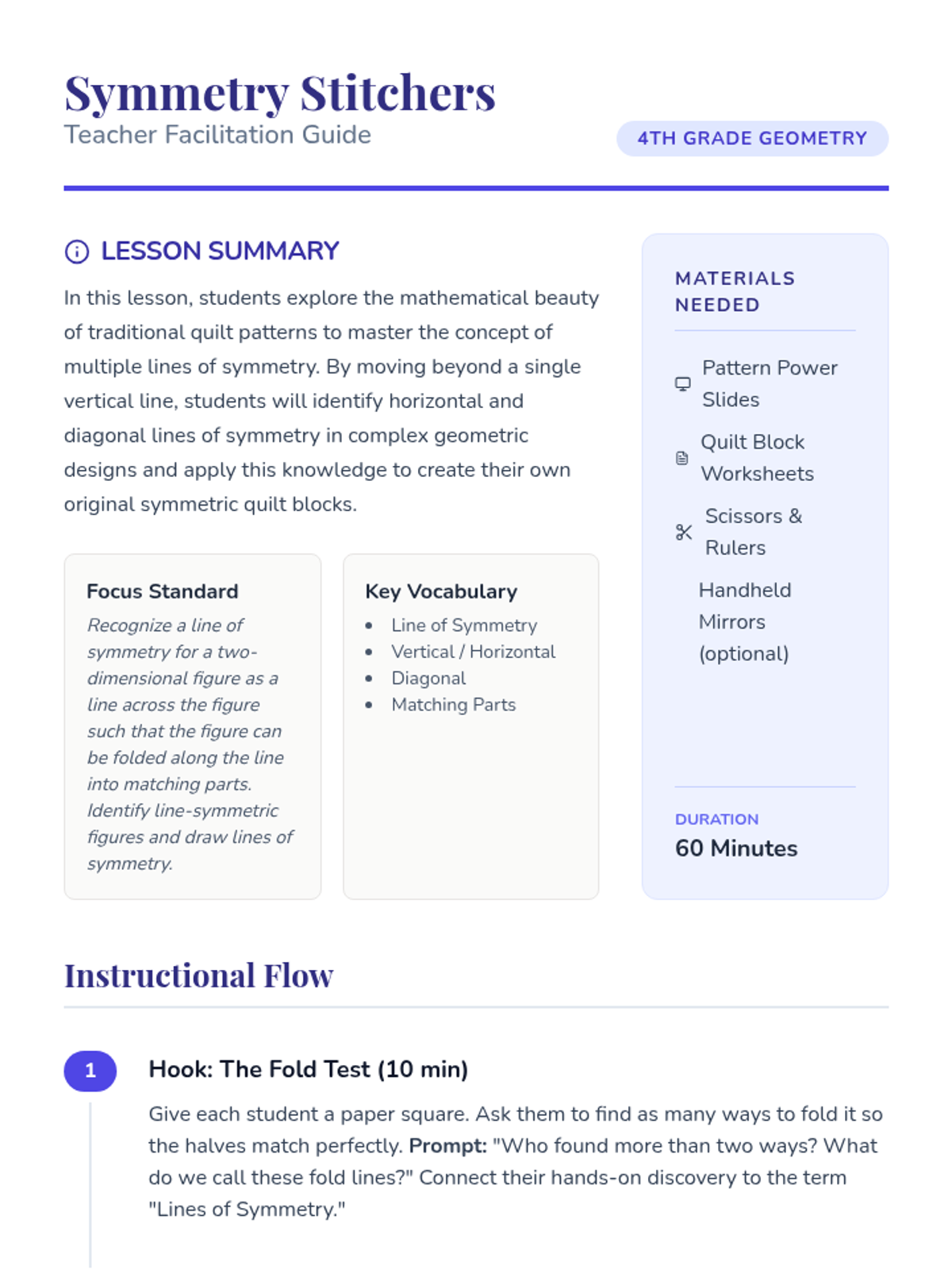
A comprehensive teacher guide for the Symmetry Stitchers lesson, including instructional steps, discussion prompts, and differentiation strategies for teaching multiple lines of symmetry using quilt patterns.
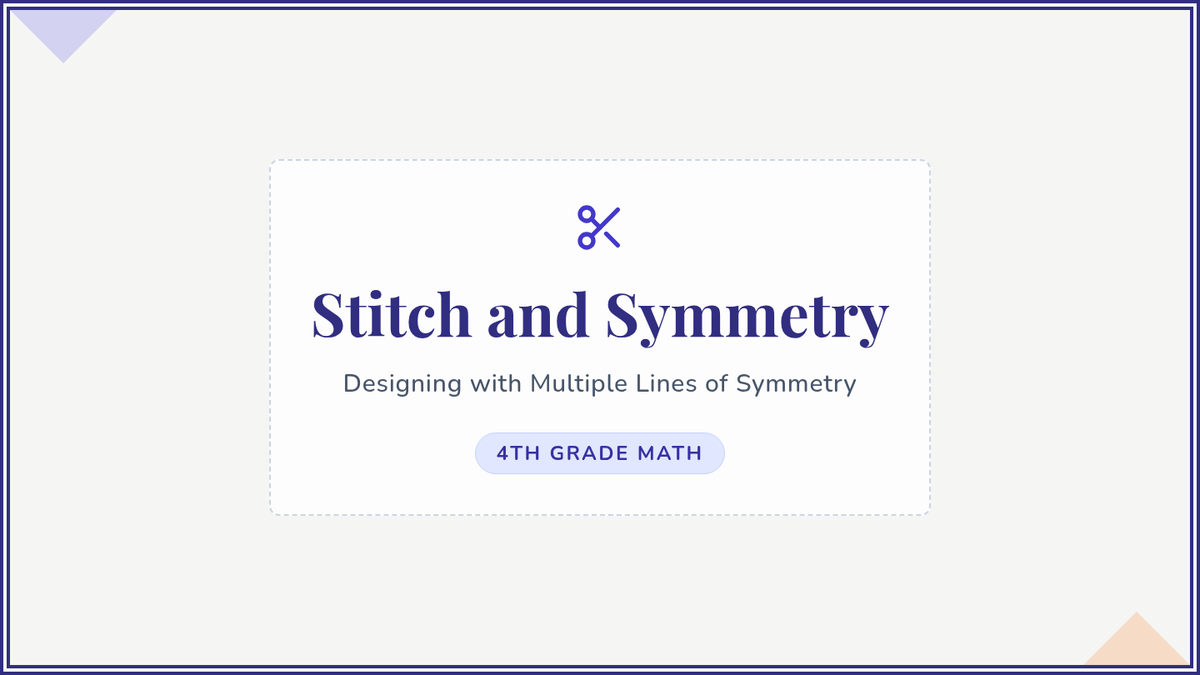
A visually engaging slide deck designed for a 4th-grade geometry lesson. It uses a quilting theme to teach students how to identify and create multiple lines of symmetry in geometric shapes and patterns, featuring clear visual examples and a guided creative project.
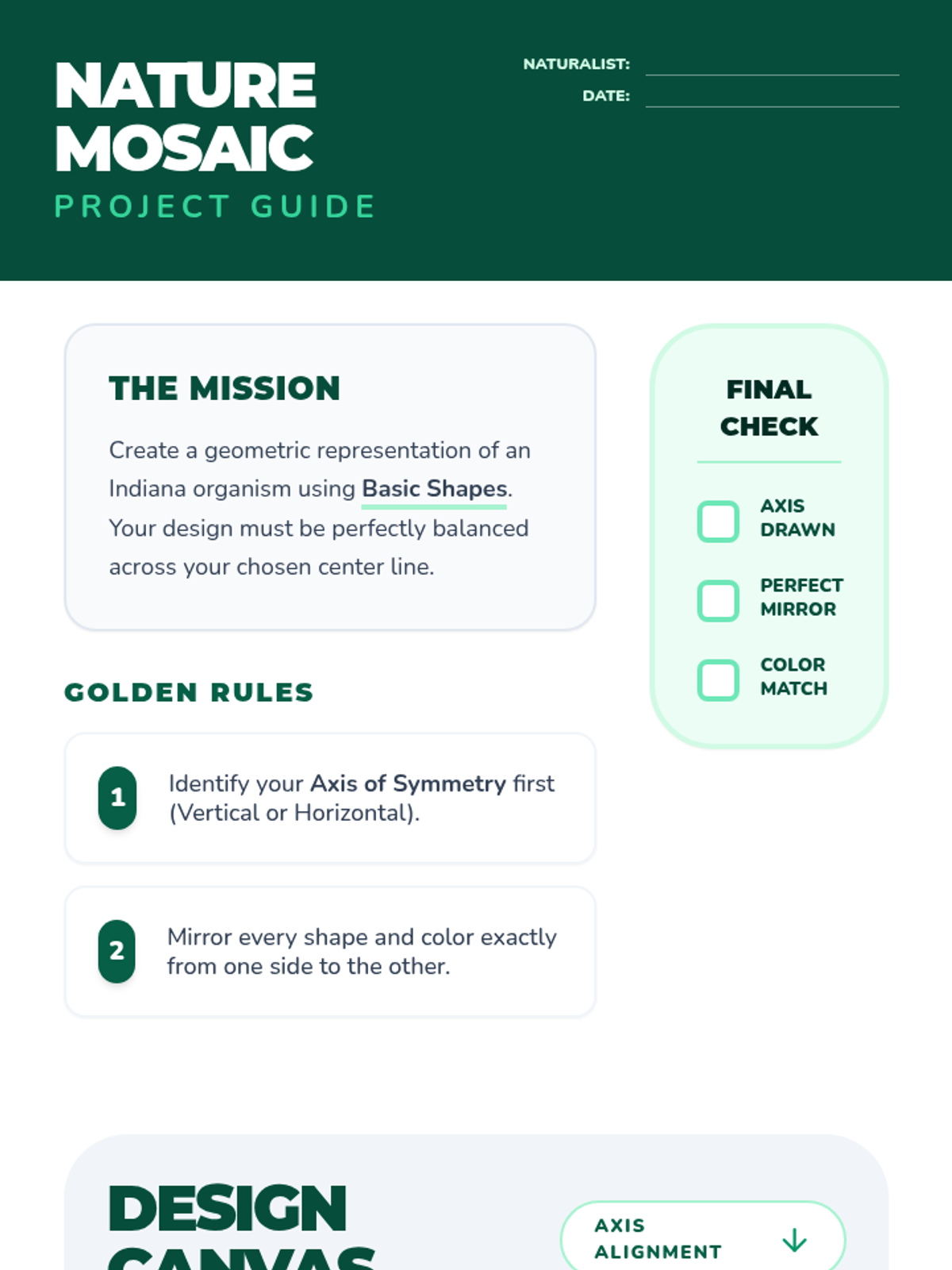
A project guide for students to create geometric nature mosaics. It includes a design canvas with a center line, a checklist for success, and clear instructions for maintaining mathematical balance in their artwork.
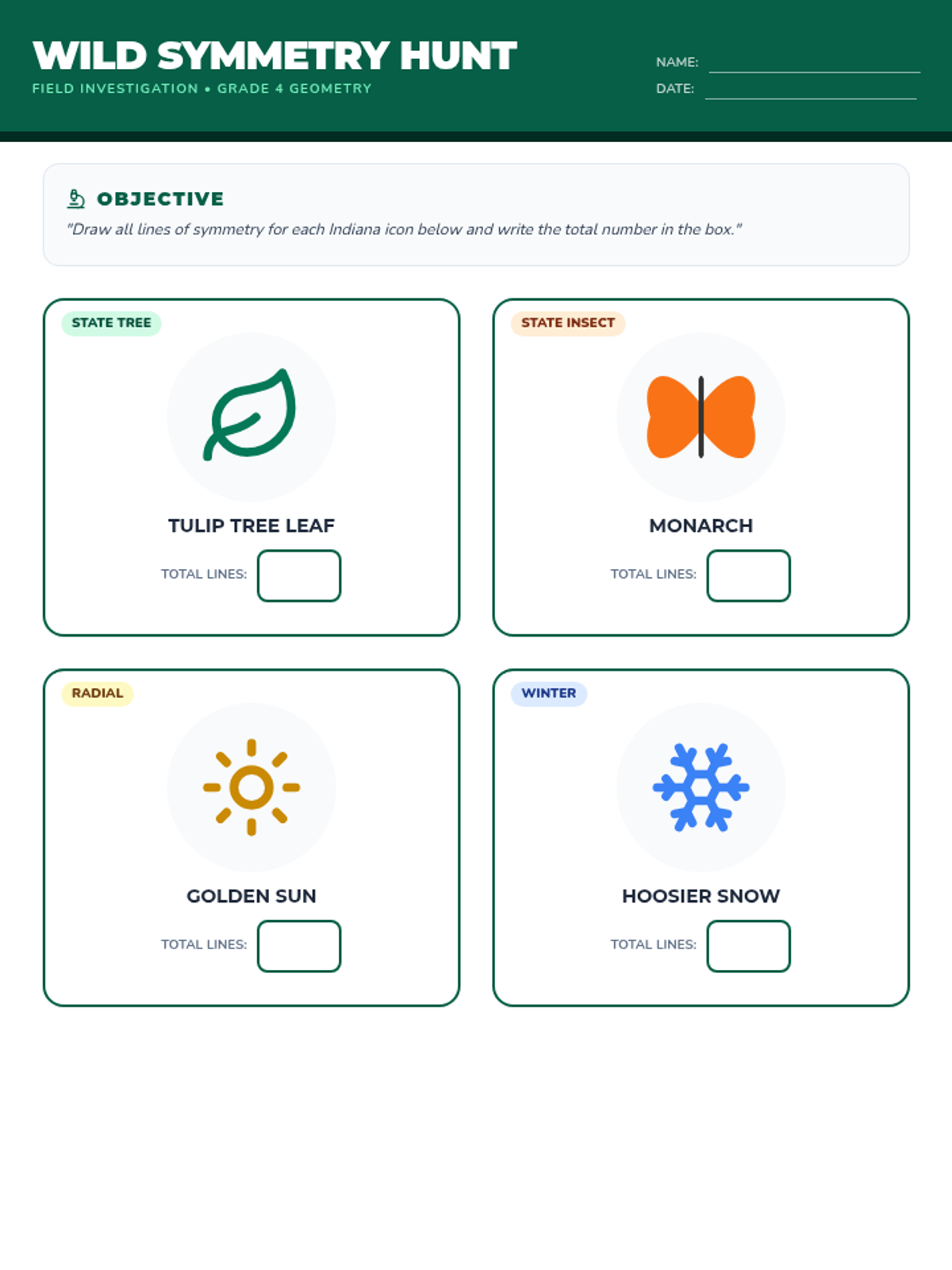
A hands-on student worksheet where fourth graders identify and draw lines of symmetry on Indiana-specific flora and fauna icons, including a drawing challenge to complete a symmetrical feather.
A visually engaging slide deck introducing line symmetry using Indiana icons like the Northern Cardinal and Peony. Includes definitions, visual examples of symmetry lines, and a project call-to-action.
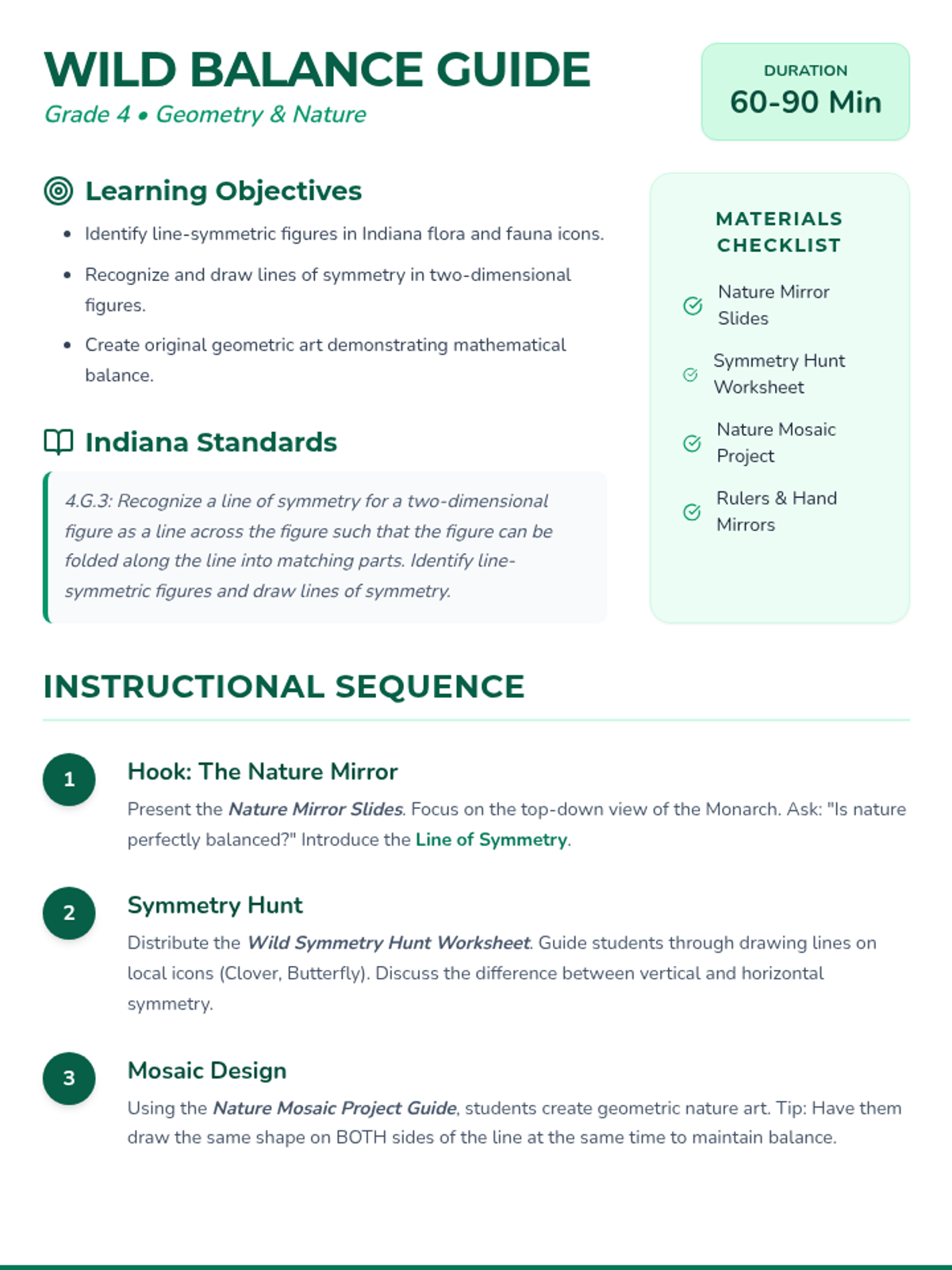
A comprehensive teacher guide for the Wild Balance lesson, including instructional steps, Indiana state standards, vocabulary, and differentiation strategies for teaching symmetry through local nature.
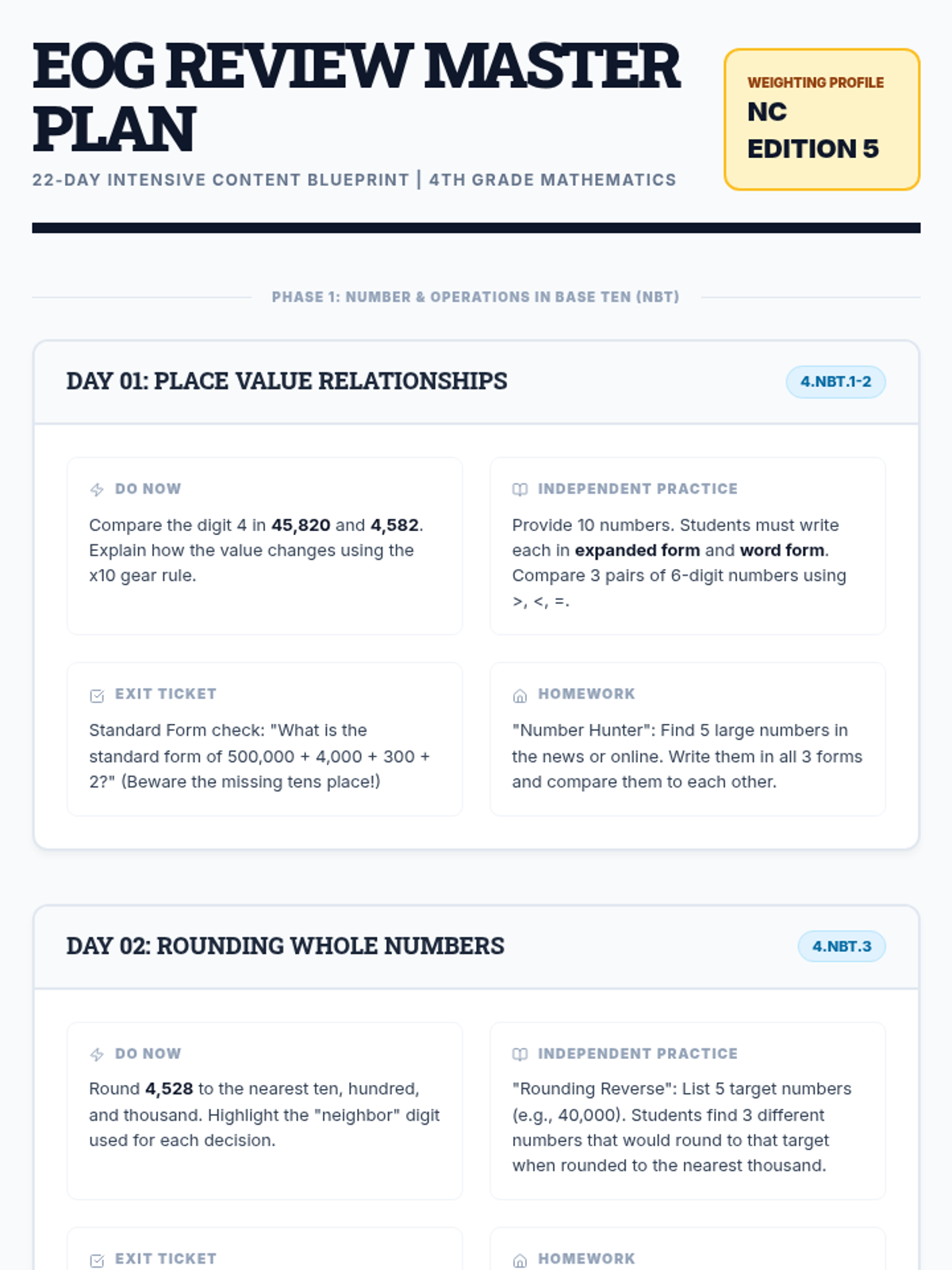
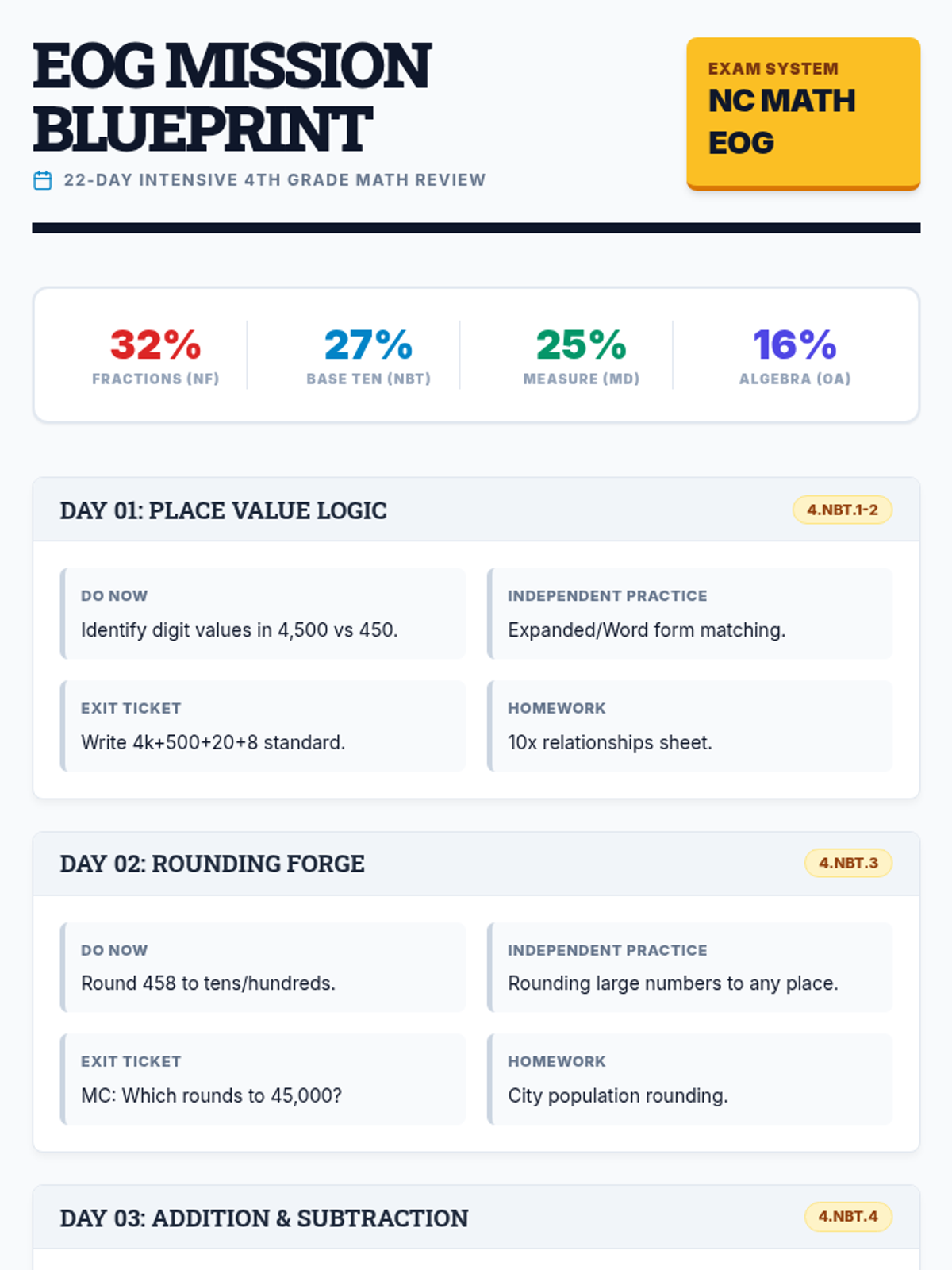
A comprehensive 22-day EOG review plan for 4th-grade math. Fully fleshed out with specific Do Now, Independent Practice, Exit Ticket, and Homework tasks for every single day of the review period. Aligned with NC state weightings for all standards.
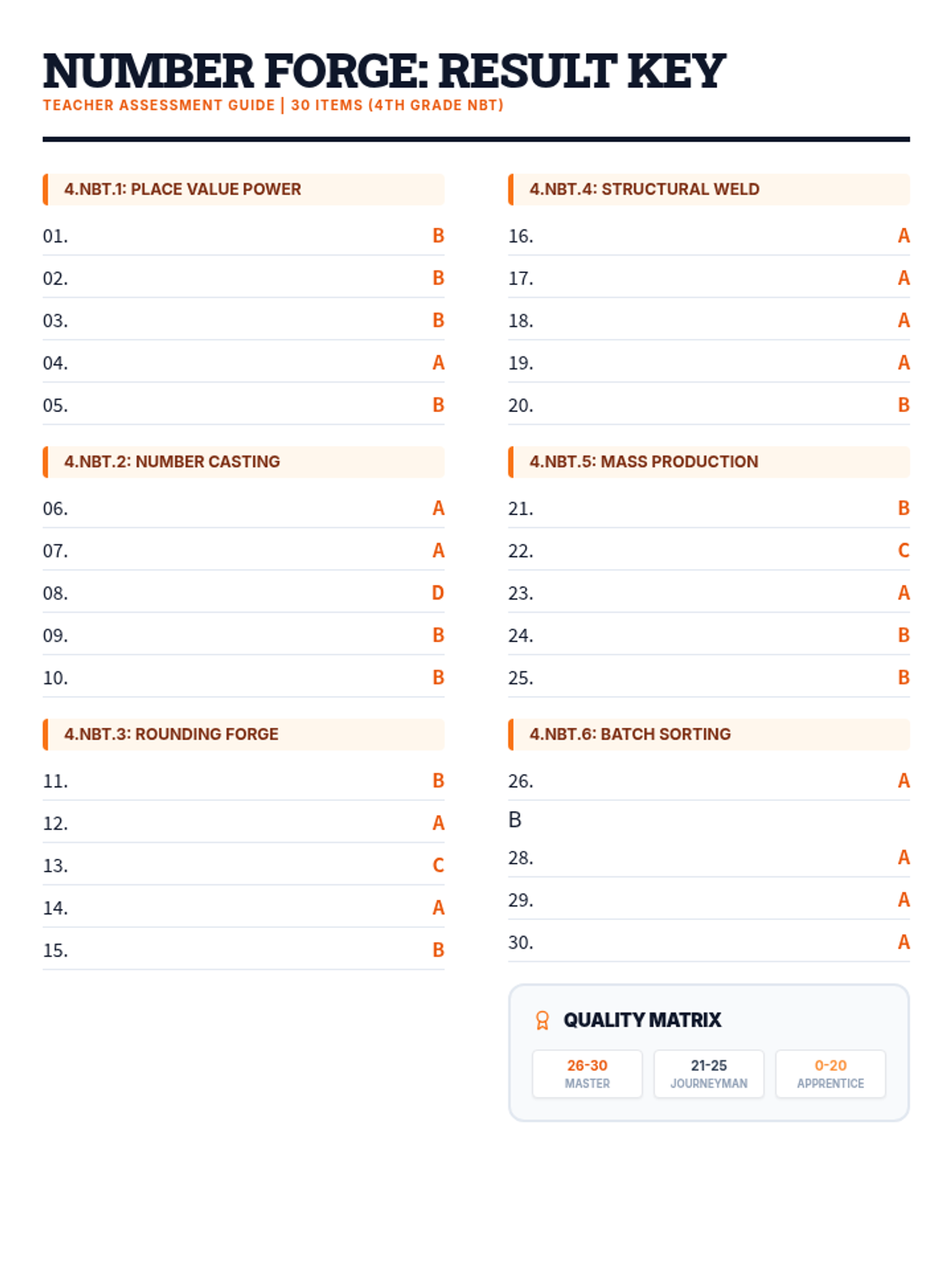
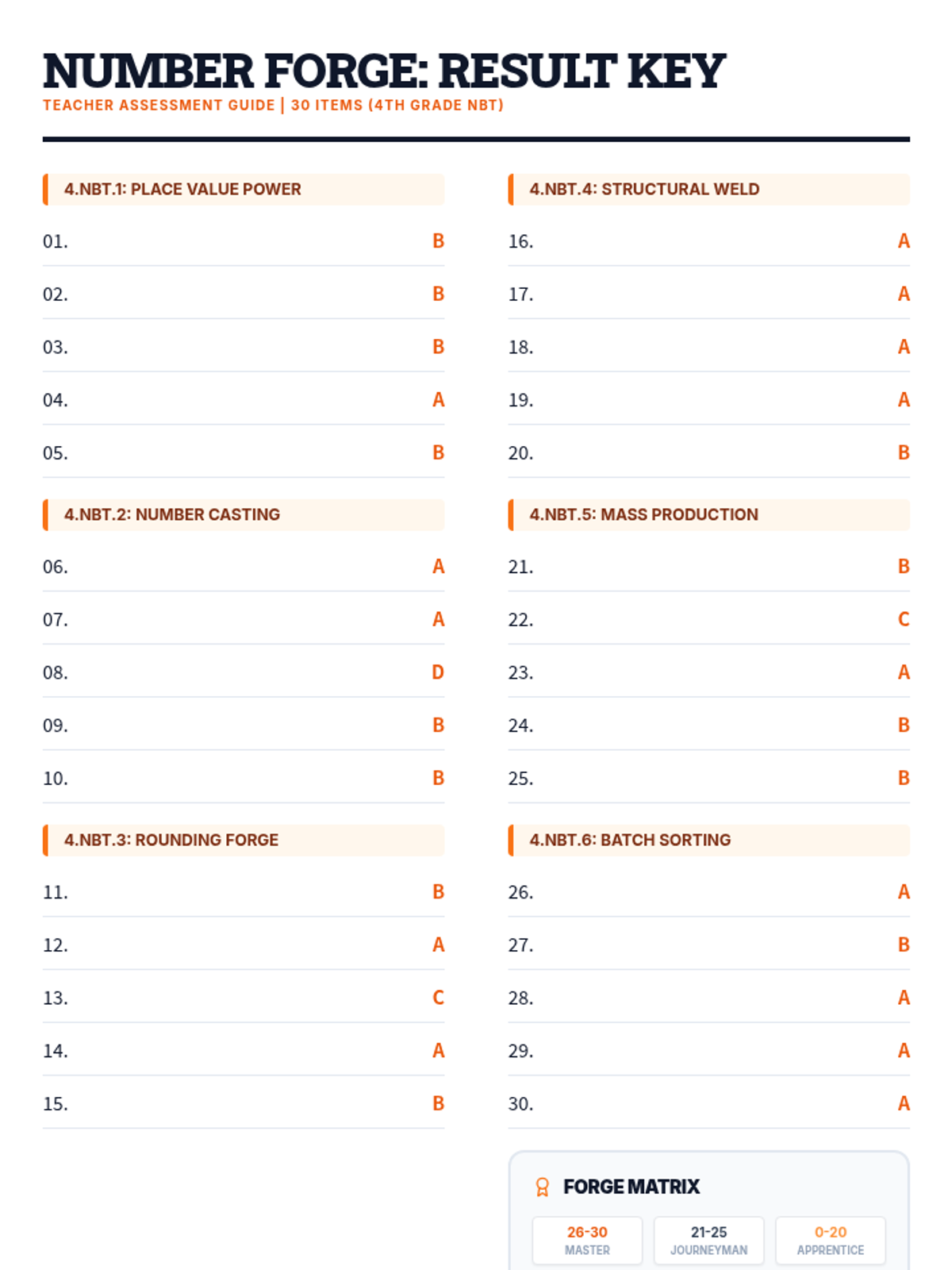
Industrial-themed answer key for the Number Forge 4th Grade math review. Provides categorized answers for all 30 questions and a "Quality Matrix" for scoring student performance. Revised for single-page layout, lighter section headings, and high text contrast.
A comprehensive 22-day EOG review plan for 4th-grade math. Lightened heading backgrounds for ink-efficiency. Each day provides a complete Do Now, Independent Practice, Exit Ticket, and Homework task aligned with NC standard weightings.
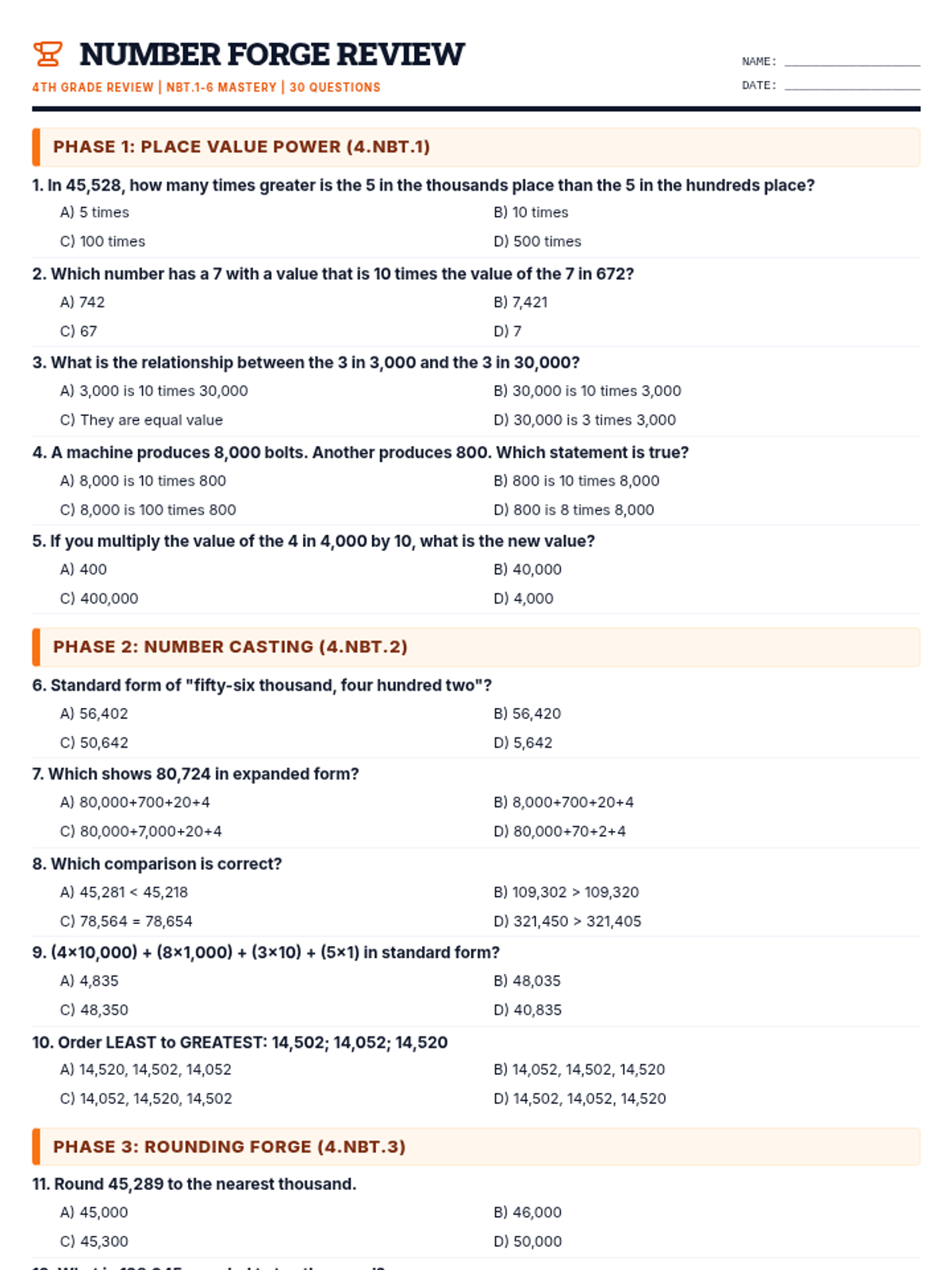
A 30-question industrial-themed 4th grade math review. Features 5 questions per standard (4.NBT.1-6). Optimized for 4 total pages with standardized grid layouts for multiple choice questions and varied work area sizes. Revised for visual consistency, varied answers, and compact pagination. Answer key and cheat sheet are provided as separate materials in the lesson. Revised with lighter heading backgrounds for ink-efficiency.
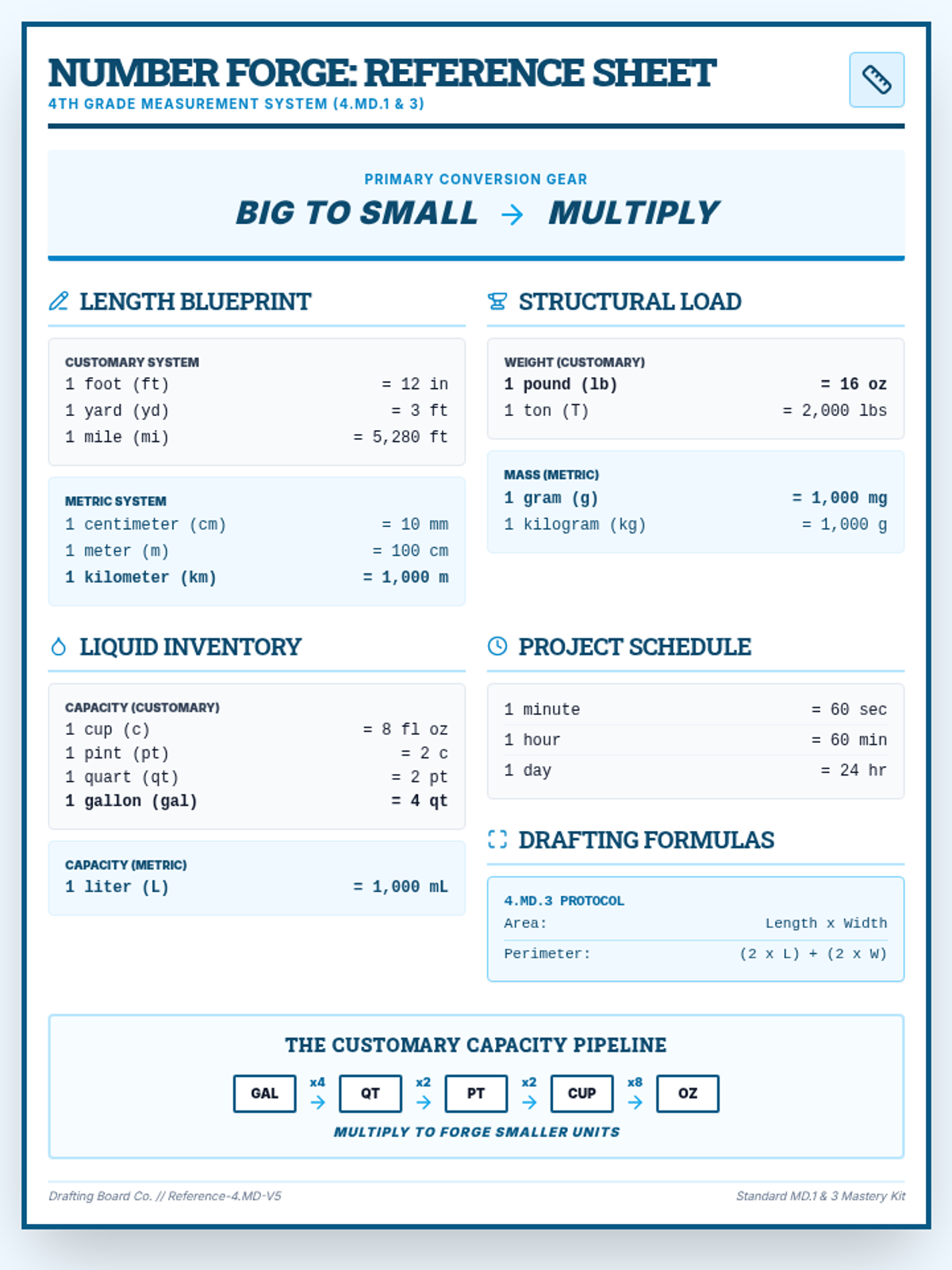
A precision-themed measurement conversion cheat sheet for 4th grade. Features customary and metric units for length, weight/mass, capacity, and time, plus Area and Perimeter formulas. Revised with lighter heading backgrounds for ink-efficiency and consistent contrast.
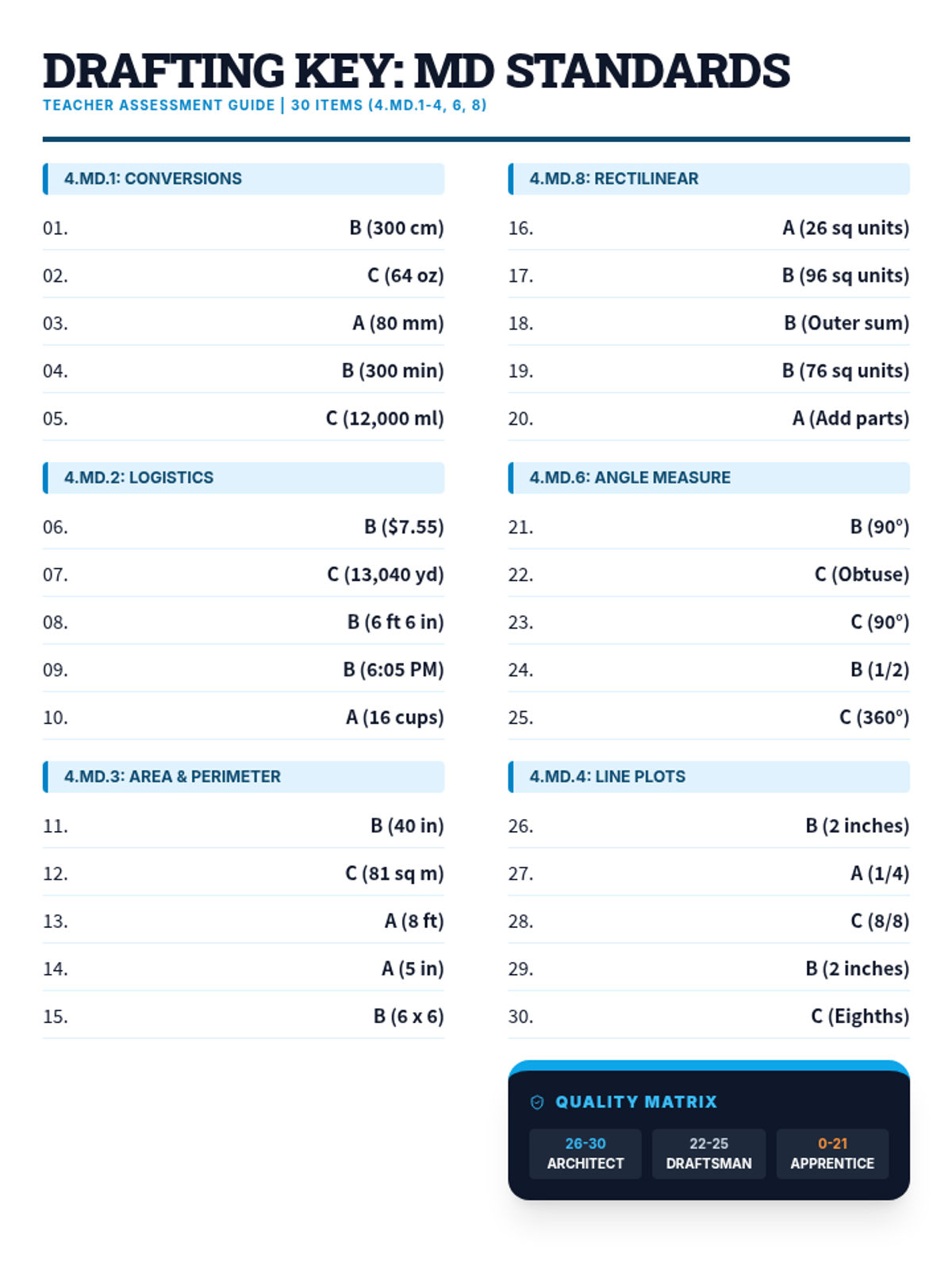
A comprehensive drafting-themed answer key for the 4th Grade Measurement & Data review (MD.1-4, 6, 8). Features categorized answer lists and a creative 'Draft Quality Matrix' for scoring student proficiency. Optimized for single-page use.
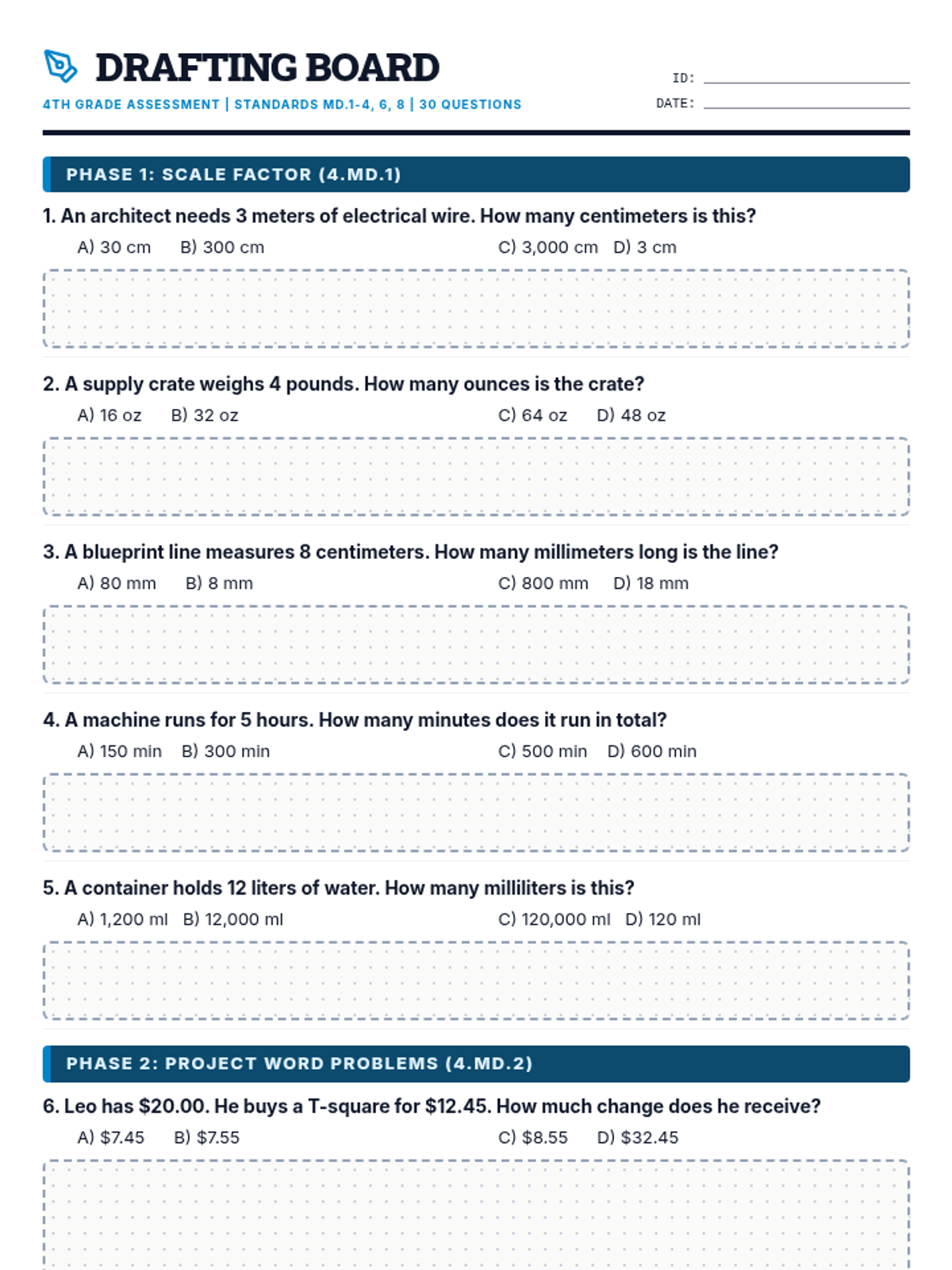
A 30-question drafting-themed 4th grade math assessment focused on Measurement and Data (MD.1, 2, 3, 4, 6, 8). Features 5 questions per skill with white dot-grid work areas for technical sketching. Revised for lighter section headings and optimized pagination. Answer key is provided as a separate material. Revised for 4 total student work pages and corrected units.
A drafting-themed projectable slide deck for reviewing 4th grade Measurement and Data standards (4.MD.1, 2, 3, 4, 6, 8). Features high-contrast diagrams of conversions, time logistics (MD.2), area/perimeter, rectilinear figures (MD.8), and inventory line plots. Revised for improved contrast and visual alignment.
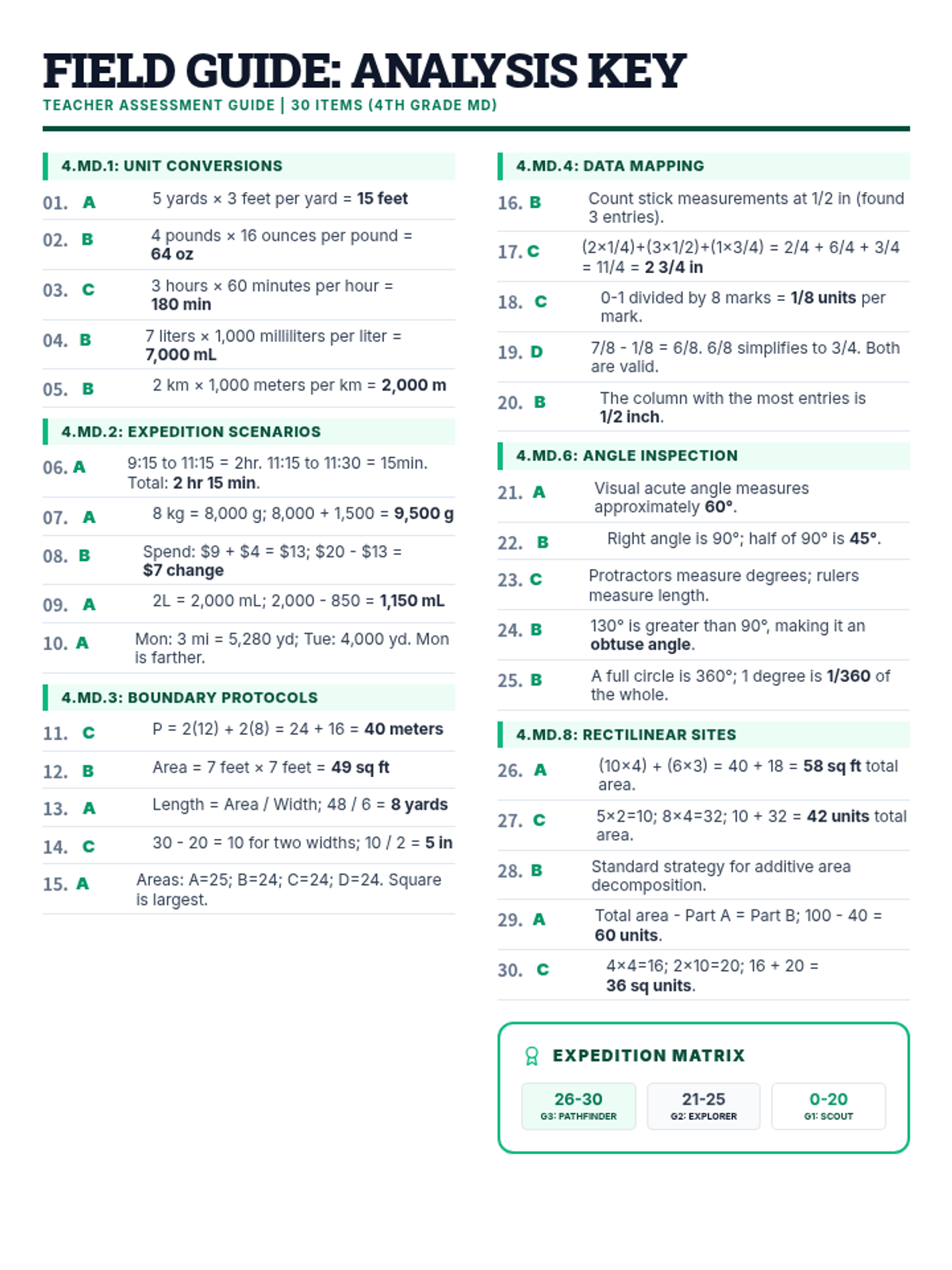
A comprehensive teacher-facing answer key for the Measurement Field Guide worksheet. Covers 4th-grade standards MD.1, 2, 3, 4, 6, and 8. Includes correct choices, instructional mathematical explanations for every item, and a thematic G1-G3 evaluated scoring rubric. Optimized for single-page use with reinforced line-break safety.
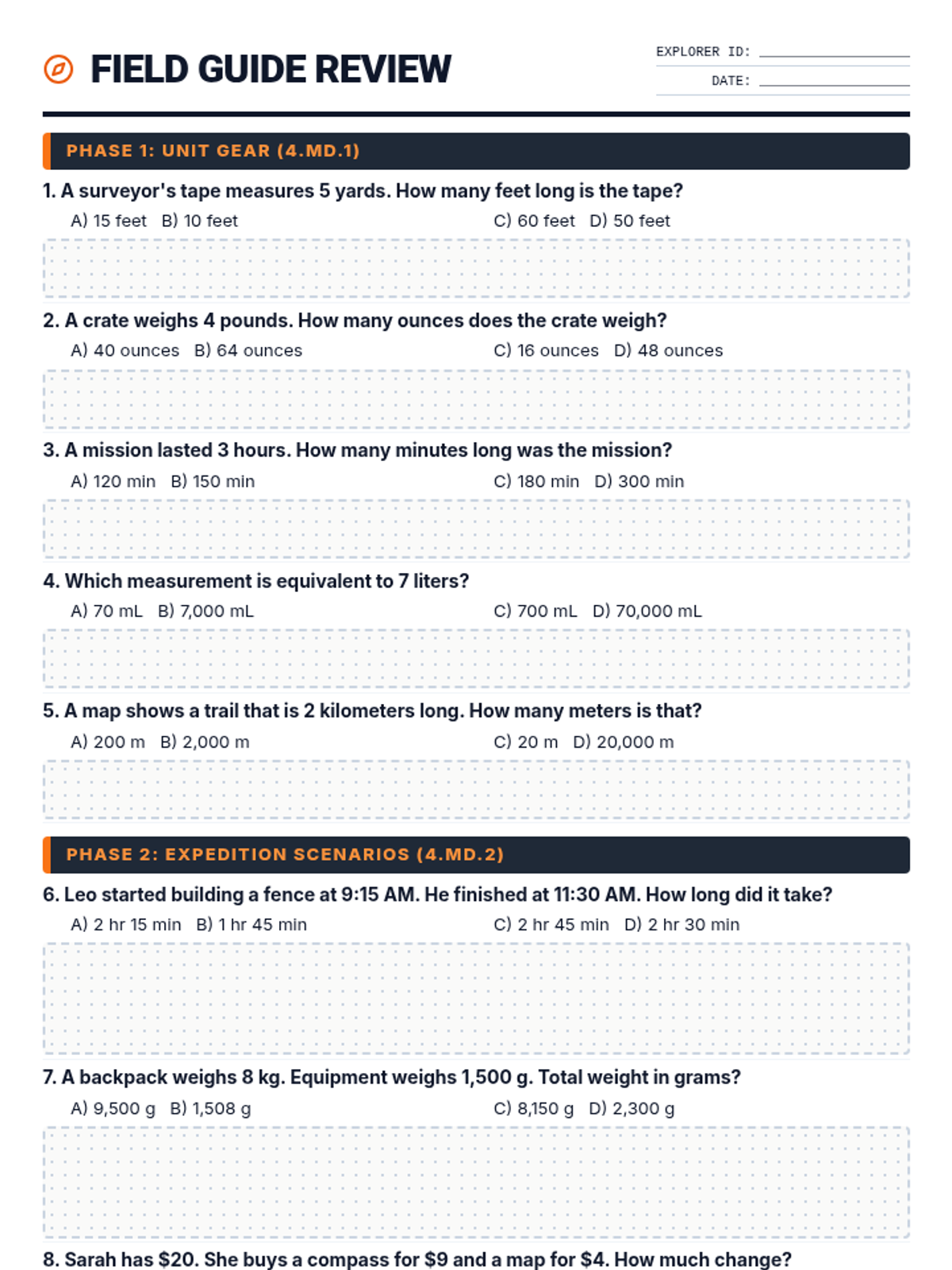
A 30-question field-guide-themed worksheet for 4th-grade Measurement and Data. Each standard (MD.1, 2, 3, 4, 6, 8) features 5 targeted questions modeled after standardized assessments. Includes SVG diagrams for line plots, angles, and rectilinear figures, dot-grid work areas, and a dedicated answer key on the final page. Optimized for 5 total pages. Revised to remove decimals and fix diagram math.
A field-guide-themed instructional slide deck for reviewing 4th-grade Measurement and Data standards. It includes visual unit conversion tables, word problem checklists, area/perimeter diagrams with internal grid supports, line plot visualizations, and protractor/rectilinear figure strategies. Revised for corrected typography, improved diagram contrast, and dedicated standard slides. Includes a final answer key slide for instructional problems.
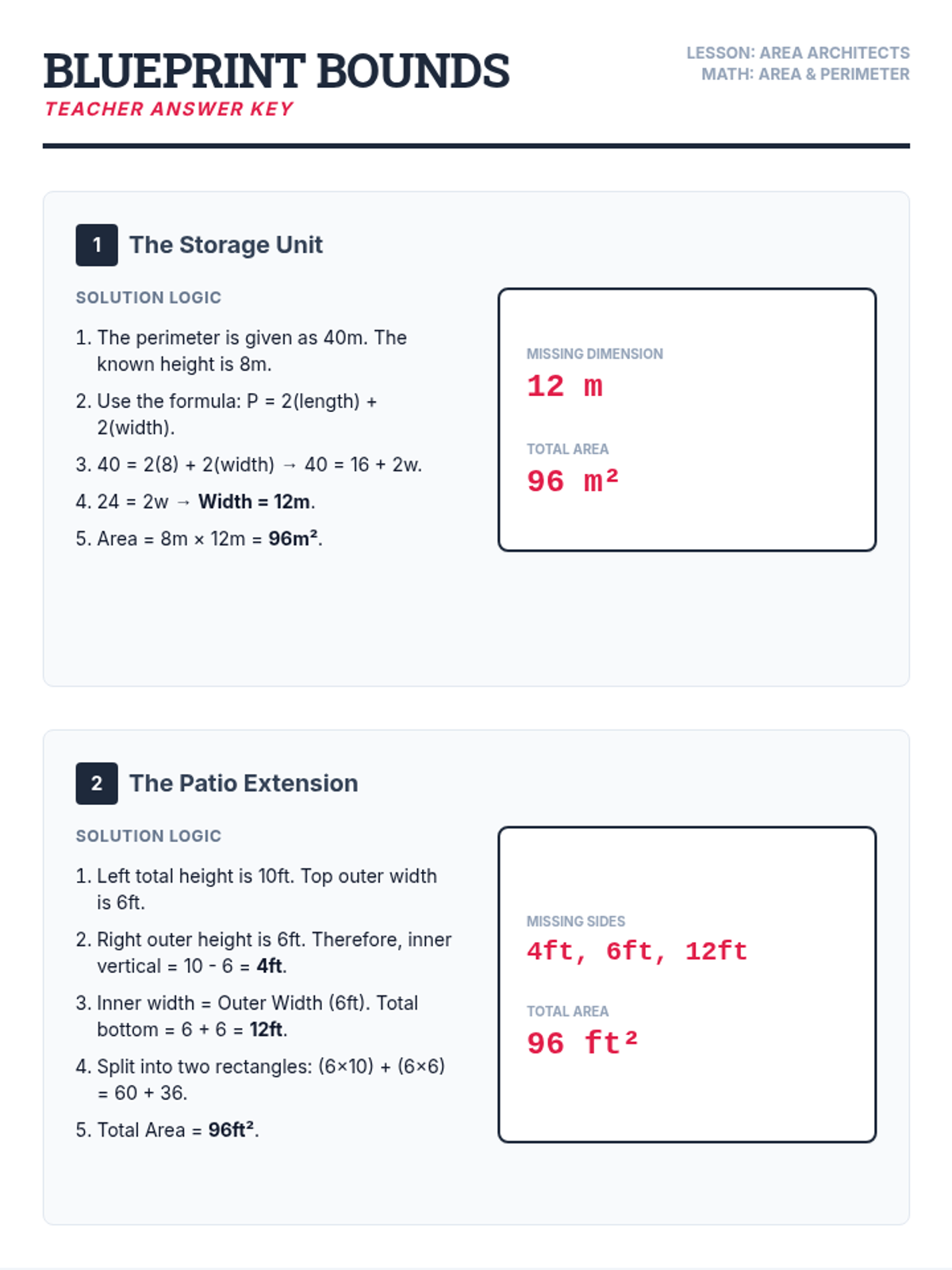
A detailed teacher answer key for the Blueprint Bounds Exit Ticket. It provides definitive step-by-step logic and clear final answers for all 10 problems. All logic has been verified for mathematical consistency based on the updated exit ticket diagrams.
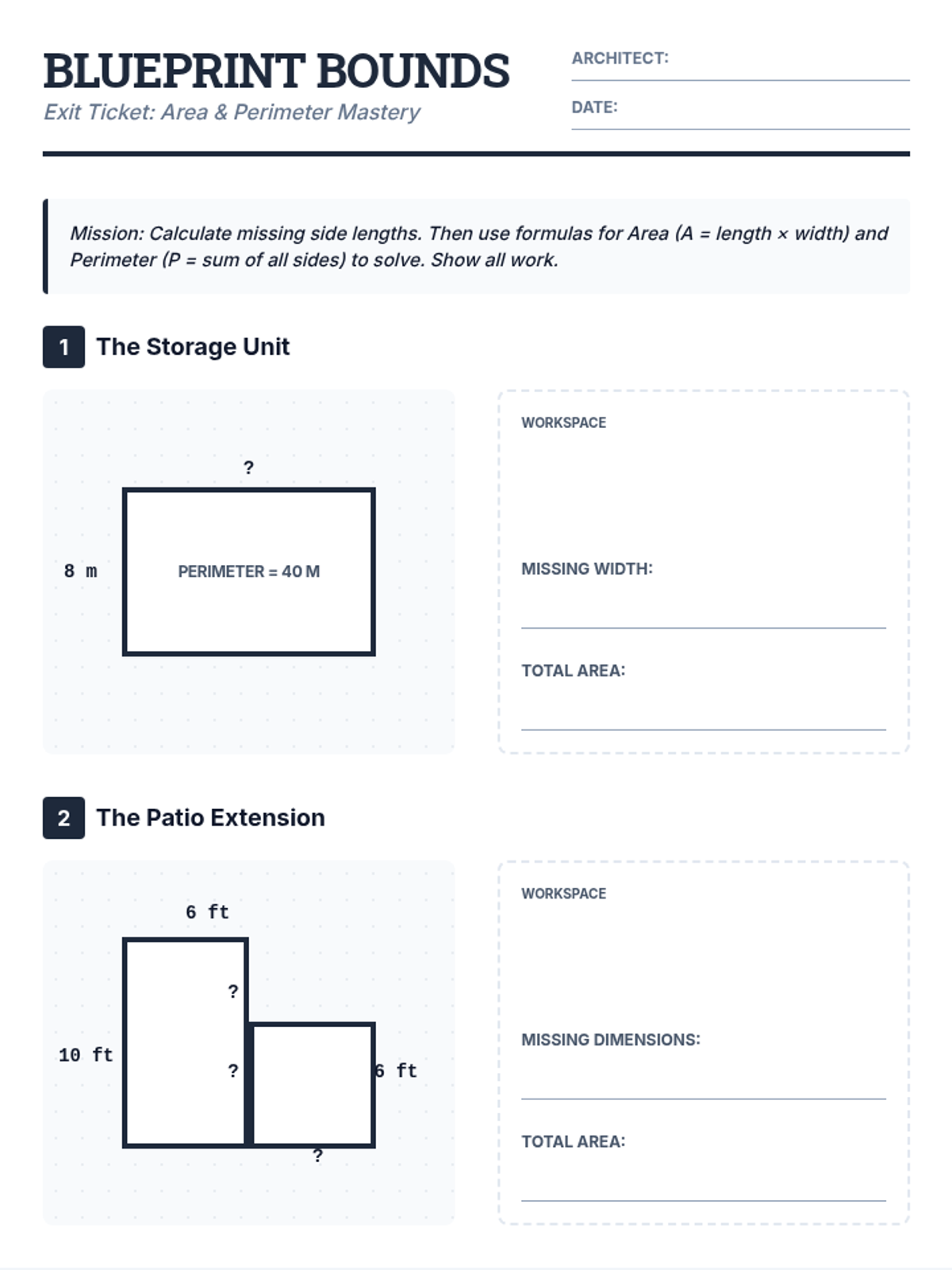
A 5-page exit ticket designed with a clean blueprint theme. It contains 10 problems that challenge students to find missing side lengths and calculate area using formulas for rectangles and complex rectilinear shapes. All diagrams and labels have been optimized for clarity and high contrast. All logic has been verified for mathematical consistency. All label positioning has been refined to prevent overlapping and clipping. Header terminology is consistent across all pages. Workspace layout is uniform. Content is technically complete and solvable without assumptions.
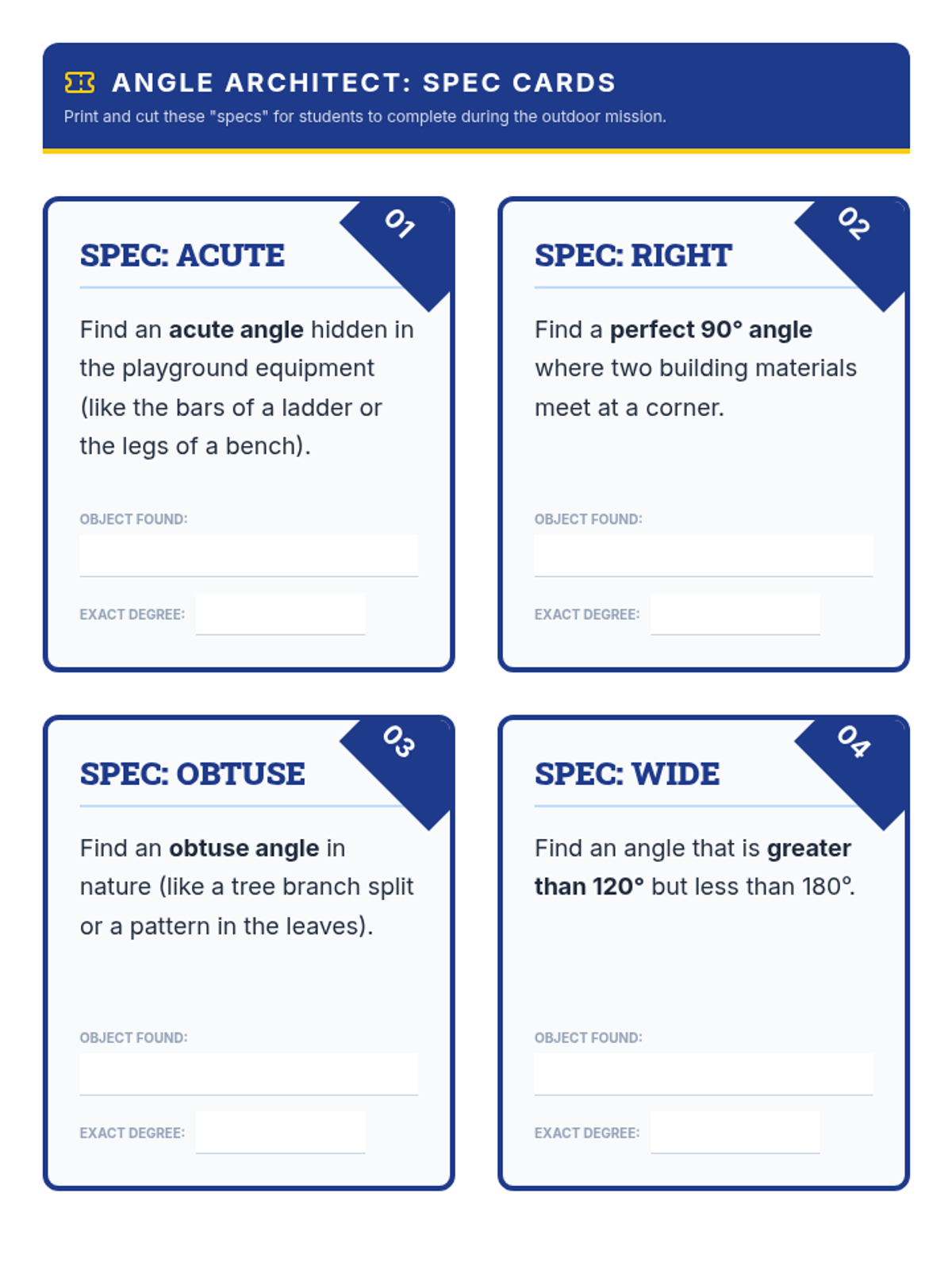
A set of printable "Spec Cards" for an angle scavenger hunt, challenging students to find and measure specific angle types in their environment.
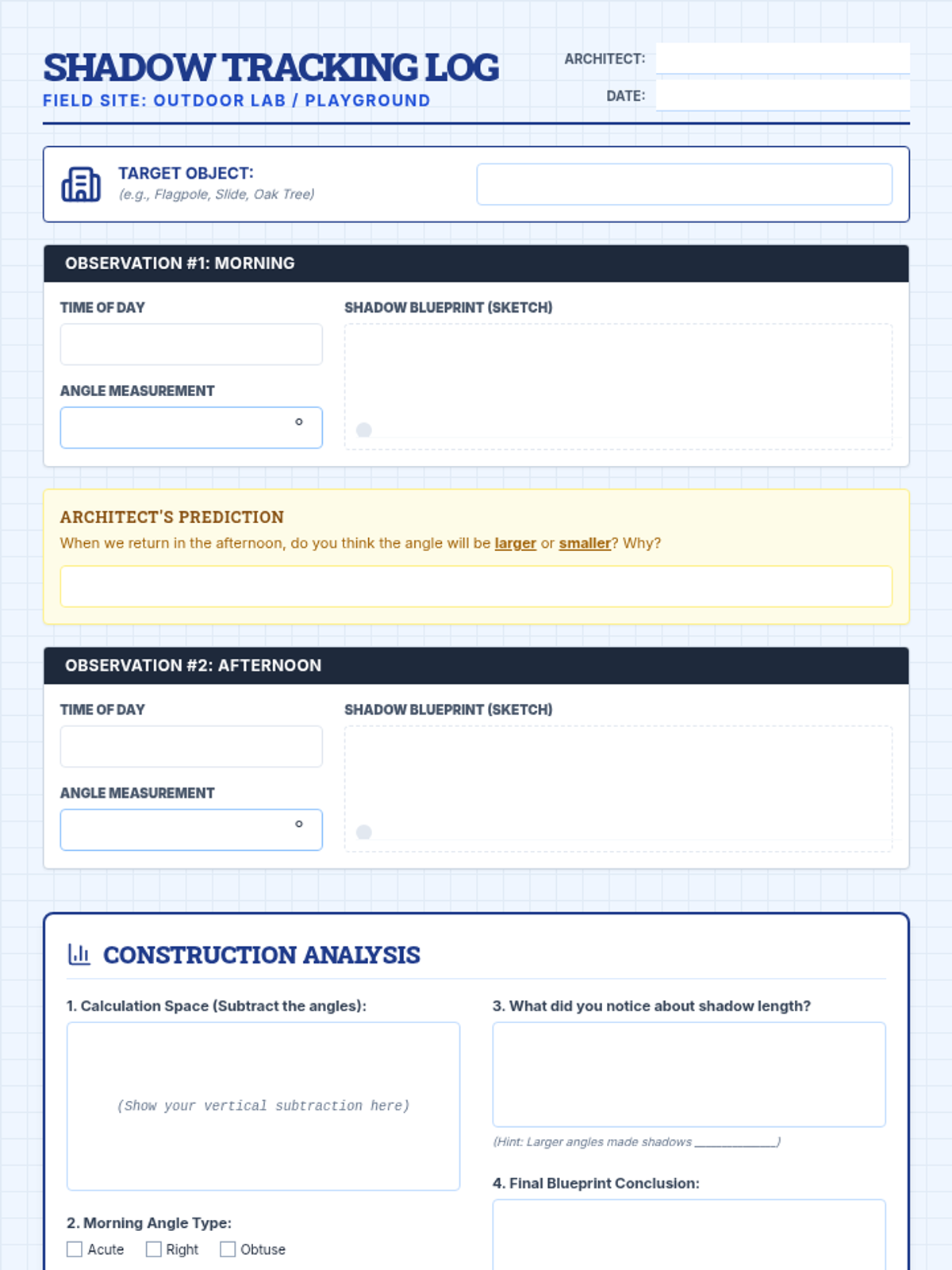
A student worksheet for recording shadow angle measurements at different times of day, including sketching areas and analysis questions.
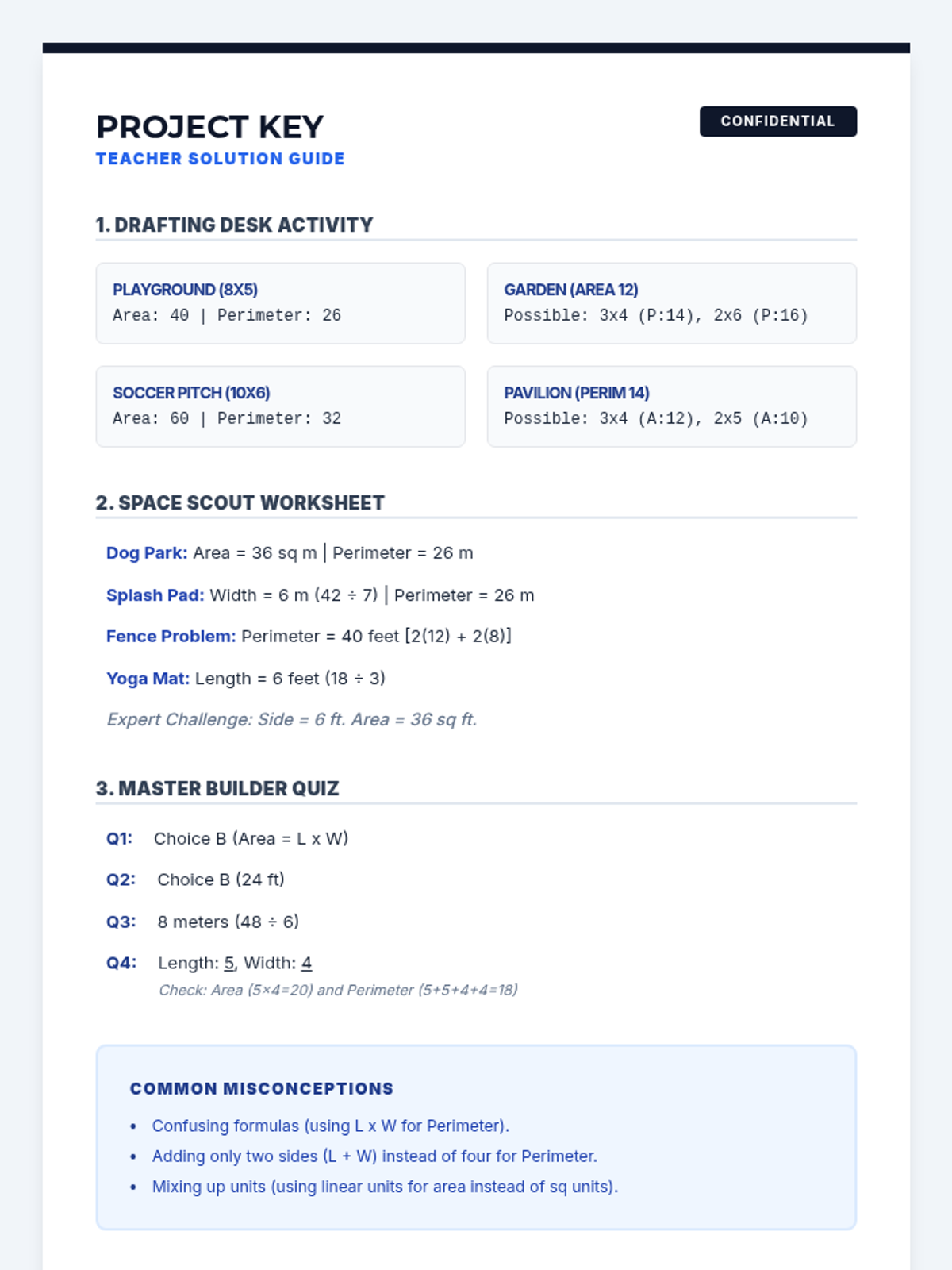
Answer key and teacher guide for the Blueprint Brigade materials. Revised for better spacing to fit everything on a single page and improved readability.
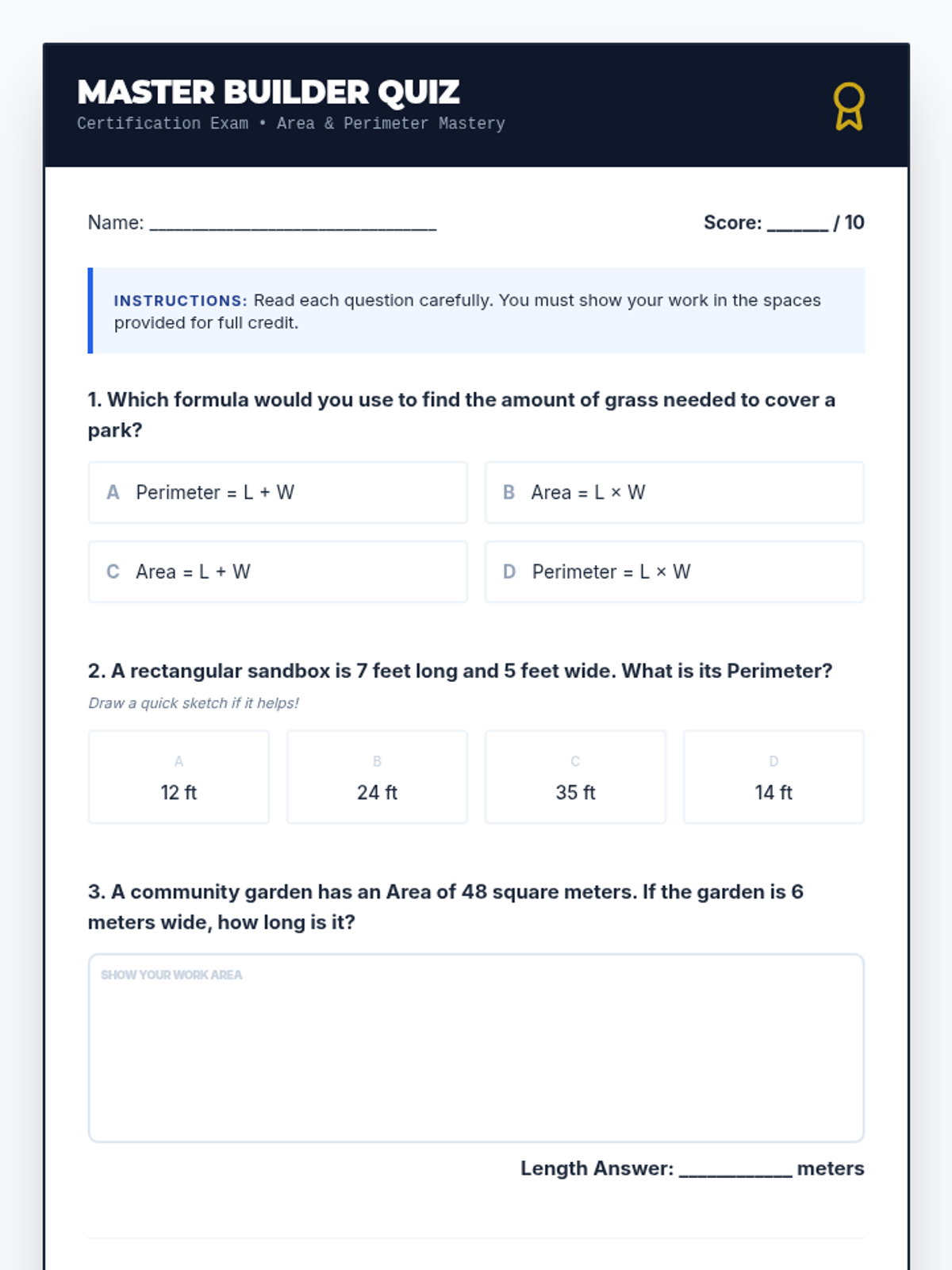
A final assessment to evaluate student mastery of area and perimeter formulas. Revised with consistent labeling, improved work areas, and better page grouping.
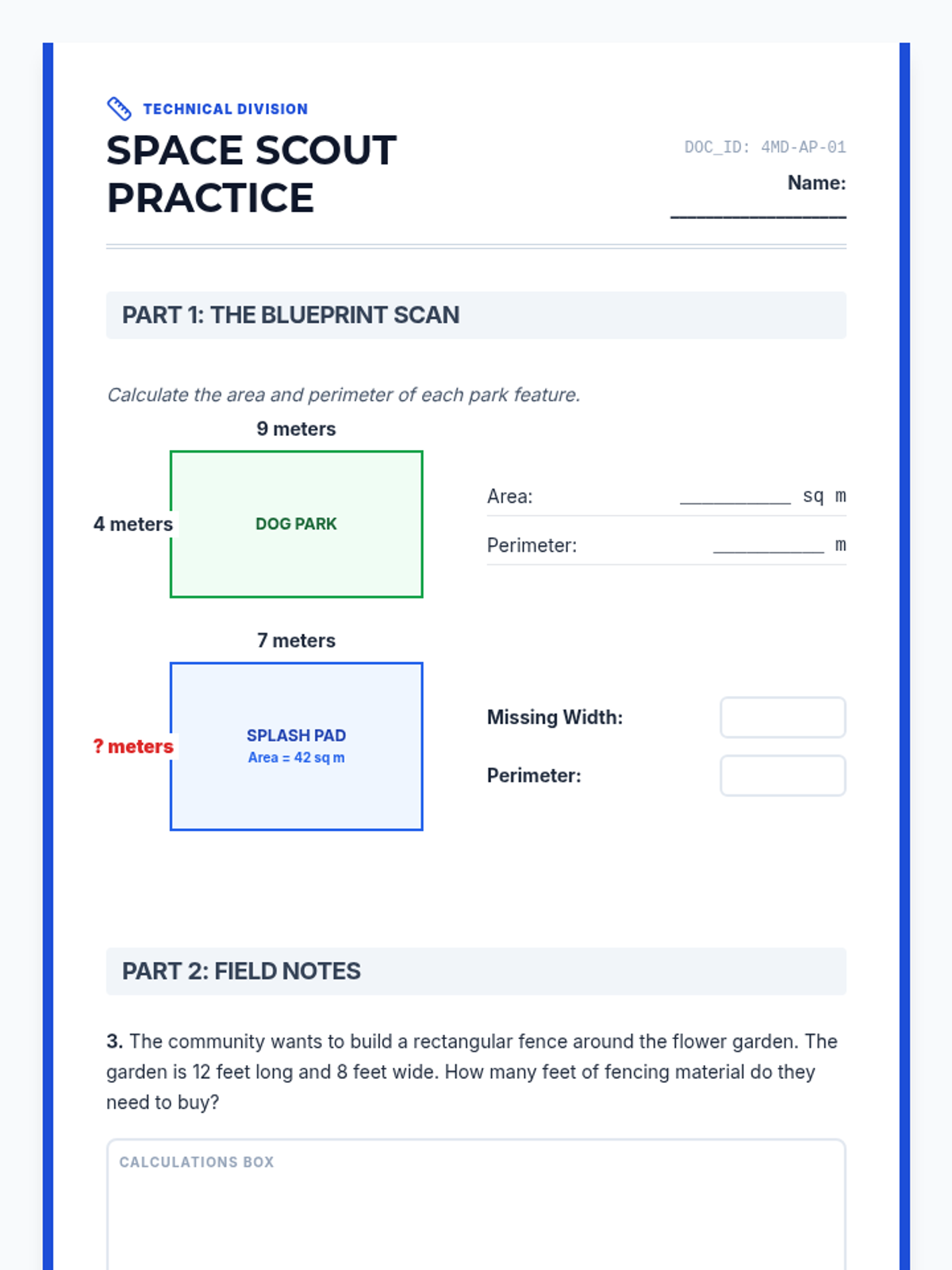
A practice worksheet featuring visual area/perimeter problems, missing measurement challenges, and real-world word problems related to park design. Revised with fixed labels and improved layout.
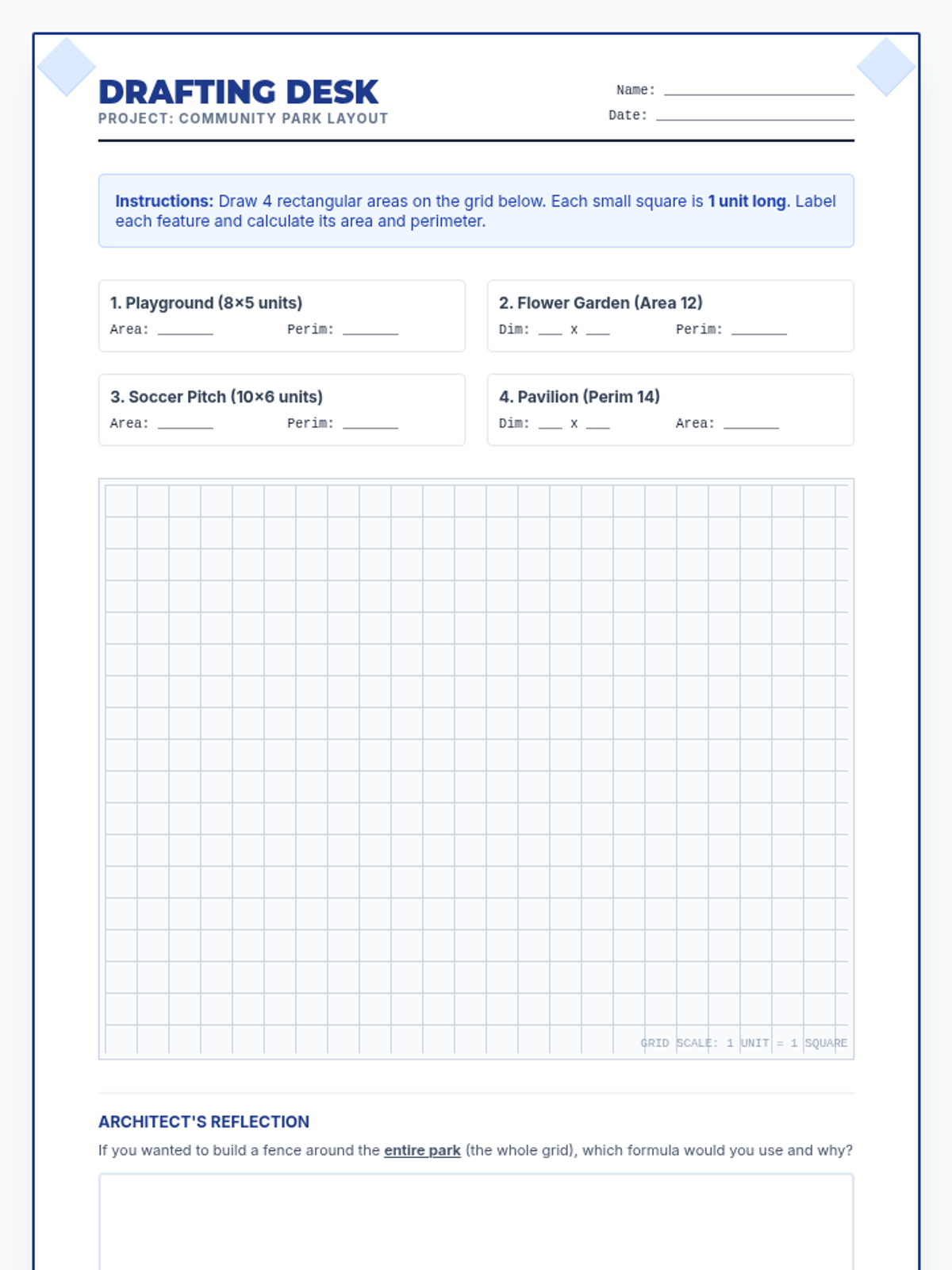
A creative design activity where students draw rectangular park features on a grid based on specific area or perimeter requirements. Revised to fit onto a single page.
Engaging visual slides for teaching area and perimeter concepts. Features a narrative hook about designing a community park, clear formula explanations, and guided practice. Revised with improved labels and layout.
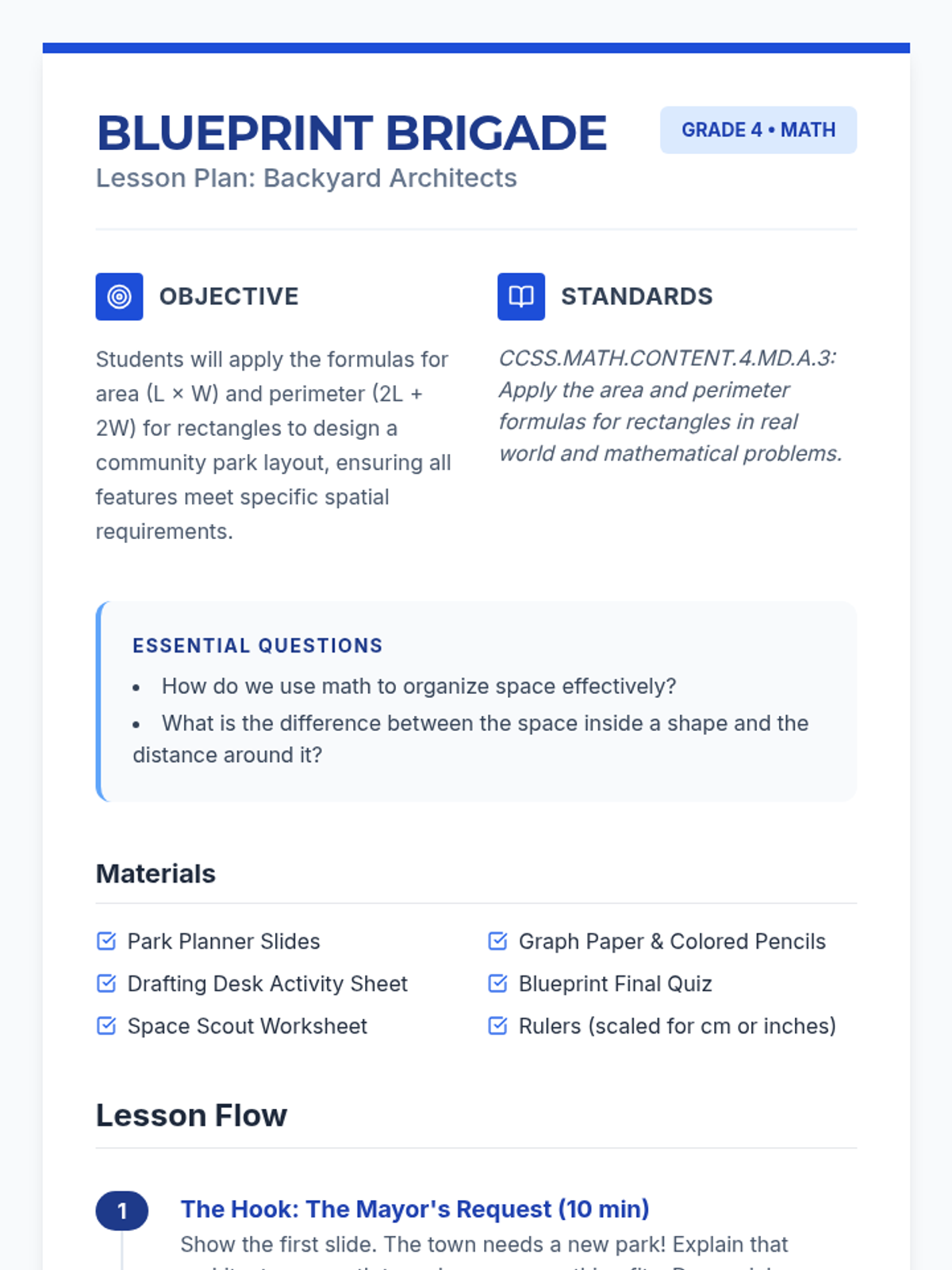
A comprehensive lesson plan for teaching area and perimeter through the lens of park design. Includes objectives, standards, step-by-step instruction, and differentiation strategies.
An instructional slide deck for introducing angle measurement and the shadow investigation mission. Includes visual aids for protractor use and angle types.
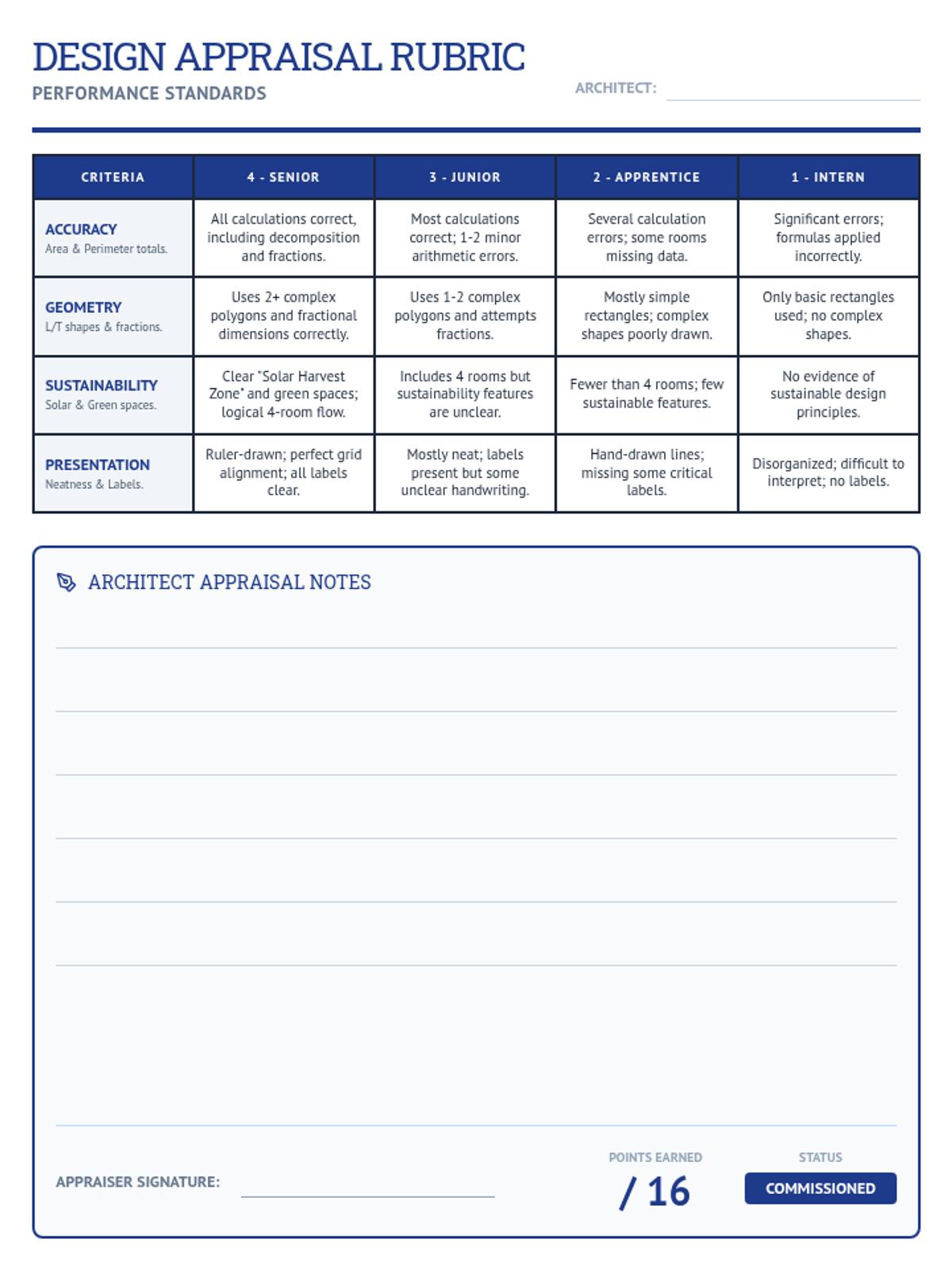
A technical rubric for evaluating architectural designs based on calculation accuracy, geometric complexity, sustainable principles, and blueprint quality.
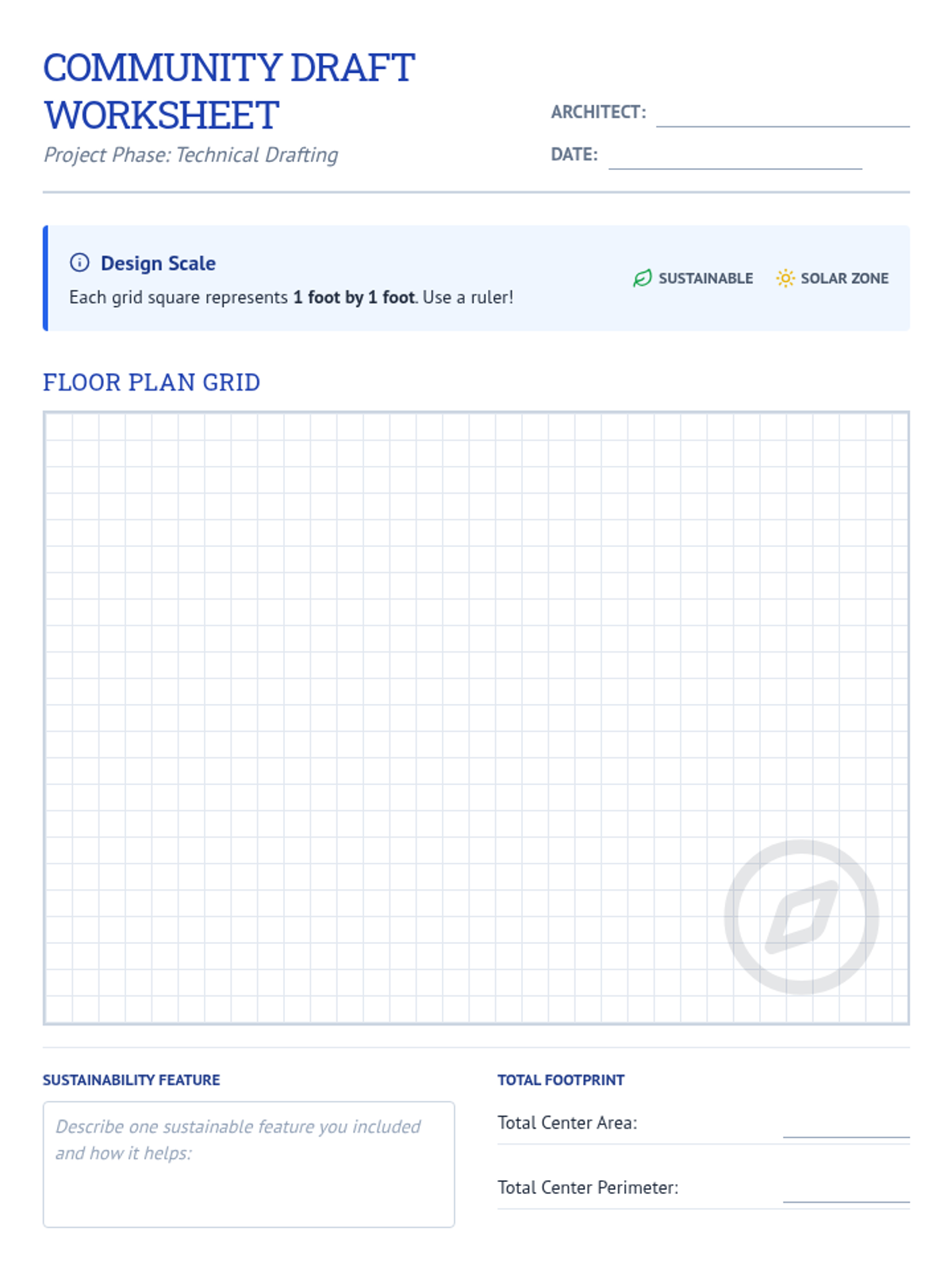
A student-facing drafting worksheet with a grid area for floor plan design and a structured table for calculating the perimeter and area of complex polygons, including spaces for fractional measurements.
An architectural-themed slide deck that introduces students to the role of an architect, reviews how to decompose complex polygons, and demonstrates area calculations with fractional side lengths.
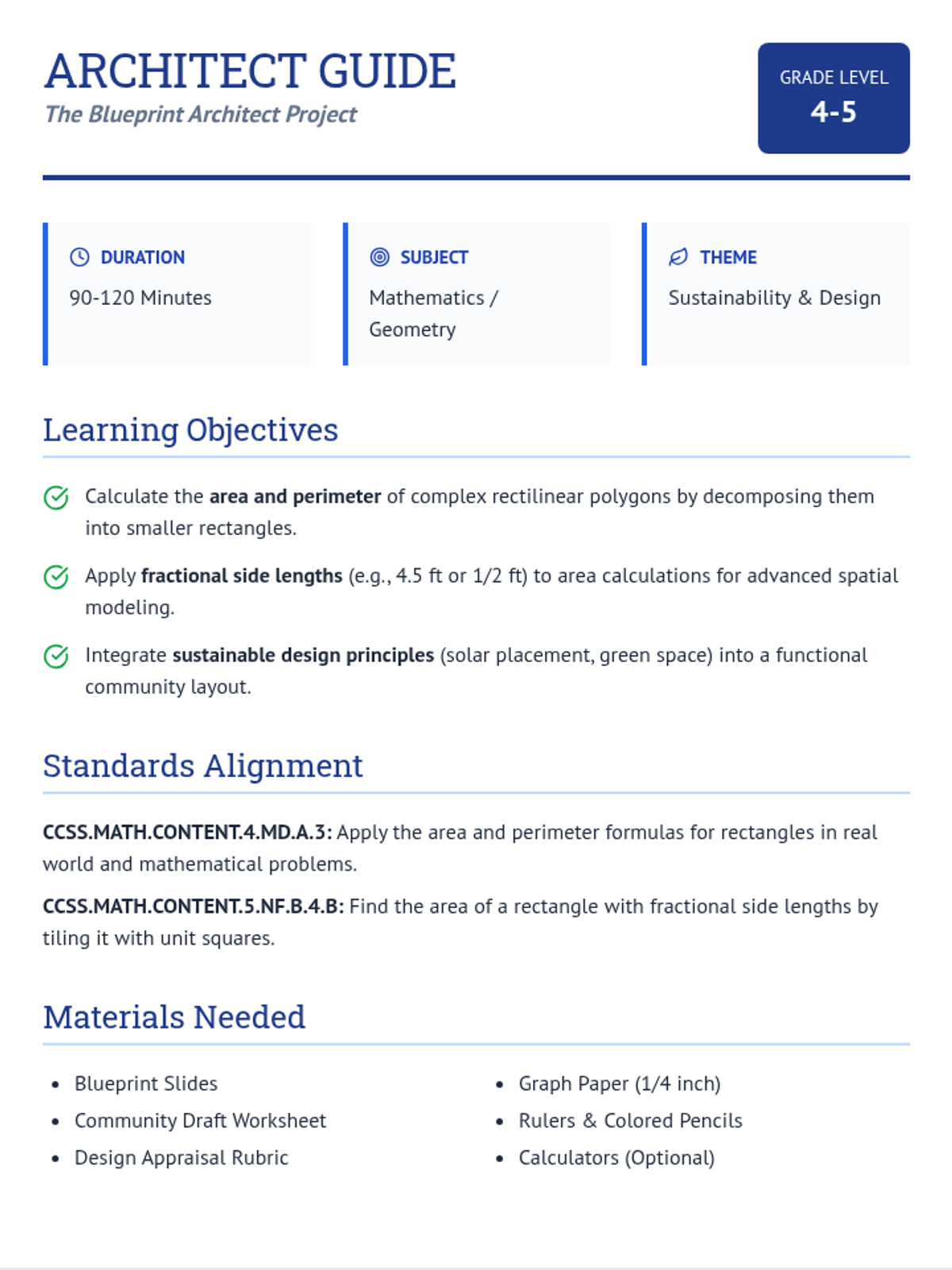
A comprehensive teacher's guide for 'The Blueprint Architect' project, including lesson objectives, standards alignment, and a step-by-step instructional procedure for teaching area and perimeter of complex polygons.