A high-energy vocabulary lesson for 2nd graders focusing on nouns and verbs using the context of a sports competition. Students will analyze morphology (suffixes -tion and -ment) and use context clues to distinguish between actions and things.
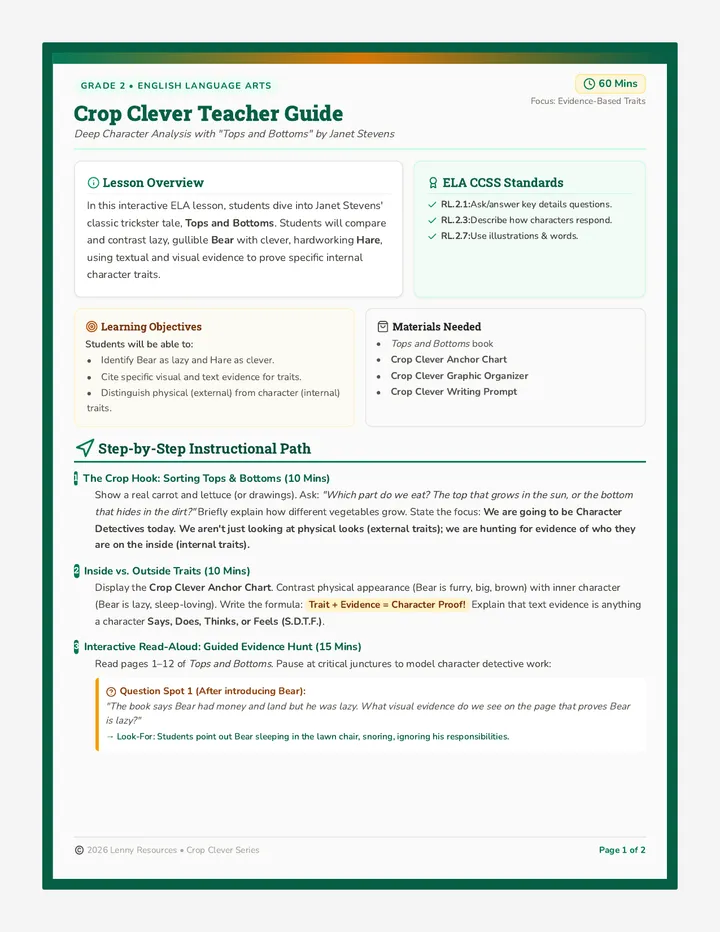
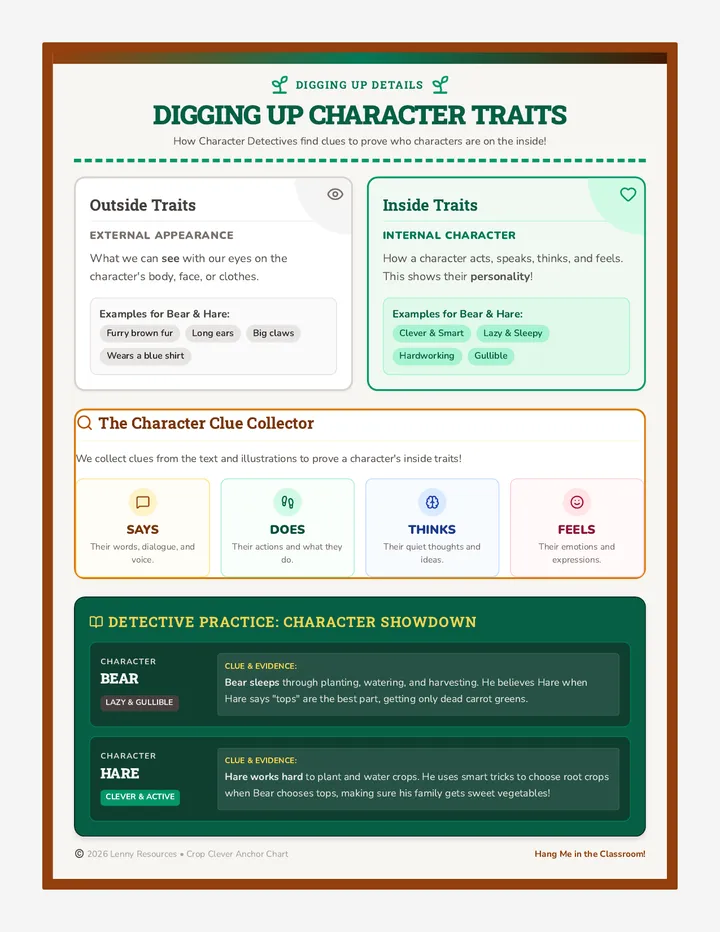
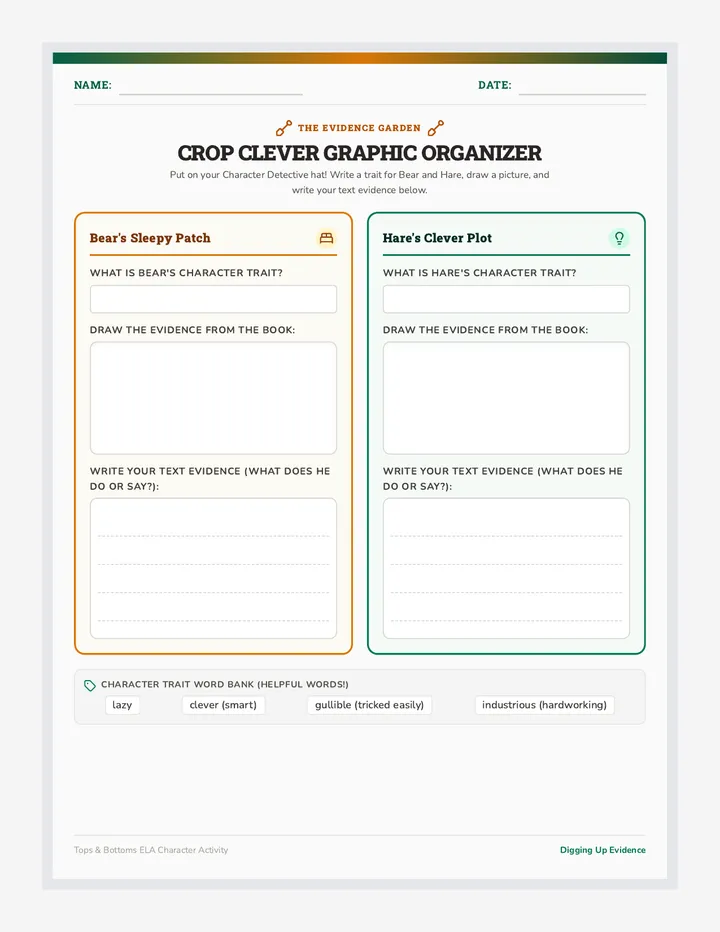
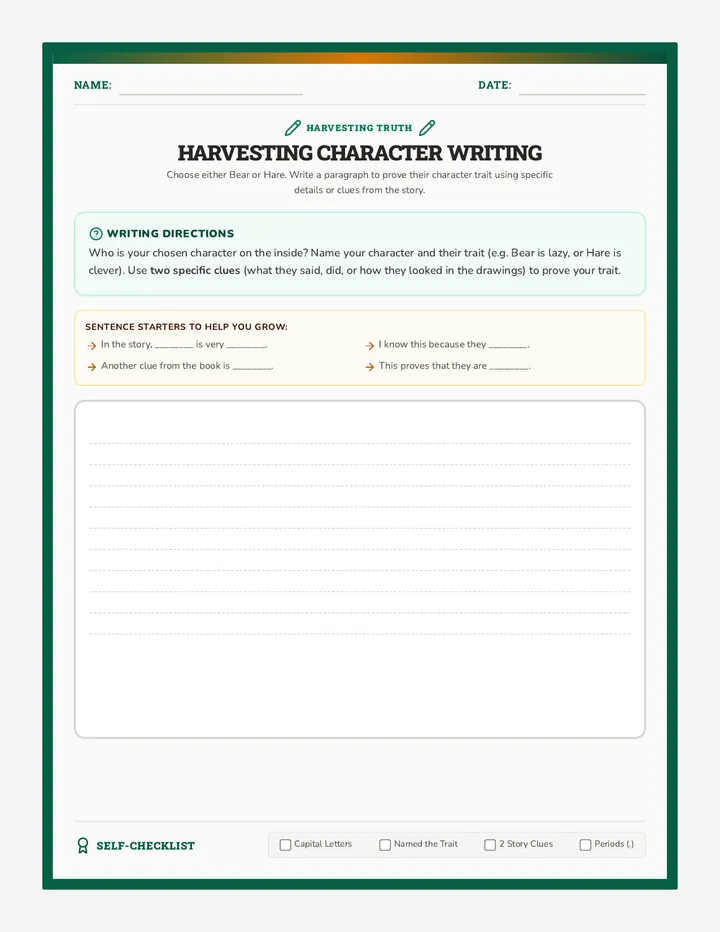
An interactive Grade 2 English Language Arts lesson based on the book Tops and Bottoms by Janet Stevens, focusing on evidence-based character traits, comparing lazy Bear and clever Hare.
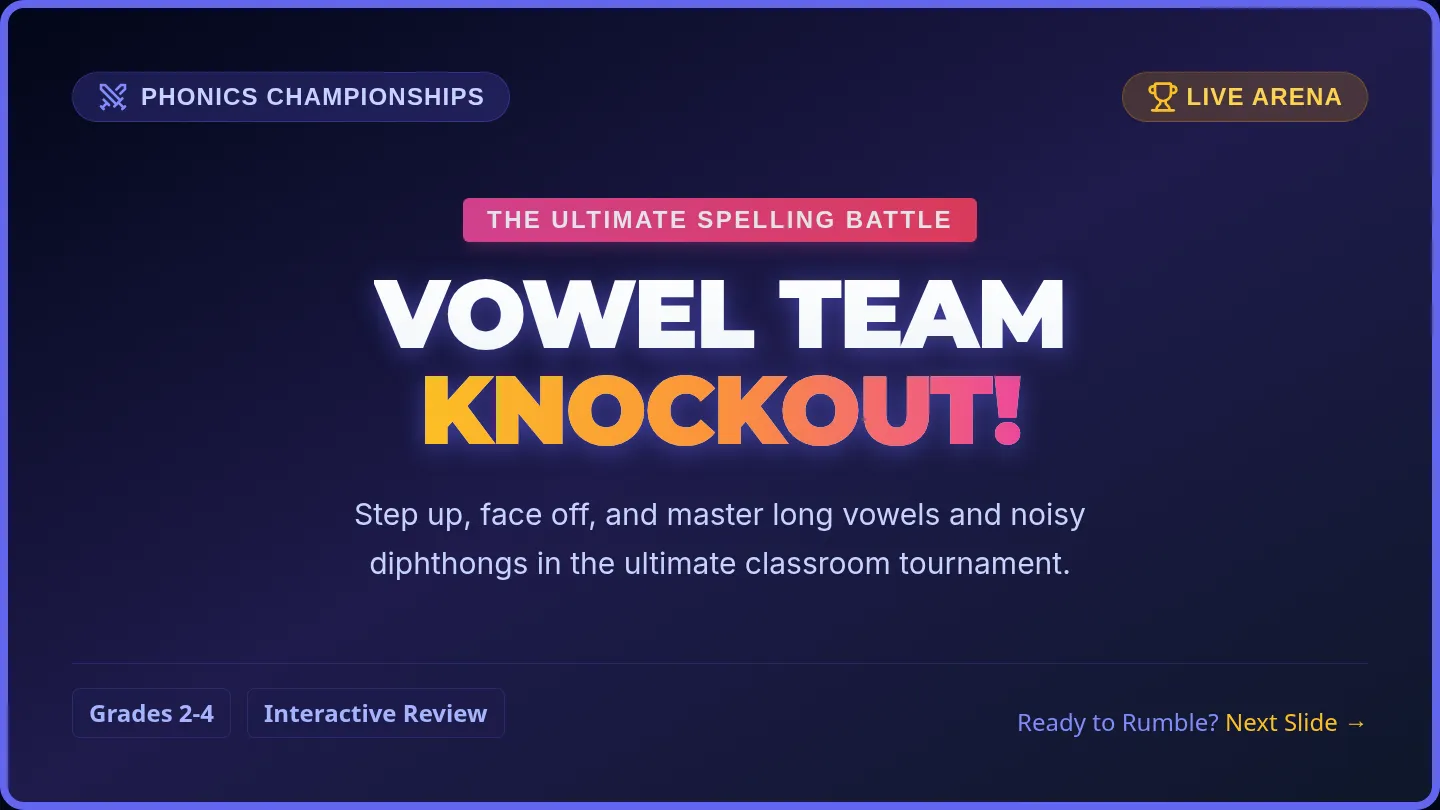
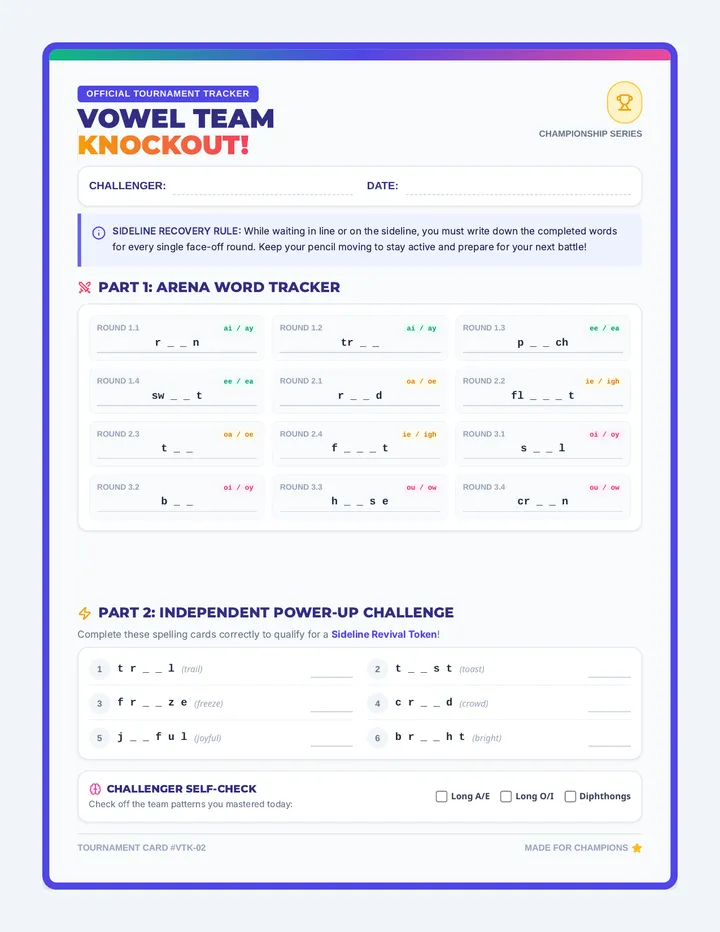
An energetic classroom phonics lesson where students compete in a friendly Knockout tournament to master vowel teams and diphthongs. Includes interactive instructional and gameplay slides, plus a student tracking sheet.
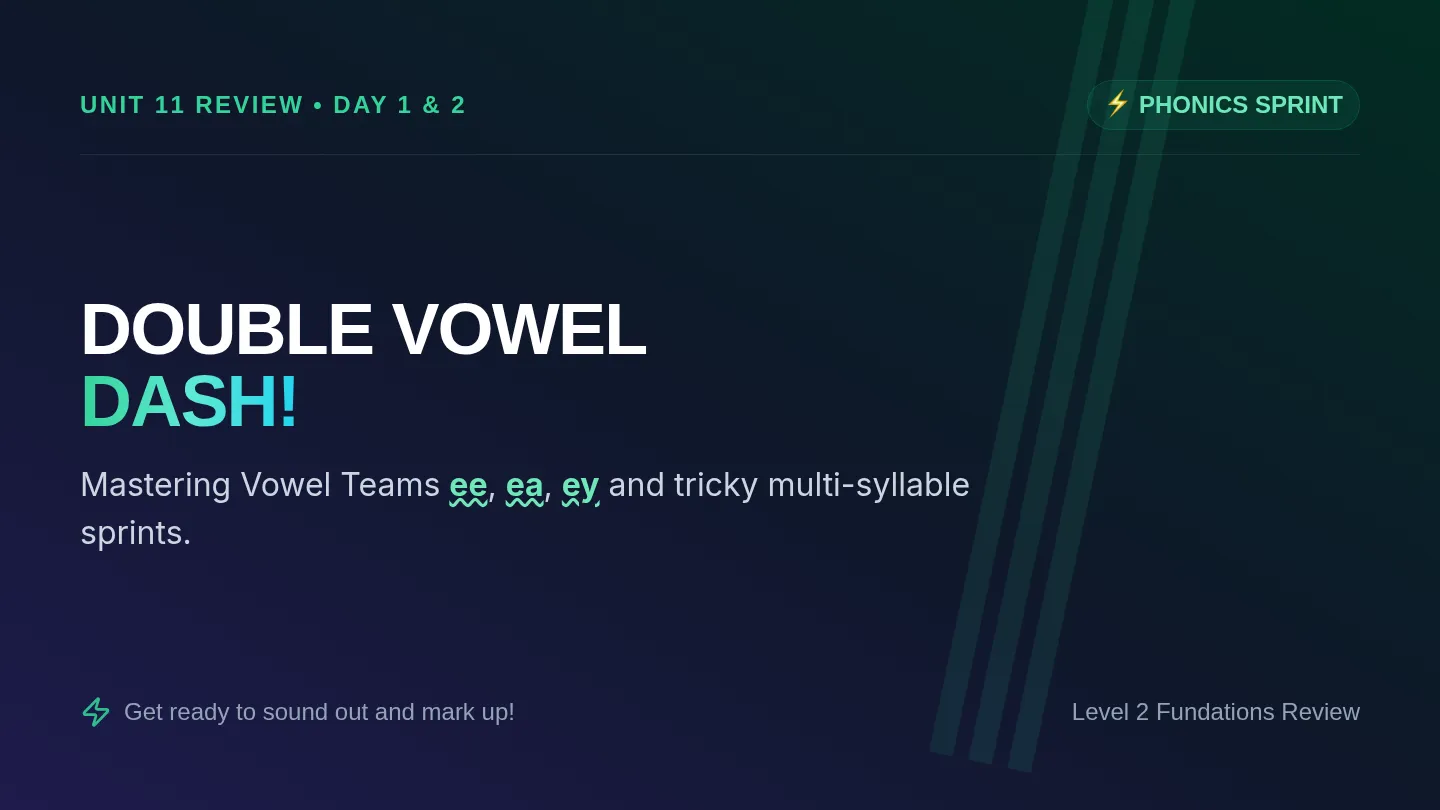
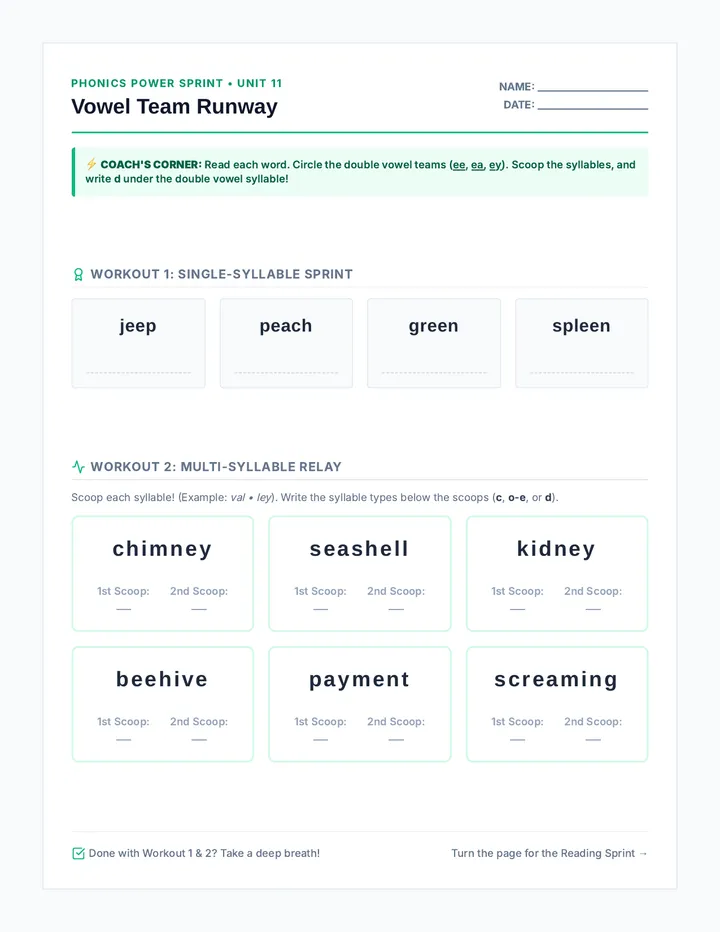
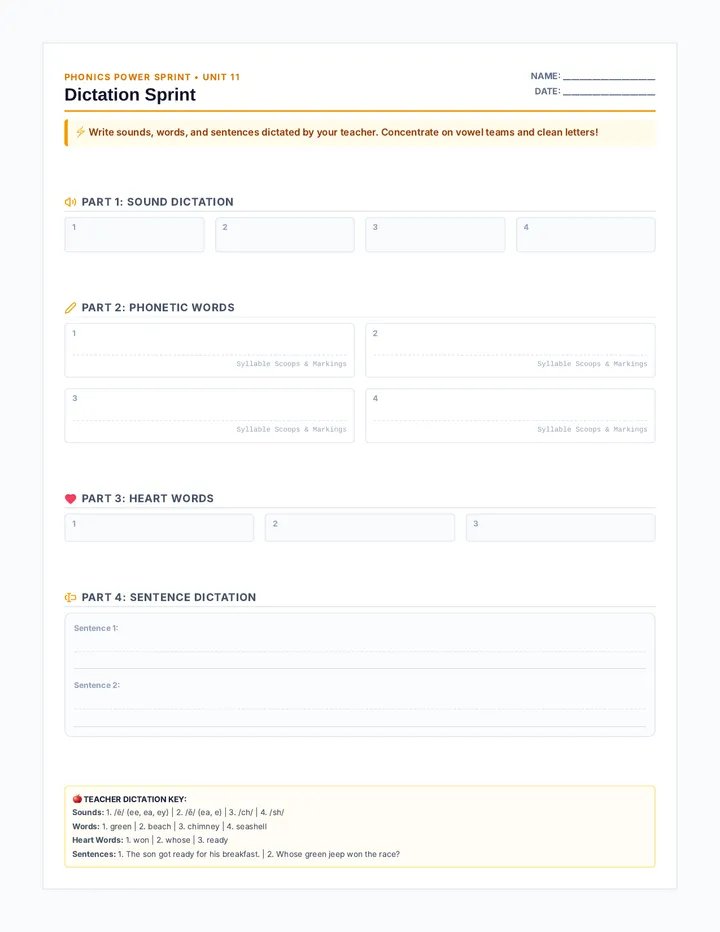
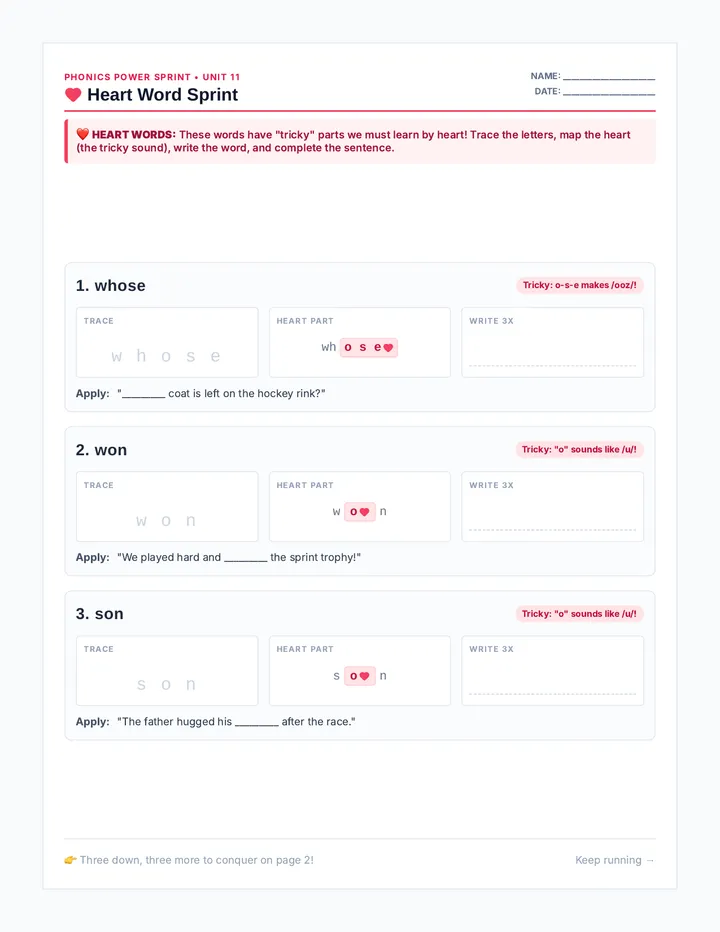
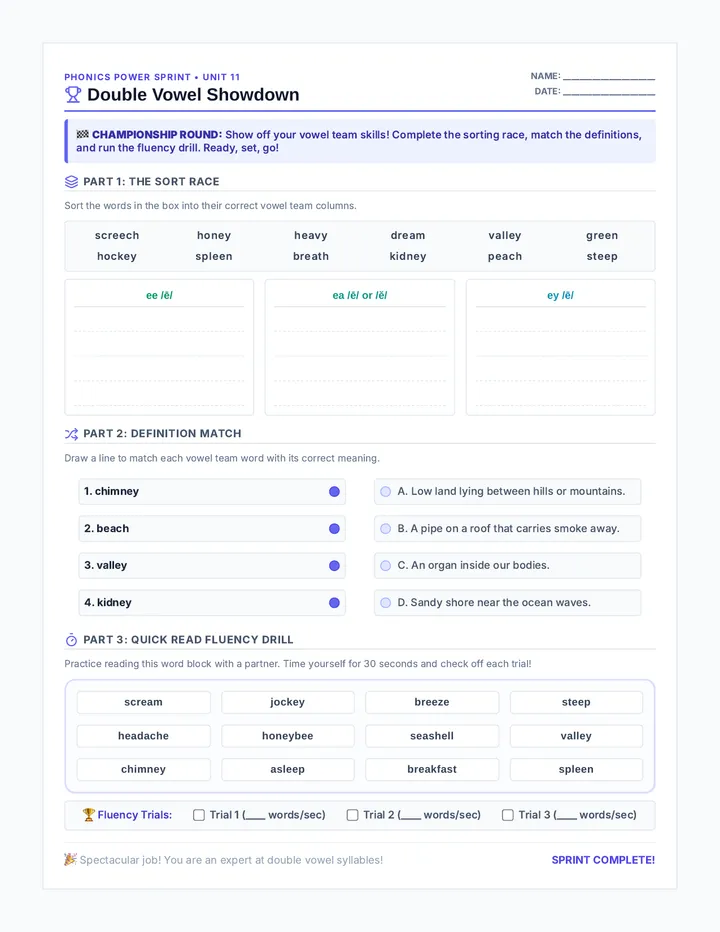
An intensive review of the double vowel teams 'ee', 'ea', and 'ey' in single and multi-syllabic words. This lesson compresses Unit 11 into a high-octane 1.5-day cycle featuring direct instruction, decodable text practice, and multi-sensory heart word spelling.
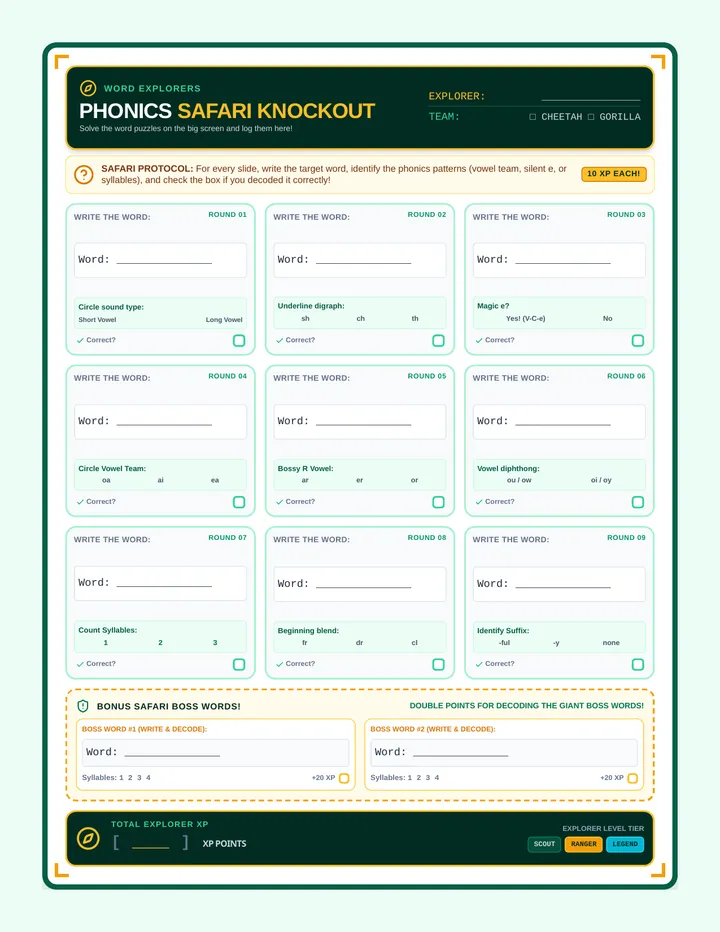
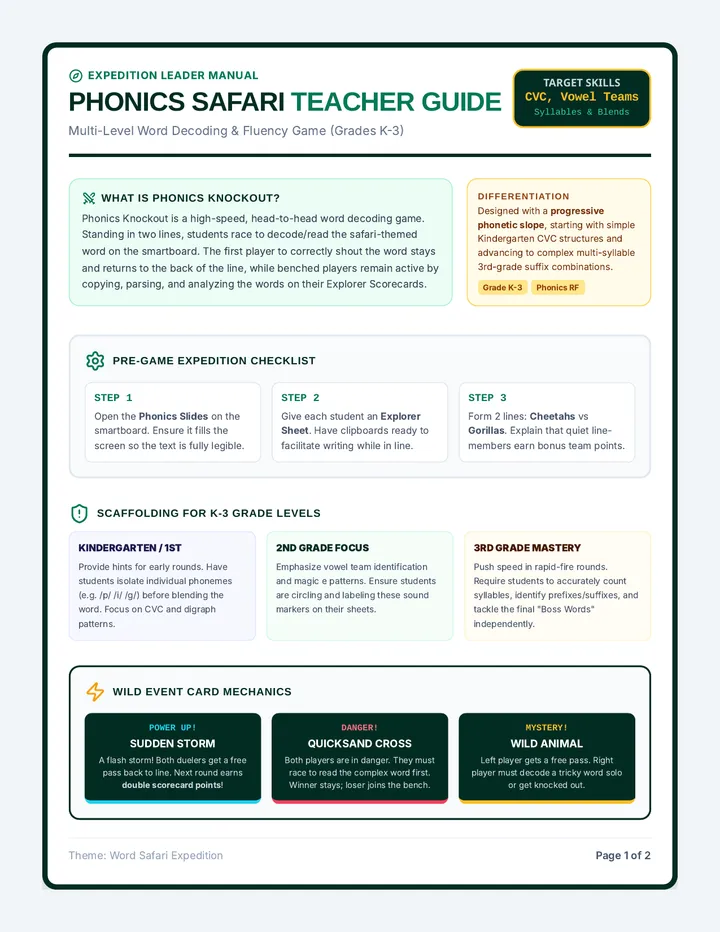
A high-energy, wild safari-themed classroom game for K-3 students focusing on key phonics skills including CVC words, silent 'e', vowel teams, and multi-syllable decoding. This lesson includes a widescreen smartboard presentation, a teacher facilitation guide with word keys, and an active-participation student tracker sheet.
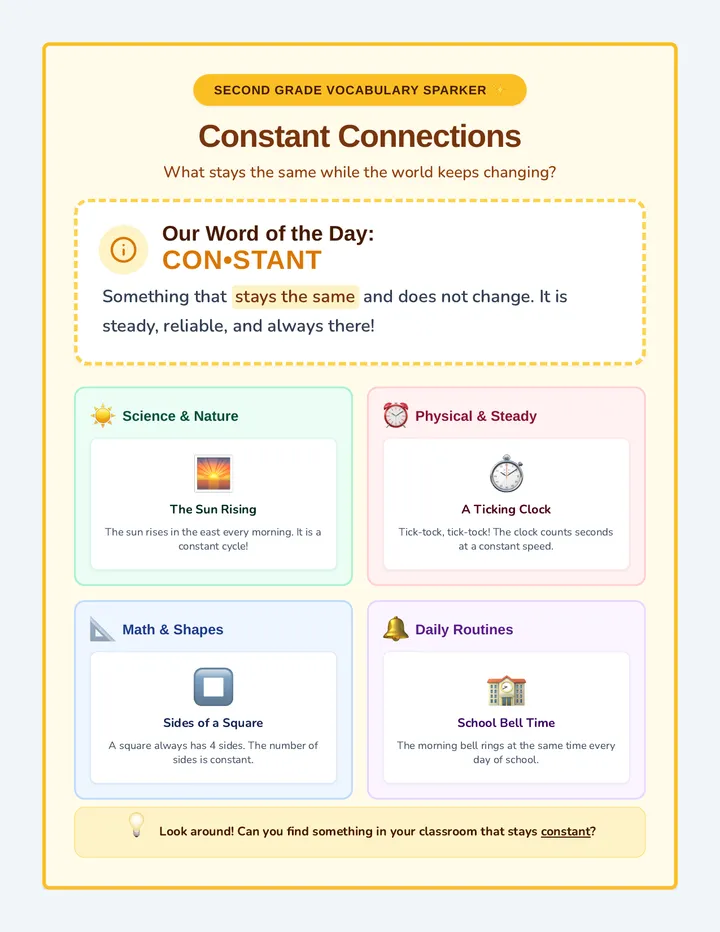
A second-grade vocabulary lesson introducing the word 'constant' through everyday examples in science, nature, math, and daily routines. Students engage with pocket-chart visual matching cards and an interactive sorting worksheet.
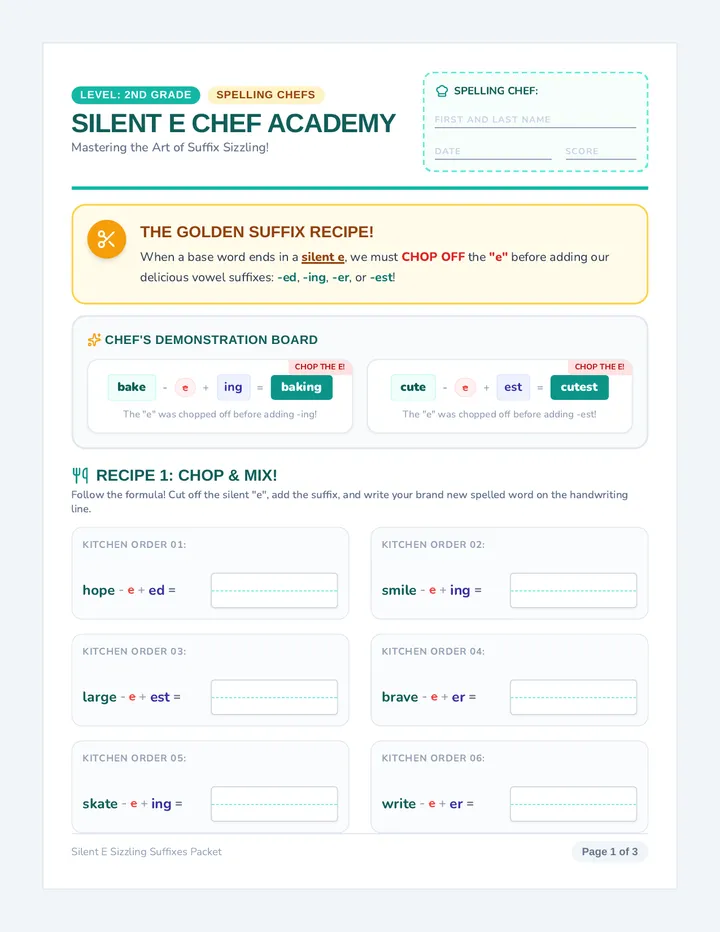
A spelling lesson for second graders focused on dropping the final silent 'e' before adding vowel suffixes (-er, -est, -ed, -ing) using a fun kitchen/chef theme.
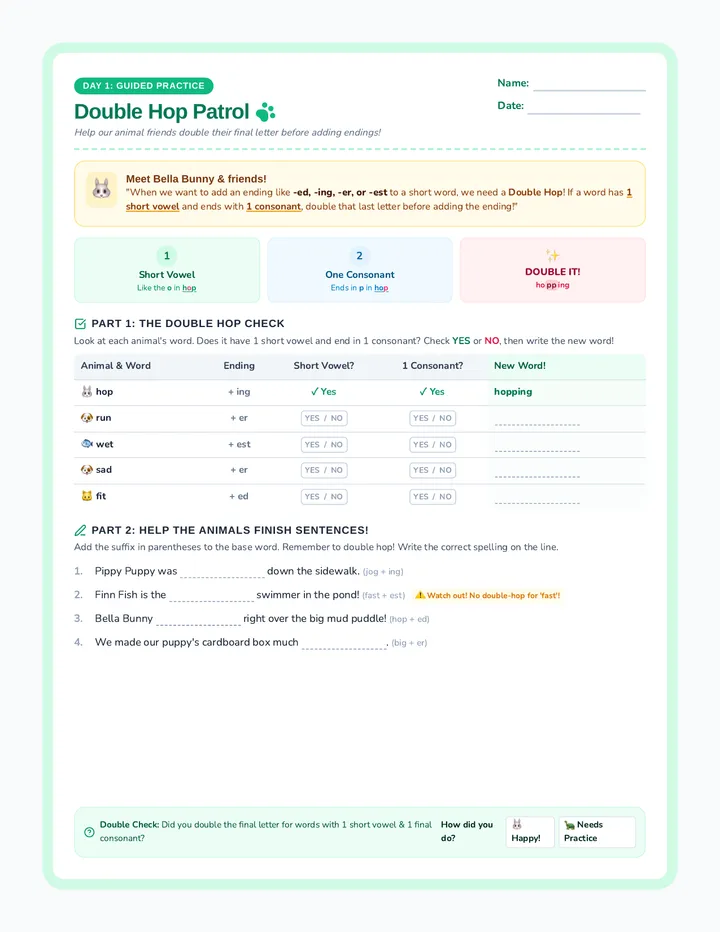
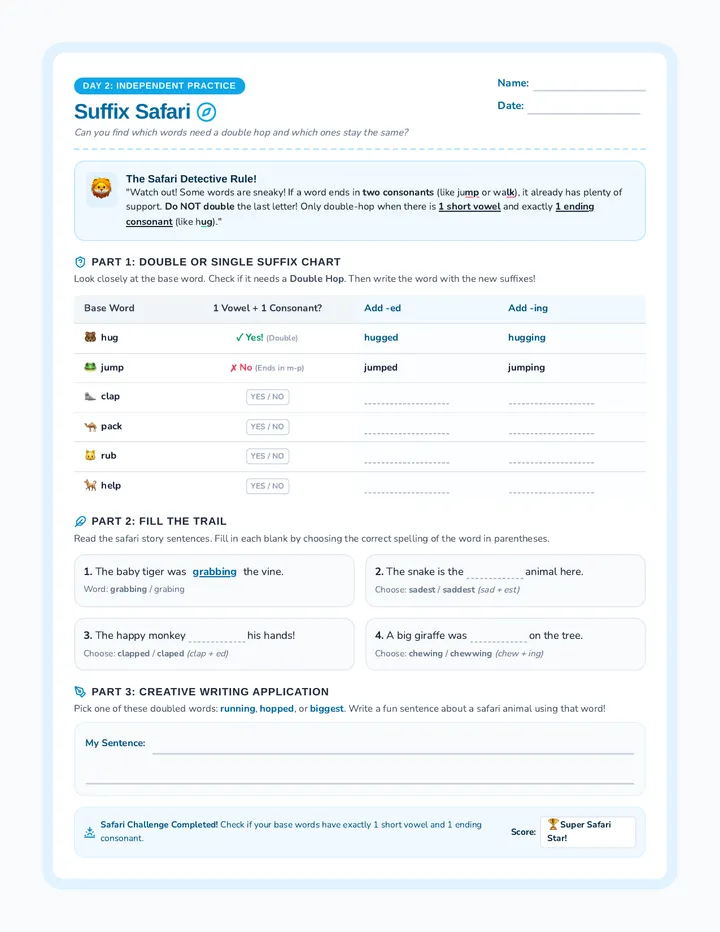
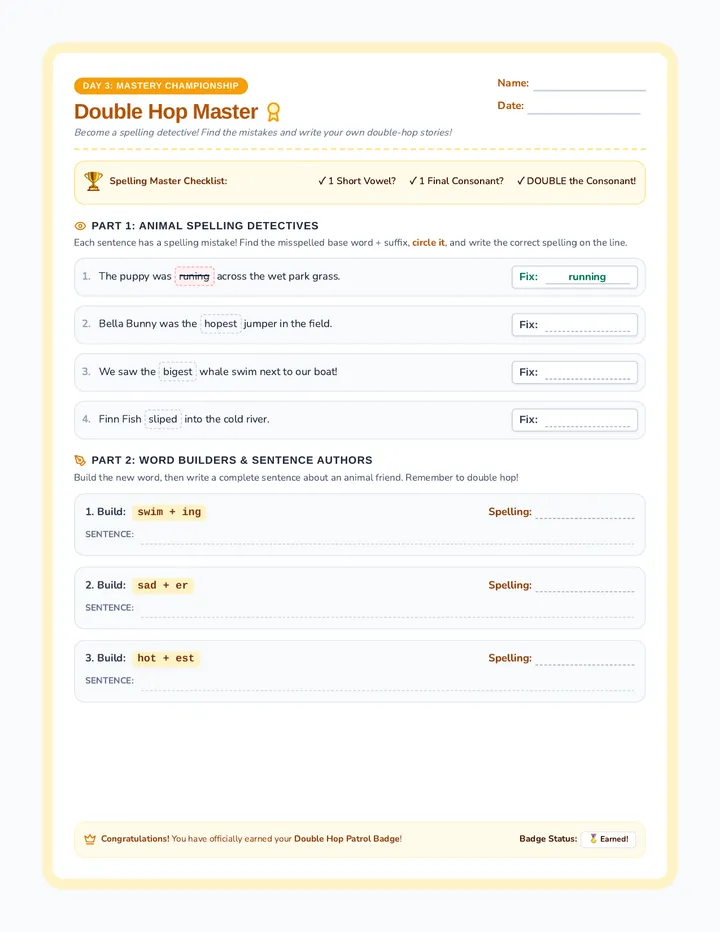
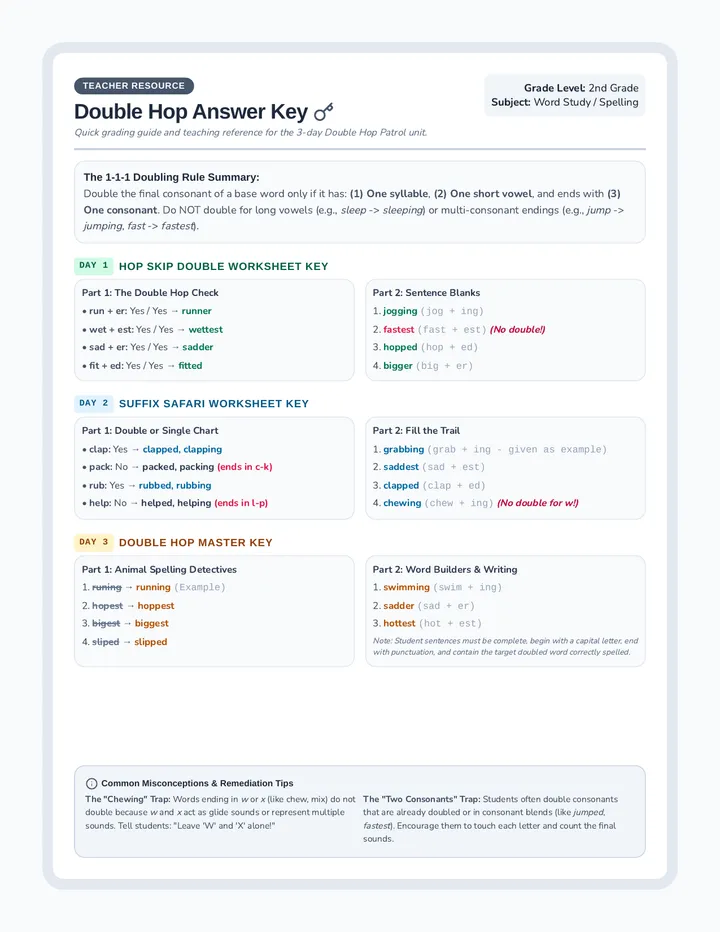
A multi-day 2nd-grade spelling and word study unit focused on the consonant-doubling rule when adding suffixes -er, -est, -ed, and -ing. Features an engaging 'Animal Adventures' theme with hopping bunnies, running puppies, and swimming fish to help students master the spelling rules through guided and independent practice.
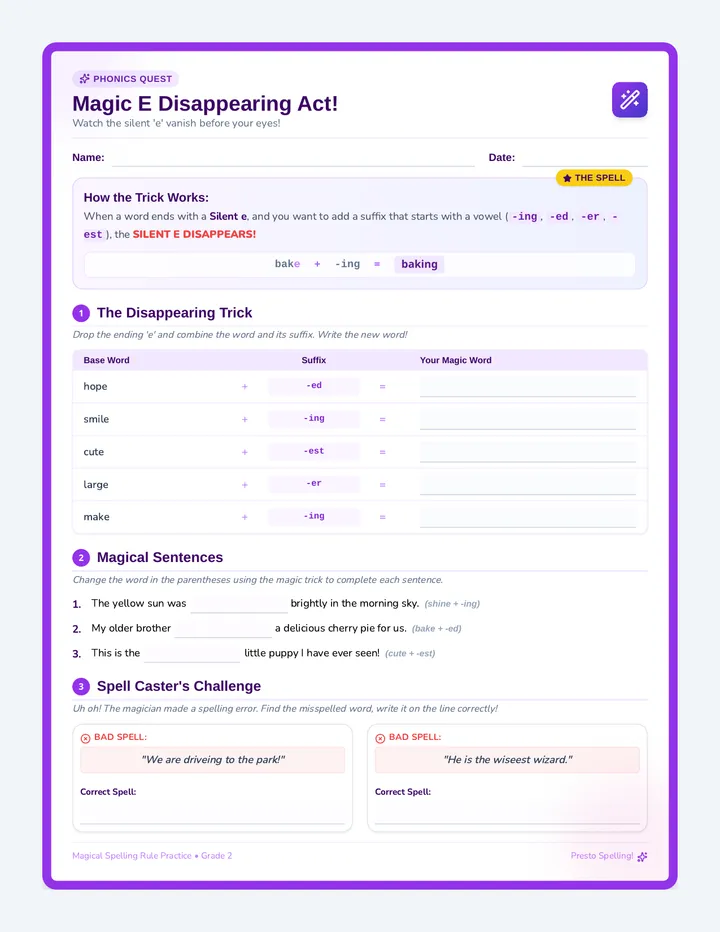
A 2nd grade phonics lesson focused on the spelling rule of dropping the silent 'e' before adding vowel suffixes (-ing, -ed, -er, -est). The lesson includes a high-engagement magical-themed worksheet and a corresponding teacher answer key.
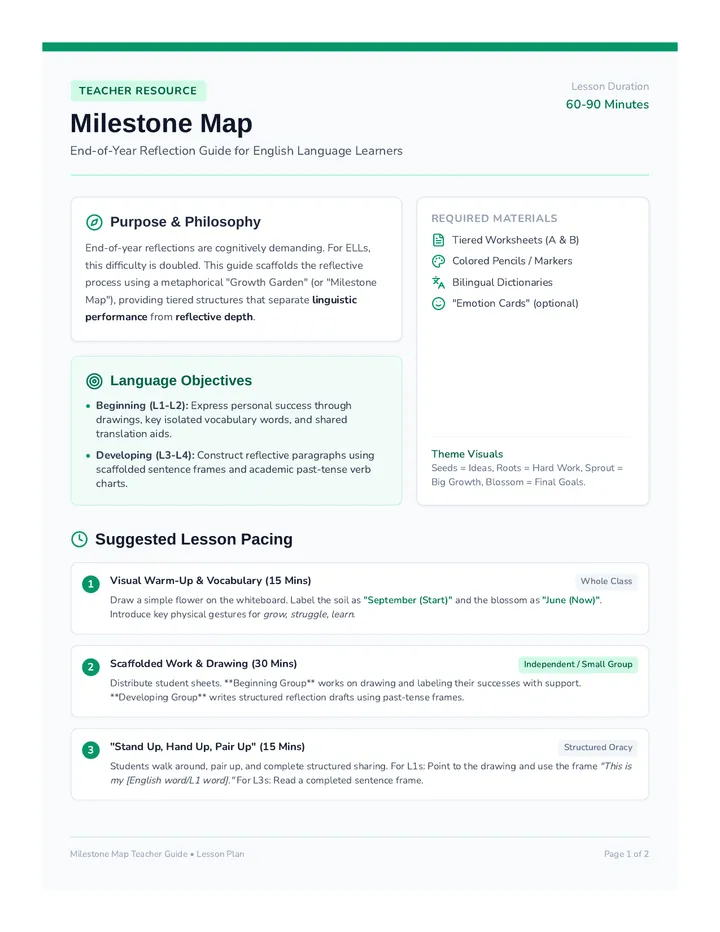
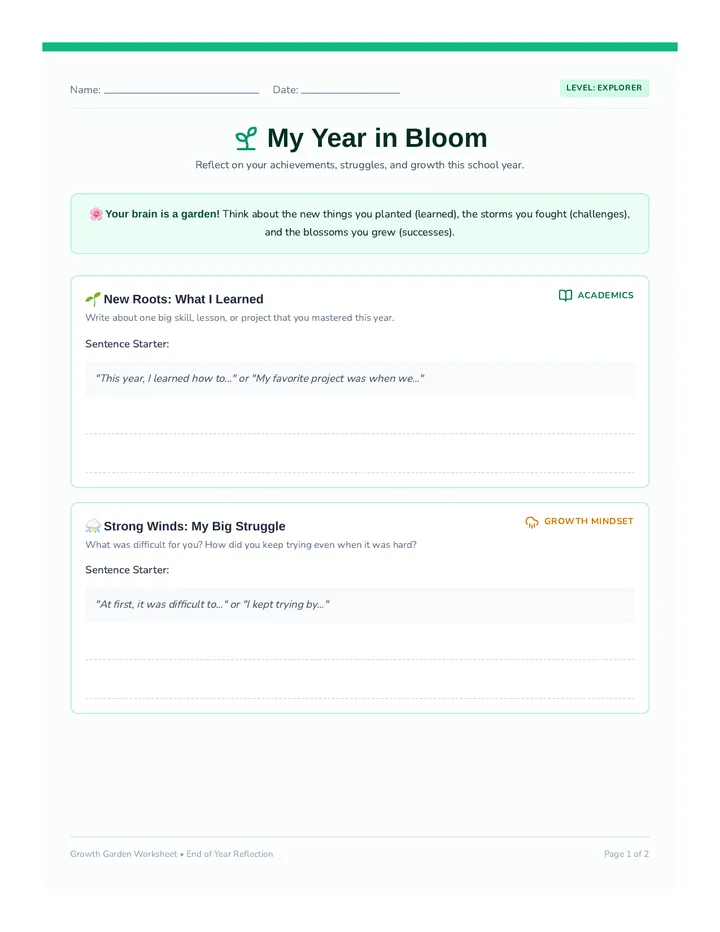
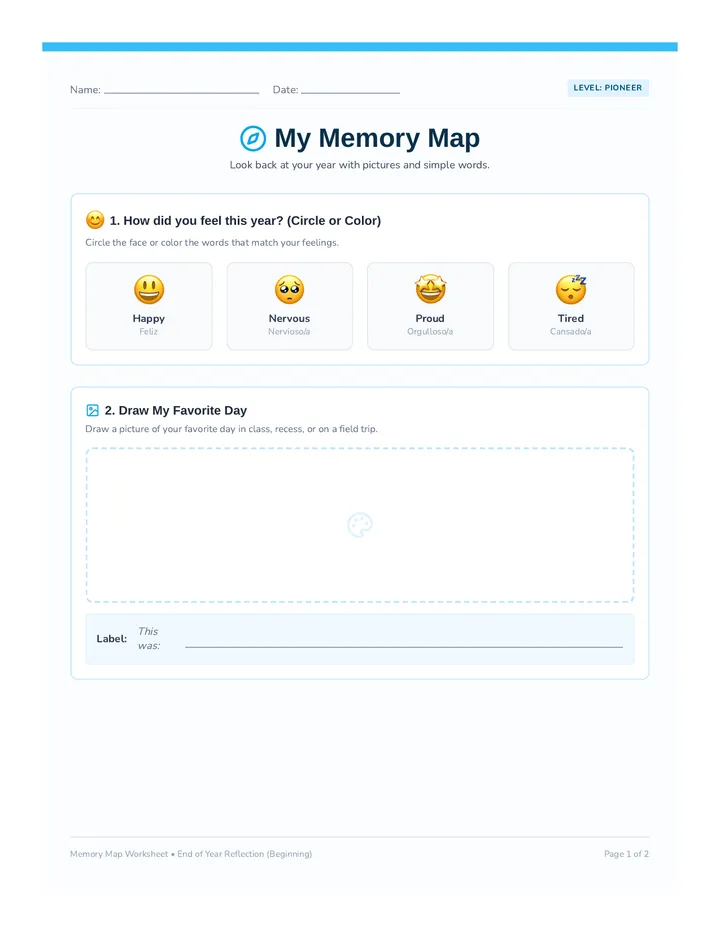
An end-of-year reflection lesson designed specifically for English Language Learners, featuring tiered worksheets for Beginning/Entering and Developing/Expanding levels, supported by a detailed facilitator guide.
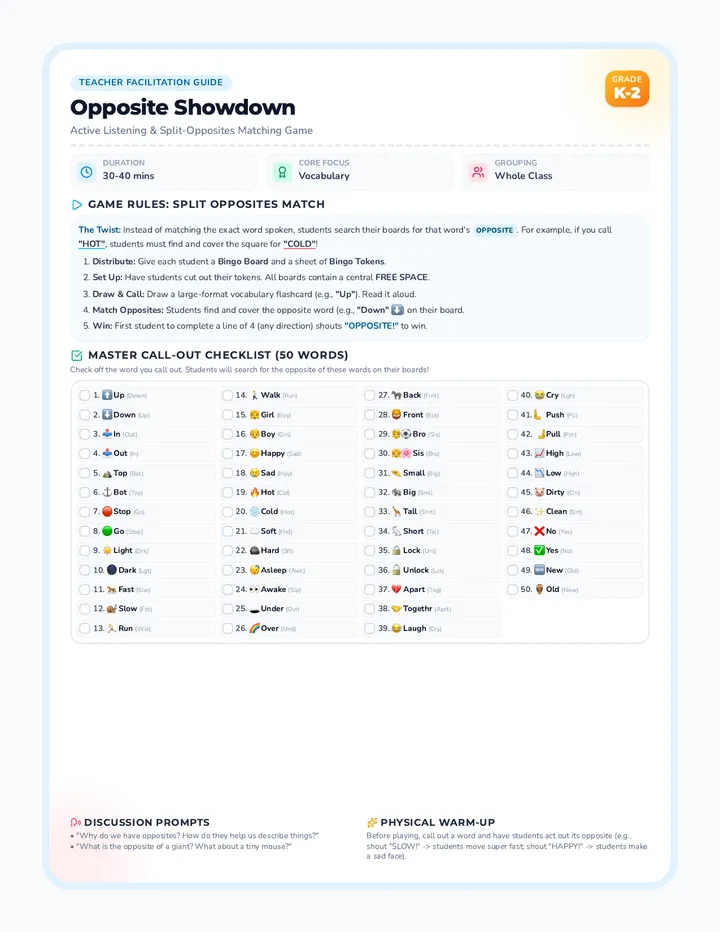
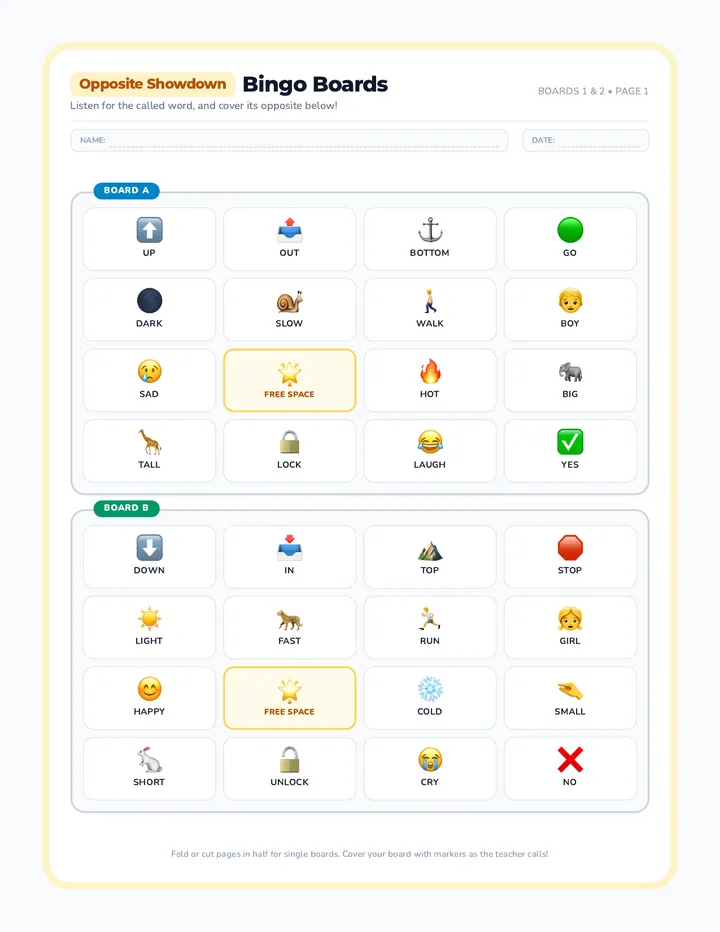
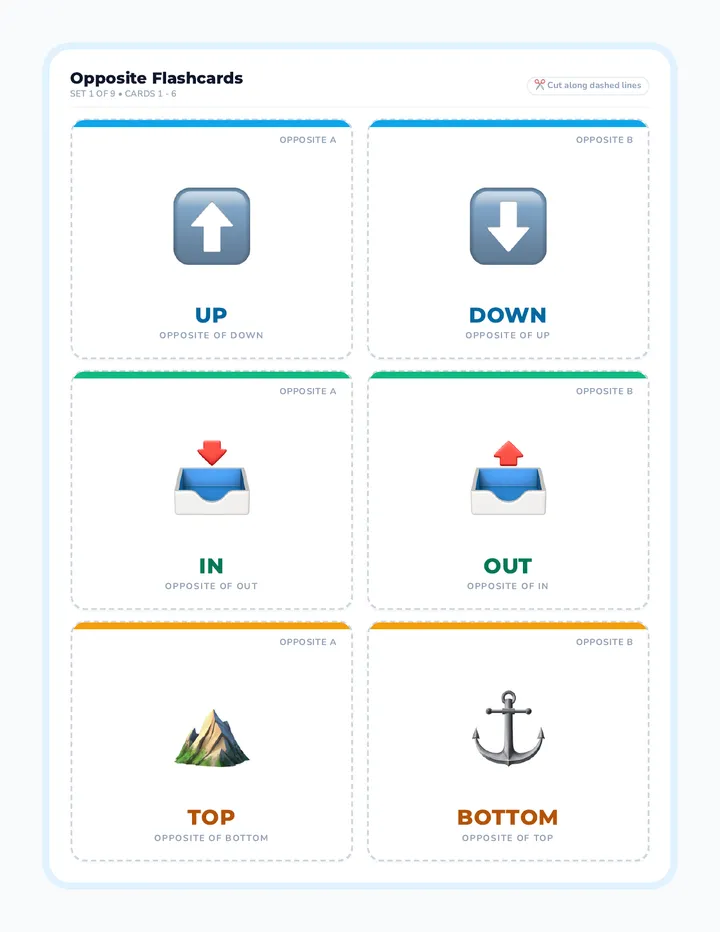
An interactive lesson package centered on teaching opposites through 'Split Opposites Matching' Bingo, featuring illustrated playing boards, large-format vocabulary cards, and a comprehensive activity guide.
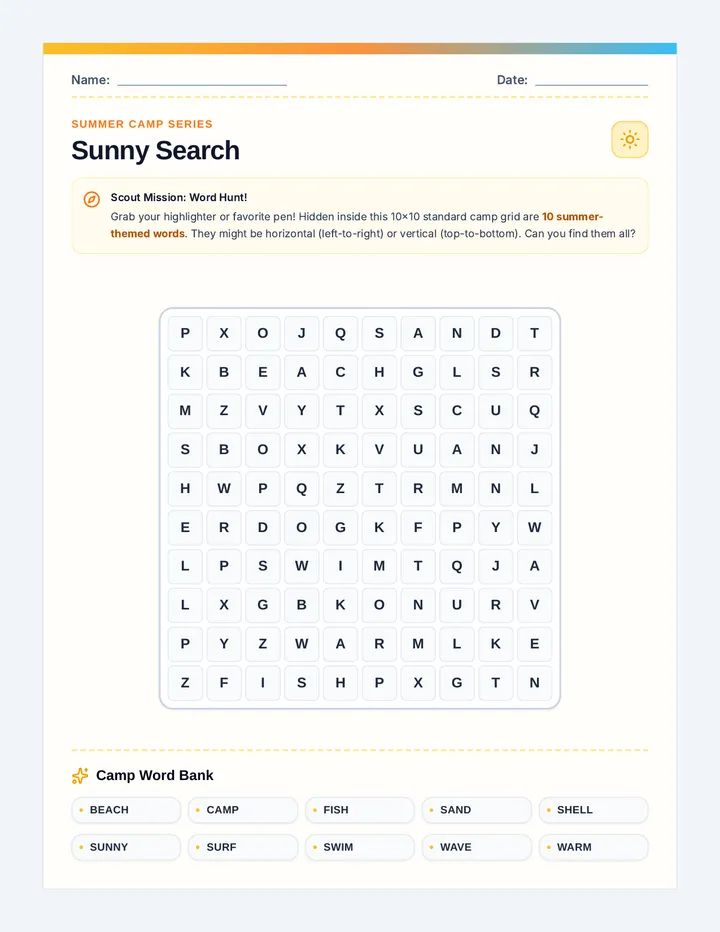
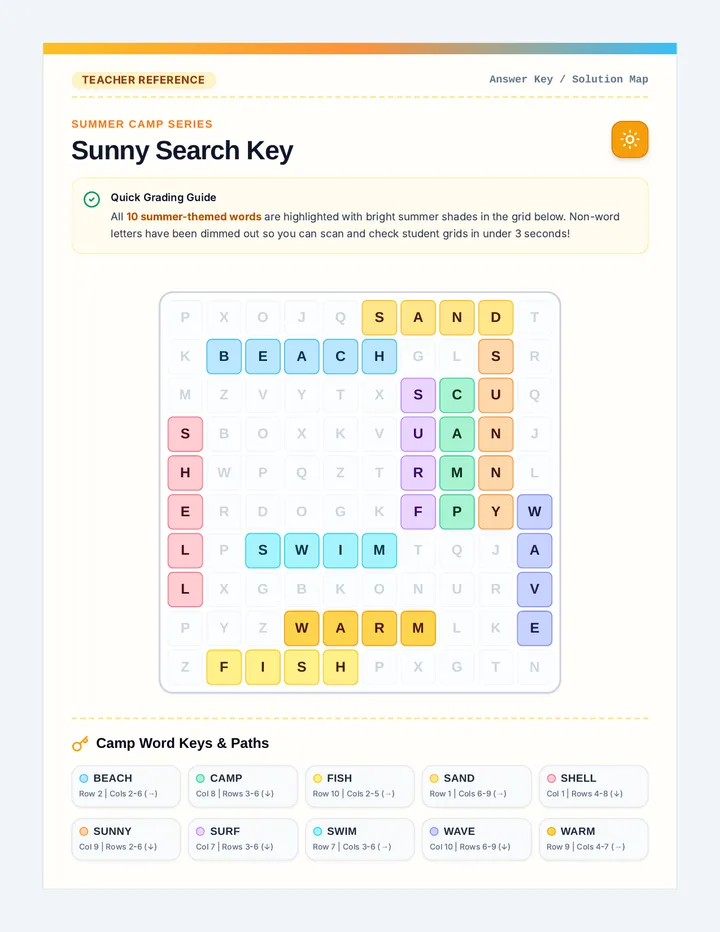
A fun, summer-themed word search lesson designed for standard grid gameplay with high-contrast elements suitable for highlight strips. Includes a clean 10x10 word search and a corresponding teacher answer key.
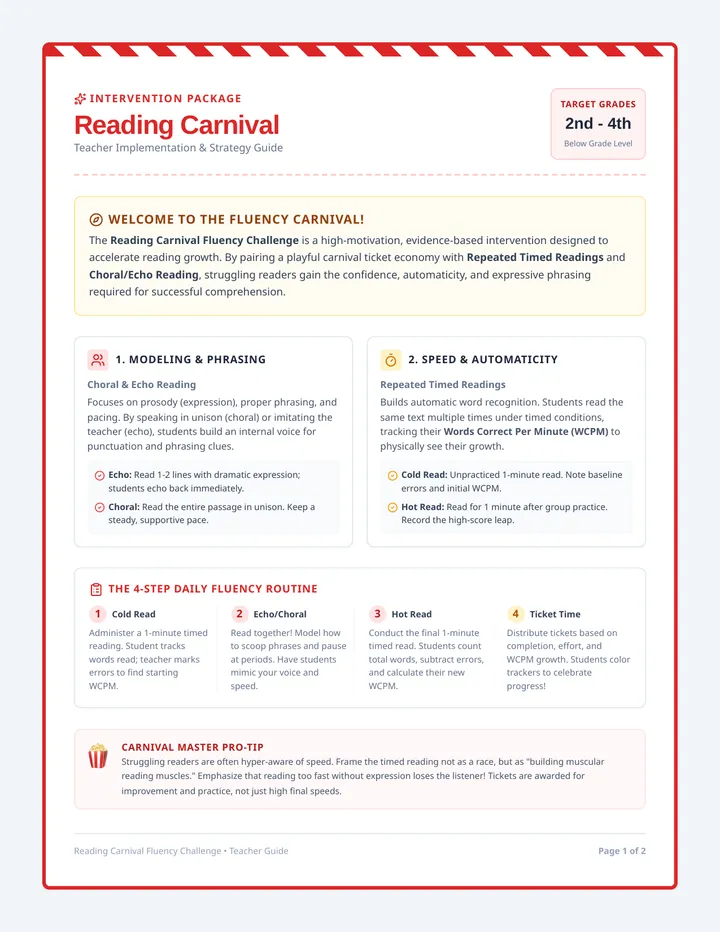
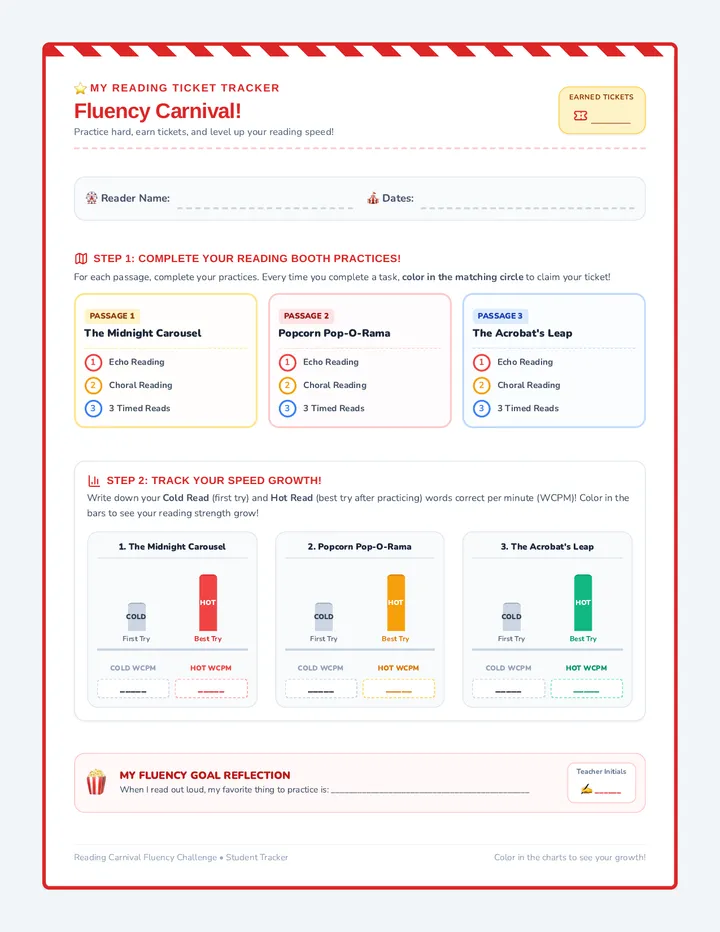
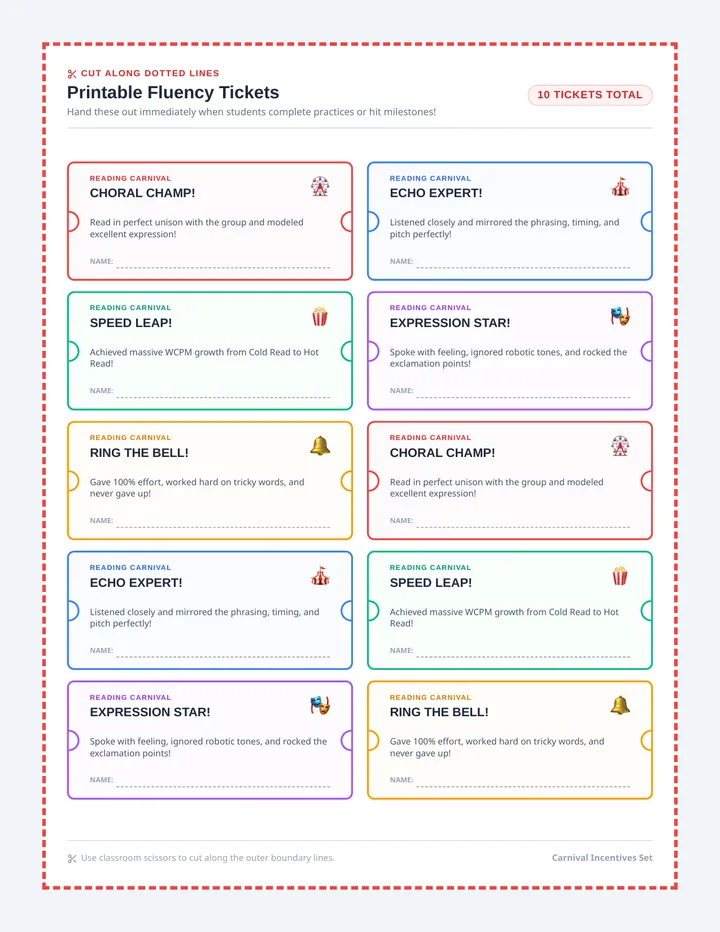
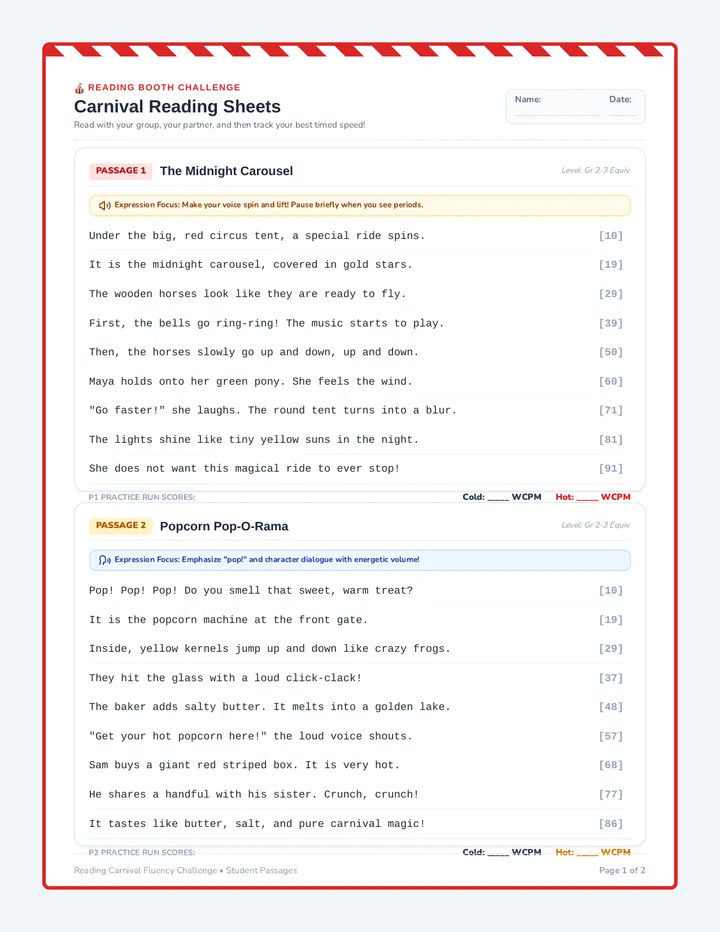
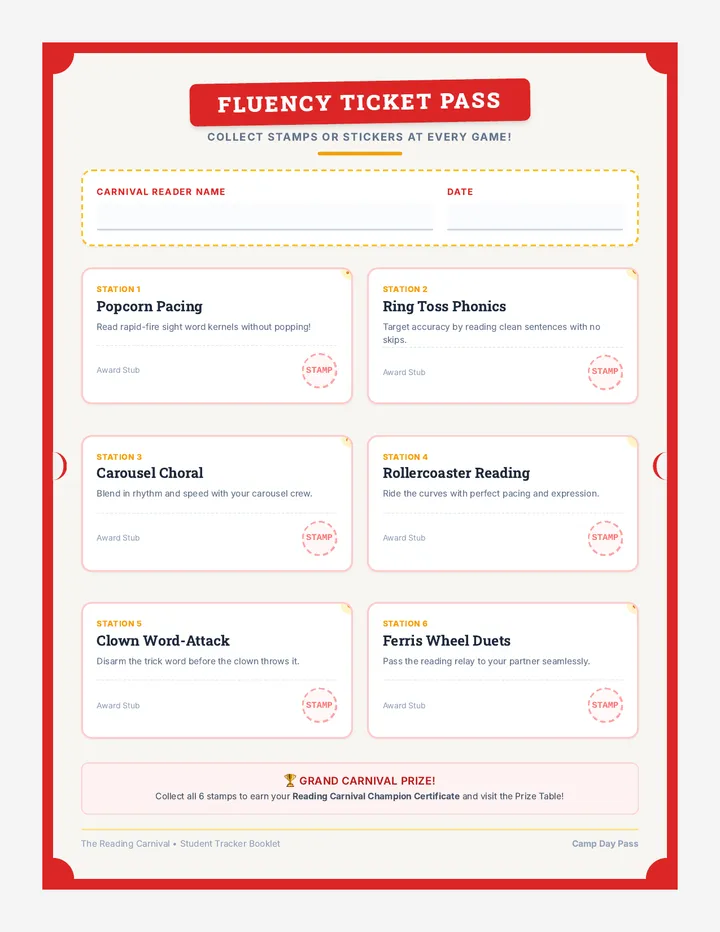
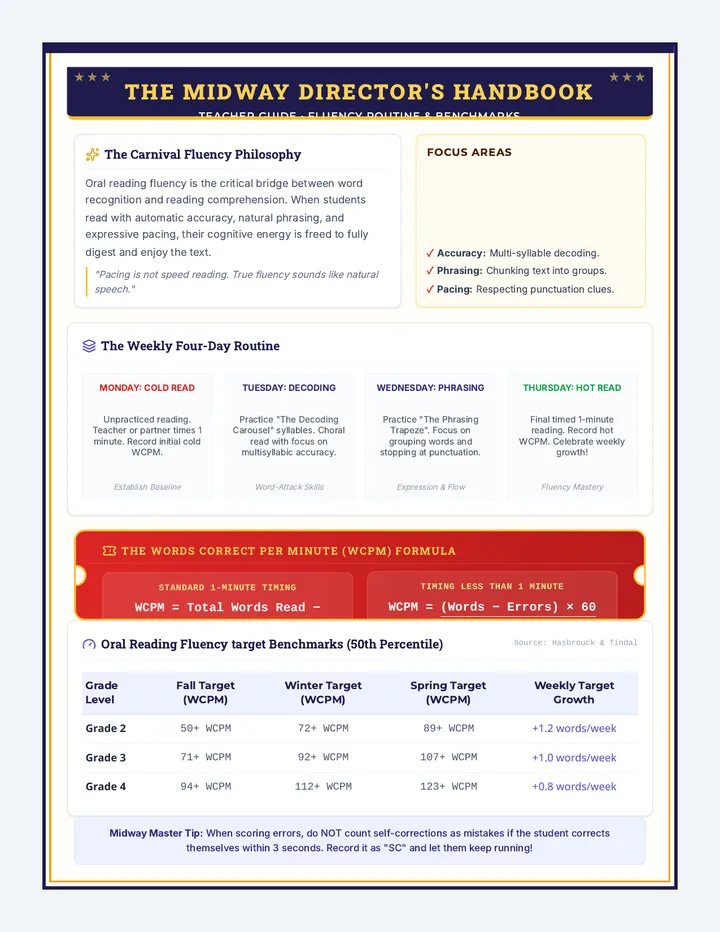
A complete intervention pack designed to boost reading fluency for 2nd-4th grade students reading below grade level. The pack contains teacher instructions, student tracking charts, printable carnival tickets, and themed passages optimized for repeated timed readings and choral/echo practice.
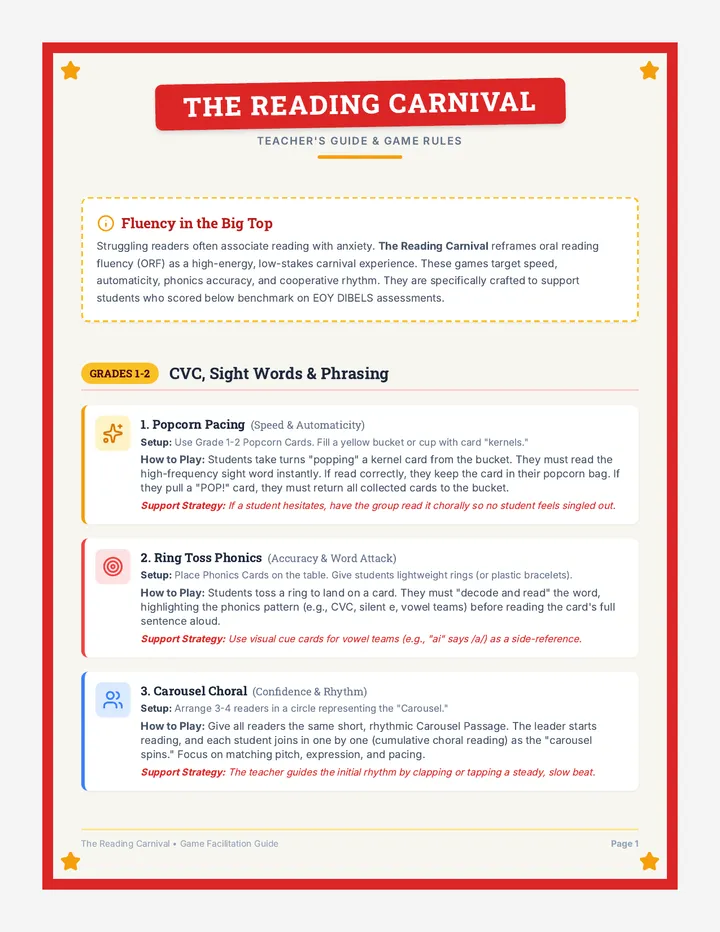
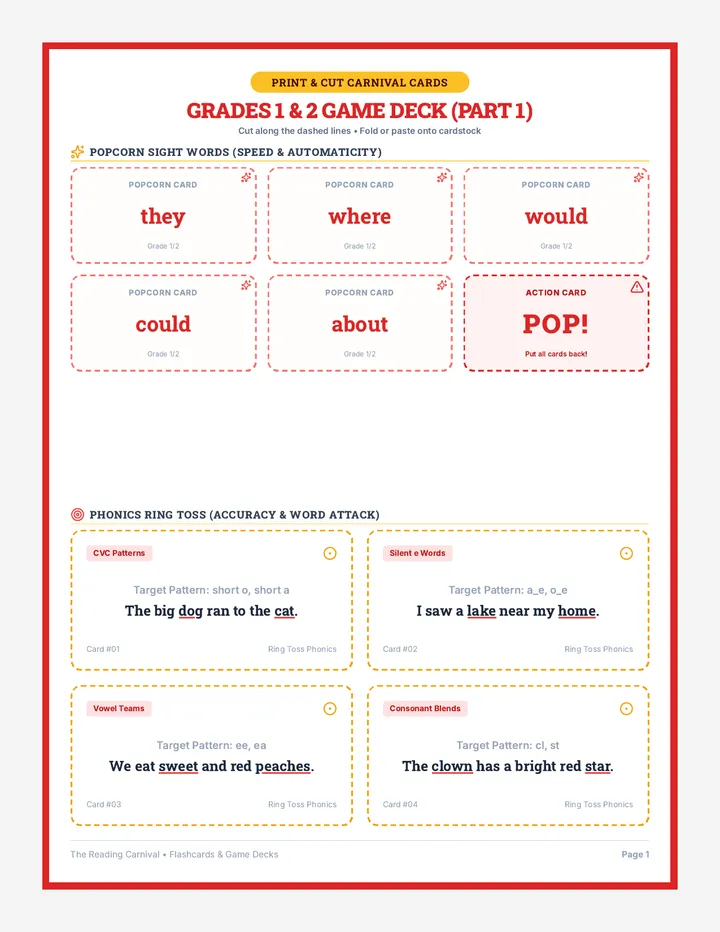
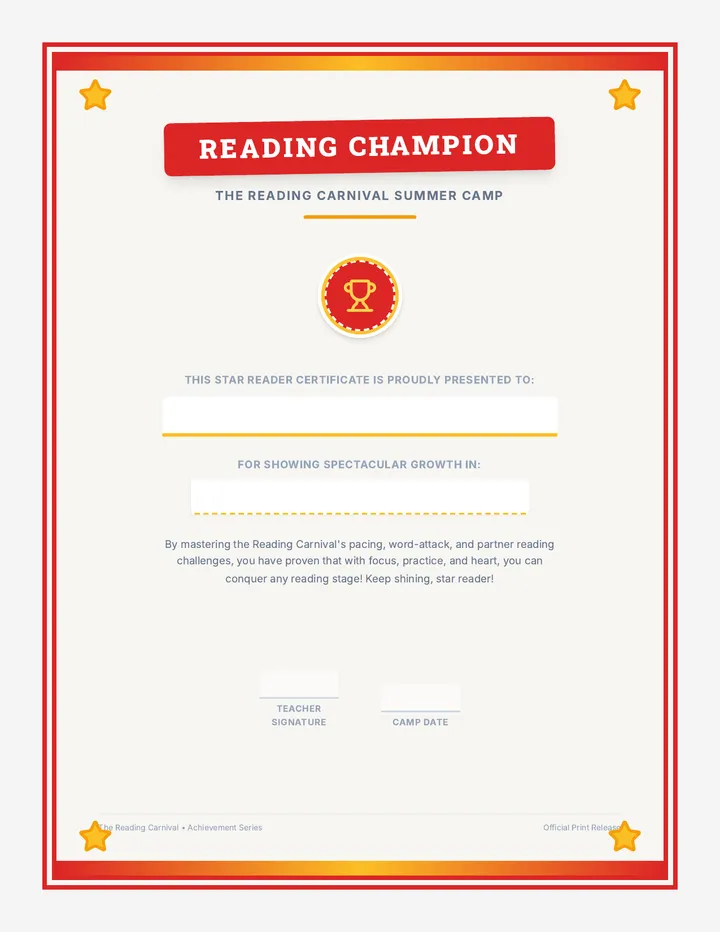
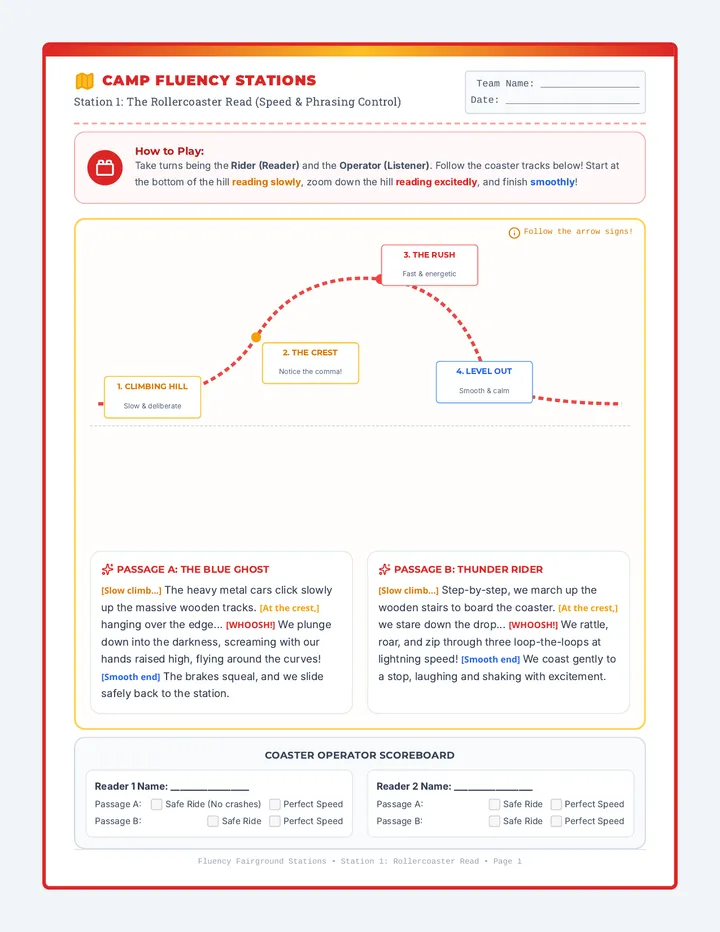
A comprehensive oral reading fluency bundle themed around 'The Reading Carnival'. It includes game guides, differentiated reading cards, progress trackers, and achievement awards designed specifically for struggling 1st-4th grade readers to build speed, accuracy, and confidence in a high-energy summer camp environment.
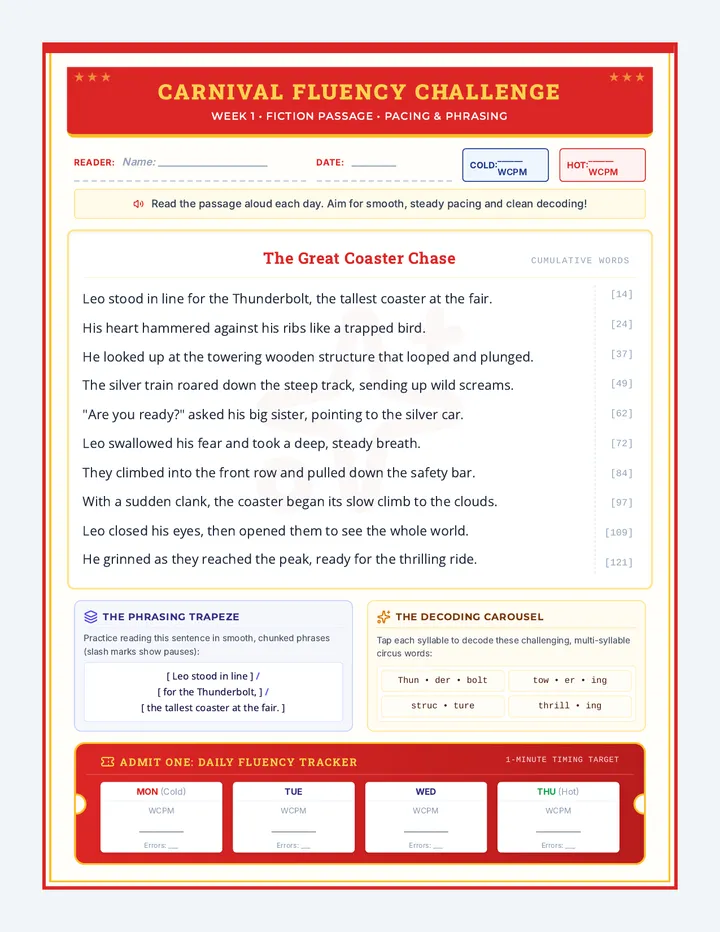
A weekly oral reading fluency program themed around a vintage carnival. It focuses on pacing, phrasing, and decoding multi-syllable words through engaging fiction and non-fiction passages with built-in trackers.
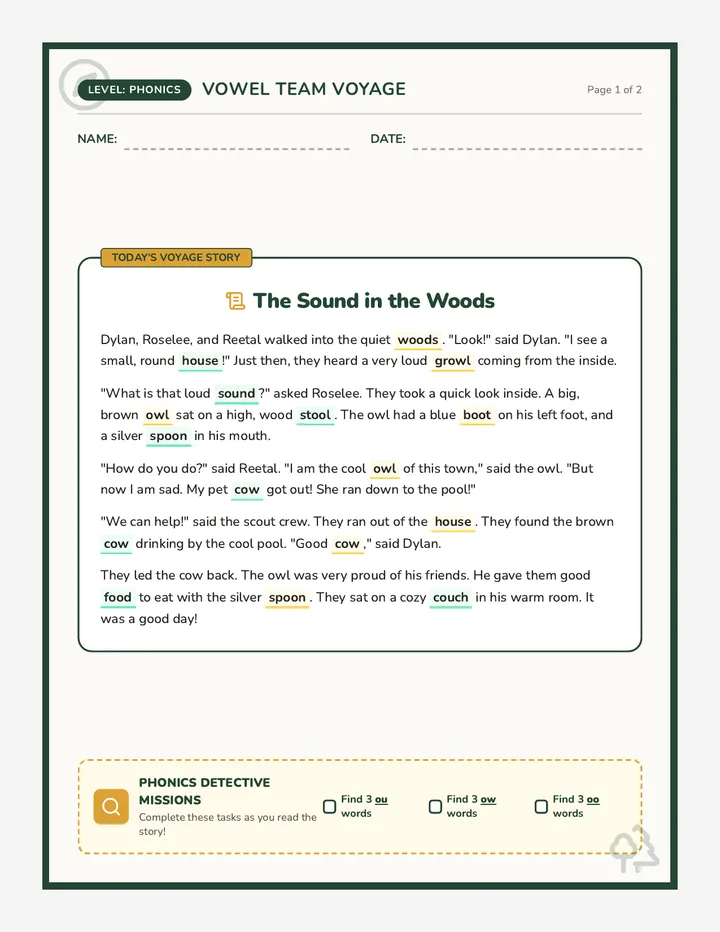
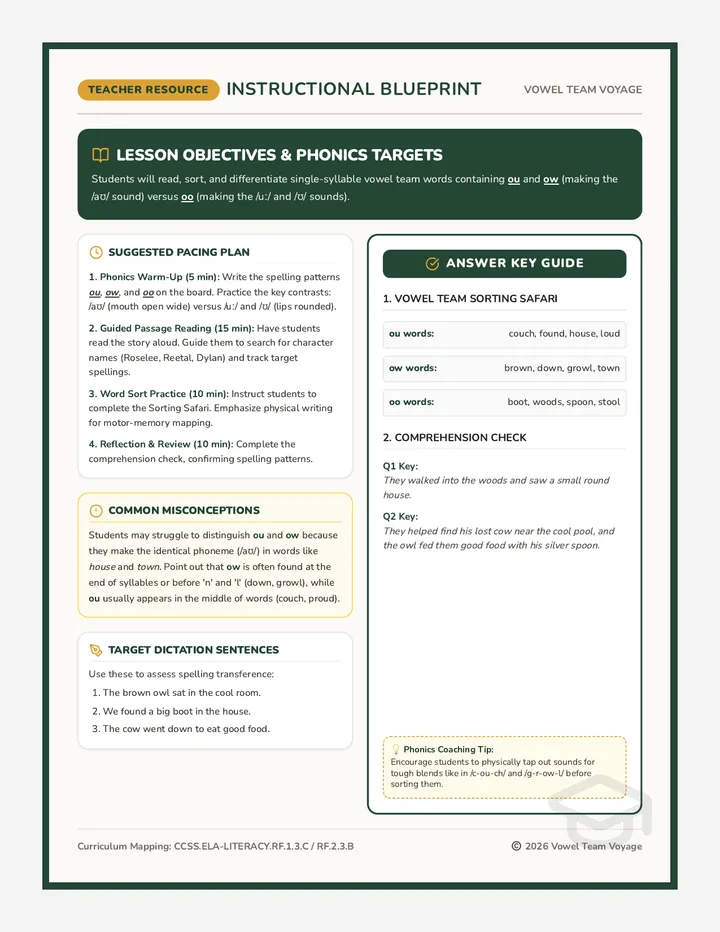
A targeted phonics lesson focused on contrasting single-syllable words containing 'ou', 'ow', and 'oo' vowel teams. Students read an engaging phonics story featuring Roselee, Reetal, and Dylan, and complete structured word-sorting and reading comprehension exercises.
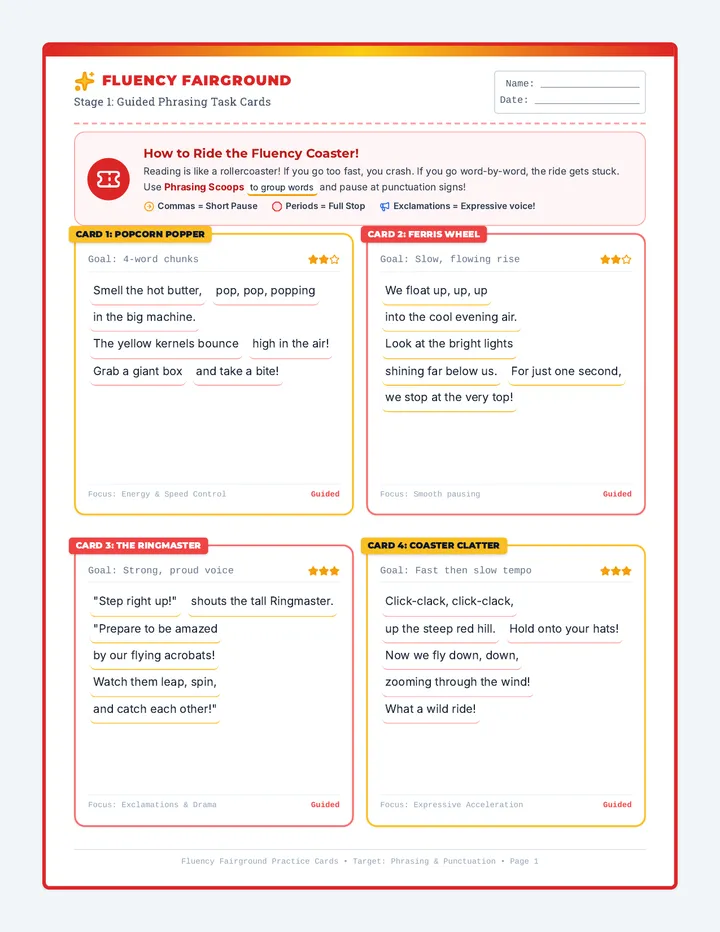
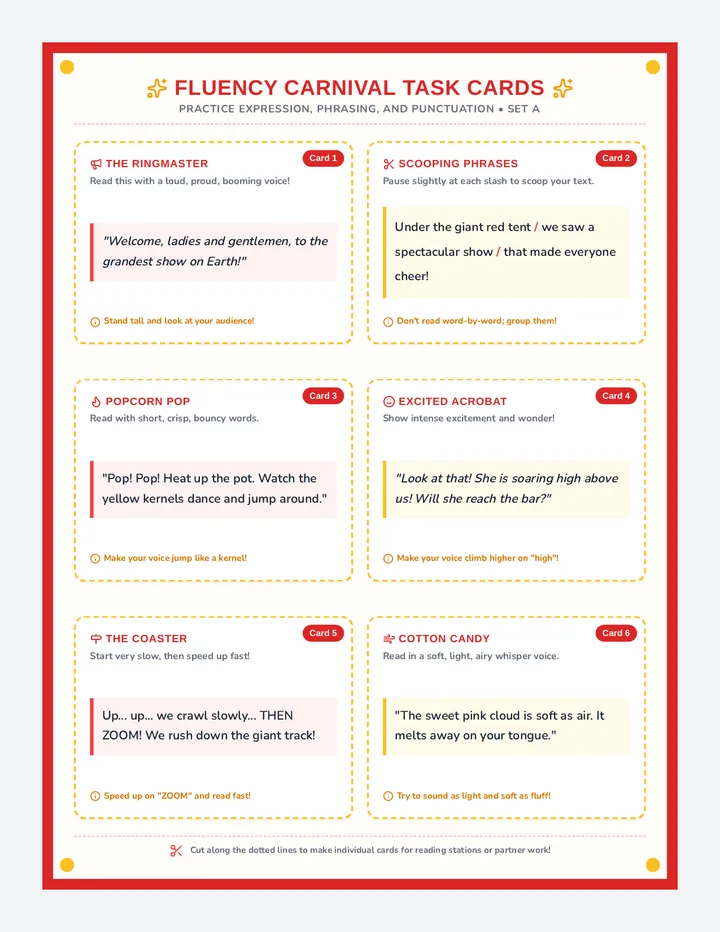
A high-energy, carnival-themed literacy package designed to boost oral reading fluency with a focus on phrasing and punctuation. Features print-and-cut phrasing task cards, partner-based carnival games, and a dramatic Reader's Theater script set under the Big Top.
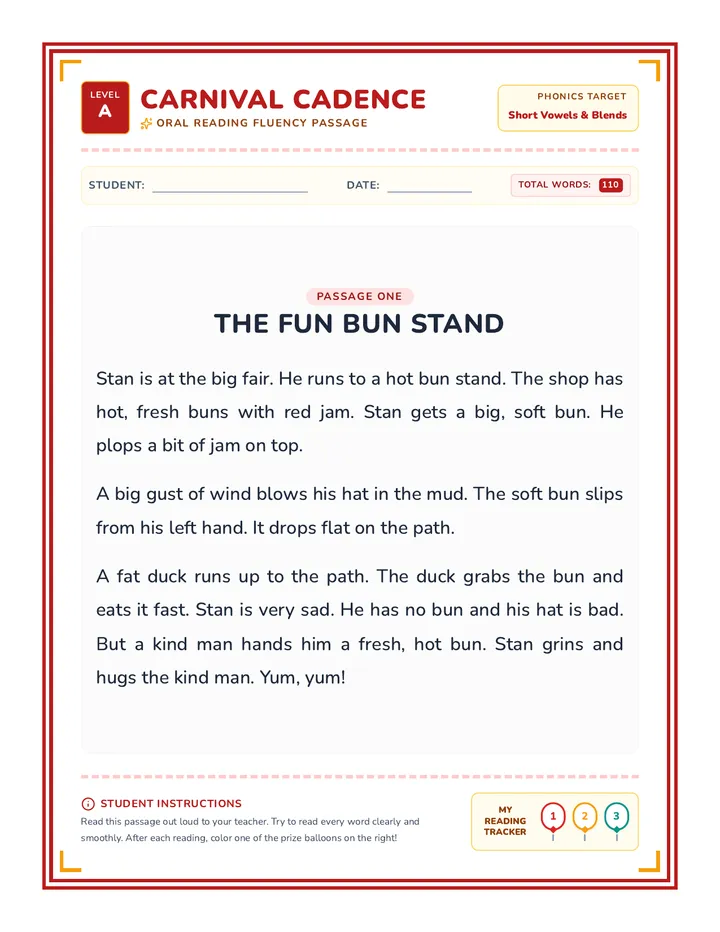
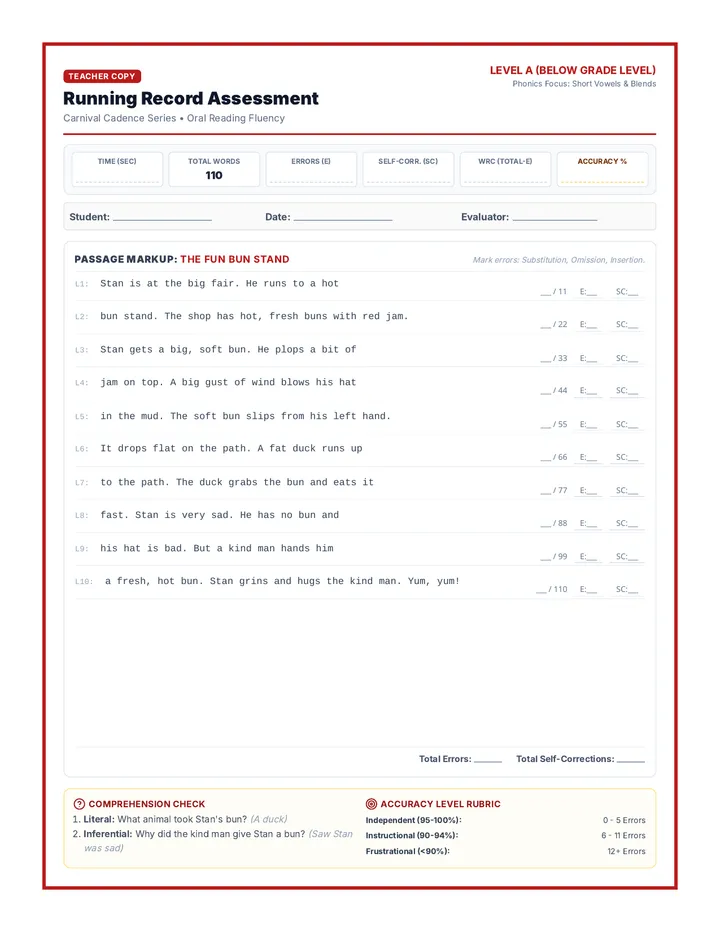
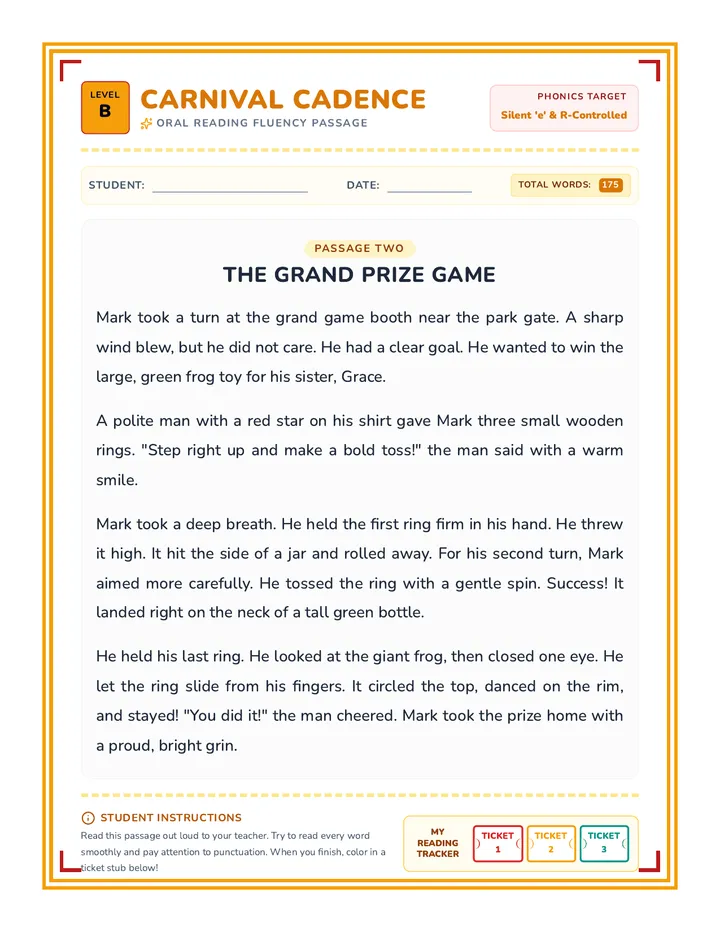
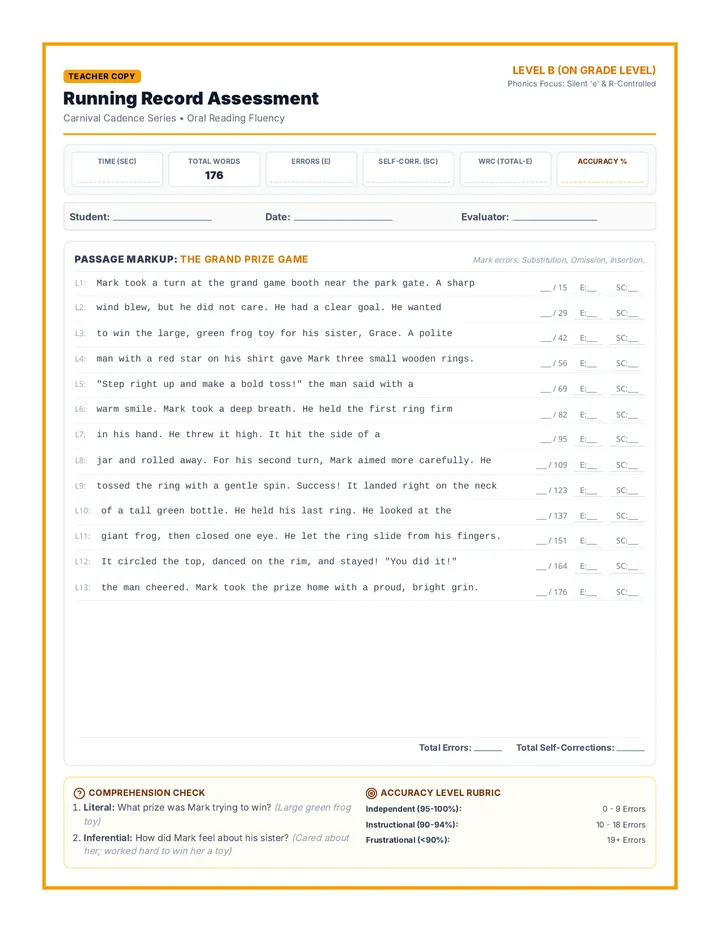
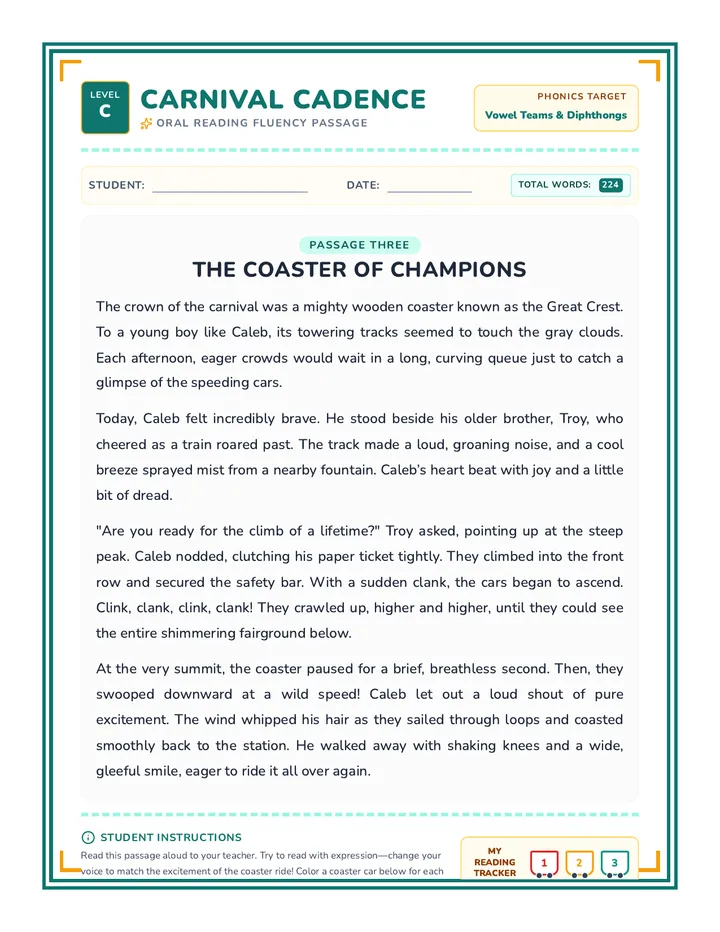
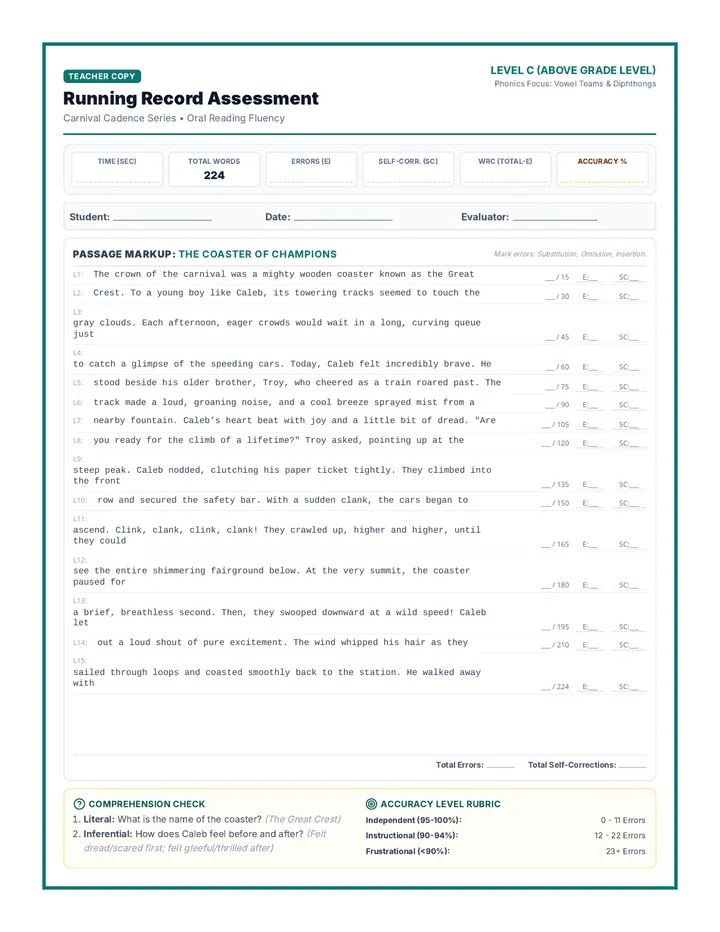
Differentiated carnival-themed reading passages and matching teacher running record forms designed to boost oral reading fluency and target specific phonics patterns.
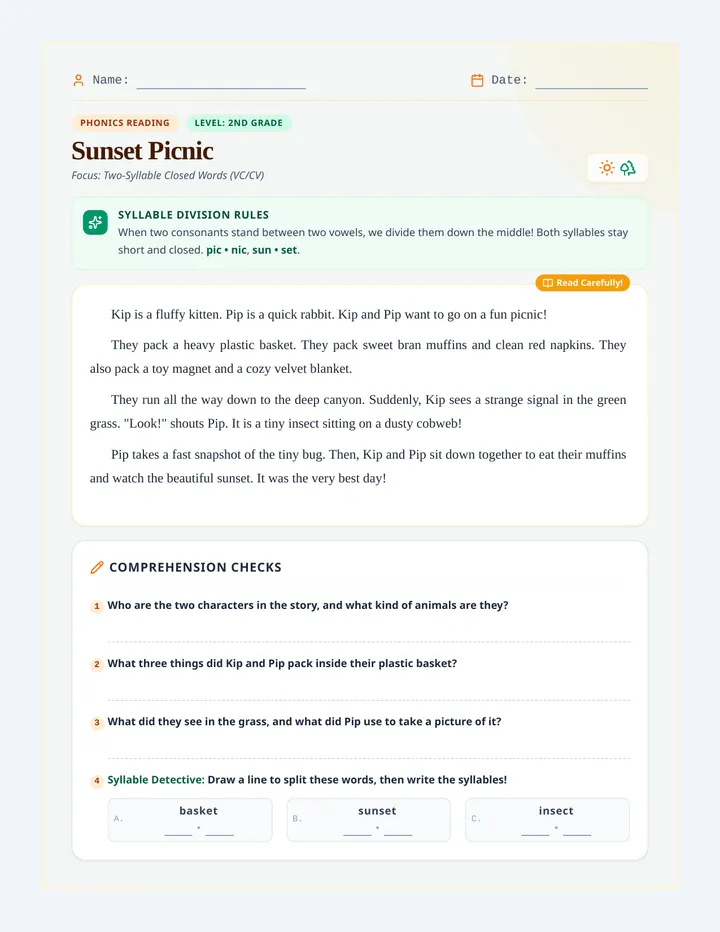
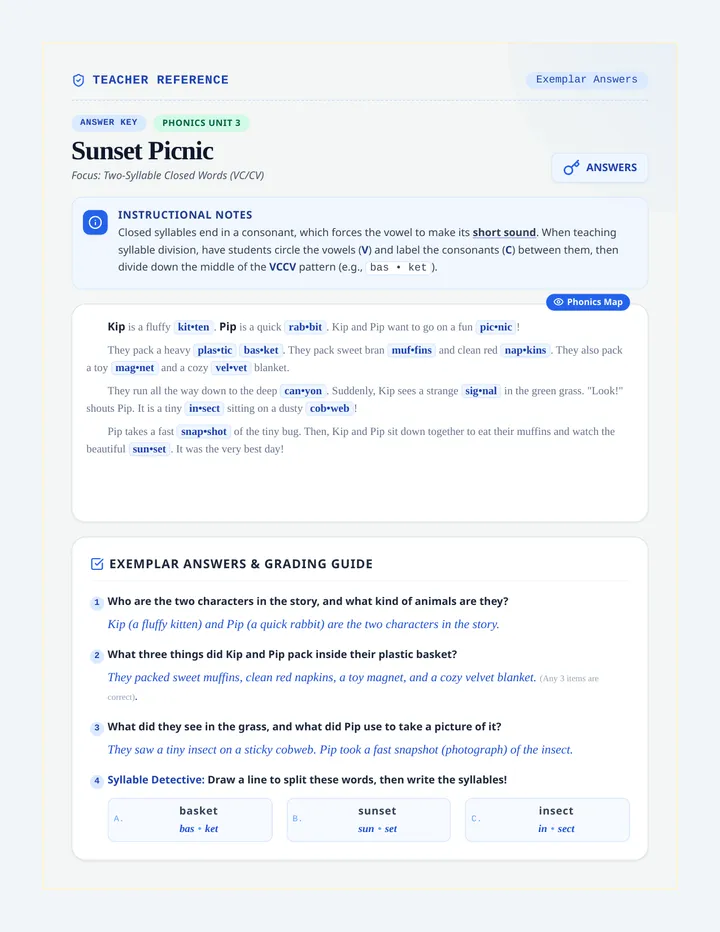
A primary phonics lesson focusing on decoding and understanding two-syllable words with closed syllables. Students practice syllable division, read a decodable story, and answer reading comprehension questions.
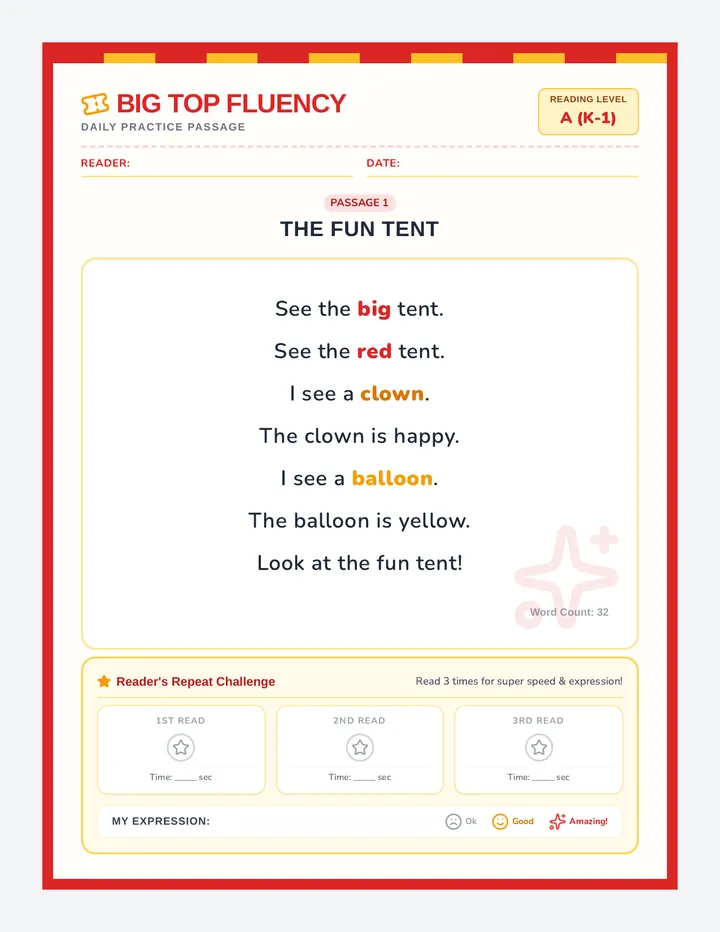
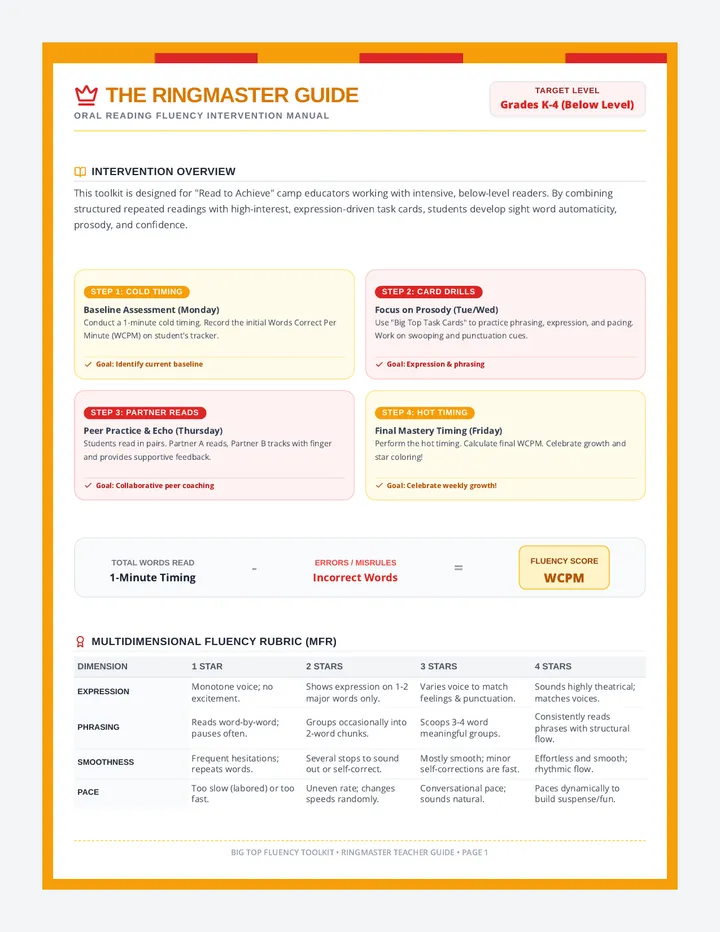
A carnival-themed oral reading fluency toolkit designed for Read to Achieve summer camps. Features differentiated reading passages (levels K-3) with repeated reading trackers, expression-focused task cards, and a teacher scoring and implementation guide.
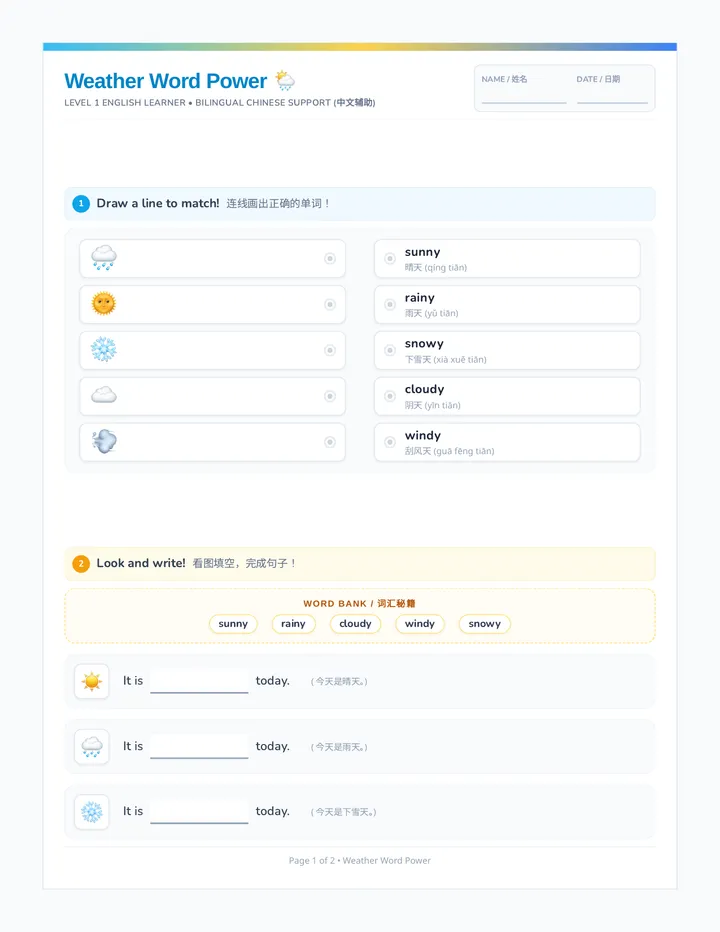
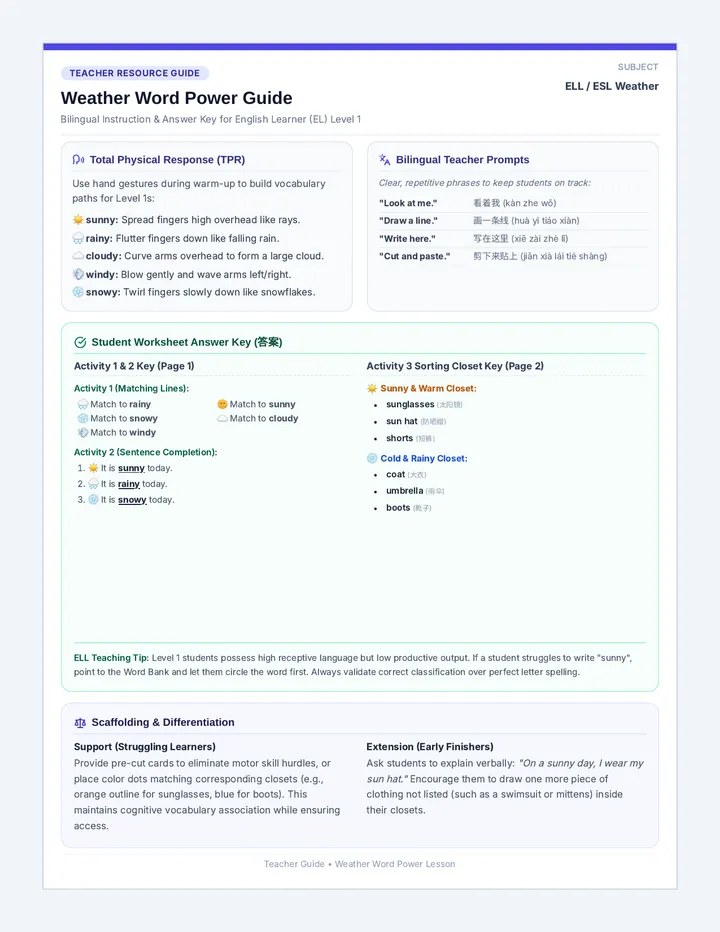
A beginner-friendly English language learning lesson focused on basic weather vocabulary and corresponding clothing items, specifically designed with bilingual Chinese-English support for Level 1 English learners.
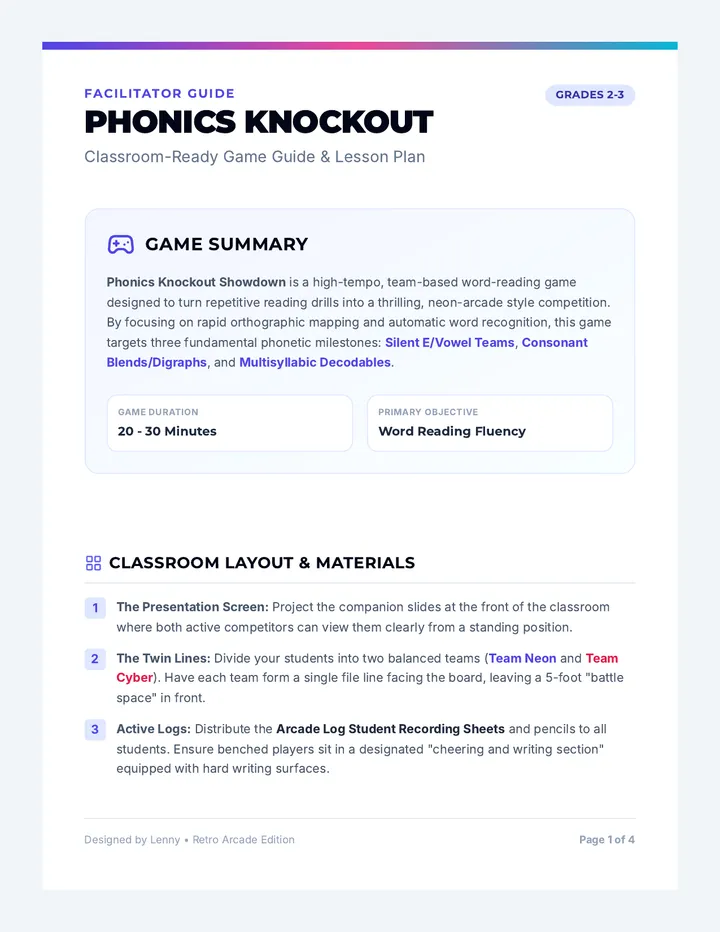
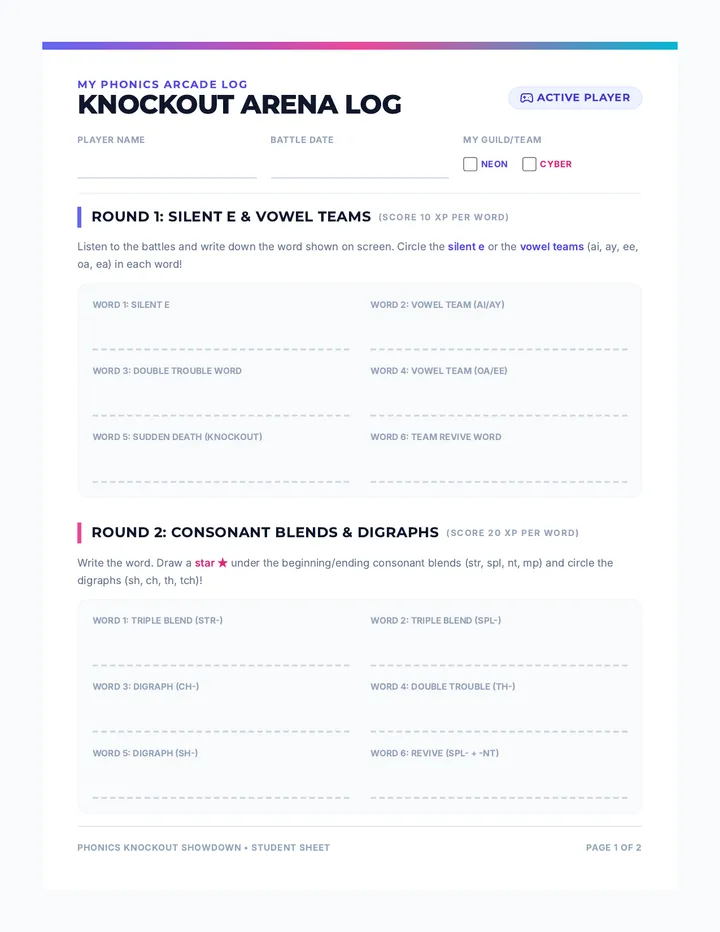
A high-energy, neon-themed classroom game targeting 2nd and 3rd-grade phonics standards including Silent E, Vowel Teams, Blends, Digraphs, and Multisyllabic Decodables. Includes visual projection slides, a comprehensive facilitator guide, and a high-engagement student recording sheet.
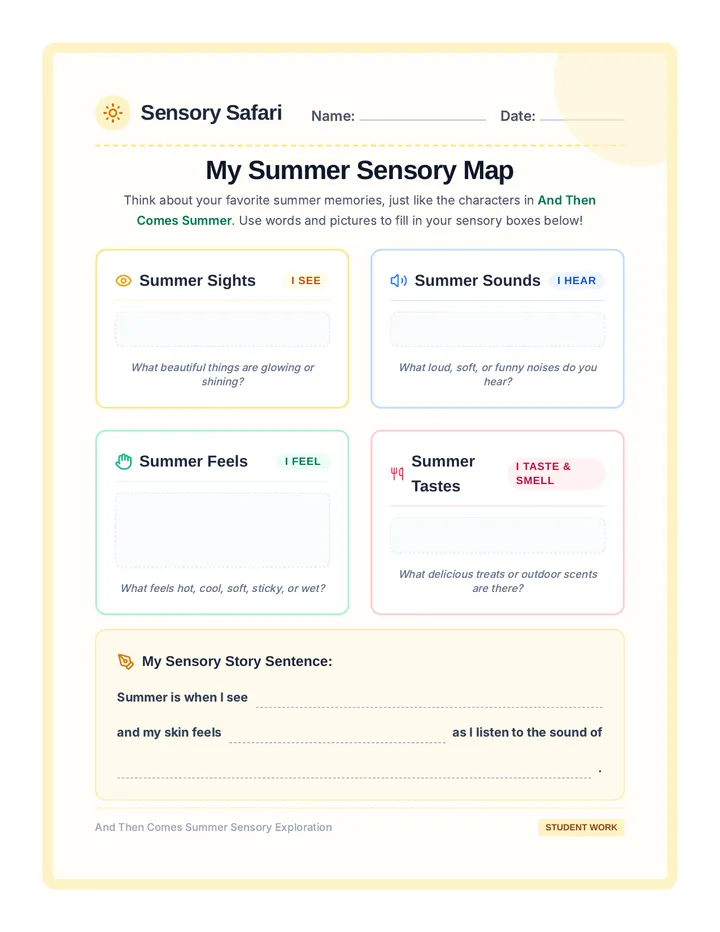
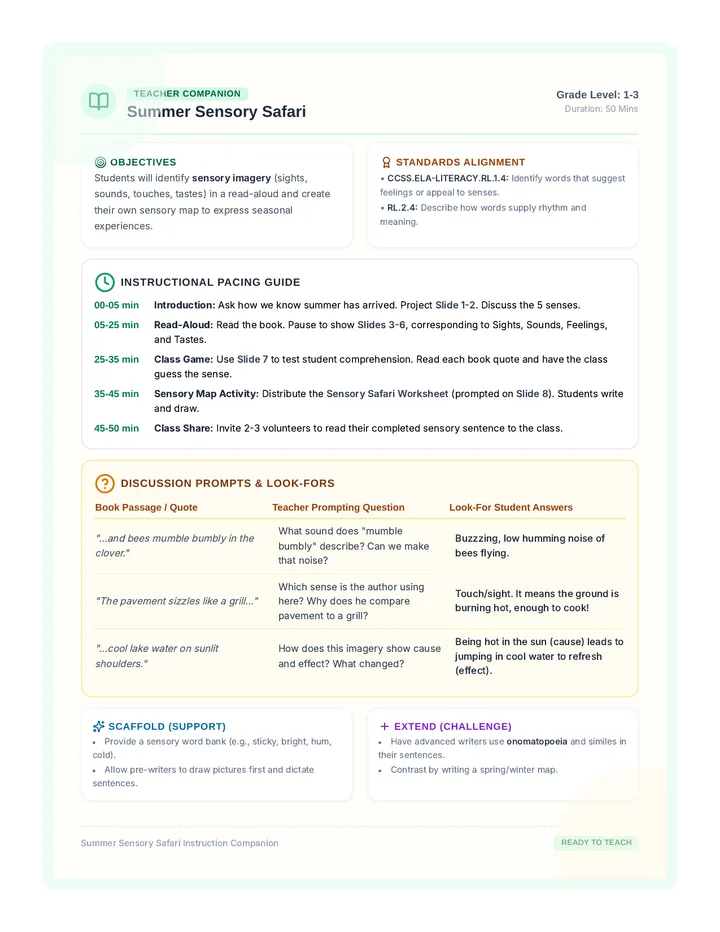
An interactive literature lesson exploring the rich sensory details and imagery in Tom Brenner's 'And Then Comes Summer'. Students identify and discuss sights, sounds, feels, and tastes to build comprehension and descriptive writing skills.
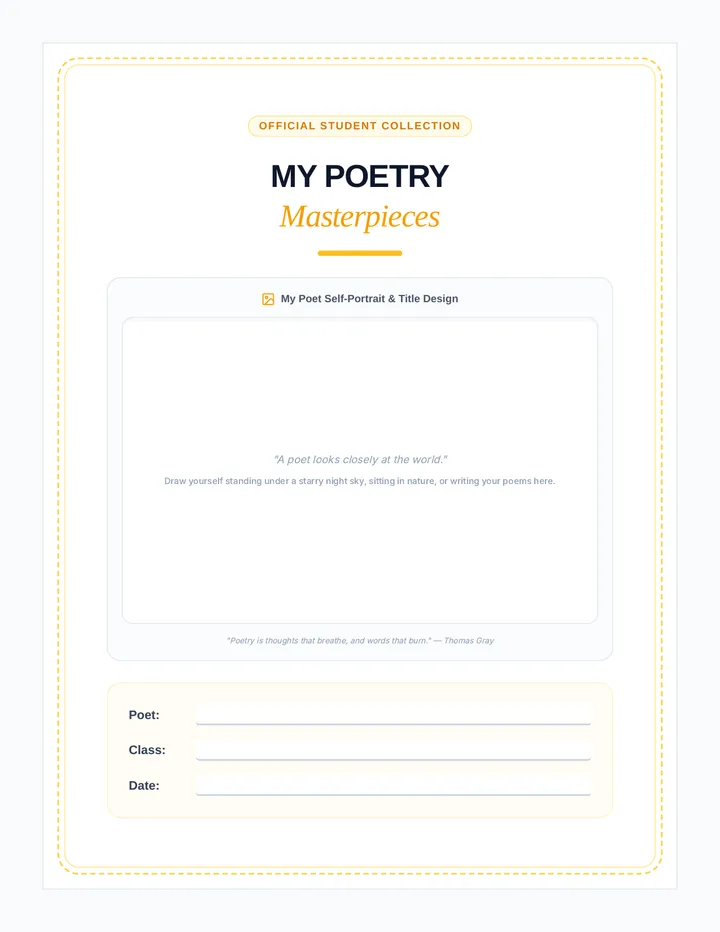
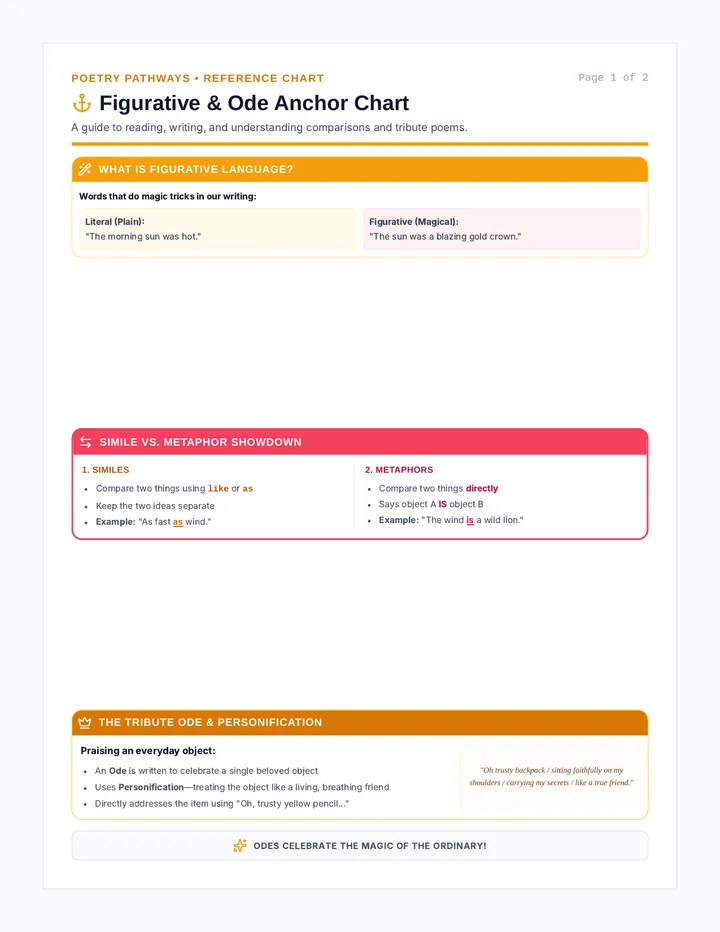
Focuses on using Metaphors and Similes to create powerful figurative imagery. Includes a final "My Poetry Masterpieces" portfolio cover and peer celebration review pages.
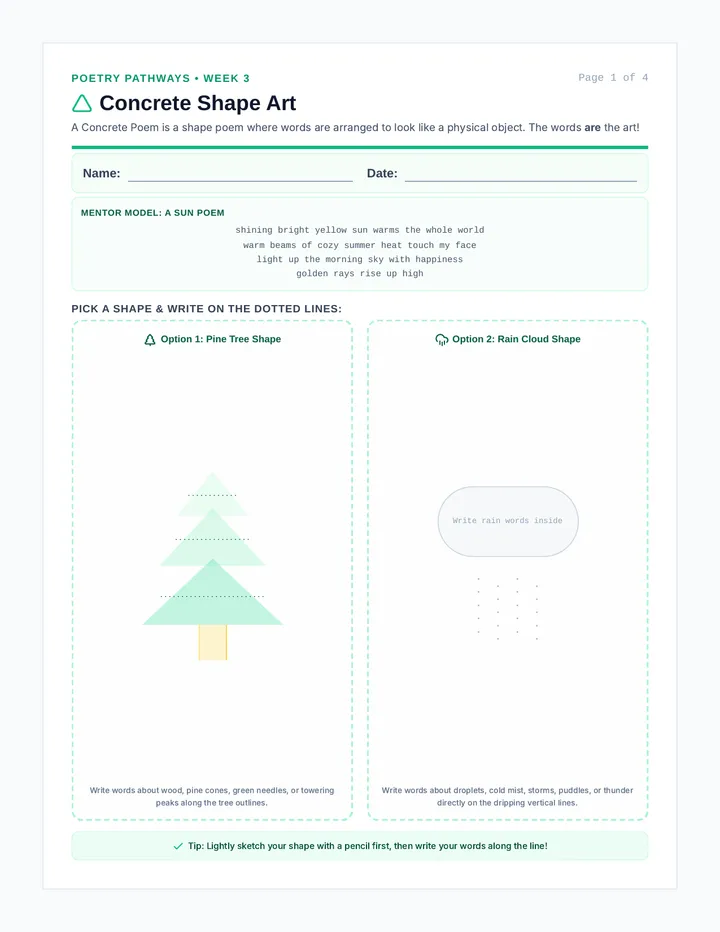
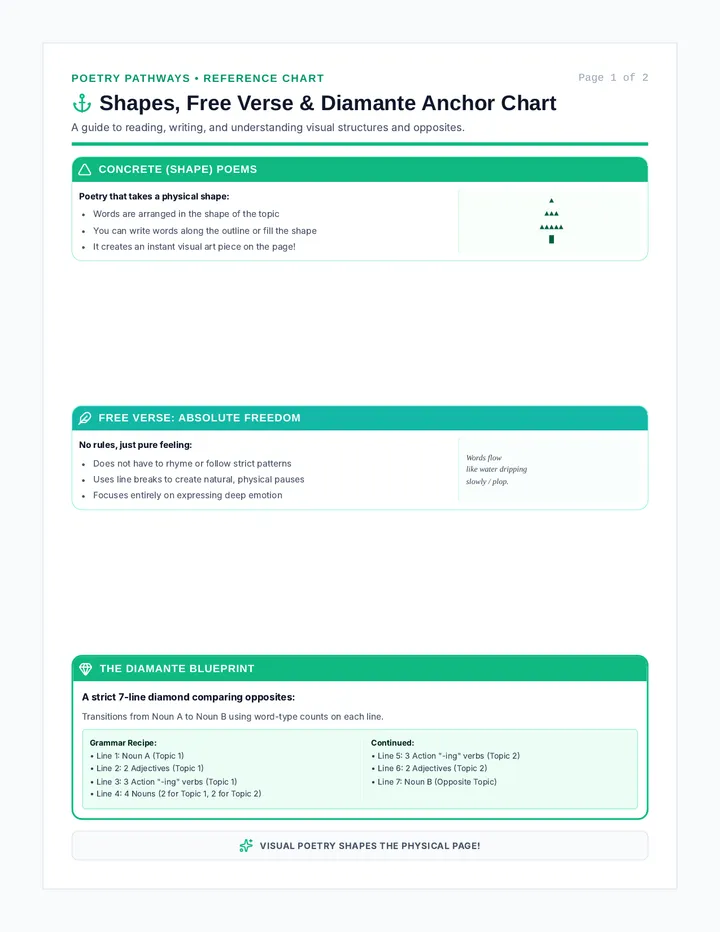
Focuses on shape, movement, and visual arrangement with Concrete (Shape) Poems and Free Verse. Provides scaffolded outline guides, word maps, and sensory feeling prompts.
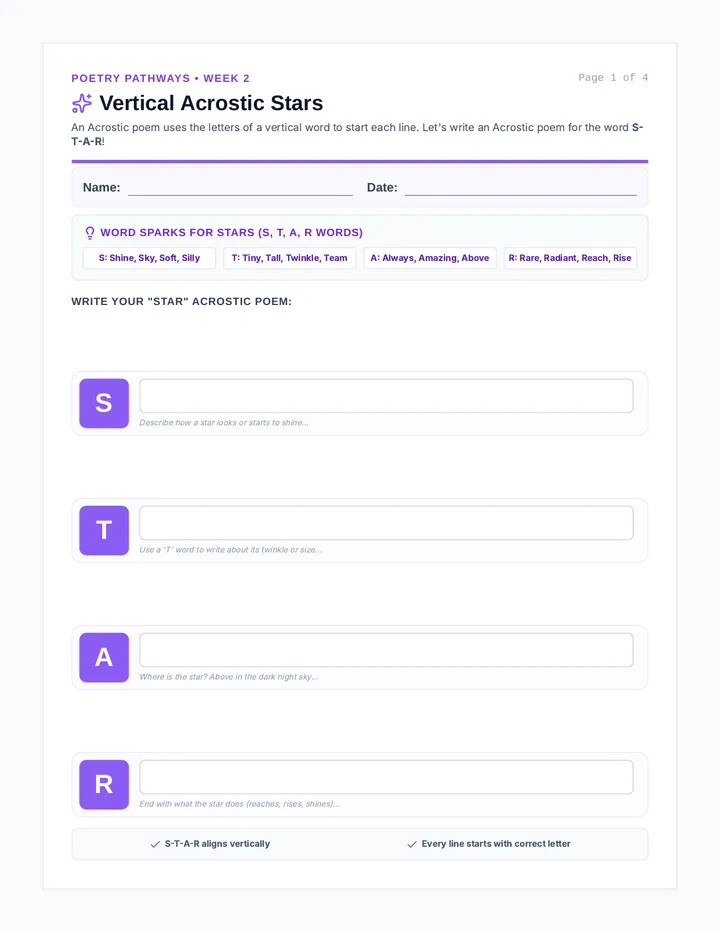
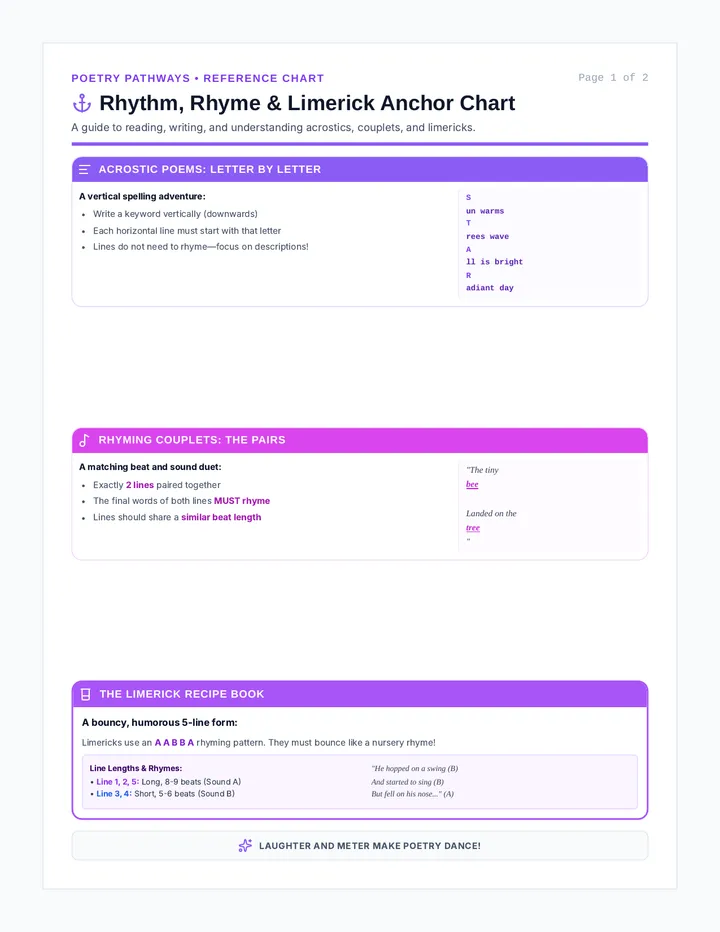
Focuses on structure, rhythm, and sound through Acrostic Poems and Rhyming Couplets. Offers step-by-step graphic templates, letter grids, rhyming dictionaries, and syllable beat counters.
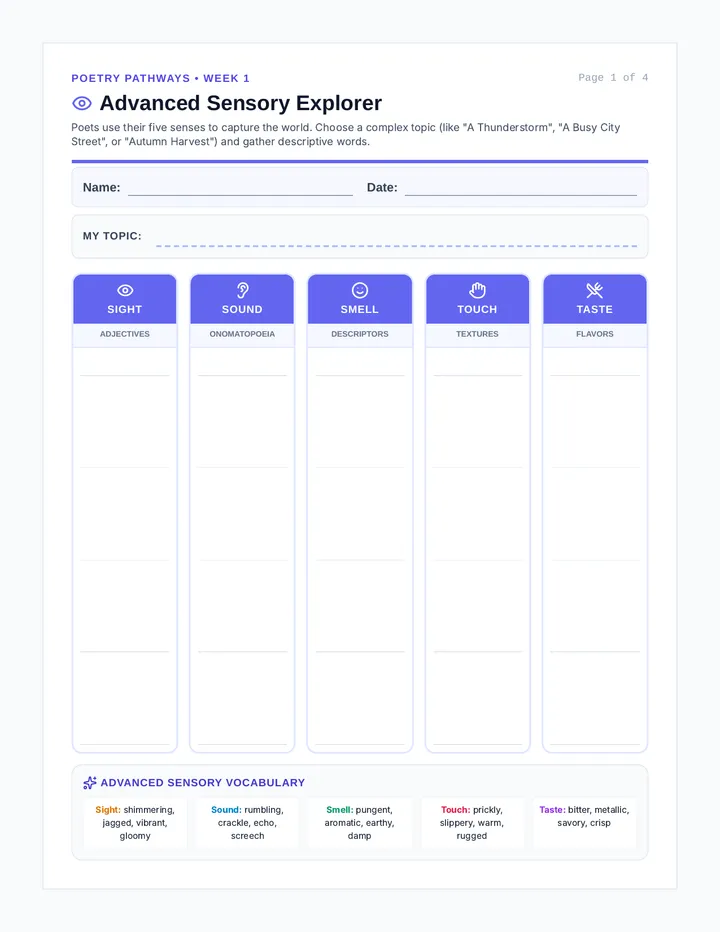
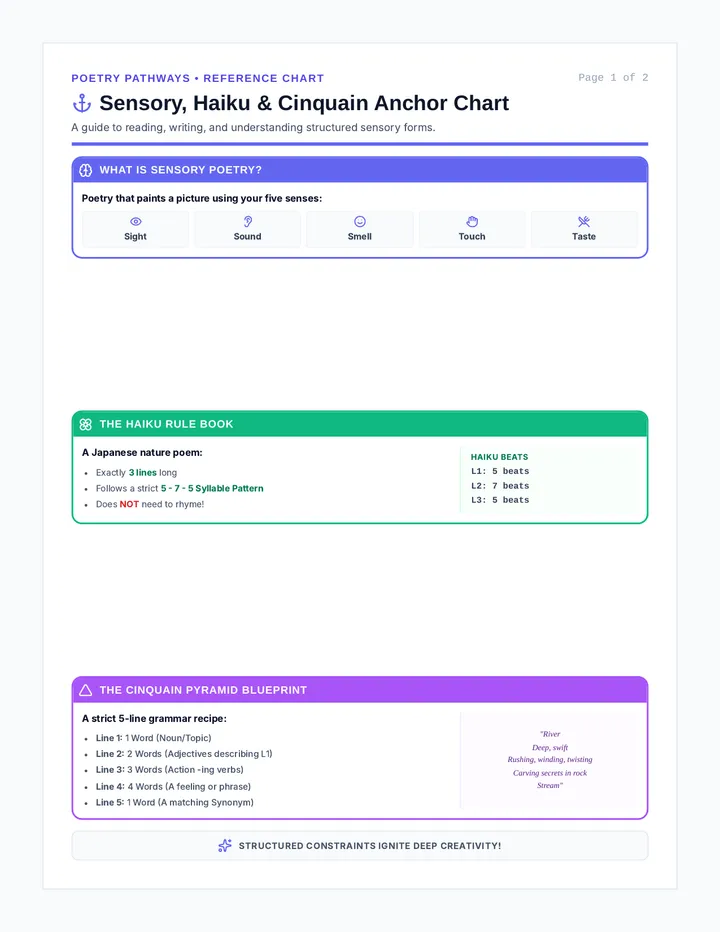
Focuses on Sensory and Color Poetry (Haiku and Color Poems). Students explore imagery using their five senses, utilizing highly visual sensory organizers, word banks, and syllable counters.
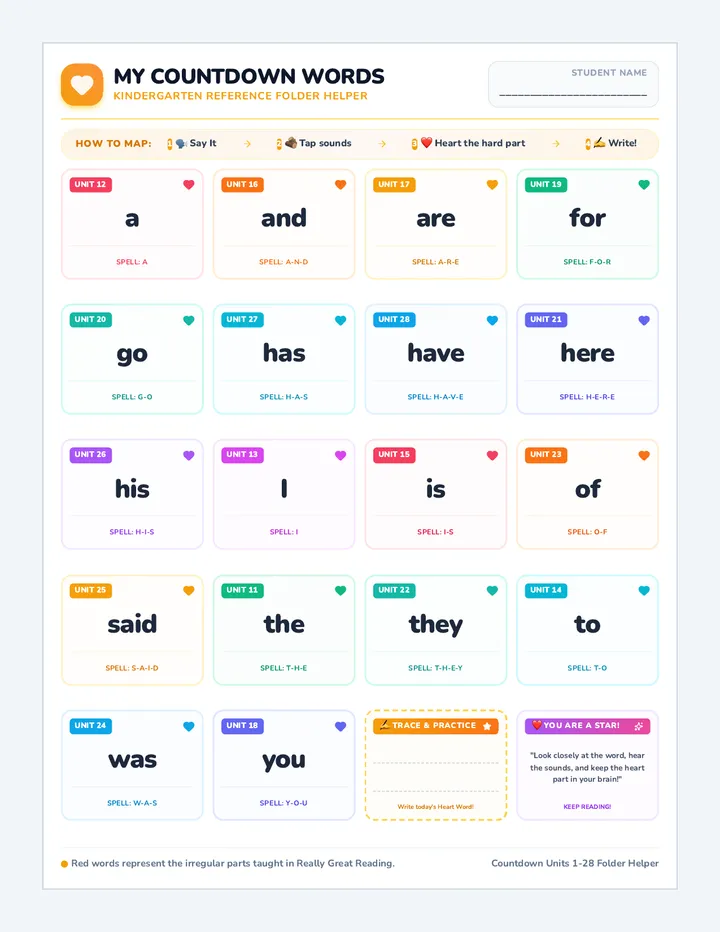
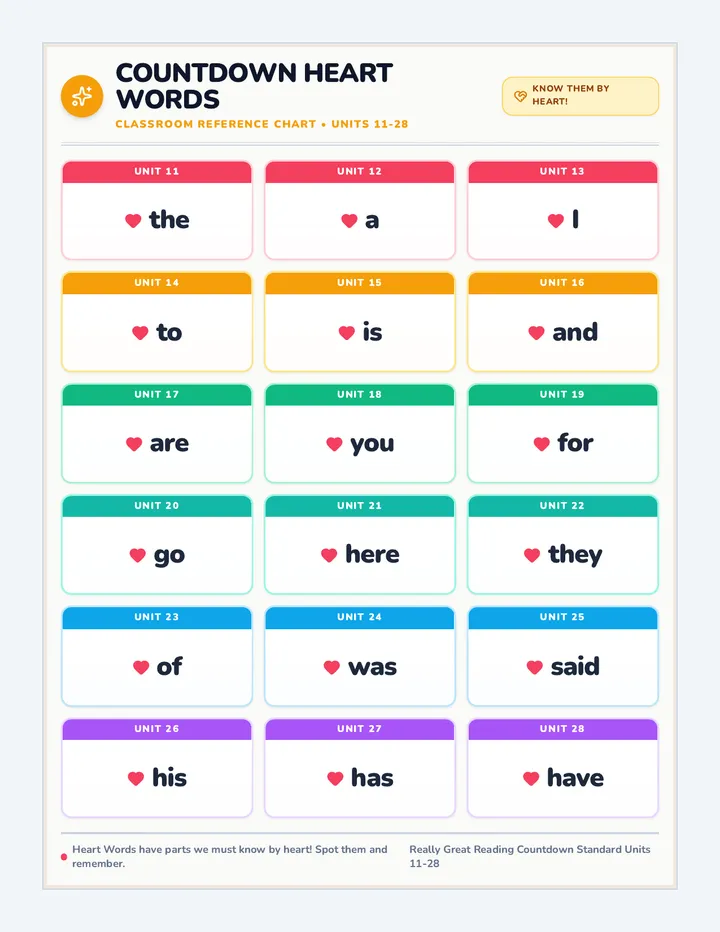
A complete pair of reference helpers for the kindergarten Countdown curriculum (Units 1-28), featuring a student folder reference helper and a colorful classroom anchor chart organized by unit.
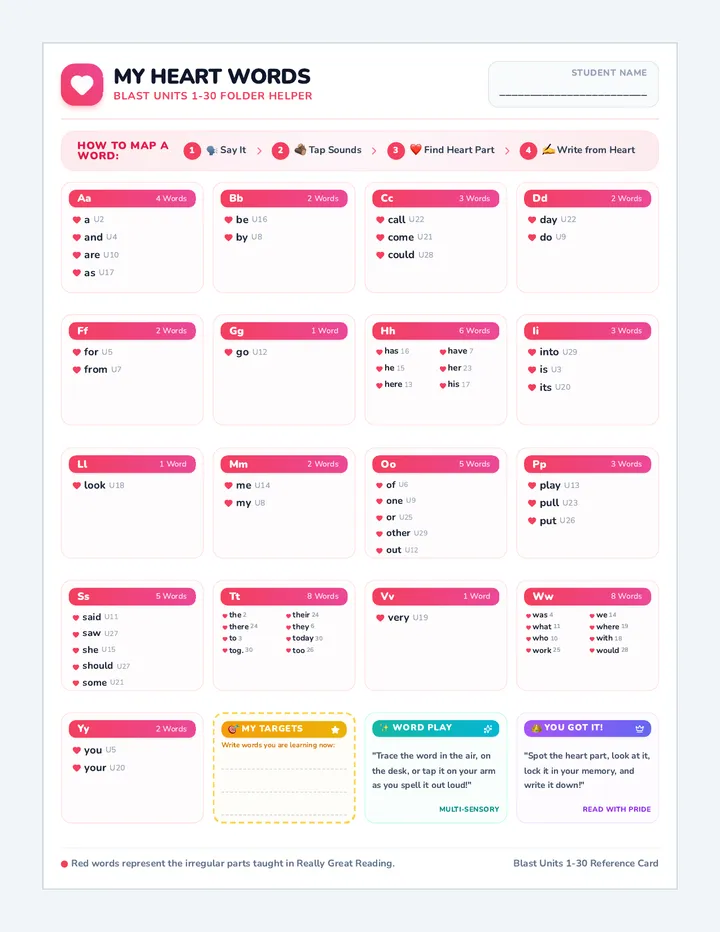
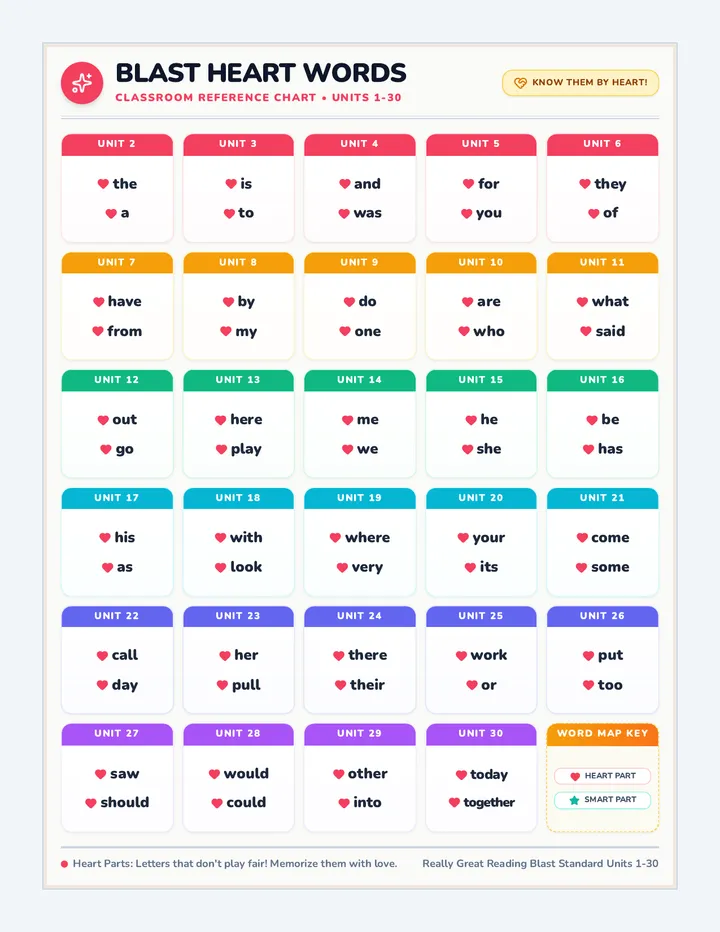
A comprehensive pair of reference materials featuring all Really Great Reading Blast Heart Words for Units 1-30. Includes a compact student folder reference helper and a colorful classroom anchor chart organized by unit.
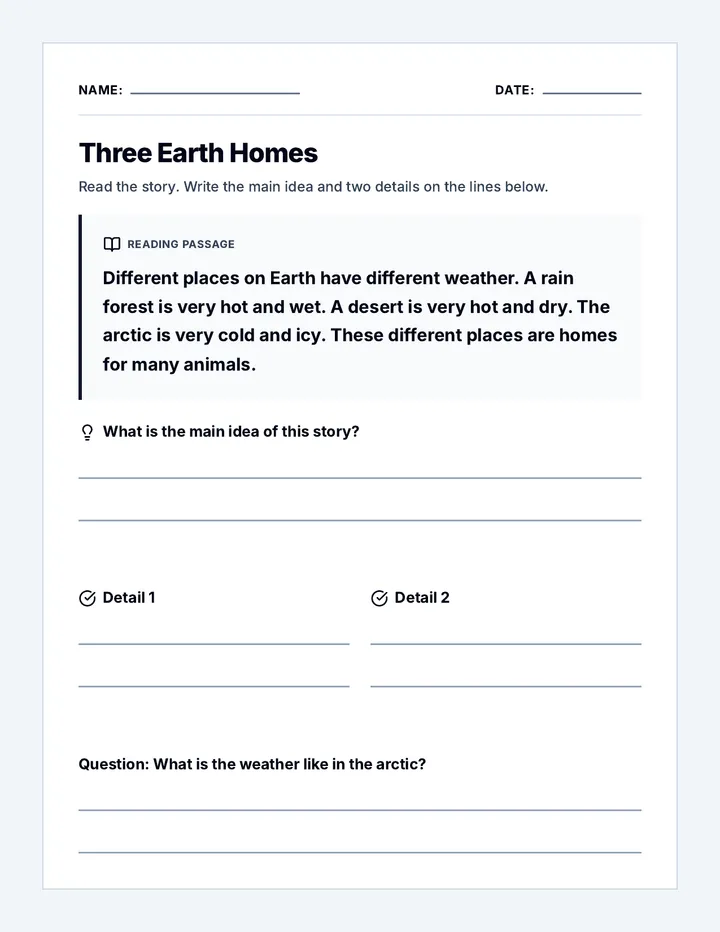
A lesson focused on identifying the main idea and supporting details in short texts, designed with structured supports for students.