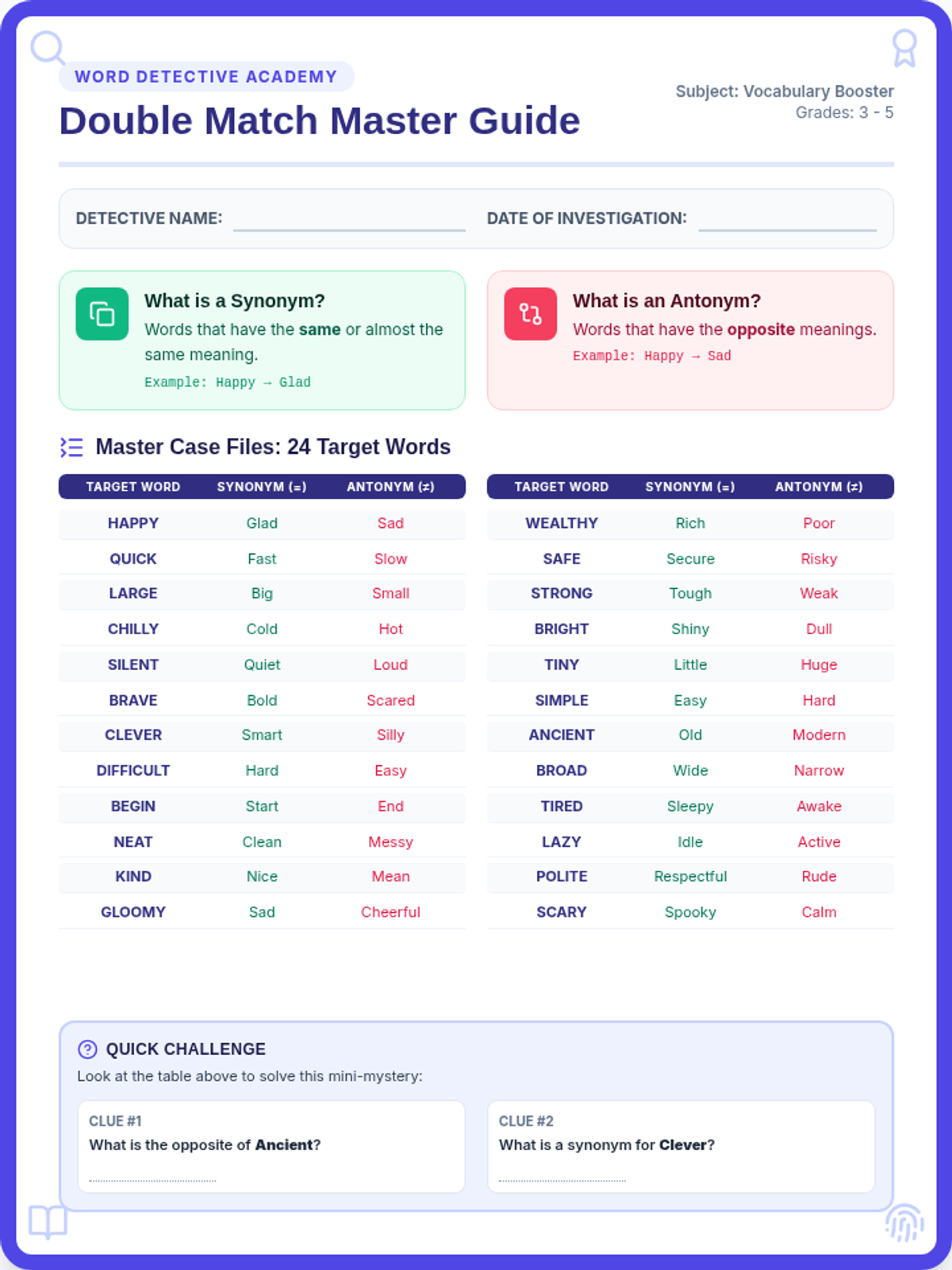
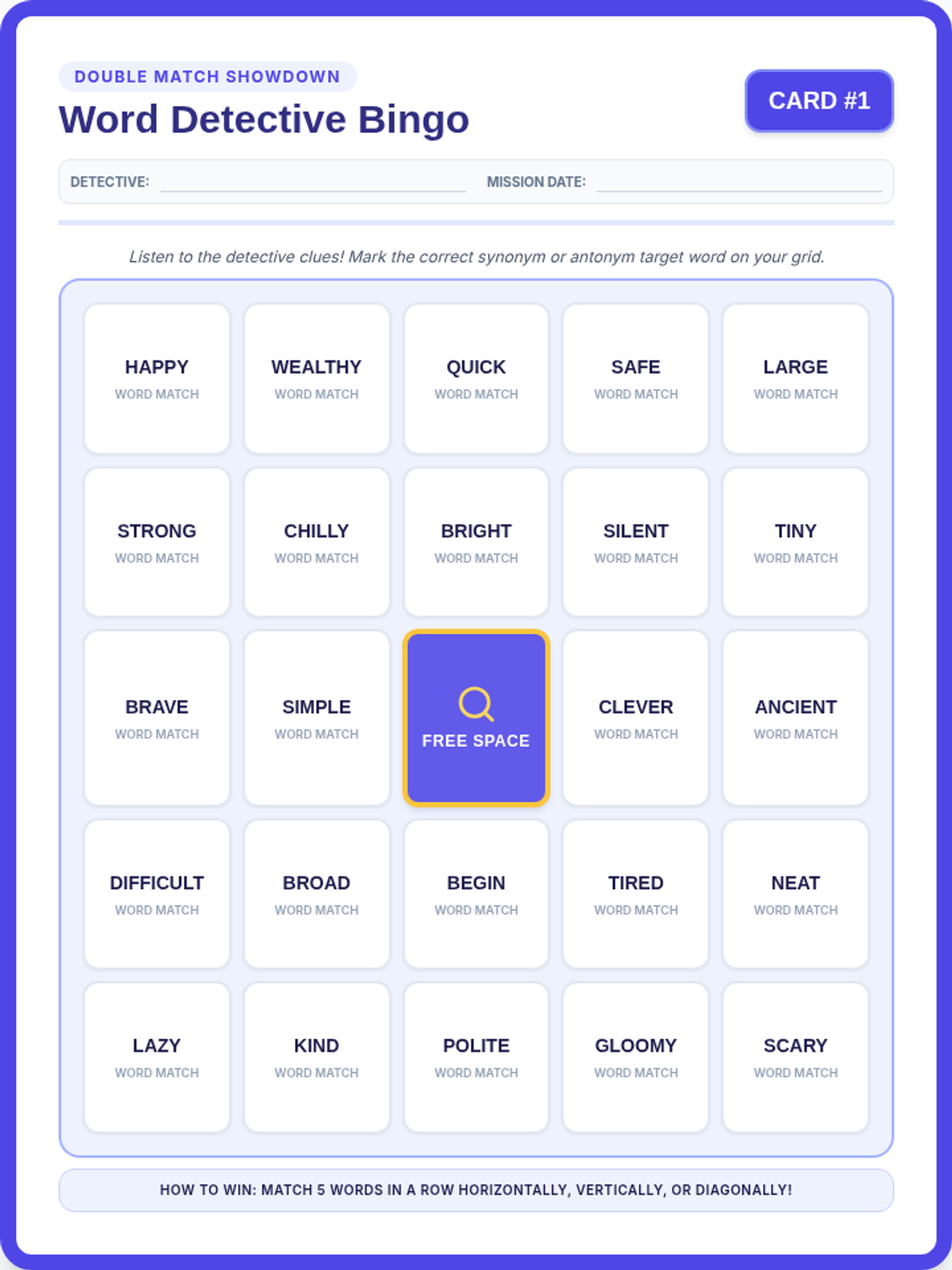
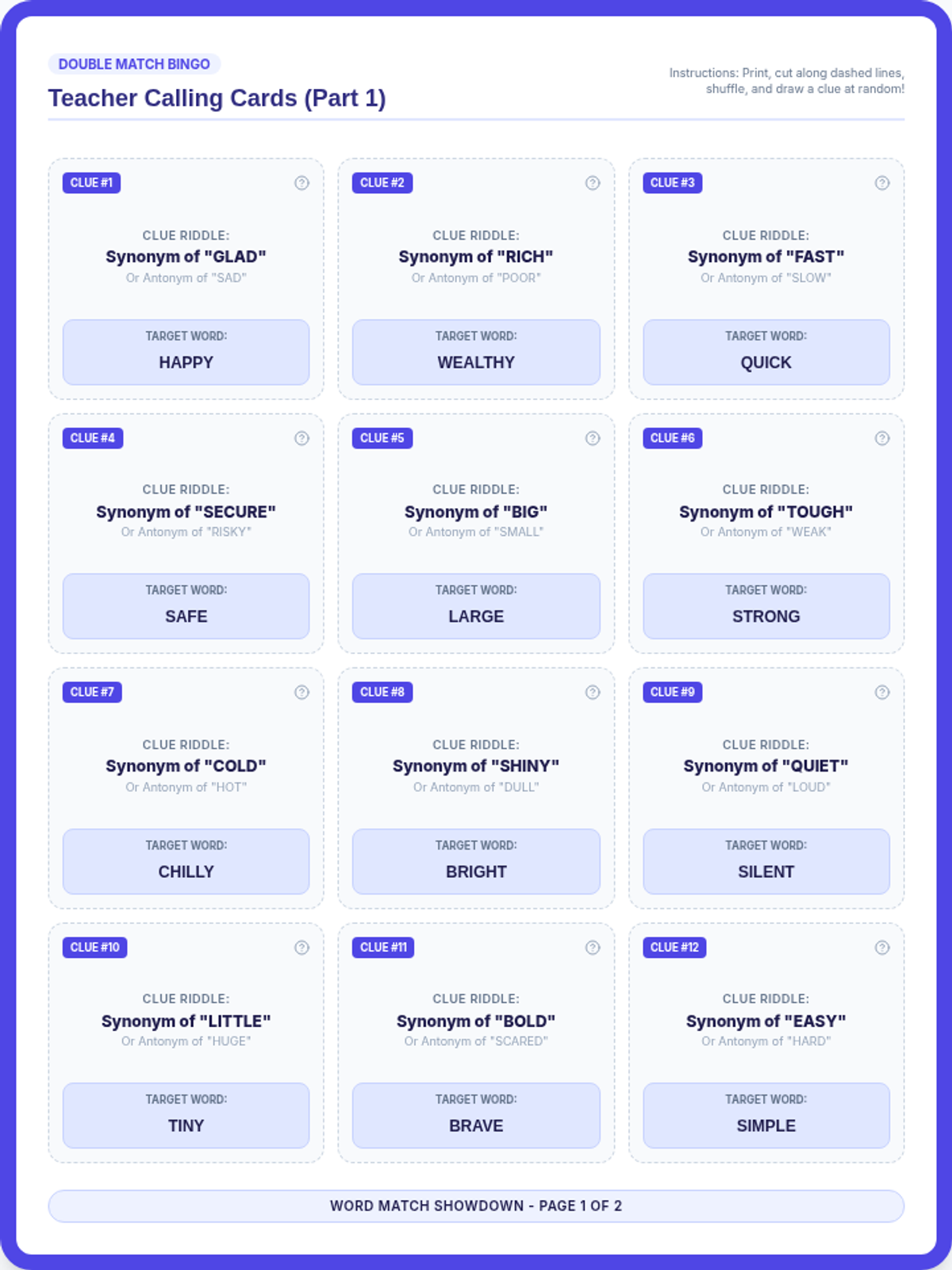
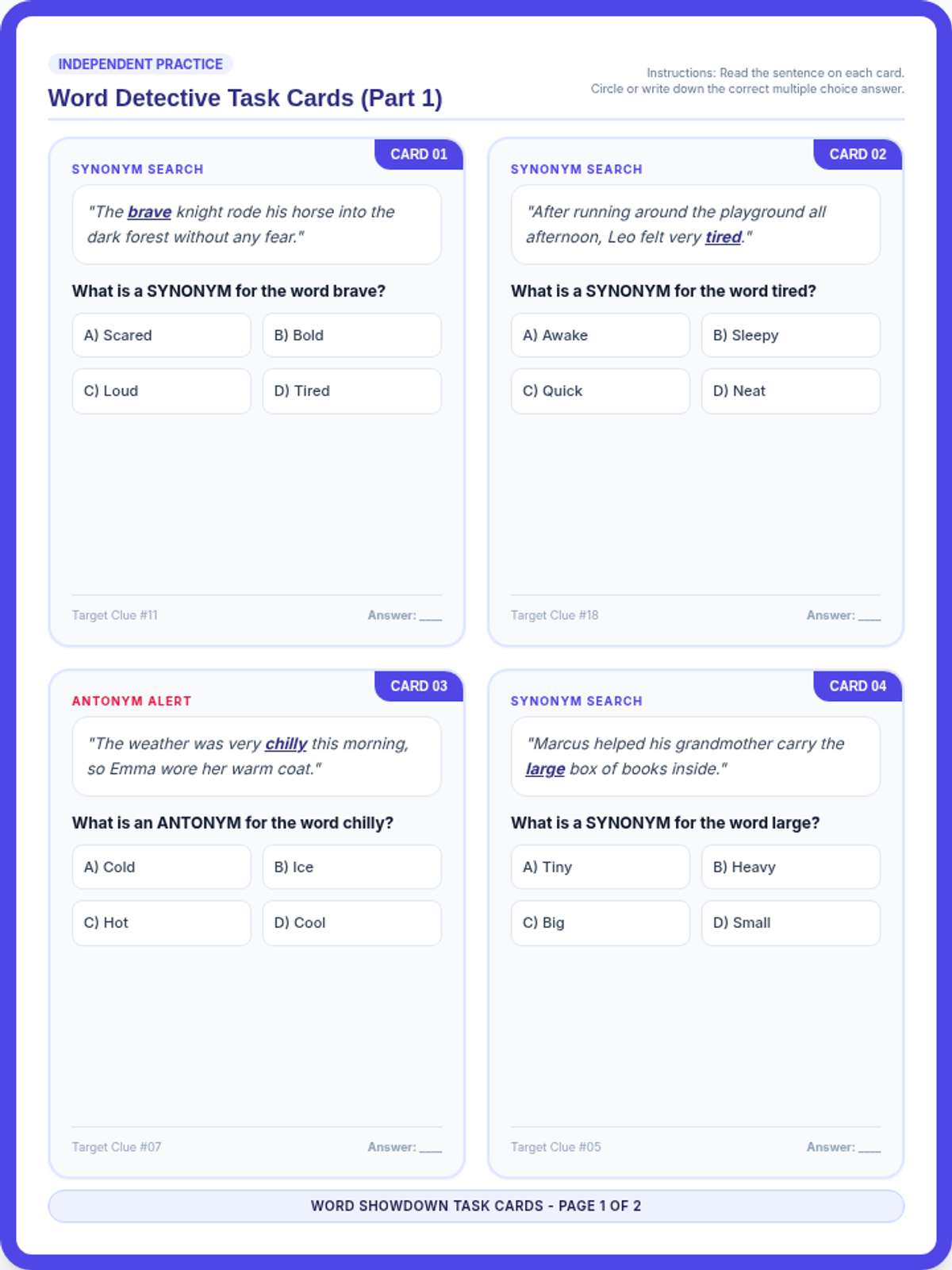
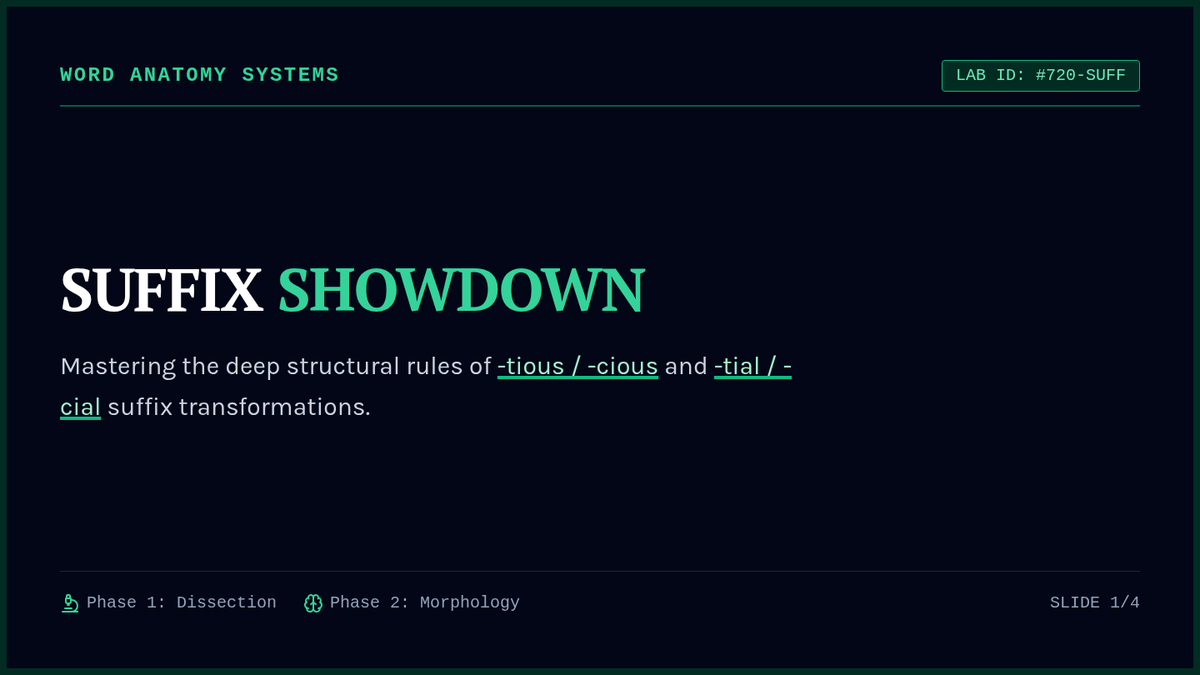
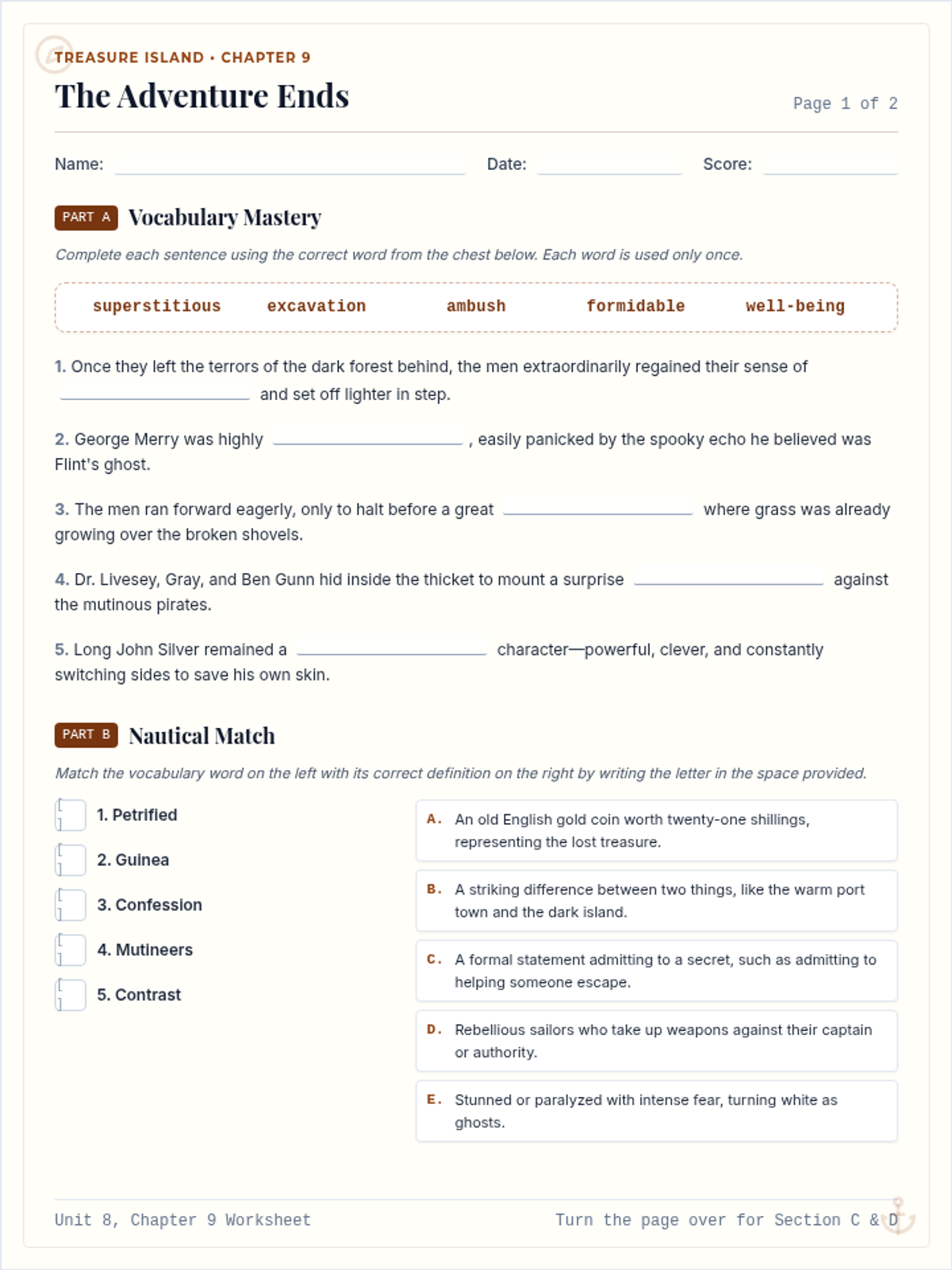
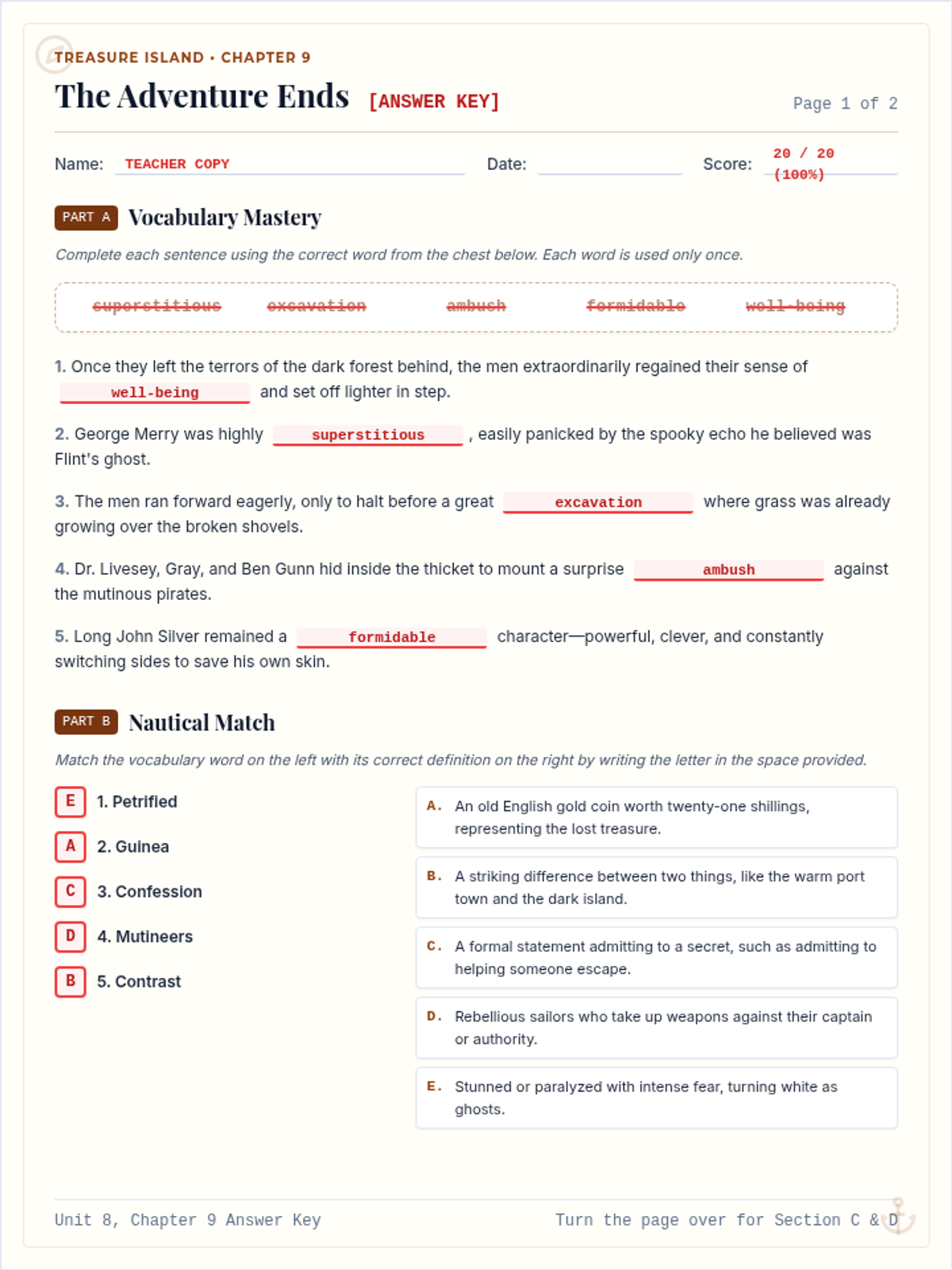
A focused vocabulary lesson targeting ten specific words through definitions, examples, and contextual practice. The lesson includes a comprehensive review sheet and an accompanying answer key to prepare students for a summative quiz.
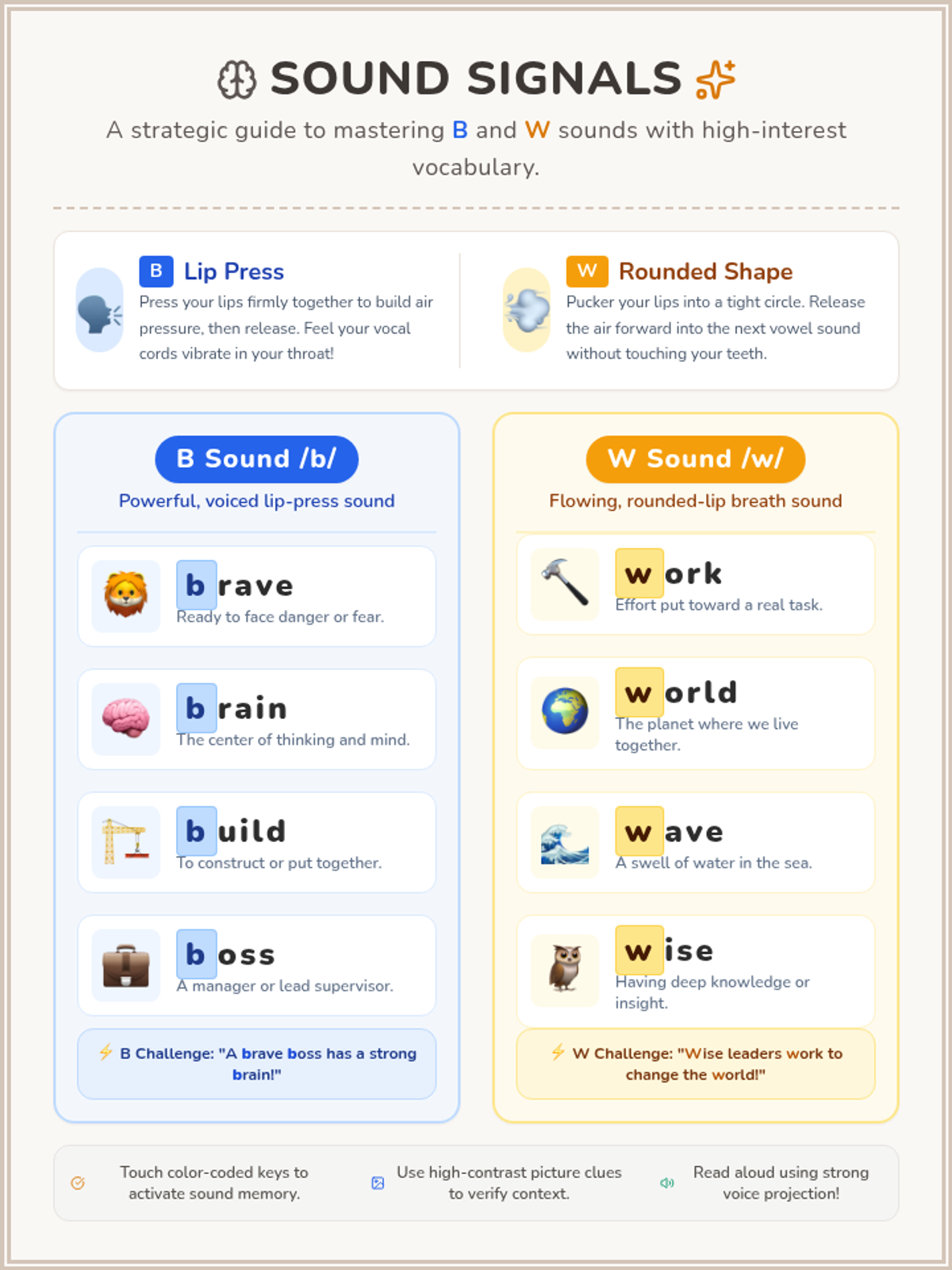
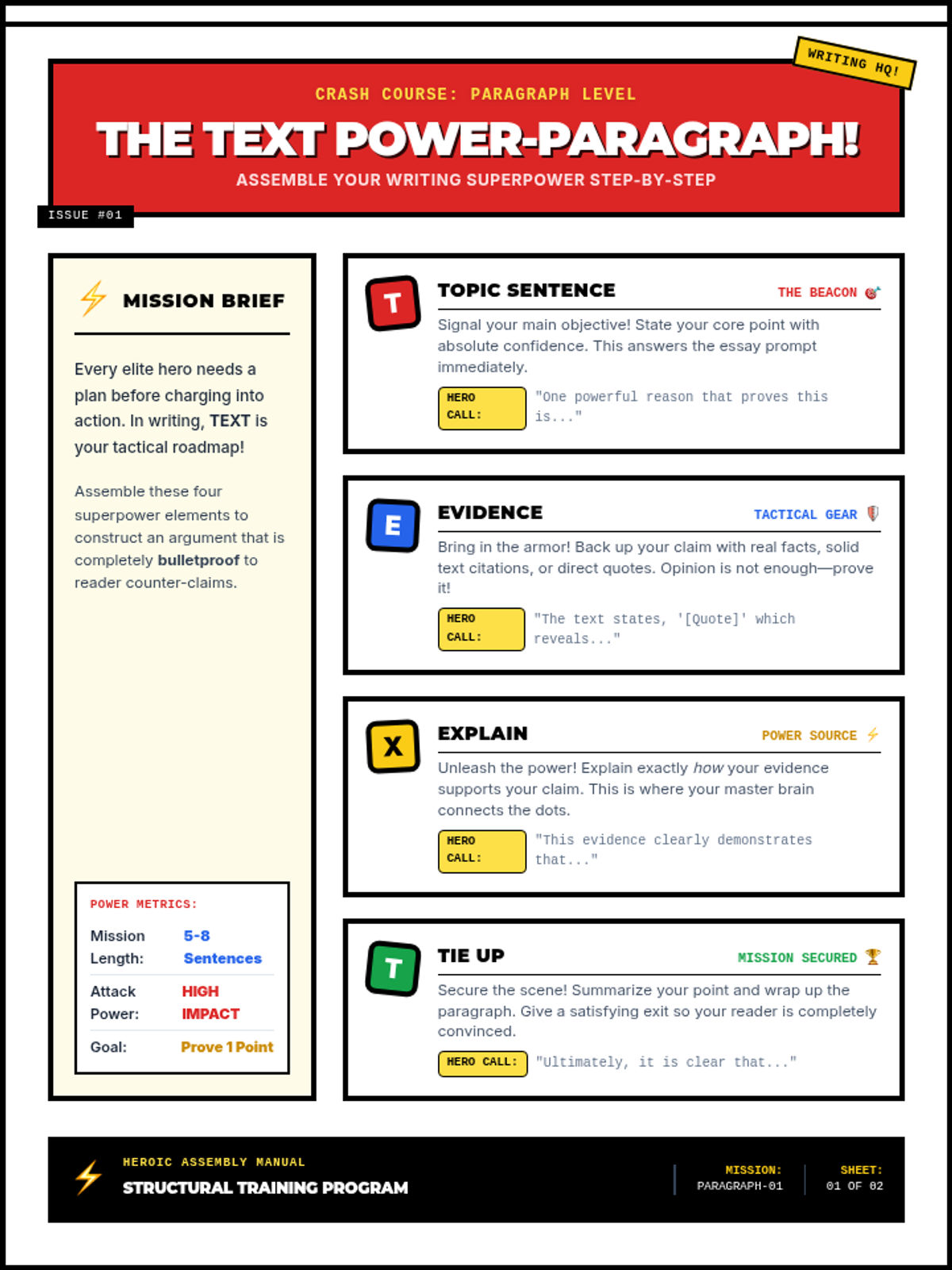
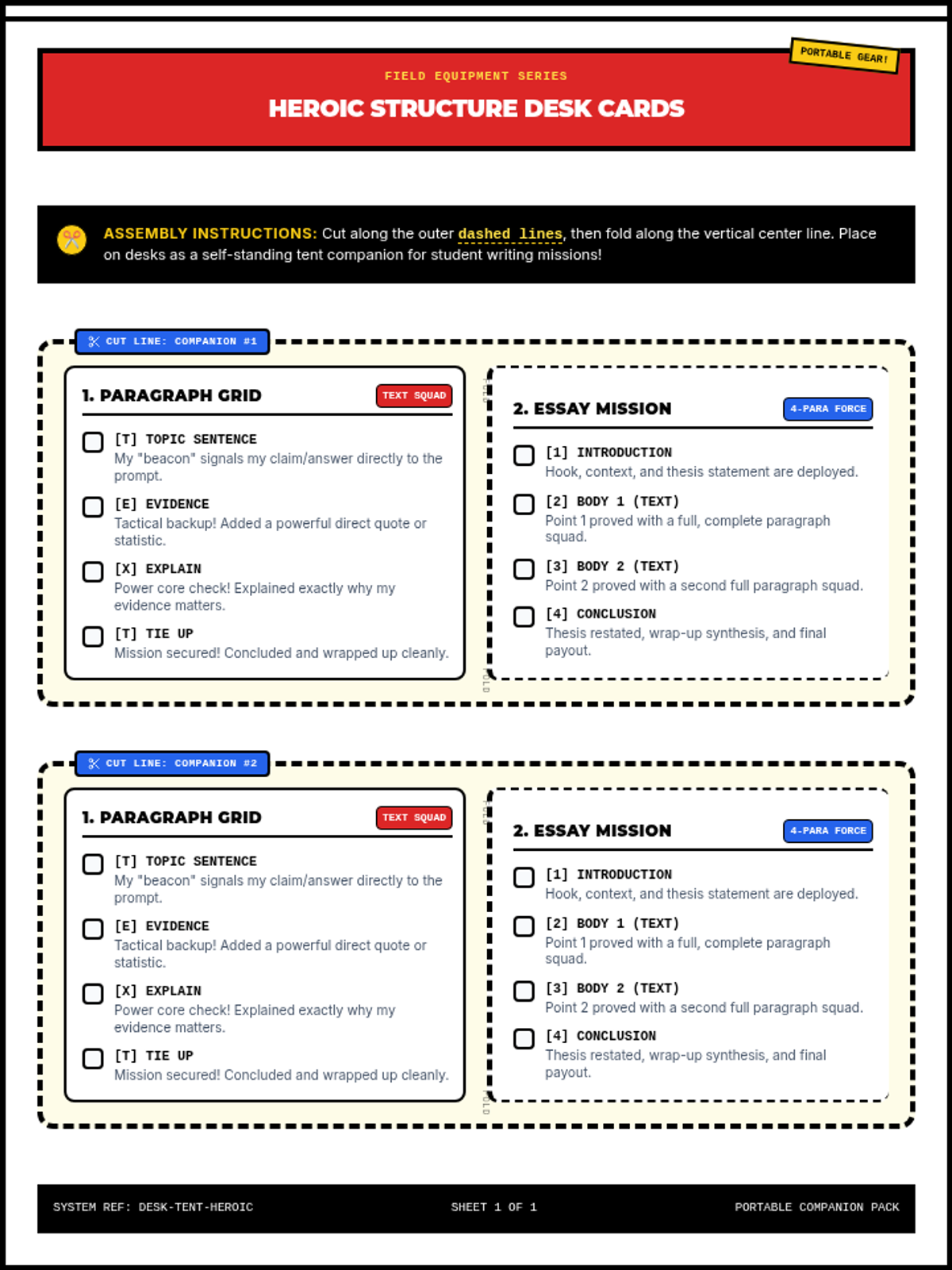
A high-energy 30-minute lesson that teaches students how to craft powerful topic sentences using relatable subjects like sports, shopping, and outdoor fun. Students will learn the 'Hook and Map' method to ensure their writing starts with a clear focus.
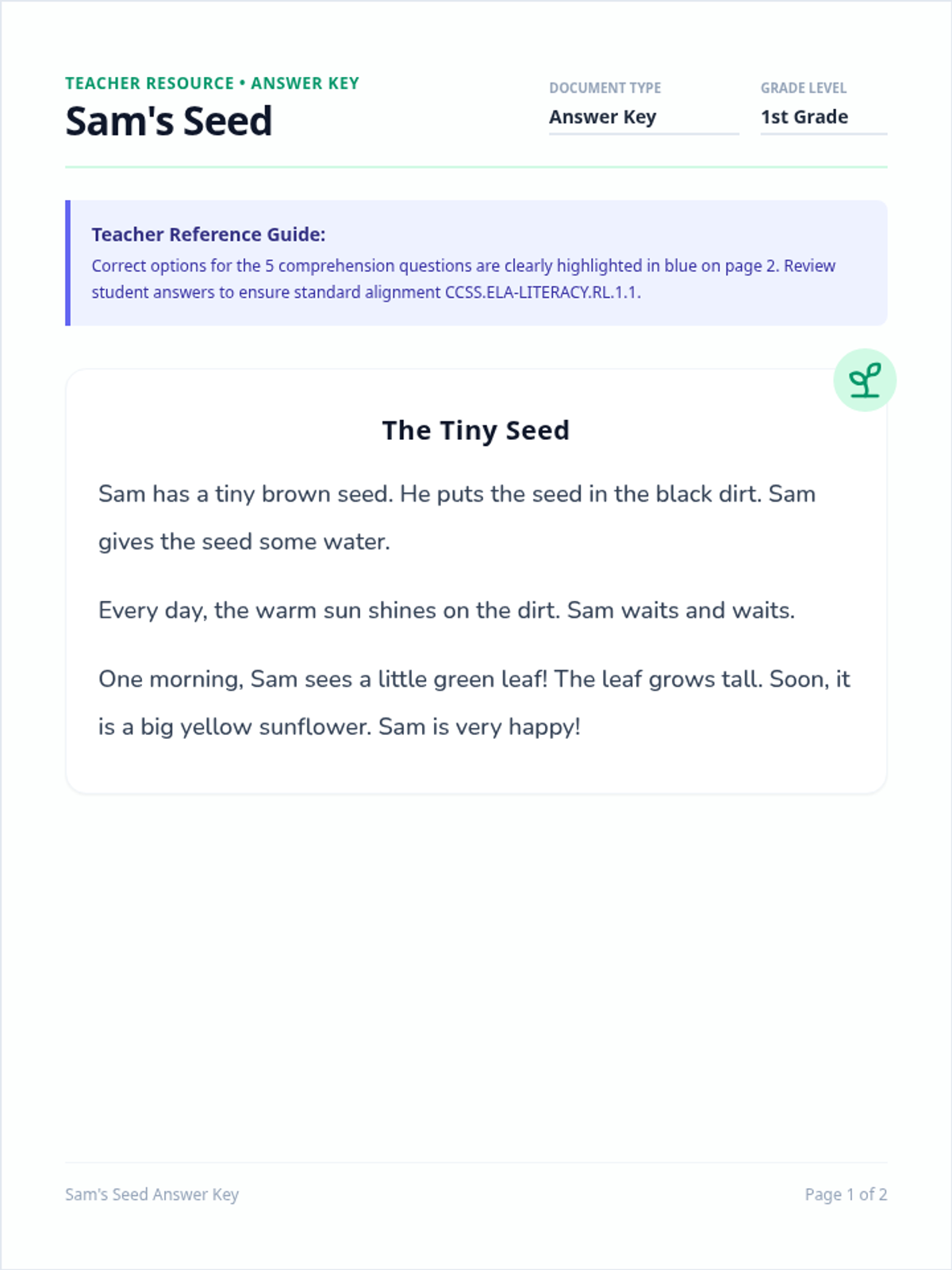
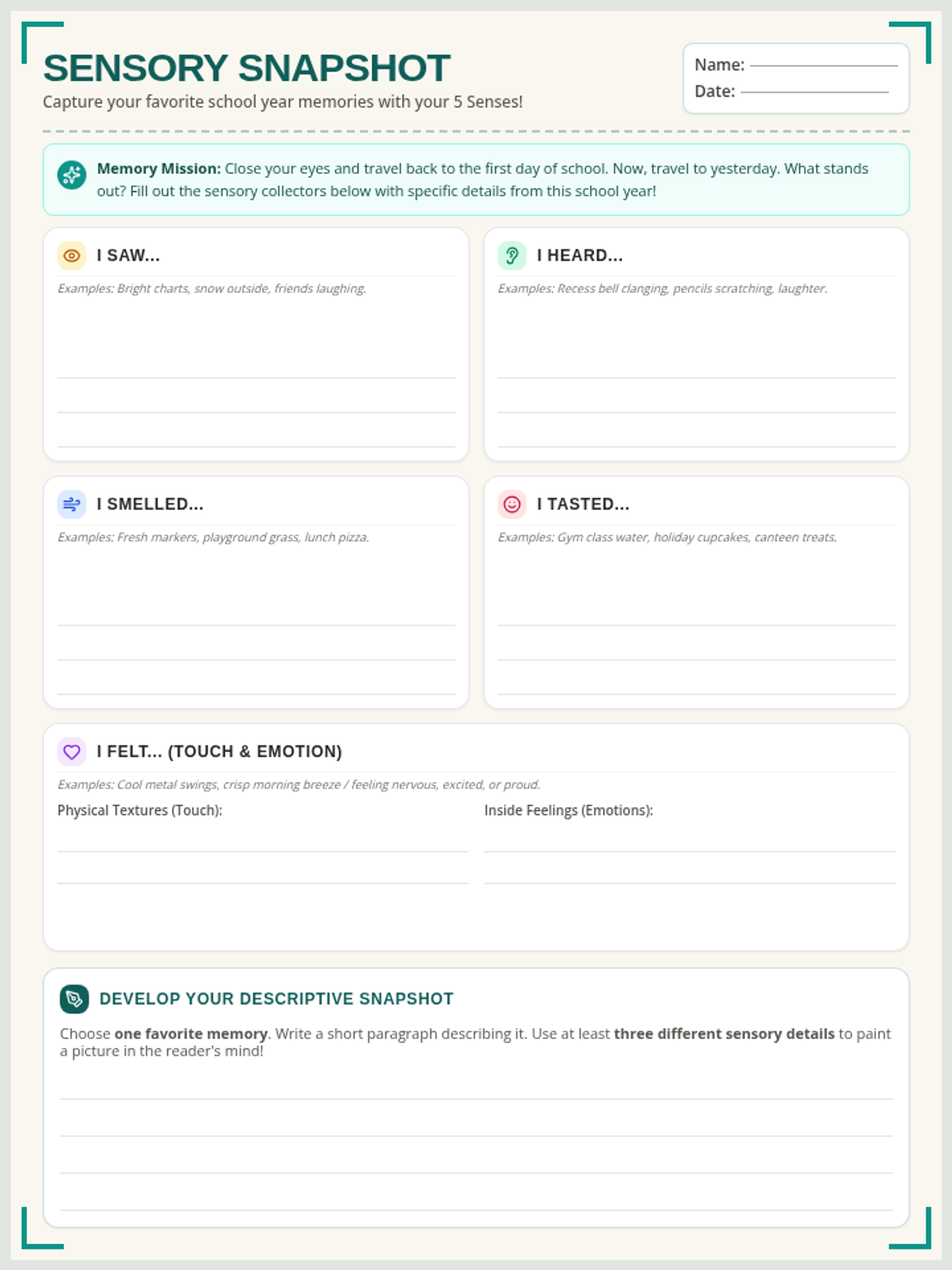
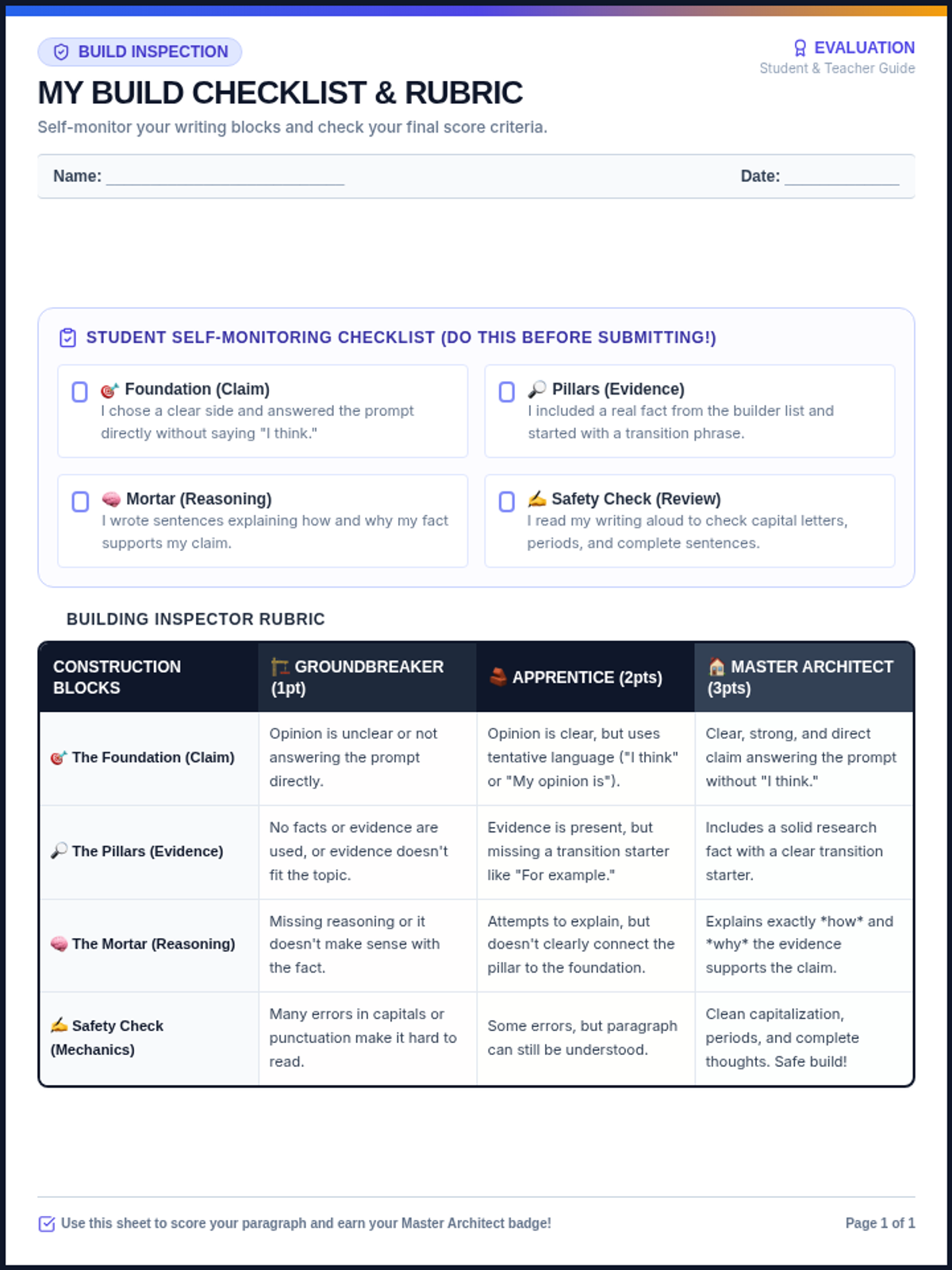
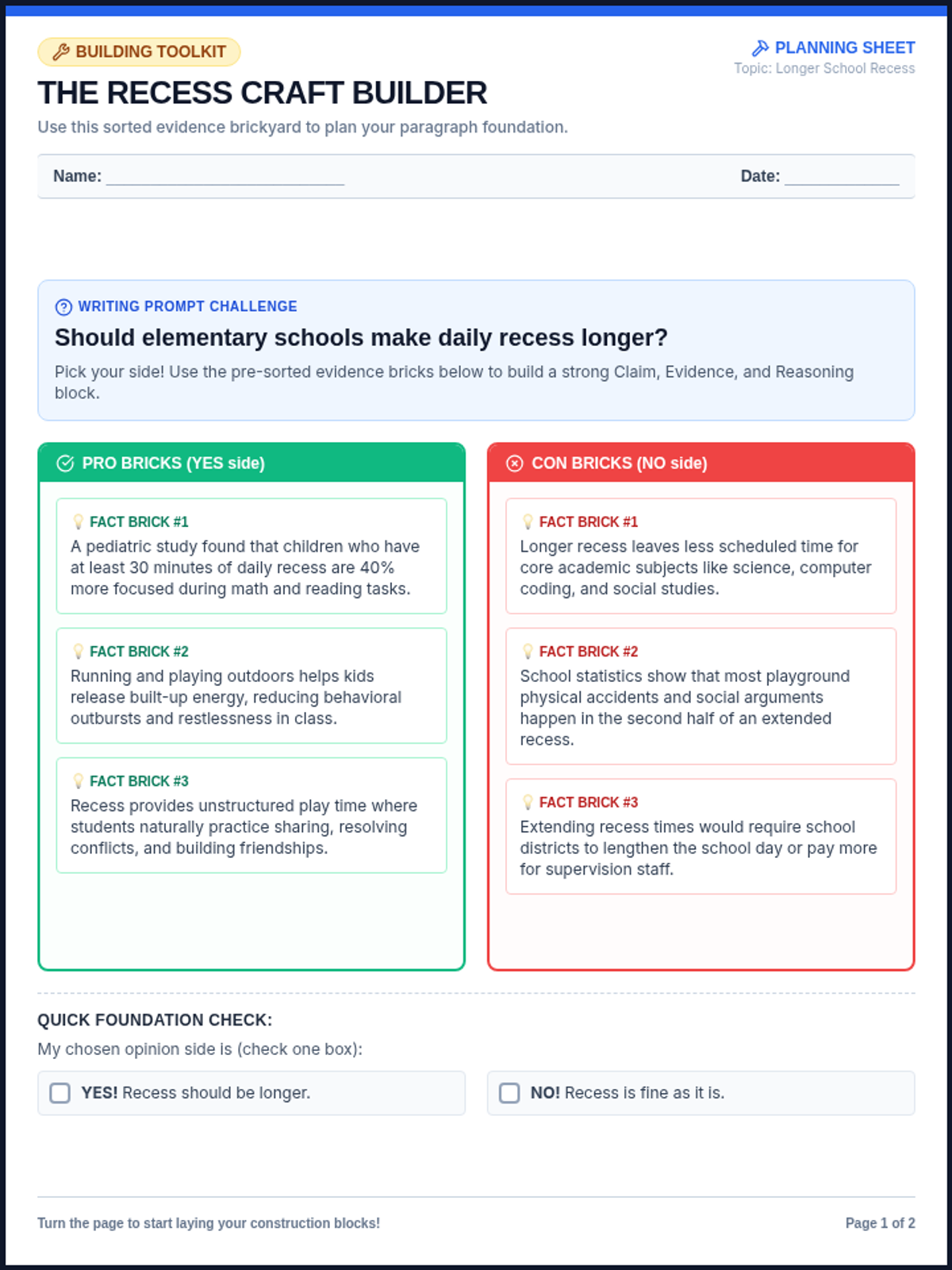
A comprehensive lesson focused on the revision and editing stages of opinion writing, providing students with structured tools to improve their arguments and polish their mechanics.
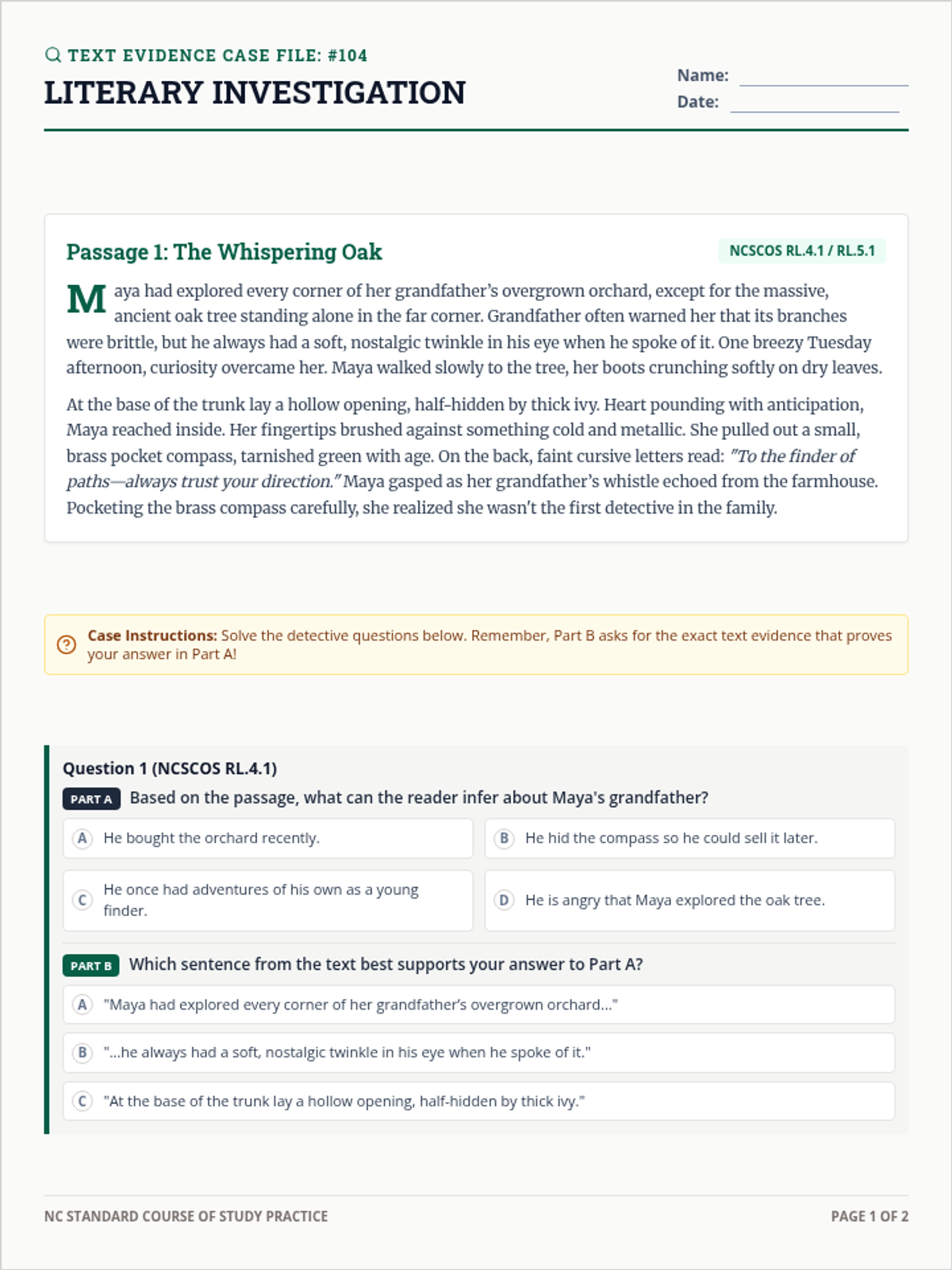
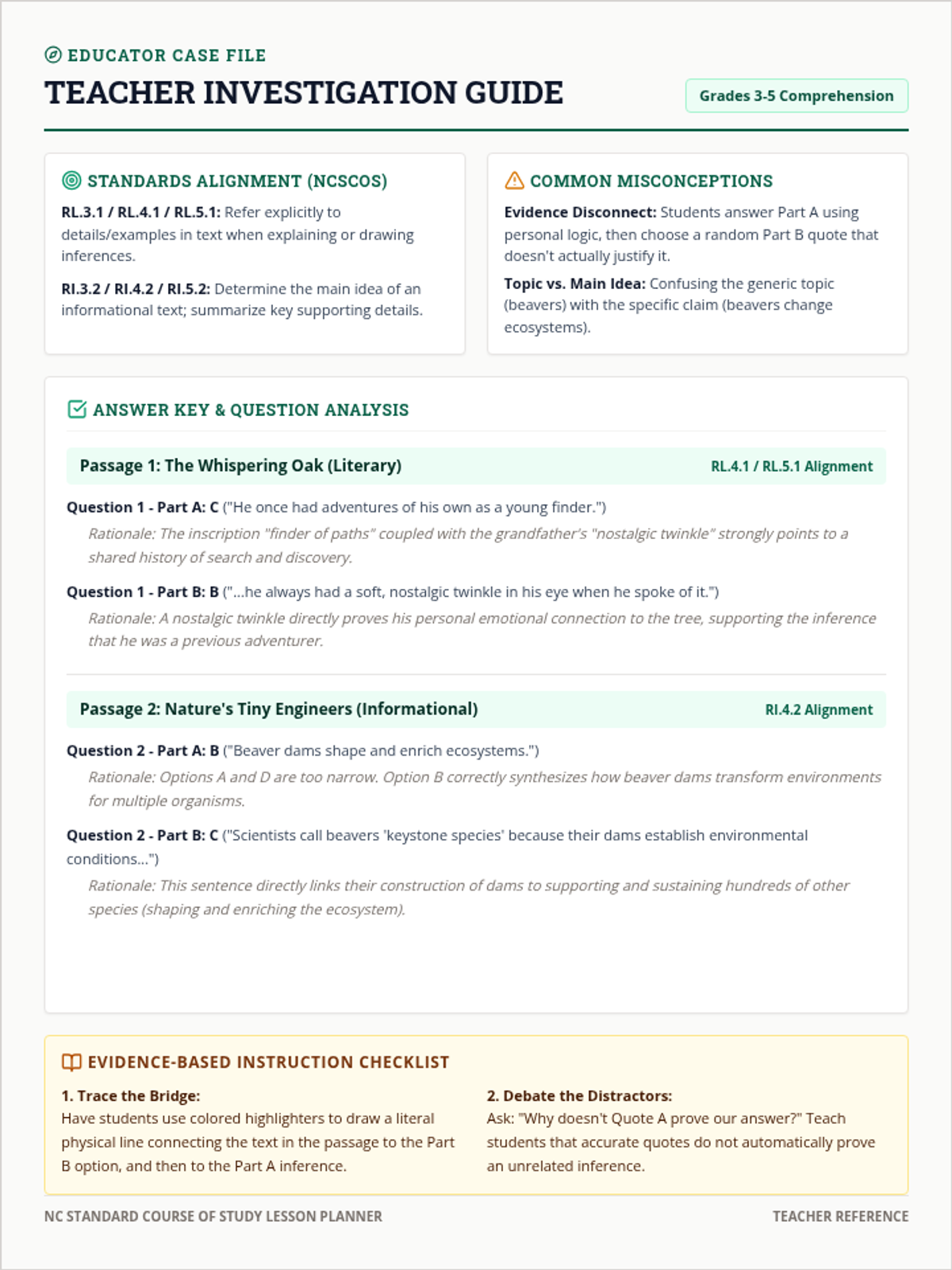
A reading comprehension lesson focused on identifying the main idea and making inferences through a story about the famous Mario brothers. Students will analyze Mario's reactions when things don't go his way.
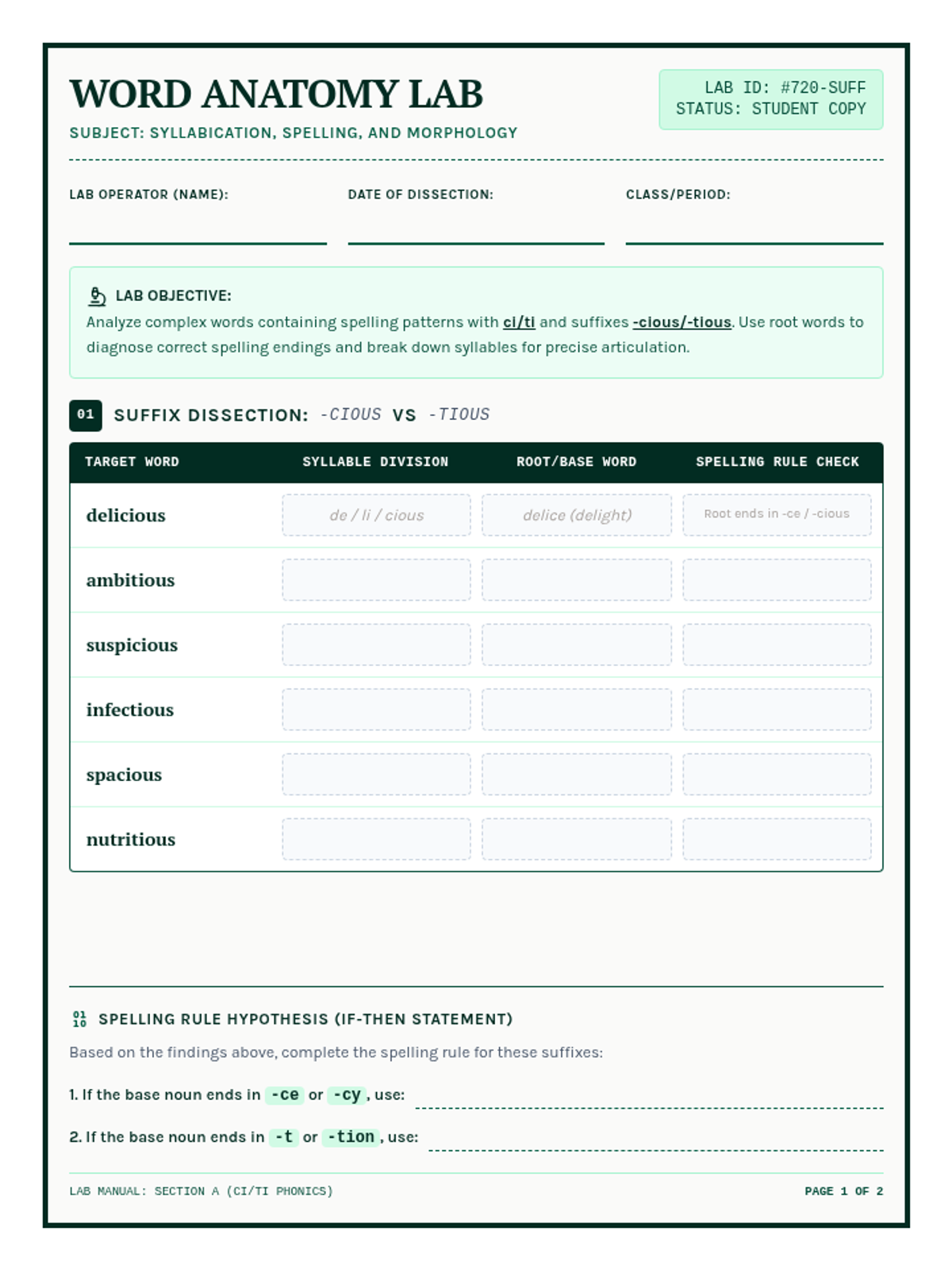
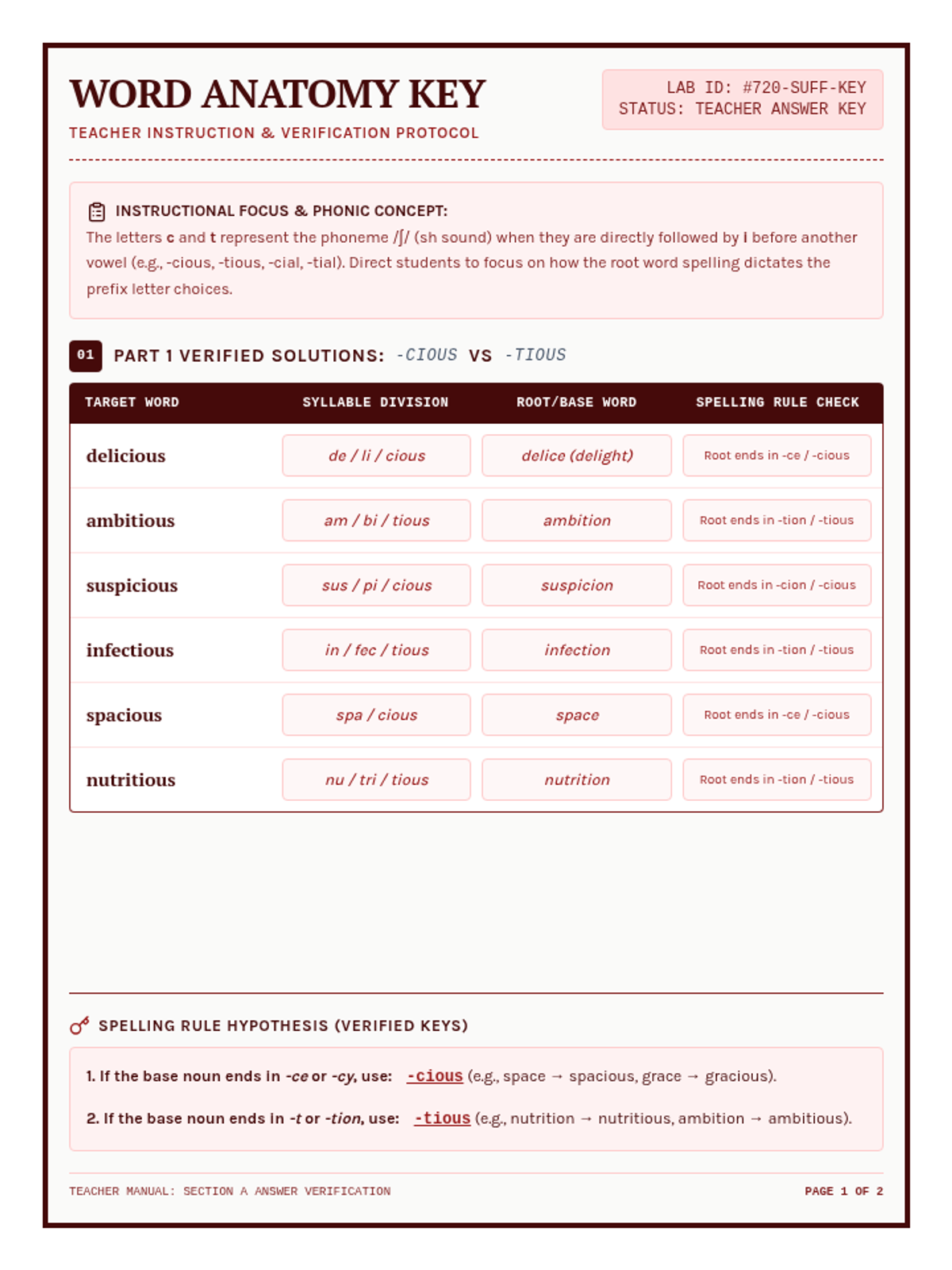
A focused lesson on Wilson Step 4.4 (suffix -ive), featuring fluency drills, games, and word-level activities centered around a 'bee hive' theme.
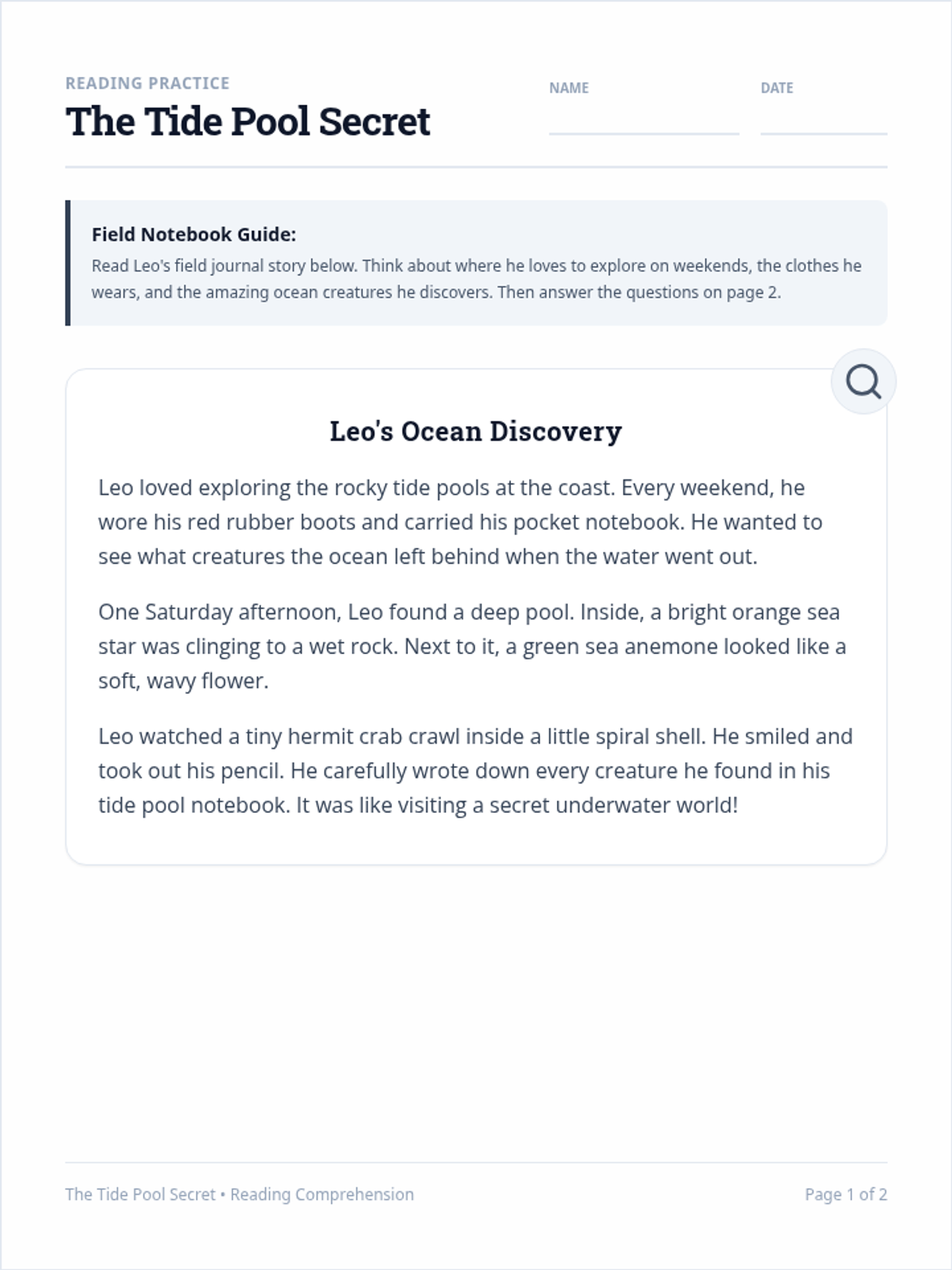
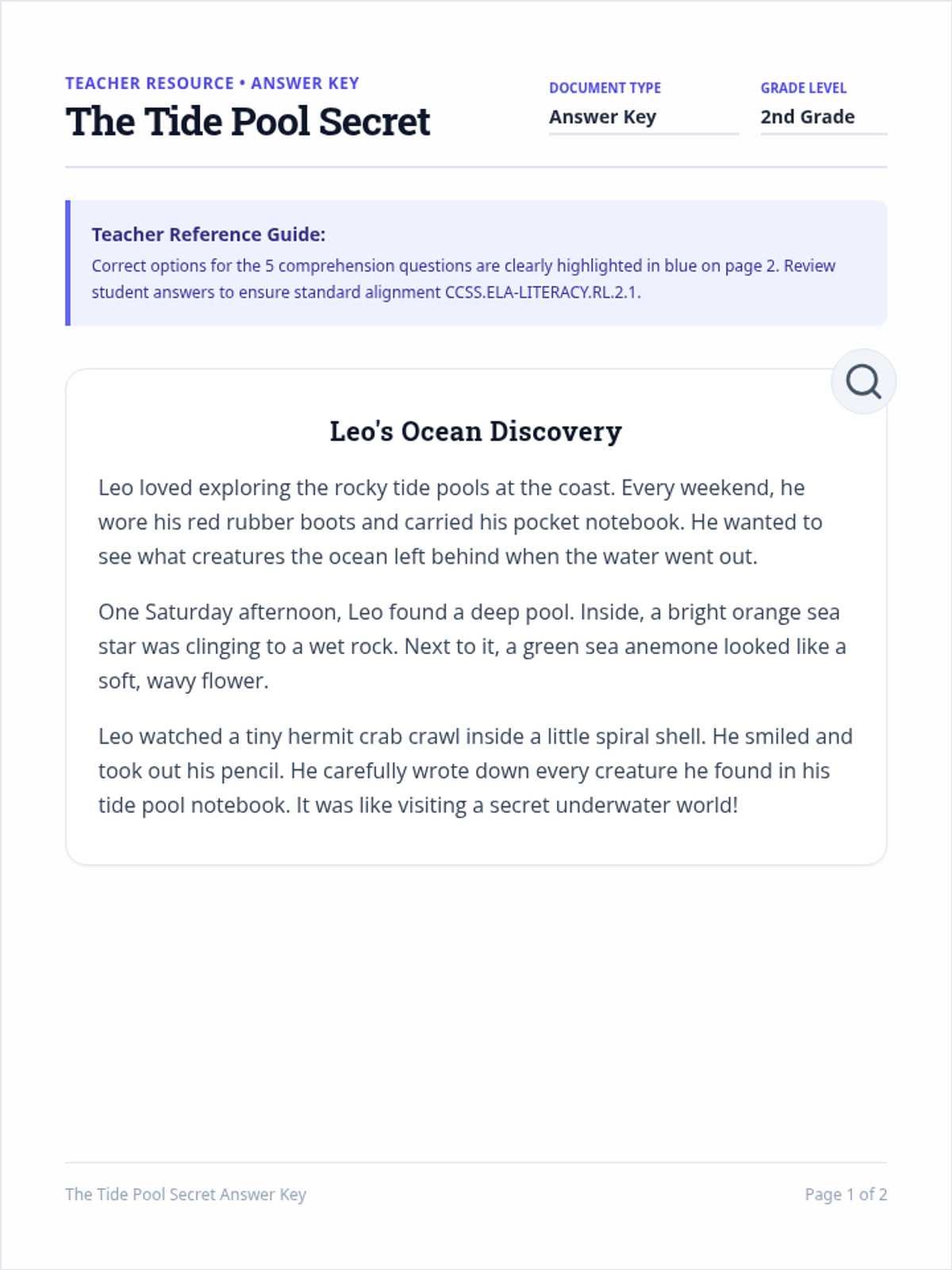
A reading comprehension lesson focused on the adventurous events at Big Al's Junk Palace, where students analyze character actions, setting, and plot details.
A 45-minute ESL lesson focused on identifying reasons and evidence in a text about healthy eating, helping students distinguish between opinions and factual support.
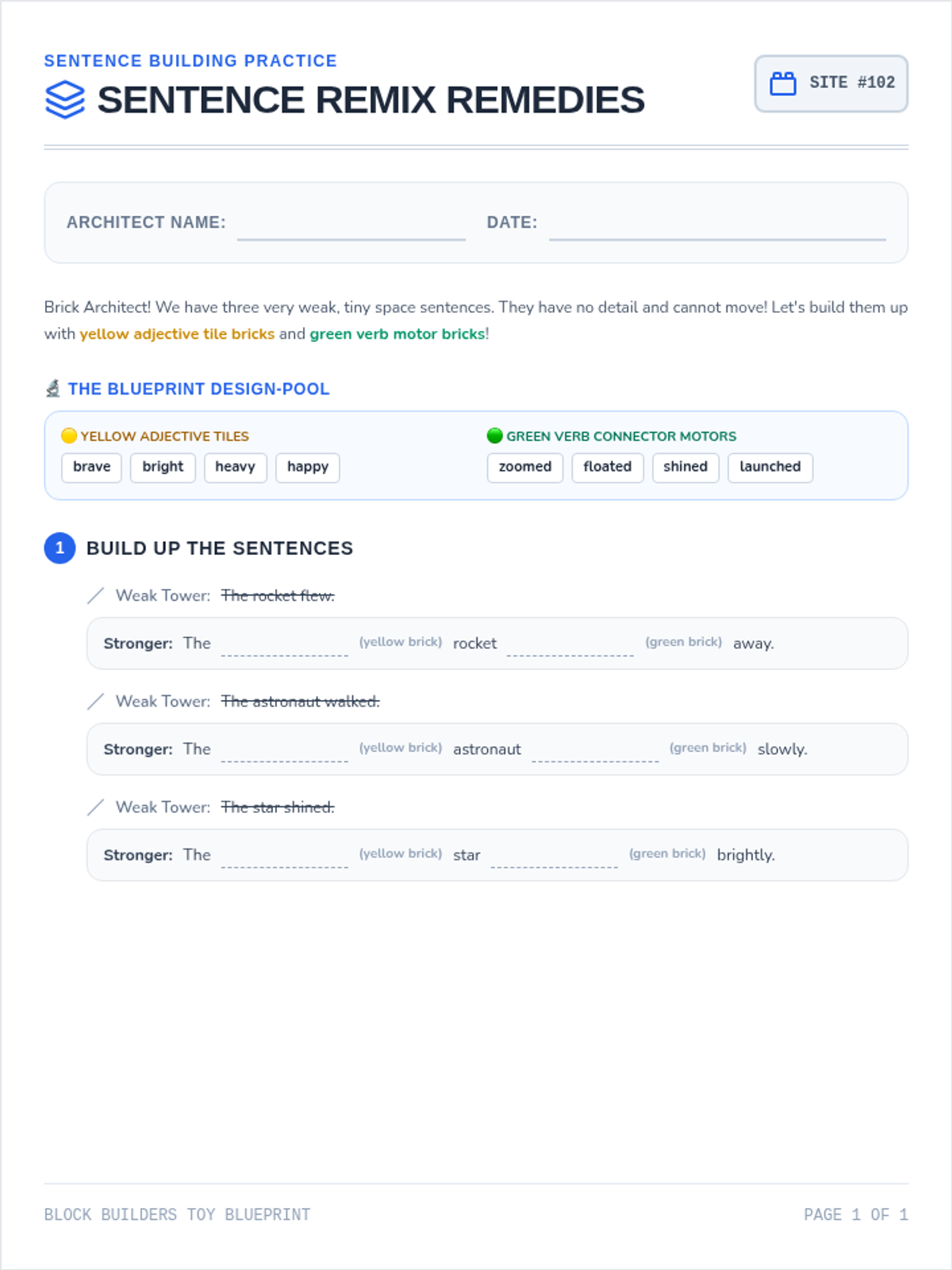
A 30-45 minute ESL lesson for 5th grade focused on informational writing foundations, sentence structure, and logical grouping of ideas. Students learn to act as 'Info Architects' to build solid paragraphs with clear topic sentences and organized details.
A 30-45 minute ESL lesson for Grade 5 focused on writing objective summaries of a narrative text using the SWBST strategy and detective-themed scaffolds.
A foundational lesson for MLL students to master basic Subject-Verb-Object sentence structure using visual supports, scaffolding, and hands-on sequencing.
A norming exercise to help 5th-grade students evaluate compare-and-contrast writing about Painted Turtles and Desert Tortoises using a standard rubric.
This lesson focuses on comparing the world's largest mammal, the blue whale, with some of the world's smallest mammals. Students will use the provided informational text and conduct their own research to create a comparative report.
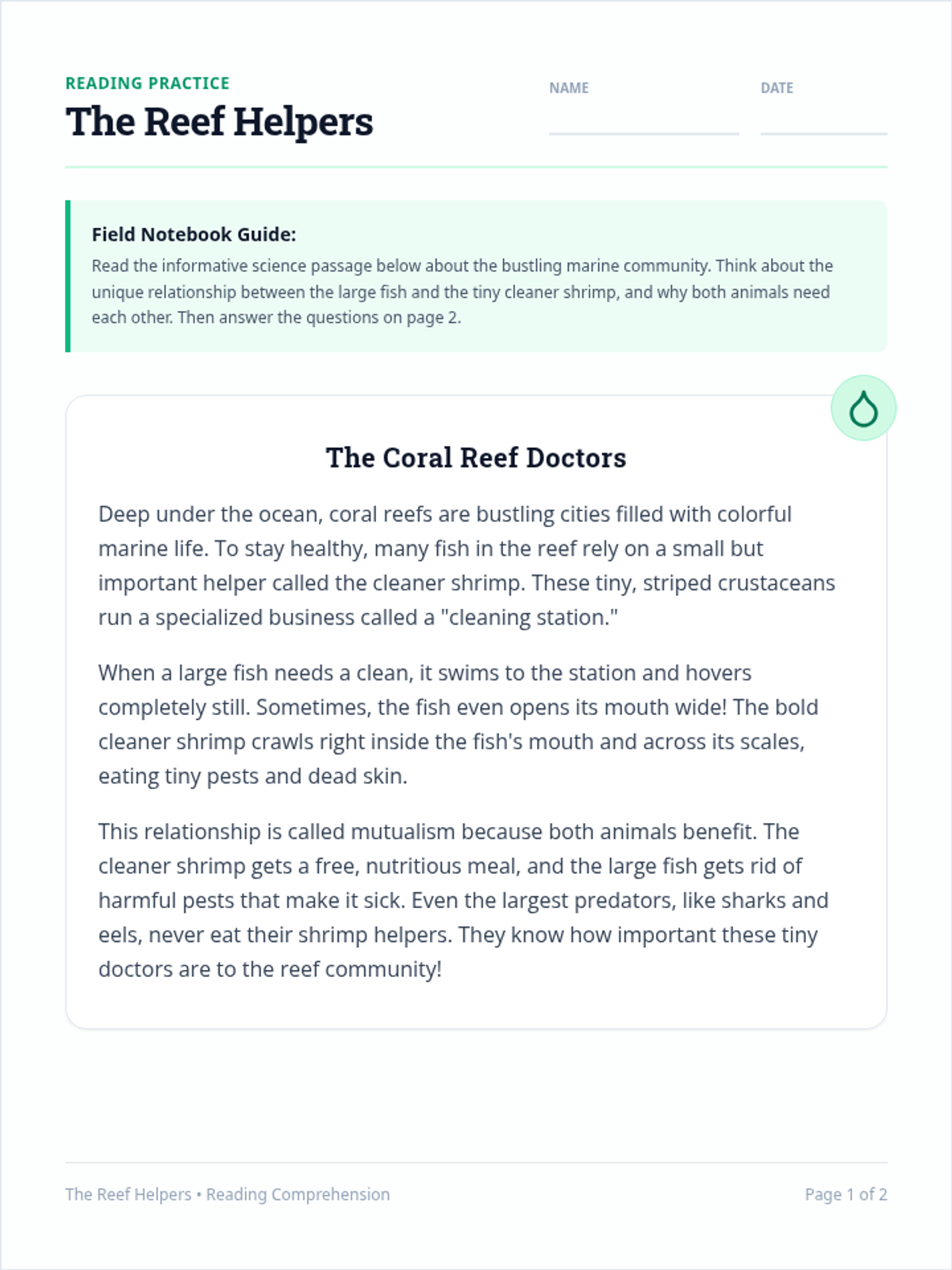
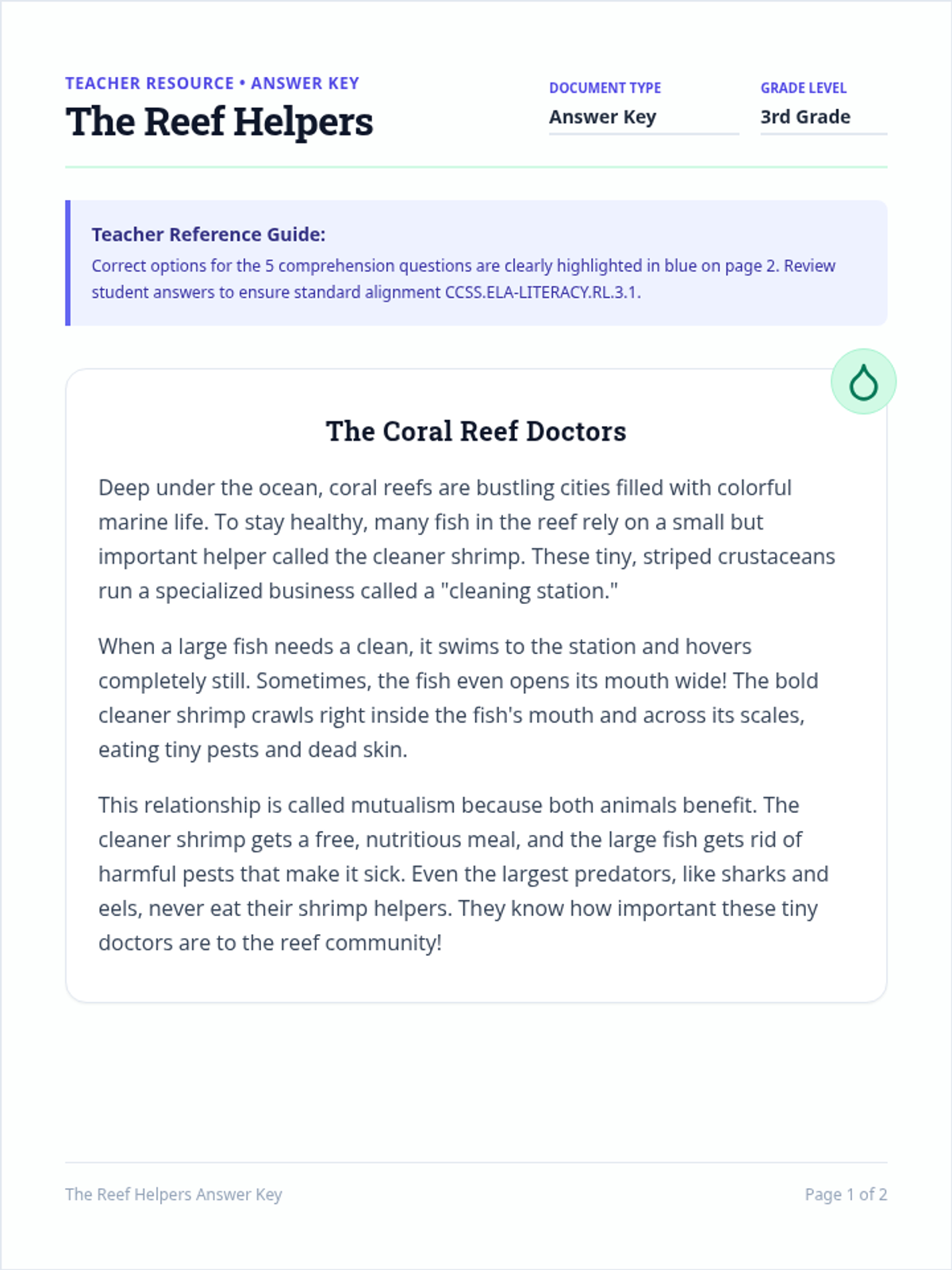
Focuses on informational texts about animal behavior, adaptations, and life cycles. Students apply reading strategies to understand the natural world while reinforcing main idea, sequencing, and vocabulary skills.
Focuses on informational texts about the history of instruments and the evolution of musical genres. Students practice identifying main ideas, sequencing historical developments, and defining domain-specific vocabulary.
A final capstone session where students apply all skills to a "Master Investigator" mystery challenge involving all previous themes.
Students practice pulling apart multi-part implicit questions (slaying the prompt) using dragon lore texts.
Students infer cause and effect relationships within a complex fantasy setting, focusing on the "why" behind dragon behaviors.
Using dragon-themed fantasy texts, students infer character traits and feelings from dialogue and actions rather than direct statements.
Students use the ICE method (Identify, Cite, Explain) to write a sports commentary response based on text evidence.
Students learn to find multiple pieces of evidence (a "double play") to support a single inference about a baseball game.
Students focus on how specific evidence "assists" an inference, using basketball play-by-play descriptions.
Transitioning to sports themes, students practice scanning for specific details versus inferring meaning from a baseball scouting report.