This lesson introduces 2nd-grade students to the suffix '-ing' to help them understand how verbs change to show ongoing actions. This is important for developing stronger reading comprehension and writing skills.
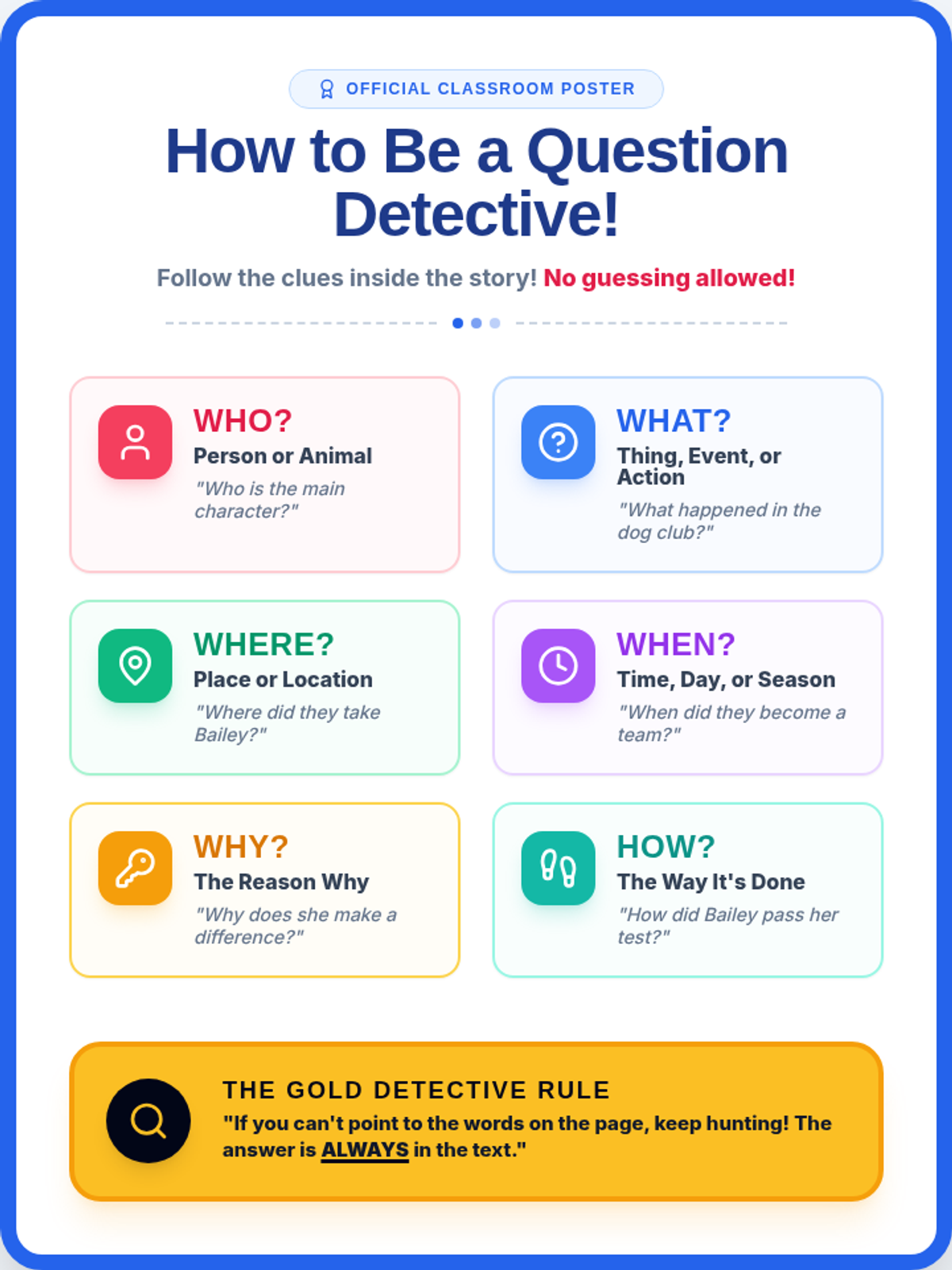
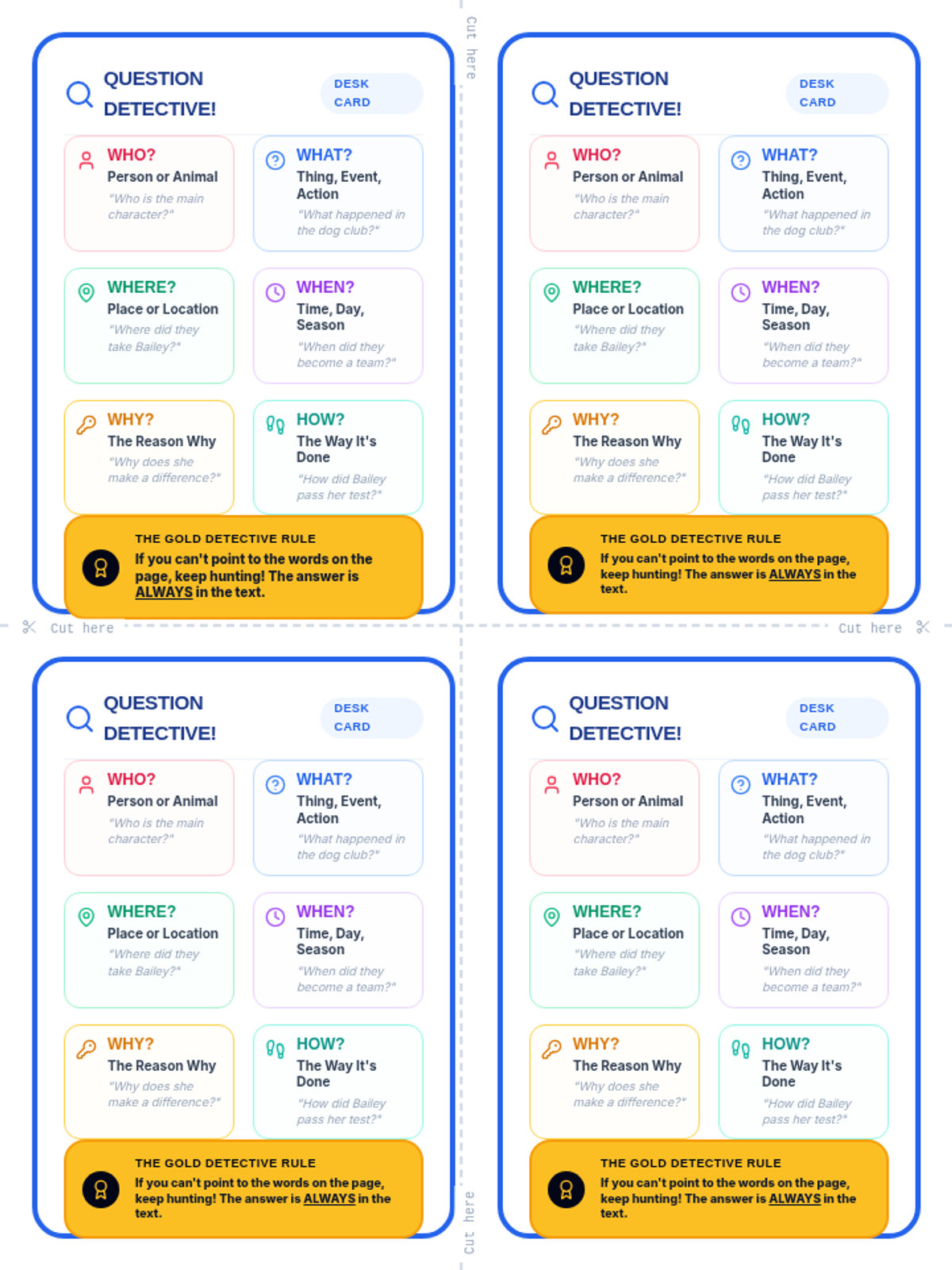
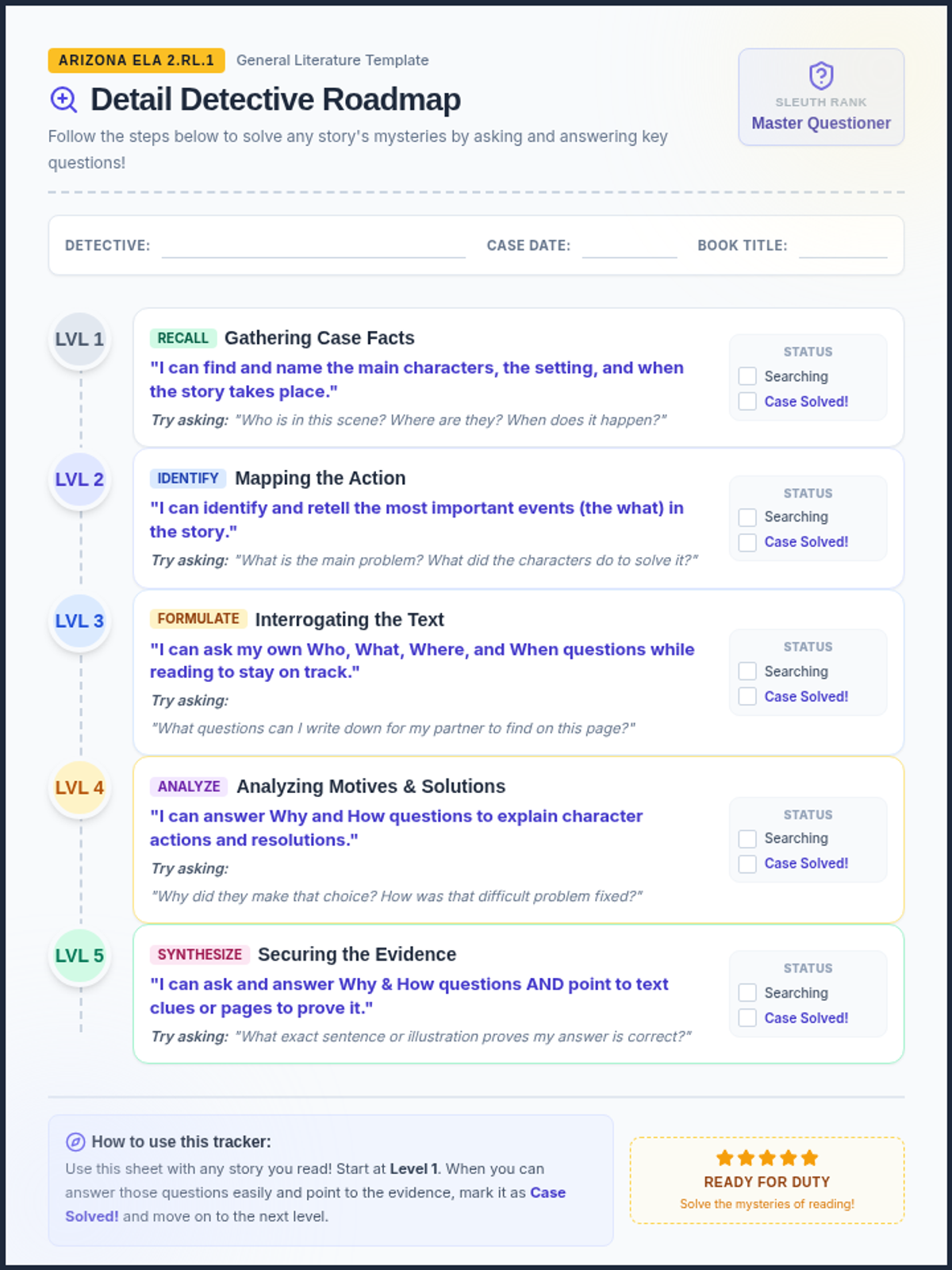
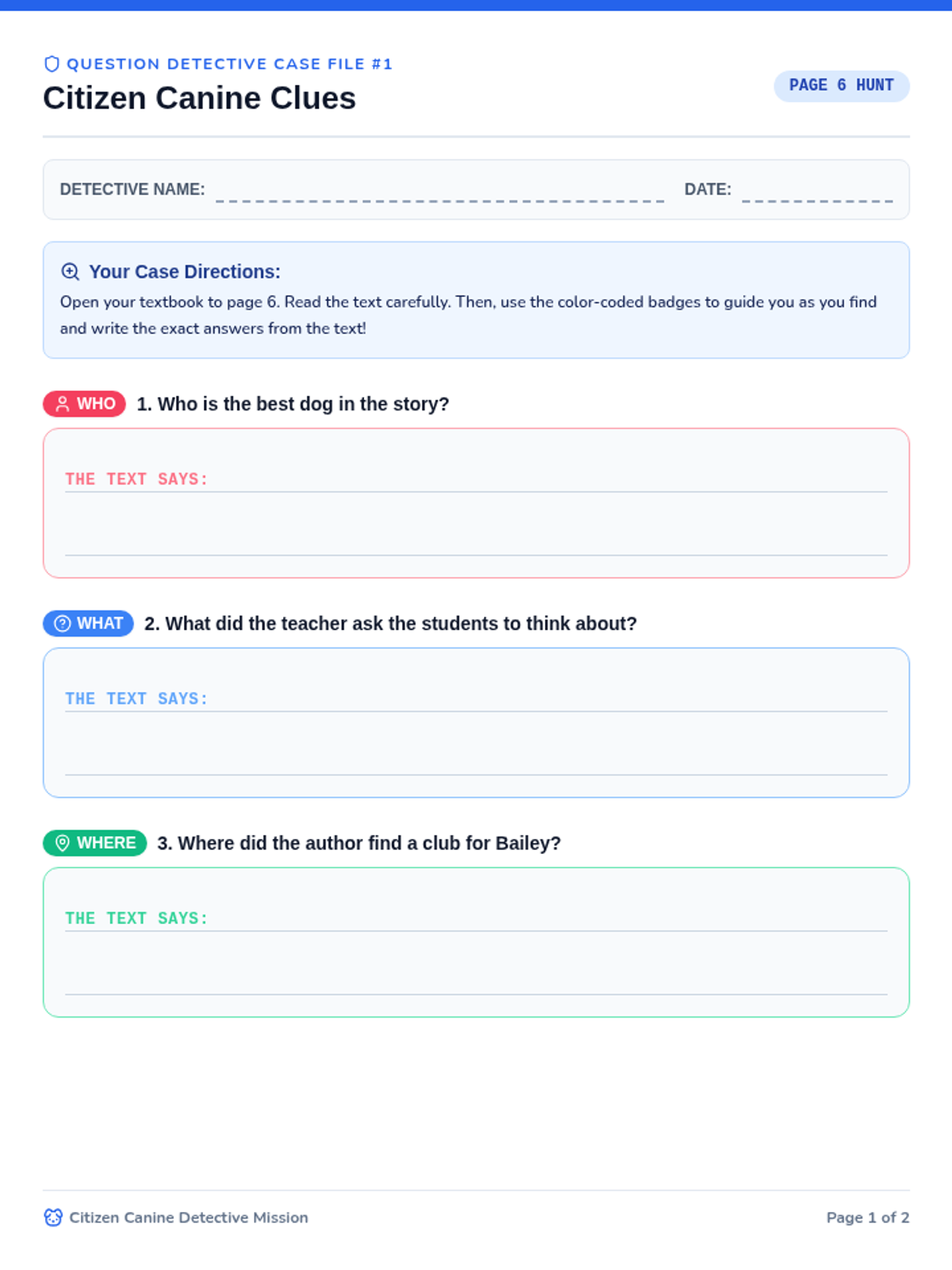
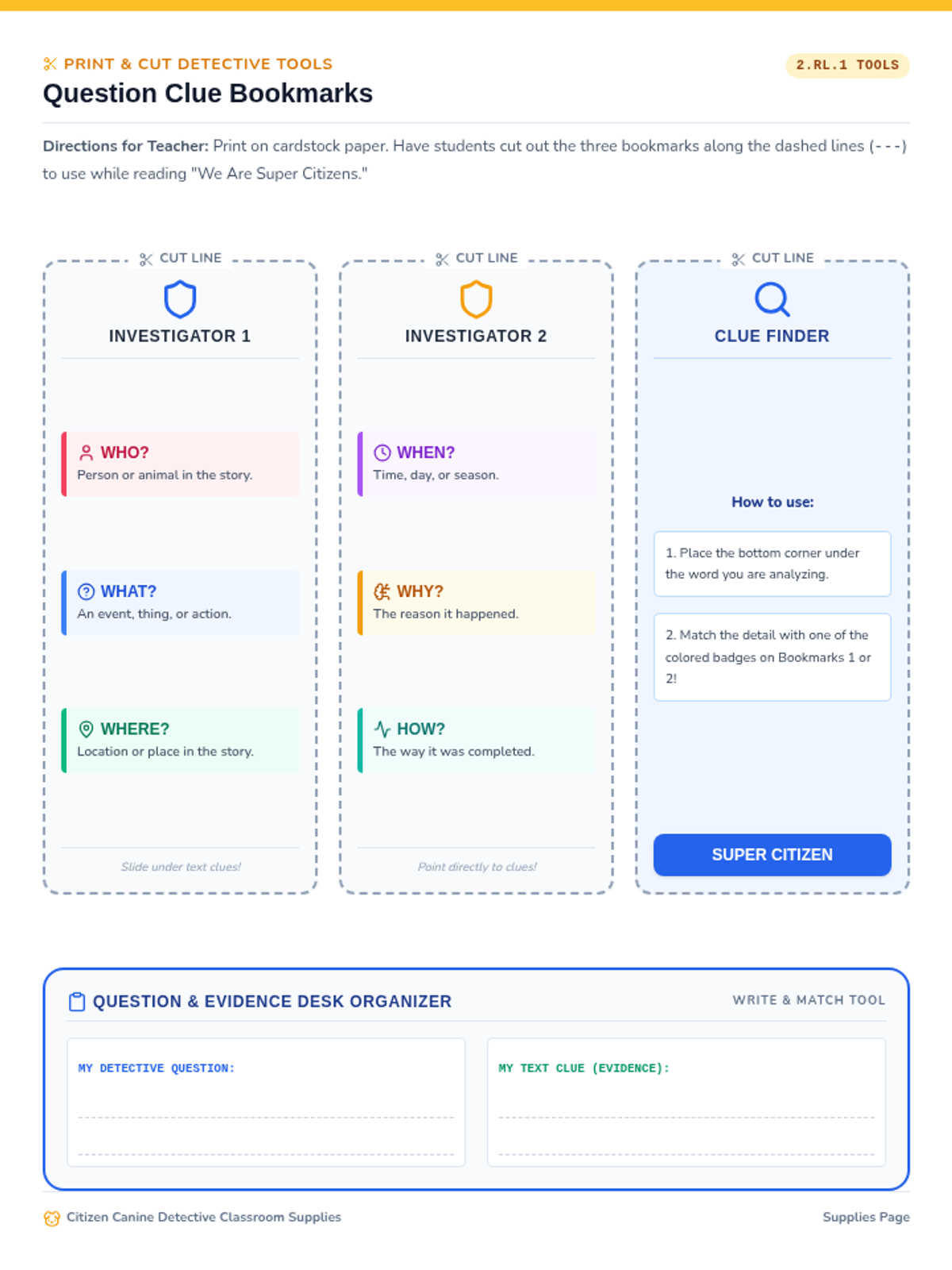
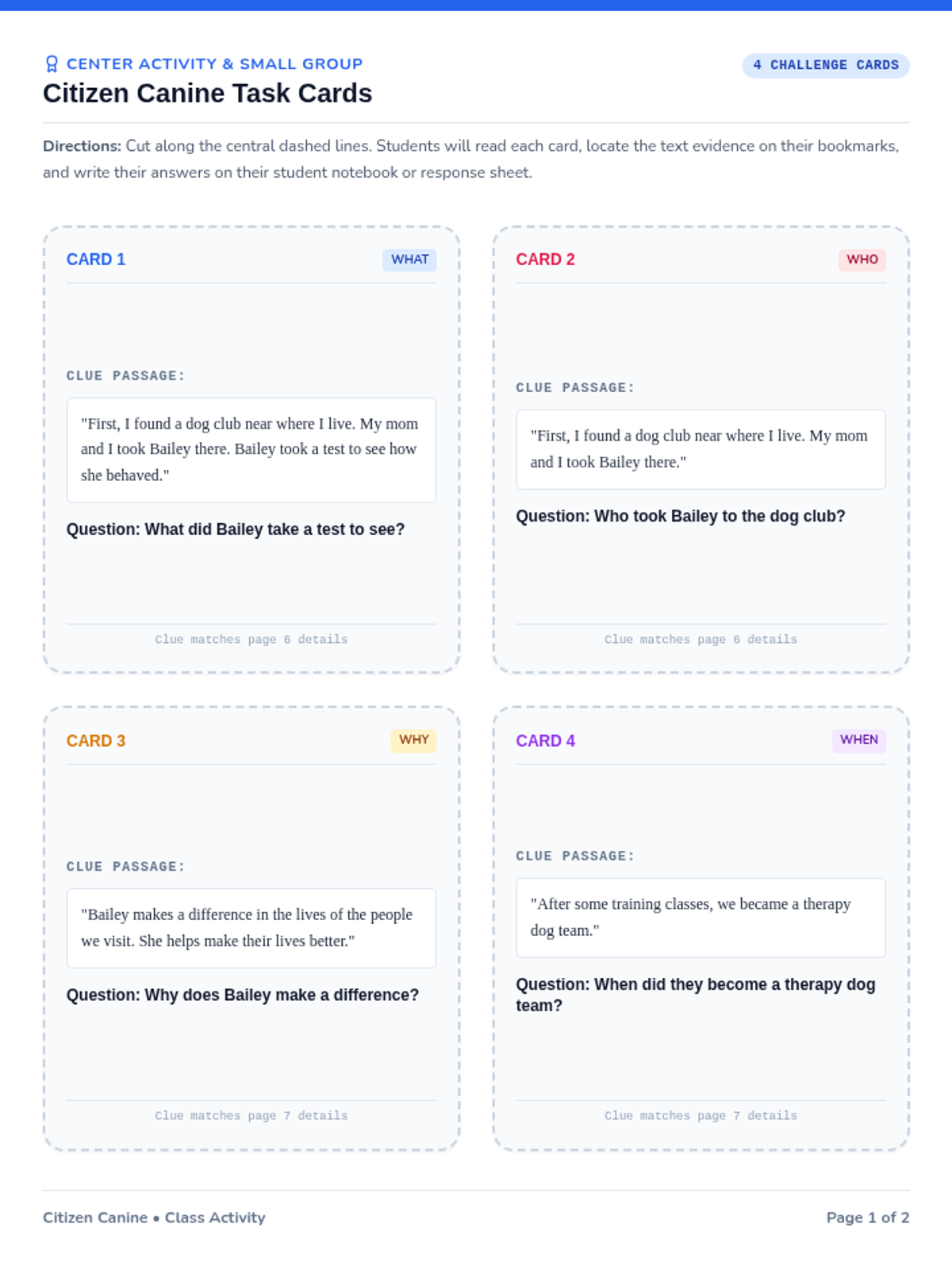
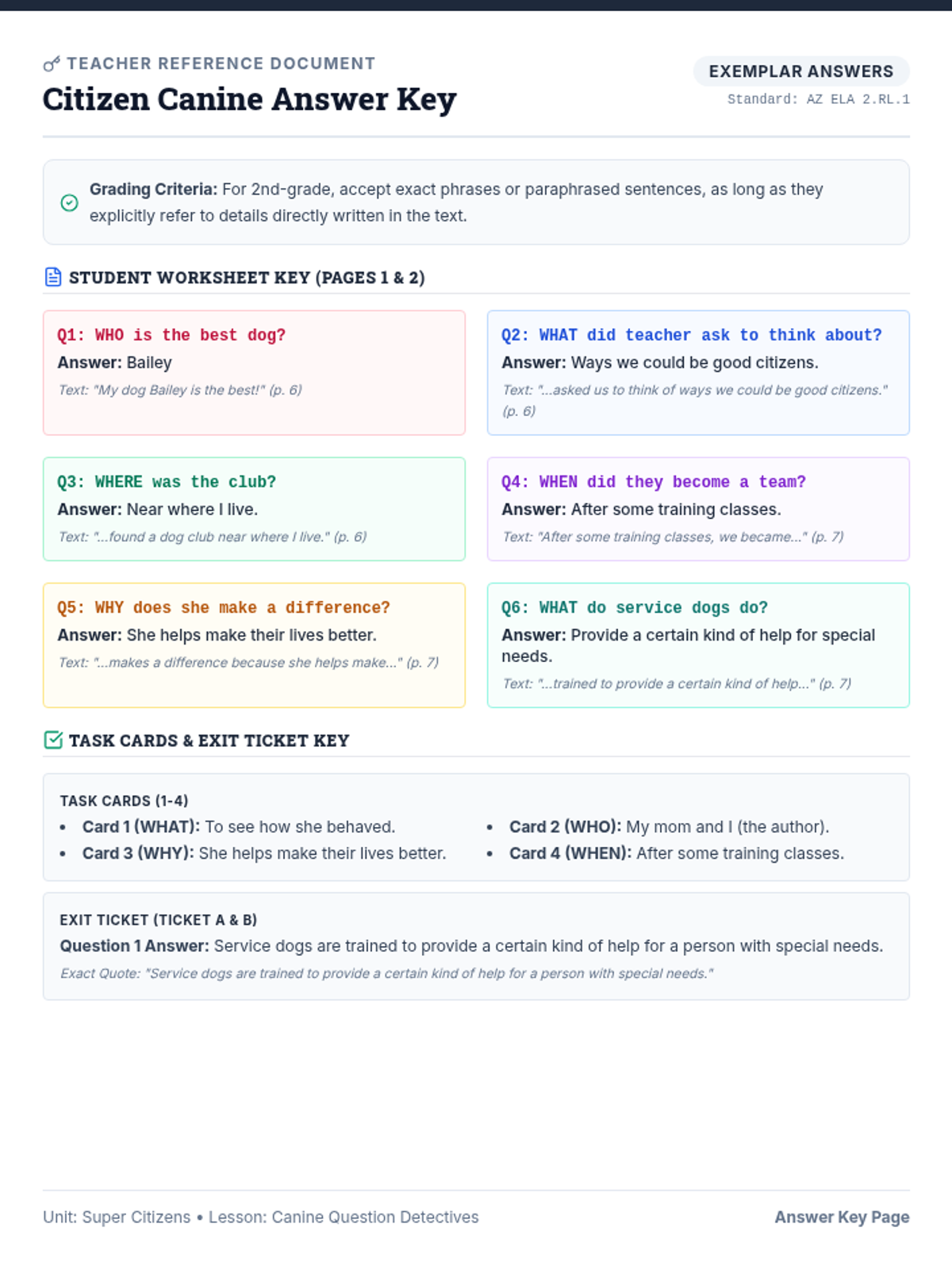
A collection of visual resources to help students locate text evidence and answer key comprehension questions using the 5Ws and How framework.
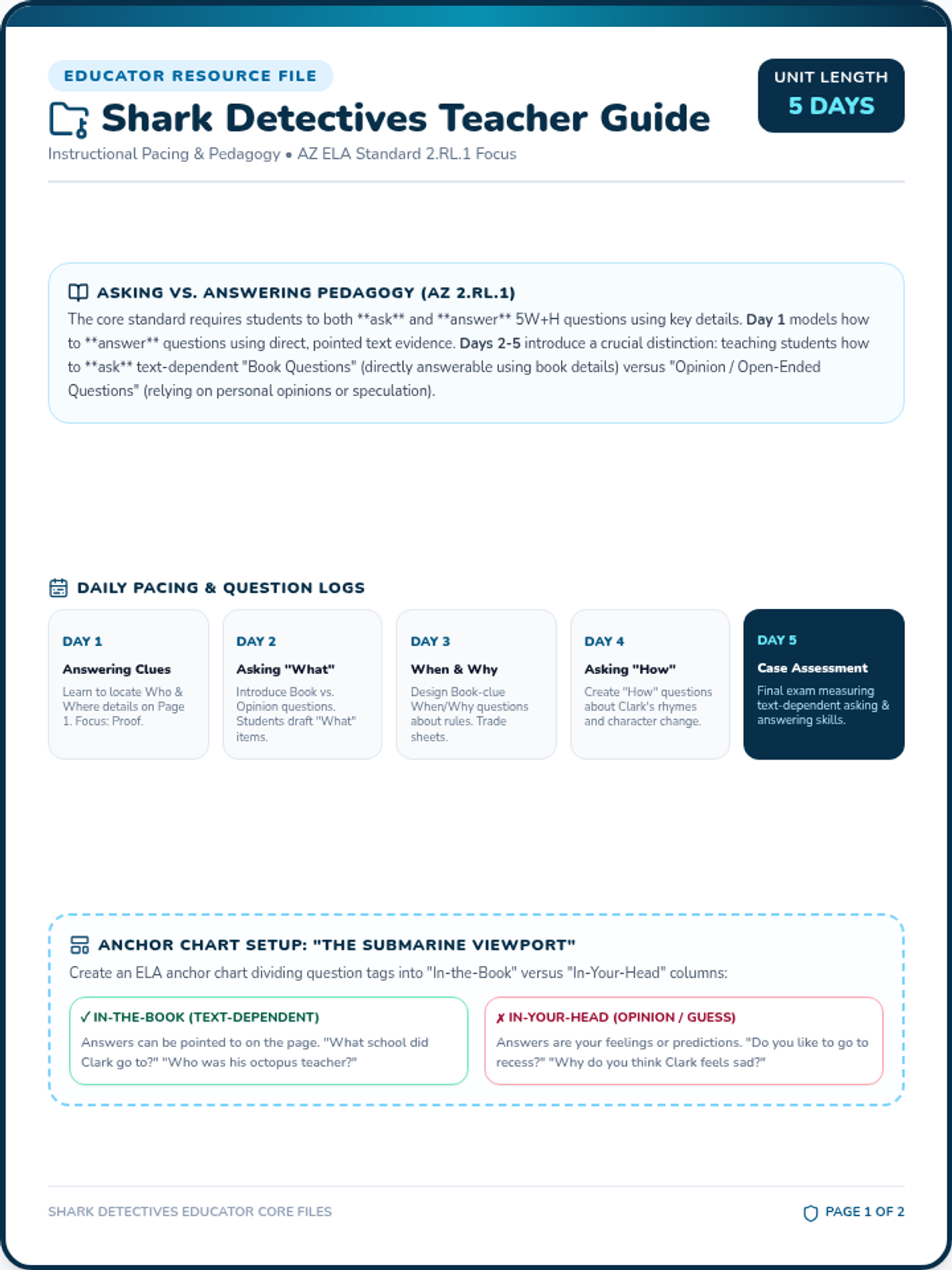
A lesson focused on teaching students how to ask and answer who, what, where, when, why, and how questions using a progression of student-friendly learning targets.
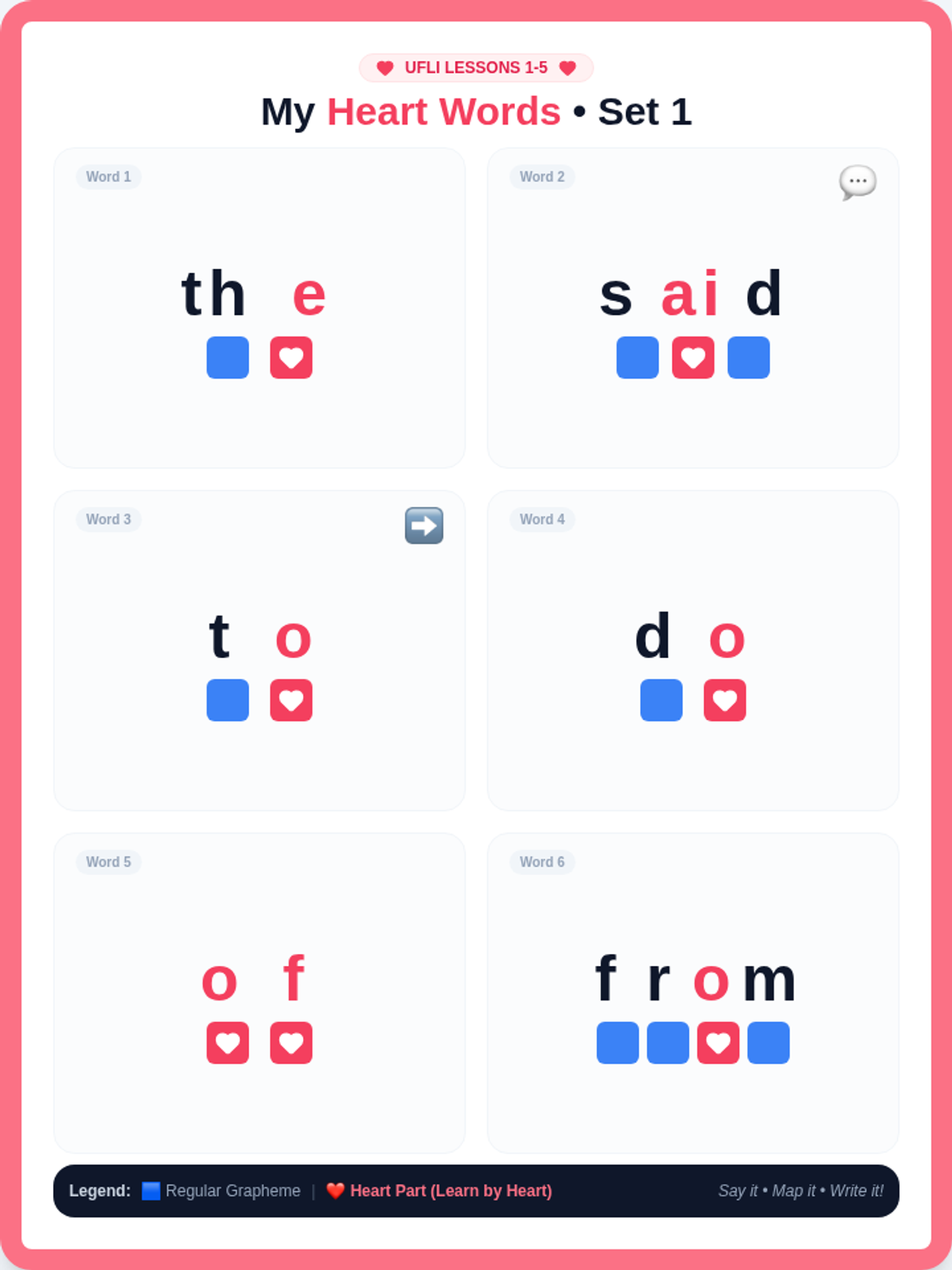
A collection of visual anchor charts and posters for UFLI foundations heart words, designed to support students in orthographic mapping with clear visuals and phonetic cues.
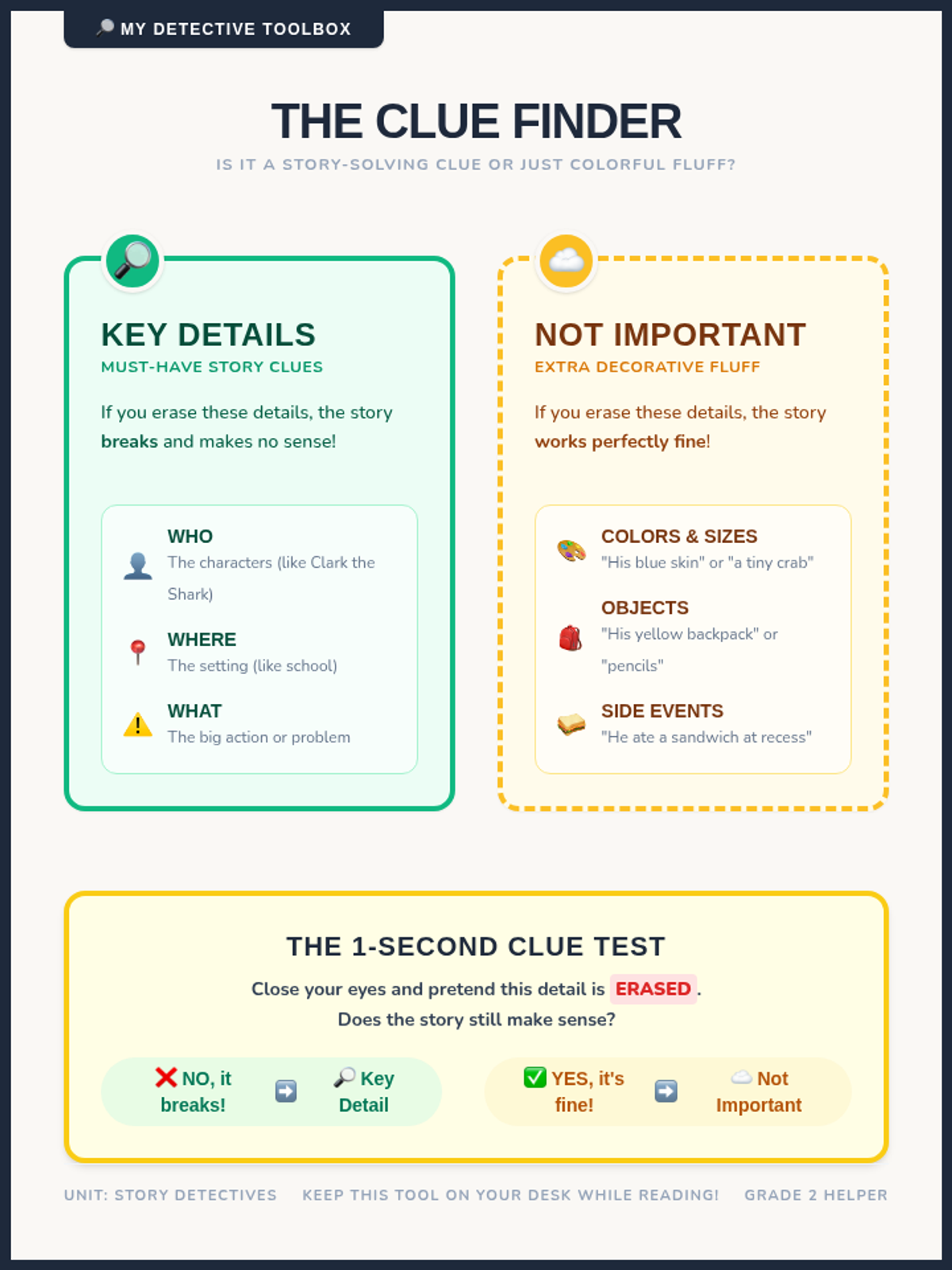
A lesson designed for second graders to distinguish between key details (character, setting, key plot points) and unimportant extra details (fluff) using a fun mystery detective theme.
Students publish and share their completed 'What I Did This Summer' stories with their classmates, celebrating their growth as narrative writers.
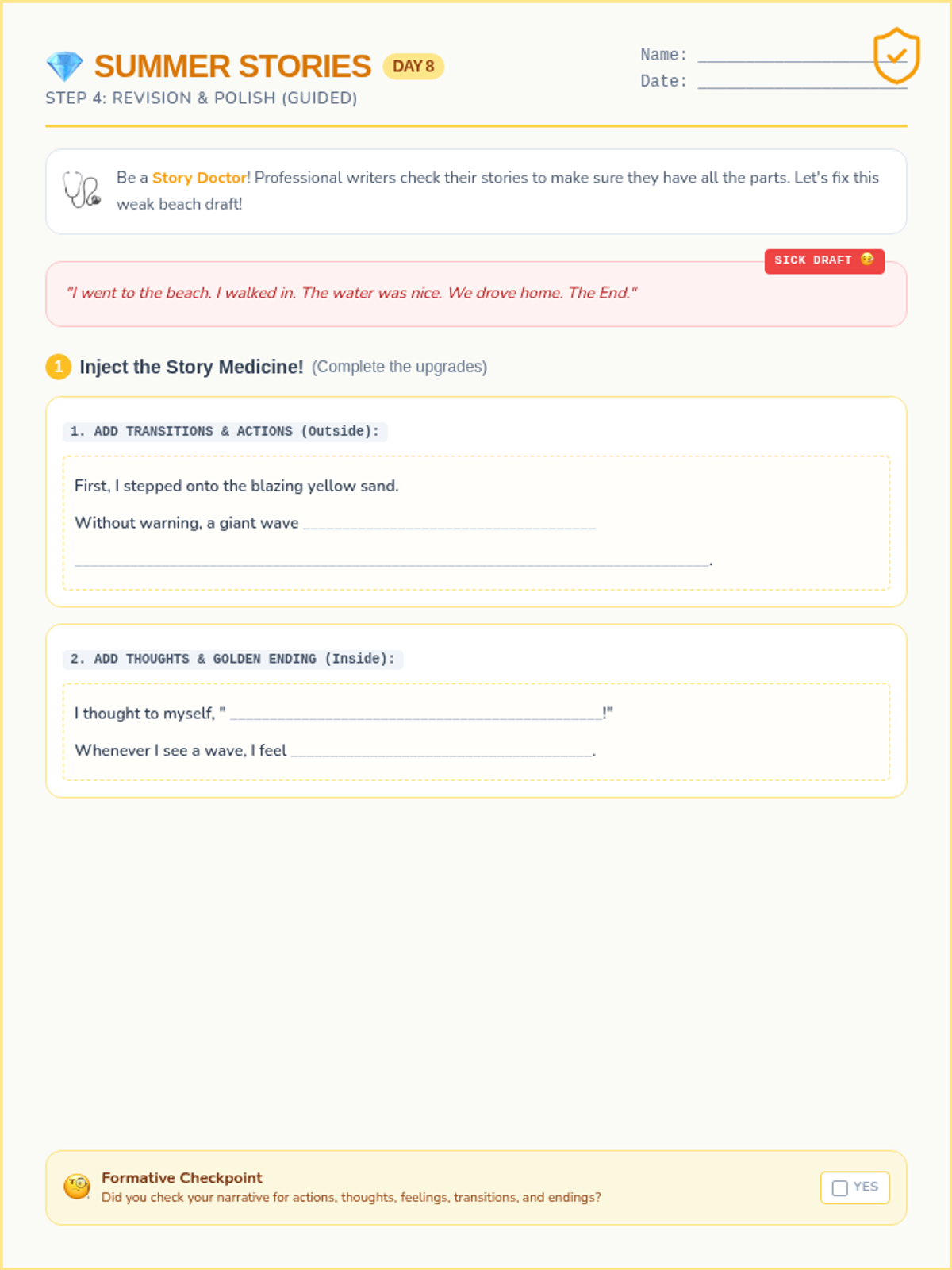
Students review their completed narrative drafts with a checklist, checking for actions, thoughts, feelings, transition words, and a strong conclusion, then writing their final polished draft.
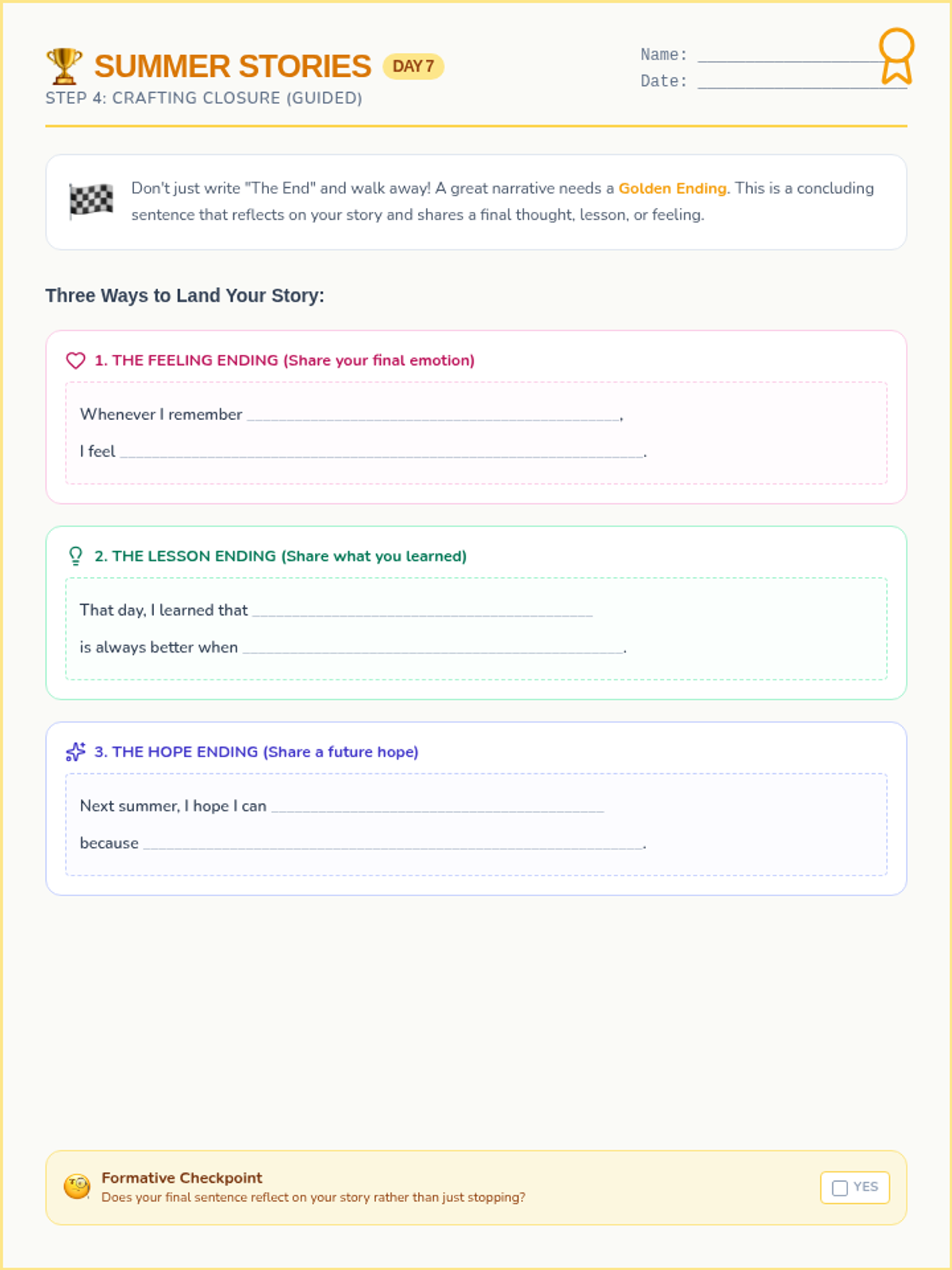
Students learn how to write a satisfying concluding sentence that reflects on their summer story and leaves the reader with a final thought, lesson, or feeling.
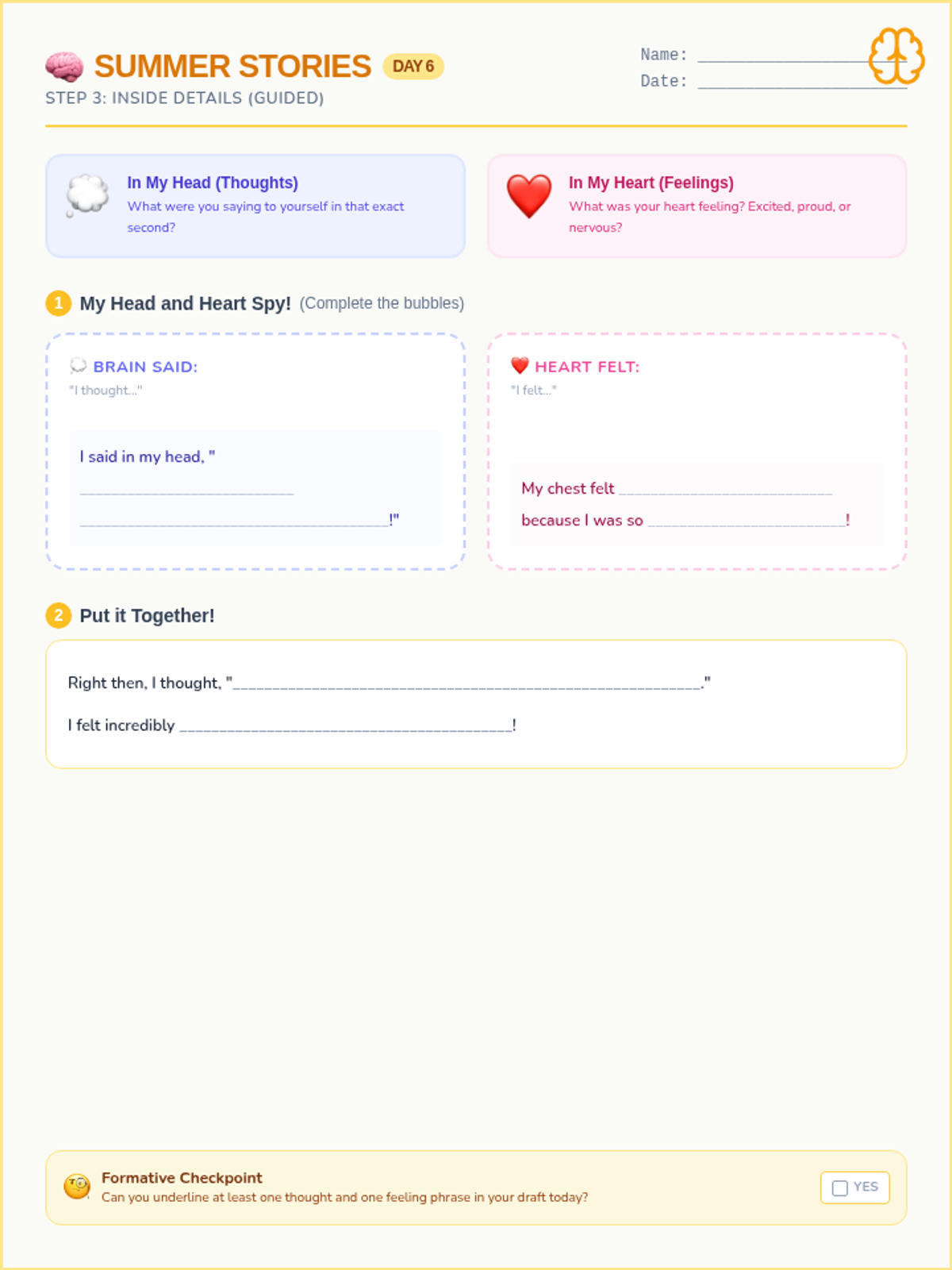
Students elaborate their narratives by adding internal thoughts and feelings, ensuring their emotional response to the summer event is clear.
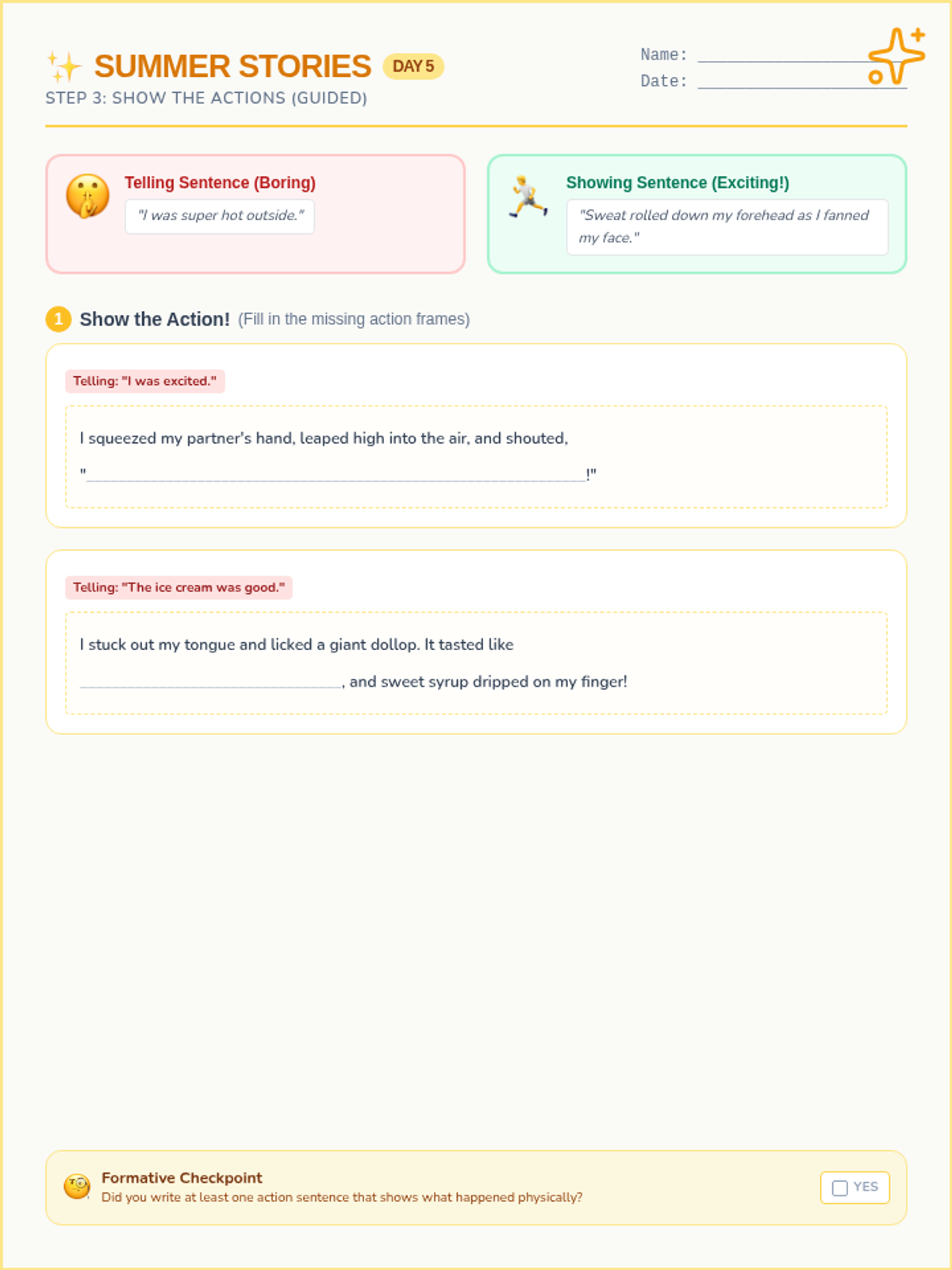
Students go back into their narrative draft to add external actions (Show, Don't Tell) that bring their summer moments to life.
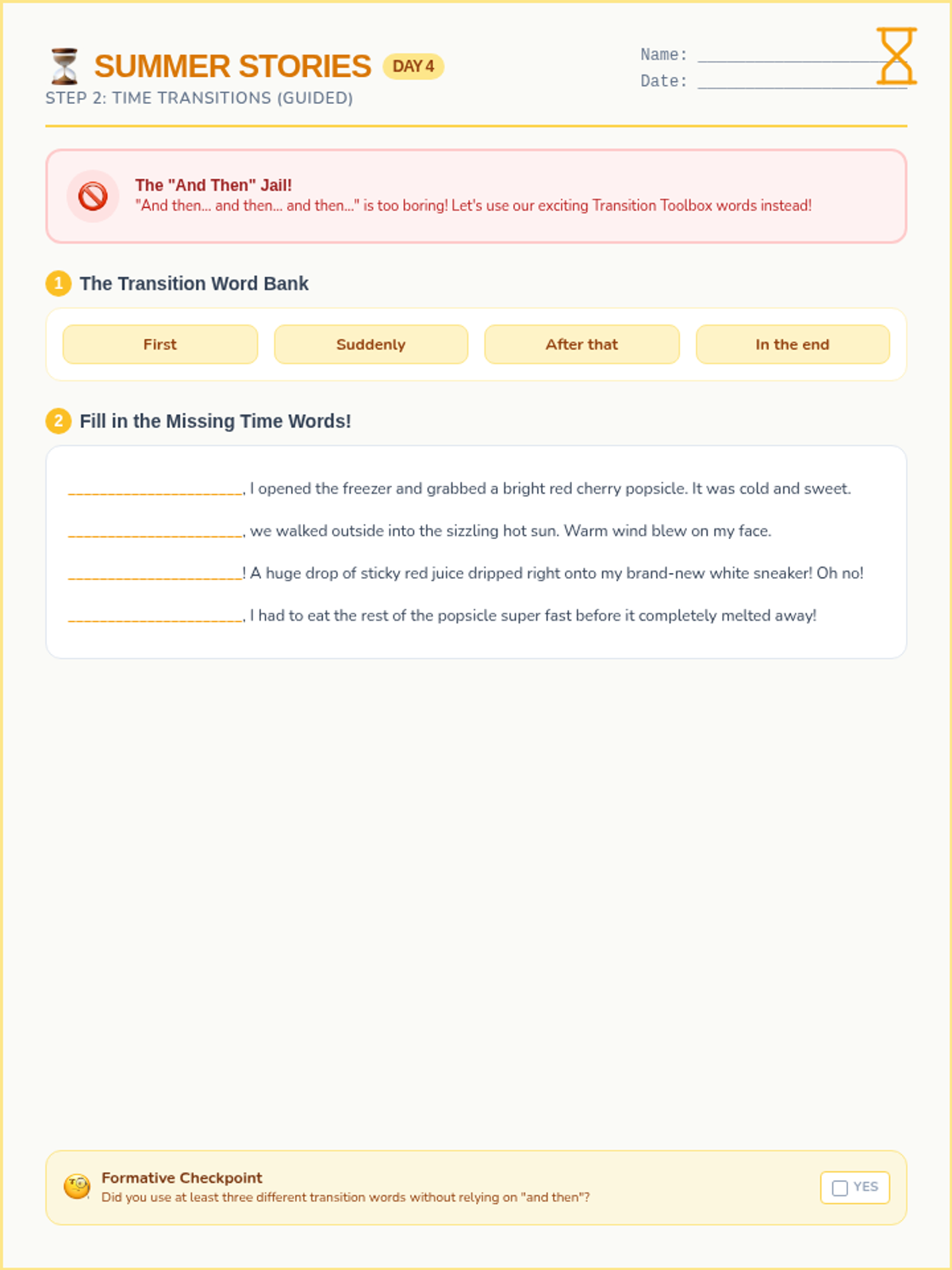
Students learn to use a variety of temporal words (First, Later, Suddenly, After that) to build a smooth, chronological flow.
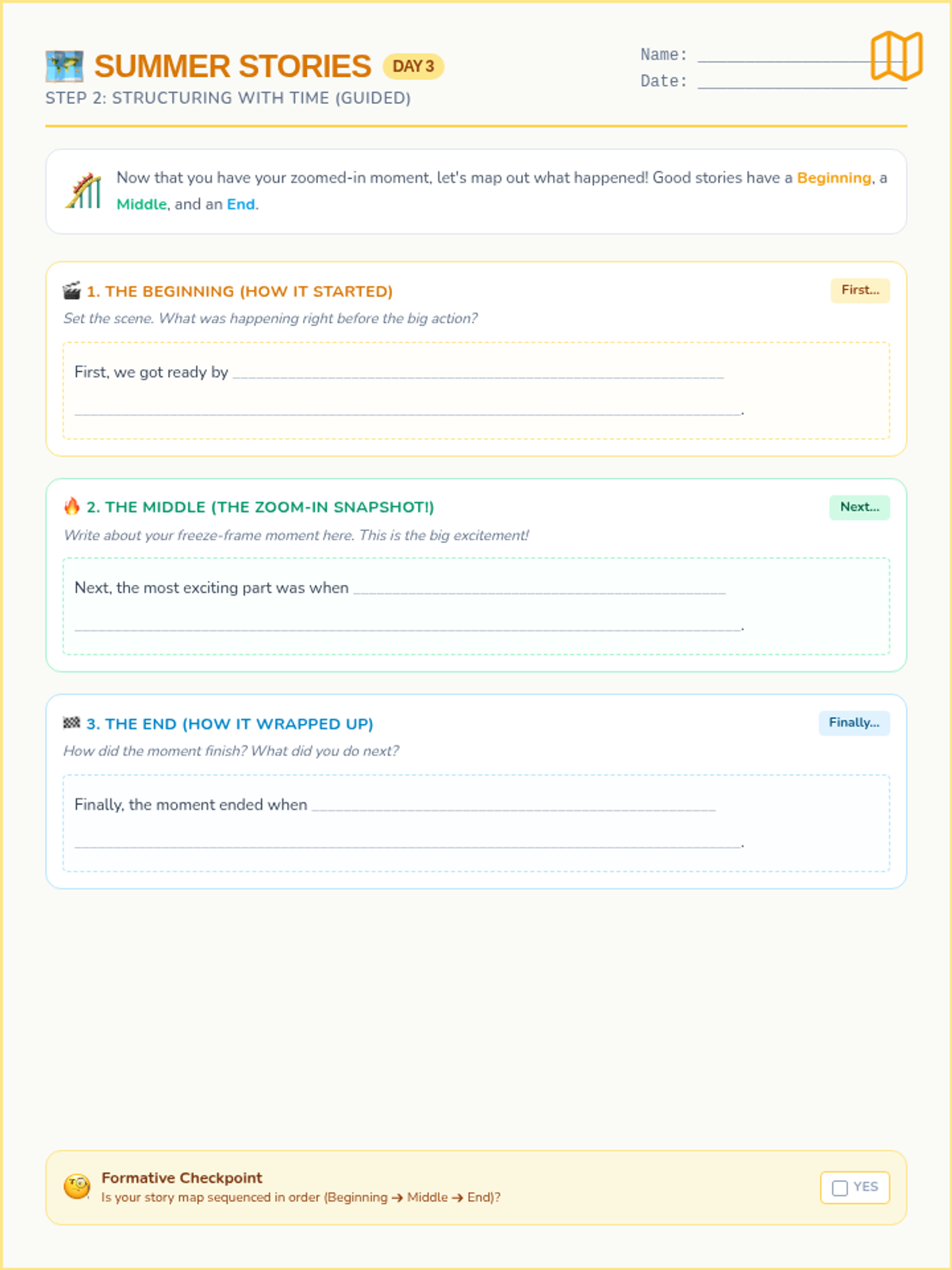
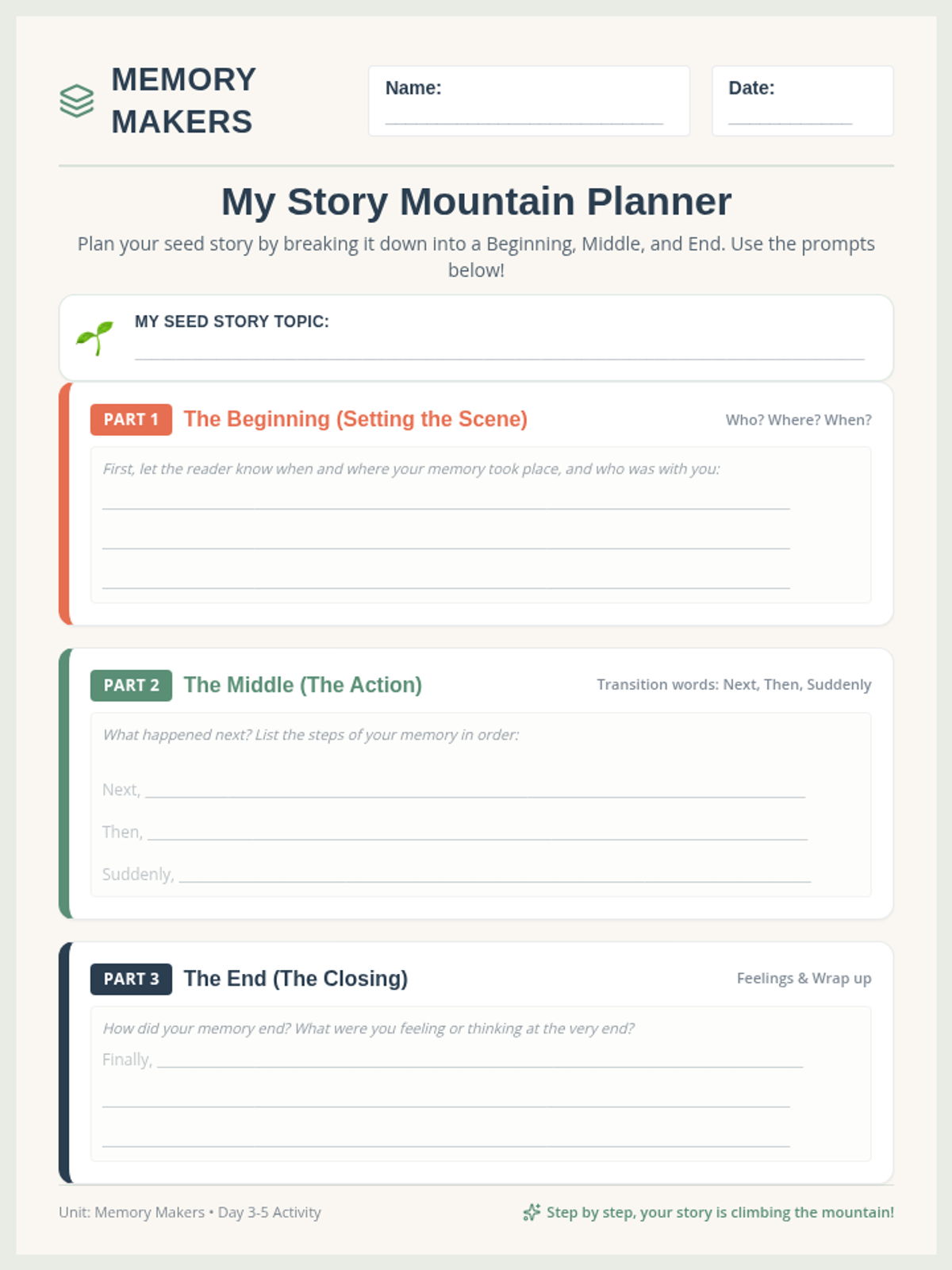
Students sequence their single seed story into a logical 3-part narrative map (beginning, middle, and end) to prepare for drafting.
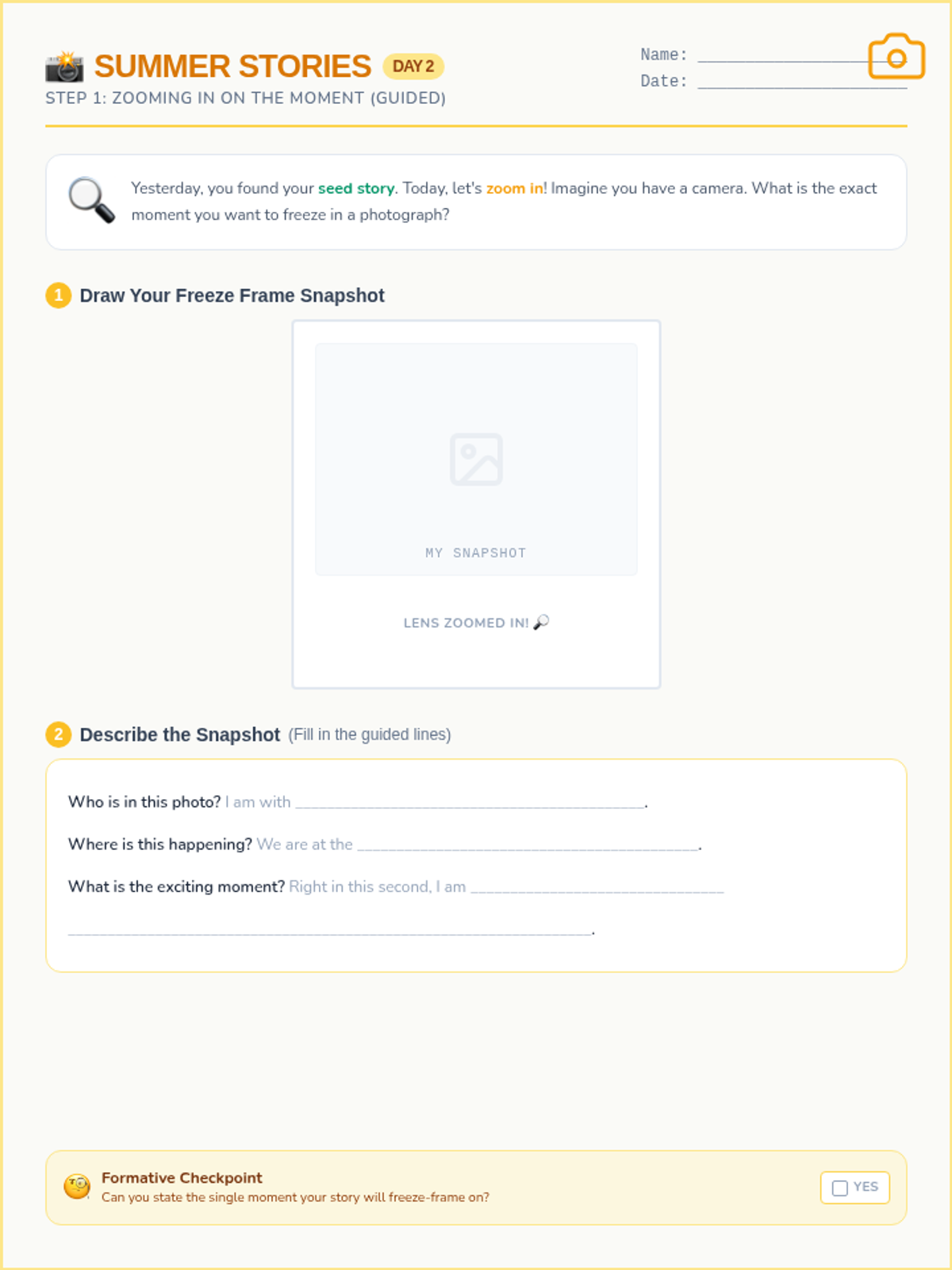
Students zoom in on their selected seed story, identifying the main moment and sketching it out to freeze the frame of their narrative.
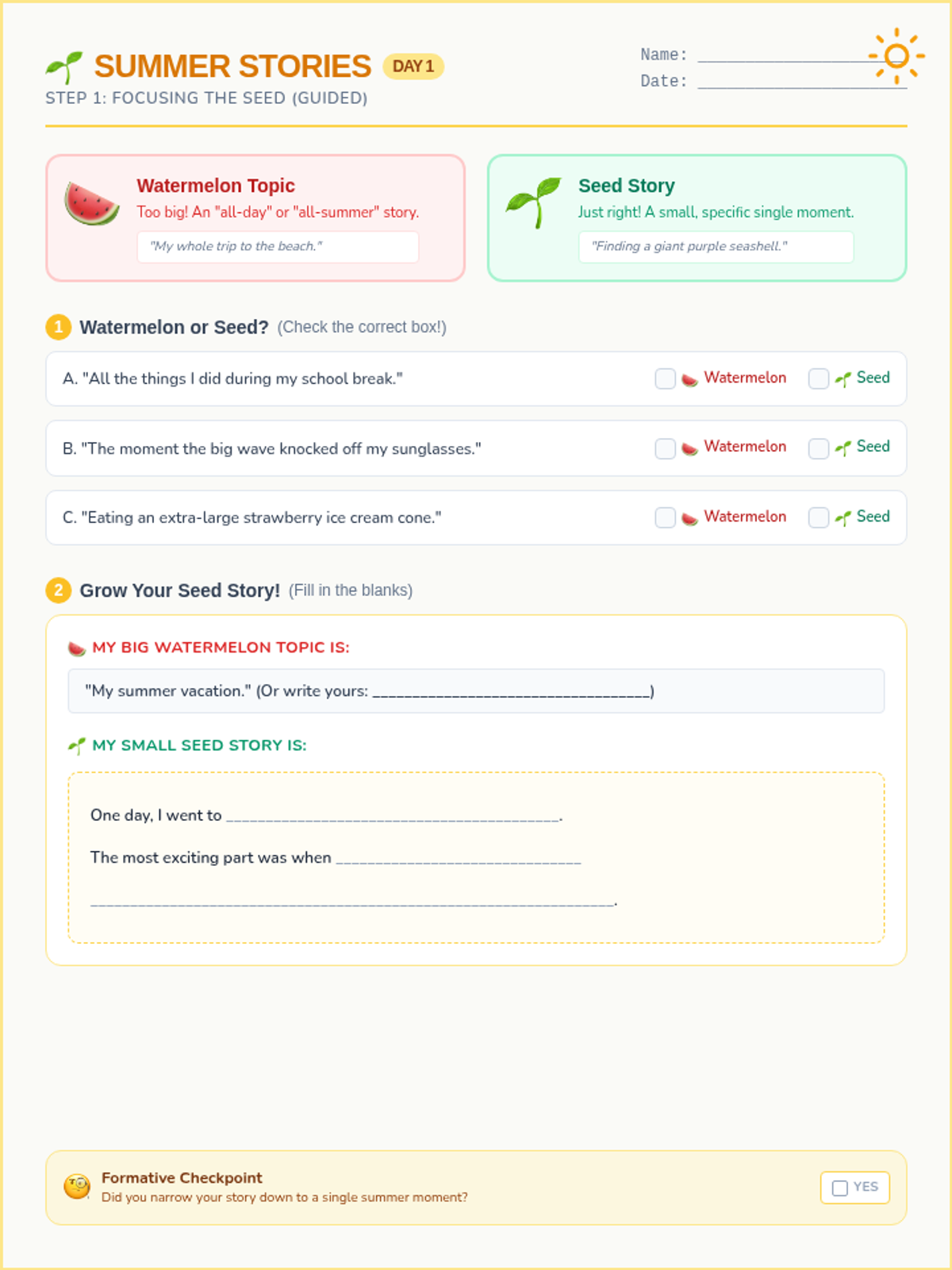
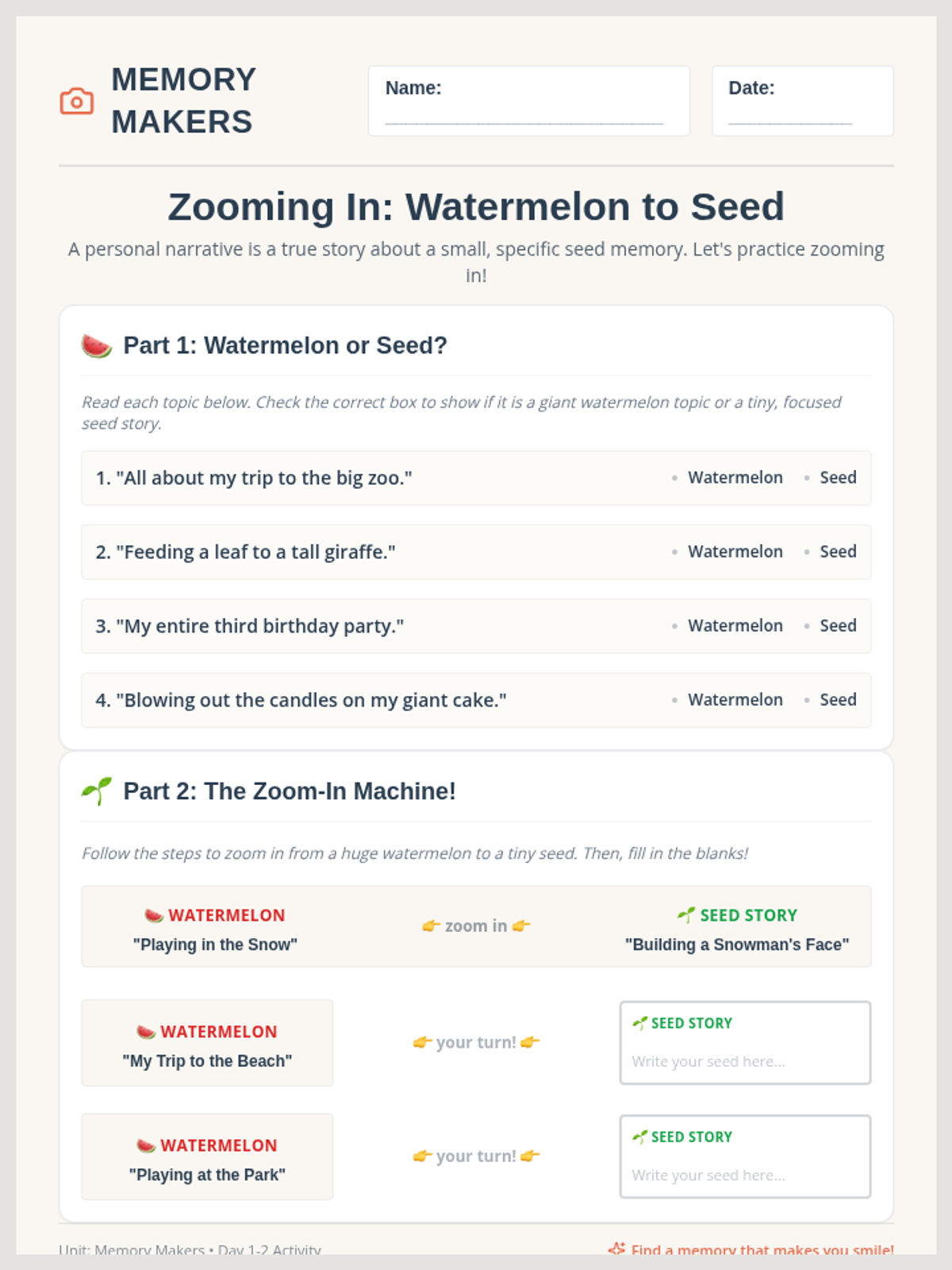
Students learn to distinguish between broad, 'watermelon' topics and focused, 'seed' stories, helping them select a single, specific summer event to write about.
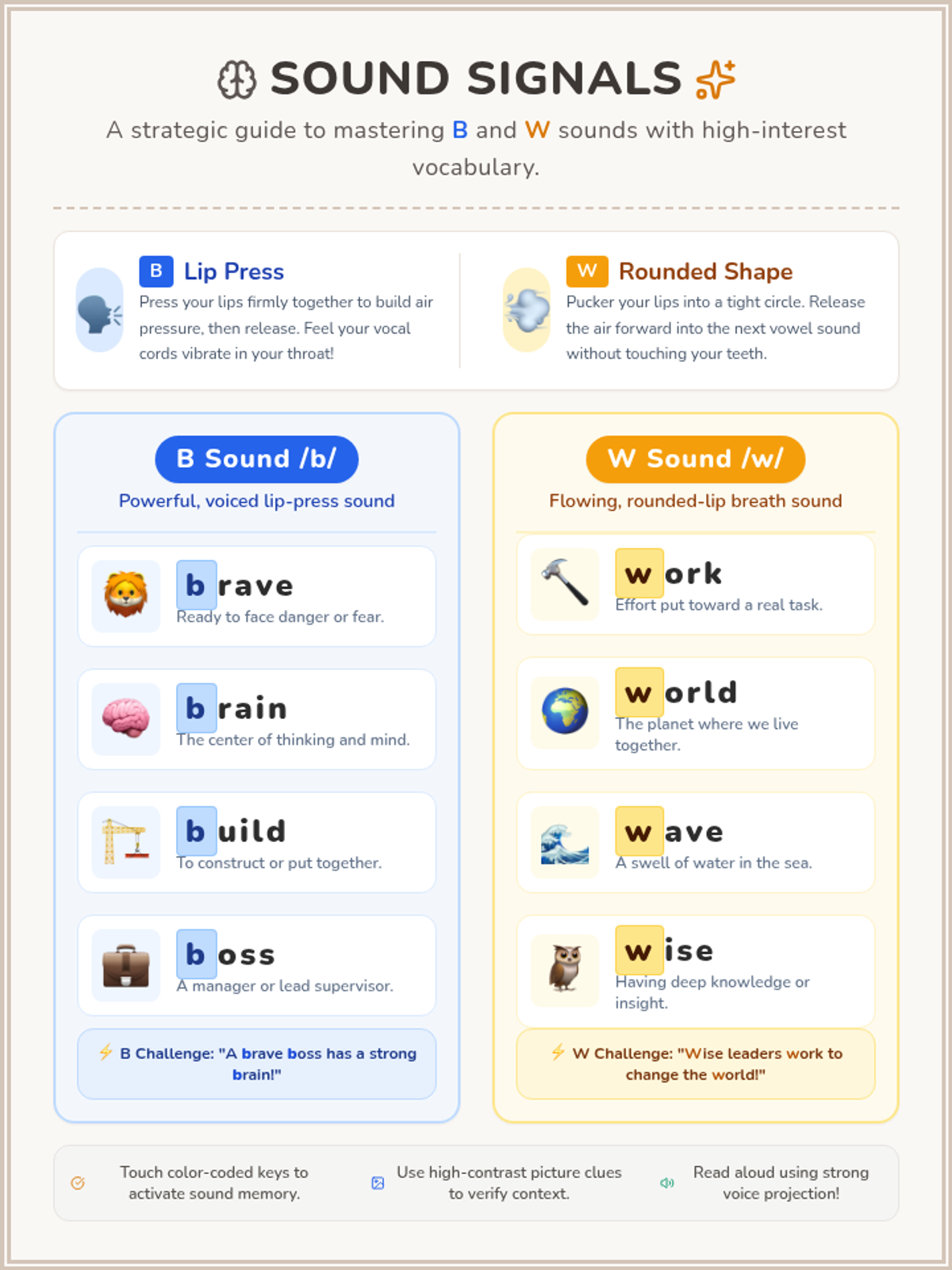
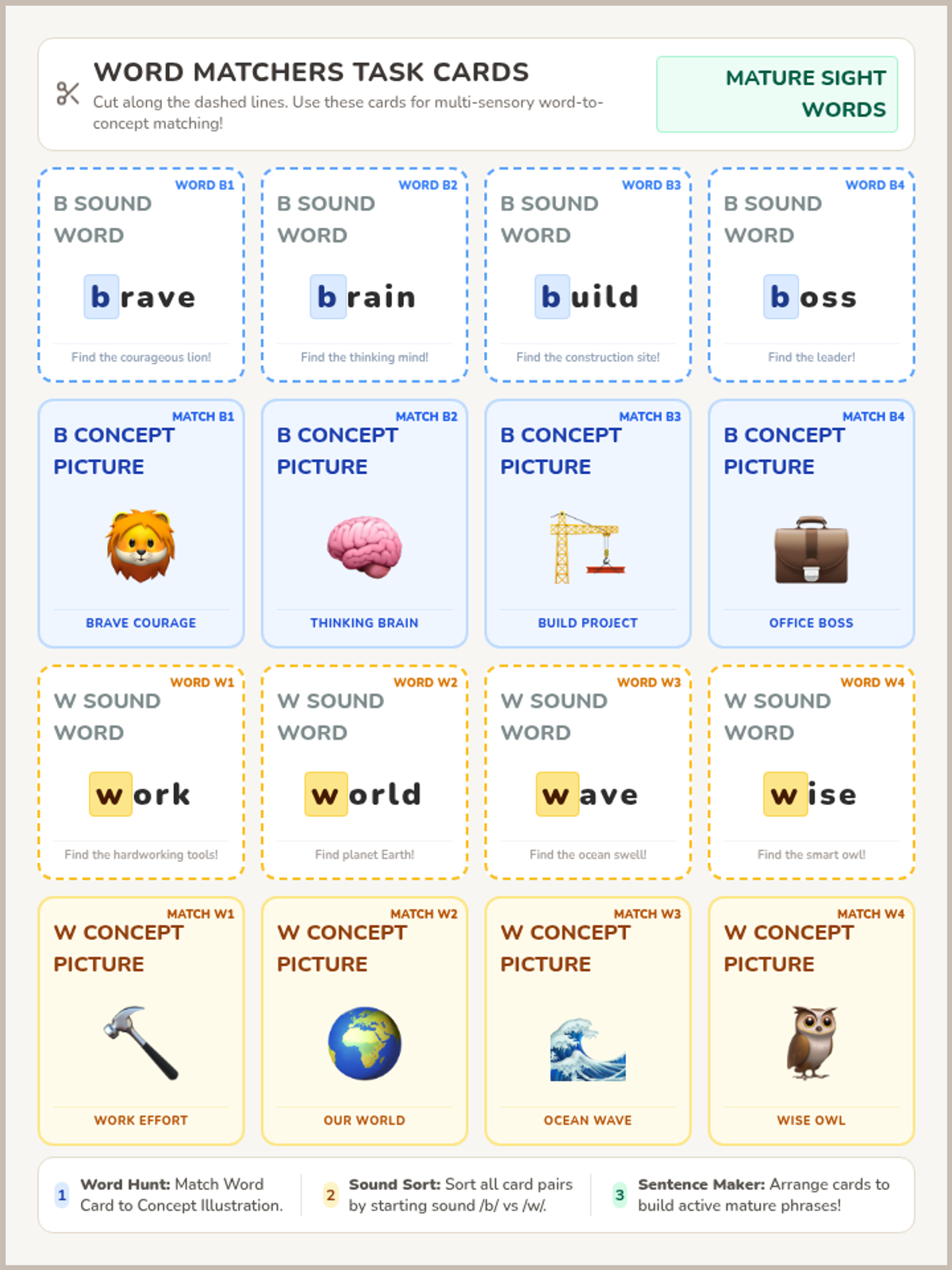
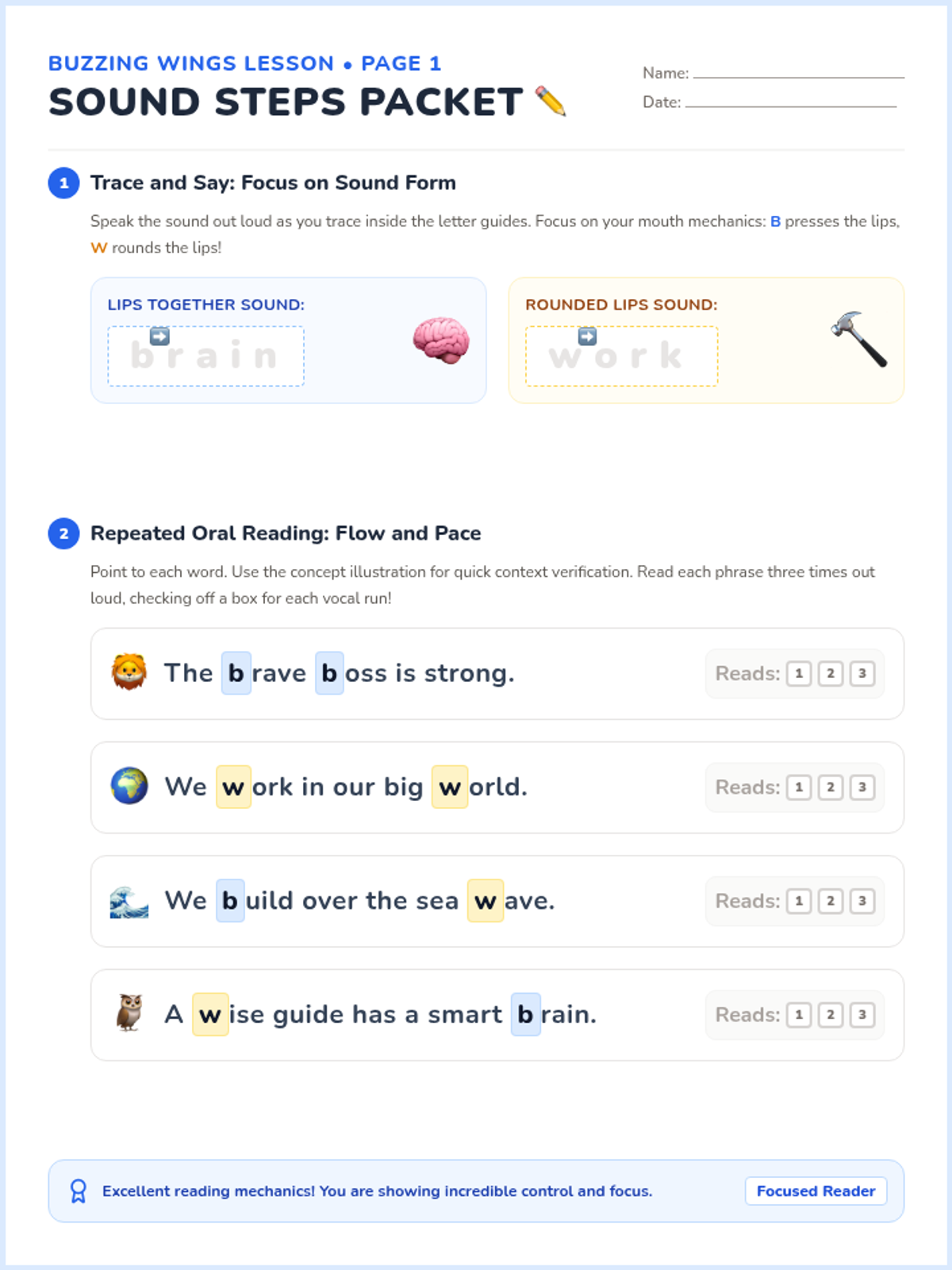
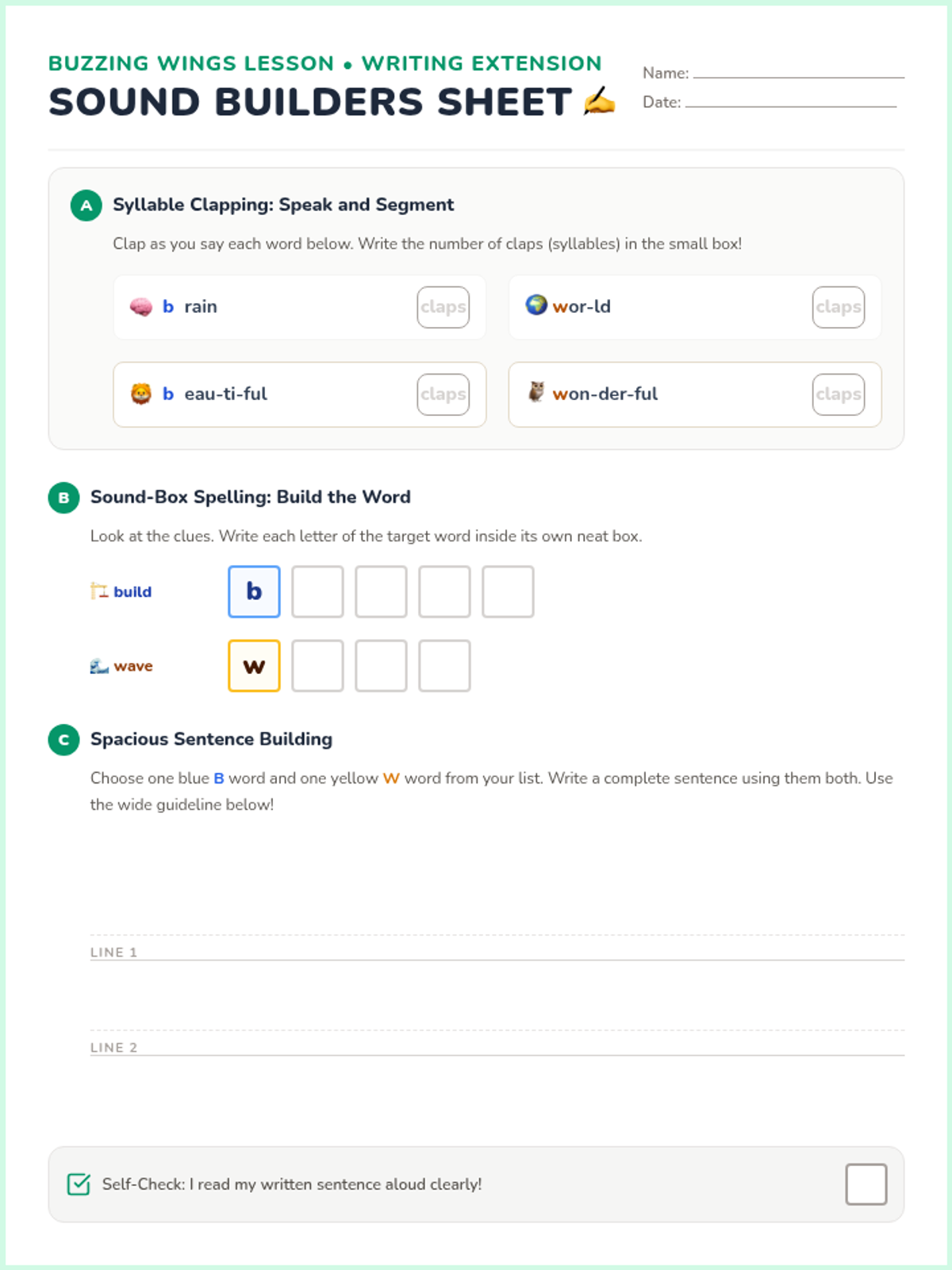
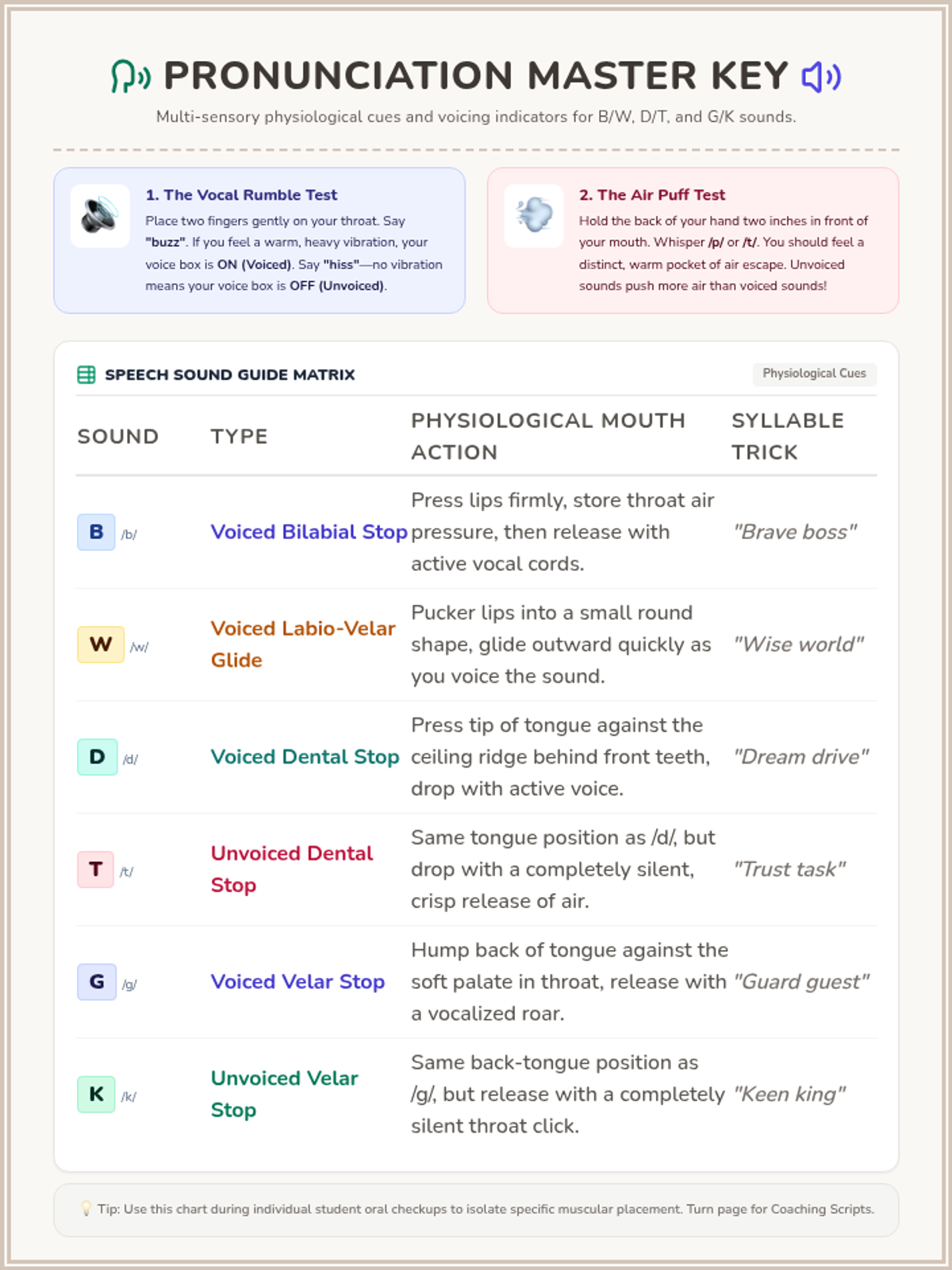
An hour-long structured reading lesson focusing on B and W letter-sound association and common sight words. Designed with dyslexia-friendly spacing, color-coded highlights, and picture scaffolding to support struggling oral readers.
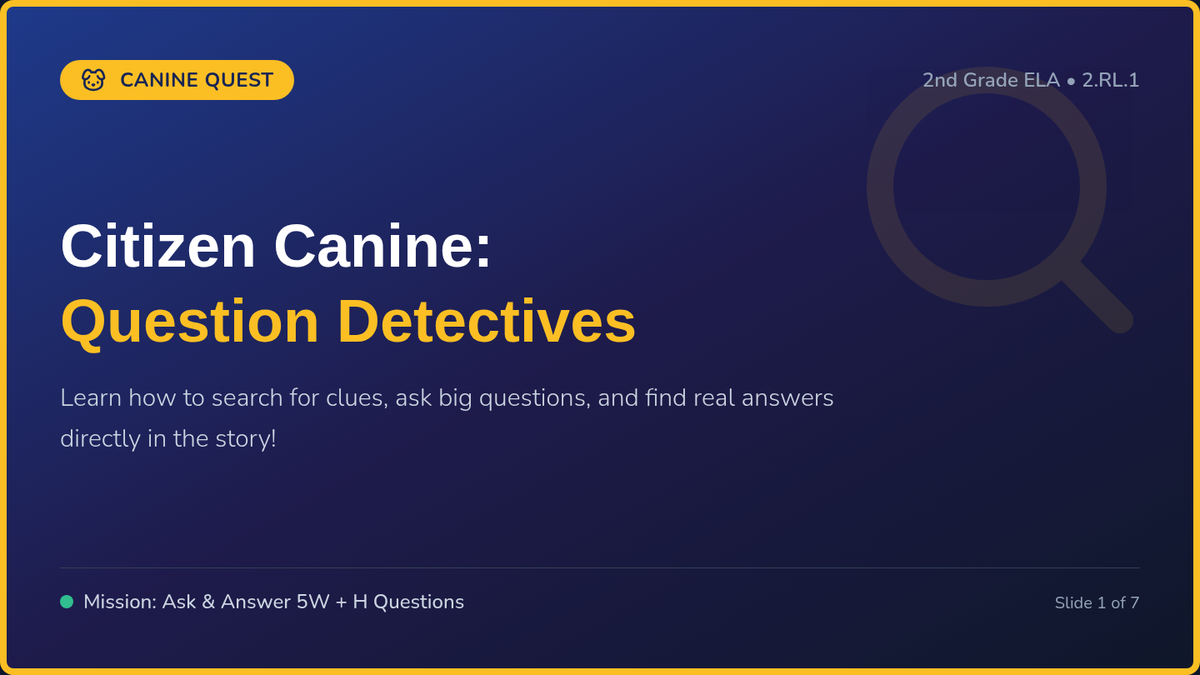
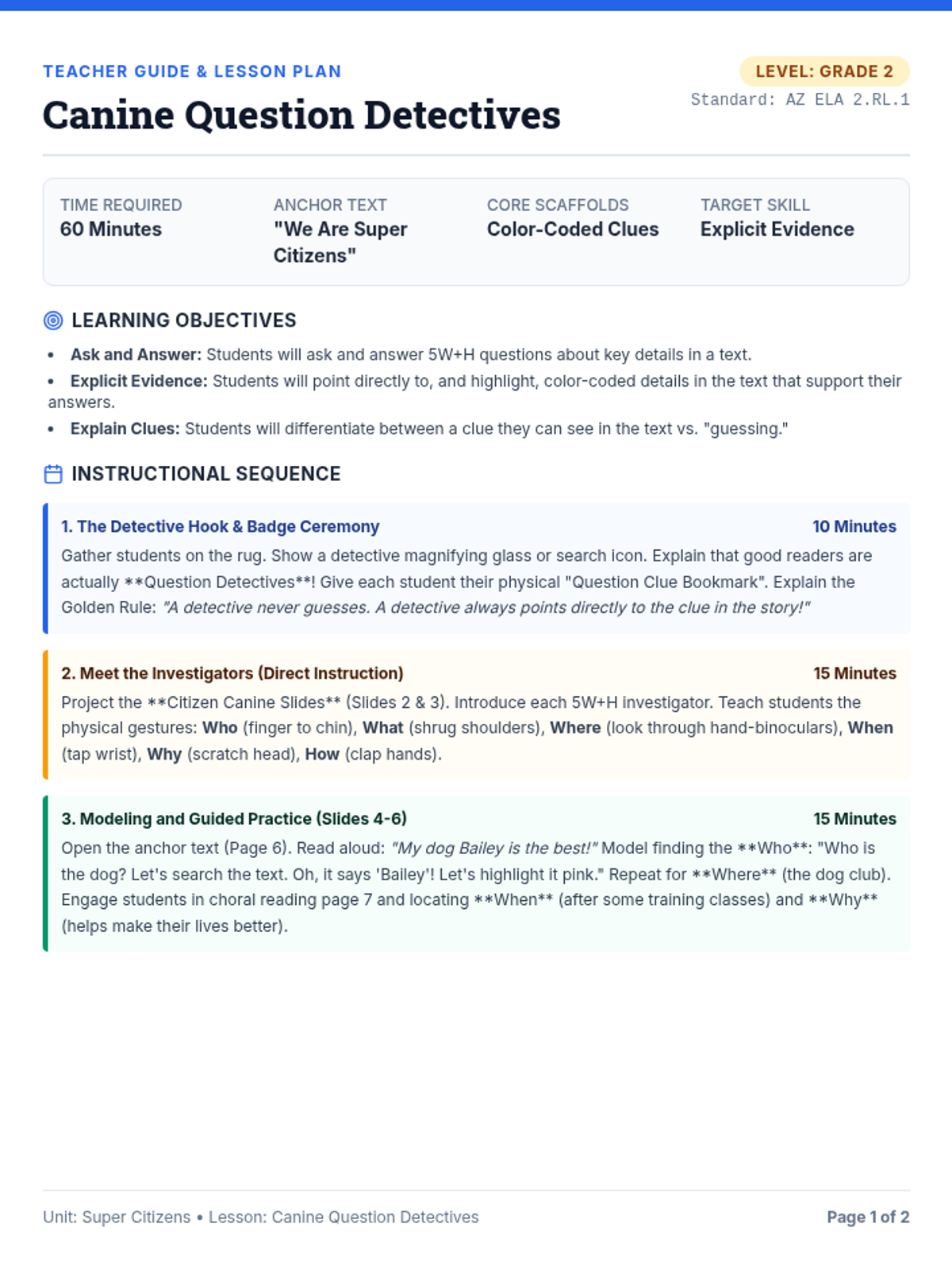
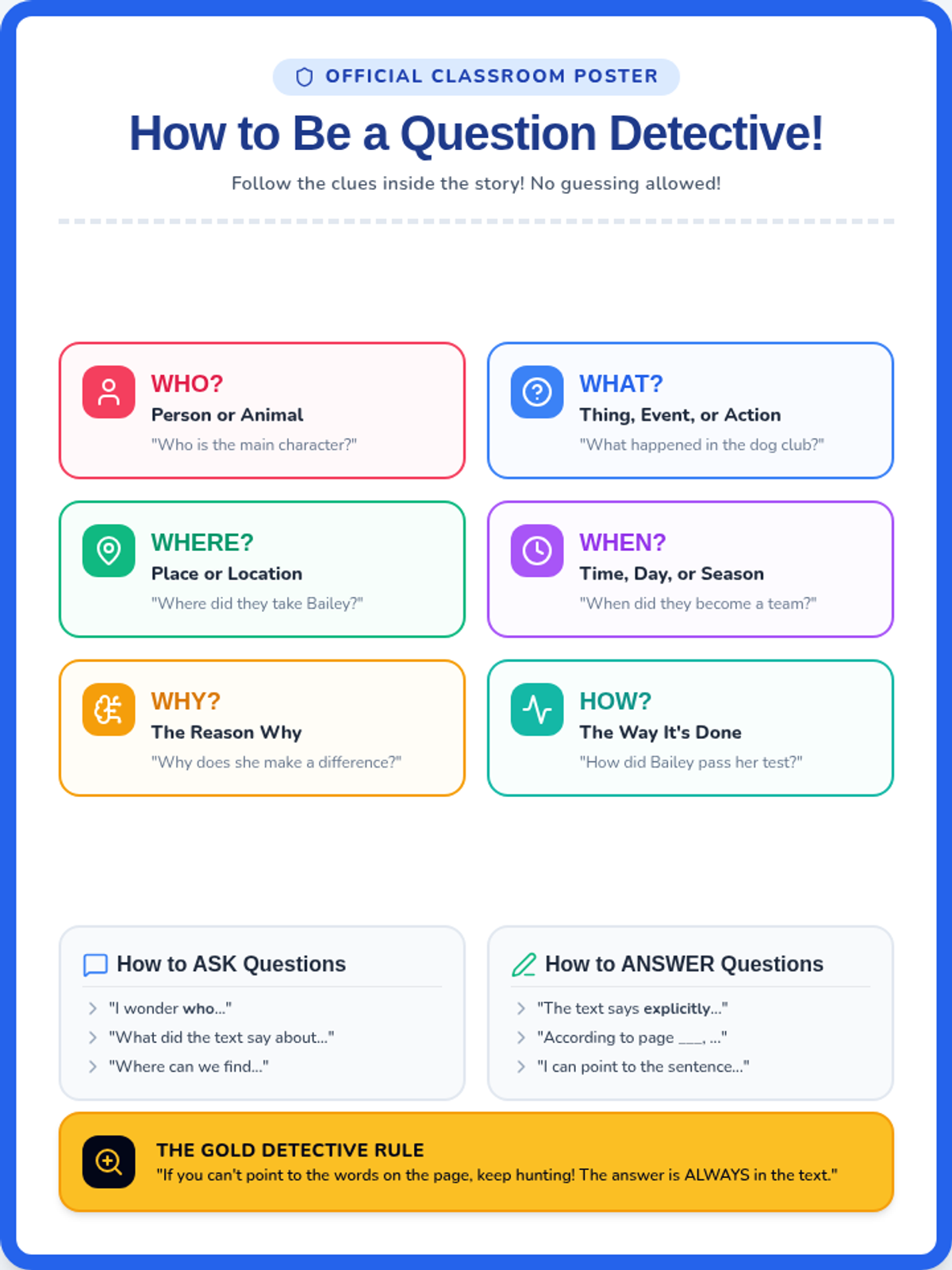
An introductory lesson teaching 2nd-grade students how to ask and answer Who, What, Where, When, Why, and How questions using the text 'We Are Super Citizens'. Students learn to find explicit clues in the story using a fun canine detective theme.
Day 12. Students use their published writer's checklist to peer-edit, polish their stories, and share them in the classroom Author's Chair celebration.
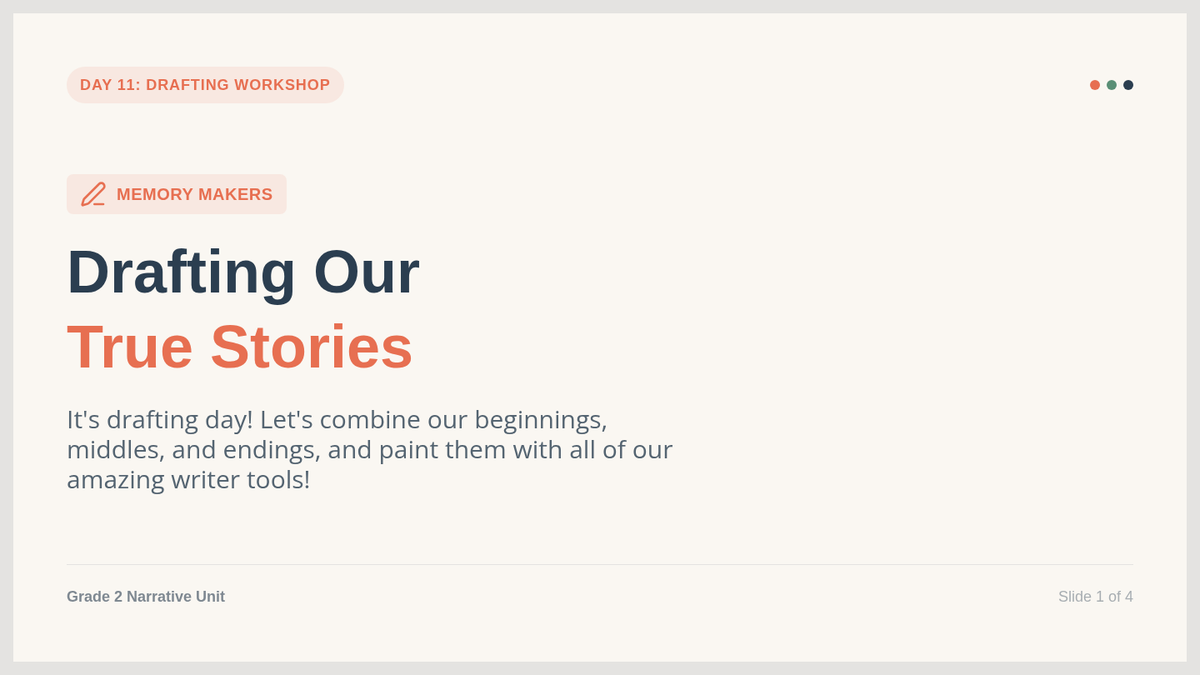
Day 11. Students draft their complete narrative booklet, incorporating their exciting hook, transitions, senses, dialogue, and satisfying endings.
Day 10. Students select their absolute favorite seed story, brainstorm details, and design their final cover page.
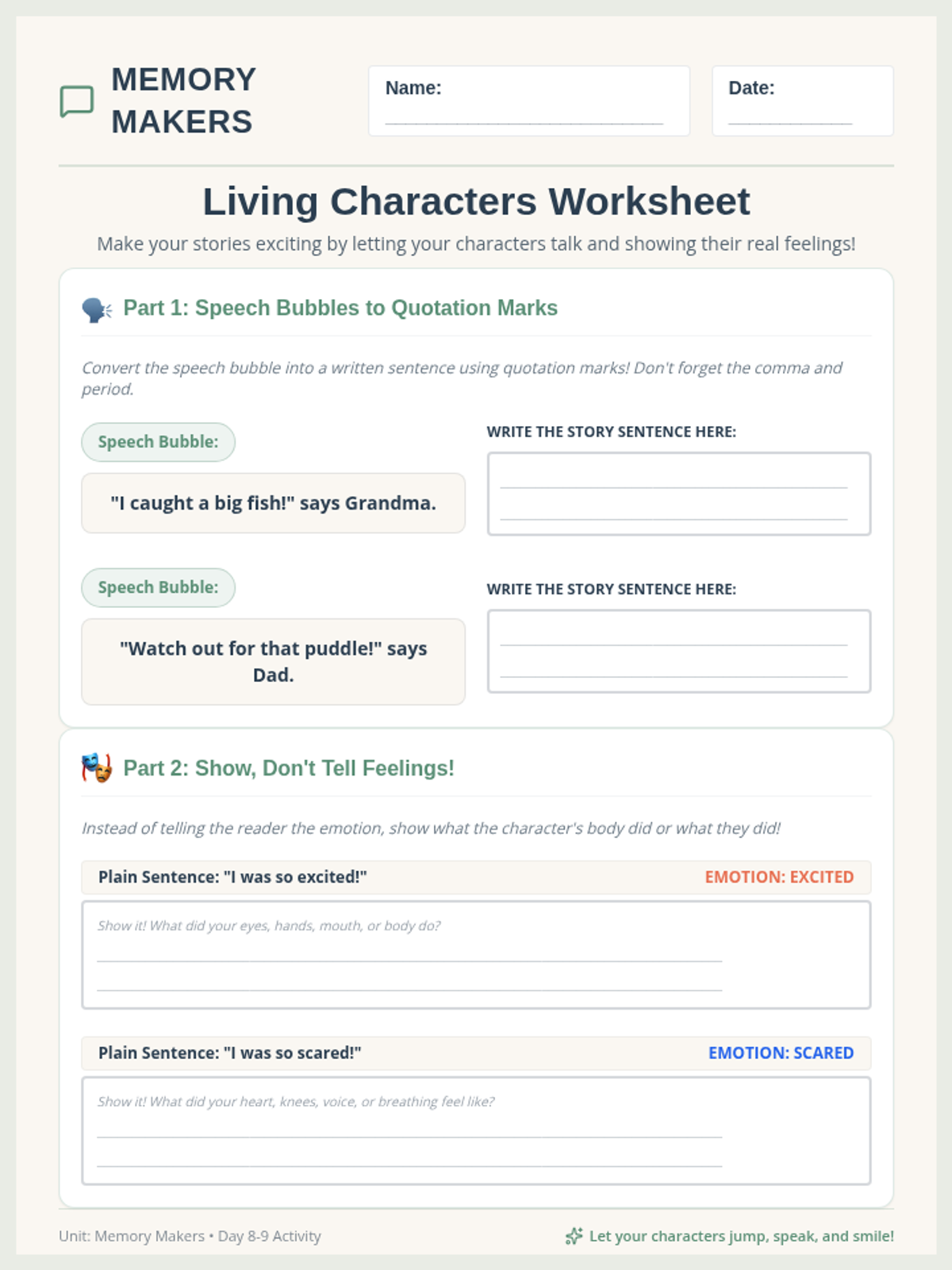
Day 9. Students learn to show character feelings using action and body clues instead of just telling the reader.
Day 8. Students learn to use quotation marks correctly to add simple spoken dialogue to their stories.
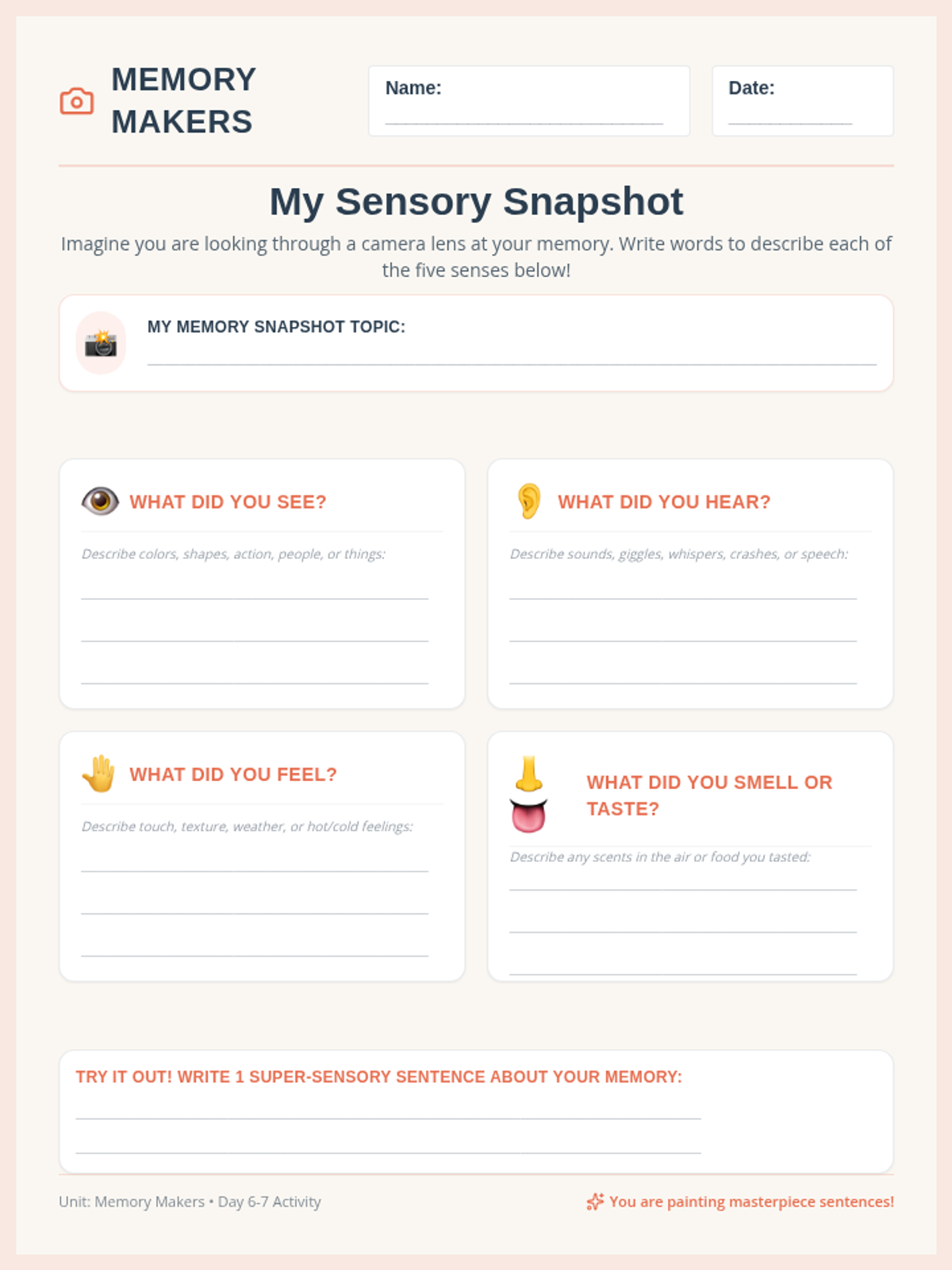
Day 7. Students learn to use touch, smell, and taste details to enrich their personal narratives.
Day 6. Students learn to use sight and sound sensory details to describe elements in their memories.
Day 5. Students learn to write satisfying closings that express real feelings or lessons learned.
Day 4. Students learn transition words and chronological sequencing to outline the middle steps of a story.
Day 3. Students learn to hook their readers with exciting story openings using sound, dialogue, or action.
Day 2. Students learn to zoom in from giant 'watermelon' topics to sweet 'seed' stories (a single focused memory).
Day 1. Students are introduced to personal narratives and learn to identify broad 'watermelon' topics.
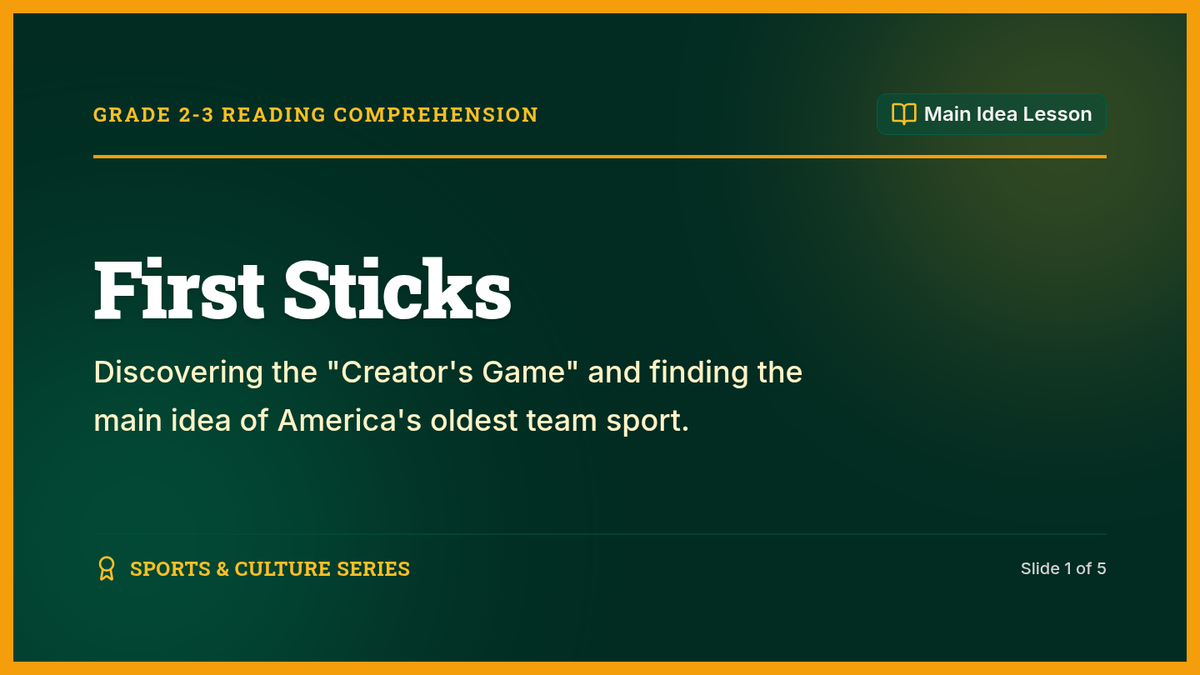
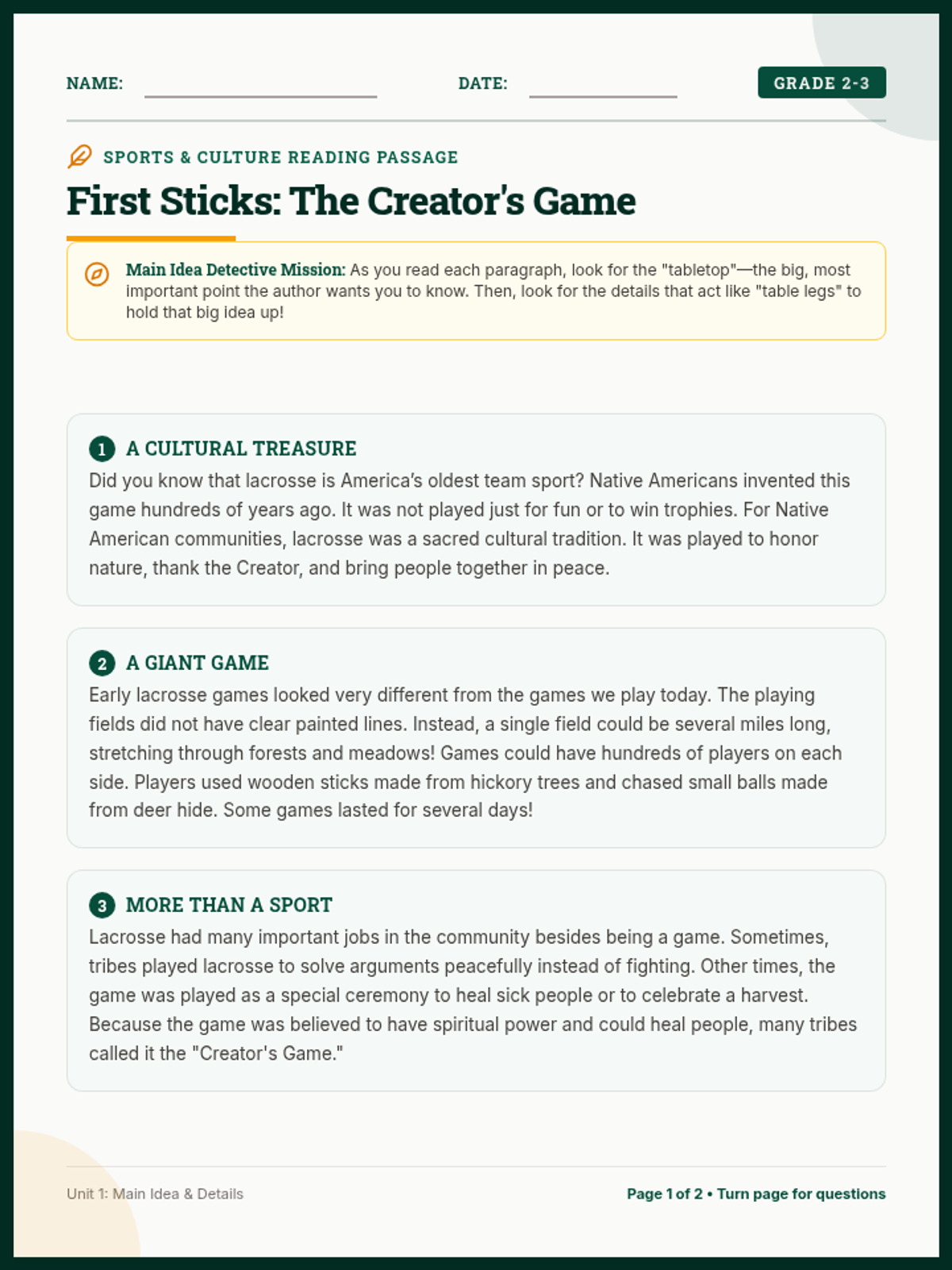
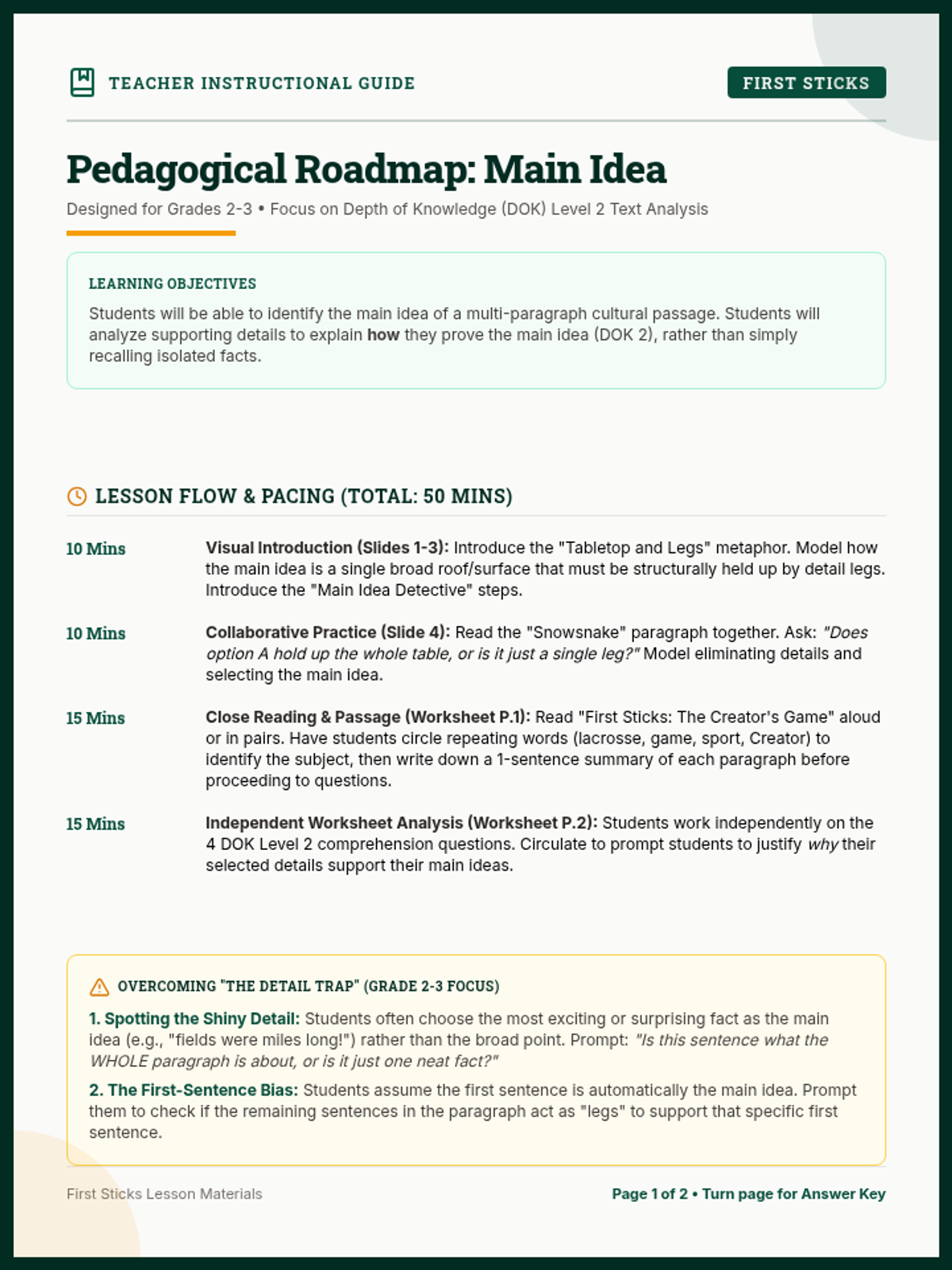
A reading comprehension lesson for Grades 2-3 focusing on finding the main idea and supporting details. Students explore the cultural history of lacrosse, known as the 'Creator's Game,' through a structured passage, hands-on slides, and DOK Level 2 analysis.
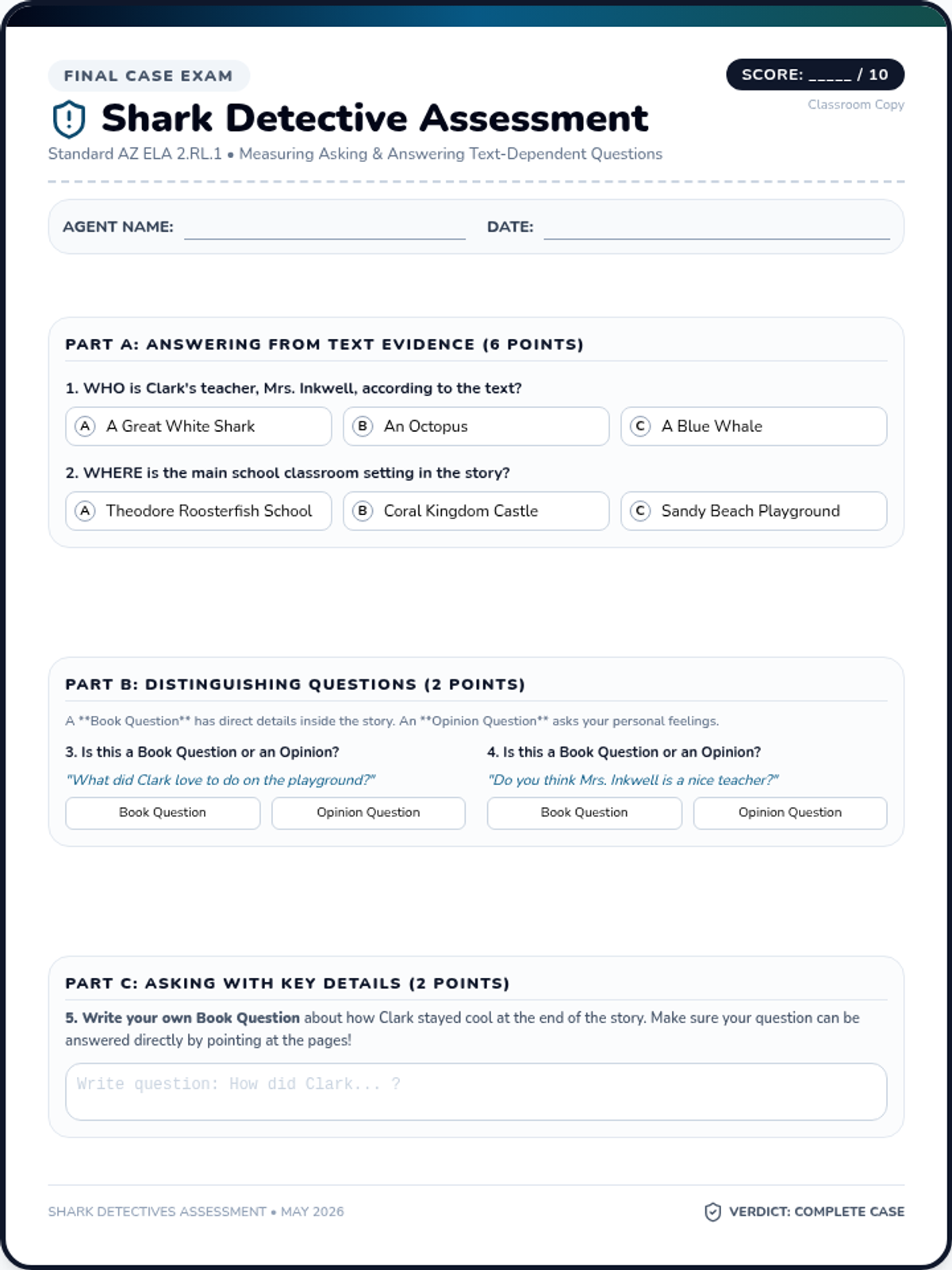
Day 5 is the final synthesis where students complete their case files, solve the mystery of Clark's transformation, and take their comprehension assessment.
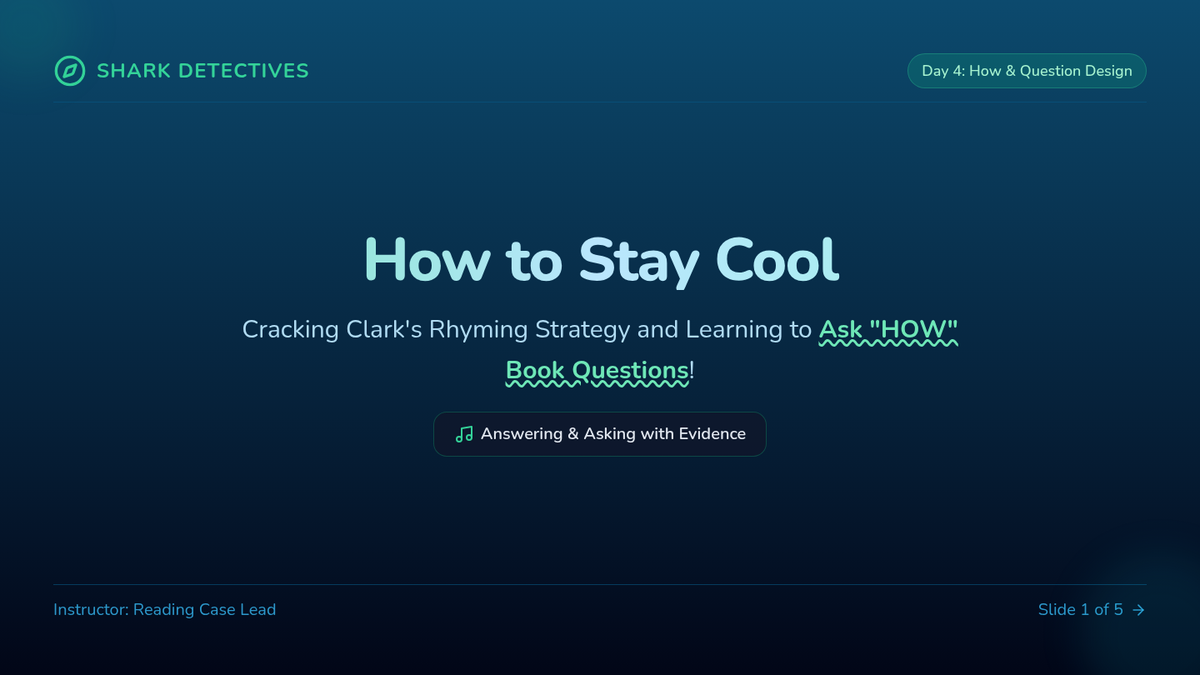
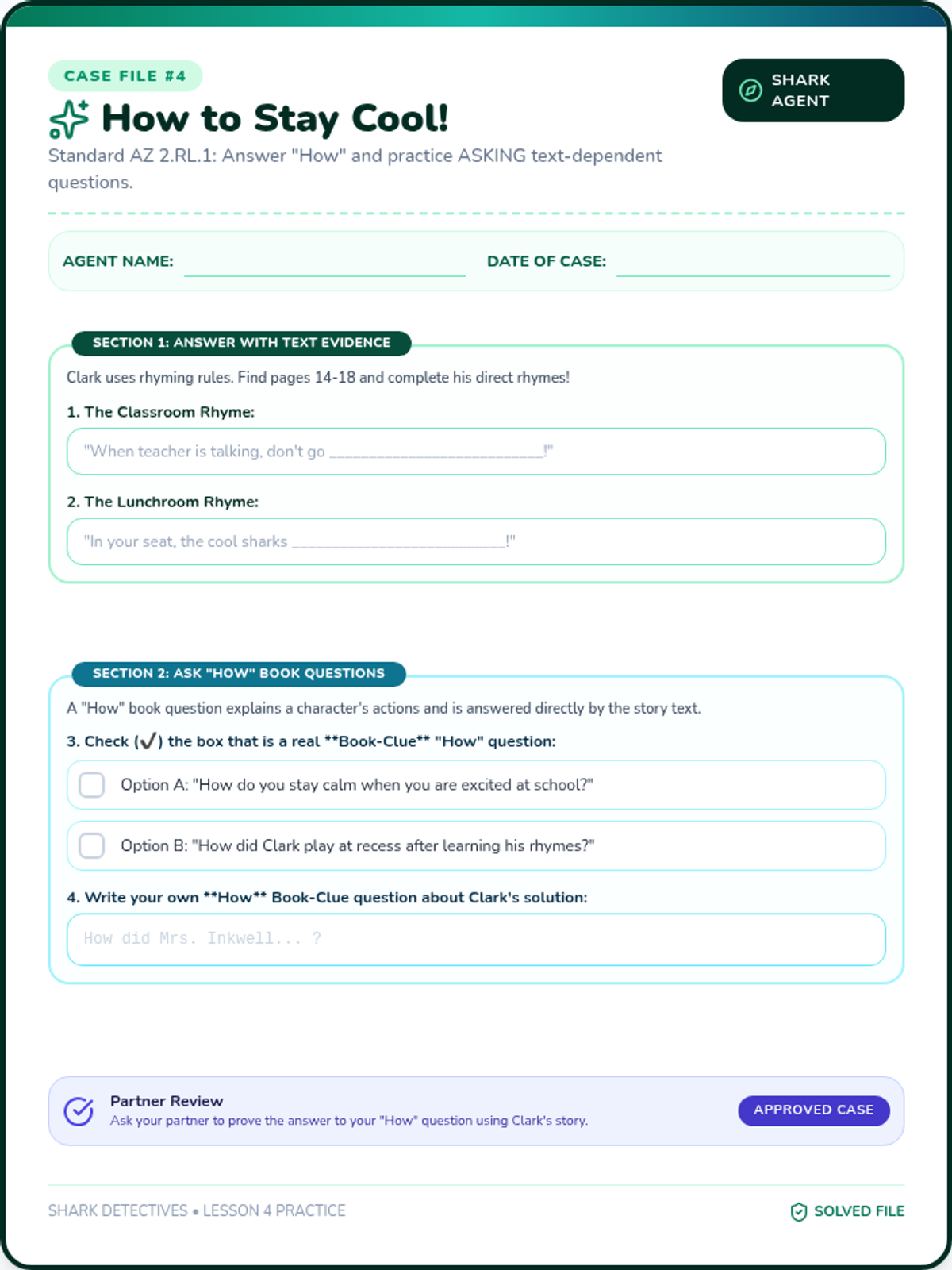
Day 4 focuses on analyzing how Clark solves his problems by creating rhyming rules, and how his character changes.
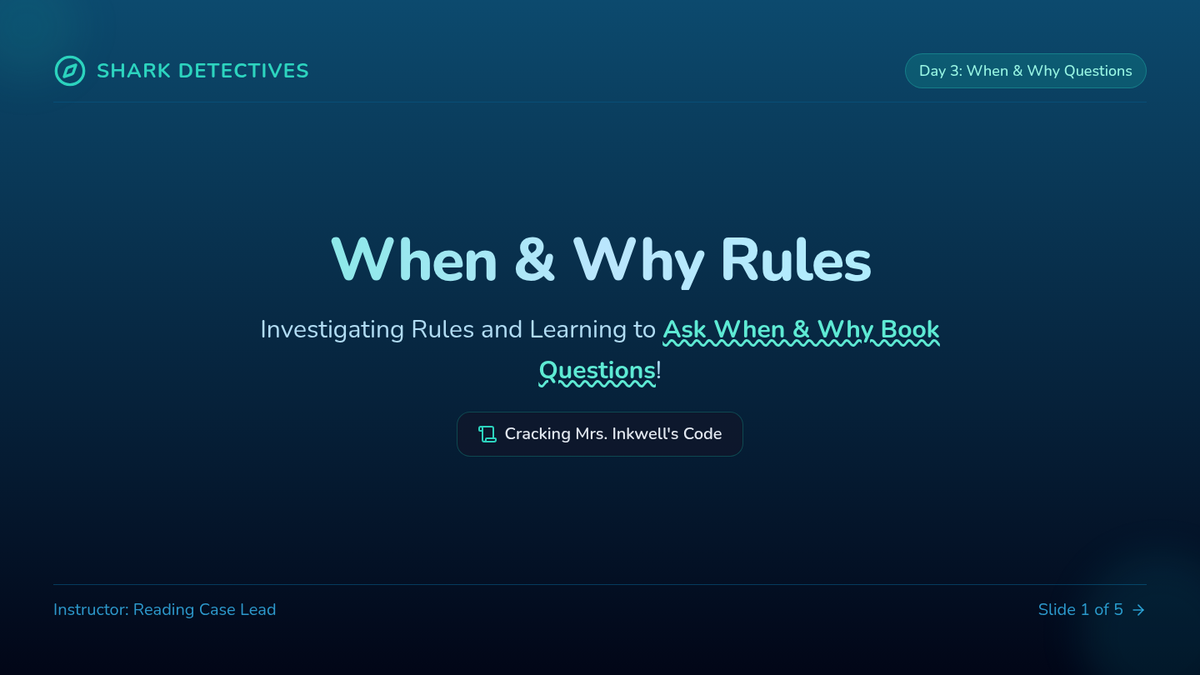
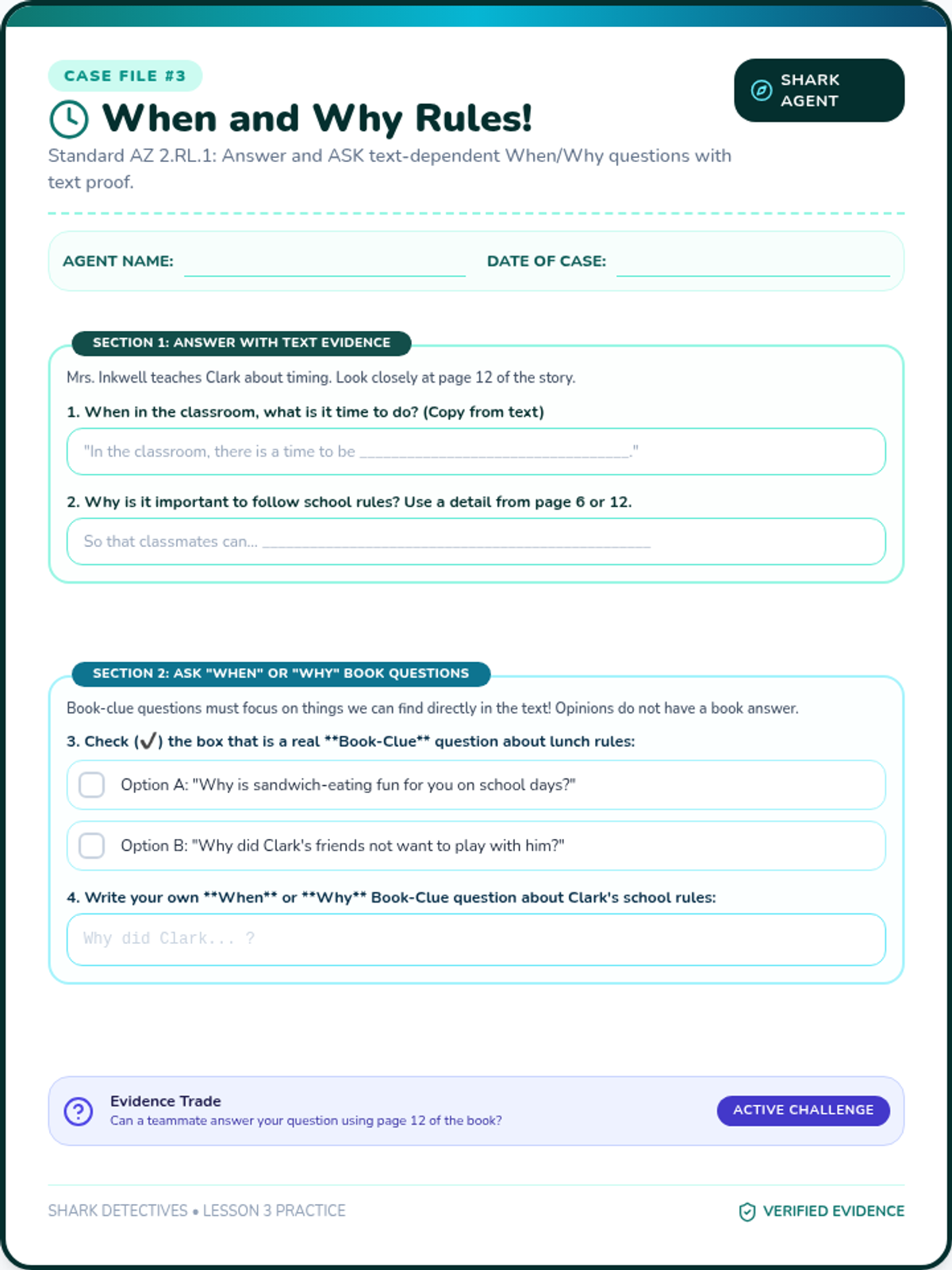
Day 3 focuses on understanding when rules apply and why they are necessary in Clark's school environment, using direct quotes and book details.
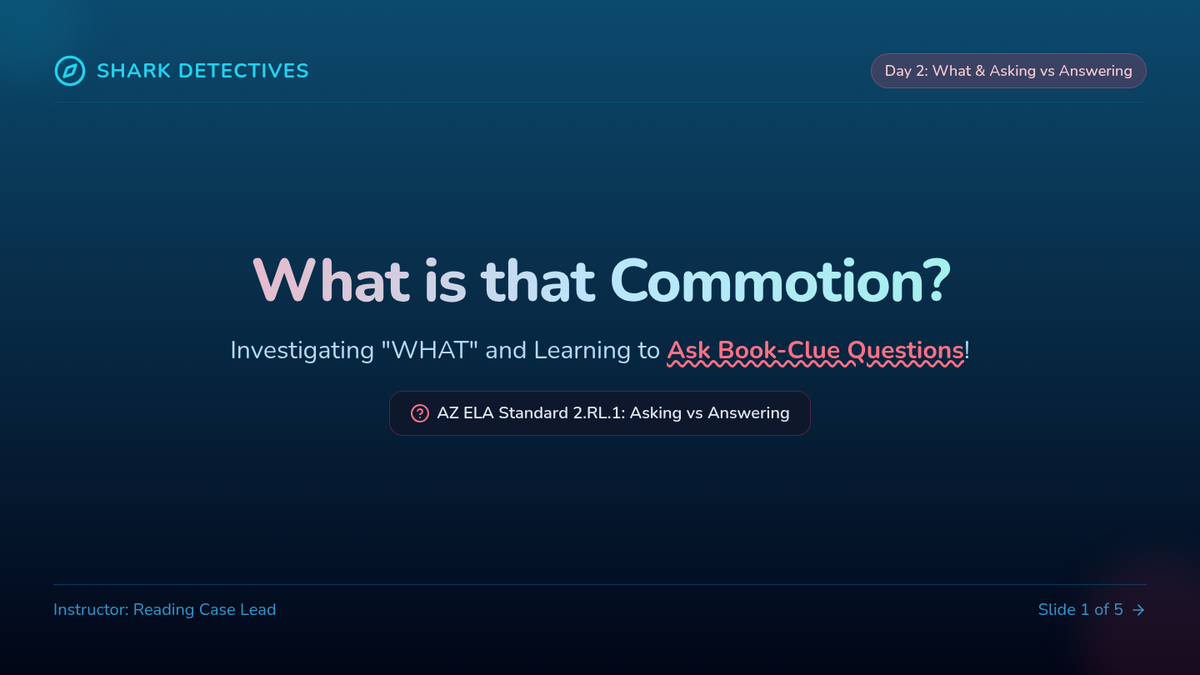
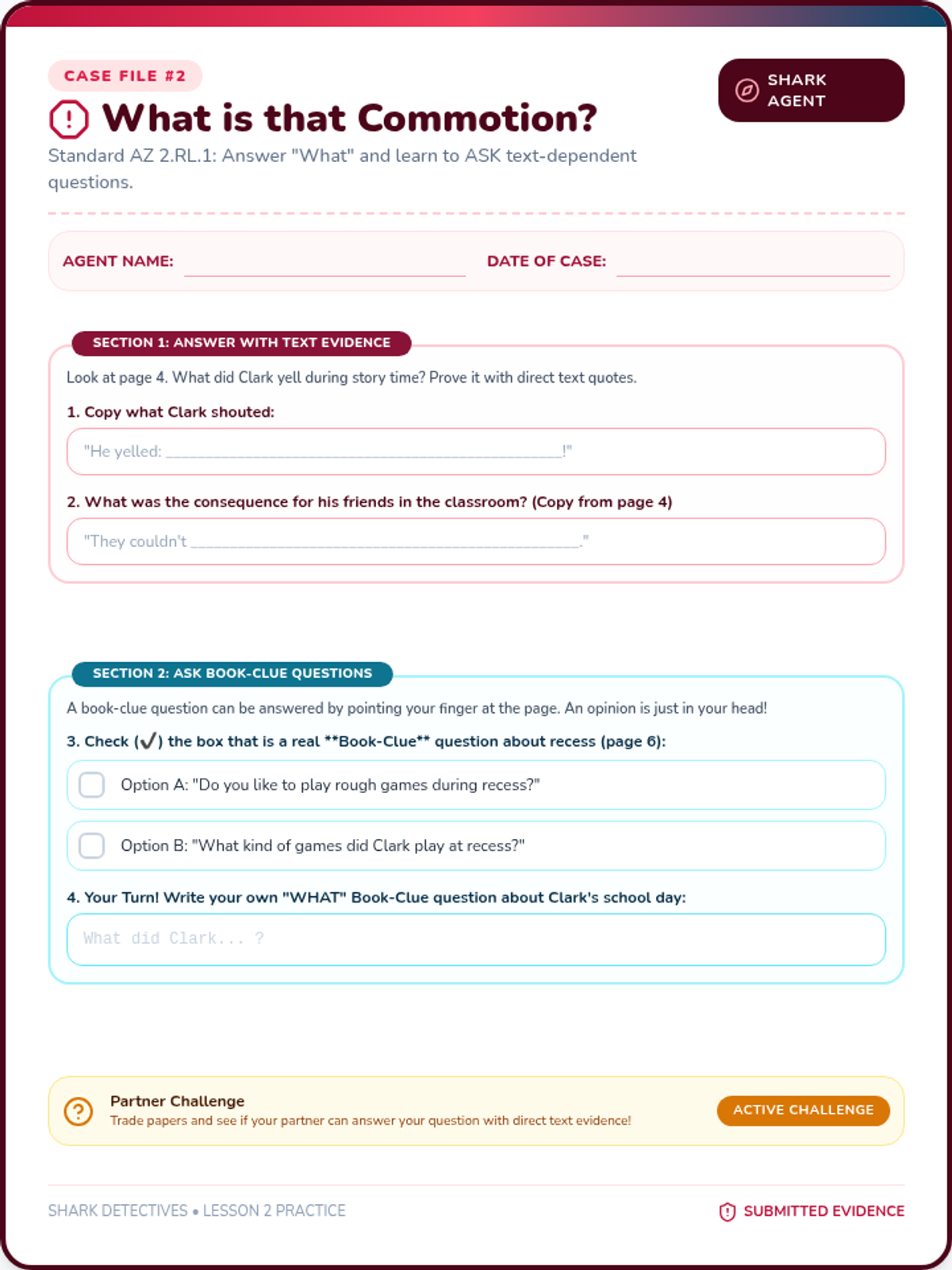
Day 2 focuses on identifying the main problem (What) that Clark causes with his loud, wild behavior, and tracking the direct text reactions from others.
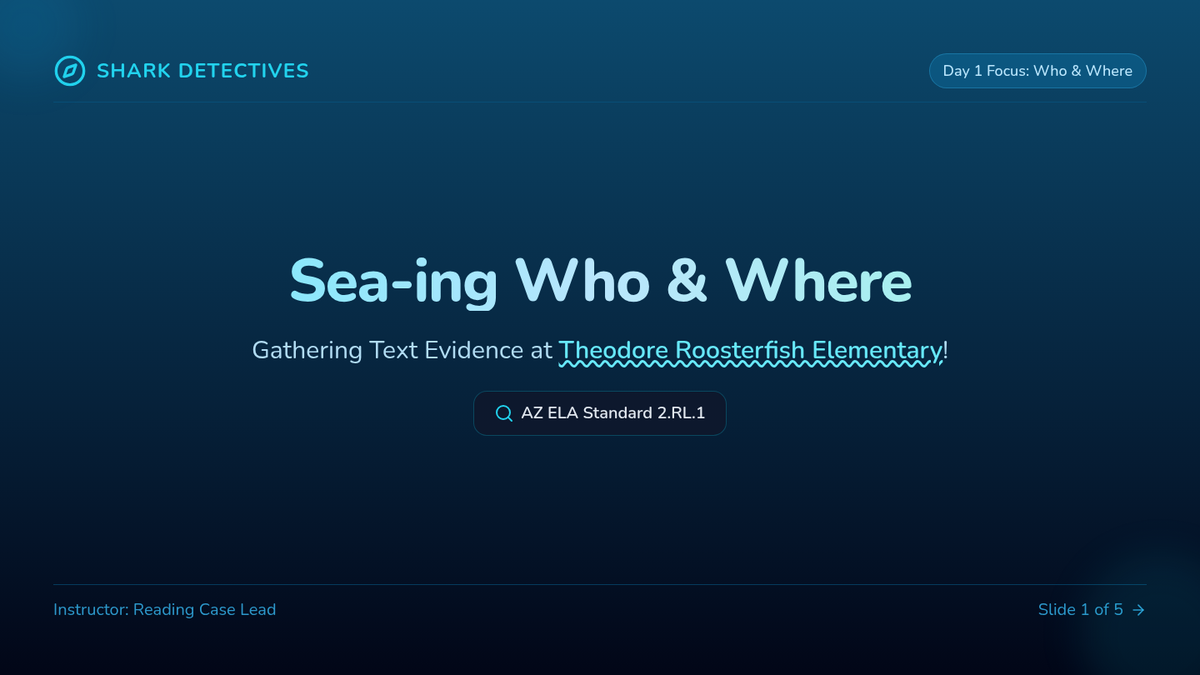
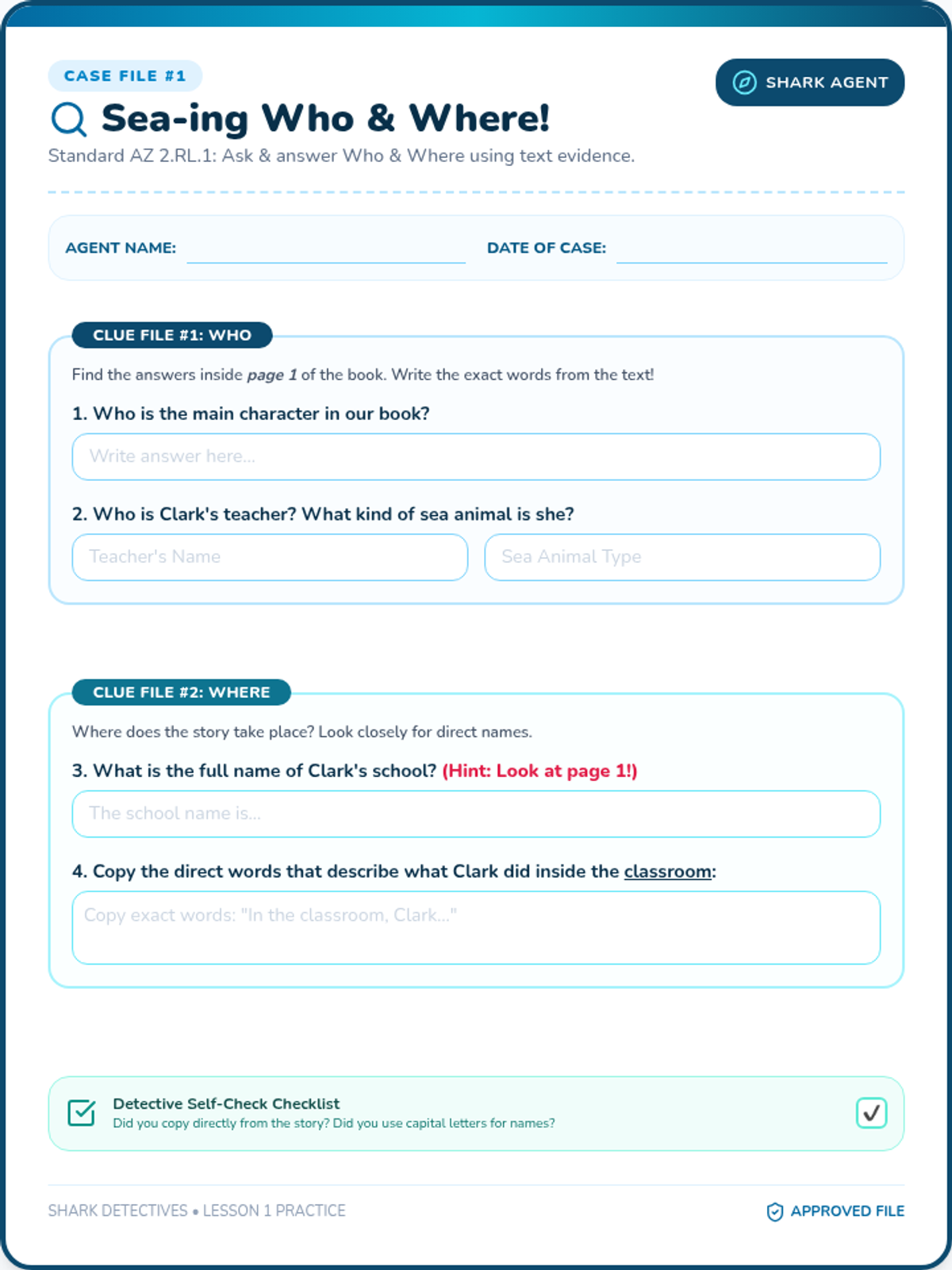
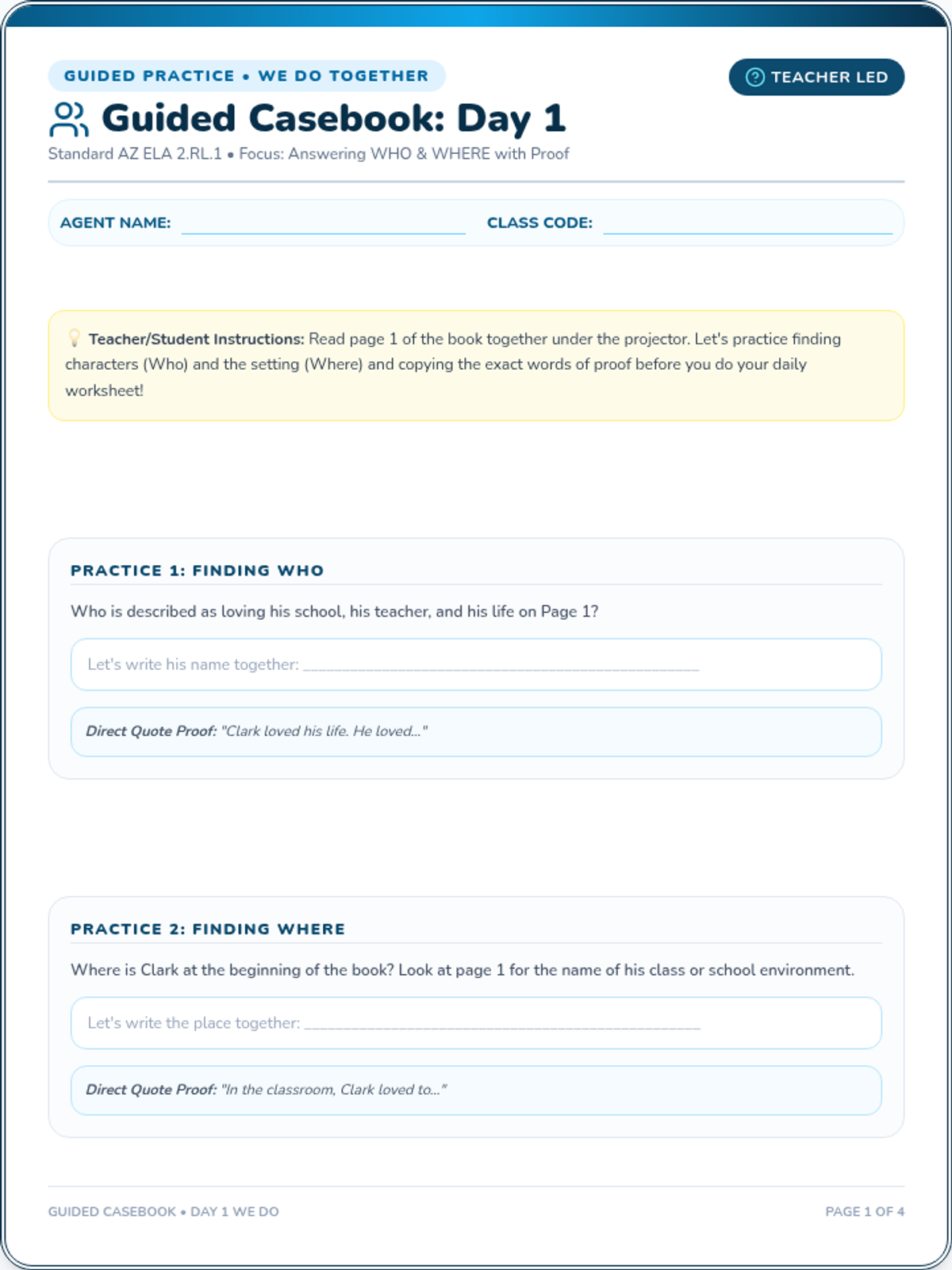
Day 1 focuses on identifying characters (Who) and setting (Where) in Clark the Shark, finding direct evidence of Clark's classroom and his classmates.
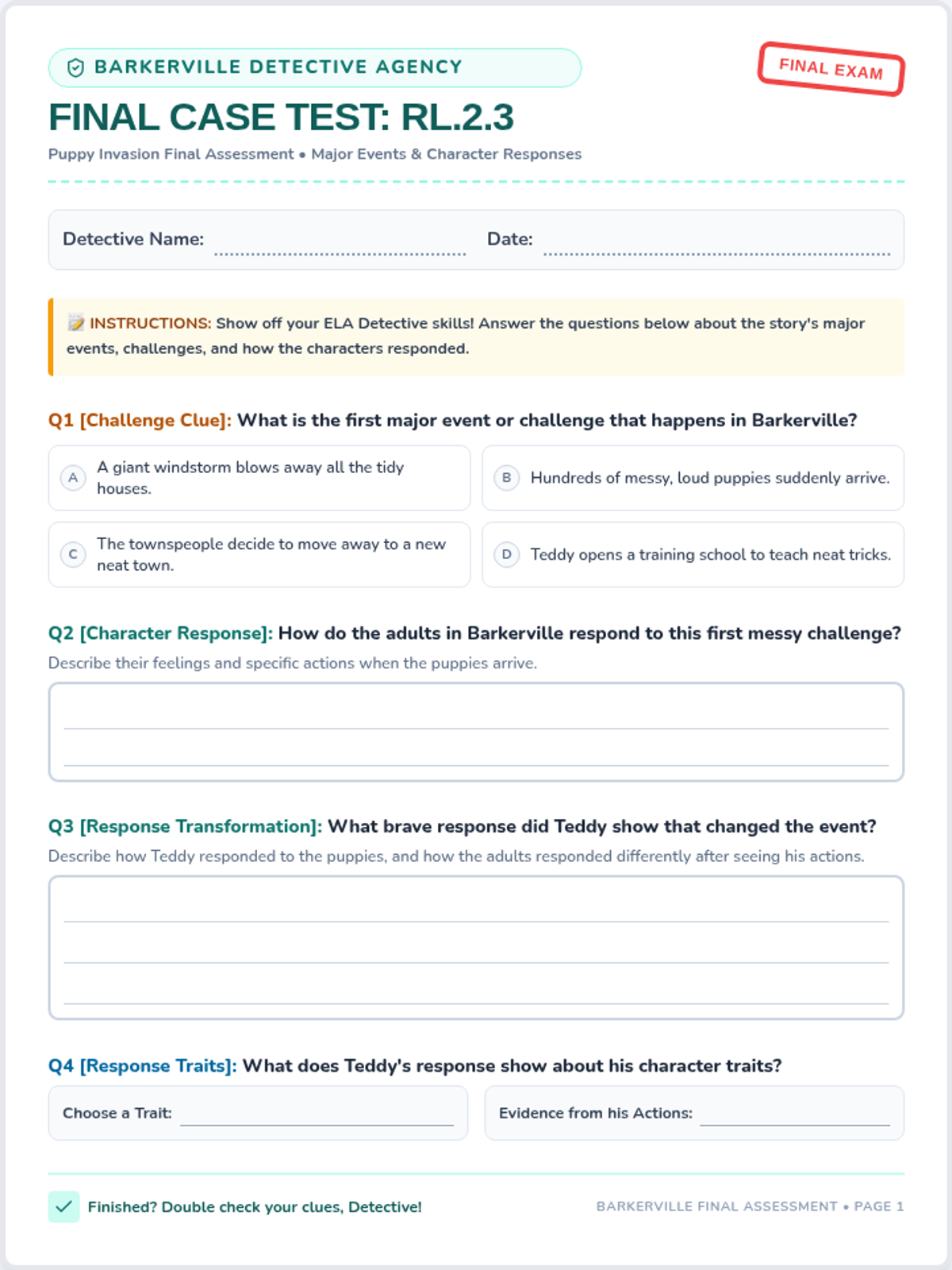
Day 4 of 'The Great Puppy Invasion' unit. Students demonstrate mastery of RL.2.3 by completing a comprehensive reading response assessment analyzing character reactions and how Barkerville changed, graded with a student-friendly rubric.
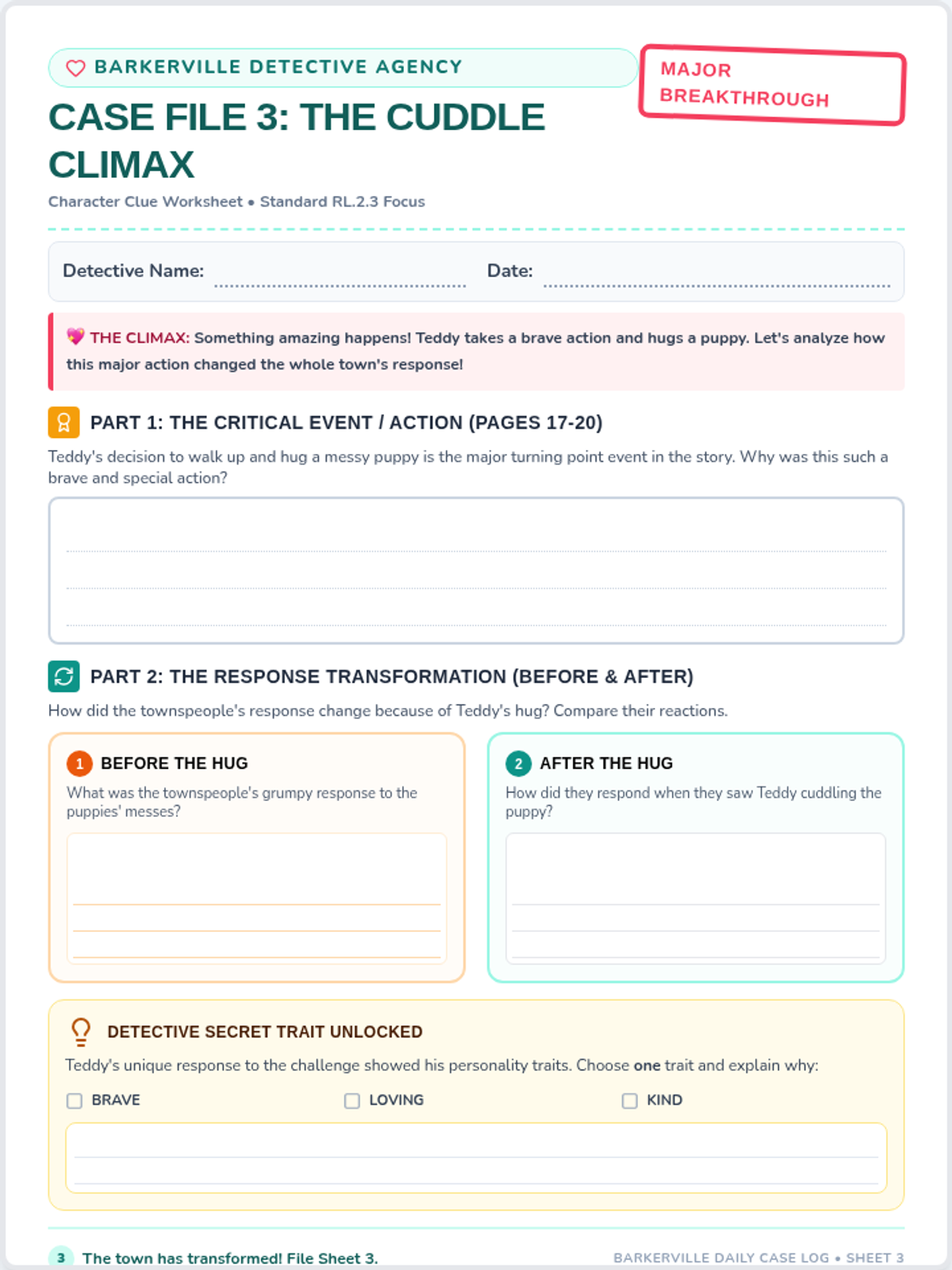
Day 3 of 'The Great Puppy Invasion' unit. Students analyze the critical moment (climax) when Teddy courageously decides to hug a puppy, sparking a town-wide transformation and shifting how everyone responds to the puppies.
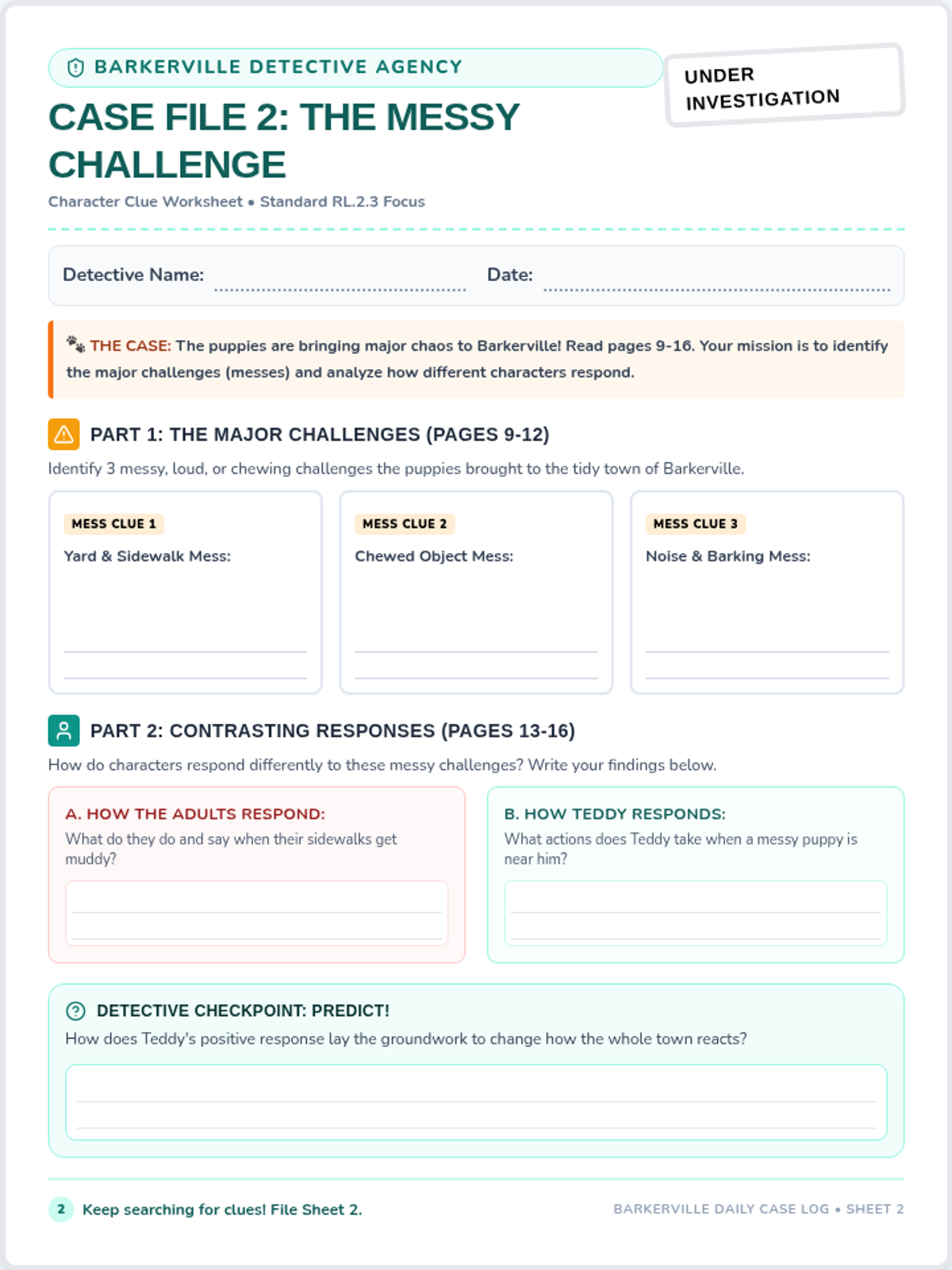
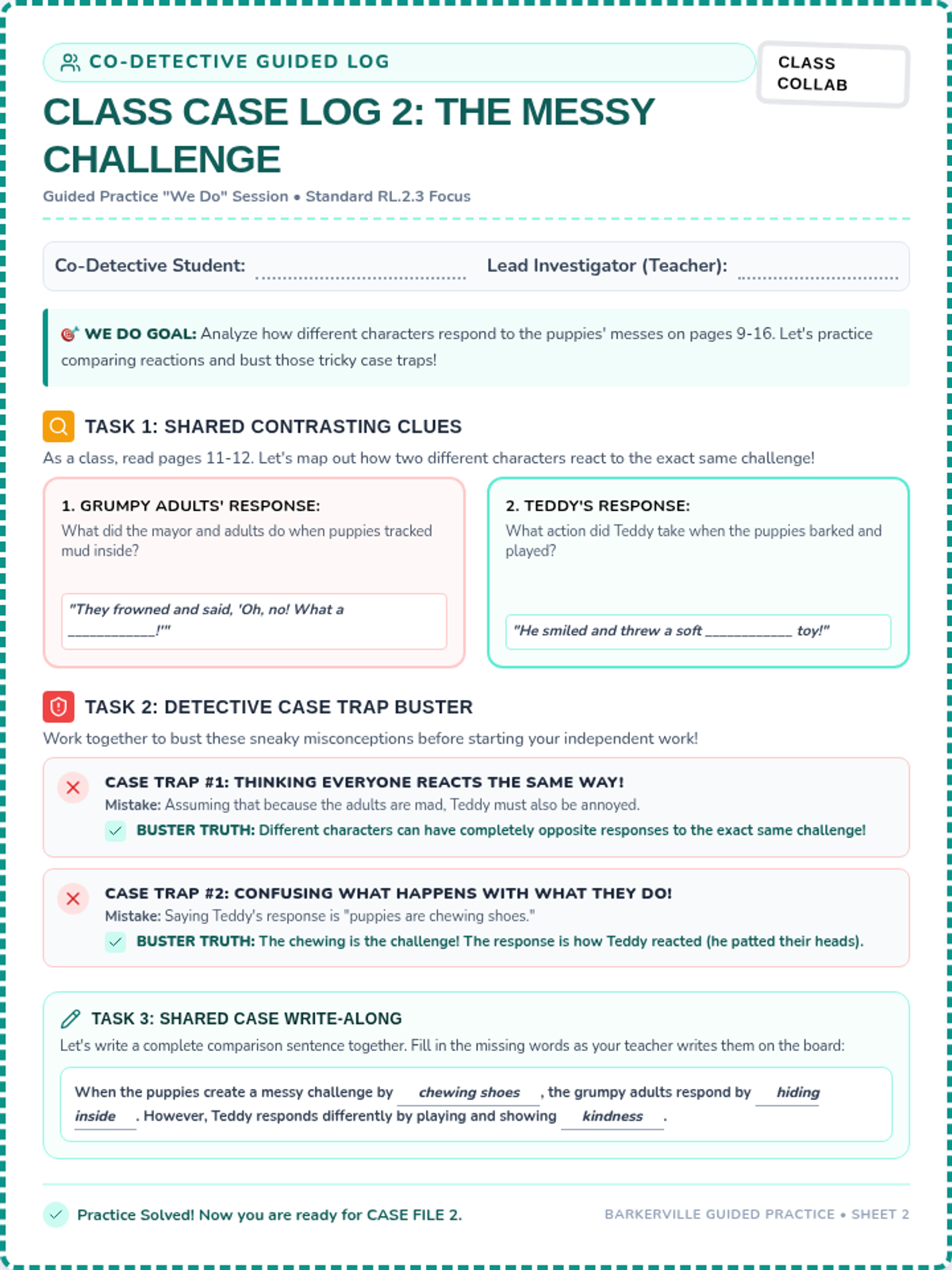
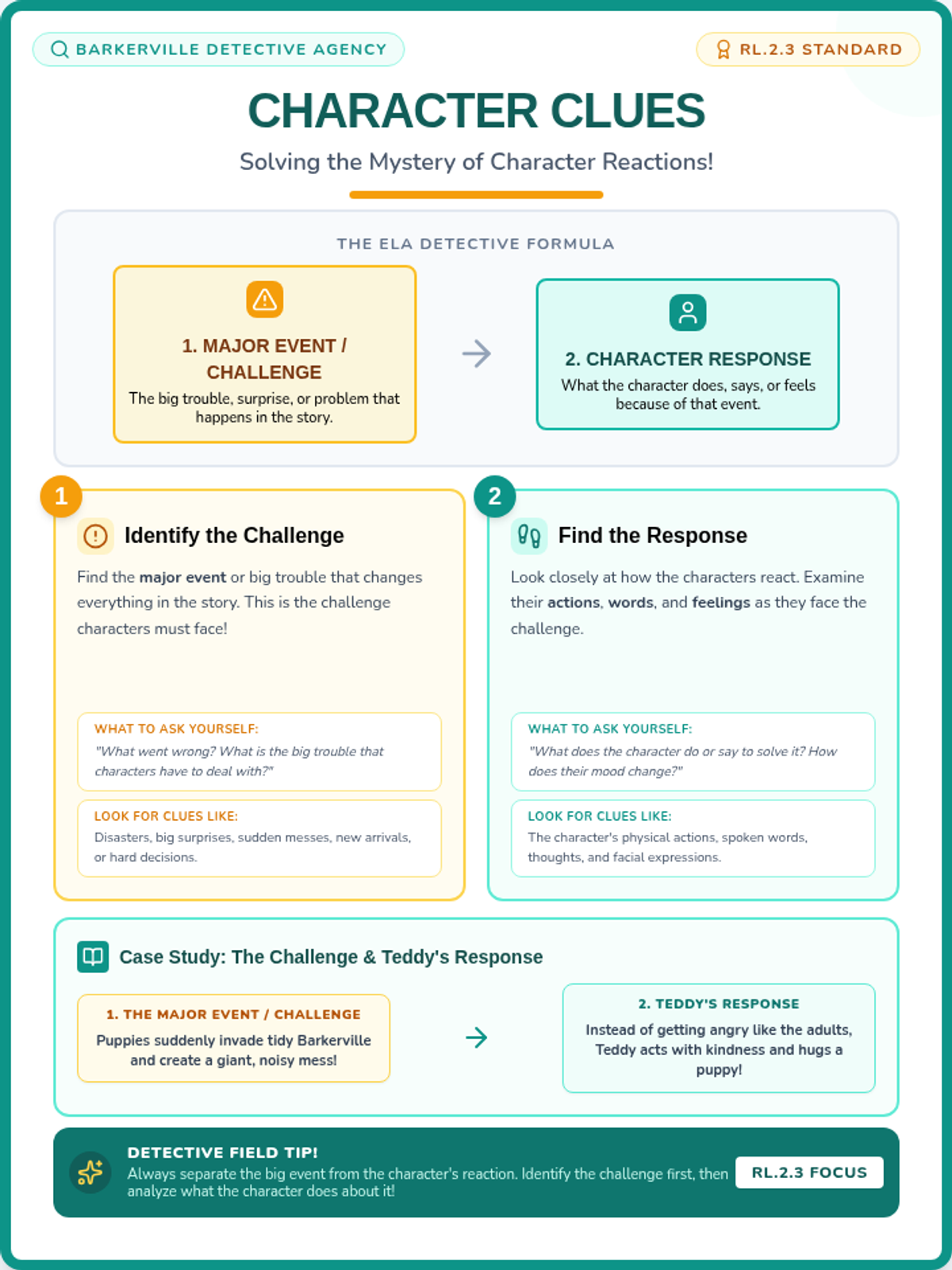
Day 2 of 'The Great Puppy Invasion' unit. Students identify the specific messy, loud challenges the puppies bring to Barkerville and analyze how characters (specifically Teddy) actively respond to these challenges.
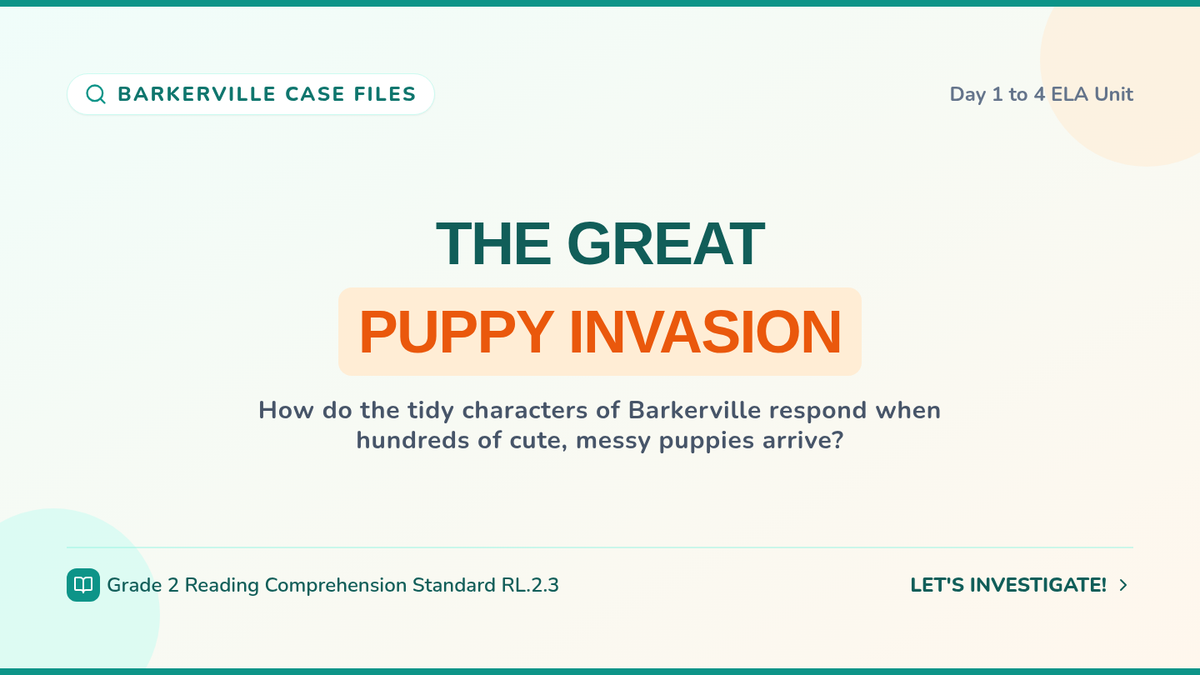
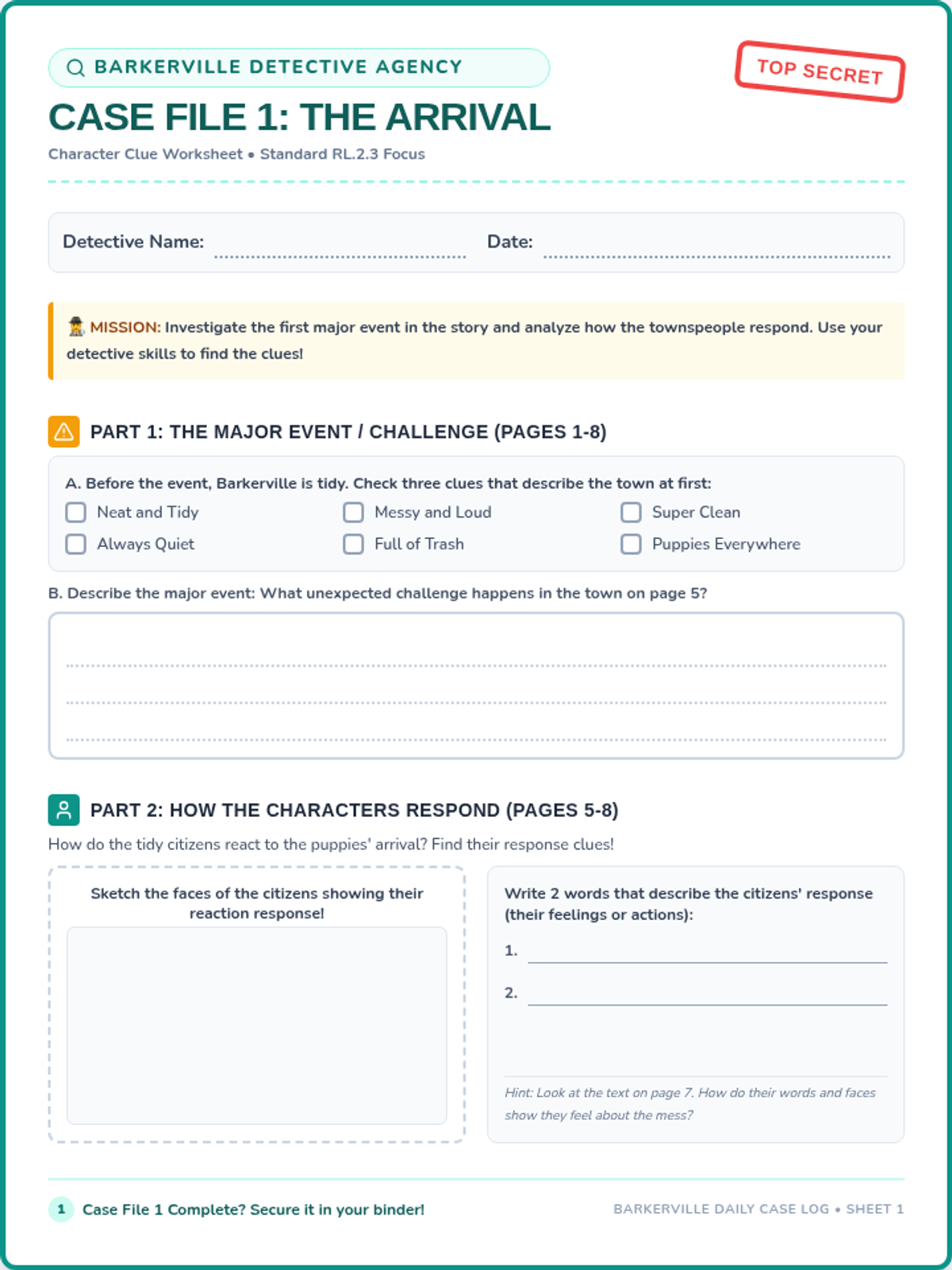
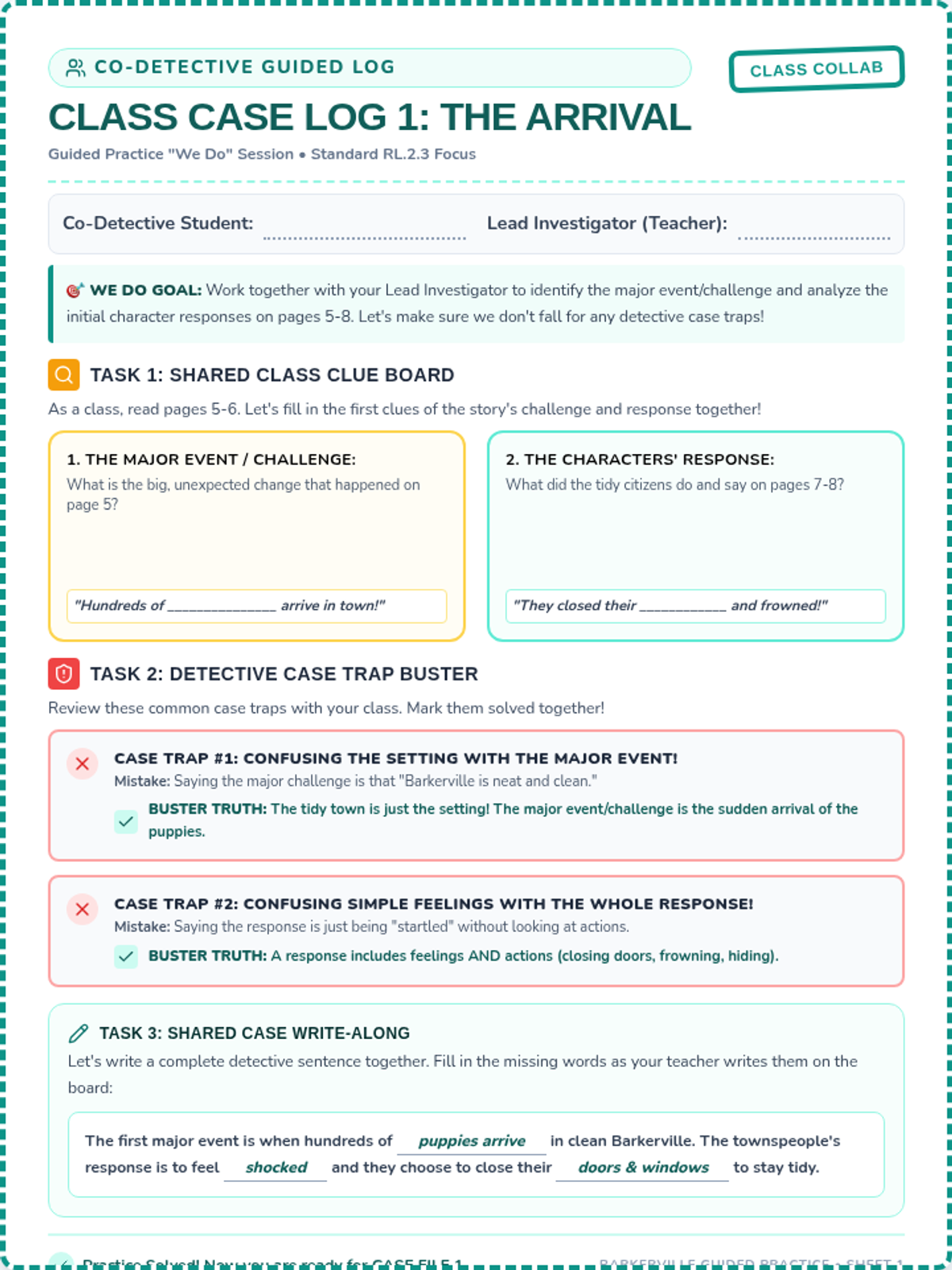
Day 1 of 'The Great Puppy Invasion' unit. Students are introduced to the neat and orderly town of Barkerville, the unexpected 'invasion' of puppies, and how the residents initially react with confusion and alarm.