A vibrant introduction to weather patterns for Kindergarteners, focusing on observation and daily tracking. Students explore different types of weather through visual aids, movement, and a weekly weather journal.
Students act as 'Marine Bio-Engineers' to design and build artificial reef structures that support a healthy ecosystem on Mystery Island's coast, focusing on biotic and abiotic interactions.
Students design and build 'Food Web Restoration' models to visualize and explain the flow of energy from producers to multiple consumers on Mystery Island.
Students design and build 'Weather Shields' to protect a model plant from extreme temperature and precipitation changes on Mystery Island, exploring how environmental factors affect organisms.
Students act as 'Botanical Engineers' to design and build seed models that can travel through the air to reach new parts of Mystery Island, focusing on seed dispersal methods.
Students design external structures for a 'Mystery Organism' to help it meet its basic needs (food, water, shelter) on Mystery Island, focusing on the link between structure and function.
A deep dive into the subatomic origins of plate tectonics, tracing the journey from unstable nuclei to the massive convection currents that move continents.
A comprehensive assessment lesson focusing on the specific events of prophase, metaphase, anaphase, telophase, and cytokinesis through detailed matching exercises.
A foundational science lesson for Kindergarten students to identify and demonstrate the forces of pushing and pulling through visual aids and hands-on movement.
This lesson explores advanced rotational dynamics, focusing on the application of Newton's Second Law for rotation to massive pulleys and rolling objects where static friction provides the necessary torque for rolling without slipping.
A comprehensive 60-minute lesson exploring the differences and mathematical relationships between translational and rotational kinetic energy, featuring guided reading, visual organizers, and problem-solving.
An introductory lesson on the importance of native plants for local ecosystems, designed for K-2 students. Includes hands-on garden design projects and visual aids for ecosystem services.
An outdoor sensory experience where students use natural materials to create 'mud pies,' focusing on texture, composition, and imaginative play.
Students compare and contrast the textures and molding properties of homemade playdough and kinetic sand through tactile exploration.
A deep dive into non-Newtonian fluids as students mix cornstarch and water to create oobleck, exploring how it changes from solid to liquid.
Students explore density and mixtures by creating mesmerizing sensory bottles using oil, water, and various floating objects.
A comprehensive 3rd-grade science lesson that transforms students into junior meteorologists, covering weather phenomena, measurement tools, and forecasting through hands-on observation and data analysis.
A structured literacy lesson focused on the letter C /k/ and glued sounds -an and -am, using the decodable text 'The Cat Can'. This lesson follows a backwards planning approach to ensure students can decode and encode CVC words and nasalized vowels.
A detective-themed lesson where students become 'Change Detectives' to investigate physical and chemical changes through mystery scenarios and hands-on observations.
A concise, 5-day science unit covering plant structures, life cycles, environmental needs, and soil types designed for 20-minute instructional blocks.
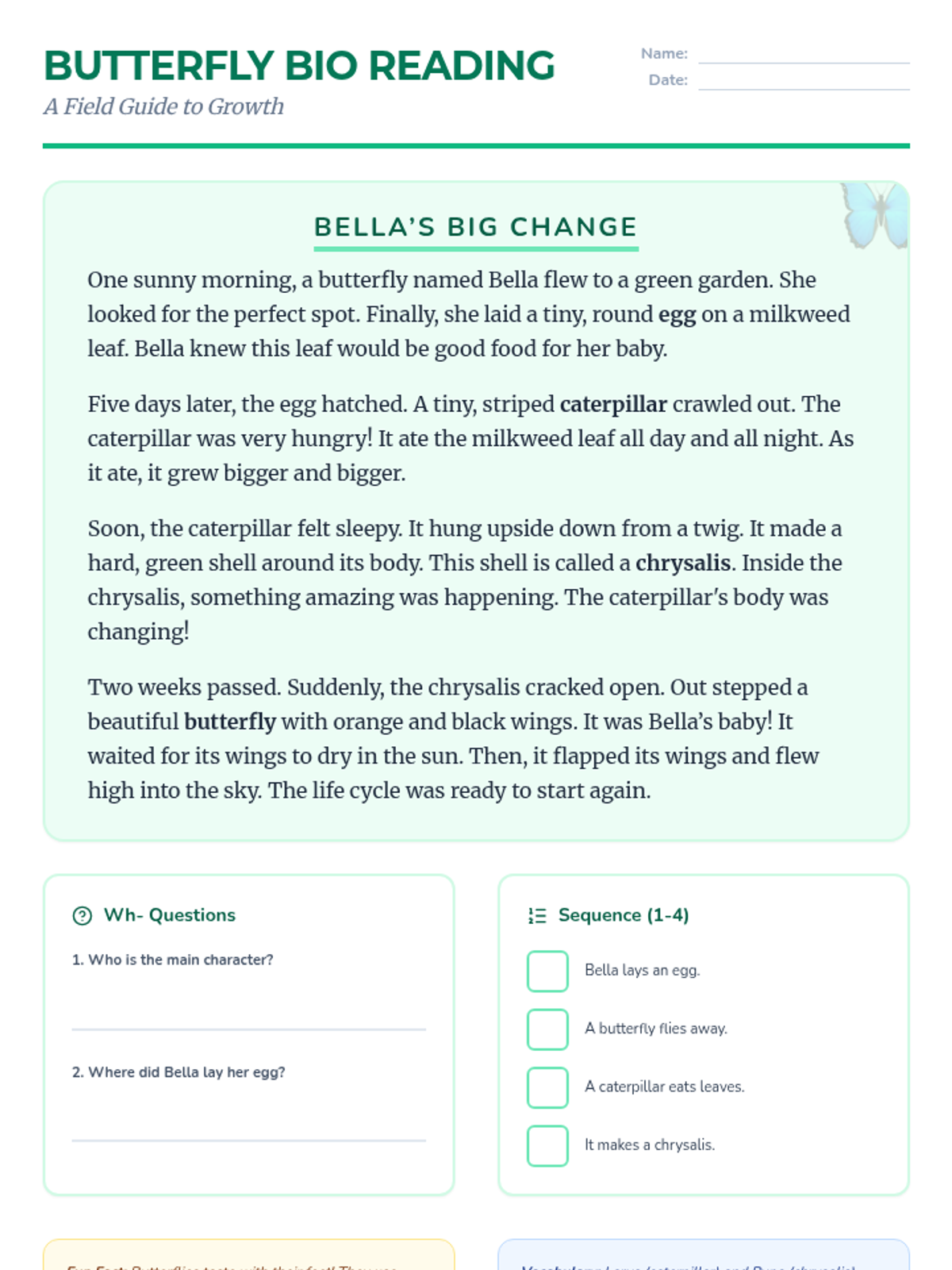
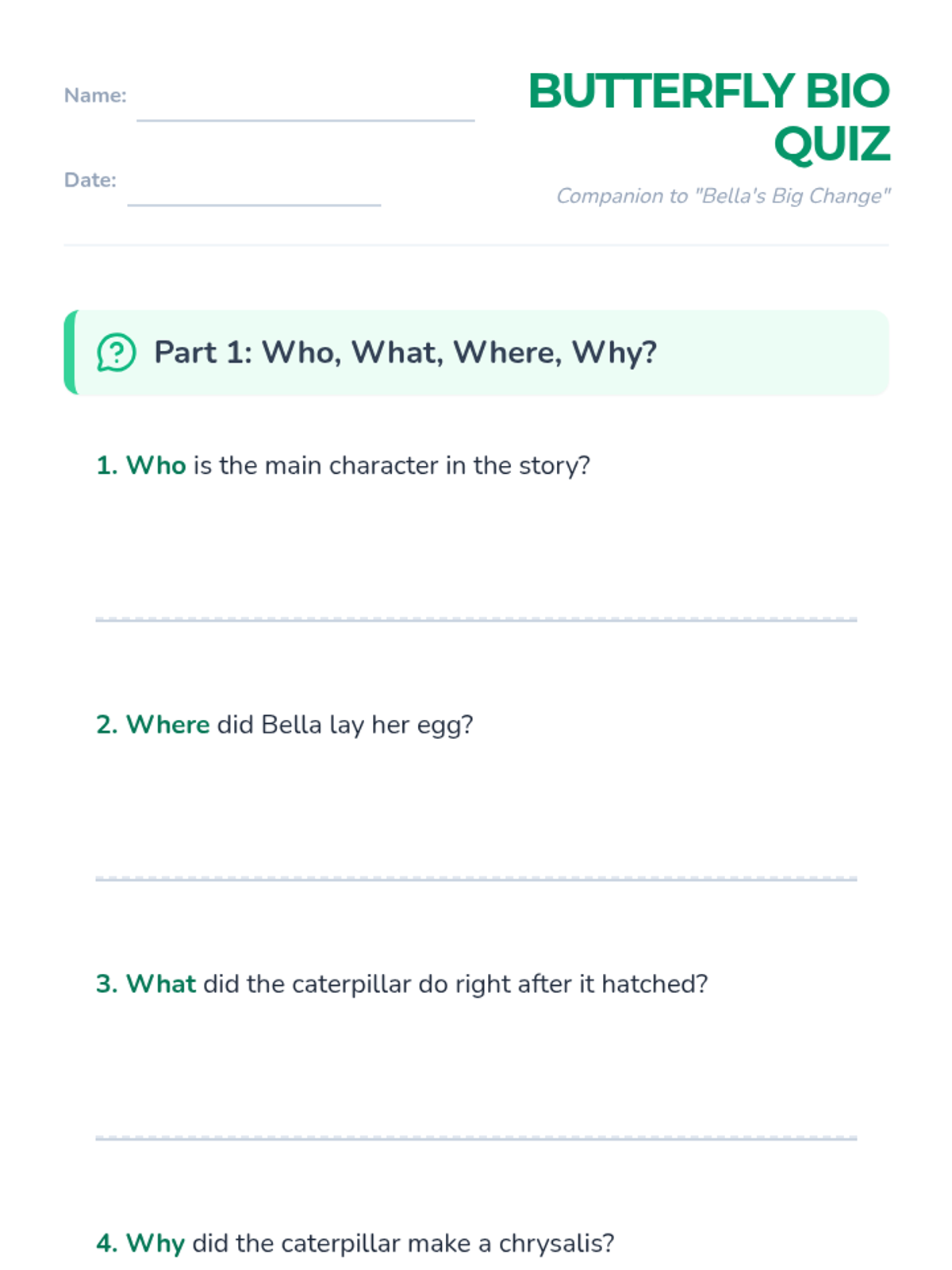
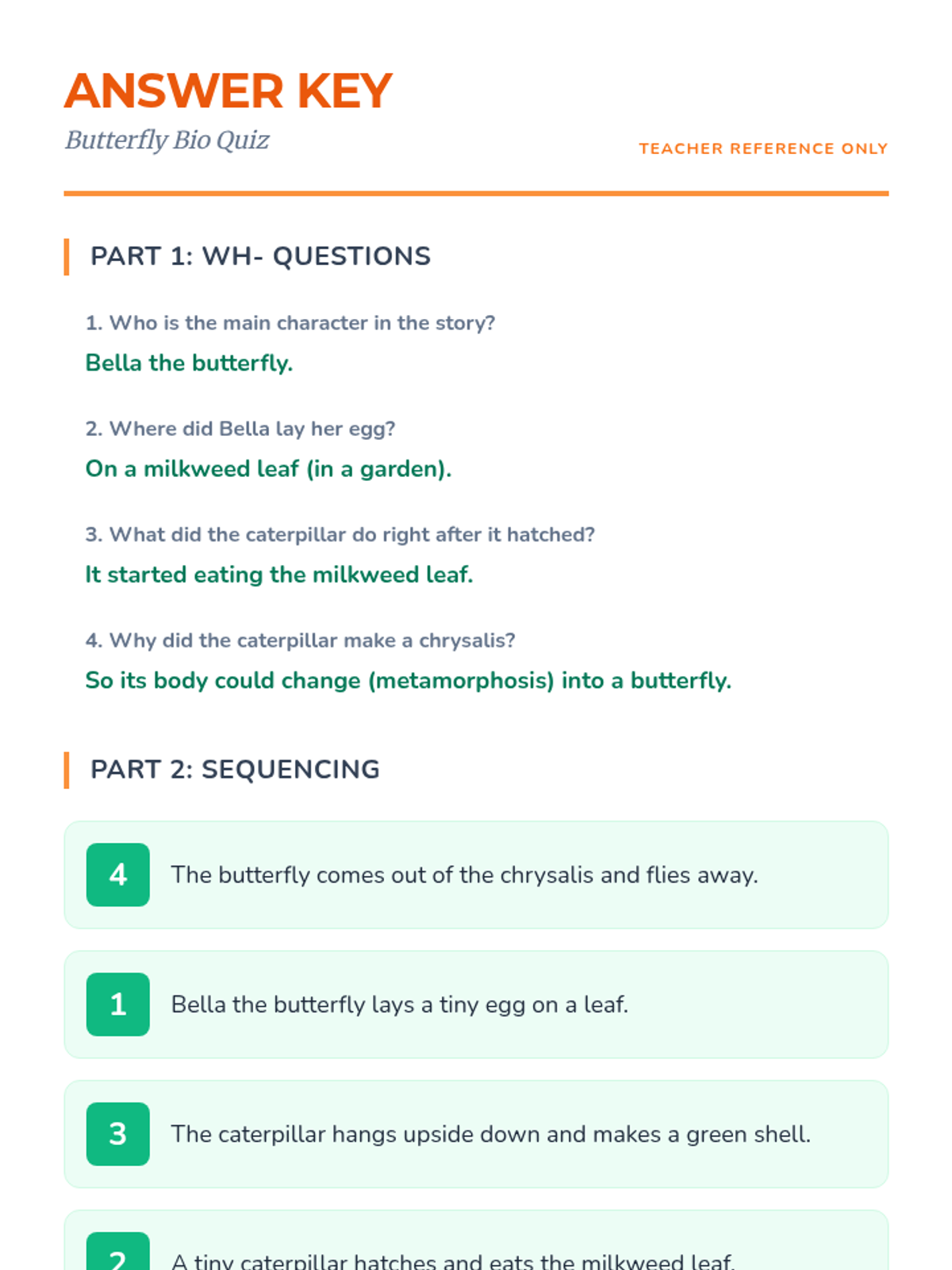
An engaging science lesson for 2nd graders that explores the life cycles of plants, butterflies, and frogs. Students will observe, sequence, and describe the stages of growth and change in the natural world.
Synthesizes weather patterns into the cycle of the four seasons. Students will learn to distinguish Summer, Fall, Winter, and Spring through visual changes in nature and a sorting activity.
Explores how air moves (wind) and introduces cold weather patterns (snow) through creative 'blow painting' and seasonal clothing sorting.
Introduces students to basic weather types (sunny, rainy, cloudy) through visual observation and a hands-on 'rain cloud in a jar' experiment.
An introductory weather lesson for 1st graders focusing on observation, the water cycle, and basic forecasting through hands-on activities and visual learning.
An introductory science lesson for 1st graders focusing on weather patterns, the water cycle, and basic meteorological observation. Students explore different weather types and create their own weather tracking tools.