Accounting for finite molecular volume using the 'b' constant and performing complex calculations with the complete Van der Waals equation.
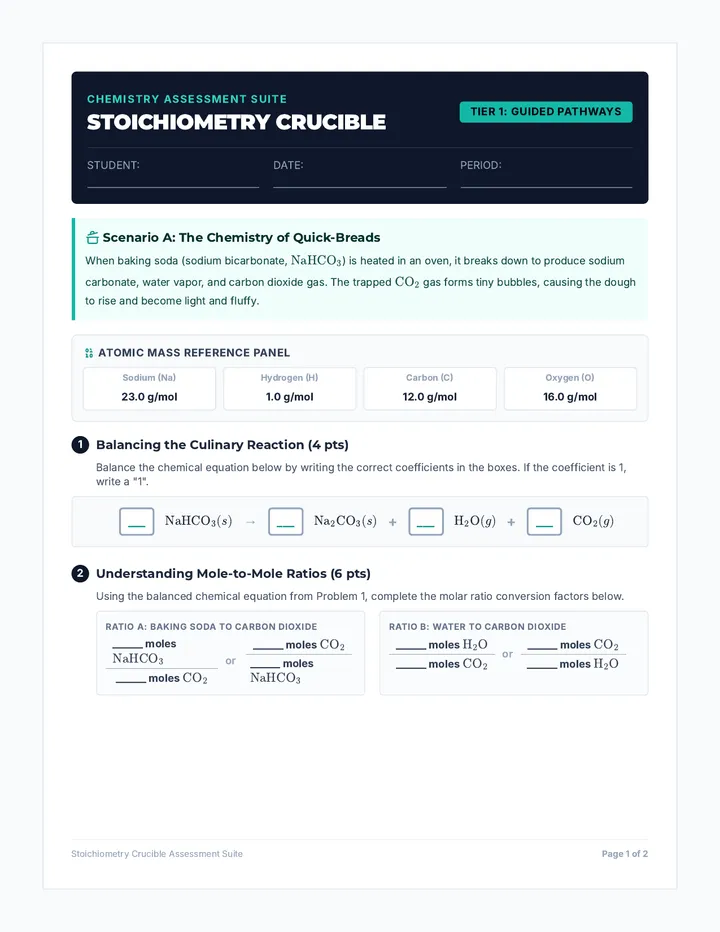
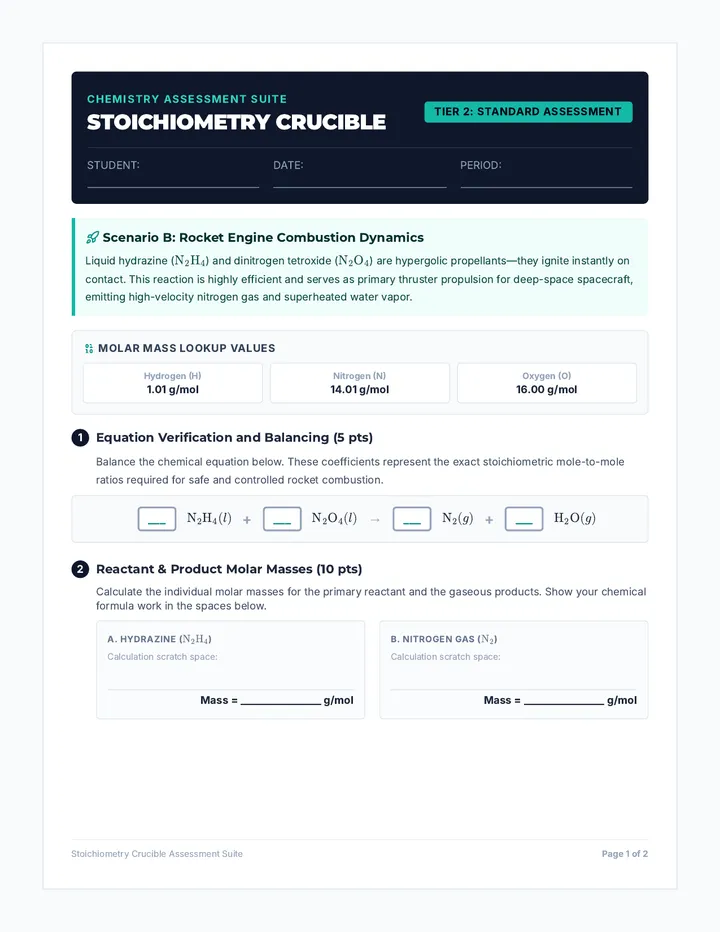
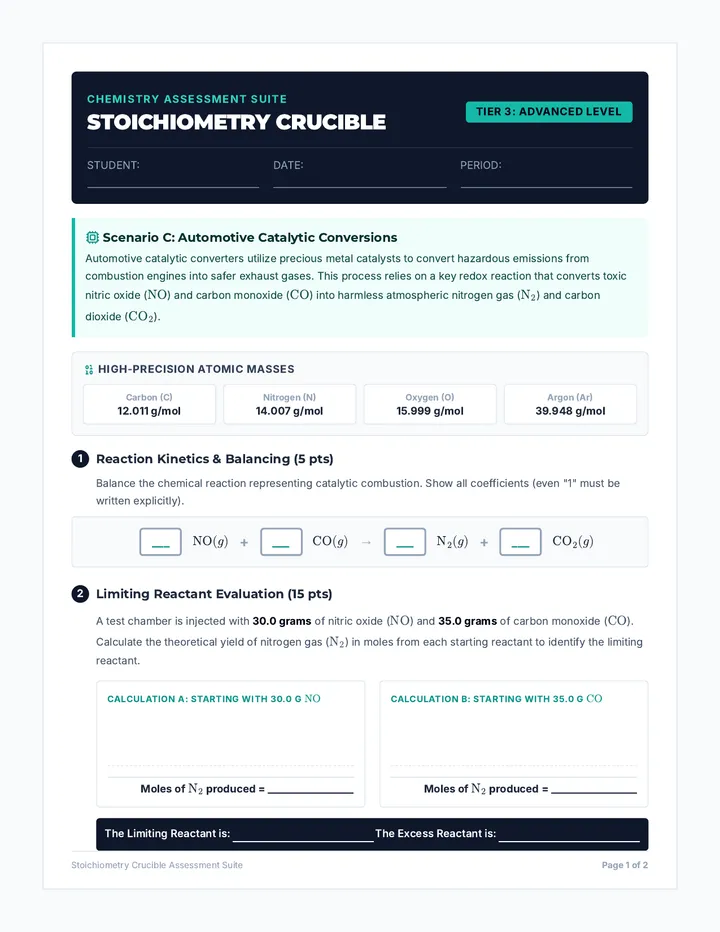
A differentiated stoichiometry assessment suite tiered by mathematical complexity, visual scaffolding, and conceptual depth. Features three distinct, parallel versions of a 2-page quiz centered around unique real-world chemistry applications.
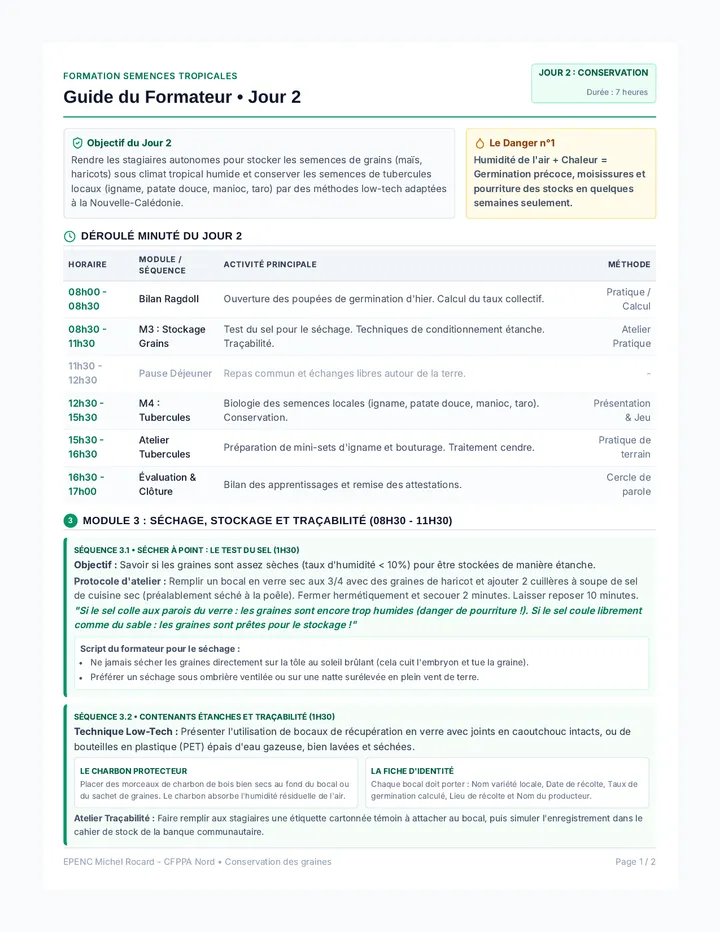
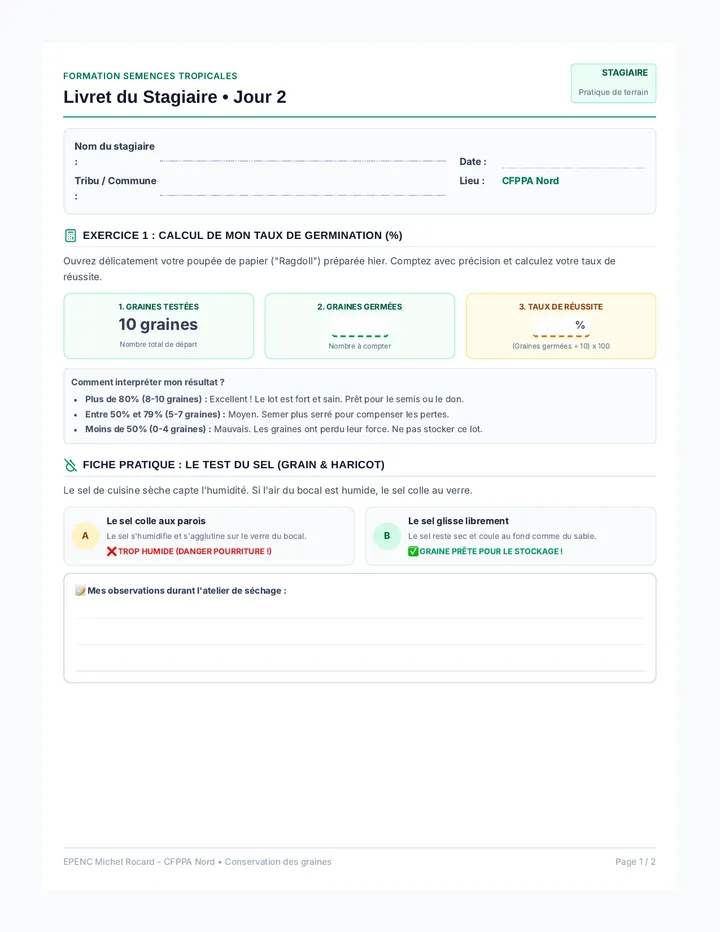
Jour 2 de la formation de 7 heures, couvrant la conservation des graines (traitement, séchage, conditionnement), la mise en place de banques de semences locales, la traçabilité et un module spécifique de 3 heures sur la conservation des semences de tubercules (igname, patate douce, manioc, taro).
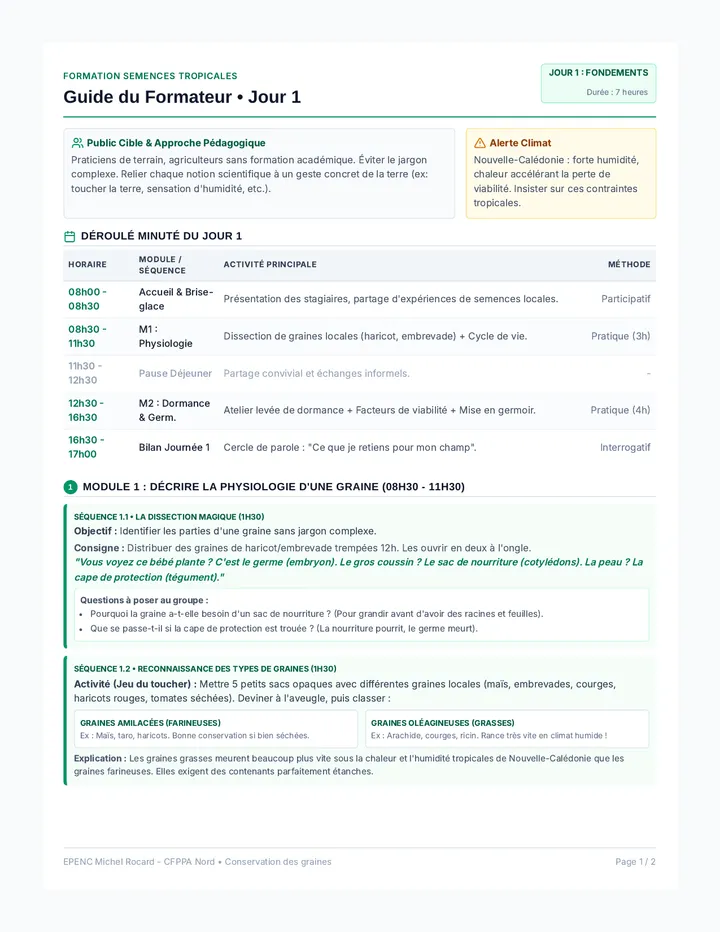
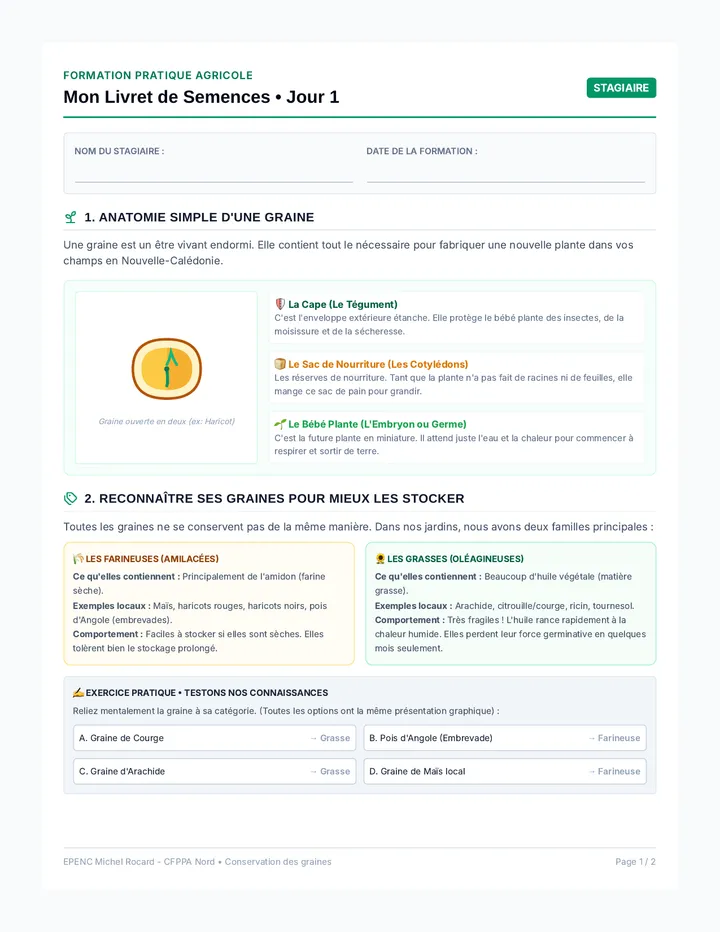
Jour 1 de la formation de 7 heures, couvrant la physiologie des graines, la reconnaissance des types de semences, le cycle de vie, les mécanismes de dormance et les conditions optimales de germination. Ce module pose les bases théoriques et pratiques nécessaires pour comprendre la vie de la graine.
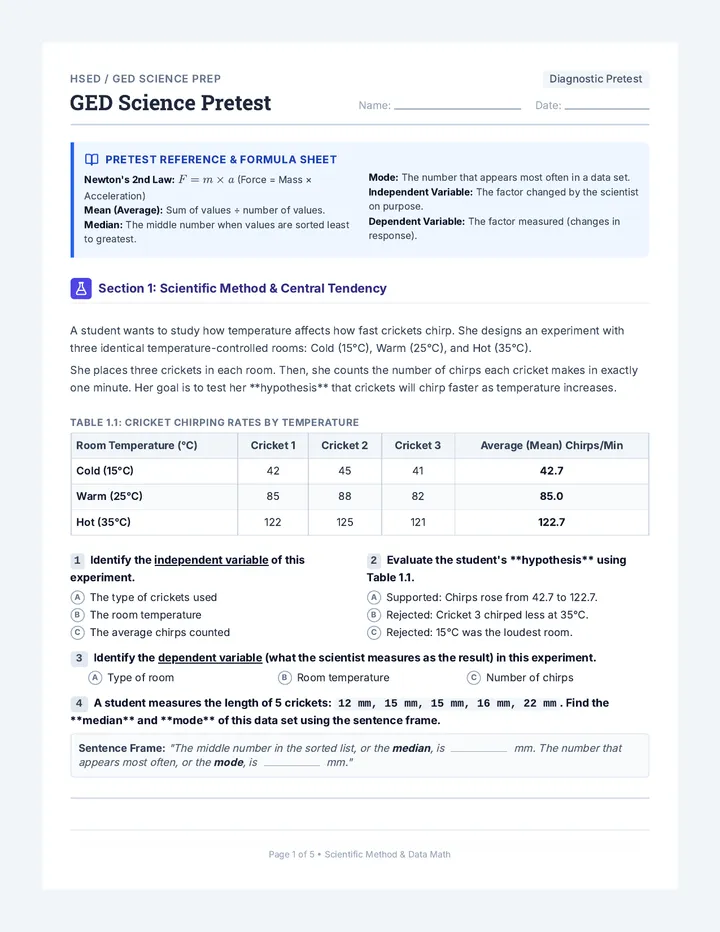
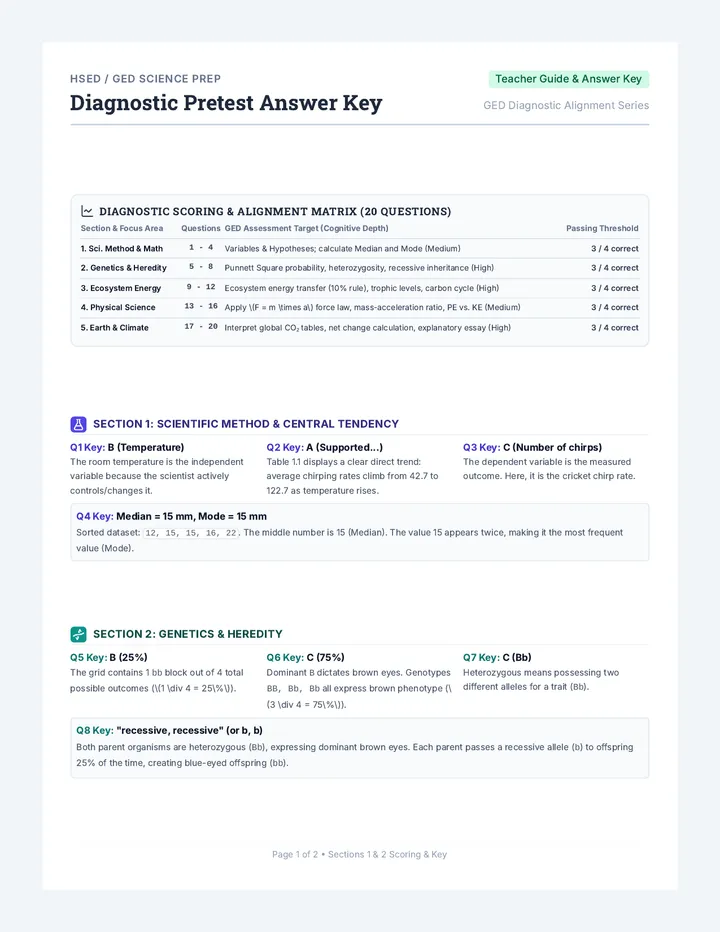
A comprehensive, scaffolded pretest aligned to the GED Science test. It includes student-facing diagnostics for life, physical, earth, and space sciences, alongside a detailed teacher answer key with explanatory feedback.
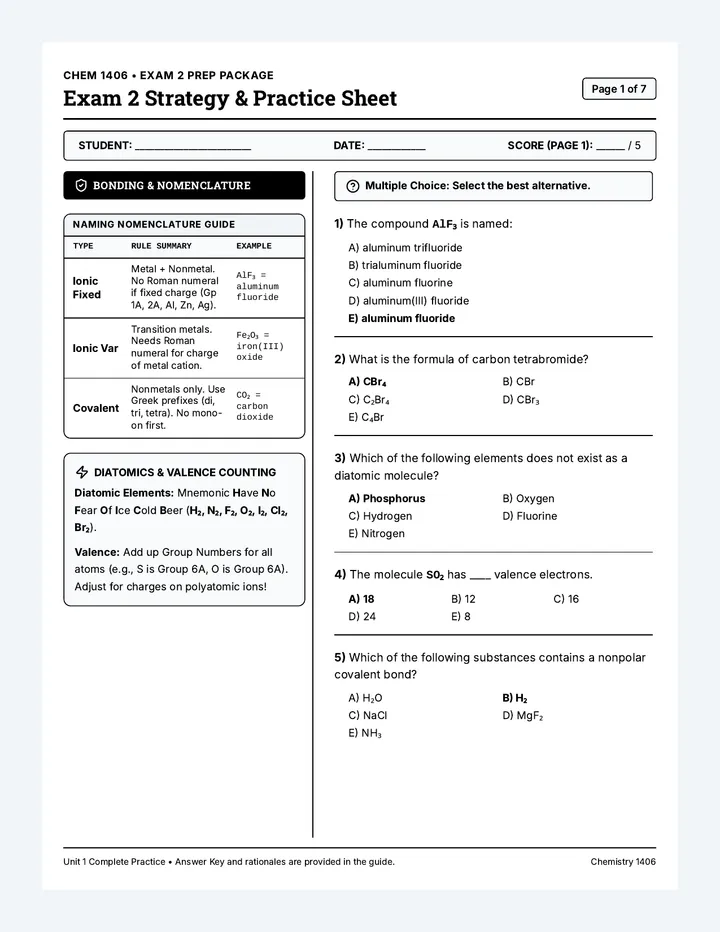
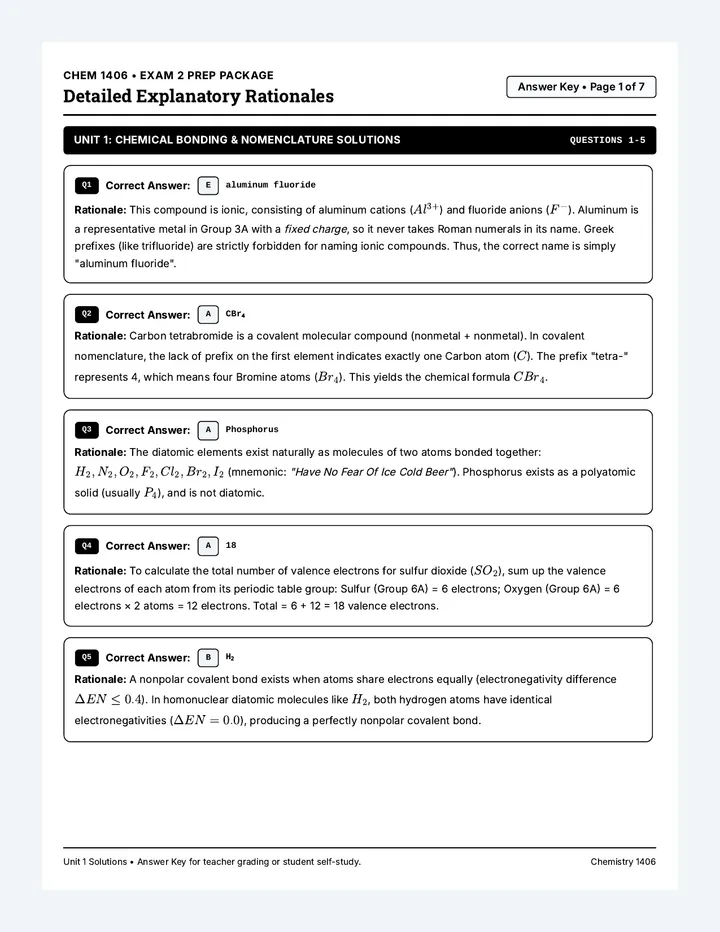
A comprehensive study and practice package for Chemistry 1406 Exam 2. It contains a highly structured, side-by-side strategy guide paired with a 30-question practice exam, and a matching detailed answer key with step-by-step rationales.
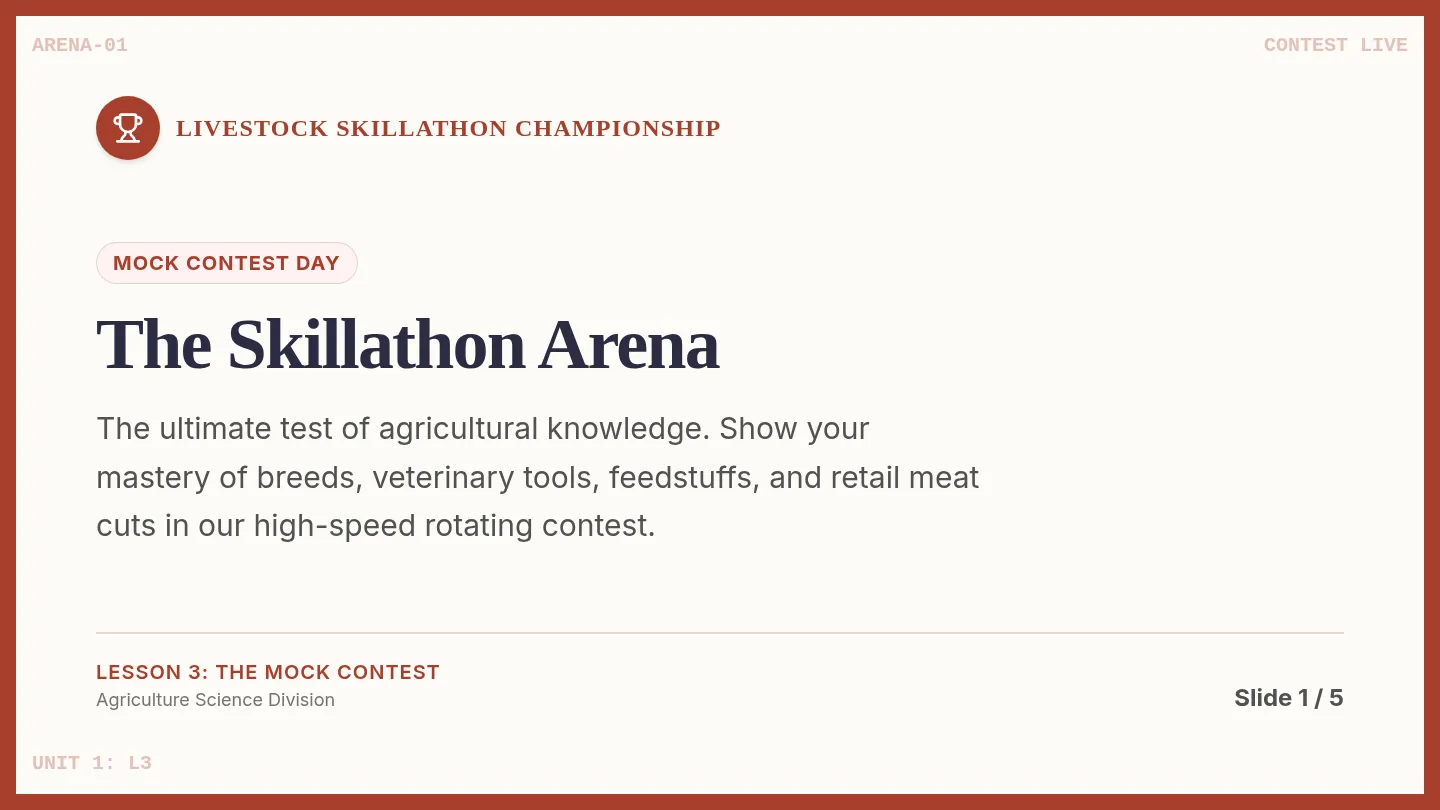
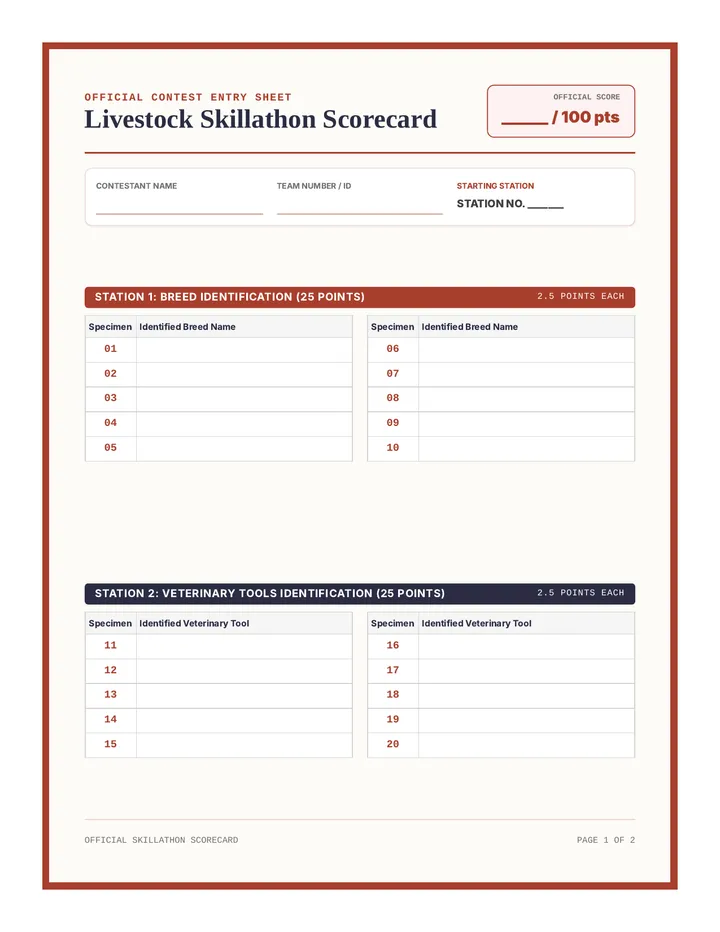
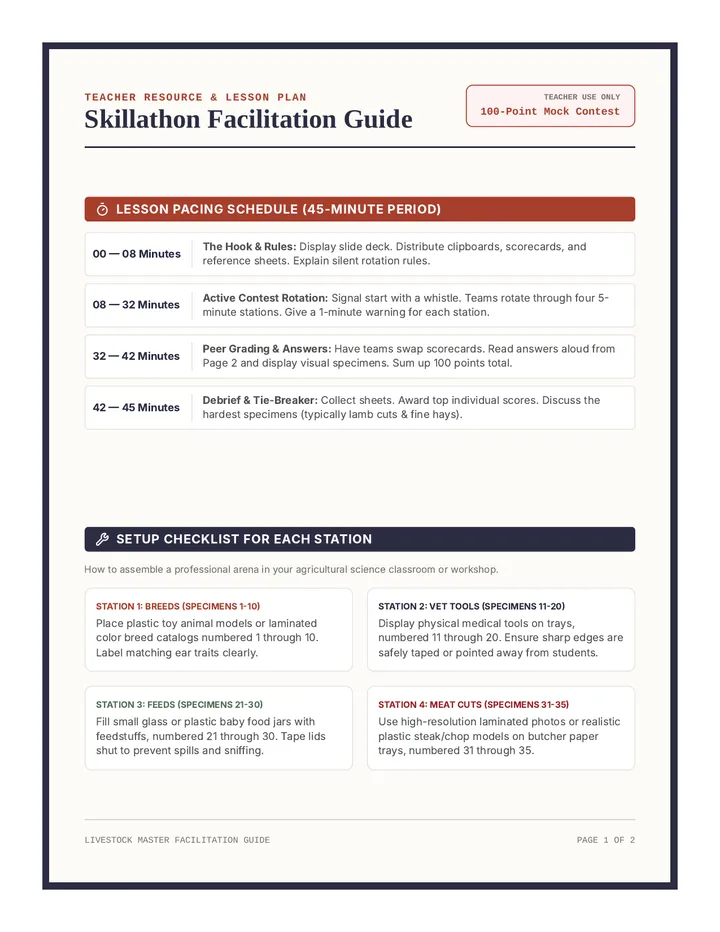
Students participate in a high-stakes, realistic mock Livestock Skillathon, rotating through four hands-on stations to test their knowledge and earn points.
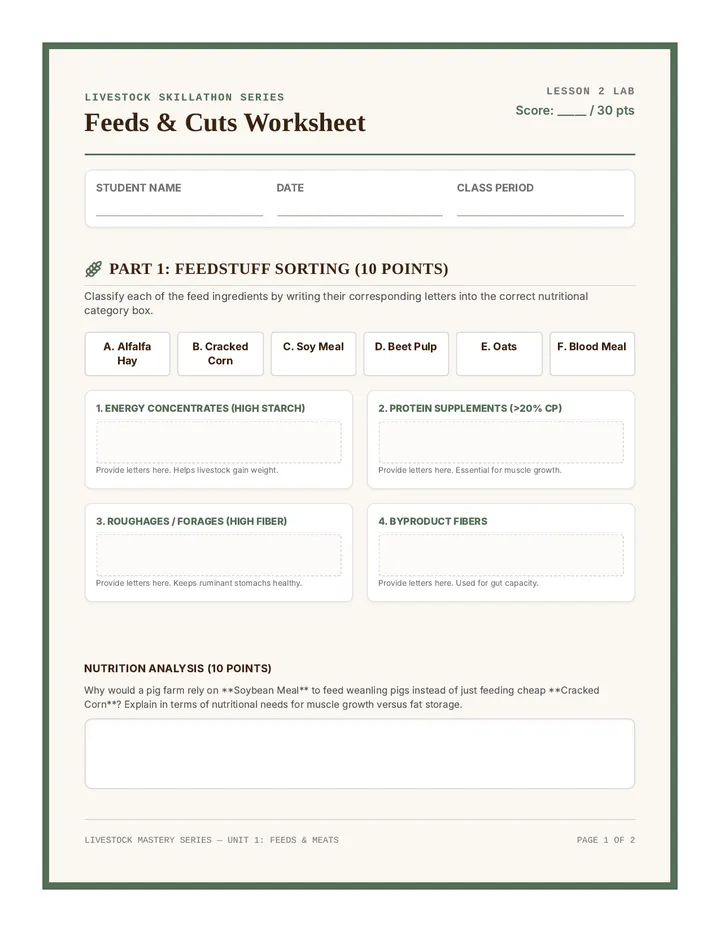
Students learn to identify common feed ingredients and forages, and practice identifying retail cuts of beef, pork, and lamb by wholesale origin and cooking style.
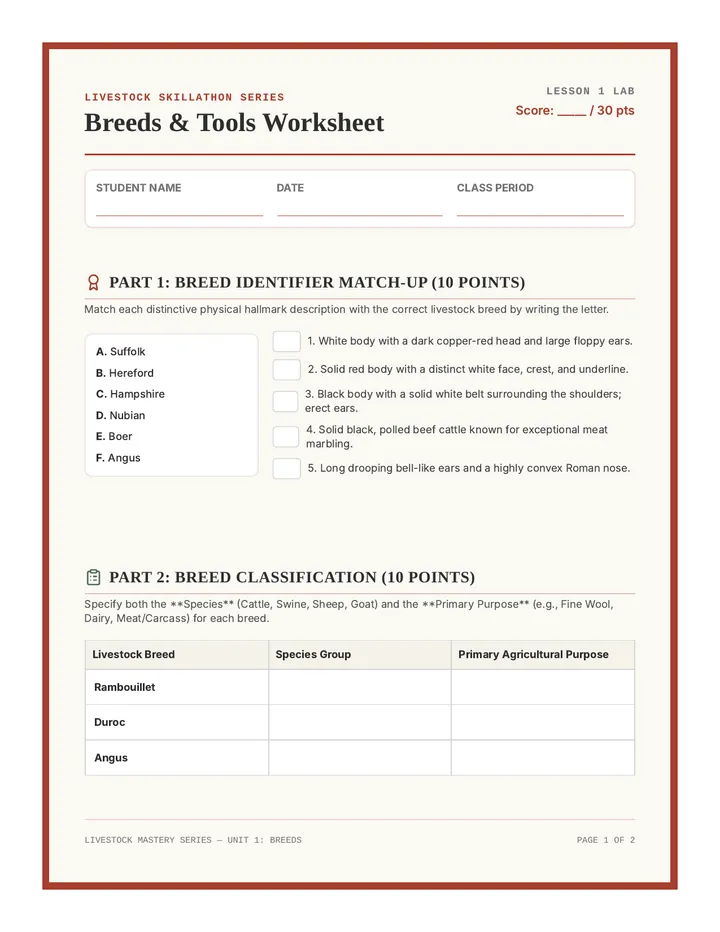
Students learn to identify major breeds of beef cattle, swine, sheep, and goats, along with essential veterinary, handling, and breeding equipment.
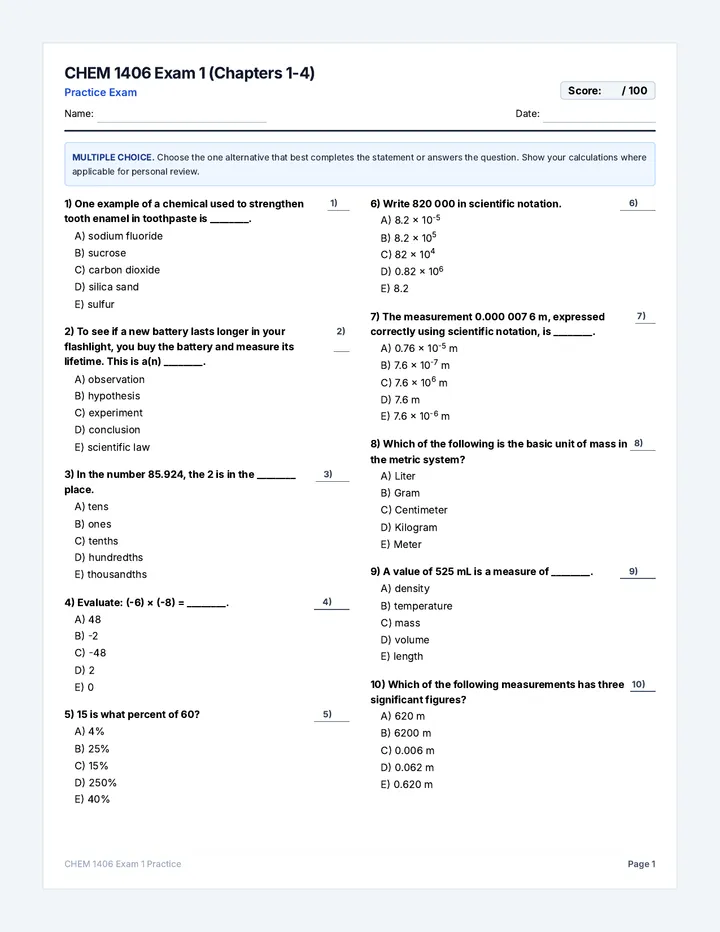
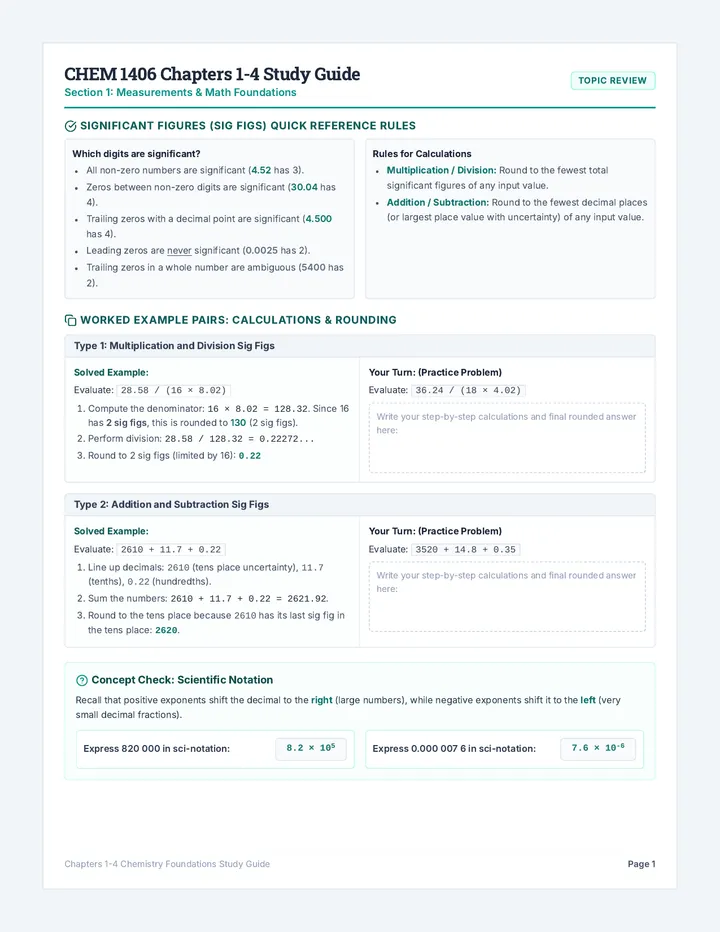
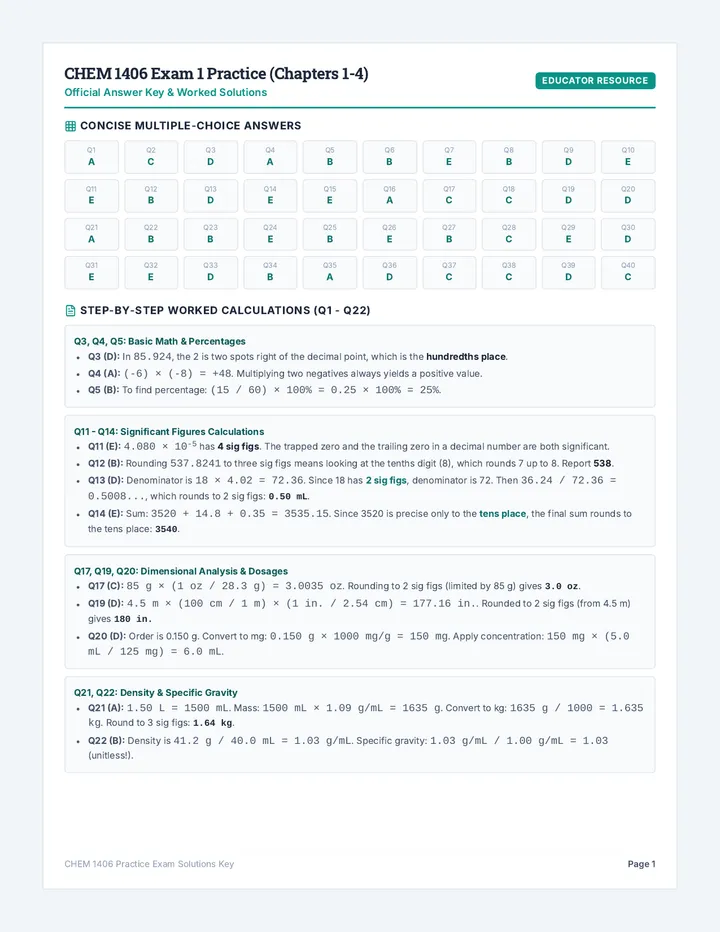
Comprehensive preparation unit covering chemistry fundamentals from Chapters 1 to 4, including scientific measurements, matter, energy, and atomic structure. Contains a parallel practice exam, a detailed study guide, and an answer key with worked solutions.
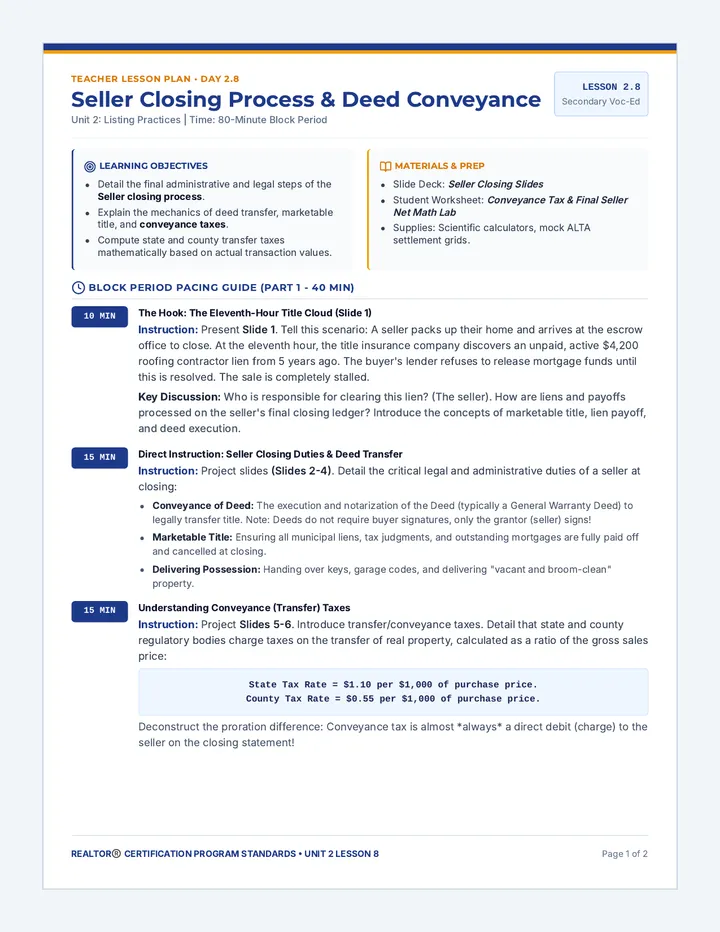
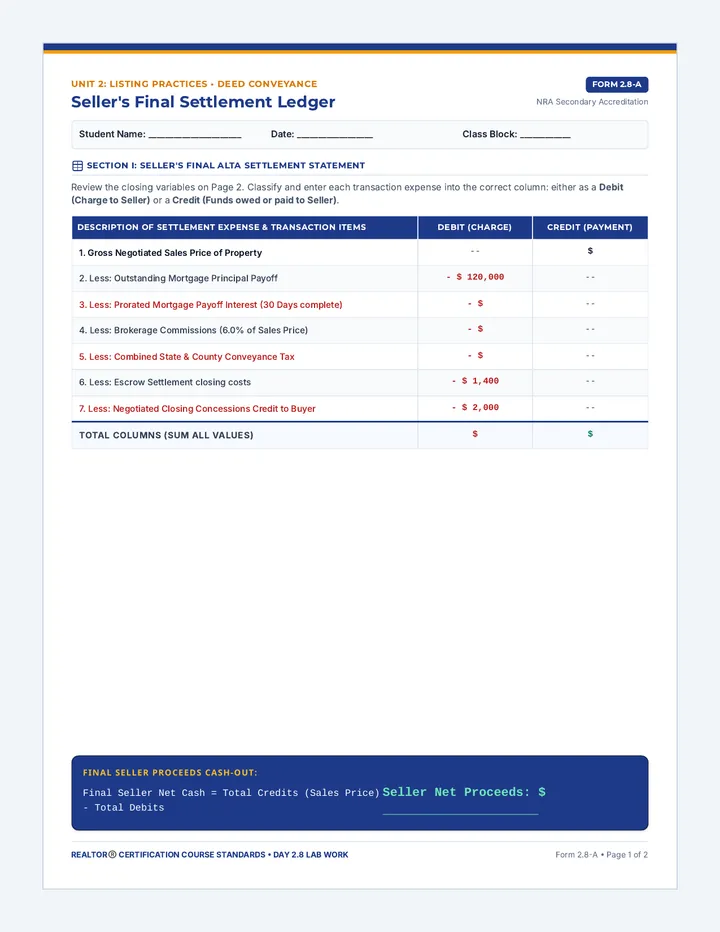
Materials for Day 2.8 of listing practices, focused on the seller's final closing steps, executing deed transfers and conveyances, paying off mortgage balances, and reviewing for the final licensing certification.
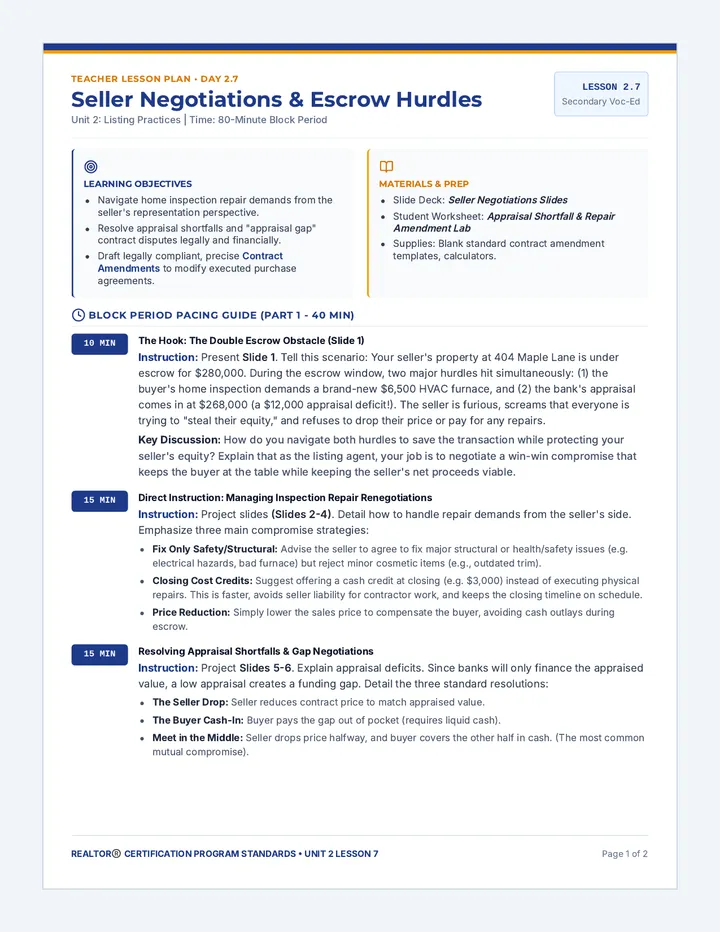
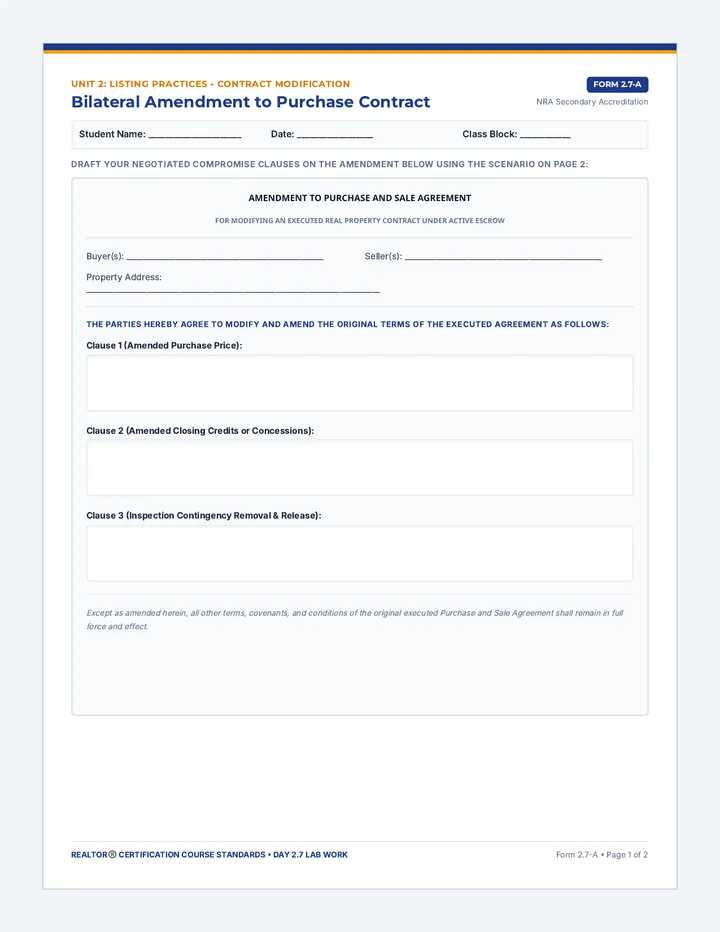
Materials for Day 2.7 of listing practices, focused on navigating inspection repair demands and appraisal shortfalls from the listing side, managing seller objections, and drafting contract amendments.
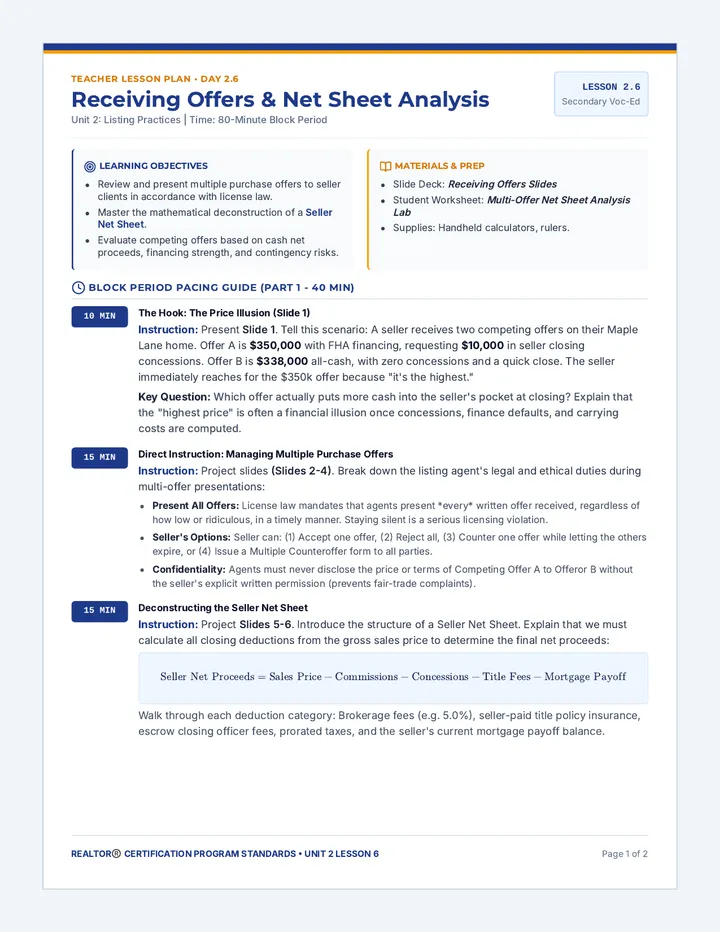
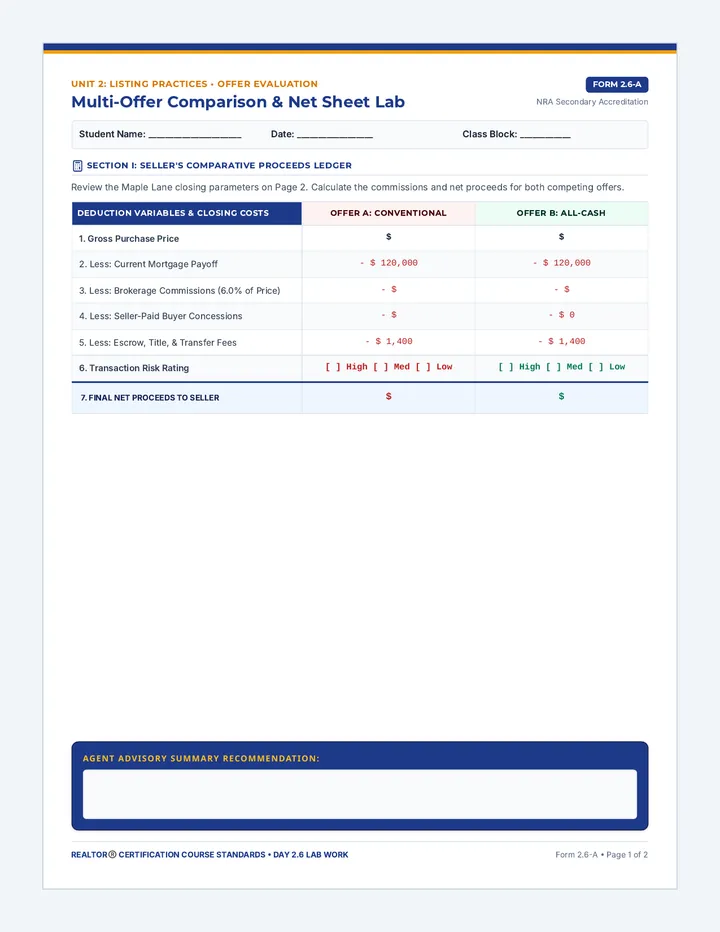
Materials for Day 2.6 of listing practices, focused on analyzing multiple purchase offers, completing seller net sheets, and managing competitive bidding wars.
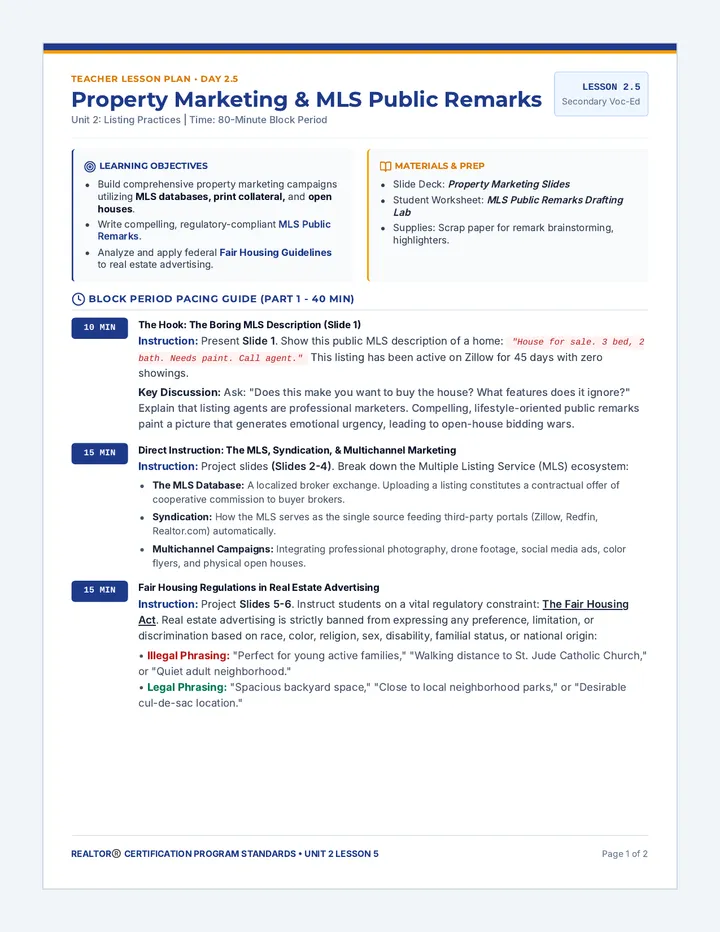
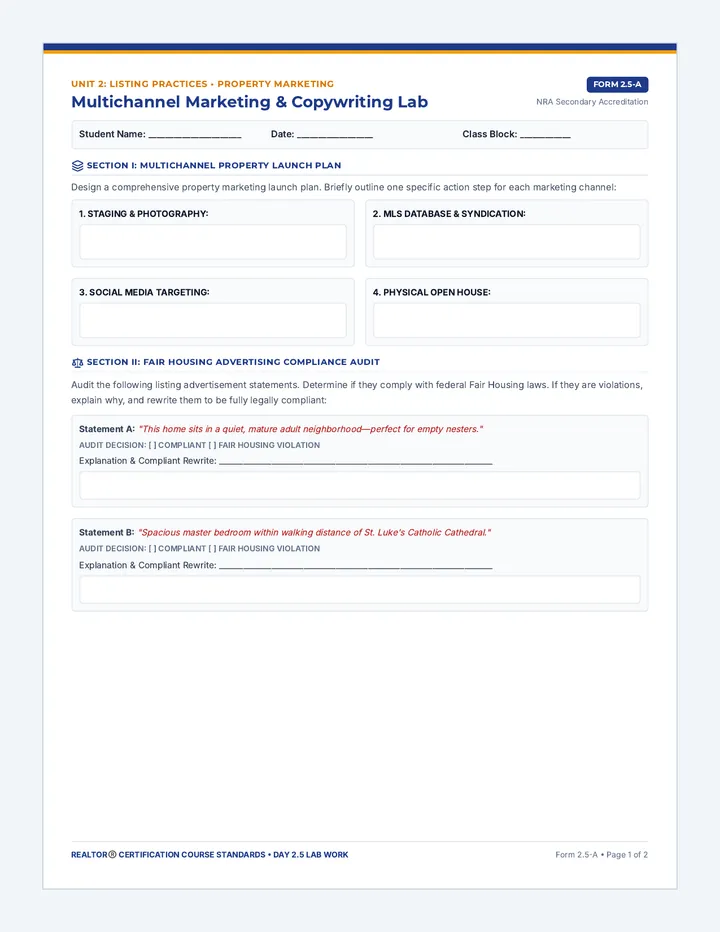
Materials for Day 2.5 of listing practices, focused on building comprehensive property marketing campaigns, navigating the MLS database, syndication, open houses, and writing compelling MLS public remarks.
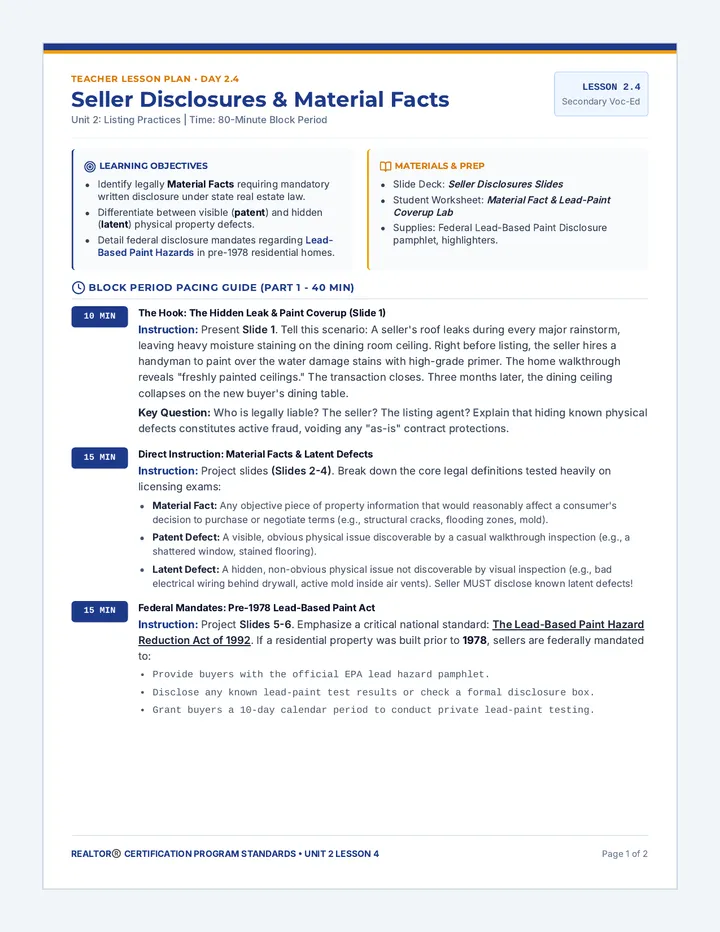
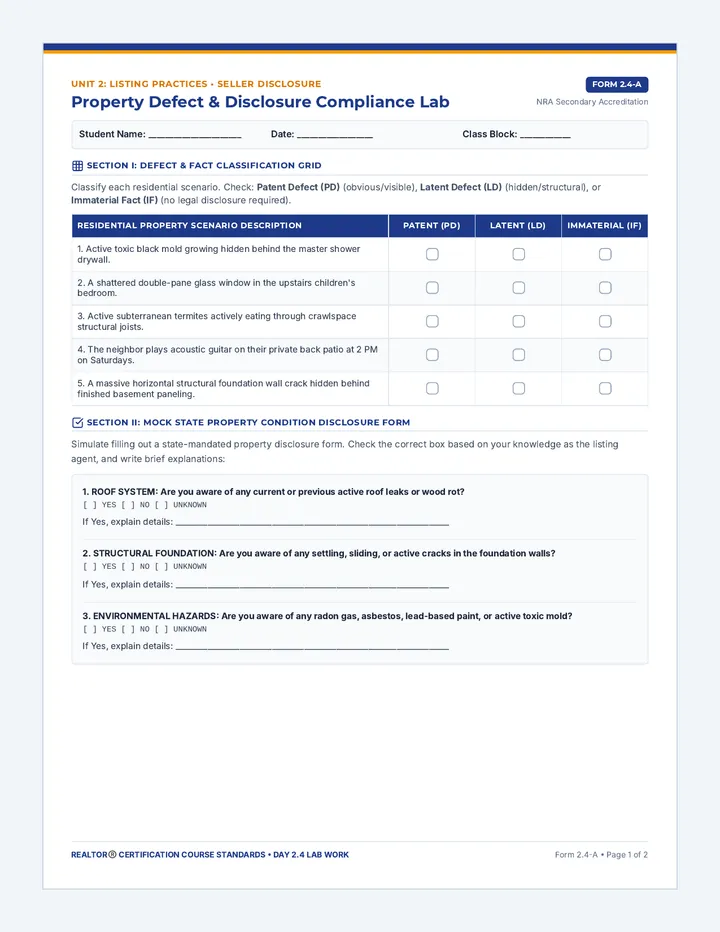
Materials for Day 2.4 of listing practices, focused on identifying legally material facts requiring written disclosure, avoiding misrepresentation, and analyzing structural and hazardous defects.
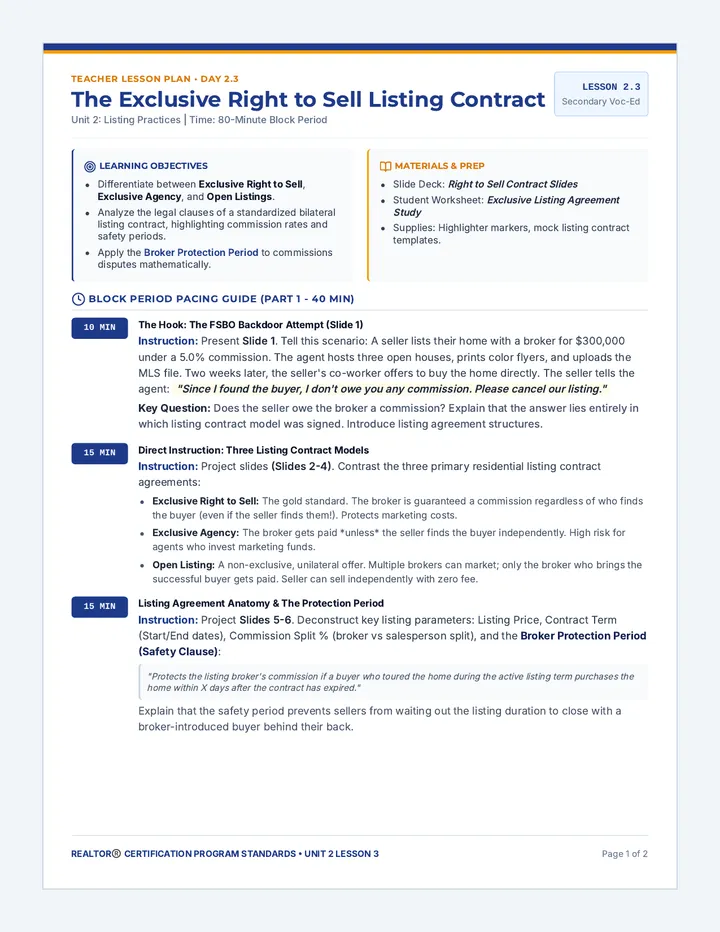
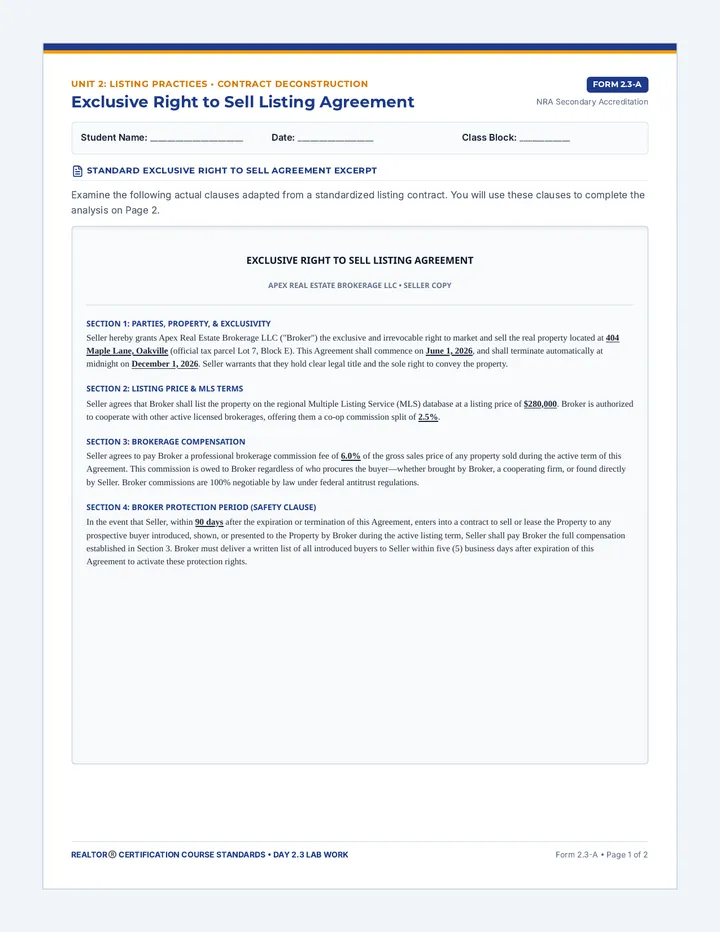
Materials for Day 2.3 of listing practices, focused on analyzing and completing the standard Exclusive Right to Sell Listing Agreement, listing commissions, and safety clauses.
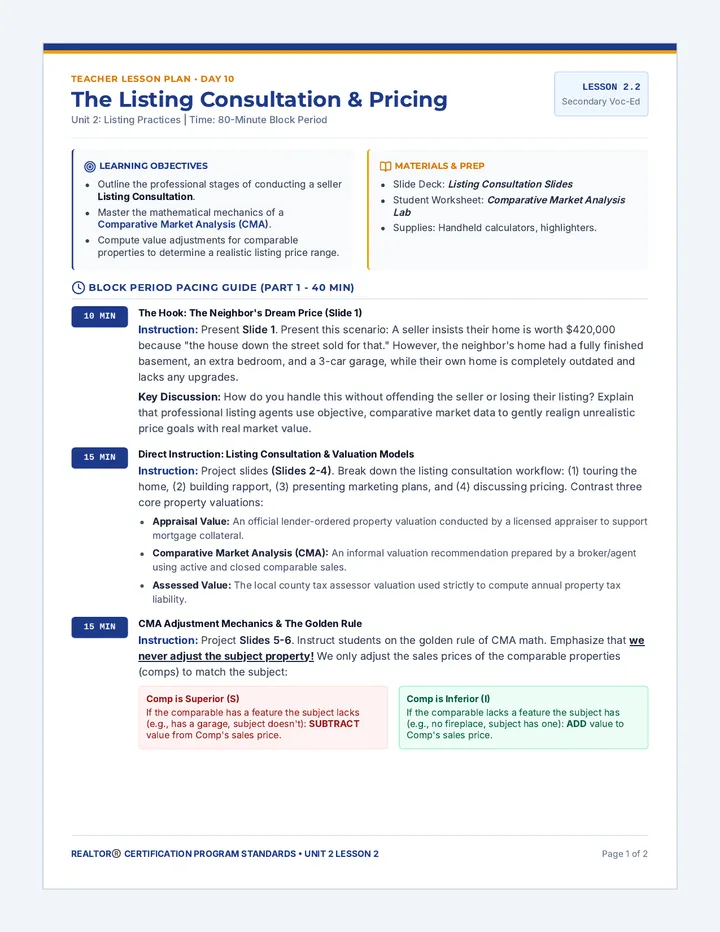
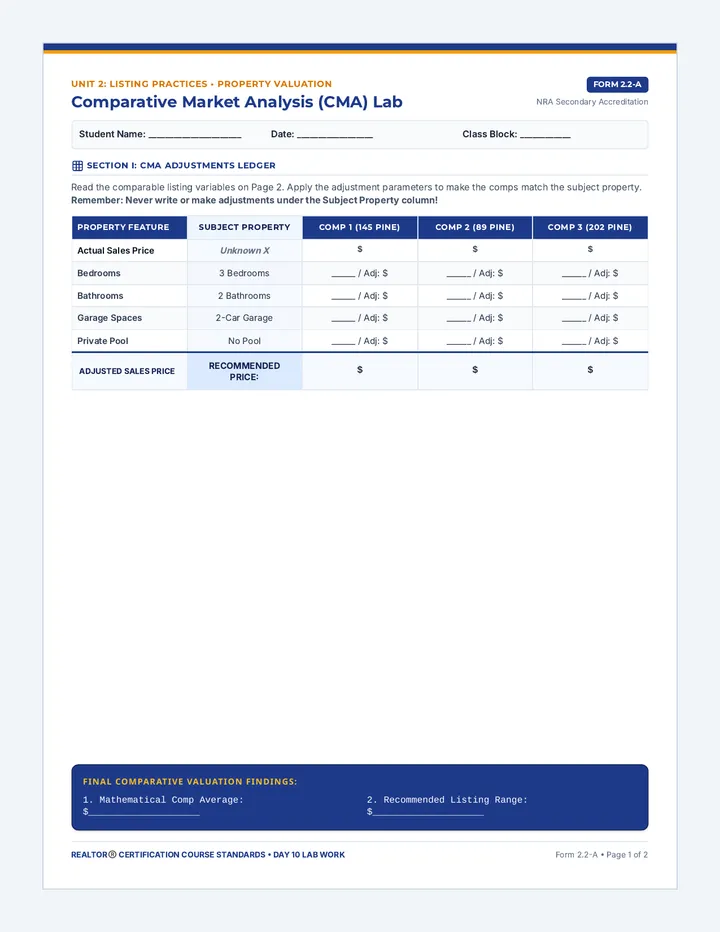
Instructional resources and student practice worksheets for Day 10, focusing on the professional listing consultation, pricing strategies, and conducting a Comparative Market Analysis (CMA).
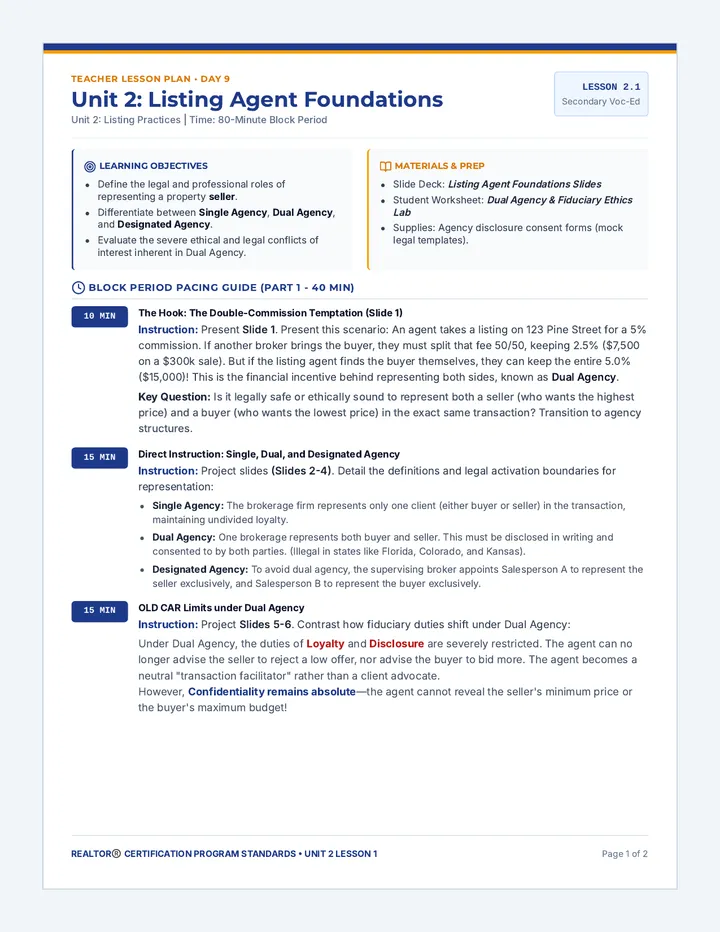
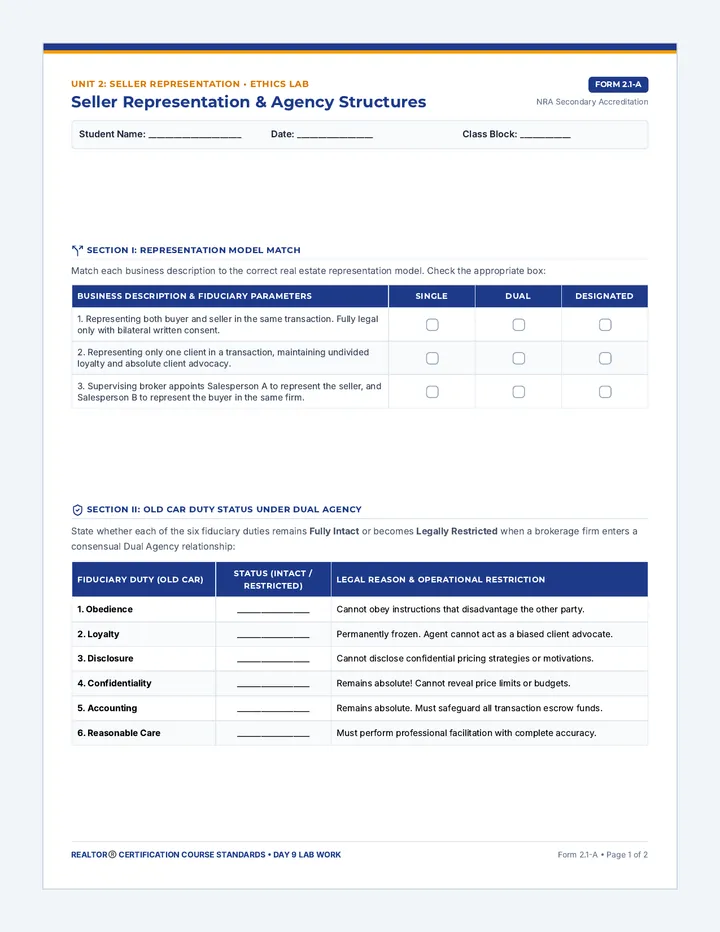
Materials for Day 9 of the Realtor course (Unit 2 Lesson 1), focusing on seller representation, single vs. dual agency, and navigating ethical boundaries in listing practices.
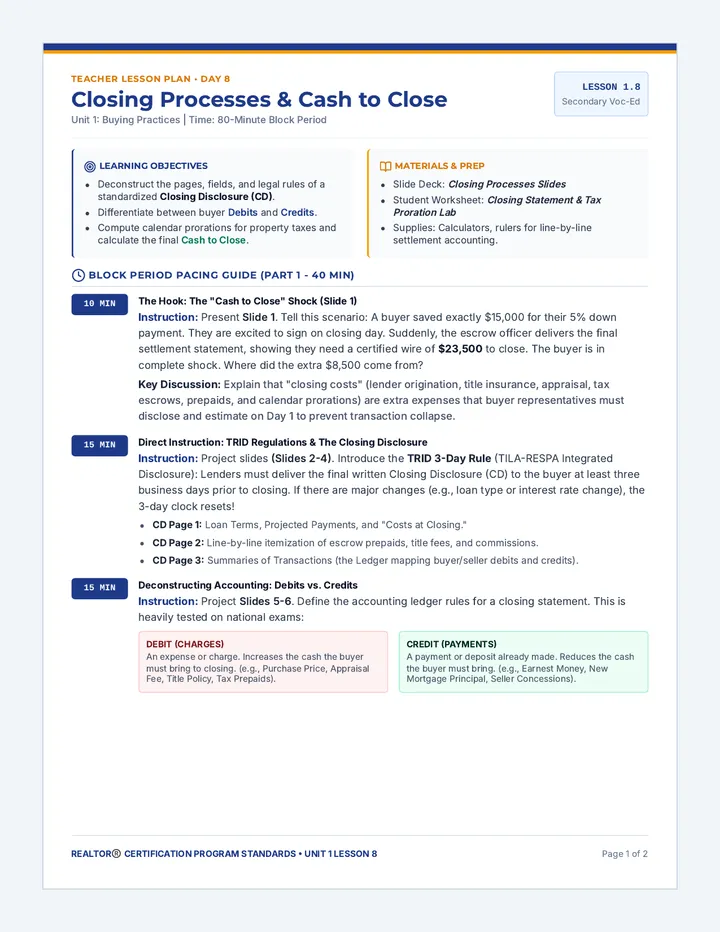
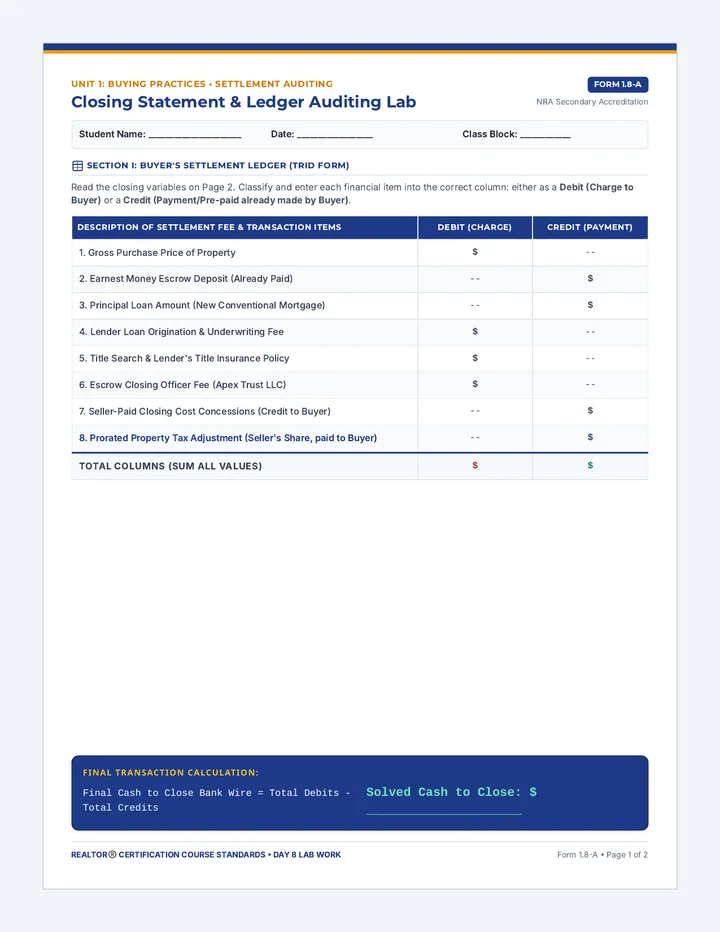
Materials for Day 8 of buying practices, focused on analyzing and auditing the Closing Disclosure (CD), calculating debits, credits, and property tax prorations, and completing the transaction.
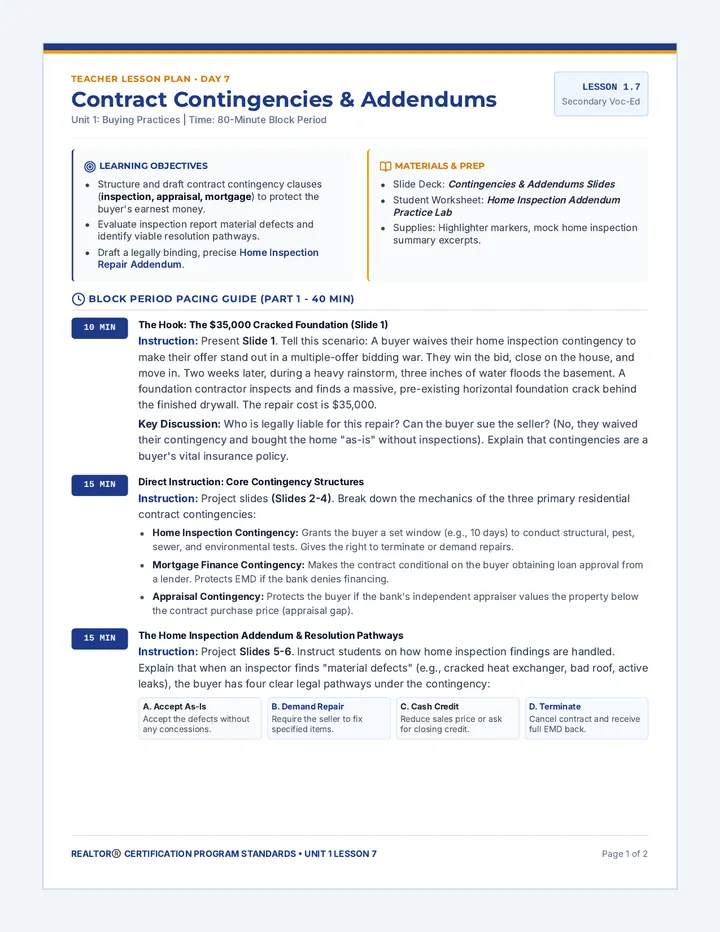
Materials for Day 7 of buying practices, focused on structuring and drafting contract contingency clauses (inspection, appraisal, mortgage) and writing custom home inspection addendums to protect the buyer.
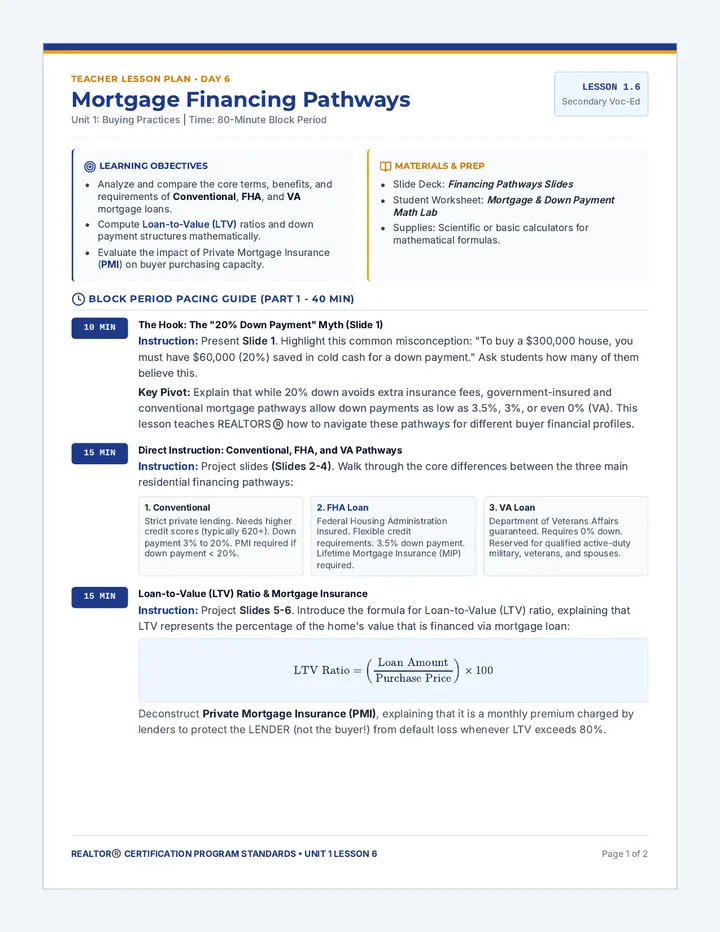
Materials for Day 6 of buying practices, focused on analyzing and comparing Conventional, FHA, and VA mortgage loans and computing down payments and Loan-to-Value (LTV) ratios.
Materials for Day 5 of buying practices, focused on the legal deconstruction and hands-on completion of the standard Residential Purchase and Sale Agreement.
Materials for Day 4 of buying practices, focused on developing strategic residential purchase offers, creating persuasive counteroffers, and simulating seller negotiations.
A comprehensive introduction to computer architecture, focusing on the CPU, internal registers, RAM, and the Fetch-Decode-Execute instruction cycle. Features a student-facing schematic study guide and a detailed teacher answer key with program trace steps.
Materials for Day 3 of buying practices, deconstructing the legally binding Exclusive Buyer Brokerage Agreement, broker commissions, and the concept of procuring cause.
Instructional resources and student practice worksheets for Day 2, focusing on the professional buyer consultation, financial pre-qualification, and buyer needs assessment.
Travaux dirigés (TD) et corrigé sur le bilan humique en Bac Pro CGEA. Permet de maîtriser les concepts clés de minéralisation (K2), d'humification (K1) et d'évolution de la matière organique à travers l'étude de cas réelle d'une exploitation agricole de polyculture-élevage.
A comprehensive sales and educational package designed to pitch advanced molecular UTI testing services to long-term care and nursing home administrators, highlighting clinical and operational benefits.
Comprehensive unit exams and professional role-play grading rubrics designed to evaluate and certify students' real estate competencies.
Practical, case-study contract analysis workshops where students review, dissect, and complete standard residential purchase offers and exclusive listing agreements.
Foundational materials for the first day of real estate buying practices, focusing on the roles, fiduciary duties, and core responsibilities of a buyer representative.
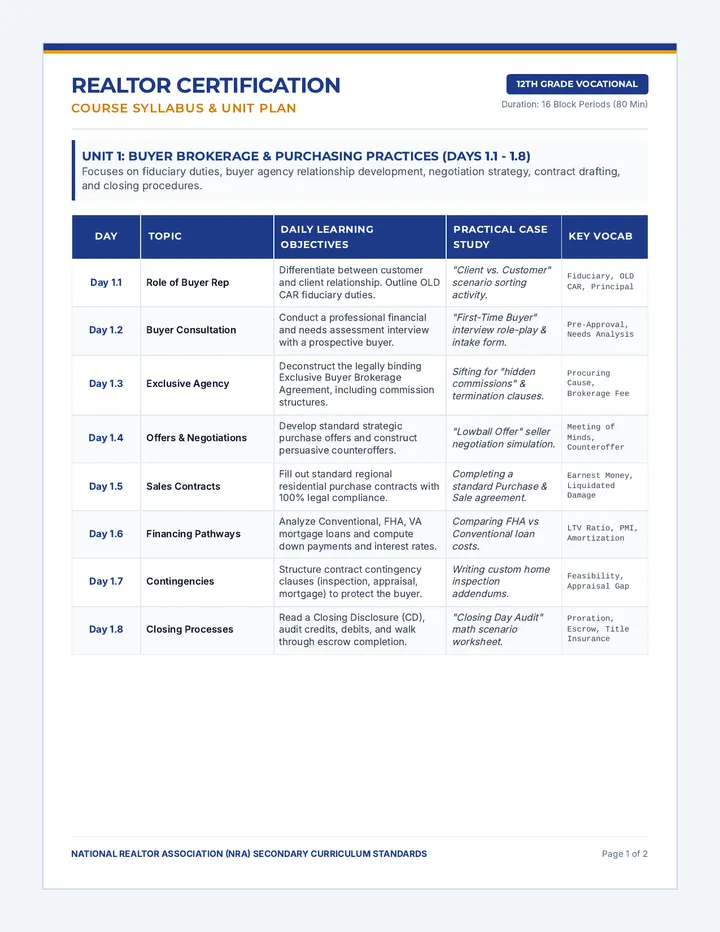
A comprehensive 16-day syllabus and unit plan mapping out both Unit 1 (Buying Practices) and Unit 2 (Listing Practices) with clear block-period objectives, vocabulary, and milestones.
An in-depth investigation into the ecological, cellular, and evolutionary mechanics of trees. Students analyze carbon sequestration, vascular transport, angiosperm vs. gymnosperm taxonomy, and design conservation strategies.
Une leçon adaptée pour maîtriser les bases de la plantation de cacaoyers en agriculture syntropique, spécialement conçue pour les élèves ayant des difficultés de compréhension des consignes. Elle s'articule autour d'une fiche de synthèse illustrée et d'un cahier d'exercices d'assimilation.
A comprehensive evaluation of baking methods, ingredients, yeast dough preparation, and laminating techniques for Culinary Arts students. Includes a student exam and a matching teacher answer key.
A comprehensive Semester 2 Final Exam for a high school or college Culinary Arts course, covering mixing methods, baking ingredients, leavening agents, quick breads, yeast breads, pies/pastries, lamination, and baker's percentages. Includes a student-ready exam and a fully annotated teacher's answer key.
A comprehensive final assessment package for culinary arts students, featuring a multi-page written exam covering food safety, culinary math, cooking techniques, and mother sauces, paired with a complete teacher answer key and rubric.
An engaging physics lesson exploring the aerodynamics of flight, centering around an interactive video guide, visual slides, and scaffolded student guided notes with sentence frames.
A comprehensive culinary baking final exam package containing a reusable question booklet, a single-page student response sheet, an accommodated exam booklet with larger text and simplified options, and a master grading key.
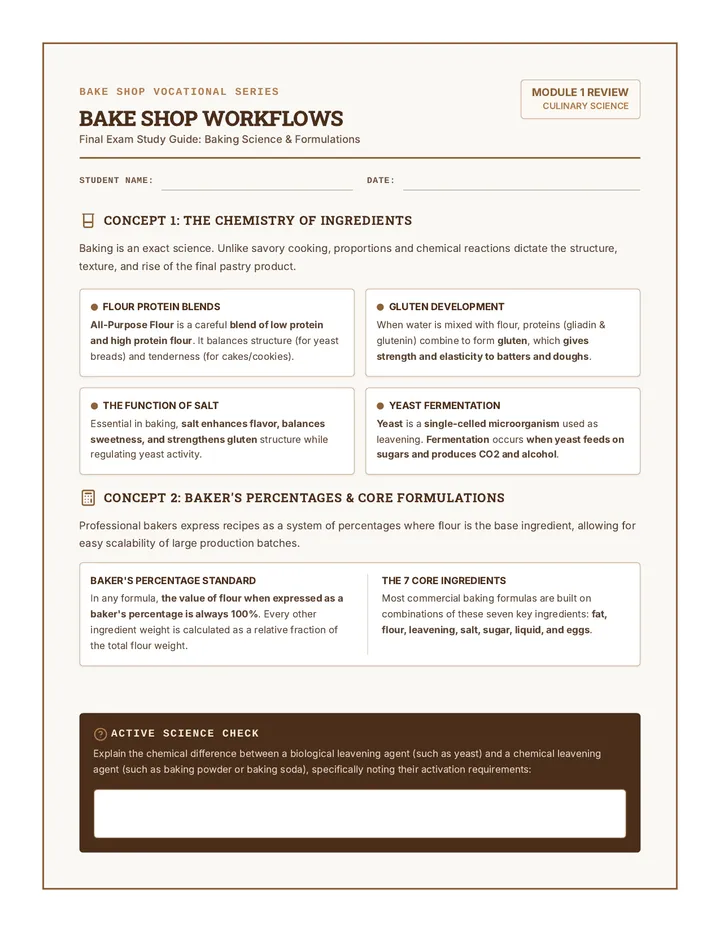
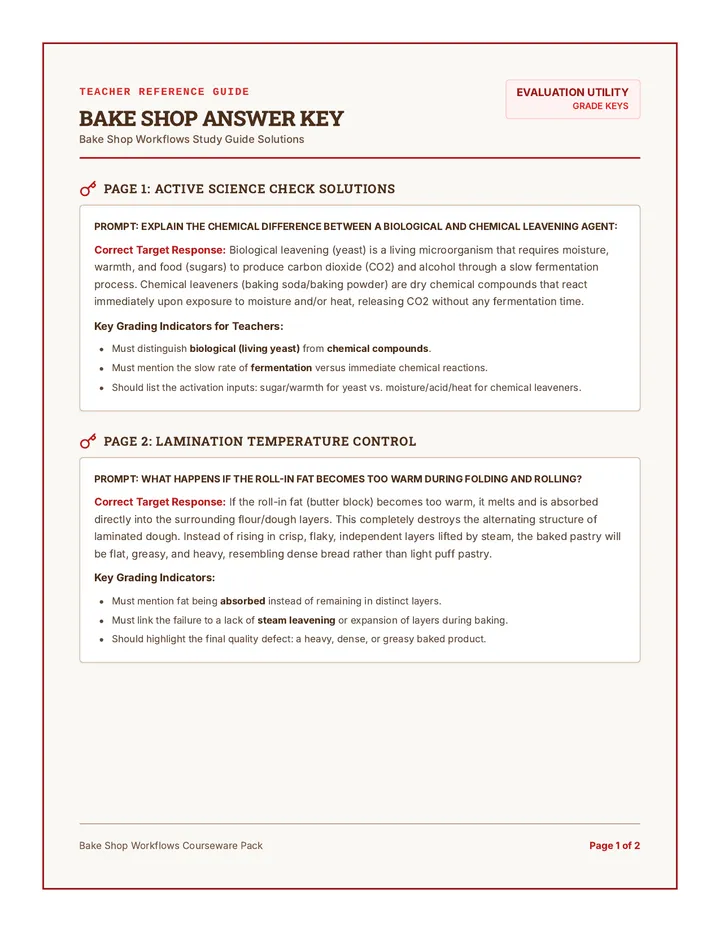
A high-yield vocational lesson focusing on commercial baking science, pastry production techniques, laminated doughs, and professional bake shop workflows.
An essential study unit focusing on ecosystem dynamics, energy flow, biogeochemical cycles, and human impacts on biodiversity.