Students partition the interval between 0 and 1 on a number line to locate unit fractions. This lesson focuses on the precision of the endpoint.
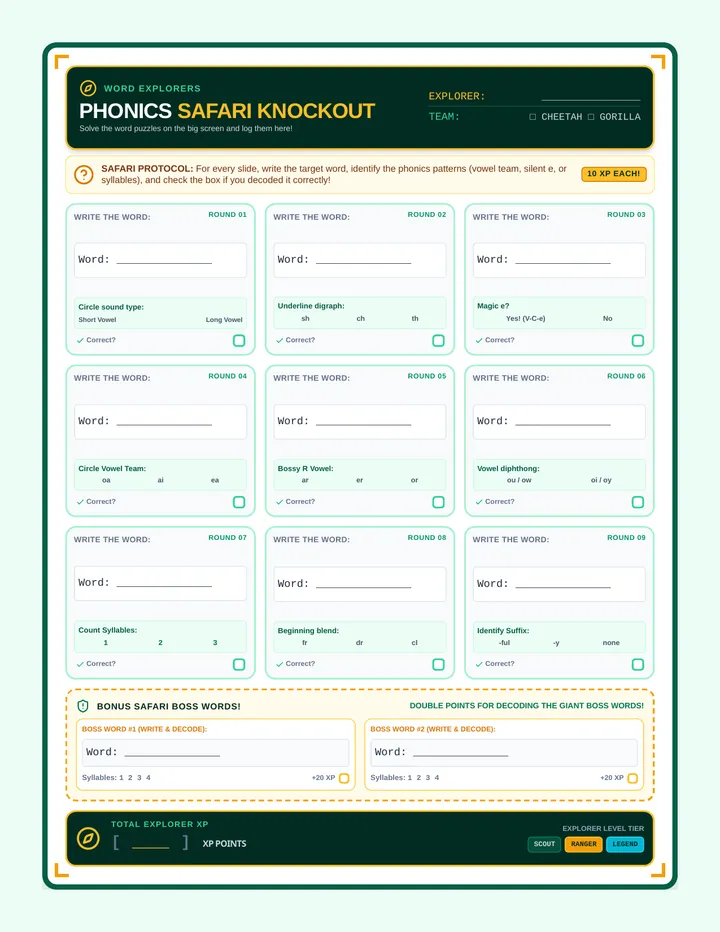
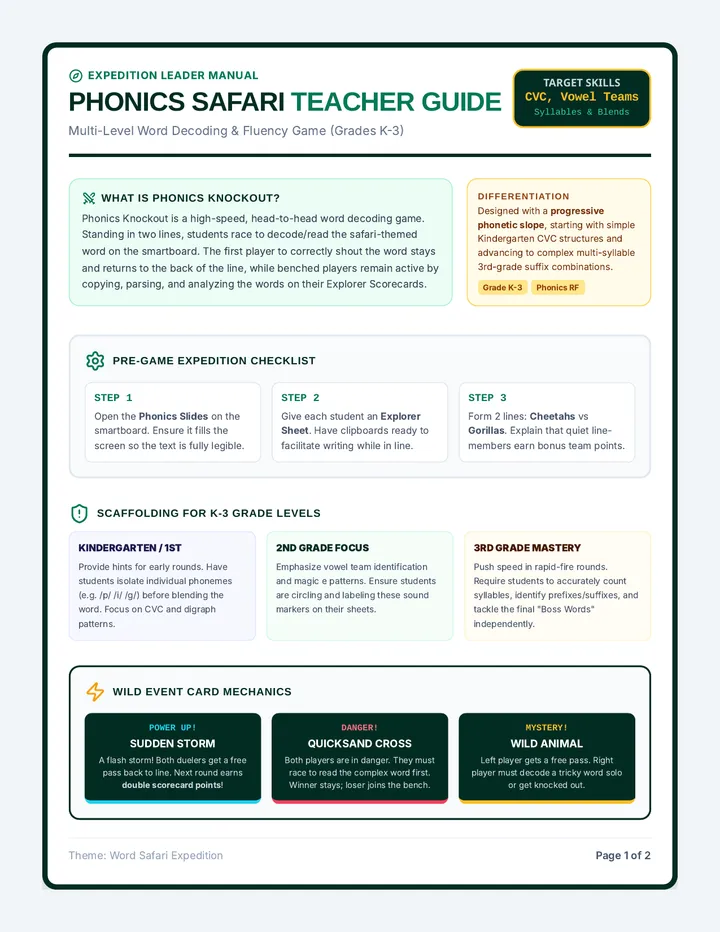
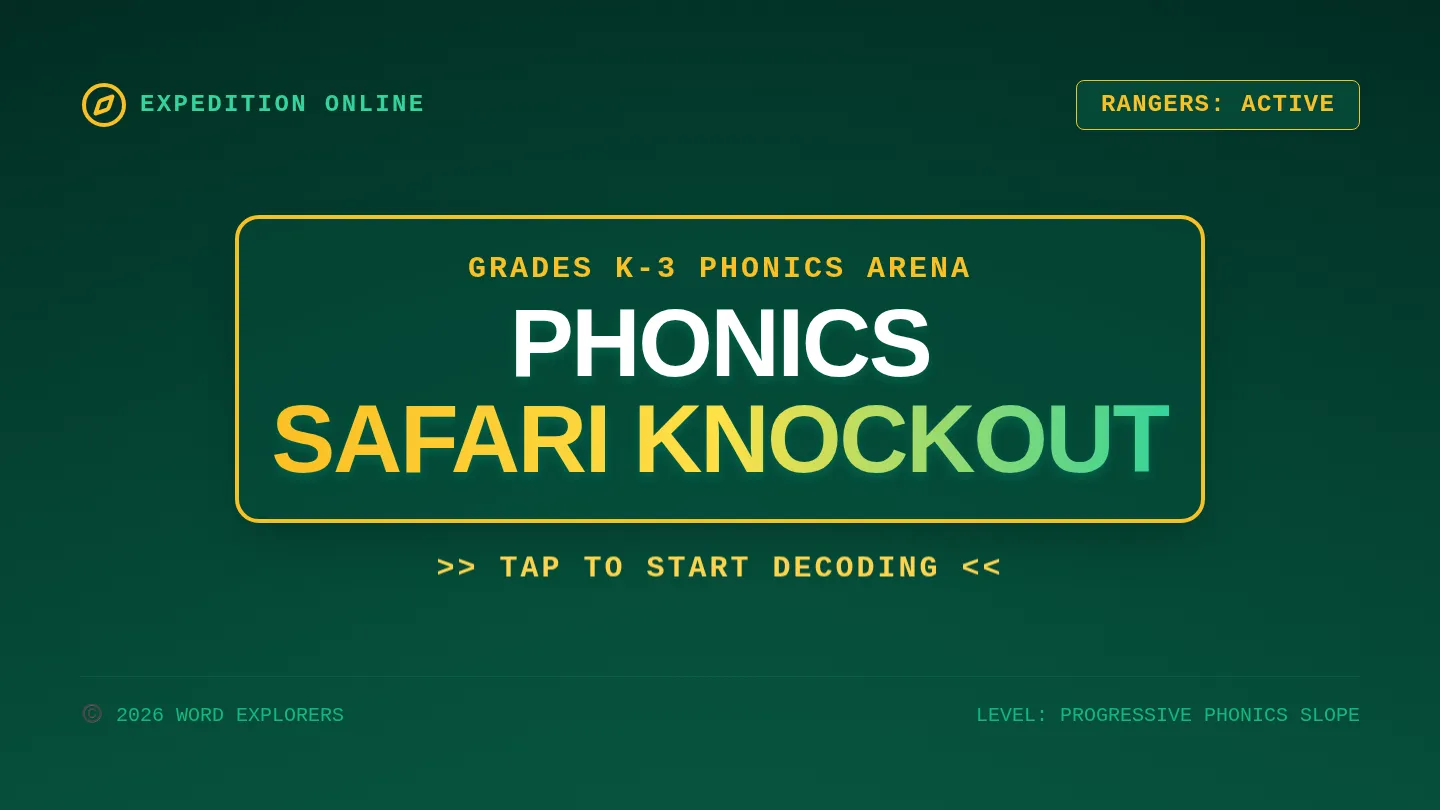
A high-energy, wild safari-themed classroom game for K-3 students focusing on key phonics skills including CVC words, silent 'e', vowel teams, and multi-syllable decoding. This lesson includes a widescreen smartboard presentation, a teacher facilitation guide with word keys, and an active-participation student tracker sheet.
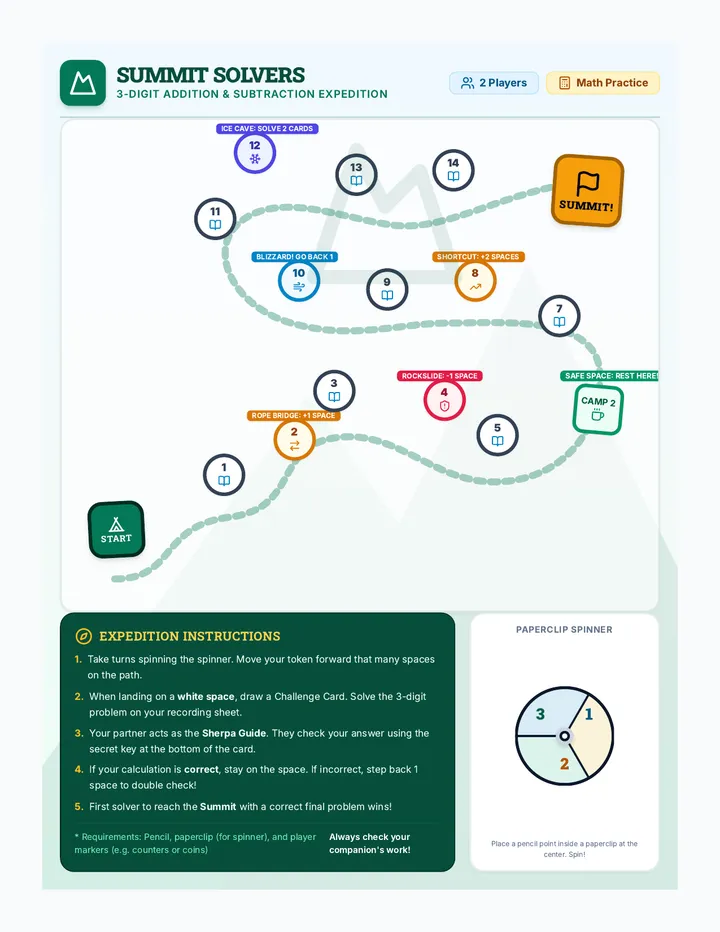
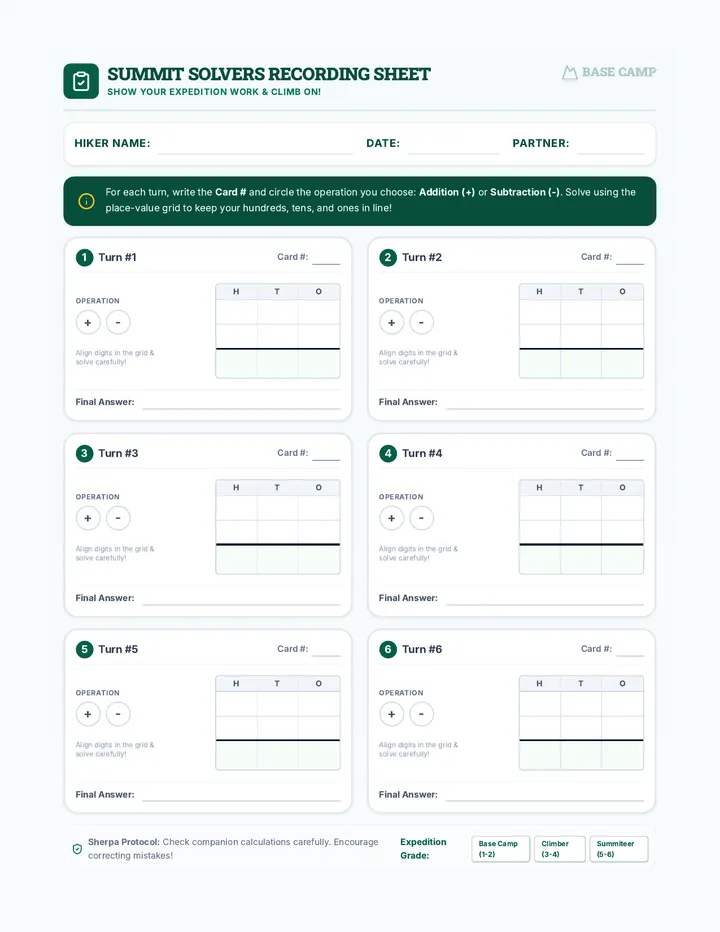
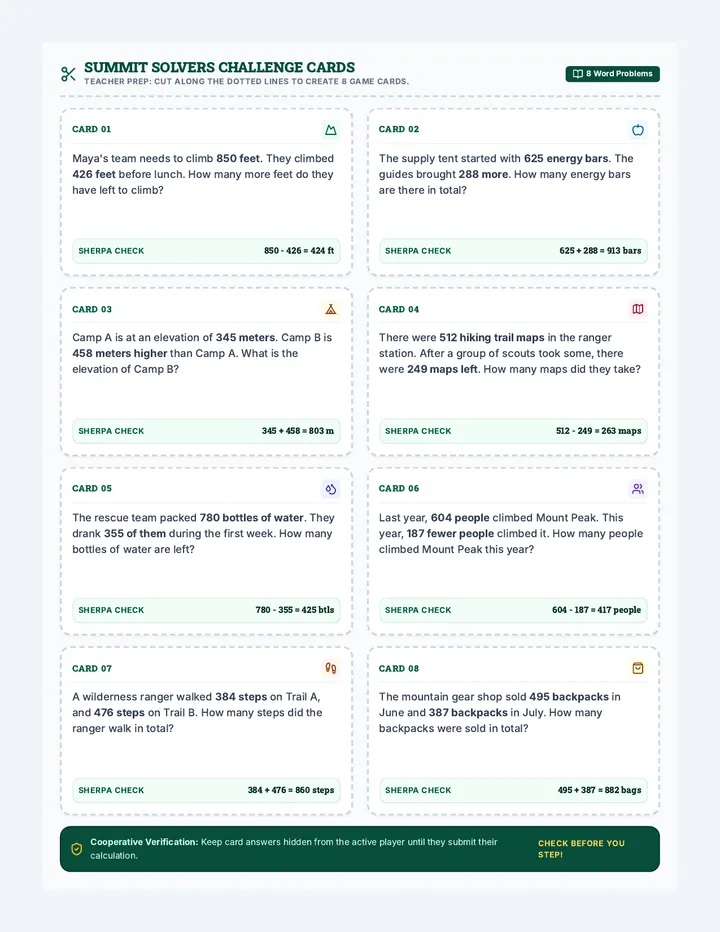
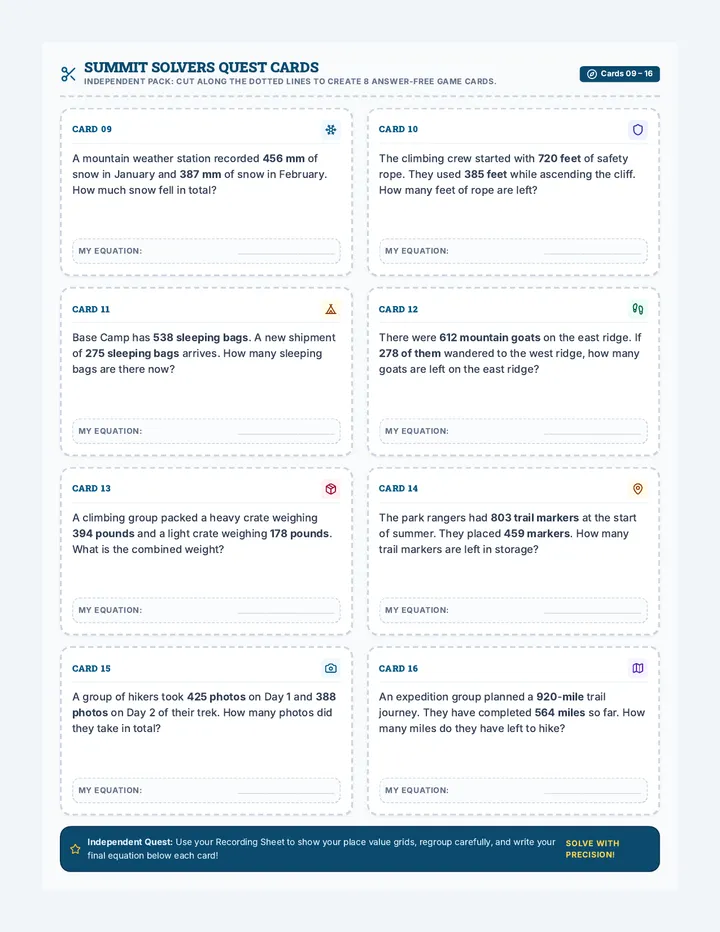
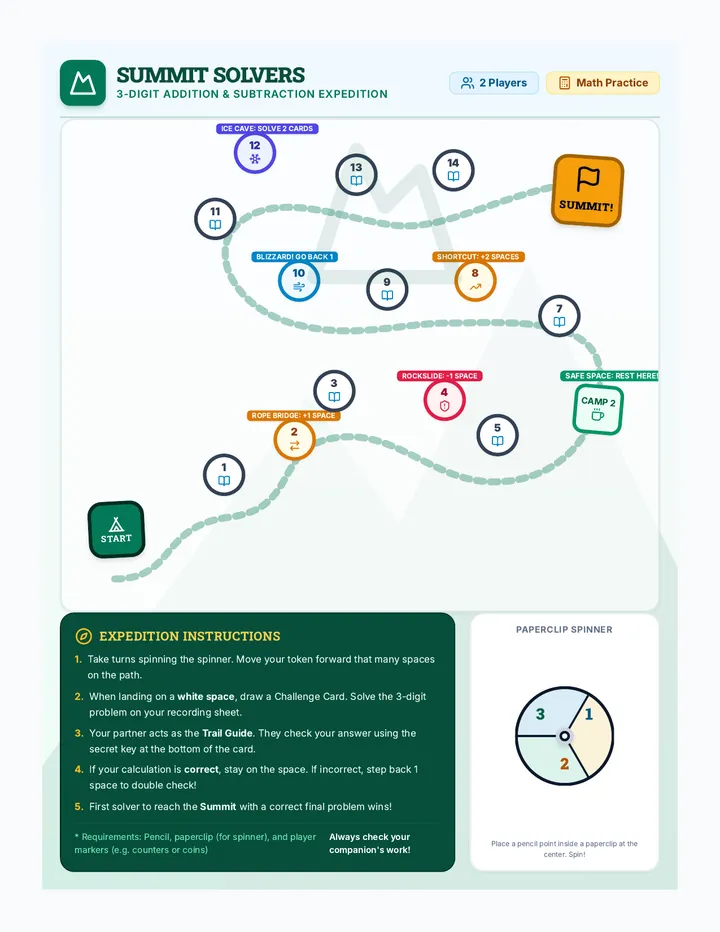
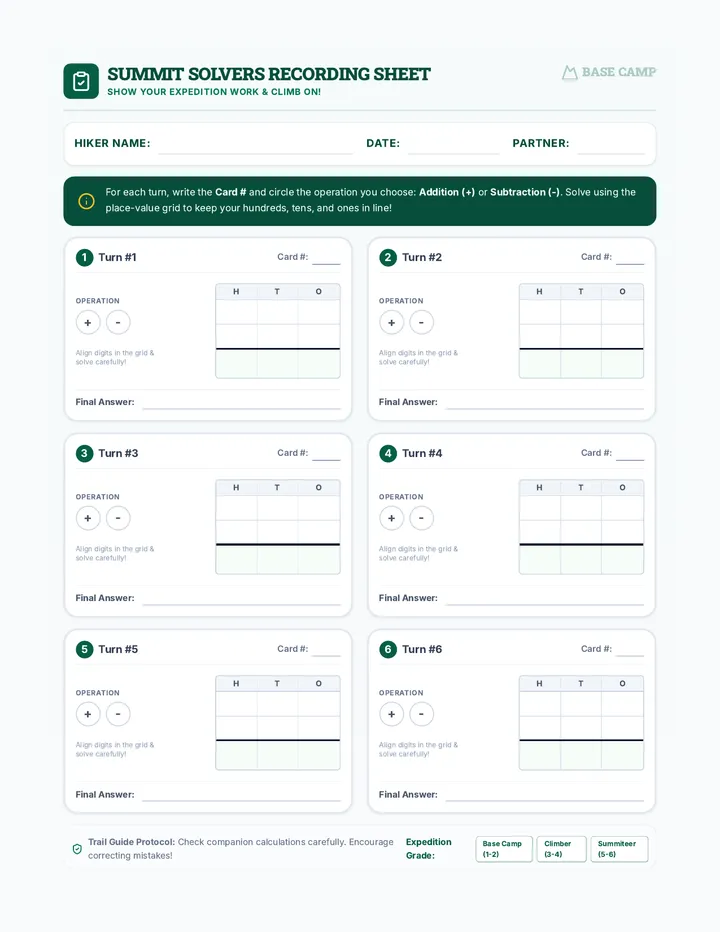
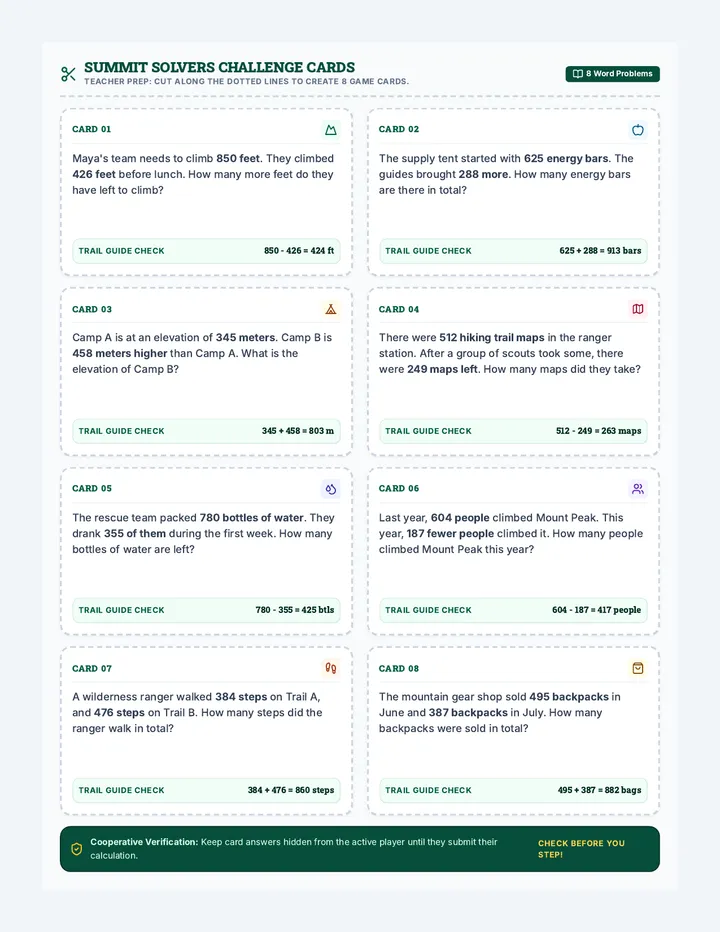
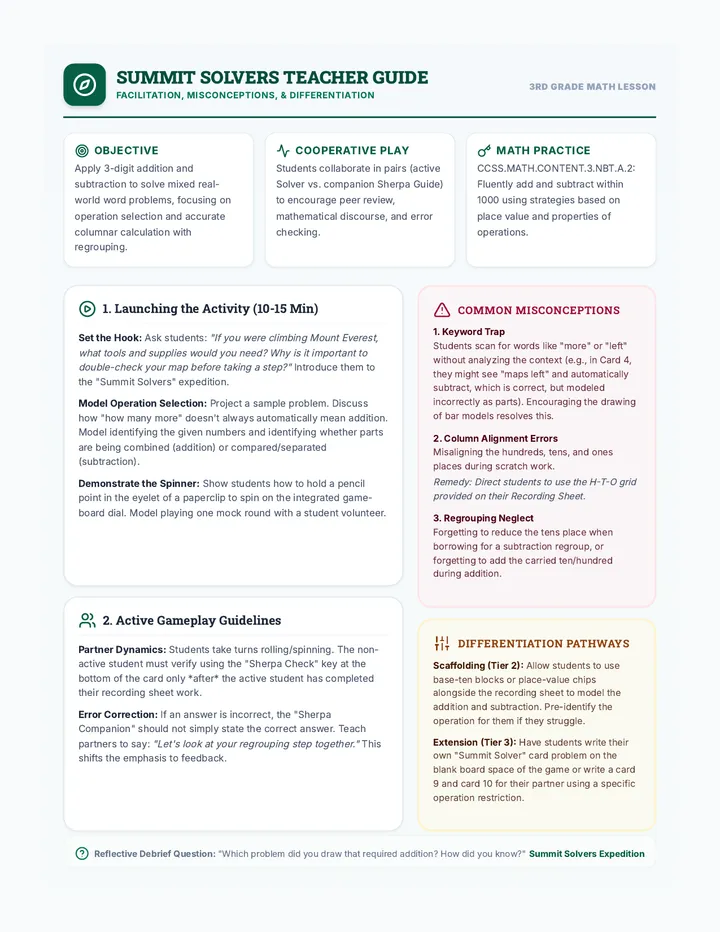
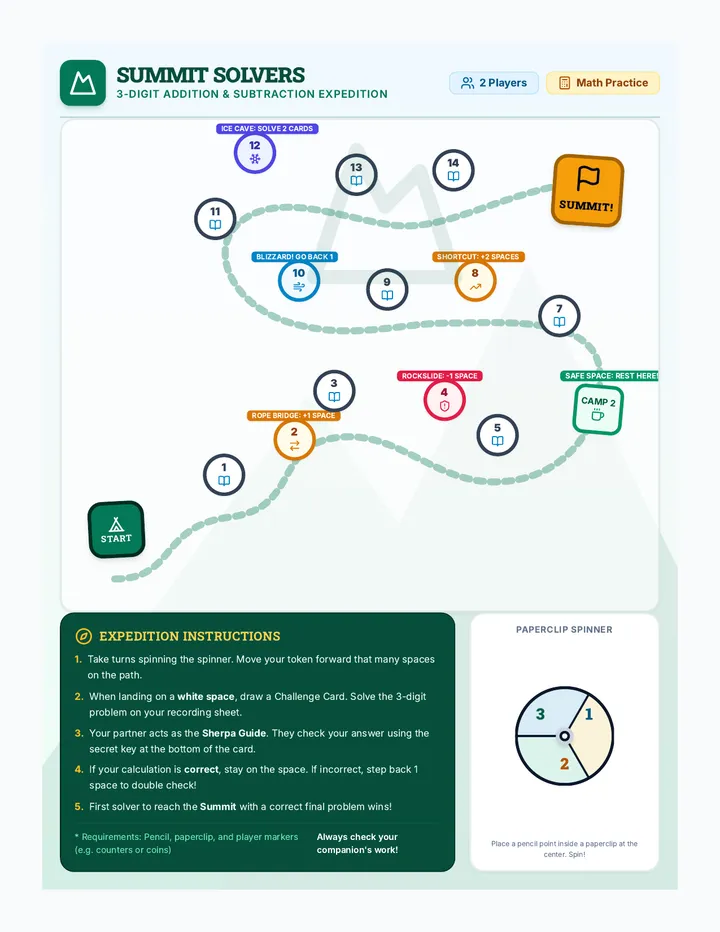
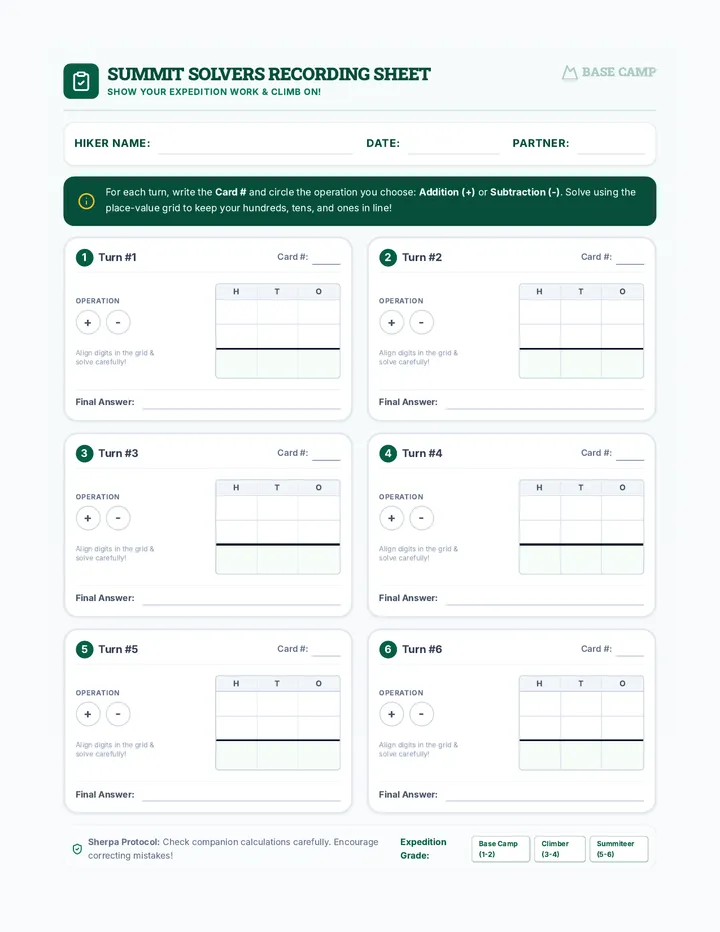
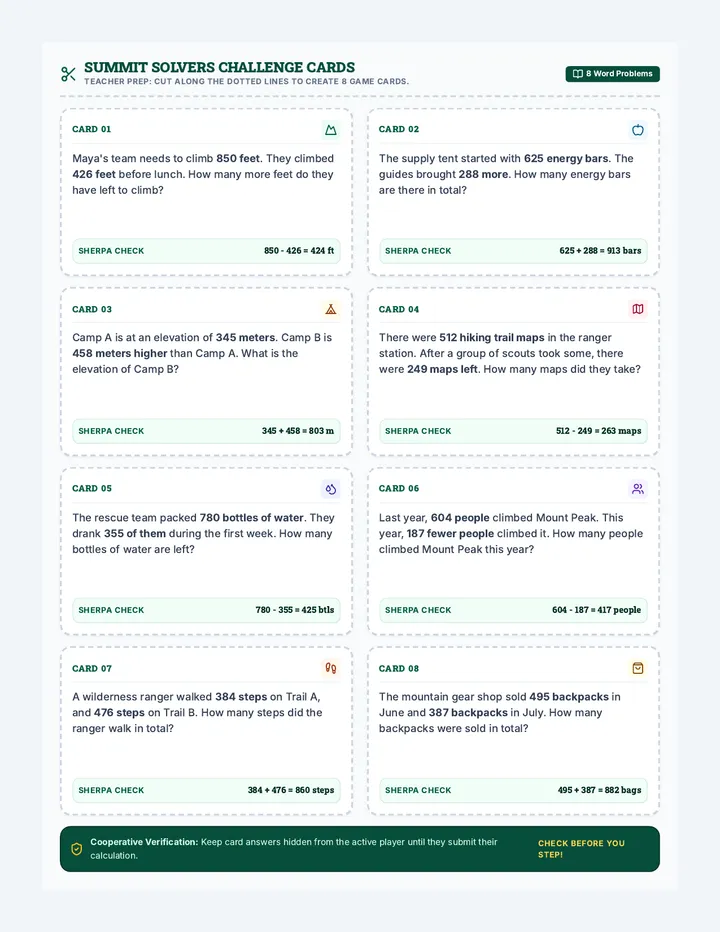
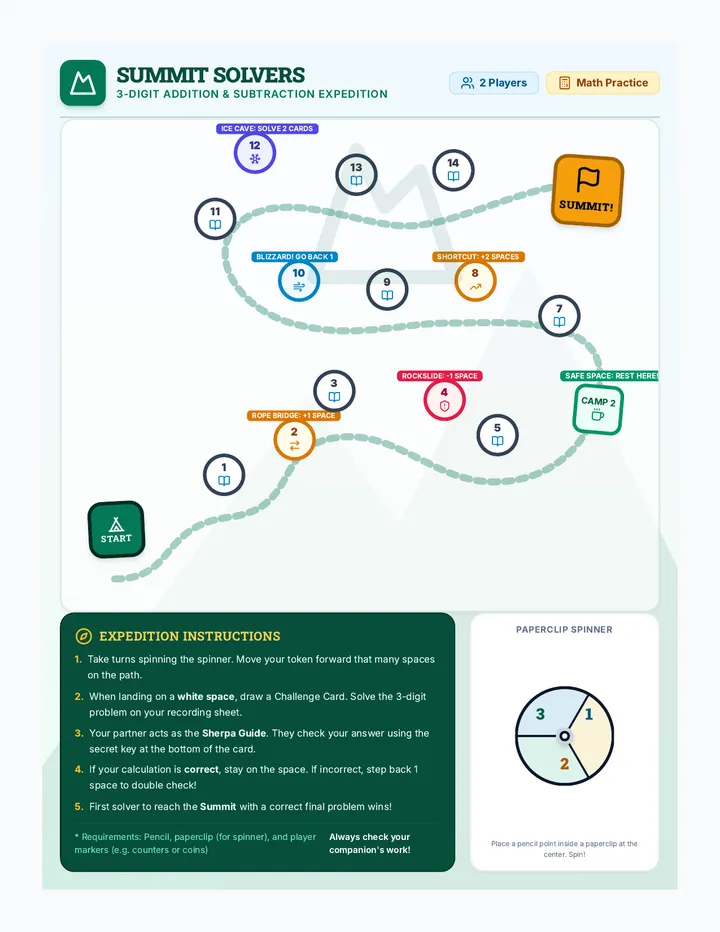
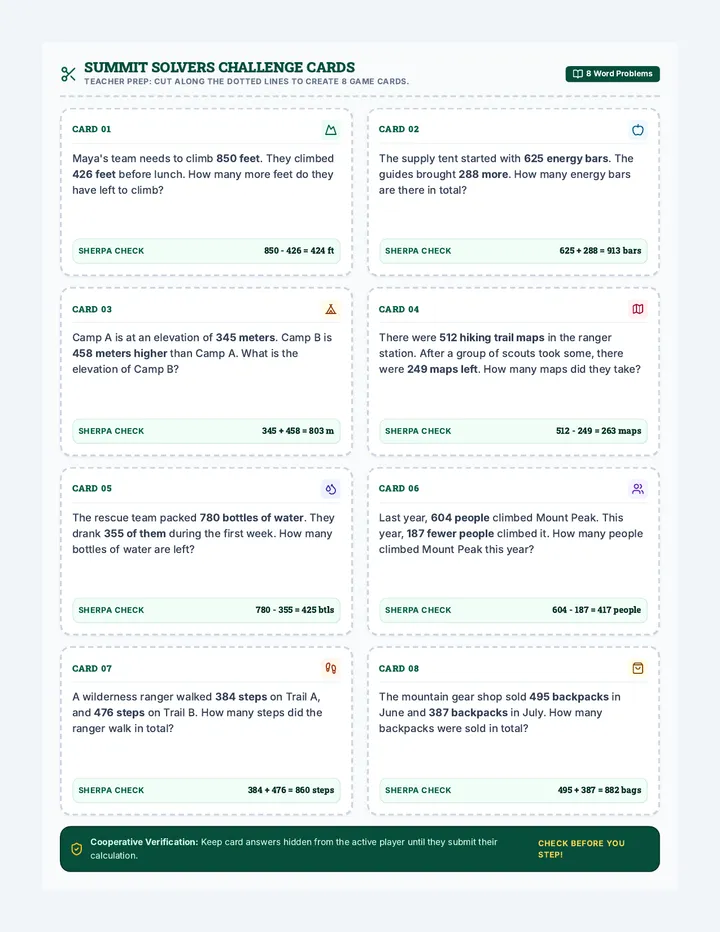
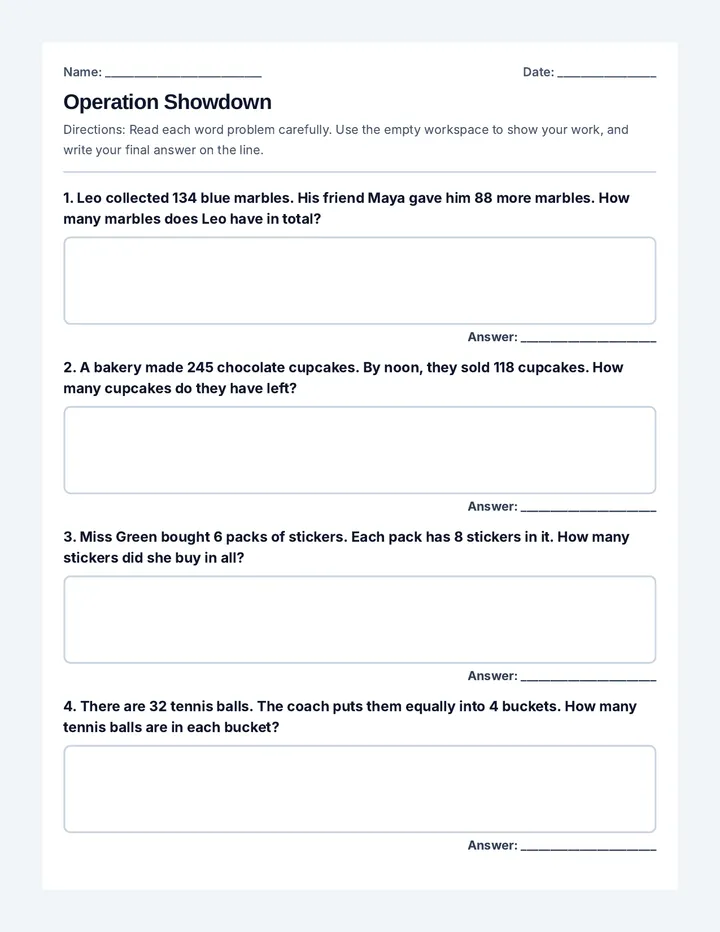
A collaborative third-grade board game focused on solving 3-digit addition and subtraction mixed word problems. Students climb a mountain by selecting correct operations, calculating precisely, and verifying answers with peer-checking challenge cards.
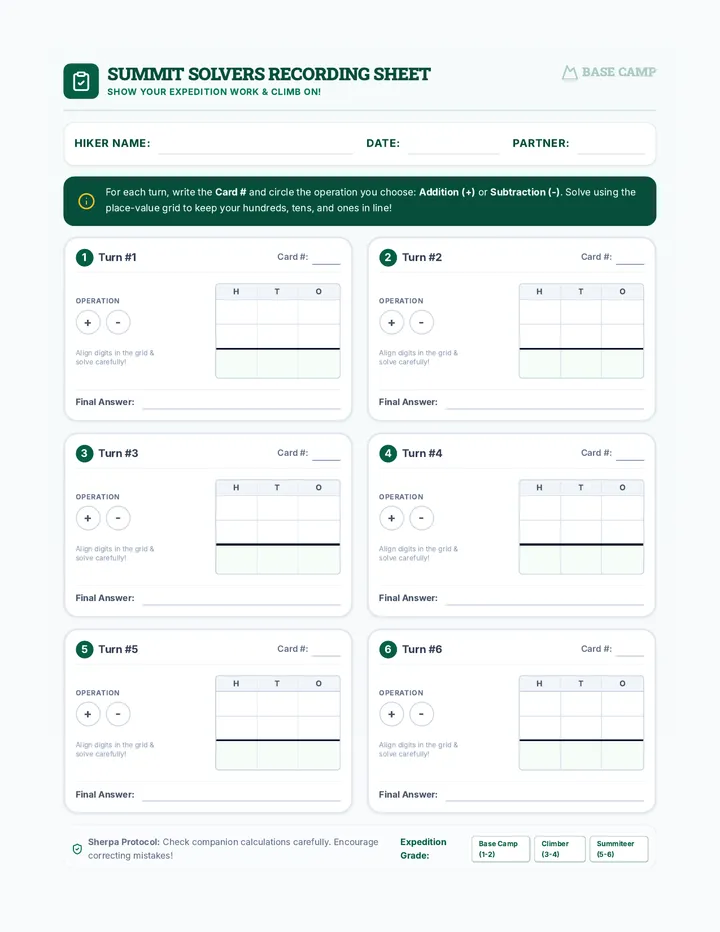
A collaborative third-grade board game focused on solving 3-digit addition and subtraction mixed word problems. Students climb a mountain by selecting correct operation, calculating precisely, and verifying answers with peer-checking challenge cards.
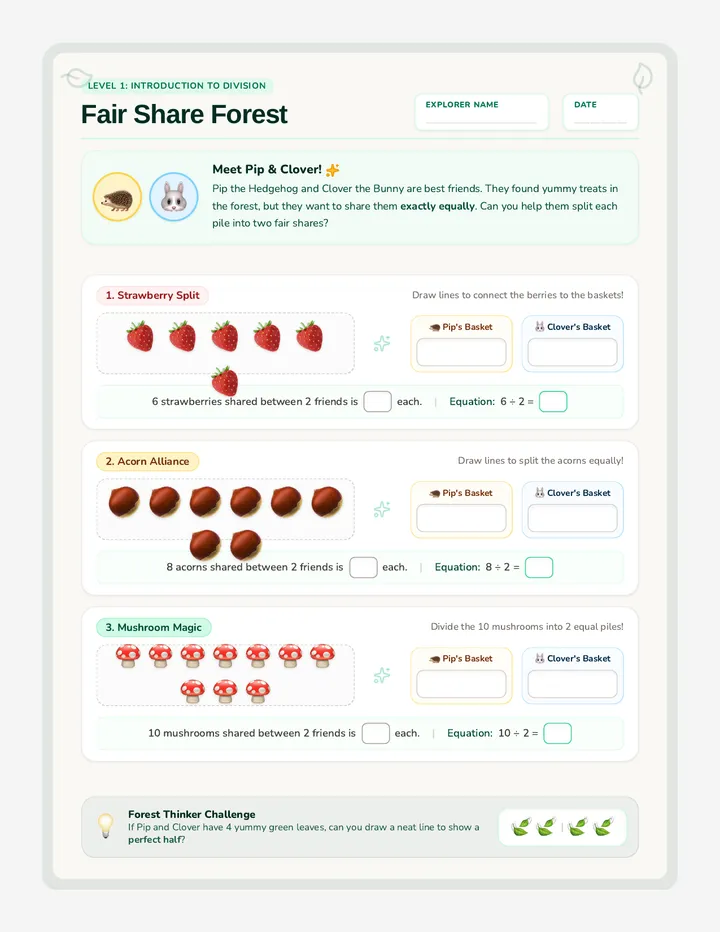
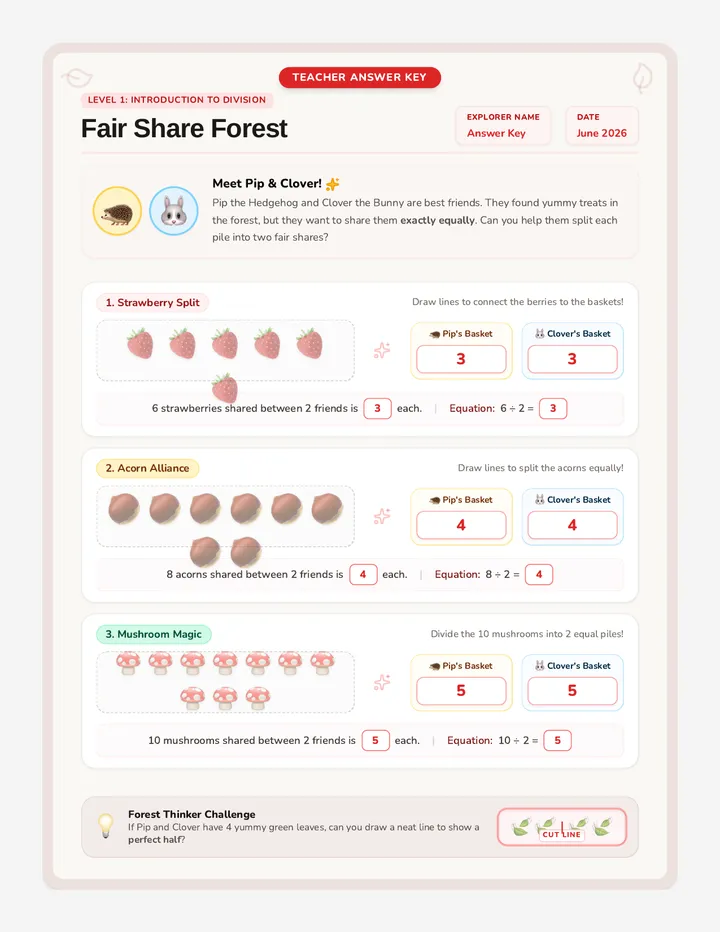
An introductory lesson on division as equal sharing. Students help two friendly woodland creatures share forest treasures equally between them.
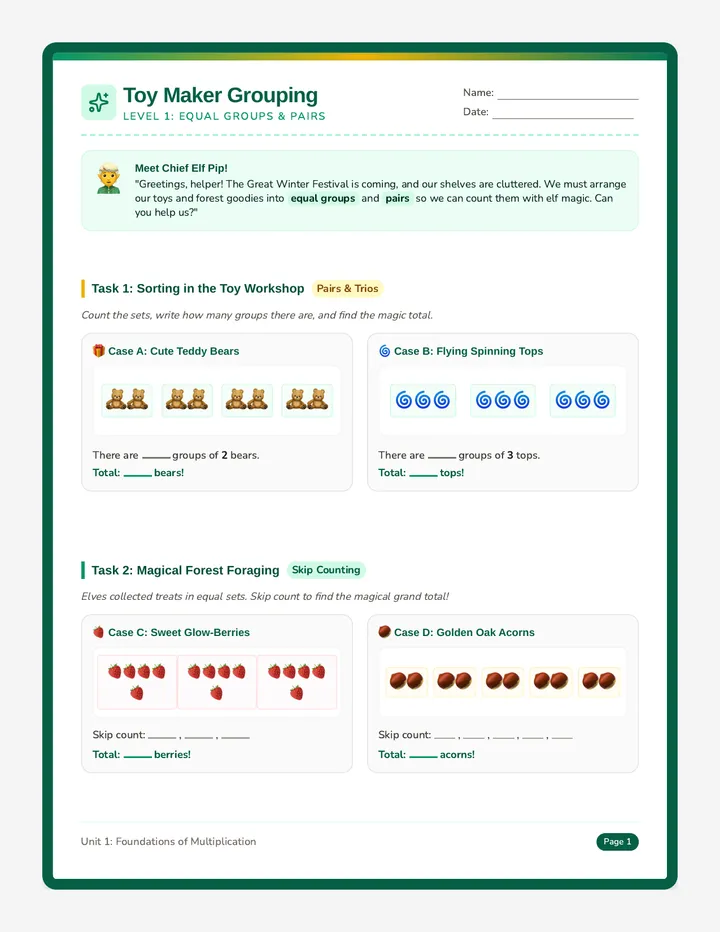
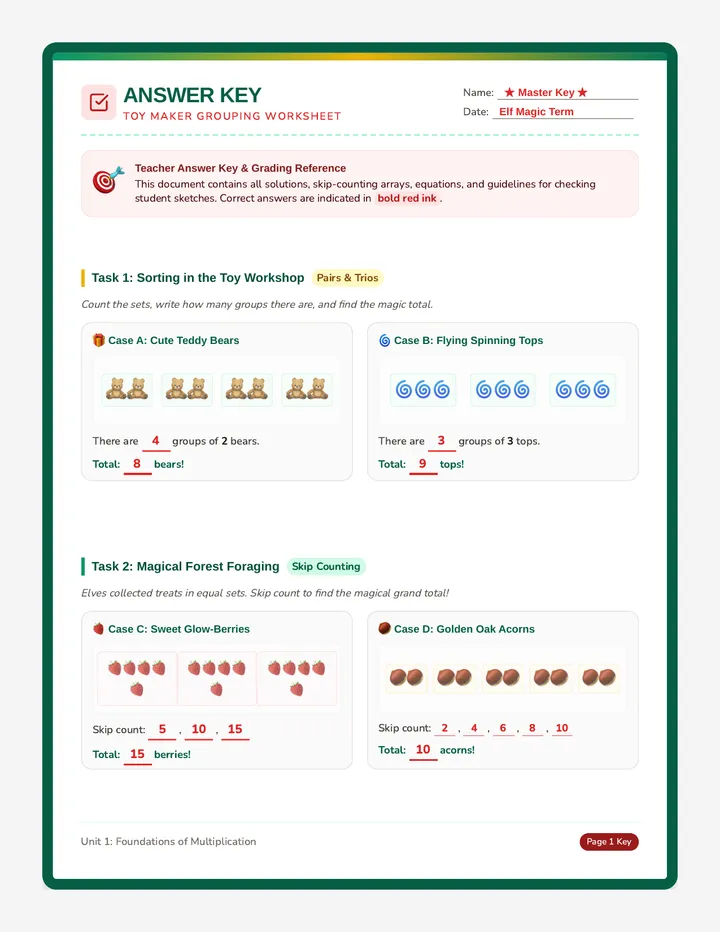
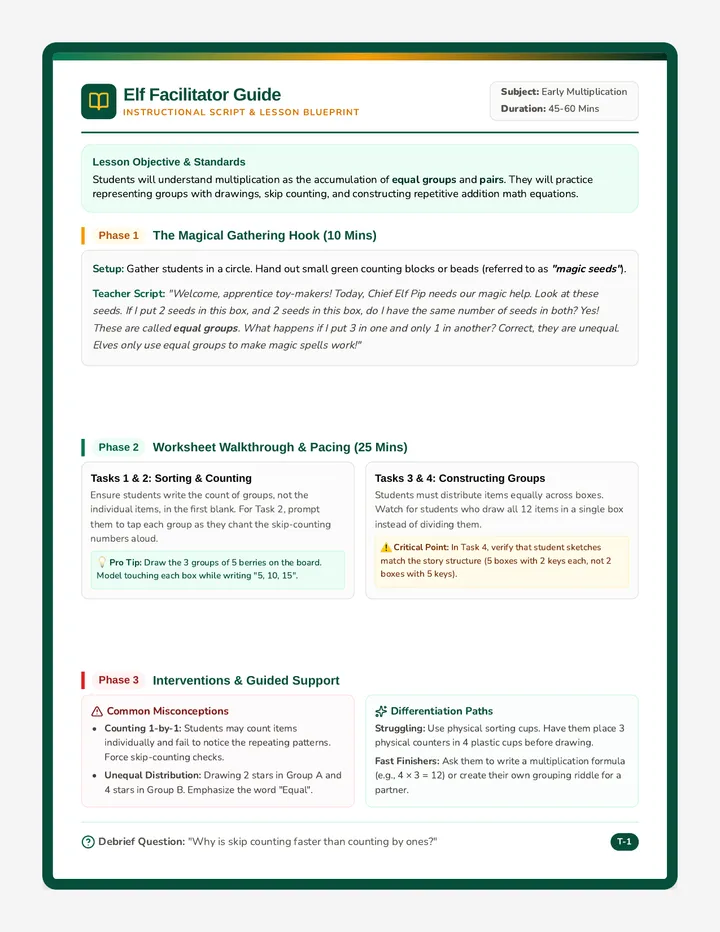
An introductory lesson on multiplication using equal groups and pairs, themed around magical elves making toys, foraging in the forest, and packing items. Students transition from concrete counting to skip counting and basic multiplication concepts.
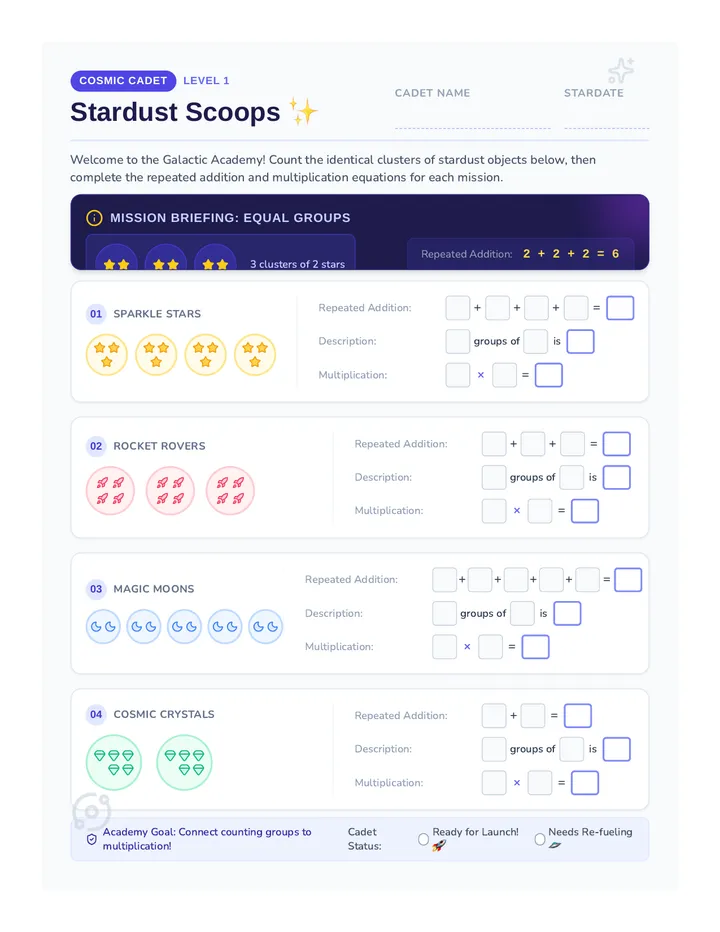
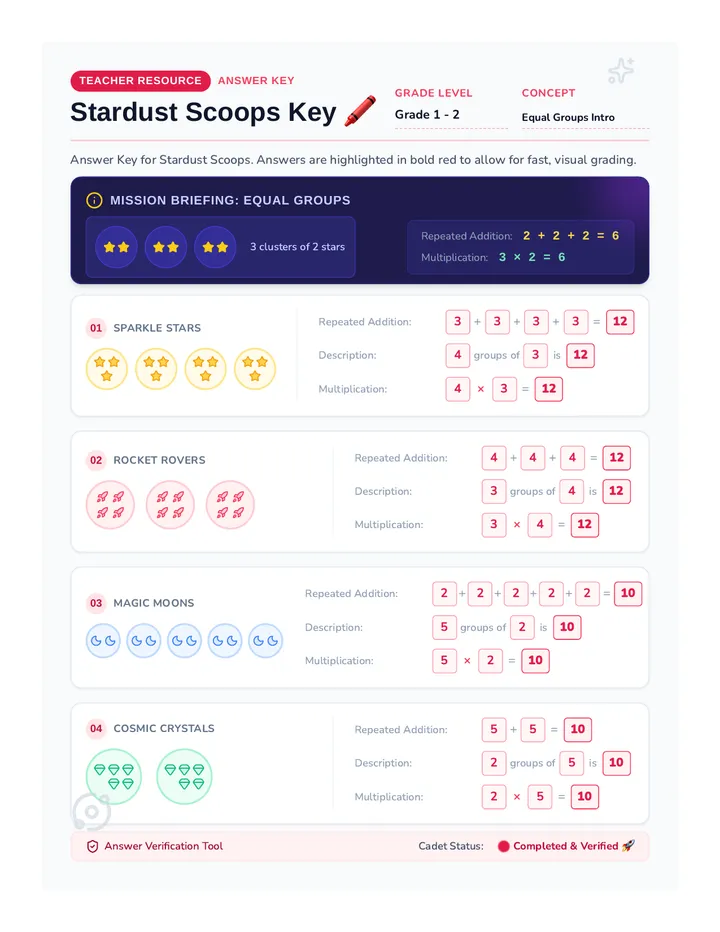
An introductory lesson to multiplication using equal groups and visual representations. Students learn to connect repeated addition to multiplication using starry-themed groups.
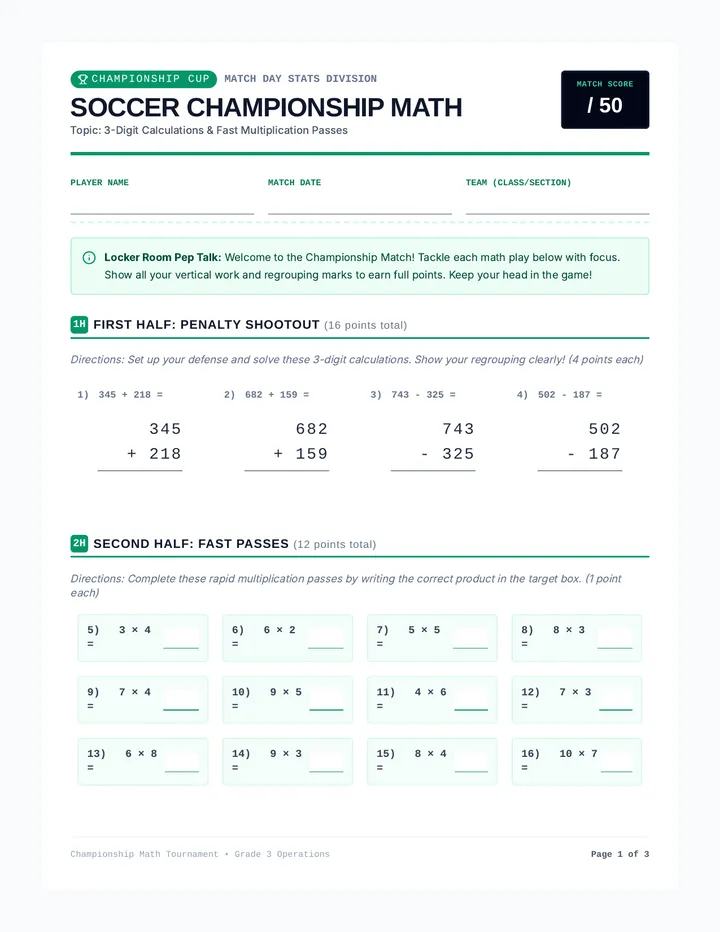
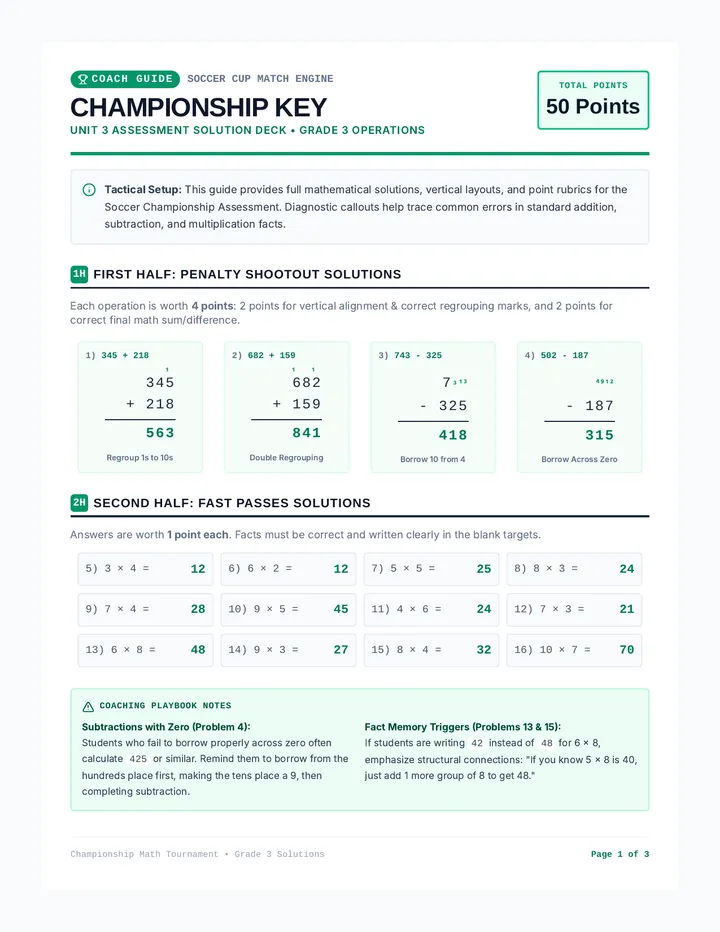
A summative assessment lesson designed for 3rd-grade students to demonstrate mastery of 3-digit operations and basic multiplication, themed around a thrilling soccer championship. Includes a student-facing test and a comprehensive teacher guide with solutions and grading rubrics.
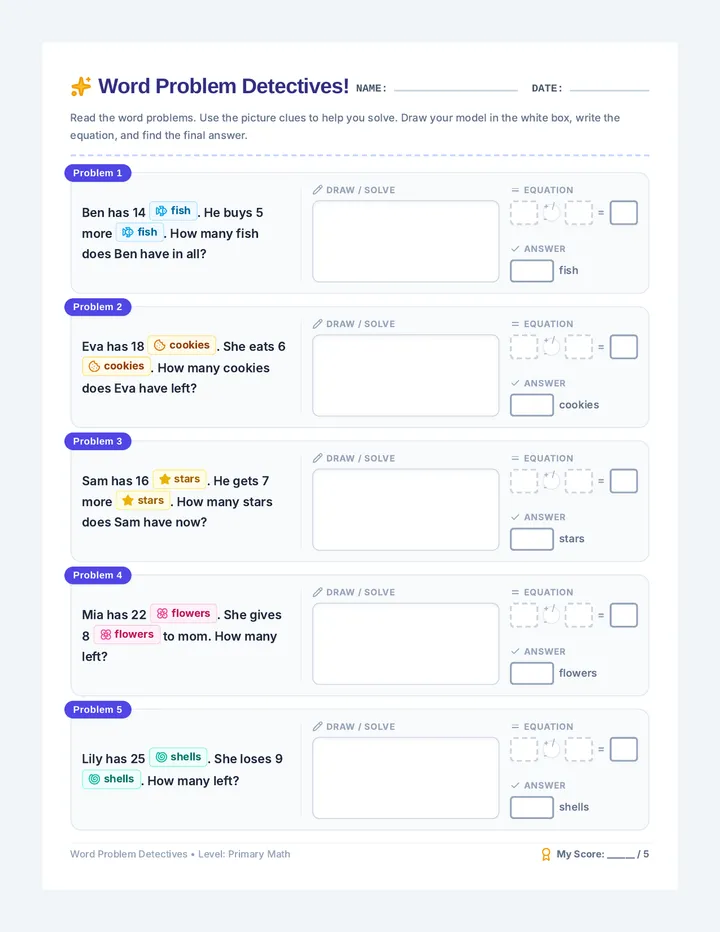
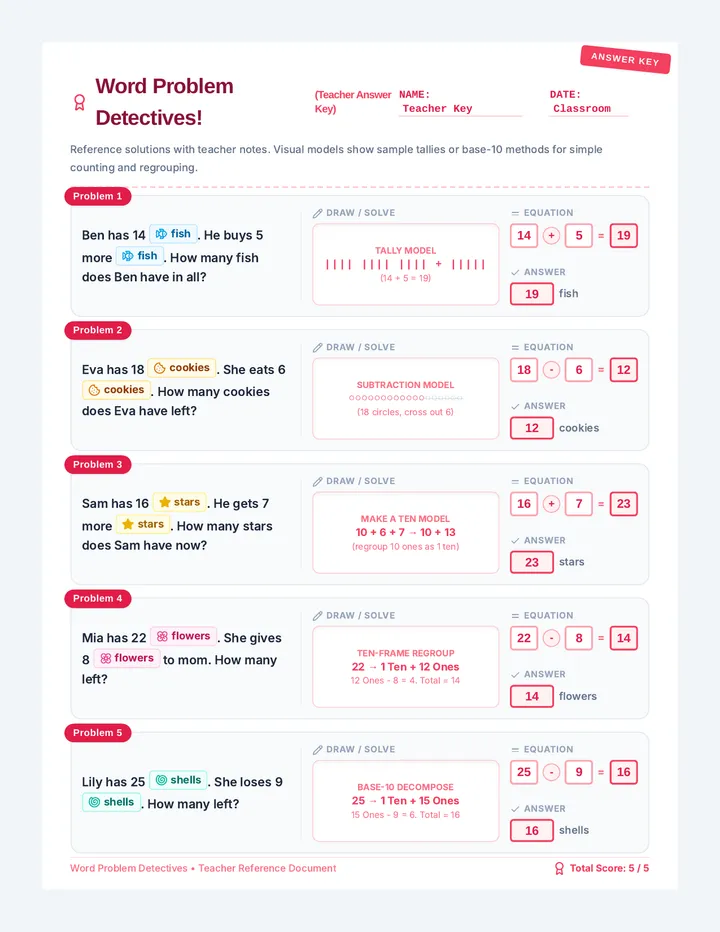
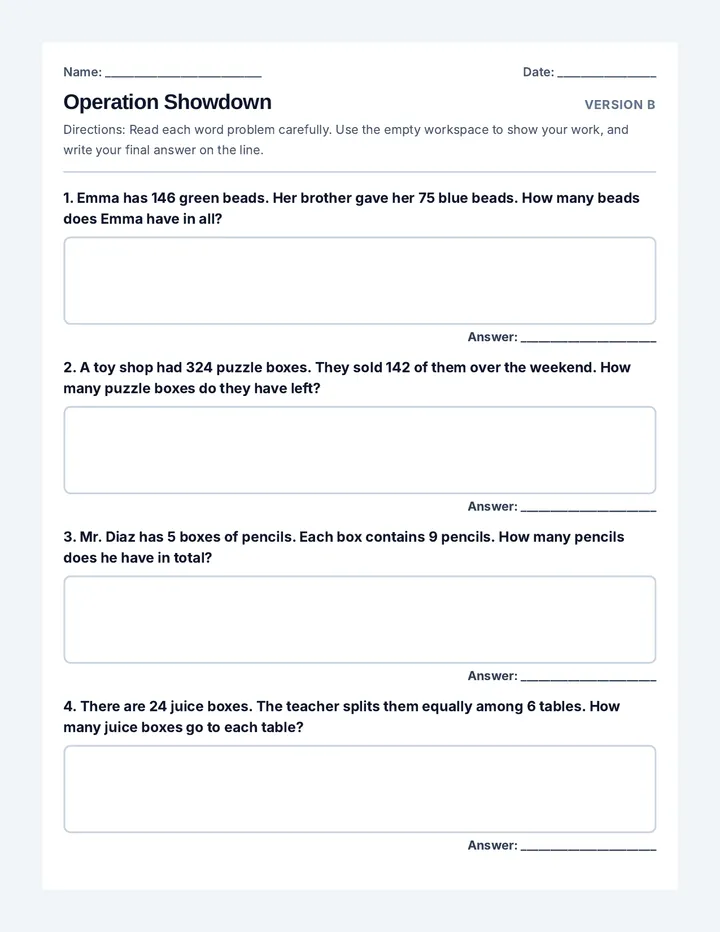
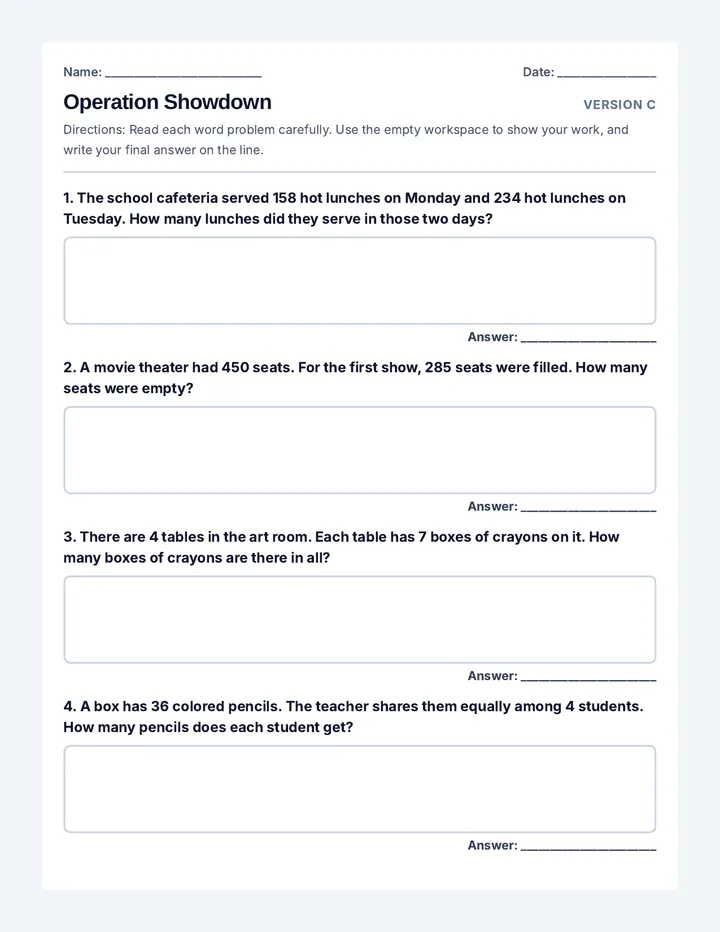
A lesson focused on solving one-step word problems involving addition and subtraction. Students practice recognizing active language cues, modeling their thinking, and writing equations.
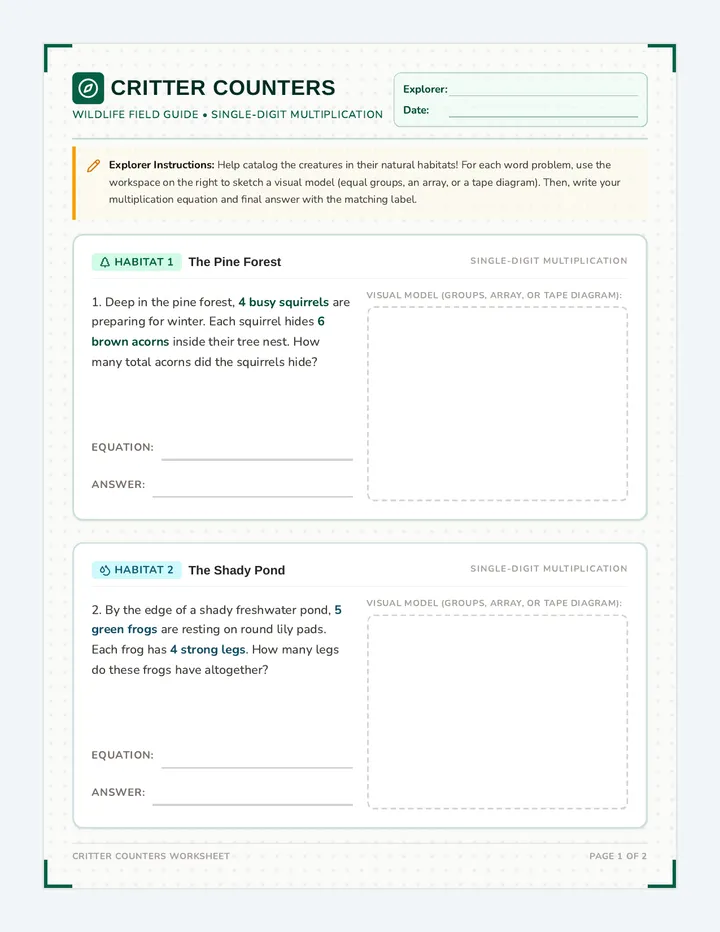
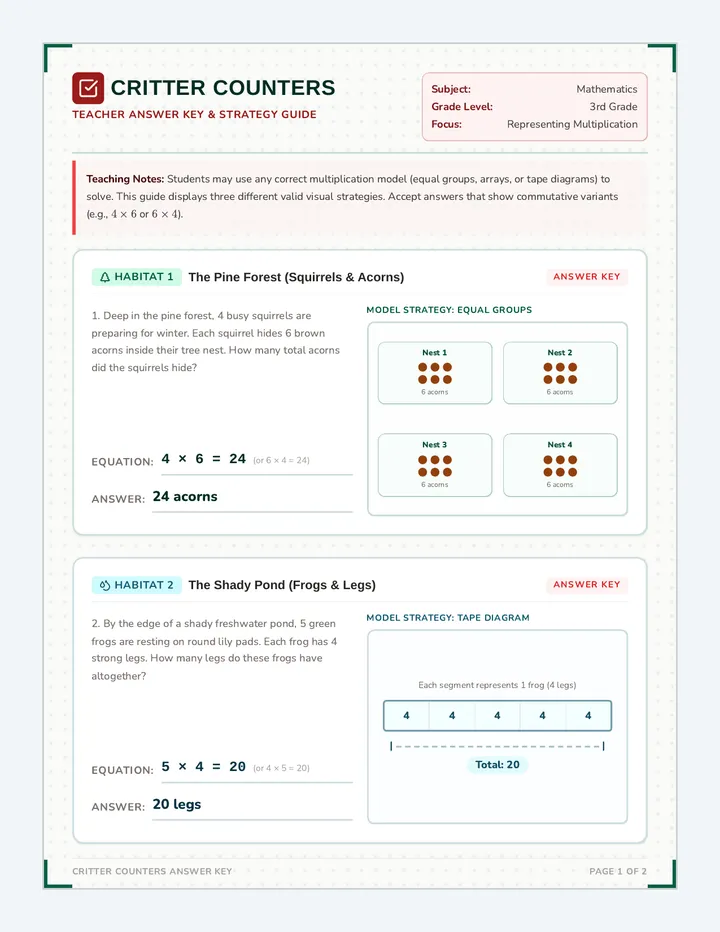
A single-digit multiplication lesson centered around animal counts and habitat scenarios. Students solve word problems using visual representations like arrays, equal groups, and tape diagrams.
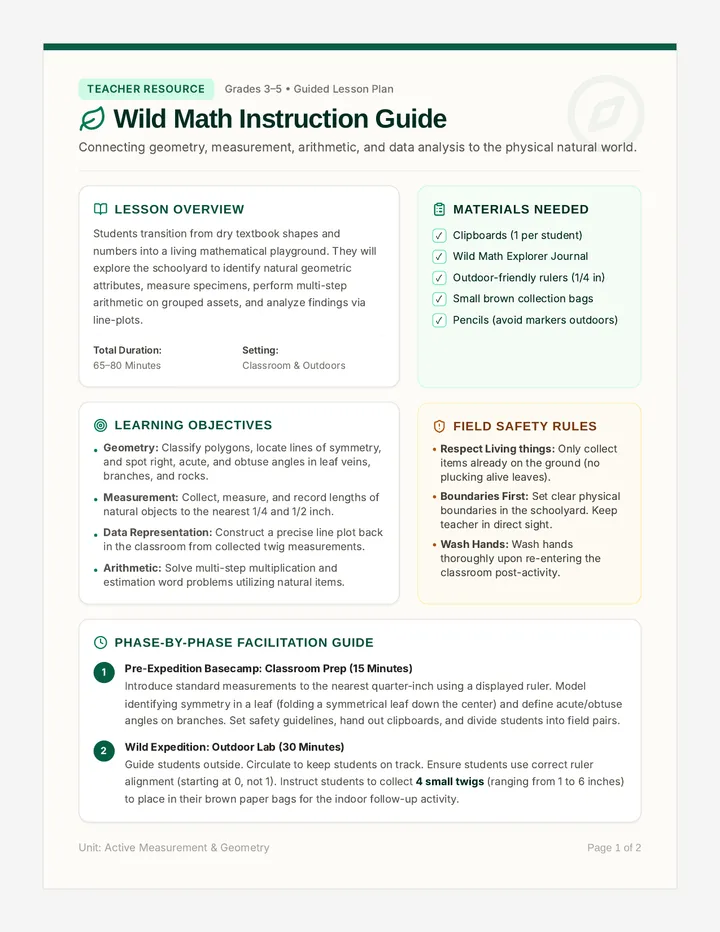
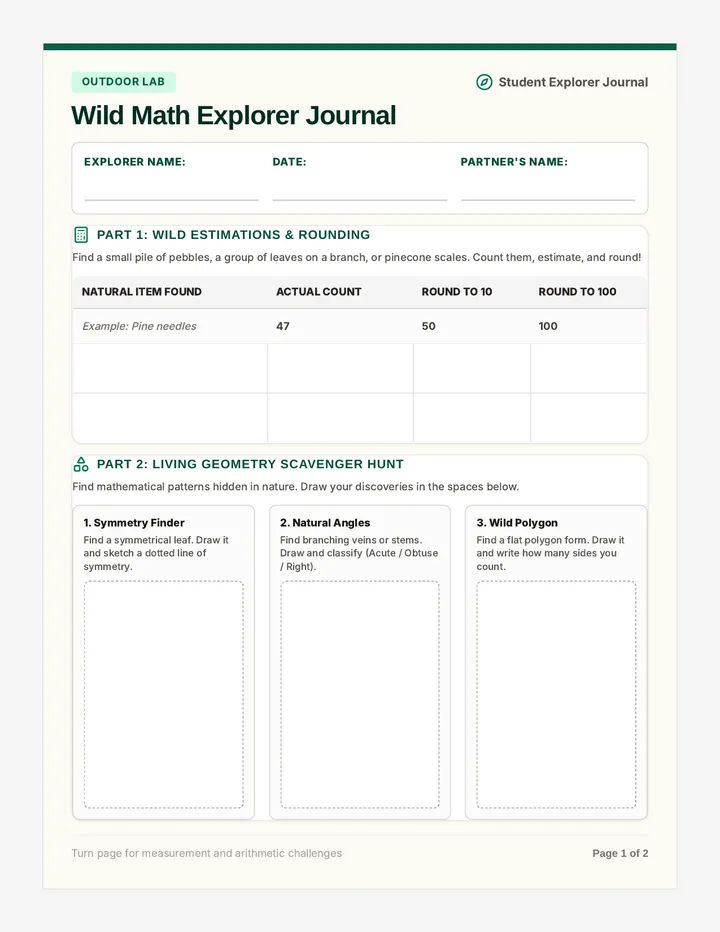
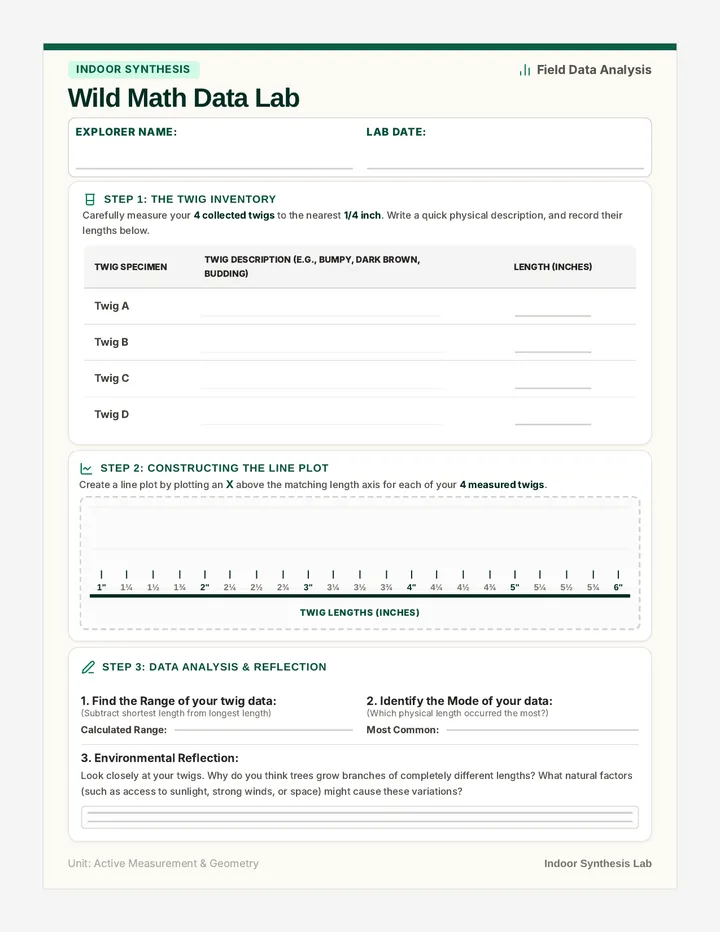
A complete outdoor learning experience where students explore mathematical concepts in the natural world. This lesson bundle connects geometry, measurement, estimation, and word problems directly to physical nature finds, followed by an indoor data-analysis session.
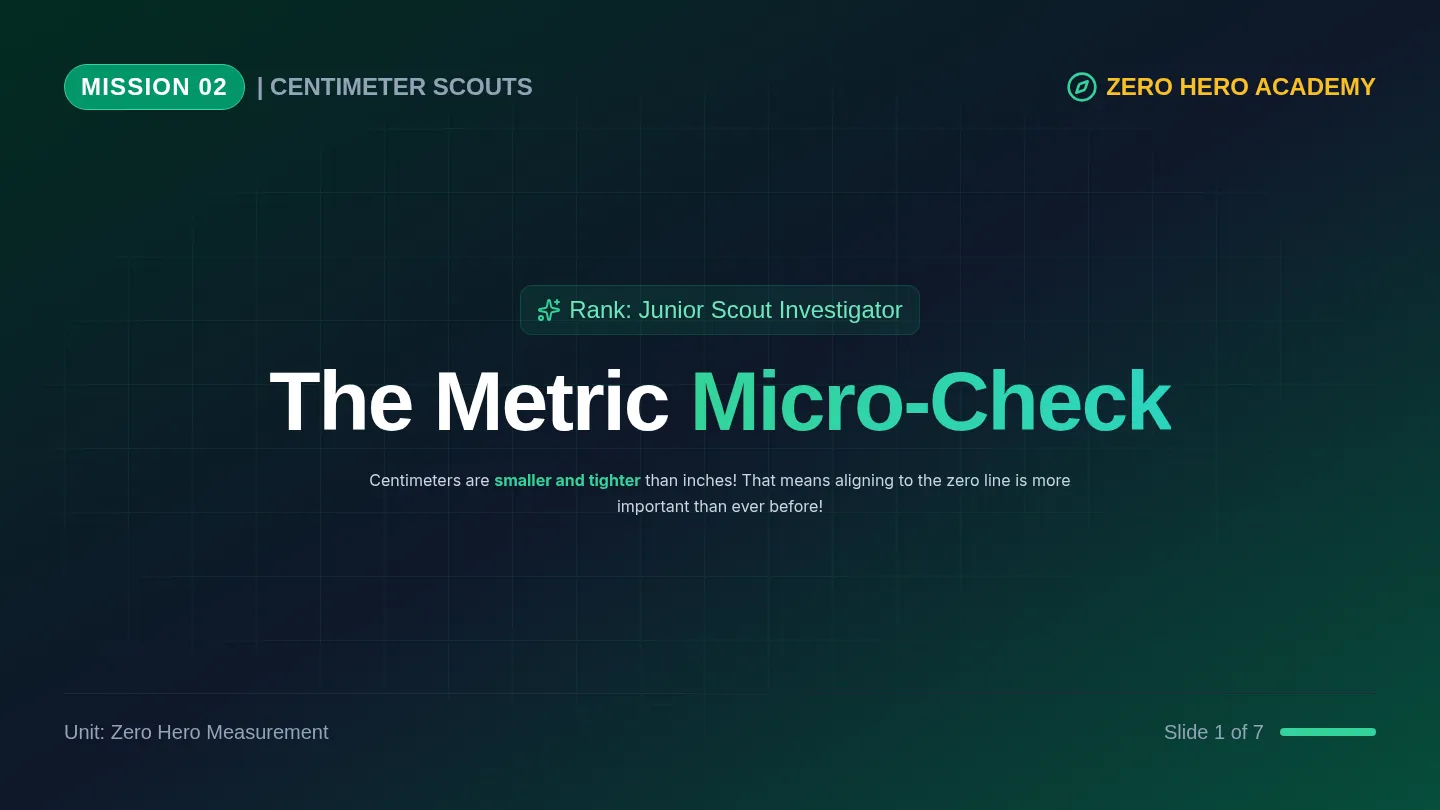
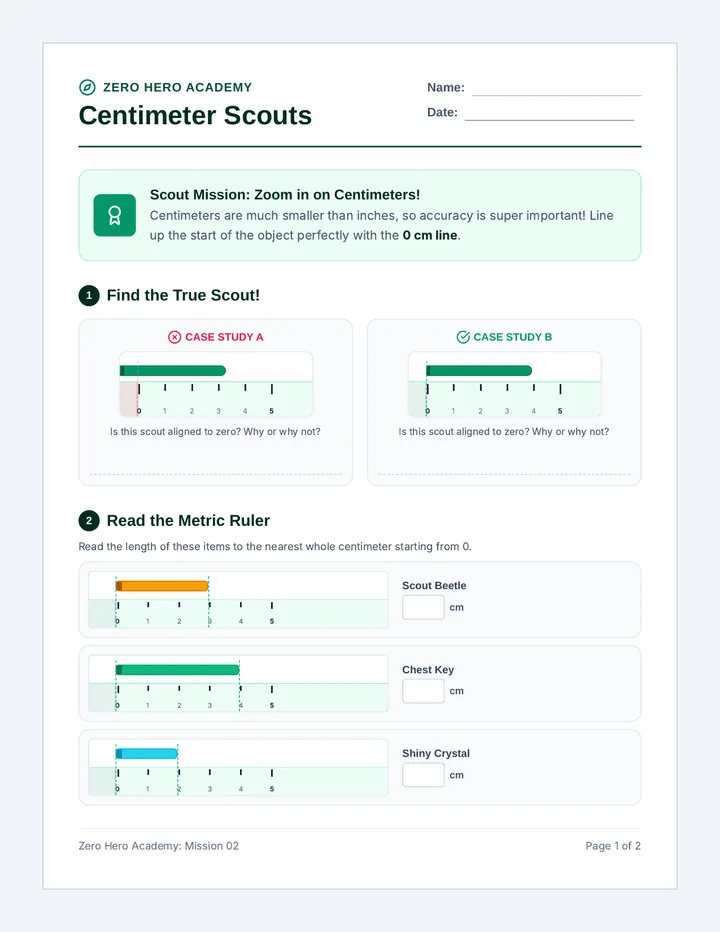
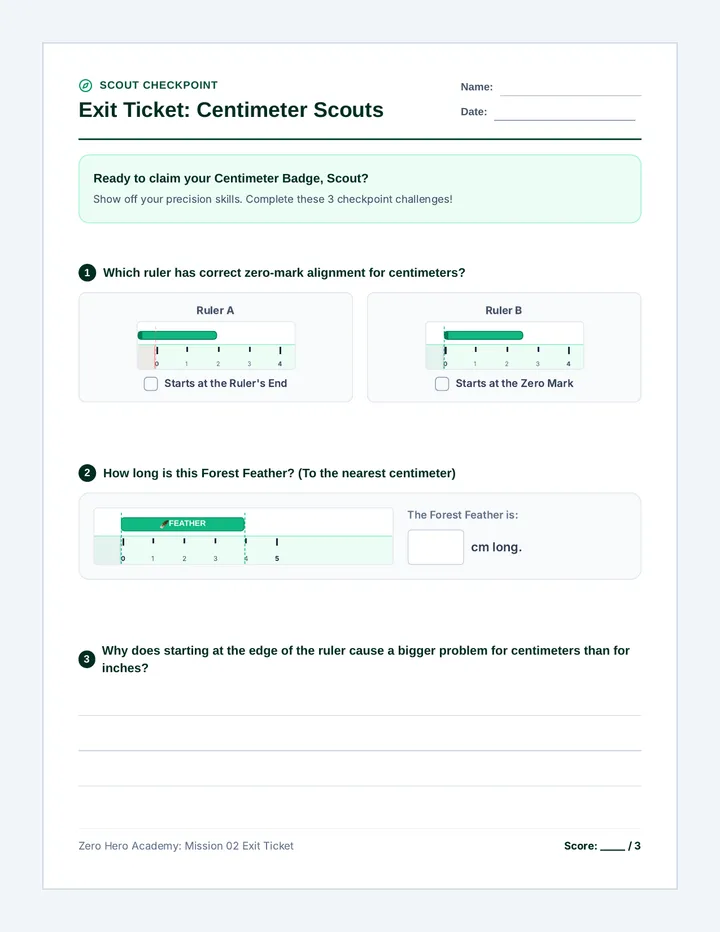
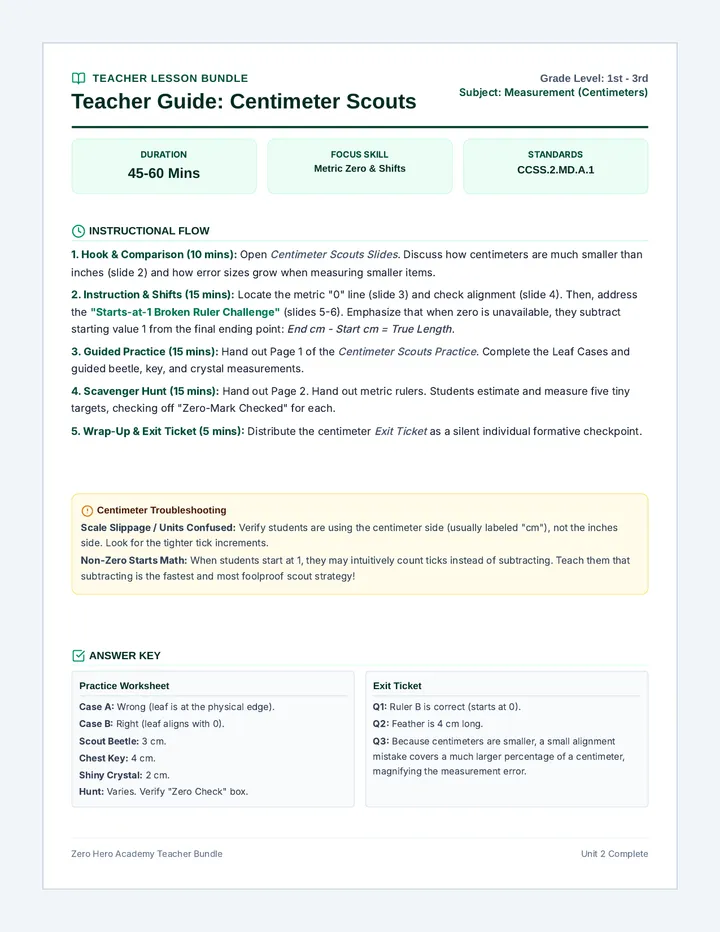
Students apply their measurement skills to the metric system, learning about centimeters and practicing precise measurement starting at the zero mark.
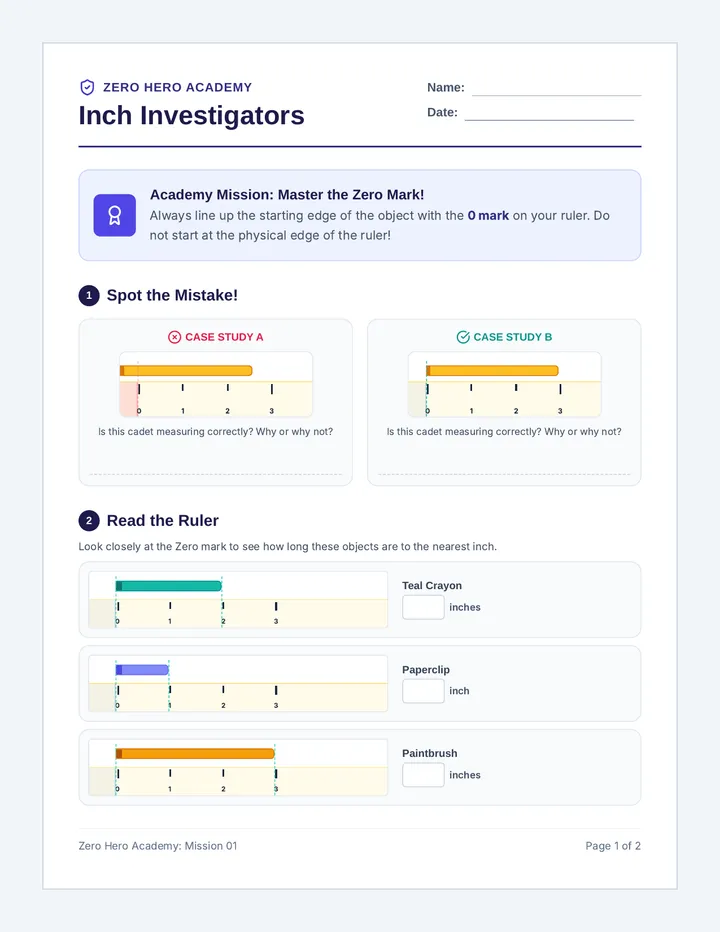
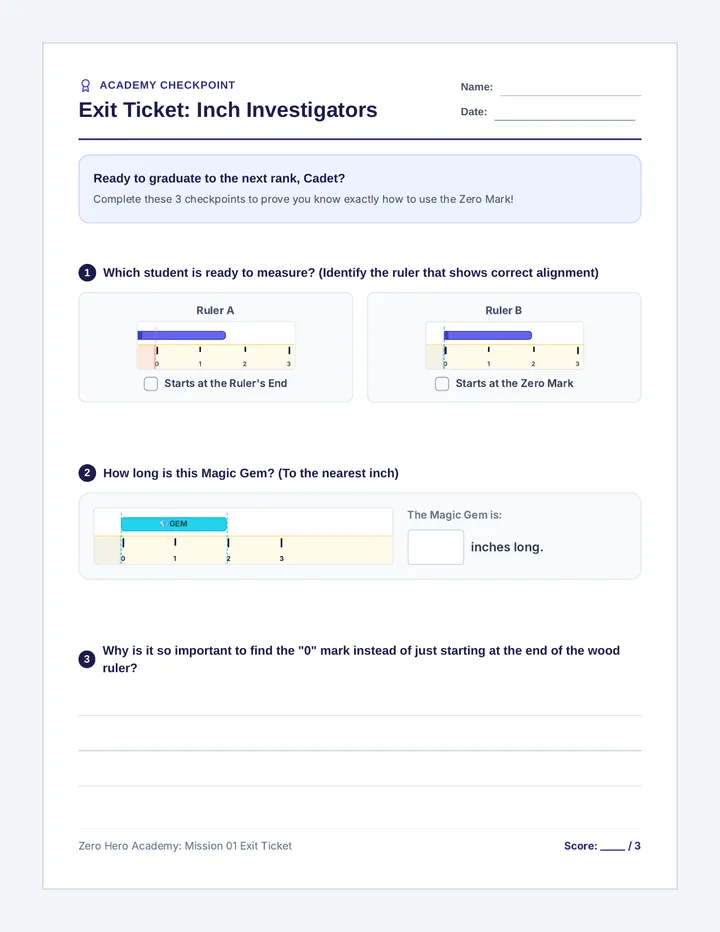
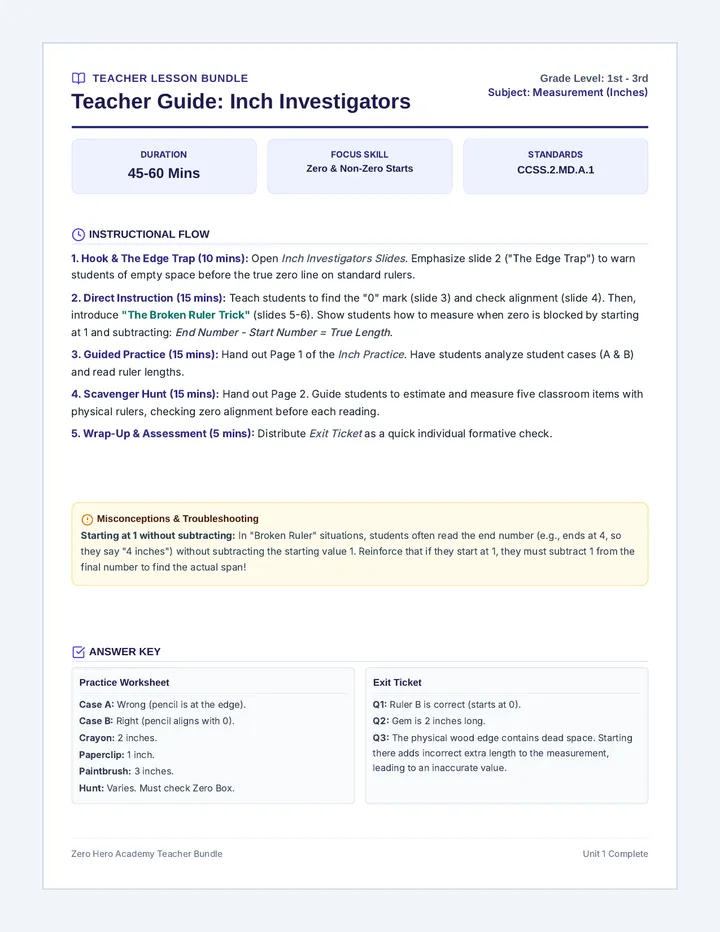
Students learn to measure to the nearest inch using custom visual rulers. The lesson emphasizes locating the true starting zero mark instead of starting at the physical edge of the ruler.
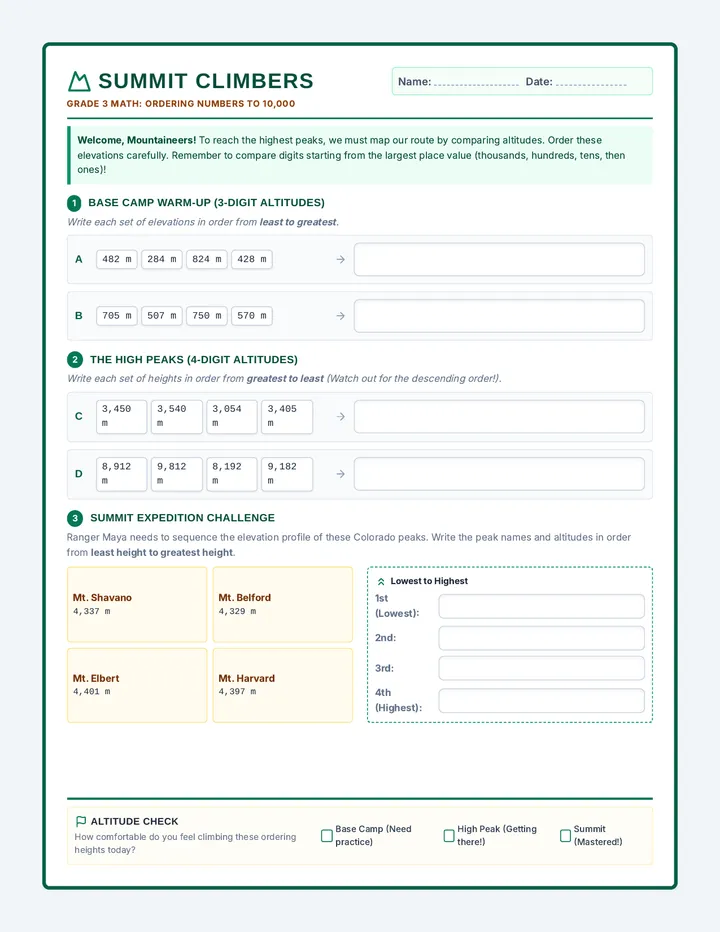
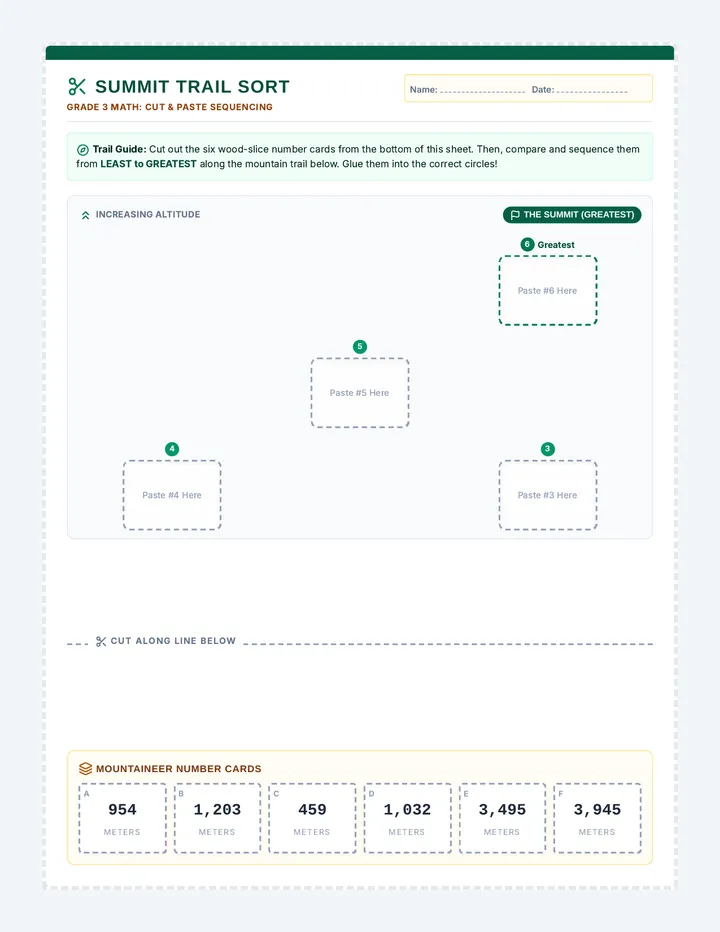
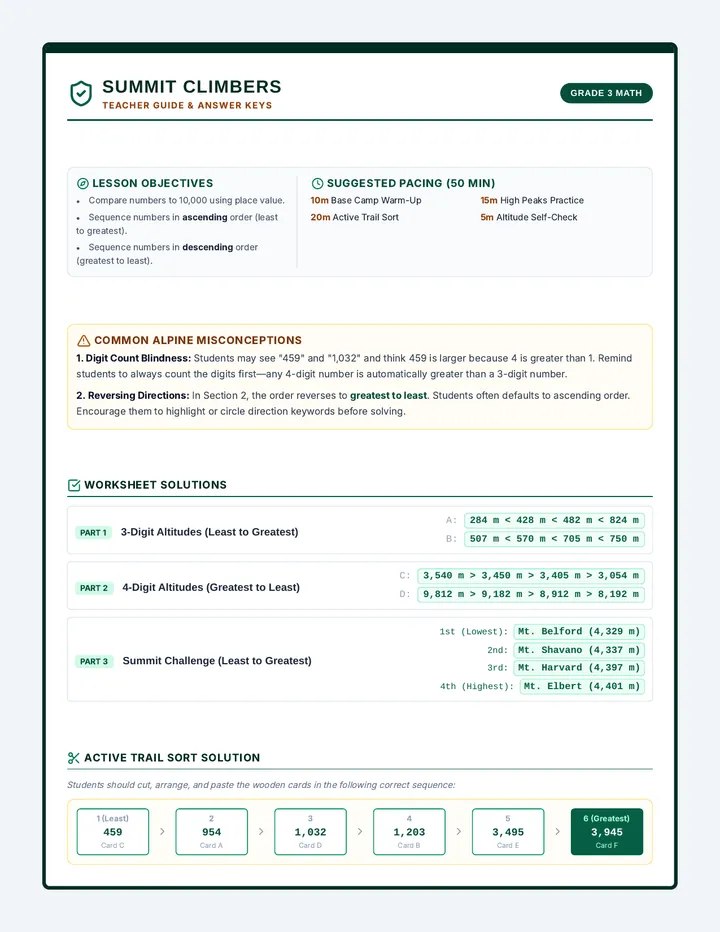
A high-elevation math lesson where Grade 3 students master ordering 3-digit and 4-digit numbers within 10,000. Through standard ordering lists, visual height challenges, and an interactive cut-and-paste sorting activity, students build strong place-value skills.
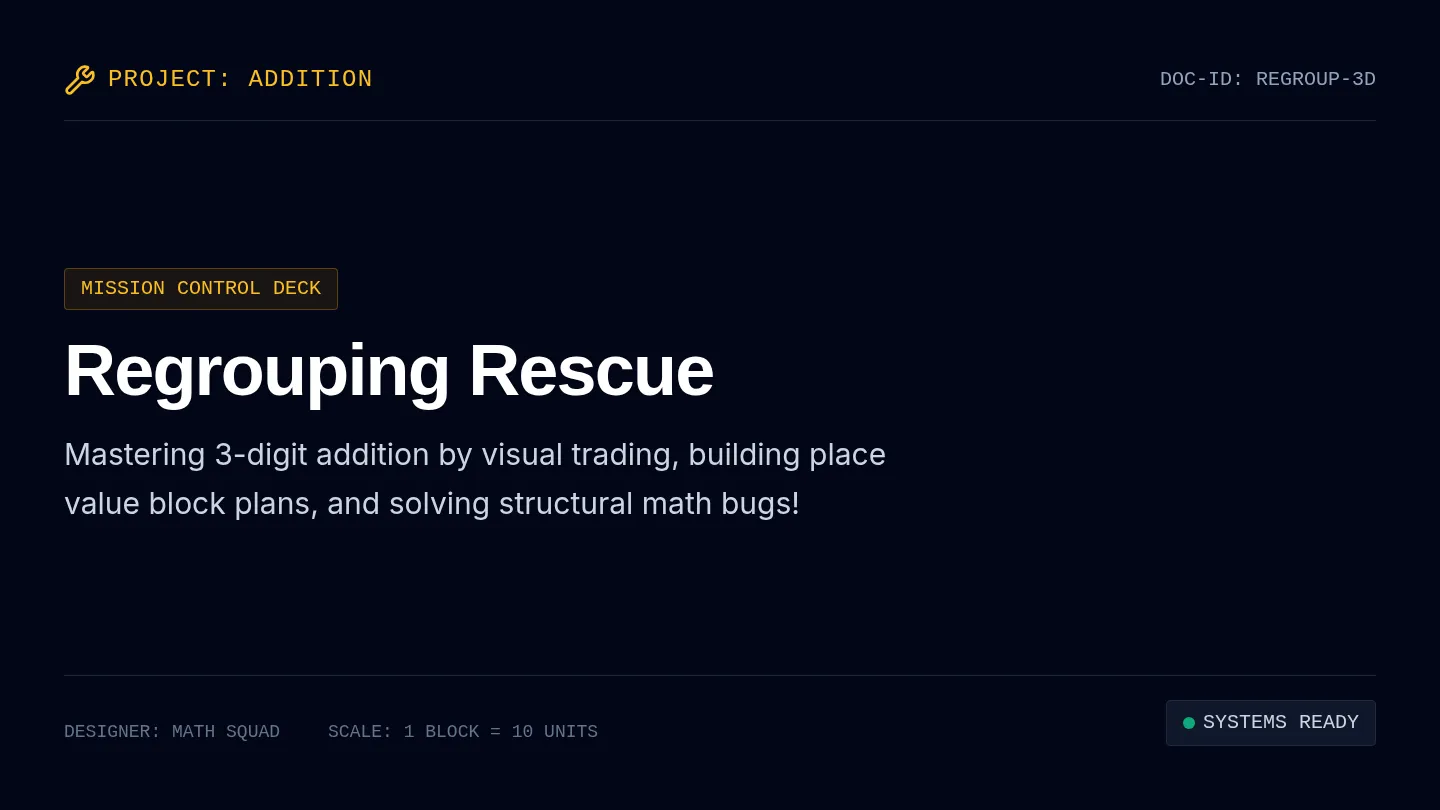
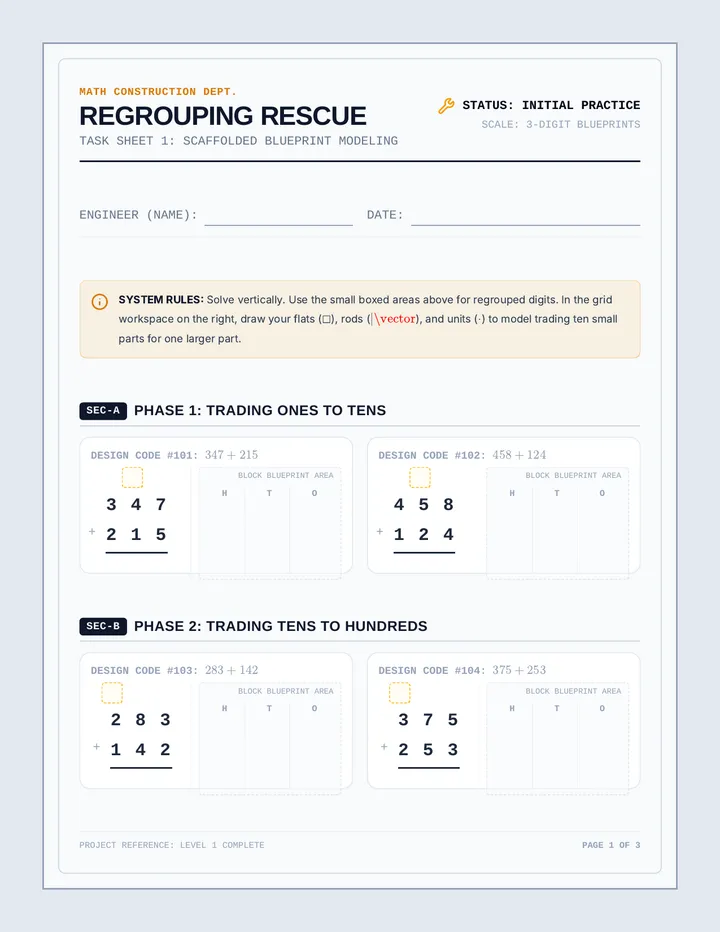
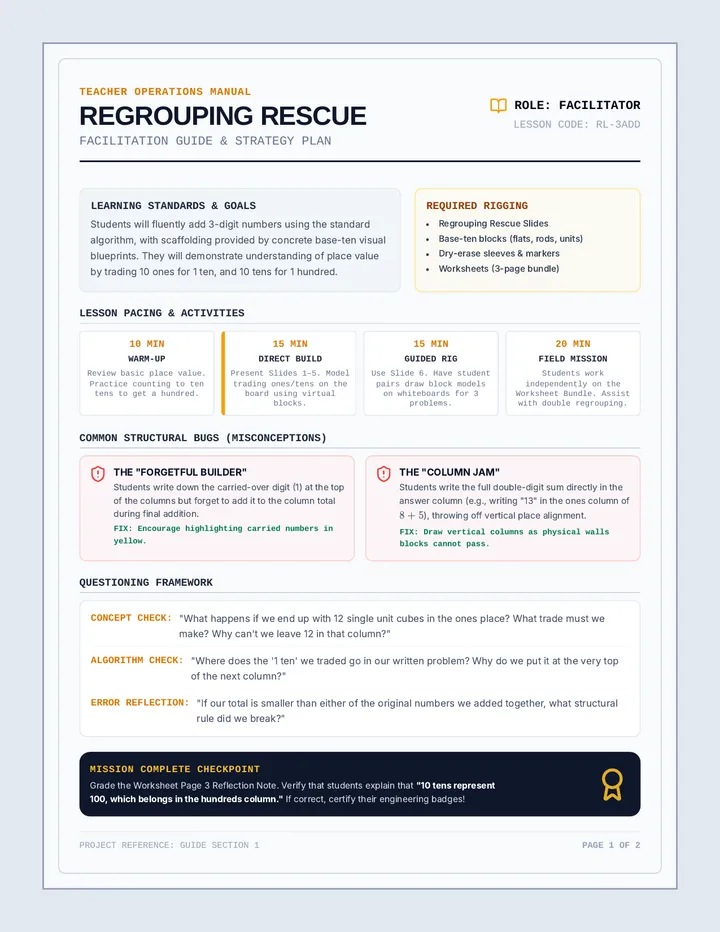
A comprehensive math lesson focused on 3-digit addition with regrouping, utilizing visual base-ten block models and place value charts to guide students from conceptual understanding to standard algorithm mastery.
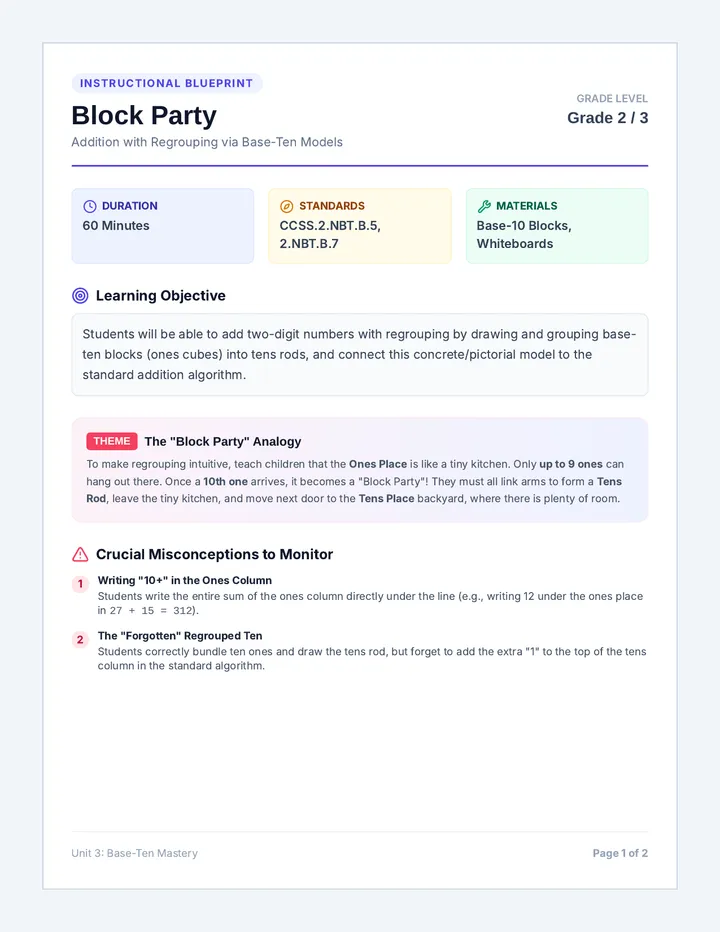
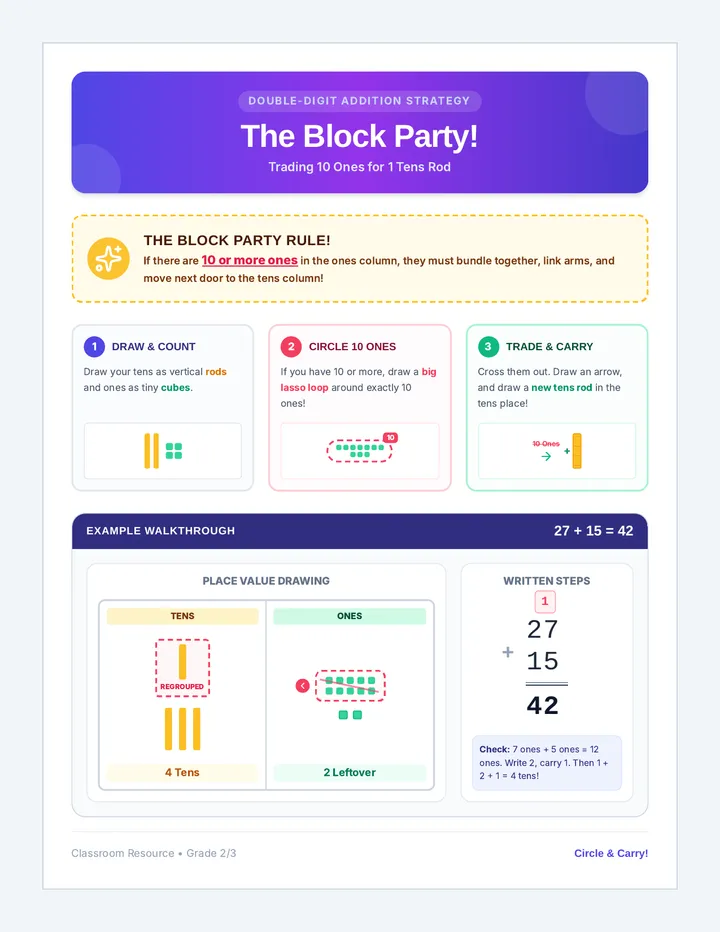
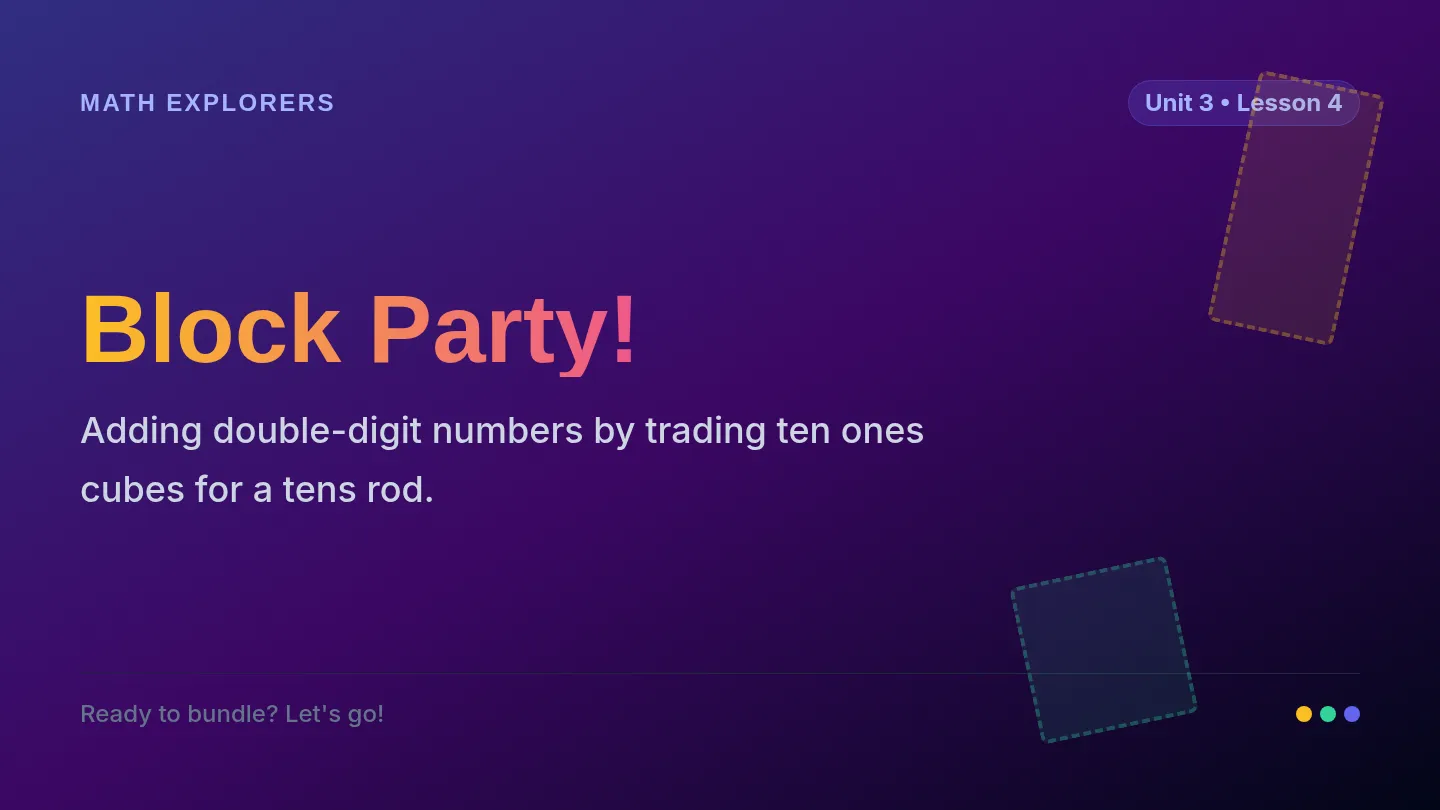
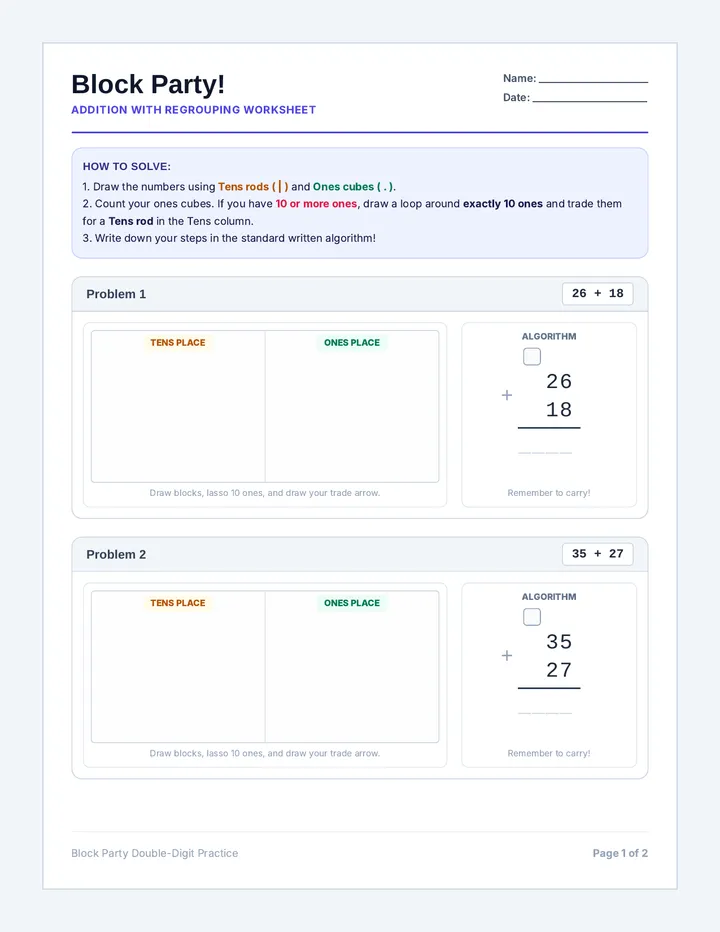
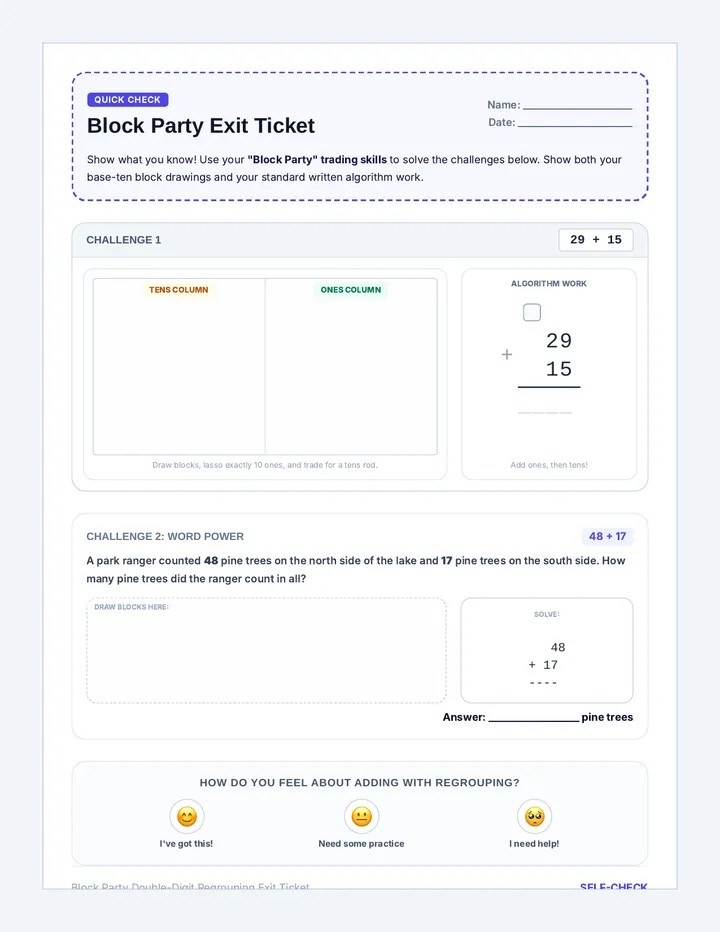
A highly visual, hands-on lesson that introduces double-digit addition with regrouping using base-ten blocks. Students learn to draw ones blocks, group ten of them together to trade for a tens rod, and record the regrouping process in the standard algorithm.
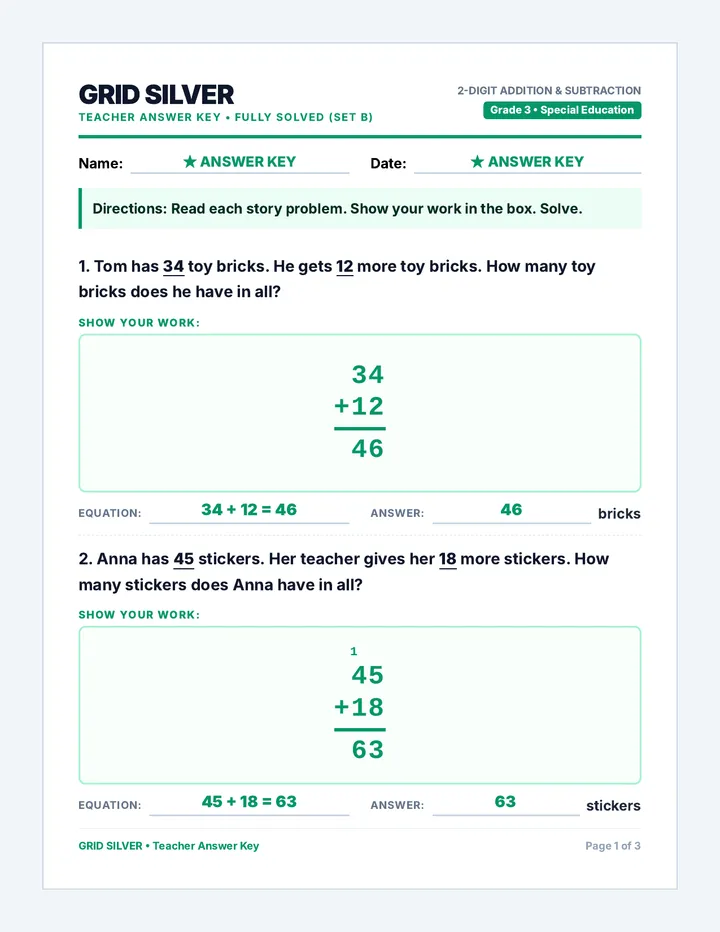
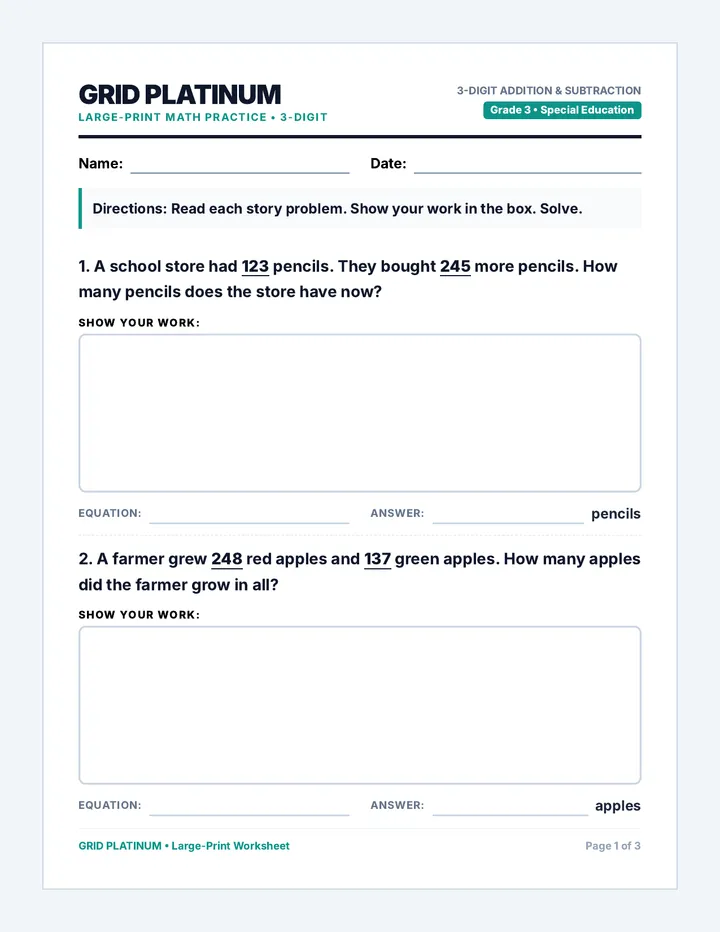
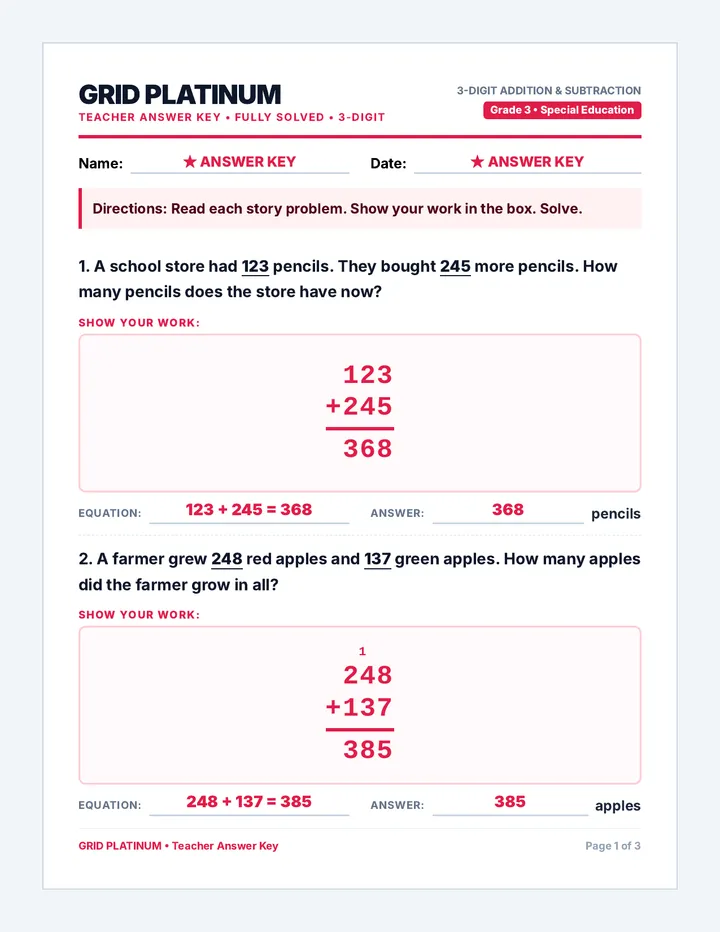
A set of high-structure math worksheets featuring one-step word problems across all four basic operations, designed specifically with distraction-free layouts and large workspaces for third-grade special education students.
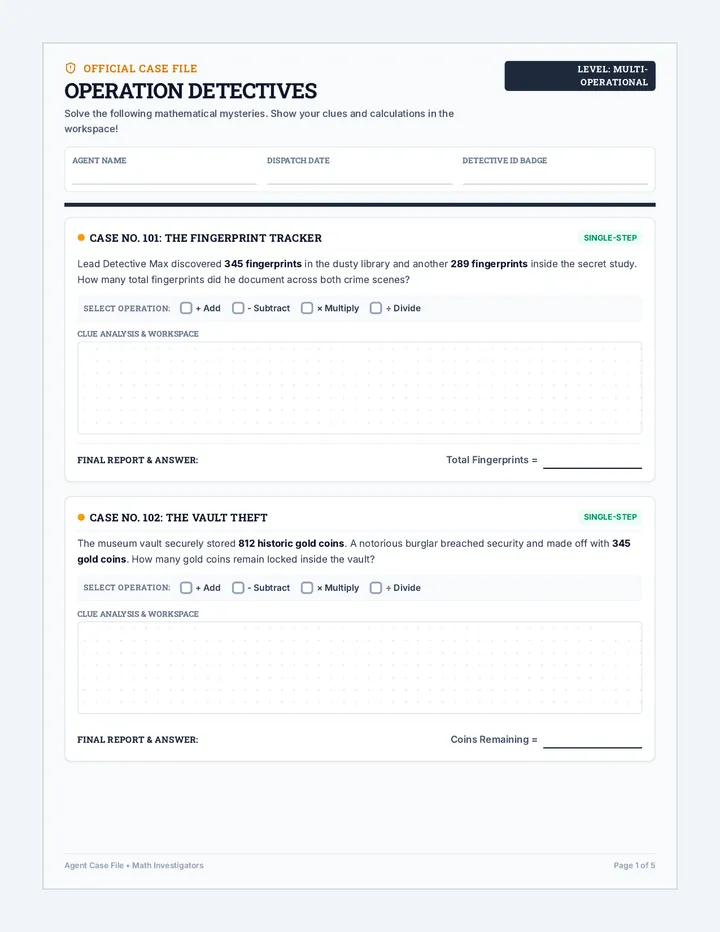
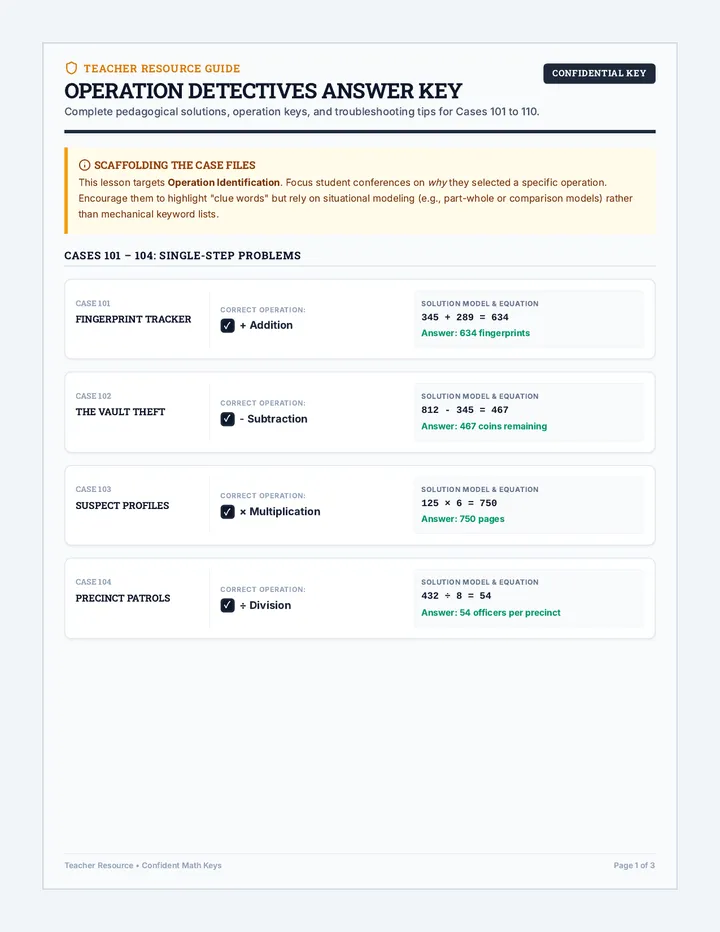
A rigorous math worksheet pack themed around solving detective cases. Students solve 10 single- and multi-step word problems involving 2-3 digit numbers across all four operations, using visual operation checkboxes and spacious dedicated workspaces.
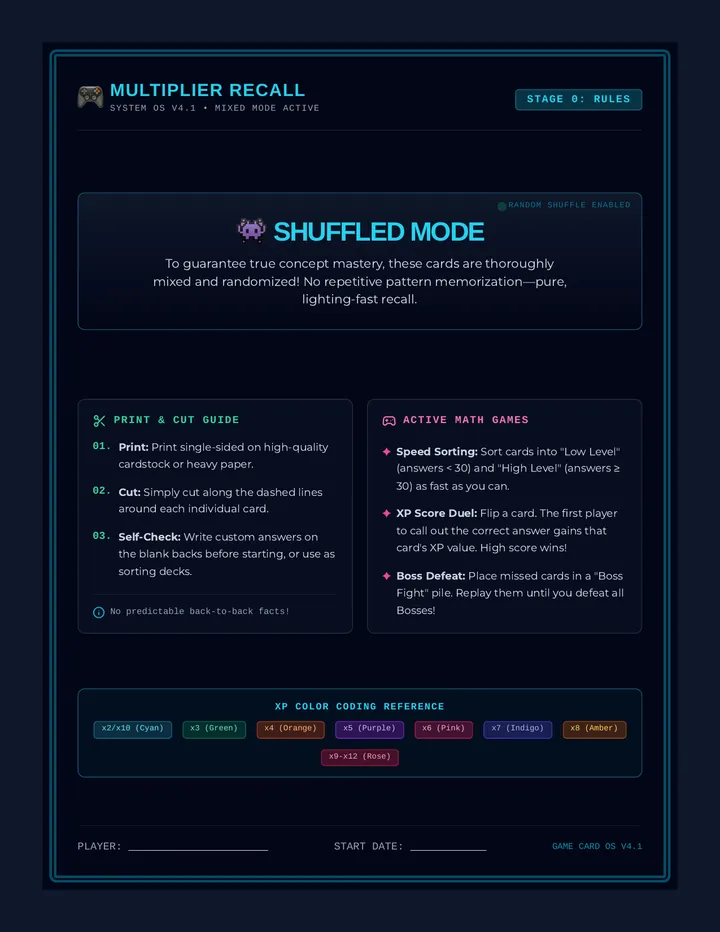
A comprehensive lesson containing high-yield, retro-themed multiplication flashcards for rapid mental recall. Features a fold-and-cut design that guarantees perfect double-sided alignment on any printer.
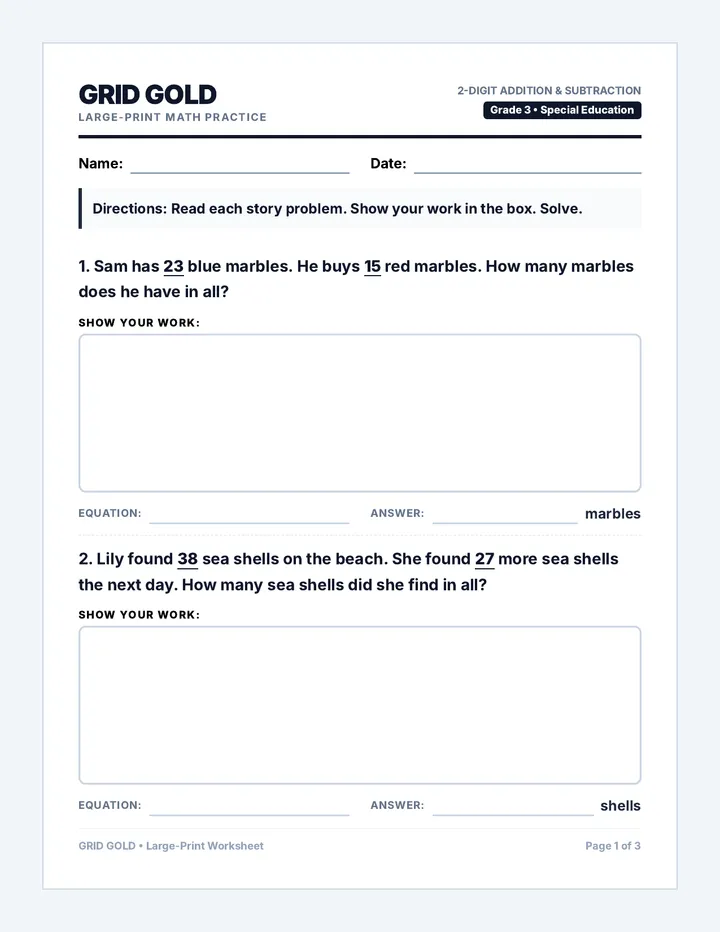
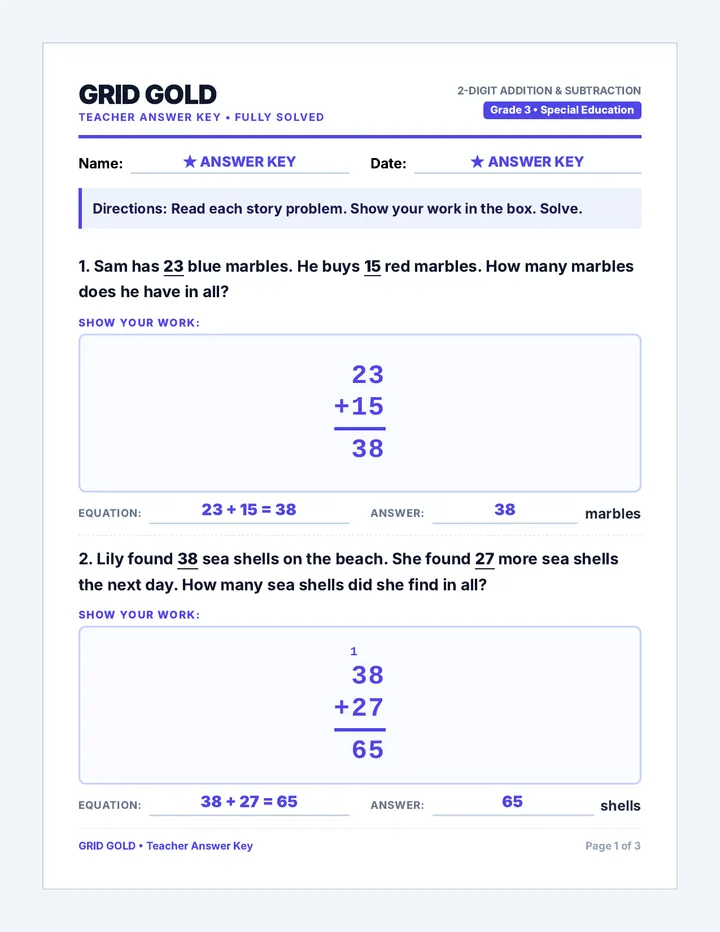
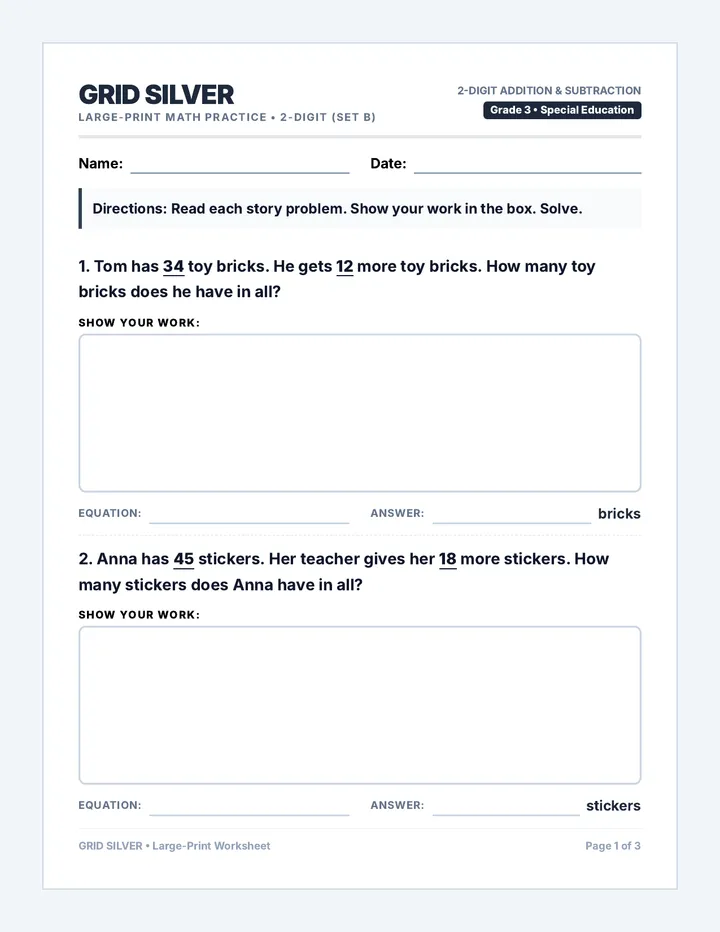
A math lesson focusing on two-digit addition and subtraction with and without regrouping using dedicated place-value work grids to support 3rd-grade special education students.
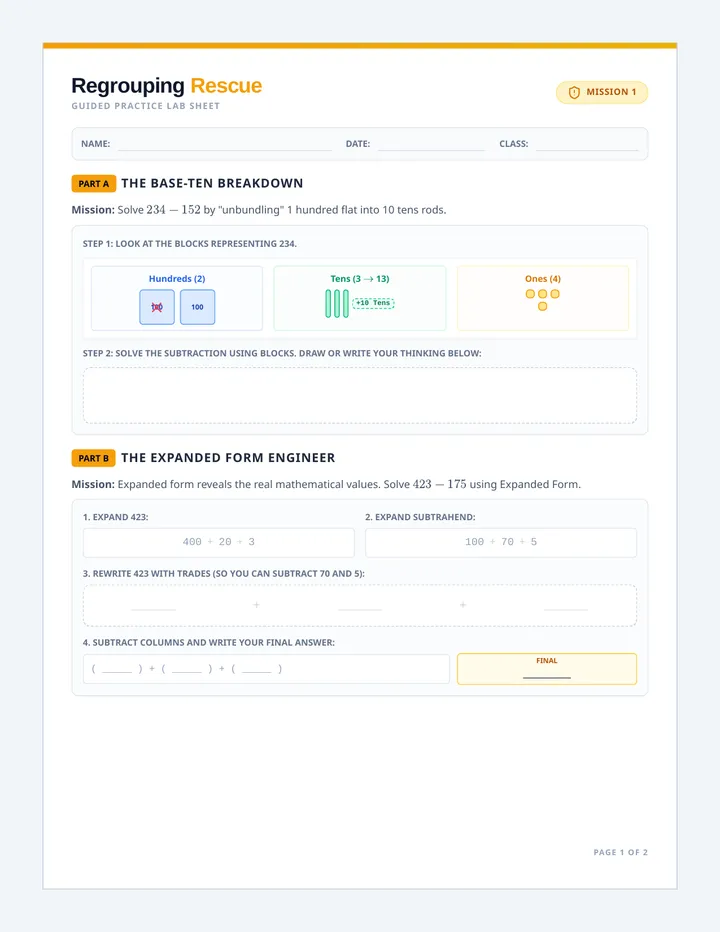
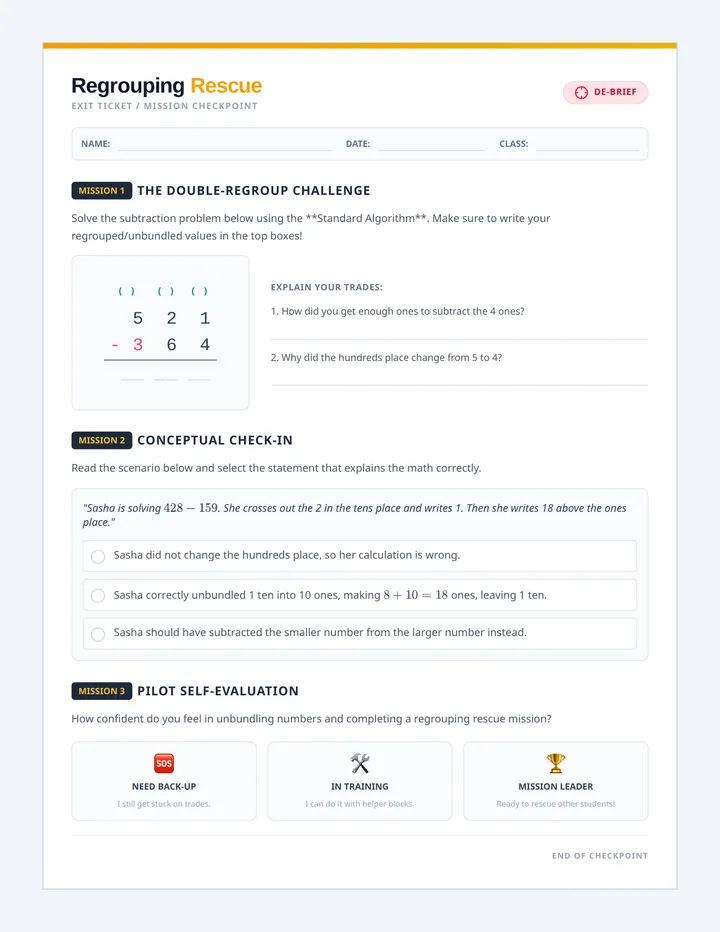
A review lesson that connects the standard subtraction algorithm with concrete base-ten blocks and expanded form subtraction, helping students understand the 'why' behind regrouping.
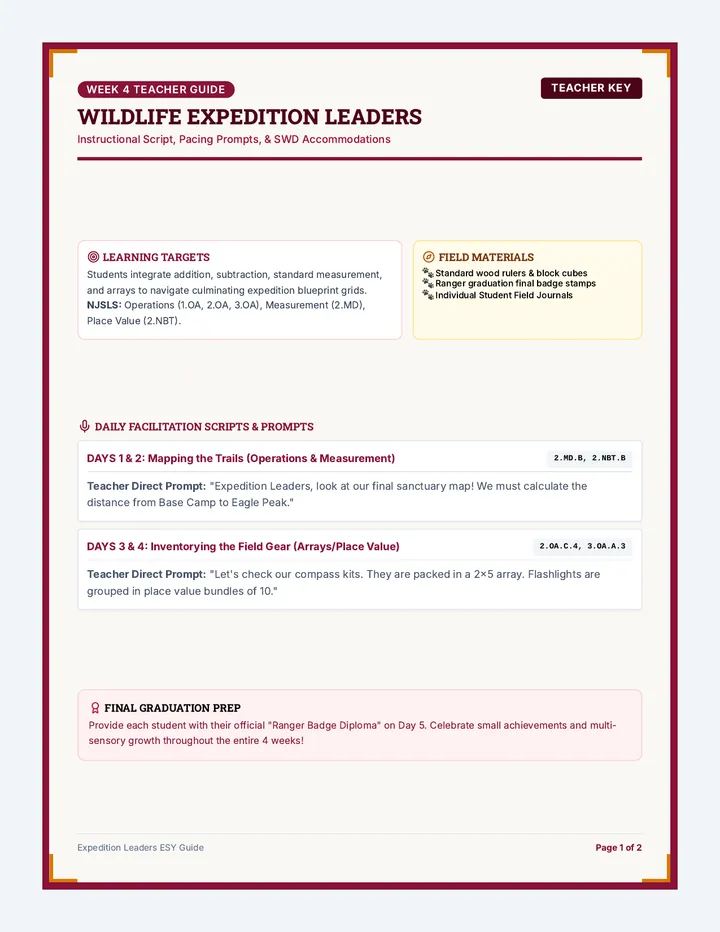
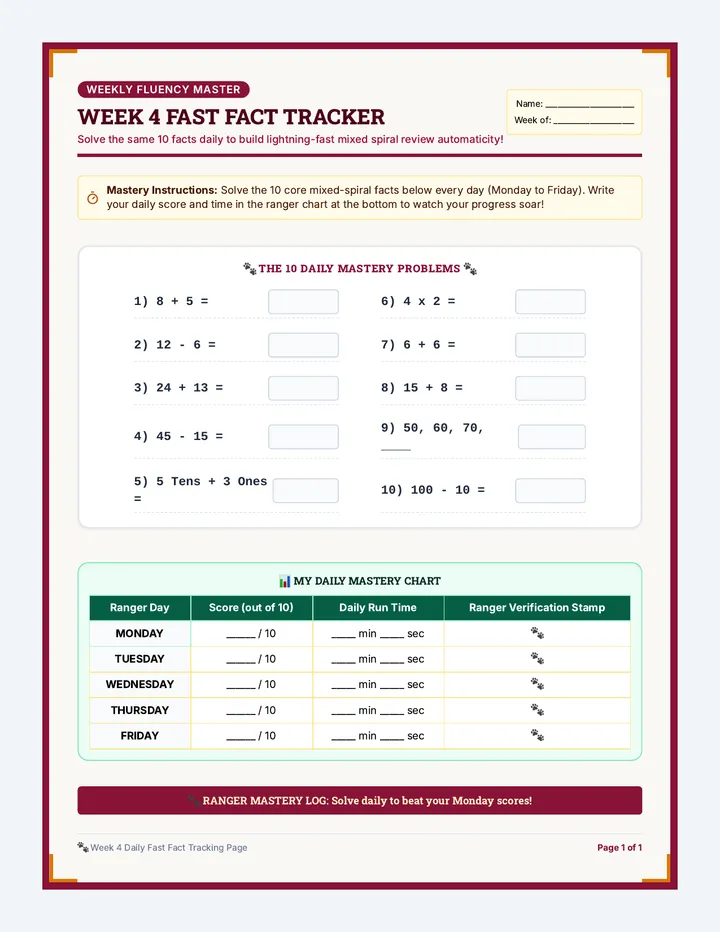
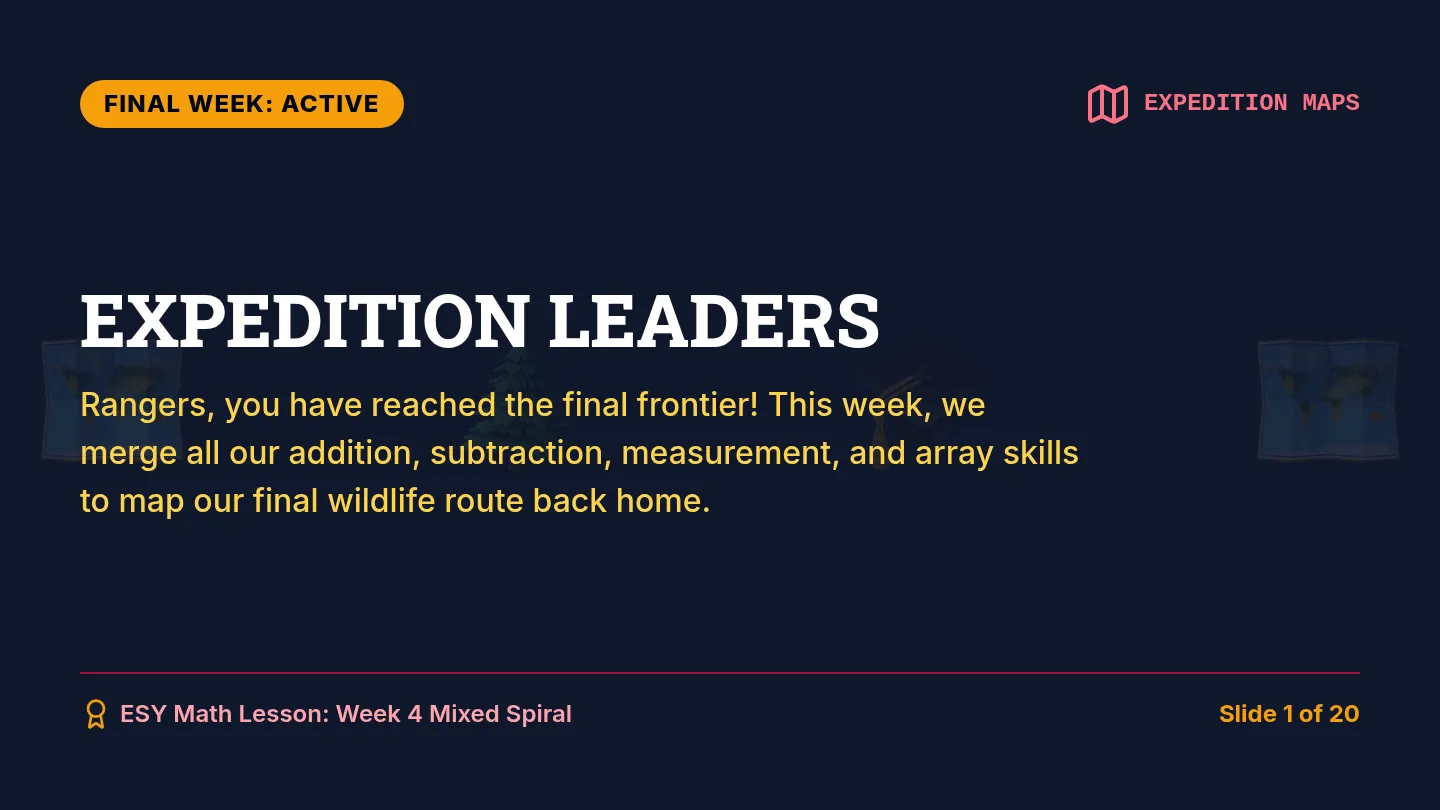
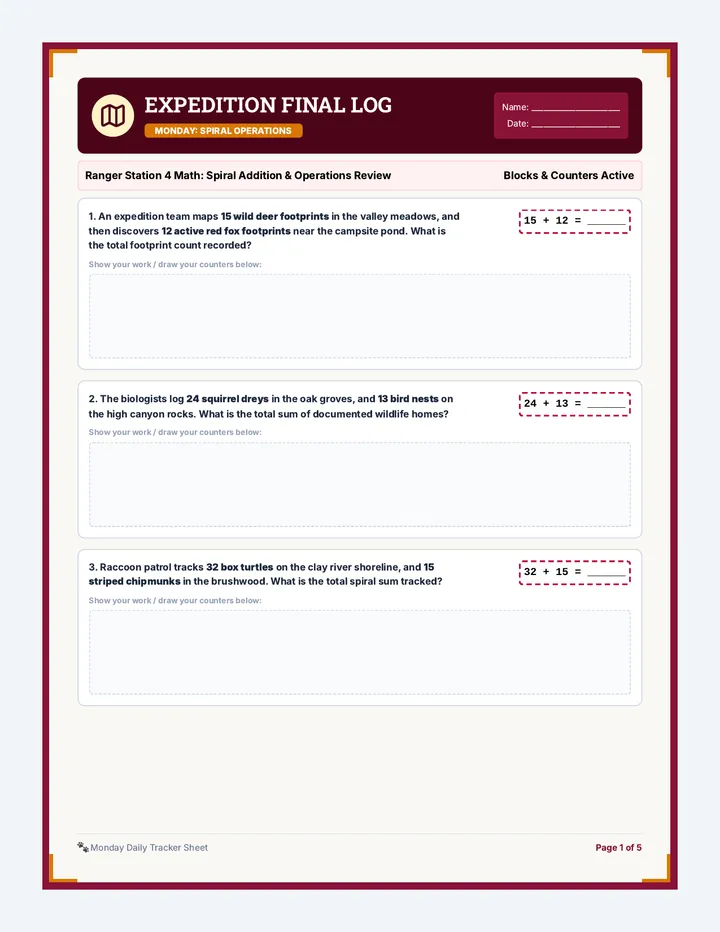
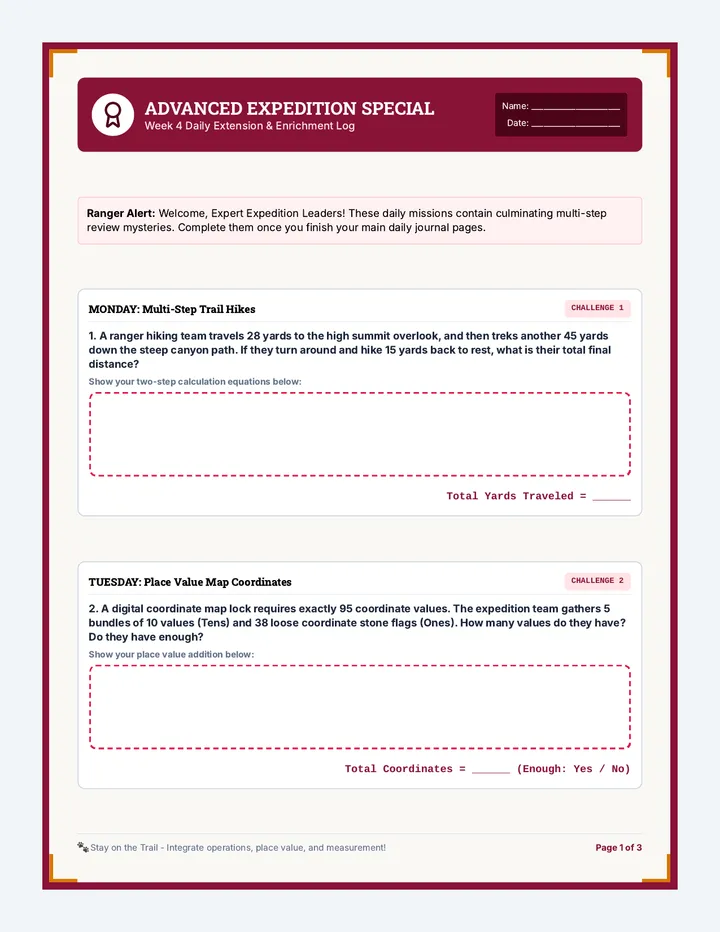
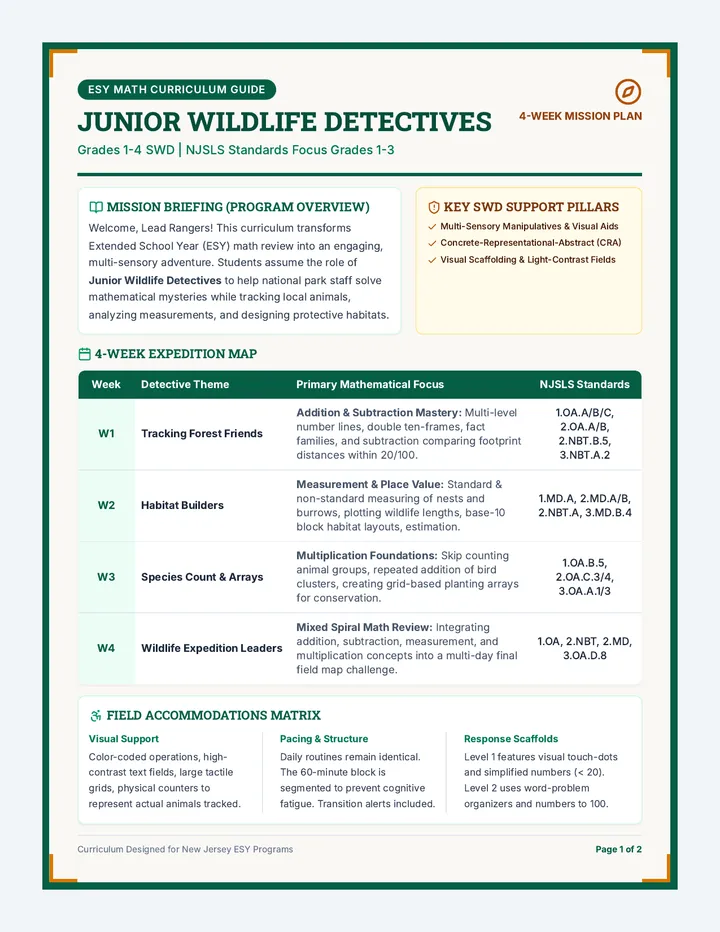
Week 4 of the ESY Wildlife Detective curriculum. Focuses on a comprehensive mixed spiral math review (NJSLS operations, place value, and measurement) through a culminating multi-day outdoor expedition challenge.
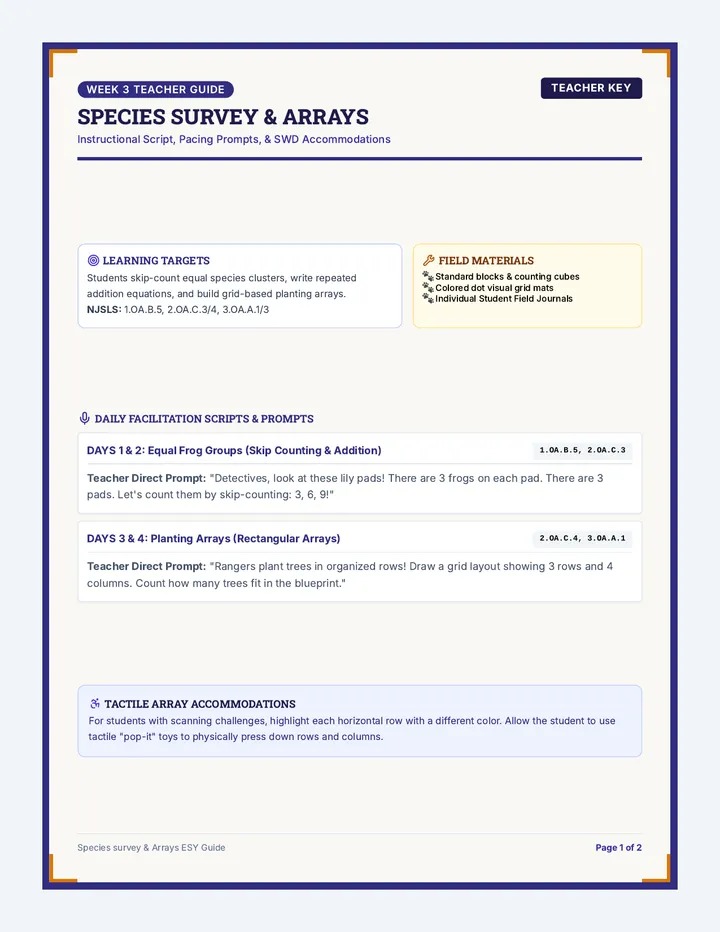
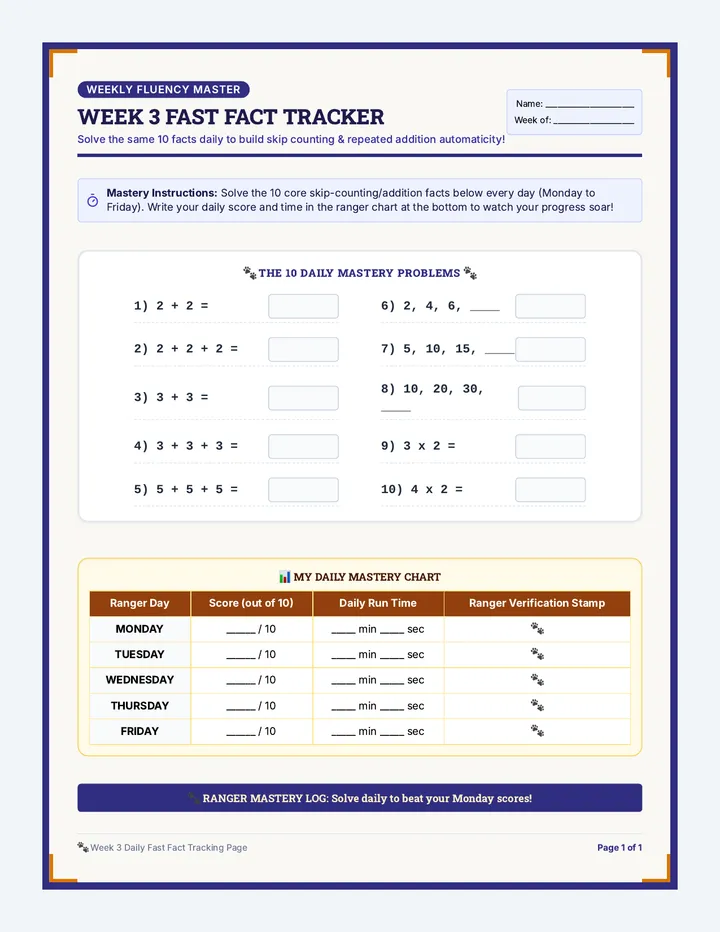
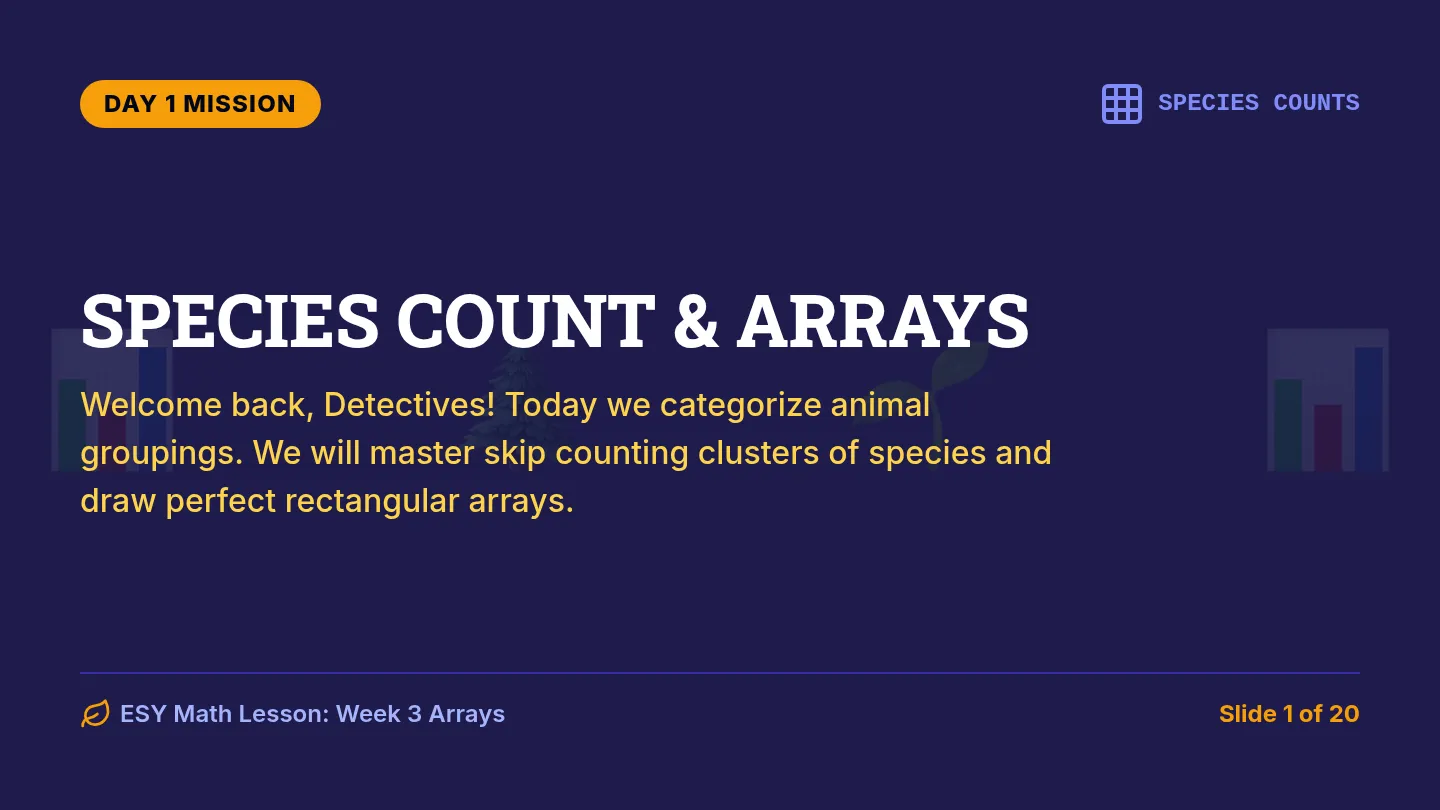
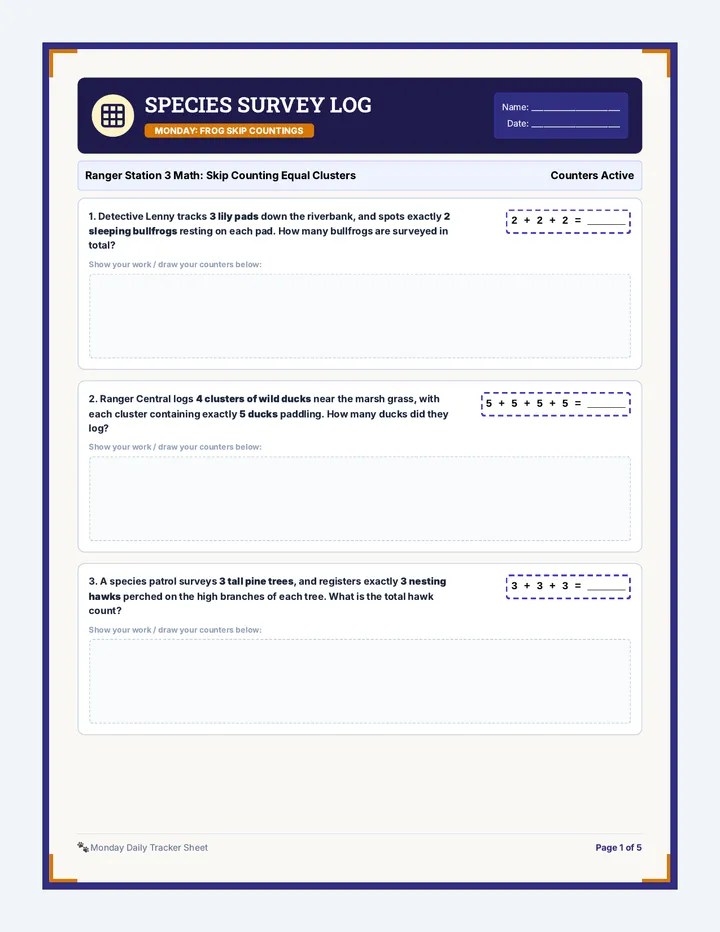
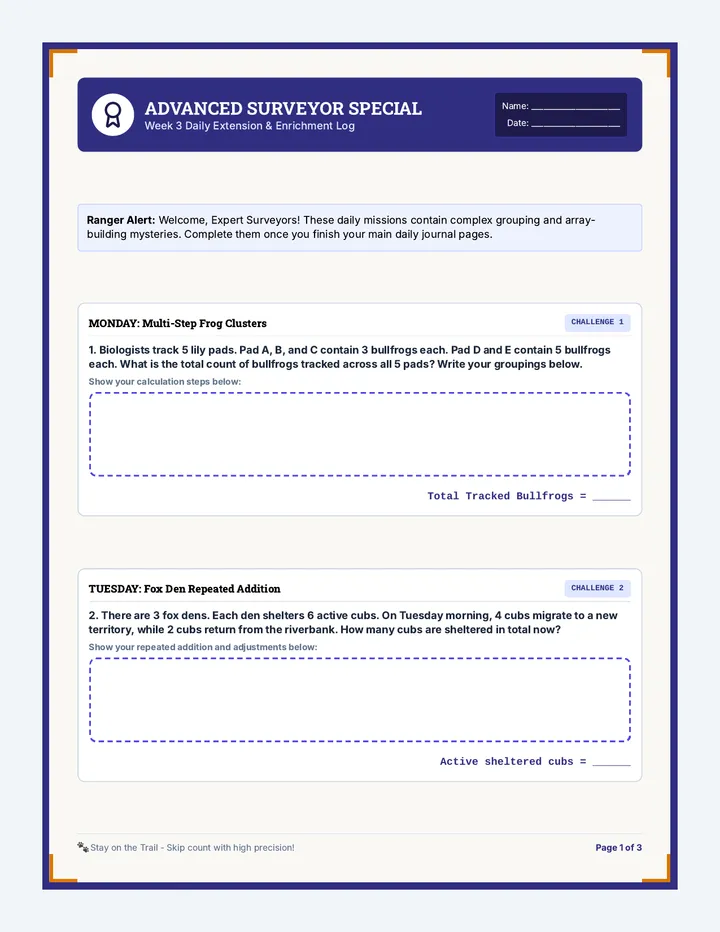
Week 3 of the ESY Wildlife Detective curriculum. Focuses on the foundations of multiplication (NJSLS 2.OA, 3.OA) through repeated addition, skip-counting animal clusters, and creating grid-based habitat arrays.
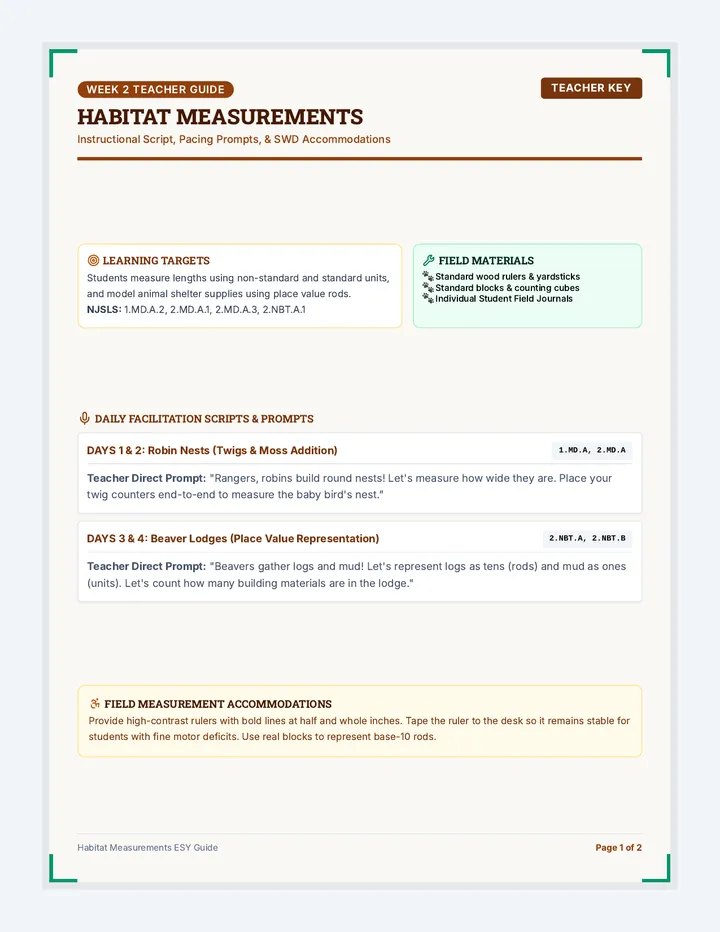
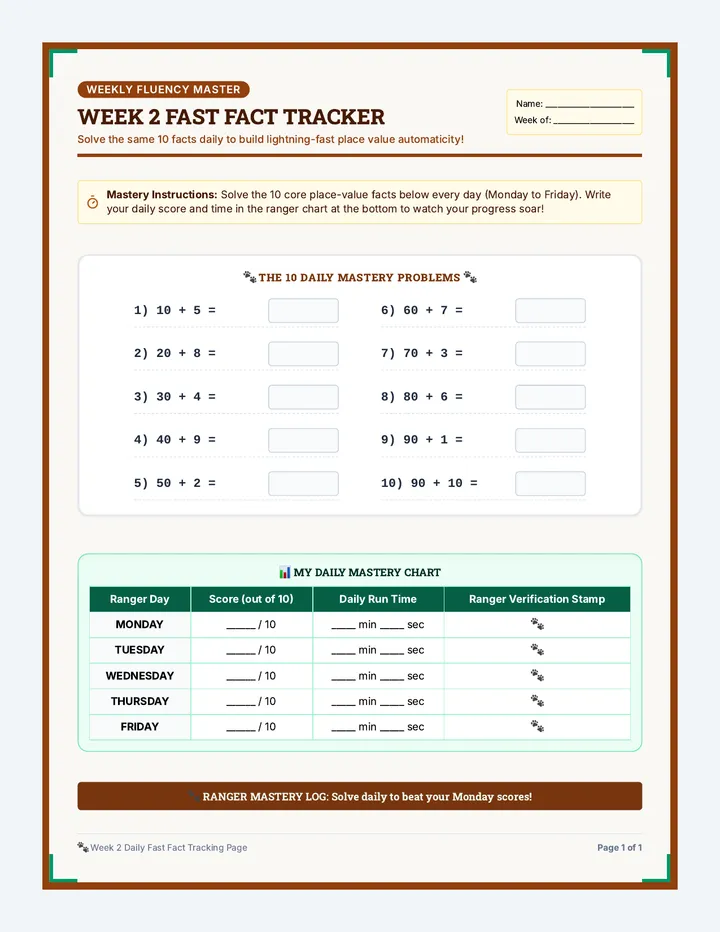
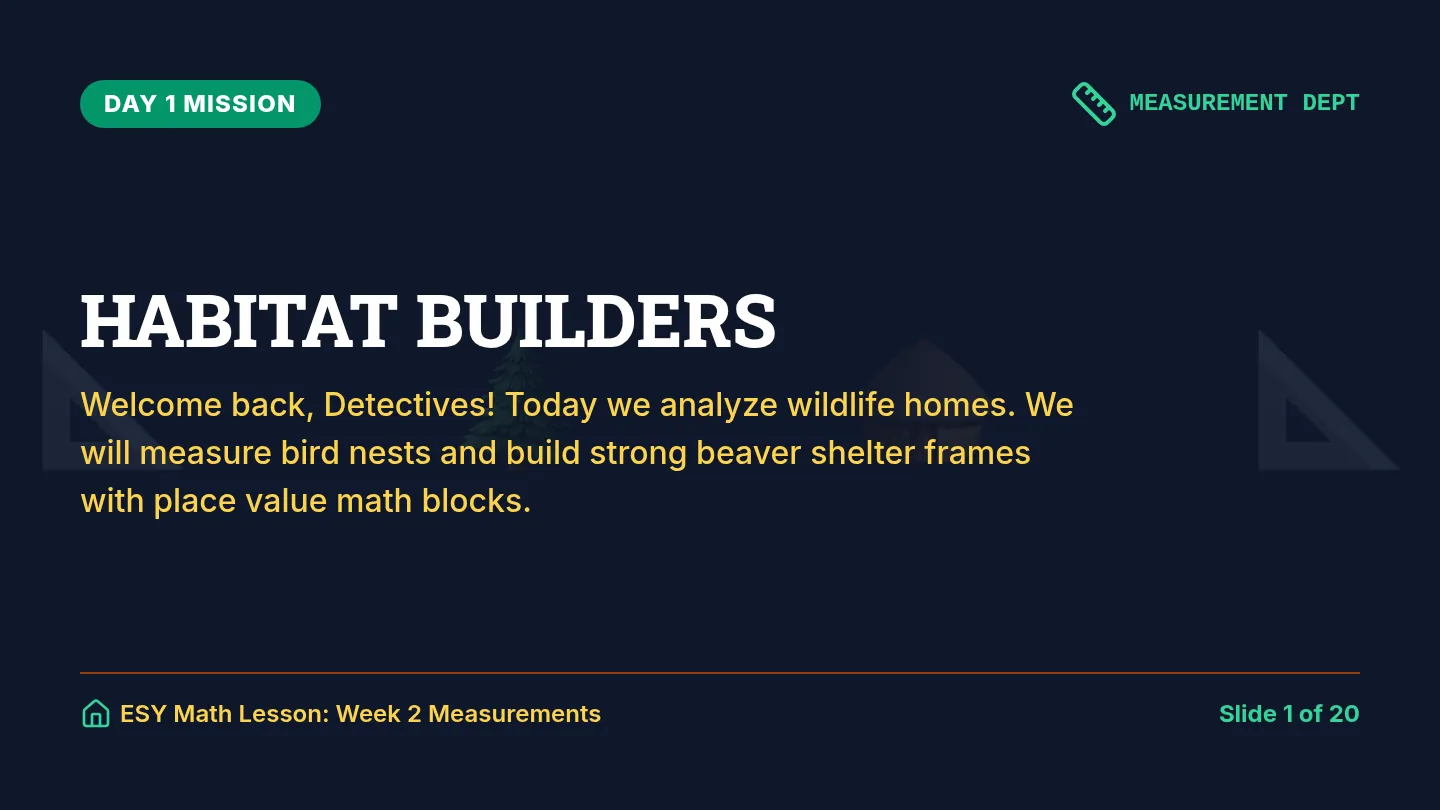
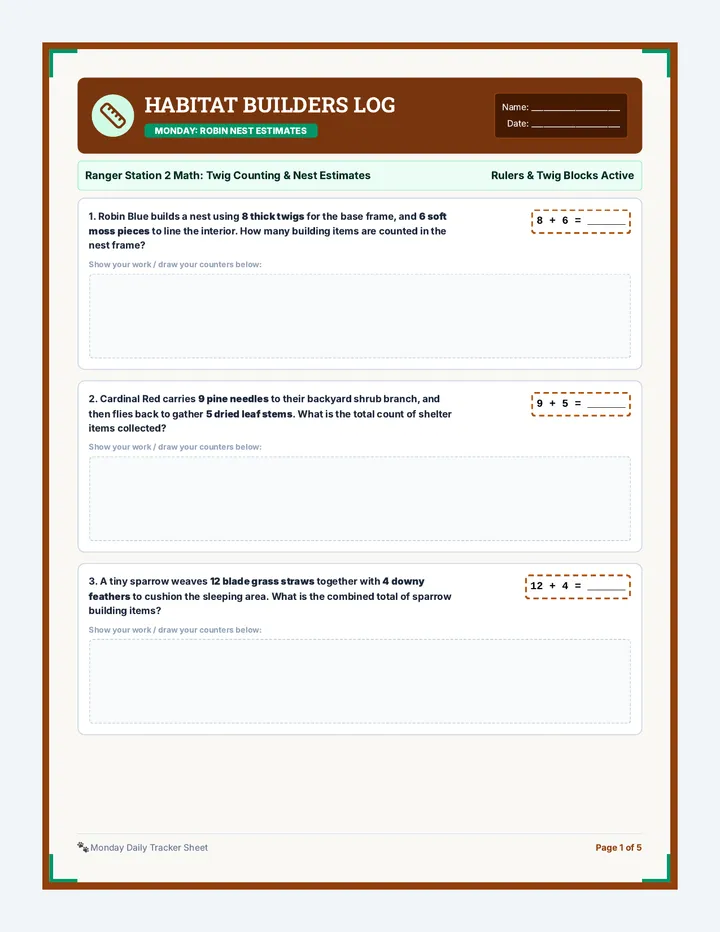
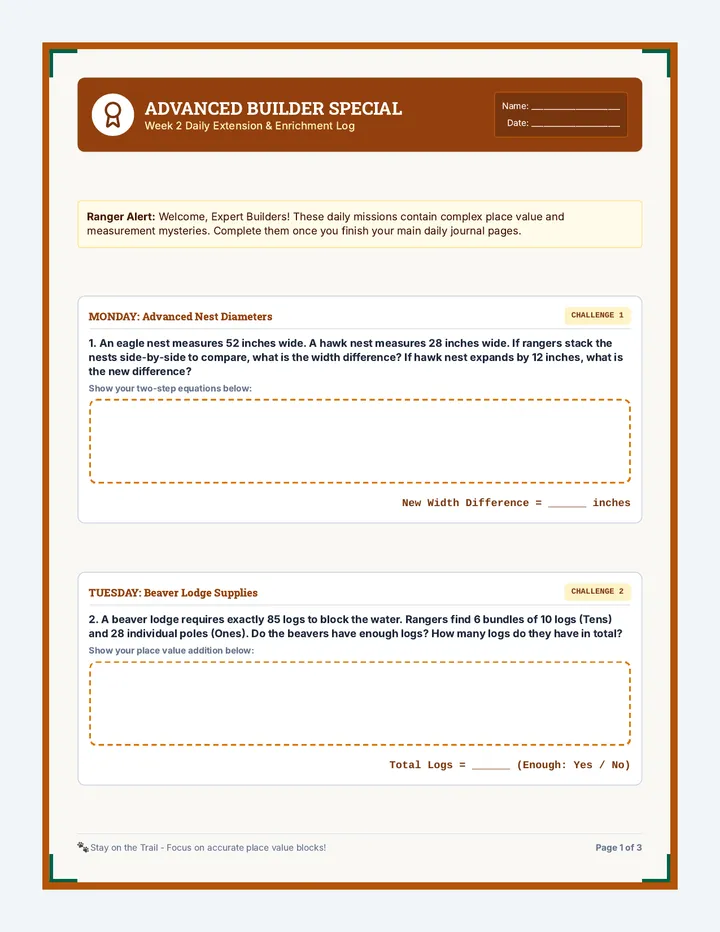
Week 2 of the ESY Wildlife Detective curriculum. Focuses on place value, estimation, and measurement (NJSLS 1.MD, 2.MD, 3.MD) by measuring nest diameters, estimating burrow lengths, and understanding animal sizes.
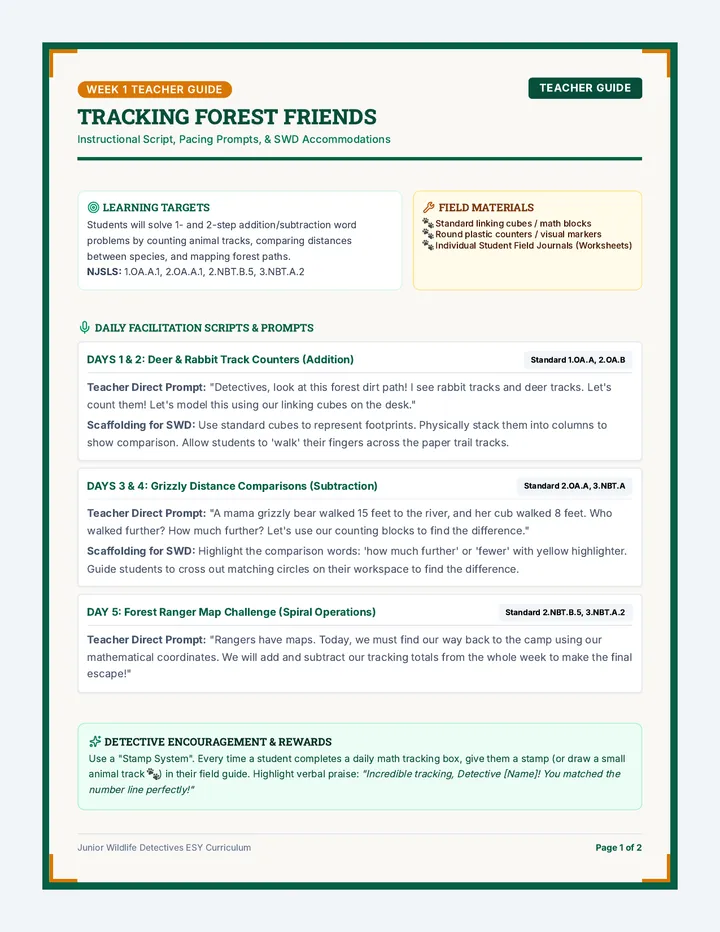
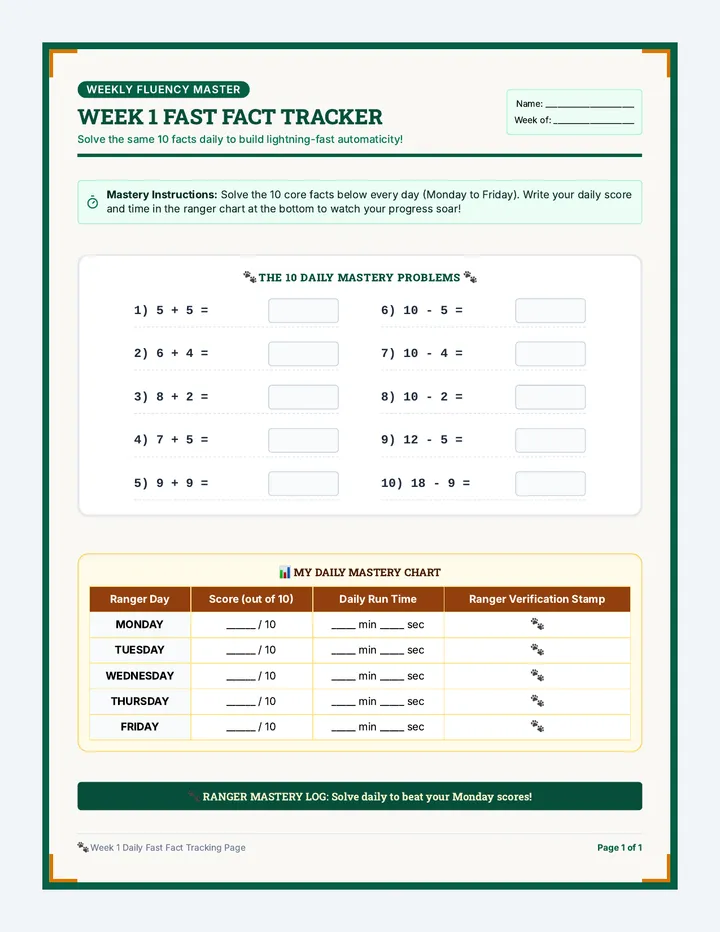
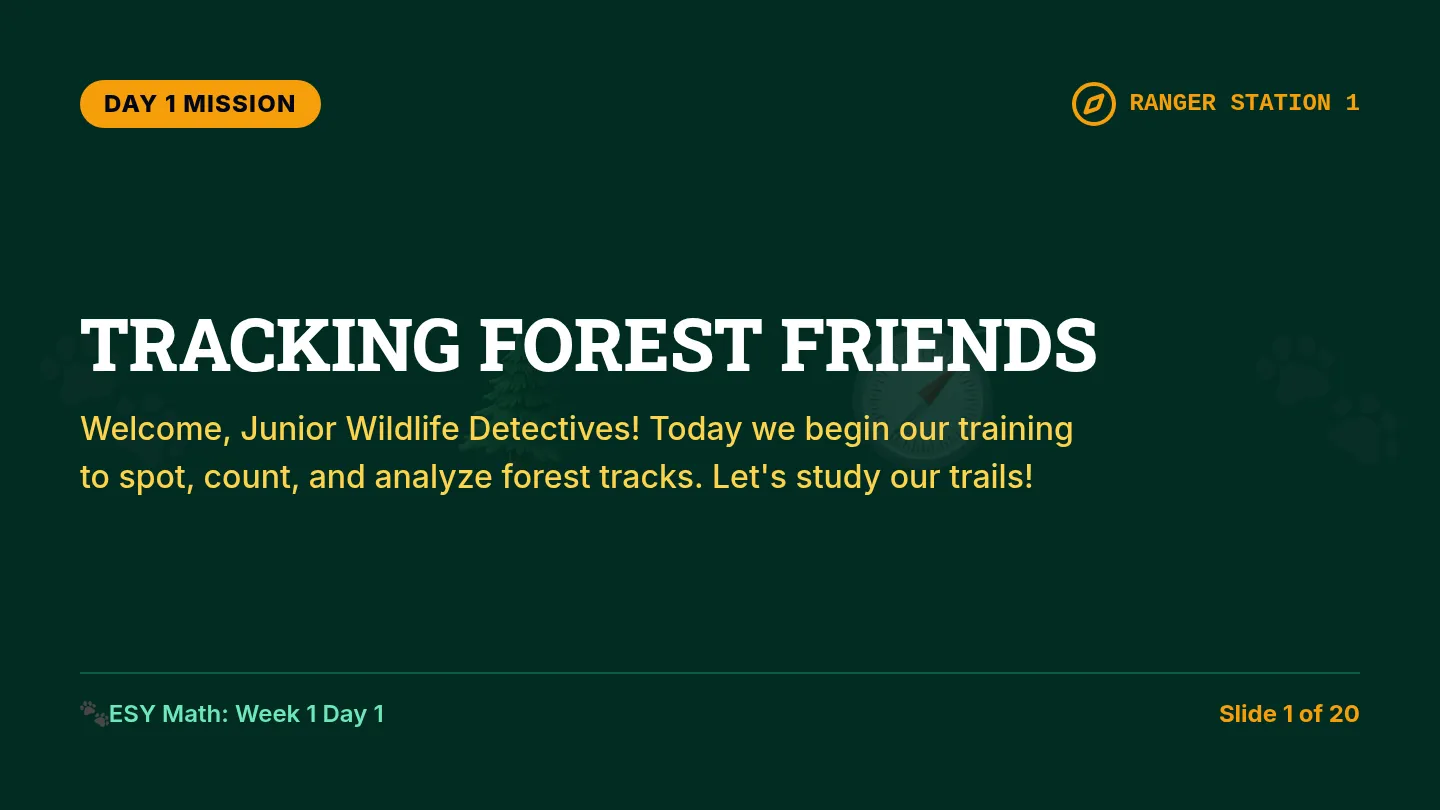
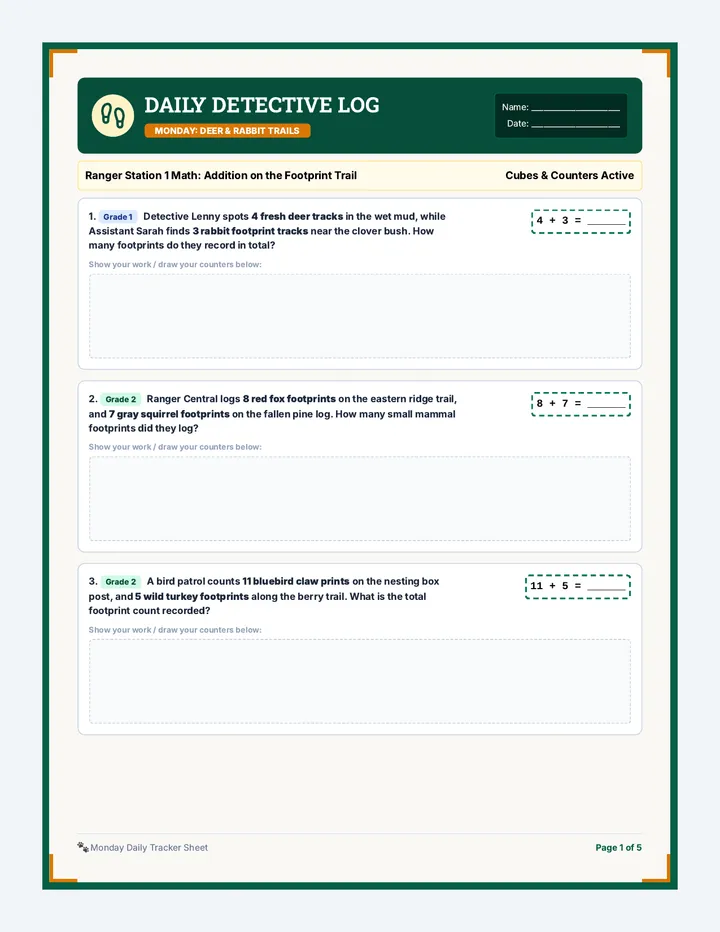
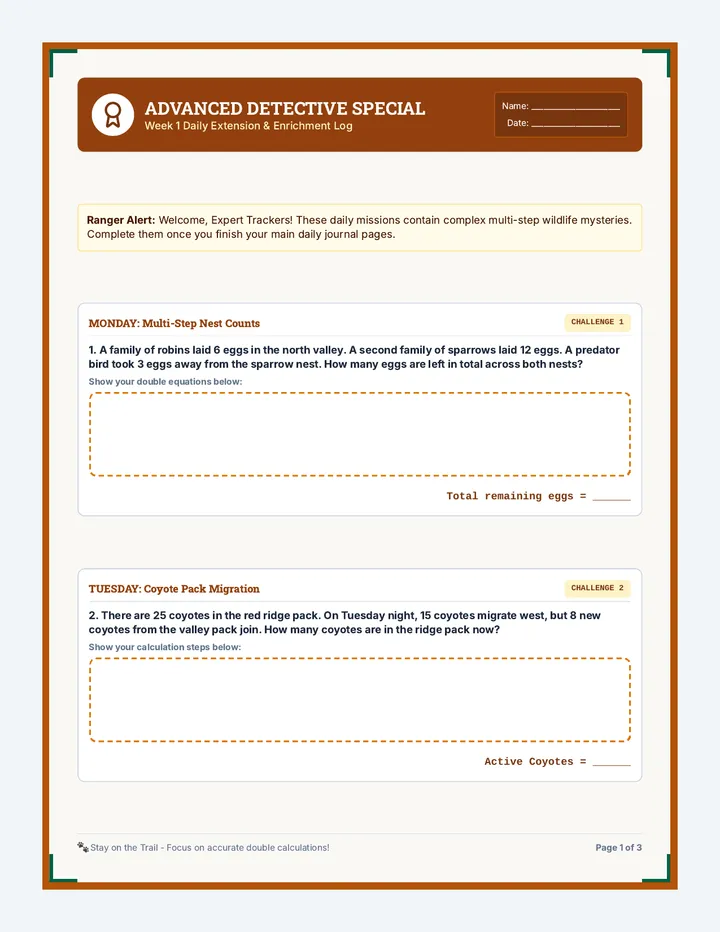
Week 1 of the ESY Wildlife Detective curriculum. Focuses on addition and subtraction mastery within 20 and 100 by tracking animal footprints, counting steps, and analyzing forest trail data. Scaffolded for grades 1-4.
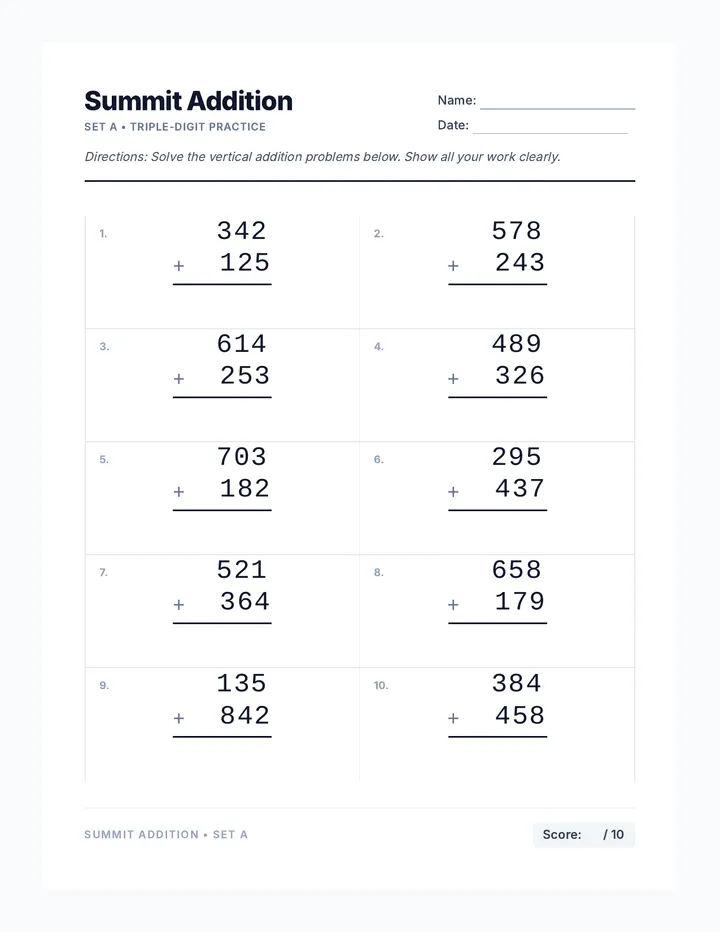
A collection of three clean, distraction-free 3-digit addition worksheets and answer keys, each containing a mixed set of 5 regrouping and 5 non-regrouping vertical calculations formatted for print.
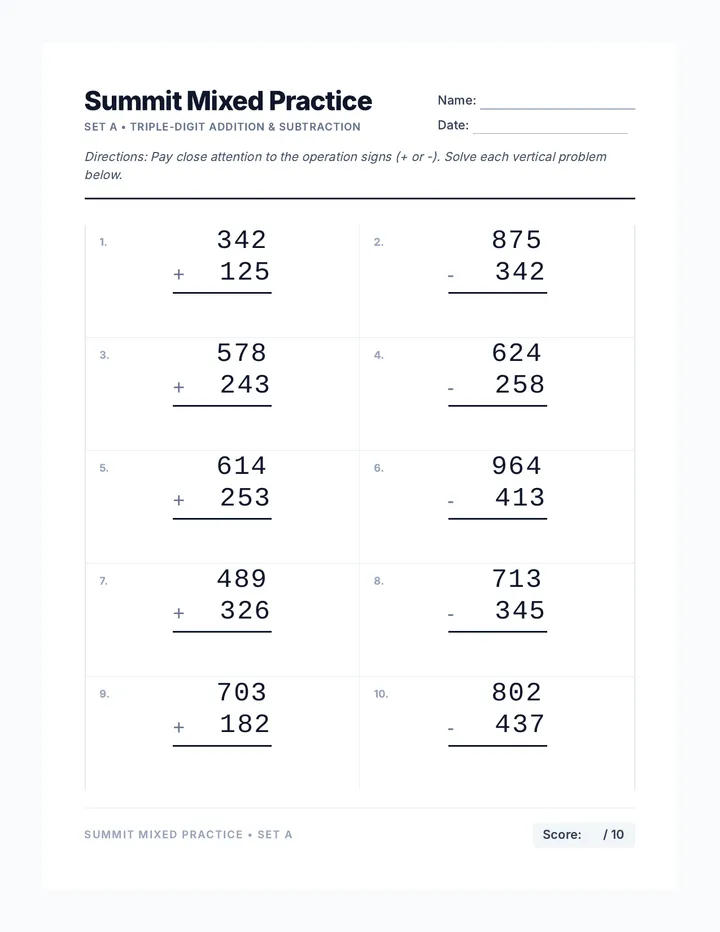
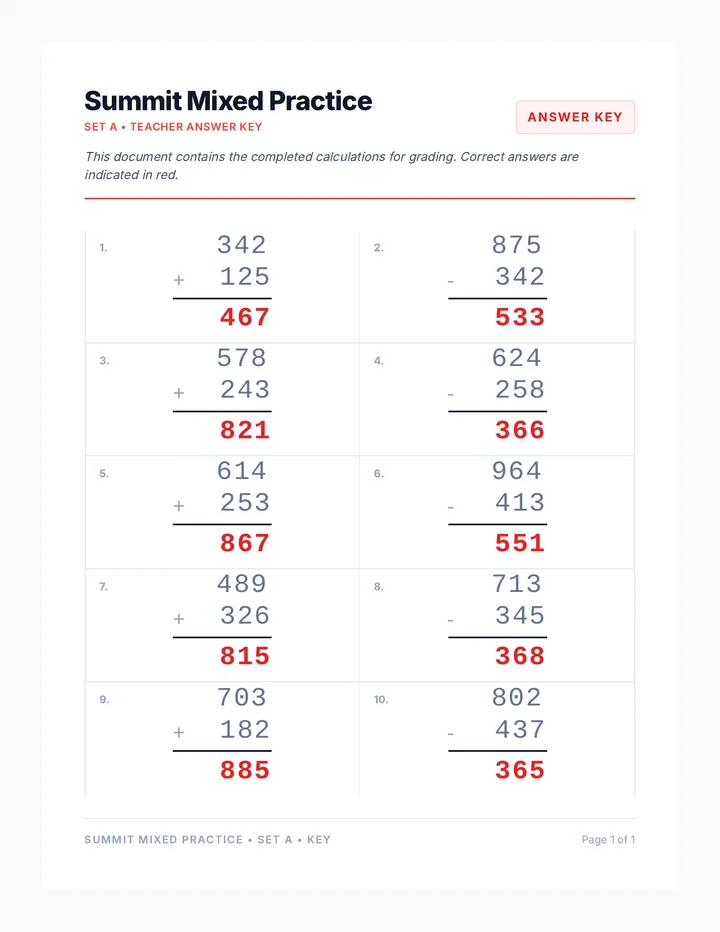
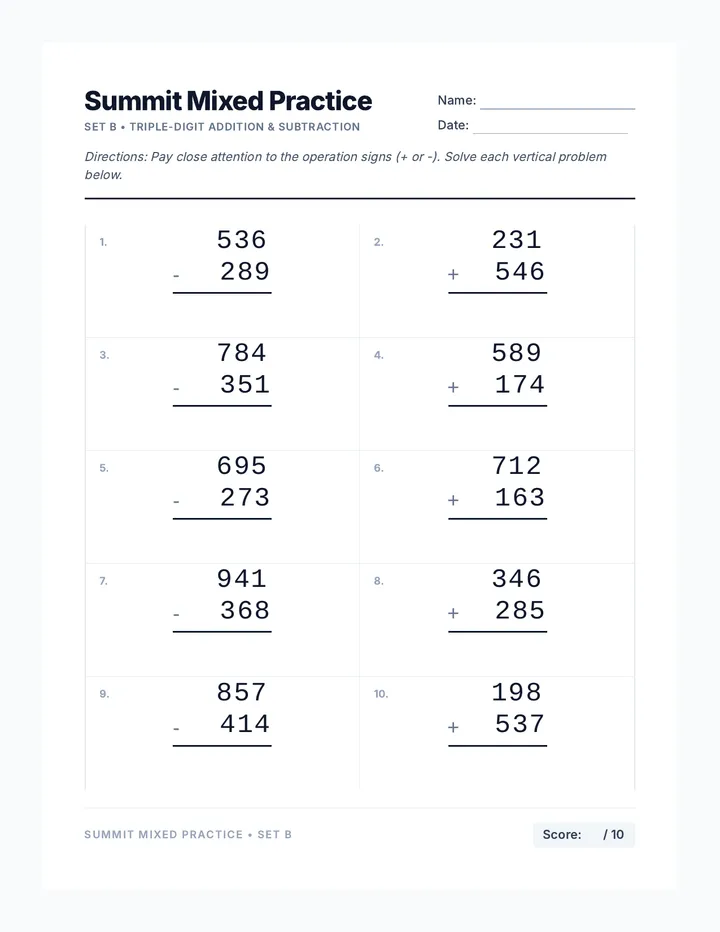
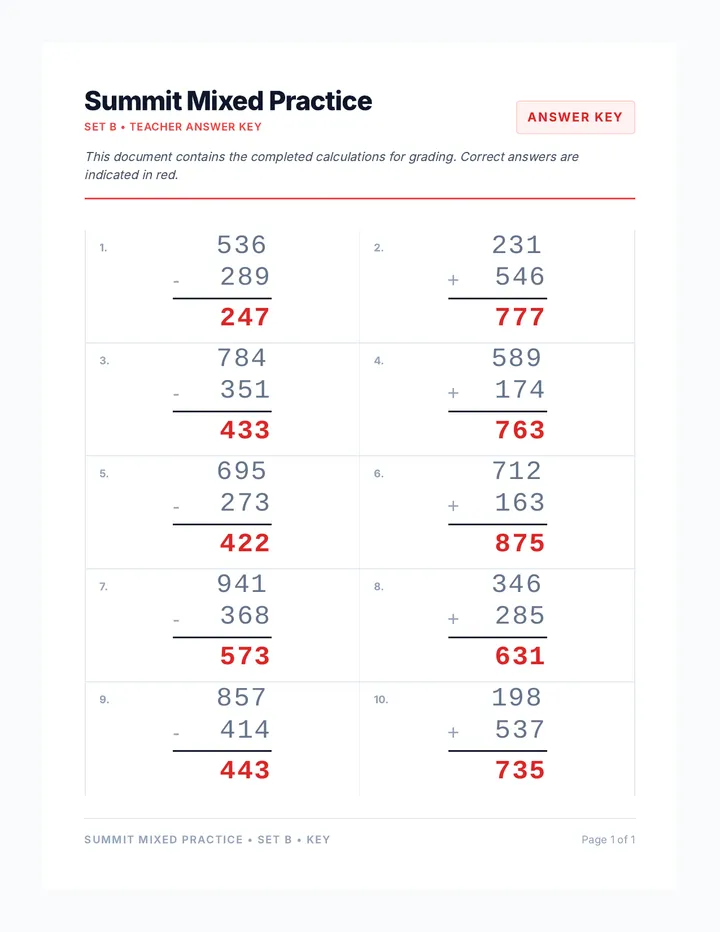
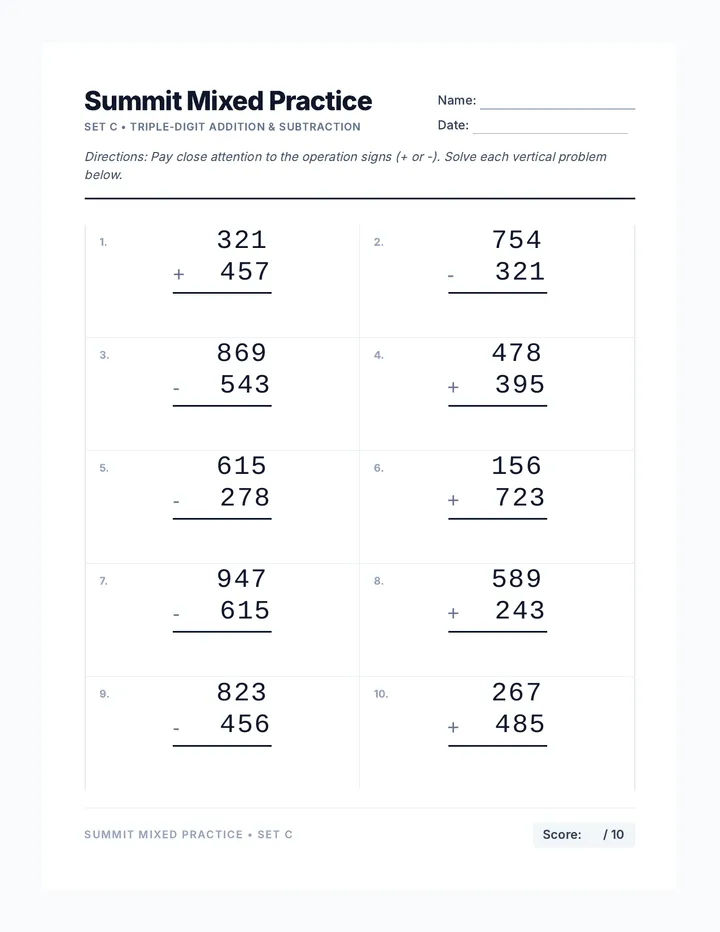
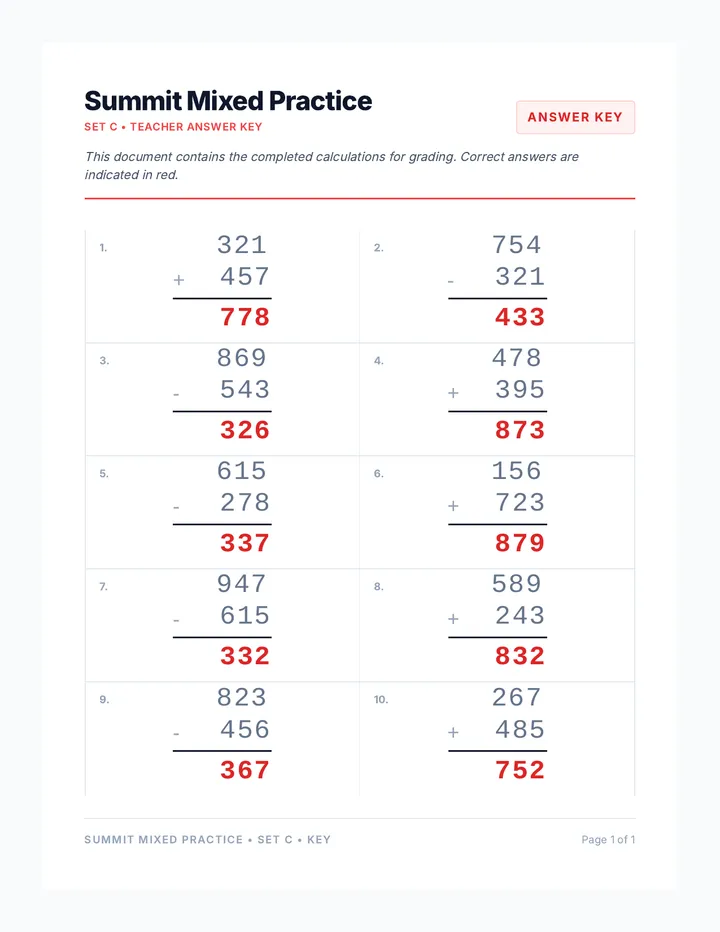
A collection of mixed 3-digit addition and subtraction worksheets and answer keys, featuring mixed operations with and without regrouping. Excellent for cumulative review and operational fluency.
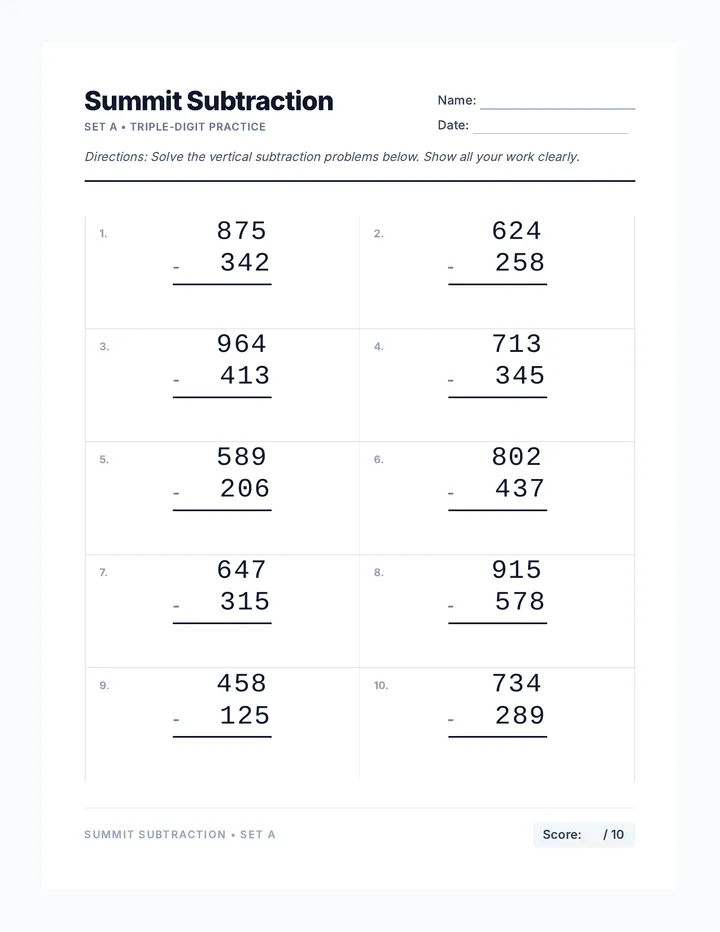
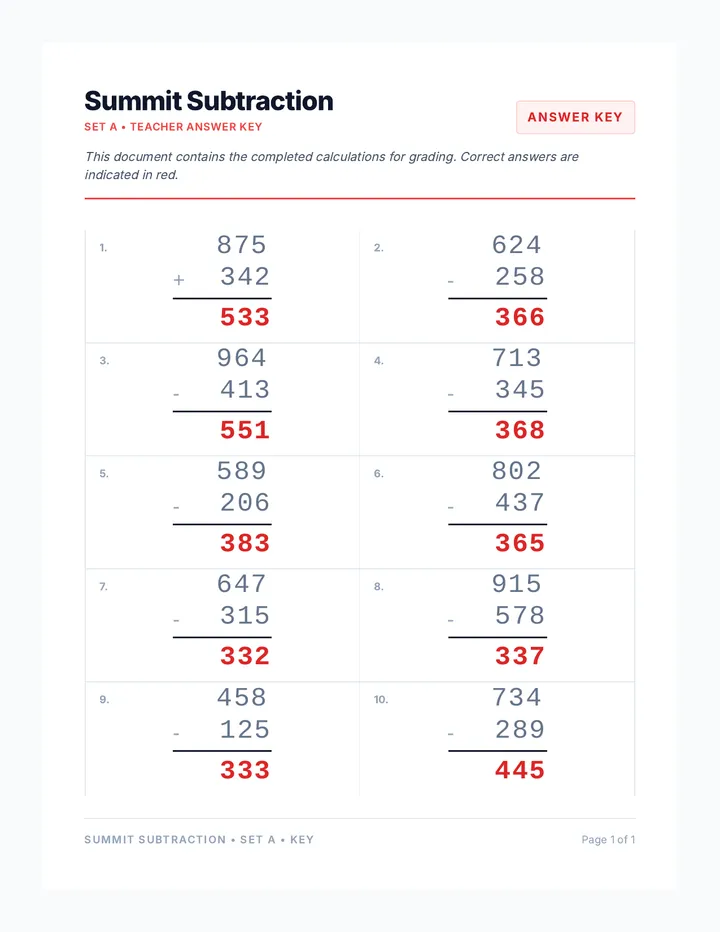
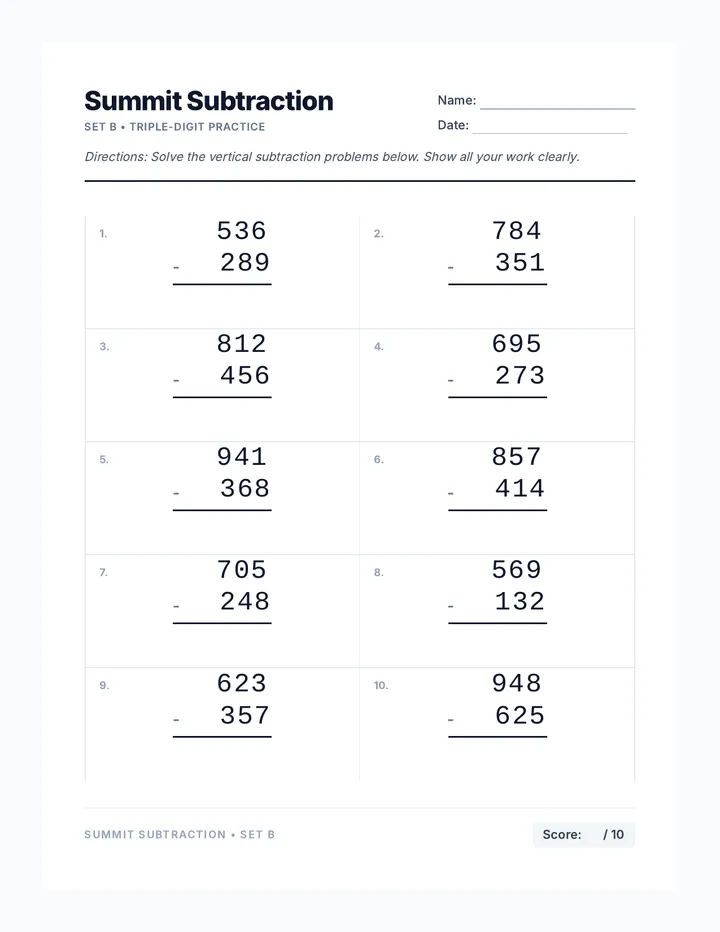
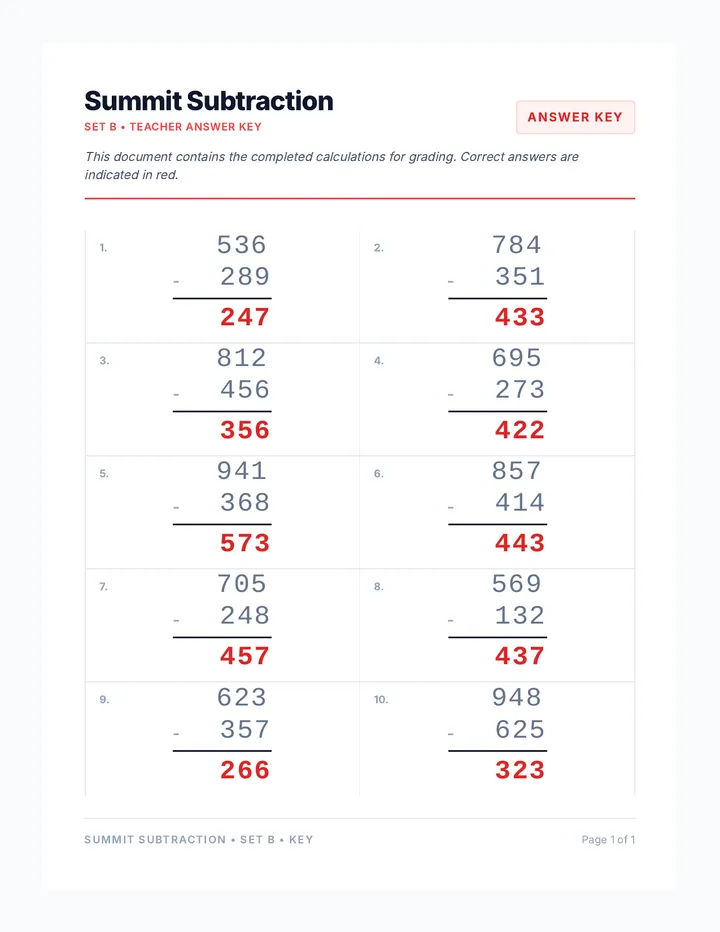
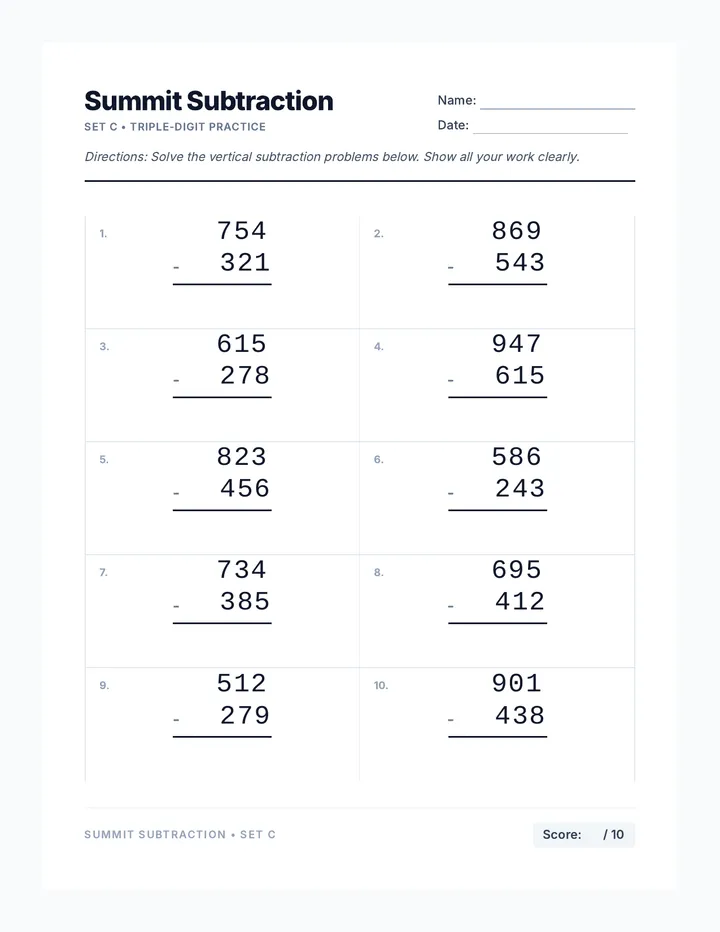
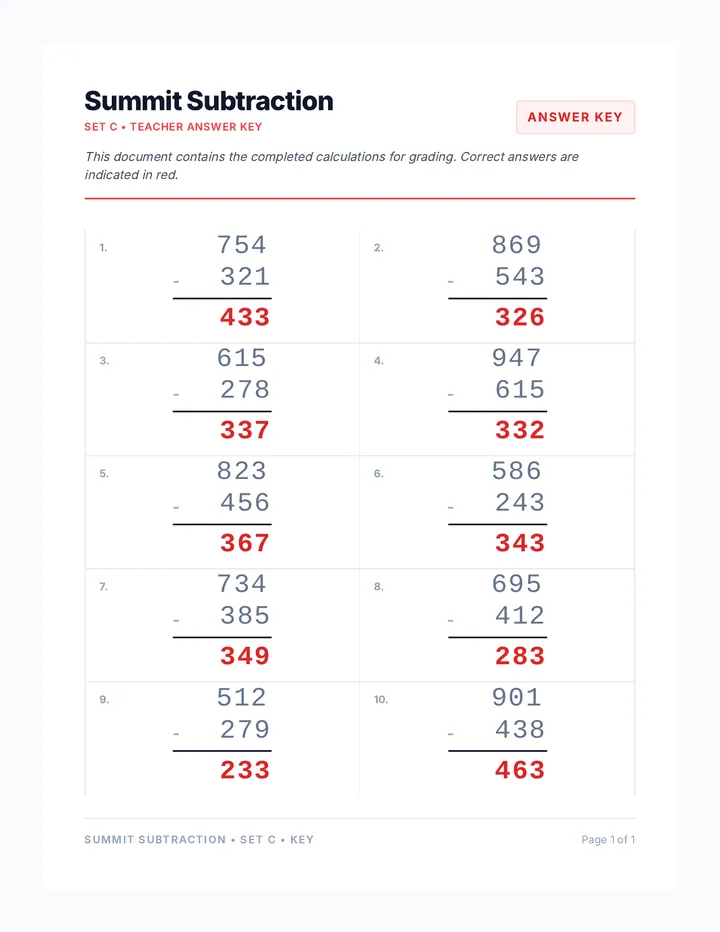
A collection of 3-digit subtraction worksheets and answer keys, featuring mixed regrouping and non-regrouping problems. Formatted for clean, distraction-free printouts.
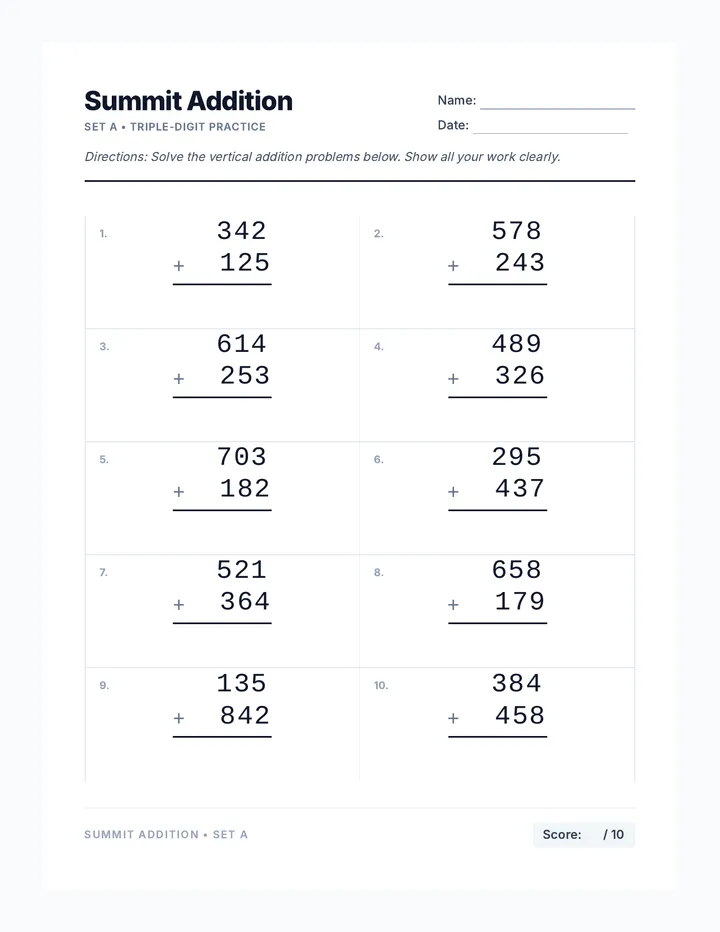
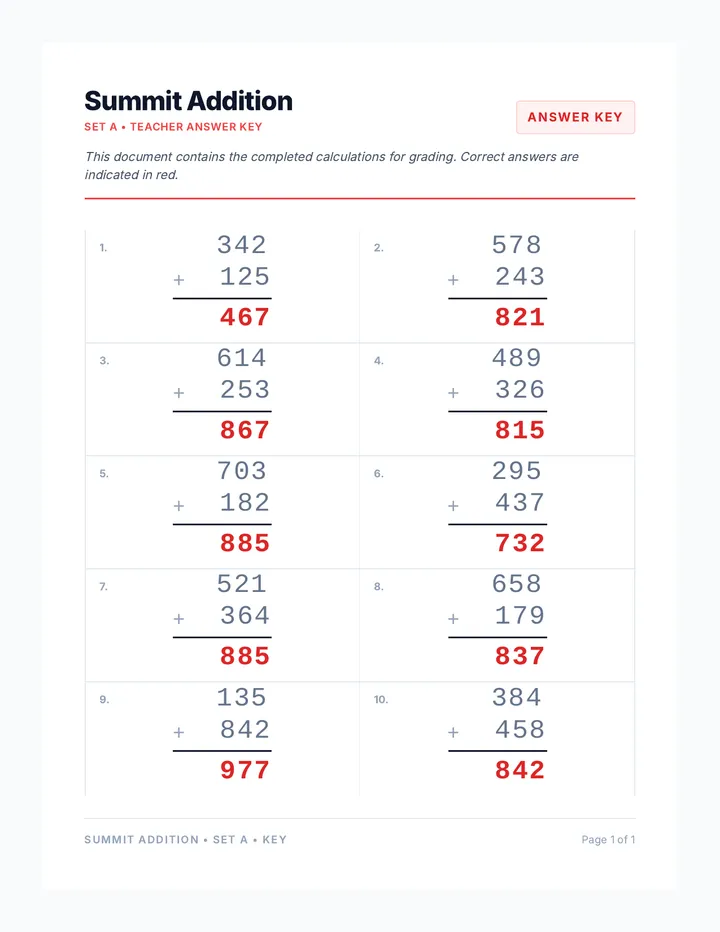
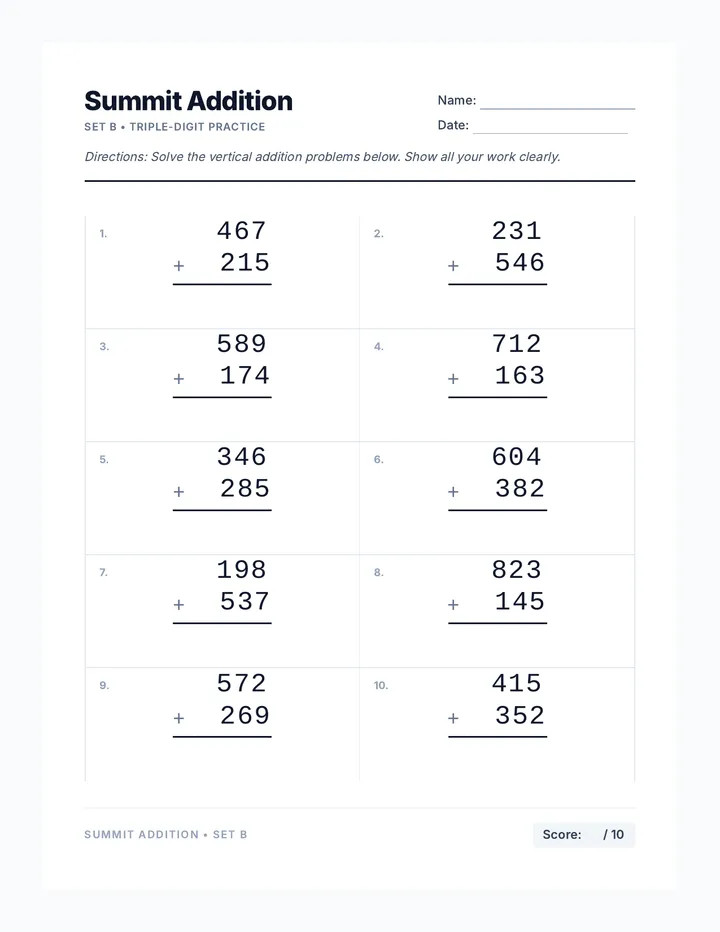
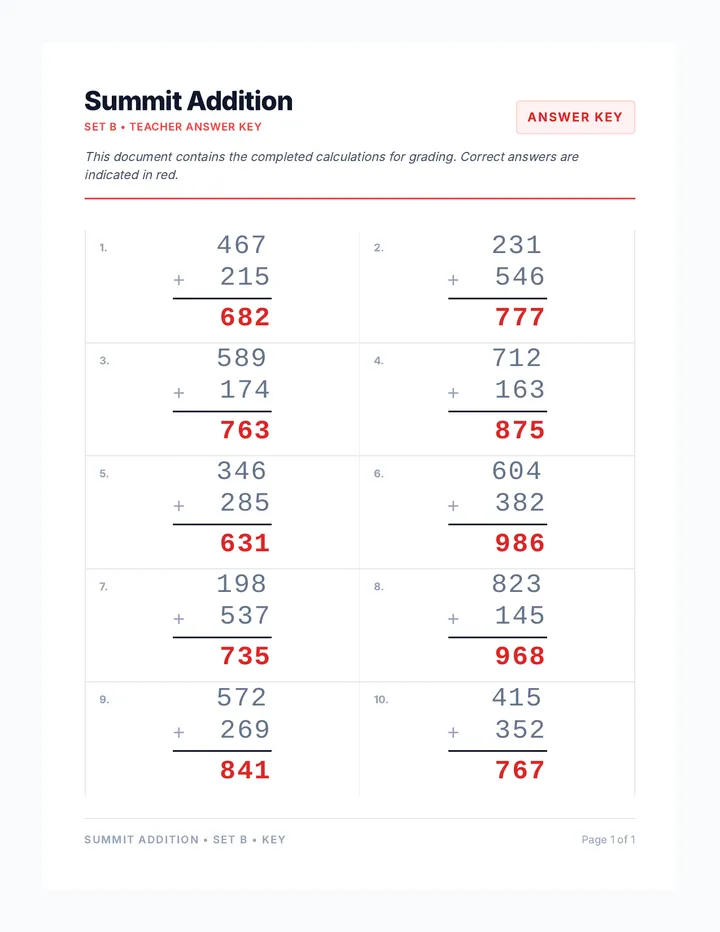
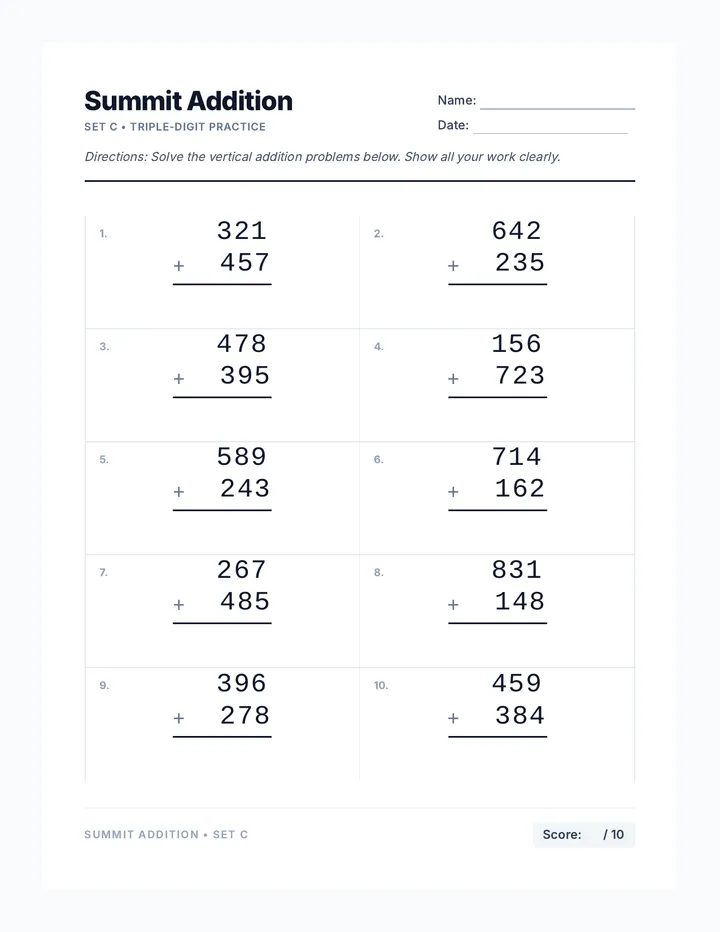
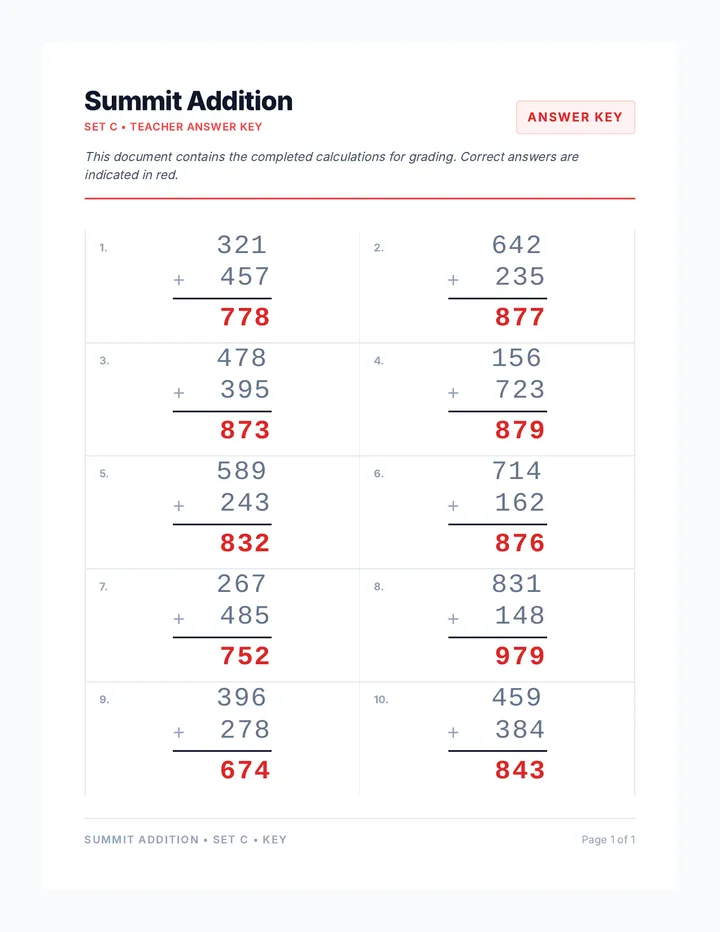
A collection of 3-digit addition worksheets and answer keys, featuring mixed regrouping and non-regrouping problems. Ideal for building computation speed and accuracy with clean, distraction-free printouts.
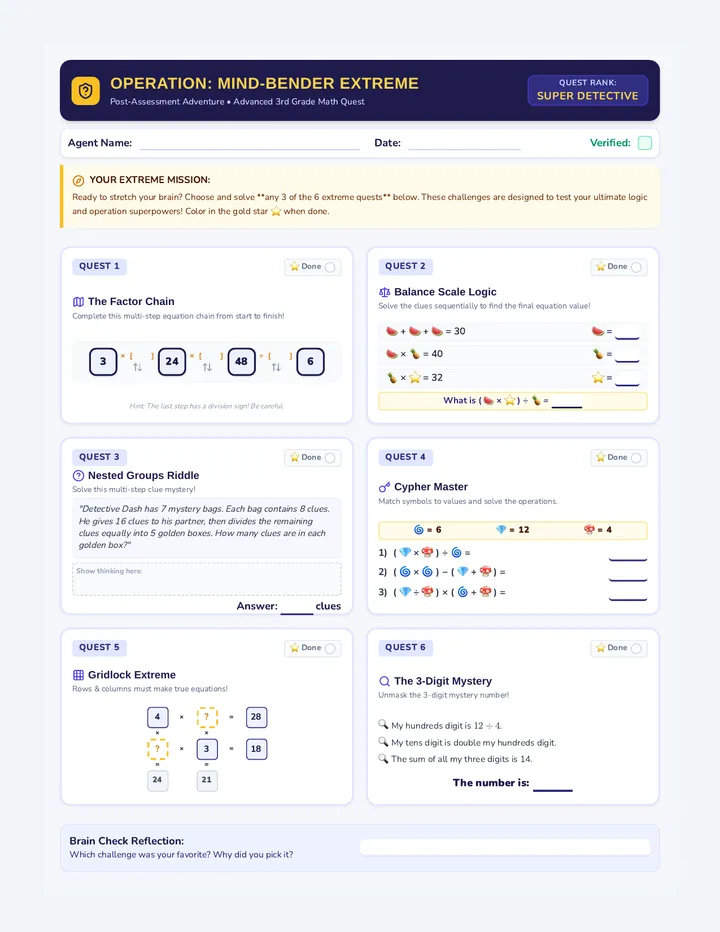
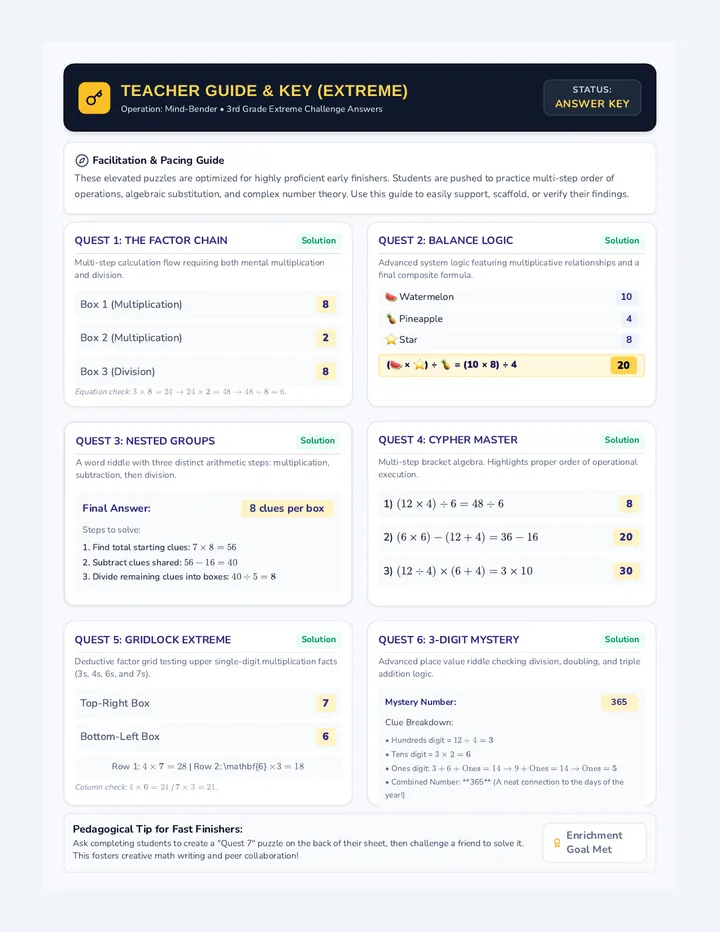
A lesson featuring post-assessment brain-teaser challenge activities for 3rd-grade students who finish their assessments early. Includes a choice board of six creative math tasks spanning multiplication, division, visual logic, and operation riddles.
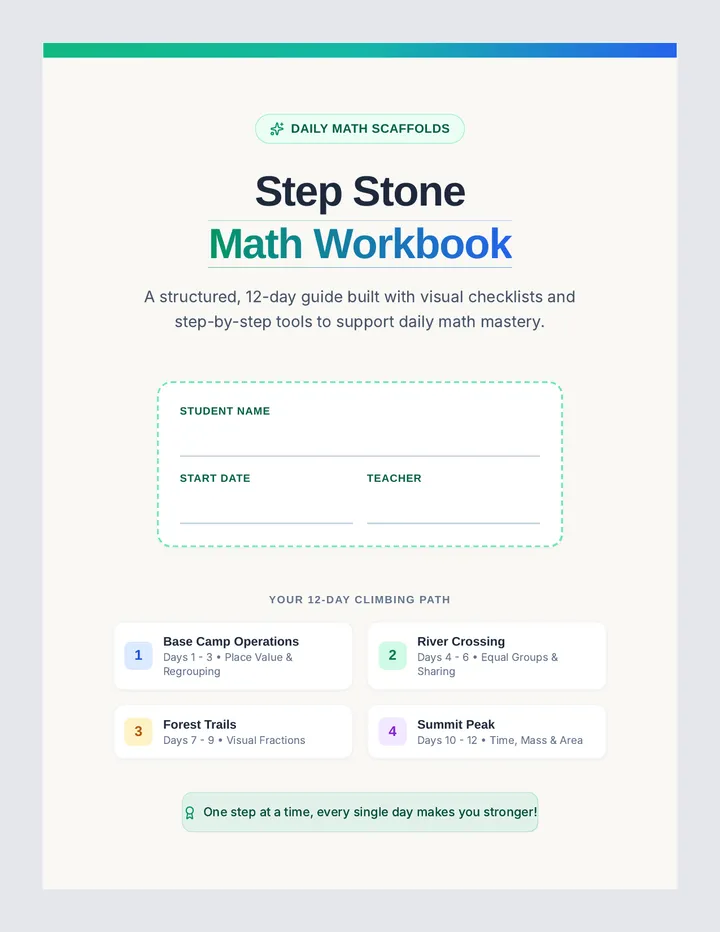
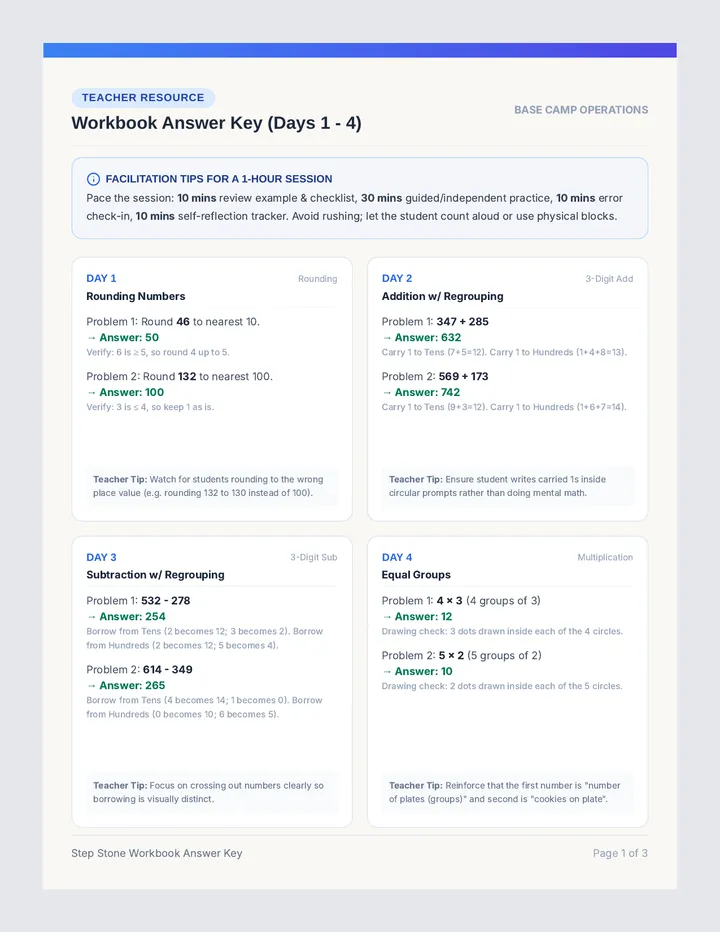
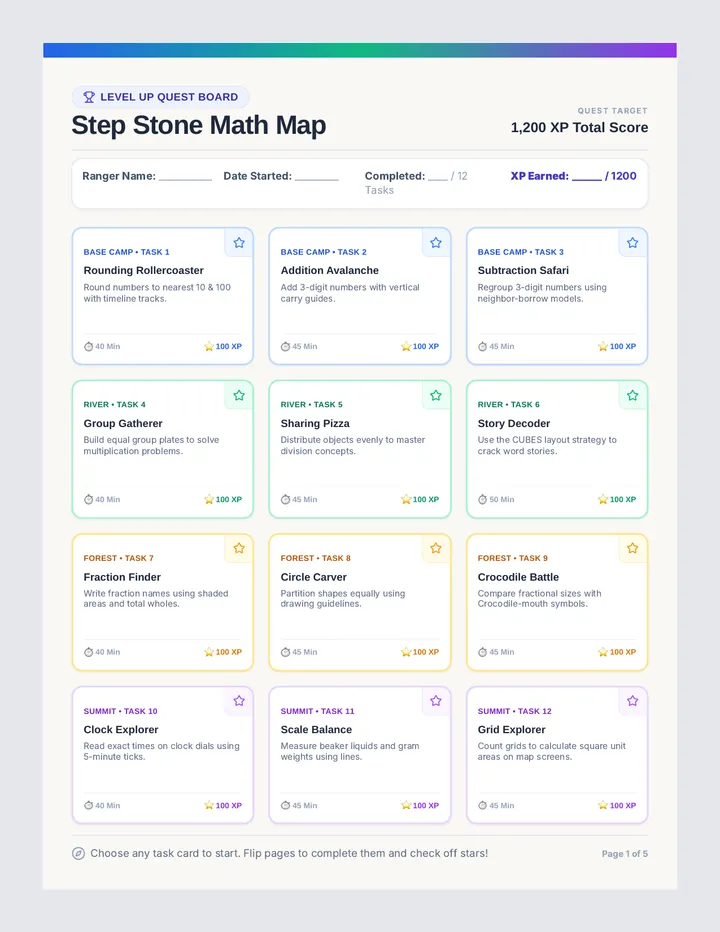
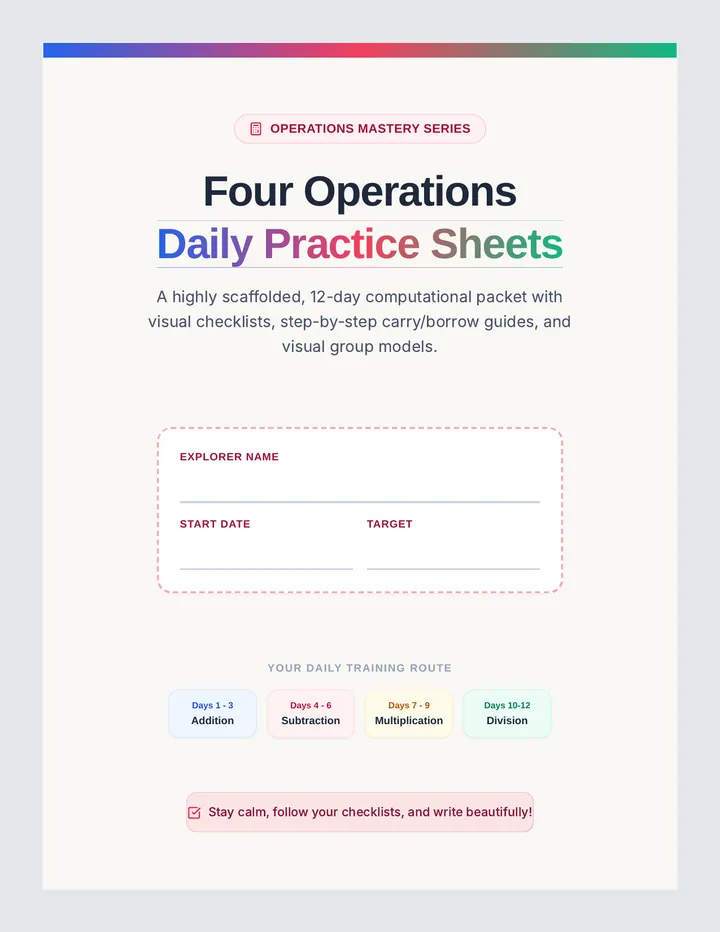
A collection of highly scaffolded daily math worksheets and guides designed for 7th-grade students with Specific Learning Disabilities (SLD) working at a foundational 3rd-grade level. Each day provides targeted skill practice, clear visual checklists, step-by-step scaffolds, and sensory-friendly layout.