A hands-on introduction to economics where students explore how people trade goods and services, the roles of producers and consumers, and the difference between local and global trade.
A foundational geography lesson designed to help students identify and name the seven continents through visual exploration, fact-finding, and hands-on matching activities. Students will explore unique characteristics of each landmass and practice spatial awareness by labeling a world map.
A 2nd-grade biography lesson focused on Harriet Tubman, exploring her life as a conductor on the Underground Railroad and her achievements in the fight for freedom. Students will identify her bravery and her leadership in helping others.
A 2nd-grade biography lesson focused on Mary Jackson, exploring her life as a mathematician and her achievements as NASA's first Black female engineer. Students will identify her contributions to the space program.
A 2nd-grade biography lesson focused on Garrett Morgan, exploring his life as an inventor and his achievements in public safety. Students will identify his key inventions like the traffic signal and safety hood.
A 2nd-grade biography lesson focused on Amelia Earhart, exploring her life as a pilot and her achievements in aviation. Students will identify her contributions to history and her brave spirit.
A 2nd-grade biography lesson focused on George Washington Carver, exploring his life as a scientist and his achievements in agriculture. Students will practice identifying key details and achievements in a biographical text.
Introduces the key events that changed the course of the war, including the Emancipation Proclamation and the Battle of Gettysburg, and the eventual reunification of the country. Language focus is on sequencing and cause-and-effect.
Focuses on key figures of the Civil War, specifically Abraham Lincoln, Harriet Tubman, and Robert E. Lee. Students use graphic organizers to compare leaders and write complex sentences about their roles.
Students learn about the division between the Union (North) and the Confederacy (South), exploring their differences in geography and beliefs. The lesson focuses on foundational vocabulary and simple comparative sentences.
A foundational lesson exploring the concepts of past, present, and future through storytelling, identification exercises, and active task-based learning. Students will learn to distinguish between different time periods and the verb tenses associated with them.
Students explore the basics of topographic maps by identifying landforms and elevations in the fictional Jellystone Park.
The final day reviews all learned traditions and concludes with a joyful pop-up card craft to share the celebration with family or friends.
Focusing on flowers and growth, students go outside to create a community chalk garden and search for the colors of spring.
Students learn why the bunny is associated with Easter and head outdoors for a 'Spring Detective' scavenger hunt to find signs of new life in nature.
Students explore the egg as a symbol of new life and create a vibrant stained-glass style egg craft to represent the brightness of spring.
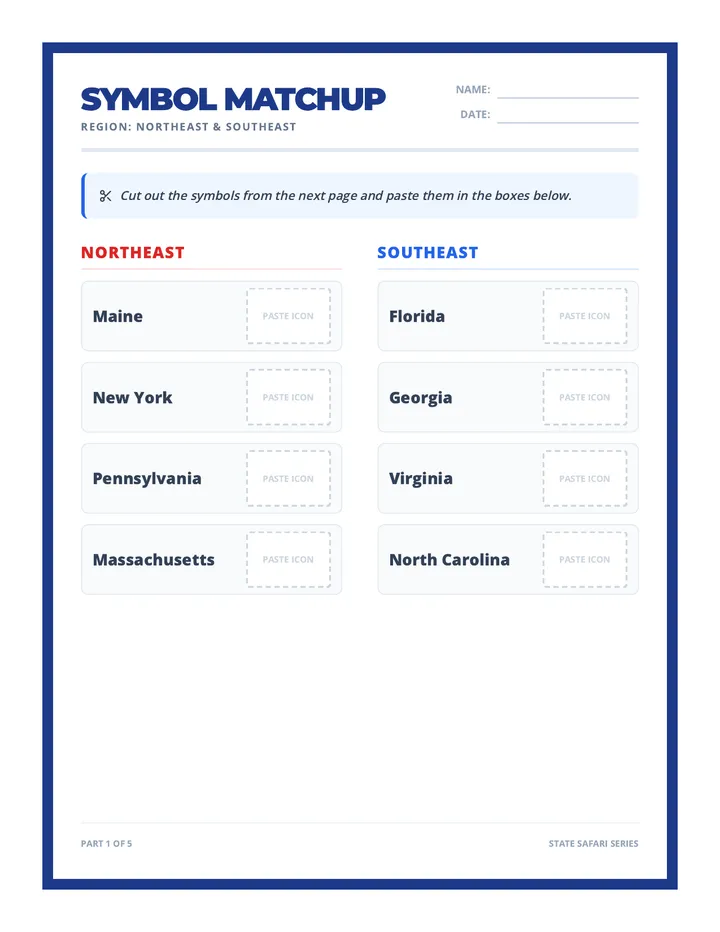
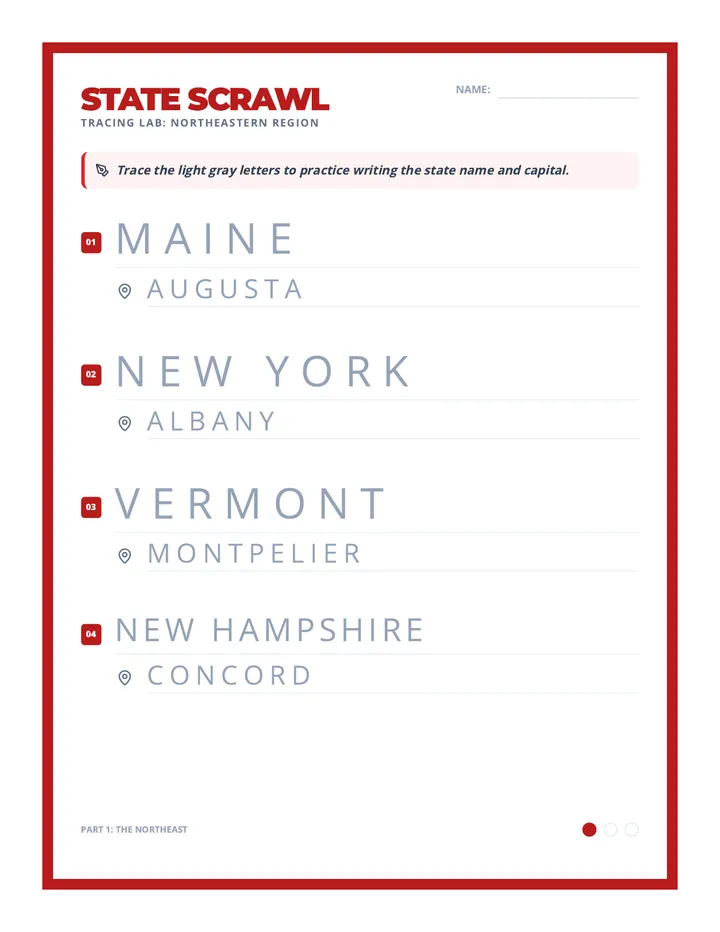
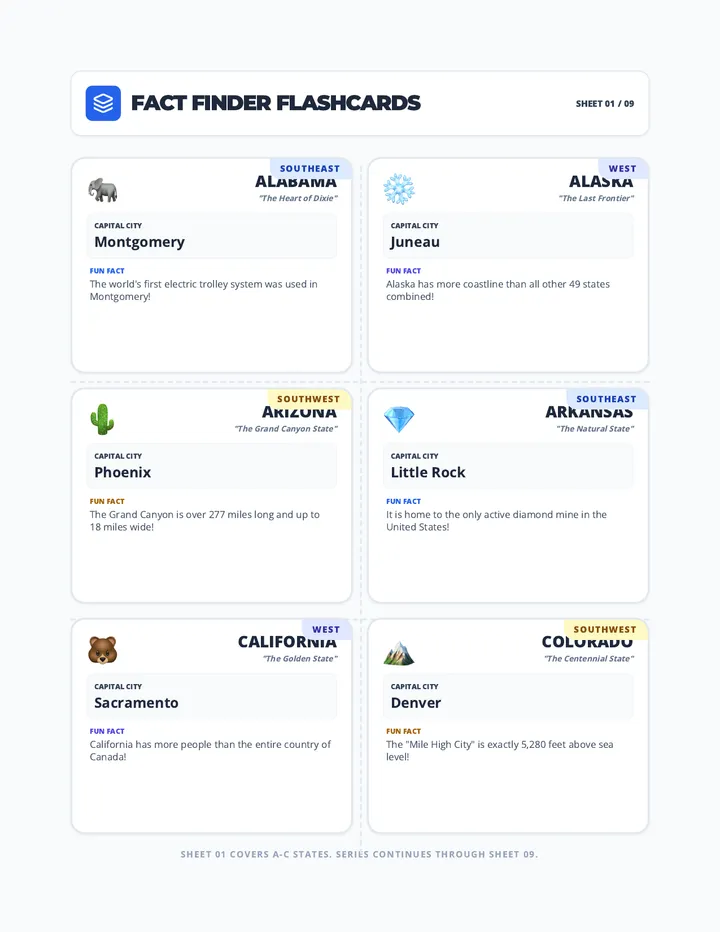
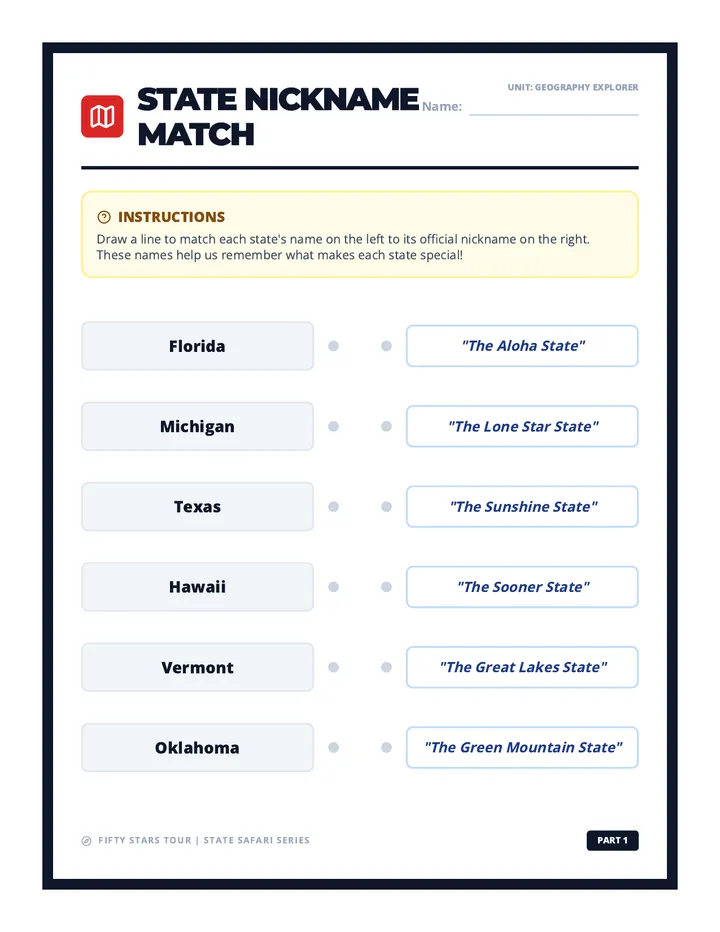
An introductory lesson on United States geography, focusing on state identification, capital cities, and the practical use of a compass rose for navigation.
A vibrant exploration of traditional clothing from the diverse home countries of our class, examining how climate, history, and identity shape garments from Latin America, Africa, Asia, and beyond.
An immersive project where students 'travel' the world, researching diverse cultures, landmarks, and traditions to complete their own personalized explorer passport.
Students create a physical or digital time capsule to communicate what life is like today for future Iowans.
Students learn how to conduct a simple oral history interview to gather stories about Iowa's past from family members or neighbors.
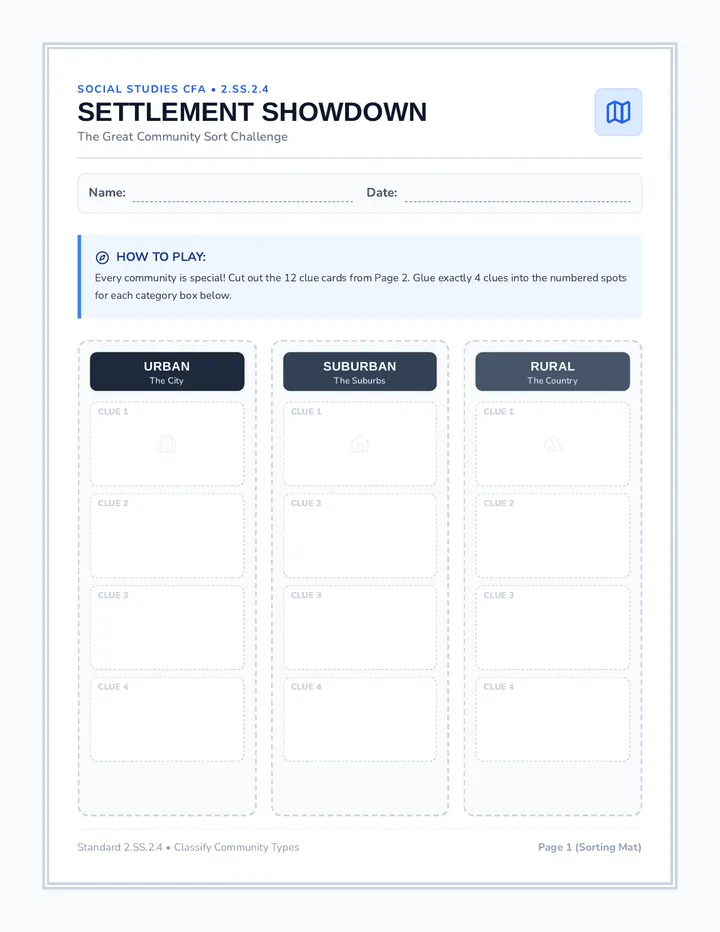
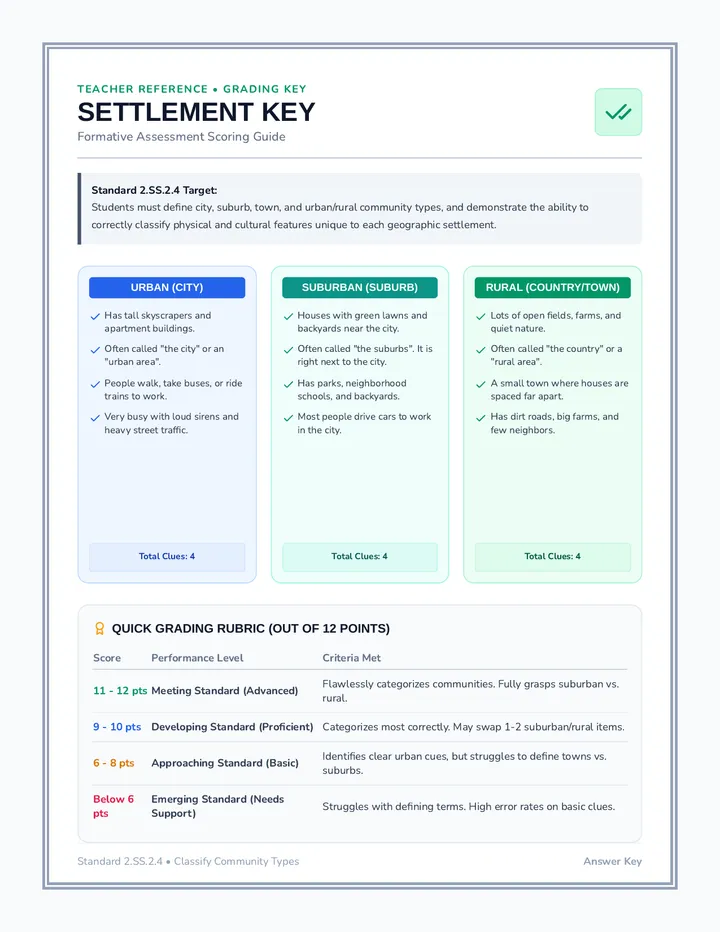
Students use maps to track how community sizes and physical locations of businesses changed over time in Iowa.
Students examine the architecture and purpose of important community buildings like courthouses and libraries across Iowa.
Students explore the history and evolution of the Iowa State Fair as a community celebration and agricultural showcase.
Students learn about the Covered Bridge Festival in Winterset and why these landmarks were built and preserved.
Students explore the history and cultural significance of the Tulip Time festival in Pella, Iowa.
Students investigate Norman Borlaug's innovations in agriculture and his legacy of feeding people around the world.
Students discover Carrie Chapman Catt's leadership in the women's suffrage movement and her Iowa roots.
Students learn about Annie Wittenmyer's work providing care and homes for orphans and soldiers in Iowa during and after the Civil War.
Students study Alexander Clark's contribution to civil rights and his fight for equal education in Iowa.
Students learn about the historical decision and journey of moving Iowa's state capital from Iowa City to Des Moines.
Students explore how communication in Iowa changed from handwritten letters and telegraphs to modern technology.
Students investigate the shift from horse-drawn carriages and riverboats to trains and modern automobiles in Iowa.
Students explore changes in clothing and fashion in Iowa from the 1800s to the present day.
Students investigate how Iowans grew, preserved, and prepared food in the past compared to modern conveniences.
Students examine the evolution of toys, games, and household chores for children in Iowa's past.
Students explore the daily life of children in one-room schoolhouses and compare it to their own school experience.
Students use historical photographs to identify physical changes in Iowa's landscape and buildings over time.
Students are introduced to the unit's compelling question and learn to distinguish between primary and secondary sources as 'history detectives.'
An introduction to geography and communities where students listen to a scripted read-aloud about a town's features and then practice identifying physical and human characteristics.
An introductory lesson on essential map skills, covering the compass rose, map legends, and scale through interactive exploration and practical application.
A festive wrap-up with group games and challenges to celebrate Irish heritage and holiday fun.
A virtual trip to the 'Emerald Isle' to learn about Irish geography, music, and food, paired with a reflective writing activity.
Exploration of holiday symbols like the shamrock and the rainbow, featuring a logic-based scavenger hunt activity.
Introduction to the history of Saint Patrick and the whimsical folklore of leprechauns, concluding with a creative design challenge.
A lesson exploring the liturgical season of Lent, focusing on the three pillars of prayer, fasting, and almsgiving as ways to grow closer to God.
A cumulative review and high-stakes practice session using multi-part questions to demonstrate mastery of RL.2.
A deep dive into character motivation, exploring how small actions and decisions lead to significant lessons within a narrative.
Students practice identifying morals through the lens of common proverbs and sayings, analyzing how universal truths are woven into fables.
This lesson focuses on the Part A/Part B question format, teaching students to pair a determined moral with the specific text evidence that supports it.
Students learn to identify the central conflict and character reactions in a fable, establishing the foundation for determining the story's lesson.