In this hands-on workshop, students build their own manipulative clocks to explore the mechanics of telling time. This lesson focuses on assembly and basic identification of clock components.
This lesson introduces addition within 20 through the 'Make Ten' strategy and Number Bonds. Students progress from using physical counters to visual ten frames and finally to abstract equations.
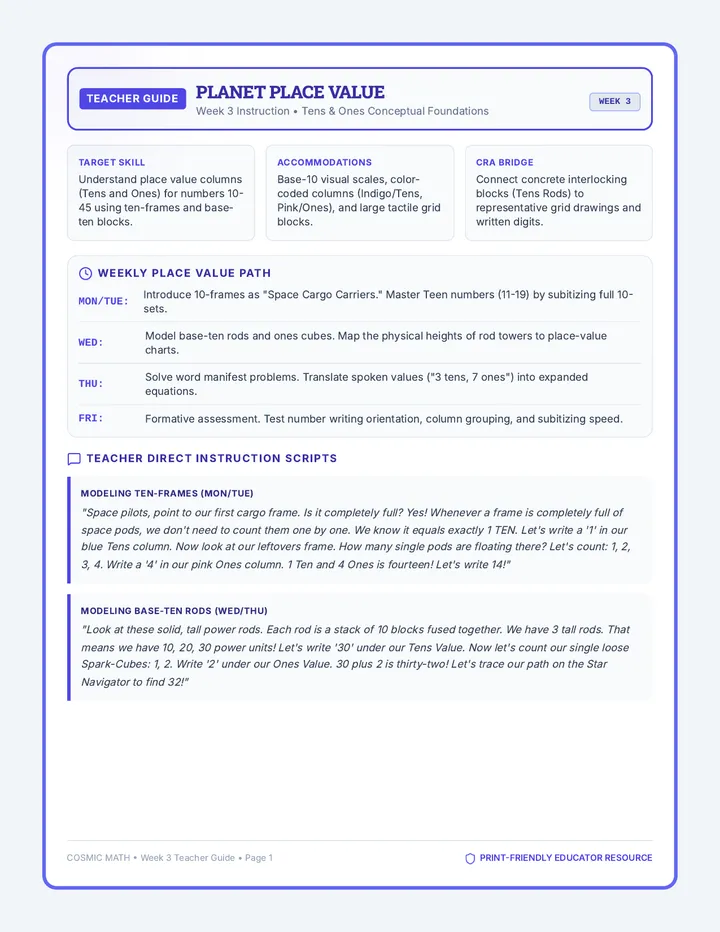
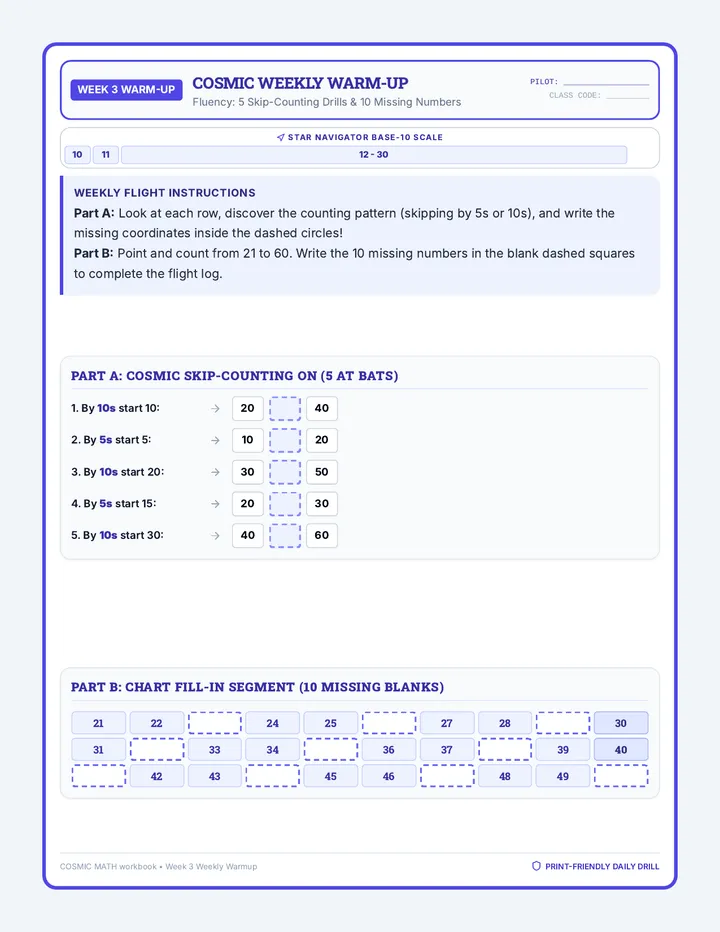
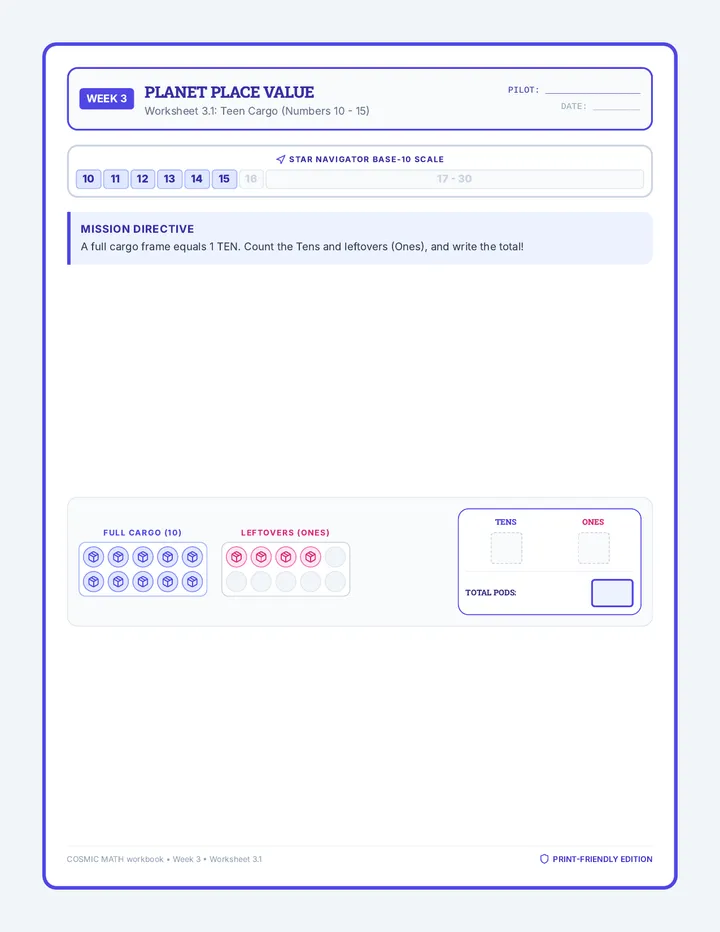
Targeted practice for identifying numbers 20-40 through rapid-fire visual drills and kinesthetic activities. Focuses on overcoming the 'teen' vs 'ty' confusion and building reliable recall.
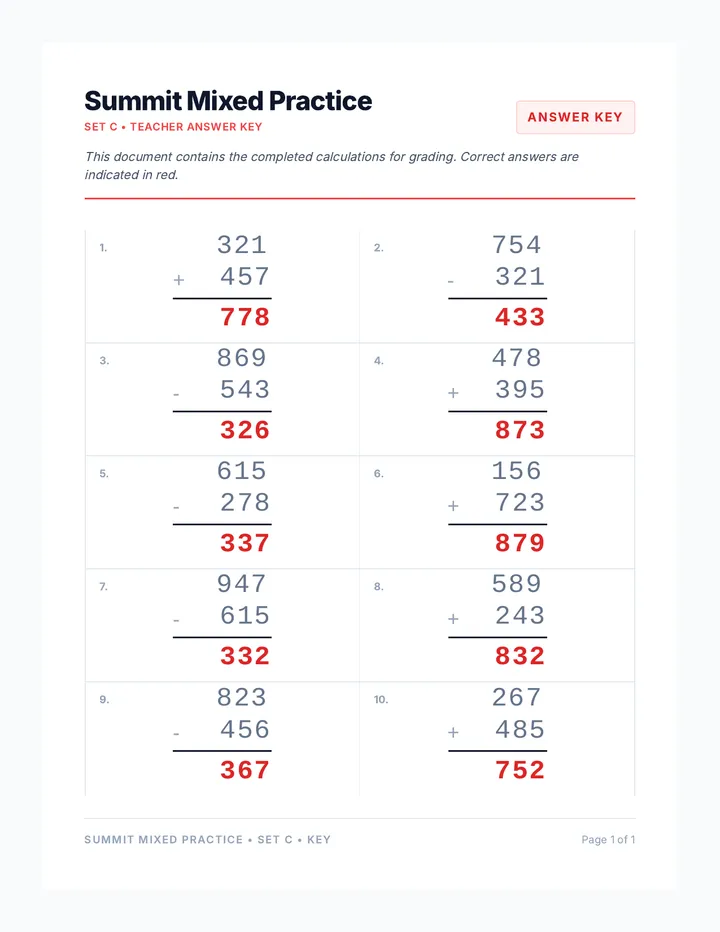
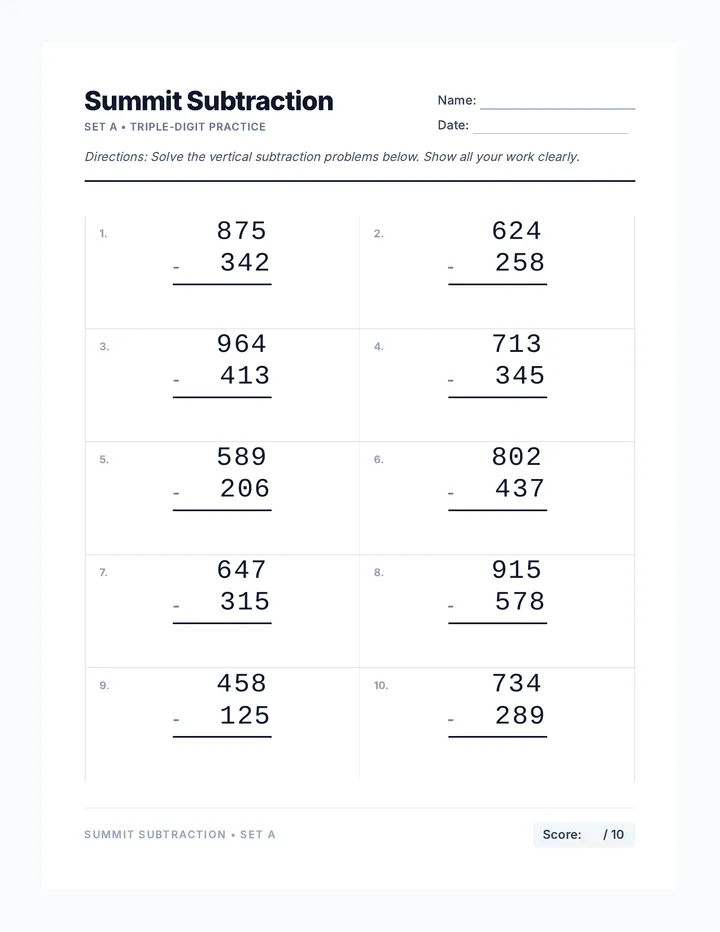
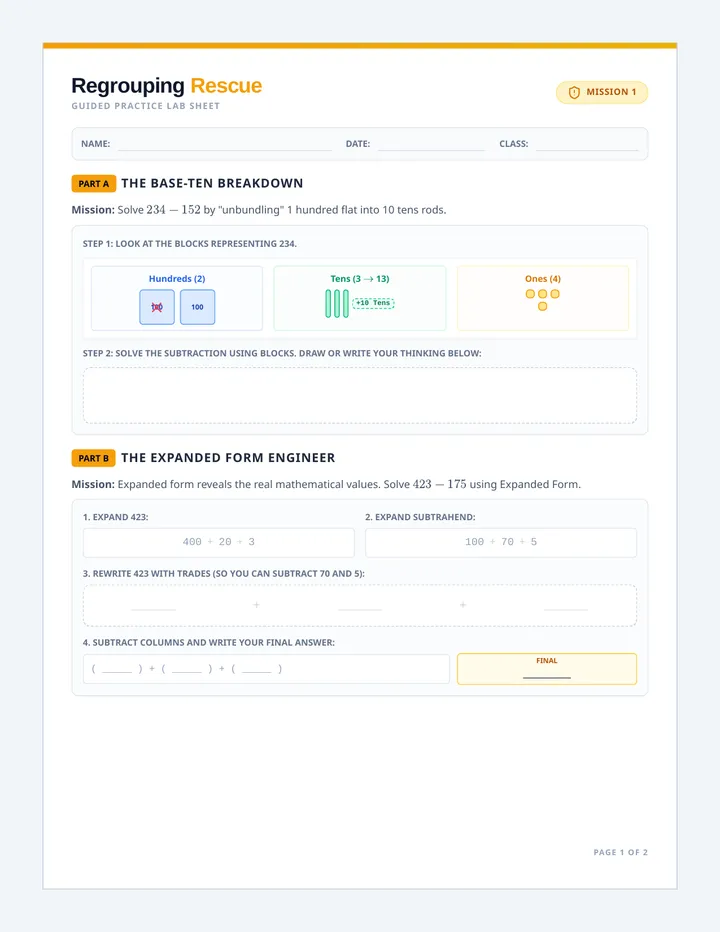
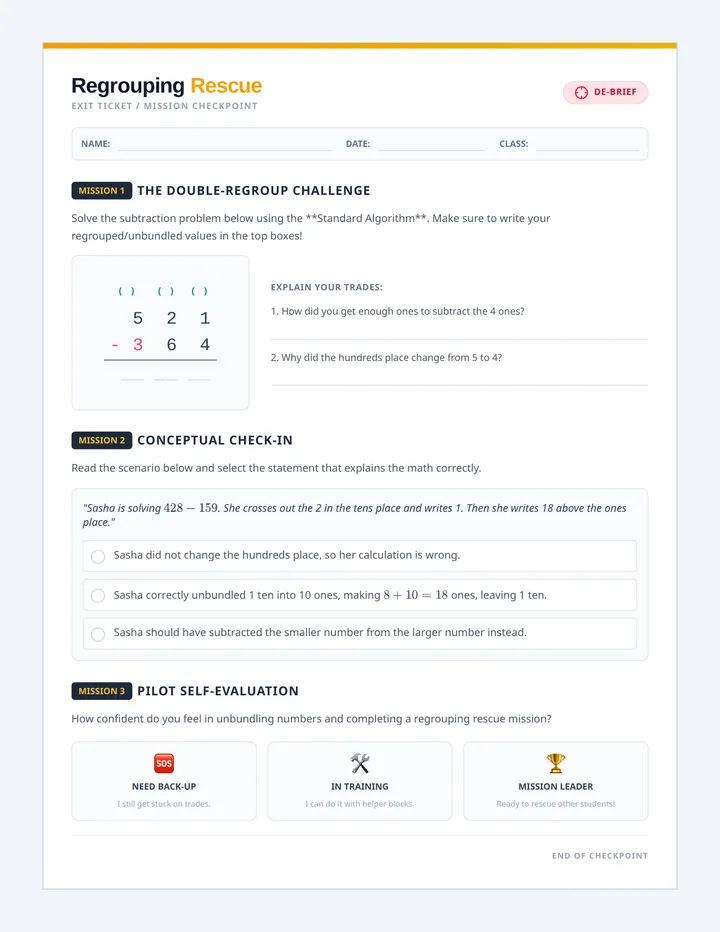
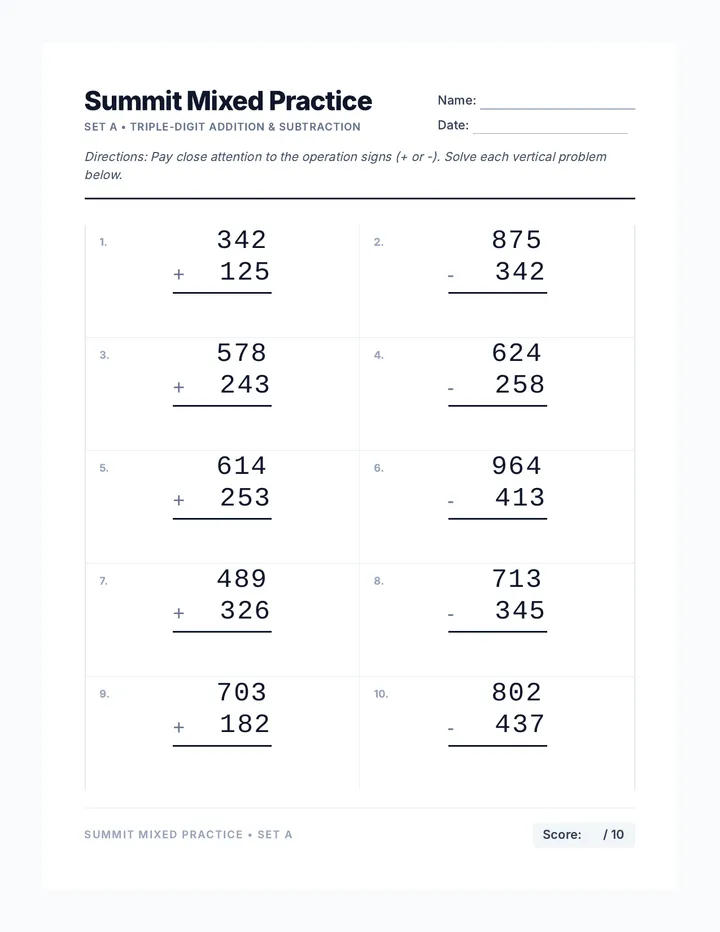
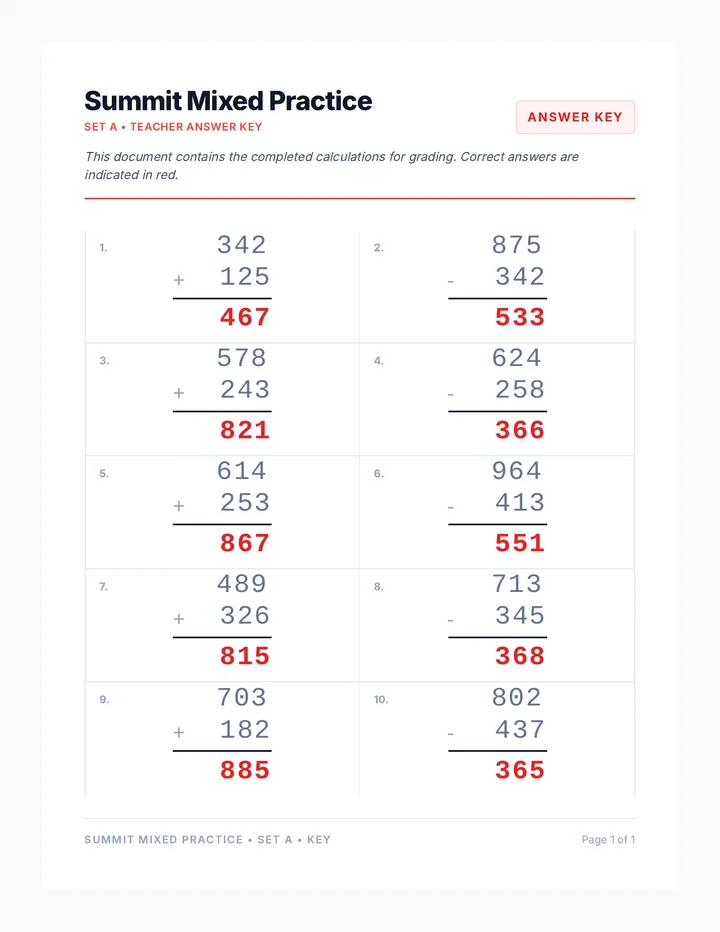
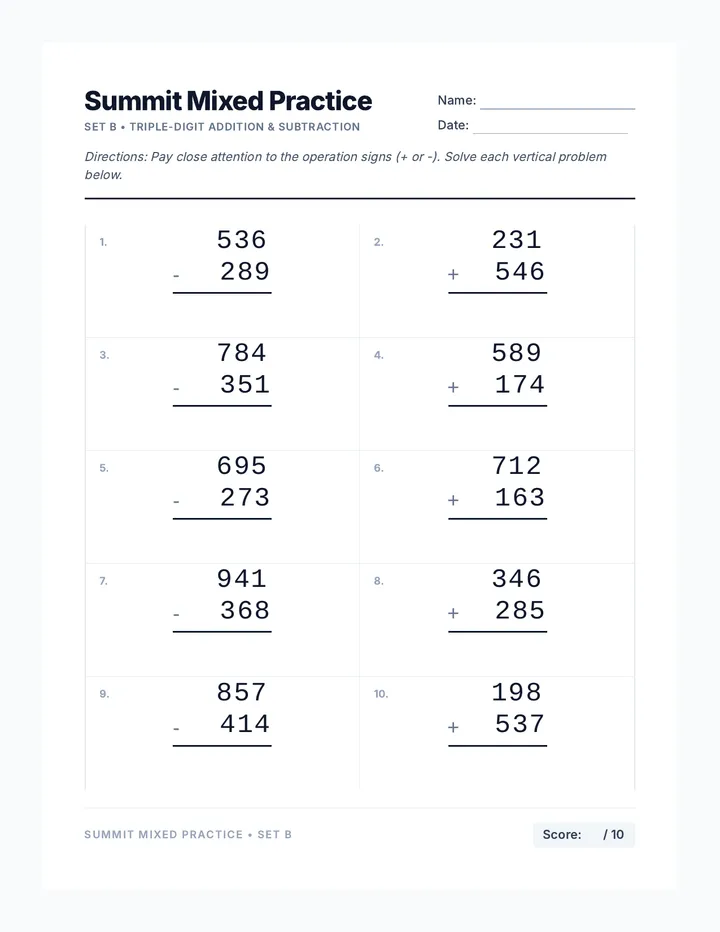
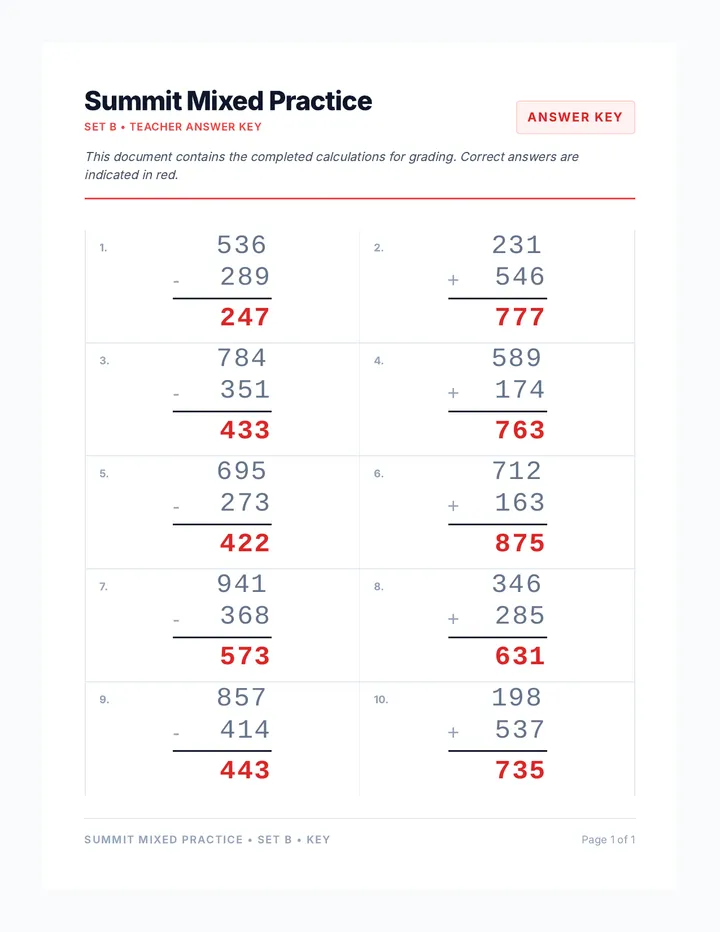
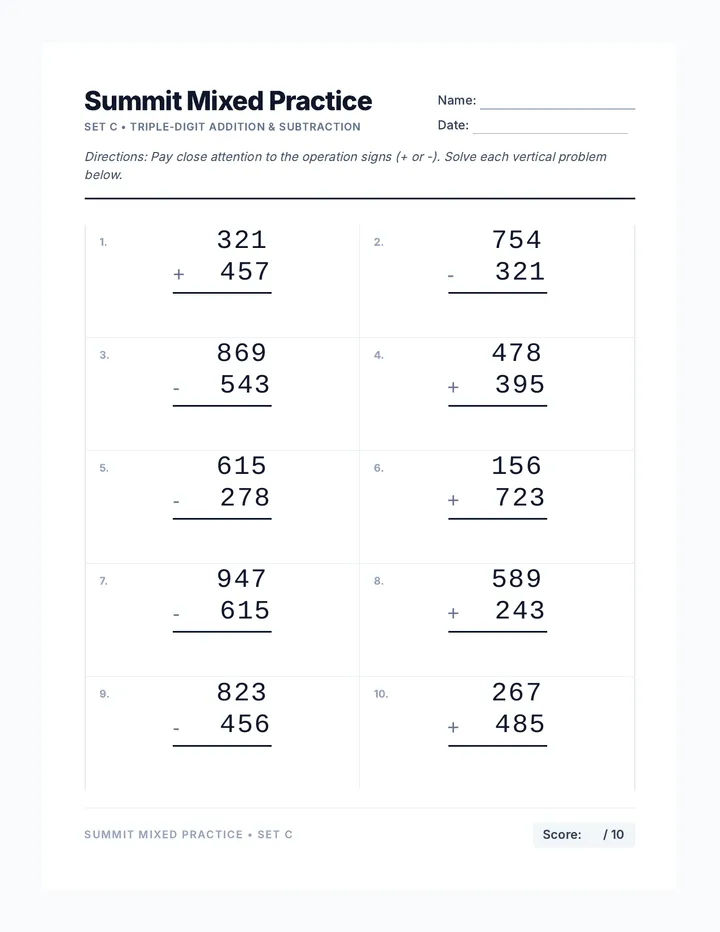
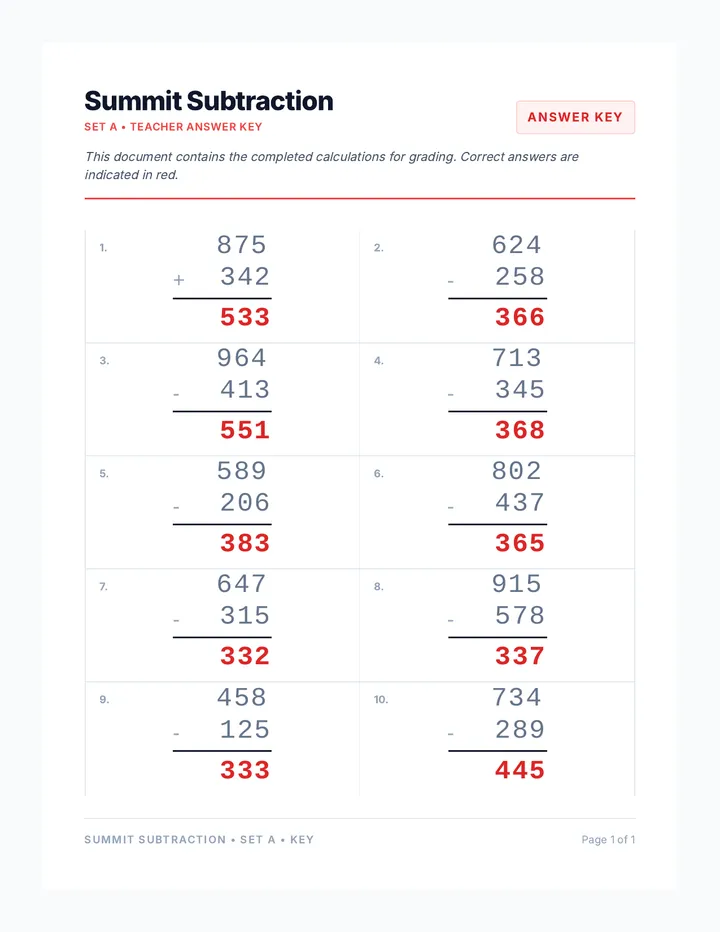
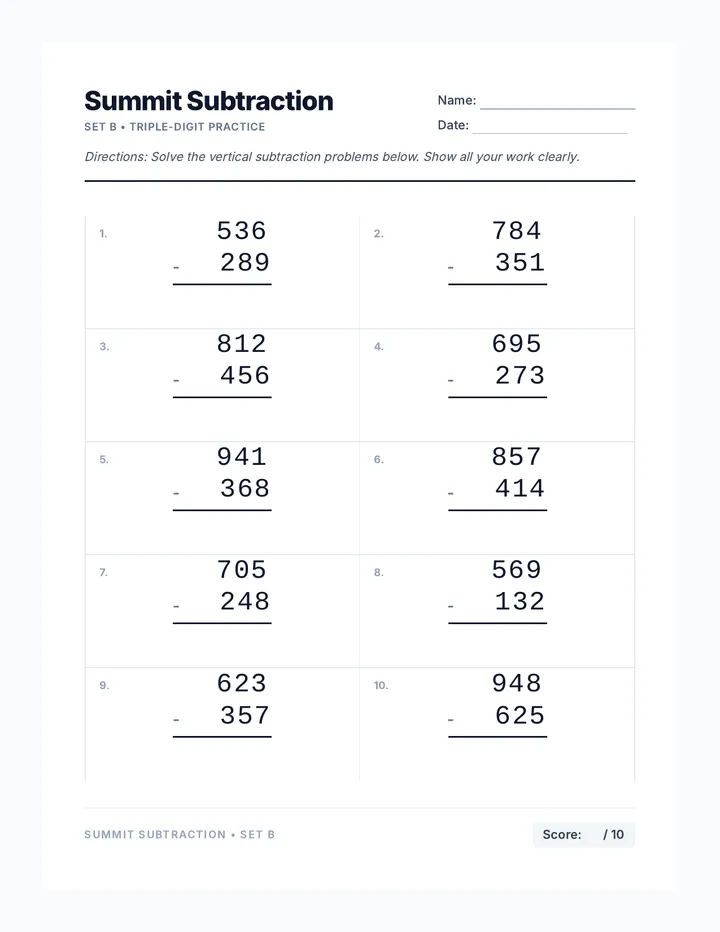
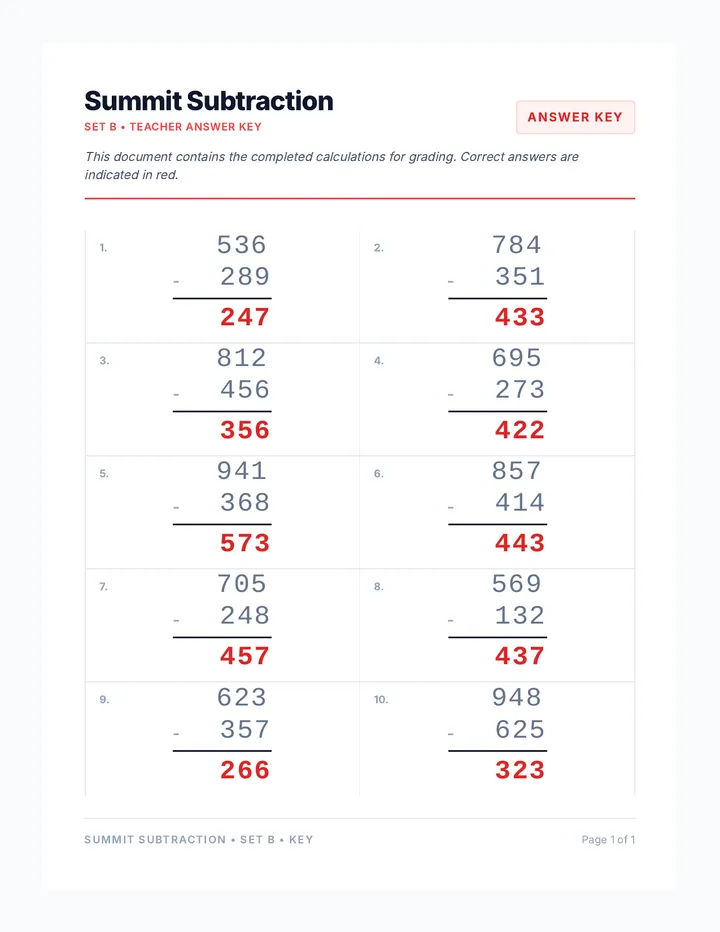
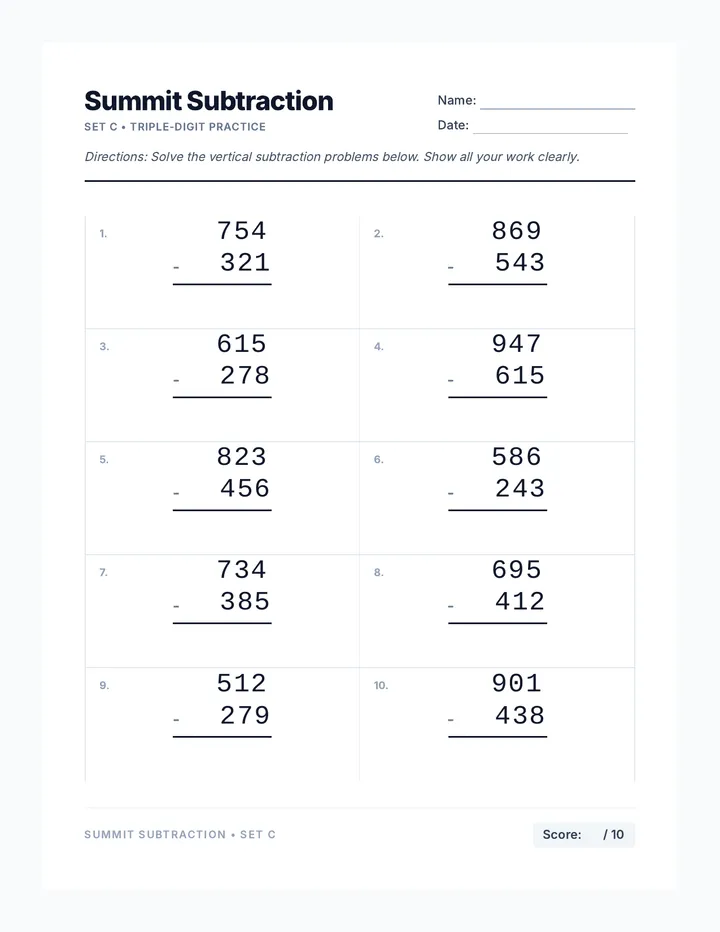
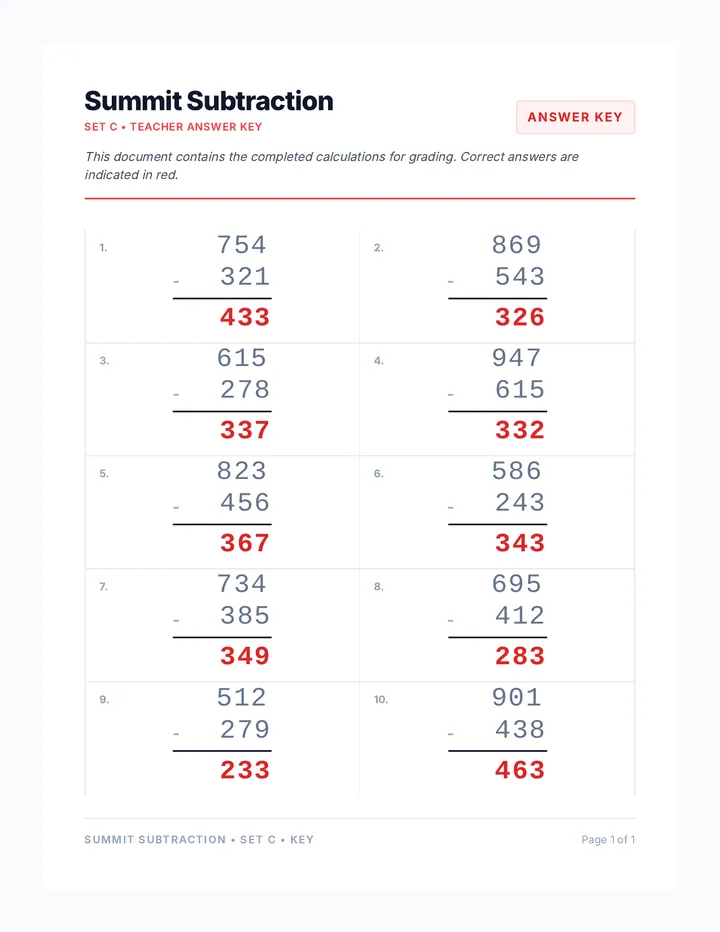
A focused lesson on 3-digit subtraction where students practice regrouping from the tens place to the ones place. includes a visual-heavy worksheet and an answer key.
A comprehensive introduction to 3D geometric shapes including cubes, spheres, rectangular prisms, cones, pyramids, and cylinders. Students will learn to identify these shapes, count their attributes (faces, edges, vertices), and find them in the real world.
A fun, monster-themed lesson focused on identifying and naming numbers 1-20 through a hands-on 'Roll and Cover' game. Students practice subitizing and number recognition in a playful, low-stakes environment.
A comprehensive math review lesson designed to reinforce key elementary math skills including logical ordering, 2-digit subtraction, geometric attributes, and equal parts/fractions. This lesson uses a repeated "at-bat" structure to build mastery through multiple variations of the same problem format.
A cumulative review and formal assessment of perimeter and area concepts in a shortened Friday block.
Reinforcing the concept of area through counting squares in arrays and understanding the relationship between rows, columns, and total area.
Introduction to area by partitioning rectangles into equal-sized rows and columns. Students will visualize area as the total number of squares inside a boundary.
Advanced perimeter practice including finding missing side lengths and solving real-world word problems involving fences and borders.
Introduction to perimeter as the distance around a shape. Students will learn to measure sides and add them together to find the total perimeter.
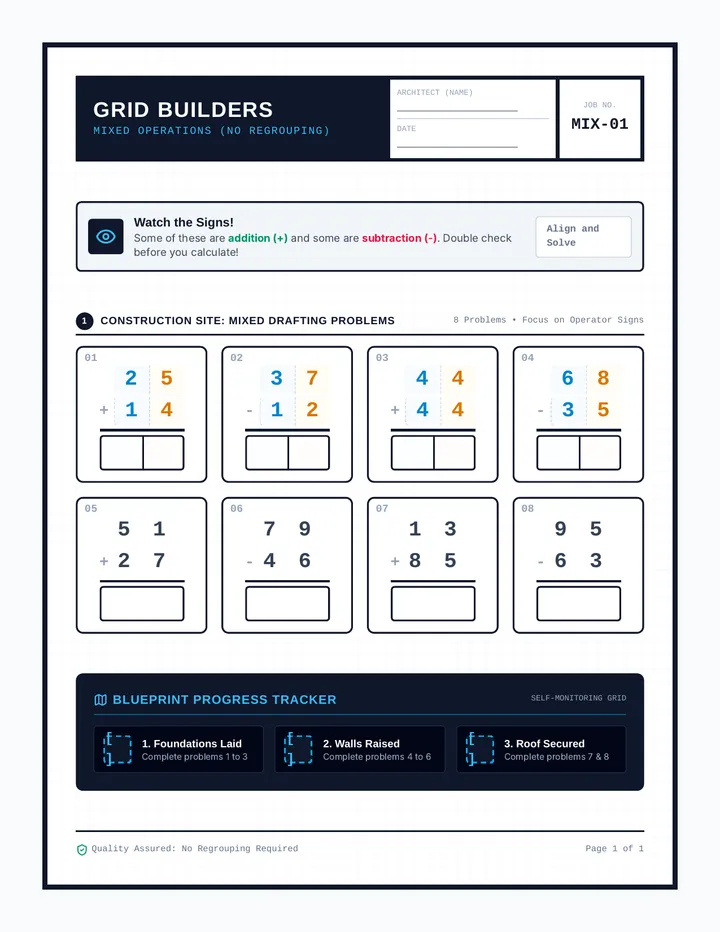
A math lesson focused on identifying the correct operation (addition, subtraction, multiplication, or division) to solve arcade-themed word problems using double-digit numbers without regrouping.
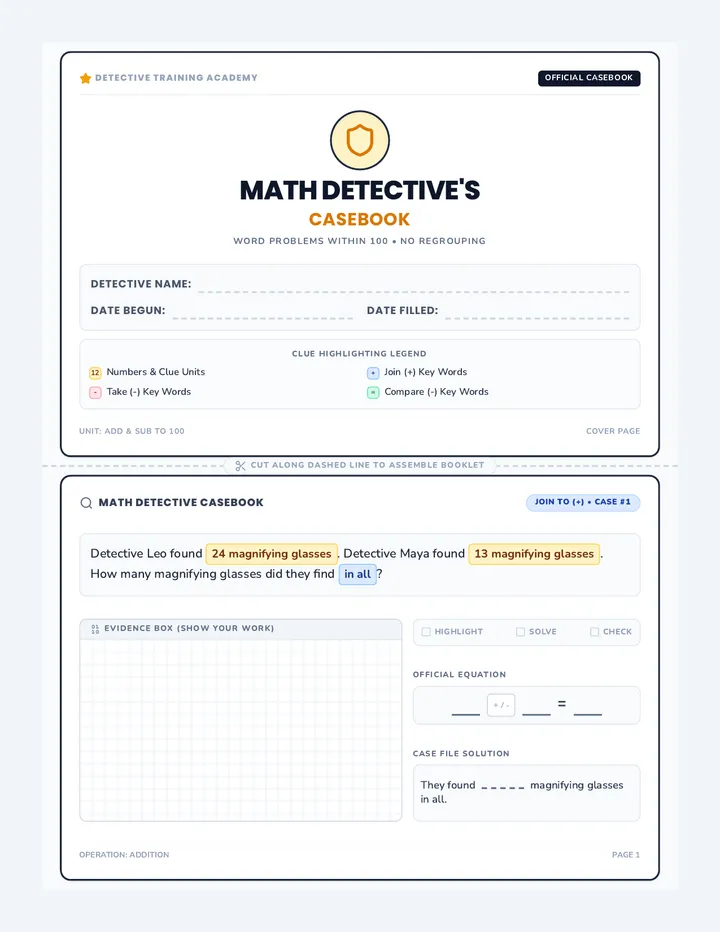
A comprehensive word problem review focusing on addition and subtraction within 200, featuring repetitive practice (at-bats) to build fluency and mastery.
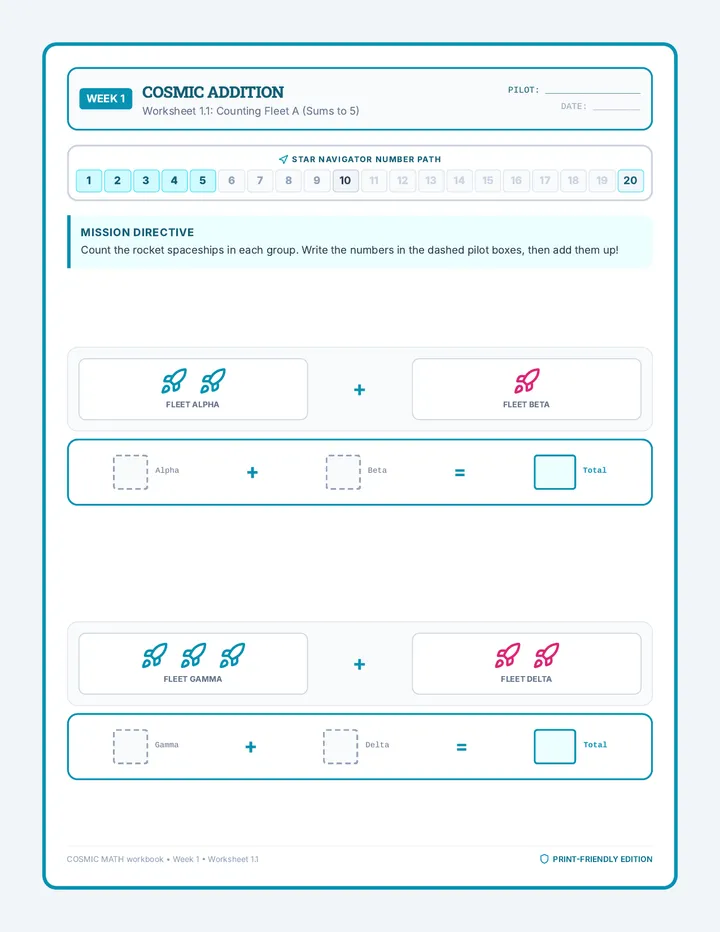
A math review packet focusing on basic addition, subtraction, number combinations, and visual representation of groups, including a student worksheet and an answer key.
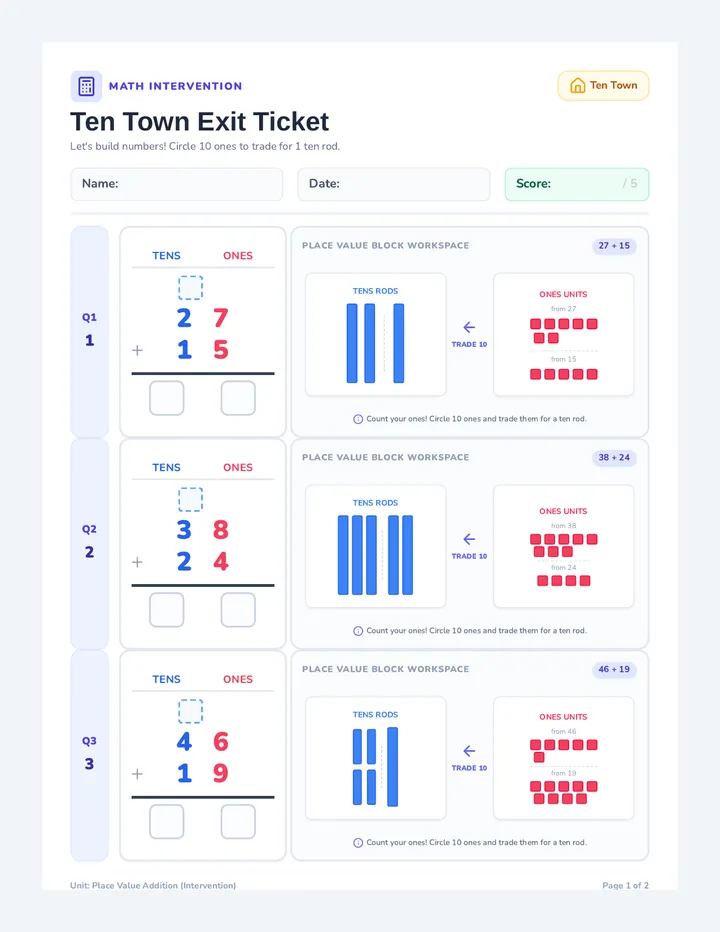
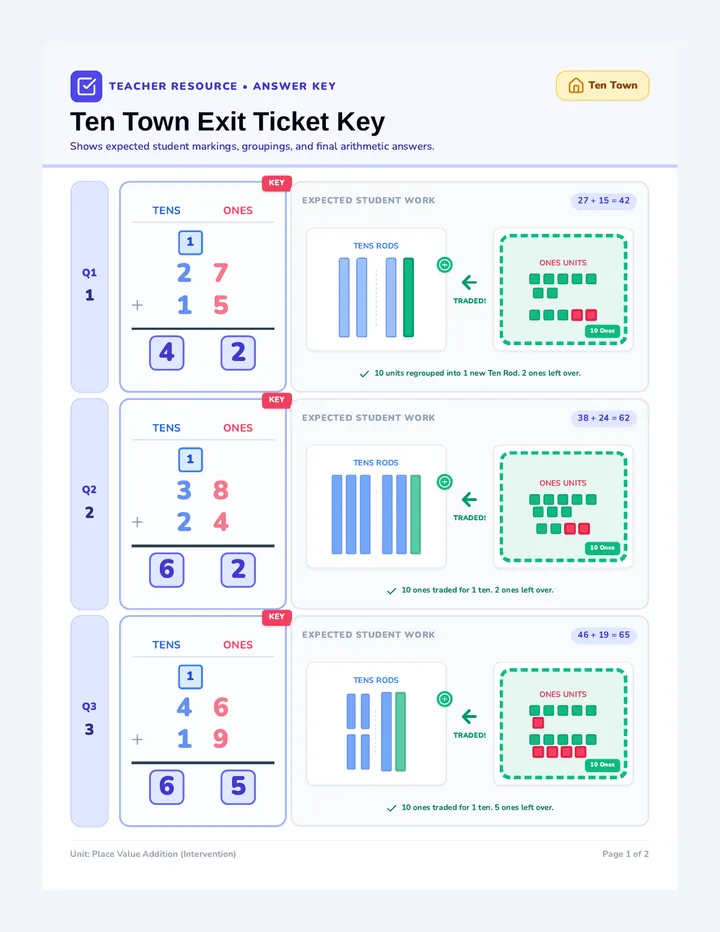
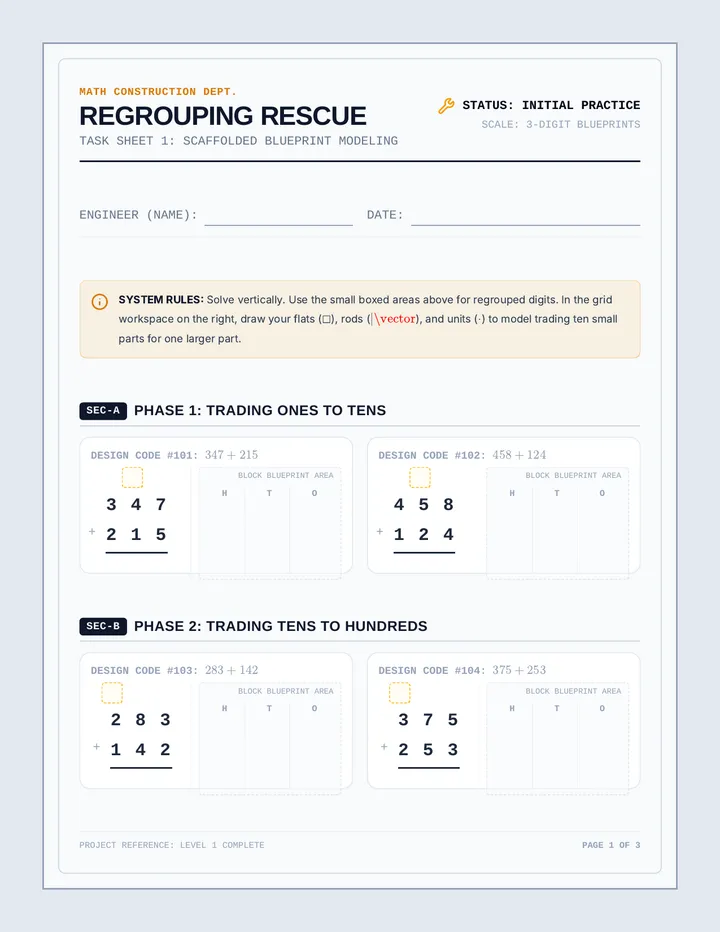
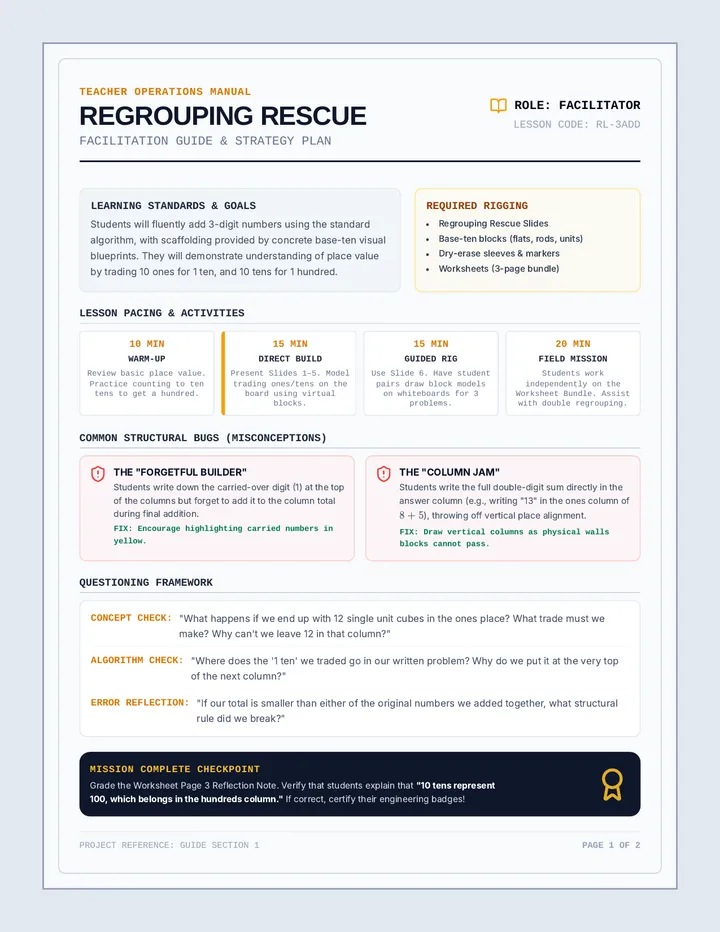
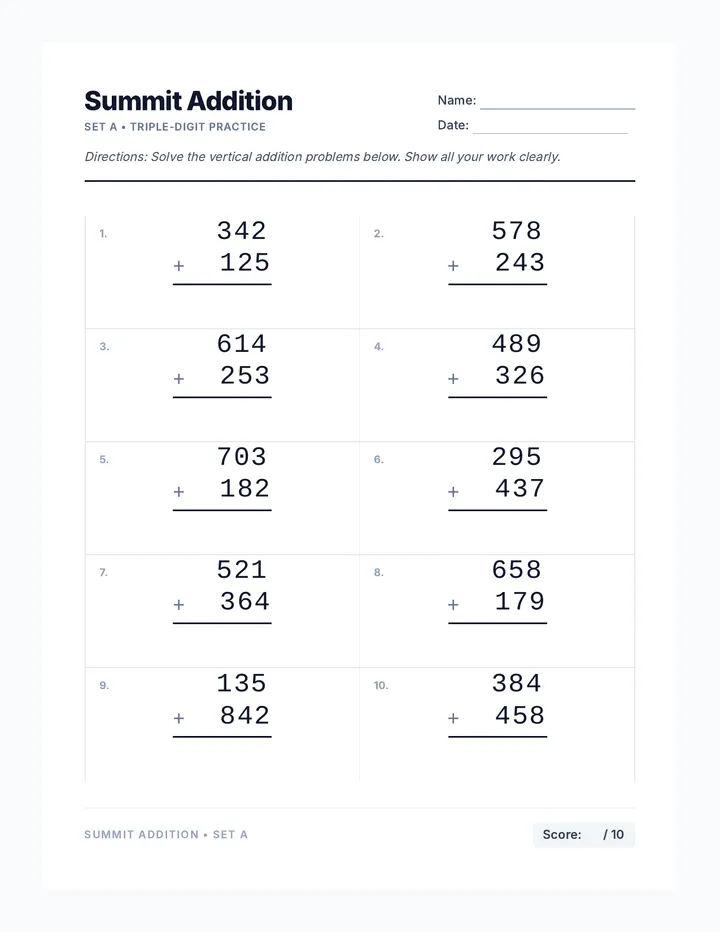
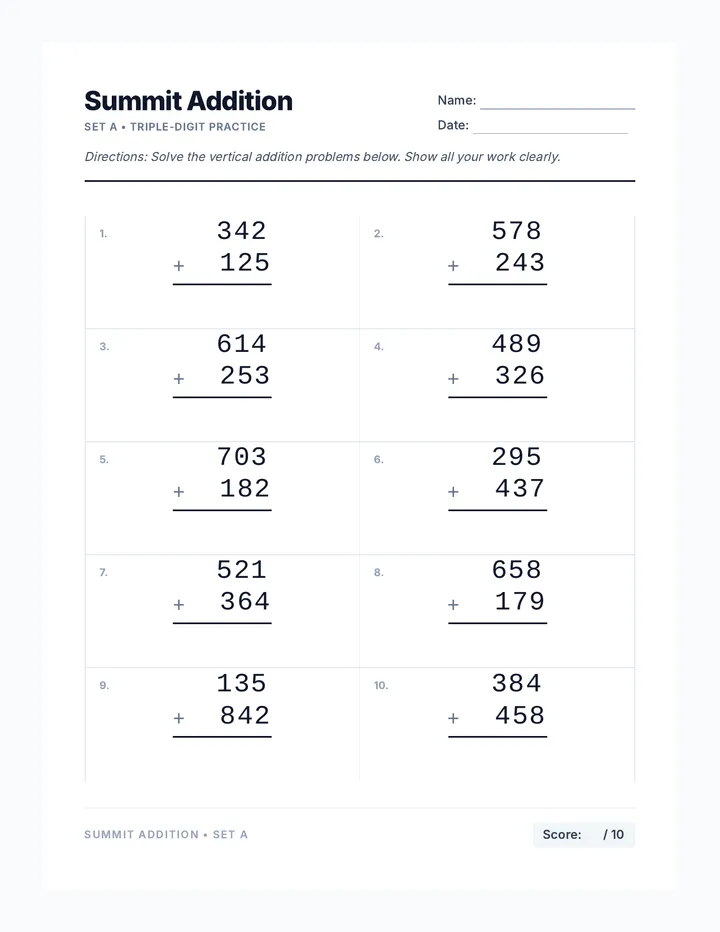
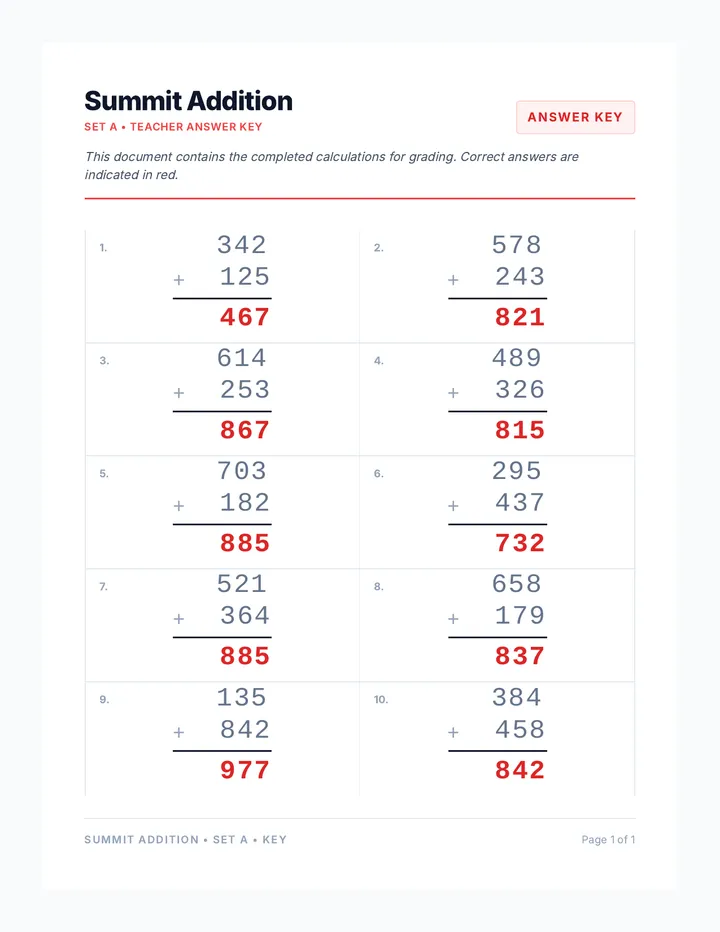
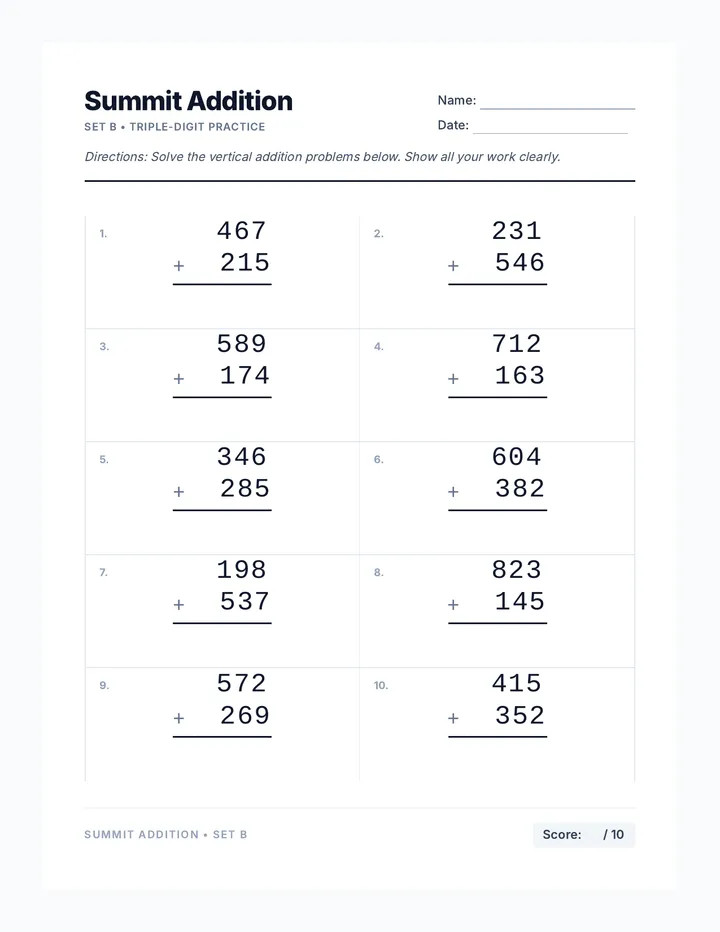
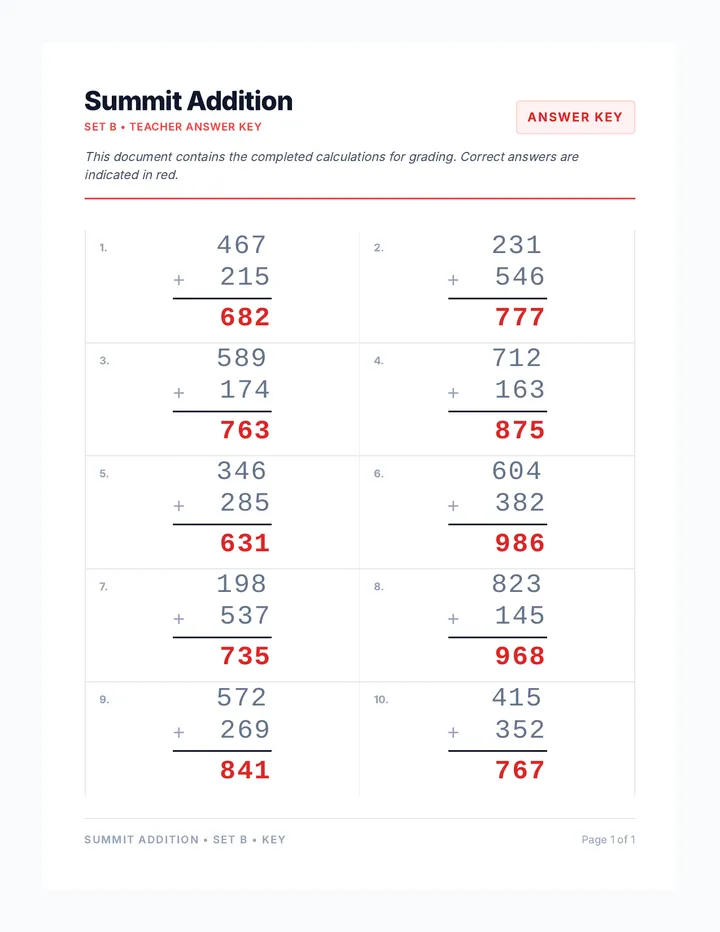
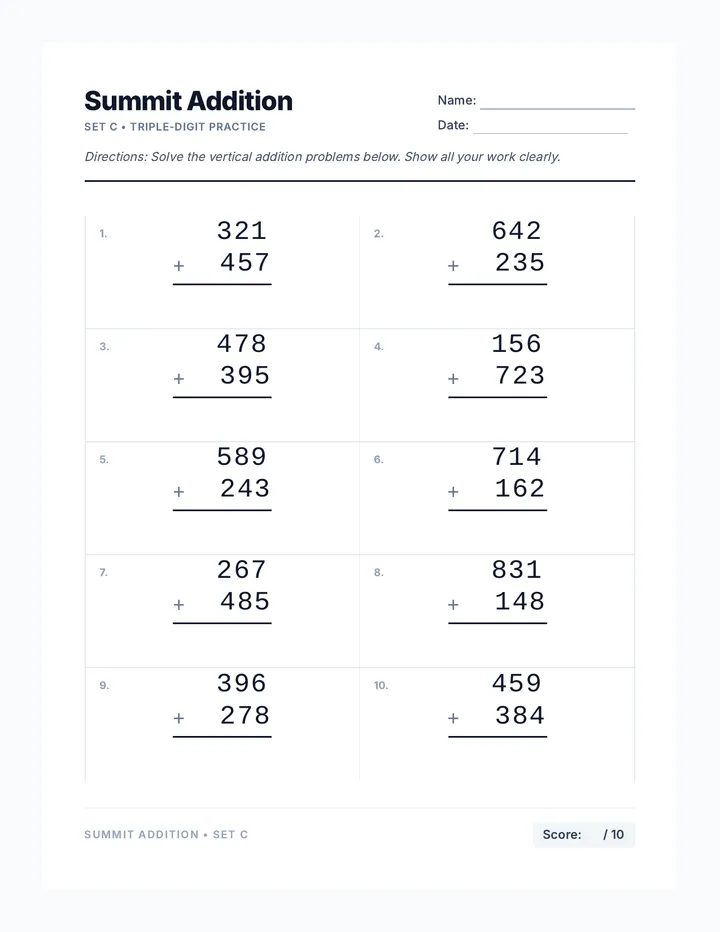
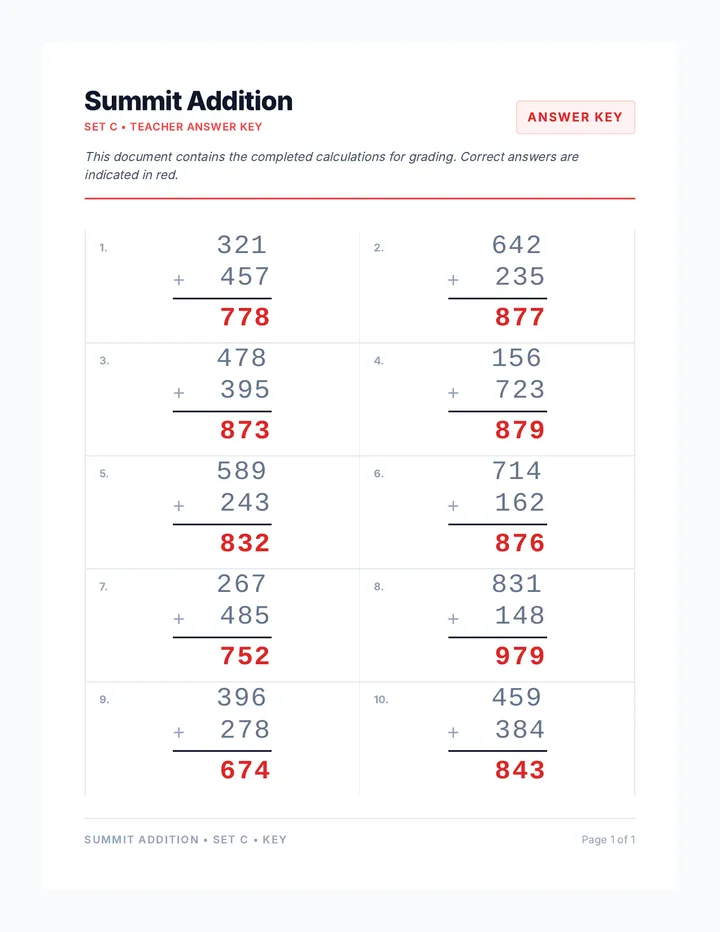
A foundational lesson on 3-digit addition focusing on composing (regrouping) across exactly one place value (either the ones or the tens). Students use a blueprint-themed packet to practice their architectural precision in mathematics.
A 3-day lesson series covering the partitioning of circles and rectangles into equal shares (halves and fourths/quarters) through baking.
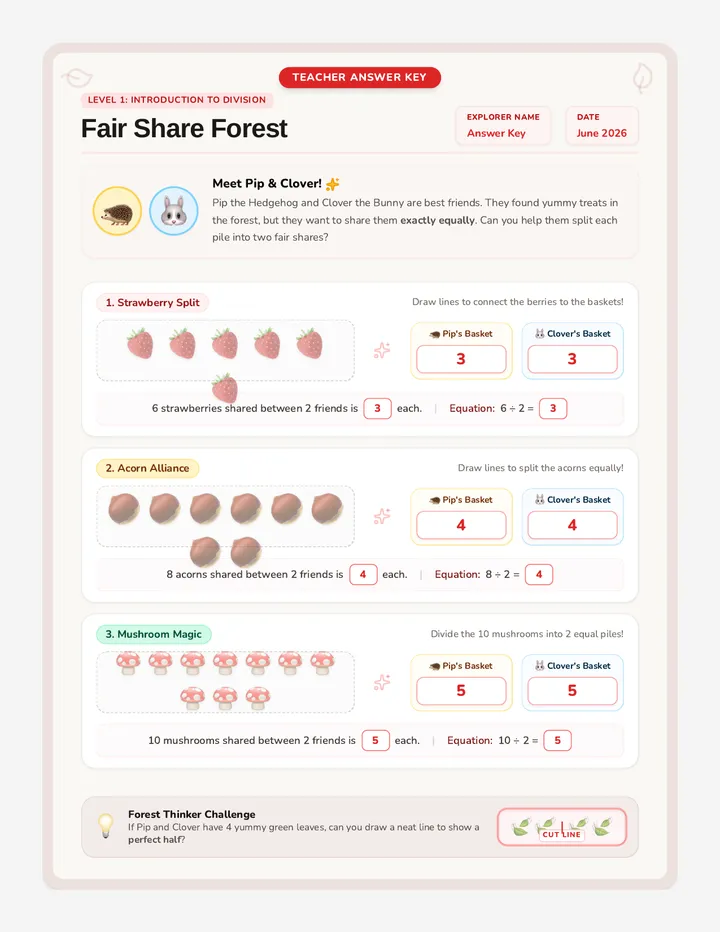
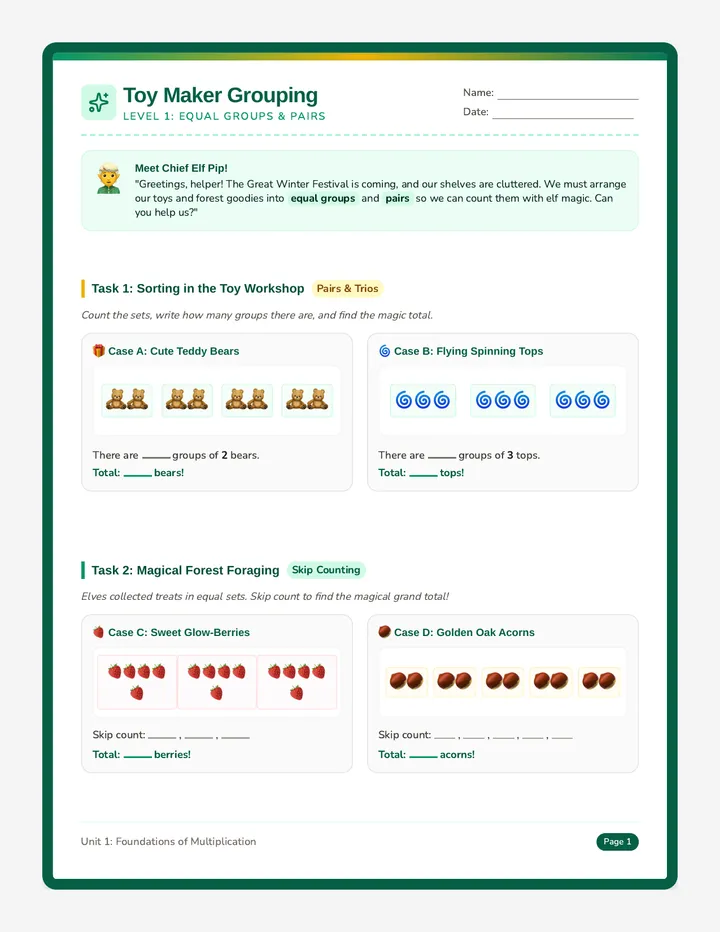
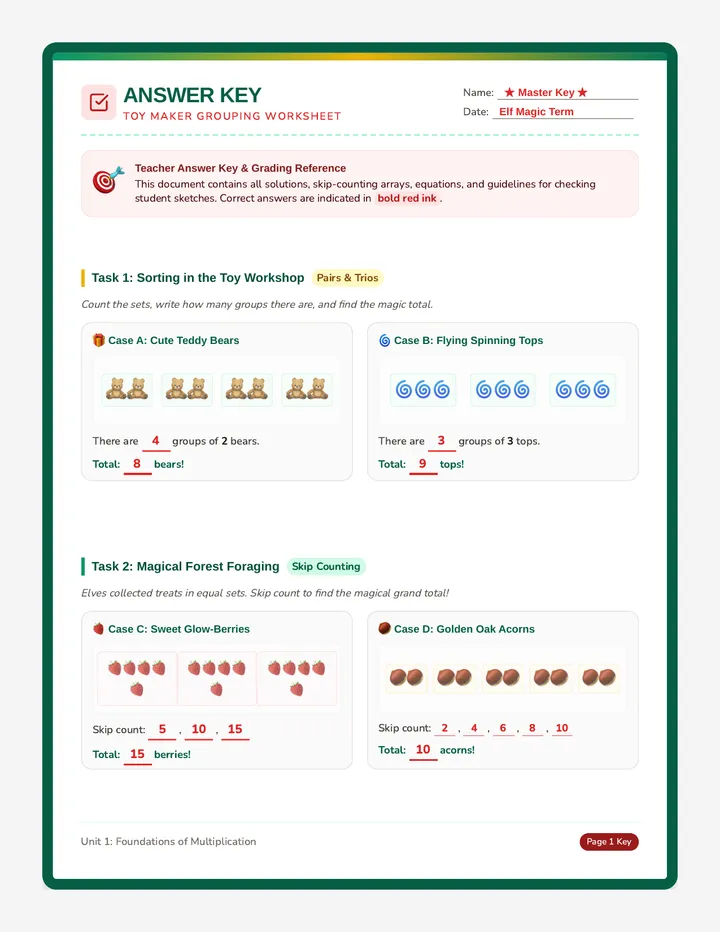
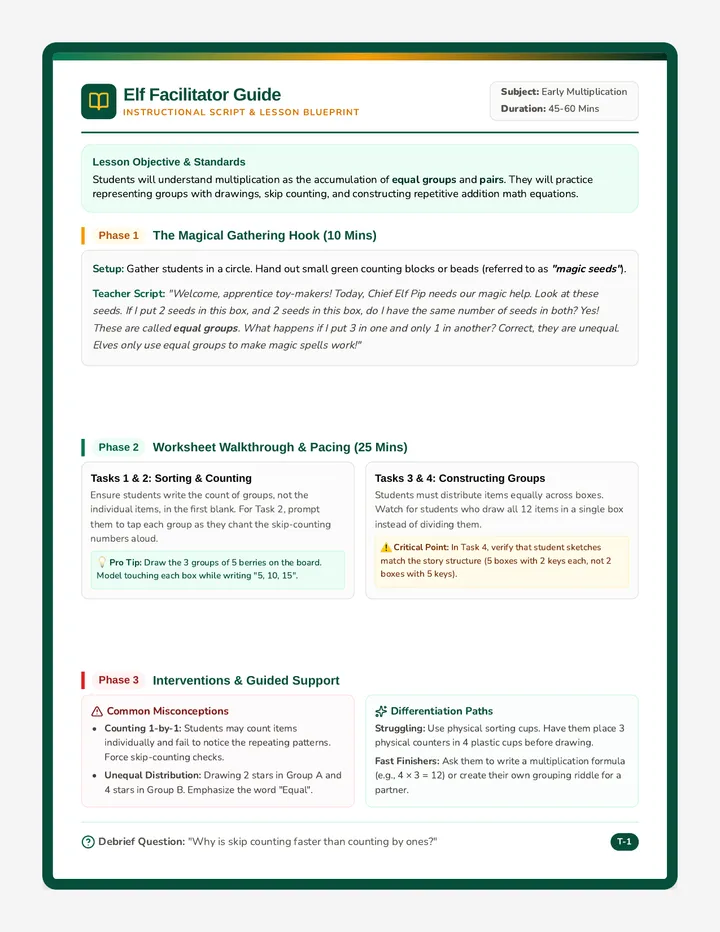
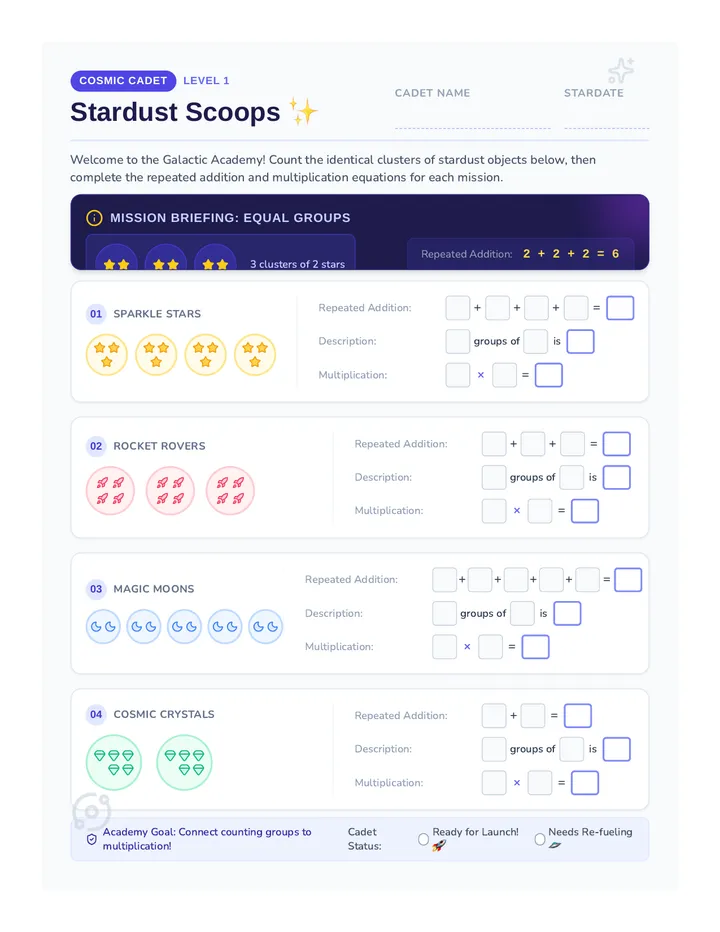
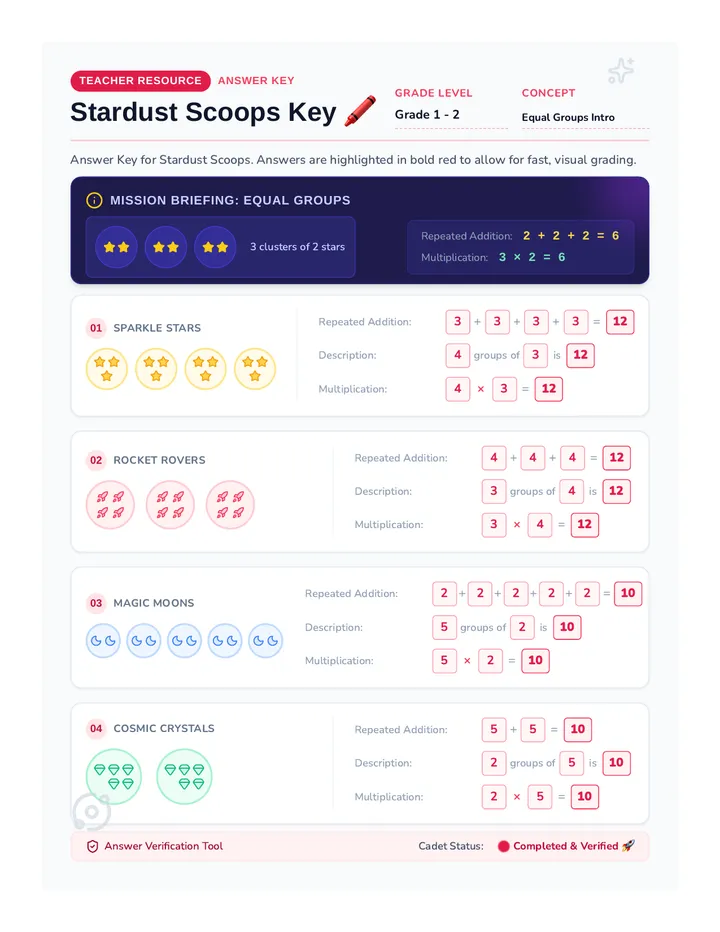
A foundation-level lesson introducing multiplication as equal groups, focusing on the numbers 2 and 10 through visual aids and hands-on flashcard practice.
A focused lesson on identifying missing addends within 20 using number bond visual representations to build algebraic thinking and fluency.
A magical math lesson where students count, sort, and graph different types of ponies to practice data representation and comparison skills.
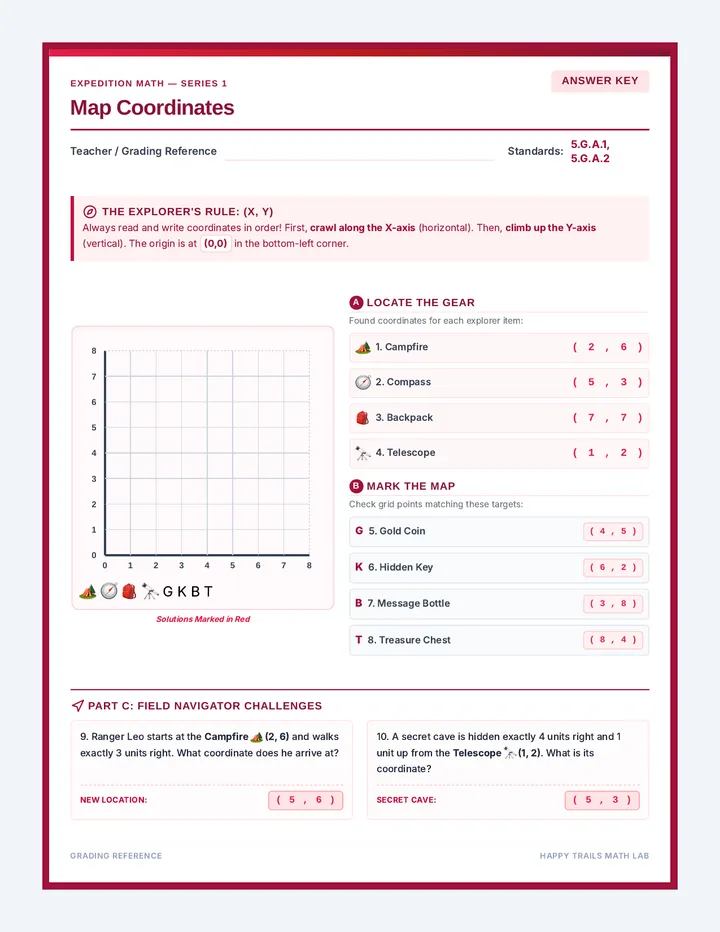
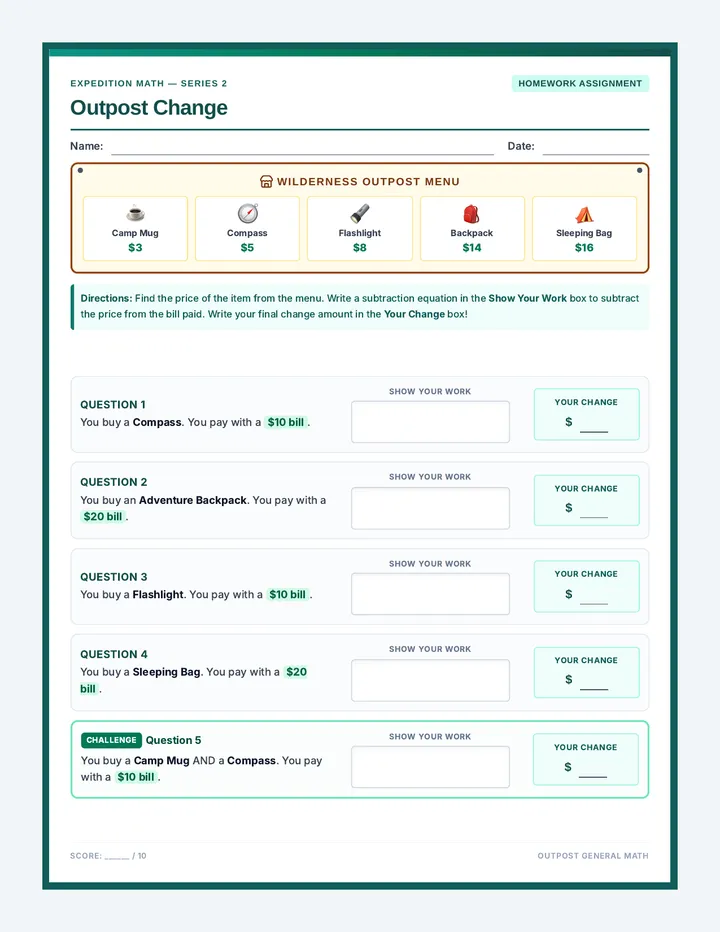
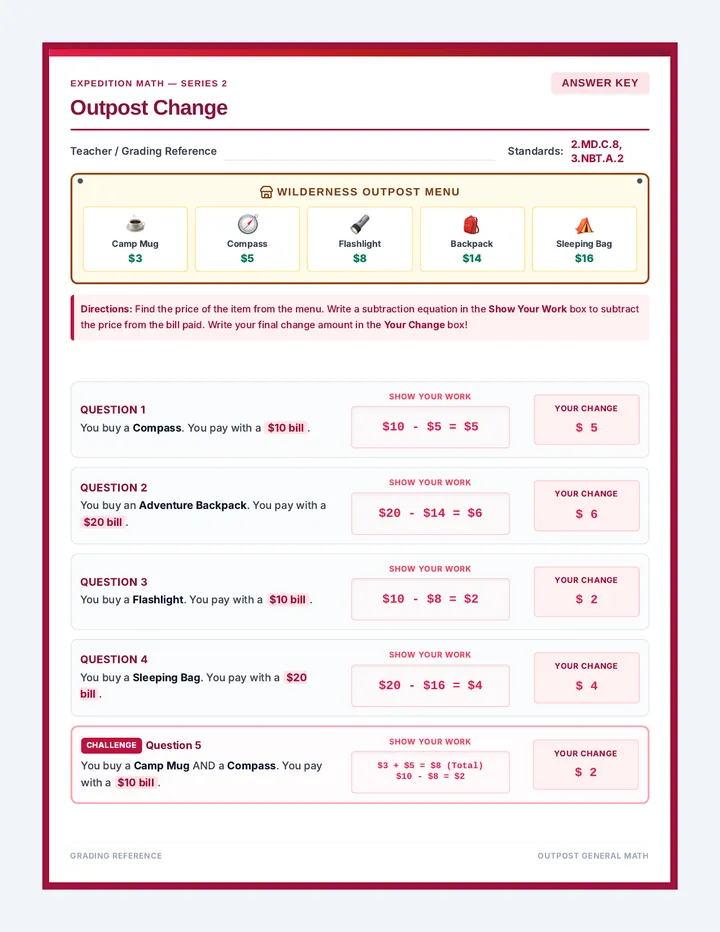
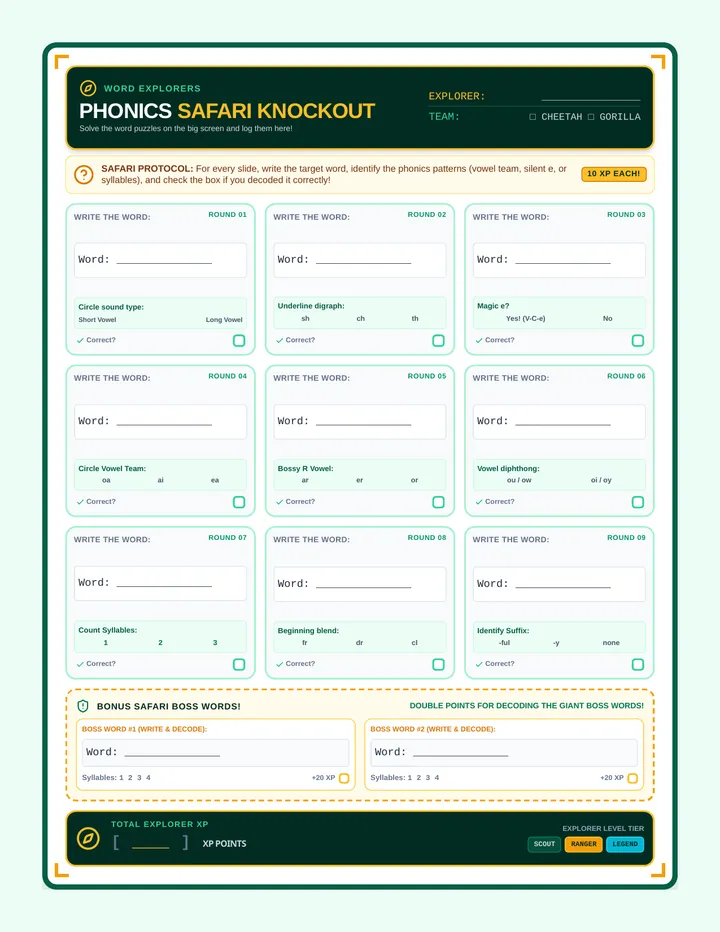
A high-energy math expedition where students master time, money, shapes, and fractions through a jungle-themed safari adventure. This lesson includes interactive slides, a comprehensive teacher guide, and skill-specific practice pages.
Students will explore the concepts of big, medium, and small by comparing various objects in the museum exhibits, promoting vocabulary development and visual discrimination.
An introduction to simple addition by combining groups of museum objects, focusing on the concept of 'putting together' using visual aids and tactile play scenarios.
Students will practice identifying and counting numbers 1-10 using common items found in a play museum setting, such as grocery items, toy cars, and house windows.
A mini-lesson for second graders on telling time to the nearest five minutes, including the concepts of AM and PM, featuring a whimsical 'Time Traveler' theme.
A hands-on introduction to fractions (halves, thirds, and fourths) using a bakery theme. Students will identify equal parts and sort shapes based on their fractional divisions.
A strategy-focused lesson teaching students how to 'make a ten' to solve addition problems within 20. Using a 'Bridge Builders' theme, students learn to decompose addends to reach the benchmark of ten before adding the remainder.
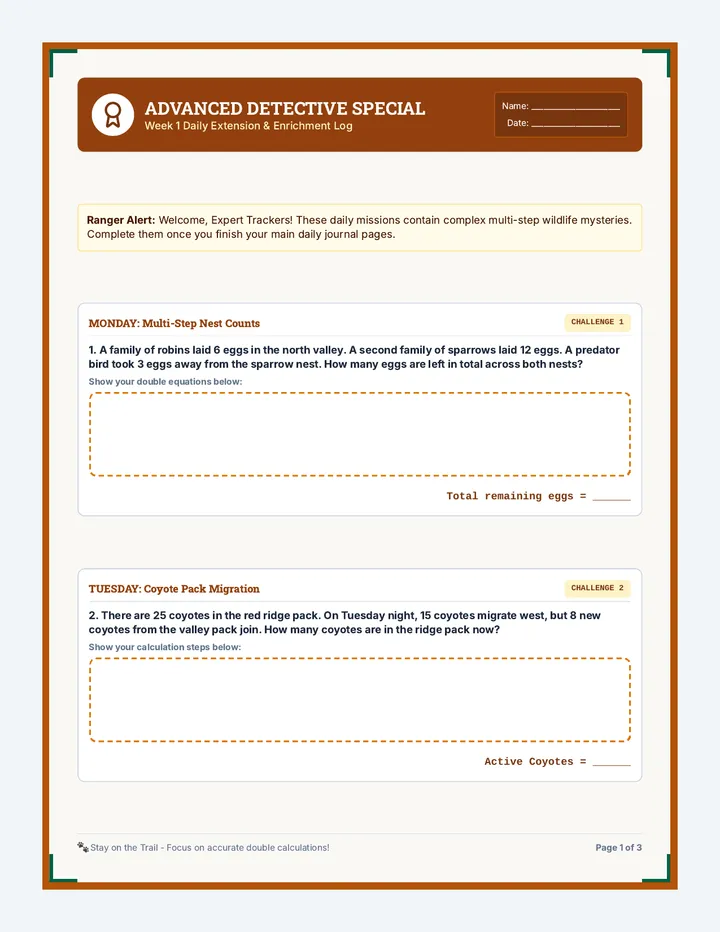
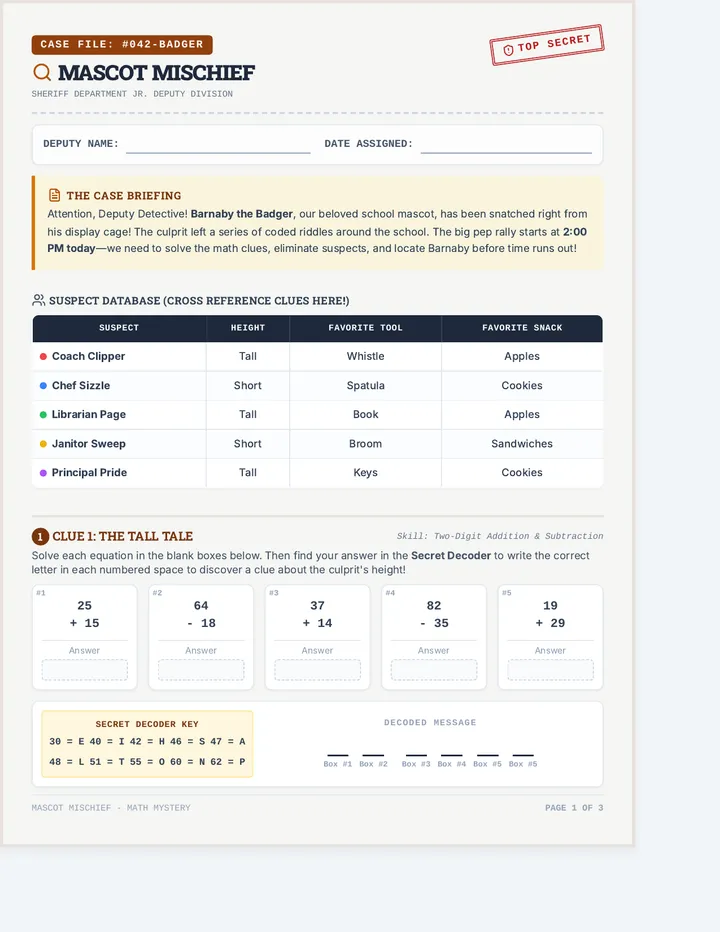
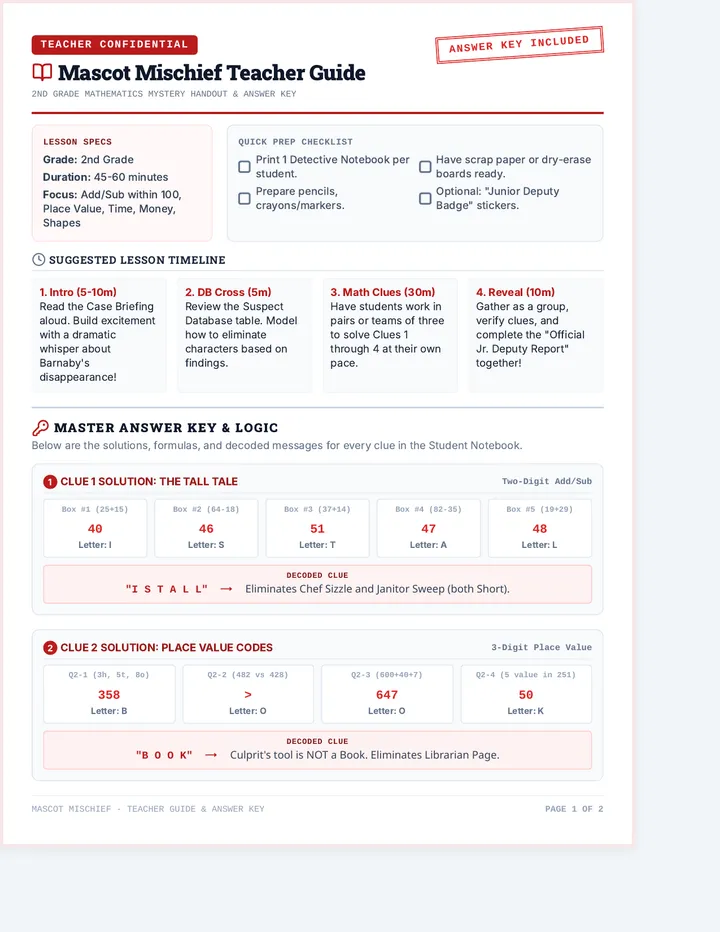
A comprehensive 20-worksheet review packet for 2nd grade math concepts including equal groups, fractions, measurement, place value, subtraction, and money, all themed as a 'Math Detective' case file.
A comprehensive guide to understanding place value from single digits to ten-thousands and decimals, featuring visual scaffolding for rounding.
A cumulative review of 2D/3D shapes, positional words, and measurement comparisons to assess mastery.
Students identify 3D shapes (cube, sphere, cone, cylinder) and compare objects based on size and length.
Students identify 2D shapes (circle, square, triangle, rectangle) and use positional language (over, under, beside) to describe location.