A comprehensive lesson on crafting strong, three-prong thesis statements for 6th-grade informative essays, featuring a 'construction' theme to emphasize building a solid foundation.
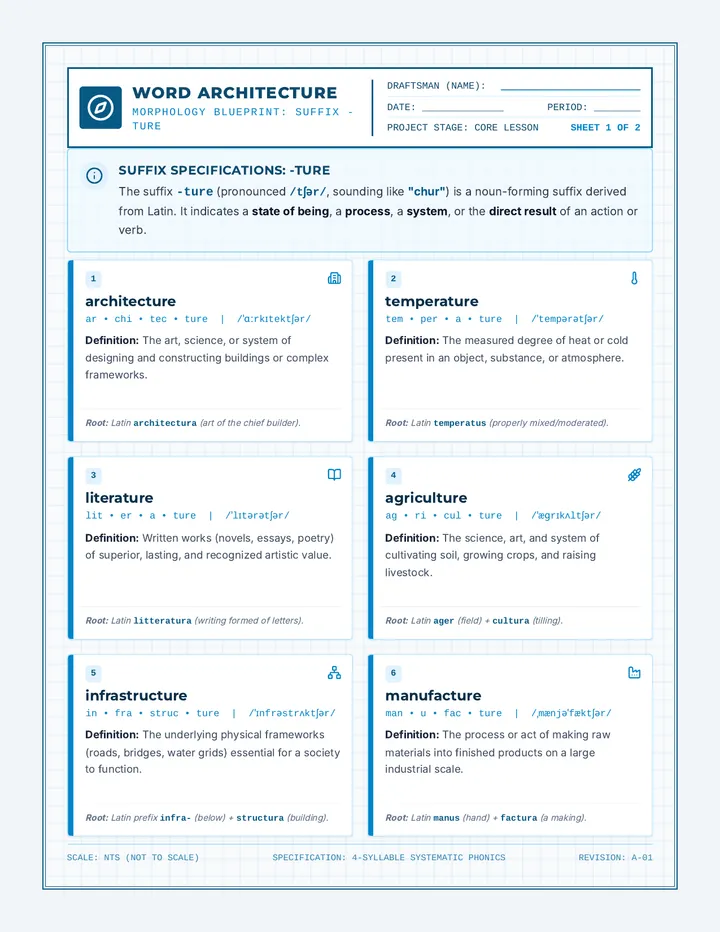
An introduction to the setting, main characters, and primary conflict of 'The Outsiders' through the first three chapters, featuring visual vocabulary and structured comprehension.
A focused vocabulary lesson covering 10 essential terms, emphasizing word meaning, pronunciation, and contextual application through practice and assessment.
A complete chronological sequence of assessments for Chapters 13-18 of 'A Long Walk to Water', followed by their corresponding answer keys.
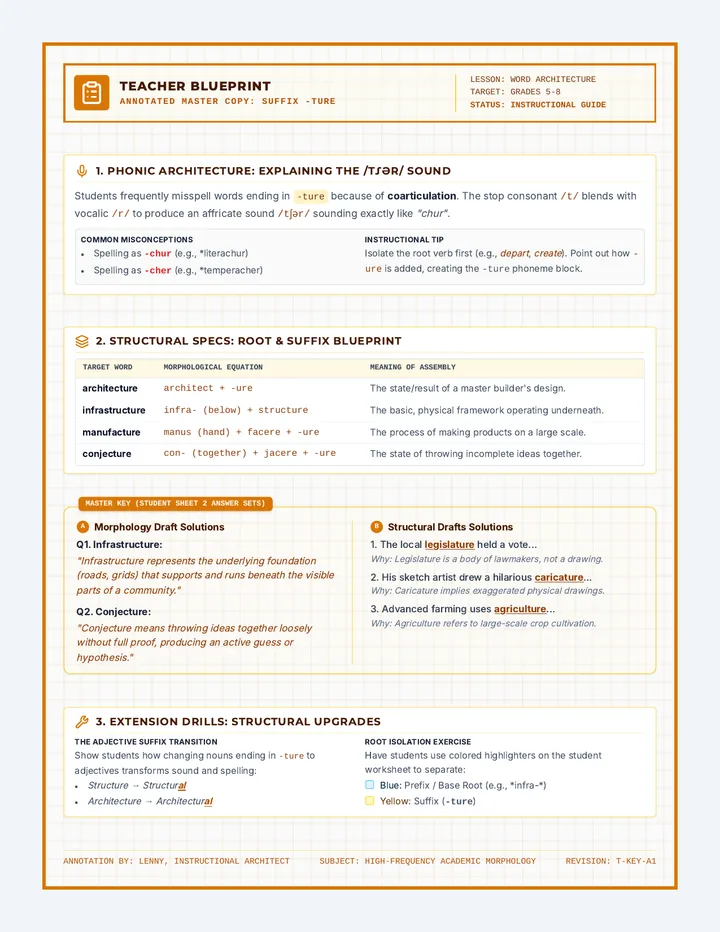
A comprehensive lesson focusing on the three major spelling rules for adding suffixes to multisyllabic words: Silent-E, CVC Doubling, and the Y-to-I change. Students act as 'Suffix Spies' to decode and recode complex words.
A mini-lesson introducing the fundamentals of informative writing, framing the writer as a teacher who provides facts and clear explanations without personal opinion.
This lesson focuses on summarizing the dual narratives of Nya and Salva in Chapter 4 of A Long Walk to Water, highlighting the challenges of their respective journeys across the landscape of Southern Sudan.
A lesson designed to help students distinguish between Short Constructed Response (SCR) and Extended Constructed Response (ECR) prompts by analyzing length requirements and depth of analysis.
A competitive reading challenge inspired by basketball tournaments, featuring a point-based scoring system for different book types and a verification quiz for students to earn their points.
A focused lesson on Chapter 6 of 'The Watsons Go to Birmingham—1963', exploring character complexity, socioeconomic themes, and Byron's hidden sensitivity.
A flexible framework for assessing student comprehension and analysis of any fictional novel through open-ended questioning and critical reflection.
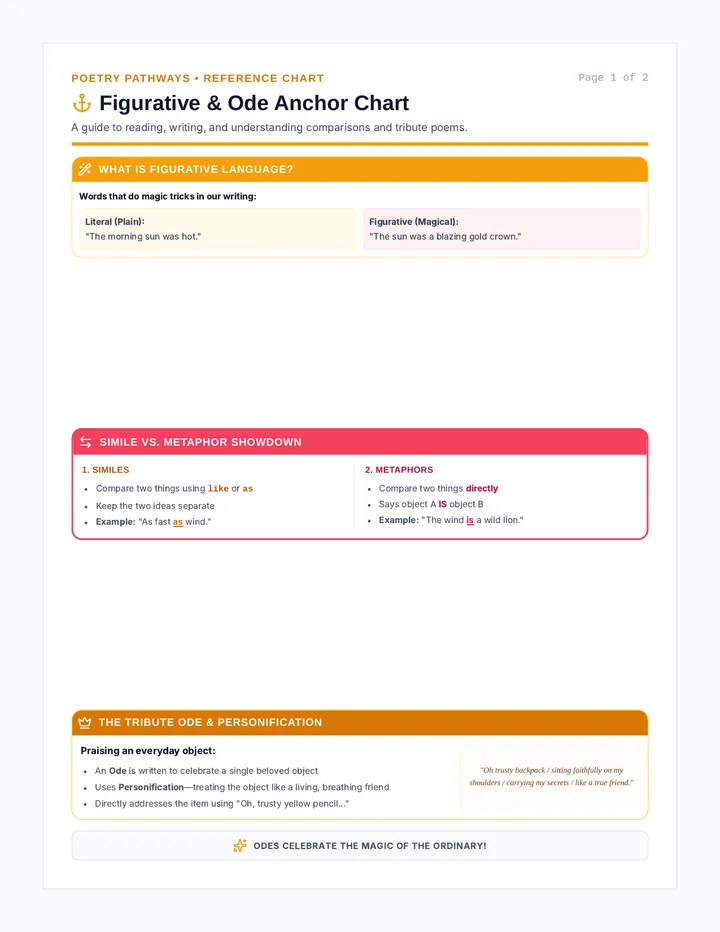
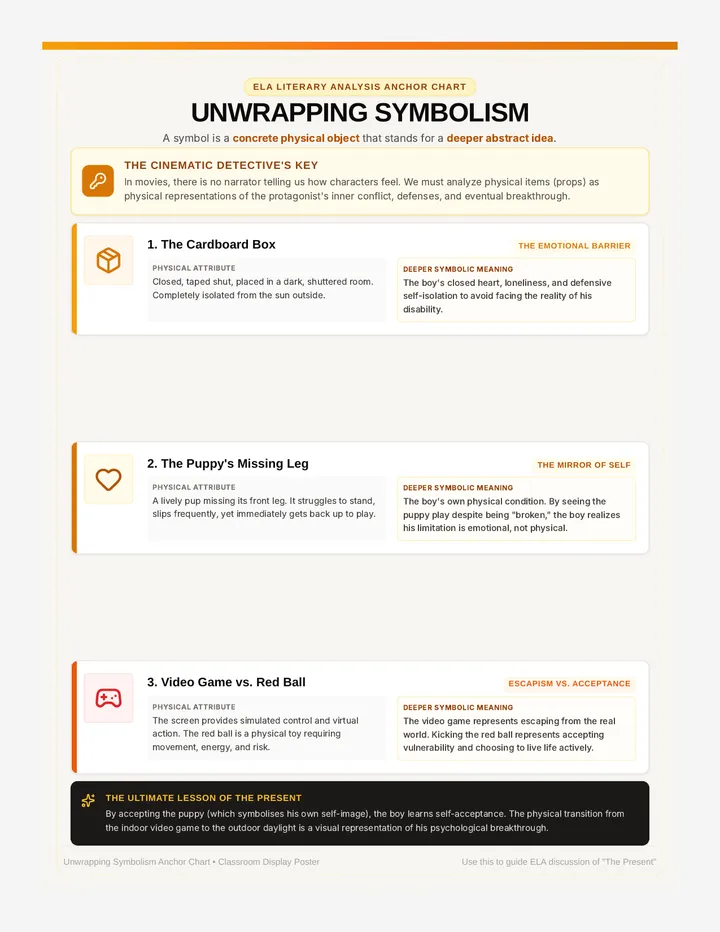
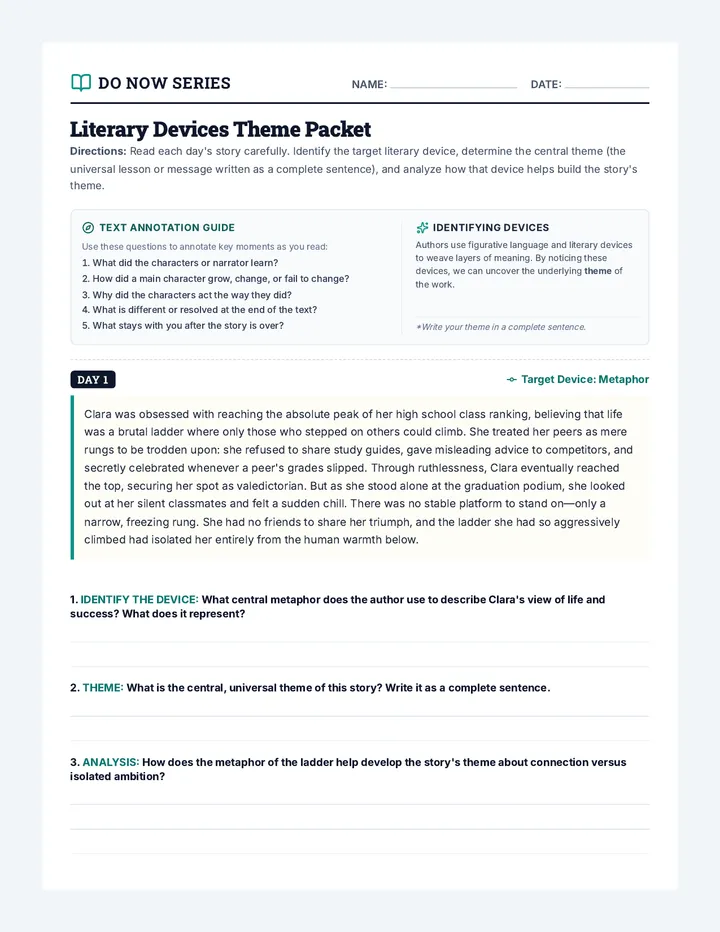
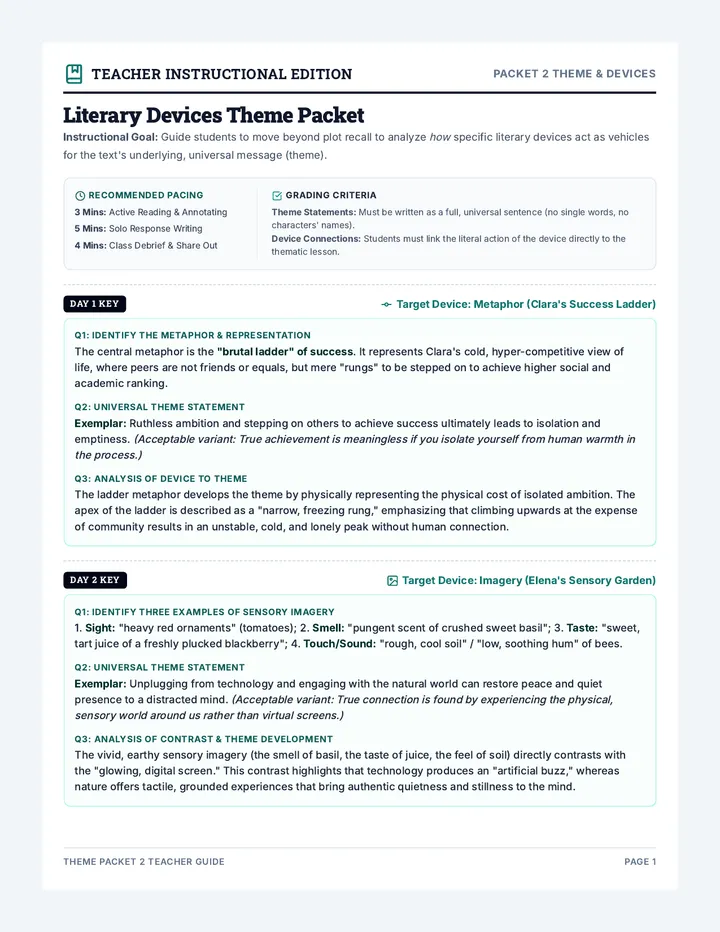
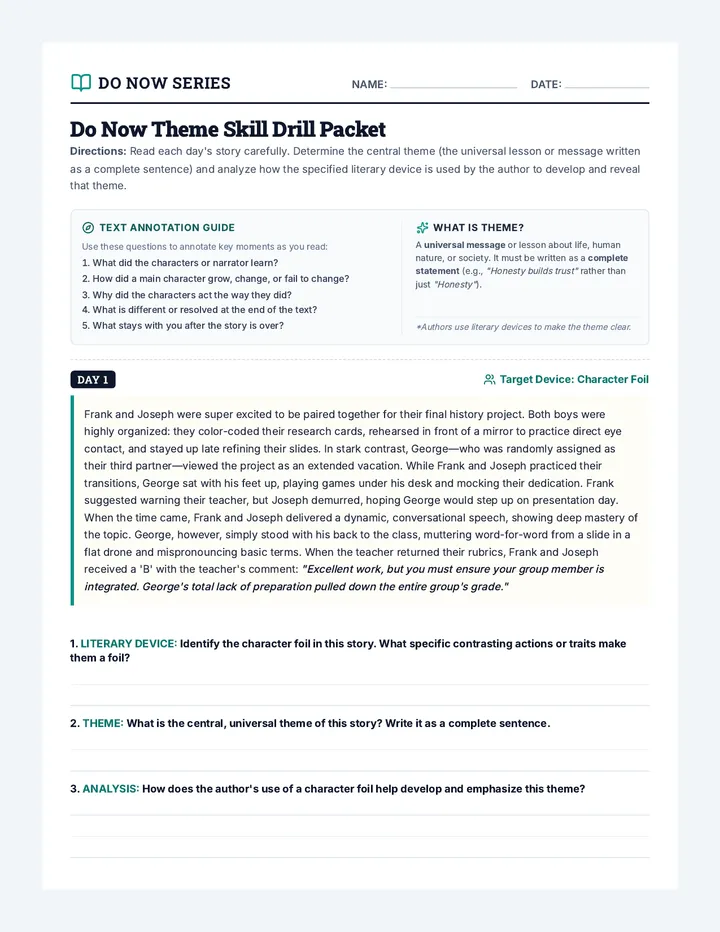
A lesson focused on identifying and analyzing imagery, symbolism, and foreshadowing to uncover deeper meaning in middle school literature.
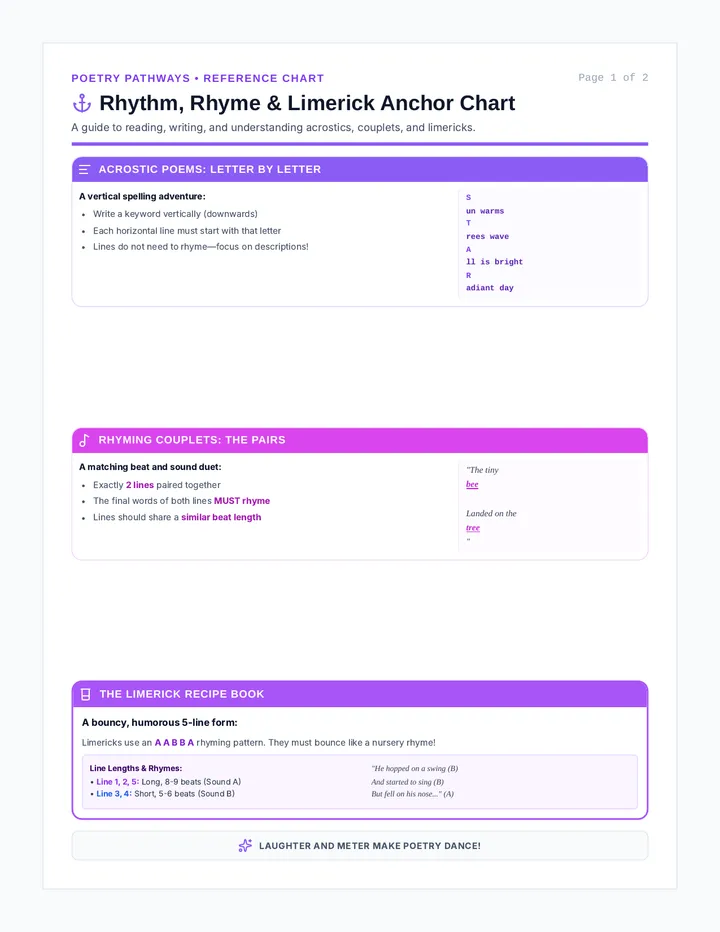
A lesson teaching students how to introduce, cite, and explain evidence from articles and poems in short constructed responses. Students will master the 'ICE' method and learn specific formatting for different source types.
Instruction and assessment tools for 3rd-grade students to master the art of narrative storytelling.
Early literacy activities focusing on high-frequency sight words for kindergarten students.
Essential safety protocols, personal protective equipment (PPE), and emergency procedures for a high school chemistry laboratory.
A 6th-grade research project on Ancient Egypt where students investigate daily life, pharaohs, and cultural contributions.