A simplified introduction to the story of Prince Hamlet, focusing on themes of family, mystery, and making difficult choices, adapted for a 2nd grade audience.
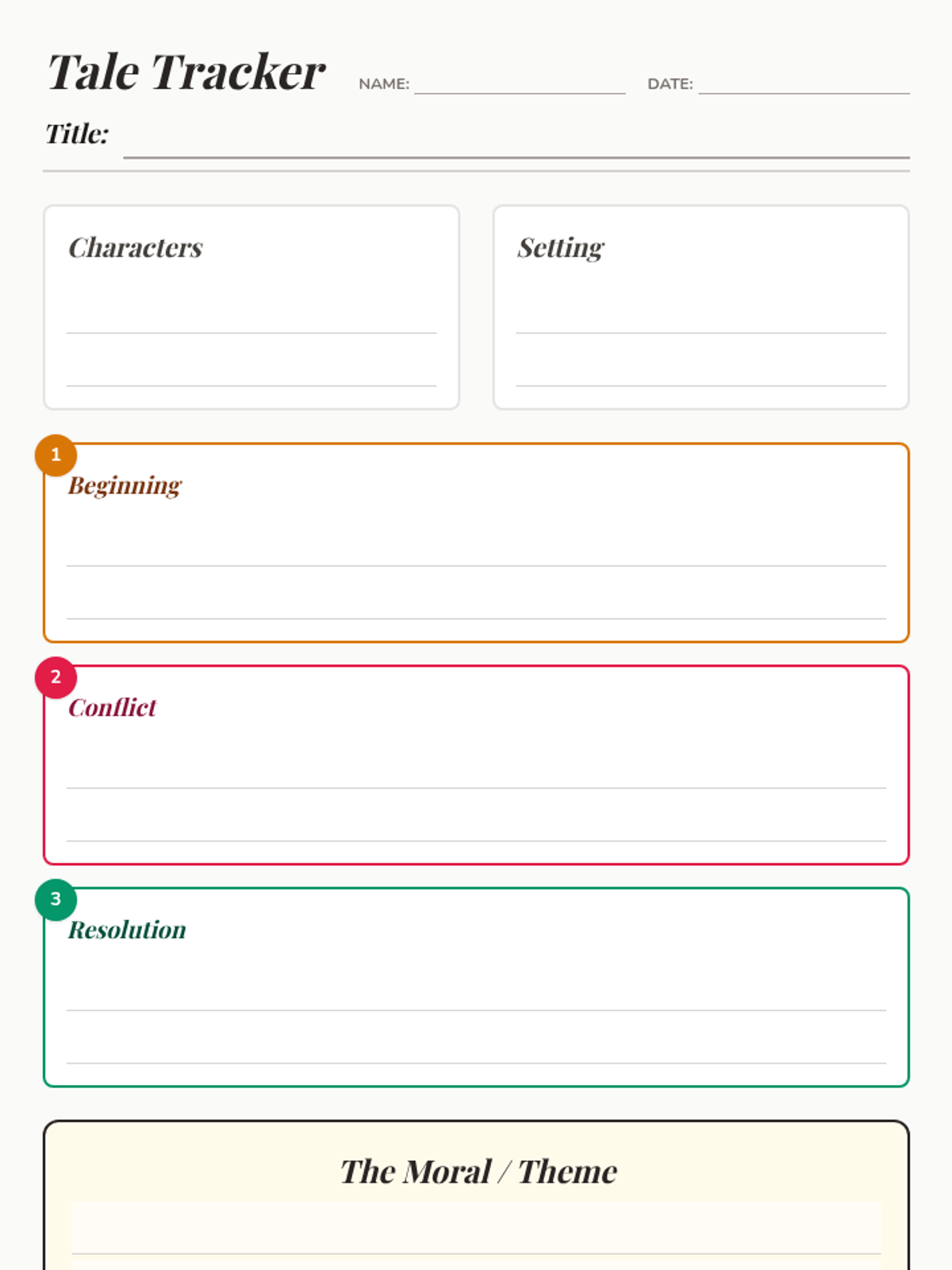
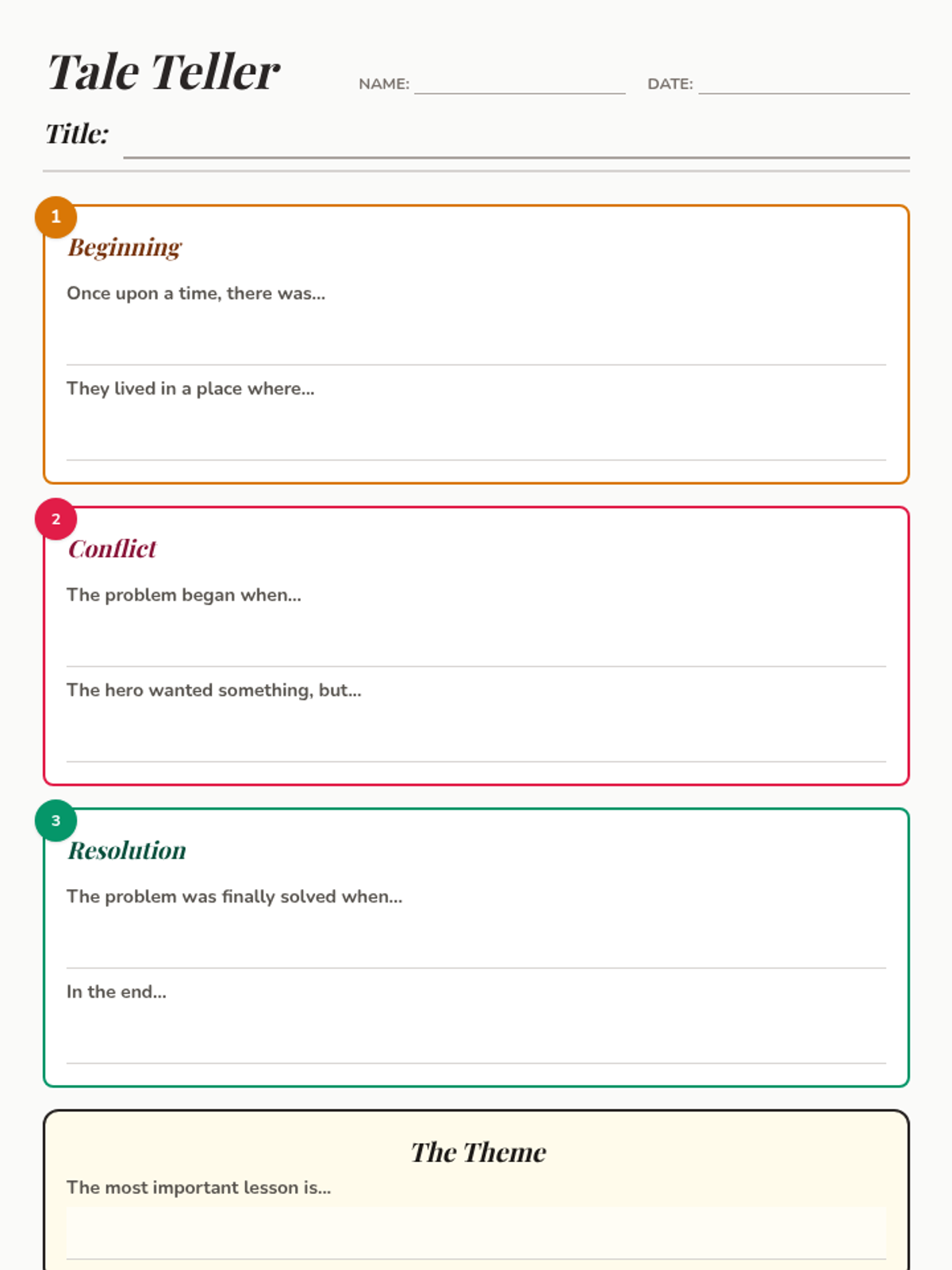
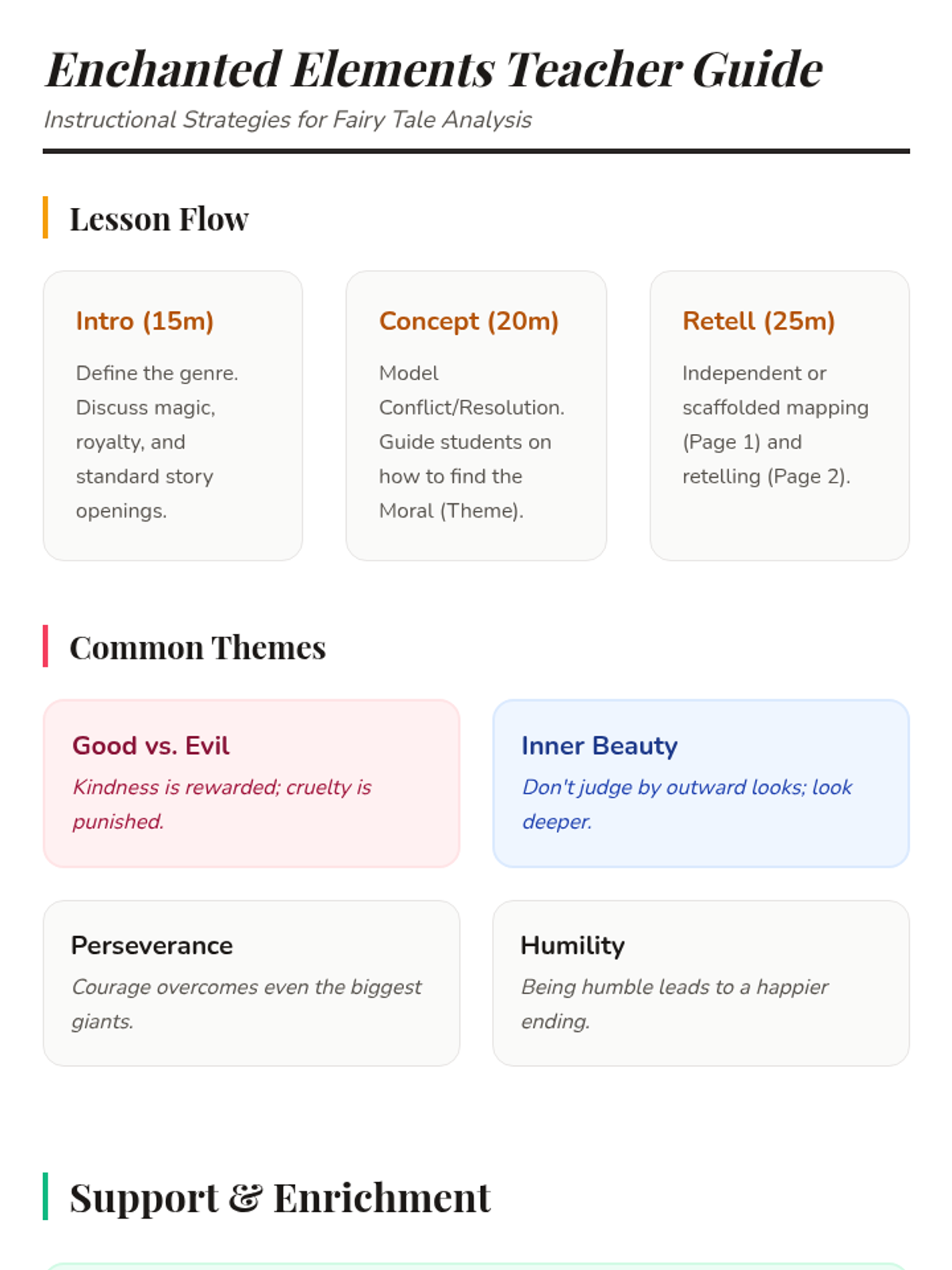
A lesson designed to help students analyze and sequence fairy tales, focusing on identifying the conflict, resolution, and underlying theme through structured graphic organizers.
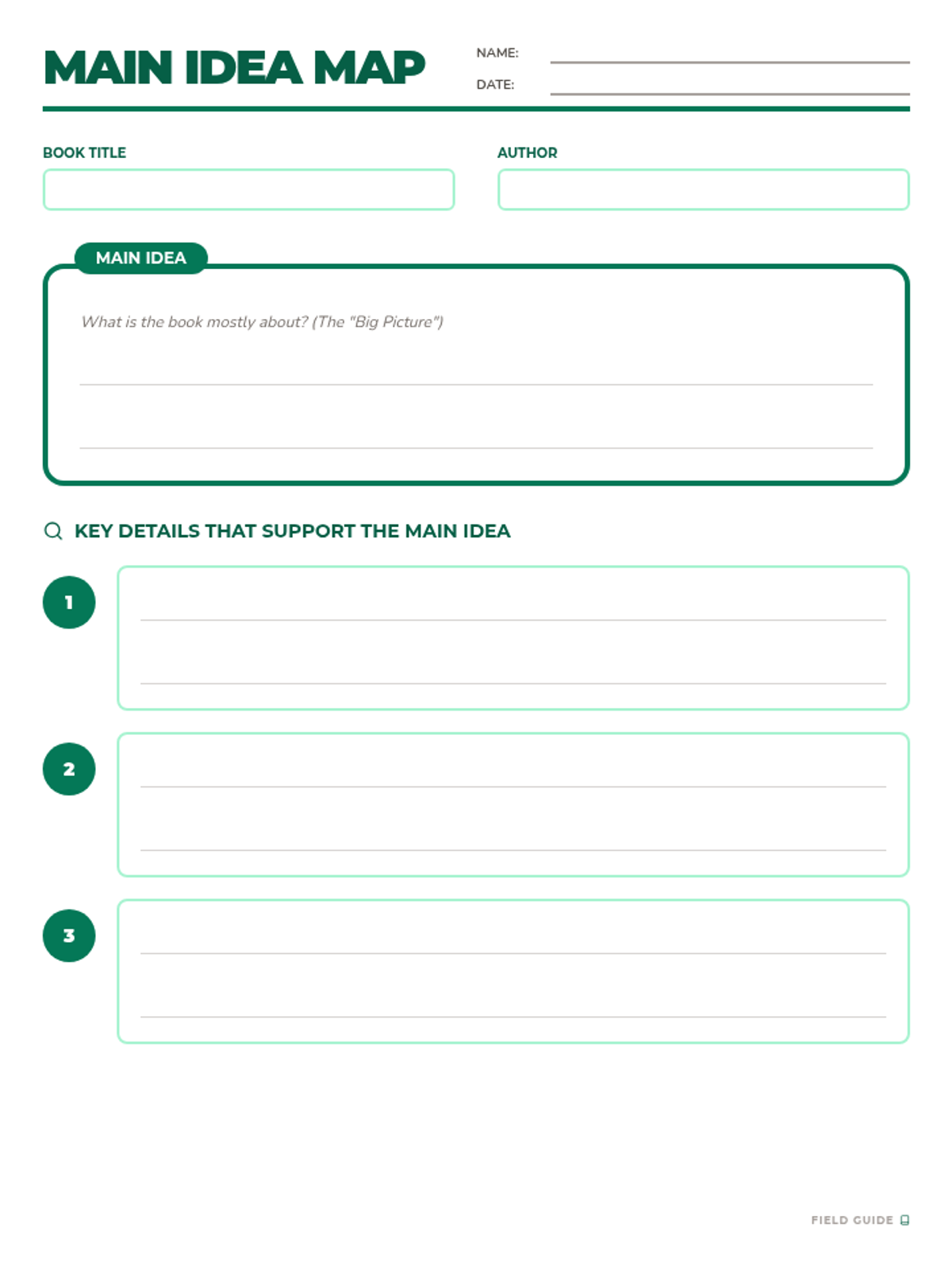
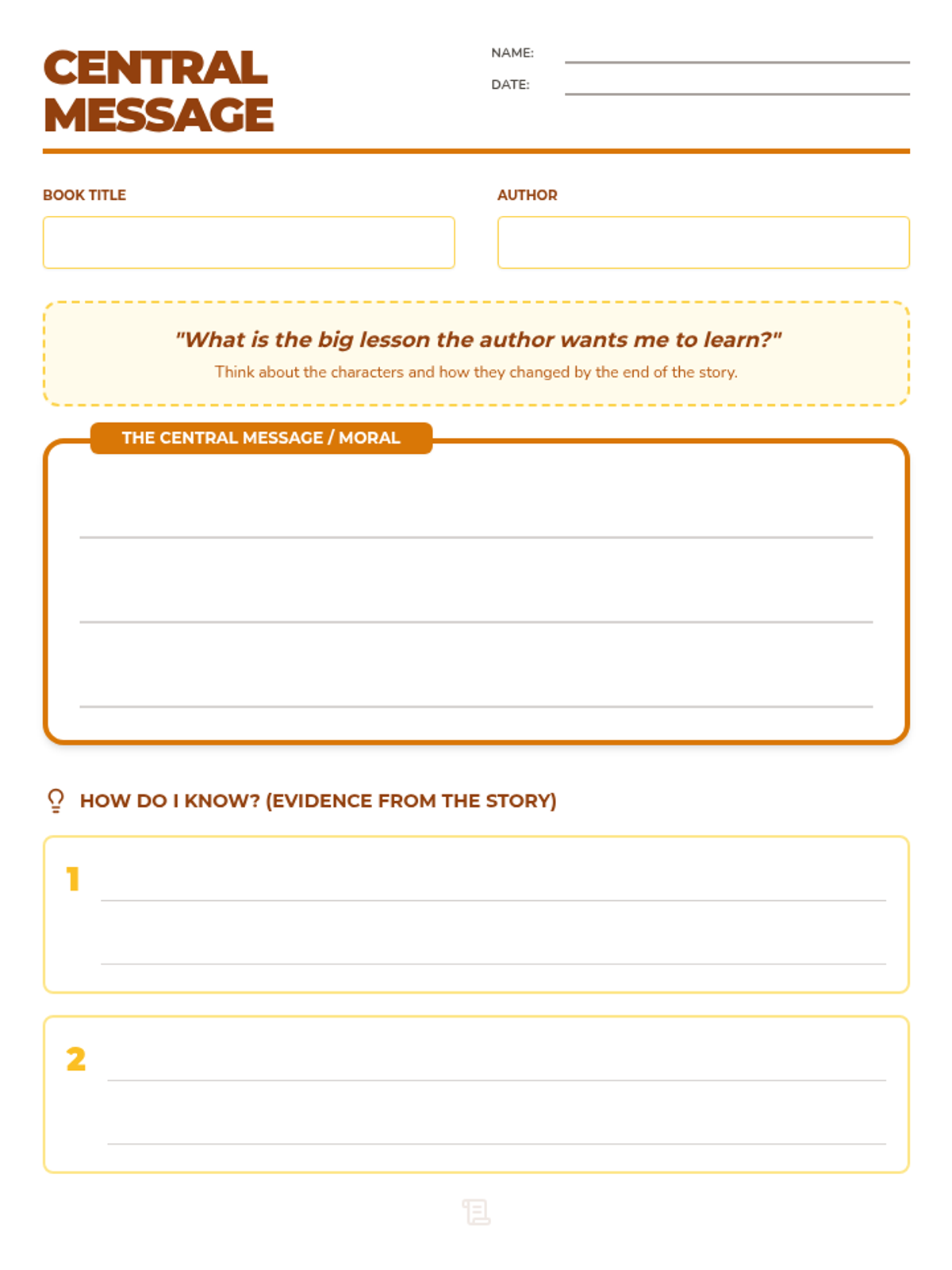
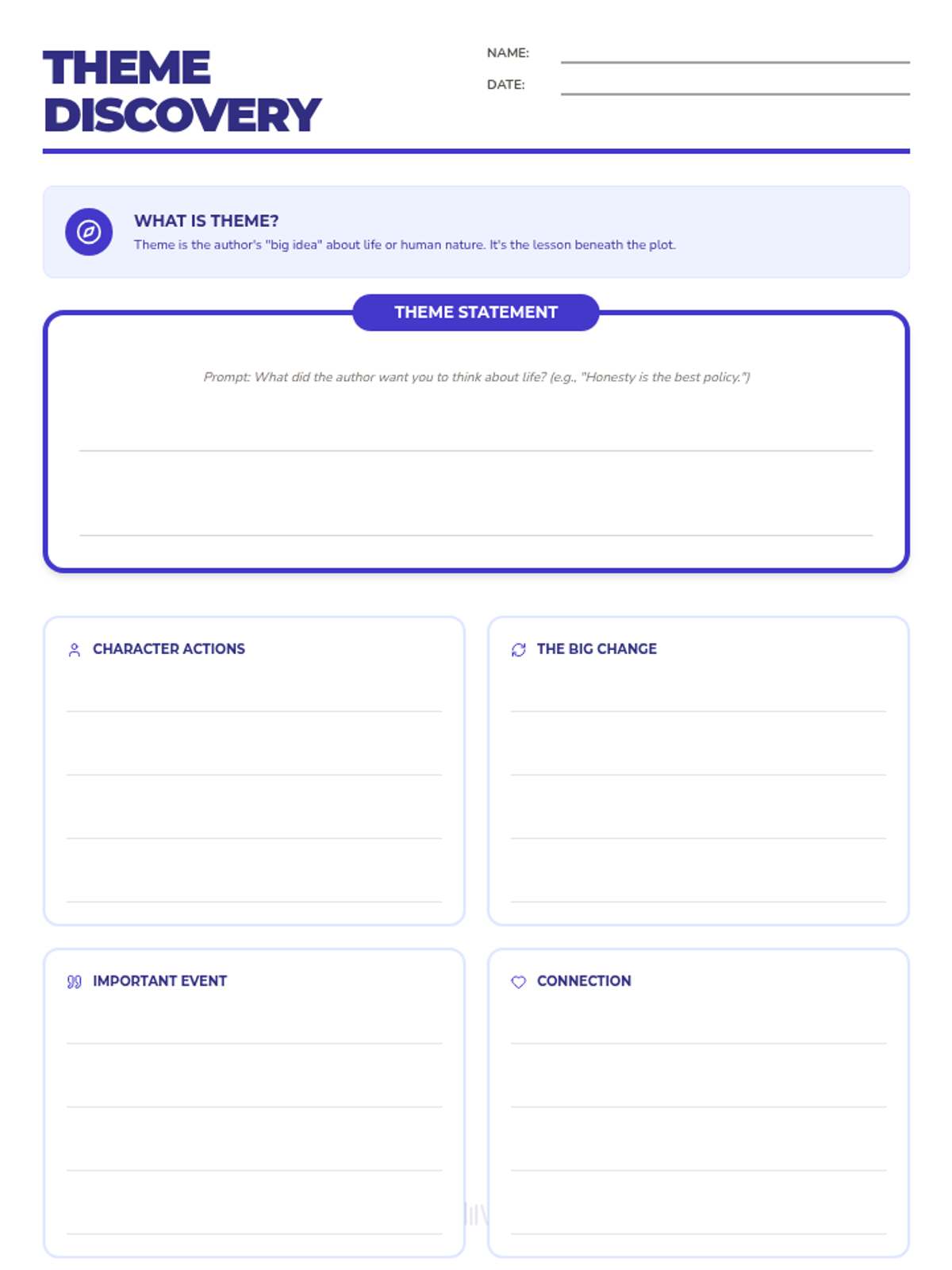
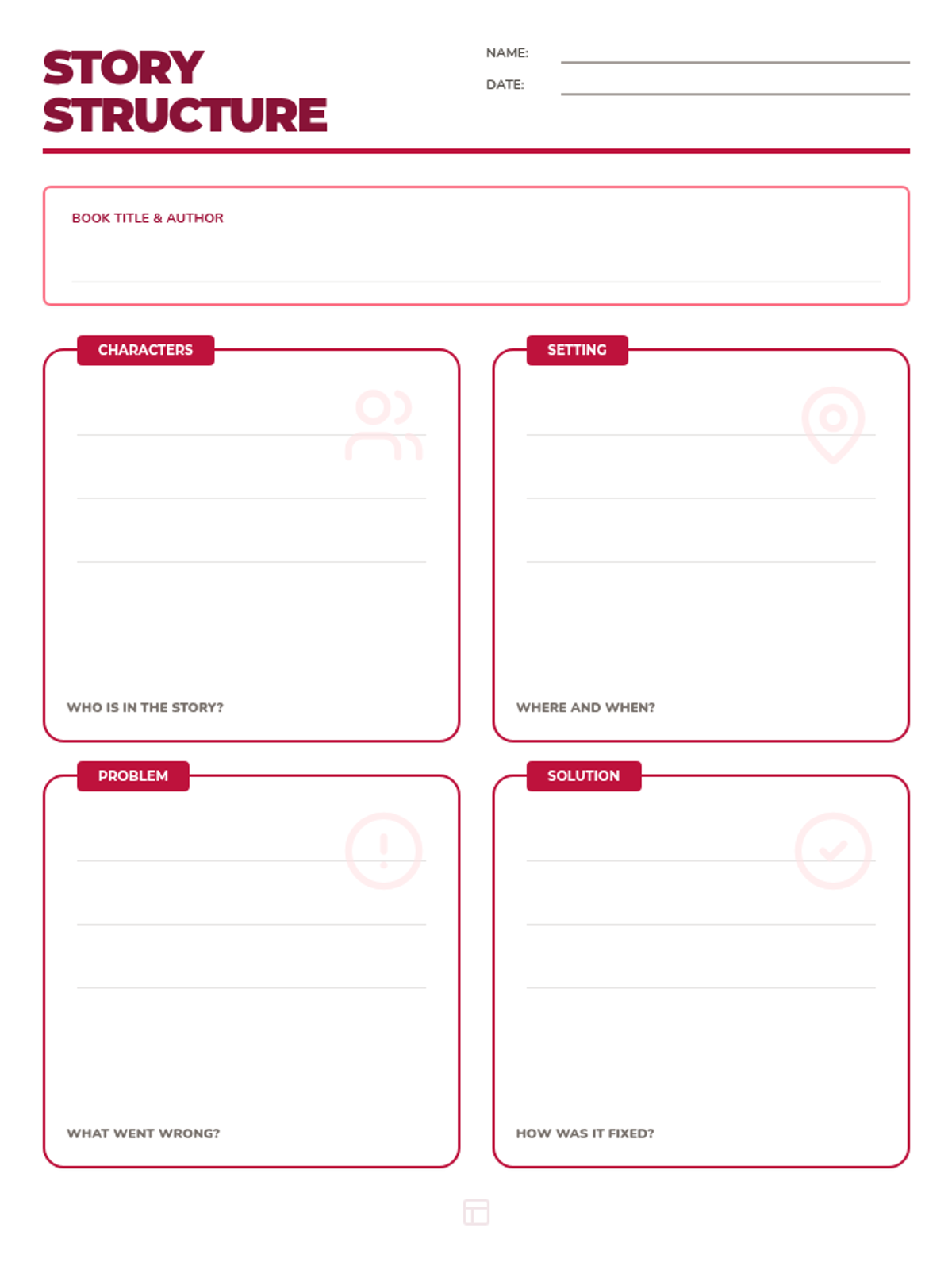
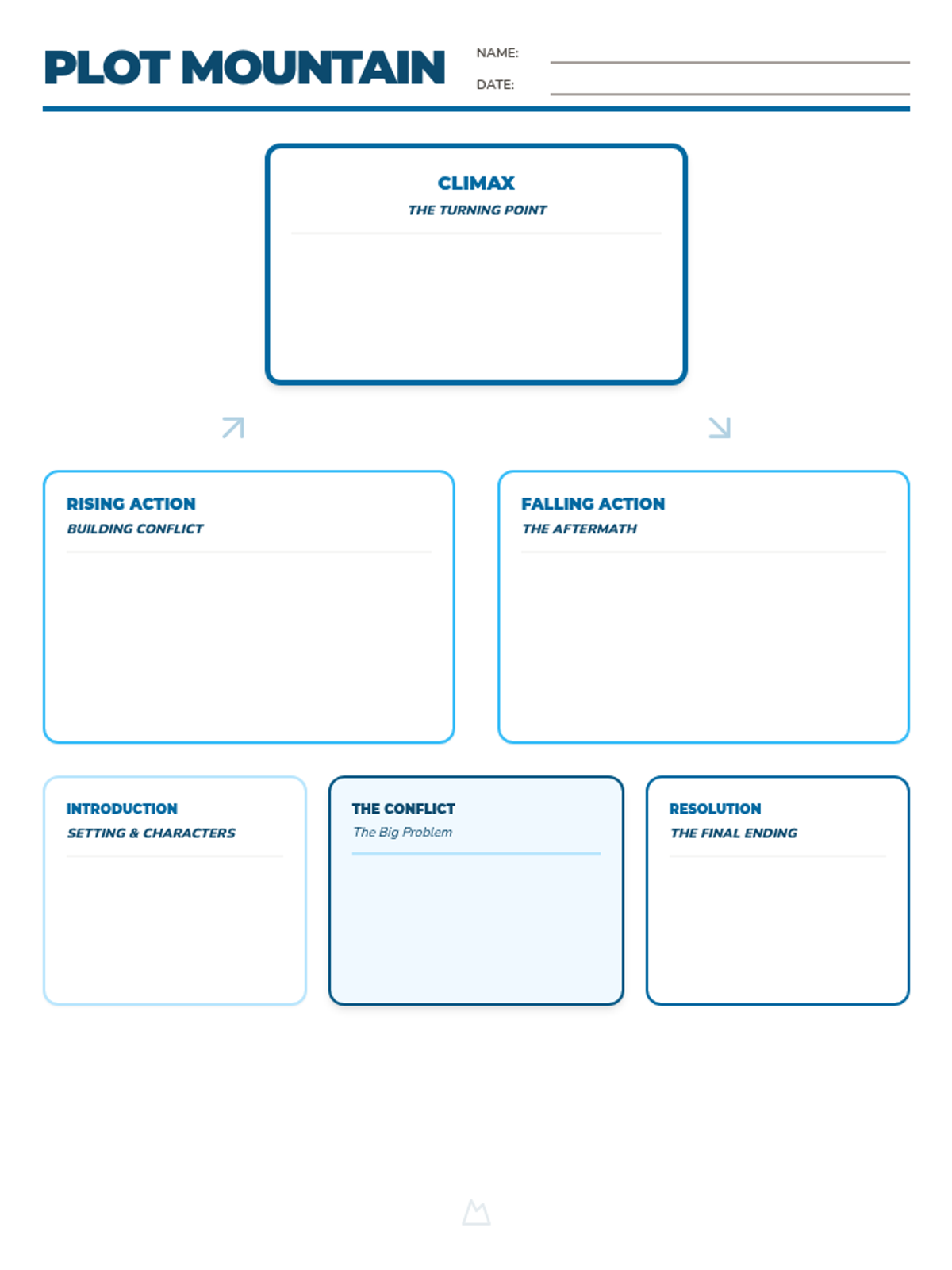
A collection of versatile graphic organizers designed to help students analyze fiction and nonfiction picture books. Each organizer focuses on a specific reading skill, providing a structured framework for student response.
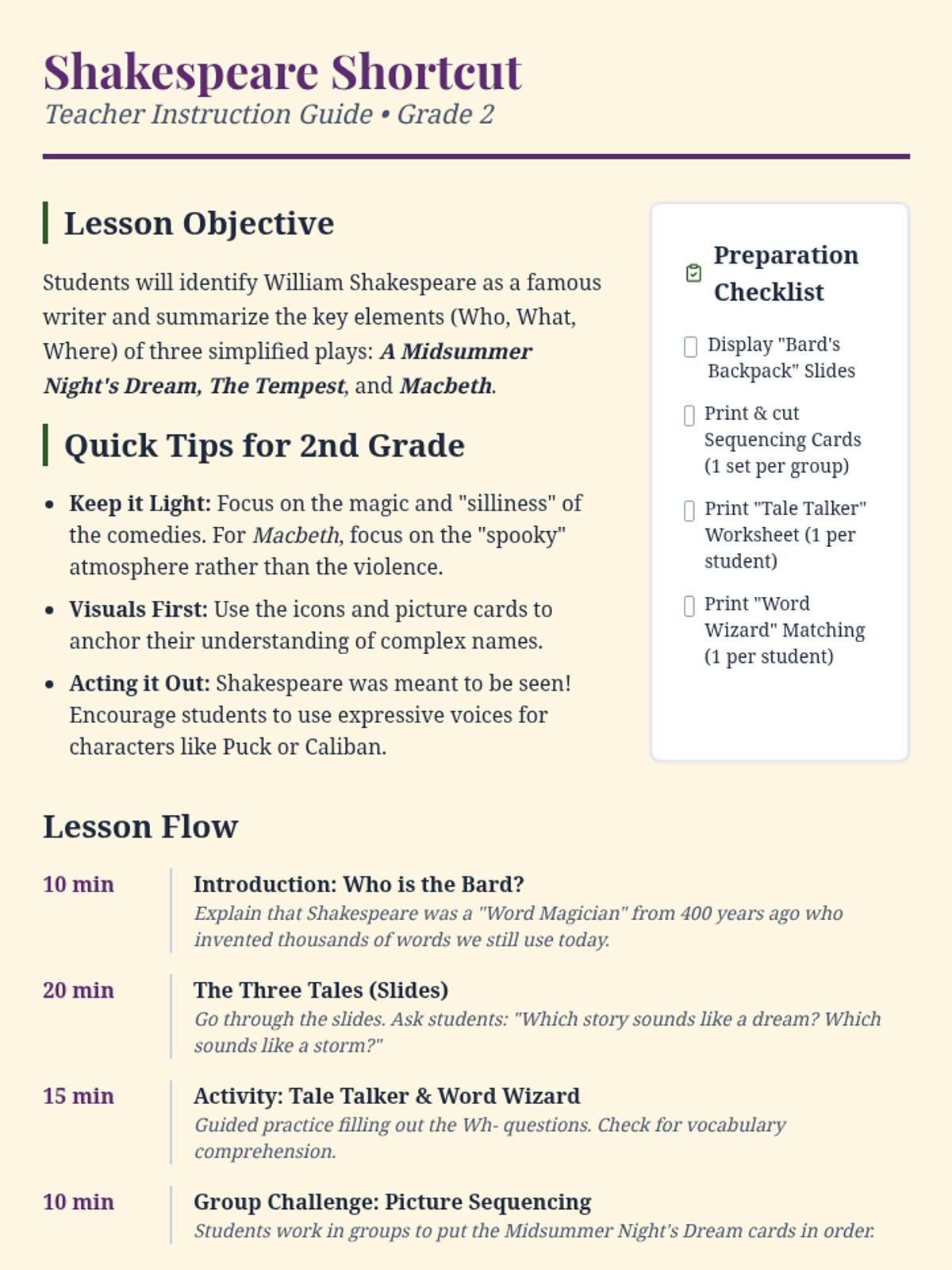
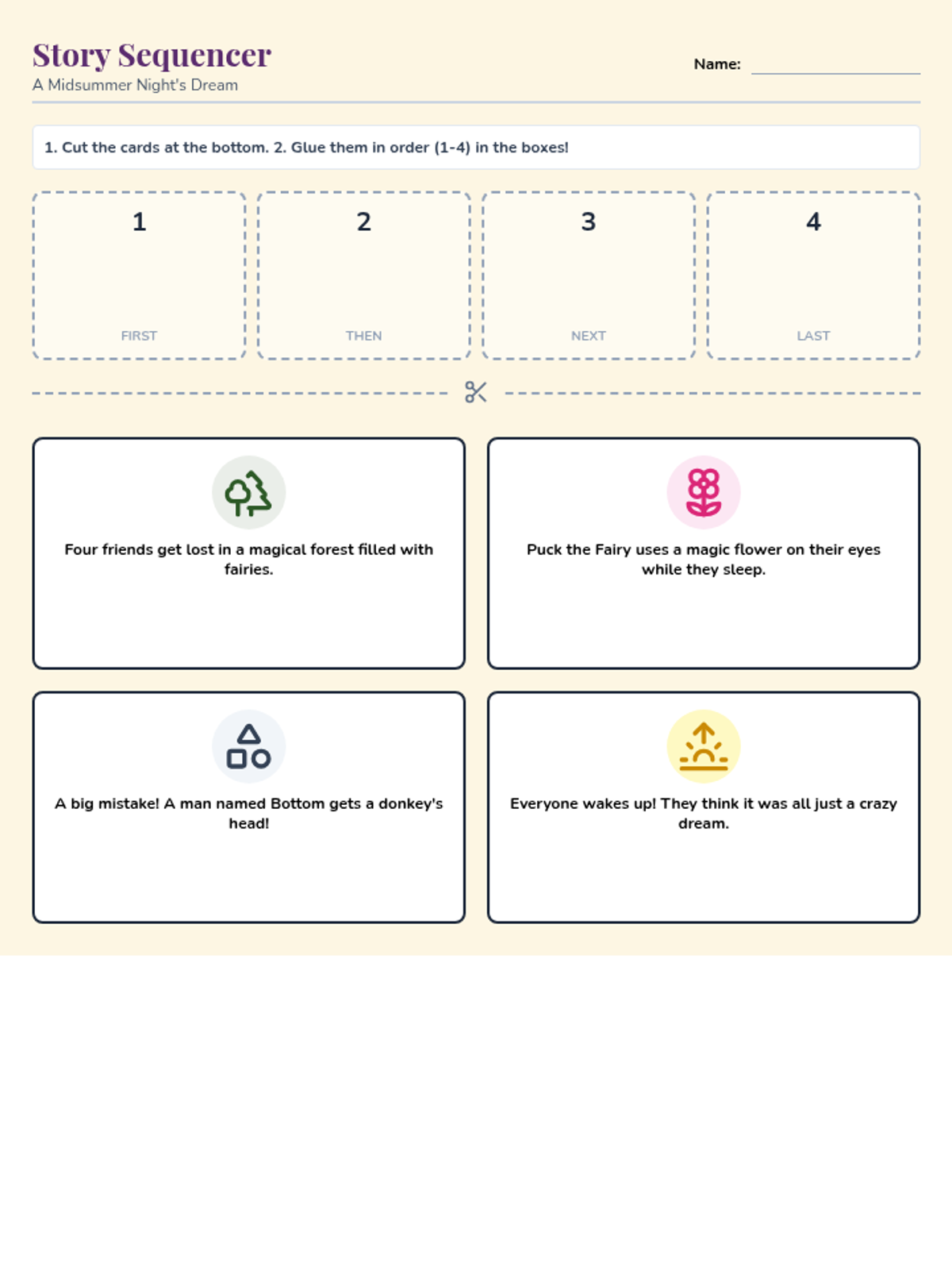
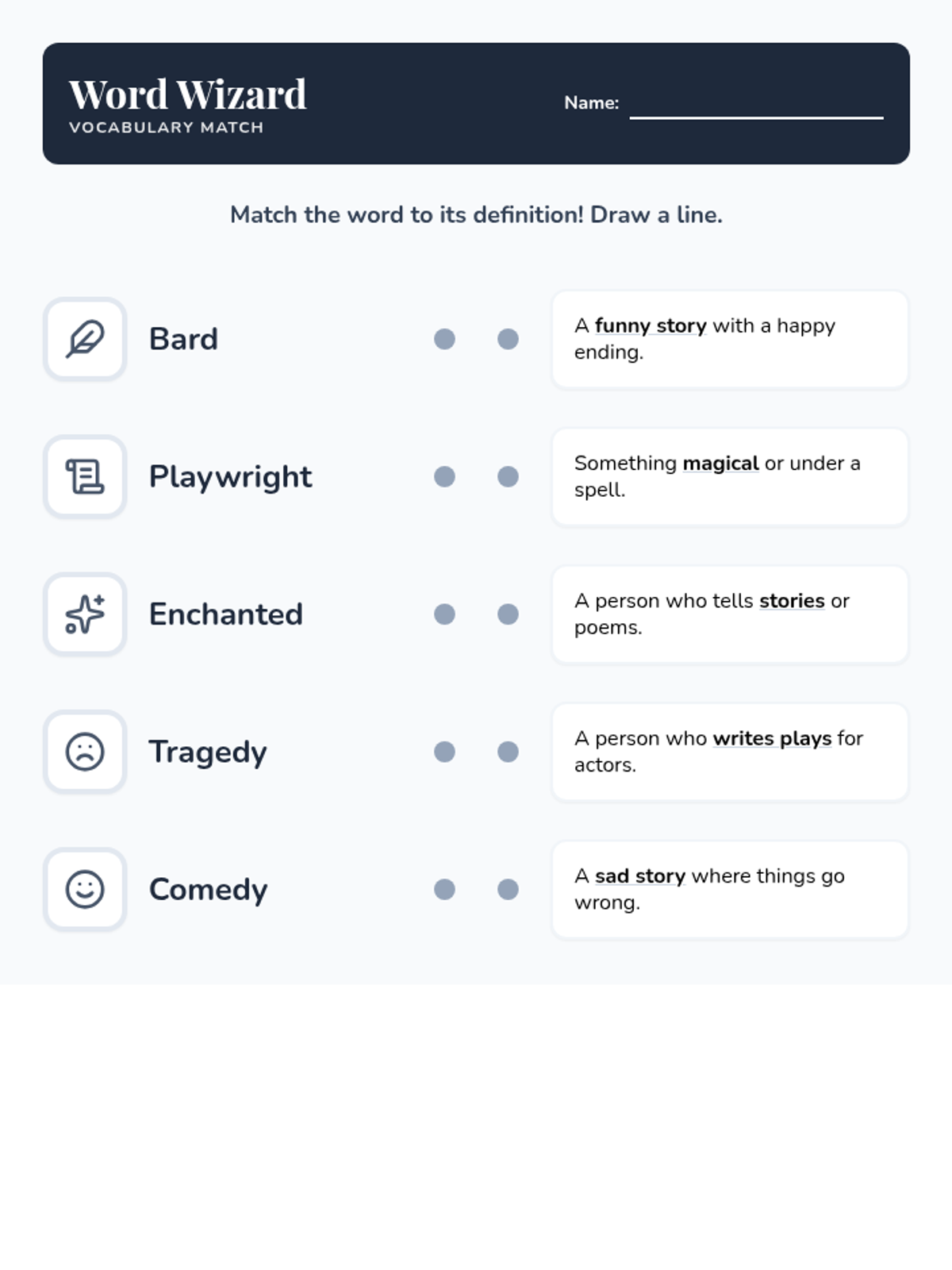
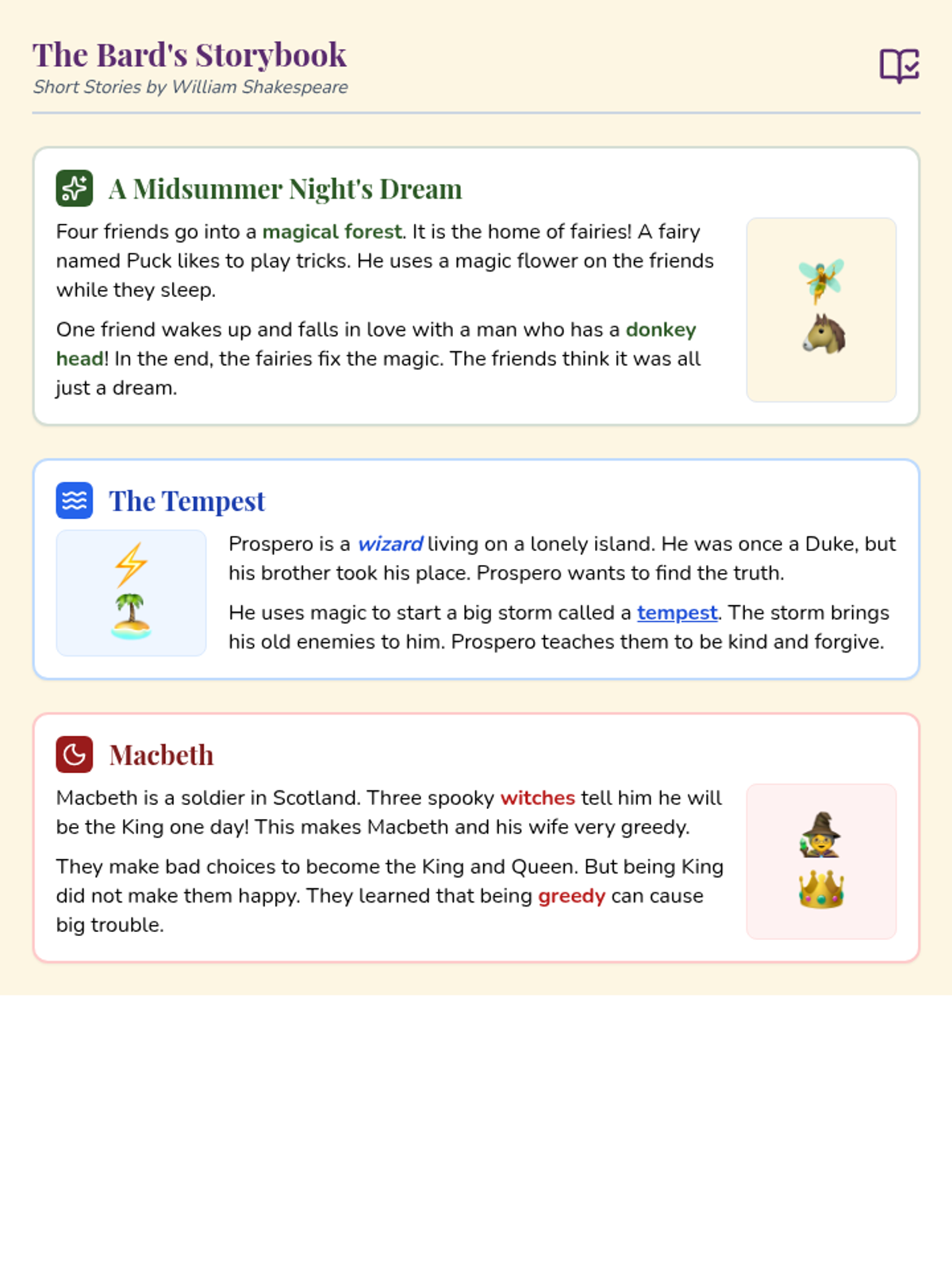
An introductory lesson exploring who William Shakespeare was and diving into three of his famous tales: A Midsummer Night's Dream, The Tempest, and Macbeth, adapted for young learners.
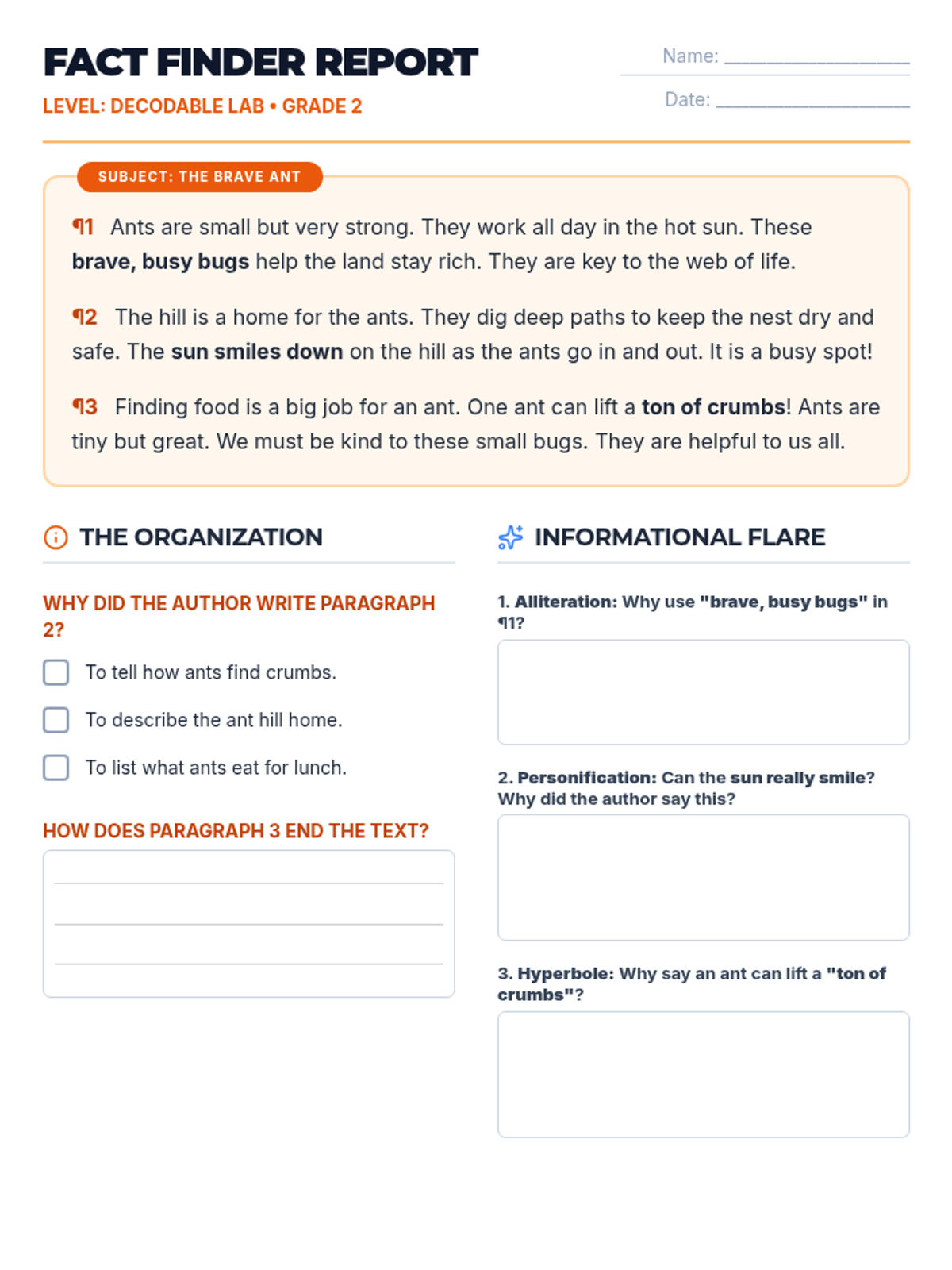
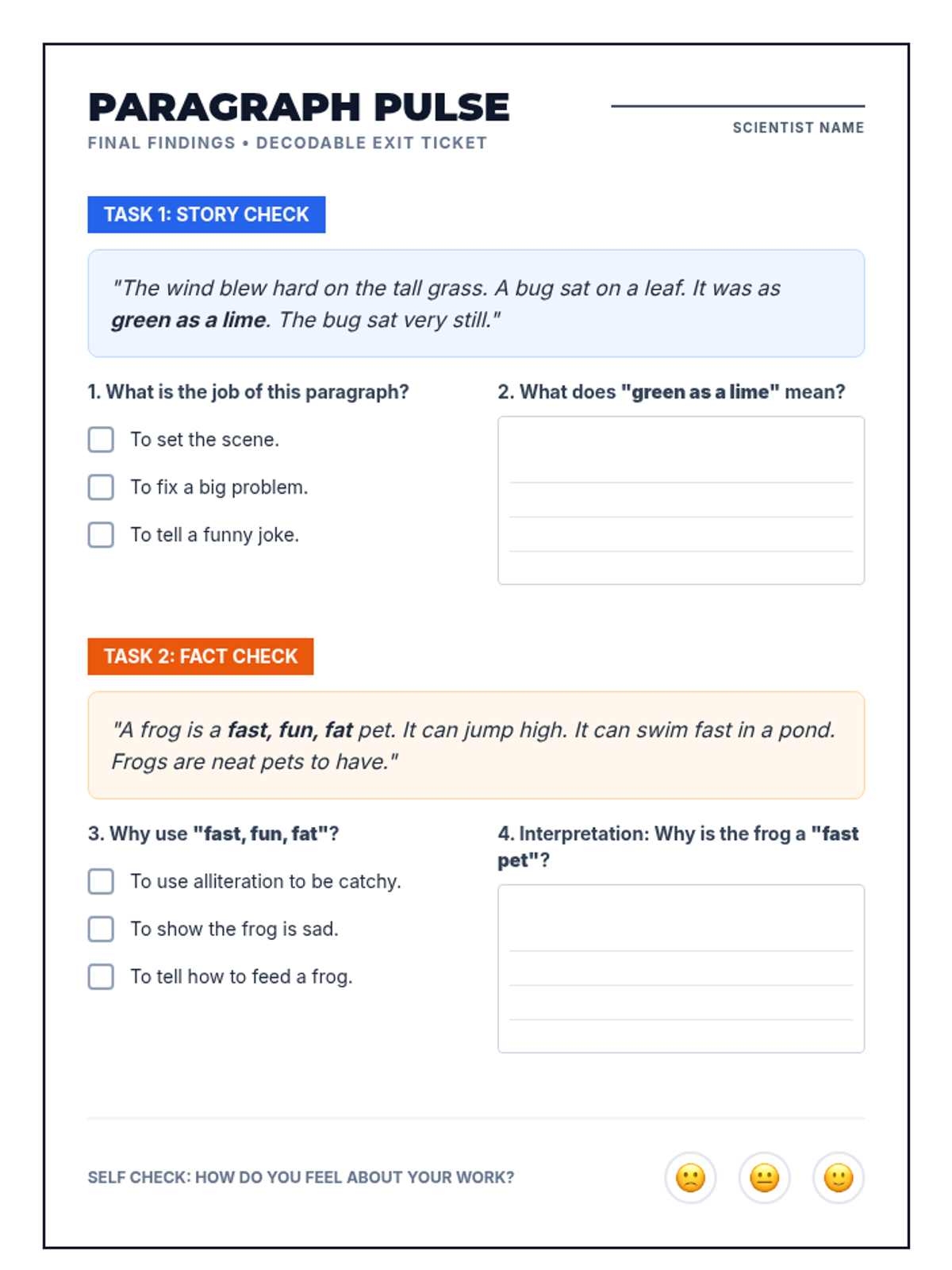
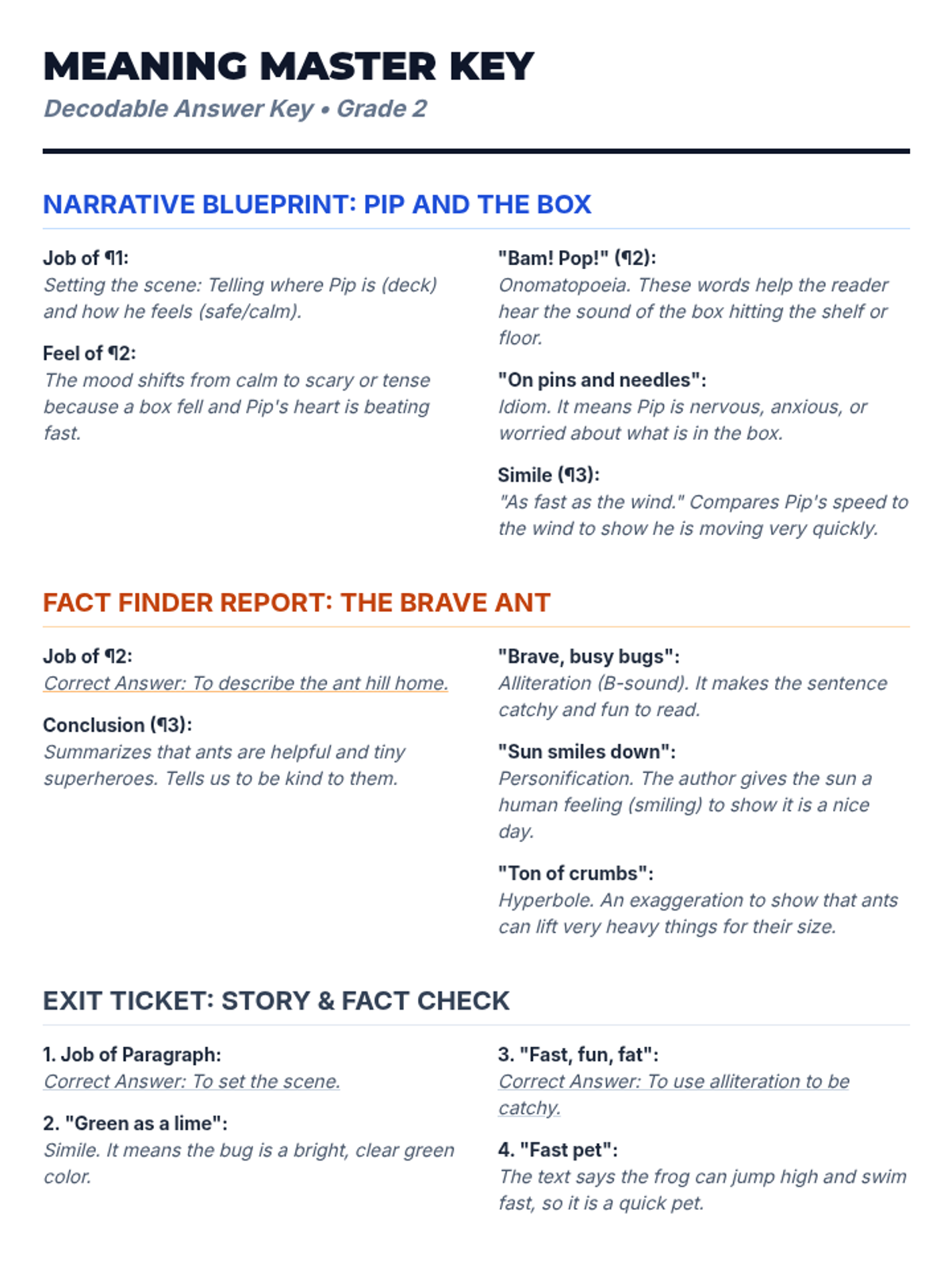
Focused on informational texts, this lesson explores how paragraphs organize facts and how alliteration, personification, and hyperbole can make non-fiction more engaging.
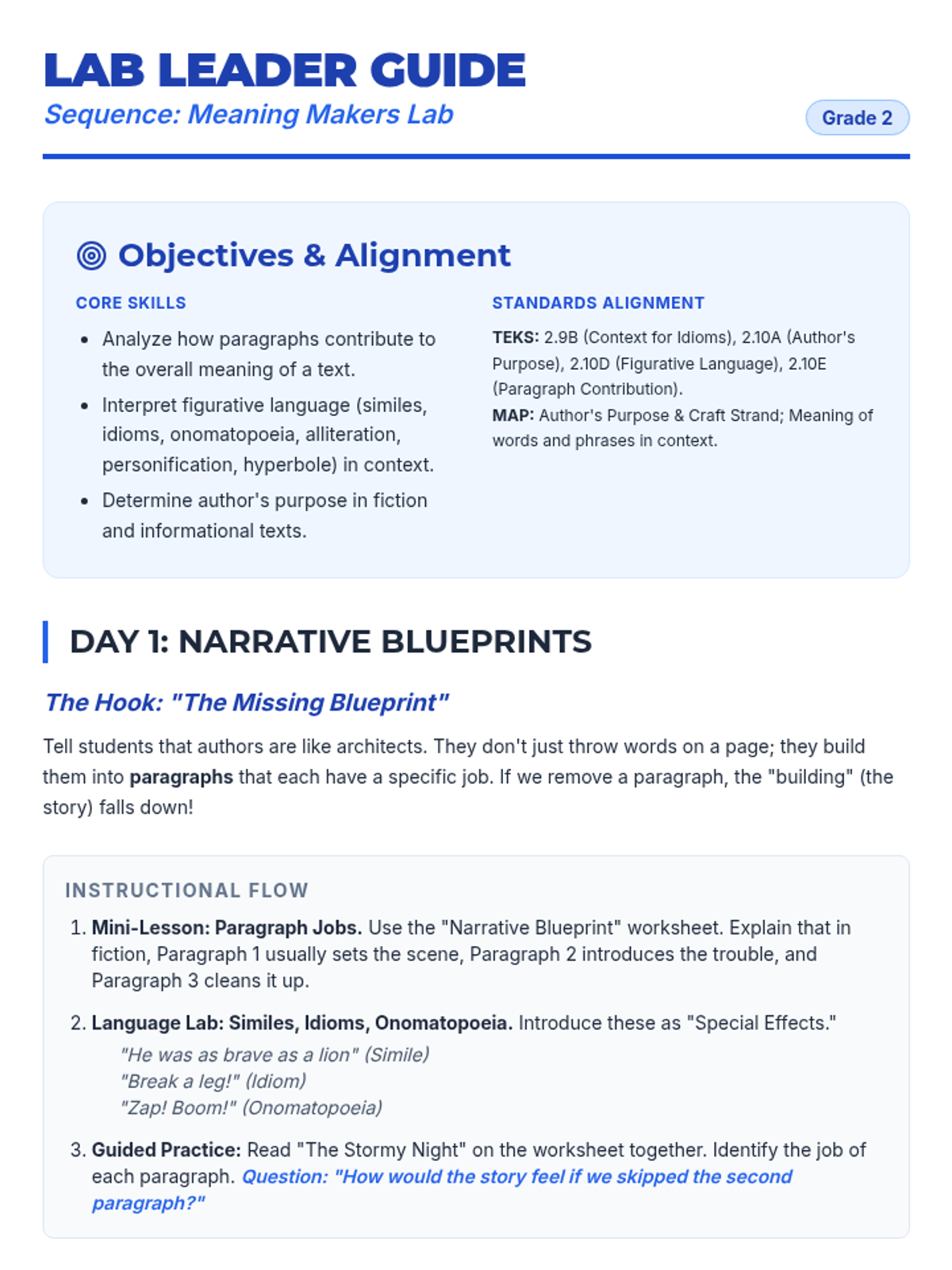
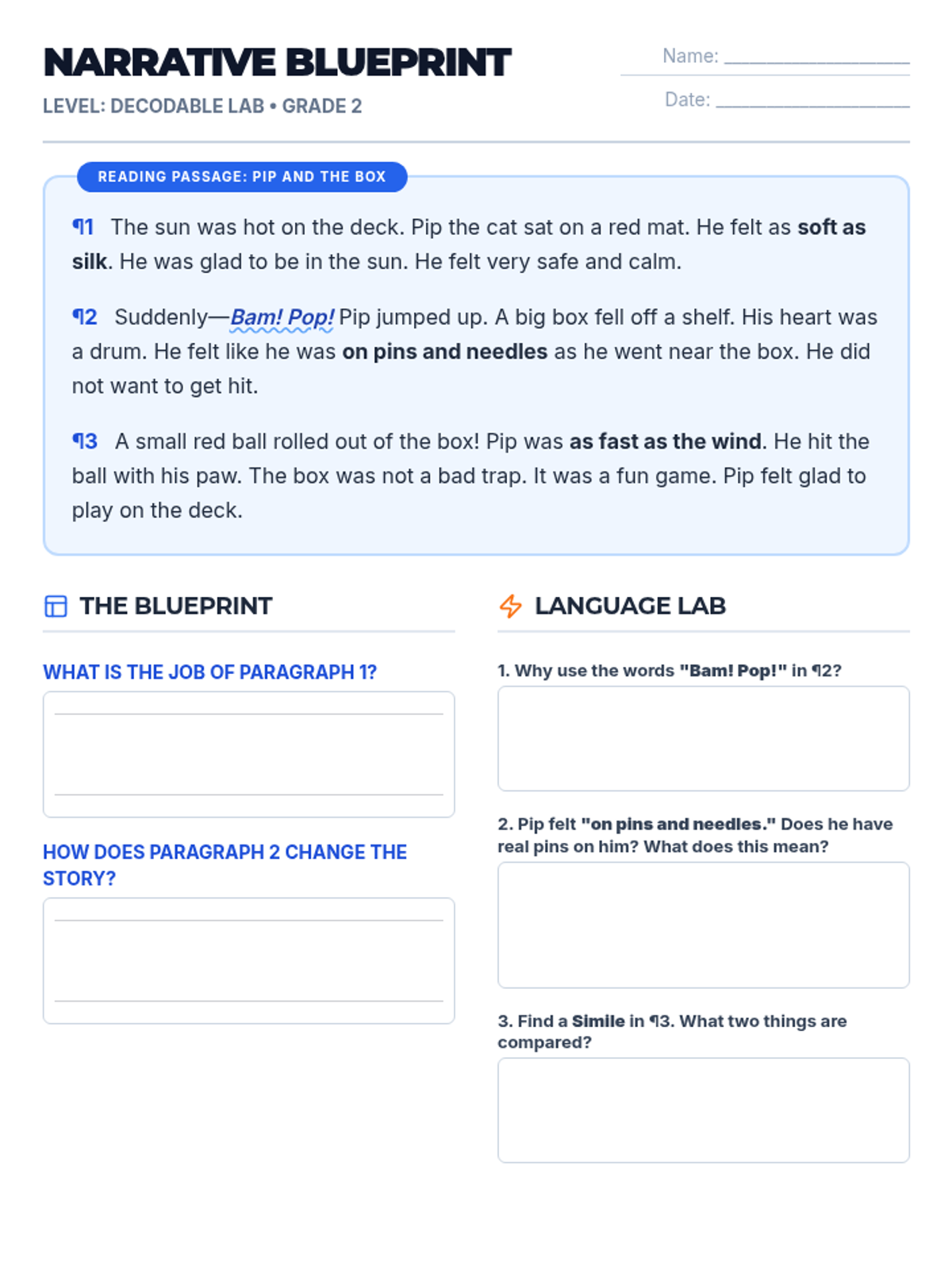
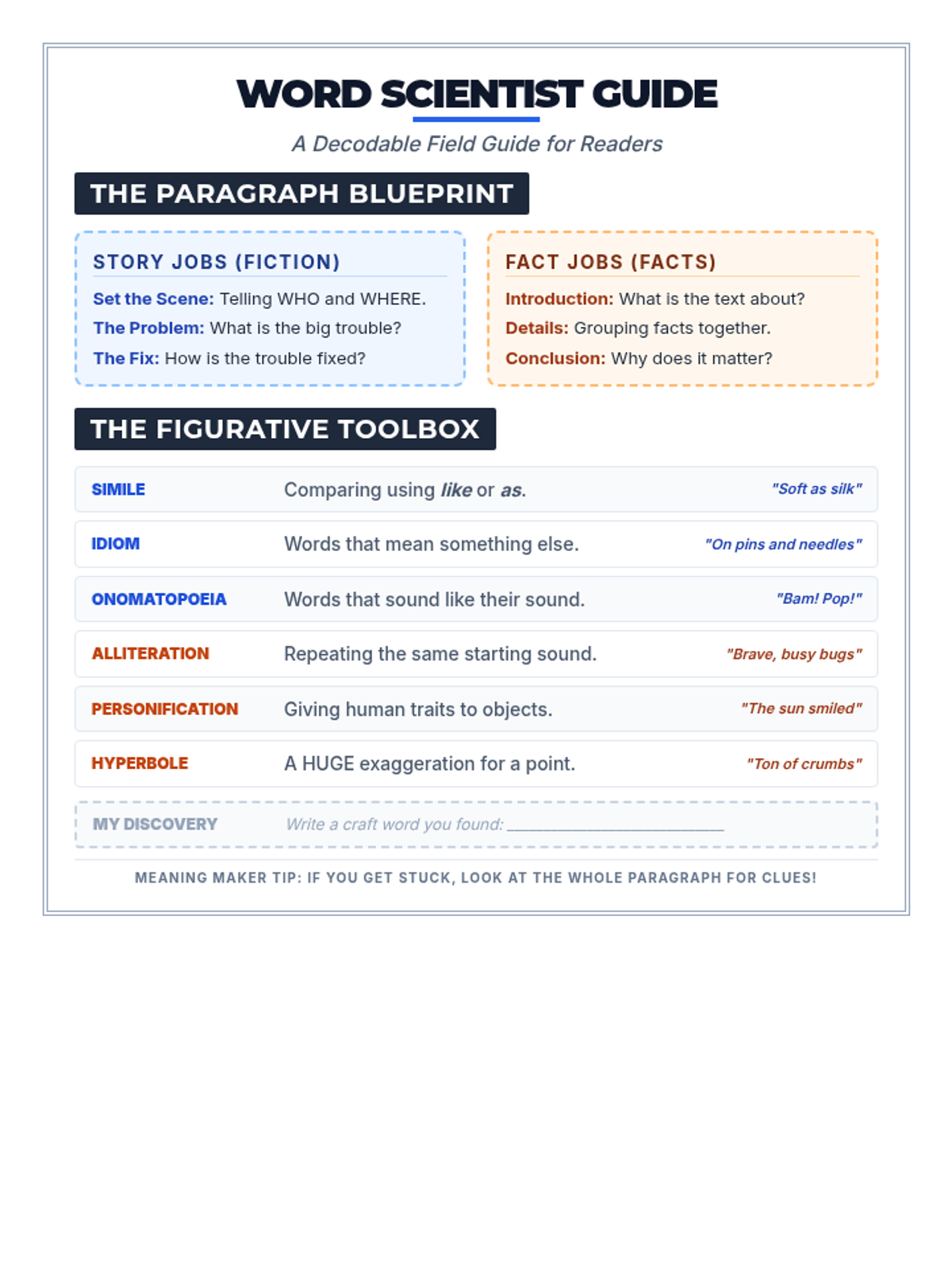
Focused on narrative texts, this lesson teaches students how paragraphs build a story's sequence and how similes, idioms, and onomatopoeia create vivid mental images.
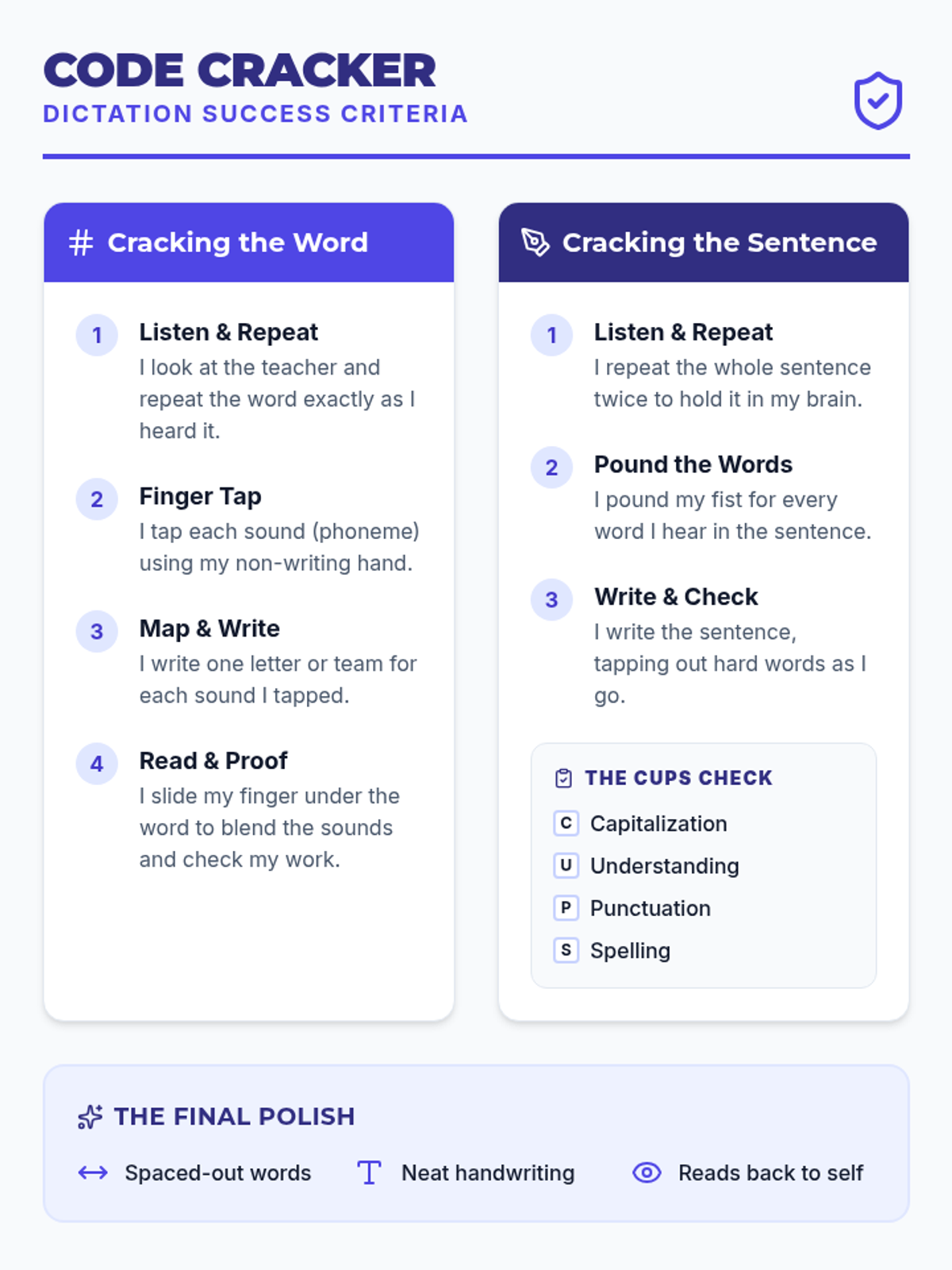
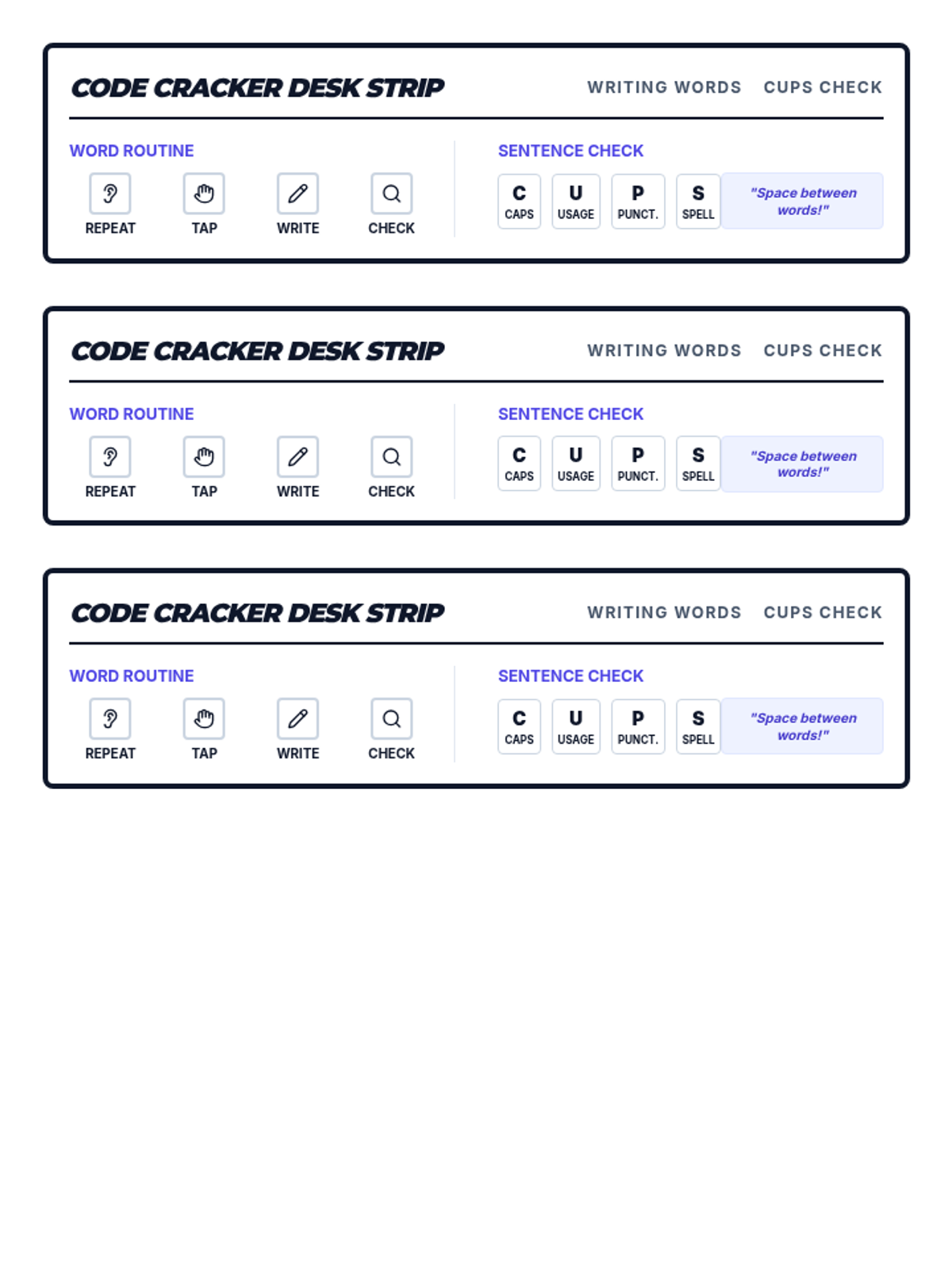
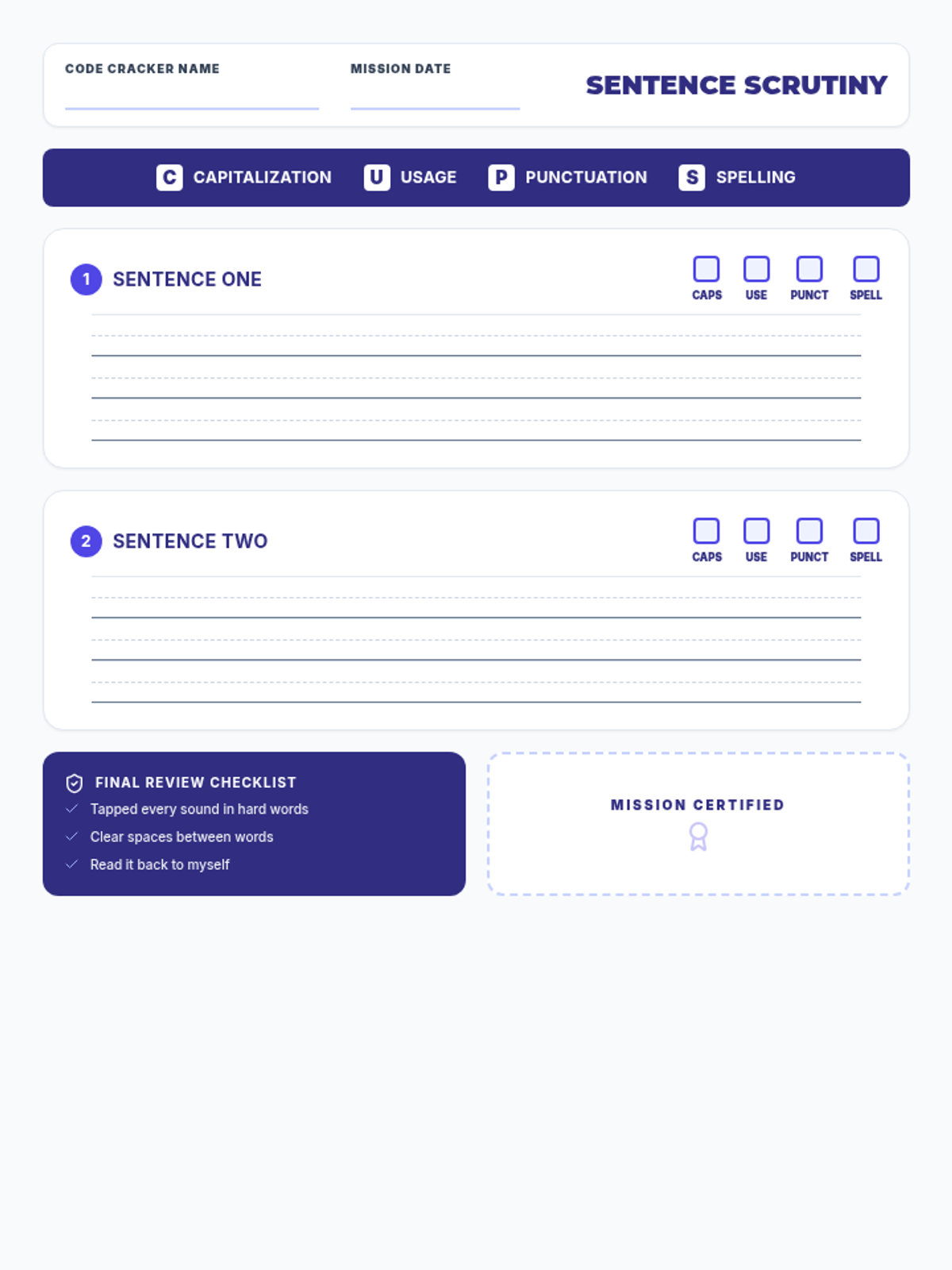
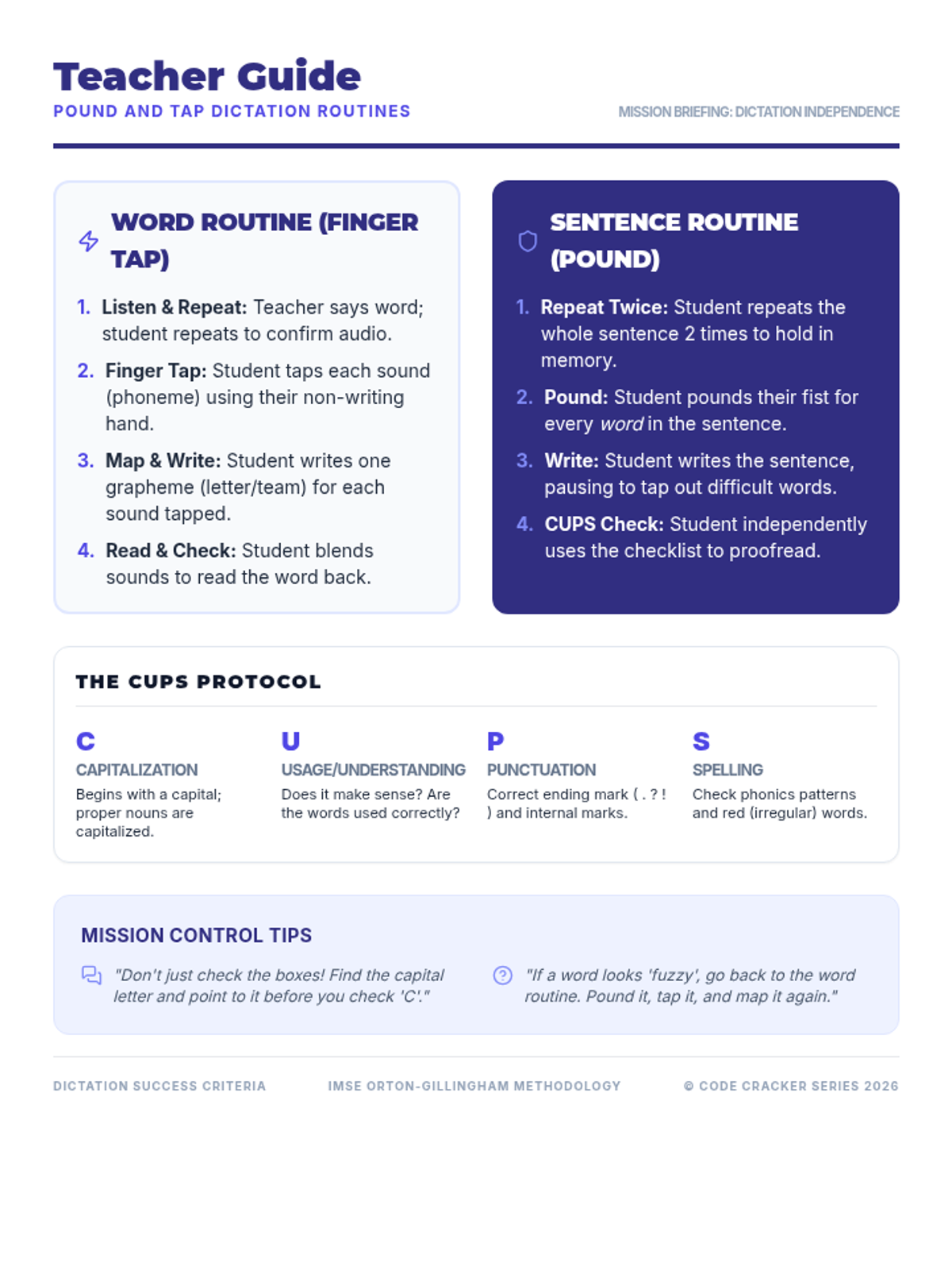
A toolkit of success criteria and structured practice materials for IMSE Orton-Gillingham dictation routines, focusing on word mapping and sentence conventions.
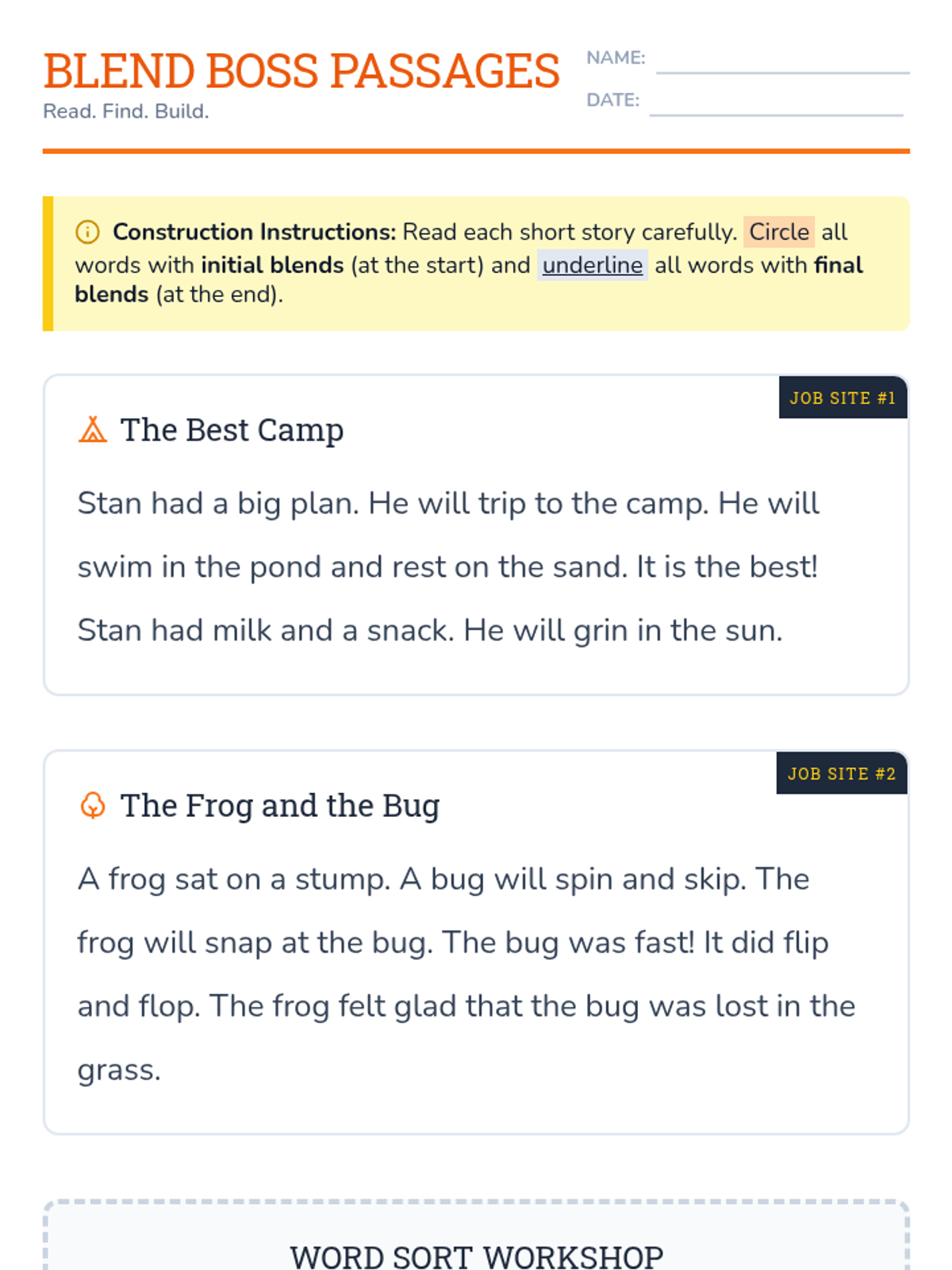
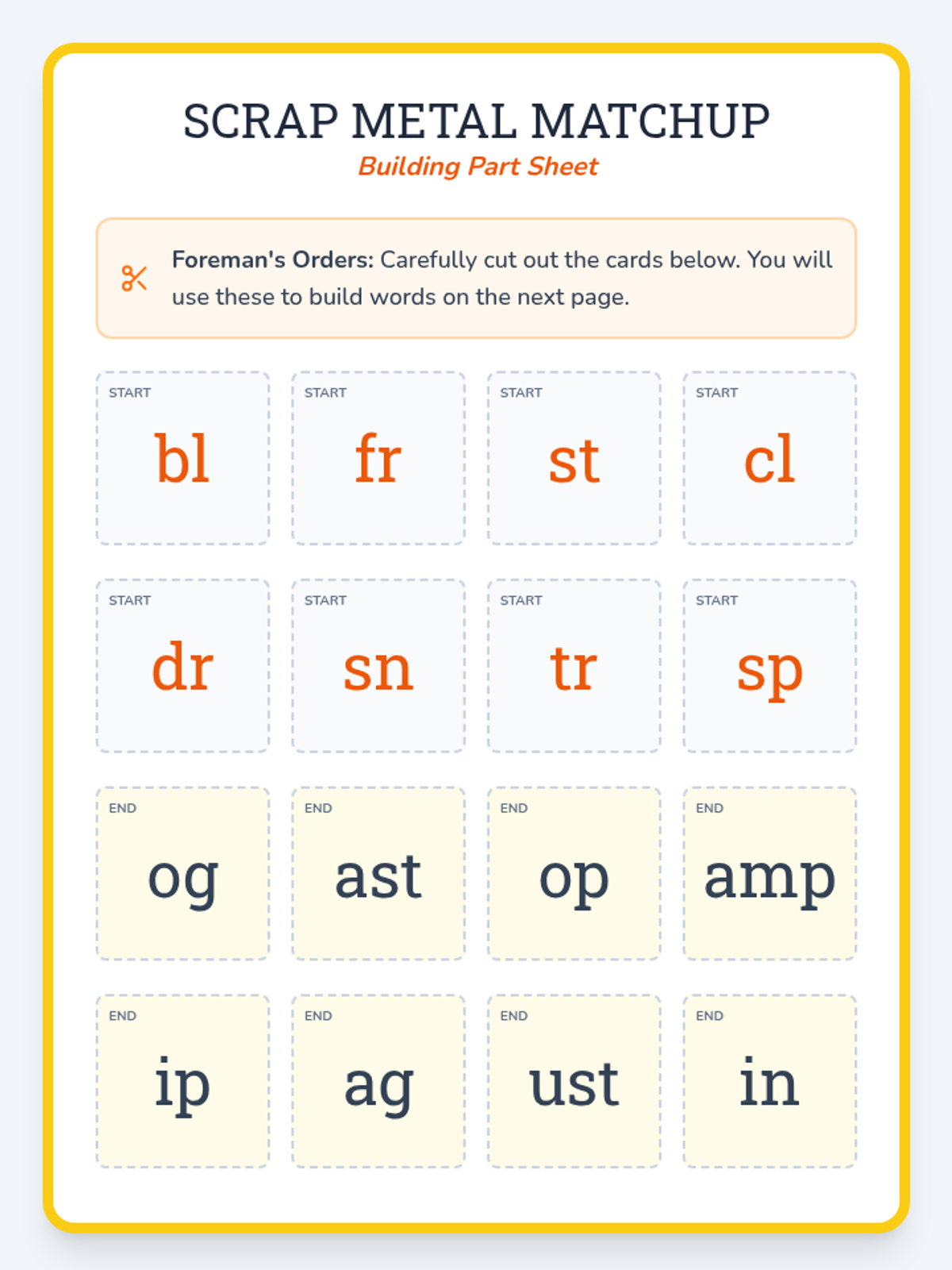
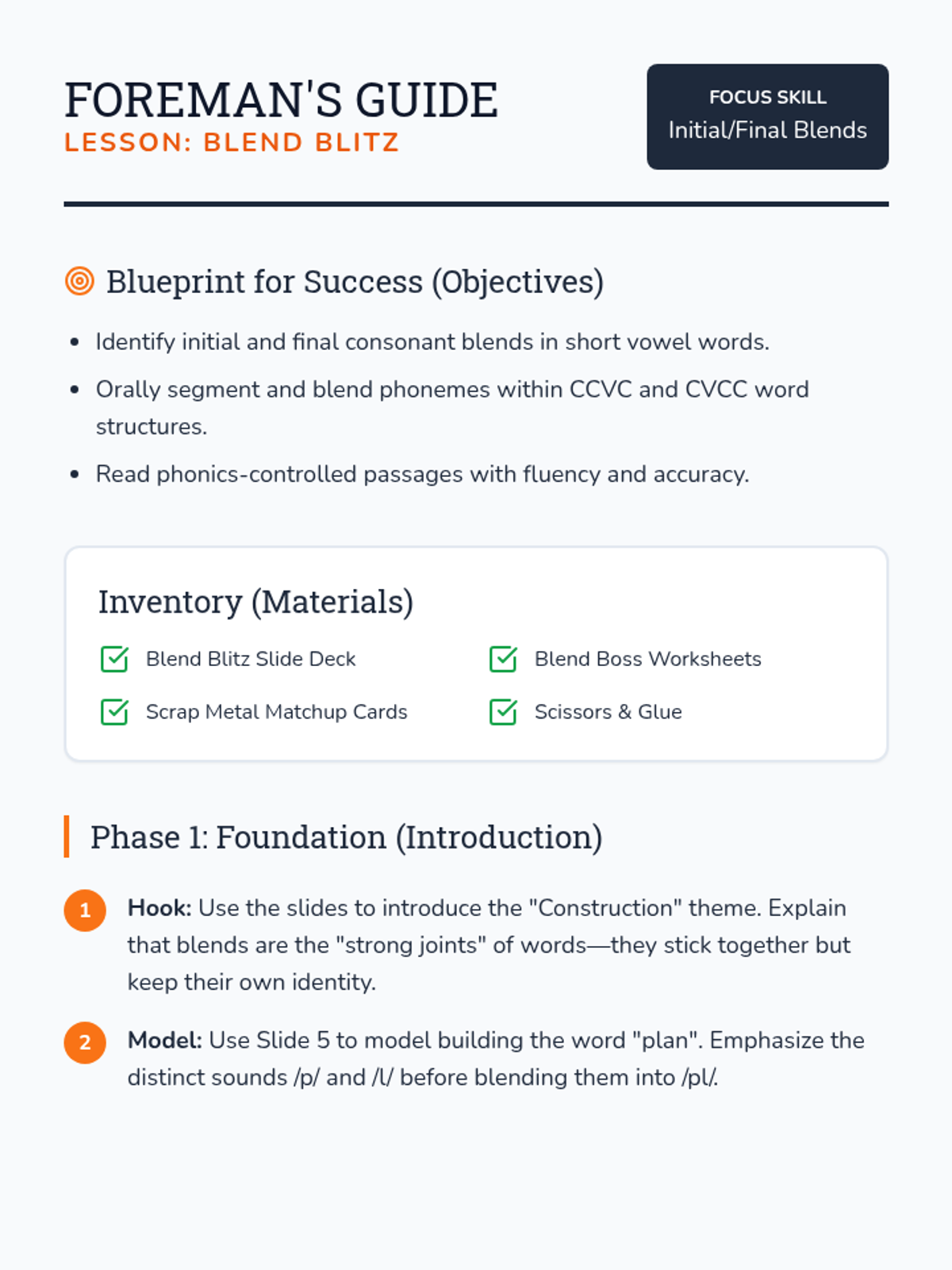
A foundational phonics lesson focusing on identifying, reading, and writing words with initial and final blends using short vowels. Students will 'build' words and practice reading them in context through a construction-themed series of activities.
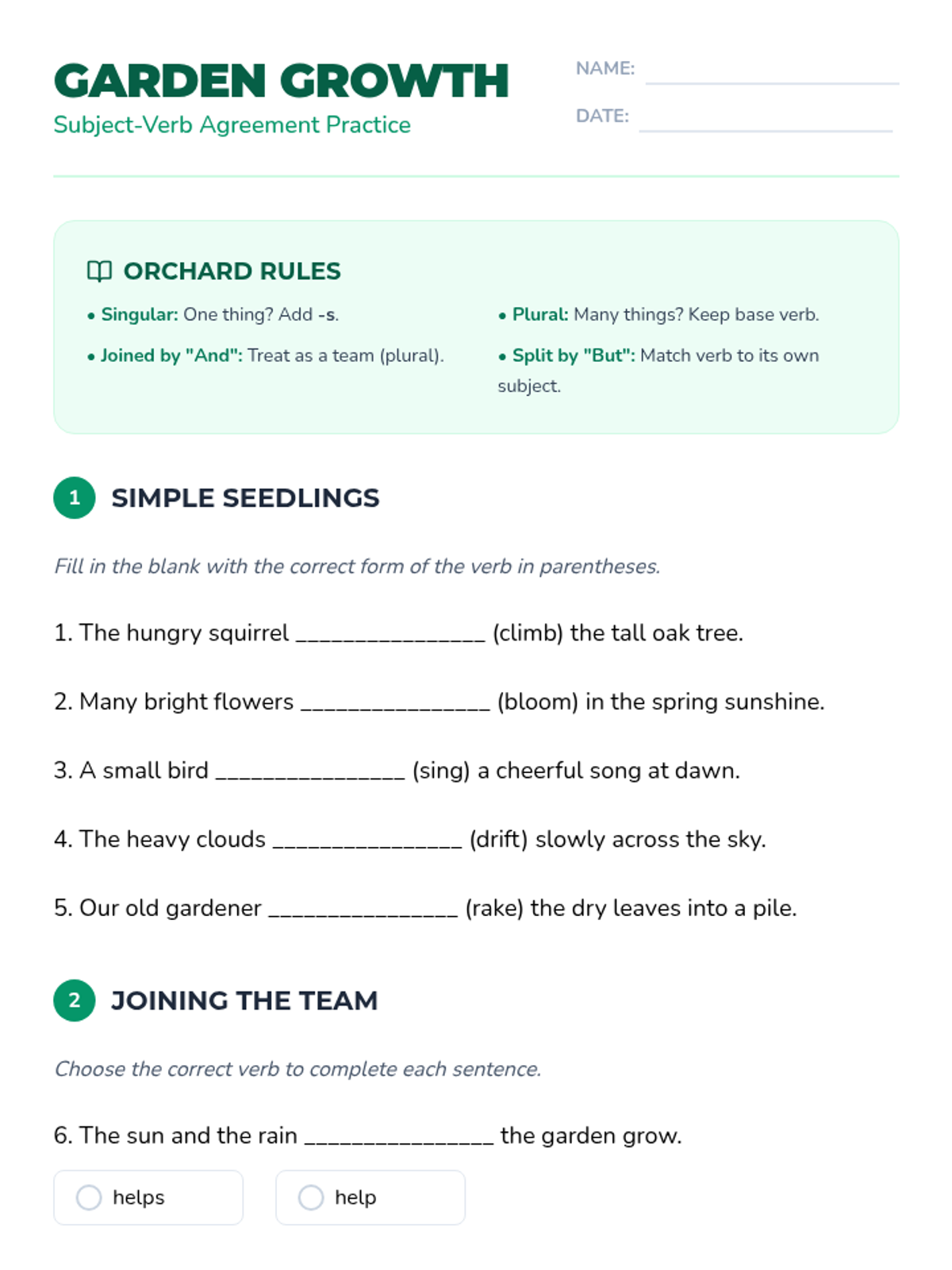
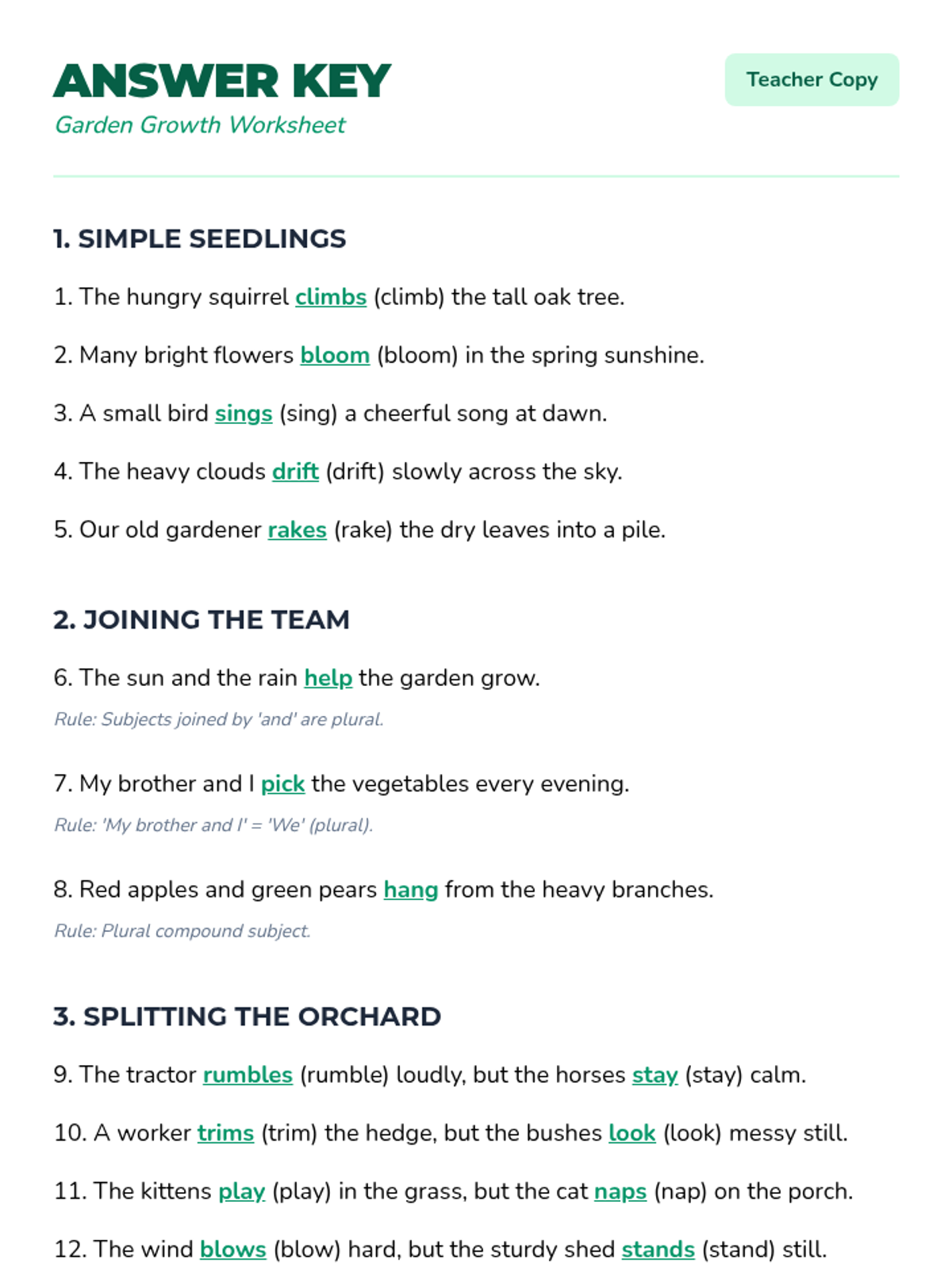
A comprehensive lesson on subject-verb agreement featuring simple sentences and compound sentences using 'and' and 'but'. Includes instructional slides, a practice worksheet, and an answer key.
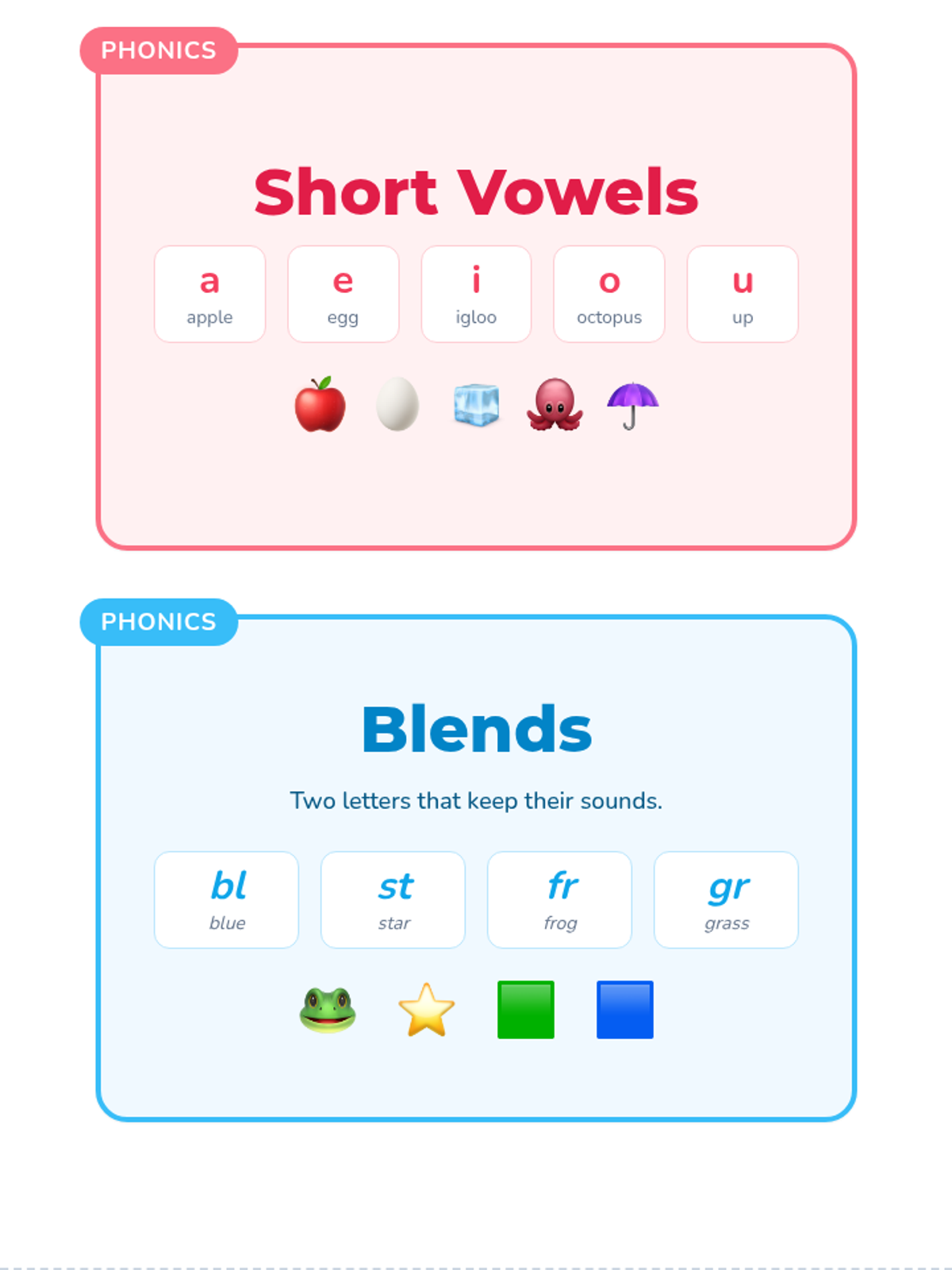
A collection of organized, visually-supported phonics labels designed for classroom organization and student reference. These labels cover core literacy concepts from short vowels to diphthongs.