Students learn to simplify large fractions by repeatedly dividing by 2 (the 'baby steps' method) and compare it to finding the greatest common factor (the 'giant leap' method). This lesson emphasizes confidence over speed for complex calculations.
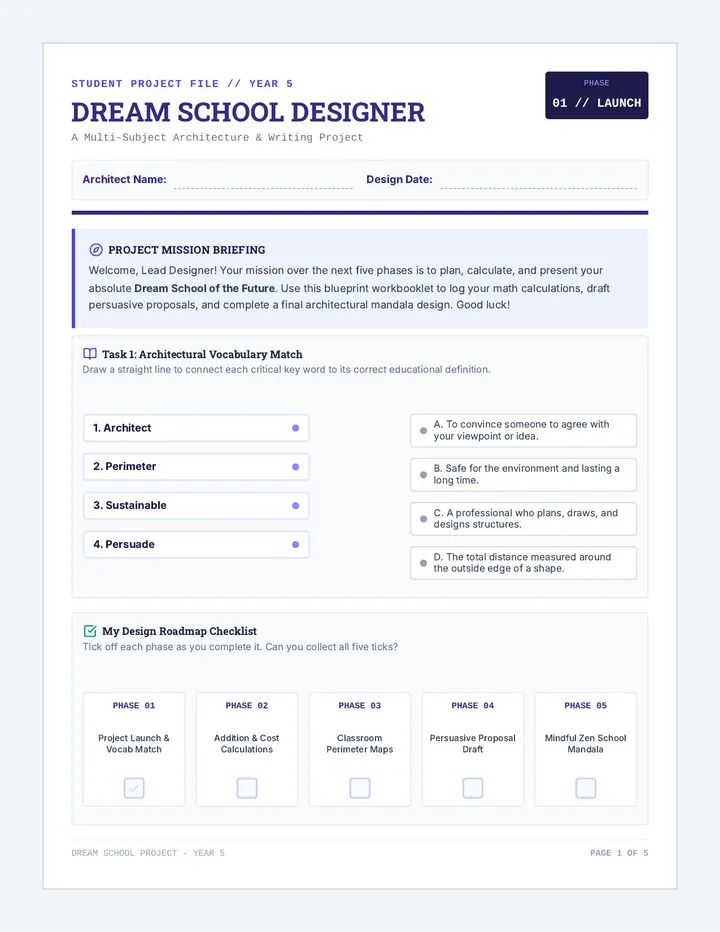
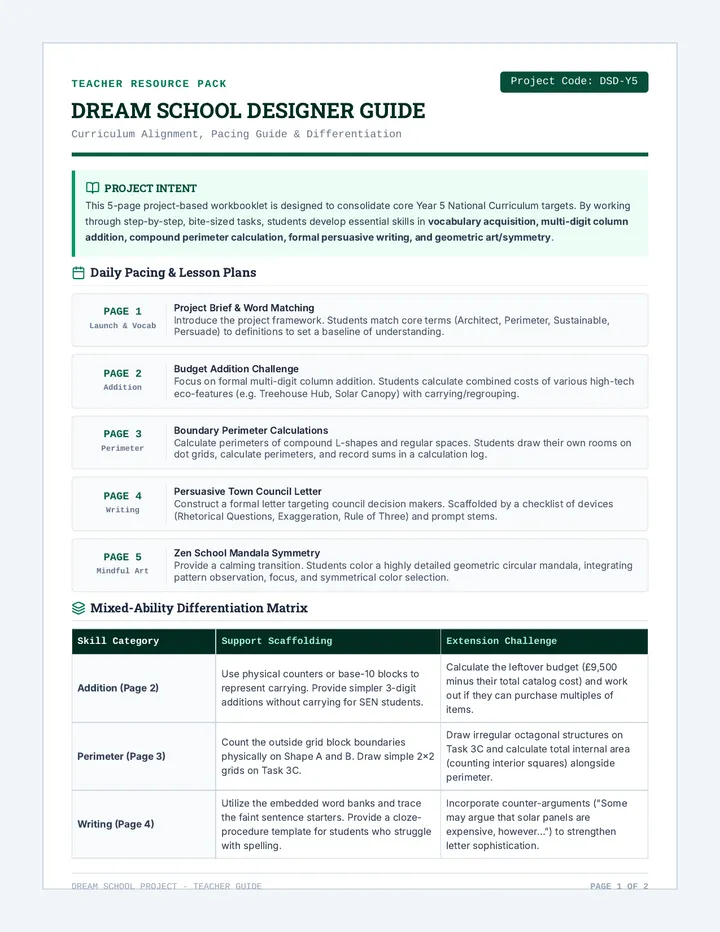
A project-based workbooklet and guide where Year 5 students design their ultimate future school. The project is broken down into structured, bite-sized daily steps integrating English, Maths, Science, Geography, and Art.
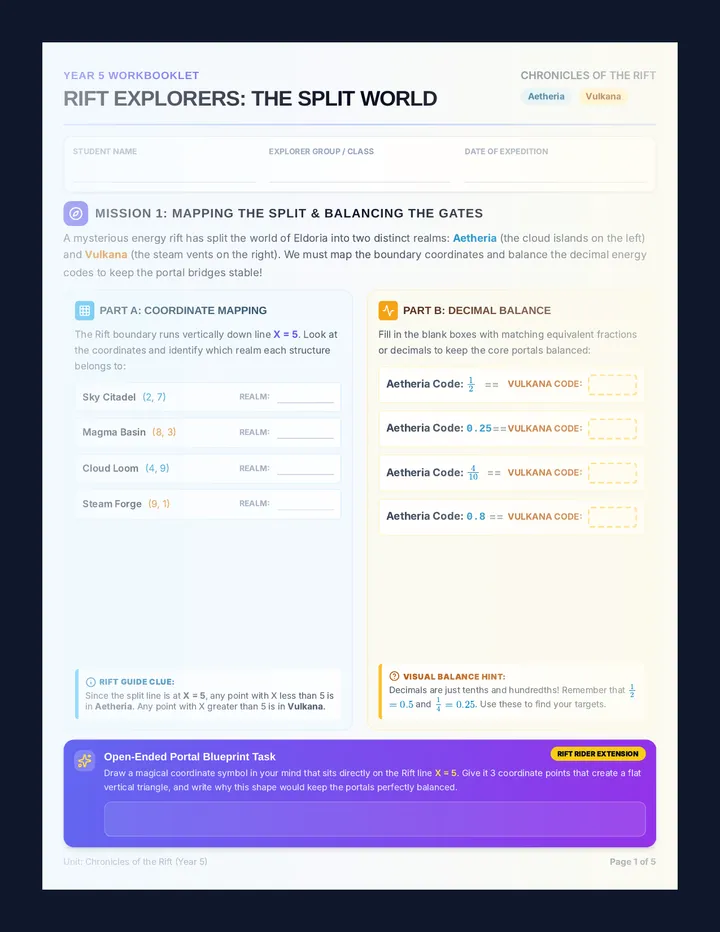
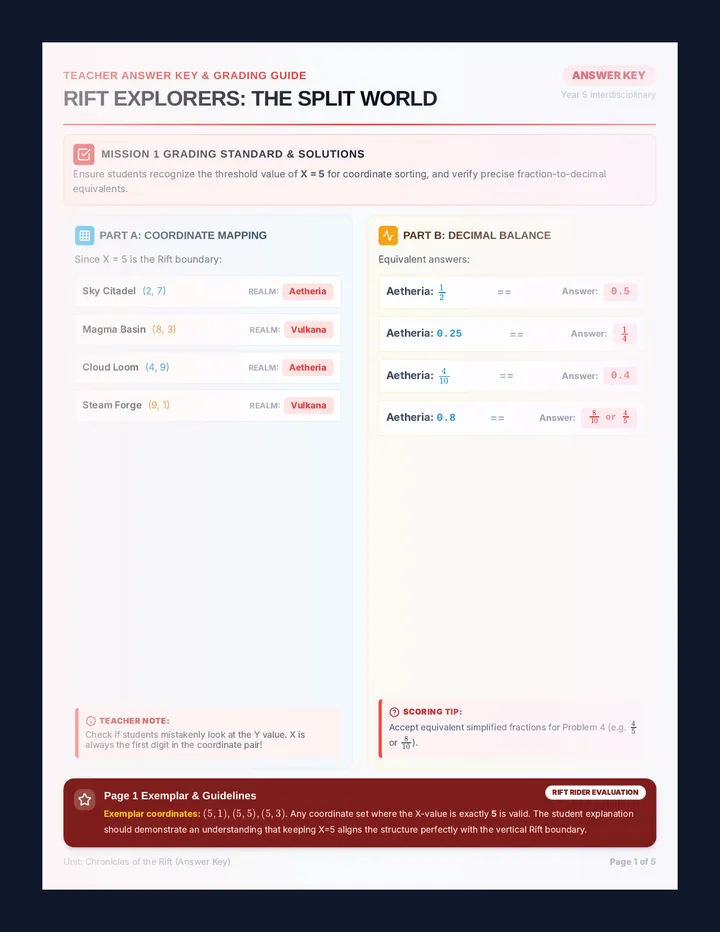
An immersive, five-part interdisciplinary workbook series where Year 5 students explore a world split in two. This booklet integrates mathematics, vocabulary, data handling, and science into a thrilling parallel-world narrative.
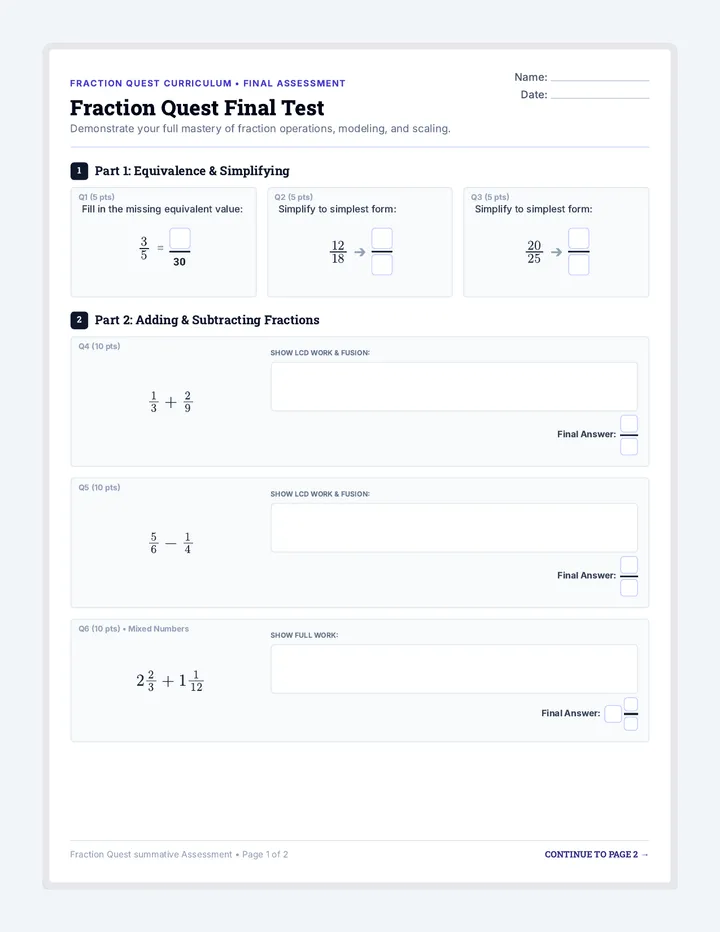
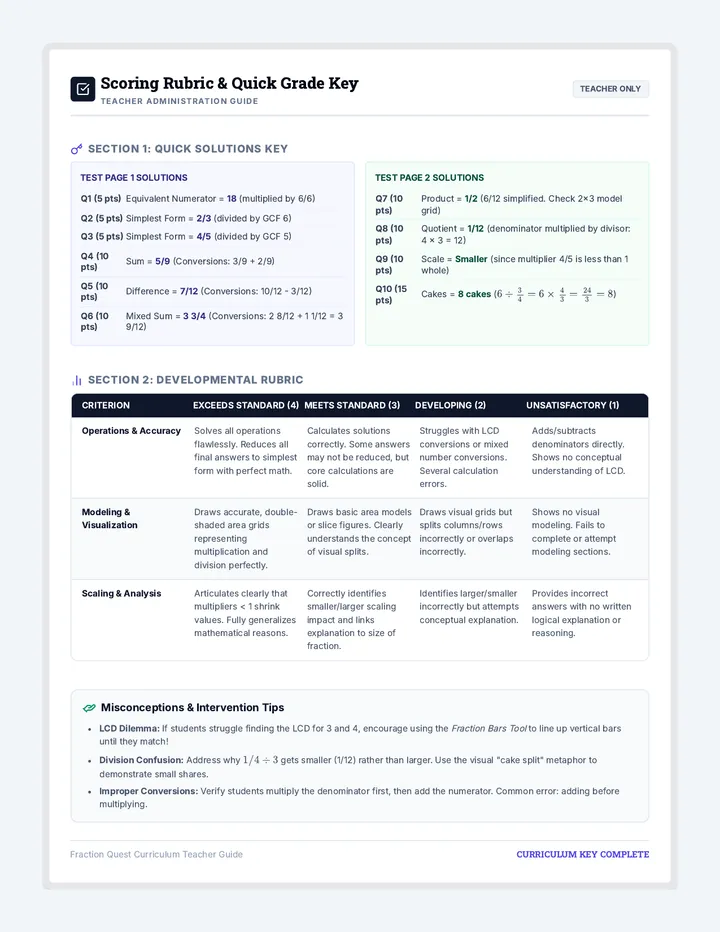
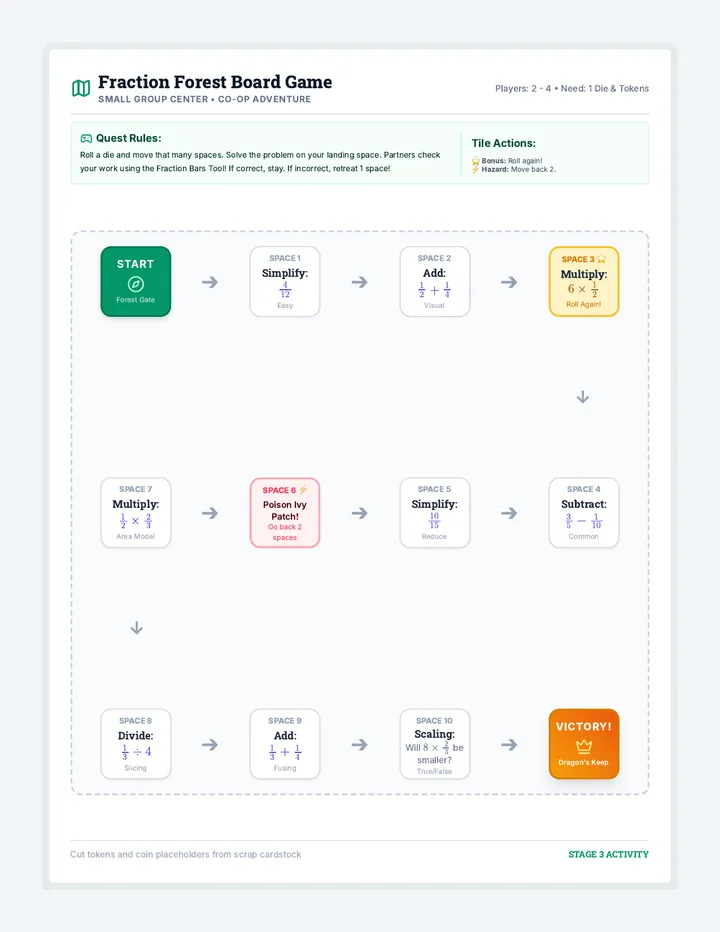
A comprehensive review and assessment of all four fraction operations. Students demonstrate their mastery through an interactive review, final unit assessment, and student reflection.
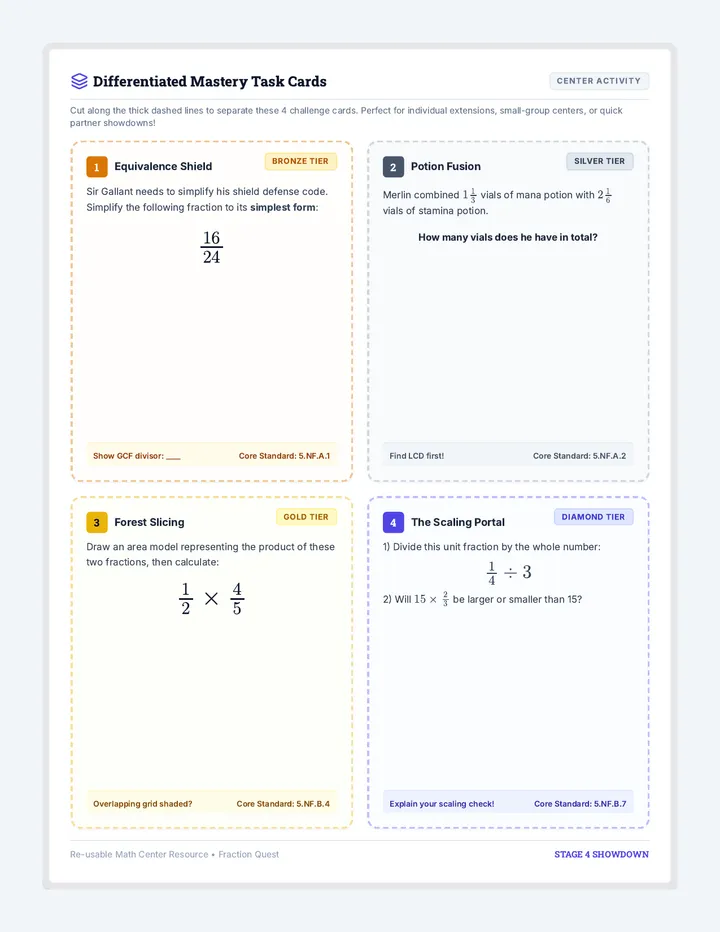
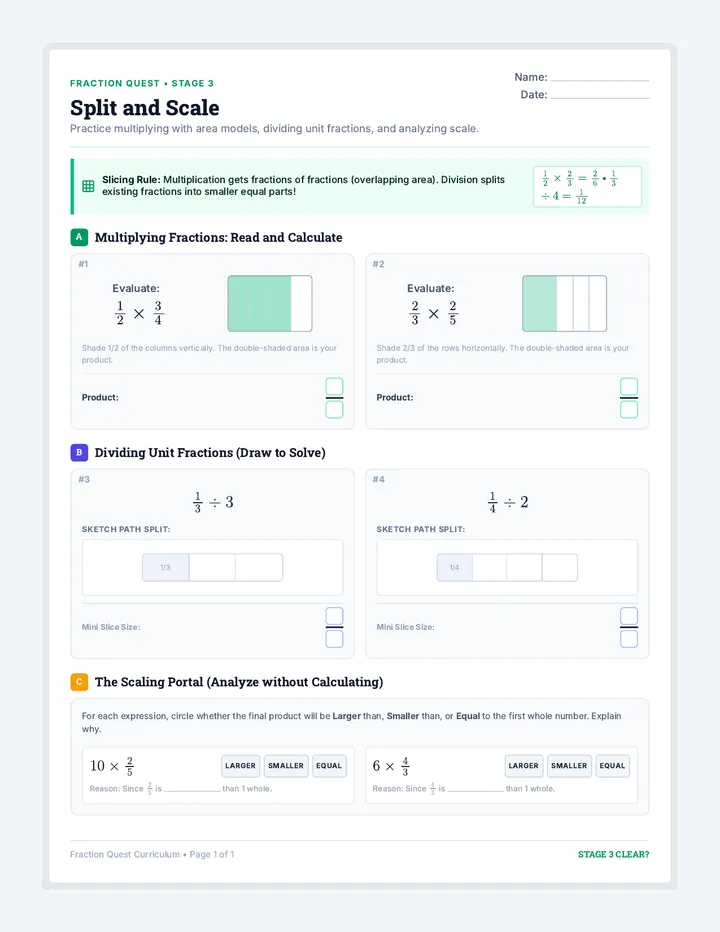
Multiplying and dividing fractions using area models, understanding scaling, and dividing unit fractions by whole numbers. Visual models help conceptualize these concepts.
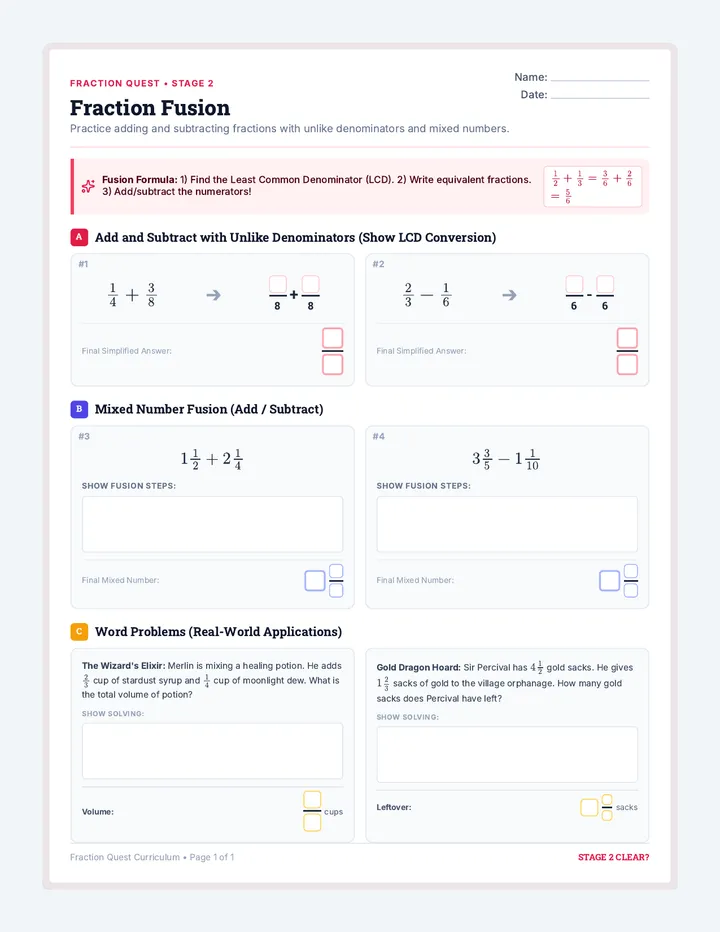
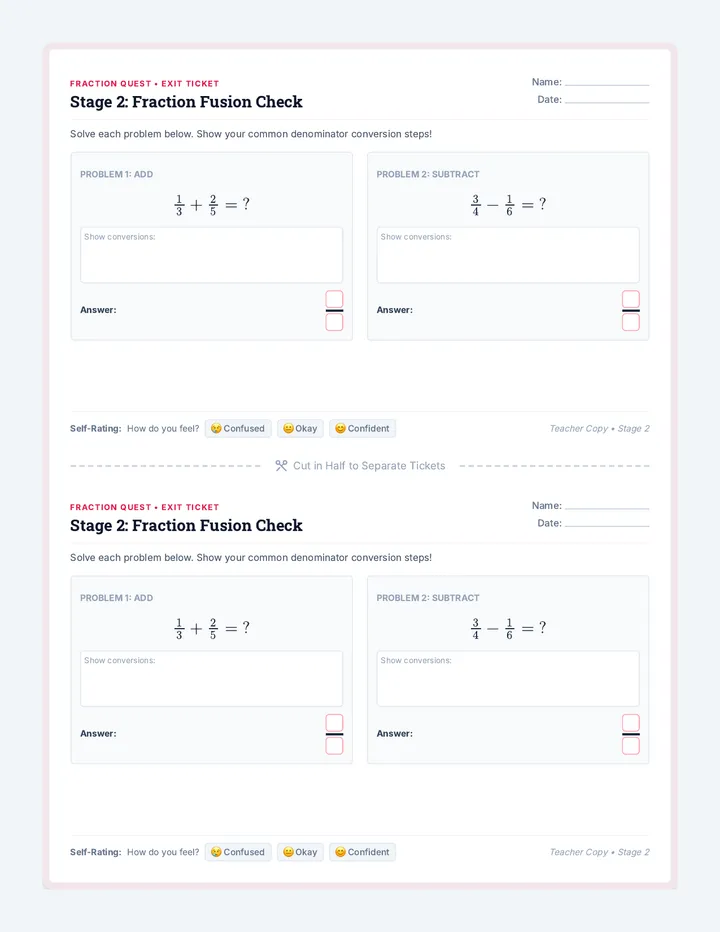
Adding and subtracting fractions with unlike denominators, including mixed numbers and standard real-world word problems. Students learn to find equivalent fractions with common denominators to add and subtract.
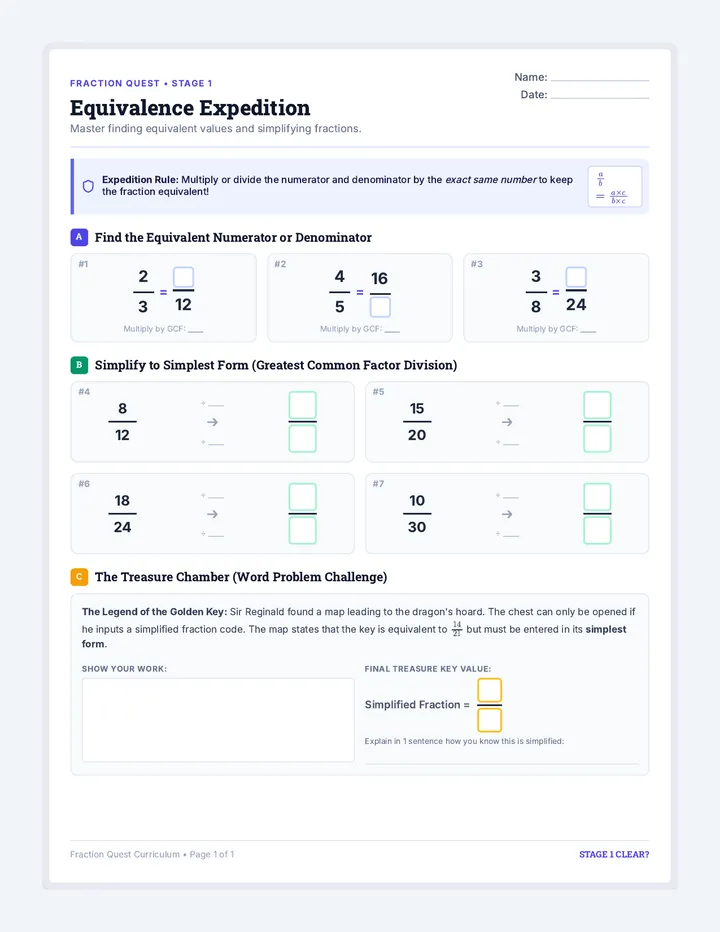
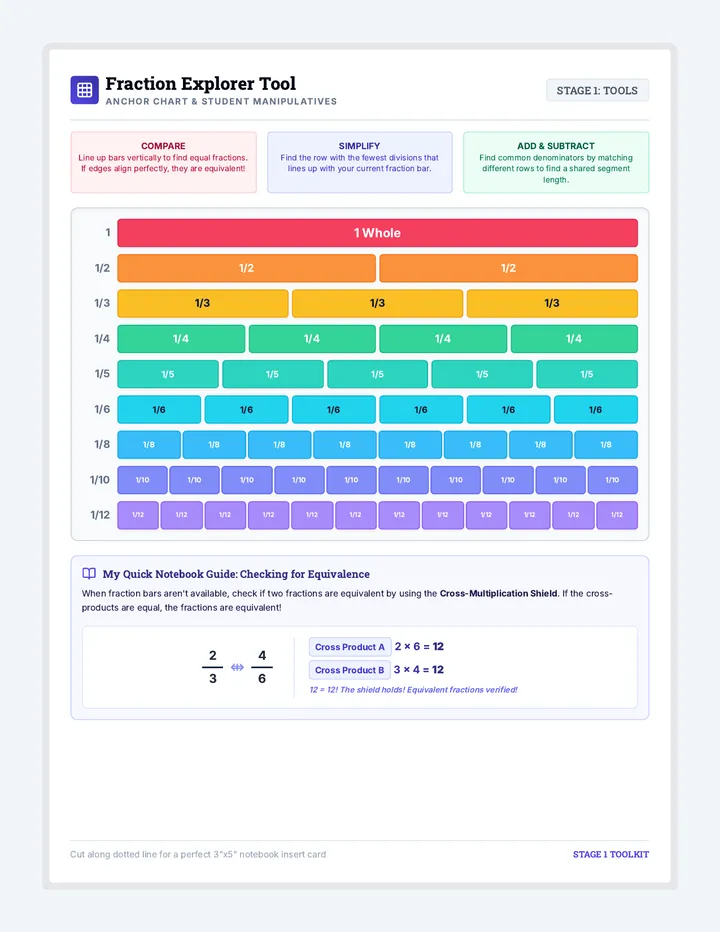
Mastering equivalent fractions and simplifying. Students discover visual equivalencies, identify common denominators, and reduce fractions to their simplest form using step-by-step mathematical reasoning.
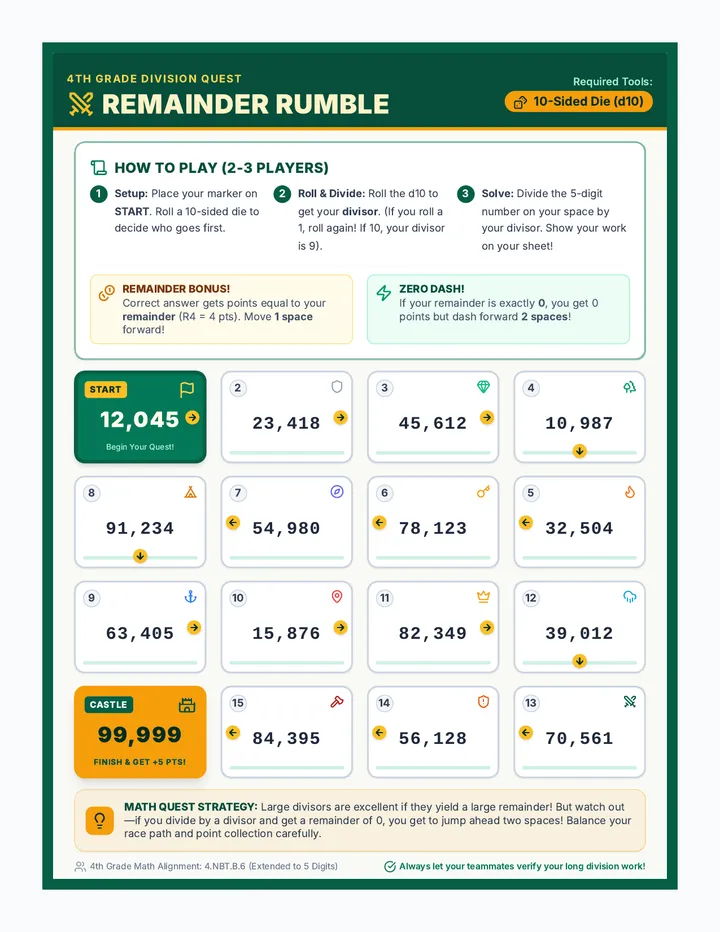
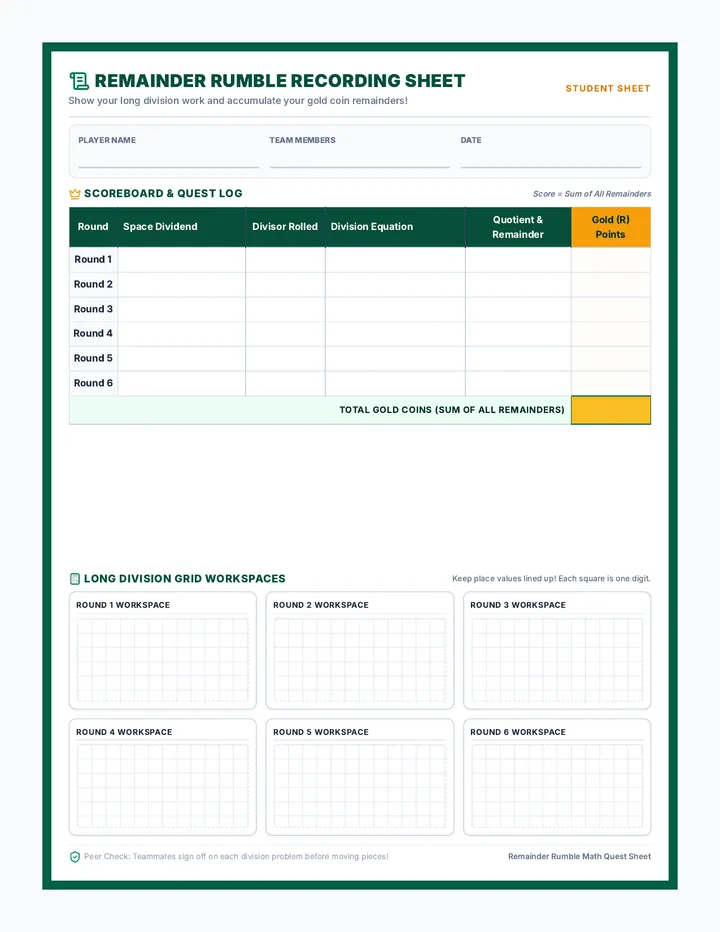
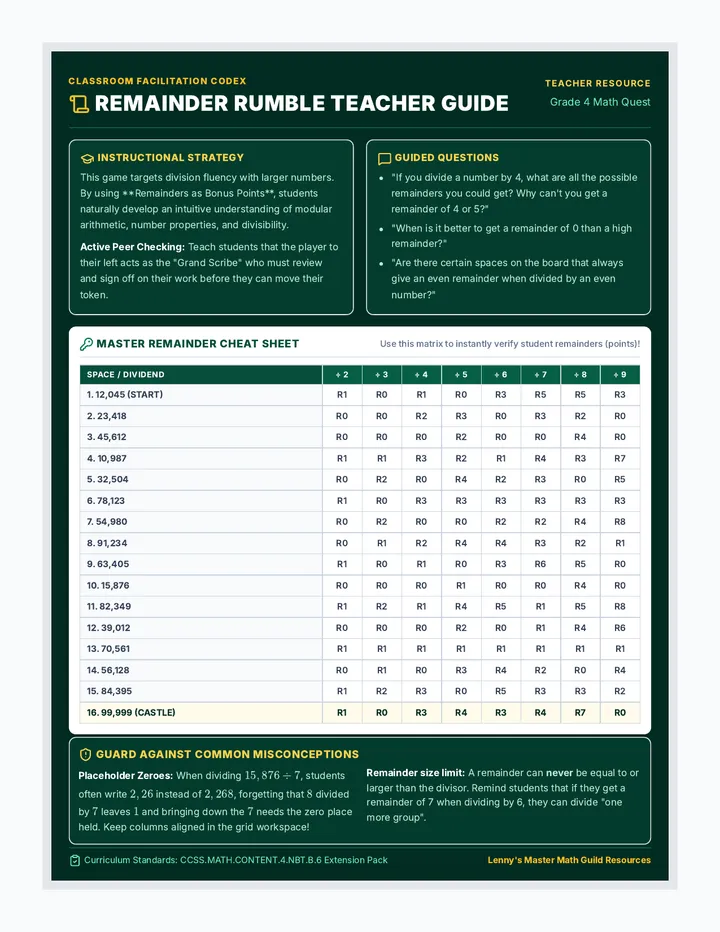
An exciting path-based board game where 4th graders practice dividing five-digit numbers by single-digit divisors. Students roll a 10-sided die to determine divisors or navigation, solve division problems, and accumulate remainders as bonus points to win the game.
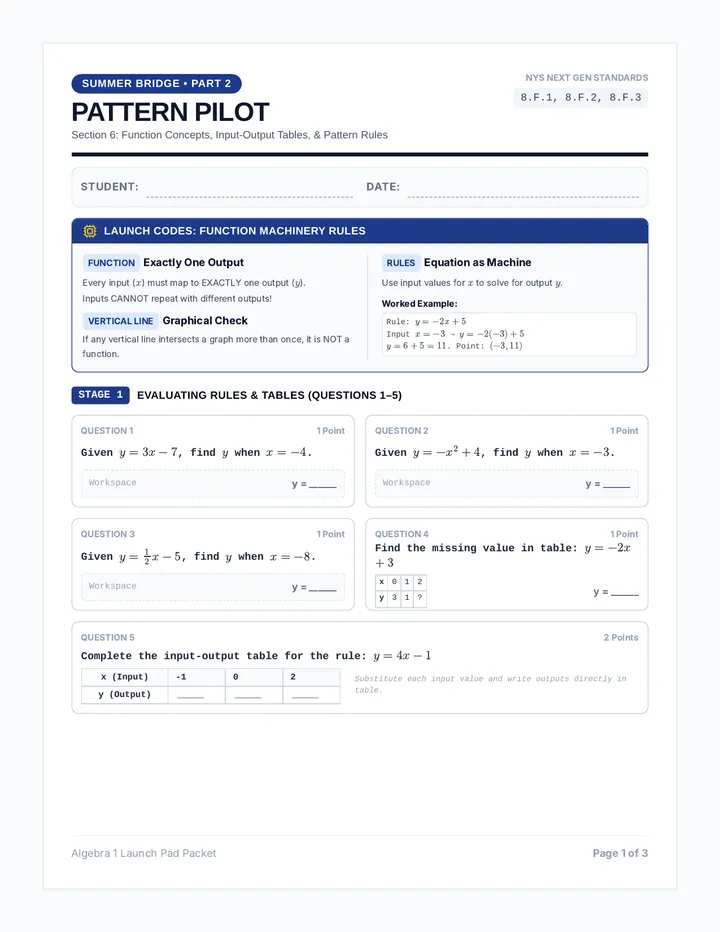
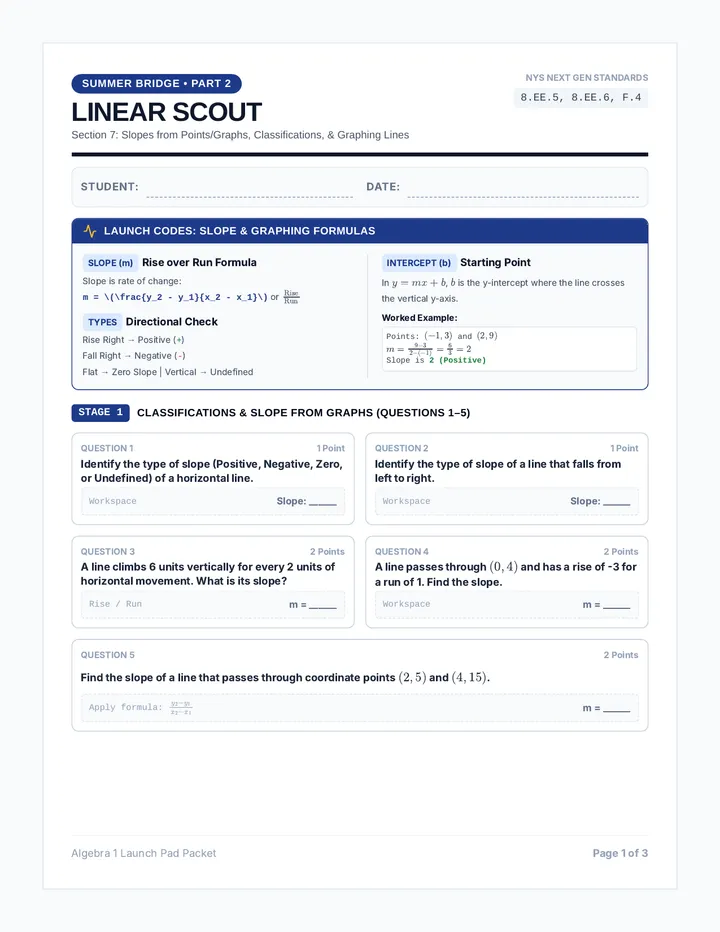
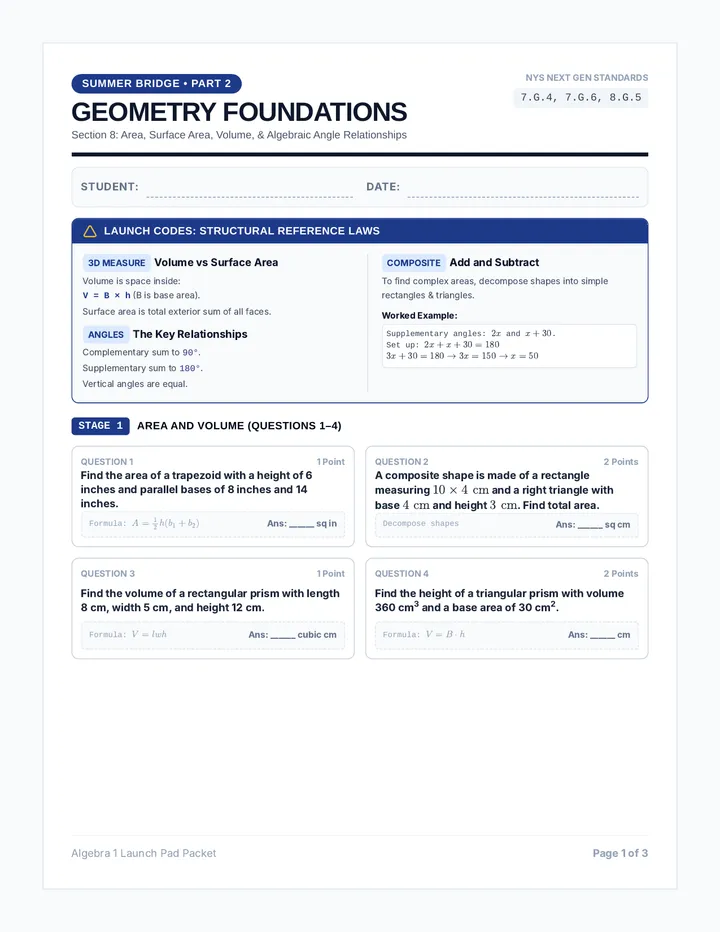
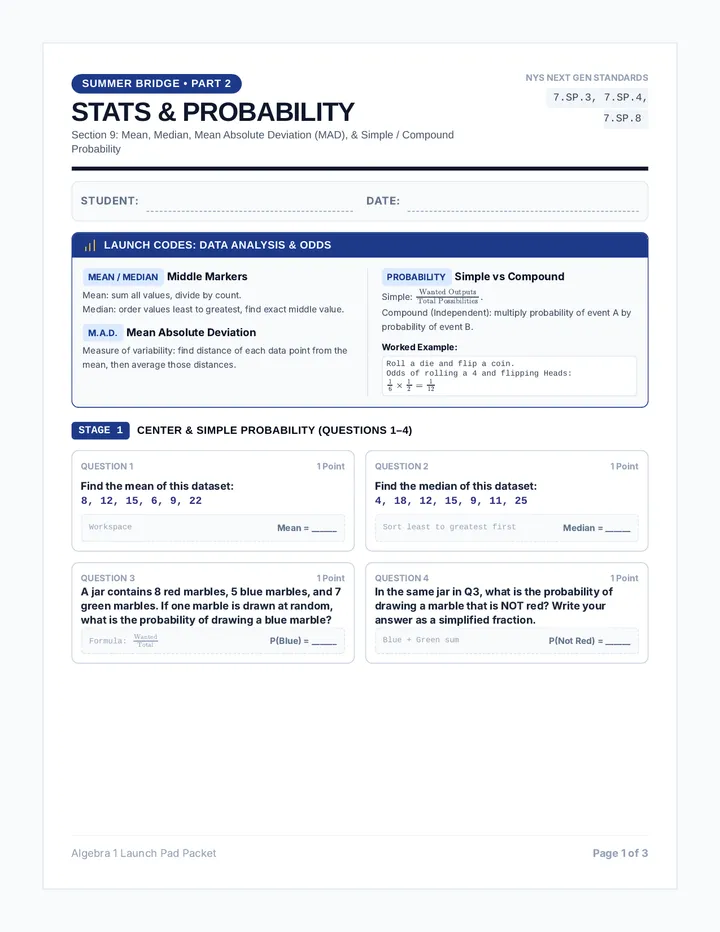
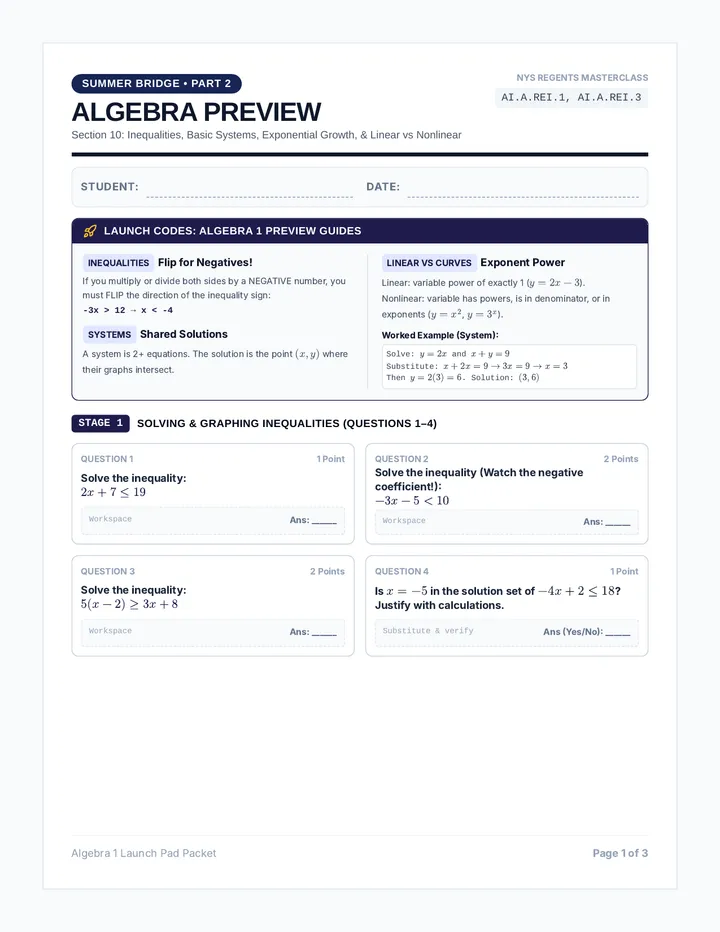
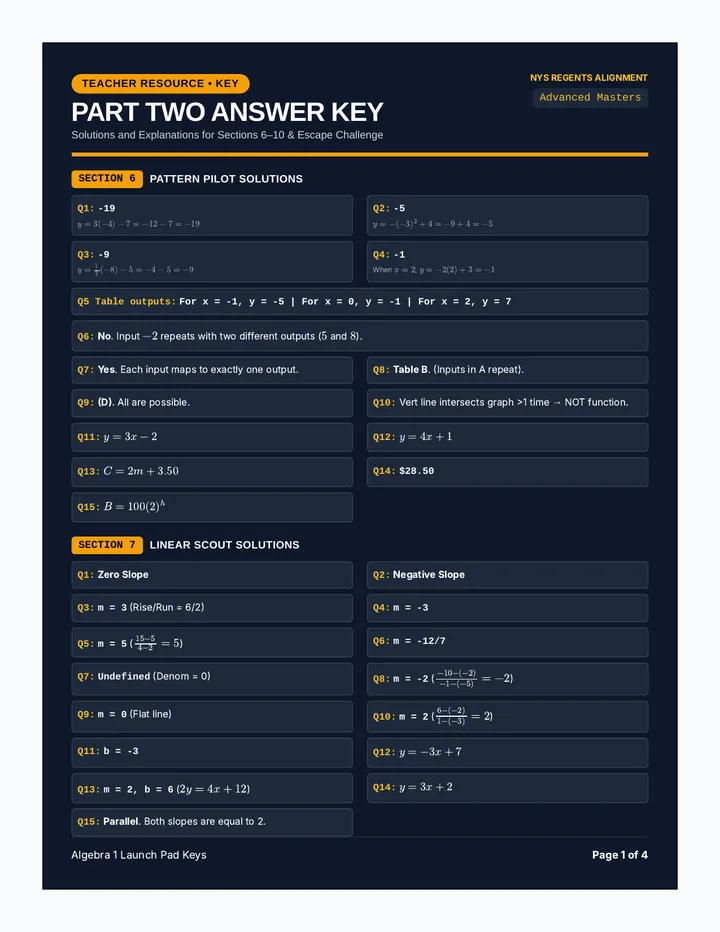
The second part of the Algebra 1 Summer Bridge Packet. It covers functions & patterns, linear relationships, geometric foundations, statistics & probability, and an advanced Algebra 1 preview.
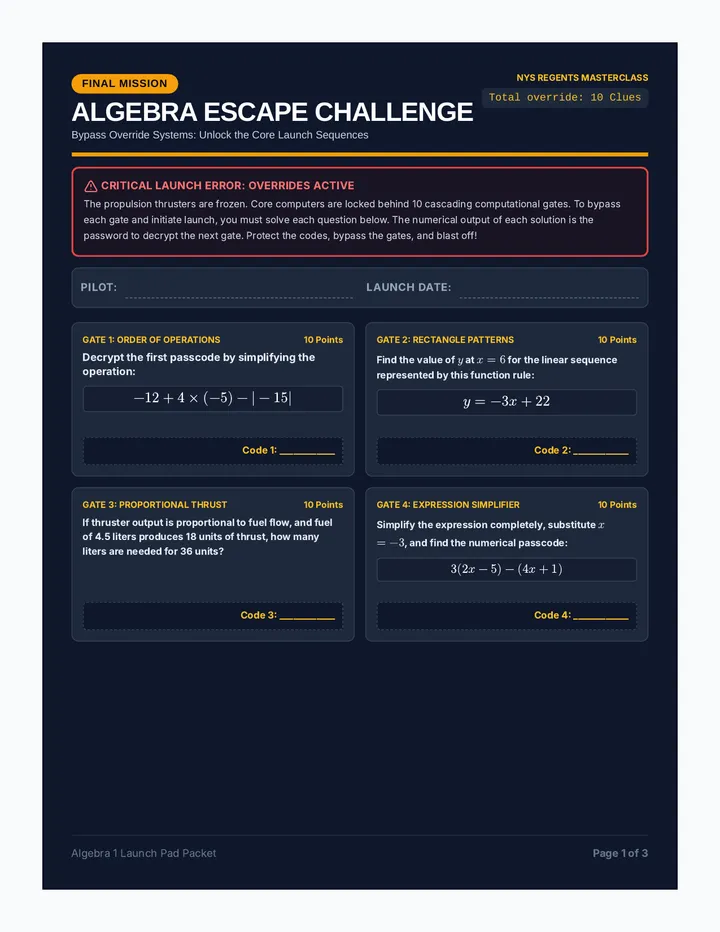
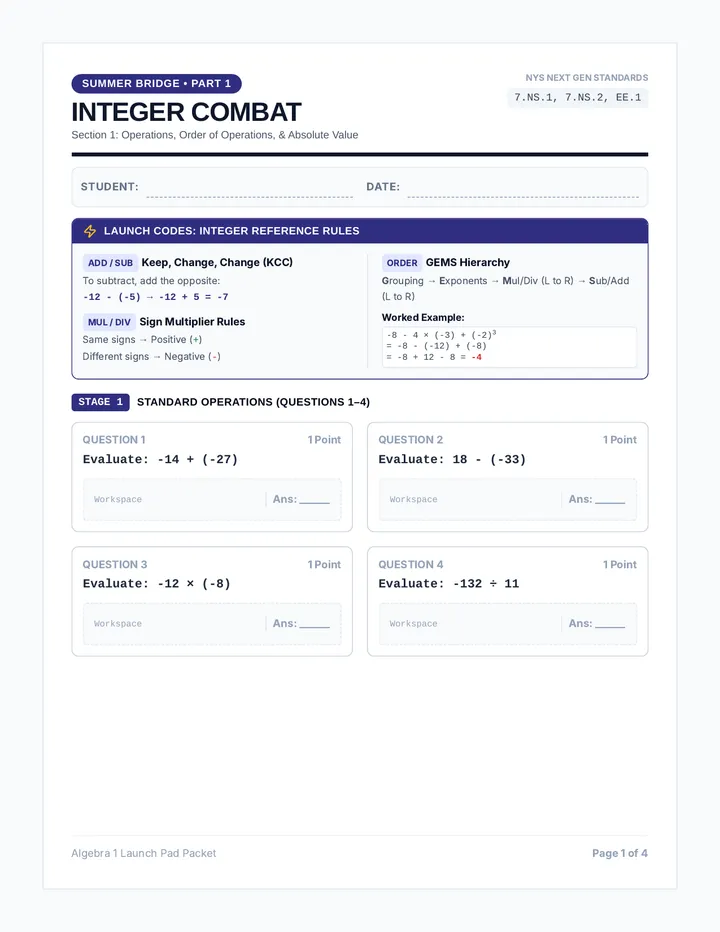
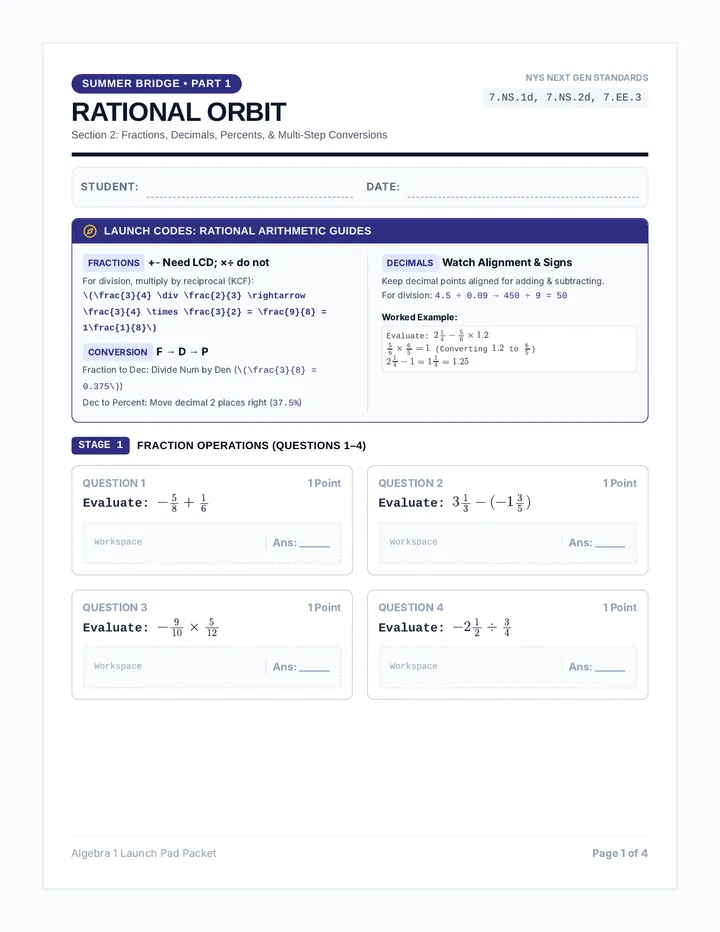
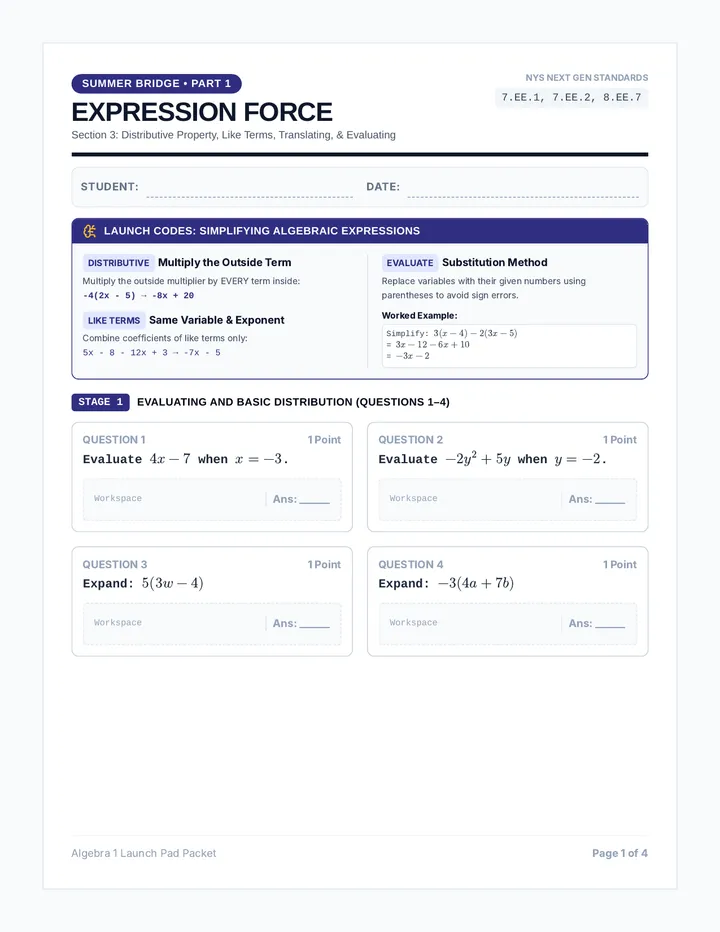
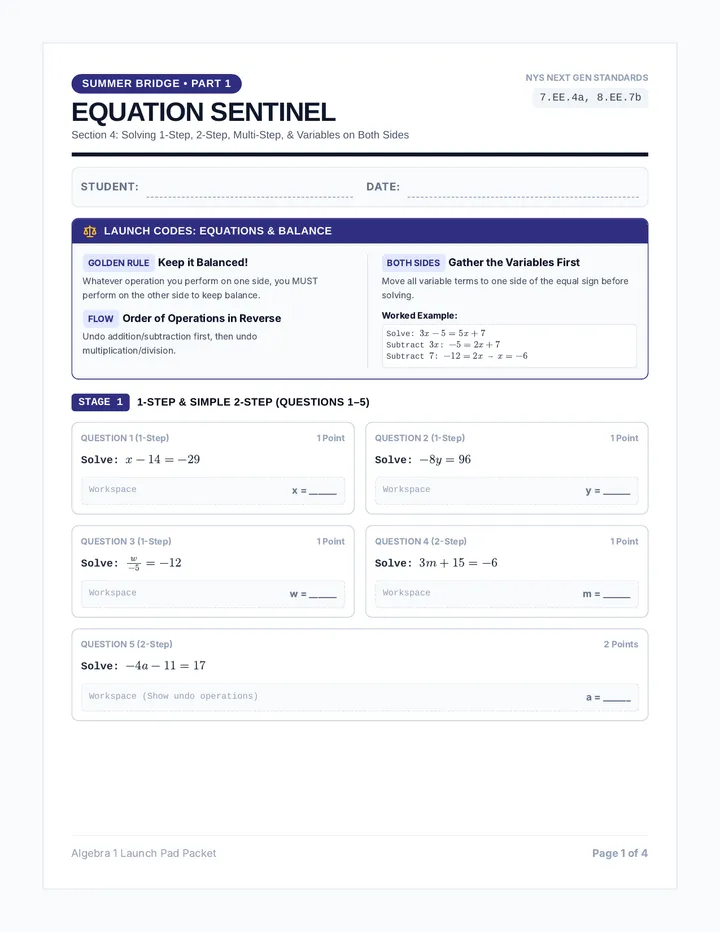
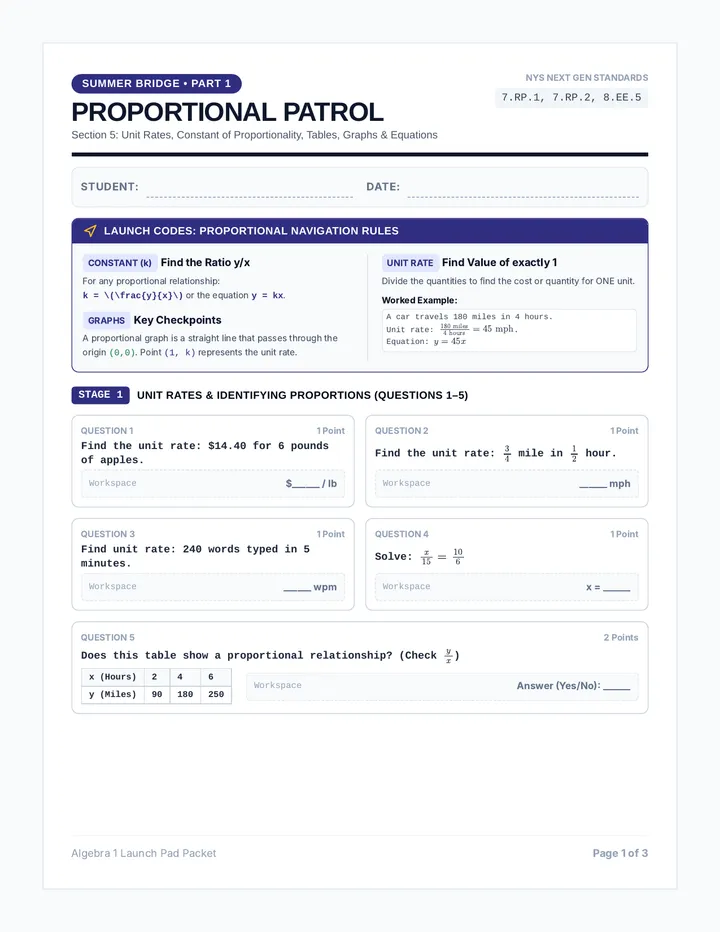
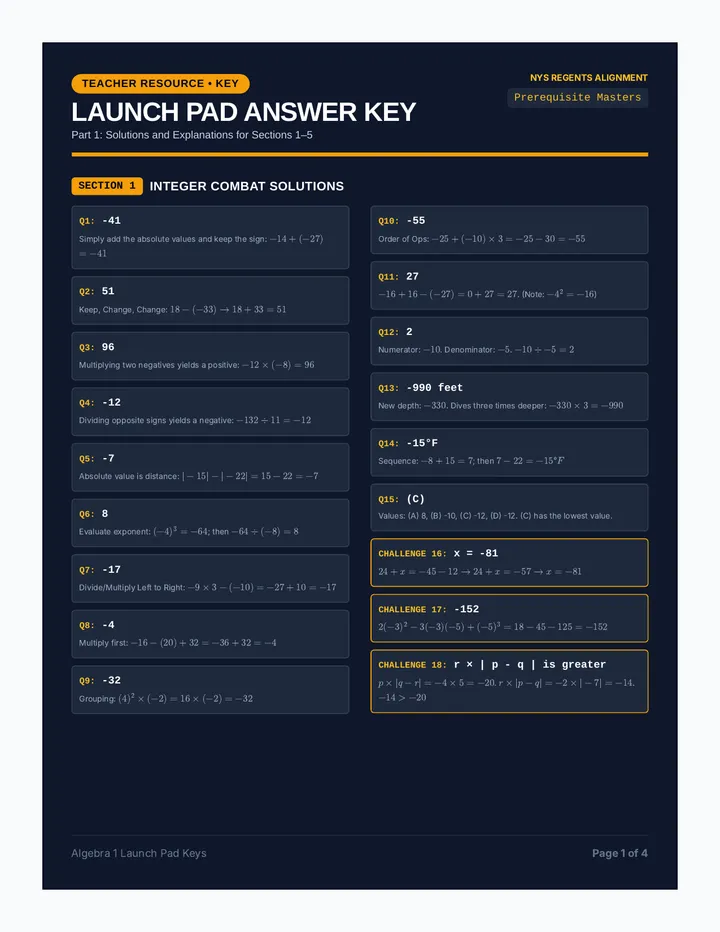
The first part of the Algebra 1 Summer Bridge Packet for rising 8th graders. It covers integer operations, rational numbers, expressions, solving equations, and proportional relationships with worked examples and workspaces.
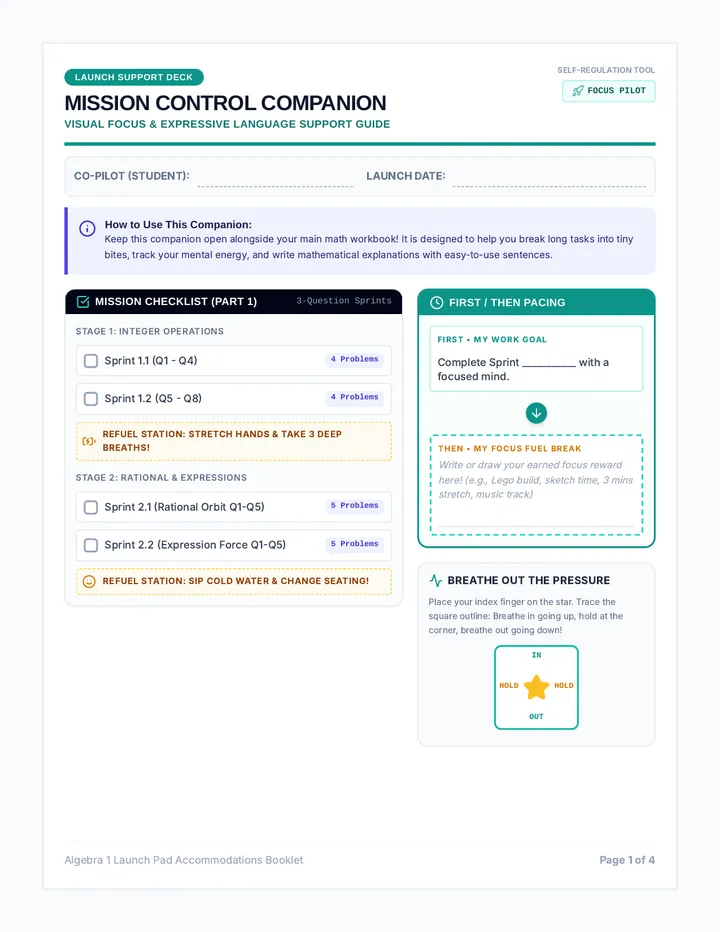
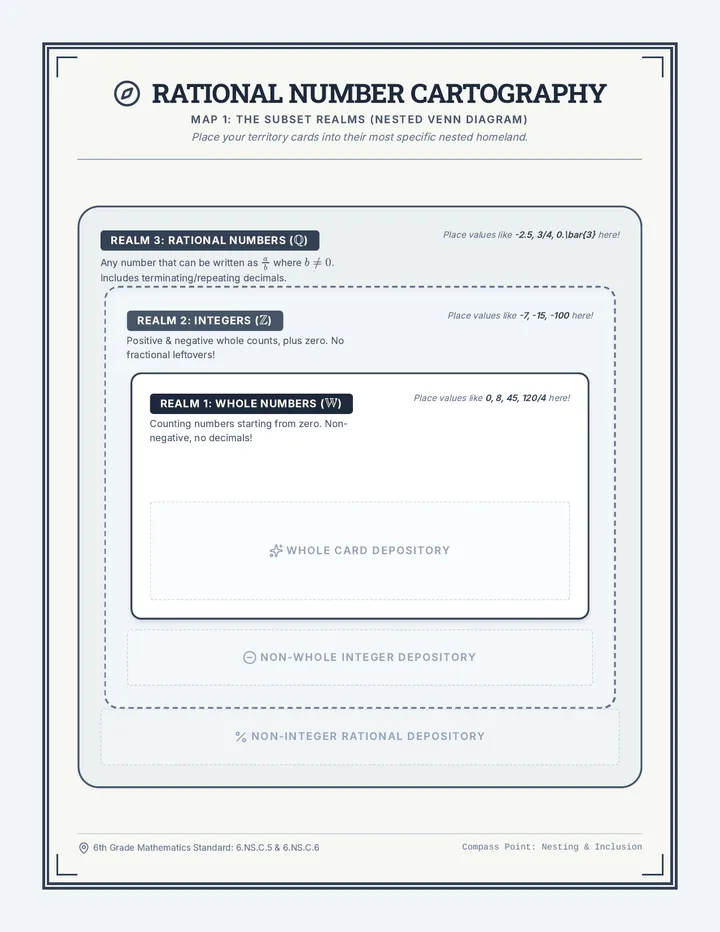
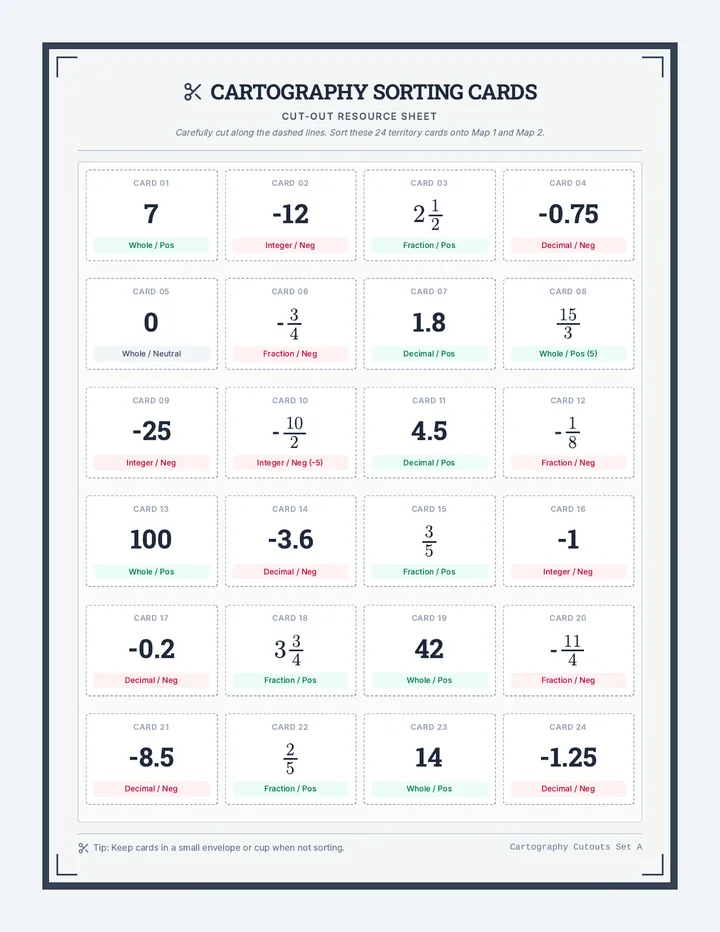
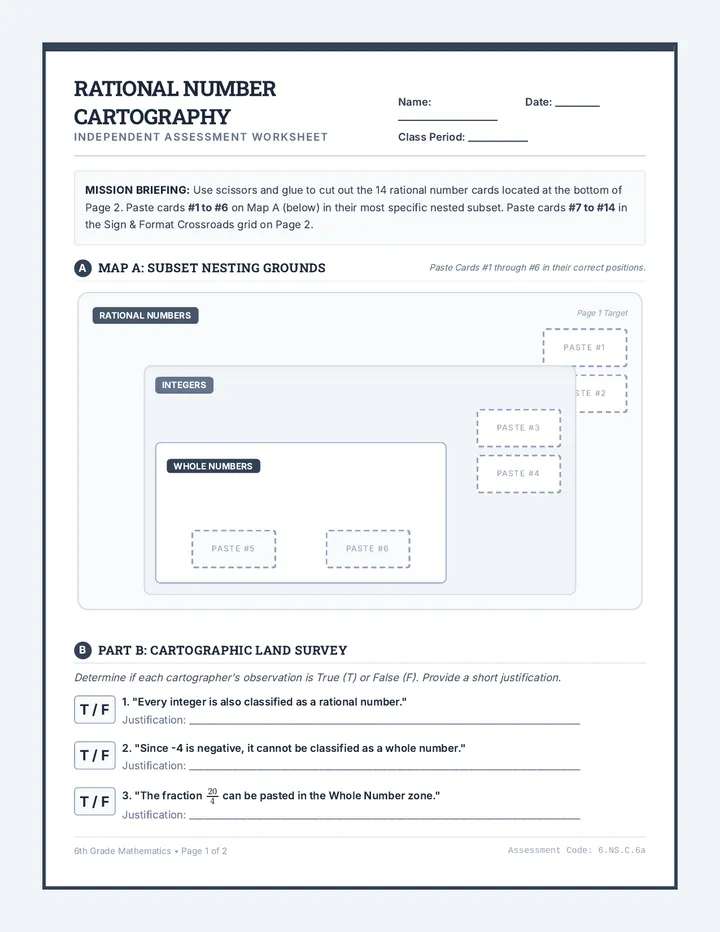
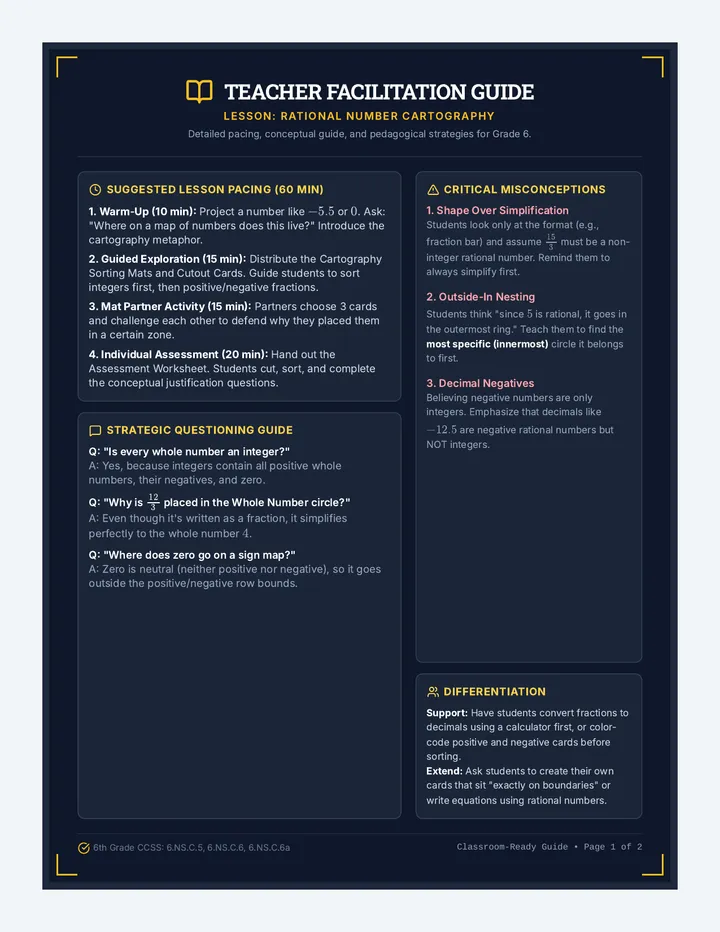
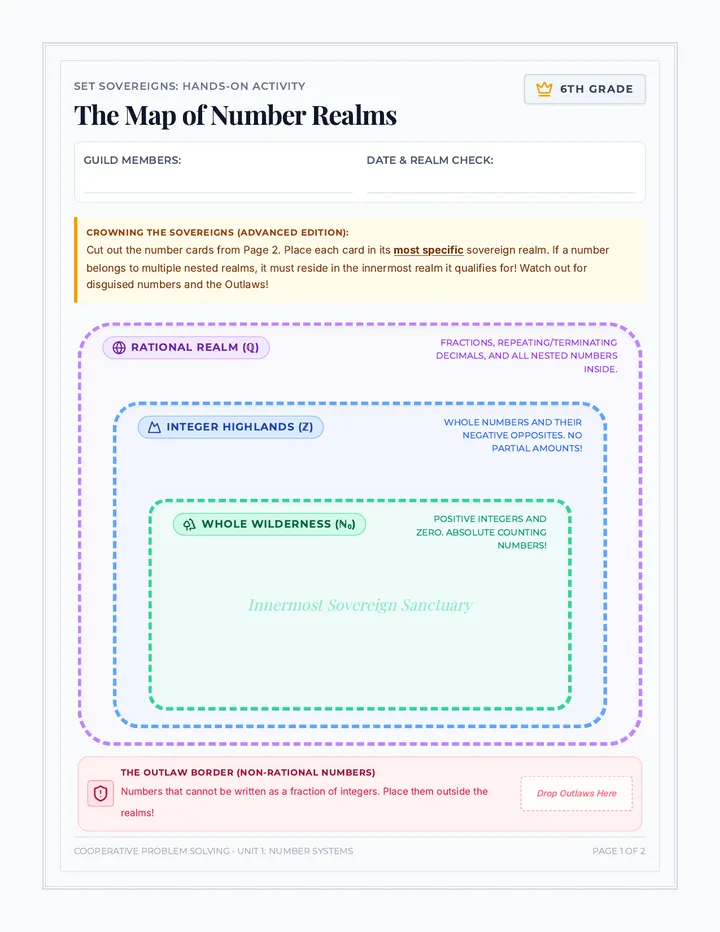
A hands-on, highly visual lesson where 6th-grade students explore the realm of rational numbers. Students use sorting mats, custom cut-out cards, and independent worksheets to classify numbers into nested subsets (Whole, Integers, Rational) and organize them by format and sign.
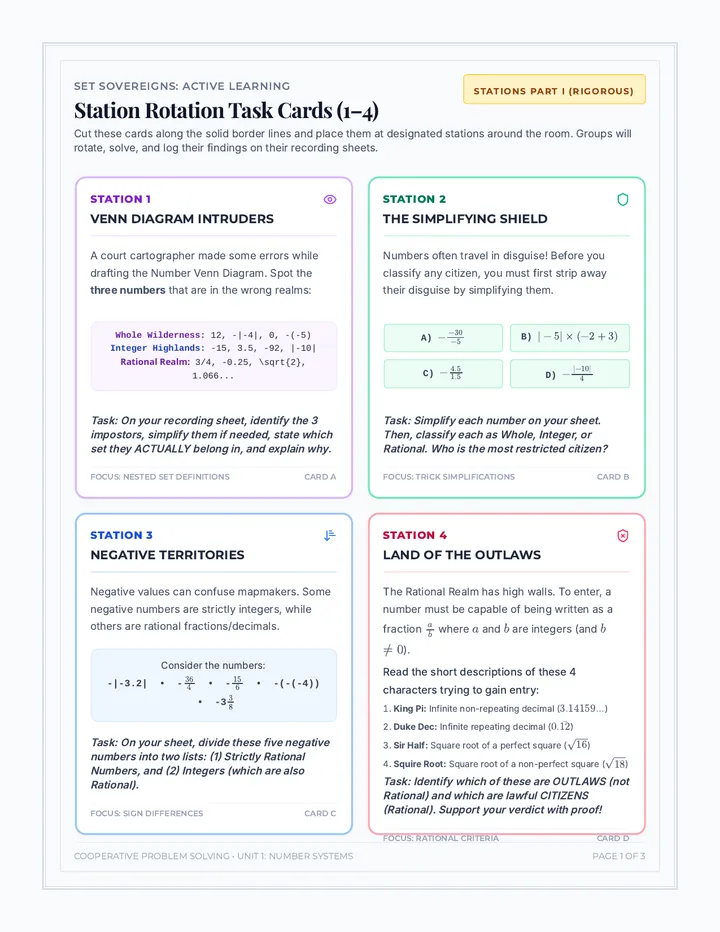
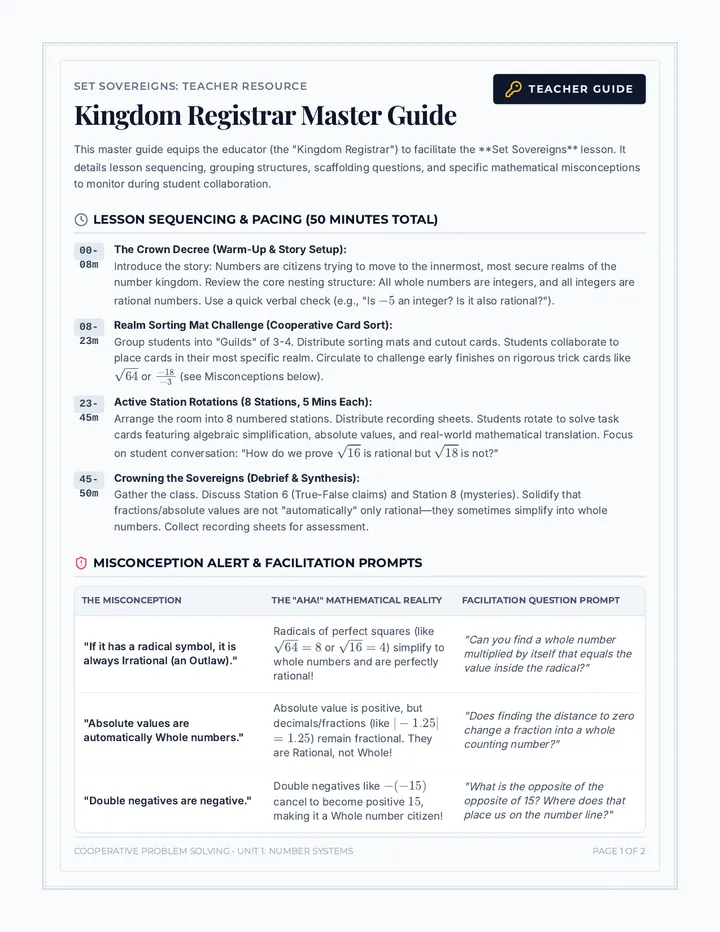
A hands-on, collaborative lesson where 6th-grade students master the nested relationships of the rational number system. Students explore whole numbers, integers, and rational numbers through an interactive card sort and active station rotation challenge.
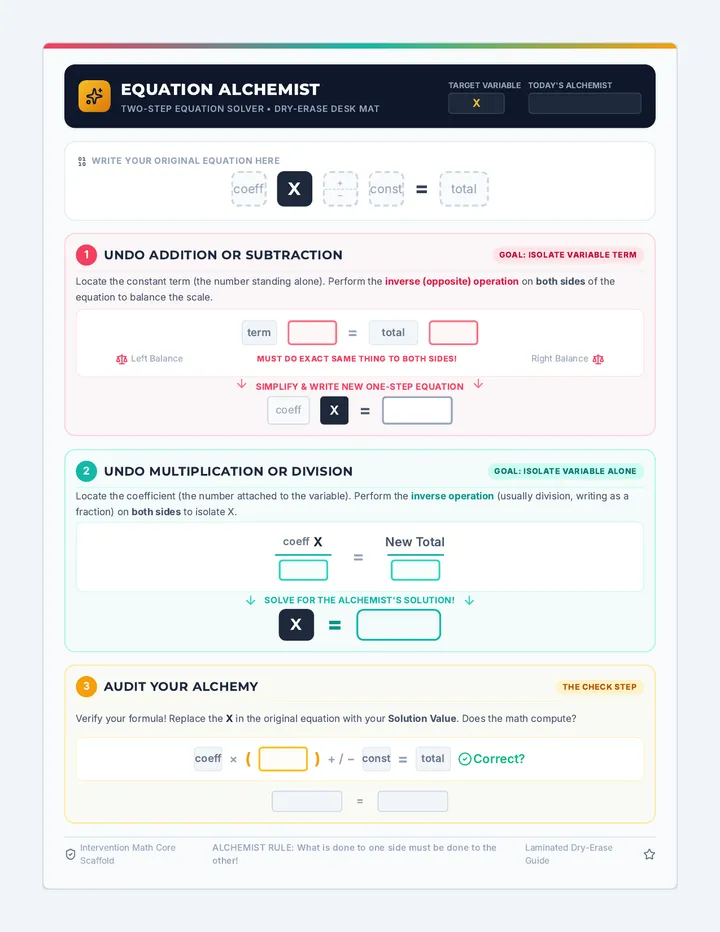
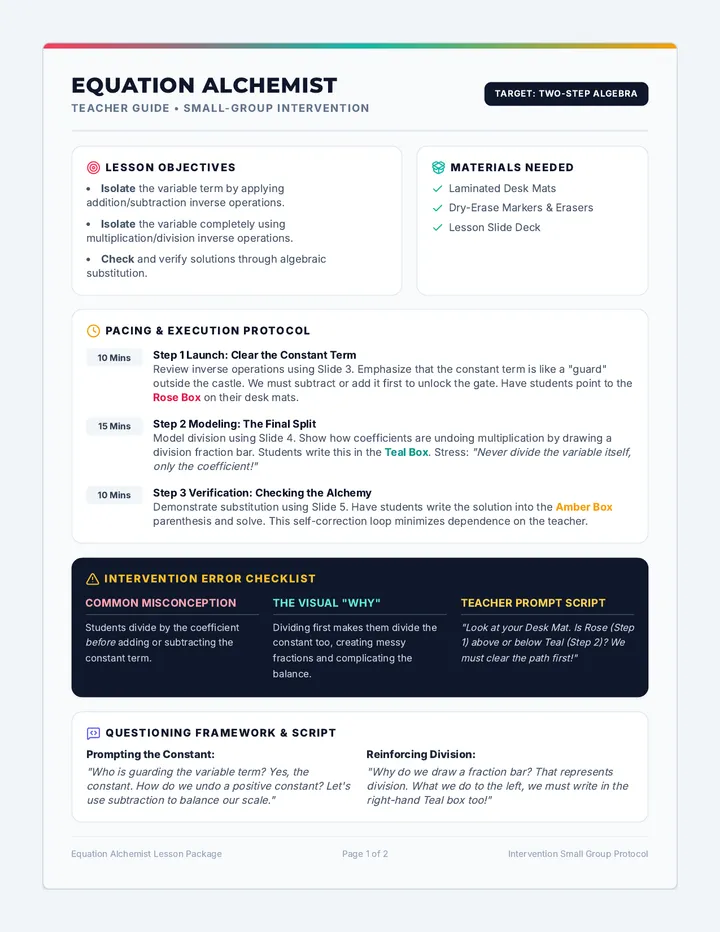
A comprehensive math intervention lesson targeting two-step algebraic equations. Features a color-coded step-by-step visual organizer that guides students through undoing addition/subtraction first, followed by multiplication/division to isolate the variable.
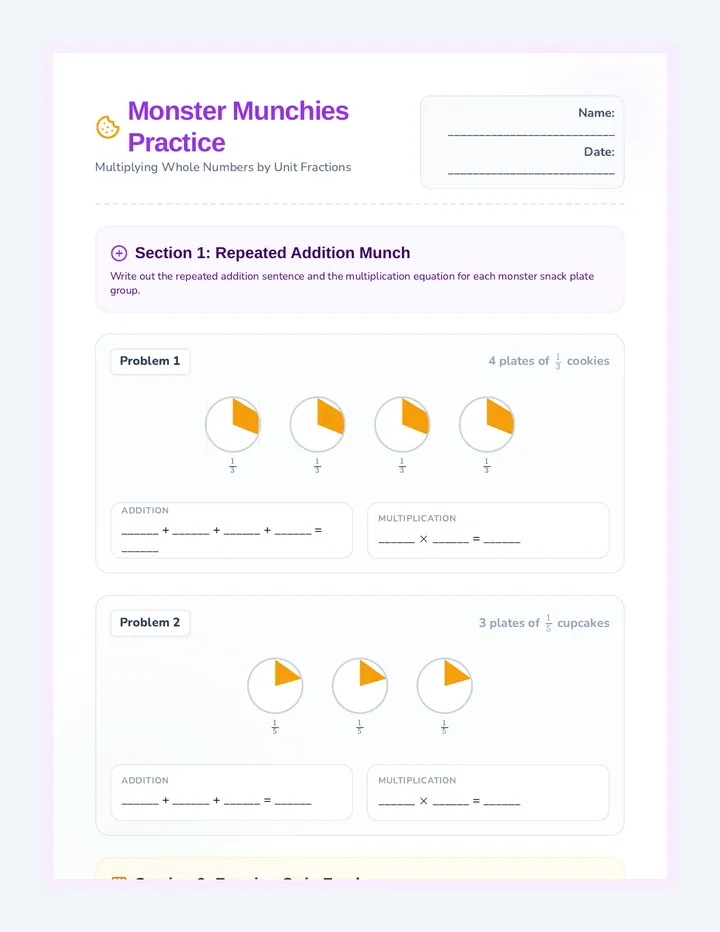
A Grade 4 math lesson introducing multiplication of a whole number by a unit fraction using visual models including repeated addition, fraction strips, and number lines.
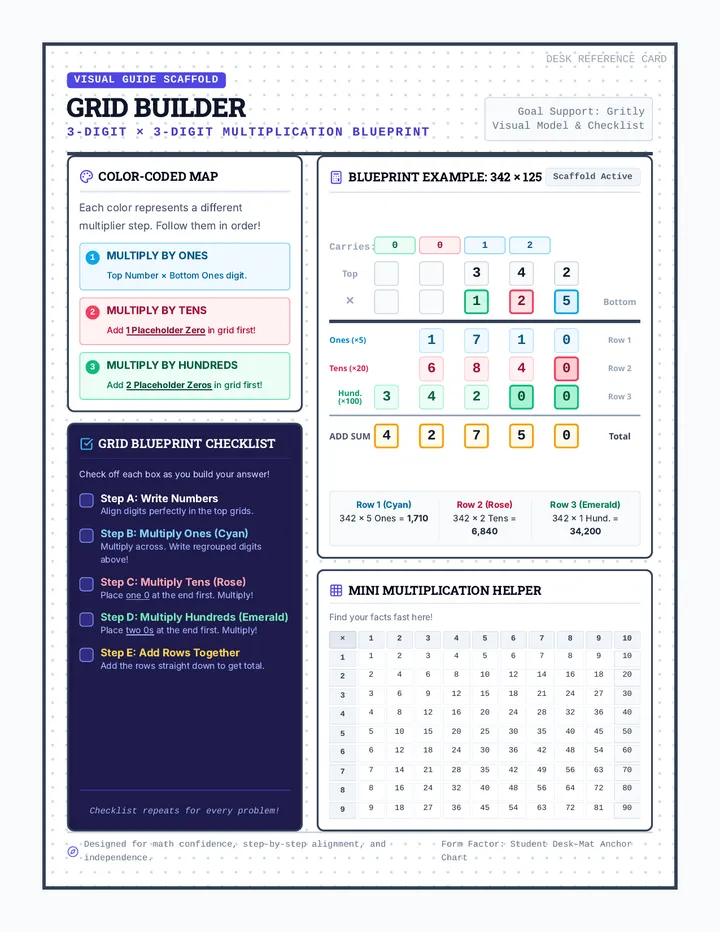
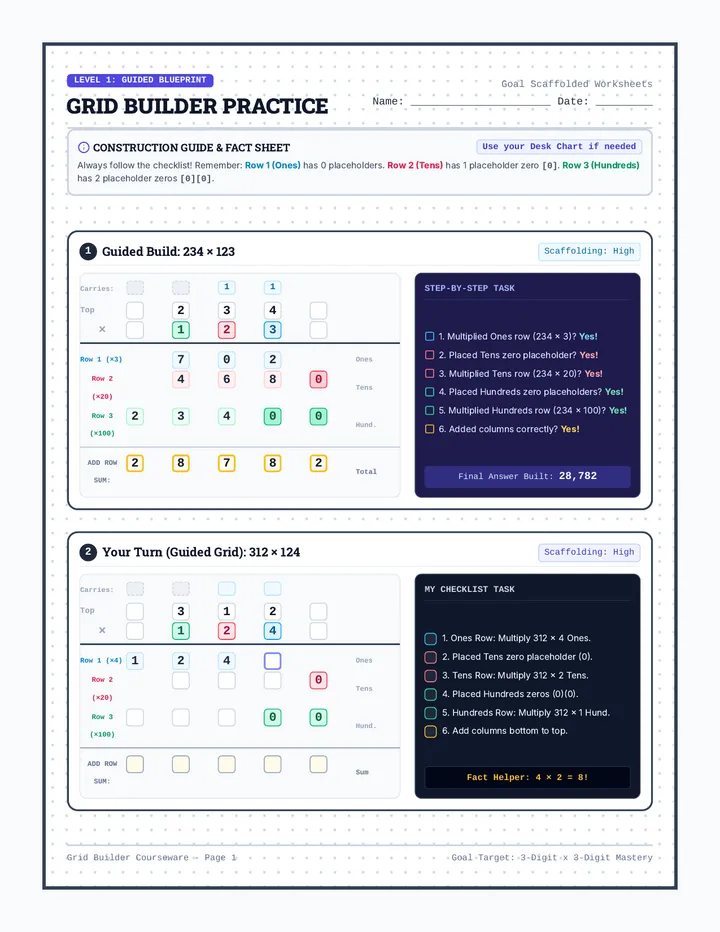
A highly structured, scaffolded lesson designed to help students master three-digit by three-digit multiplication using color-coded grids, a step-by-step task-analysis checklist, and sequential progress monitoring.
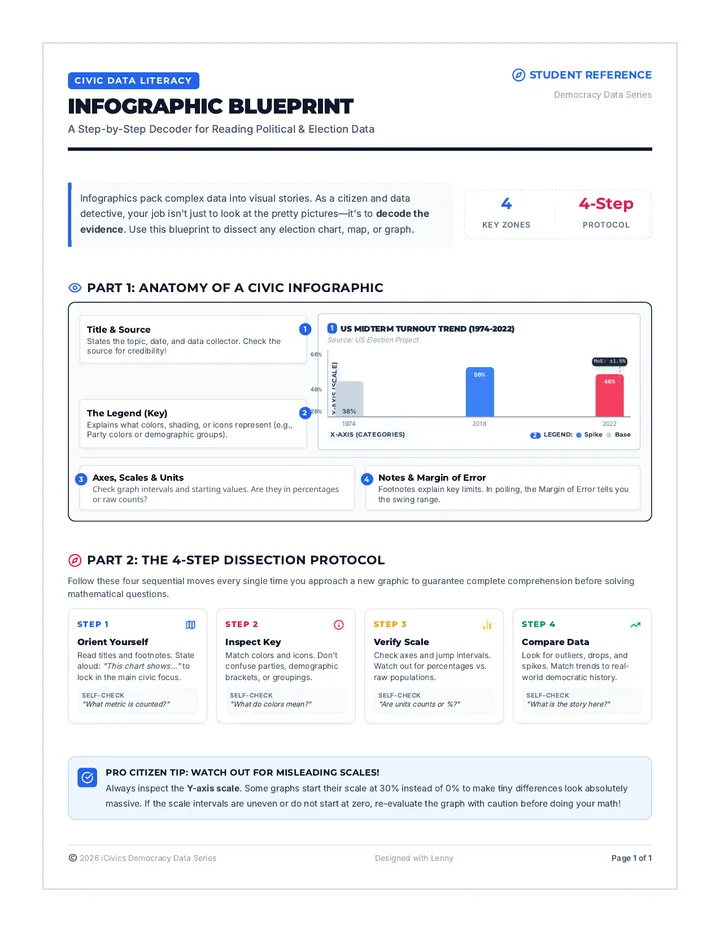
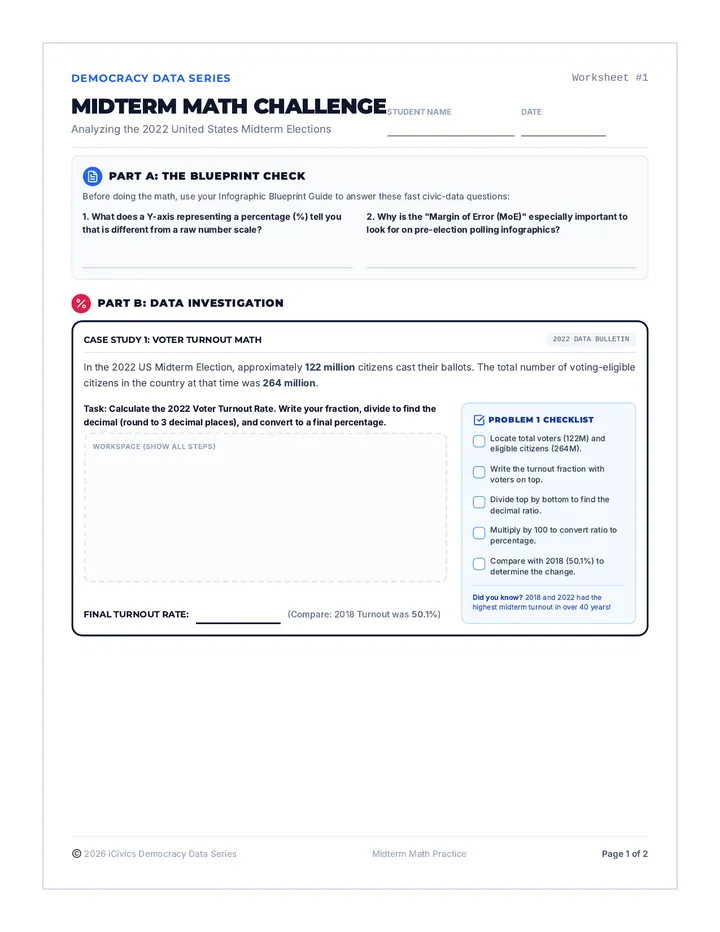
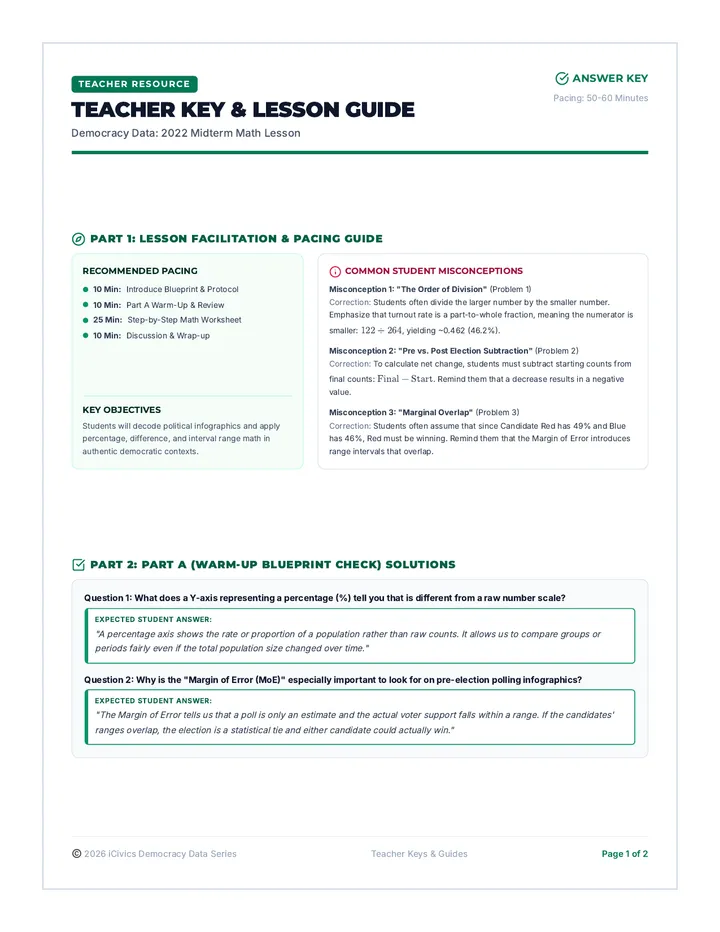
A civic-minded math lesson where students analyze real-world data from the 2022 midterm elections. Students learn to navigate complex infographics using structured reading strategies and tackle data-driven math questions with supportive step-by-step checklists.
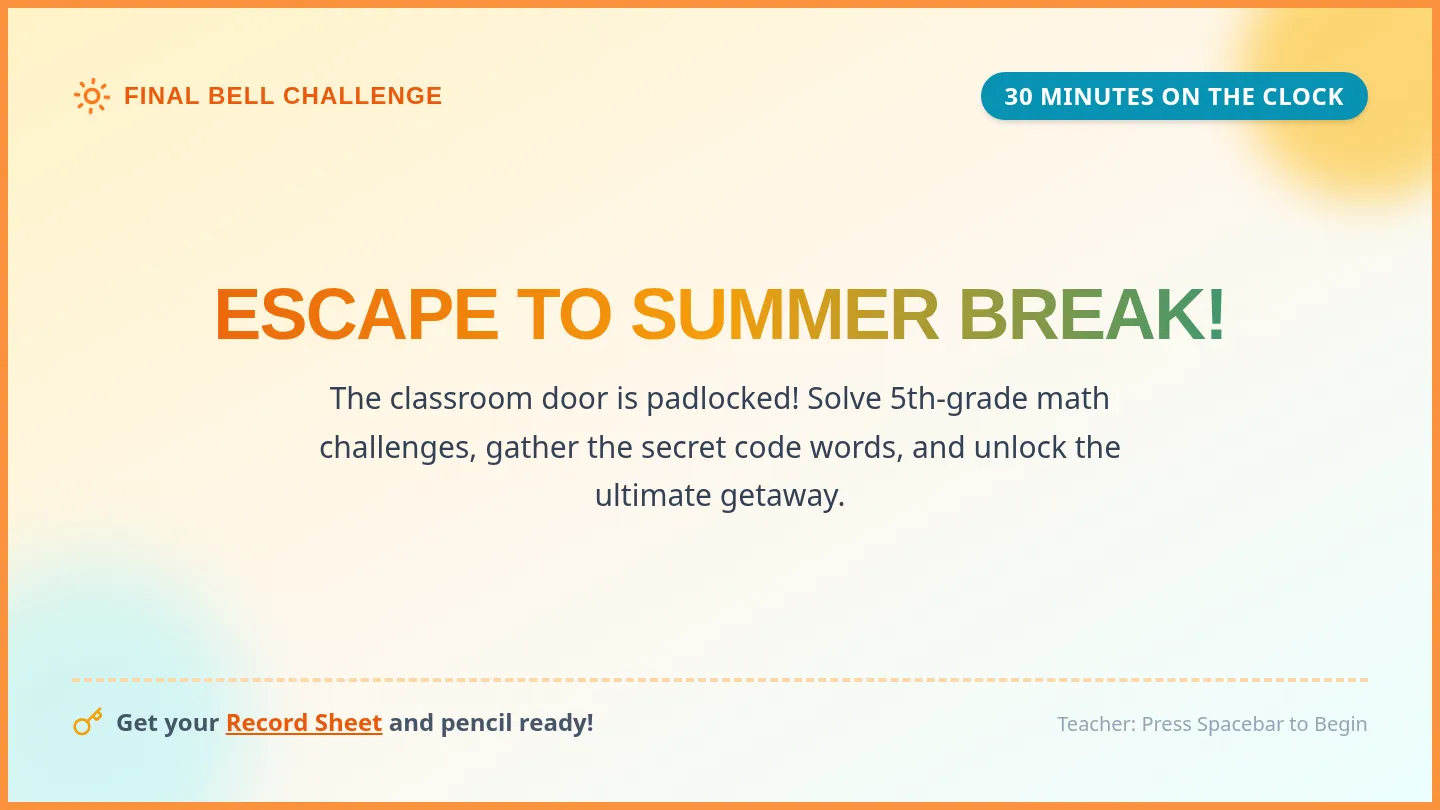
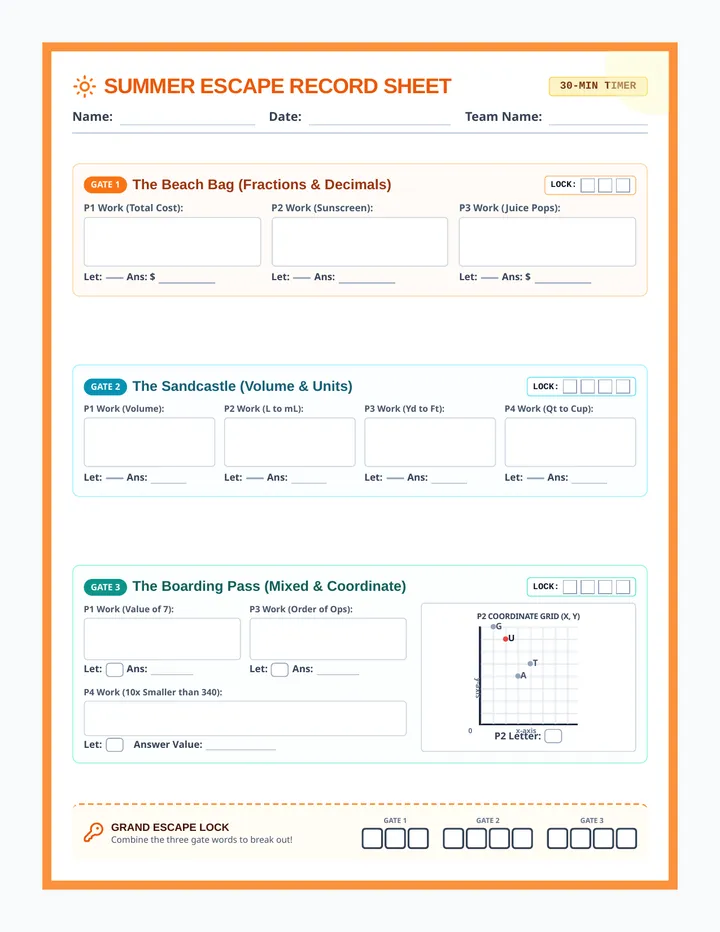
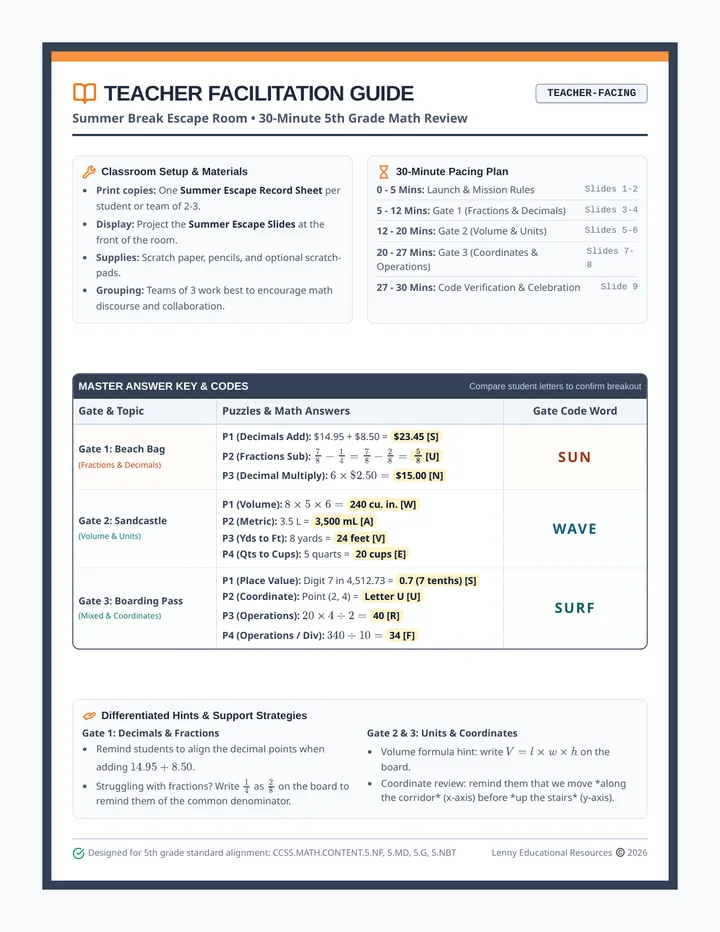
A 30-minute interactive math escape room lesson designed for 5th graders to review fractions, decimals, volume, measurement conversions, and coordinate graphing while racing against the clock to unlock 'Summer Break'.
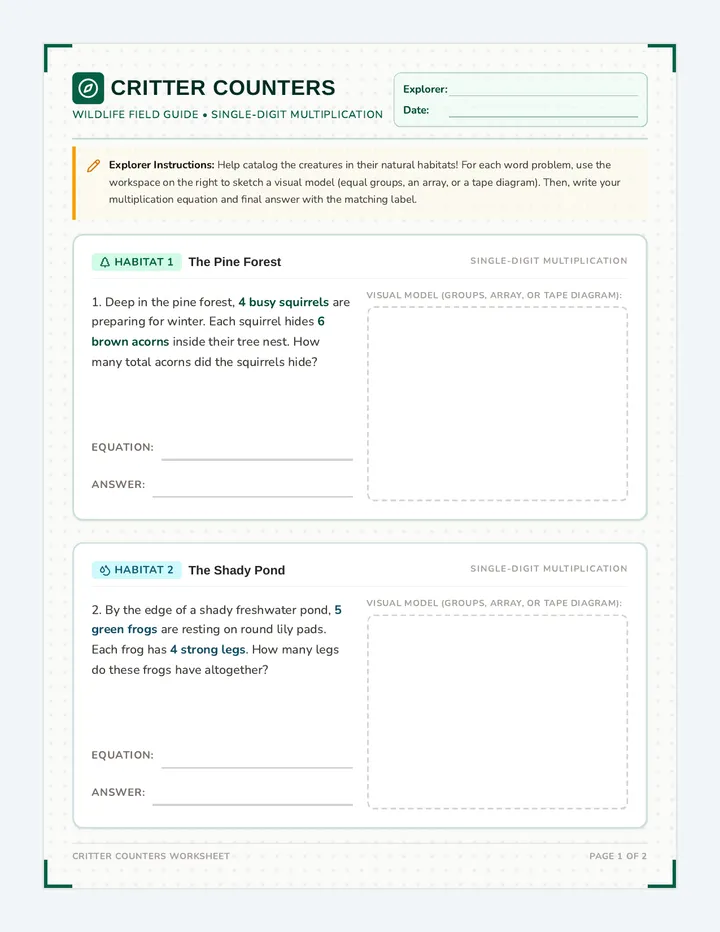
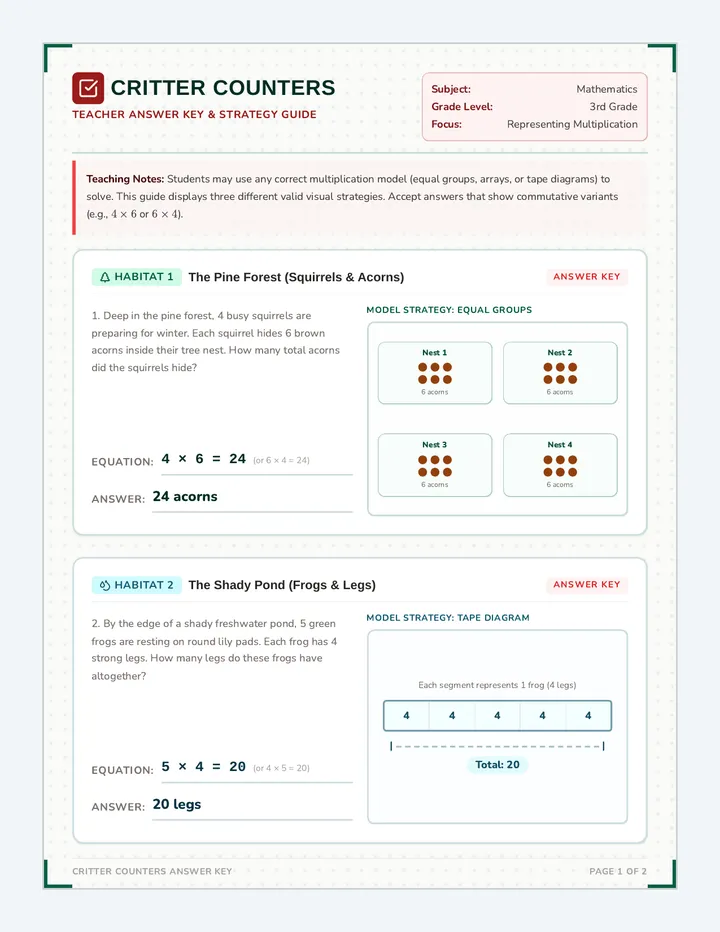
A single-digit multiplication lesson centered around animal counts and habitat scenarios. Students solve word problems using visual representations like arrays, equal groups, and tape diagrams.