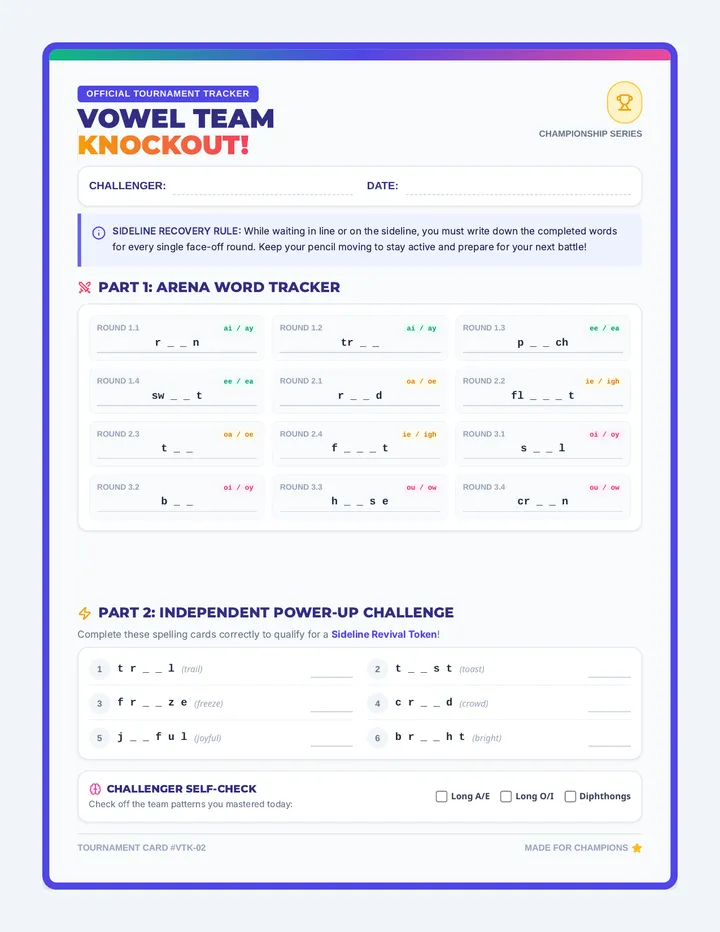
A comprehensive set of activities for students to master the long e sound spelled with ee, ie, and i through word sorts, picture matching, and sentence practice.
Students will explore the joy of poetic language by learning about acrostic poems, haikus, and rhyming couplets through mentor texts and hands-on practice.
Investigators track the 'ur' r-controlled vowel pattern. Students will identify, sort, and apply words like 'purse', 'Saturday', and 'purple' in various detective-themed contexts.
Investigators track words starting with the 'wr' pattern, where the 'w' is silent. This lesson explores common 4th-grade vocabulary through word investigations and context-based activities.
A fast-paced, engaging lesson focused on helping 3rd graders identify the central claim in argumentative texts using a detective-themed 'Claim Crusher' approach.
A fun and engaging Saint Patrick's Day lesson focused on building holiday-themed vocabulary through matching activities and visual puzzles.
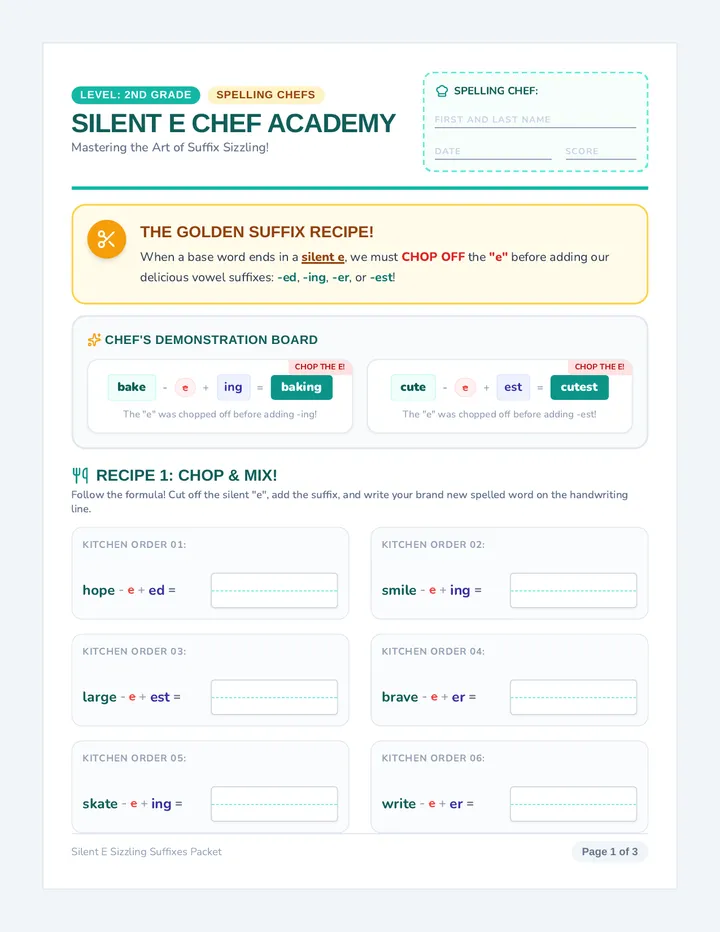
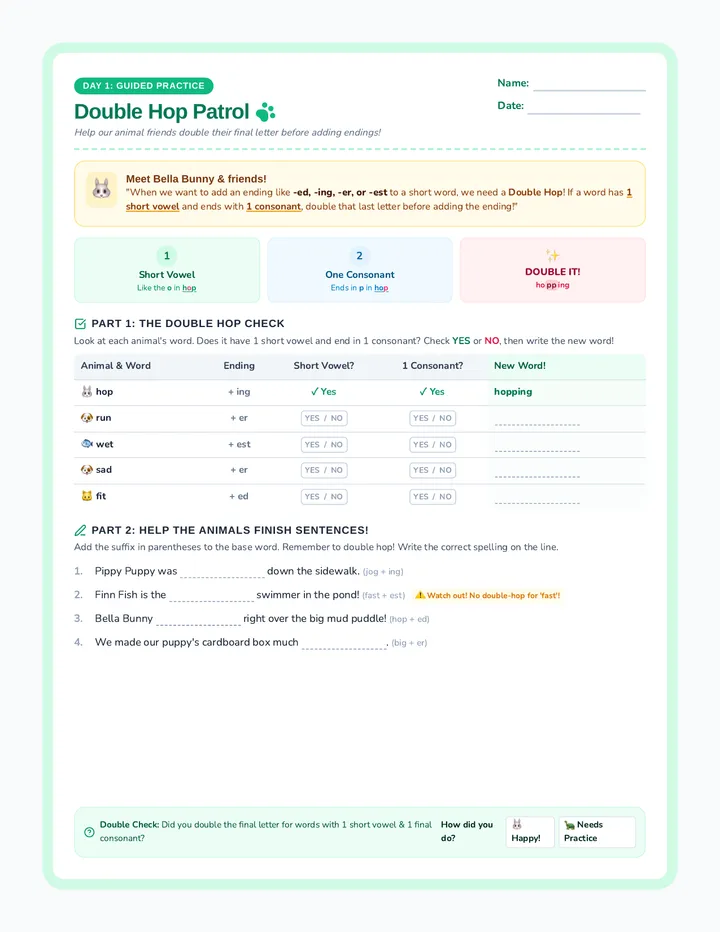
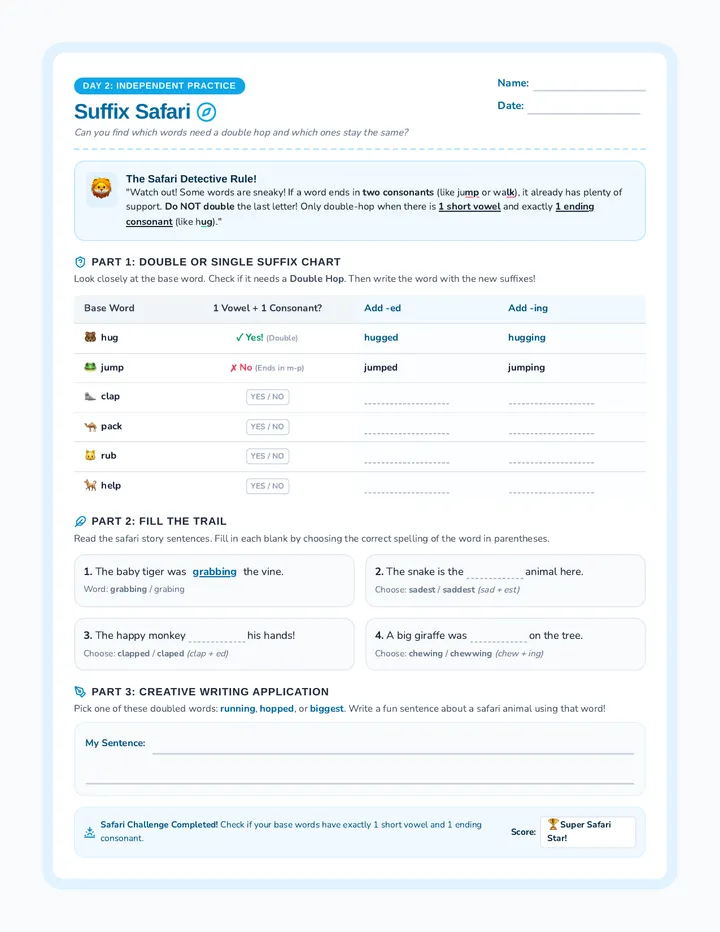
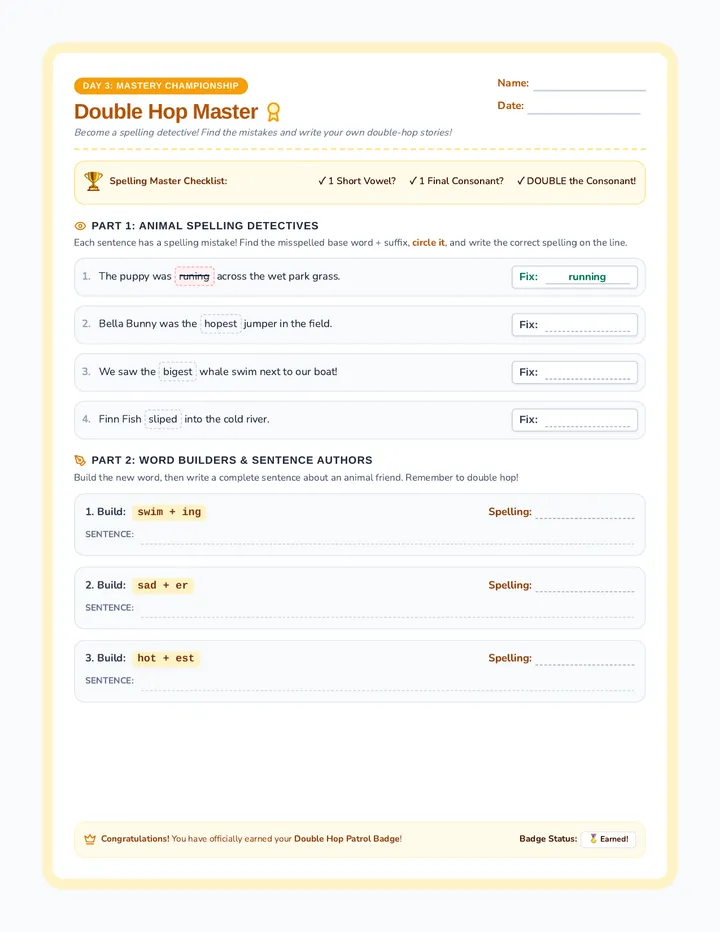
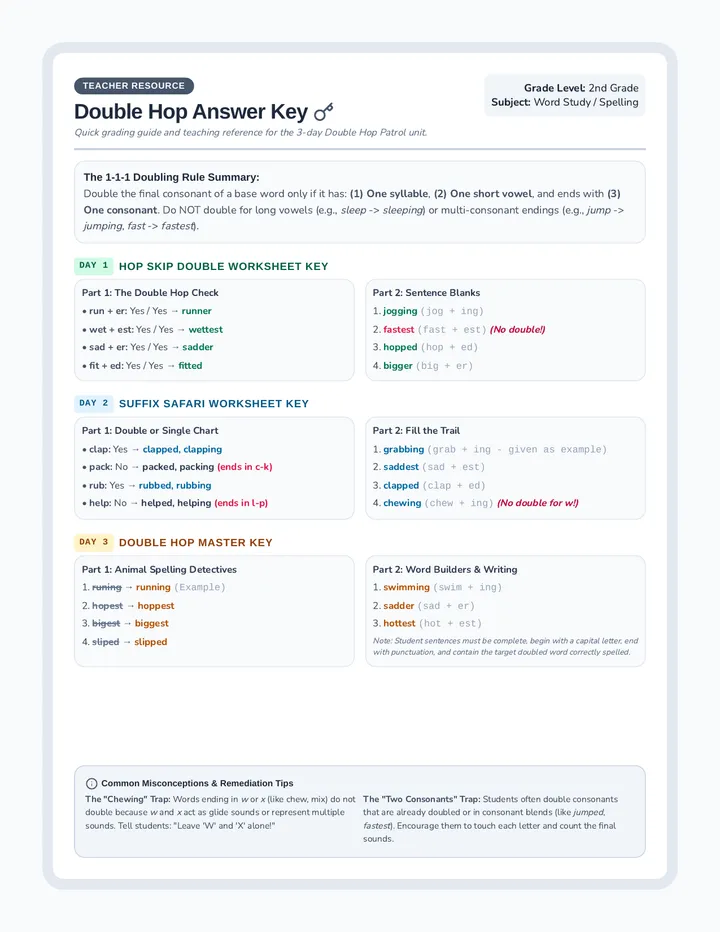
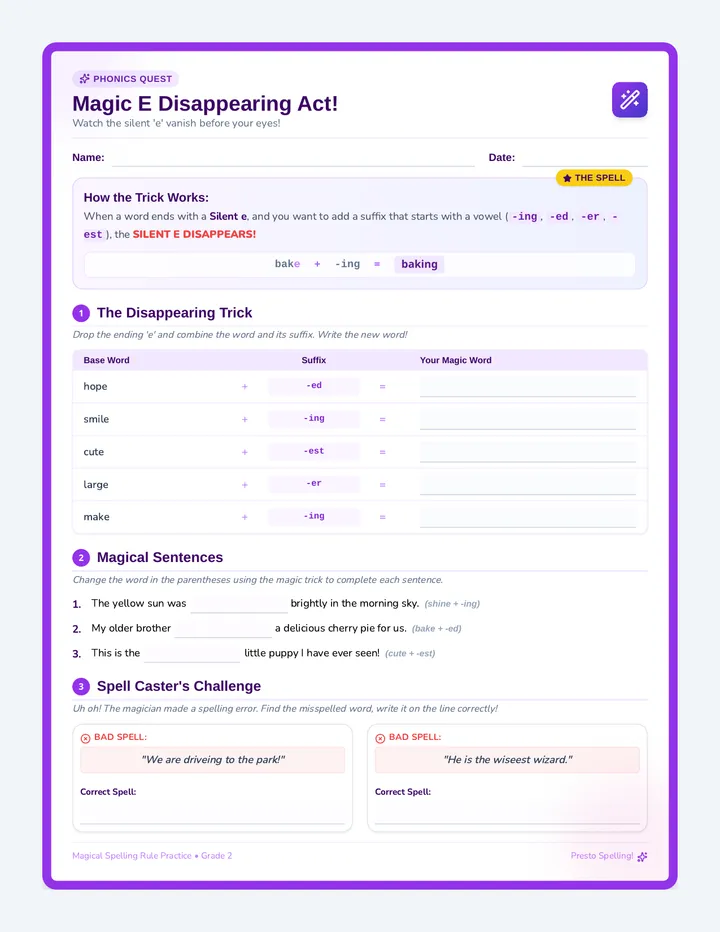
A comprehensive lesson focusing on the three major spelling rules for adding suffixes to multisyllabic words: Silent-E, CVC Doubling, and the Y-to-I change. Students act as 'Suffix Spies' to decode and recode complex words.
A mini-lesson introducing the fundamentals of informative writing, framing the writer as a teacher who provides facts and clear explanations without personal opinion.
A week-long spiral review focused on textual evidence and domain-specific vocabulary through the lens of Arizona Social Studies.
Students learn to use their 'magic lens' to see everyday objects in new ways, introducing the concepts of similes and metaphors through imaginative play.
A writing-focused lesson where 3rd-grade students evaluate Ancient Rome's contributions to modern society, specifically comparing language and architecture to form and support an opinion.
A lesson designed to help students distinguish between Short Constructed Response (SCR) and Extended Constructed Response (ECR) prompts by analyzing length requirements and depth of analysis.
A competitive reading challenge inspired by basketball tournaments, featuring a point-based scoring system for different book types and a verification quiz for students to earn their points.
A focused lesson on Chapter 6 of 'The Watsons Go to Birmingham—1963', exploring character complexity, socioeconomic themes, and Byron's hidden sensitivity.
A flexible framework for assessing student comprehension and analysis of any fictional novel through open-ended questioning and critical reflection.
Students read about a student who finds an old sketchbook and discovers a talent for art to identify the theme of self-discovery.
Students read about a kite festival and the patience needed to fly a kite to identify the theme of joy in simple things.
Students read about a young girl inventing a way to organize her desk to identify the central idea of creative problem solving.
Students read about a group of friends cleaning up a local park to identify the central idea of community service.
Students read about a basketball player practicing for a big game to identify the theme of persistence.
Resources for teachers to facilitate the Nature Notes unit, including answer keys and discussion guides.
Students read about an old clock shop to identify the theme of preserving traditions and history.
Students read about a young chef starting a small pizza stand to identify the central idea of hard work and planning.
Students read a story about a student overcoming stage fright to determine the theme of courage.
Students read about a robot explorer on Mars to identify the central idea of scientific discovery.
A foundational lesson for 2nd graders to identify and use adjectives to describe nouns in their writing.
A focused lesson on the essential mechanics of paragraph writing, providing clear expectations for capitalization, punctuation, spelling, and formatting.
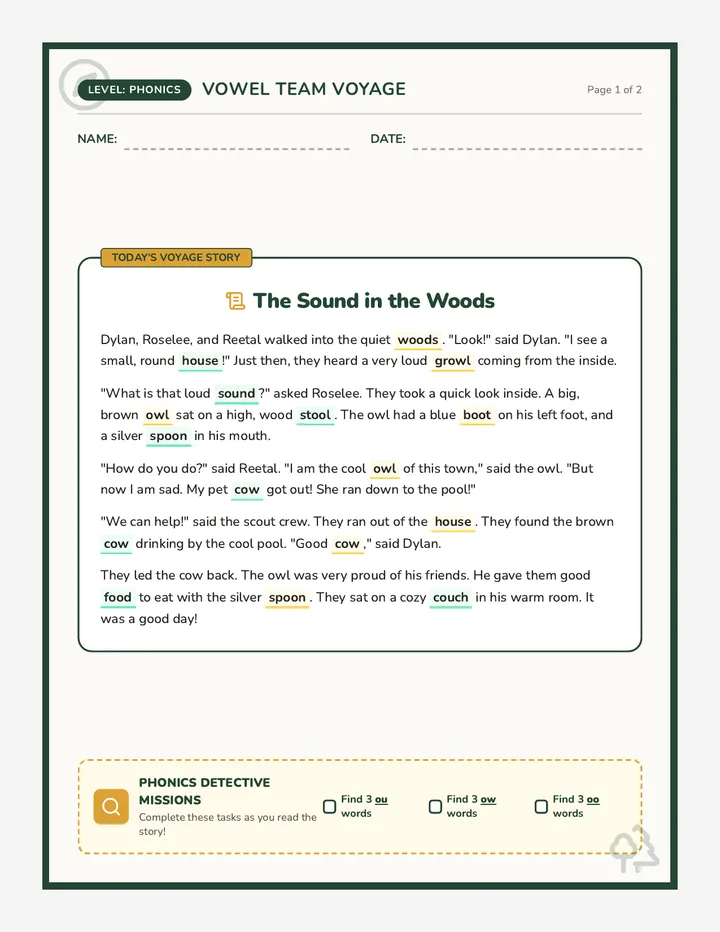
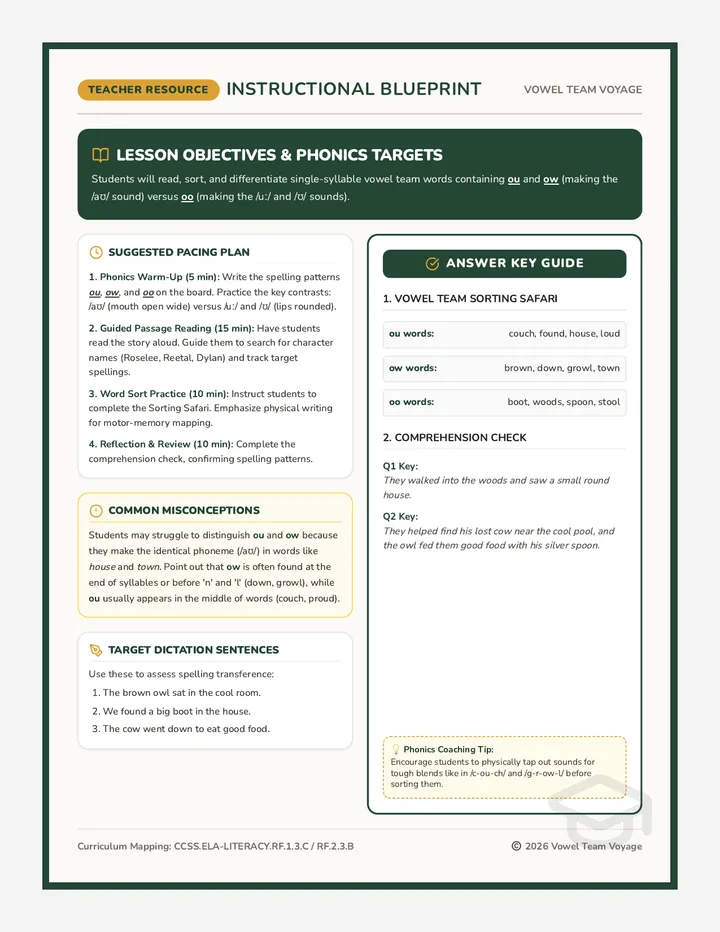
Students investigate the "oo" vowel team, discovering that this "double agent" can make two different sounds (as in 'moon' and 'foot'). They will sort evidence and use context clues to master these words.
Instruction and assessment tools for 3rd-grade students to master the art of narrative storytelling.