An introductory research project for ESL learners focusing on the characters and kingdoms found in the first four books of Homer's Odyssey. Students explore Telemachus's journey and the people he meets using simple language and visual supports.
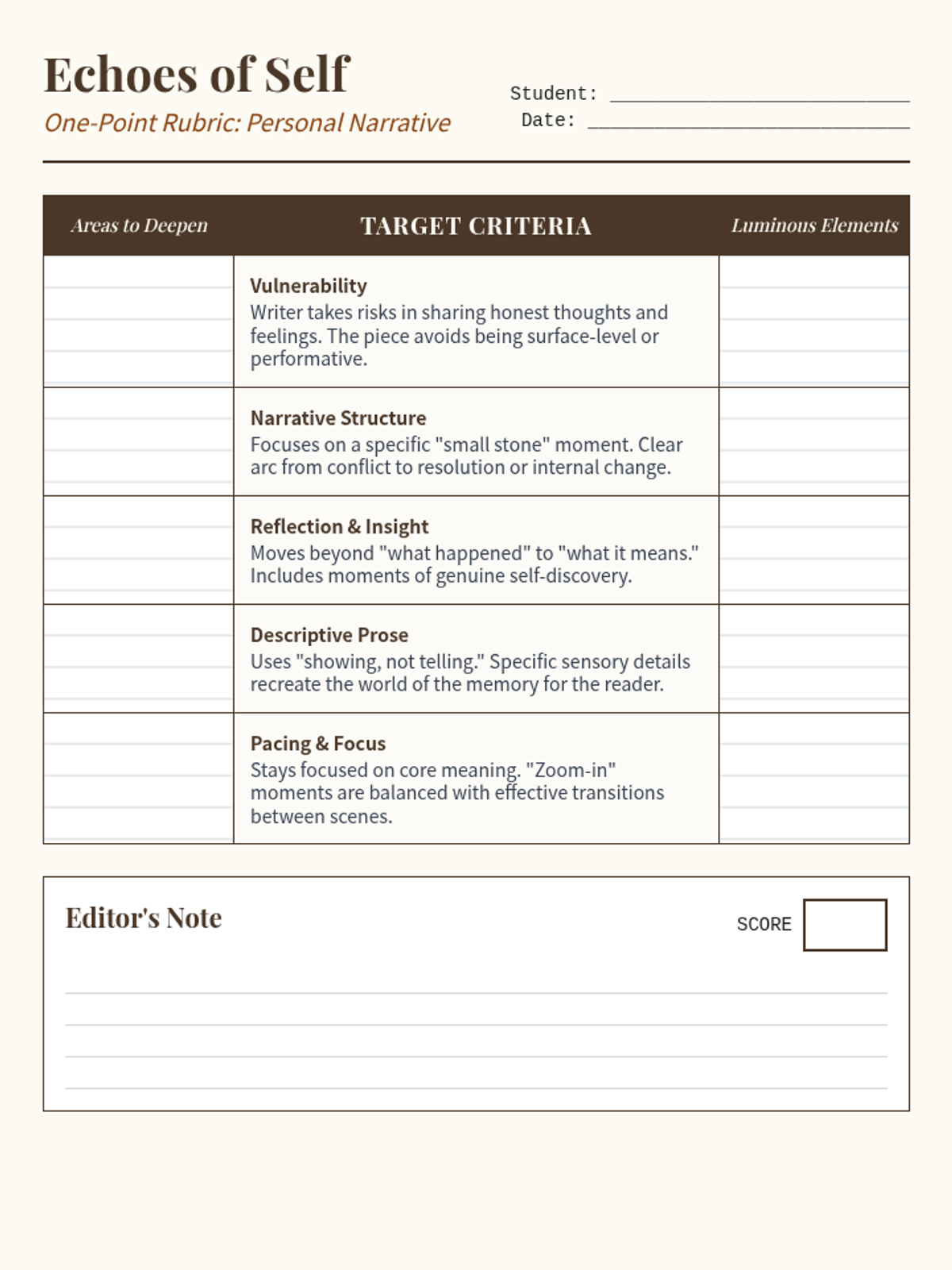
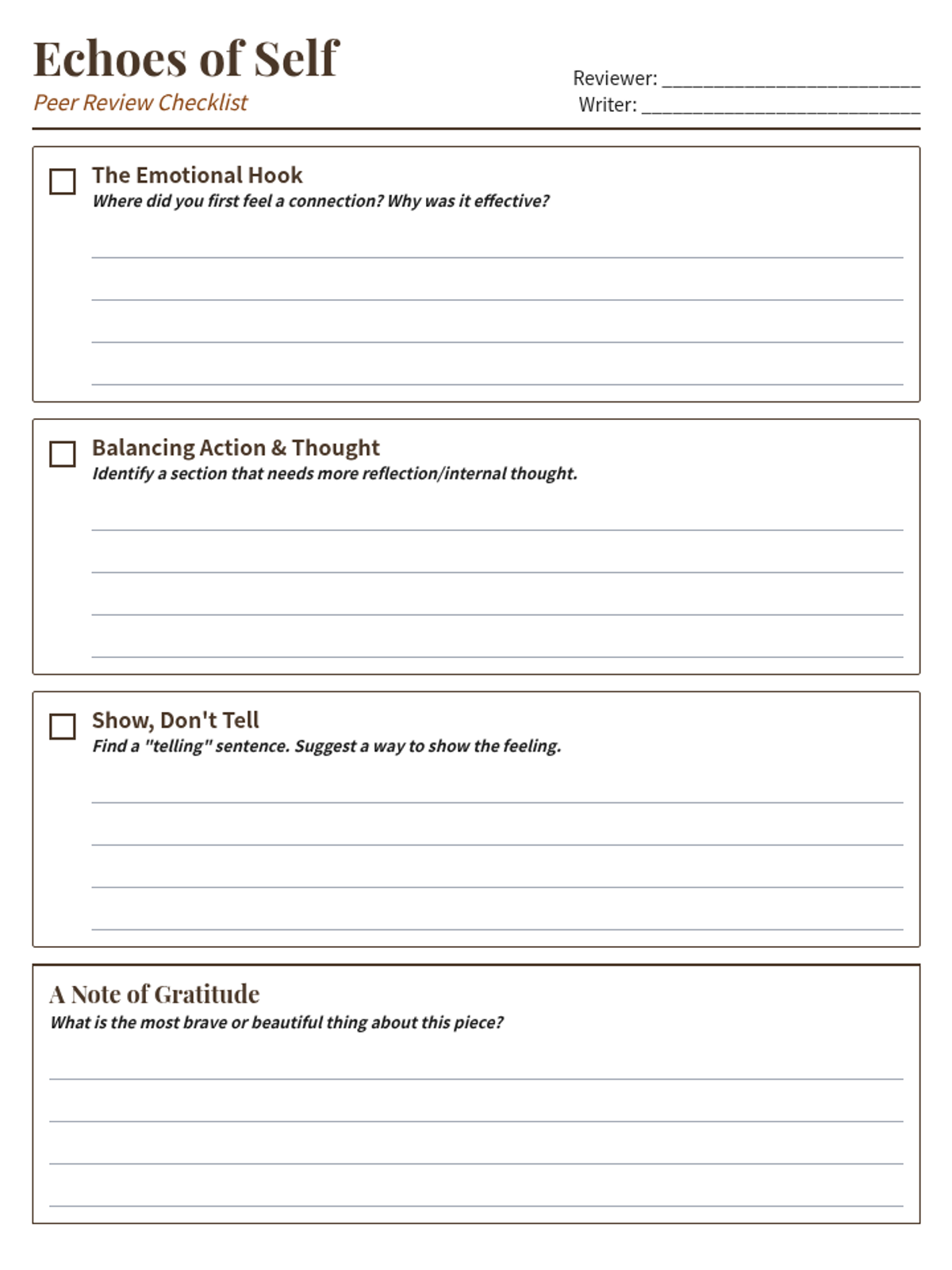
Focuses on the art of memoir and personal essay. Students mine their own lives for meaning, practicing vulnerability and reflective storytelling.
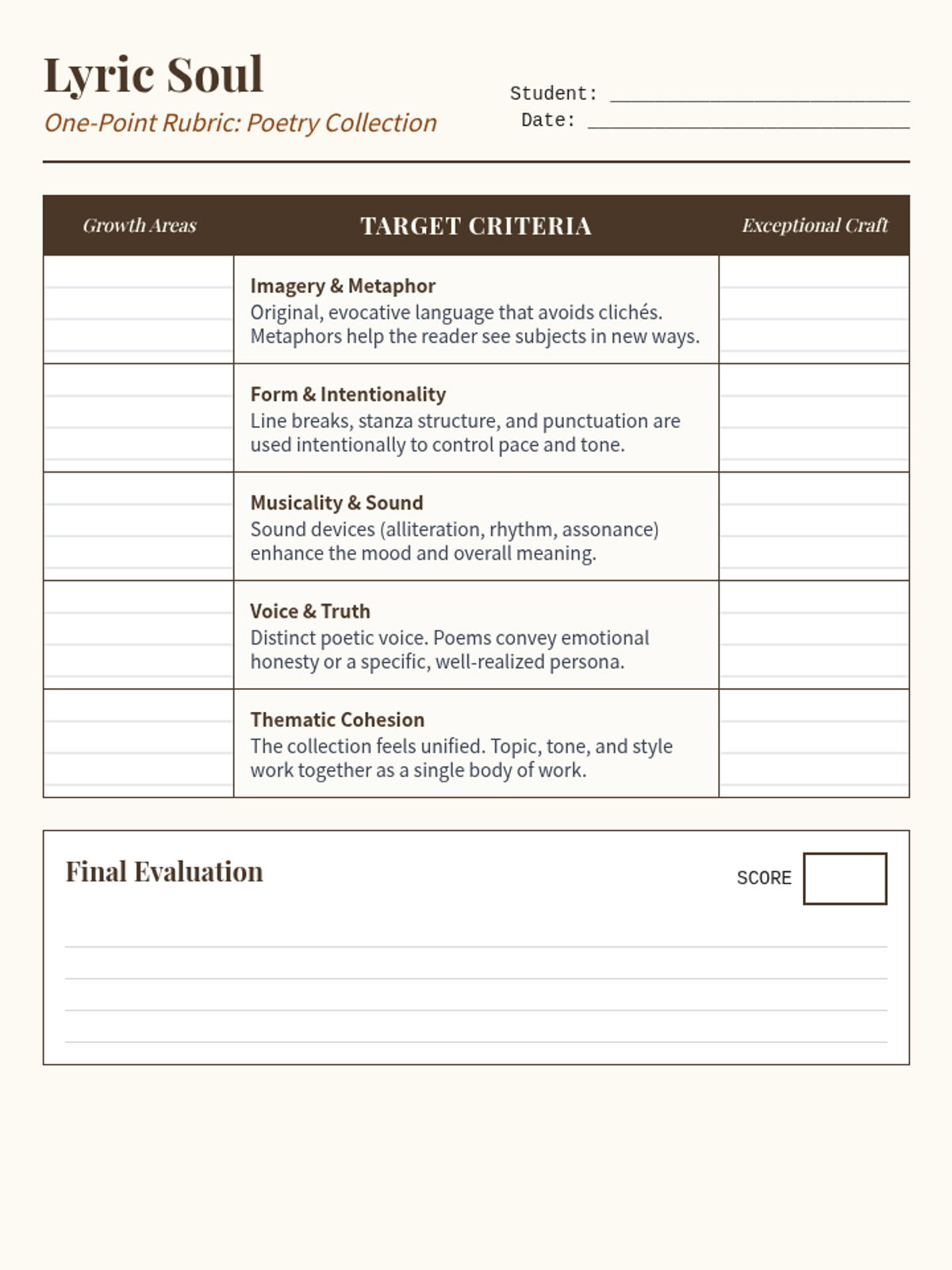
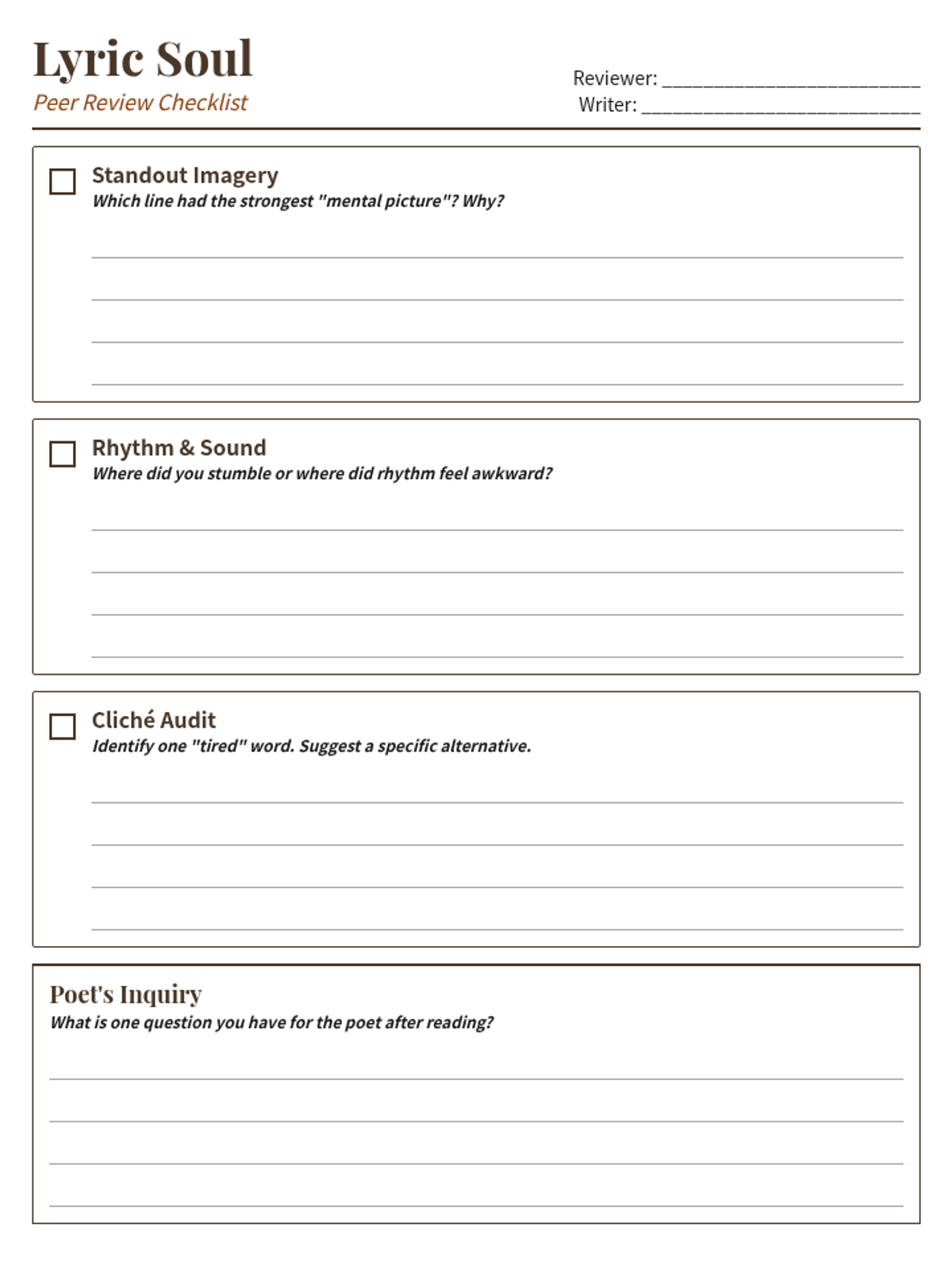
Dives into poetic forms, imagery, and the musicality of language. Students curate a collection of poems that express diverse emotional states and perspectives.
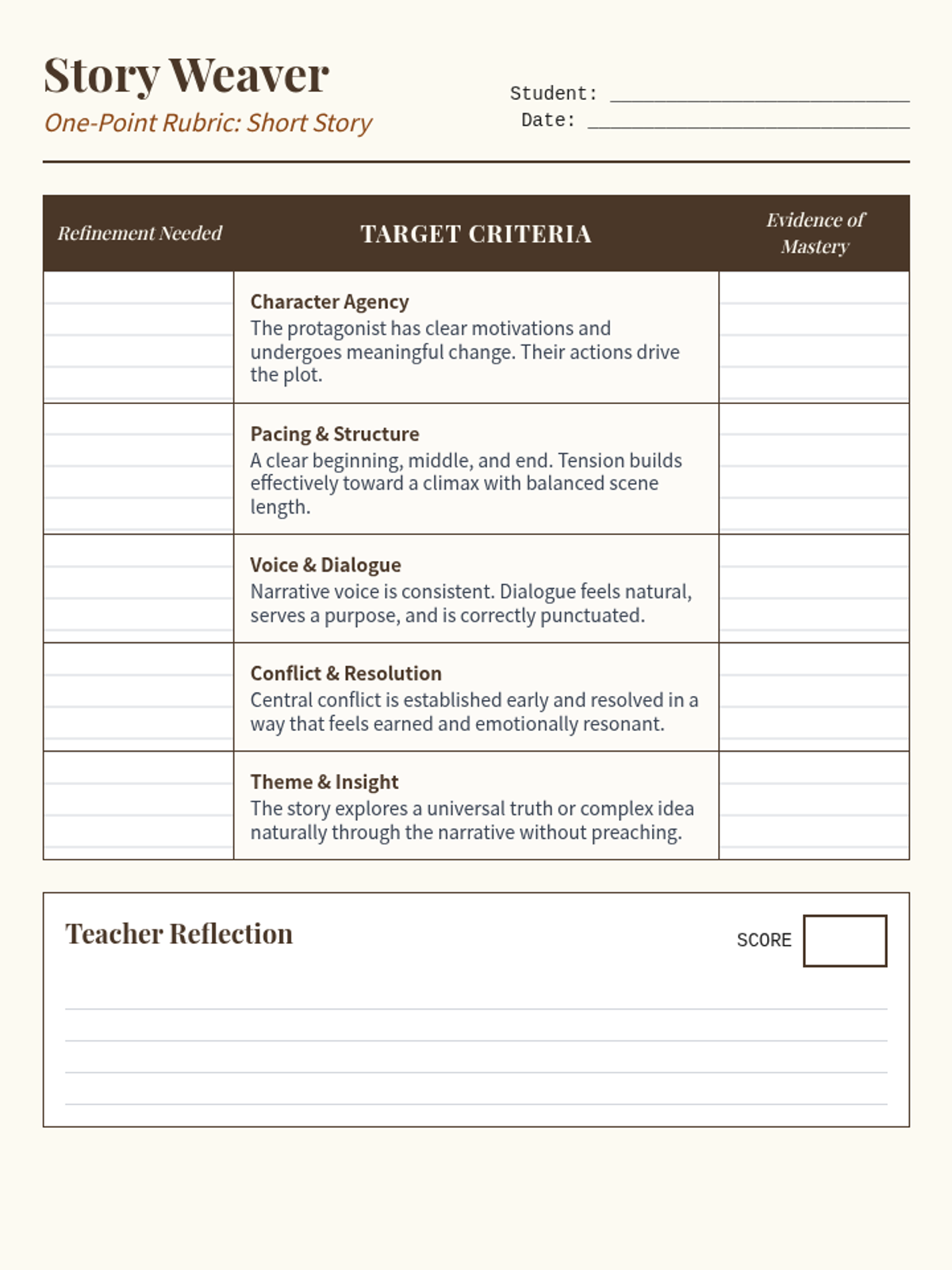
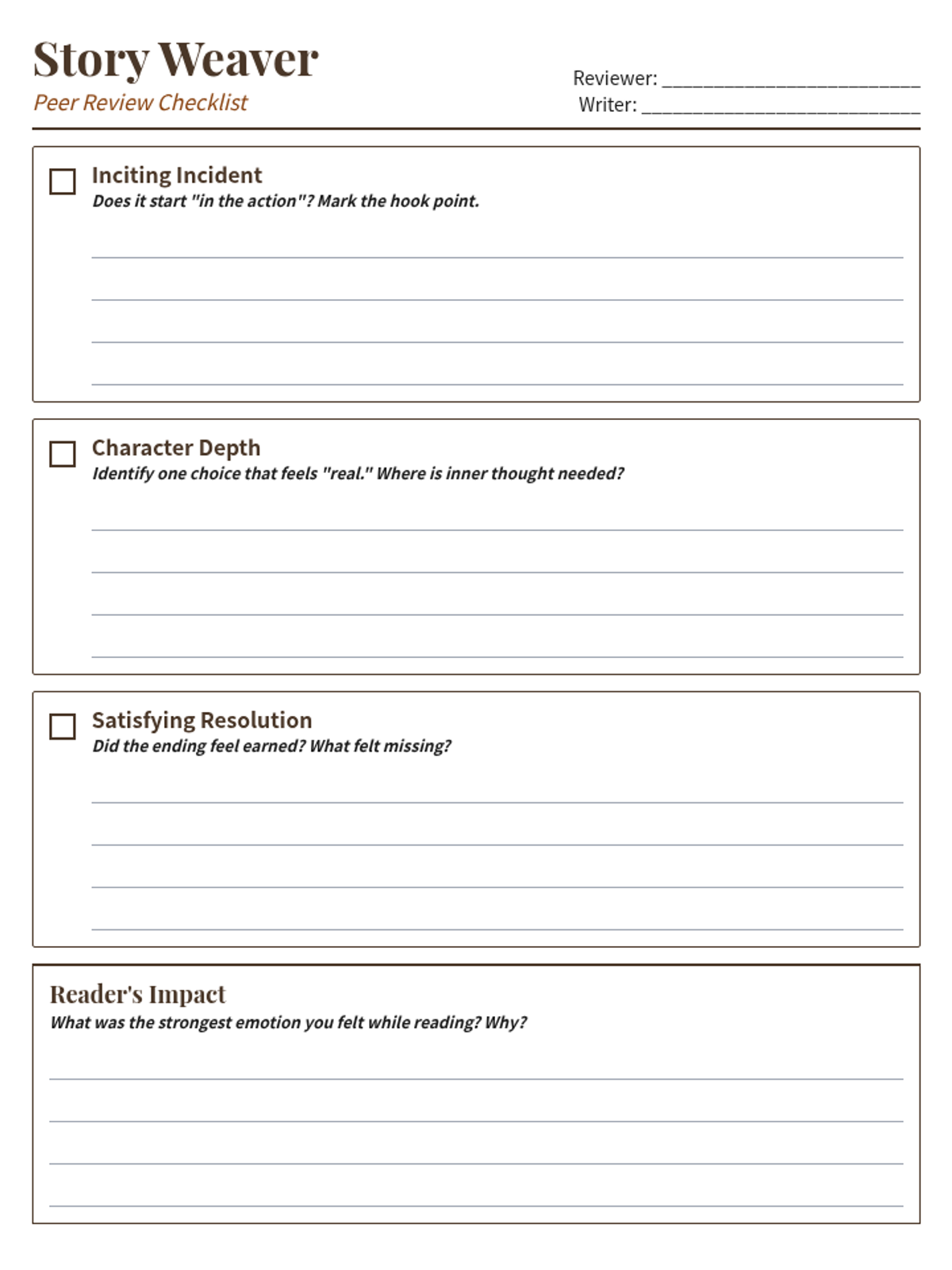
Explores the elements of short fiction, including character development, plot structure, and narrative voice. Students craft complete stories with clear arcs and themes.
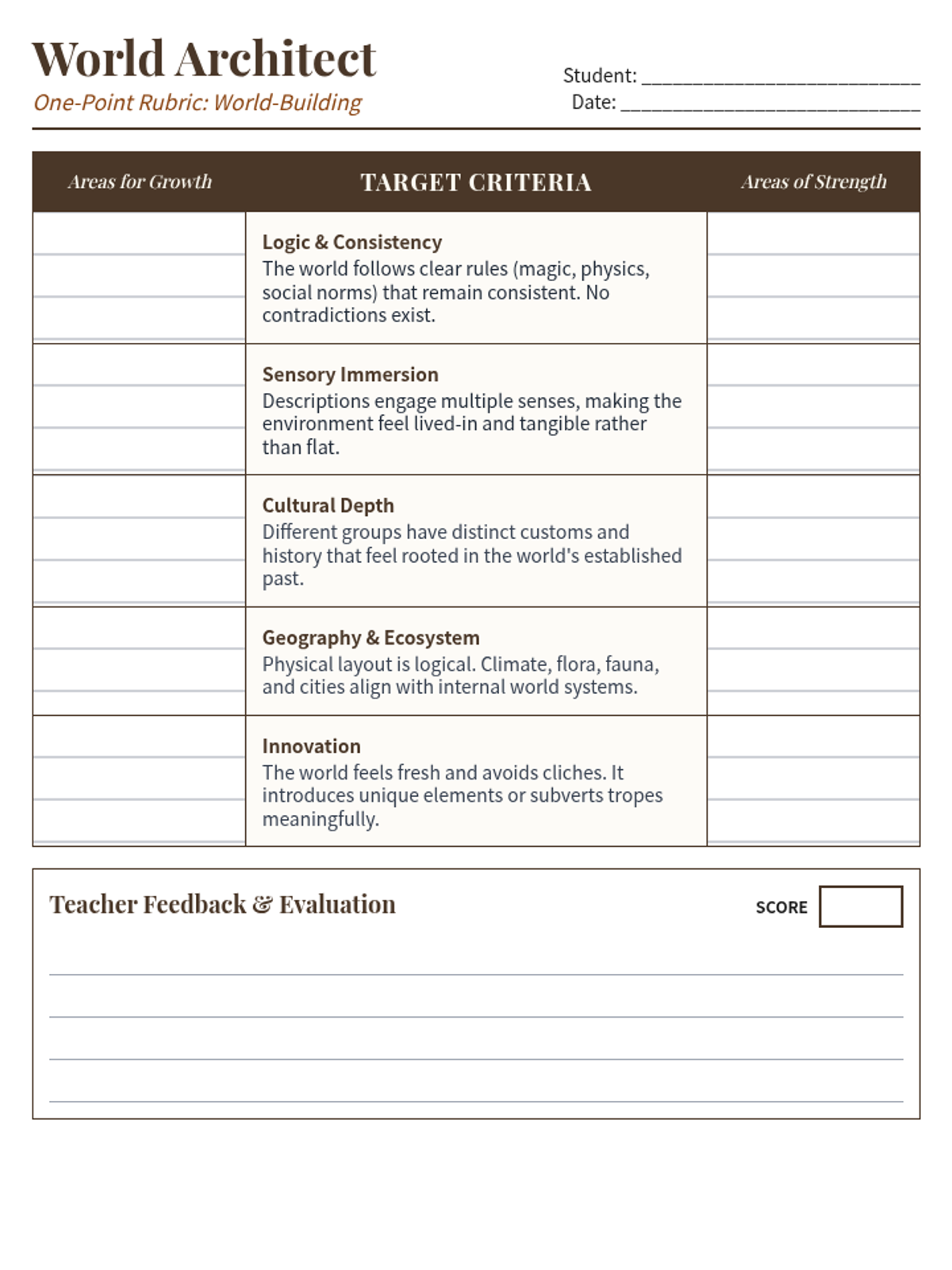
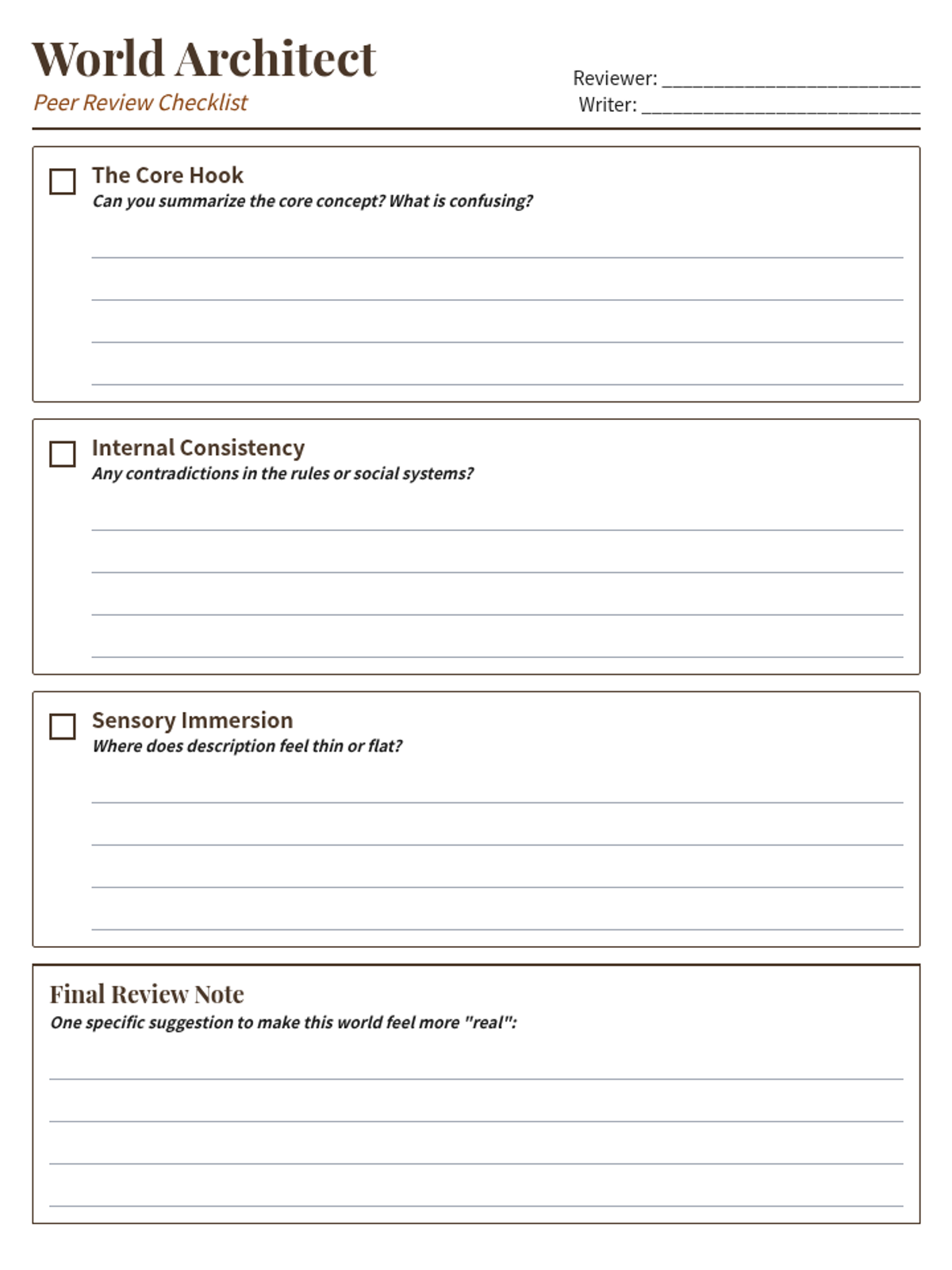
Focuses on the construction of immersive fictional settings, cultures, and systems. Students develop internal logic and sensory-rich details for their unique worlds.
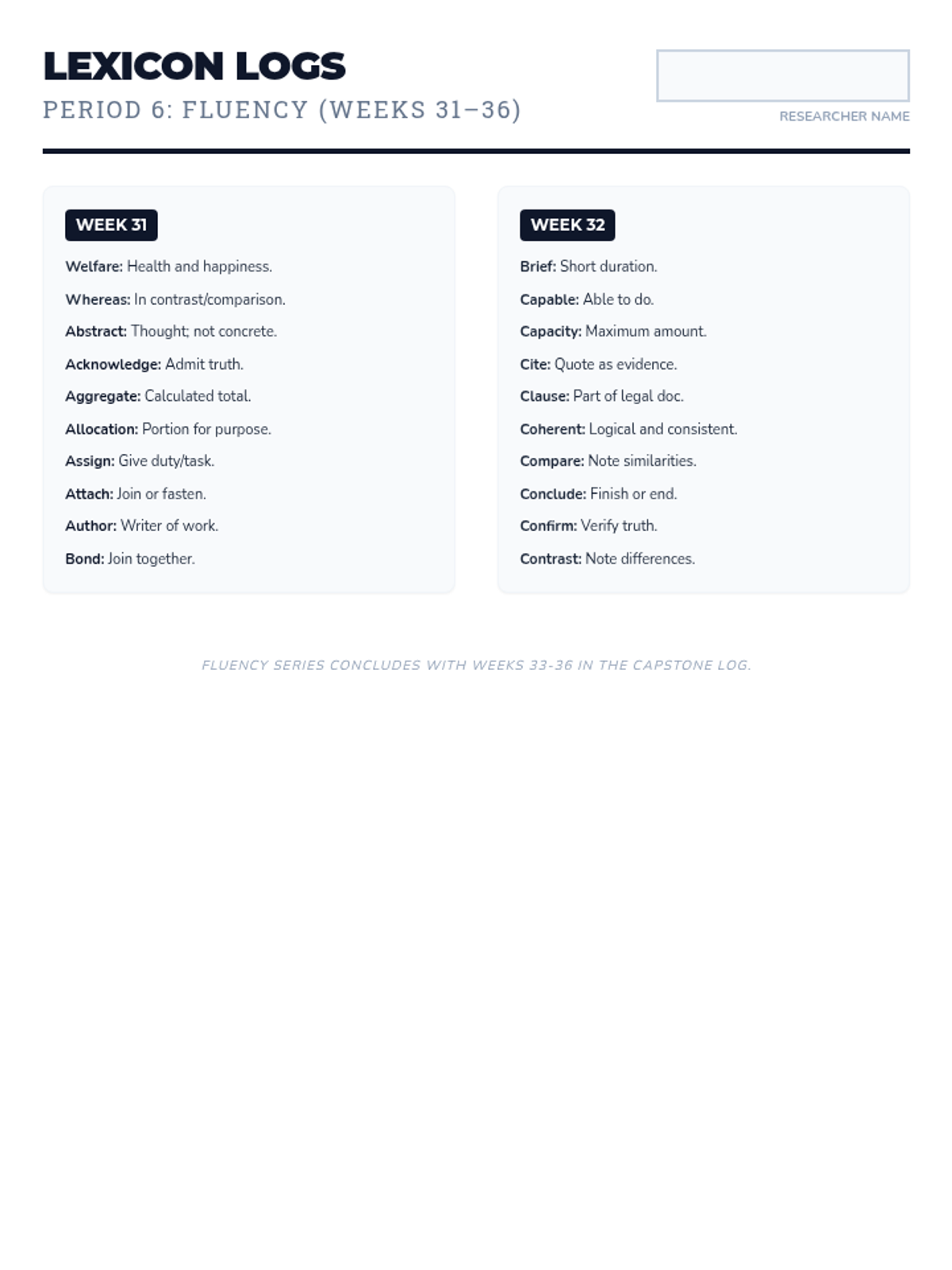
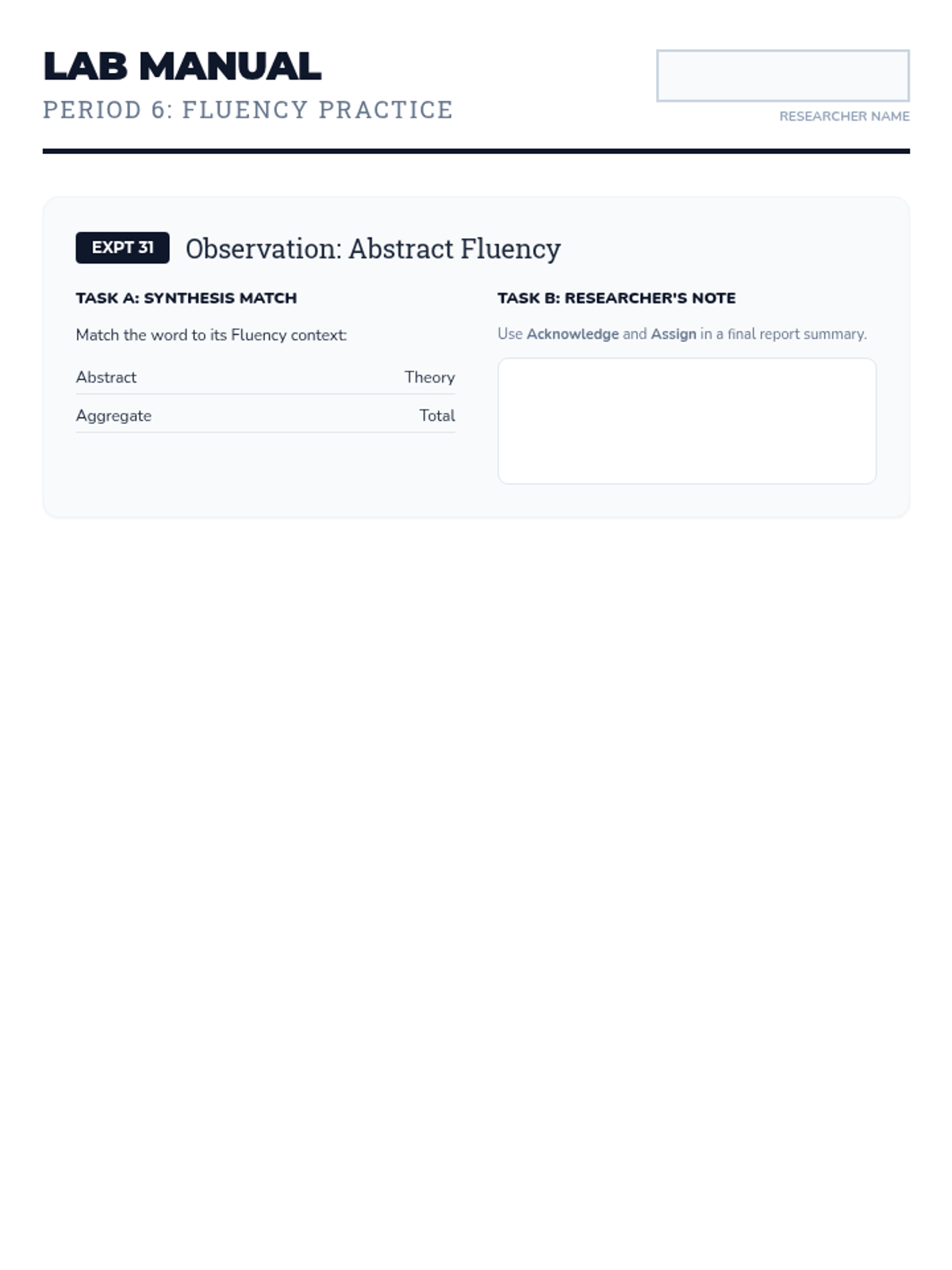
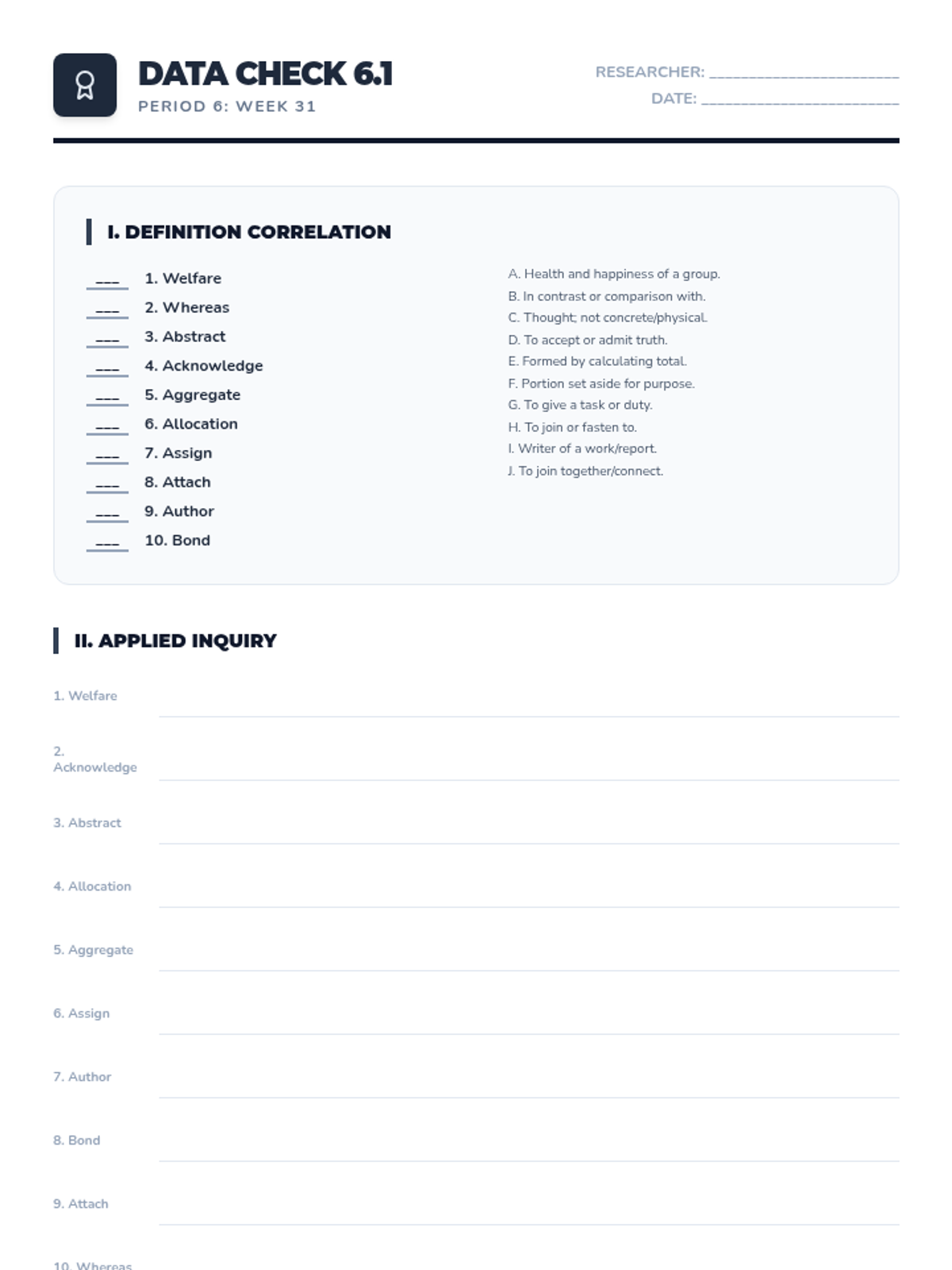
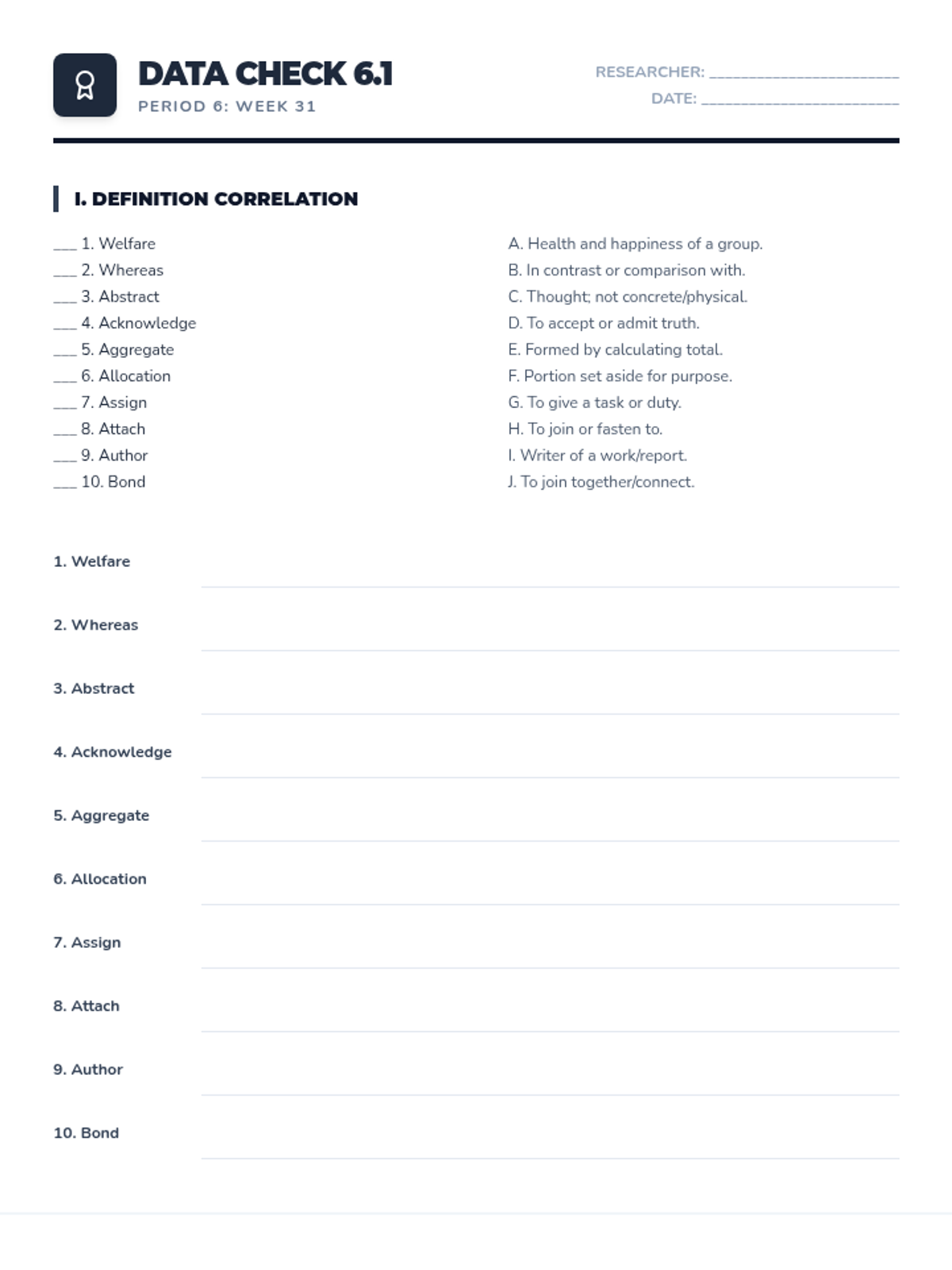
The final six-week period (Weeks 31-36) focuses on fluency and a curriculum capstone. Students synthesize the year's learning to demonstrate mastery across all academic domains.
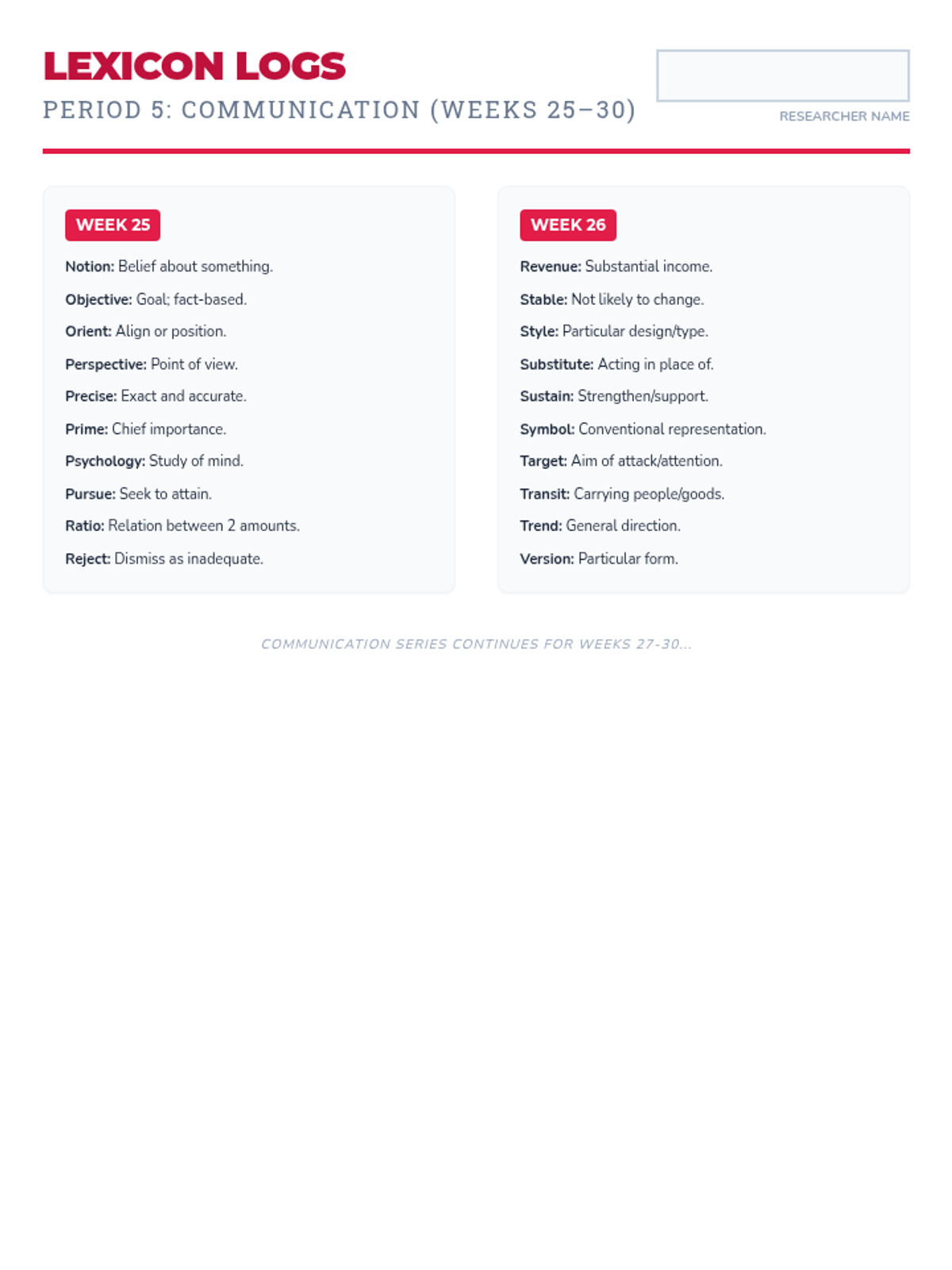
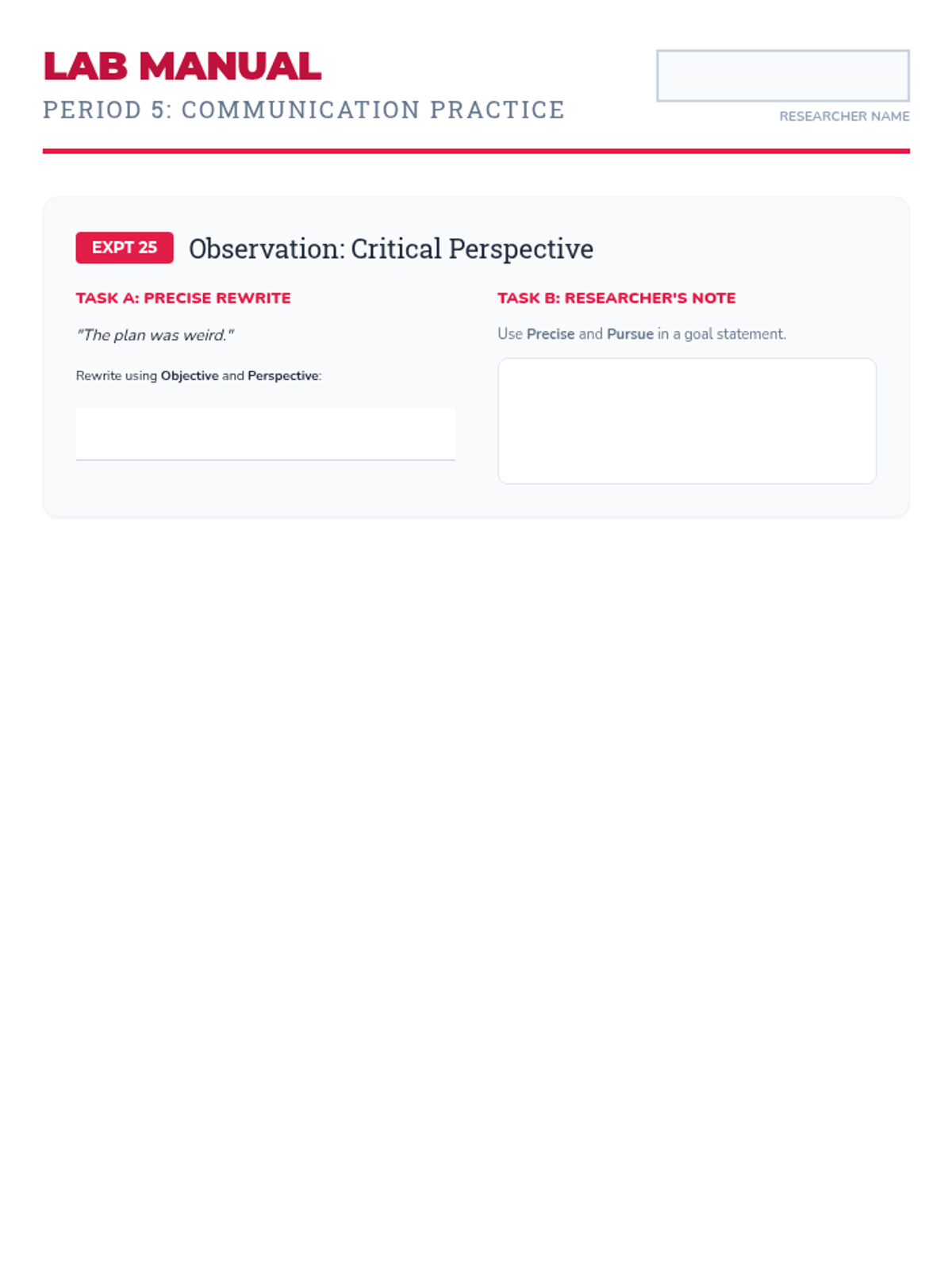
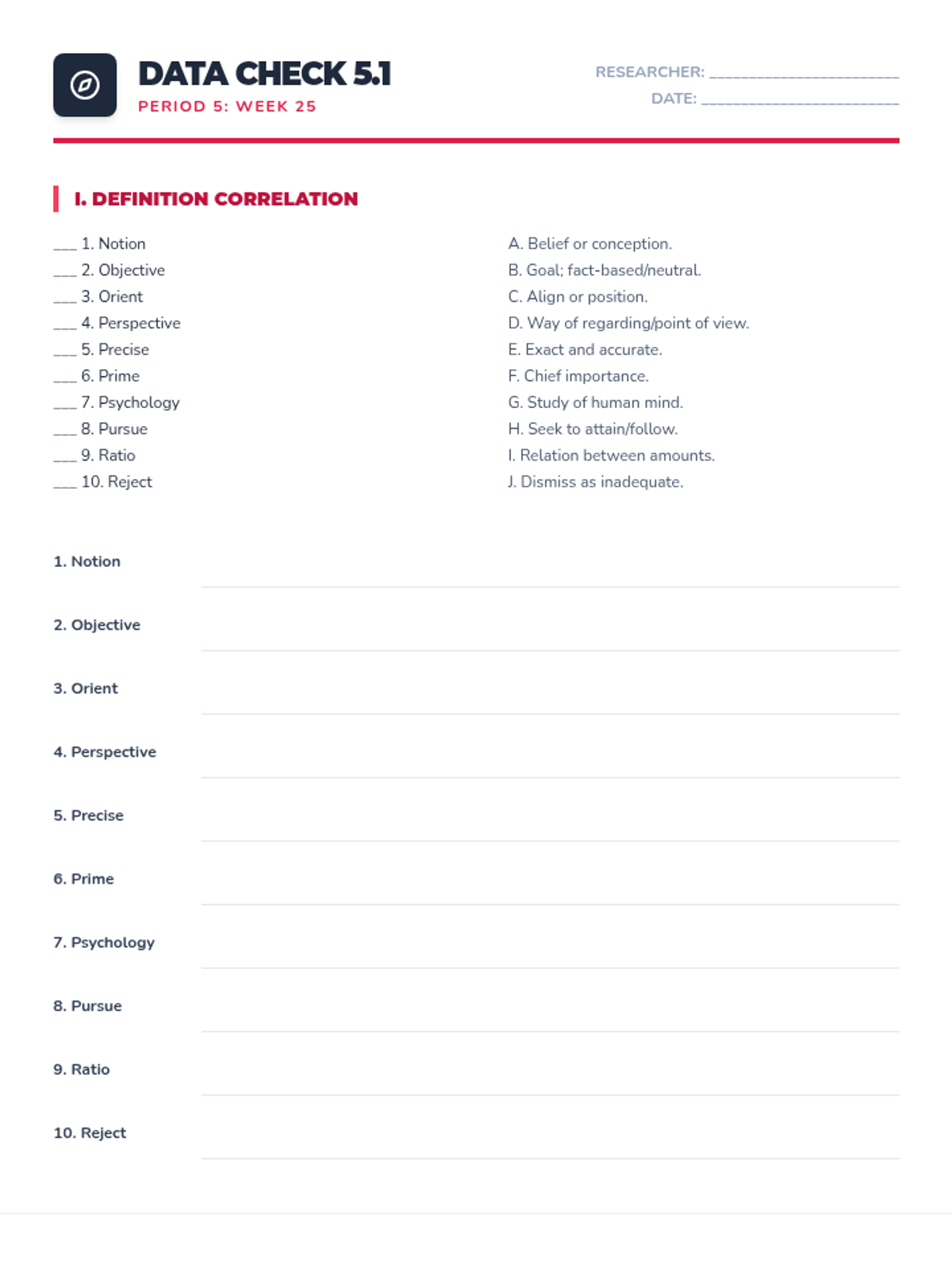
The fifth six-week period (Weeks 25-30) builds strategic communication skills. Students focus on perspective-taking and precision in academic reporting.
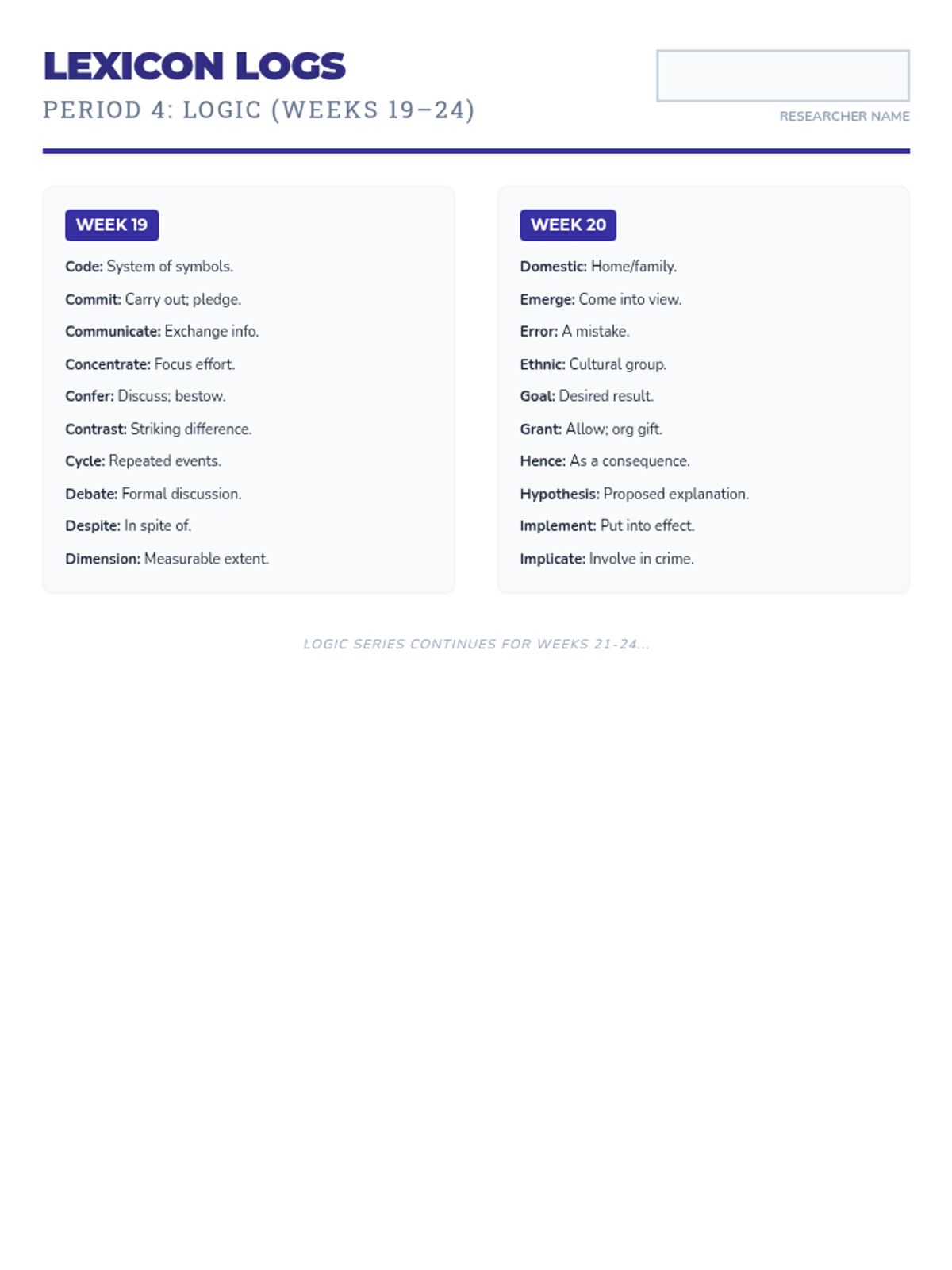
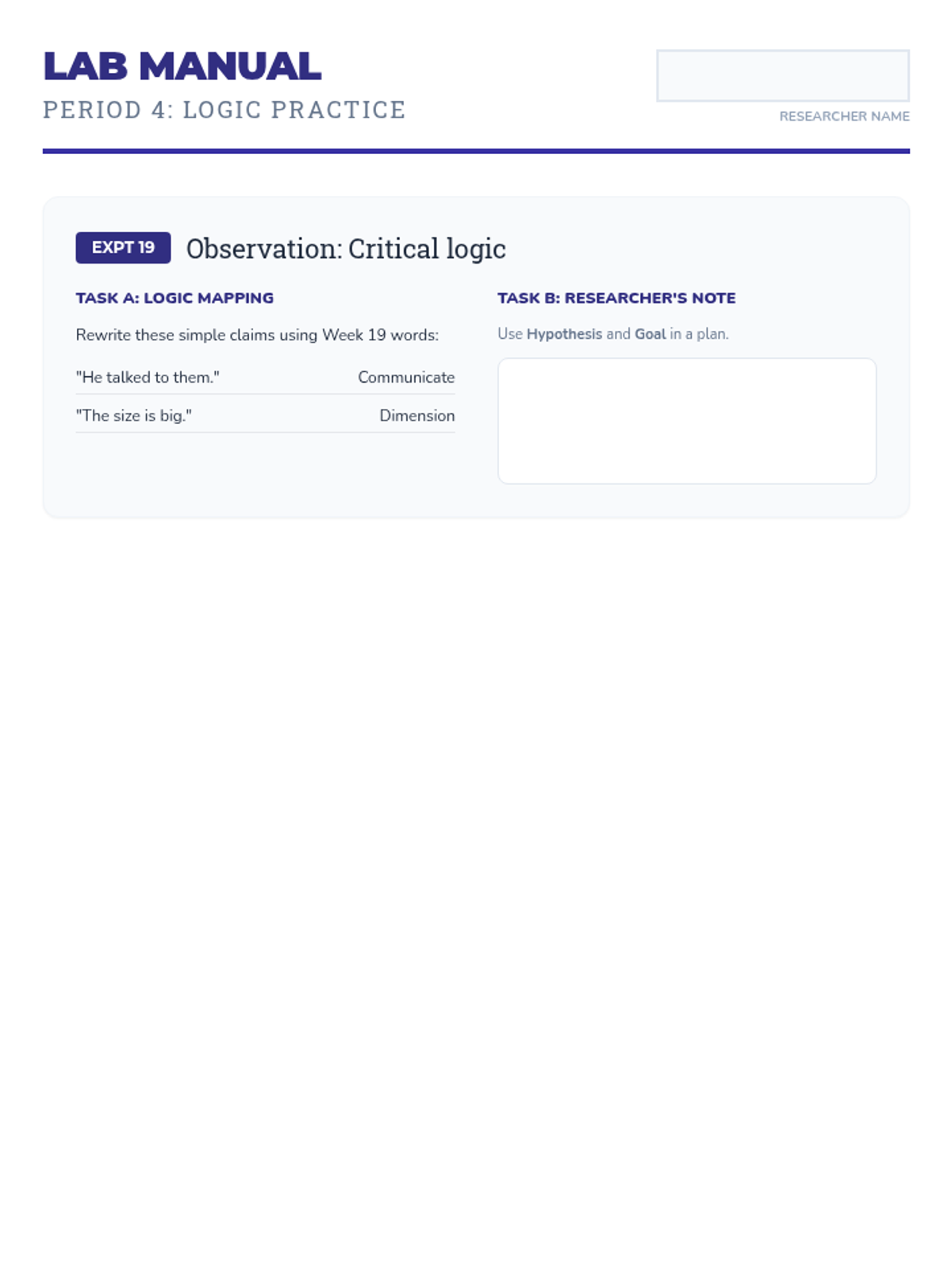
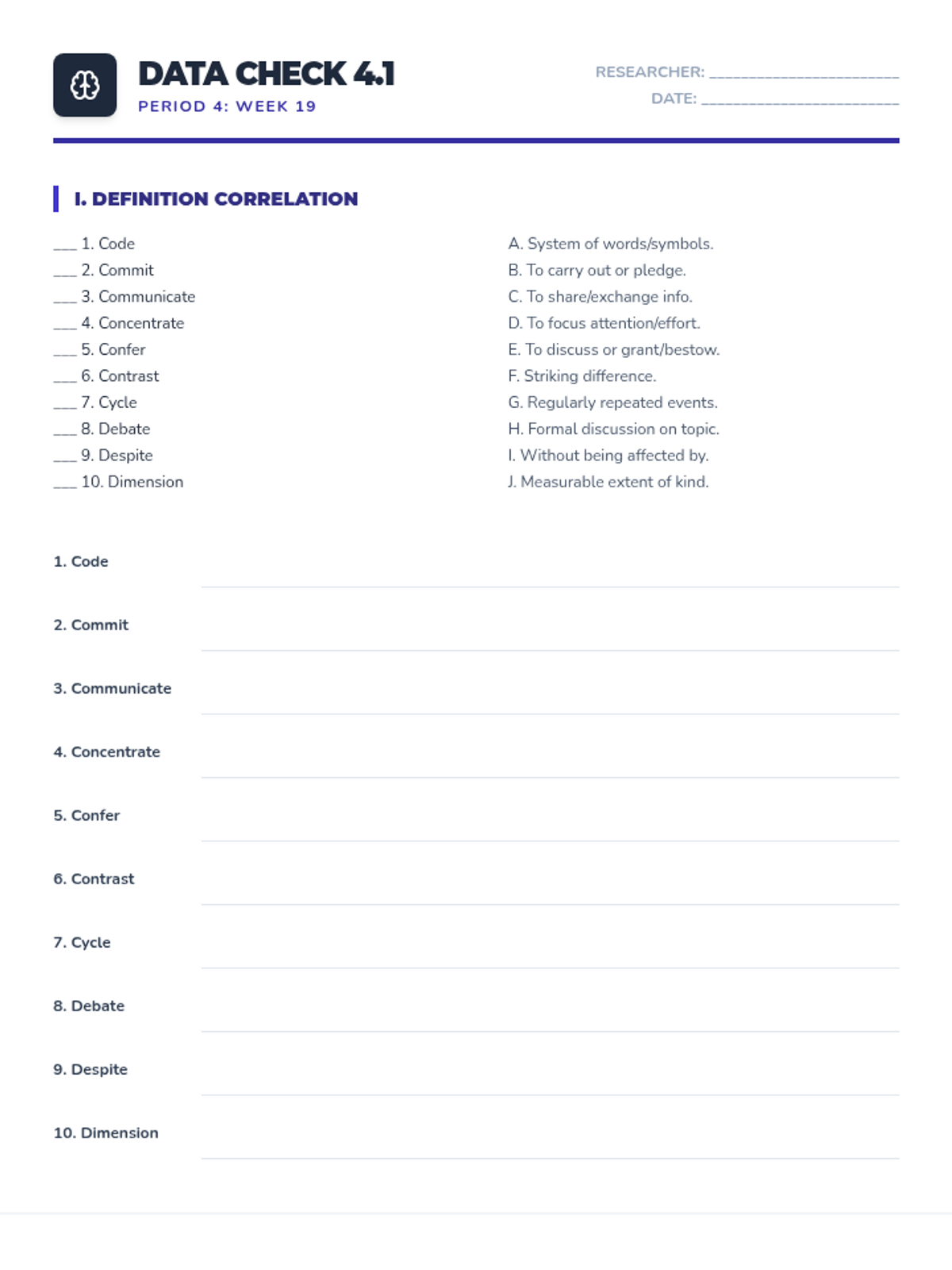
The fourth six-week period (Weeks 19-24) centers on logic and application. Vocabulary focuses on abstract concepts, communication strategies, and implementation.
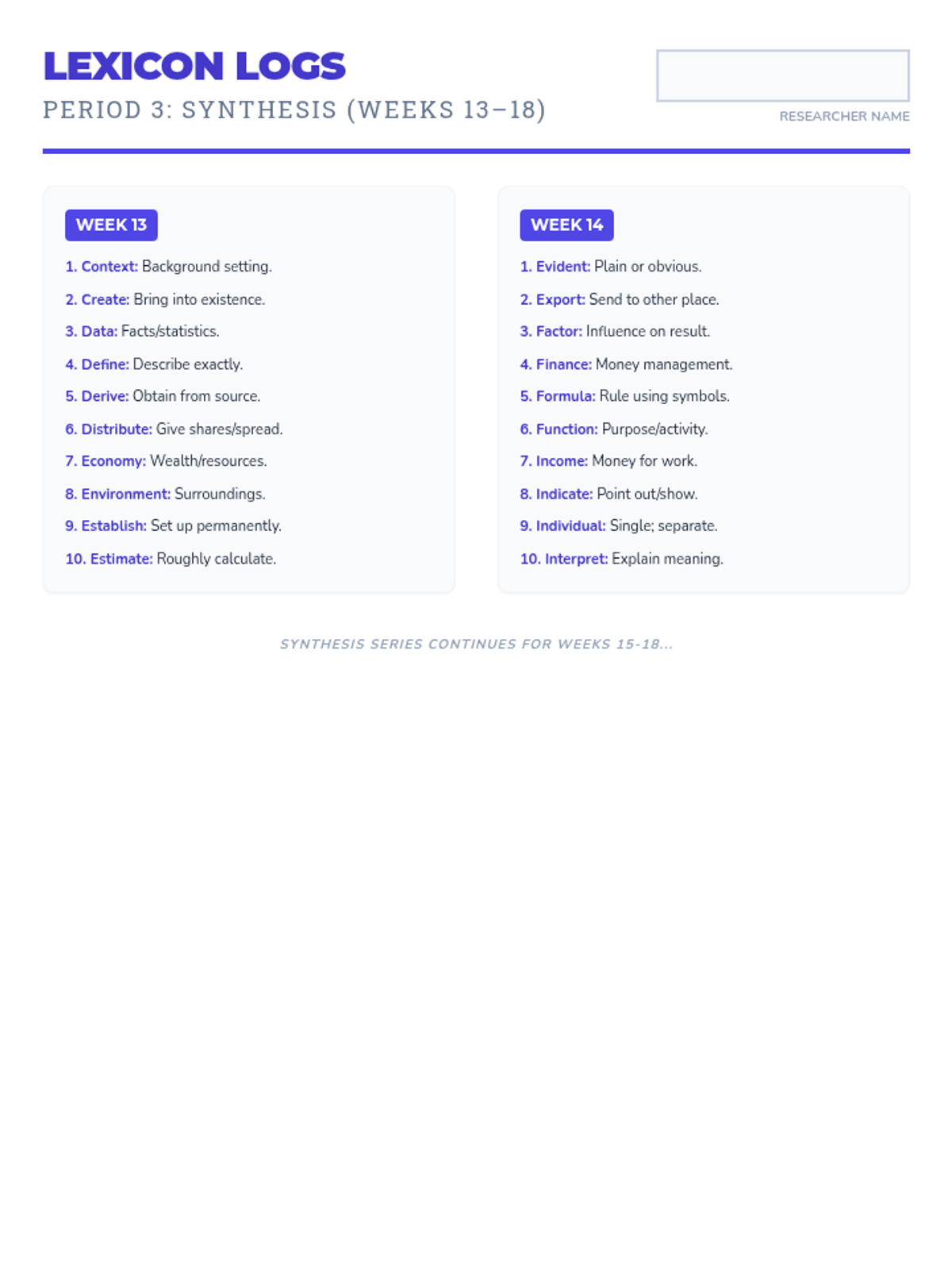
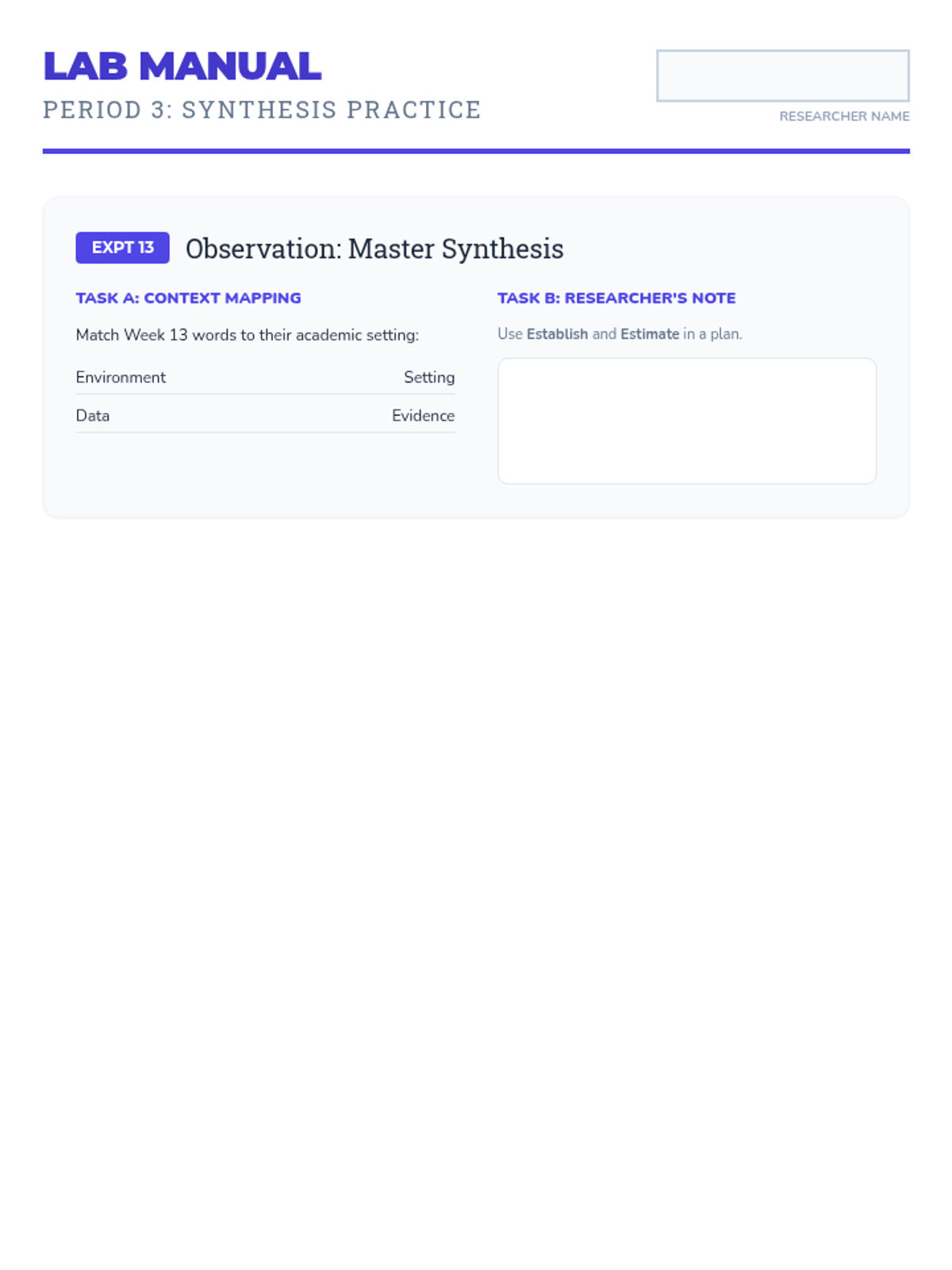
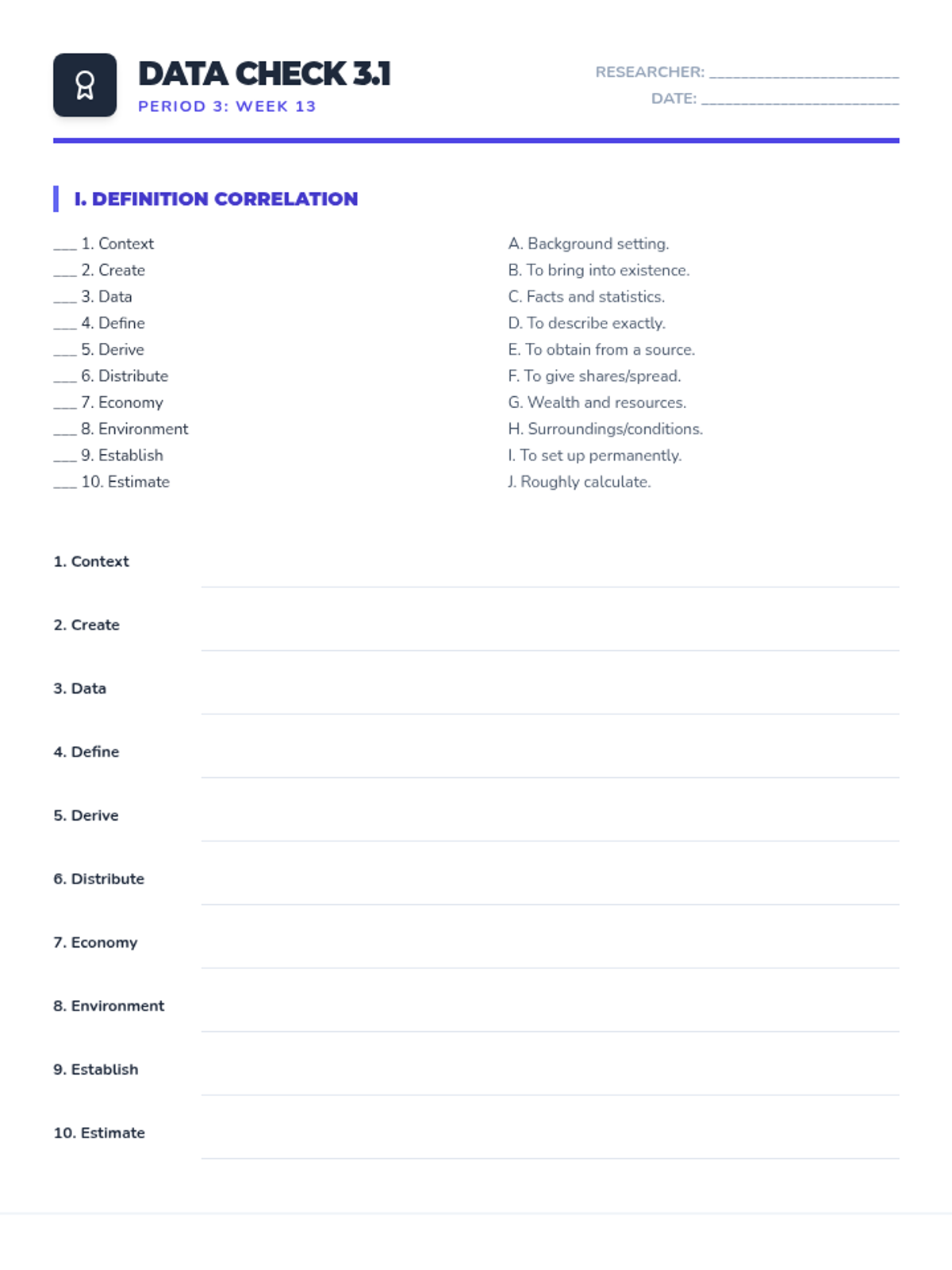
The third six-week period (Weeks 13-18) emphasizes synthesis and conceptual logic. Students apply vocabulary to bridge ideas and construct formal arguments.
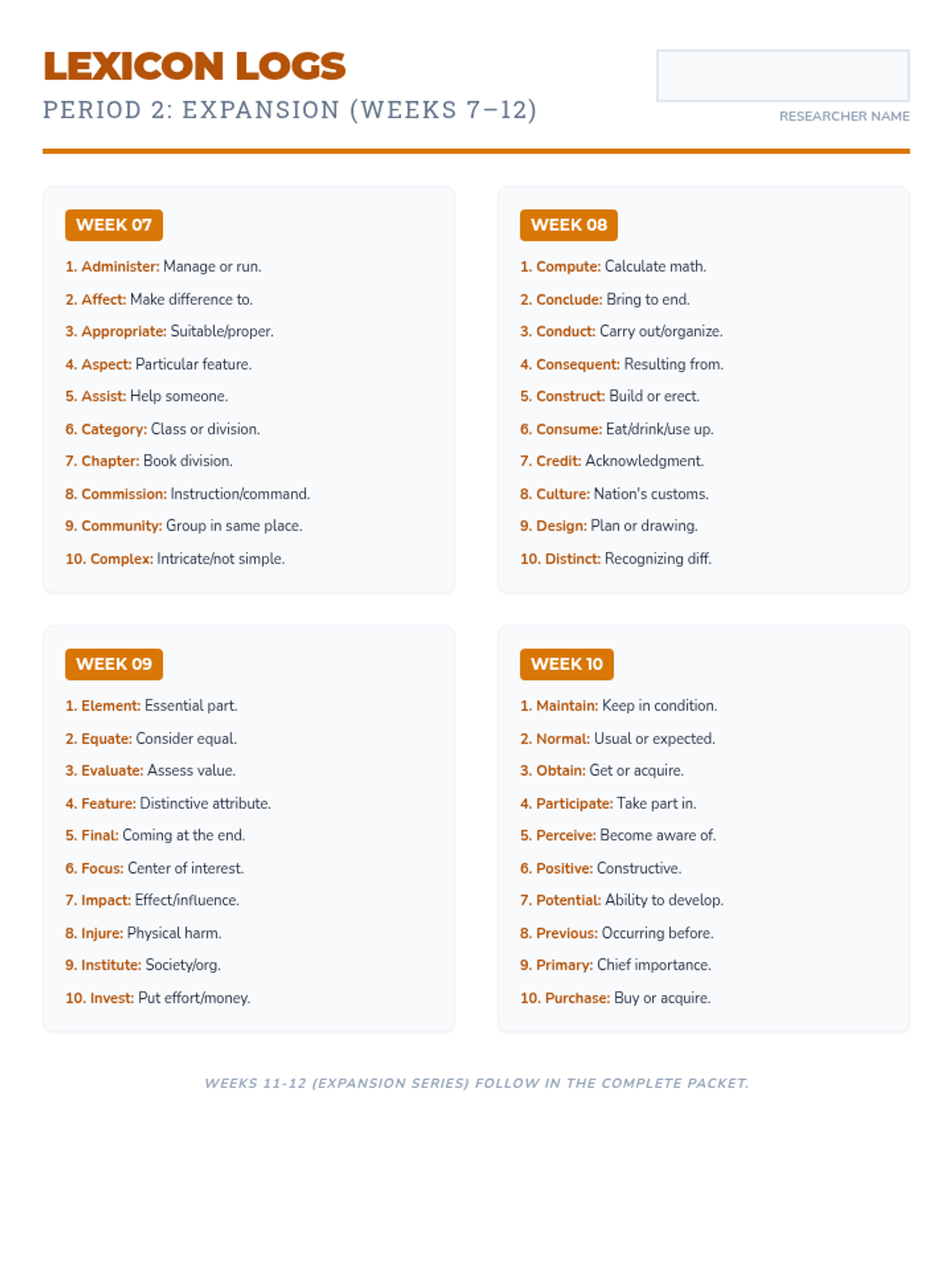
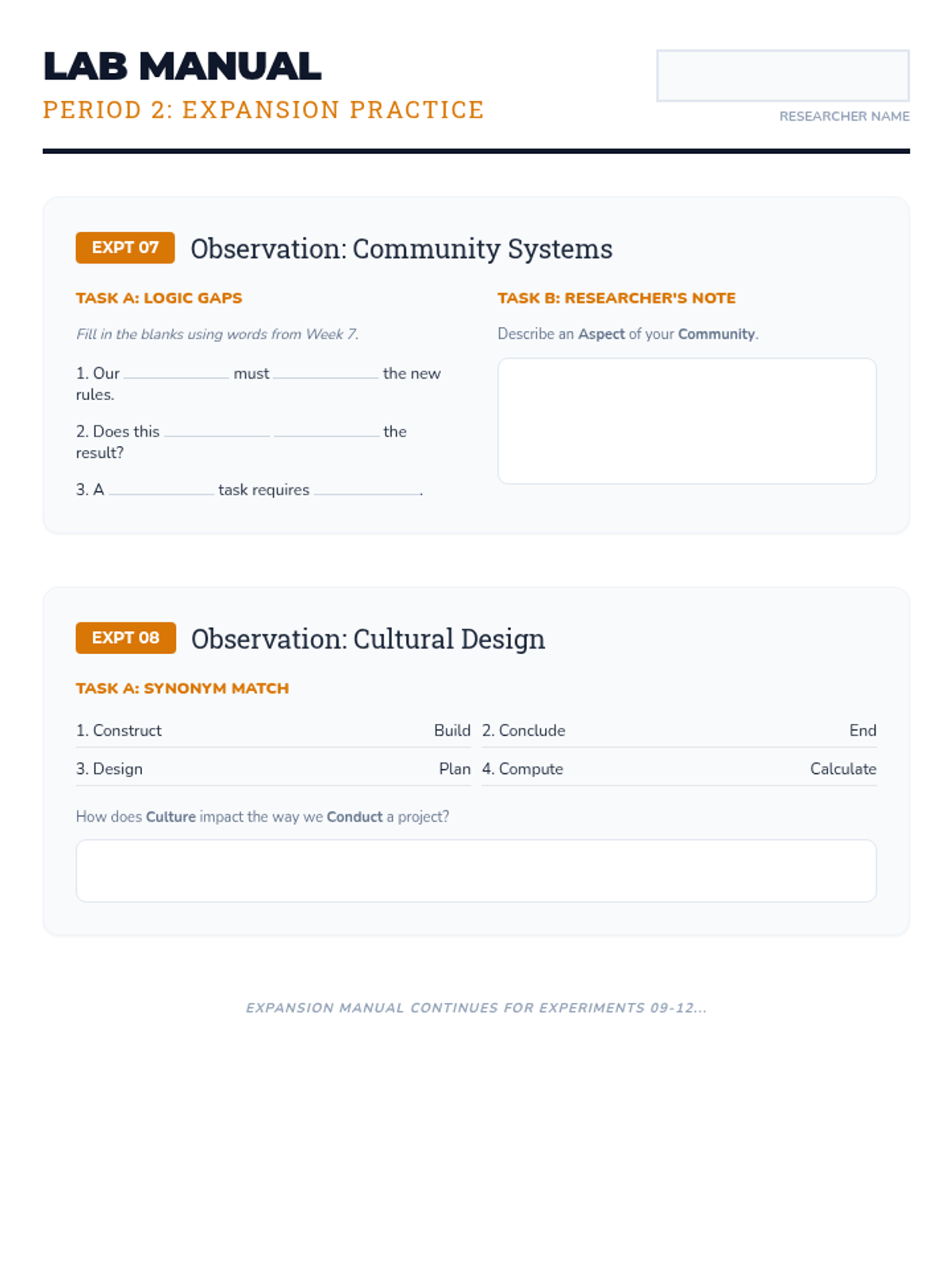
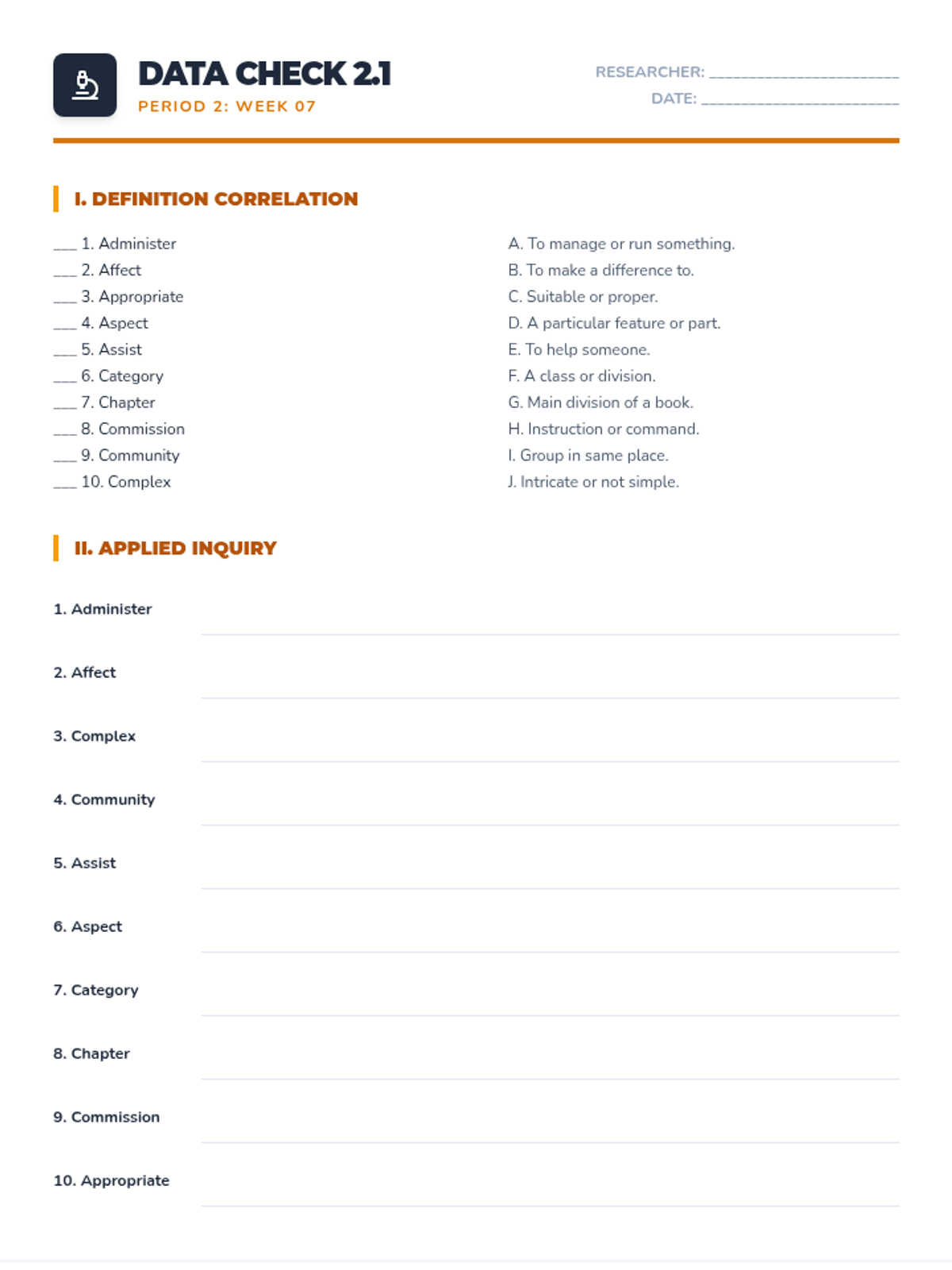
The second six-week period (Weeks 7-12) focuses on expanding analytical vocabulary. Students engage with complex terms used in research and evidence-based writing.
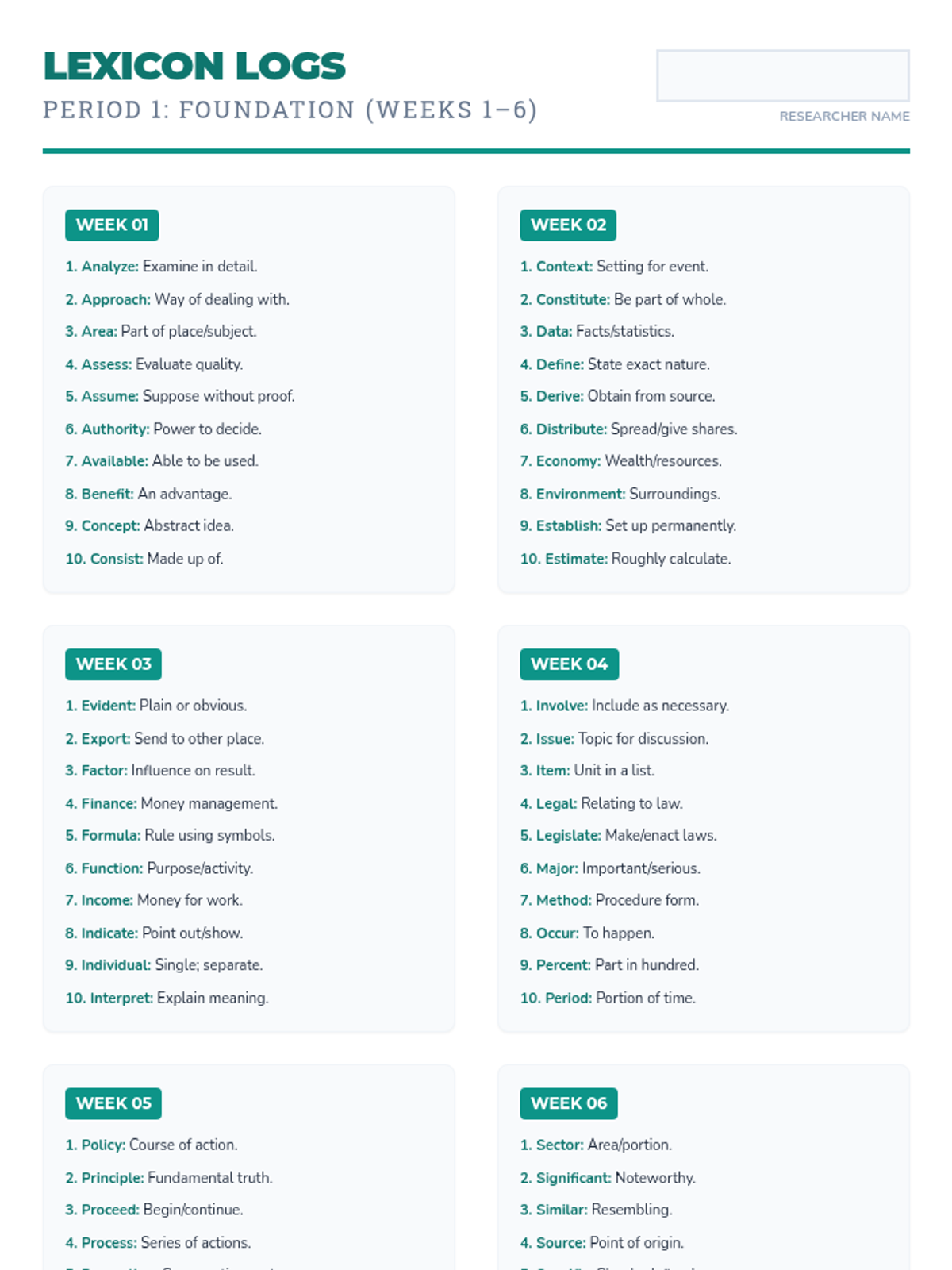
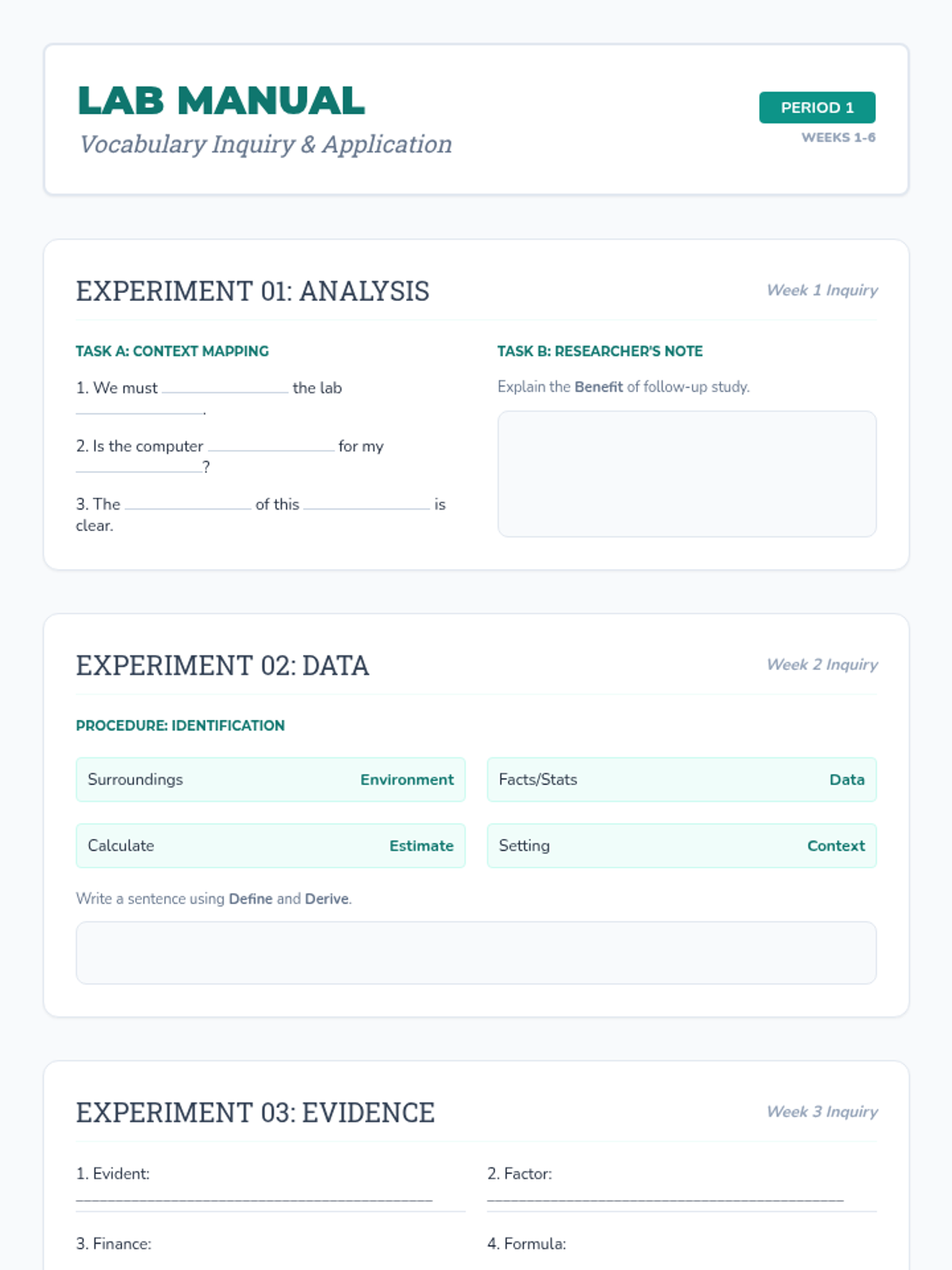
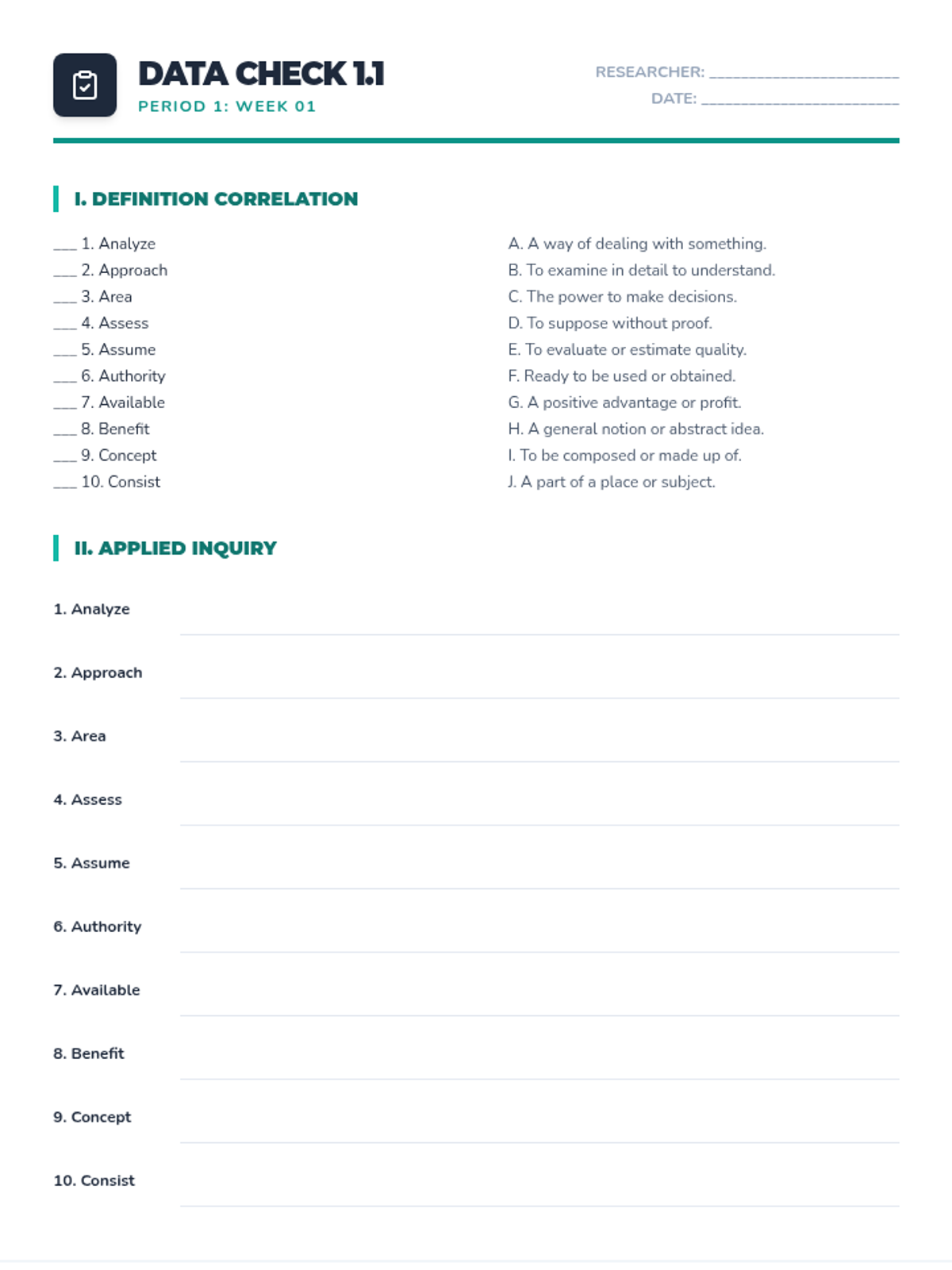
The first six-week period introduces foundational academic vocabulary (Weeks 1-6). Students build investigative skills through context mapping and data analysis of introductory Tier 2 words.

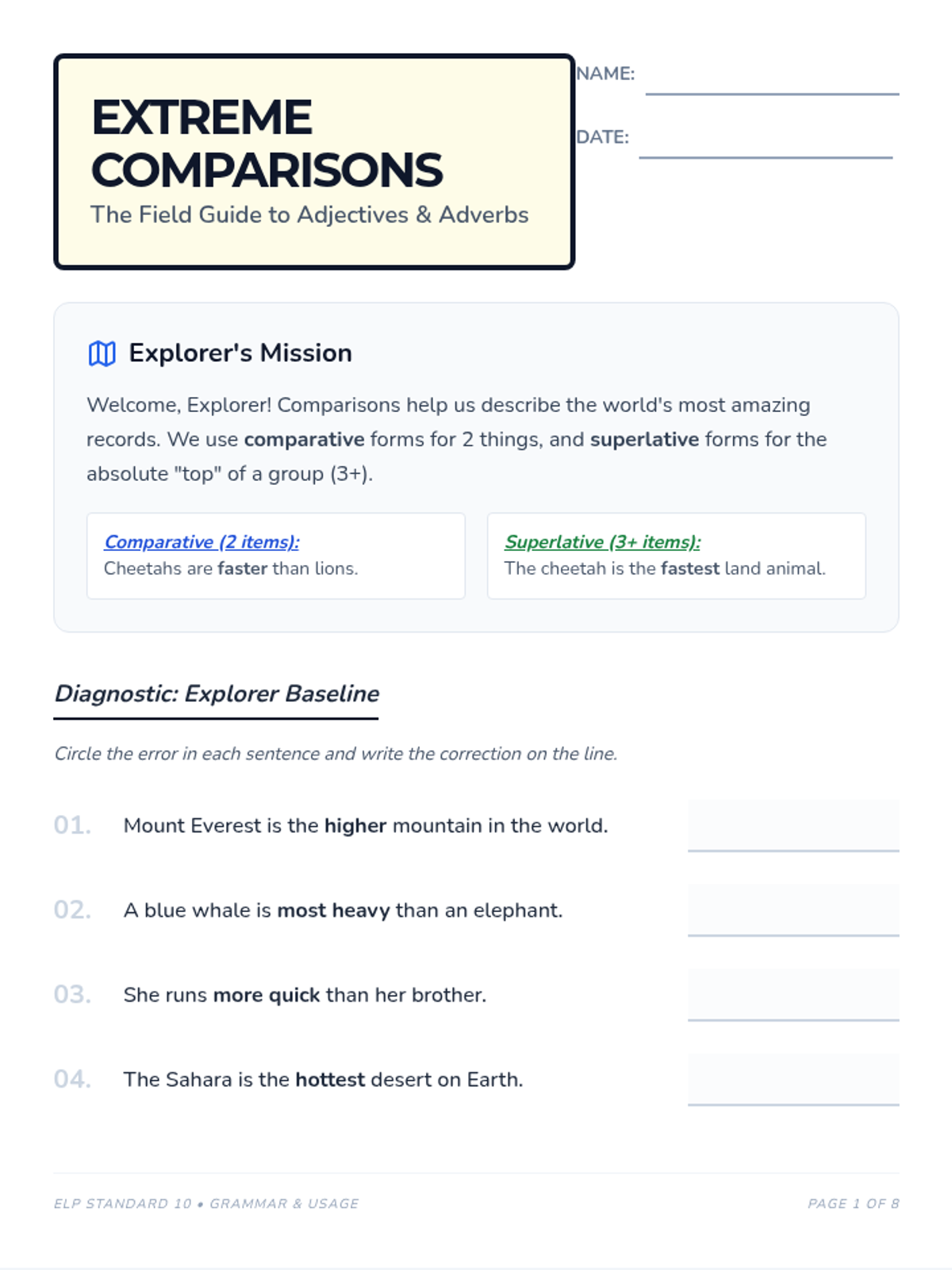
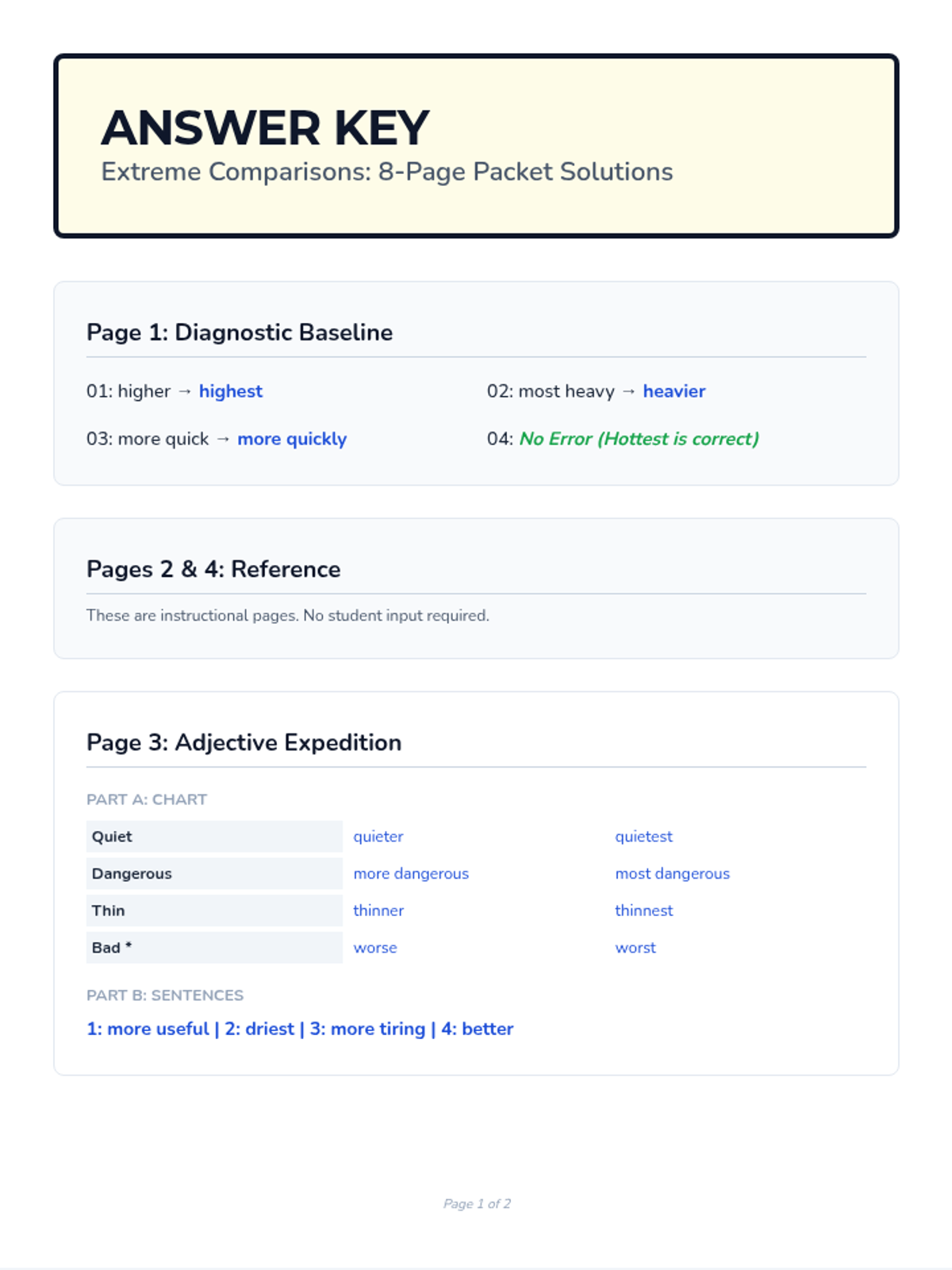
A comprehensive practice packet for Middle School ELLs (ELP Level 4) focusing on the formation and use of comparative and superlative adjectives and adverbs. Students explore the concept through the lens of world records and extreme nature.
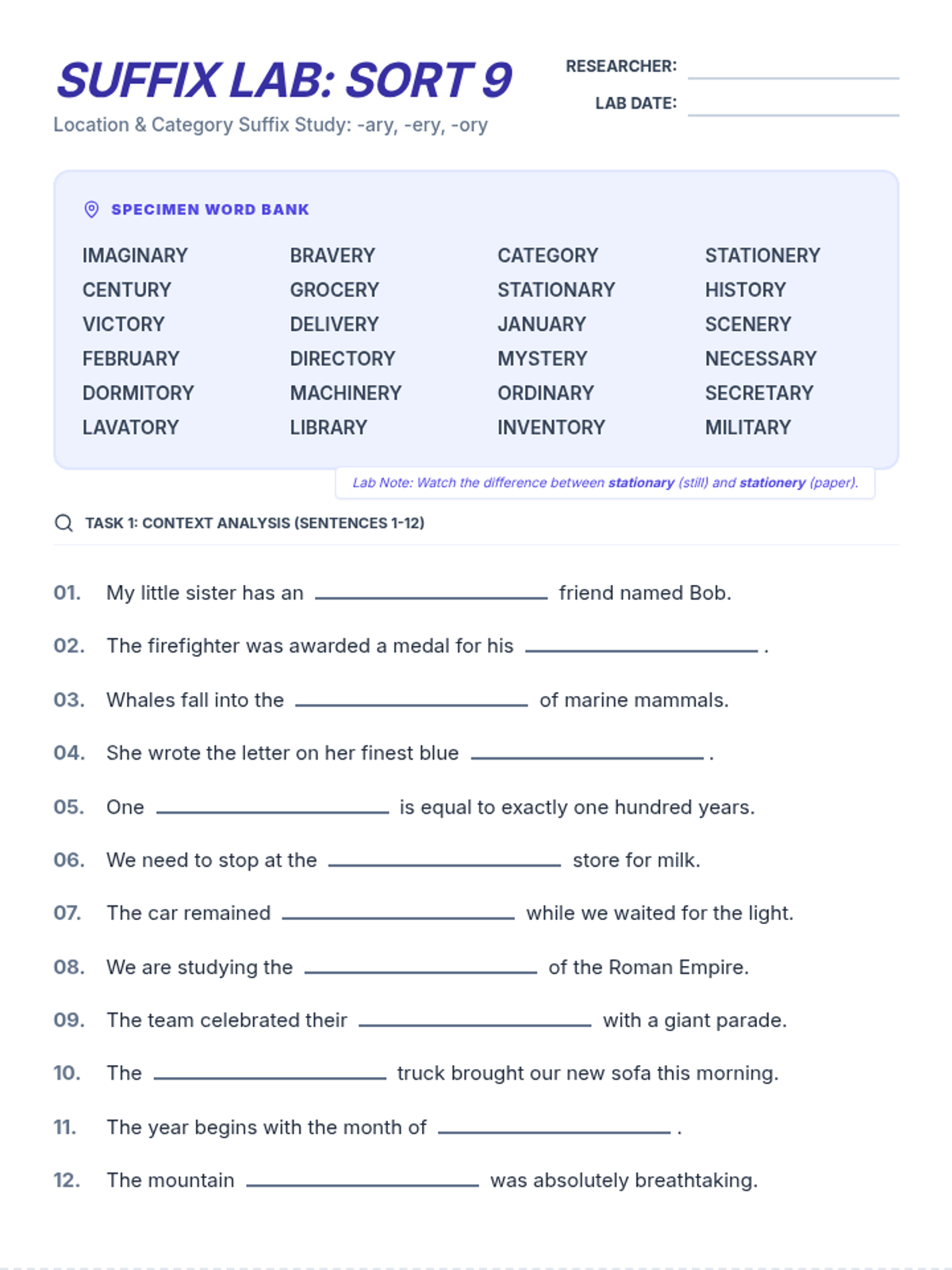
A lesson focused on location and category suffixes (-ary, -ery, -ory). Students analyze how these suffixes form nouns and adjectives related to places, groups, and qualities.
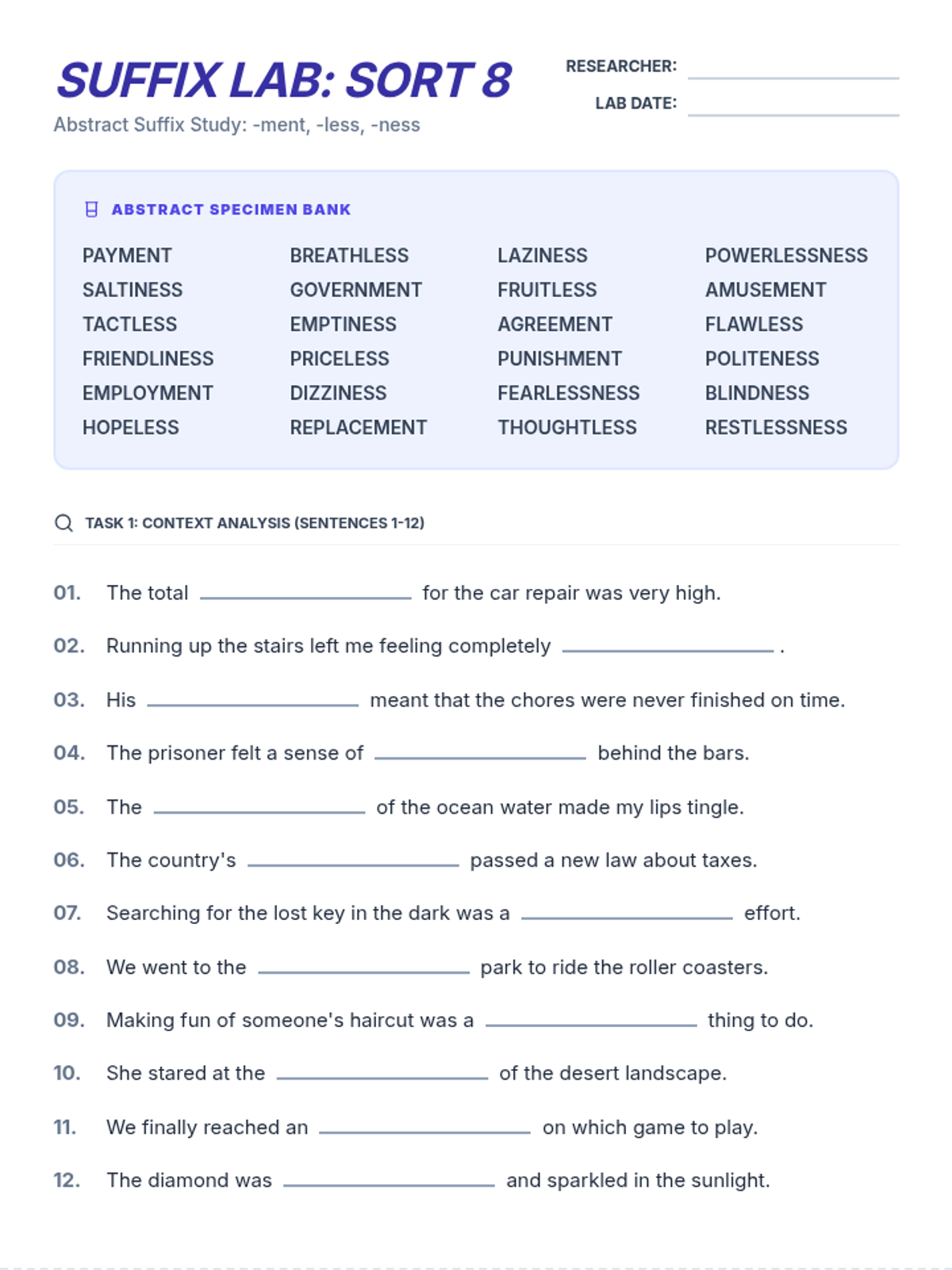
A lesson focused on abstract suffixes (-ment, -less, -ness). Students explore how these suffixes form nouns and adjectives related to states, qualities, and actions.
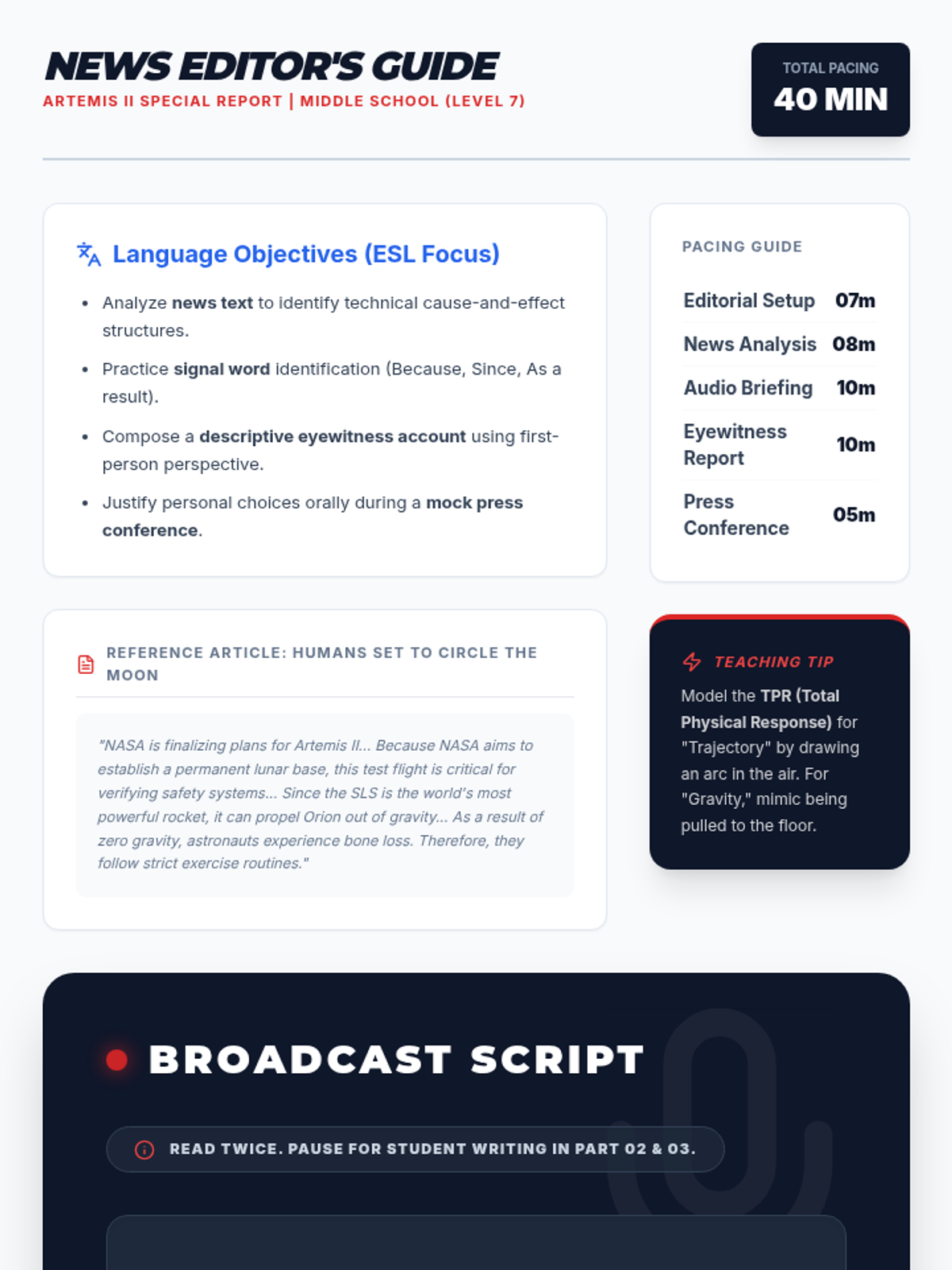
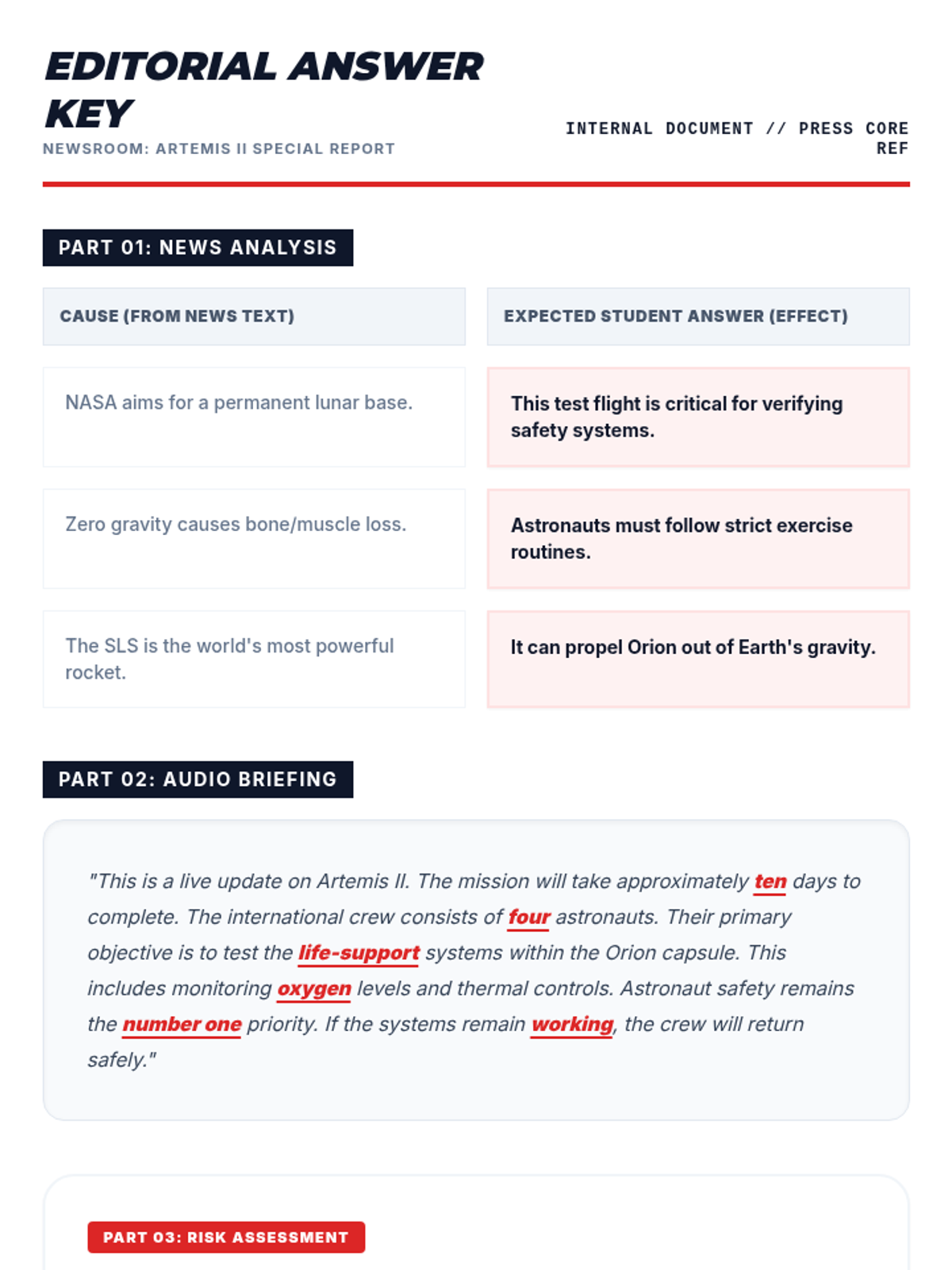
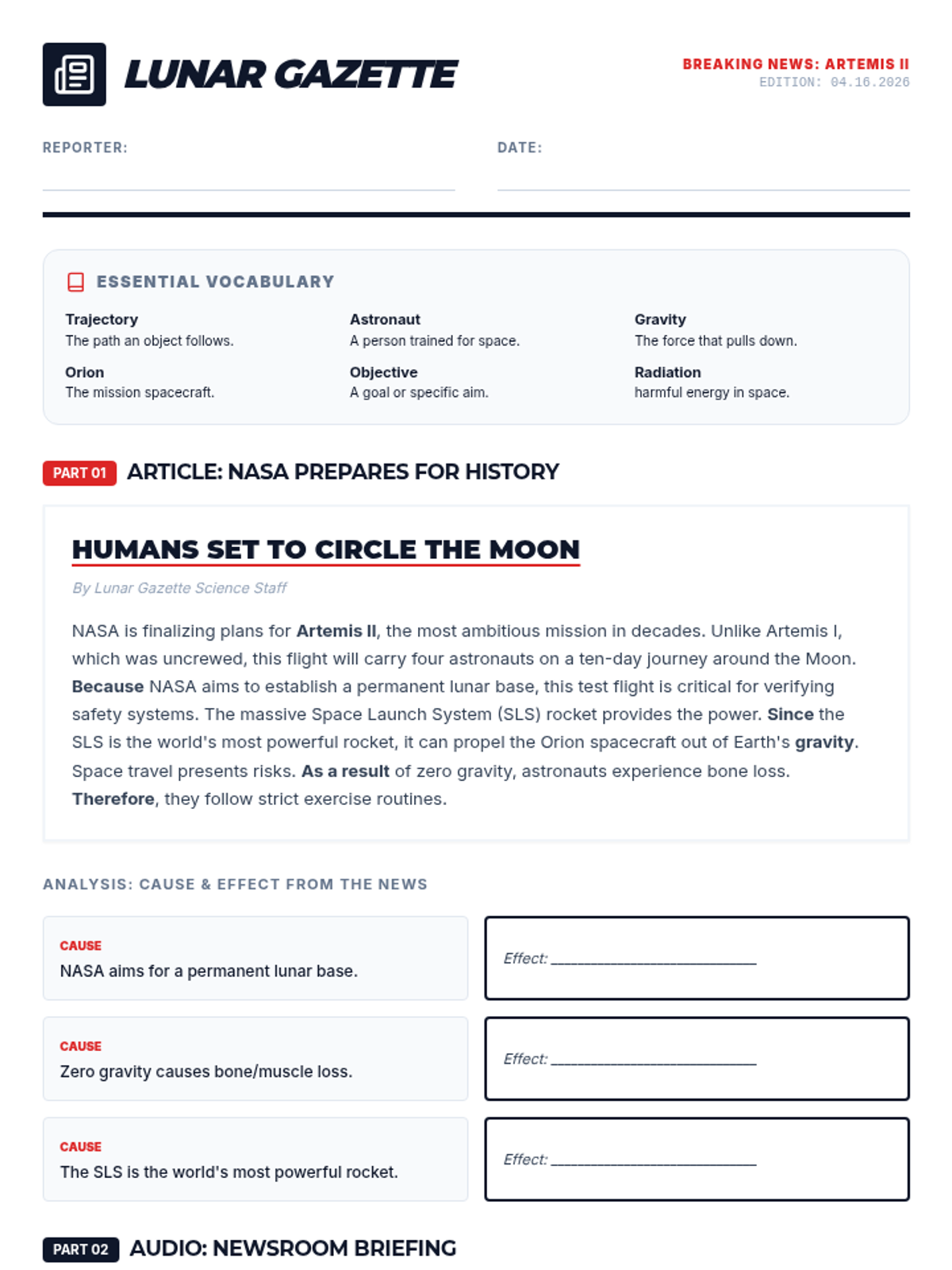
A high-interest lesson for 9th-12th grade ESL students, written at a 7th-grade level, focusing on the Artemis II mission. Includes a news article analysis, cause-and-effect relationships, and descriptive writing.
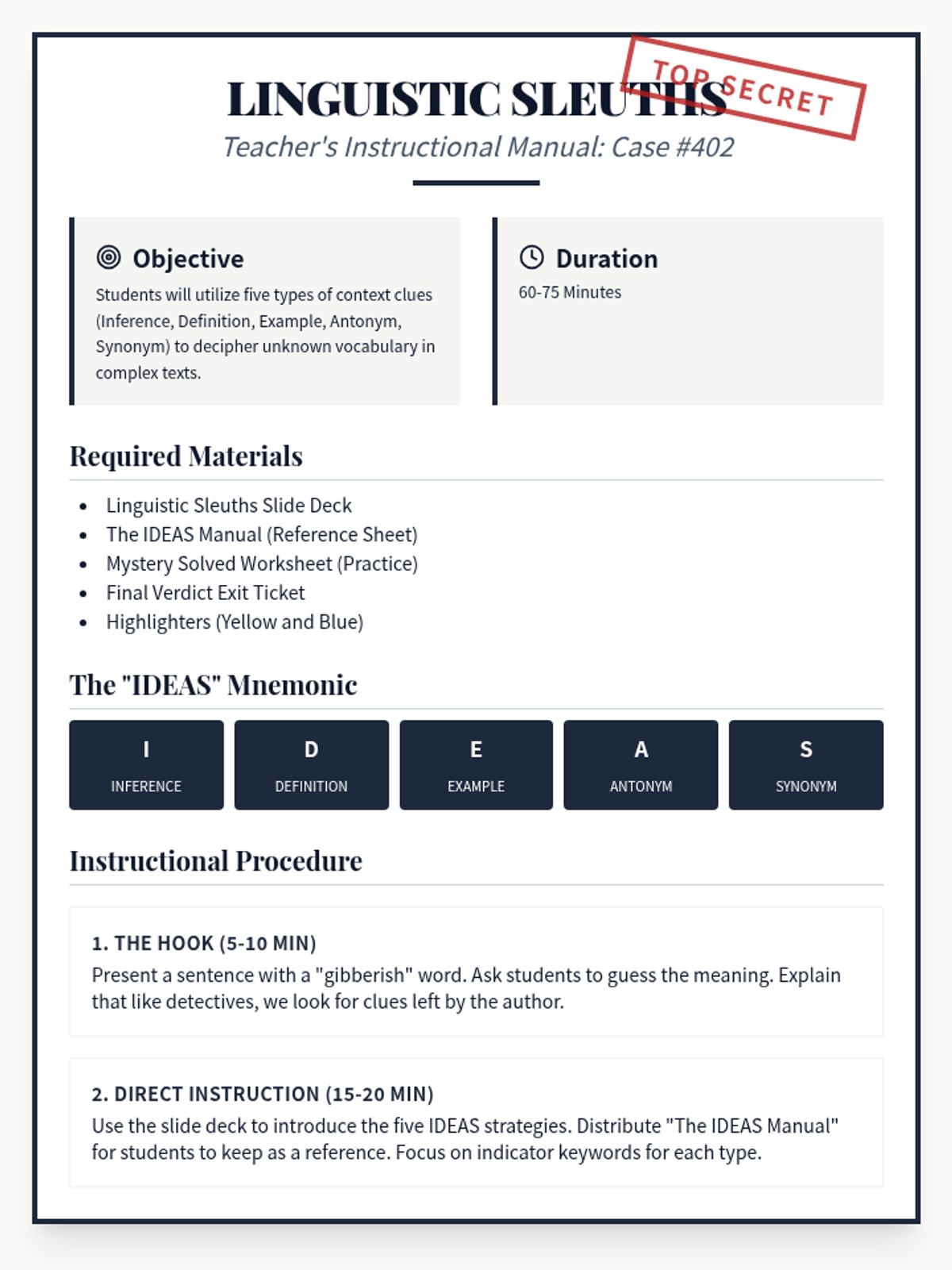
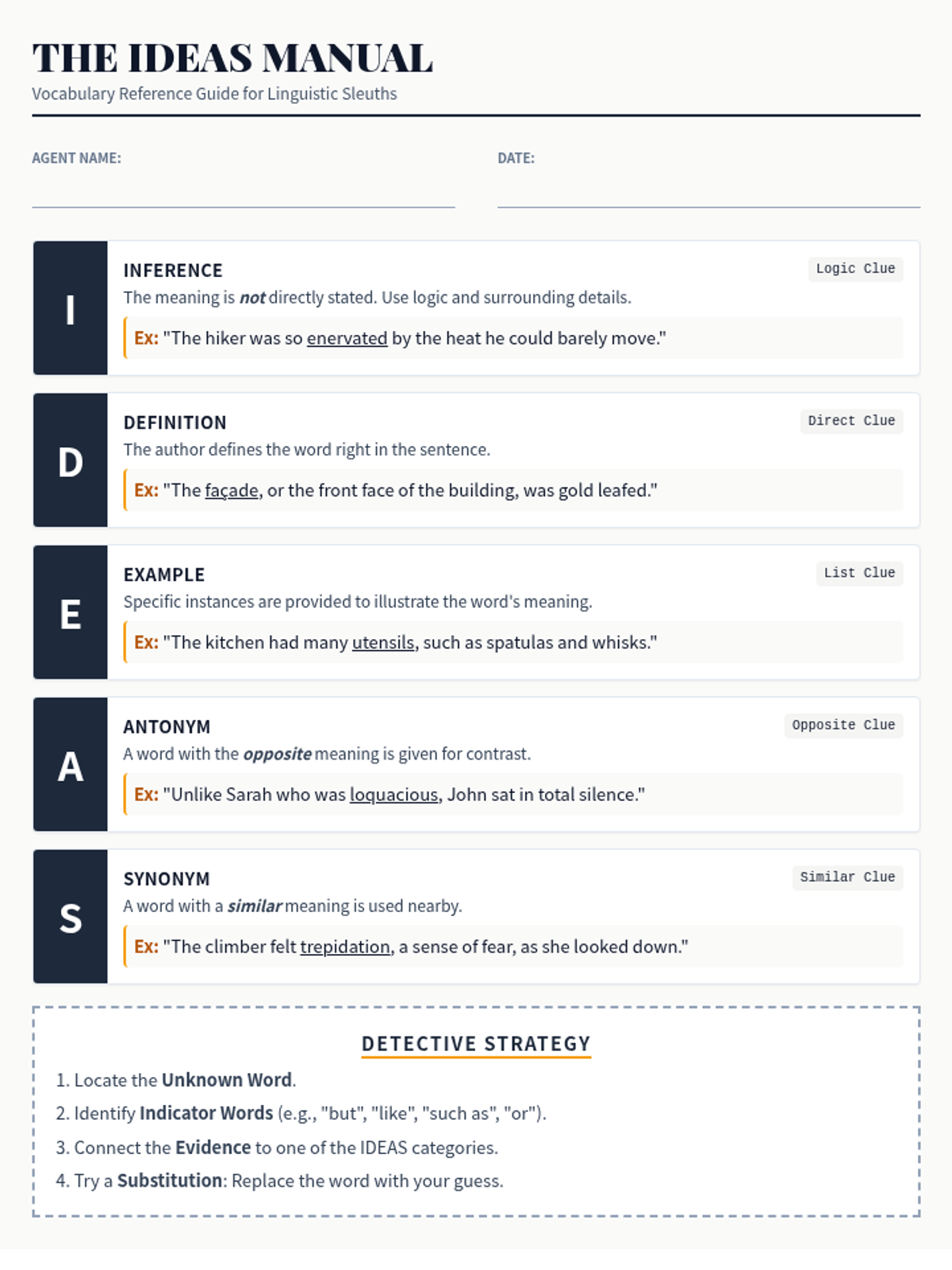
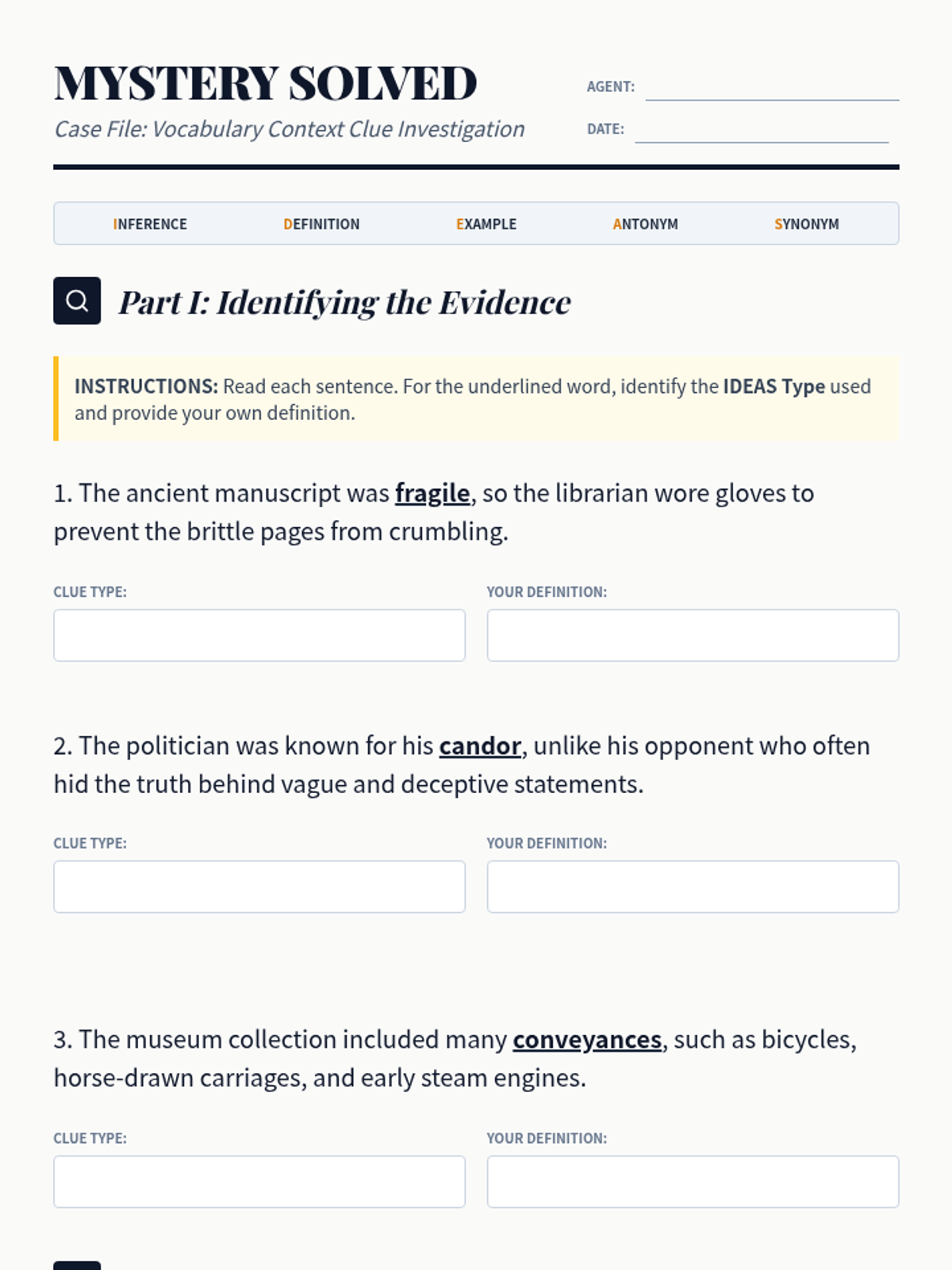
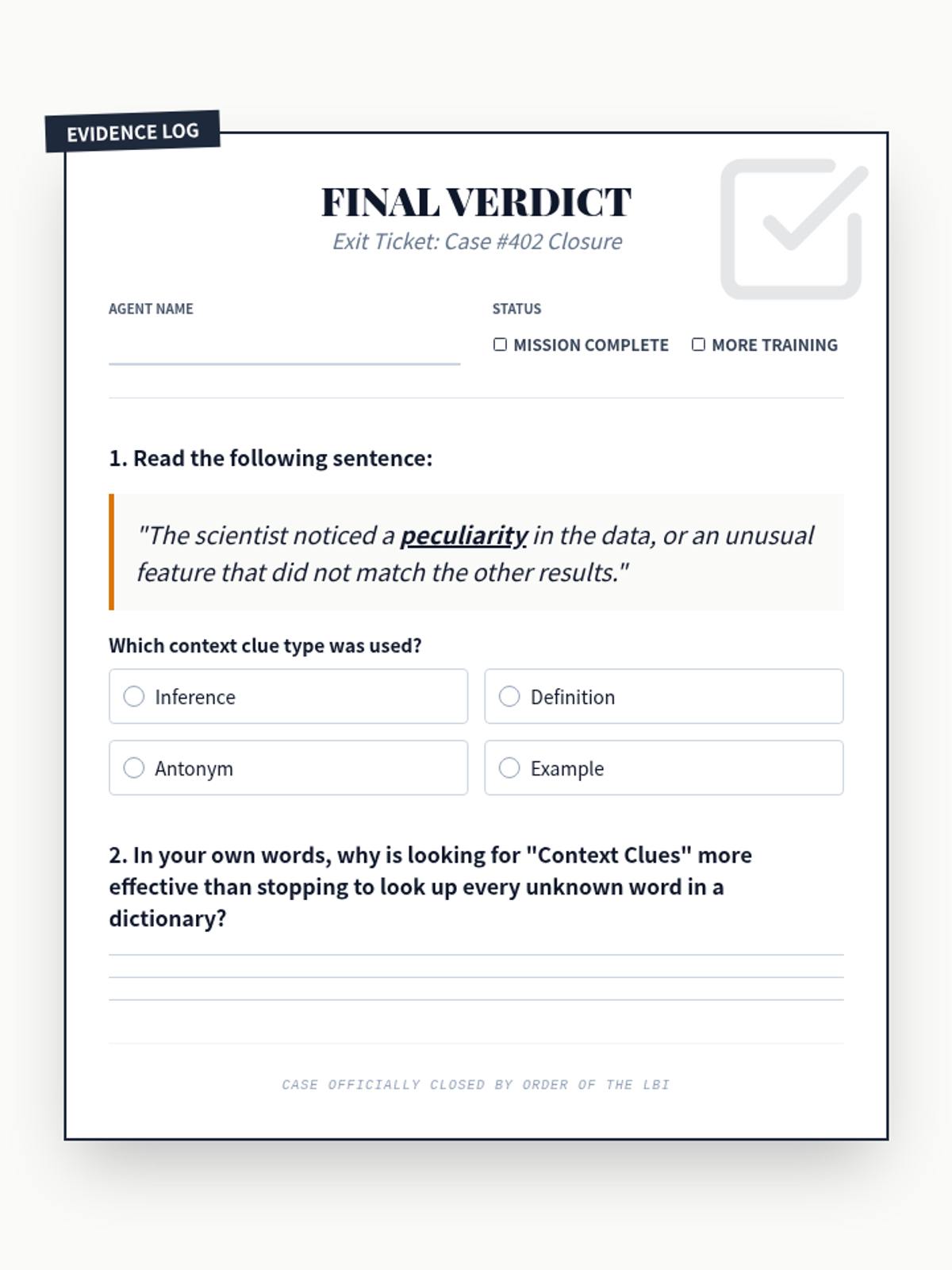
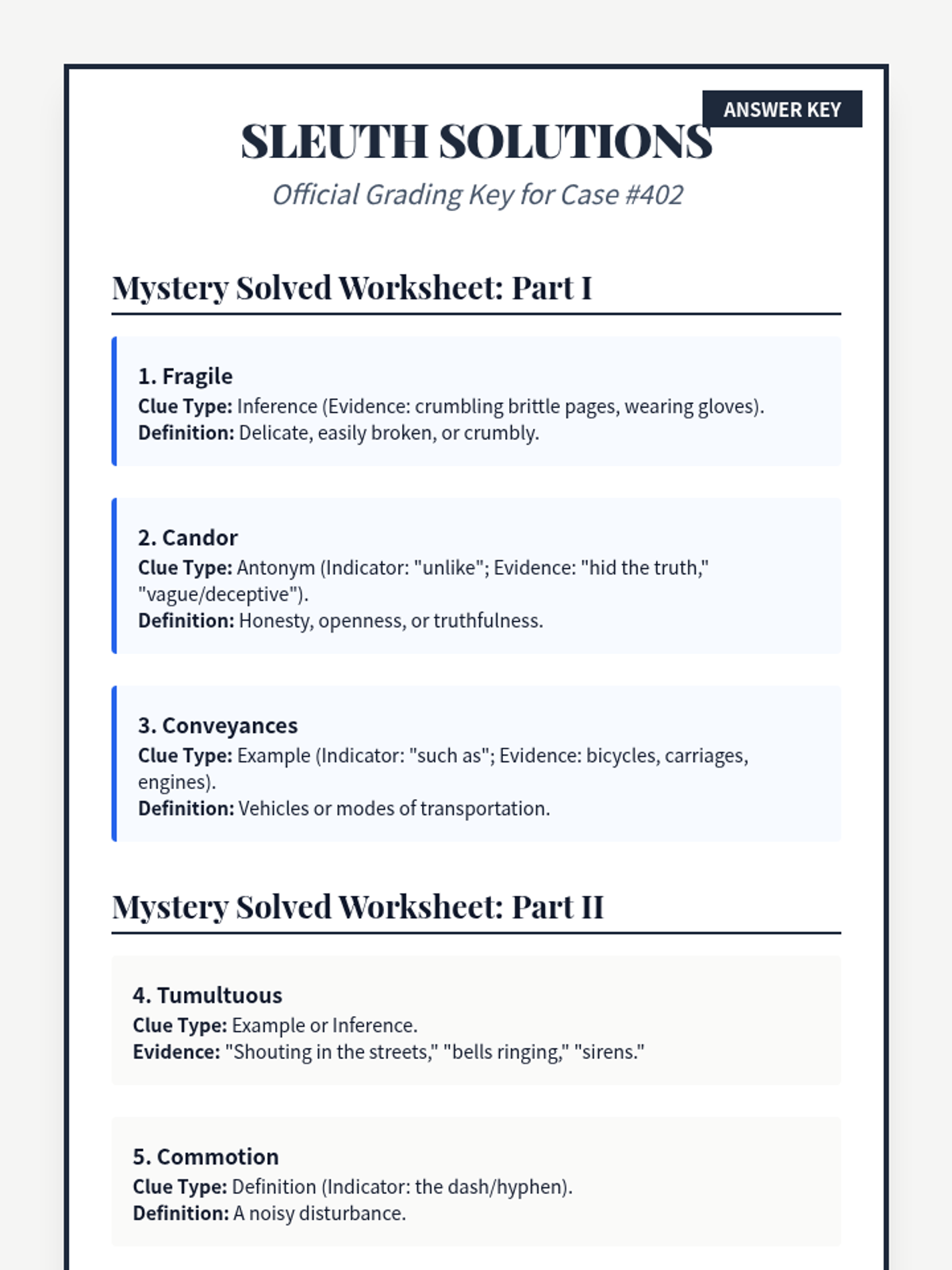
An intermediate-level lesson on identifying and using context clues (IDEAS: Inference, Definition, Example, Antonym, Synonym) to determine the meaning of unfamiliar words. Includes a detailed lesson plan, instructional slides, student reference sheet, practice worksheet, and assessment.
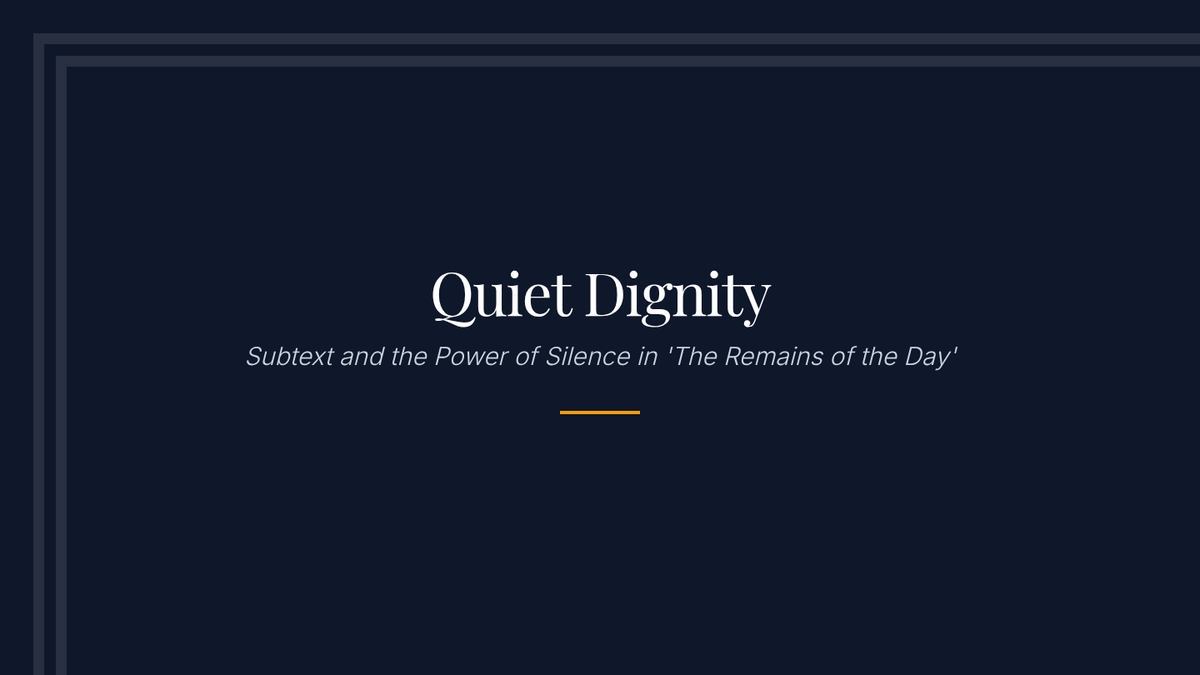
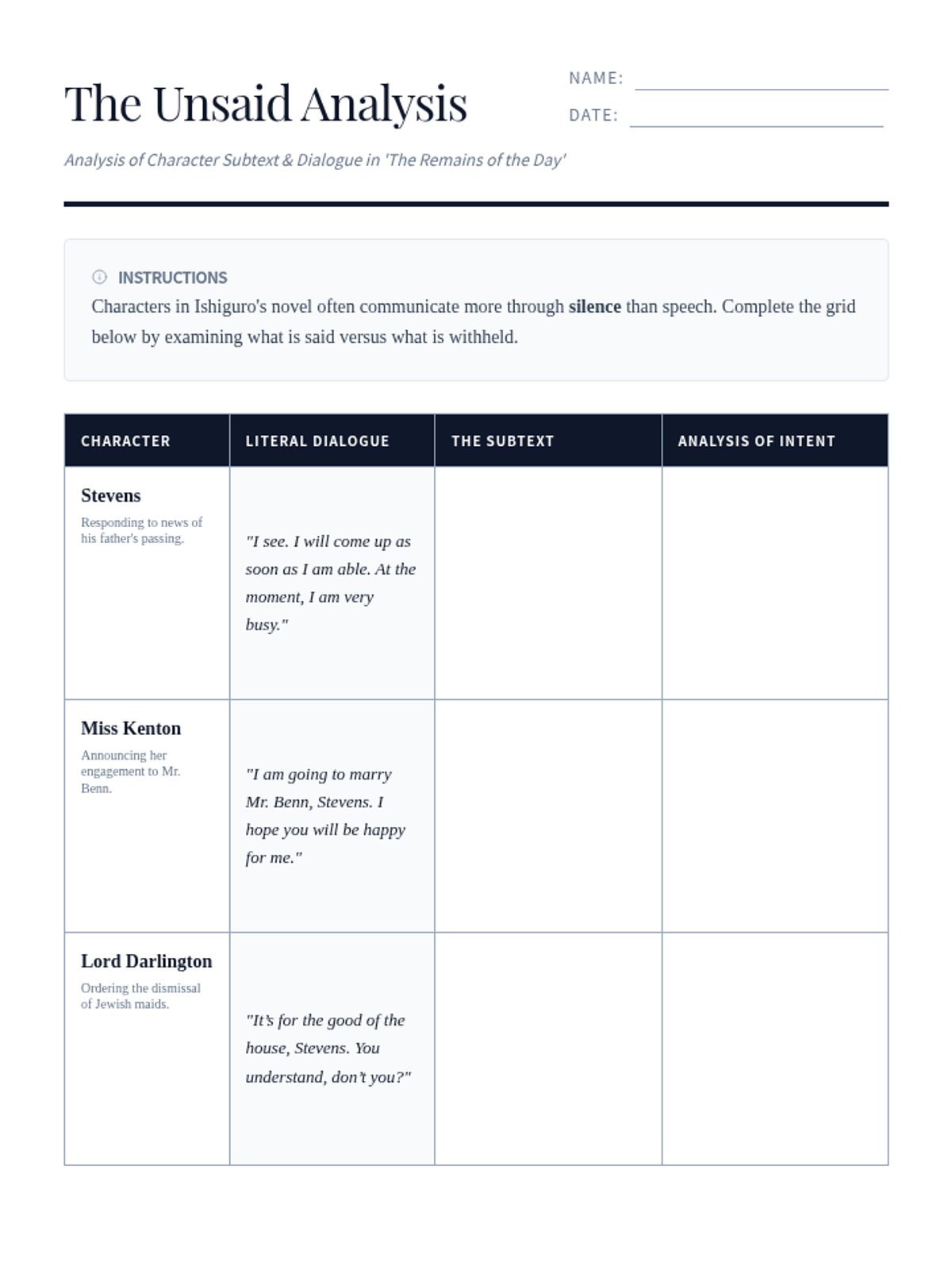
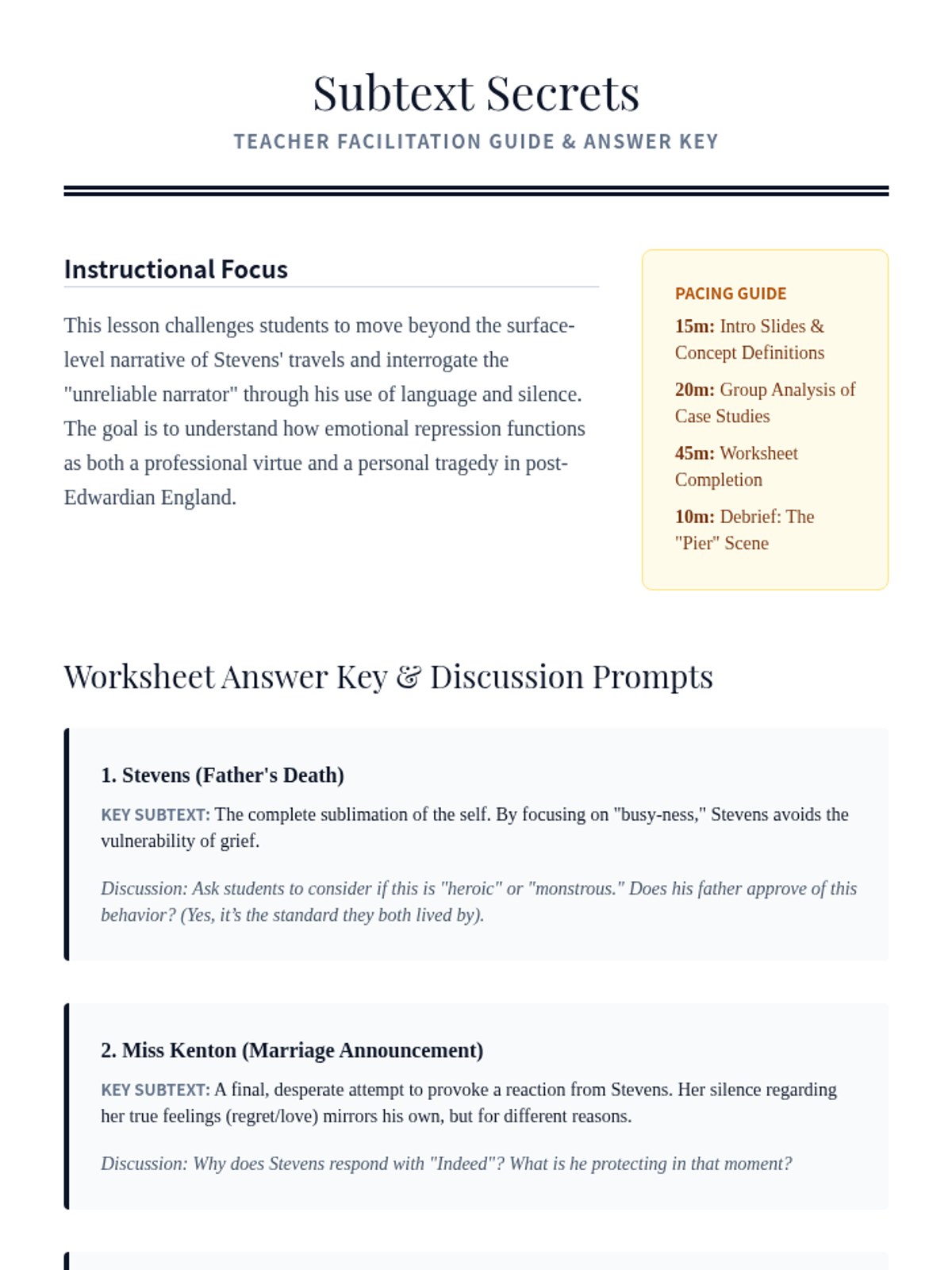
A deep dive into Kazuo Ishiguro's 'The Remains of the Day', focusing on the profound power of what remains unsaid. Students will analyze how characters use silence and subtext to navigate social hierarchies and emotional repression.
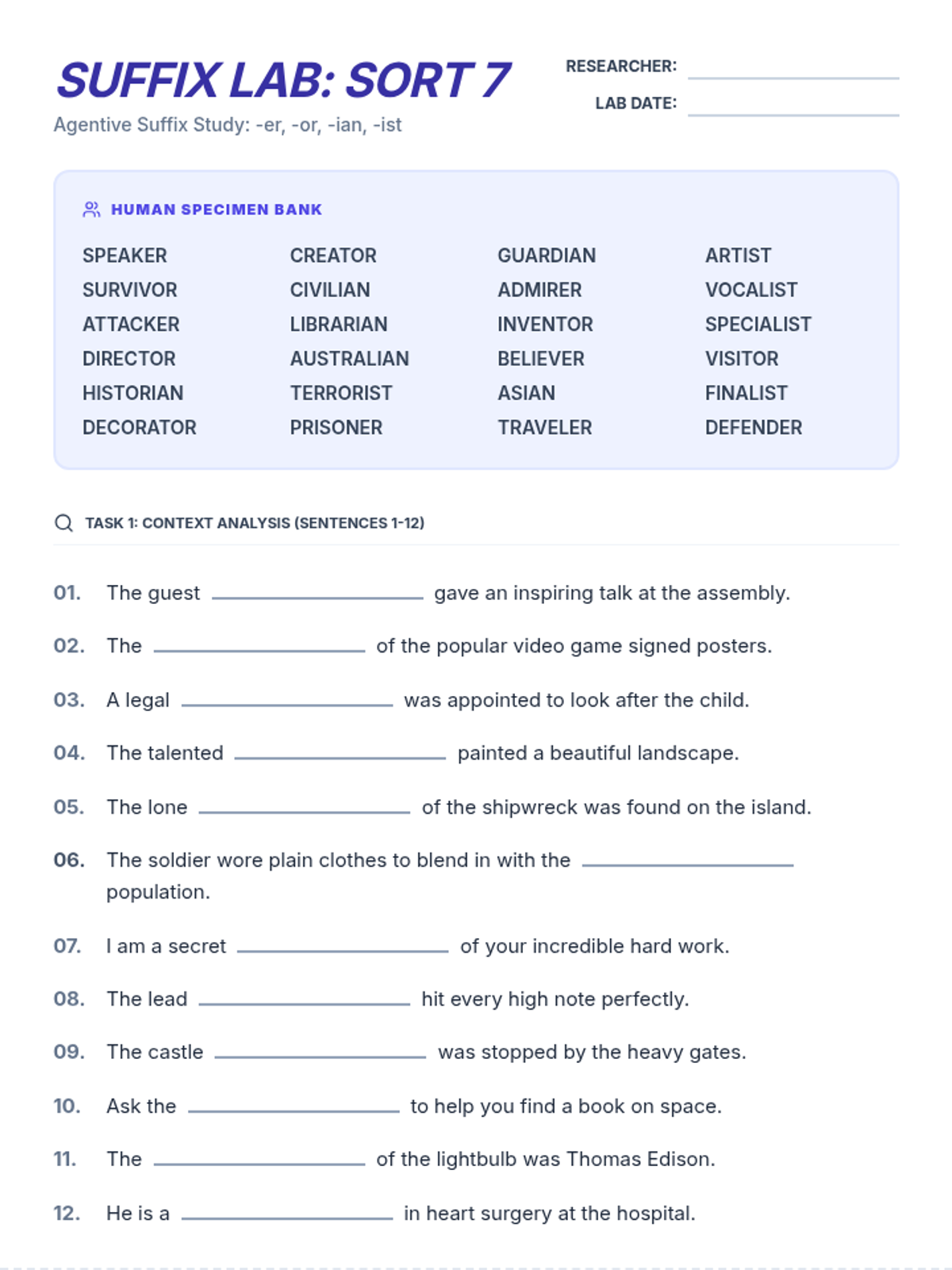
A lesson focused on agentive suffixes (-er, -or, -ian, -ist). Students analyze how these suffixes identify people who perform specific actions or hold certain roles.
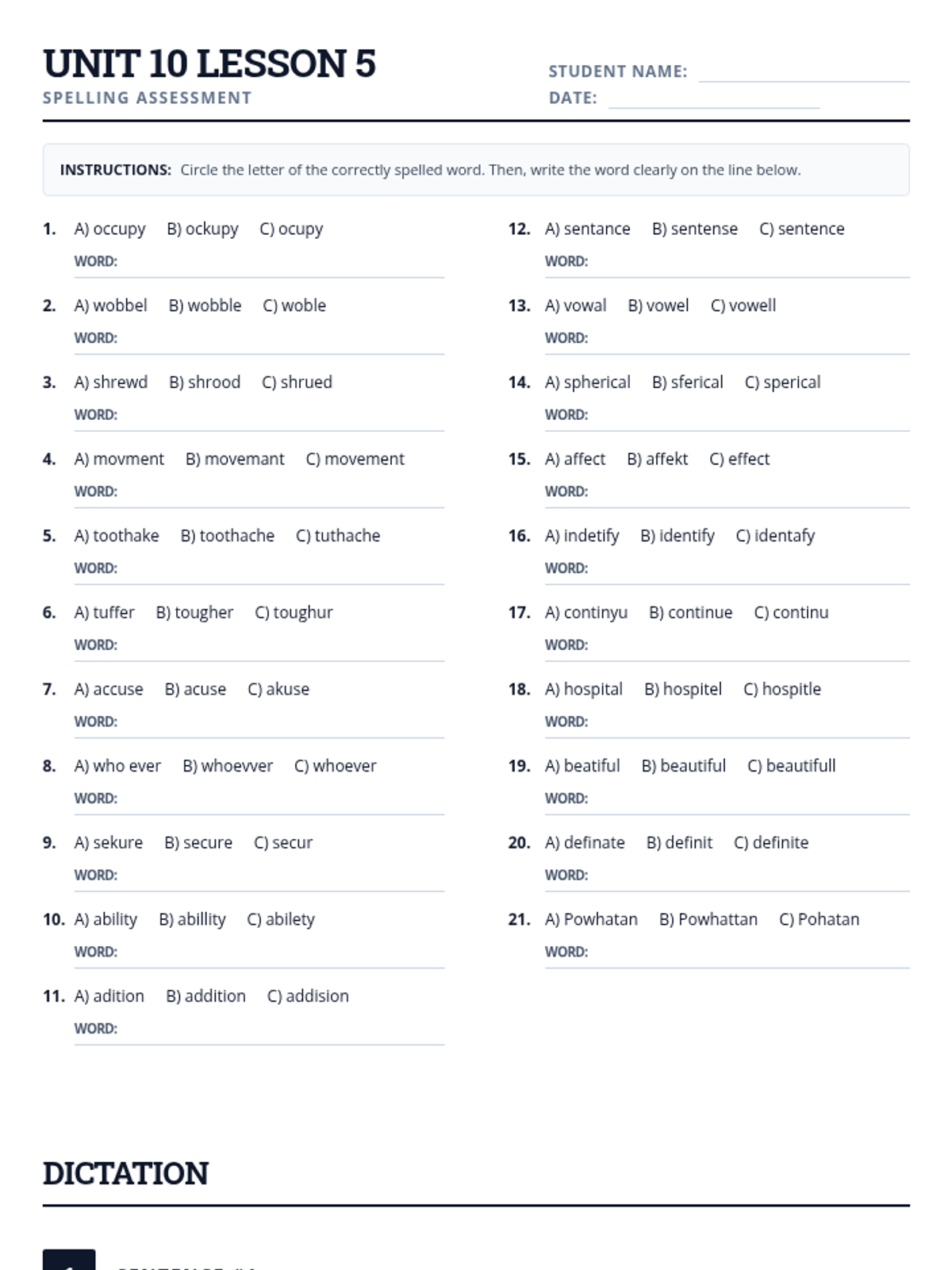
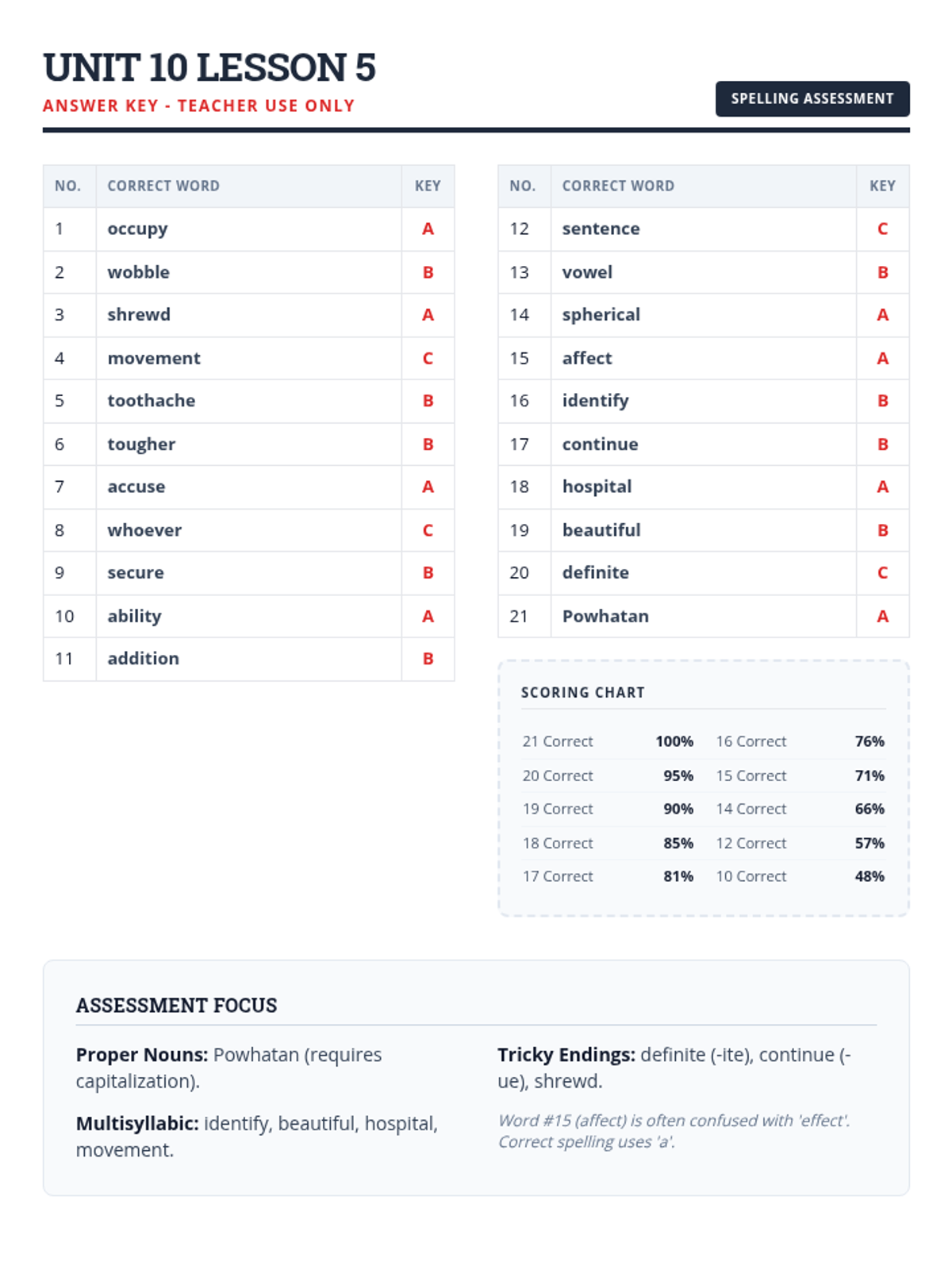
A spelling assessment for Unit 10 Lesson 5 featuring 21 words including 'occupy', 'identify', and 'Powhatan'. Covers double consonants, multisyllabic words, proper nouns, and common vowel teams.
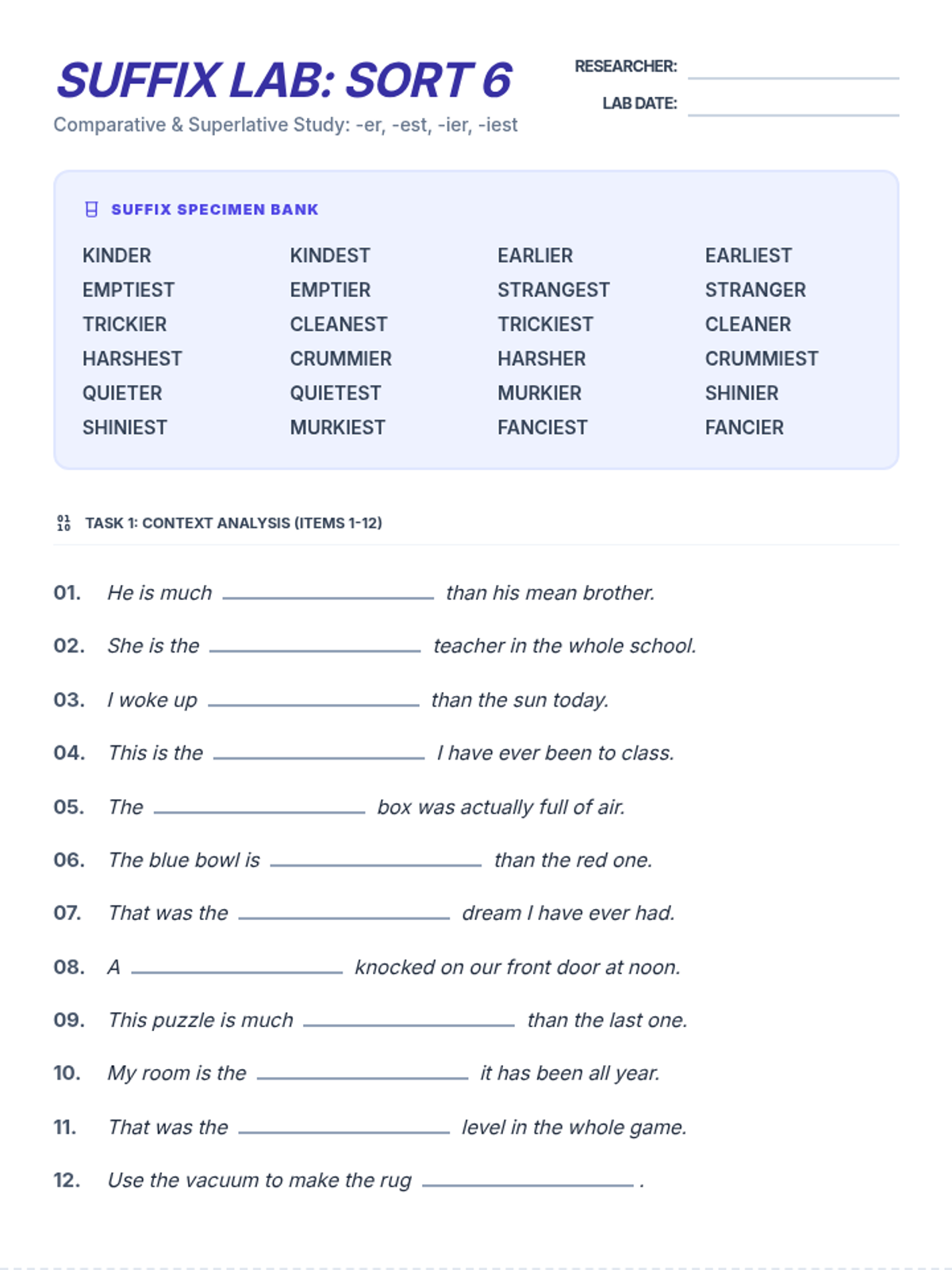
A lesson focused on comparative and superlative suffixes (-er, -est, -ier, -iest). Students explore how these suffixes change adjectives to compare two or more things.