A Kindergarten phonological awareness lesson focused on syllable segmentation using playground vocabulary and a catchy teeter-totter song. Students will clap, stomp, and color their way through word parts.
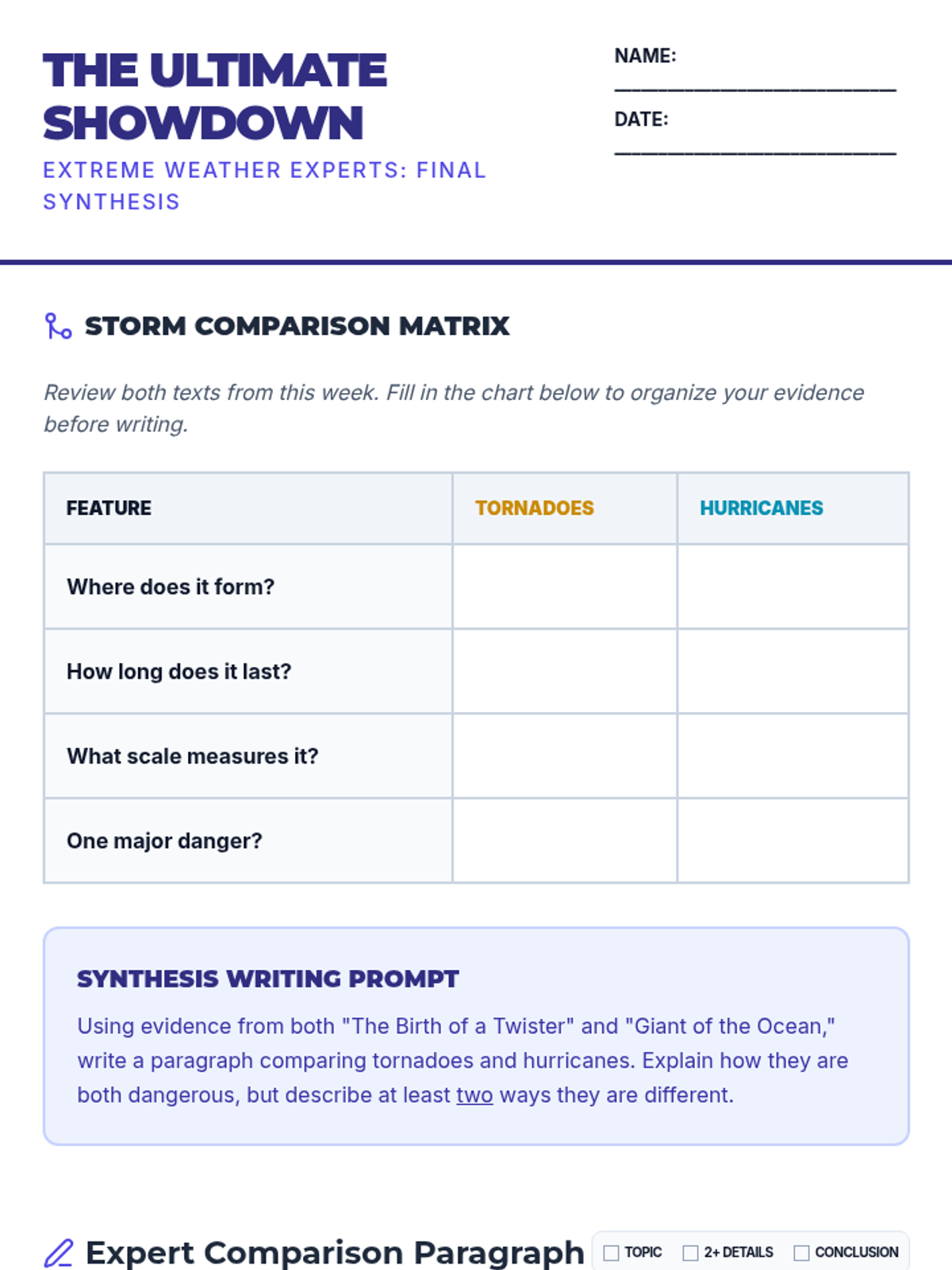
Students synthesize information from multiple texts to create a comprehensive comparison and write a final evidentiary paragraph.
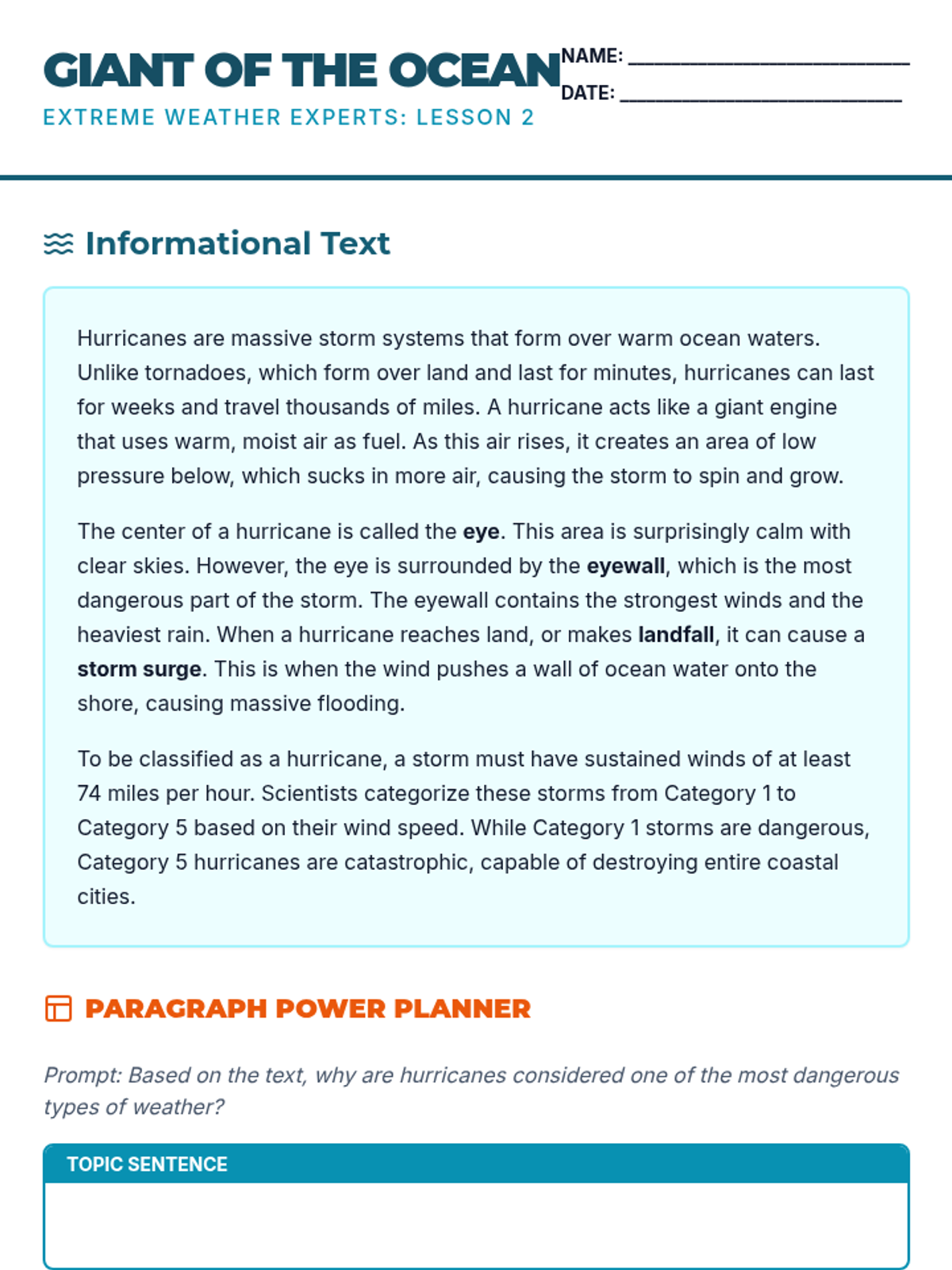
Students learn about hurricanes and practice organizing information into a structured paragraph with a clear topic sentence, supporting details, and a conclusion.
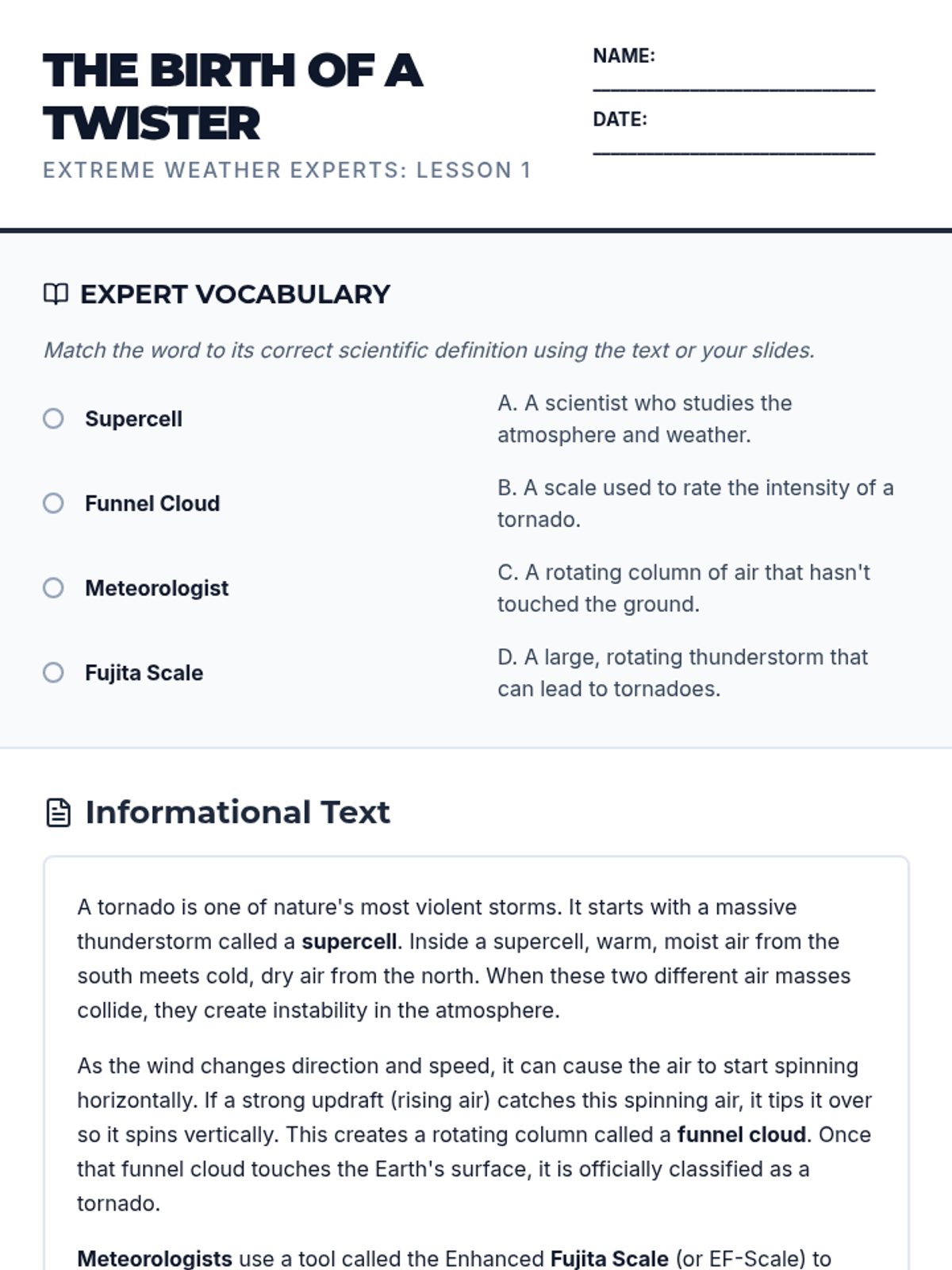
Students explore the science of tornadoes while focusing on identifying key details and mastering domain-specific vocabulary.
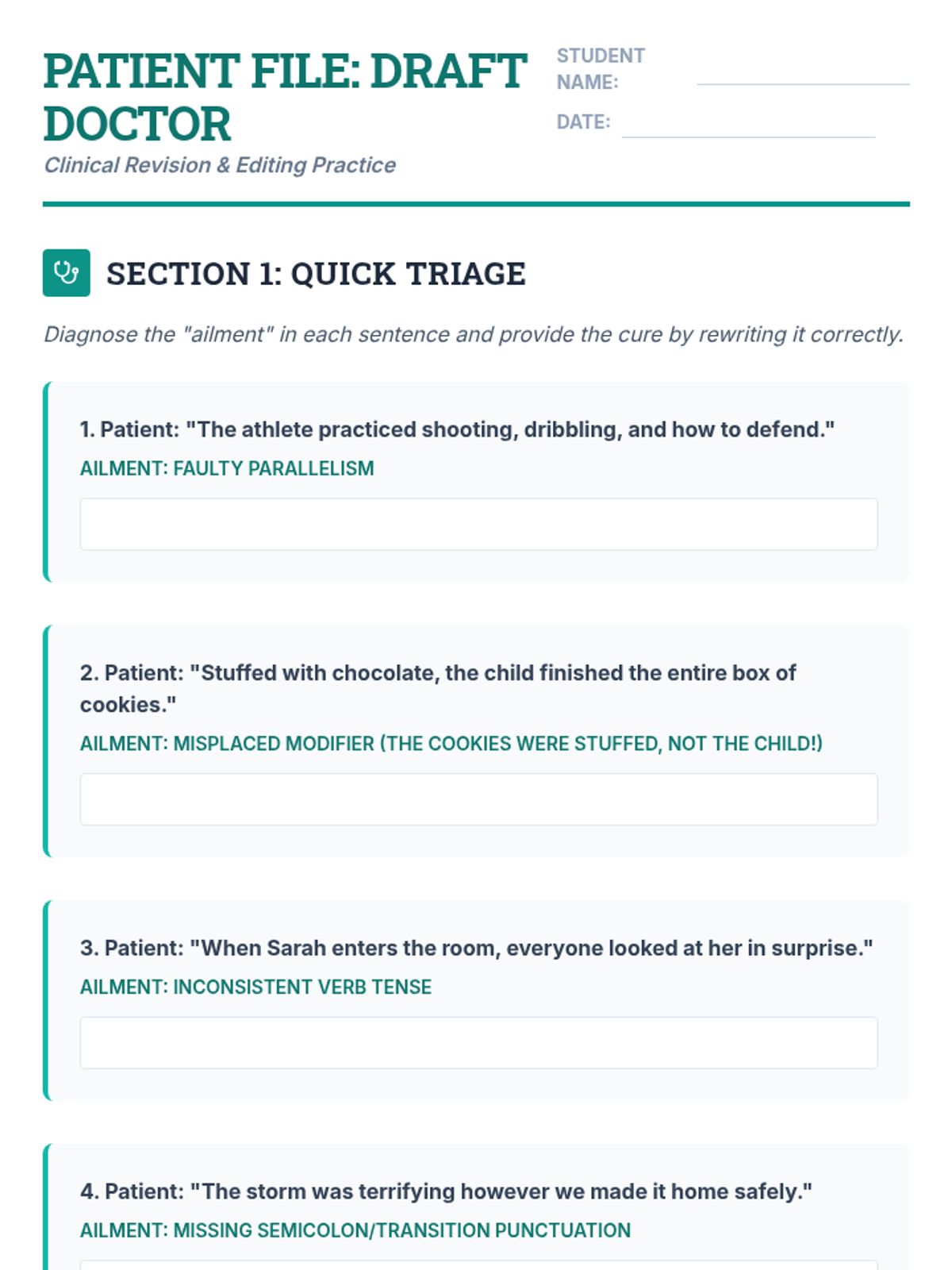
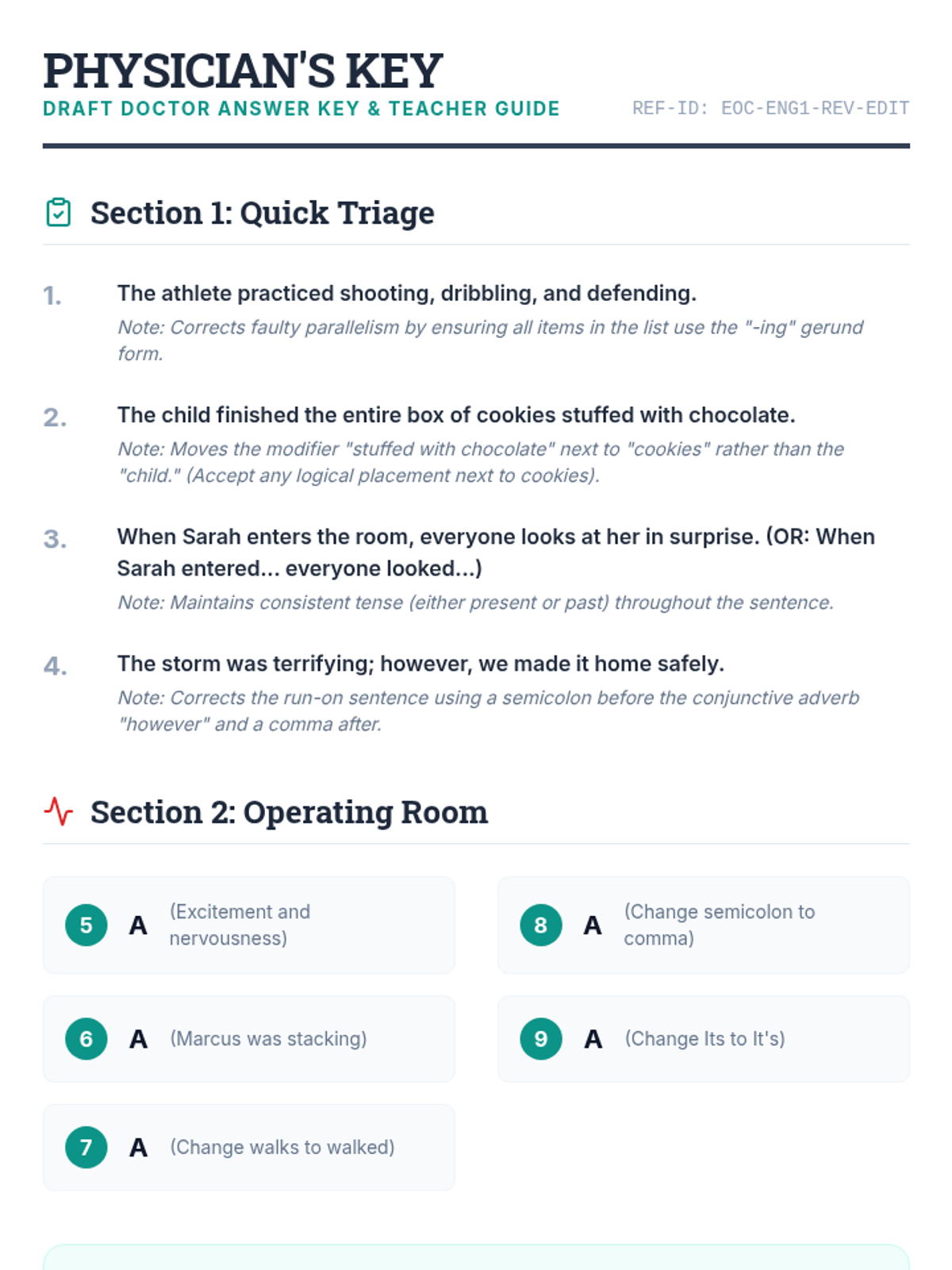
A comprehensive practice session for English 1 EOC revising and editing, featuring a medical-themed approach to 'curing' common writing ailments like poor sentence structure, tense issues, and punctuation errors.
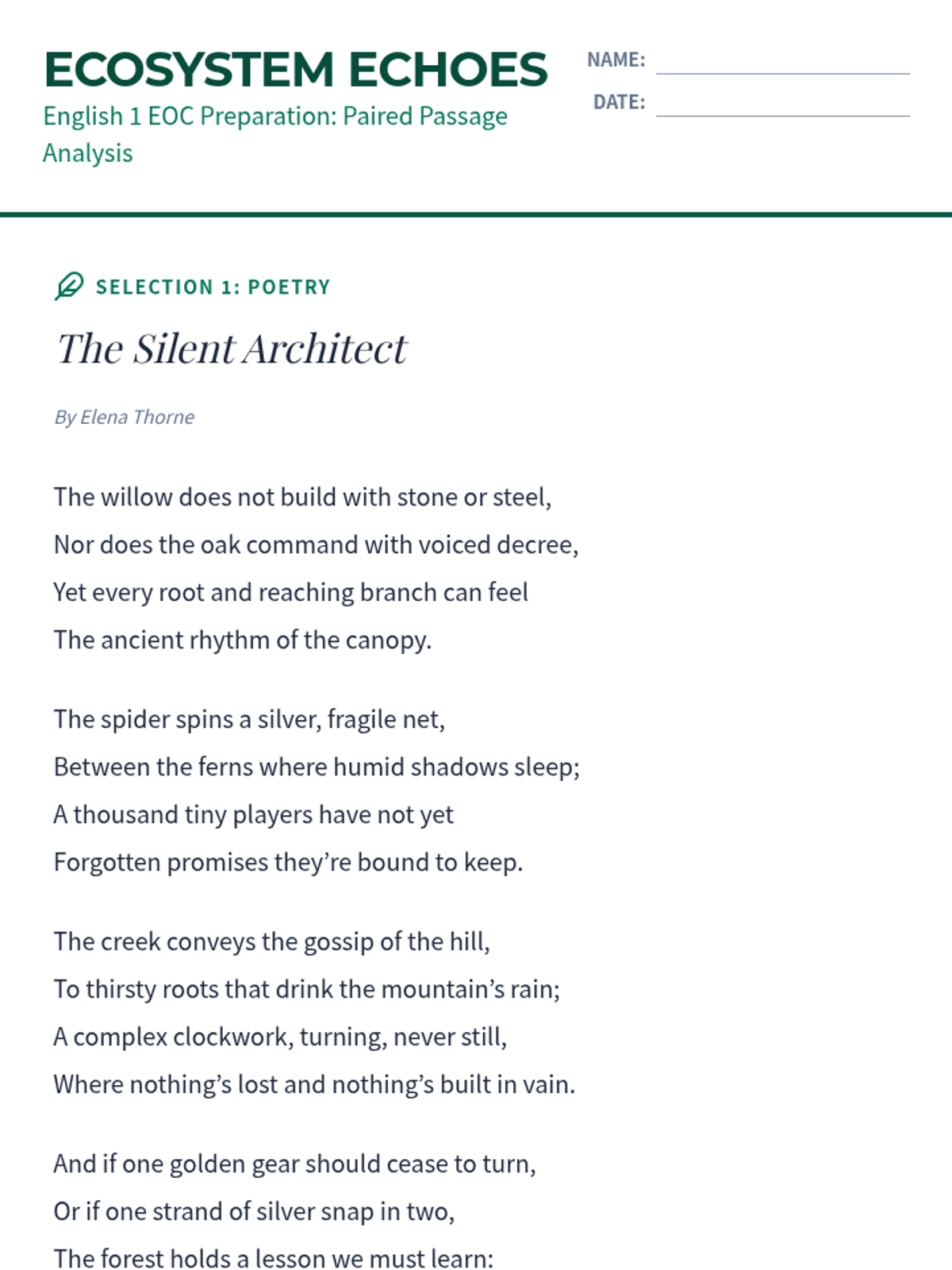
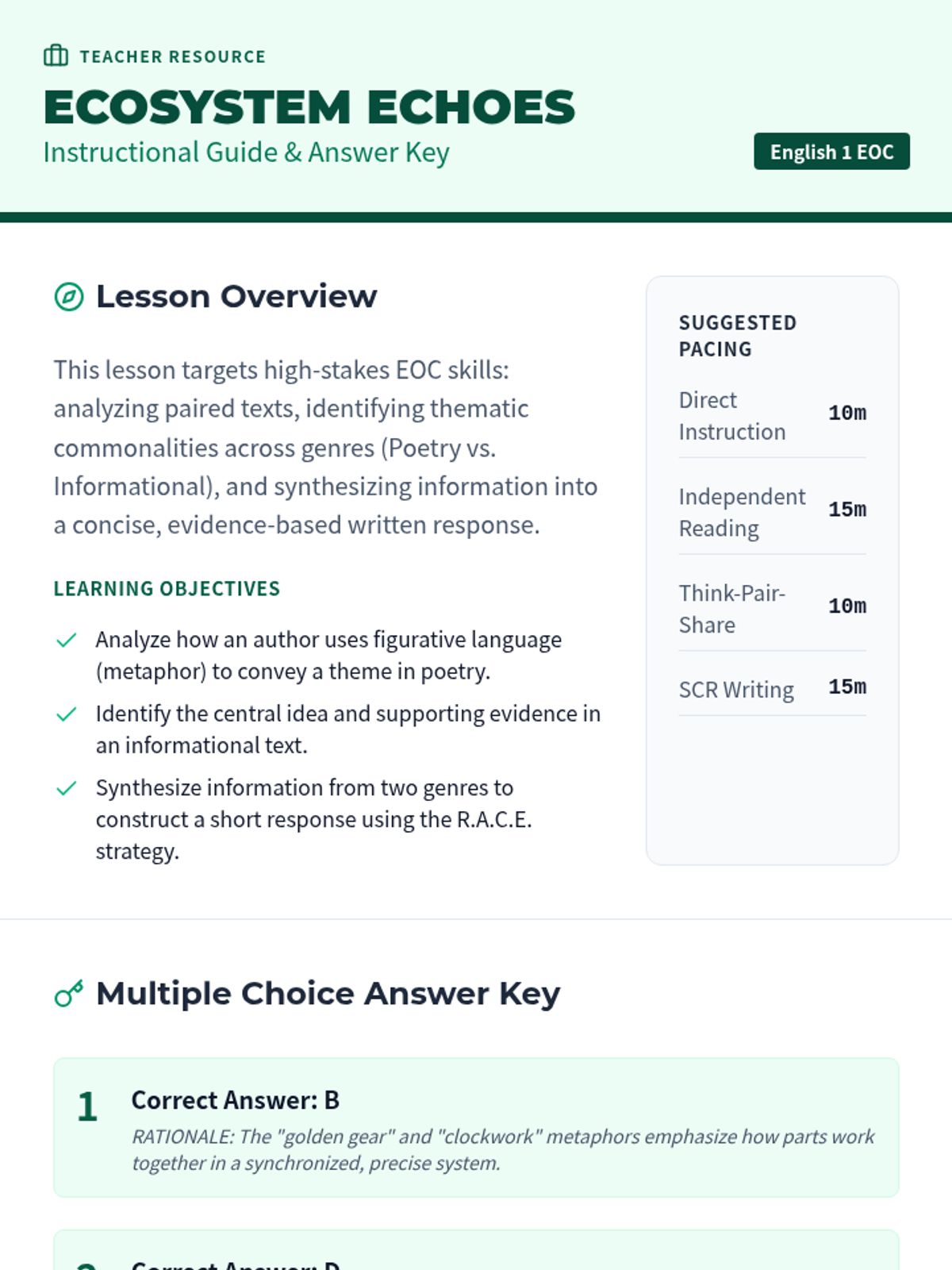
This lesson prepares students for the English 1 EOC exam by analyzing a poem and an informational text about nature and ecosystems. It includes test-style questions, a short constructed response, and a collaborative speaking activity.
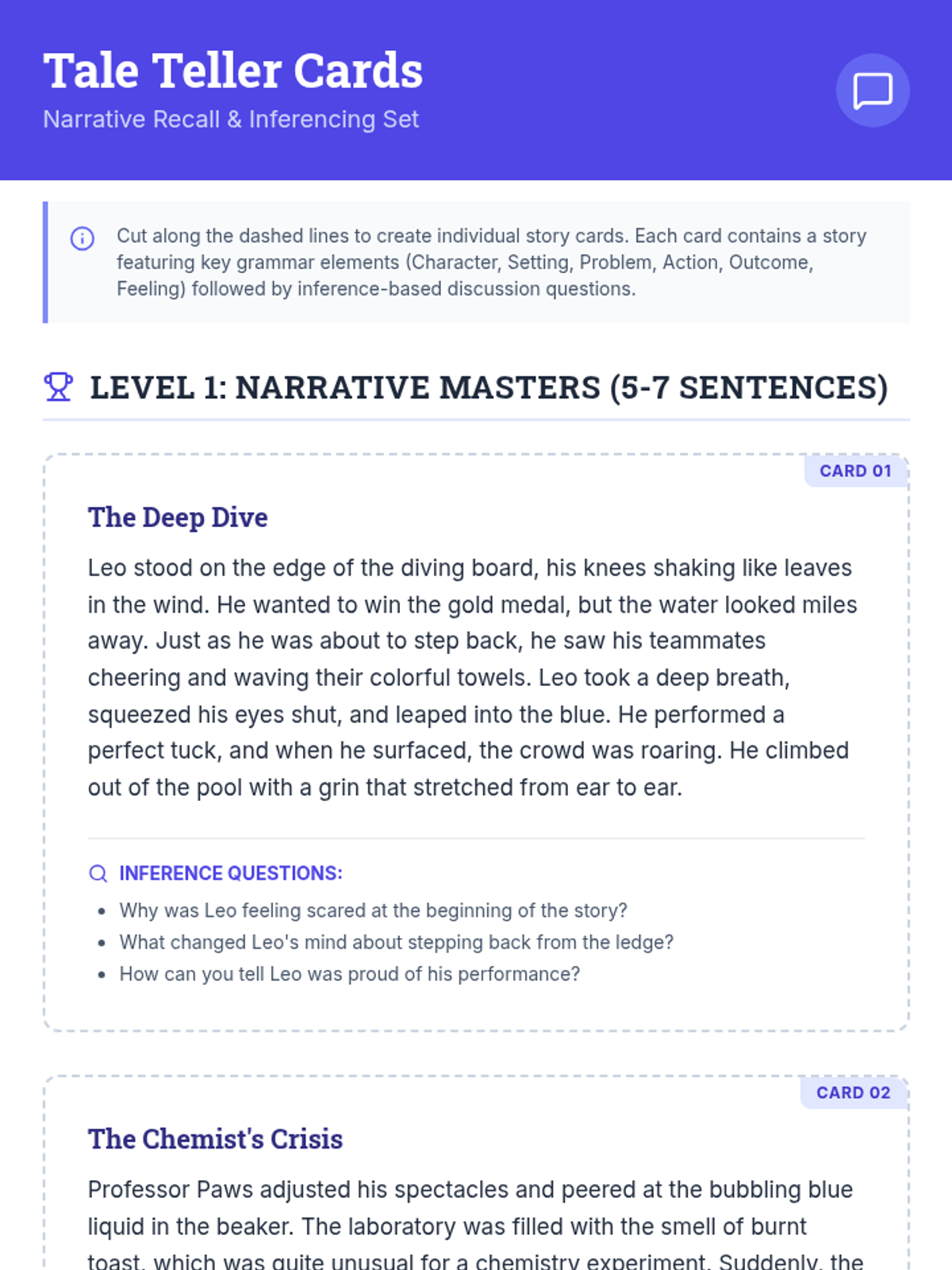
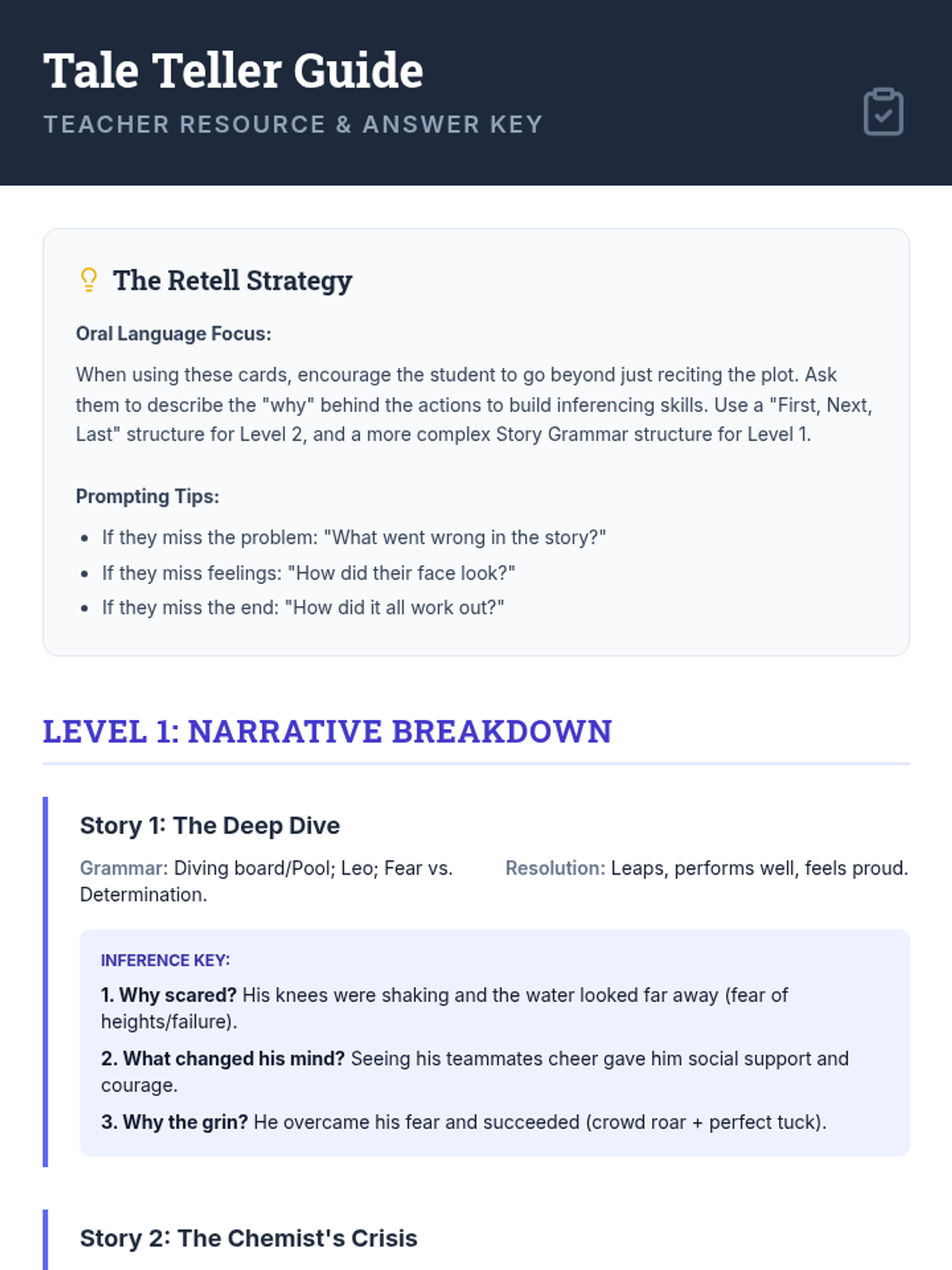
A collection of short stories designed for verbal story retell, featuring story grammar elements and inferencing questions. Includes stories with kids, animals, and fantasy creatures at two different complexity levels.
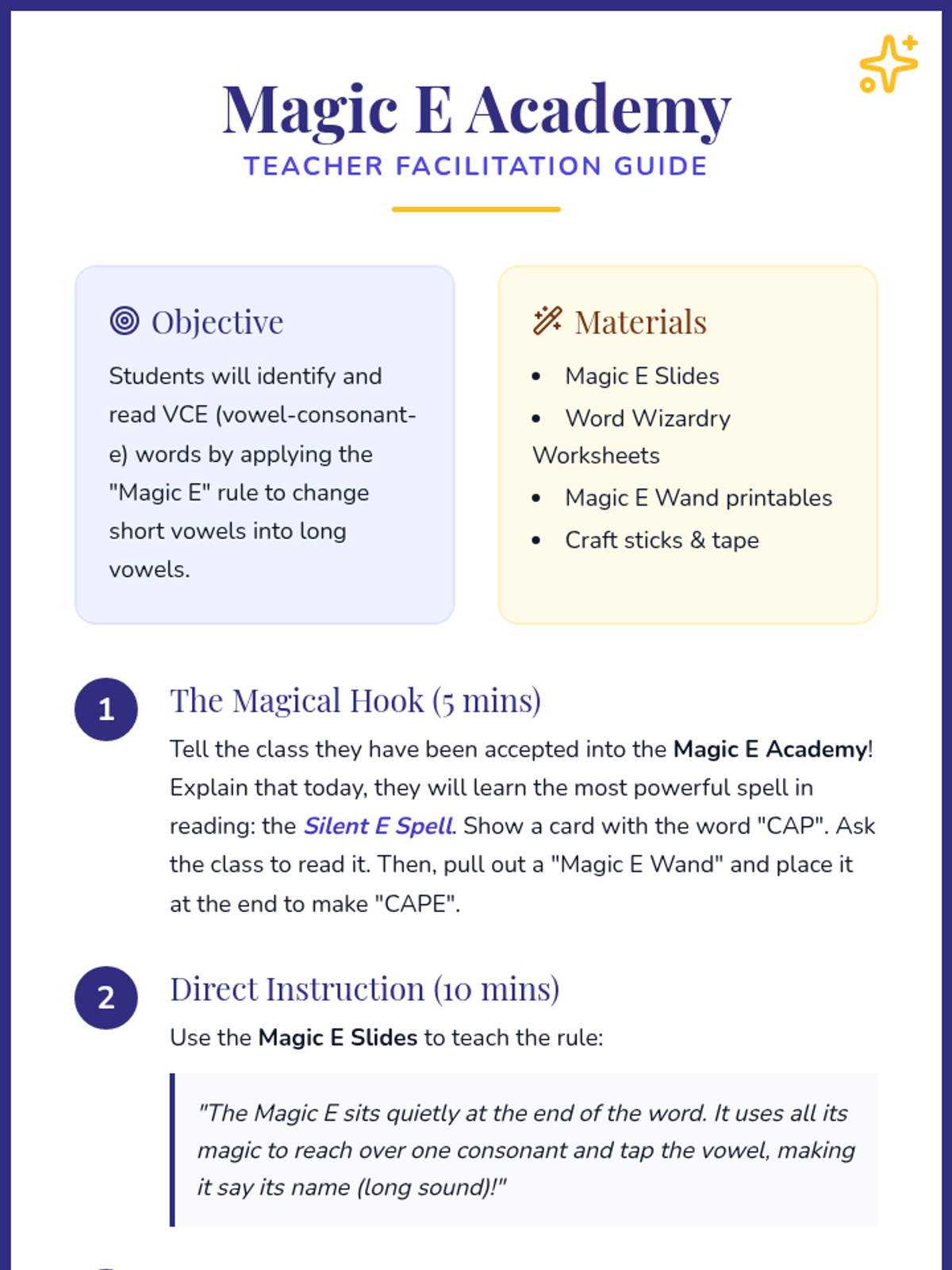
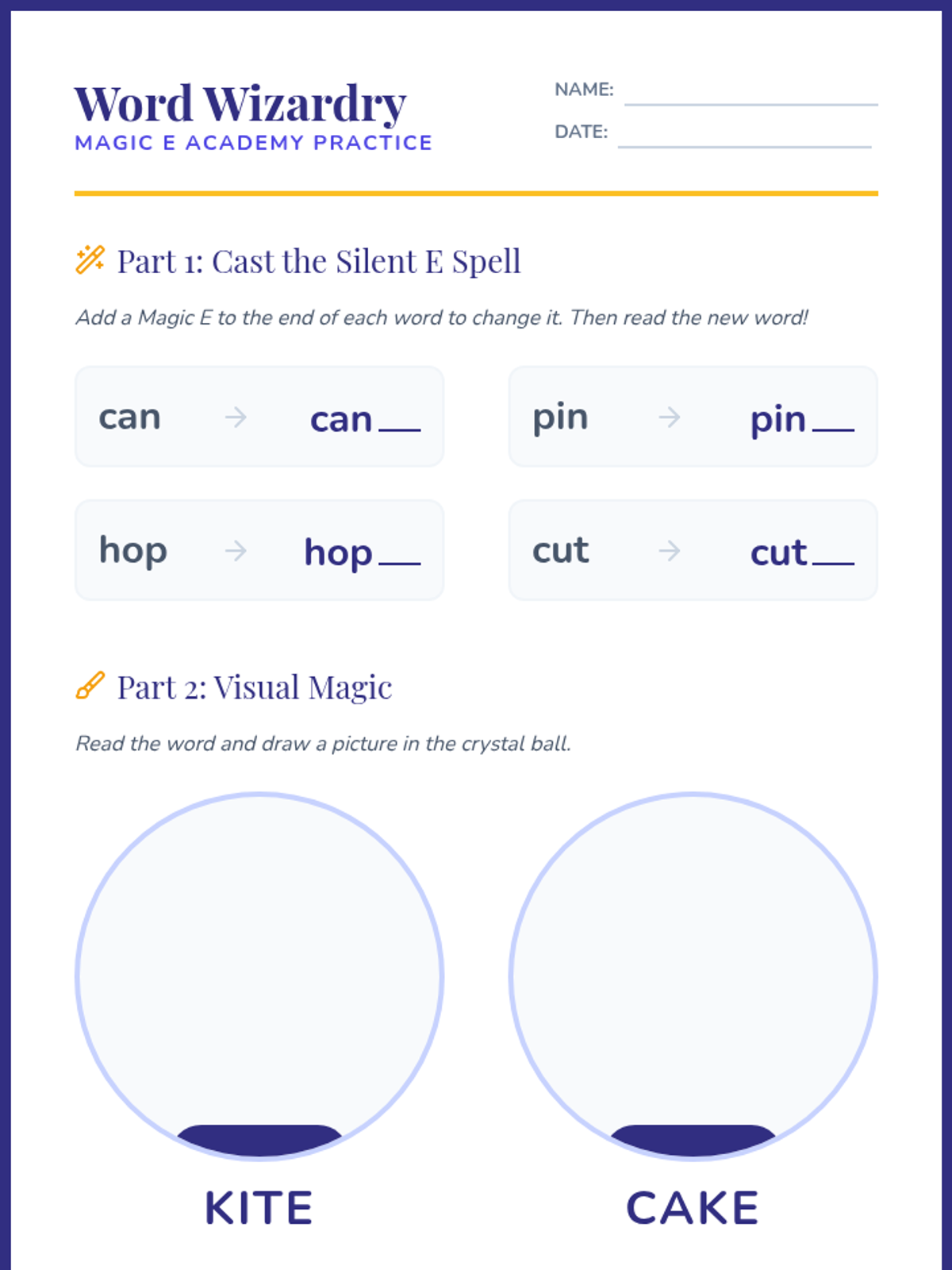
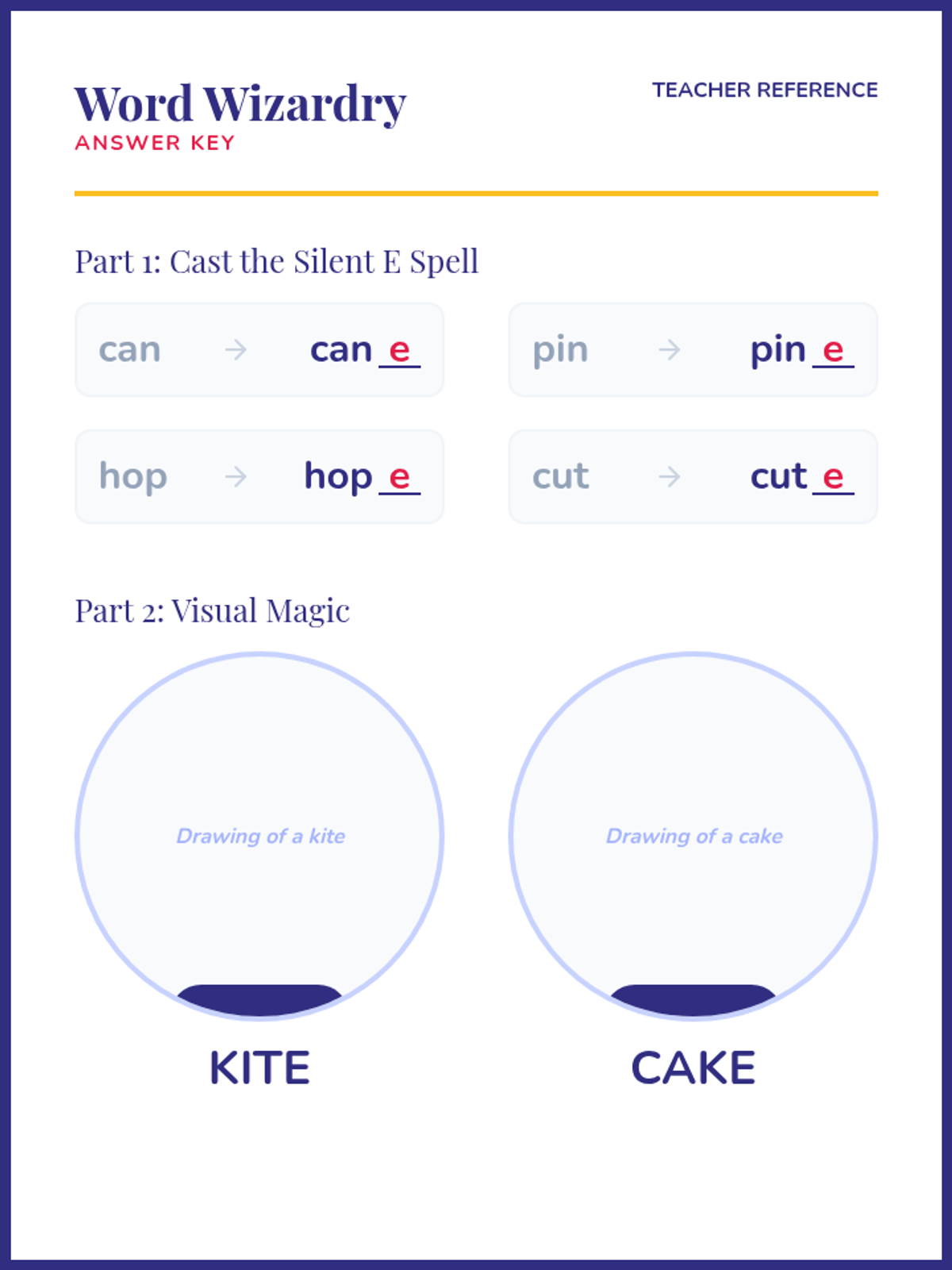
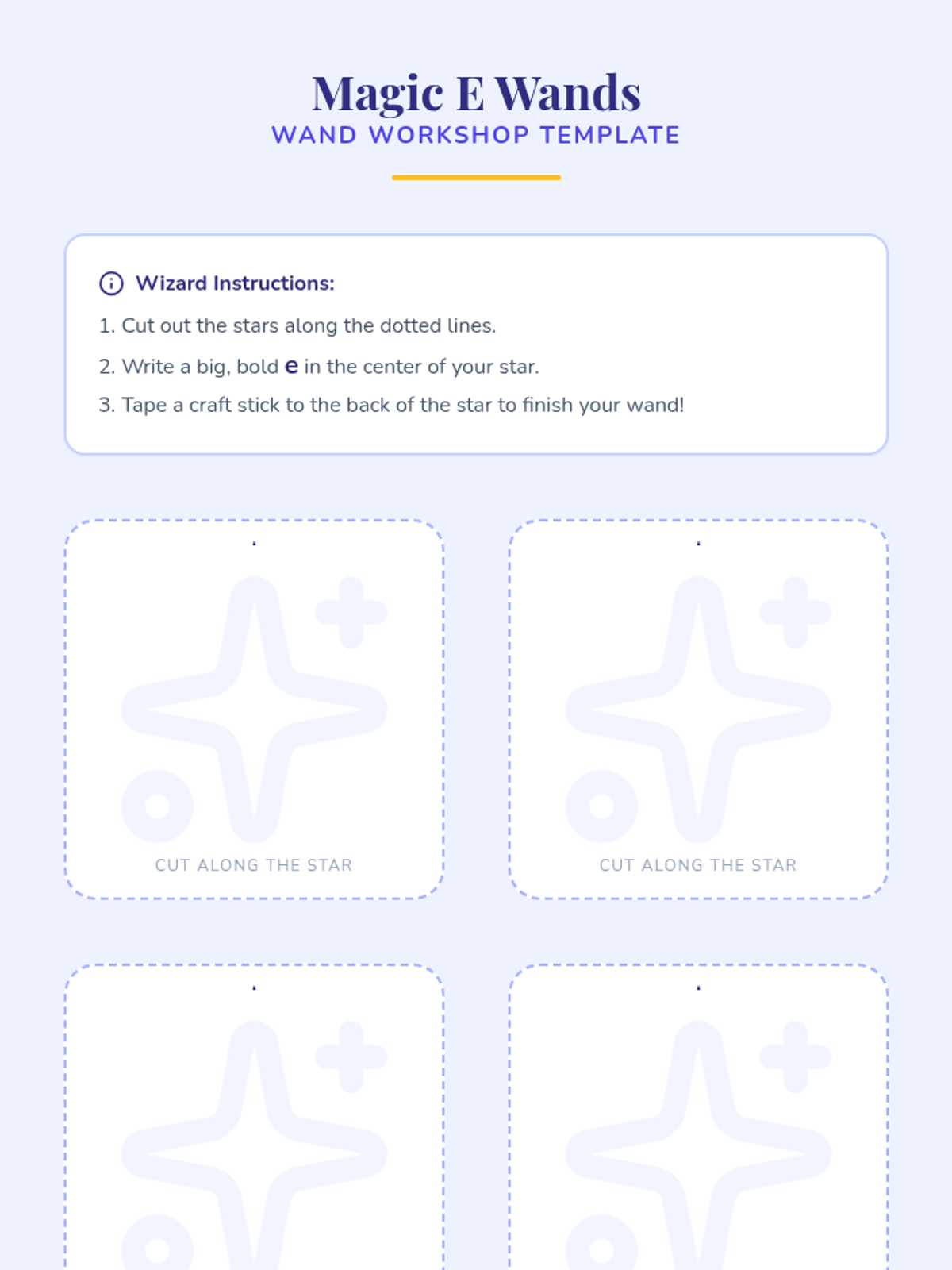
A comprehensive lesson focused on teaching the silent e (VCE) rule through the 'Magic E Academy' theme, including visual instruction and hands-on practice.
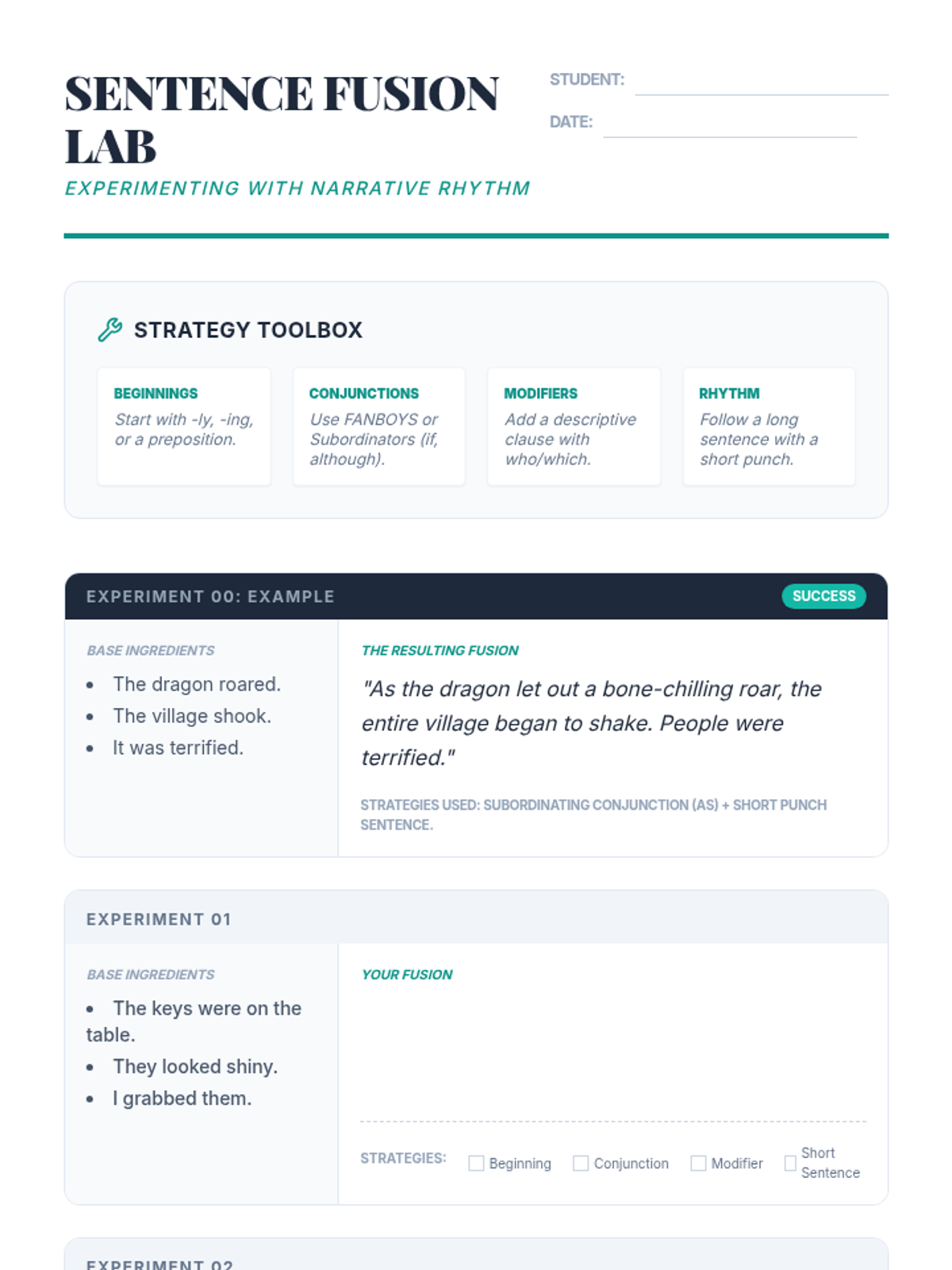
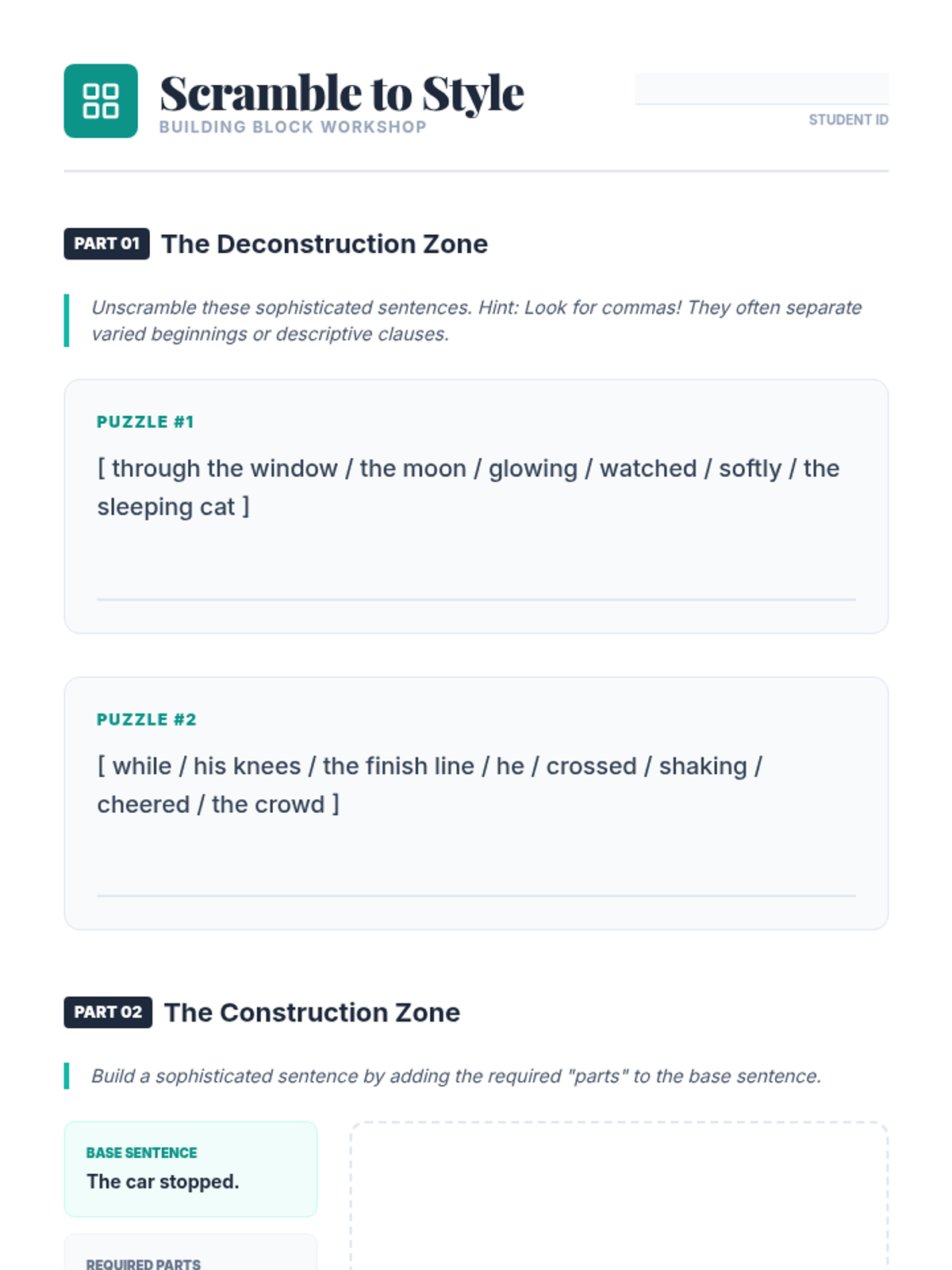
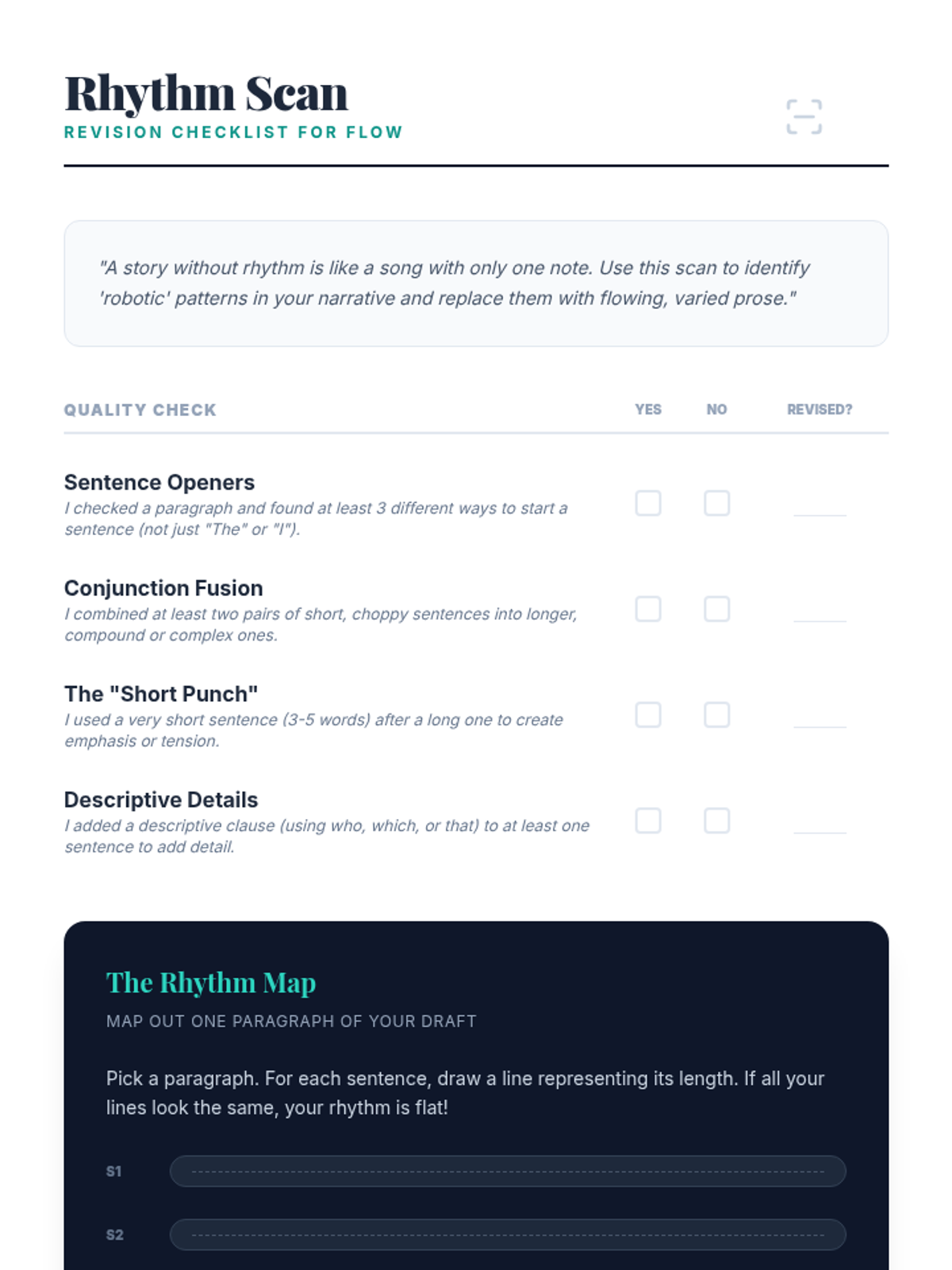
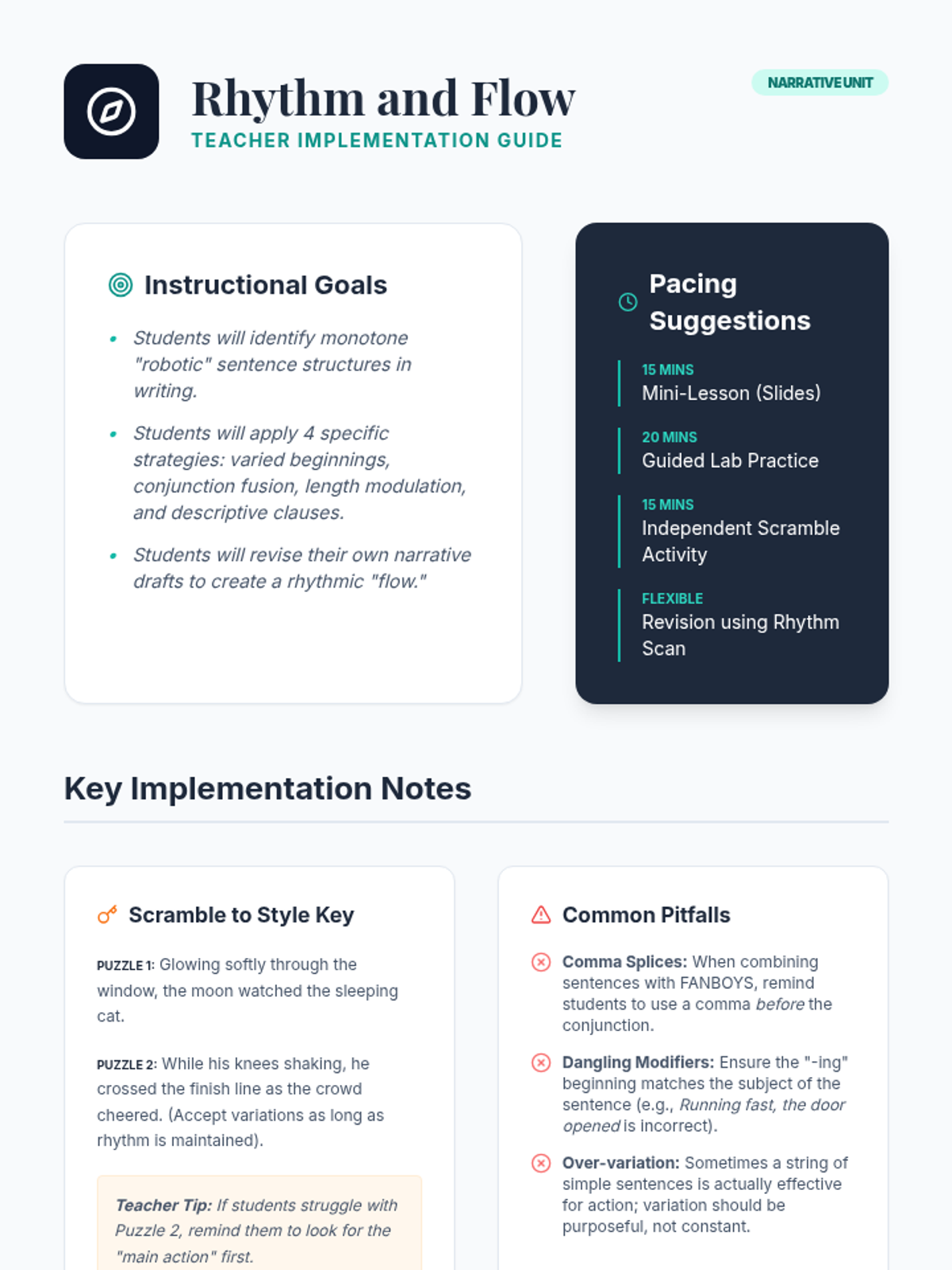
A comprehensive lesson on narrative sentence variation focusing on varied beginnings, sentence combining, length modulation, and descriptive clauses. Students move from identifying monotone rhythms to crafting dynamic, flowing prose.
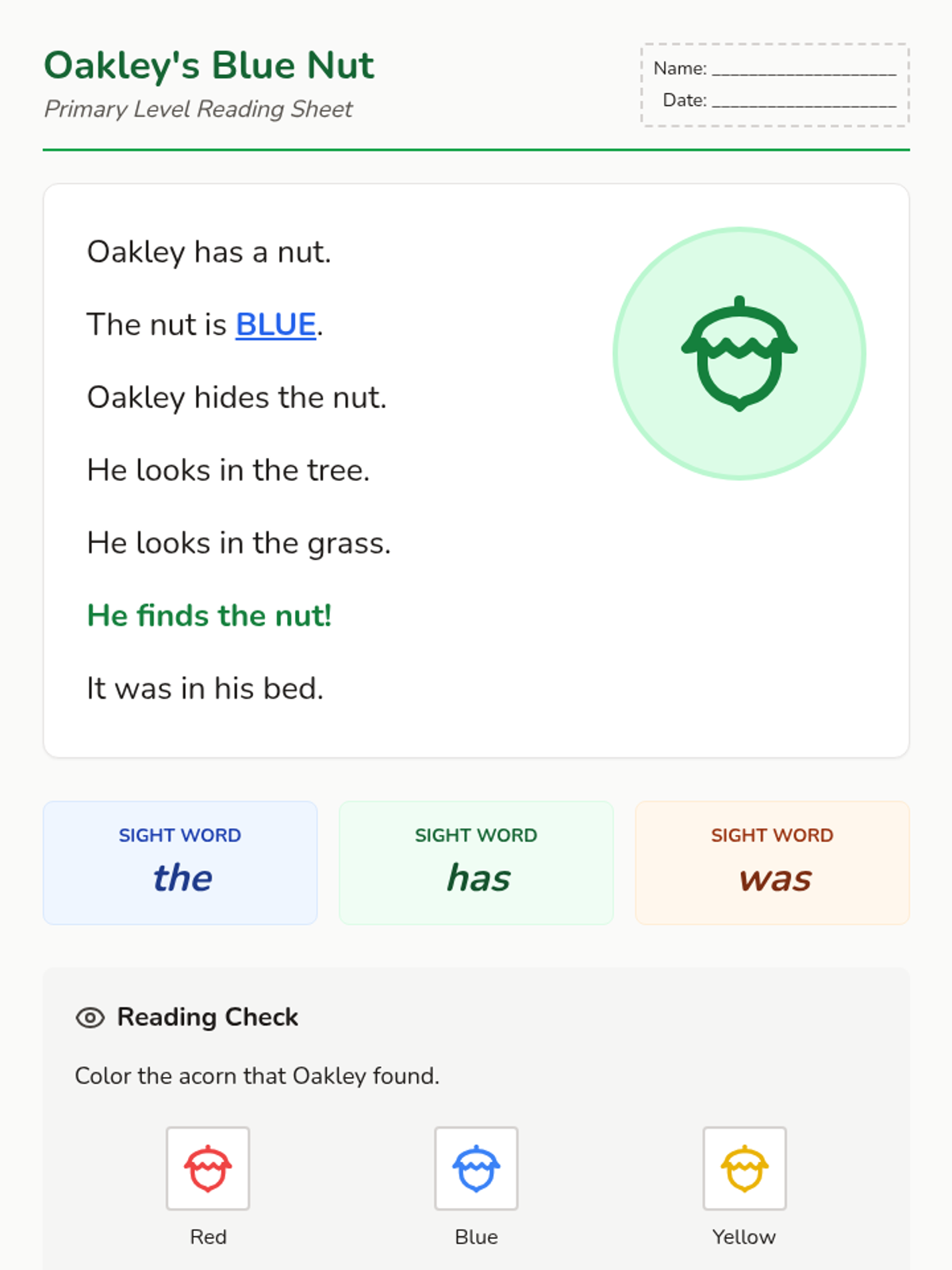
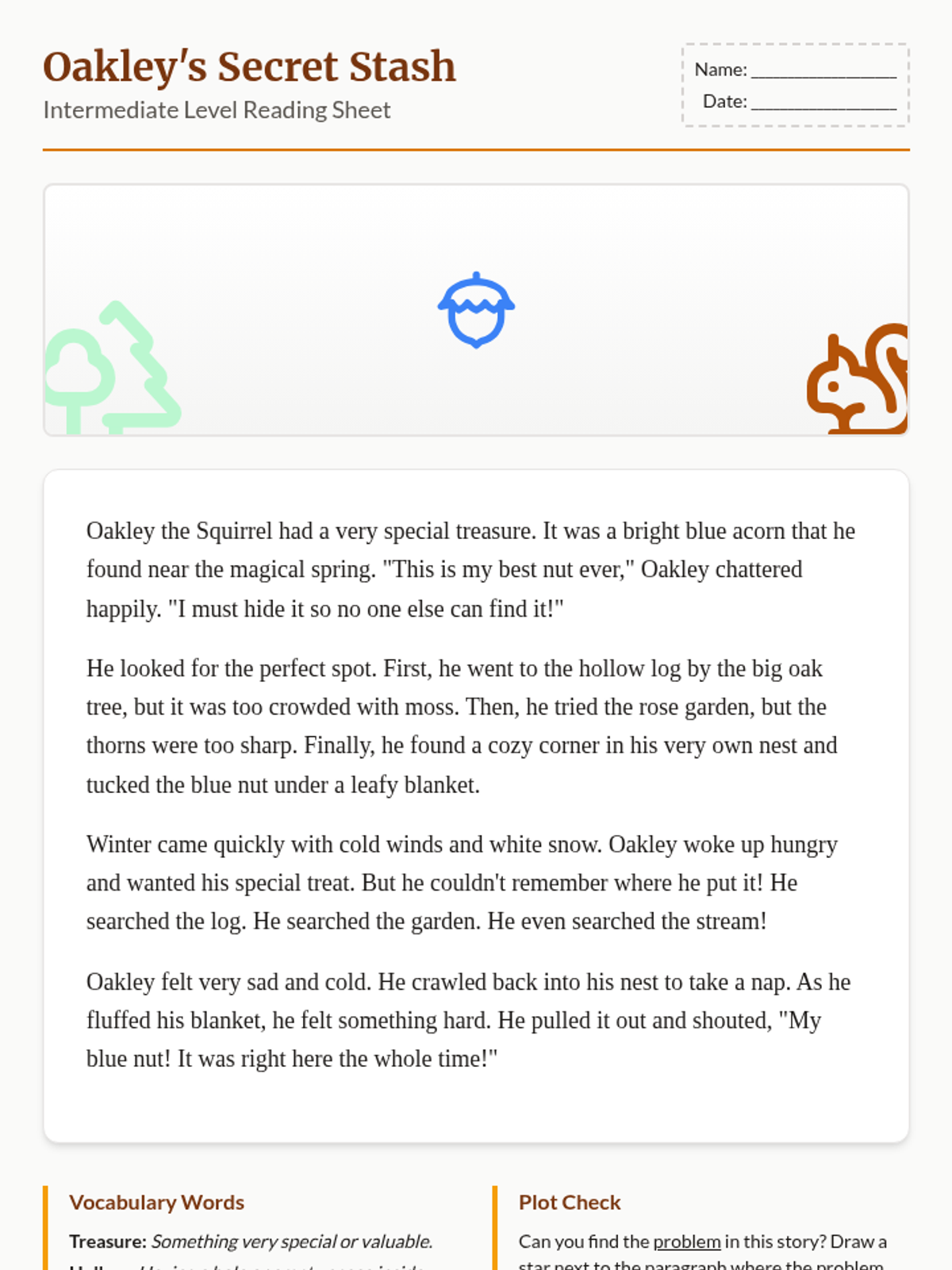
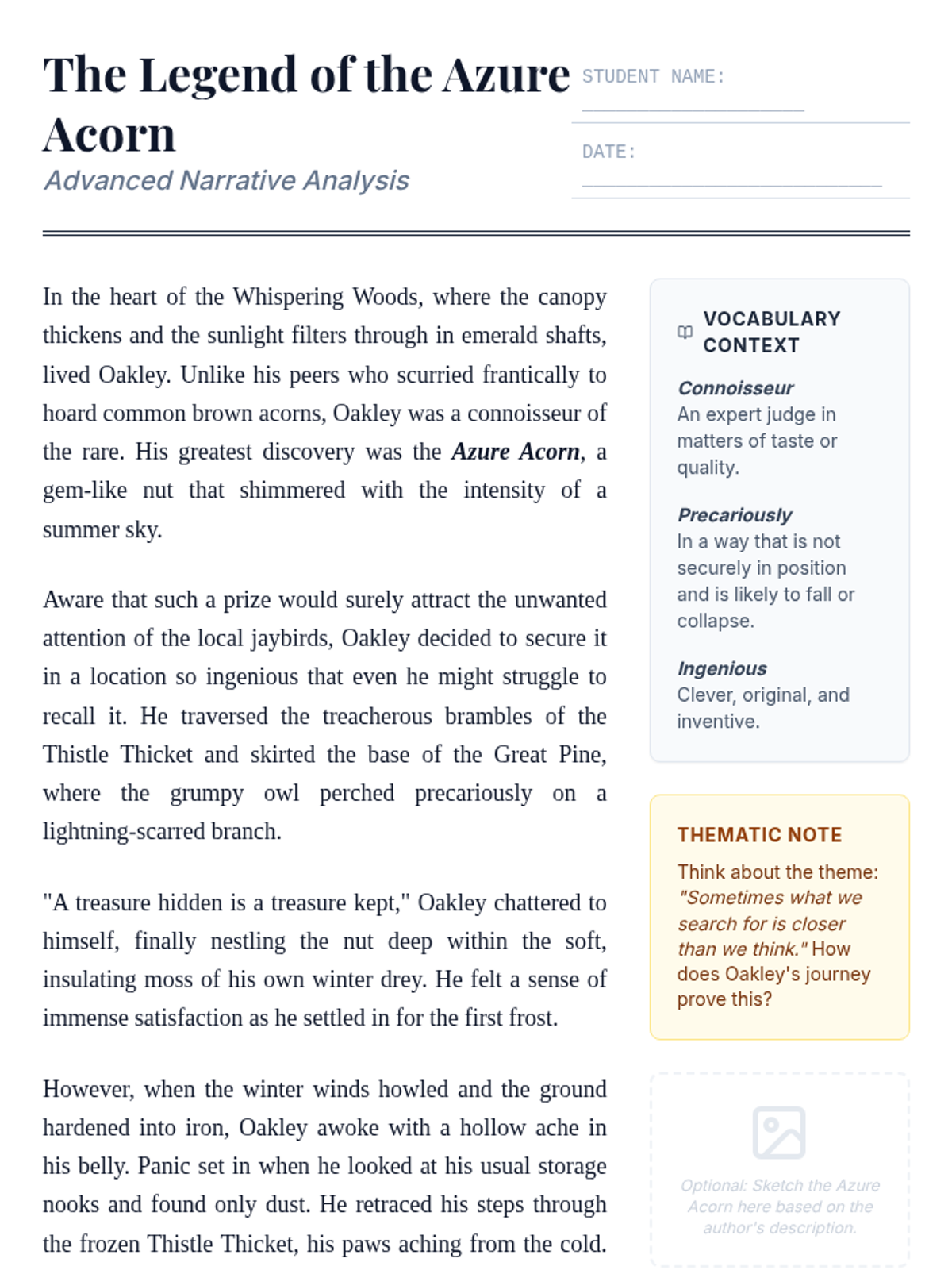
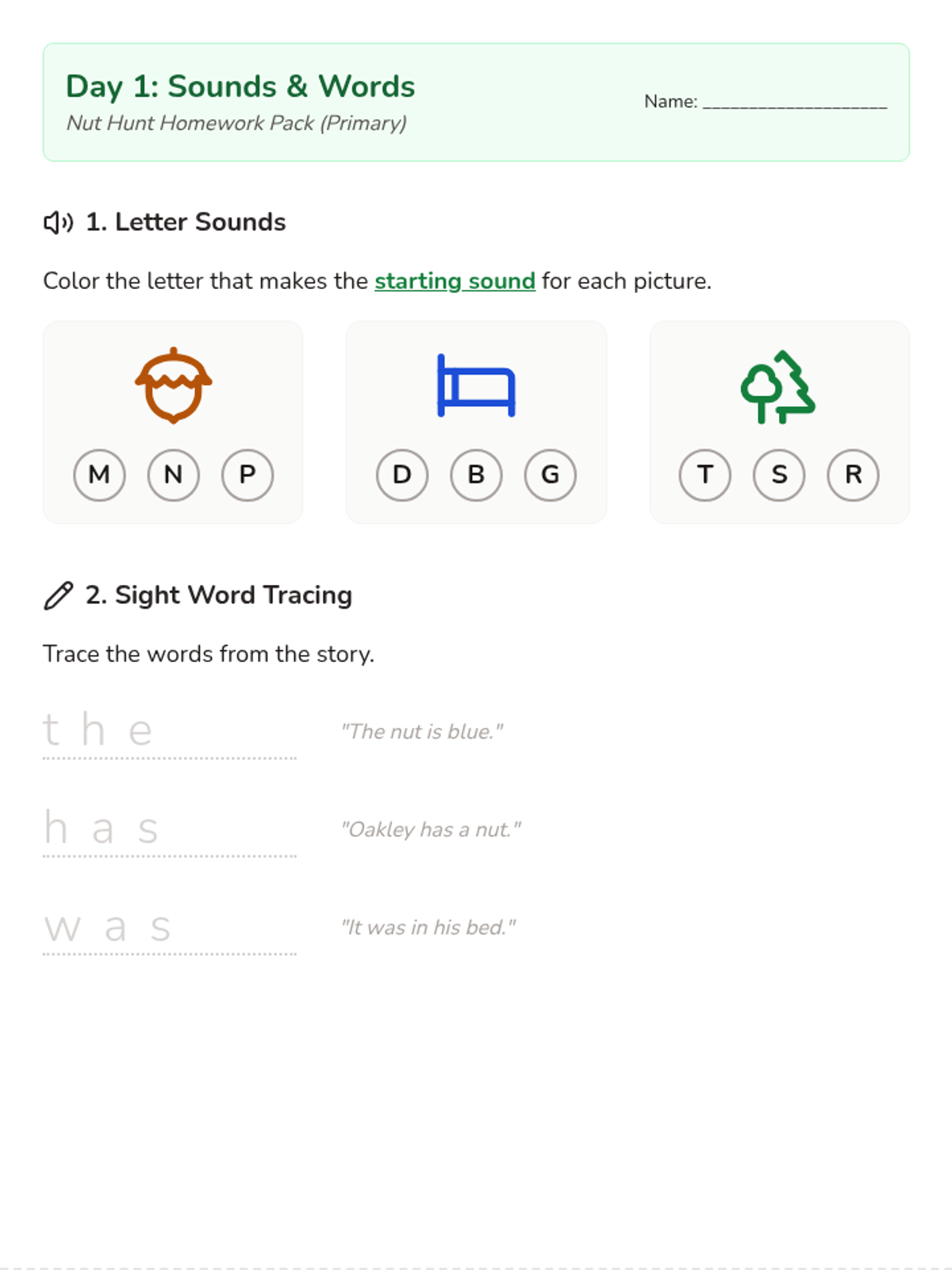
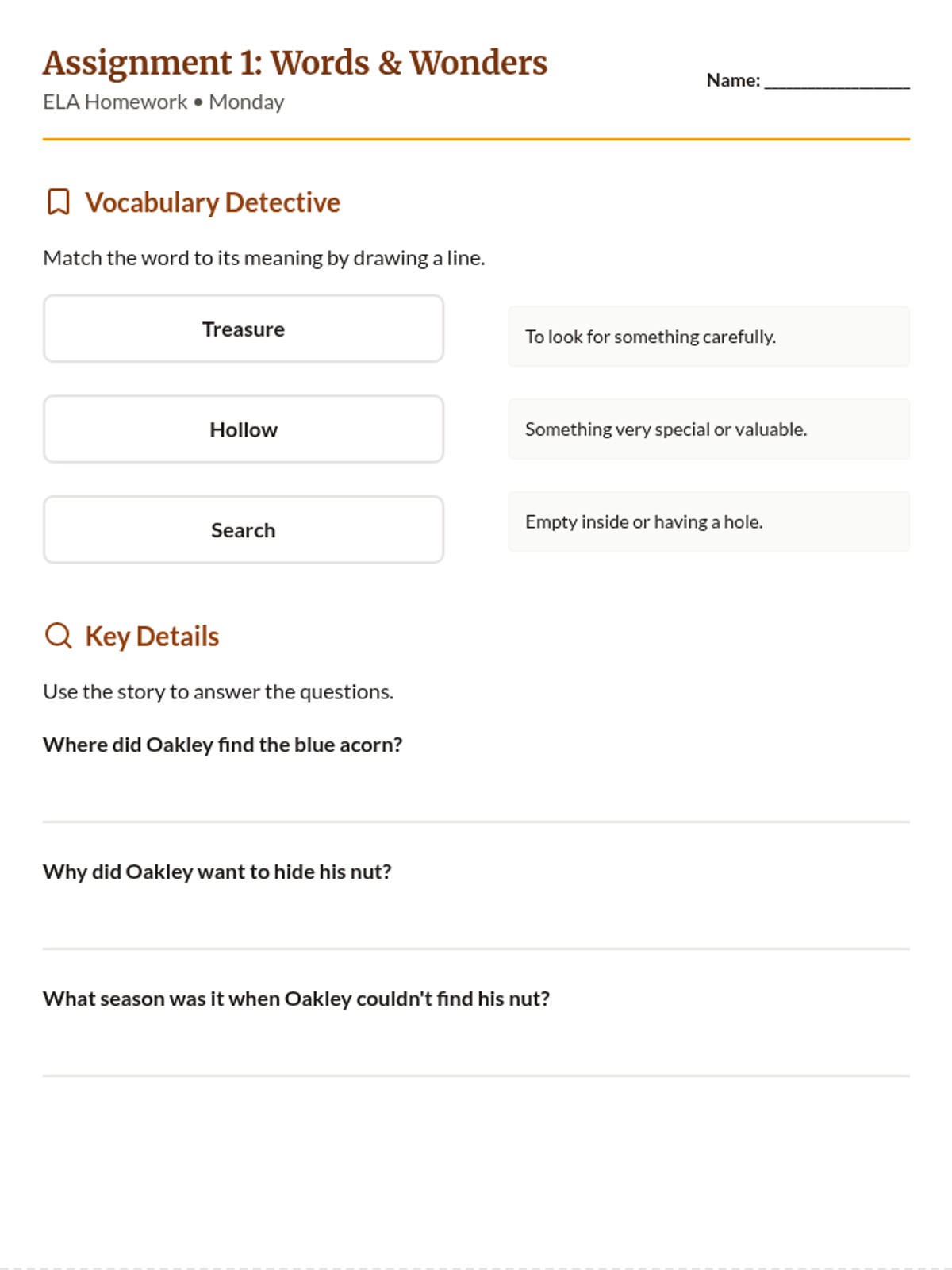
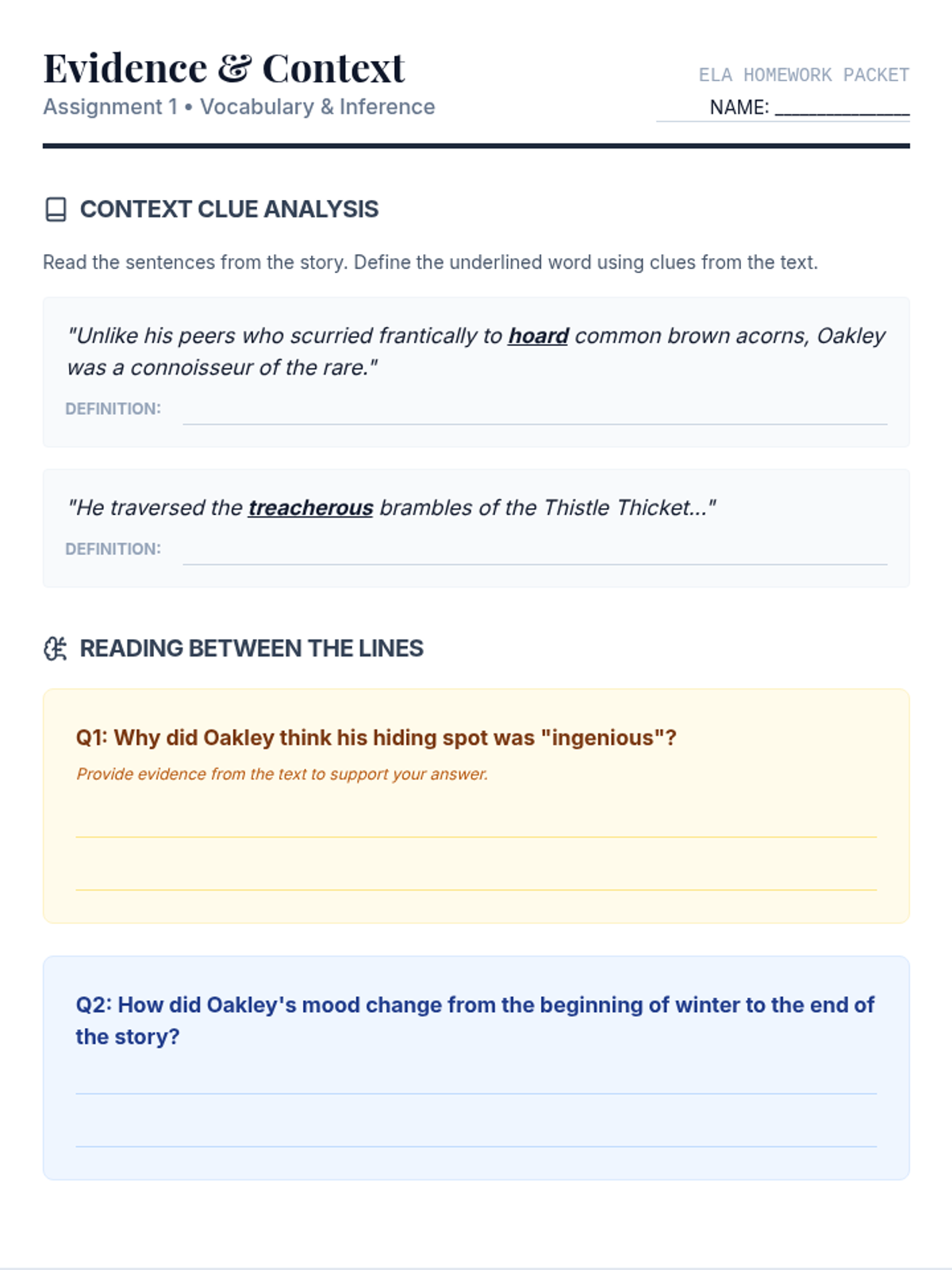
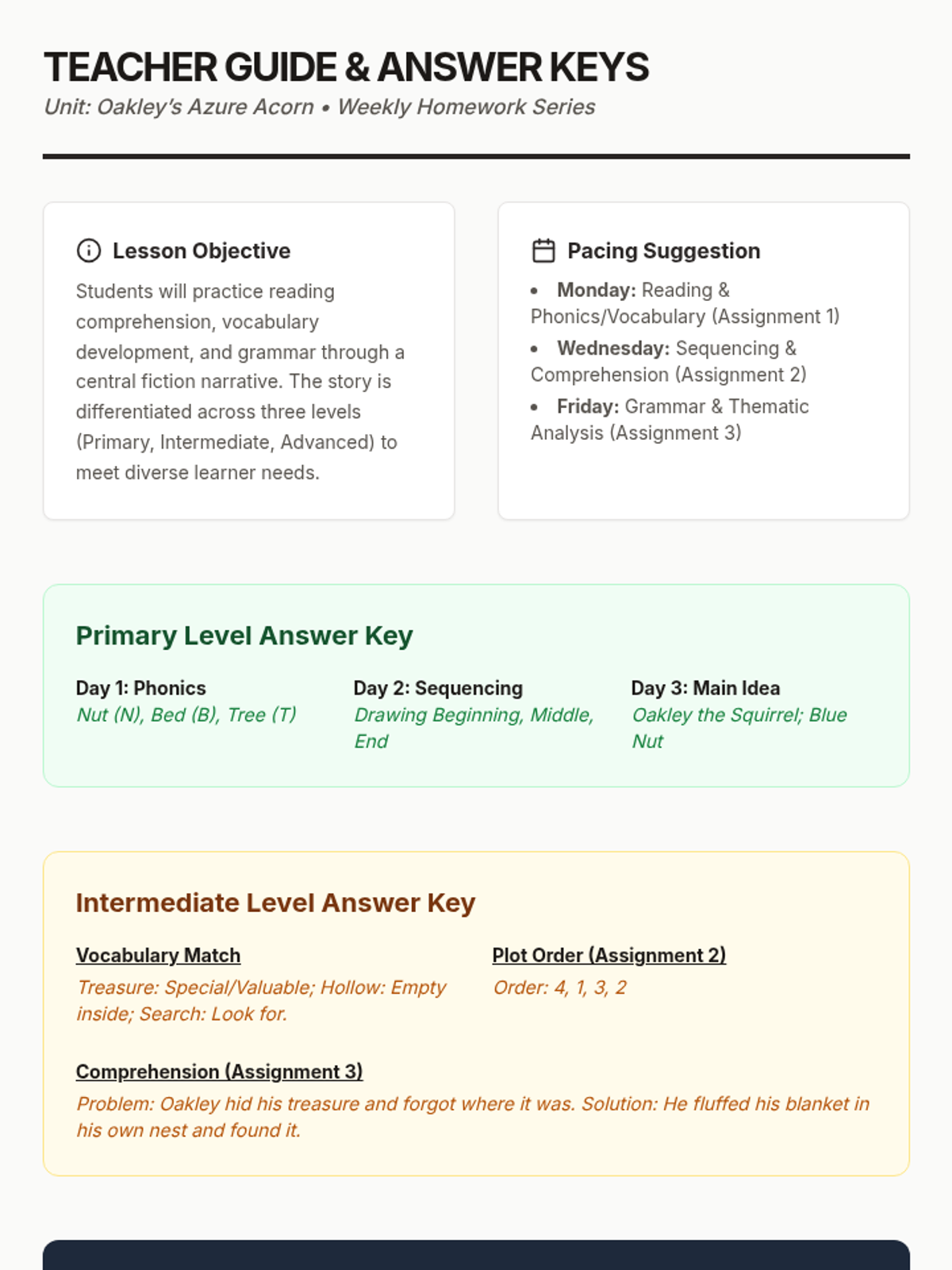
A series of three ELA homework assignments based on the story 'Oakley’s Azure Acorn,' focusing on phonics, vocabulary, comprehension, and grammar.
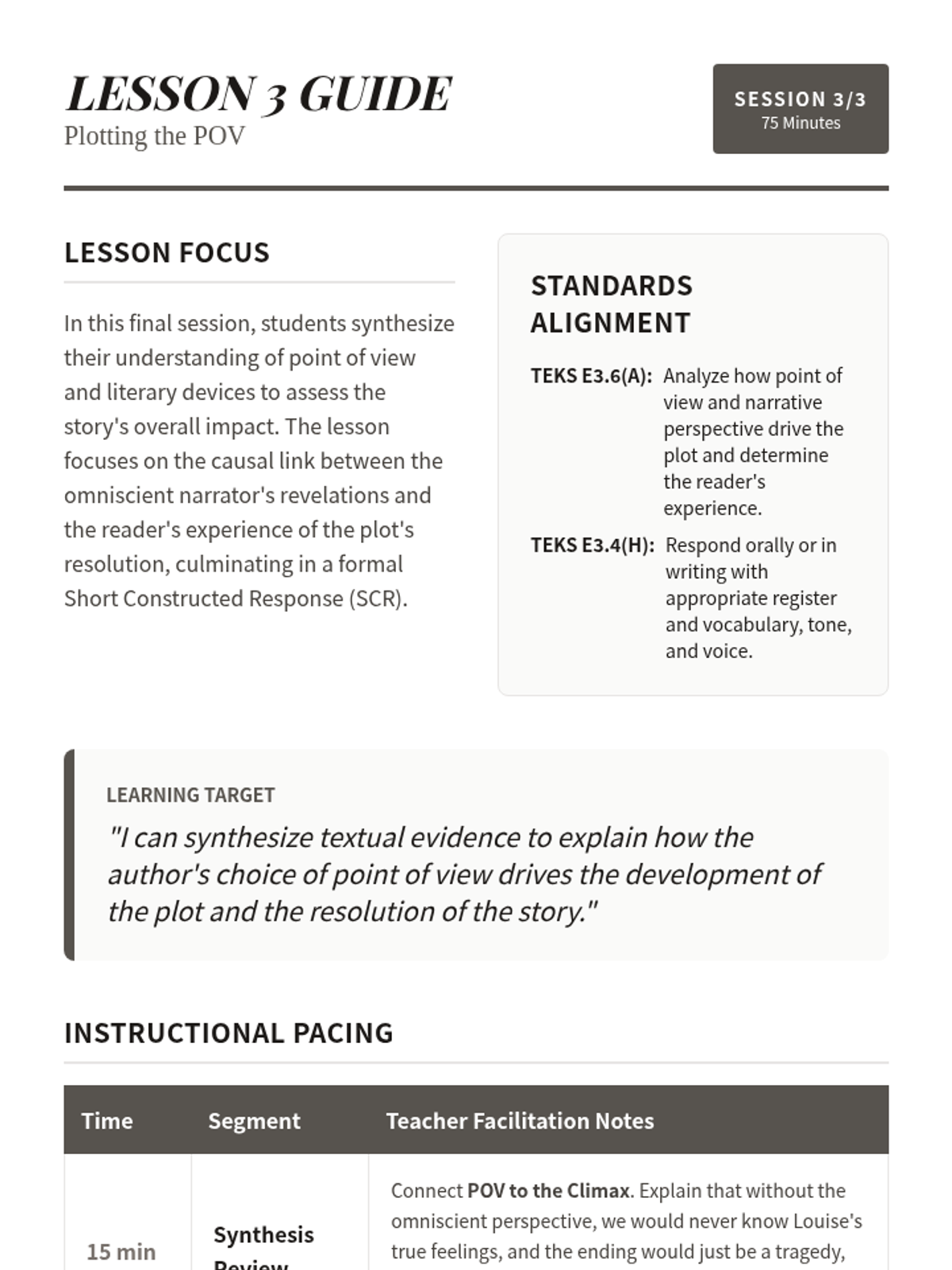
Synthesizing the relationship between point of view and plot. Students use their annotations to respond to a short constructed response prompt about how the omniscient perspective impacts the selection's development.
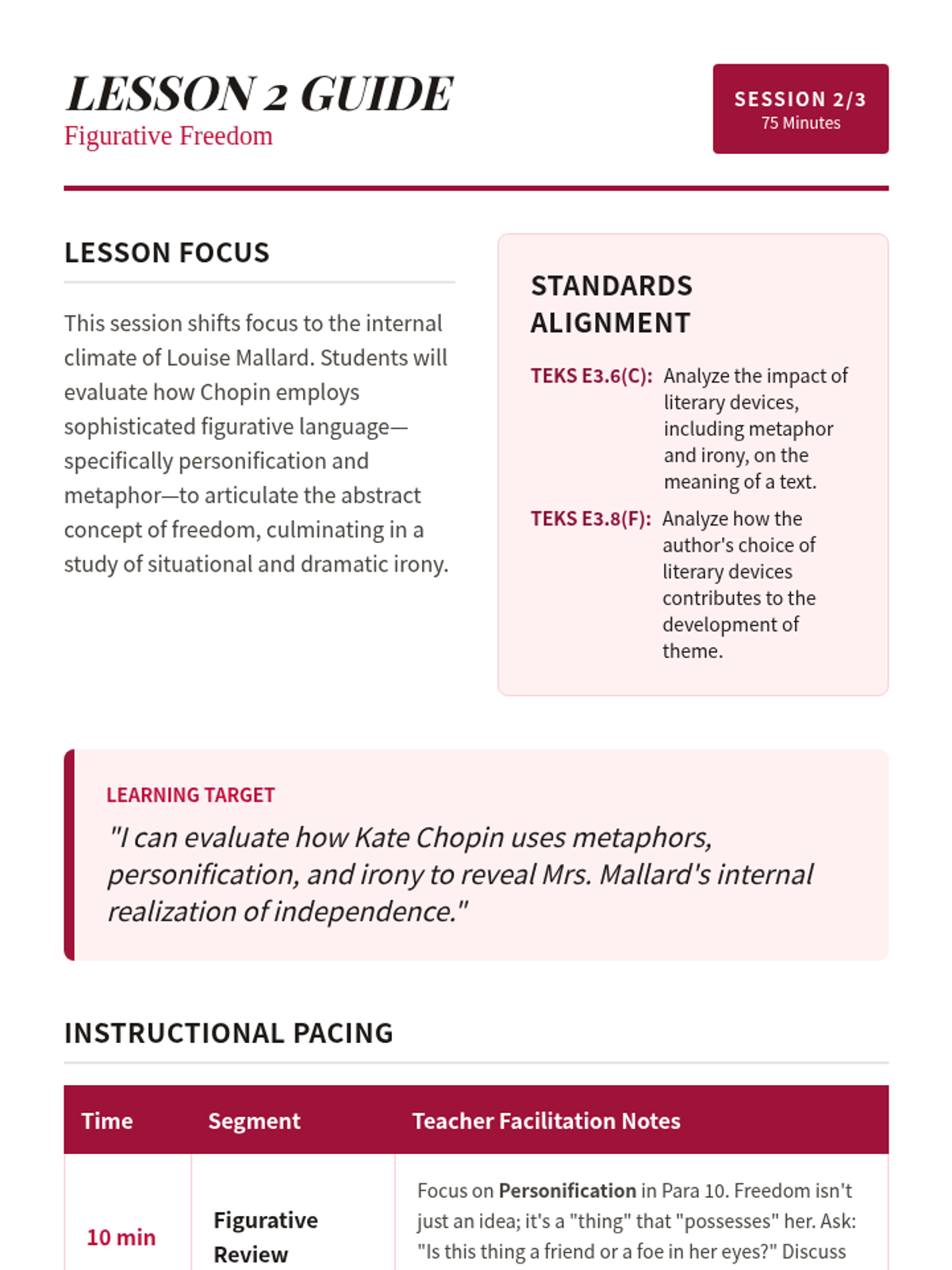
Diving deeper into figurative language including metaphors, personification, and situational irony. Students finish the story and evaluate the symbolic significance of the 'open window' and 'heart trouble'.
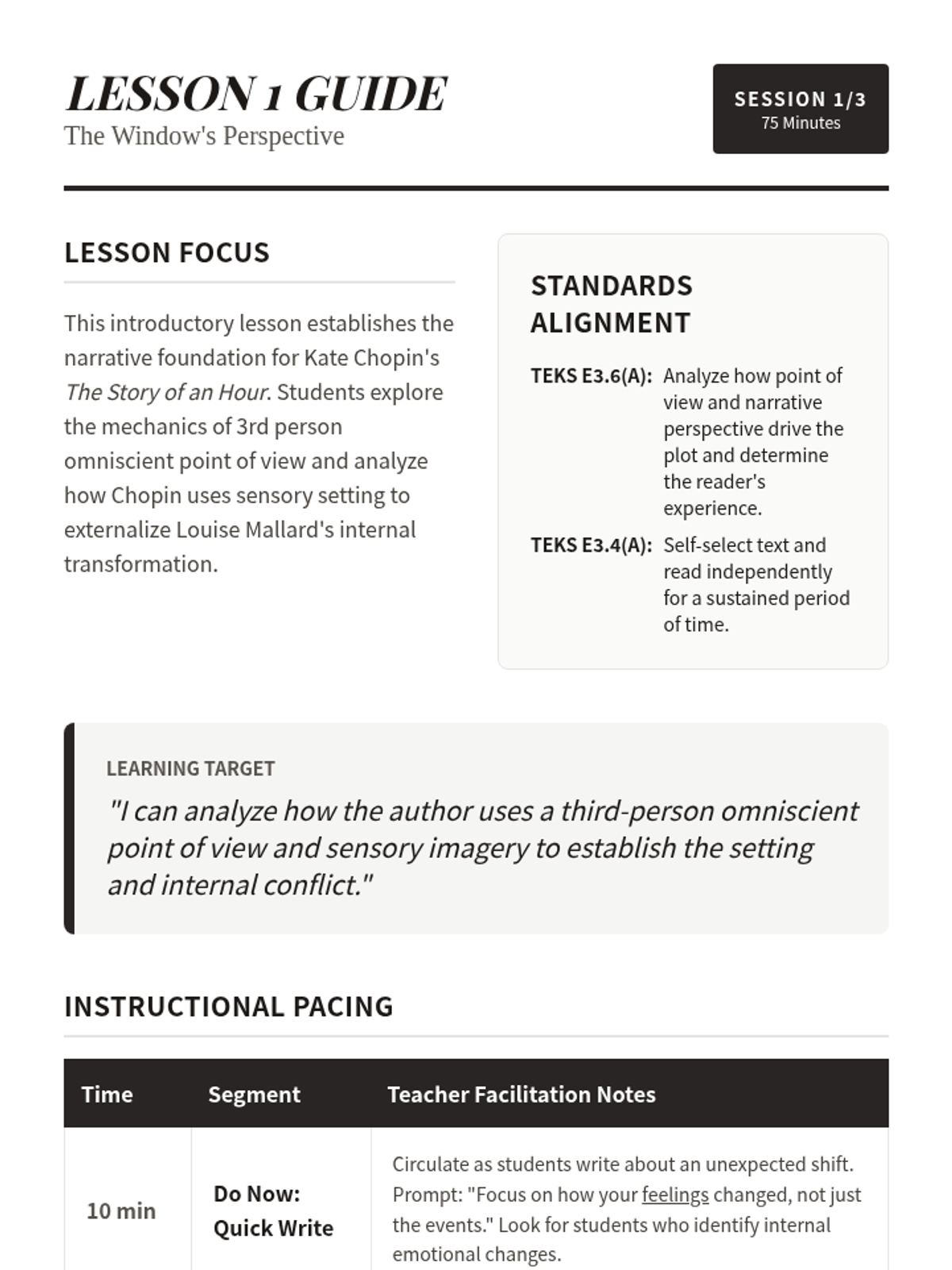
Introduction to 3rd person omniscient point of view and sensory imagery. Students begin reading the text and analyze how Chopin uses the setting outside the open window to reflect Louise Mallard's internal shift.
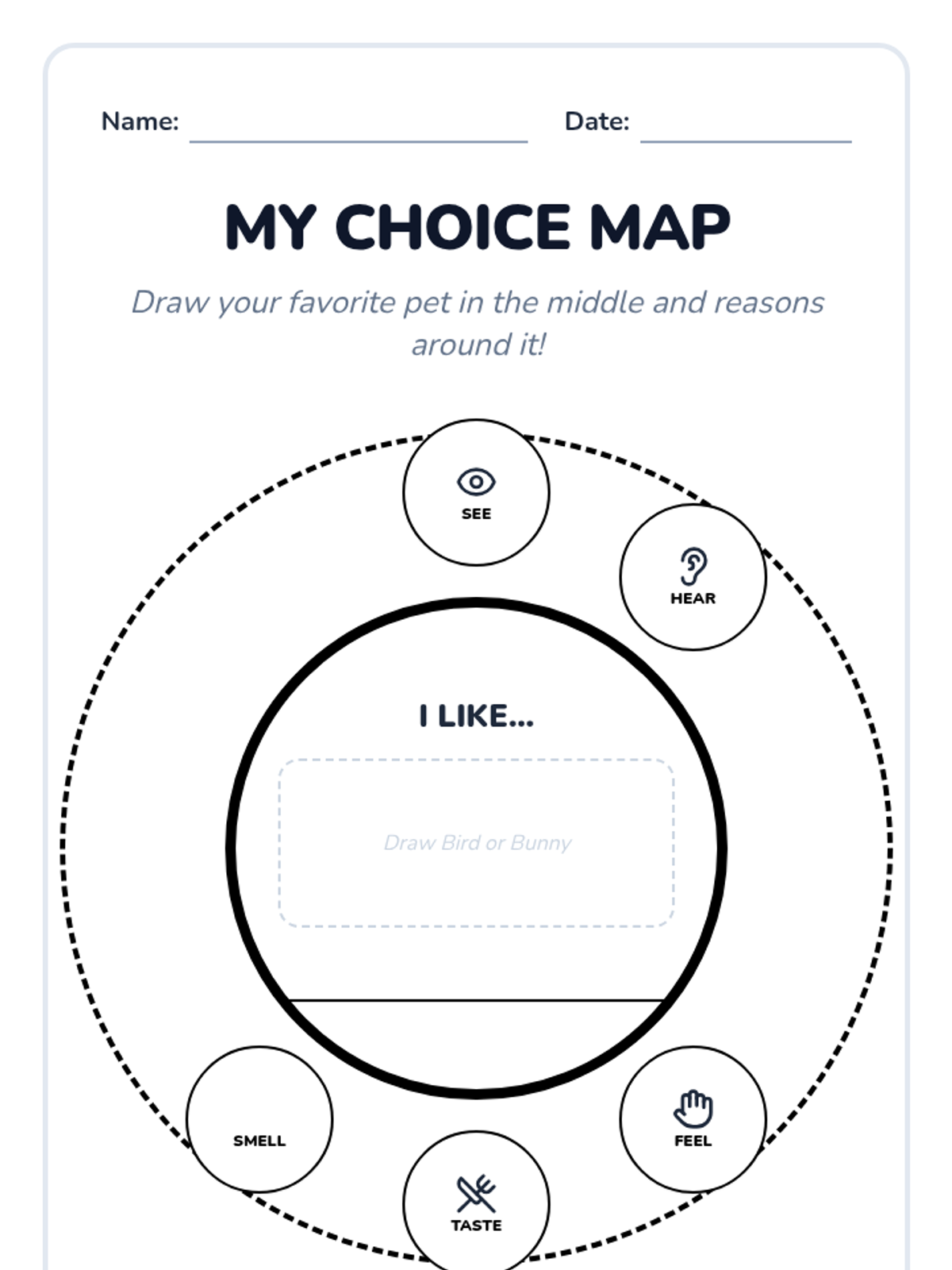
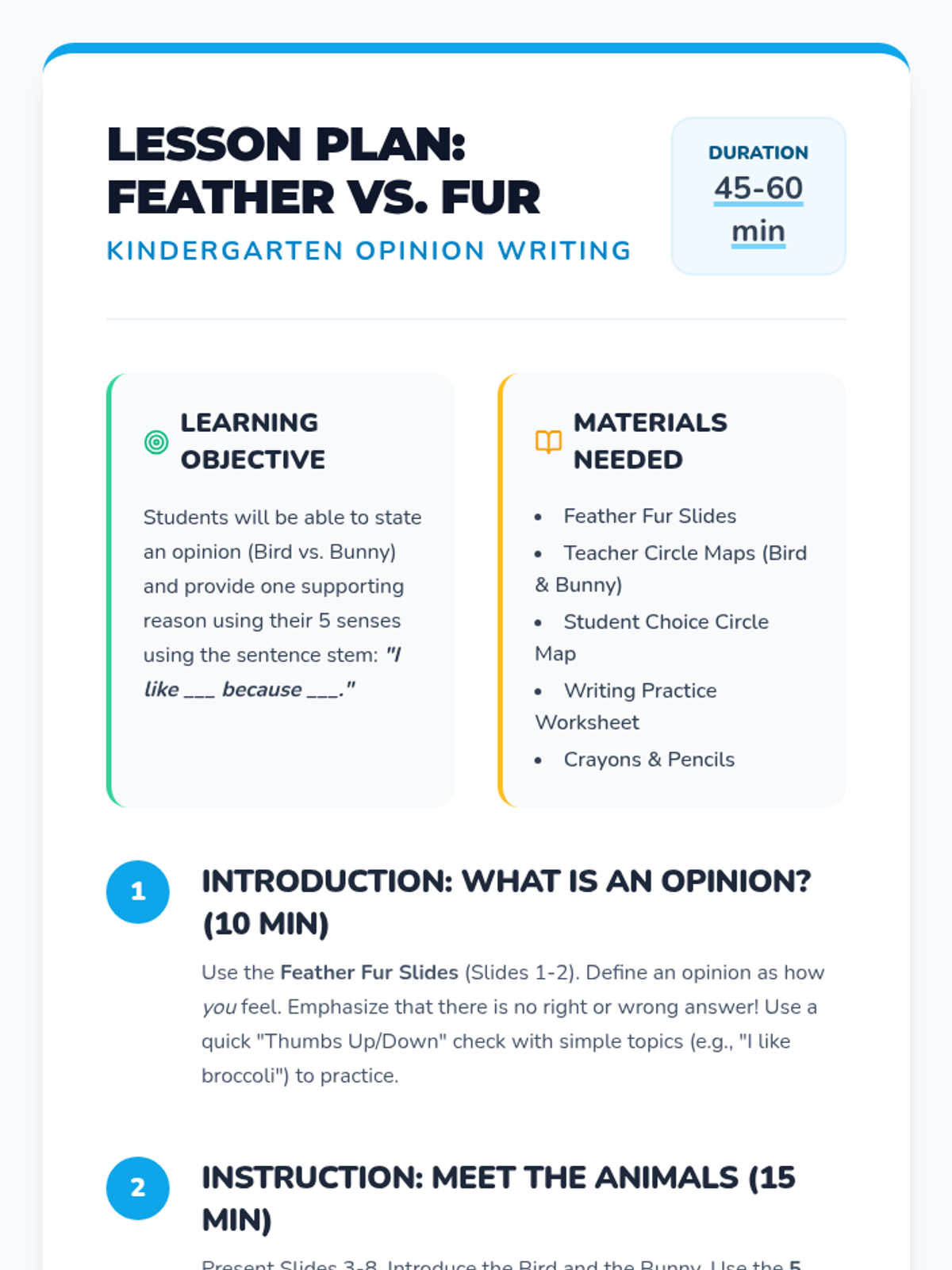
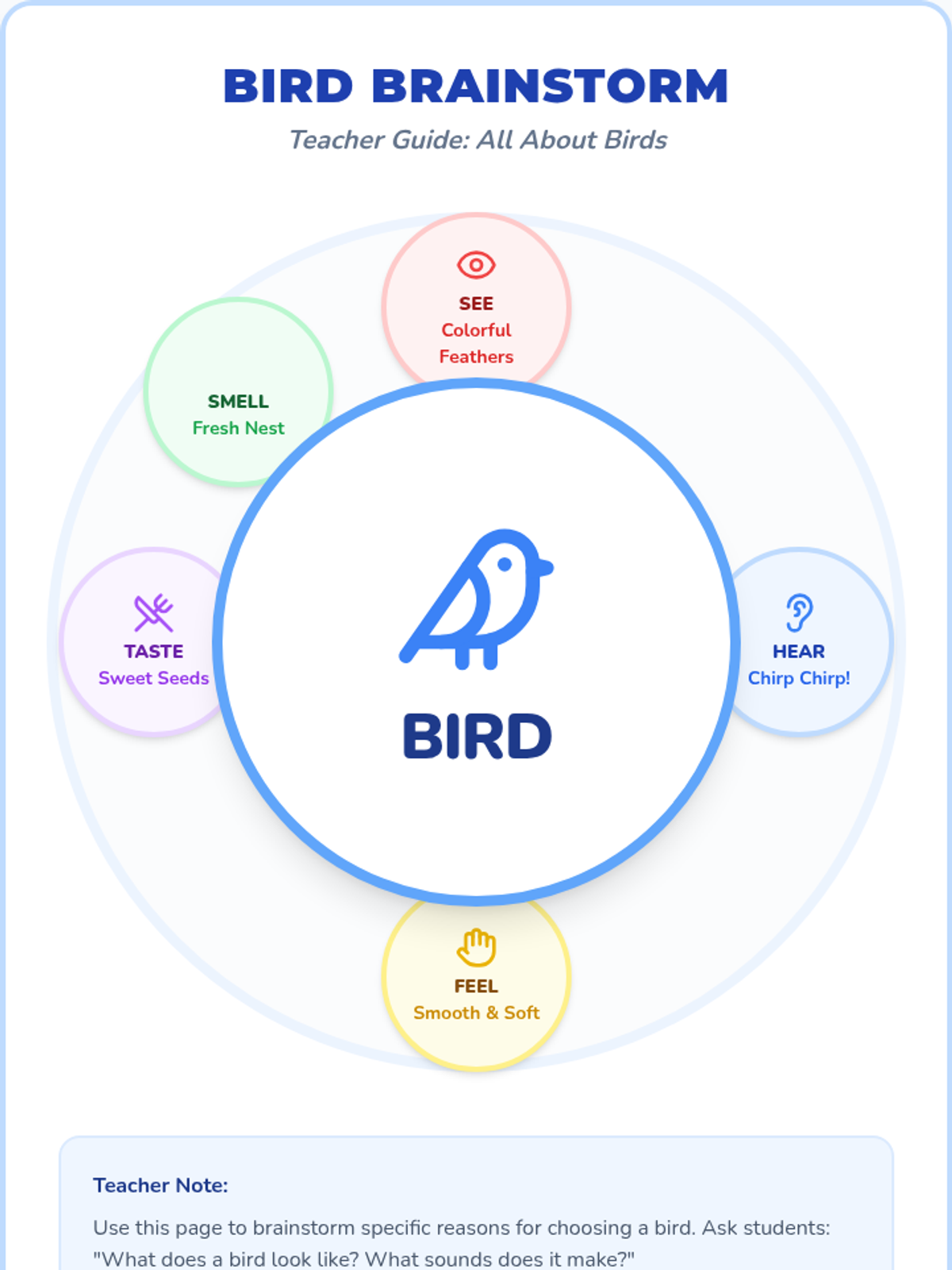
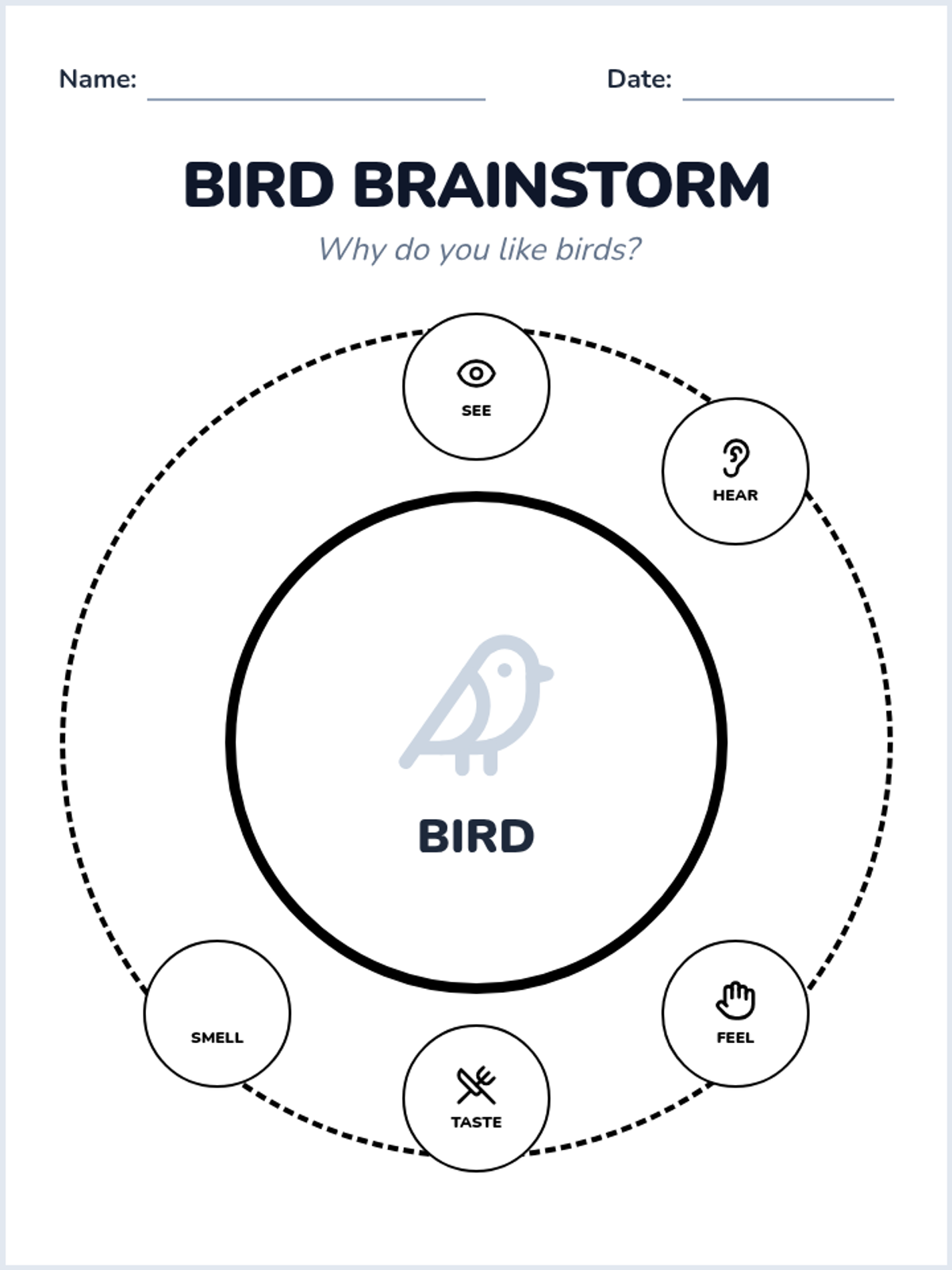
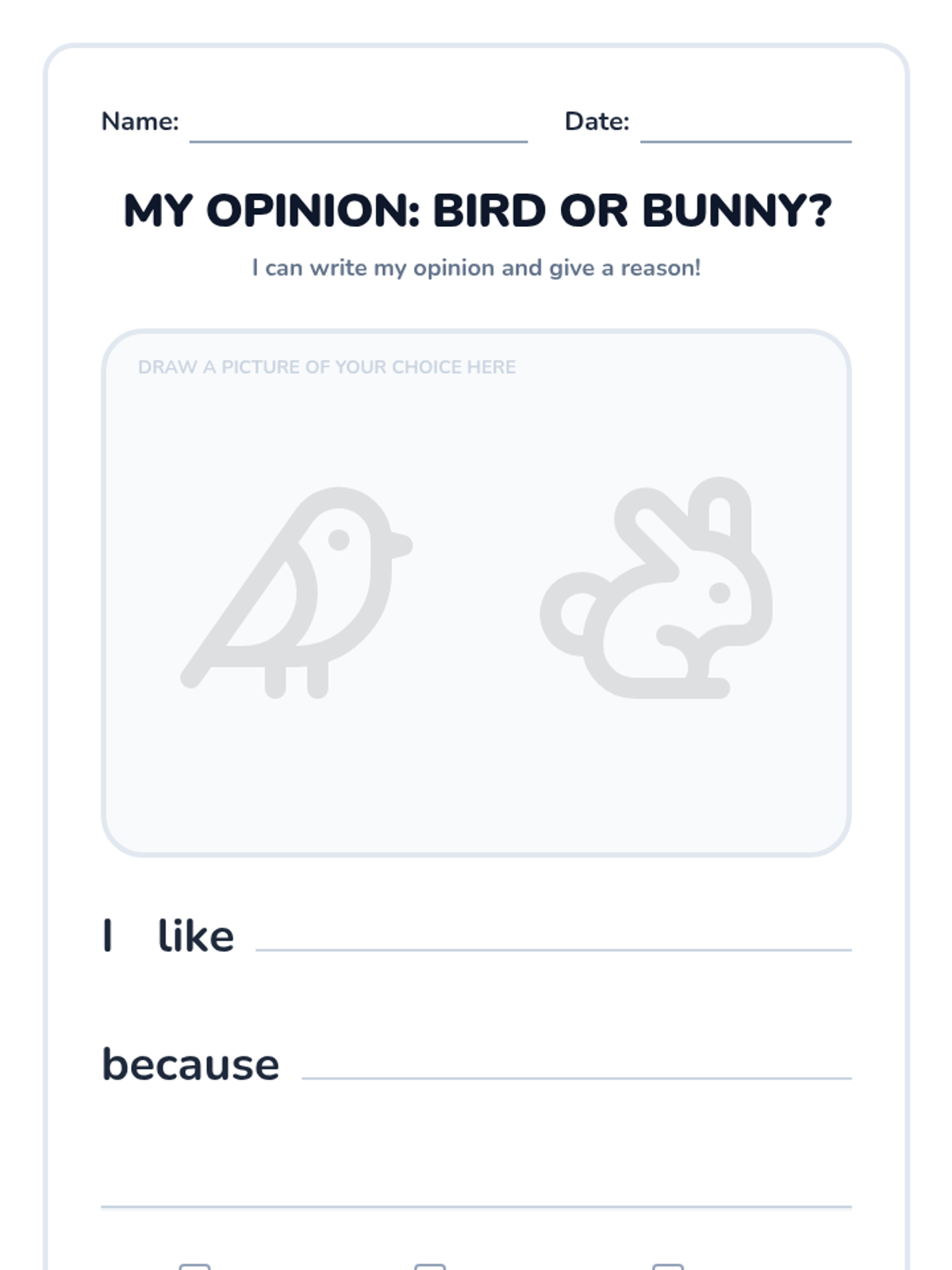
A kindergarten introduction to opinion writing where students choose between a bird and a bunny, using their five senses to generate descriptive reasons and support their preferences.
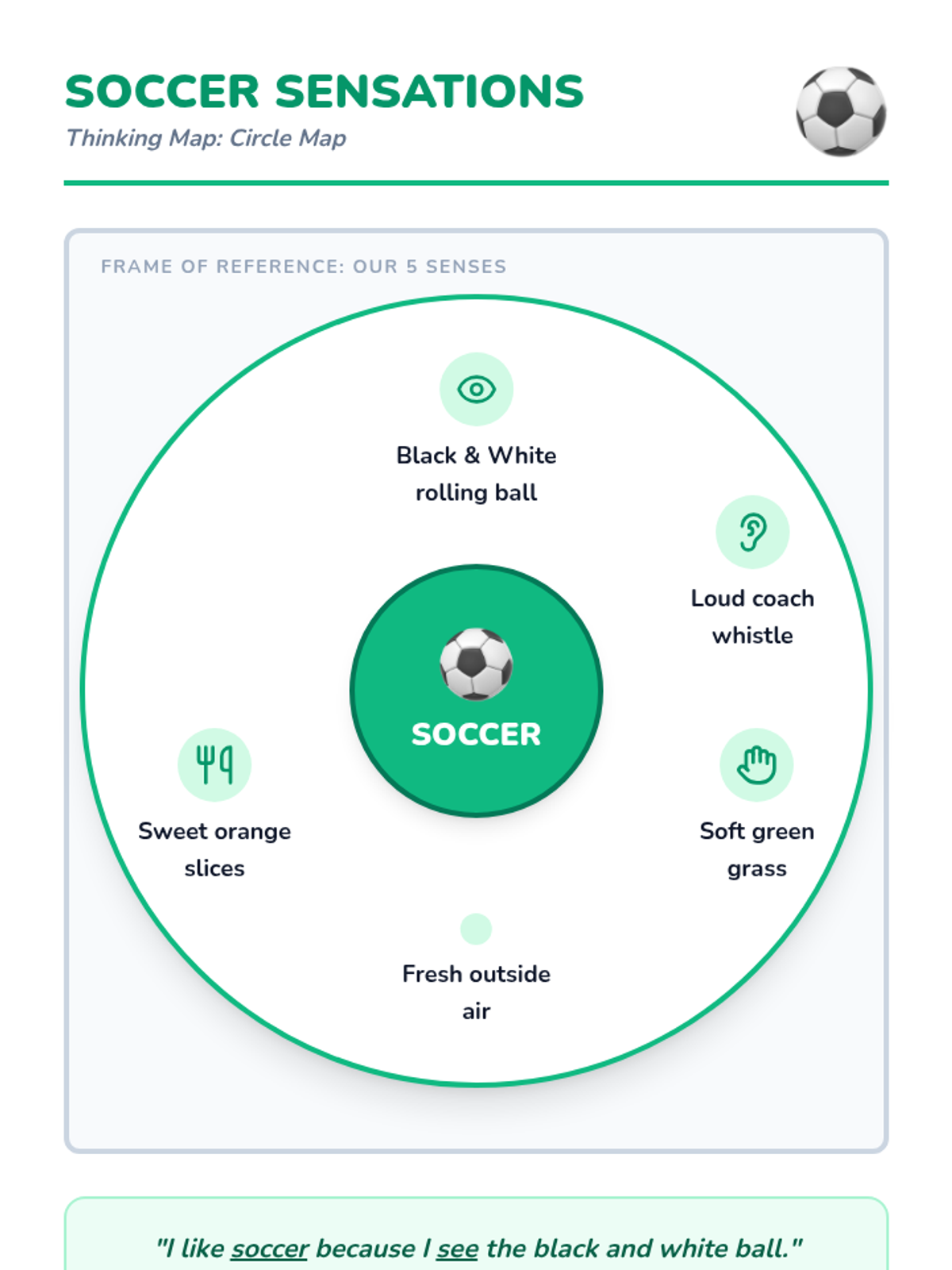
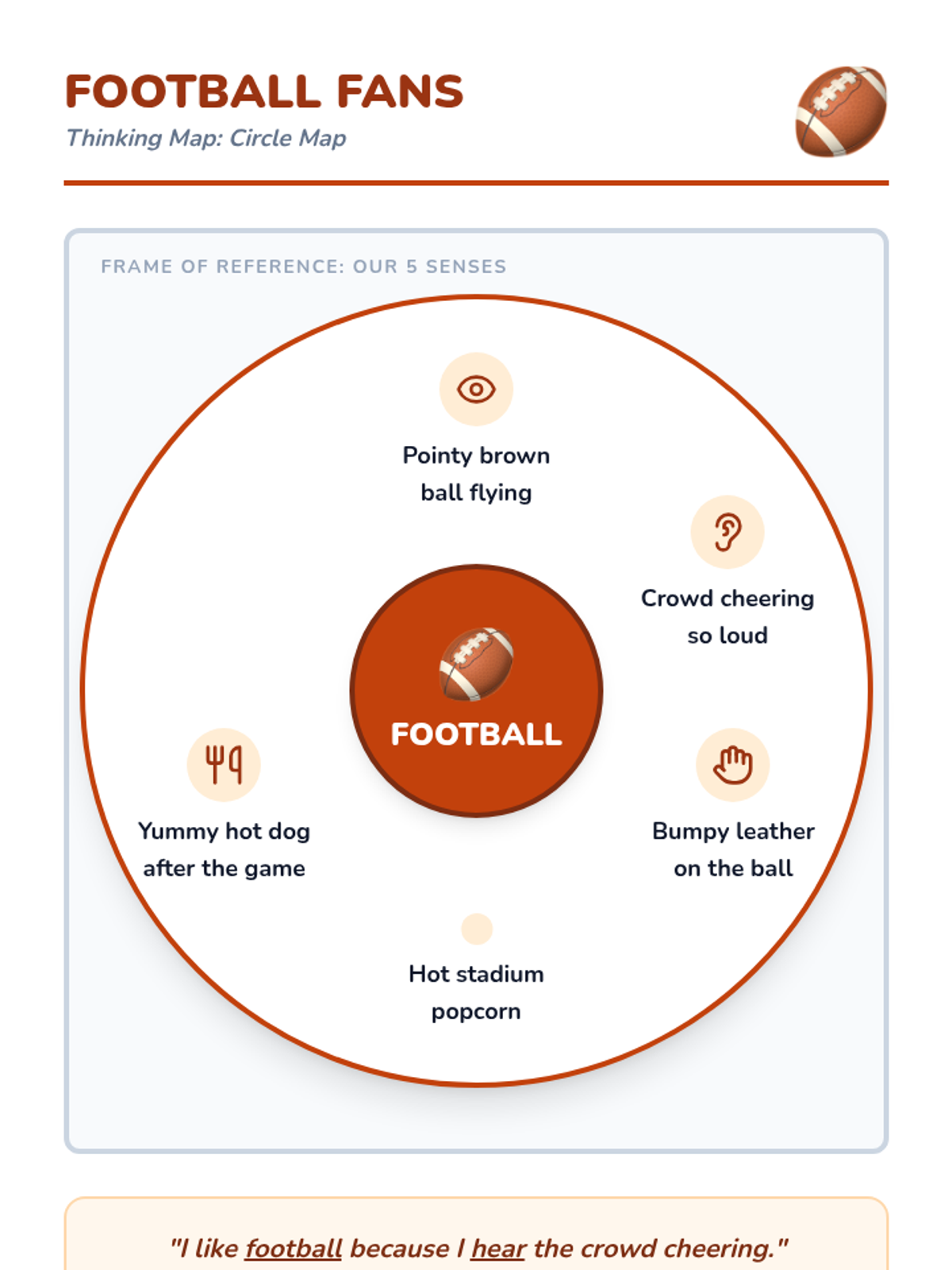
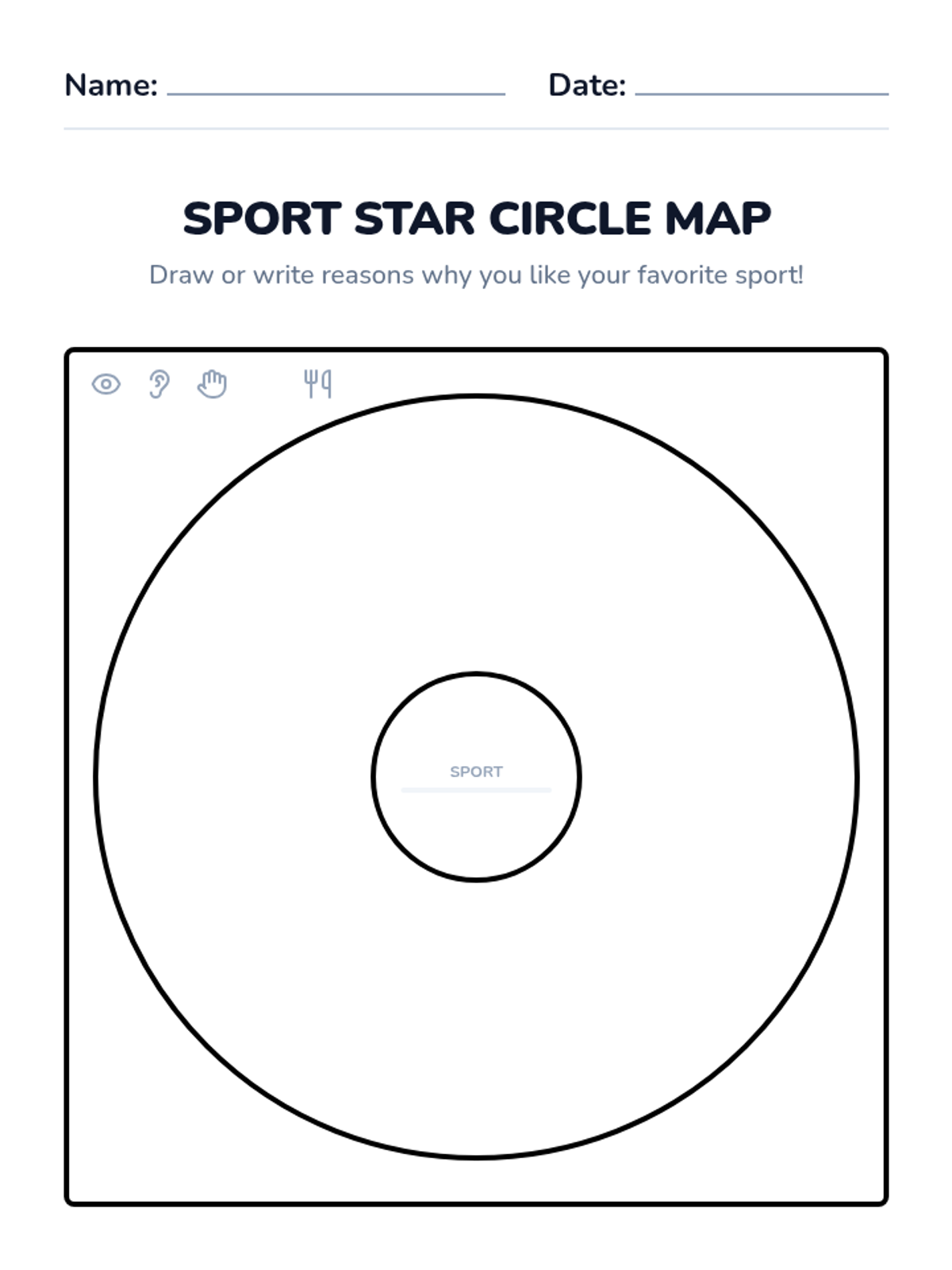
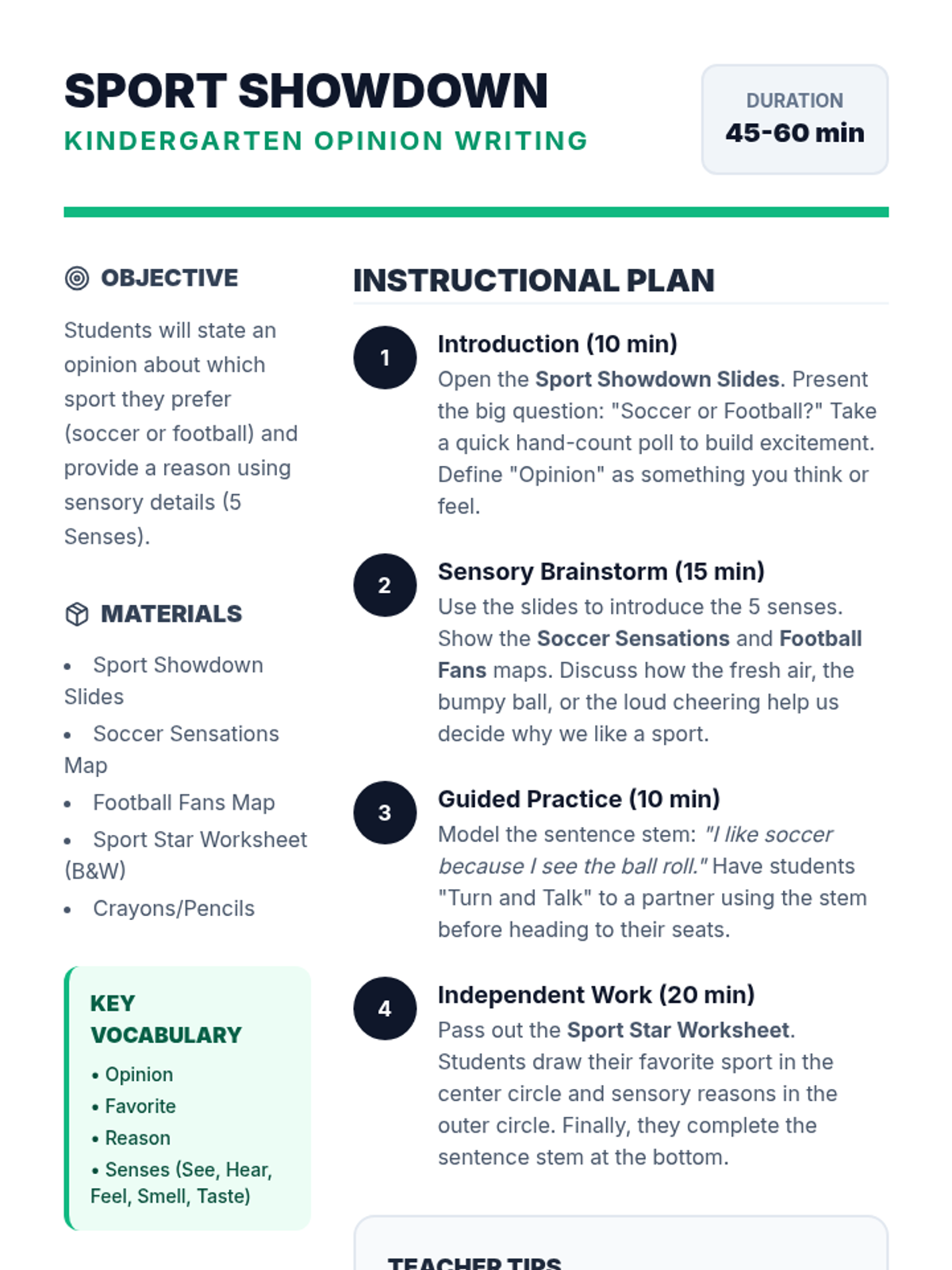
A kindergarten lesson on opinion writing focusing on the debate between soccer and football, using the 5 senses to generate reasons and a specific sentence stem for writing.
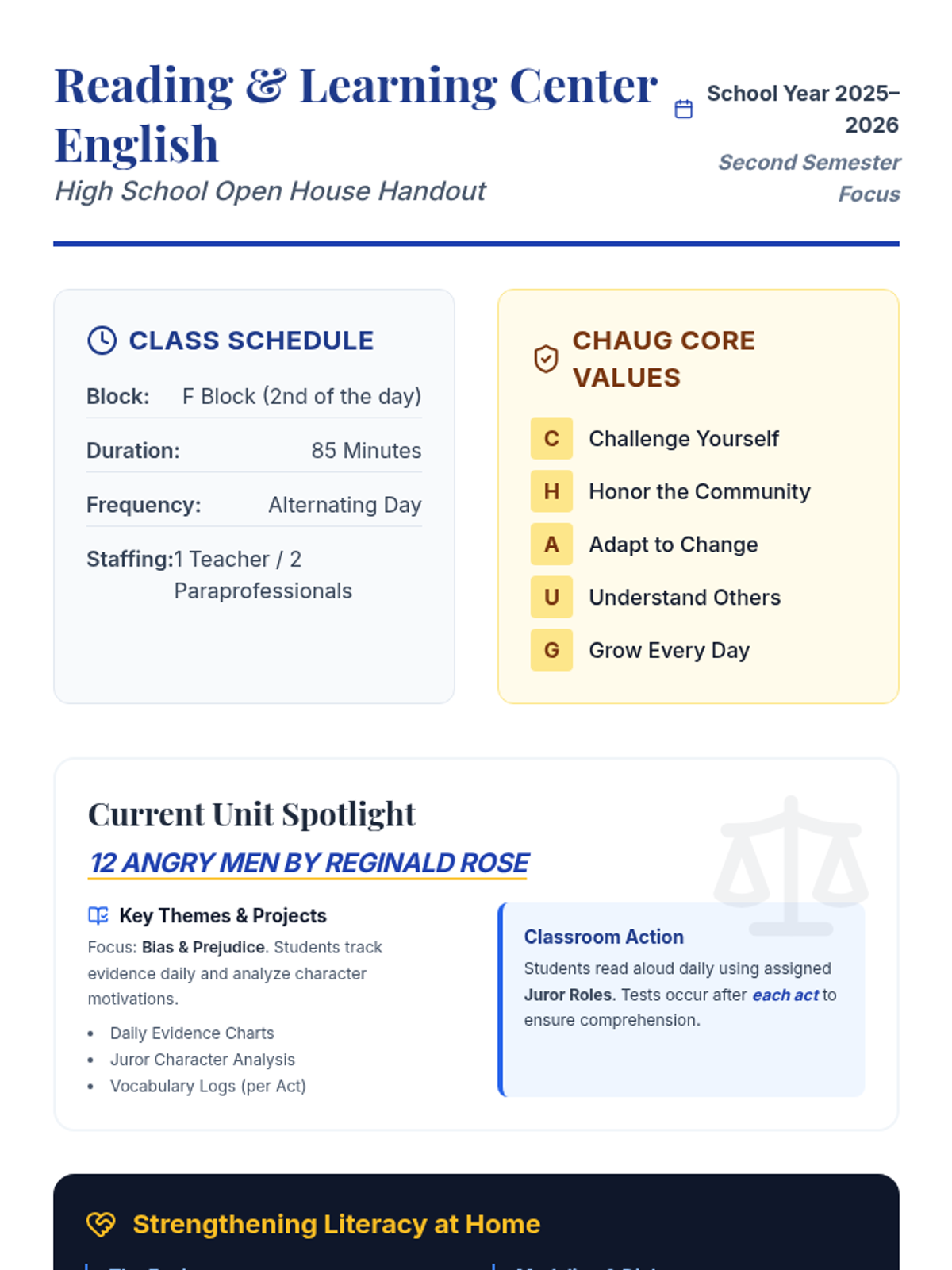
A comprehensive set of materials for a high school Open House, including a presentation and a parent/guardian support handout for the Reading and Learning Center English class.
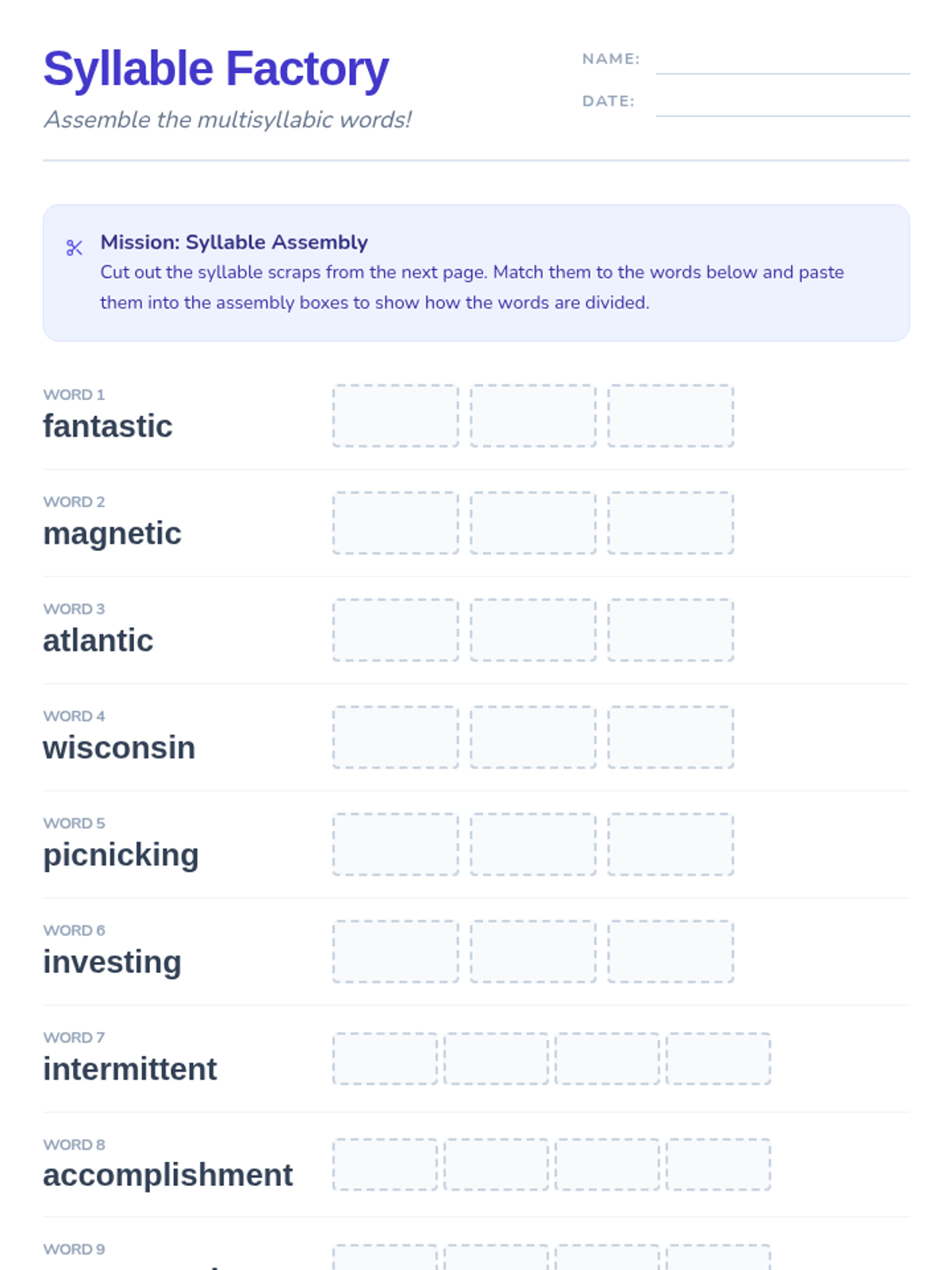
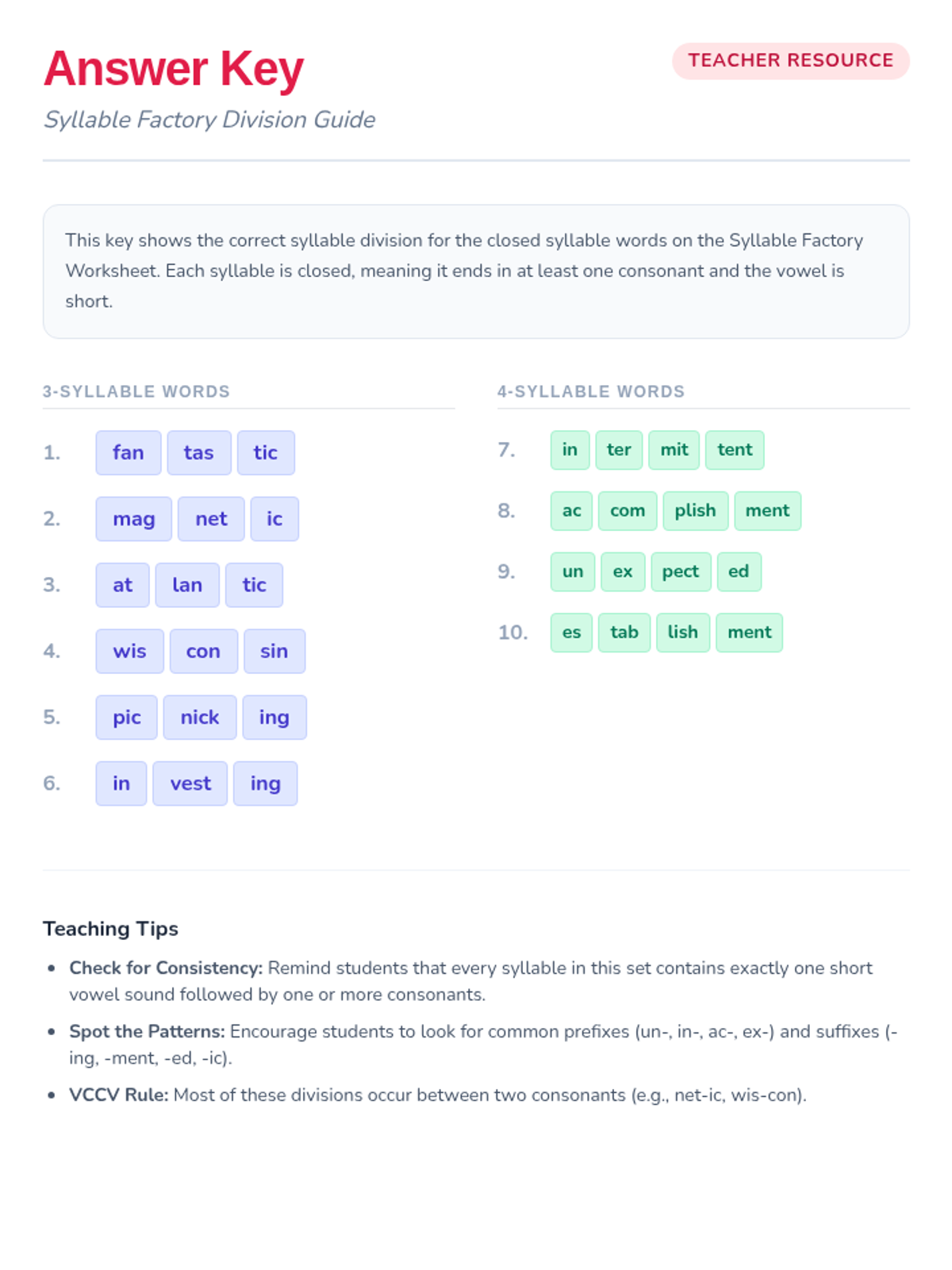
A lesson focused on decoding and dividing multisyllabic words with closed syllables through a hands-on cut-and-paste activity.
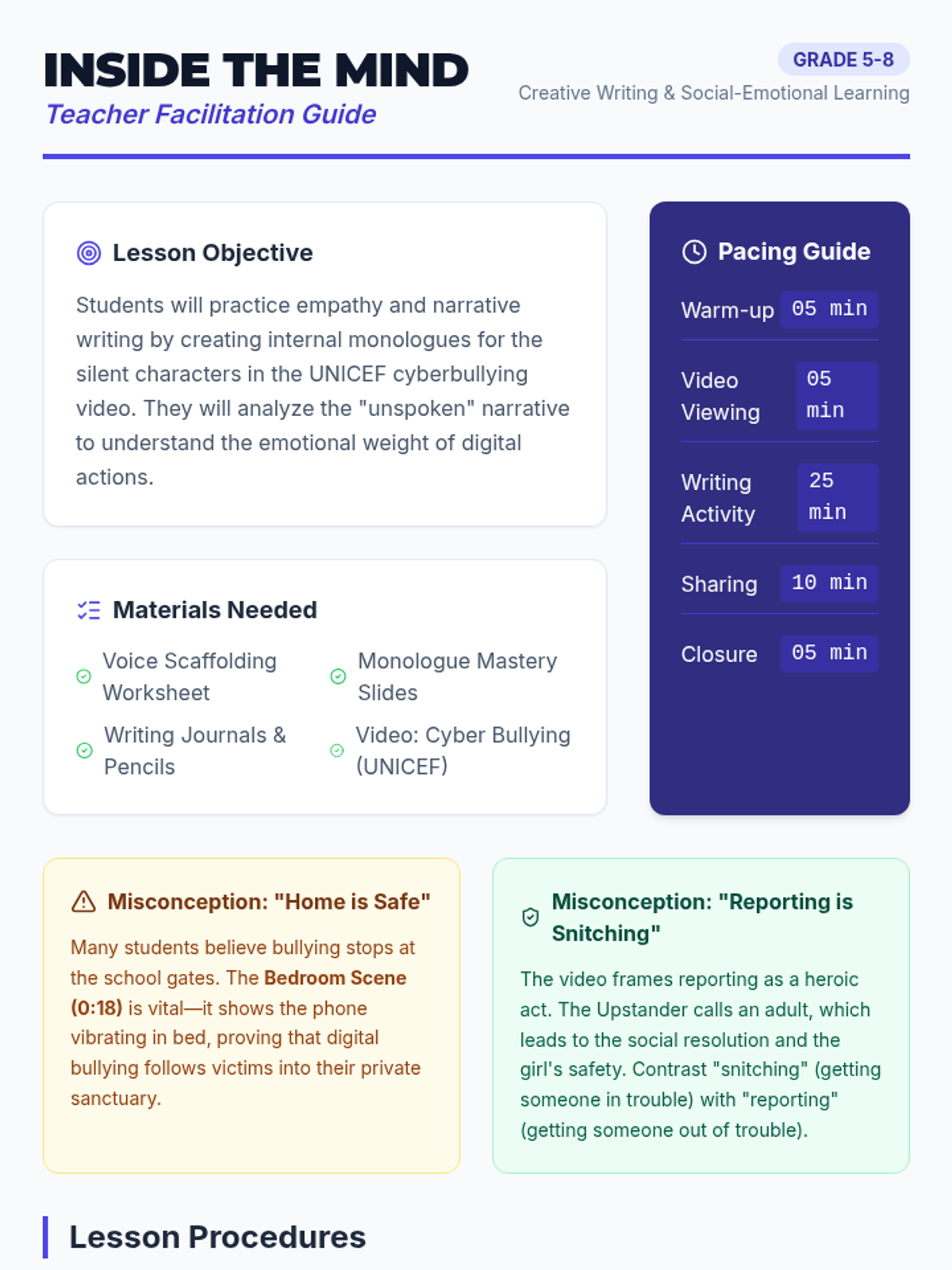
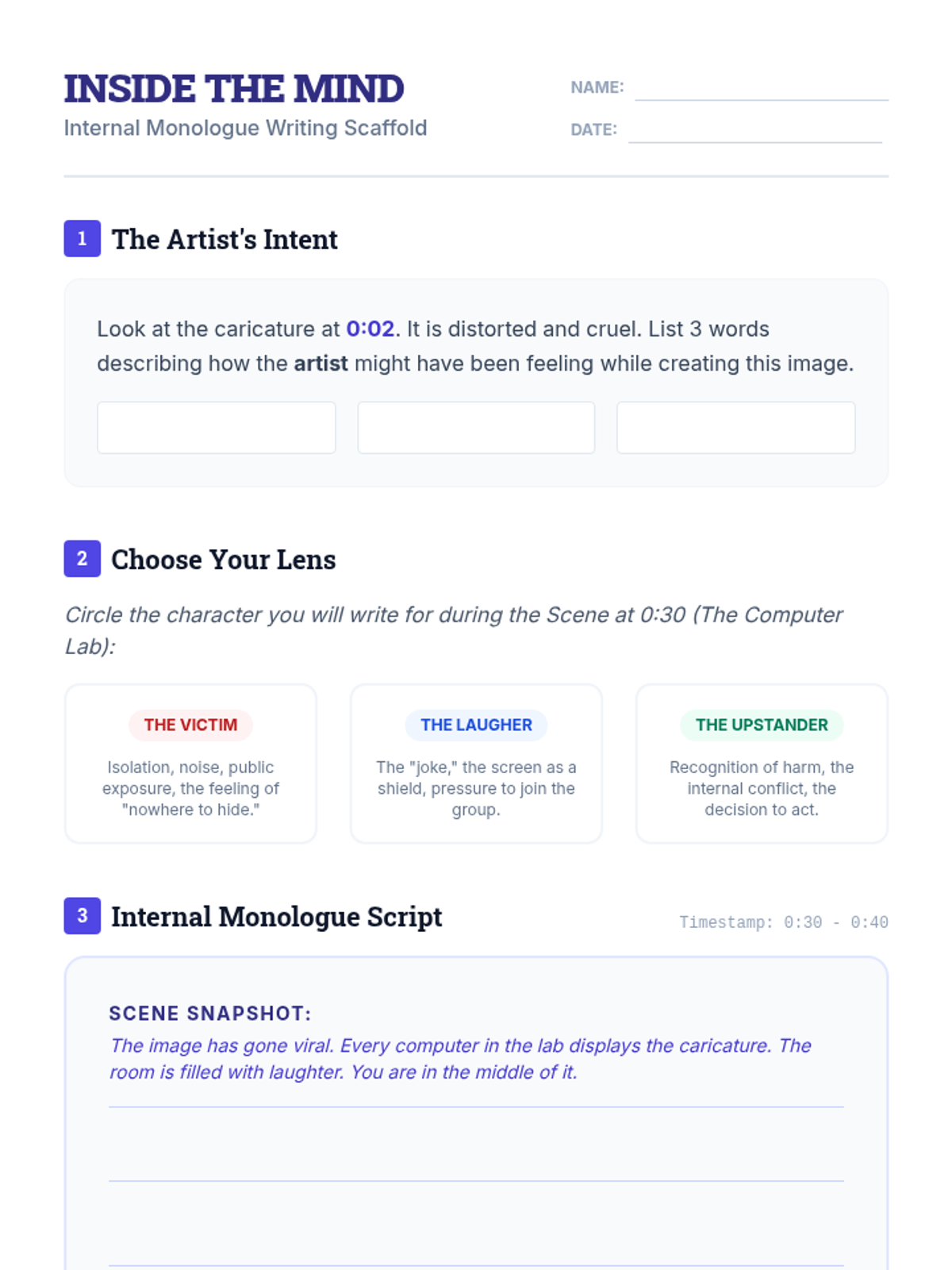
A creative writing lesson for middle school students exploring empathy and perspective-taking through the medium of internal monologues. Using a poignant animated video about cyberbullying, students analyze character motivations and the impact of digital actions.
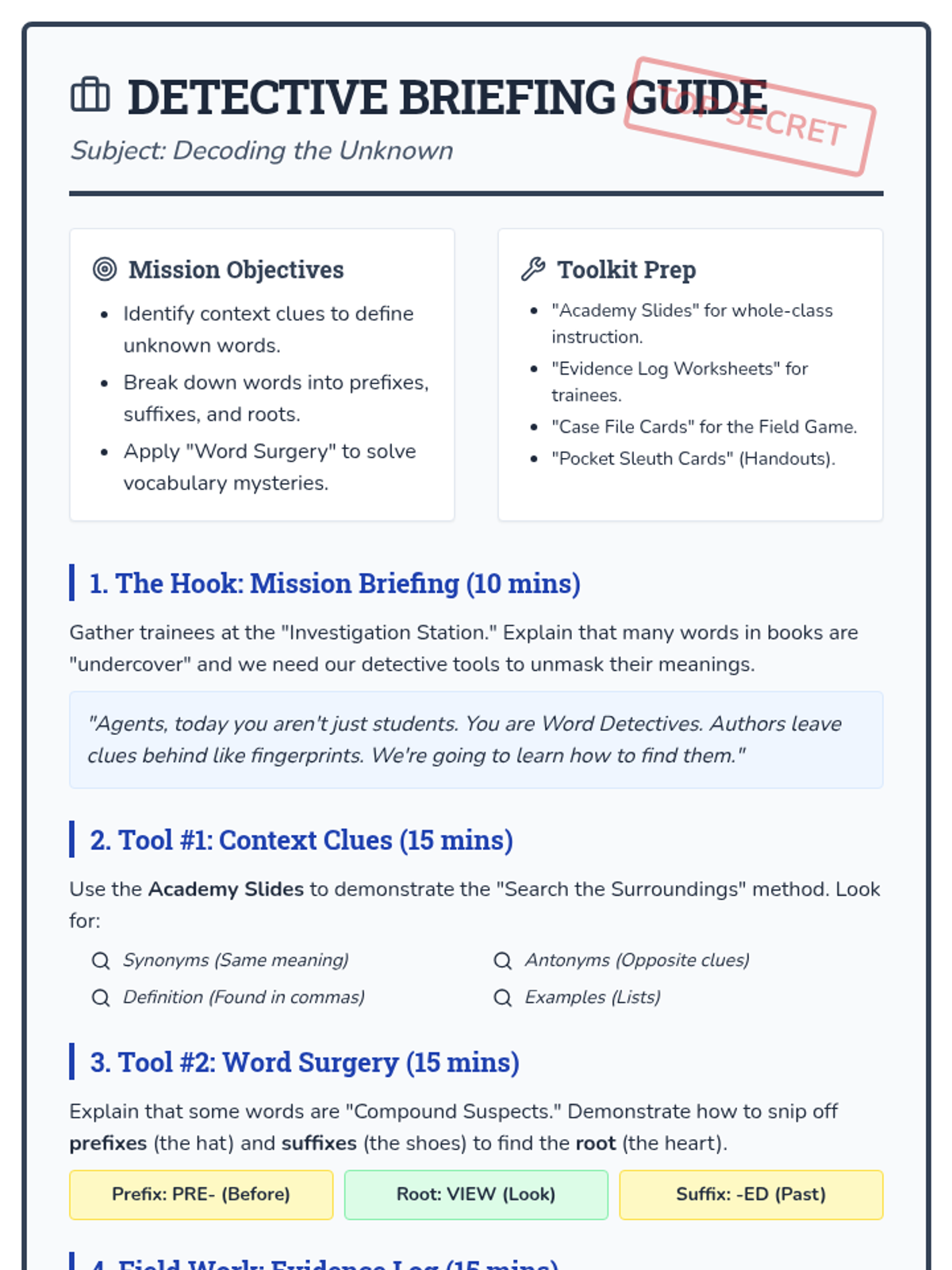
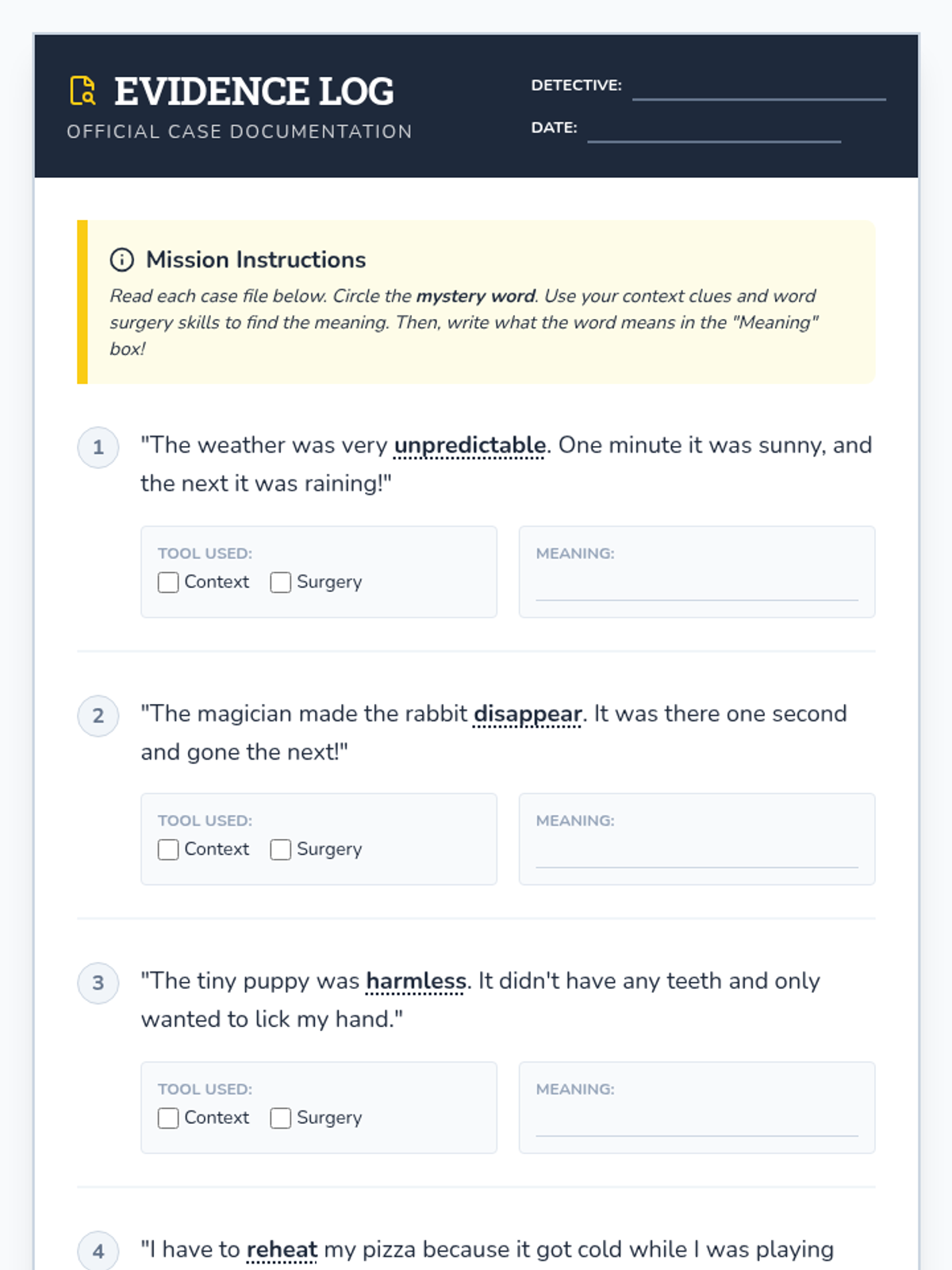
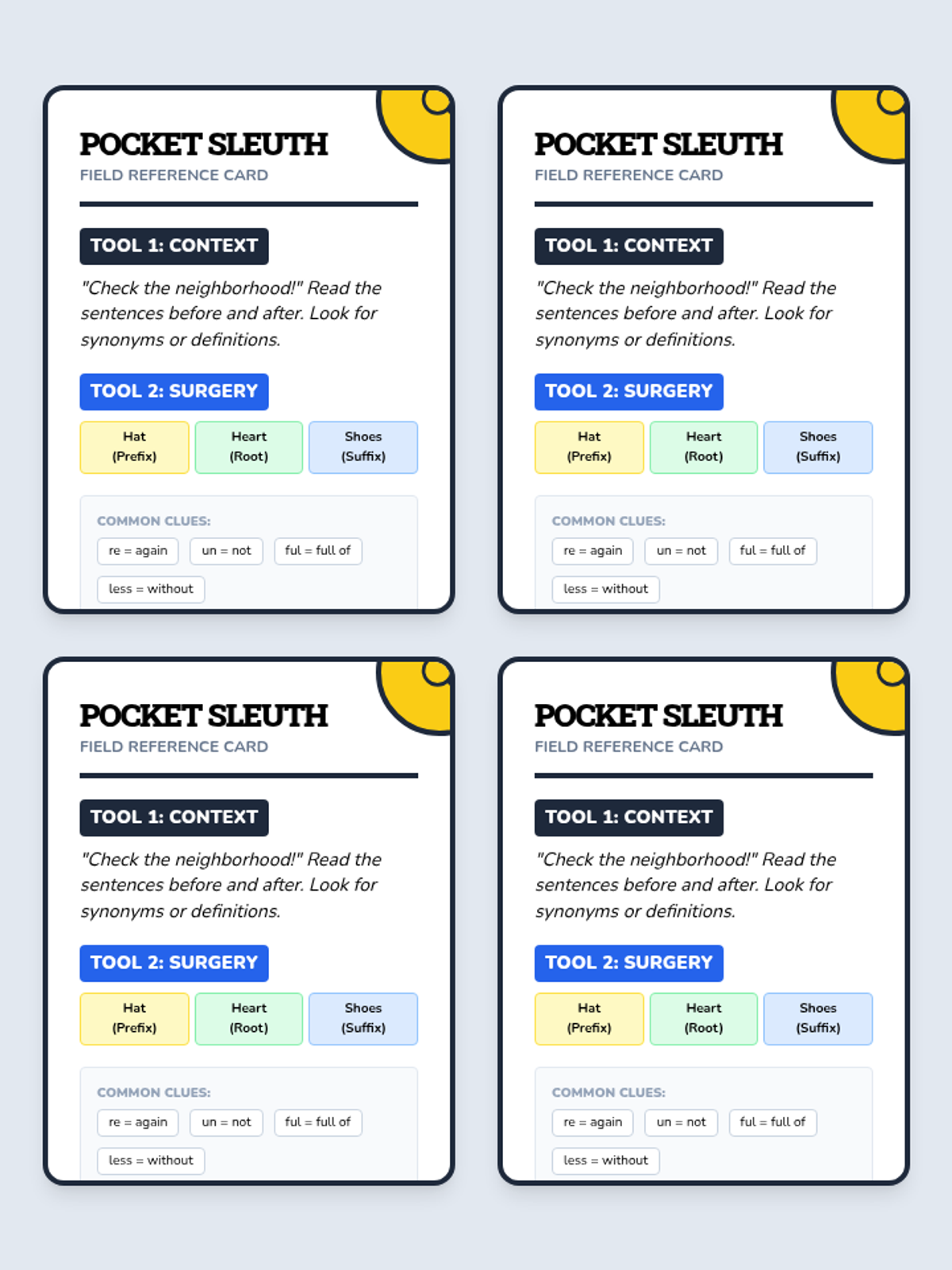
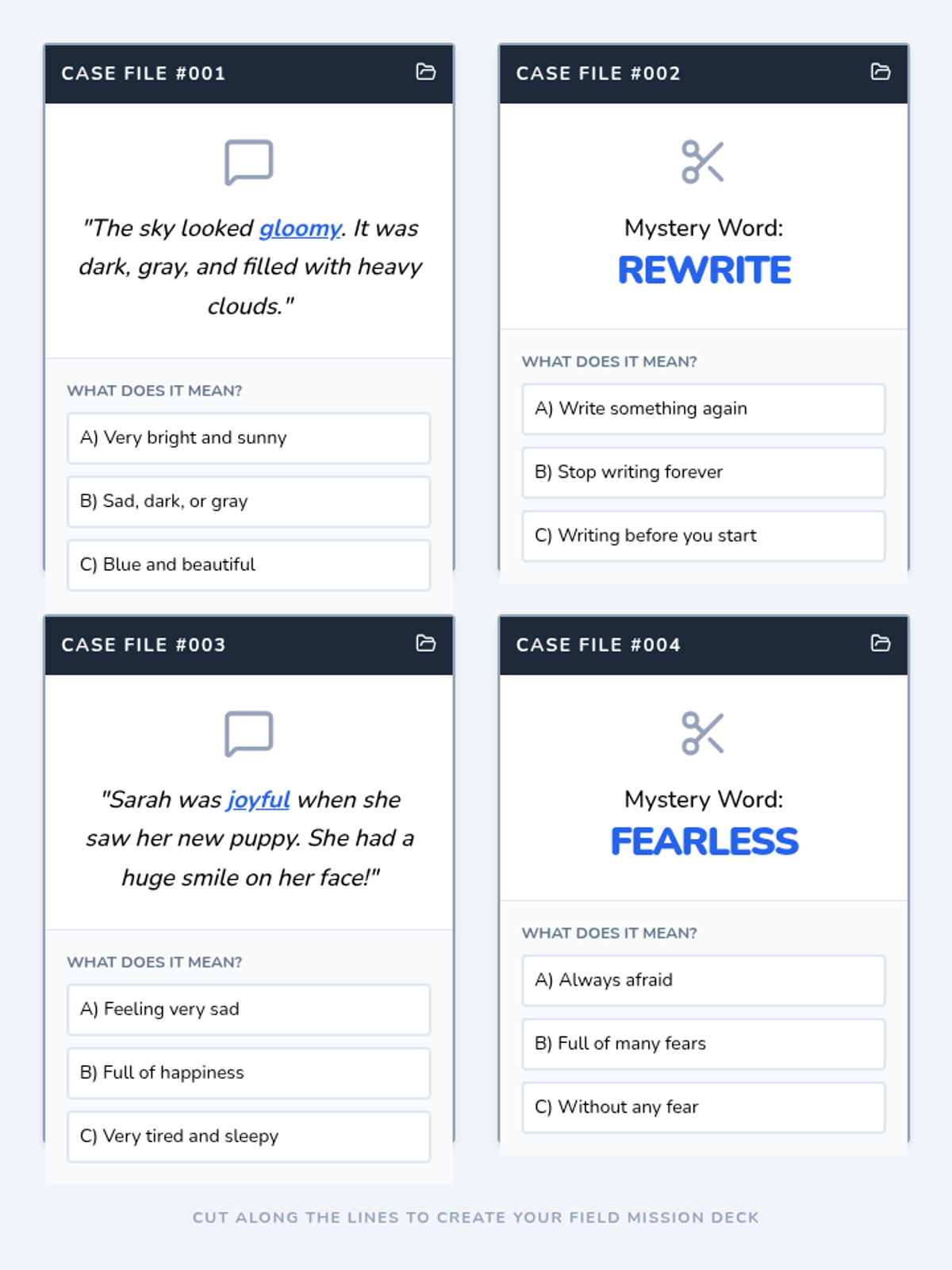
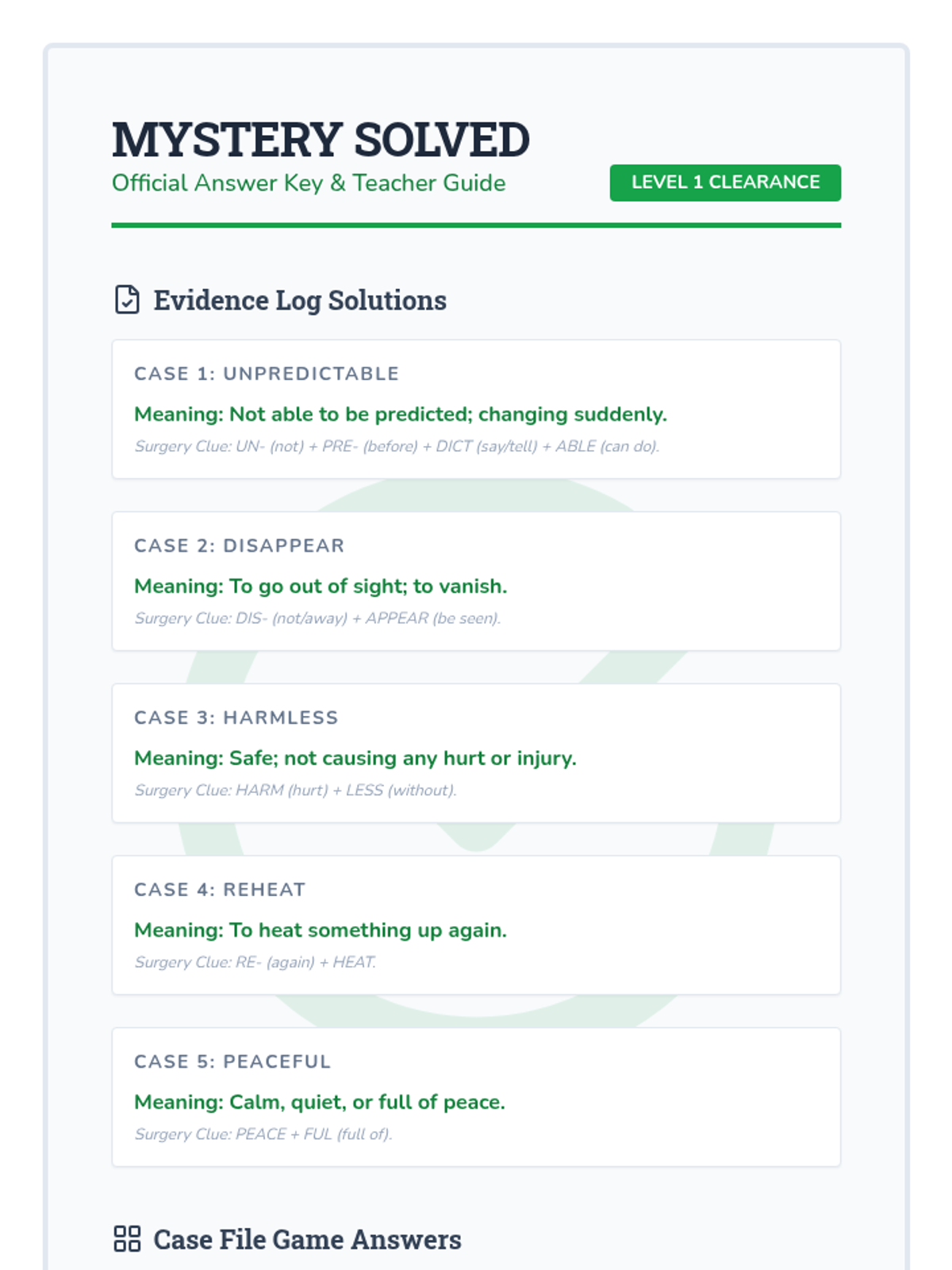
A comprehensive lesson for 2nd-3rd graders on decoding unfamiliar words using context clues, prefixes, suffixes, and root words, all framed within an engaging detective theme.
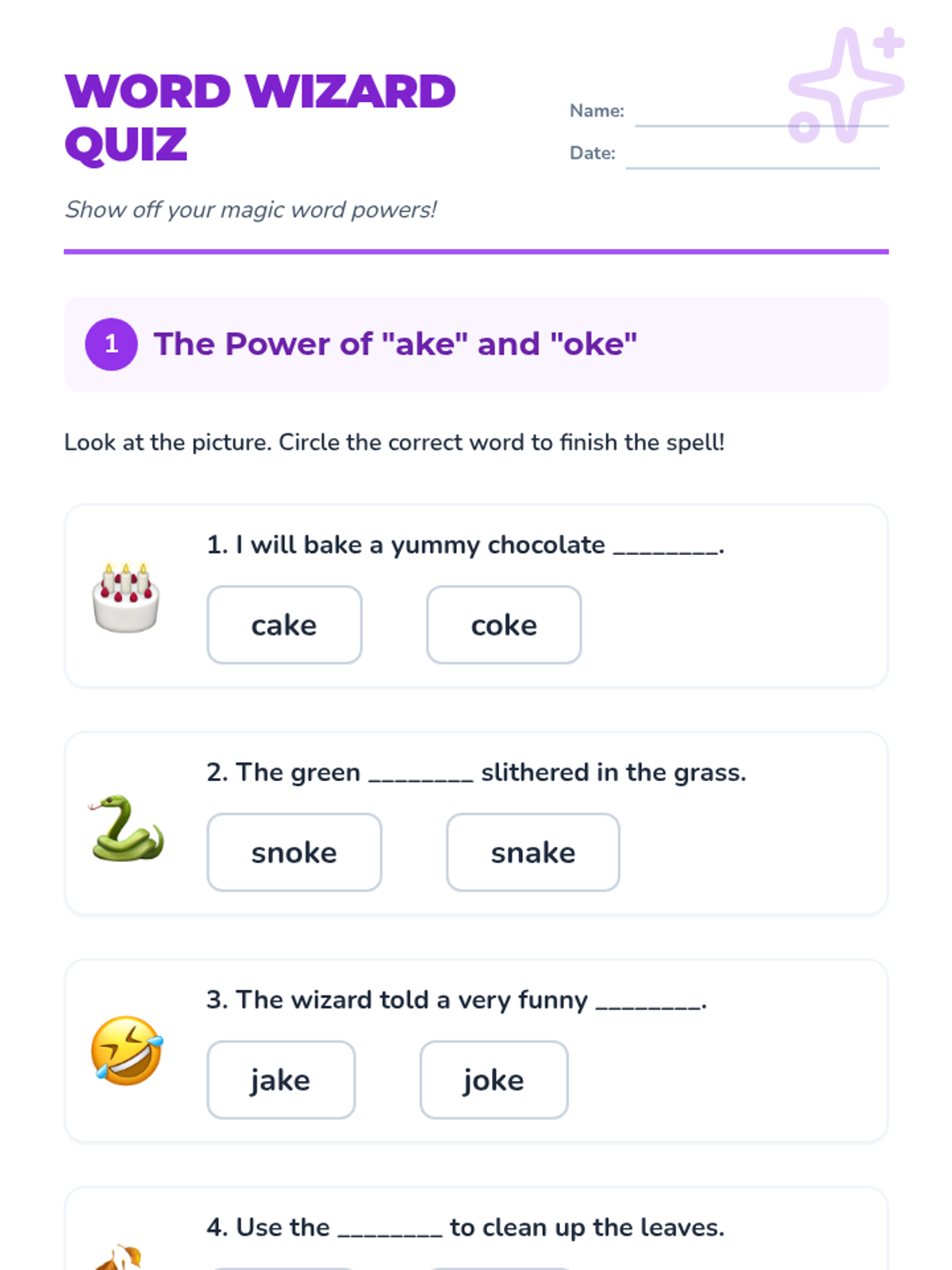
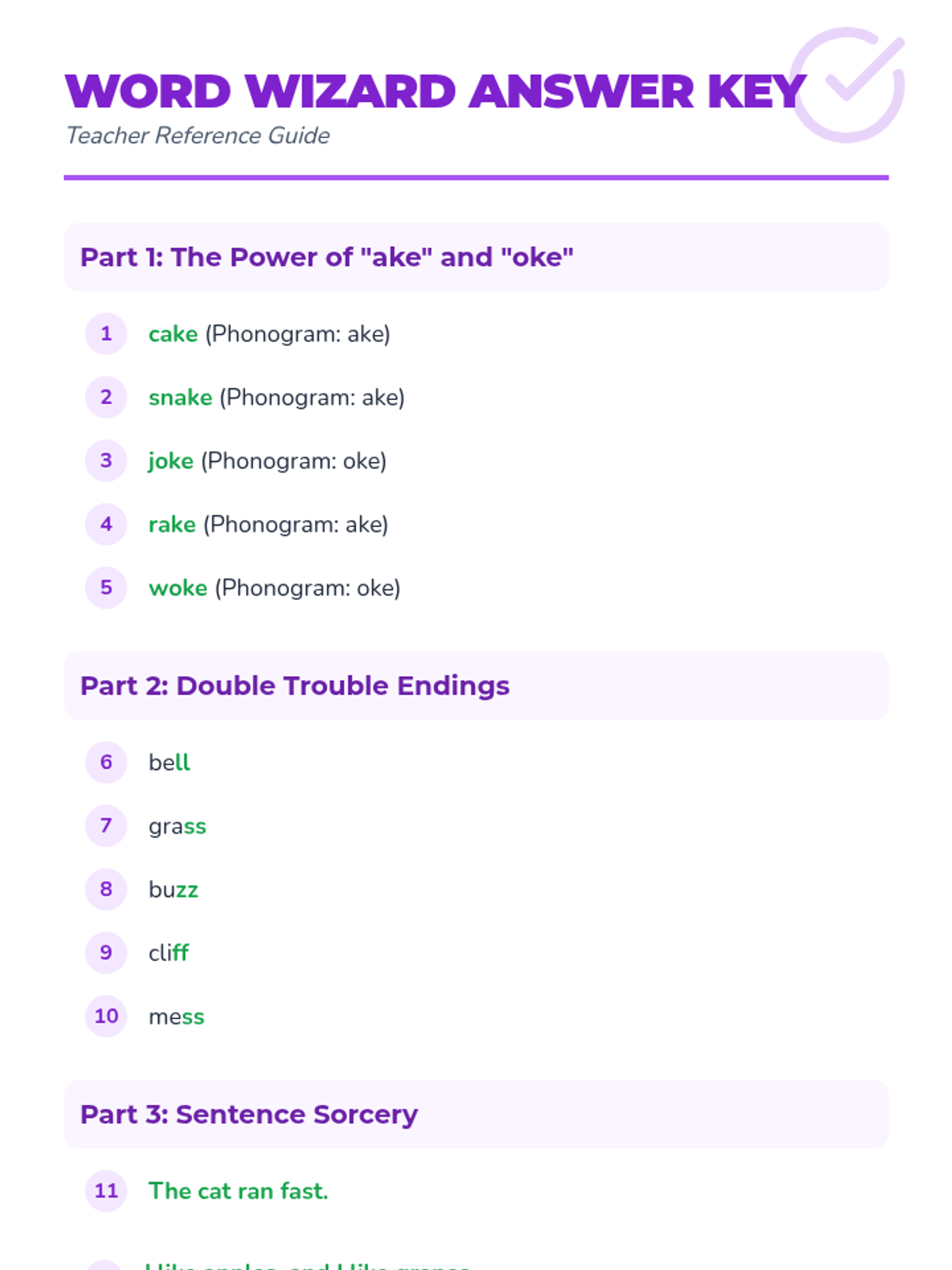
A quiz assessing phonogram patterns (oke/ake), double consonant endings, and simple/compound sentence construction for a diverse range of primary reading levels.
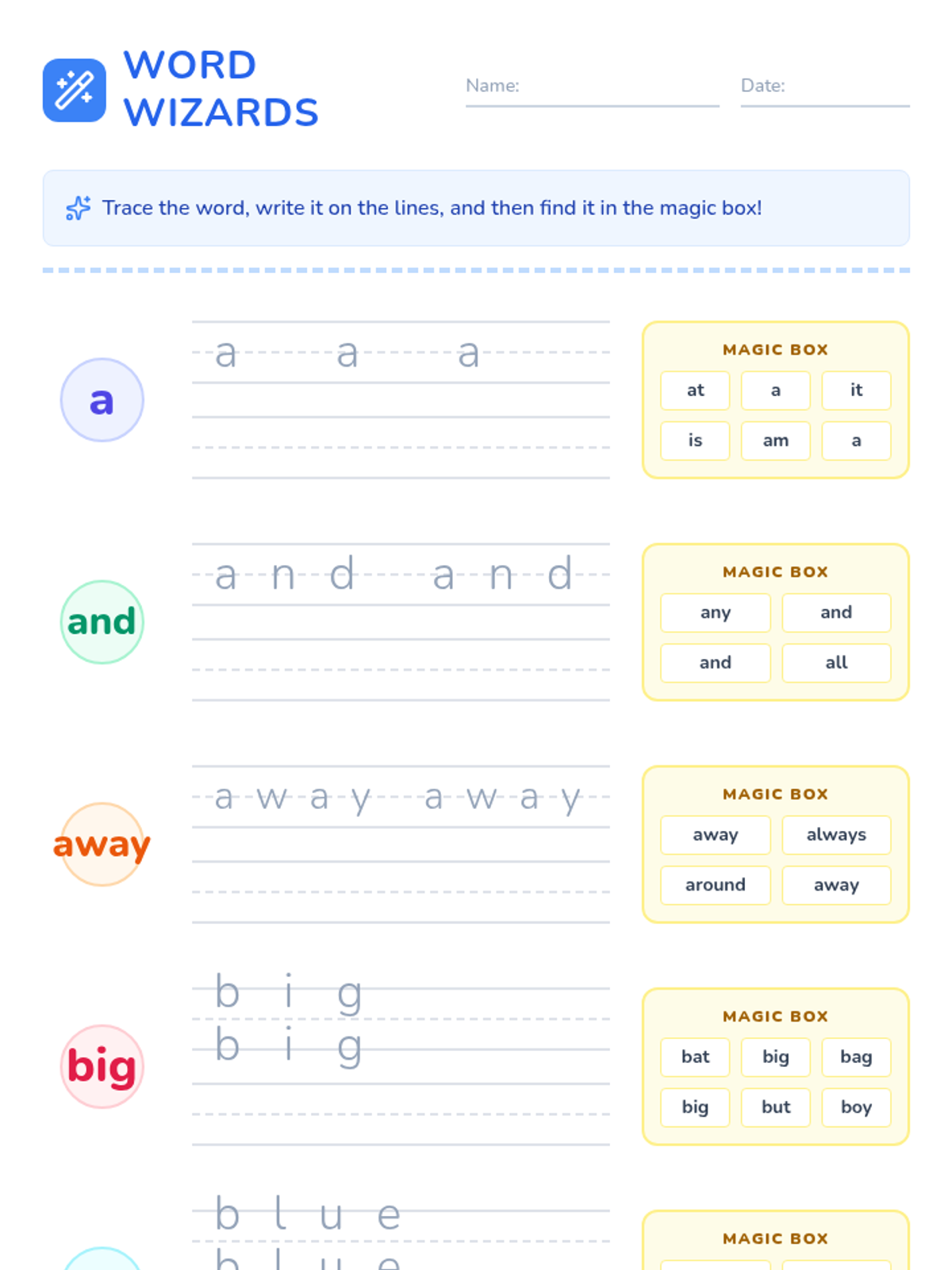
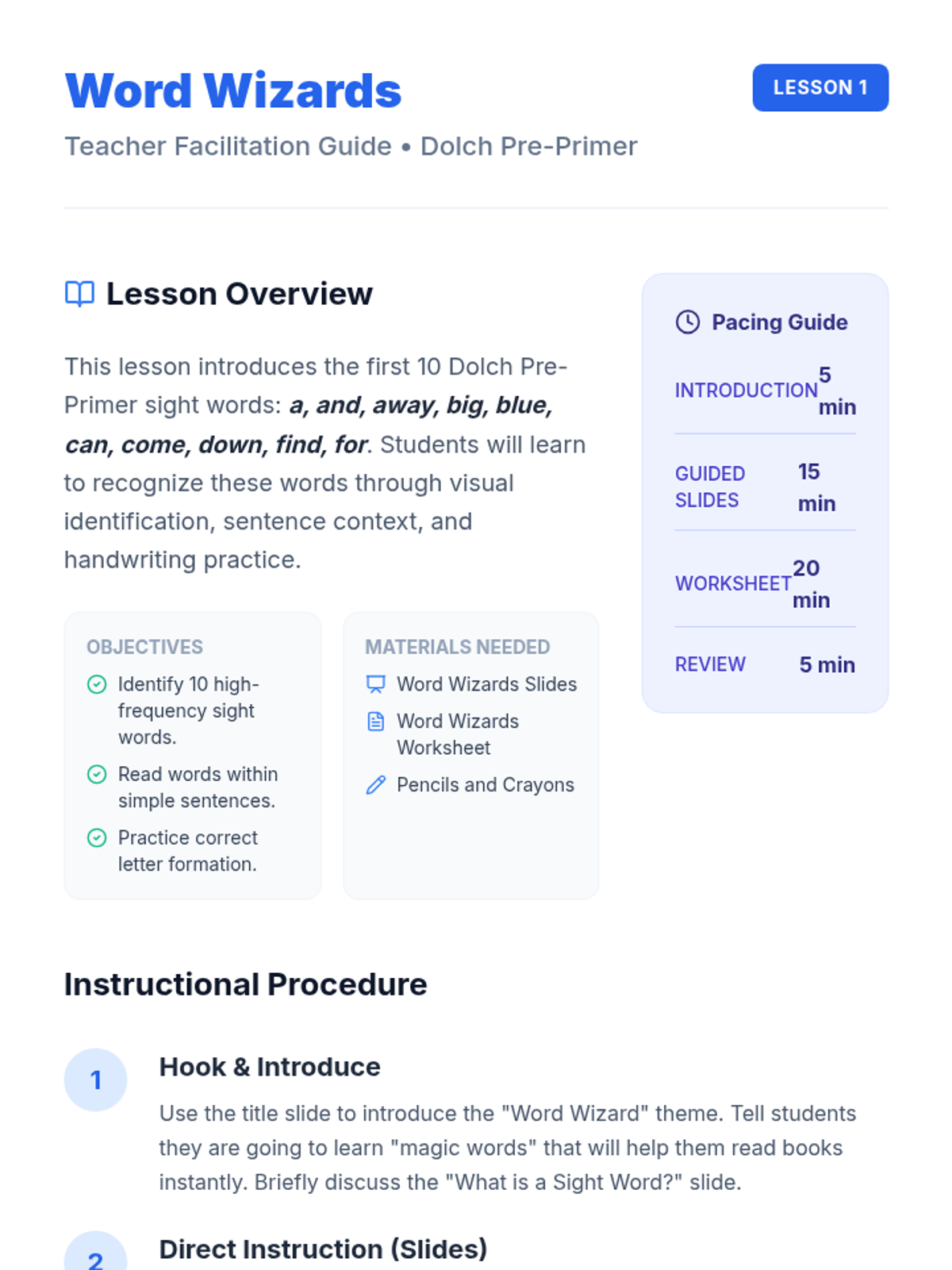
A fun and engaging introduction to Dolch Pre-Primer sight words through tracing, writing, and word-finding activities designed for Kindergarten students.
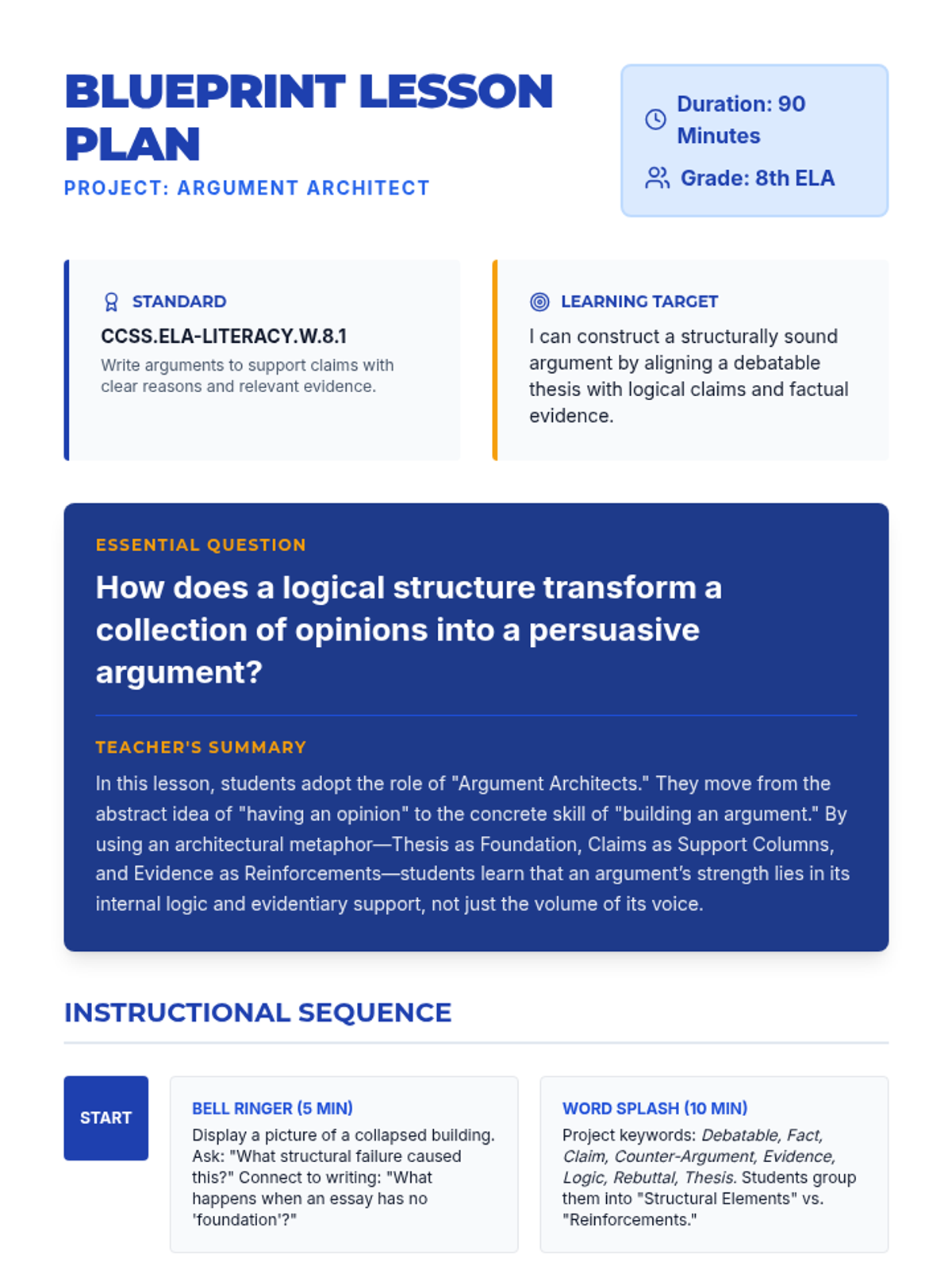
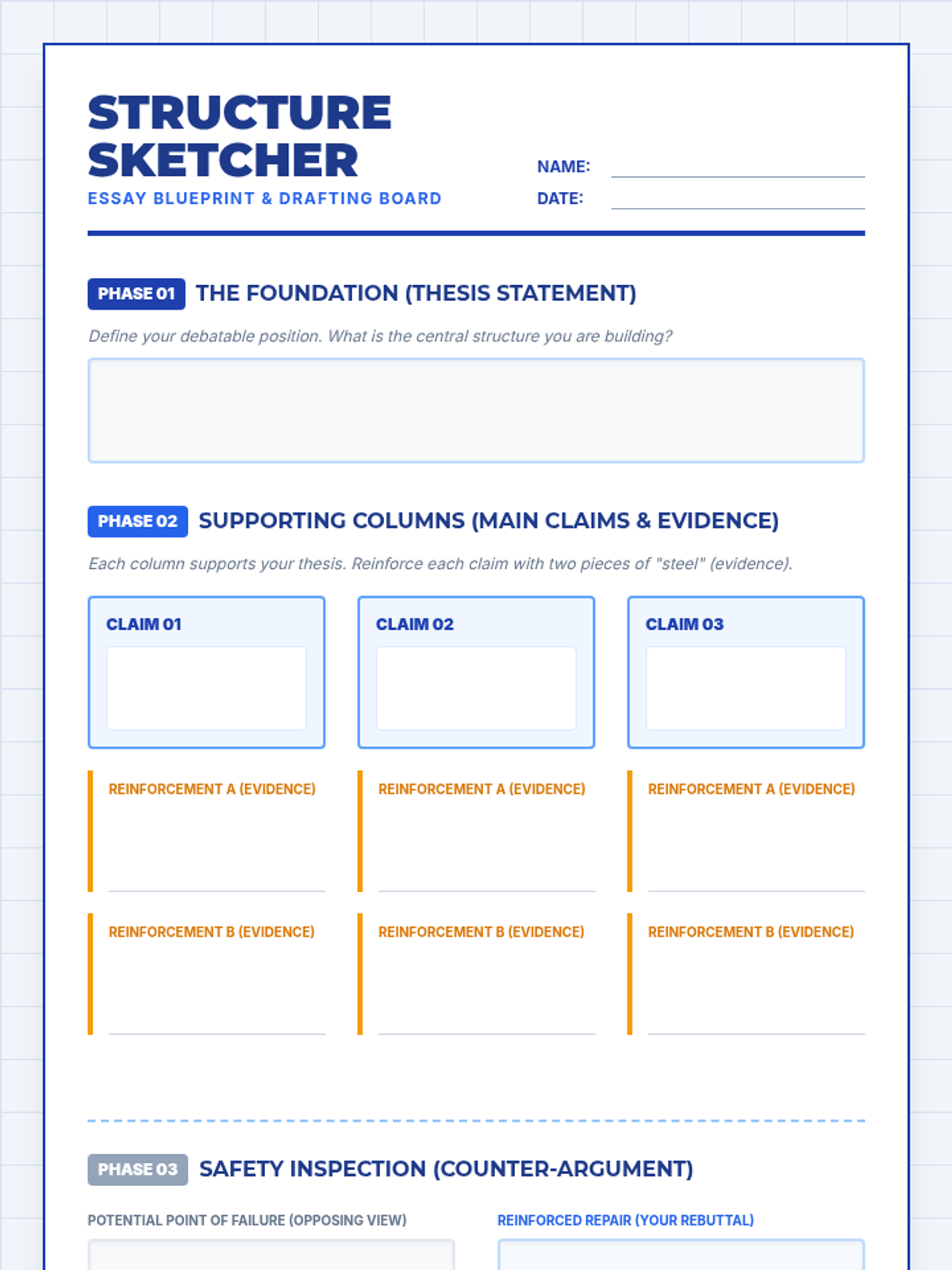
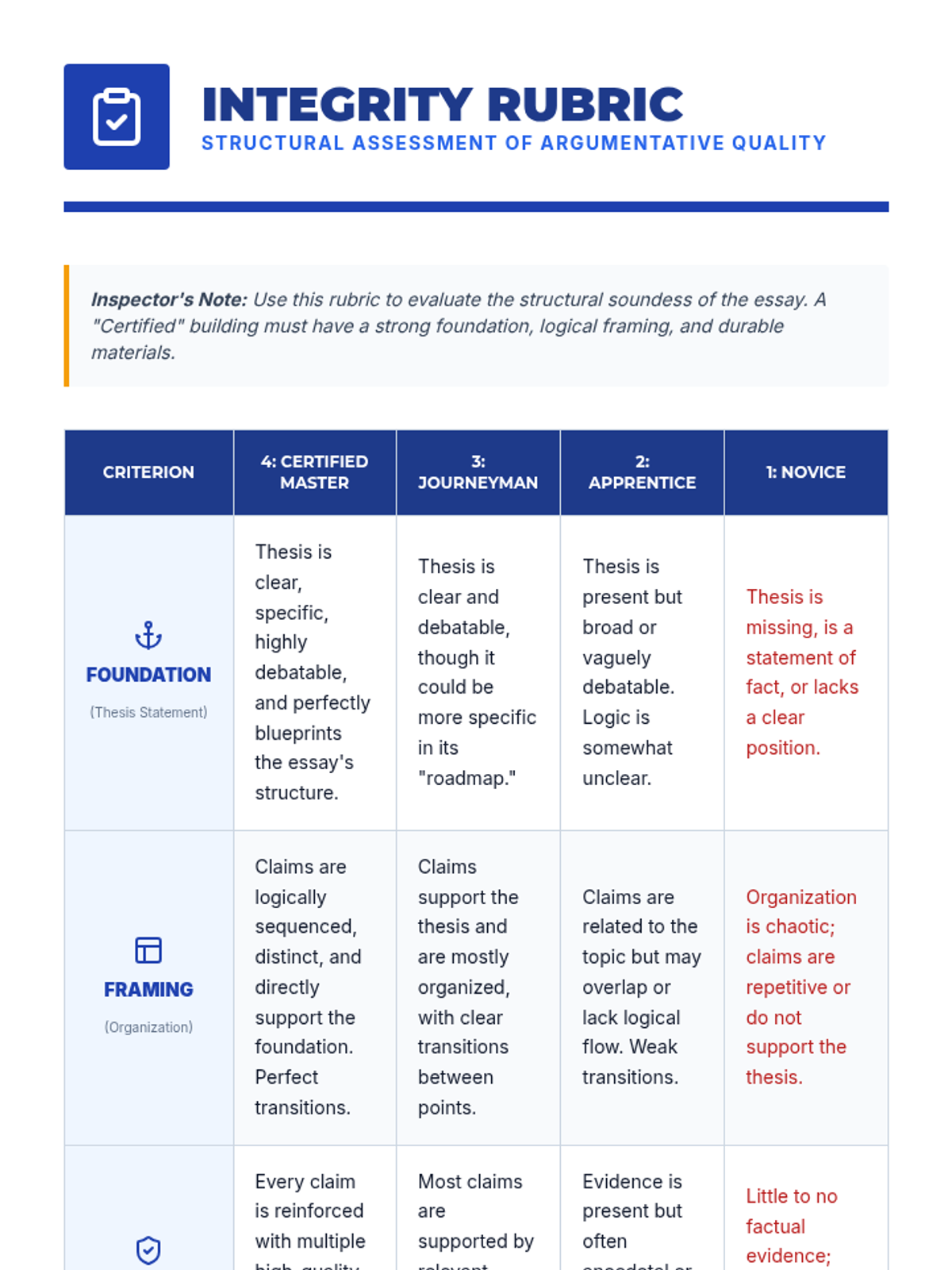
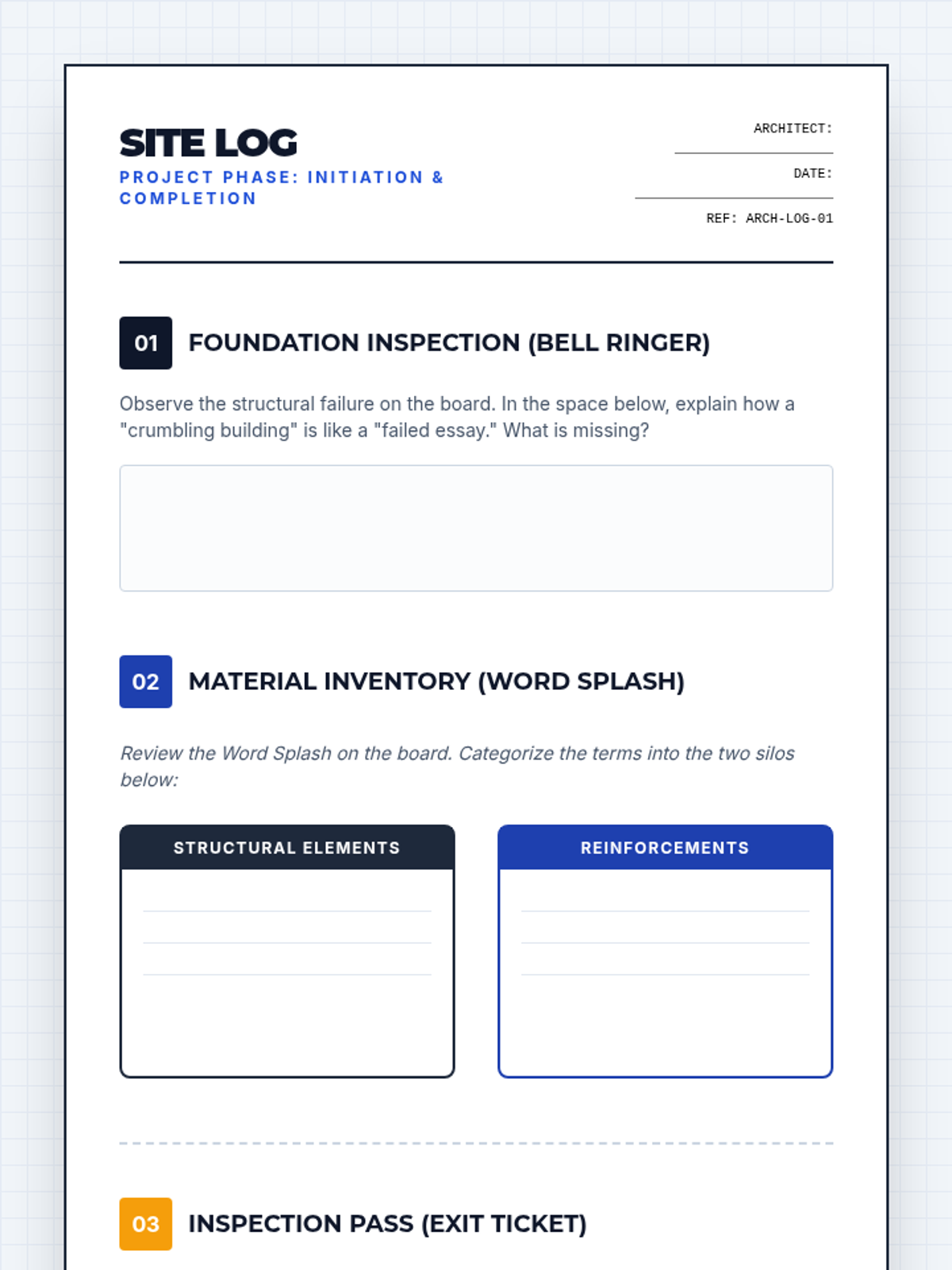
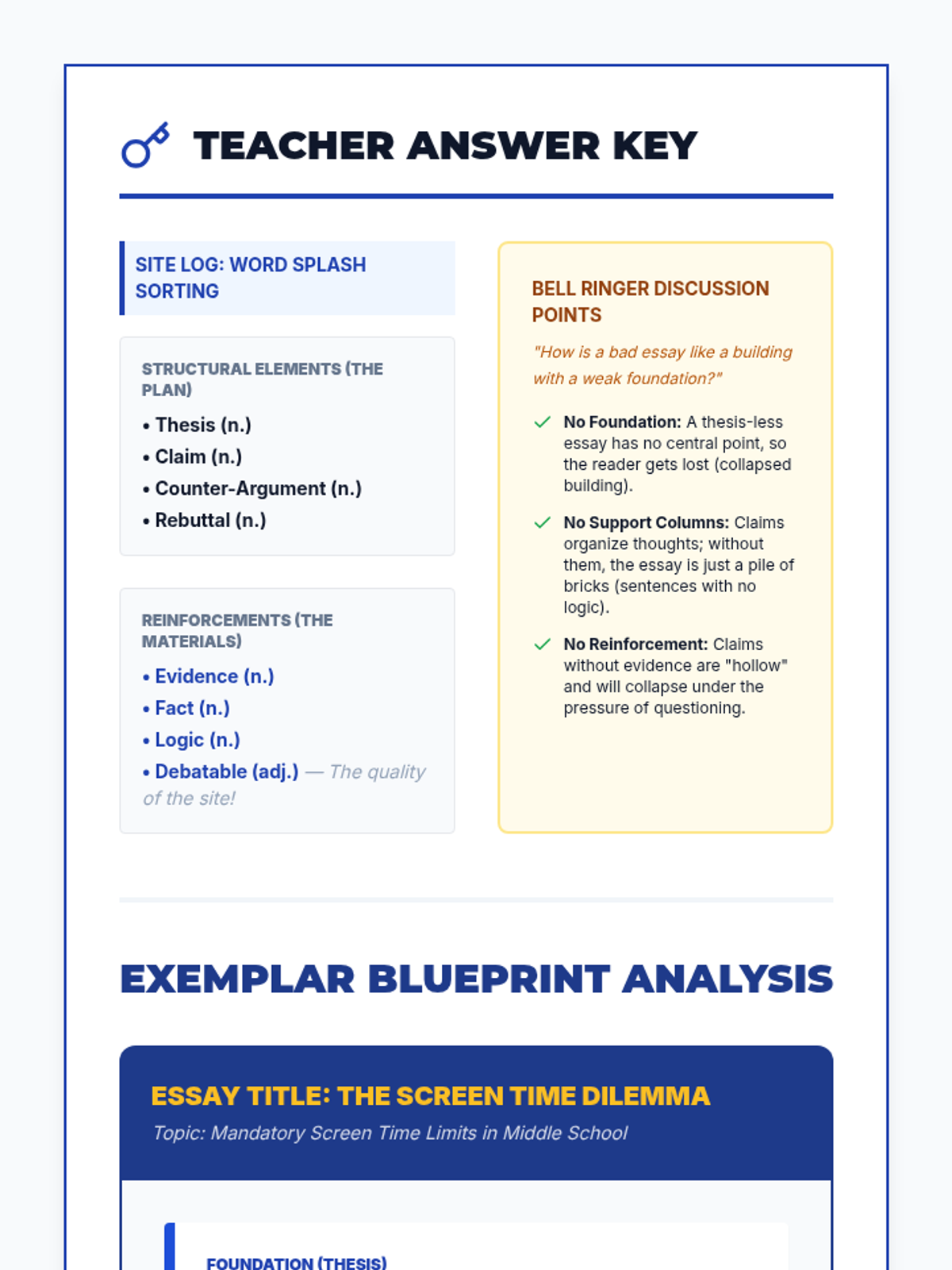
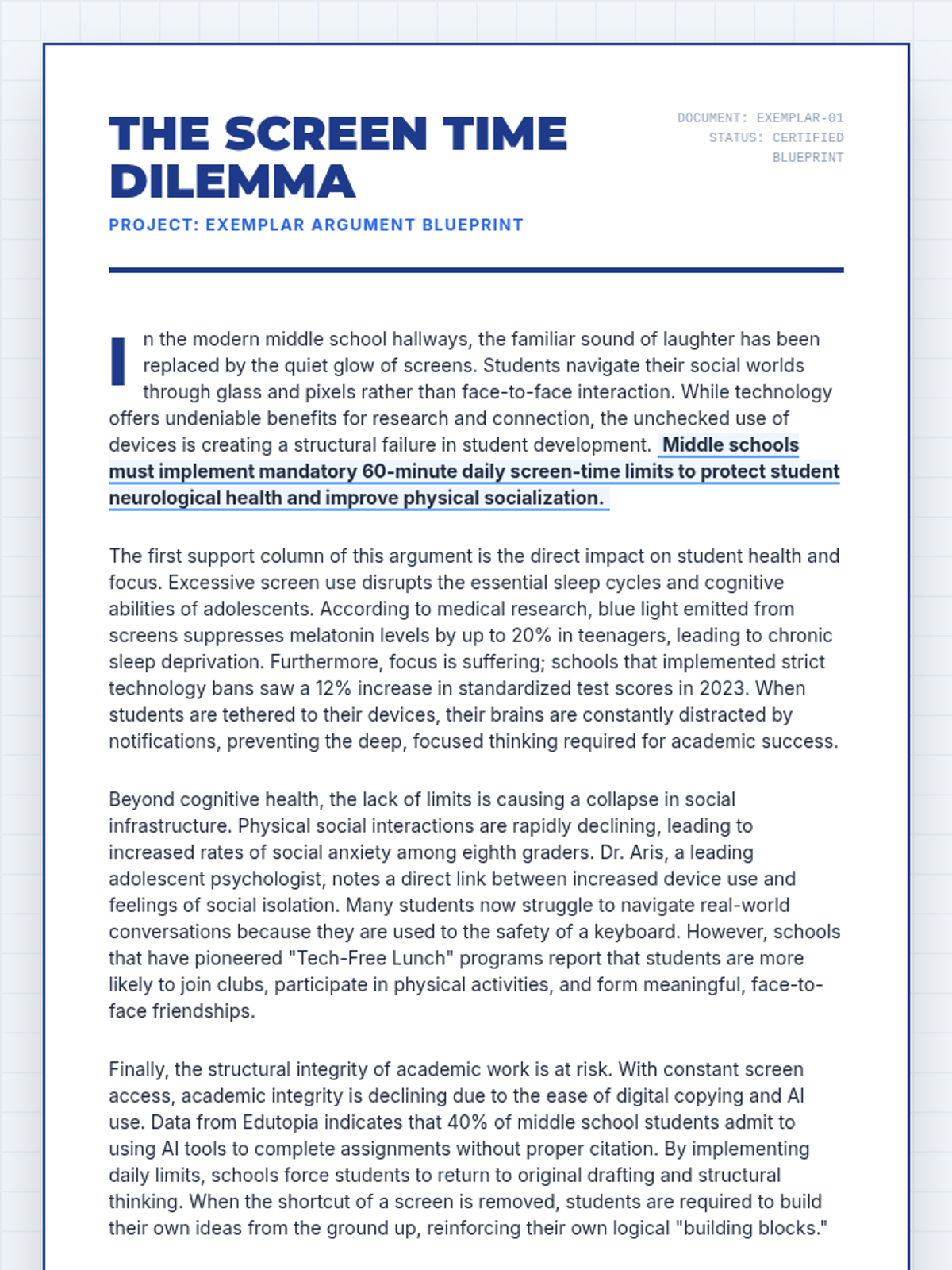
A comprehensive lesson where 8th graders learn to construct persuasive essays using an 'architectural' framework, focusing on thesis foundations, structural claims, and evidentiary reinforcement.
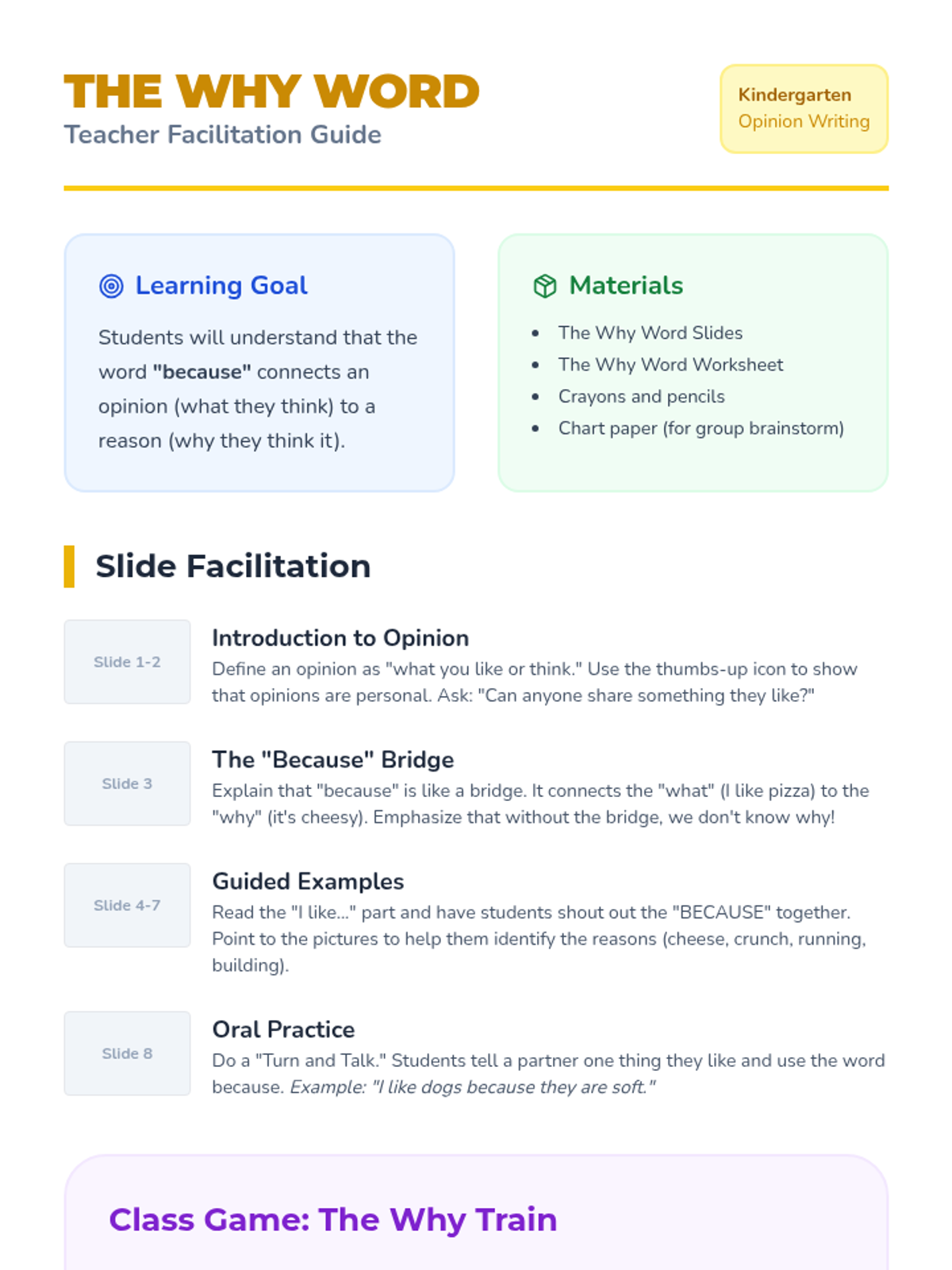
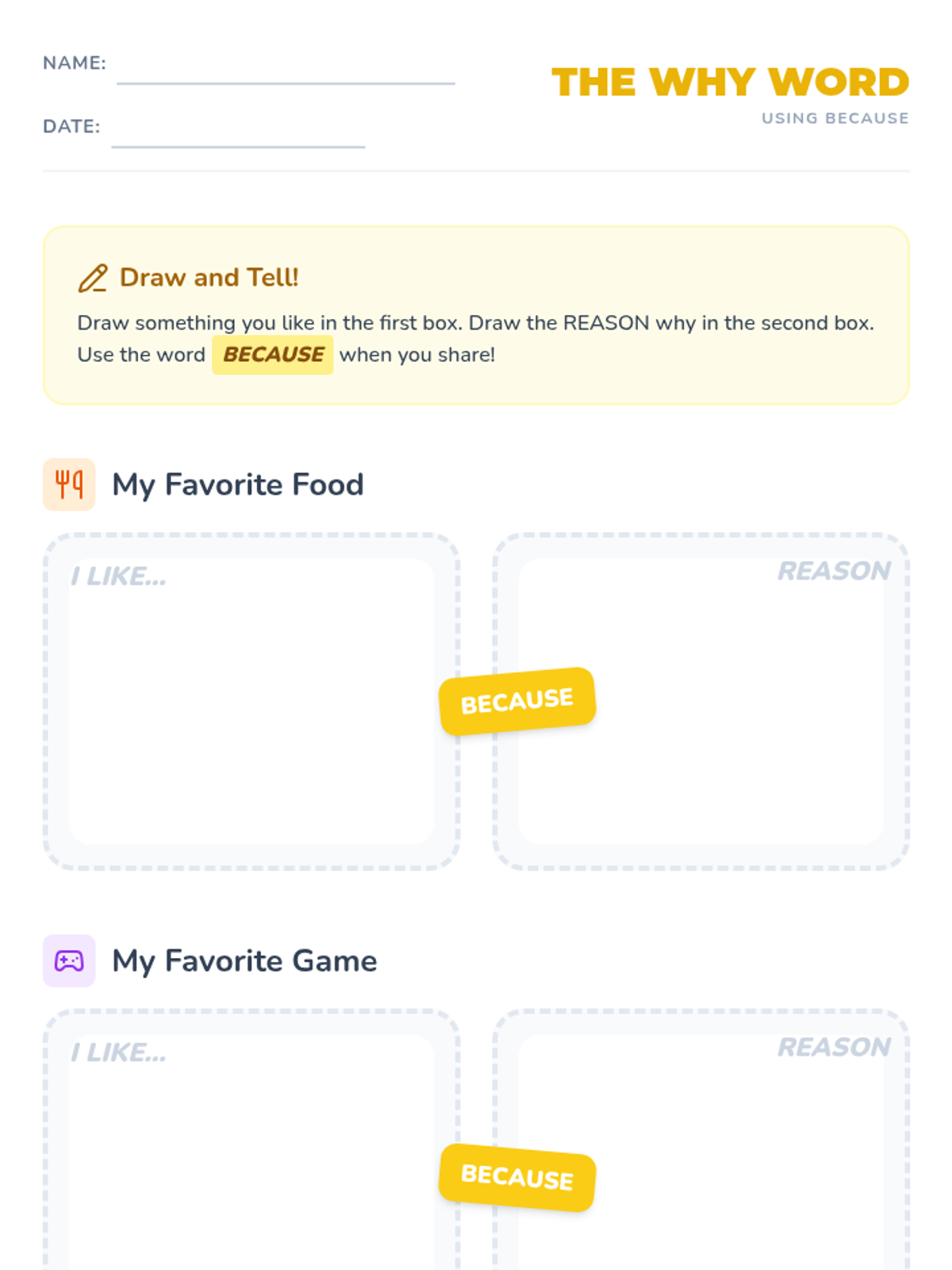
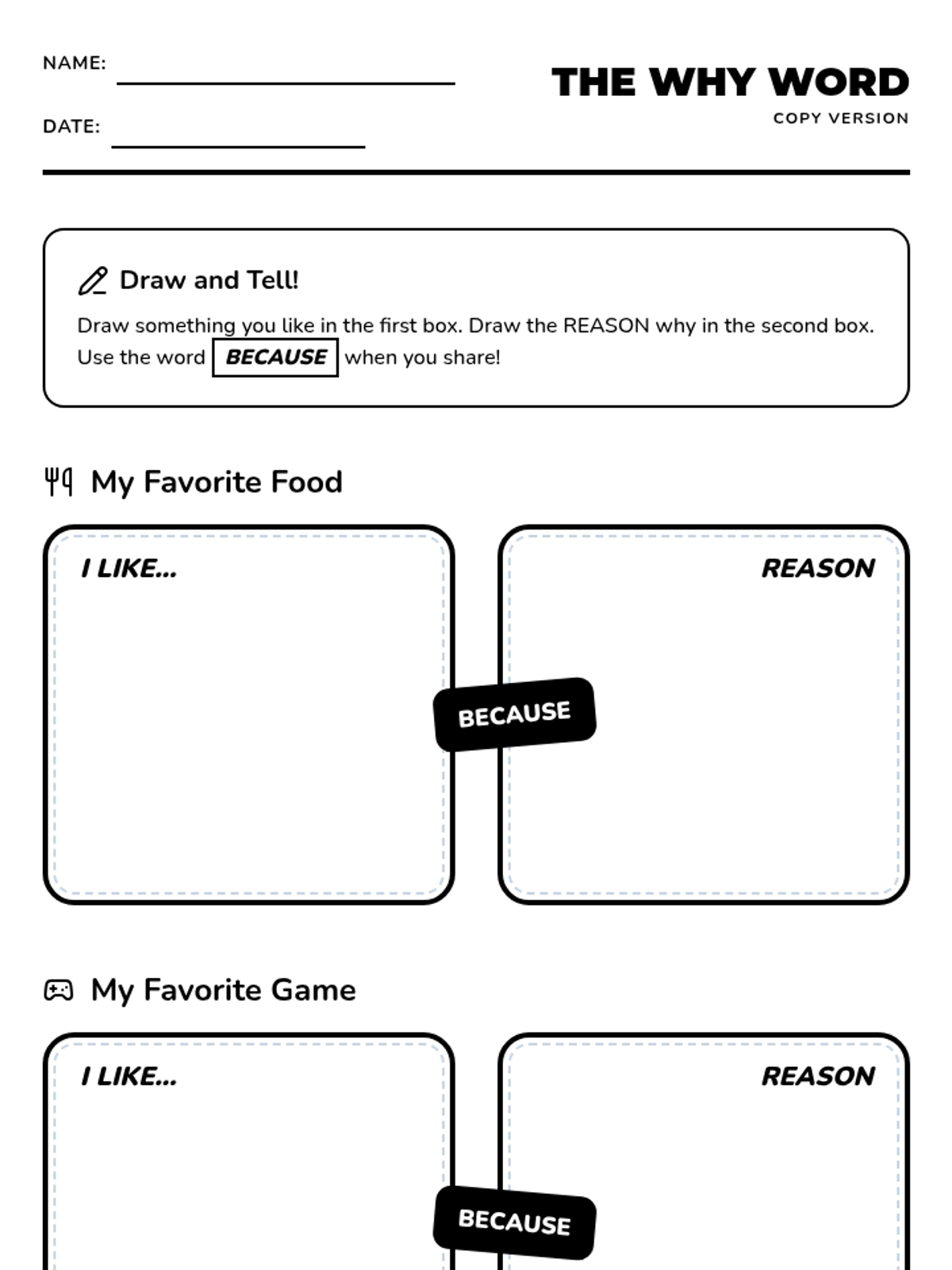
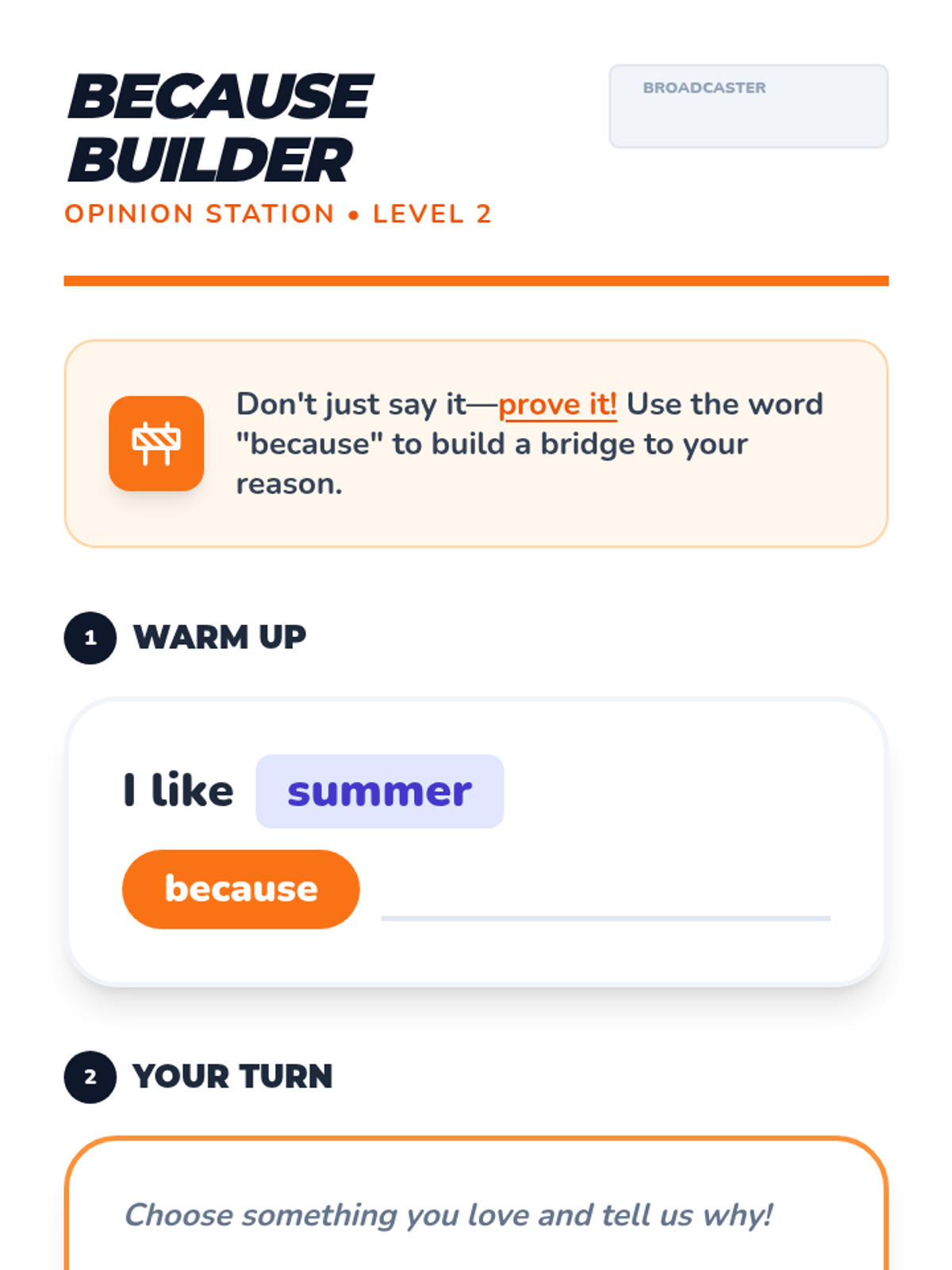
A foundational lesson for kindergarten students on using the word 'because' to link an opinion with a supporting reason, using relatable examples like food and play.
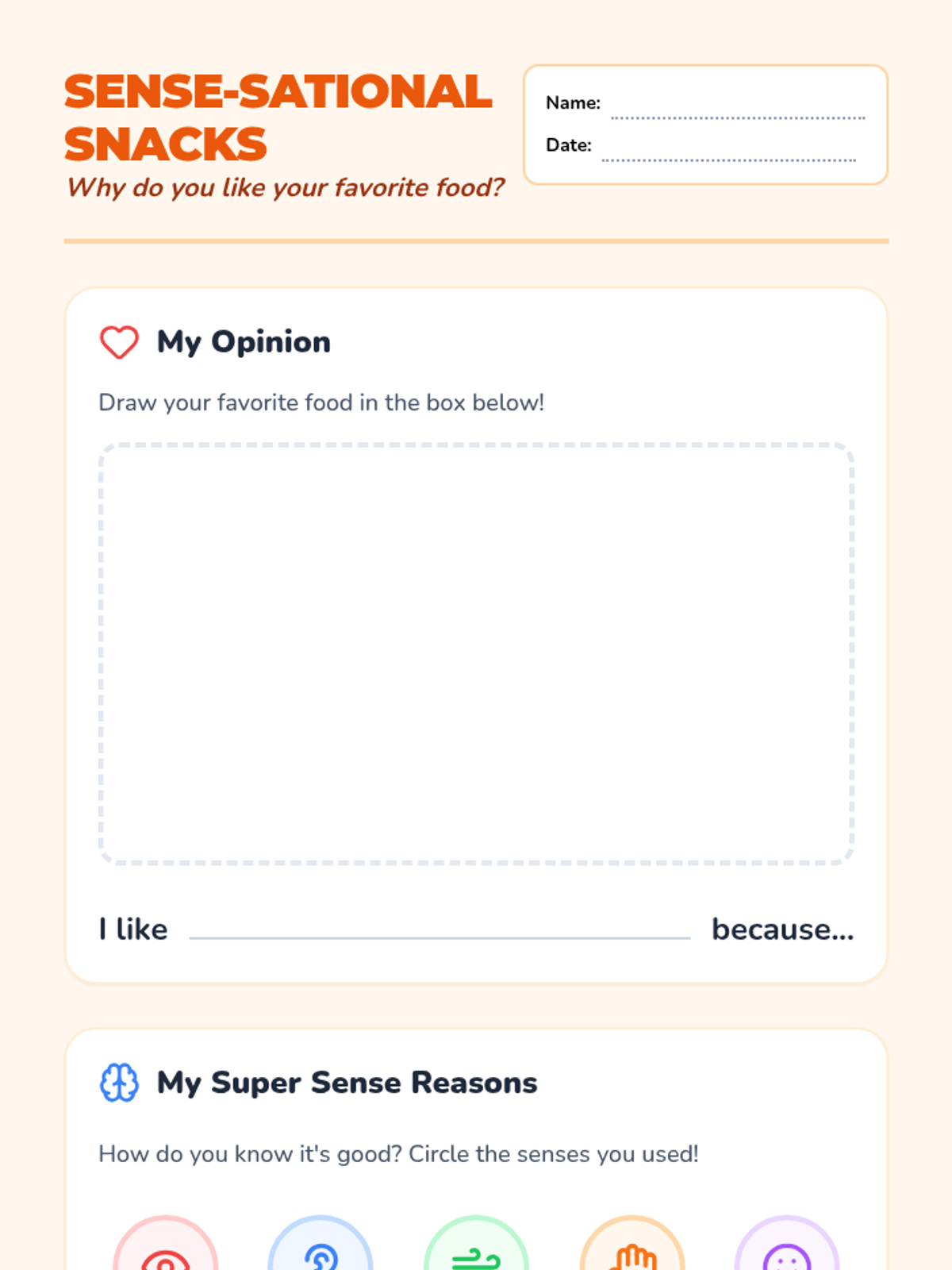
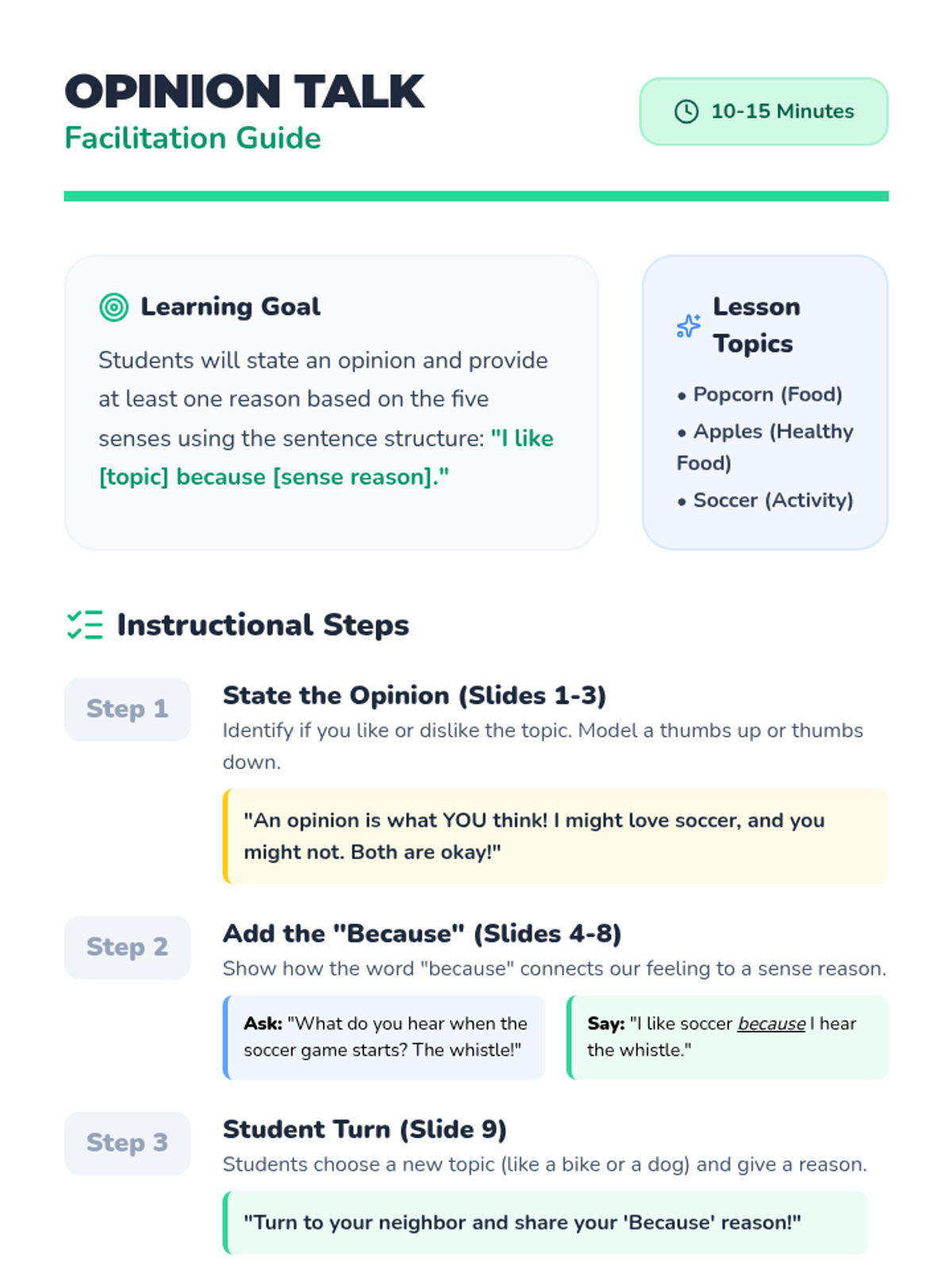
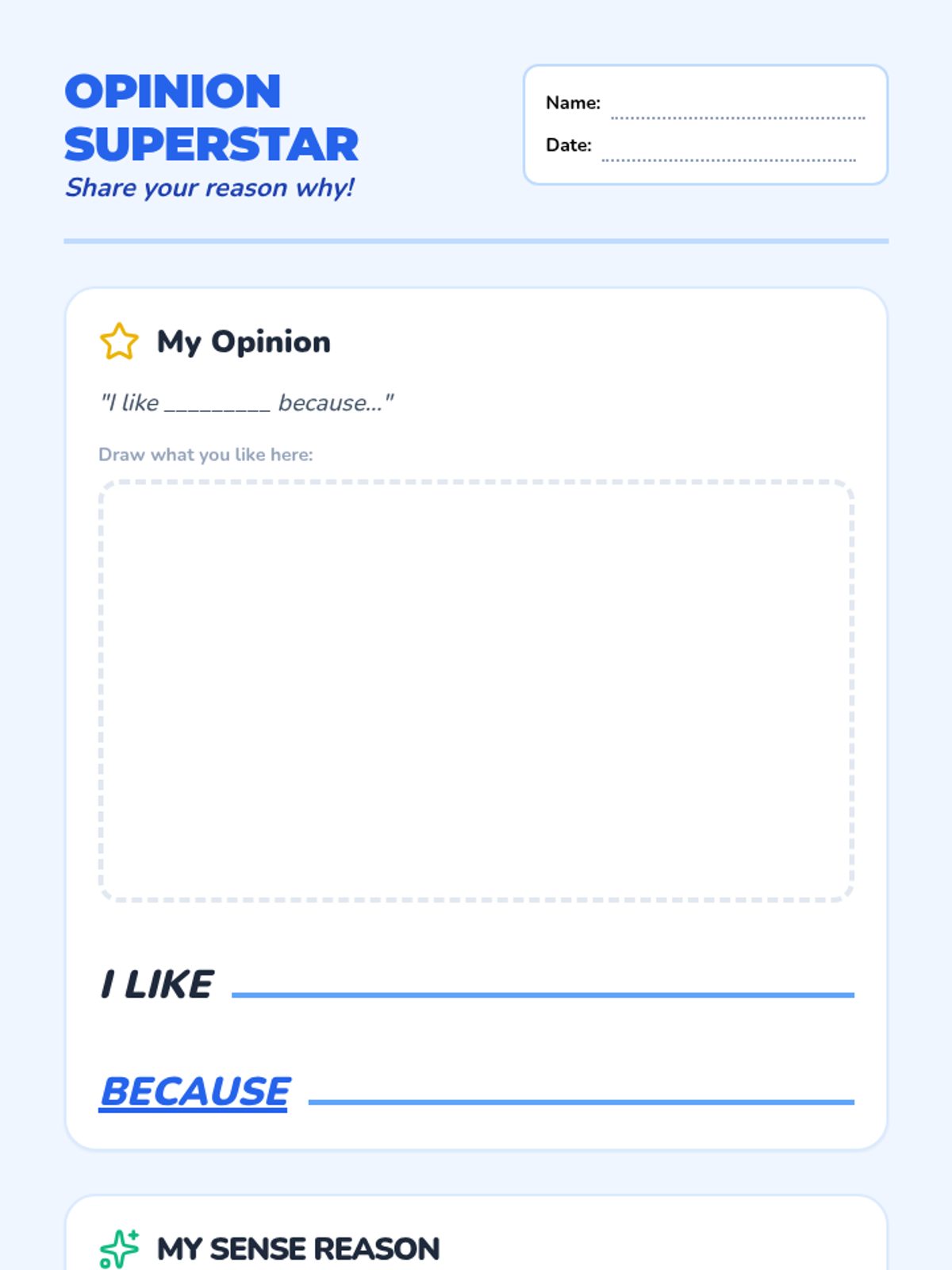
A kindergarten lesson focused on expressing opinions about various topics (food, activities, hobbies) using the five senses as supporting reasons. Students will learn how to transition from simple statements to descriptive 'because' statements.
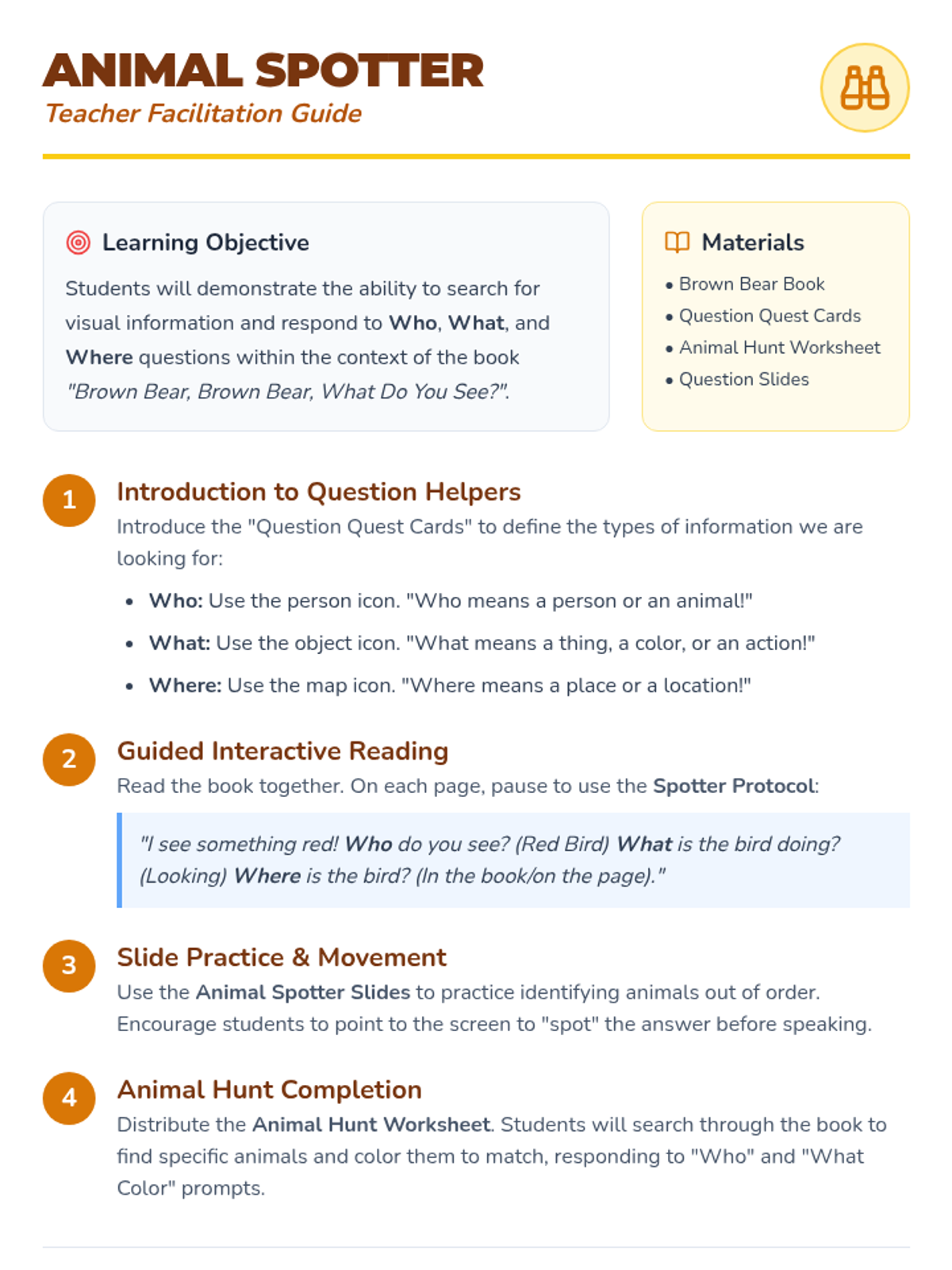
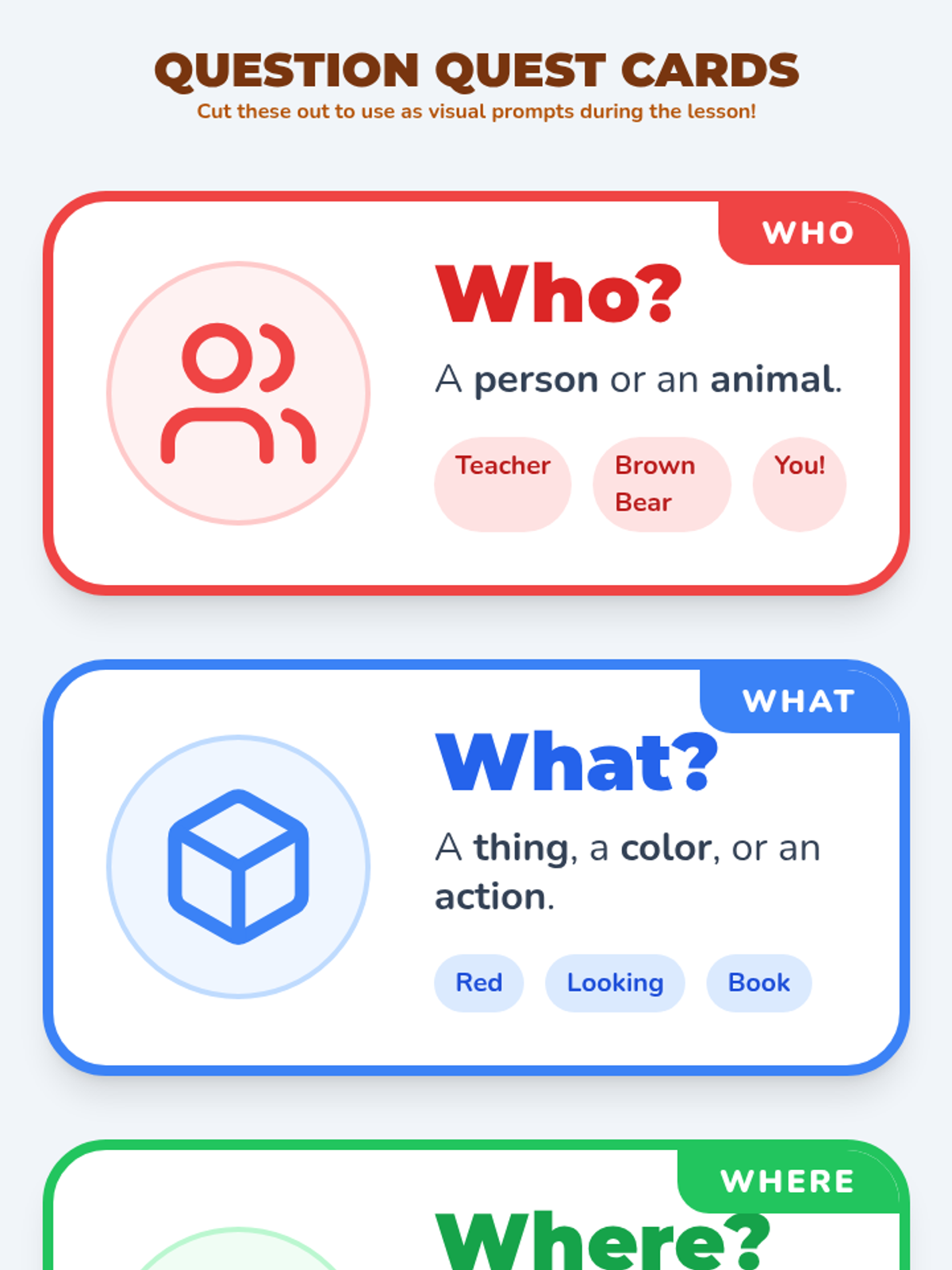
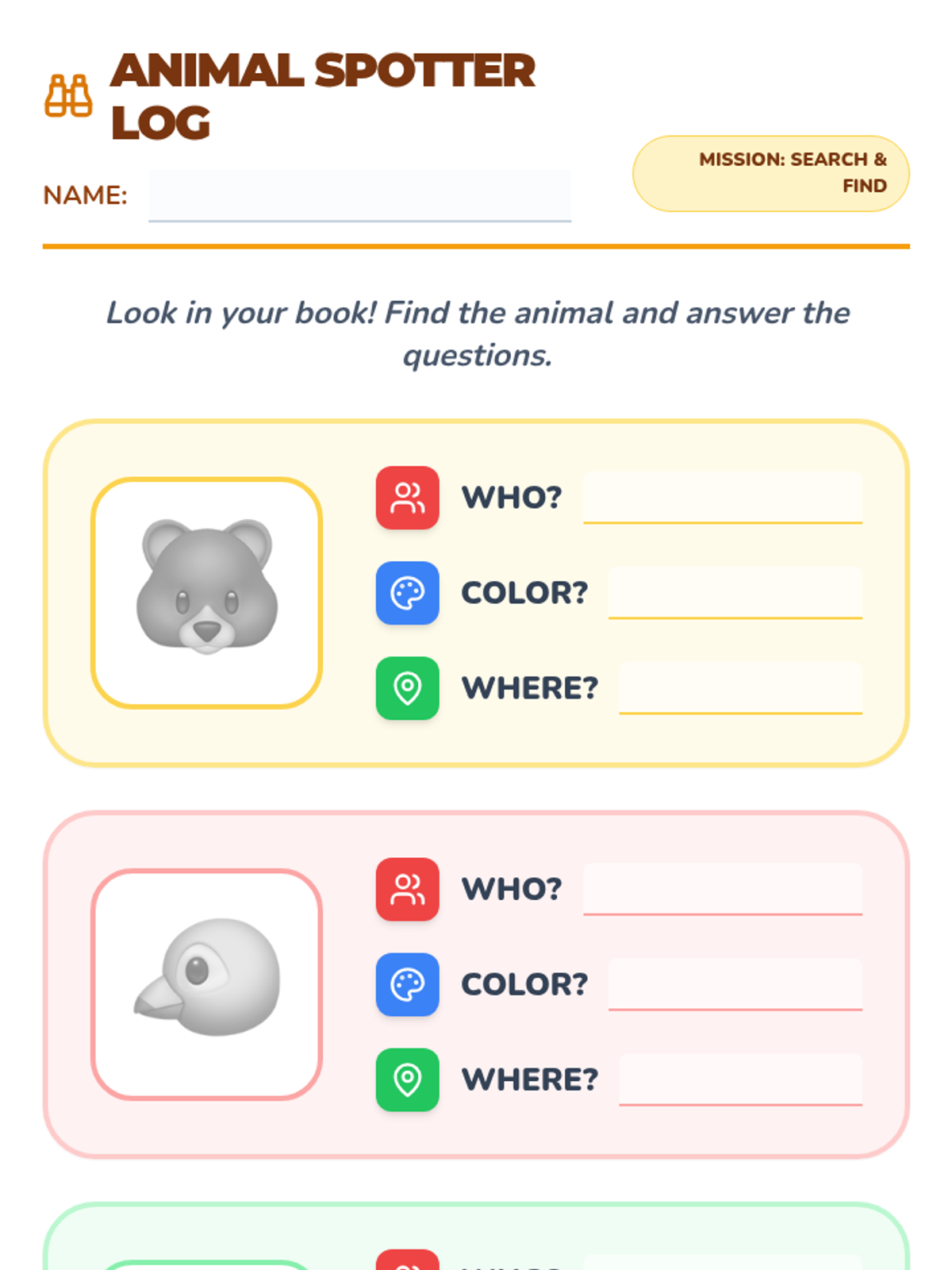
A Pre-K lesson focused on responding to who, what, and where questions using the book 'Brown Bear, Brown Bear, What Do You See?' as a context. Students will practice searching for visual information and identifying animals, colors, and locations.
A preparatory lesson exploring the historical, social, and cultural landscape of the 1920s to provide context for 'The Great Gatsby'. Students rotate through stations covering the Sacco-Vanzetti trial, the Harlem Renaissance, and major social shifts.
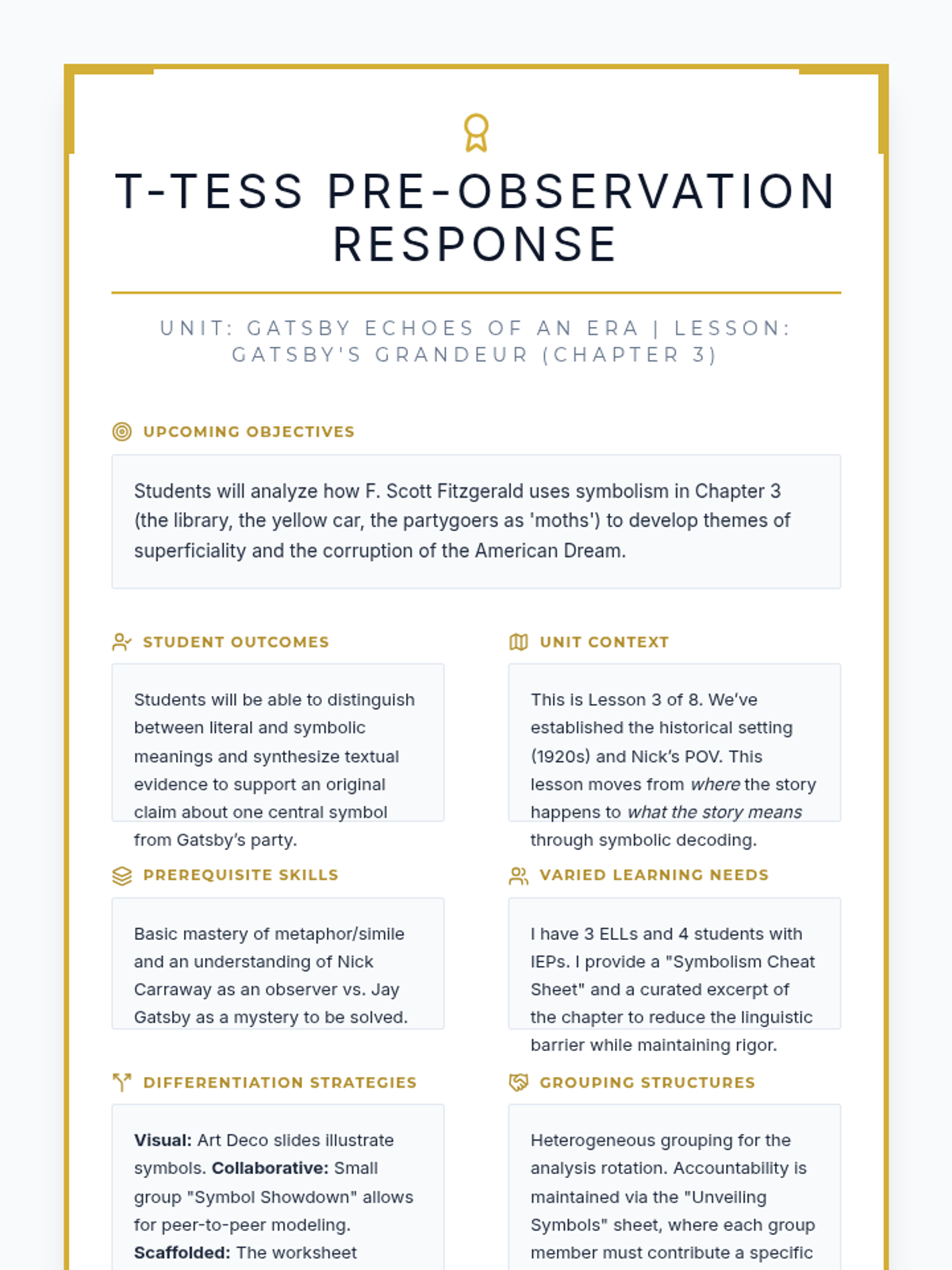
An investigation into the rich symbolism present in Chapter 3 during one of Gatsby's lavish parties. Students decode the meaning behind objects like the library books and the yellow car to understand the era's superficiality.
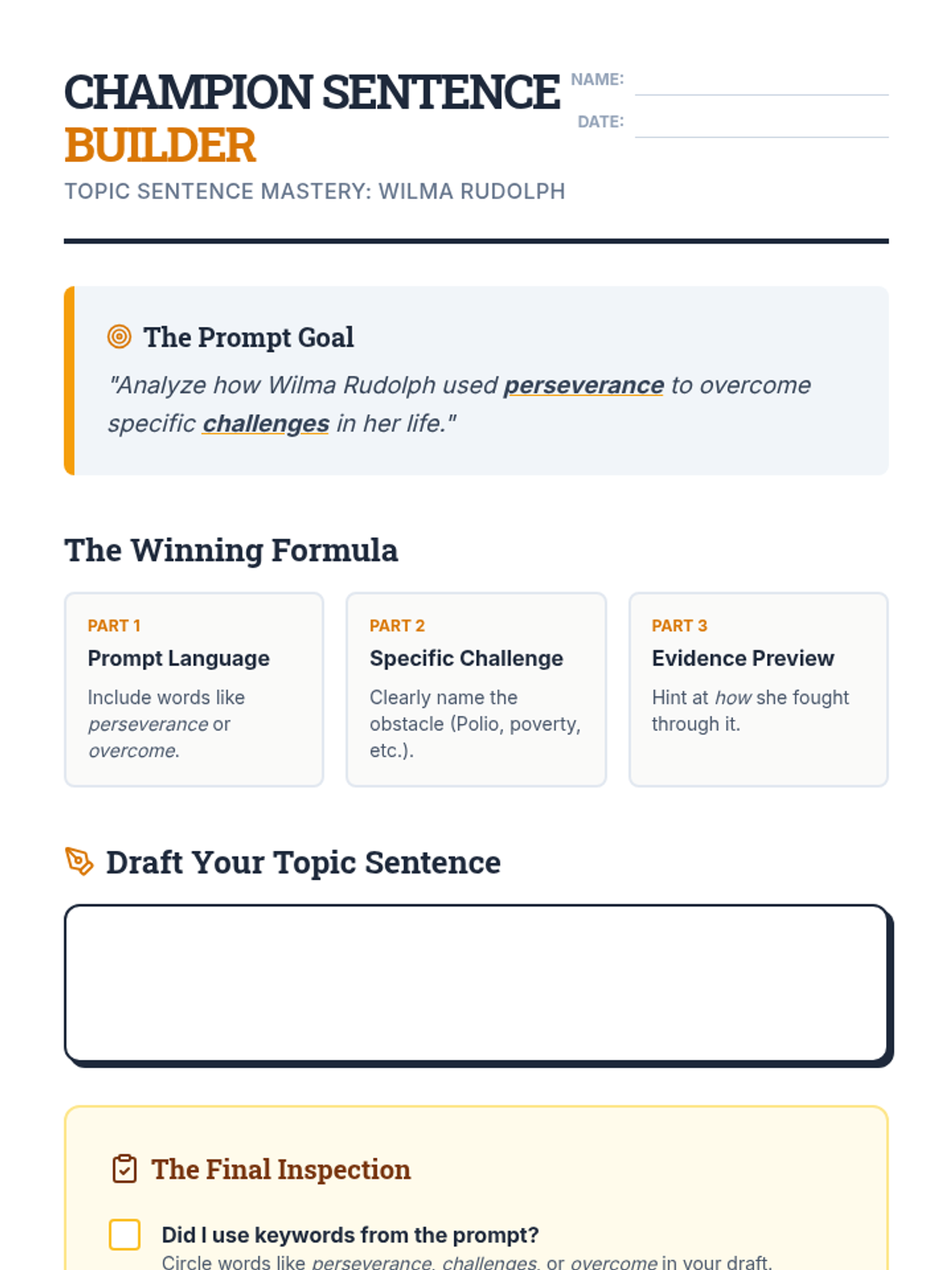
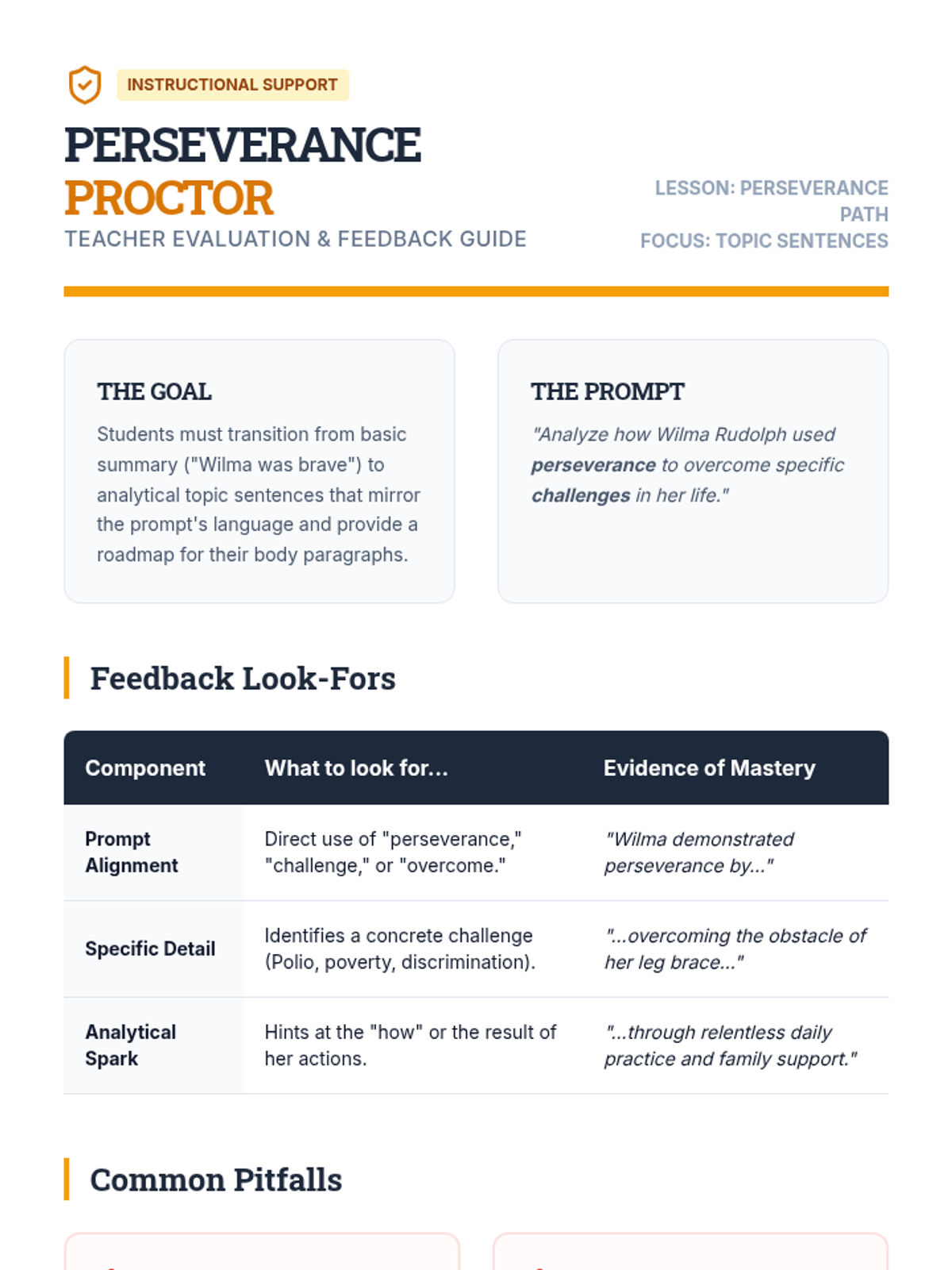
This lesson guides students through the process of crafting topic sentences that directly respond to a writing prompt about Wilma Rudolph's perseverance. It emphasizes the integration of prompt language, previews of text evidence, and the foundation for analytical explanation.
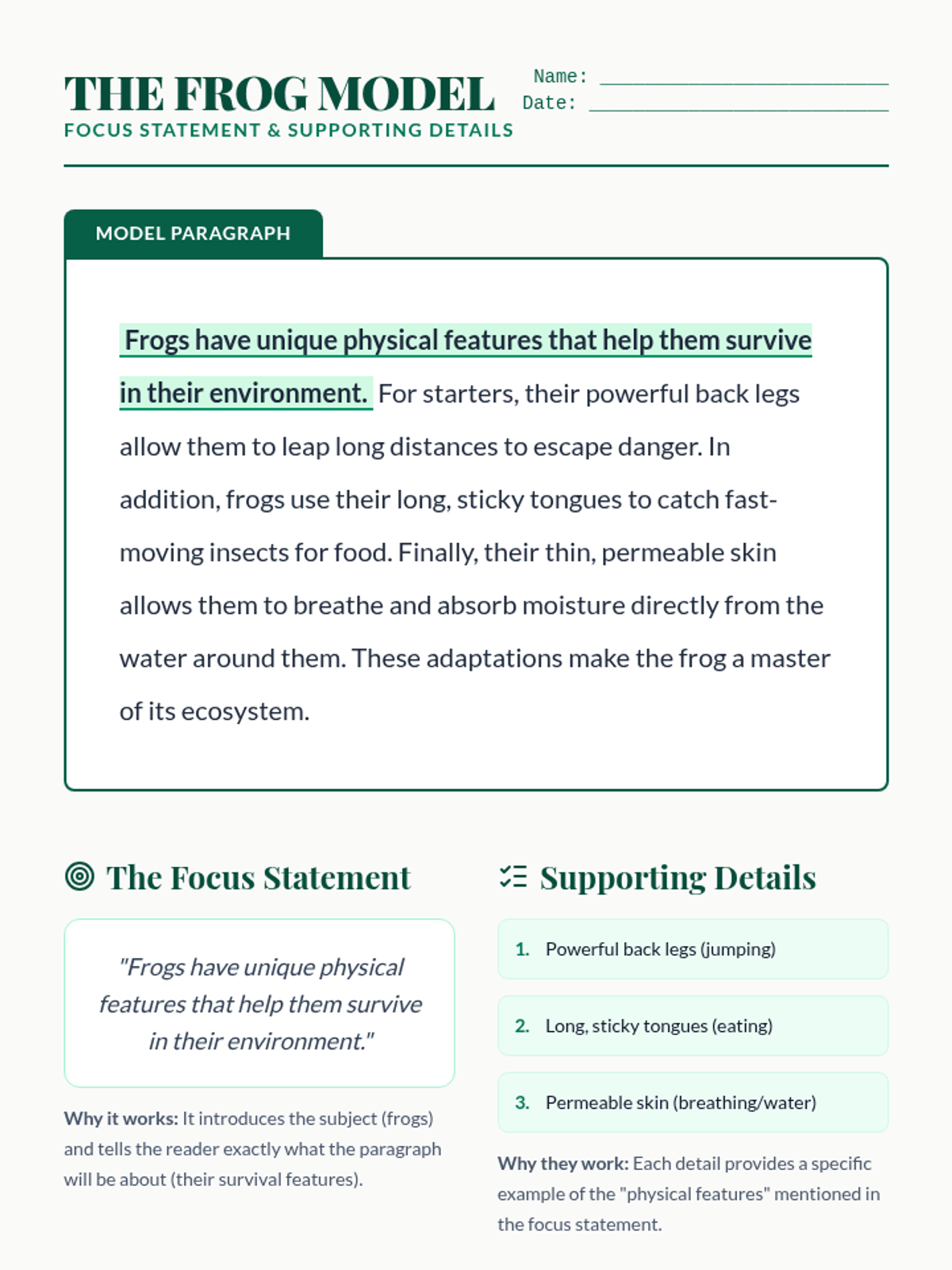
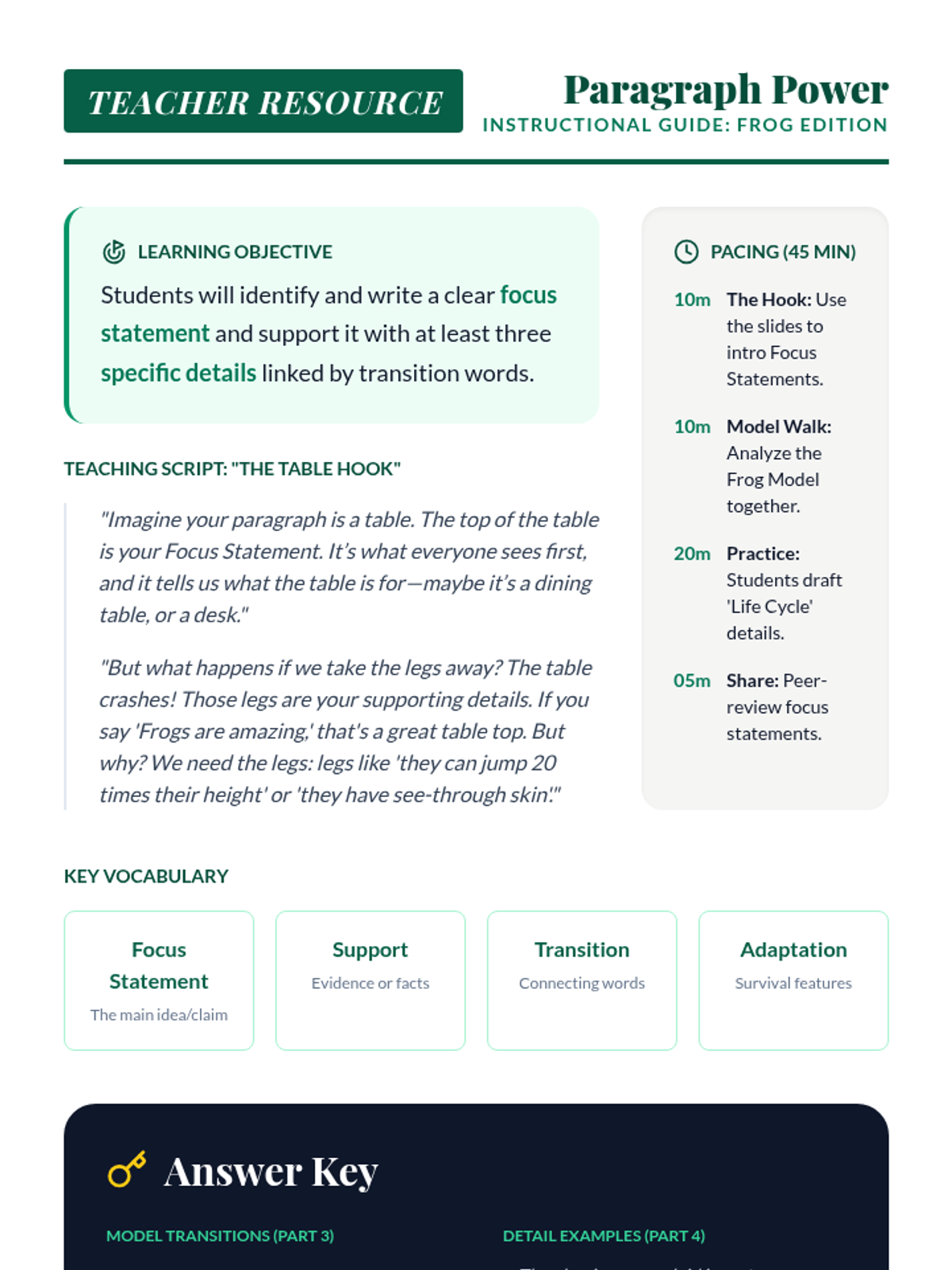
This lesson teaches students how to craft a strong paragraph by combining a clear focus statement with specific supporting details, using the fascinating world of frogs as a model.
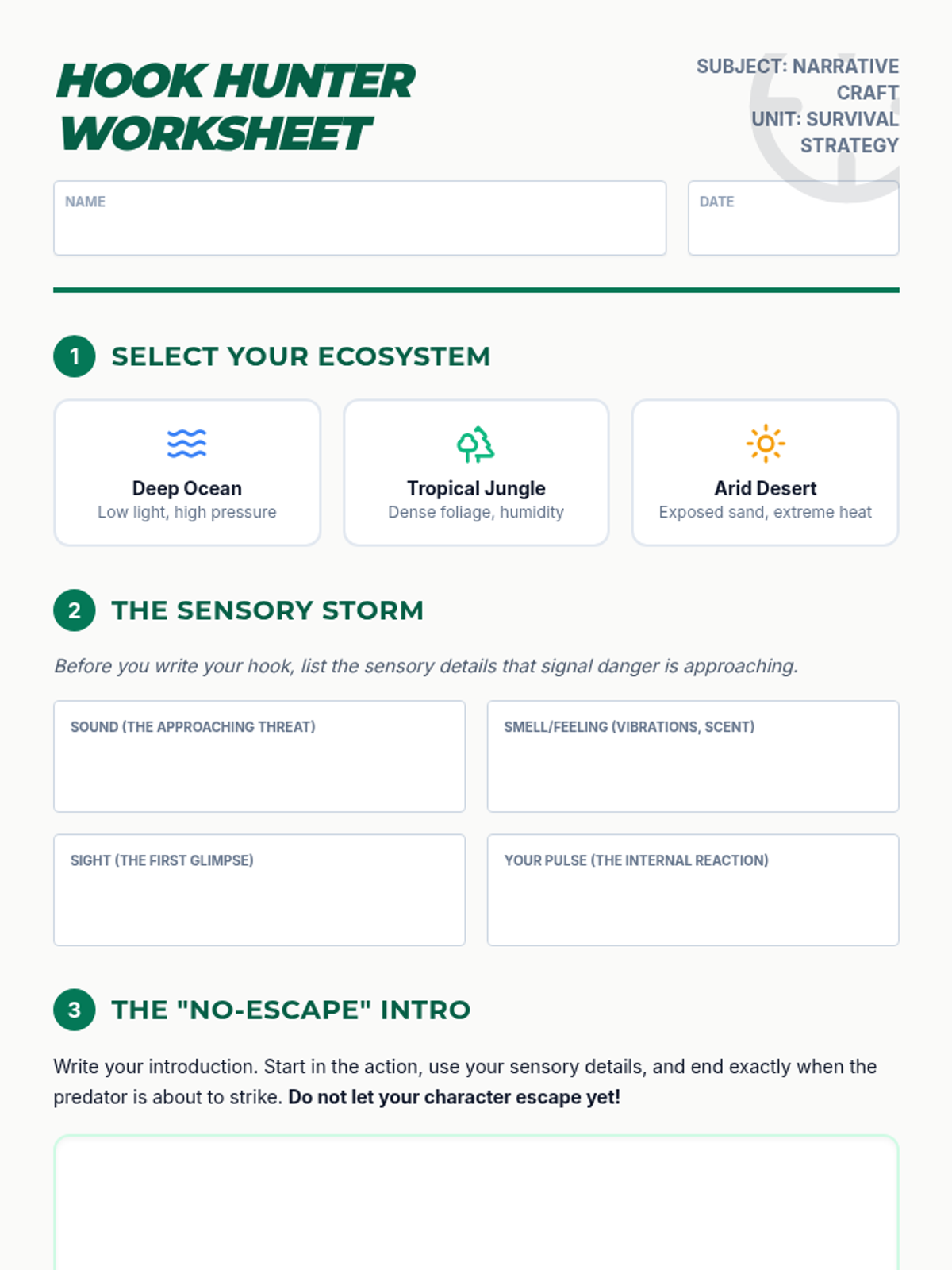
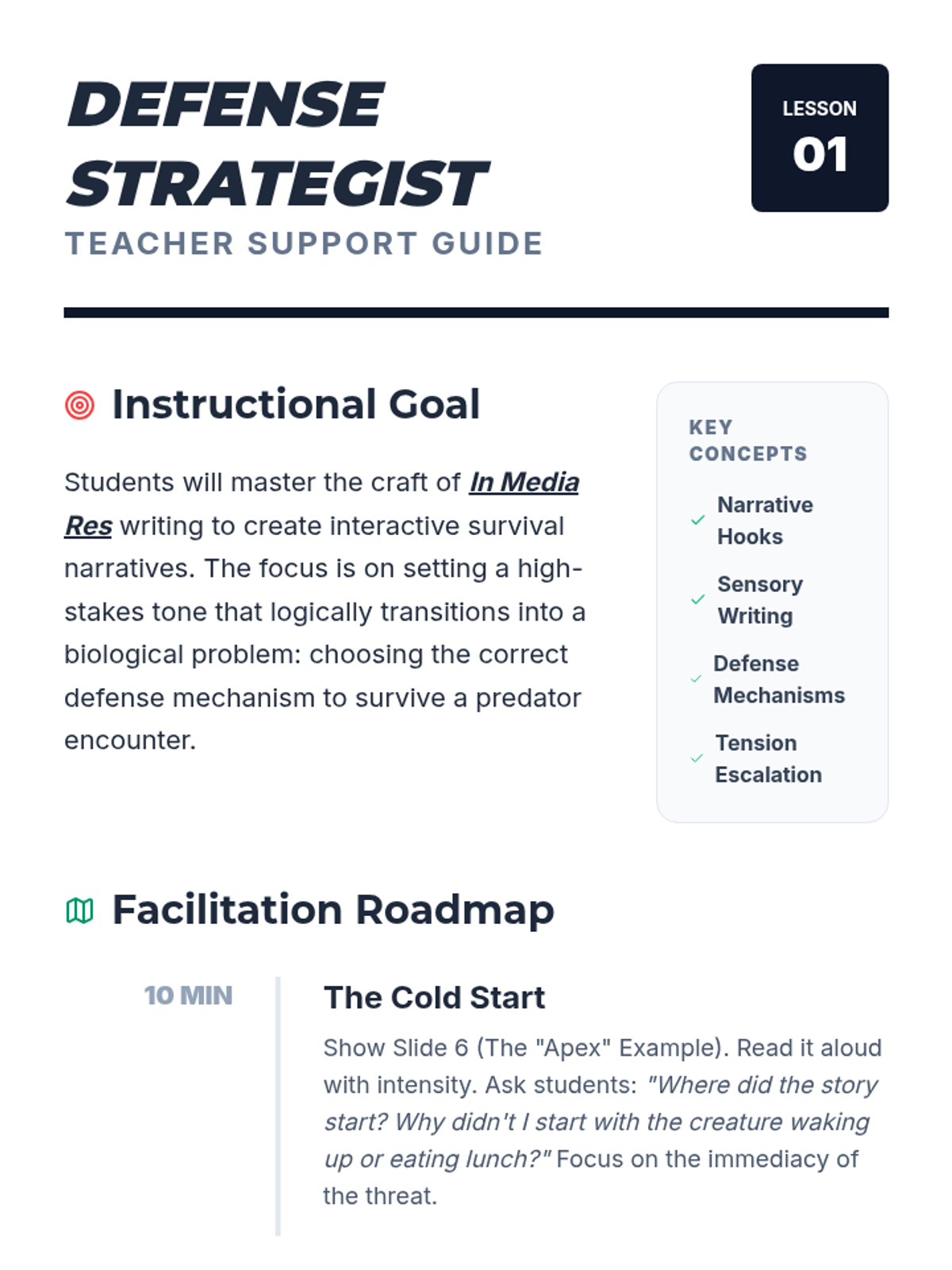
Focuses on writing a high-tension introduction for a Choose Your Own Adventure story that culminates in a critical survival decision based on animal defense mechanisms.
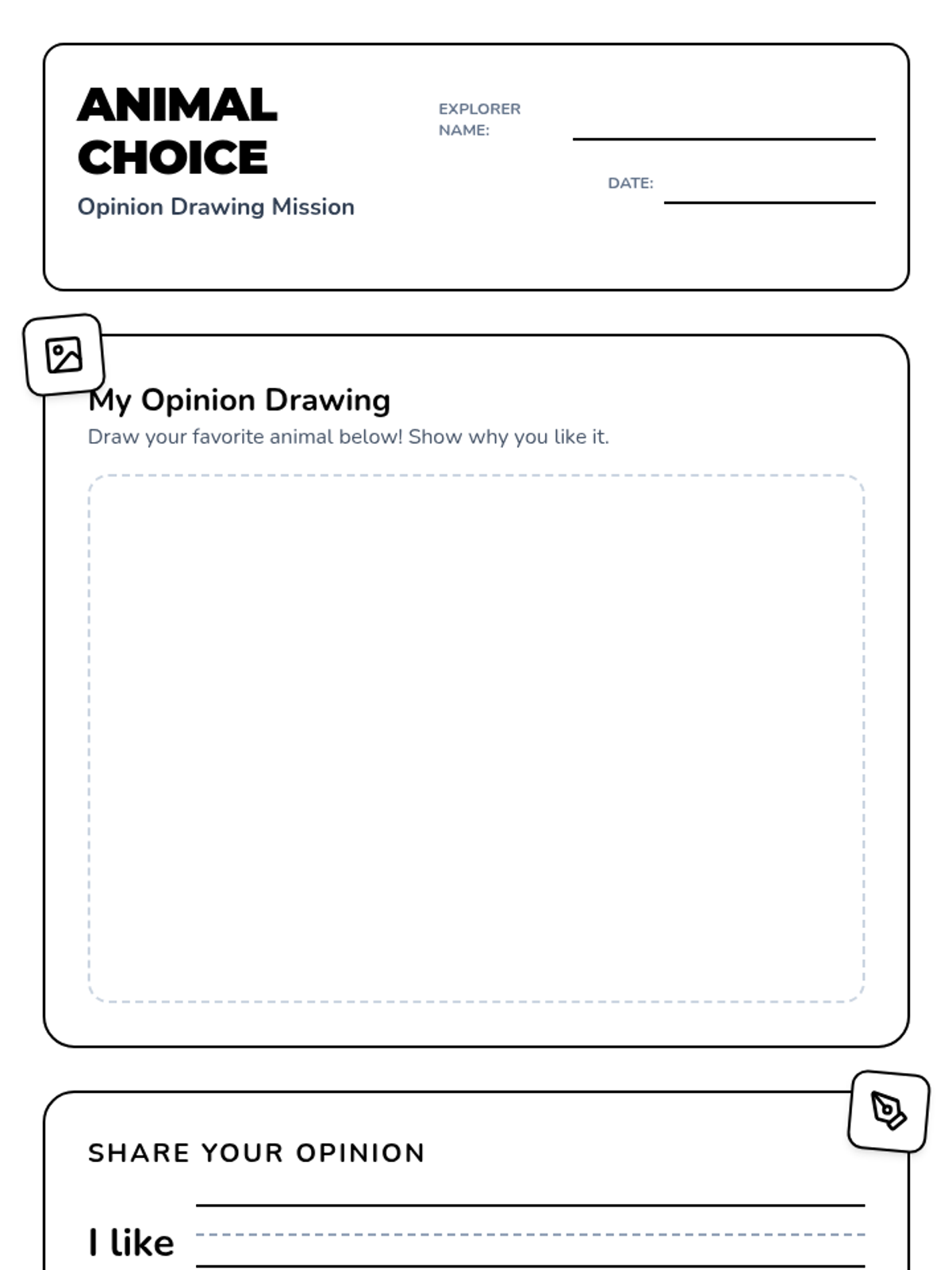
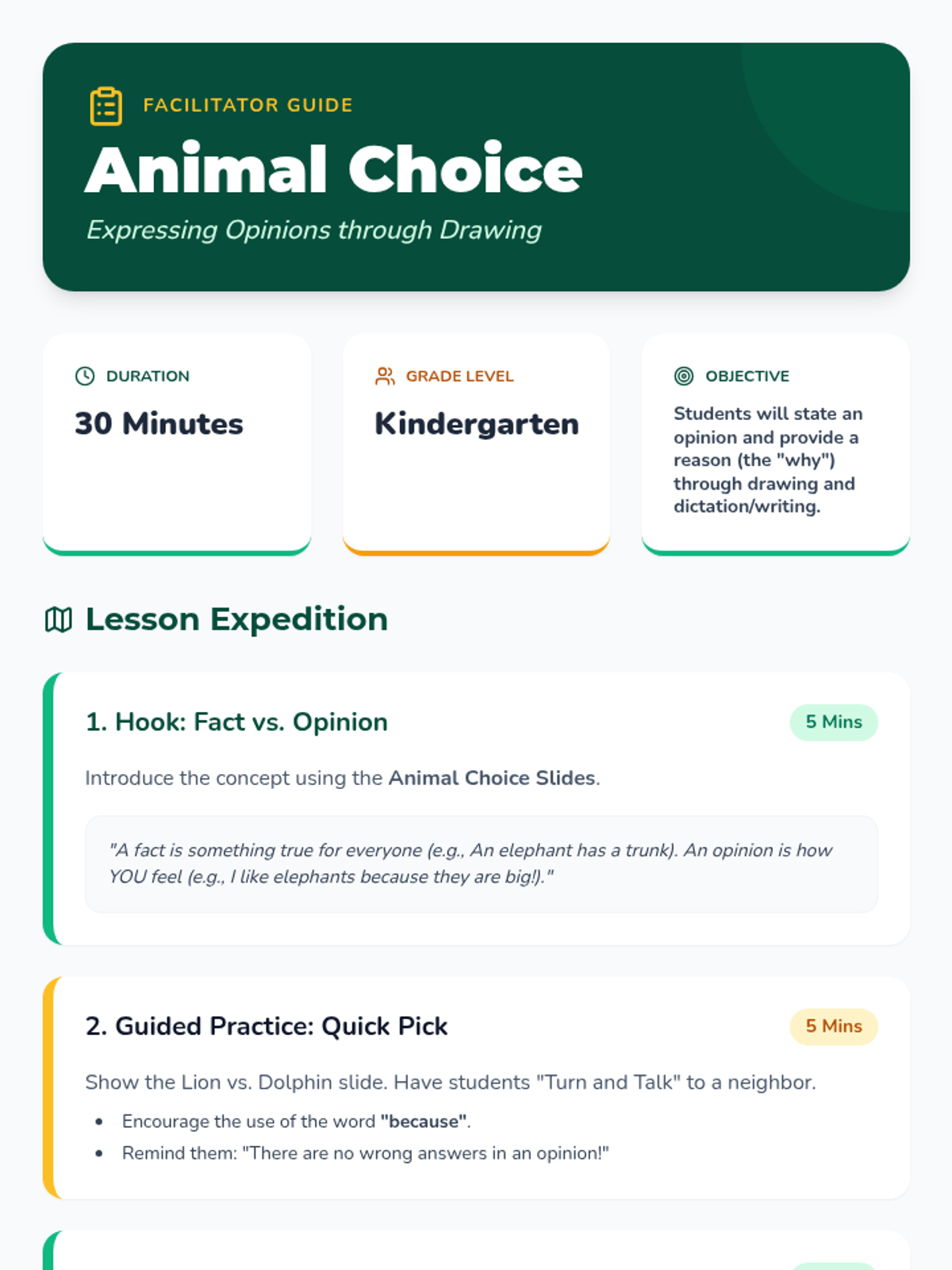
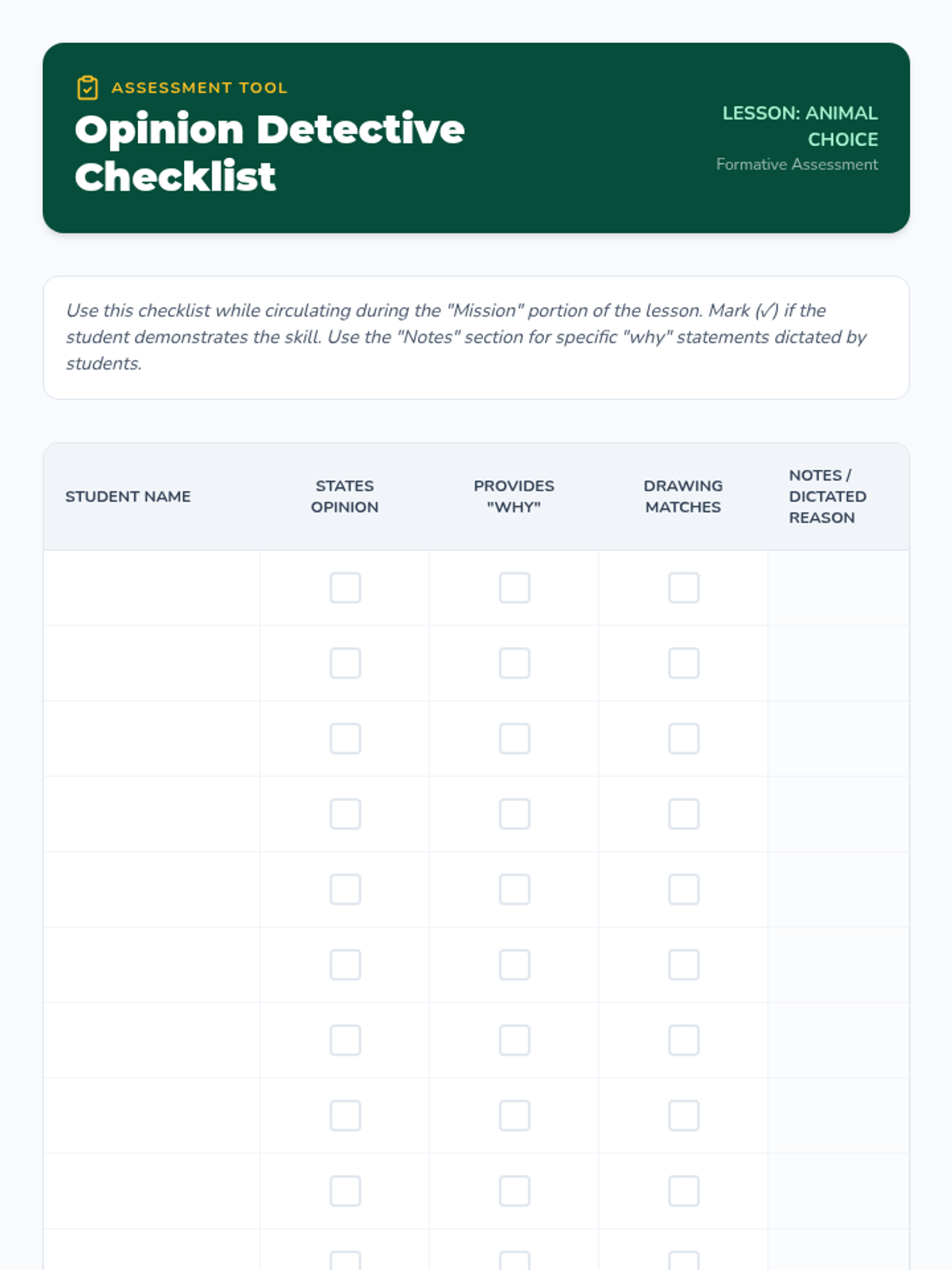
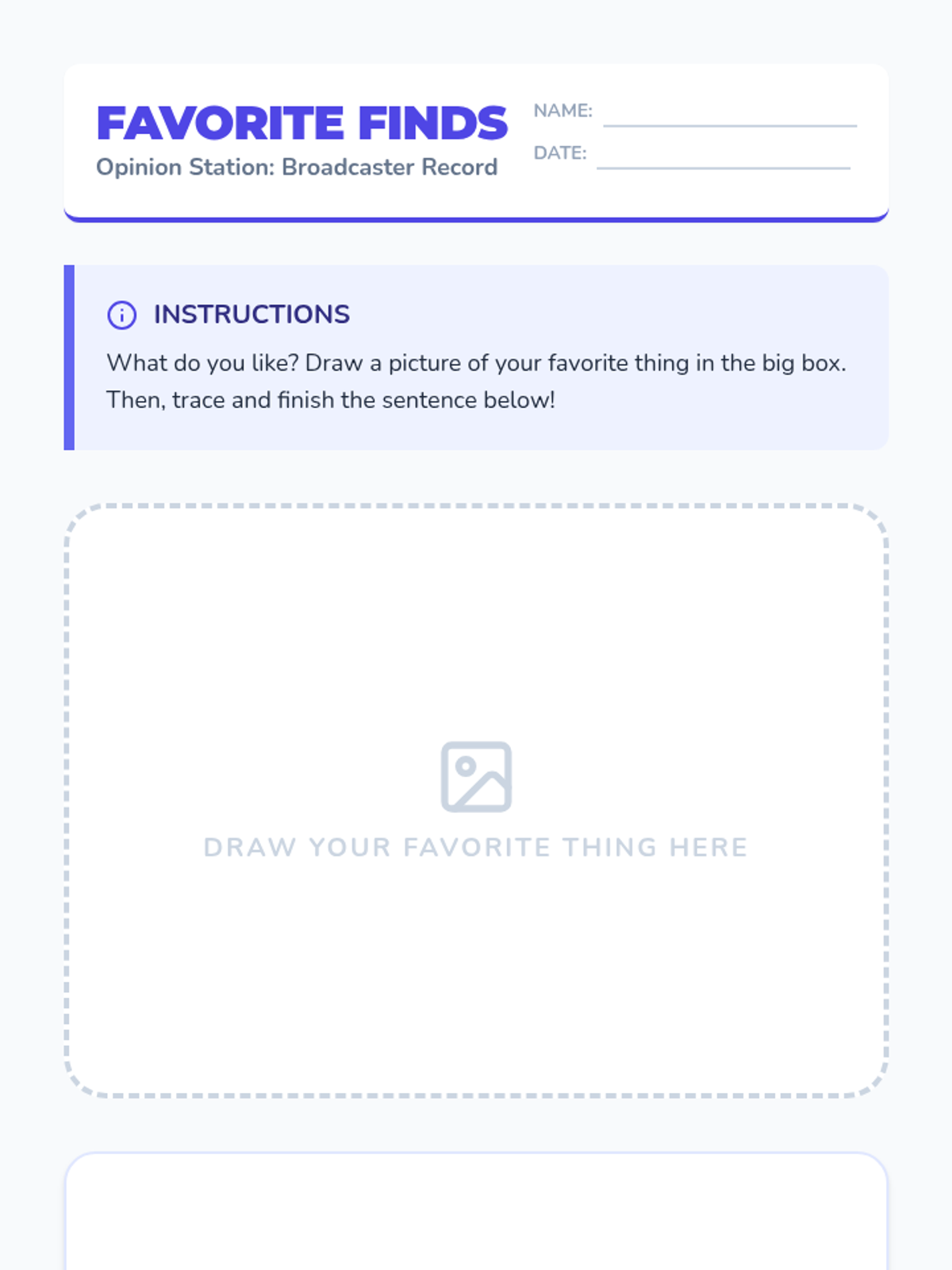
A 30-minute lesson for kindergarteners on forming and expressing an opinion through drawing, focused on their favorite animals. Students learn the difference between facts and opinions and practice stating their 'why'.
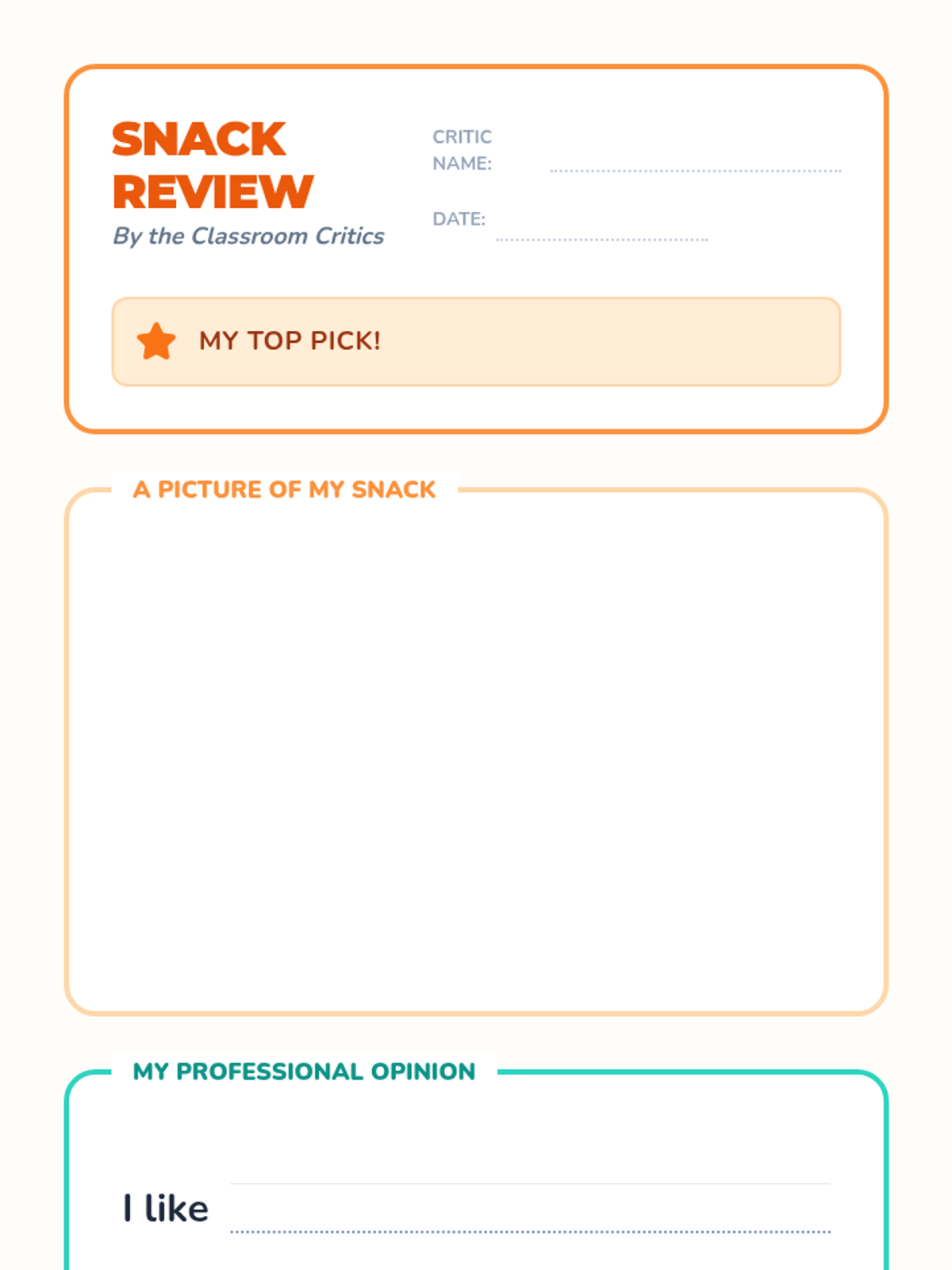
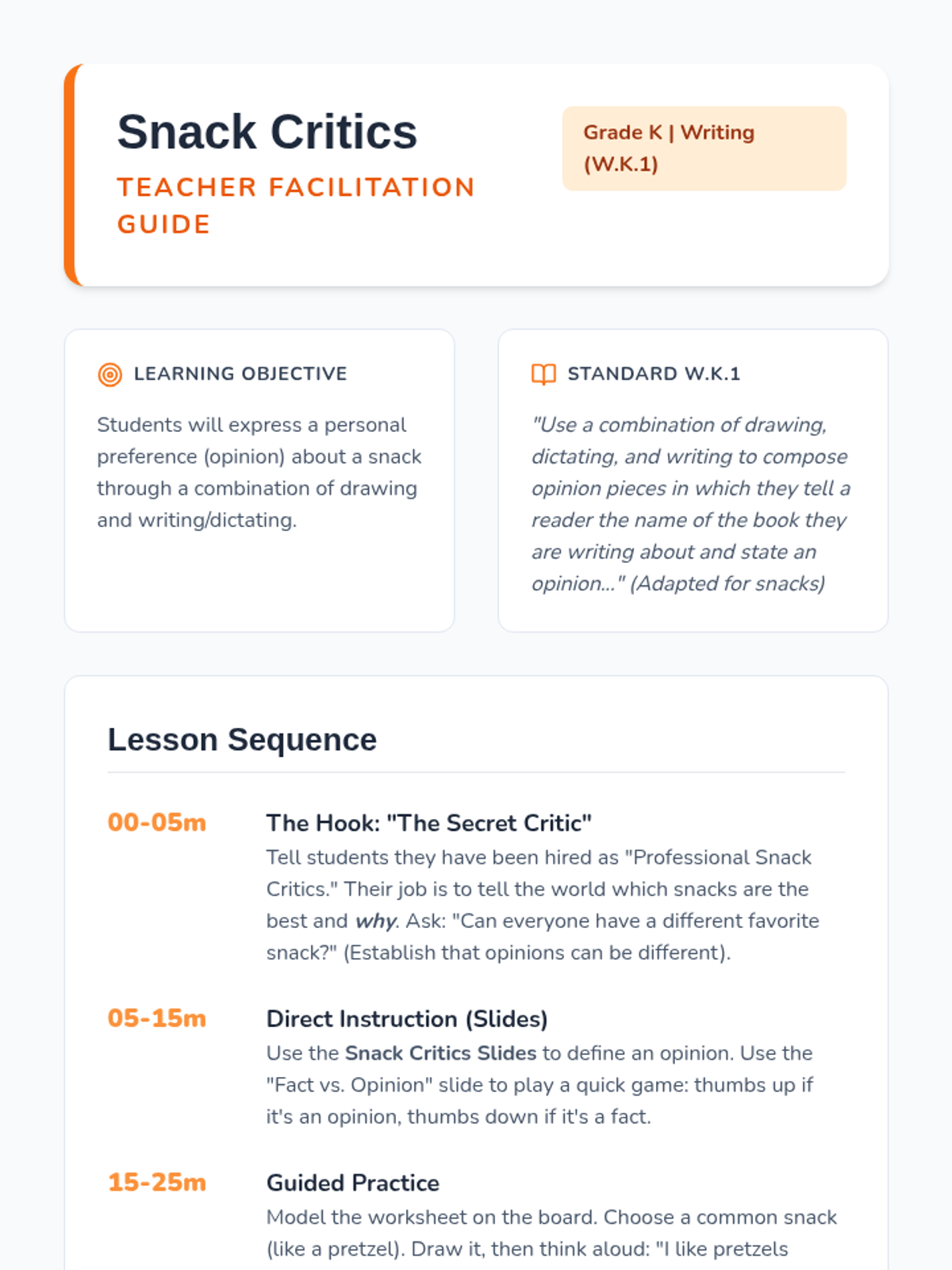
Students will learn how to express their opinions through a combination of drawing and writing as they take on the role of 'Snack Critics' to share their favorite treats.
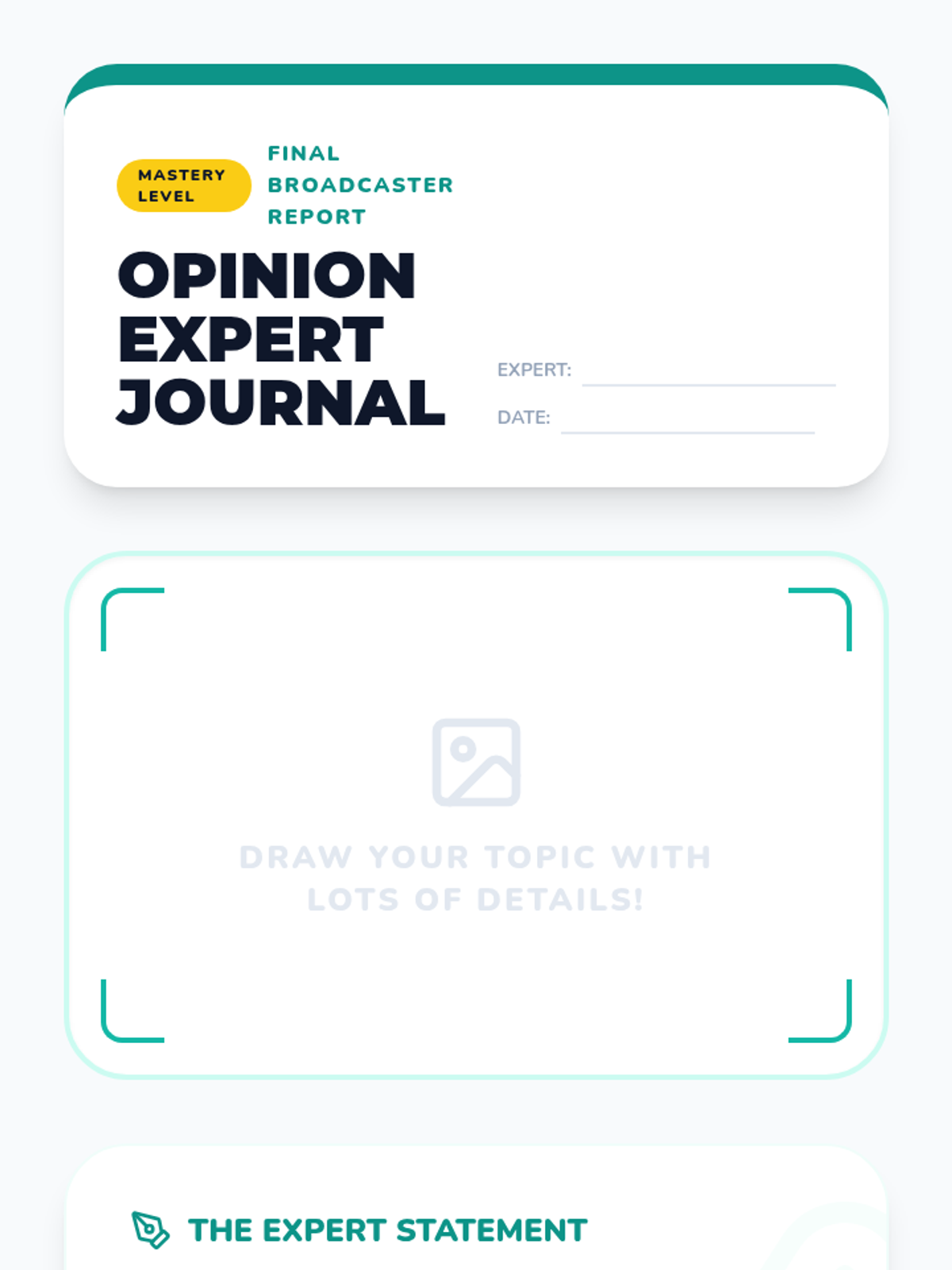
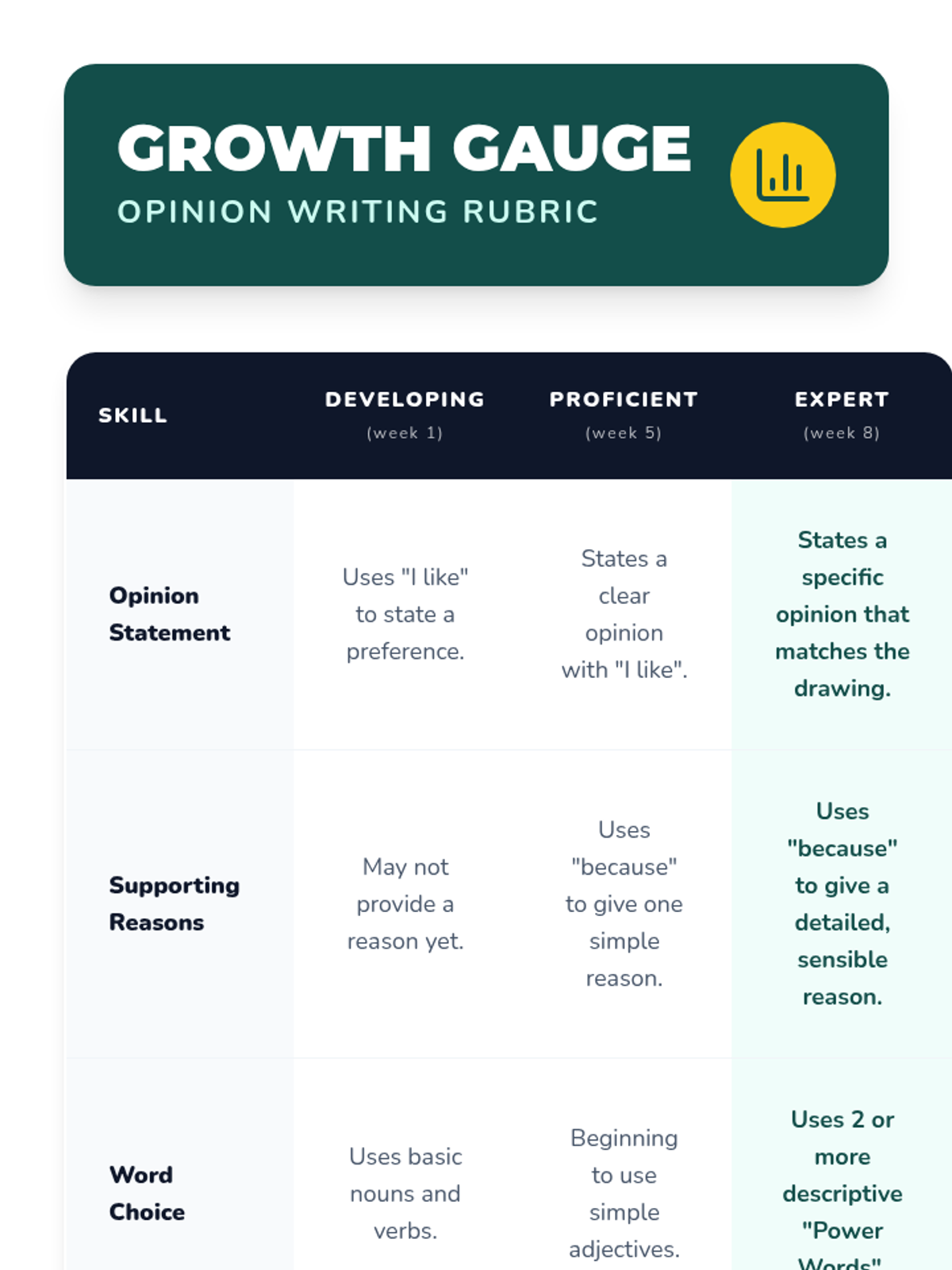
Students refine their opinion writing by adding descriptive details and multiple reasons to their 'because' statements to become 'Opinion Experts'.
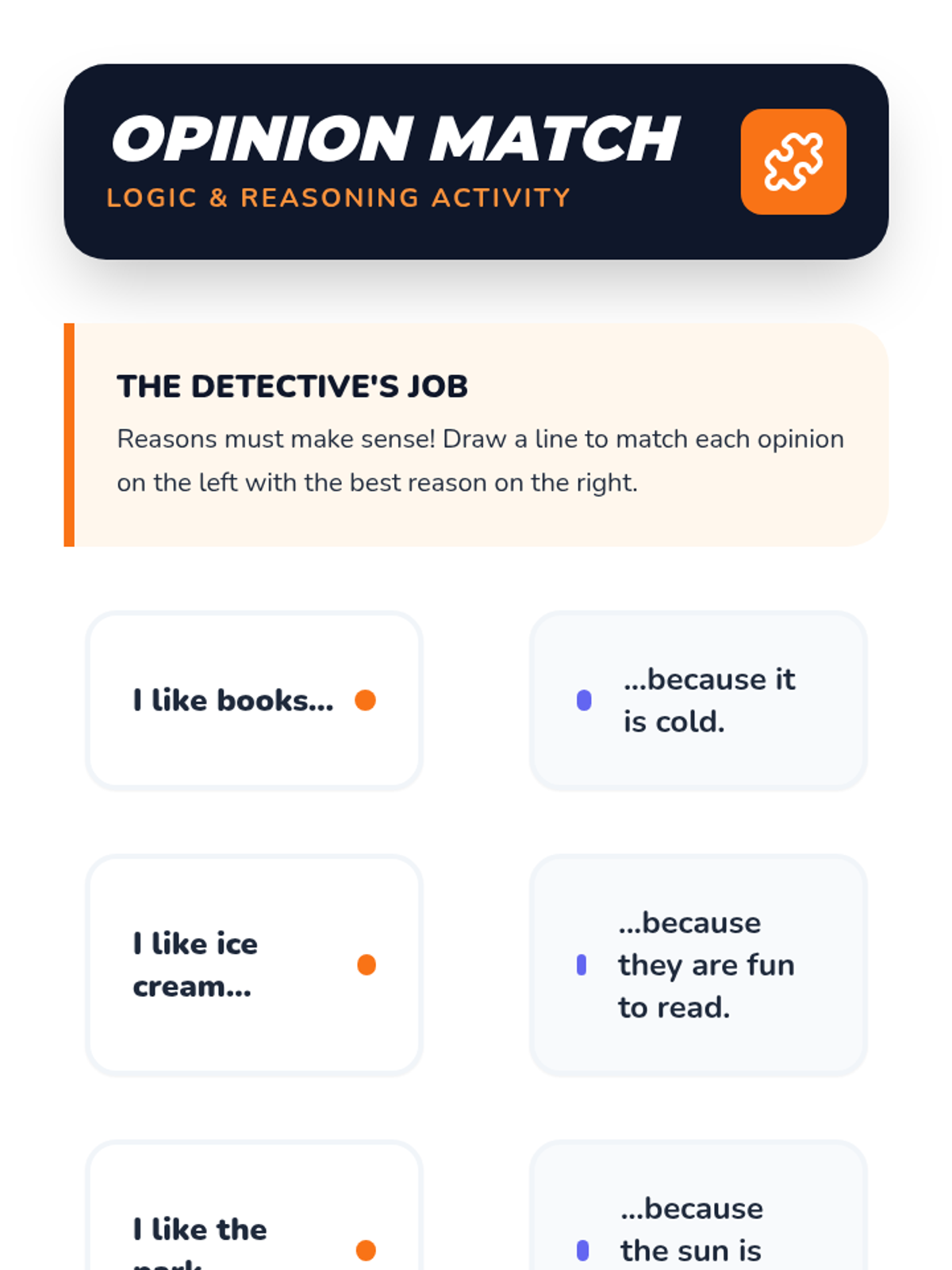
Students learn to bridge their opinions with reasons using the conjunction 'because', transitioning from simple statements to supported claims.
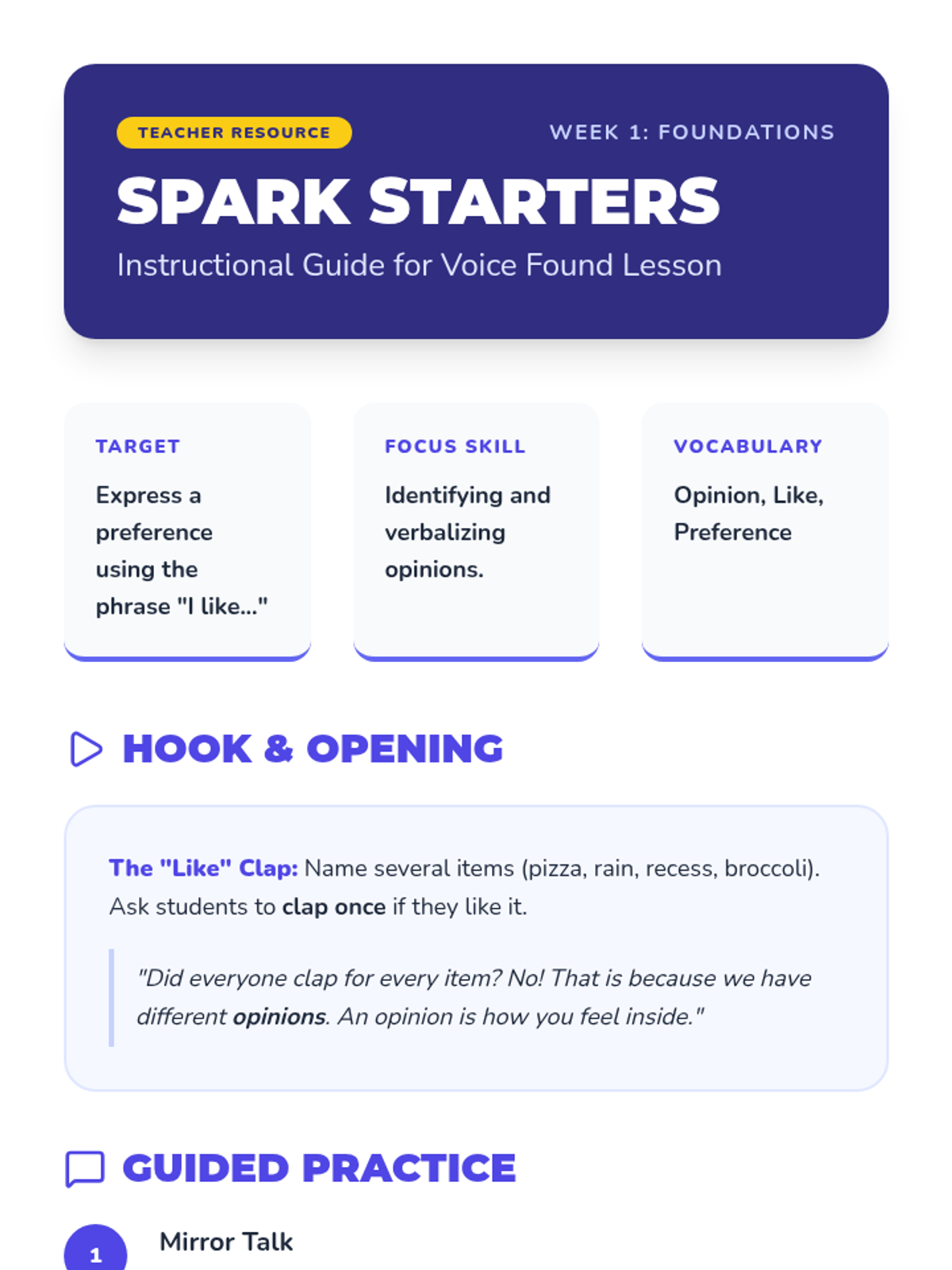
Students are introduced to the concept of an opinion and practice expressing their personal preferences using the sentence starter 'I like...'.
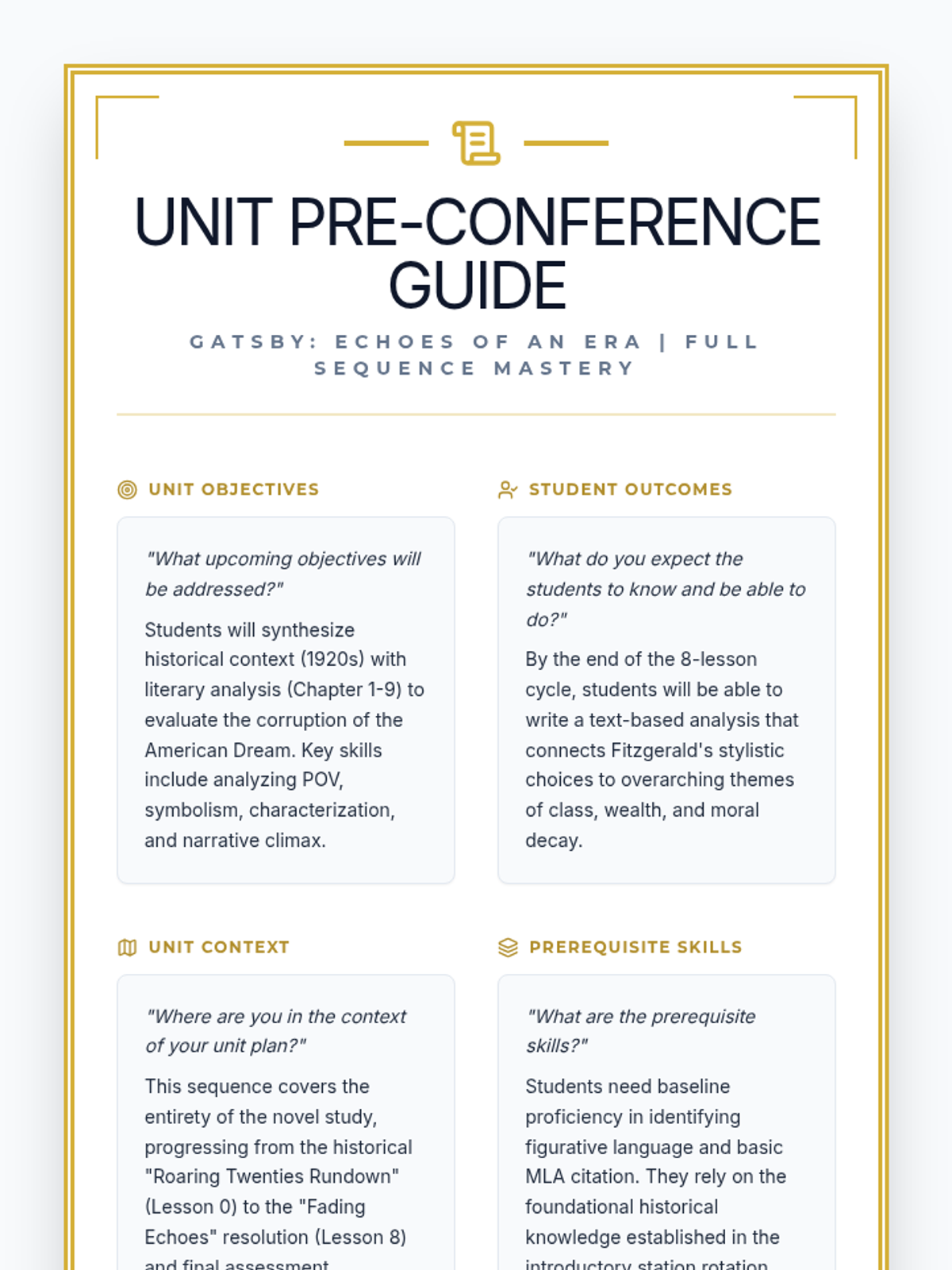
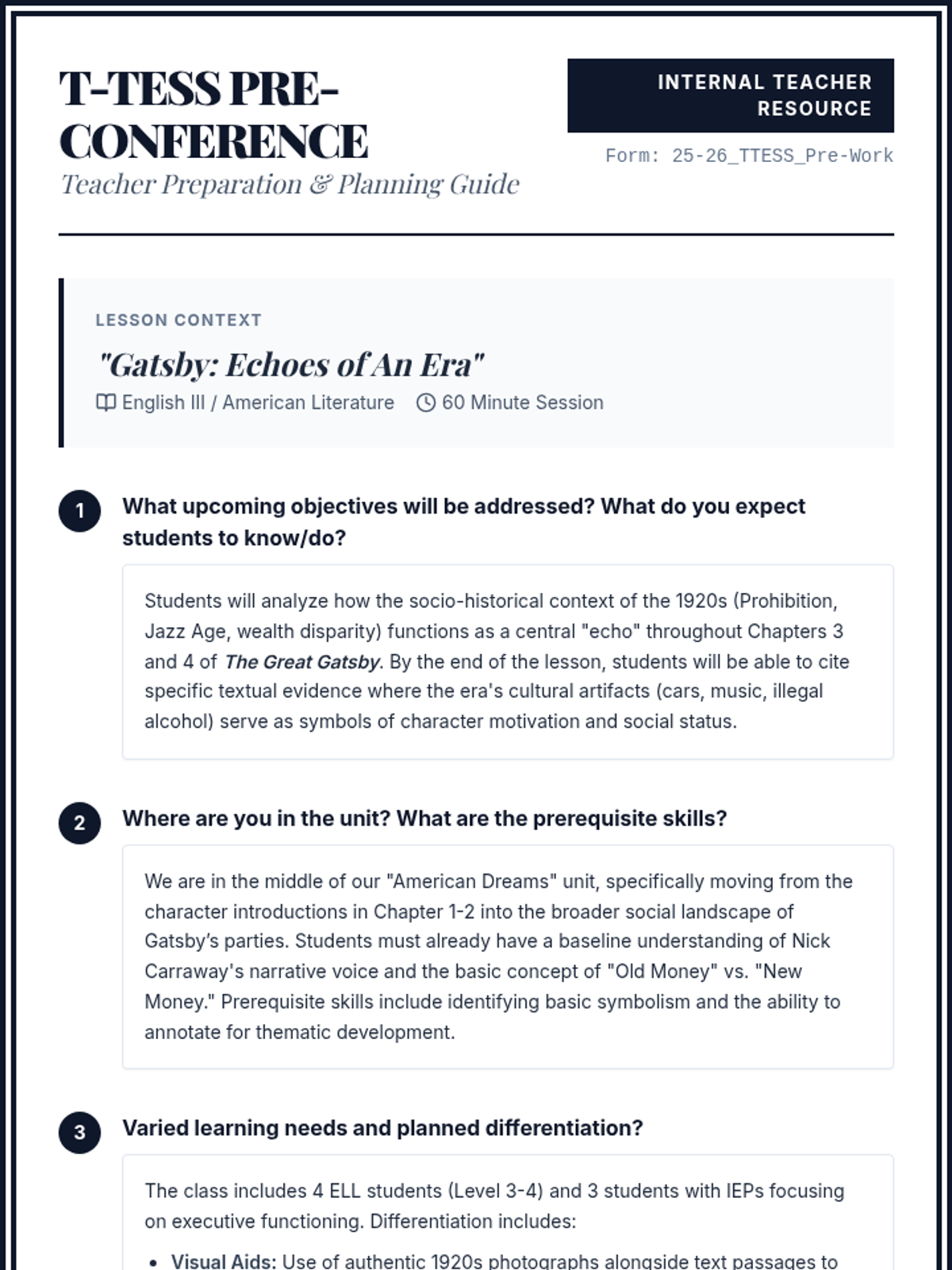
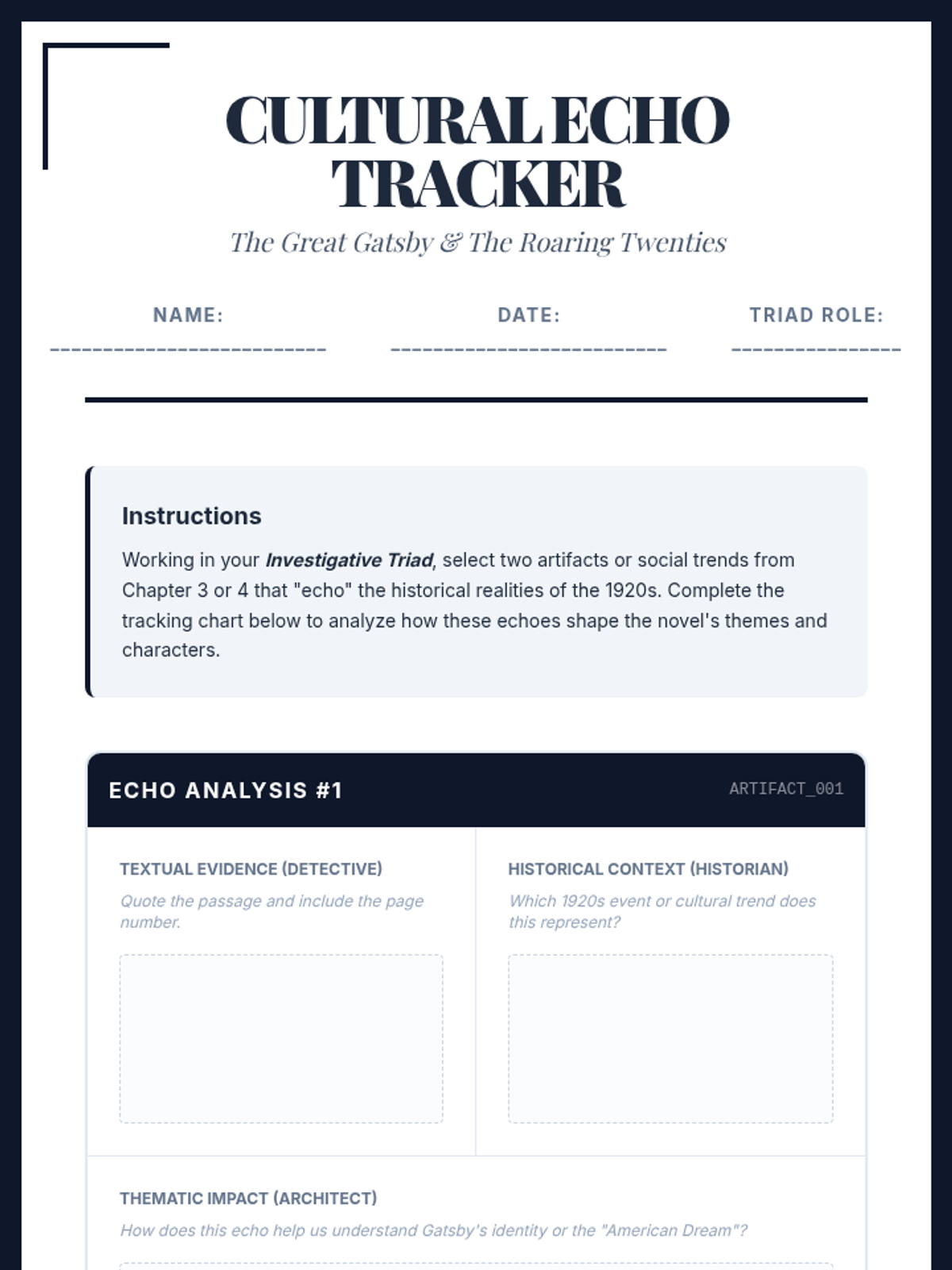
A deep dive into the historical context of the 1920s and how the 'echoes' of the Jazz Age, Prohibition, and social stratification resonate throughout the narrative of The Great Gatsby.
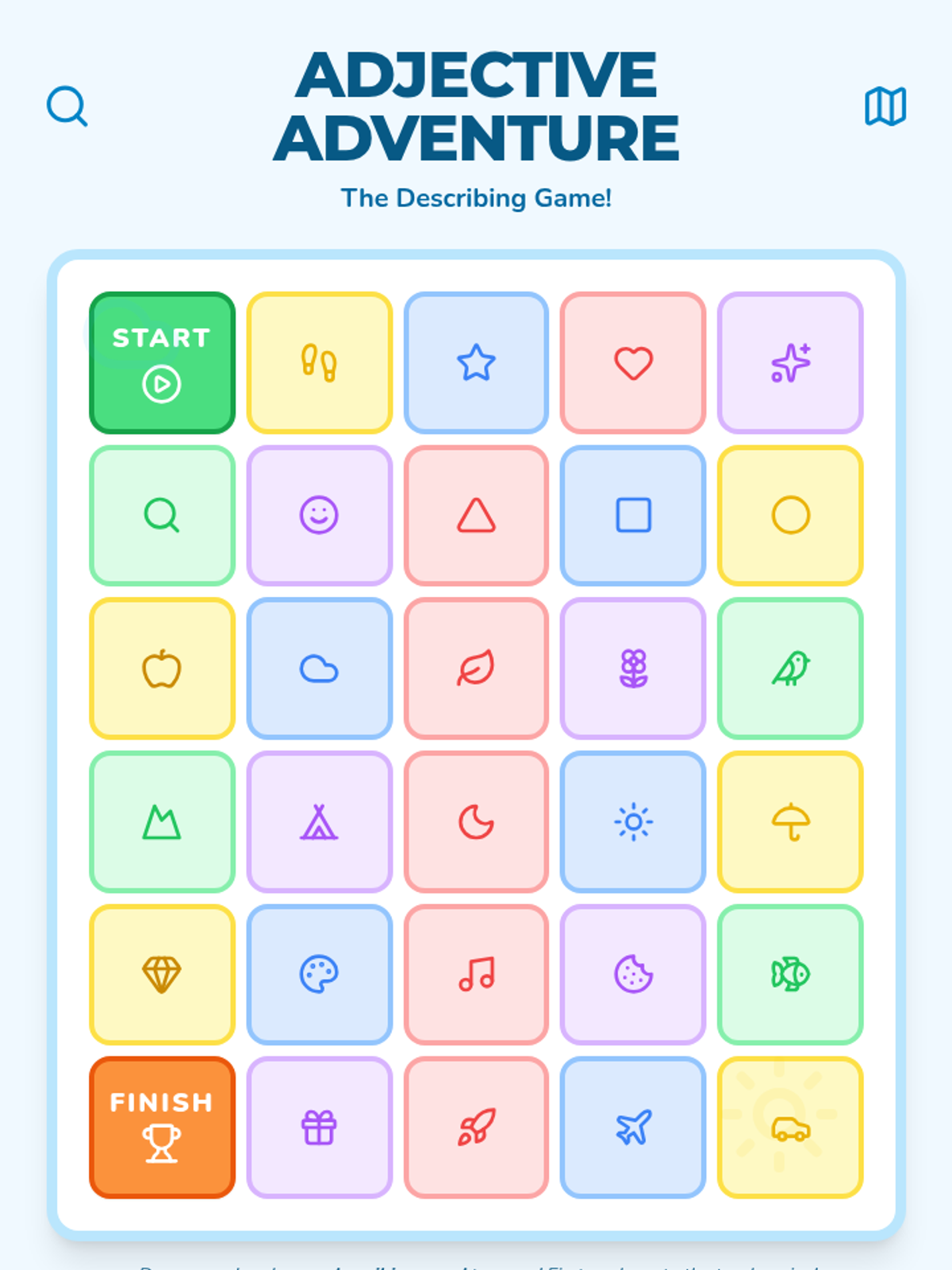
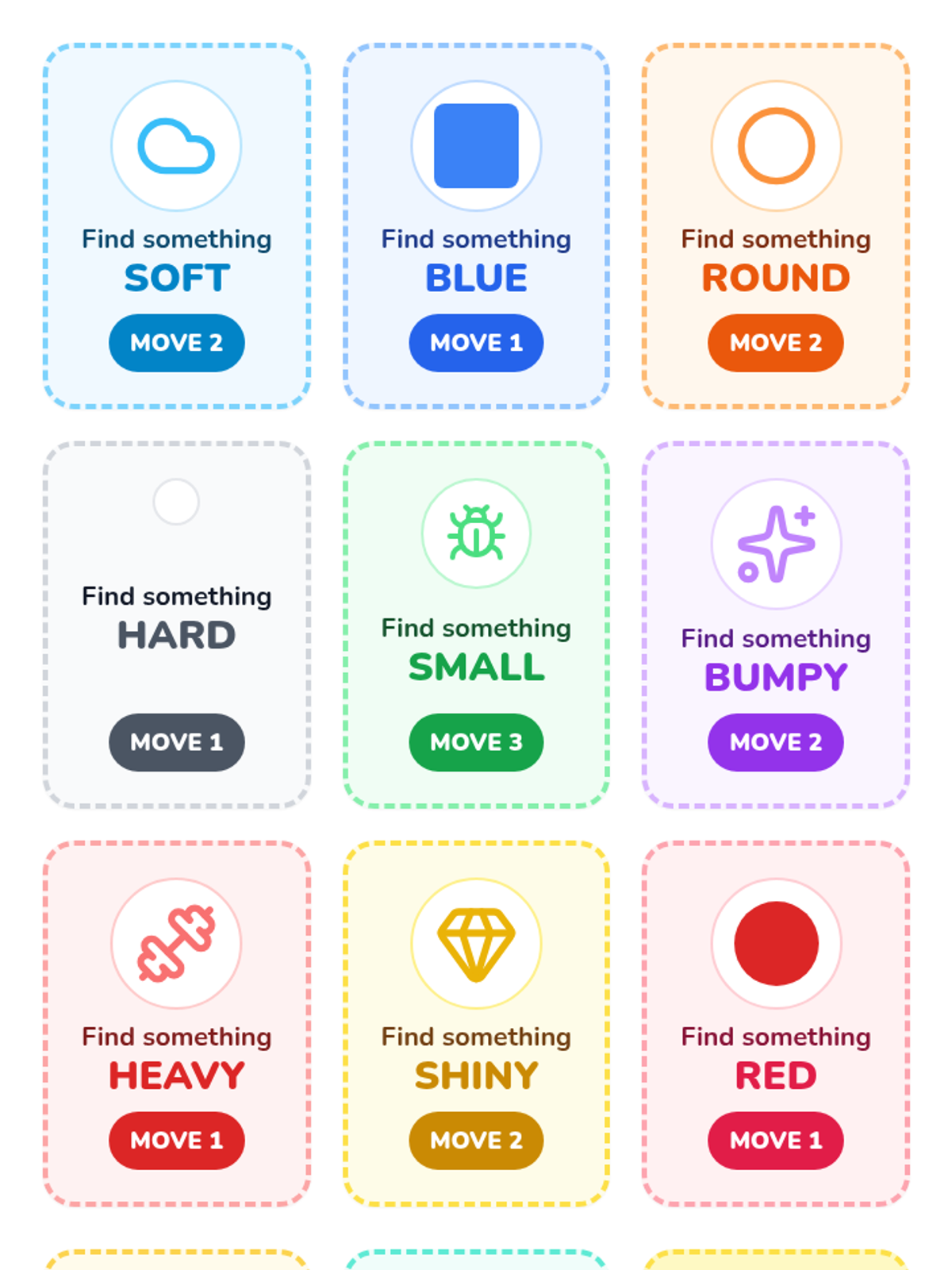
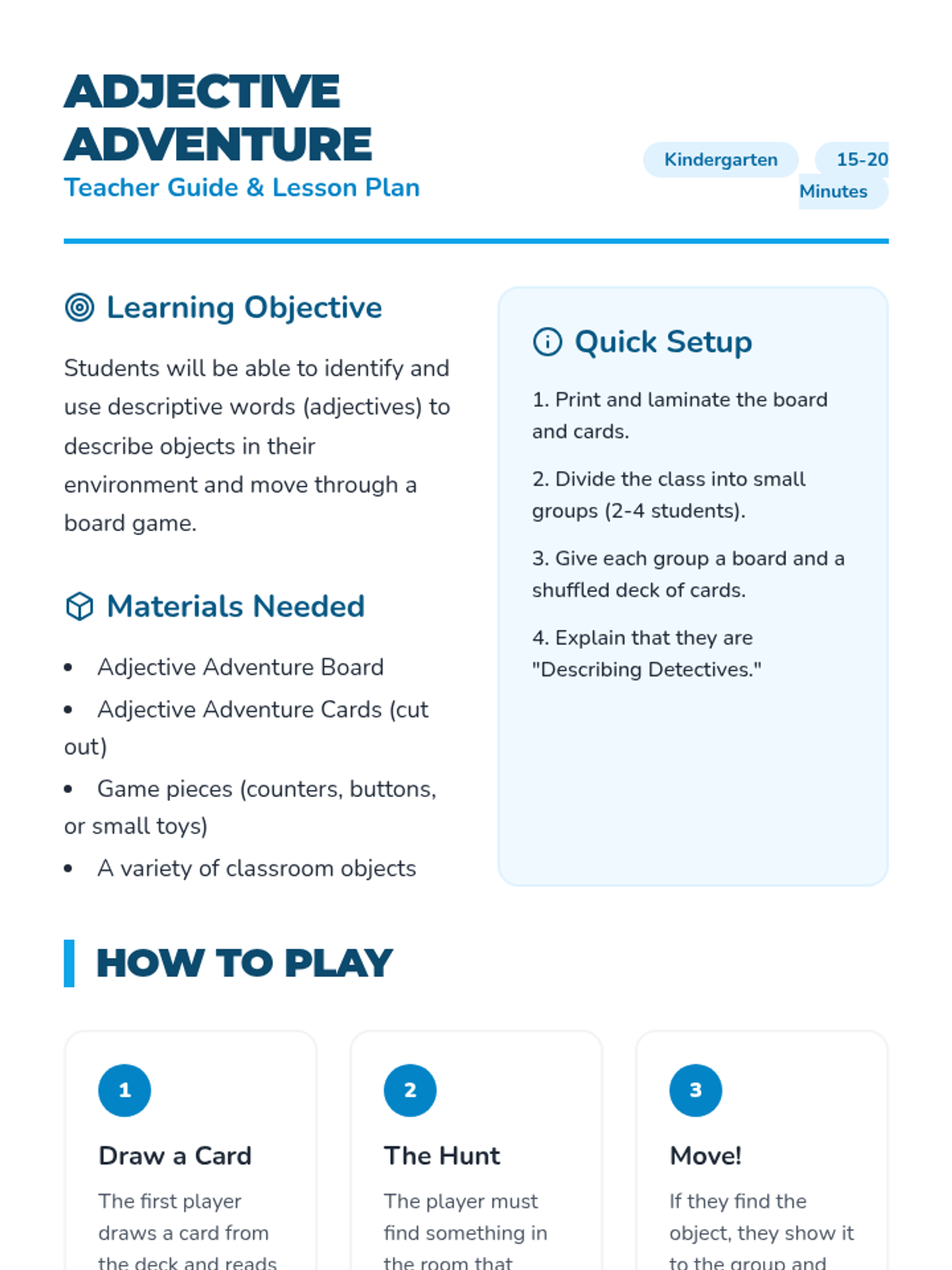
A fun, hands-on lesson where kindergarteners practice using adjectives through a movement-based board game. Students use descriptive words to identify objects and move across the board.
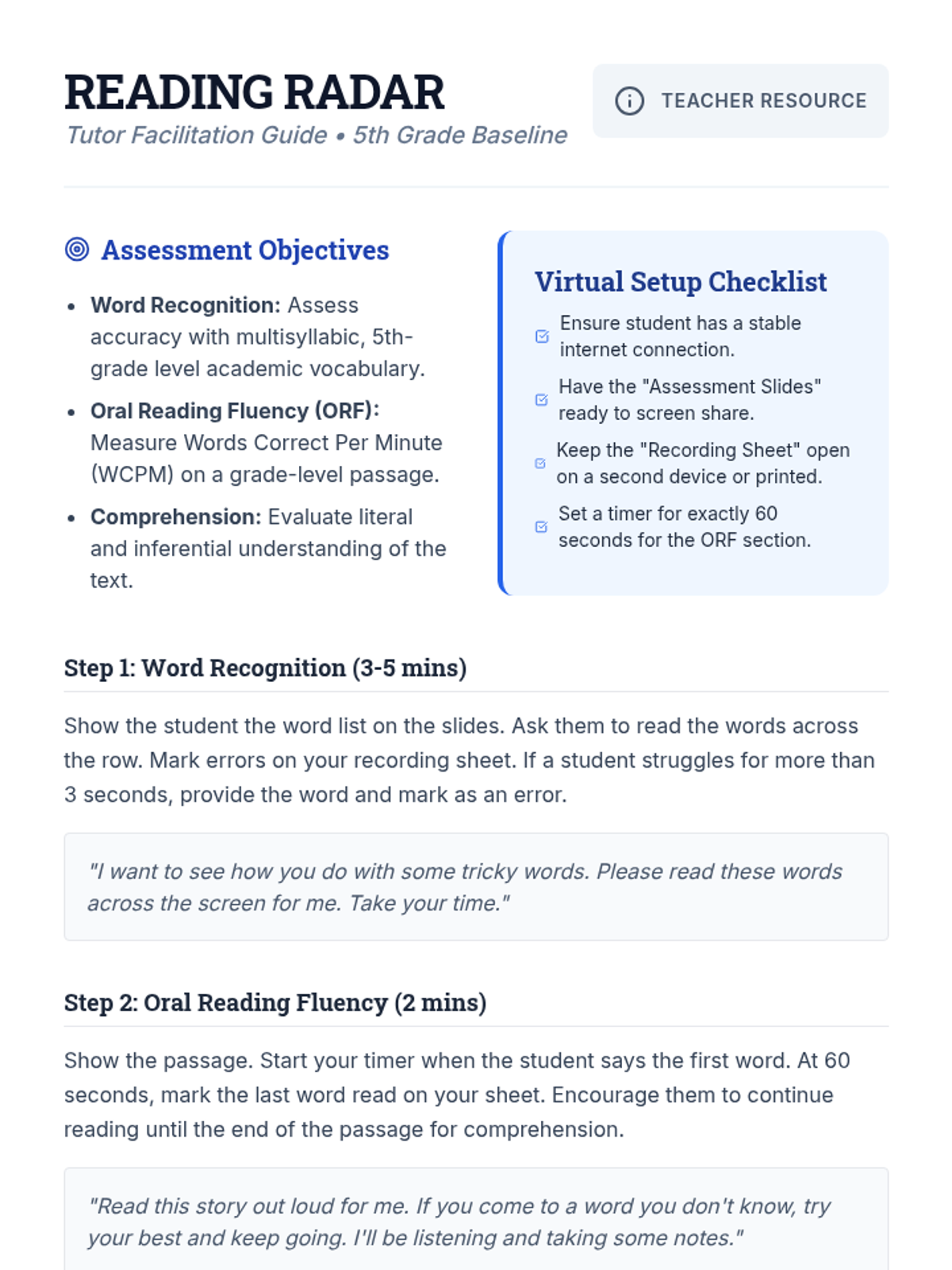
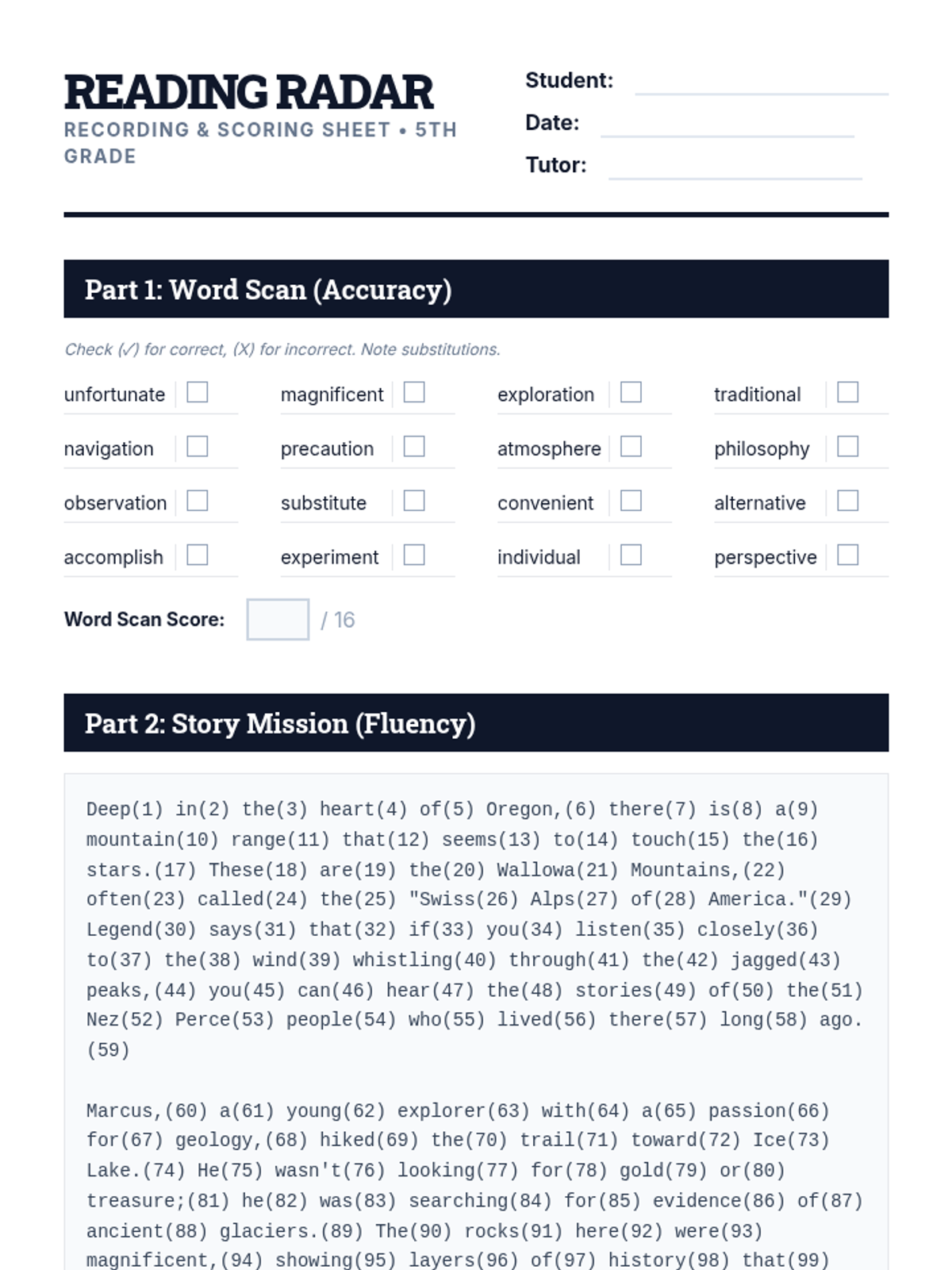
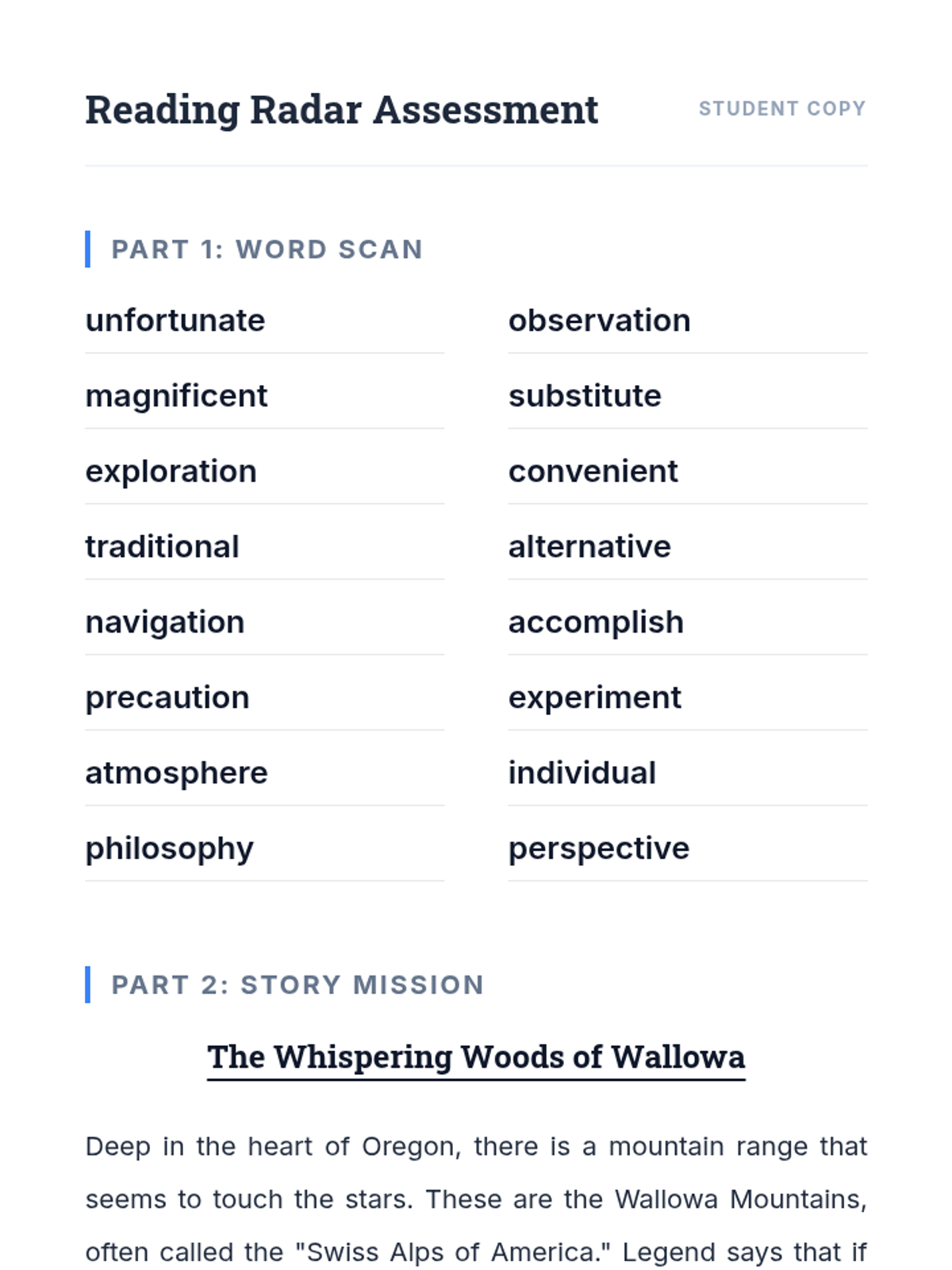
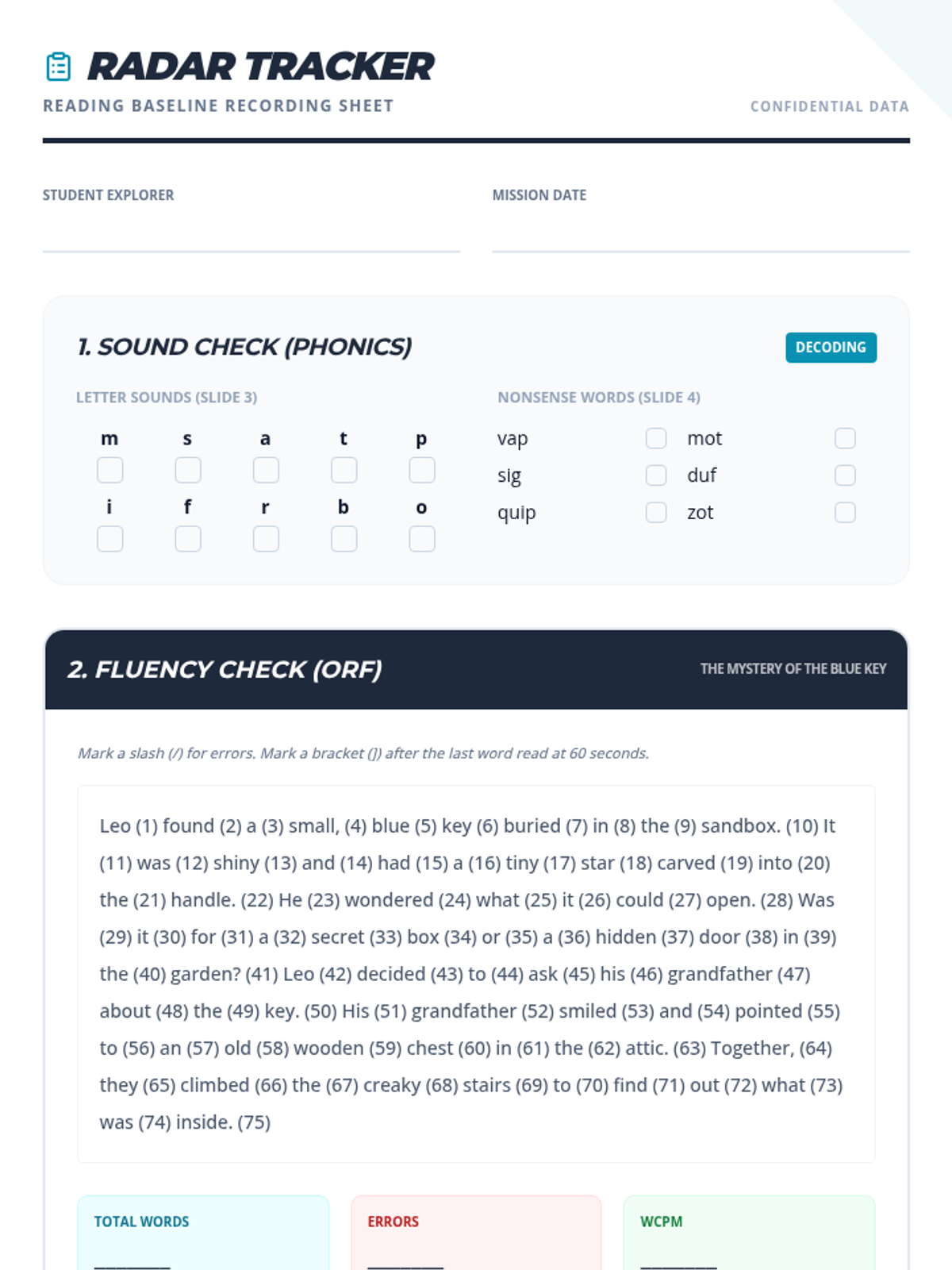
A comprehensive baseline reading assessment for 5th grade students, designed specifically for virtual tutoring environments. Includes oral reading fluency, word recognition, and comprehension components.
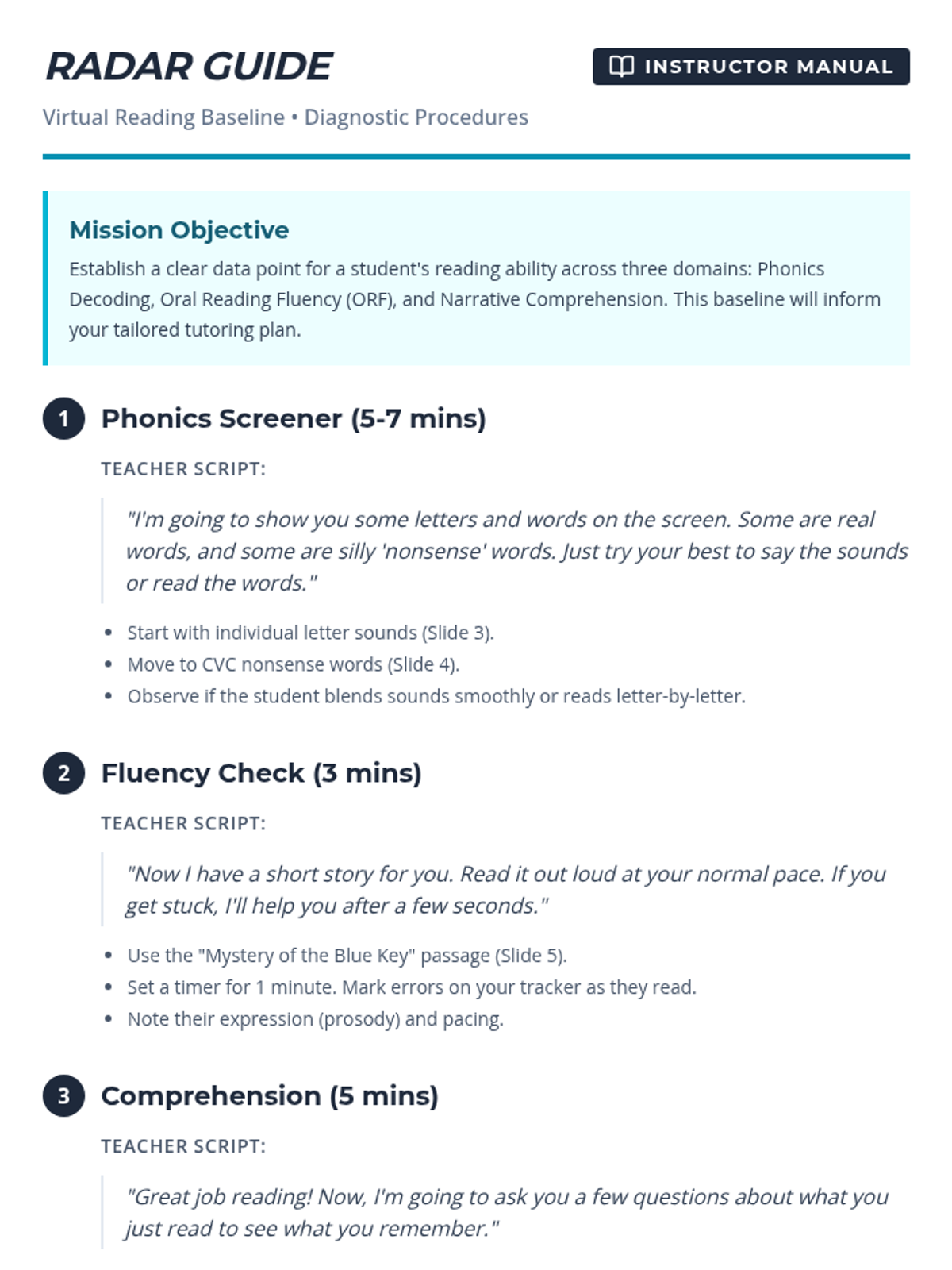
The initial diagnostic session where the tutor assesses the student's phonics knowledge, oral reading fluency, and reading comprehension.
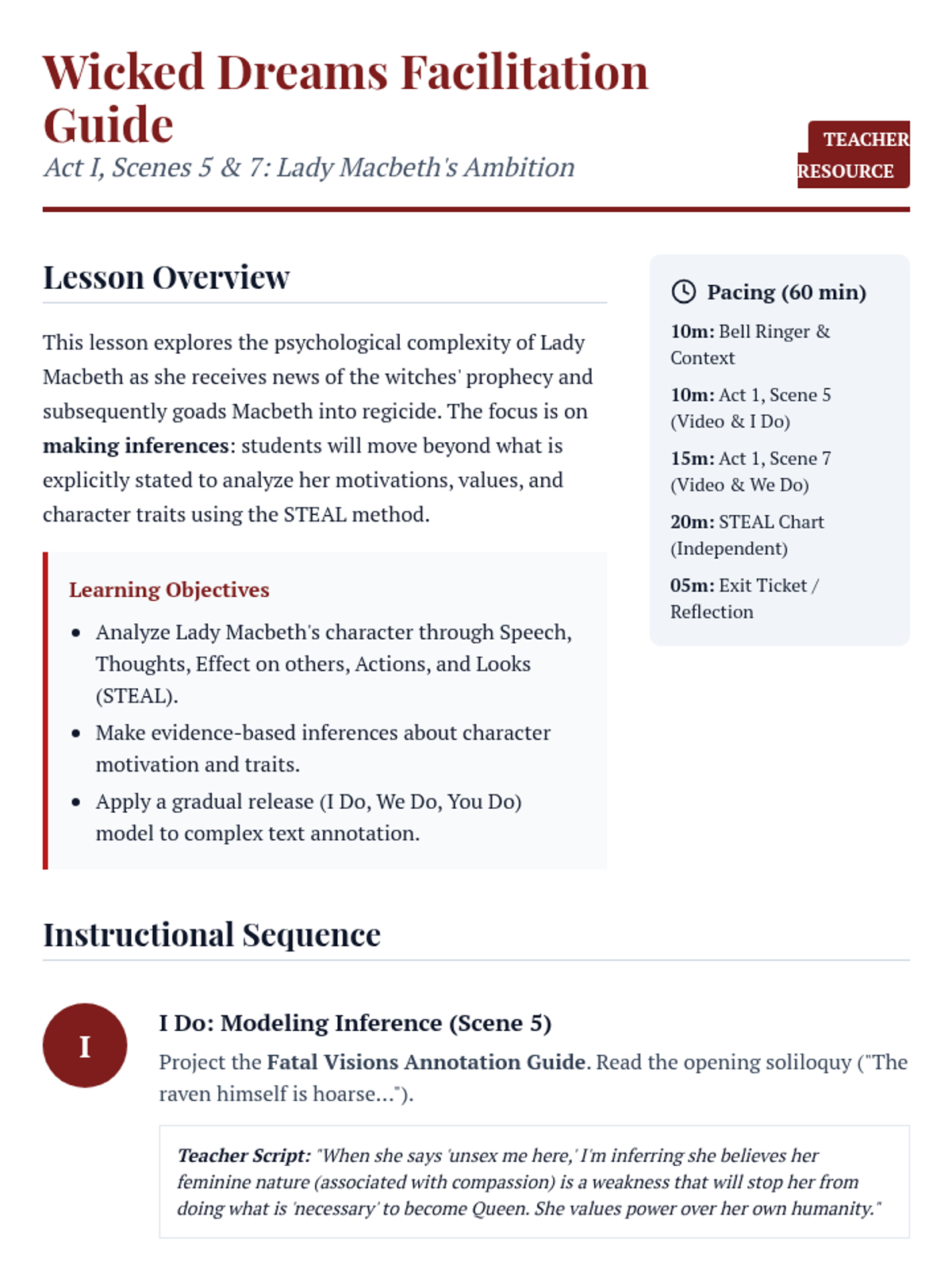
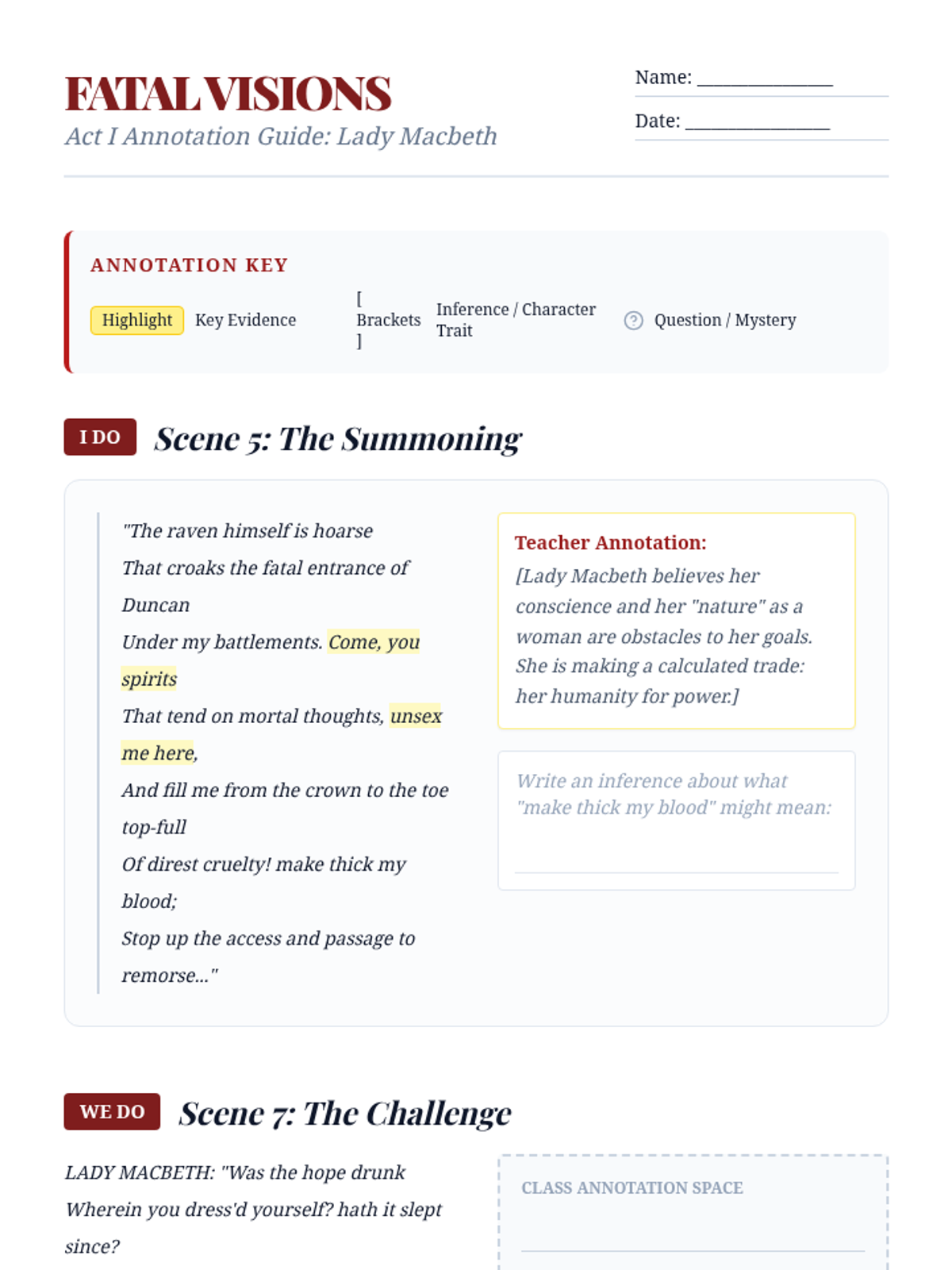
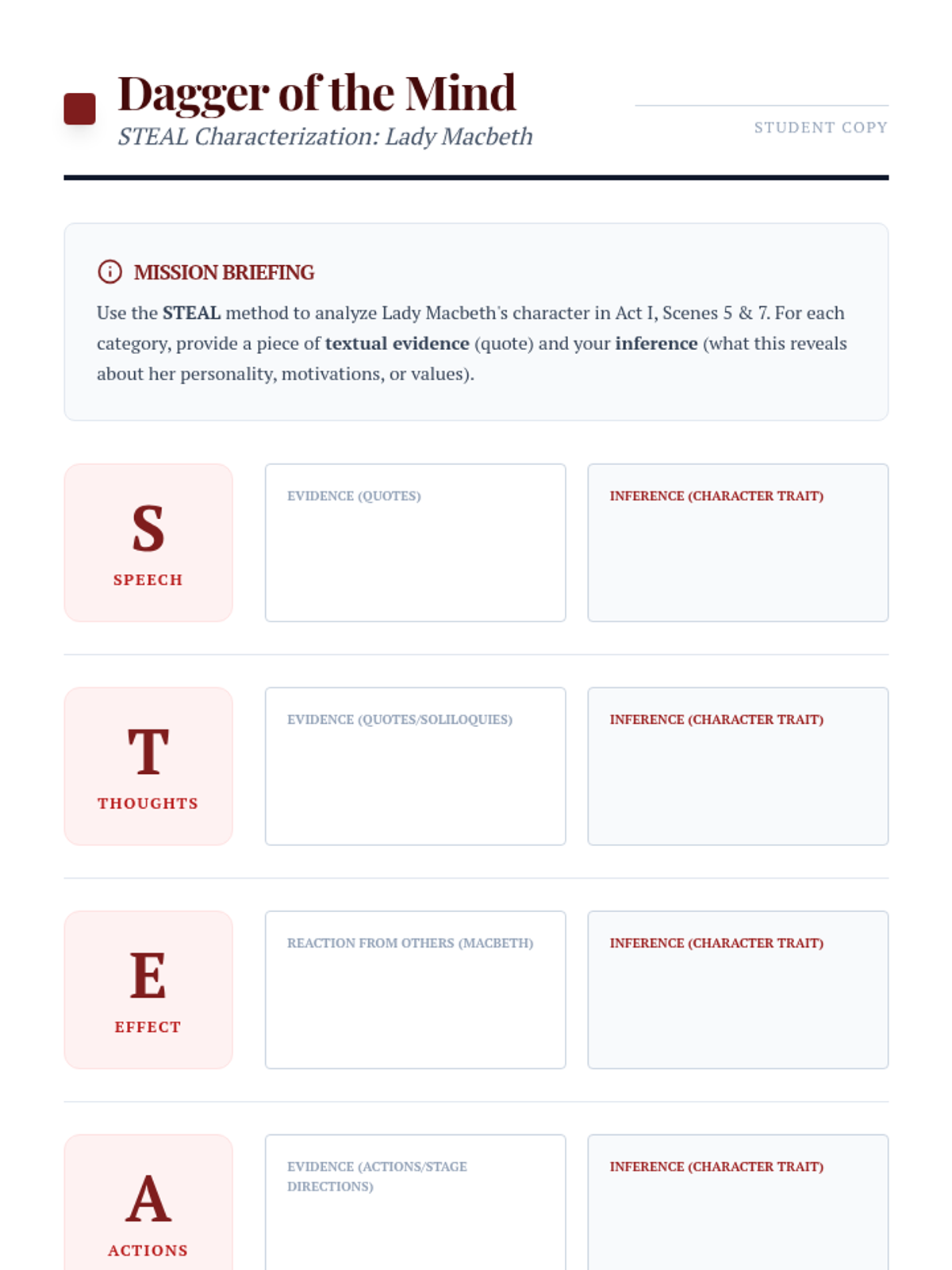
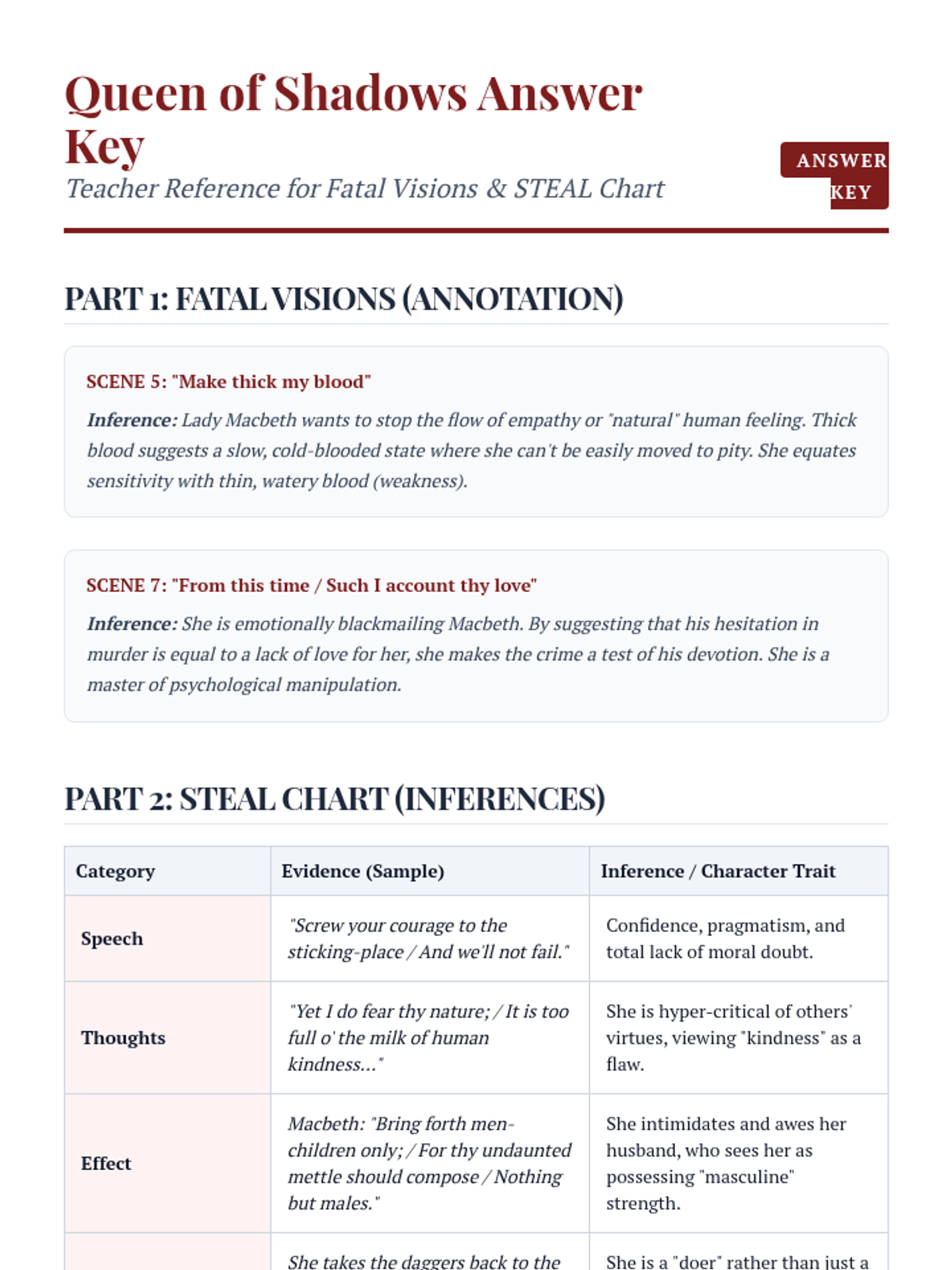
A comprehensive lesson focusing on Lady Macbeth's characterization in Act I, Scenes 5 and 7. Students use a gradual release model to master annotation and making inferences through a STEAL chart.
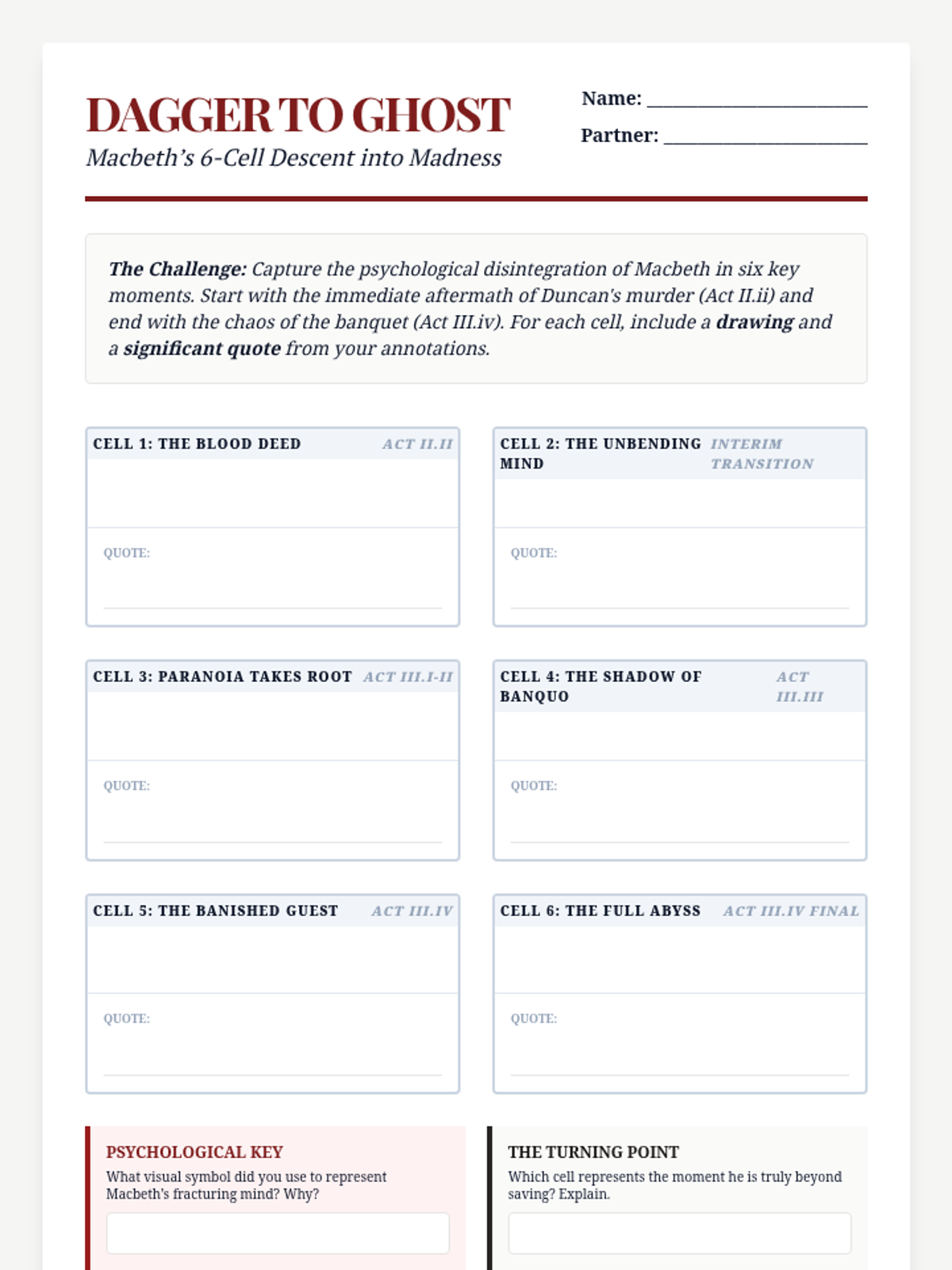
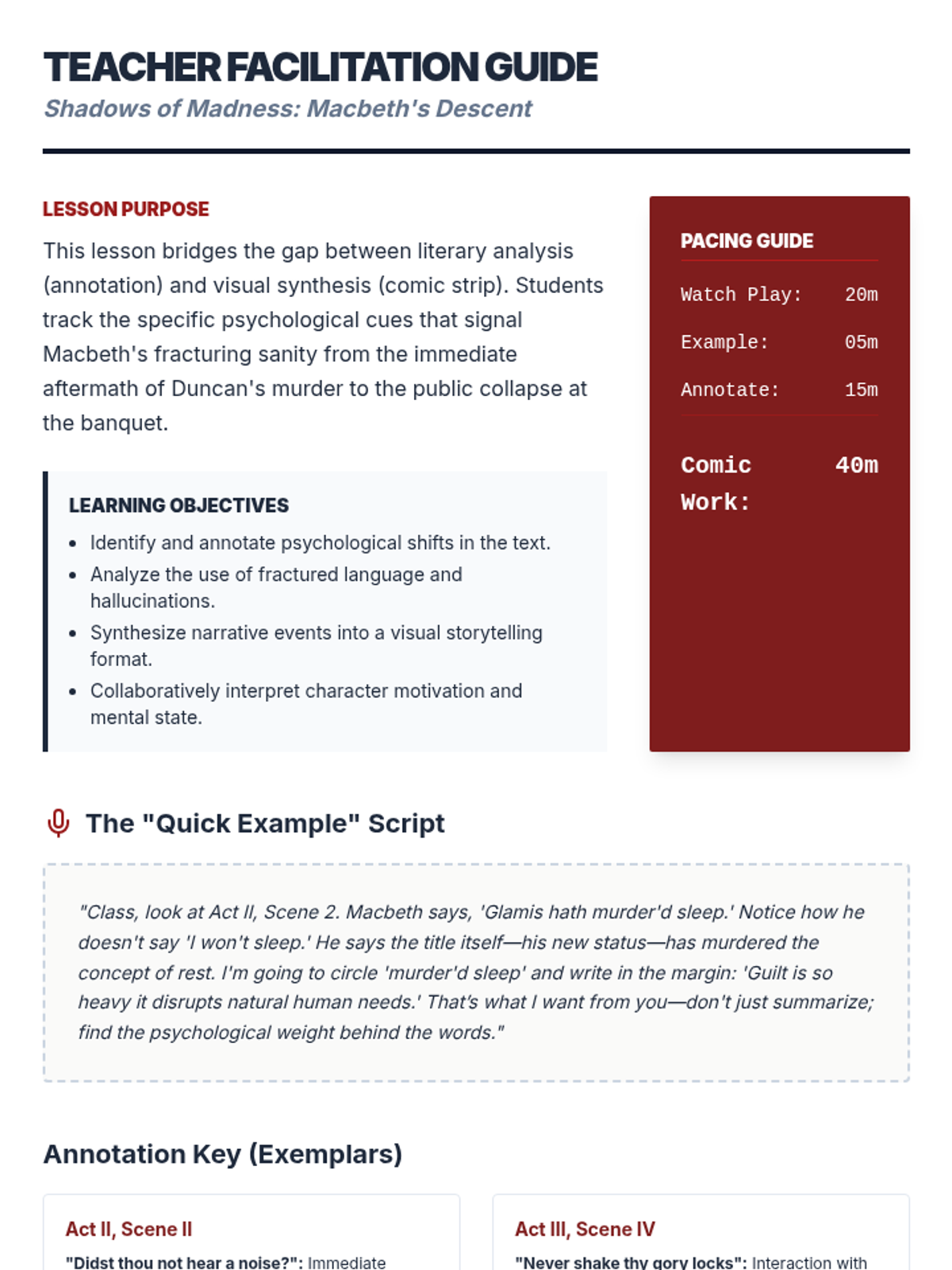
Students explore Macbeth's psychological collapse from the murder of Duncan to the haunting banquet. This lesson focuses on independent annotation of key scenes and visual storytelling through a comic strip creation.
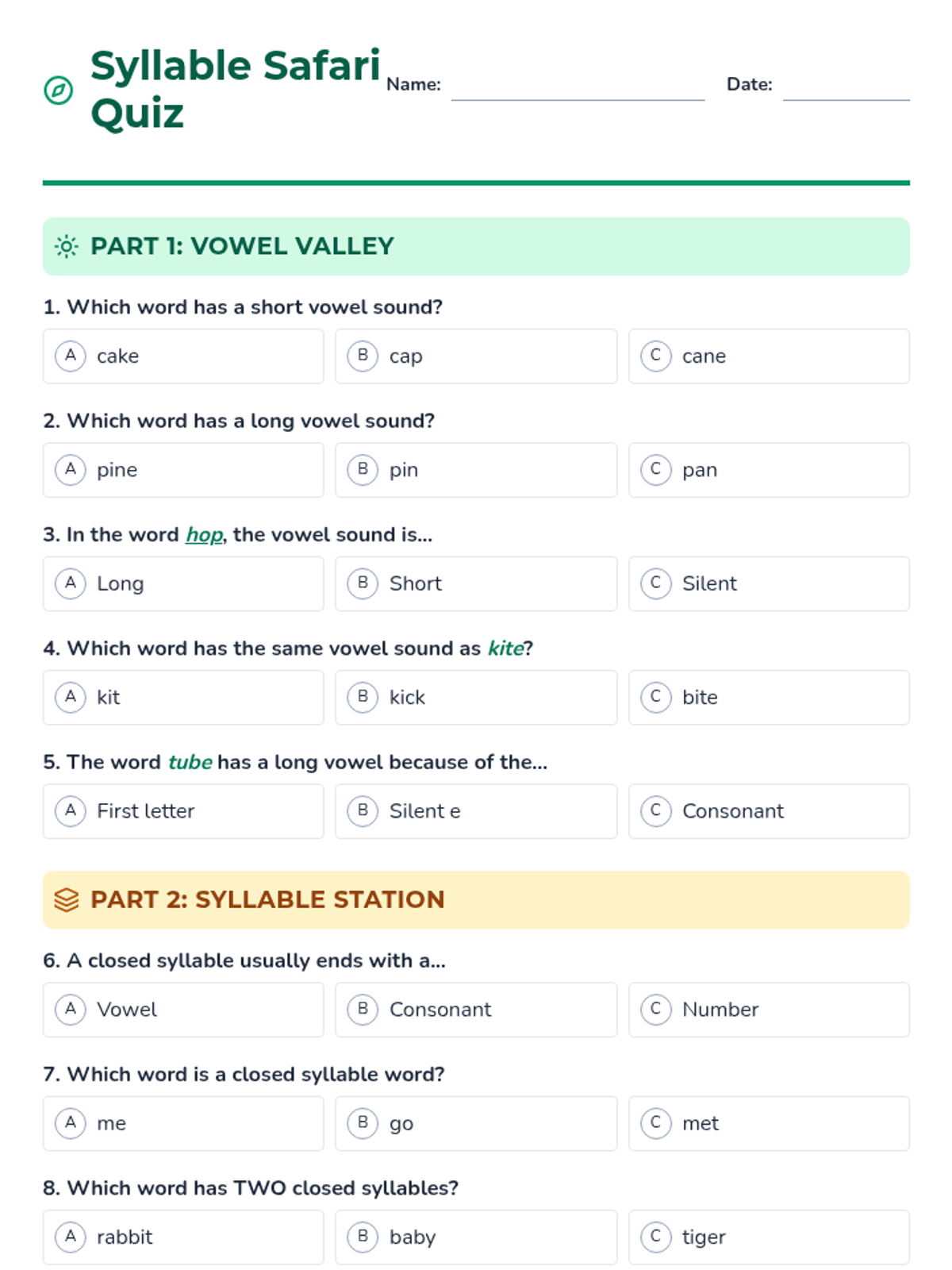
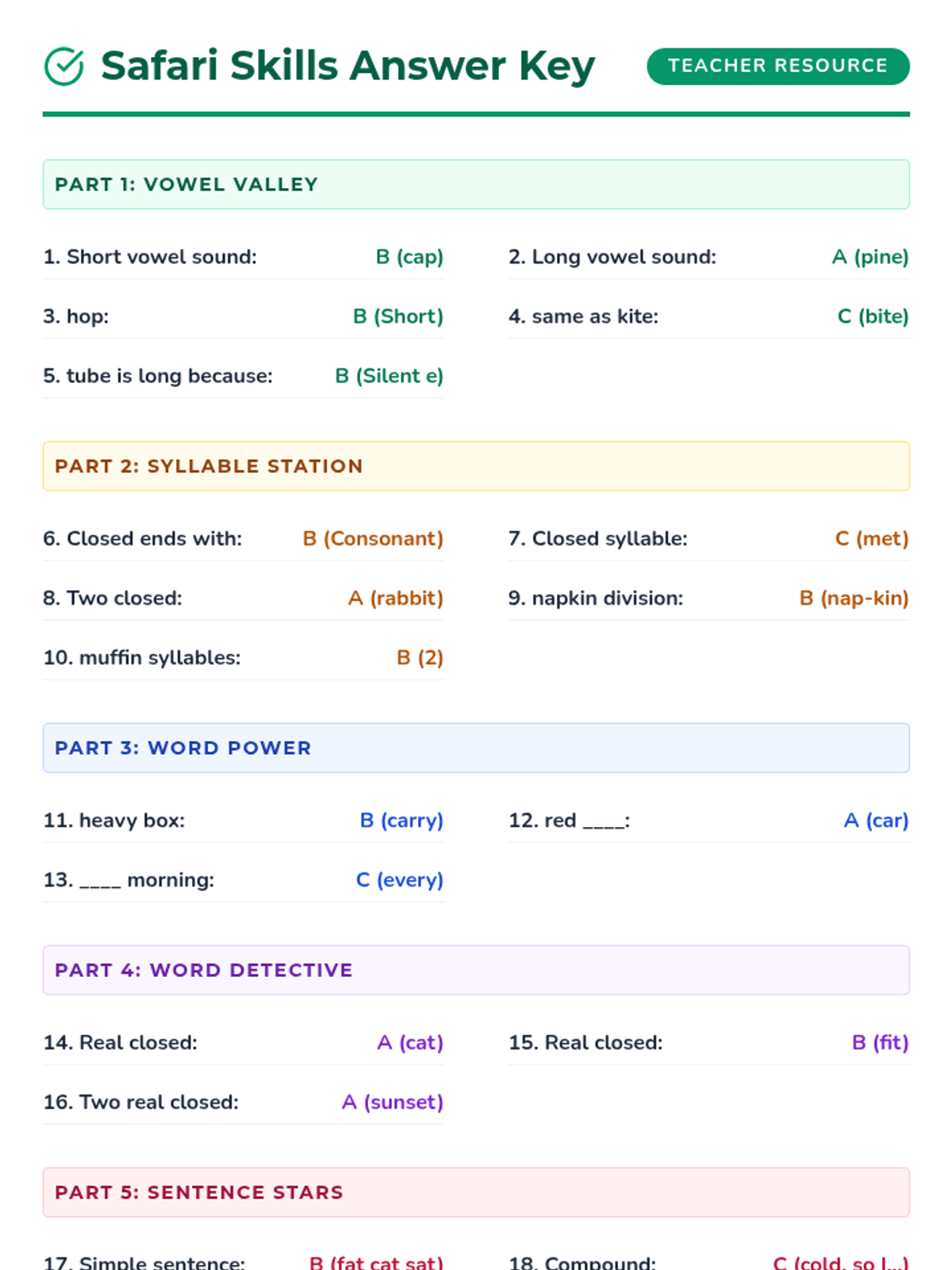
A comprehensive assessment focused on second-grade phonics standards, including long/short vowels, closed syllables, sight words 'car', 'carry', and 'every', and sentence structure.