A phonics and literacy lesson focused on the 'rabbit rule' (VC/CV double consonant) syllabication pattern, using a field-journal-themed decodable story, interactive word-mapping activities, and a comprehensive teacher guide.
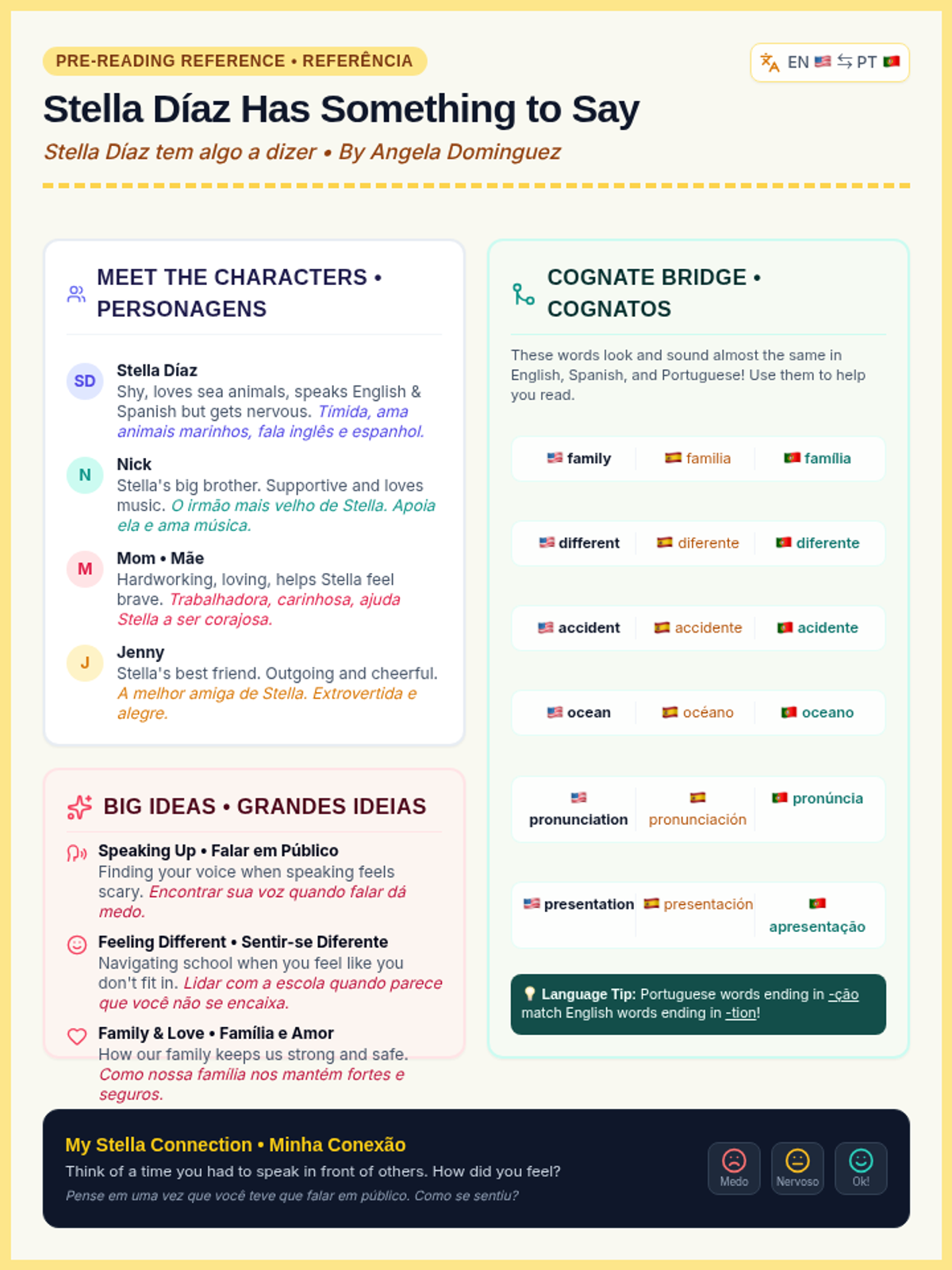
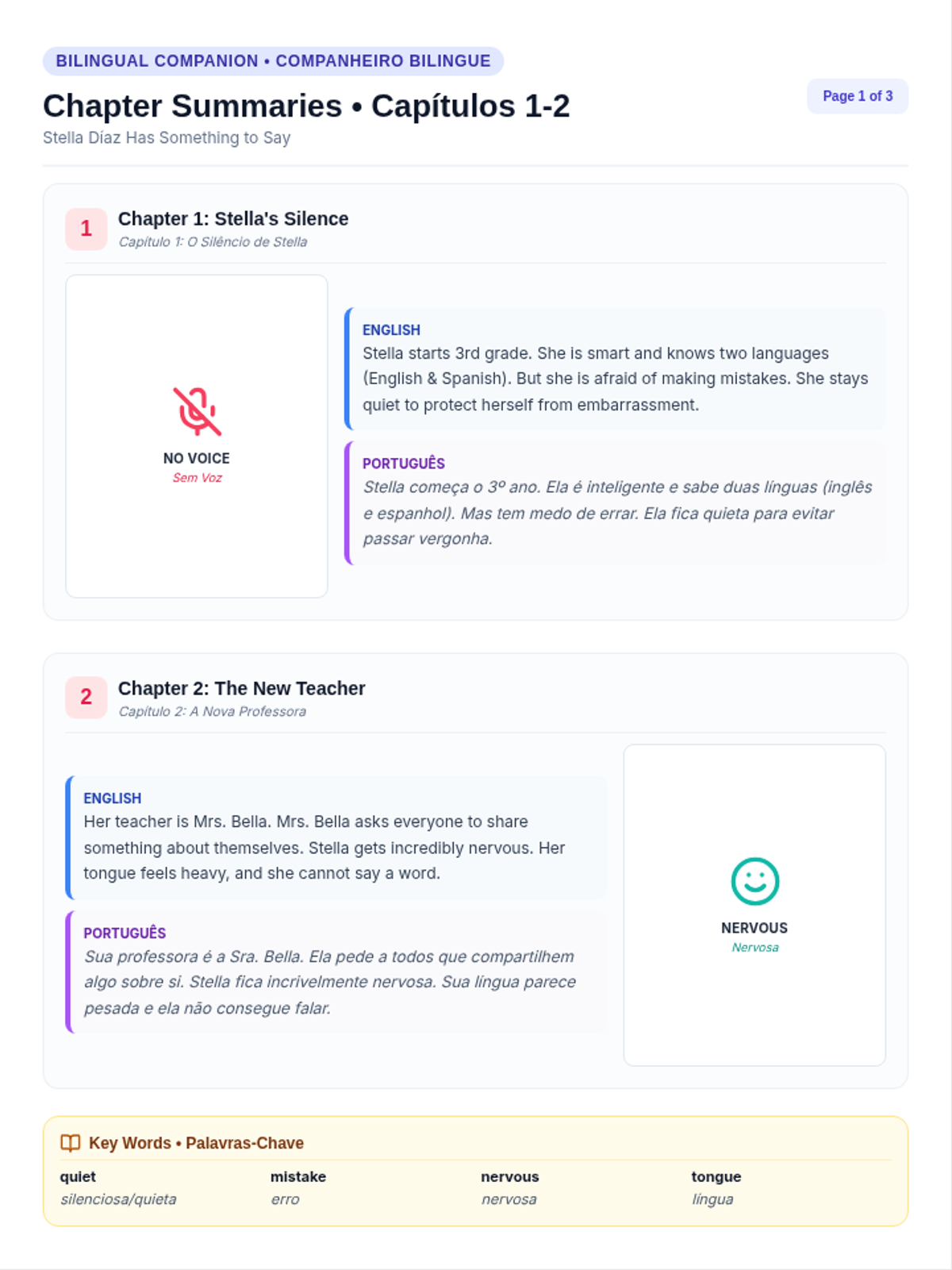
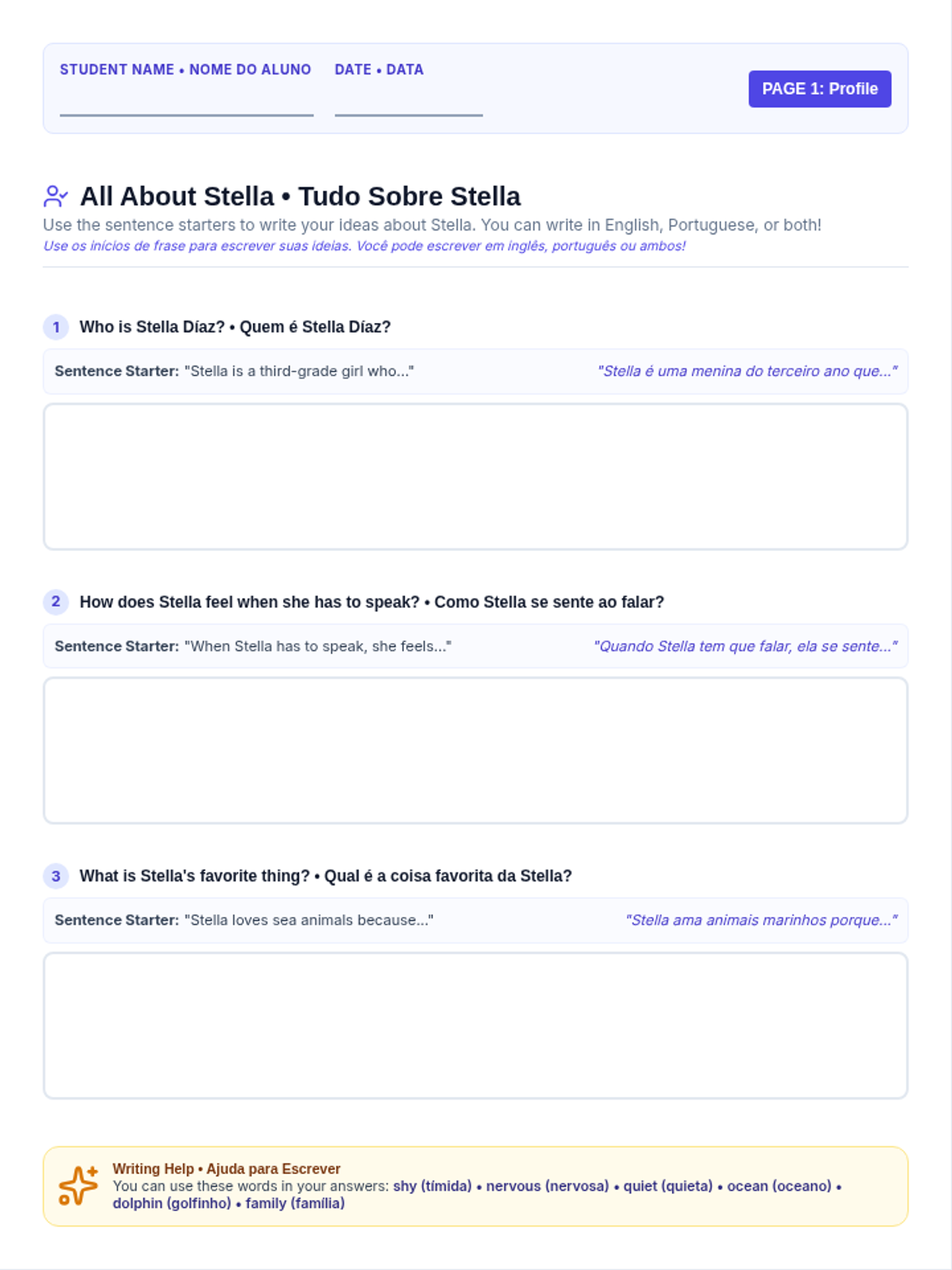
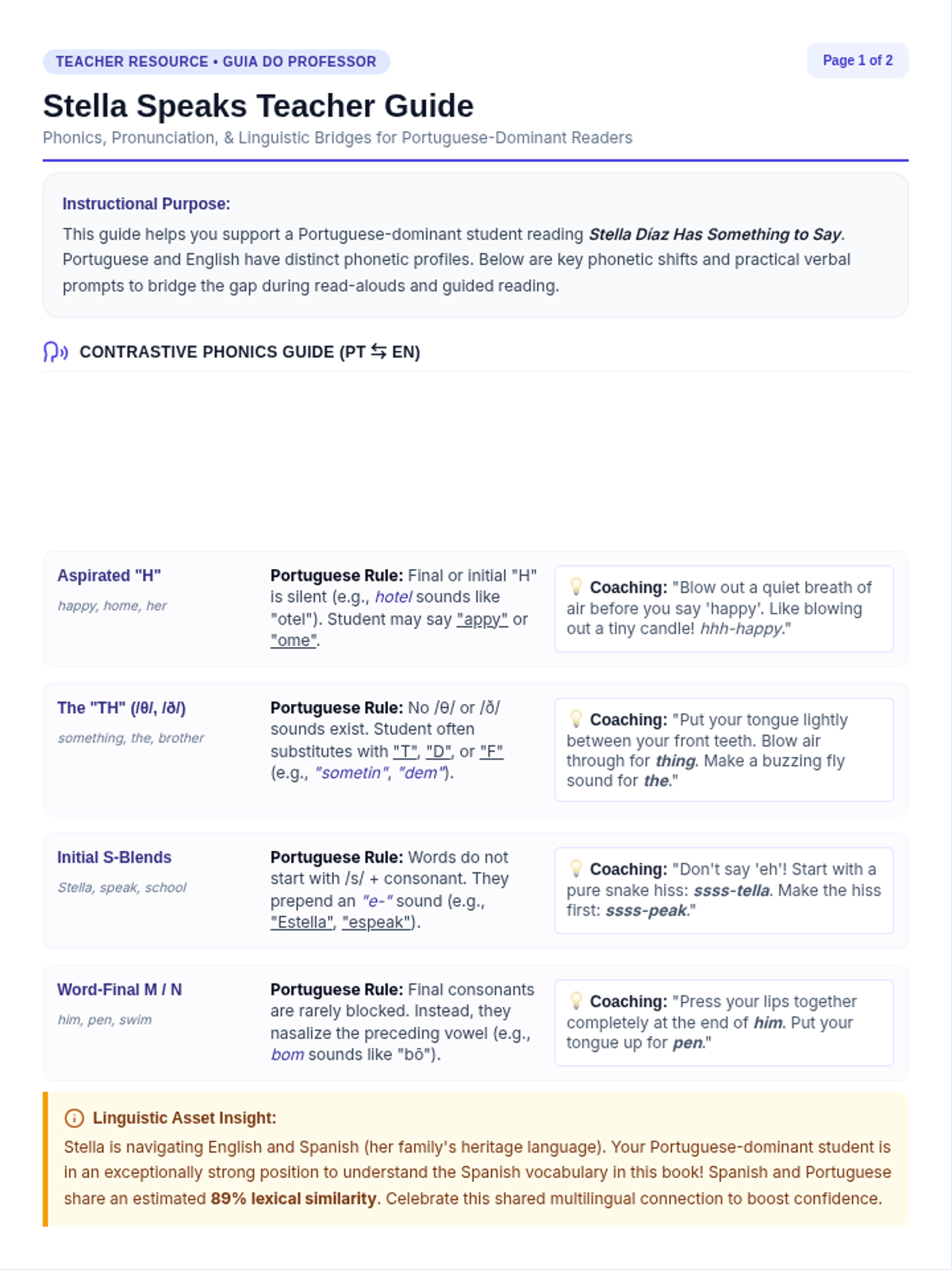
A comprehensive bilingual support package designed for a Portuguese-dominant third grader reading 'Stella Díaz Has Something to Say'. It includes a pre-reading anchor chart, bilingual chapter summaries with visual scaffolds, interactive graphic organizers, and a teacher guide with phonics pronunciation tips.
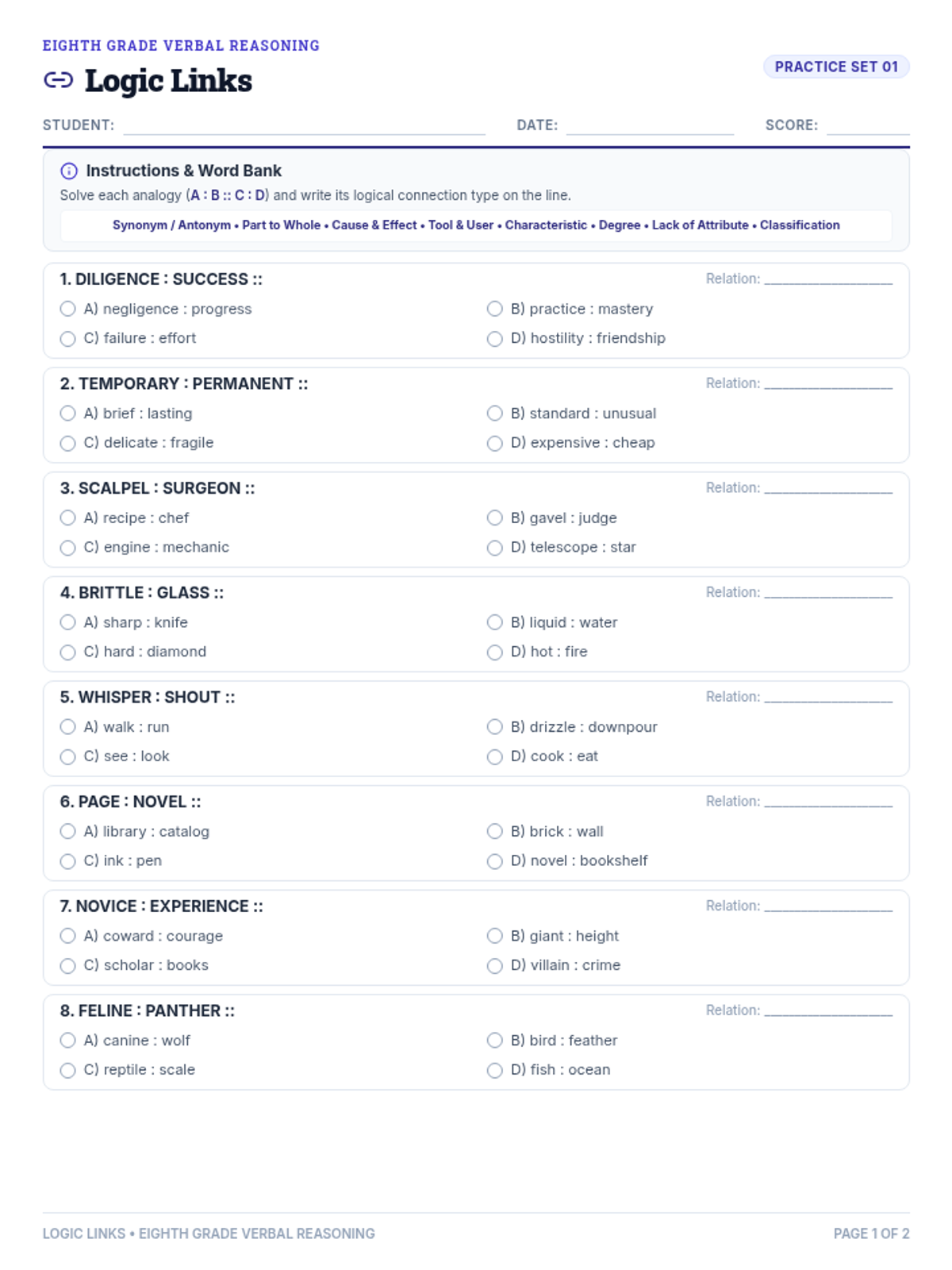
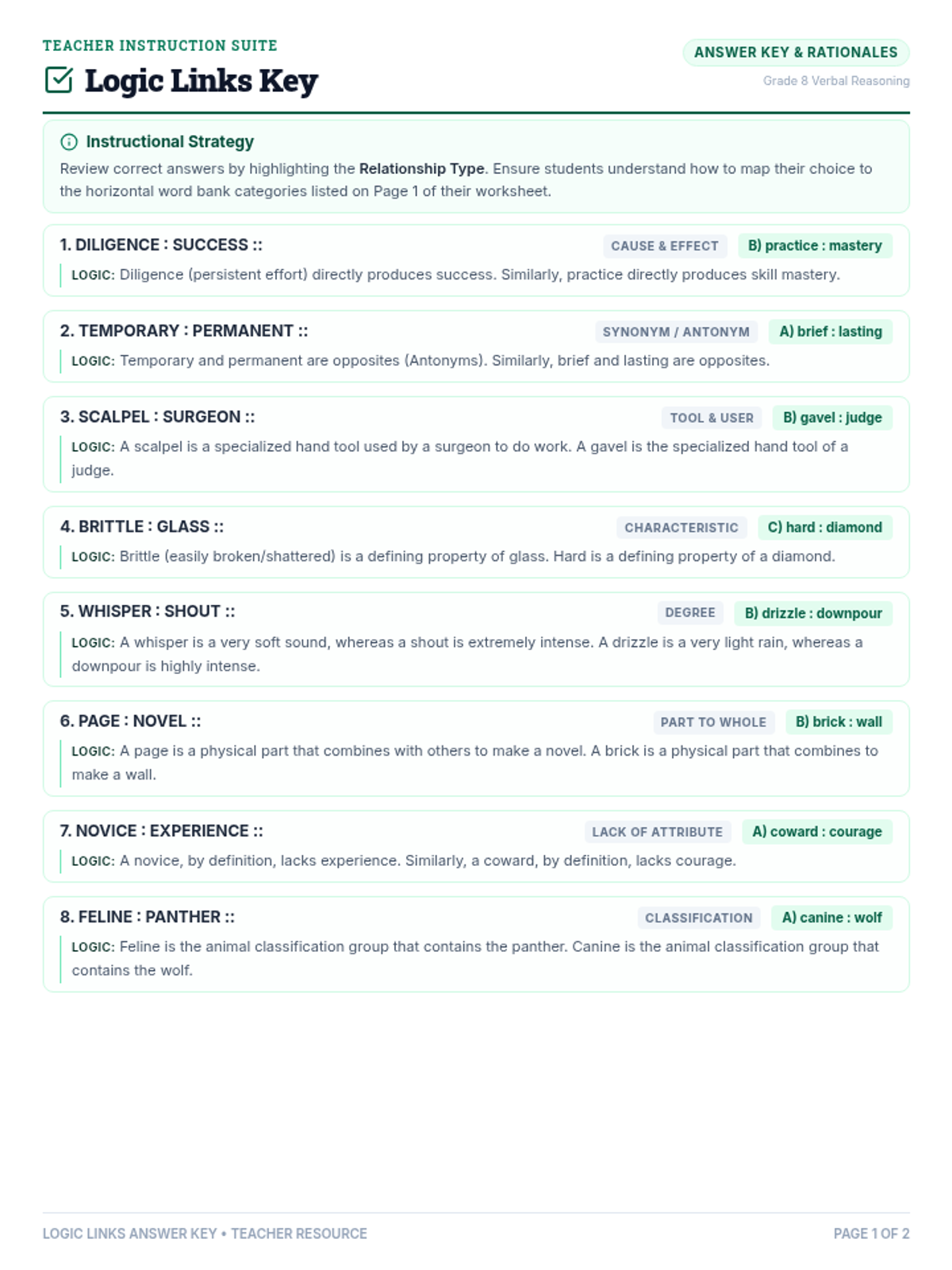
A comprehensive lesson designed for 8th-grade students to master verbal analogies. This lesson features a dual-set of materials: an engaging, structured student worksheet with 15 mixed-type analogies, and a corresponding teacher answer key containing detailed logical rationales for each question.
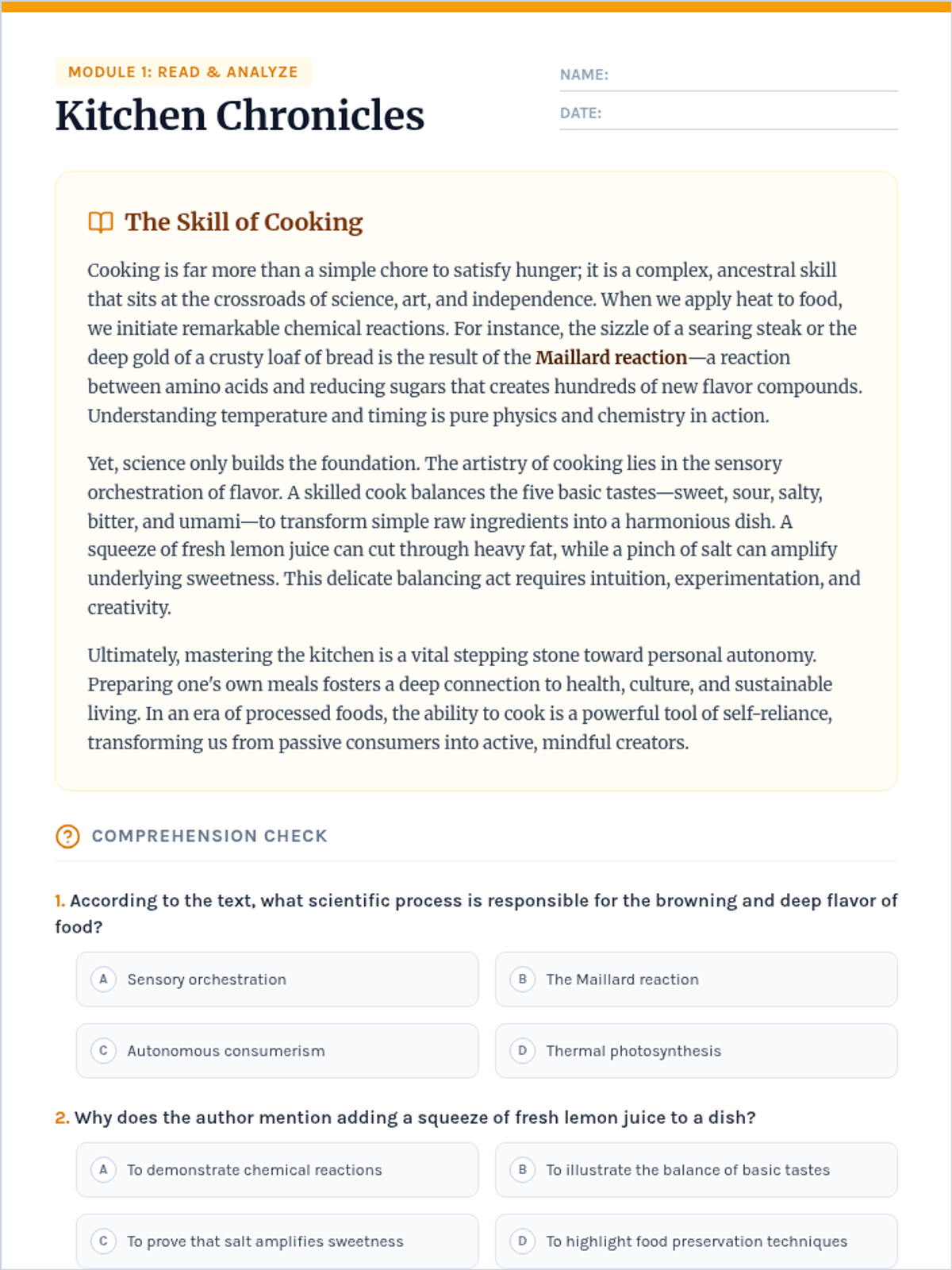
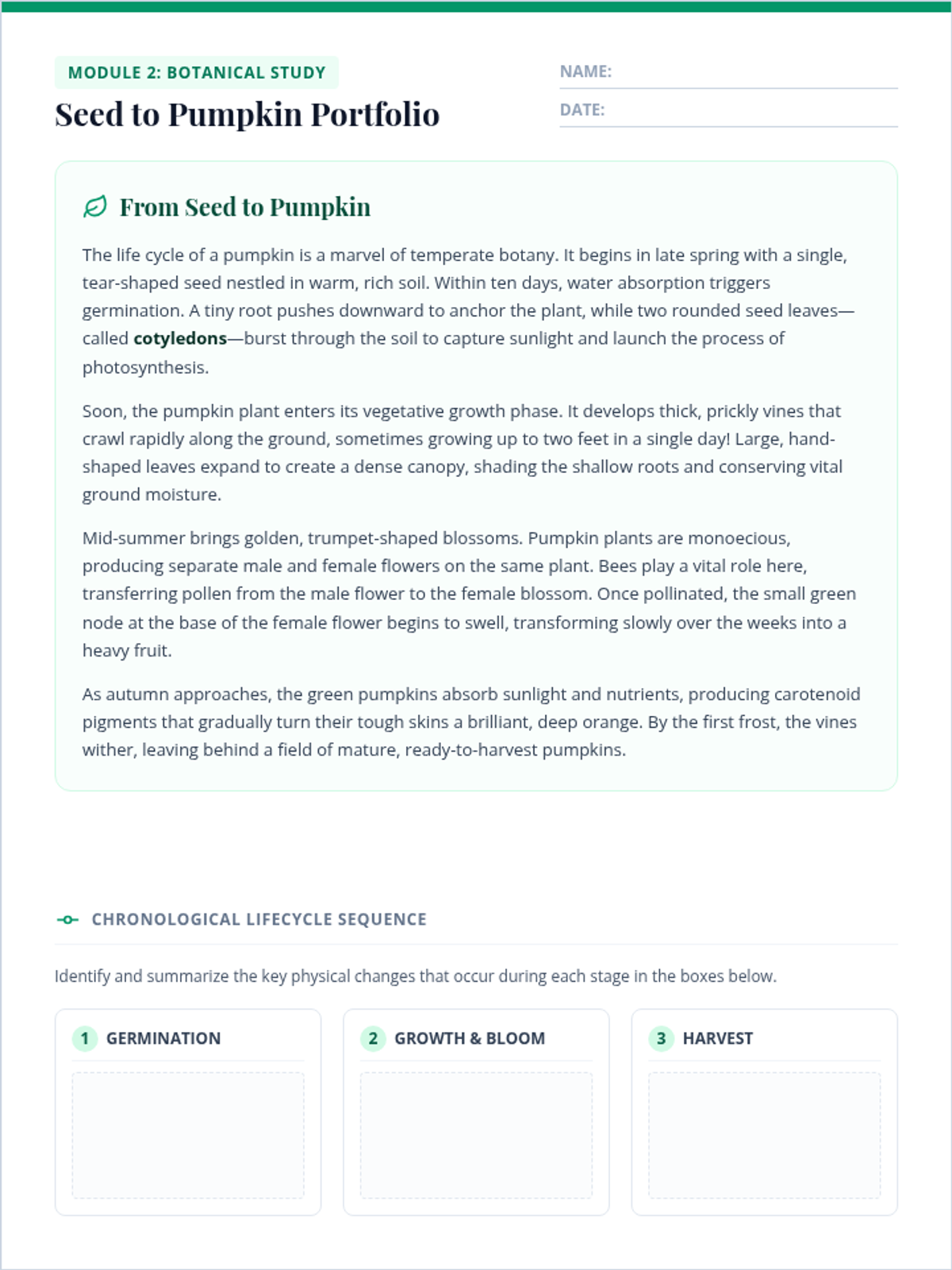
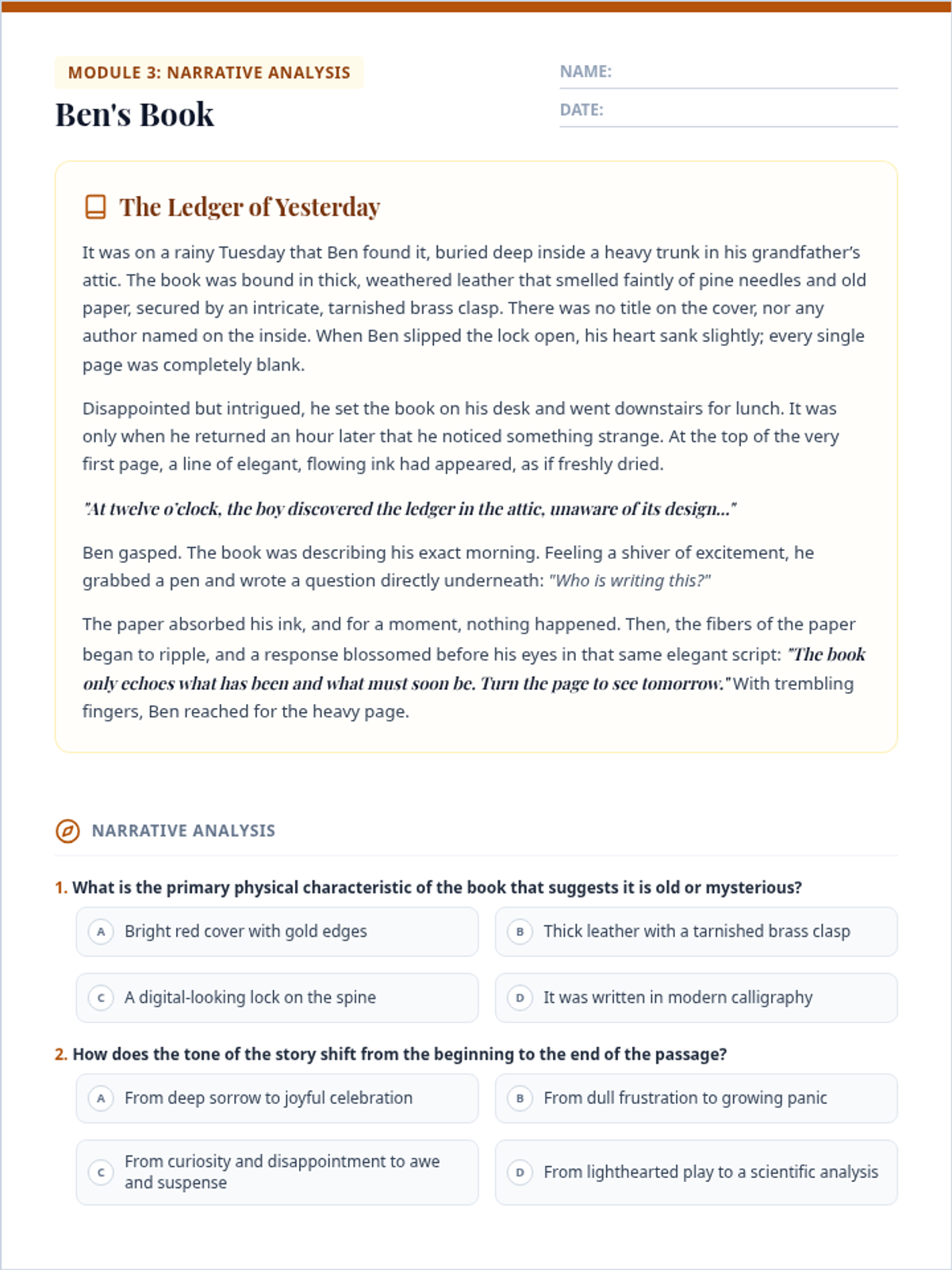
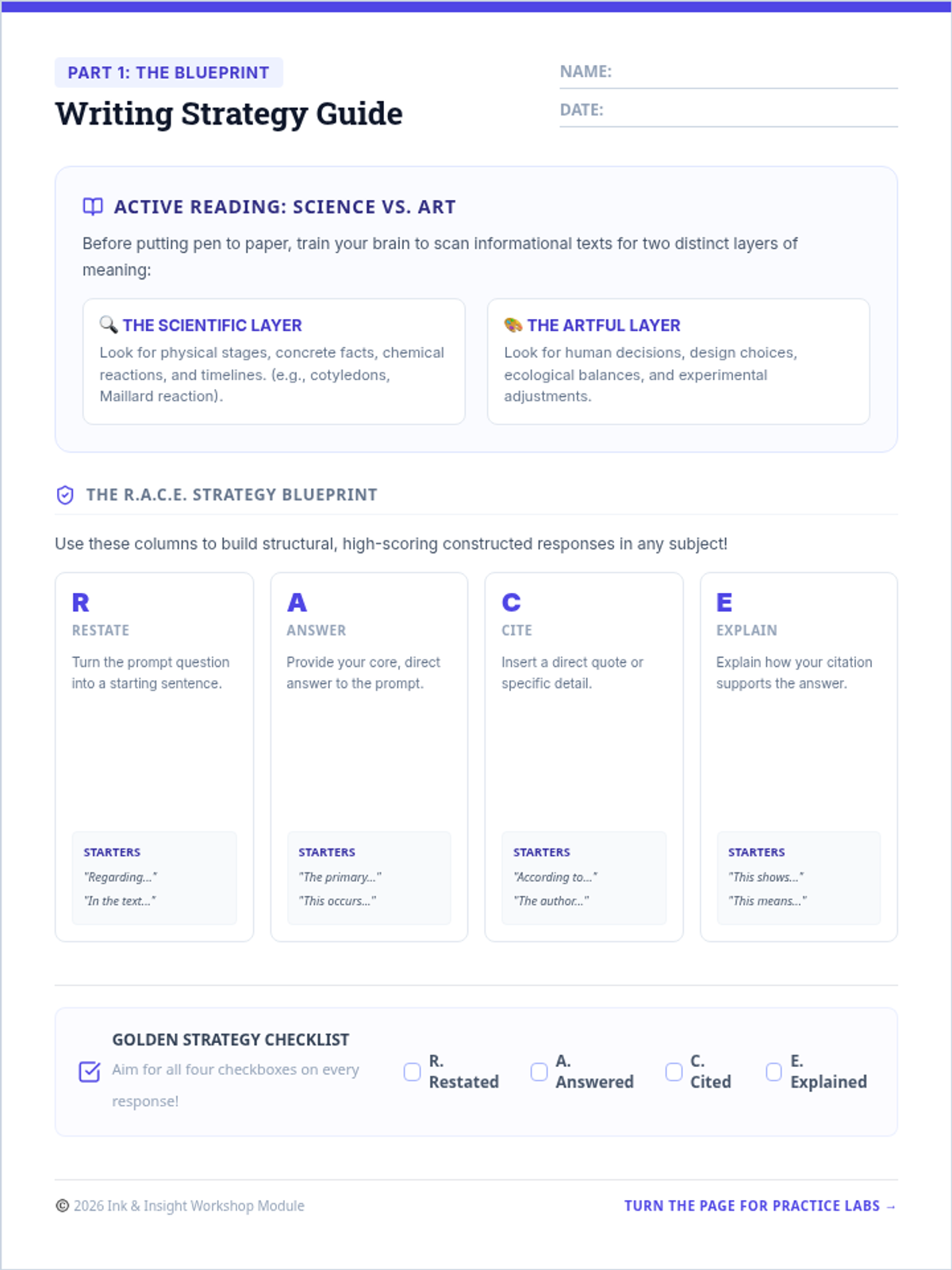
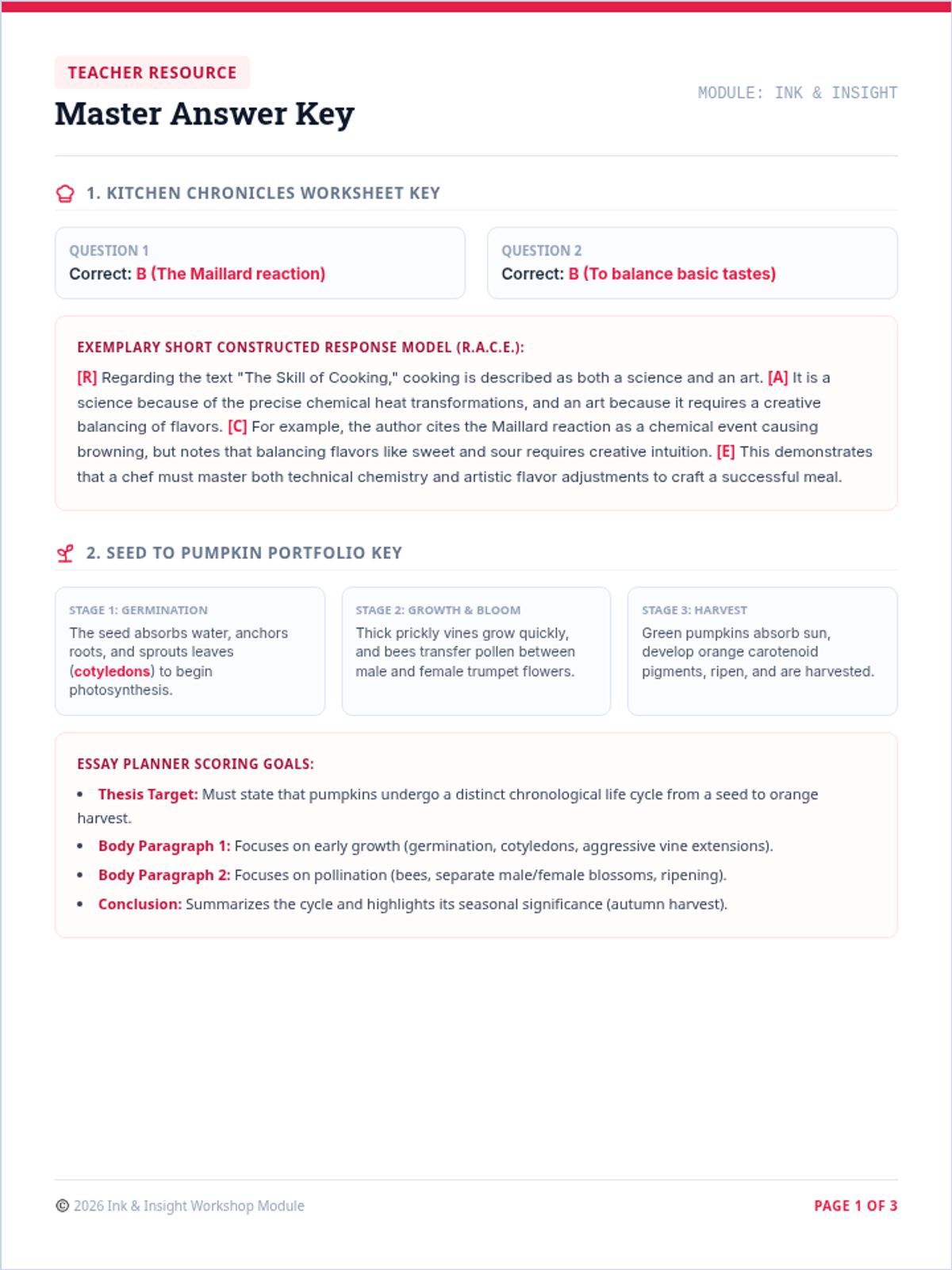
A comprehensive reading and writing workshop focusing on analyzing text and drafting structured constructed responses and informational essays. Students engage with diverse passages spanning culinary arts, botany, and narrative mystery.
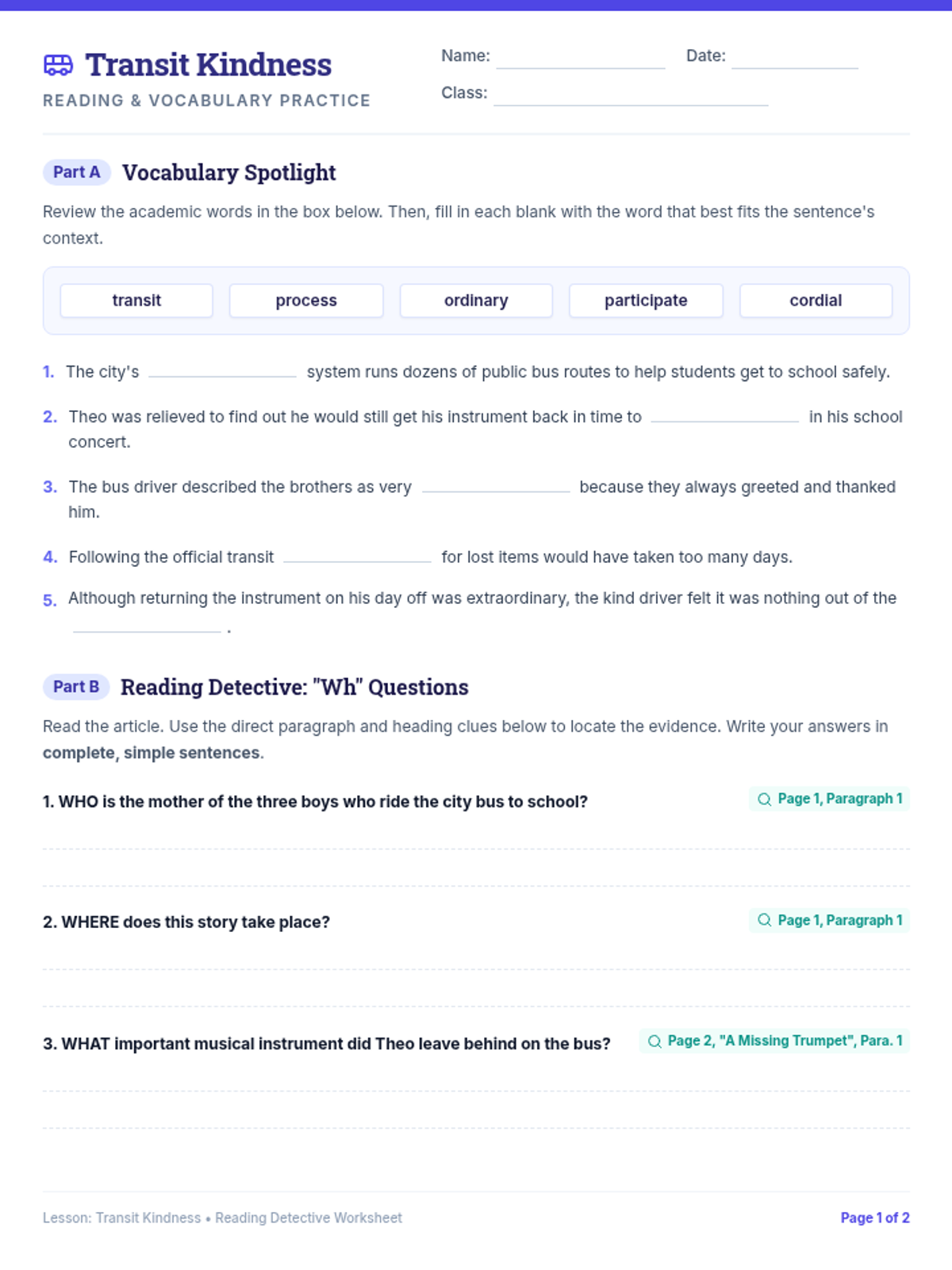
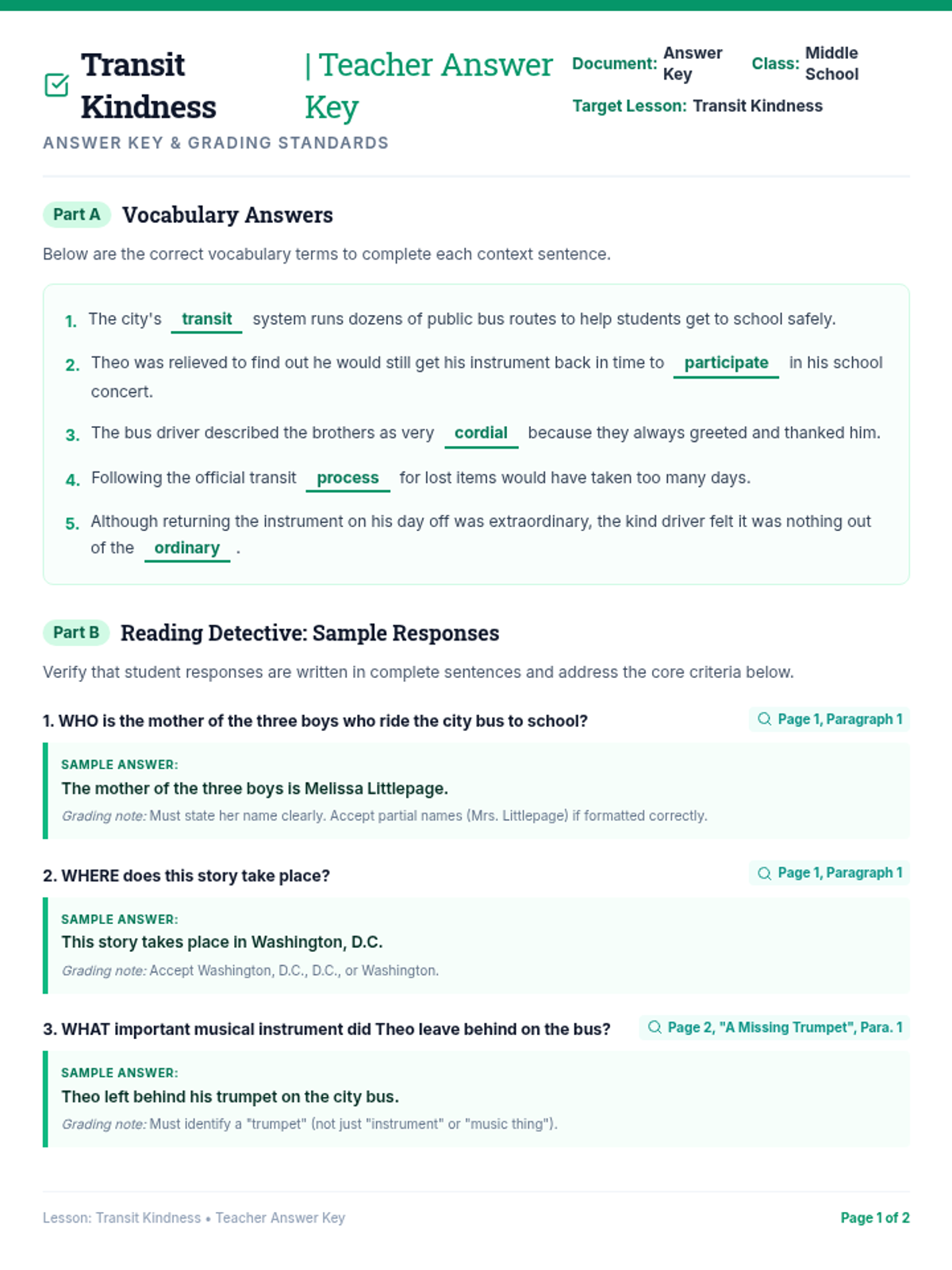
A reading comprehension and vocabulary lesson based on the true story of a D.C. bus driver who went out of his way to return a student's lost trumpet before an important concert. Students develop close reading skills, identify Tier 2 vocabulary in context, and explore themes of community and empathy.
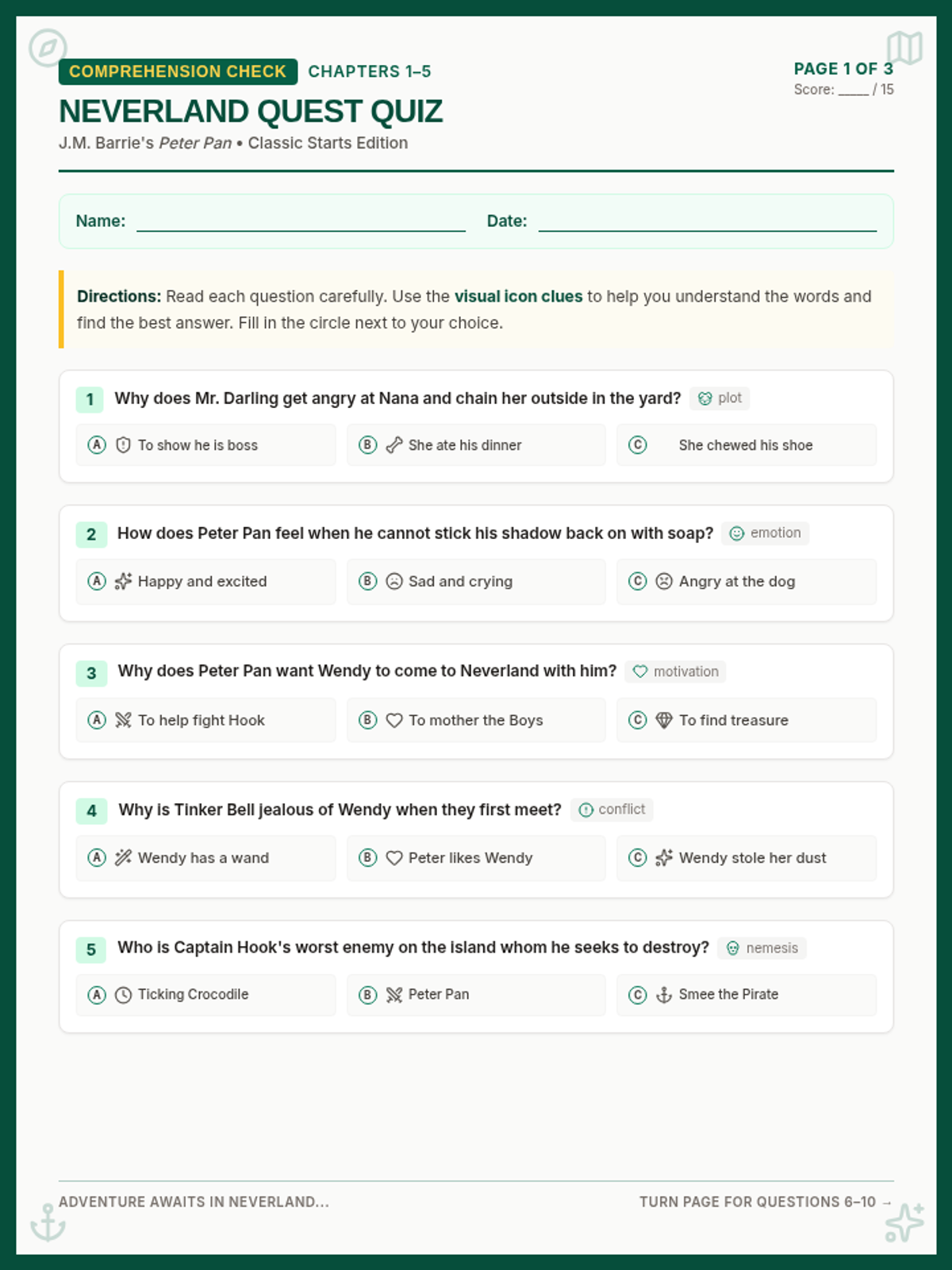
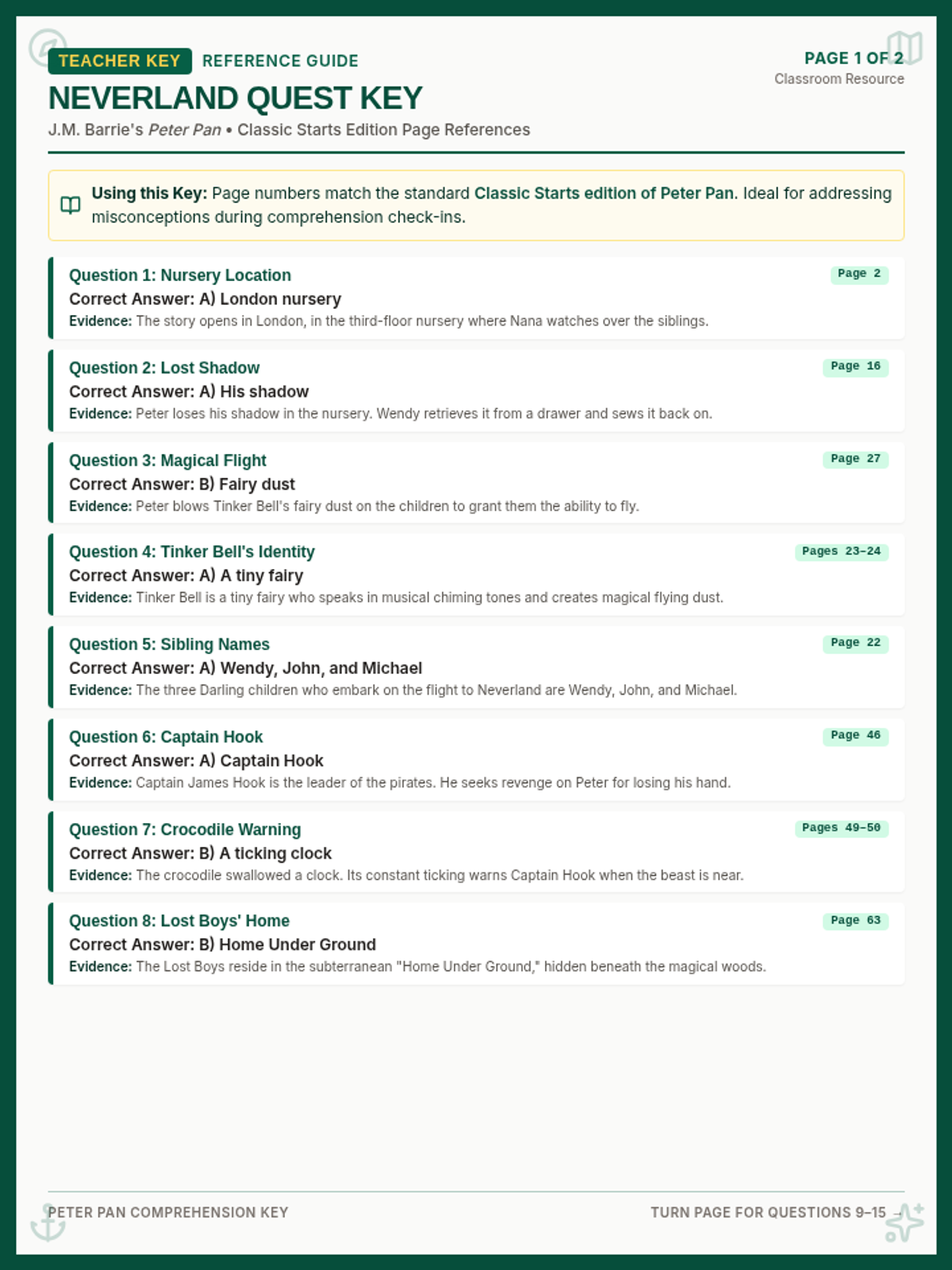
A complete comprehension assessment lesson for J.M. Barrie's Classic Starts: Peter Pan, featuring a student quiz with visual supports and a detailed teacher answer key with page references.
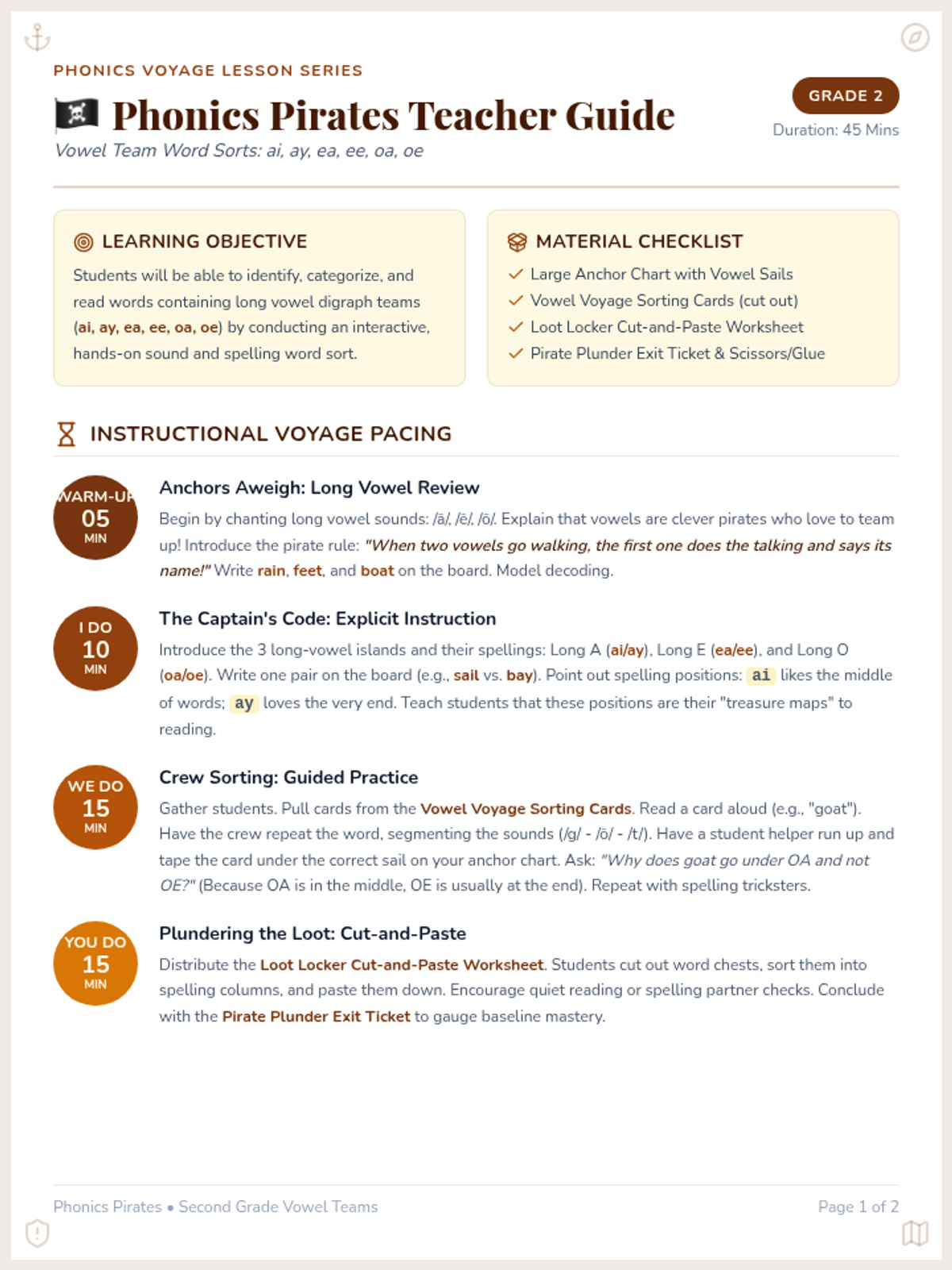
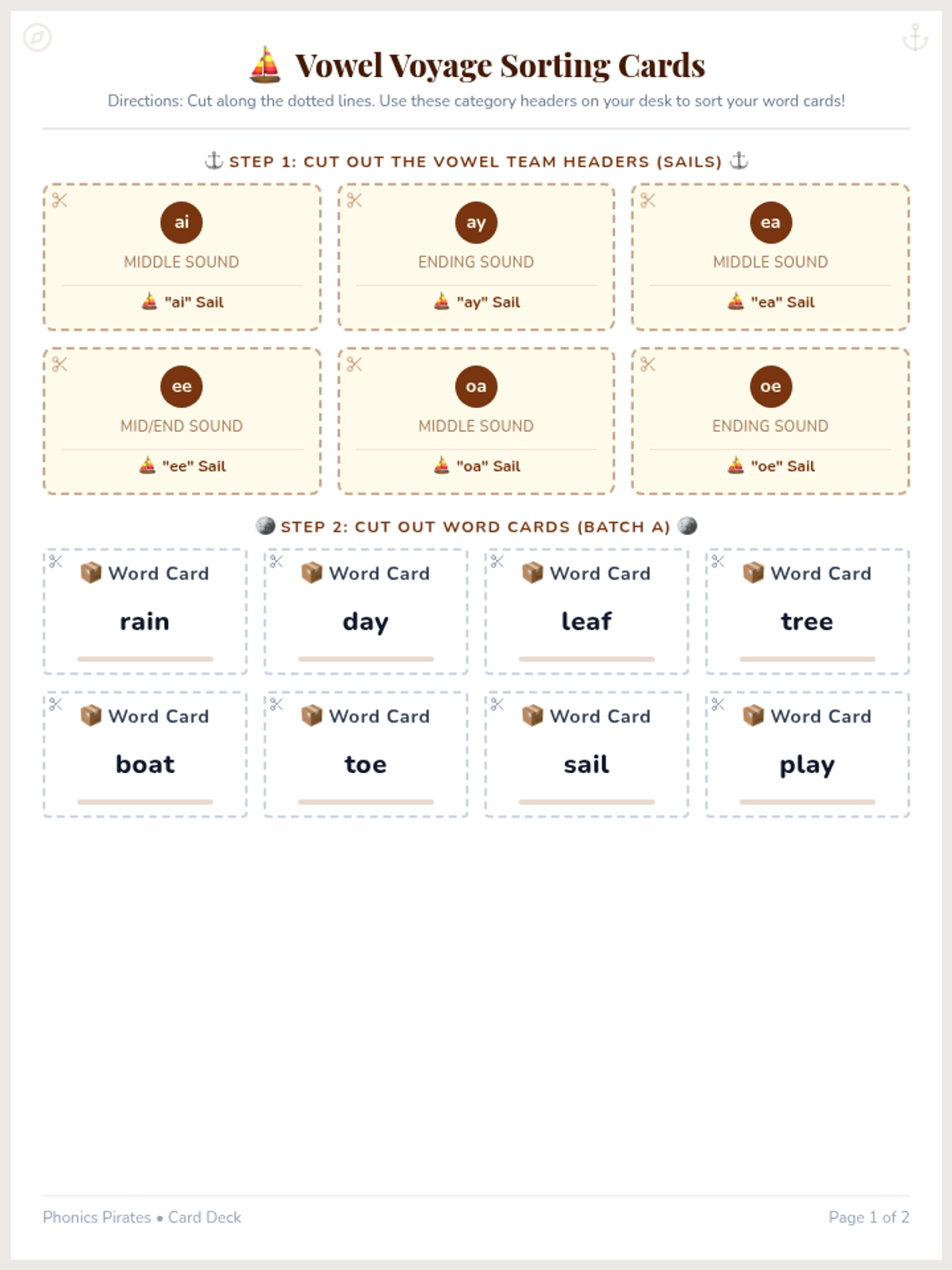
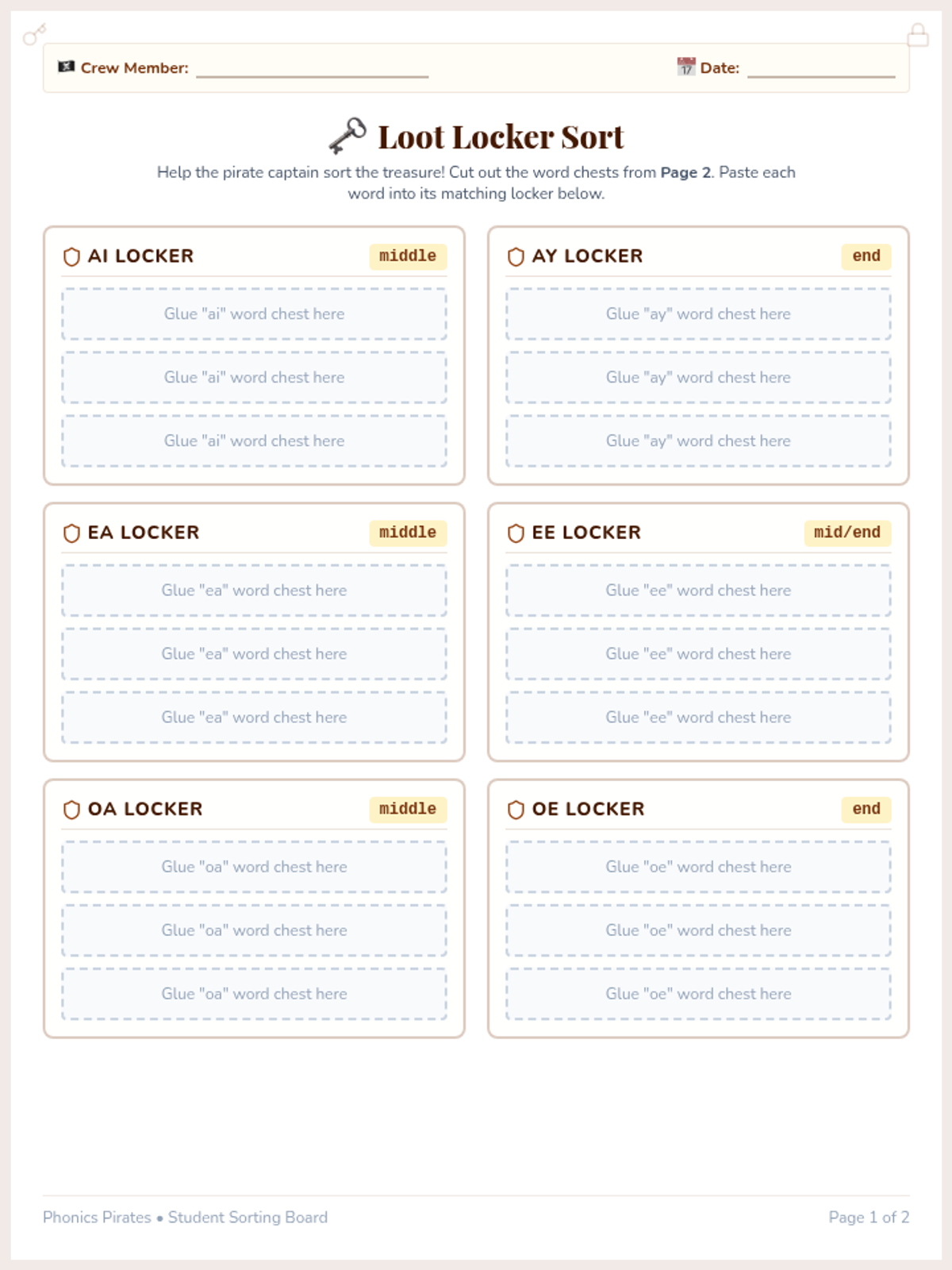
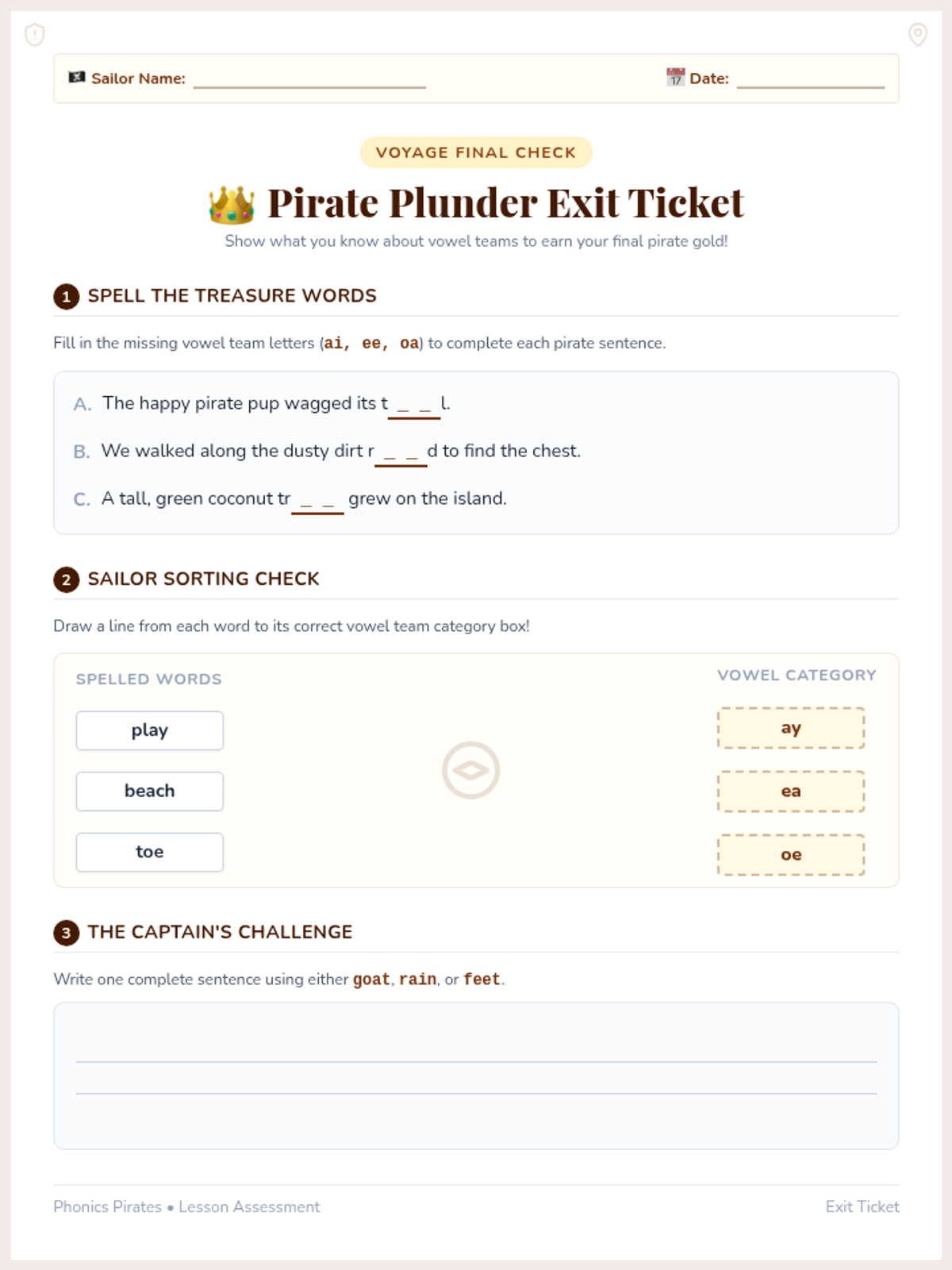
A comprehensive, pirate-themed lesson bundle for teaching second-grade vowel teams (ai/ay, ea/ee, oa/oe) through hands-on word sorts. Includes a detailed teacher guide, printable sorting cards, a cut-and-paste sorting worksheet, and a quick-check exit ticket.
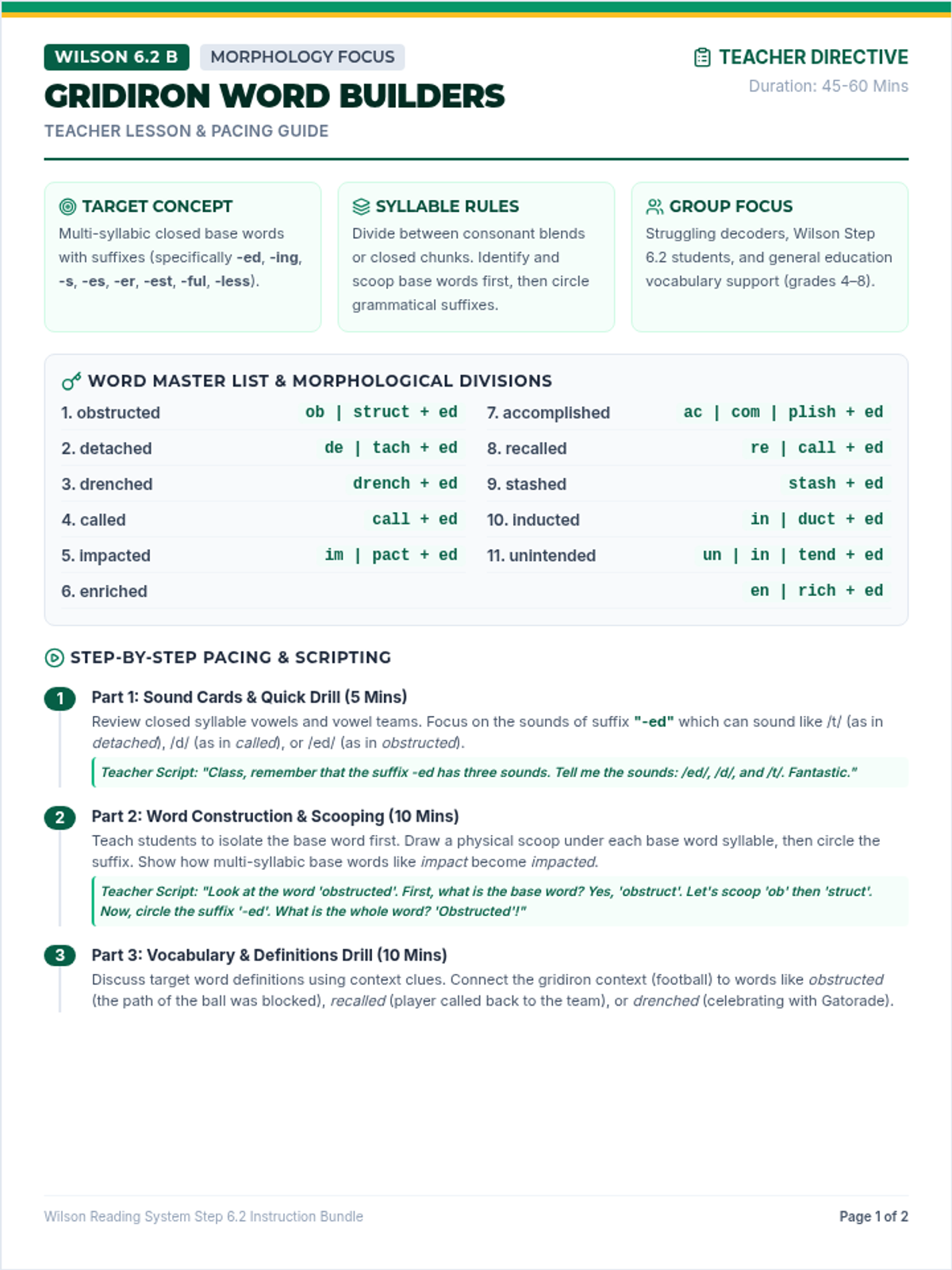
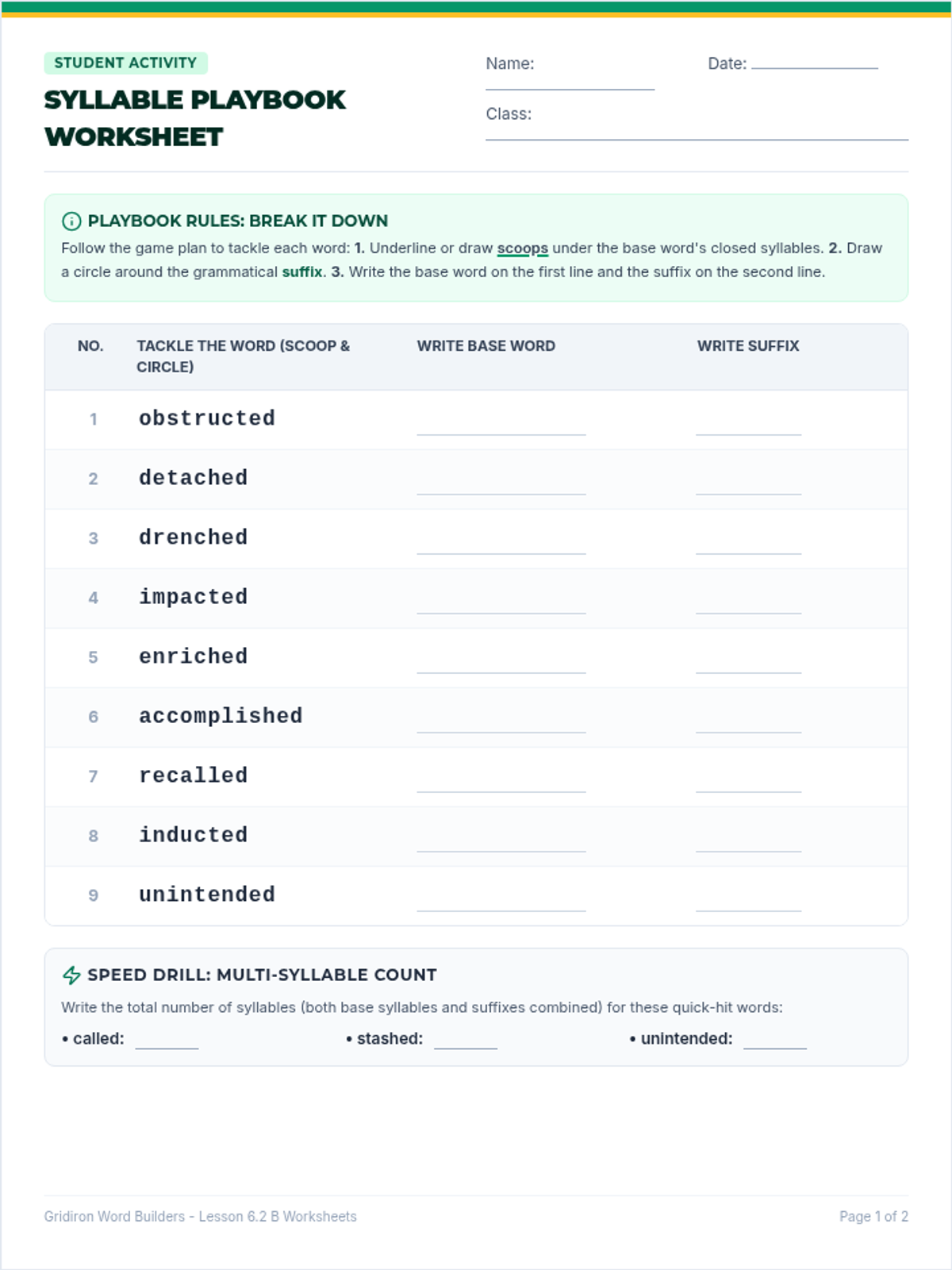
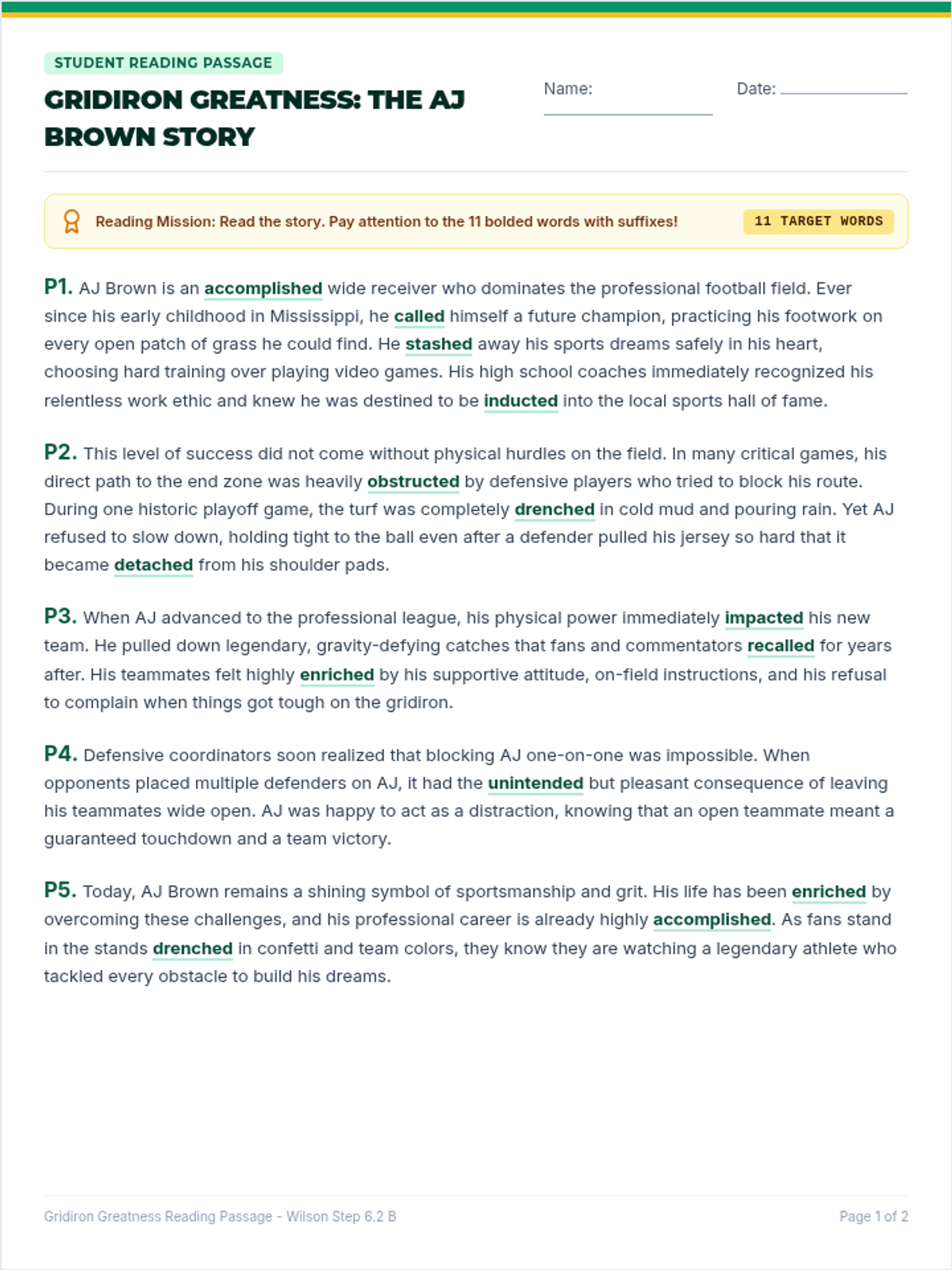
A complete literacy lesson aligned with Wilson Reading System Step 6.2, focusing on multi-syllabic words with suffixes. Students learn to read, scoop, and define complex words while engaging with an inspiring reading passage about NFL wide receiver AJ Brown.
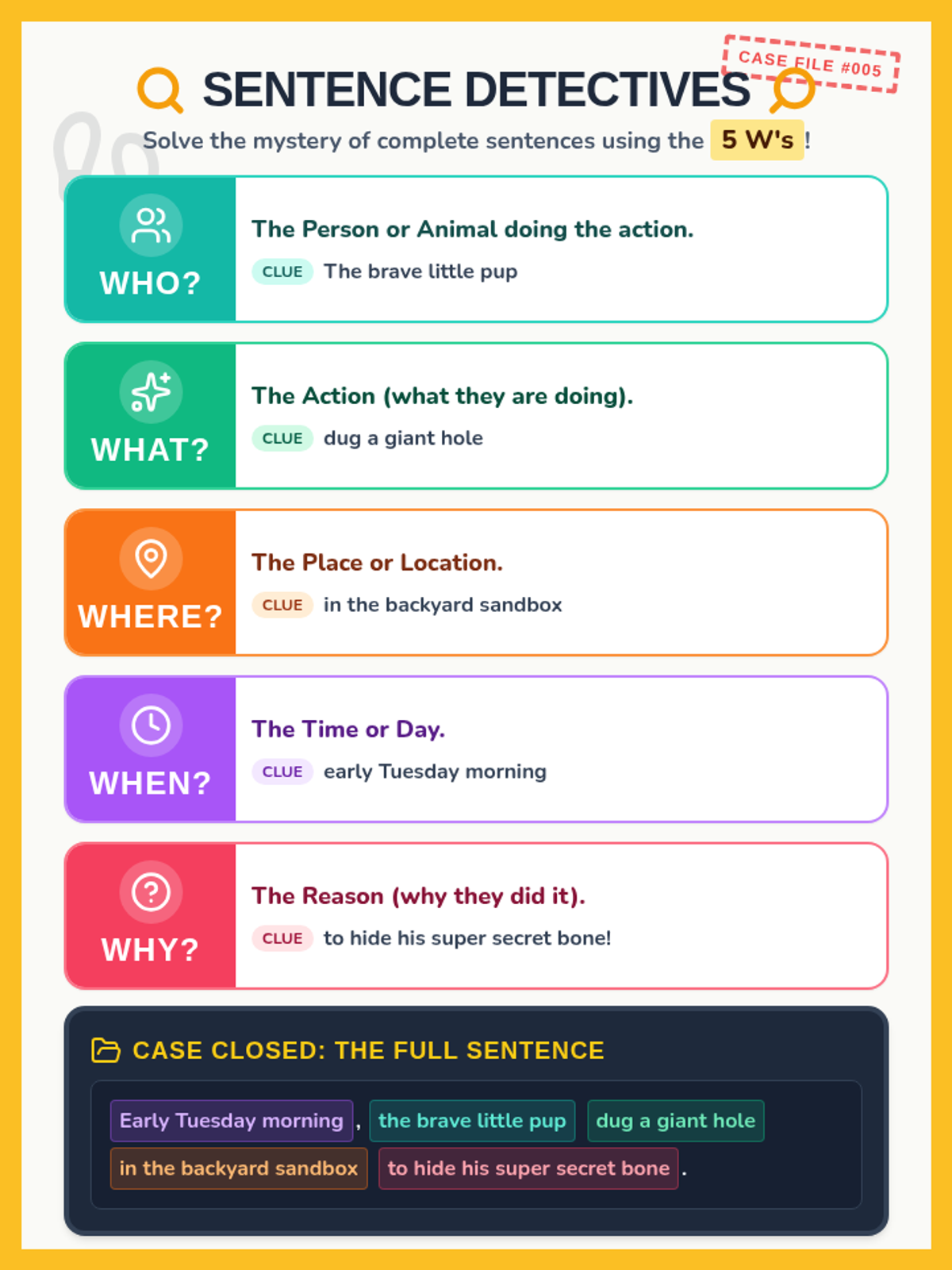
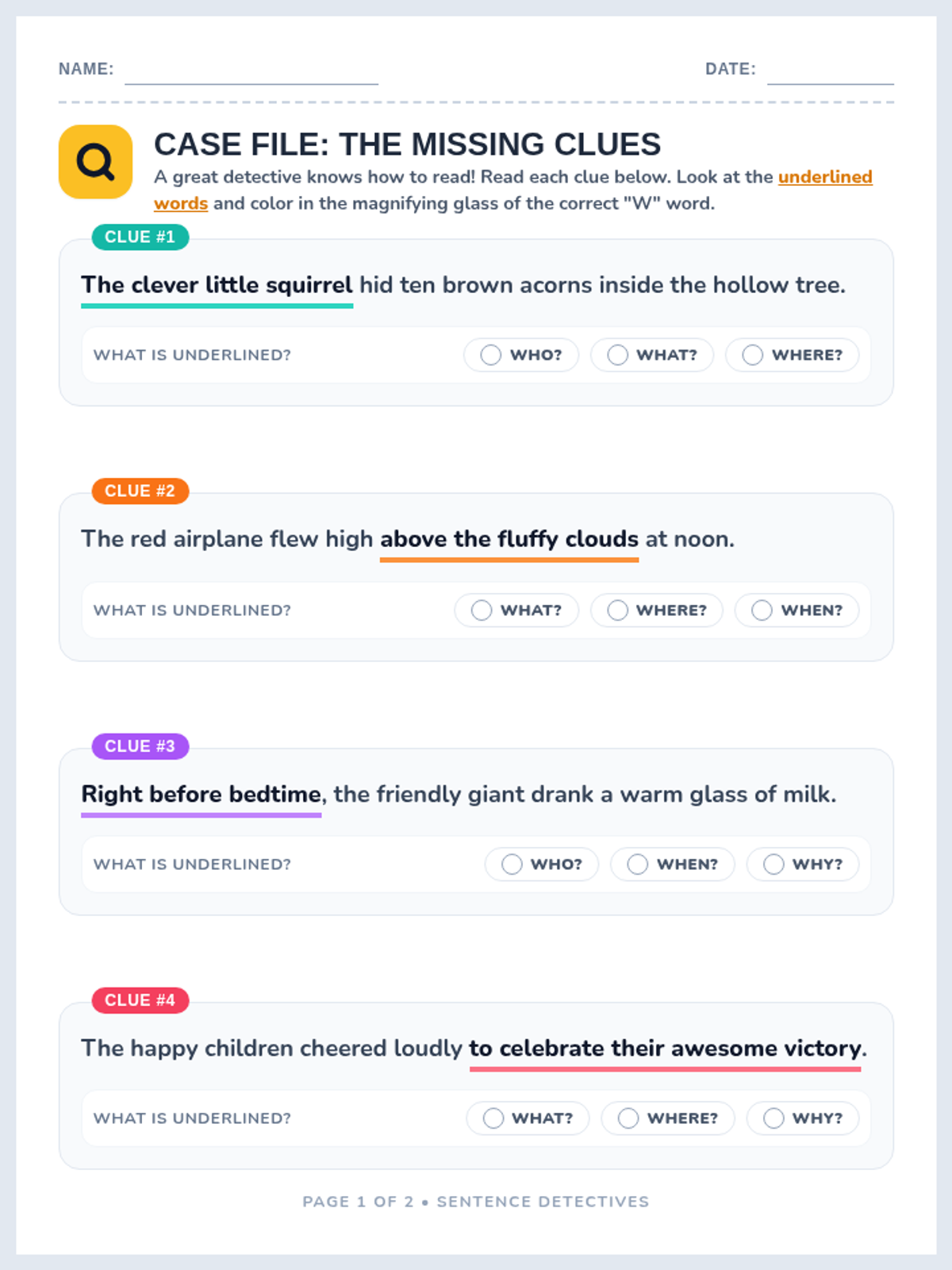
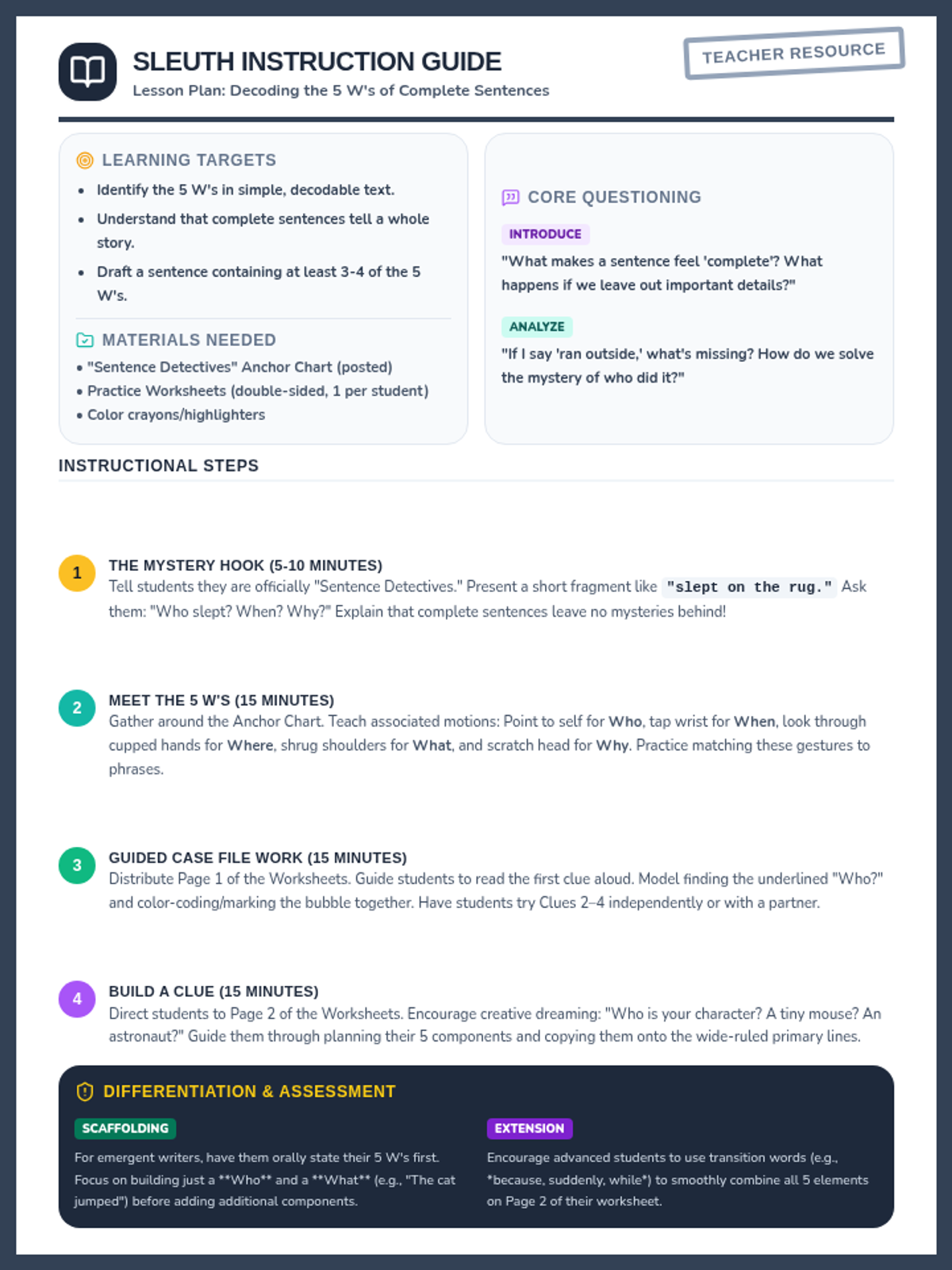
A beginner-friendly lesson introducing K-2 students to the 5 W's (Who, What, Where, When, and Why) of reading and writing. Includes a colorful anchor chart and interactive practice sheets to build complete sentence skills.
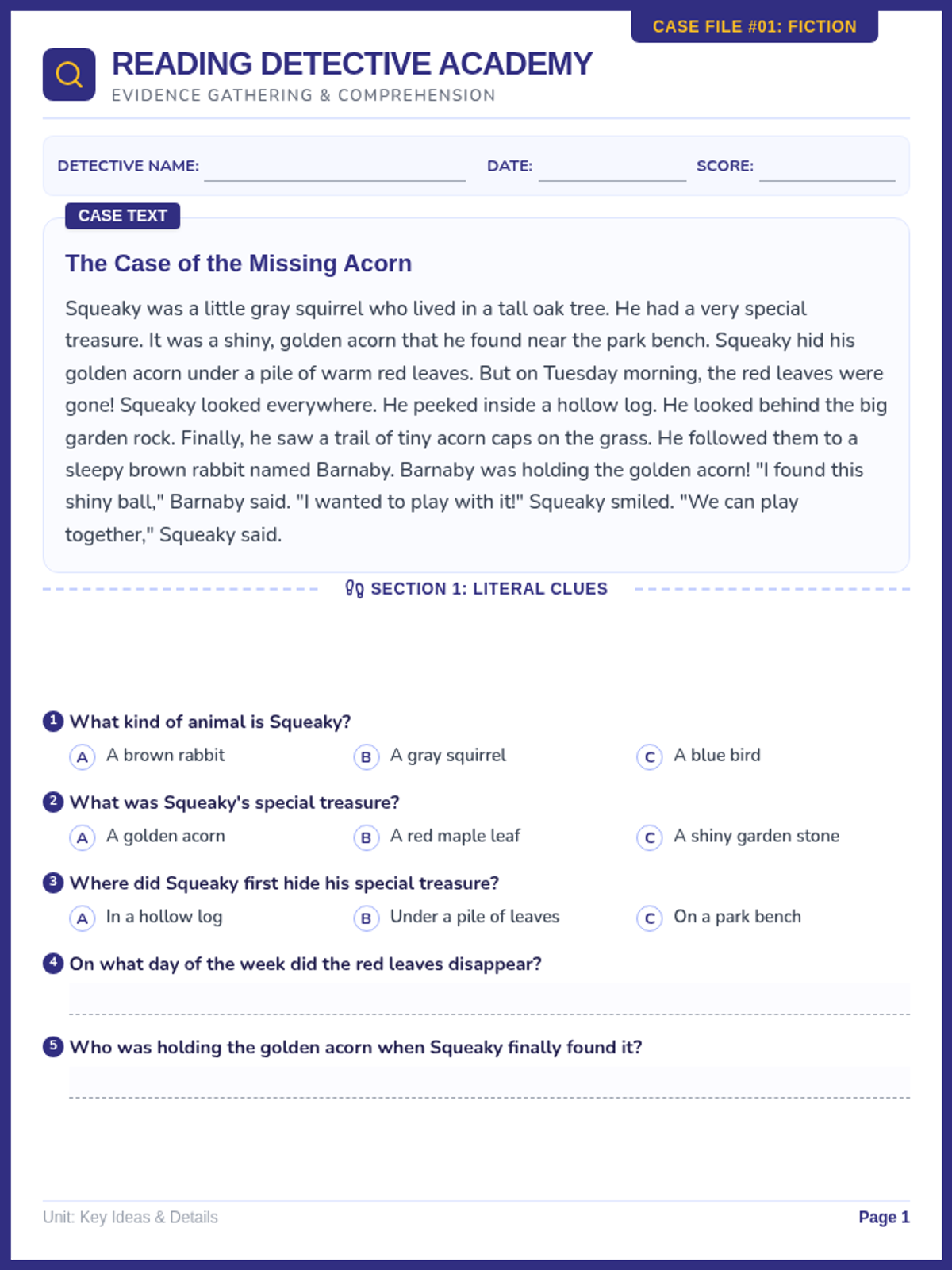
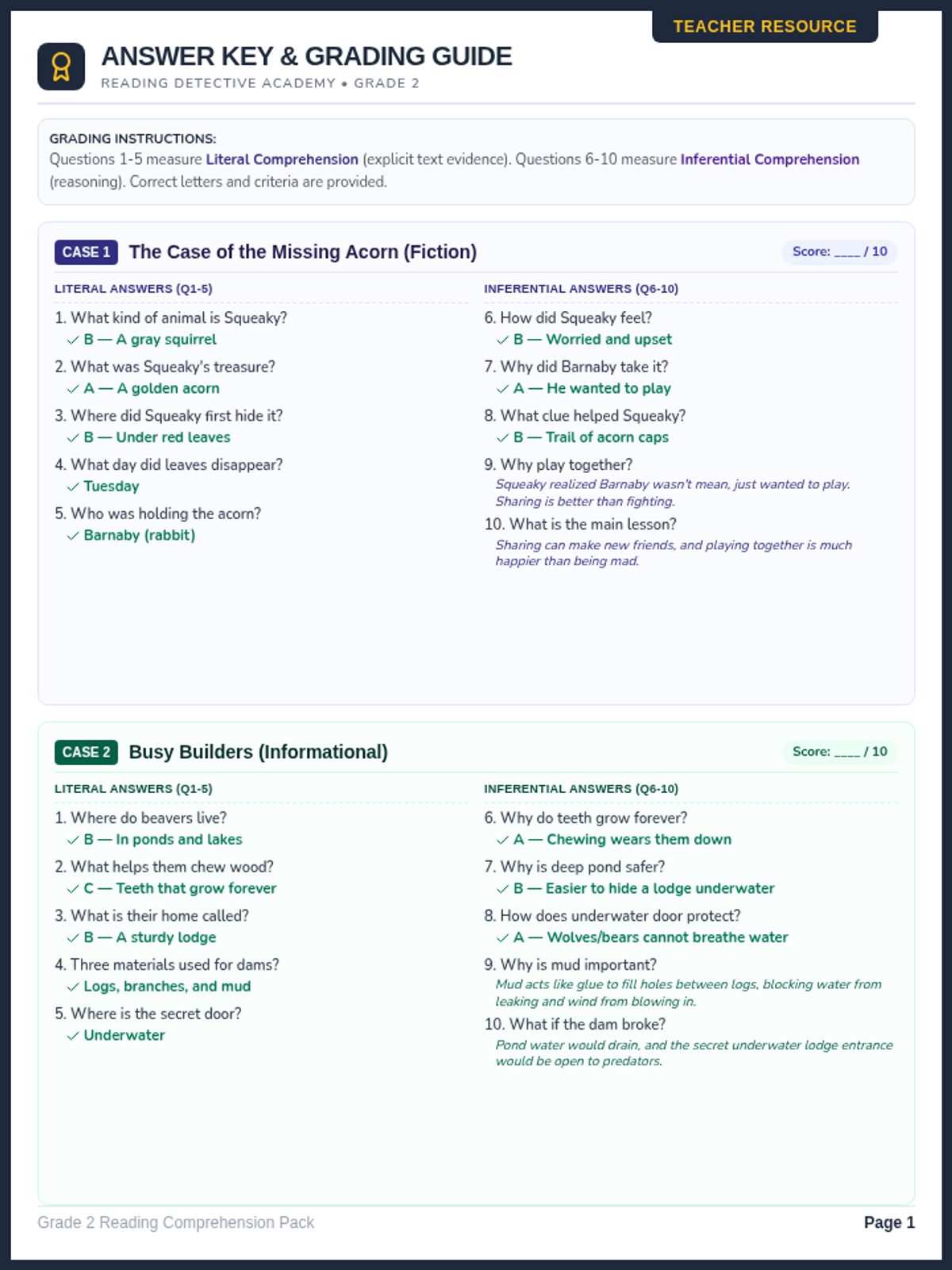
A comprehensive reading comprehension packet containing six engaging 2nd-grade passages (three fiction, three informational) with literal and inferential questions.
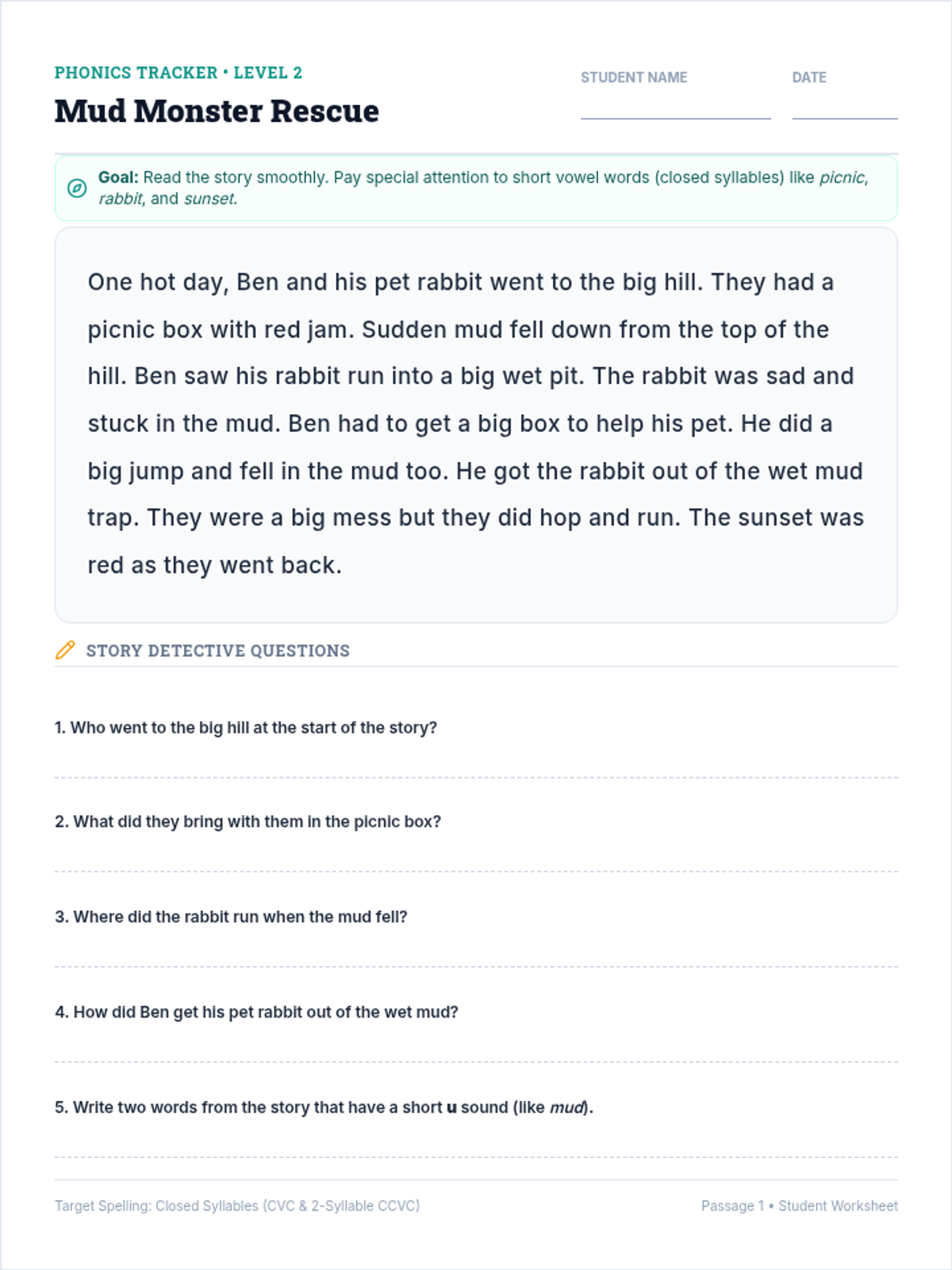
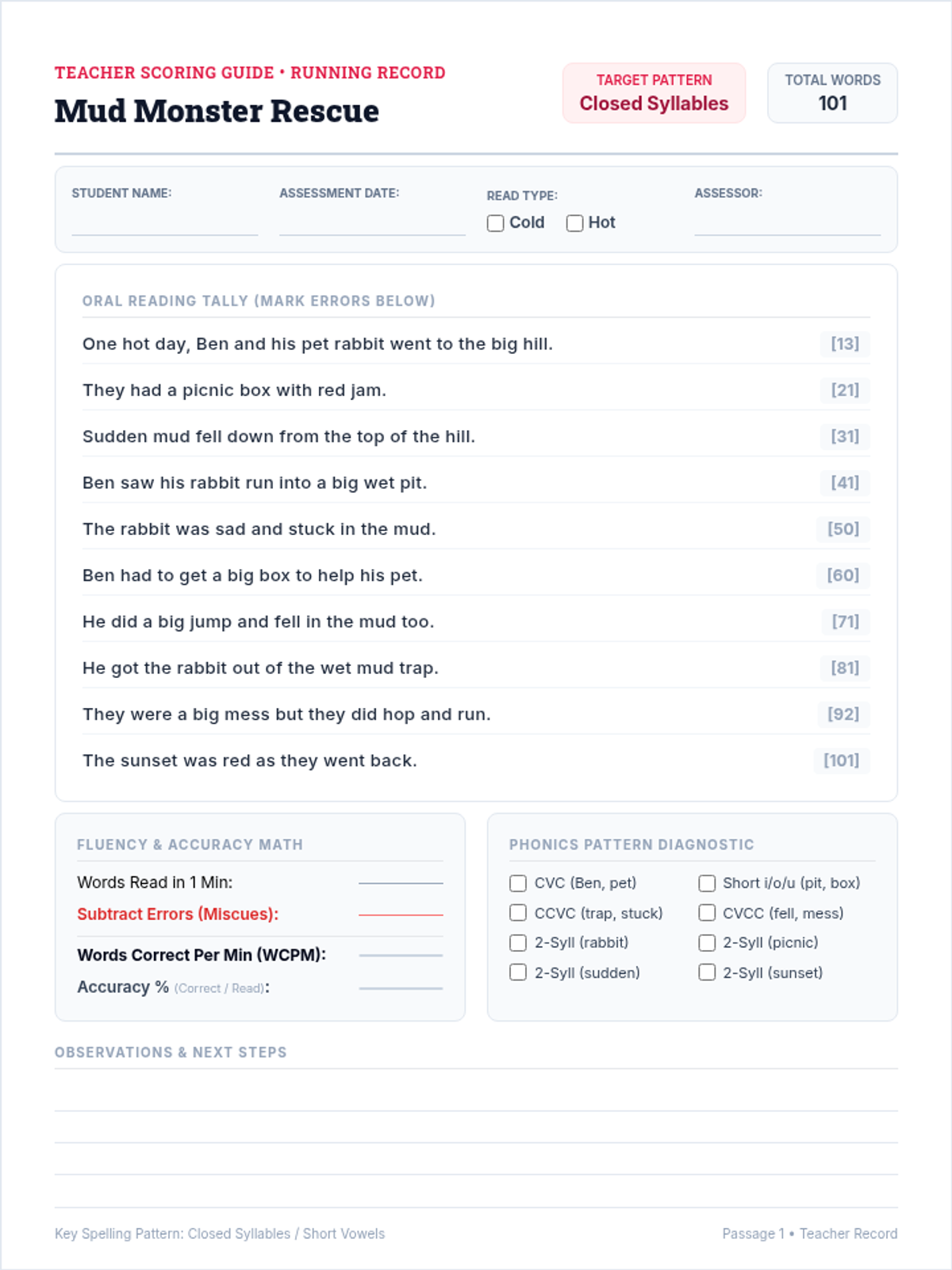
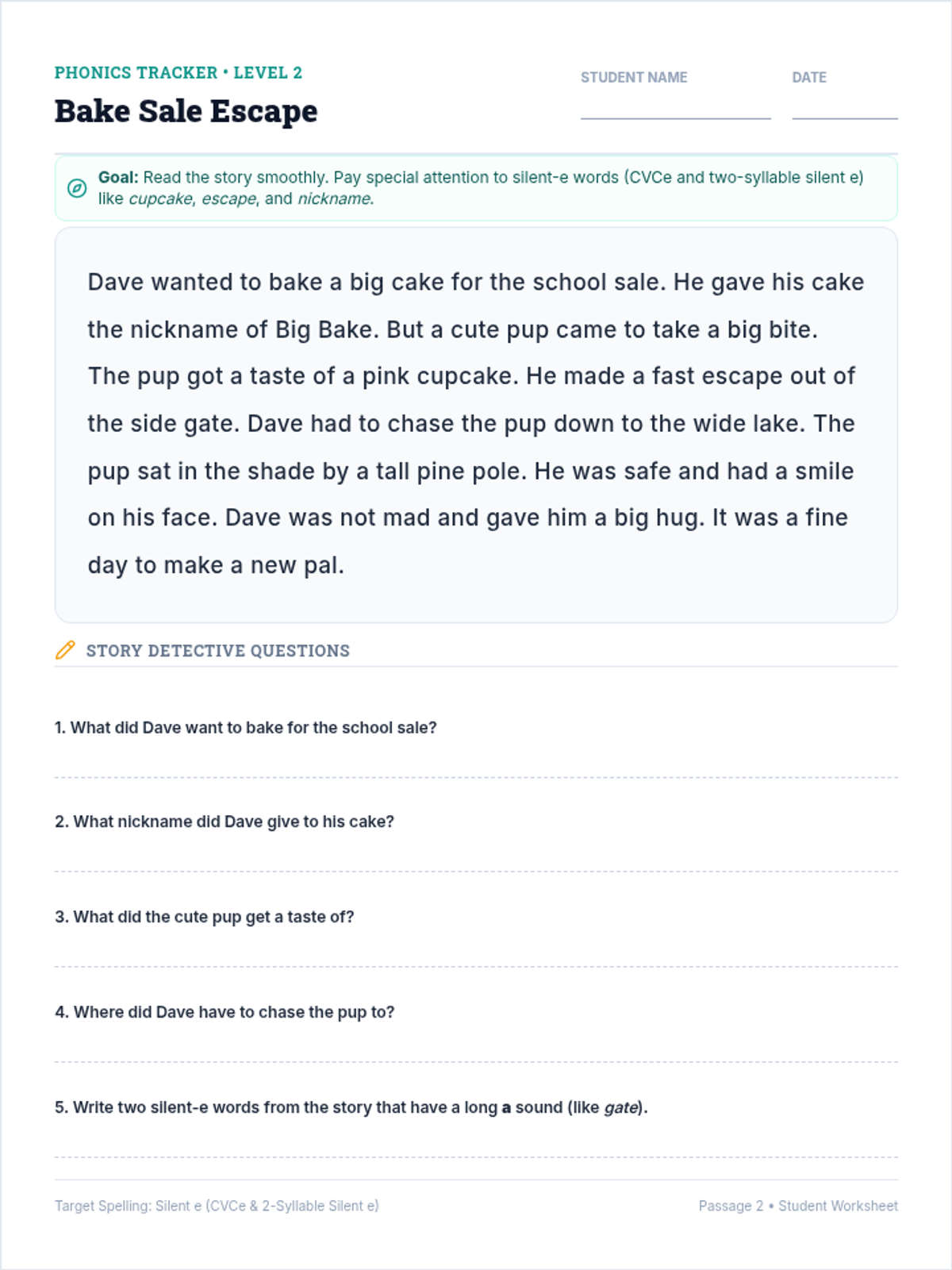
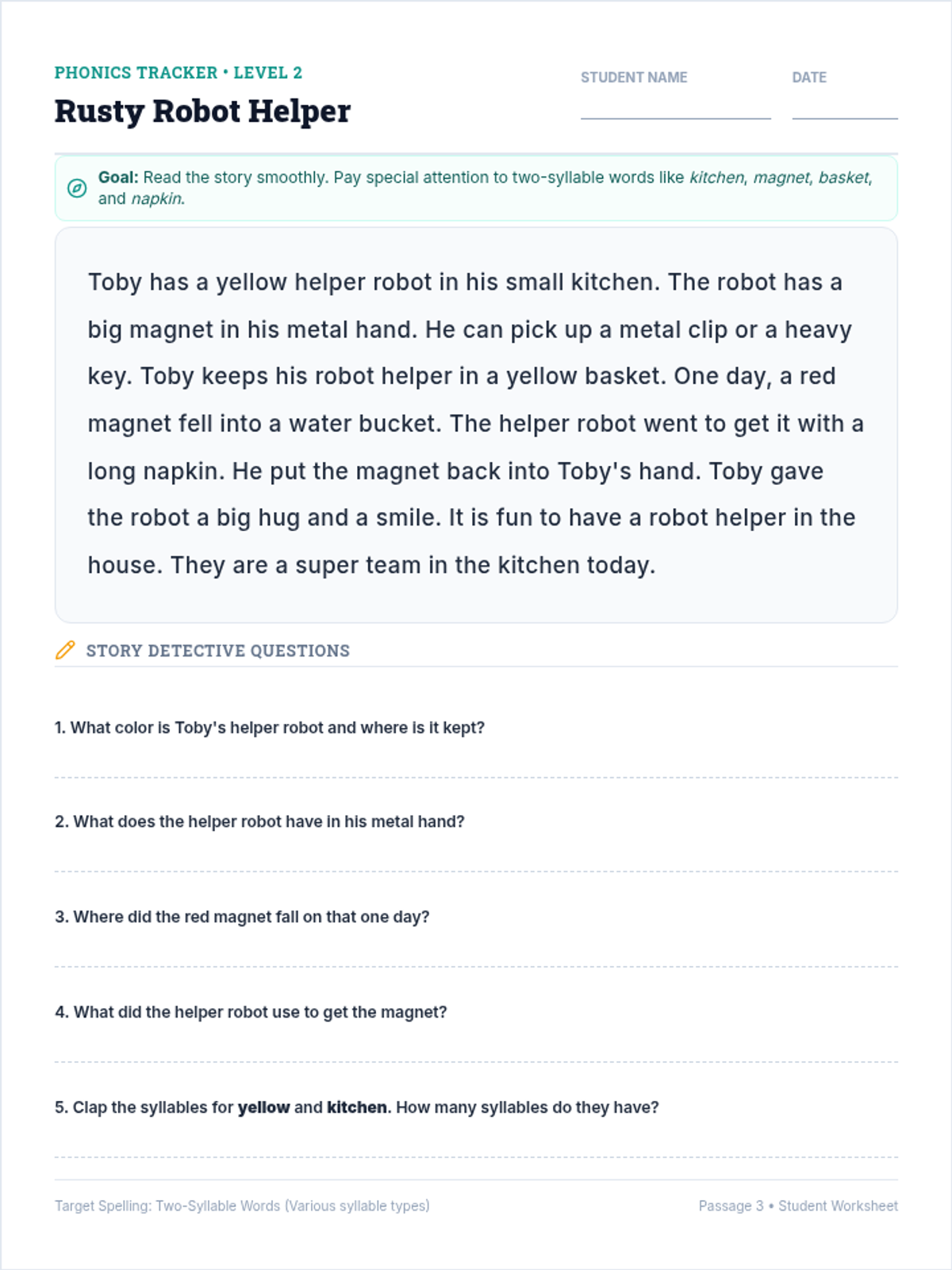
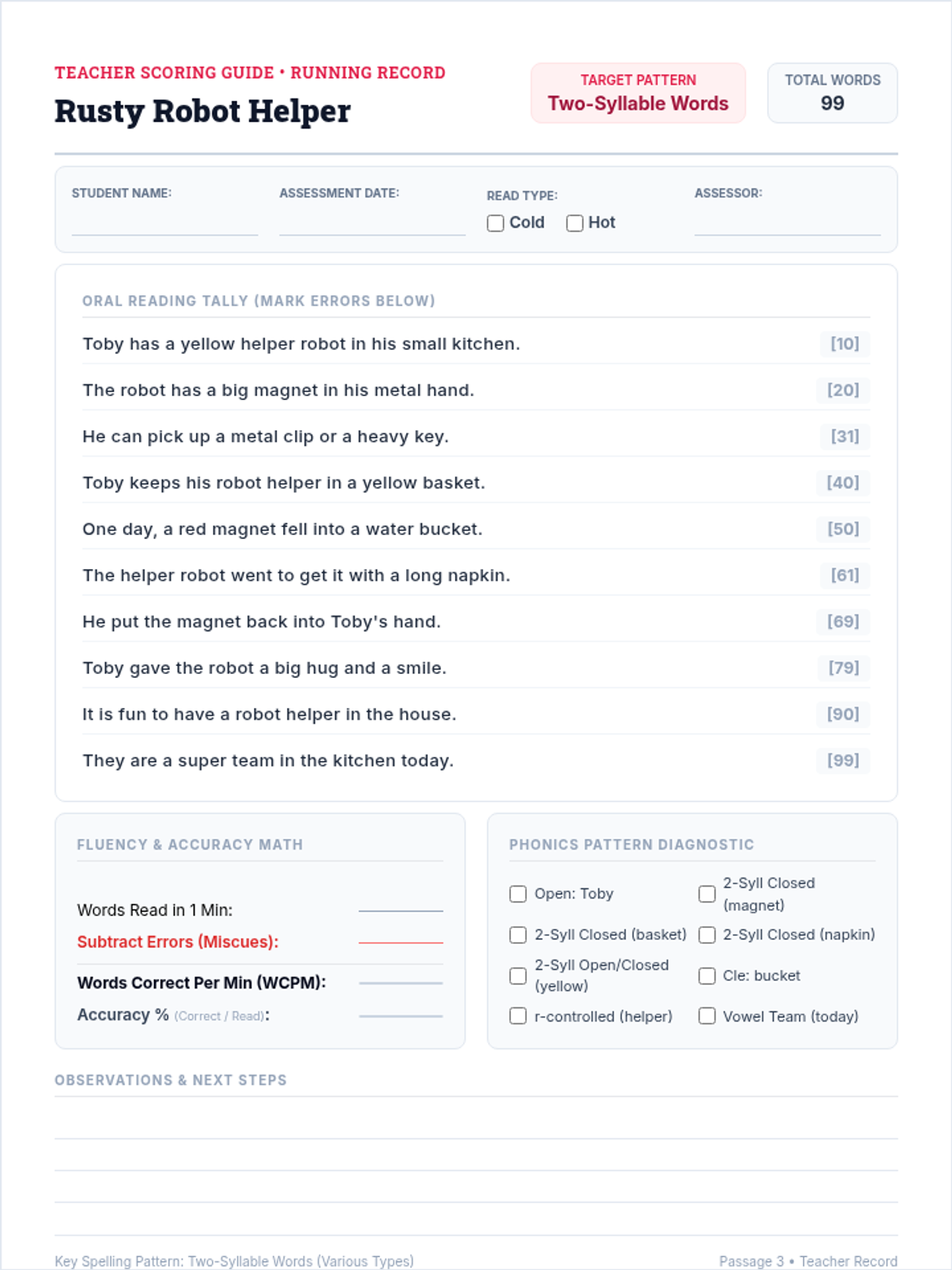
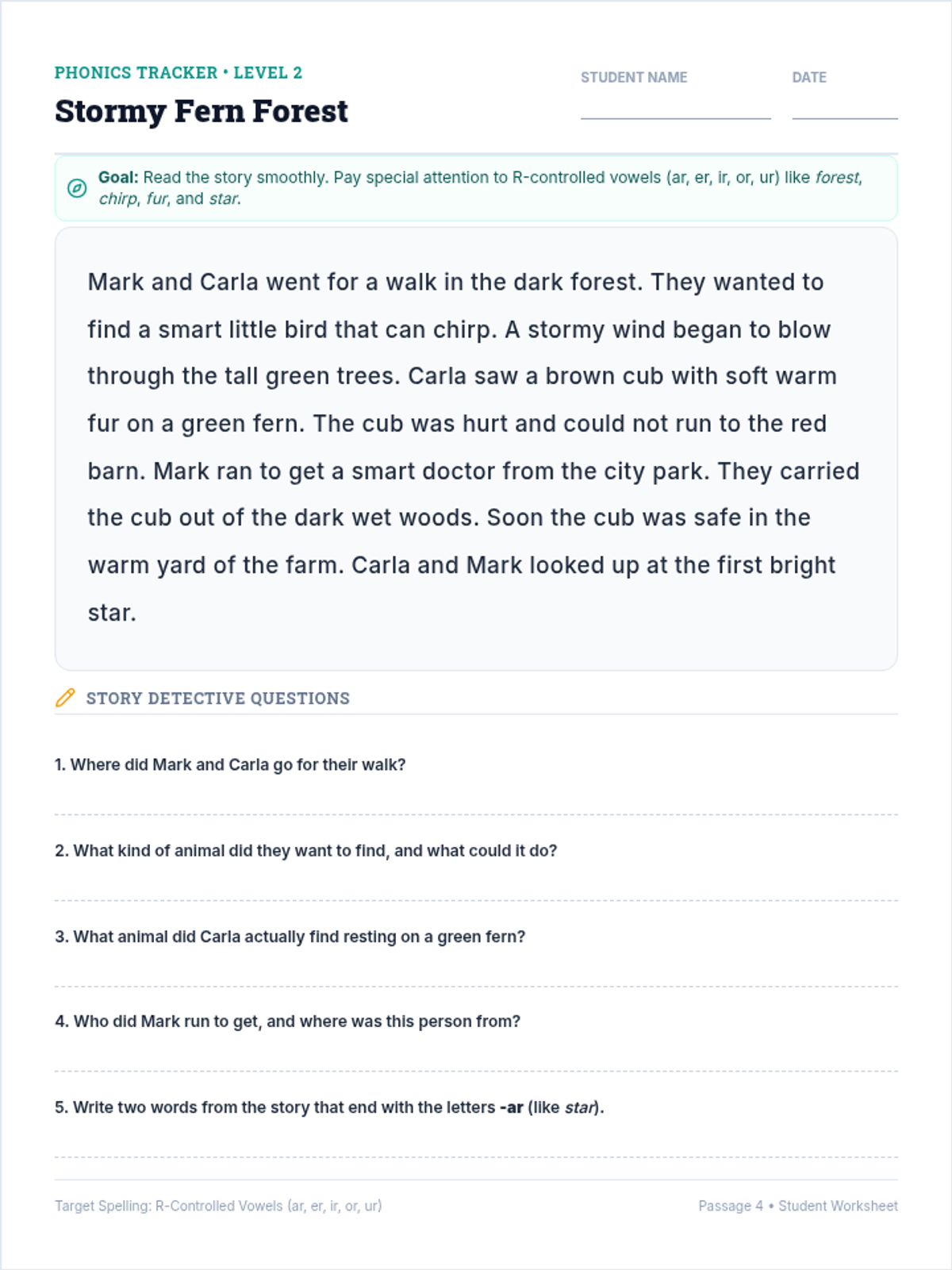
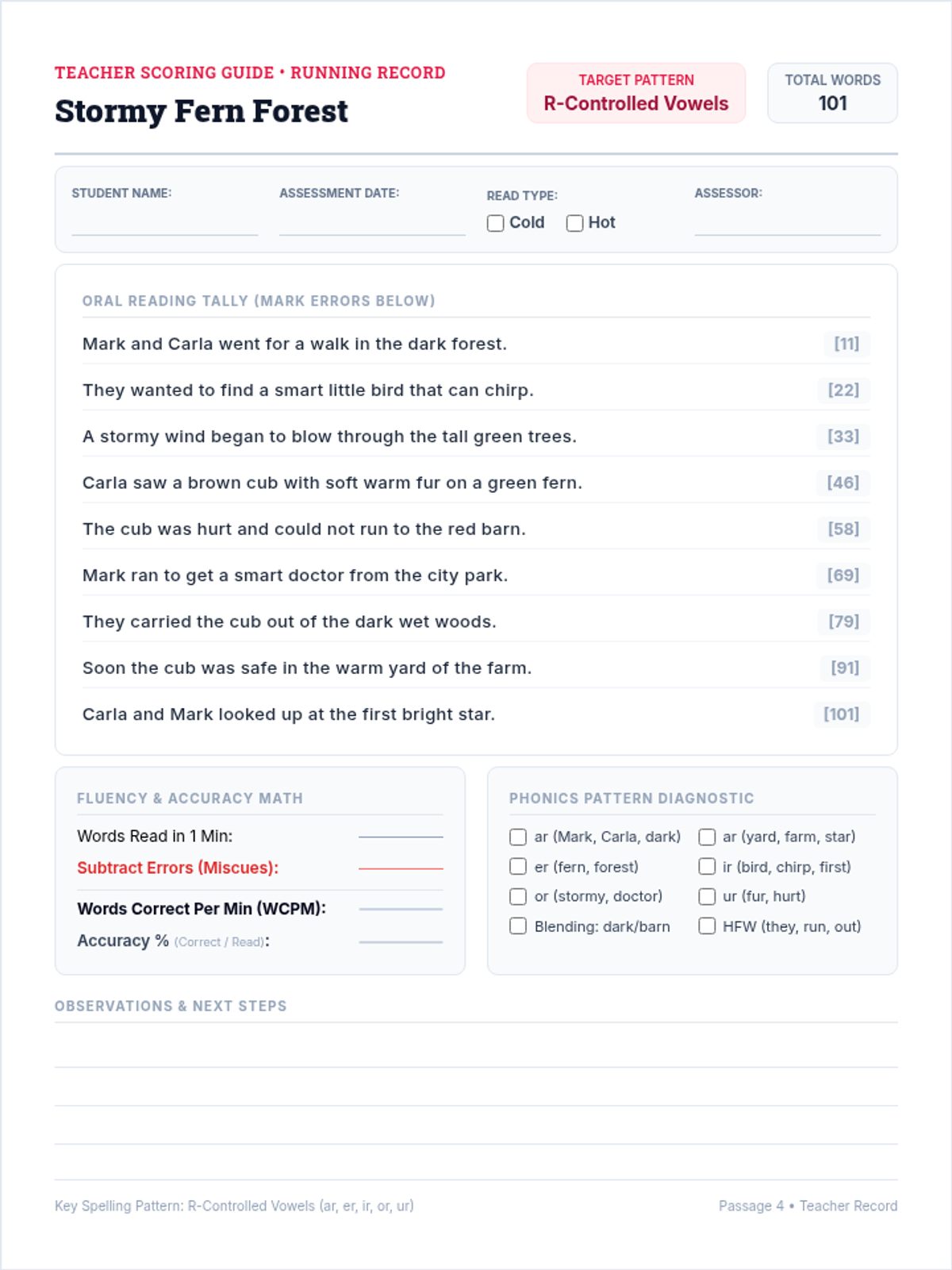
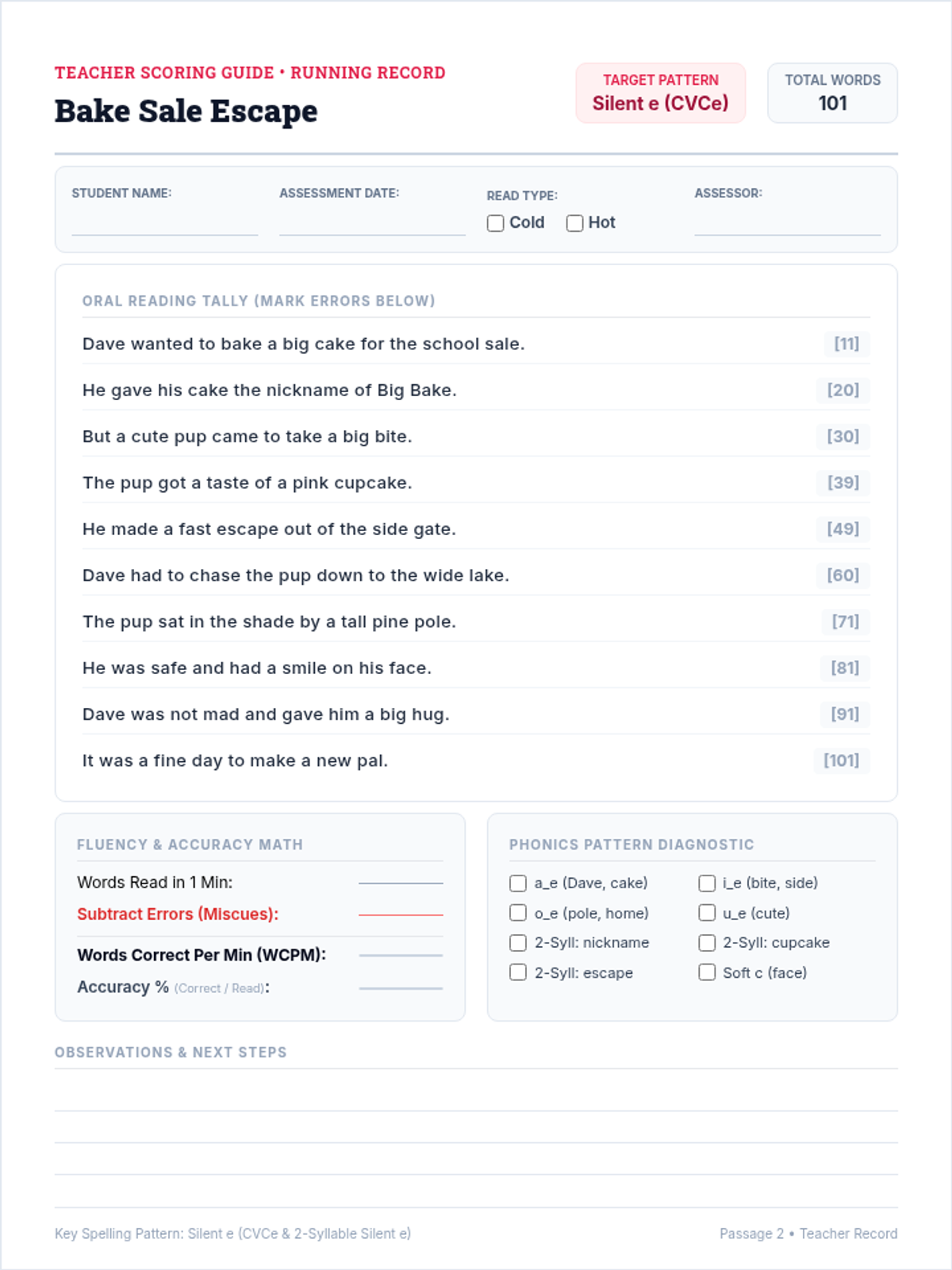
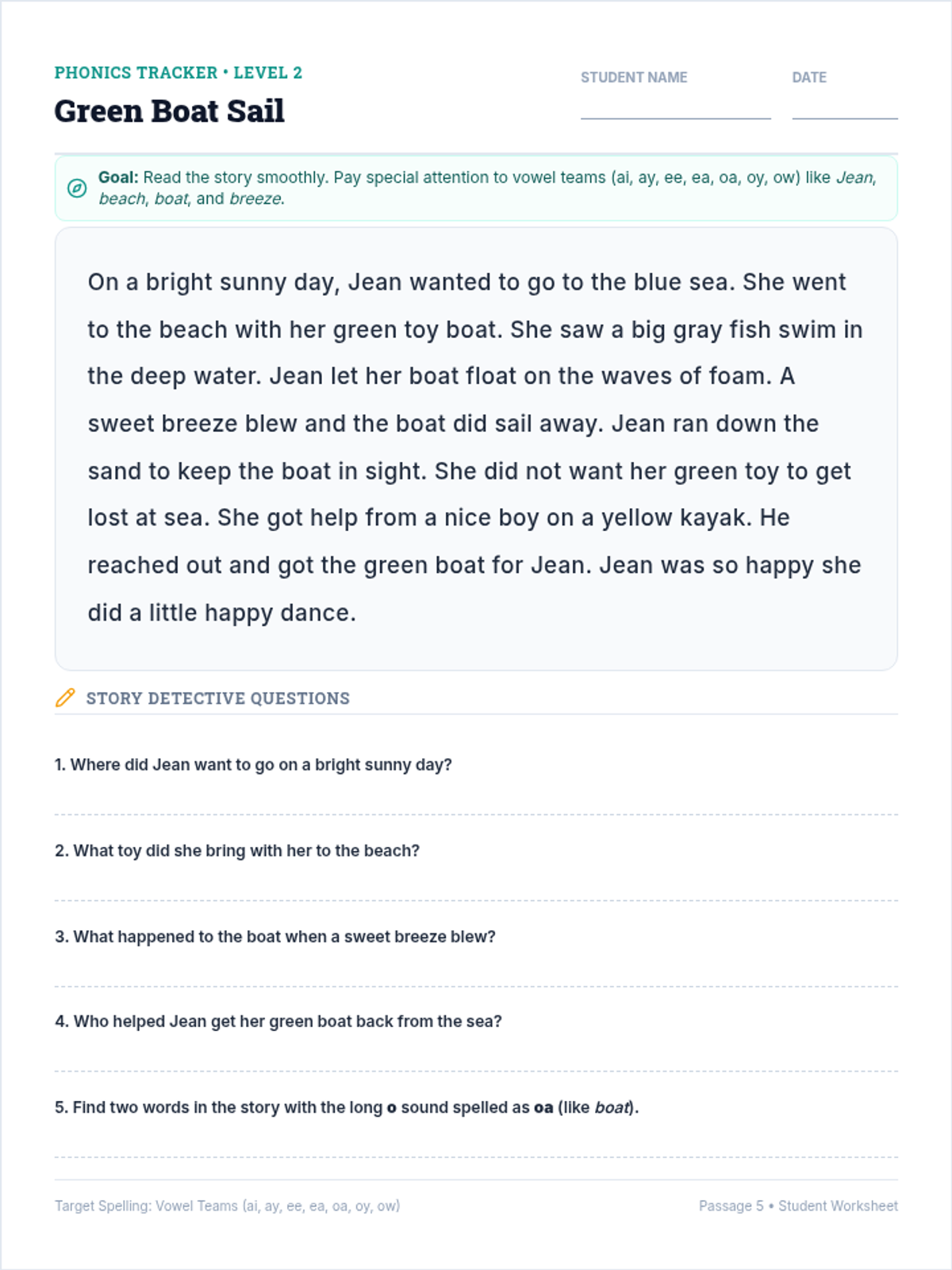
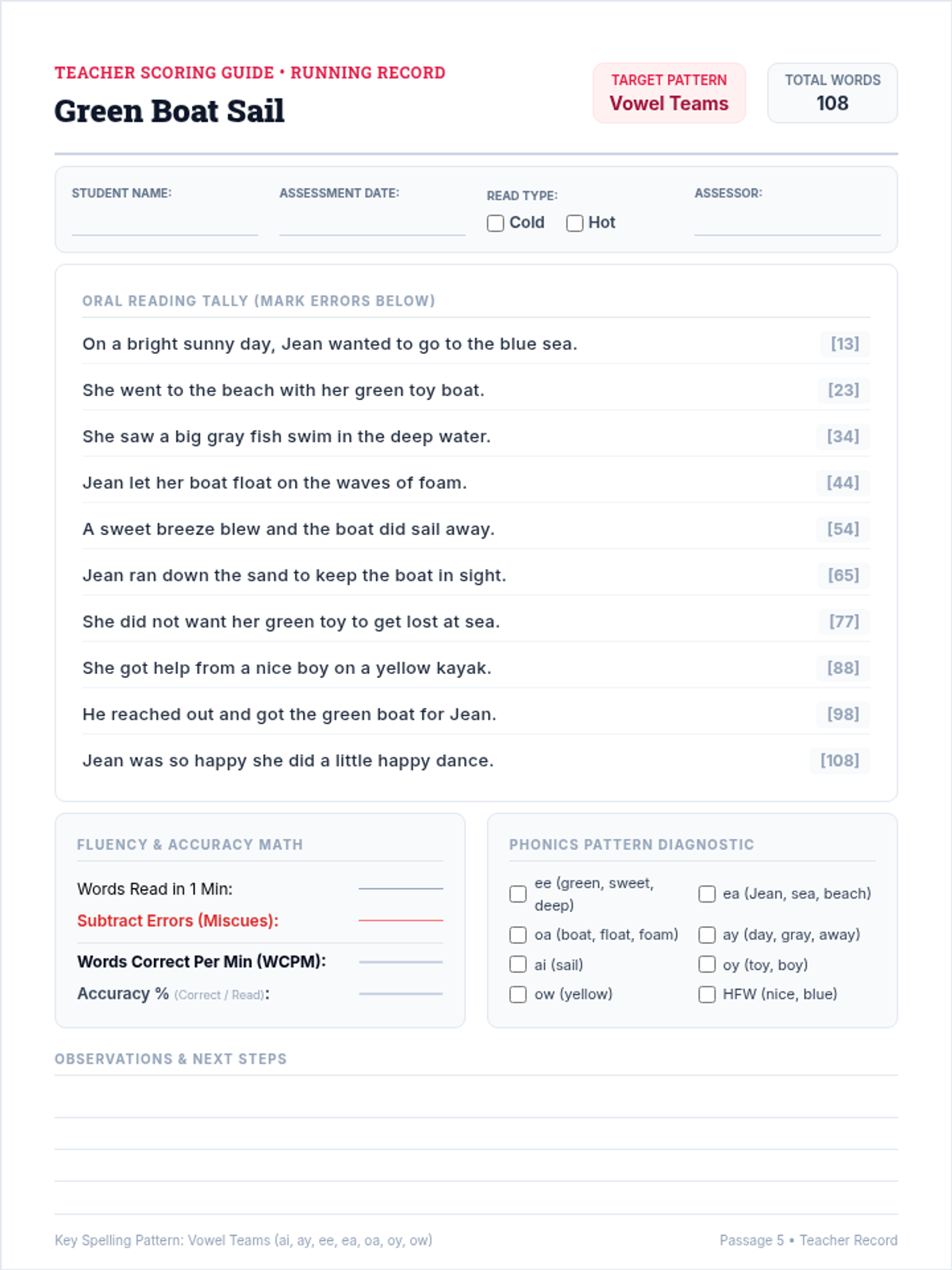
A suite of 5 phonics-based progress monitoring reading passages designed for second-grade students. Each passage targets a specific phonetic spelling pattern (closed syllables, silent e, two-syllable words, r-controlled vowels, and vowel teams) and includes a student-facing reading and comprehension page and a matching teacher-facing word-count tracking page.
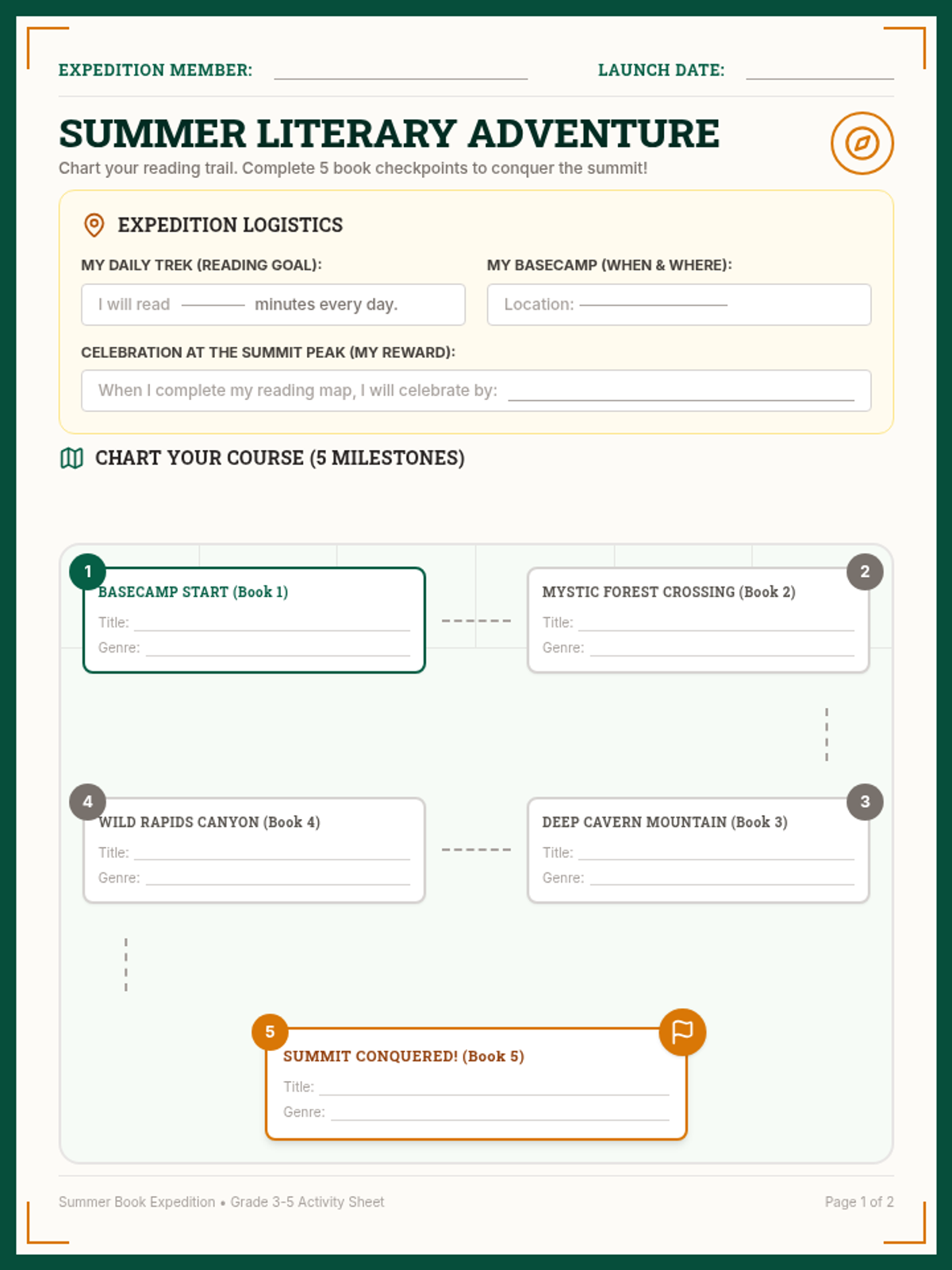
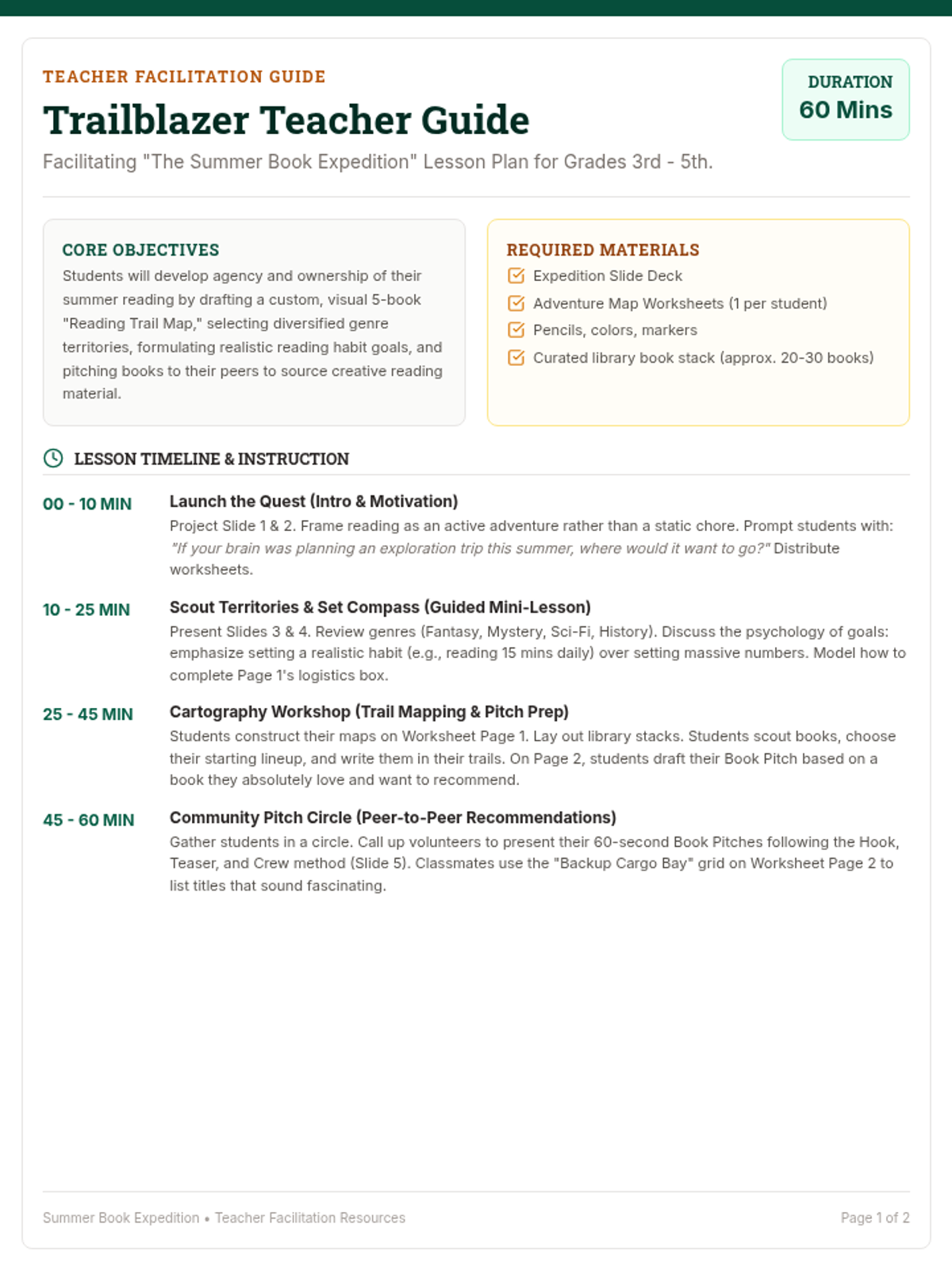
A high-interest, explorer-themed lesson where 3rd-5th grade students design personalized summer reading trail maps, set challenge goals, and pitch books to classmates to embark on a lifelong reading adventure.
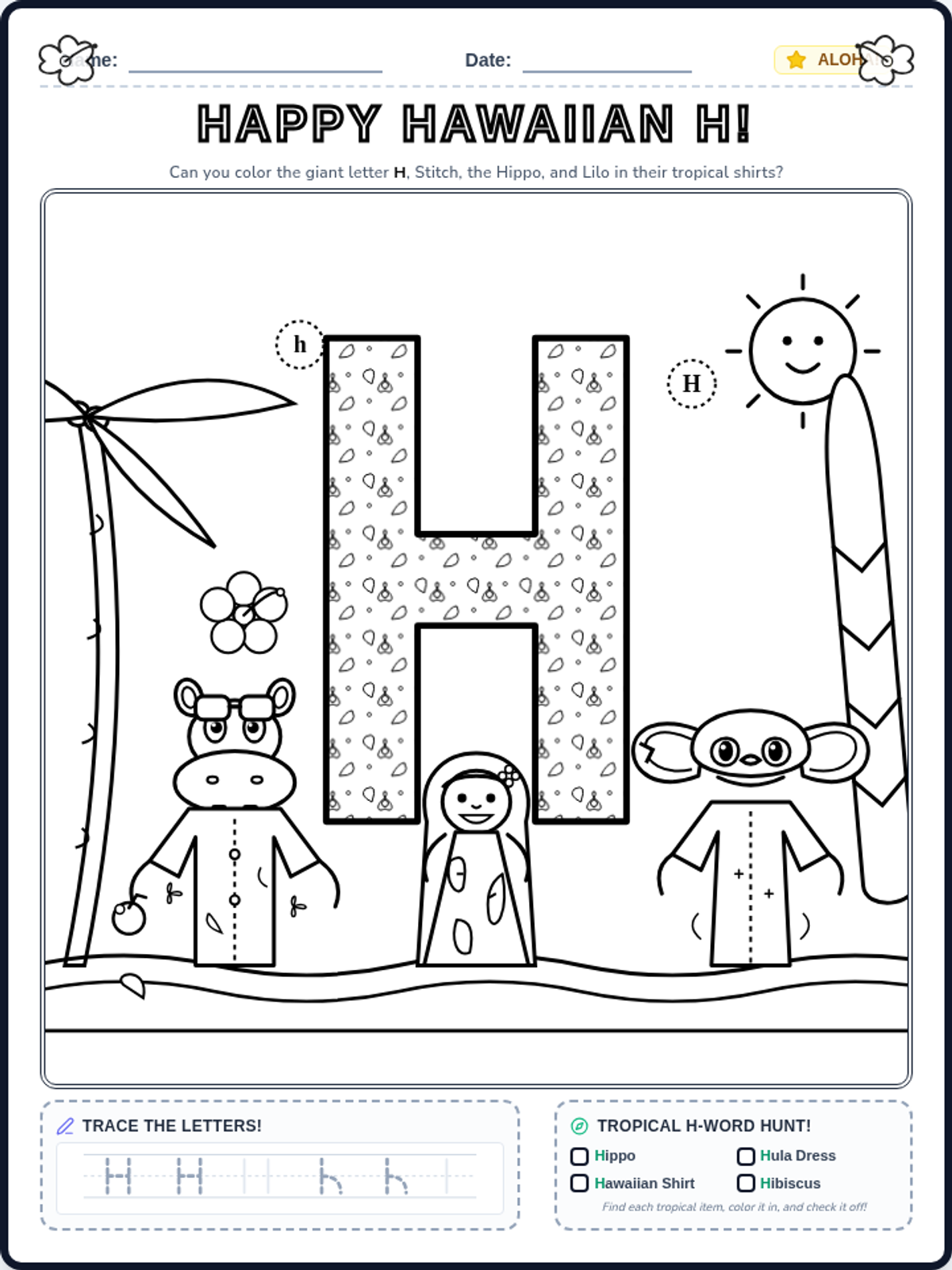
A fun, tropical-themed alphabet learning lesson designed to teach letter shapes, recognition, and fine motor skills through creative coloring pages and tracing activities.
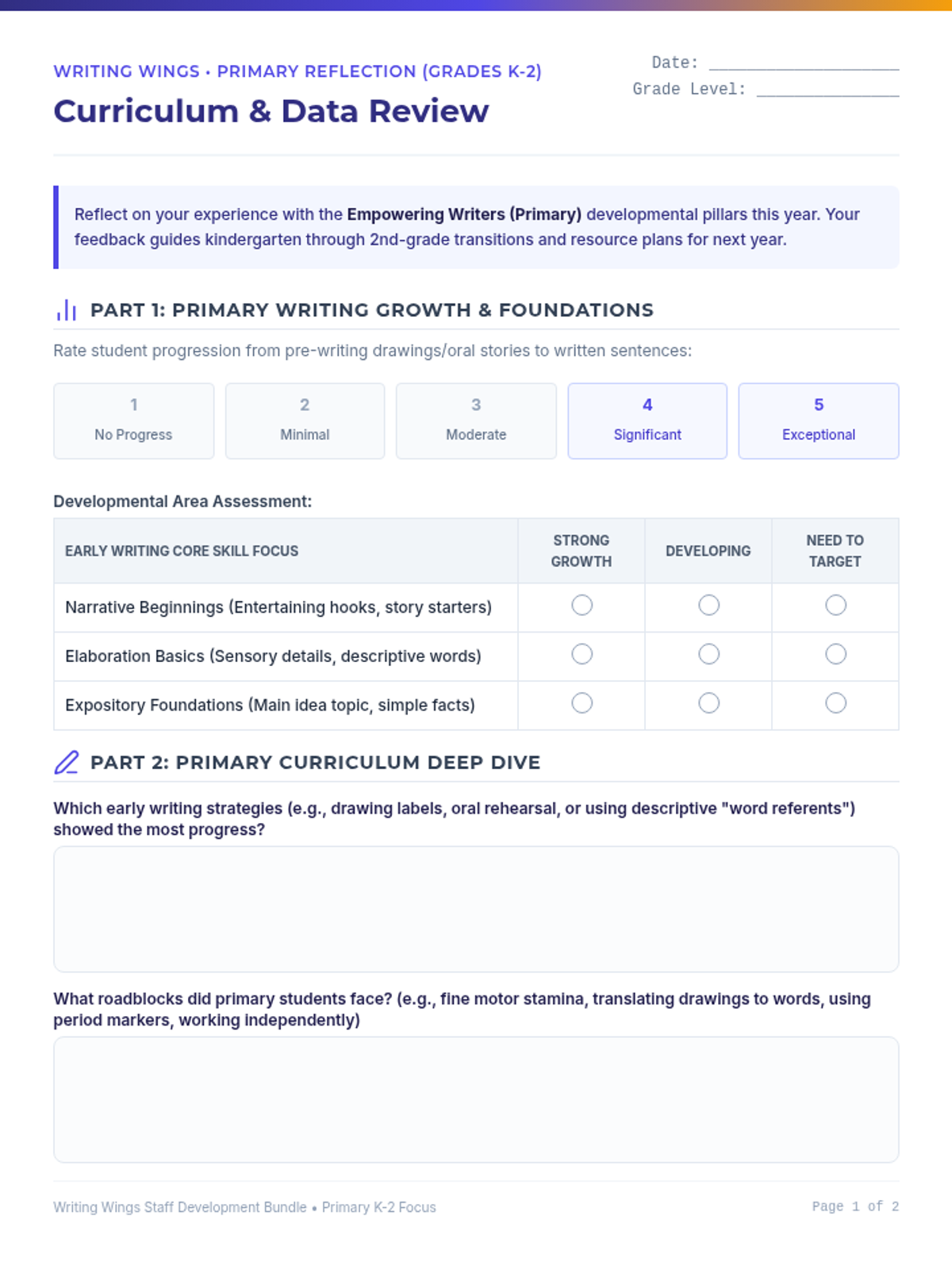
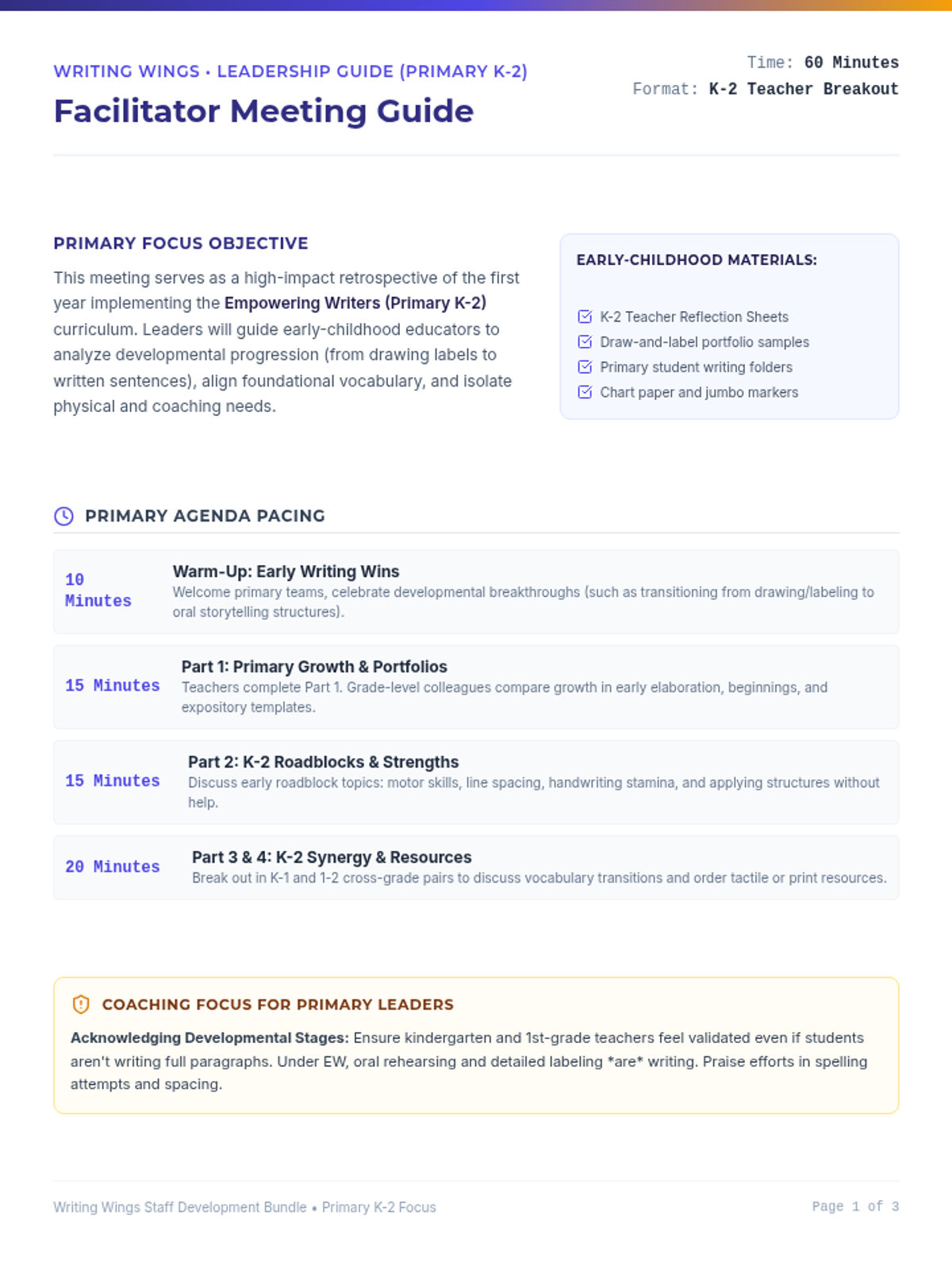
An end-of-year staff meeting bundle designed to analyze student writing data from the Empowering Writers curriculum and plan for next school year's instruction.
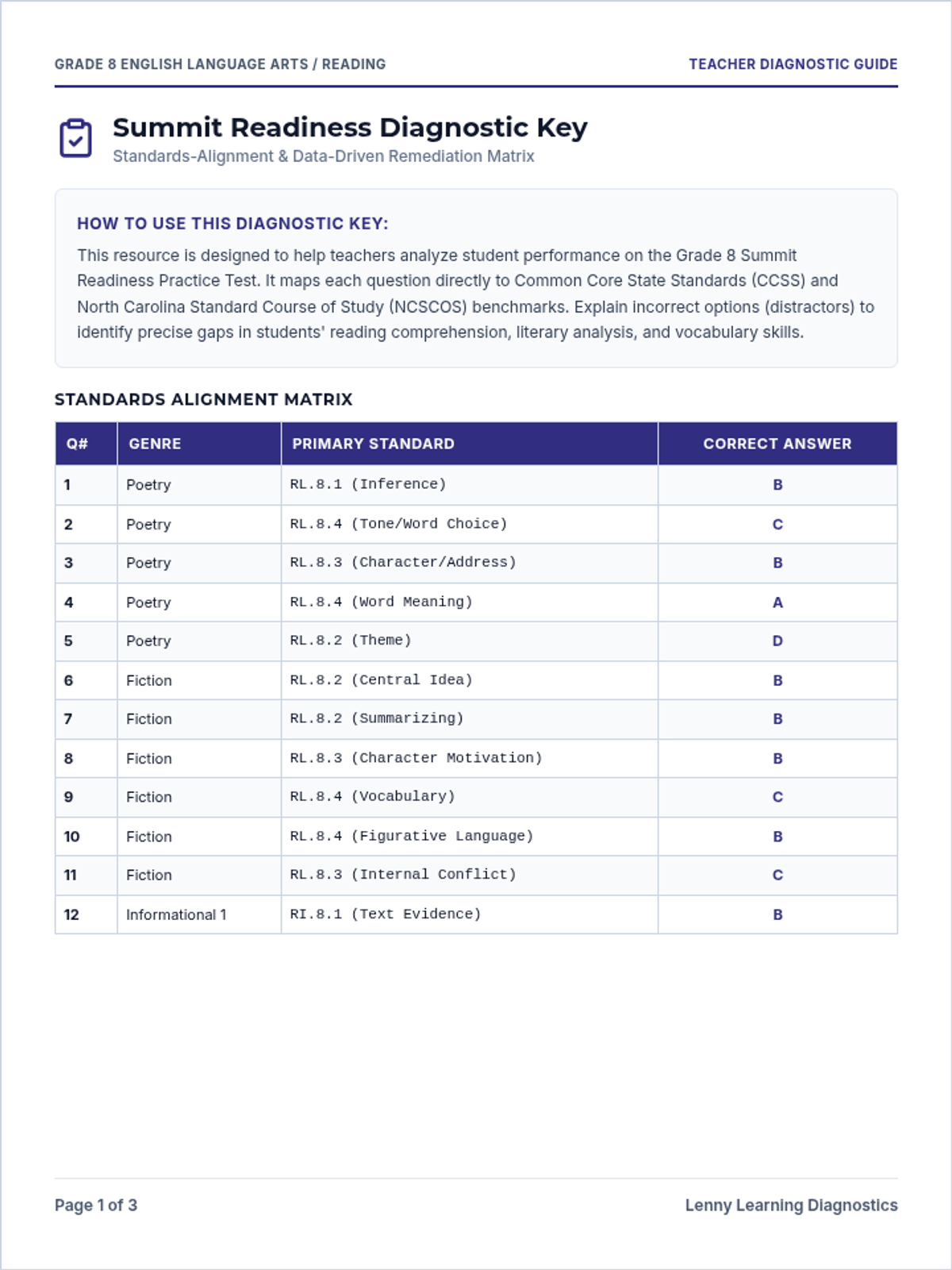
An 8th-grade ELA test readiness lesson containing a complete, high-quality standards-aligned practice test with fiction, poetry, and informational articles, plus a teacher's diagnostic answer key.
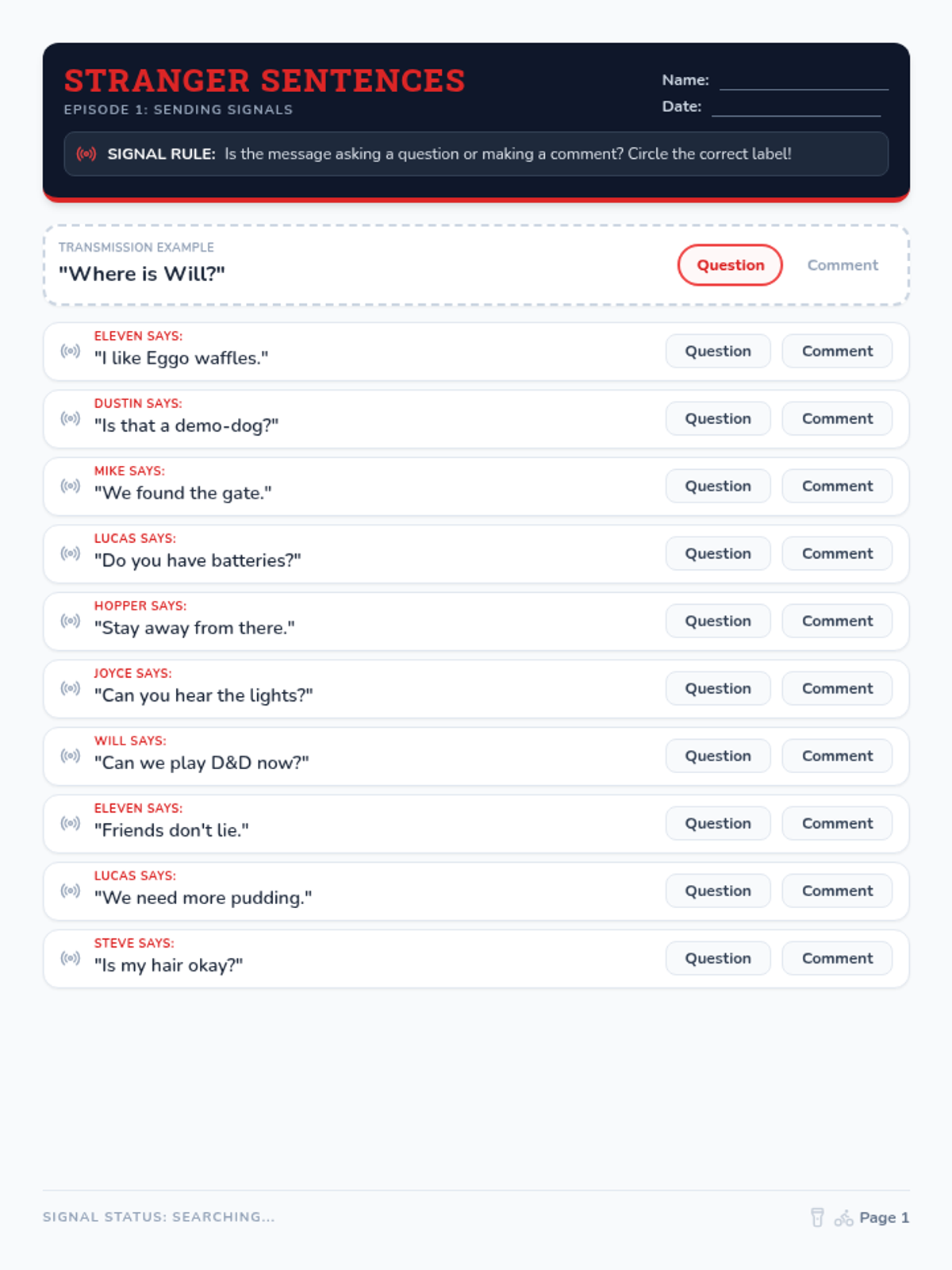
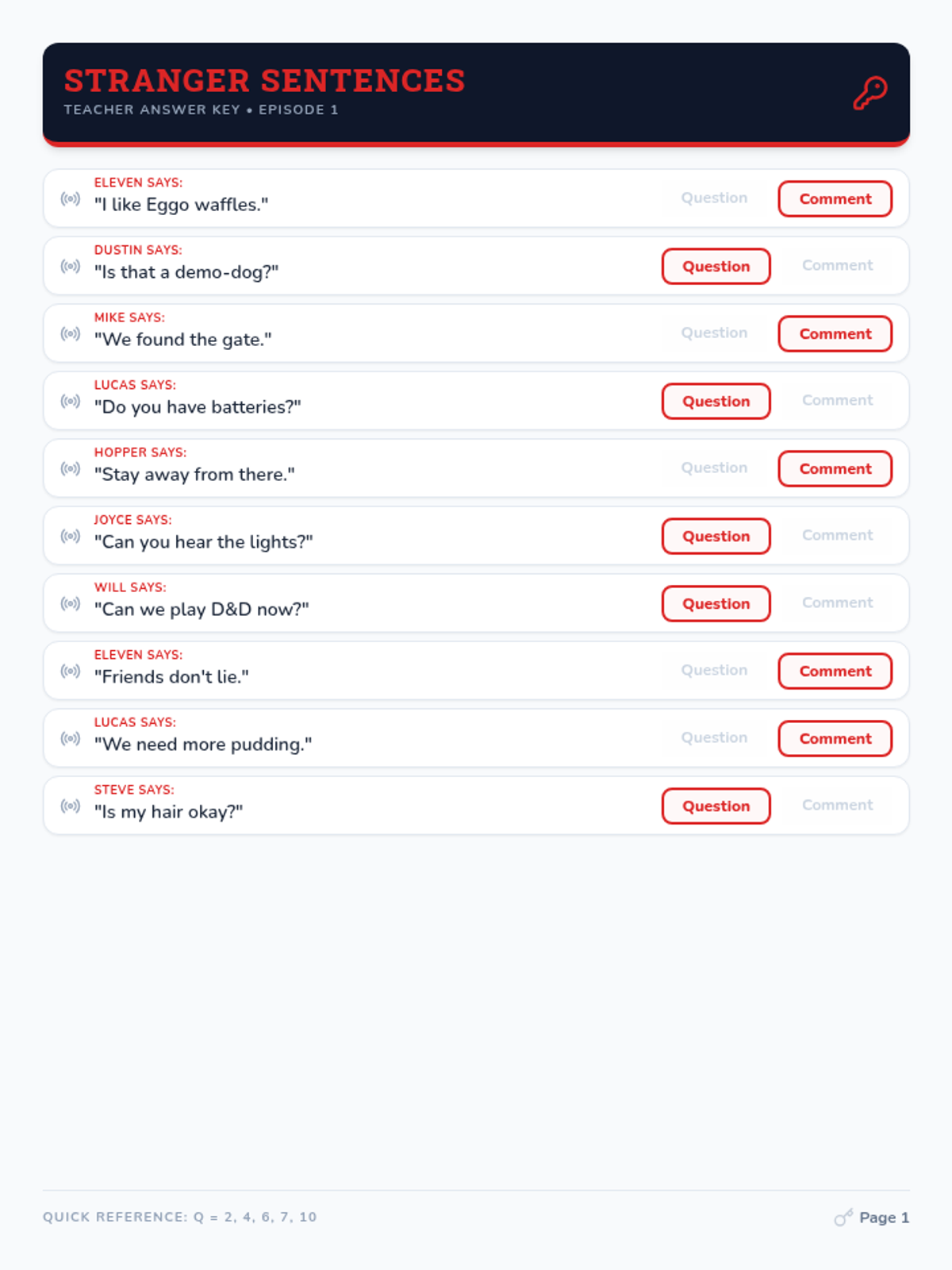
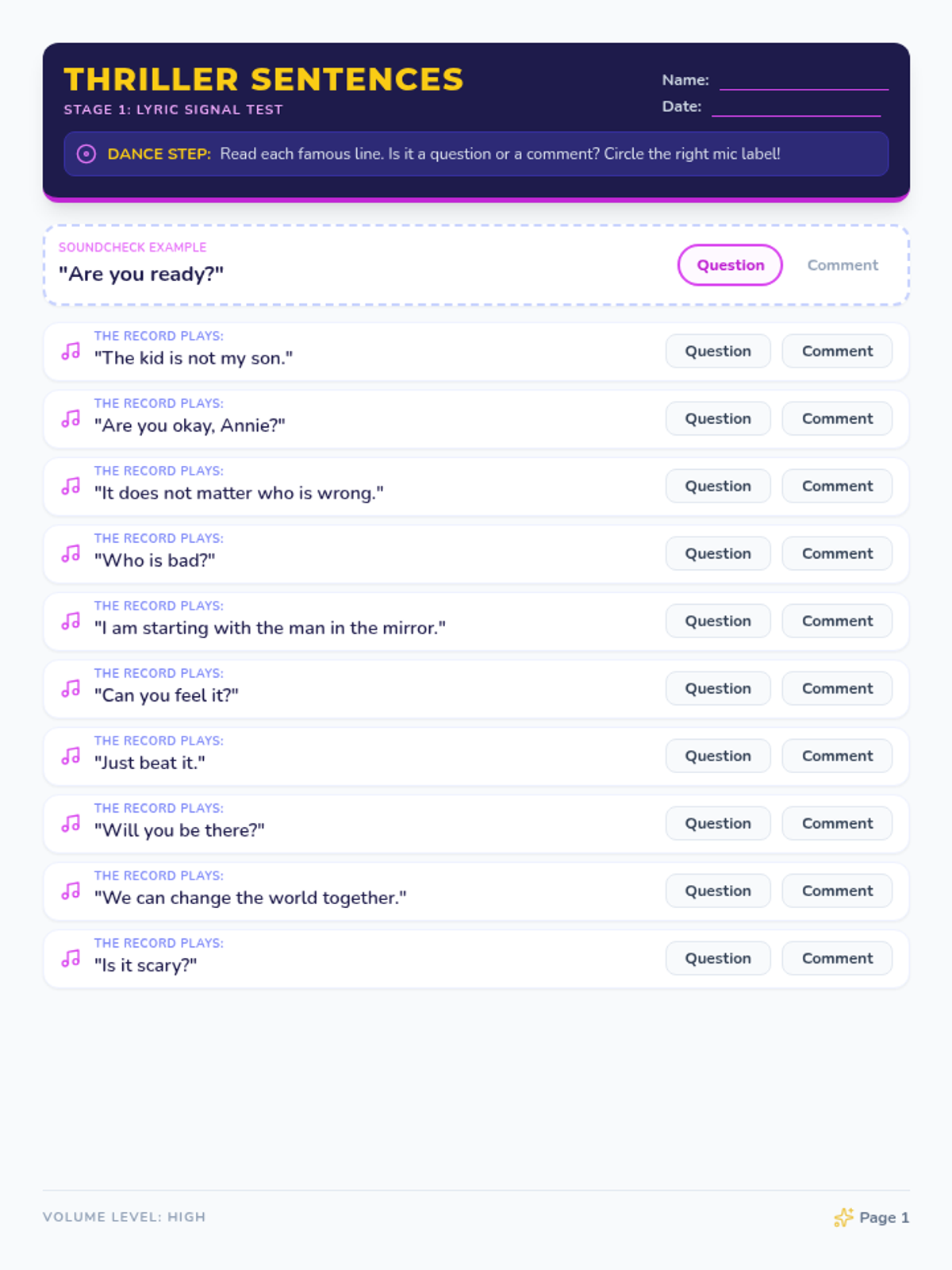
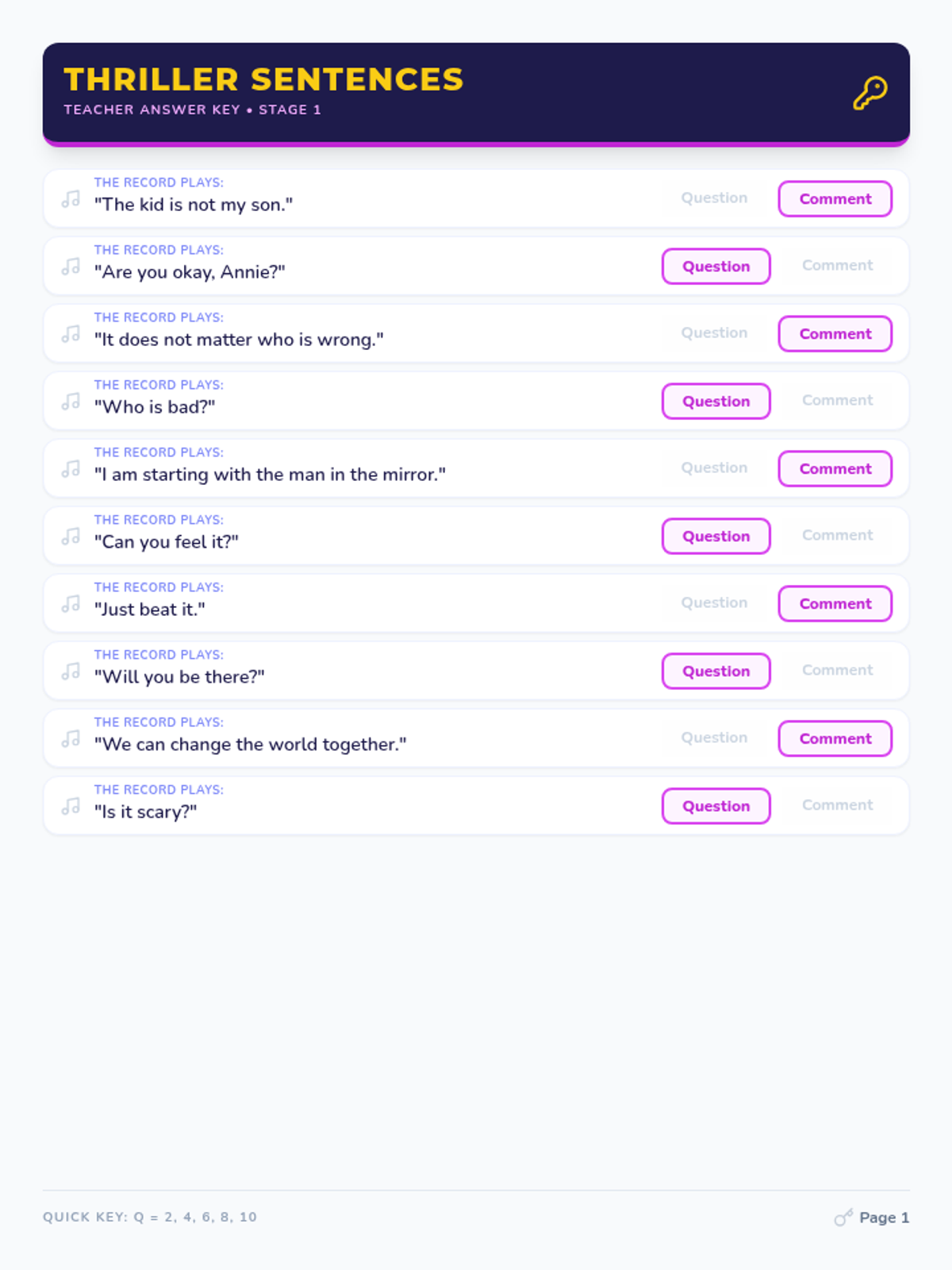
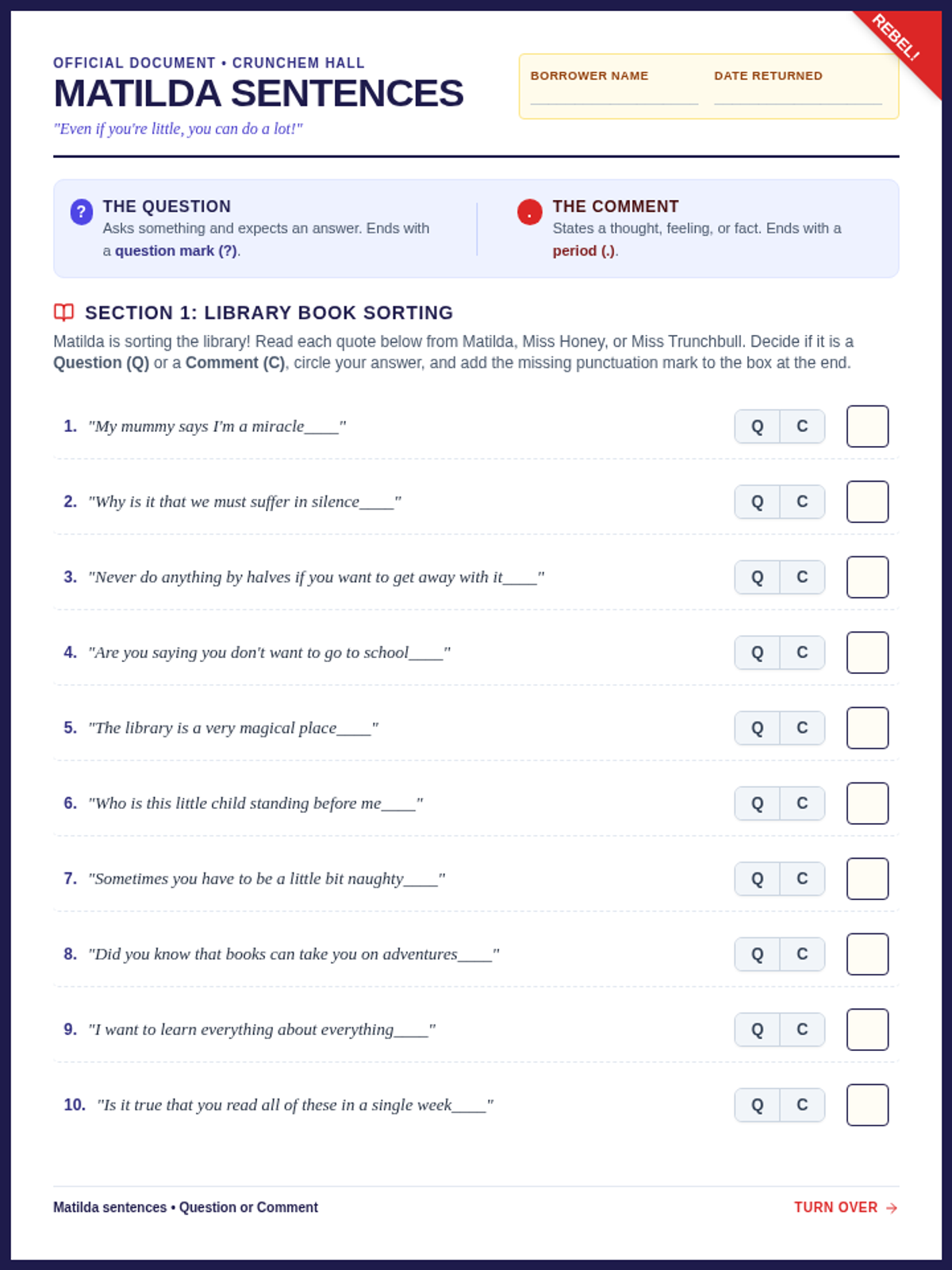
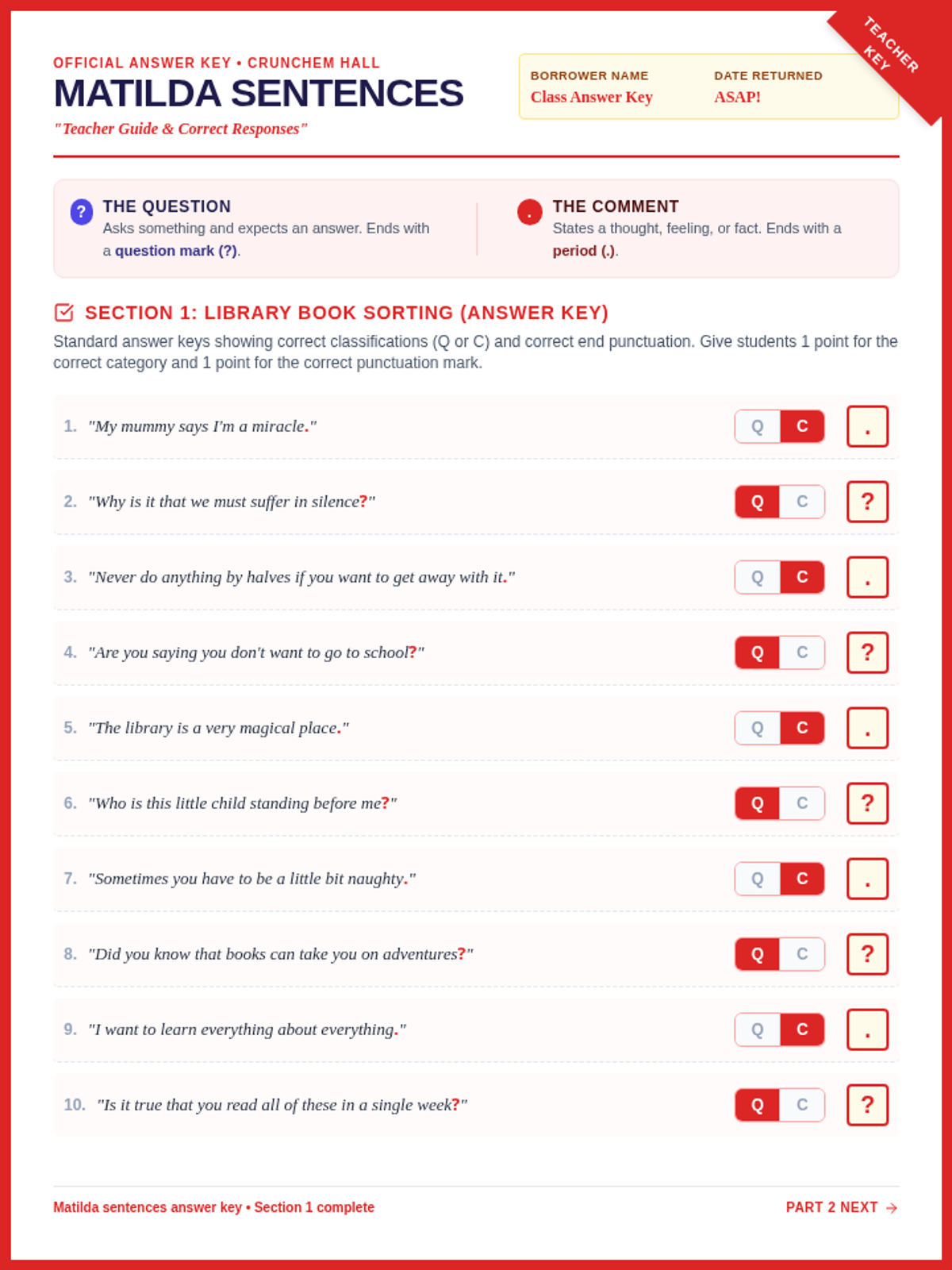
A lesson focused on identifying the difference between questions and comments using dialogue from familiar characters. Students practice punctuation and sentence purpose recognition.
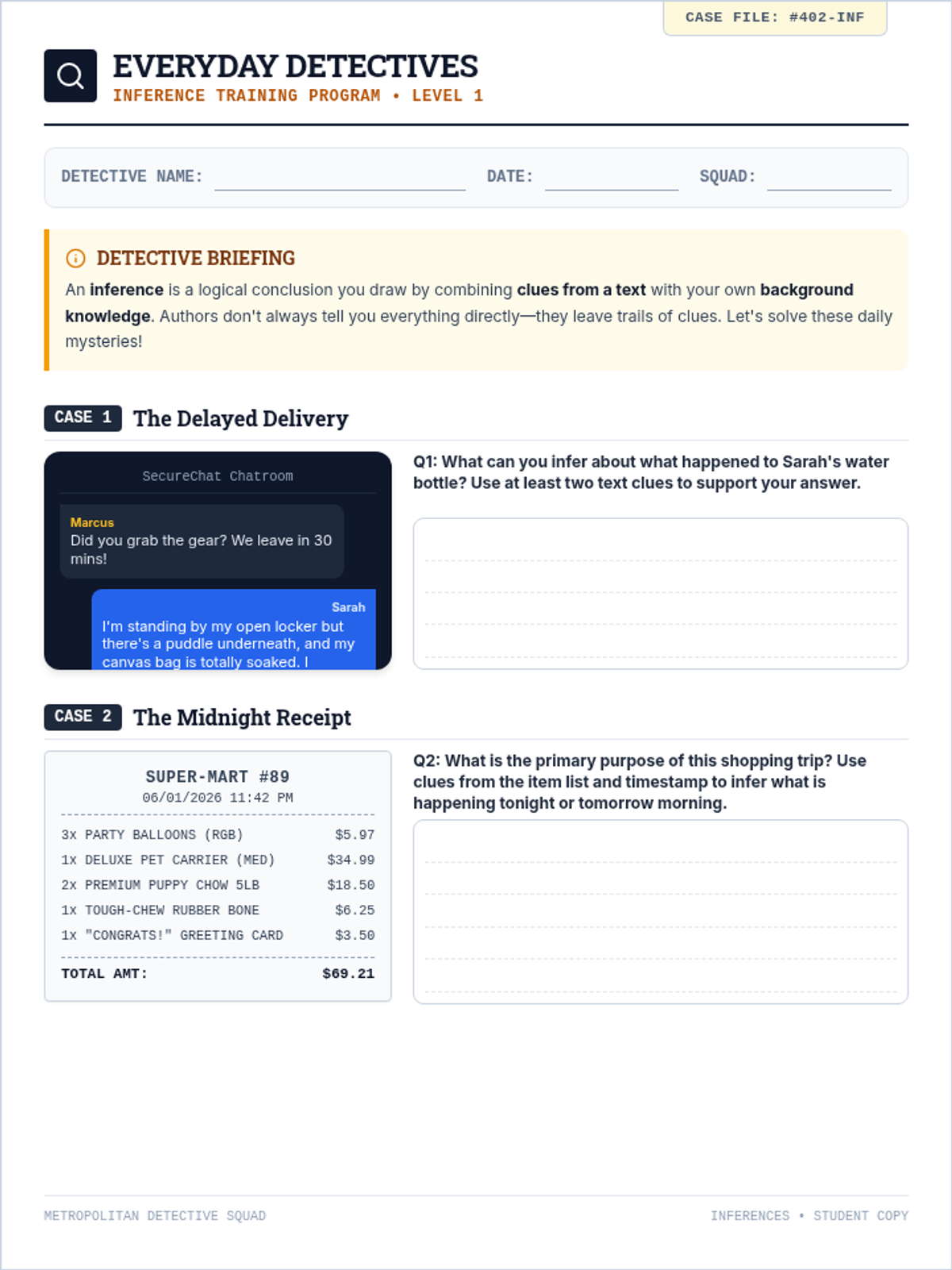
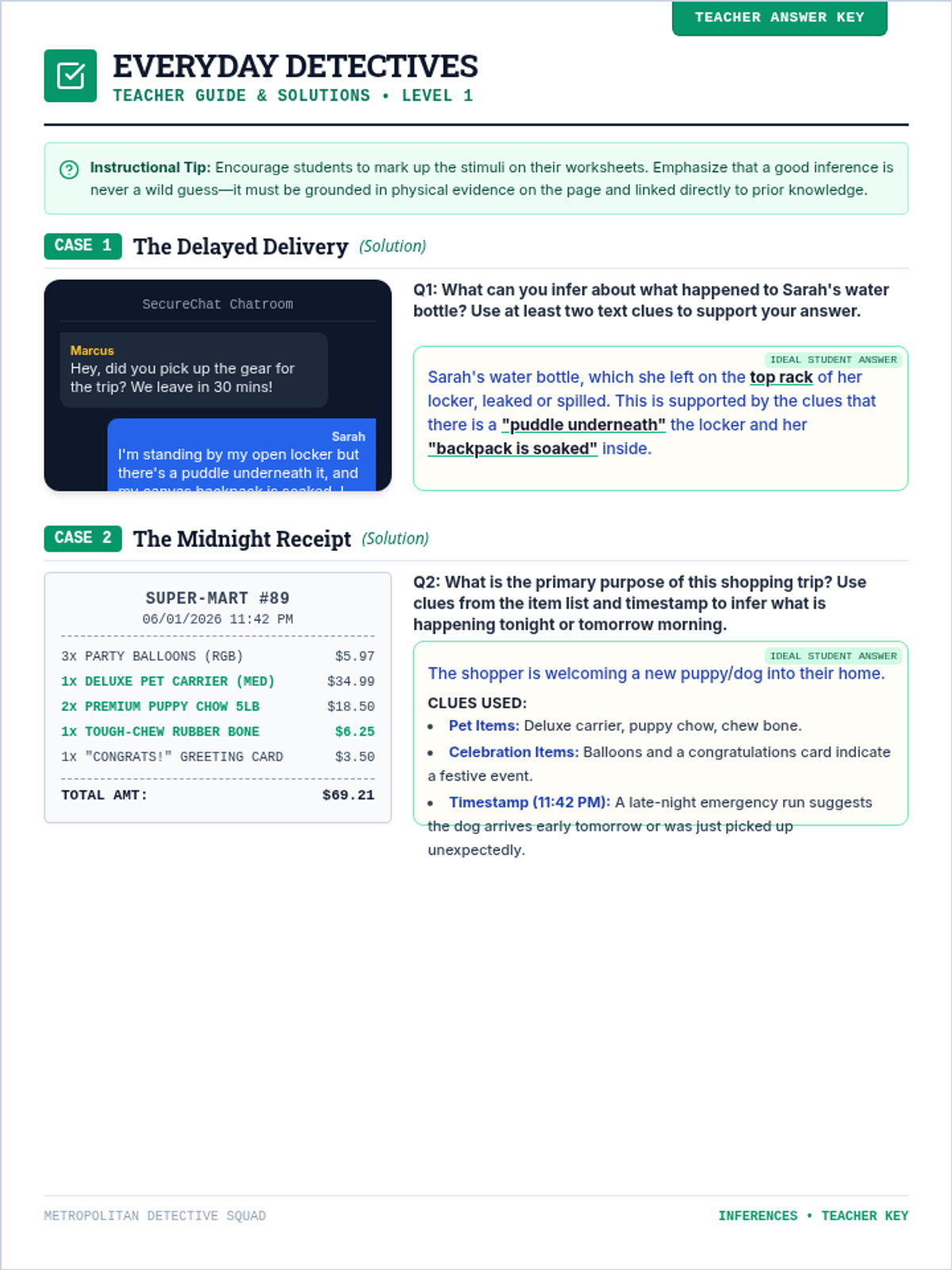
A lesson focused on teaching students how to make logical inferences using everyday functional texts, such as text messages, receipts, schedules, and maps. Students act as 'Everyday Detectives' to piece together clues from real-world documents.
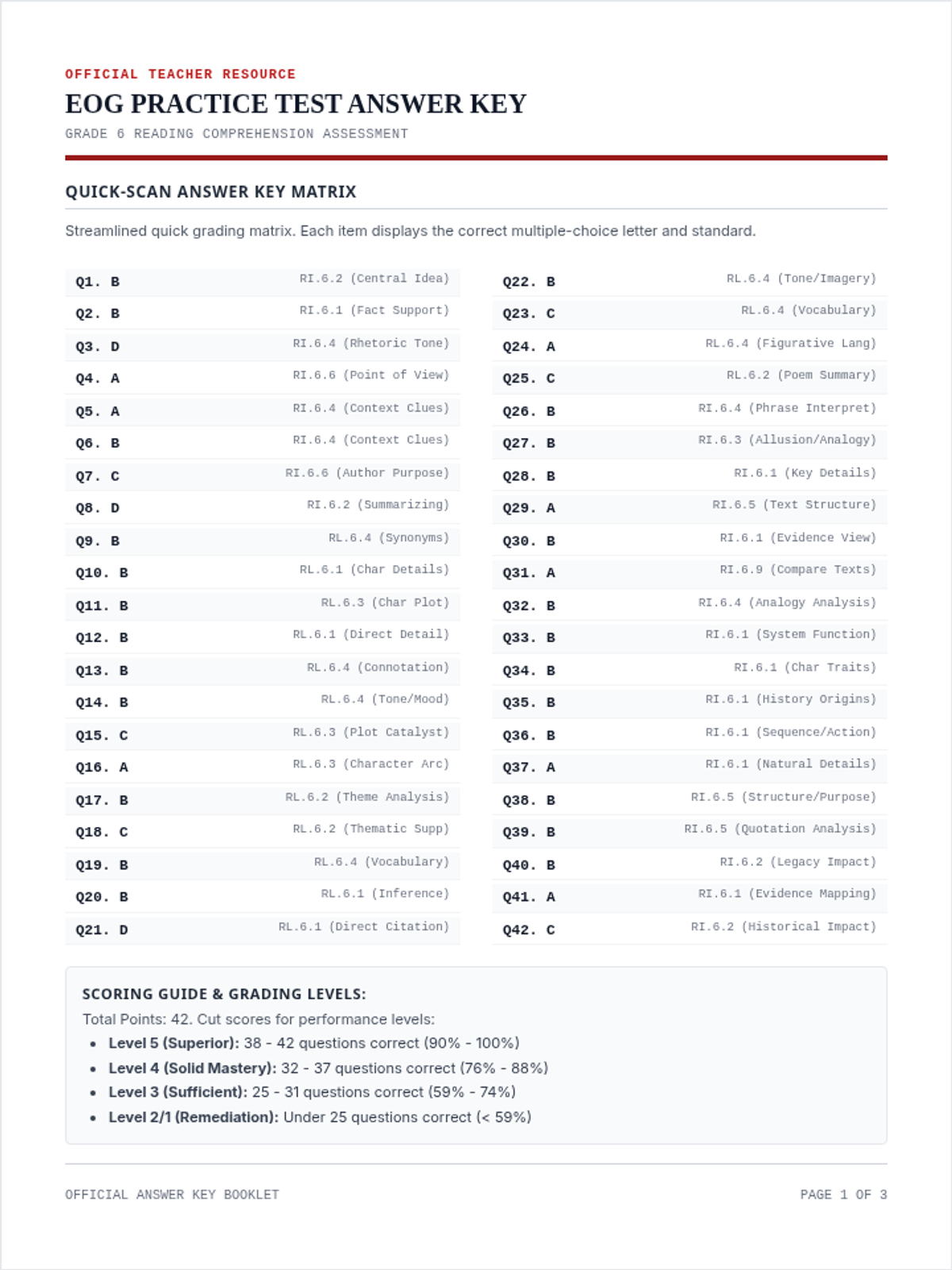
A rigorous, standard-aligned preparation lesson for the Grade 6 Reading EOG, featuring a complete 42-question practice exam and a dedicated standalone answer key with detailed question rationales and standards alignment.
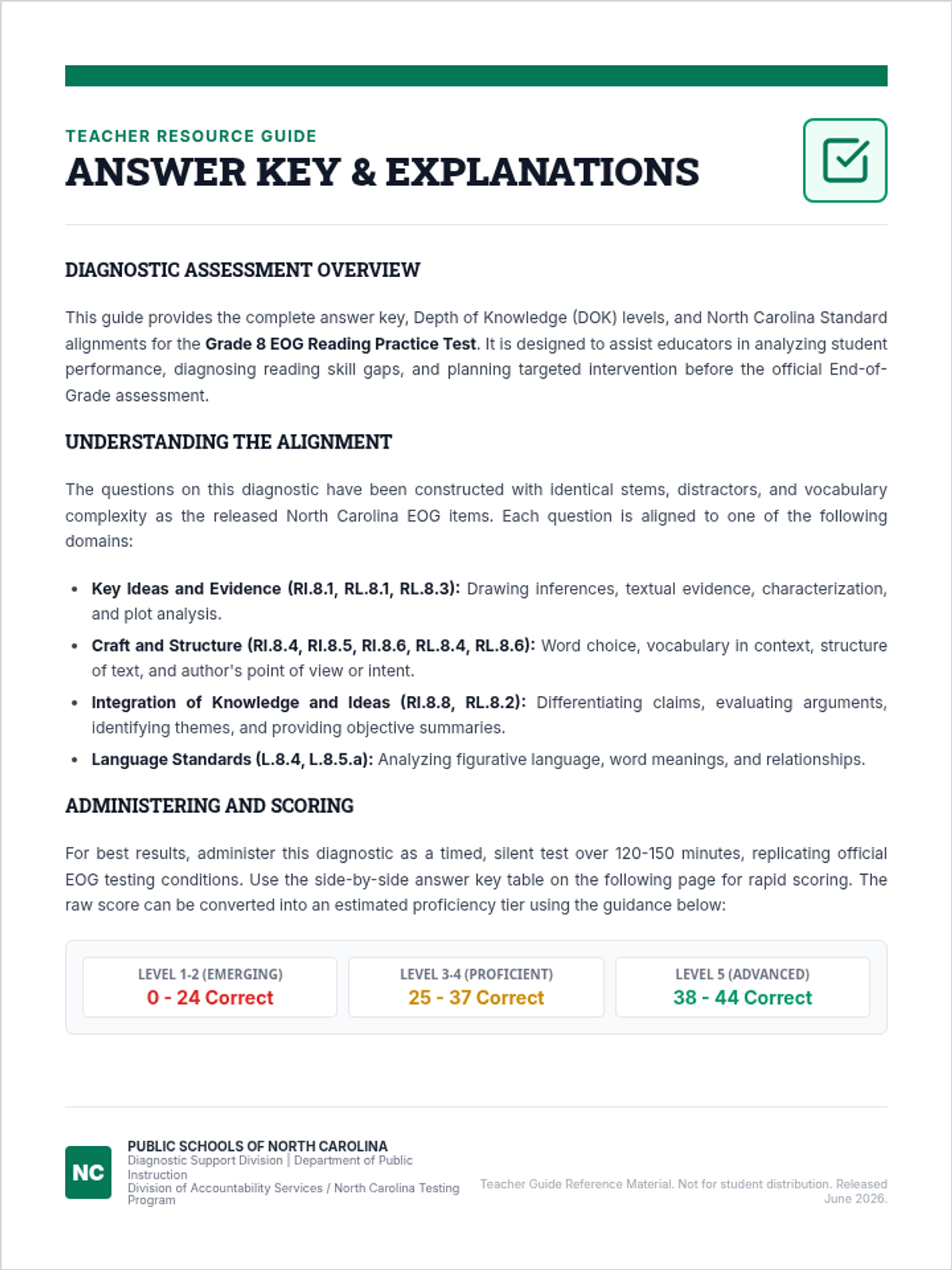
A full-length diagnostic reading assessment for Grade 8, designed to mirror the exact structure, passage distribution, and cognitive rigor of the North Carolina End-of-Grade (EOG) released exam.
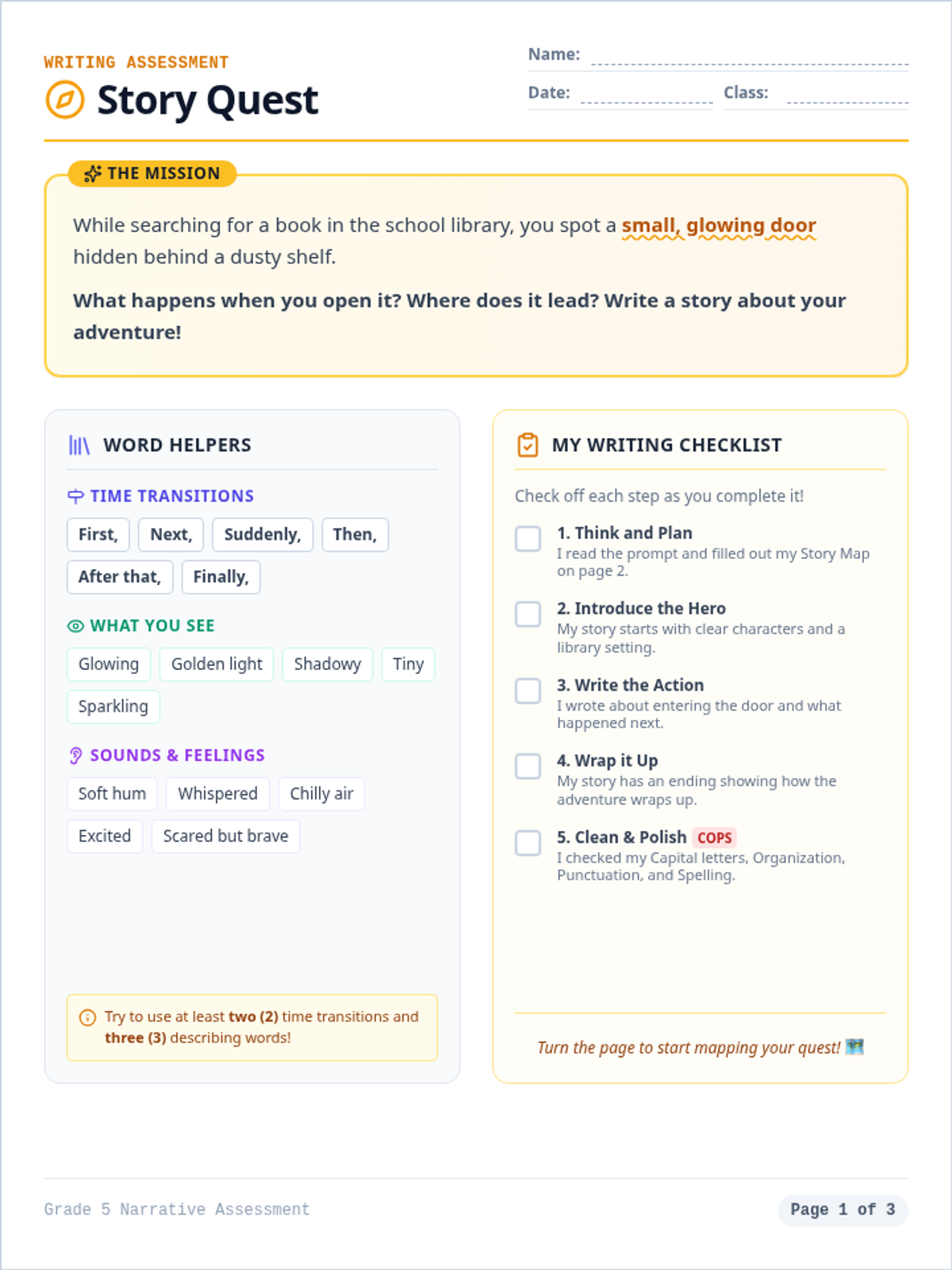
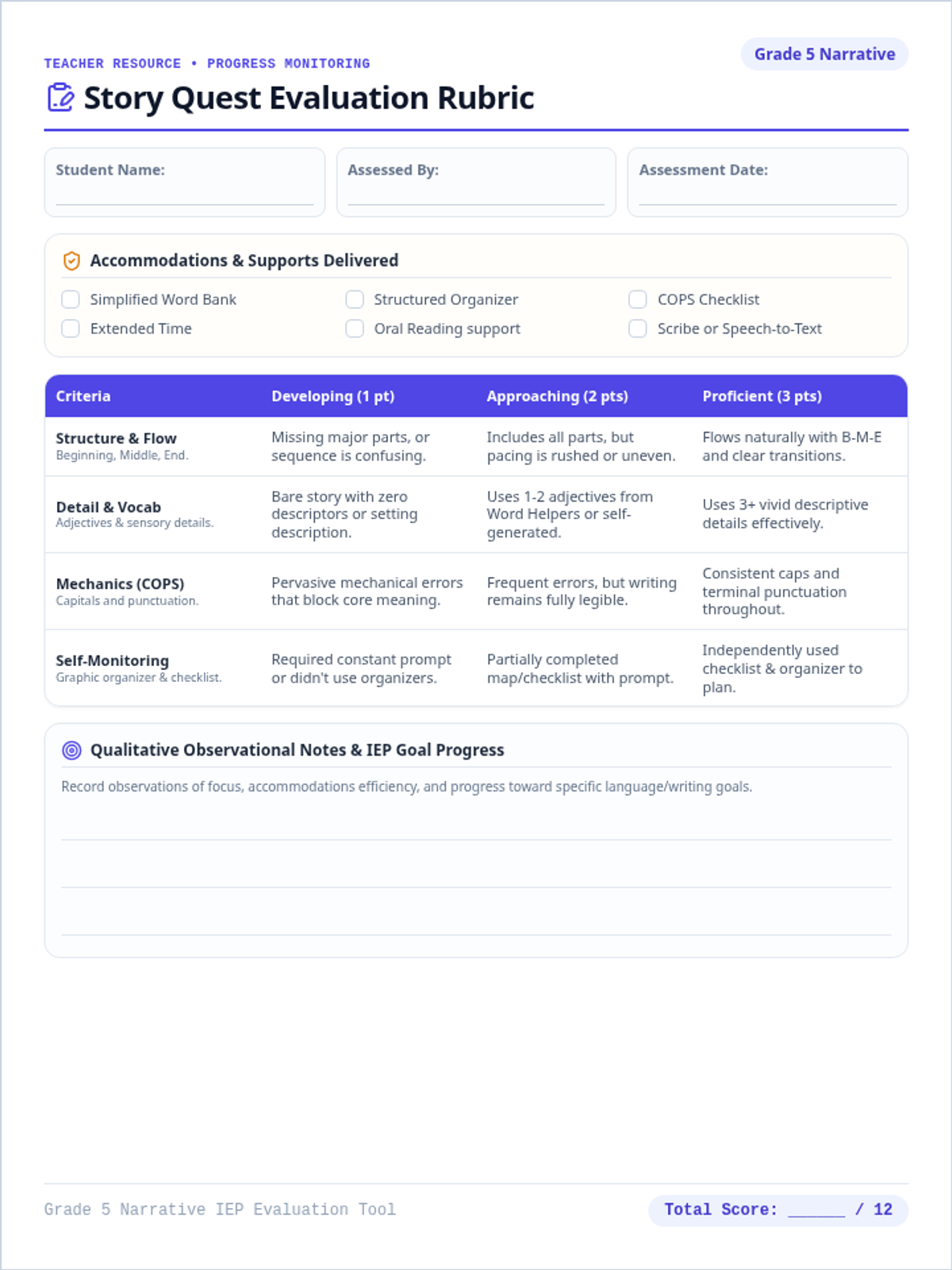
A scaffolded narrative writing assessment unit designed to support fifth-grade students, particularly those with IEP accommodations, in planning, drafting, and checking their own creative stories.
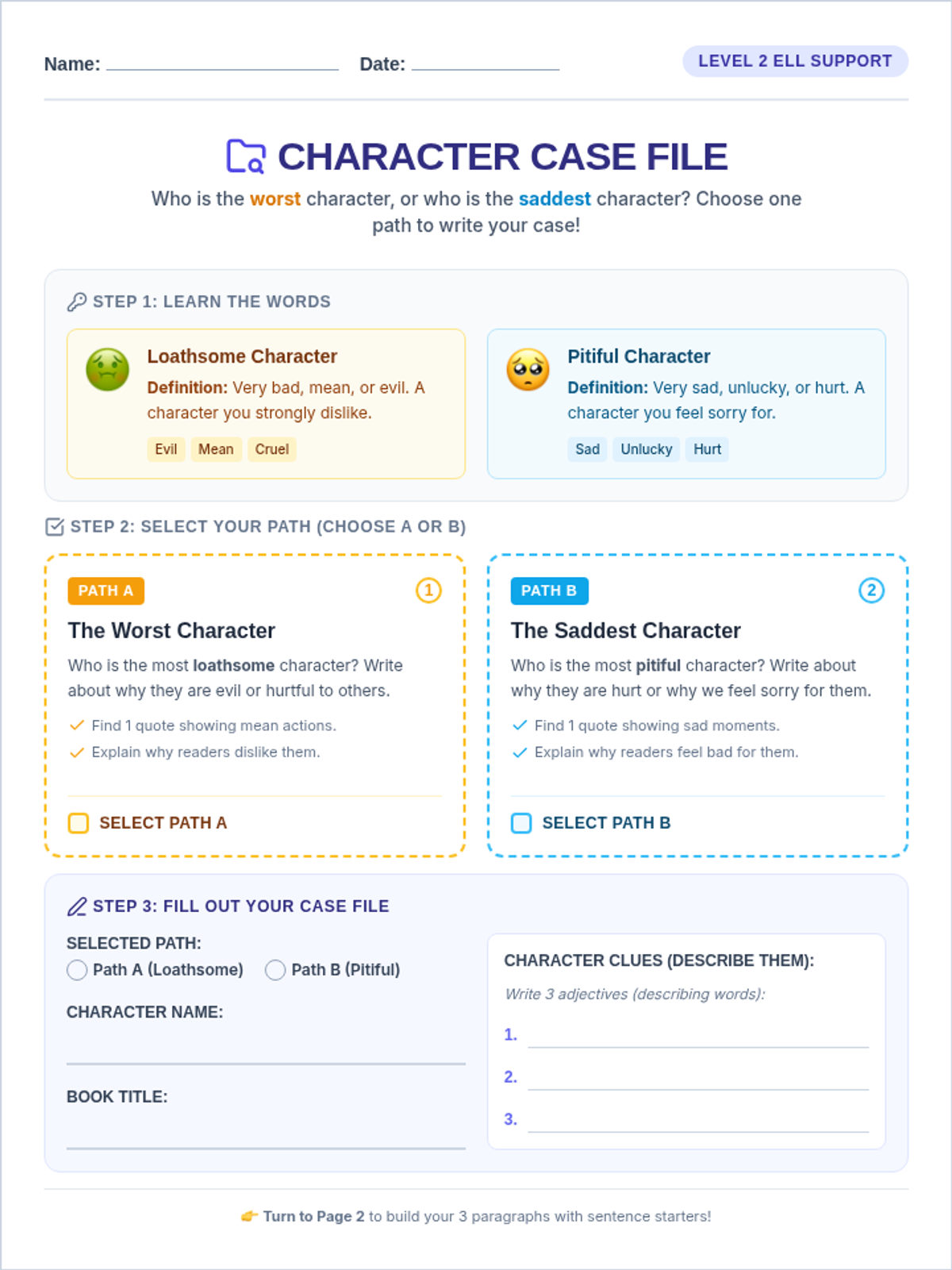
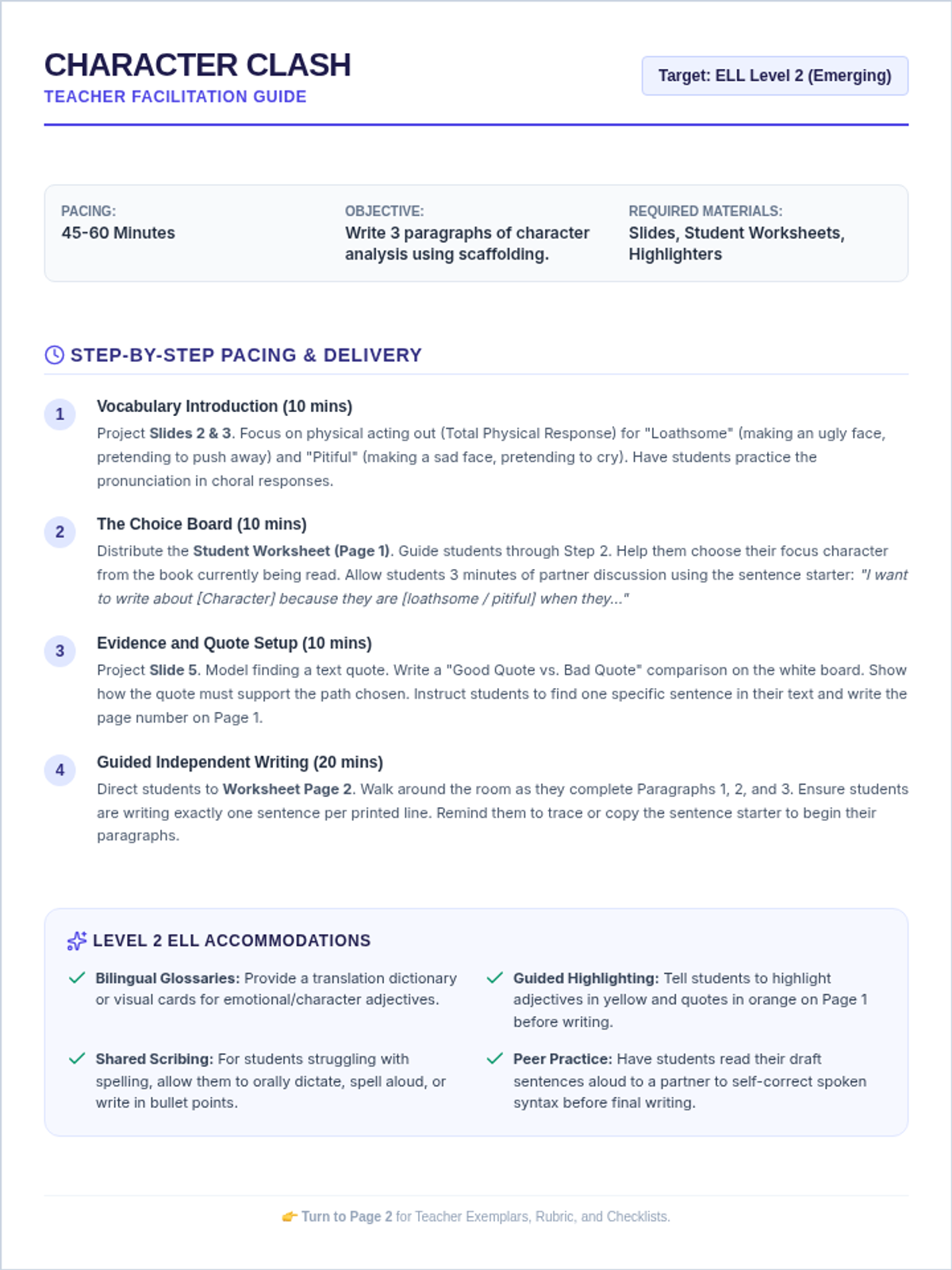
A highly scaffolded character analysis lesson designed for English Language Learners (ELL) Level 2. Students analyze either a loathsome or pitiful character using a visual graphic organizer and sentence starters.
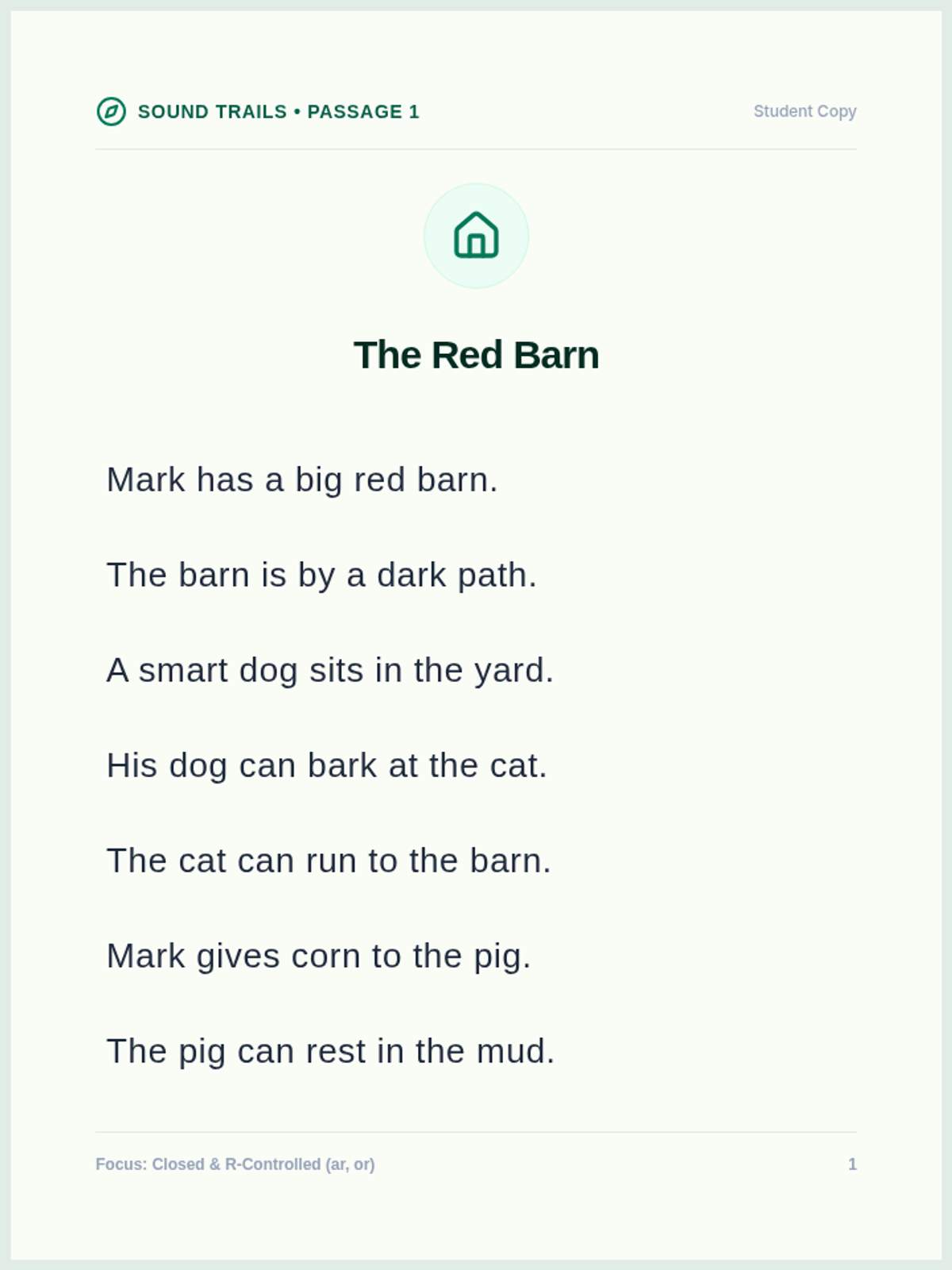
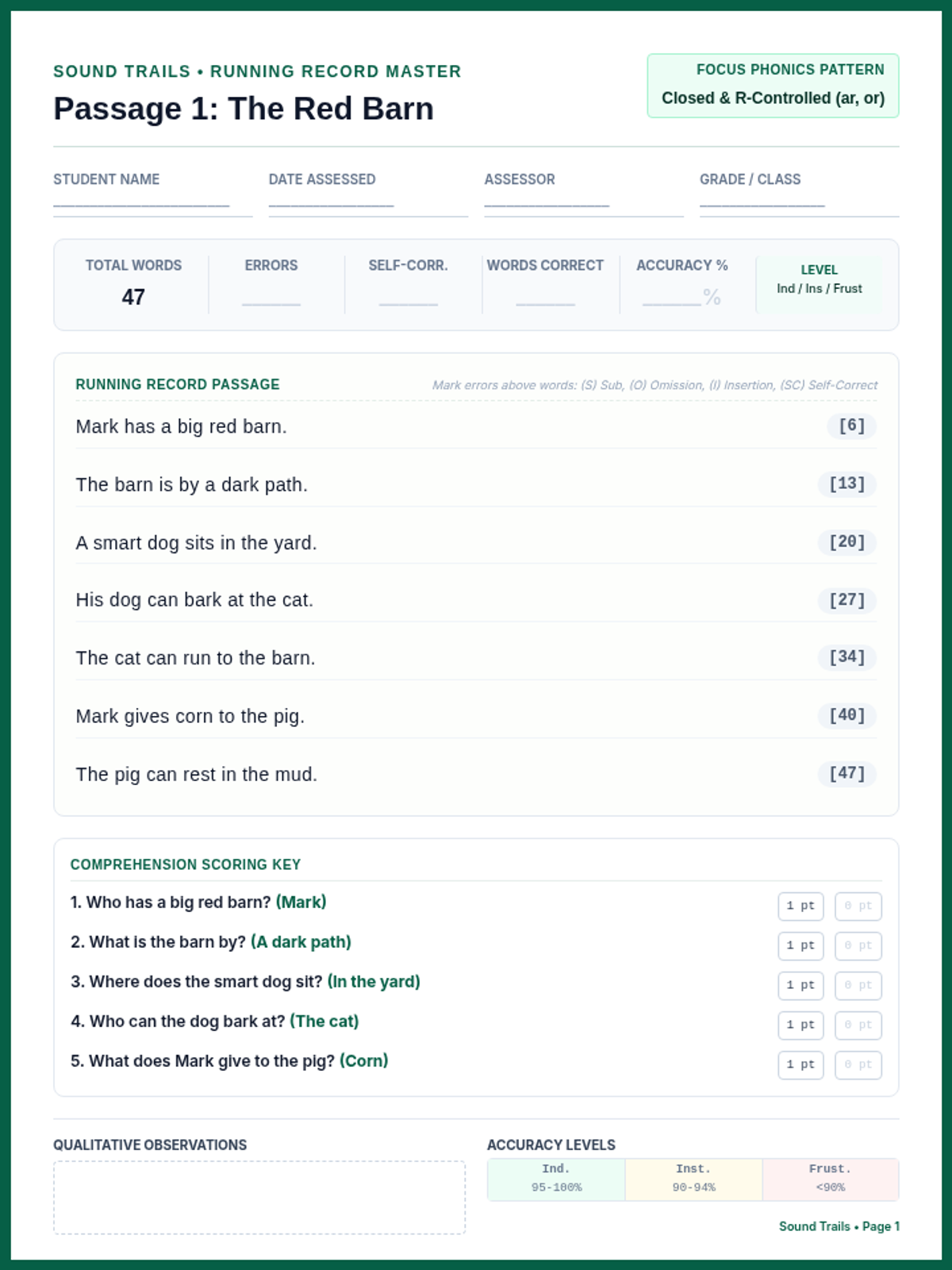
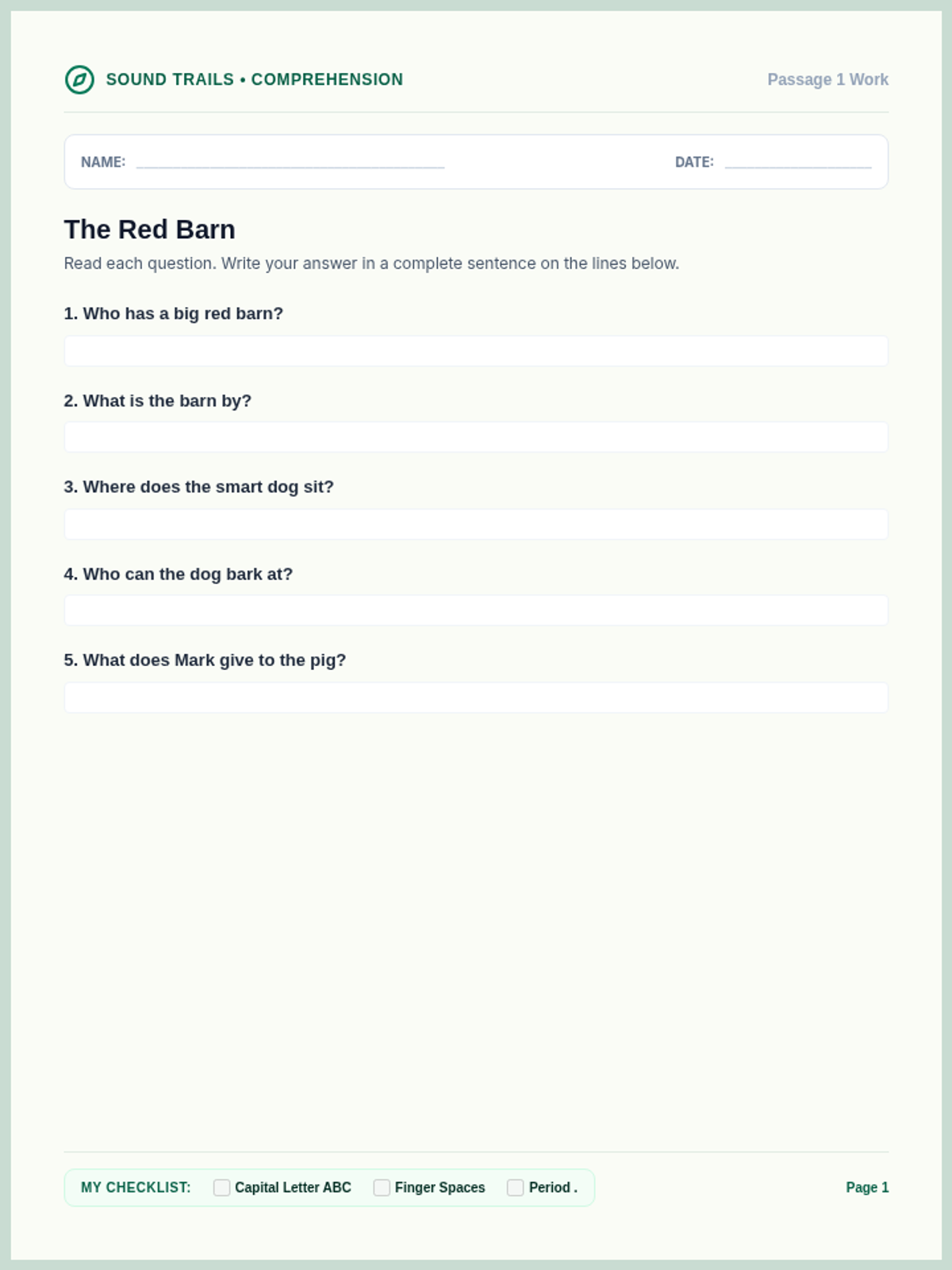
A progress monitoring phonics assessment system for first grade, featuring five passages targeting closed, silent e, and r-controlled syllable patterns alongside high-frequency words. Includes student reading sheets, running record scoring guides, and comprehension worksheets with primary handwriting lines.
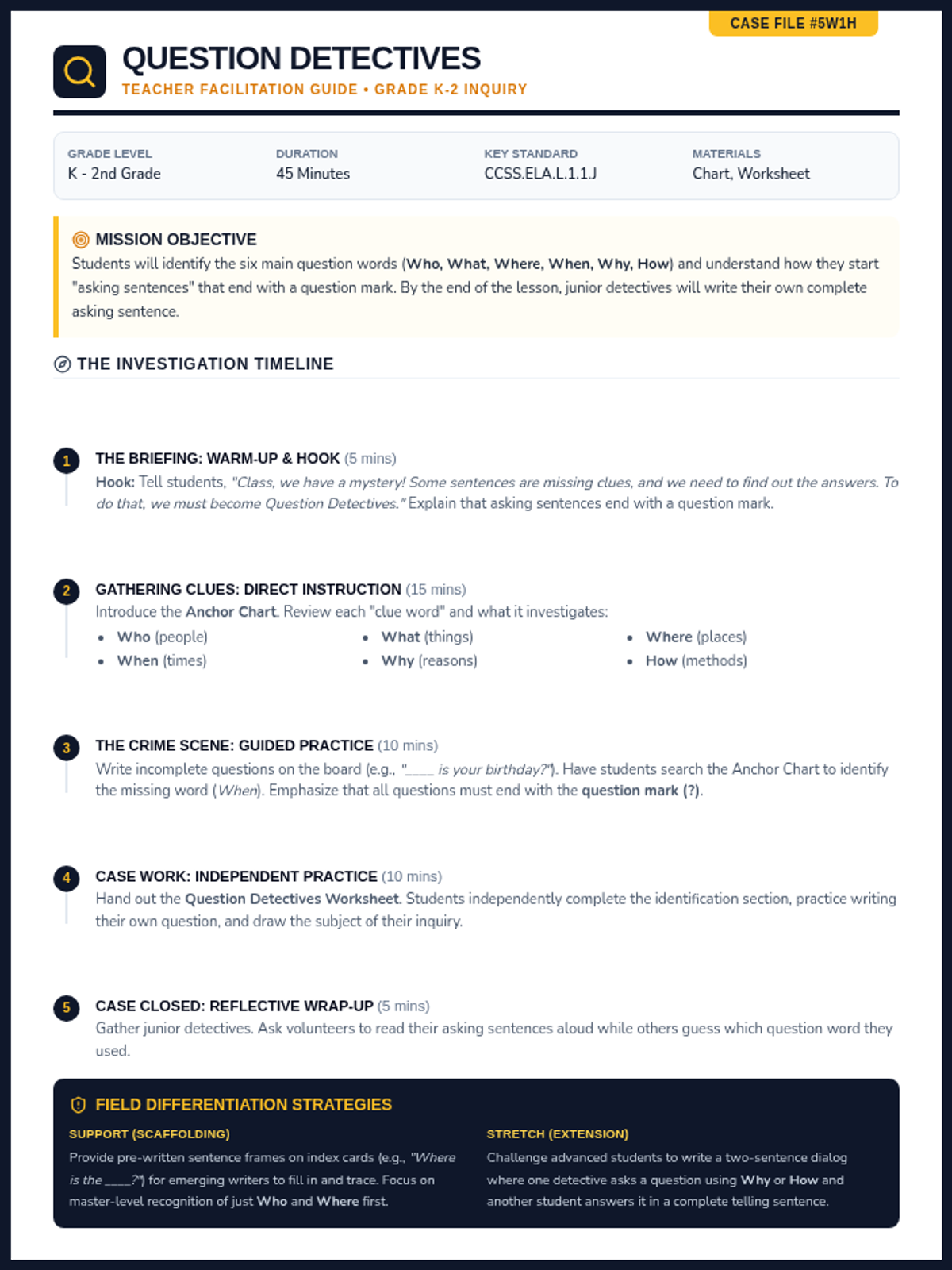
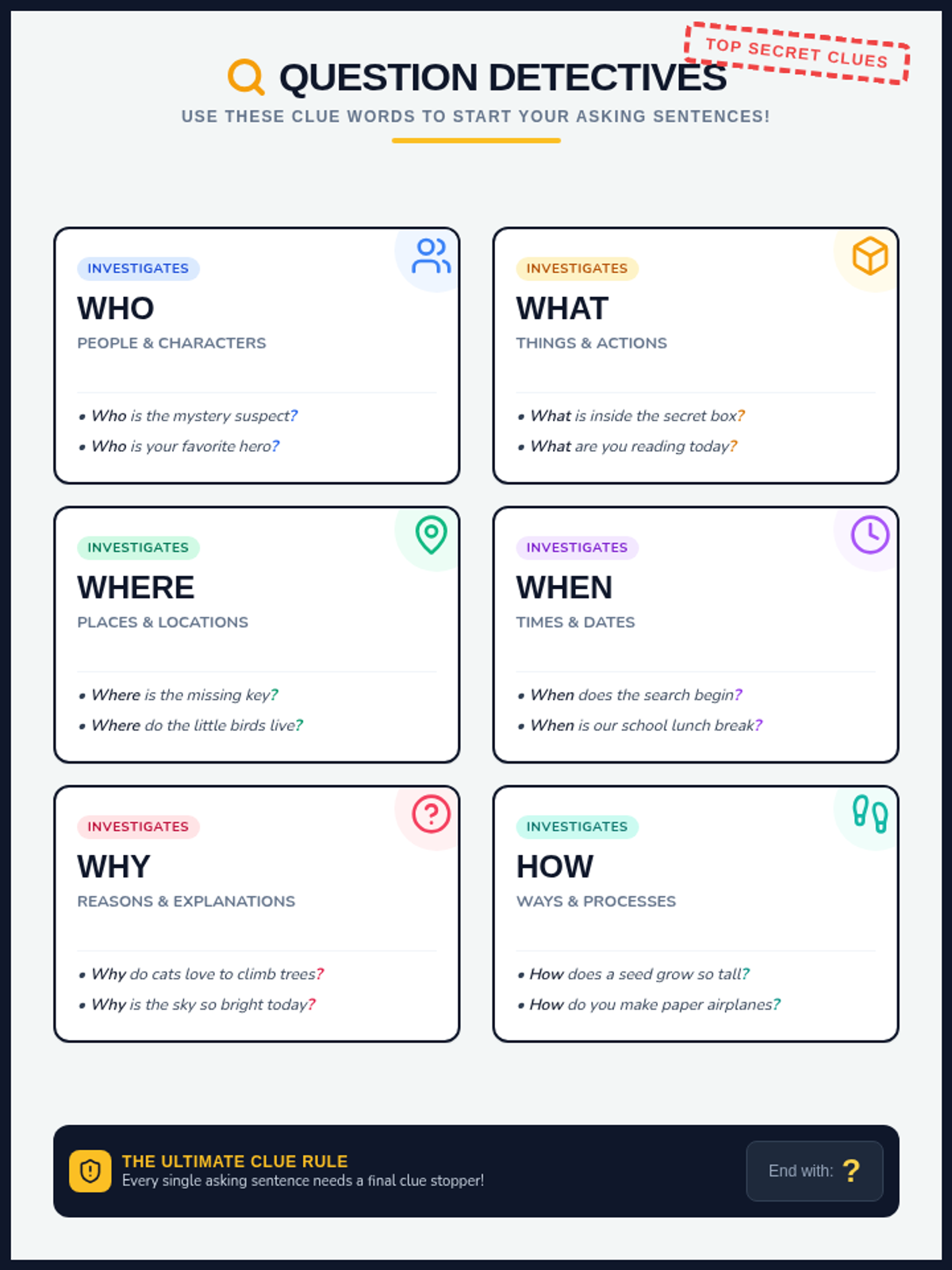
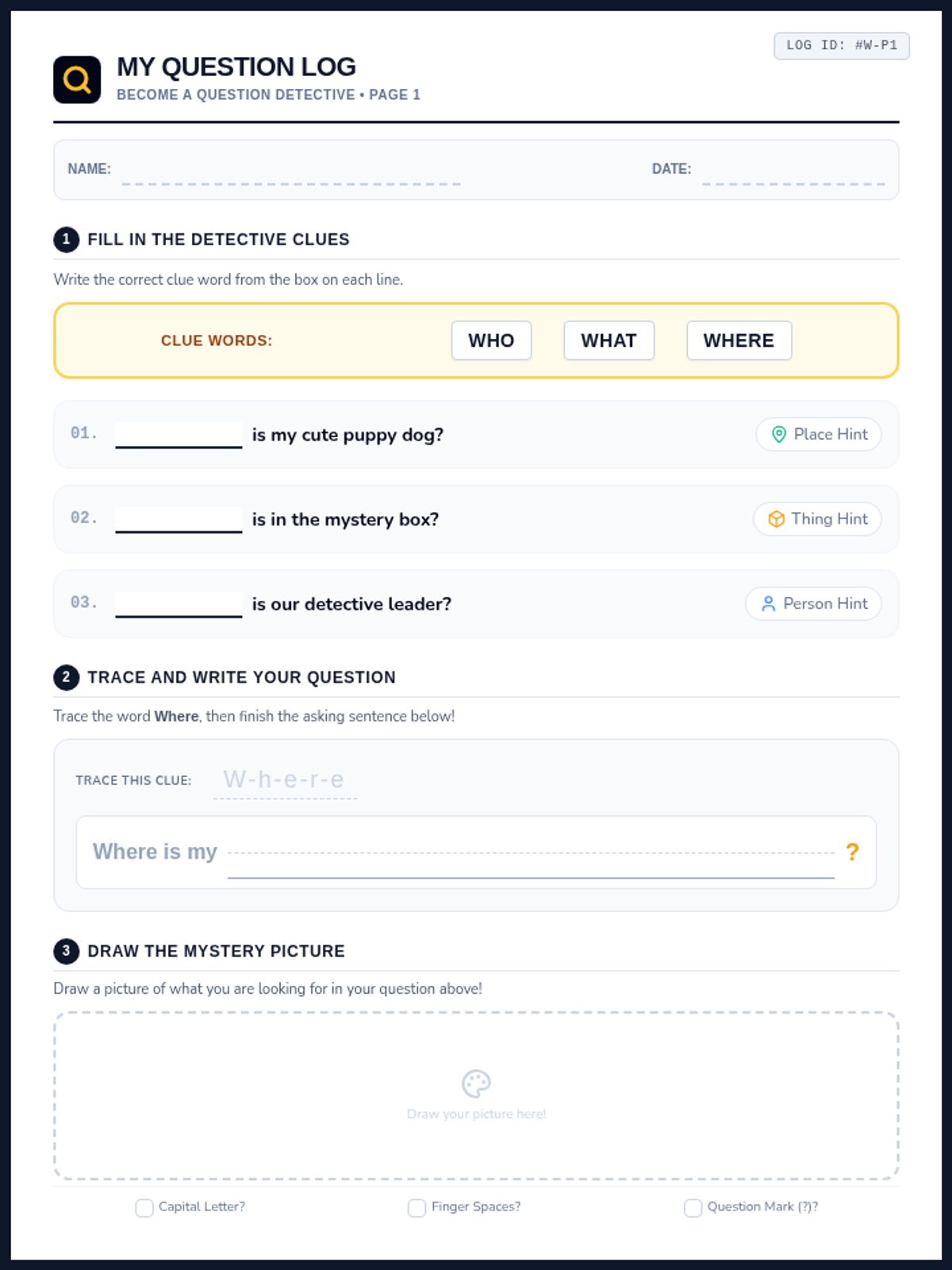
A comprehensive primary-grade lesson where students become 'Question Detectives' to master the six 5W1H question words (Who, What, Where, When, Why, and How) and learn how to construct their own asking sentences. Includes a structured mini-lesson plan, a colorful reference anchor chart, and an engaging investigative worksheet.
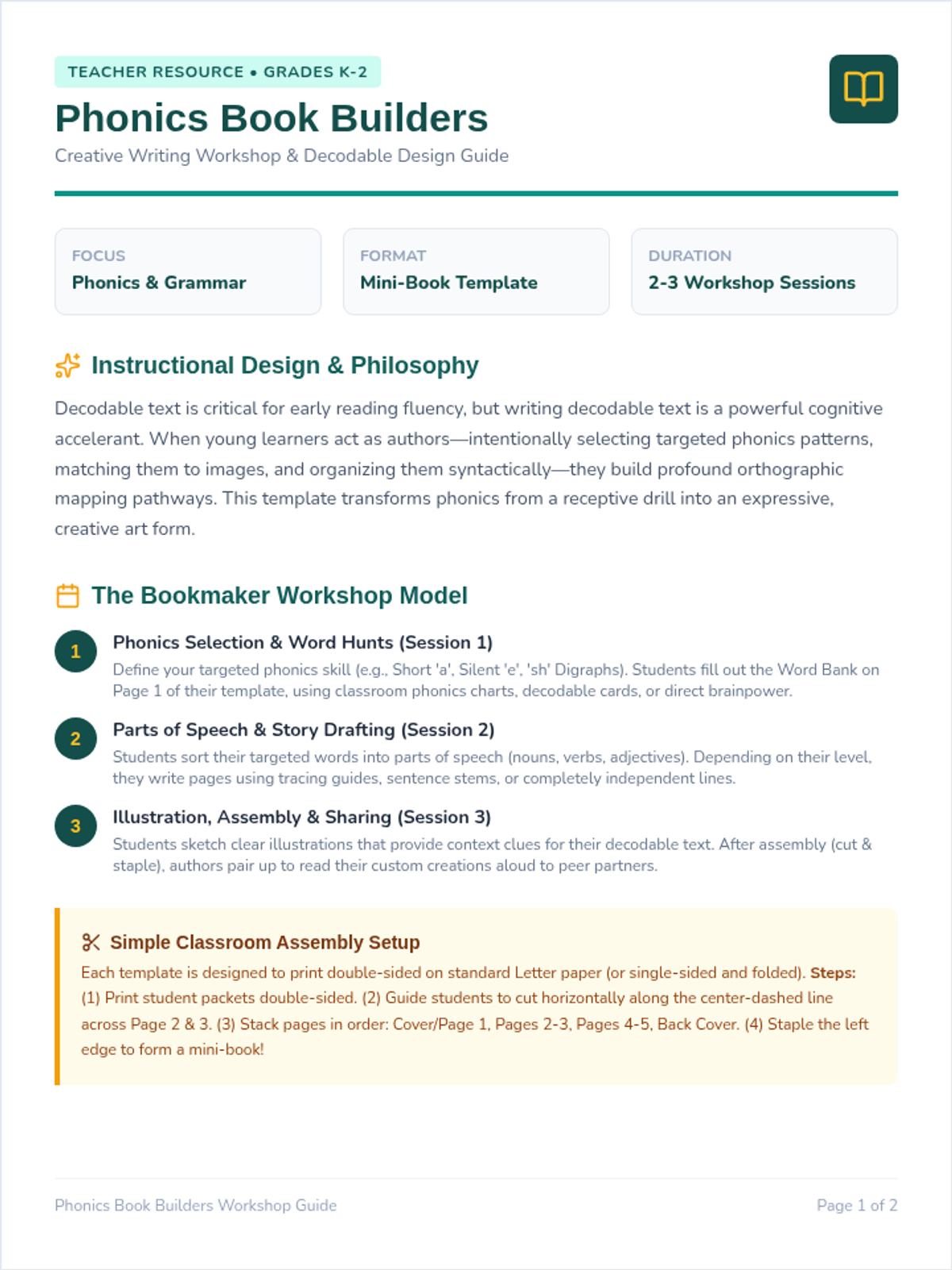
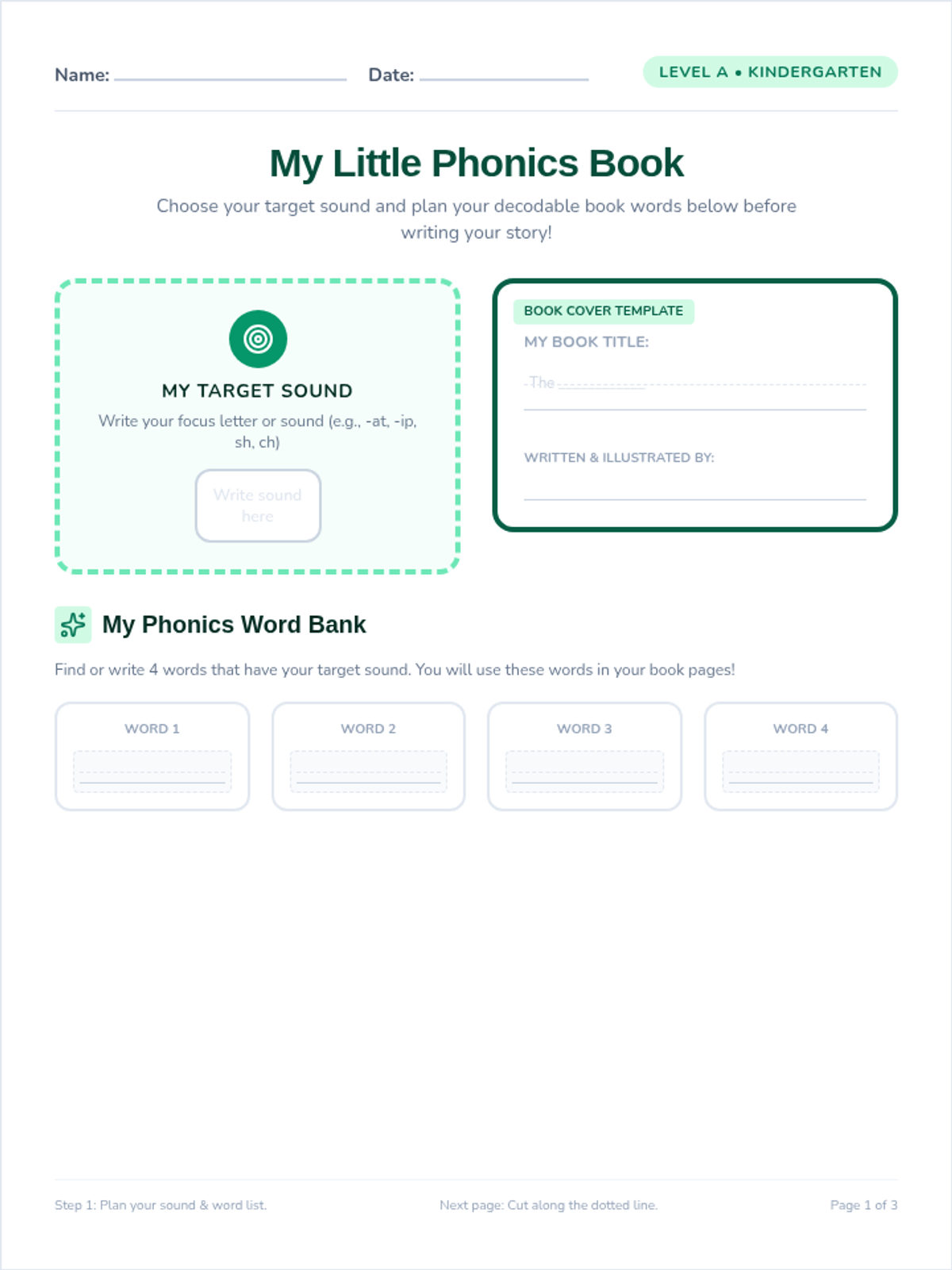
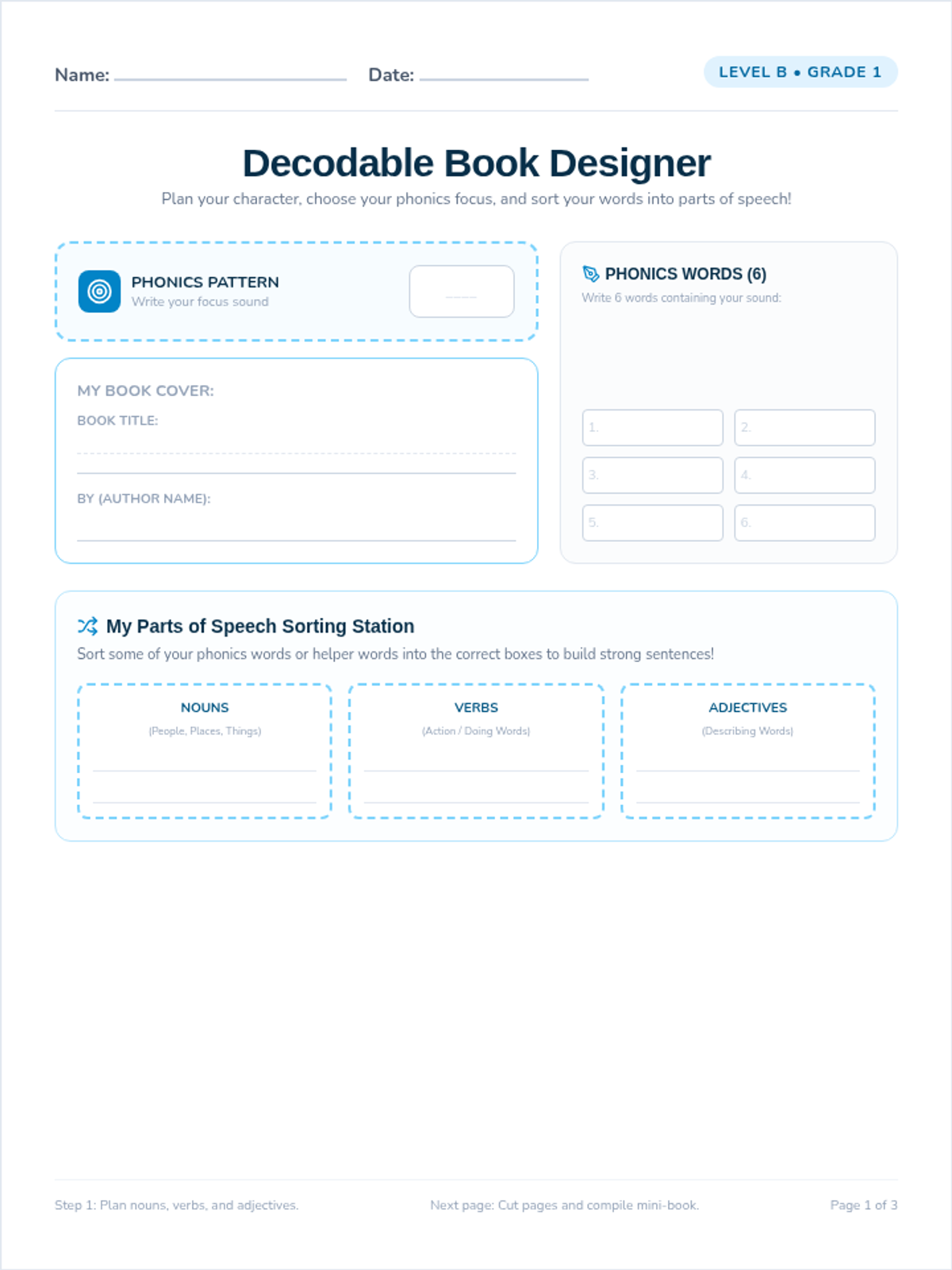
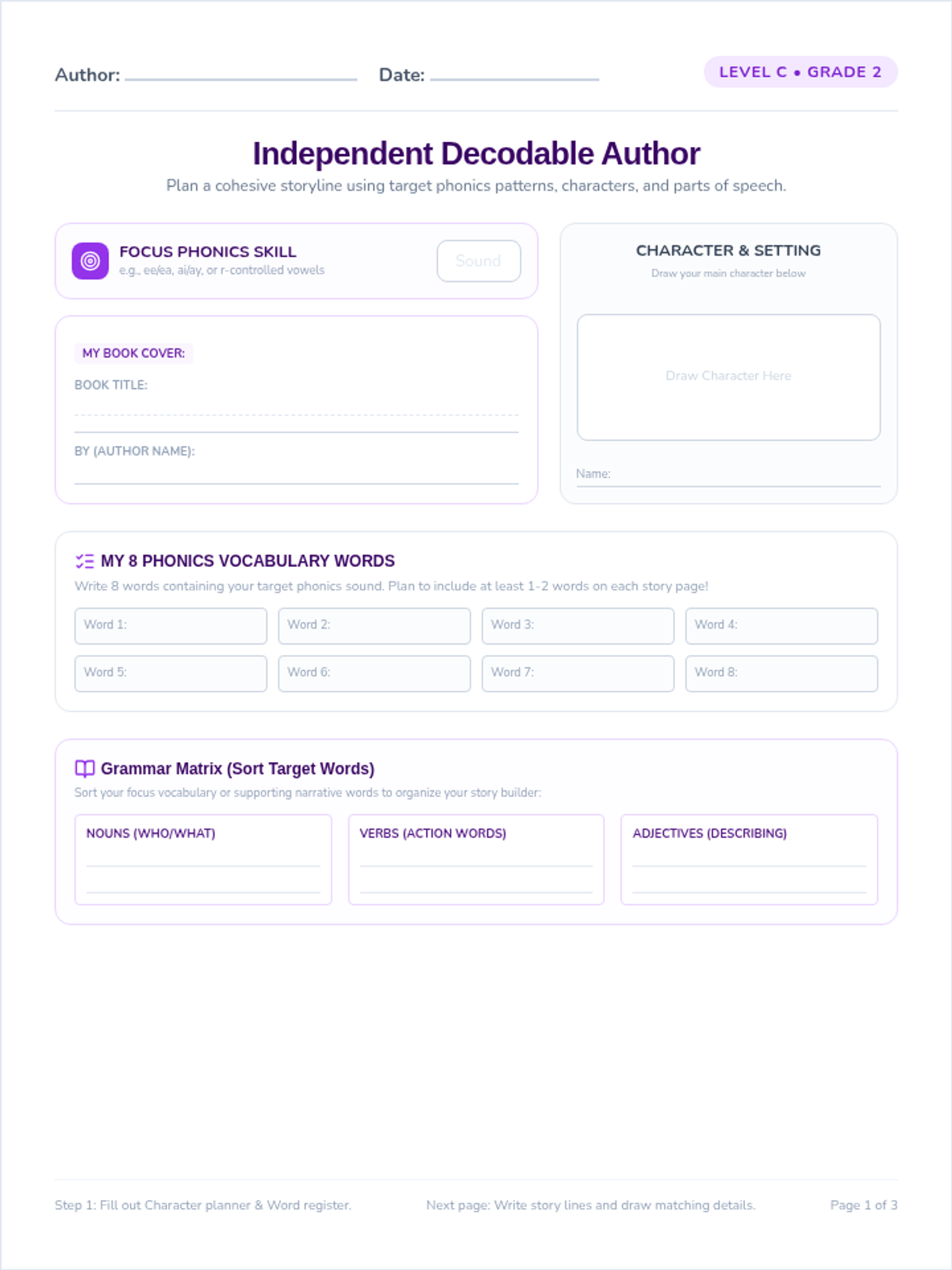
A comprehensive phonics-focused lesson that empowers K-2 students to author, illustrate, and assemble their own decodable books. It includes three levels of differentiated student bookmaking templates (tracing, sentence stems, and independent writing) alongside an educator facilitation guide.
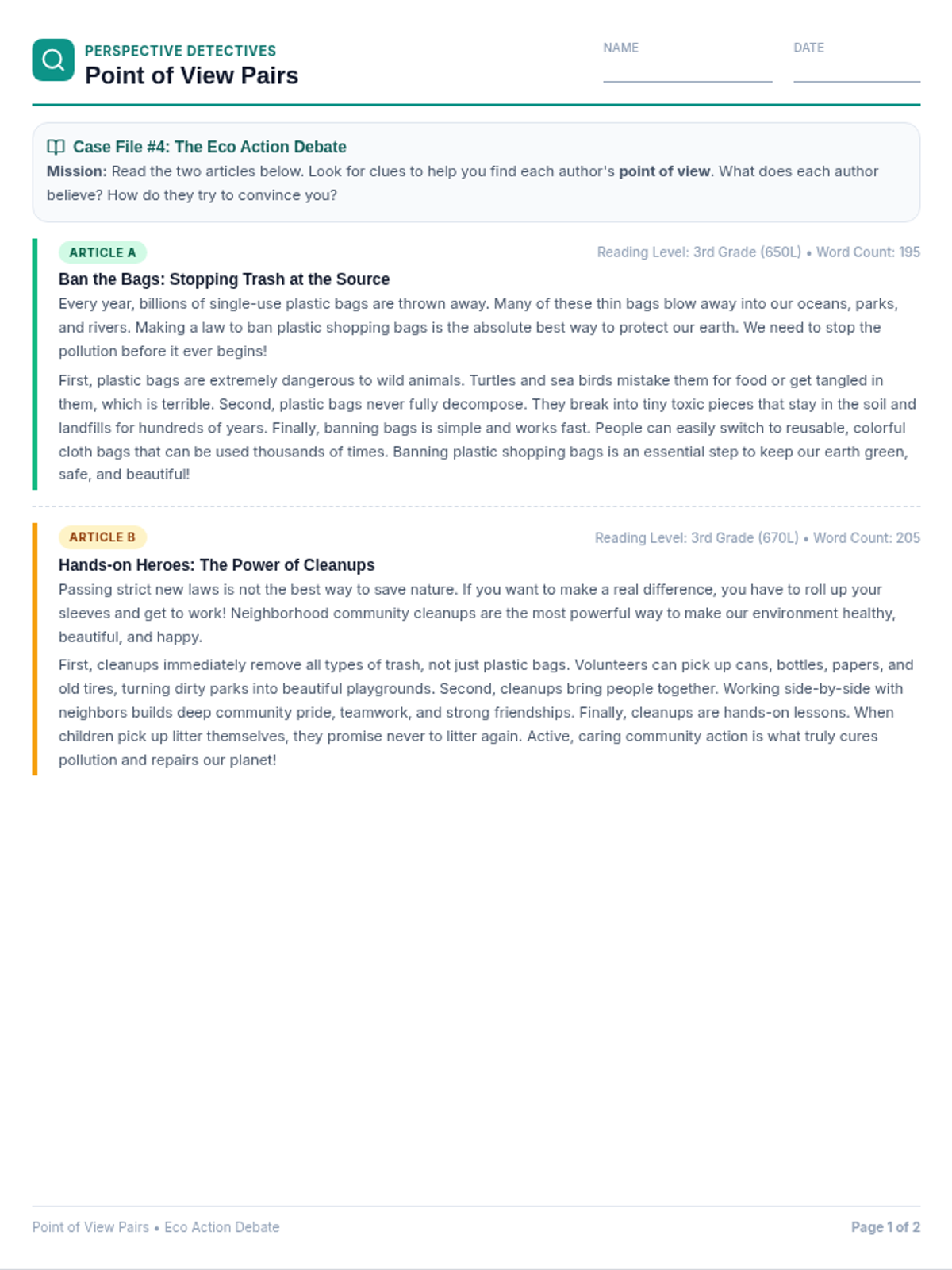
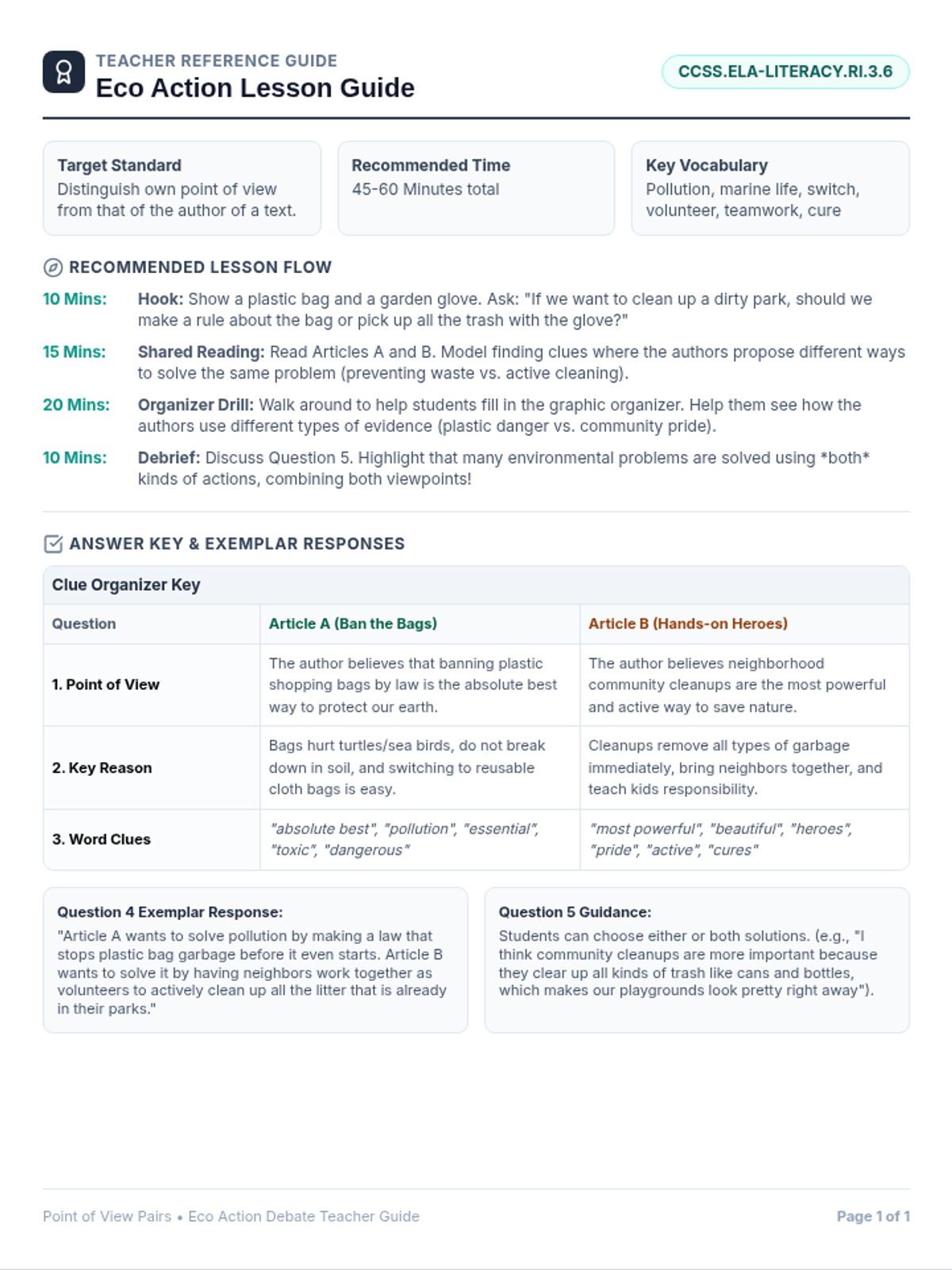
Students compare viewpoints on how to protect the environment, looking at one author advocating for banning plastic bags and another championing community cleanups.
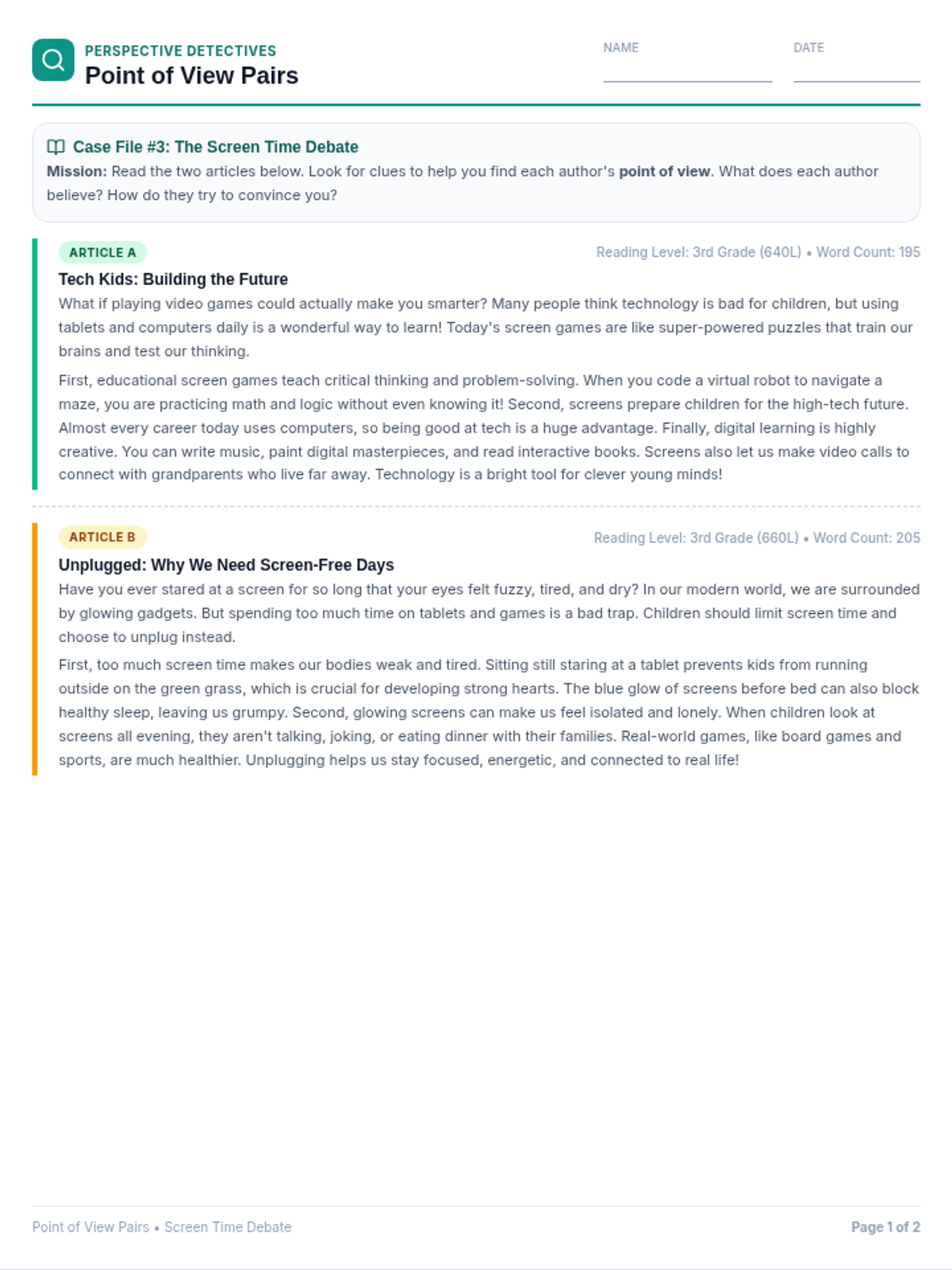
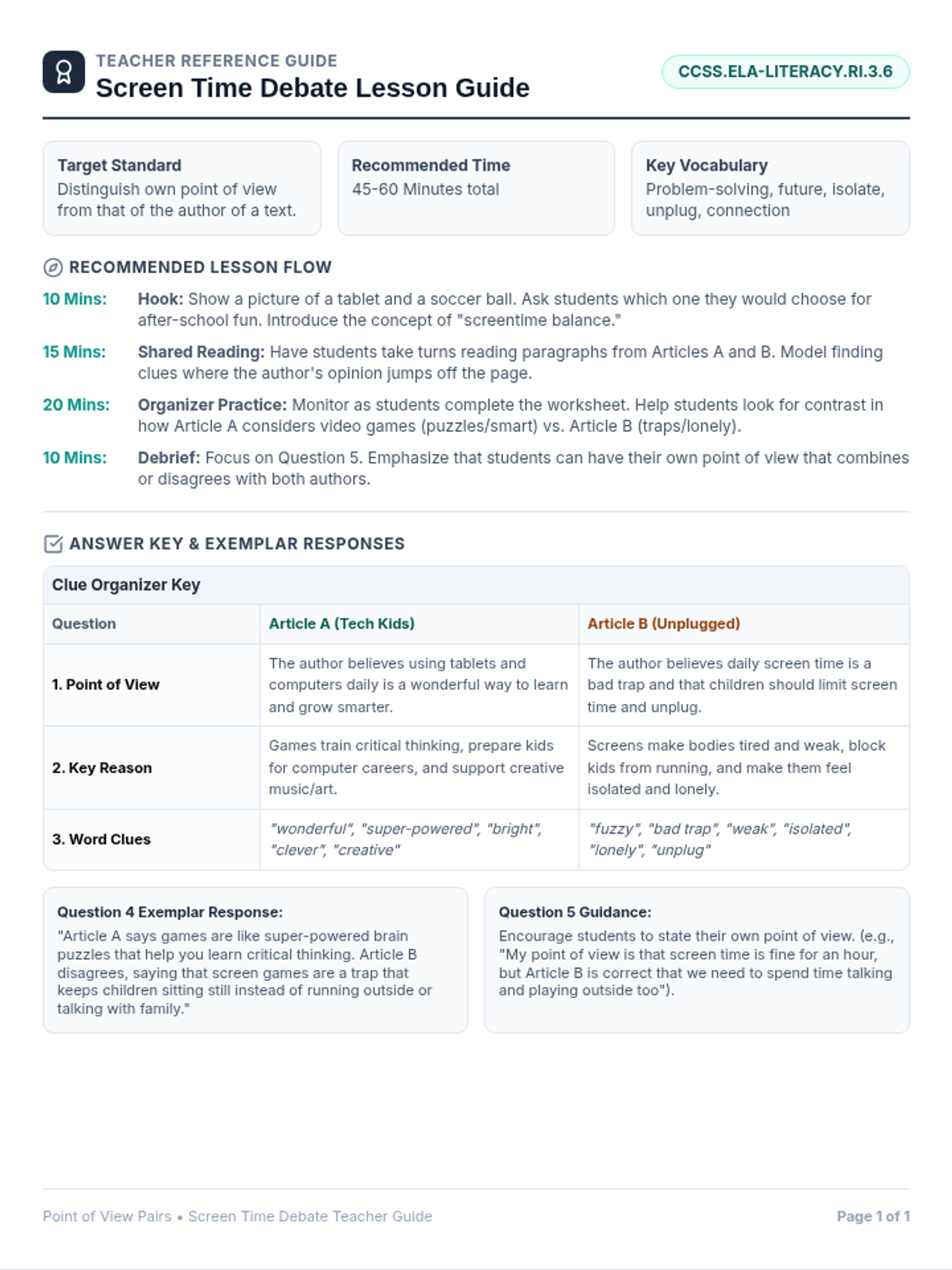
Students examine differing perspectives on daily tablet and video game use, distinguishing between an author promoting technology skills and one warning against excessive screens.
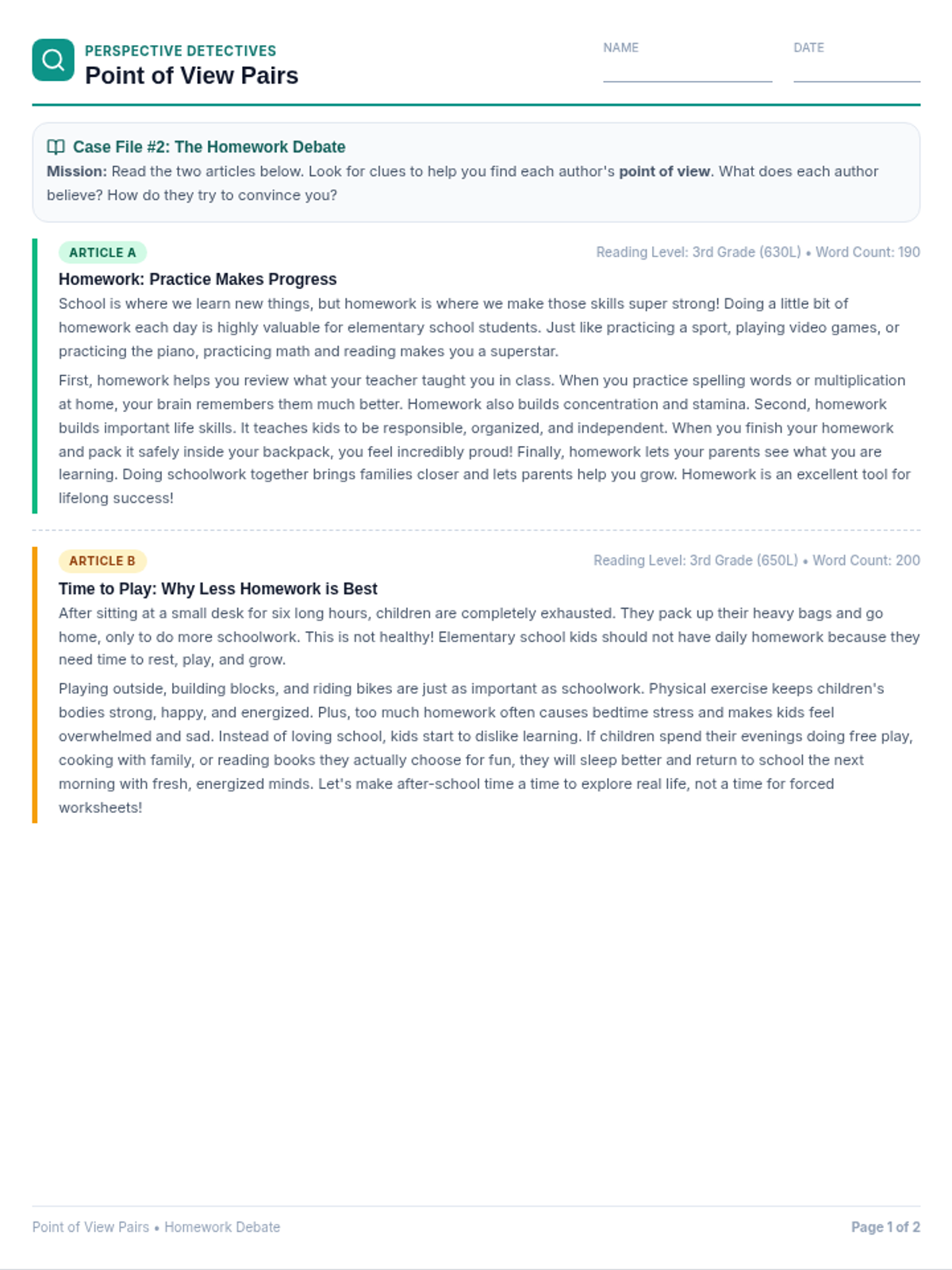
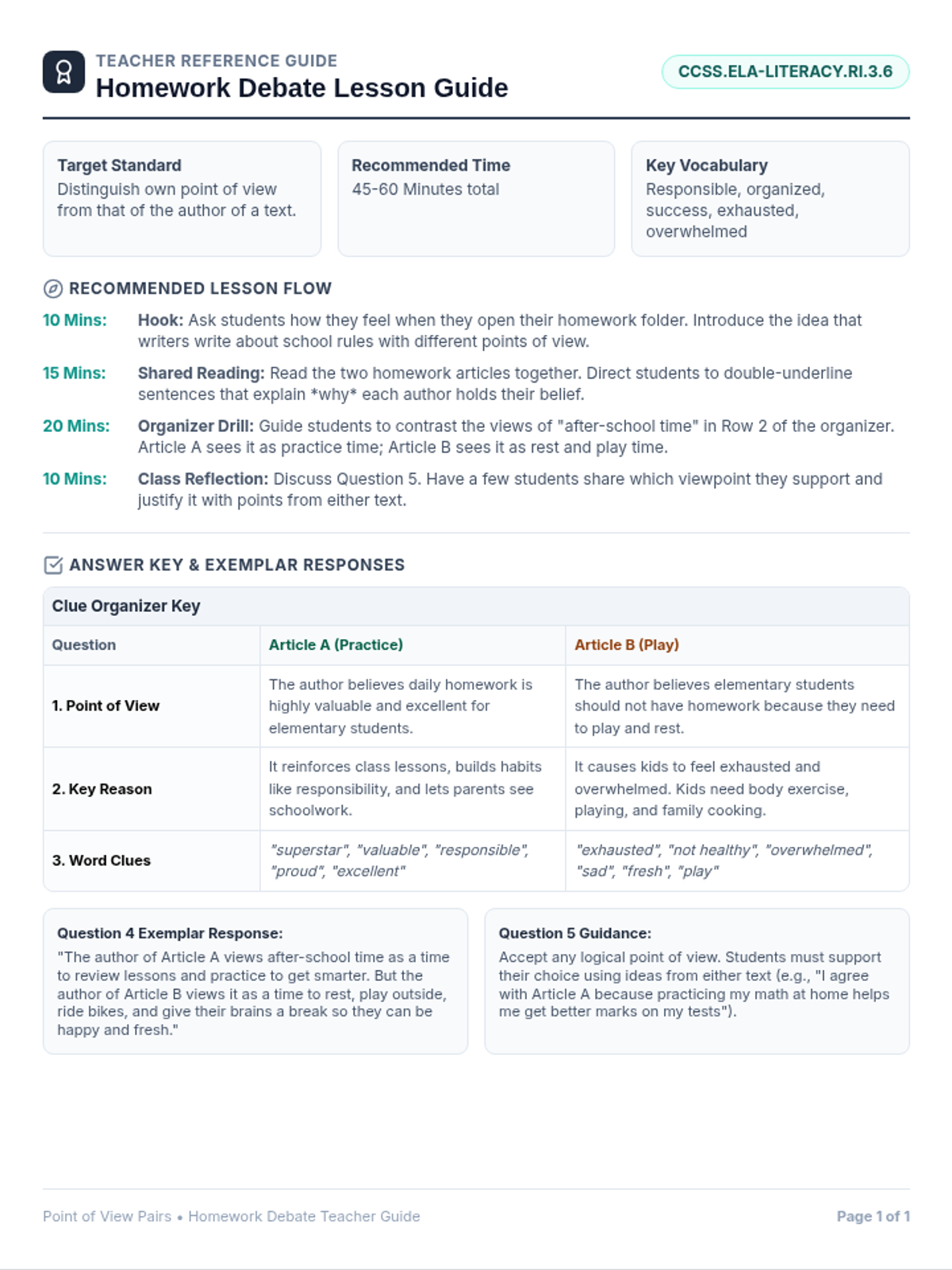
Students read and compare contrasting opinions on whether elementary school students should have daily homework, analyzing reasons and persuasive words used by each author.
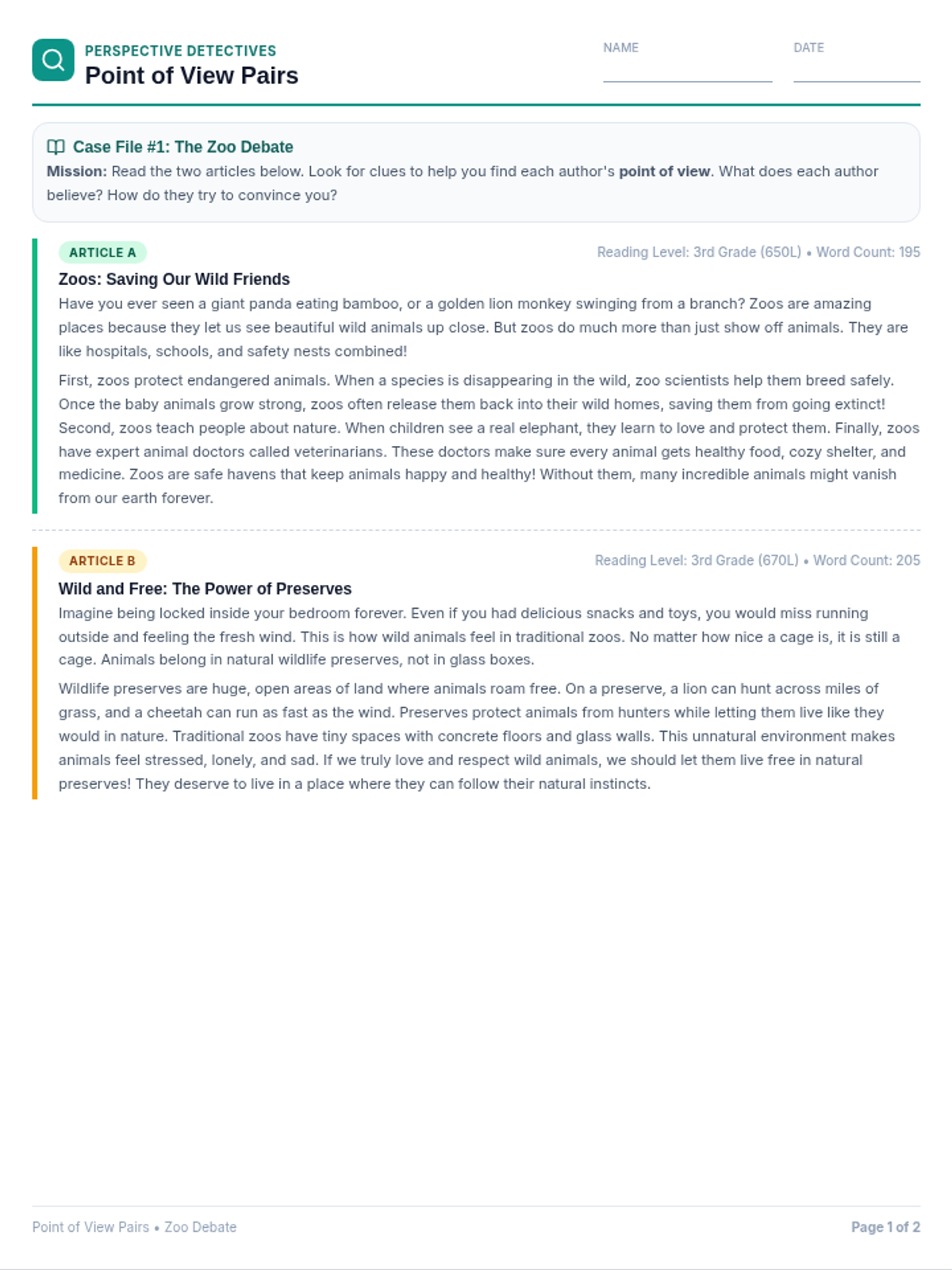
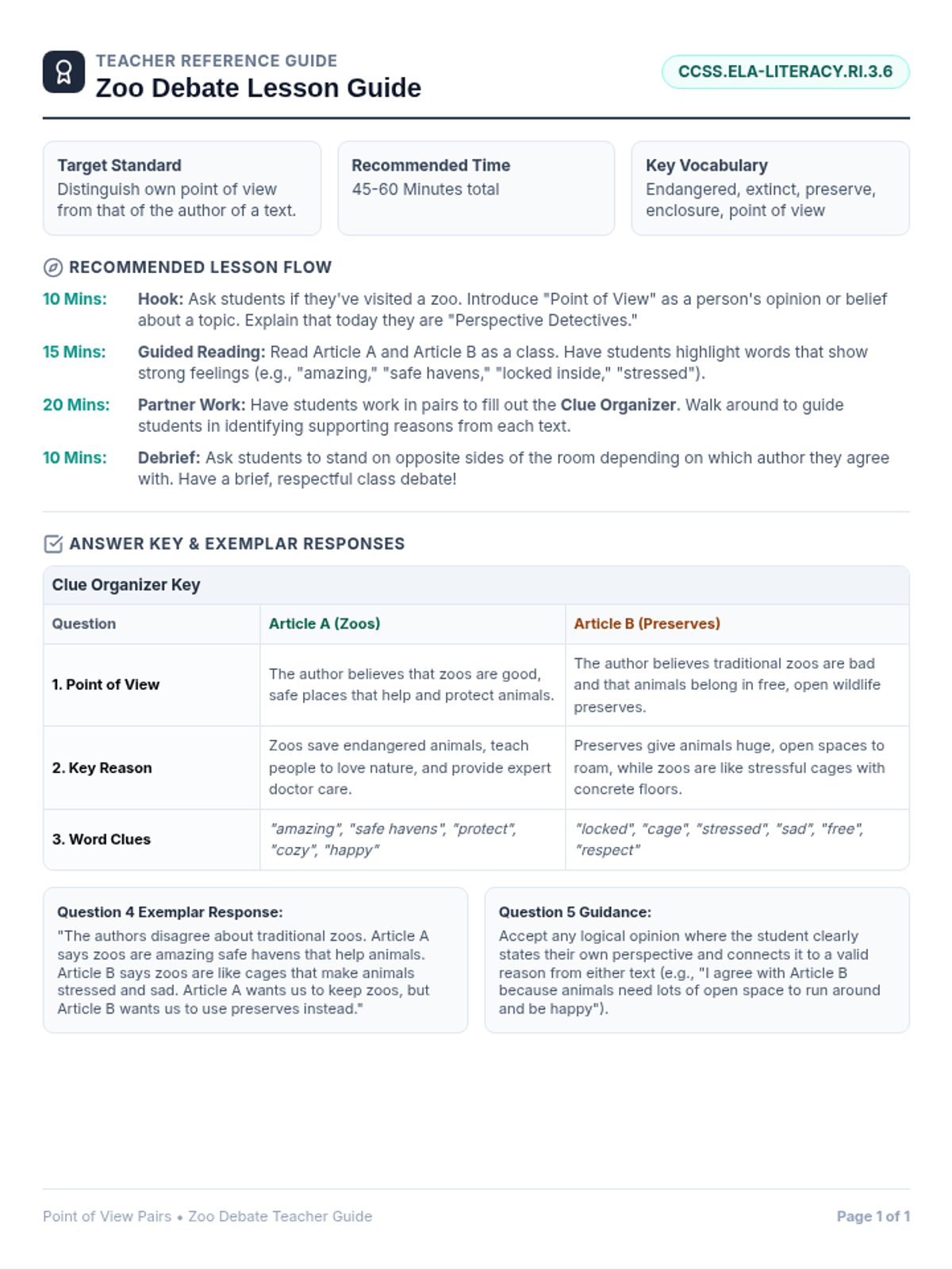
Students analyze paired texts on whether wild animals should be kept in traditional zoos or in natural wildlife preserves, identifying key evidence that reveals each author's perspective.
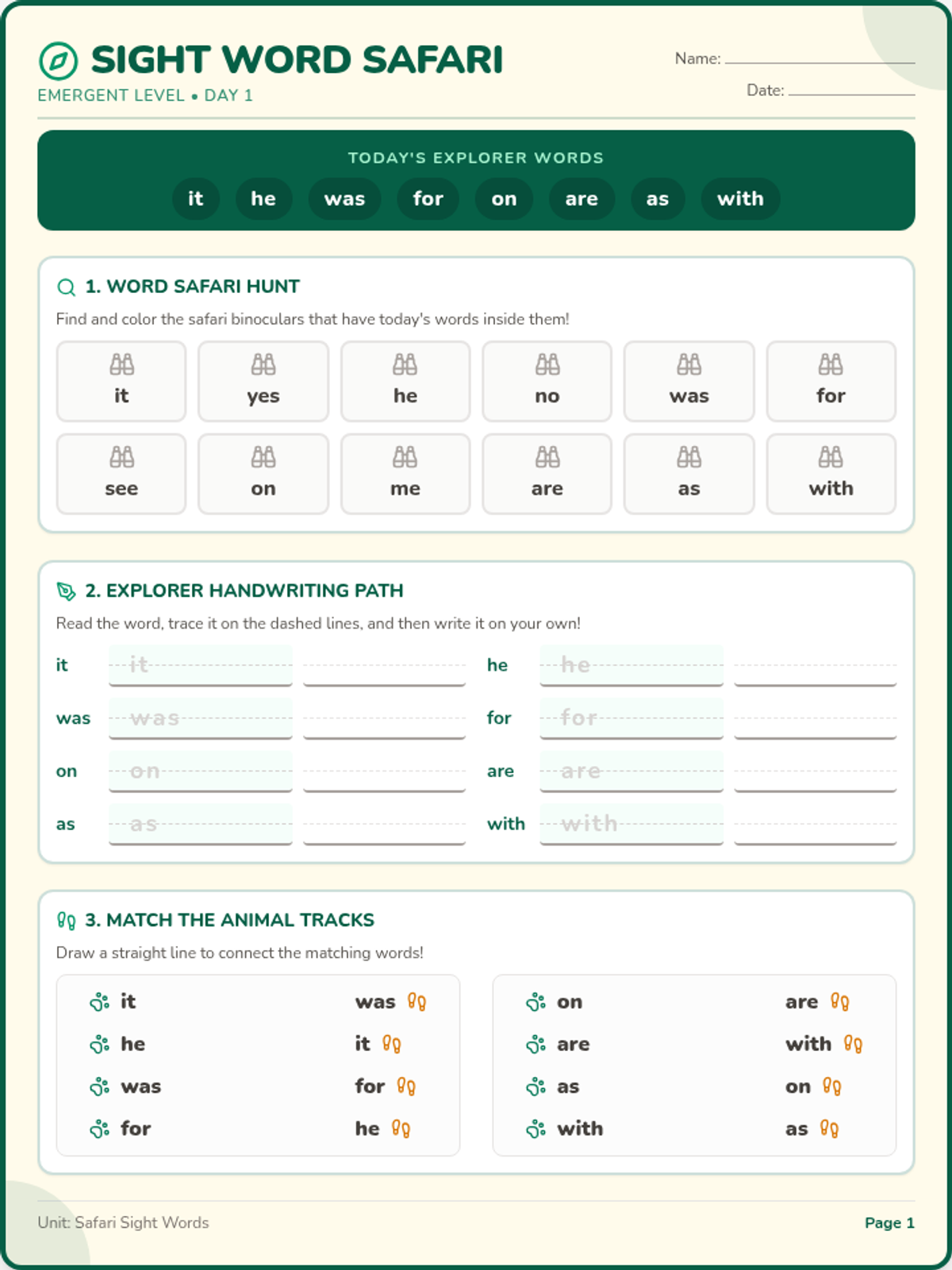
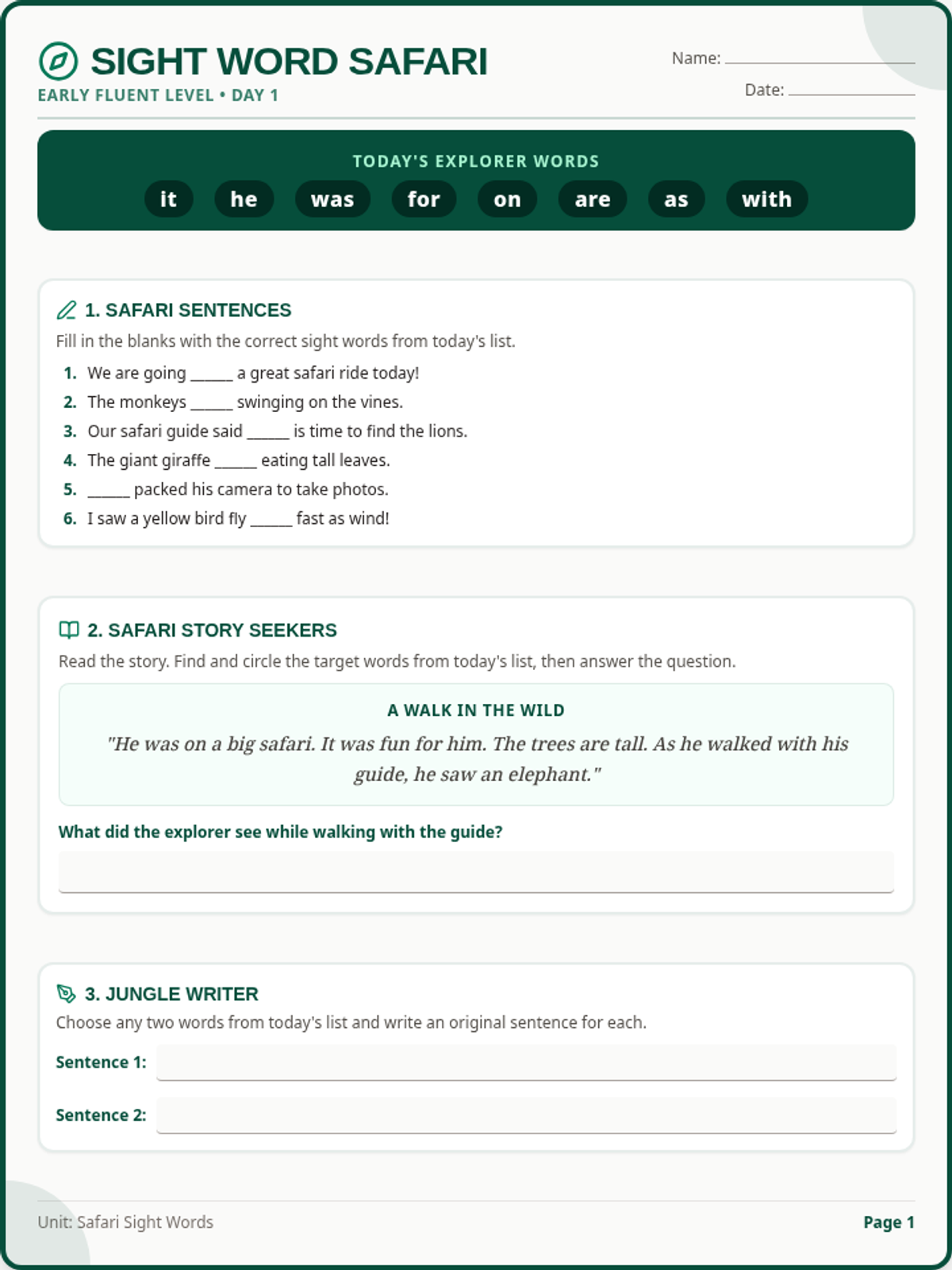
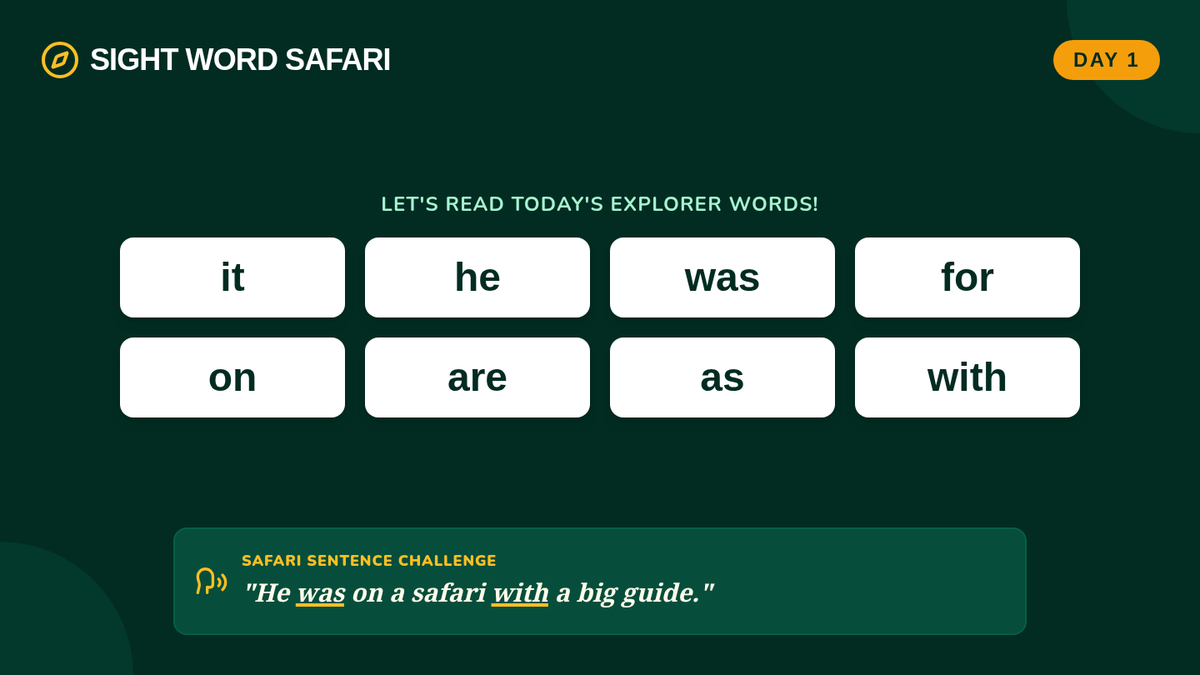
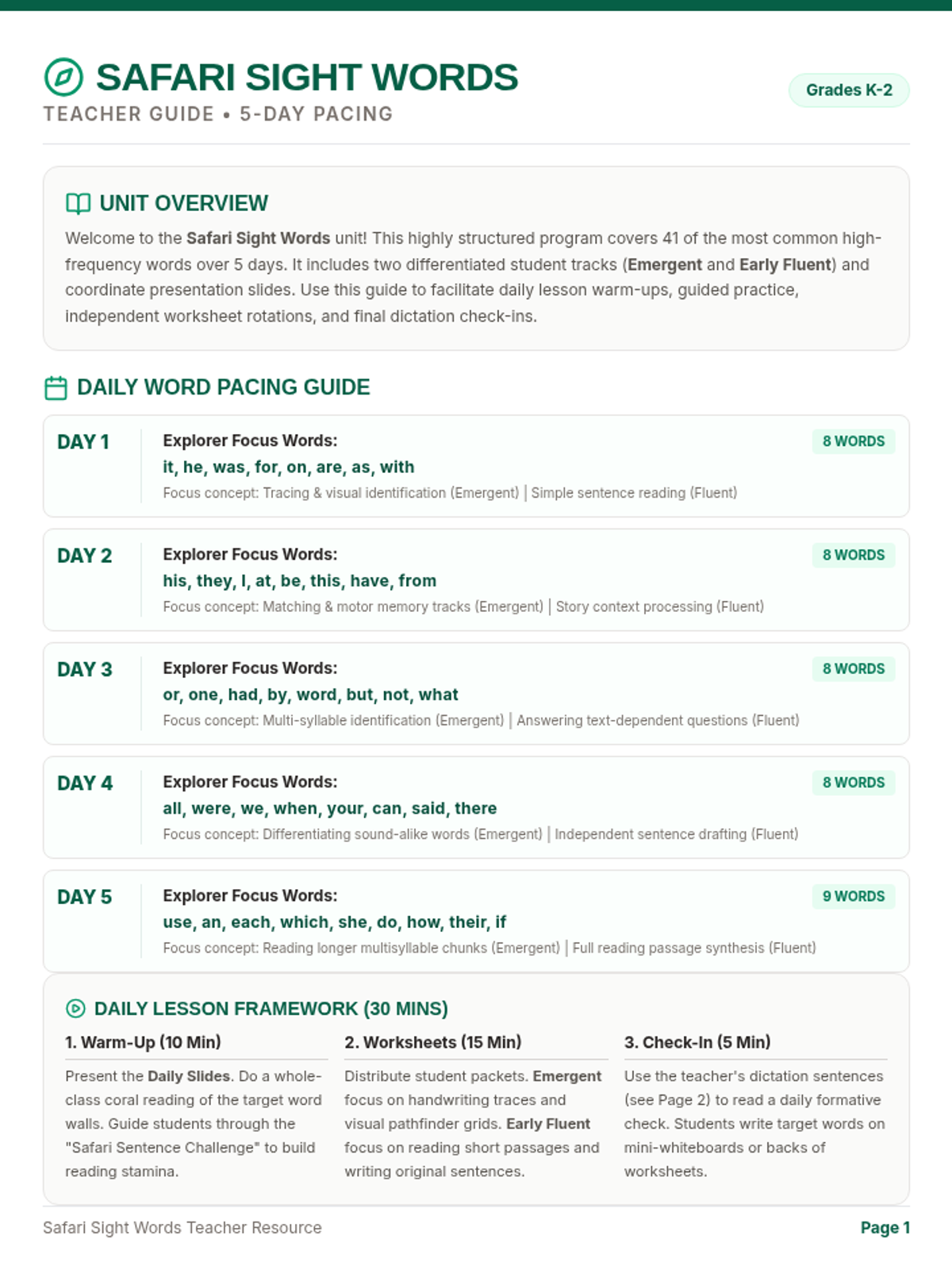
A comprehensive 5-day sight word unit designed for early childhood learners. It includes highly differentiated packets for emergent and early fluent readers, visual classroom slides, and a comprehensive teacher guide with dictation sentences and activity ideas.
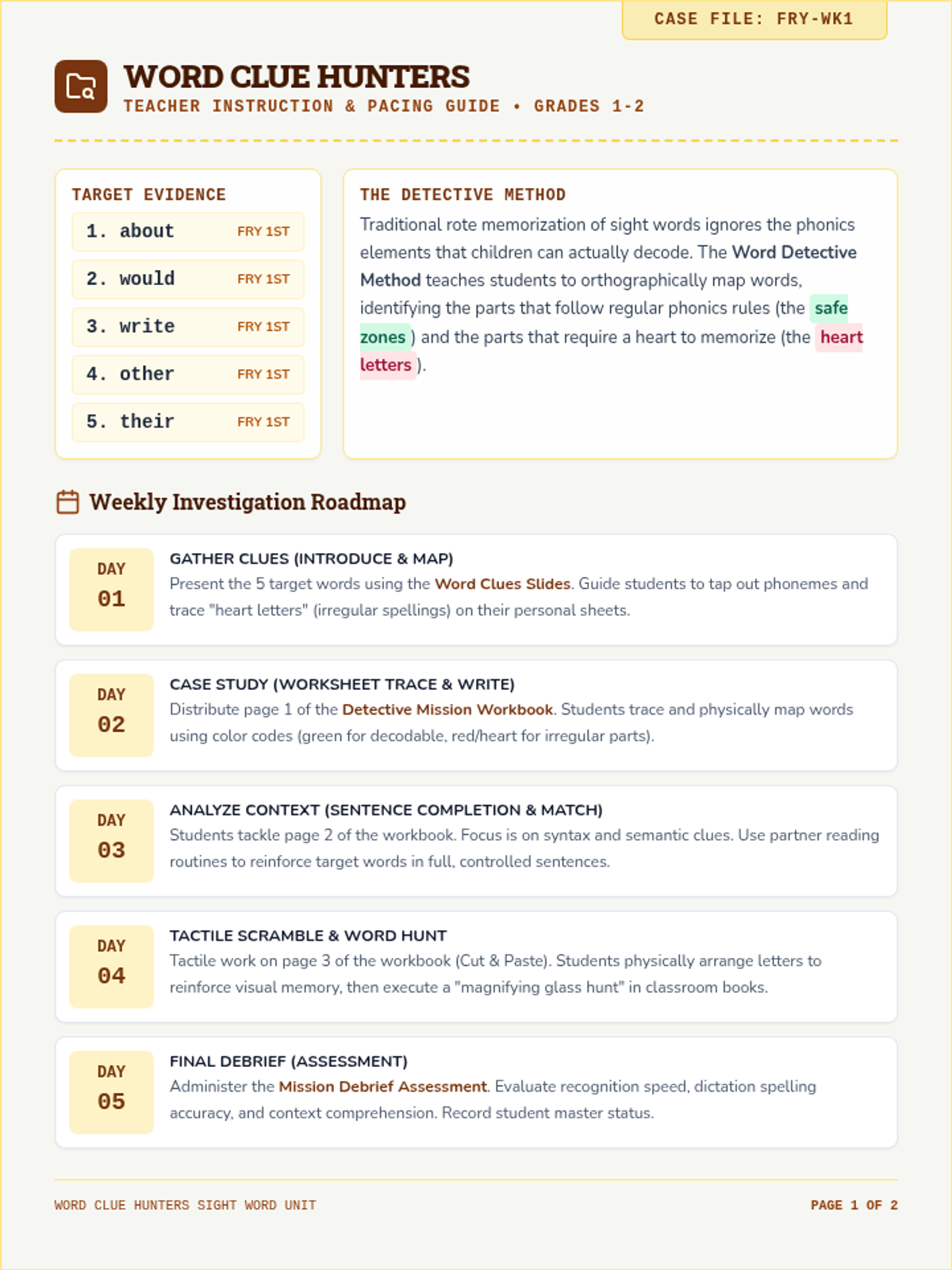
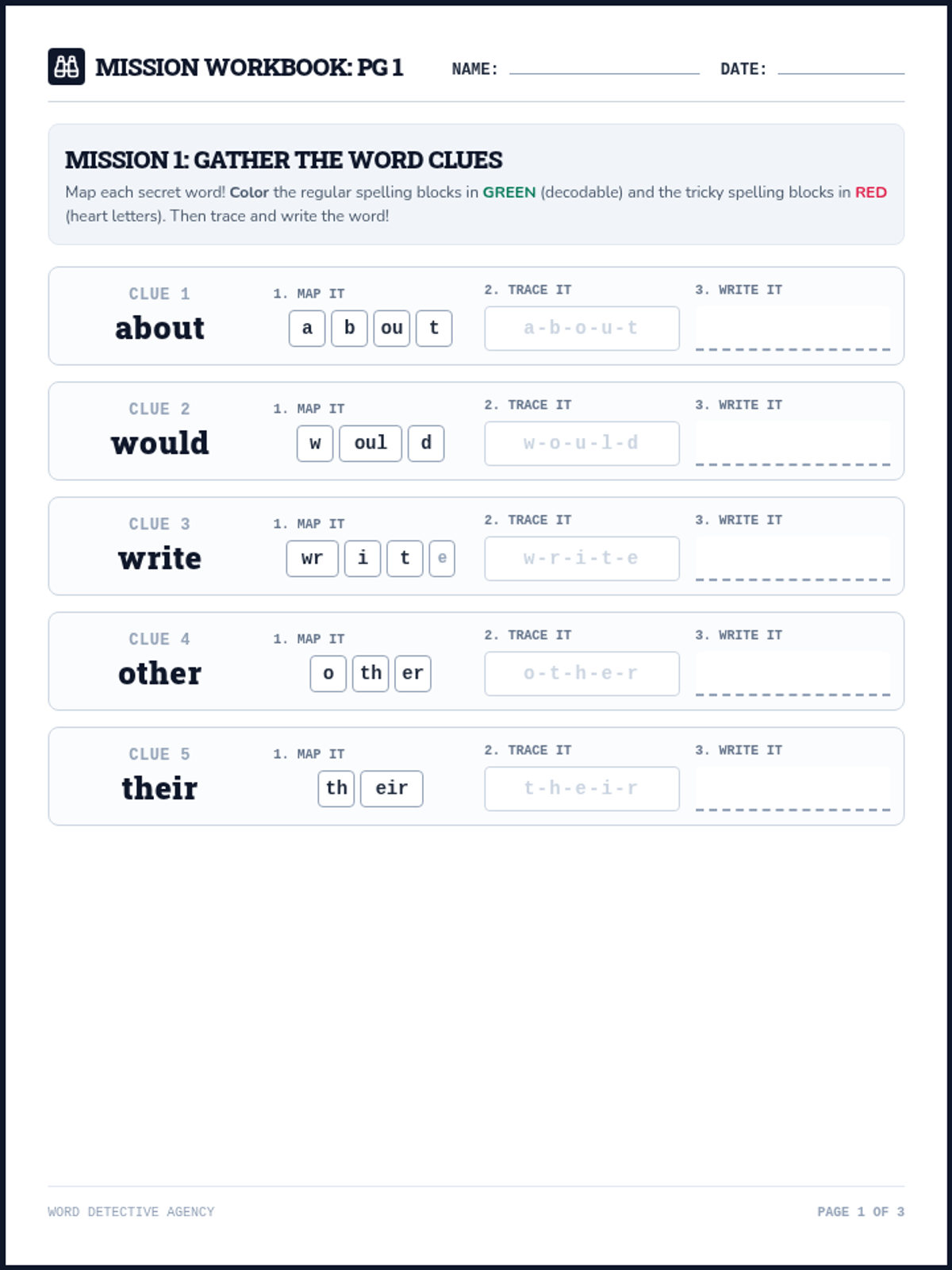
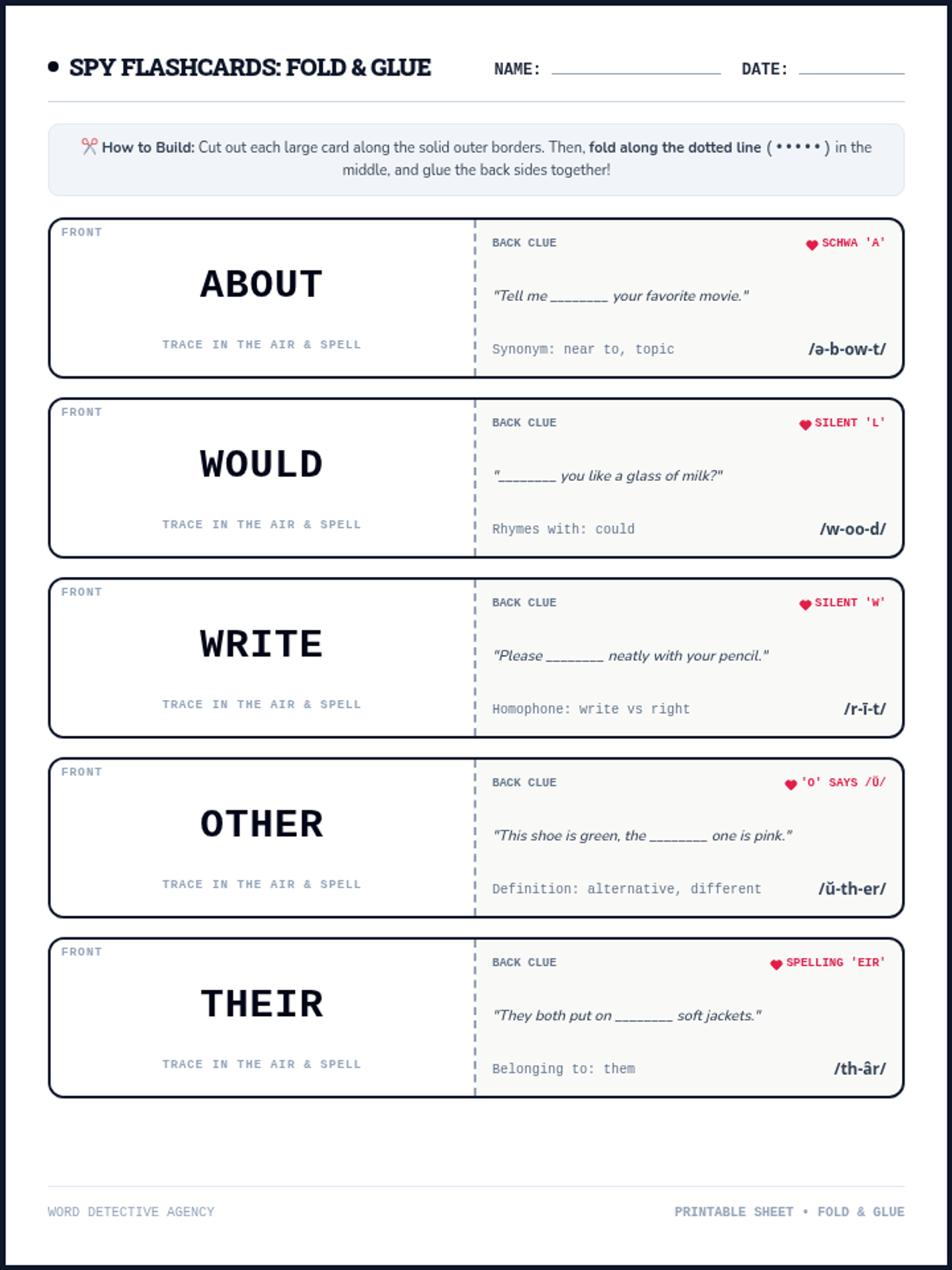
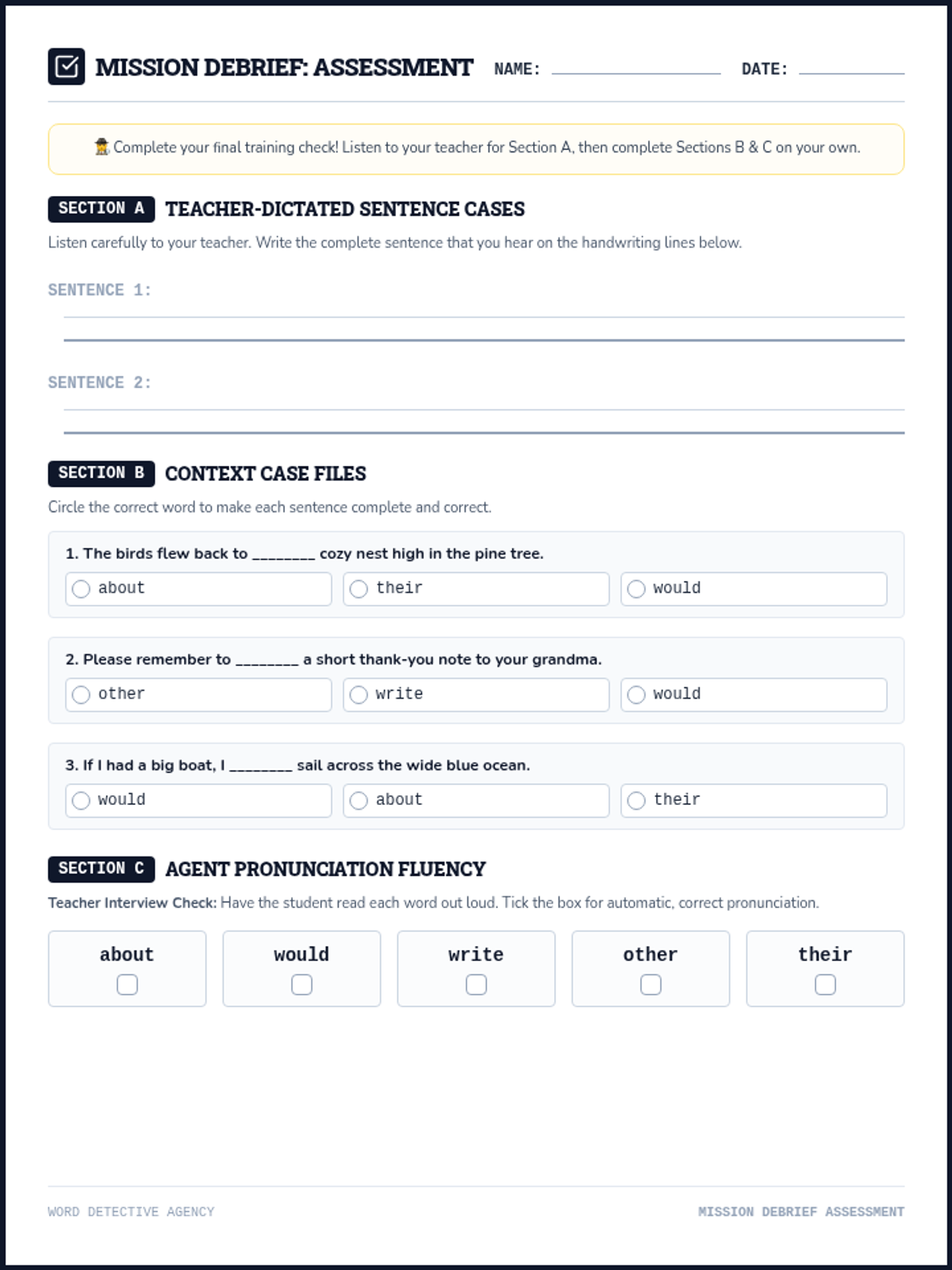
A comprehensive 5-day sight word unit targeting five critical high-frequency Fry words ('about', 'would', 'write', 'other', 'their') through active daily routines, hands-on practice, and a tactile detective-themed investigation.
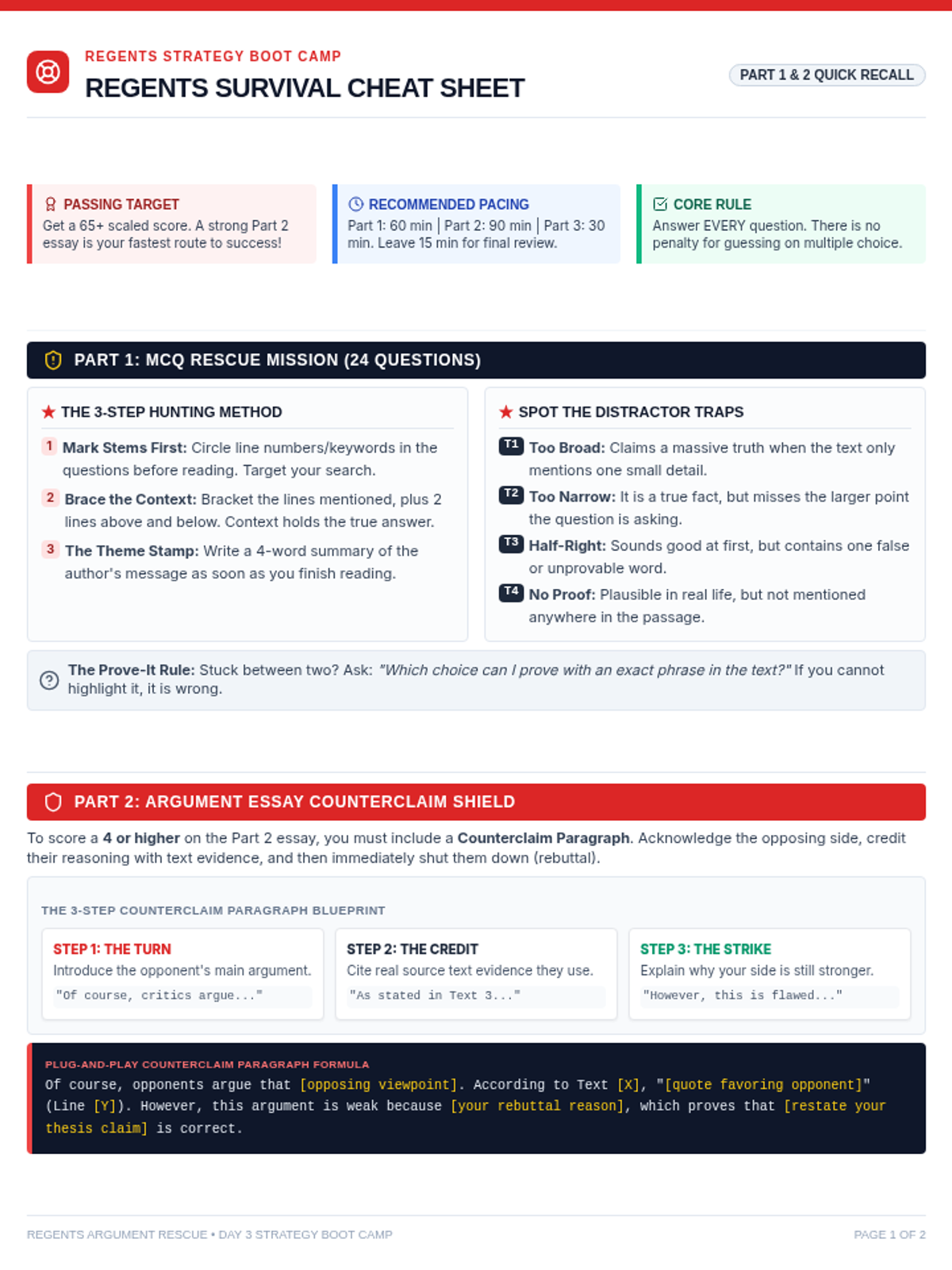
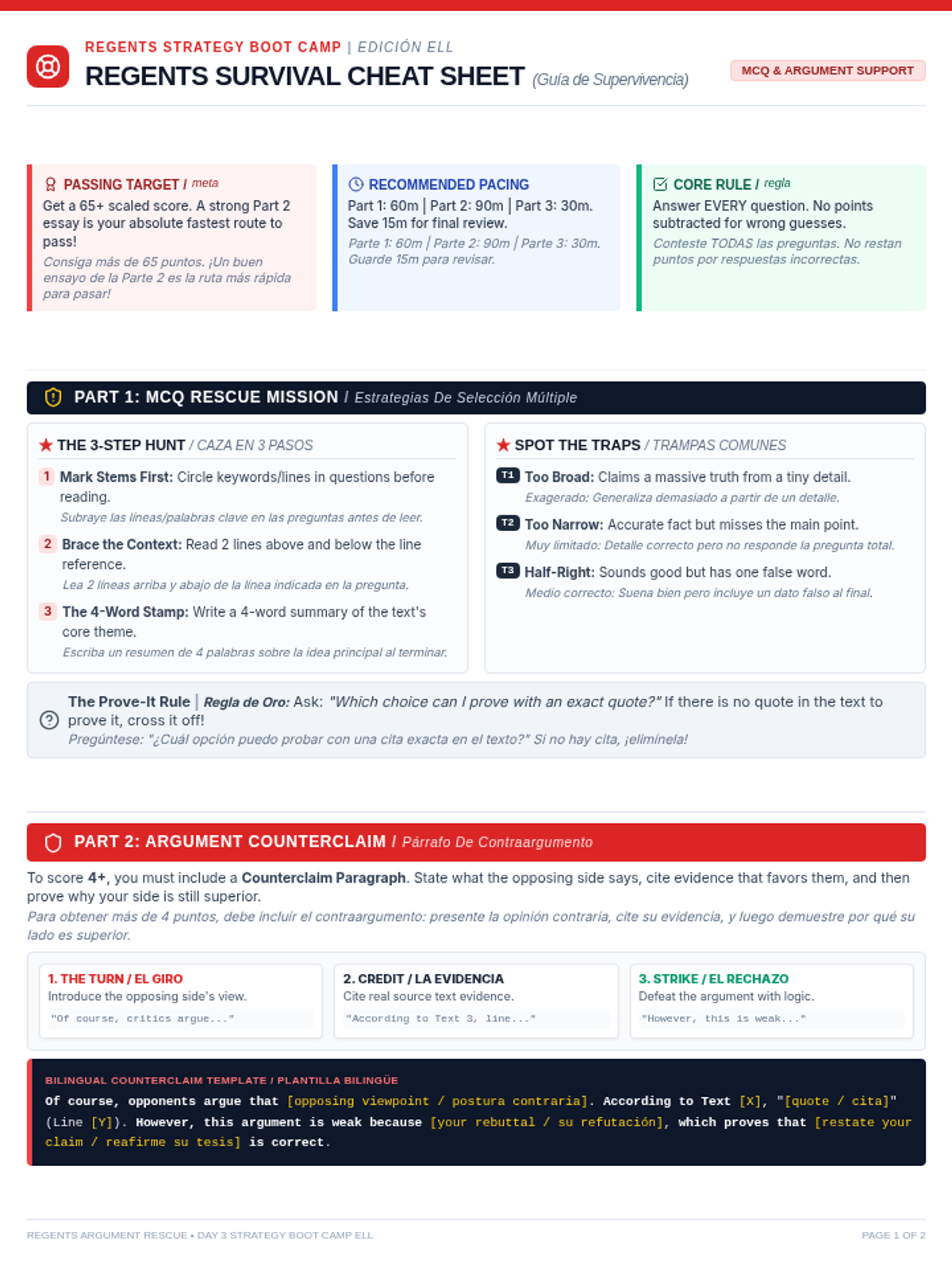
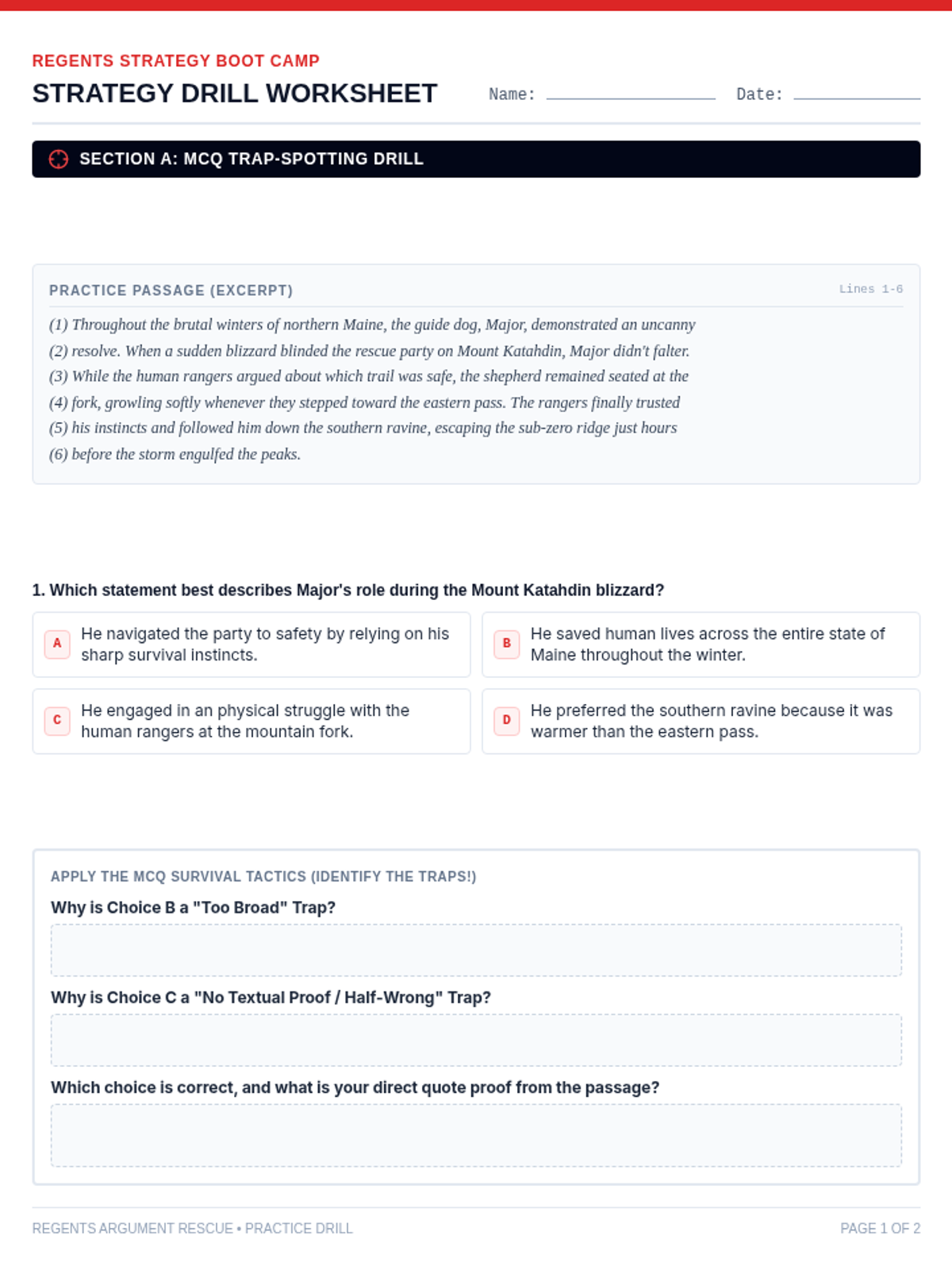
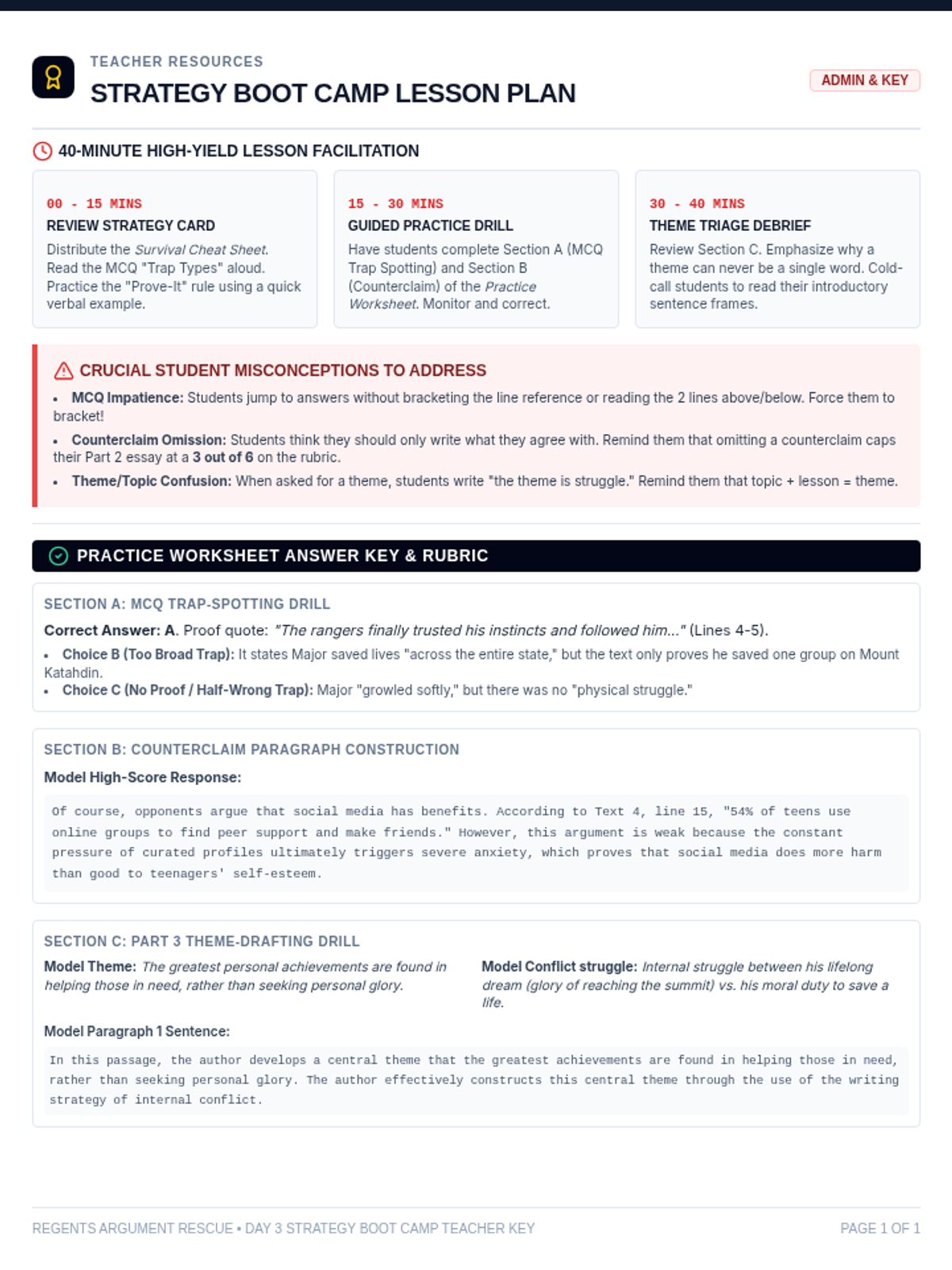
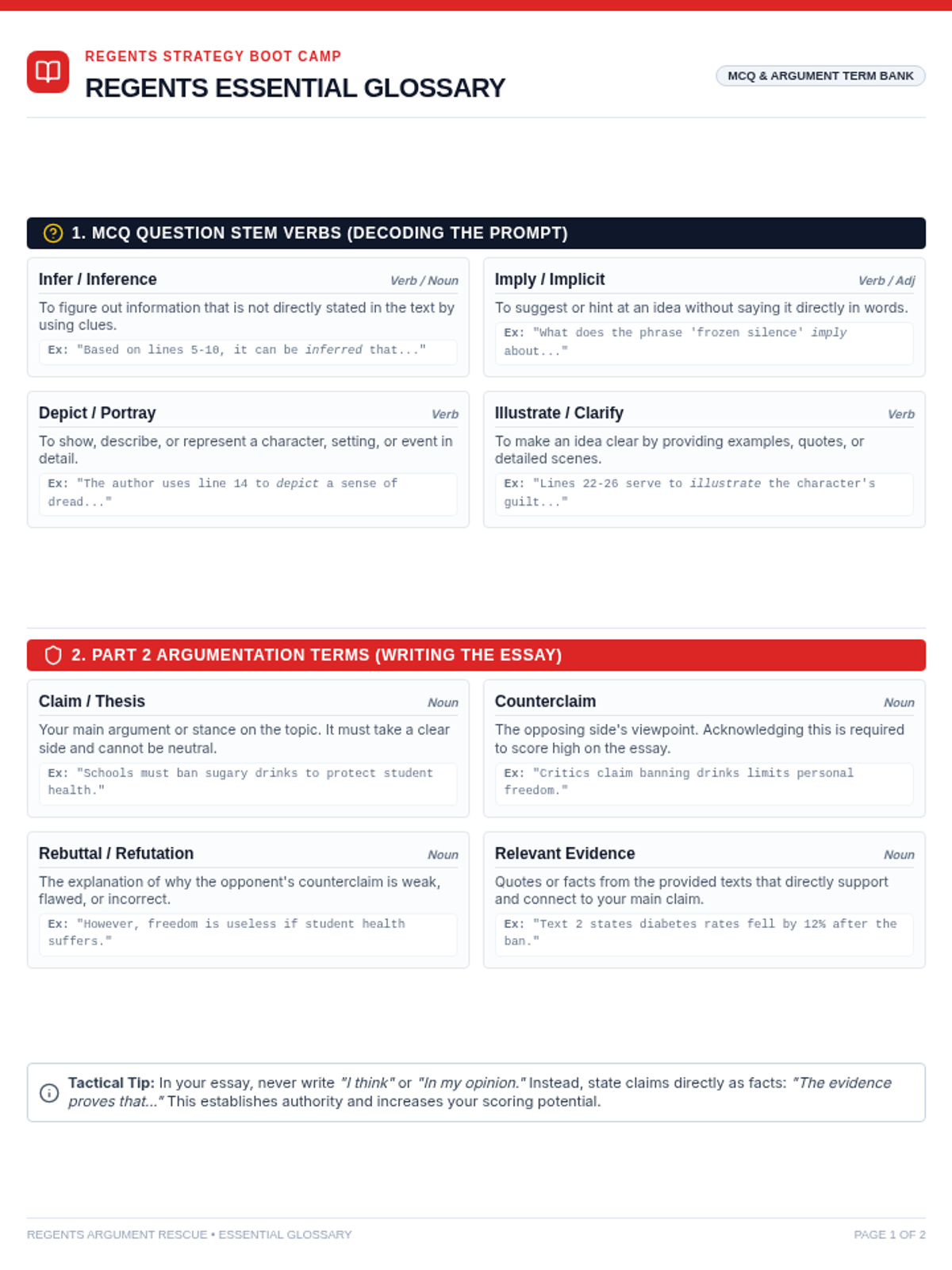
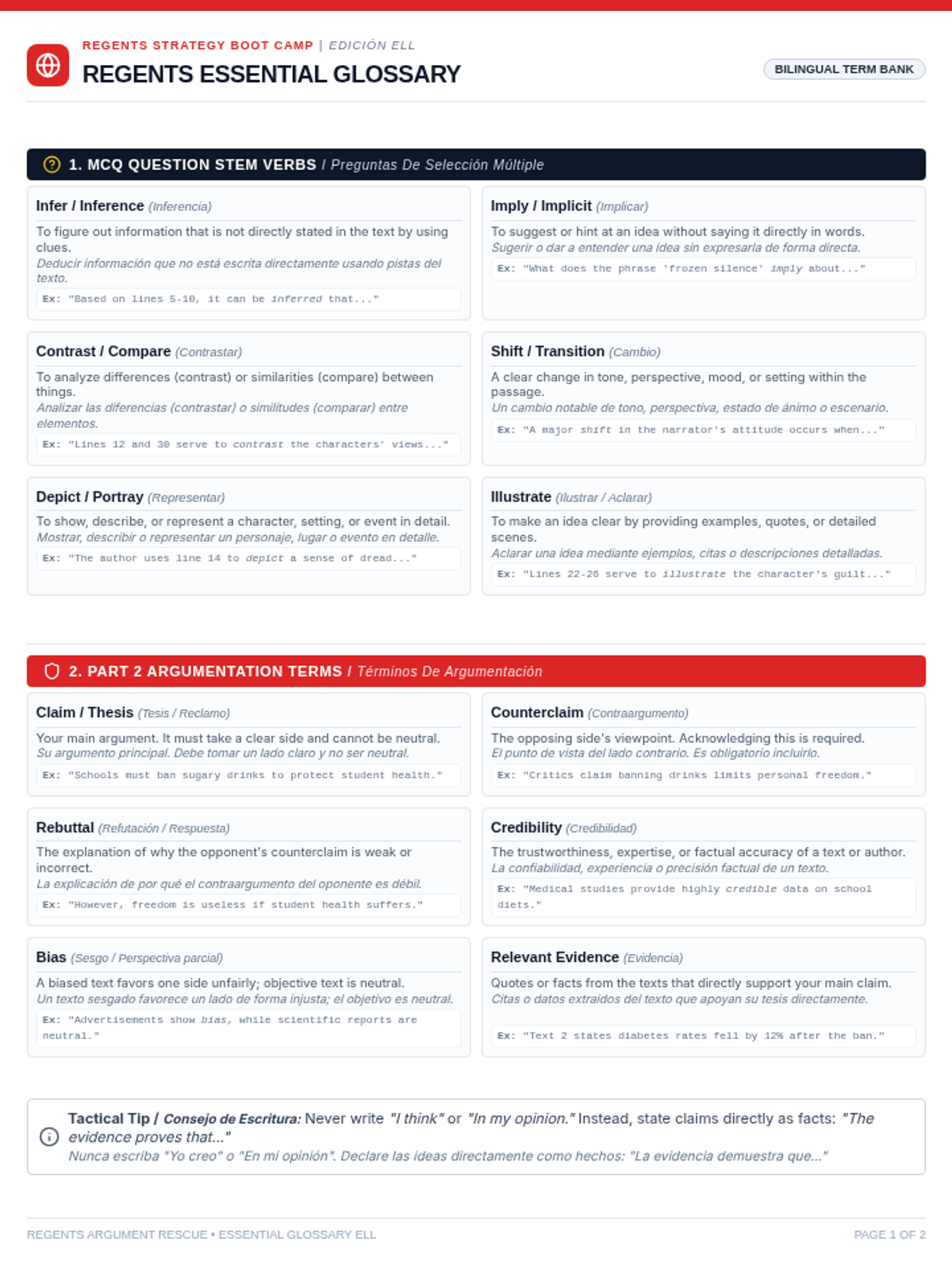
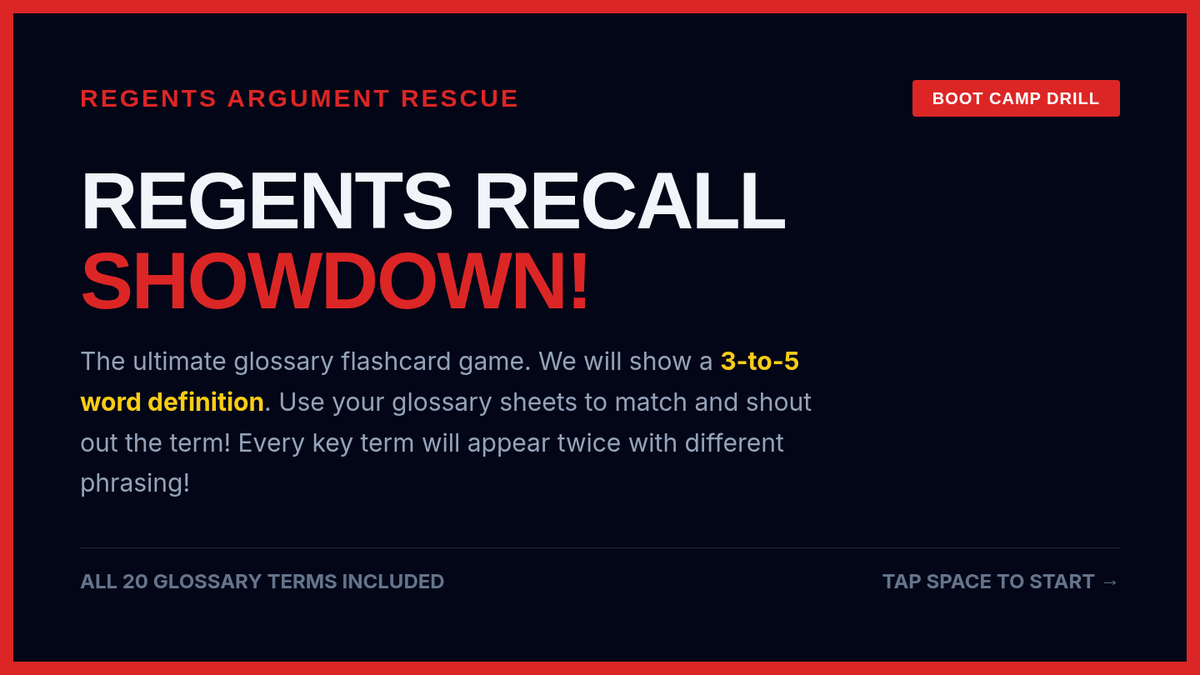
A targeted strategy and terminology boot camp designed to help students master ELA Regents Part 1 (MCQ) elimination strategies, Part 2 (Argument) counterclaim formulation, and Part 3 (Text-Analysis) literary device mastery.
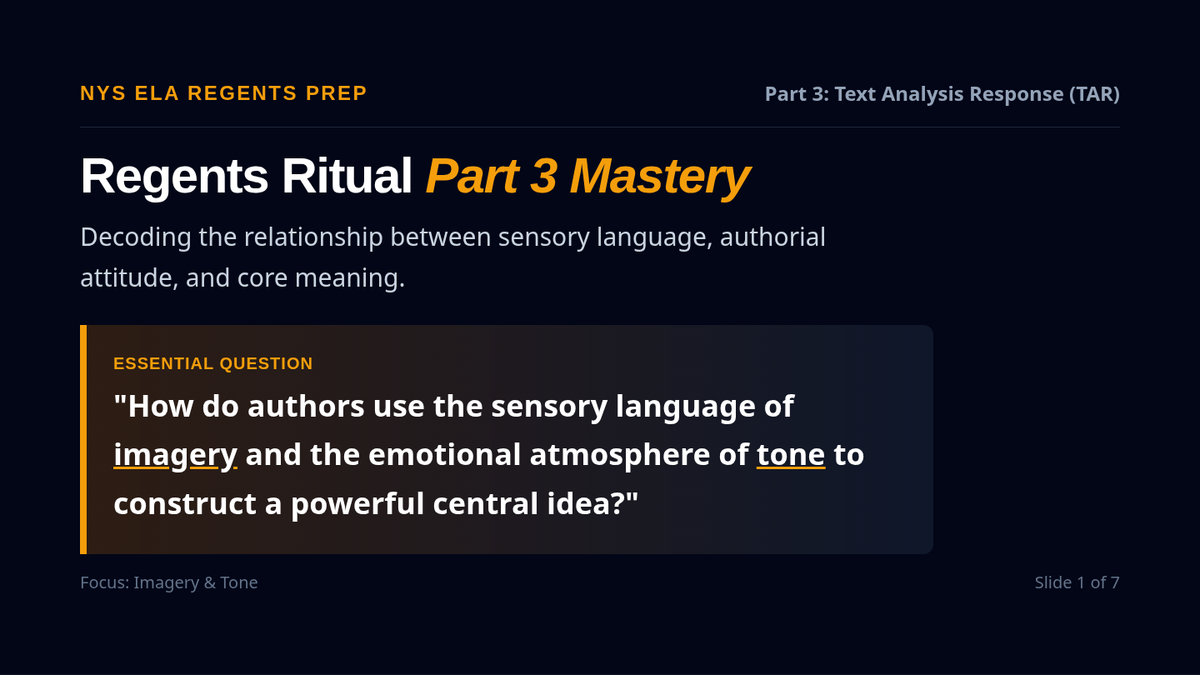
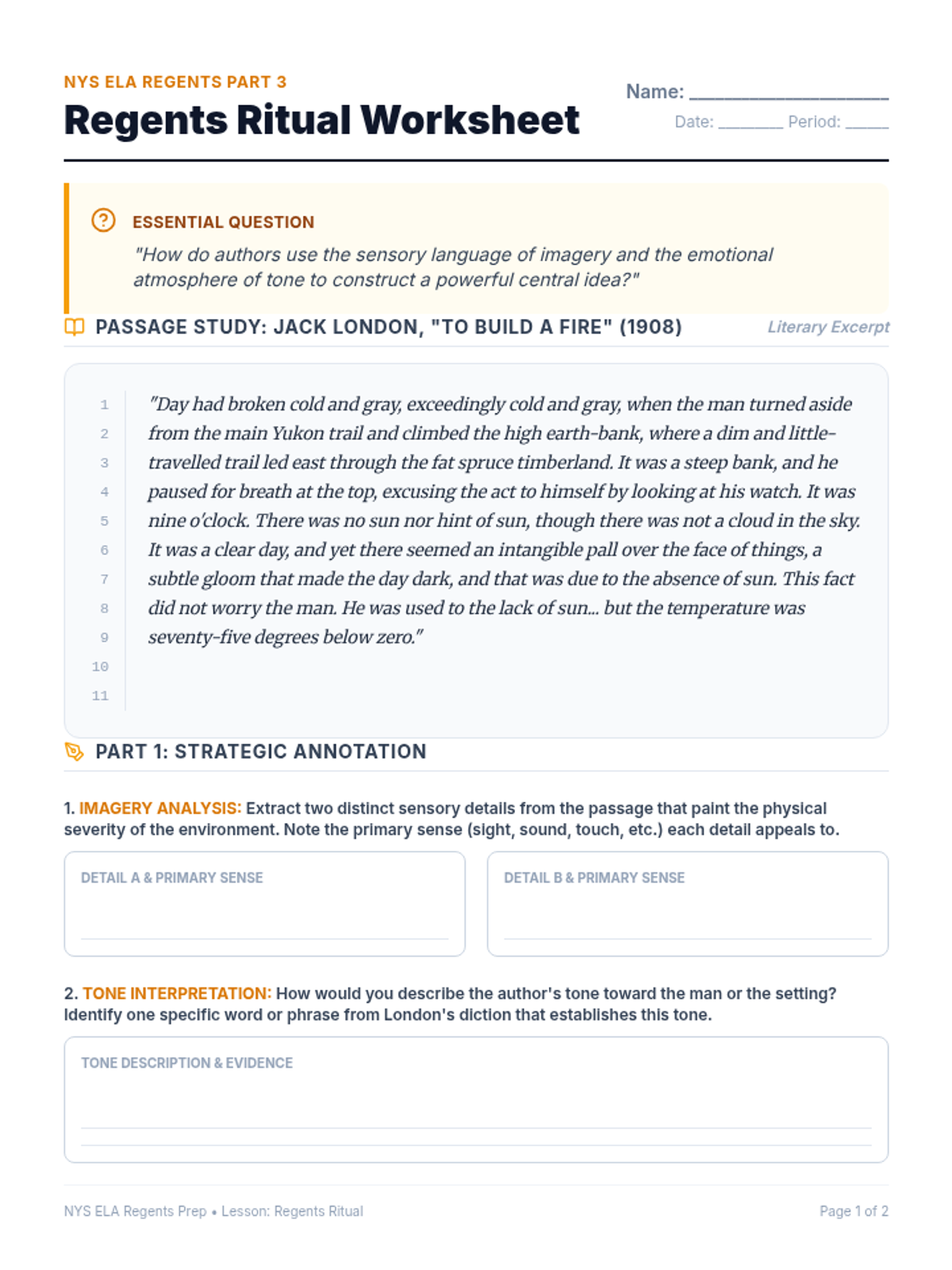
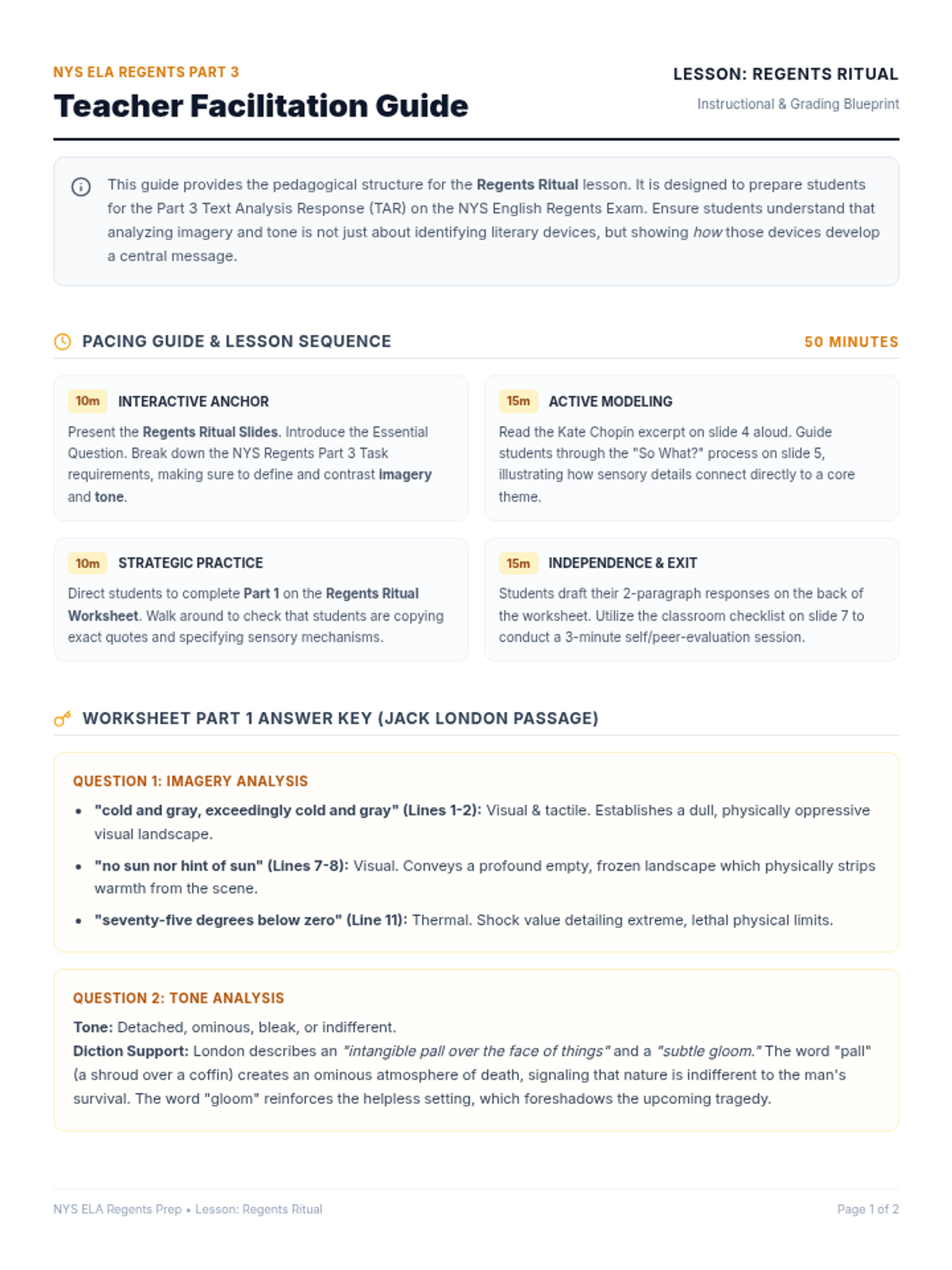
A targeted preparation lesson for Part 3 of the NYS English Regents Exam. Students learn to analyze how authors use imagery and tone to construct a powerful central idea, mastering the 2-3 paragraph Text Analysis Response (TAR) format.
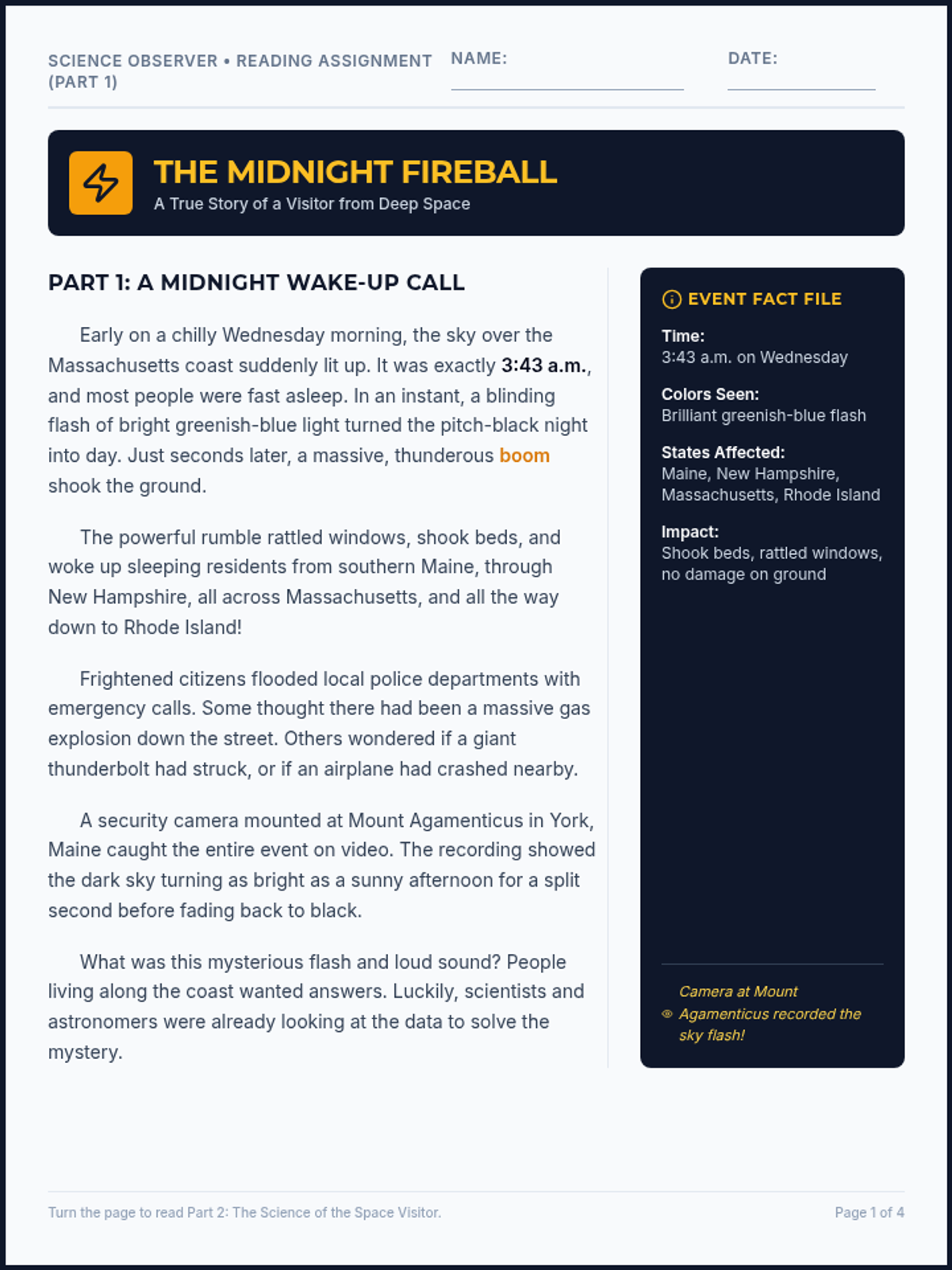
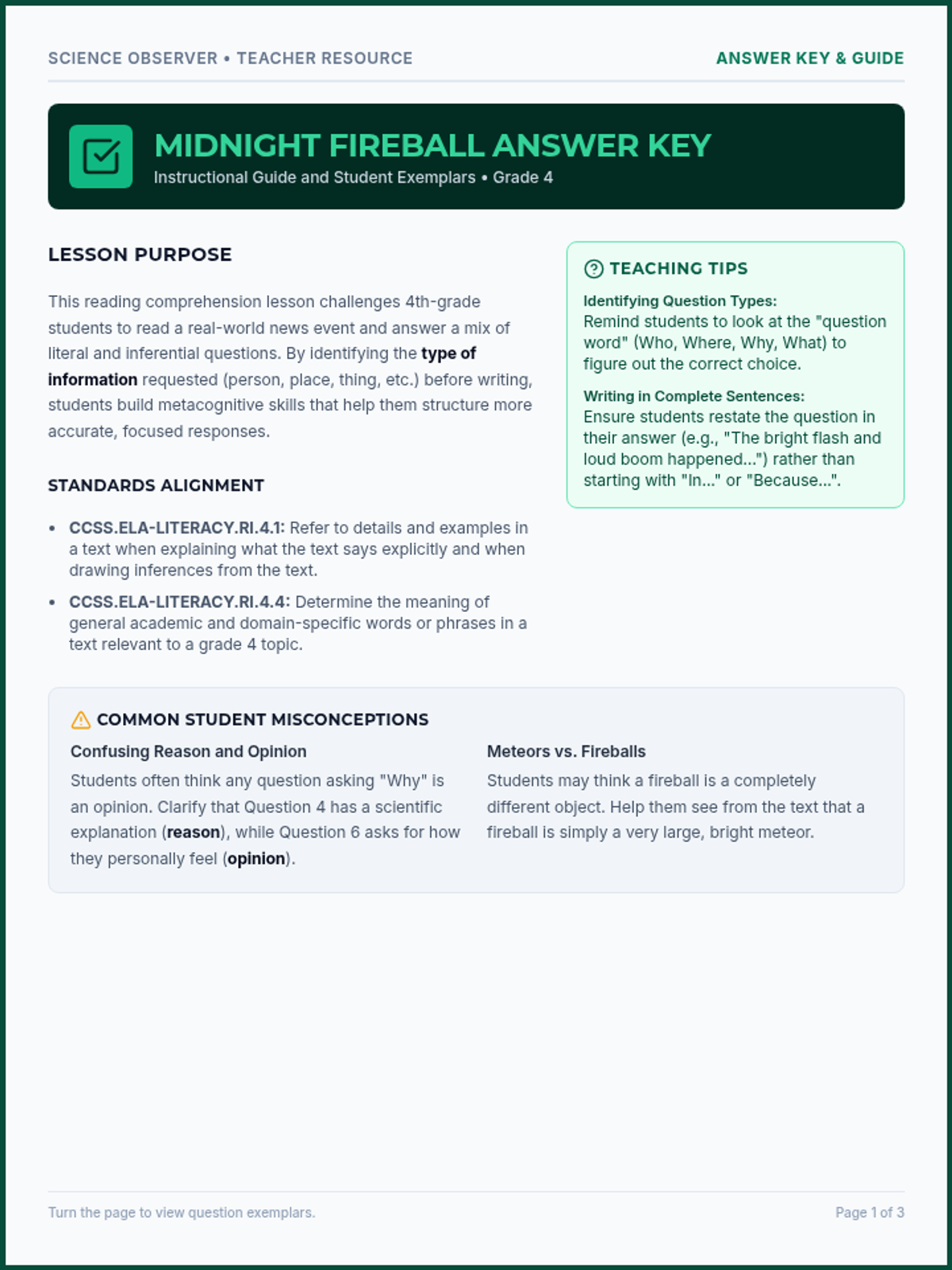
A 4th-grade reading comprehension lesson about a real meteor explosion off the coast of Massachusetts, exploring the science of fireballs and shockwaves.
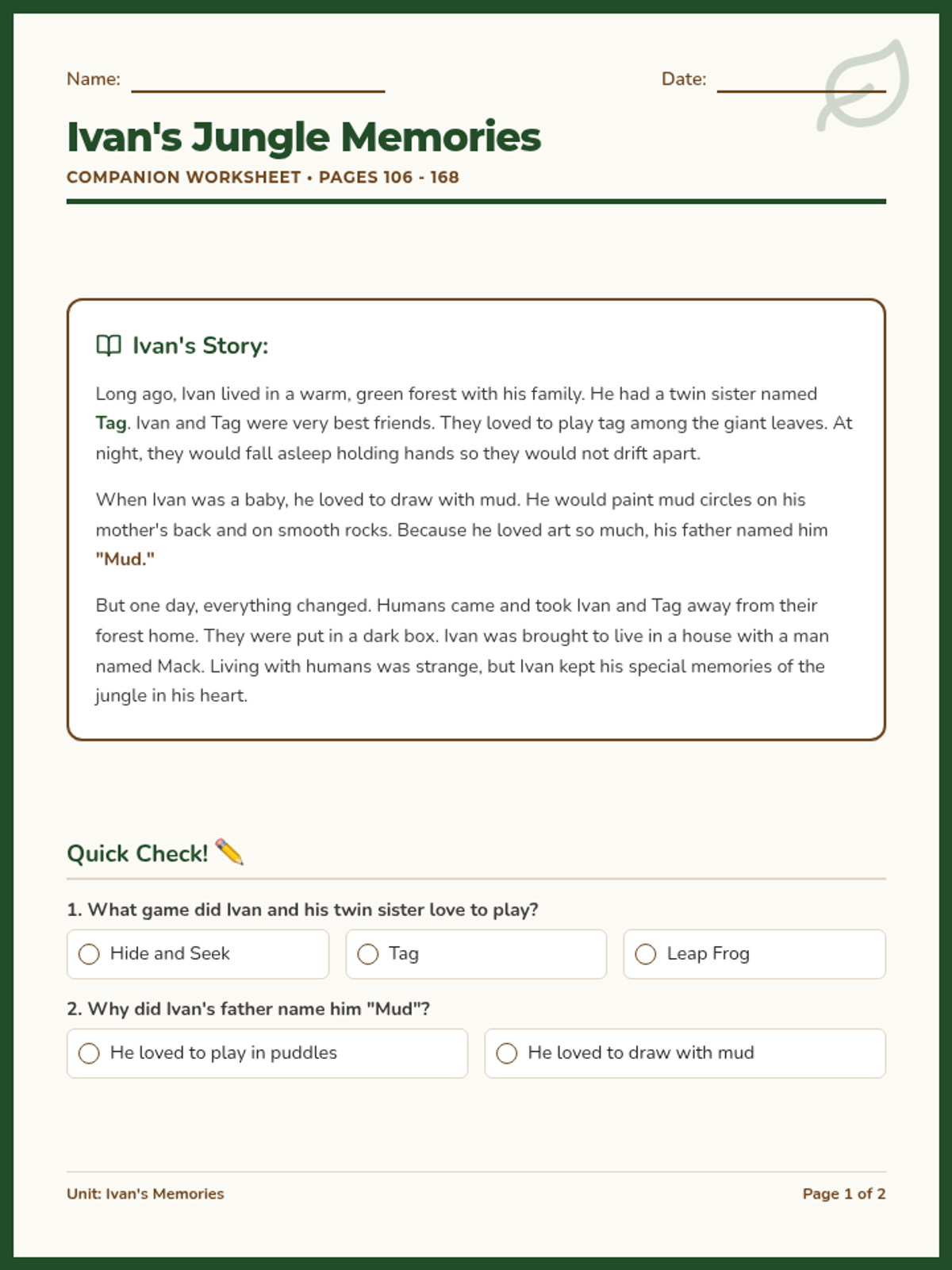
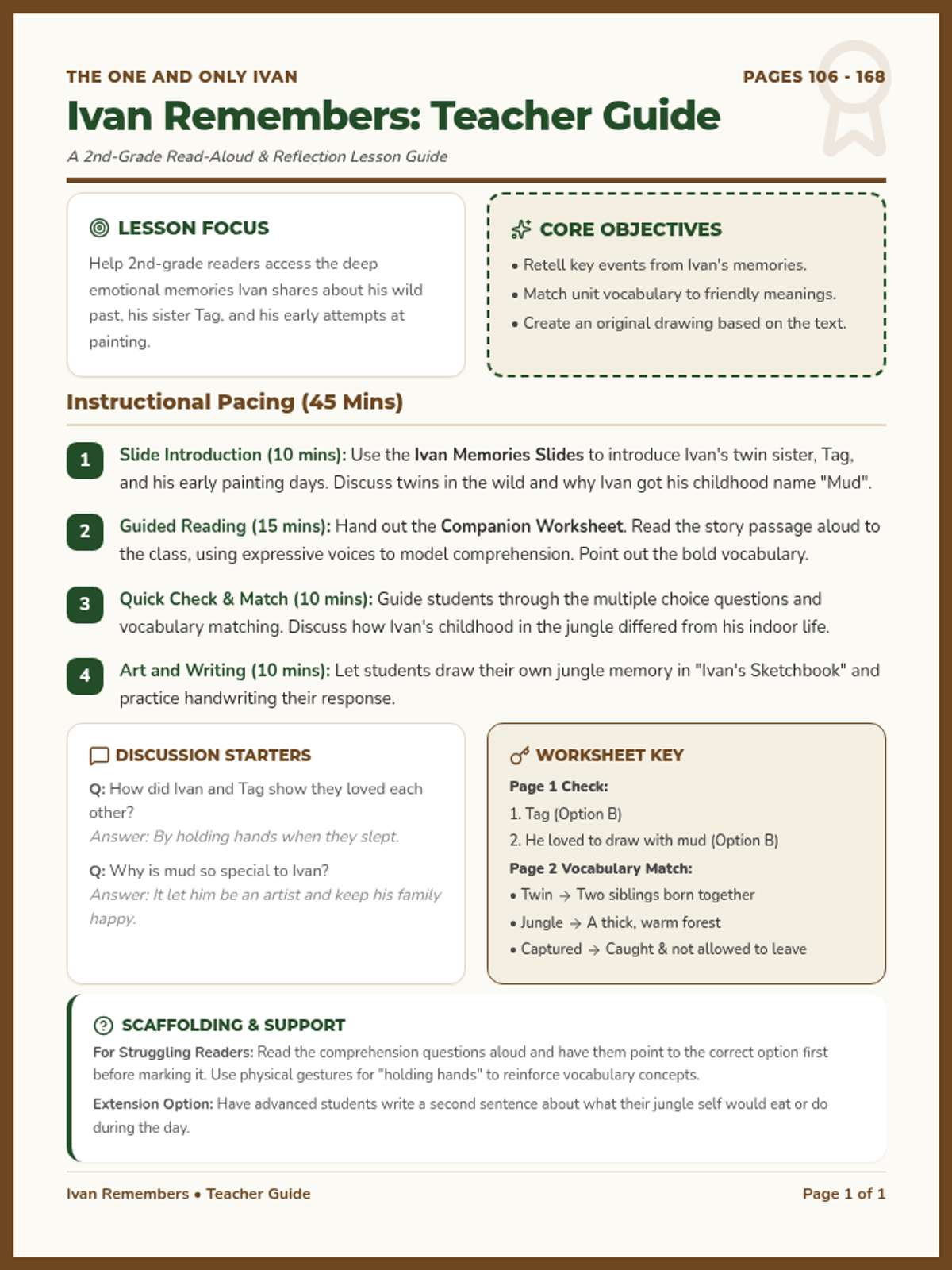
A reading comprehension and creative reflection lesson for 2nd-grade students focusing on pages 106-168 of 'The One and Only Ivan'. This lesson adapts Ivan's poignant jungle memories, his twin sister Tag, and his transition to human life into accessible, gentle, and engaging materials.
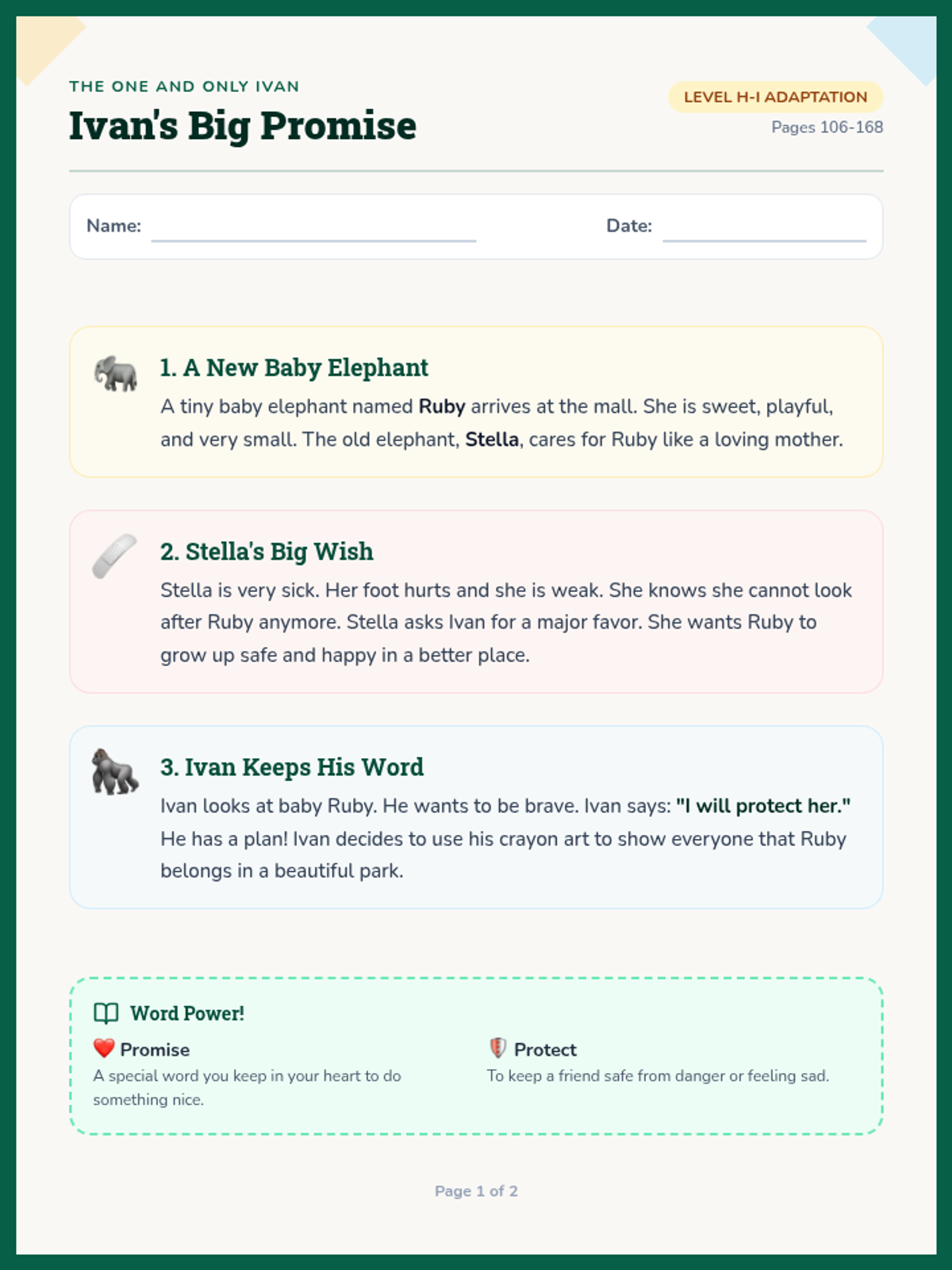
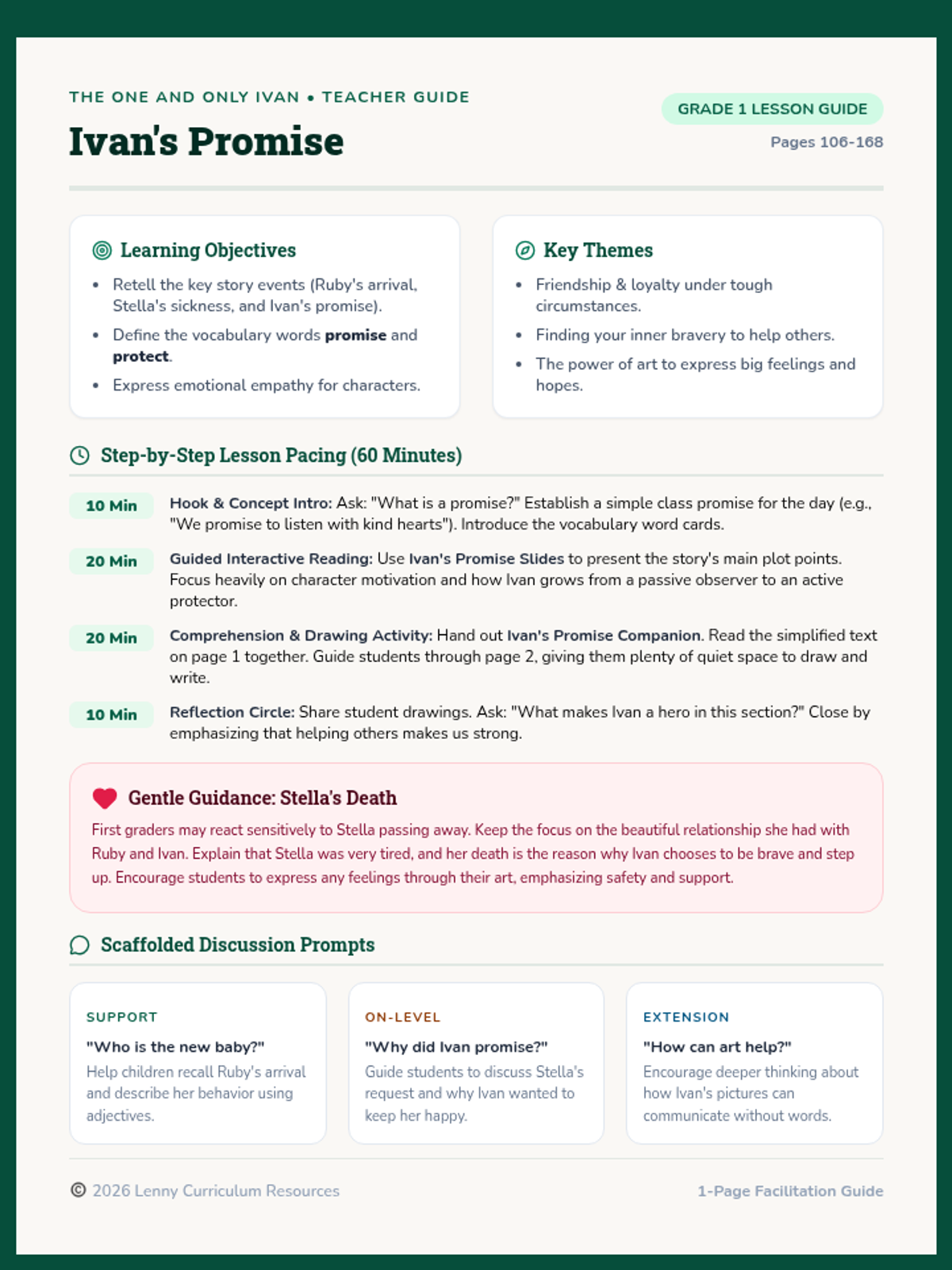
A first-grade lesson focusing on pages 106-168 of The One and Only Ivan, where Ivan makes a big promise to Stella to protect baby Ruby. Students will explore themes of friendship, keeping promises, and caring for others through simplified text, discussion slides, and a creative response sheet.
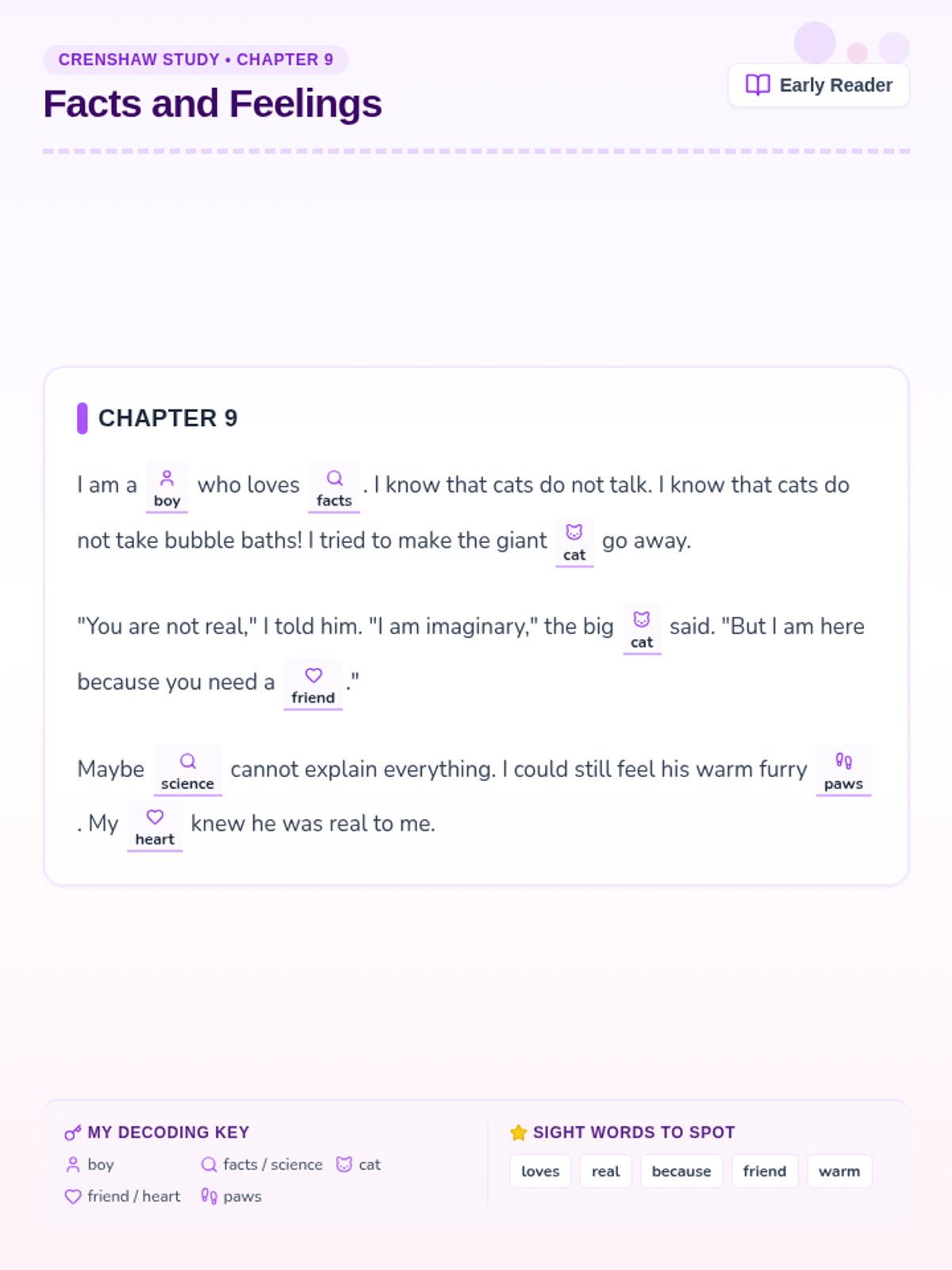
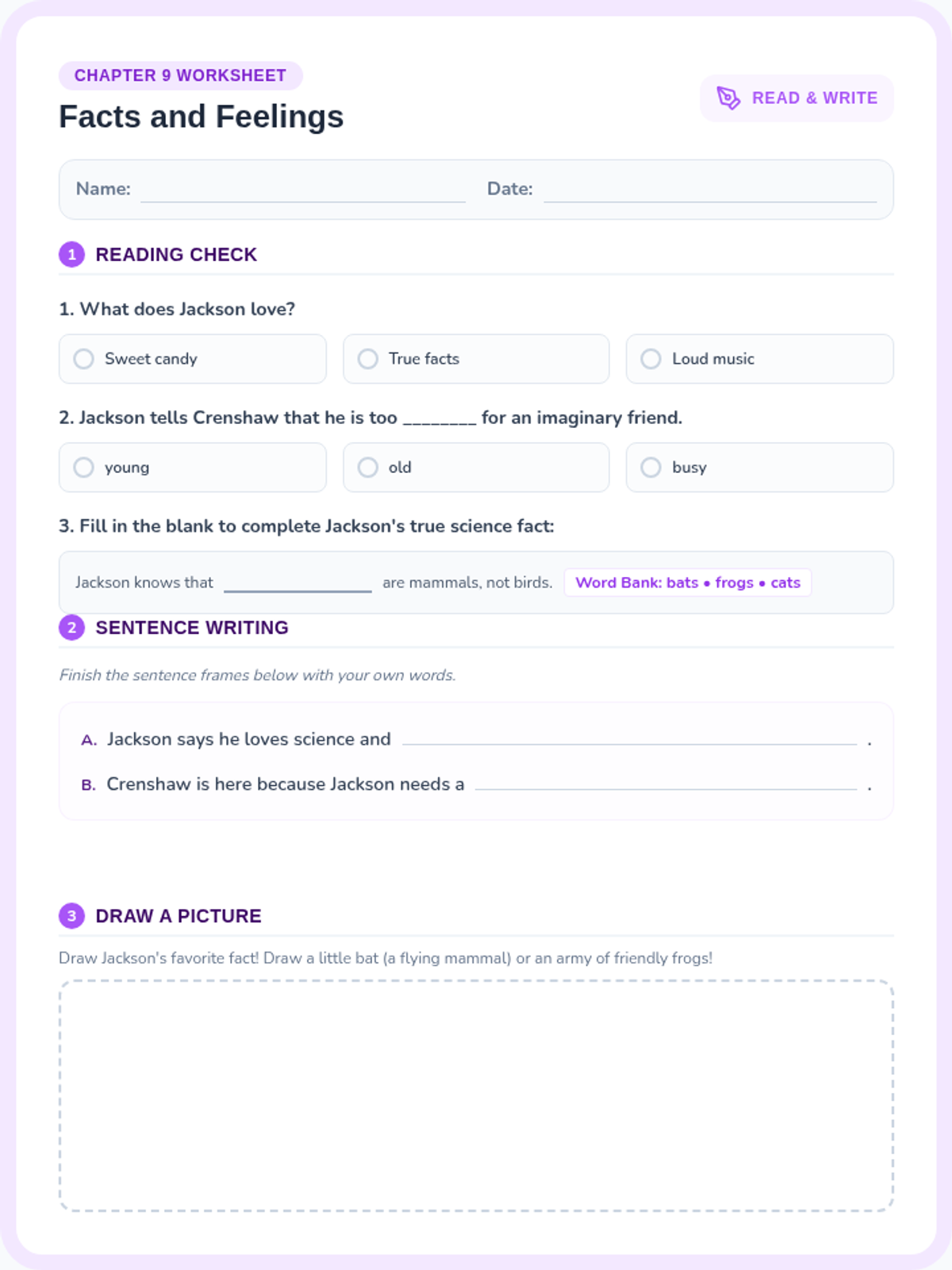
In this lesson, early readers explore Chapter 9 of Crenshaw. Jackson tries to use science and facts to prove that the giant cat is not real, while Crenshaw helps him realize that some things can be felt even if they cannot be proven.