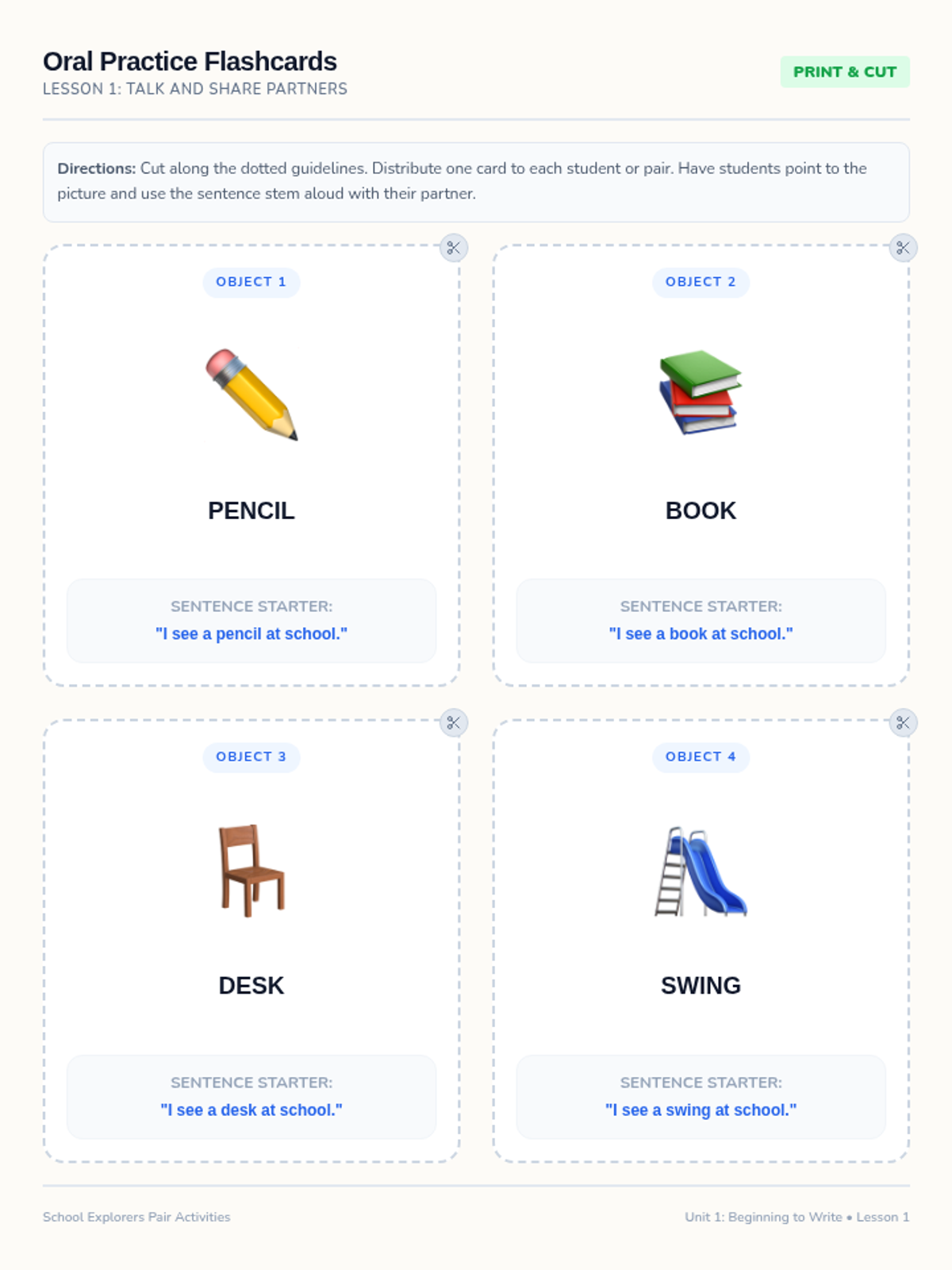
A beginner-friendly lesson introducing K-2 students to the 5 W's (Who, What, Where, When, and Why) of reading and writing. Includes a colorful anchor chart and interactive practice sheets to build complete sentence skills.
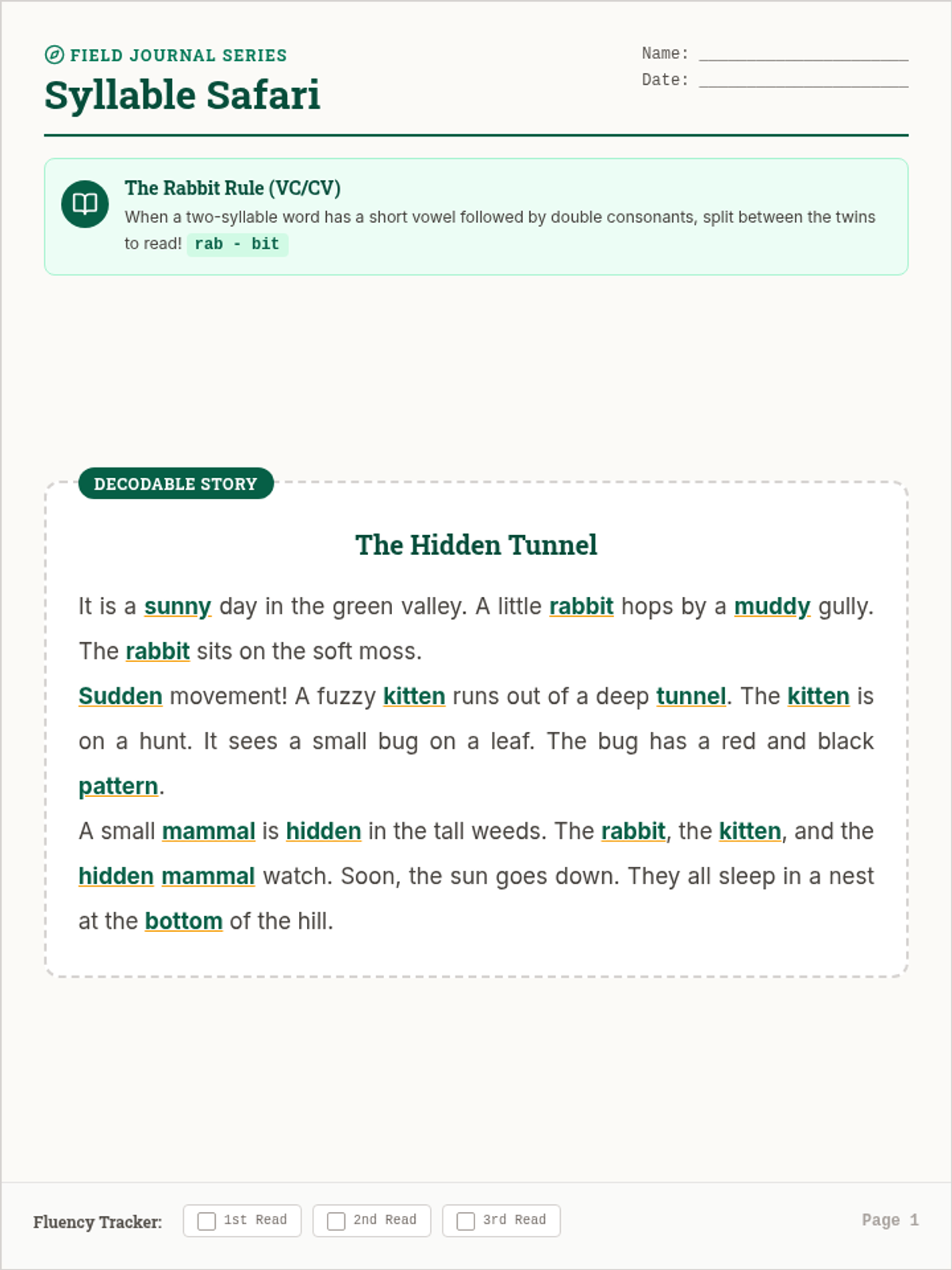
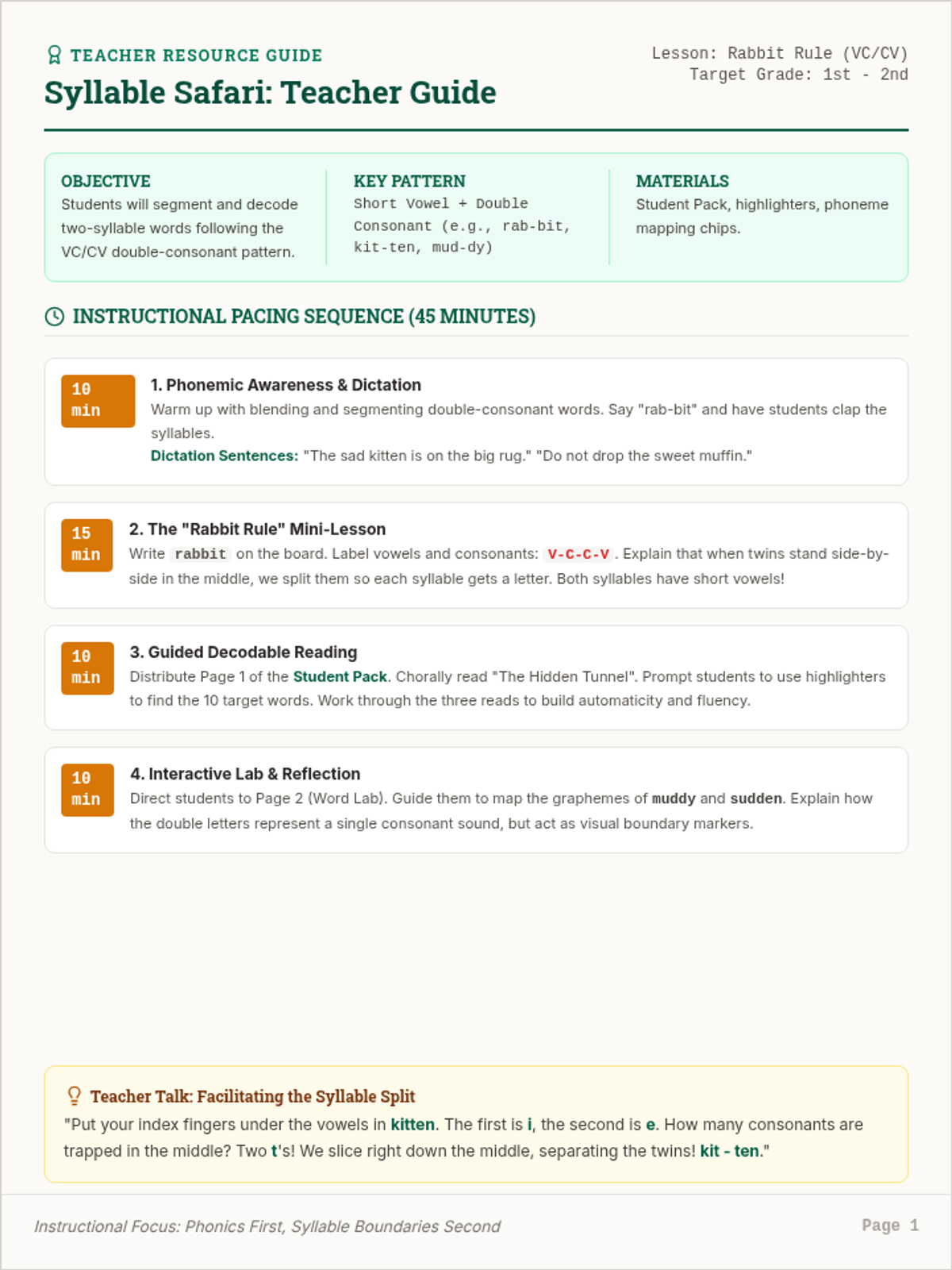
A phonics and literacy lesson focused on the 'rabbit rule' (VC/CV double consonant) syllabication pattern, using a field-journal-themed decodable story, interactive word-mapping activities, and a comprehensive teacher guide.
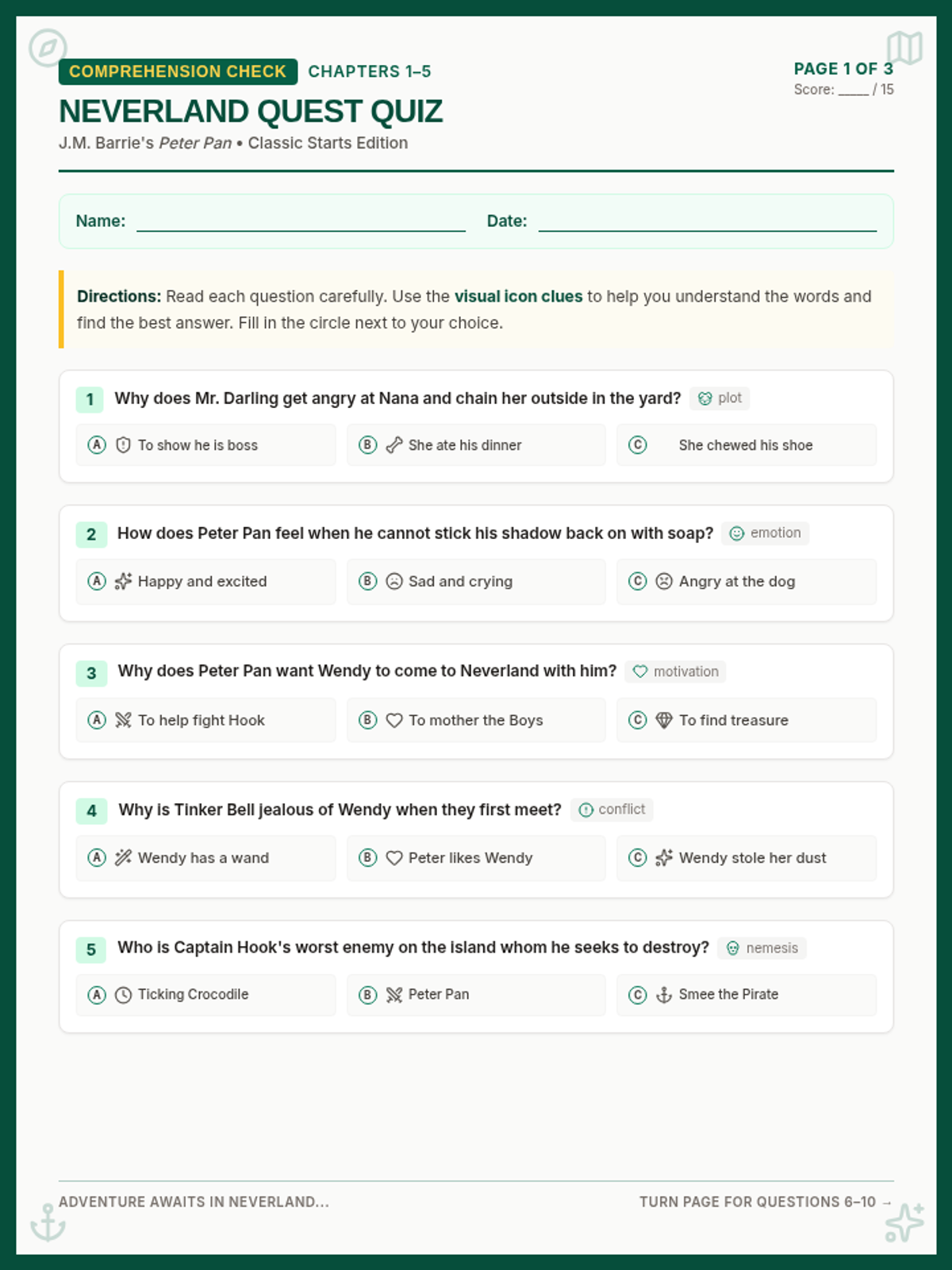
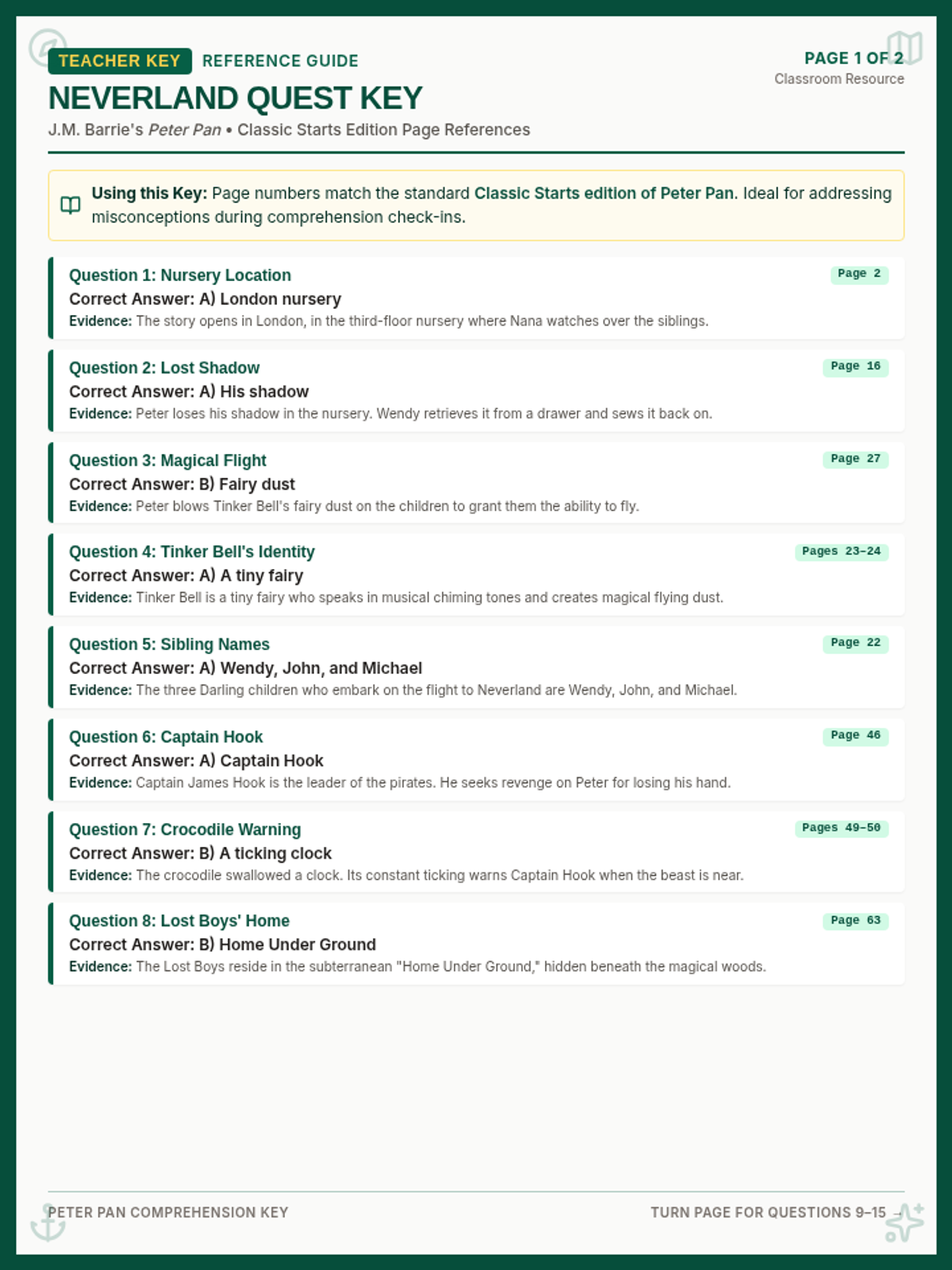
A complete comprehension assessment lesson for J.M. Barrie's Classic Starts: Peter Pan, featuring a student quiz with visual supports and a detailed teacher answer key with page references.
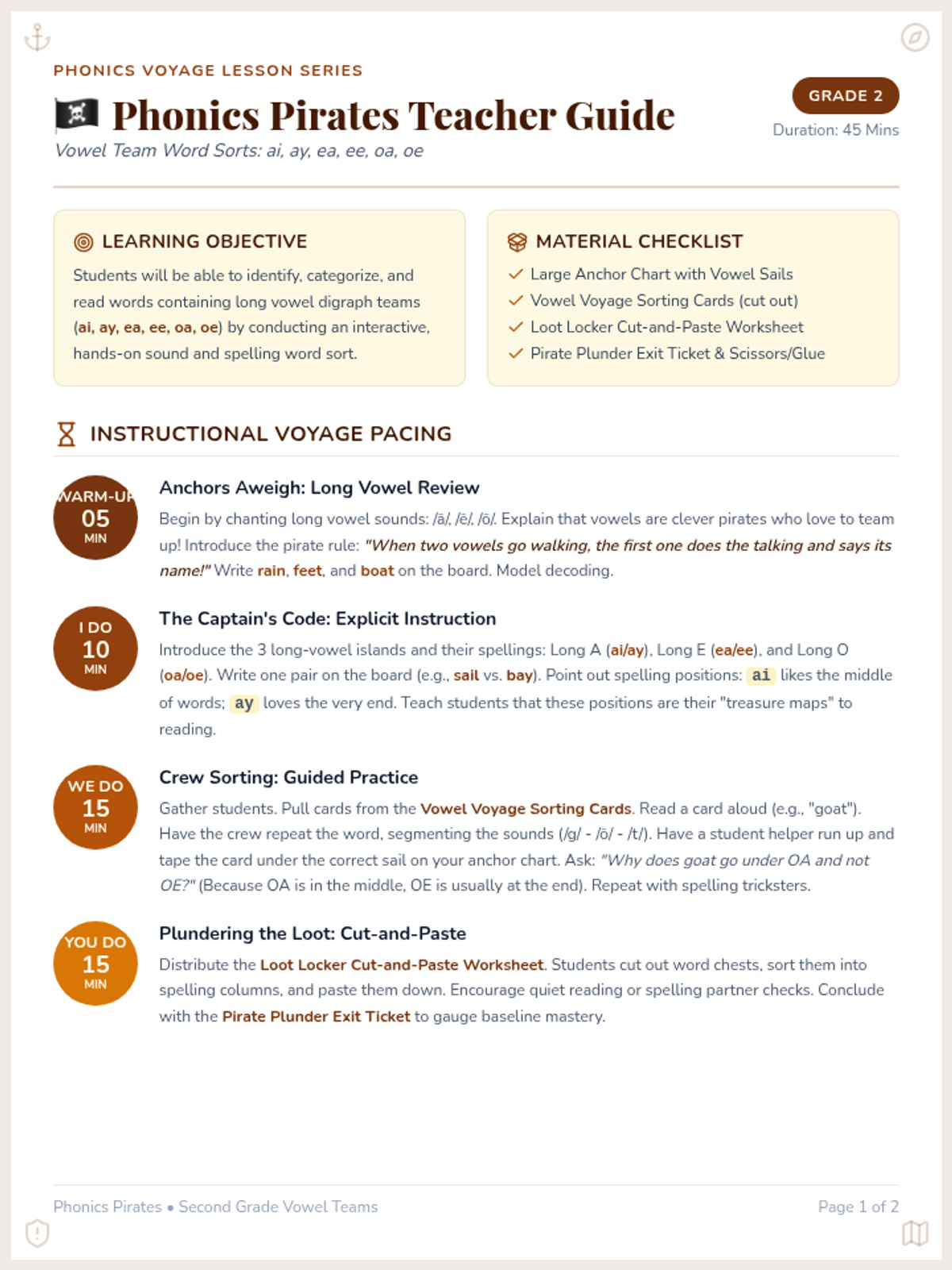
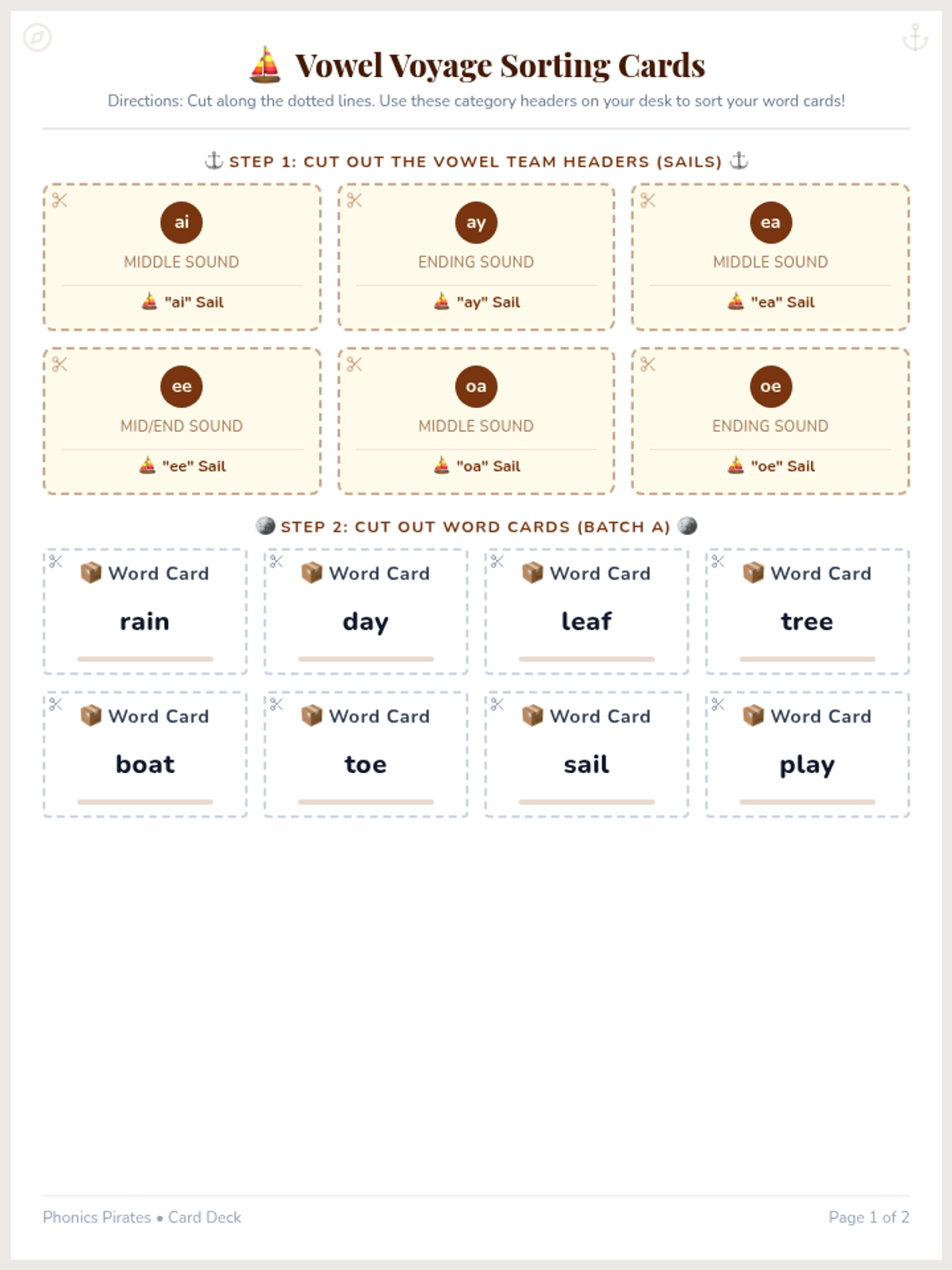
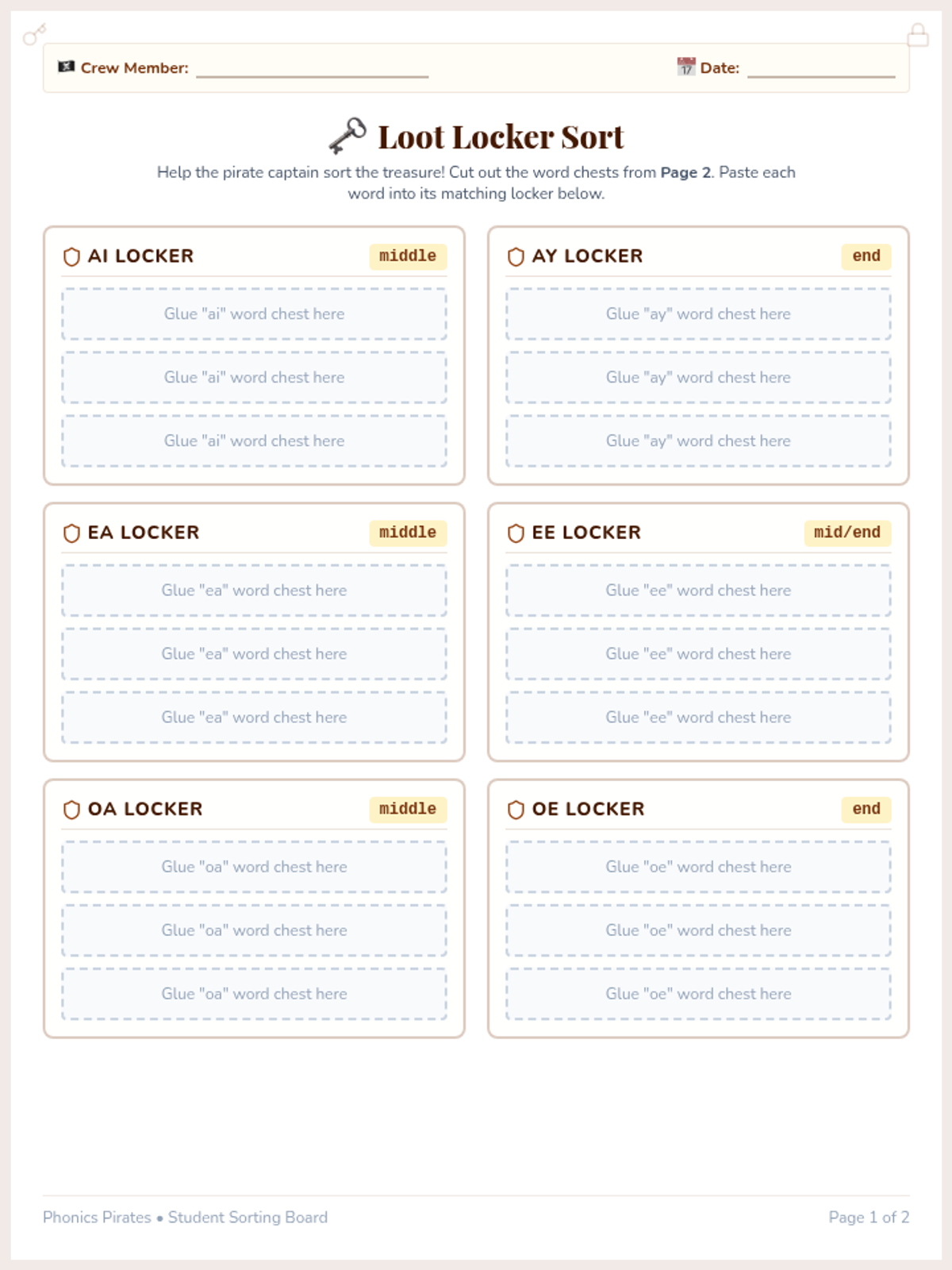
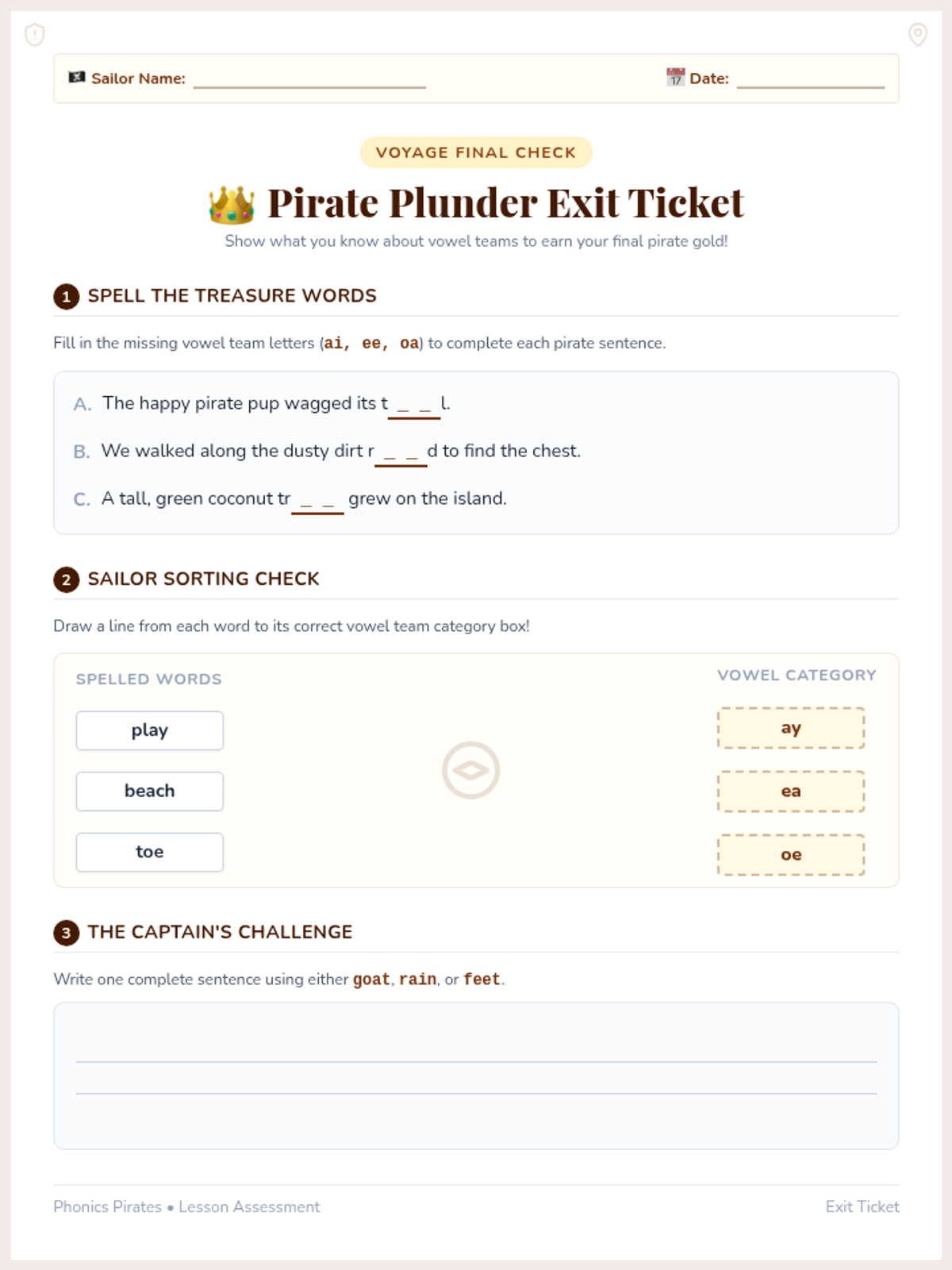
A comprehensive, pirate-themed lesson bundle for teaching second-grade vowel teams (ai/ay, ea/ee, oa/oe) through hands-on word sorts. Includes a detailed teacher guide, printable sorting cards, a cut-and-paste sorting worksheet, and a quick-check exit ticket.
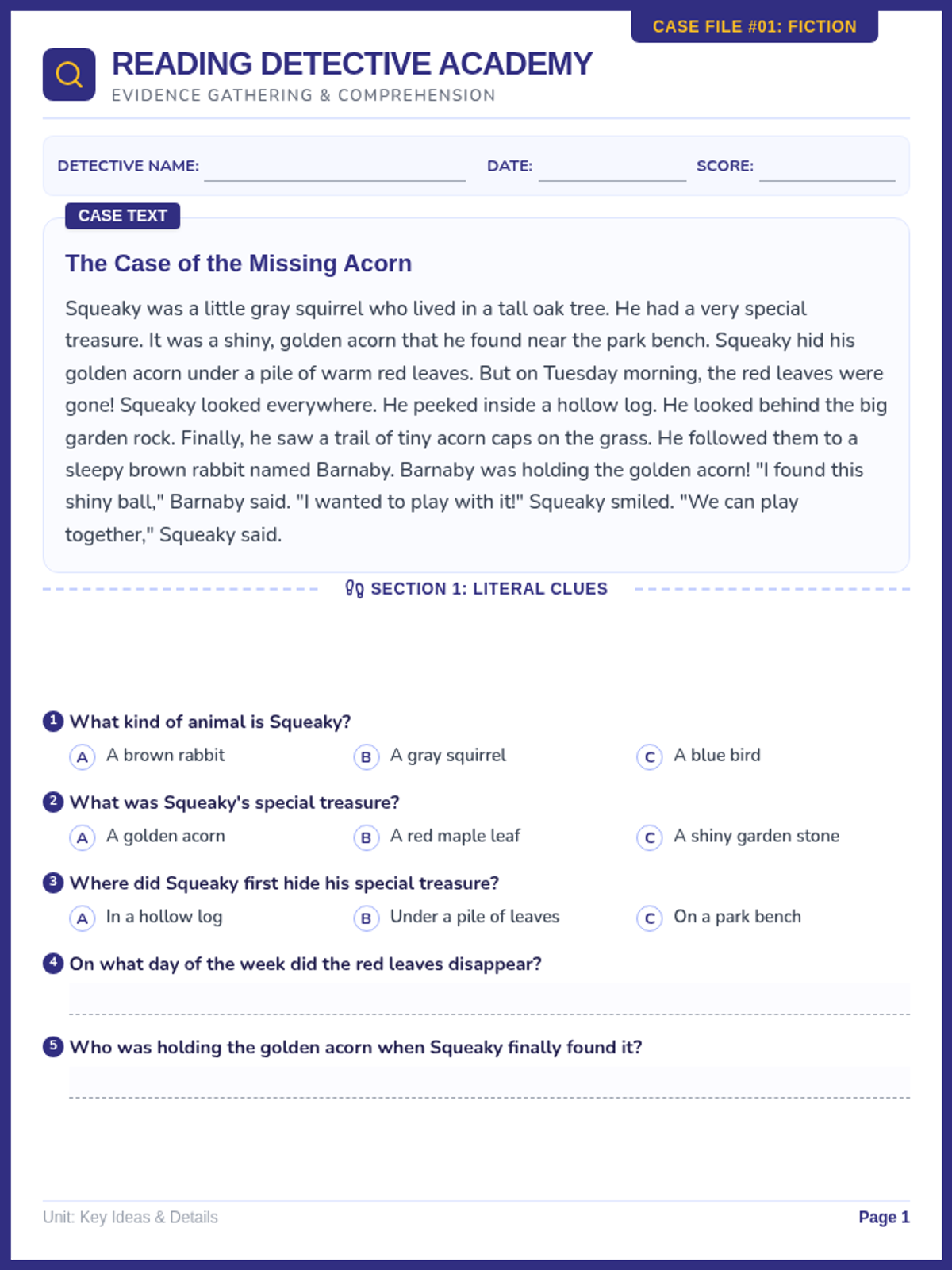
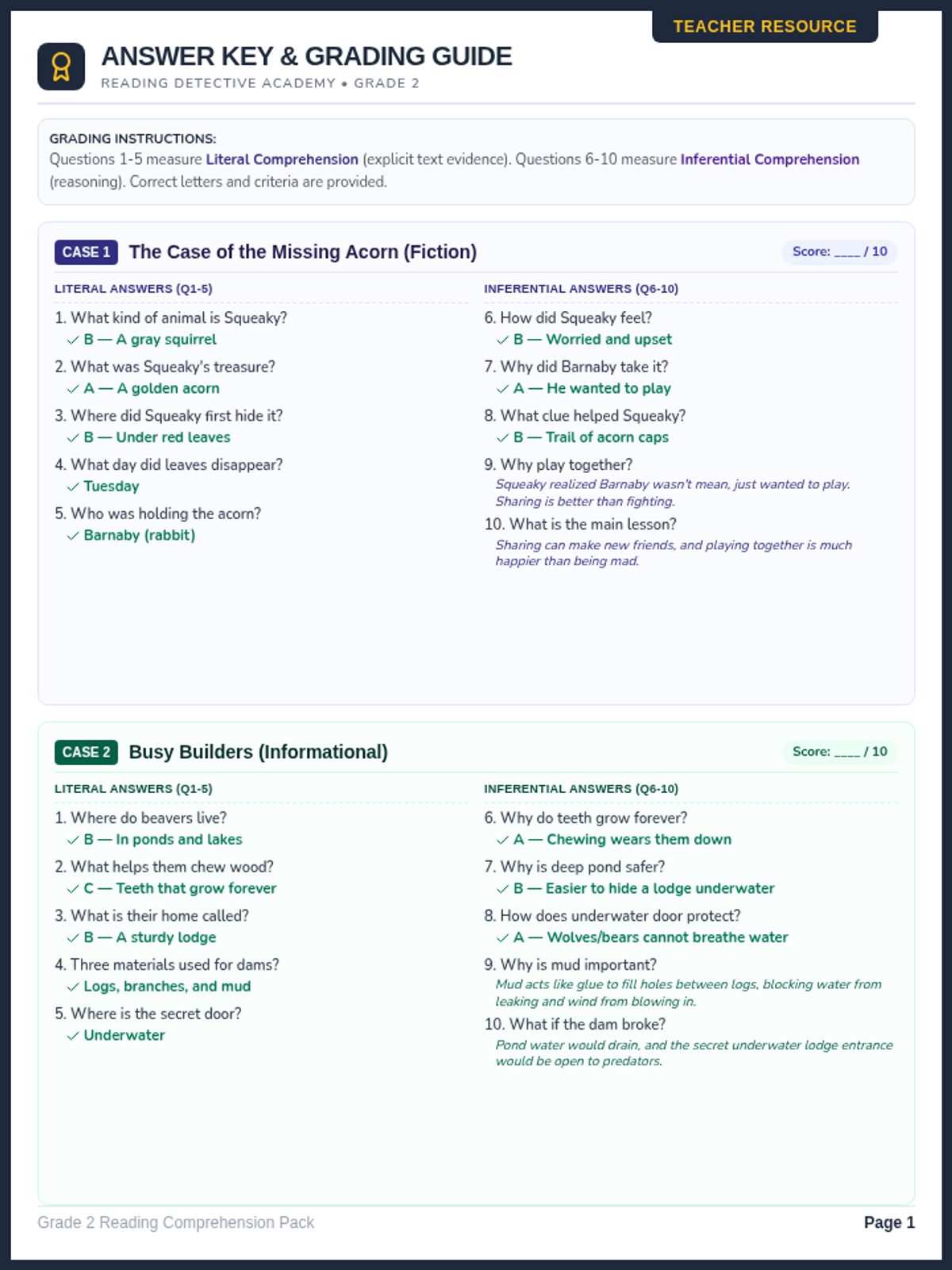
A comprehensive reading comprehension packet containing six engaging 2nd-grade passages (three fiction, three informational) with literal and inferential questions.
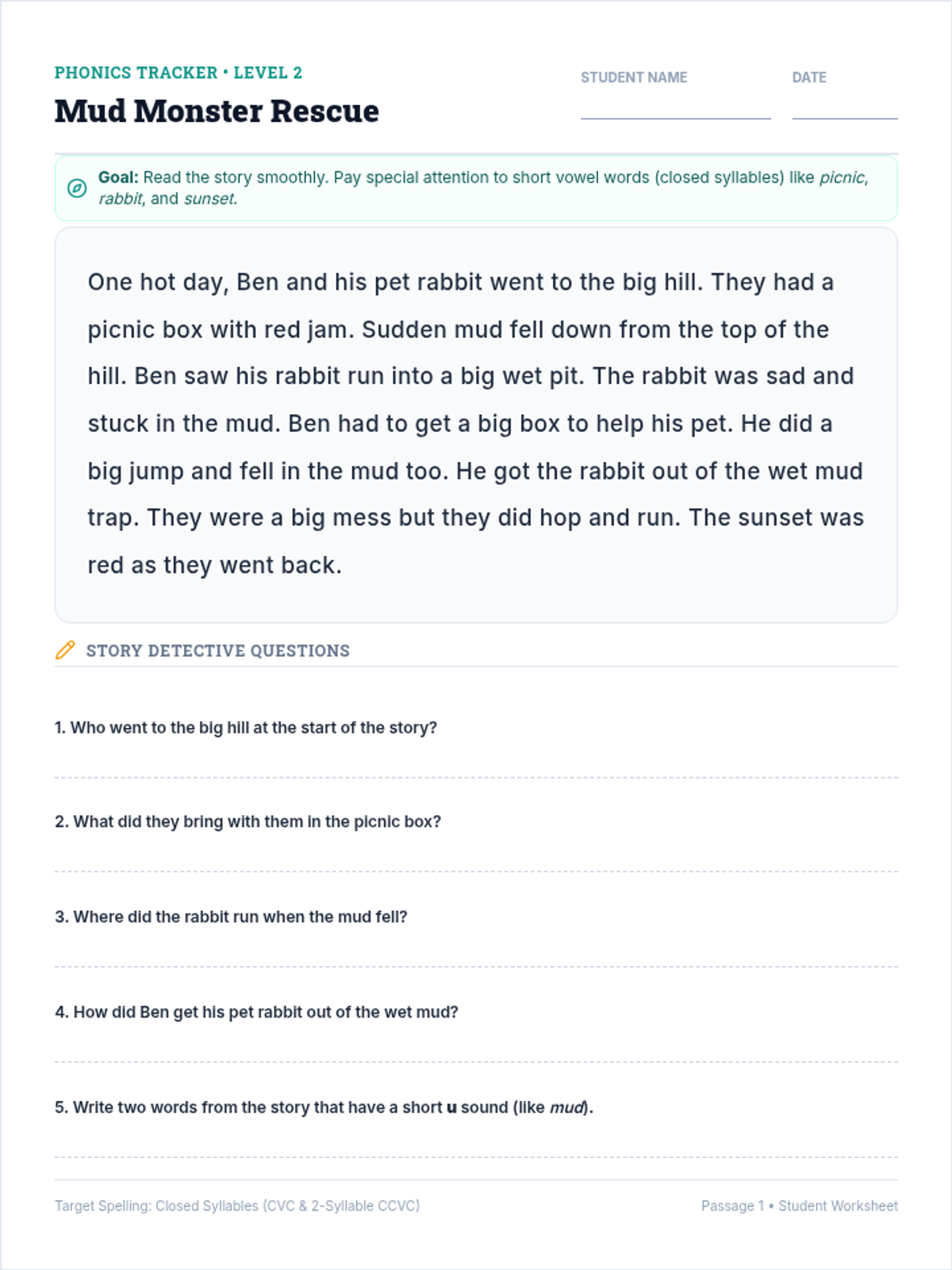
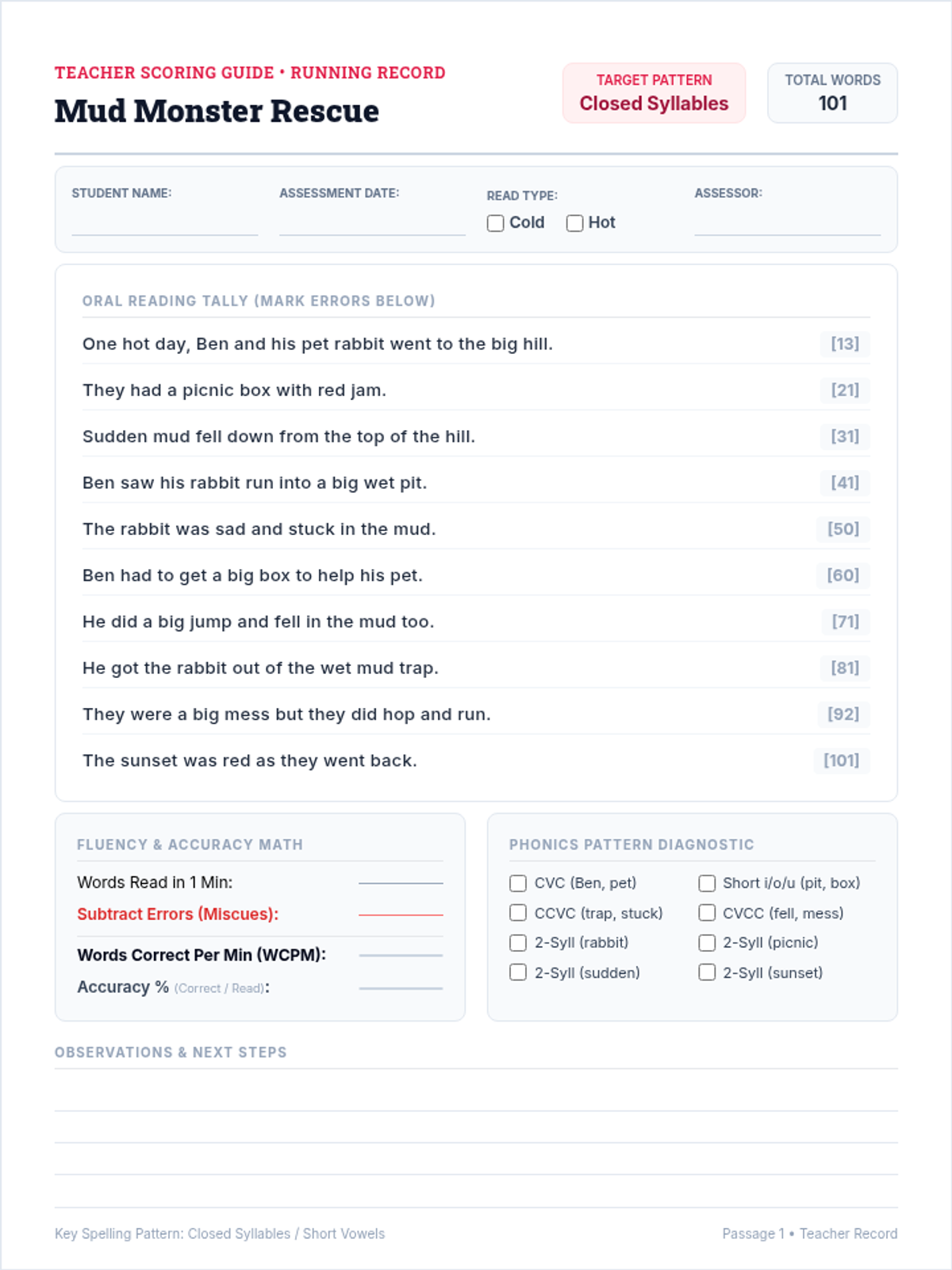
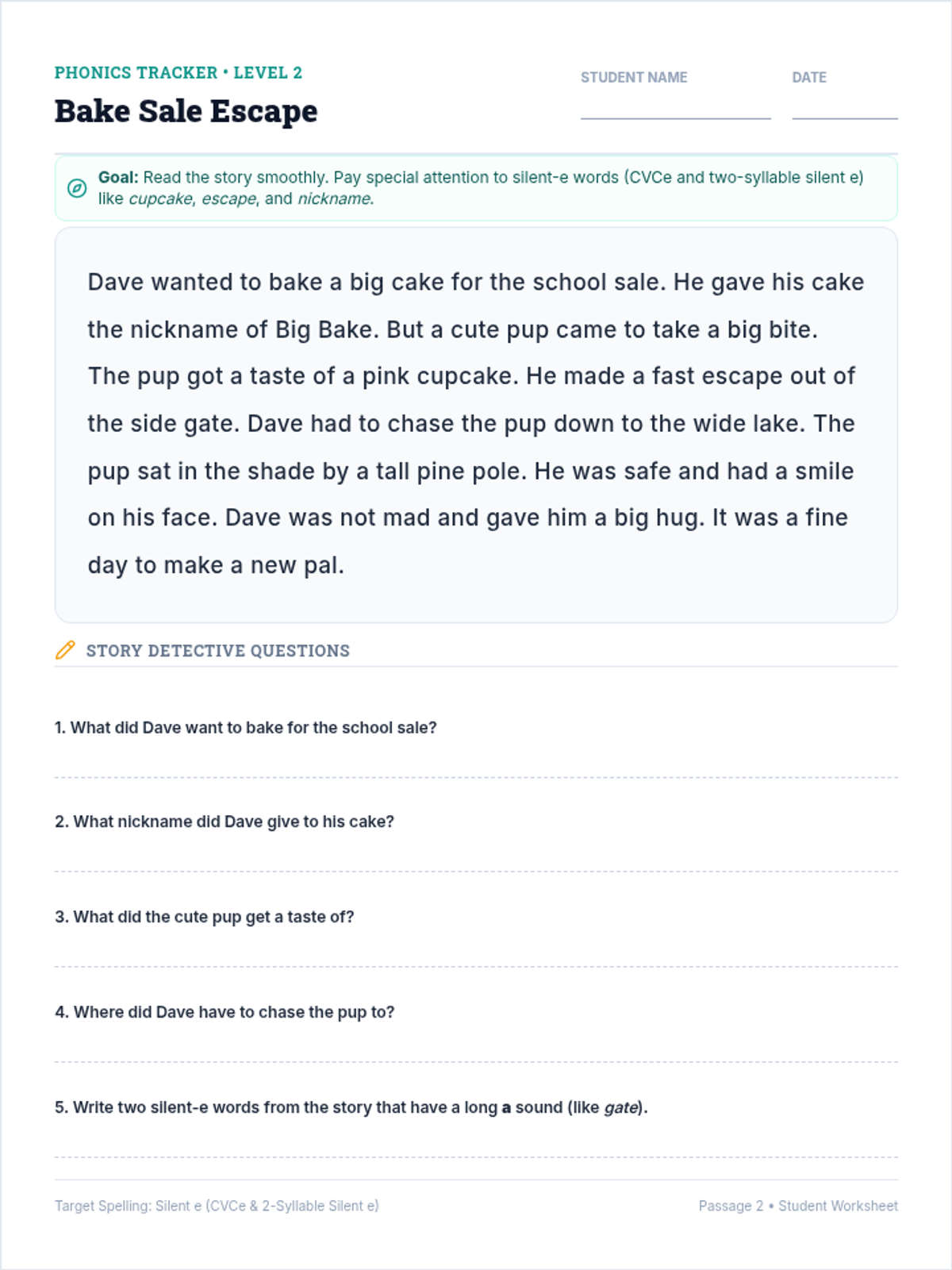
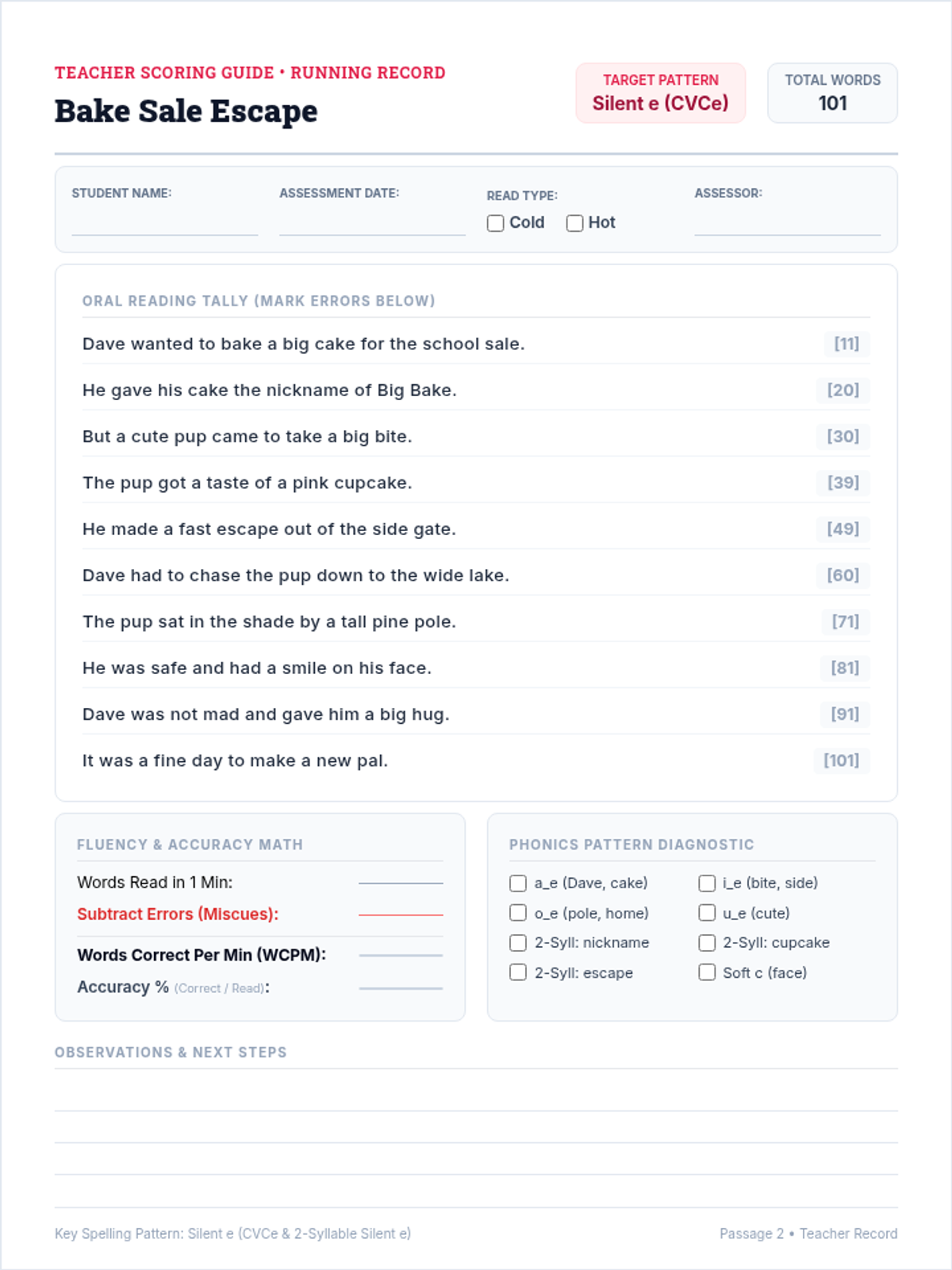
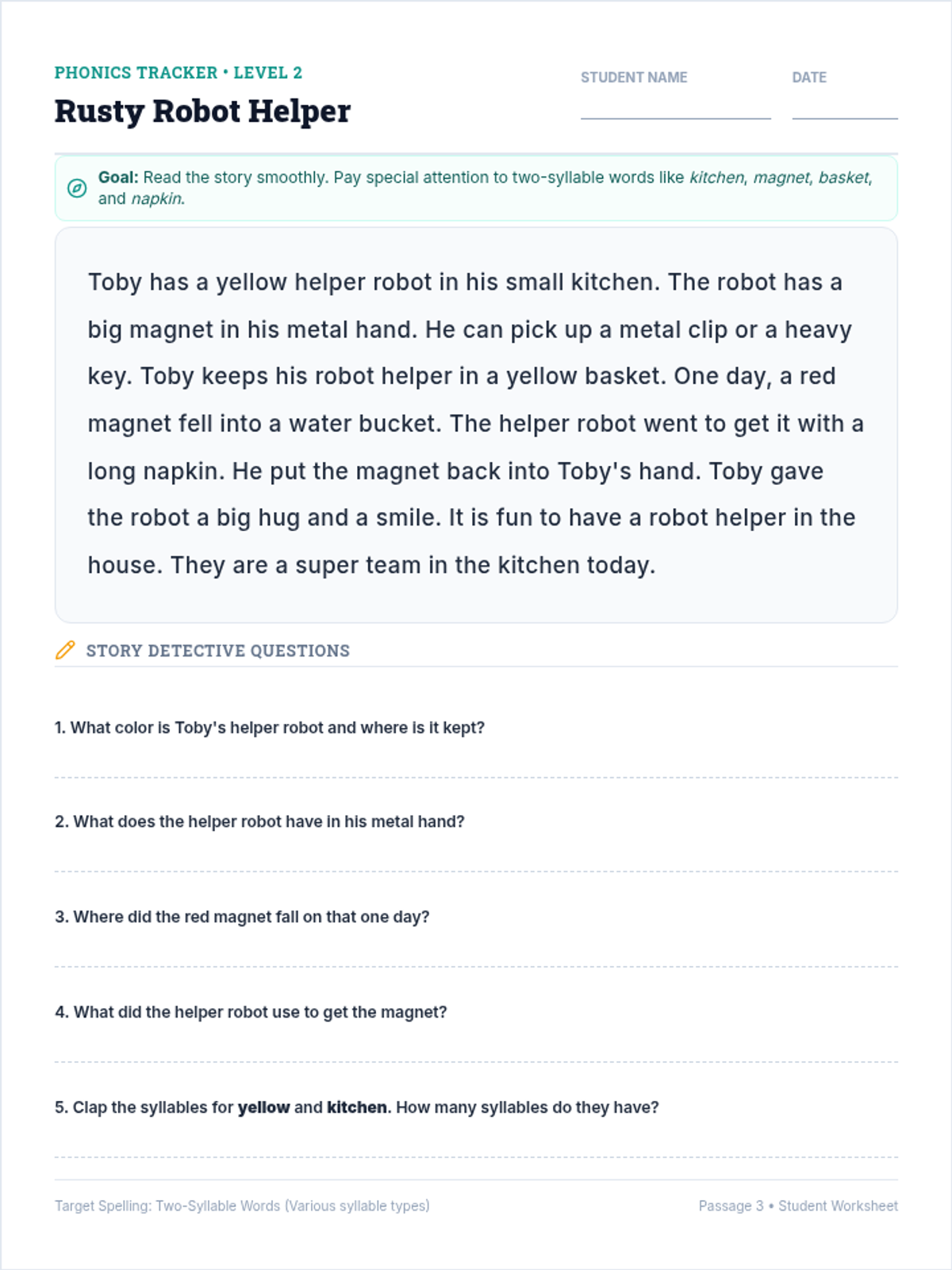
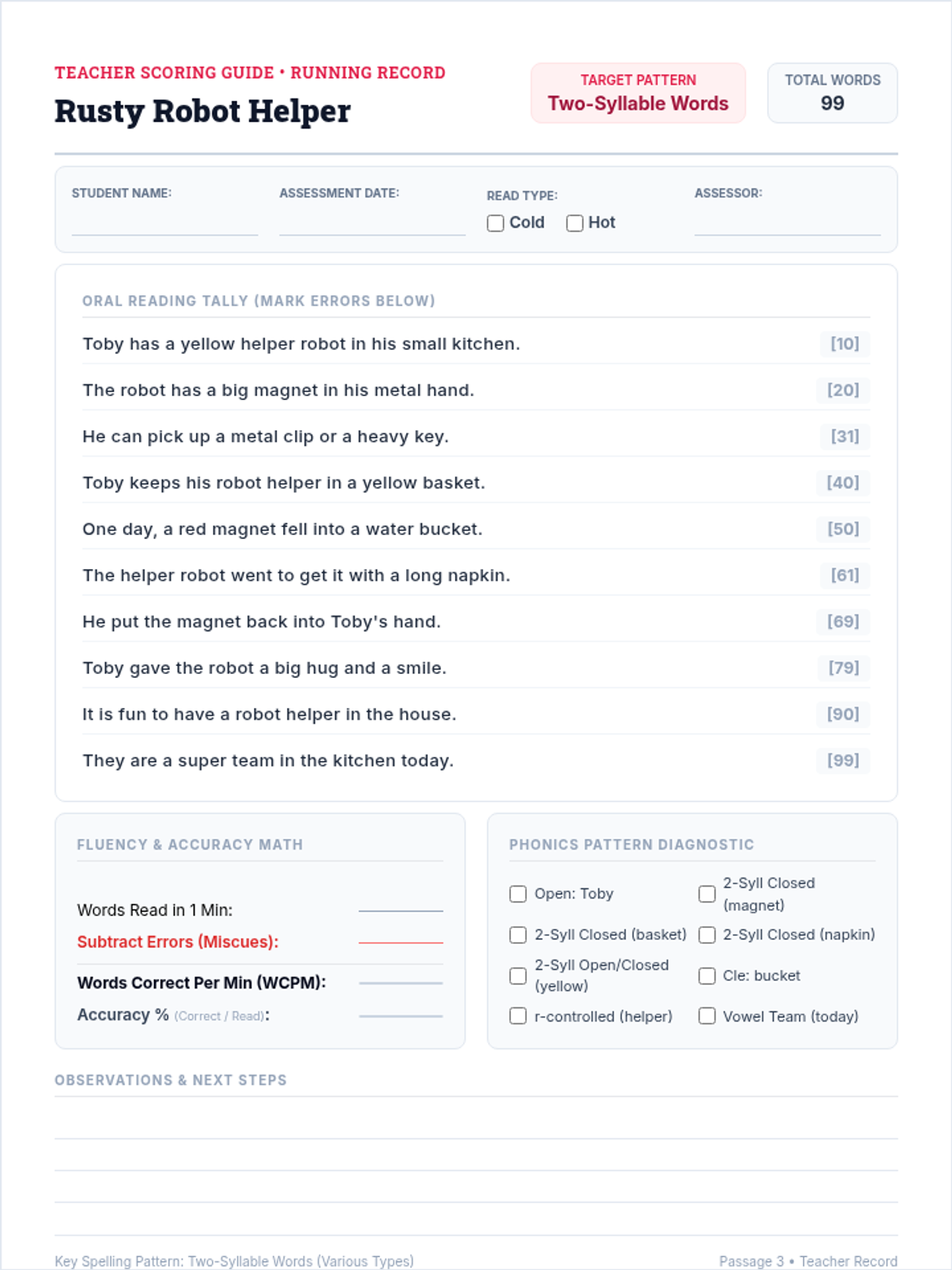
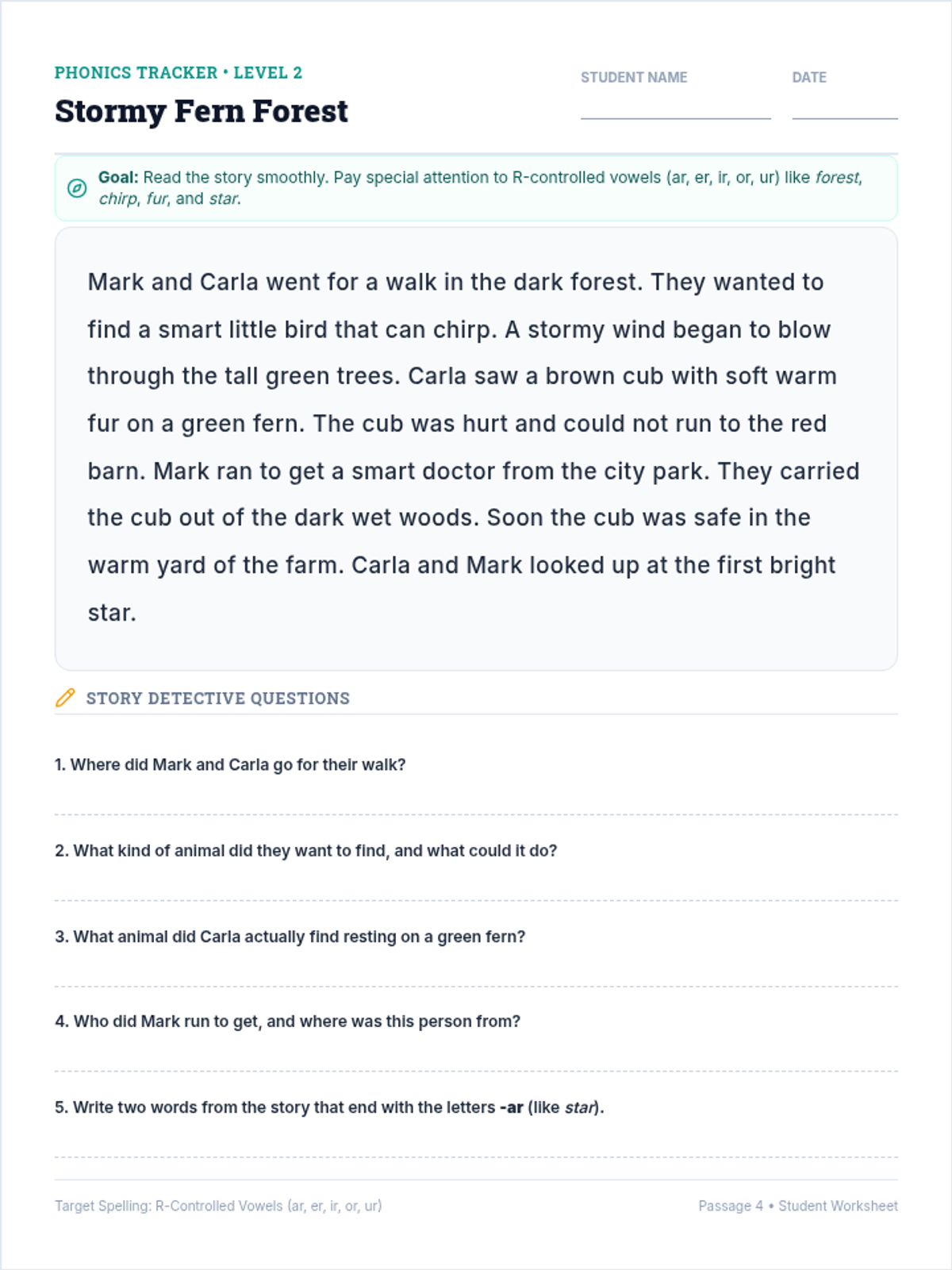
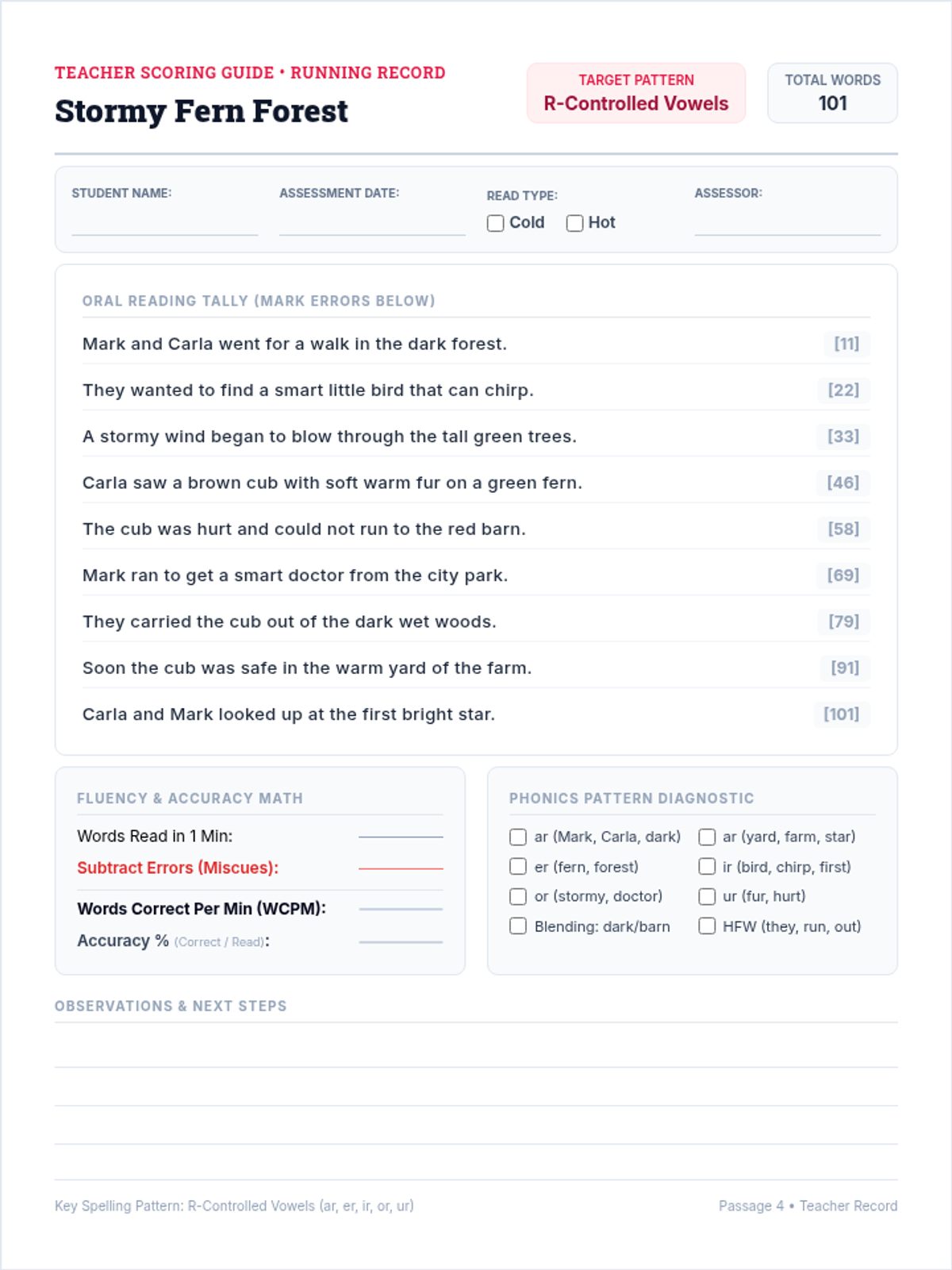
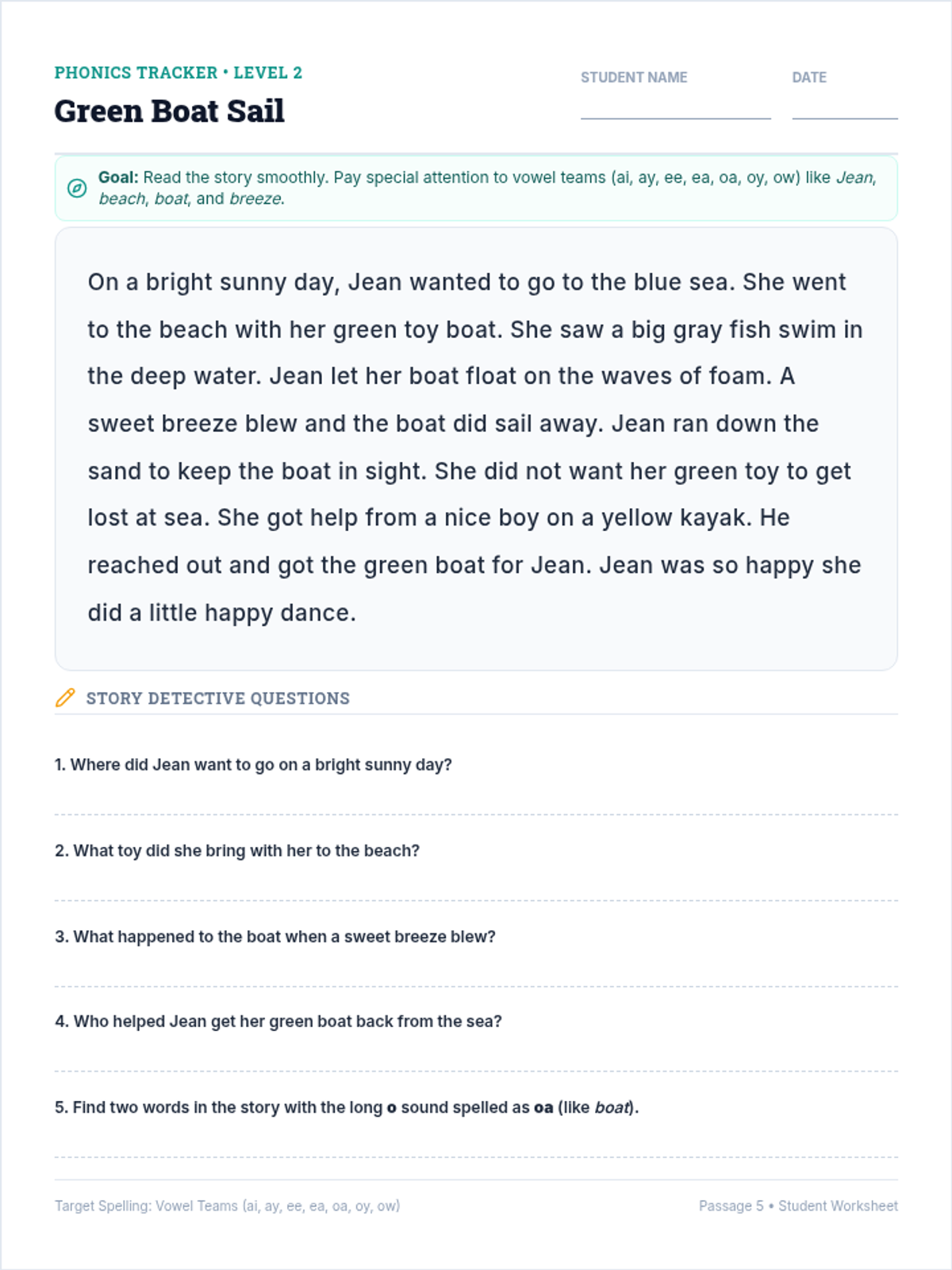
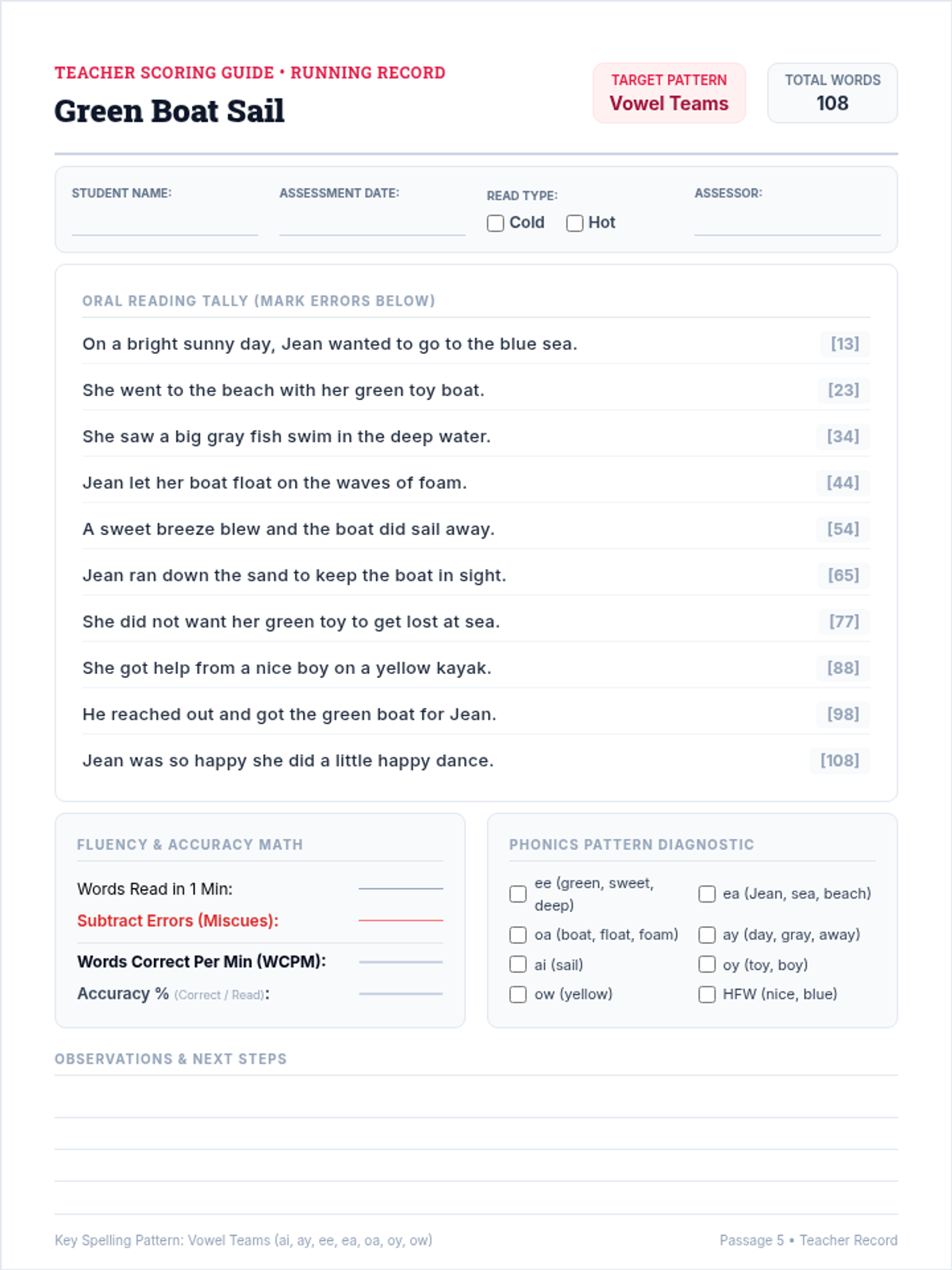
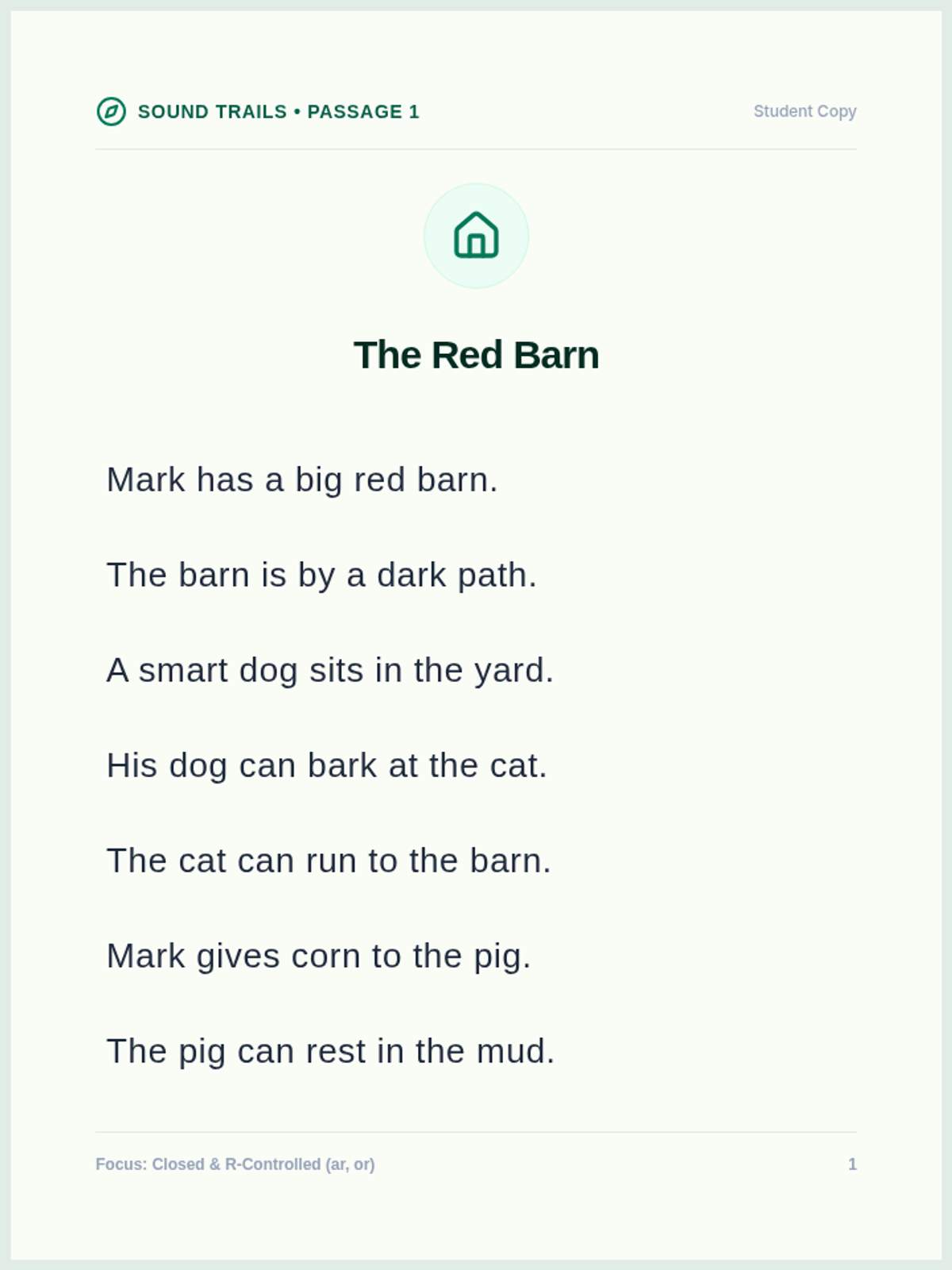
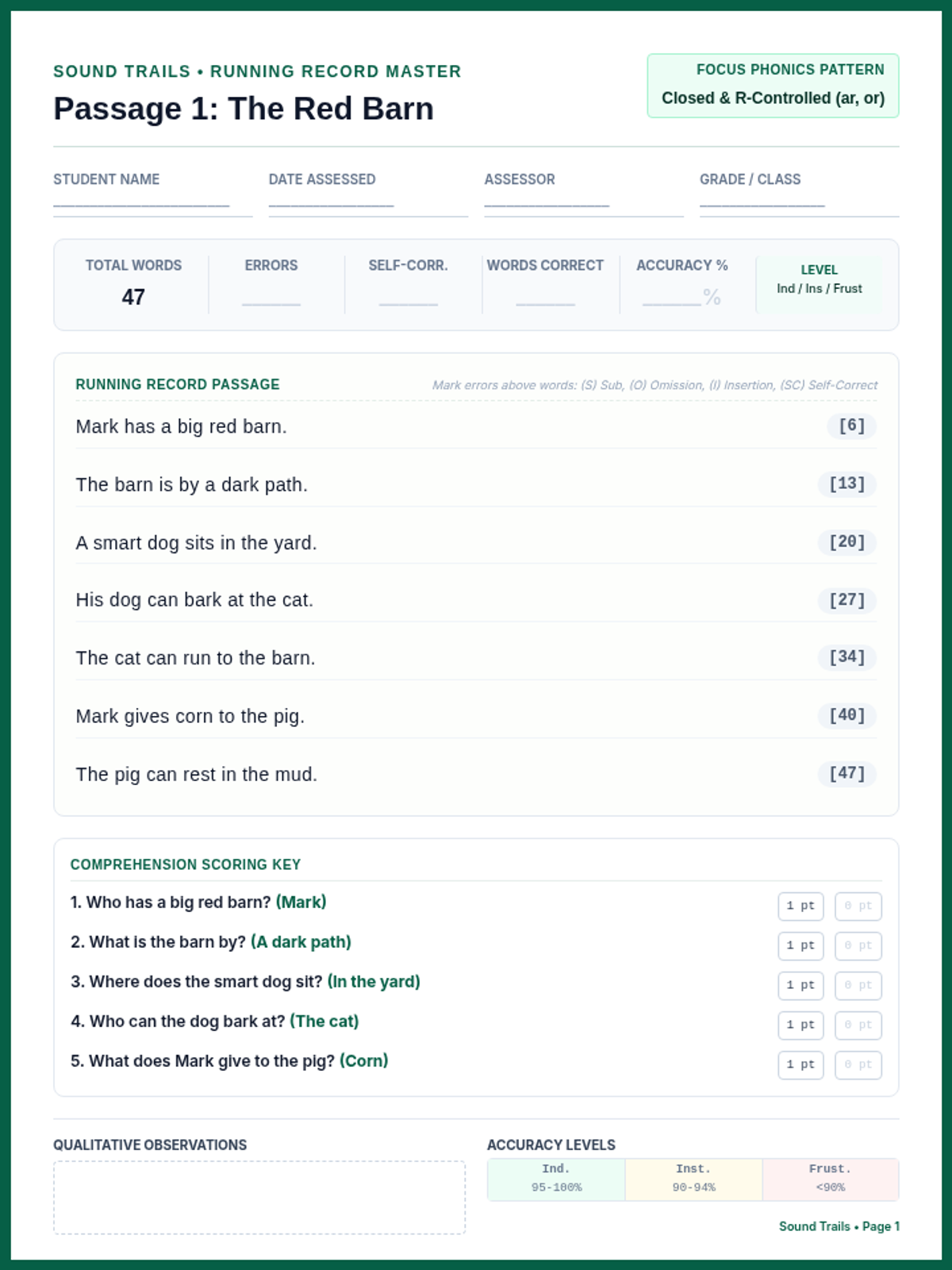
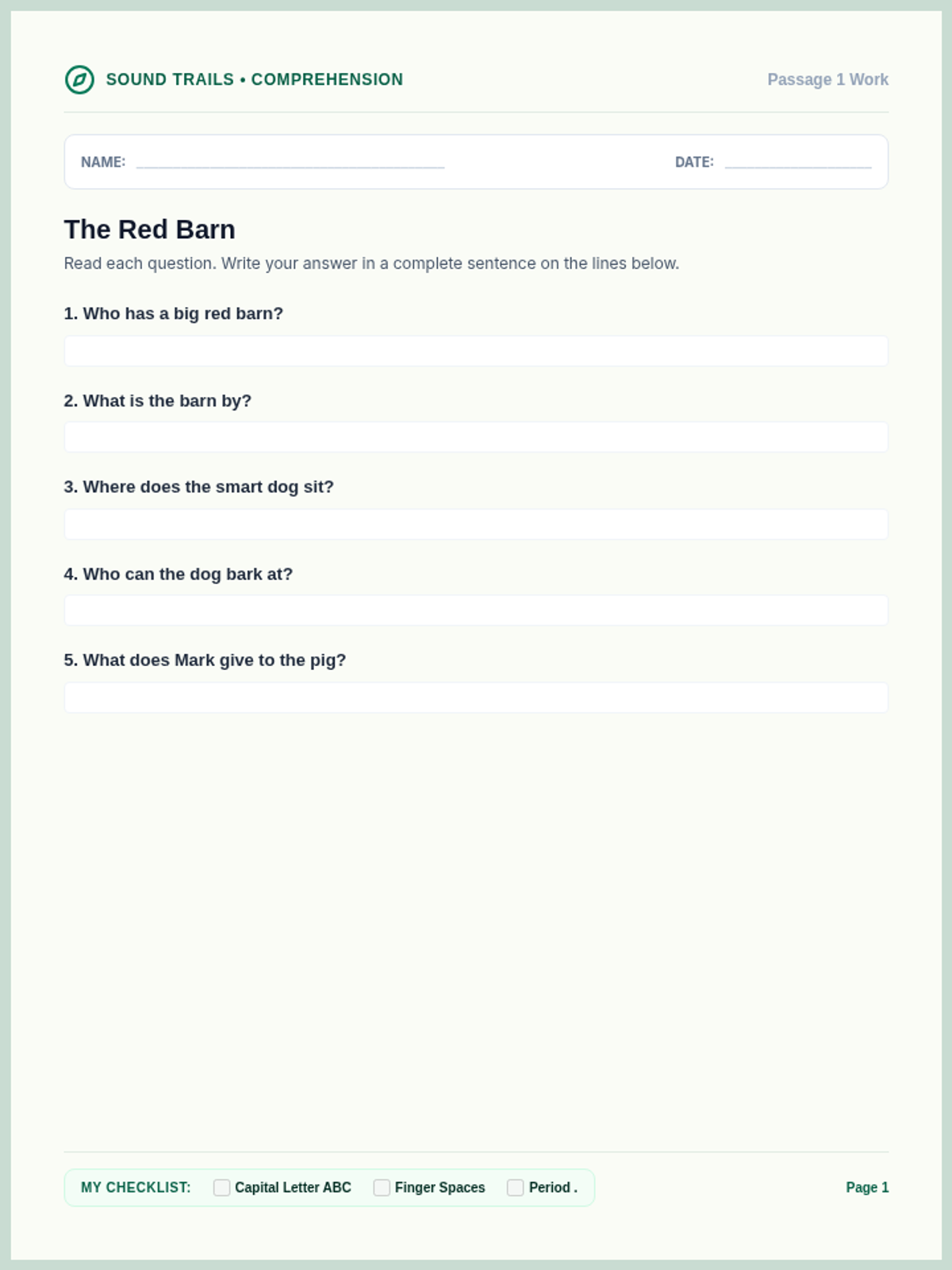
A suite of 5 phonics-based progress monitoring reading passages designed for second-grade students. Each passage targets a specific phonetic spelling pattern (closed syllables, silent e, two-syllable words, r-controlled vowels, and vowel teams) and includes a student-facing reading and comprehension page and a matching teacher-facing word-count tracking page.
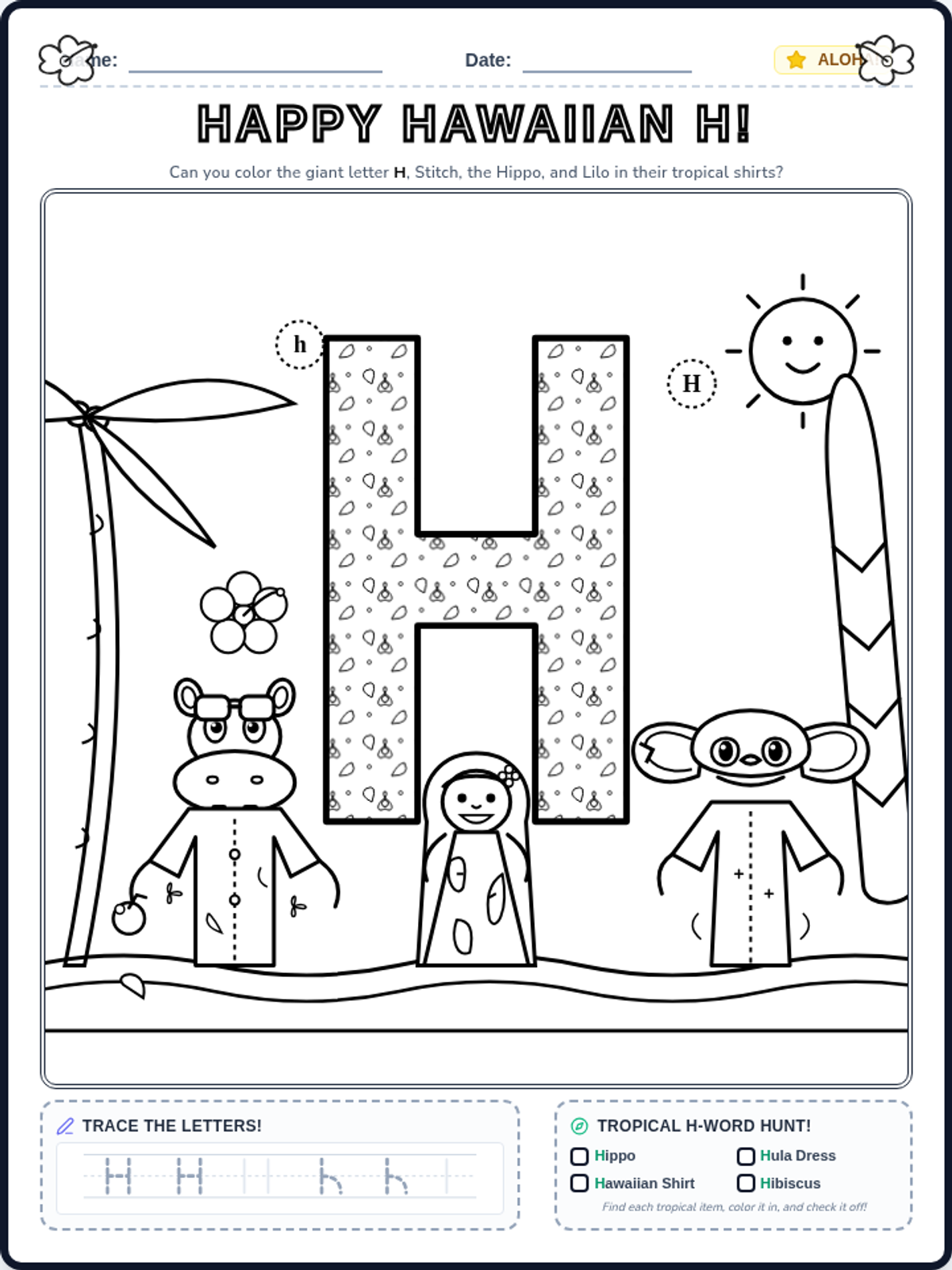
A fun, tropical-themed alphabet learning lesson designed to teach letter shapes, recognition, and fine motor skills through creative coloring pages and tracing activities.
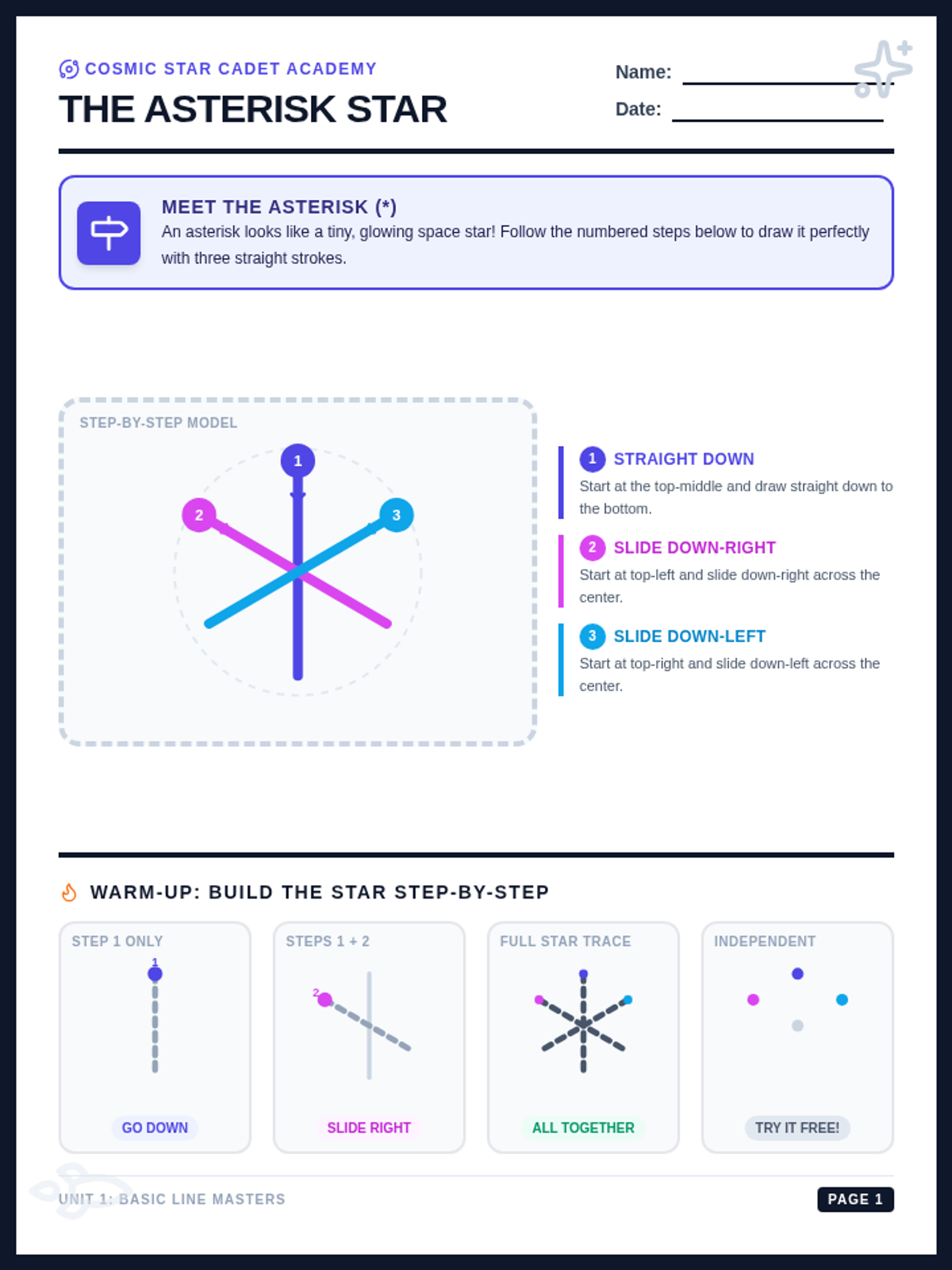
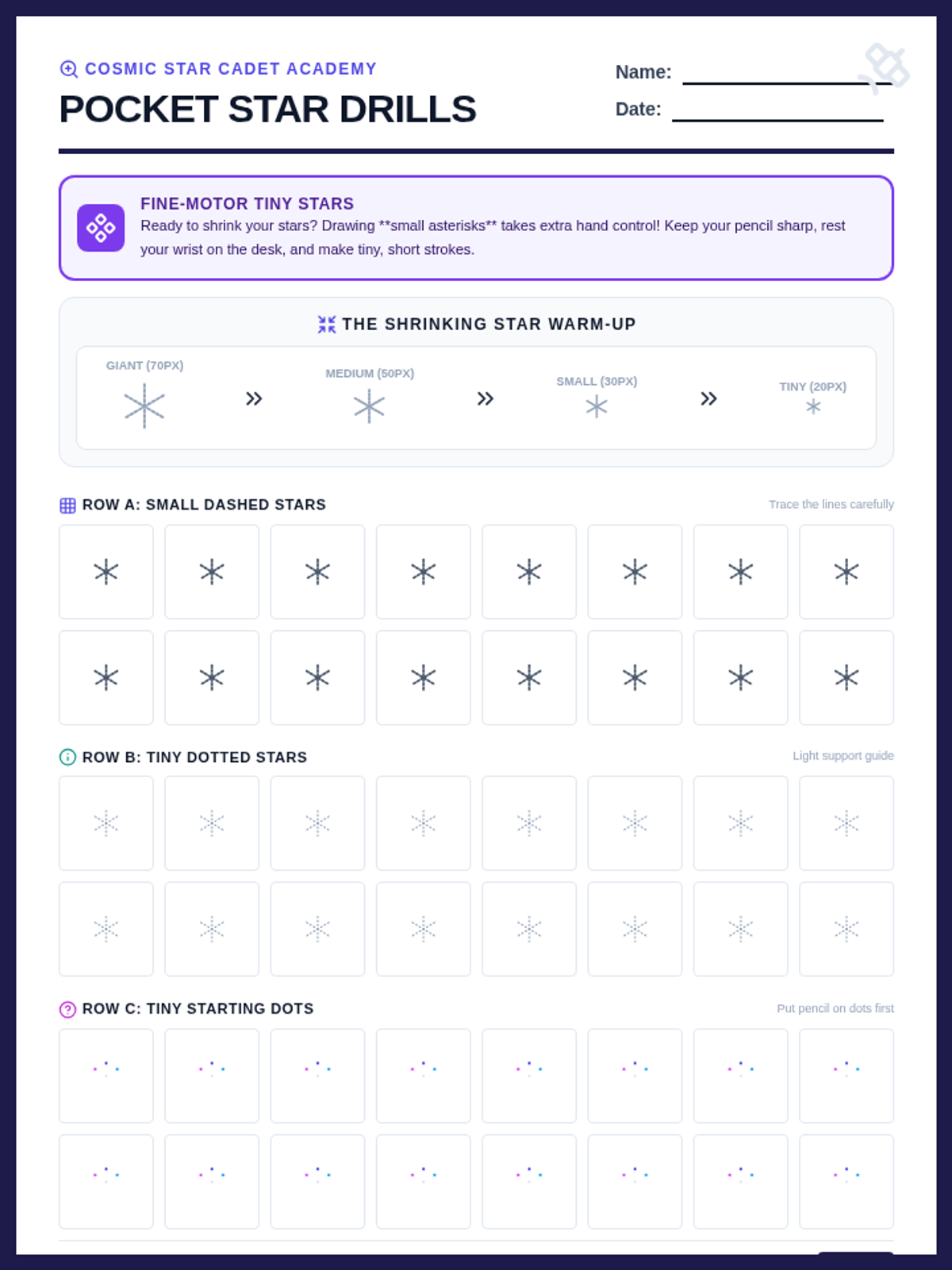
A comprehensive early learning lesson to master drawing the asterisk symbol through hand-eye coordination drills and fun space cadet tracing missions.
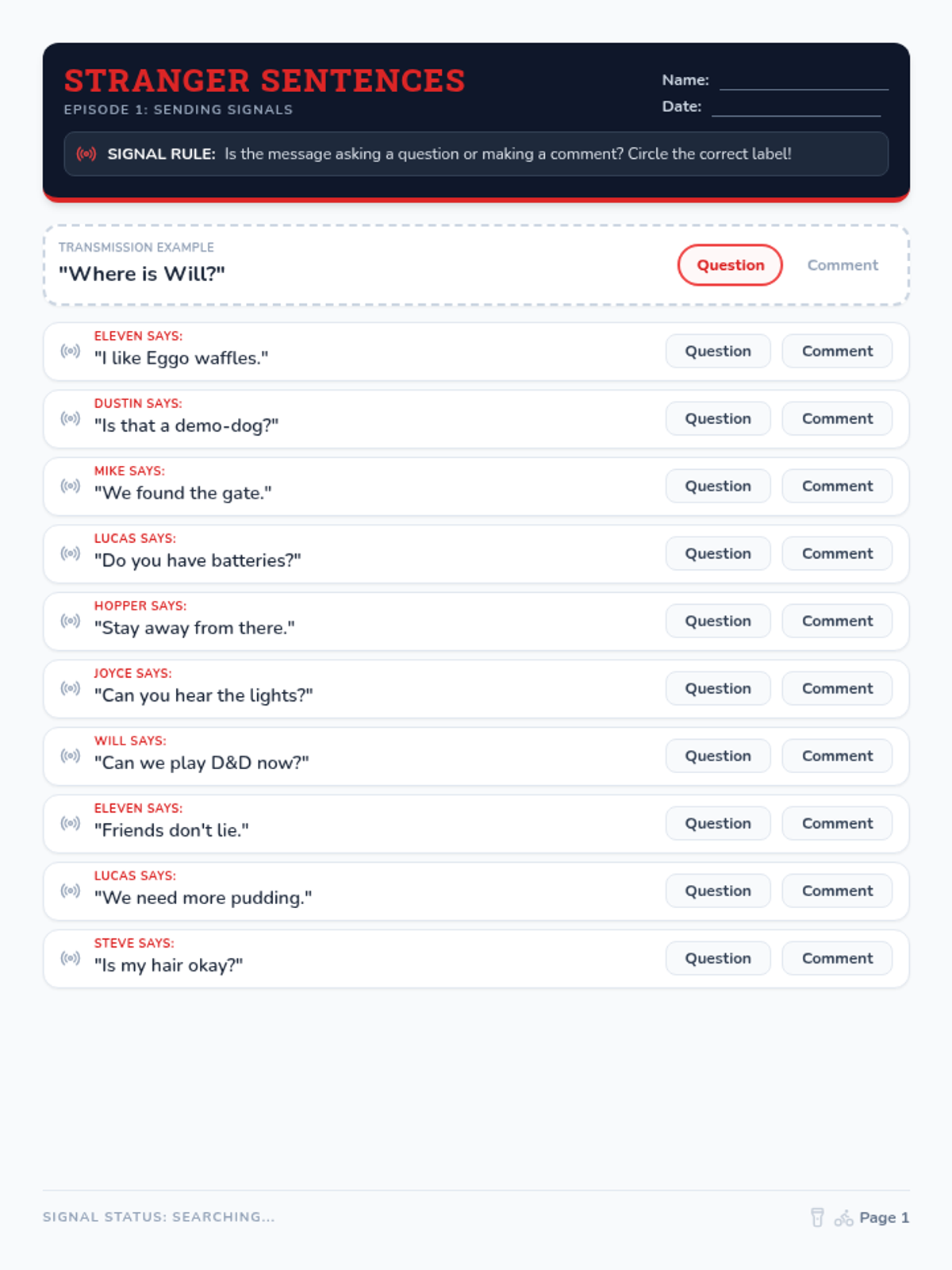
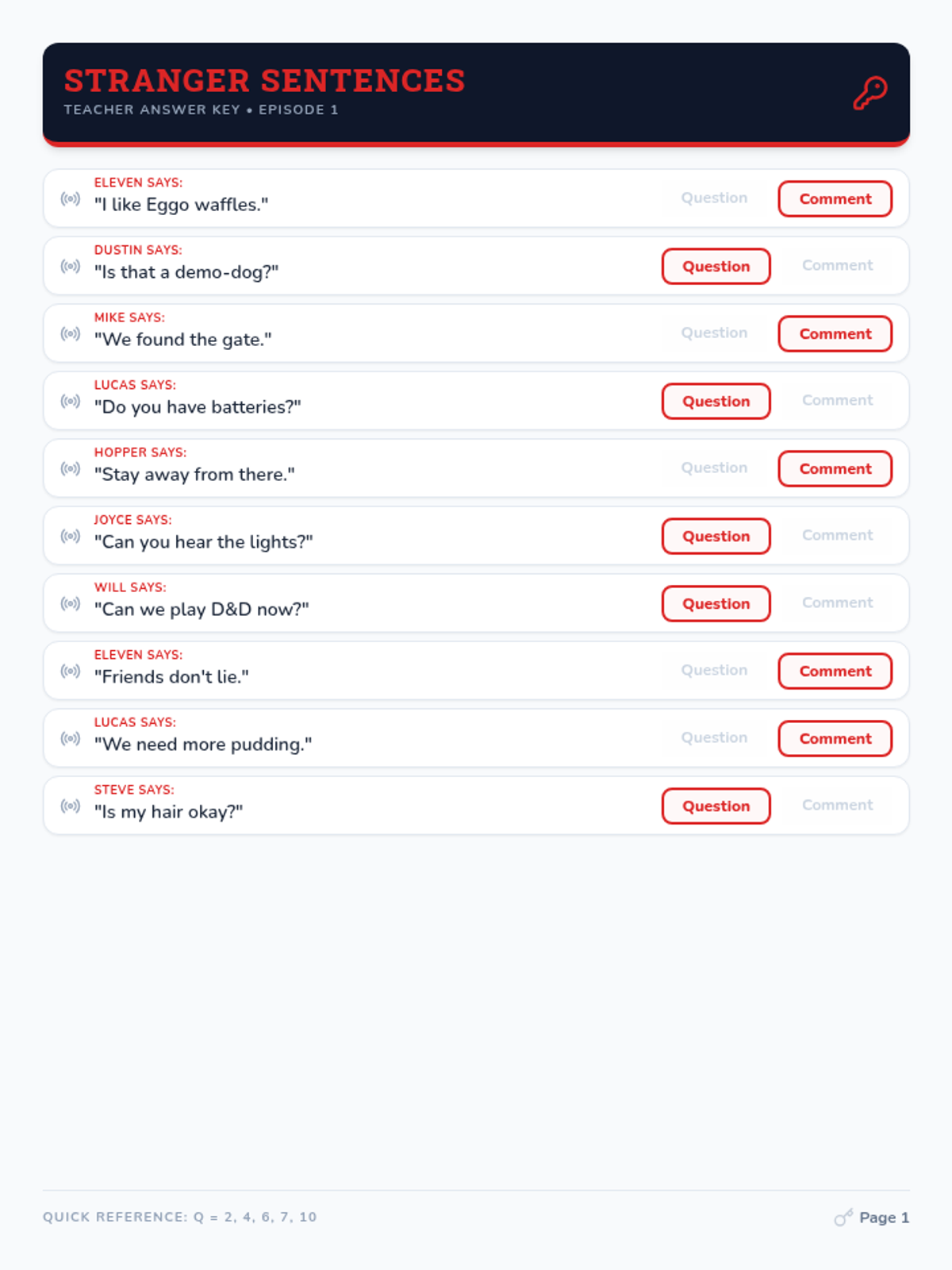
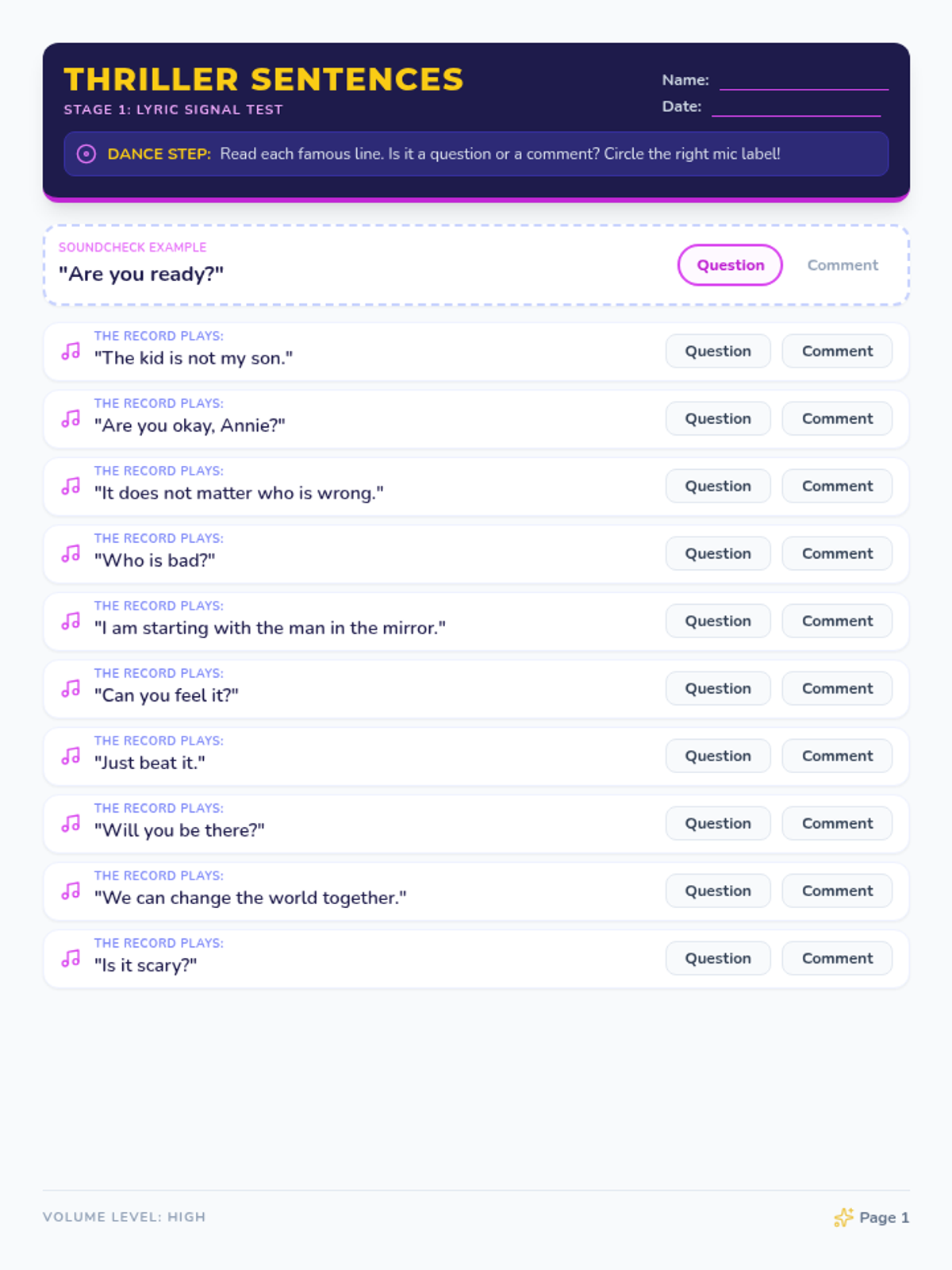
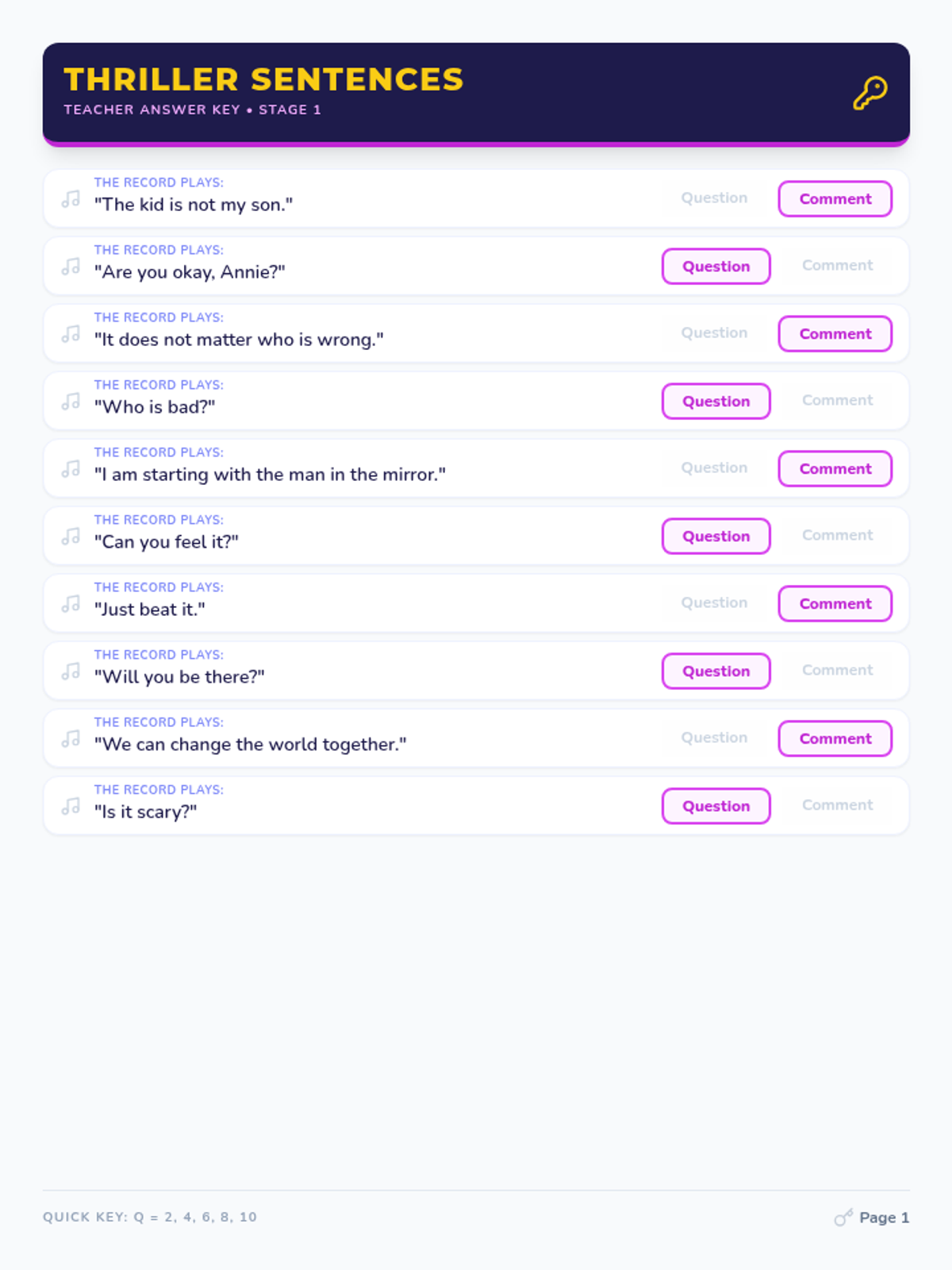
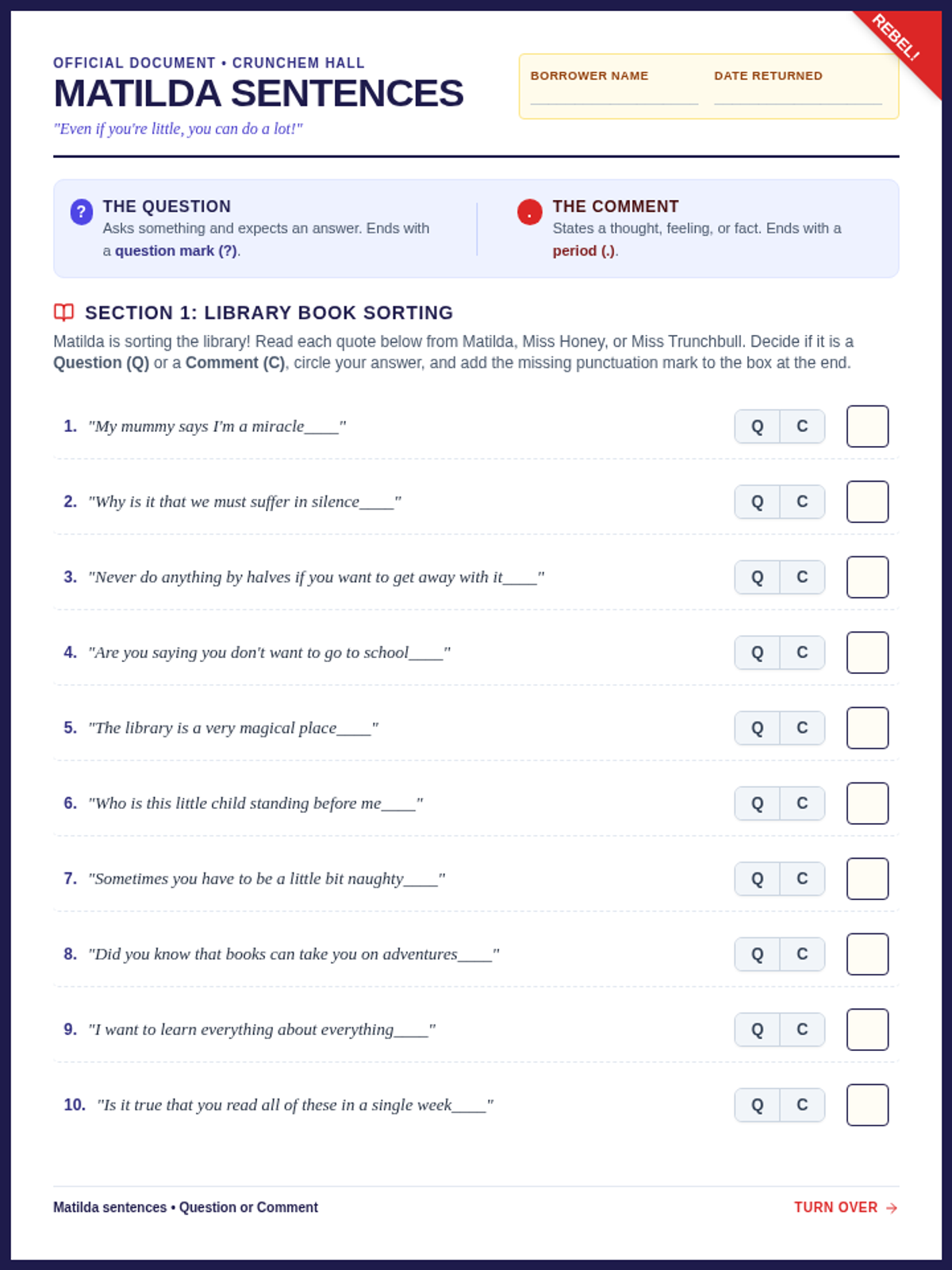
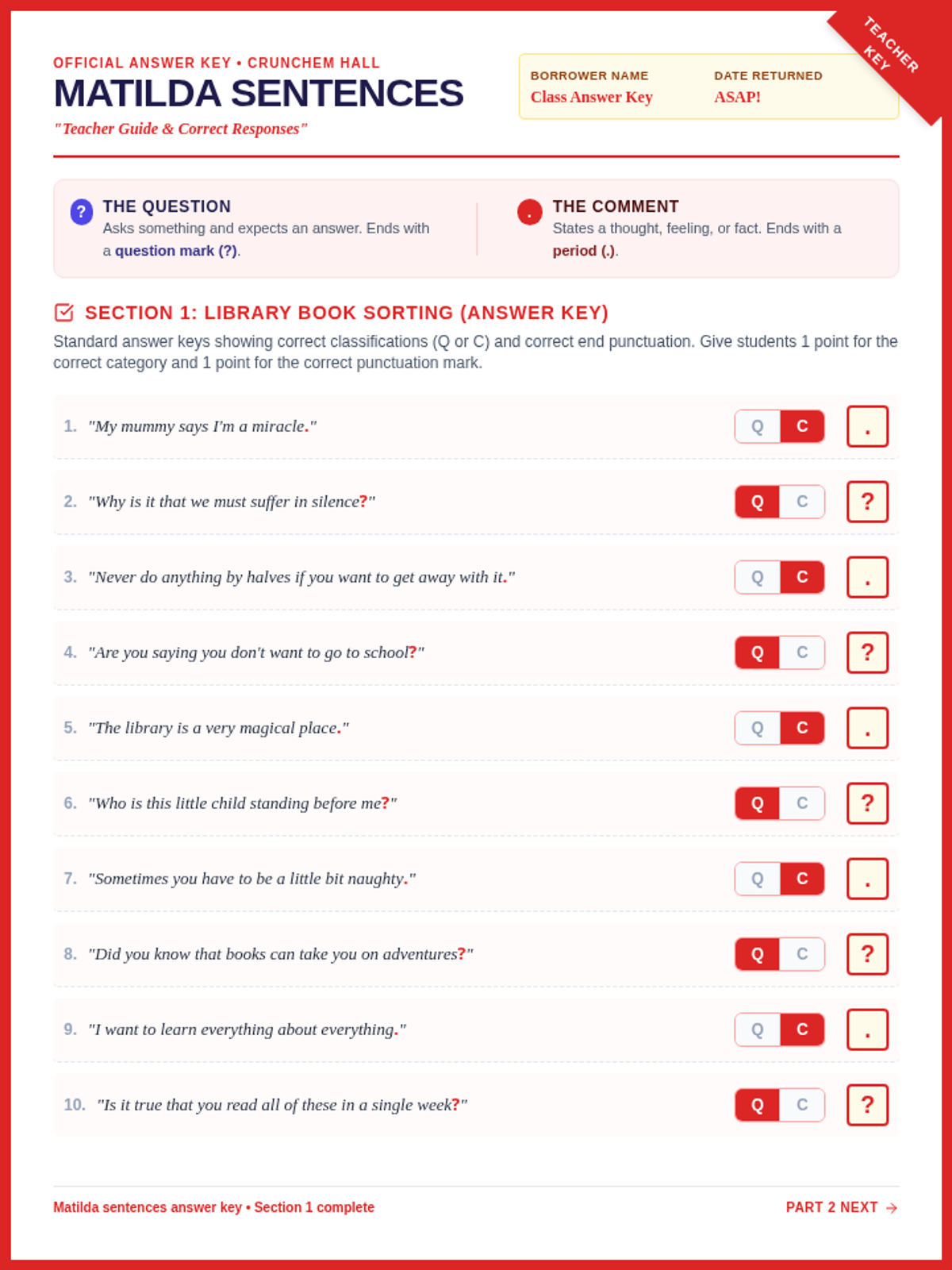
A lesson focused on identifying the difference between questions and comments using dialogue from familiar characters. Students practice punctuation and sentence purpose recognition.
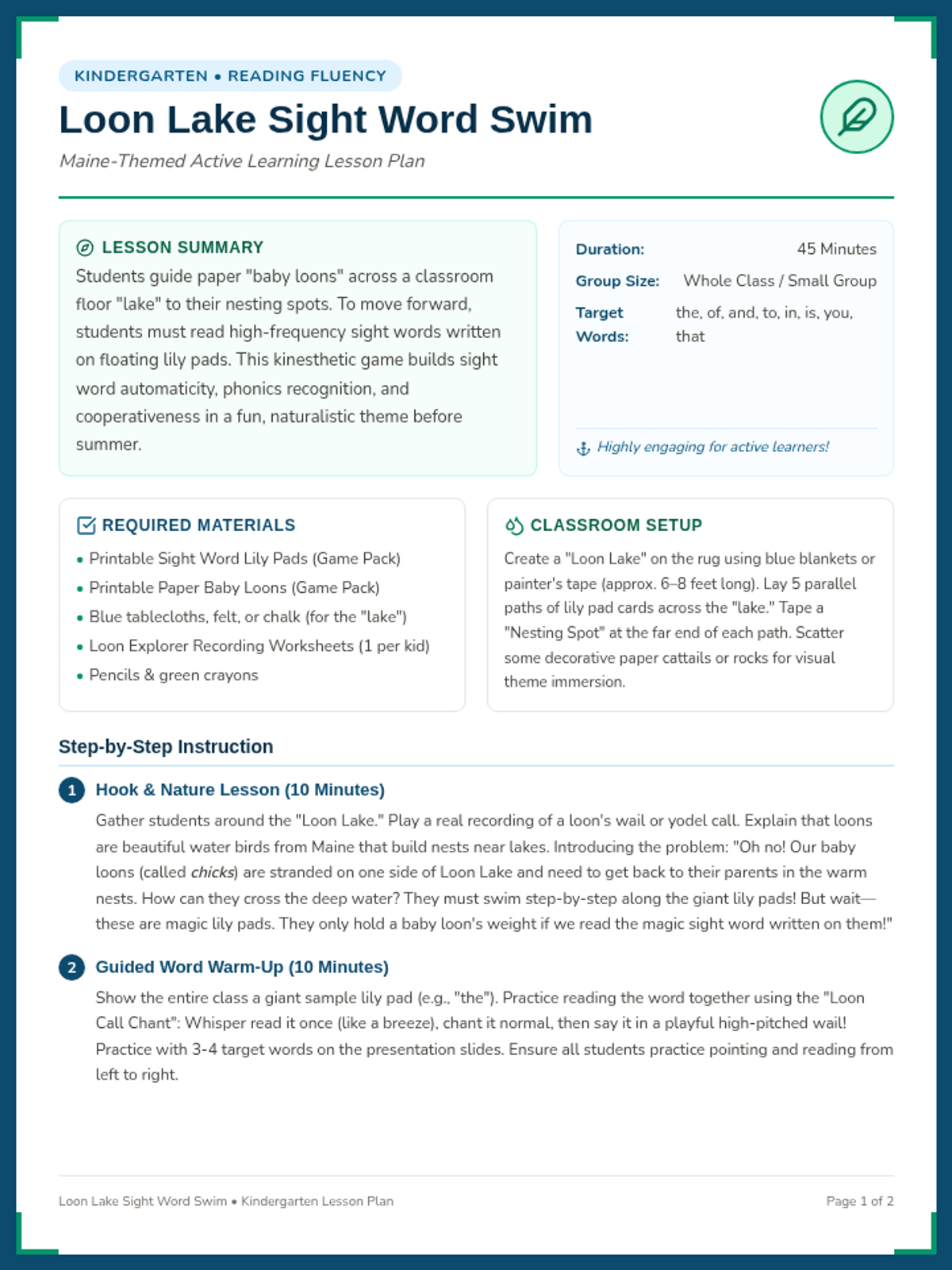
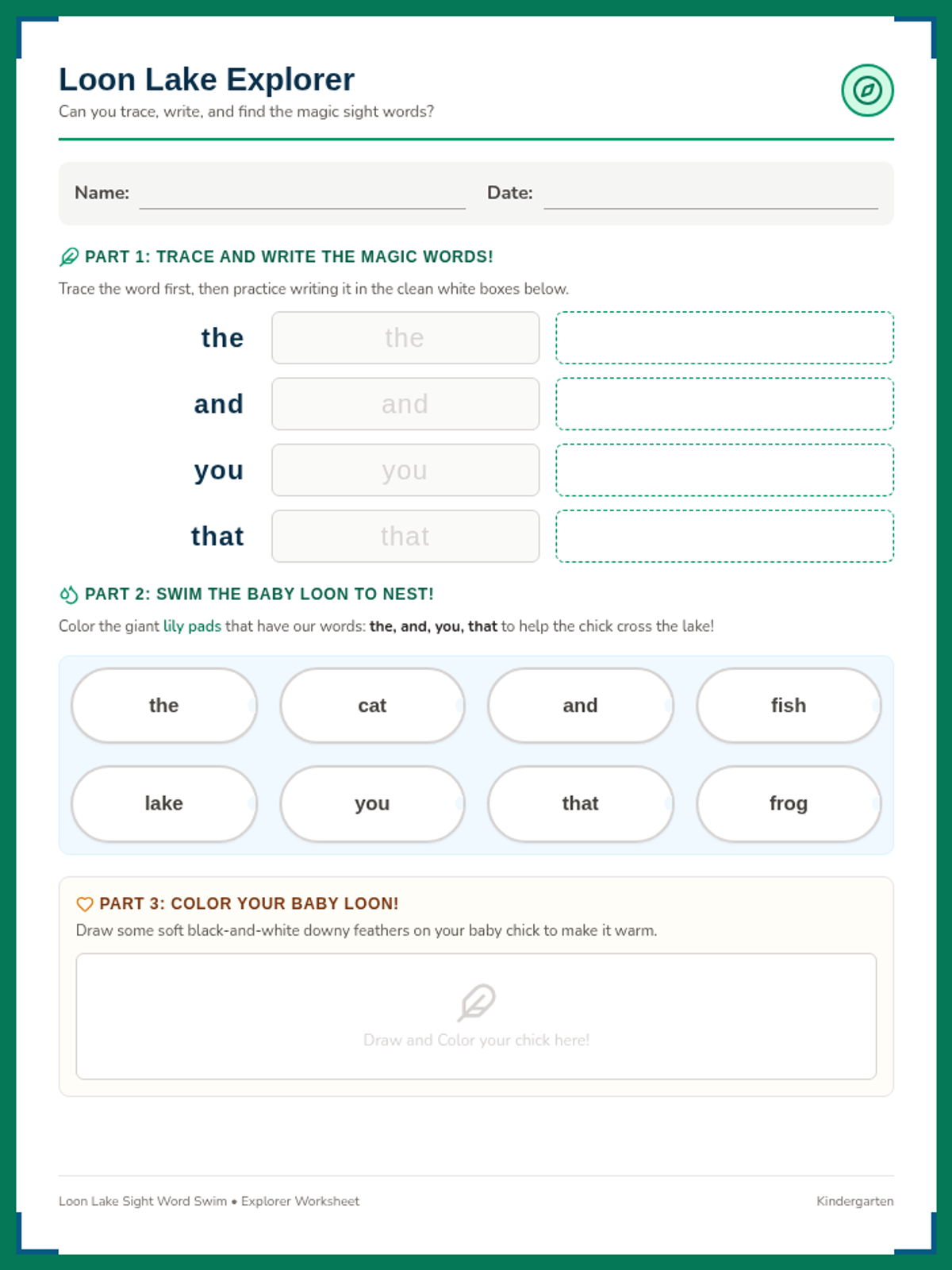
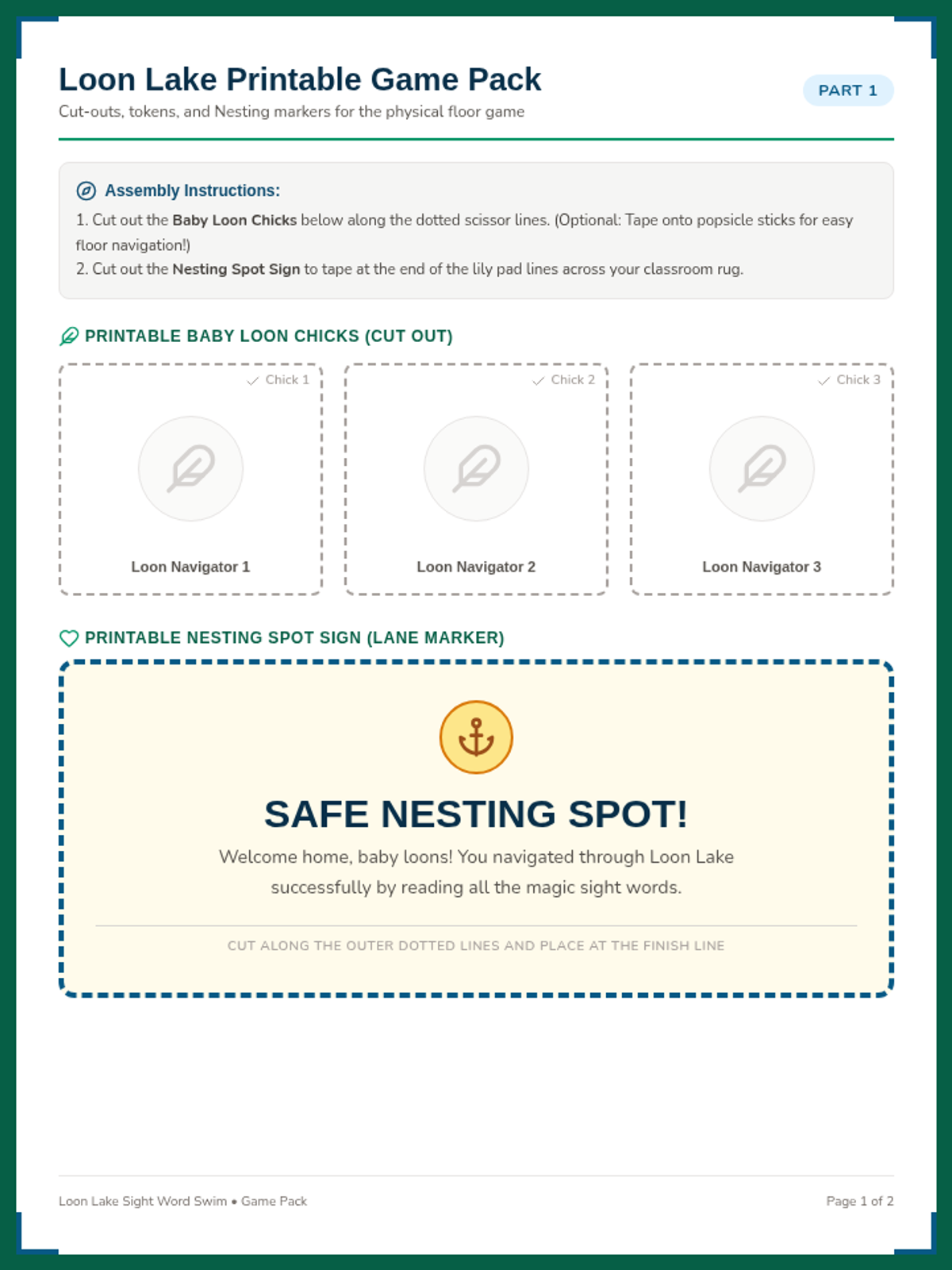
A playful, Maine-themed kindergarten lesson where students guide paper baby loons across a lily pad lake by reading high-frequency sight words. This active, engaging lesson builds reading automaticity and fluency right before summer break.
A progress monitoring phonics assessment system for first grade, featuring five passages targeting closed, silent e, and r-controlled syllable patterns alongside high-frequency words. Includes student reading sheets, running record scoring guides, and comprehension worksheets with primary handwriting lines.
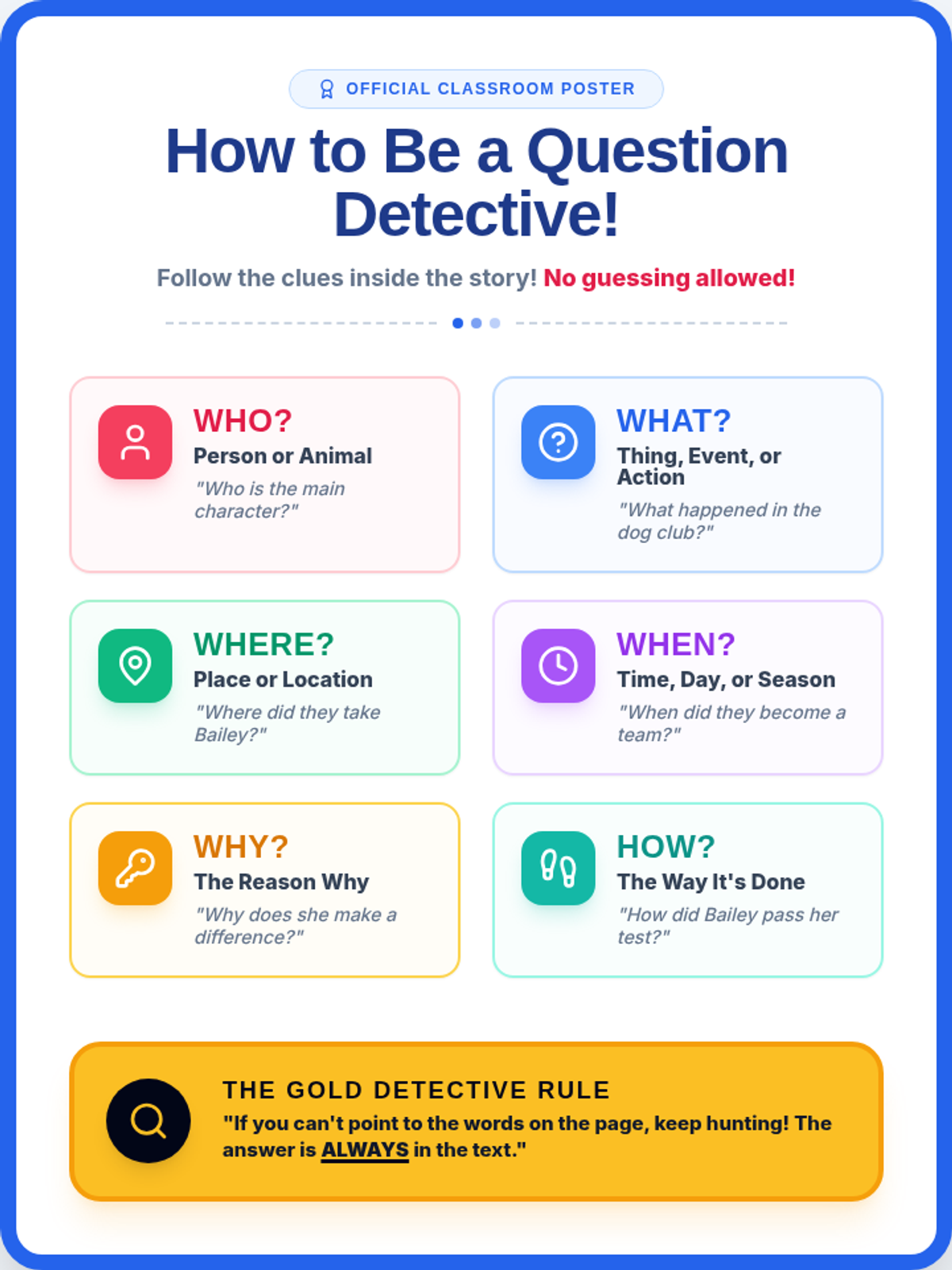
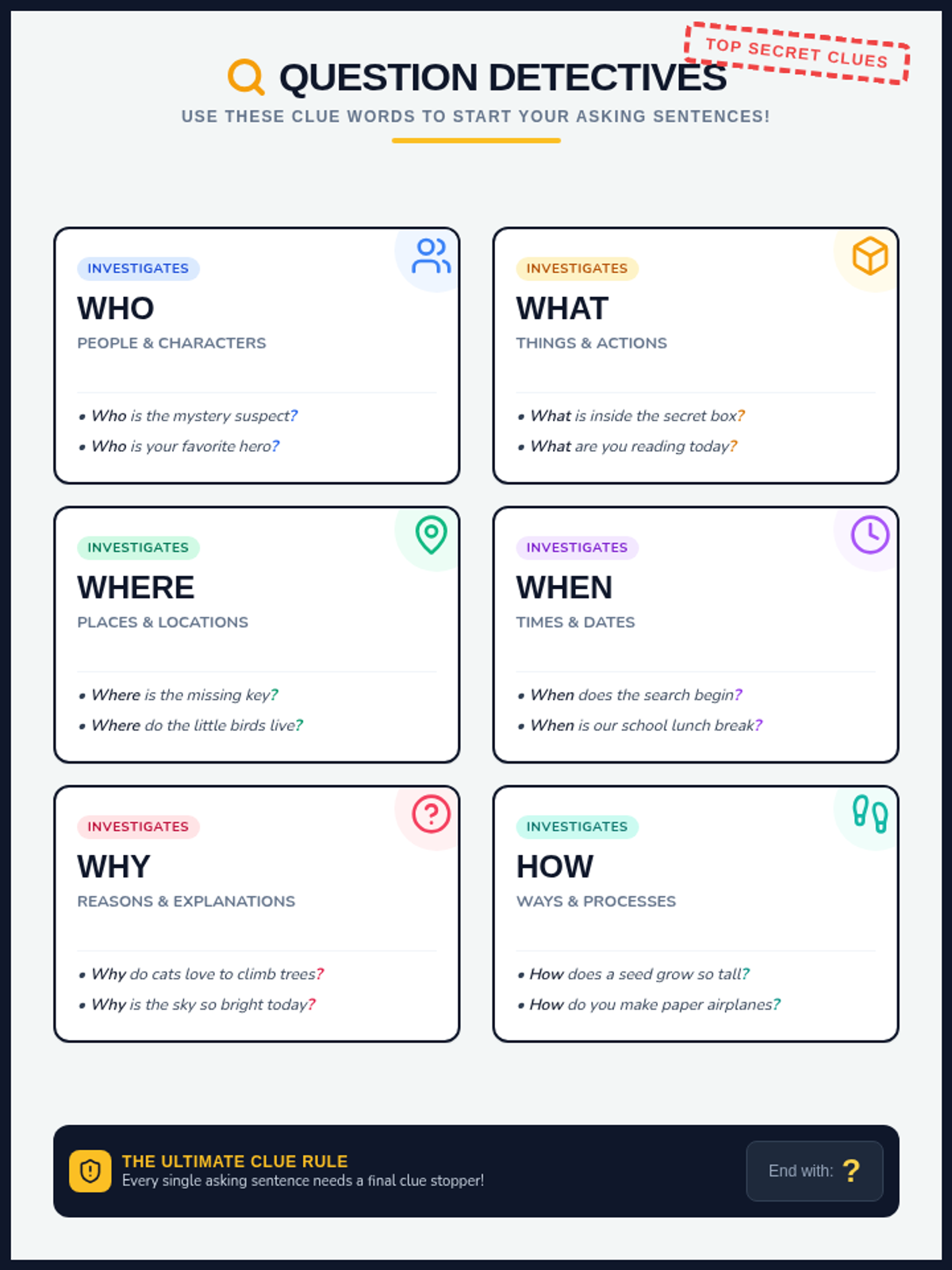
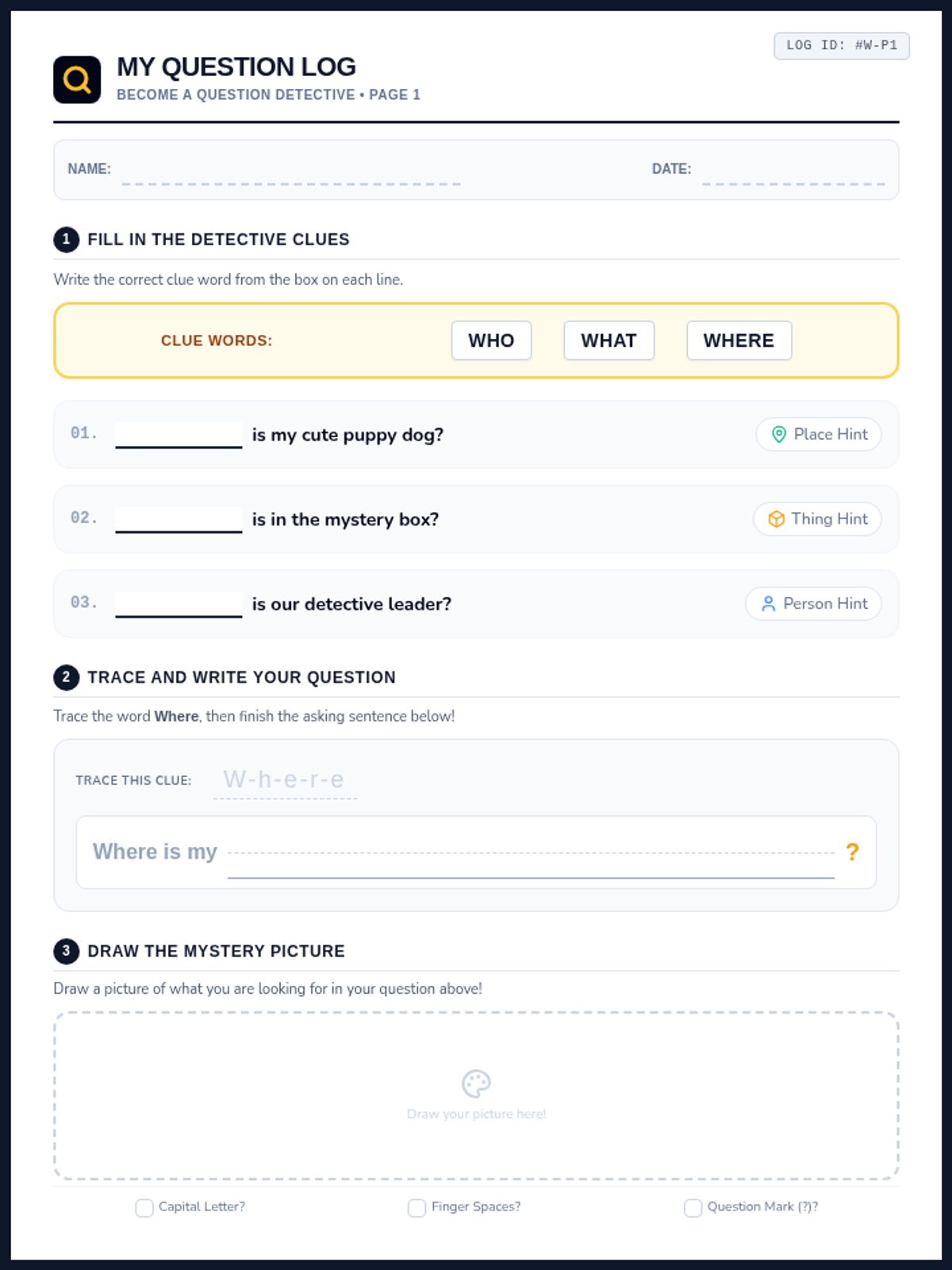
A comprehensive primary-grade lesson where students become 'Question Detectives' to master the six 5W1H question words (Who, What, Where, When, Why, and How) and learn how to construct their own asking sentences. Includes a structured mini-lesson plan, a colorful reference anchor chart, and an engaging investigative worksheet.
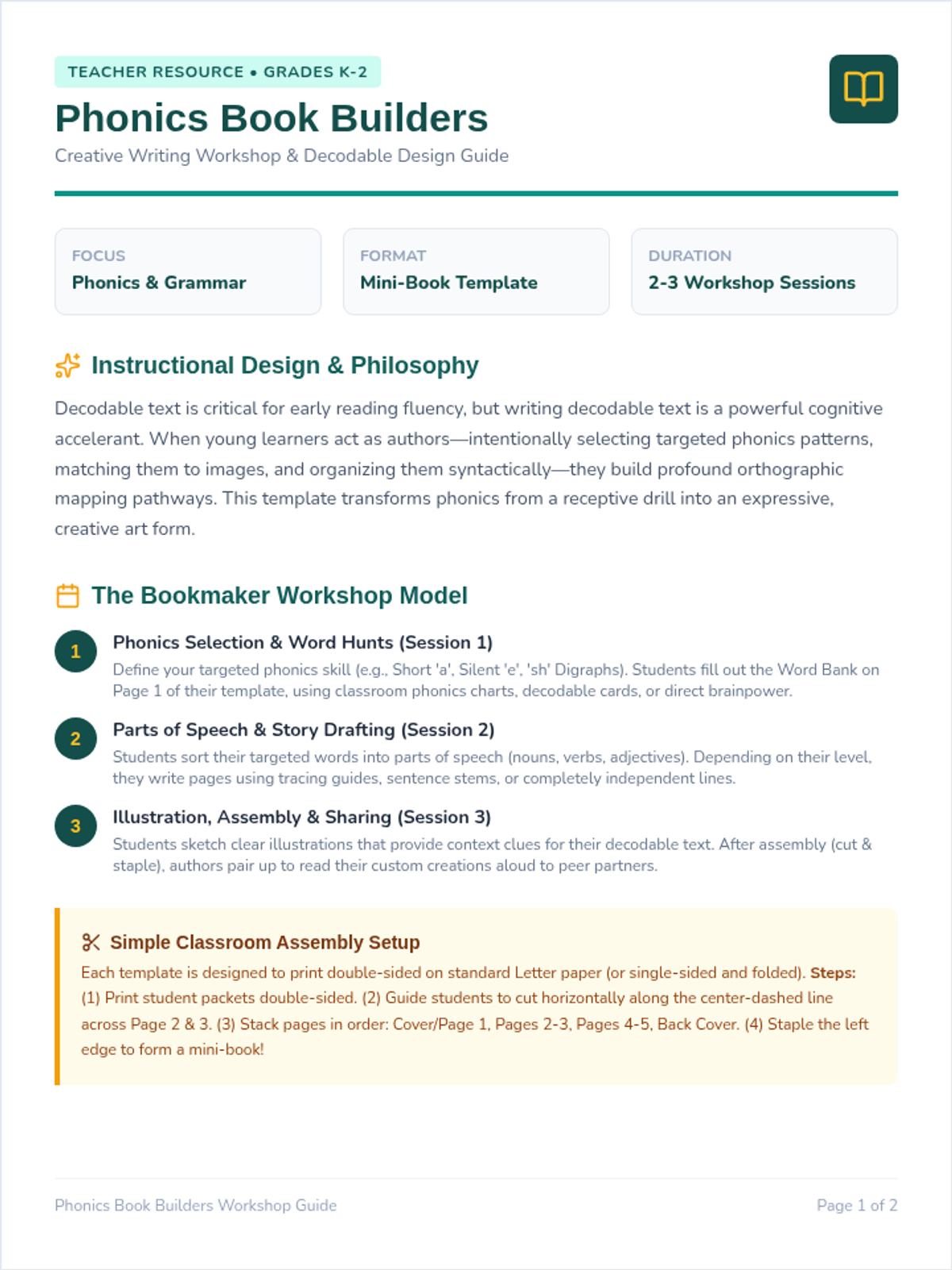
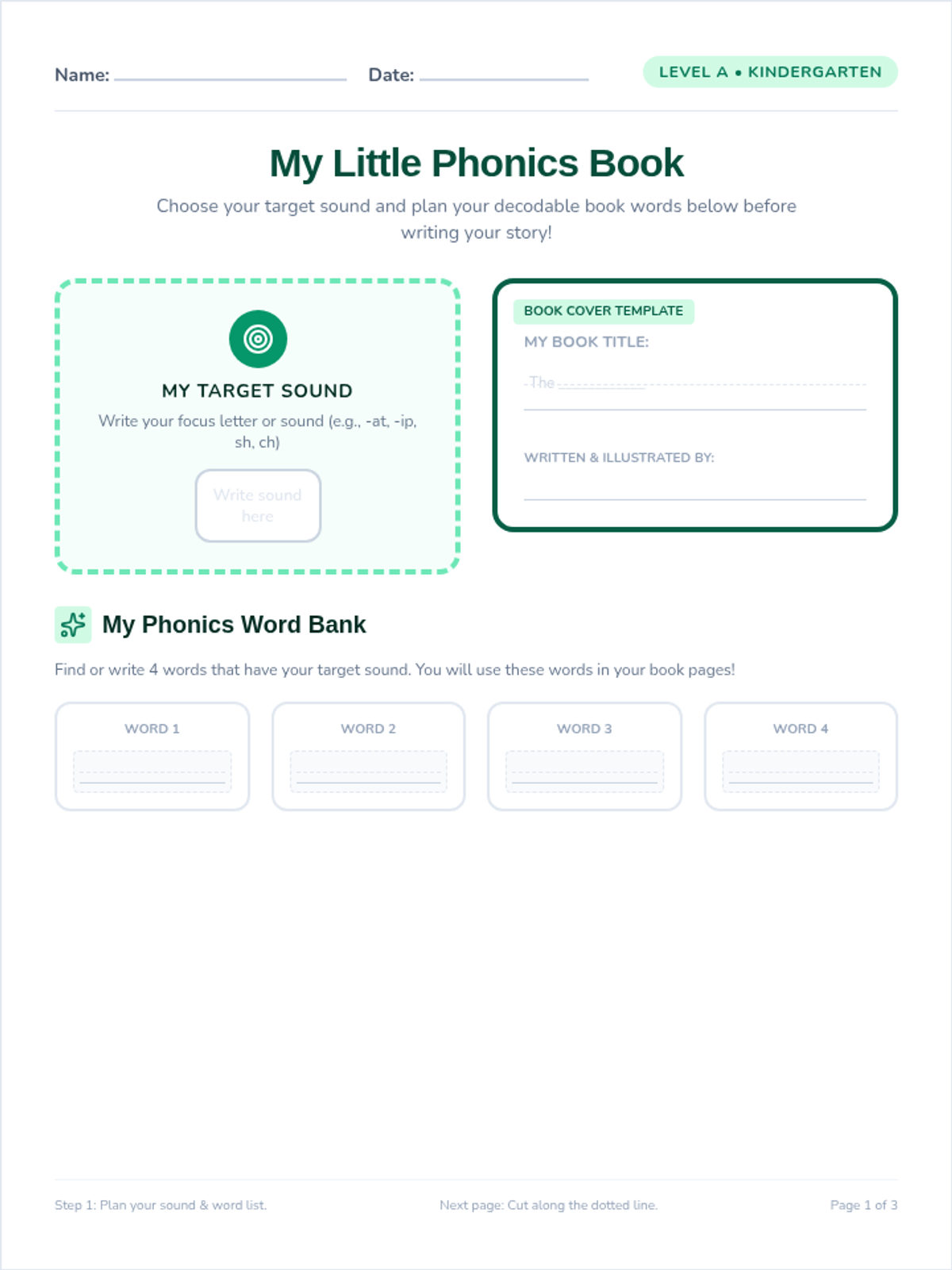
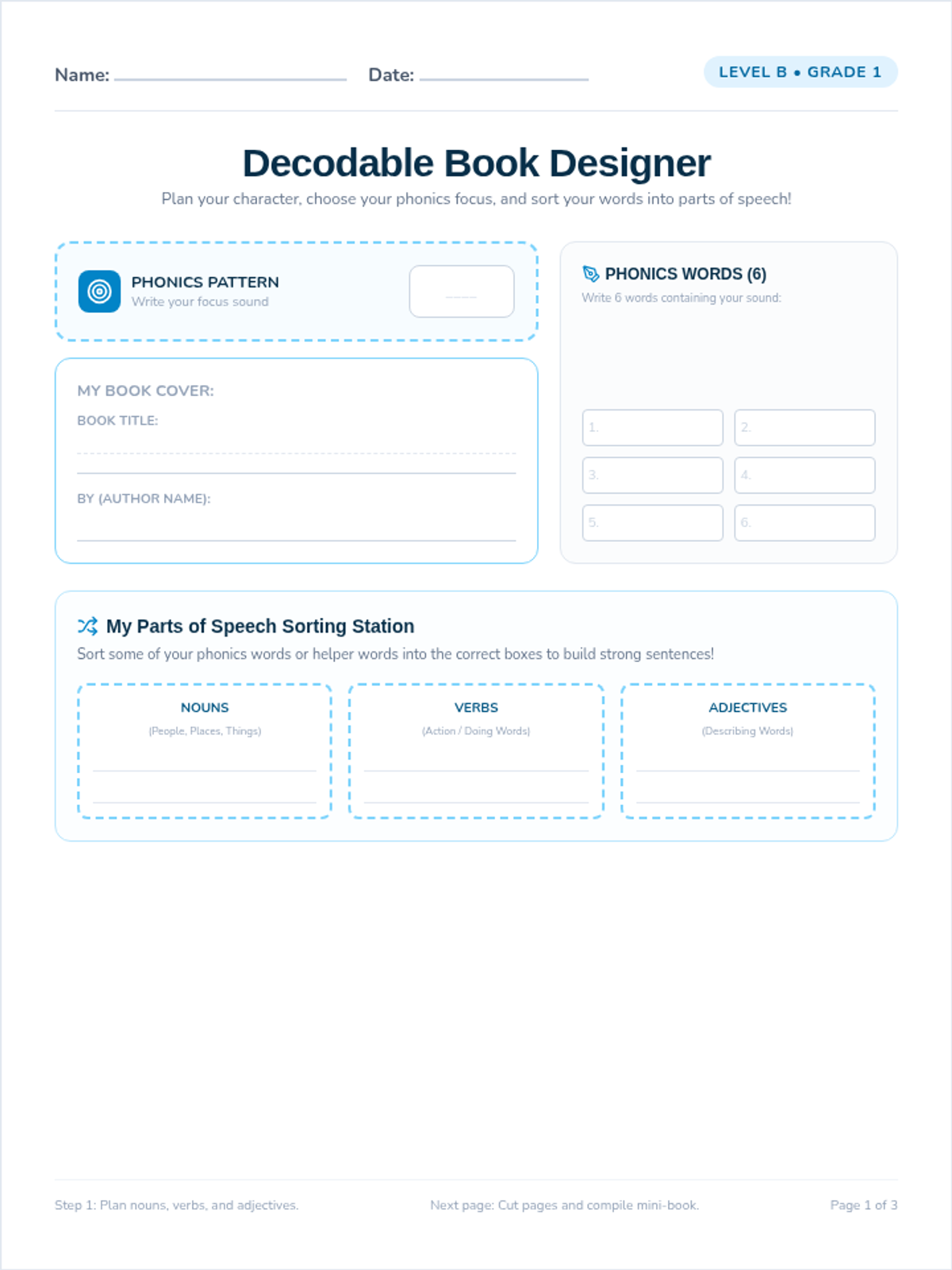
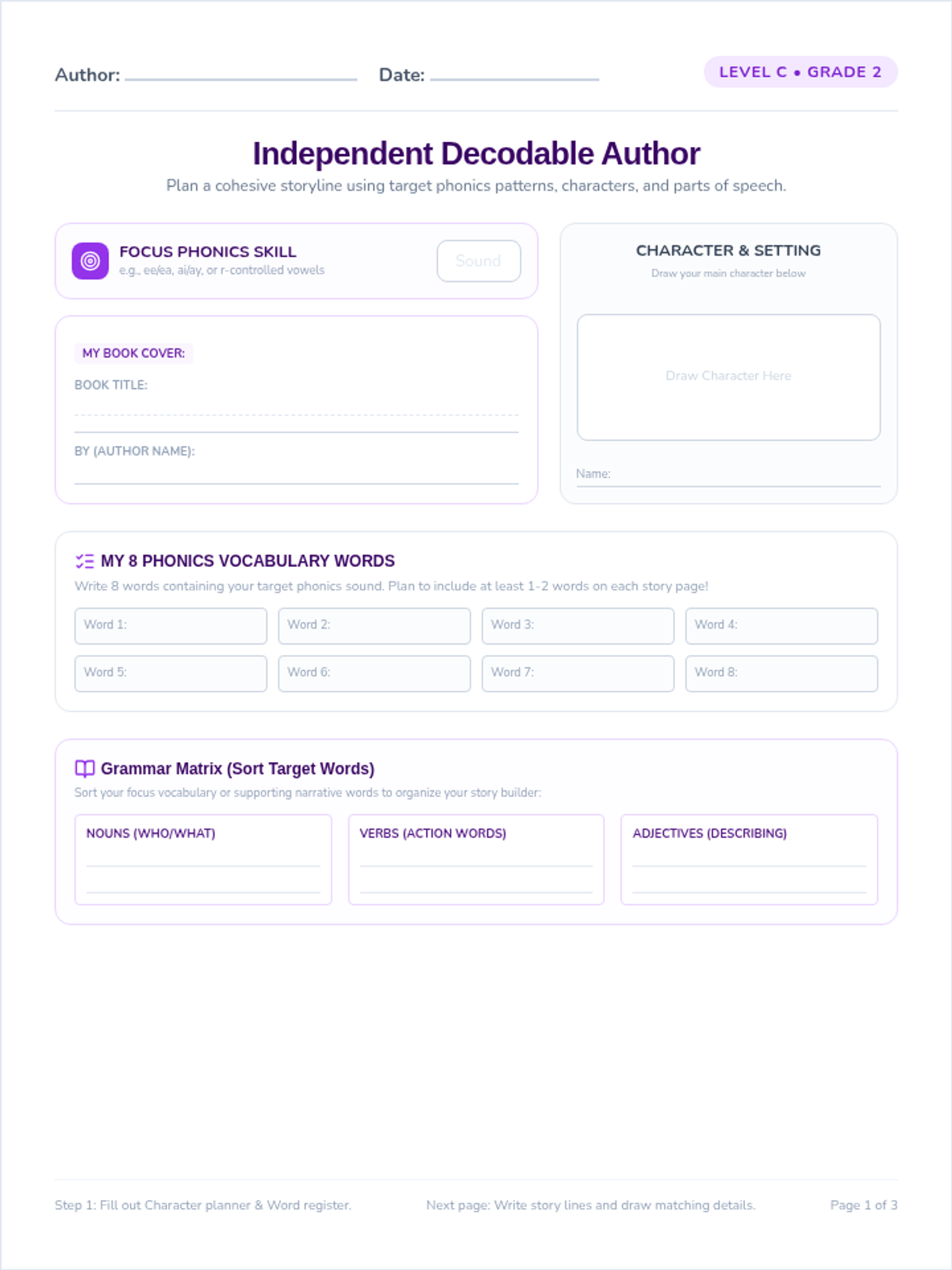
A comprehensive phonics-focused lesson that empowers K-2 students to author, illustrate, and assemble their own decodable books. It includes three levels of differentiated student bookmaking templates (tracing, sentence stems, and independent writing) alongside an educator facilitation guide.
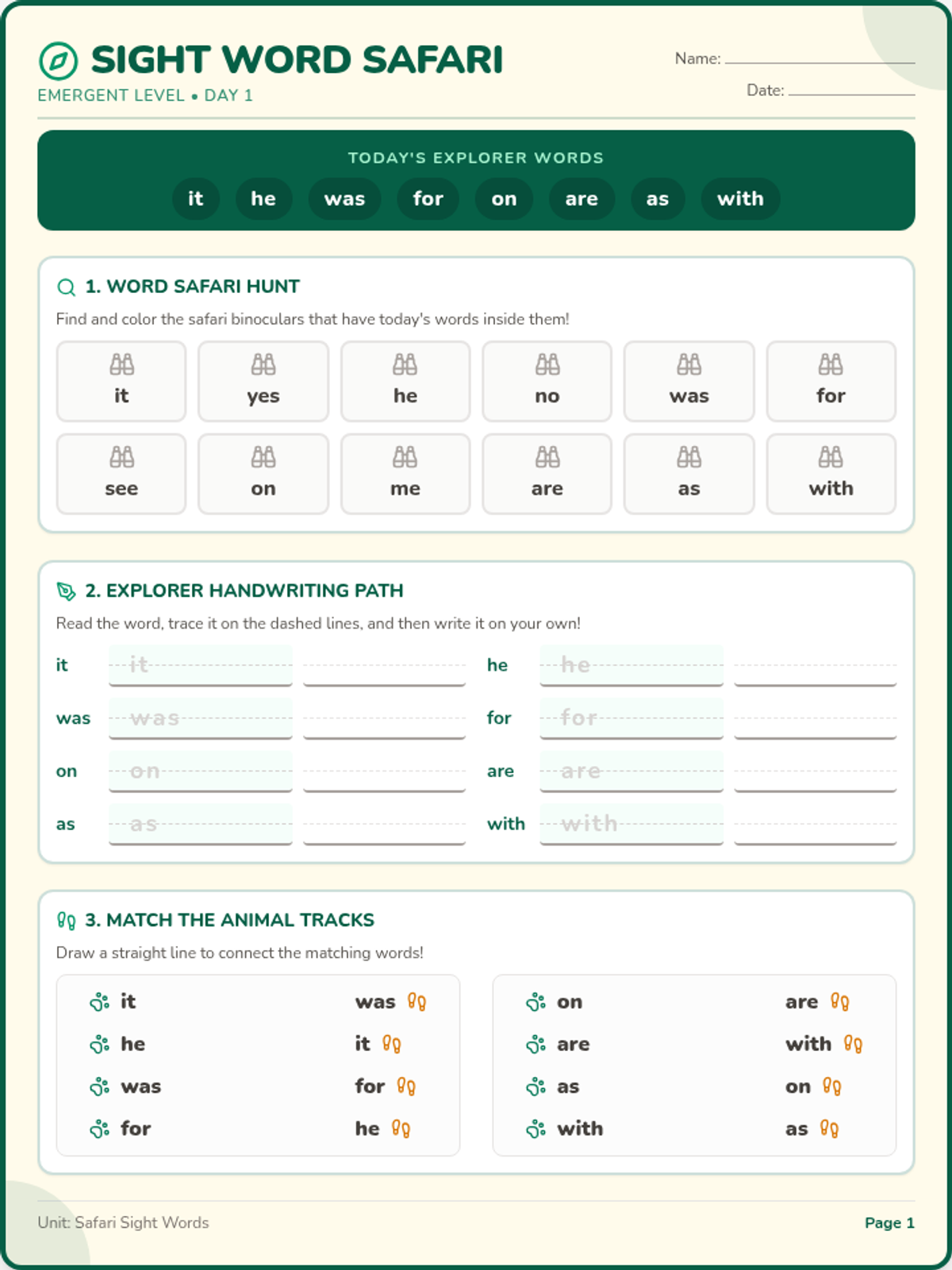
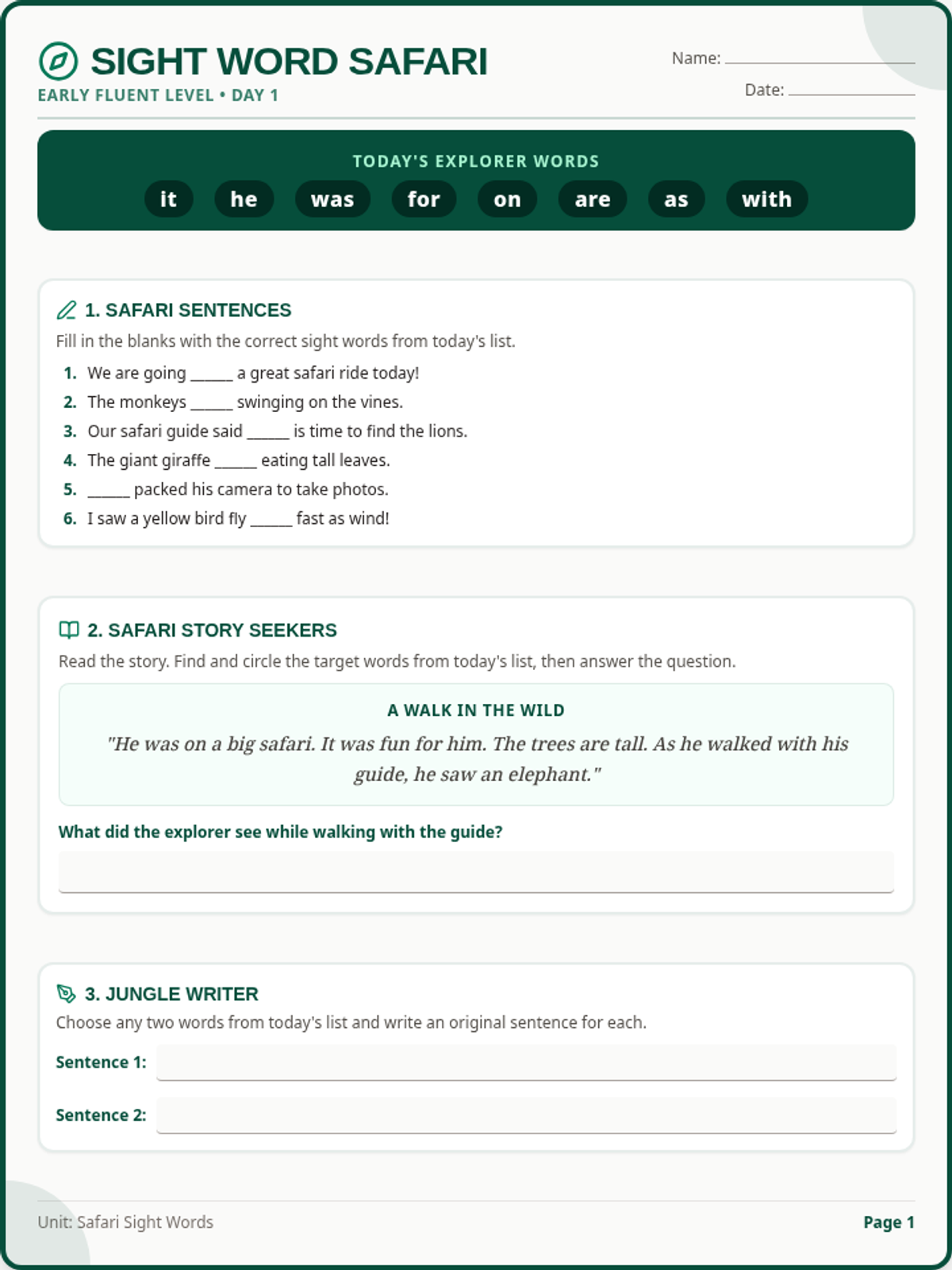
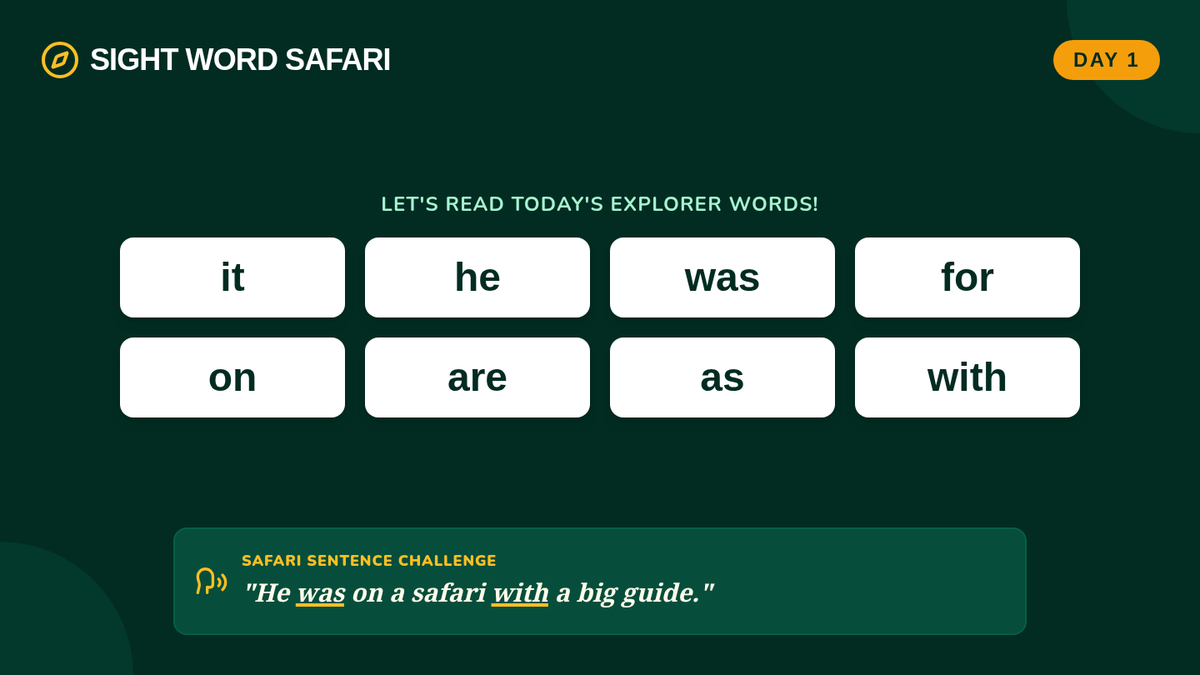
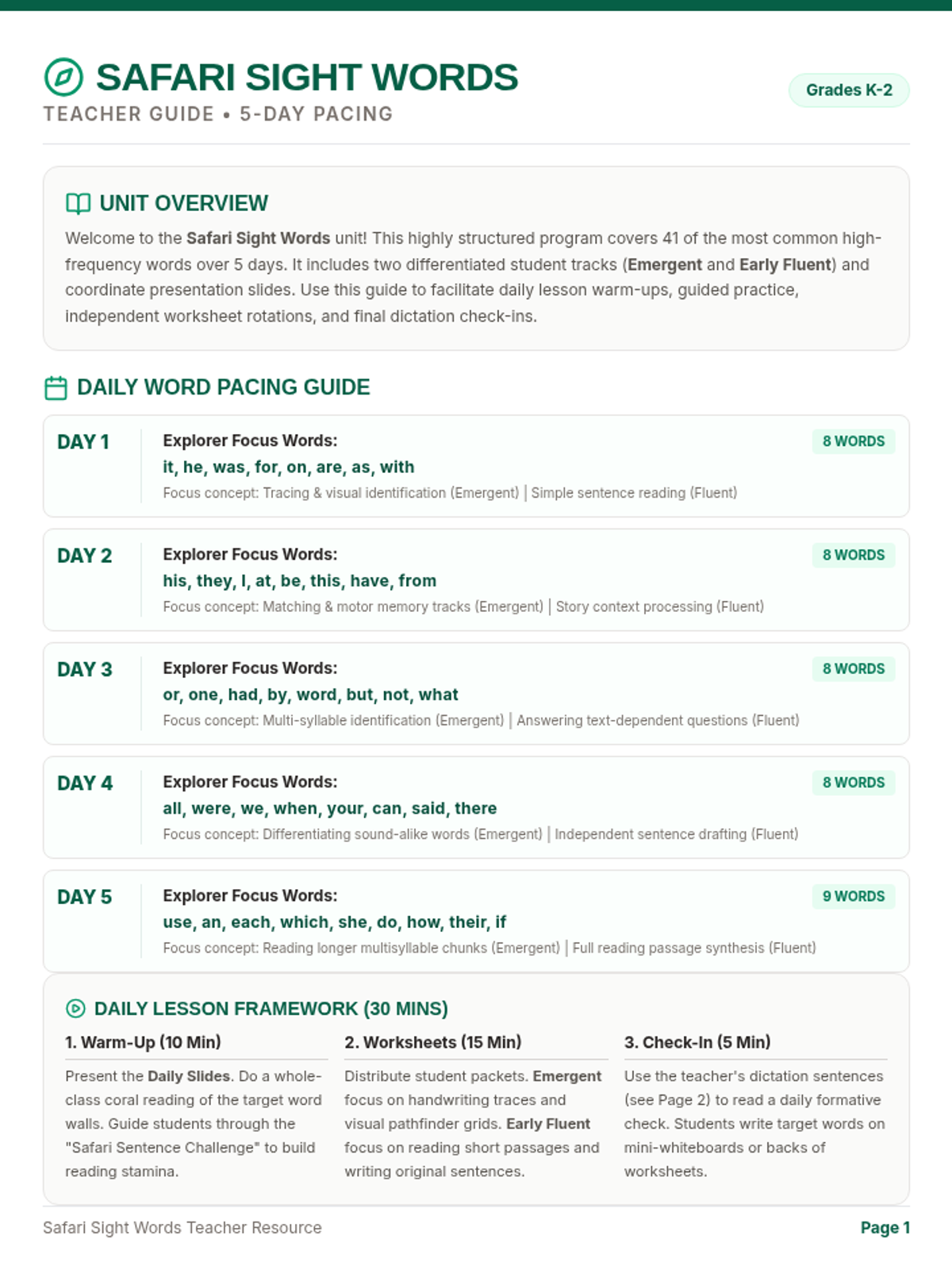
A comprehensive 5-day sight word unit designed for early childhood learners. It includes highly differentiated packets for emergent and early fluent readers, visual classroom slides, and a comprehensive teacher guide with dictation sentences and activity ideas.
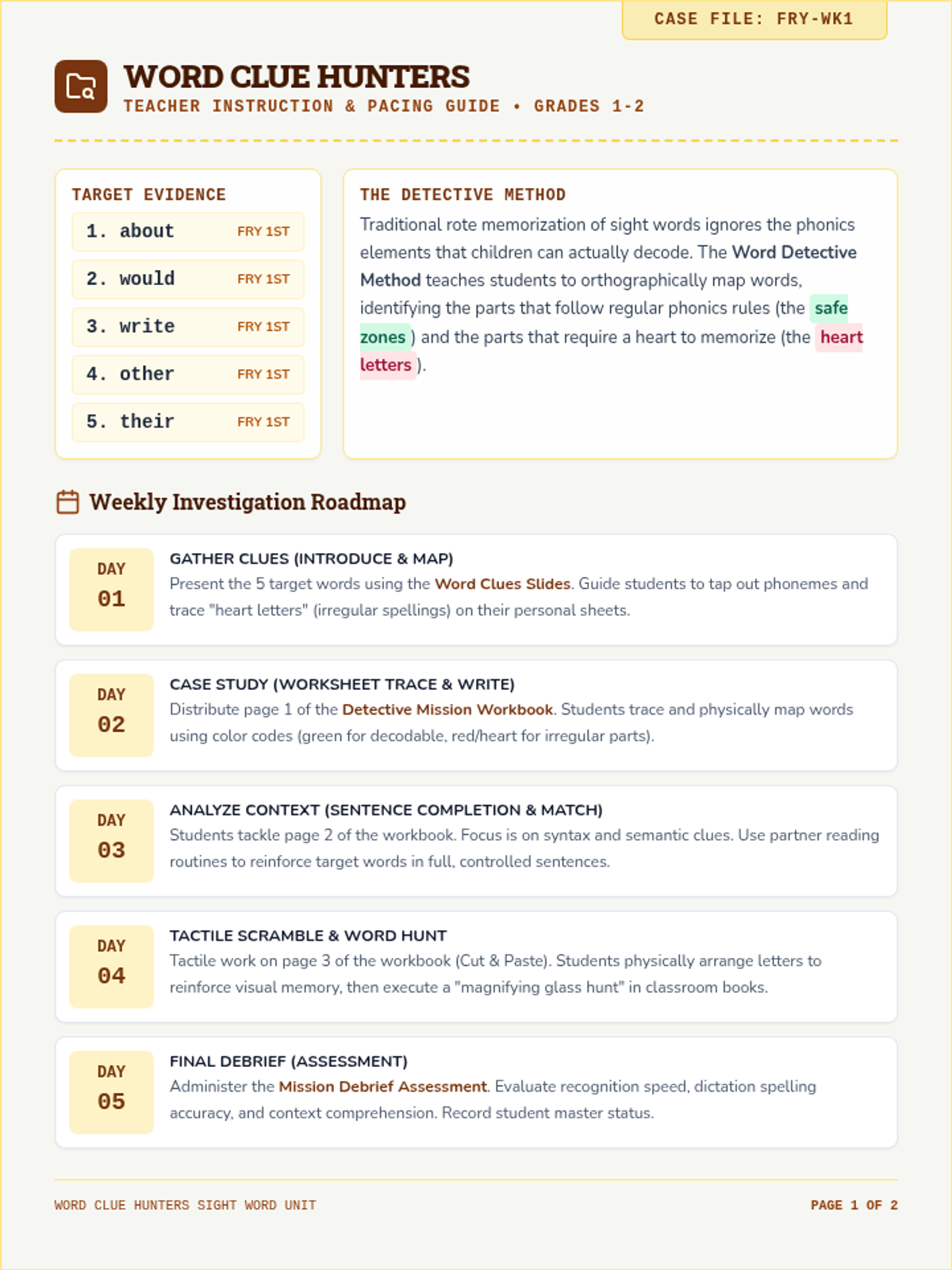
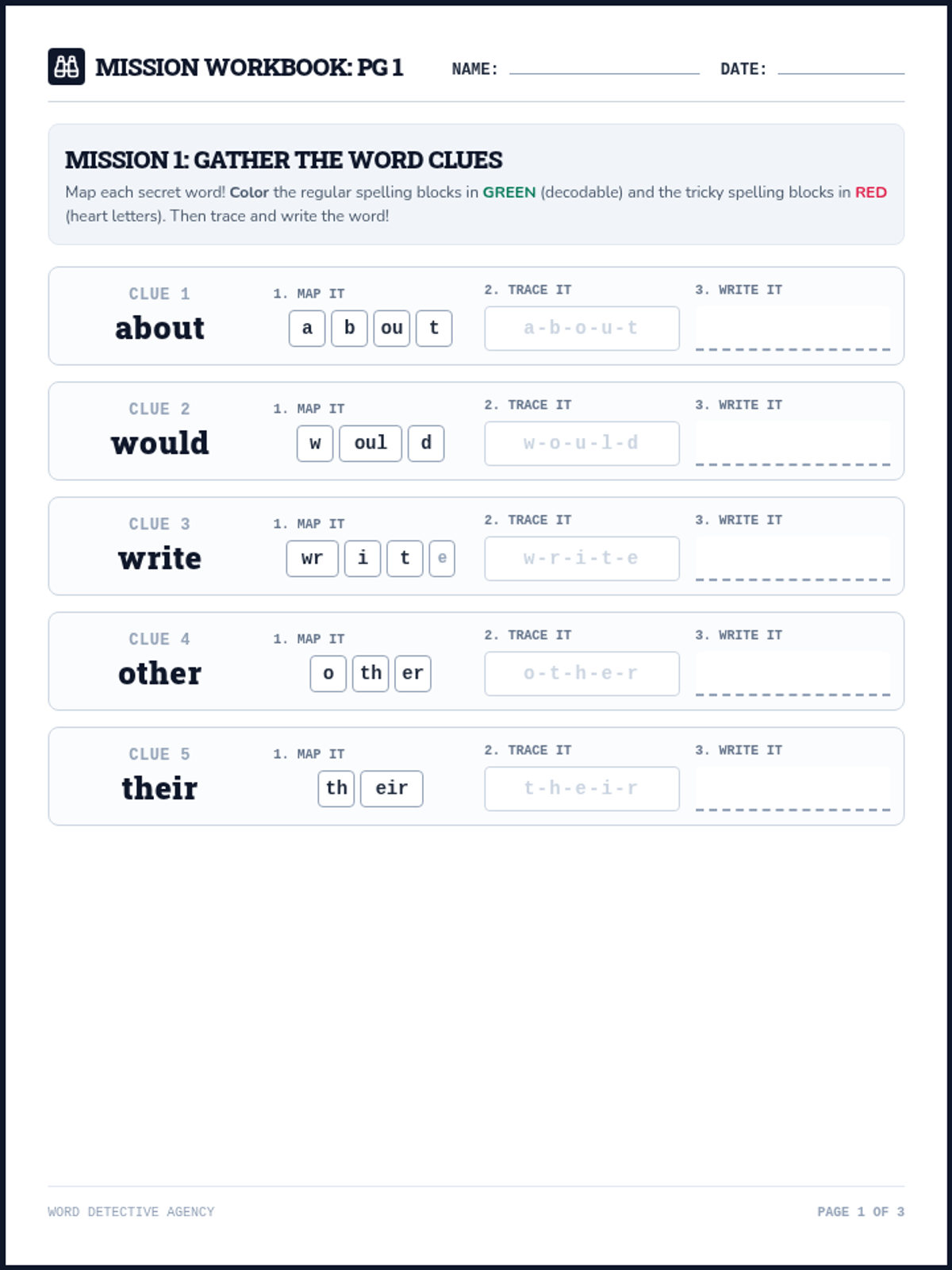
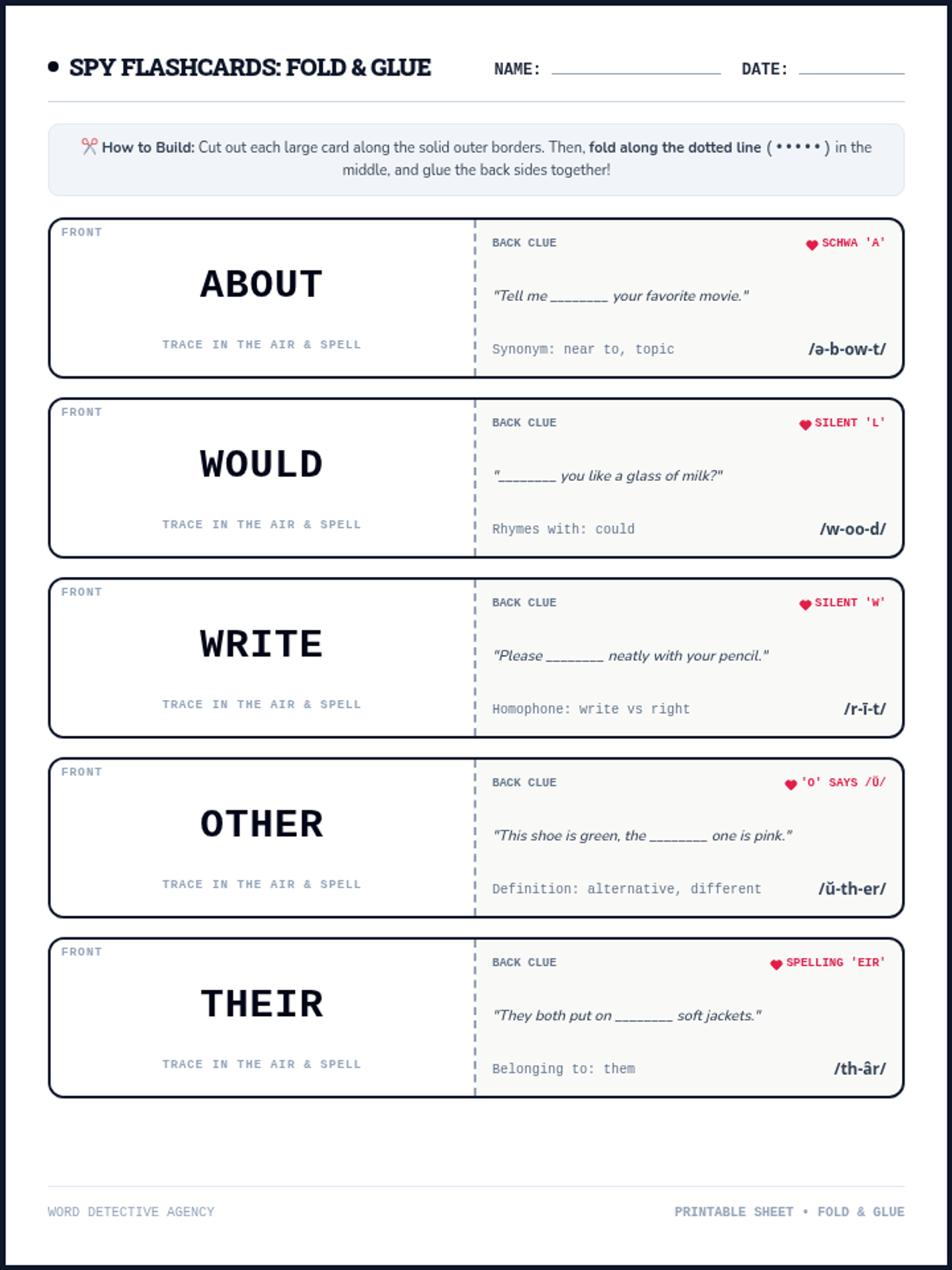
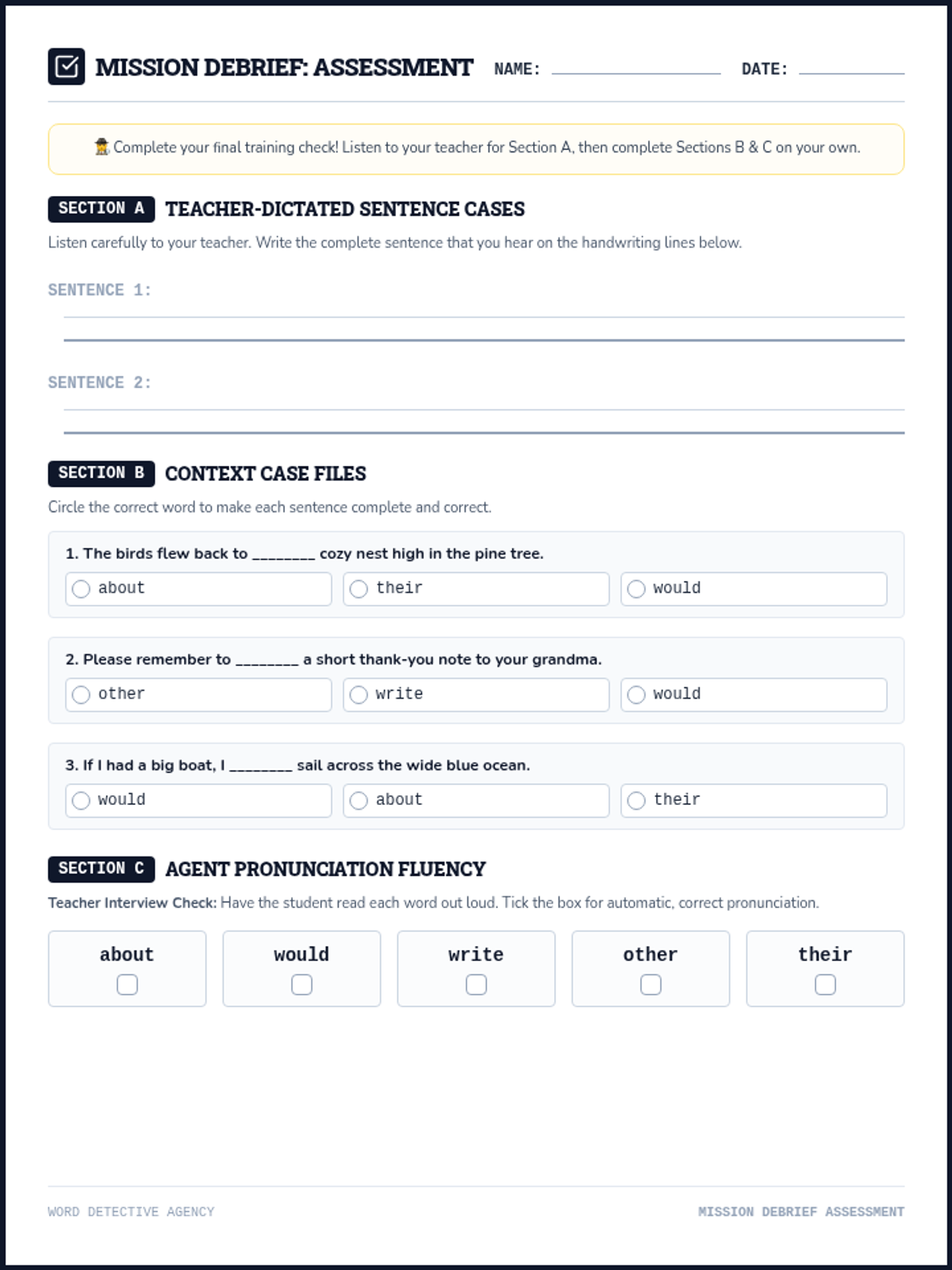
A comprehensive 5-day sight word unit targeting five critical high-frequency Fry words ('about', 'would', 'write', 'other', 'their') through active daily routines, hands-on practice, and a tactile detective-themed investigation.
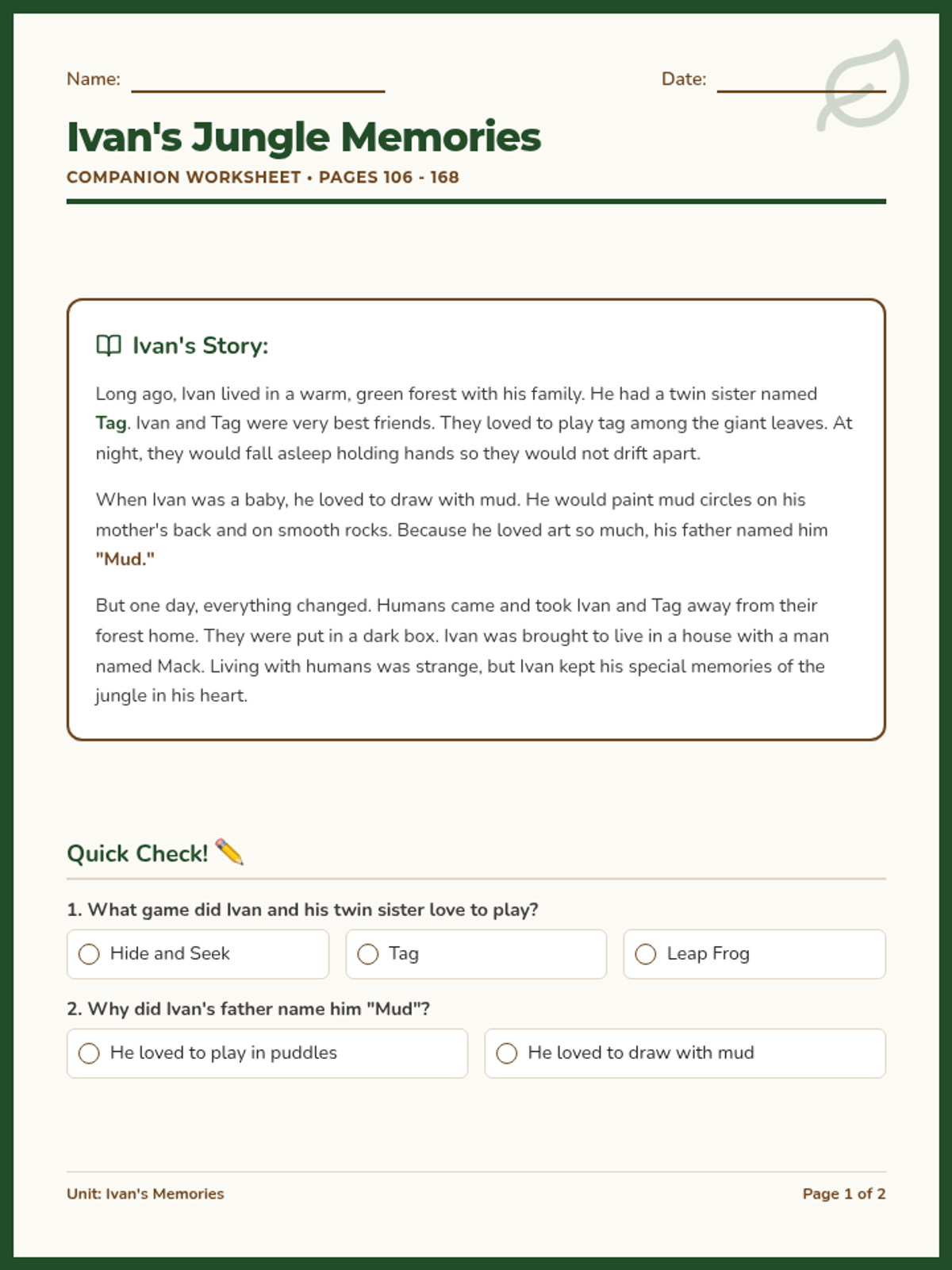
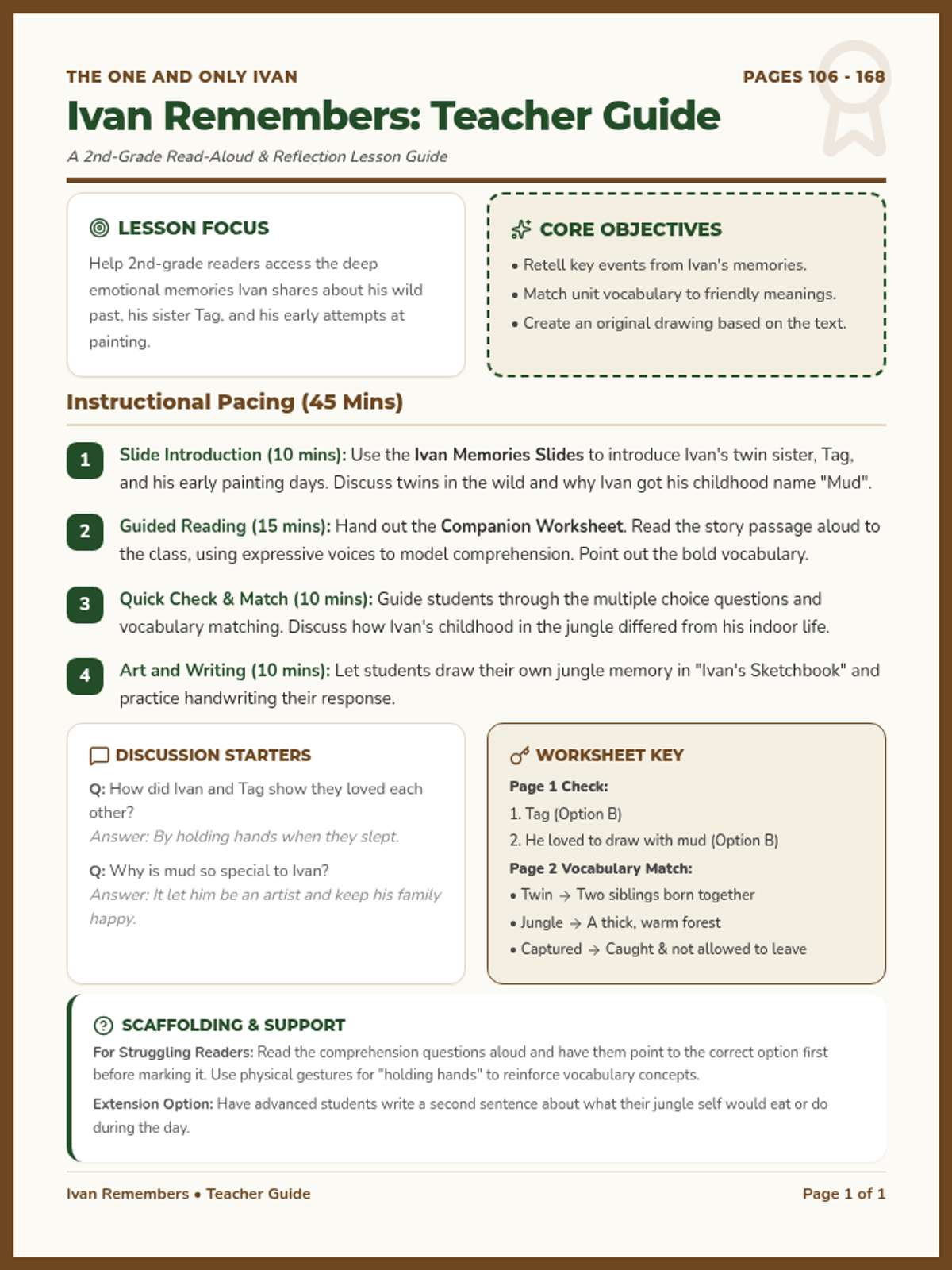
A reading comprehension and creative reflection lesson for 2nd-grade students focusing on pages 106-168 of 'The One and Only Ivan'. This lesson adapts Ivan's poignant jungle memories, his twin sister Tag, and his transition to human life into accessible, gentle, and engaging materials.
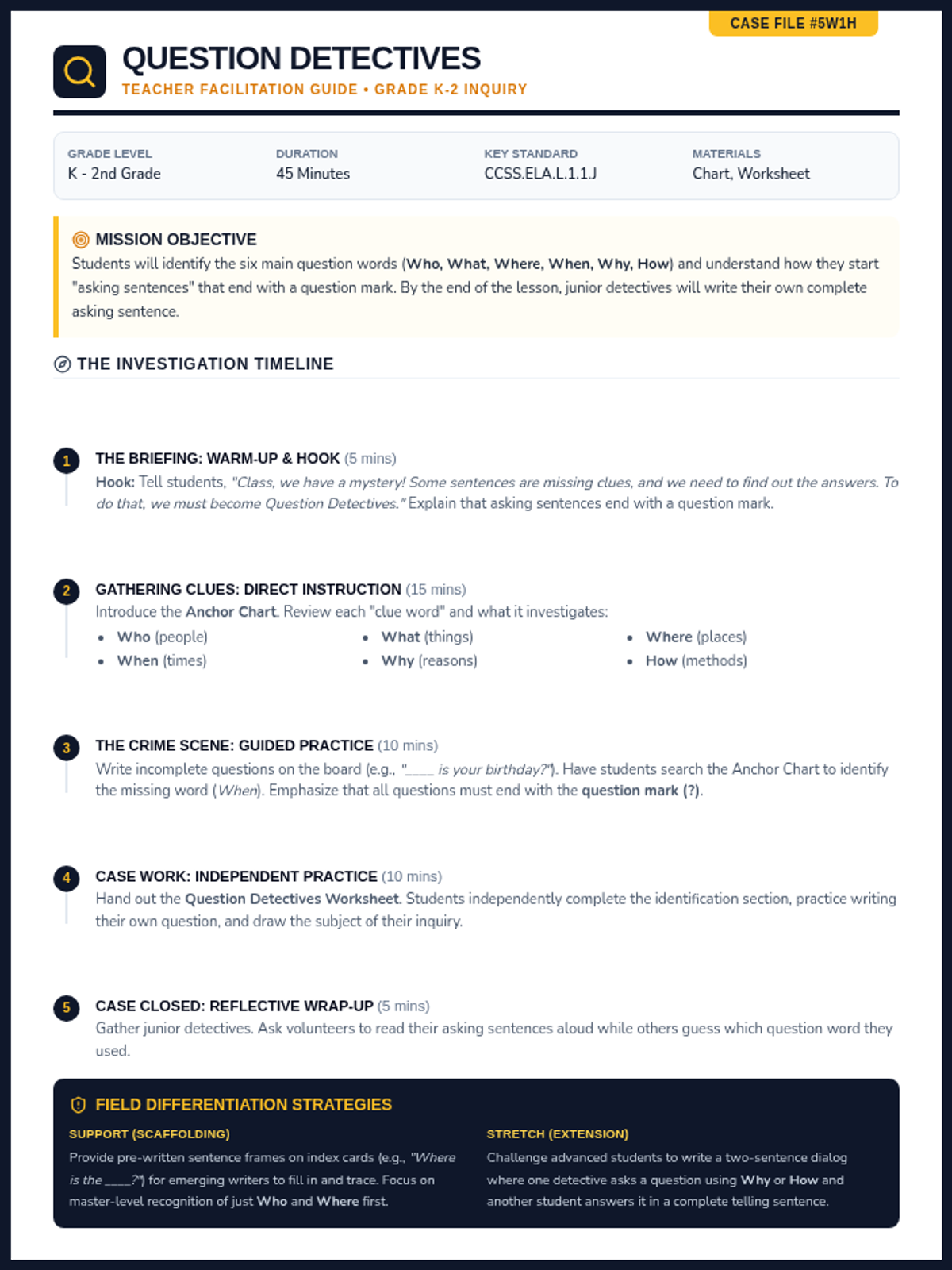
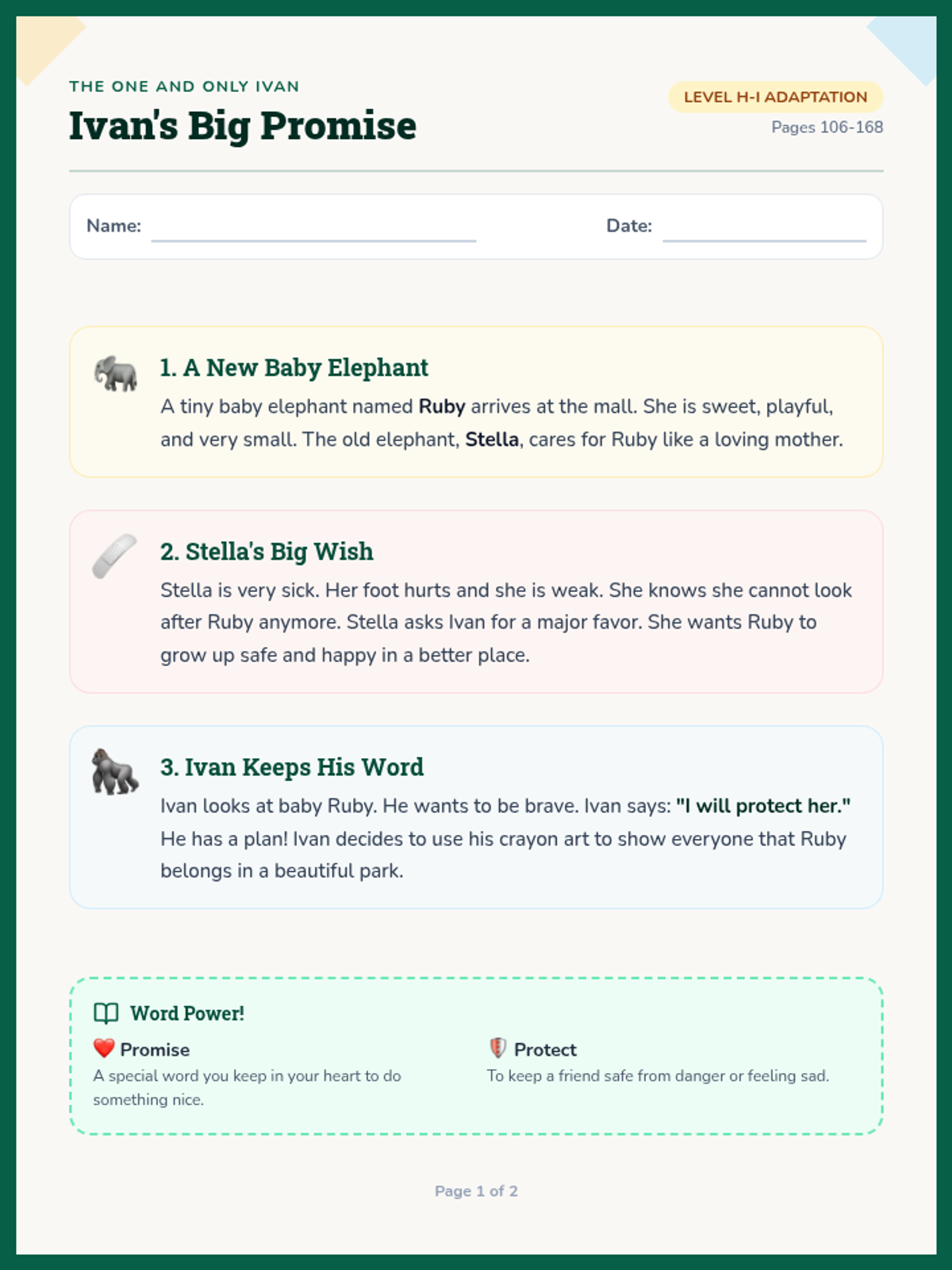
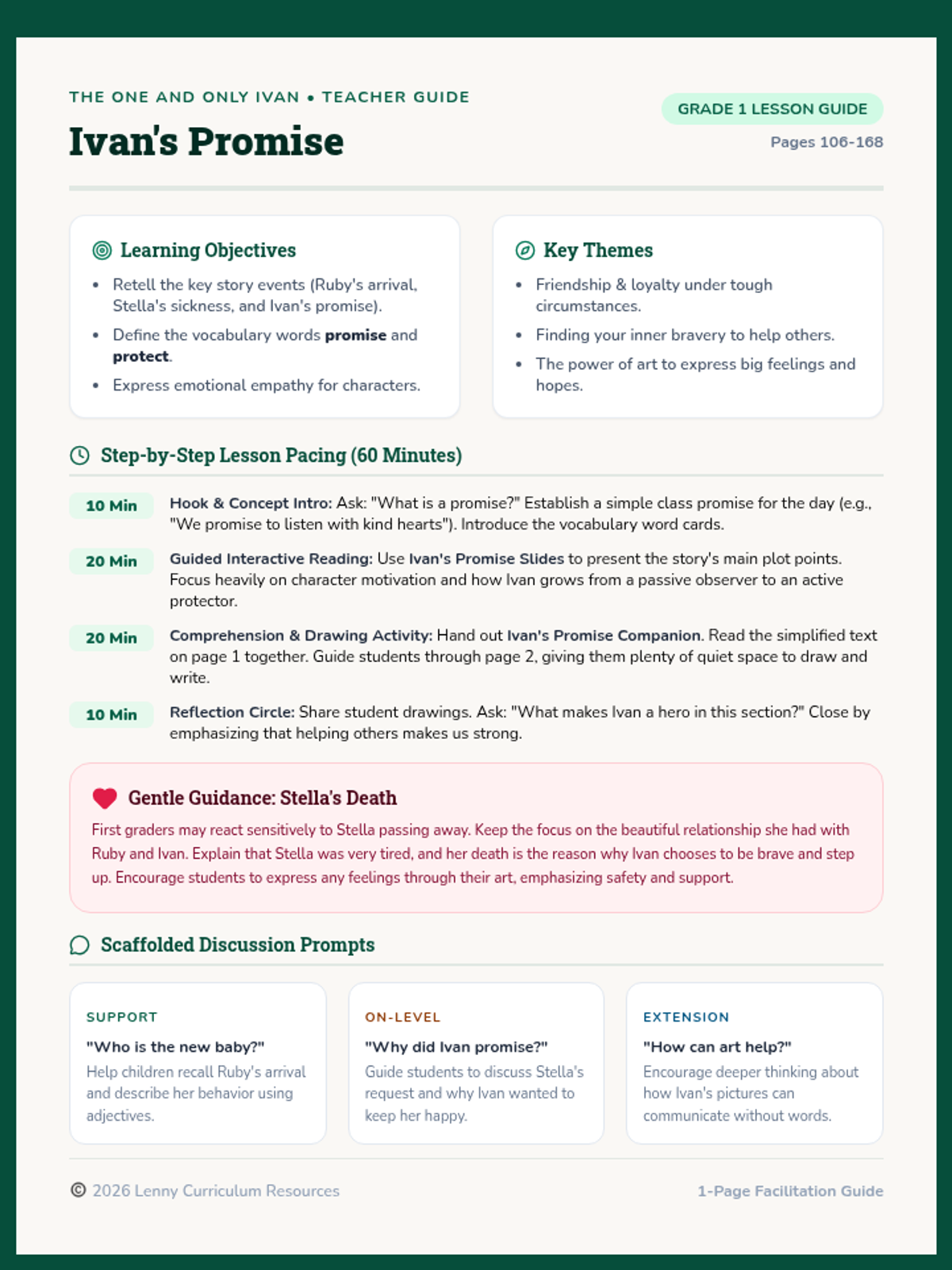
A first-grade lesson focusing on pages 106-168 of The One and Only Ivan, where Ivan makes a big promise to Stella to protect baby Ruby. Students will explore themes of friendship, keeping promises, and caring for others through simplified text, discussion slides, and a creative response sheet.
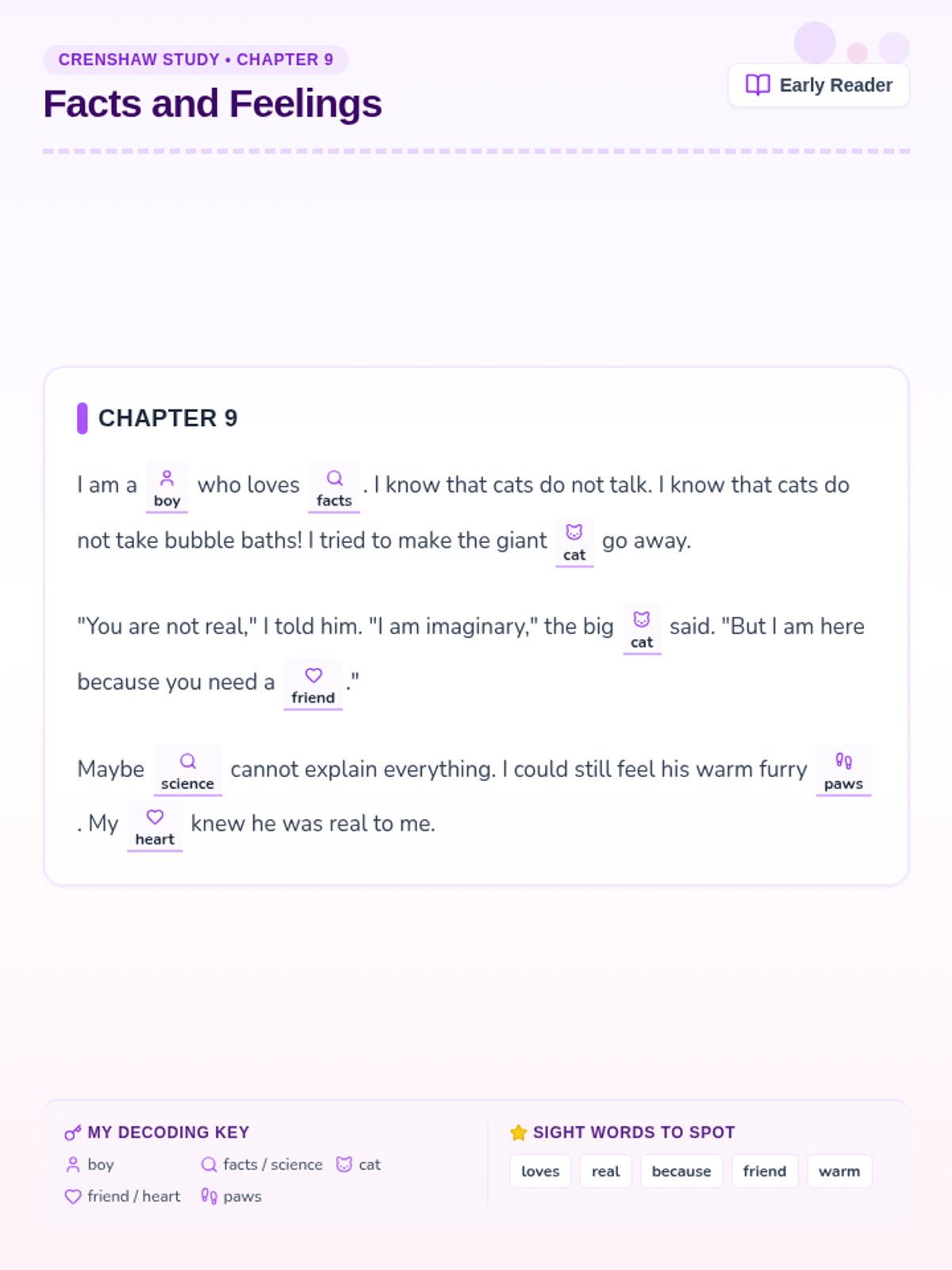
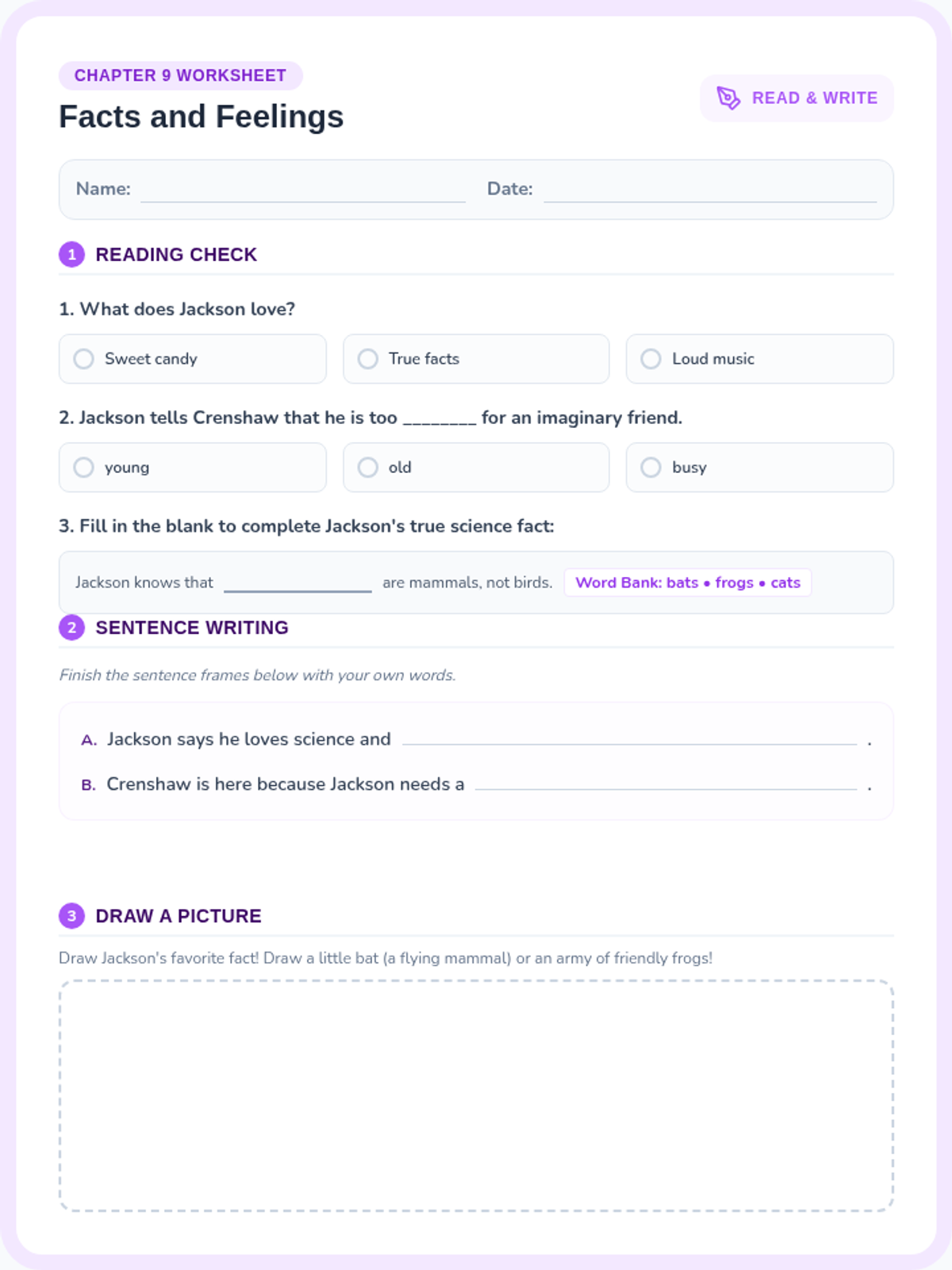
In this lesson, early readers explore Chapter 9 of Crenshaw. Jackson tries to use science and facts to prove that the giant cat is not real, while Crenshaw helps him realize that some things can be felt even if they cannot be proven.
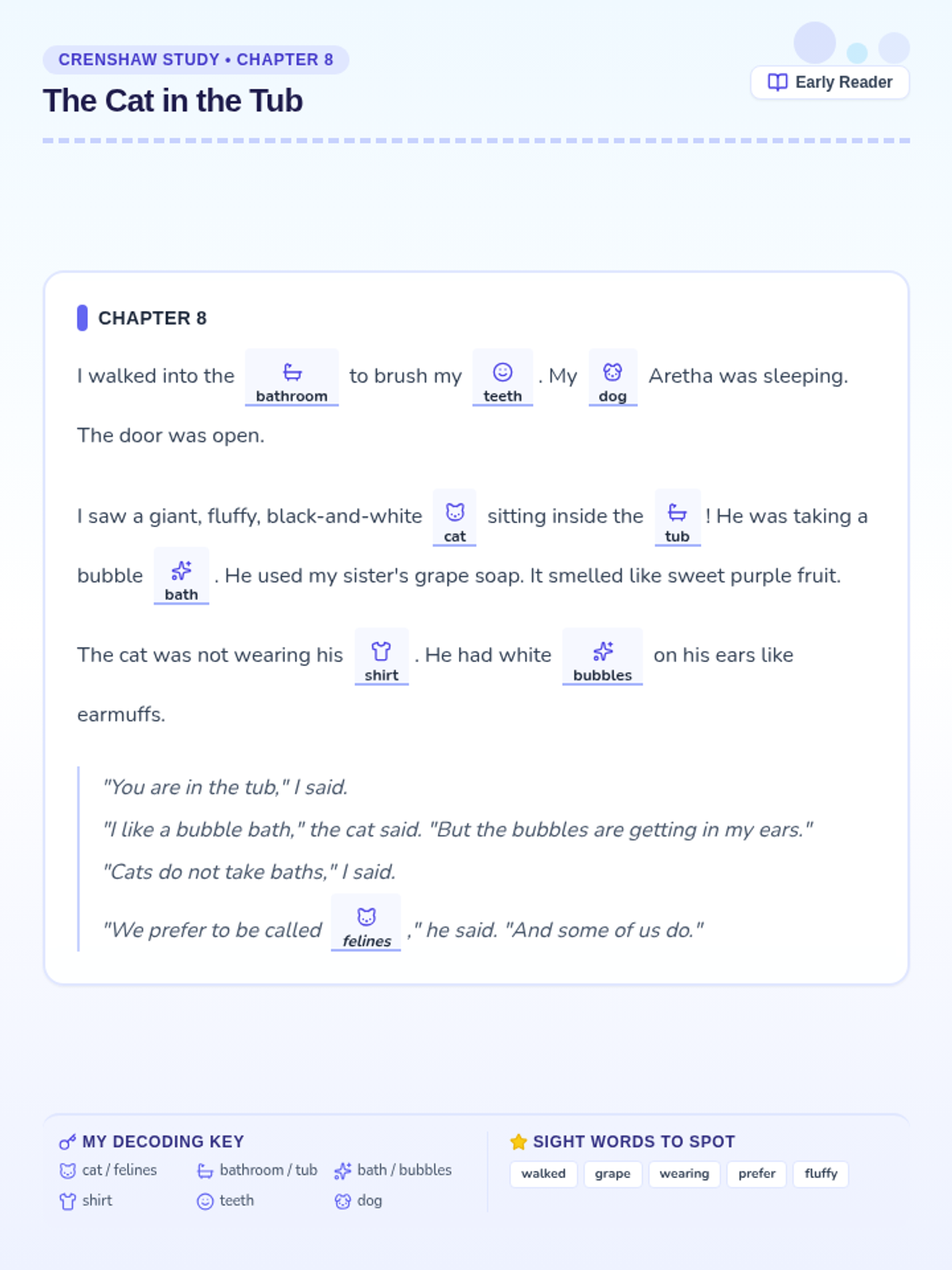
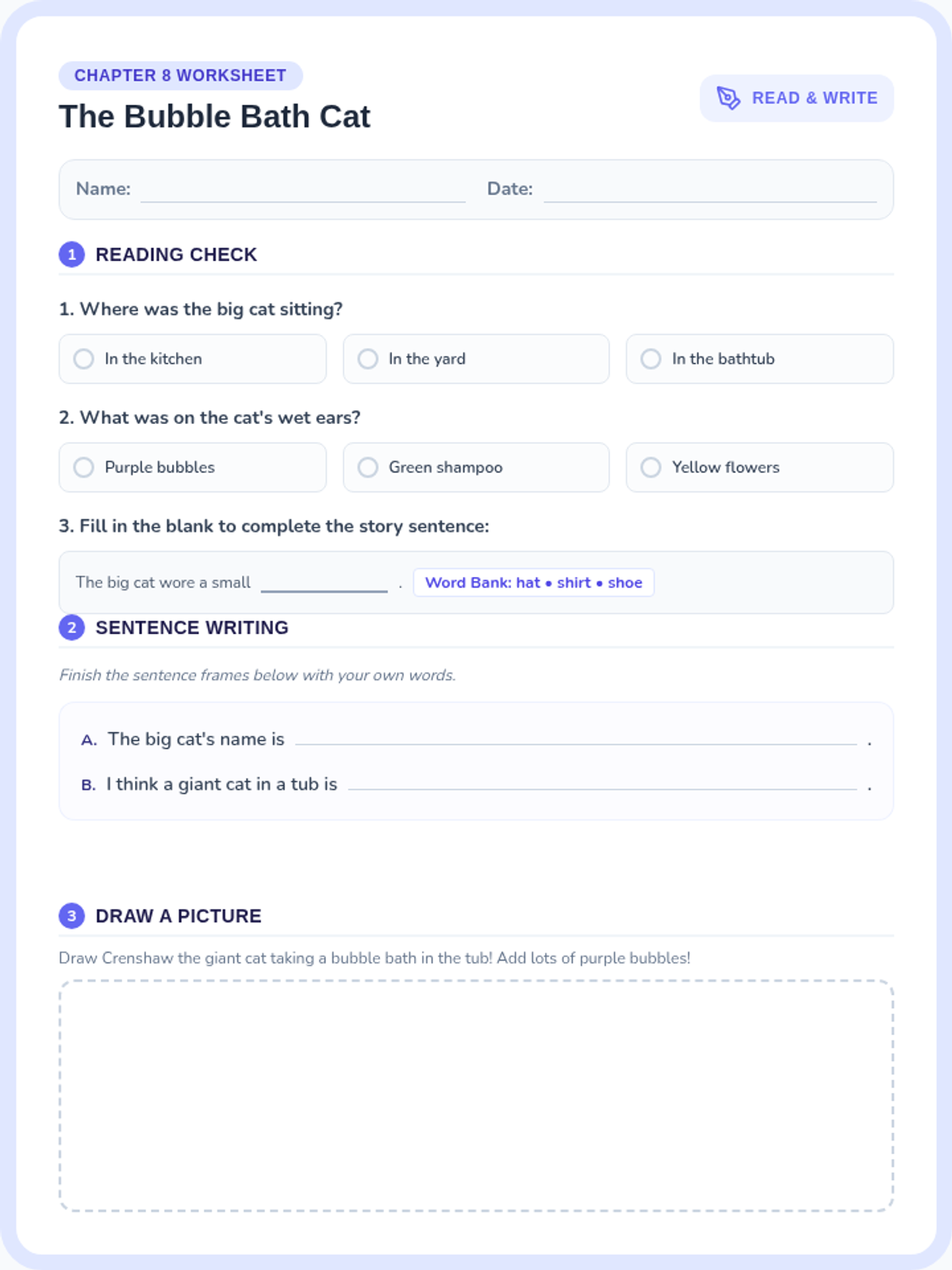
In this lesson, early readers are introduced to Chapter 8 of Crenshaw. Students read an adapted version of the chapter where Jackson finds a giant imaginary cat taking a bubble bath, and then complete a comprehension and writing worksheet.
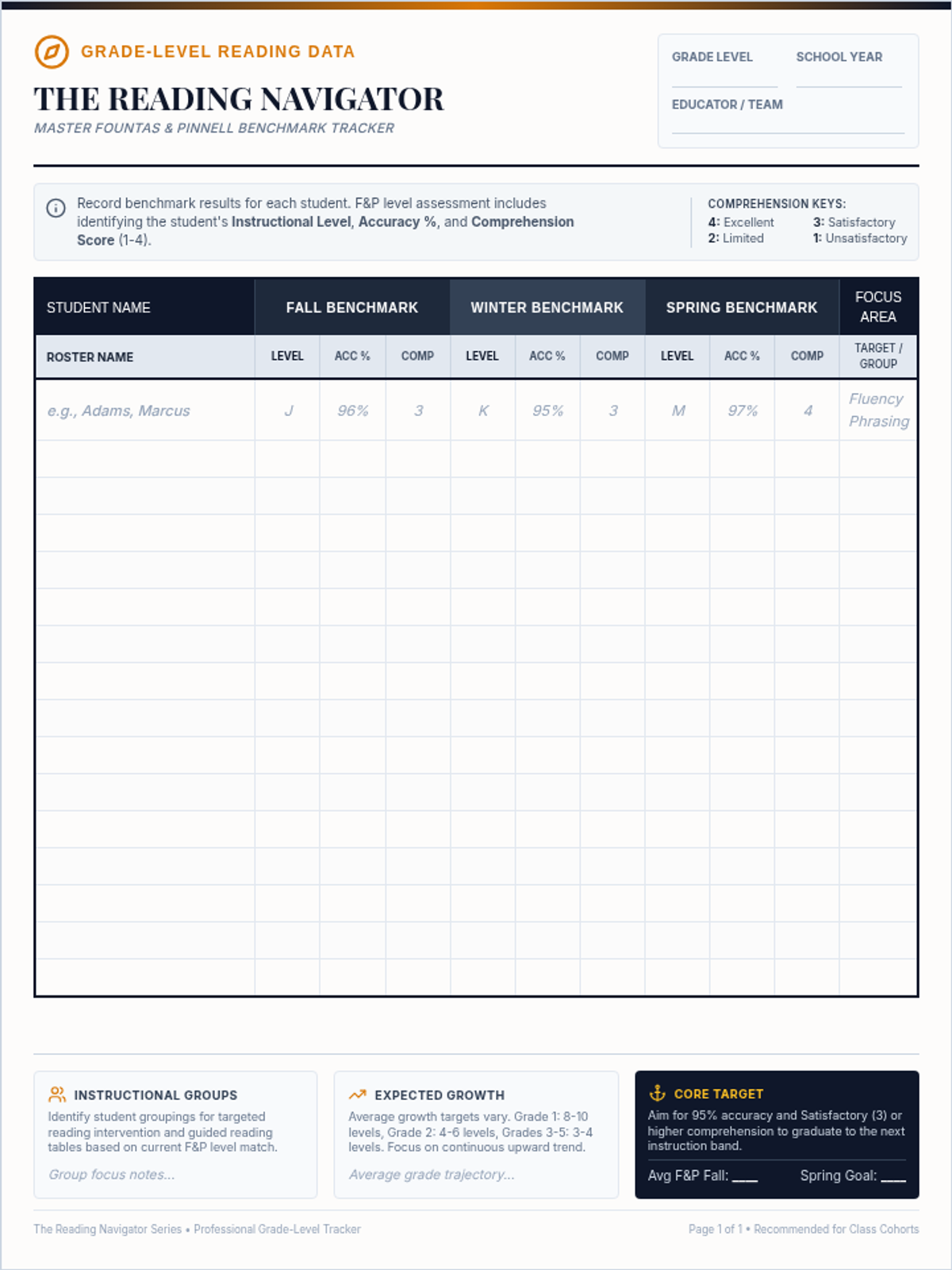
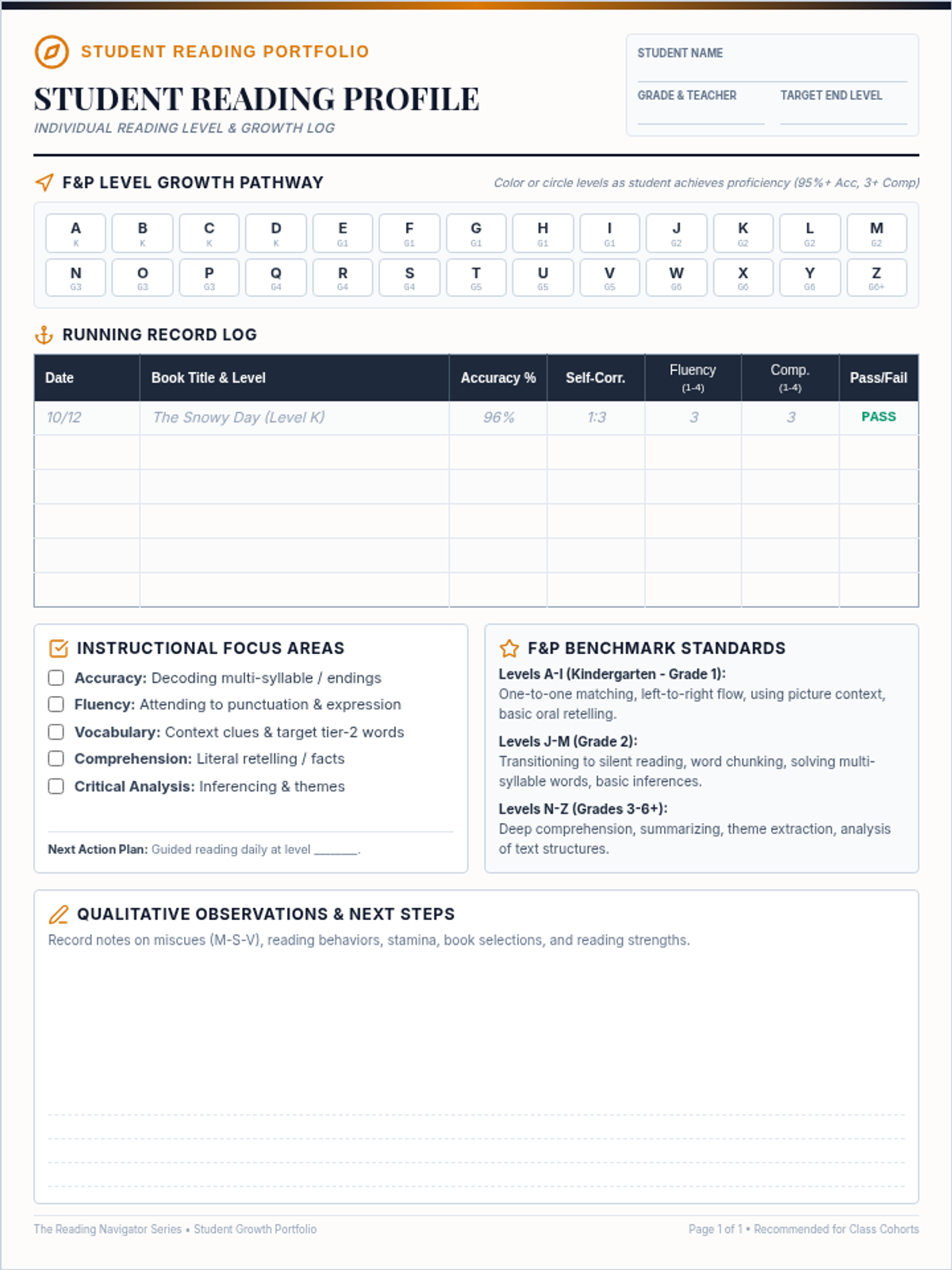
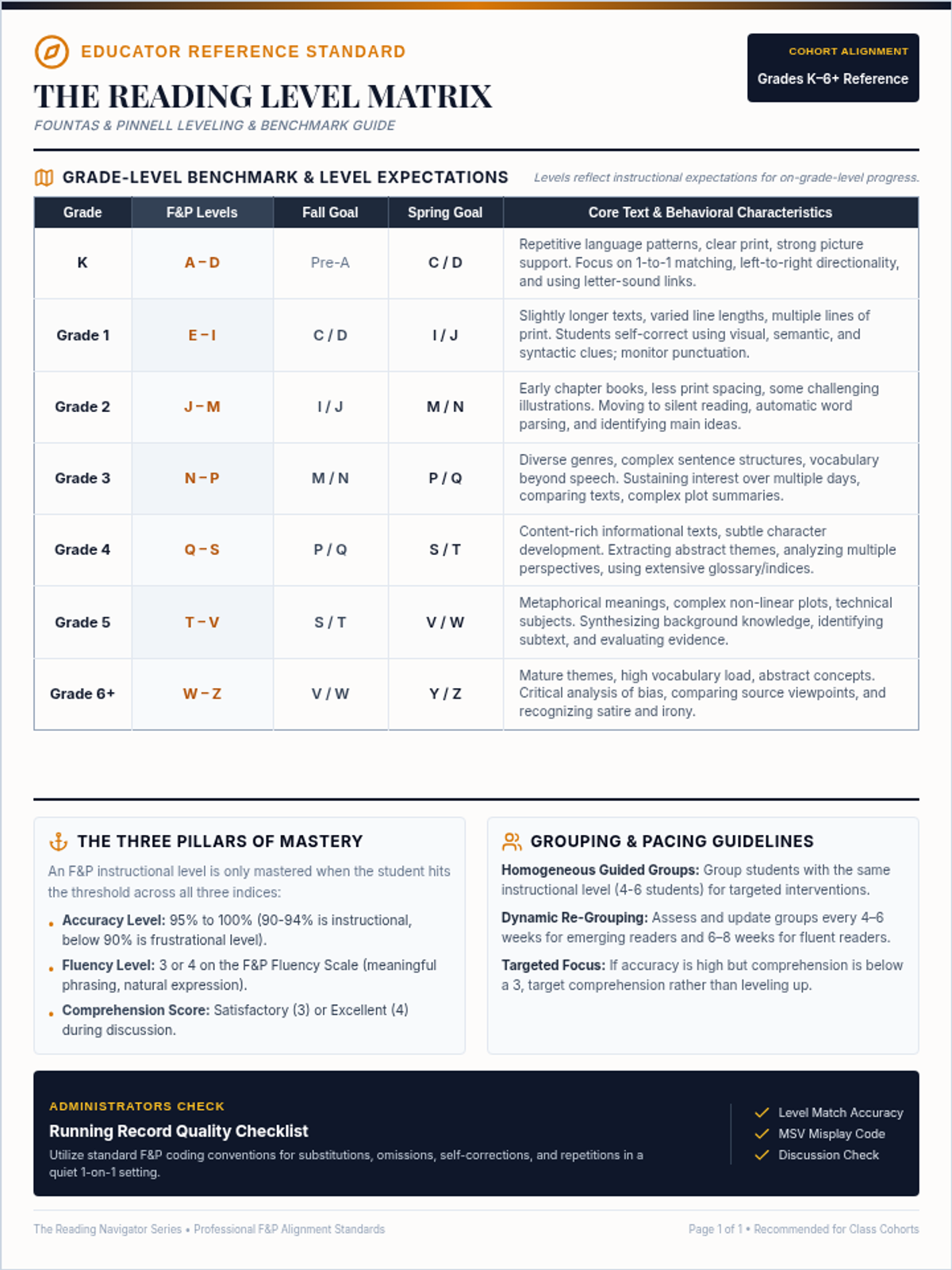
A comprehensive Fountas & Pinnell reading level tracking system for grade-level teams and individual teachers, featuring a master grade-level tracker, individual student profiles, and an F&P levels reference matrix.
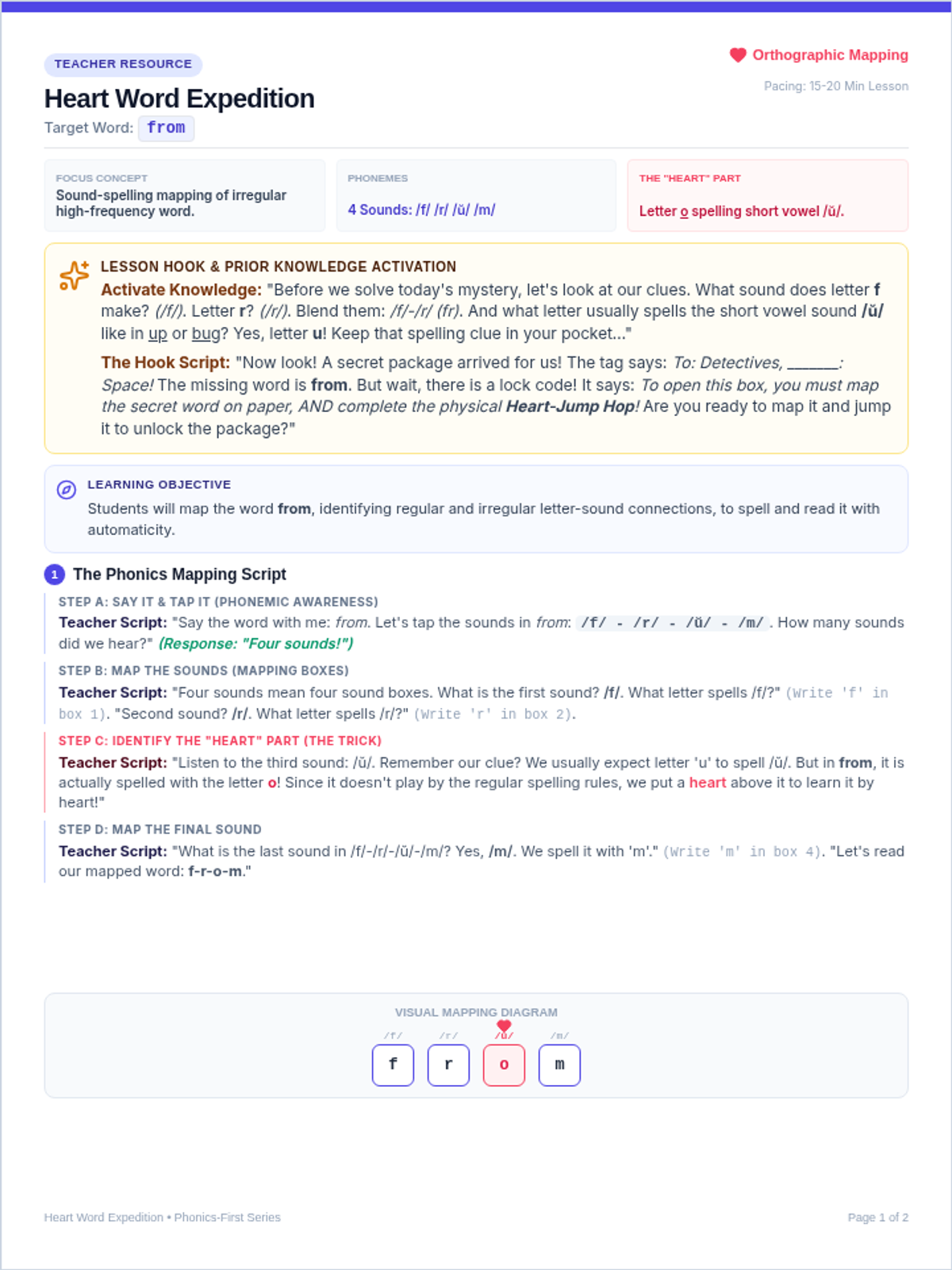
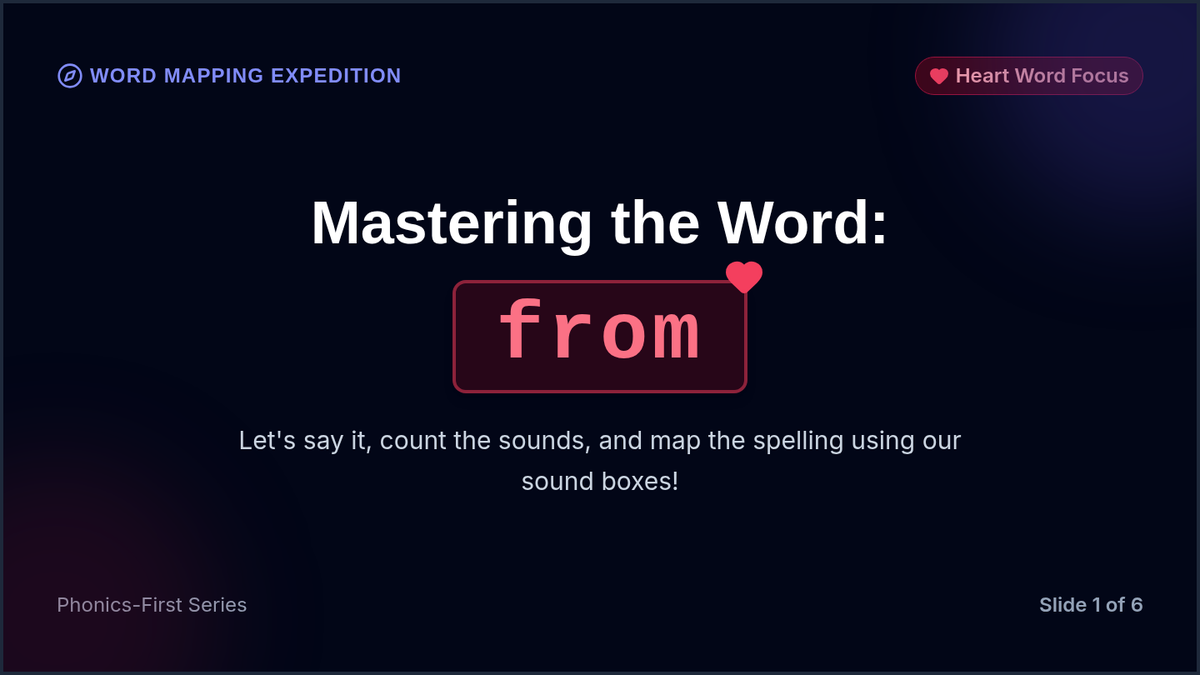
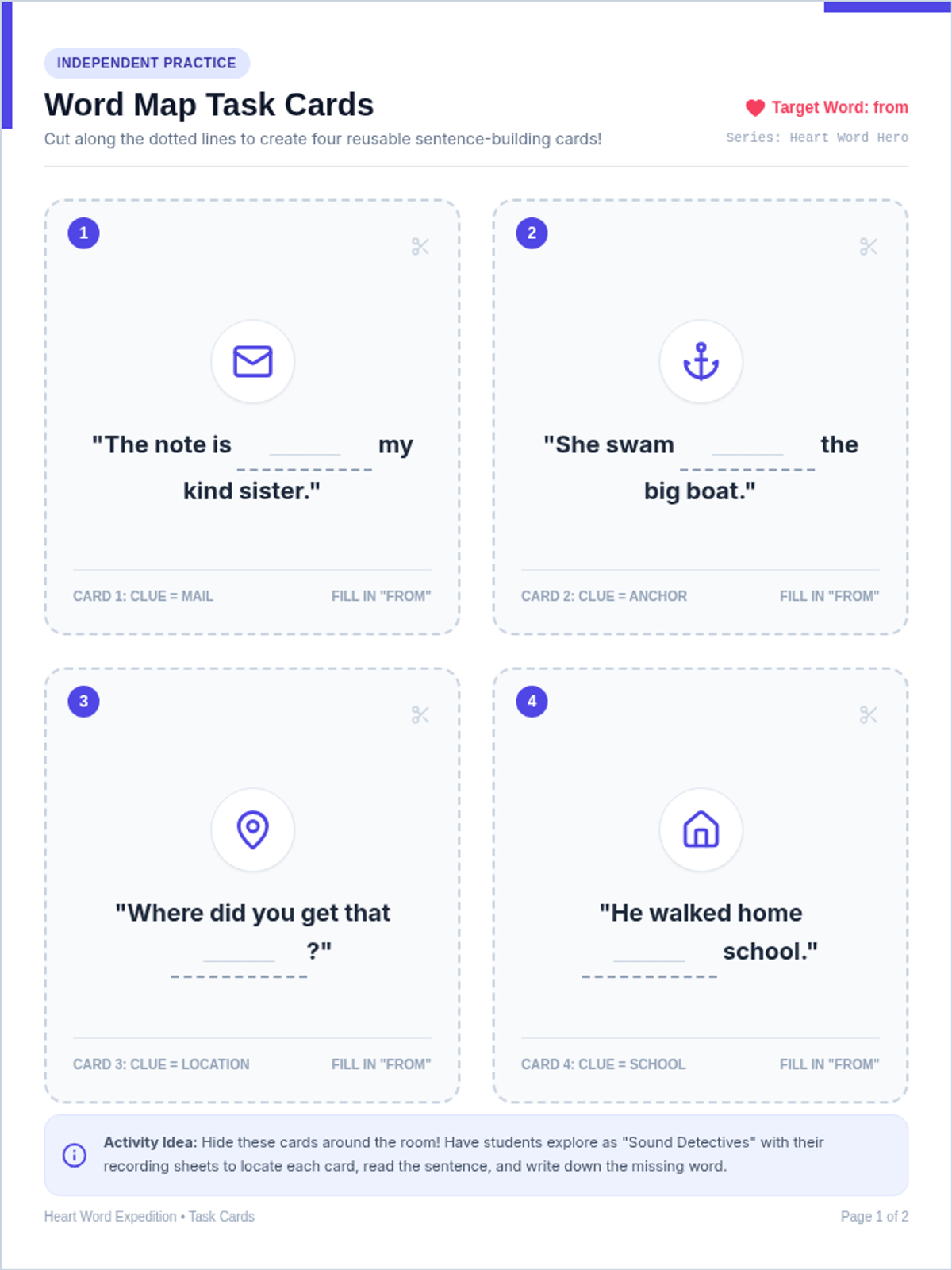
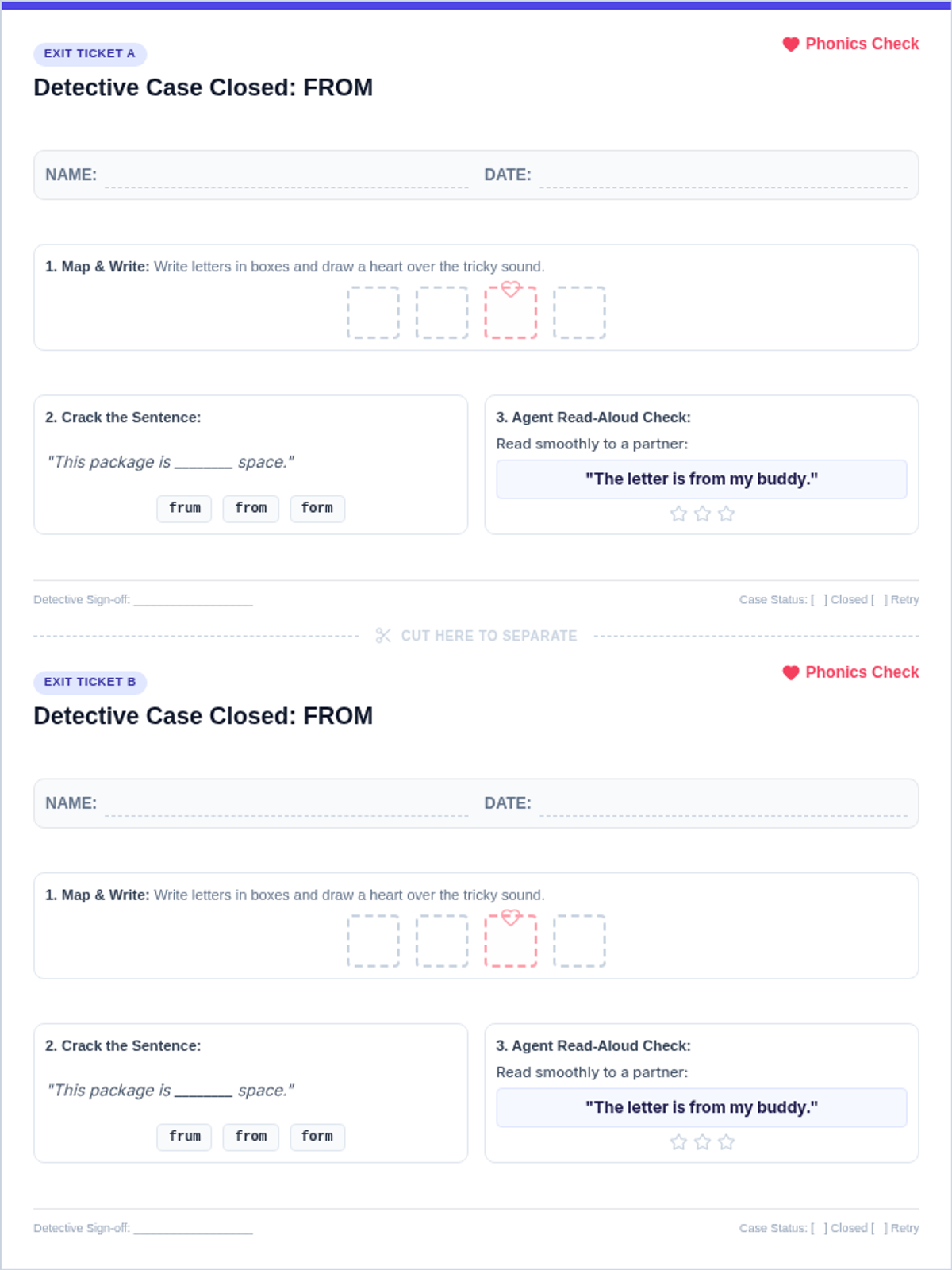
A targeted phonics-based mini-lesson that utilizes orthographic mapping to help students decode, map, and master the high-frequency word "from". Students move from sound-spelling mapping to interactive slide activities and hands-on sentence-building task cards.
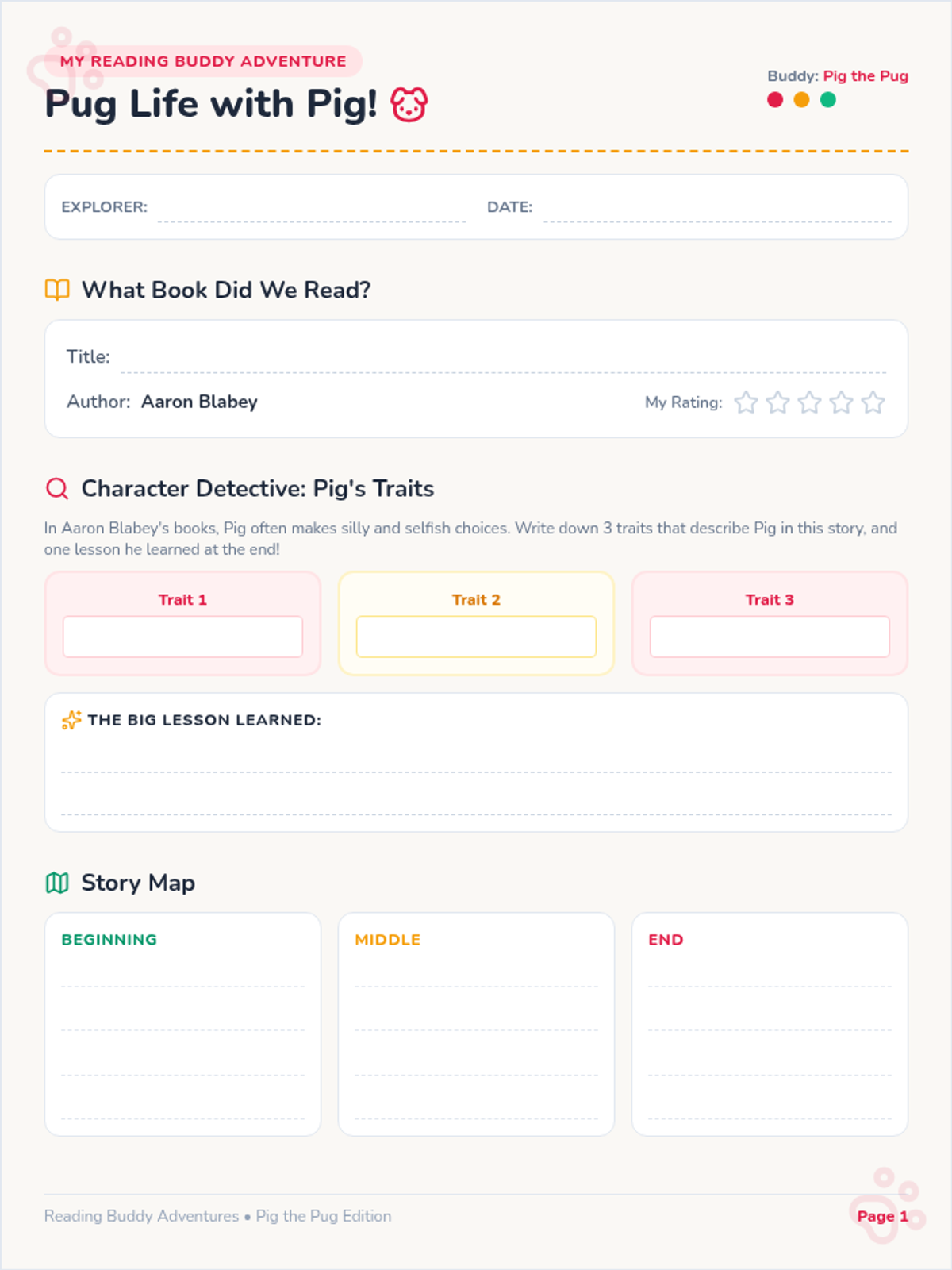
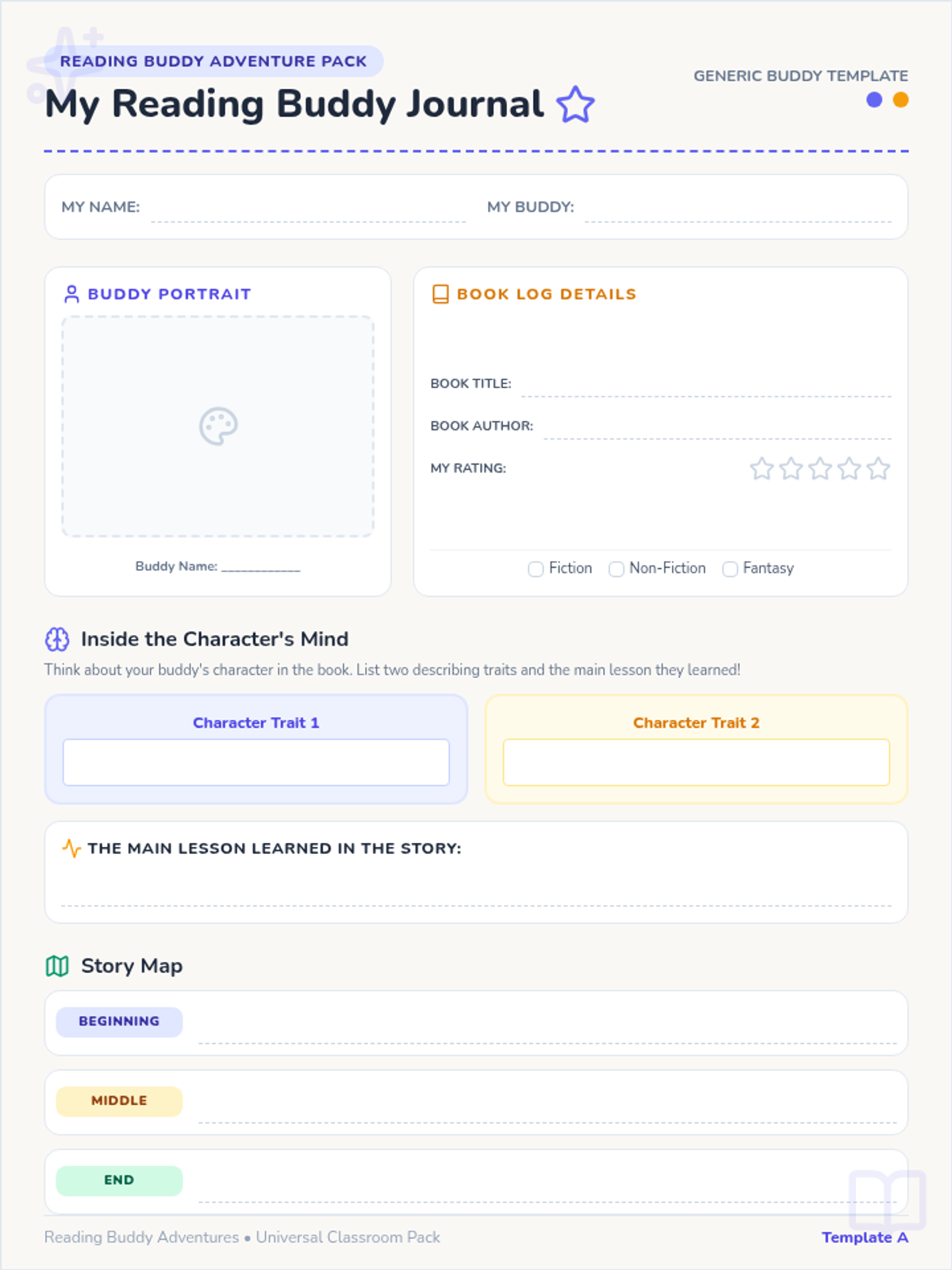
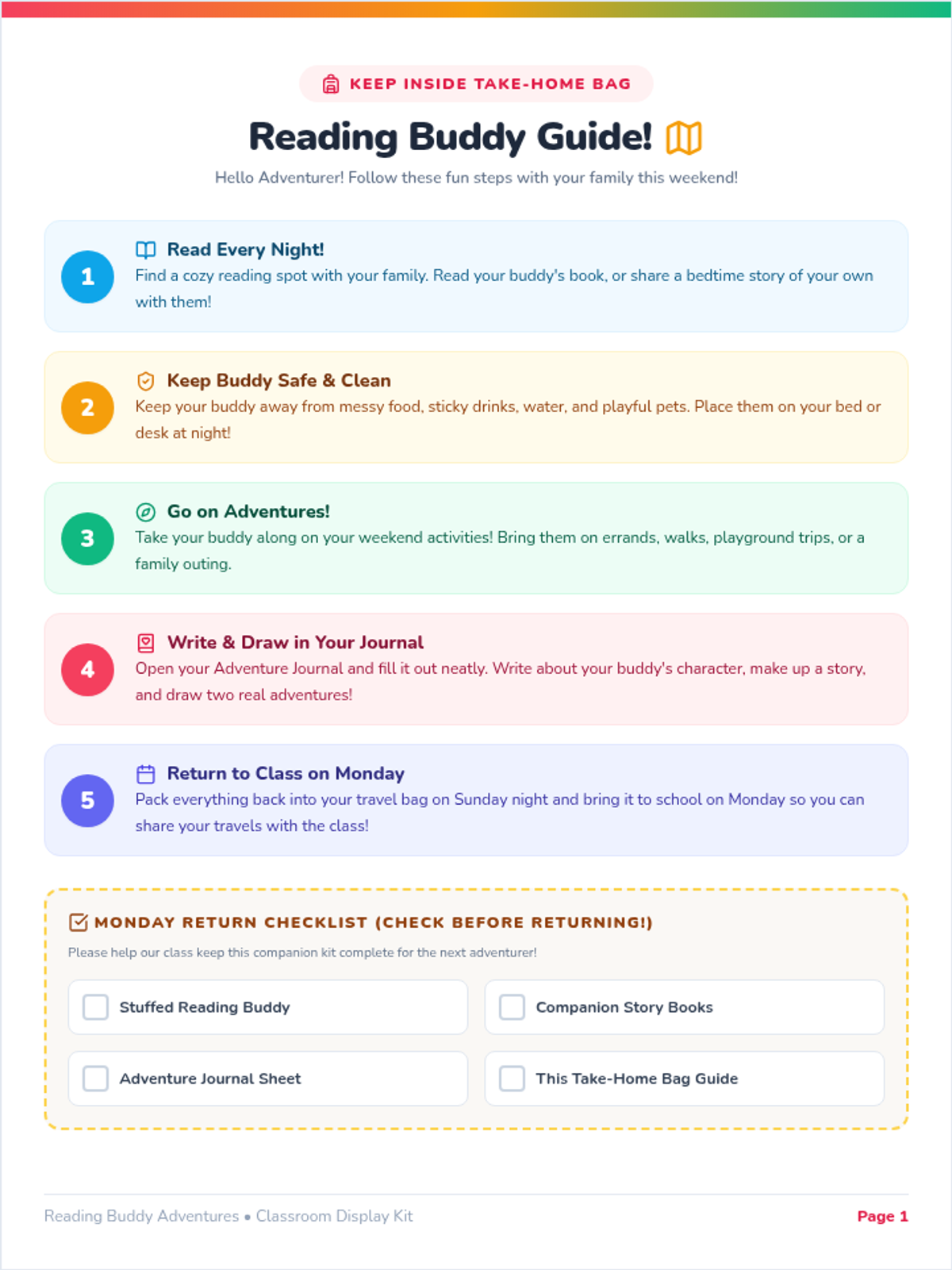
A magical reading initiative where students take home a stuffed book character (starting with Pig the Pug) along with companion books. They read the books, document character traits, write imaginative stories, and keep an interactive travel journal of their real-world adventures with their buddy.
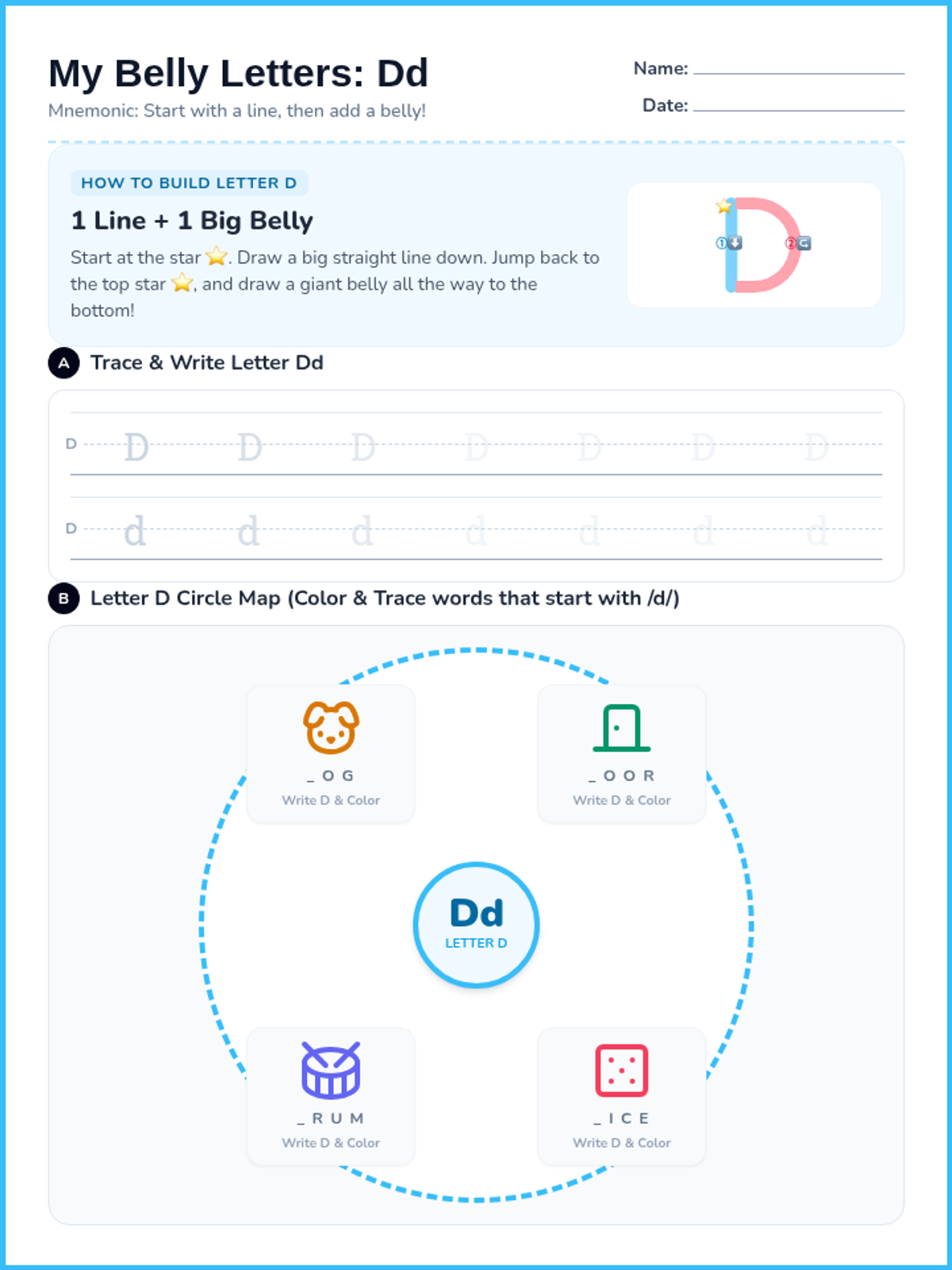
A sensory-rich, early literacy lesson focusing on the handwriting and phonics of letters D, B, and P. Using the visual mnemonic 'Start with a line, then add a belly,' students learn correct letter formation and build foundational phonemic awareness through engaging Circle Maps.
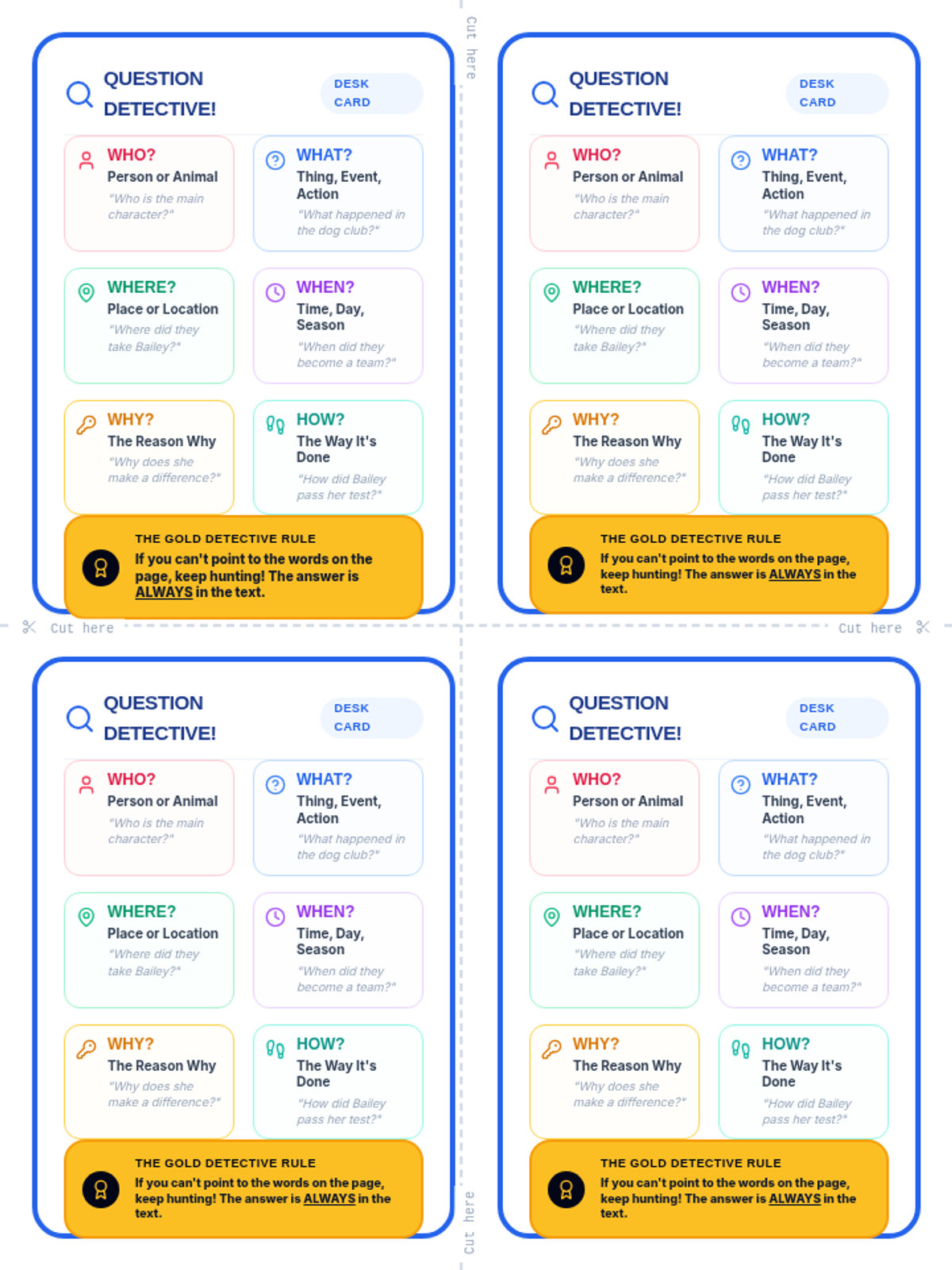
A collection of visual resources to help students locate text evidence and answer key comprehension questions using the 5Ws and How framework.
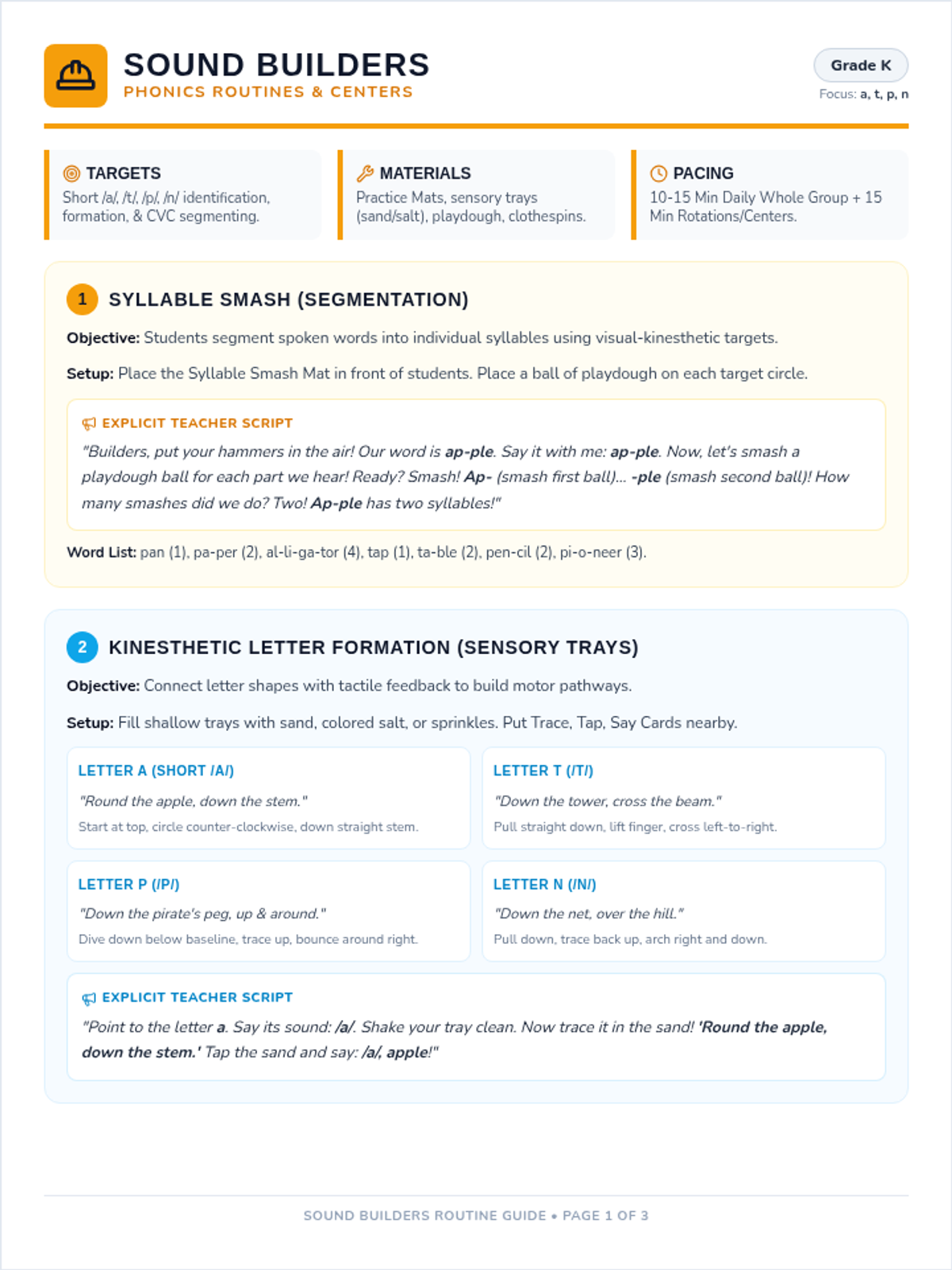
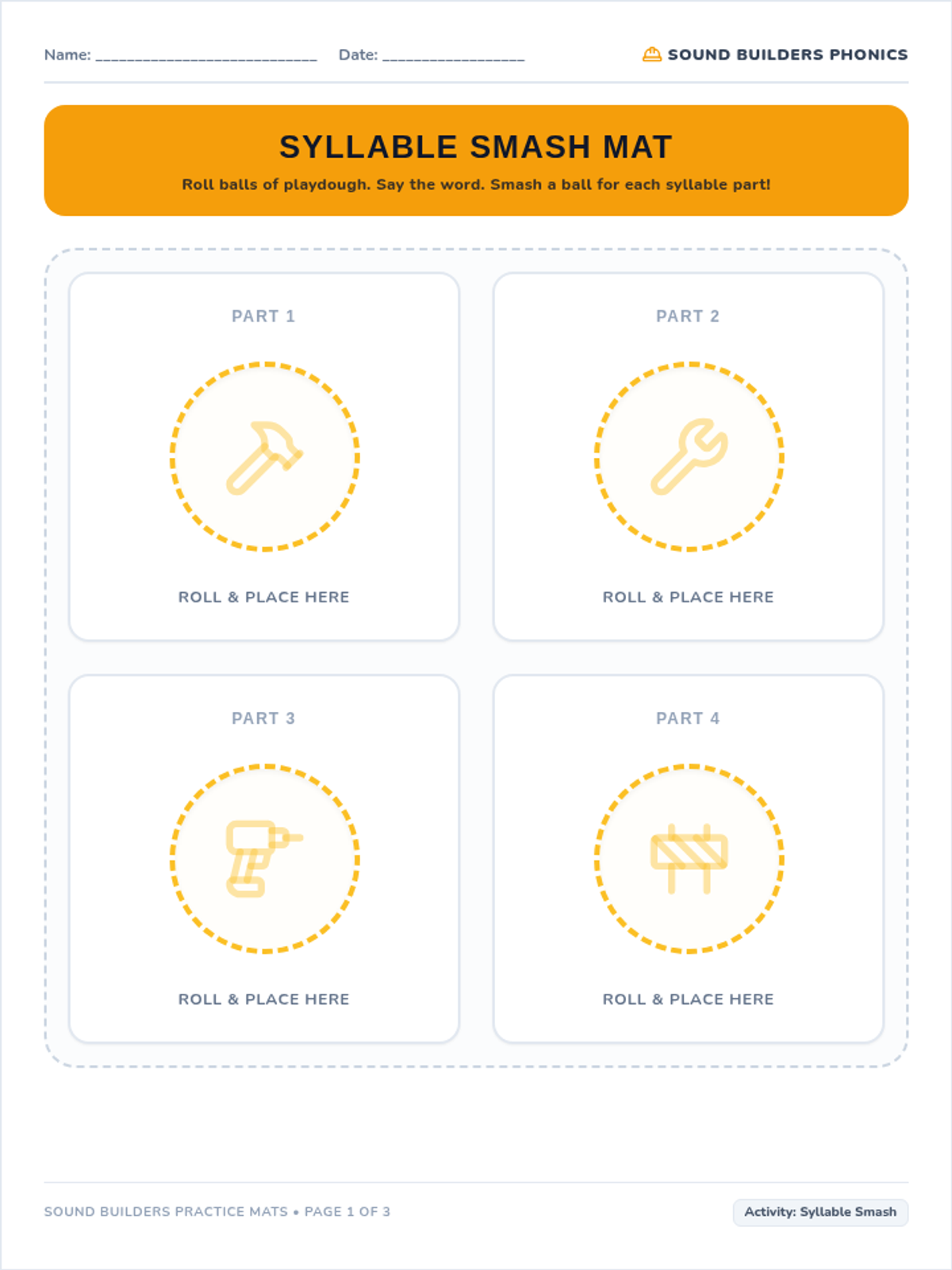
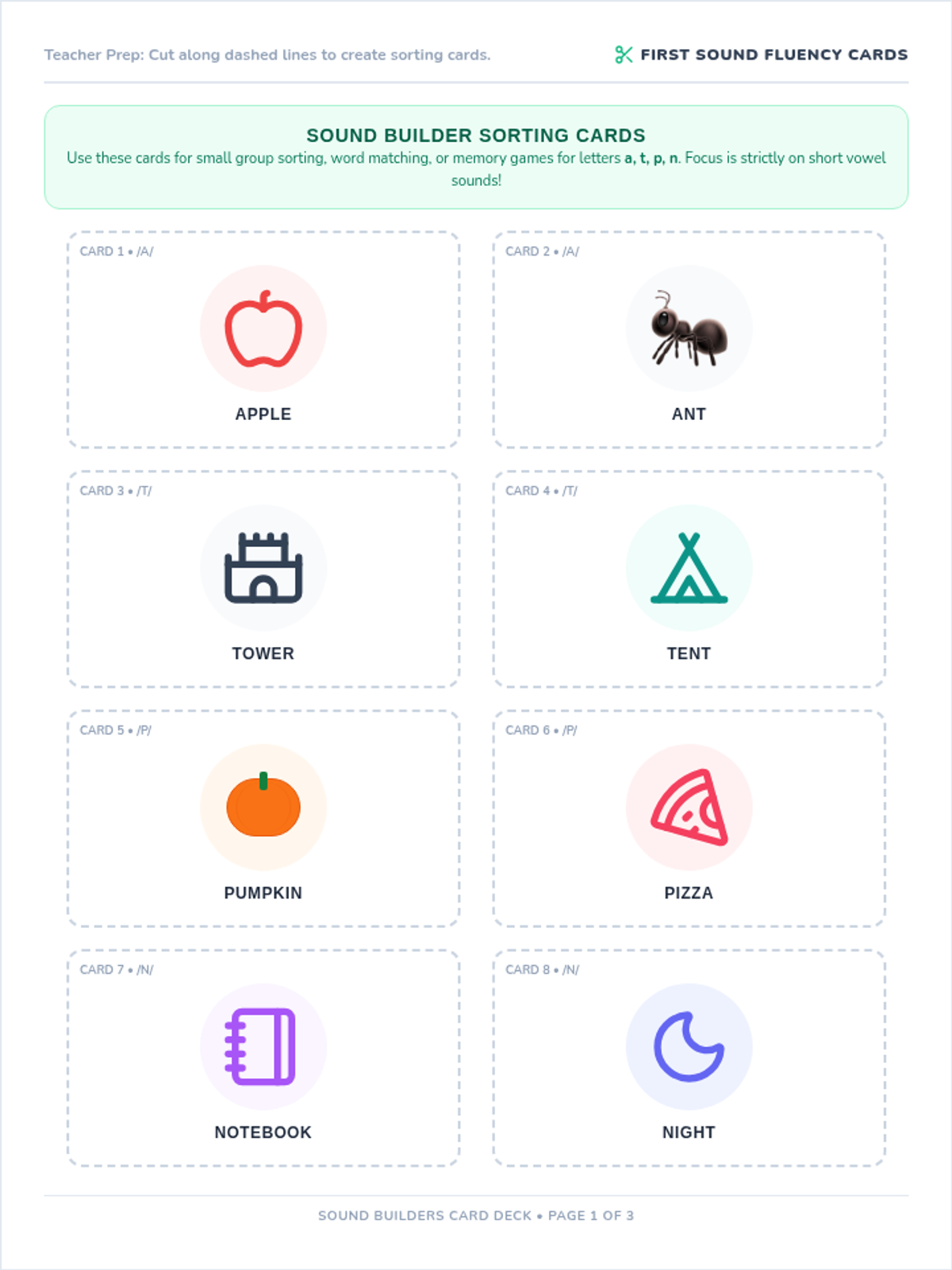
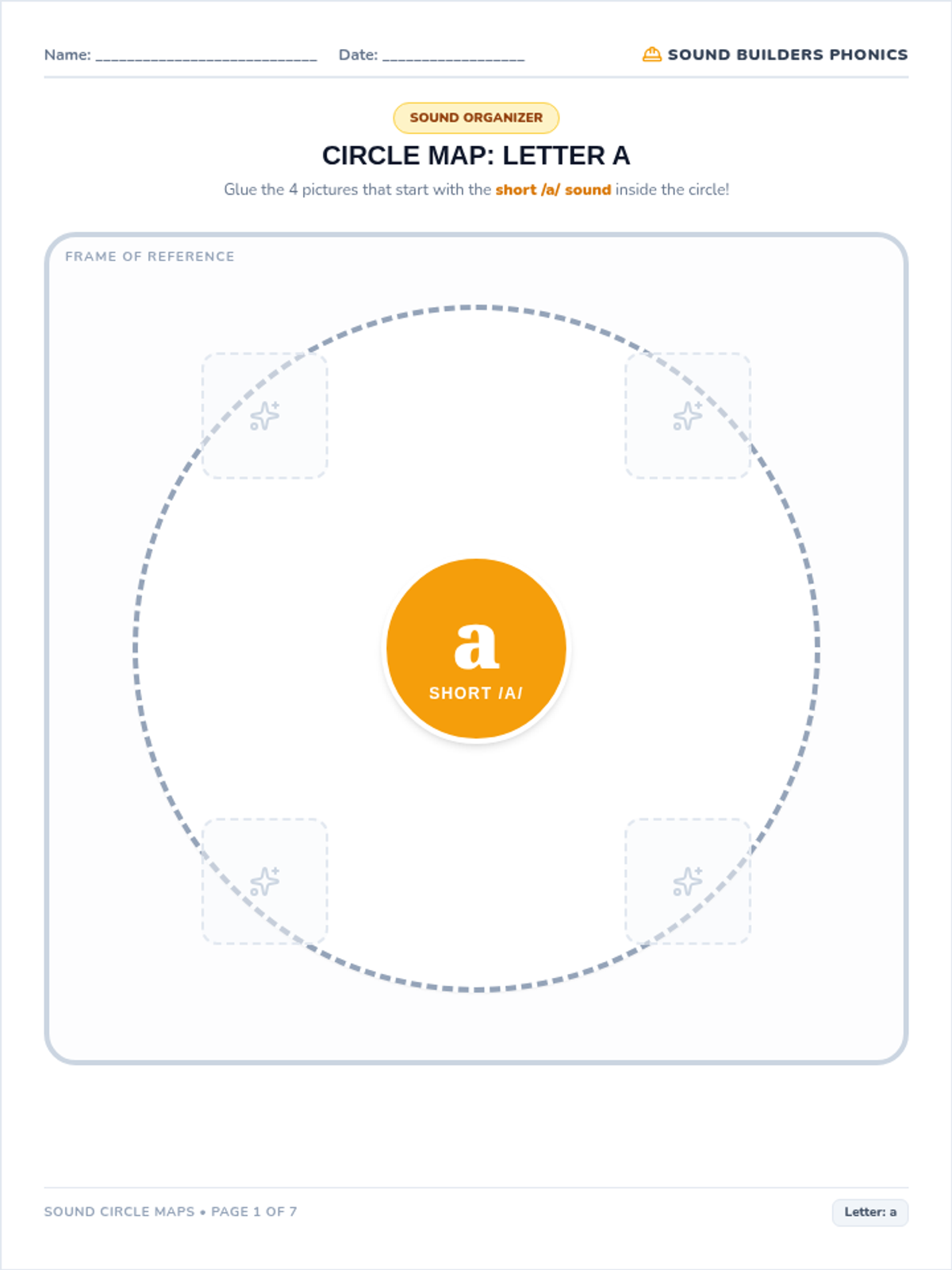
A comprehensive kindergarten phonics lesson focused on establishing sensory and kinesthetic routines for the letters a, t, p, and n. Includes daily whole-group instruction, structured small-group activities, hands-on sensory centers, and printable assessment cards.
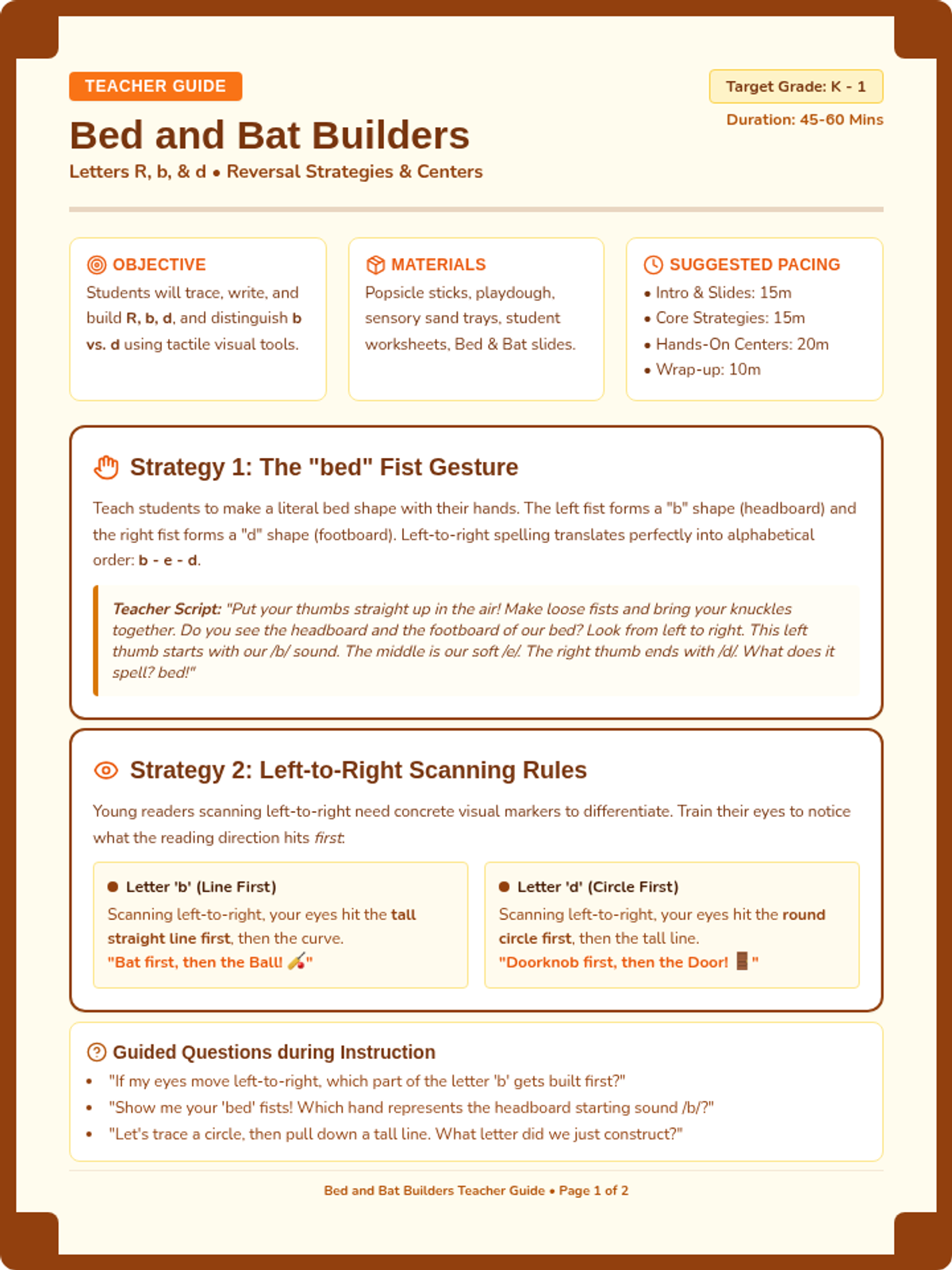
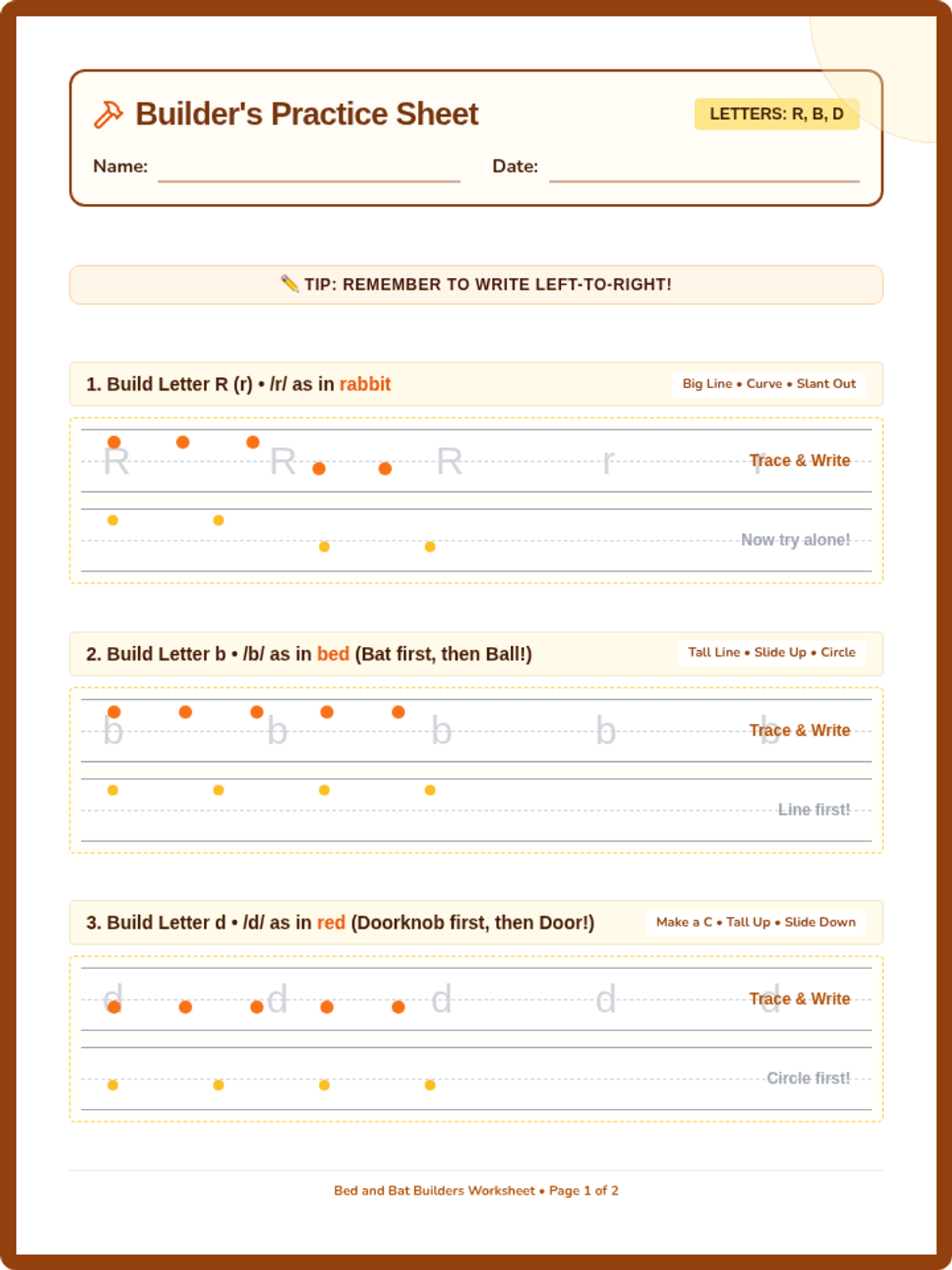
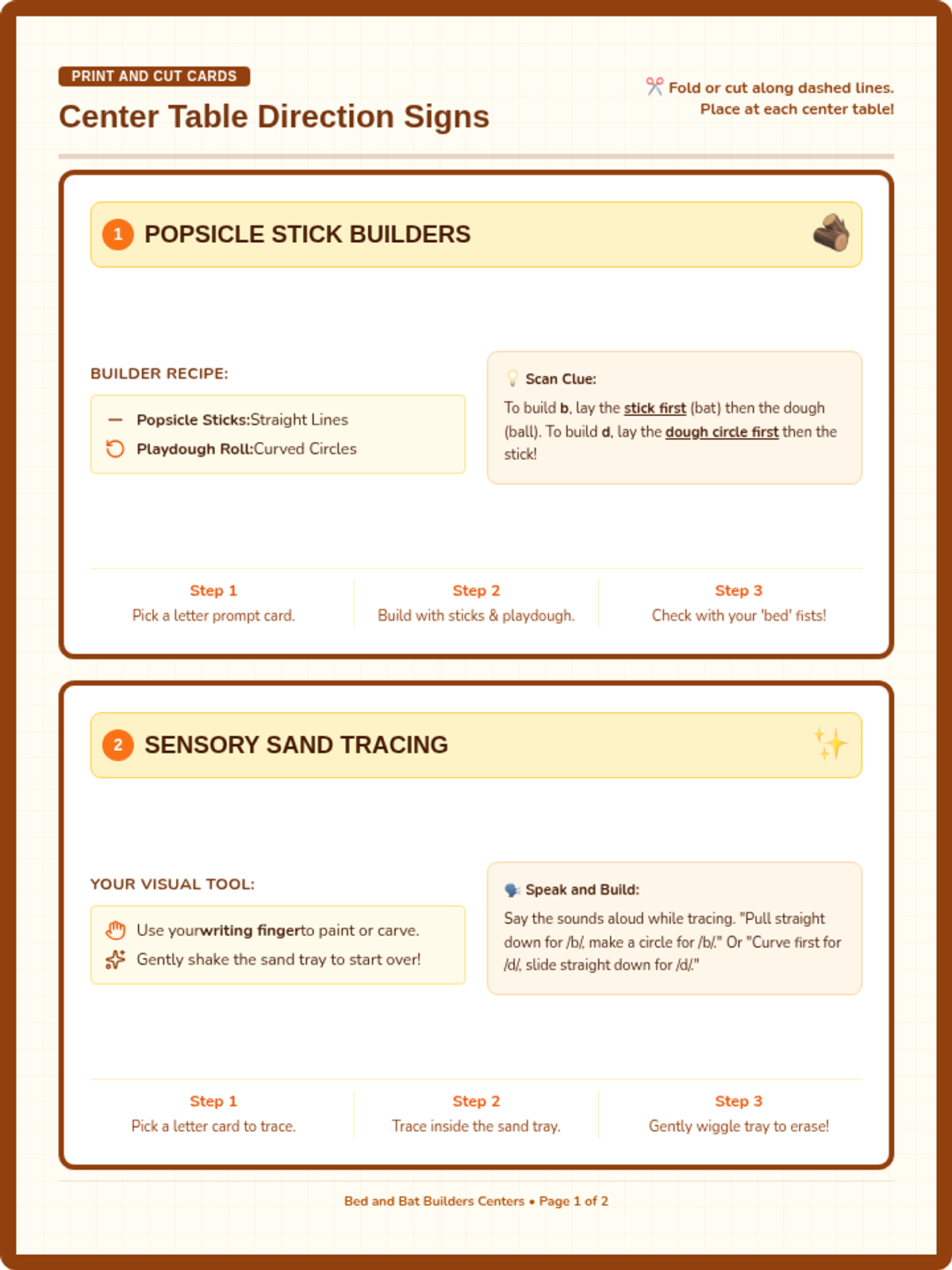
A complete phonics and handwriting lesson focused on teaching letters R, b, and d. It features powerful b/d reversal strategies (the 'bed' hand gesture and left-to-right line-first vs. circle-first clues), an interactive circle map activity, and hands-on tactile and sensory building centers.
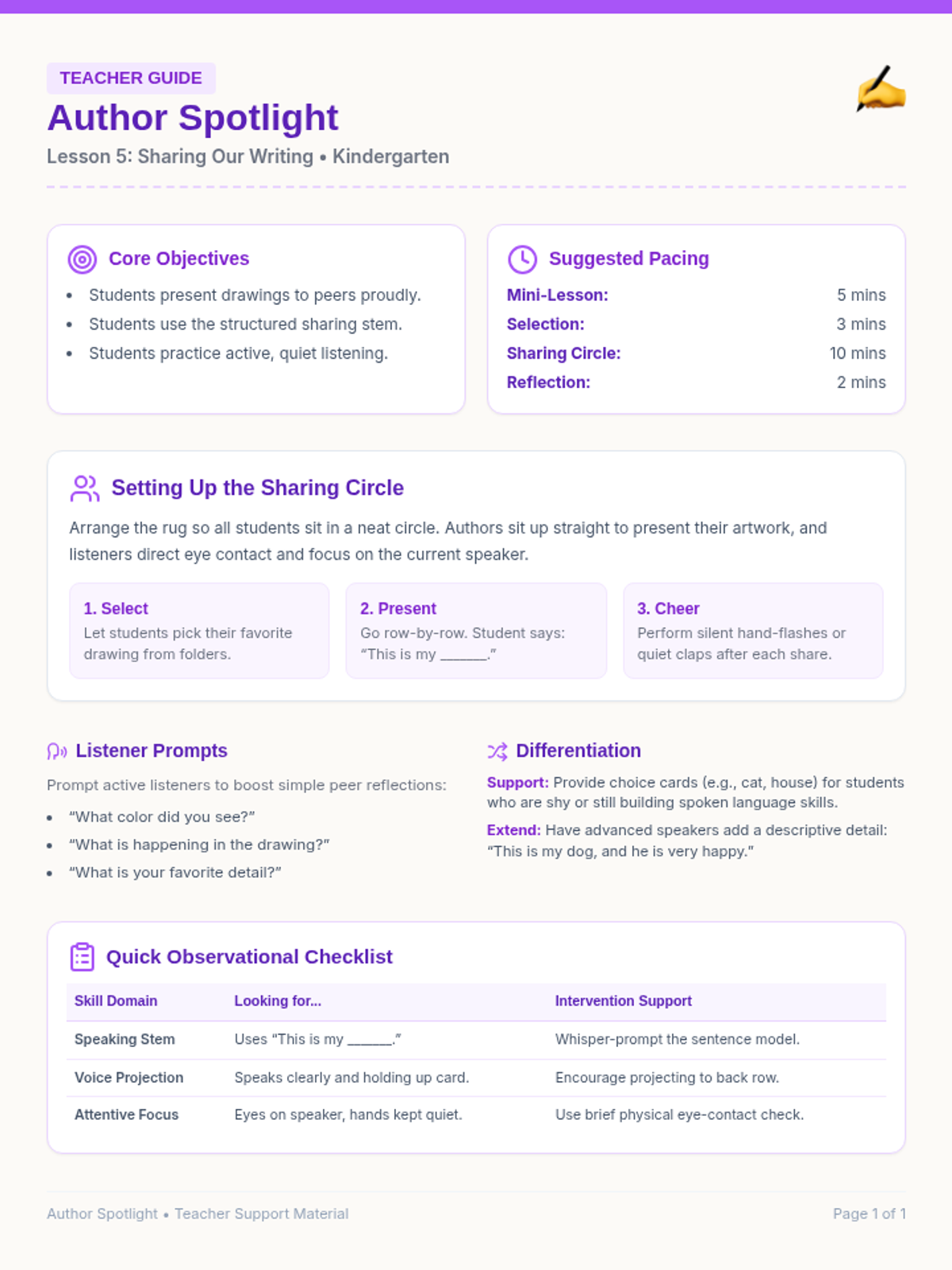
A kindergarten lesson focused on teaching young writers how to share their work proudly and listen attentively to their peers, utilizing structured sentence stems and active sharing routines.
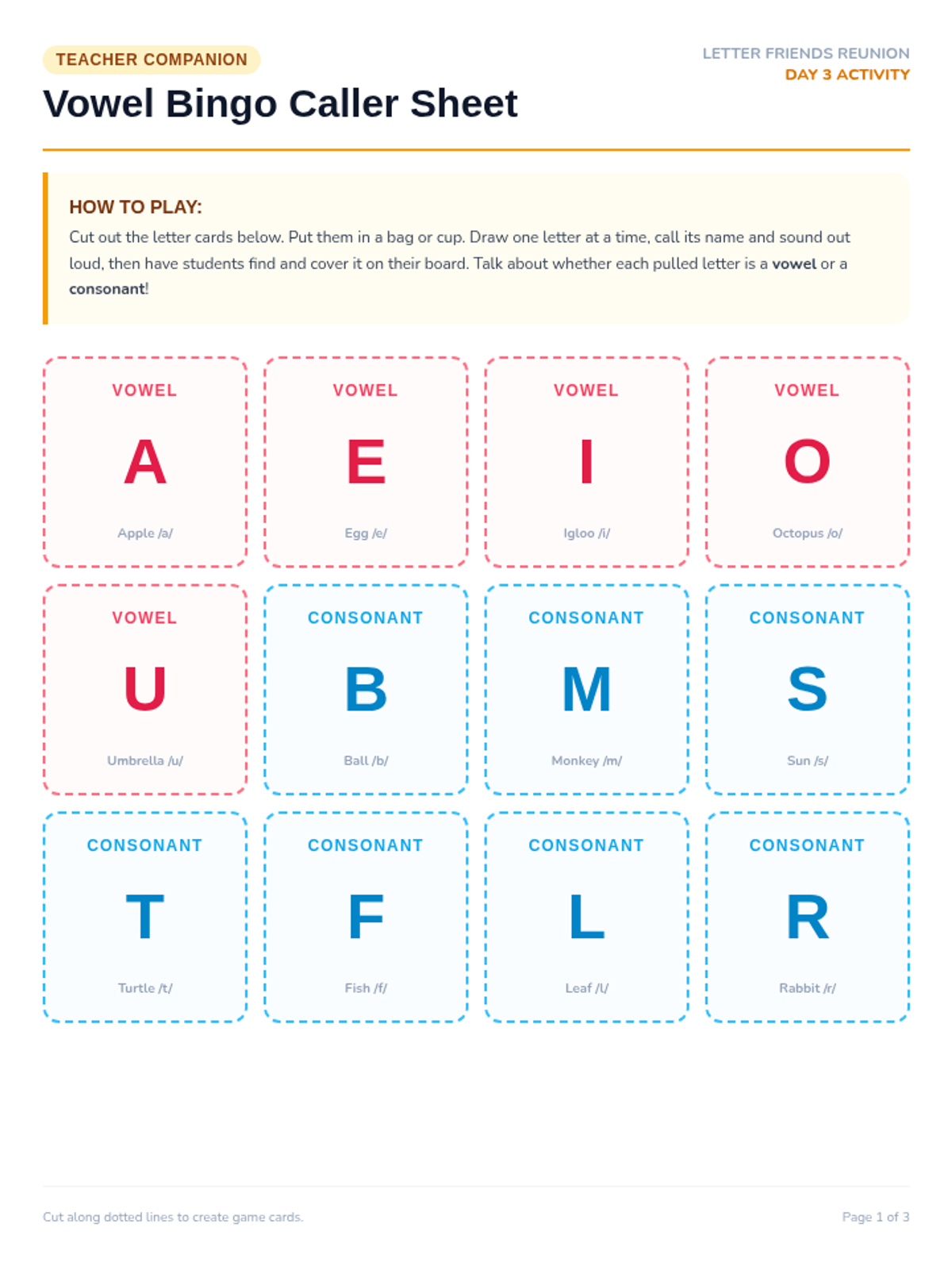
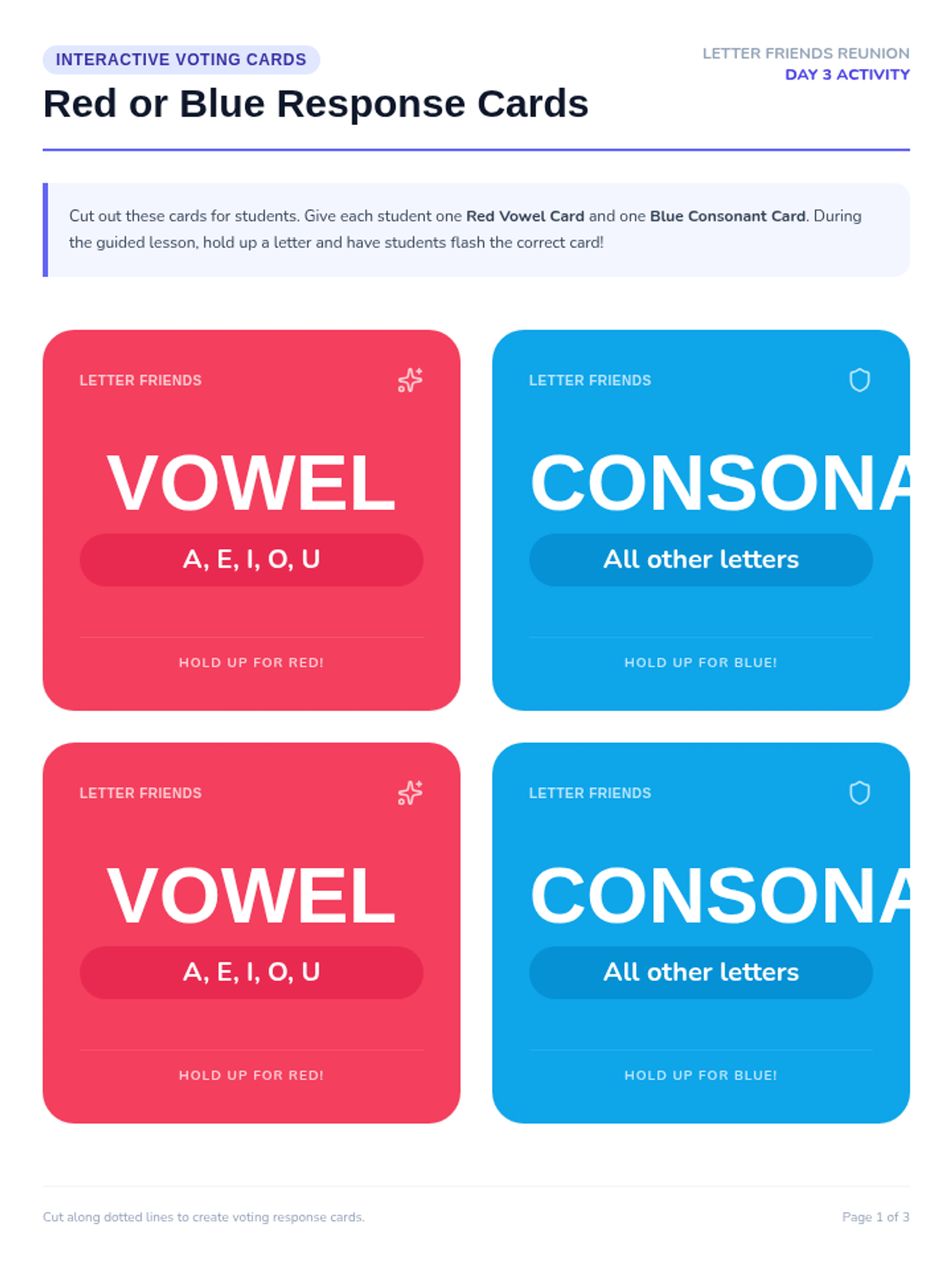
A playful, active kindergarten lesson that introduces students to the two families of the alphabet: vowels (A, E, I, O, U) and consonants. Through music, interactive card sorting, and hands-on magnetic letter games, students learn to distinguish between these two letter types.
A kindergarten writing lesson introducing essential tools (crayons, pencils, folders), classroom routines for managing supplies, and an open-ended free drawing and labeling task.
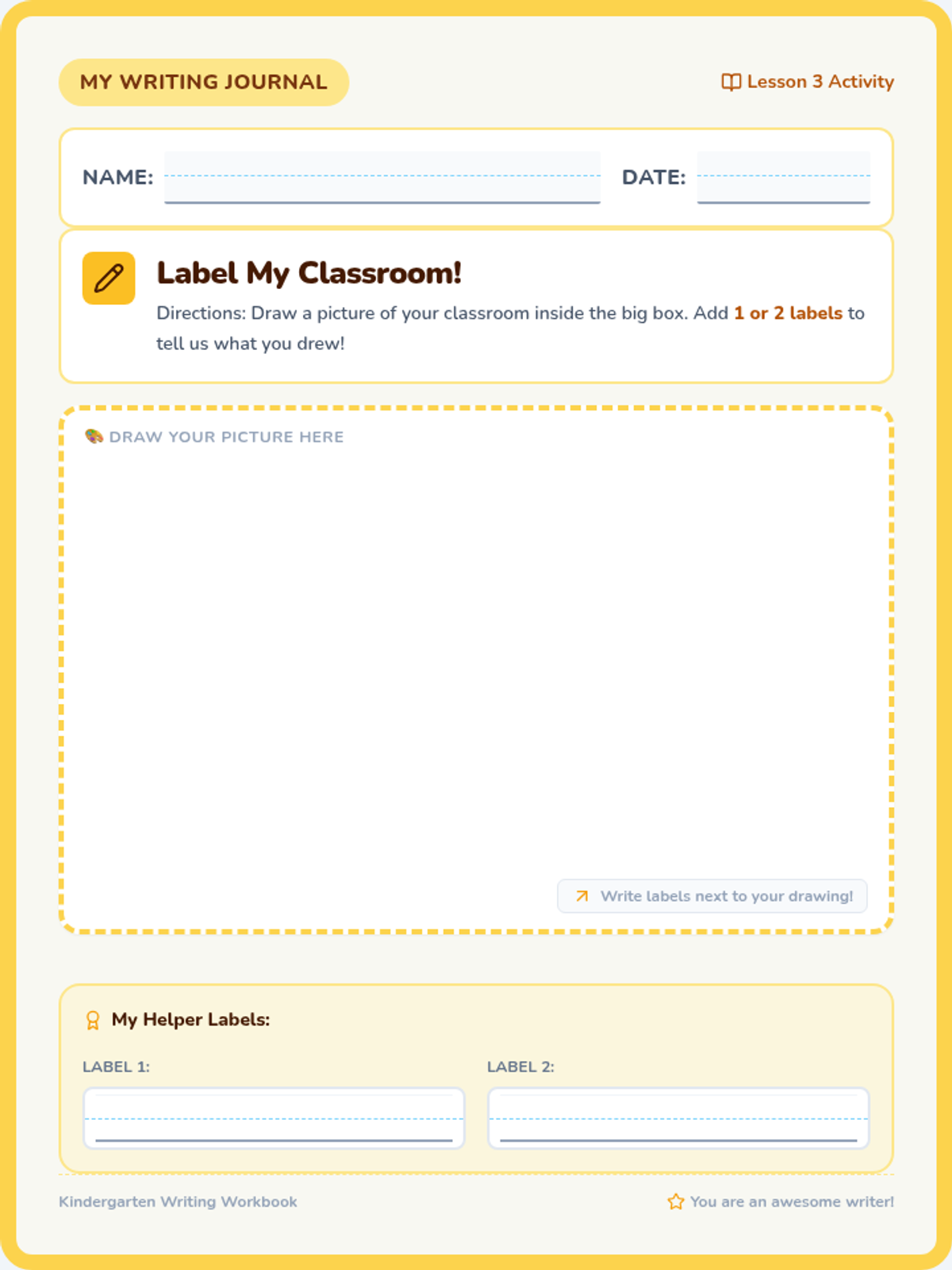
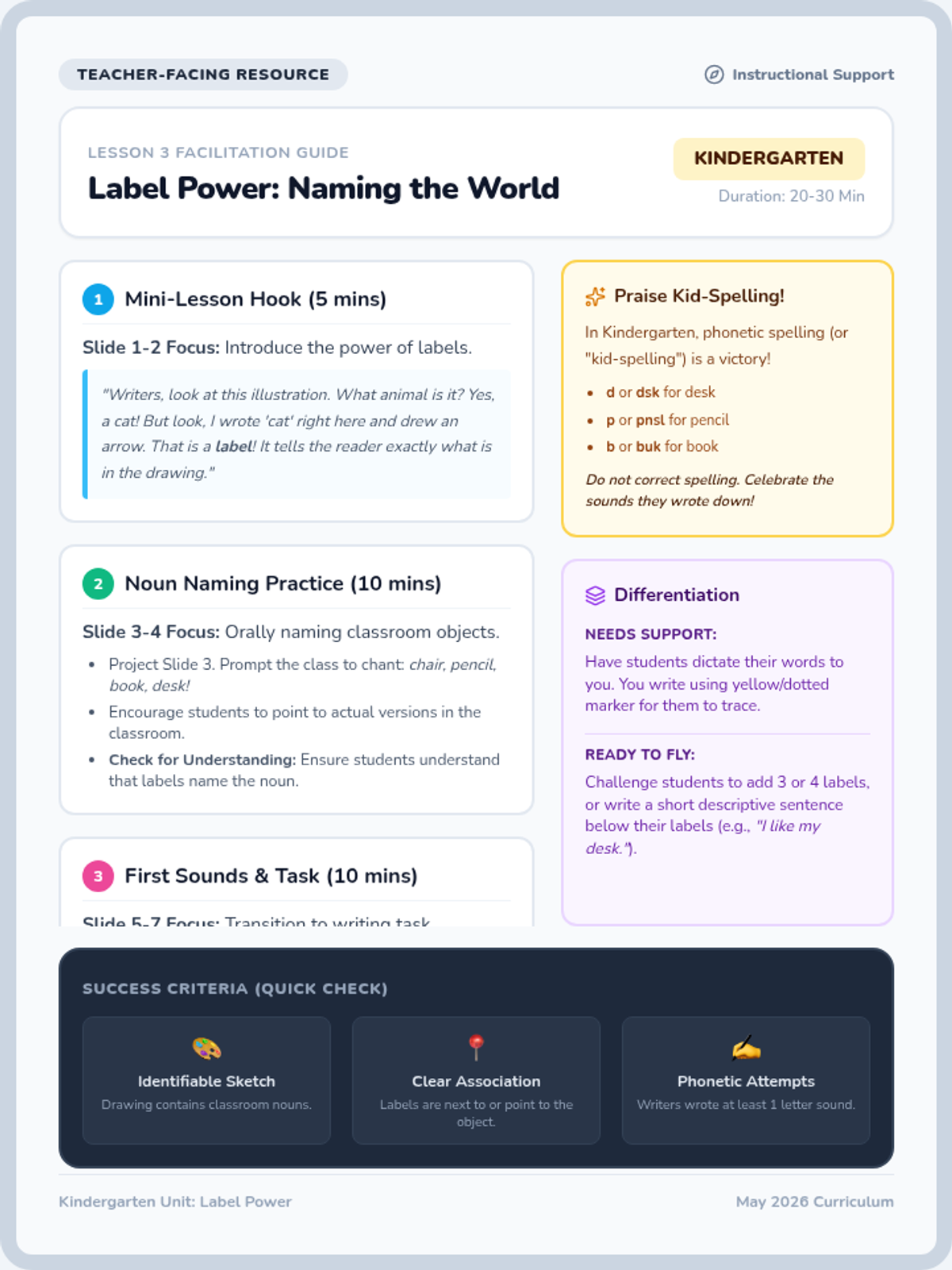
A kindergarten writing lesson teaching students how writers use labels to help readers understand their drawings, featuring oral naming of school objects and a drawing task with labels.
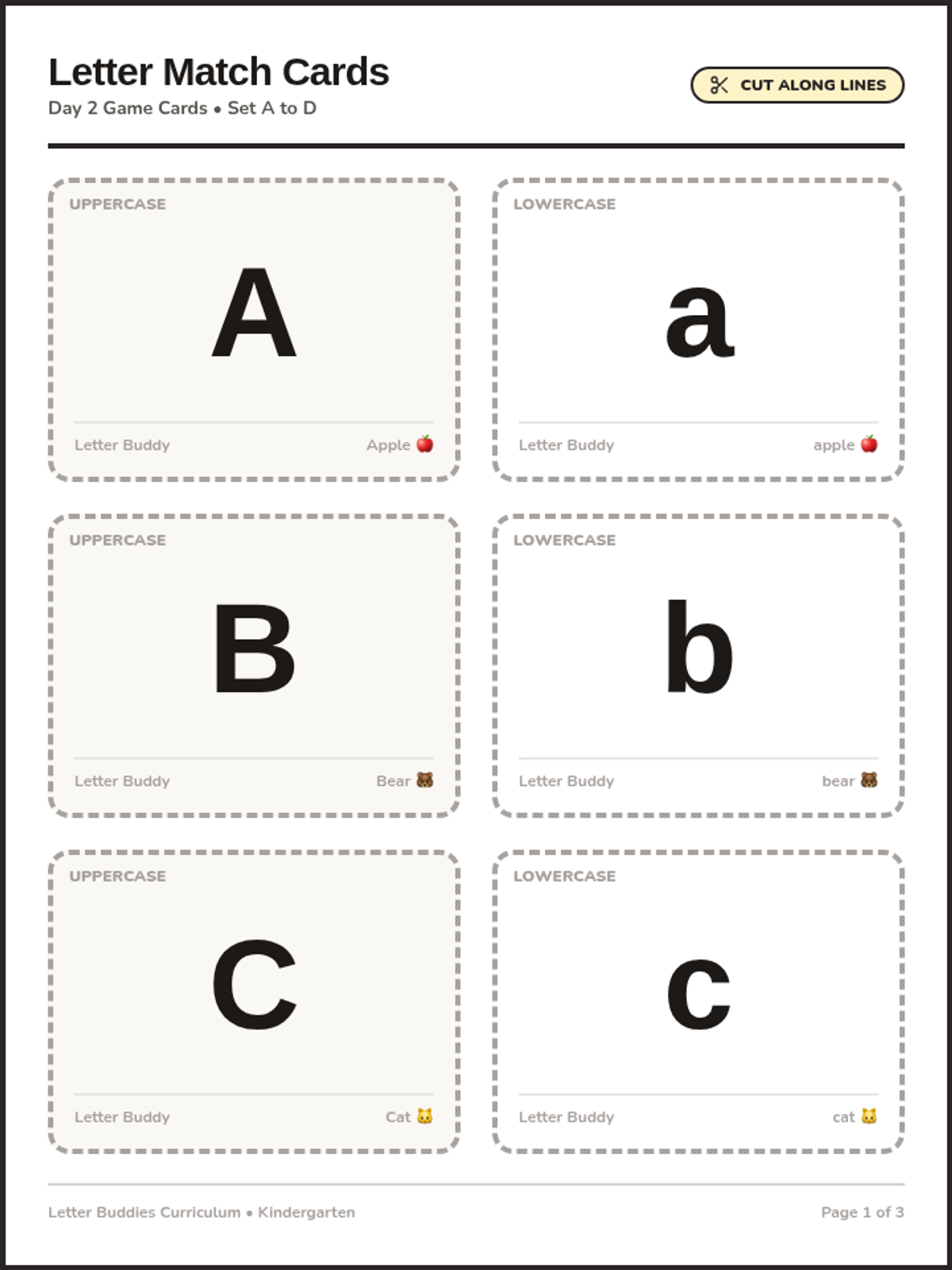
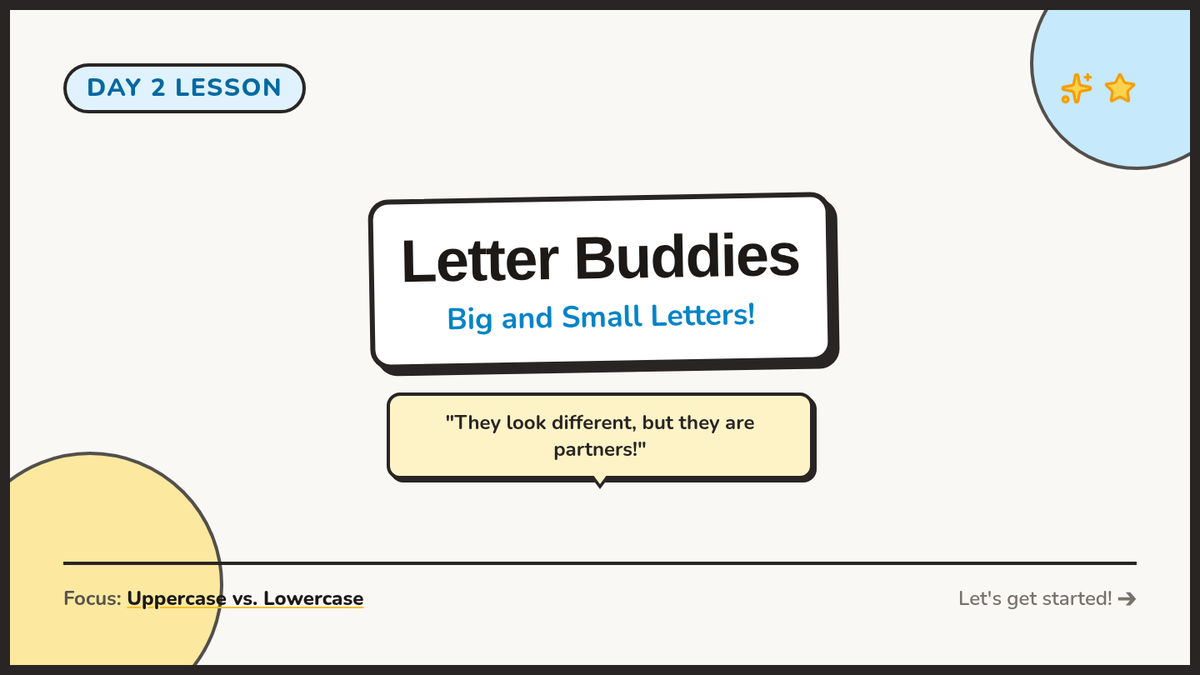
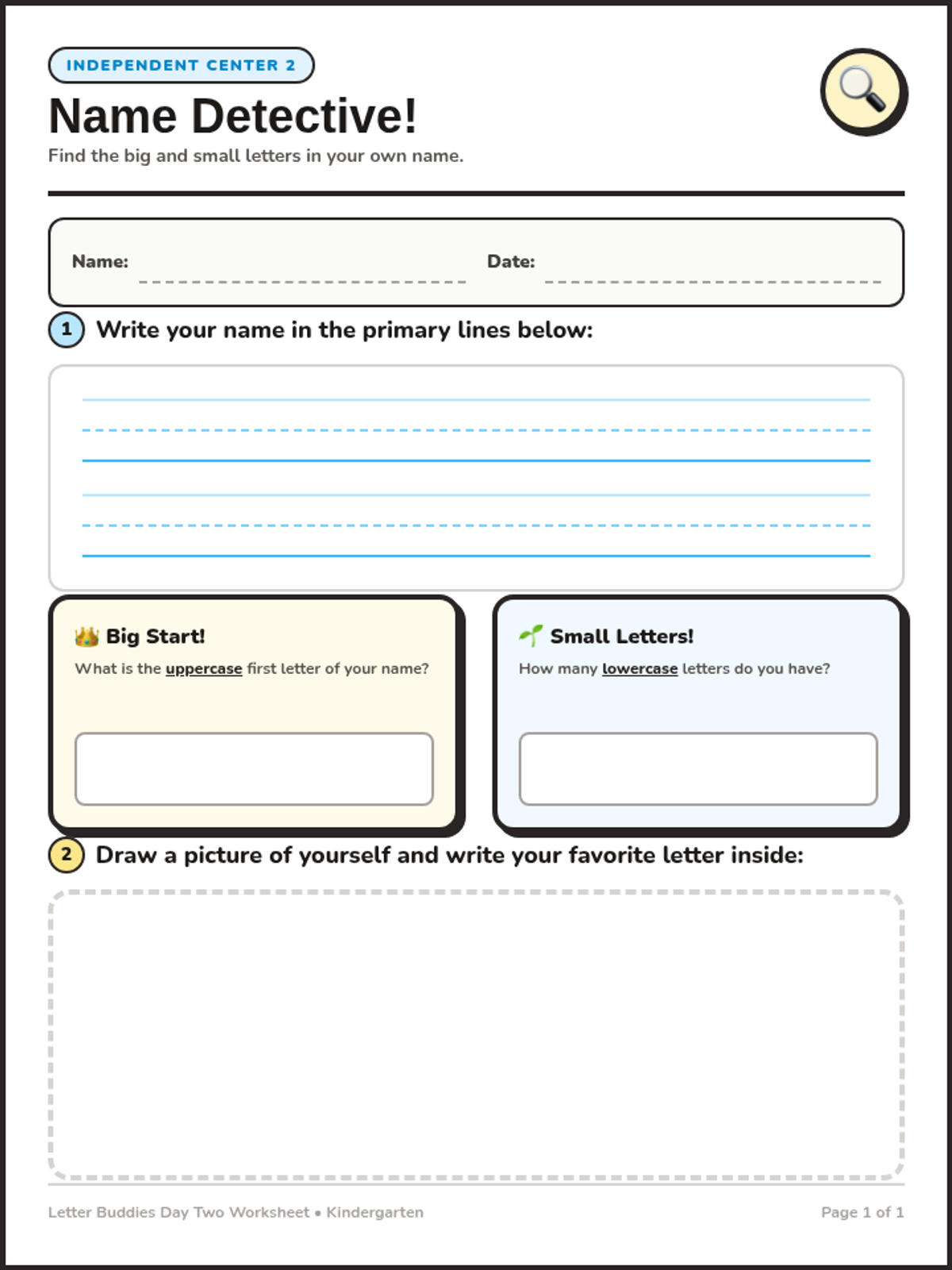
A kindergarten lesson focusing on comparing and matching uppercase and lowercase letters through sensory play, a movement-based matching game, and a Mo Willems inspired interactive read-aloud.
A high-energy, visual lesson for Kindergarten students to learn the relationship between uppercase and lowercase letters through sensory tracing, matching games, and literature.
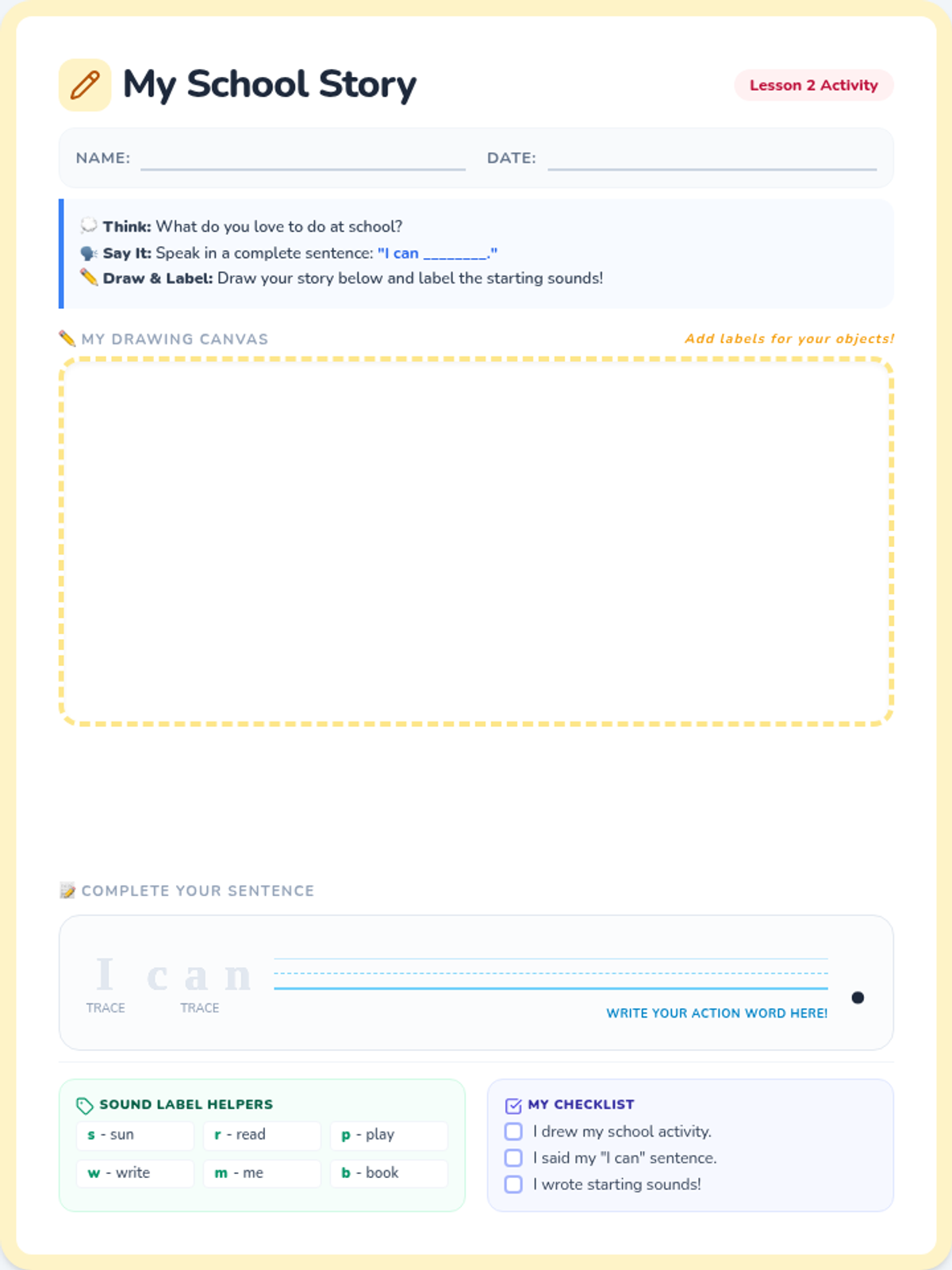
A foundational writing lesson for early learners exploring how pictures can tell stories. Students practice speaking in complete sentences before drawing themselves doing an activity at school.
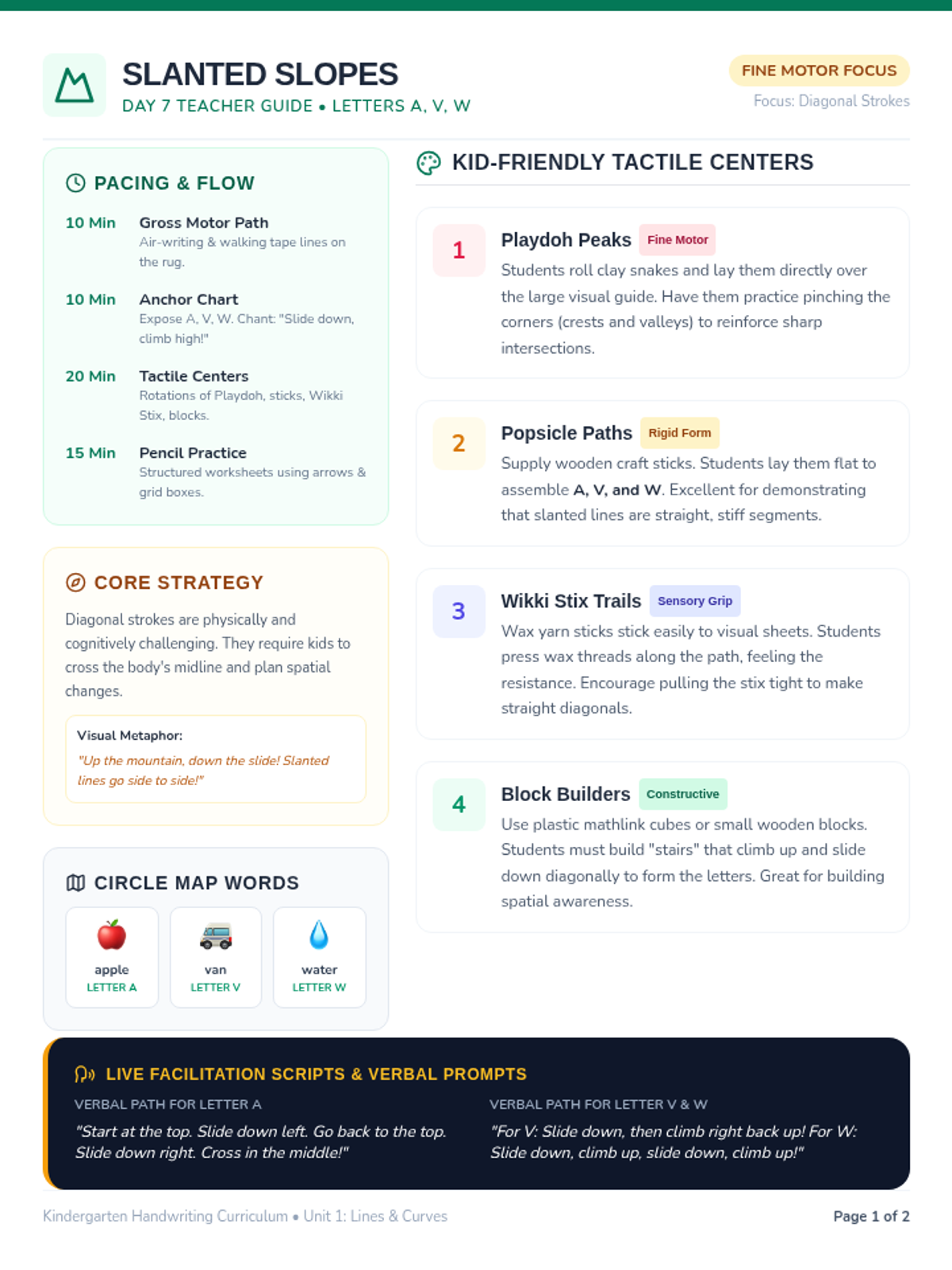
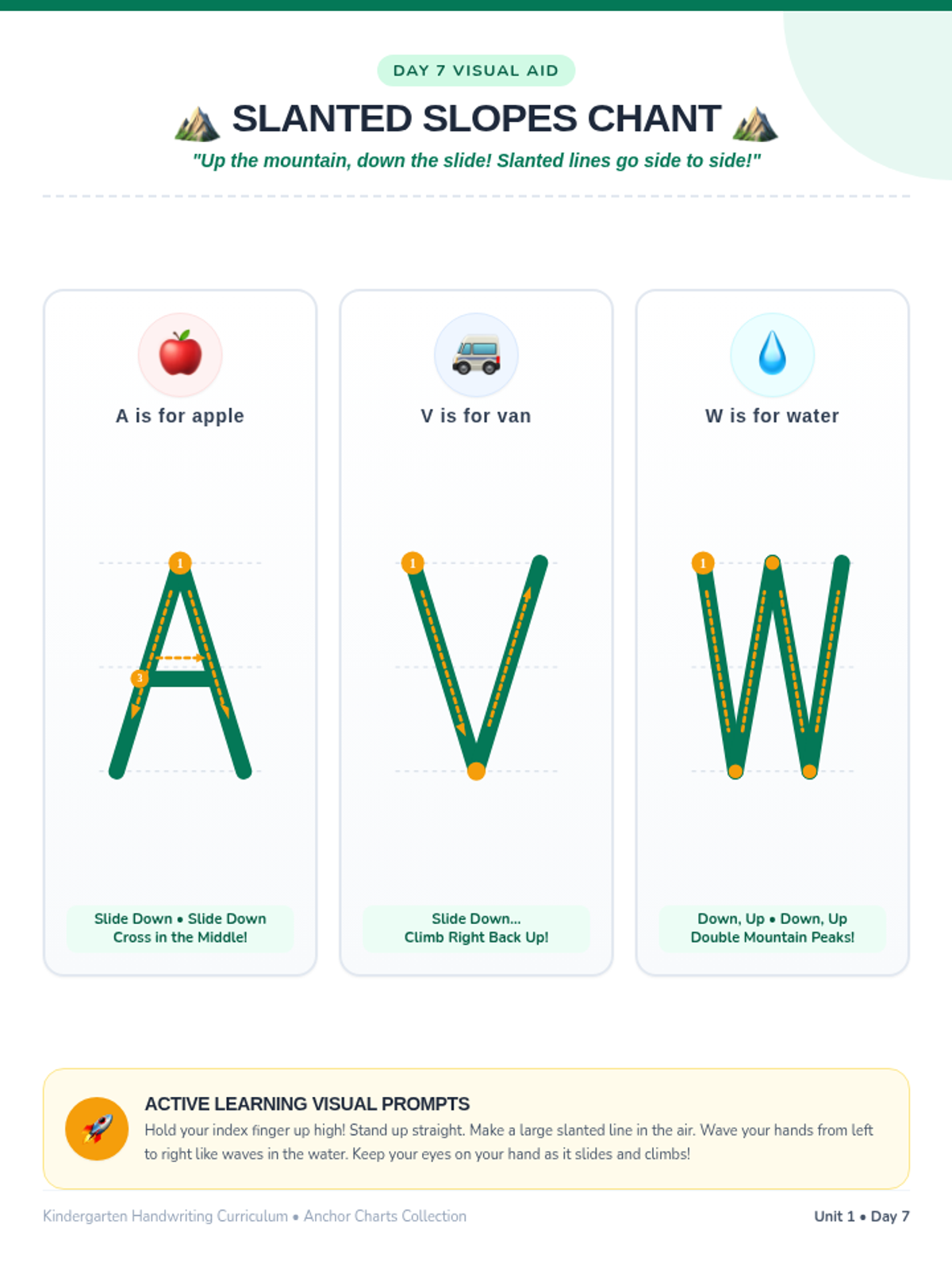
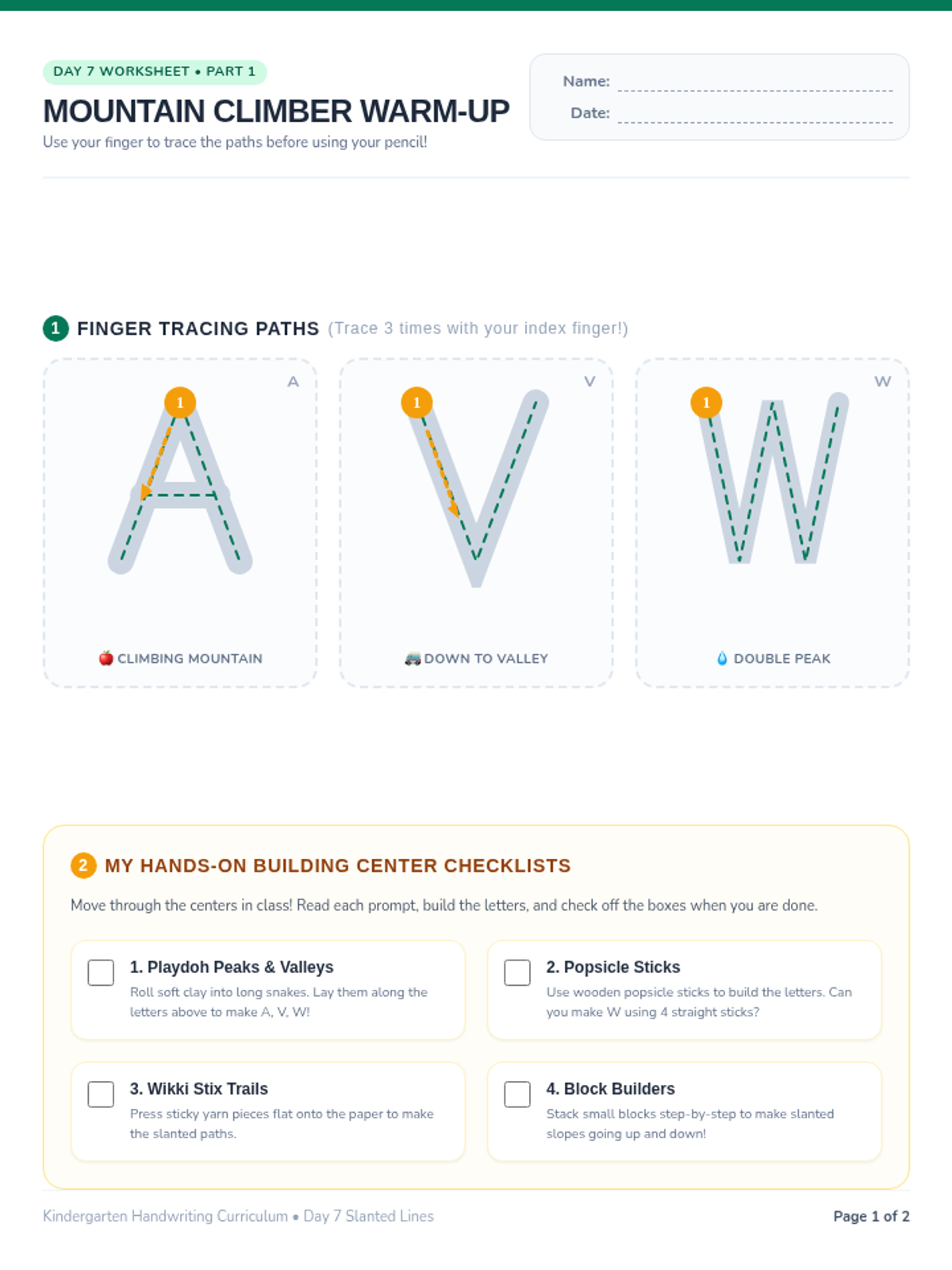
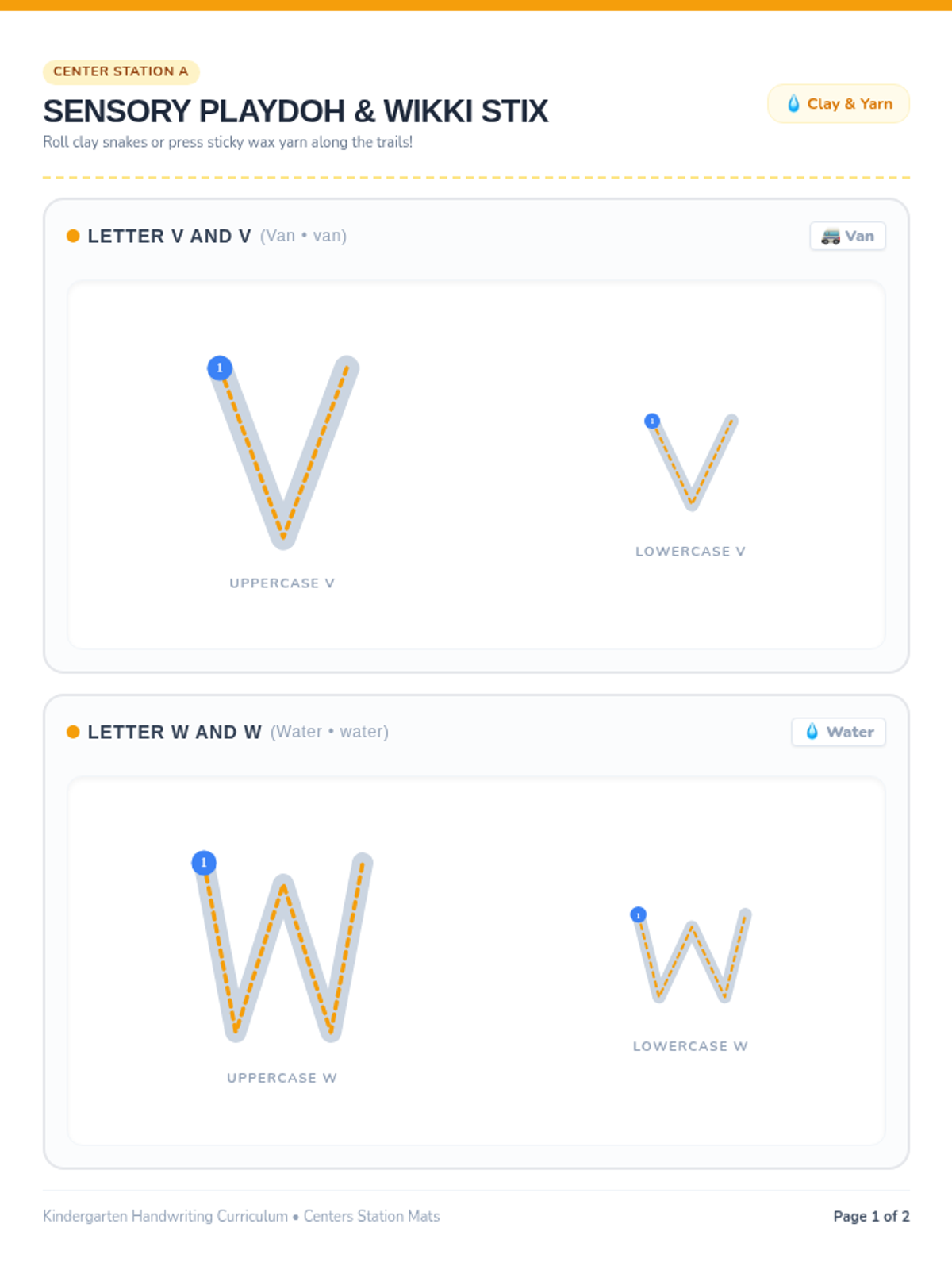
A hands-on, multi-sensory lesson focusing on diagonal strokes and letters A, V, and W. Students use gross motor paths, tactile building mats, and structured worksheets to master slanted lines.
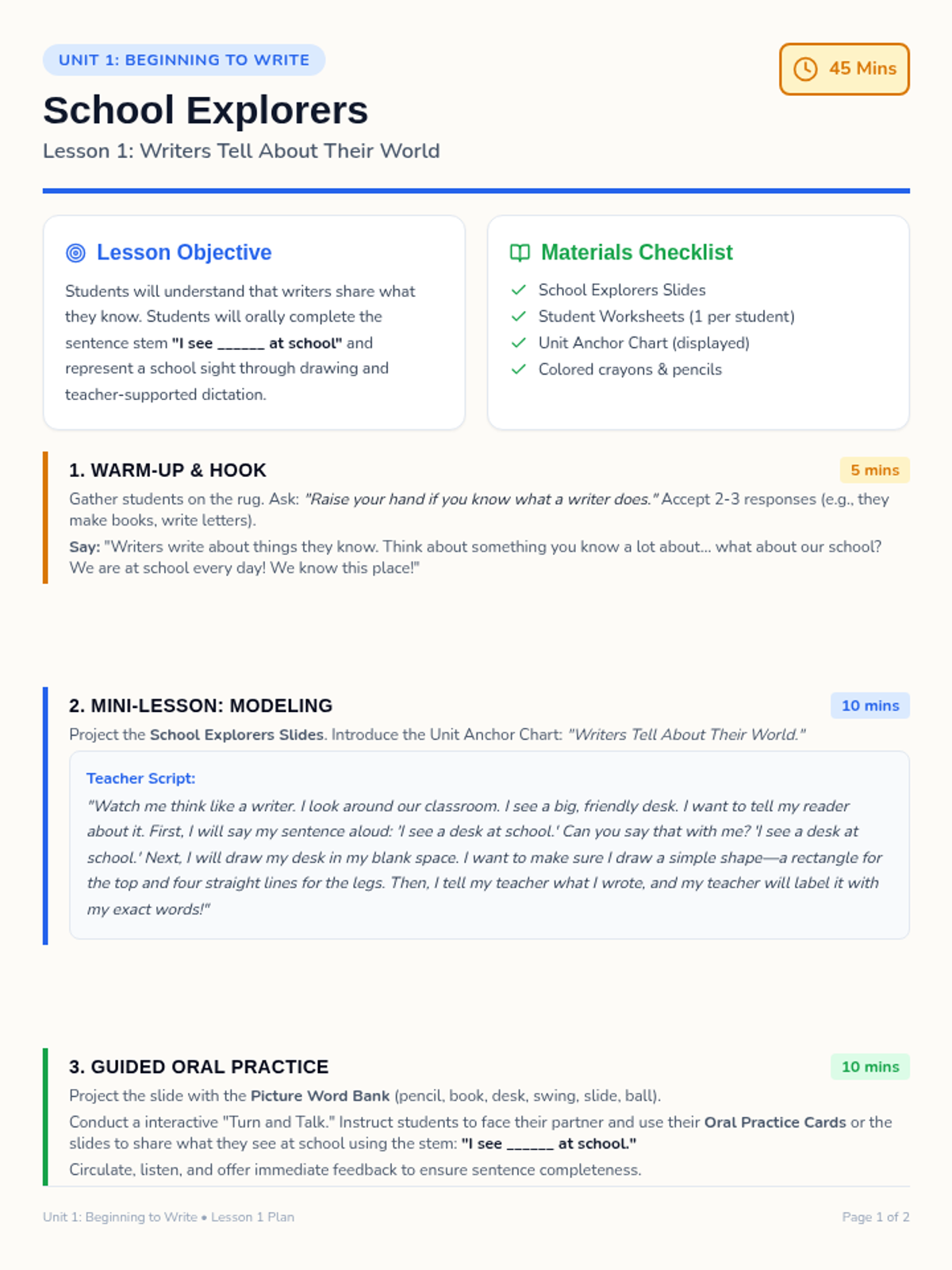
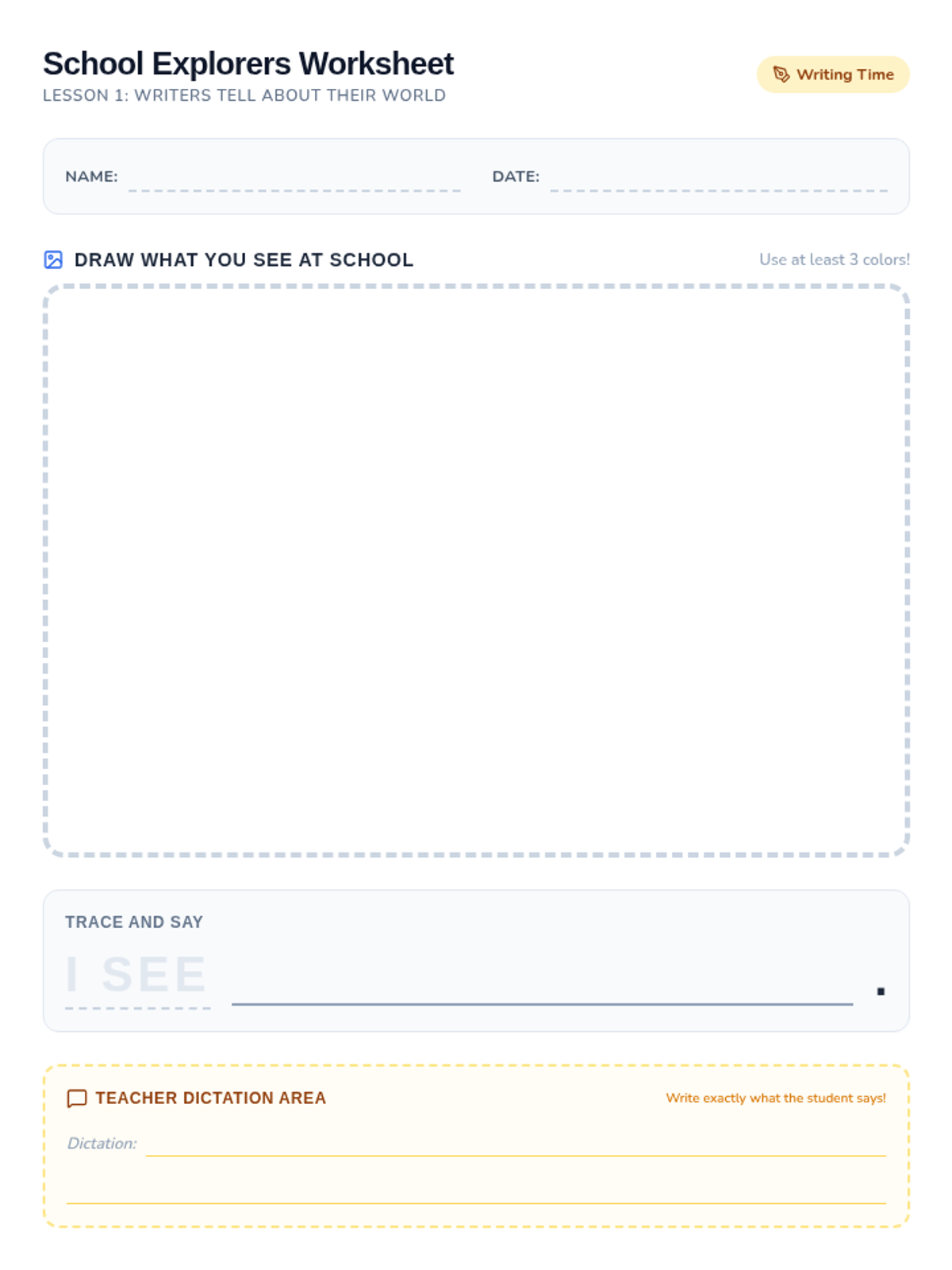
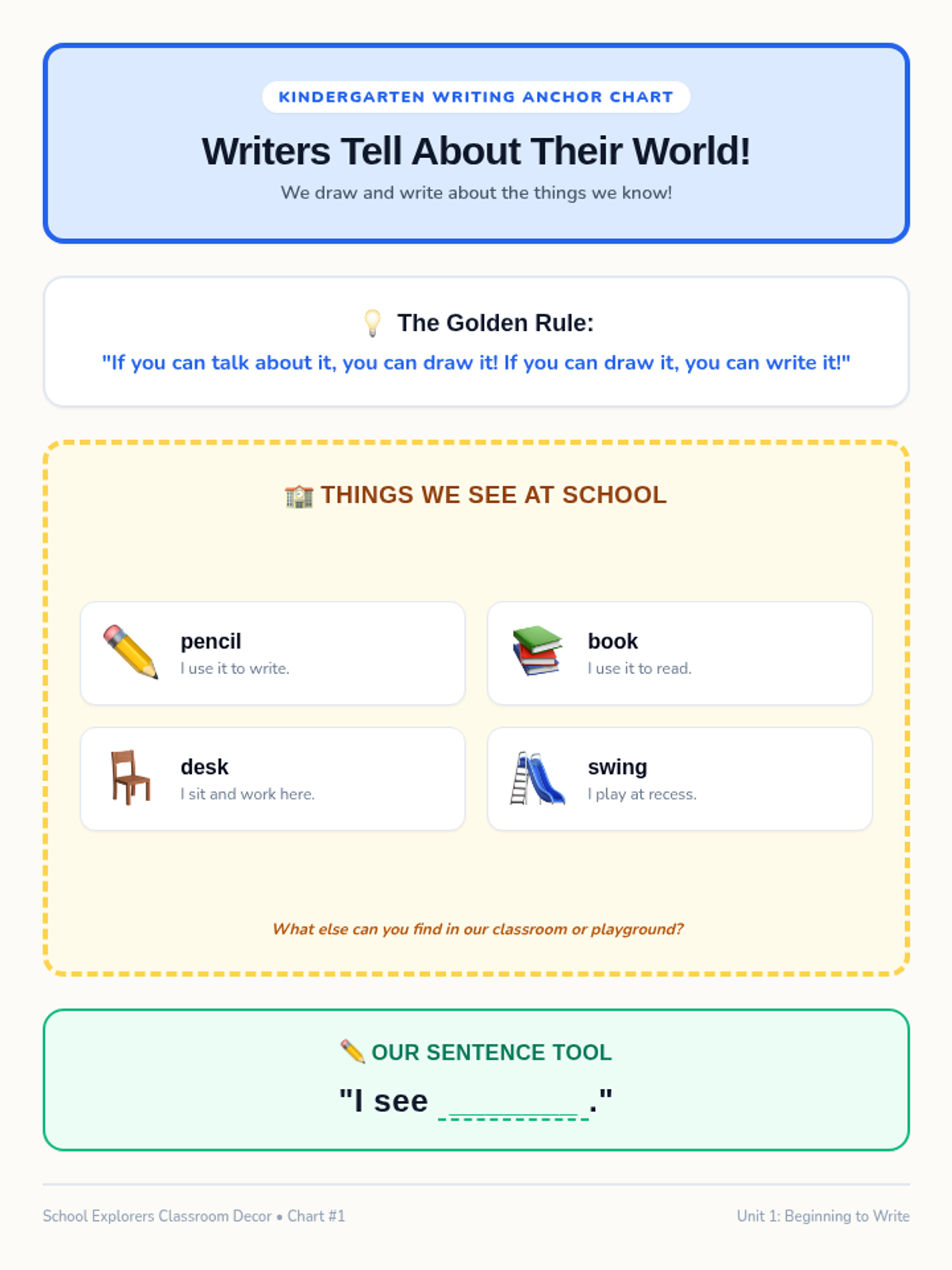
A comprehensive kindergarten writing lesson plan and supporting materials designed to teach students that writers write about what they know, starting with their school. It includes a detailed teacher guide, interactive slide deck, student drawing and writing worksheet, visual anchor chart, and oral practice flashcards.