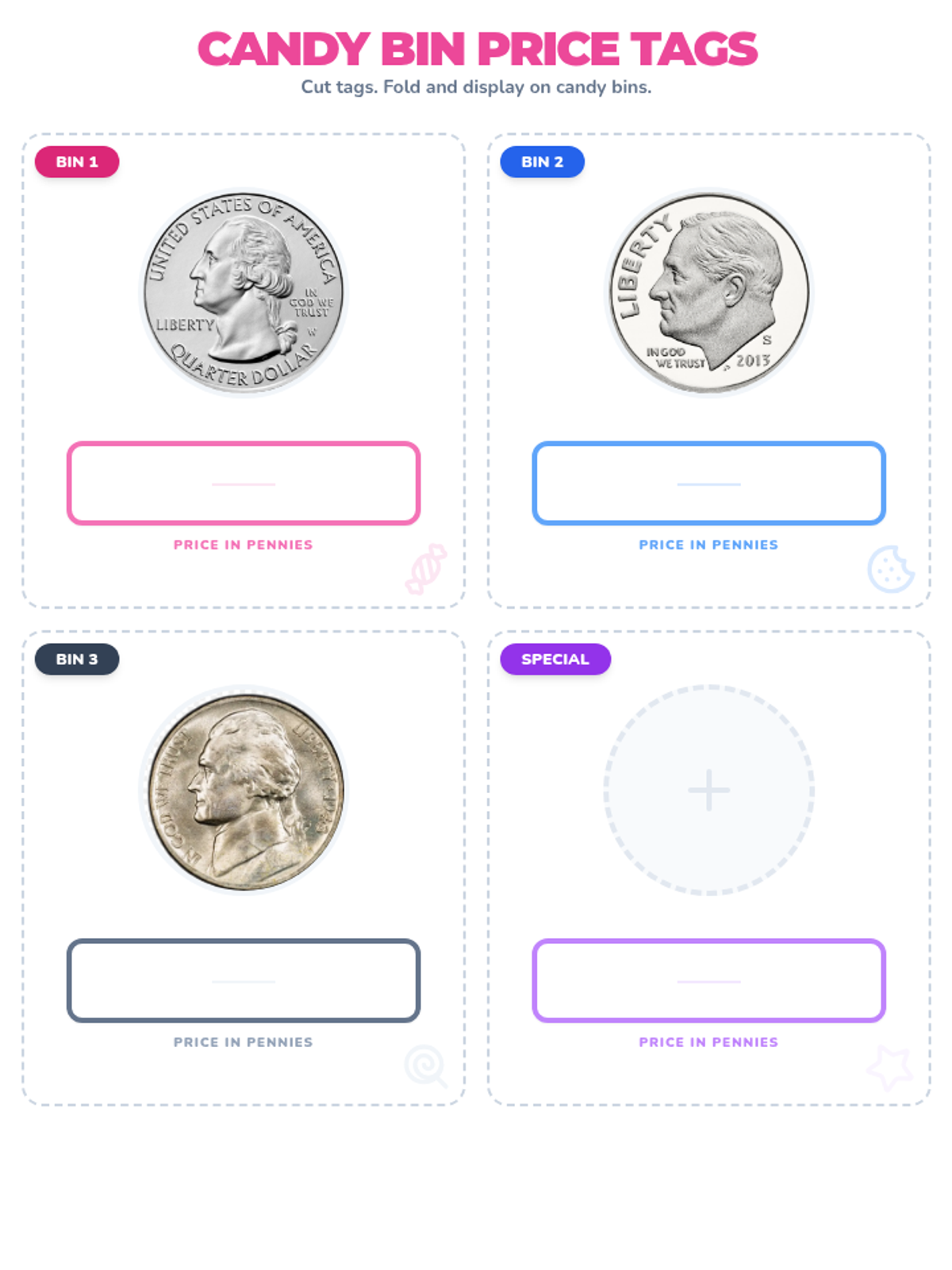
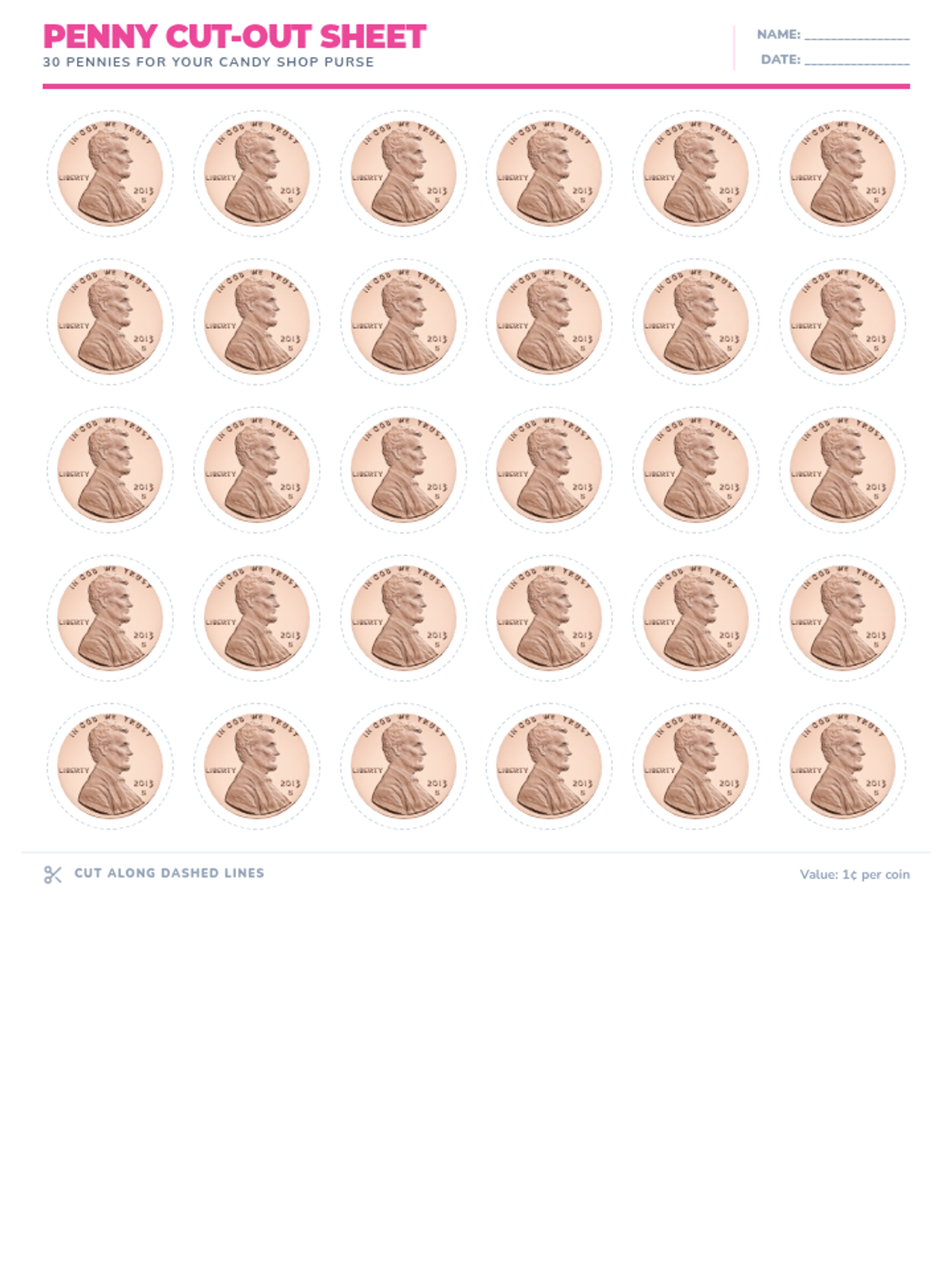
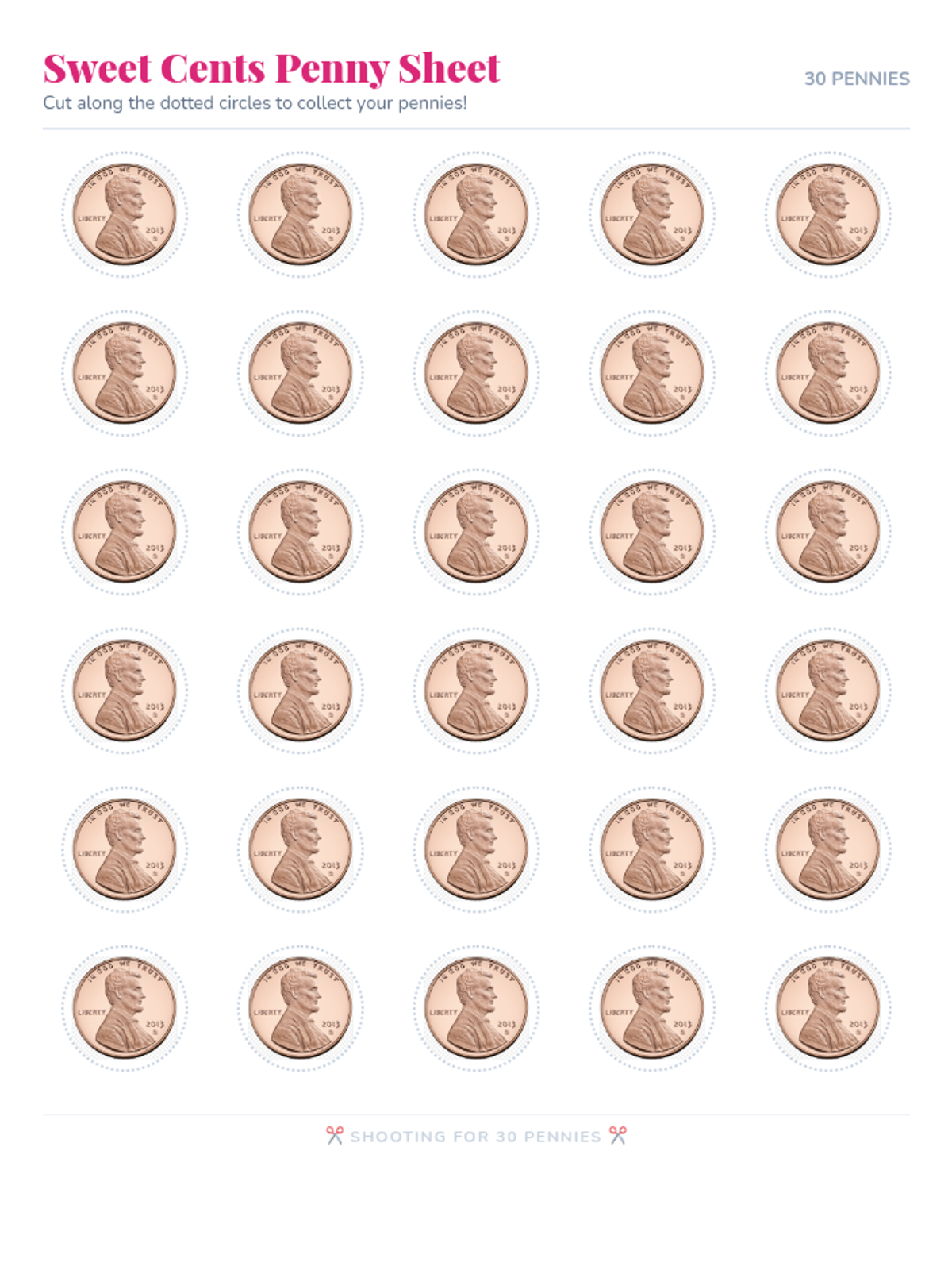
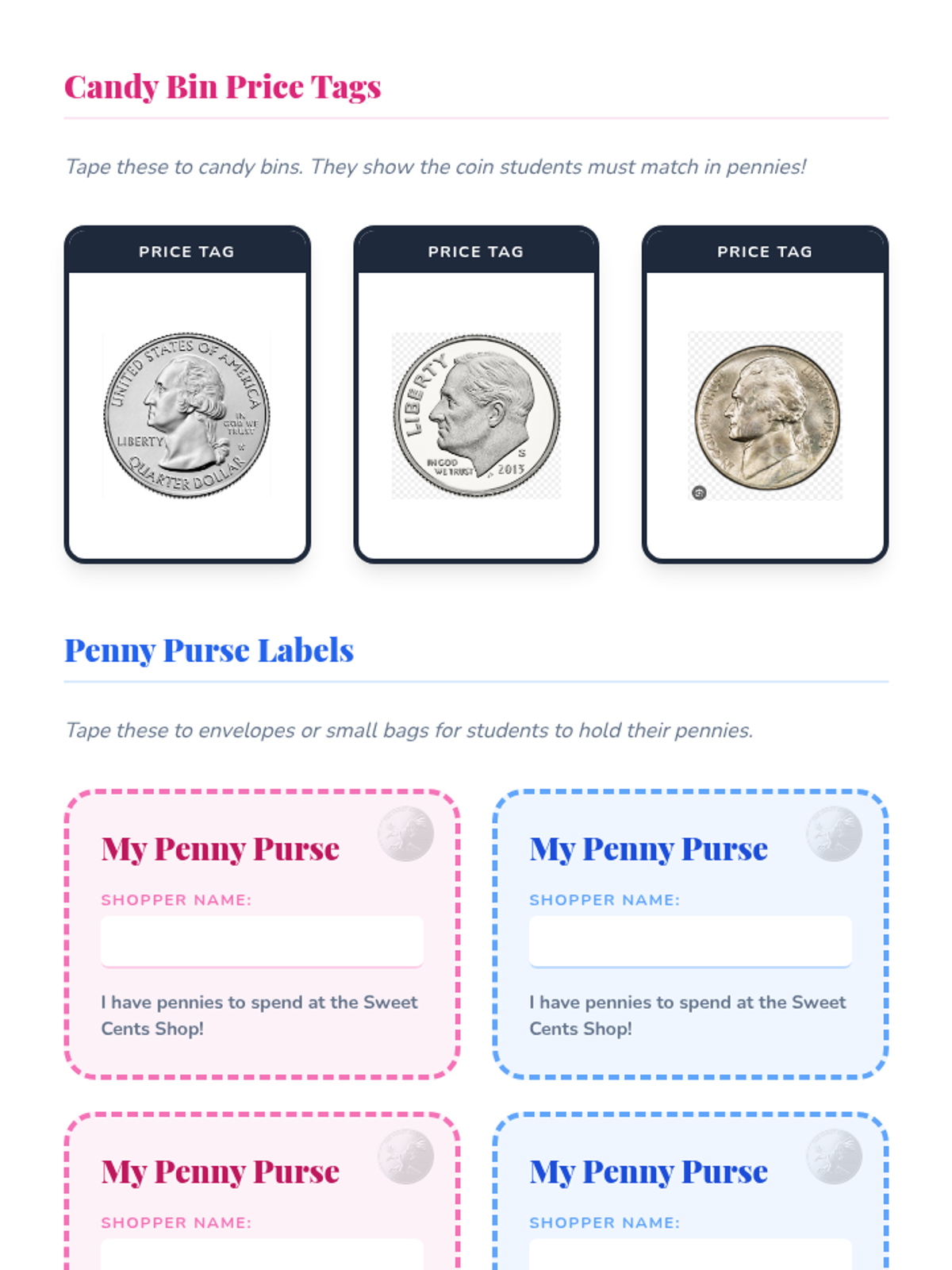
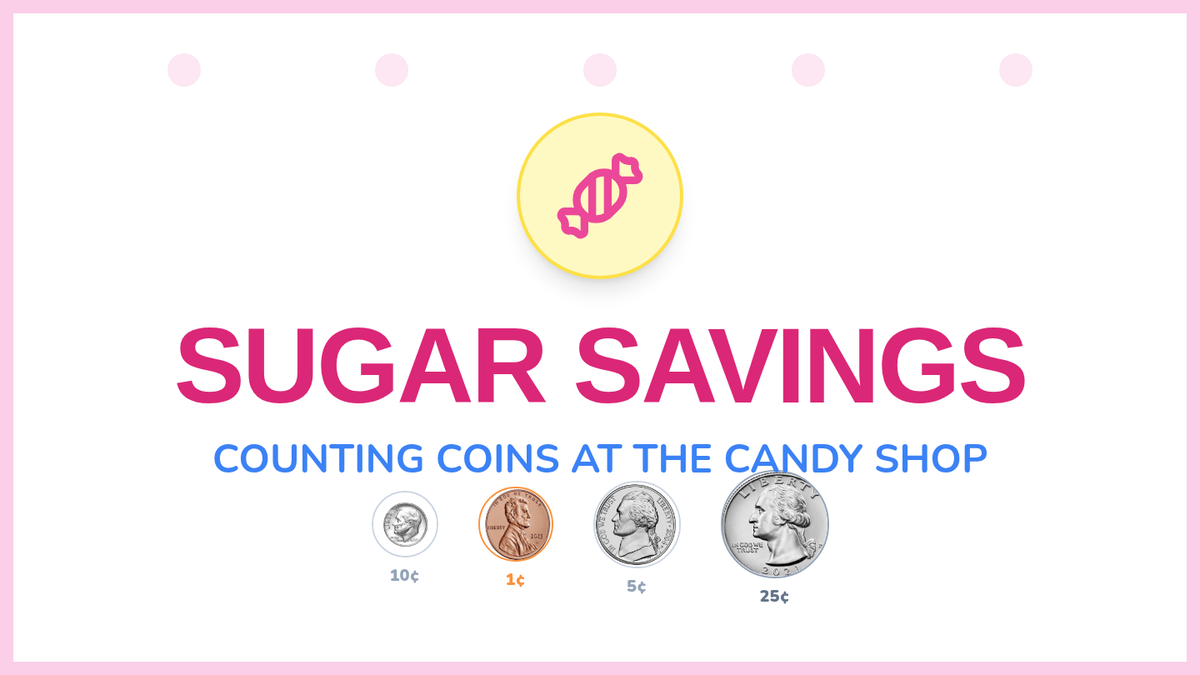
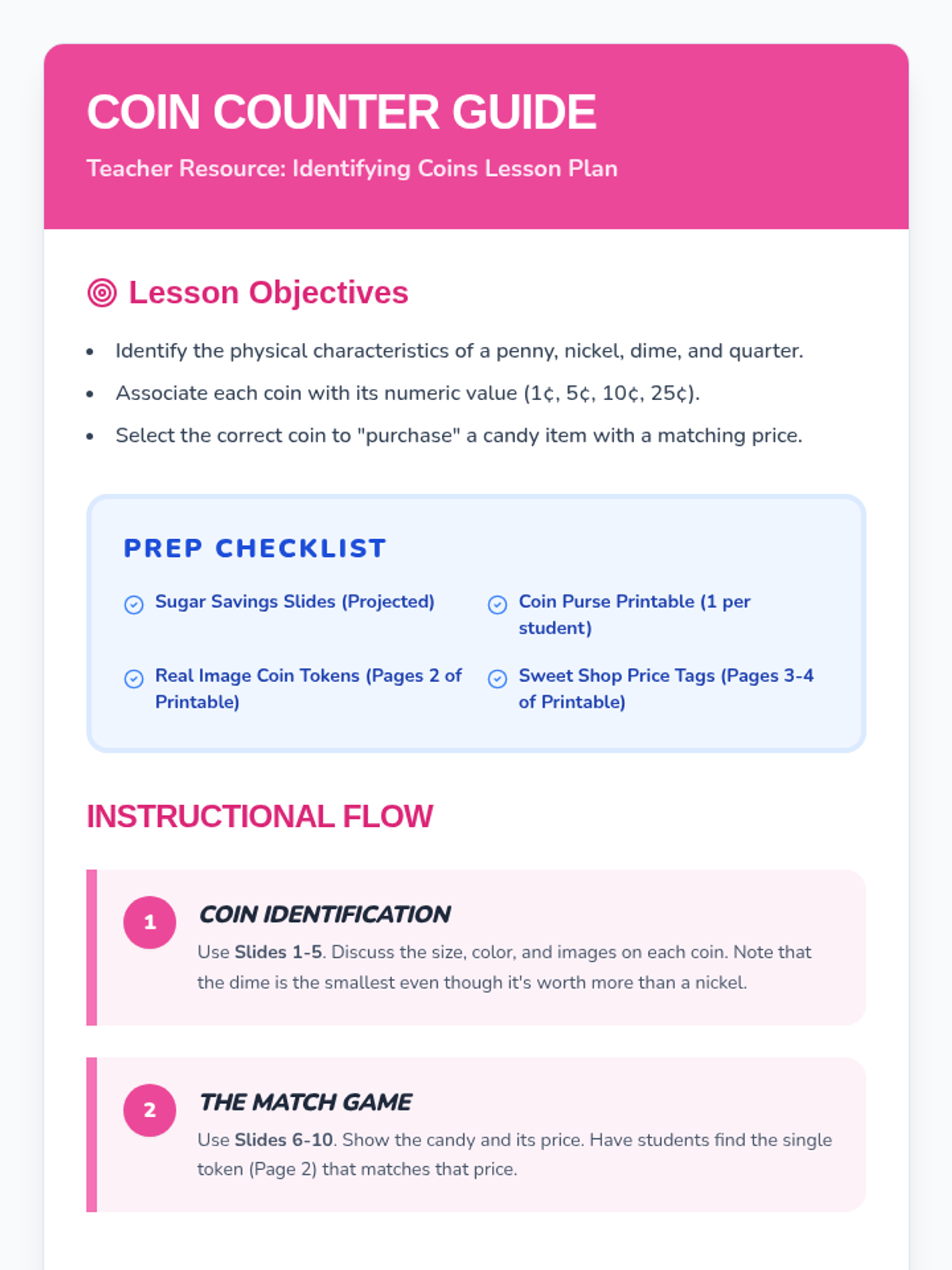
A sweet introduction to North Carolina standard M.D.5 where students identify quarters, dimes, nickels, and pennies, then practice their values by "buying" candy with pennies.
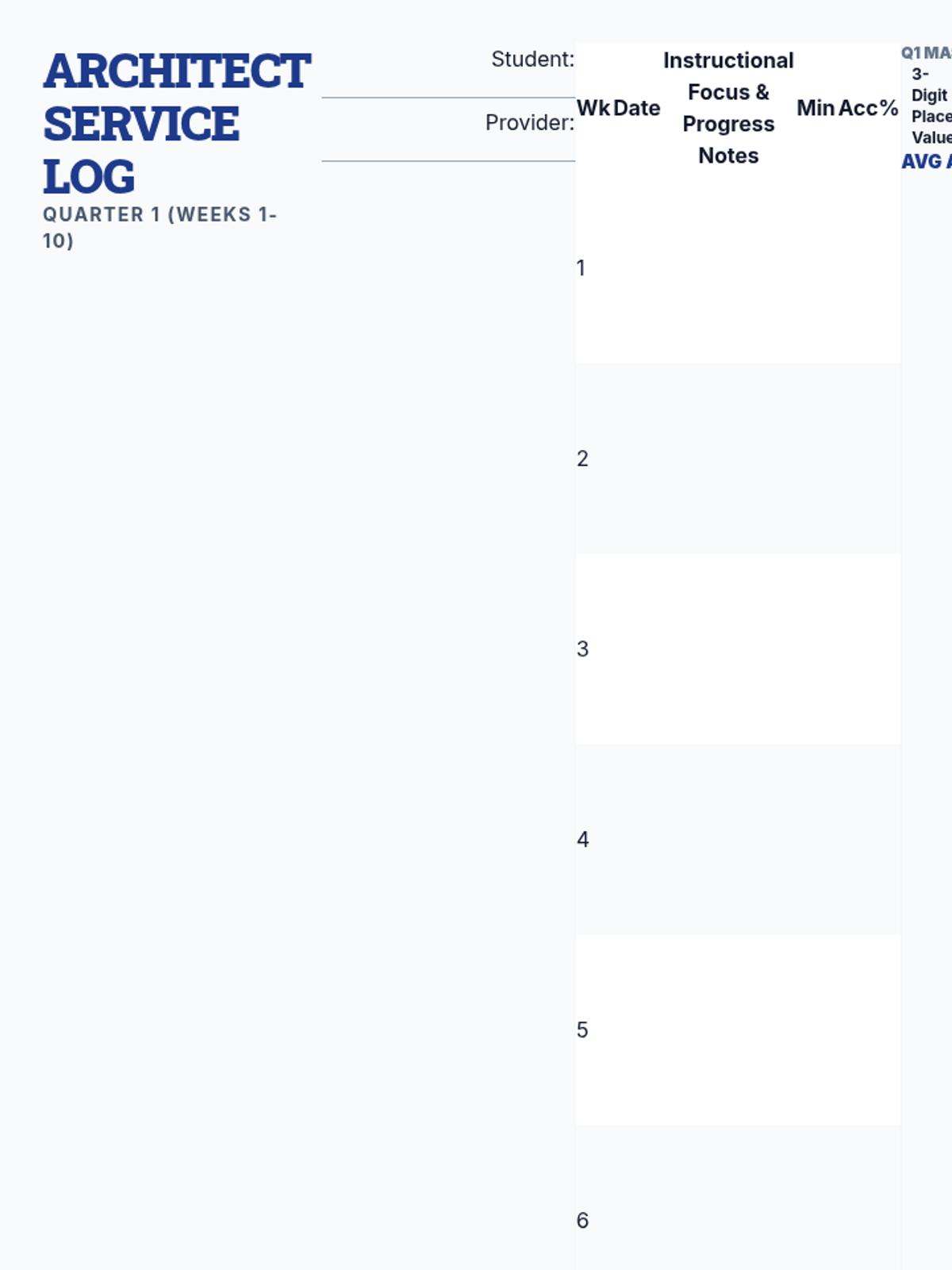
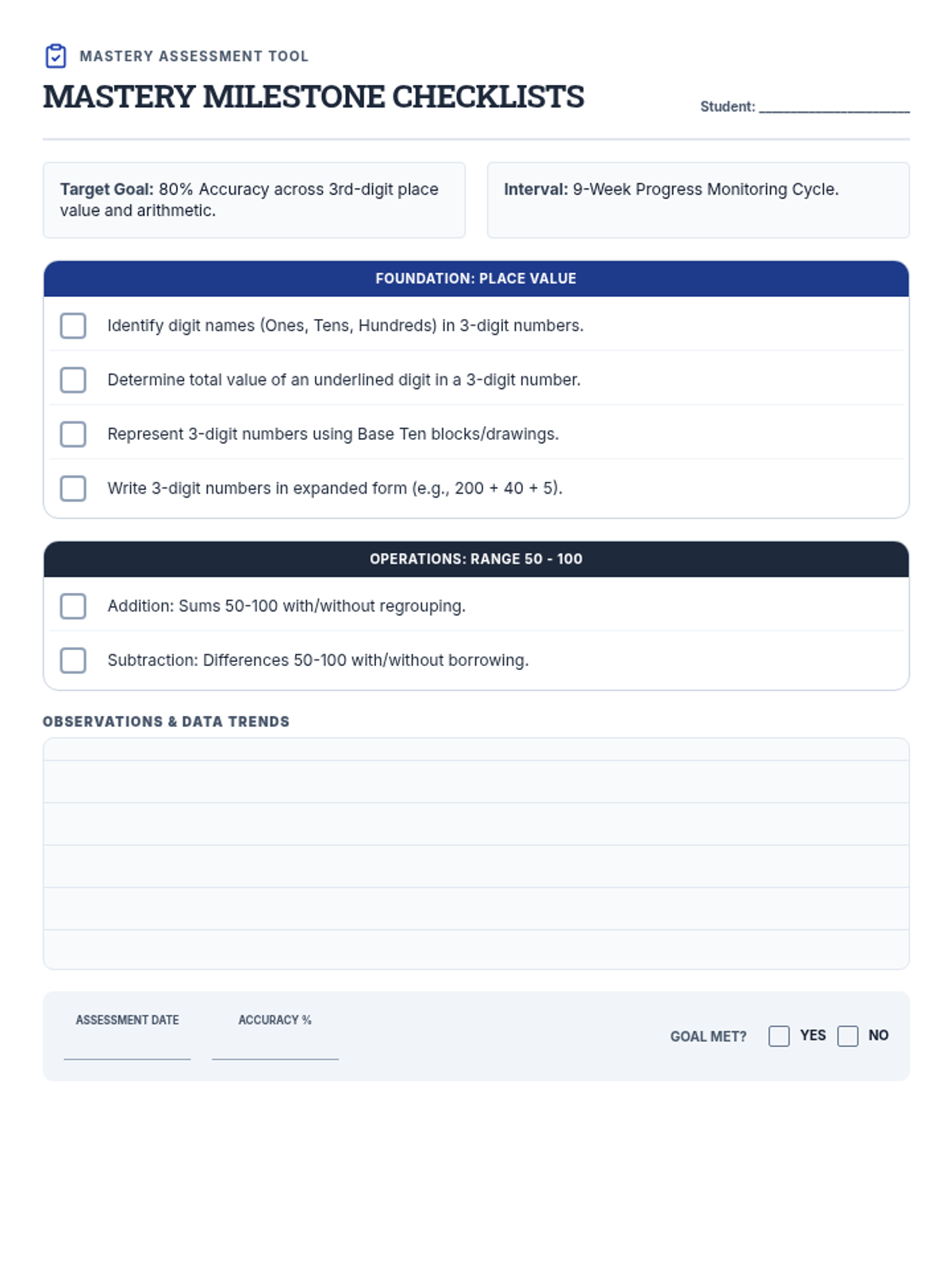
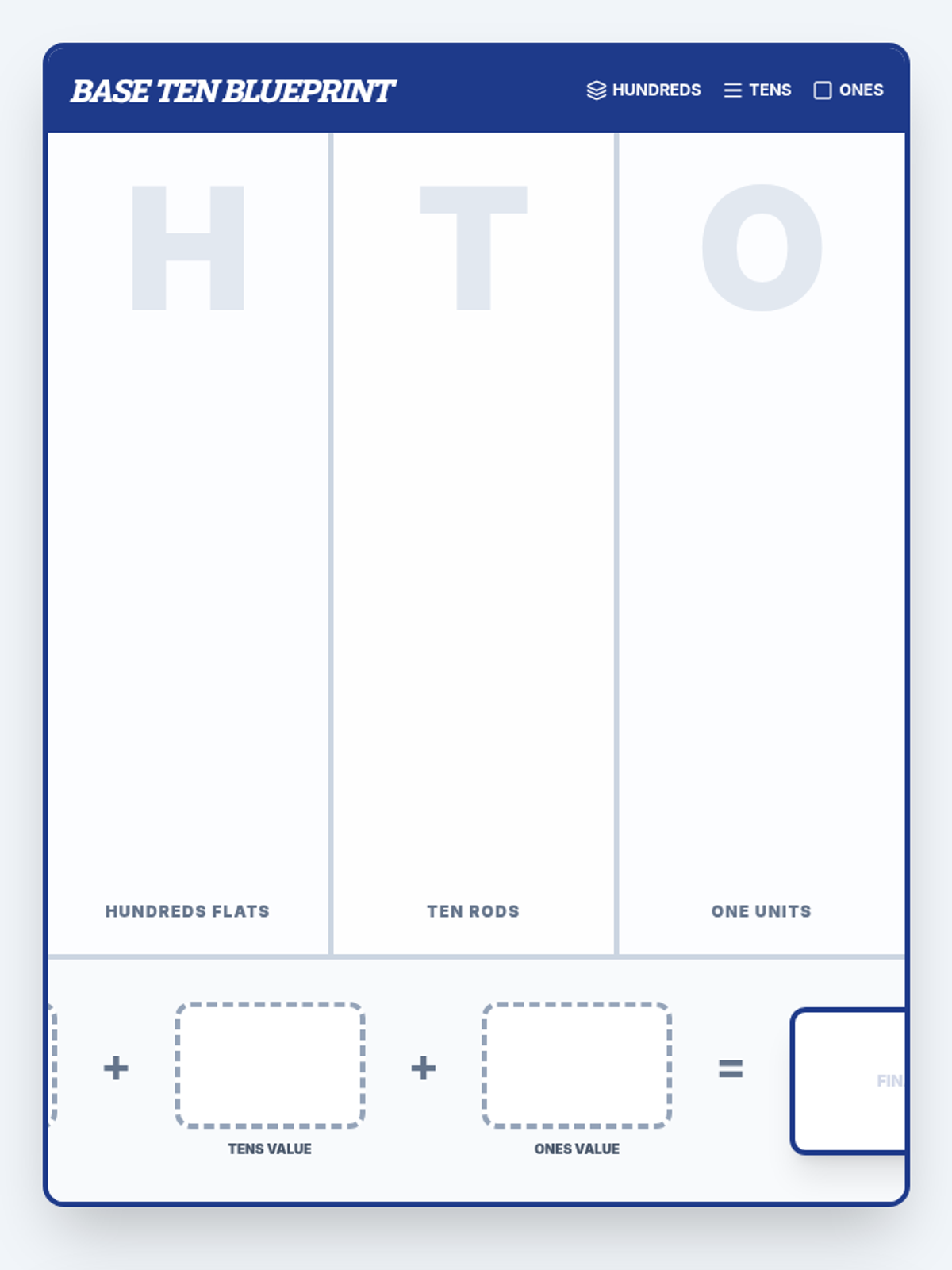
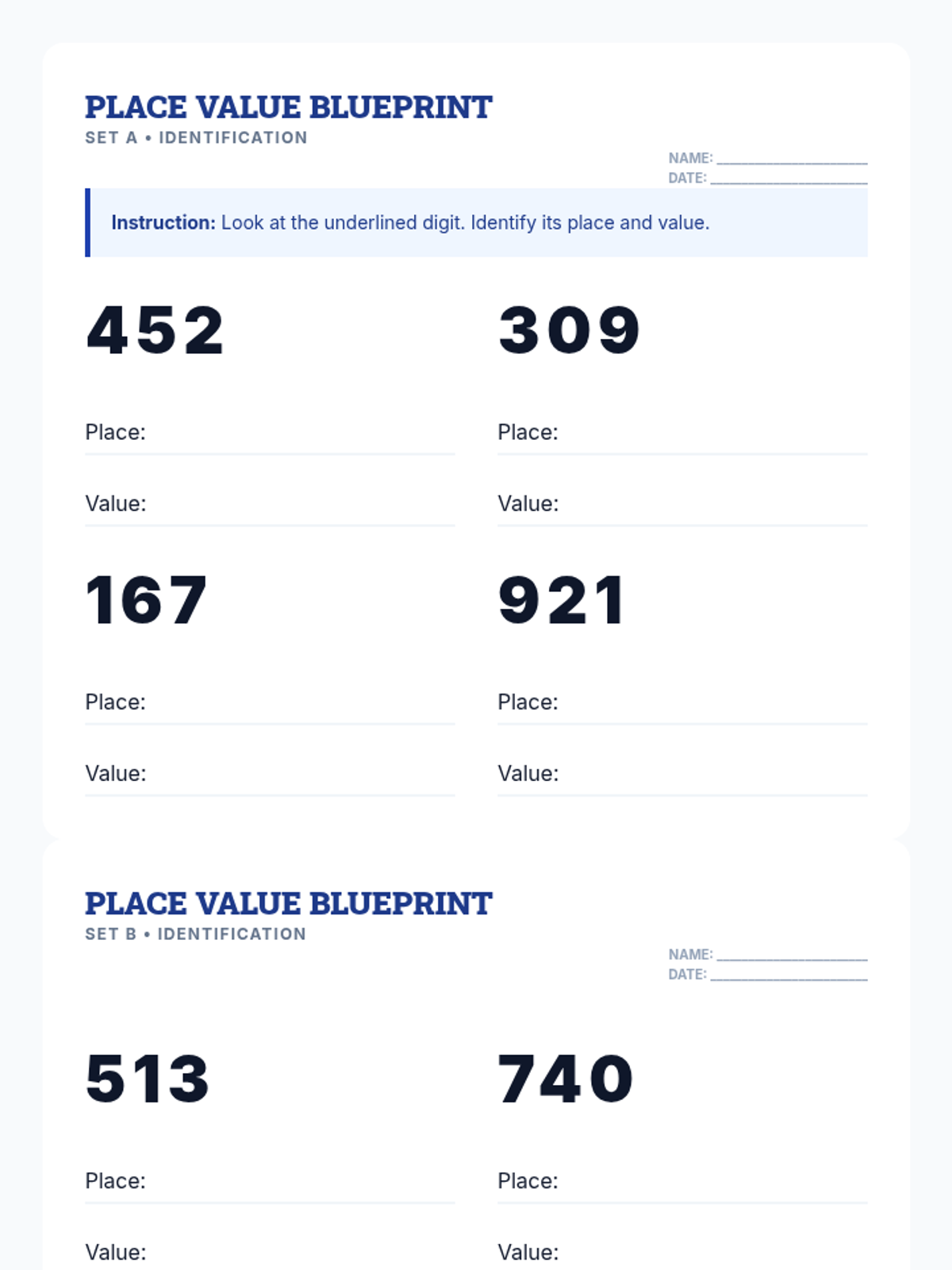
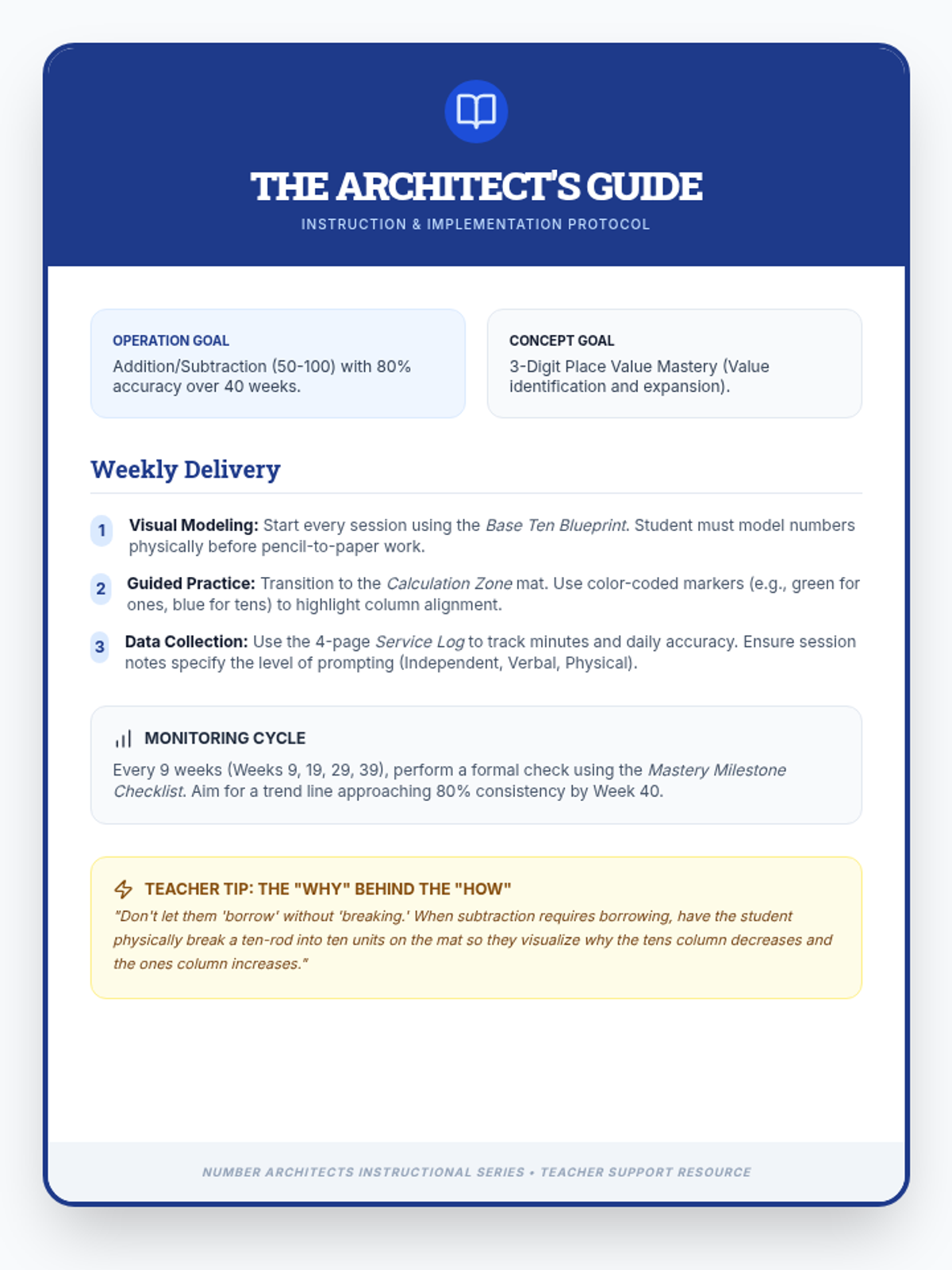
A comprehensive set of support materials for 2nd-grade students focusing on place value mastery up to three digits and addition/subtraction within the 50-100 range. Includes visual mats, progress tracking logs, and practice worksheets.
A candy-shop themed lesson where students identify pennies, nickels, dimes, and quarters and their values, culminating in a hands-on activity using pennies to 'buy' candy from price-labeled bins.
A first-grade lesson on identifying coins and their values through an immersive candy shop simulation where students use pennies to 'purchase' sweets.
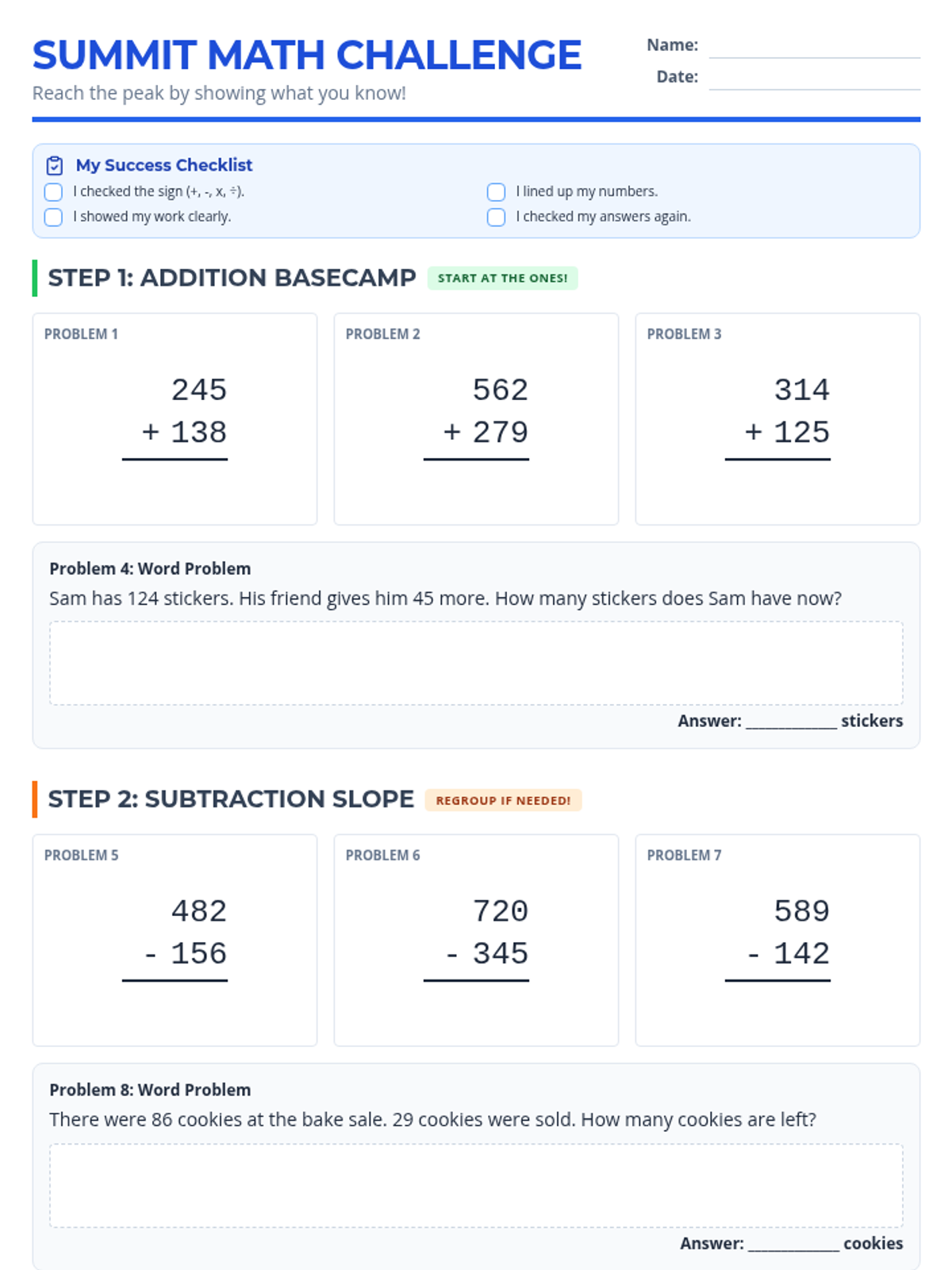
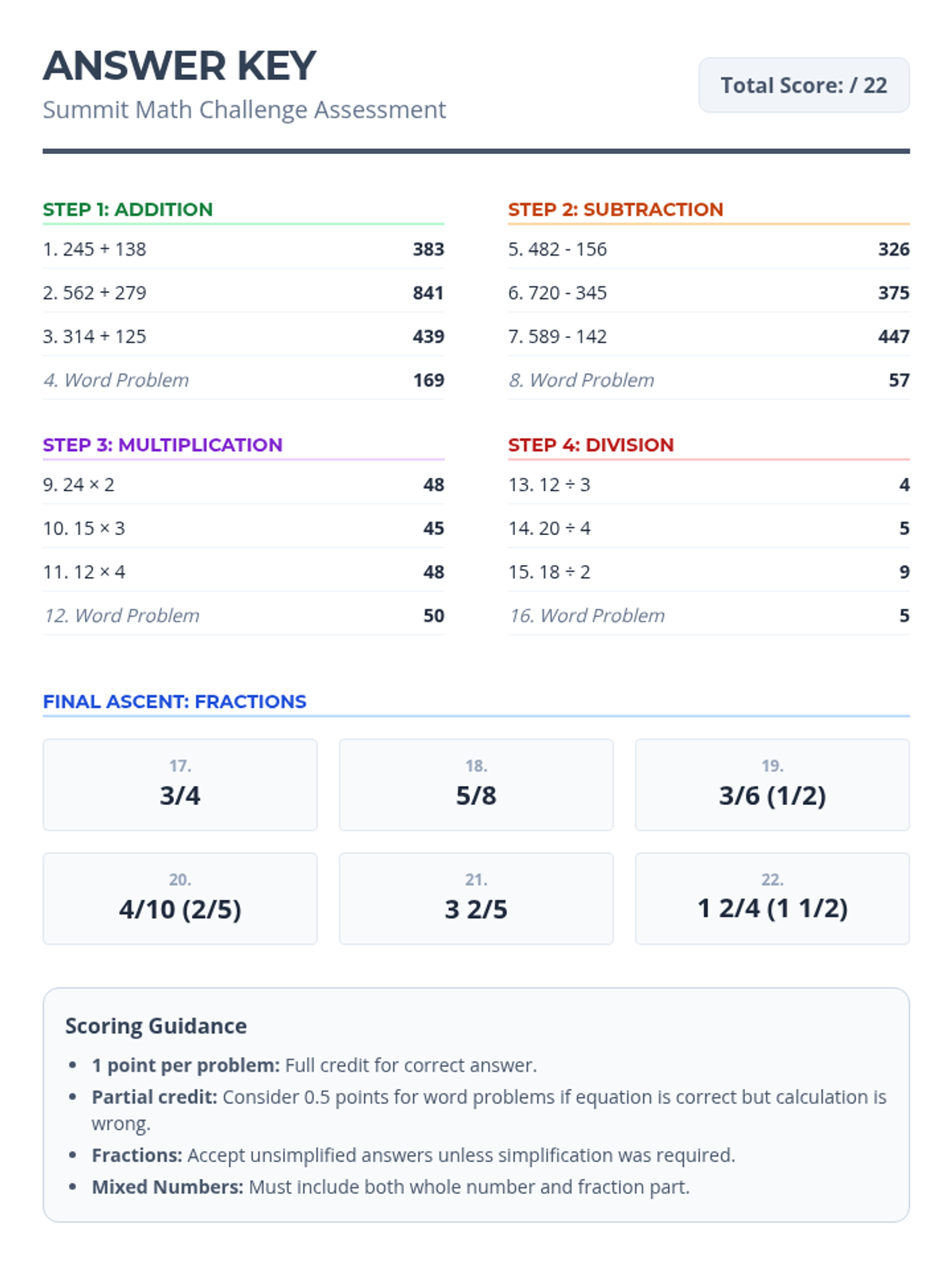
A comprehensive math assessment for 2nd-4th grade covering basic operations and fractions, designed with simplified wording and student support features.
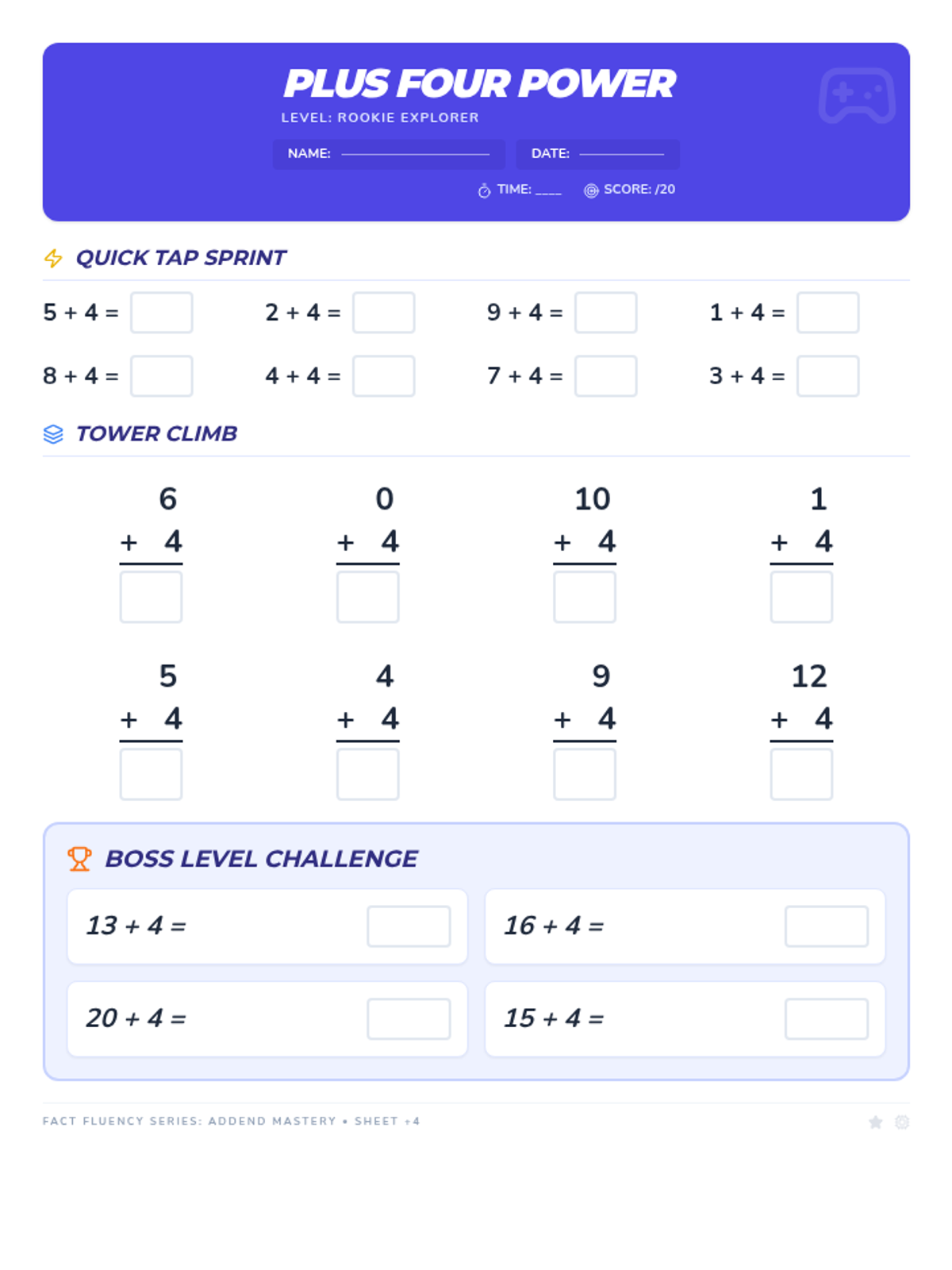
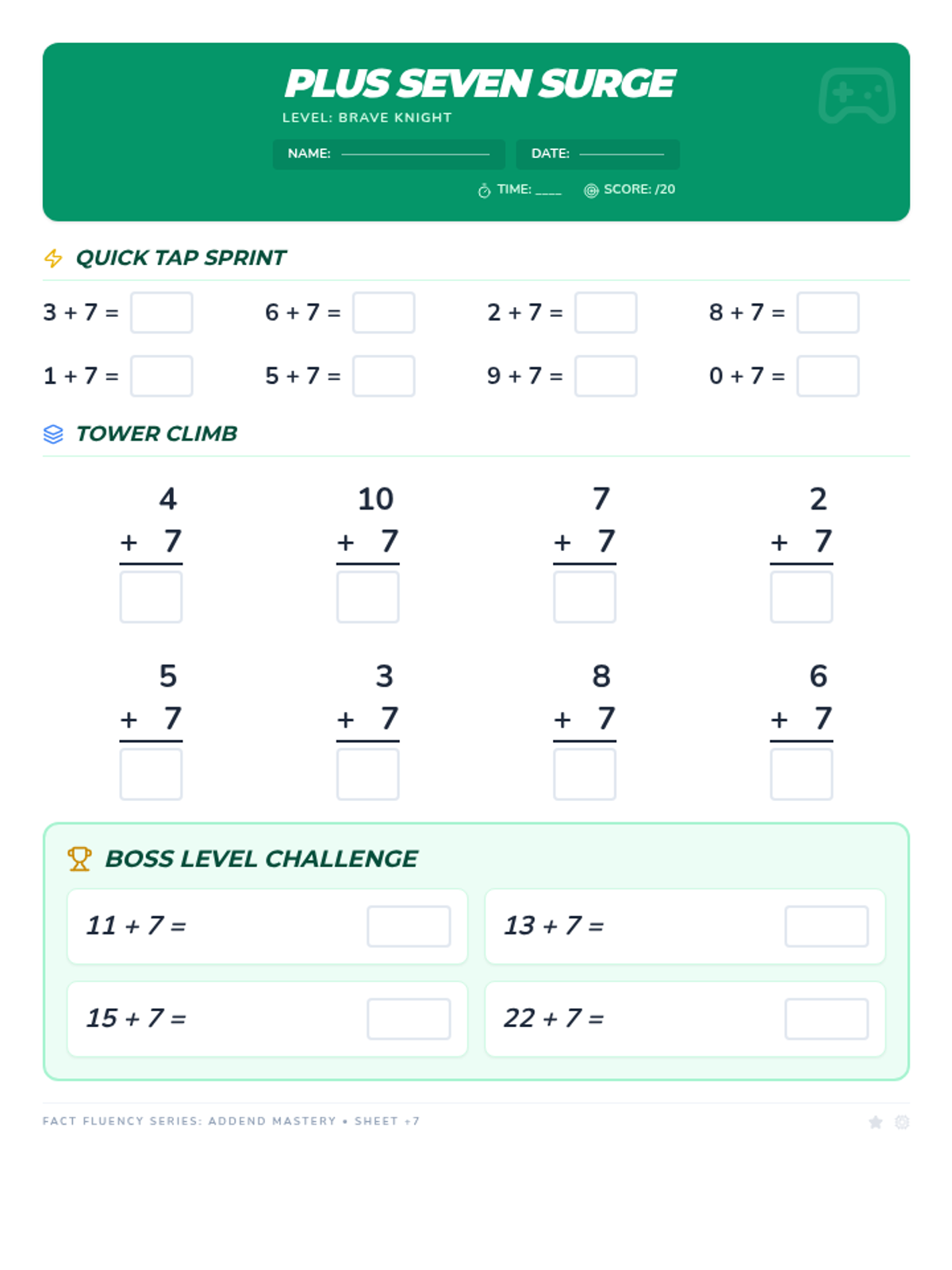
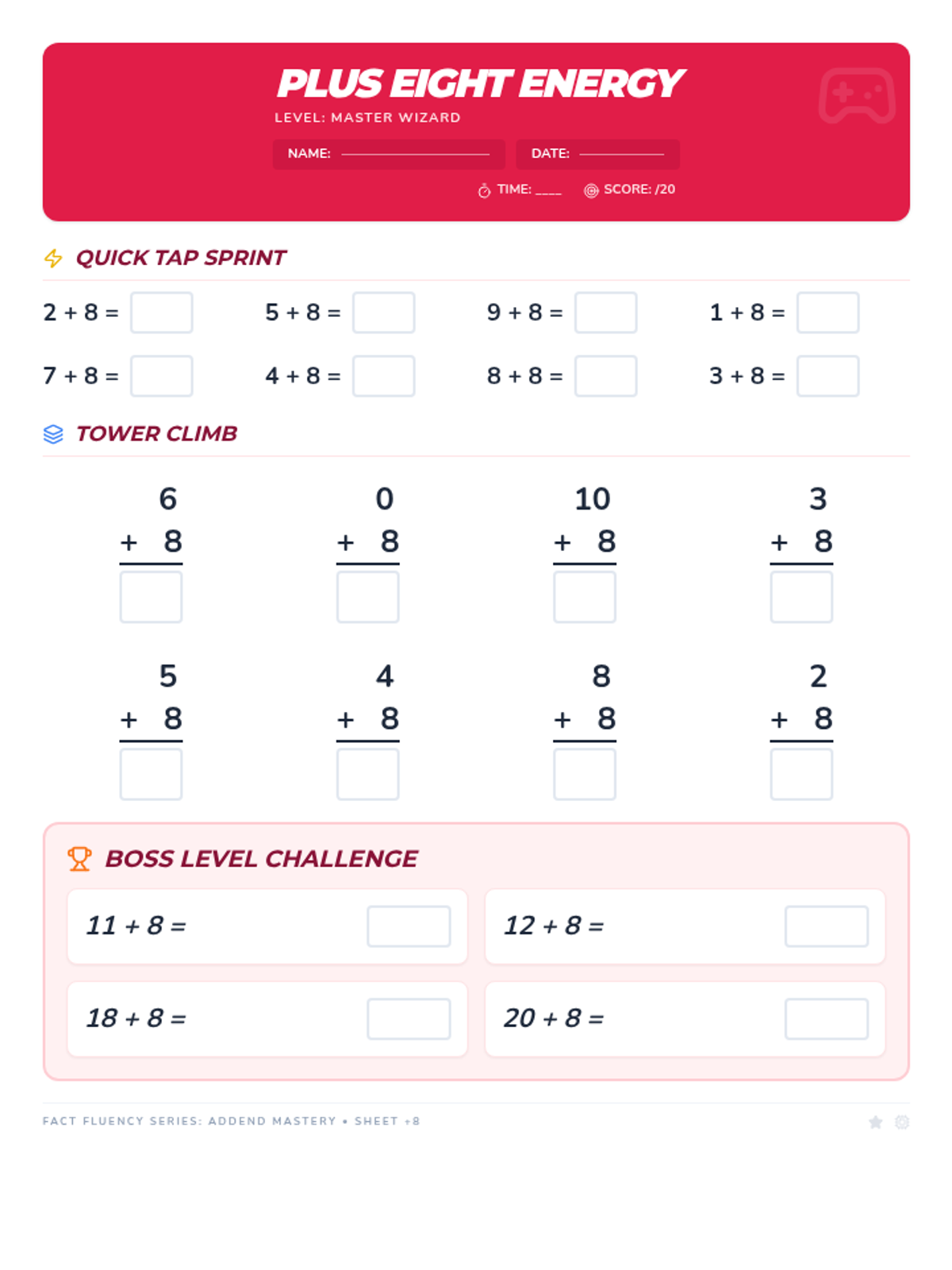
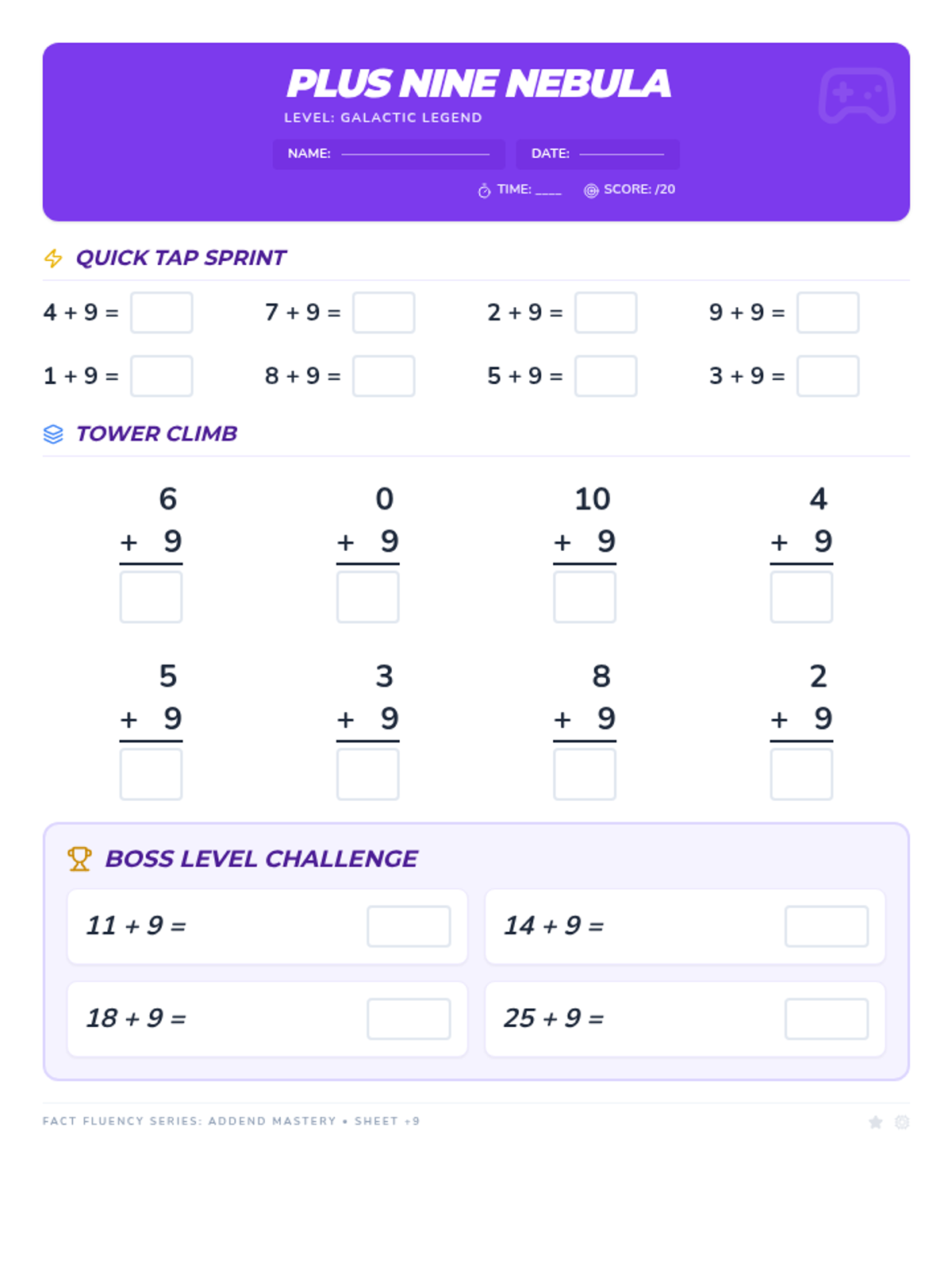
A collection of fact fluency sheets focused on specific addition addends (+4, +7, +8, and +9) using a vibrant retro-gaming theme to engage students.
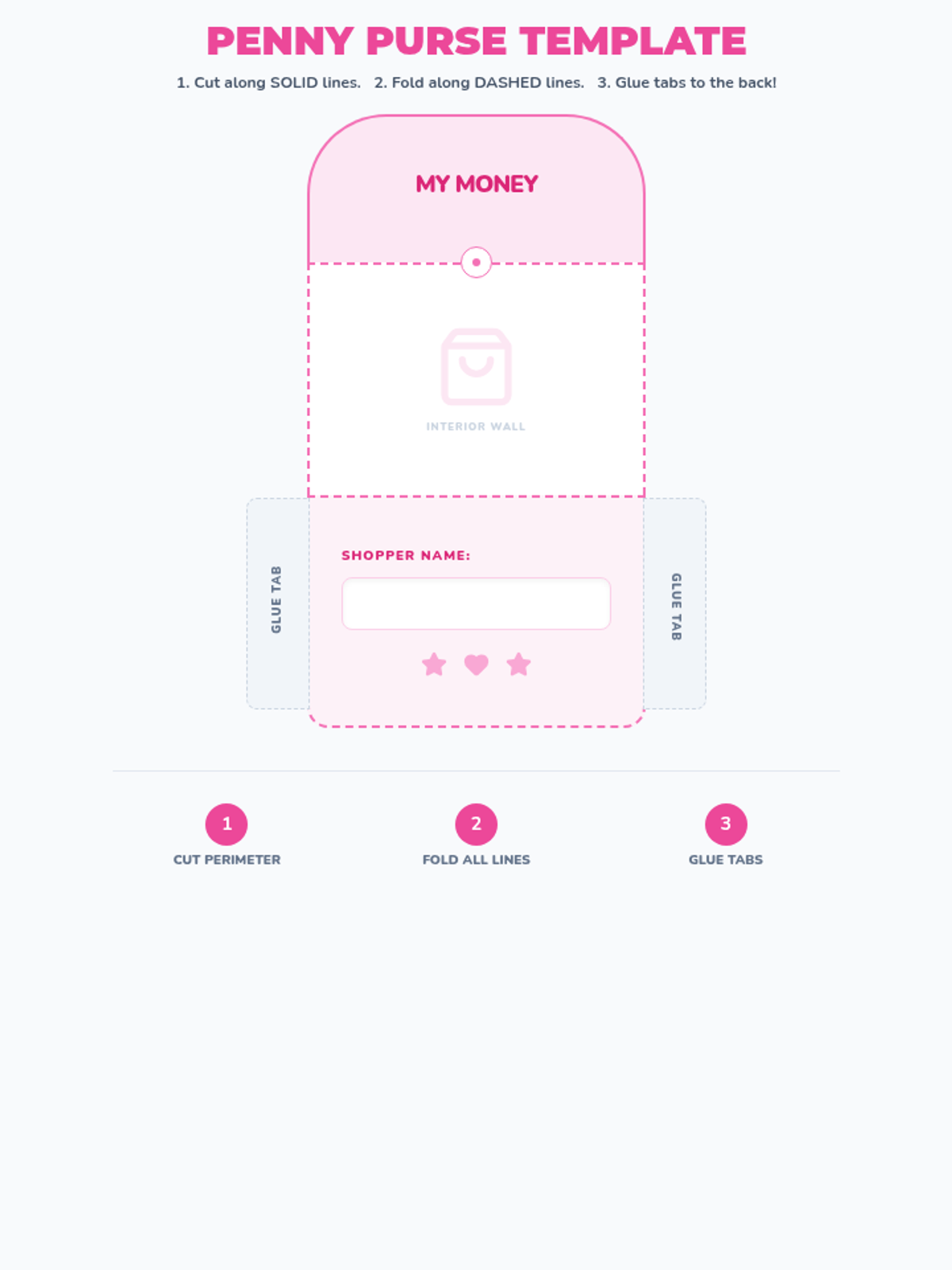
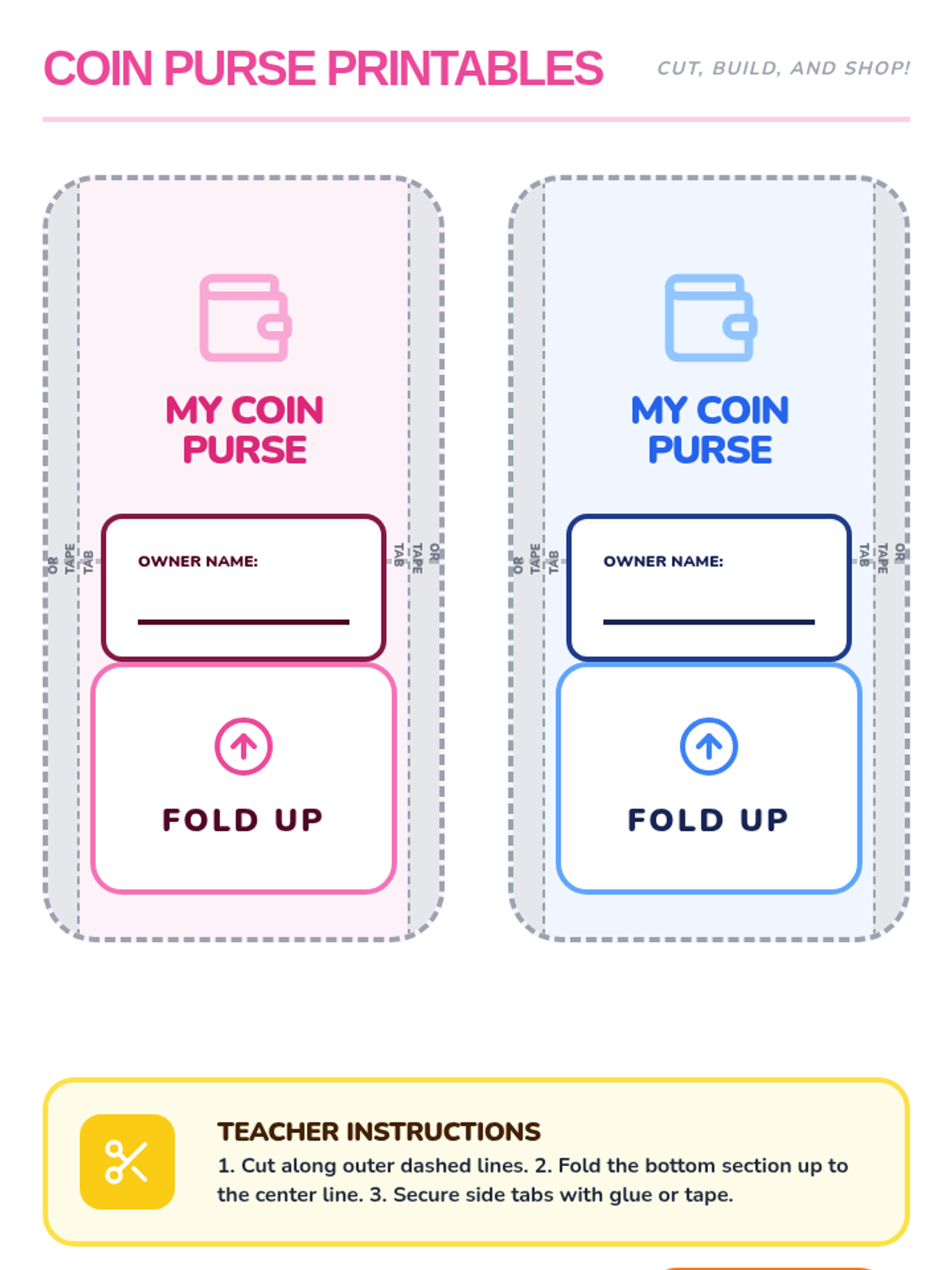
A sweet introduction to identifying and counting coins. Students visit a virtual candy shop, learn to recognize pennies, nickels, dimes, and quarters, and use their own 'coin purses' to buy treats.
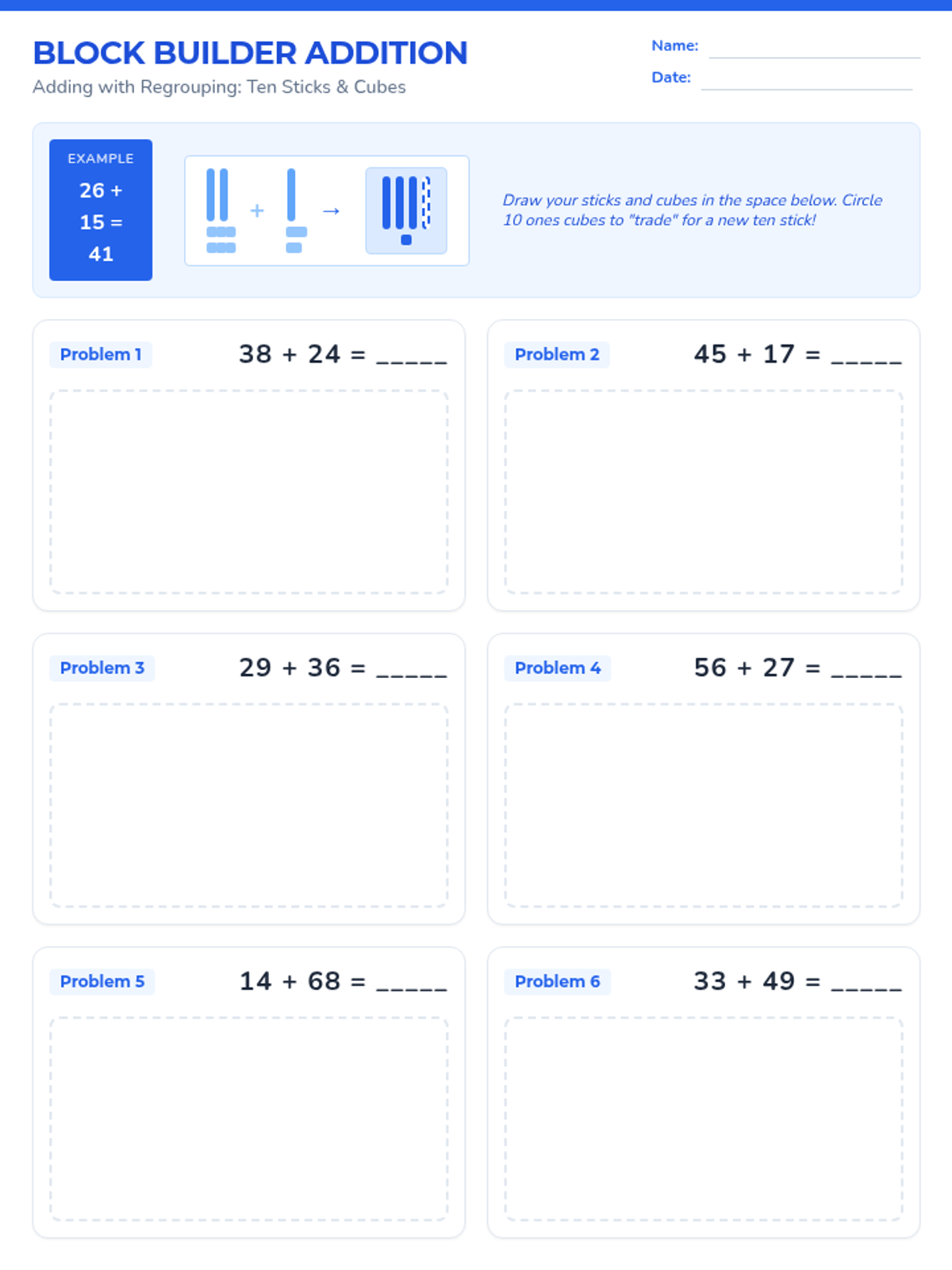
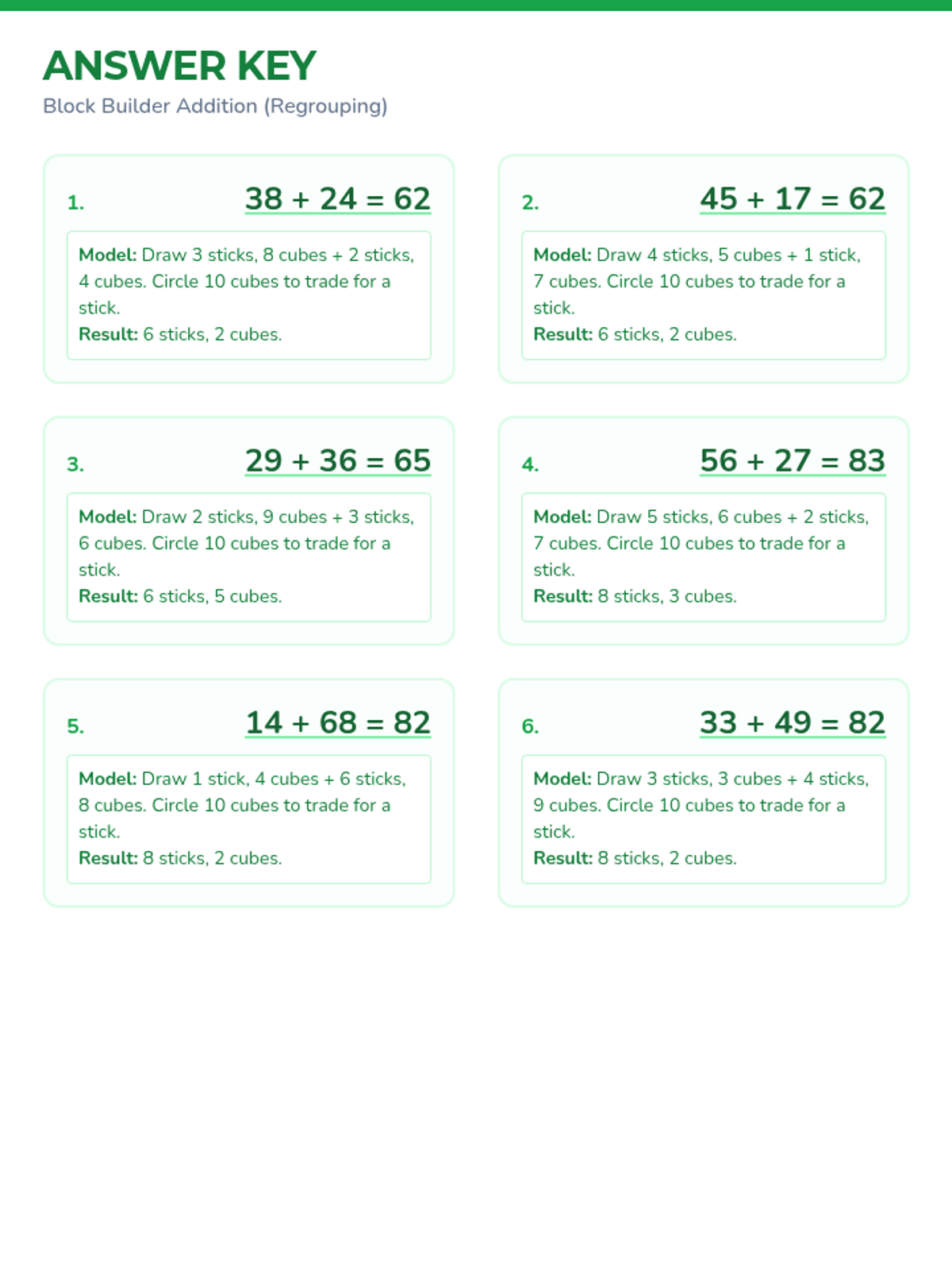
A foundational math lesson on adding two-digit numbers using regrouping, focused on visual representations with base-ten blocks (ten sticks and ones cubes).
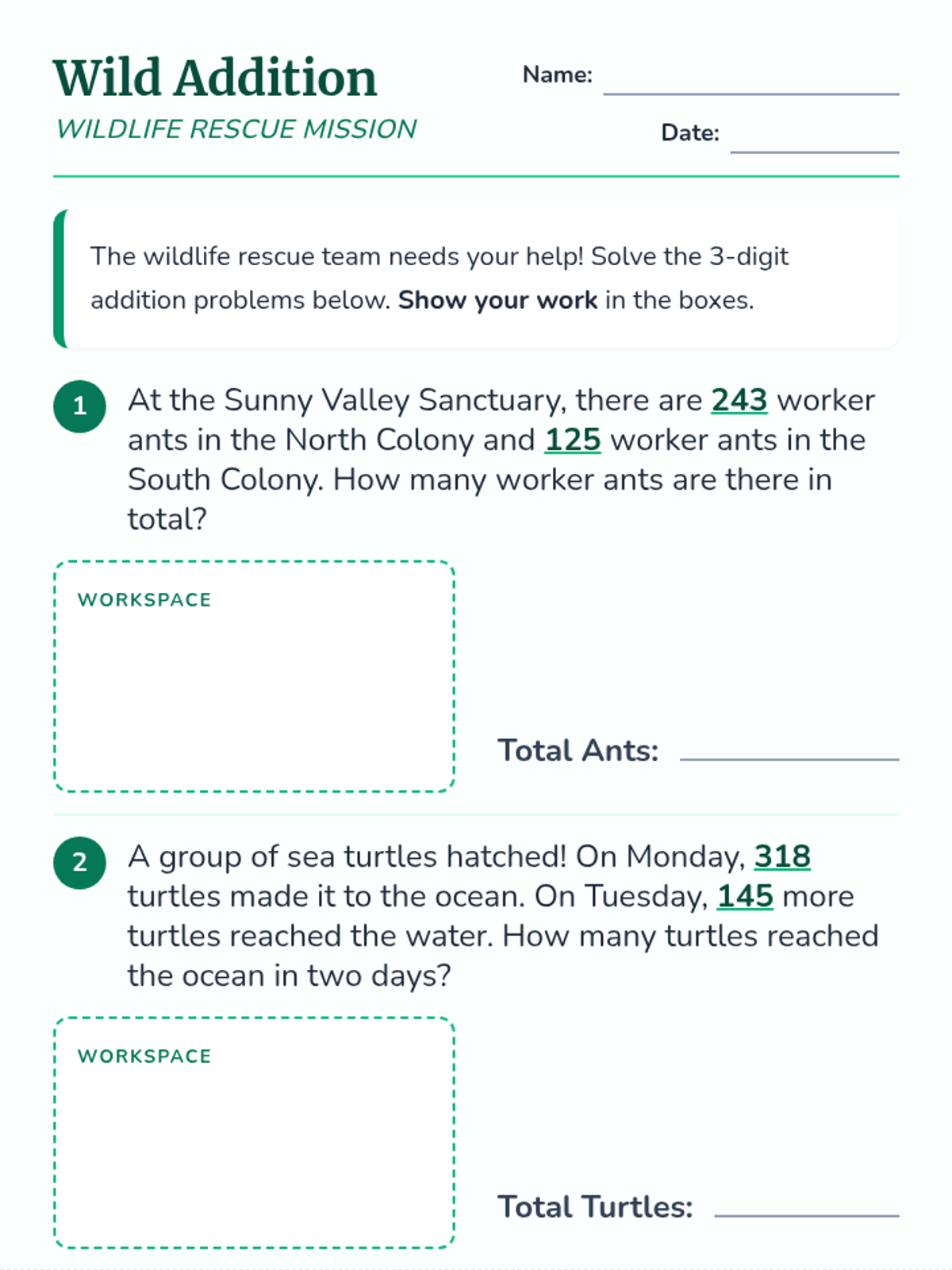
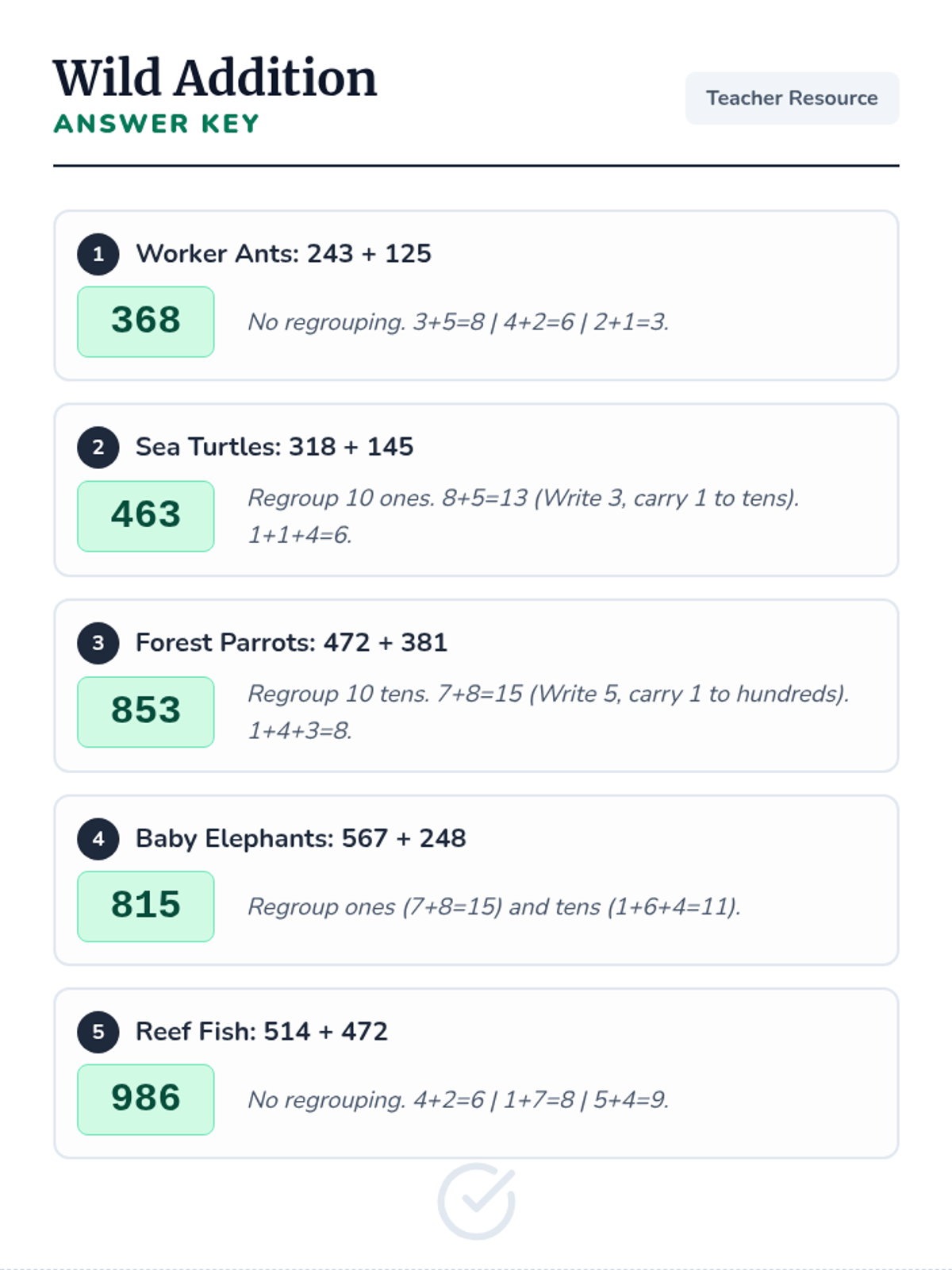
A math lesson focused on 3-digit addition using animal-themed word problems, emphasizing both regrouping and non-regrouping techniques with clear workspaces for student calculation.
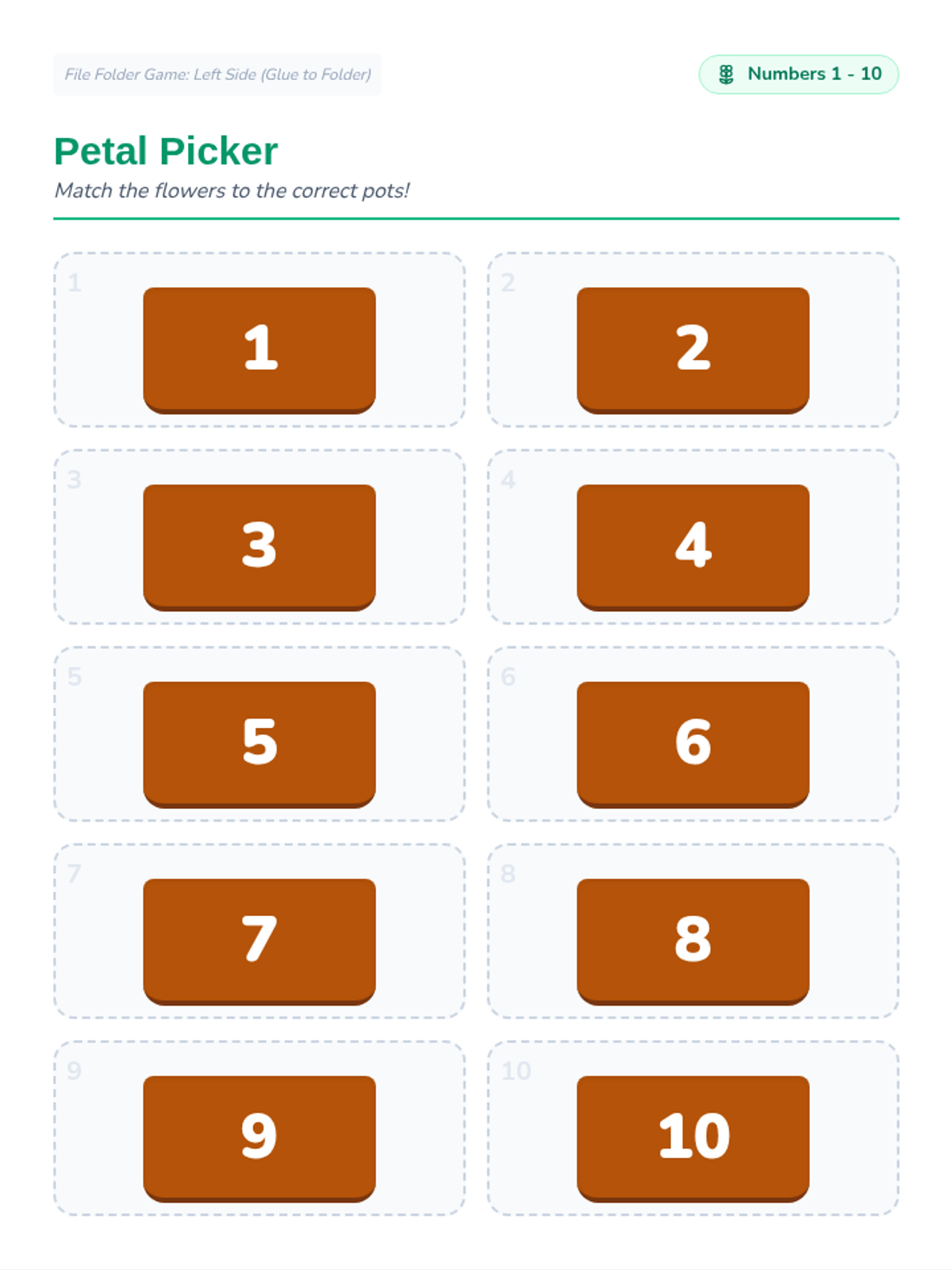
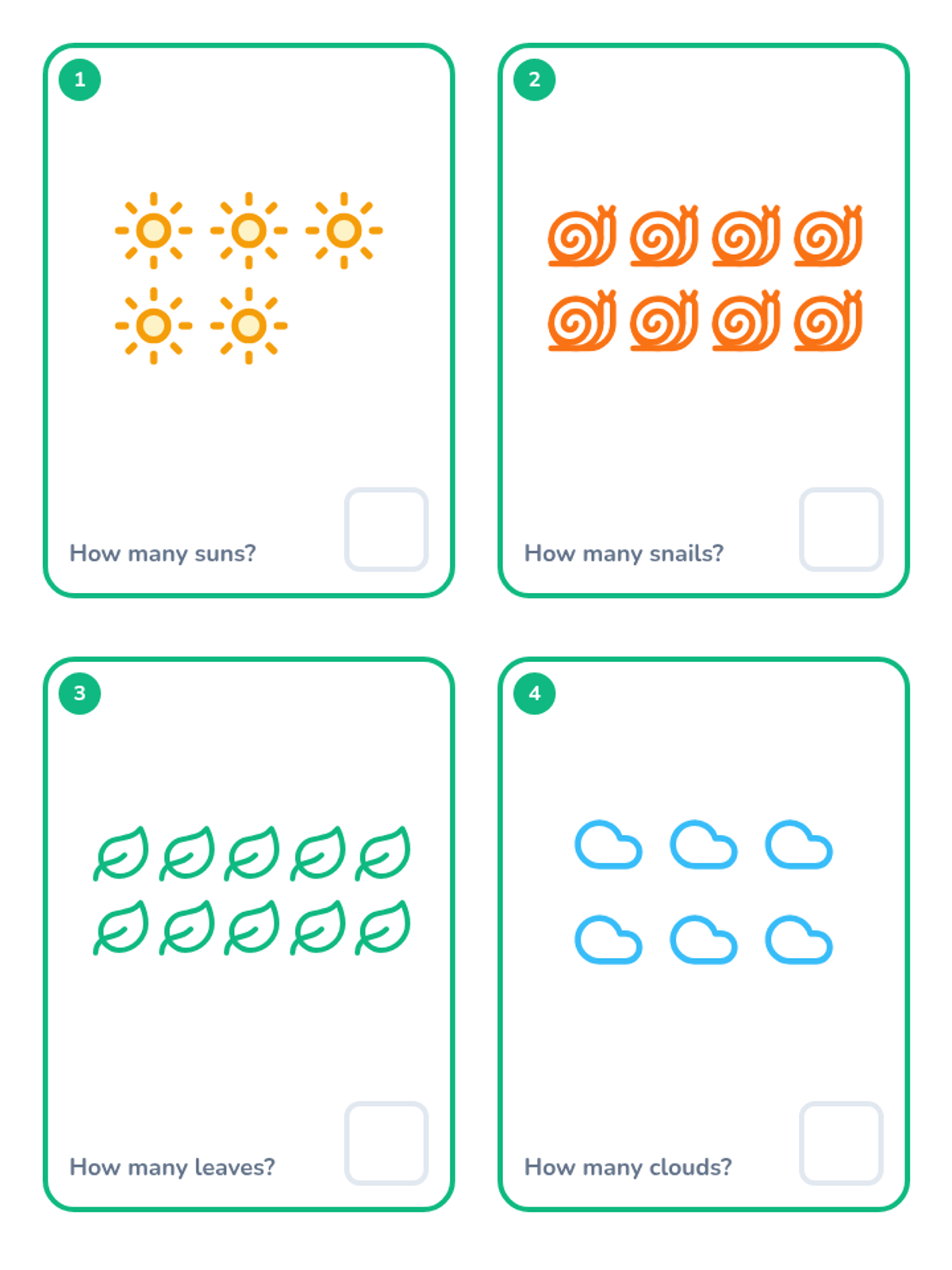
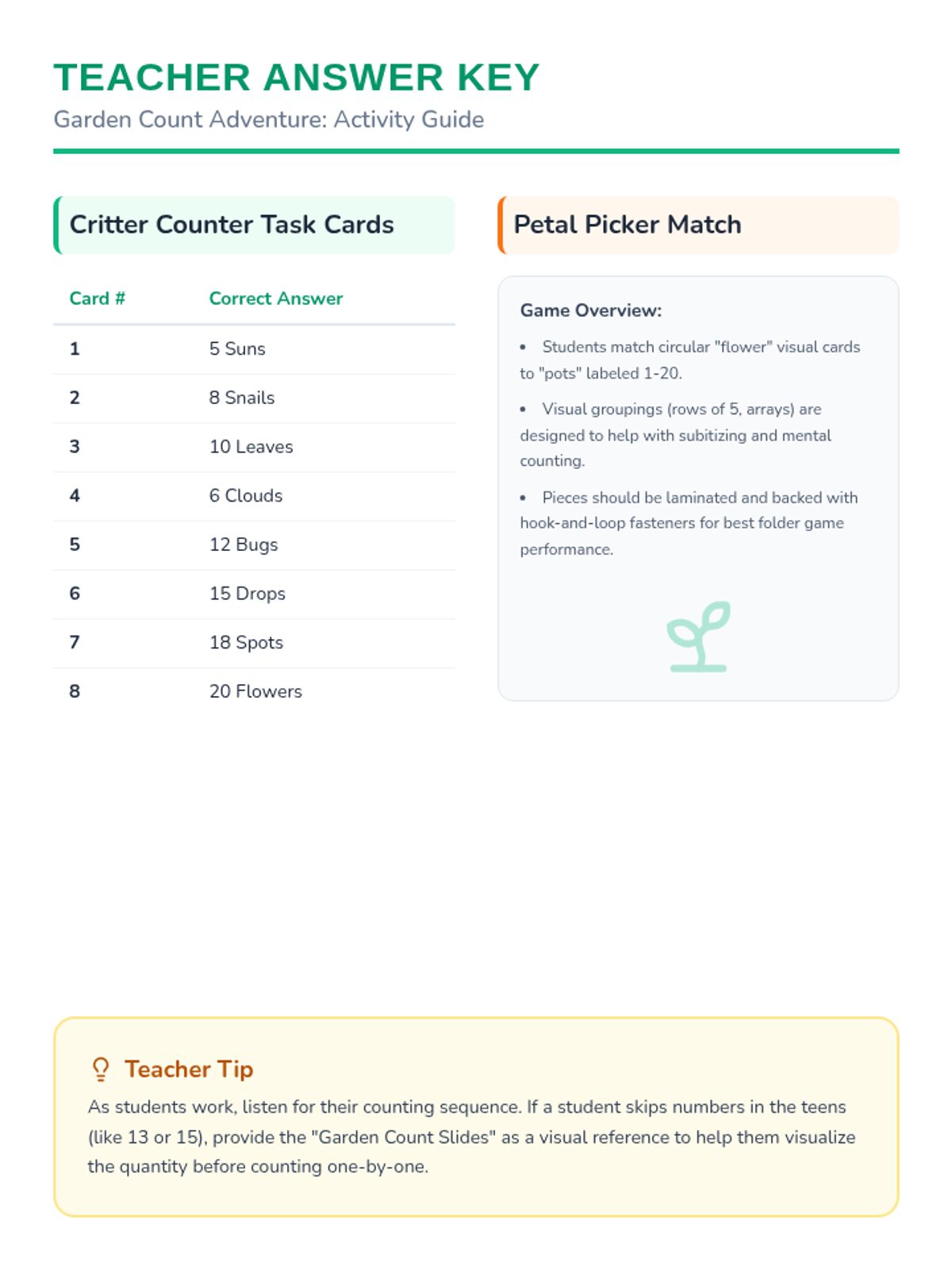
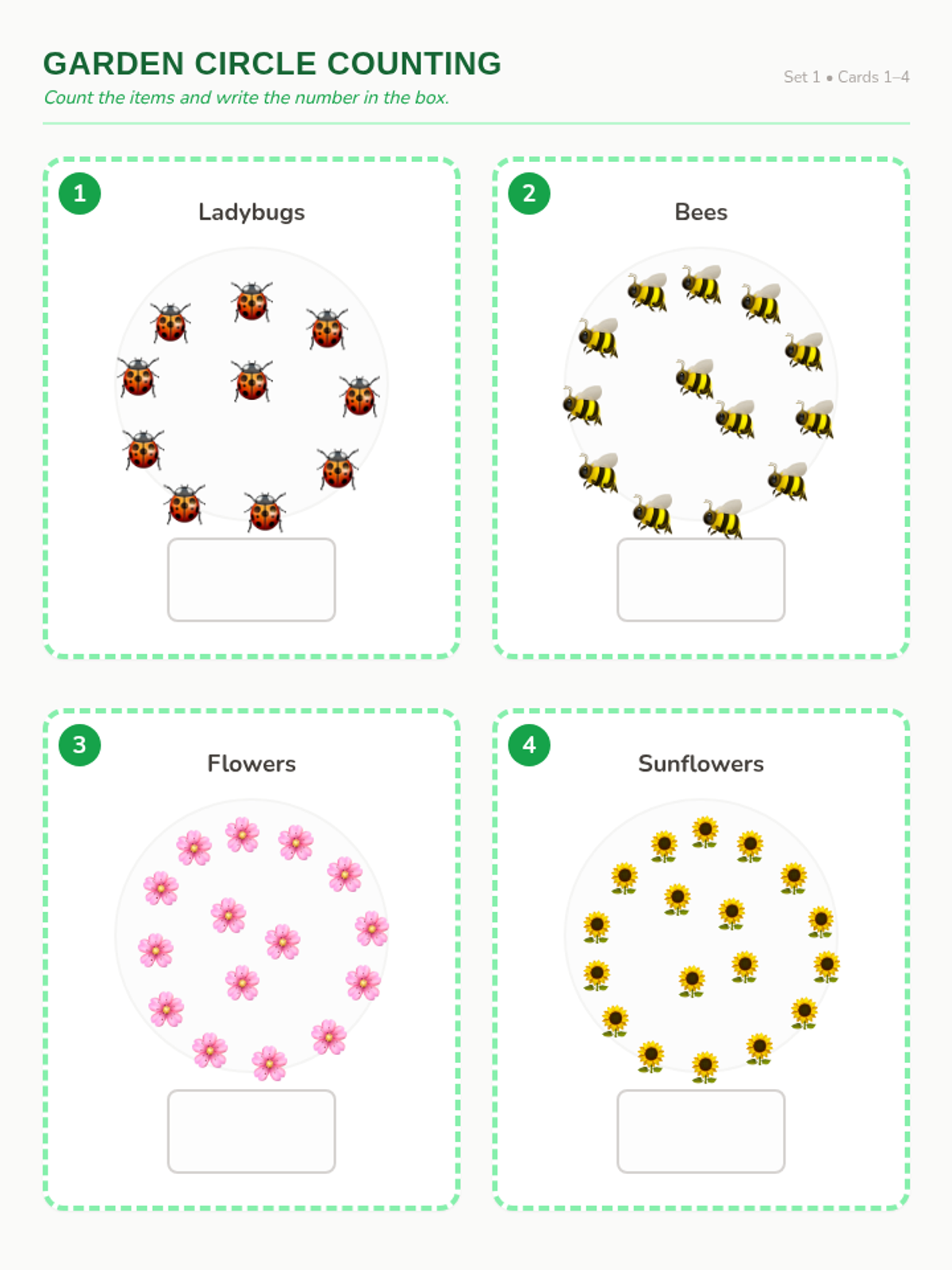
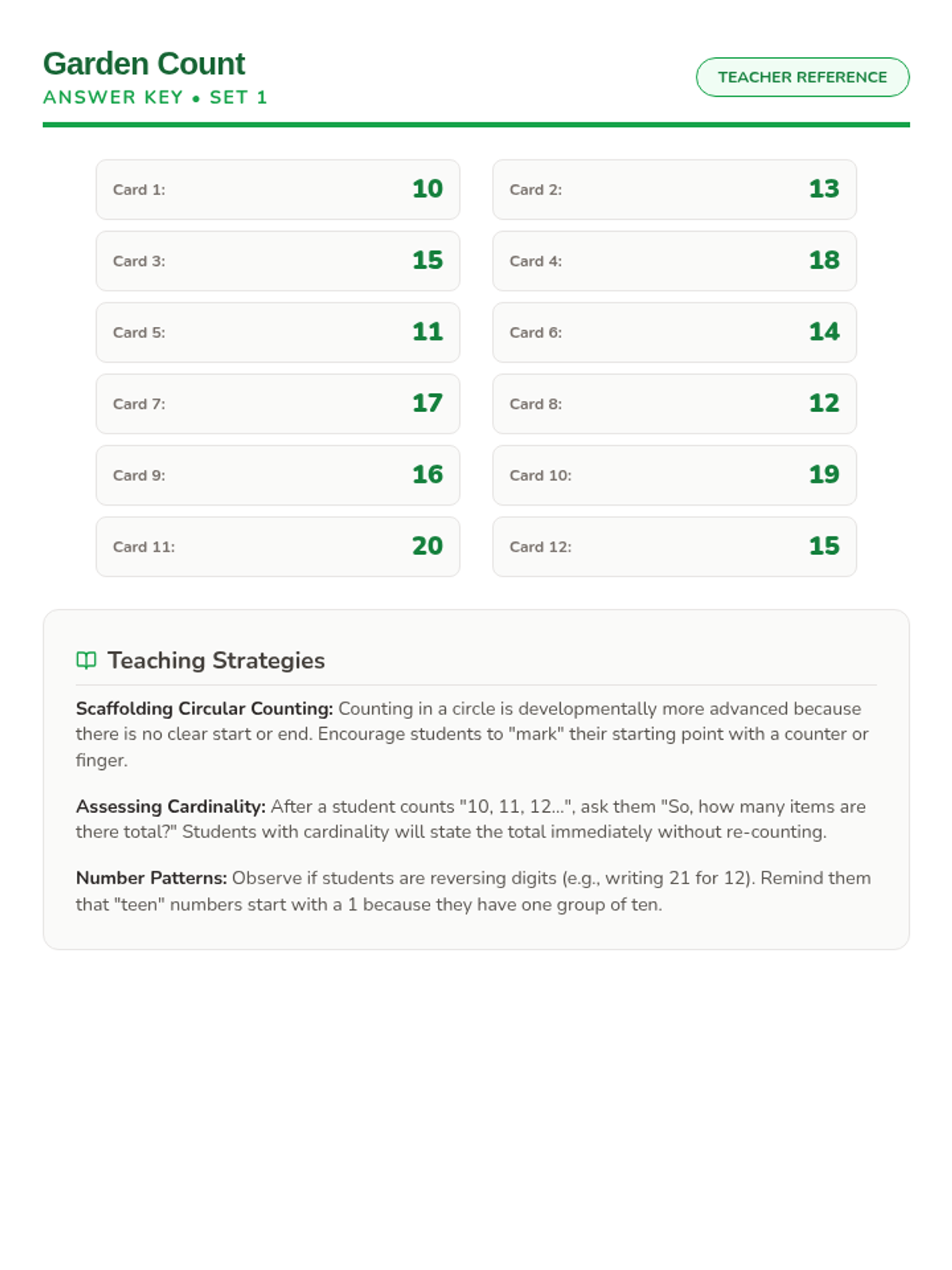
A hands-on counting unit where students explore garden-themed visuals to master numbers up to 20 through interactive slides, a file folder game, and task cards.
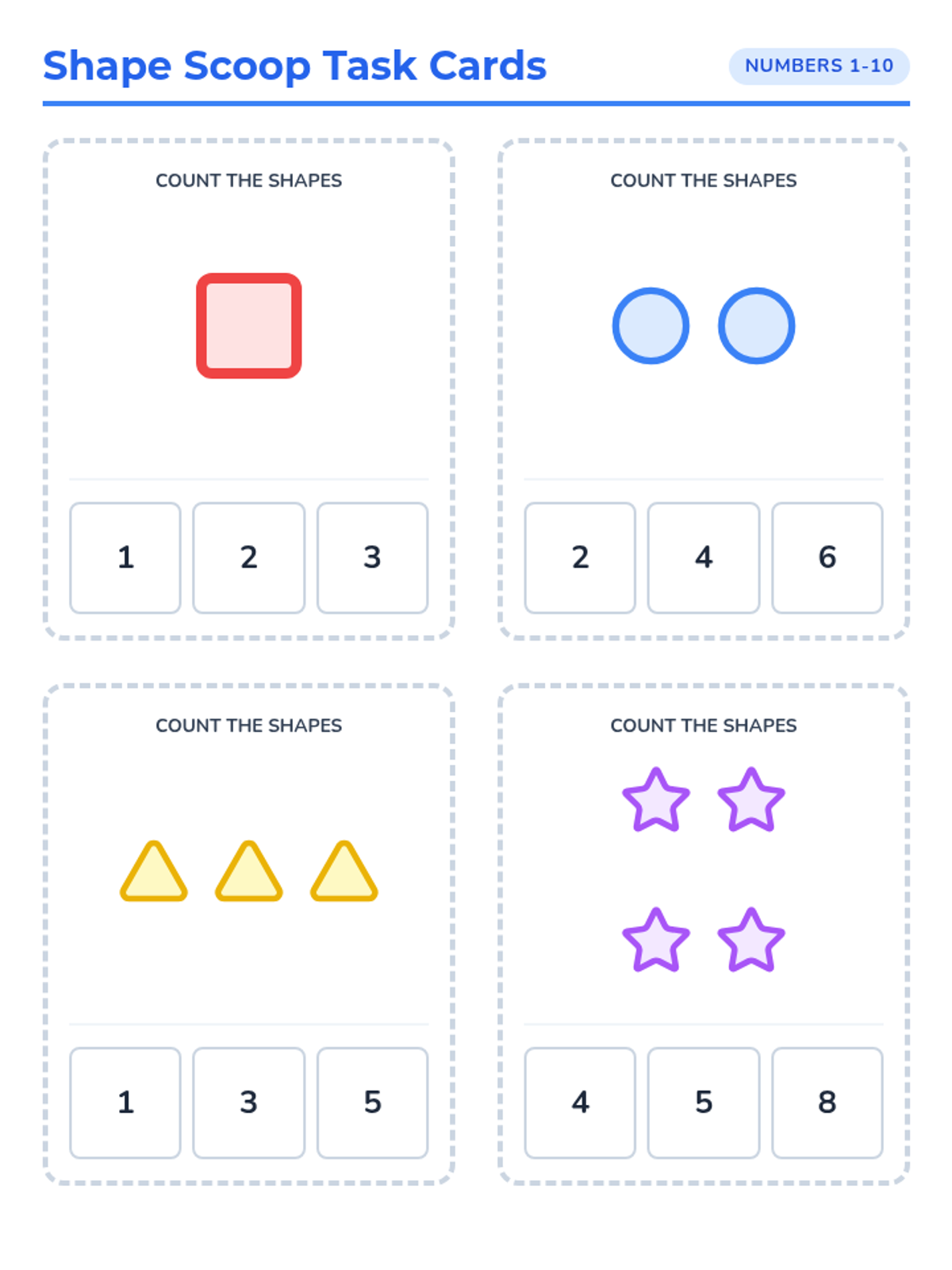
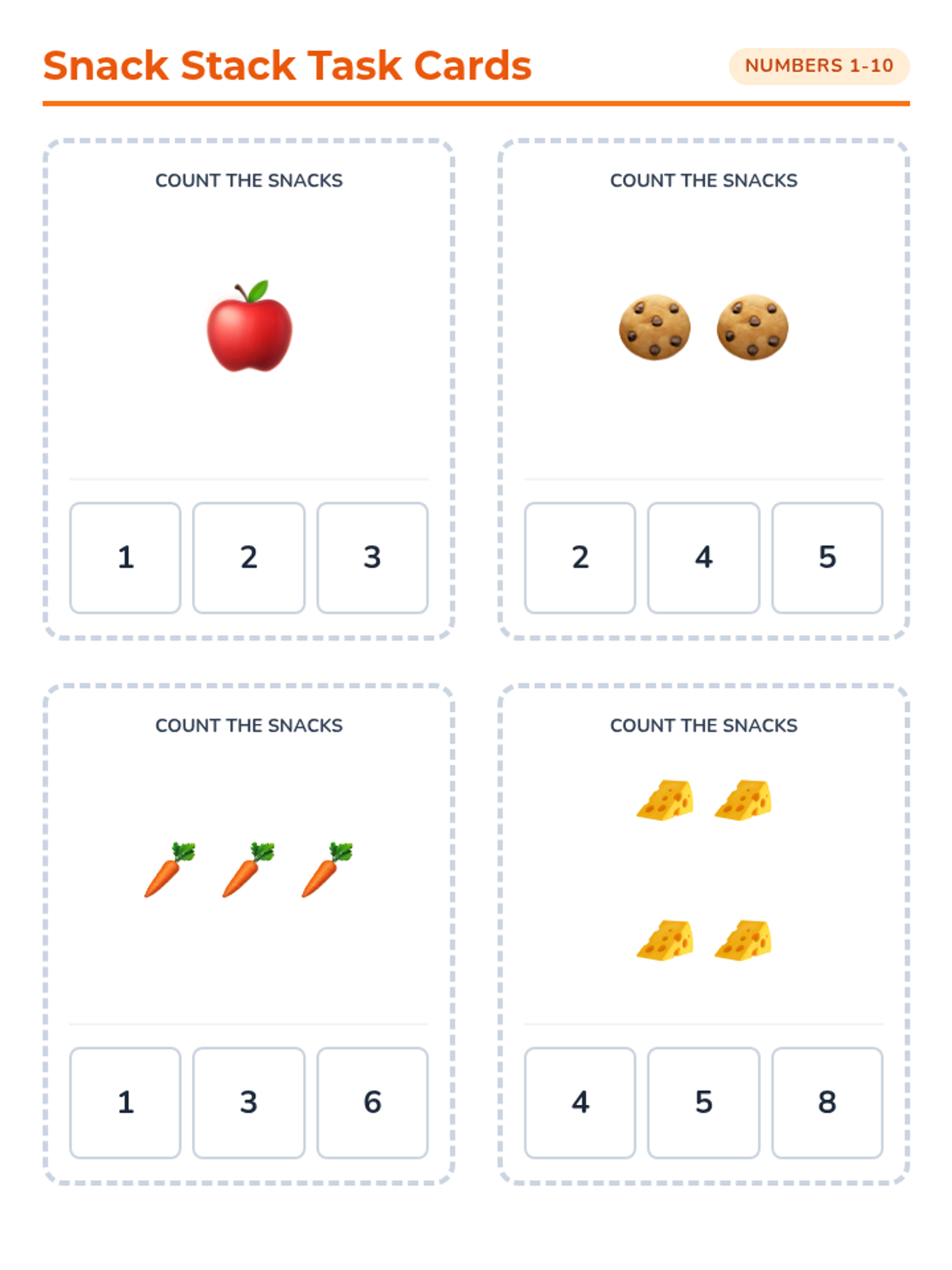
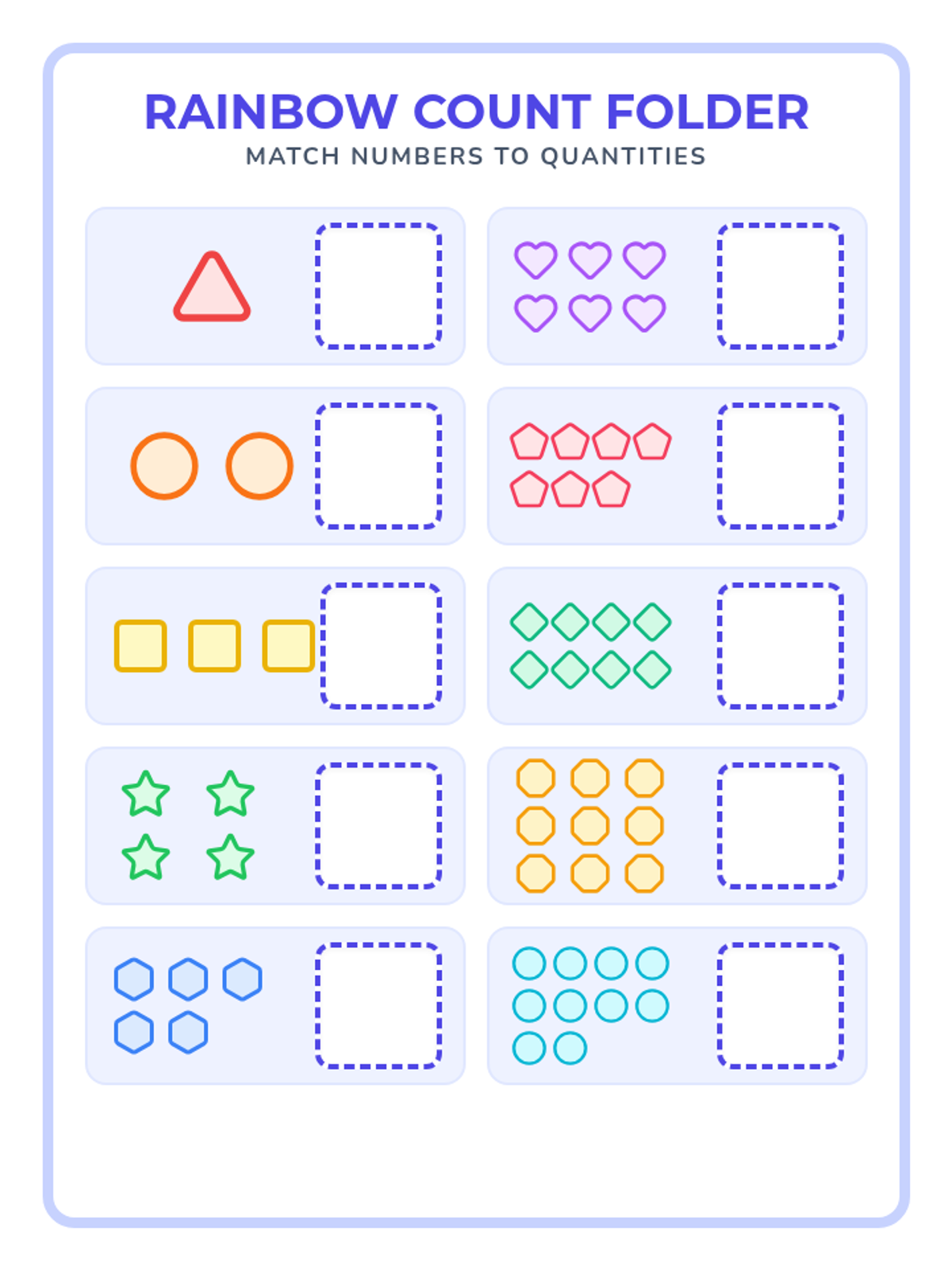
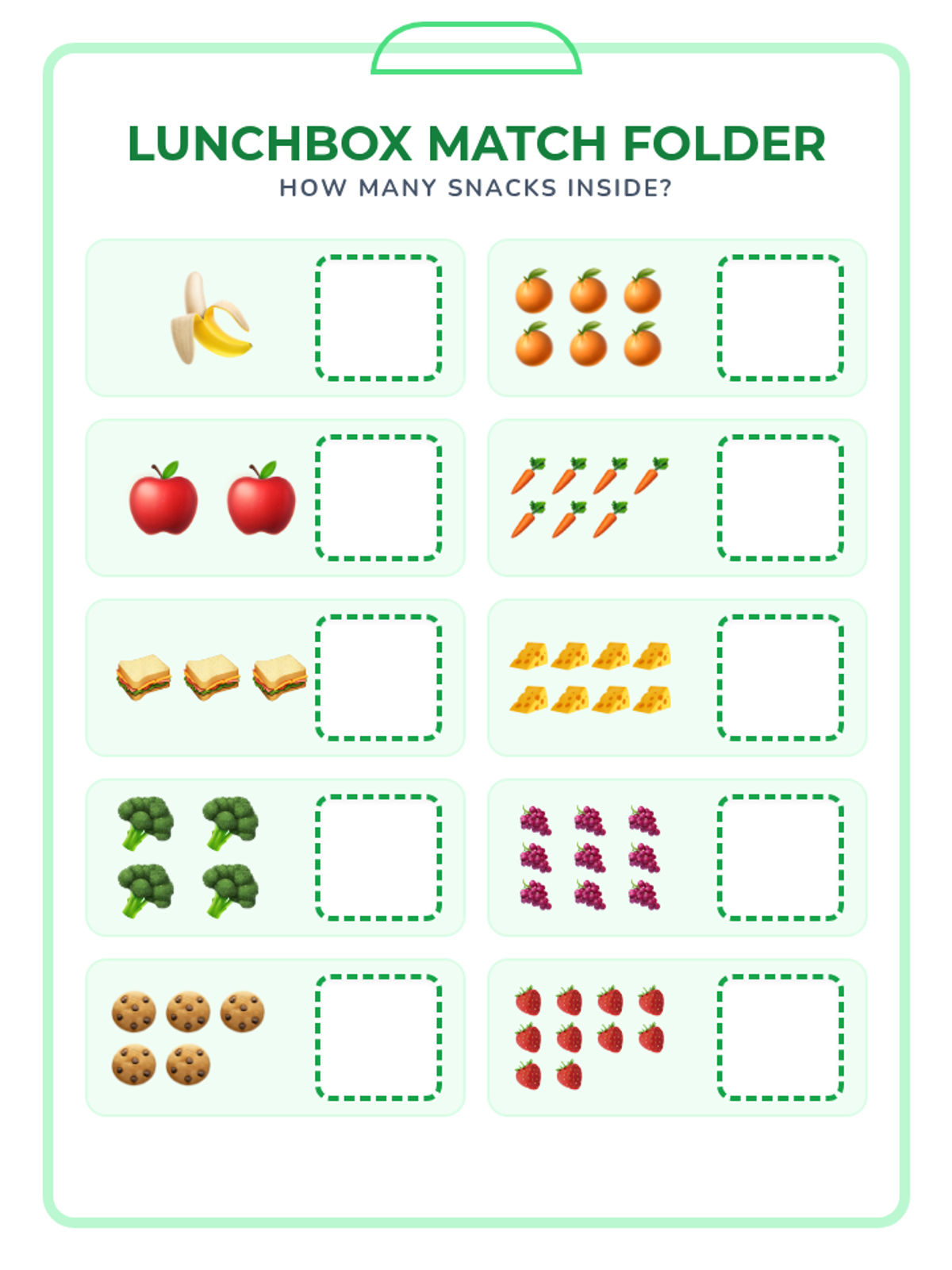
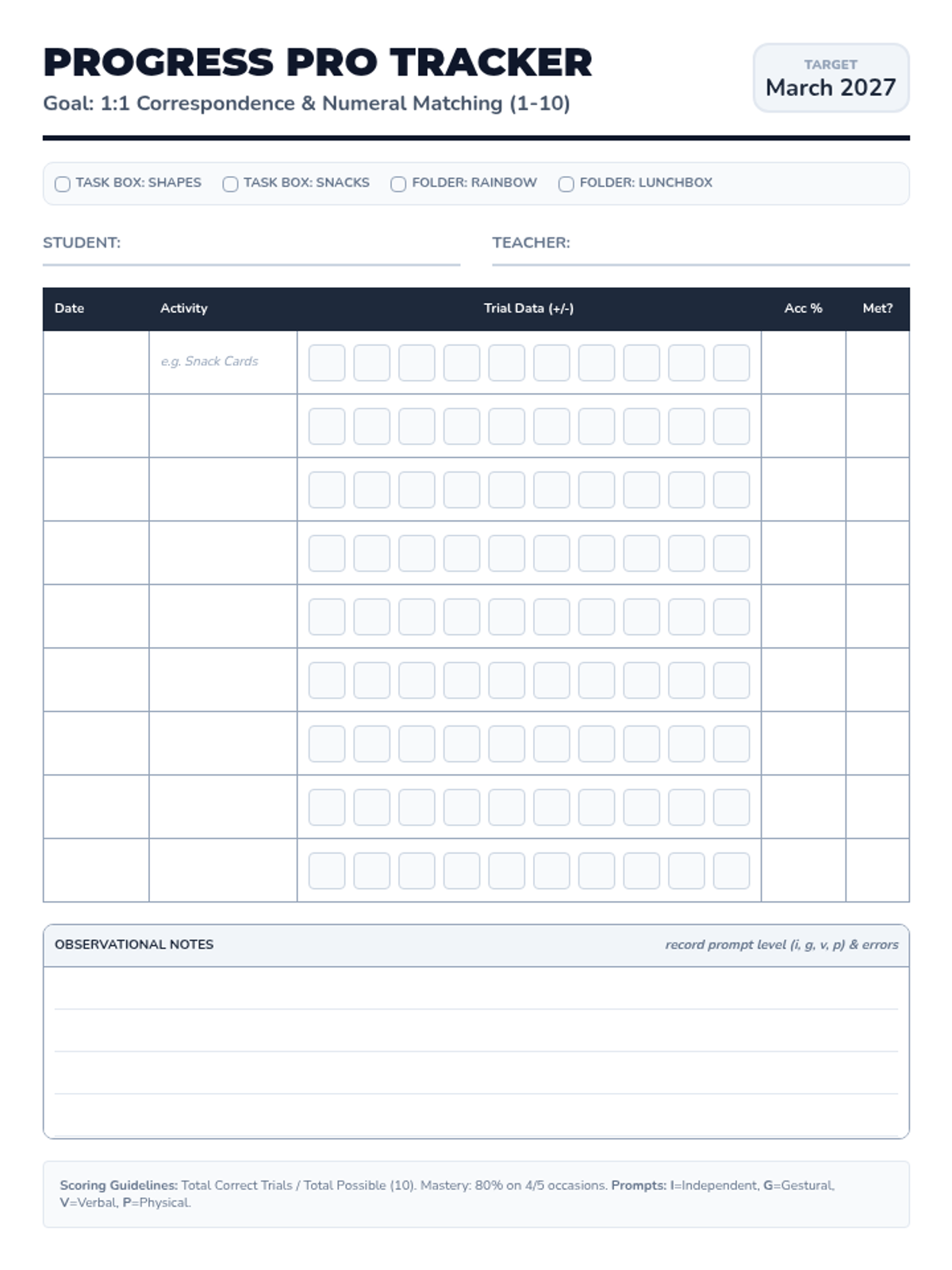
A collection of hands-on math center materials designed to build 1:1 correspondence and numeral-to-quantity matching for numbers 1-10, featuring vibrant colors, geometric shapes, and tasty snacks.
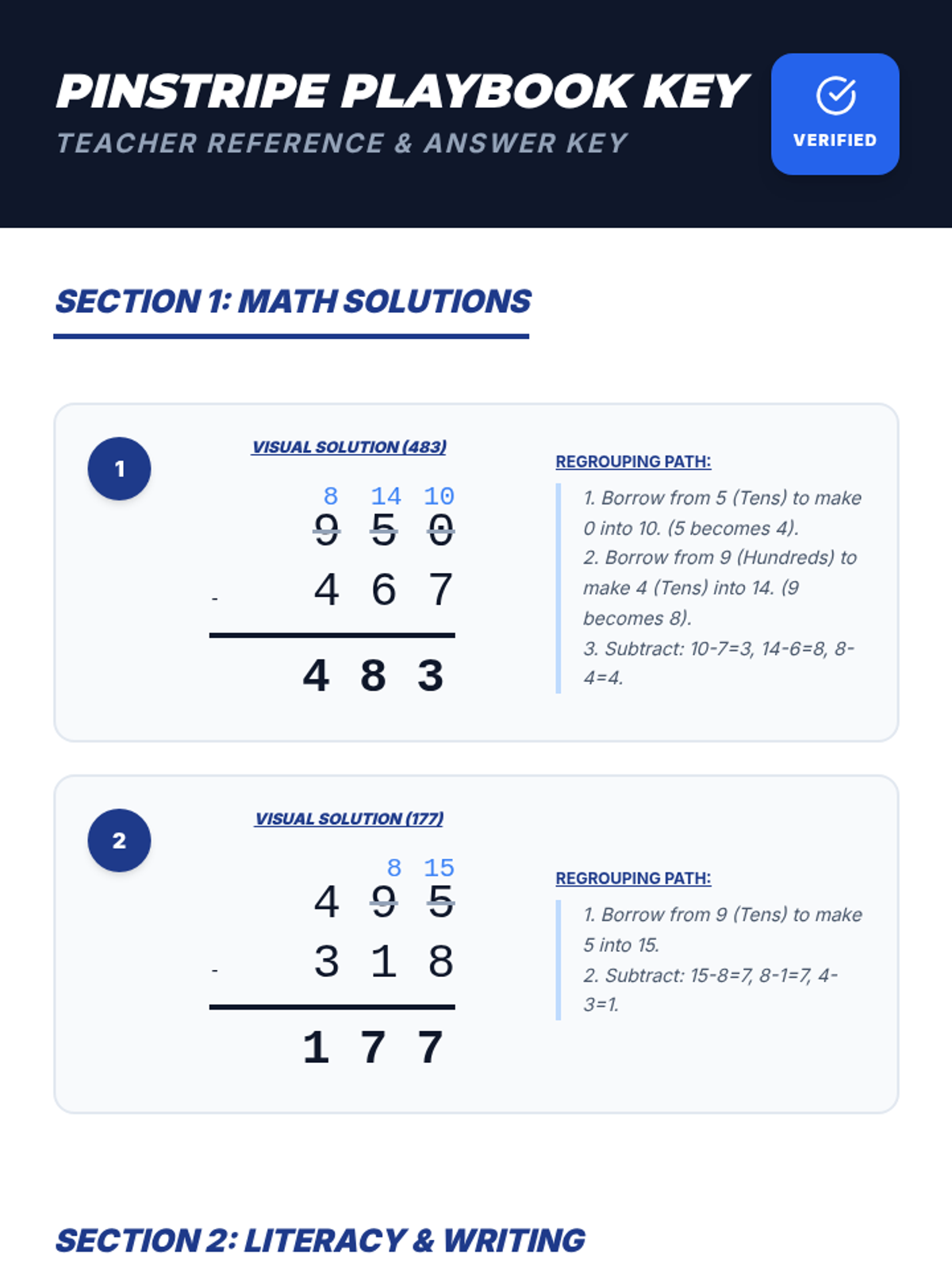
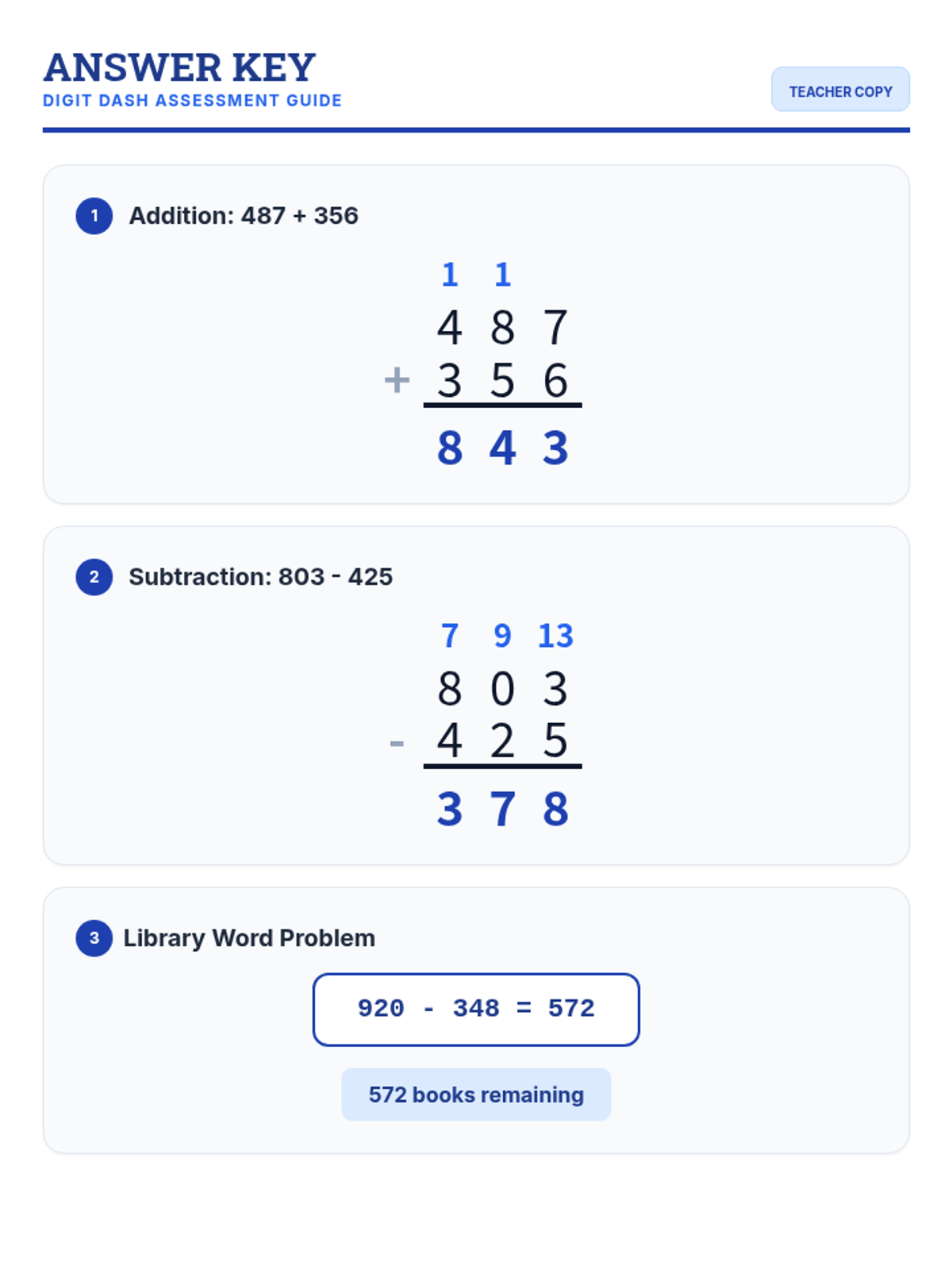
A focused lesson on mastering 3-digit addition and subtraction with regrouping and carrying, ensuring students can accurately navigate multi-step arithmetic within 1000.
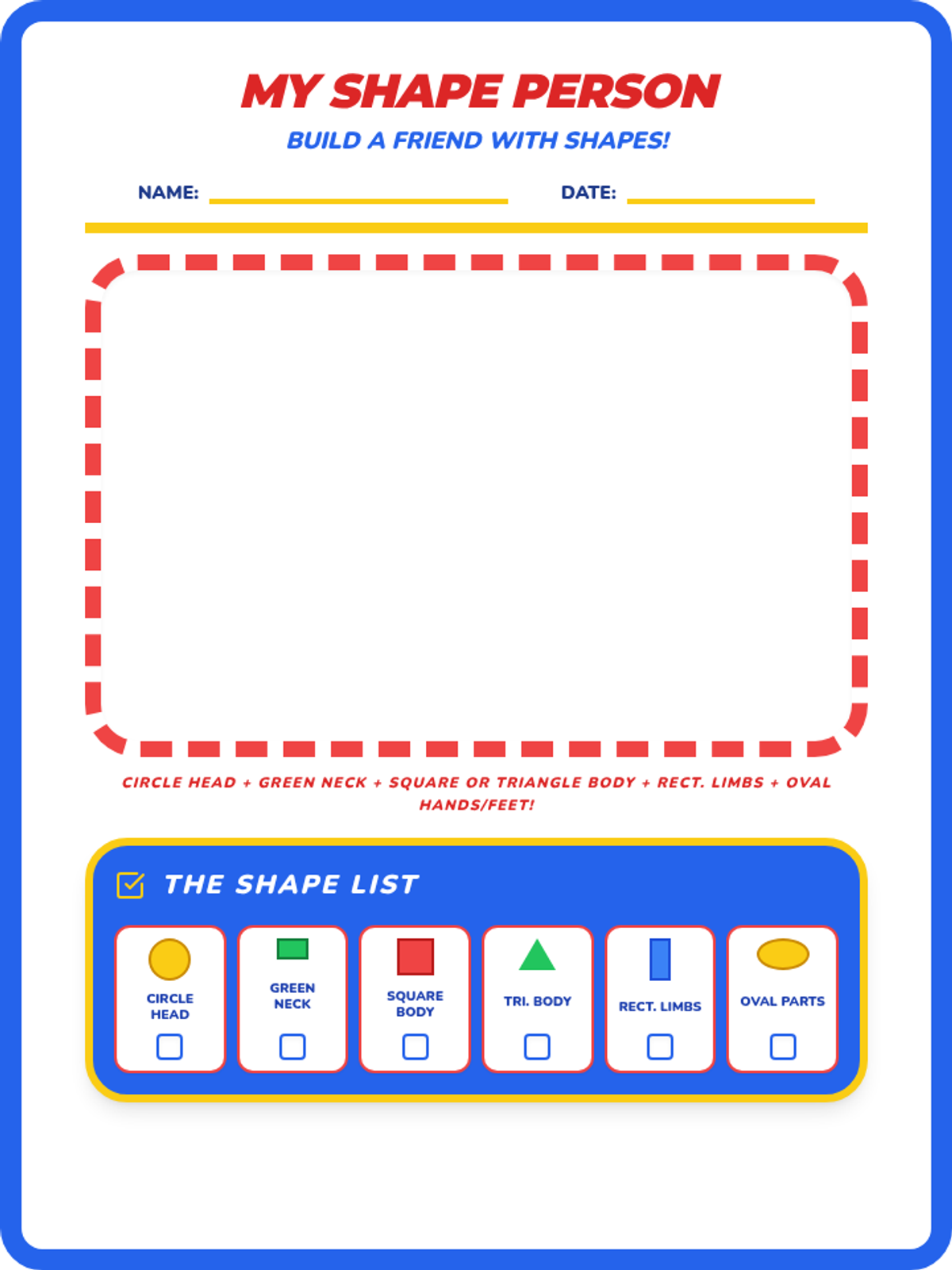
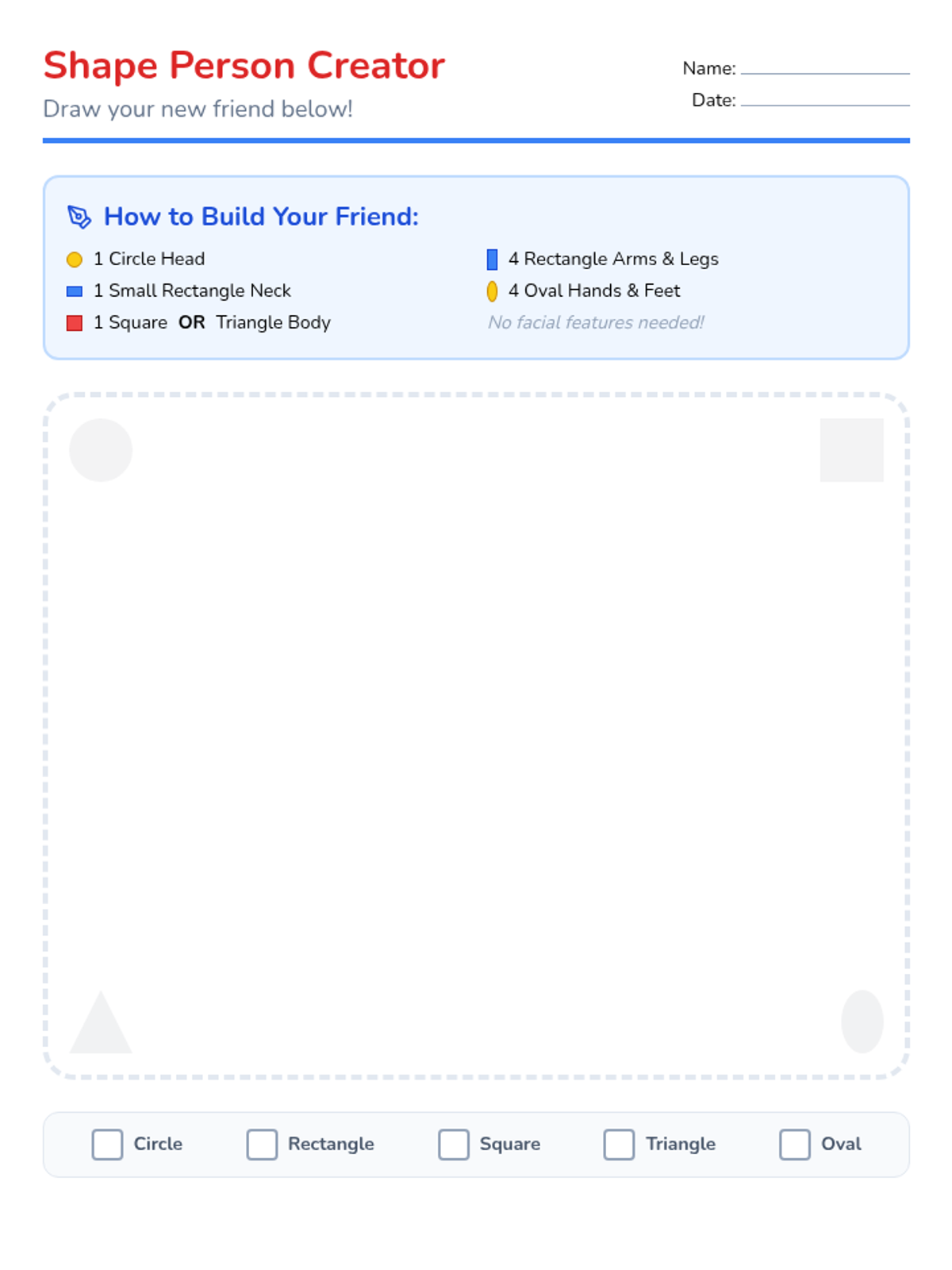
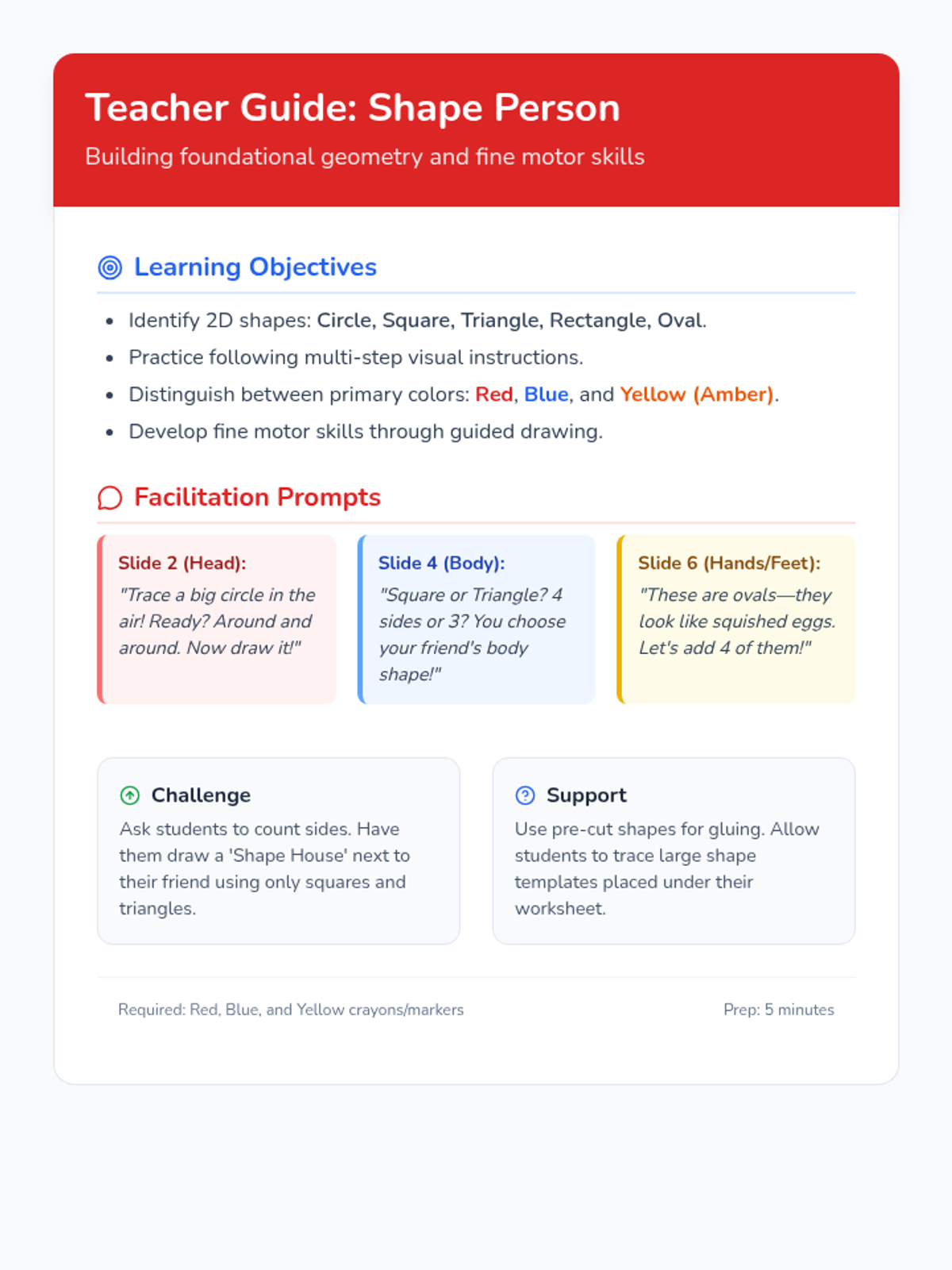
A fun, interactive lesson where kindergarten students learn to identify and draw basic shapes by constructing their very own 'Shape Person' using circles, squares, triangles, rectangles, and ovals.
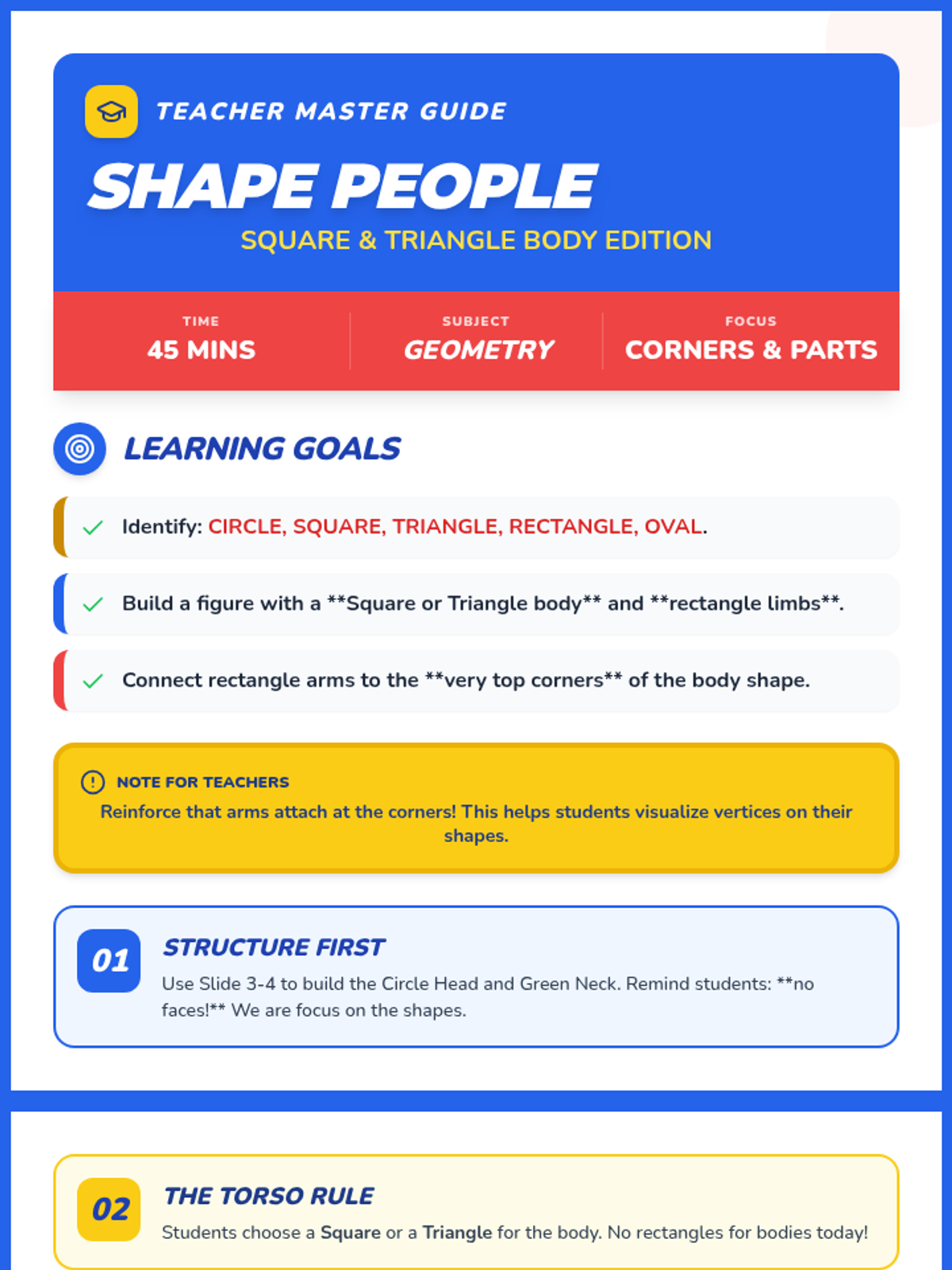
A kindergarten art and geometry lesson where students learn to construct human figures using five basic shapes: circles, triangles, squares, rectangles, and ovals.
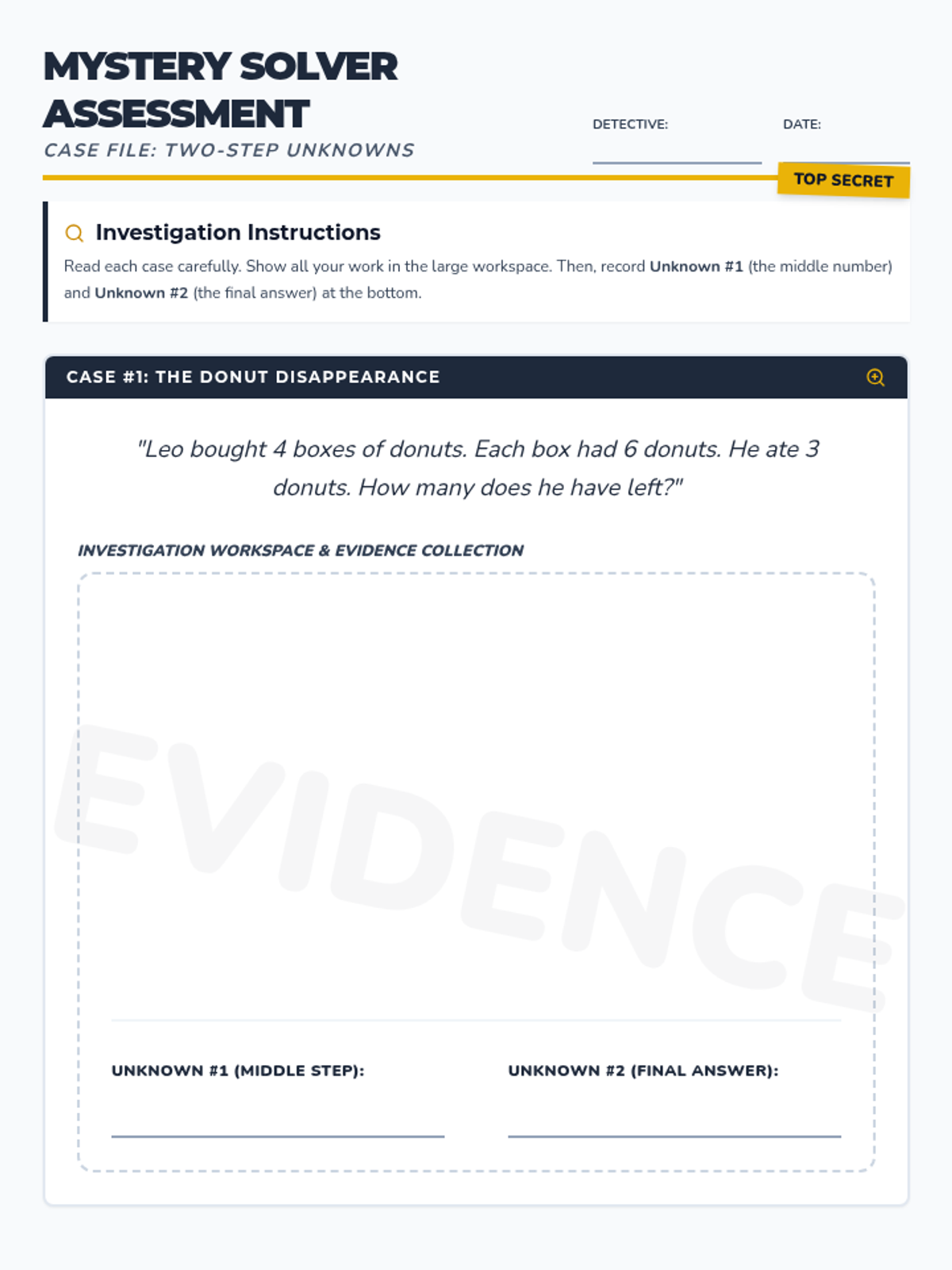
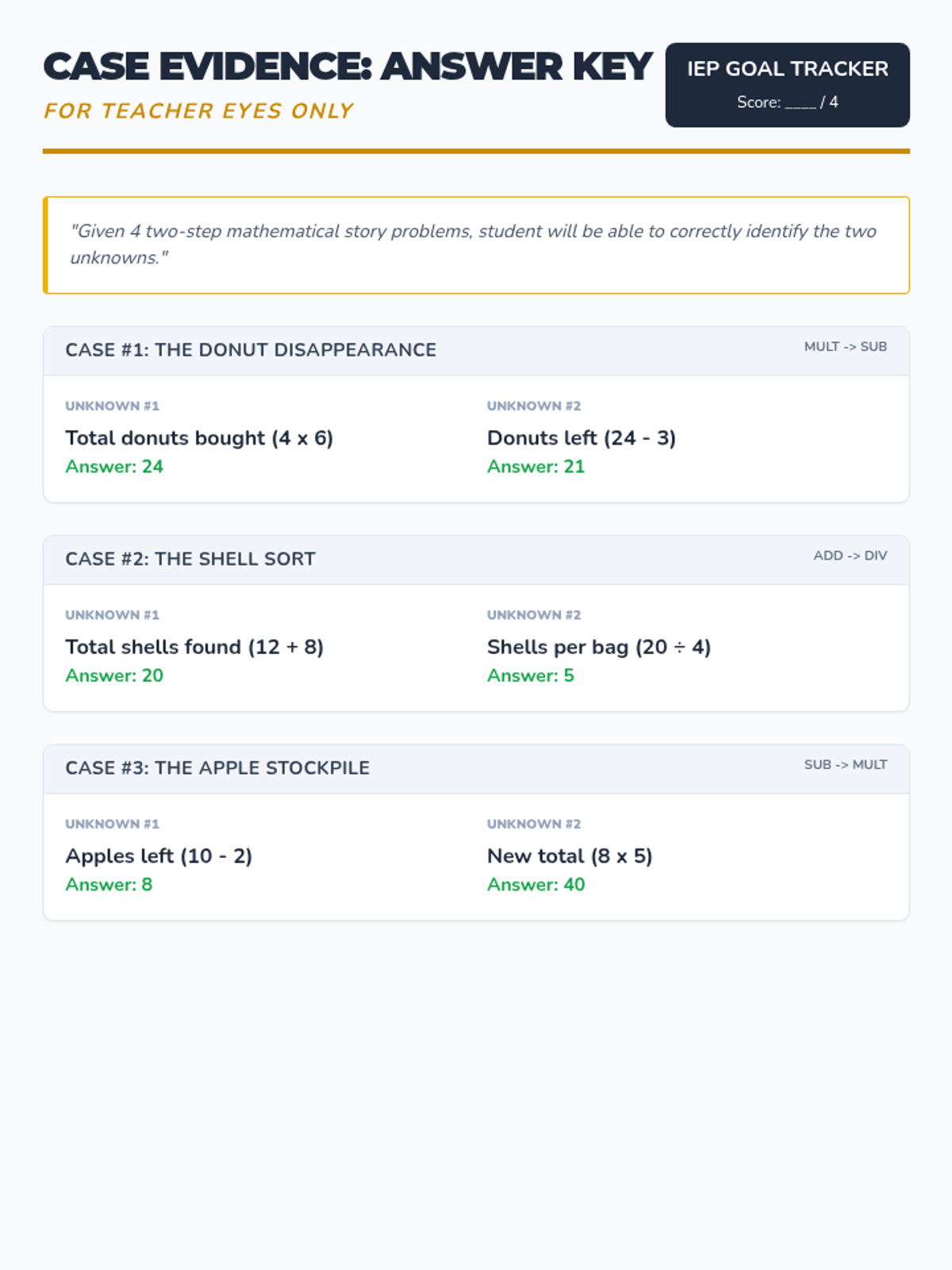
A lesson focused on identifying the two distinct unknowns in multi-step mathematical word problems using a detective-themed assessment.
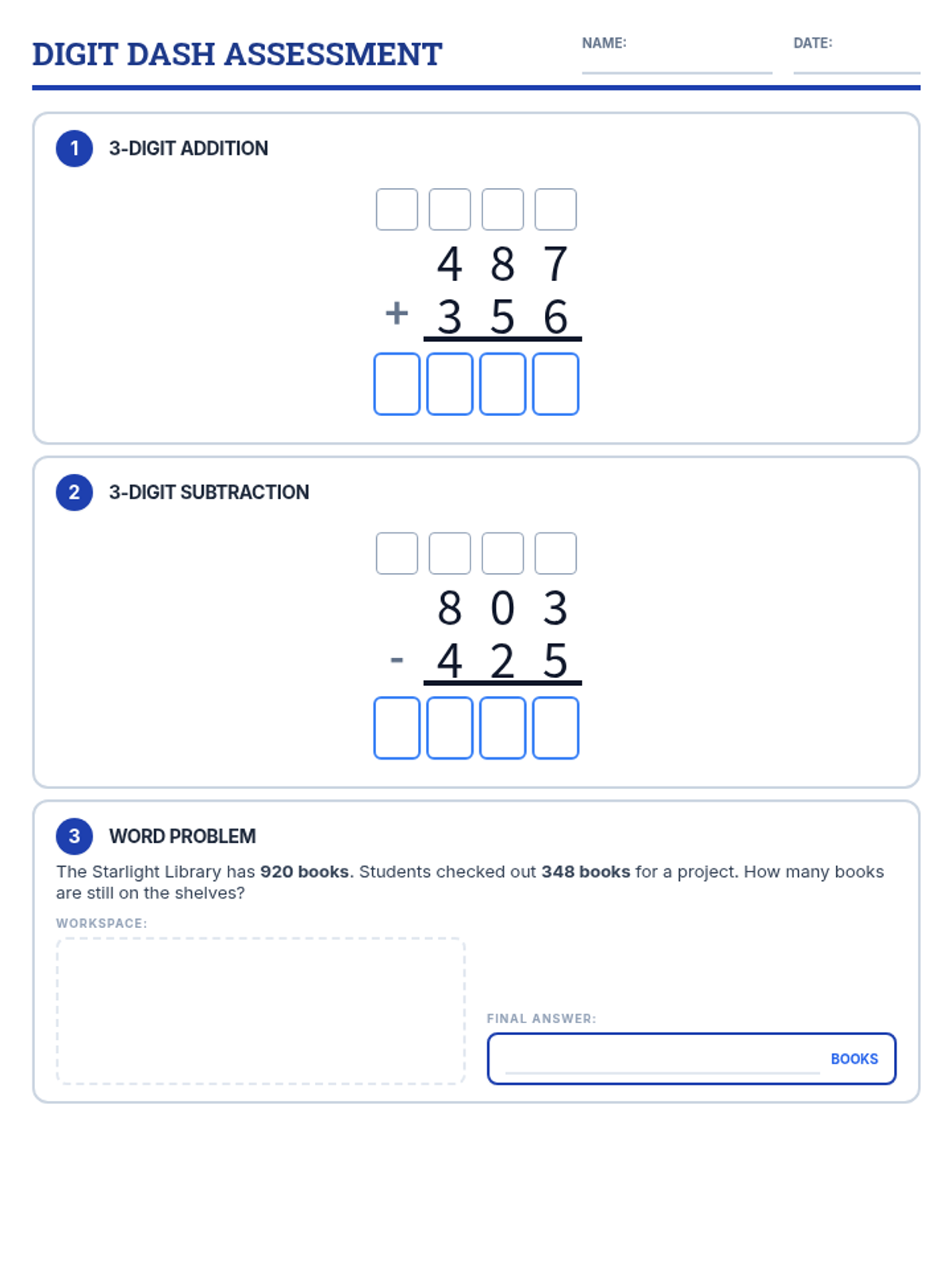
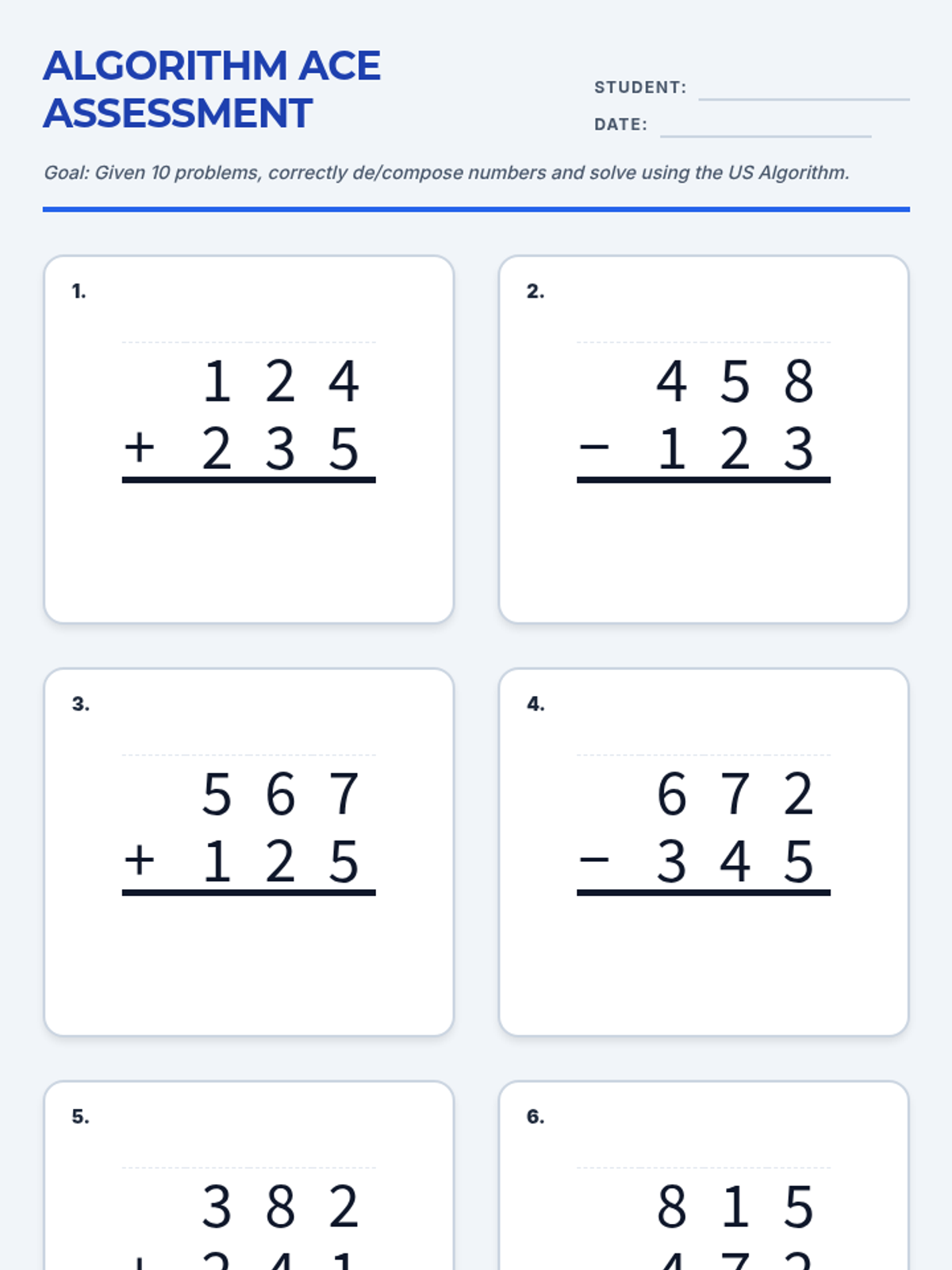
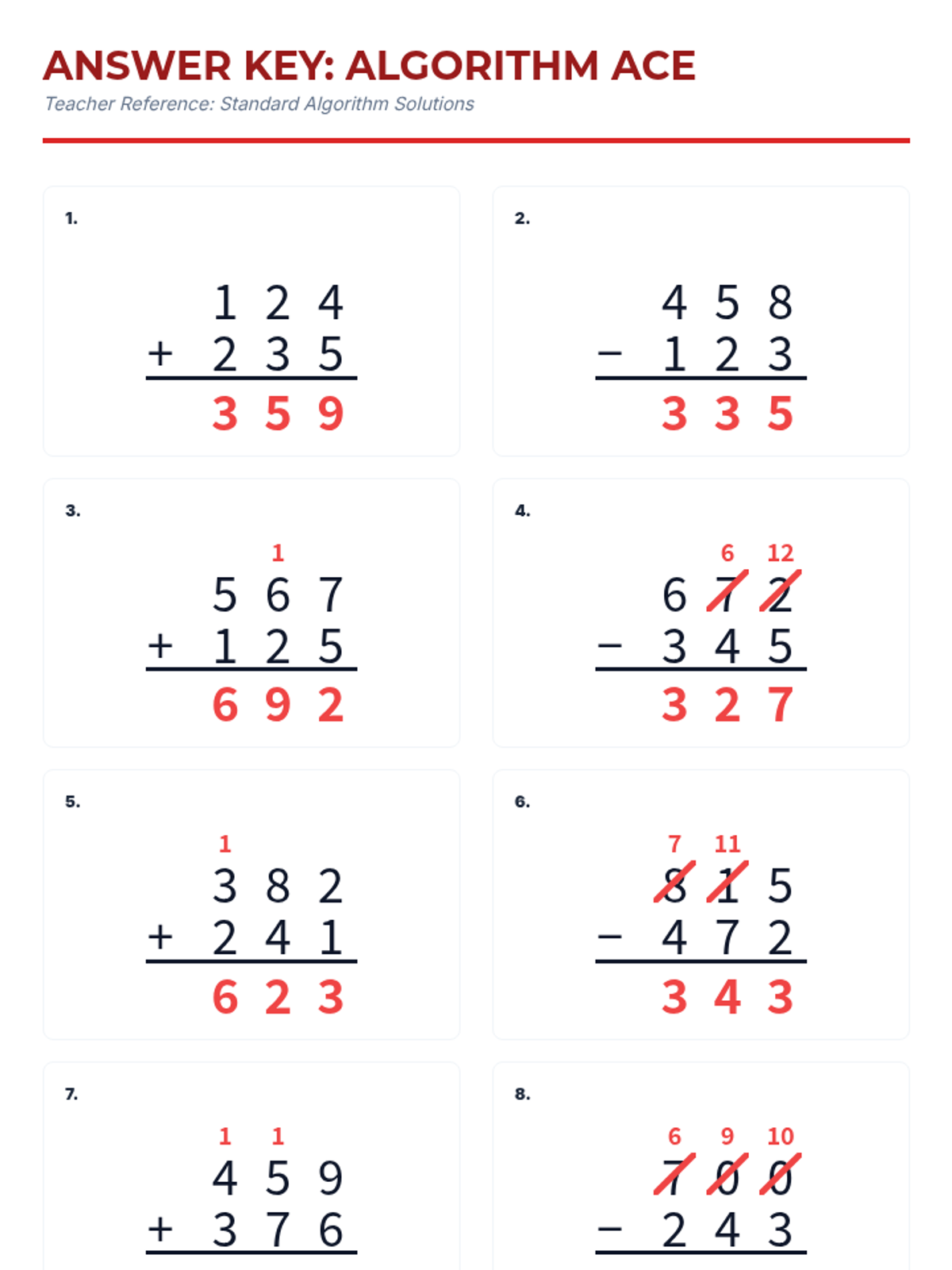
An assessment focused on multi-digit addition and subtraction within 1,000 using the standard algorithm, designed for IEP goal tracking and progress monitoring.
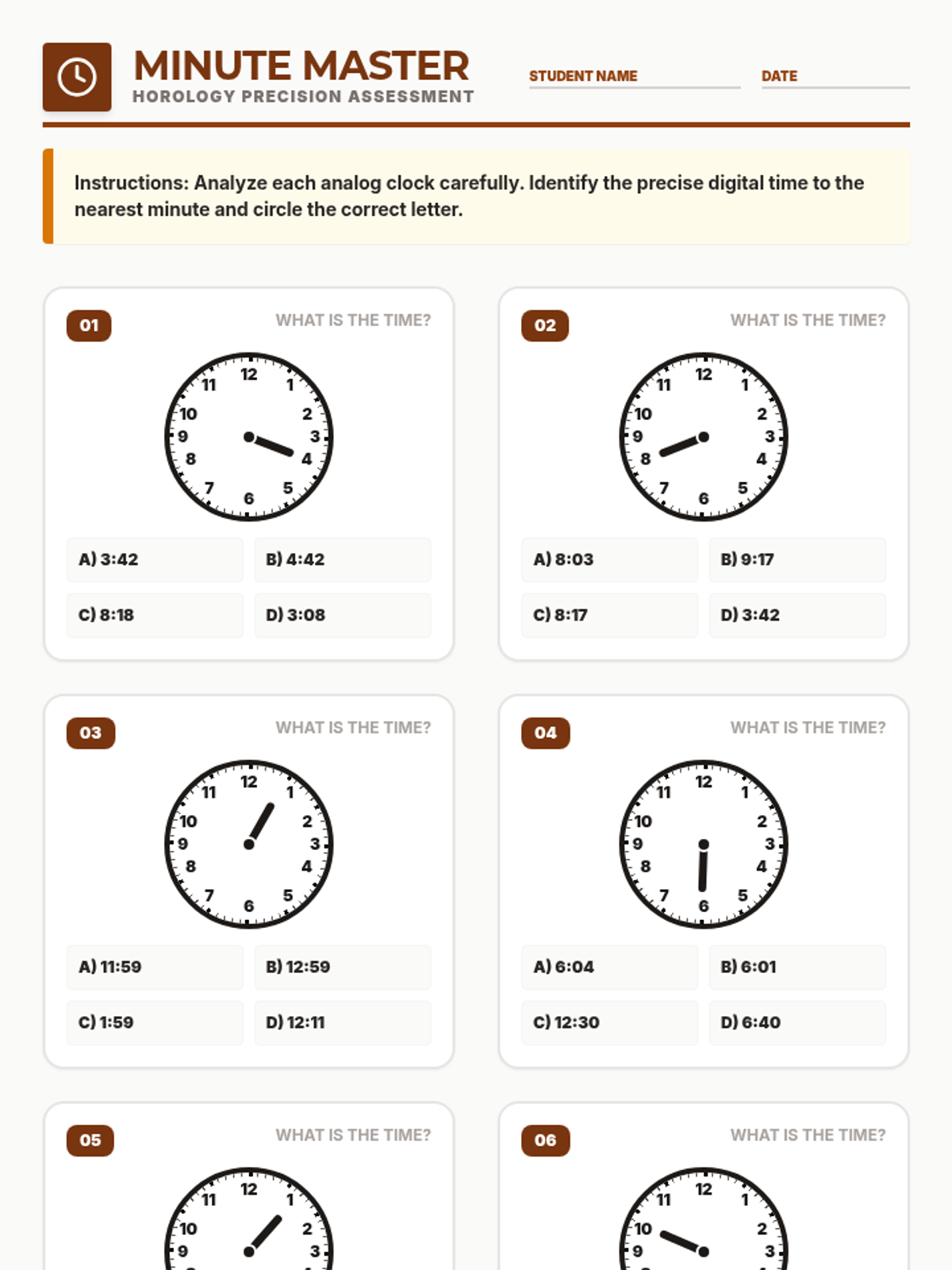
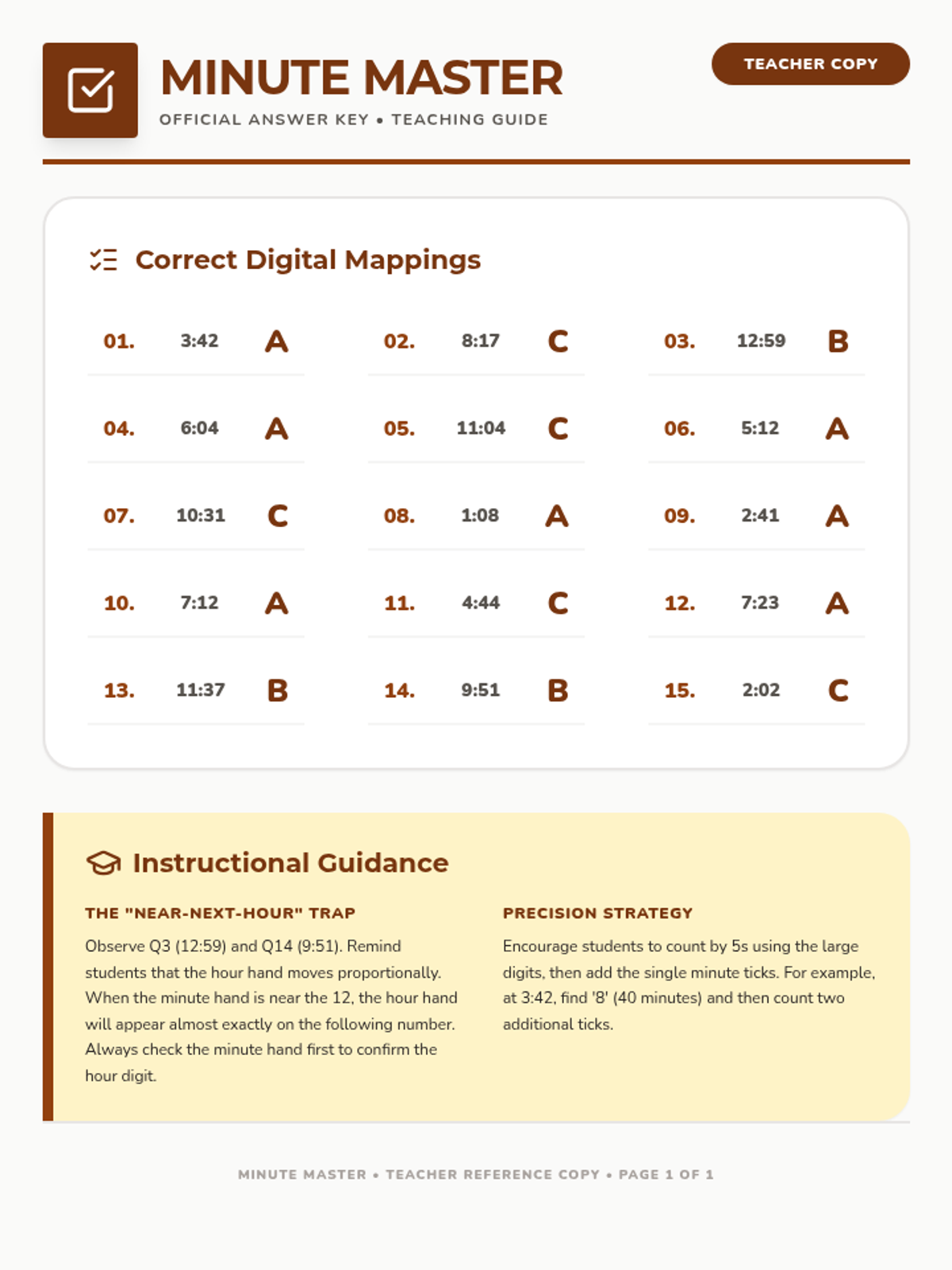
A comprehensive lesson focused on telling time to the exact minute, featuring visual clock identification and word problems.
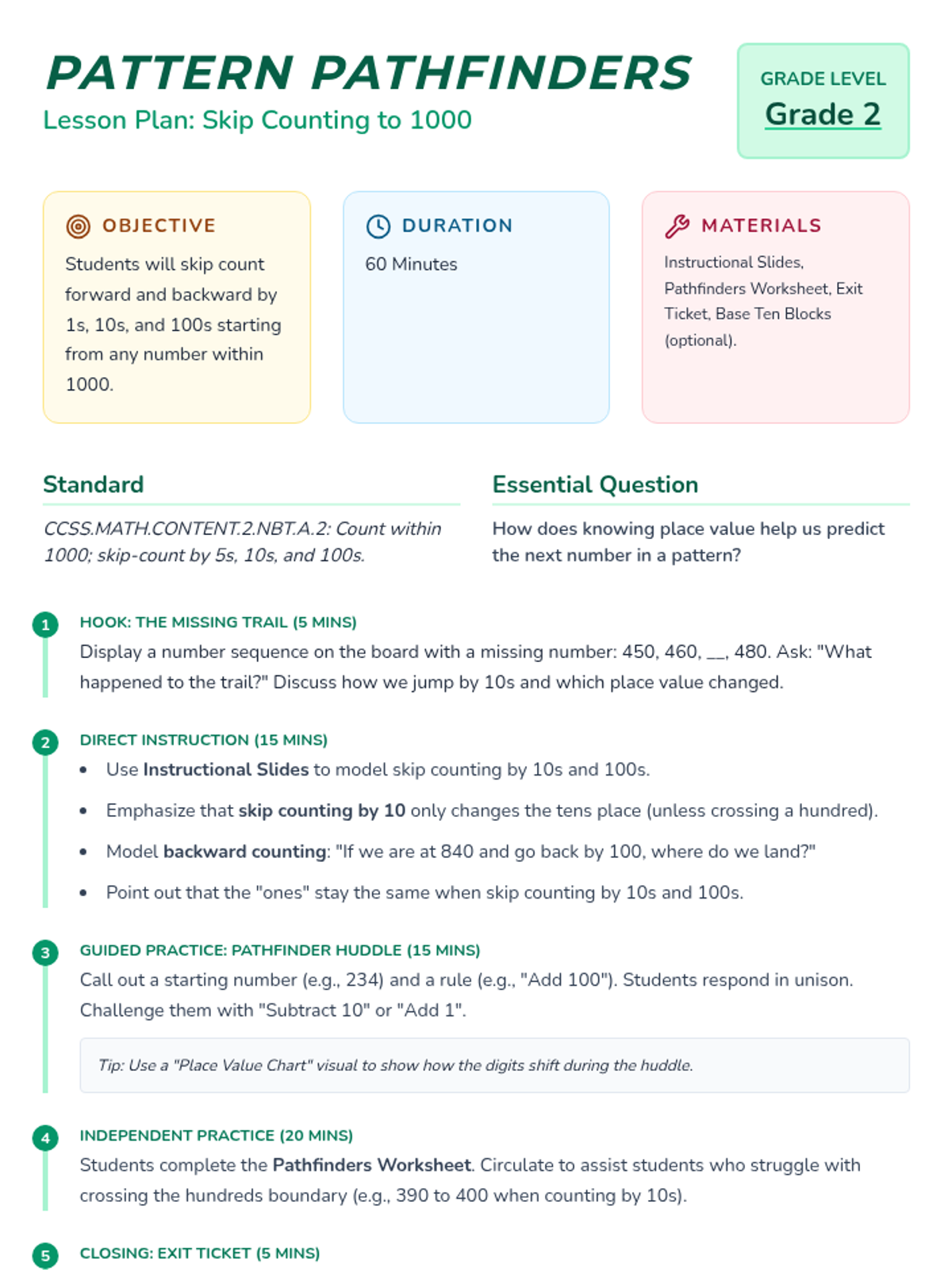
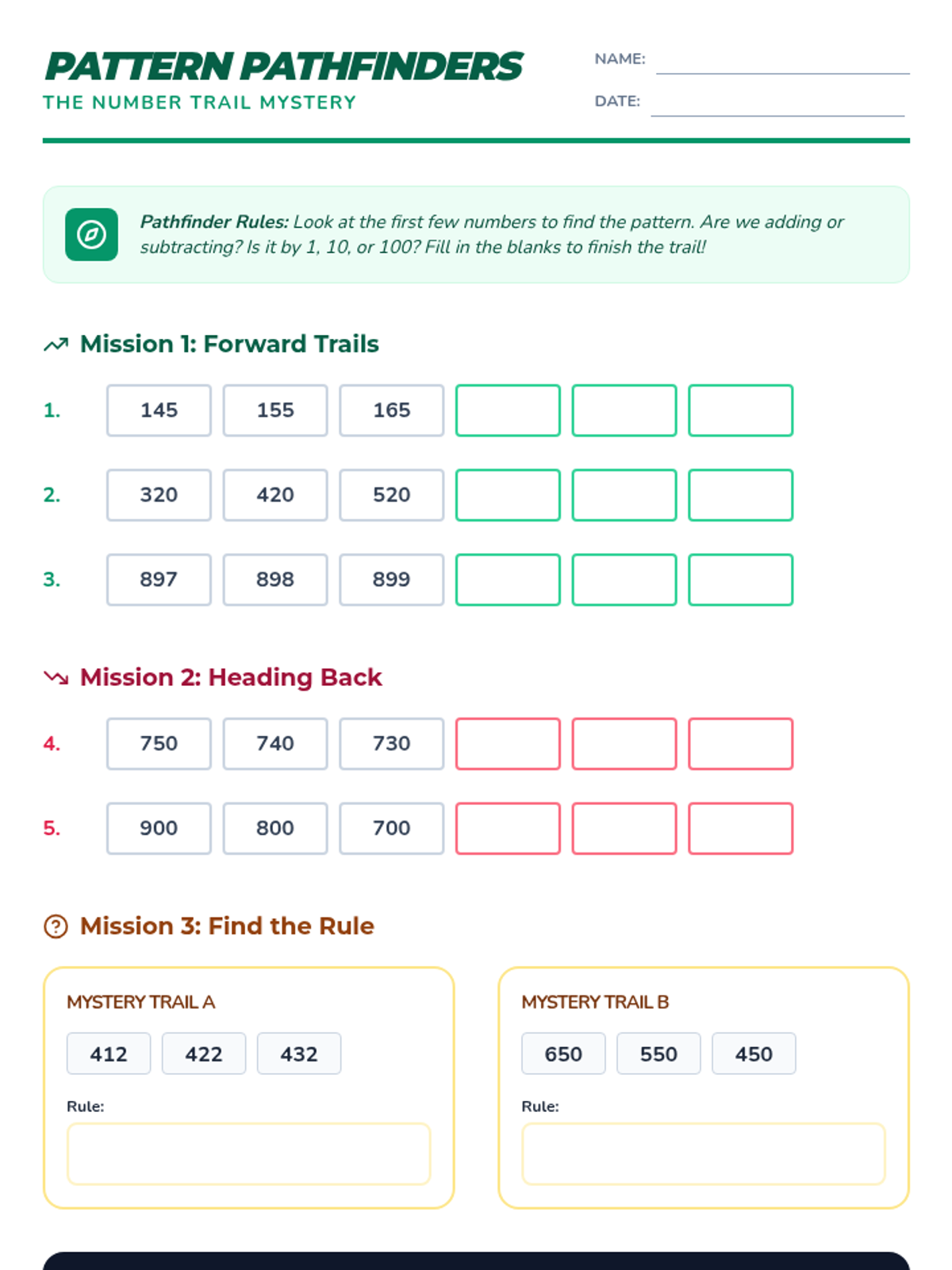
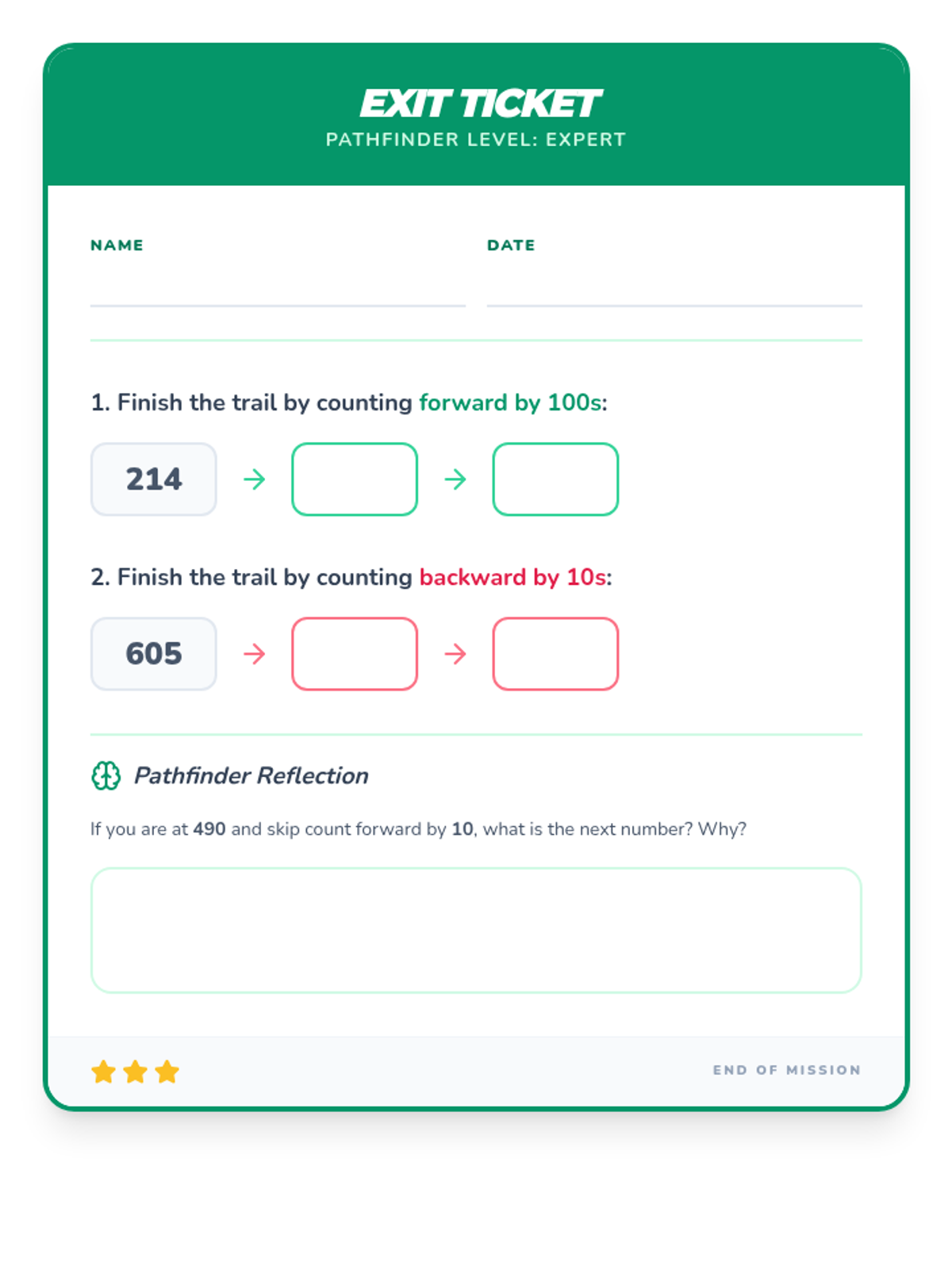
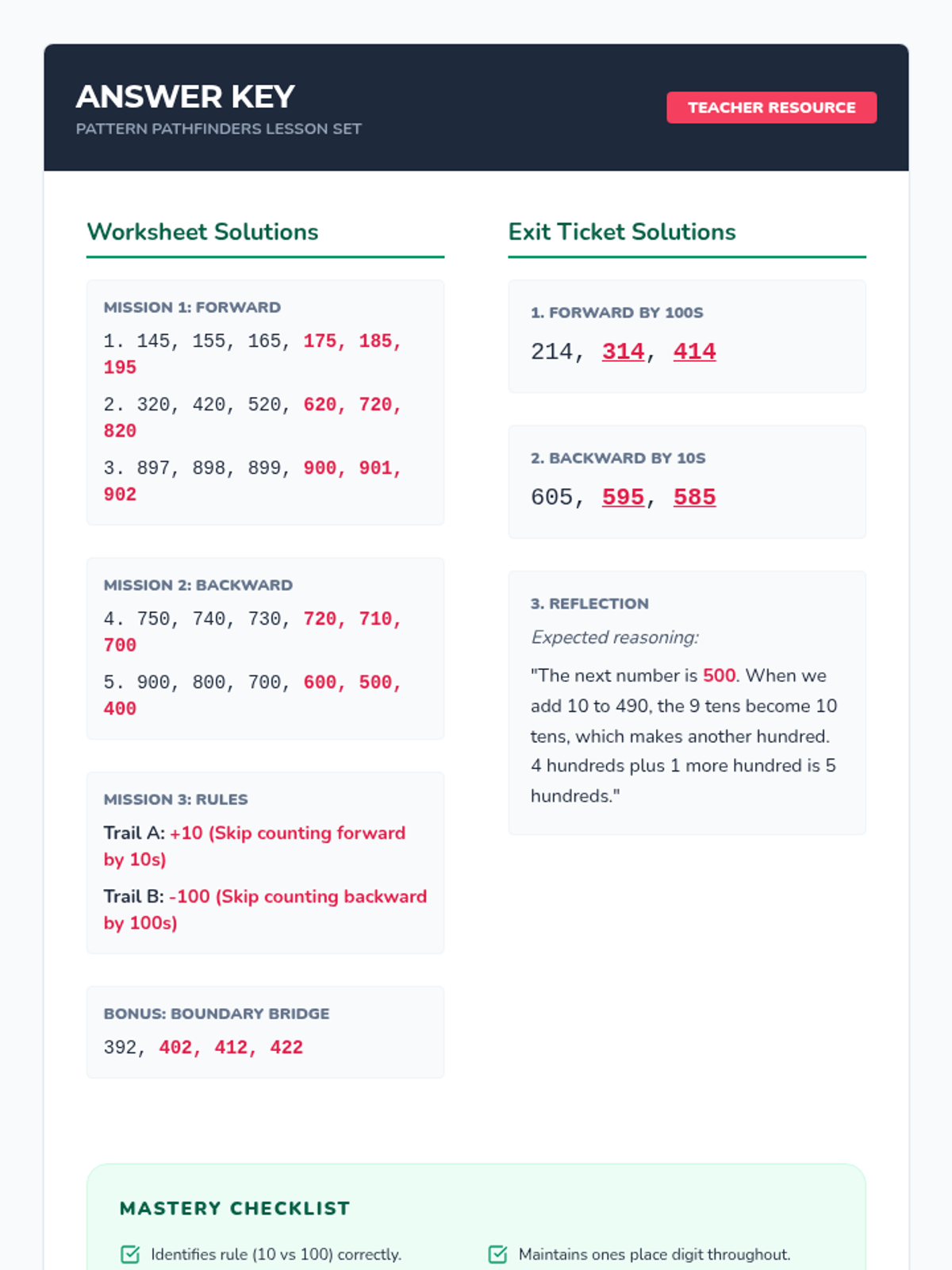
A comprehensive lesson on skip counting by 1s, 10s, and 100s within 1000, covering both forward and backward patterns starting from any number. Students act as 'Pattern Pathfinders' to solve number trail mysteries.
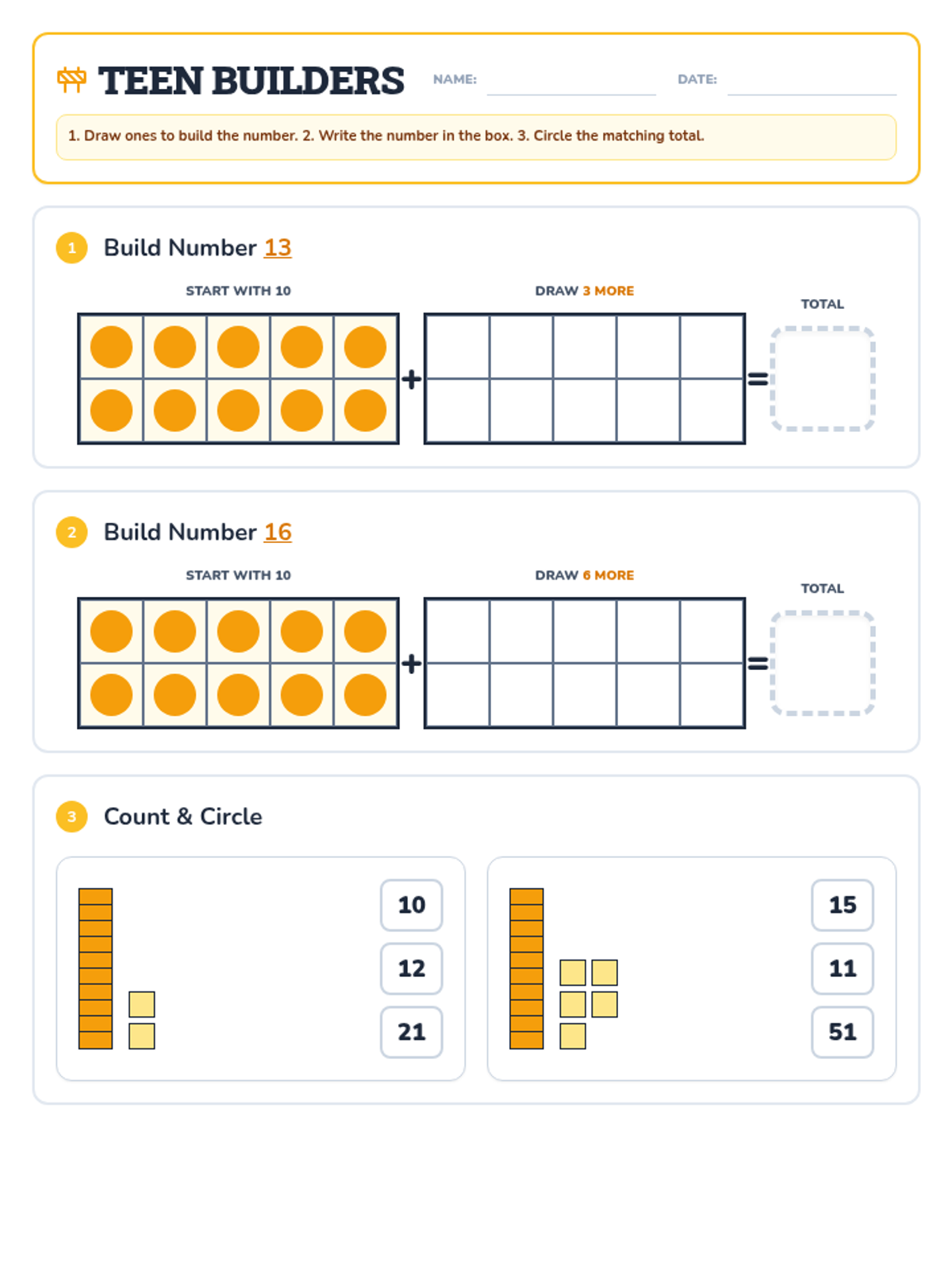
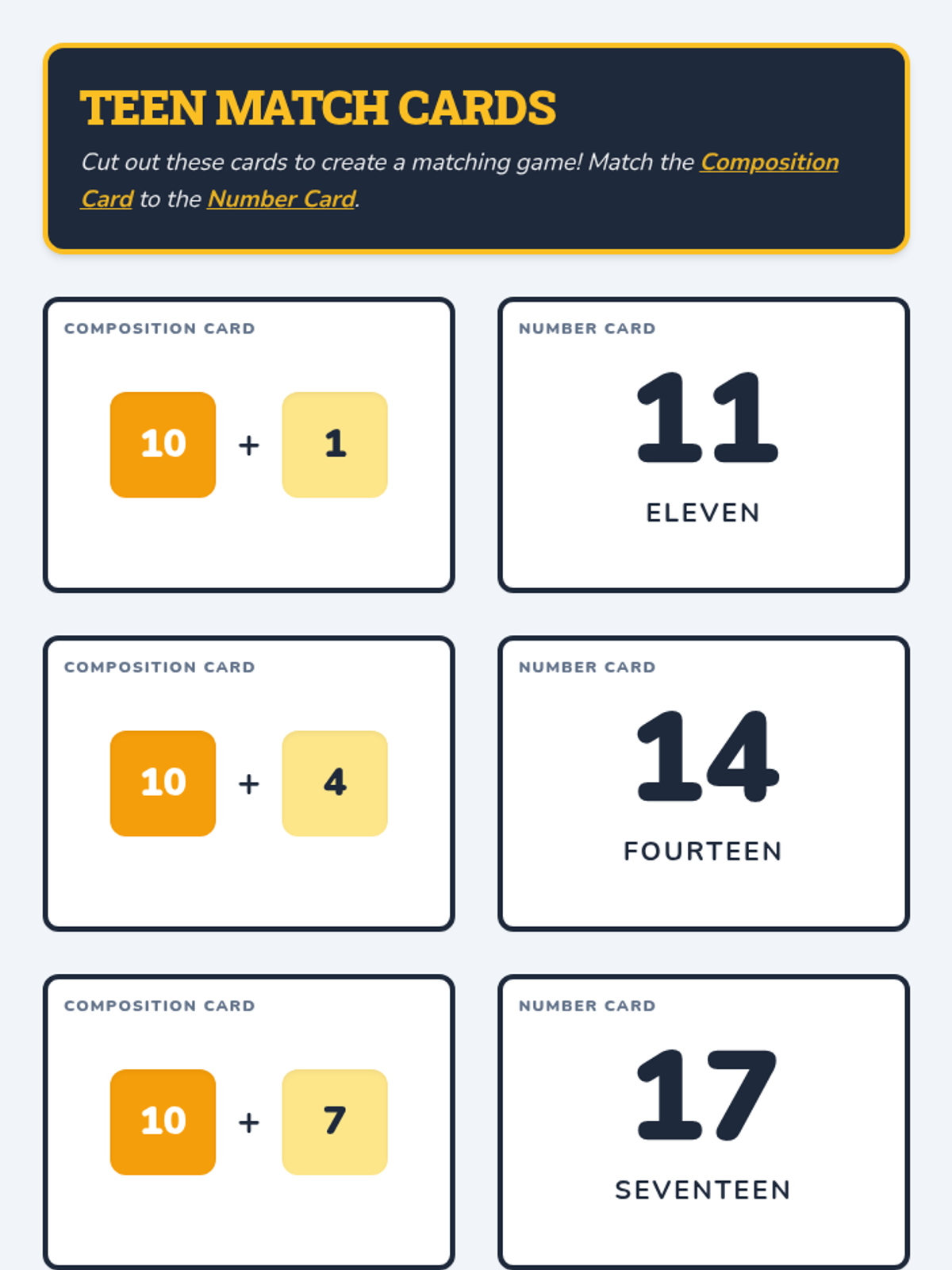
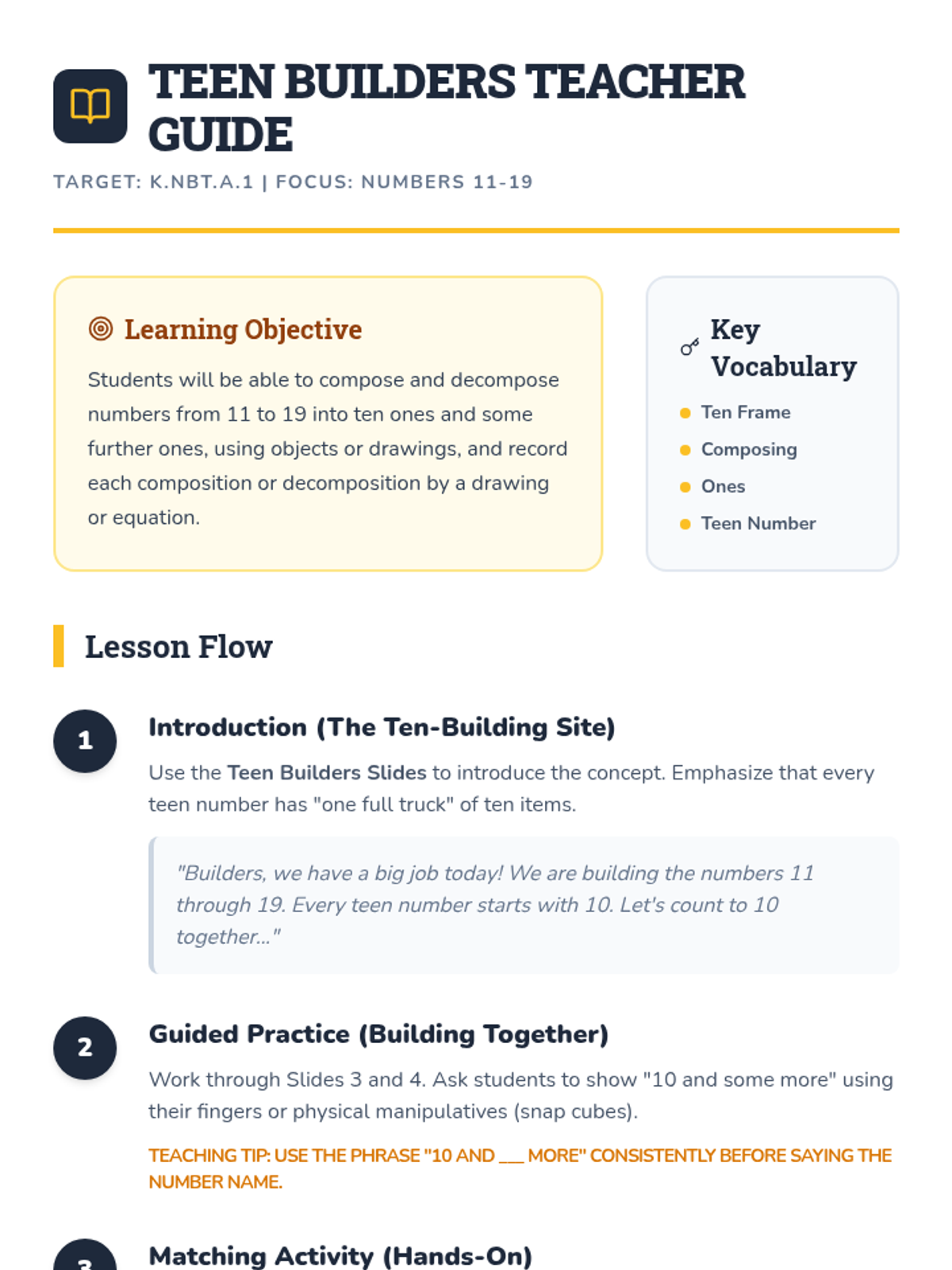
A foundational math lesson for kindergarteners to understand how teen numbers are composed of a group of ten and additional ones. Students will use ten frames and base ten blocks to 'build' numbers 11-19.
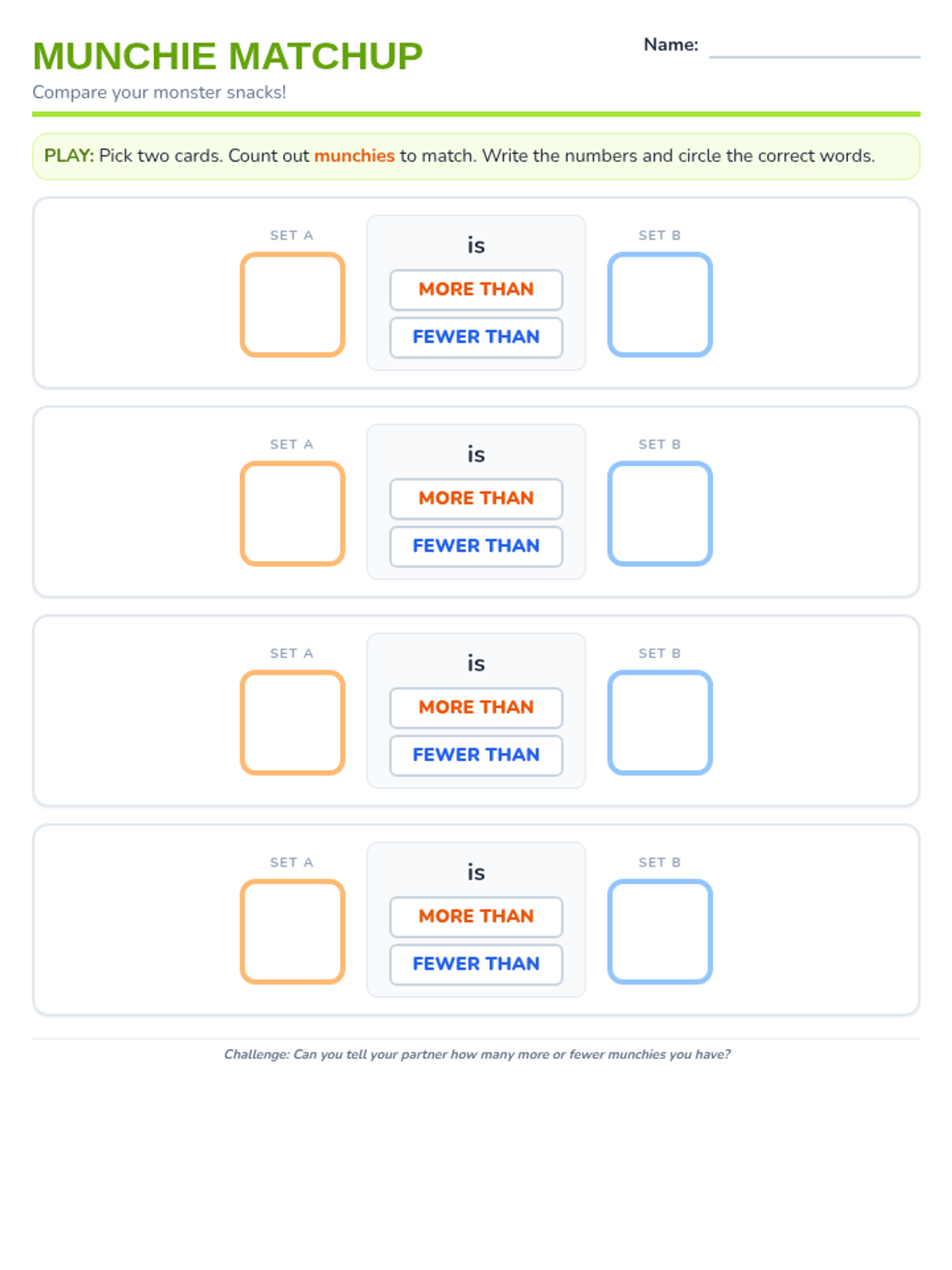
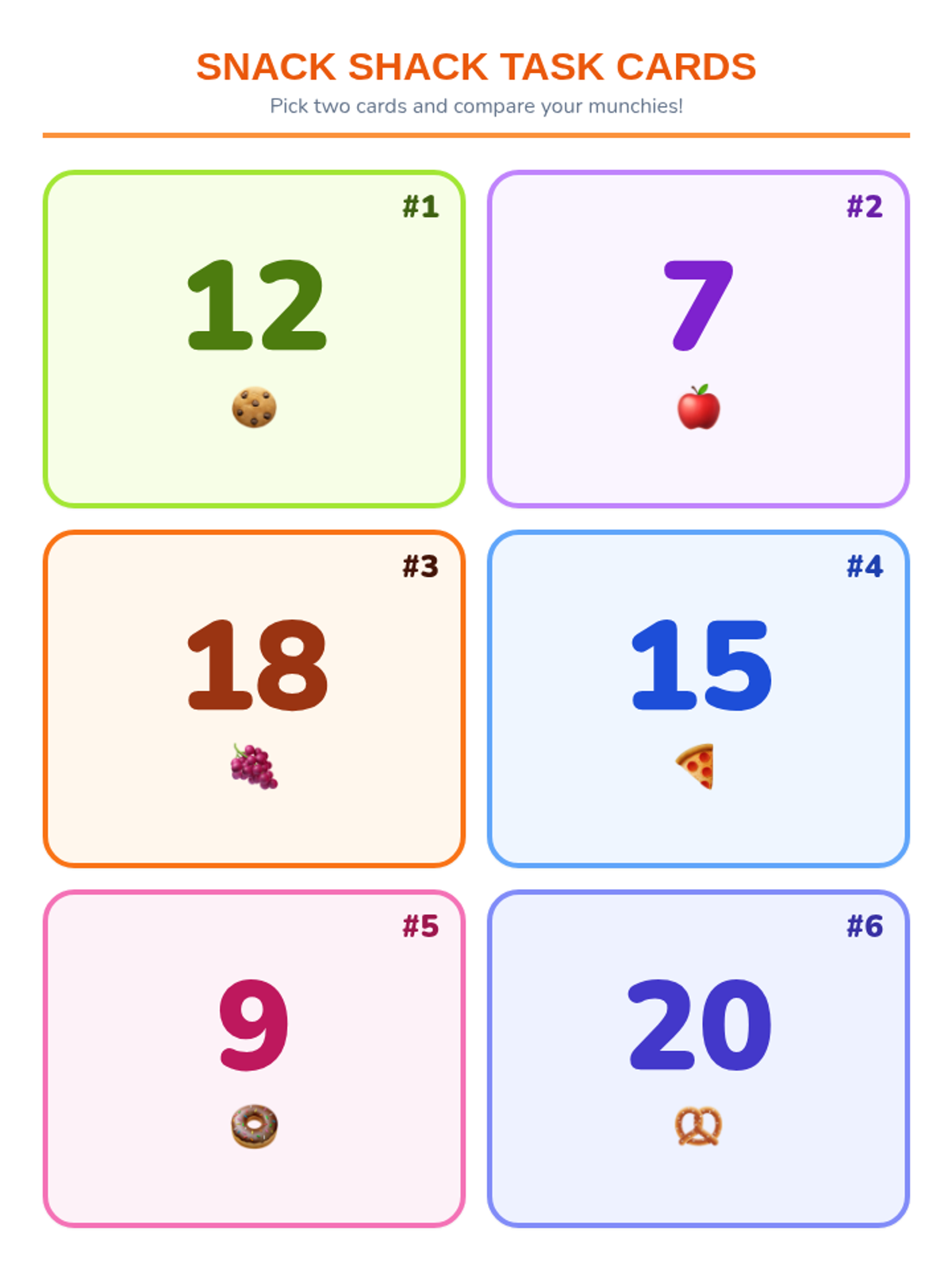
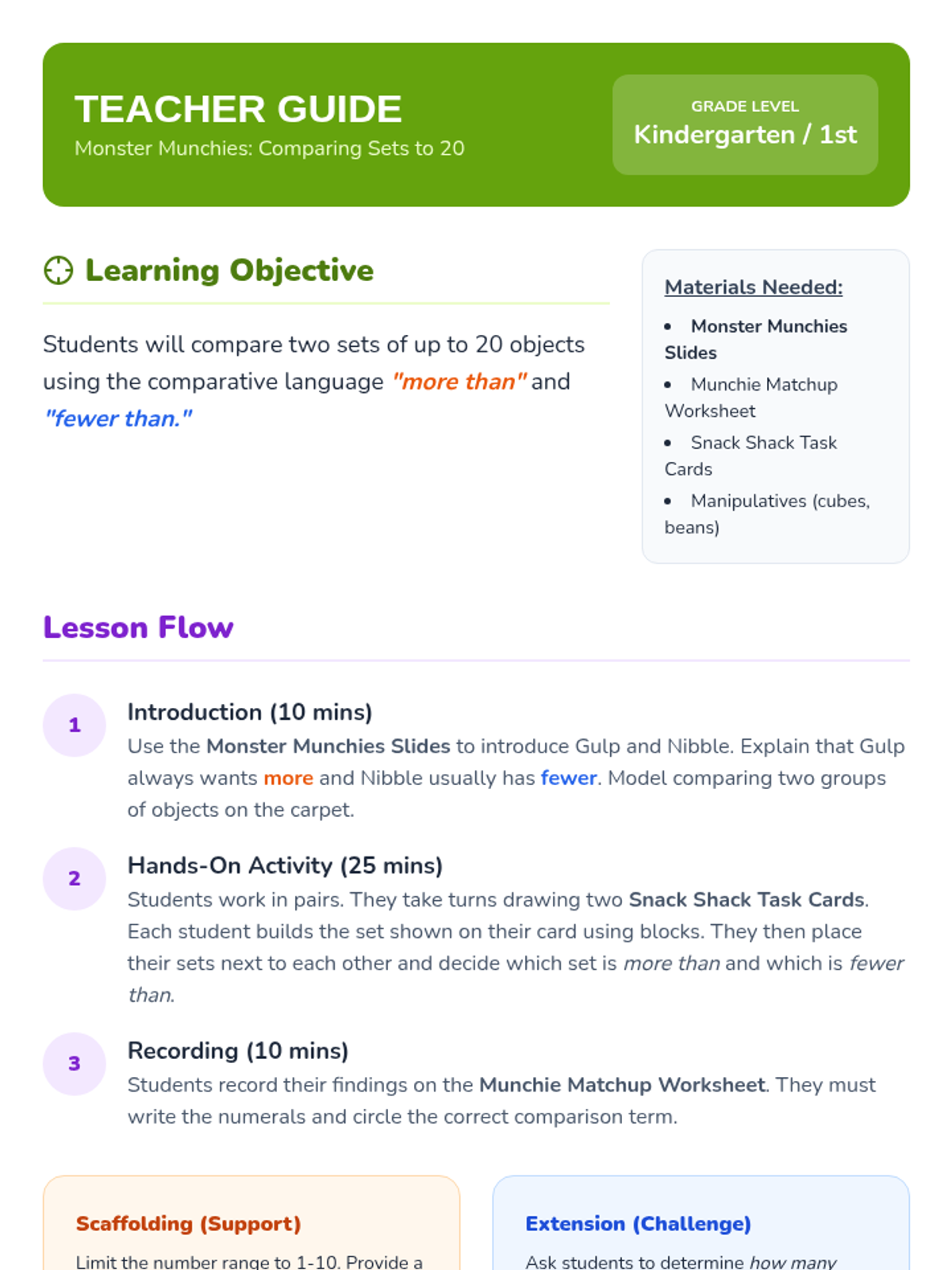
Students will use physical manipulatives and comparison language to determine which monster has more than or fewer than their friend. This lesson focuses on sets up to 20.
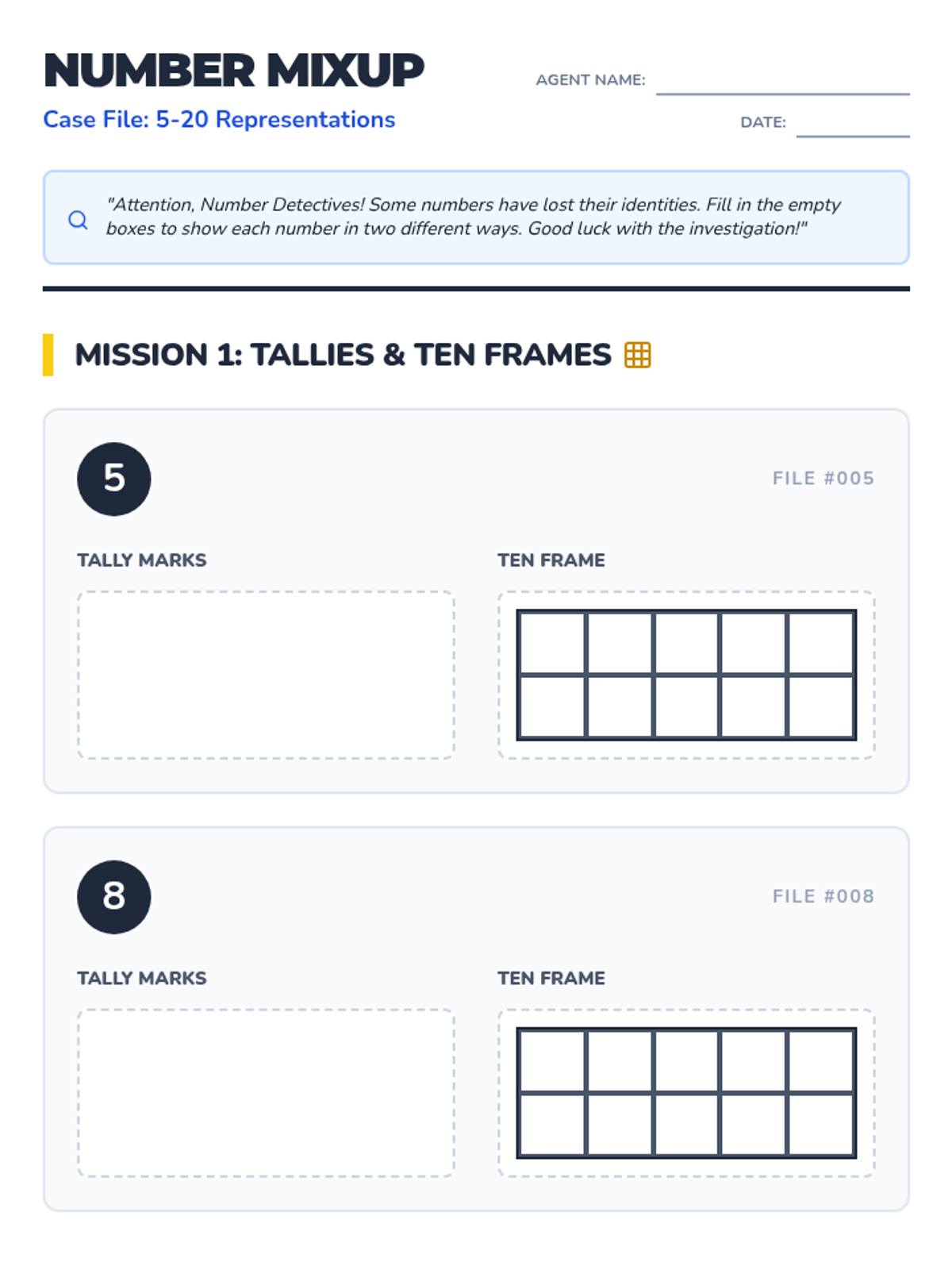
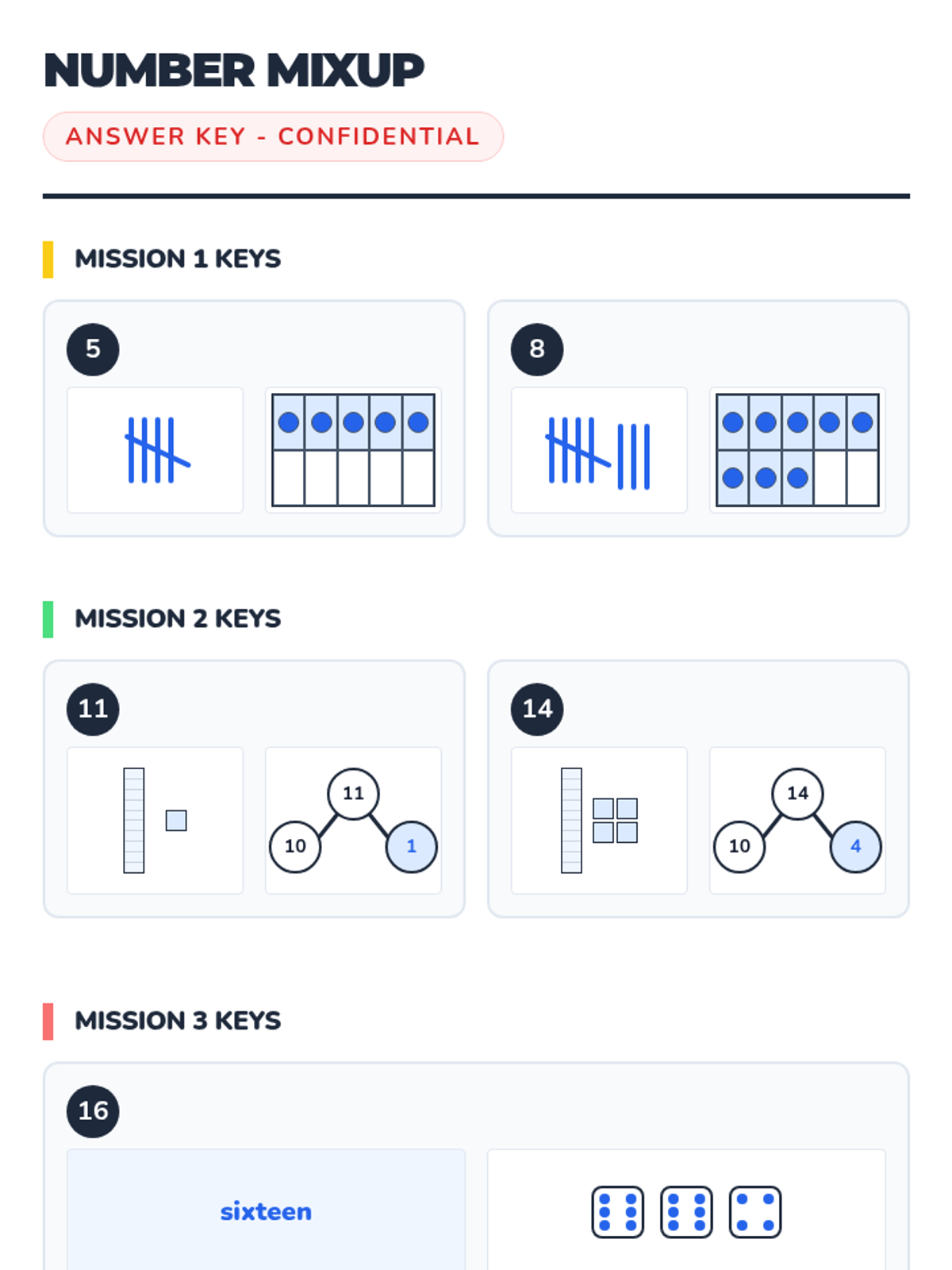
Students explore and practice multiple ways to represent numbers from 5 to 20, using visual models, symbolic notation, and linguistic forms to build deep number sense.
A lesson focused on developing one-to-one correspondence and cardinality by counting objects in circular configurations, specifically targeting the challenging 'teen' numbers 10-20.
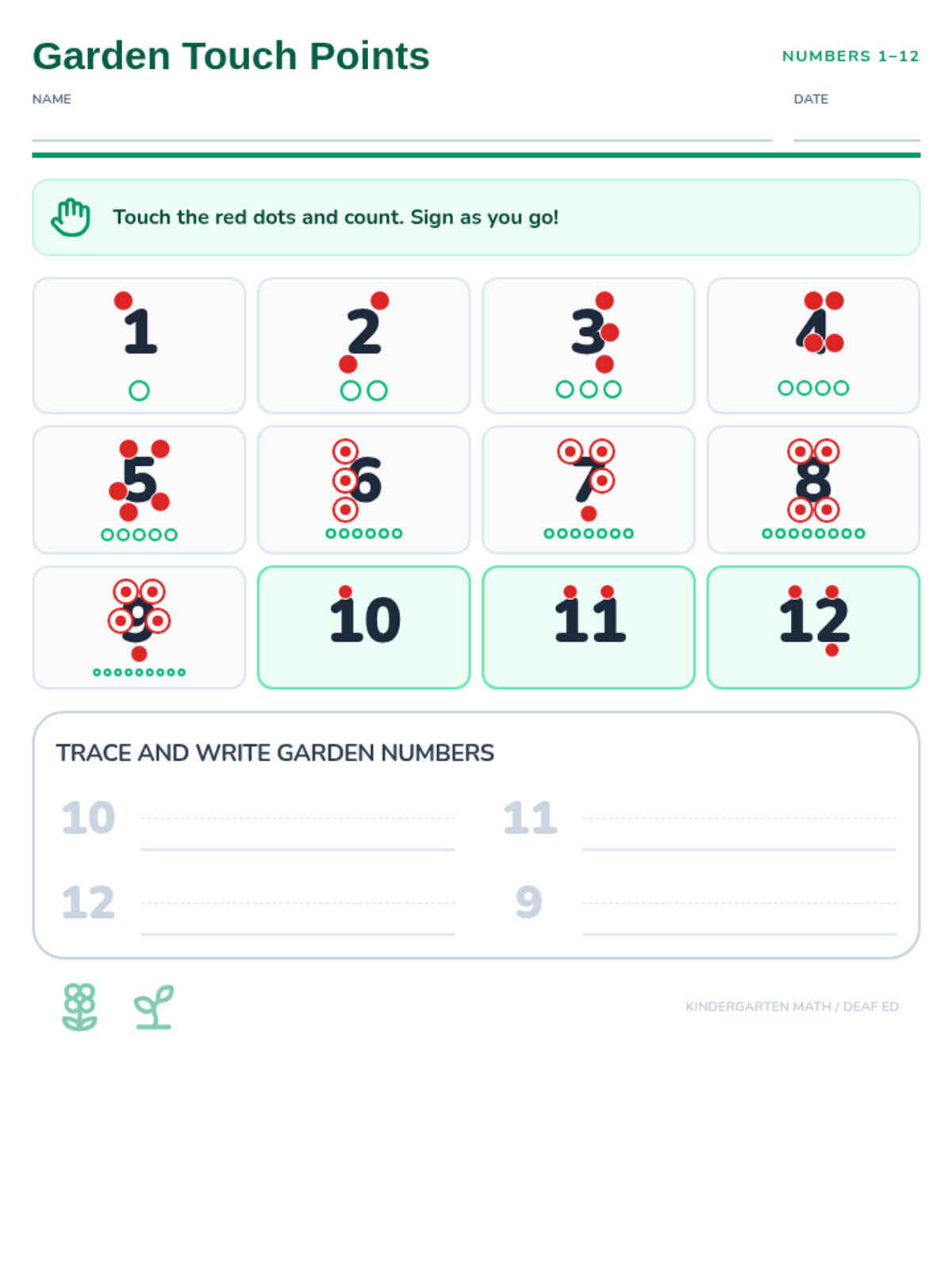
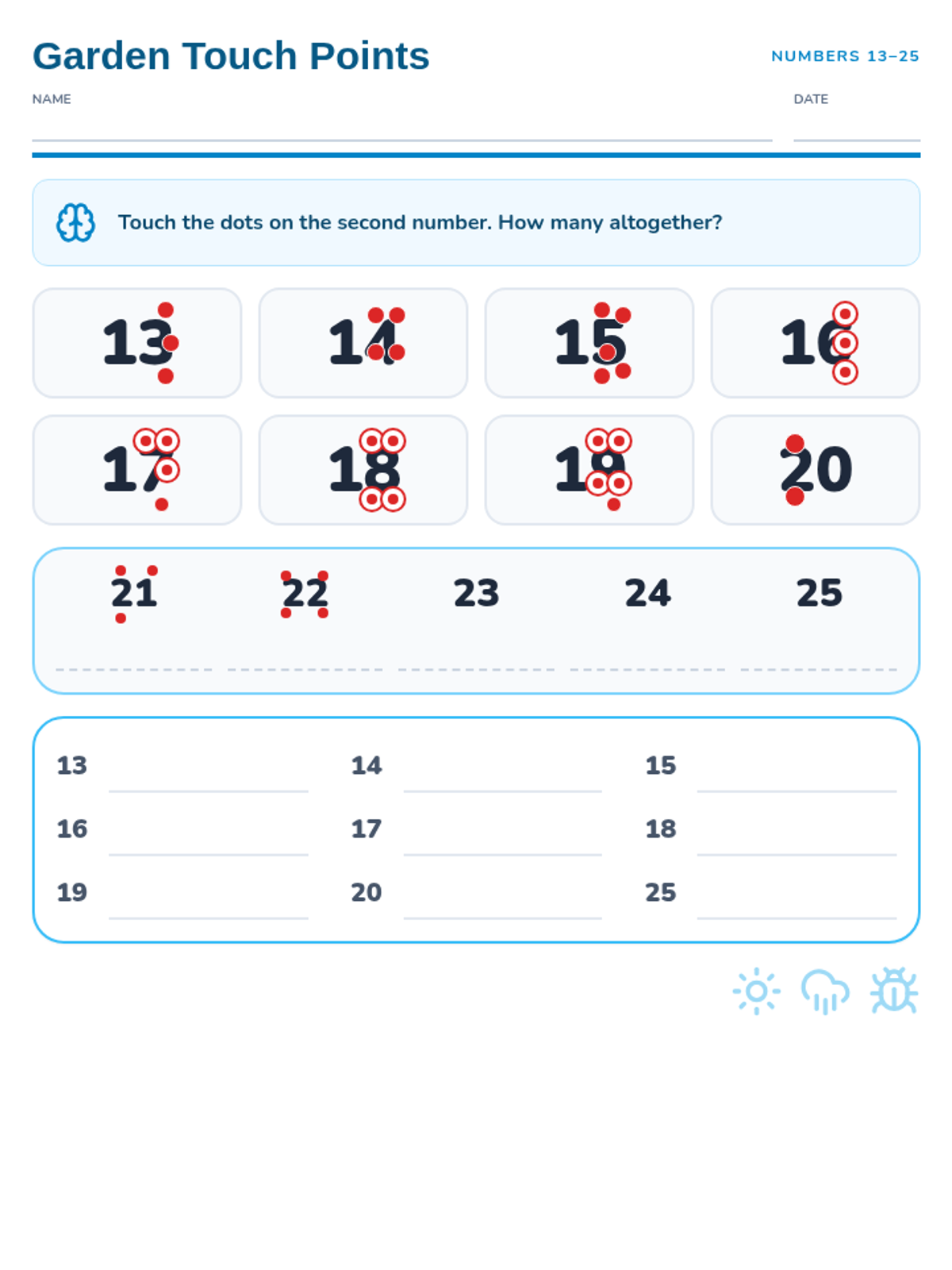
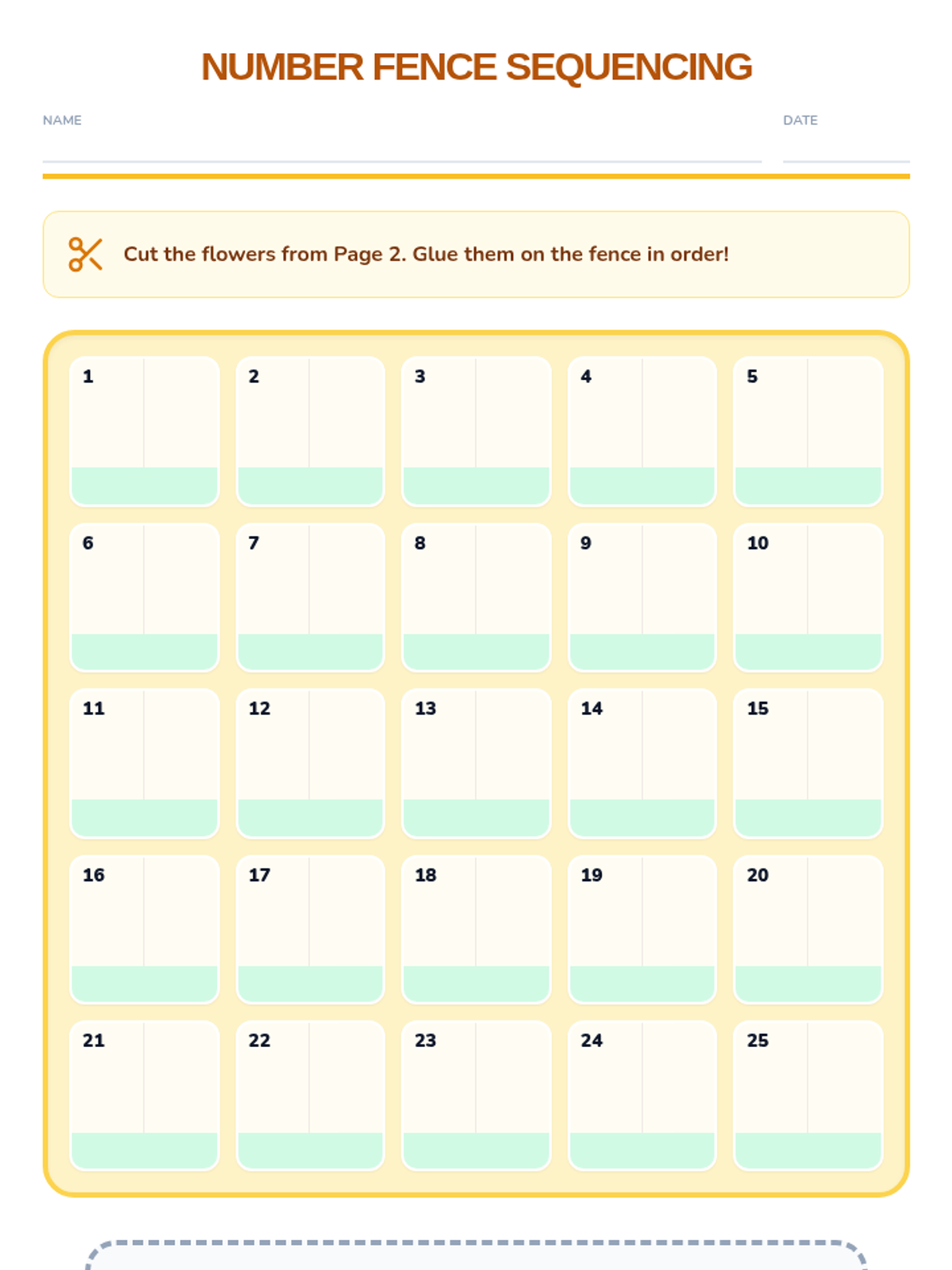
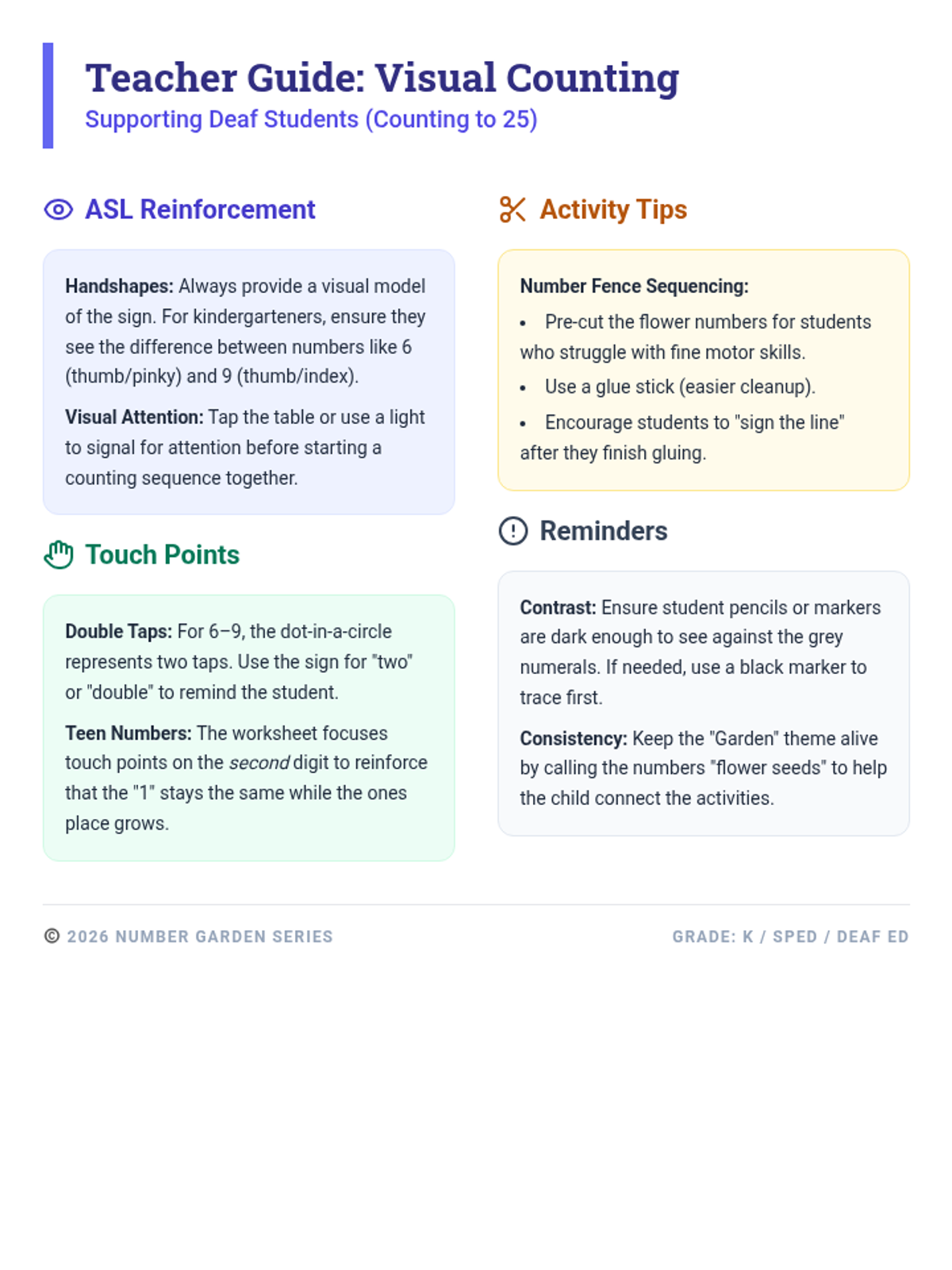
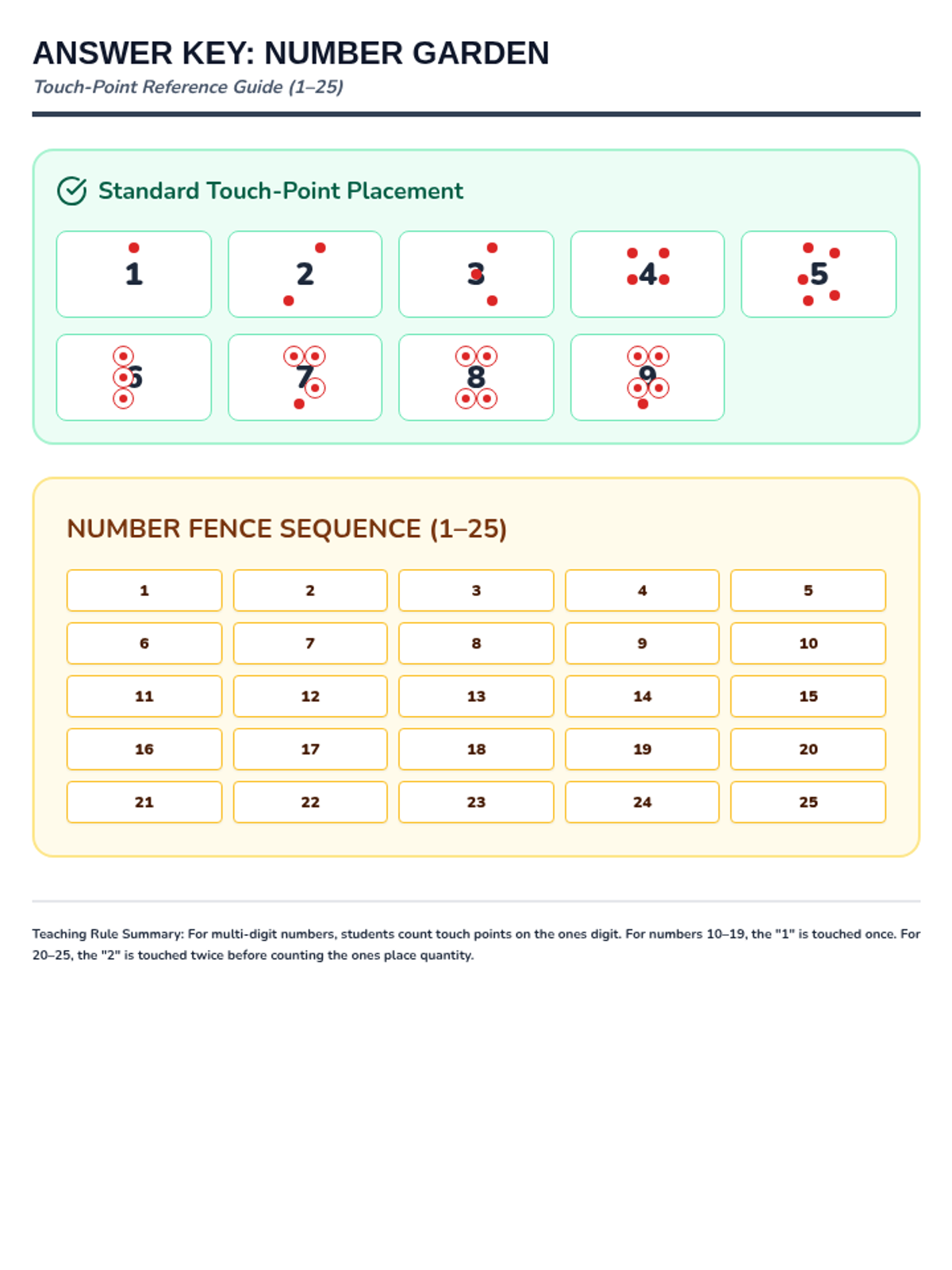
A series of visually-rich activities for kindergarten students to master counting to 25 using touch-point numbers and sequencing exercises, specifically designed with visual supports for deaf learners.
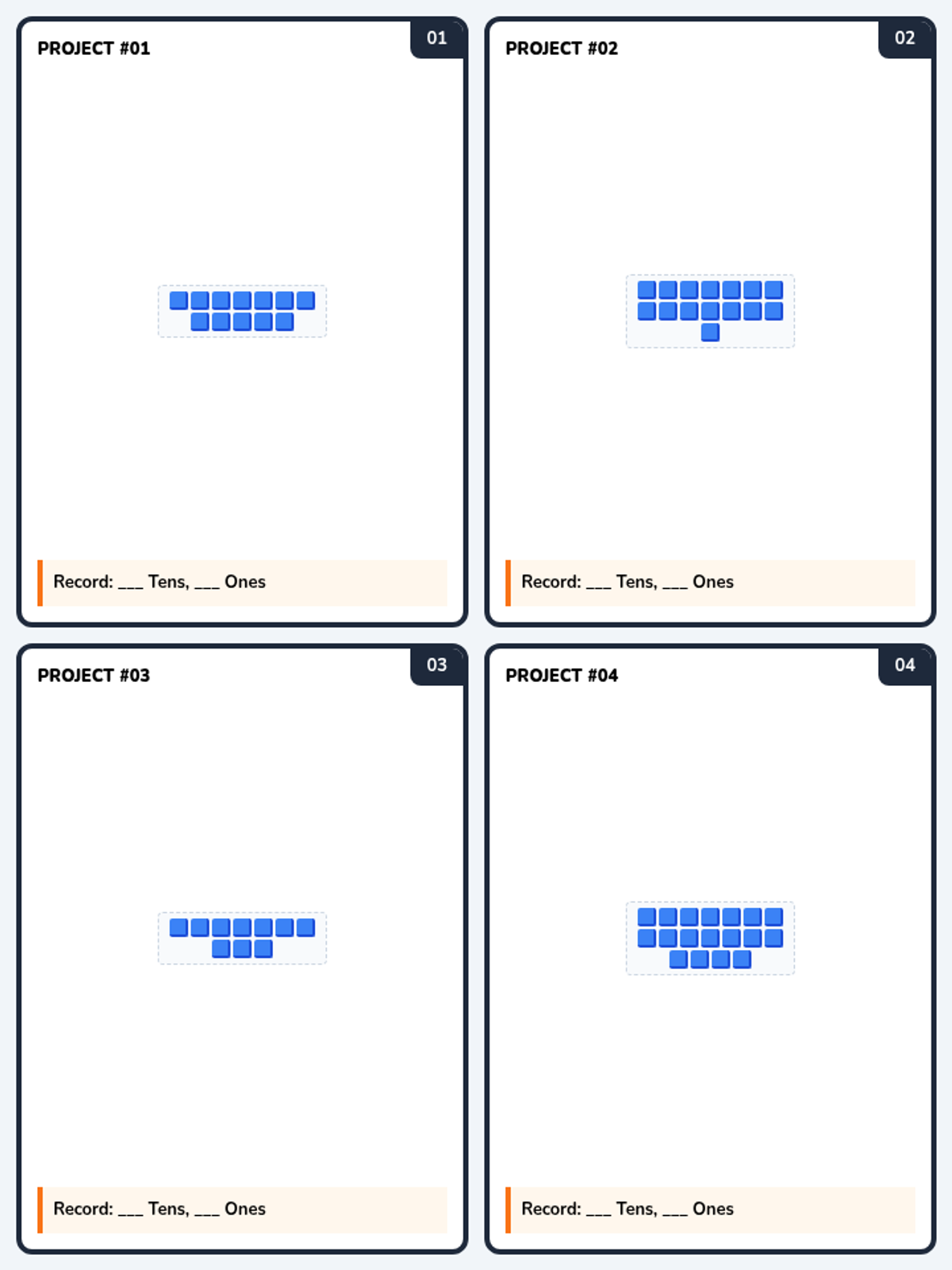
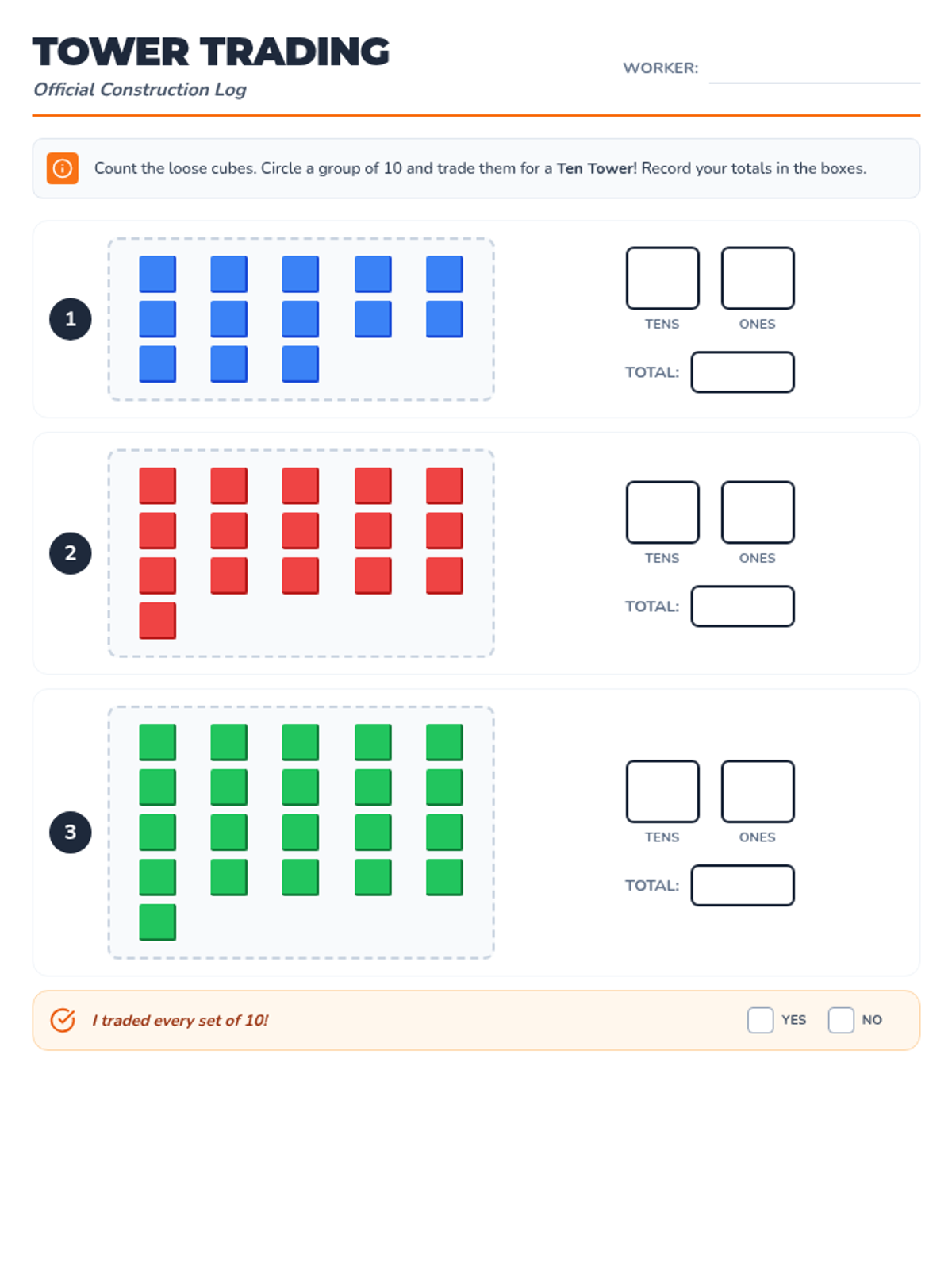
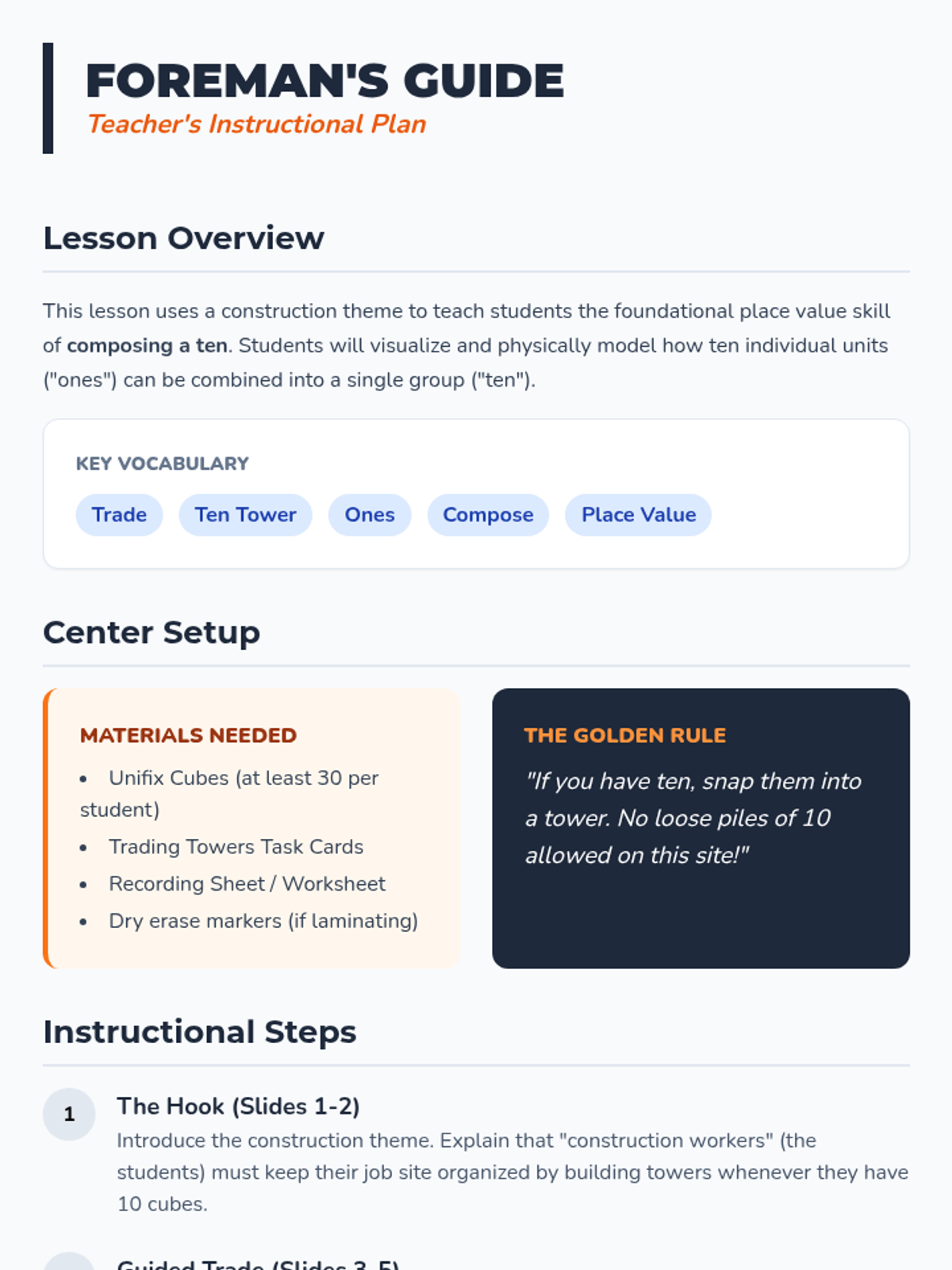
A hands-on lesson focused on place value foundations, specifically the concept of composing a ten by trading 10 individual ones for 1 ten-rod using Unifix cubes.
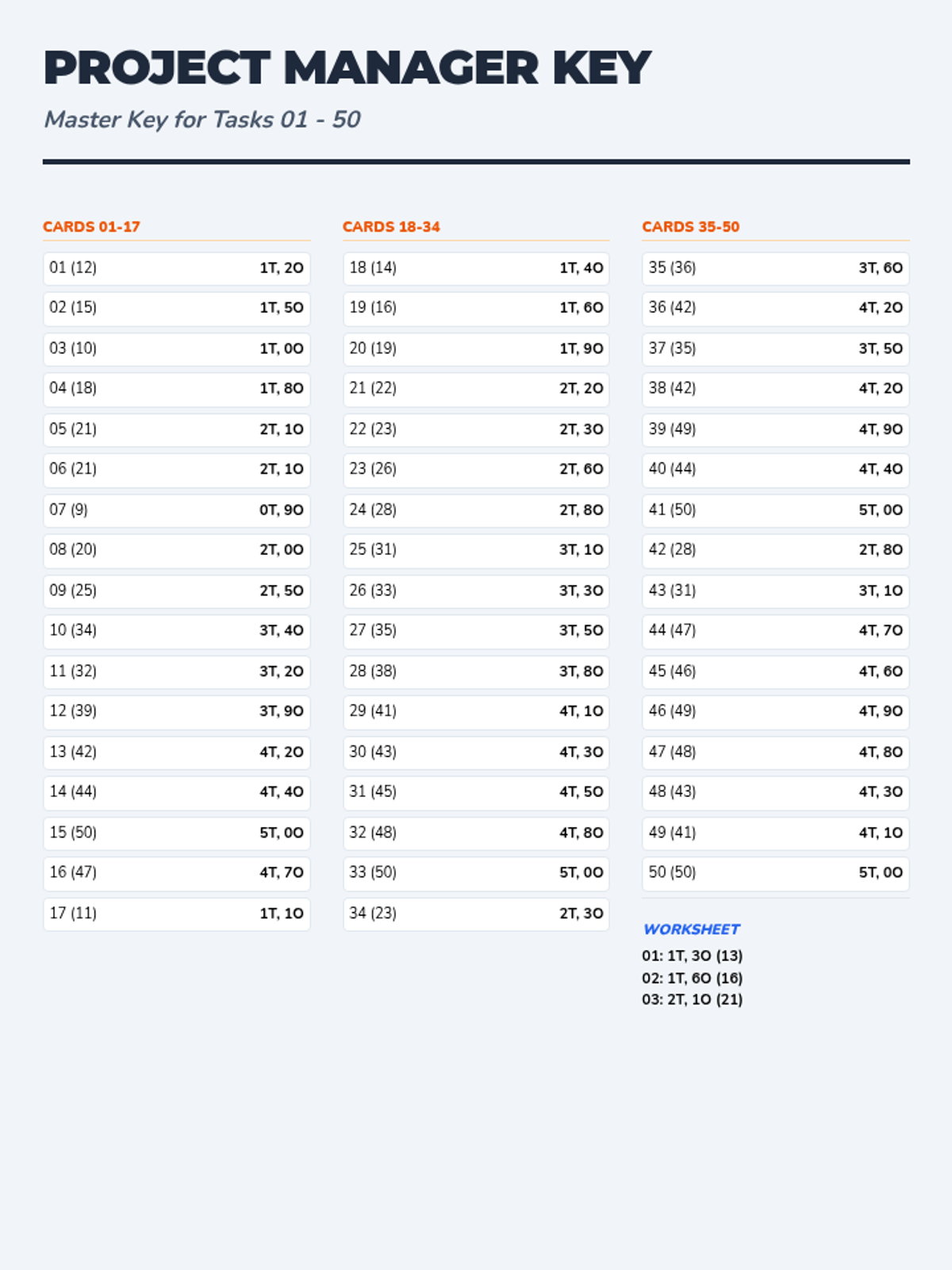
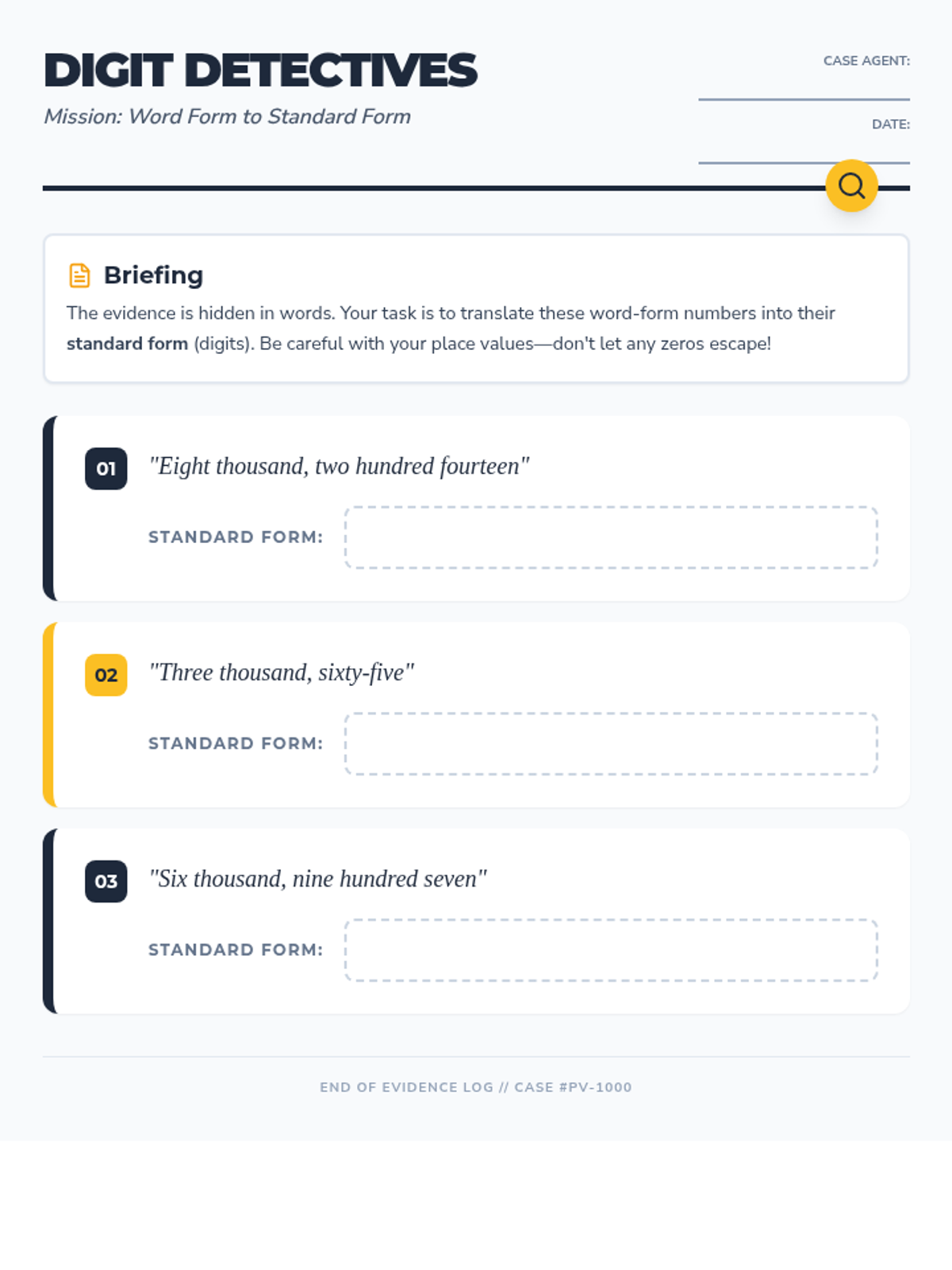
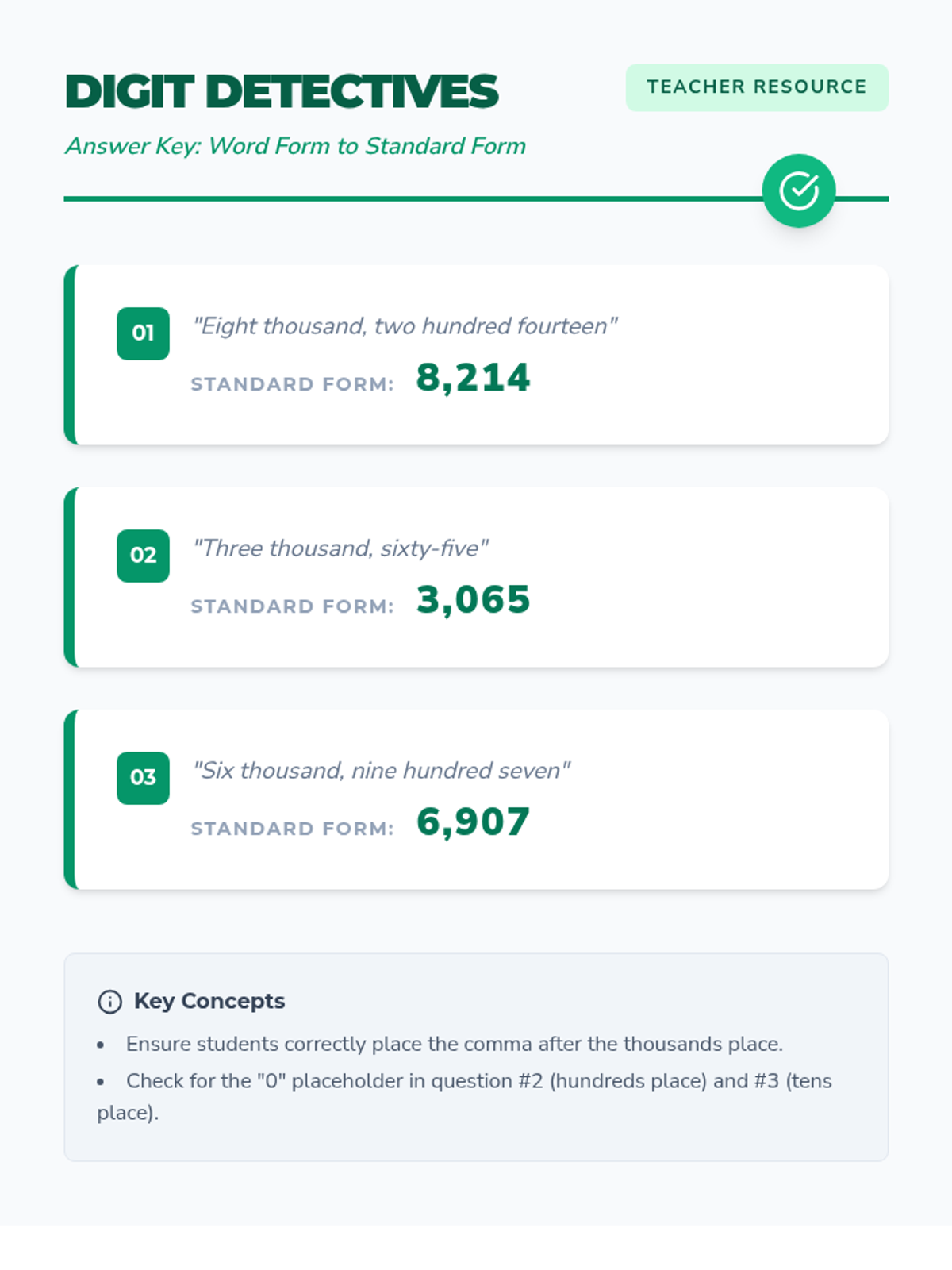
A focused lesson on converting numbers from word form to standard form within the thousands place, using a detective-themed approach.
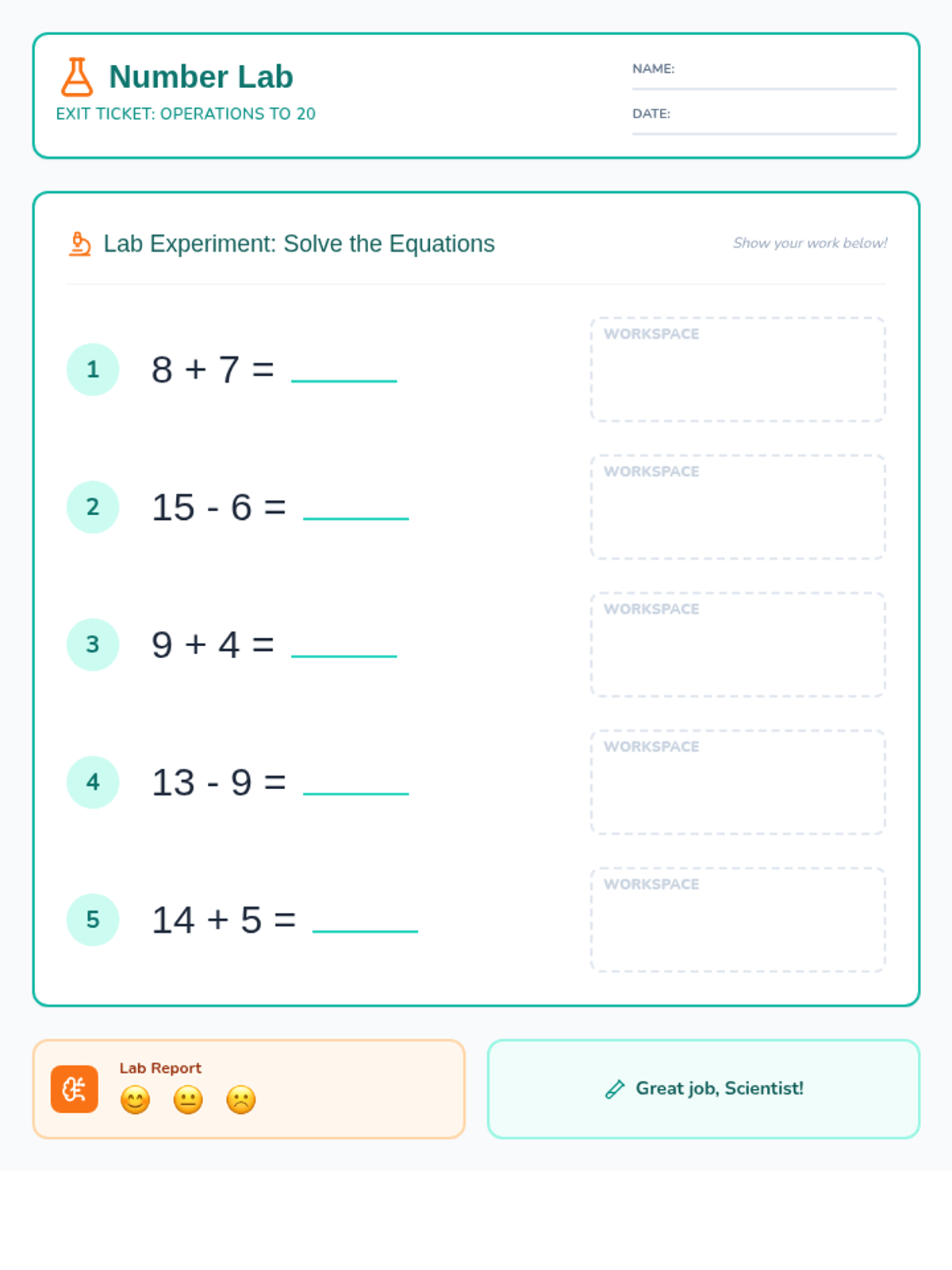
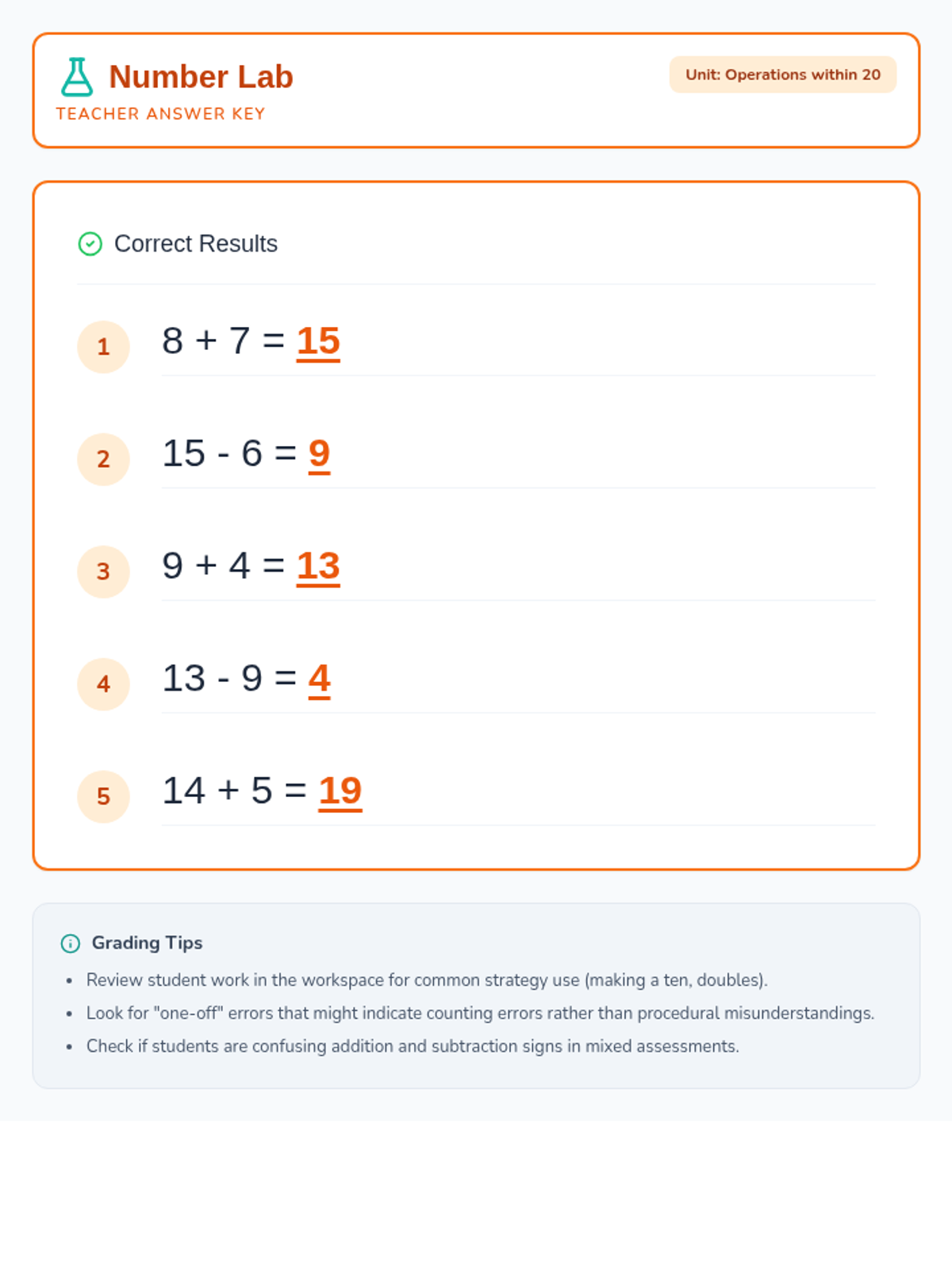
A quick assessment lesson for second-grade students to demonstrate mastery of addition and subtraction within 20 through a lab-themed exit ticket.
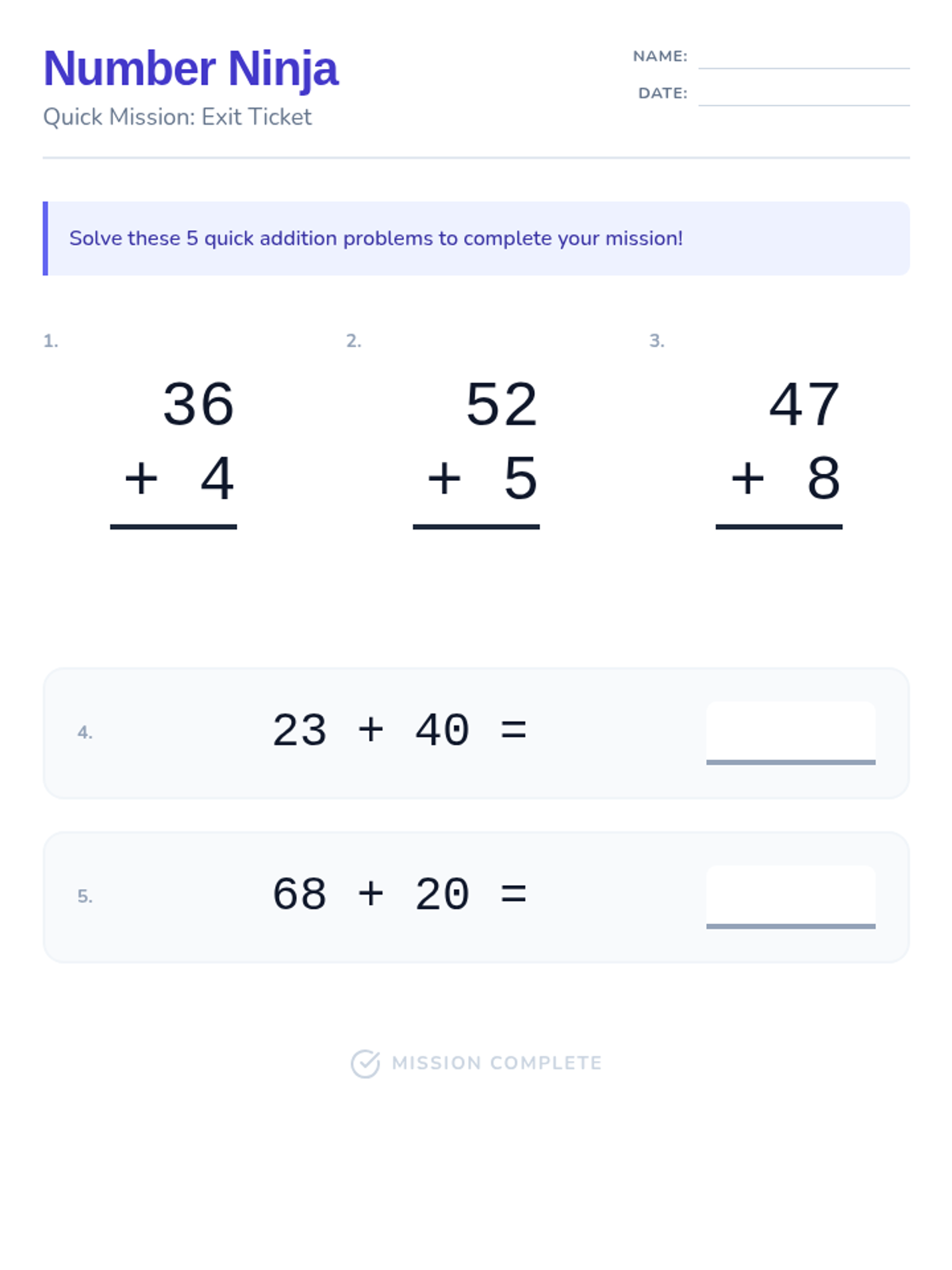
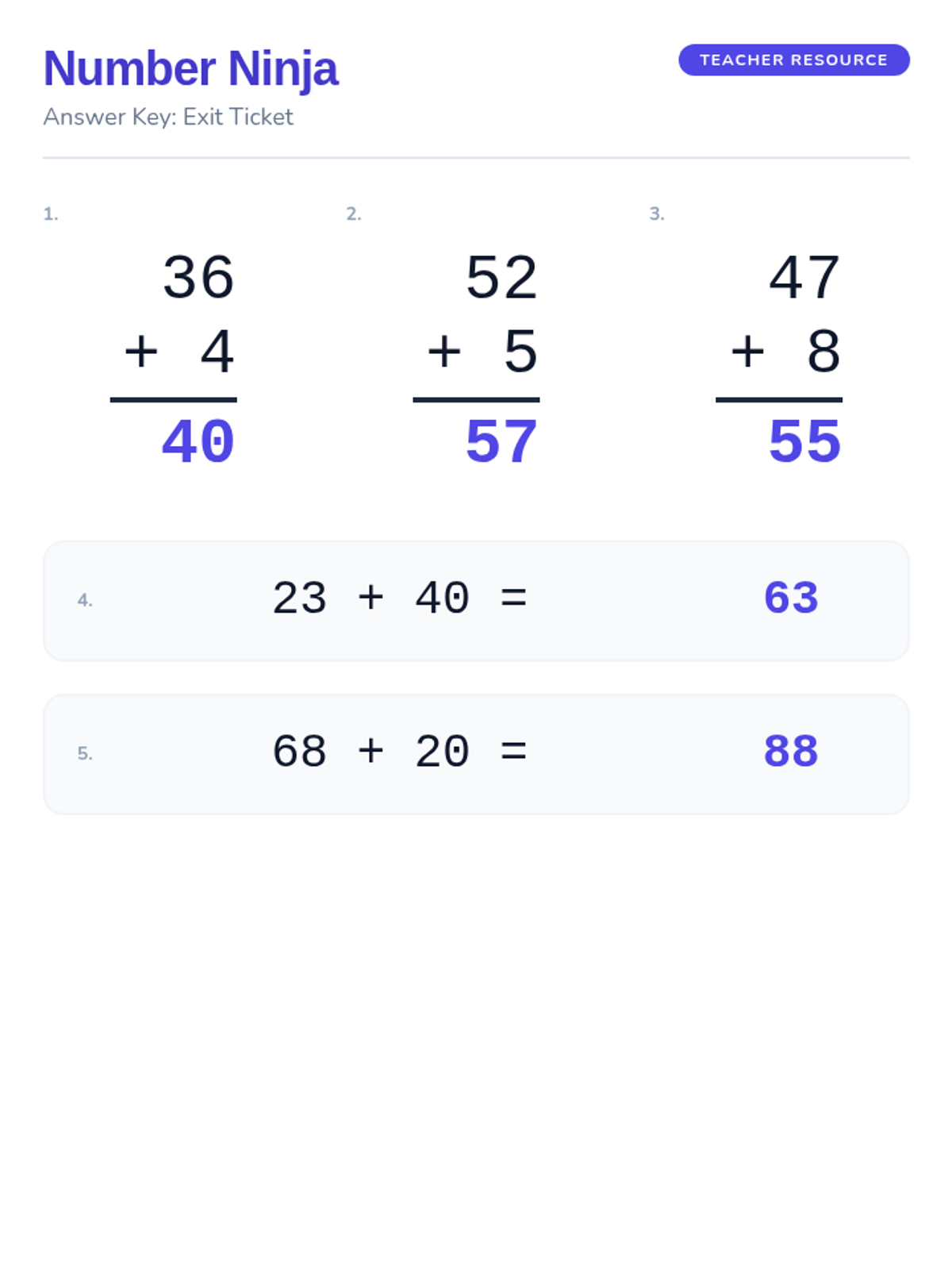
Students practice adding two-digit numbers to one-digit numbers and multiples of ten, covering both regrouping and non-regrouping scenarios.
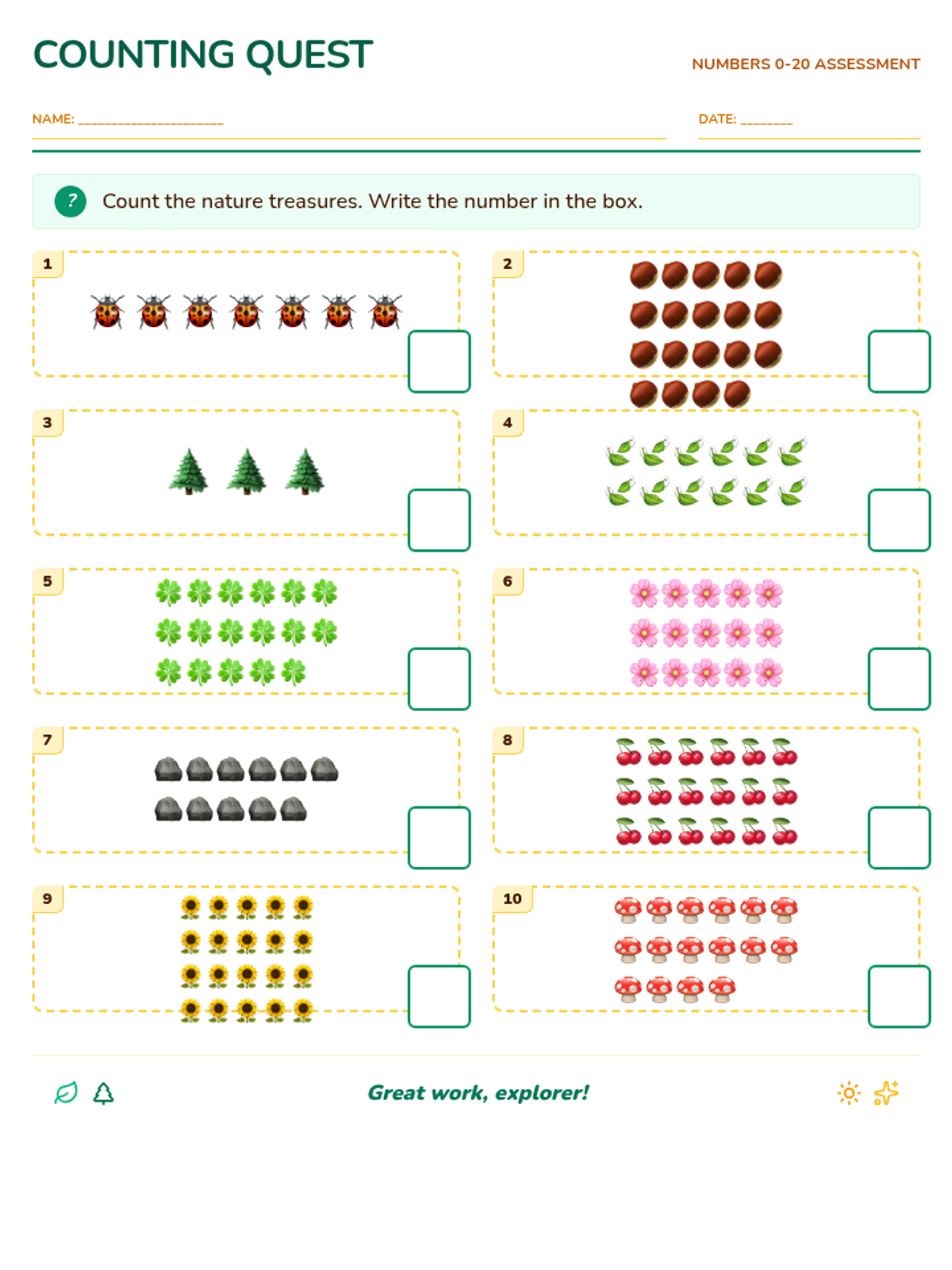
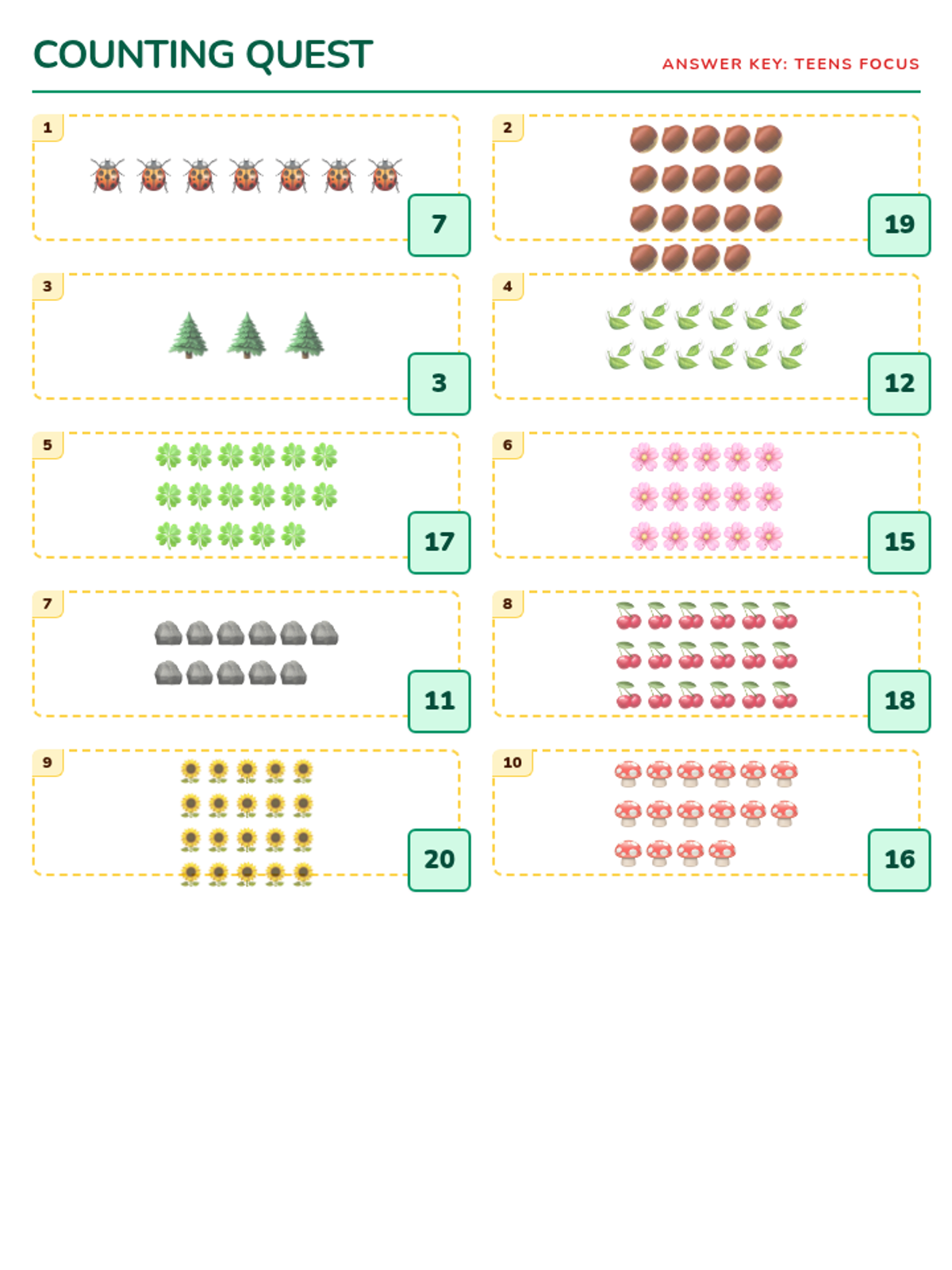
Students will practice counting groups of objects and writing the corresponding numeral from 0 to 20 in a nature-themed assessment.
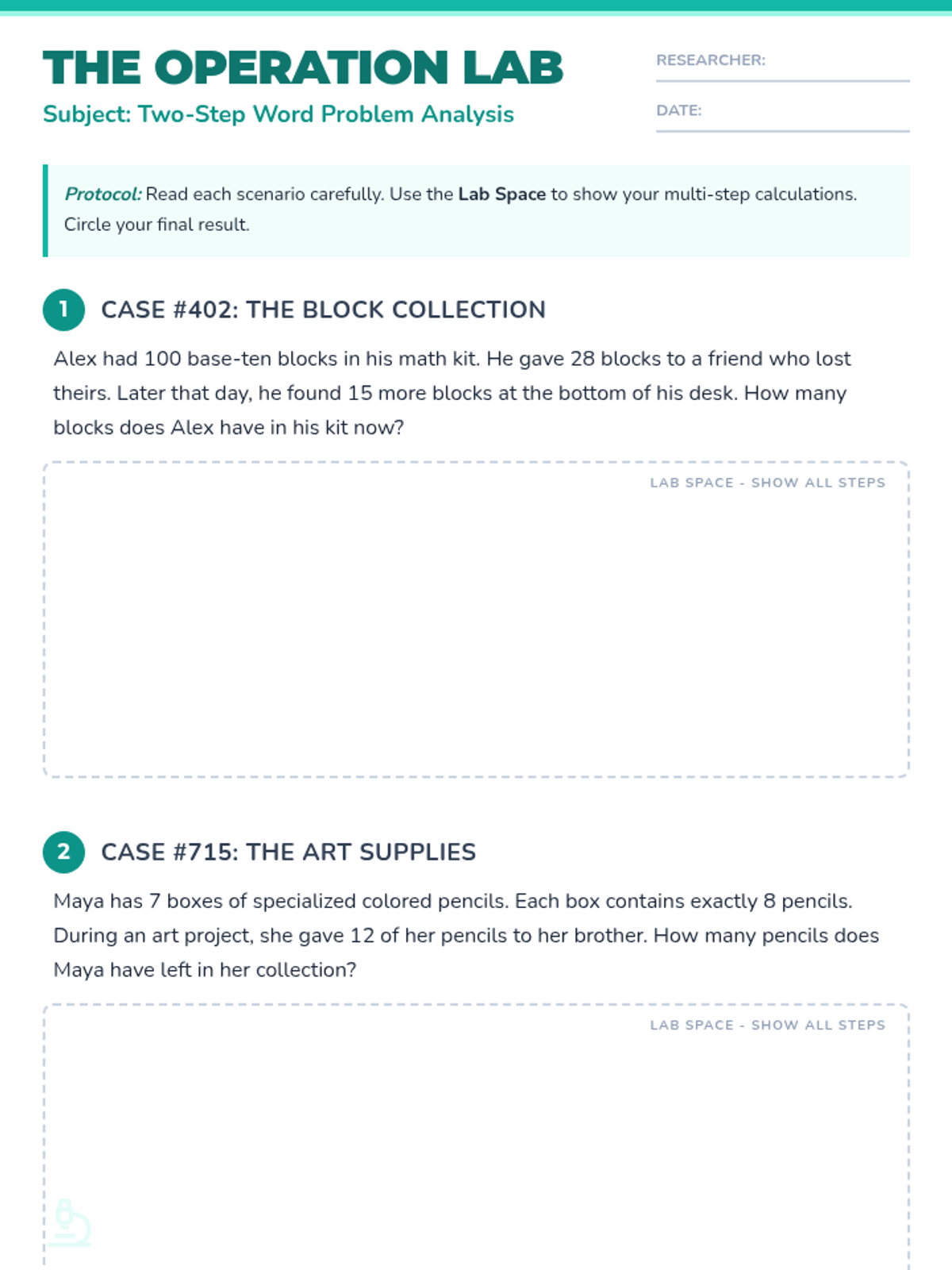
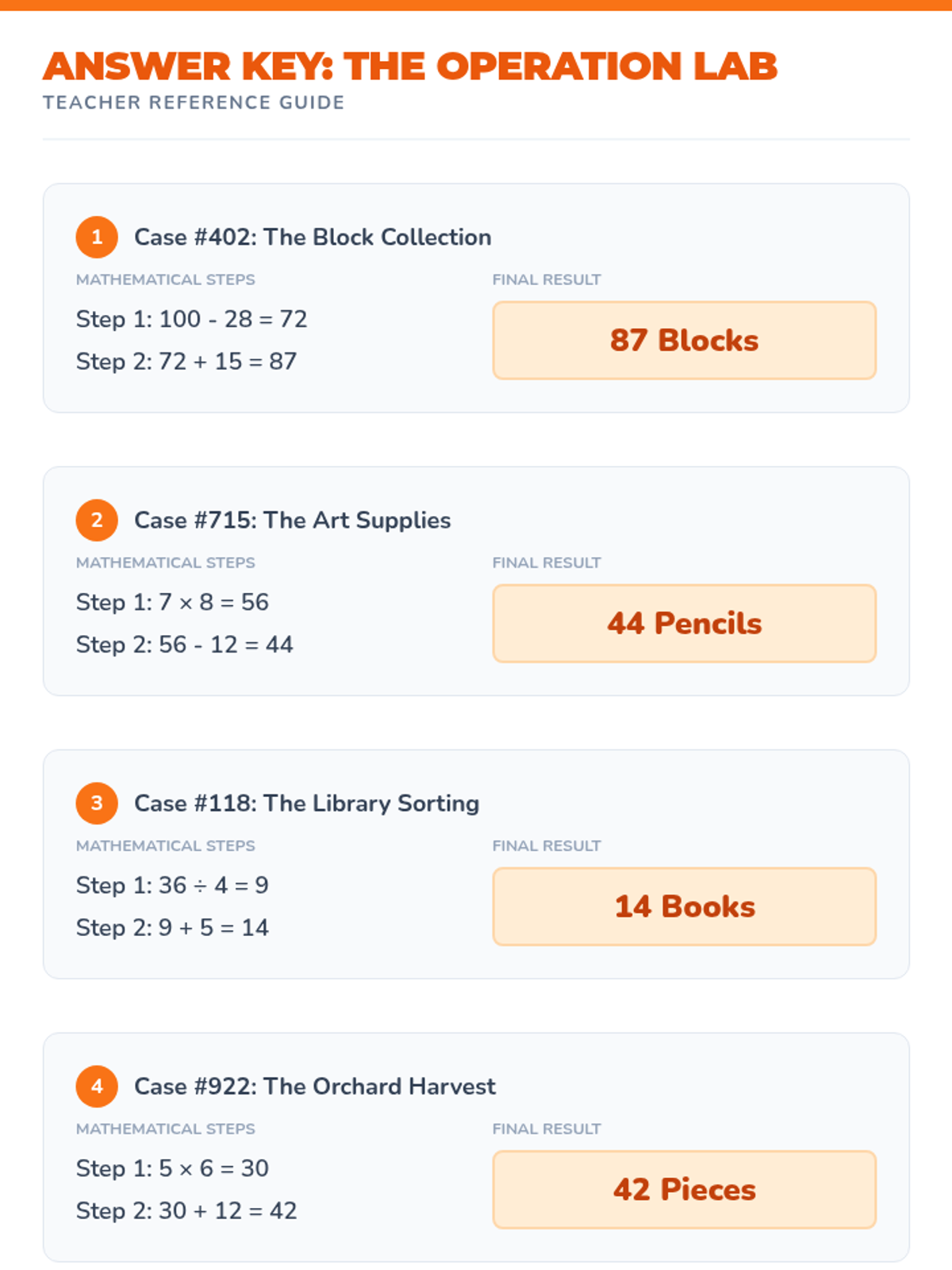
A lesson focused on solving two-step word problems involving addition, subtraction, multiplication, and division. Students practice breaking down complex problems and showing their mathematical thinking in a structured workspace.
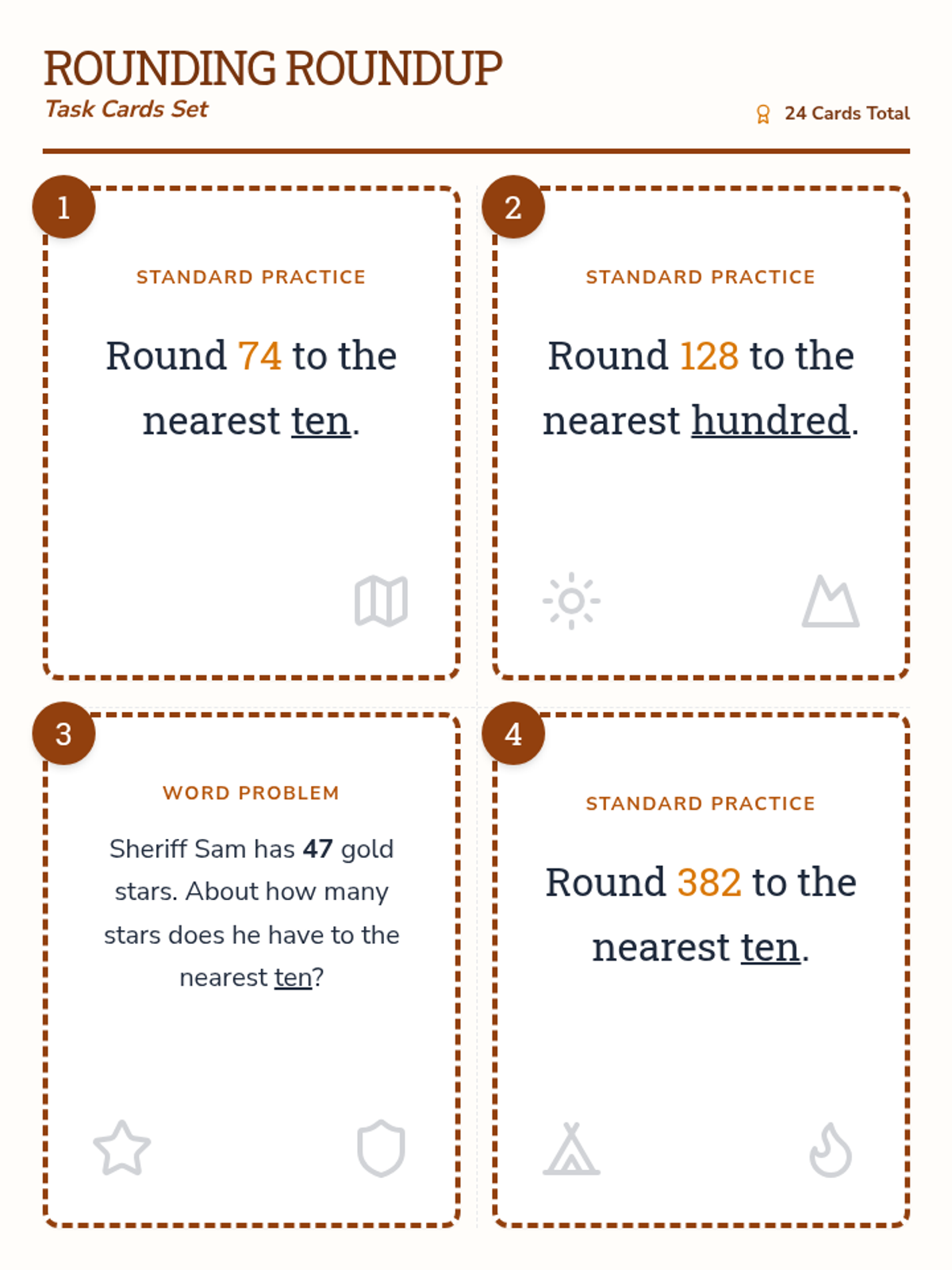
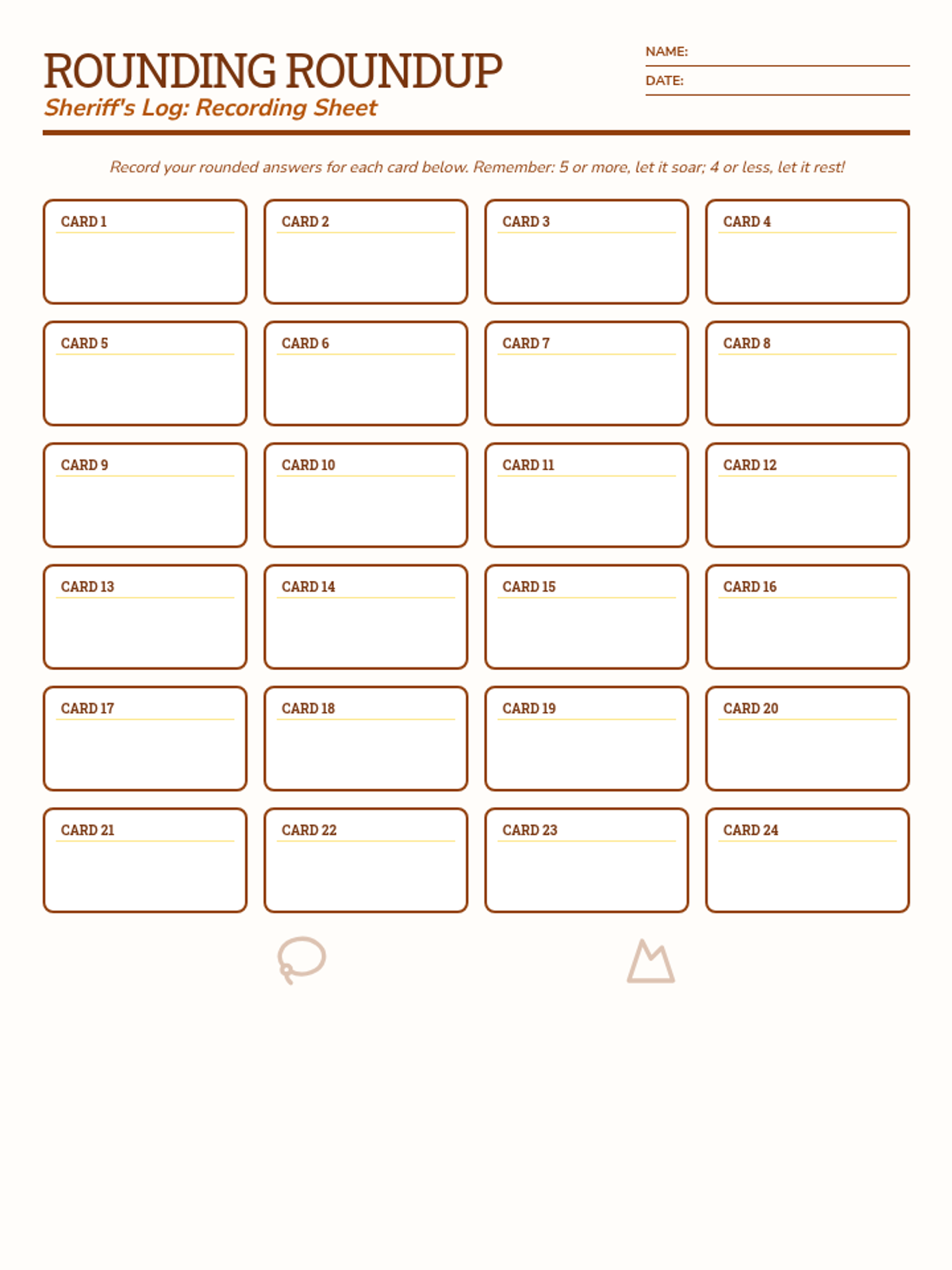
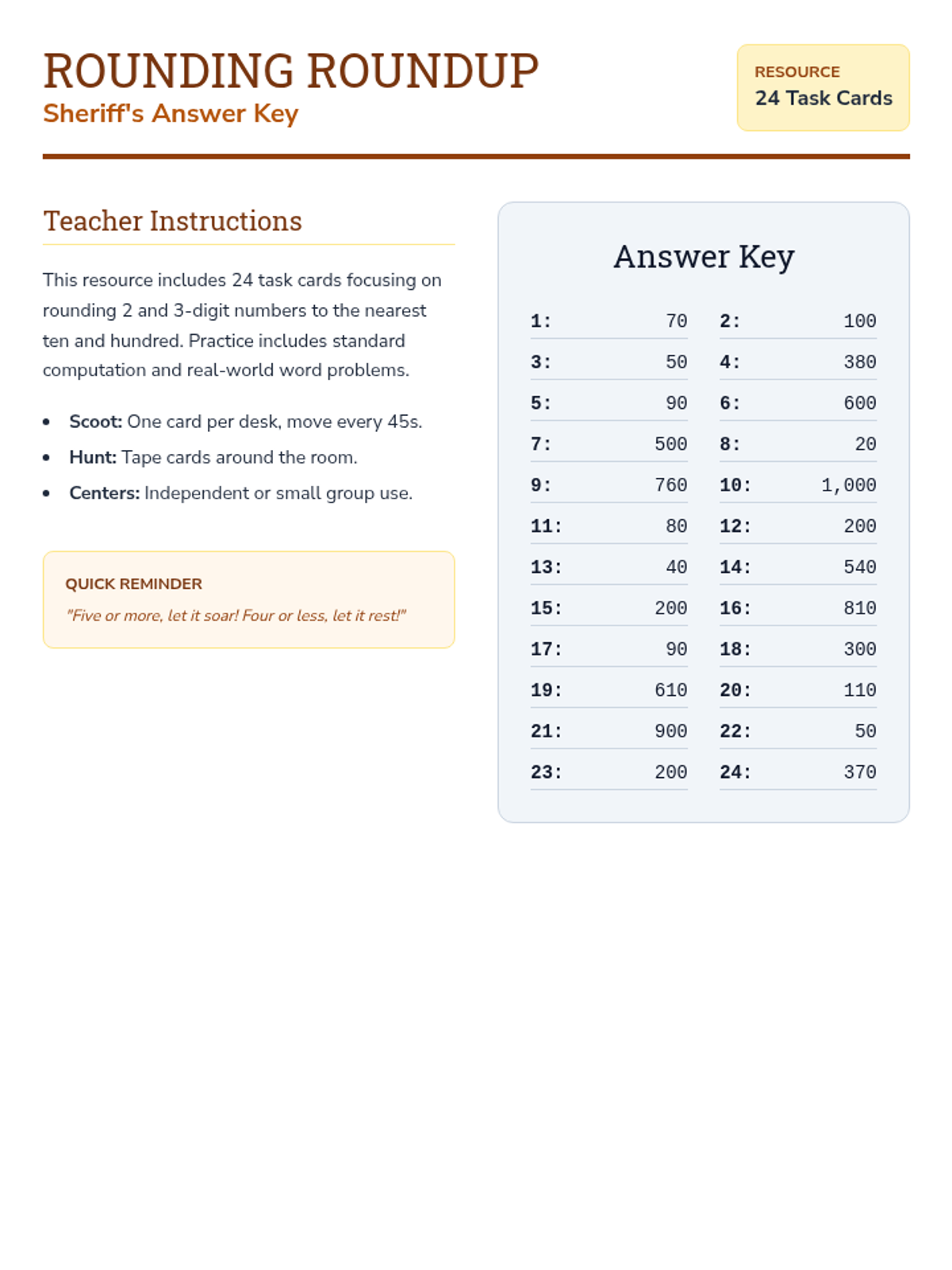
A Wild West-themed practice session for rounding 2 and 3-digit numbers to the nearest ten and hundred using task cards and word problems.
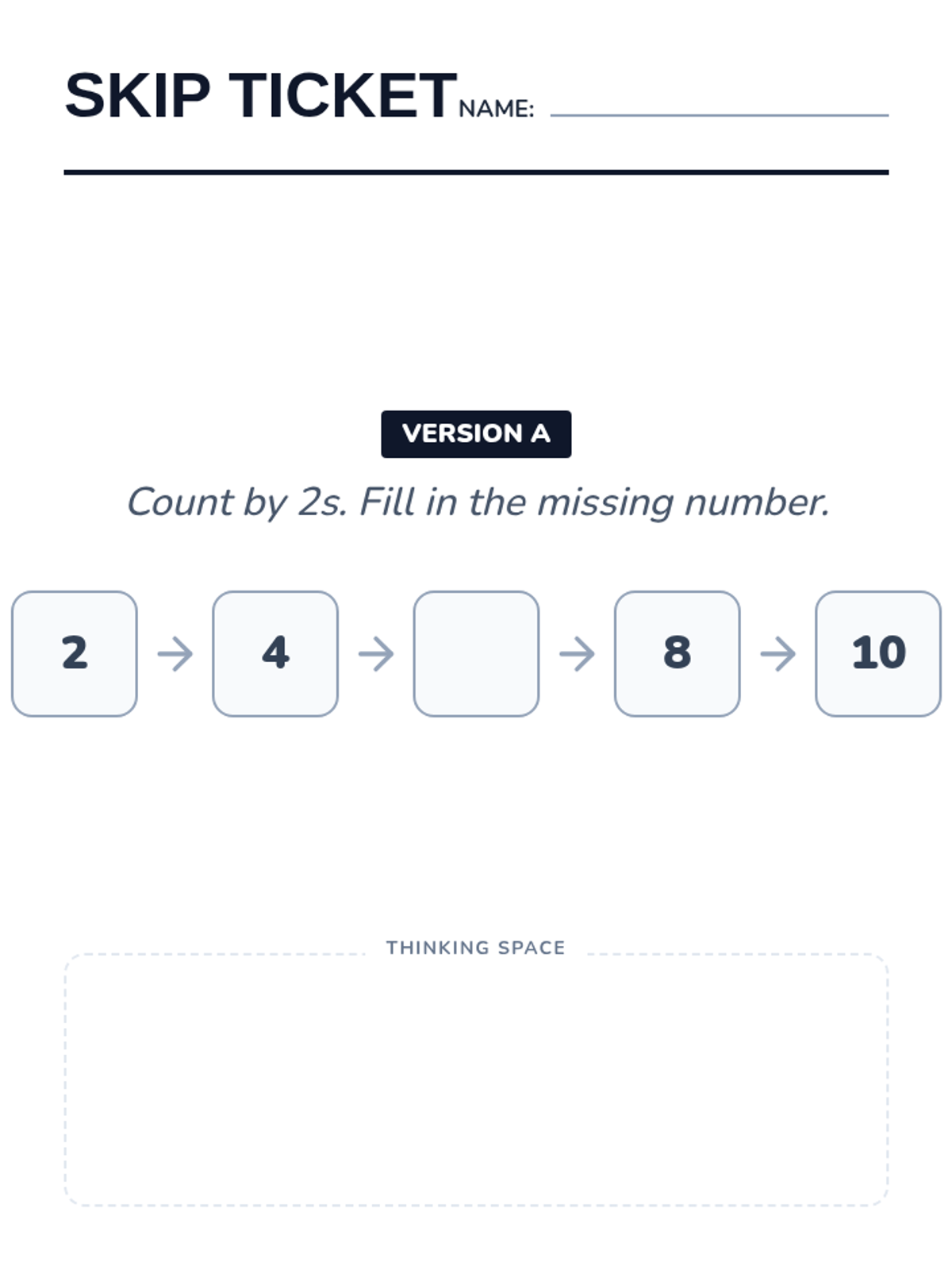
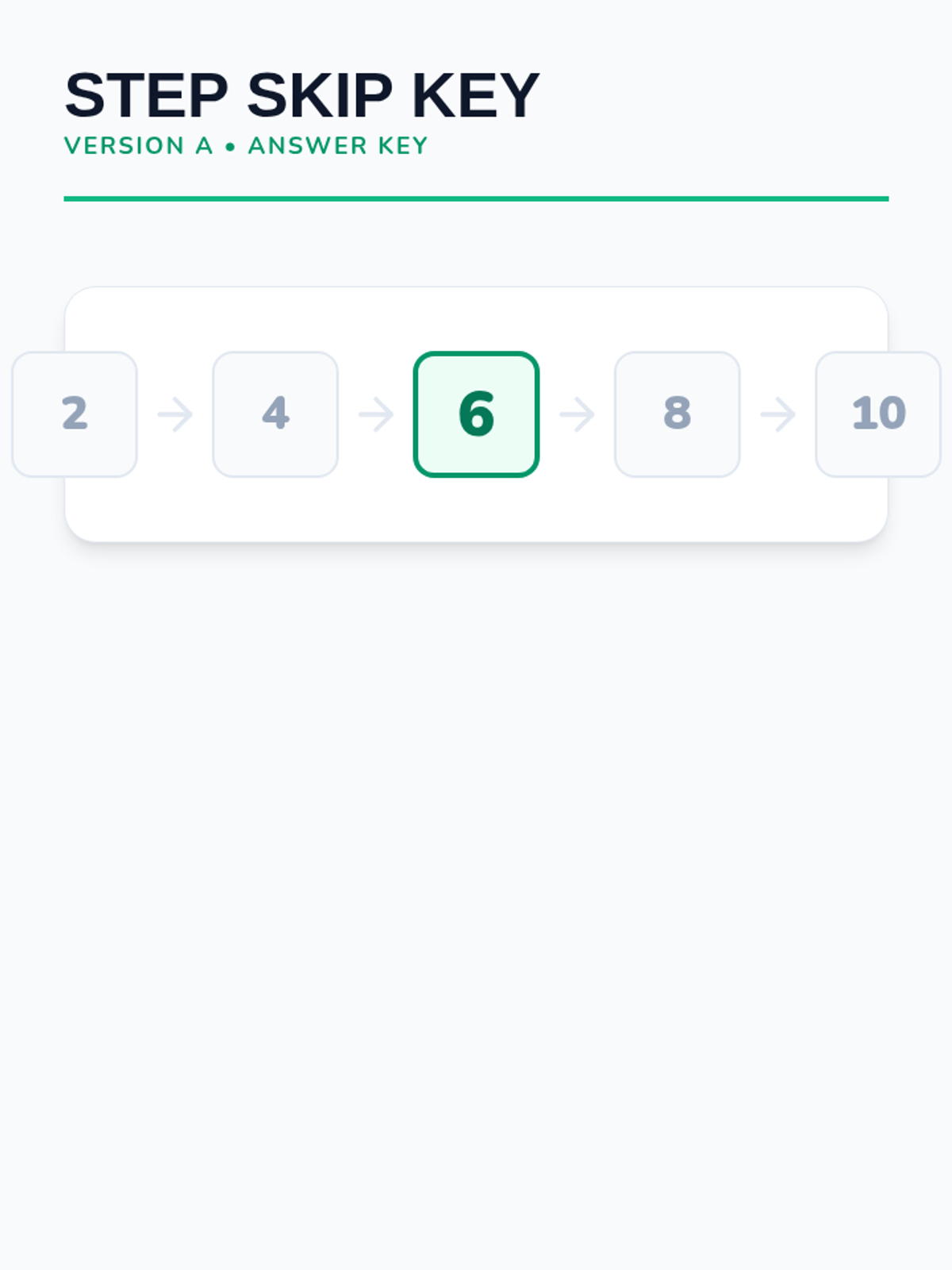
A focused assessment on skip counting by 2s within the range of 2-10. Students identify the missing number in a single sequence to demonstrate mastery of the pattern.
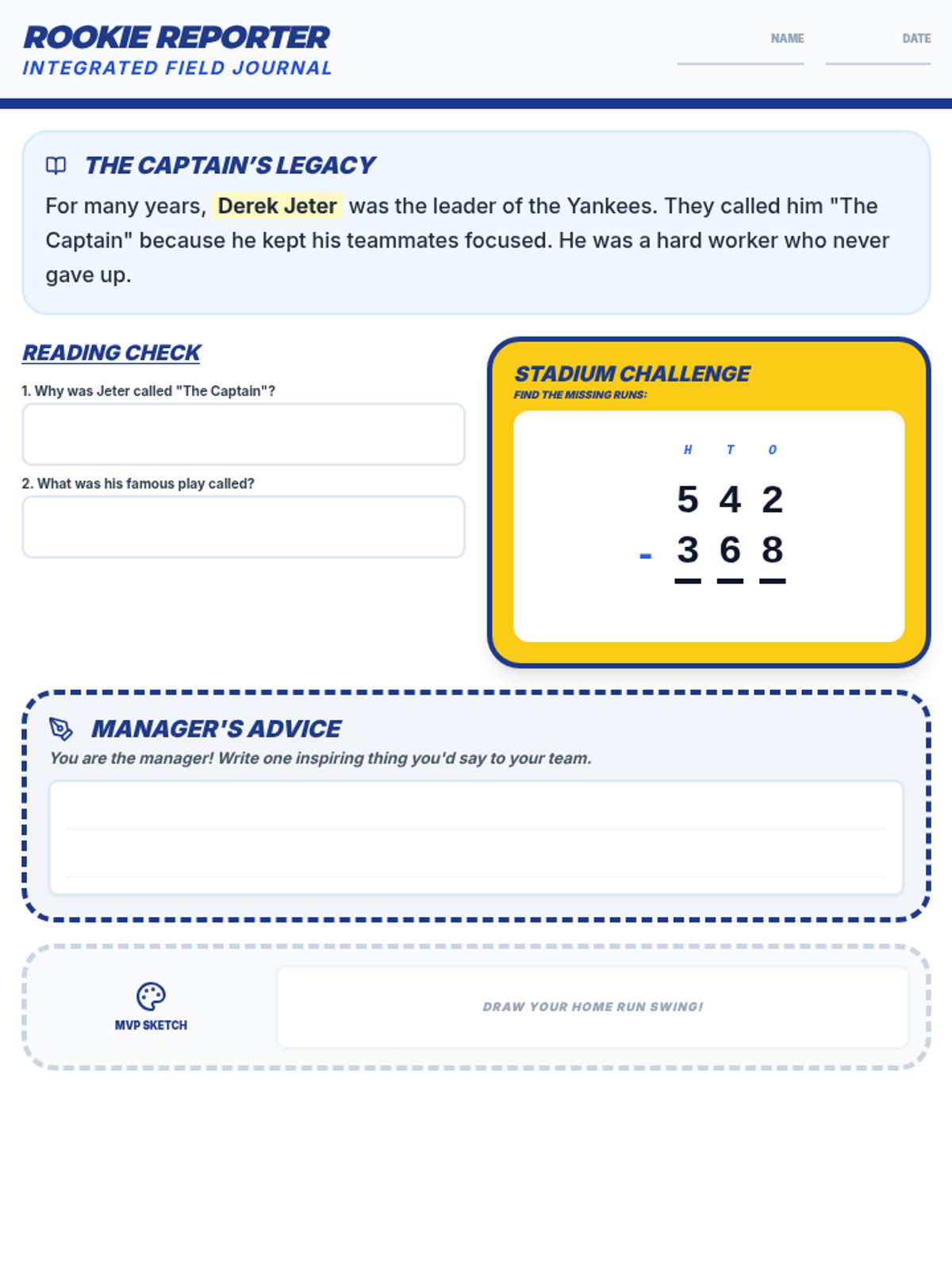
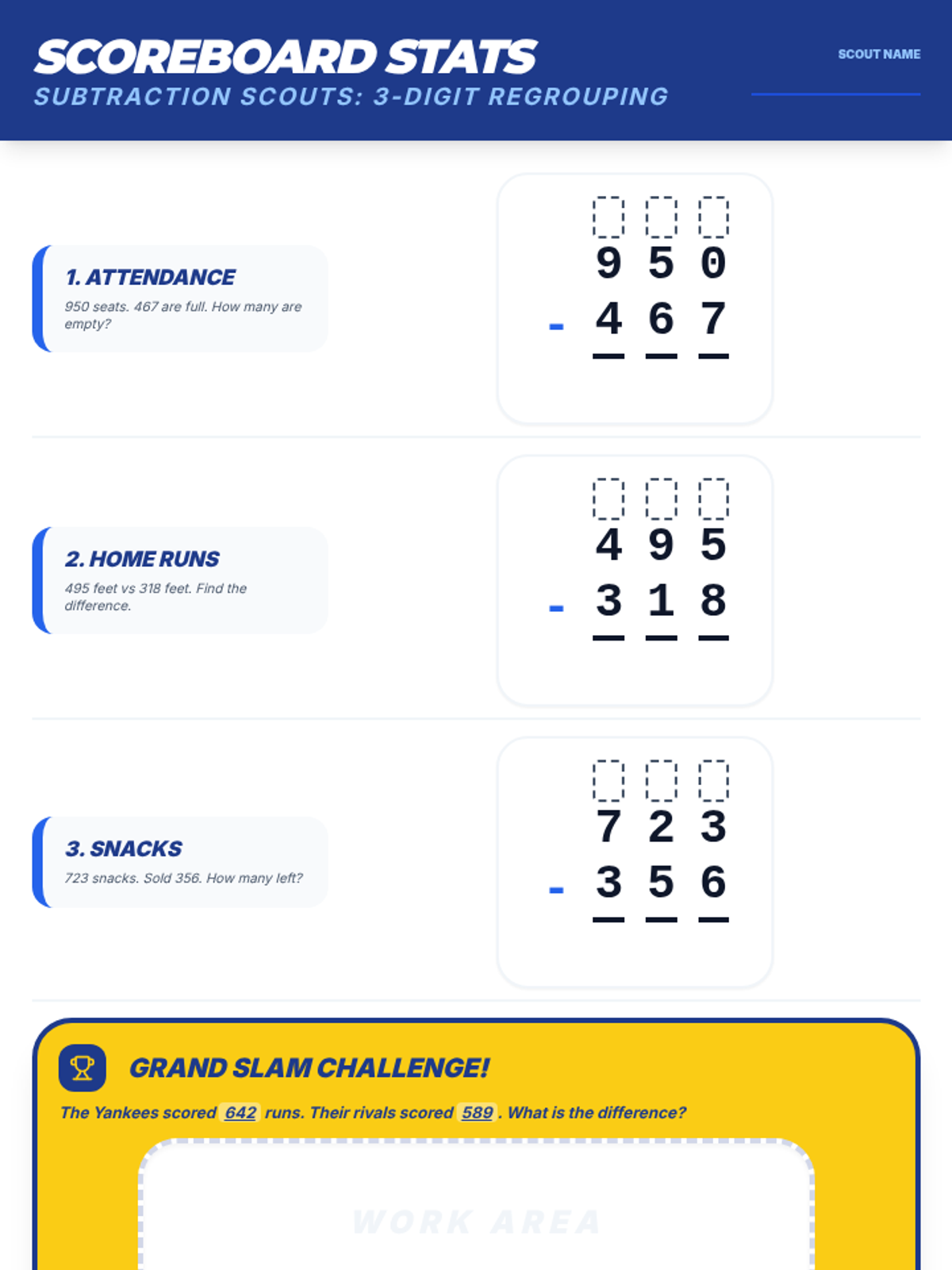
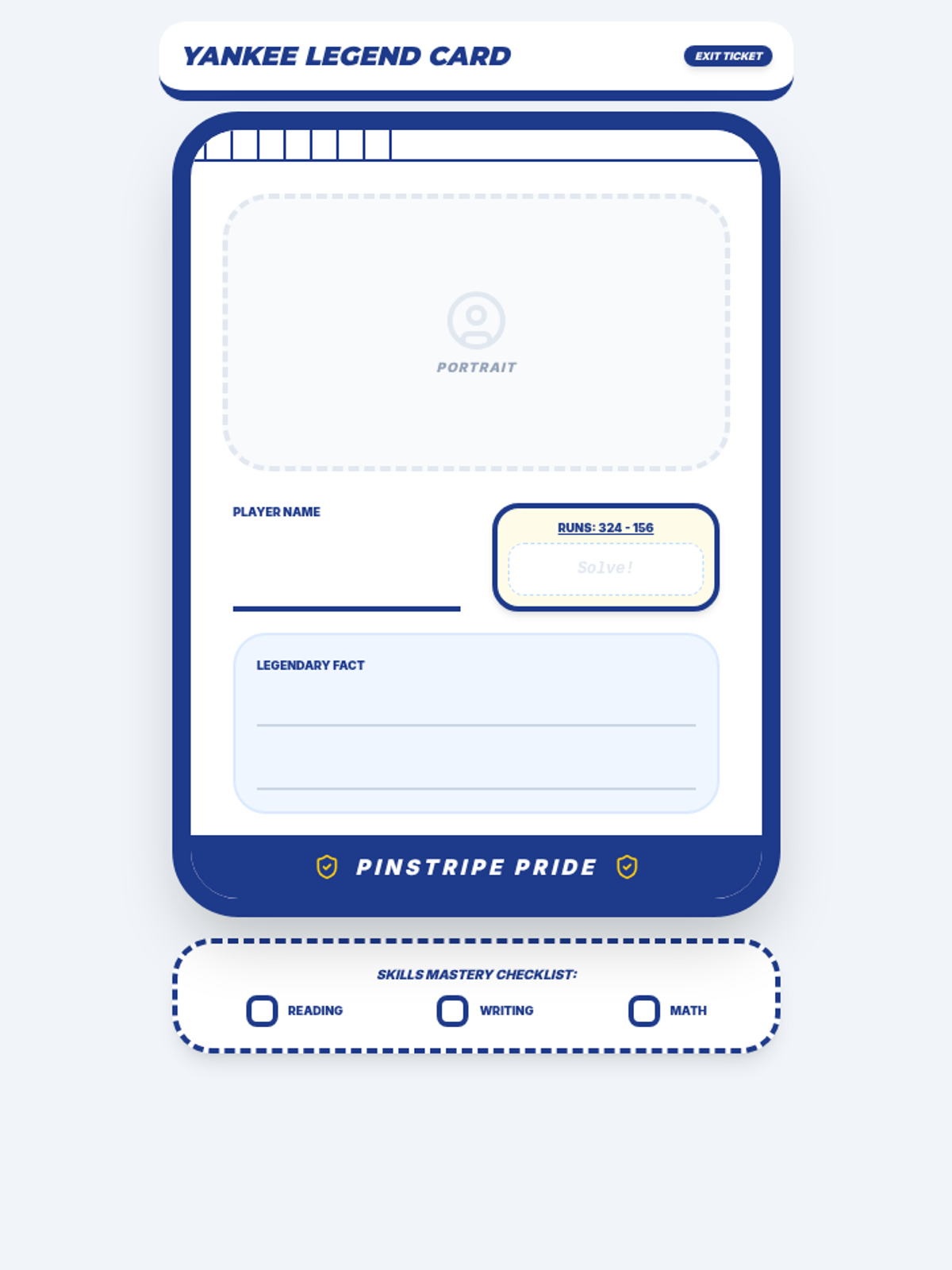
An integrated literacy and math lesson themed around the New York Yankees, designed to build confidence and maintain engagement for students with attentional challenges. Students will practice 3-digit subtraction with regrouping through stadium statistics and develop reading and writing skills through baseball-themed narratives.
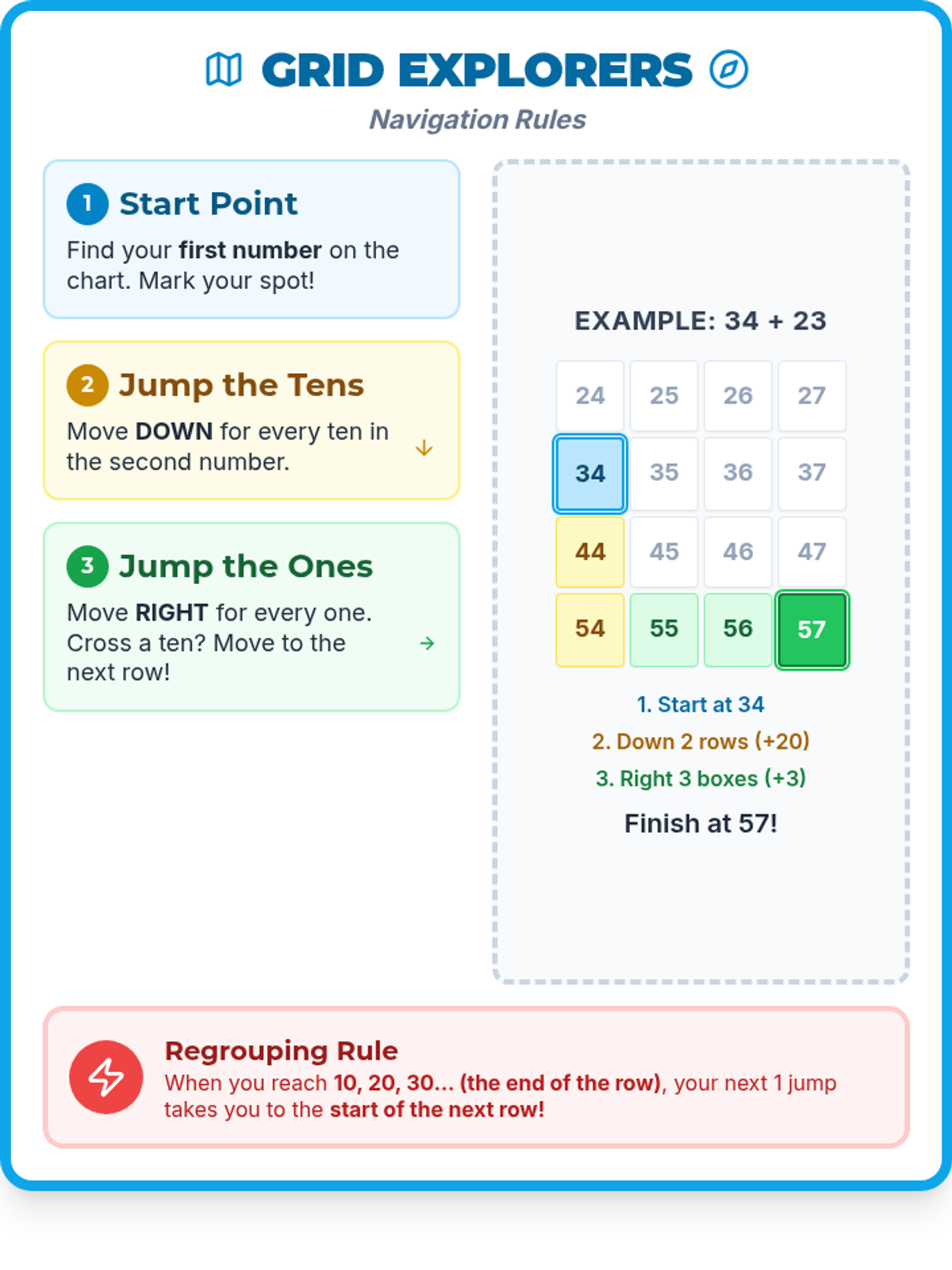

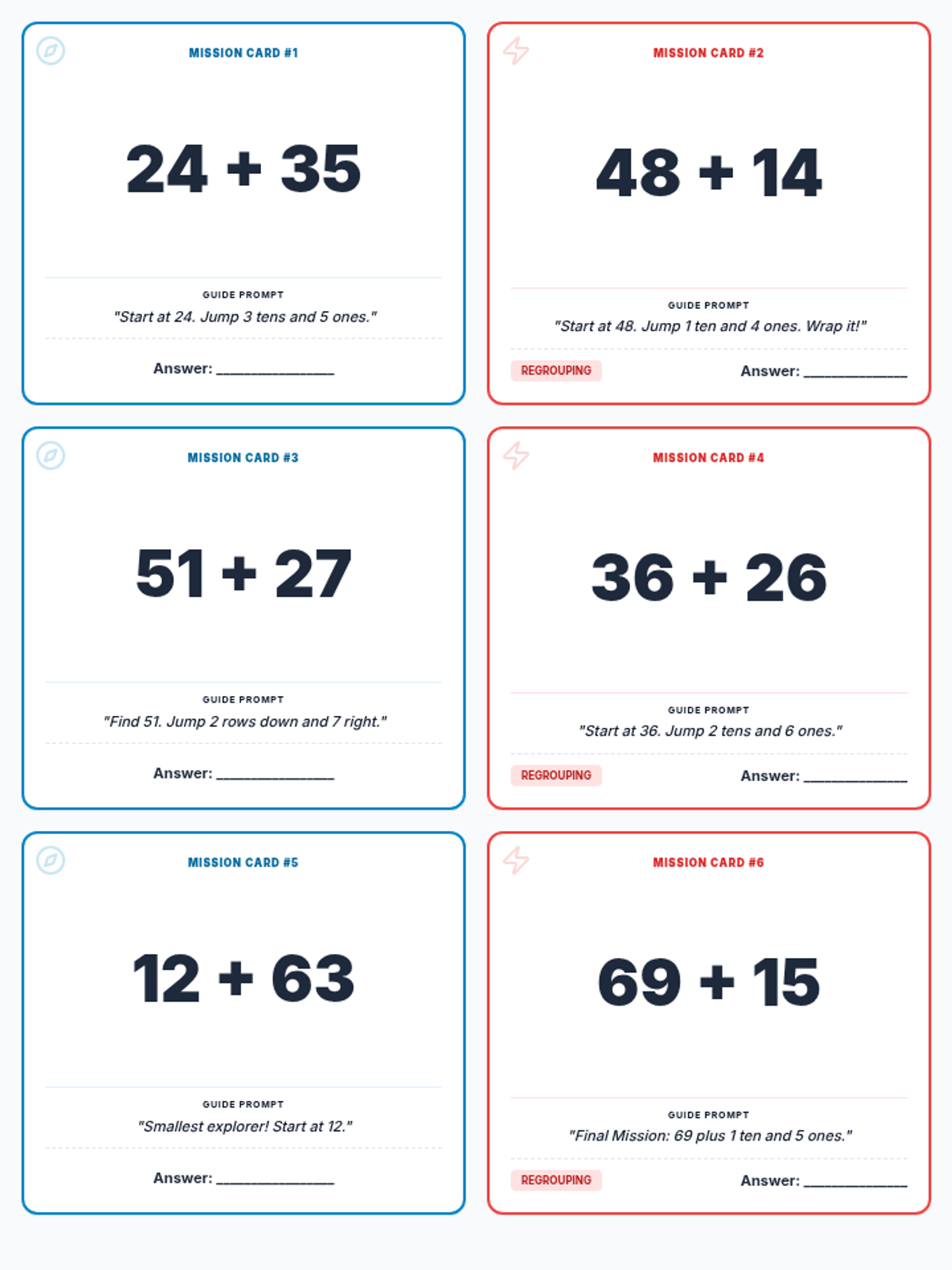
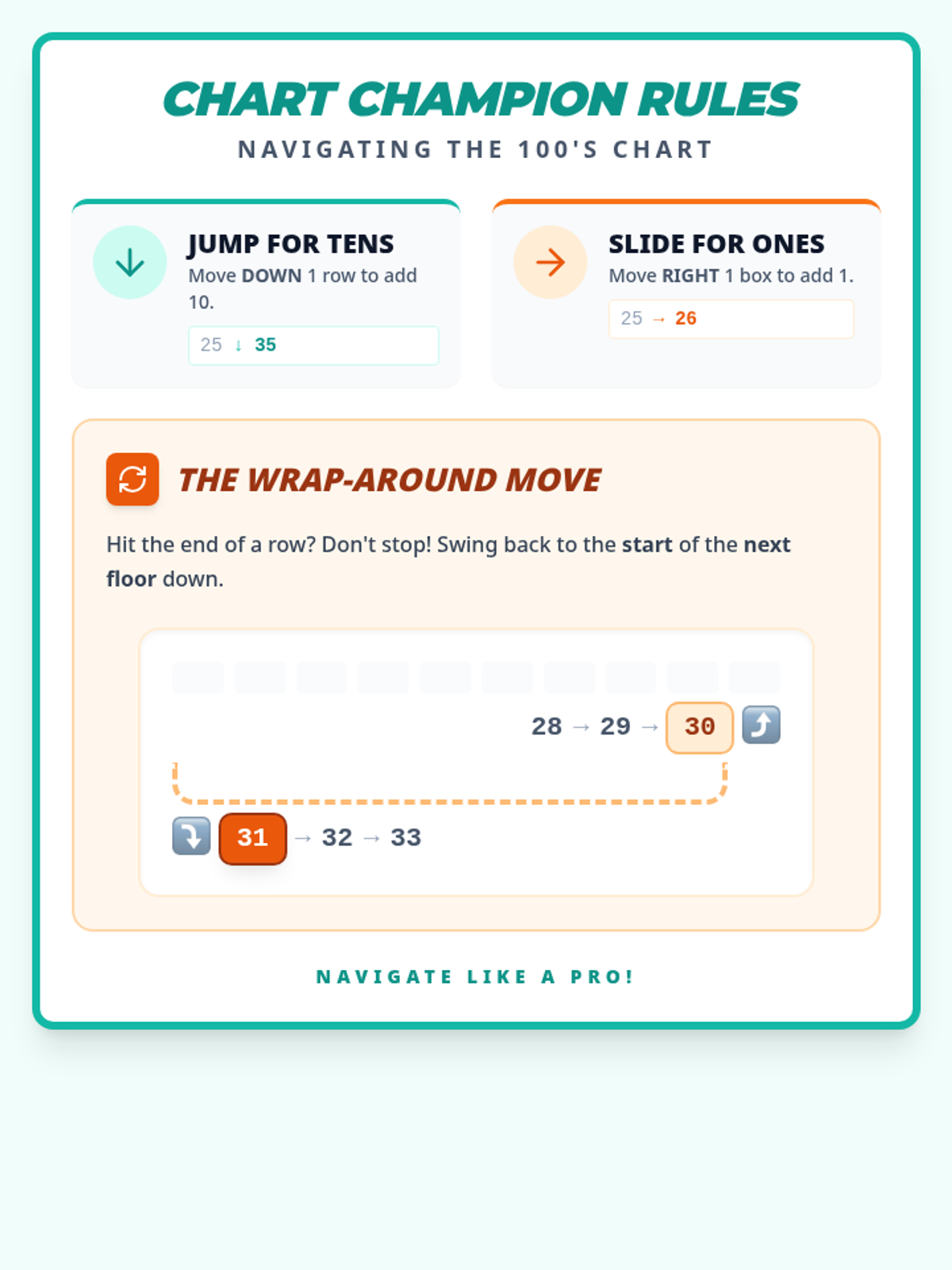
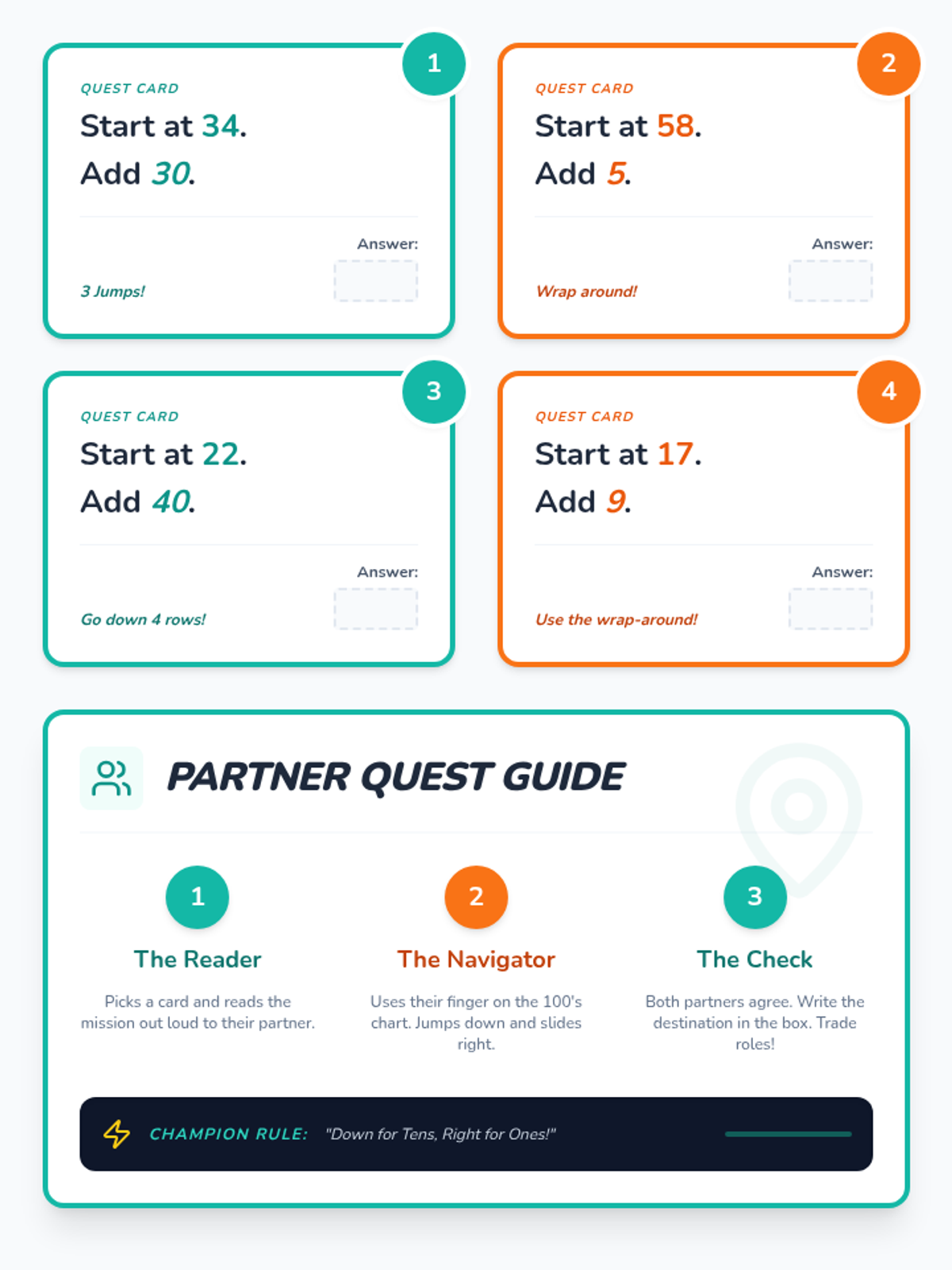
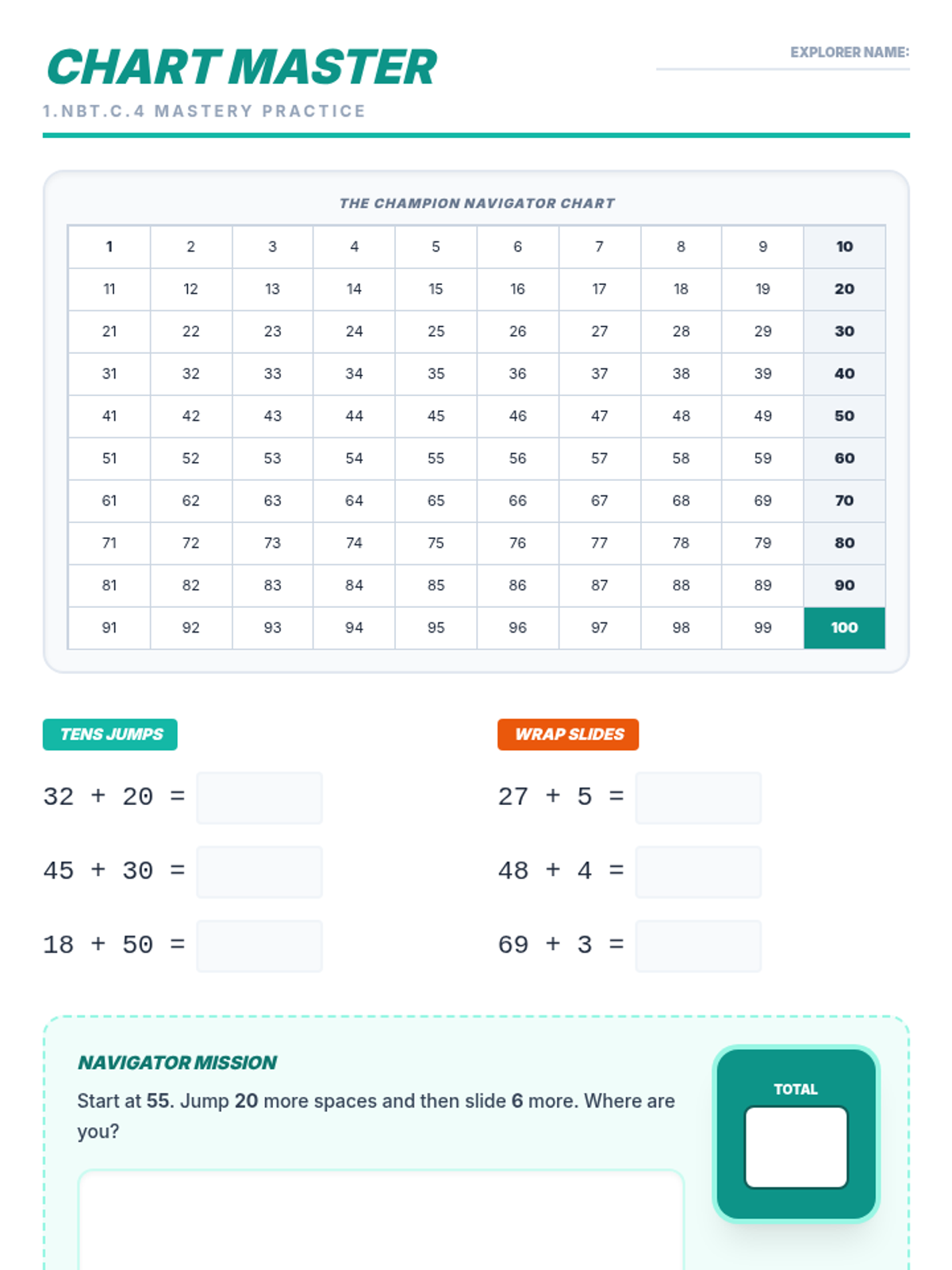
A primary math lesson focused on using a hundreds chart to solve two-digit addition problems, including those requiring regrouping by composing a ten. Students will learn to navigate the chart by jumping tens (moving down) and ones (moving right).
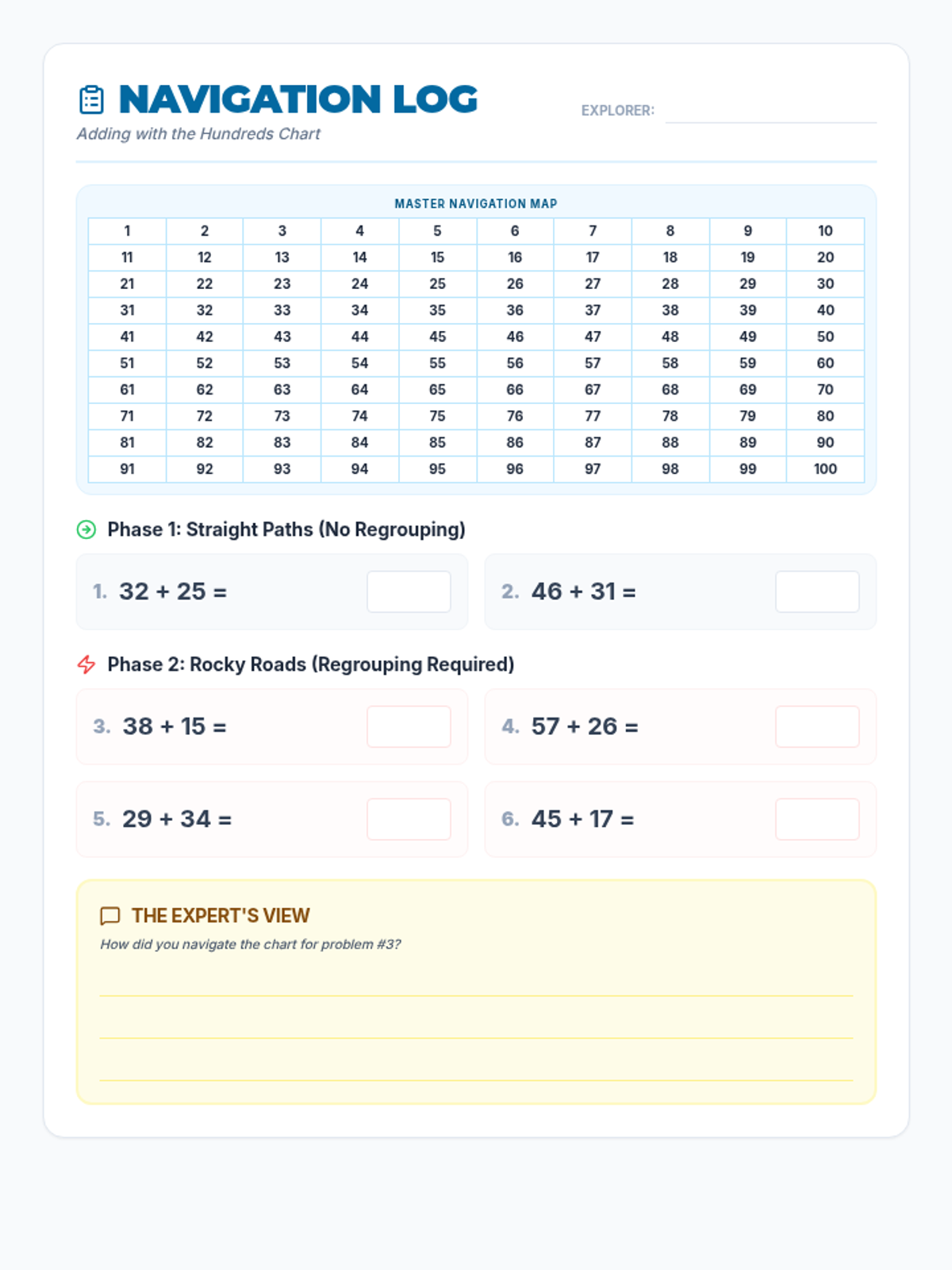
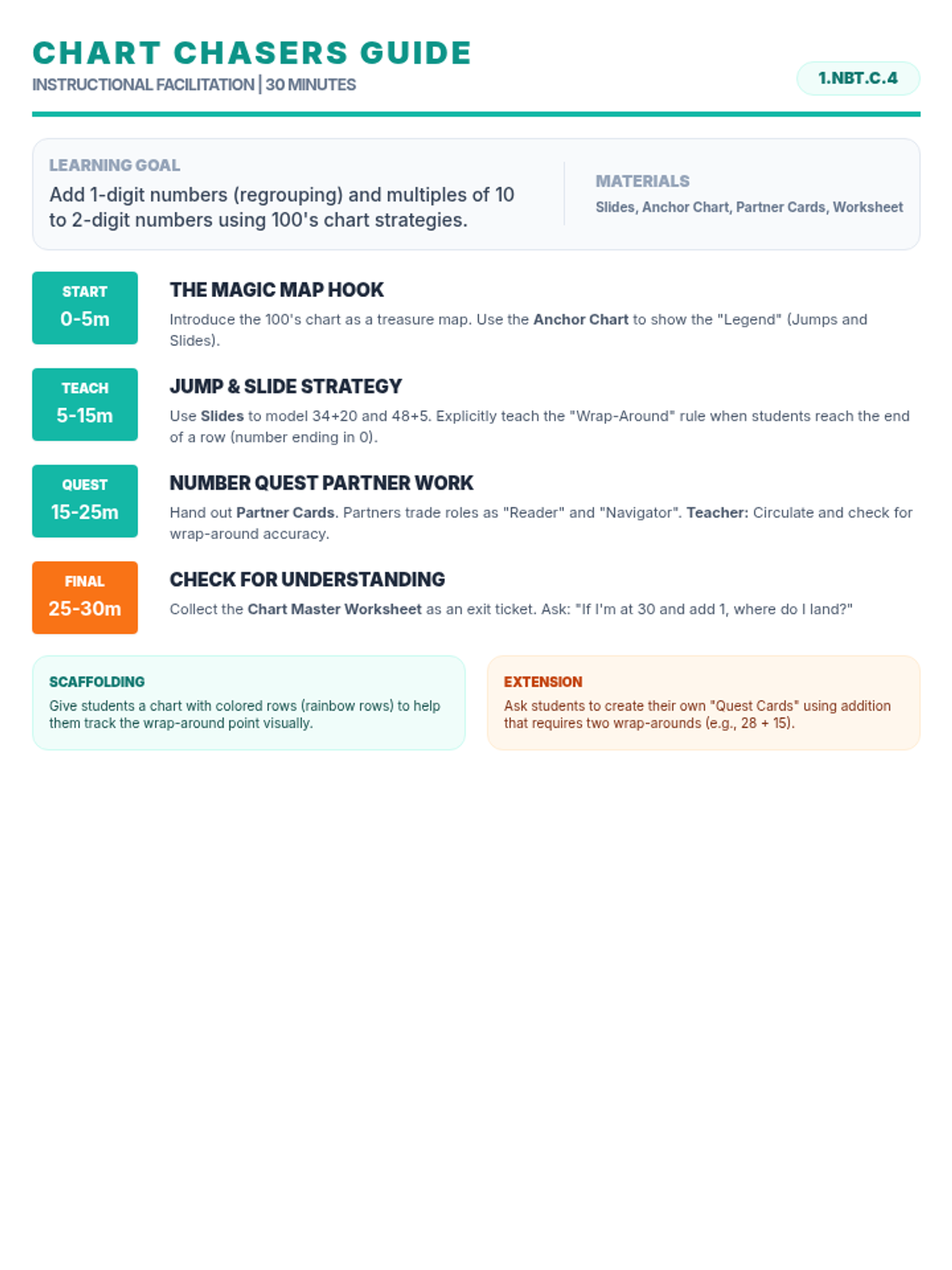
A 30-minute lesson teaching students how to use a 100's chart to add two-digit numbers, focusing on 2-digit + 1-digit with regrouping and 2-digit + multiples of 10. Students will learn the 'Jump and Slide' method for navigating the chart.
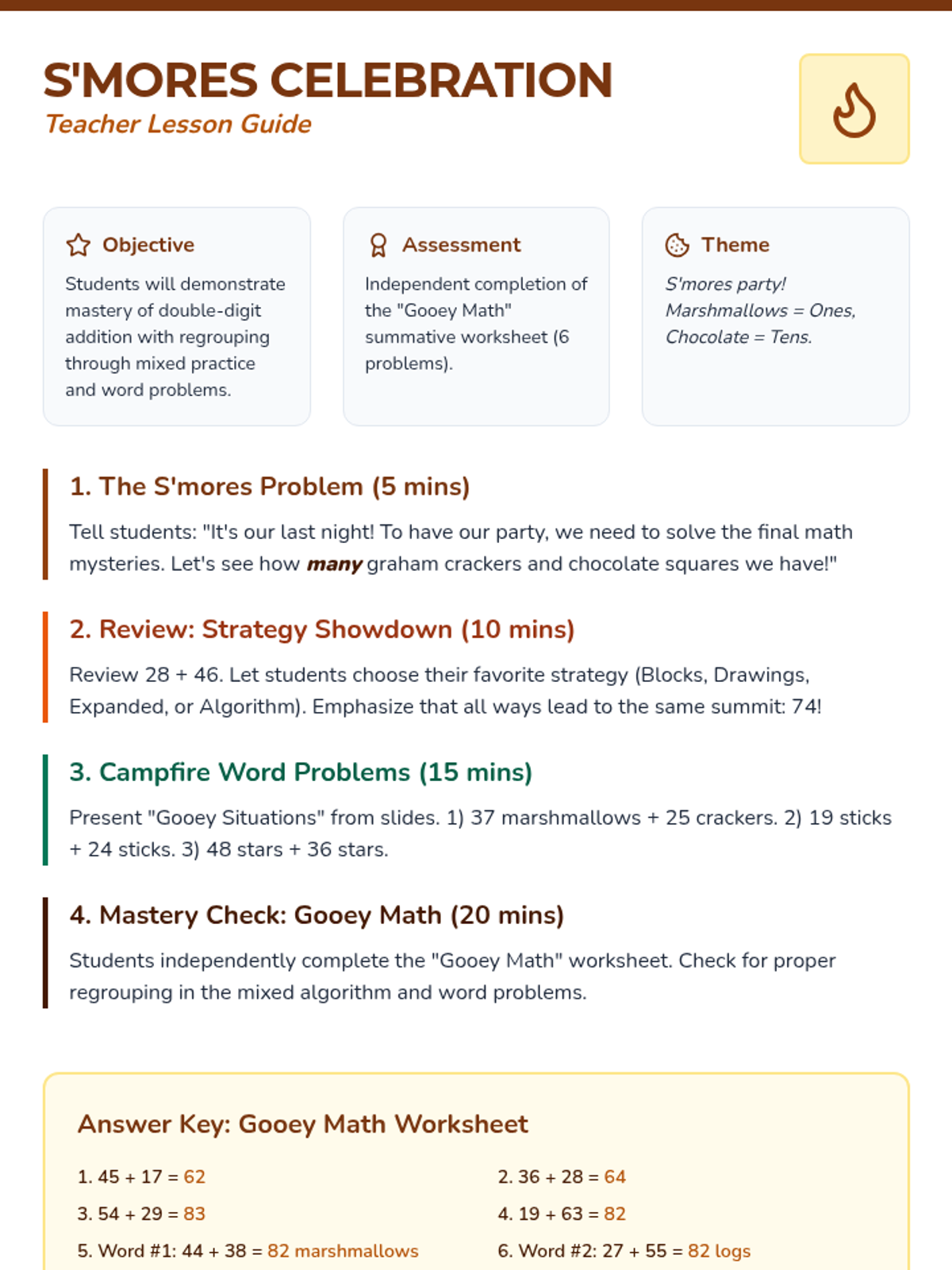
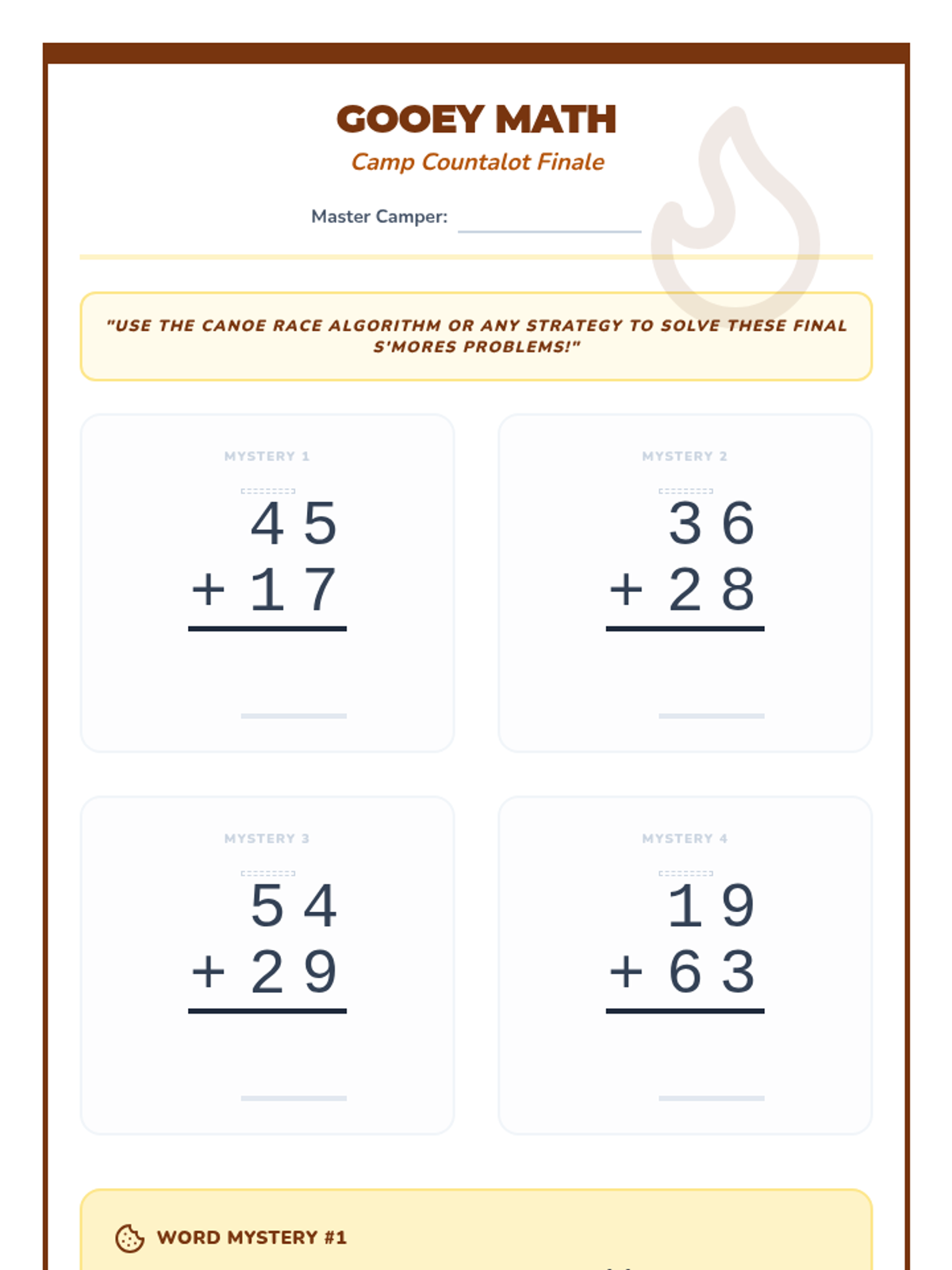
A culminating lesson where students apply their addition skills to solve summer camp word problems and mixed practice.
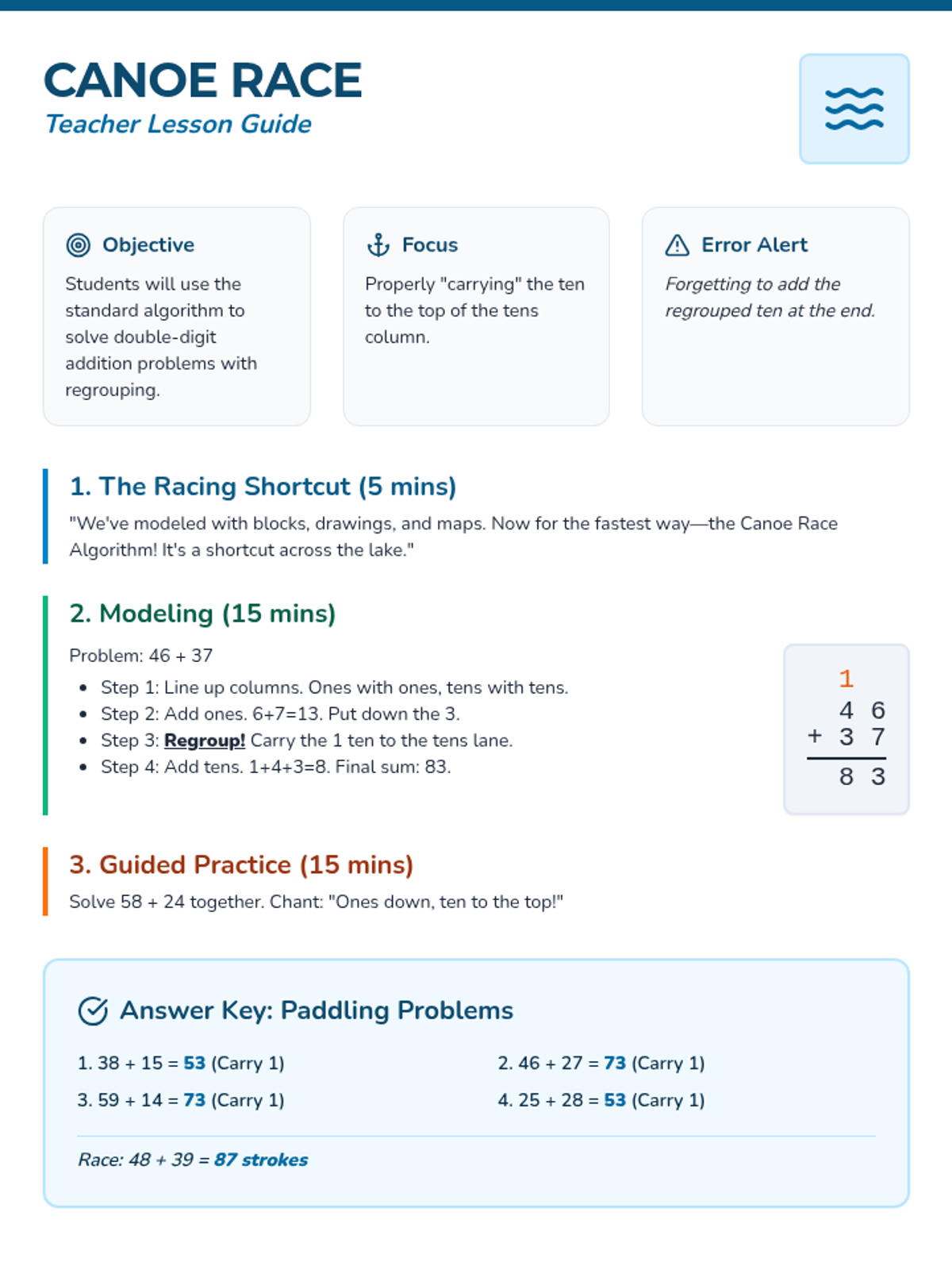
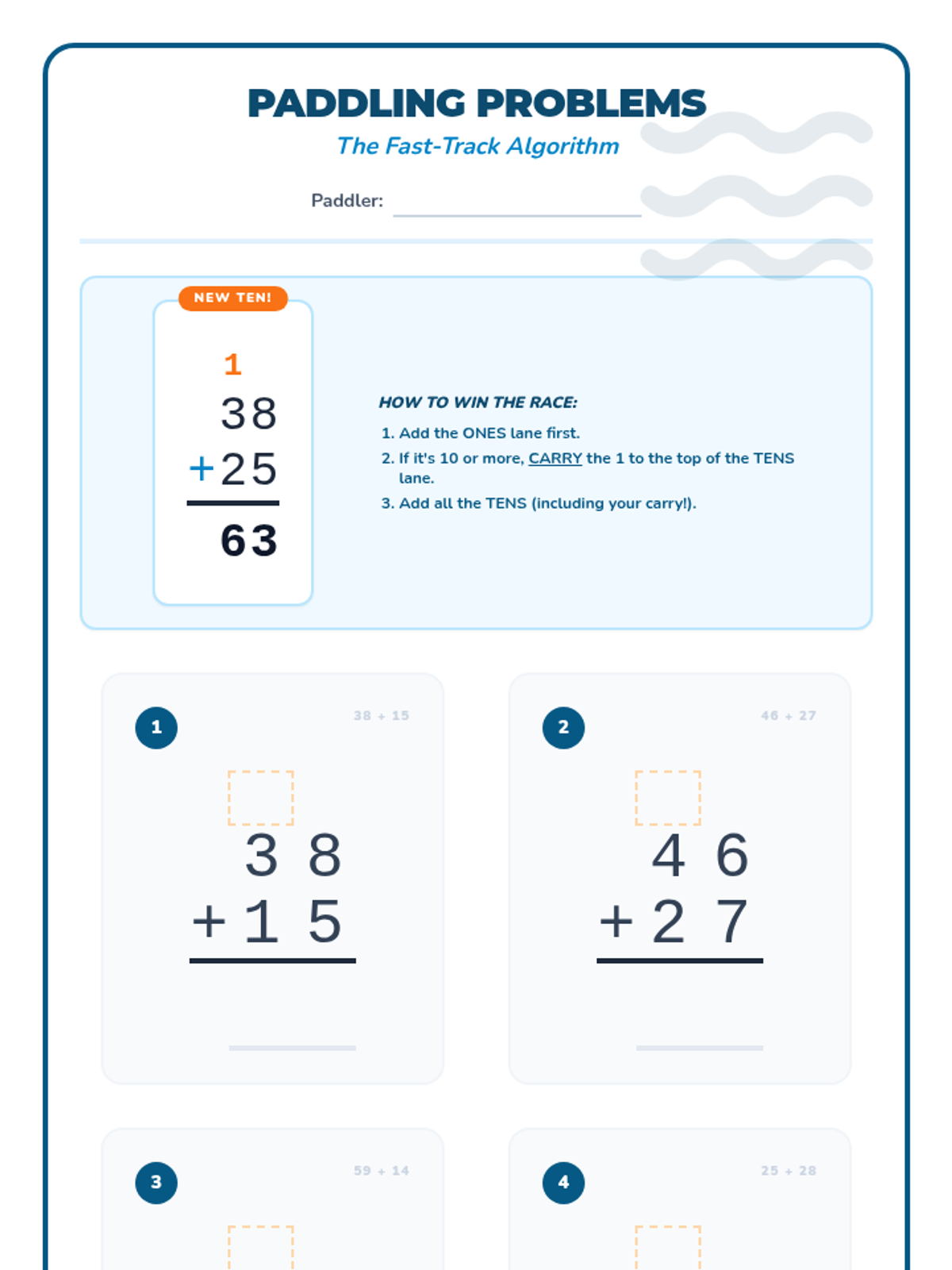
Students learn the standard algorithm for double-digit addition, focusing on correctly placing the 'carried' ten.
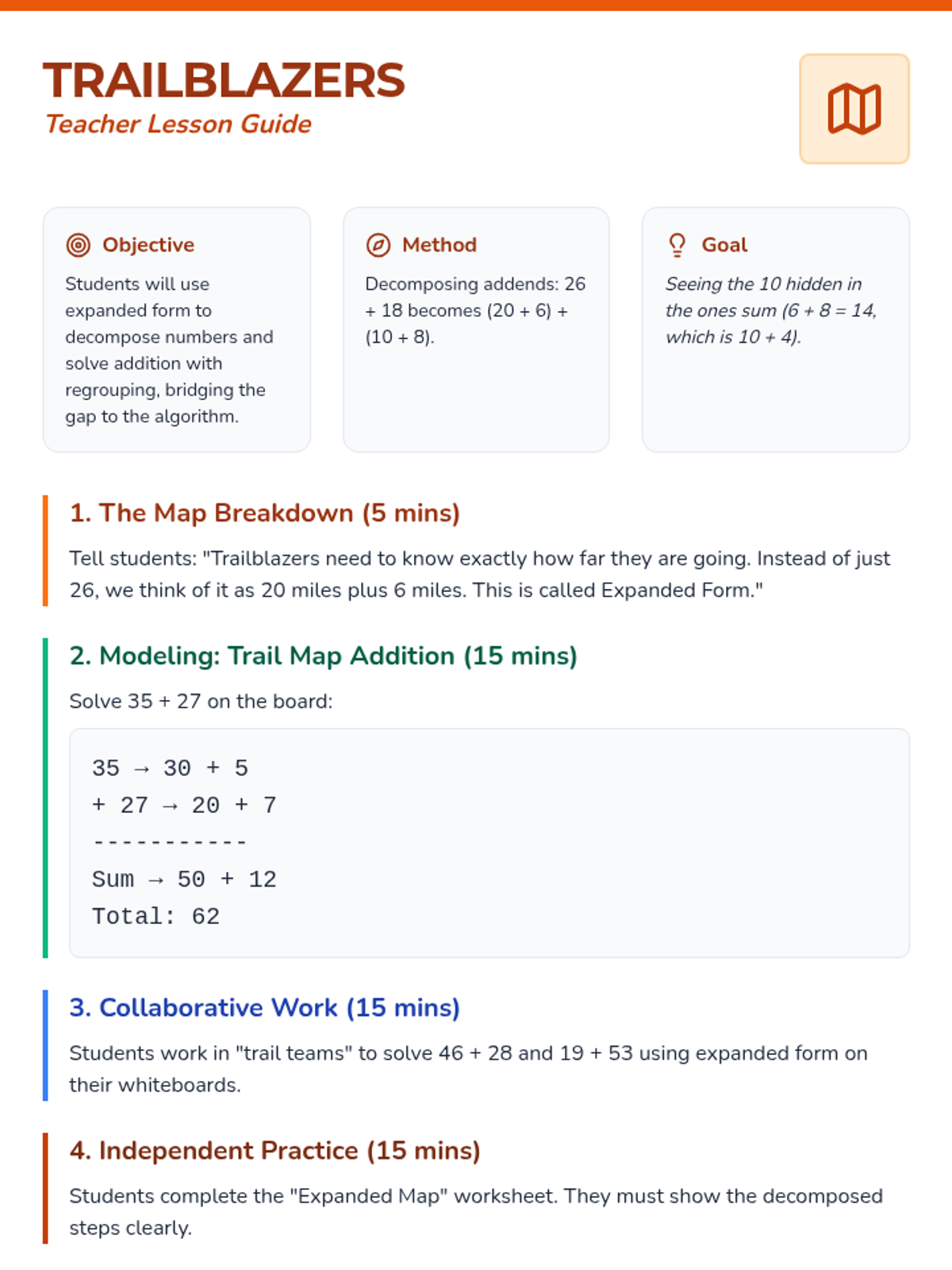
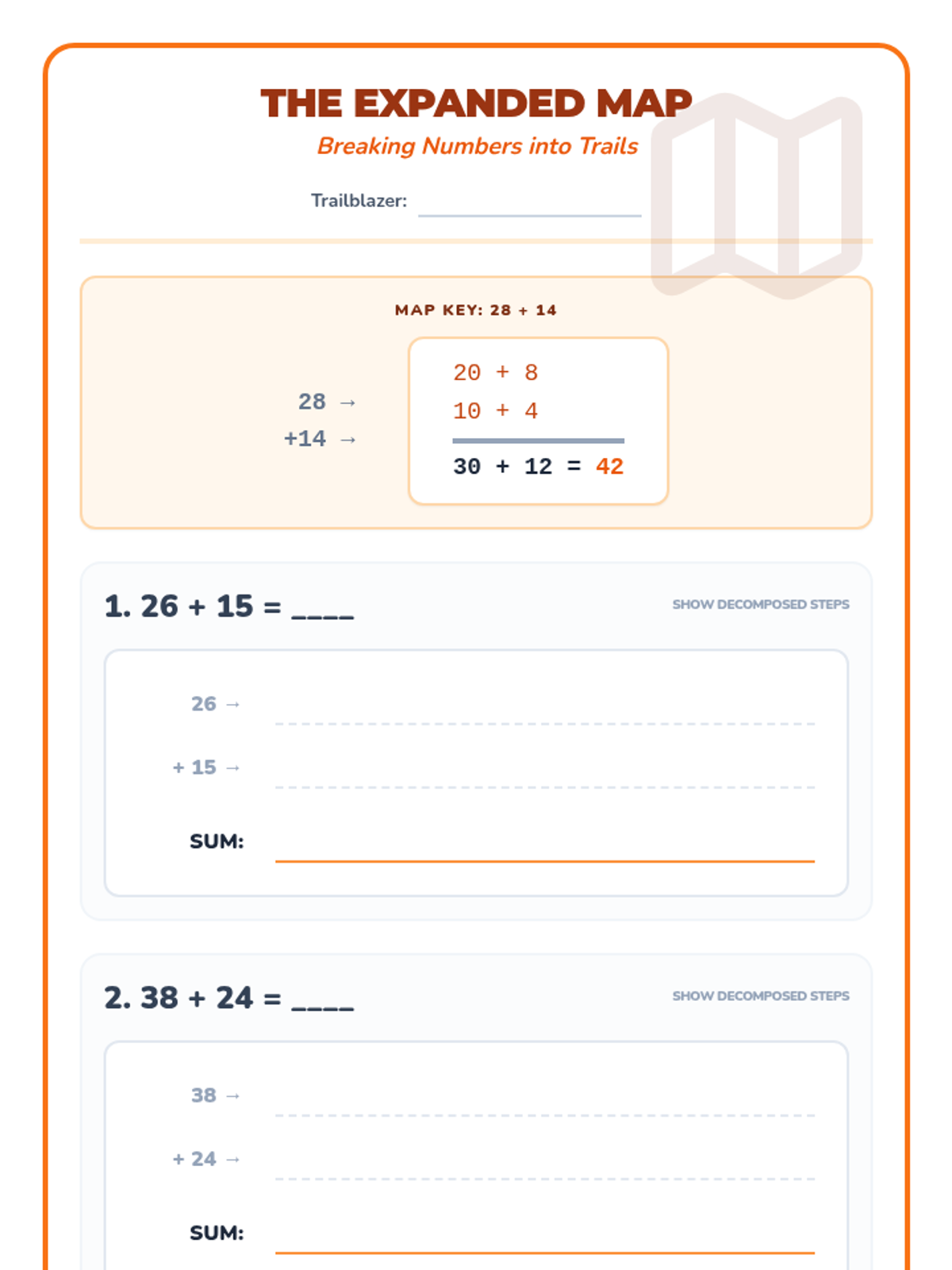
Students use expanded form to break down numbers and regroup sums, bridging the gap between drawings and the standard algorithm.
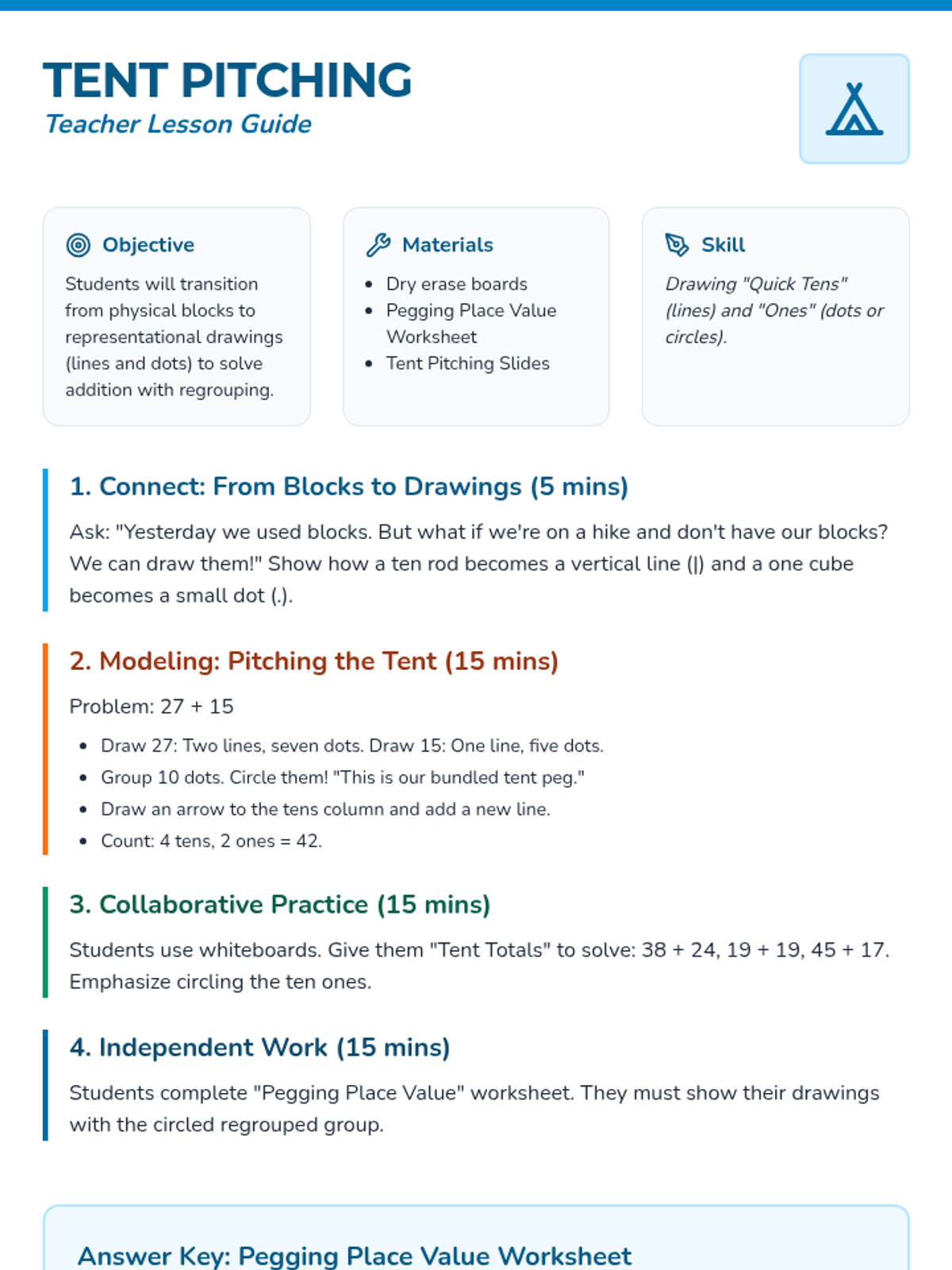
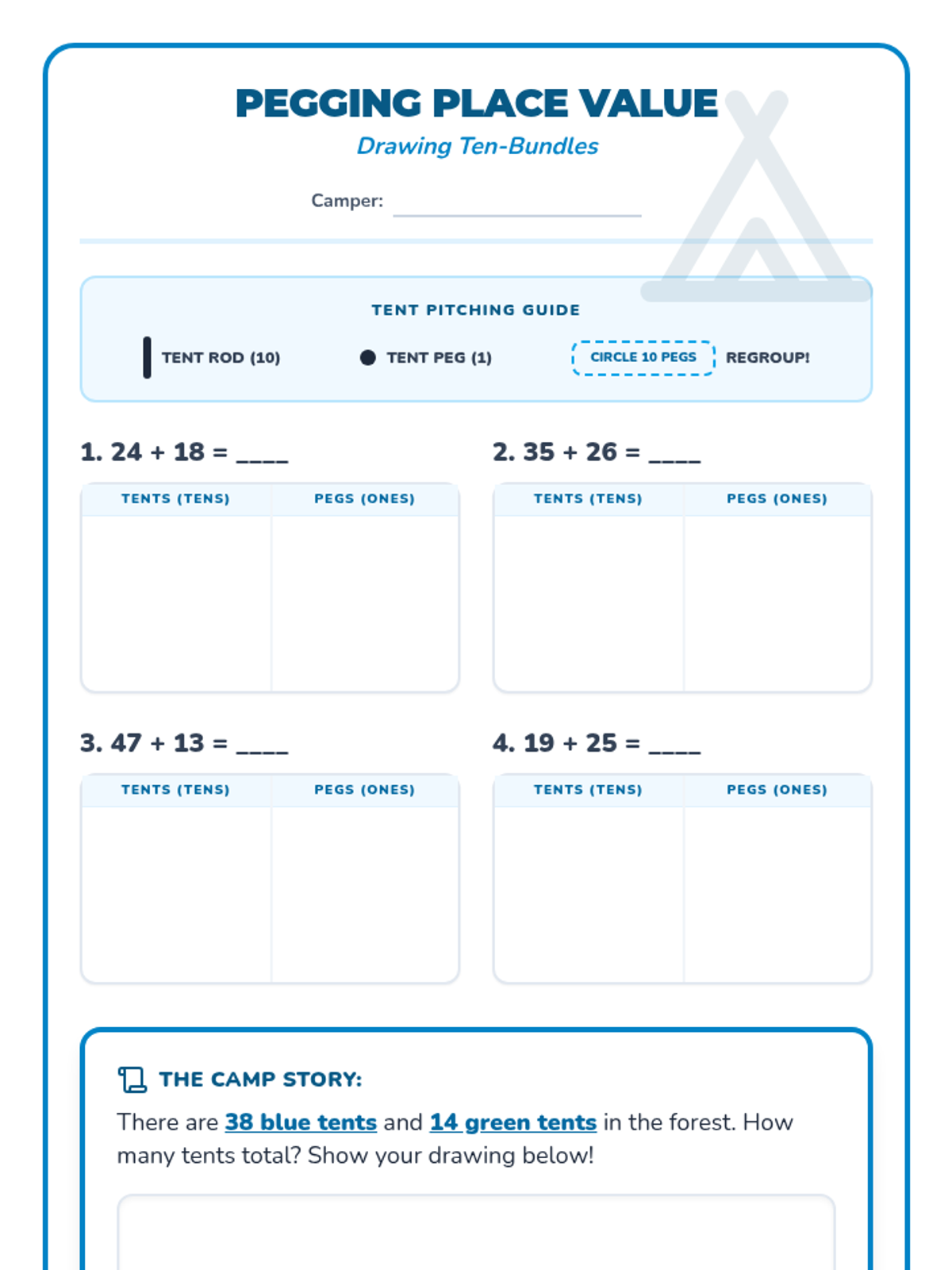
Students transition from physical blocks to drawing place value representations to solve addition problems with regrouping.
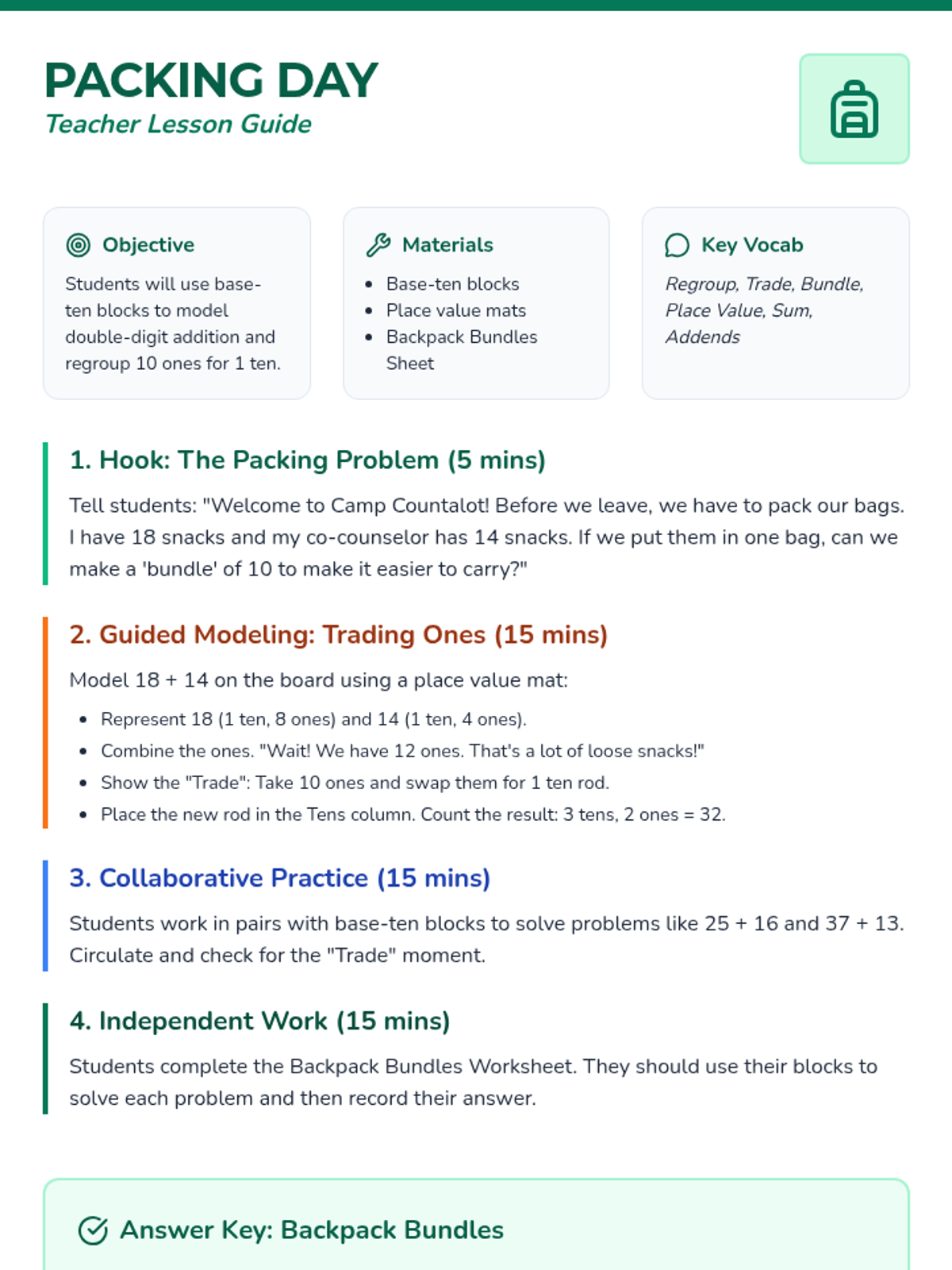
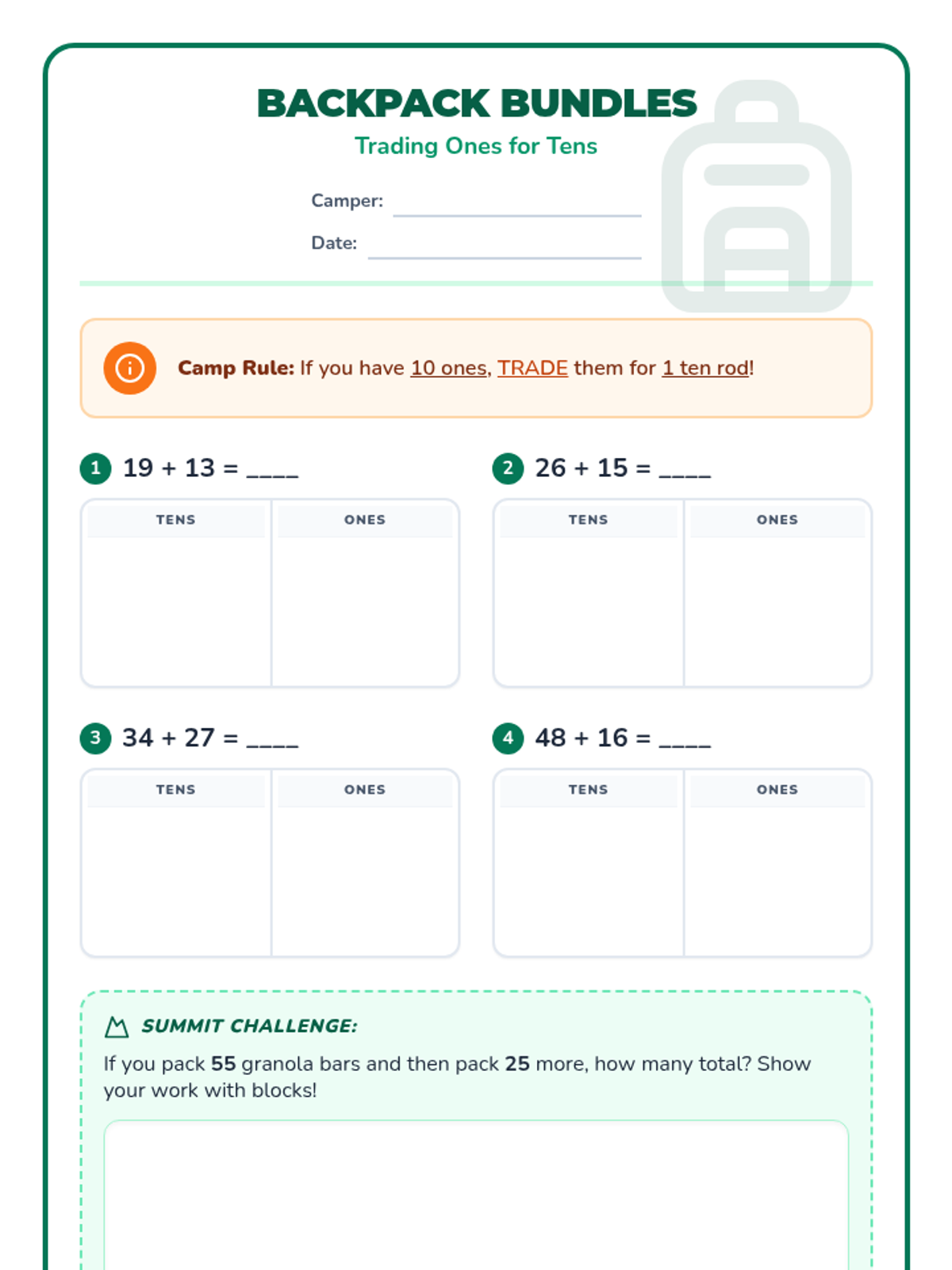
Students use base-ten blocks to model addition and practice 'trading' 10 ones for 1 ten to understand the foundation of regrouping.
Identifying shapes, their attributes, and partitioning rectangles and circles into equal shares.
Exploring standard and non-standard measurement, focusing on comparing lengths and interpreting data.