A 2nd-grade science lesson exploring how tools like magnifying glasses and telescopes extend our sense of sight to see tiny details and distant planets.
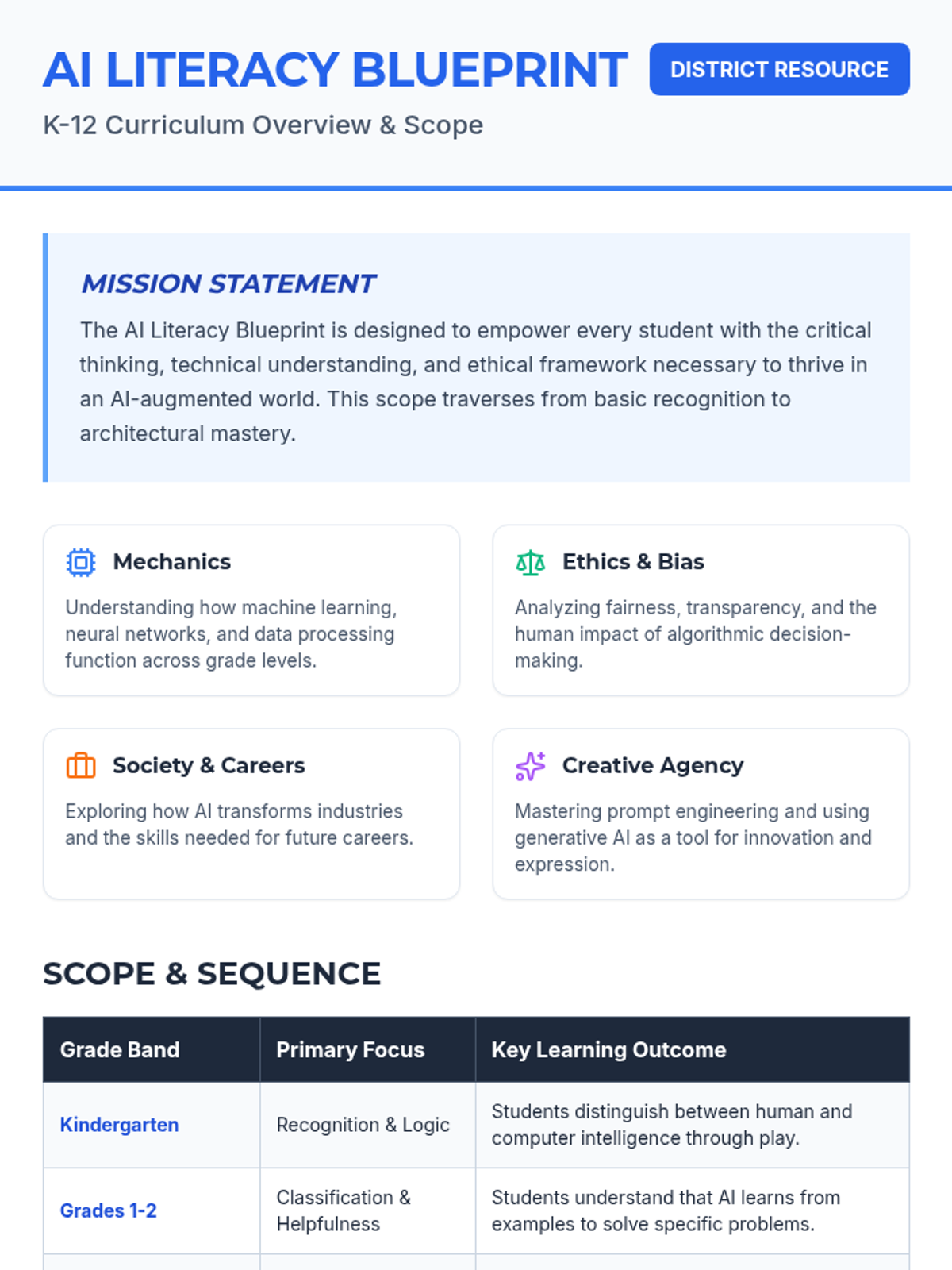
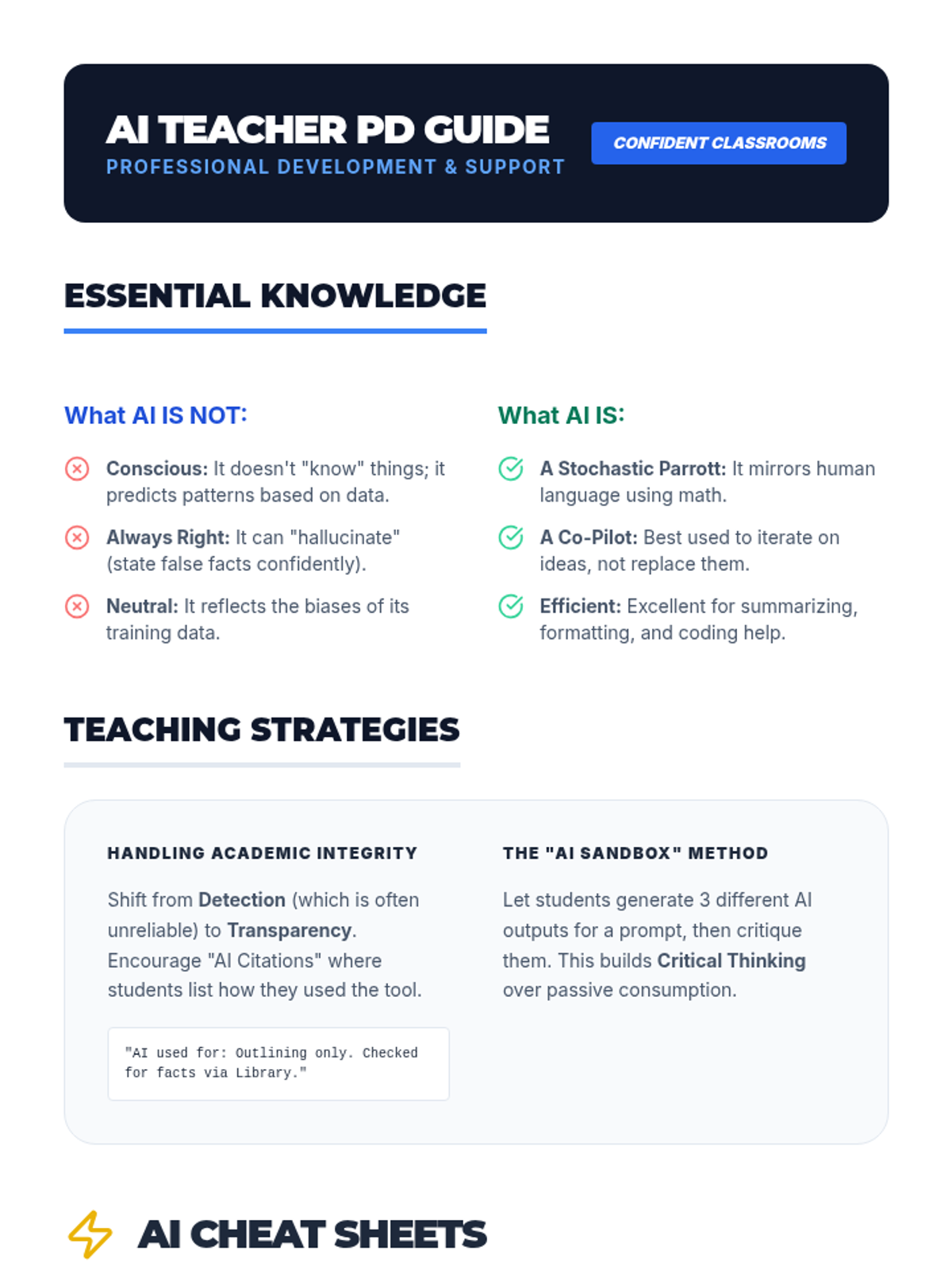
A dedicated hub for educators featuring a K-12 curriculum scope, professional development guides, and quick-reference AI cheat sheets.
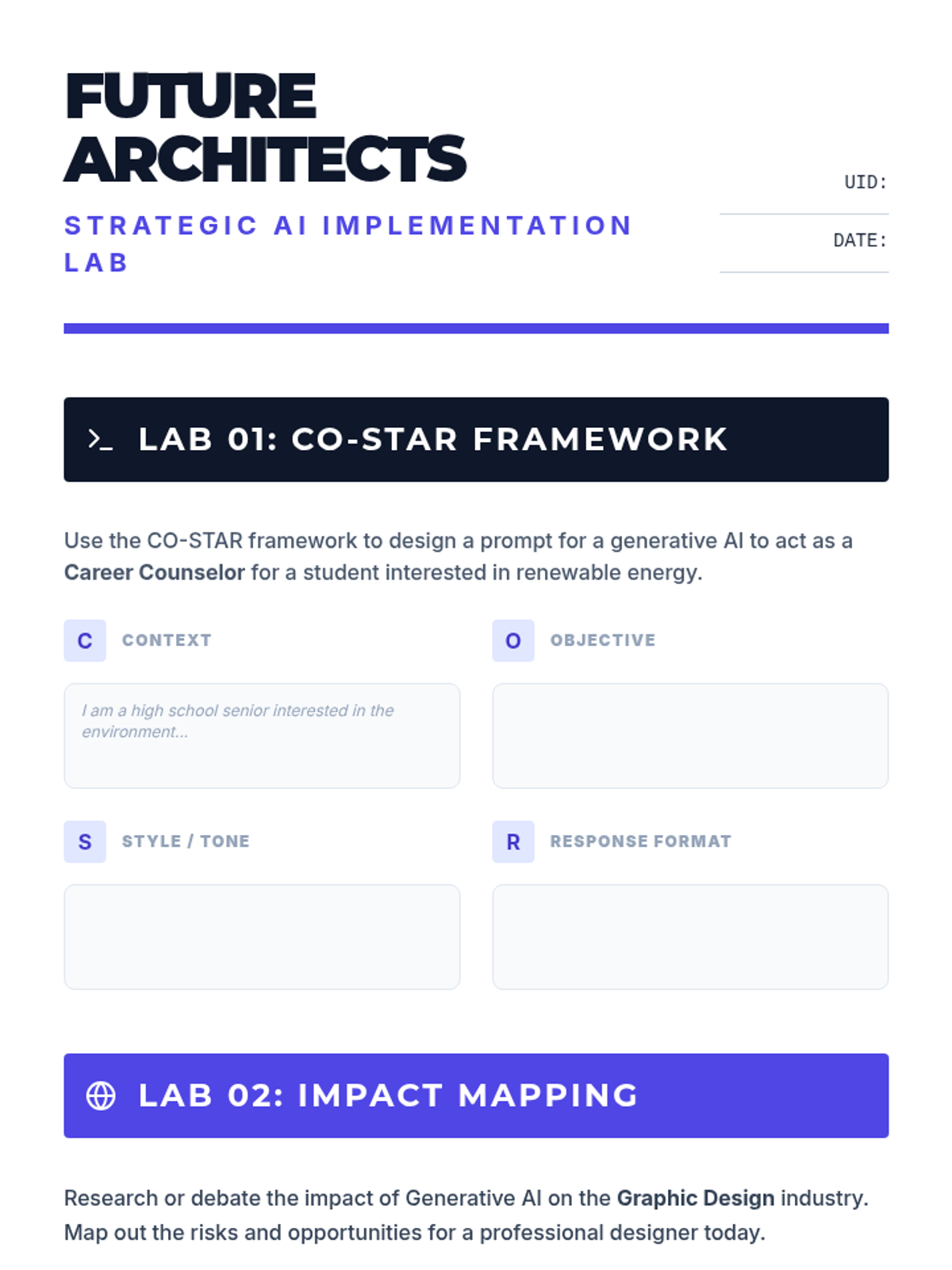
High school students analyze the impact of generative AI on careers and society, mastering advanced prompt engineering and debating complex ethical dilemmas.

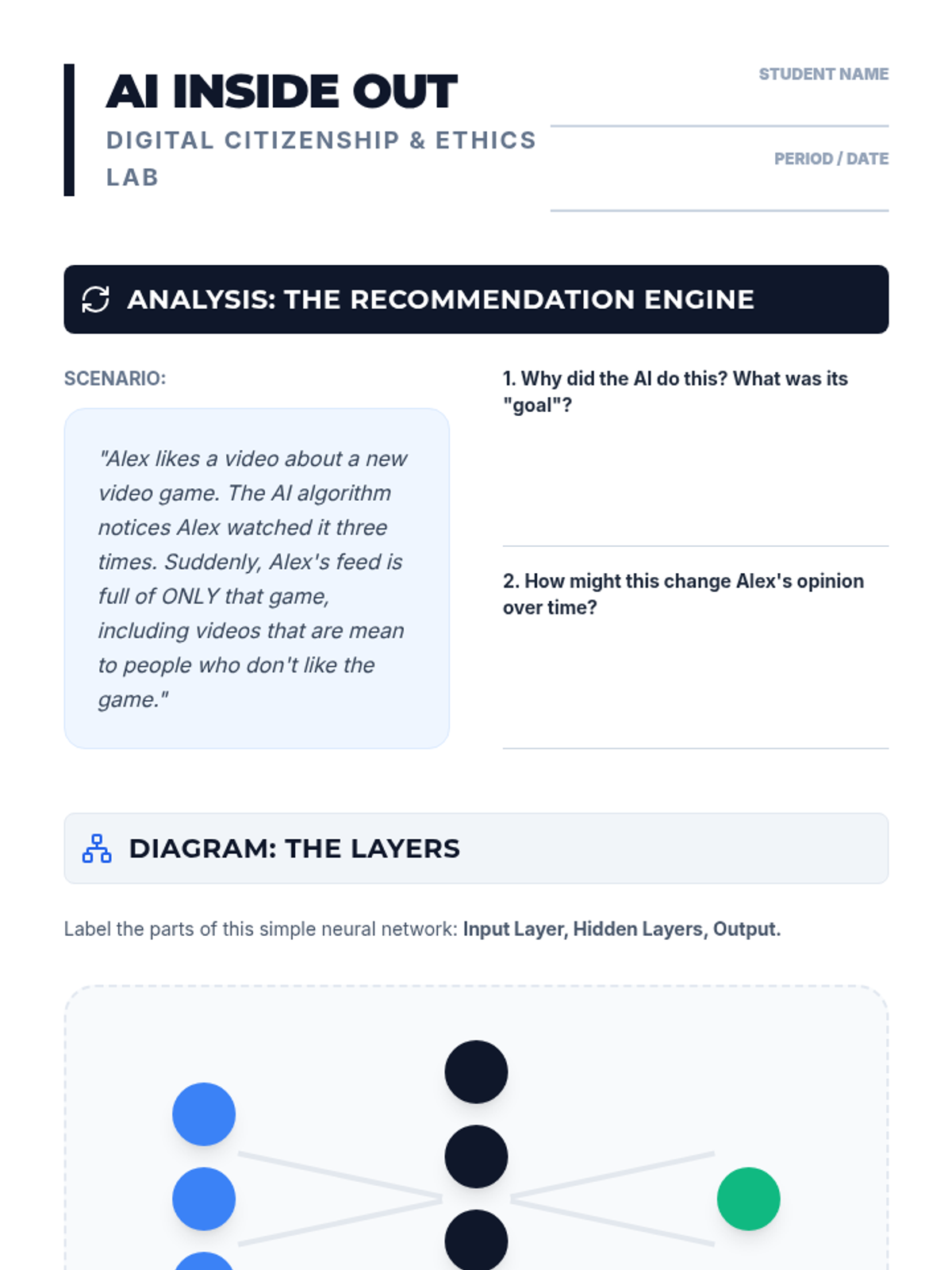
Middle schoolers dive into the mechanics of neural networks and the ethical implications of AI in daily life, focusing on digital citizenship and algorithmic fairness.
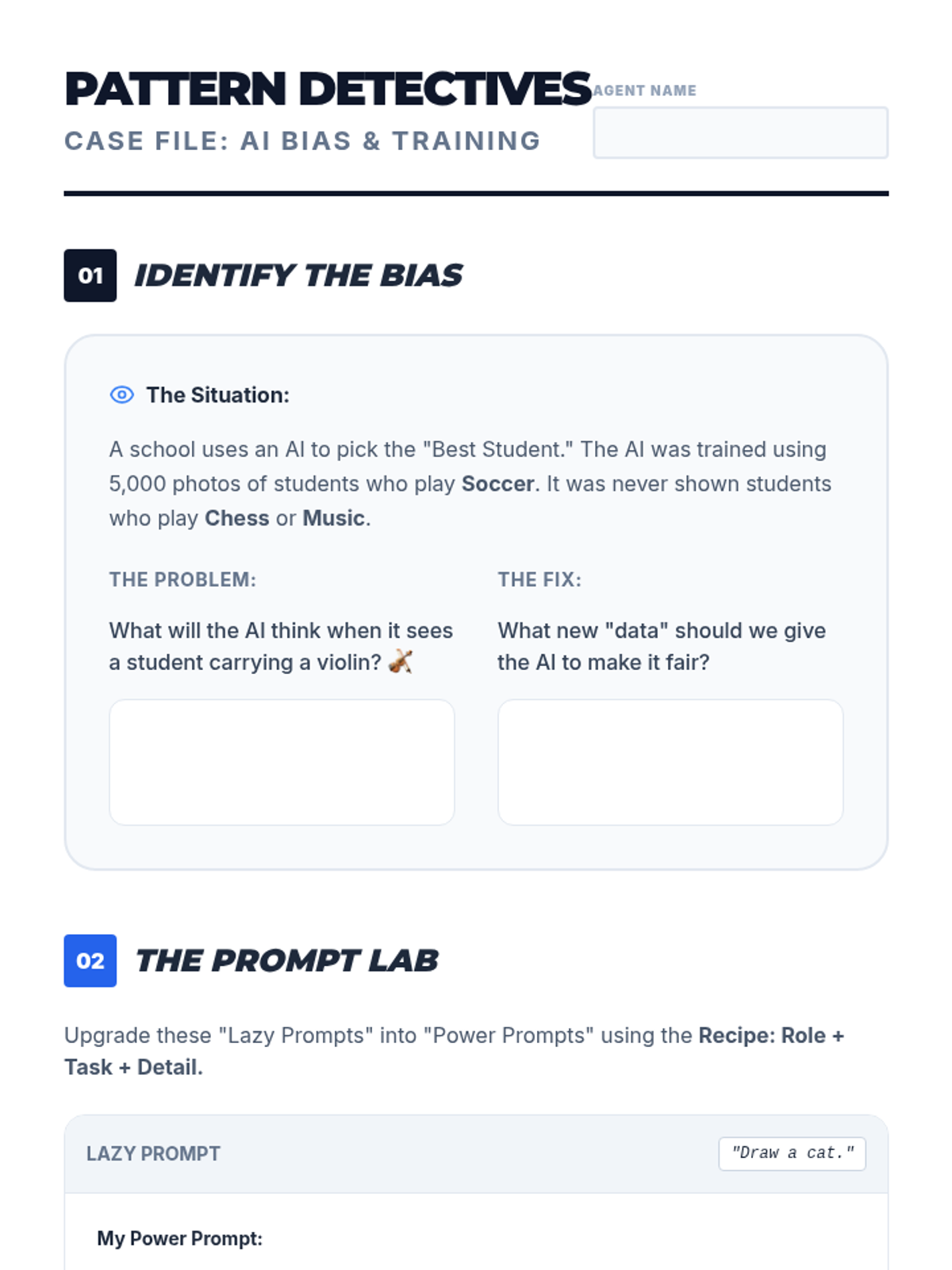
Middle elementary students investigate how training data shapes AI behavior, identifying bias in simple systems and experimenting with basic prompt engineering.
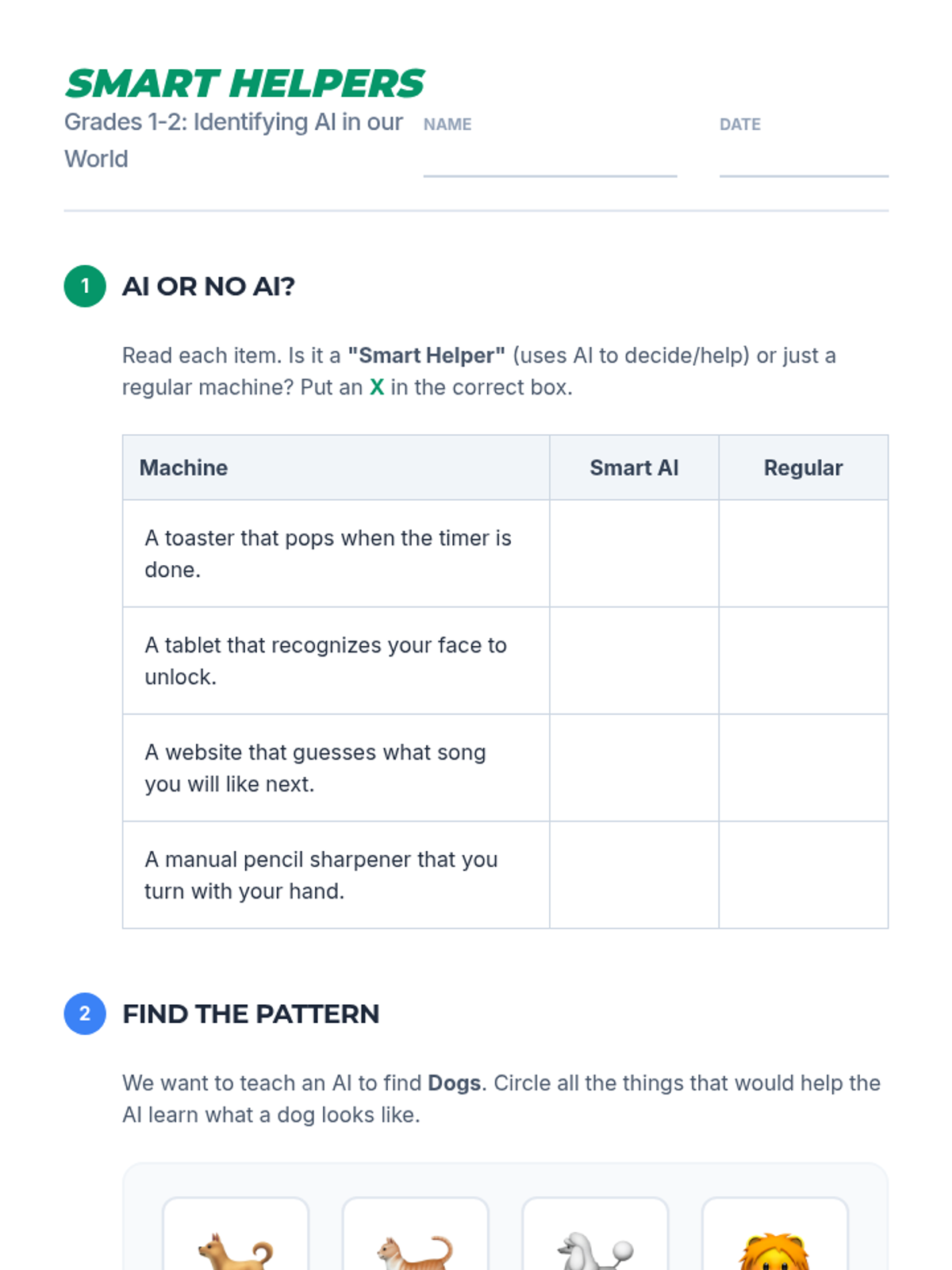
Students in grades 1-2 explore how machines learn to recognize patterns and assist humans, introducing basic classification and the idea of helpful technology.
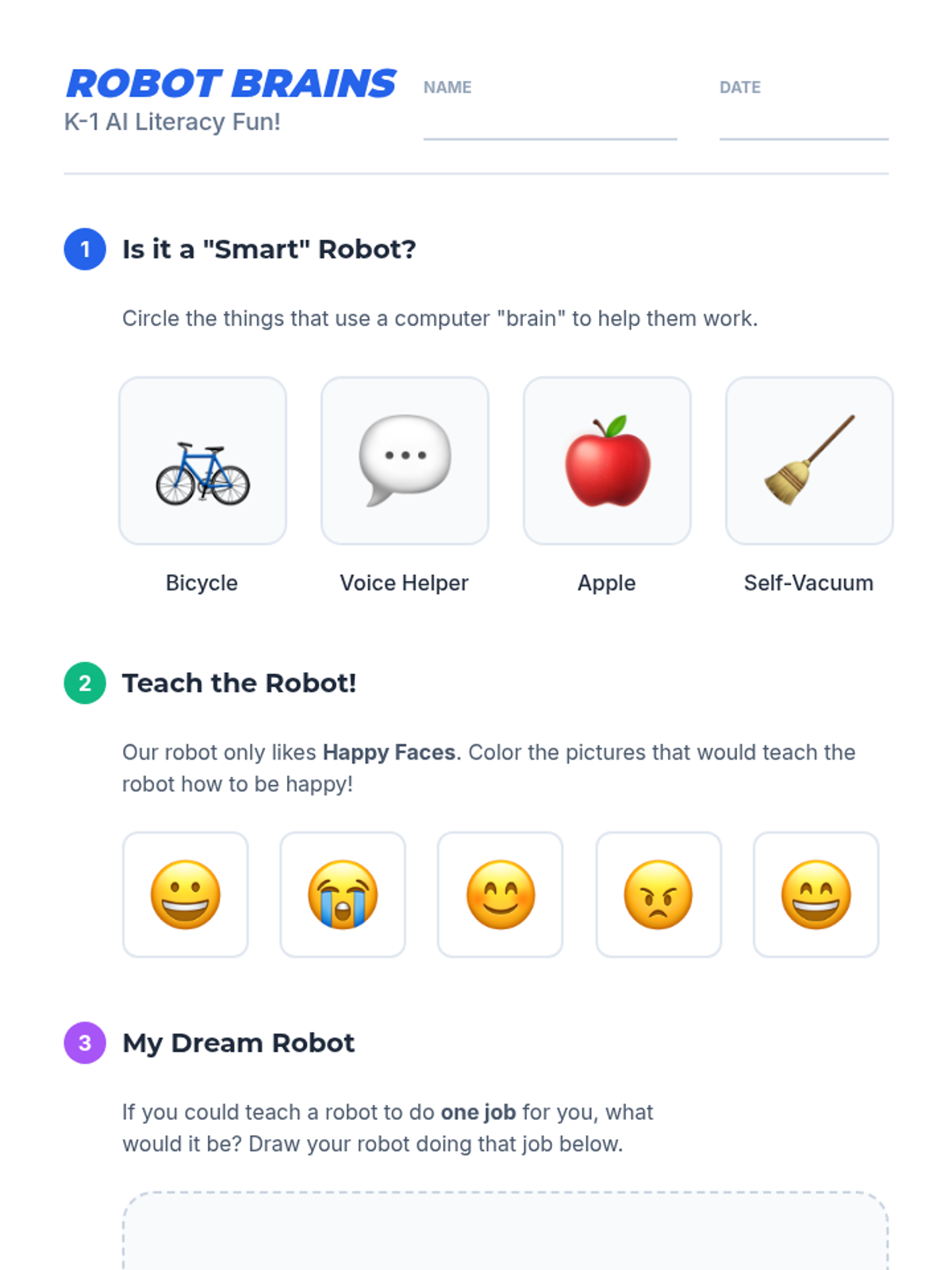
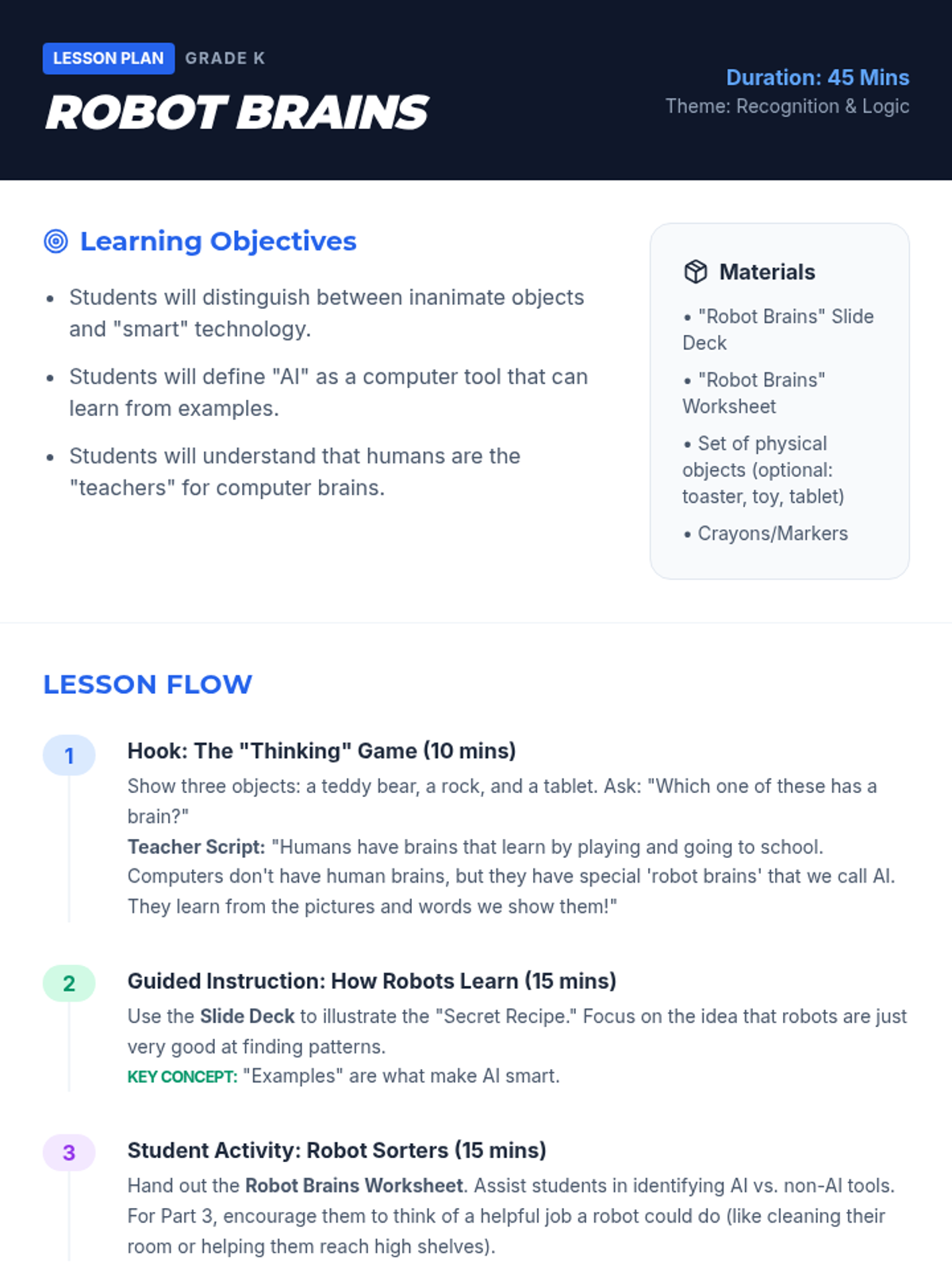
Introduces Kindergarteners to the concept of AI as a 'thinking' tool that follows instructions and learns from examples, focusing on the difference between robots and AI.
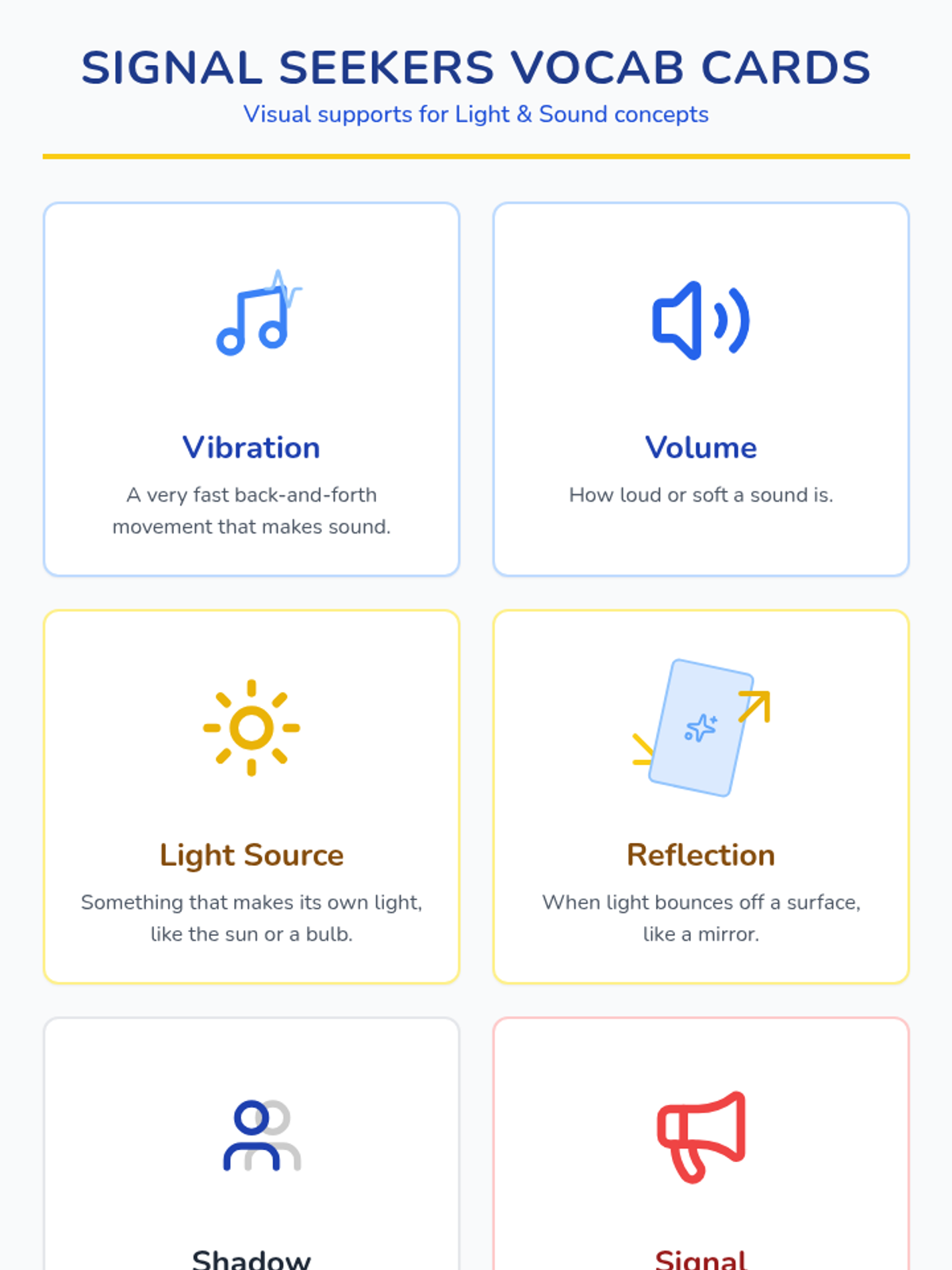
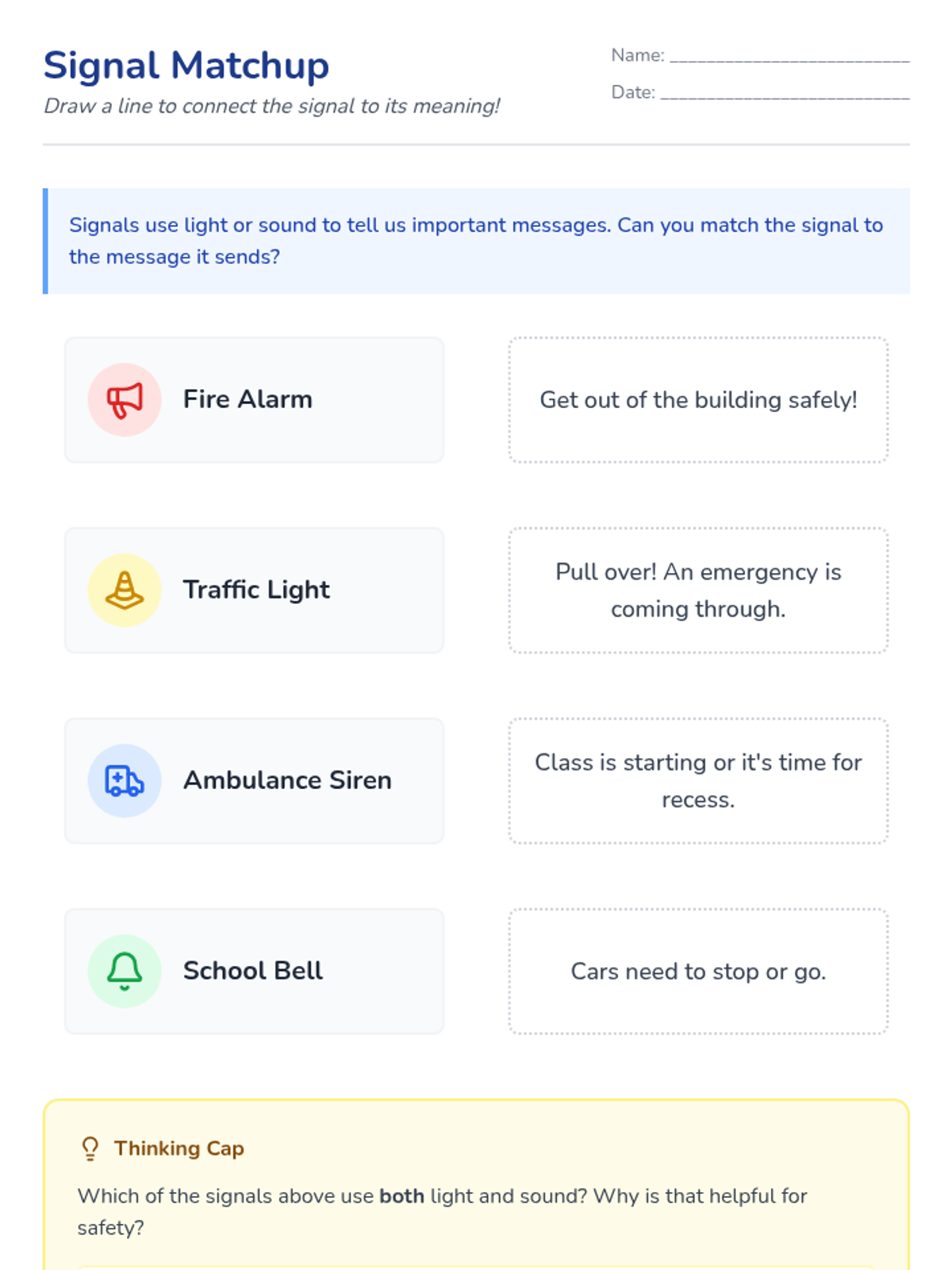
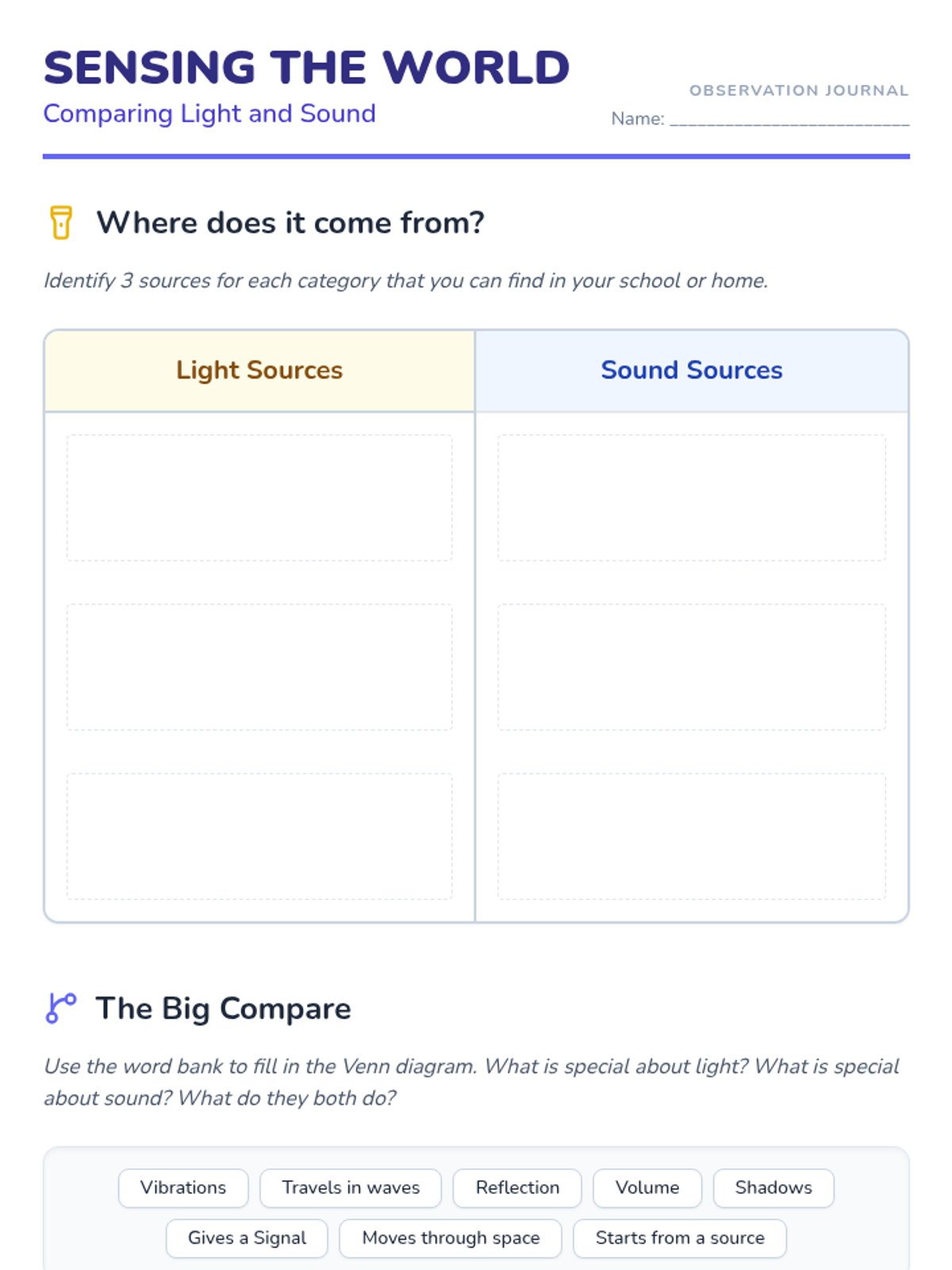
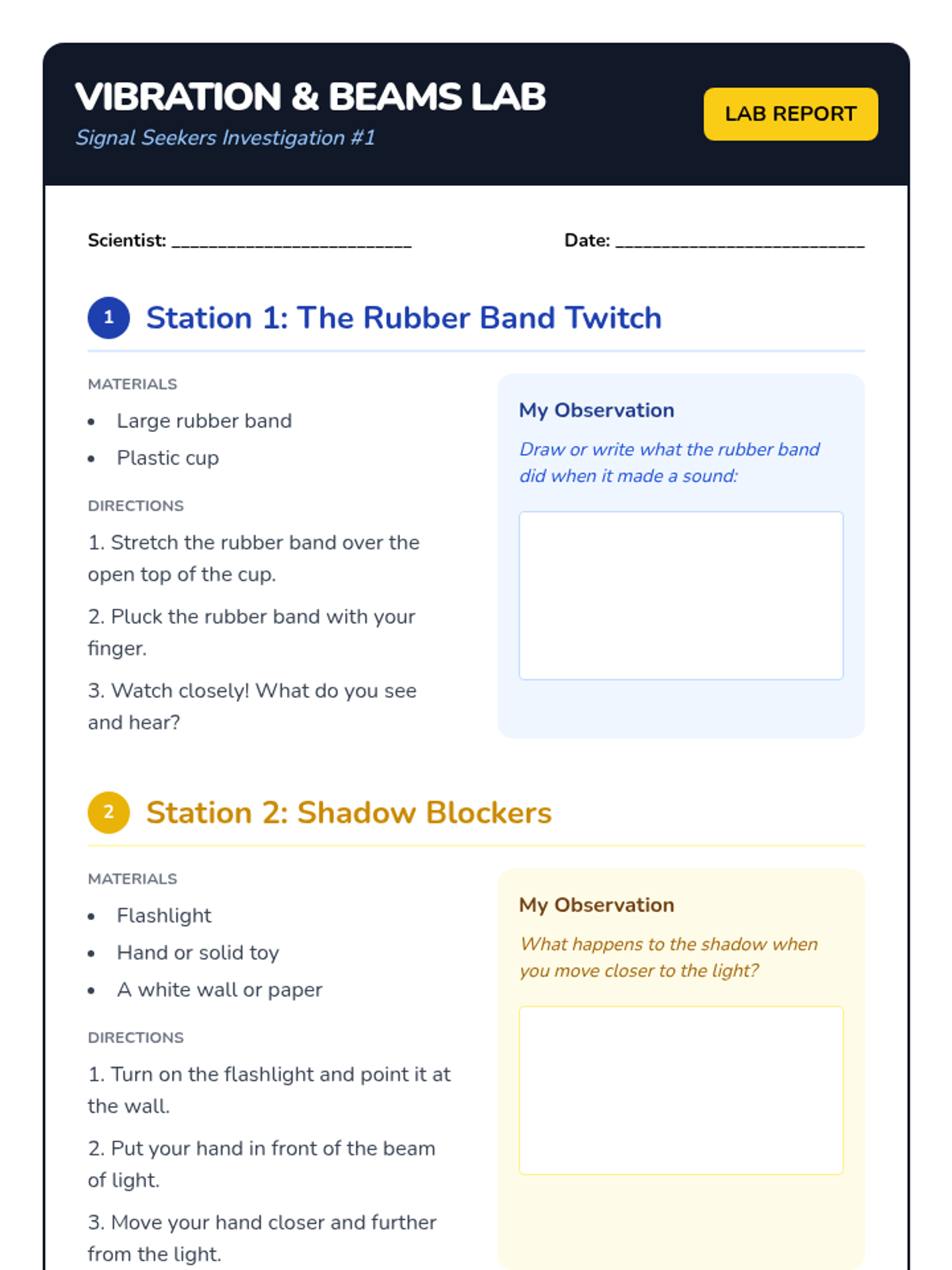
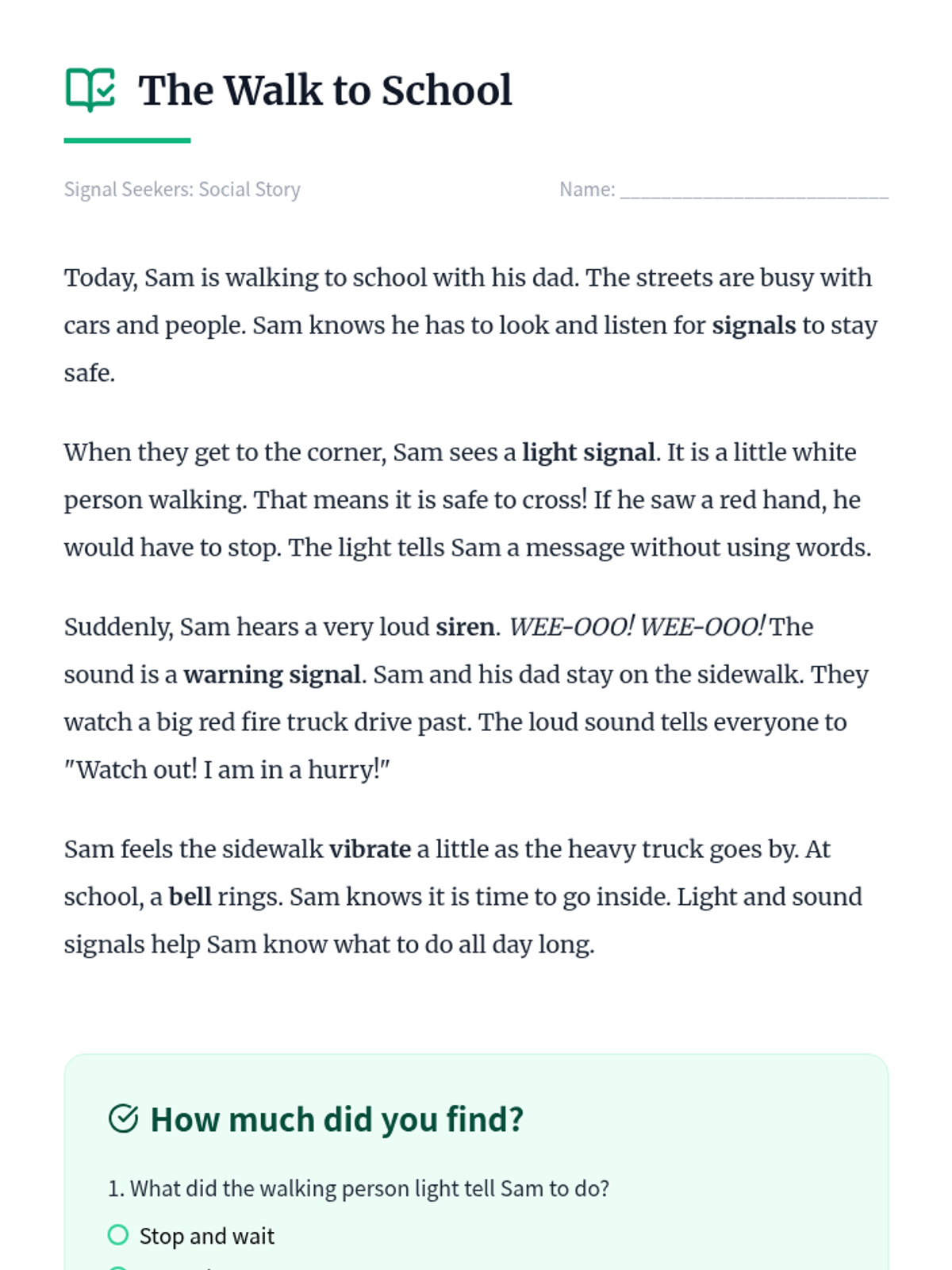
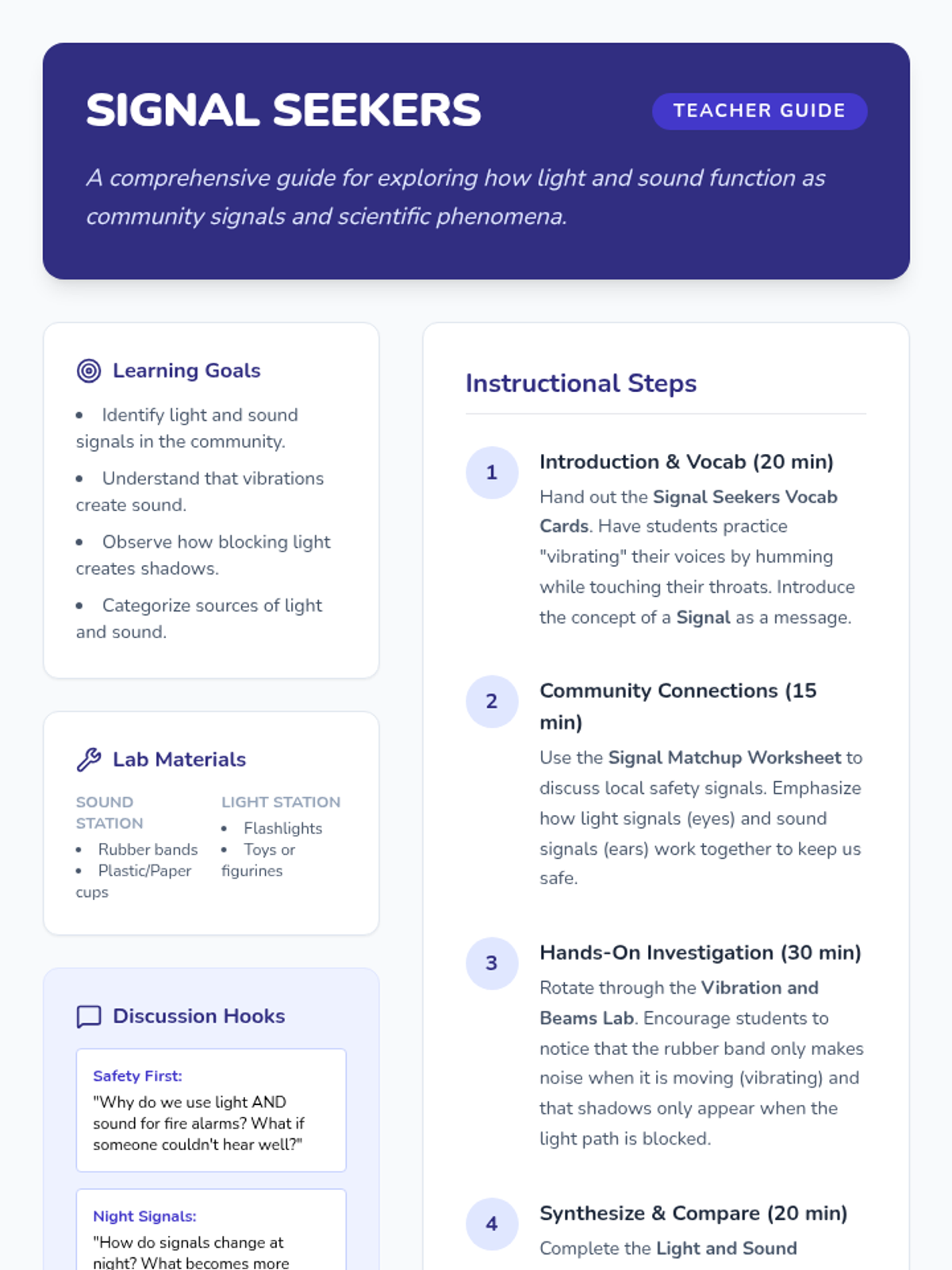
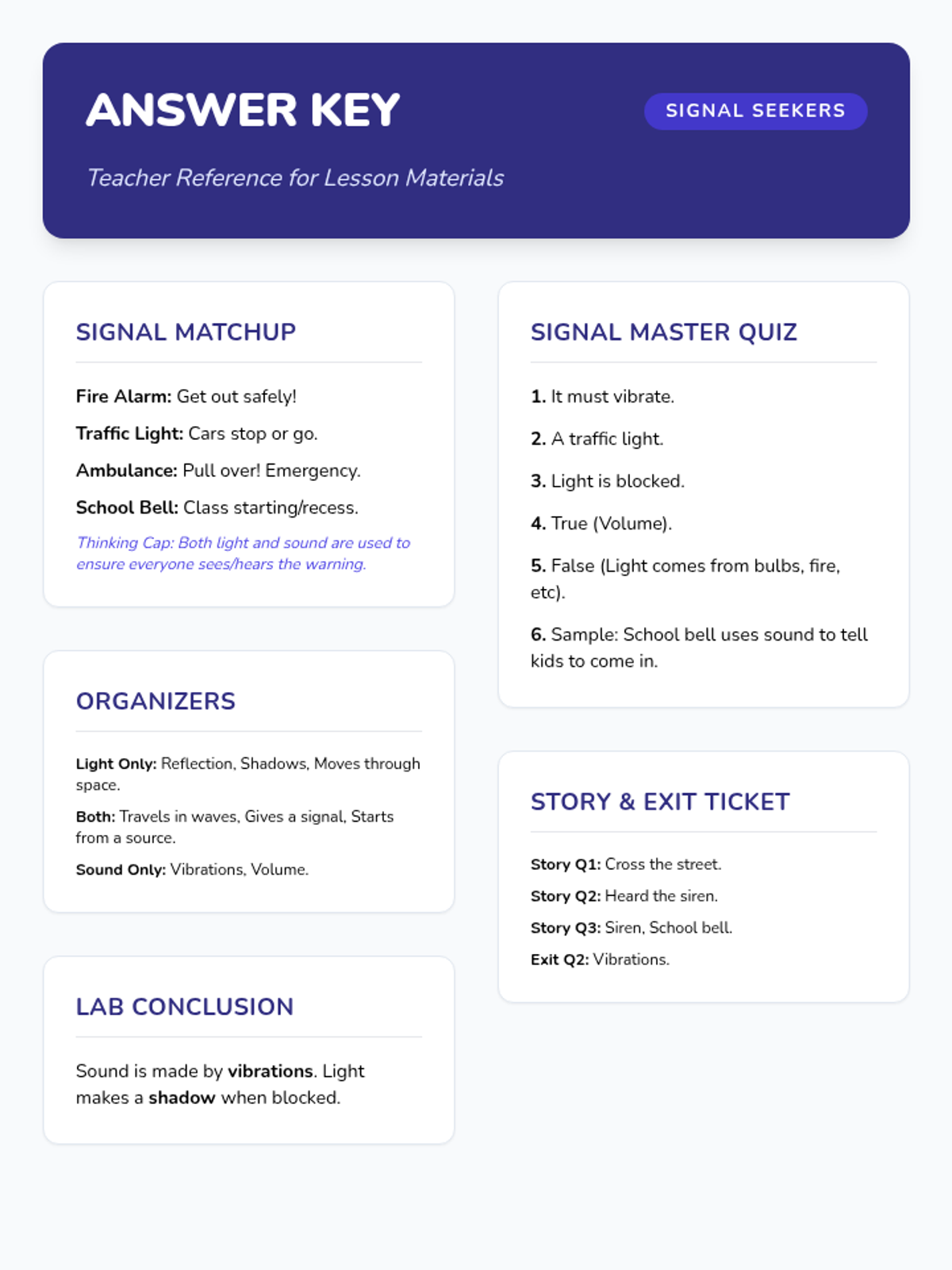
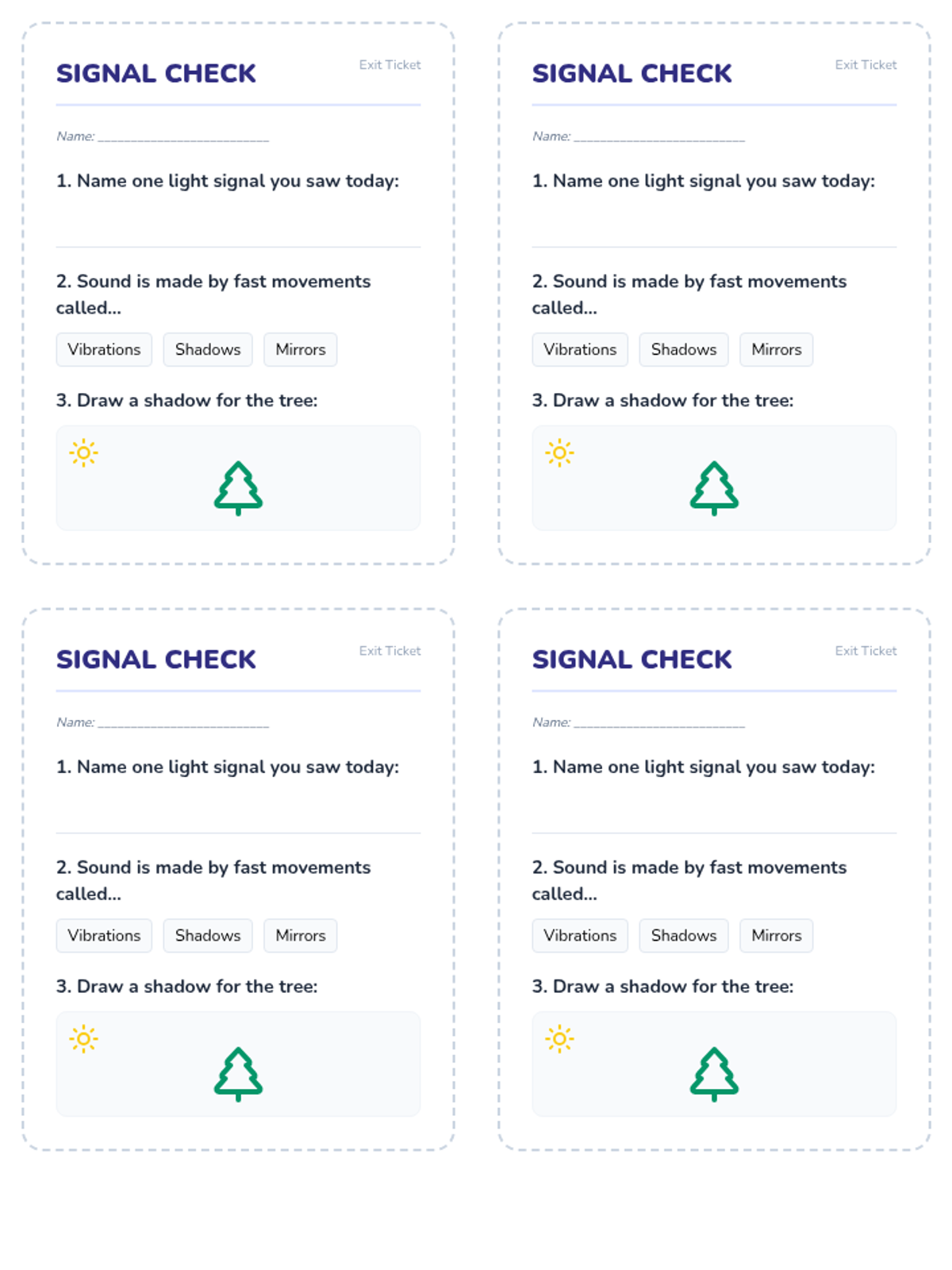
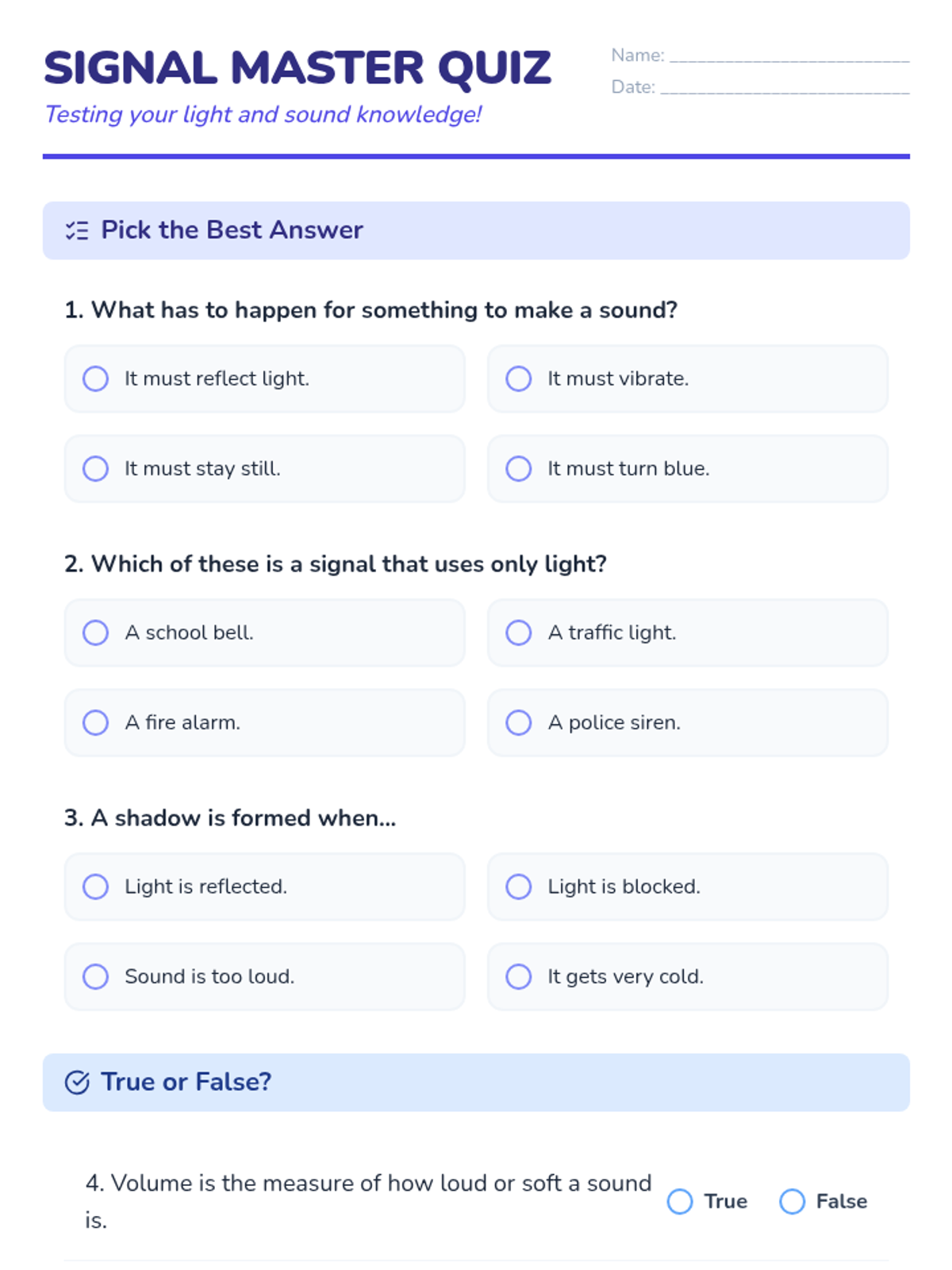
A comprehensive lesson exploring how light and sound function as signals in our community, how they are produced through vibrations and sources, and the unique properties of shadows and volume.
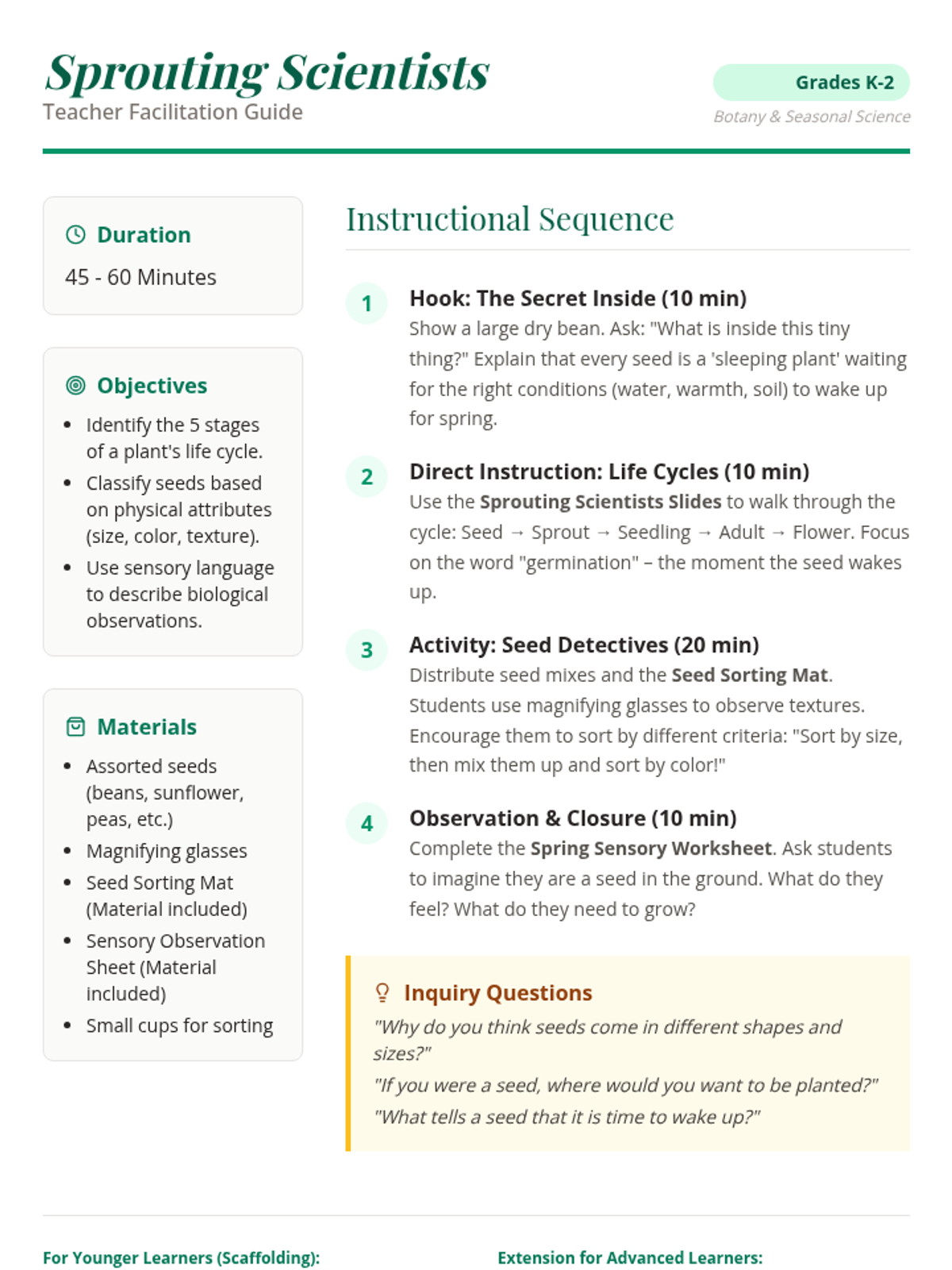
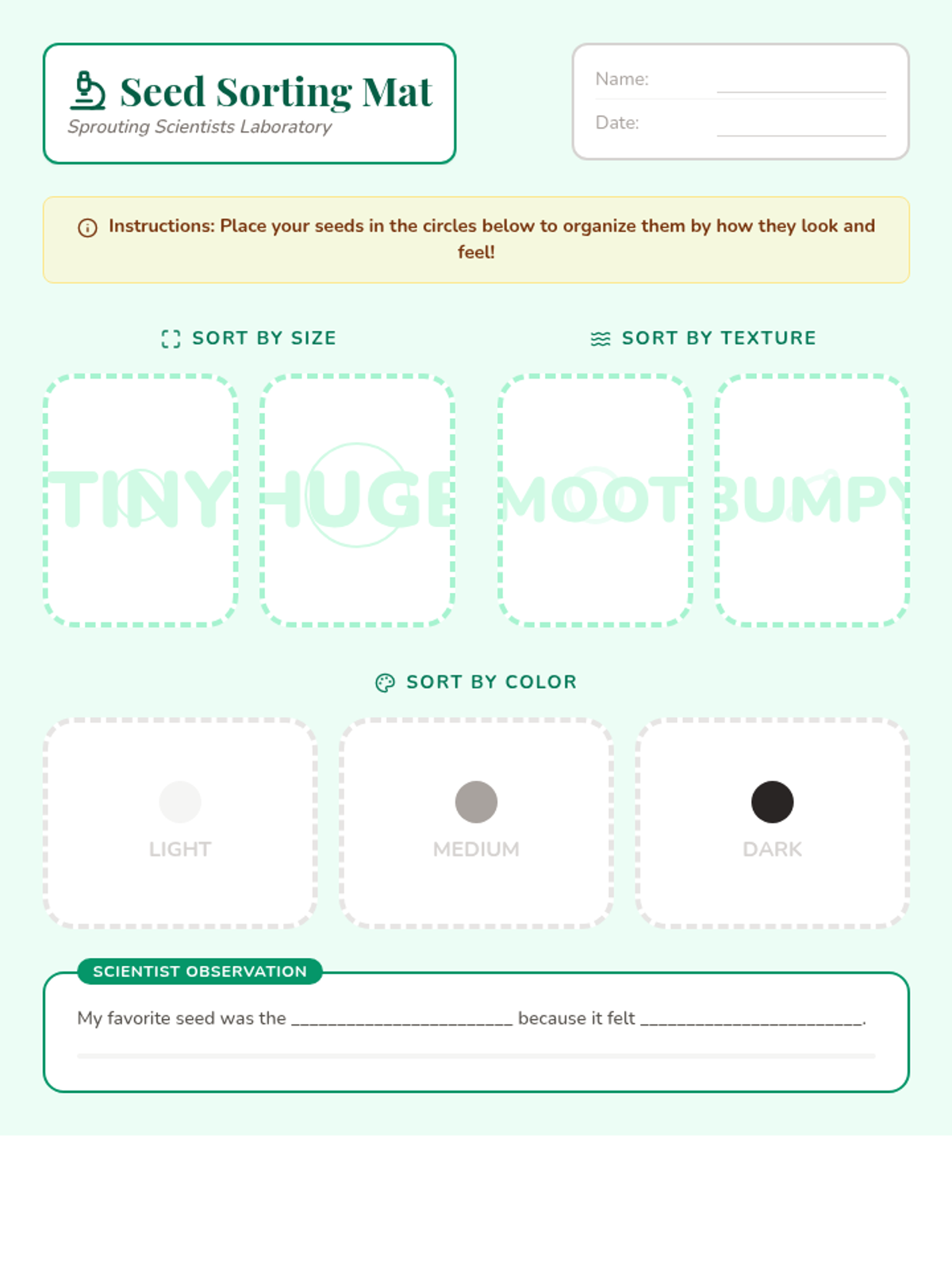
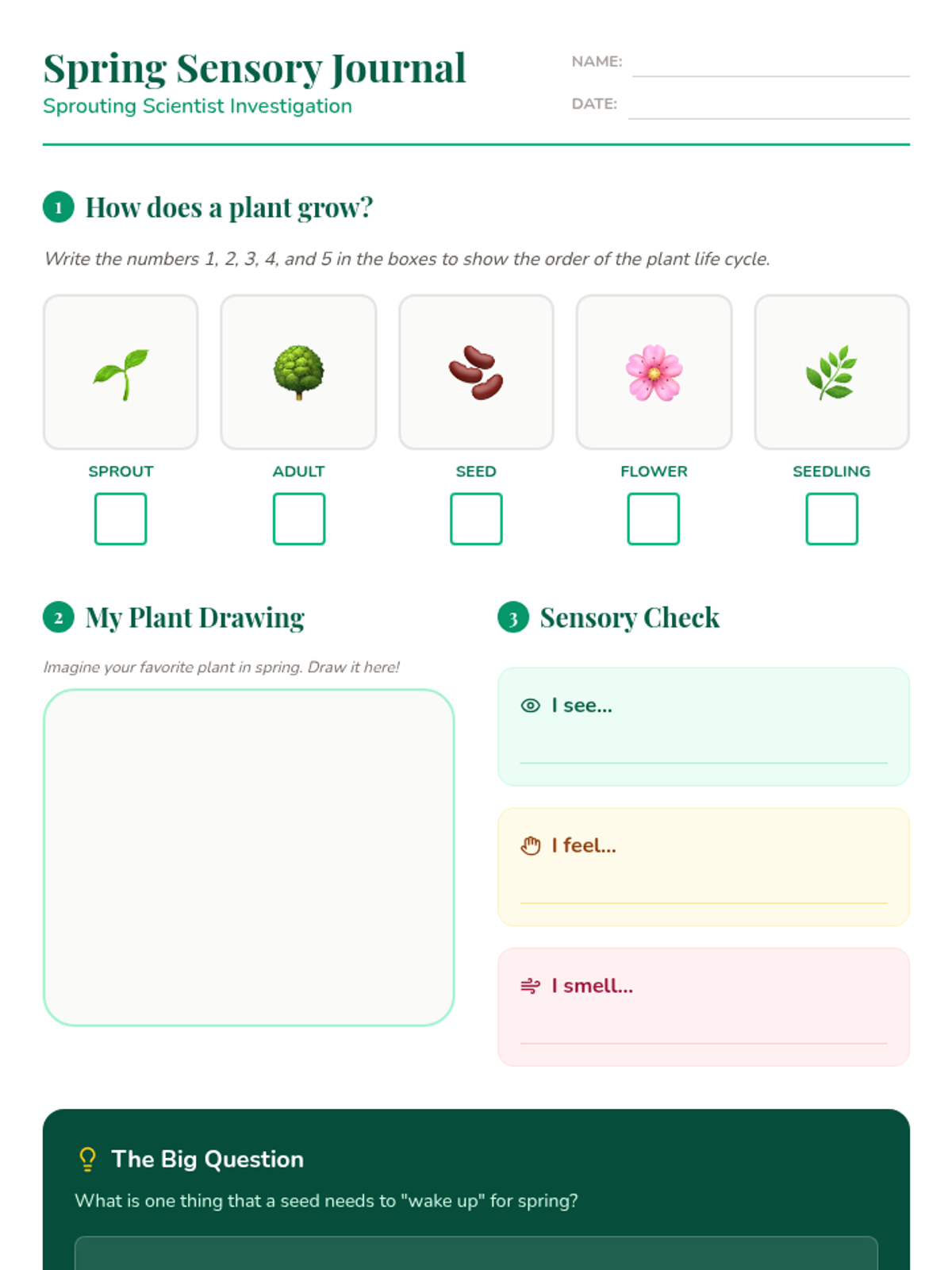
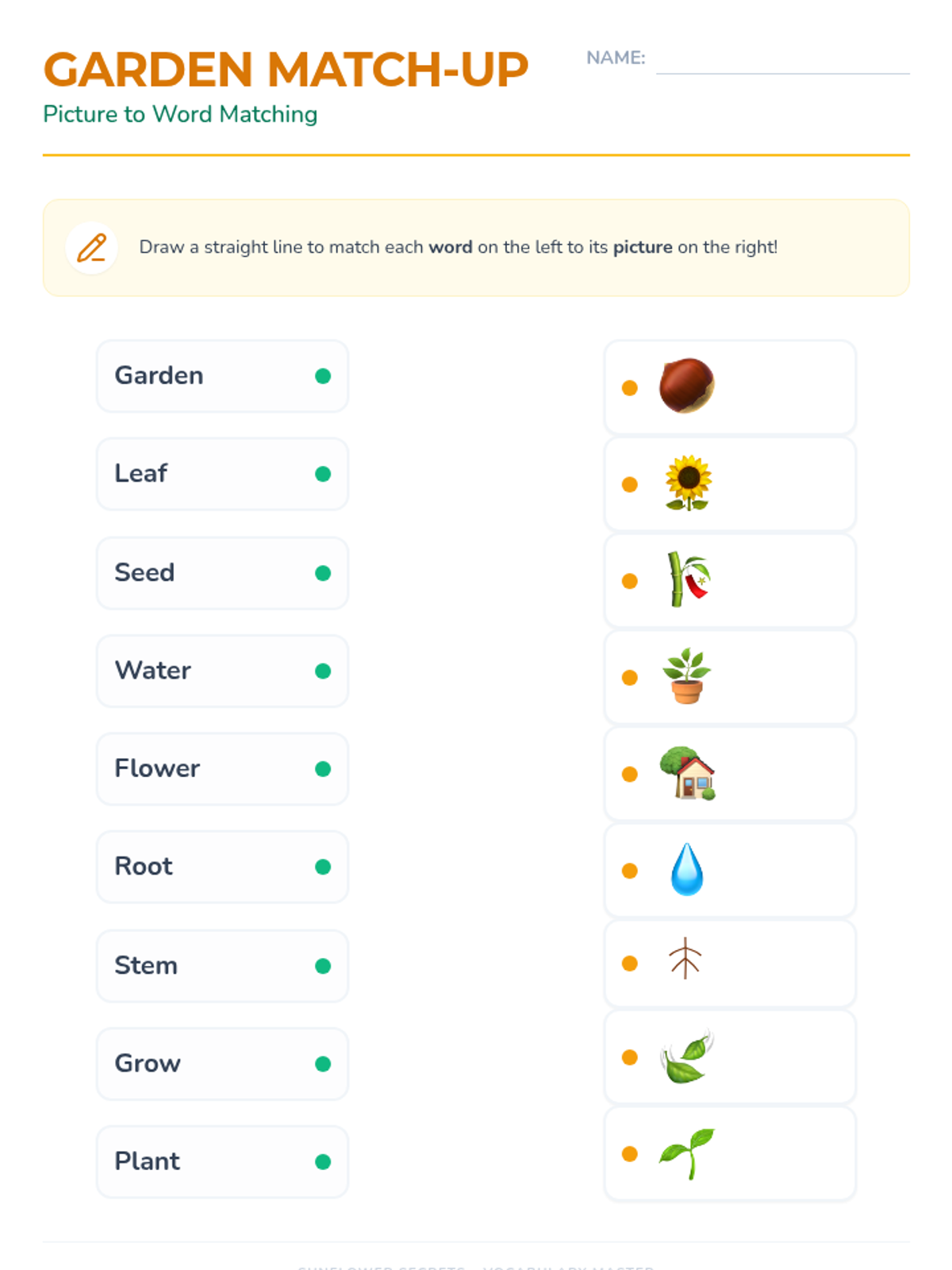
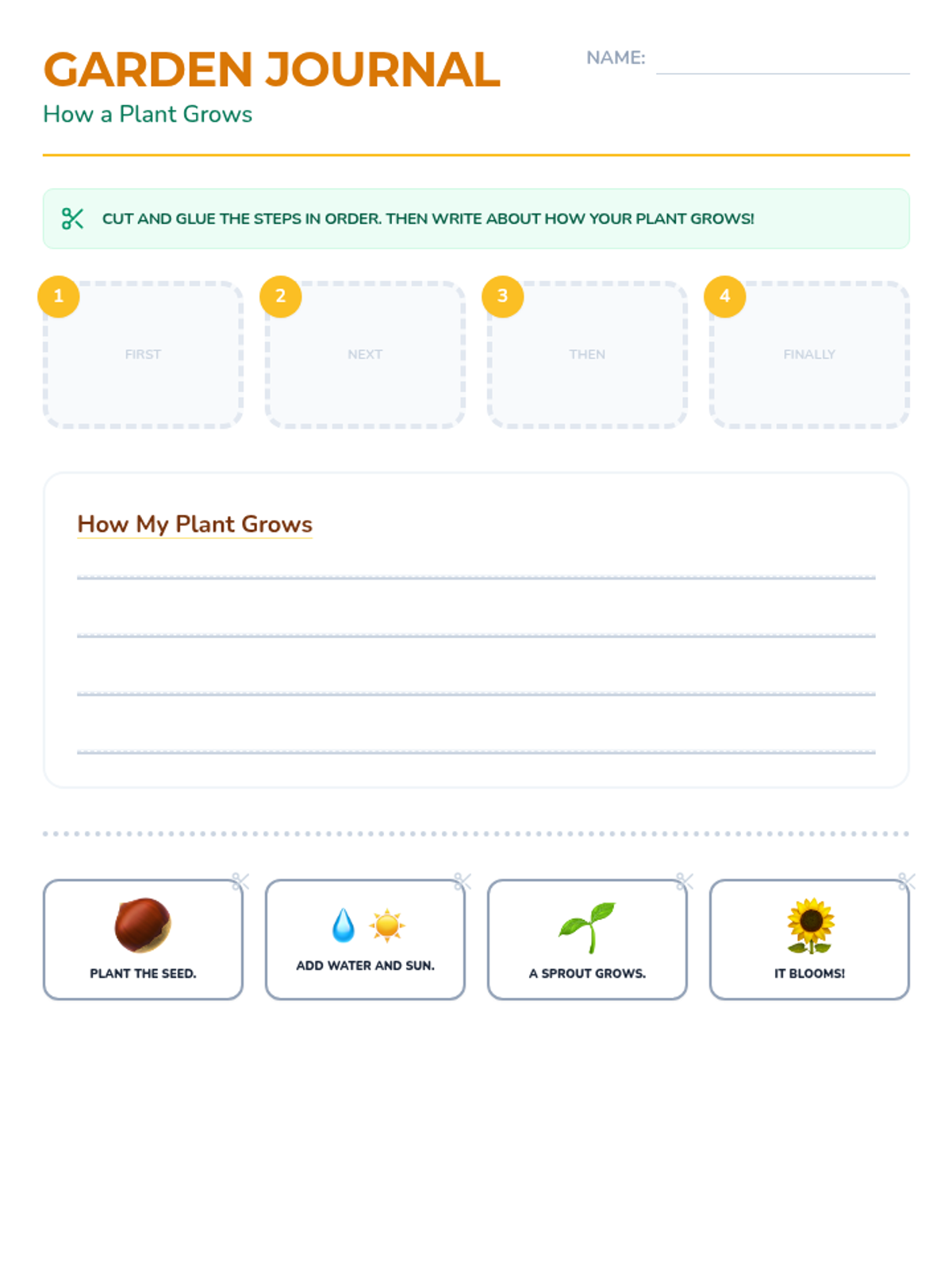
Students explore the plant life cycle through hands-on seed sorting and sensory observations, connecting biological processes to the arrival of spring.
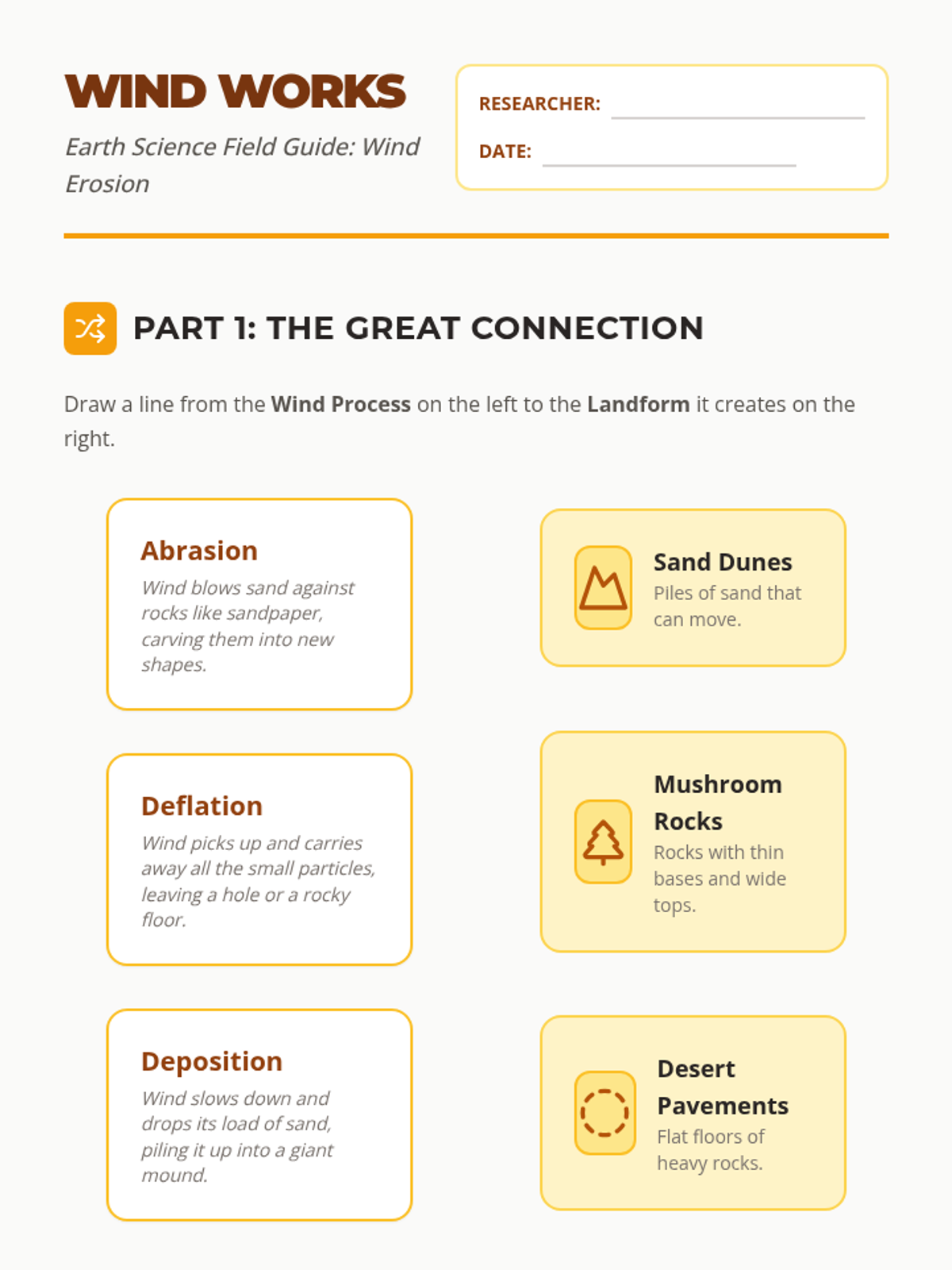
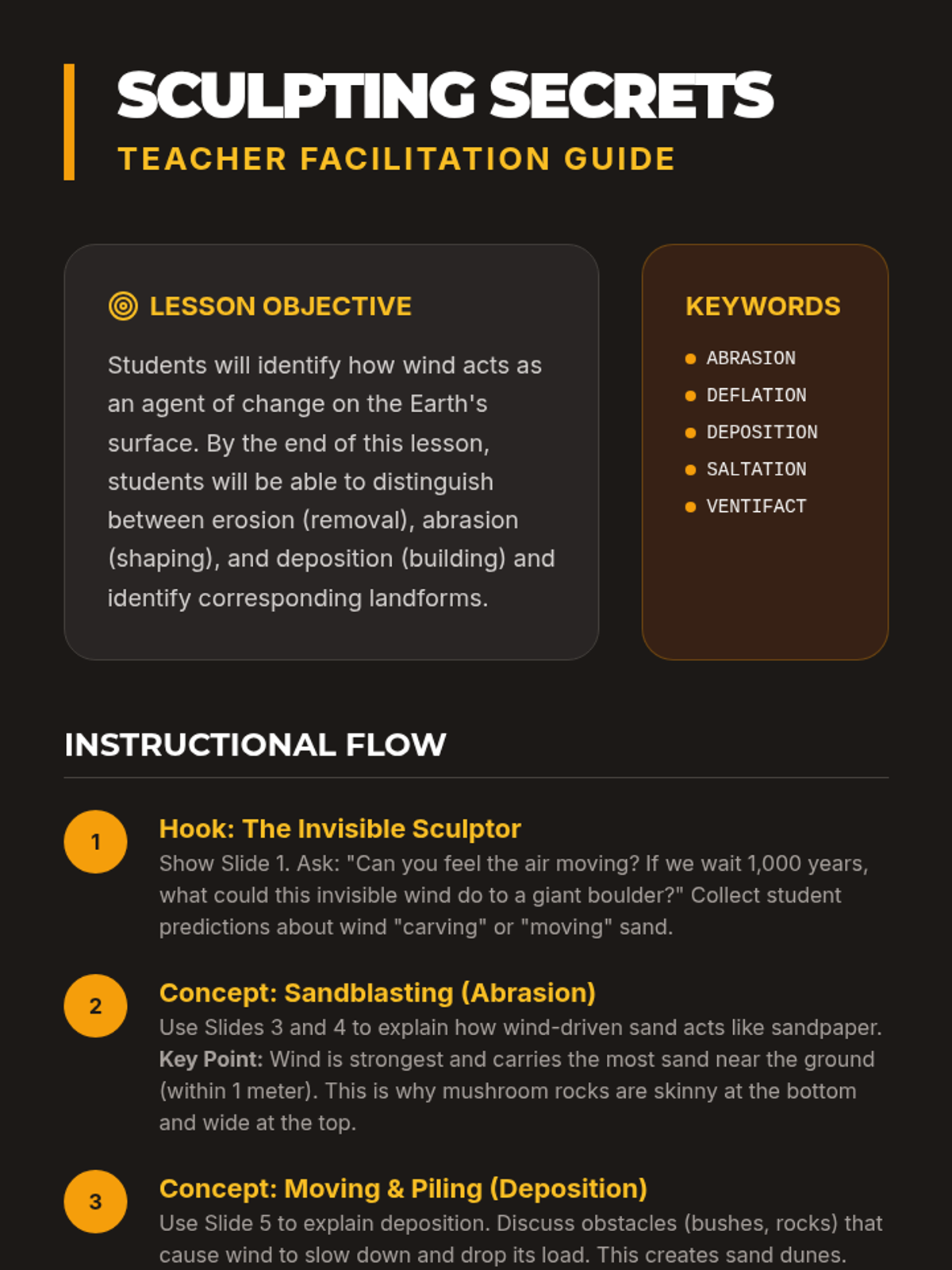
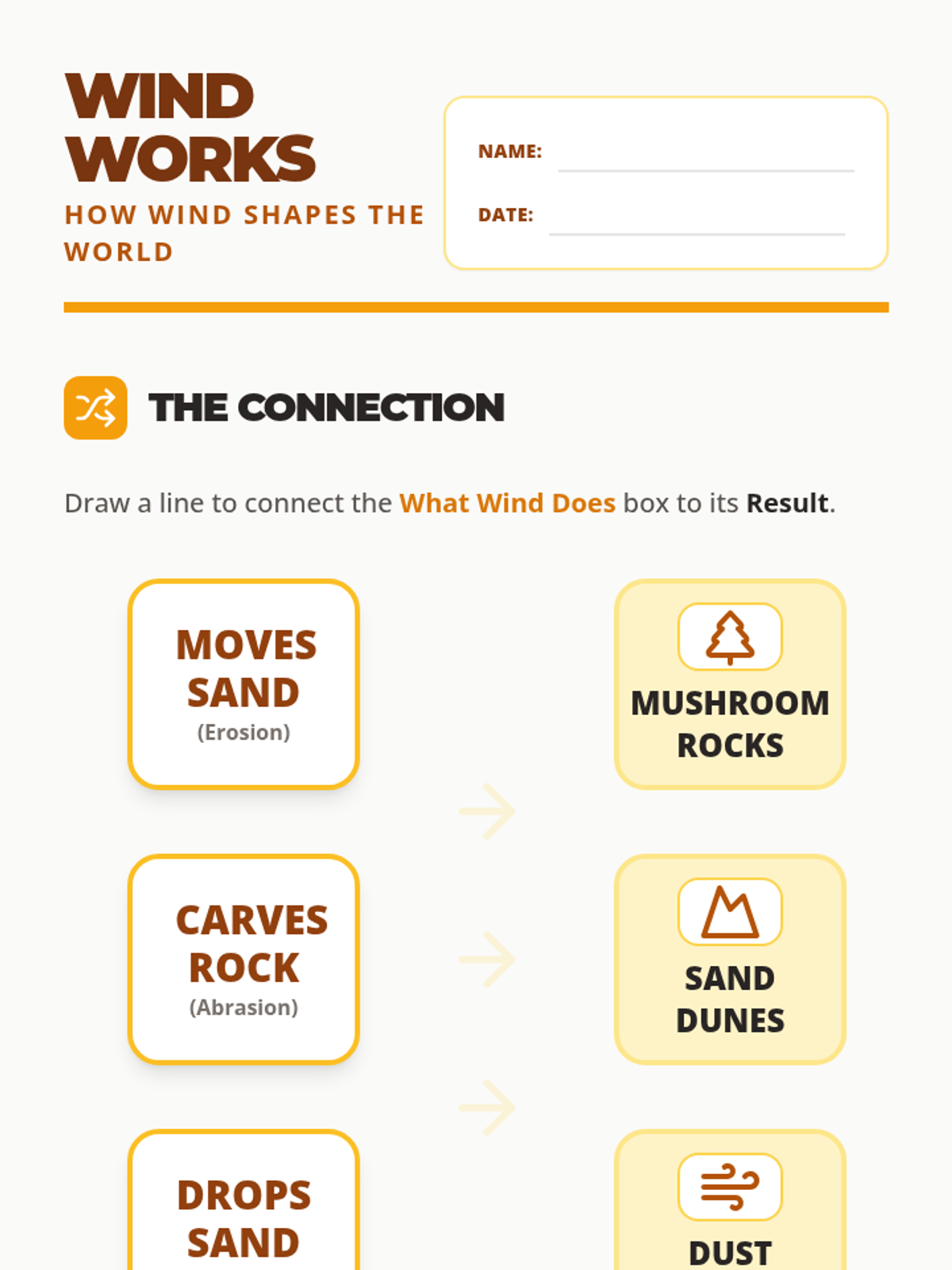
A lesson exploring how wind acts as a powerful sculptor, shaping the Earth's surface through erosion and deposition over long periods of time. Students will identify key landforms created by wind and understand the processes that form them.
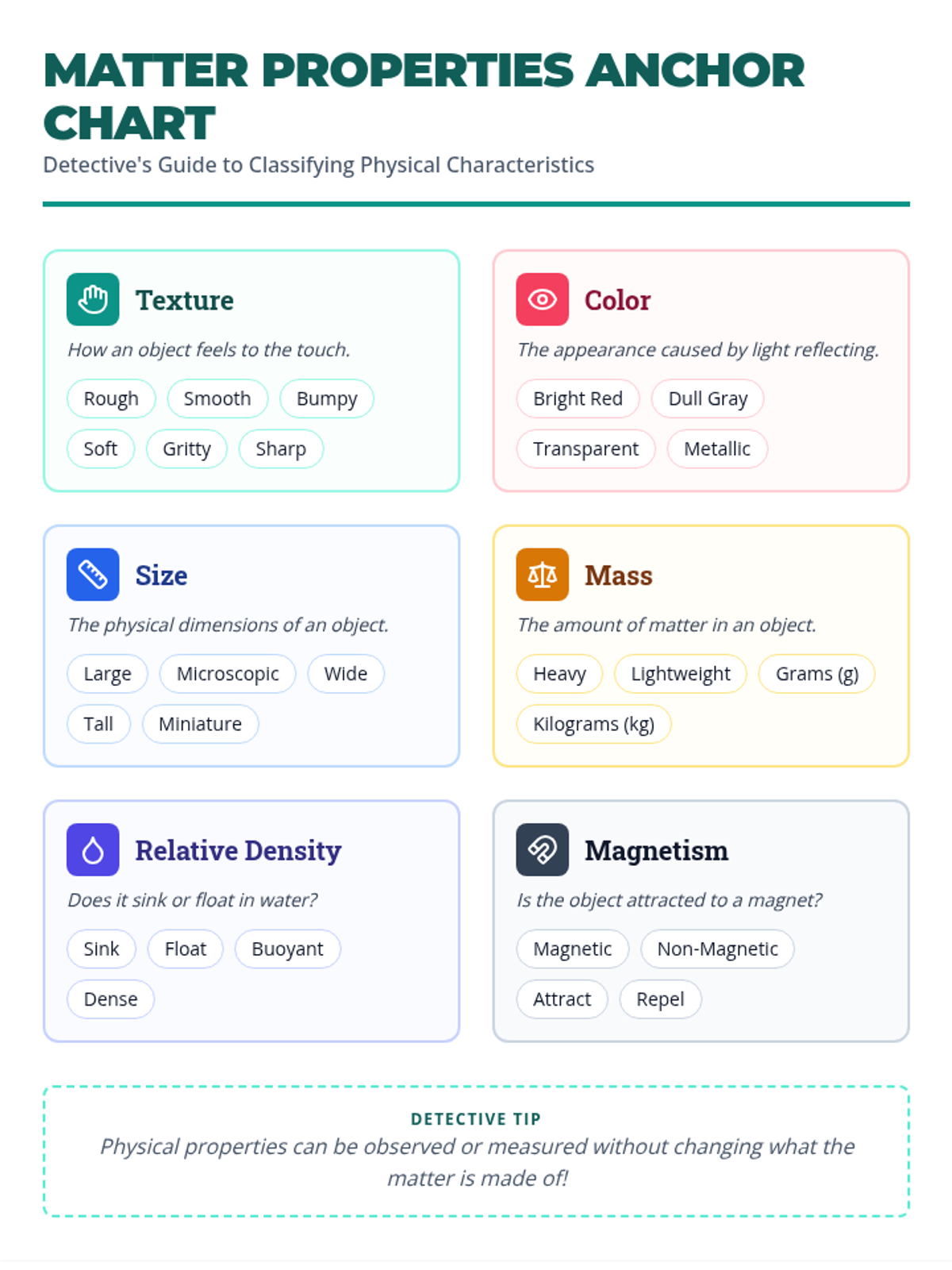
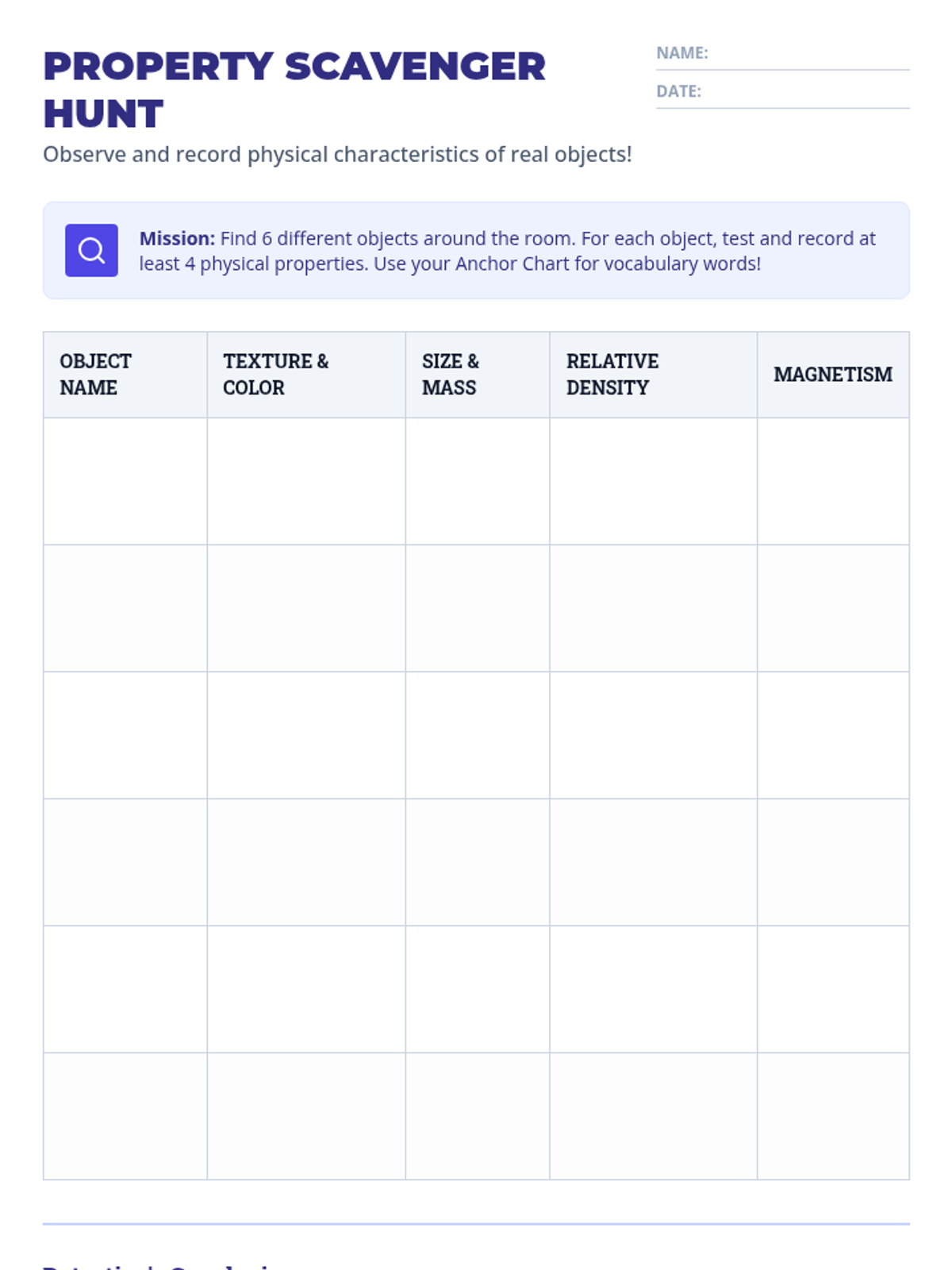
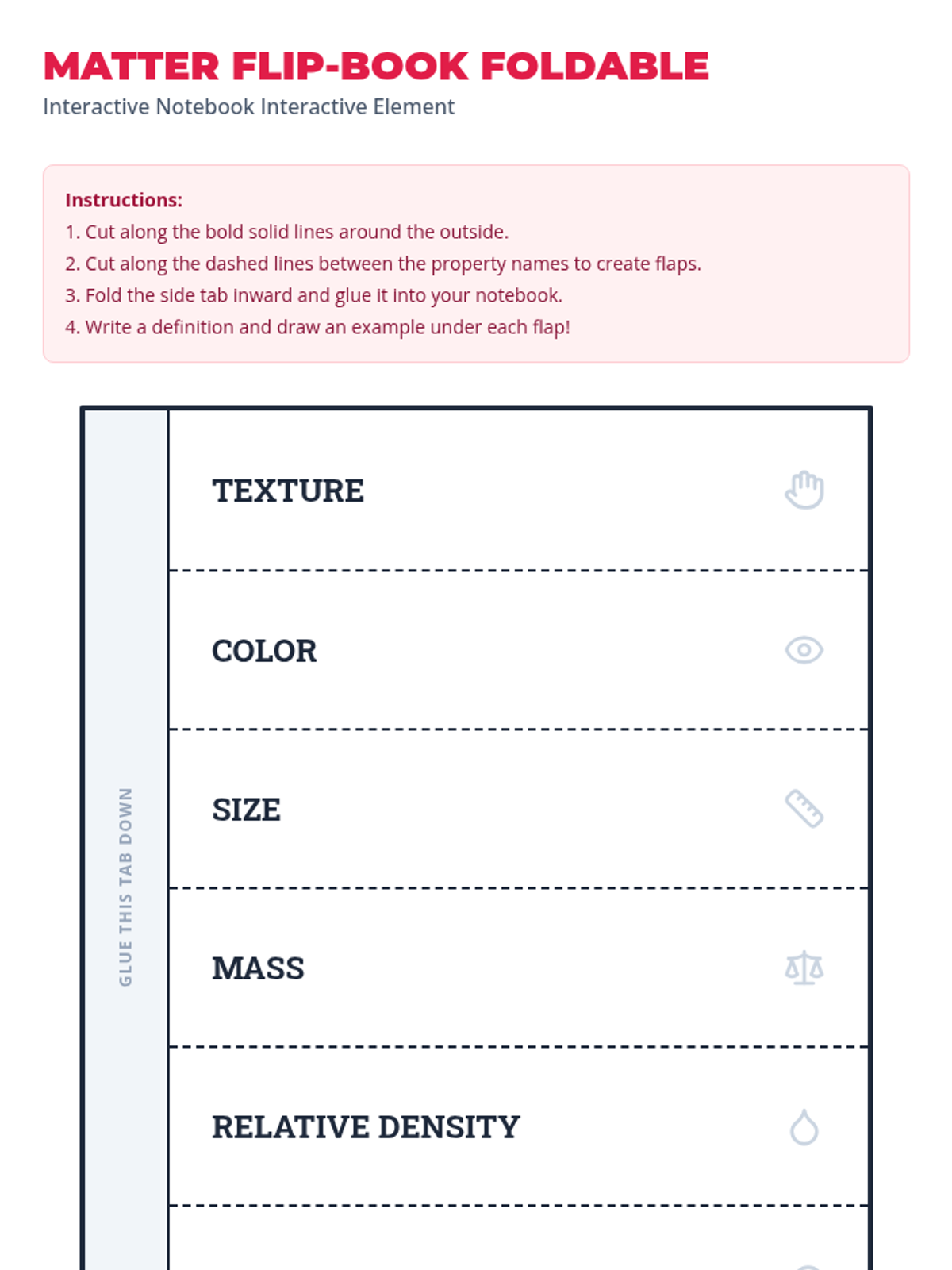
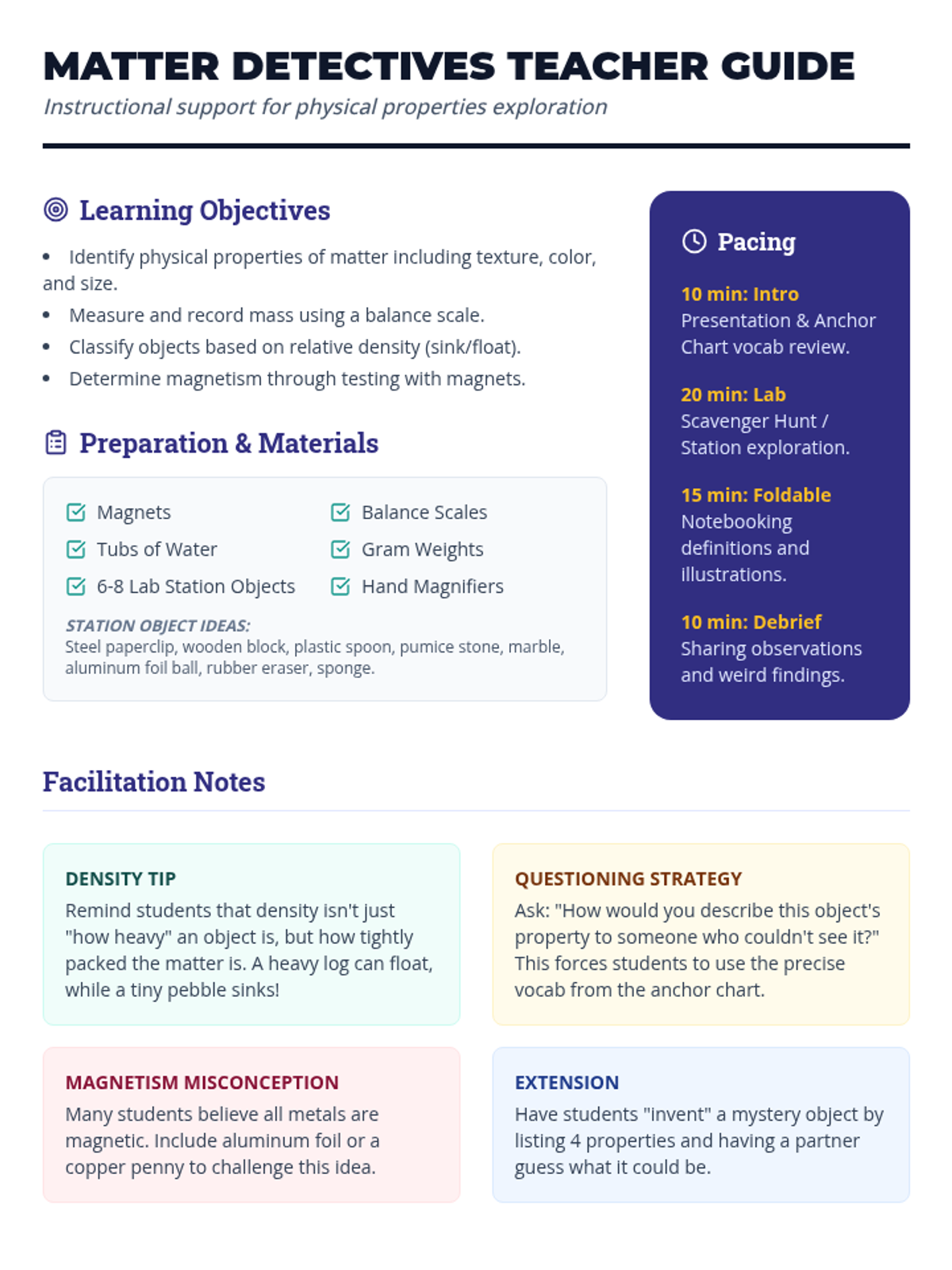
An engaging, hands-on lesson where students explore the physical properties of matter through a structured anchor chart, an interactive notebook foldable, and a real-world scavenger hunt.
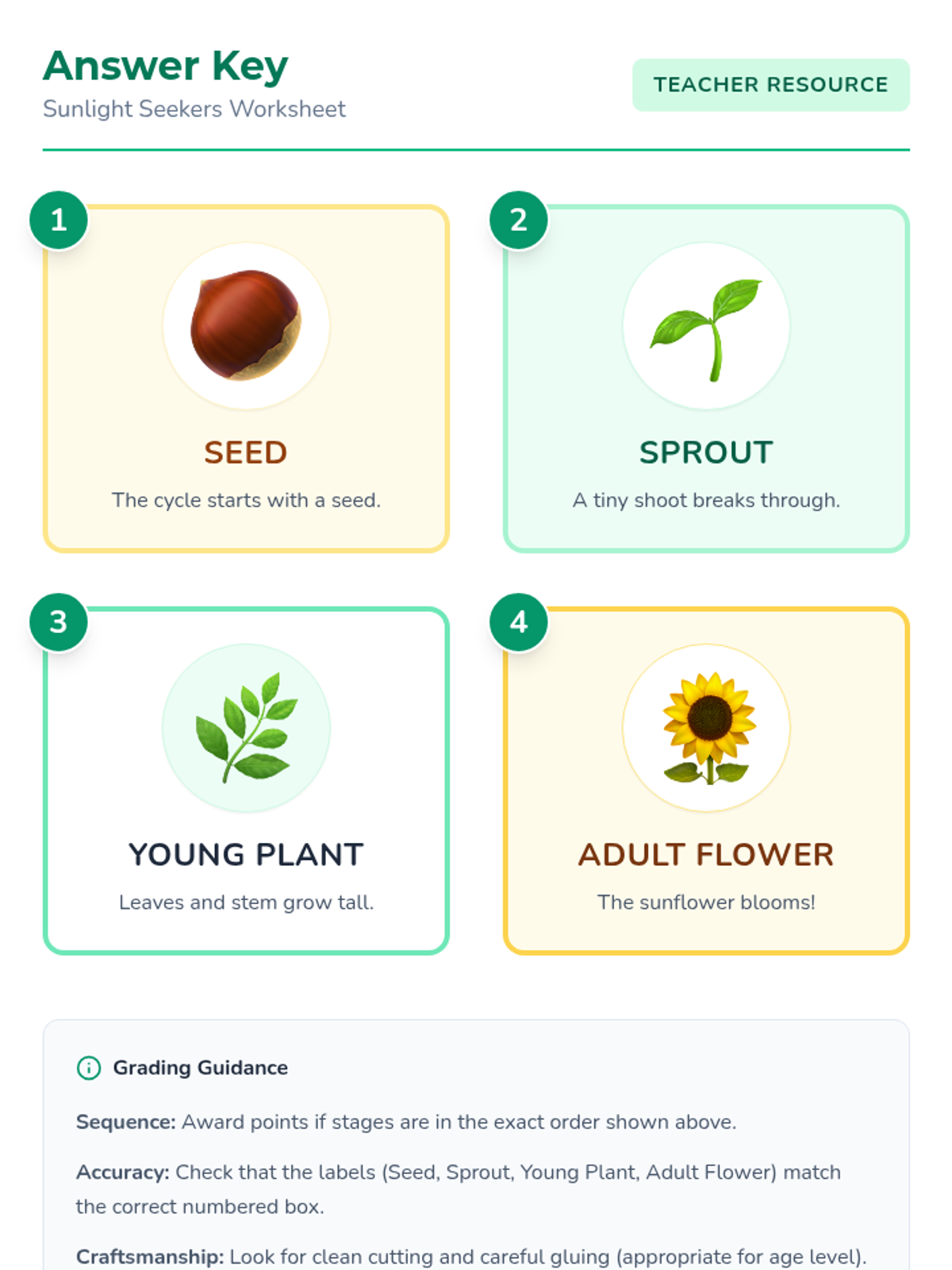
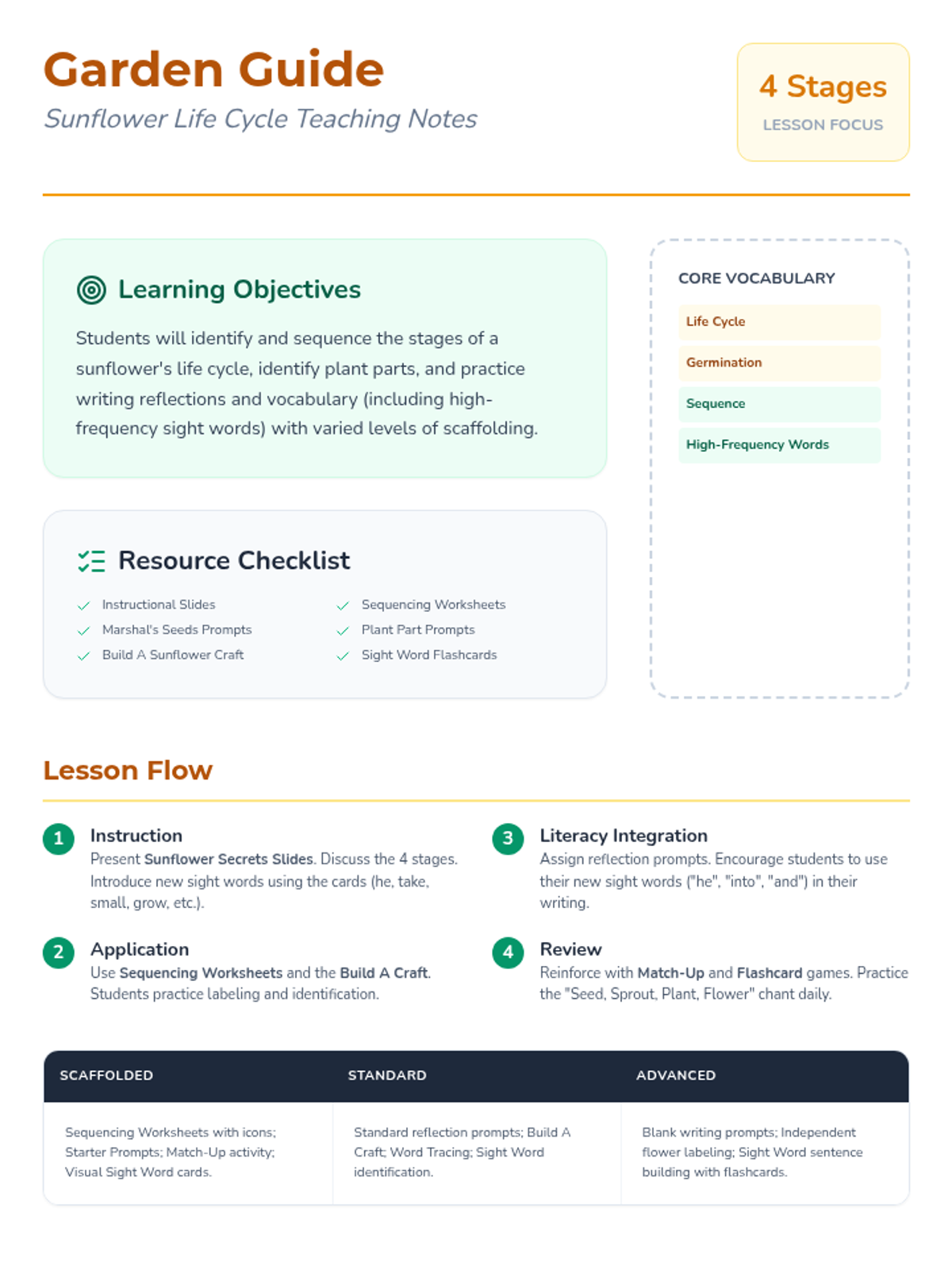
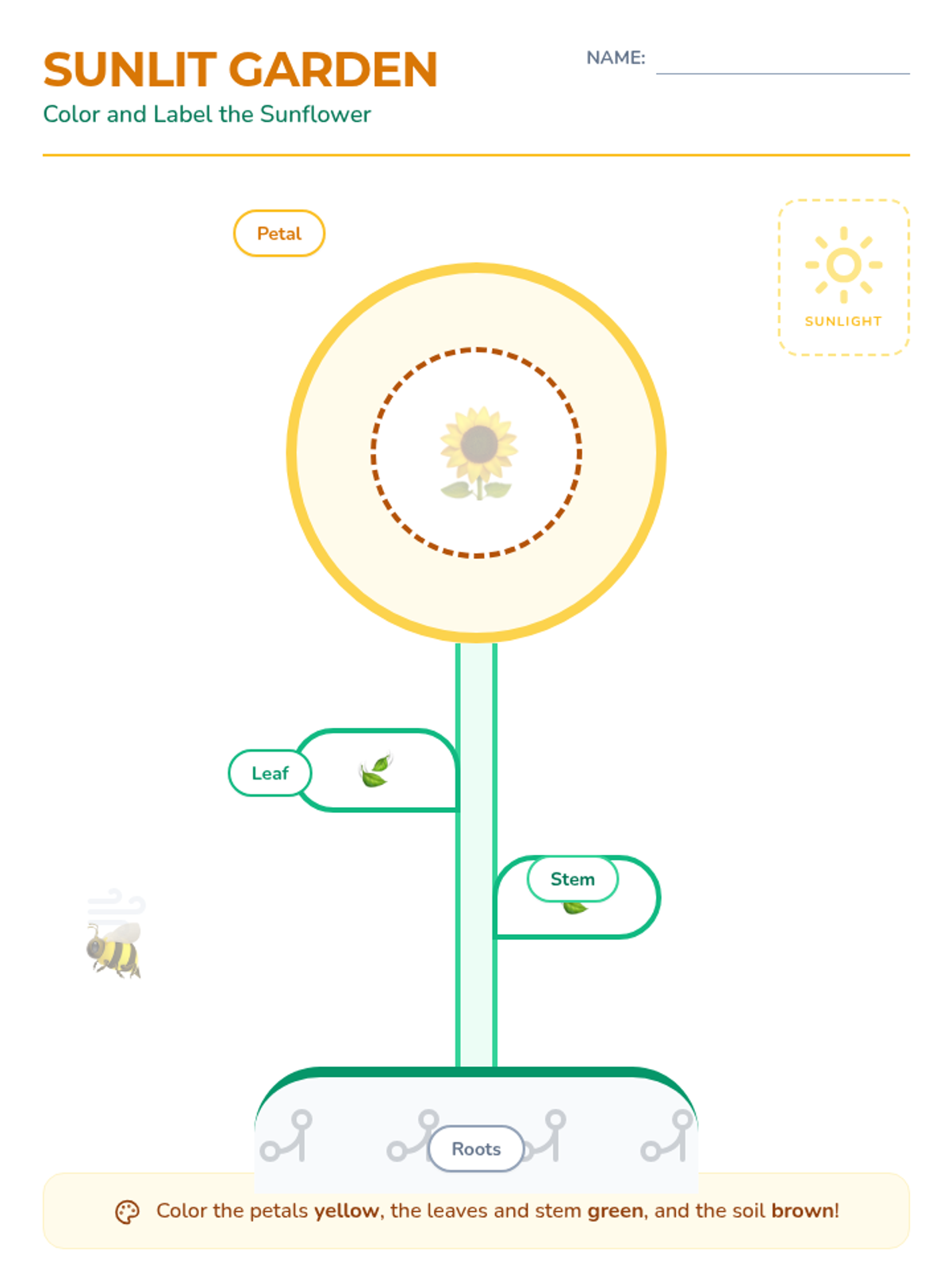
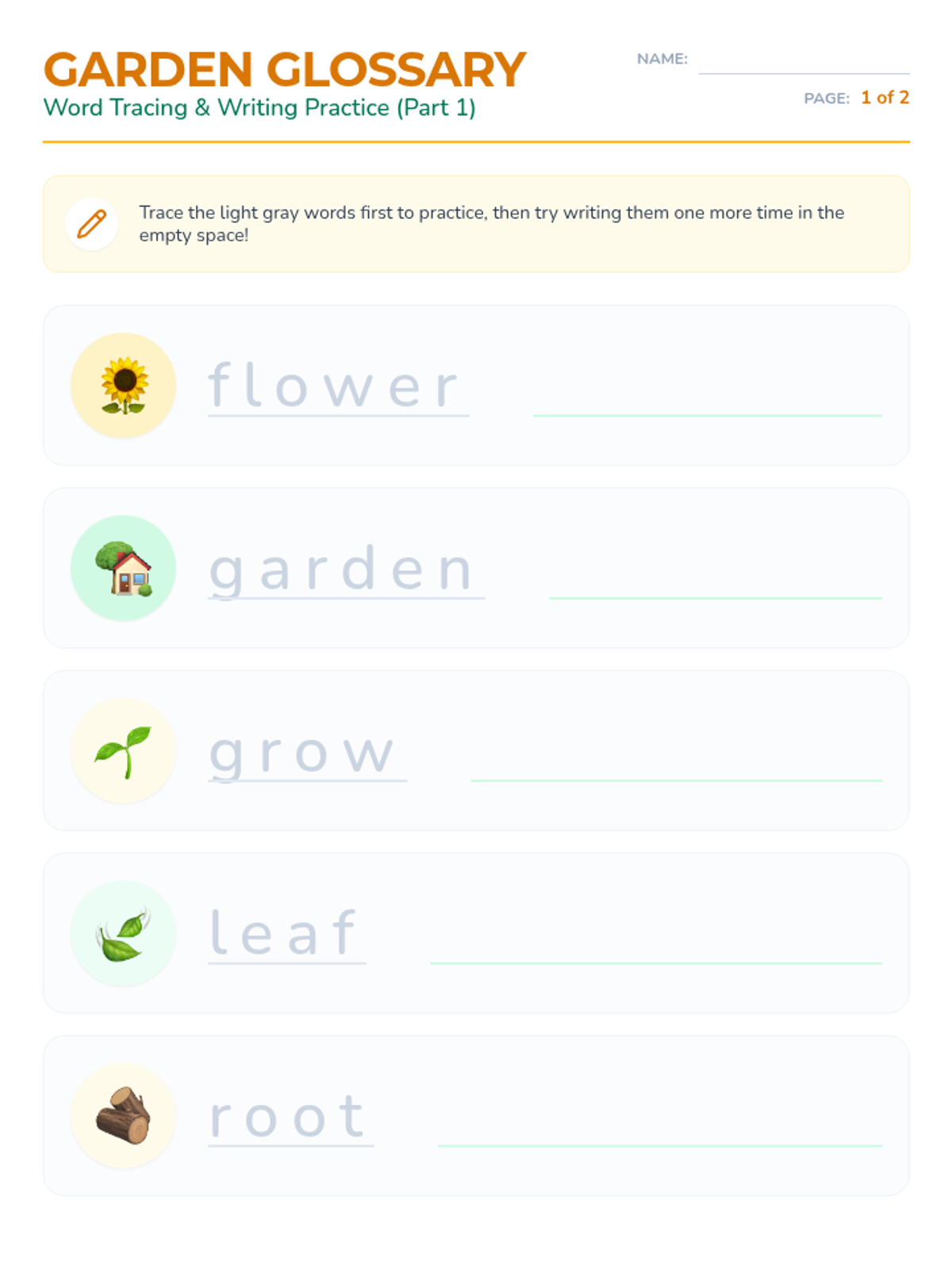
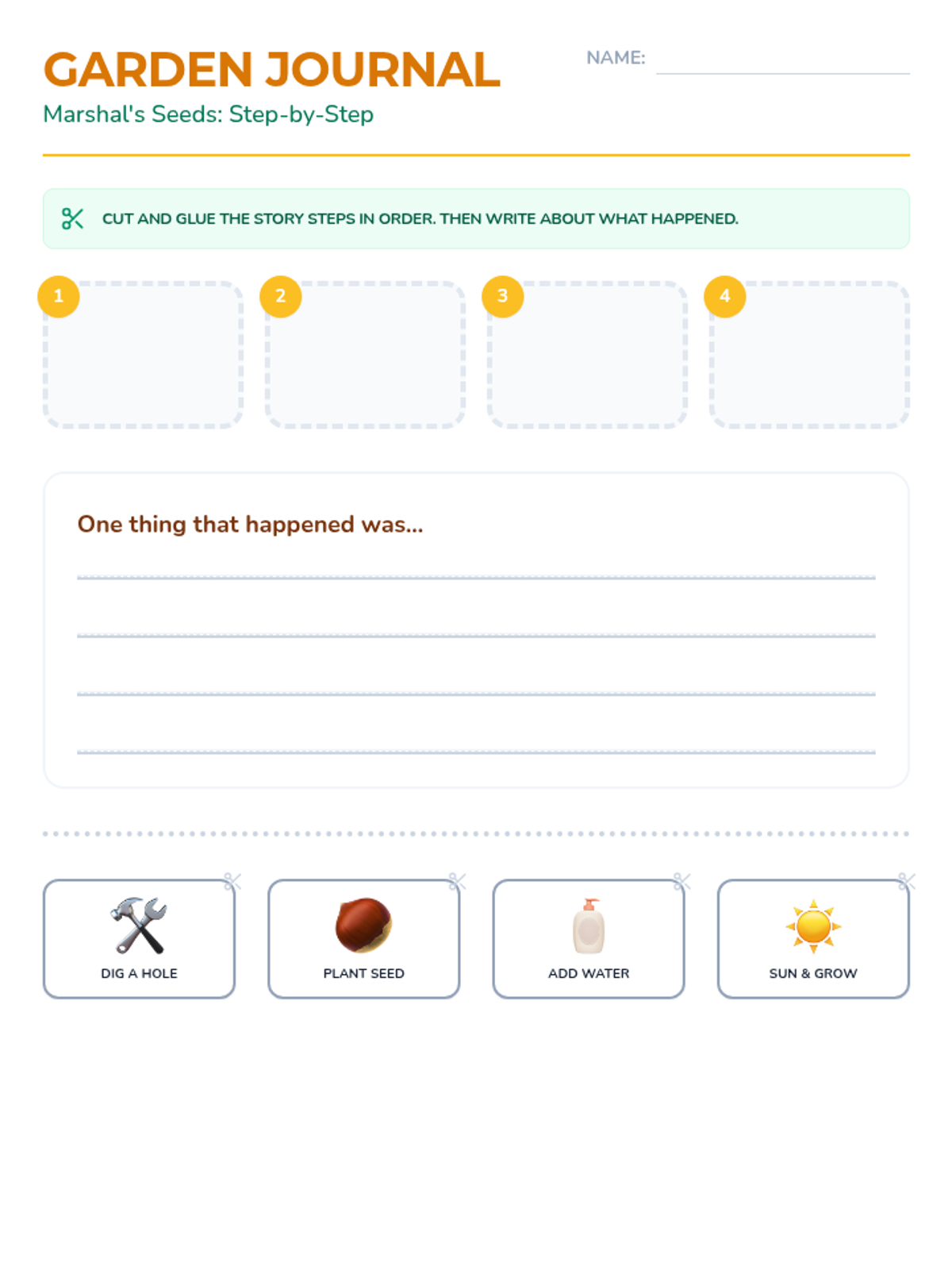
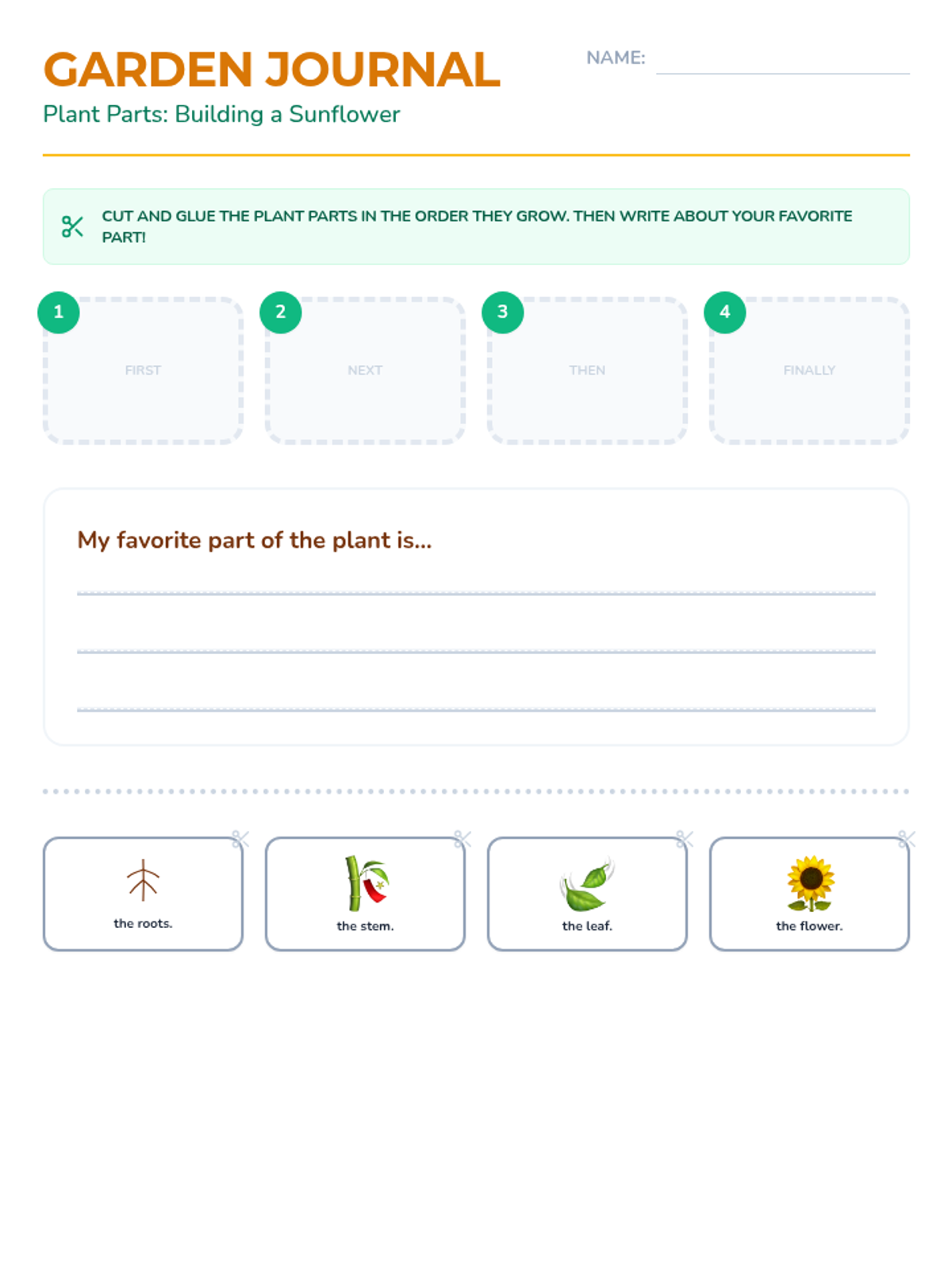
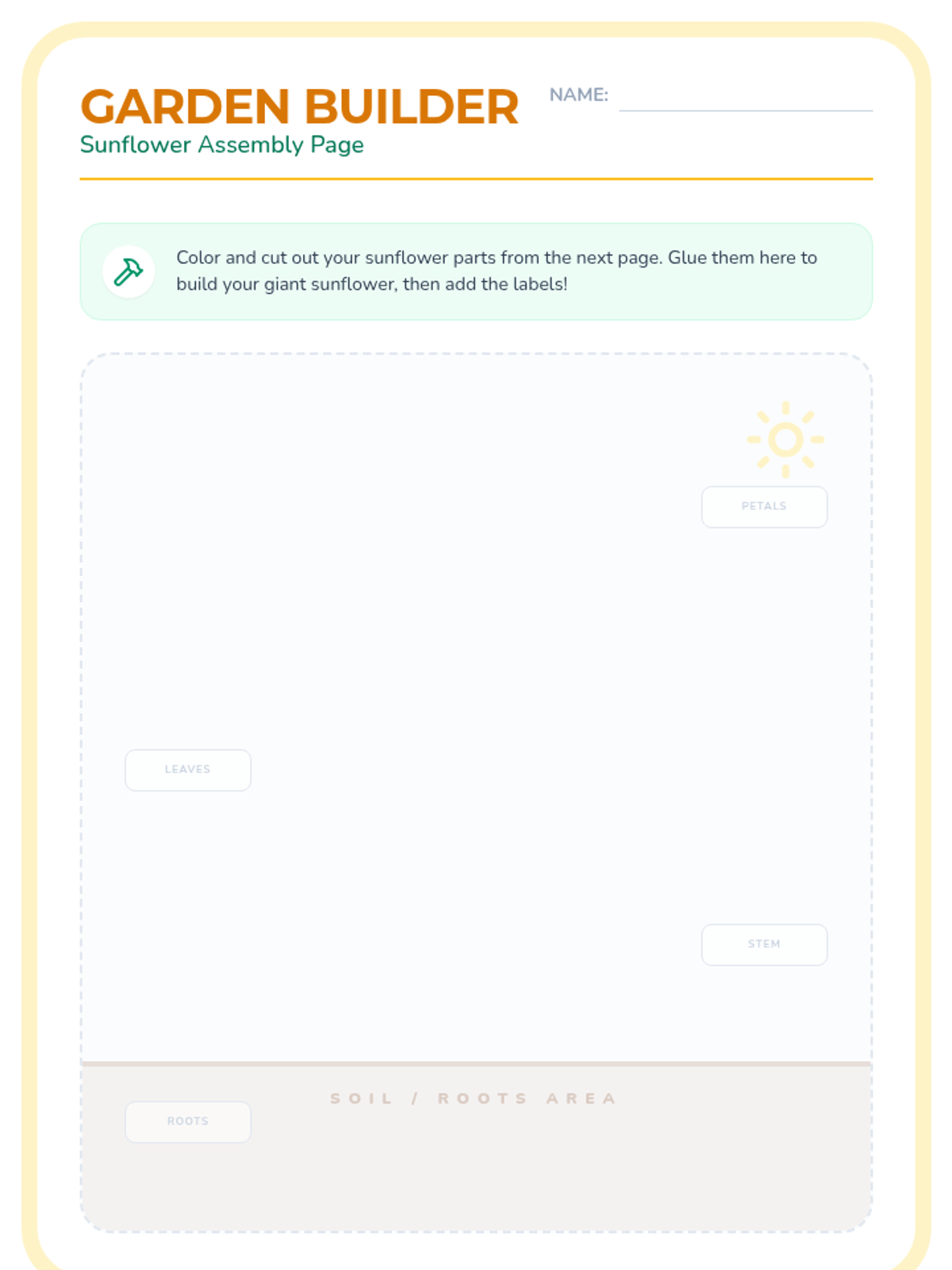
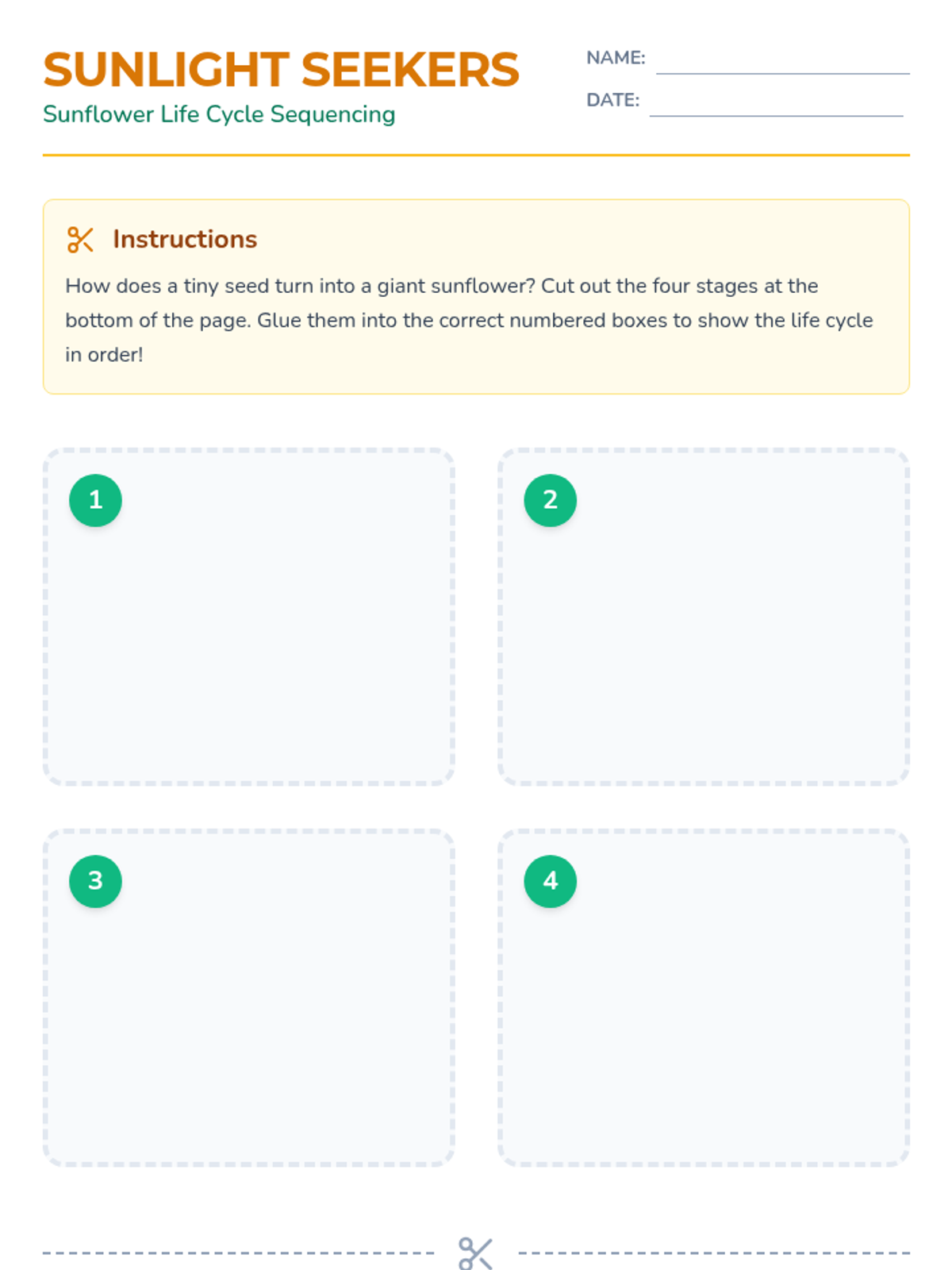
A hands-on lesson exploring the four primary stages of a sunflower's life cycle through visual instruction and a cut-and-paste sequencing activity.
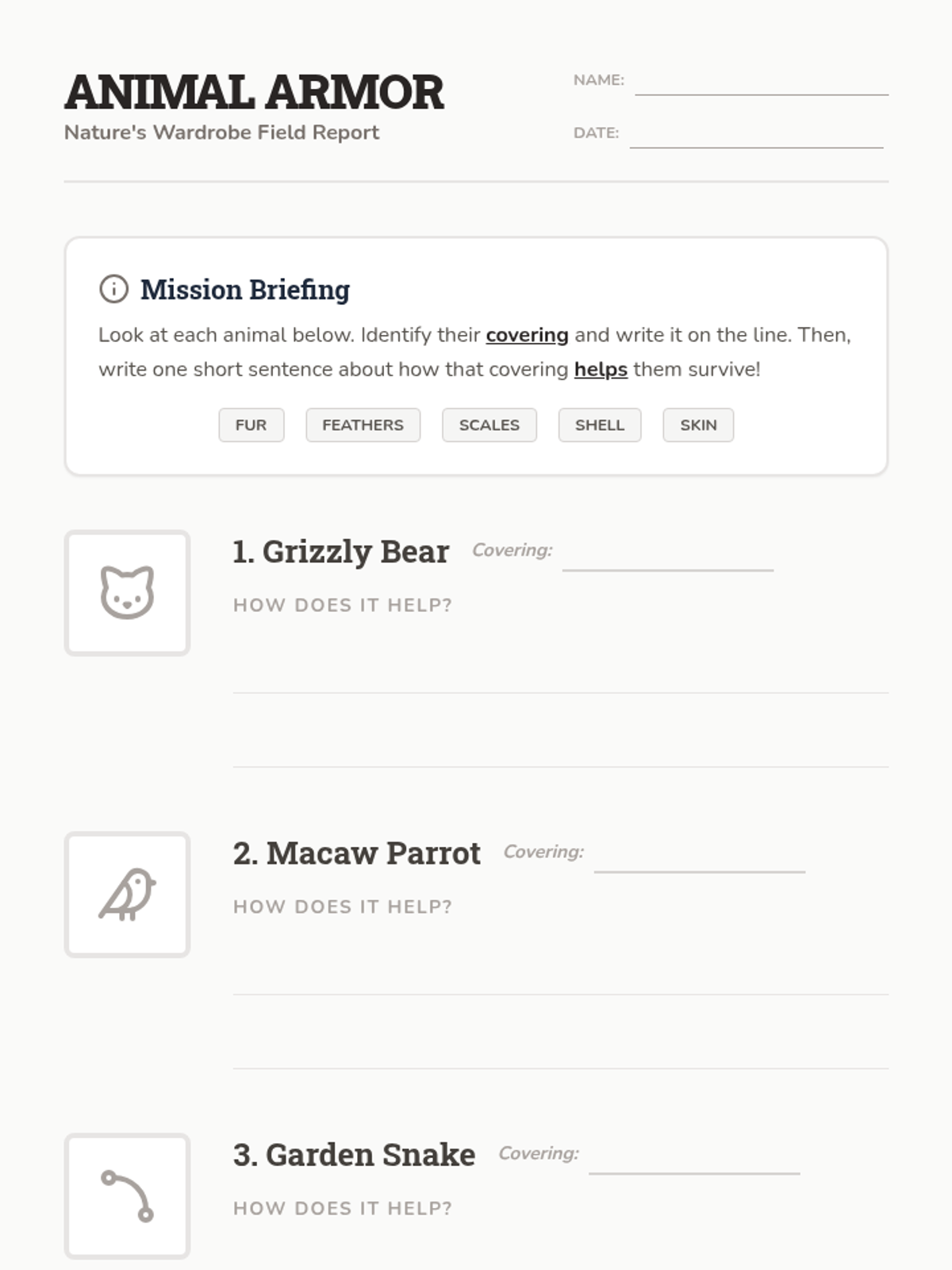
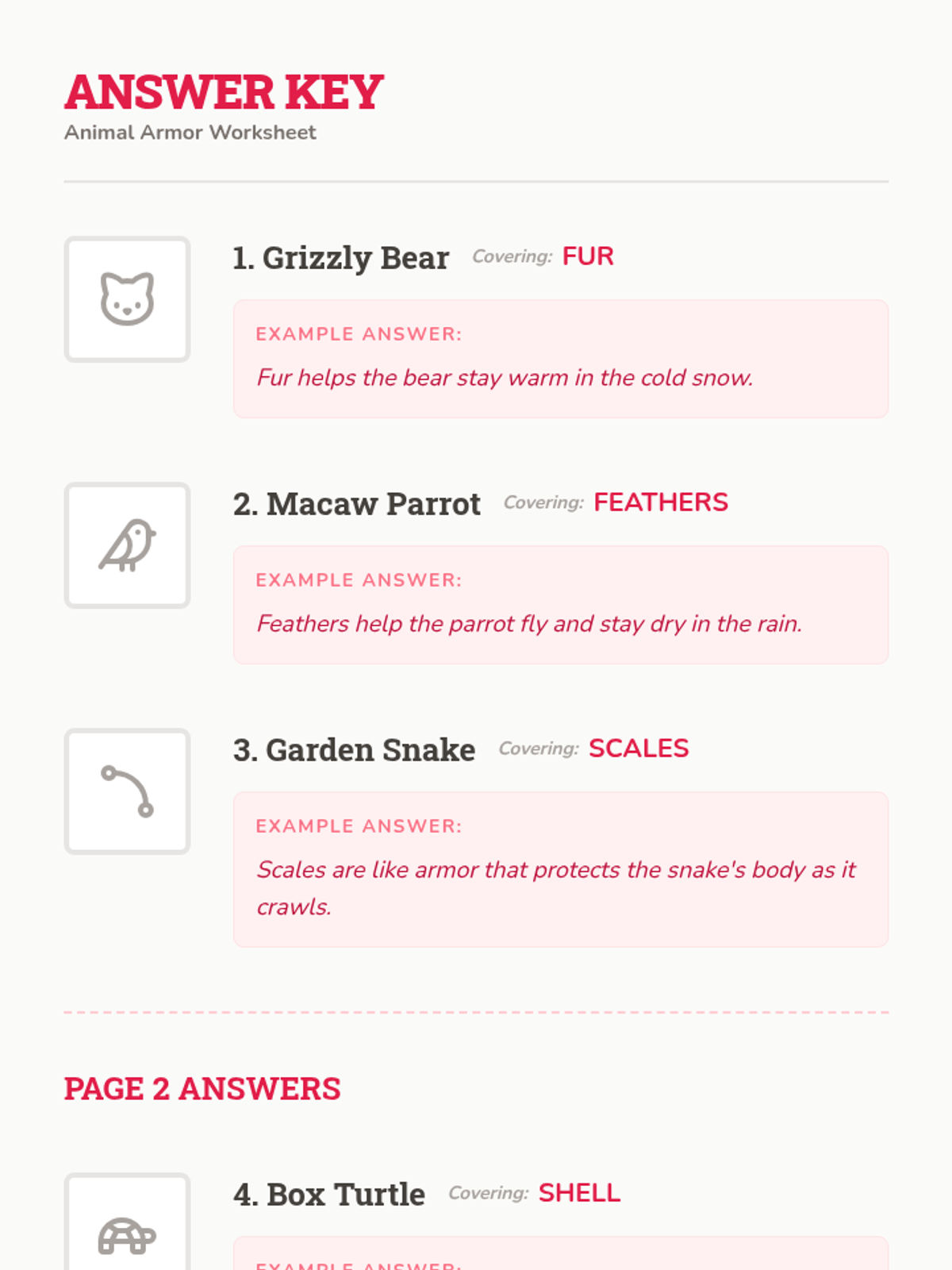
Students apply their knowledge by identifying animal coverings in various examples and writing descriptive sentences about how these coverings protect or help animals.
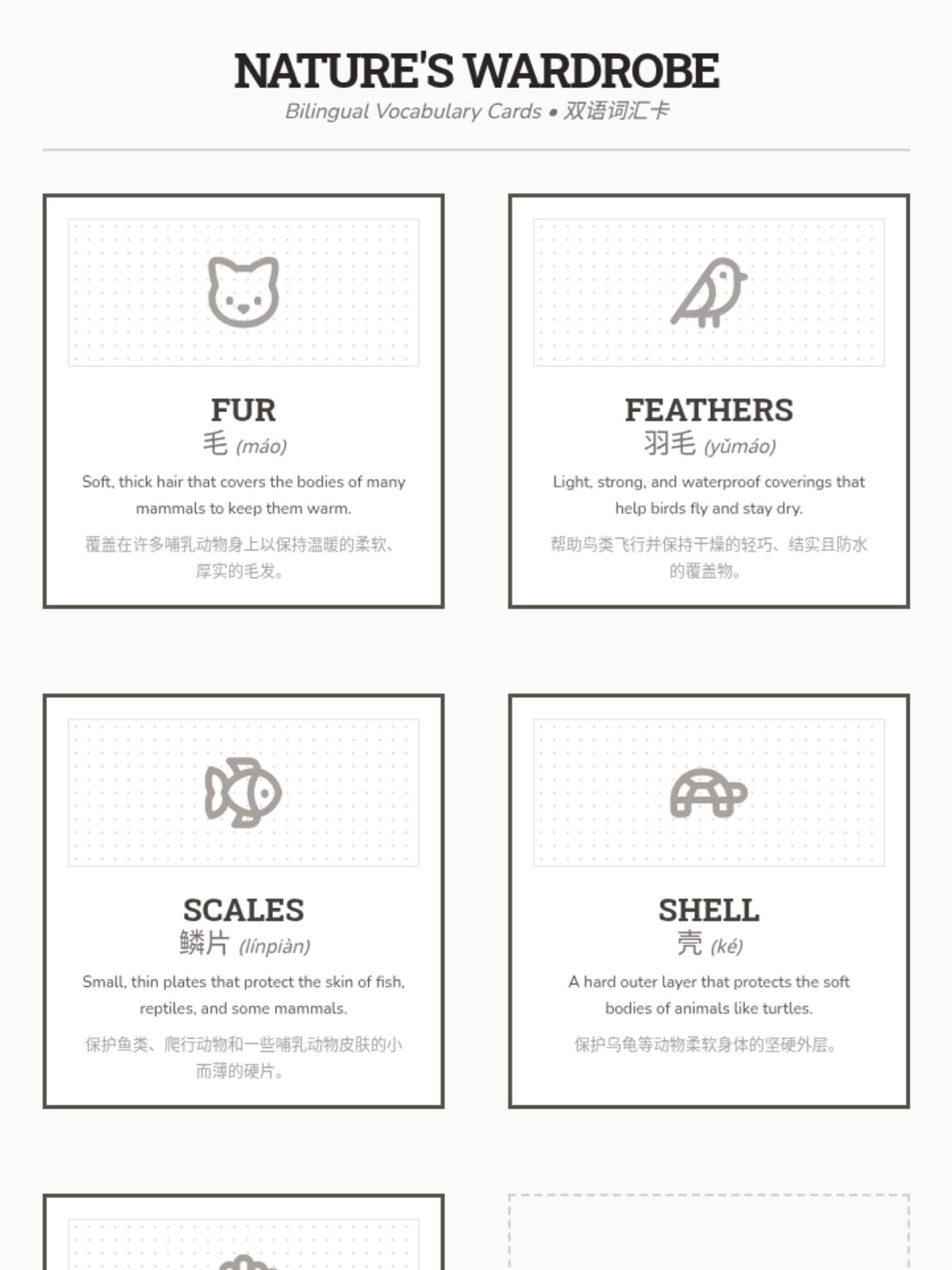
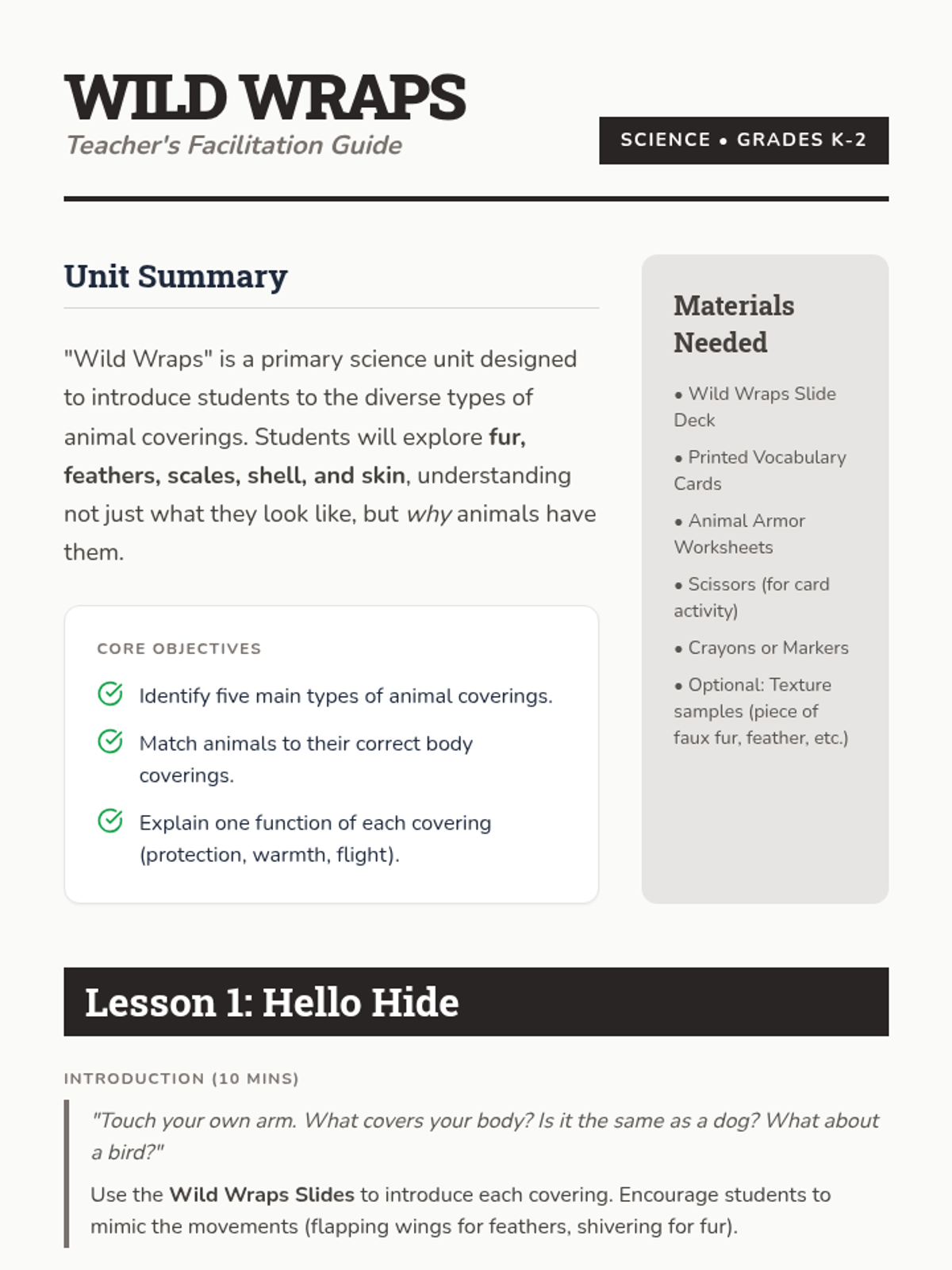
An introduction to the five main types of animal coverings: feathers, fur, scales, shell, and skin. Students learn to identify these textures and understand their basic functions.
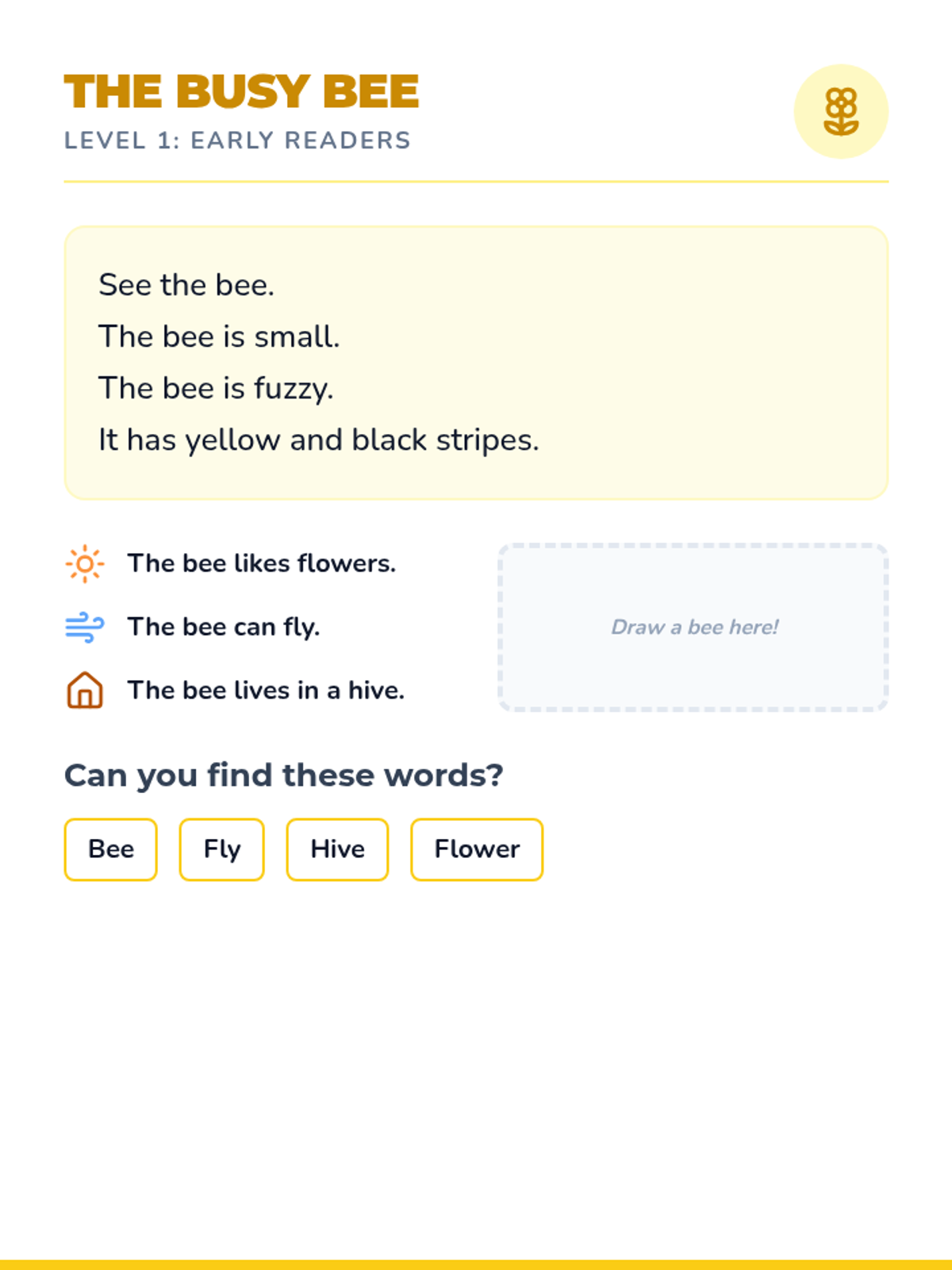
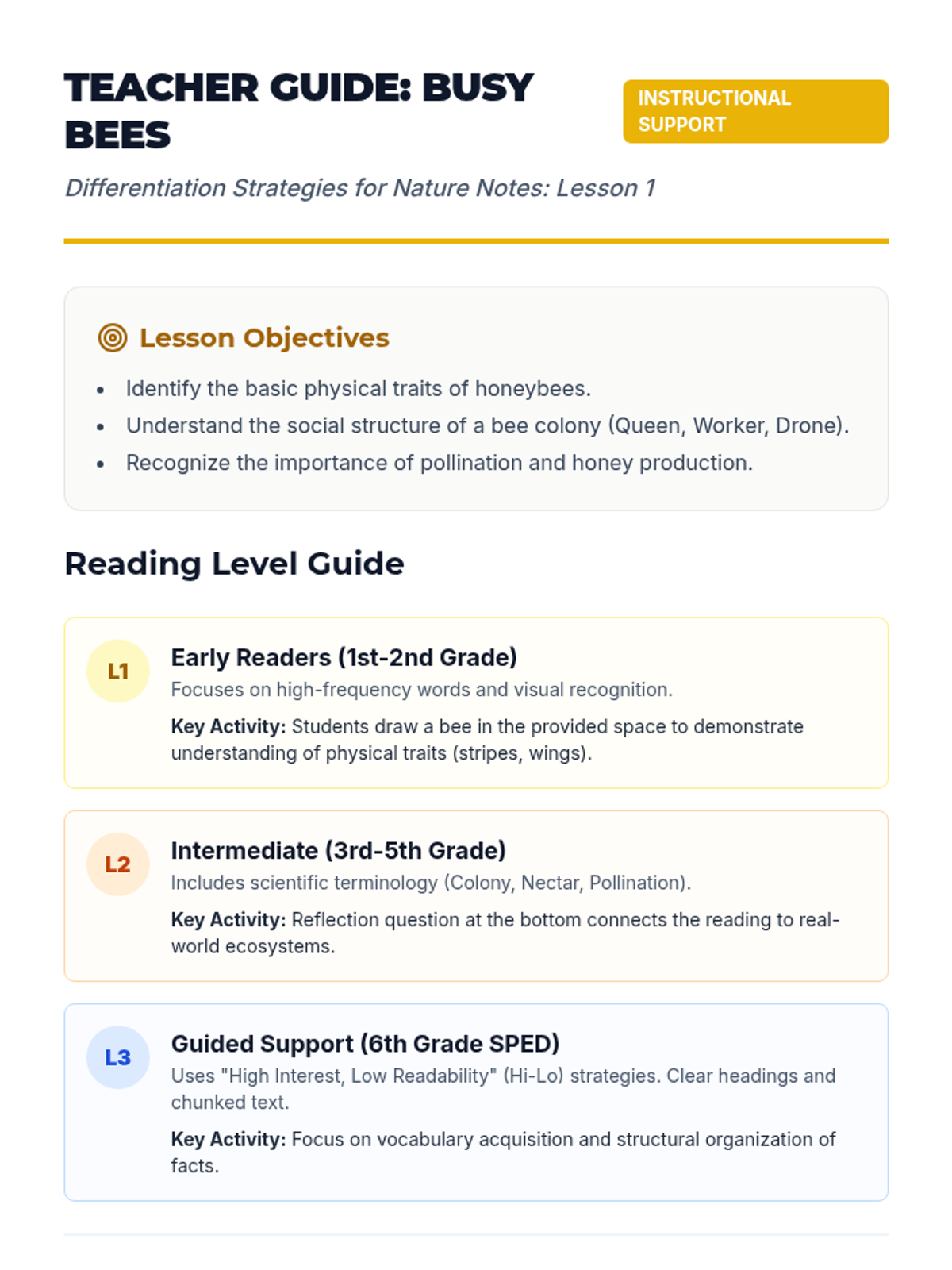
An introductory lesson on honeybees featuring differentiated reading passages and activities tailored for 1st-6th grade reading levels.
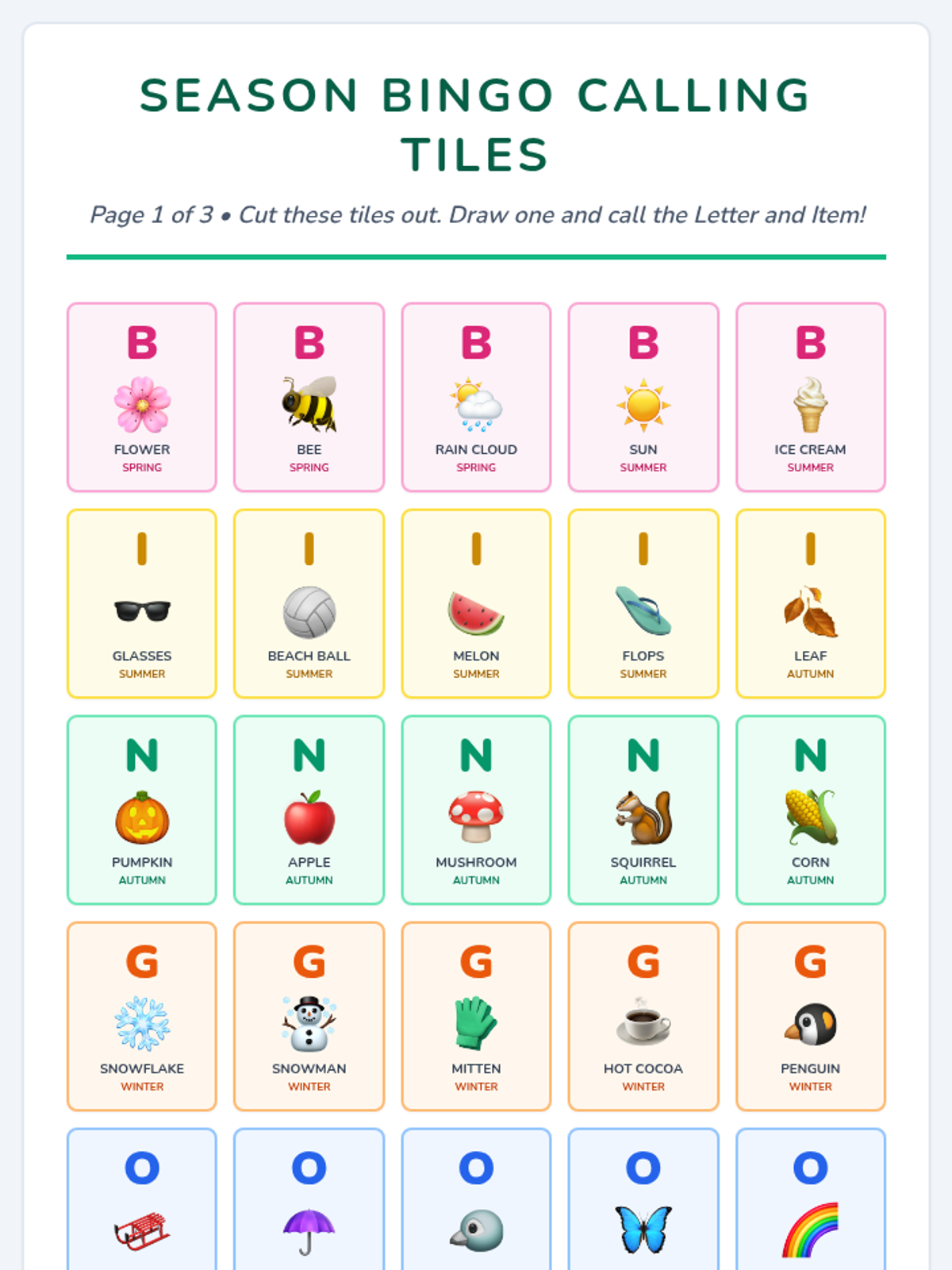
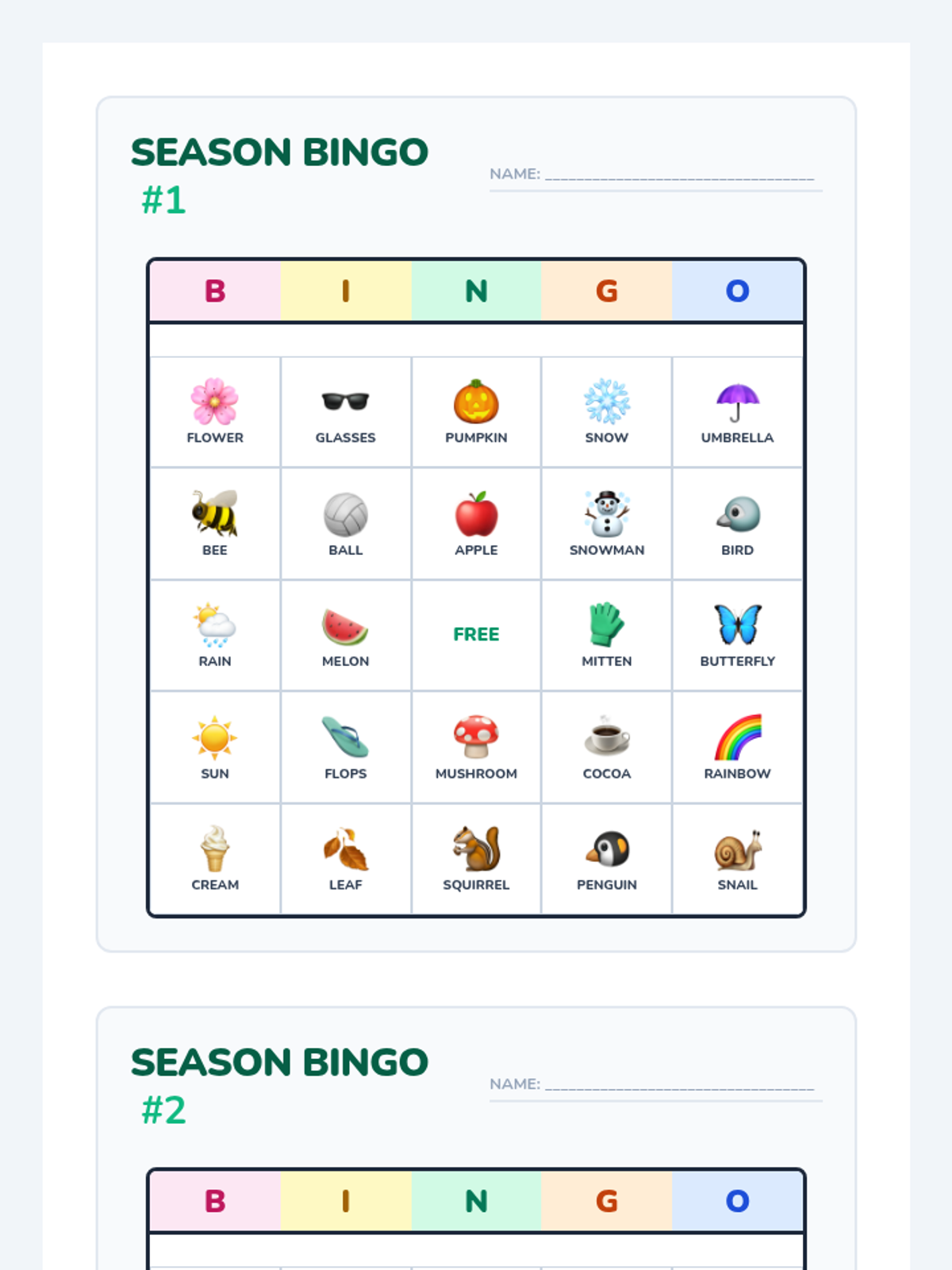
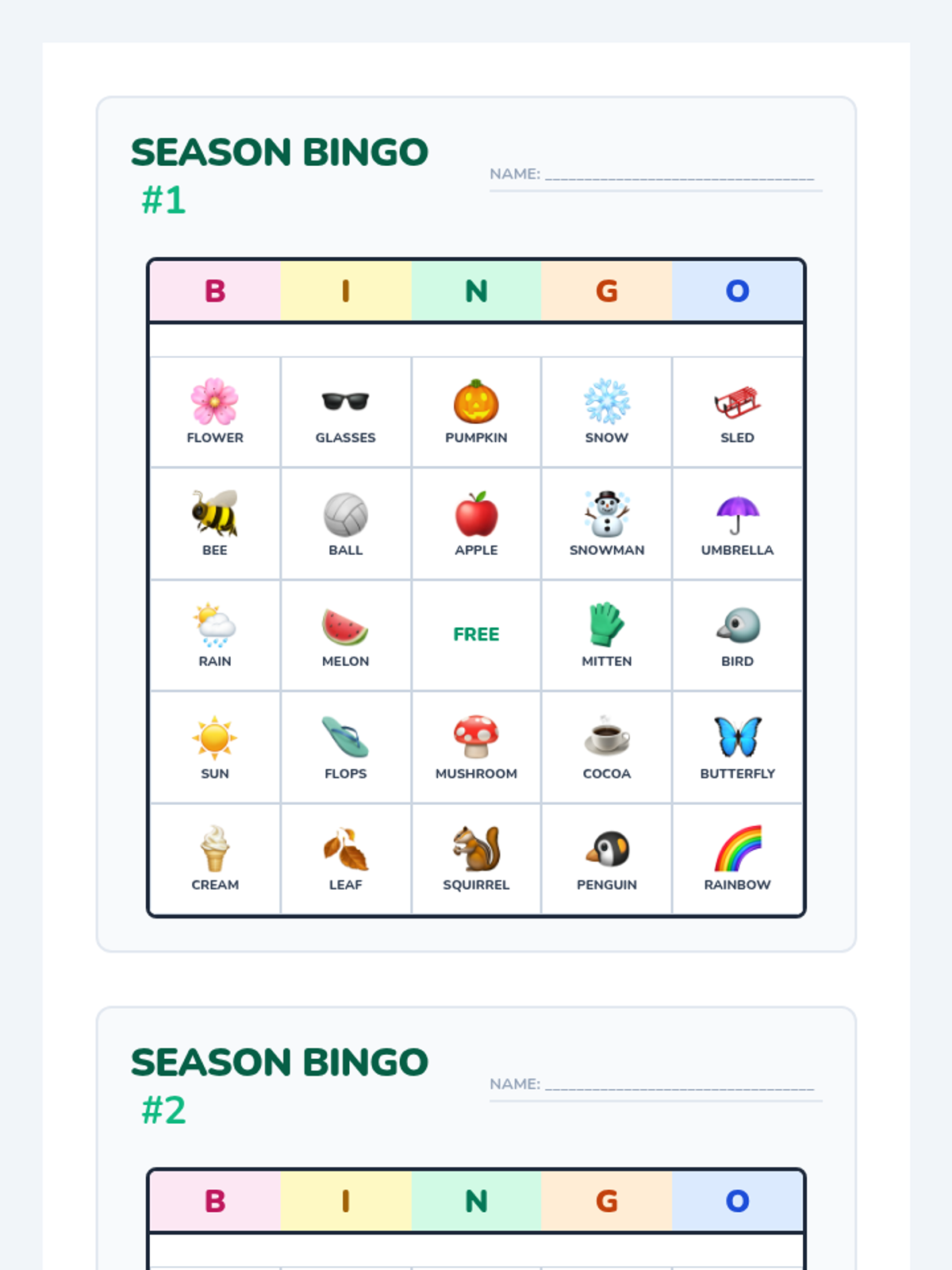
A fun, interactive lesson introducing elementary students to the four seasons through observation and play. Students will identify key characteristics of spring, summer, autumn, and winter using visual cues and interactive bingo.
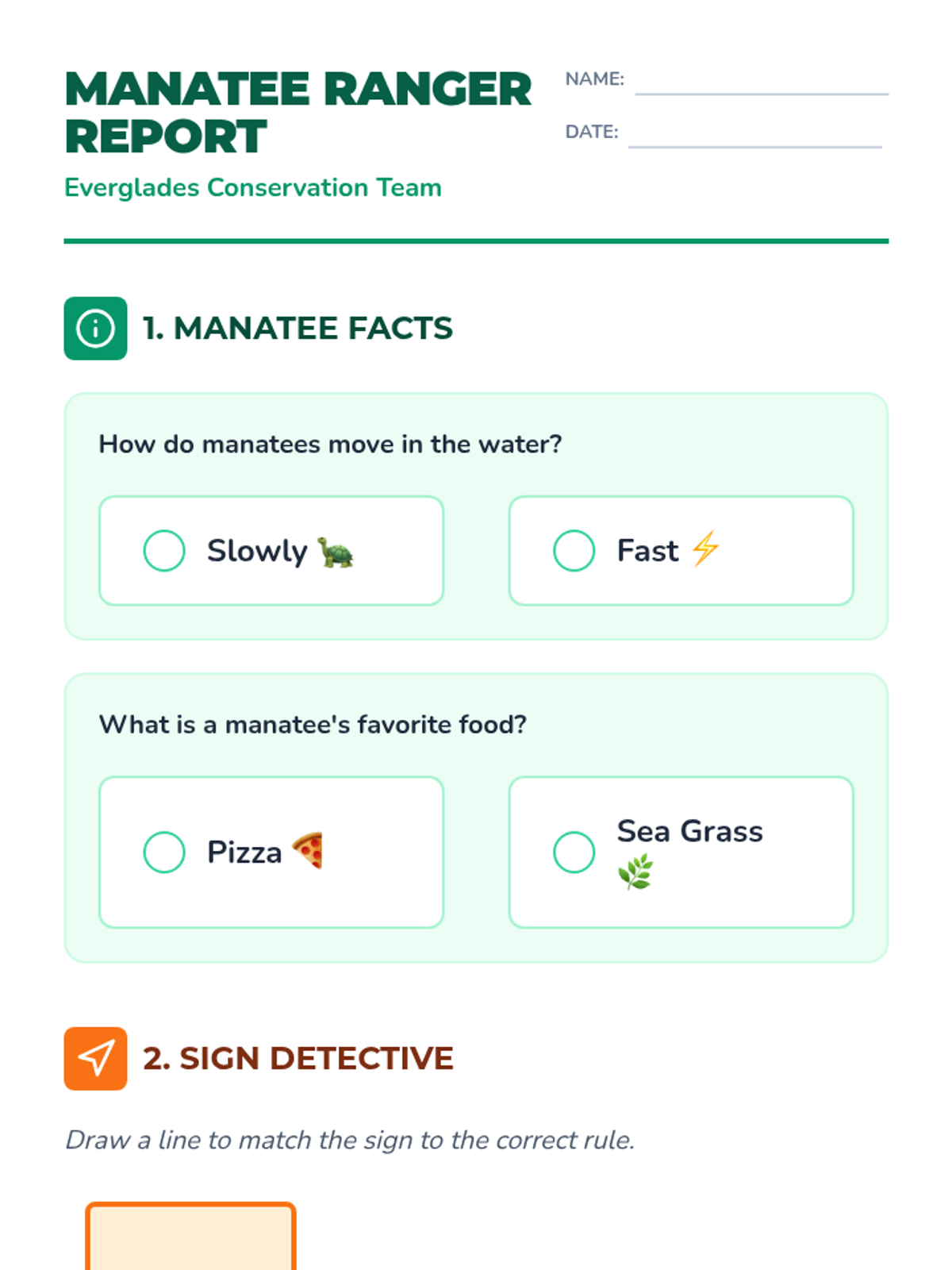
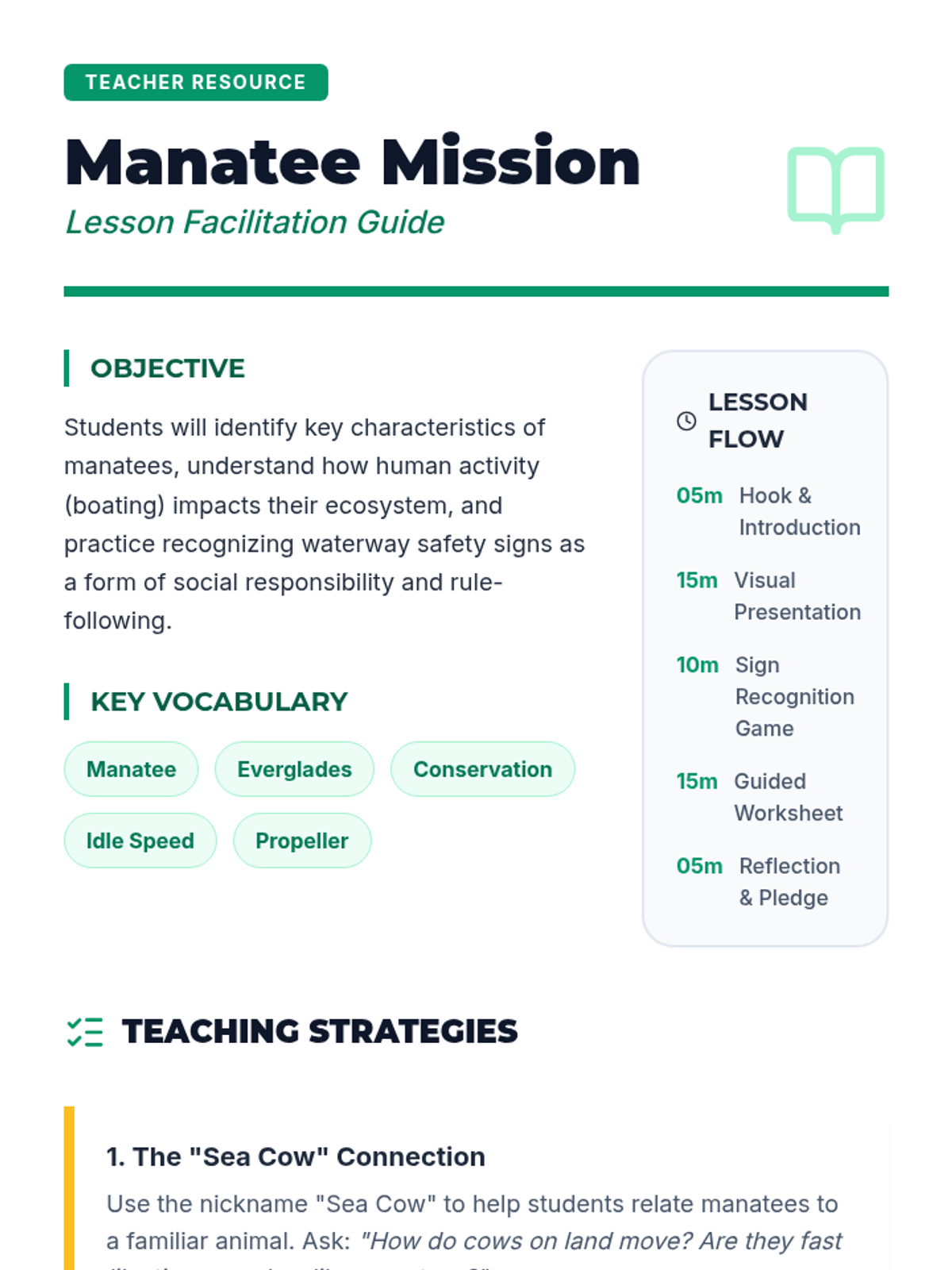
Students will explore the impact of boating on manatees in the Everglades, focusing on conservation efforts and the importance of following waterway safety signs. This lesson integrates science with social skills by emphasizing rule-following for the safety of ourselves and wildlife.
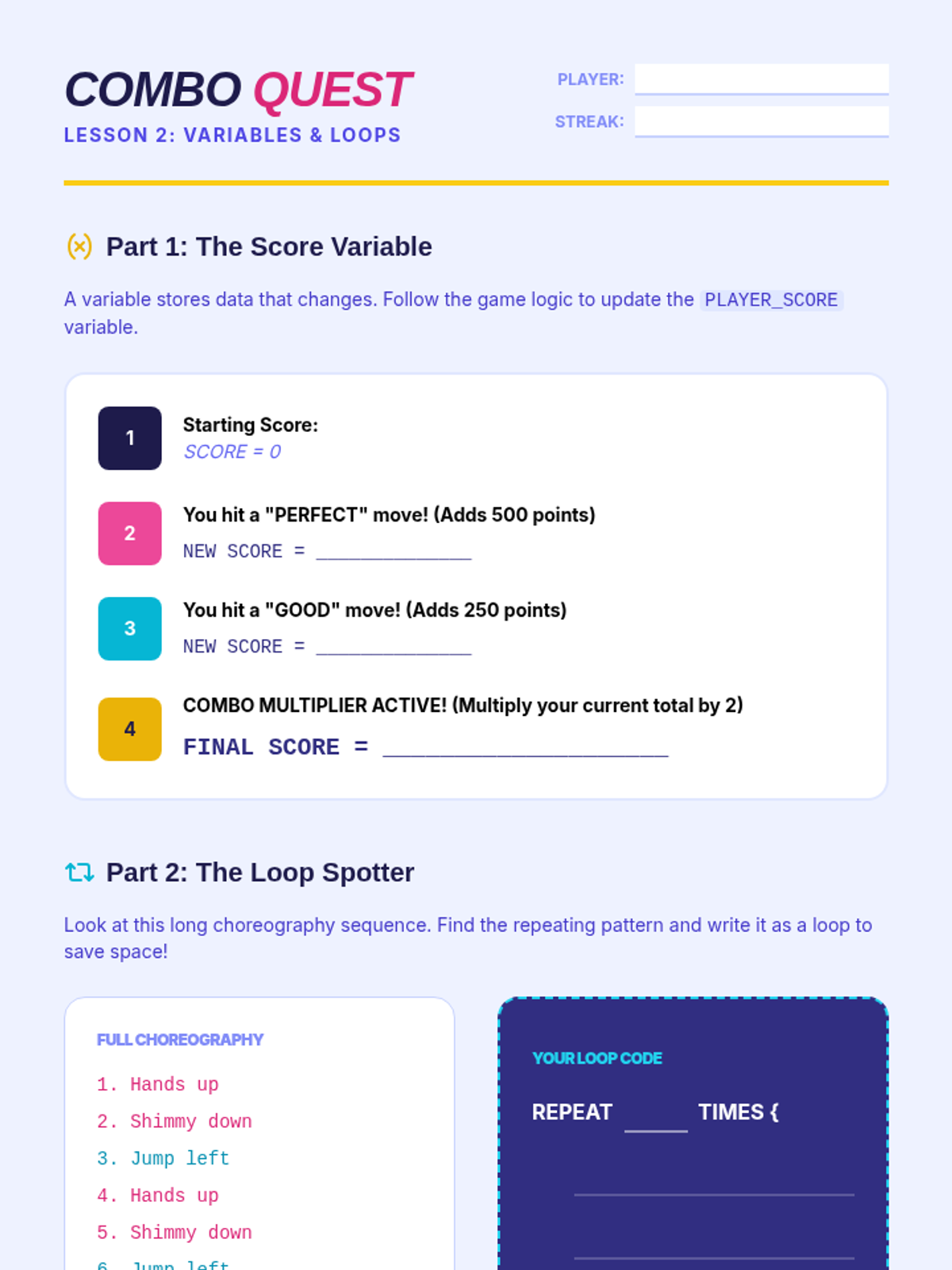
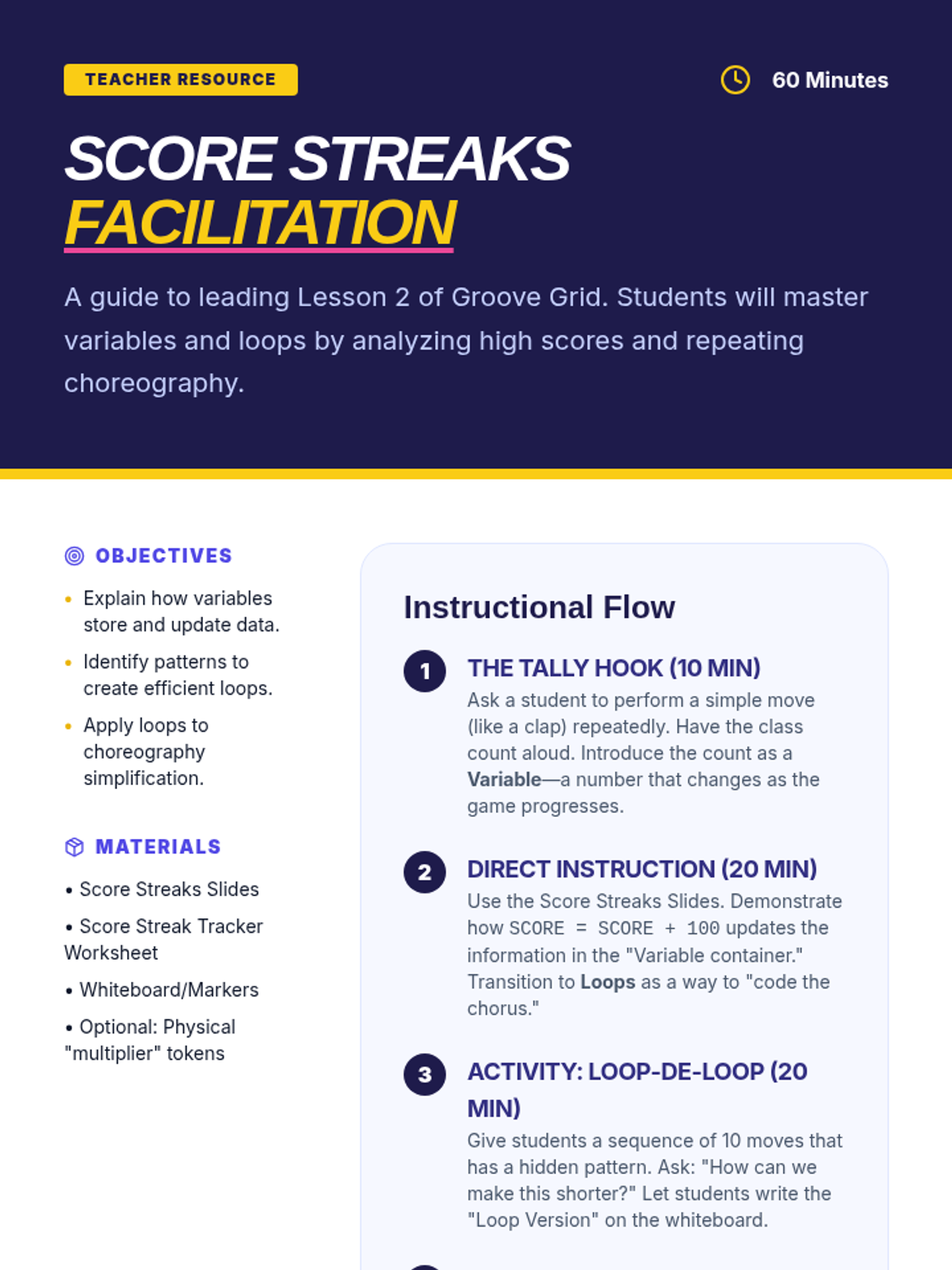
Students explore variables and loops through dance game scoring systems, combo streaks, and repeating choreography patterns.
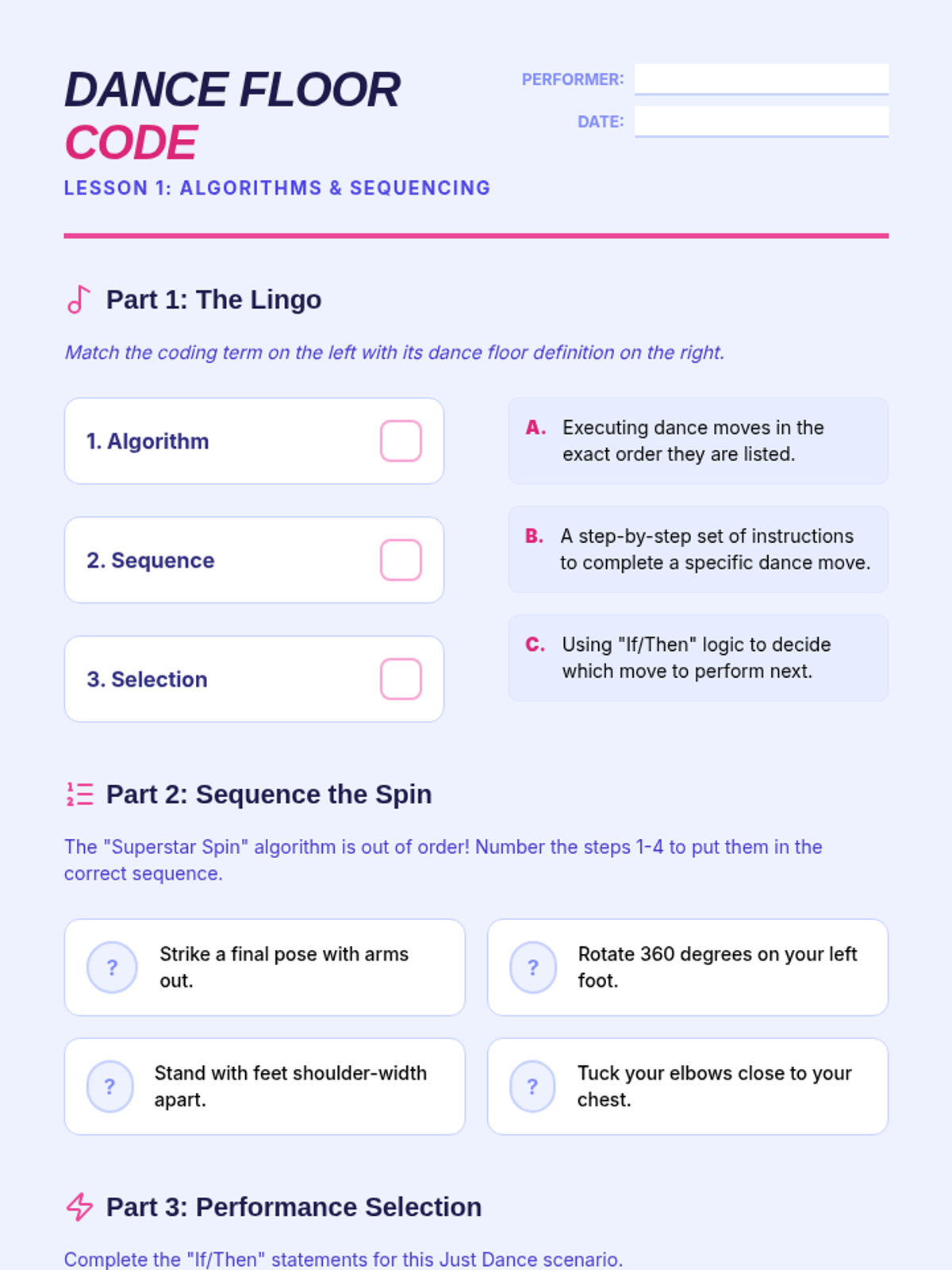
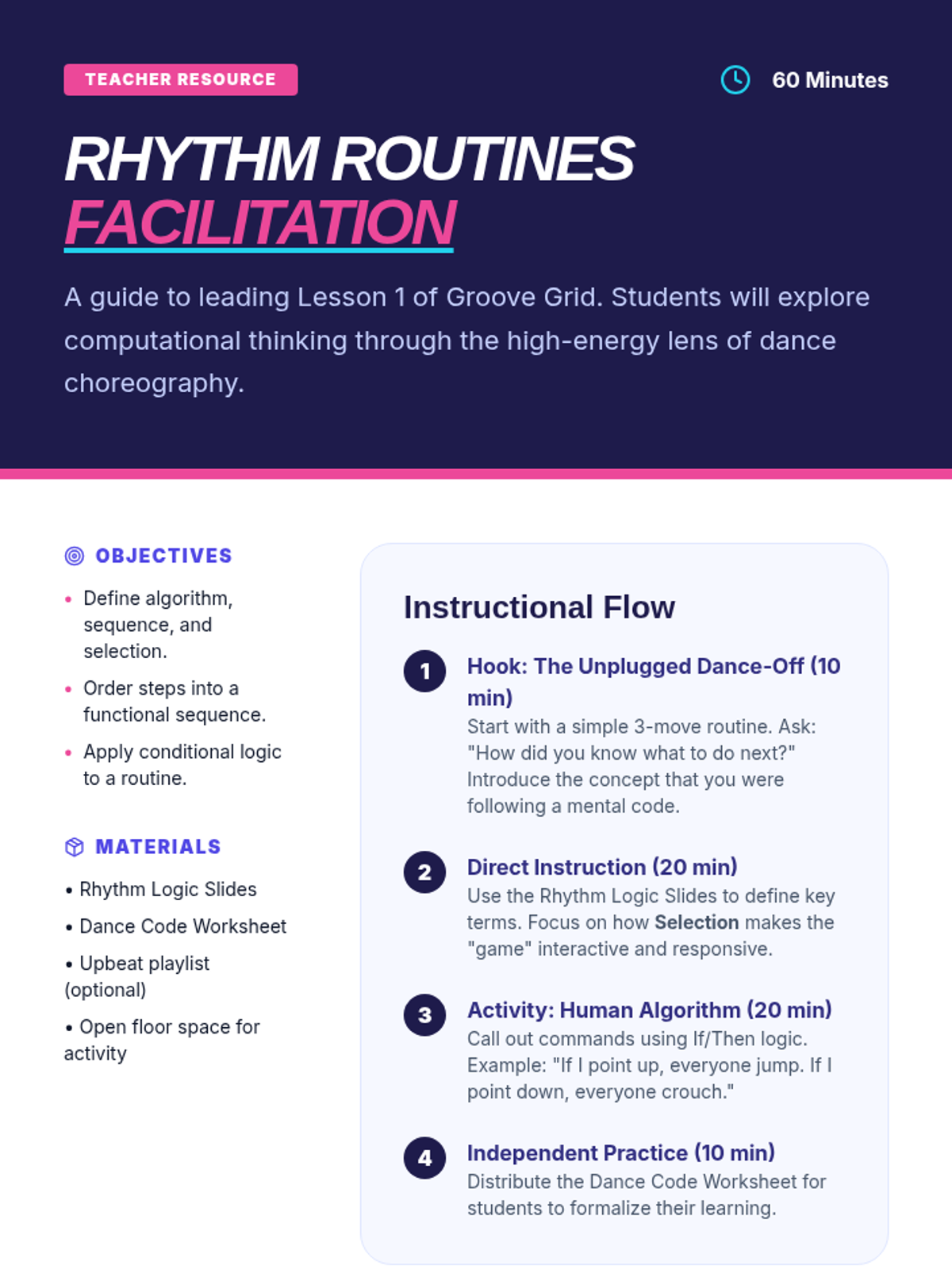
Students learn the basics of computational thinking, focusing on algorithms and sequencing by designing dance routines and step sequences.
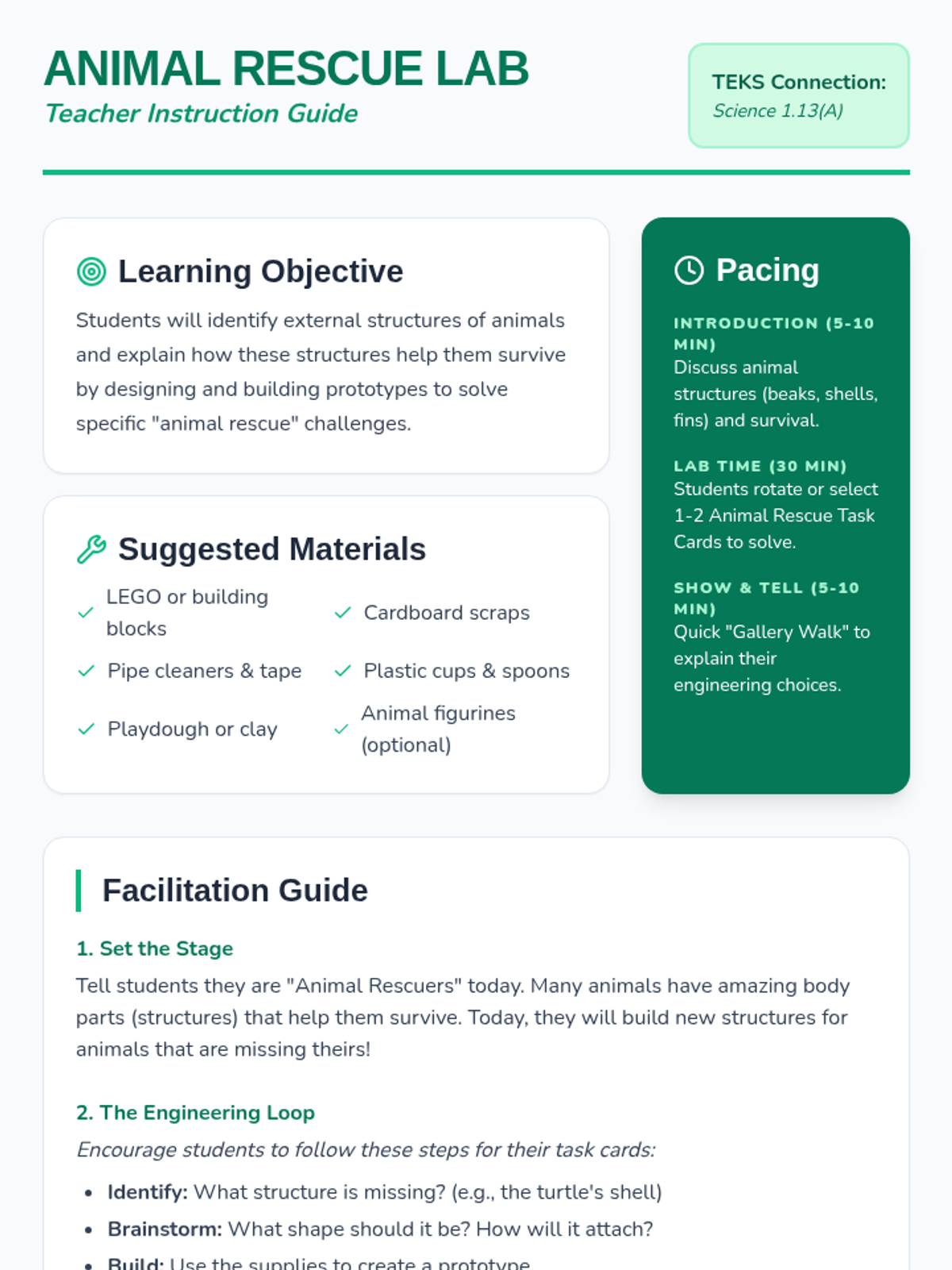
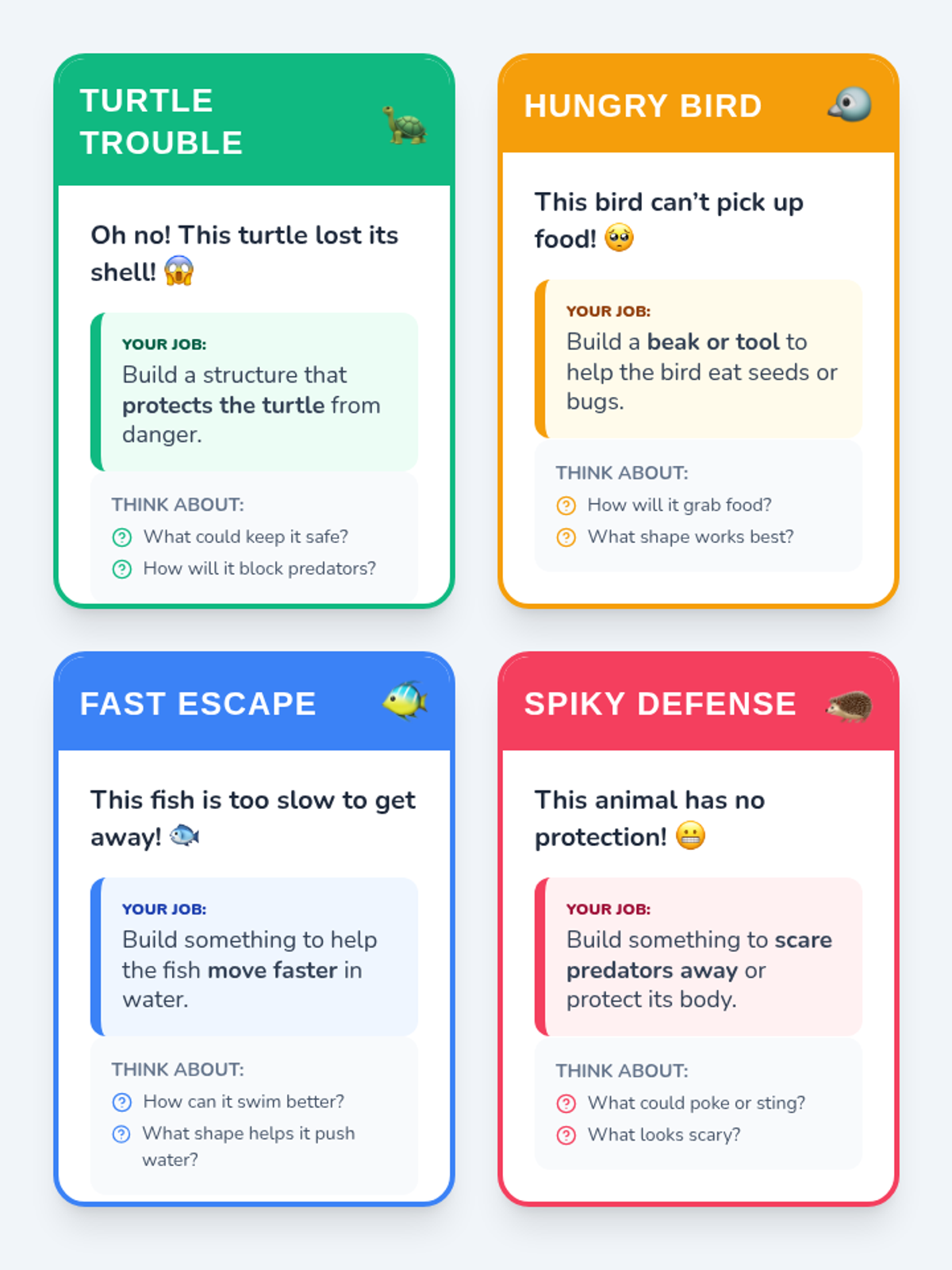
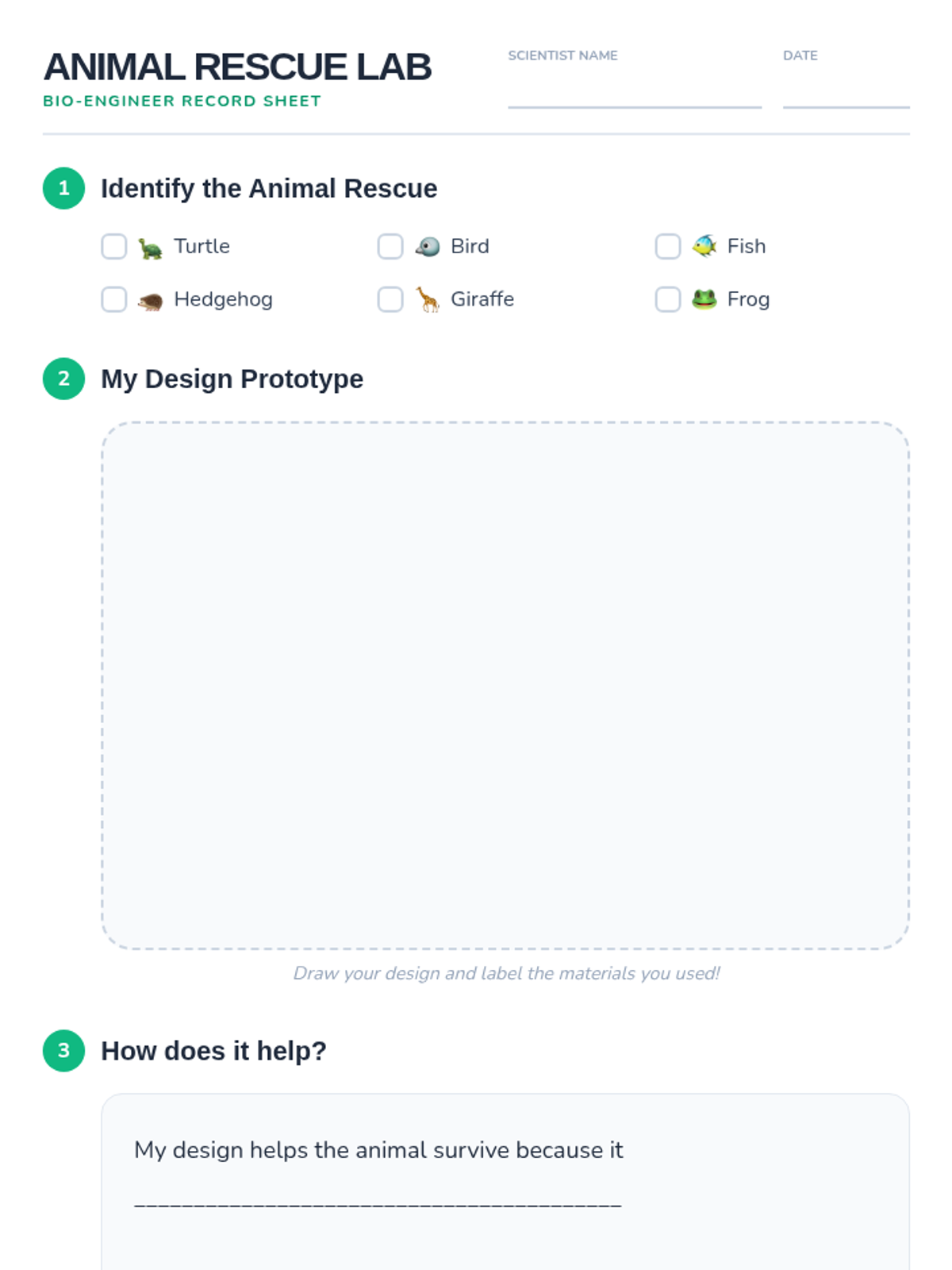
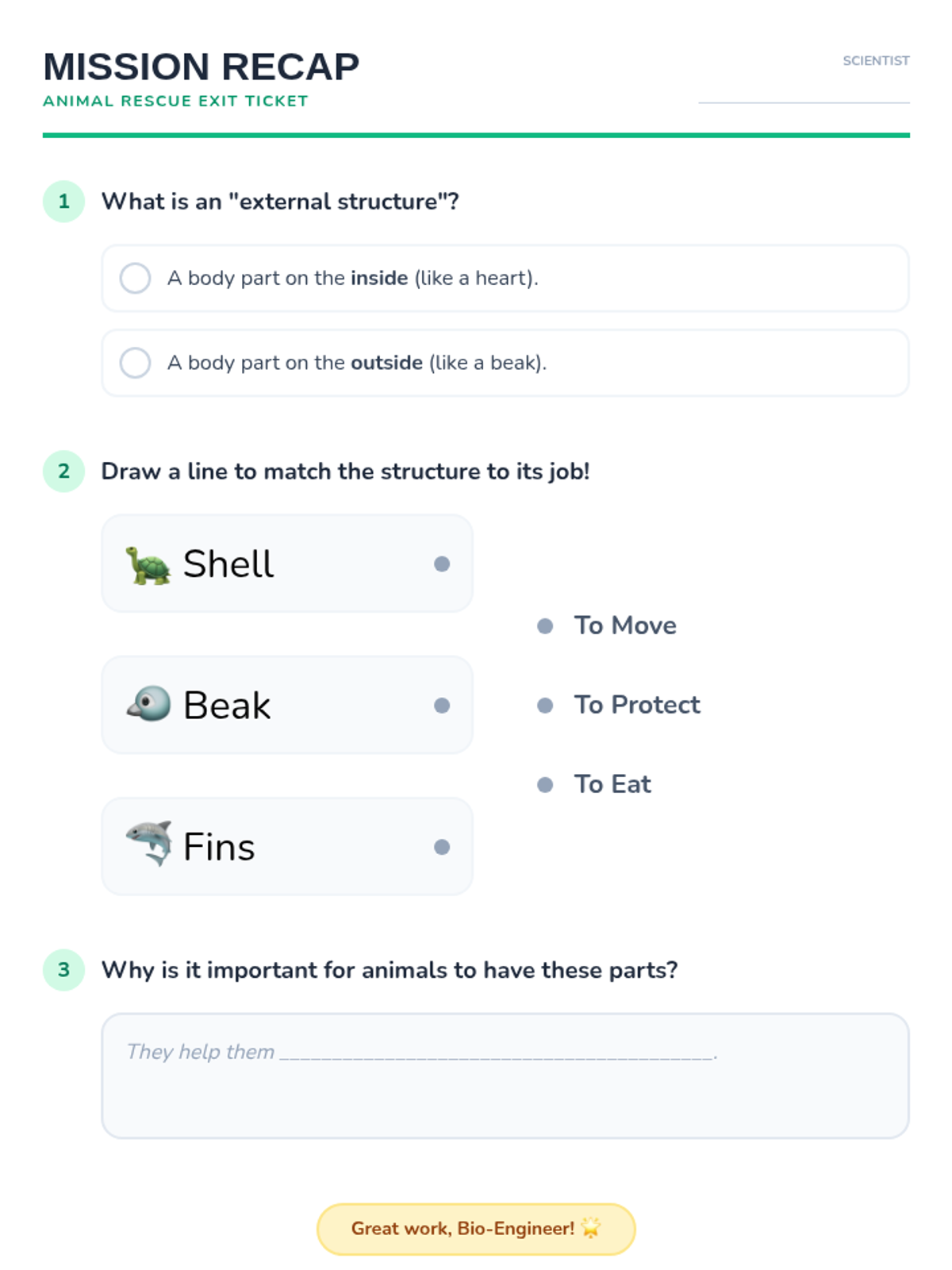
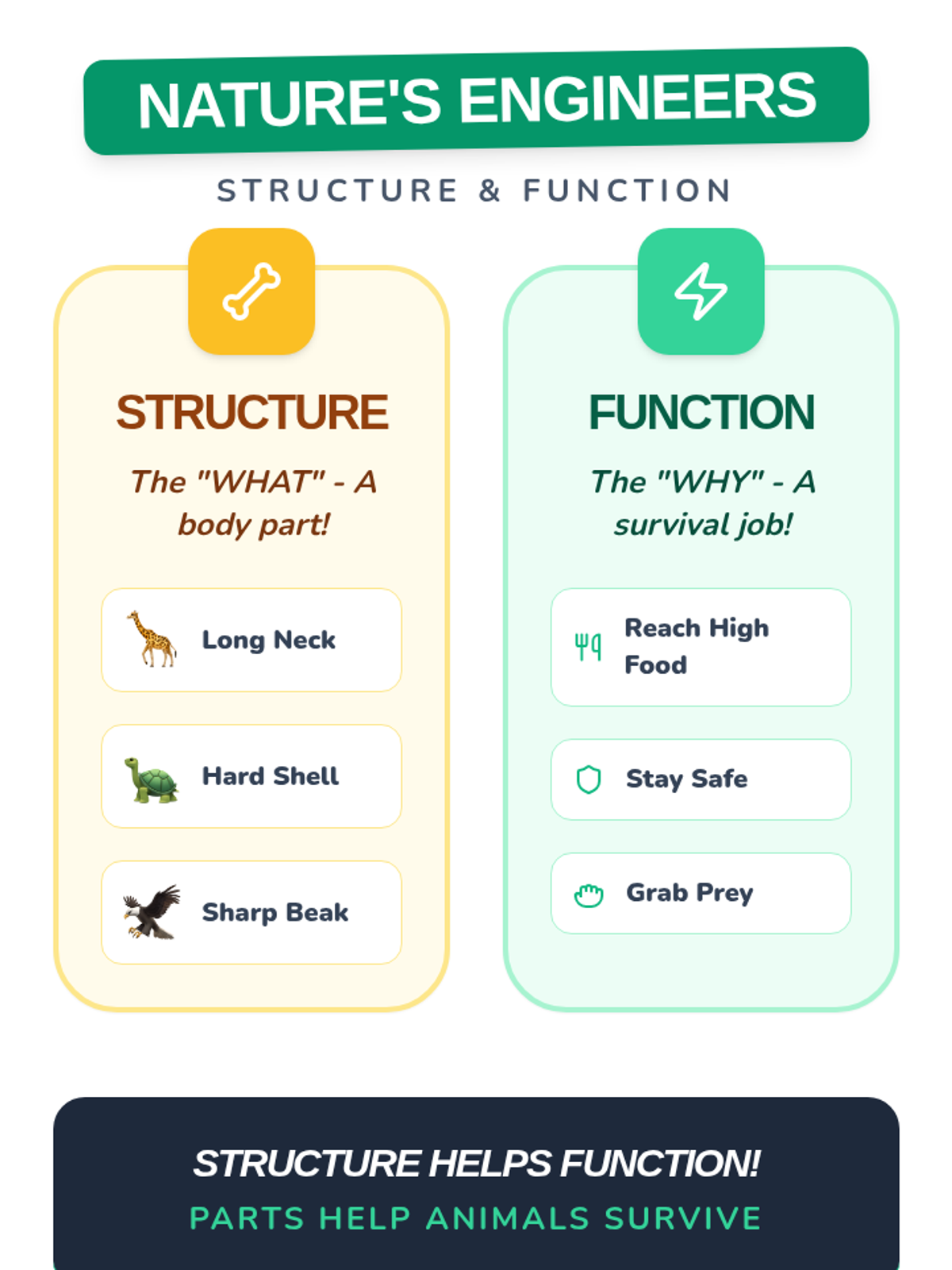
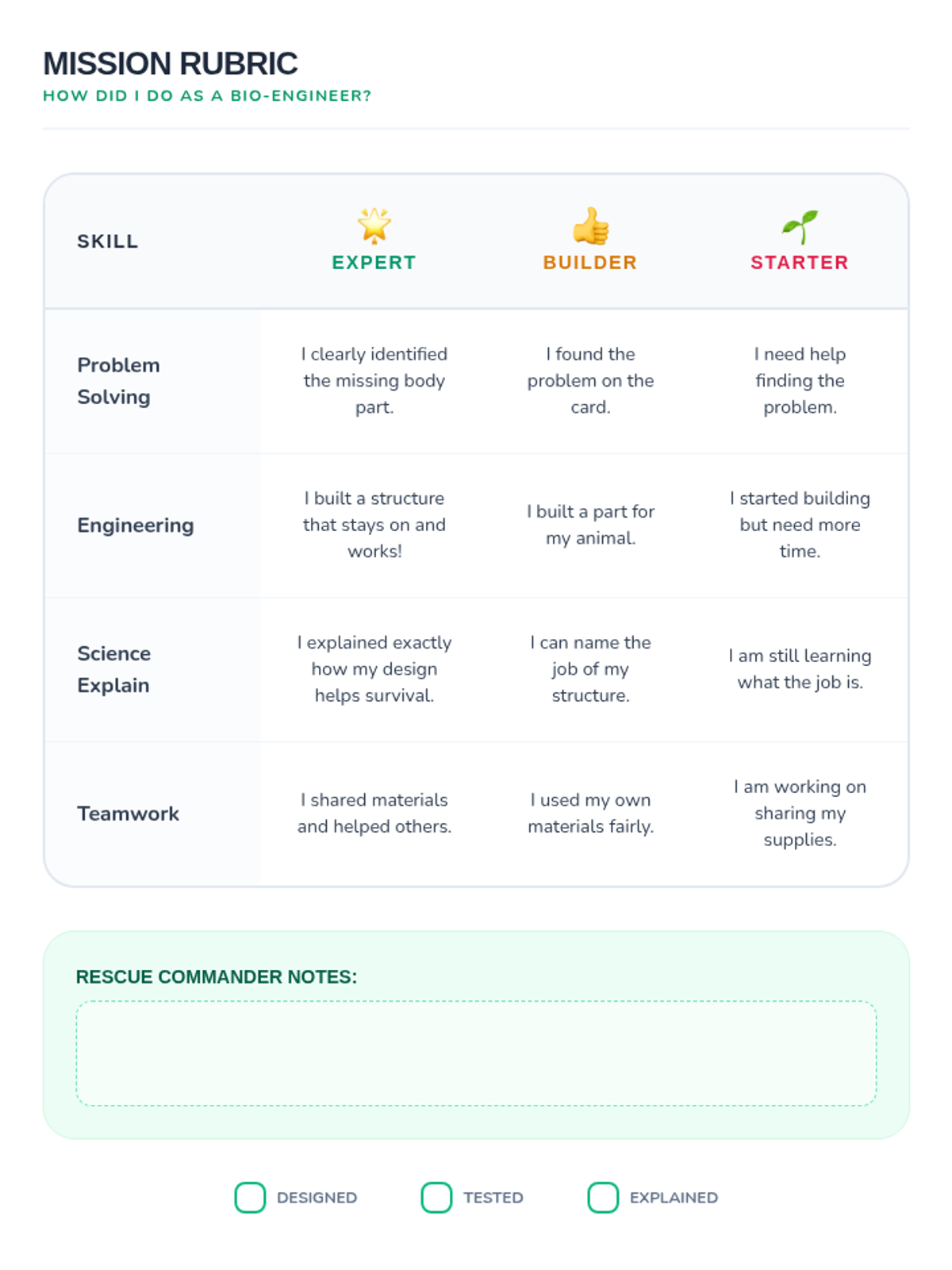
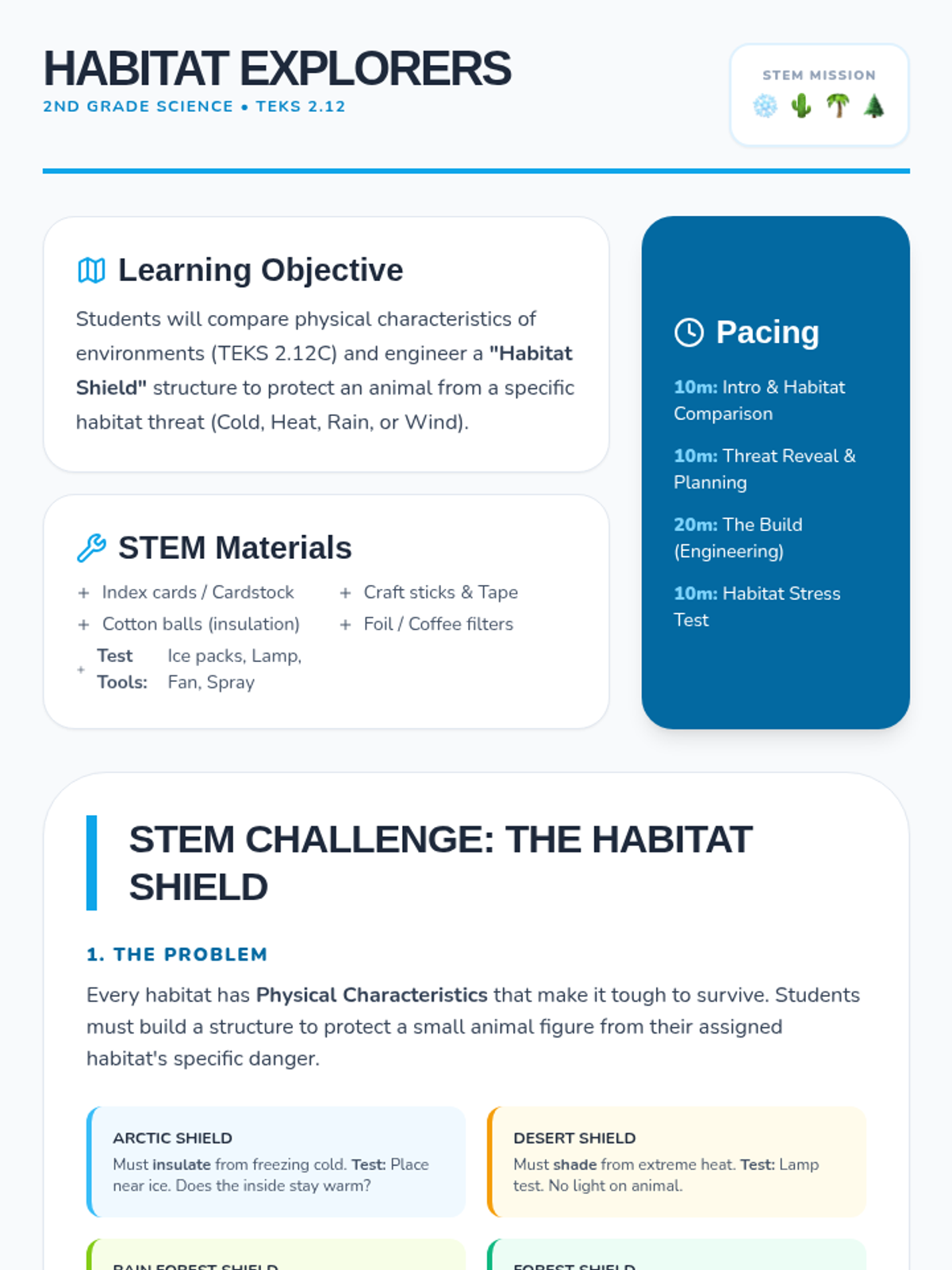
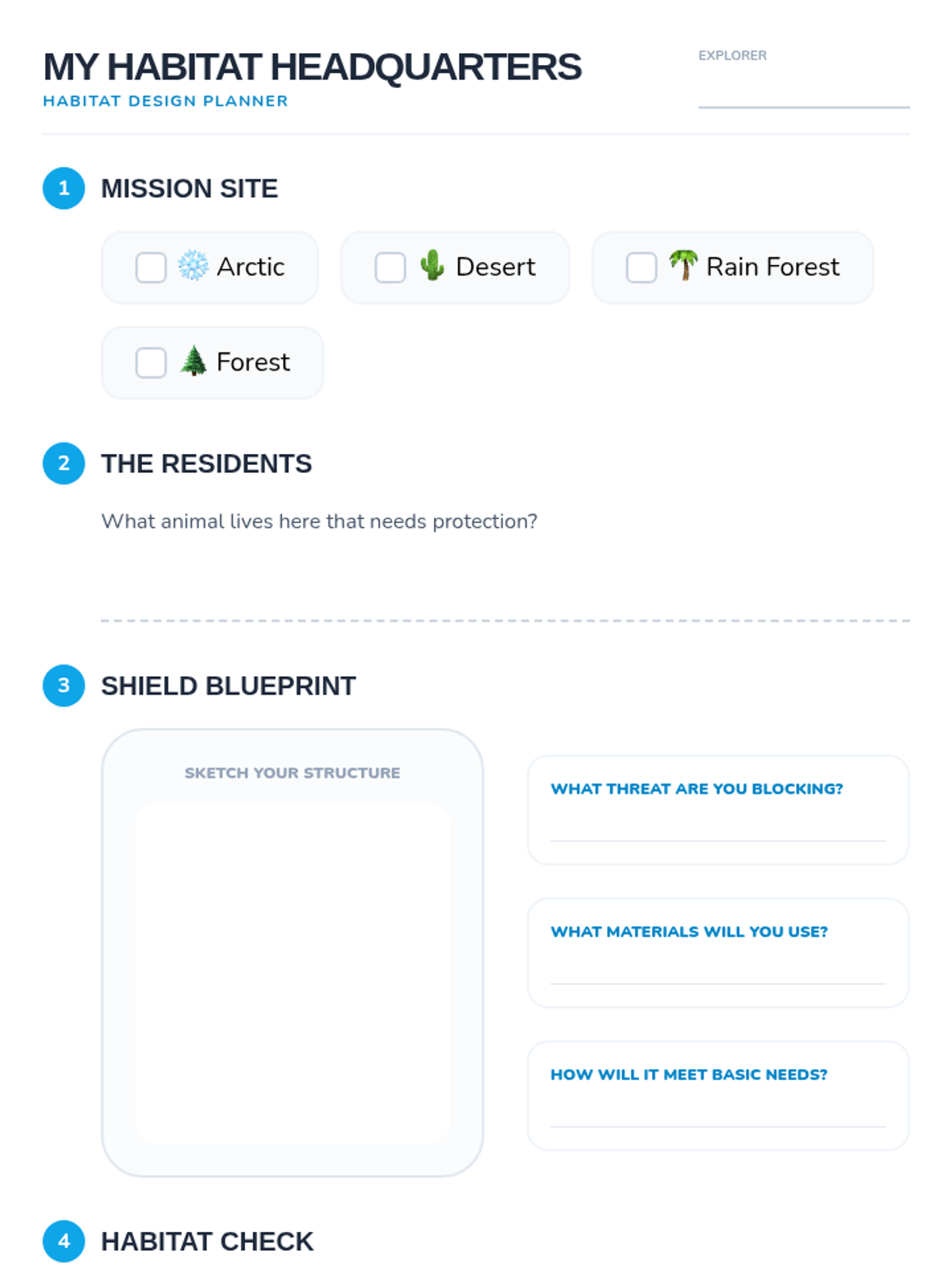
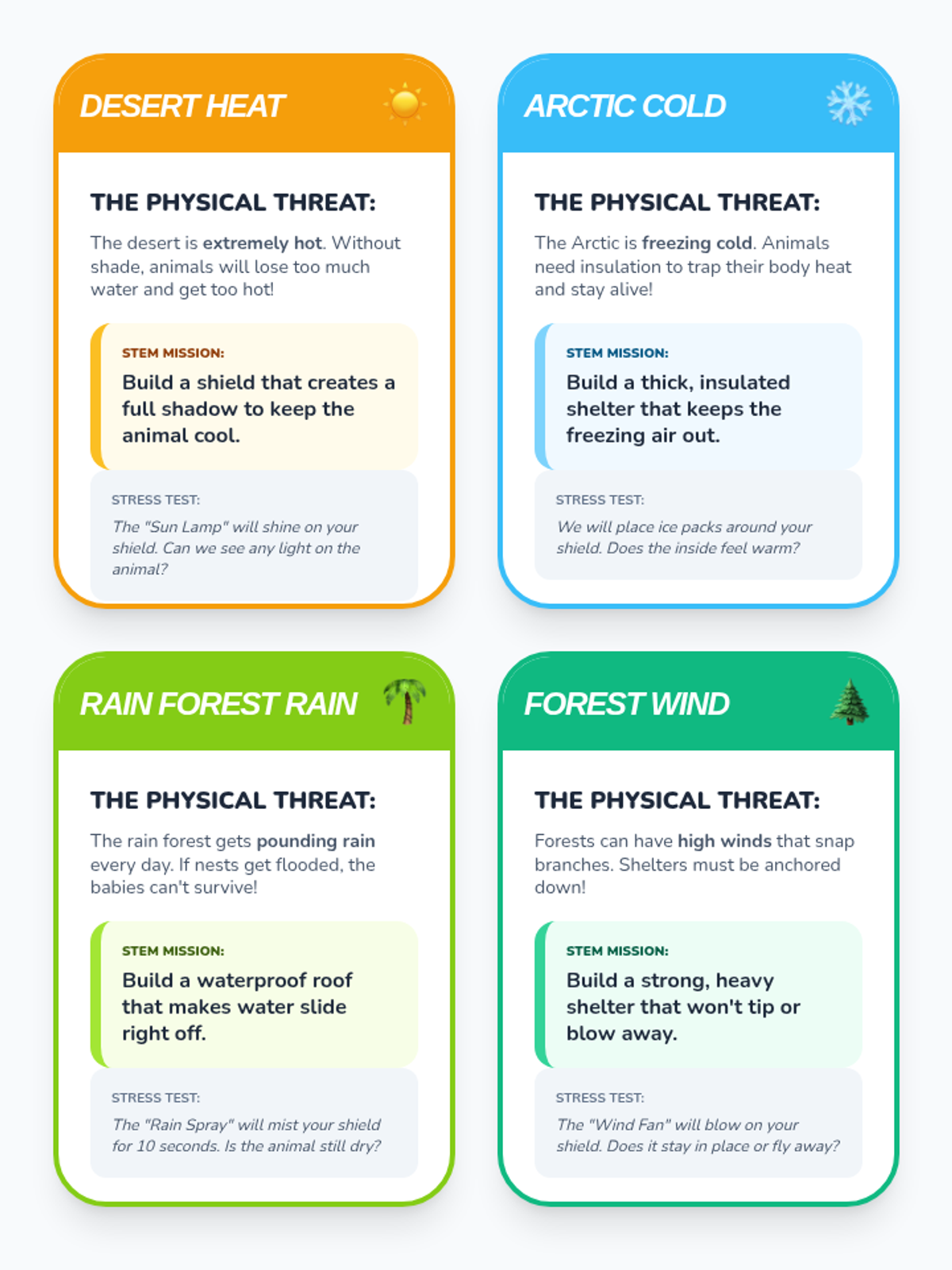
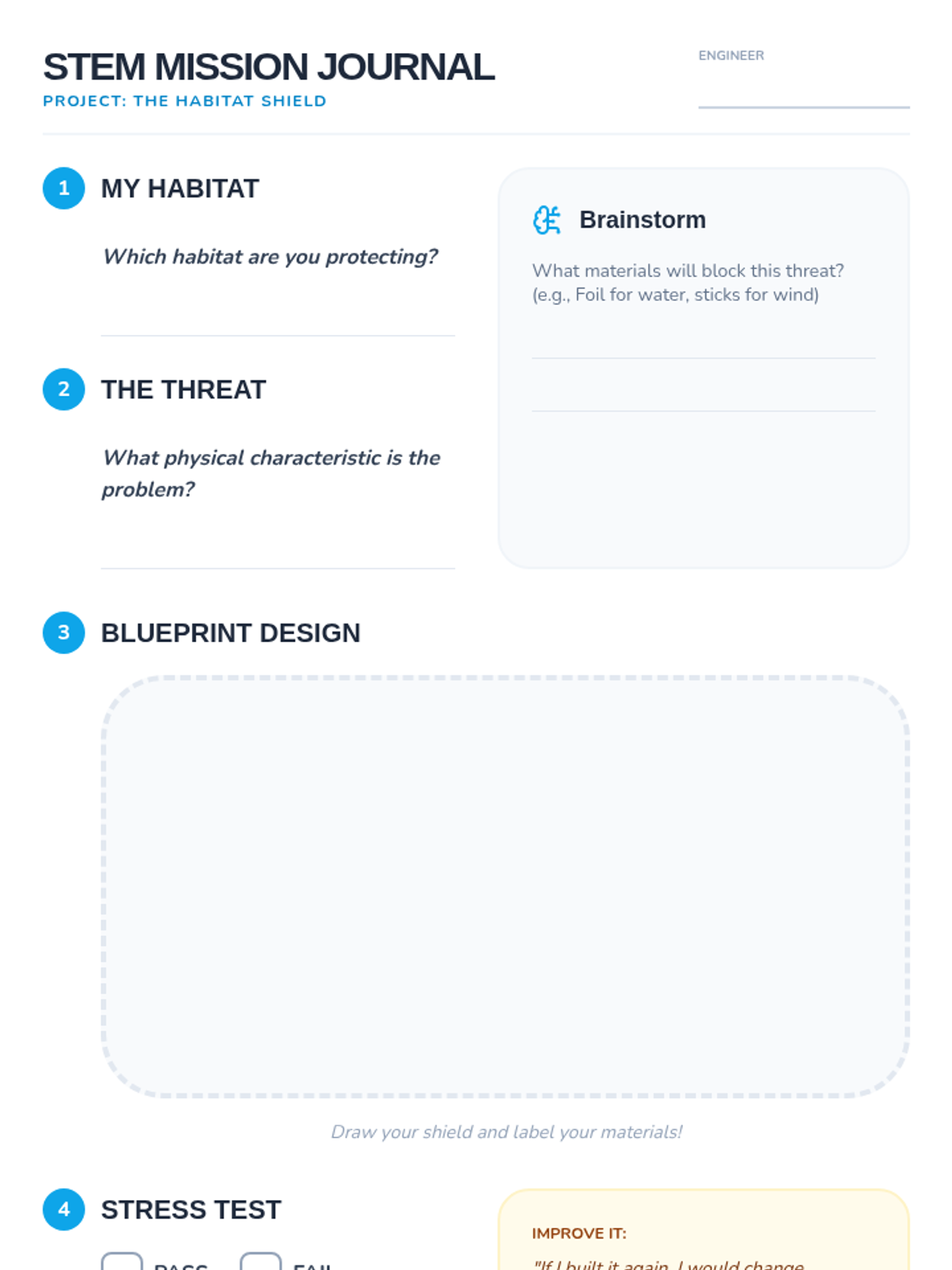
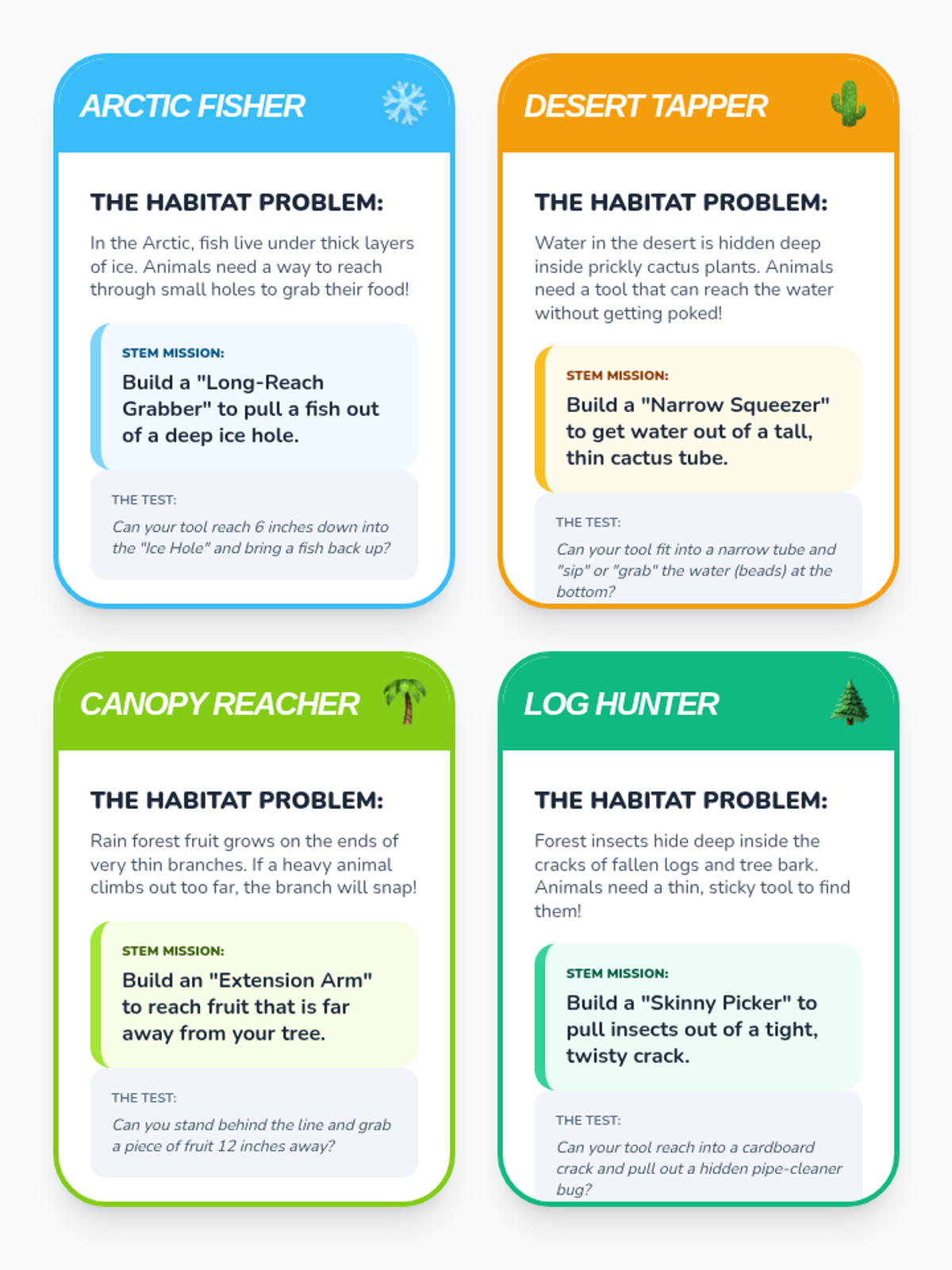
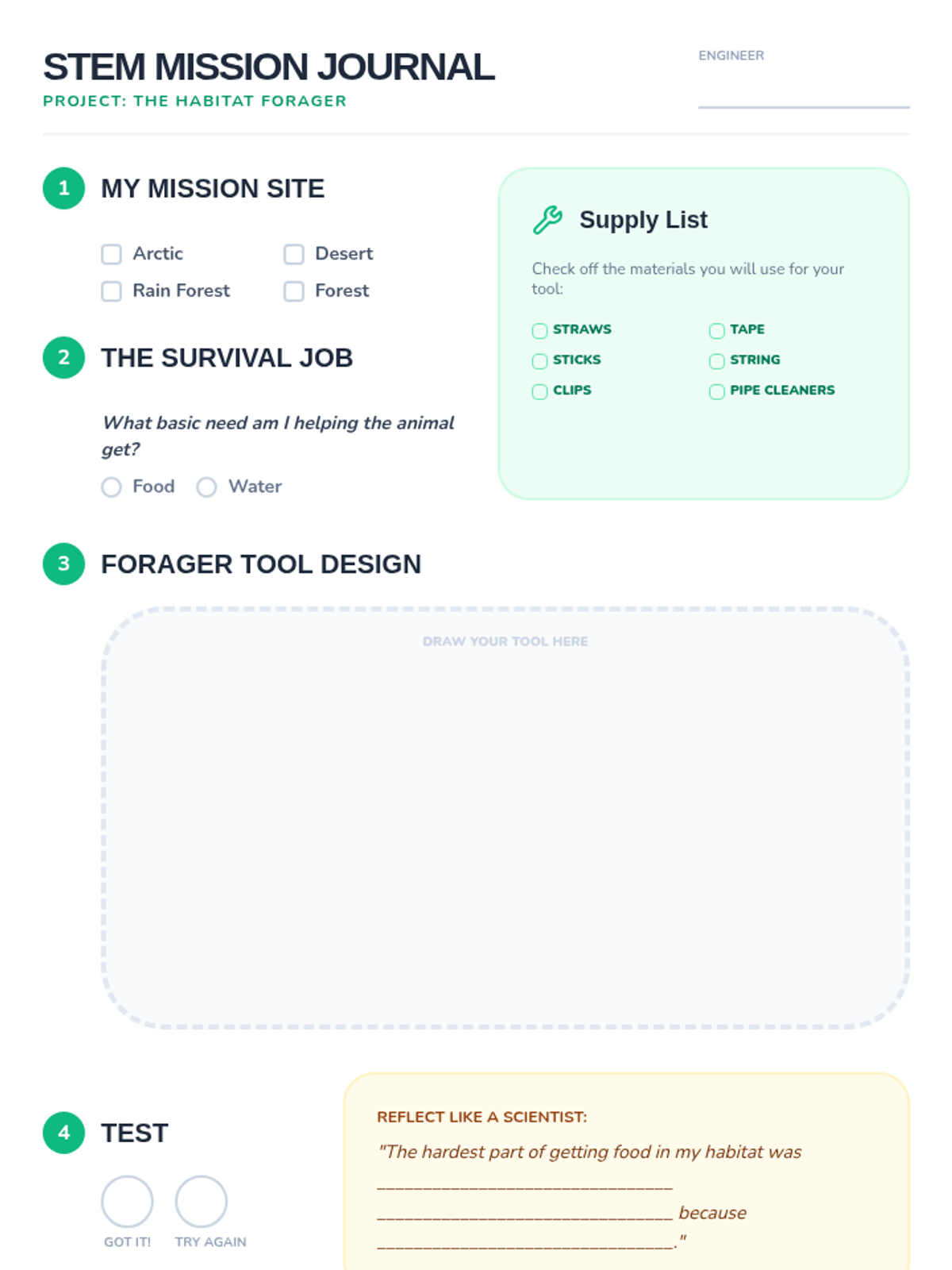
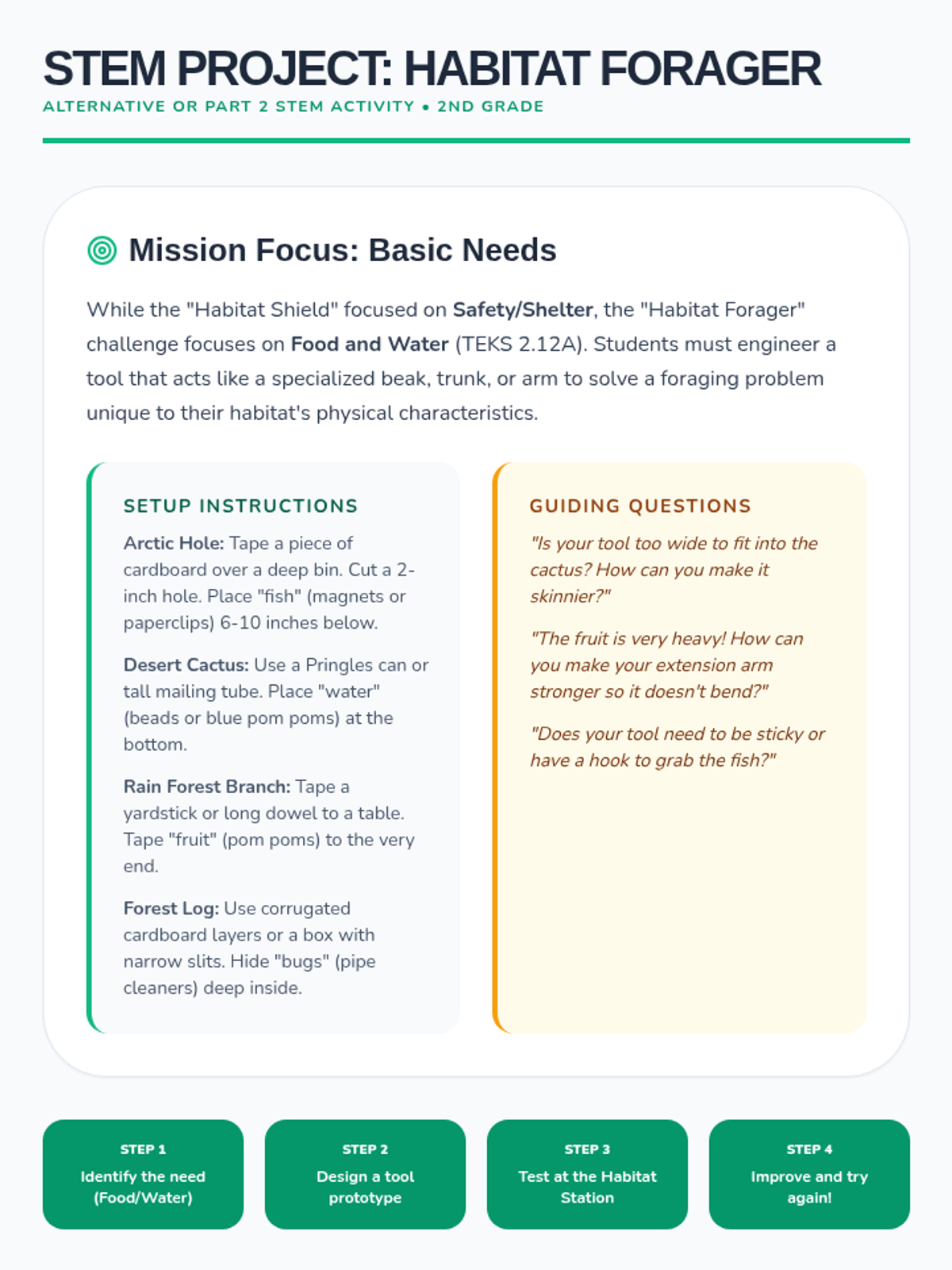
A hands-on engineering challenge where students design structures to help animals survive, focusing on TEKS 1.13A regarding animal structures and functions.
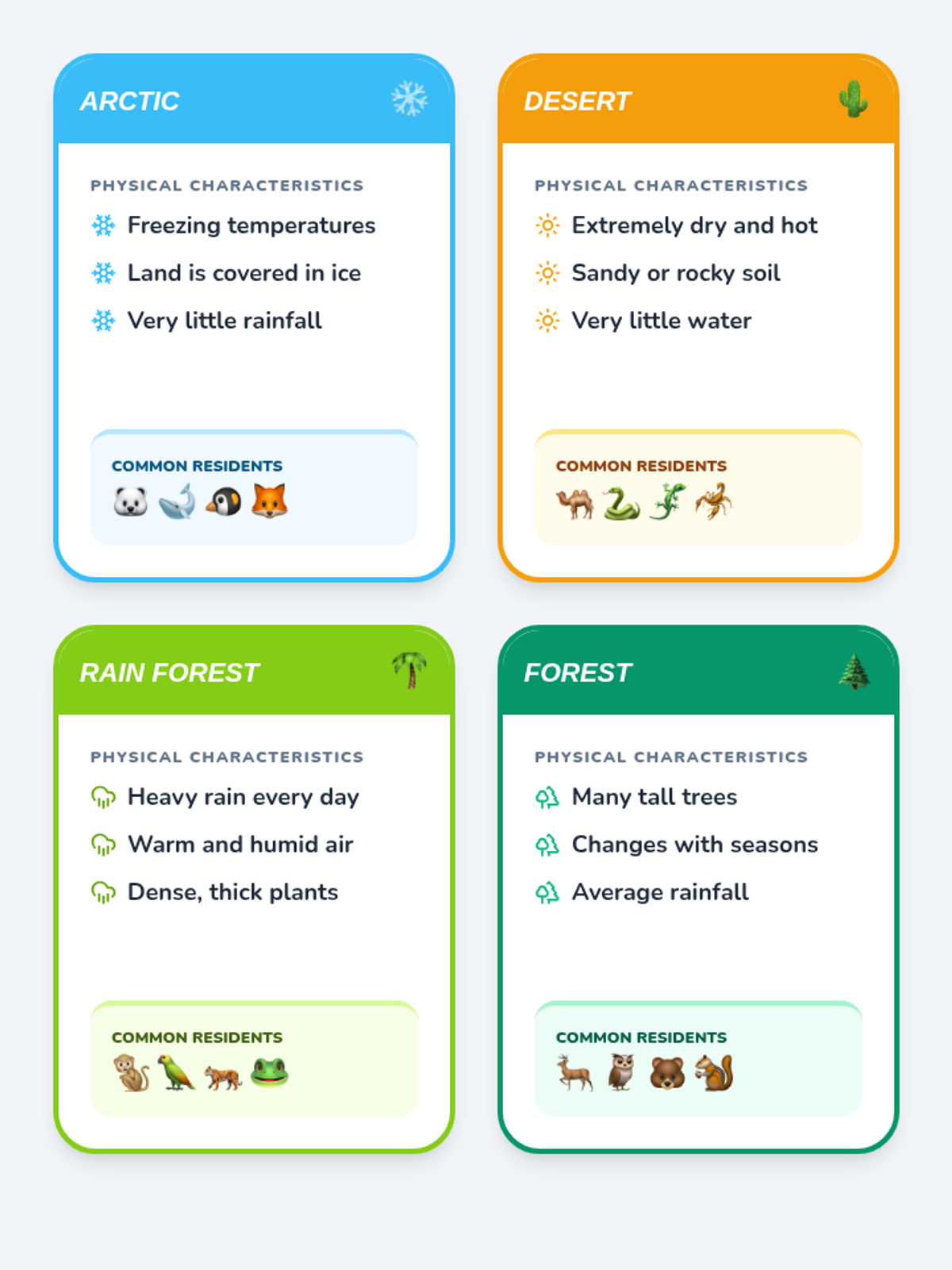
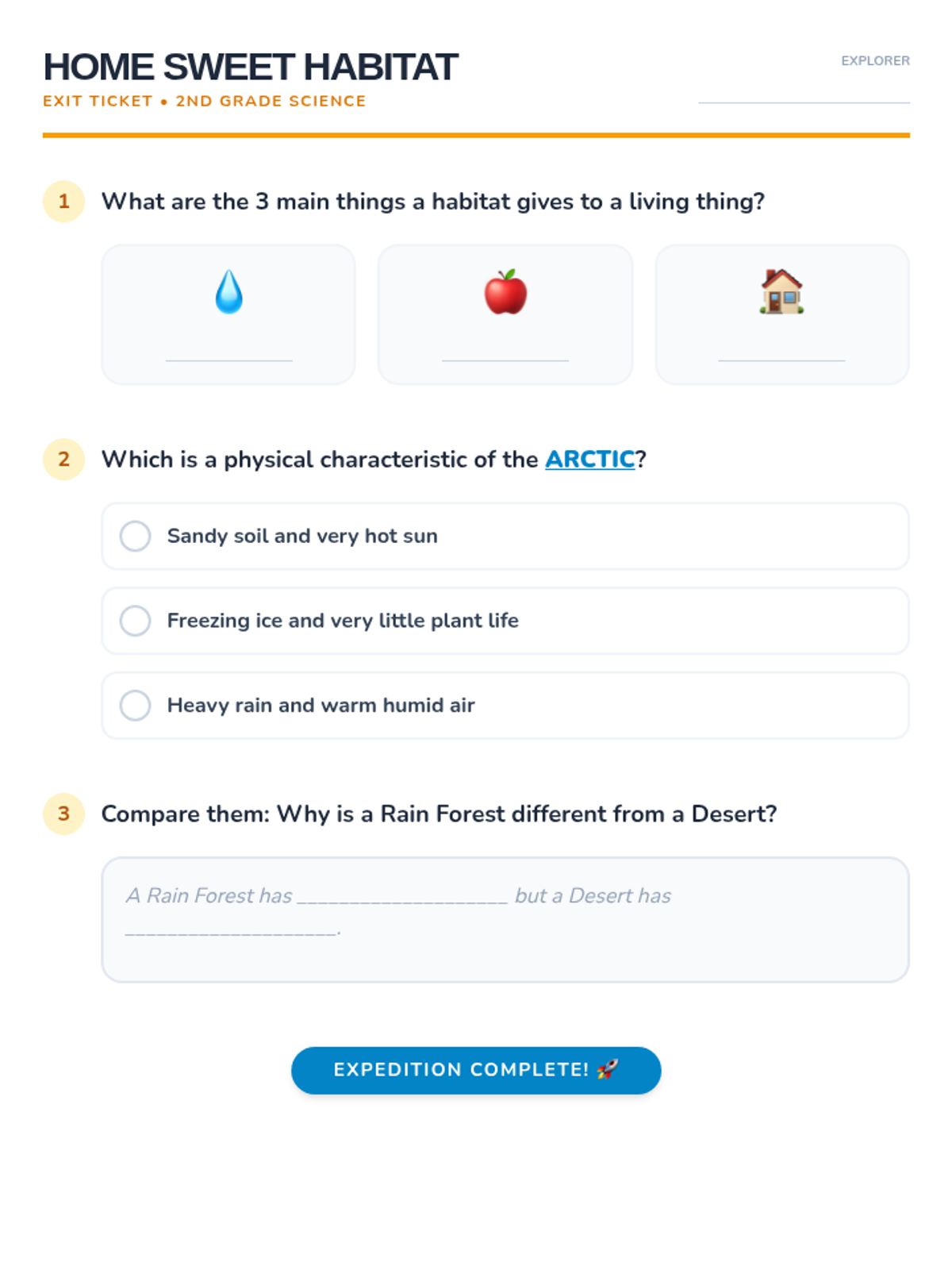
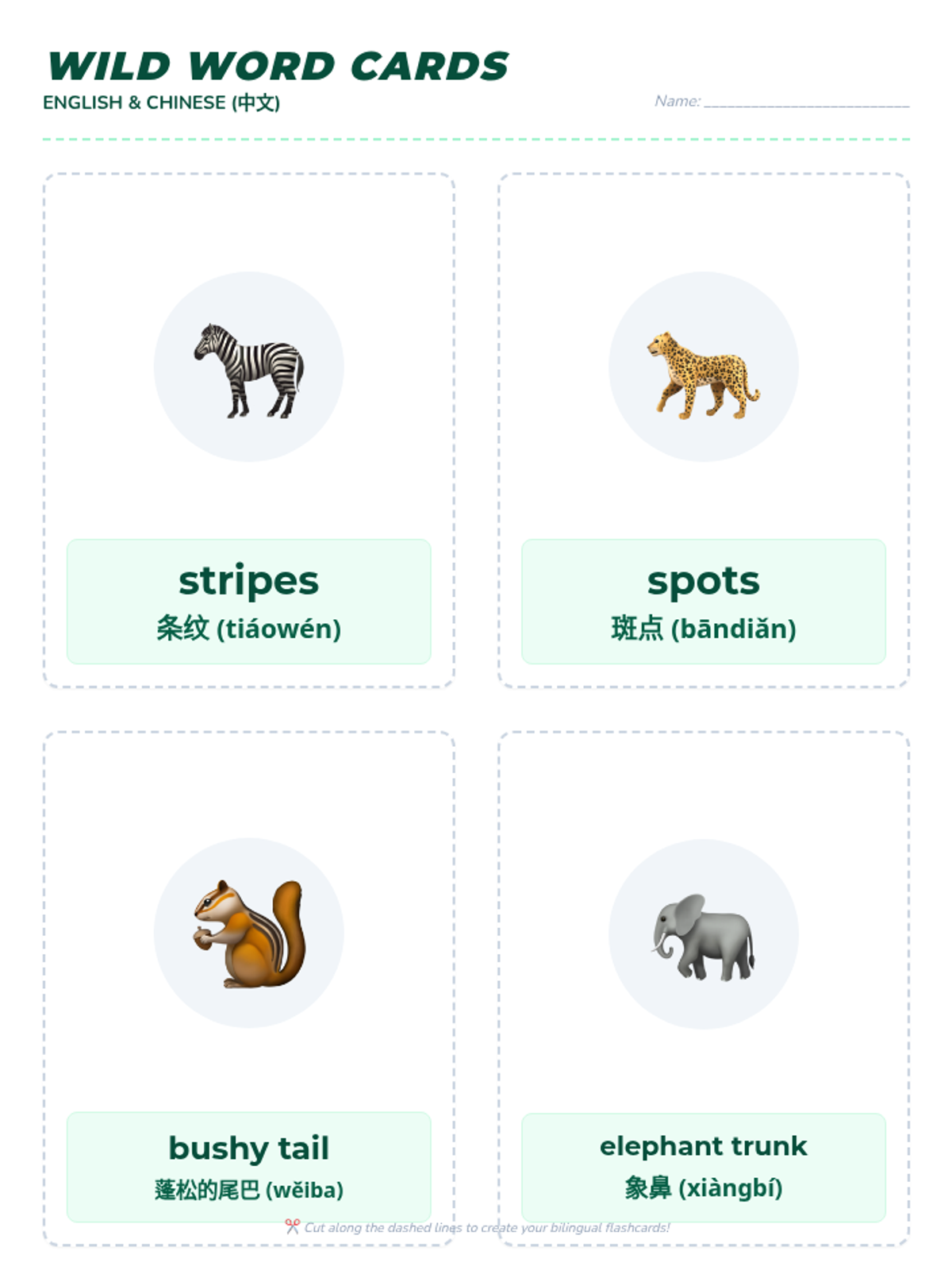
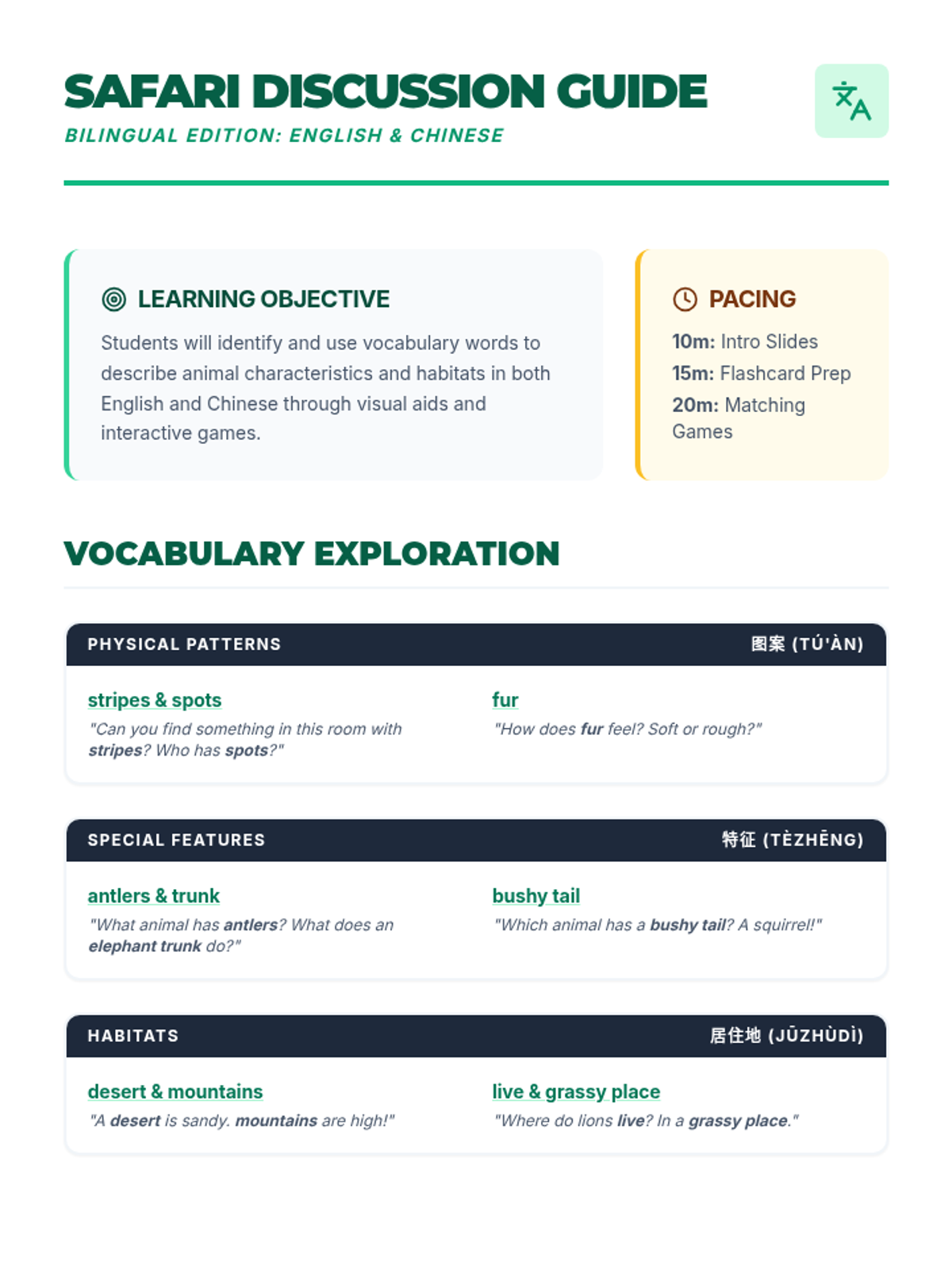
A lesson focused on animal characteristics and habitats, helping students build descriptive vocabulary.
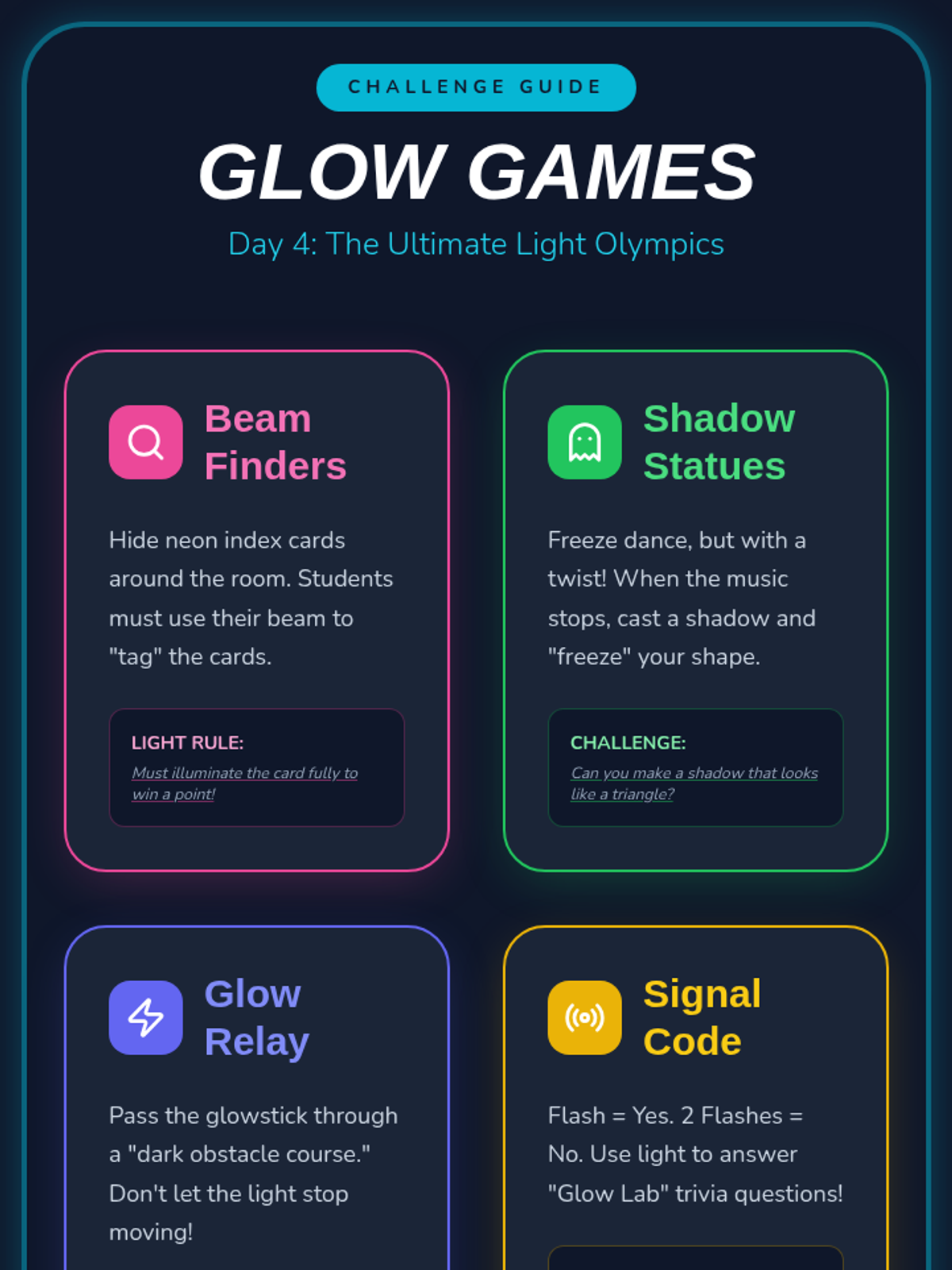
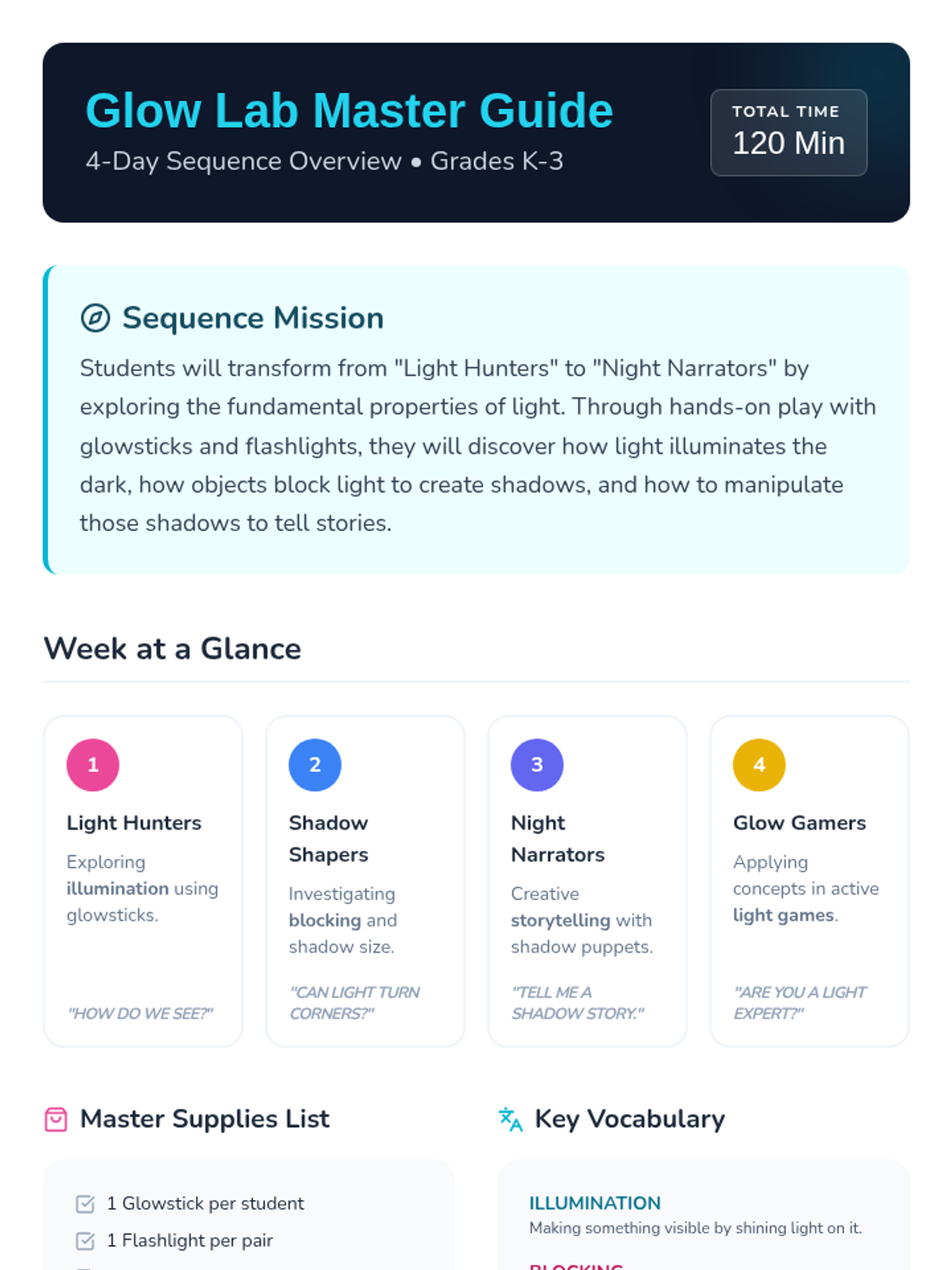
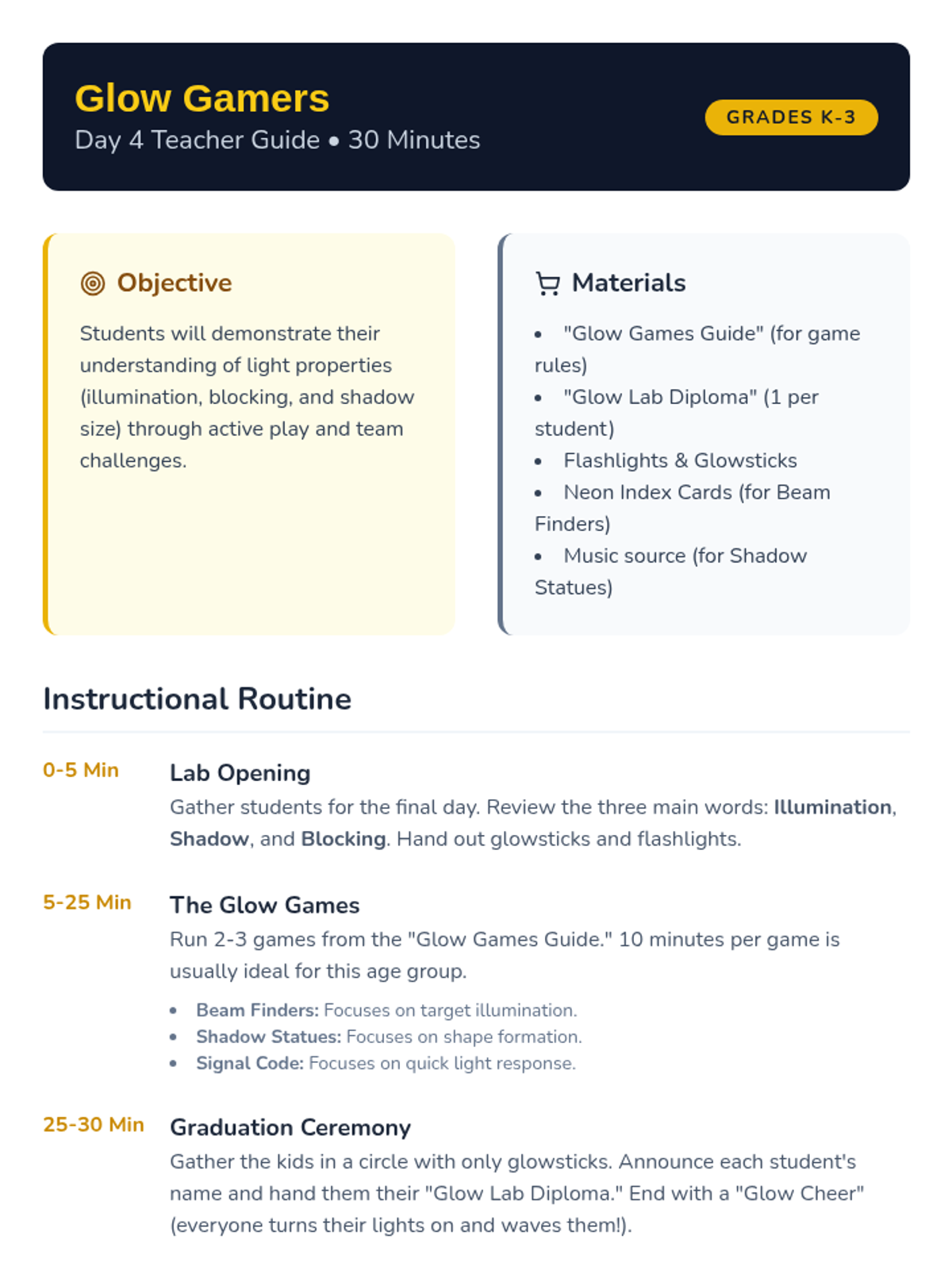
A culminating session of light-based games and challenges designed to reinforce concepts of illumination and shadow in a fun, active format.
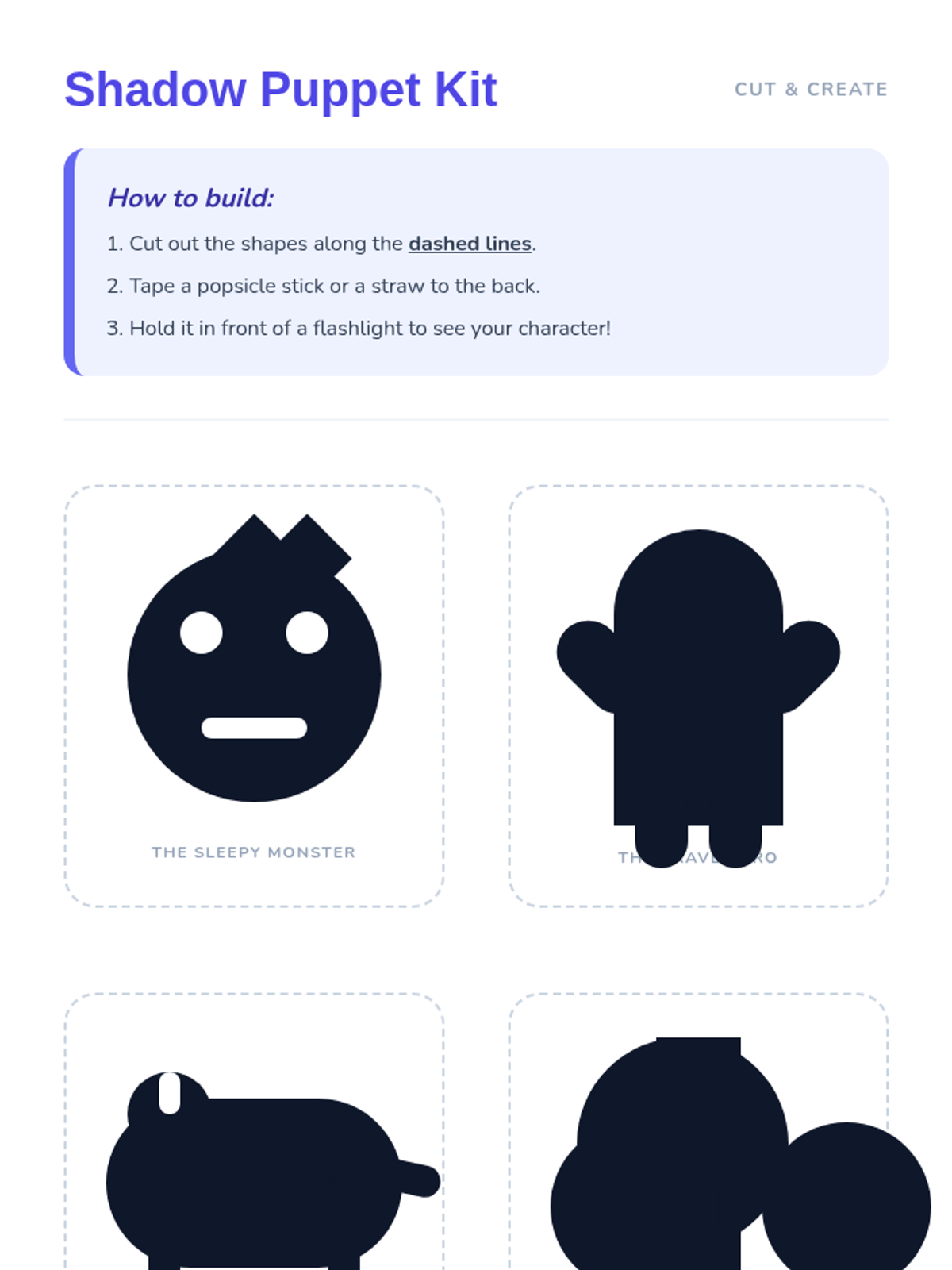
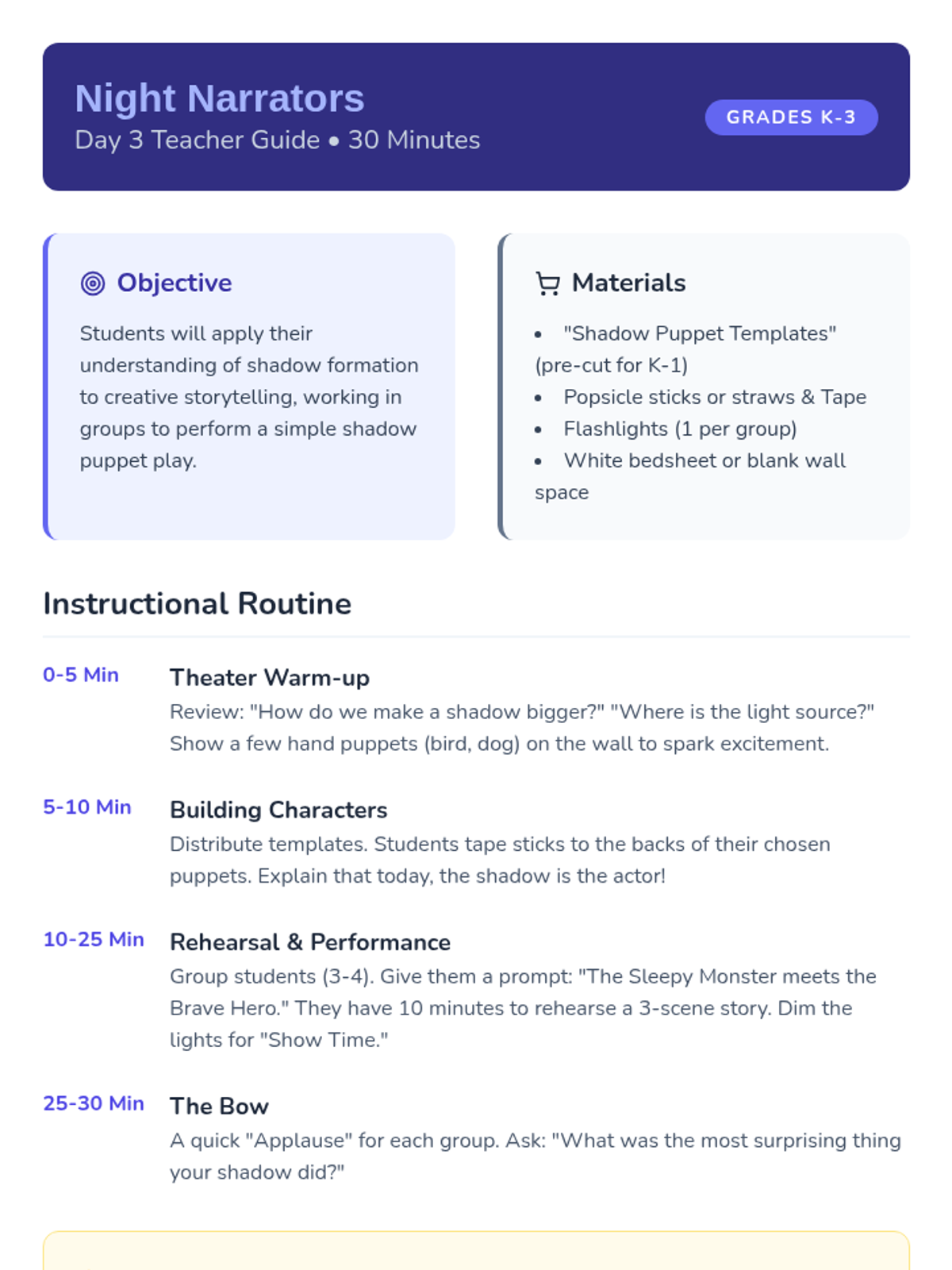
Students apply their knowledge of shadows to create shadow puppets and perform short group stories using light as a medium.
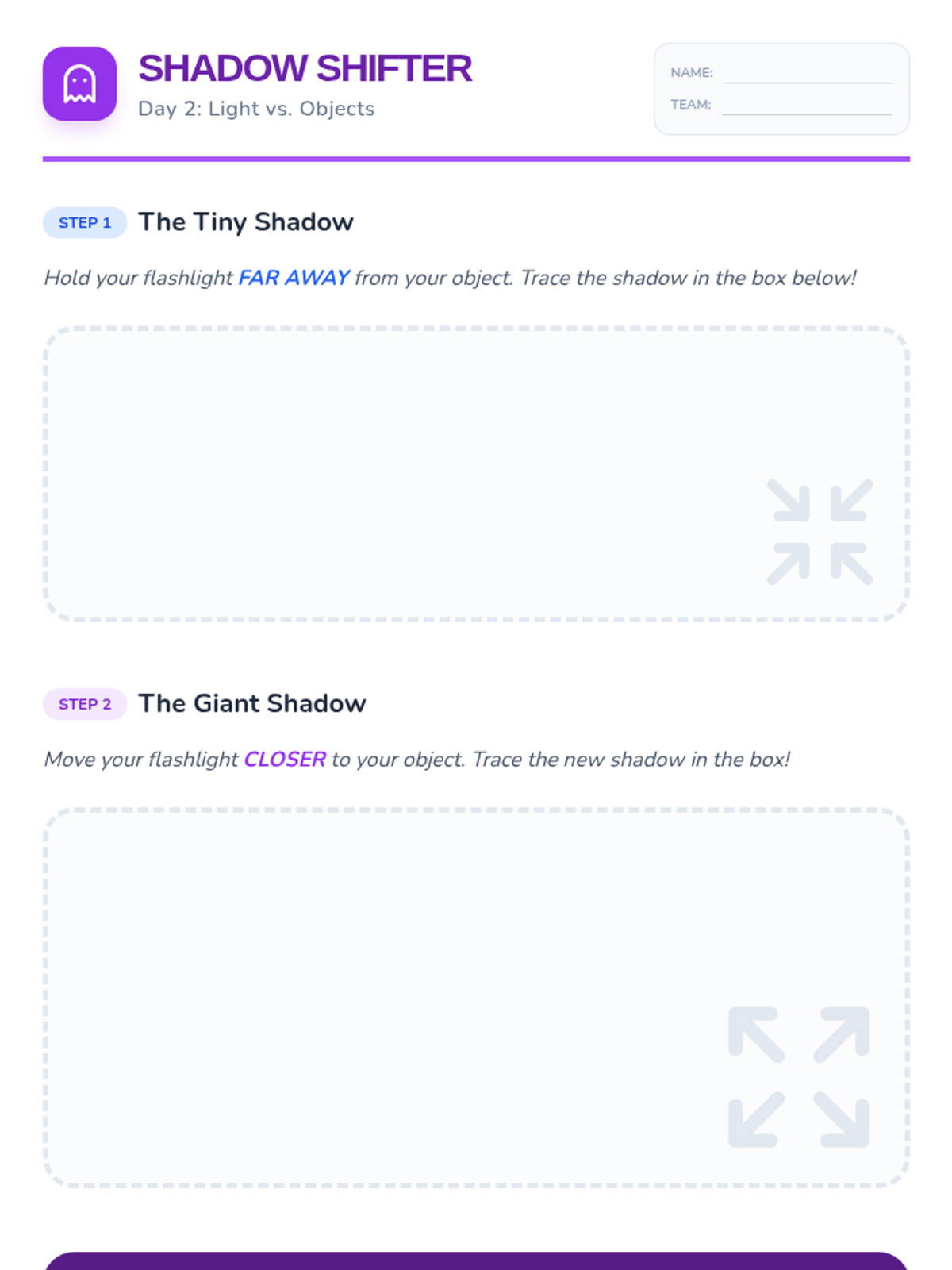
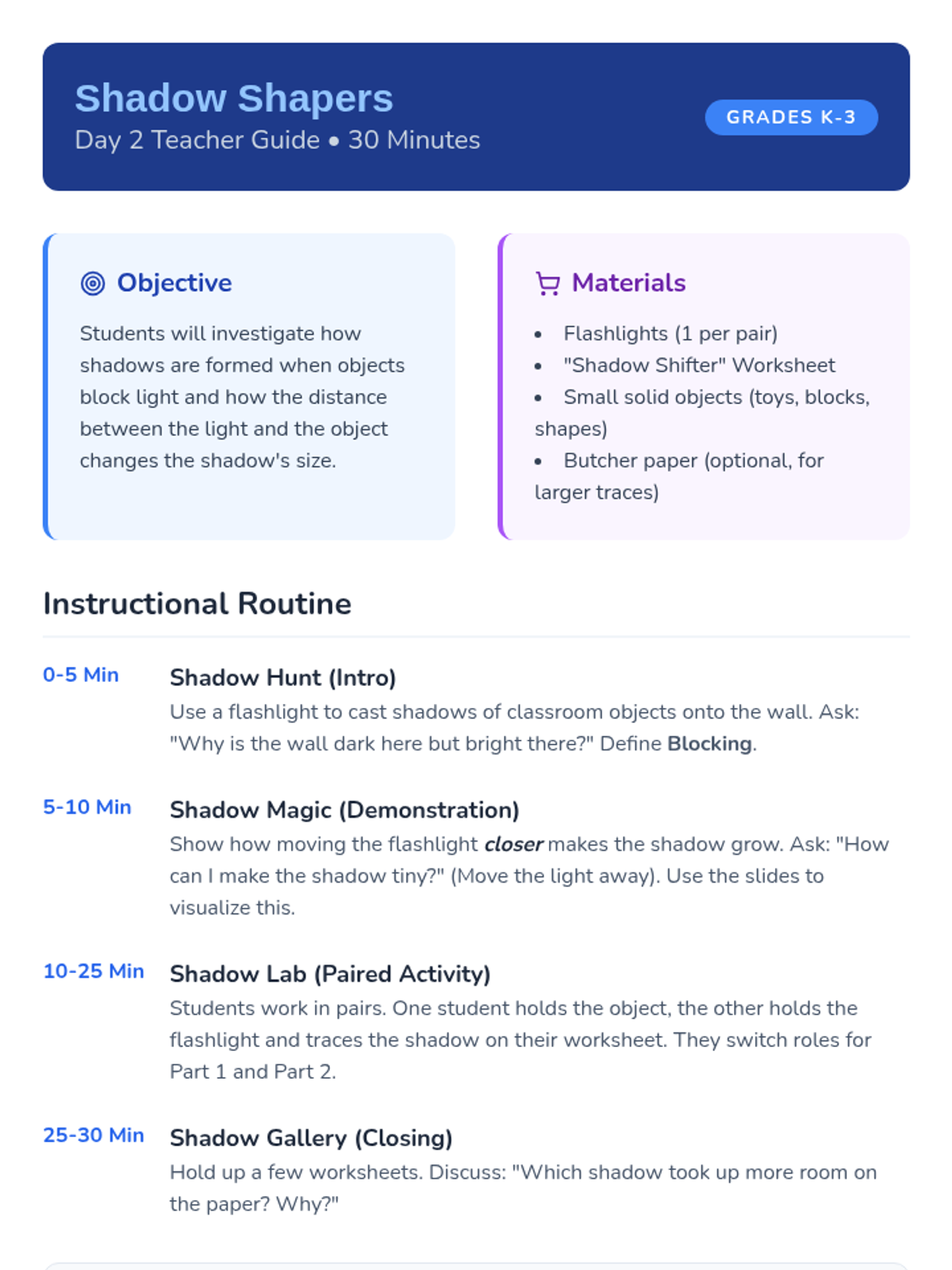
An exploration of shadow formation where students use flashlights to manipulate the size and shape of shadows by moving light sources.
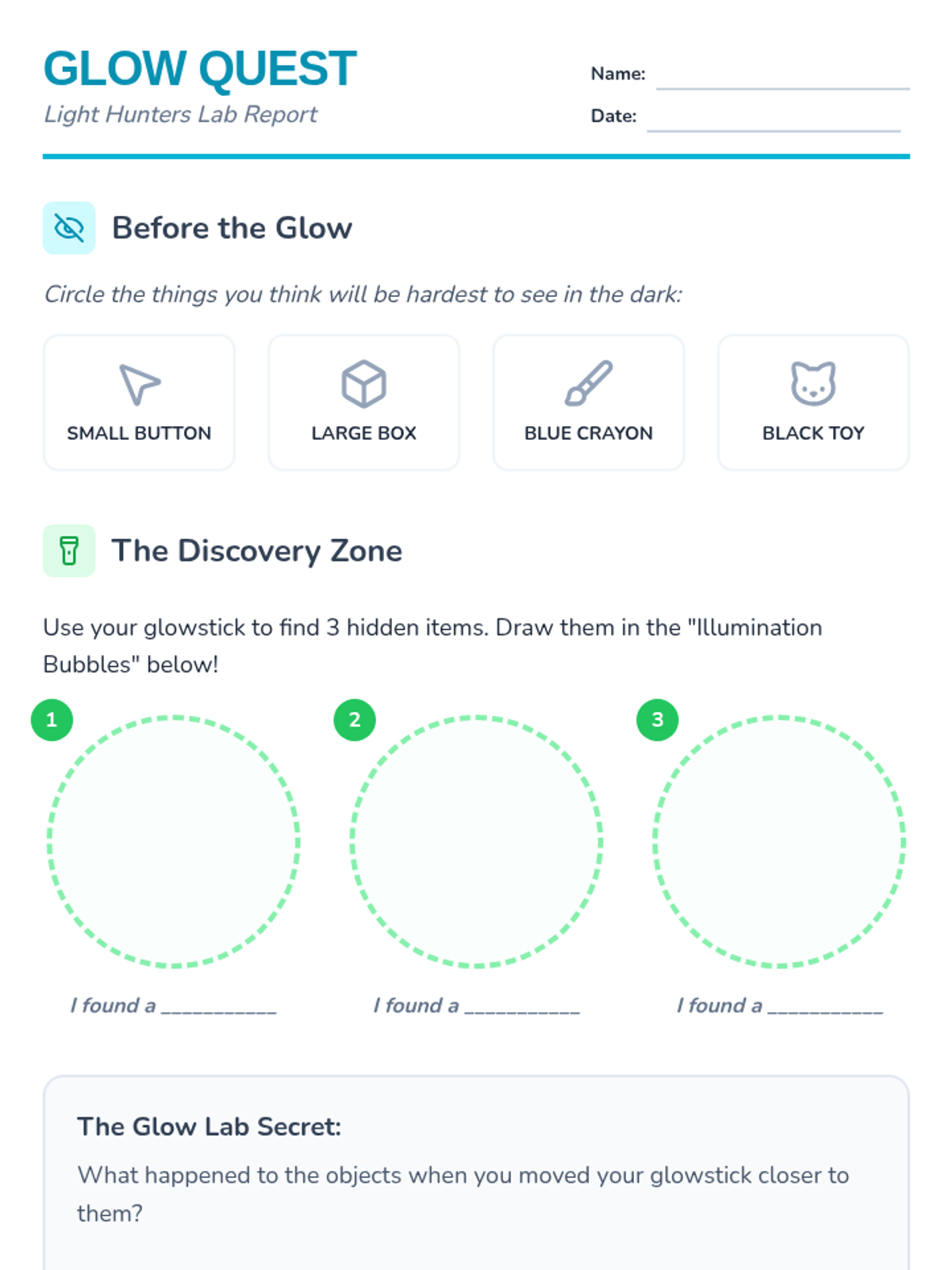
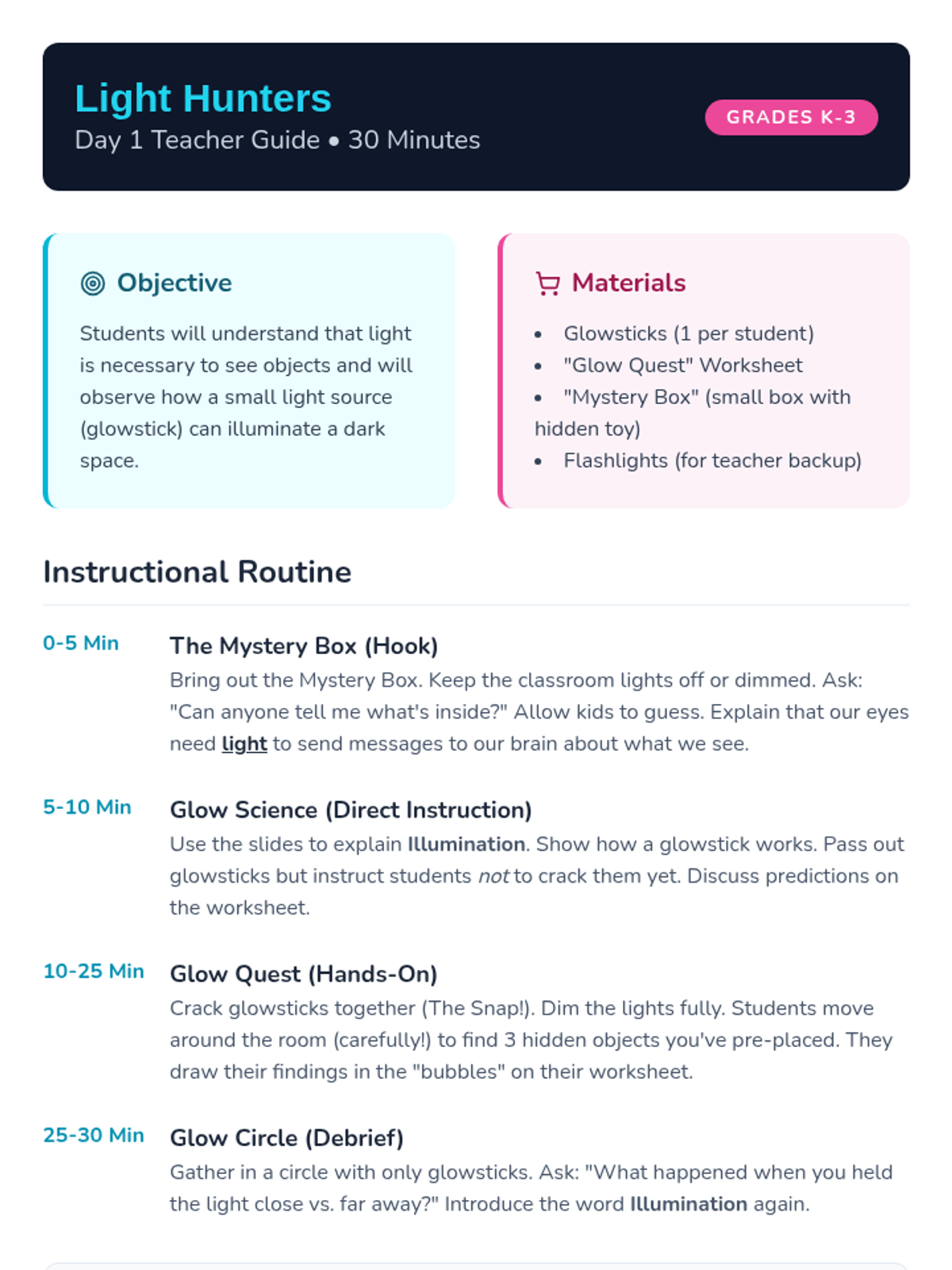
Students explore the concept of illumination using glowsticks to discover how light makes the invisible visible in a dark classroom environment.
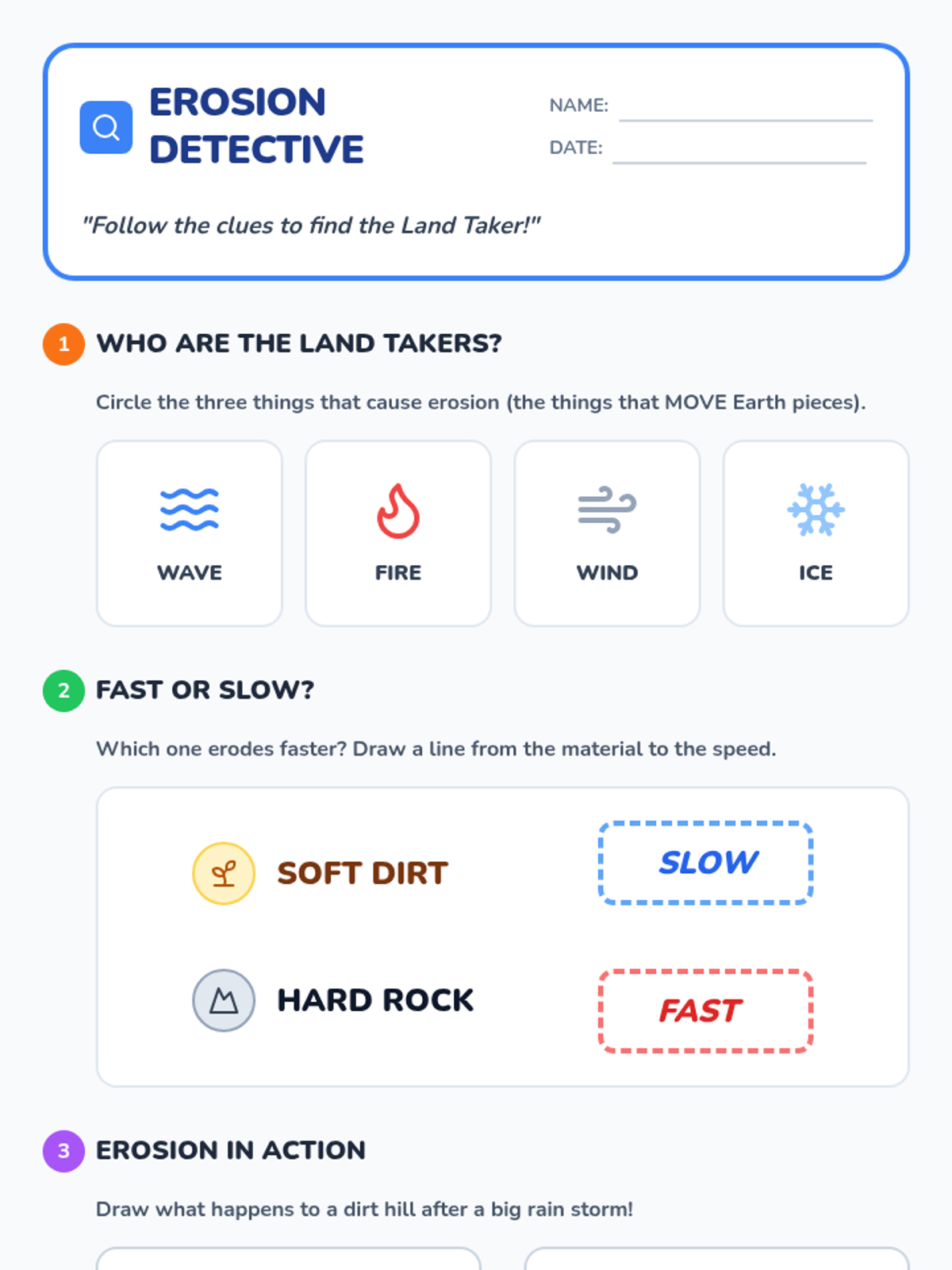
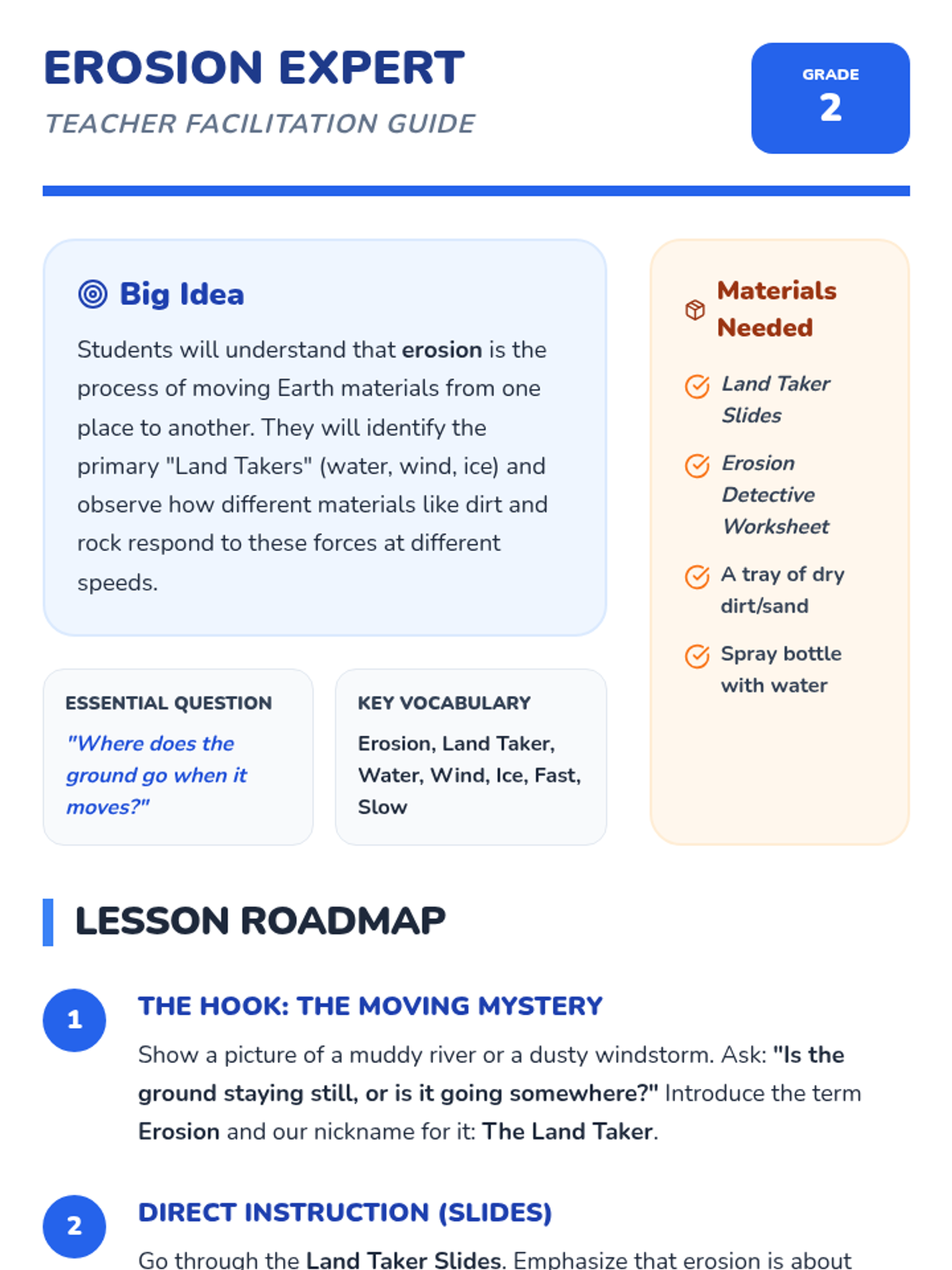
A focused lesson on erosion for 2nd graders, exploring what it is, its causes (water, wind, ice), and the materials it shapes like dirt and rock.
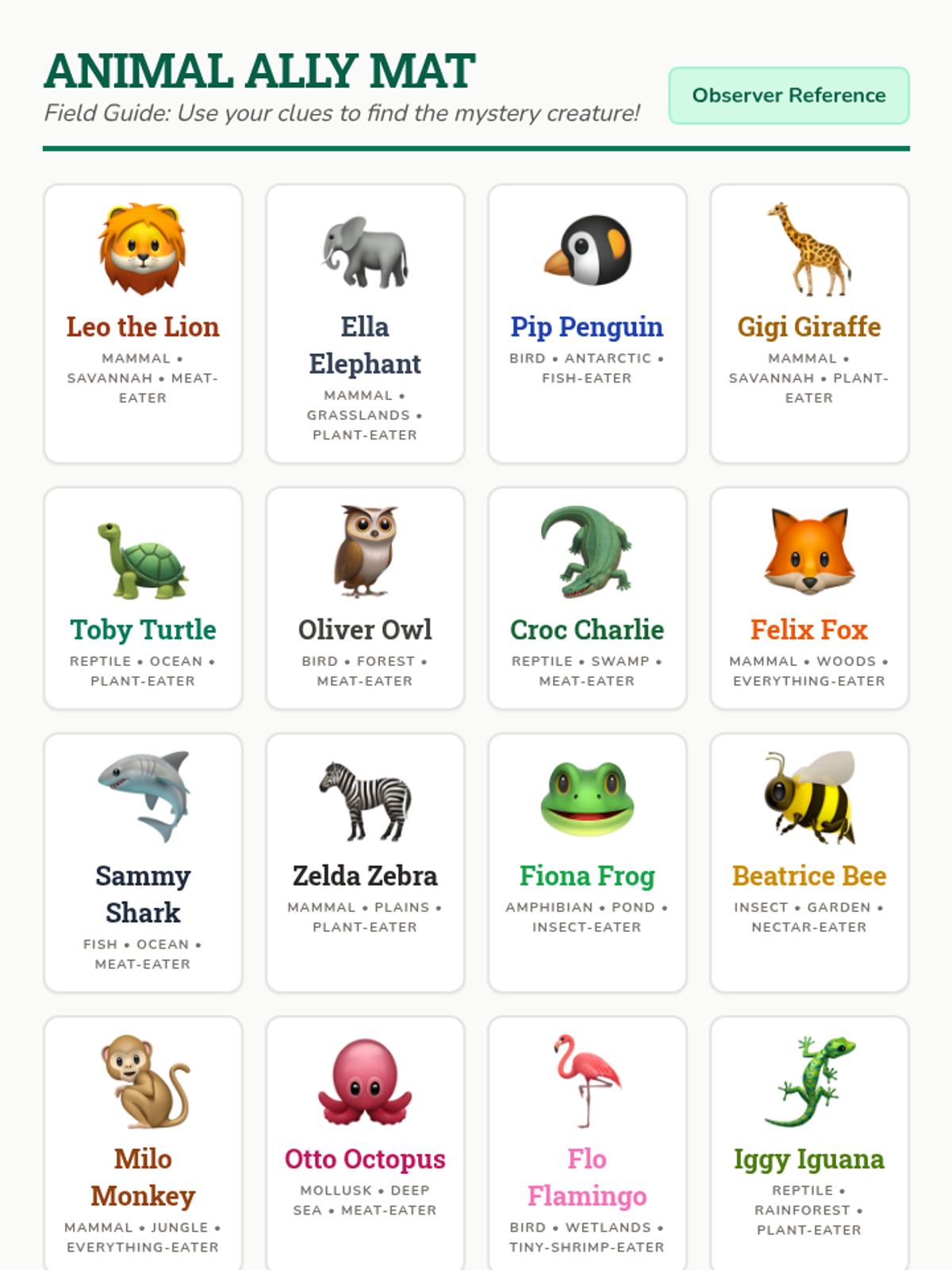
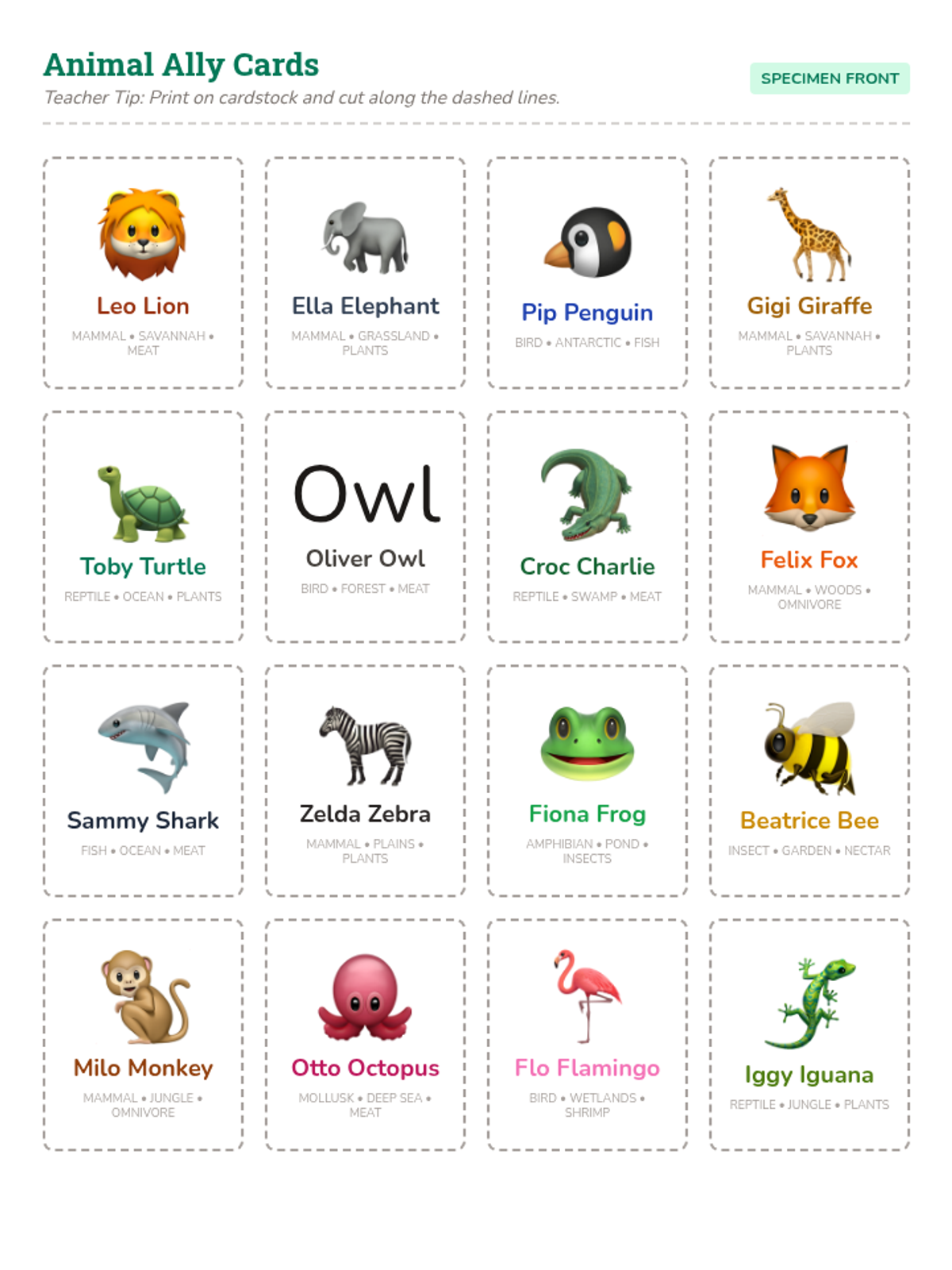
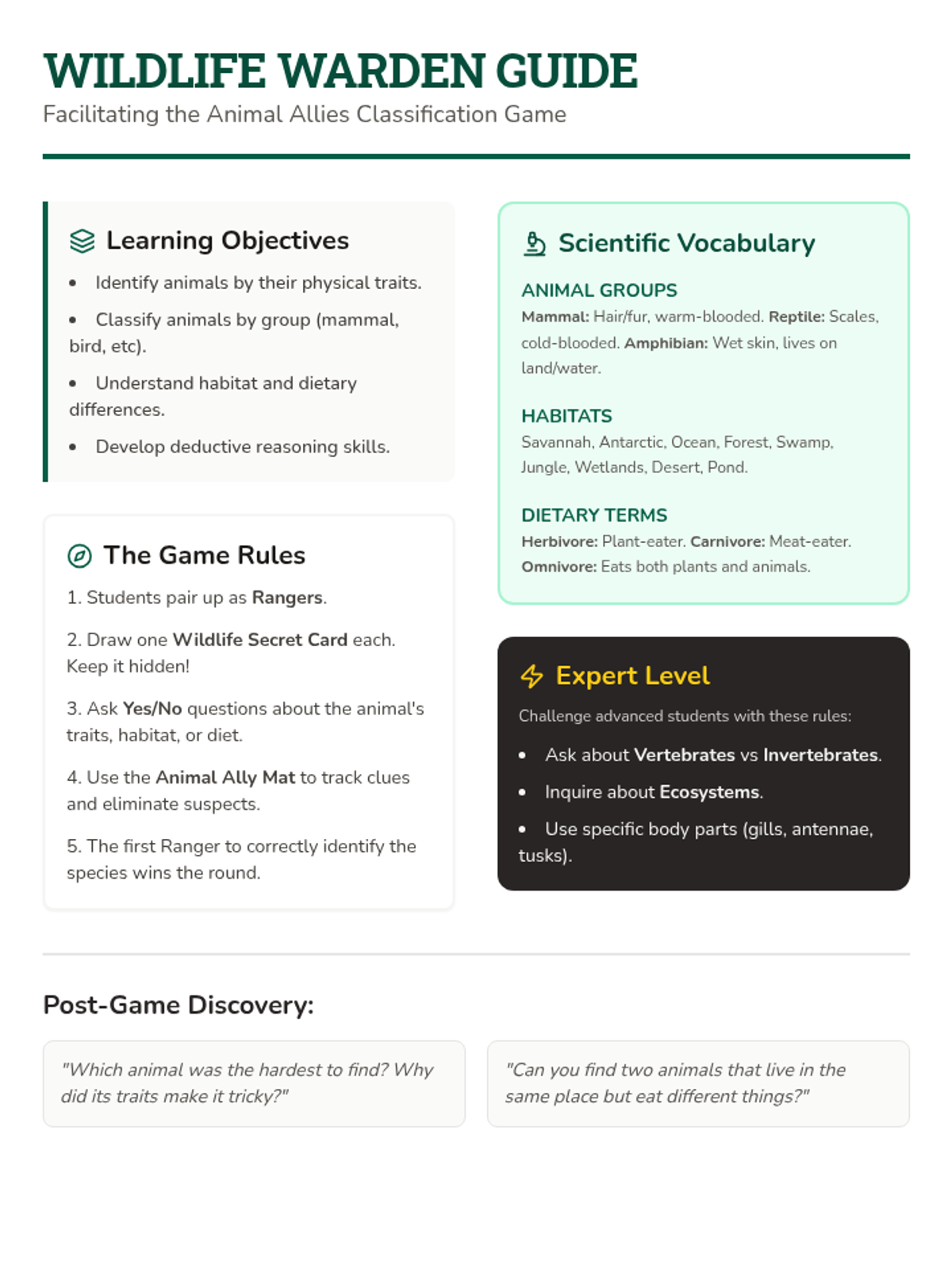
An engaging 'Guess Who' style game where students use descriptive language and biological traits to identify mystery animals. Focuses on classification, habitats, and physical characteristics.