Exploration of suffixes and their power to transform words between different parts of speech.
Students compile their four-sentence creative stories into a comic strip layout, add simple illustrations, and celebrate their storytelling accomplishments.
Students resolve their story's problem, writing their fourth sentence using "Then, ..." and selecting a happy resolution symbol.
Students introduce a simple conflict or surprise for their character, writing a sentence with "Suddenly..." and problem-based action icons.
Students choose a creative setting (such as outer space or a magic forest) and write a sentence using "They are in..." with visual setting prompt cards.
Students invent a fictional character (such as a superhero or friendly animal) and write a sentence describing them using "This is..." and physical descriptors with visual symbols.
Students present their informational posters to peers using verbal or non-verbal communication supports, celebrating their factual discoveries.
Students assemble their key fact, evidence sentence, and concluding statement into a coherent, illustrated informational poster.
Students conclude their informational piece by writing a third sentence that summarizes their topic using a "Now you know about..." sentence starter and visual symbols.
Students locate visual evidence or supporting clues (such as food or habitat icons) to back up their first key fact, writing a second sentence using "It has..." or "It lives..." frames.
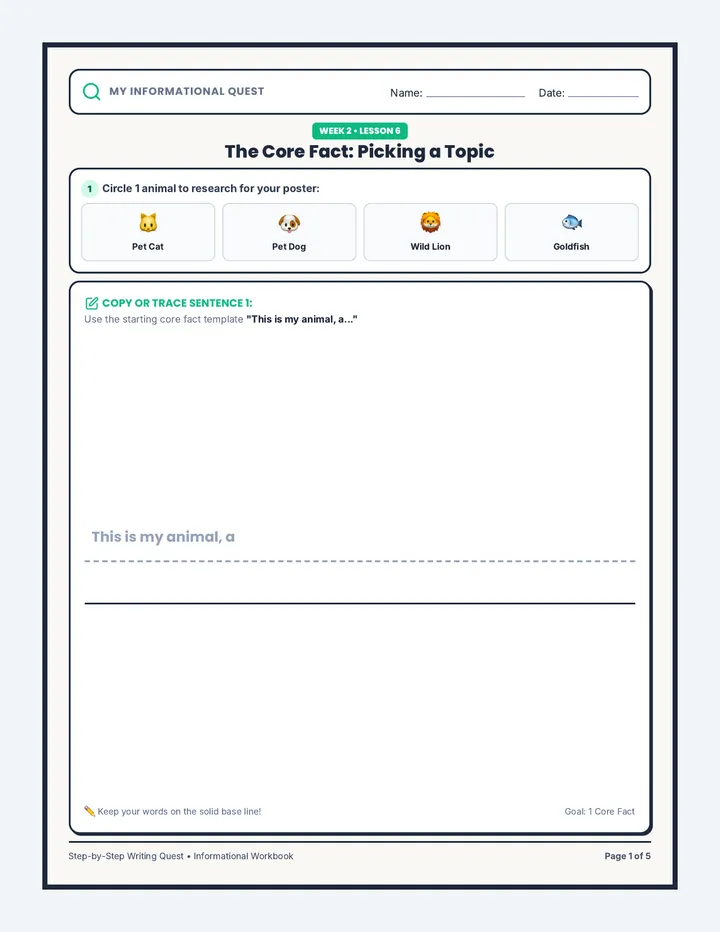
Students choose an informational topic (such as an animal or a local community job) and identify their first key fact using a visual matching organizer and "This is a..." sentence frame.
Students practice reading their three-sentence narratives to a peer or teacher, using visual communication boards as support, and celebrate their completed stories.
Students compile their first, middle, and ending sentences into a complete, logically sequenced three-sentence personal narrative, adding simple decorative illustrations.
Students conclude their personal narrative by writing about the final event using a "Last, I..." sentence starter, focusing on chronological closure and a simple emotion word.
Students continue their personal narrative by writing about the middle event using a "Next, I..." sentence starter and corresponding visual icons to show chronological order.
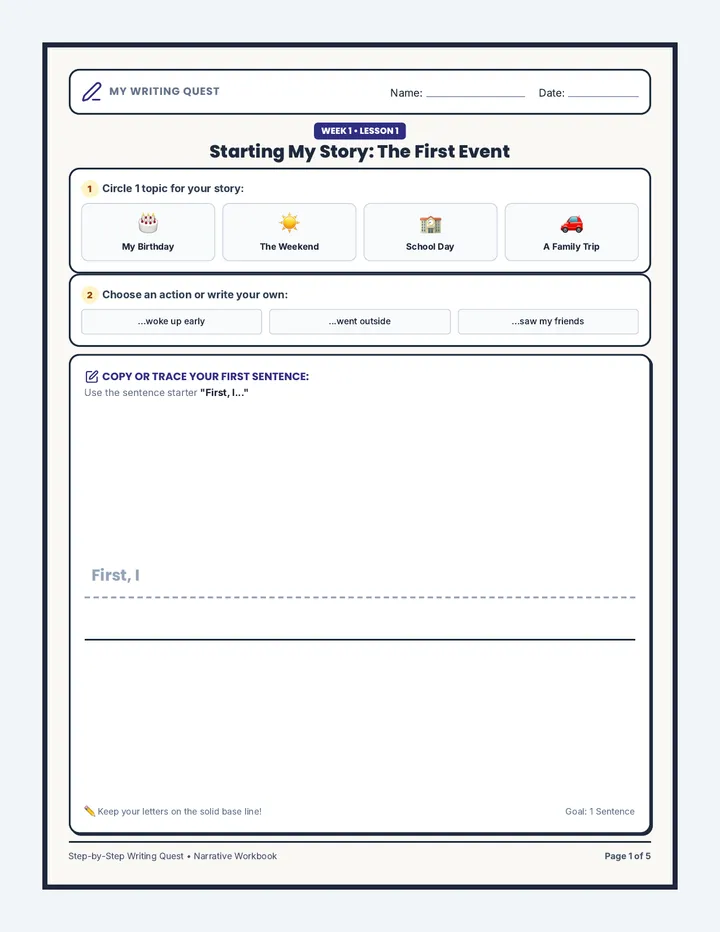
Students choose a personal topic (such as a favorite memory or weekend activity) and write their first complete sentence describing the first event using a "First, I..." sentence starter and visual picture cards.
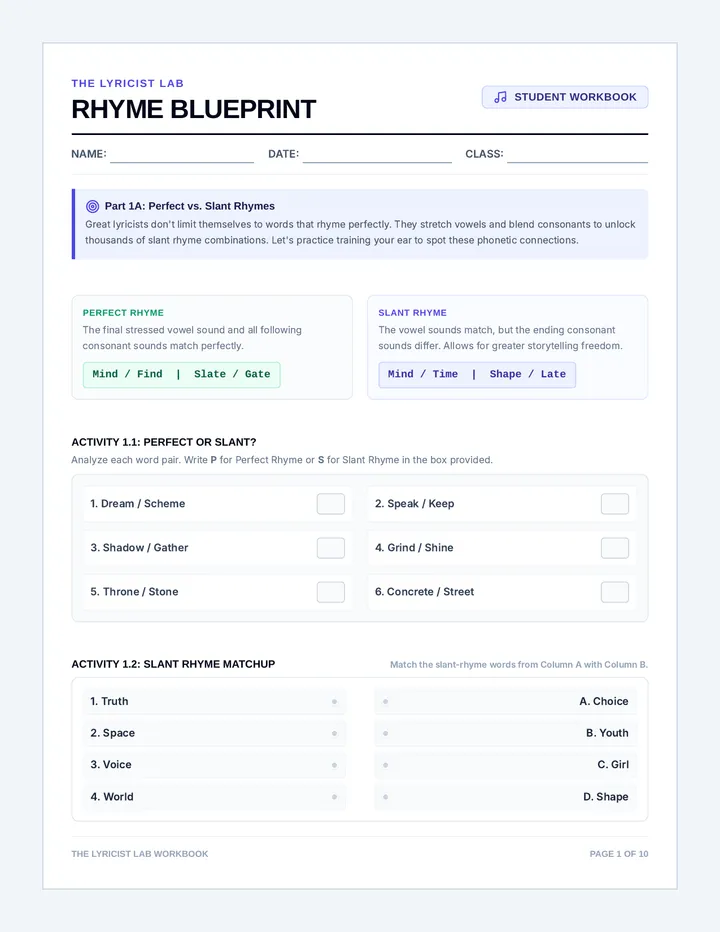
A comprehensive lesson that breaks down the structural, rhythmic, and poetic elements of hip-hop and rap lyrics. Students learn complex rhyming, flow cadence, figurative imagery, and wordplay, then plan and write a complete 16-bar verse using highly visual scaffolding.
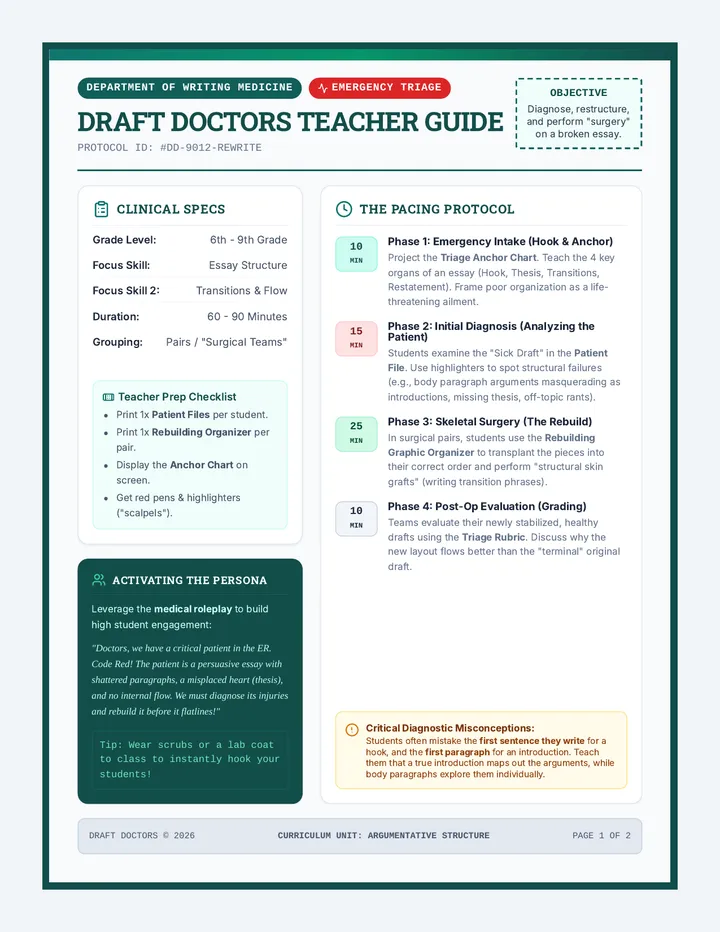
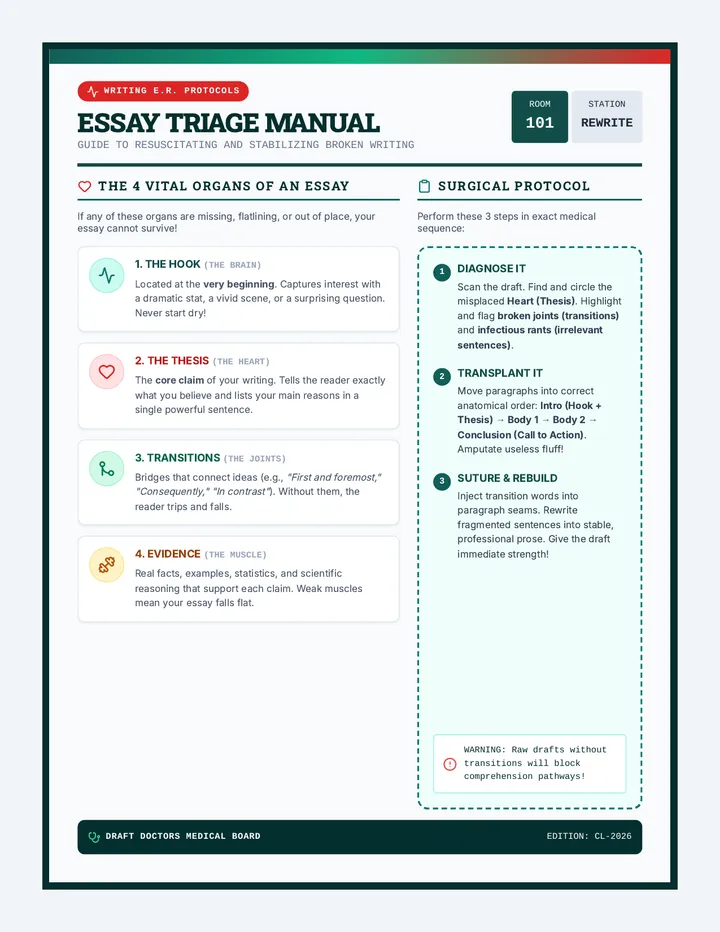
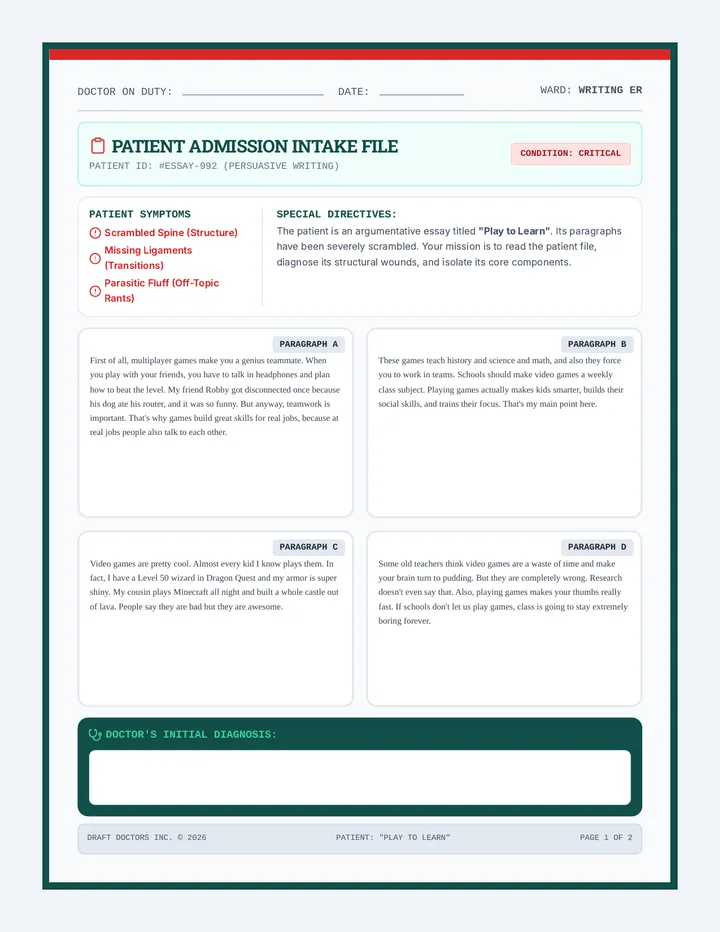
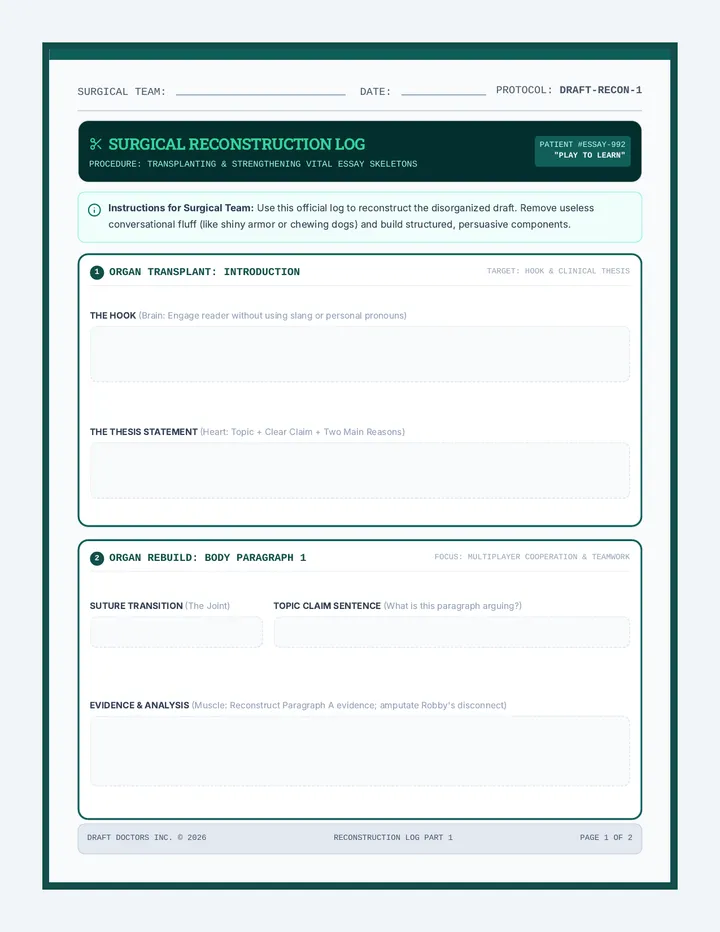
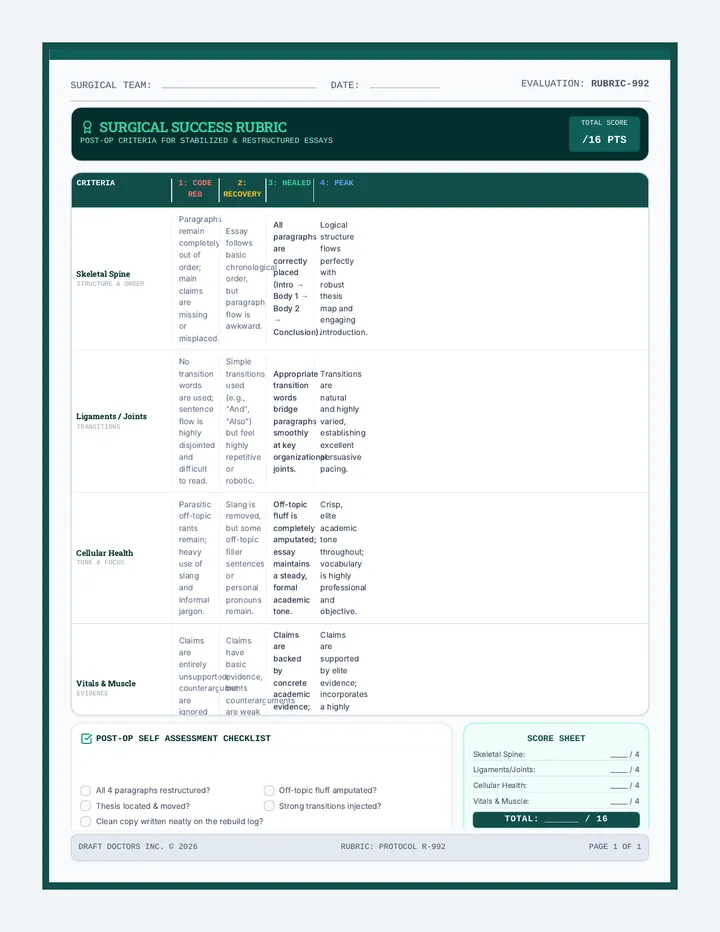
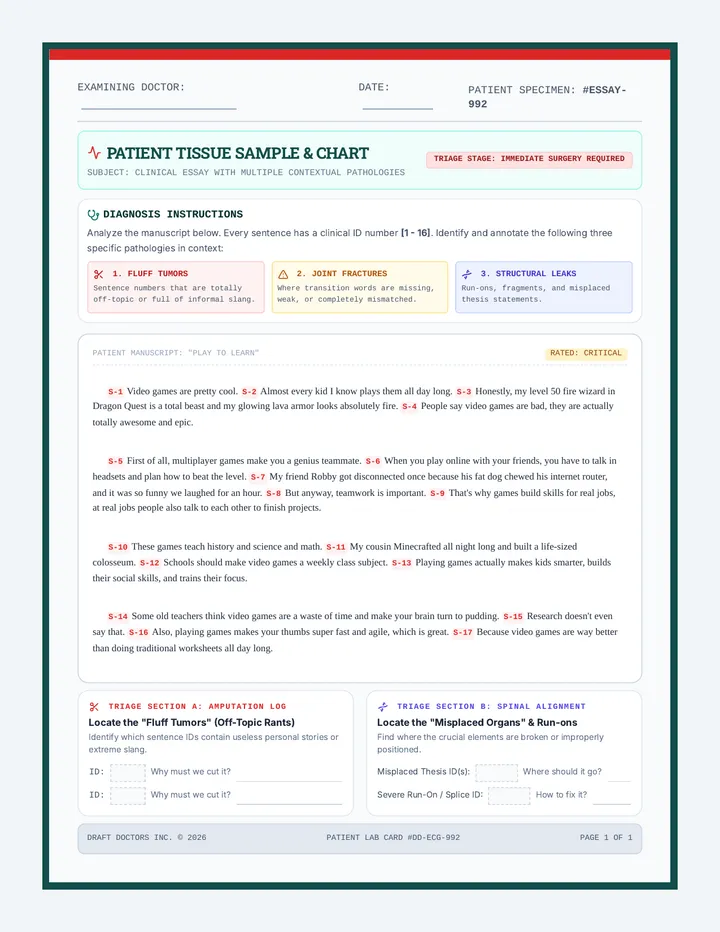
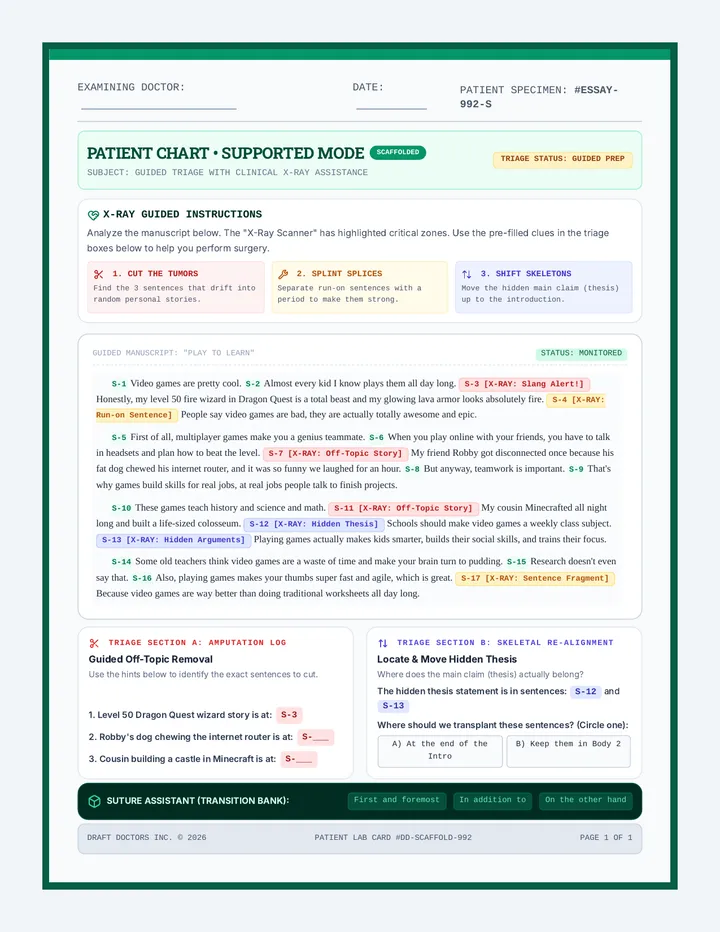
An immersive, medical-themed lesson where students act as 'Draft Doctors' to diagnose, triage, and perform surgery on a poorly organized, weak persuasive essay. Students learn paragraph structure, logical flow, and transition-building through a structured, clinical approach.
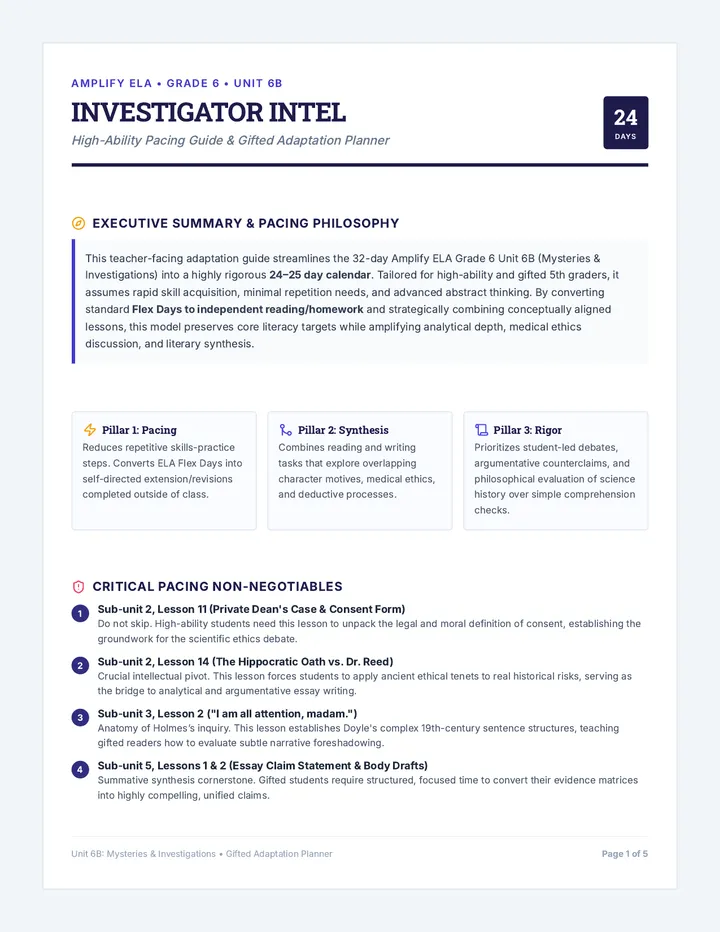
A highly condensed and academically rigorous pacing plan and gifted student adaptation guide for Amplify ELA Grade 6 Unit 6B. It compresses the 32 original lessons into a streamlined 24-25 day calendar designed specifically for high-ability fifth graders.
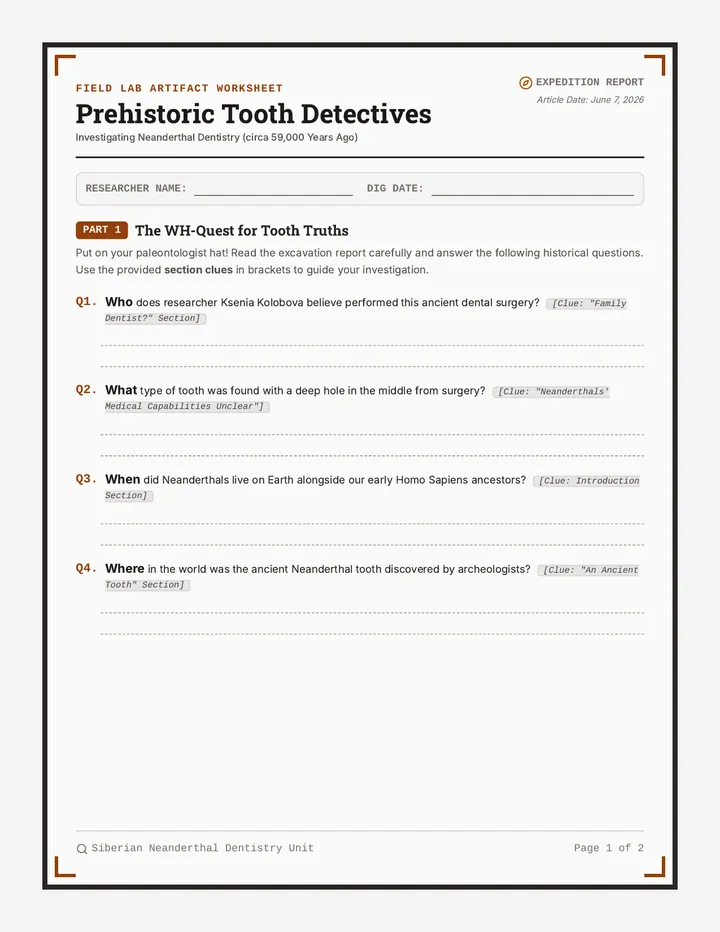
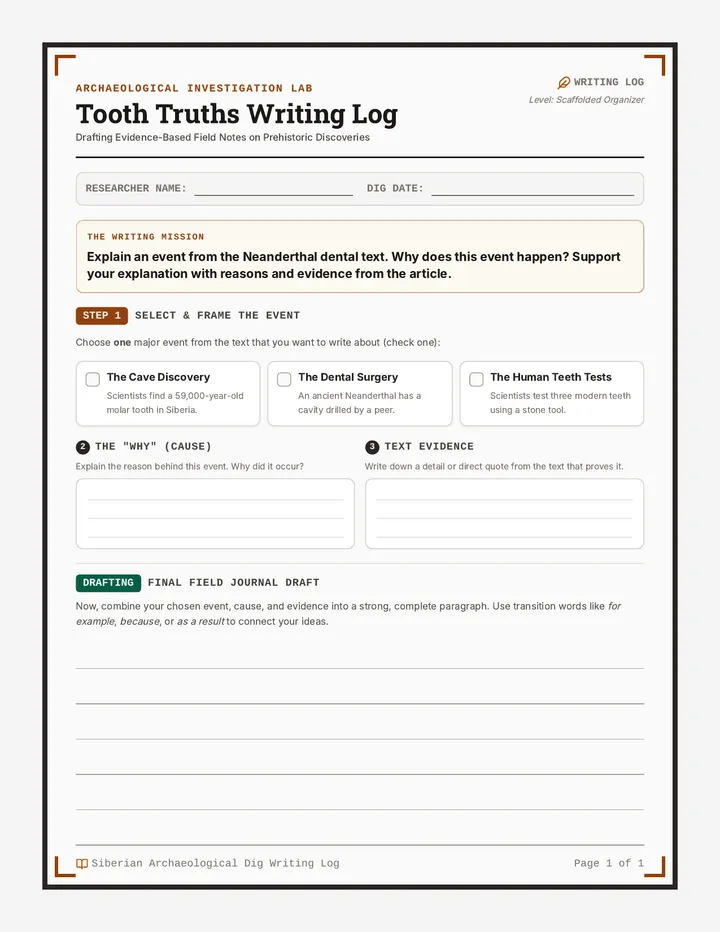
A comprehensive lesson where students explore the archaeological discovery of Neanderthal dentistry, utilizing reading comprehension worksheets and scaffolded writing prompts to analyze ancient human capabilities.
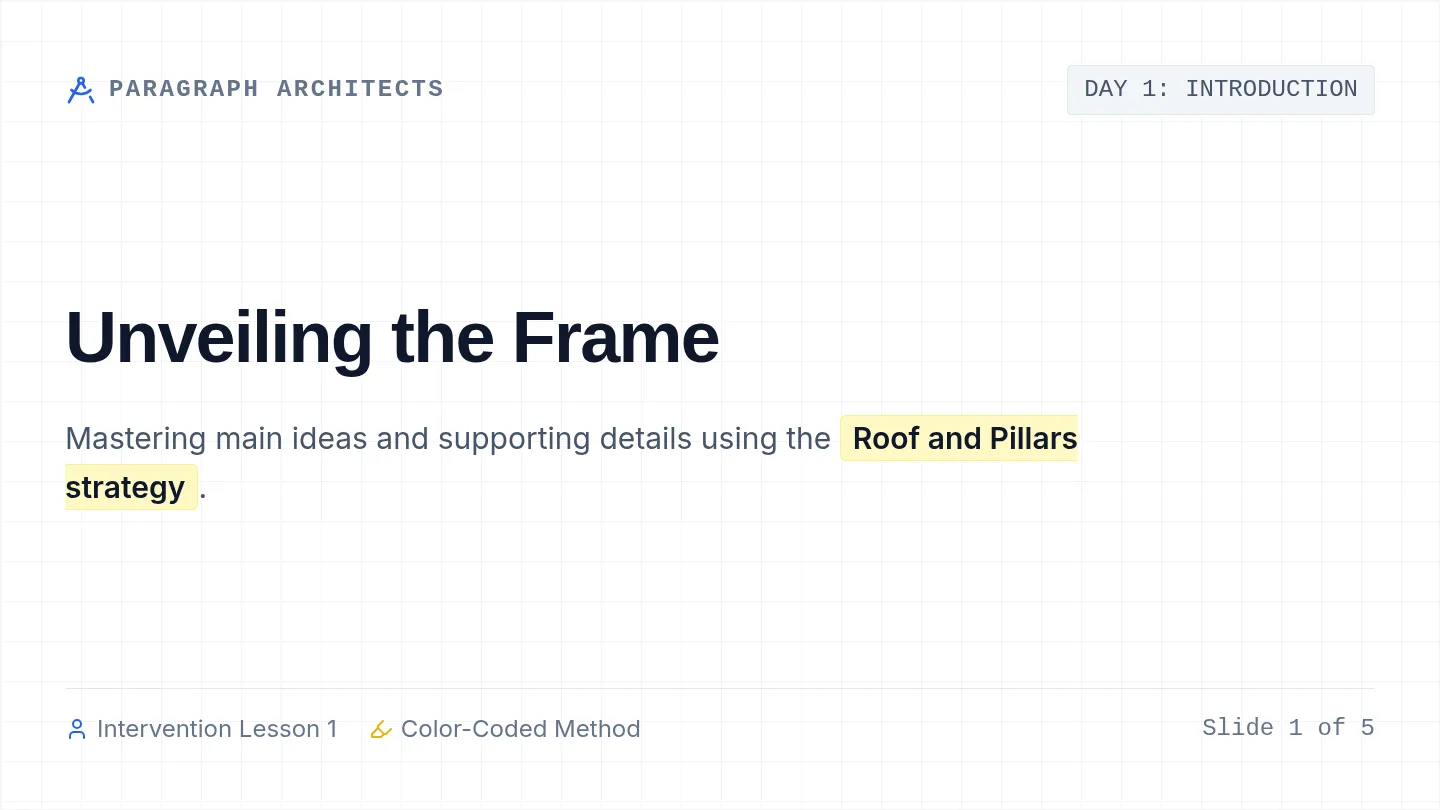
An explicit modeling lesson focusing on introducing the 'Roof' (Main Idea) and 'Pillars' (Supporting Details) concept. Students learn paragraph structure and watch live highlighting demonstrations.
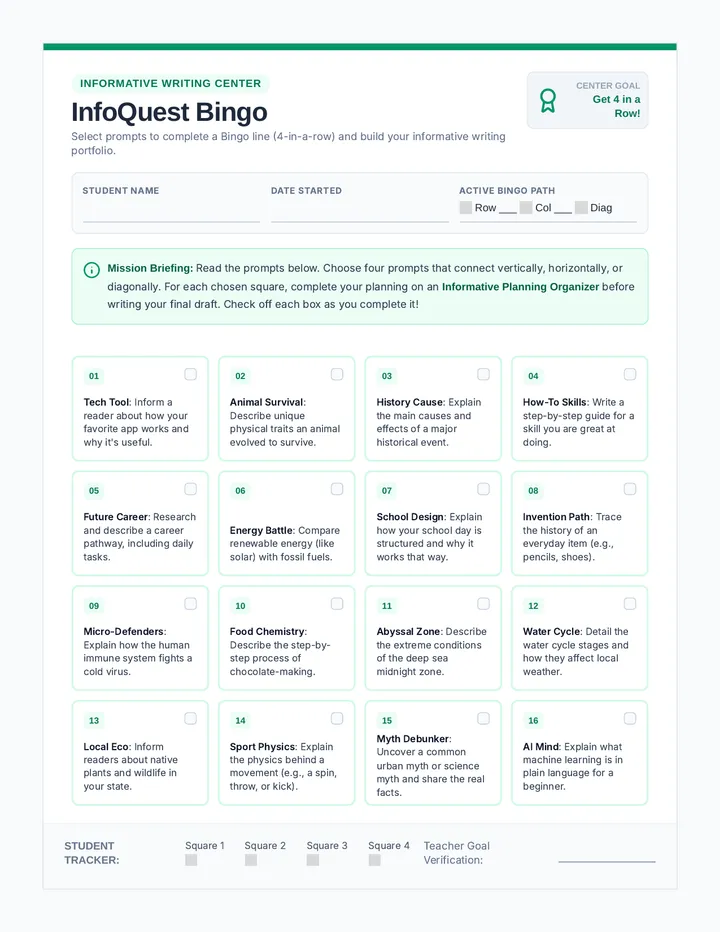
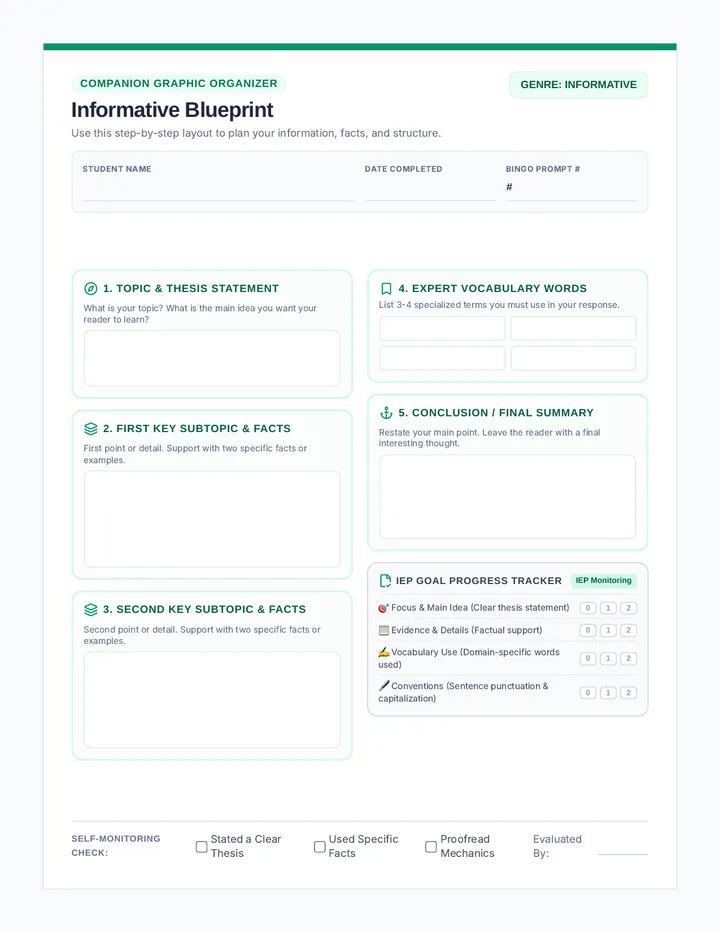
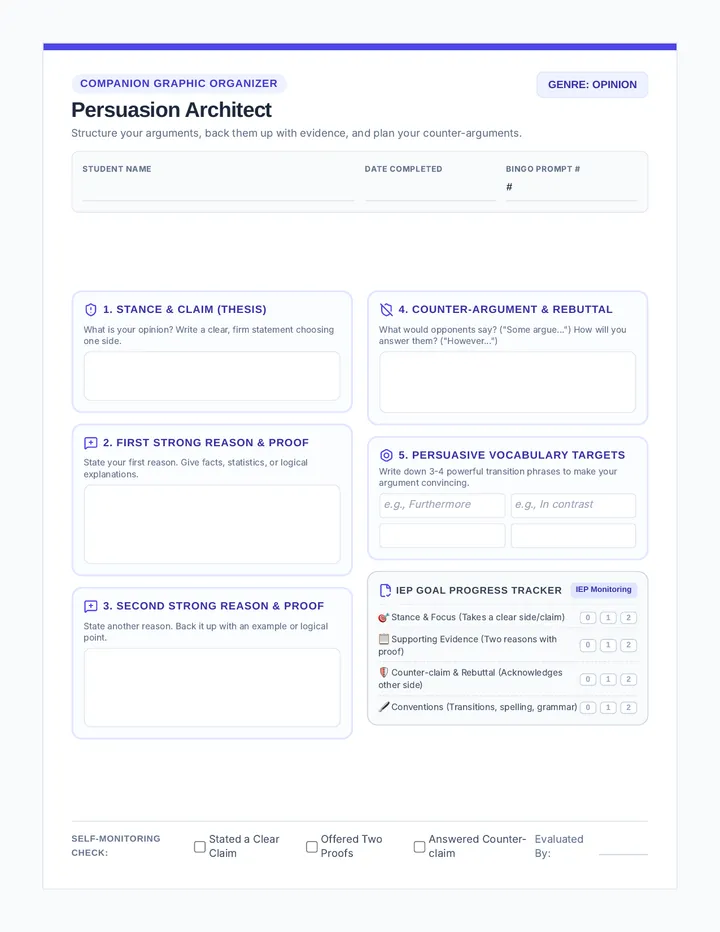
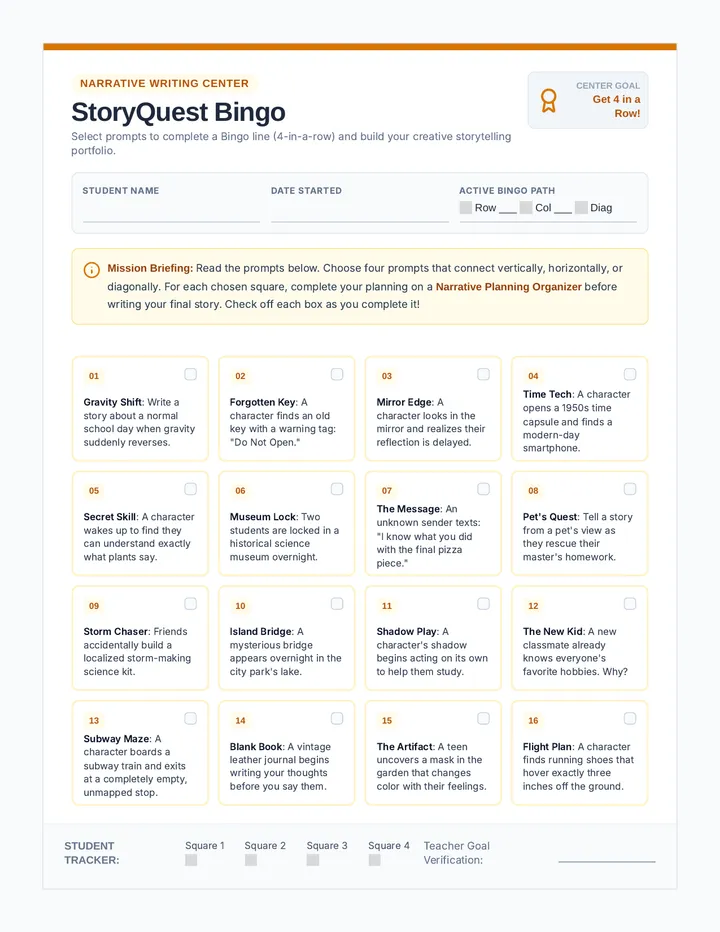
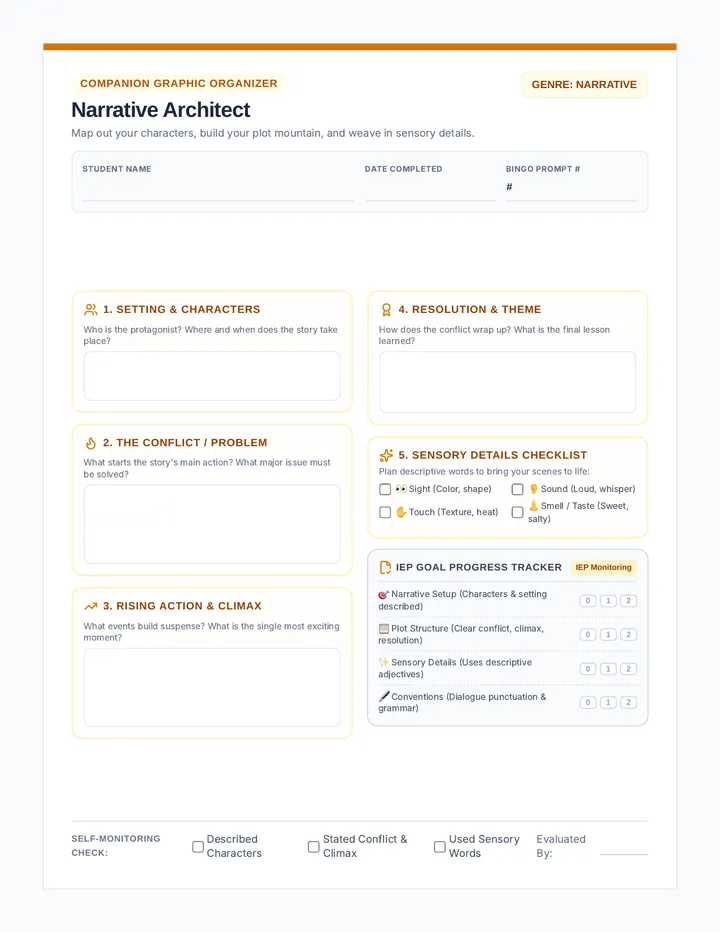
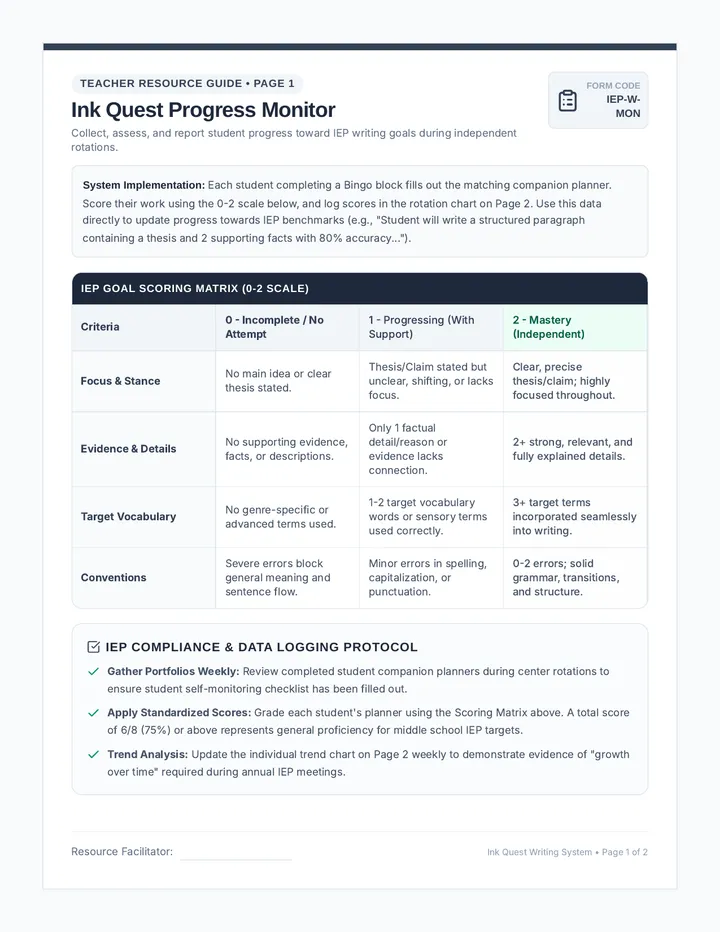
An independent writing center system using Bingo choice boards and highly supportive graphic organizers. Designed for middle school rotations with embedded progress monitoring for IEP goals.
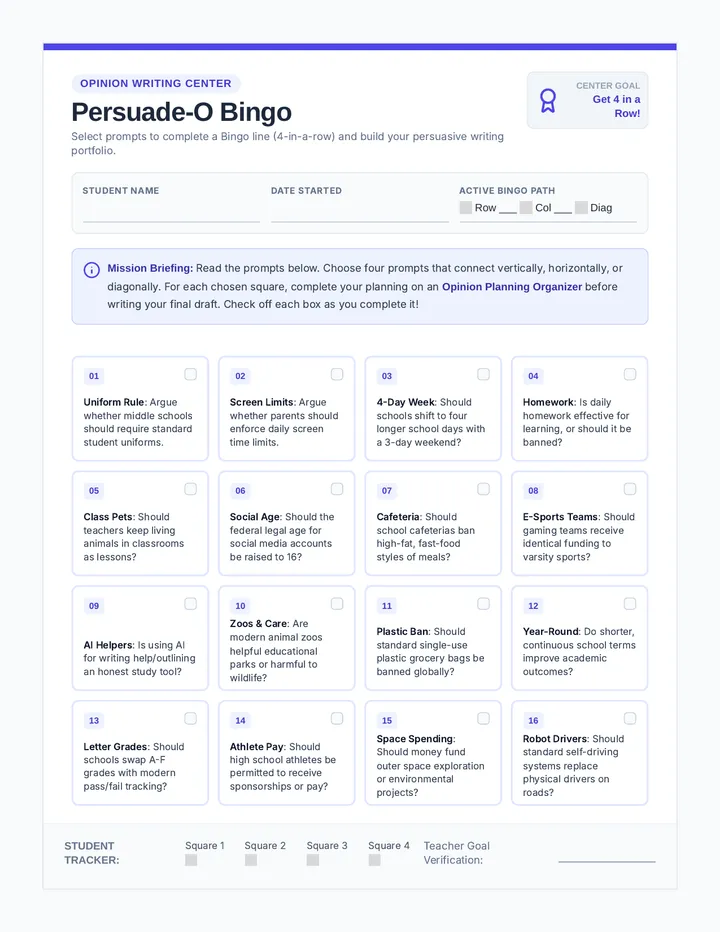
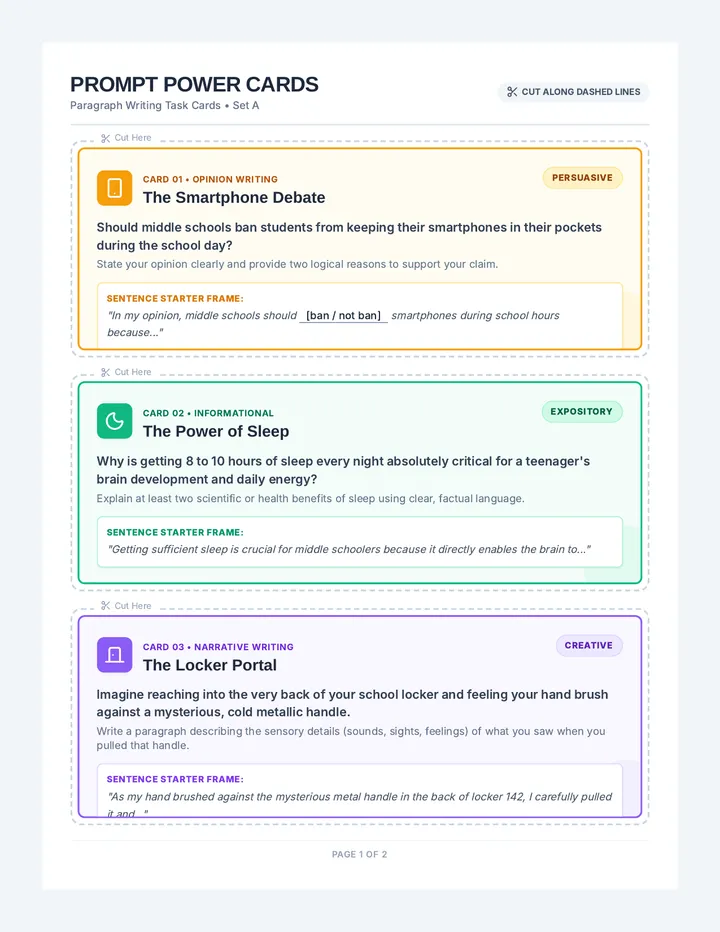
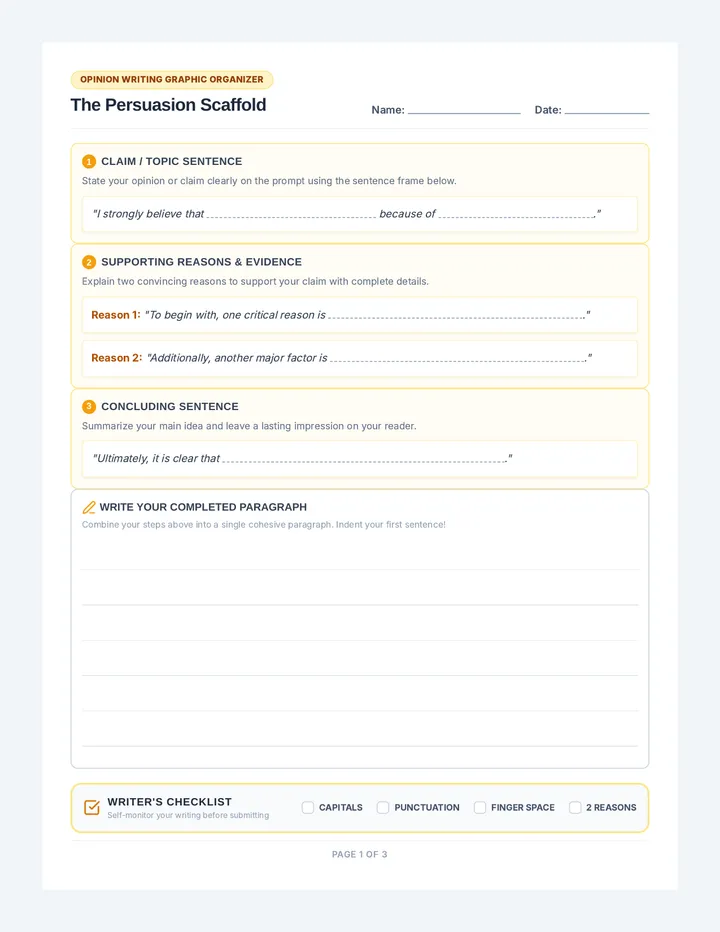
A comprehensive writing scaffold package for 6th and 7th graders, featuring genre-focused writing prompt task cards and structured graphic organizers to build strong single-paragraph responses.
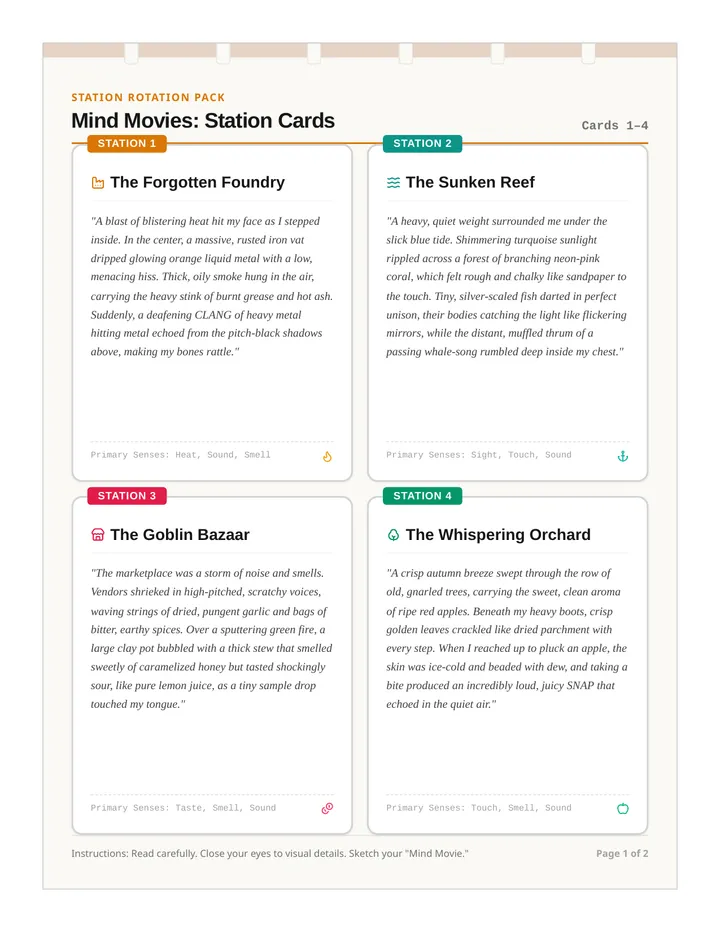
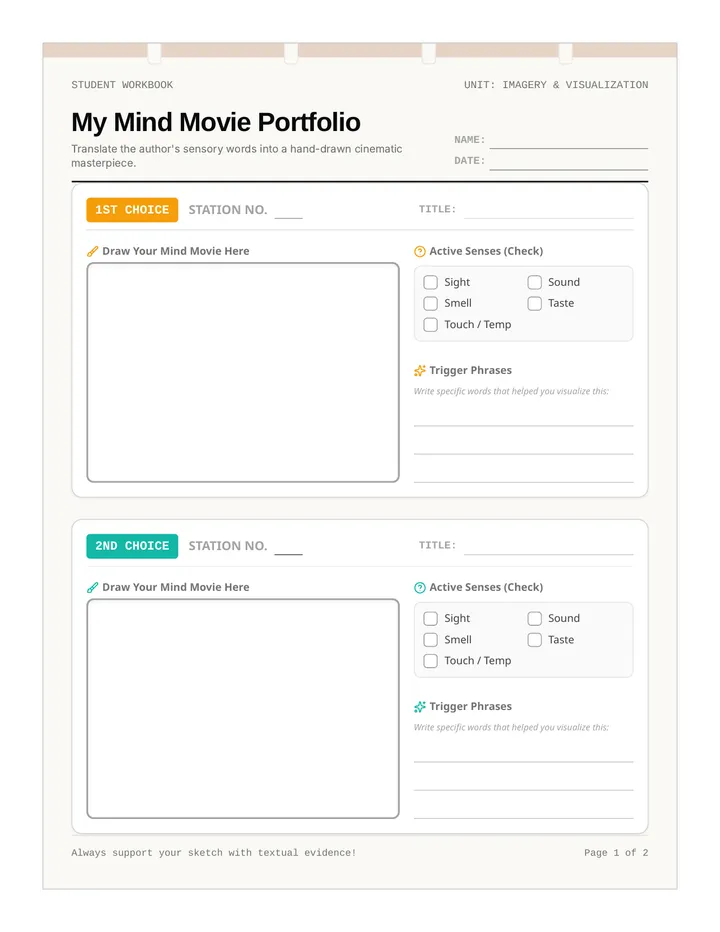
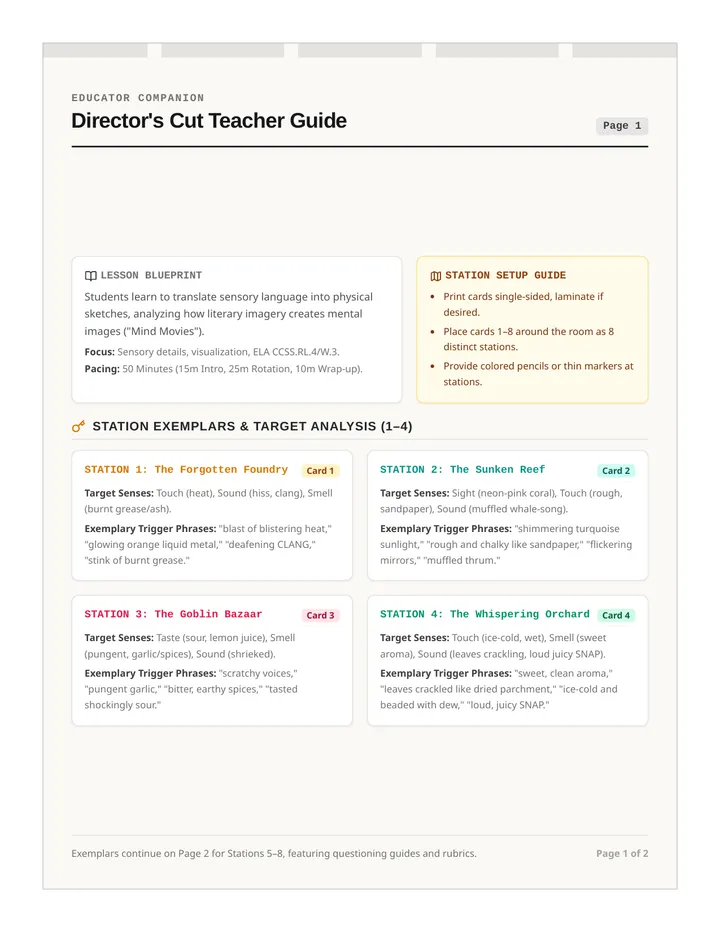
A dynamic lesson where students translate descriptive sensory details into vivid mental images. Students rotate through stations, reading sensory-rich paragraphs, sketching what they visualize, and identifying the imagery that triggered their imagination.
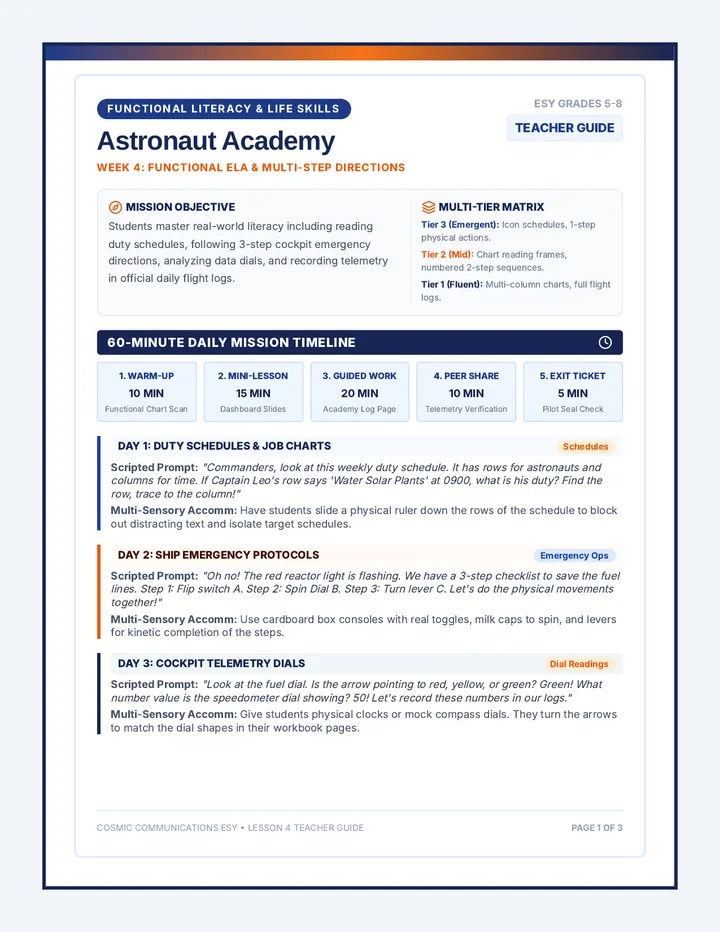
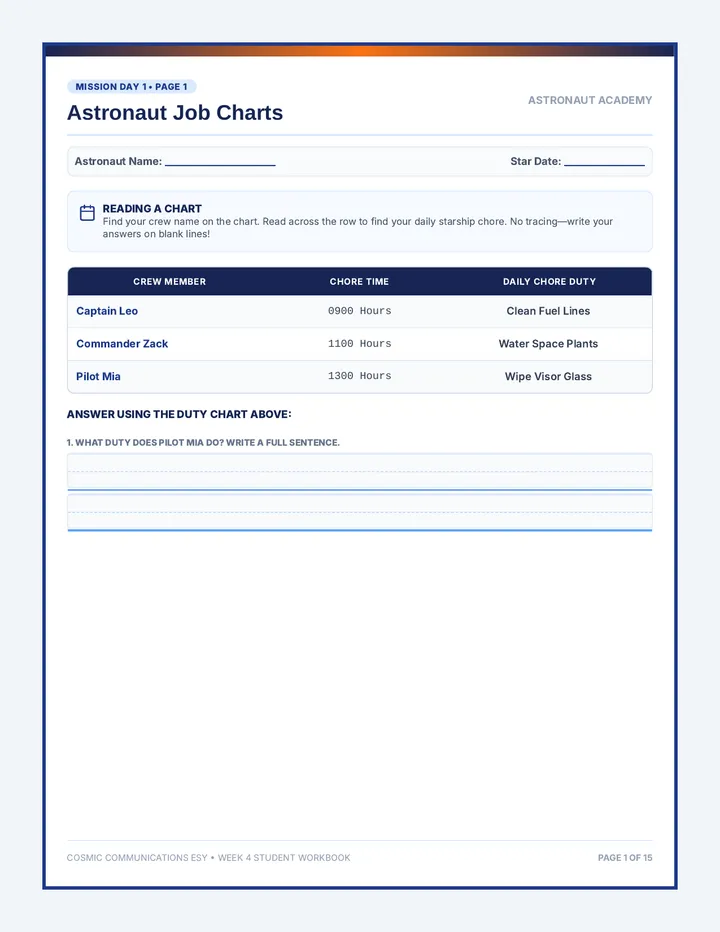
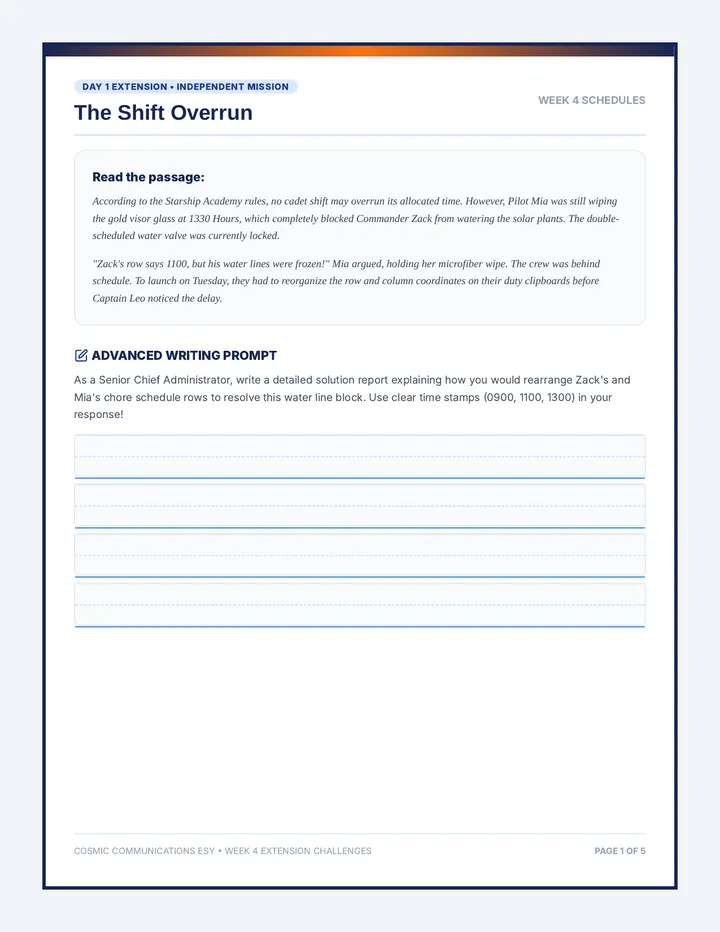
Week 4 focuses on real-world reading comprehension, functional writing, and following multi-step directions. Students explore cosmic job charts, spaceship emergency protocols, and daily logs.
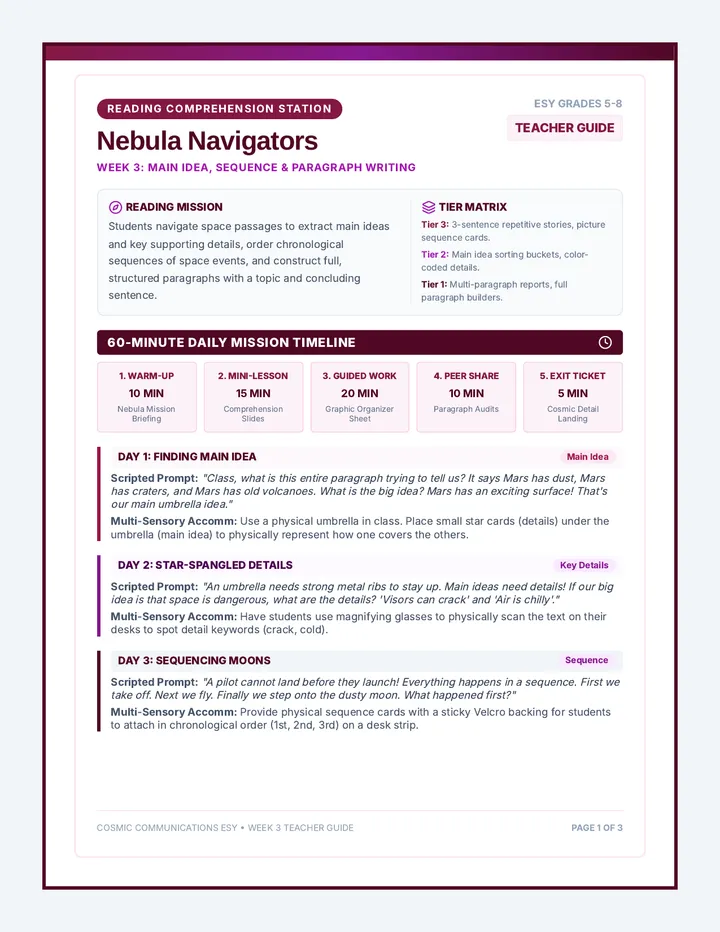
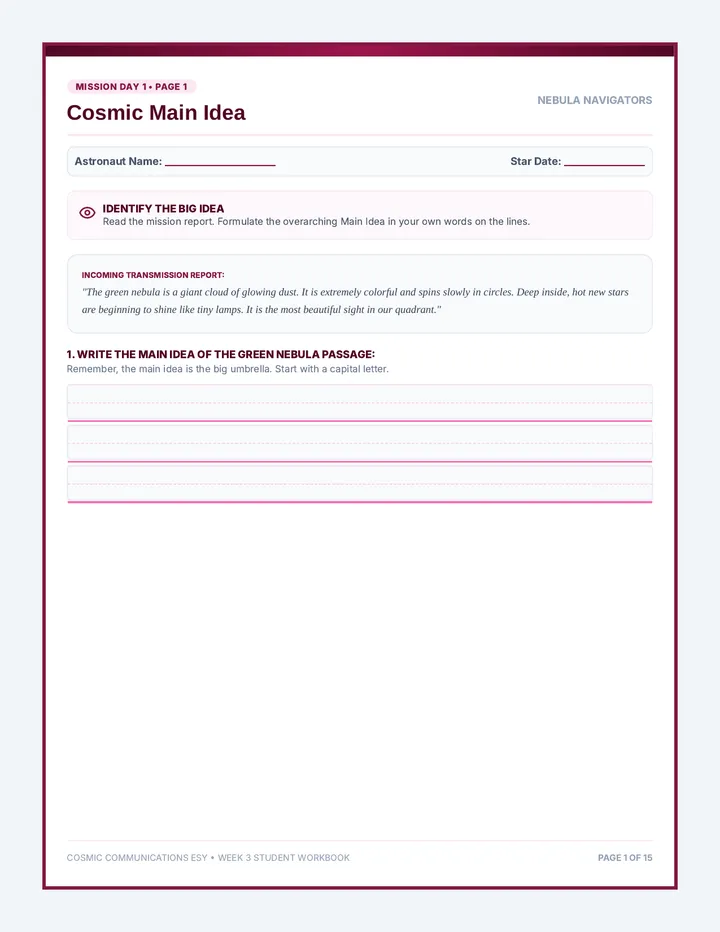
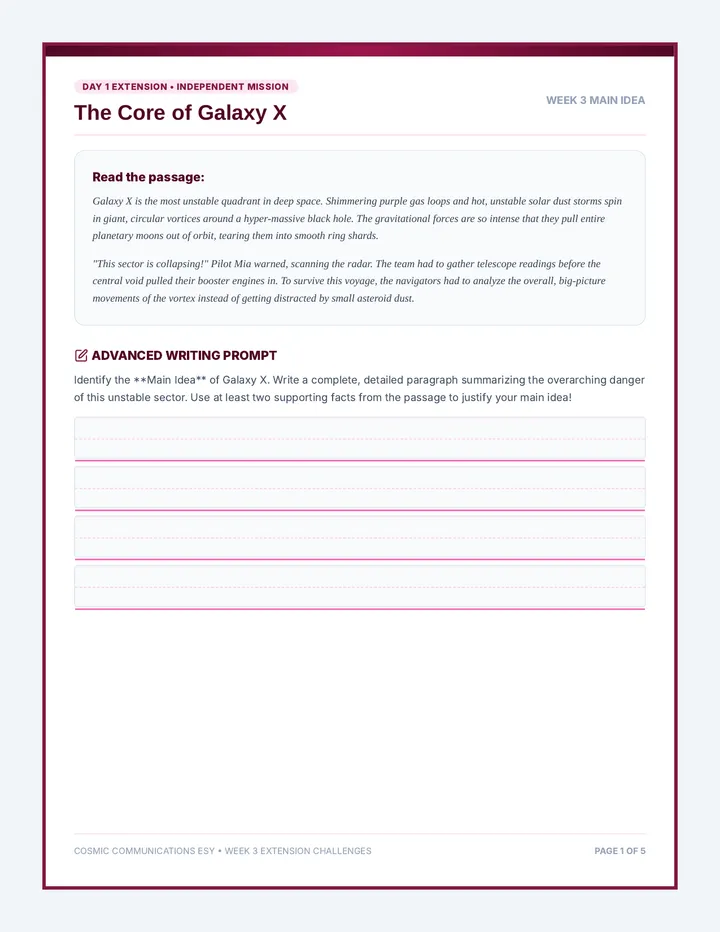
Week 3 focuses on reading comprehension and structured paragraph writing. Students learn to identify main ideas and details, track sequences, and write cohesive paragraphs using graphic organizers.
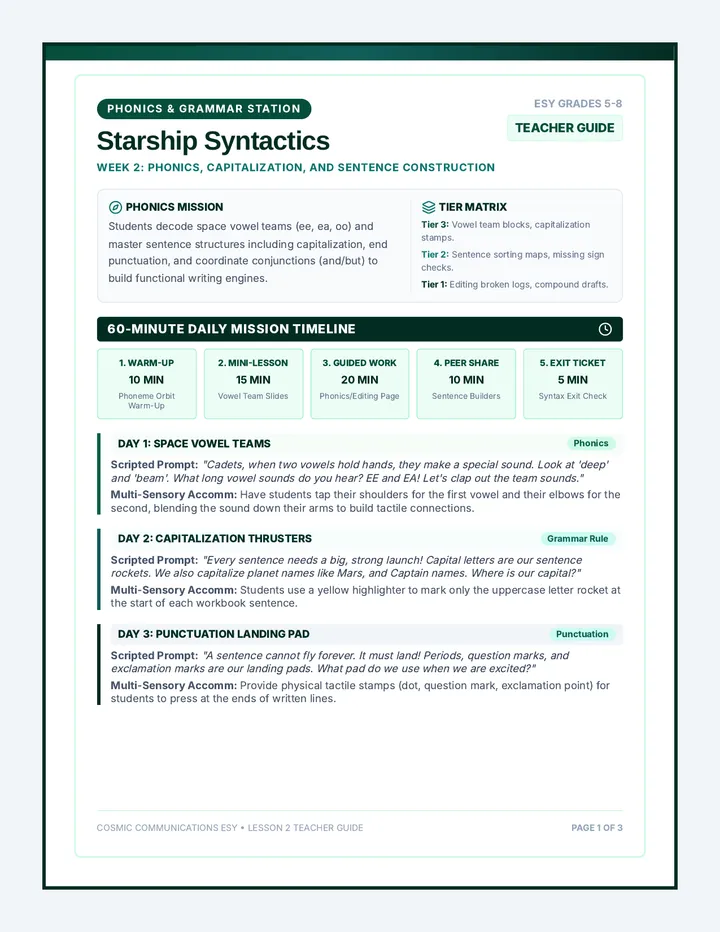
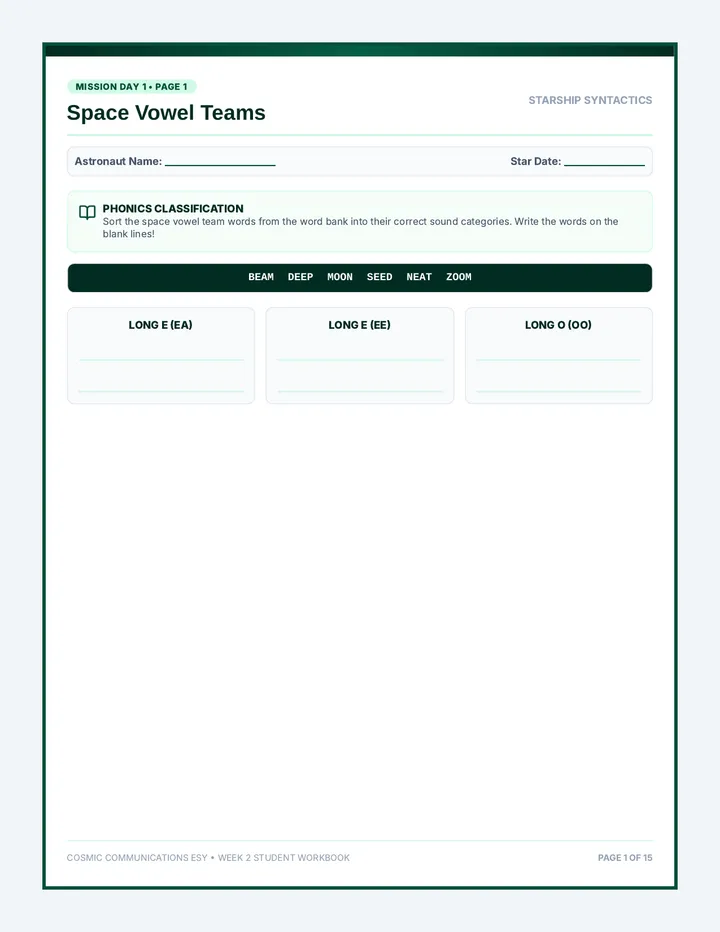
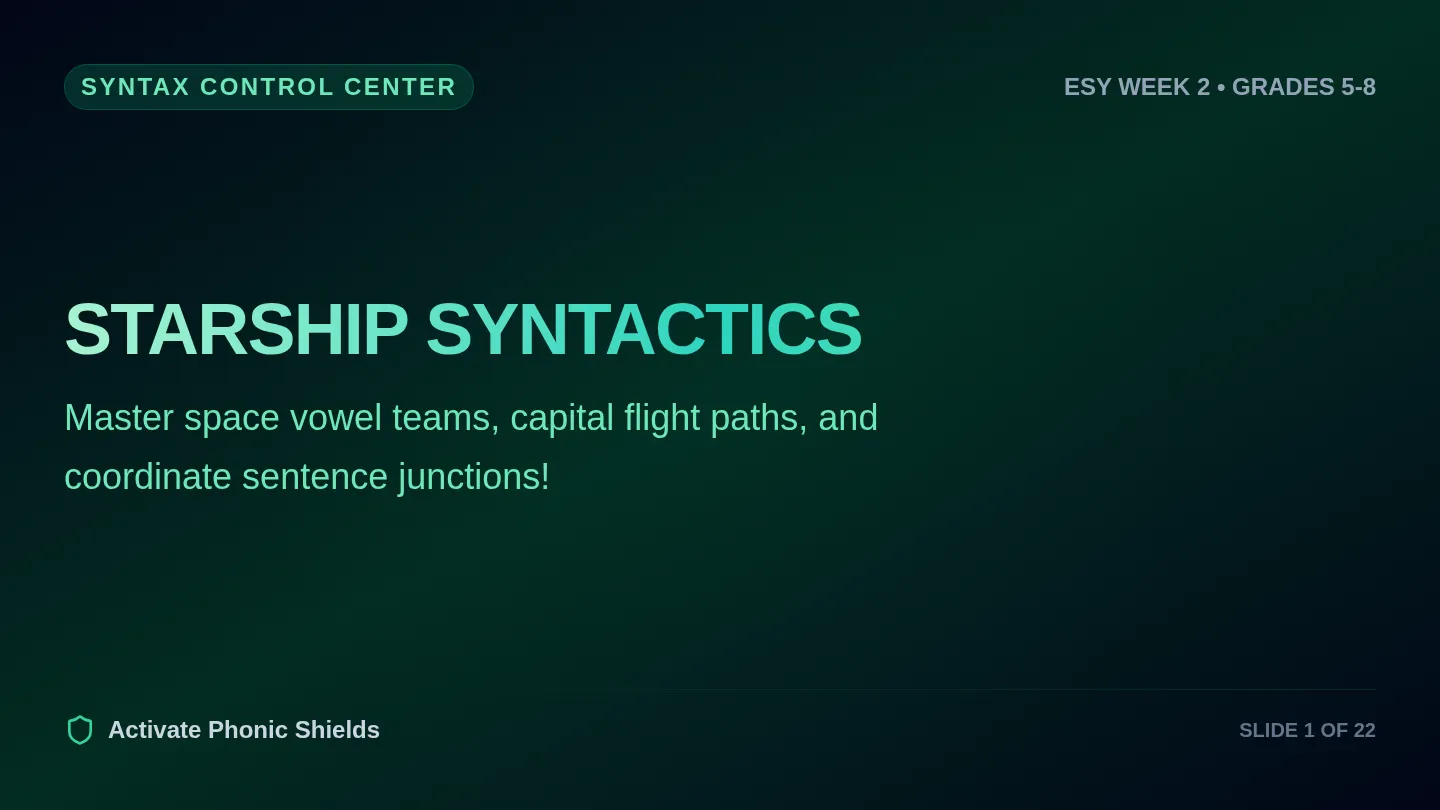
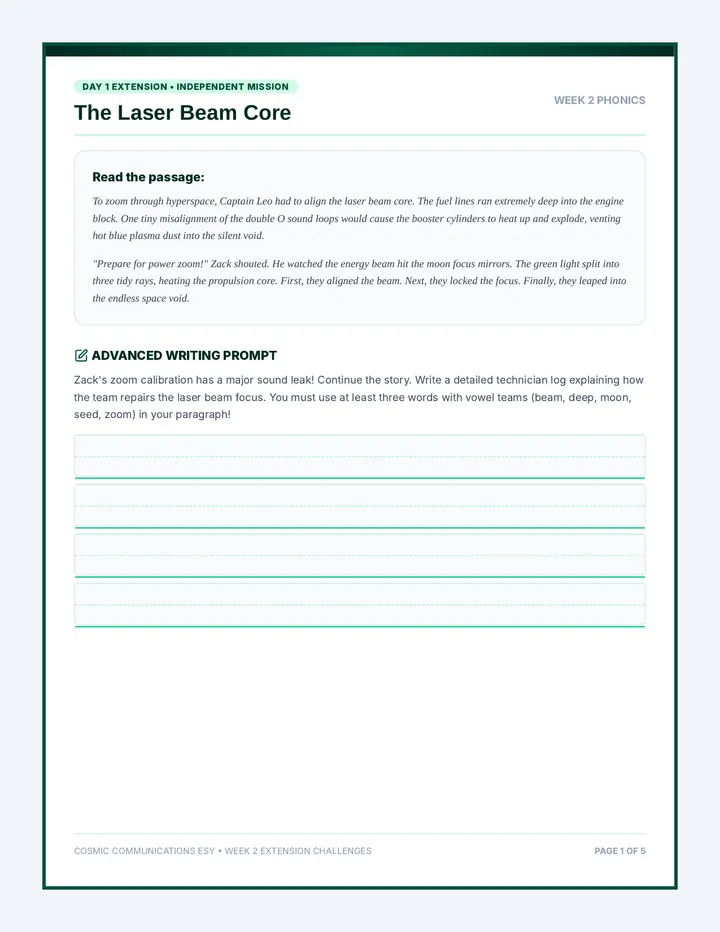
Week 2 focuses on phonics, decoding, and simple sentence structures. Students practice identifying vowel teams, correcting basic capitalization and punctuation errors, and constructing solid sentences.
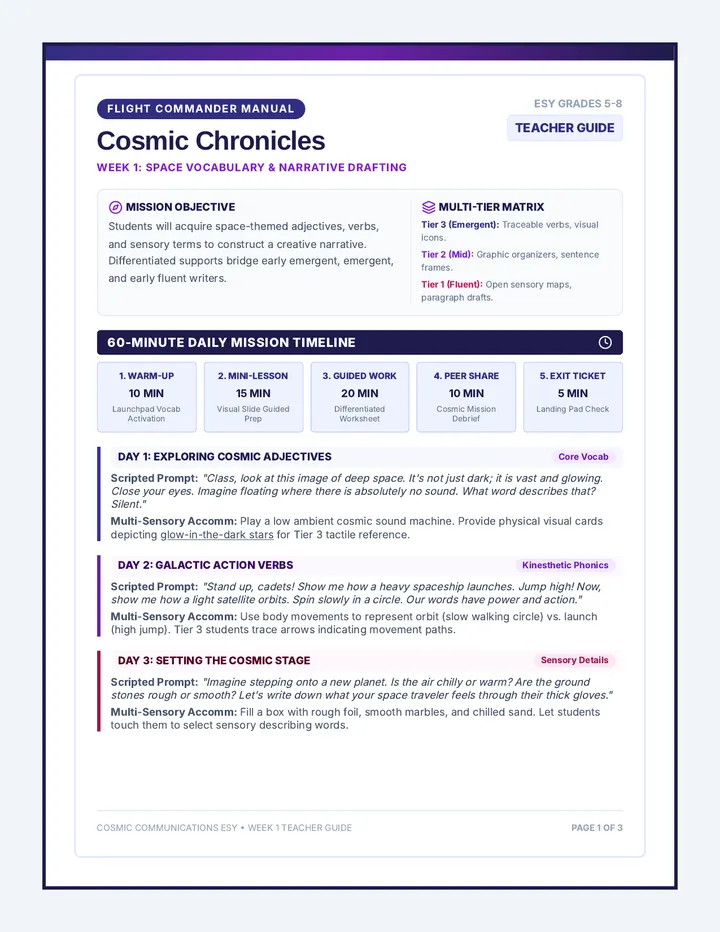
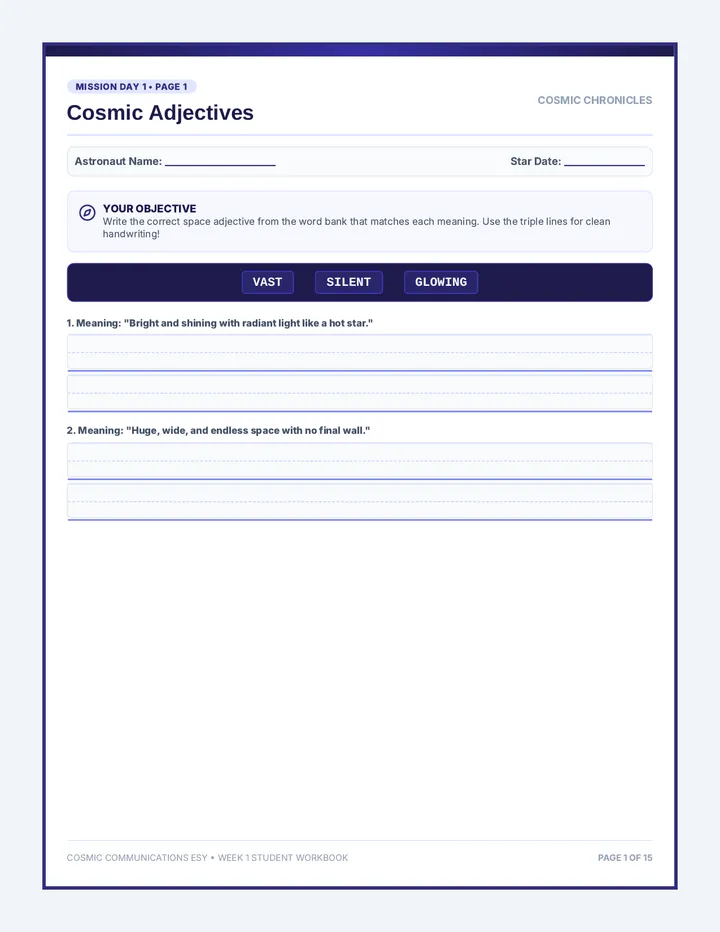
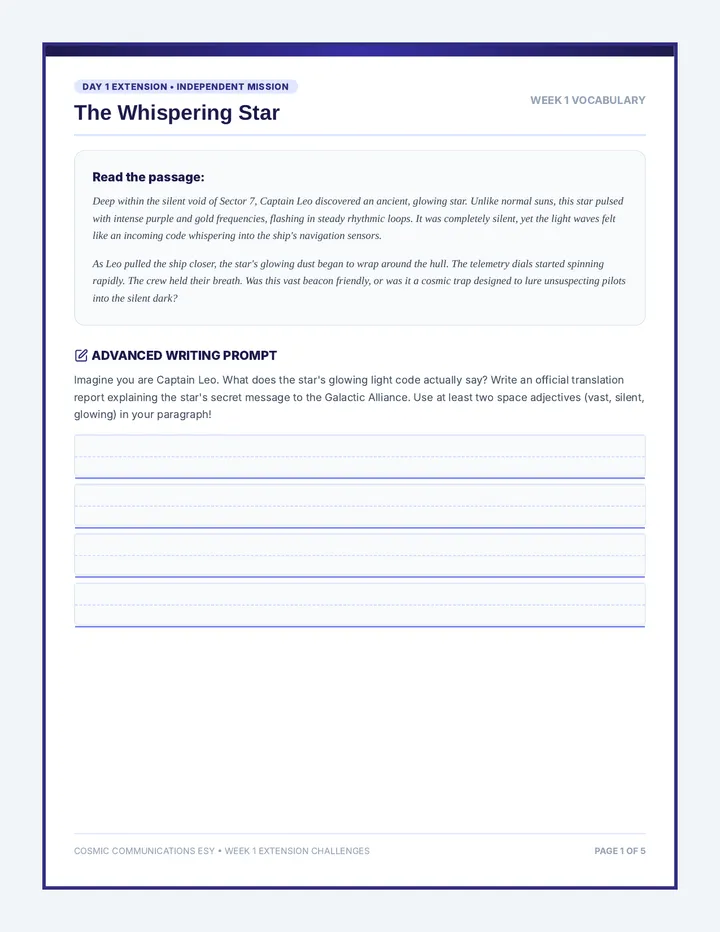
Week 1 focuses on acquiring cosmic vocabulary and drafting short, creative space stories. It guides students through sensory word exploration and provides multi-tiered graphic organizers for narrative drafting.
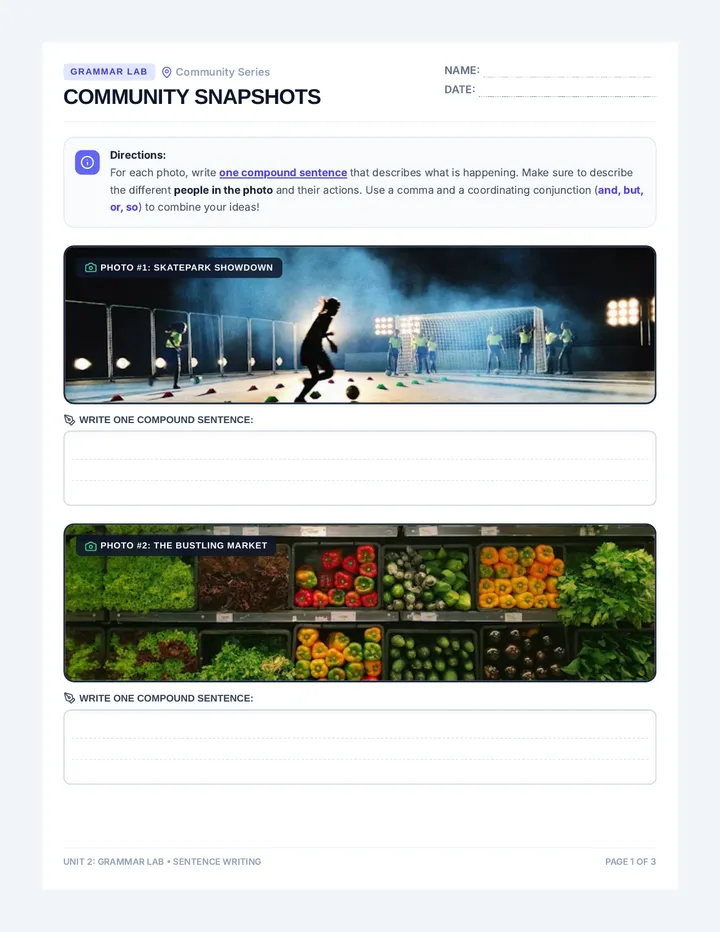
A lesson centered around practicing intermediate grammar, sentence construction, and narrative description through highly engaging, structured community scenes.
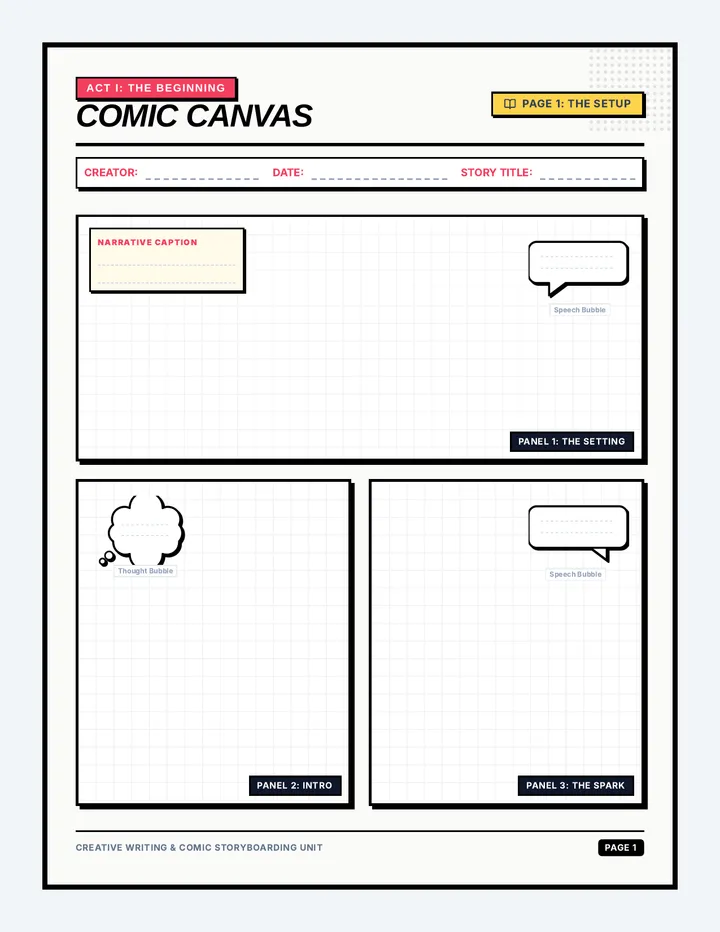
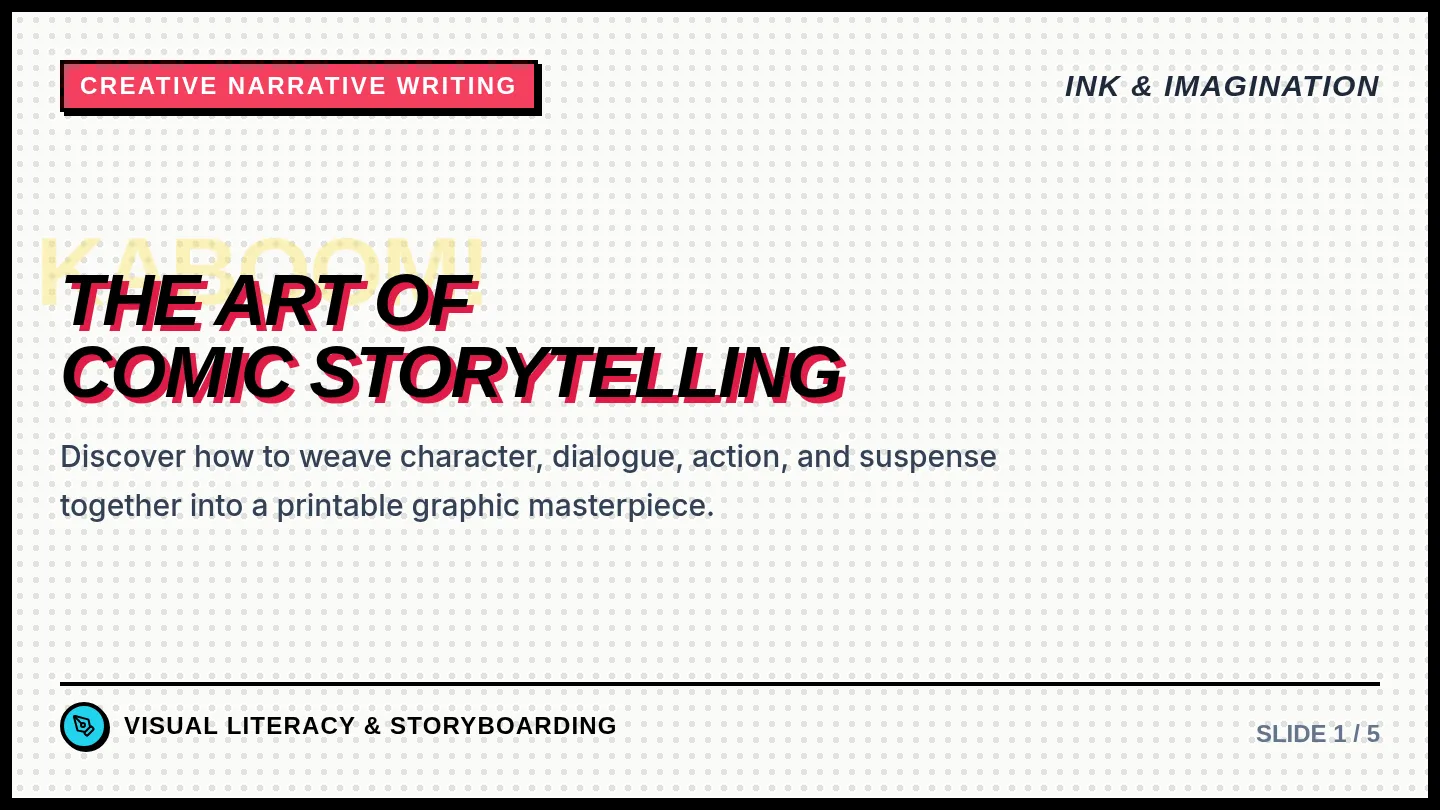
A creative narrative writing lesson that guides students through structural comic book creation, character design, and panel-by-panel storytelling using visual templates.
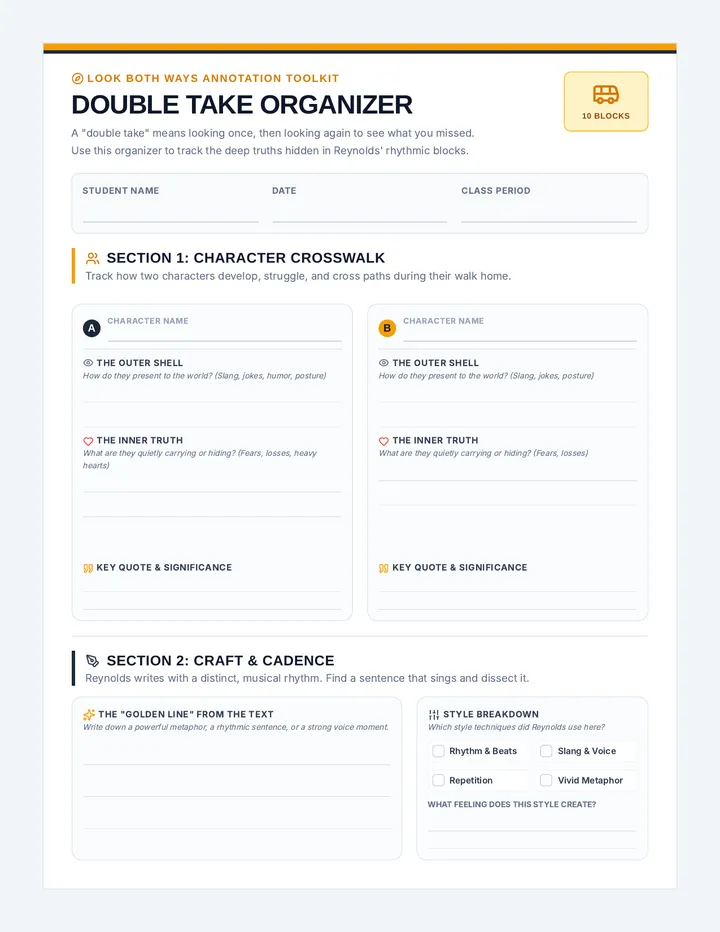
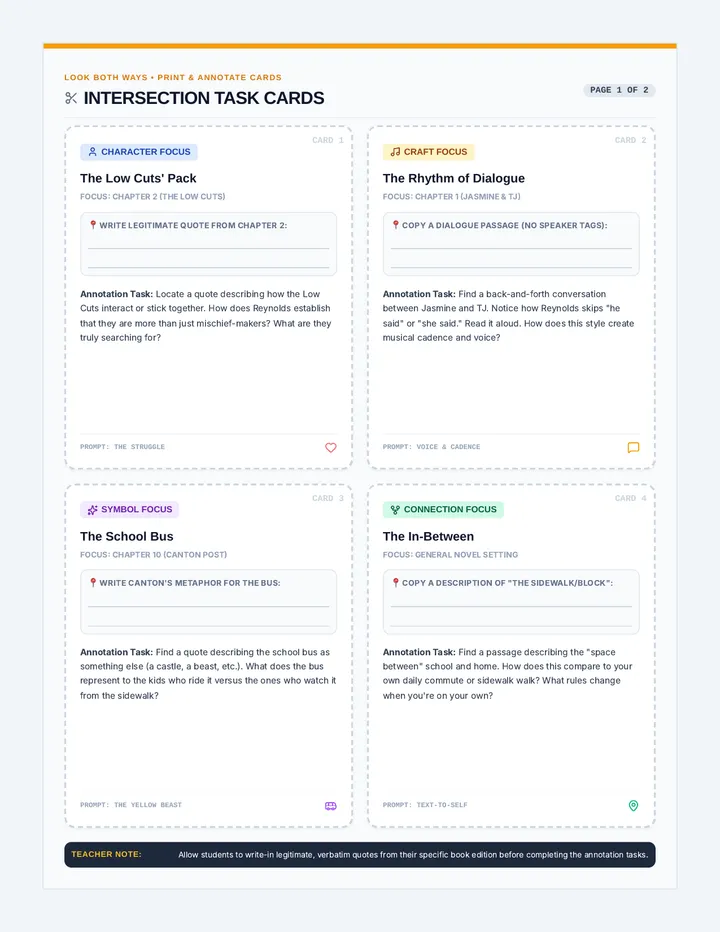
A comprehensive annotation toolkit based on Jason Reynolds' novel Look Both Ways. Students analyze character development, author's craft, thematic motifs, and make active reading connections as they explore the spaces between school and home.
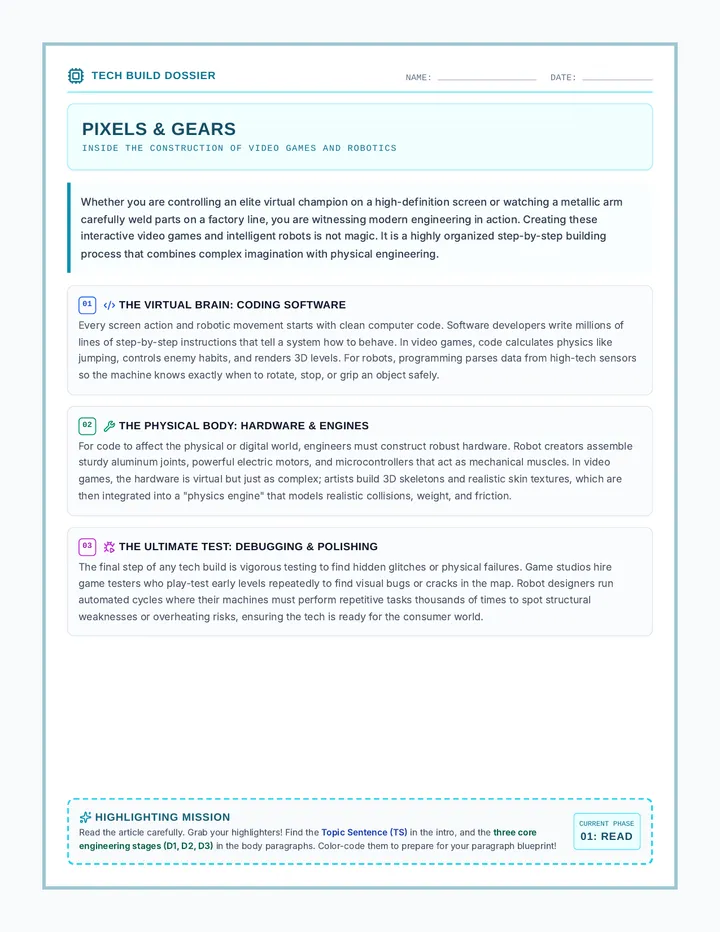
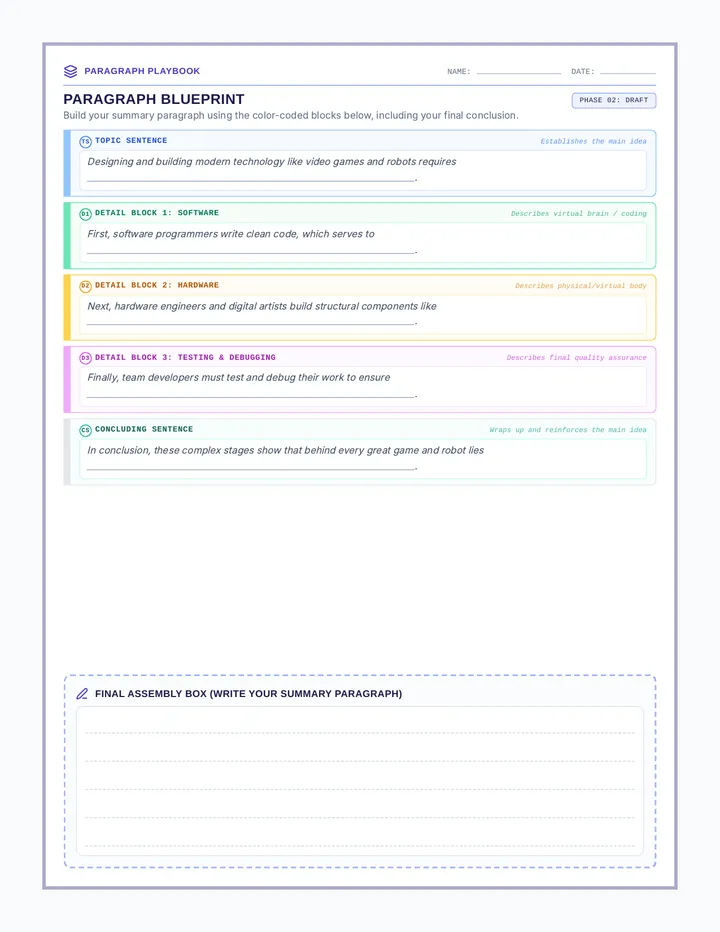
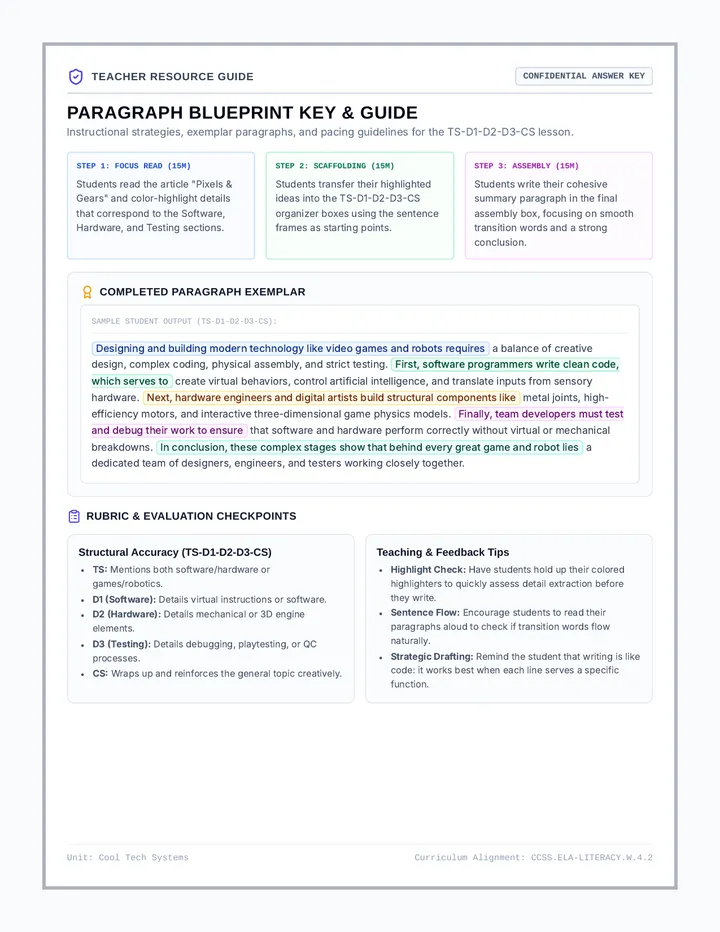
A structured lesson focusing on the engineering of video games and robotics. Students read an engaging, tech-themed article and use a color-coded TS-D1-D2-D3 graphic organizer to write a cohesive summary paragraph.