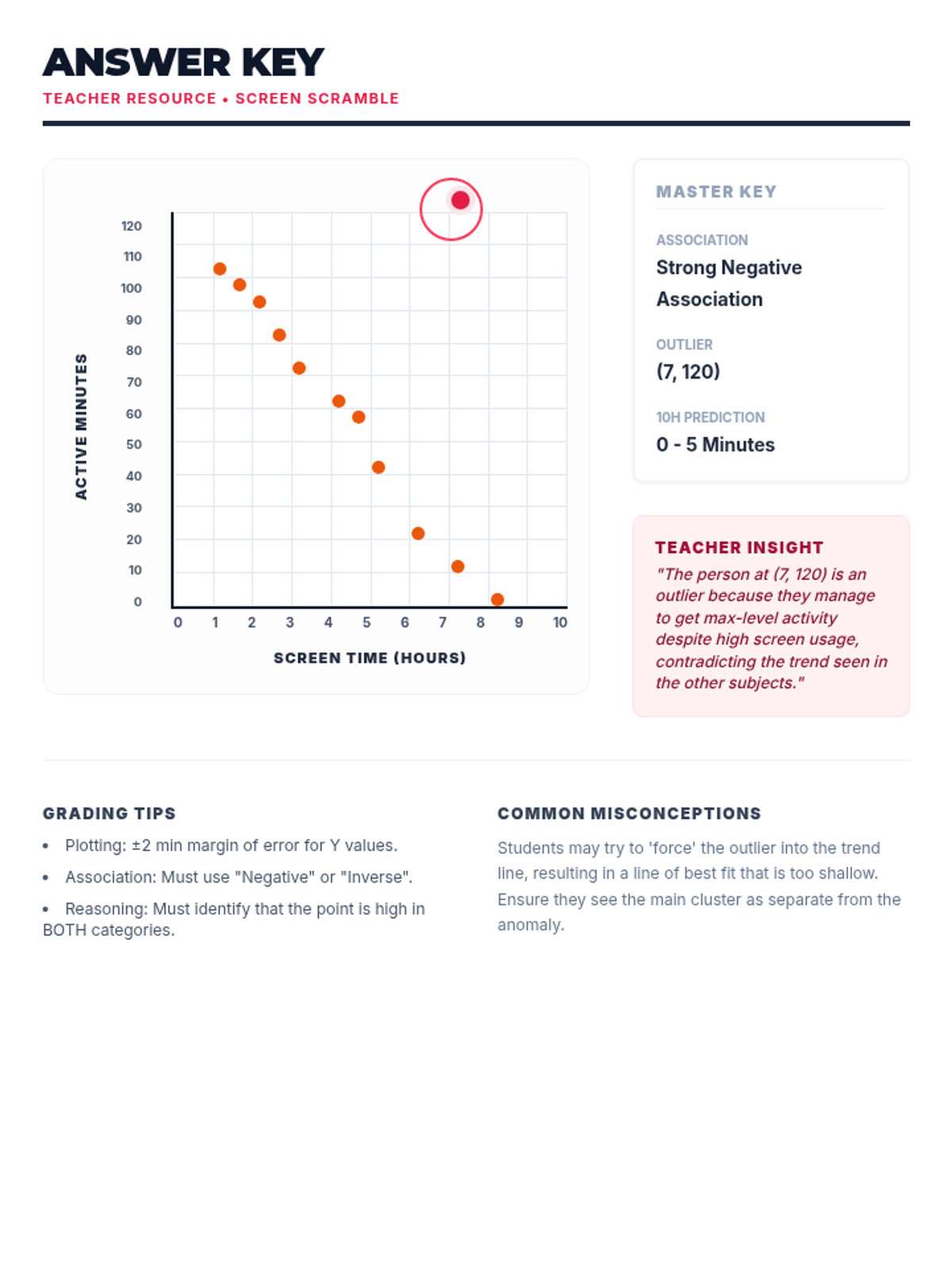
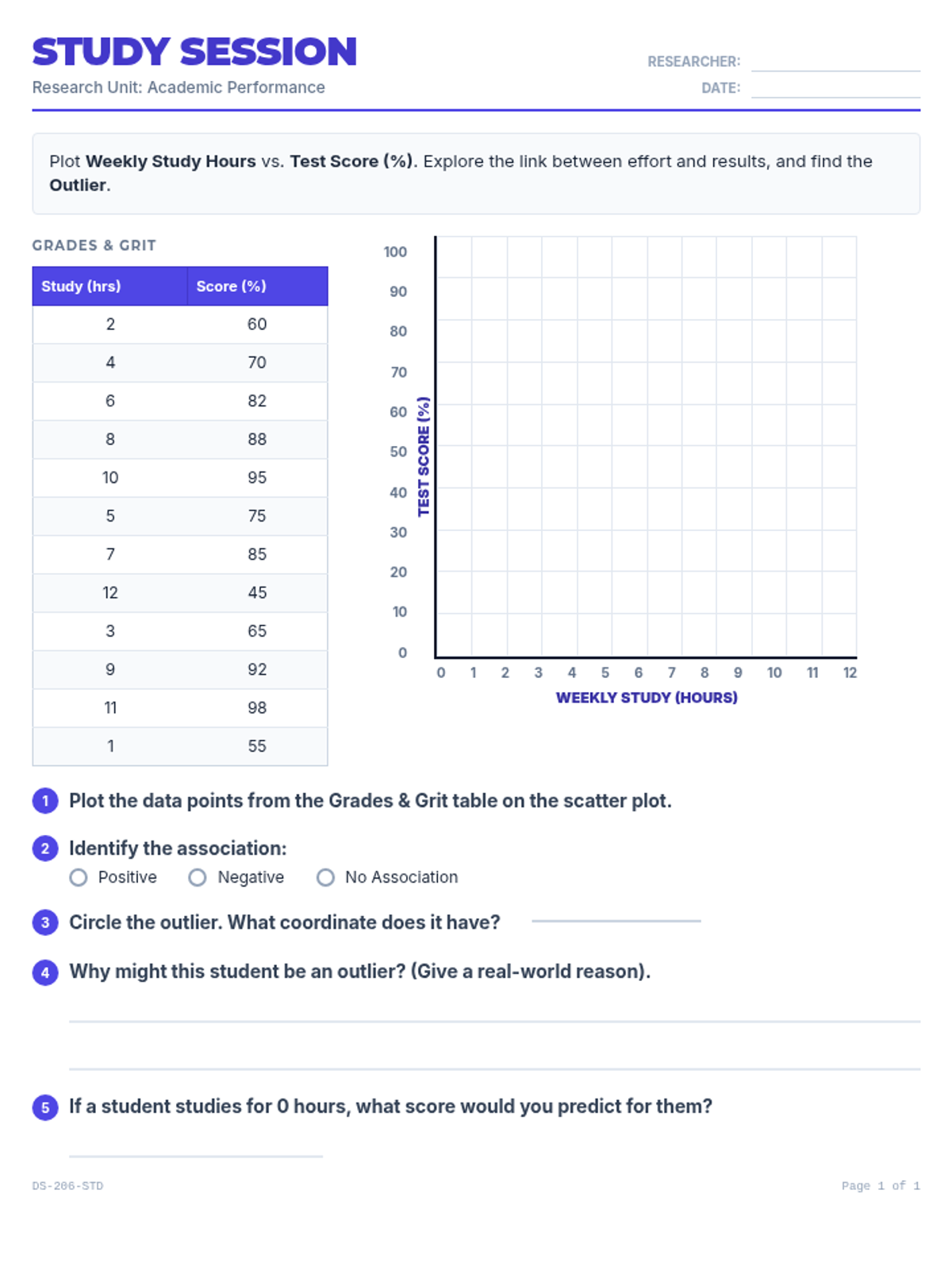
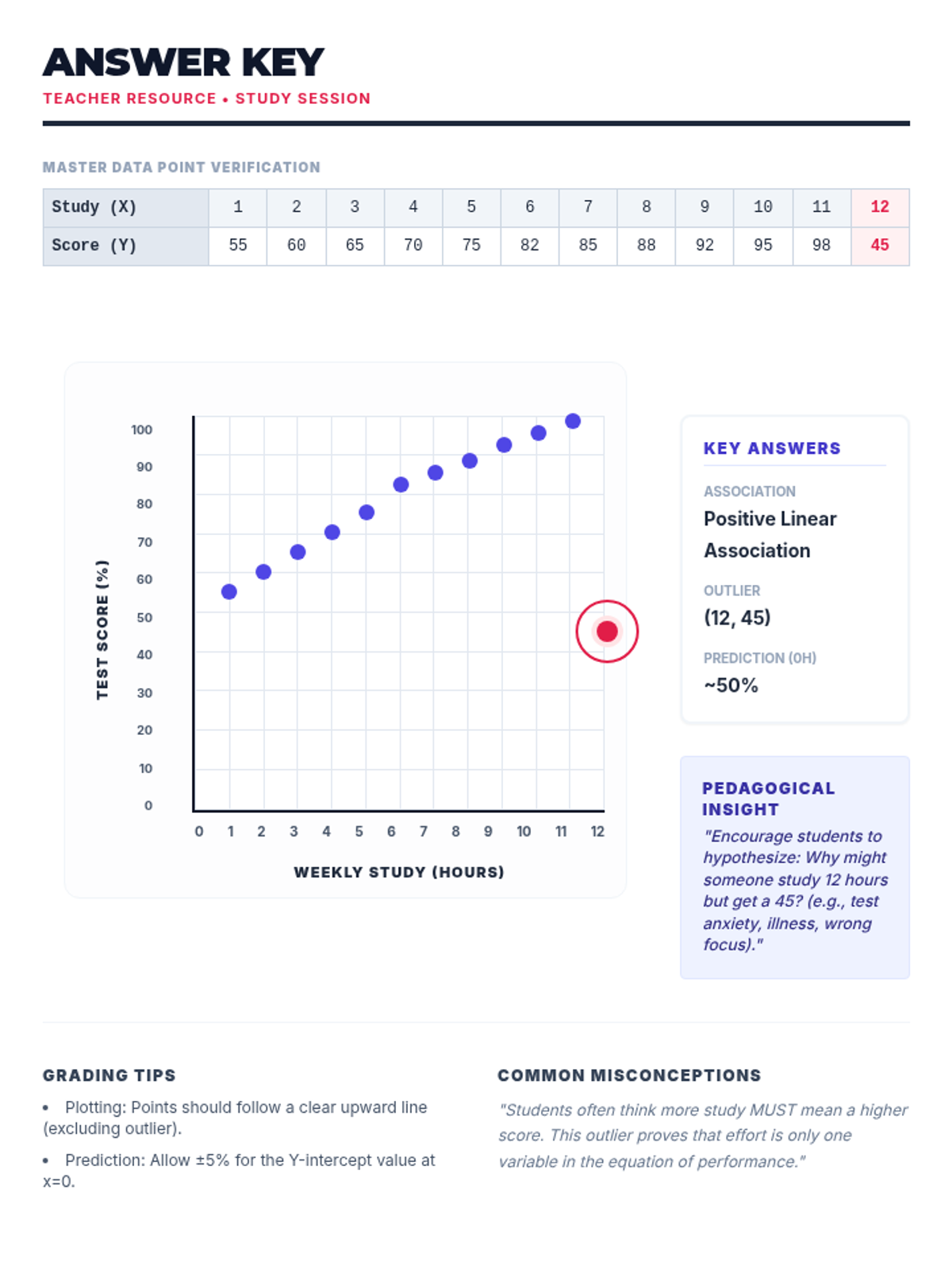
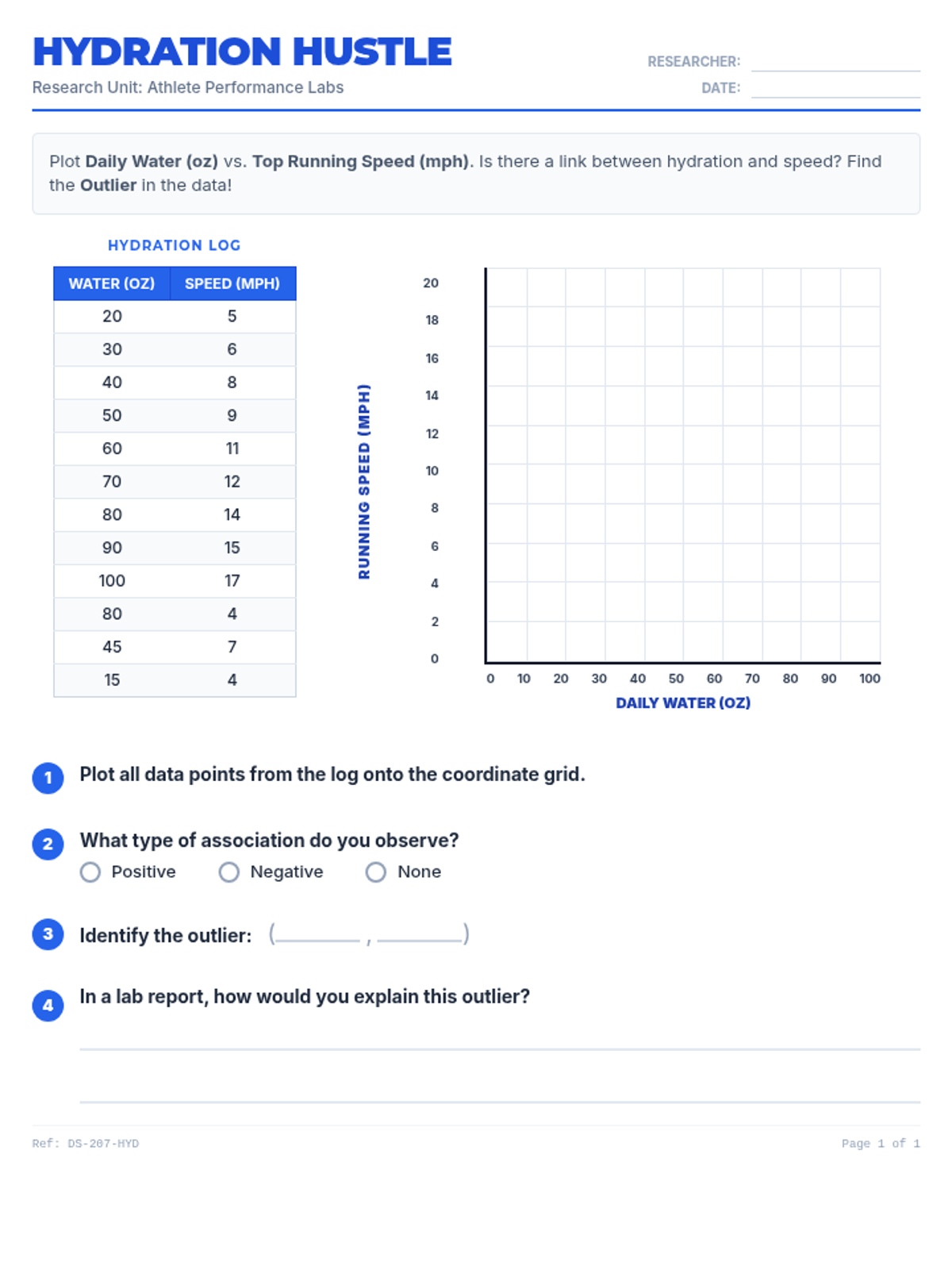
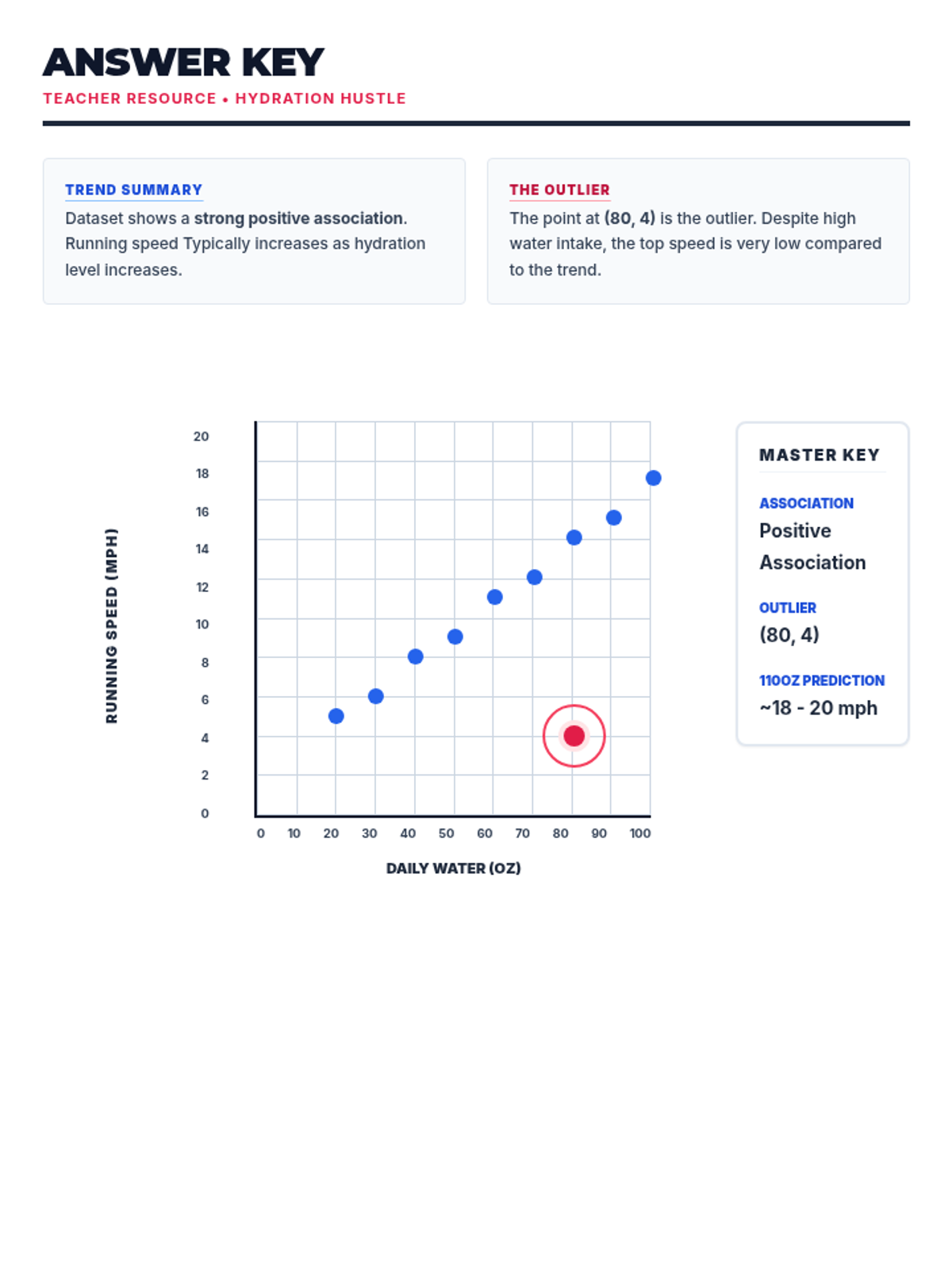
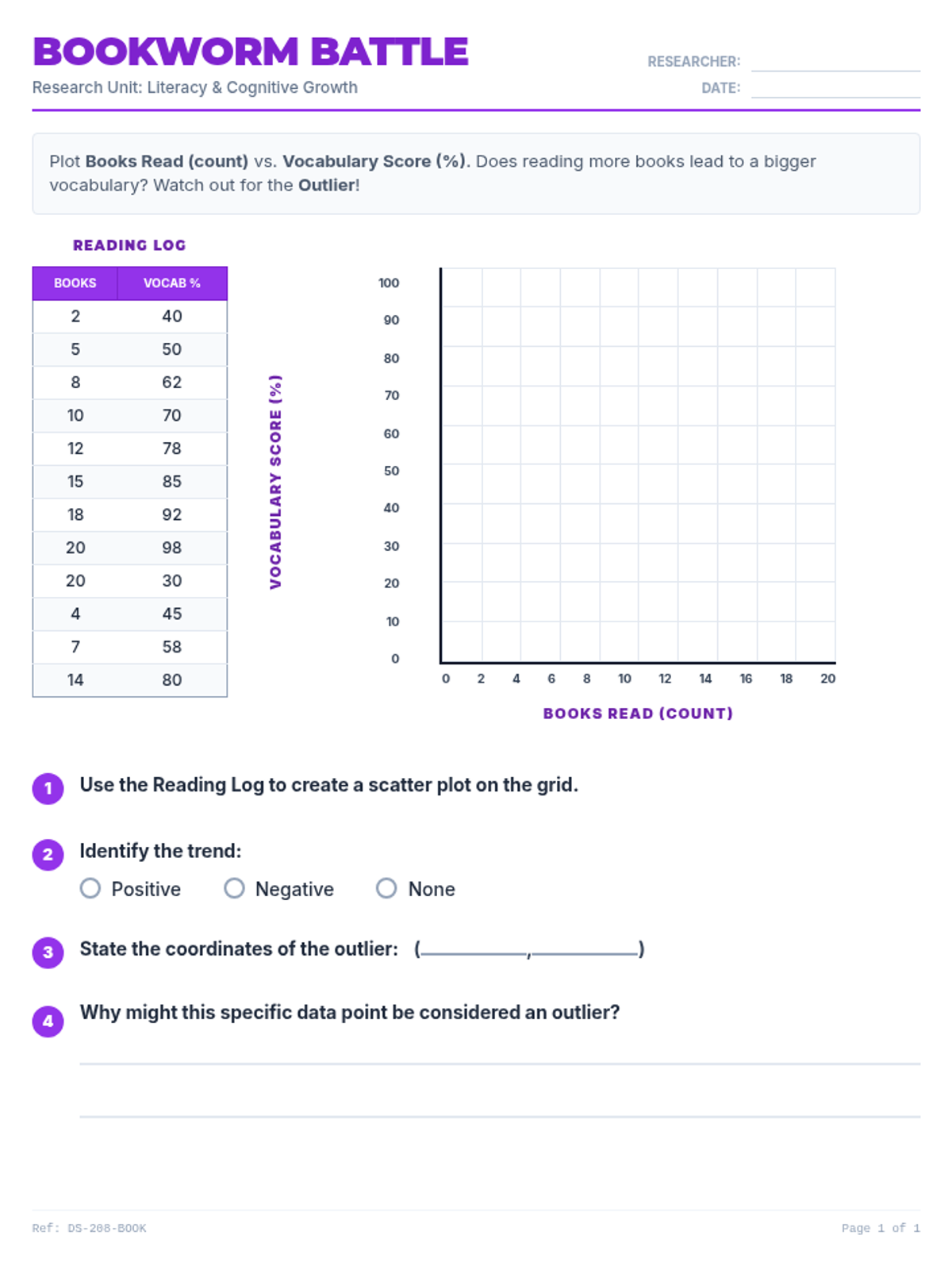
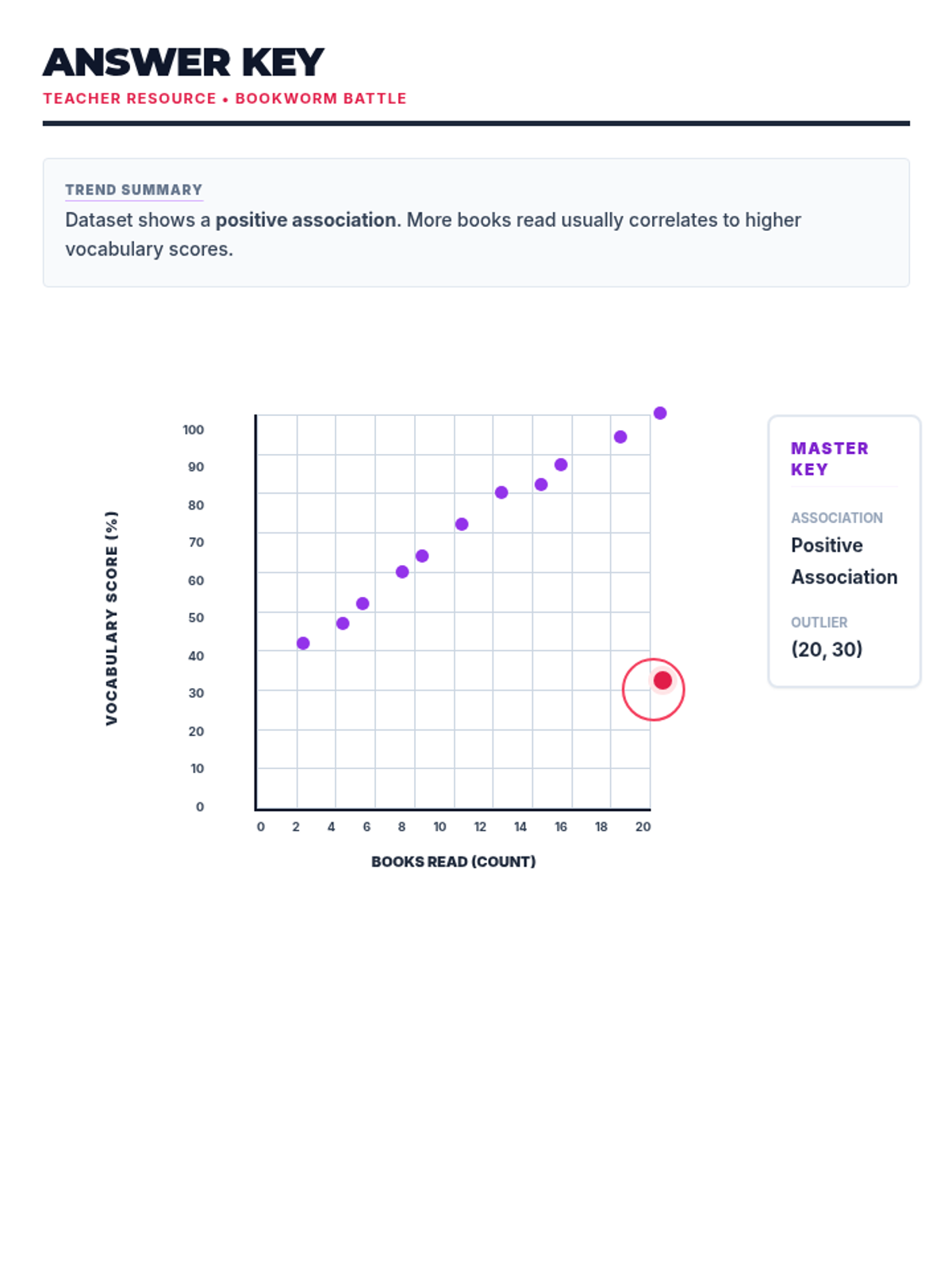
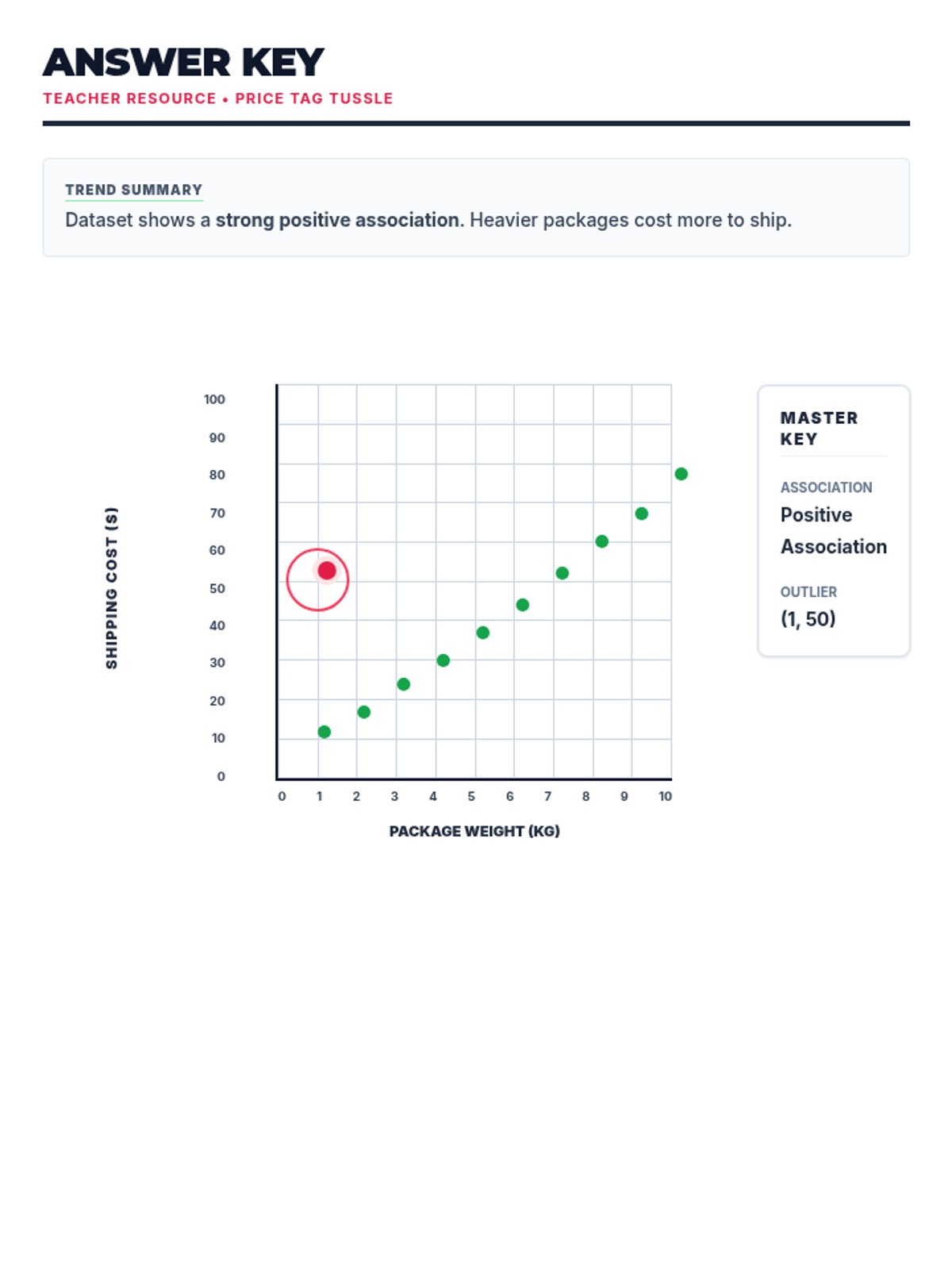
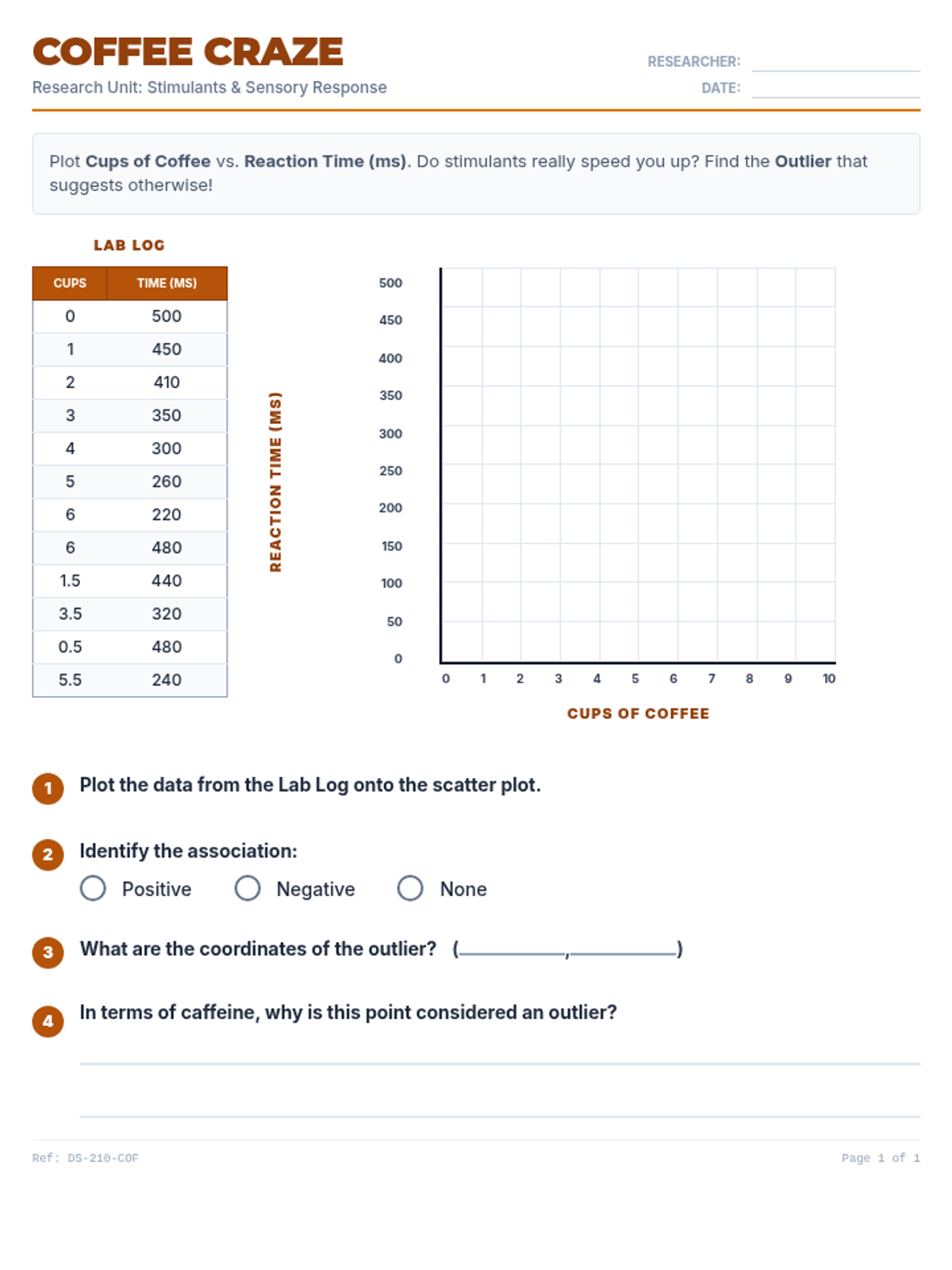
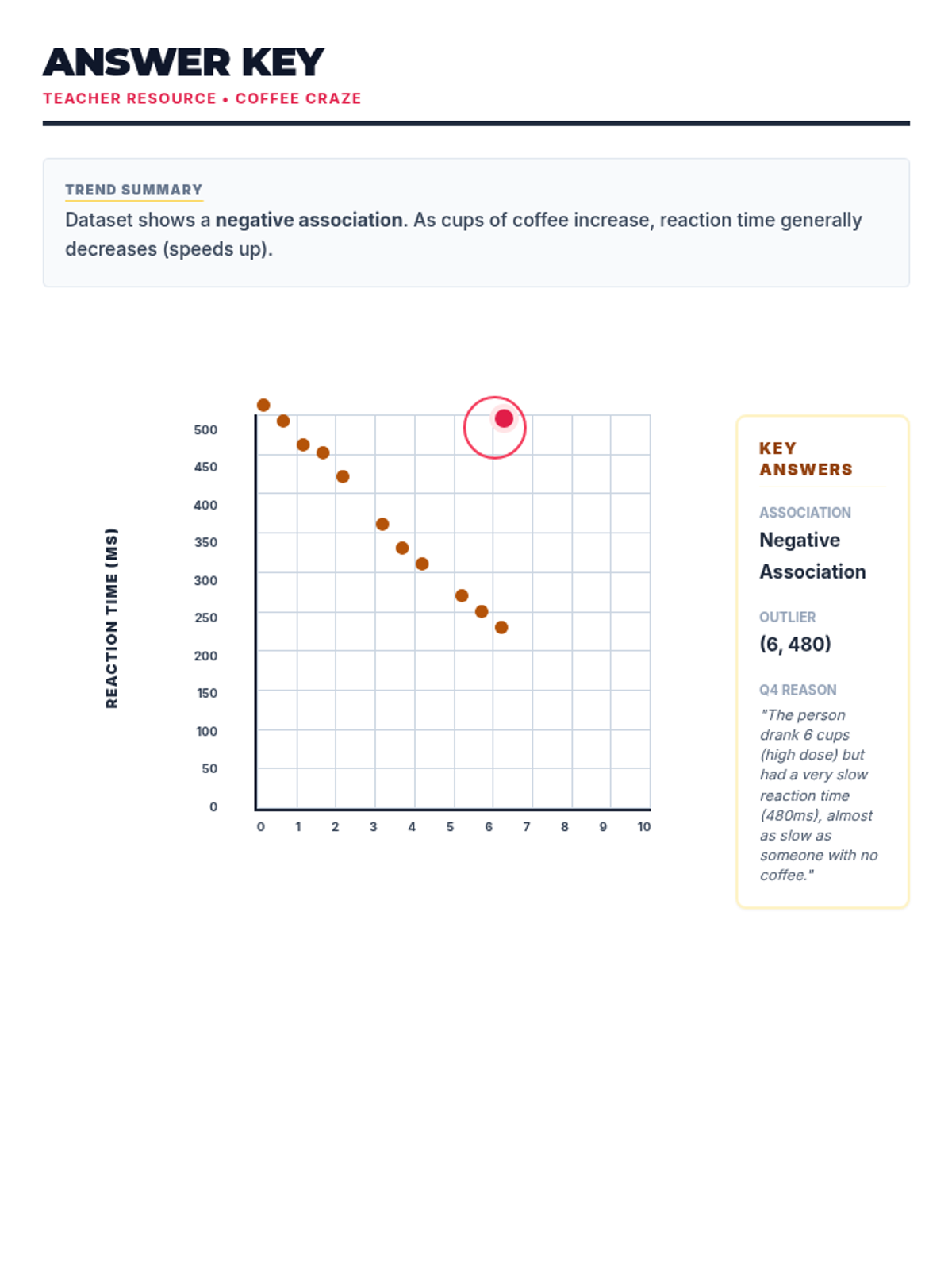
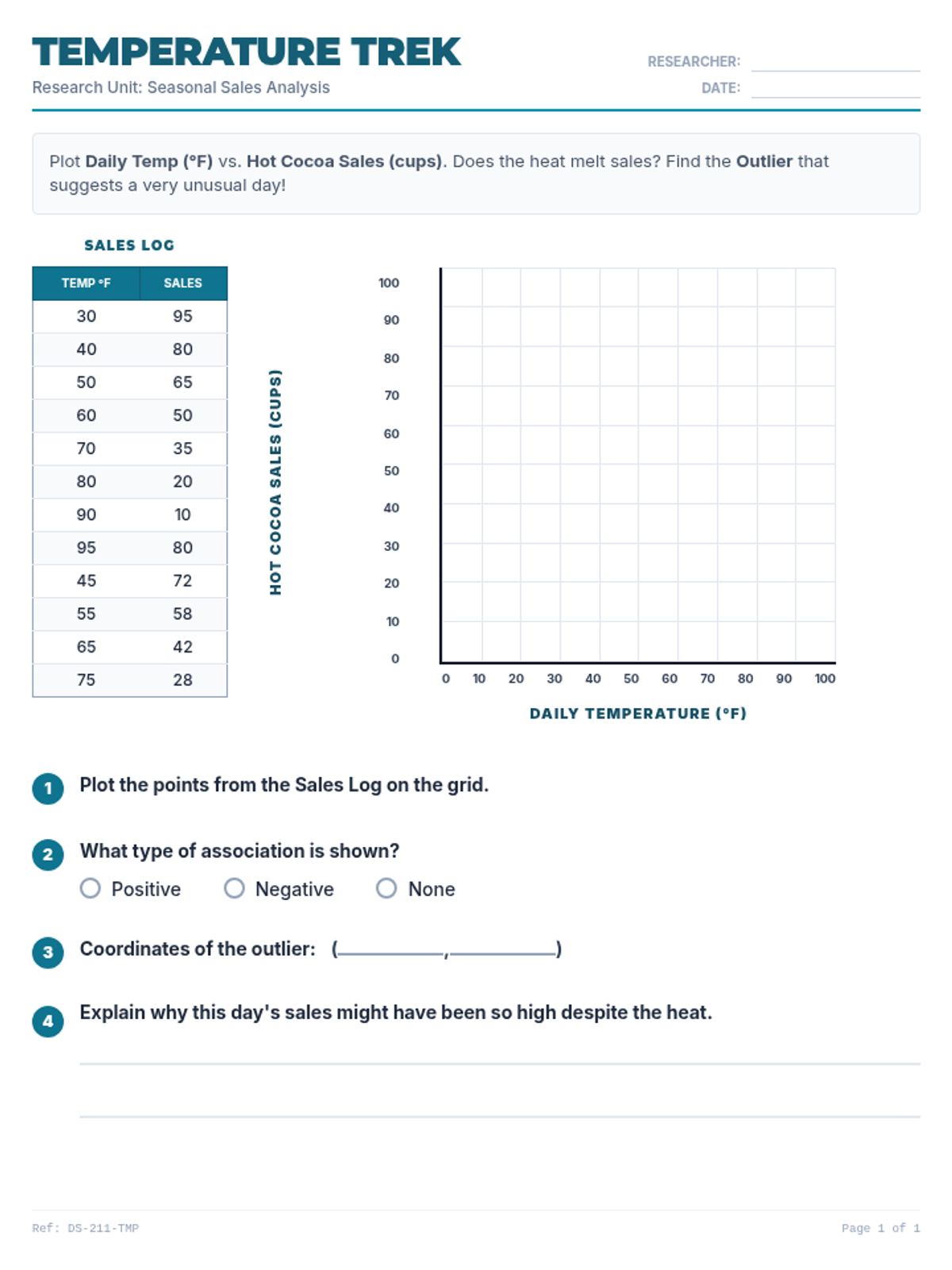
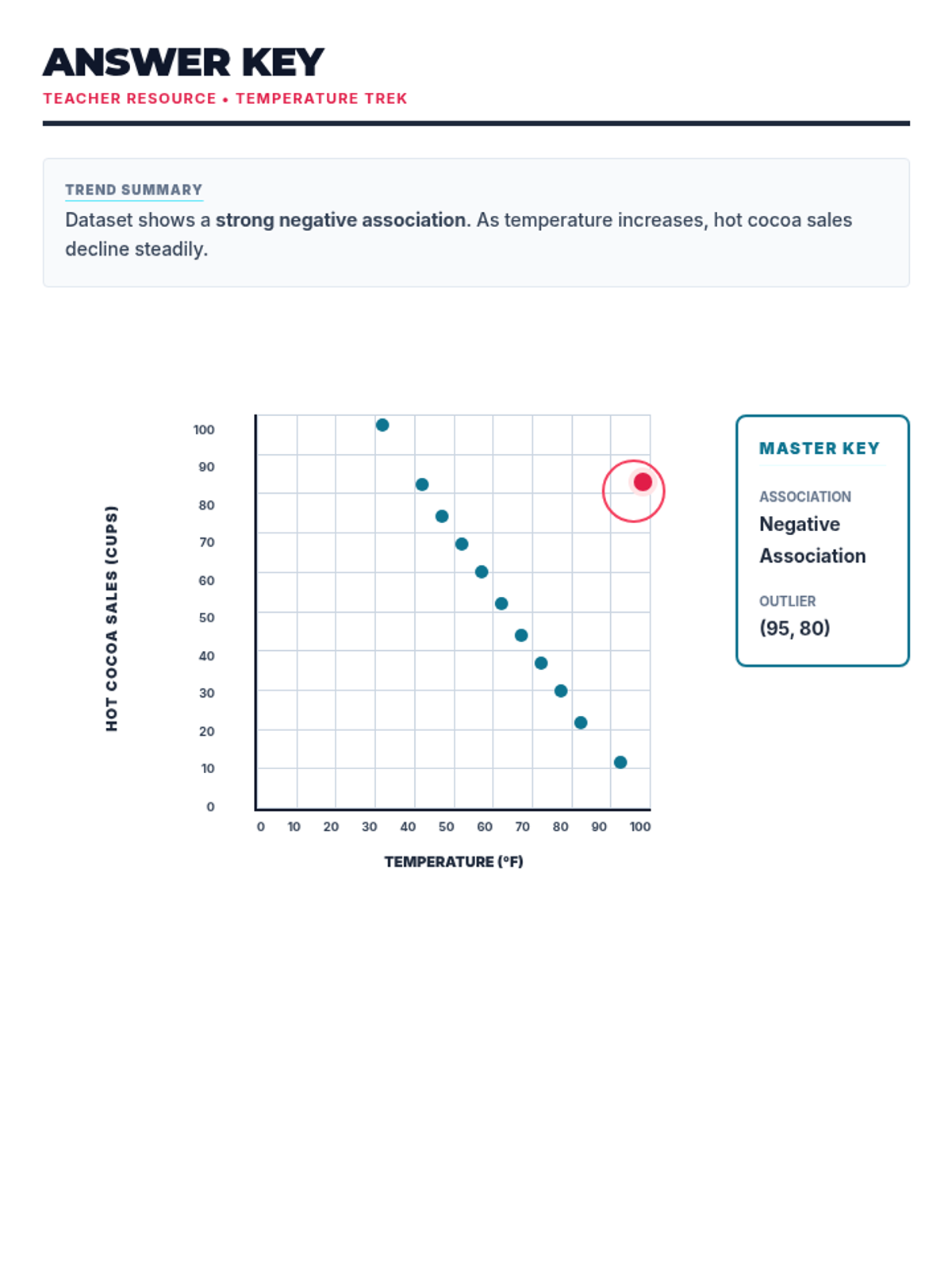
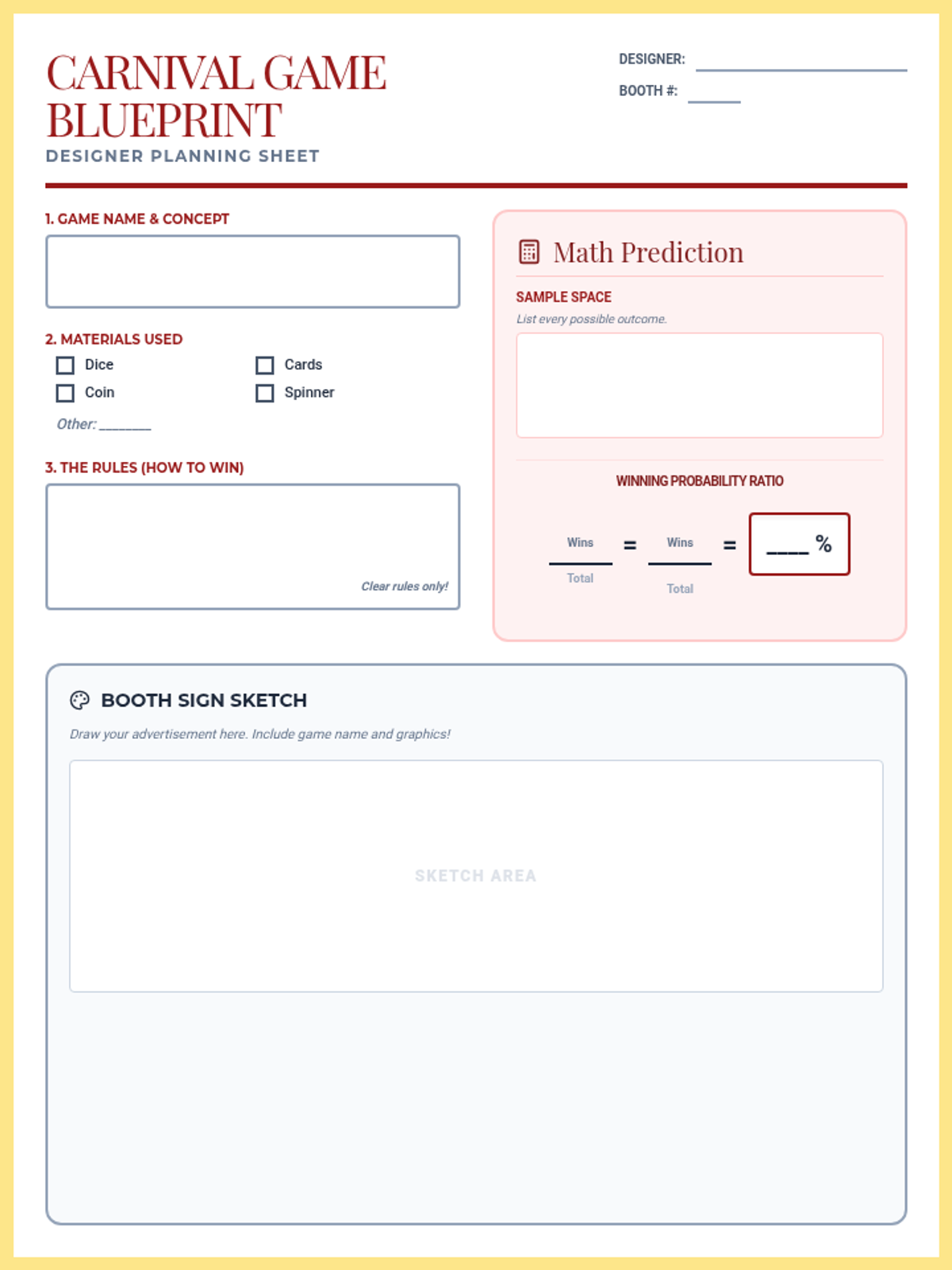
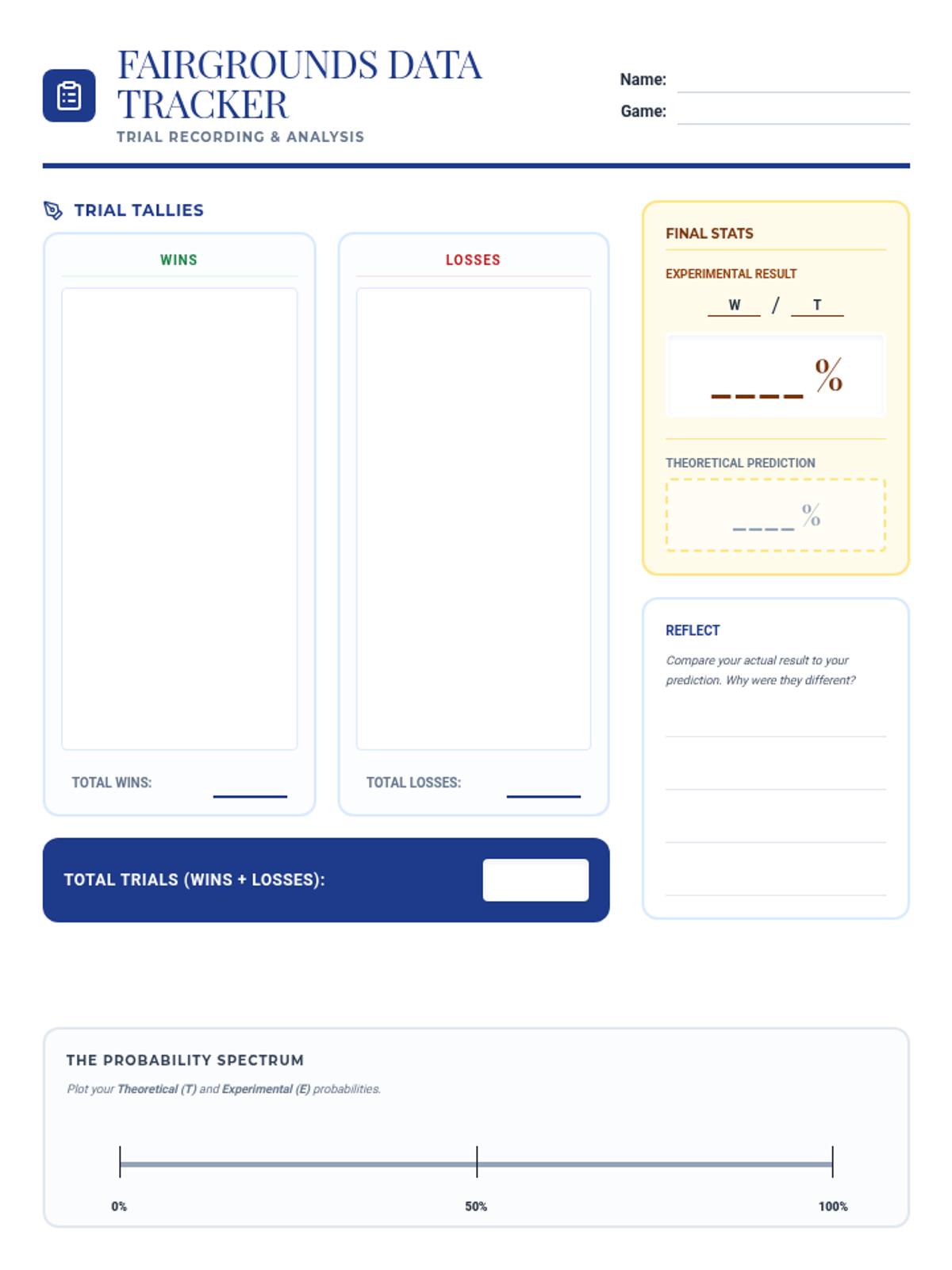
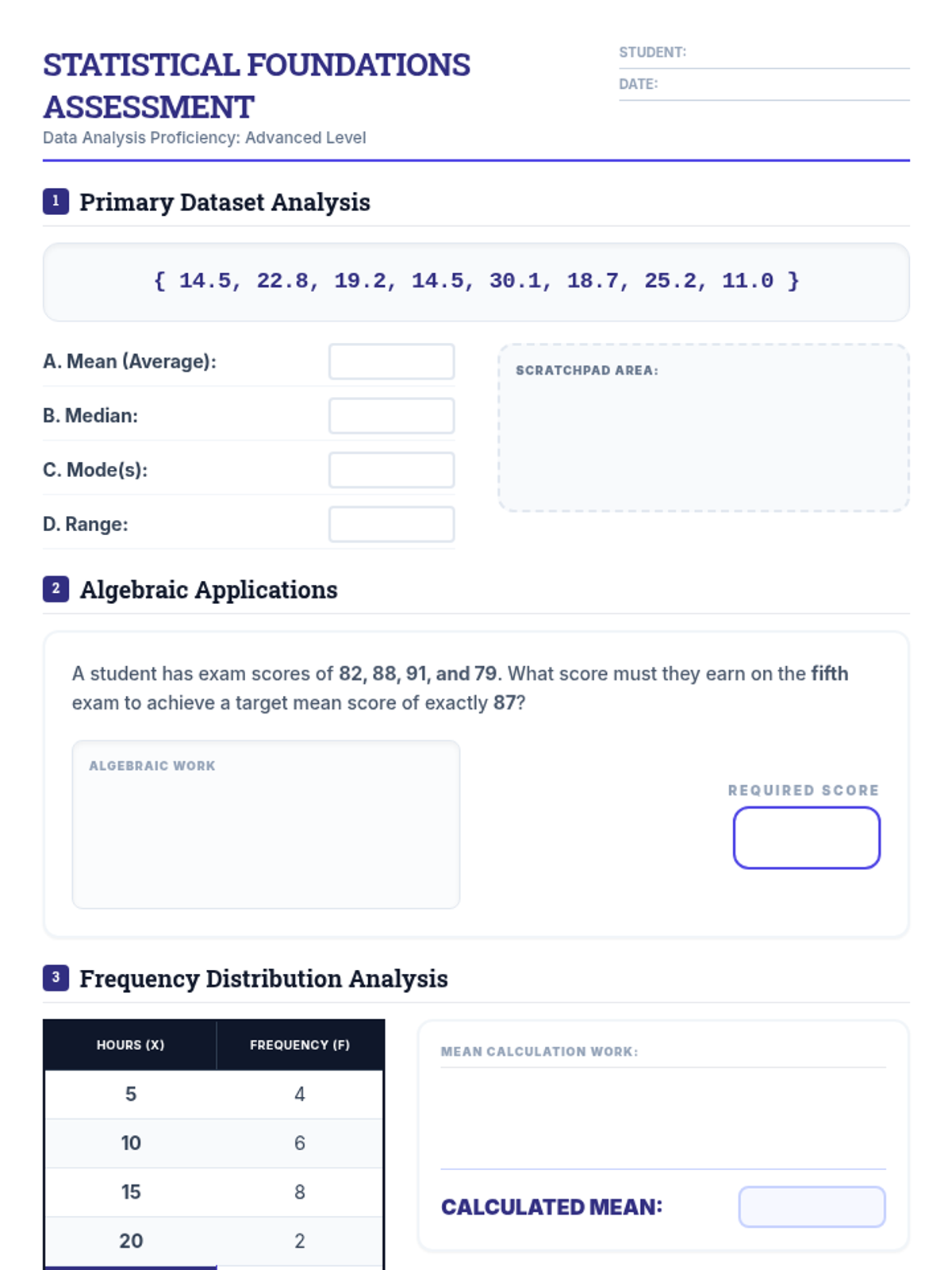
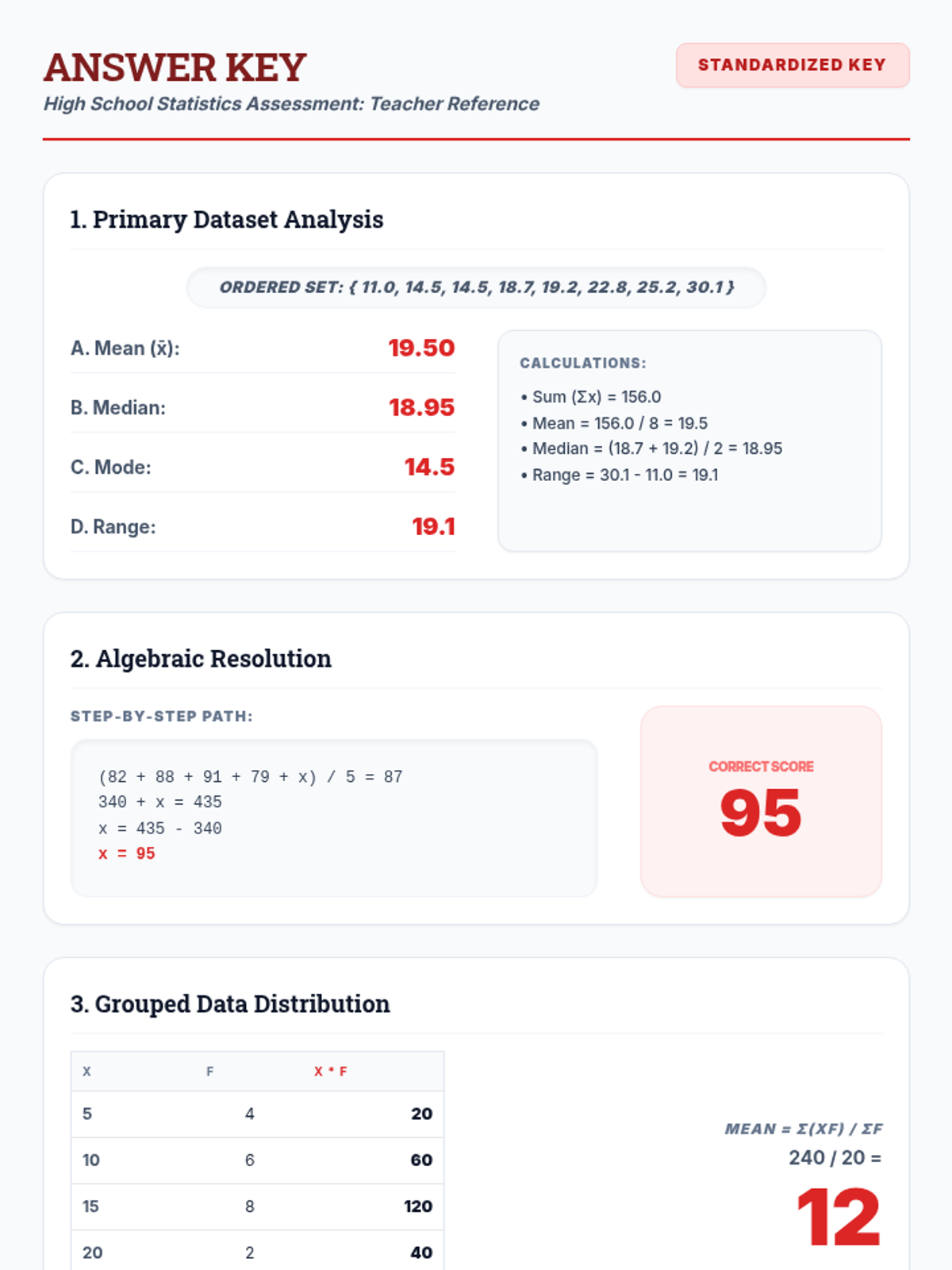
A comprehensive 40-question review covering descriptive statistics, elementary probability, and counting techniques based on Algebra 1 and Statistics curriculum.
A comprehensive geometry lesson covering the calculation of area and perimeter alongside the execution of geometric transformations (translations, reflections, and rotations). Students will apply these concepts through mixed practice, targeted exercises, and a final assessment.
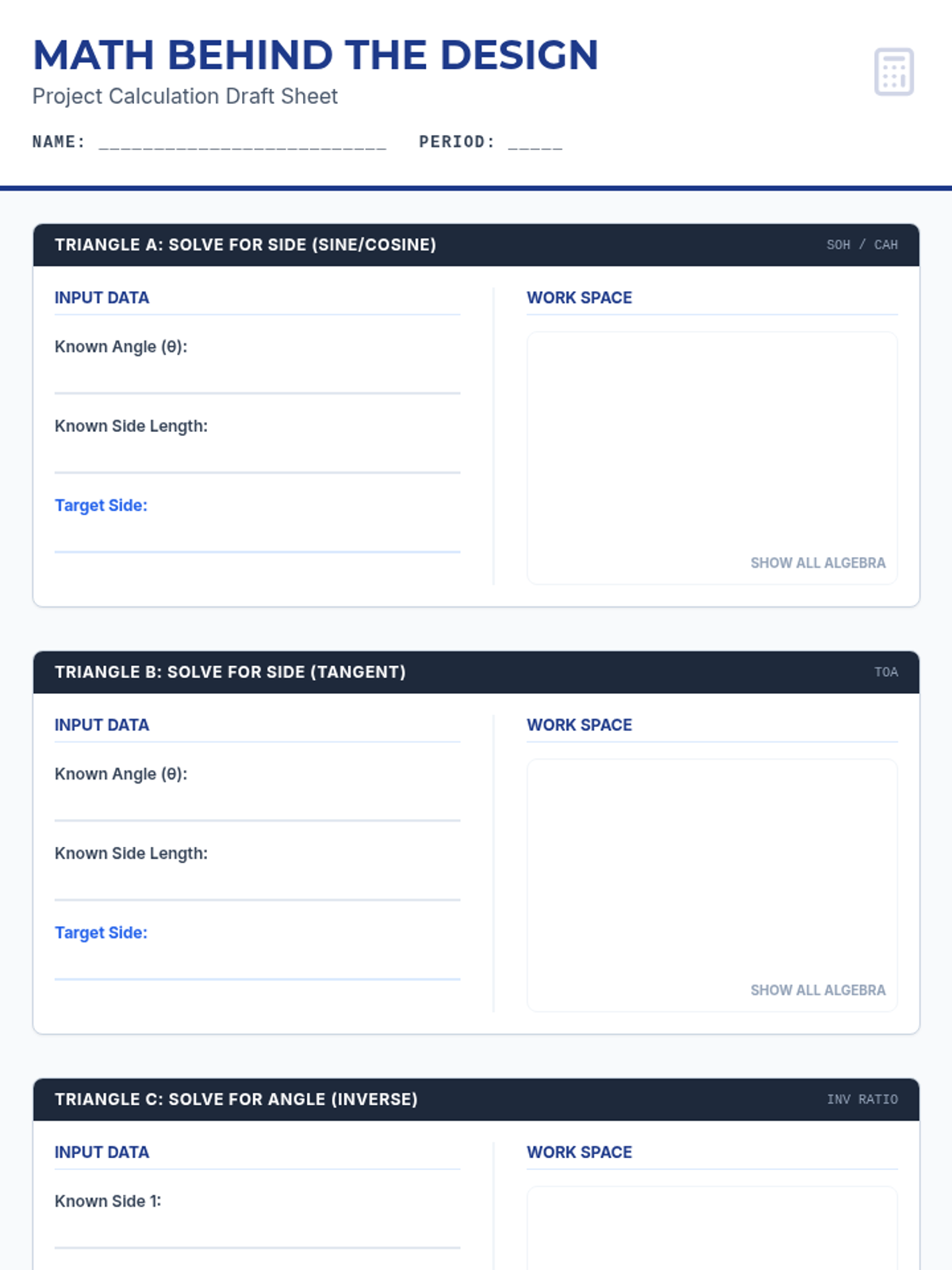
A comprehensive lesson on solving exponential equations with the same base, covering the Property of Equality and step-by-step problem-solving techniques.
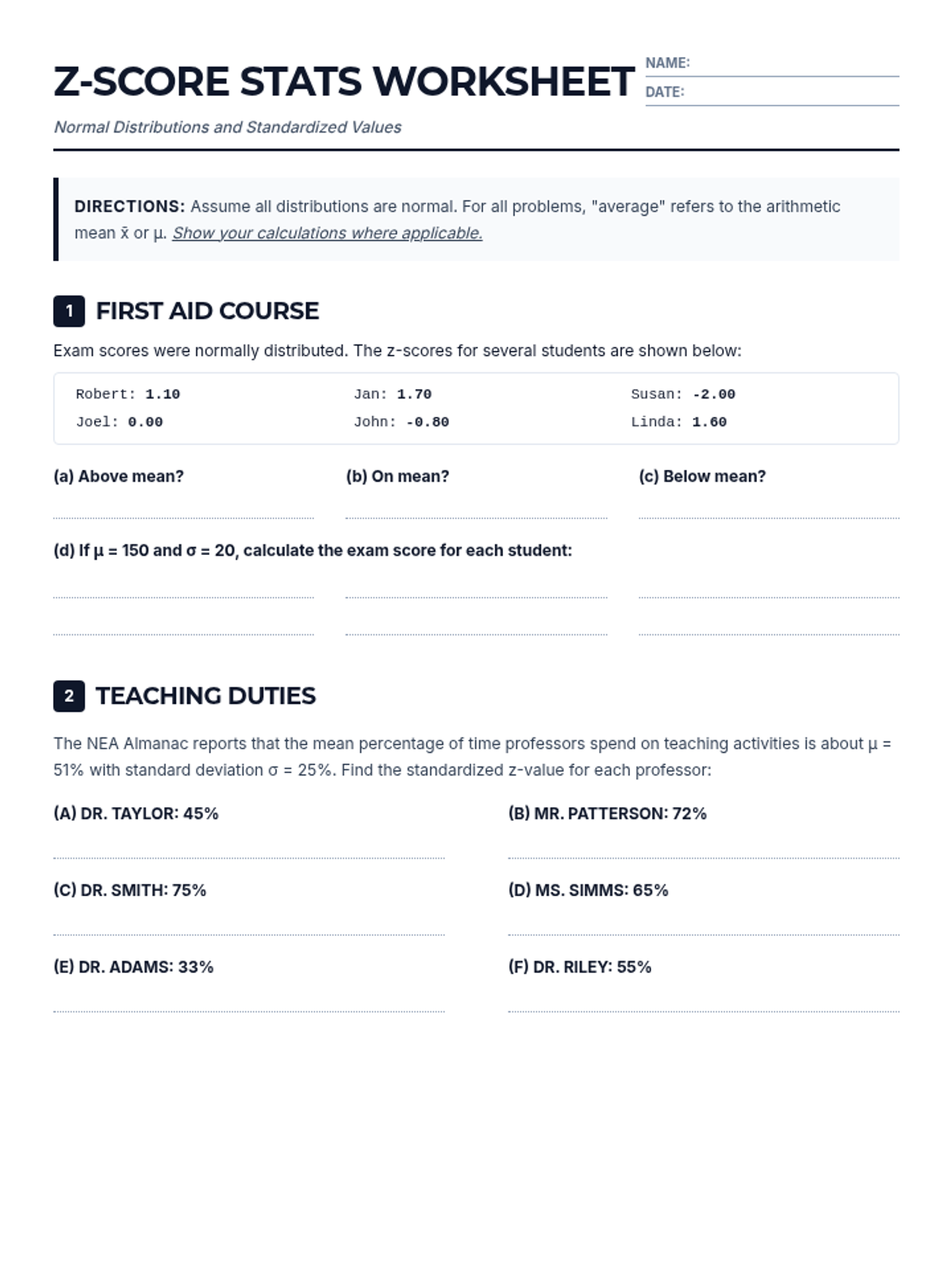
A lesson focused on interpreting and analyzing real-world data from criminal justice, tax returns, and law enforcement statistics using calculations like rates of change, percentages, and frequency distributions.
A comprehensive introduction to the fundamental concepts of statistics, including data classification, sampling methods, and experimental design.
A comprehensive assessment covering exponential growth and decay, solving exponential equations, and arithmetic/geometric sequences based on Chapter 6 Algebra 1 concepts.
A comprehensive review of systems of linear equations including graphing, substitution, elimination, and real-world application problems involving cost and quantity.
A comprehensive assessment covering logarithms, exponential transformations, and equation solving based on Chapter 6 materials. Includes a 30-question multiple-choice quiz and a detailed answer key.
A comprehensive assessment covering nth roots, rational exponents, and radical equations based on Chapter 5 Algebra 2 concepts.
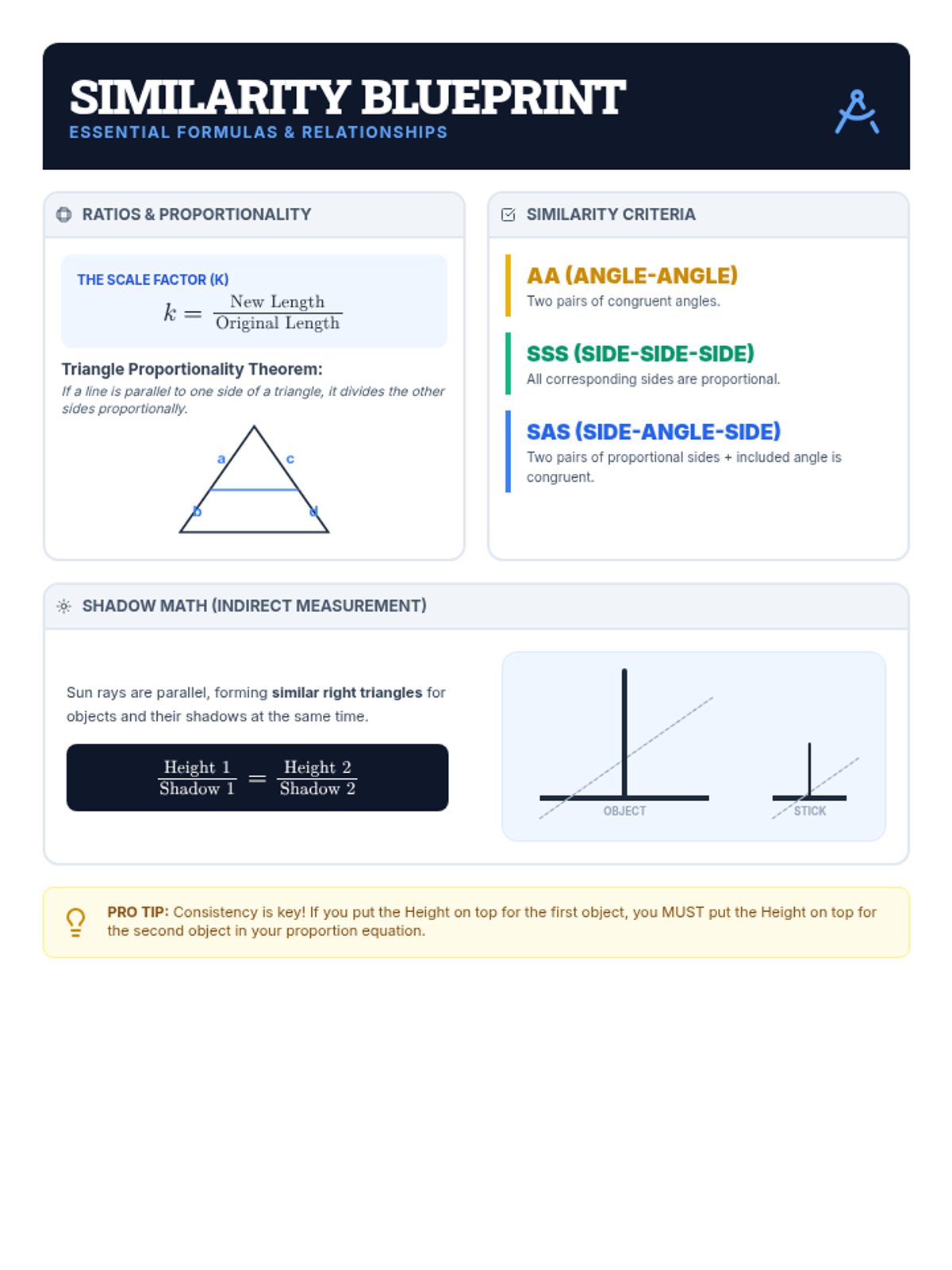
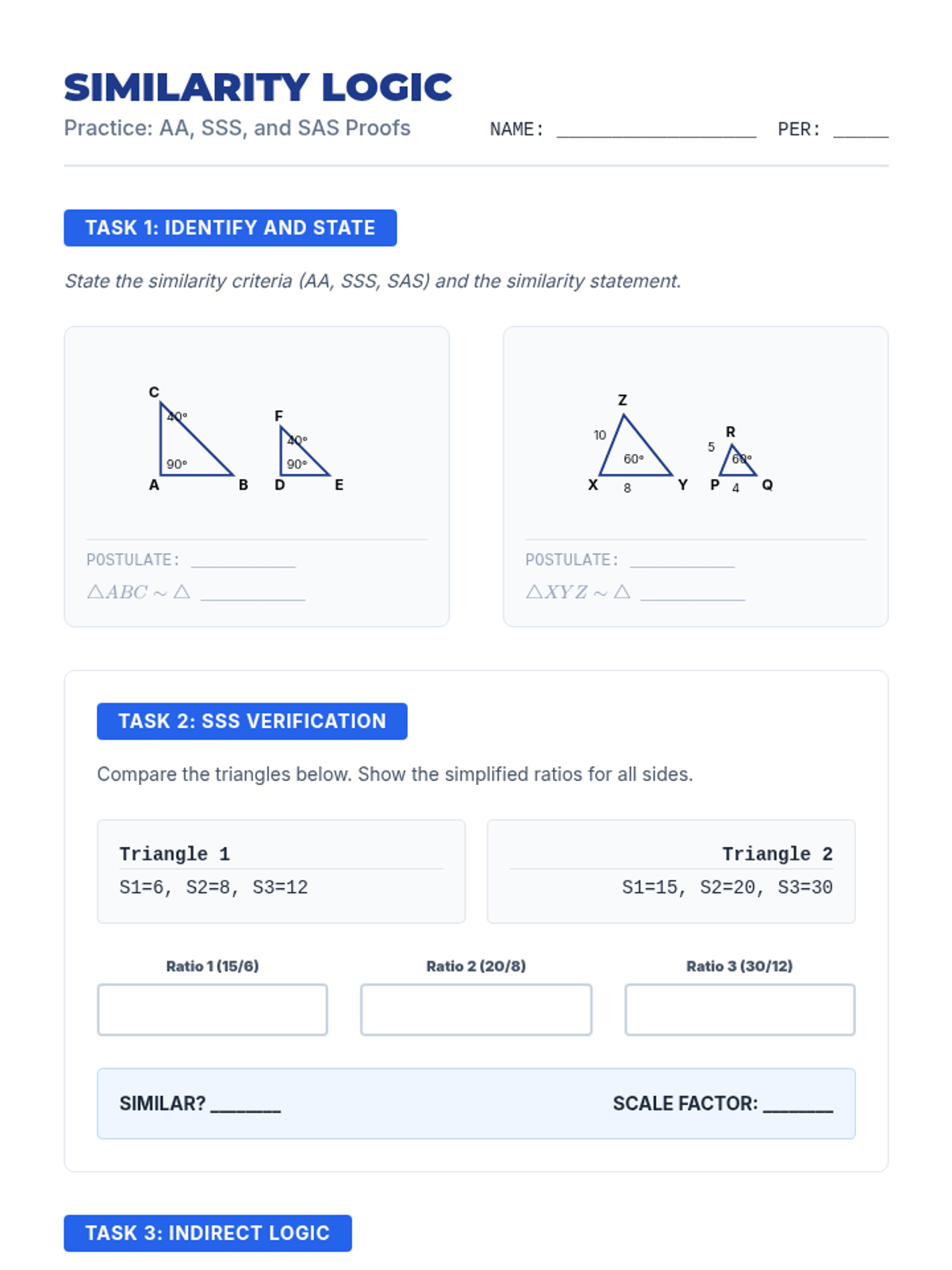
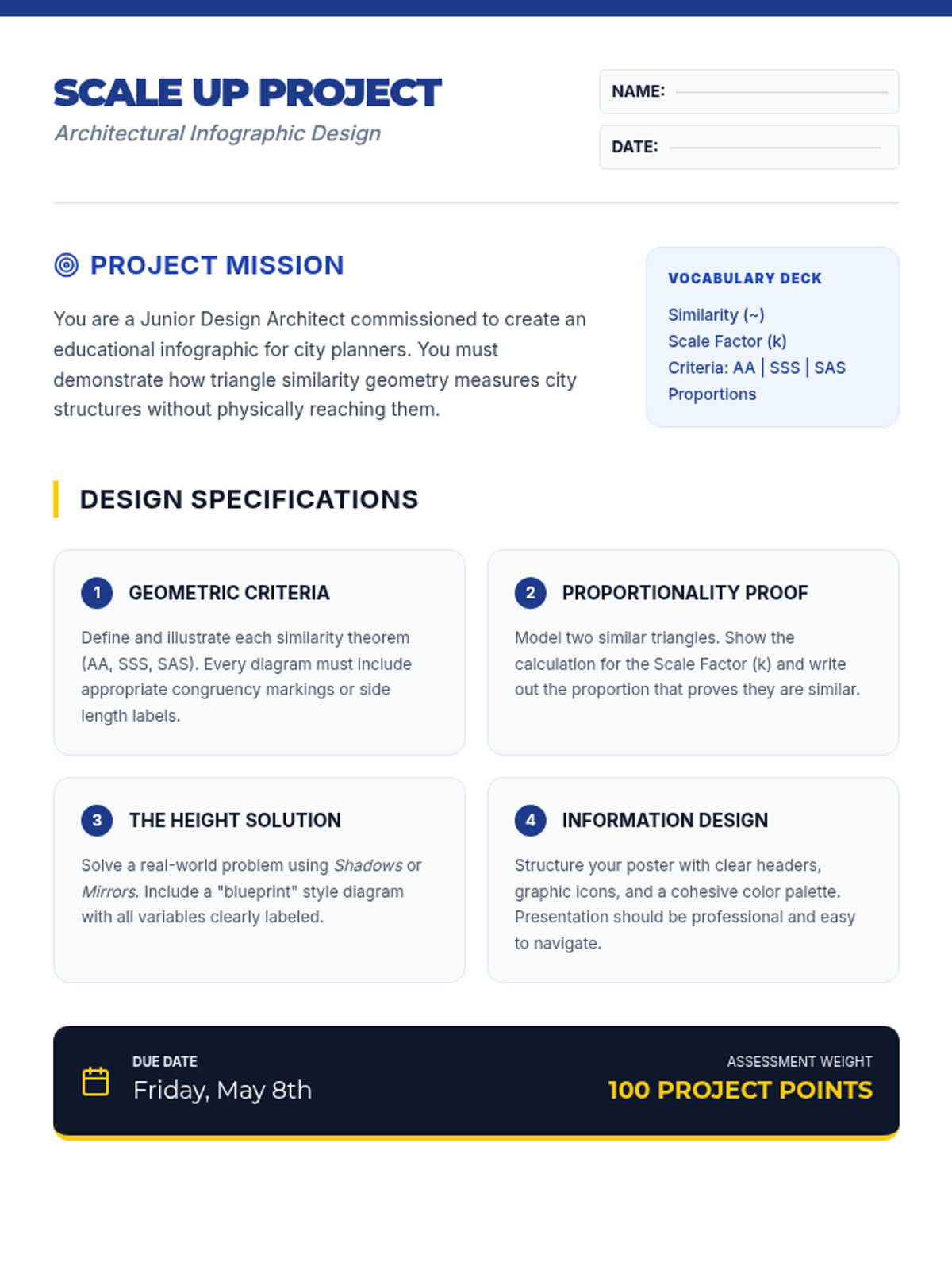
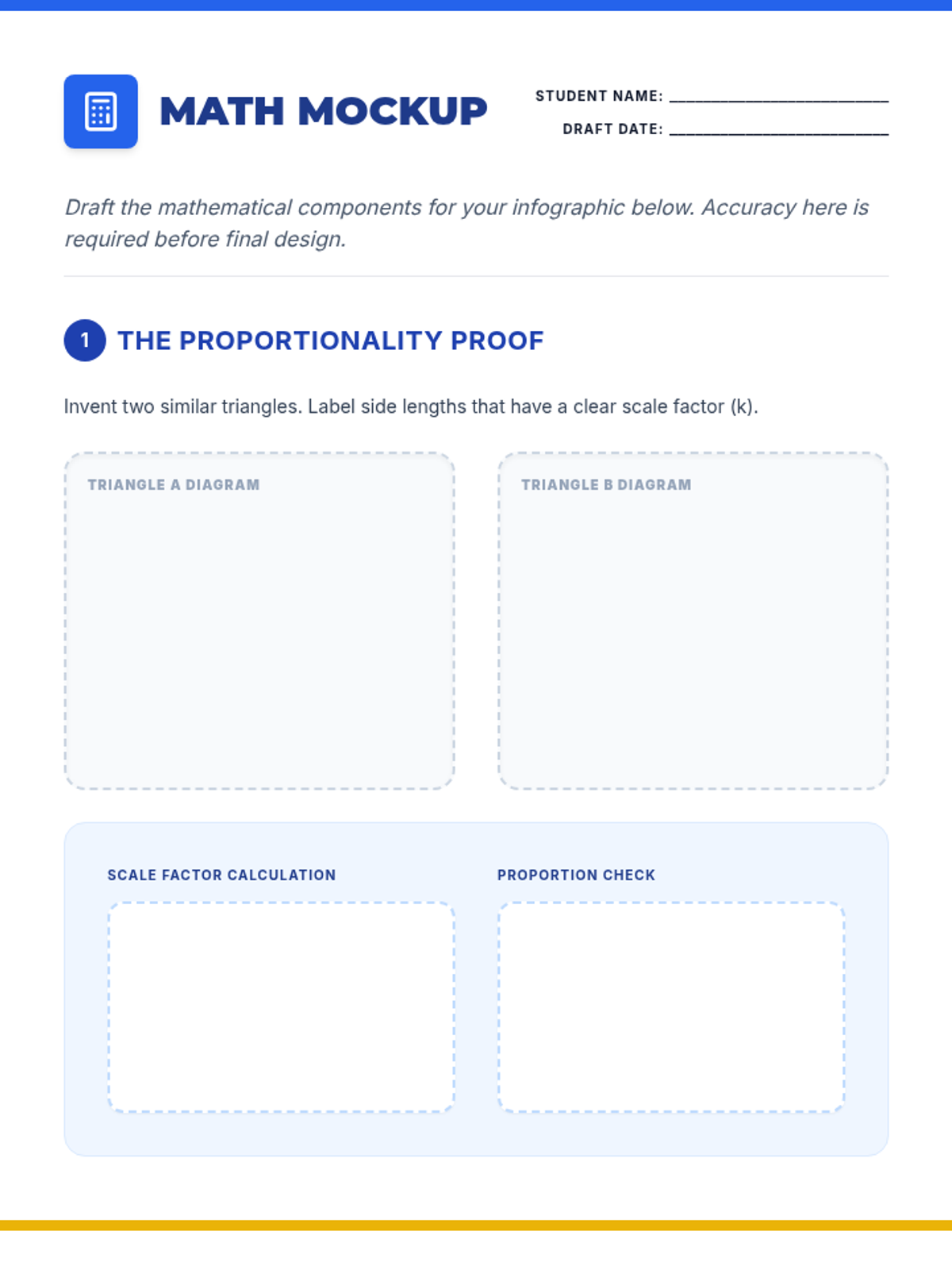
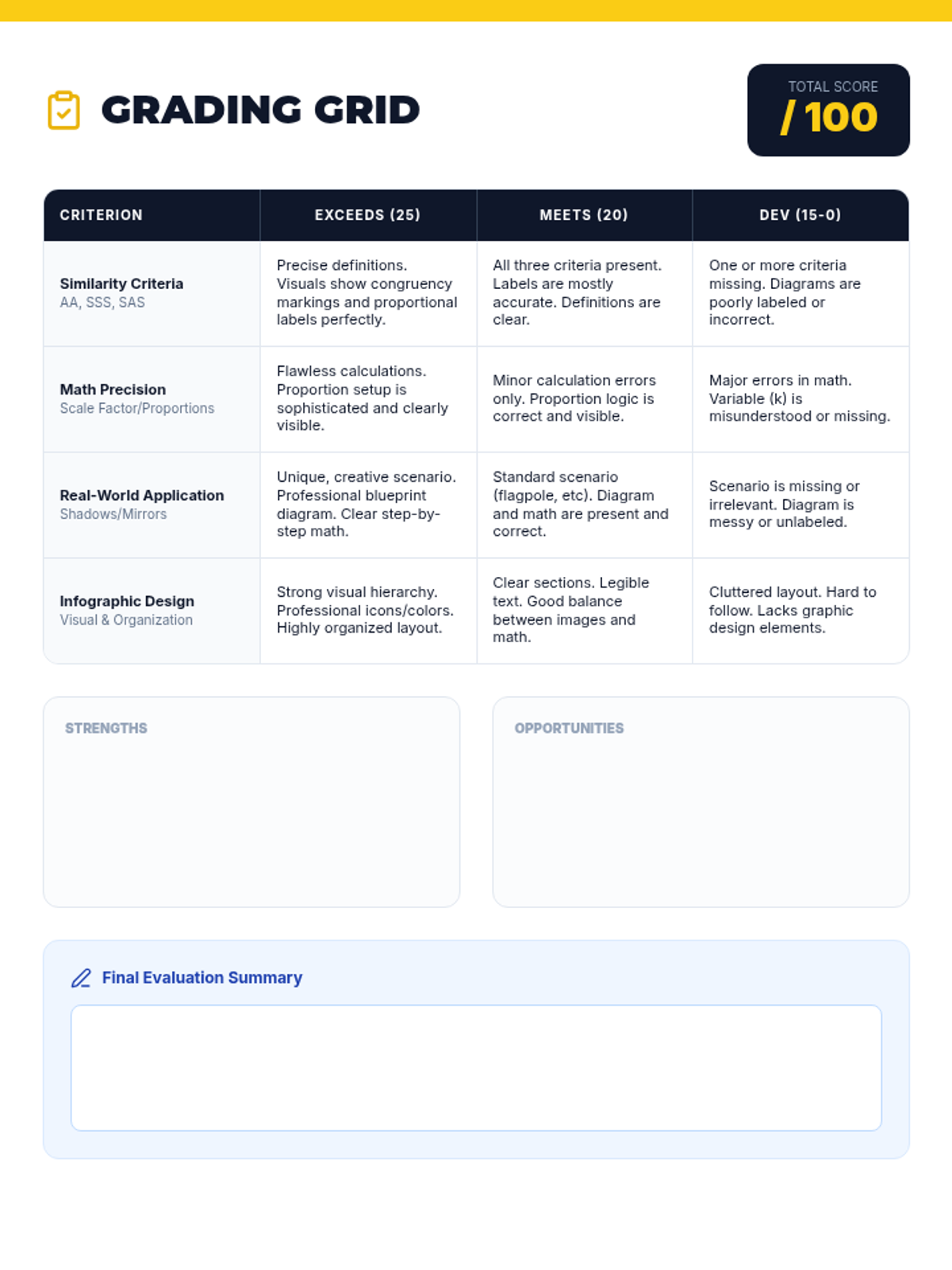
A comprehensive assessment and answer key covering similar polygons, triangle similarity theorems (AA, SSS, SAS), and proportionality theorems.
A comprehensive assessment covering triangle relationships (bisectors, medians, altitudes) and the properties of parallelograms, featuring conceptual and problem-solving questions.
A comprehensive assessment covering graphing linear equations, writing equations in slope-intercept form, and solving systems of linear equations by graphing, based on the Chapter 4 and 5 review materials.
A comprehensive assessment and answer key covering graphing linear equations, writing equations in slope-intercept form, and solving systems by graphing.
A comprehensive guide to mastering the TI-84 graphing calculator for Algebra 1, focusing on graphing functions and using the CALC menu to find critical points of quadratics.
A comprehensive lesson on basic budgeting, financial vocabulary, and mathematical foundations including fractions and simple algebra, designed for special education students.
Apprendre à justifier rigoureusement chaque étape d'un calcul ou d'une construction géométrique.
Calculer la somme des angles intérieurs des polygones et résoudre des problèmes complexes d'amplitudes d'angles.
Identifier les angles correspondants, alternes-internes et alternes-externes, et découvrir les propriétés des droites parallèles coupées par une sécante.
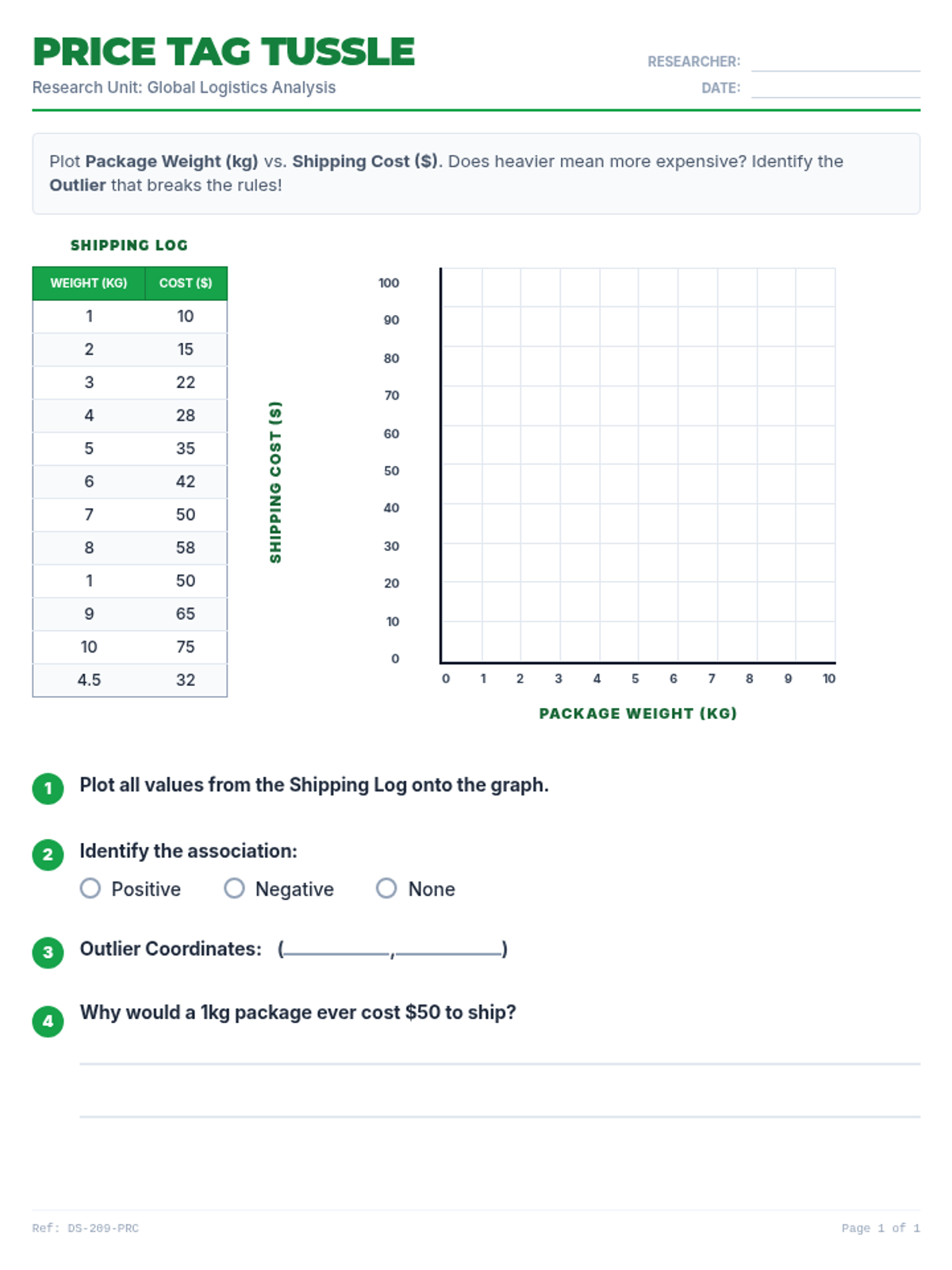
A comprehensive review of linear equations, systems, and data analysis designed for Alabama high school students. This lesson uses real-world urban data to bridge algebraic manipulation with statistical interpretation.
A visual exploration of 2D geometric shapes, focusing on identifying names and properties through an architectural-themed Tarsia puzzle.
A comprehensive reteach lesson on solving linear equations in one variable, including variables on both sides, with a focus on properties of equality and justifying each step.
A comprehensive guide and practice set for mastering Algebra 1 standard 10.B (Factoring Quadratics), focusing on manual calculation and Desmos-based strategies.
Une leçon pratique pour apprendre à calculer rapidement des pourcentages de tête ou à l'écrit.
Une introduction au cosinus dans le triangle rectangle, incluant la formule et le moyen mnémotechnique CAH.
Une mini-leçon sur le calcul de la médiane d'une série statistique, utilisant l'exemple concret des notes d'élèves.
A comprehensive lesson on special parallelograms (rectangles, rhombuses, and squares), focusing on their unique properties, hierarchy, and real-world applications in architecture and design.
An introductory lesson on solving equations containing a single radical term, focusing on isolation, inverse operations, and verifying solutions.
A comprehensive introduction to solving one-step inequalities using all four operations, including the special rule for multiplying and dividing by negative numbers.
An informal assessment designed for high school students to evaluate foundational number sense skills including place value, sequences, and numerical comparison within a professional 'data-logistics' context.
A deep dive into the theoretical physics of infinite resistor networks, focusing on superposition and Green's functions to calculate equivalent resistance.
An introductory lesson on basic addition for early learners, using dinosaur-themed visuals to teach simple sums like 1+1.
This lesson covers identifying the domain and range of exponential, square root, and quadratic functions through multiple-choice practice. Students will analyze function equations to determine possible input and output values.
A deep dive into higher-level mathematical notation, focusing on calculus, set theory, and Greek symbols through a complex Tarsia challenge.
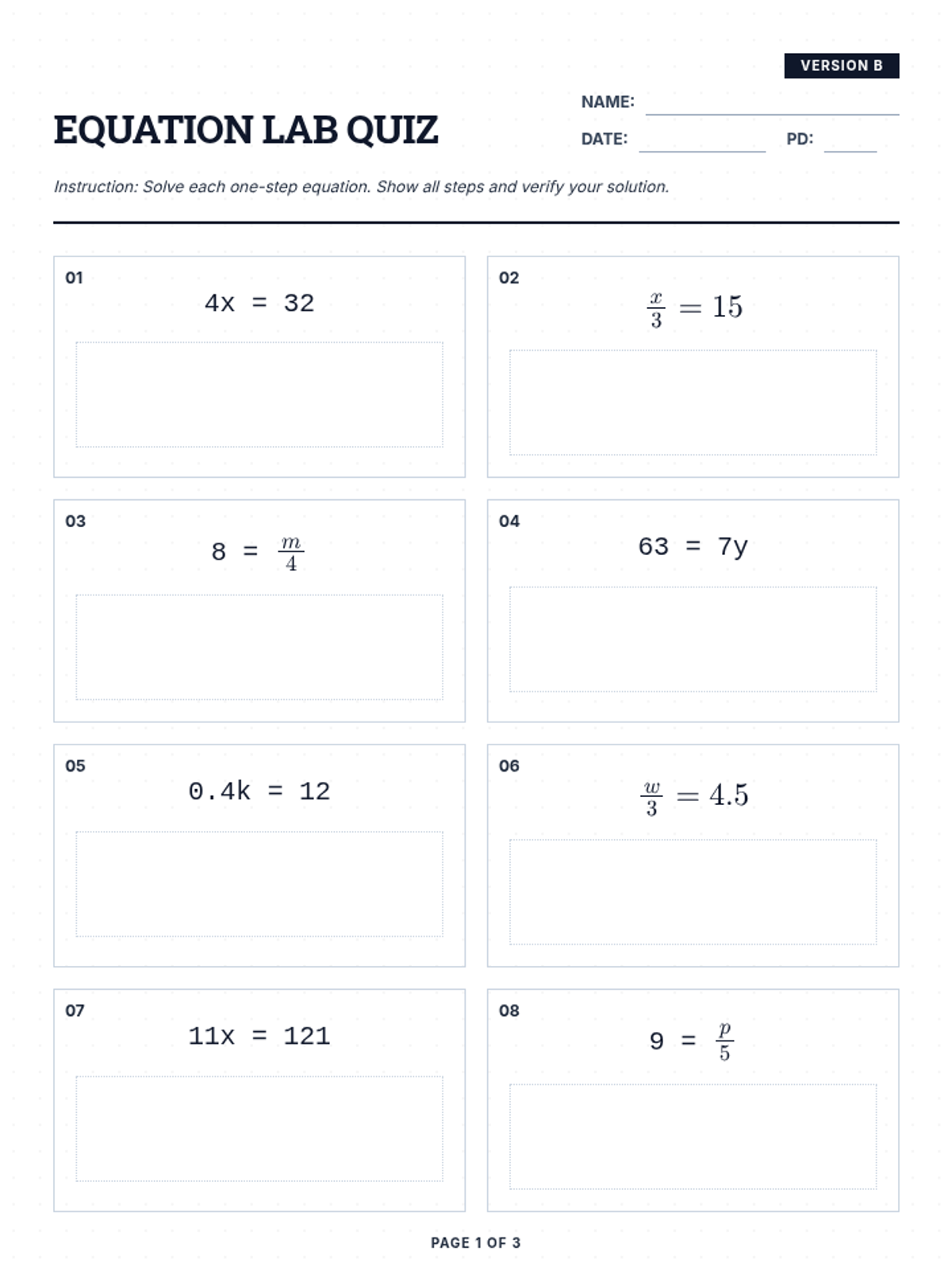
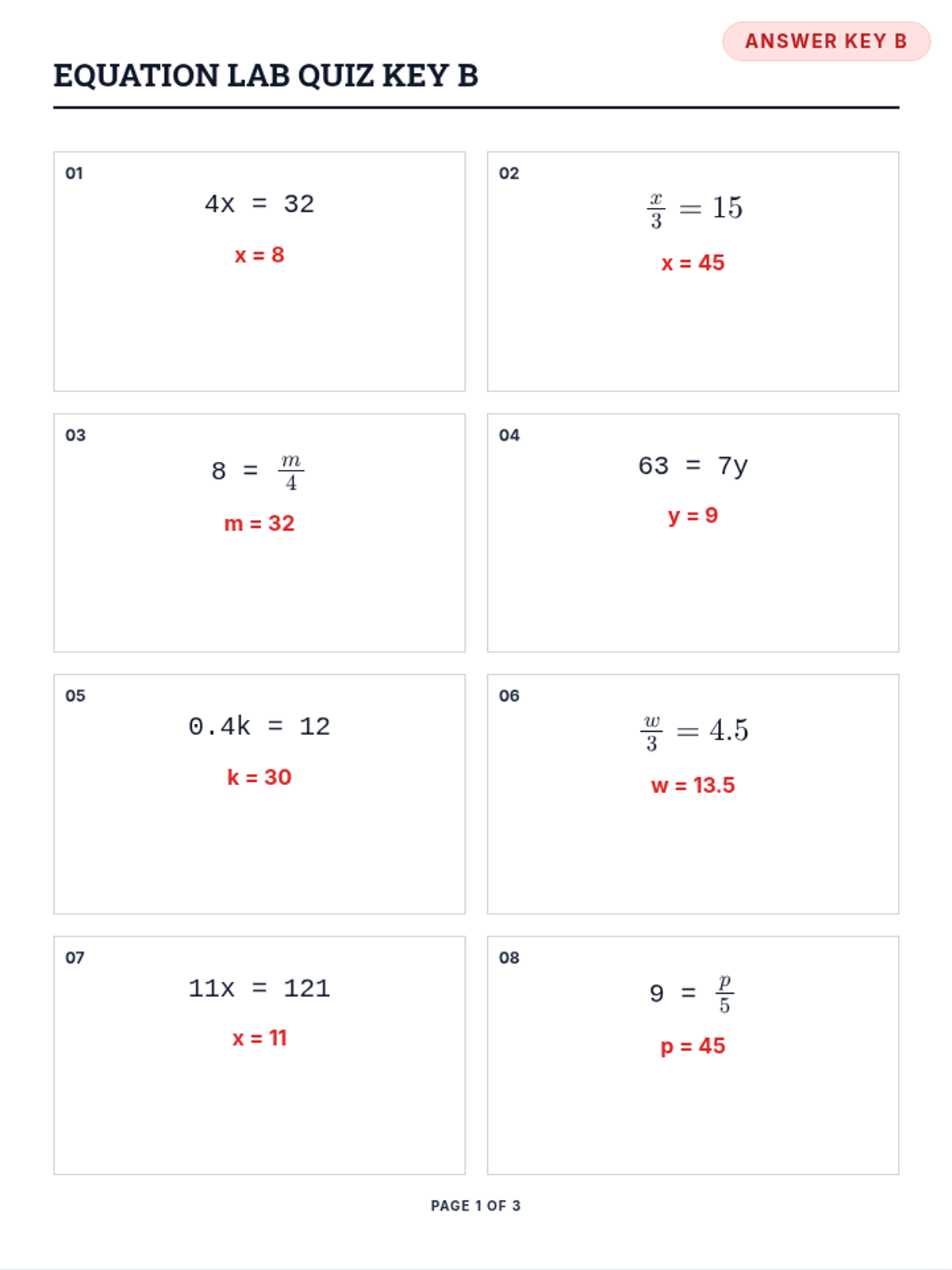
A foundational lesson on solving one-step algebraic equations using inverse operations. Includes a visual reference guide and a structured practice worksheet with mixed operations.
A lesson on solving systems of linear equations using the substitution method (equal values method). Students learn to merge two identities (equations) for the same variable to find the coordinates of the "Double Agent" (intersection point).