A deep dive into how short constructed response (SCR) questions are scored on the Biology STAAR test, focusing on the mechanisms of evolution and the impact of genetic mutations.
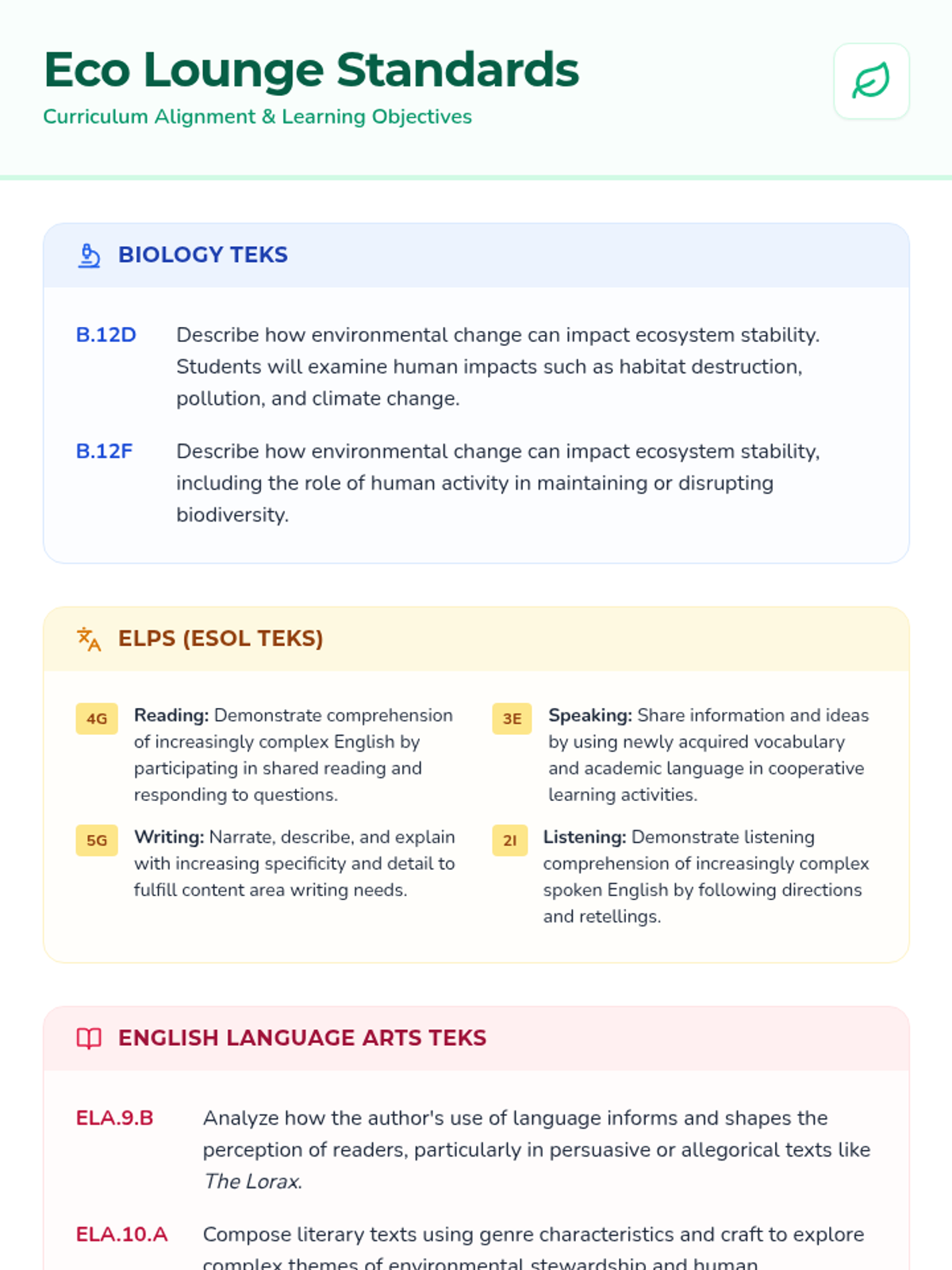
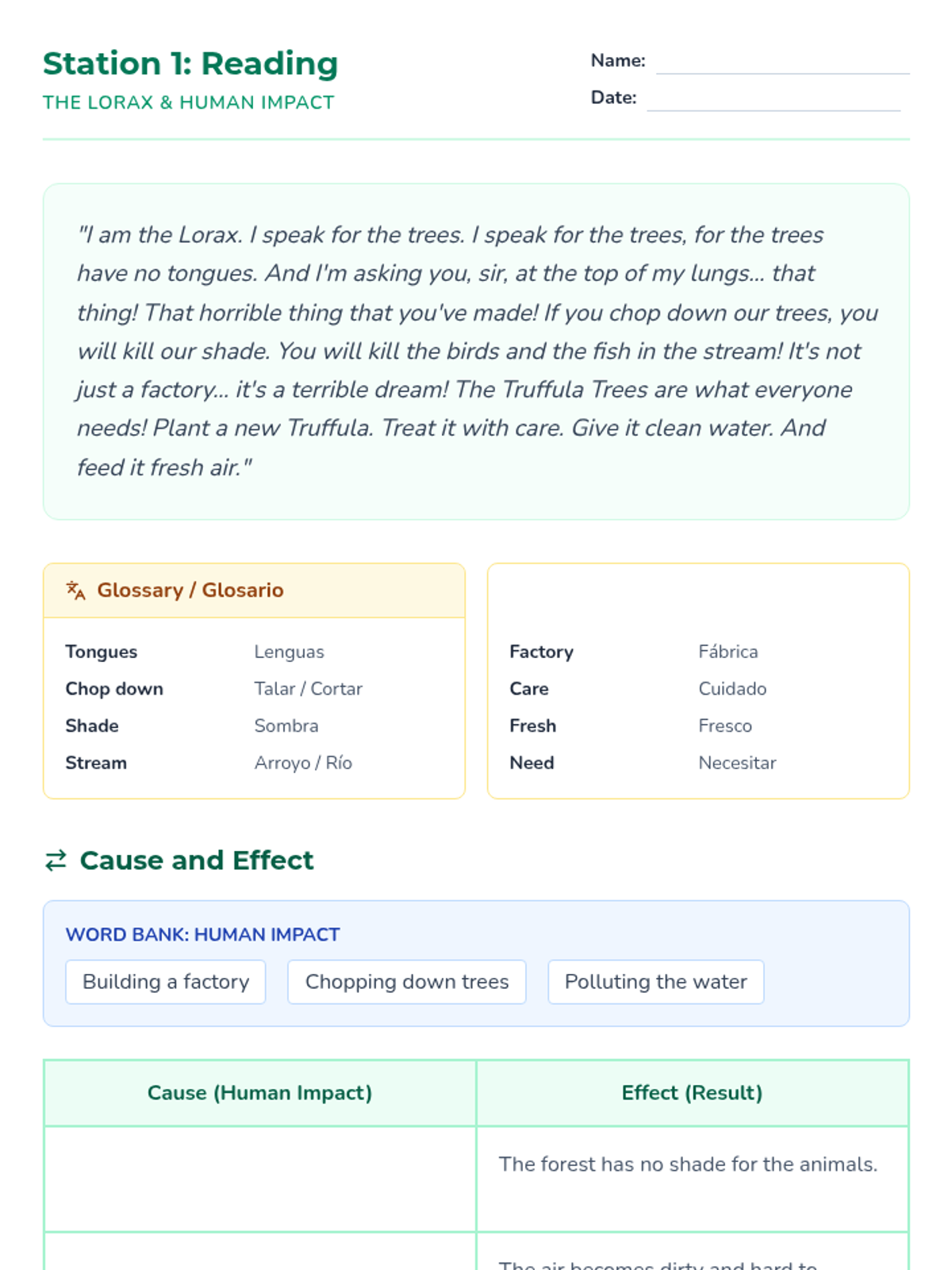
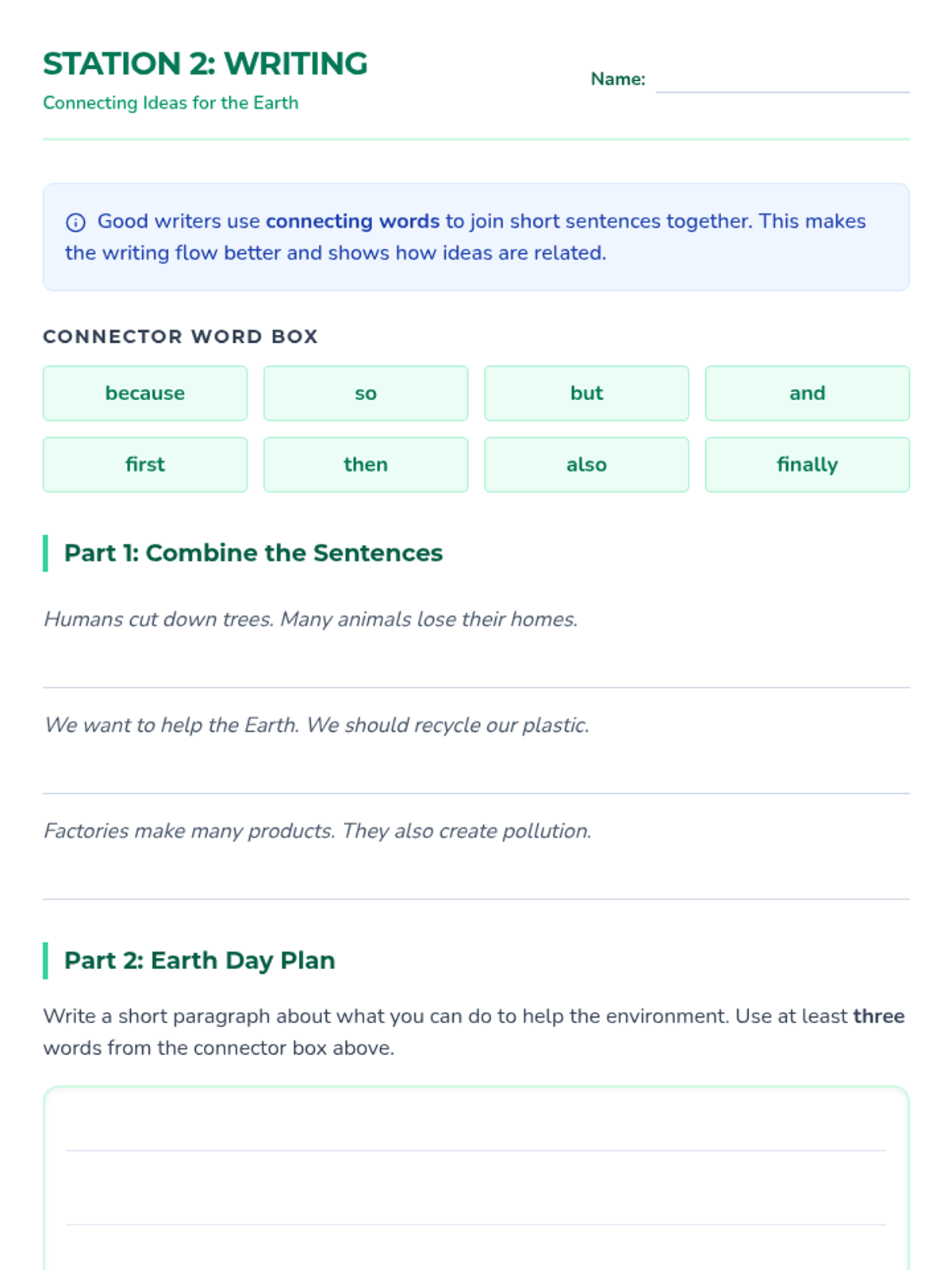
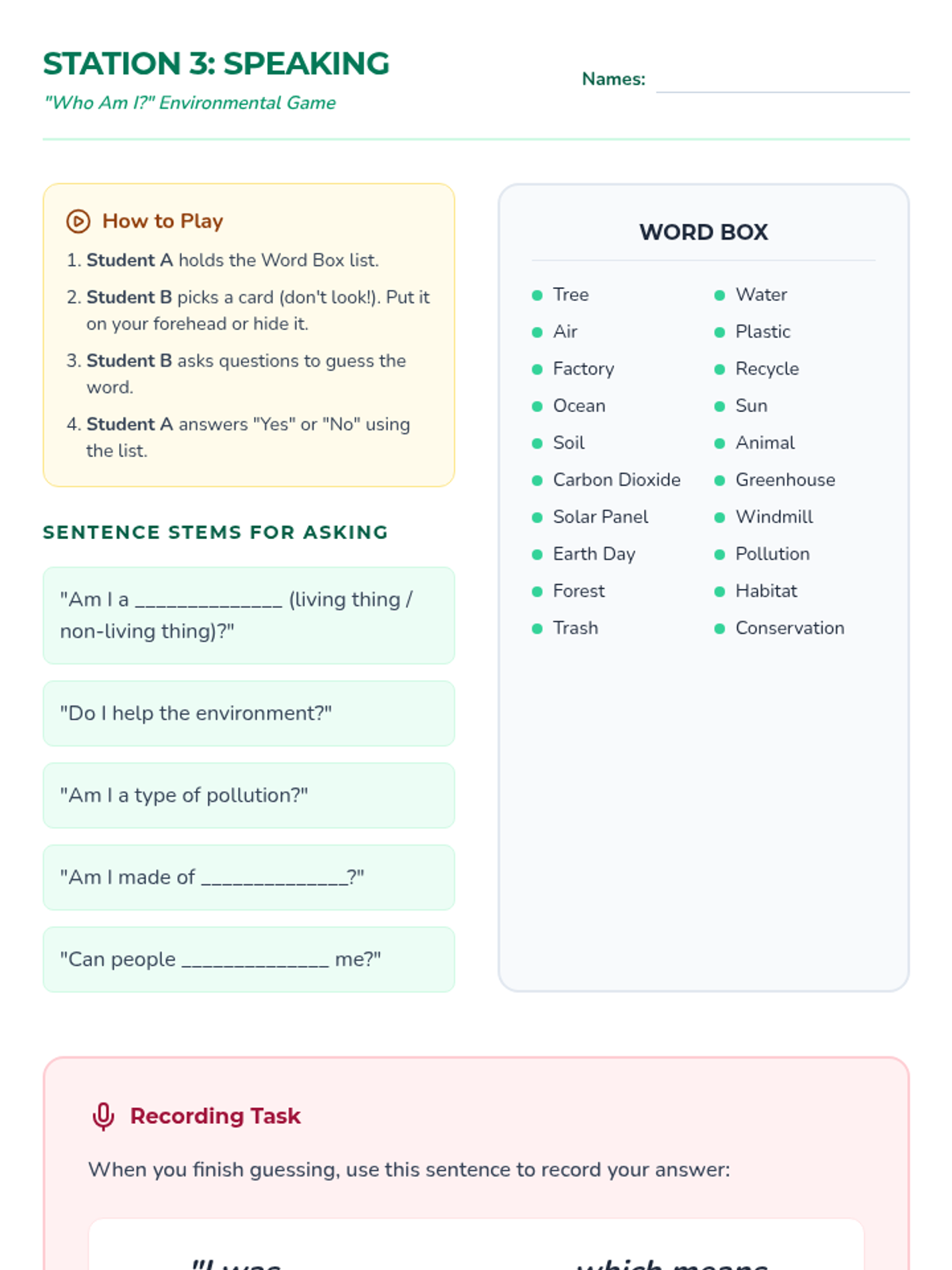
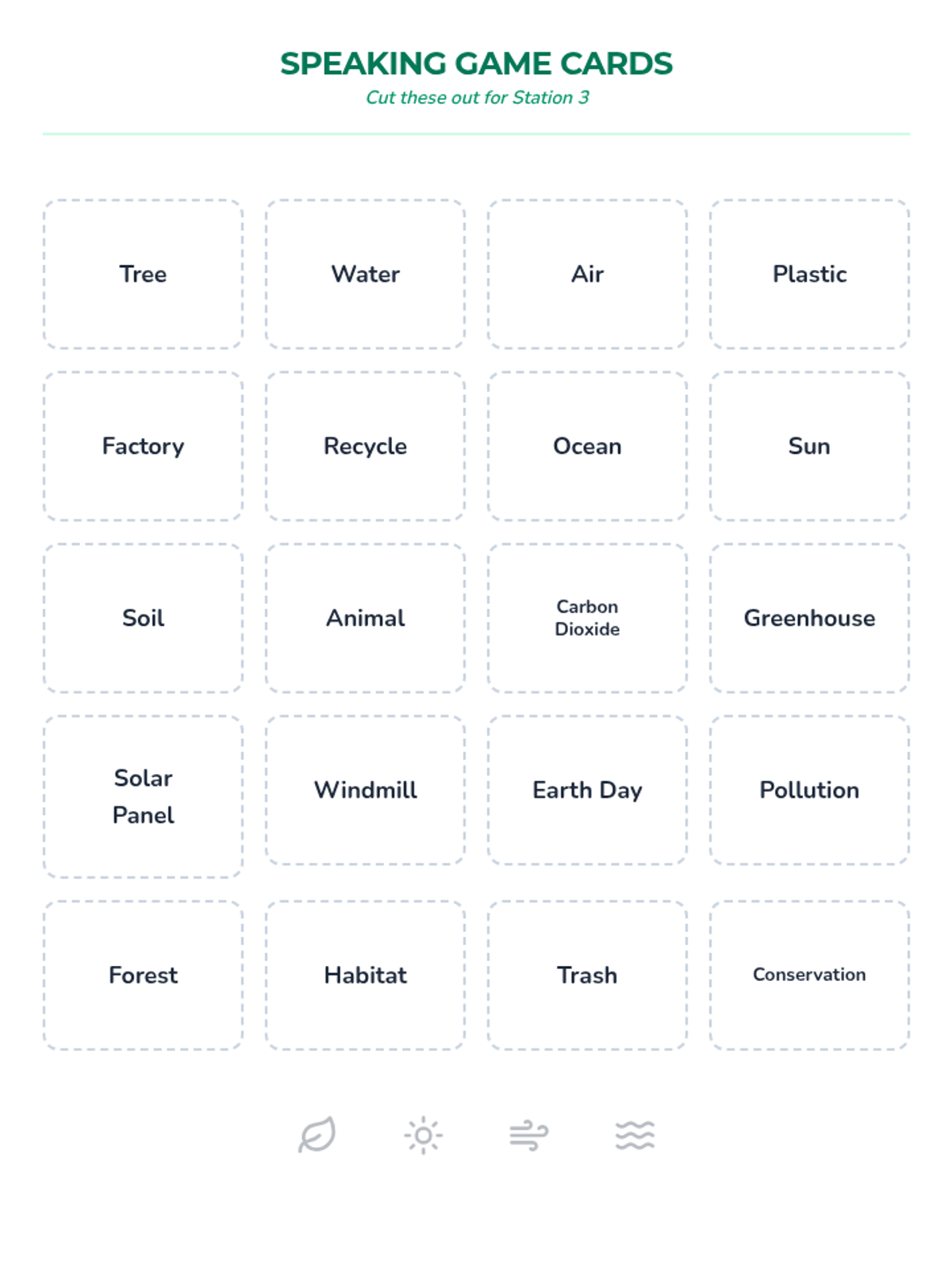
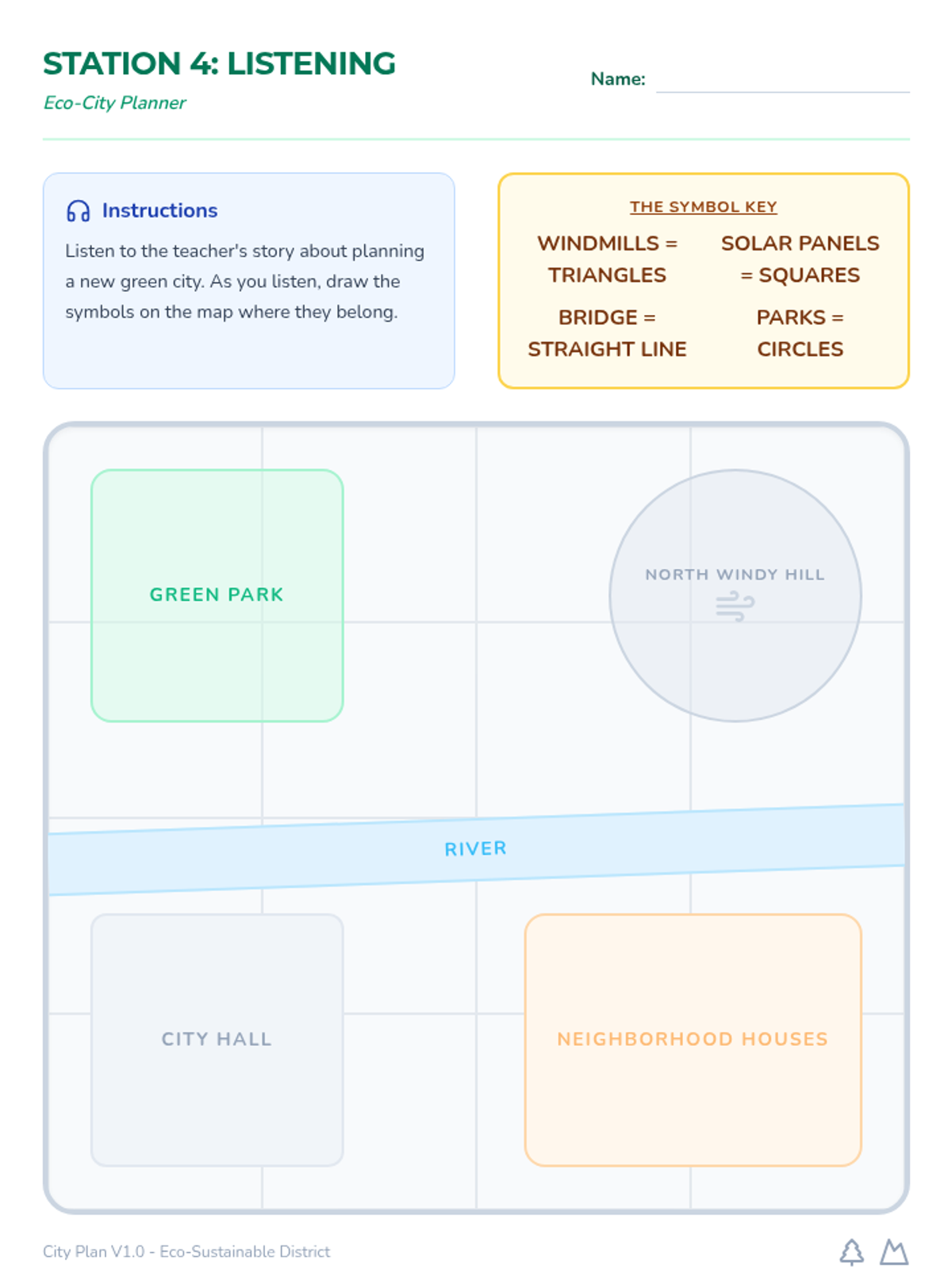
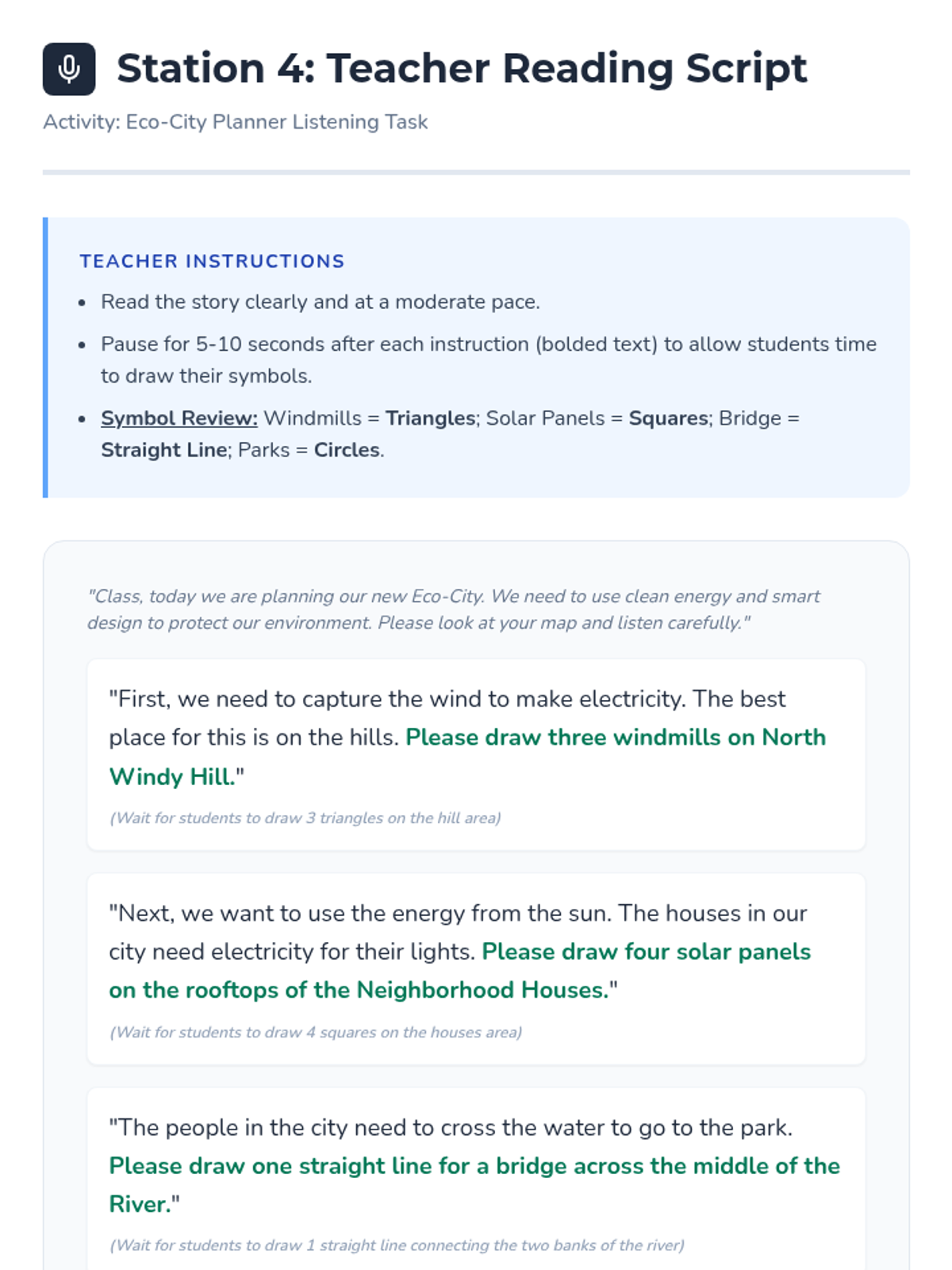
A series of interactive stations focused on the intersection of biology and environmental science, specifically designed for ESOL learners to practice reading, writing, listening, and speaking through the lens of human impact and Earth Day.
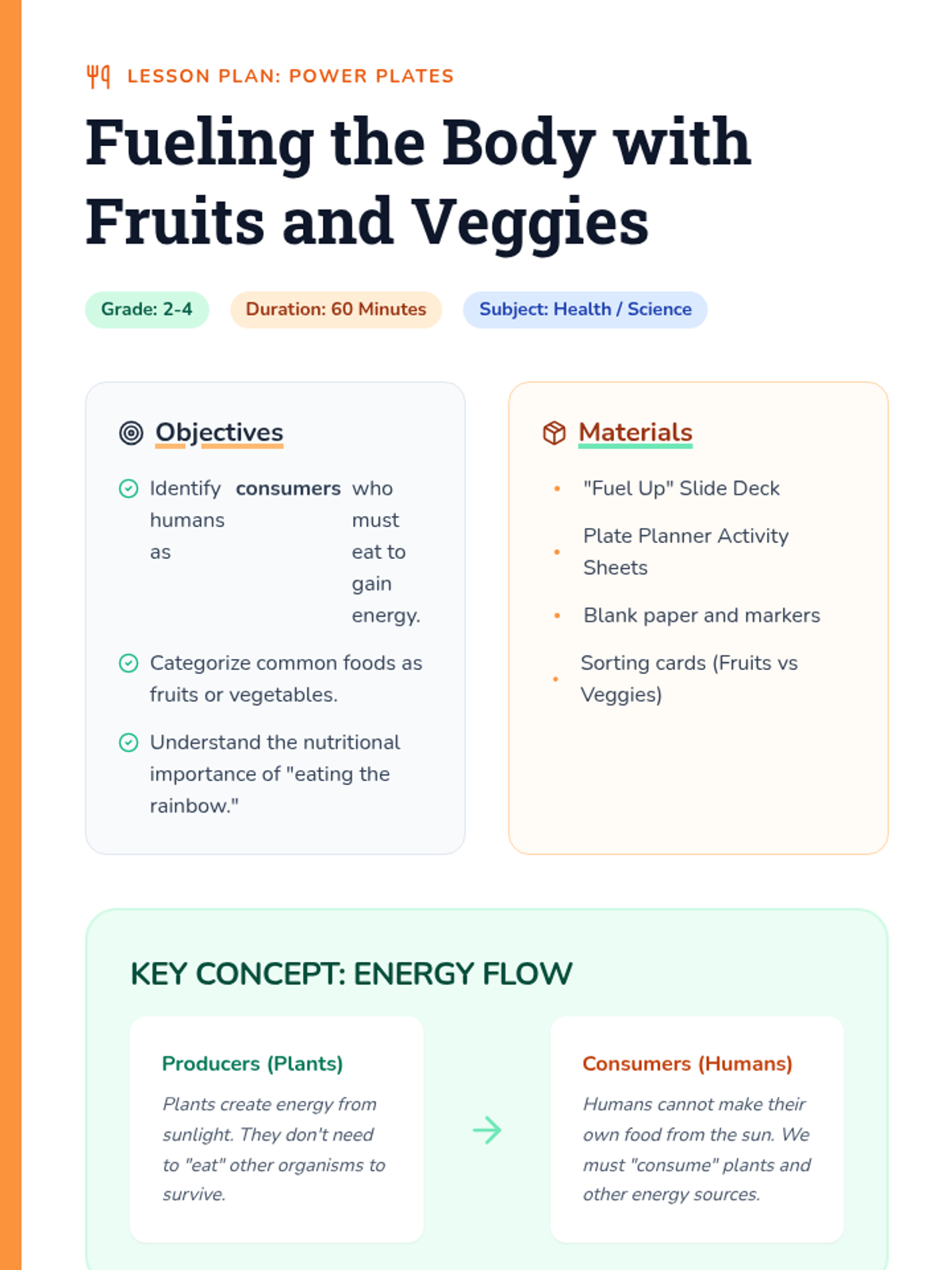
A health-focused lesson on the importance of fruits and vegetables, understanding humans as consumers, and planning balanced, nutritious meals.
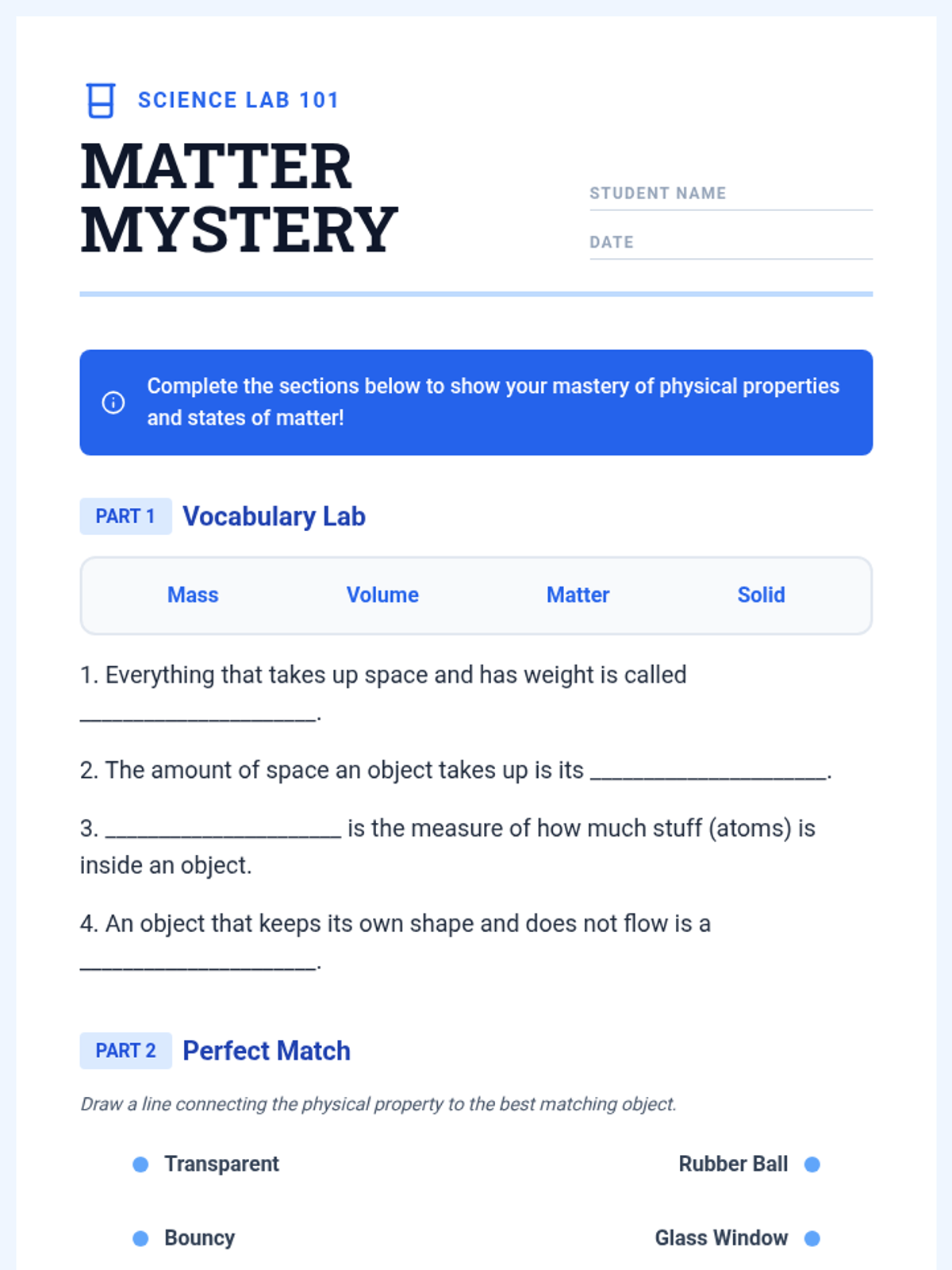
An investigation into the physical properties of matter, including mass, volume, and state changes, through observation and assessment.
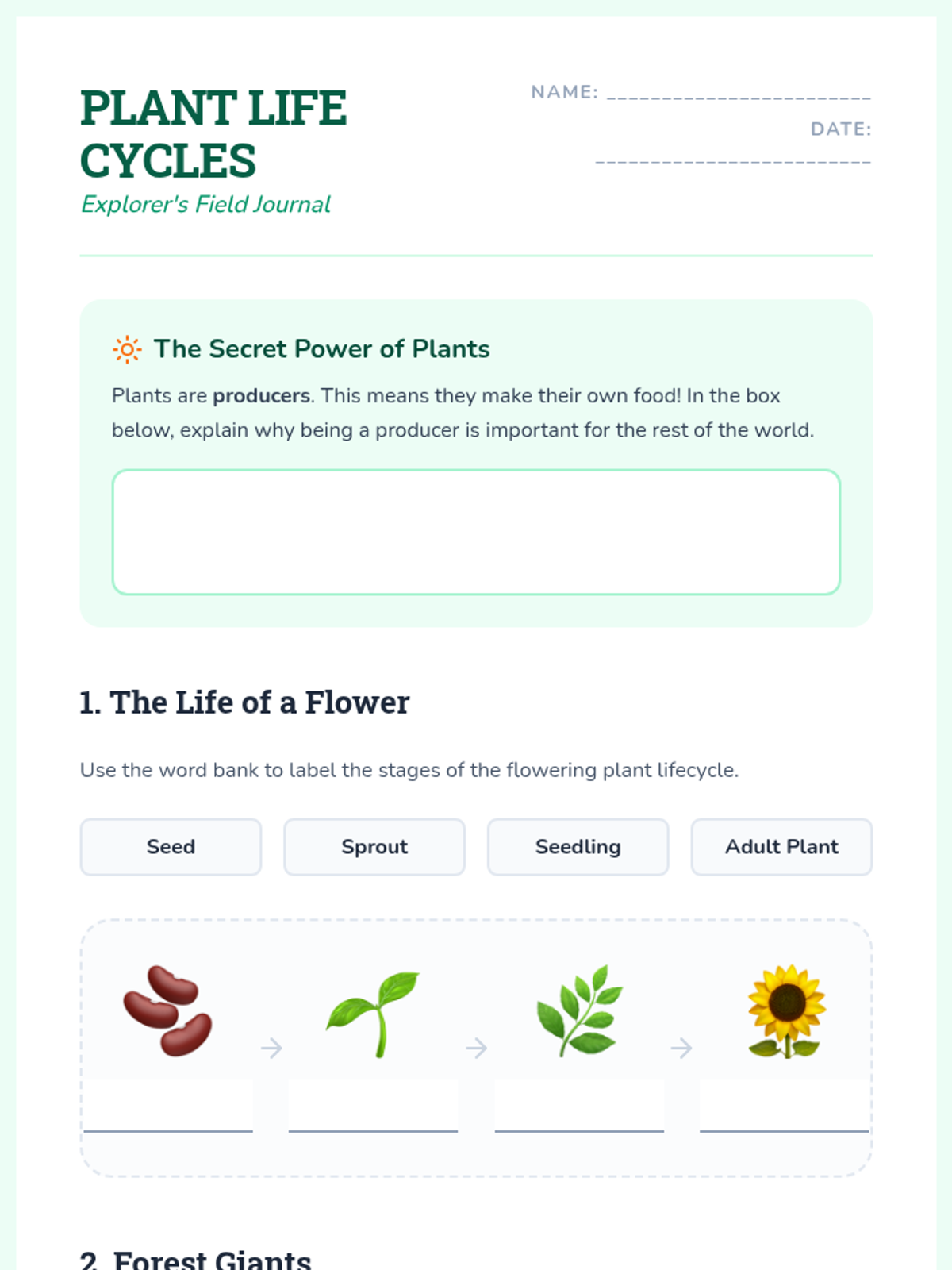
Students explore the life cycles of various plants, including flowering plants, vegetables, and trees, while understanding the role of plants as producers in an ecosystem.
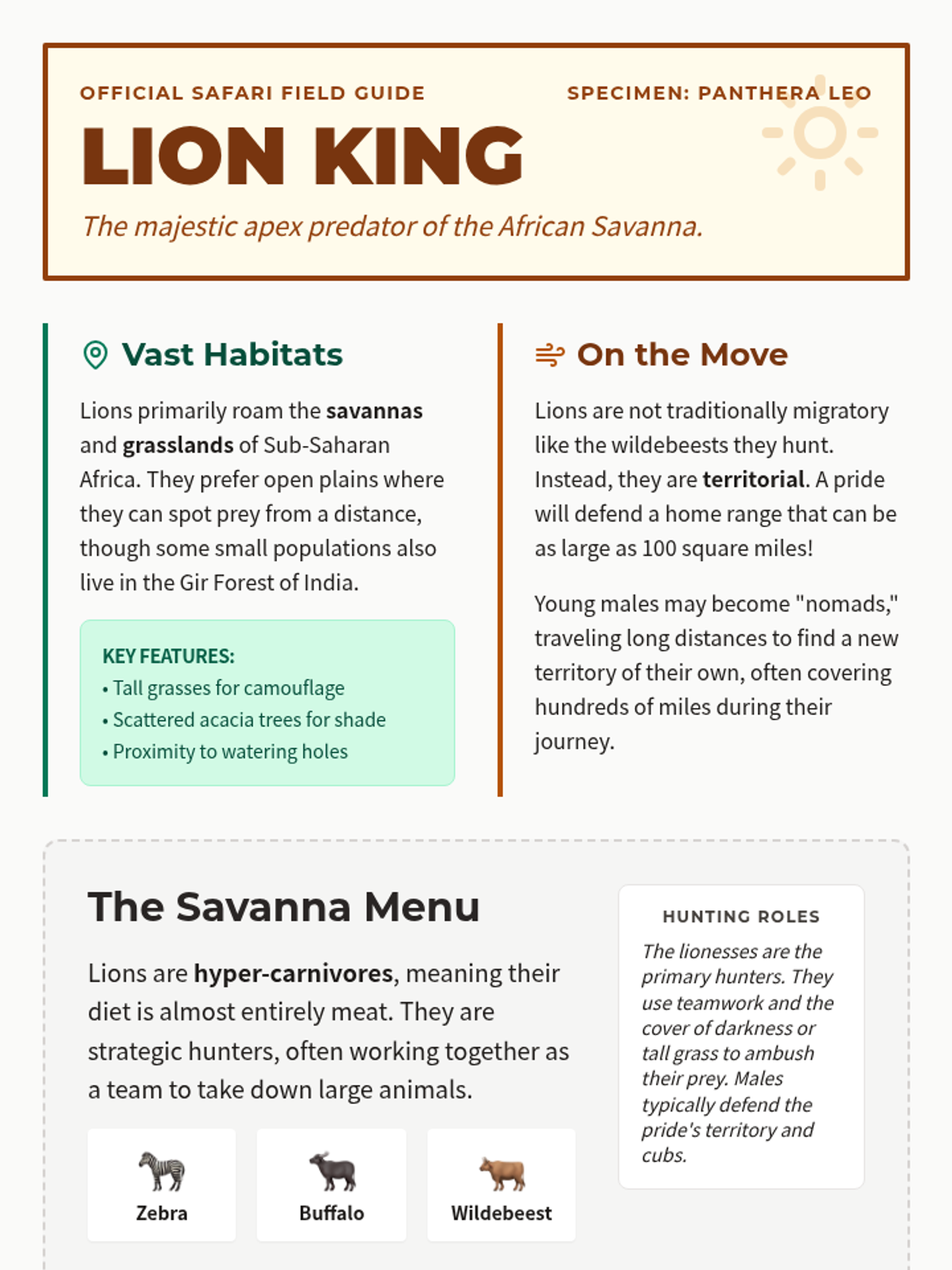
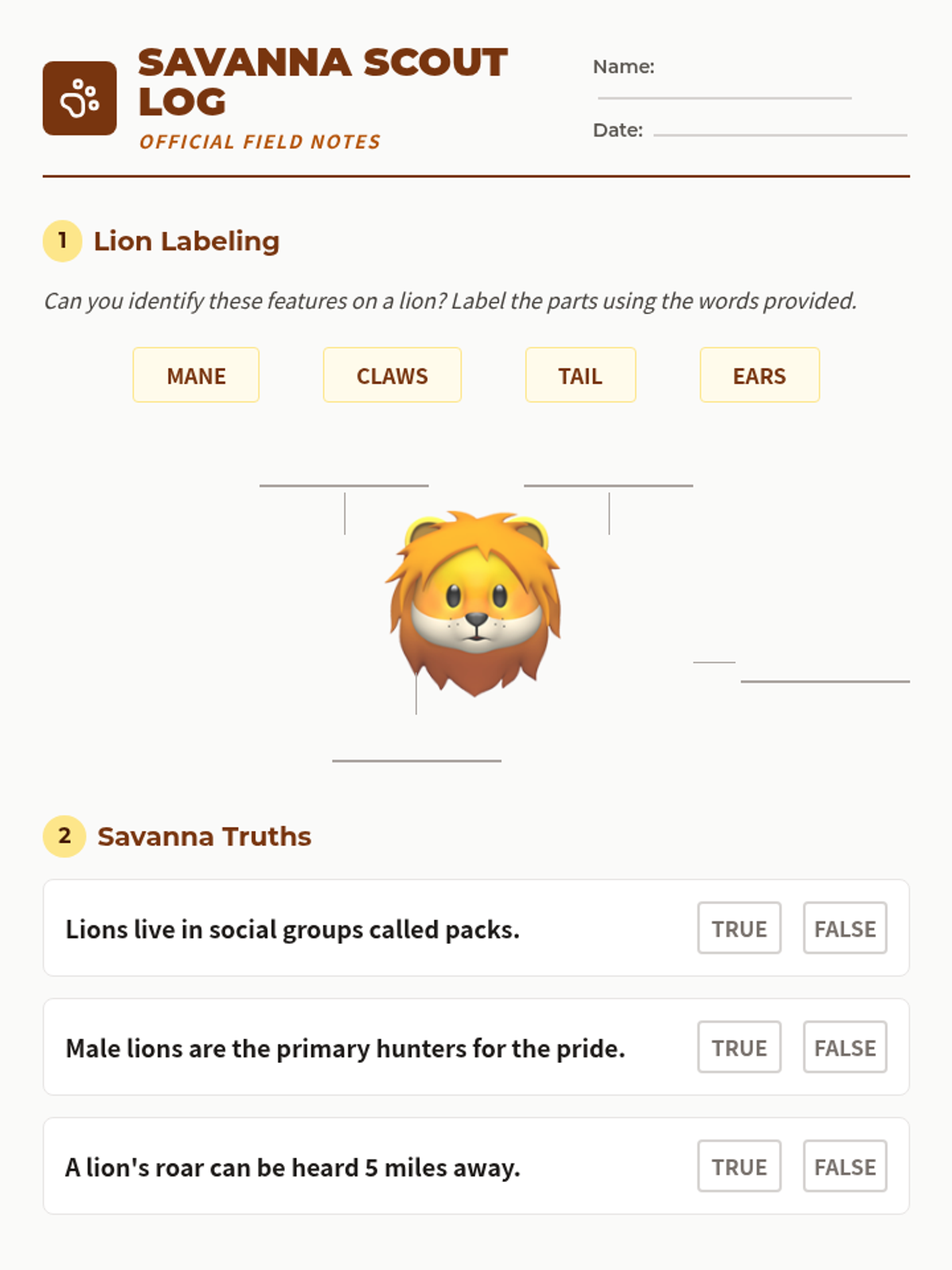
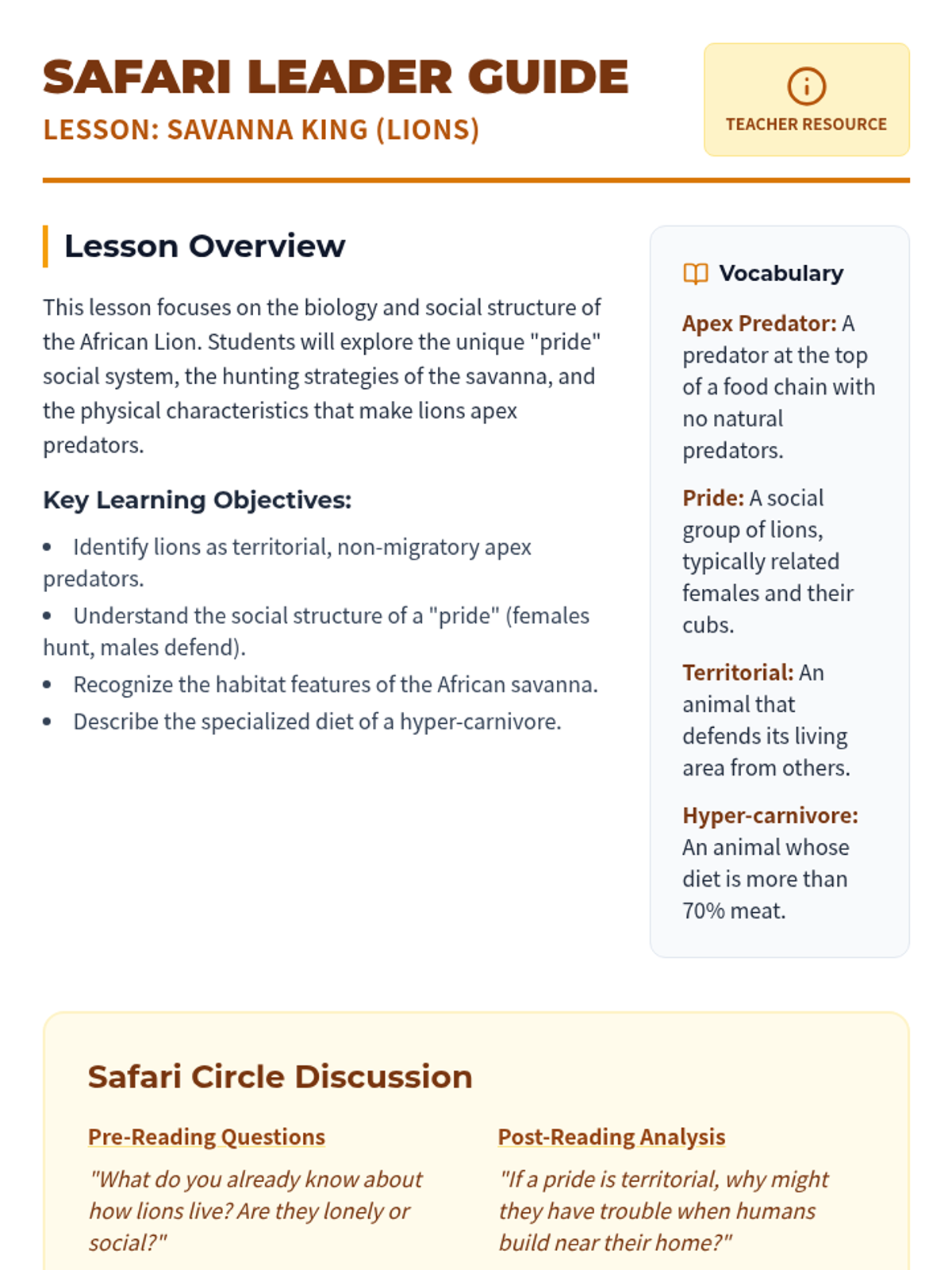
An immersive study of lions, exploring their social structures, habitats, and survival strategies in the African savanna.
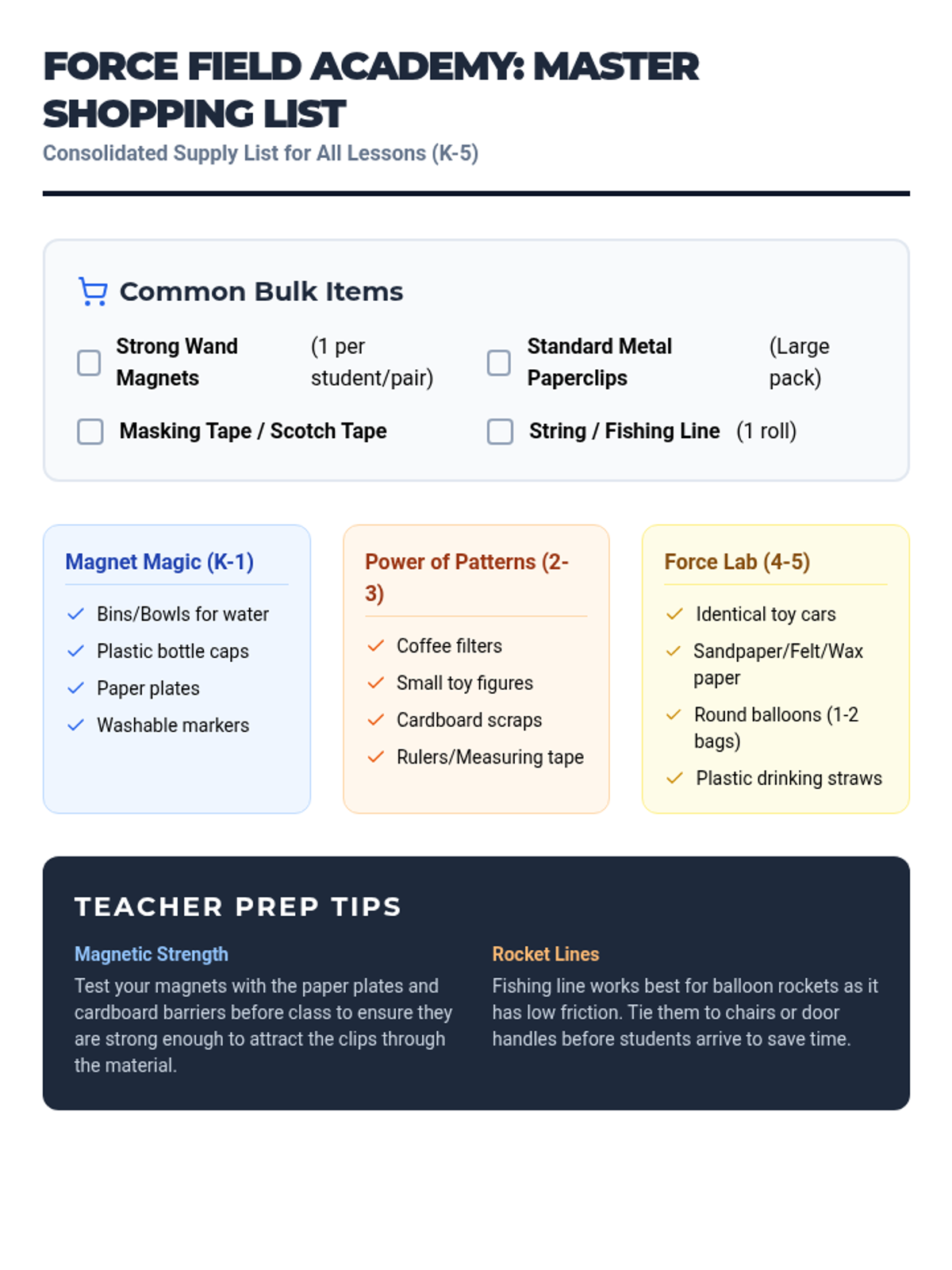
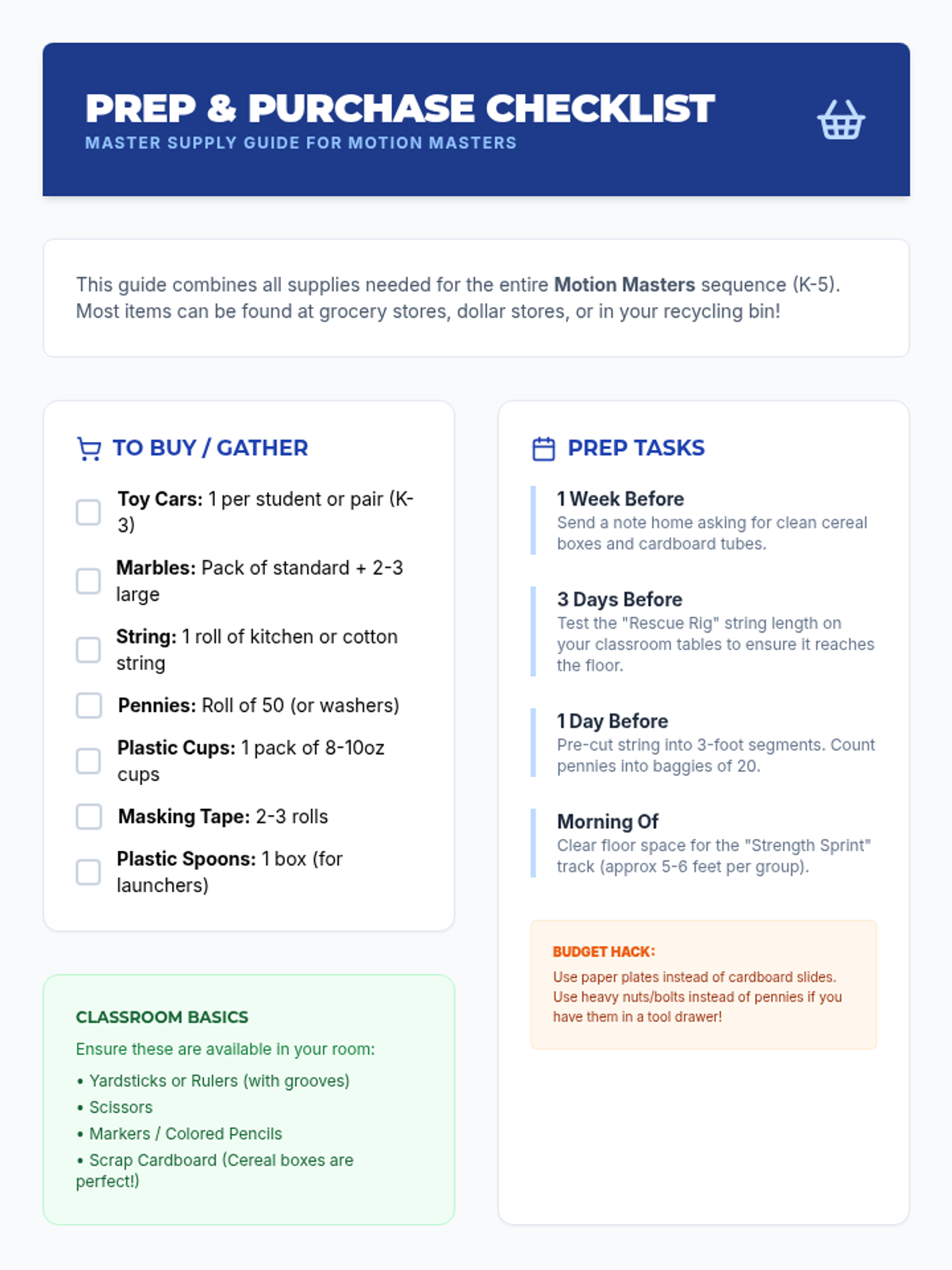
A collection of unit-wide resources for the Force Field Academy, including a master shopping list and student achievement certificates.
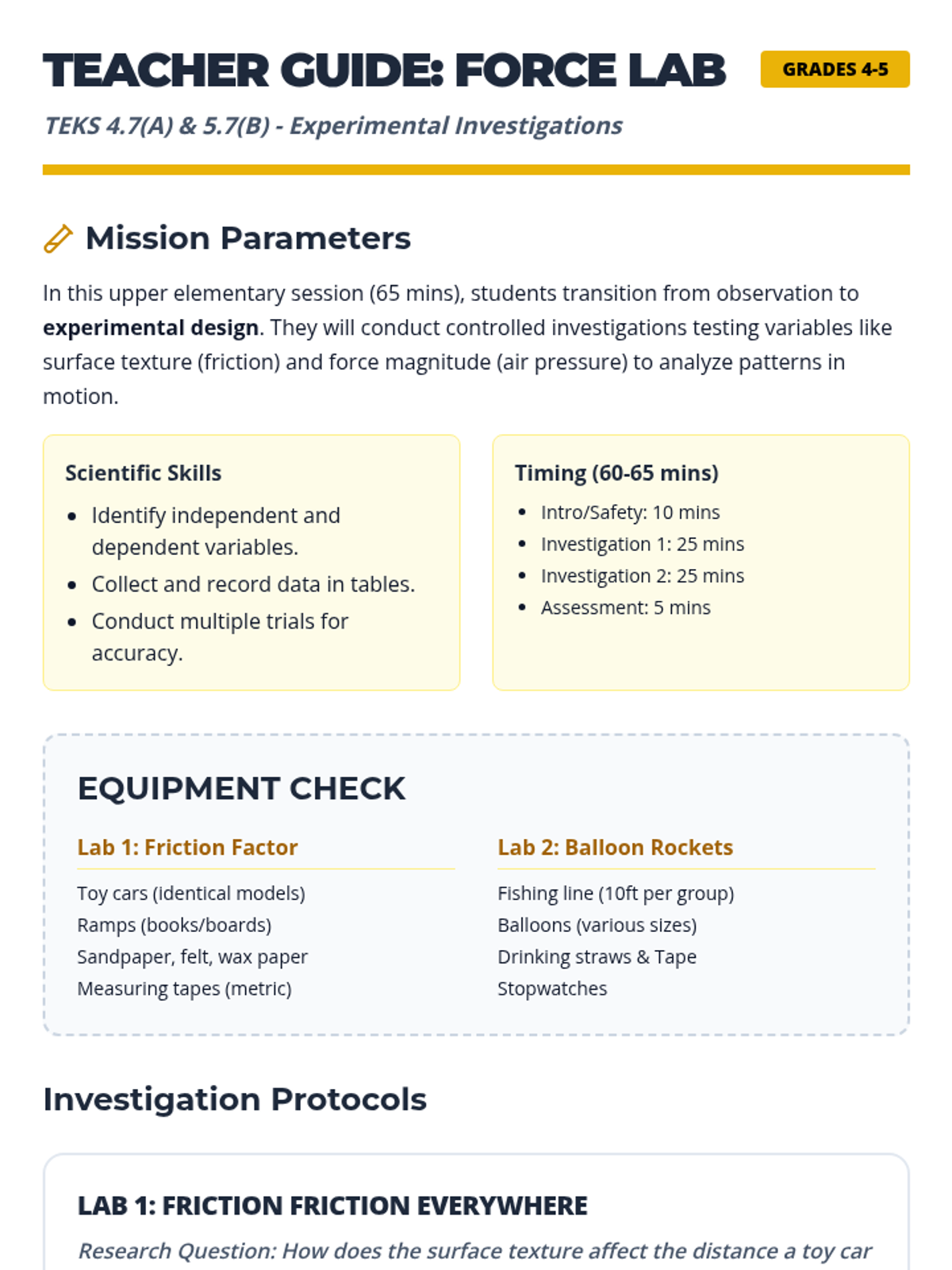
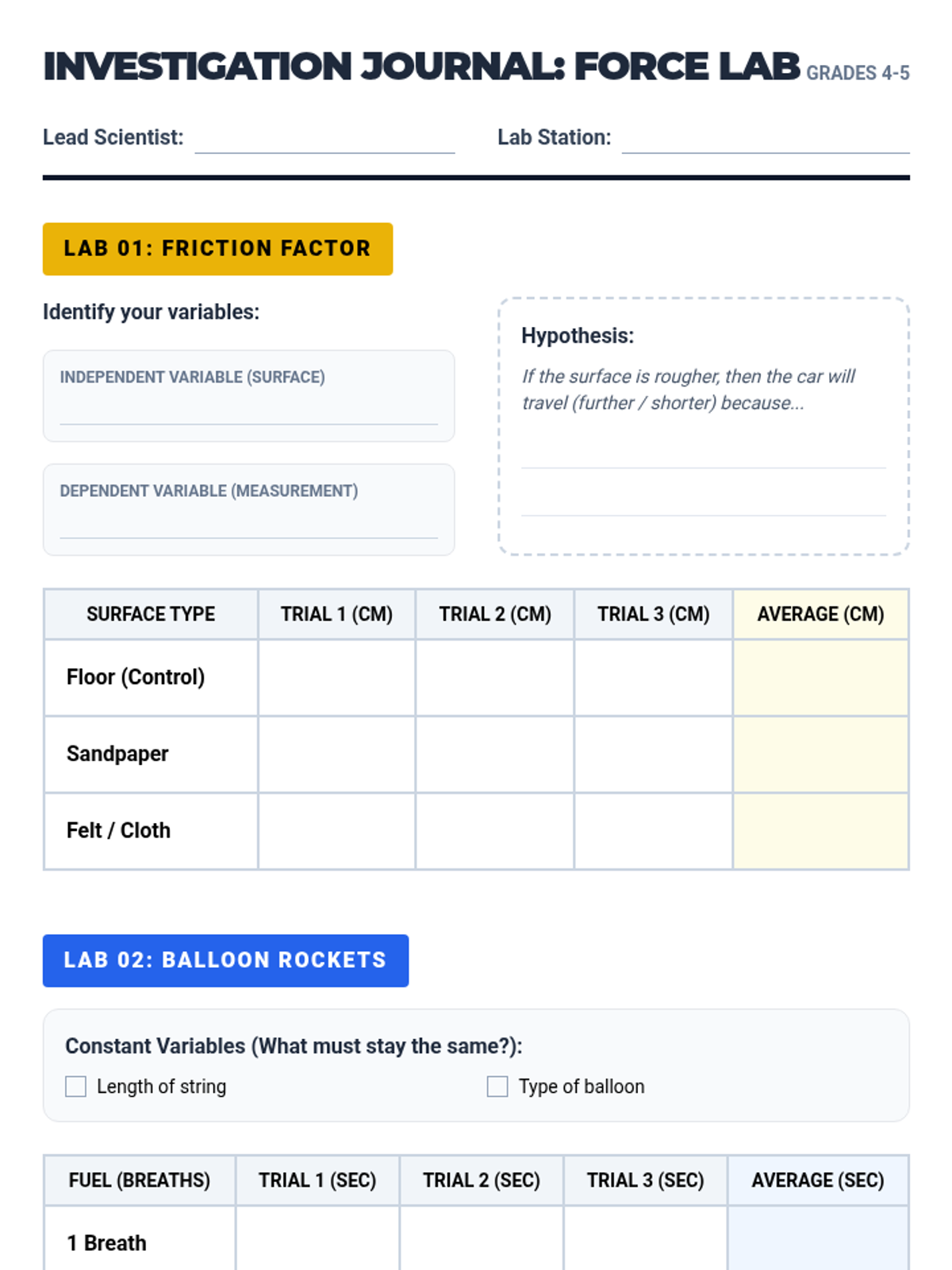
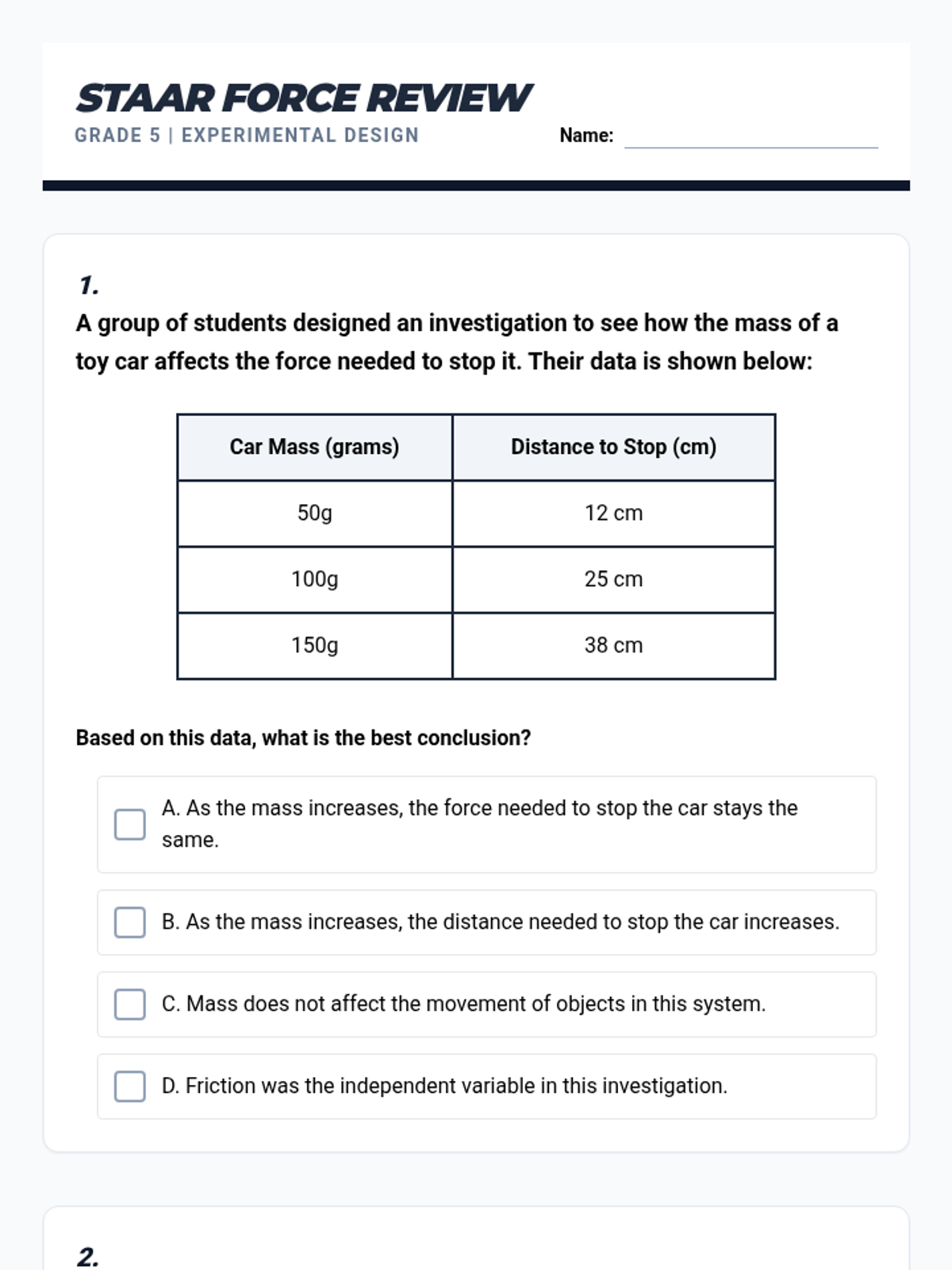
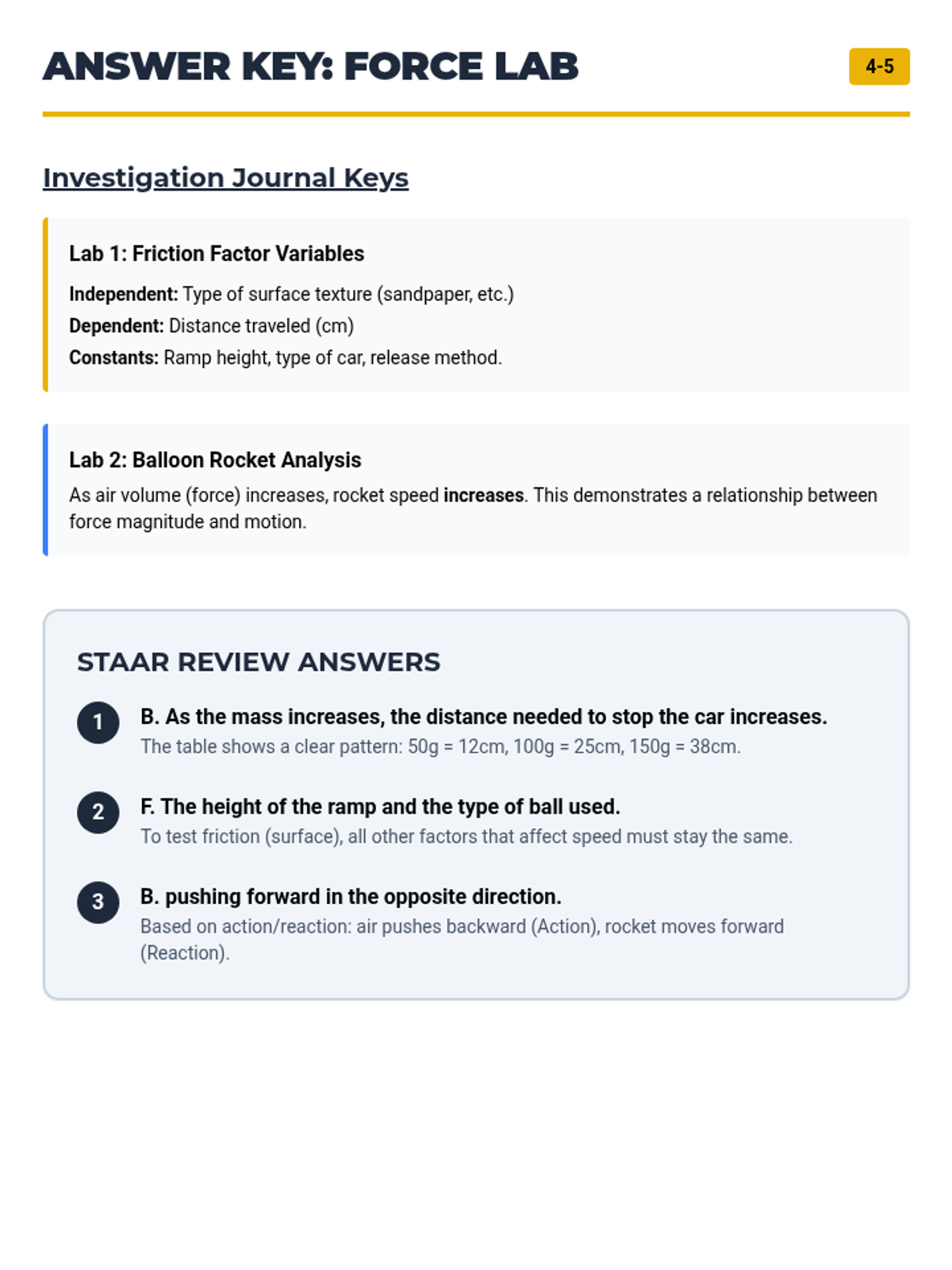
Upper elementary students design and conduct experimental investigations to test the effects of friction, gravity, and force on systems like cars and rockets. Alignment: TEKS 4.7(A), 5.7(B).
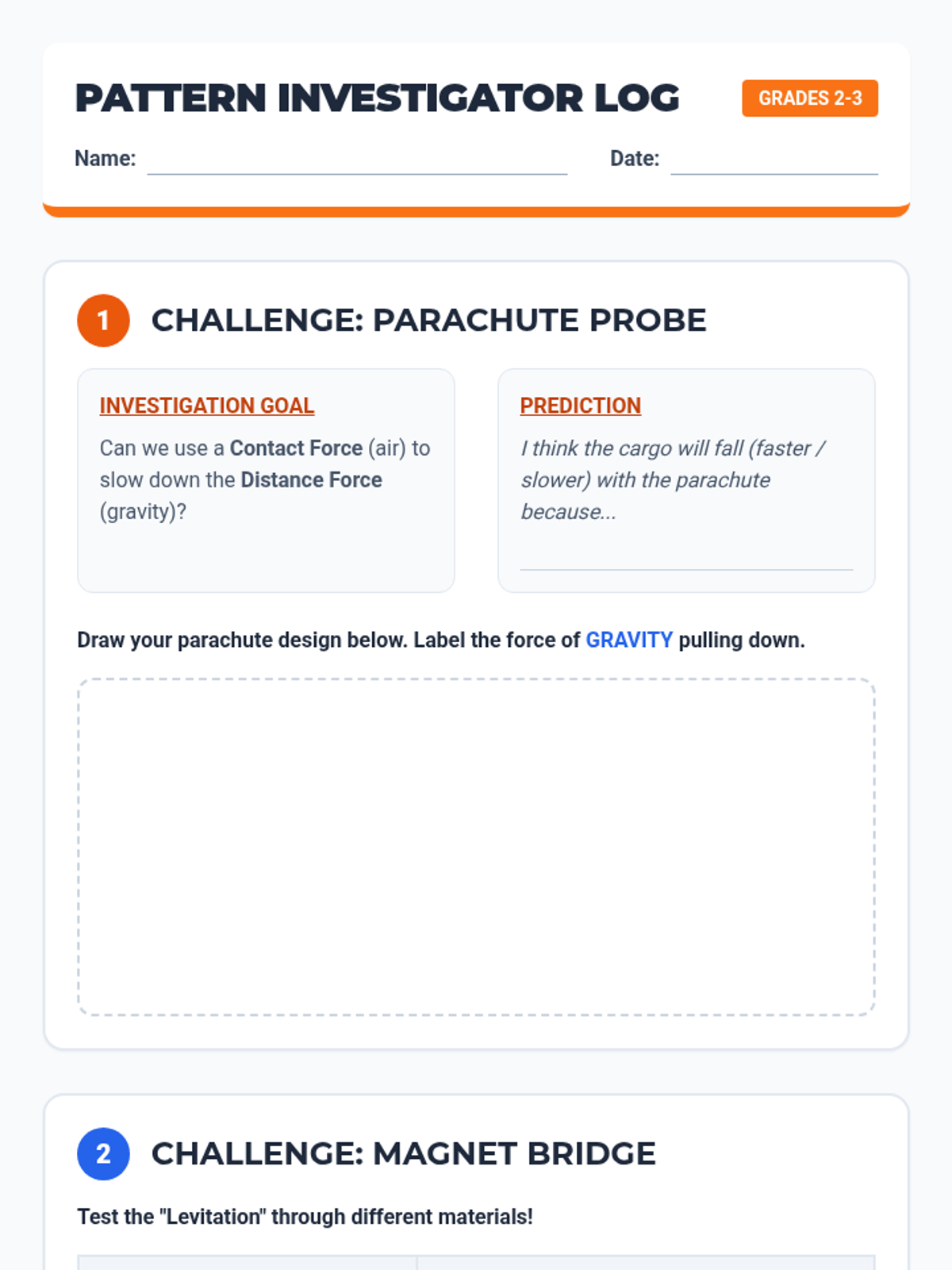
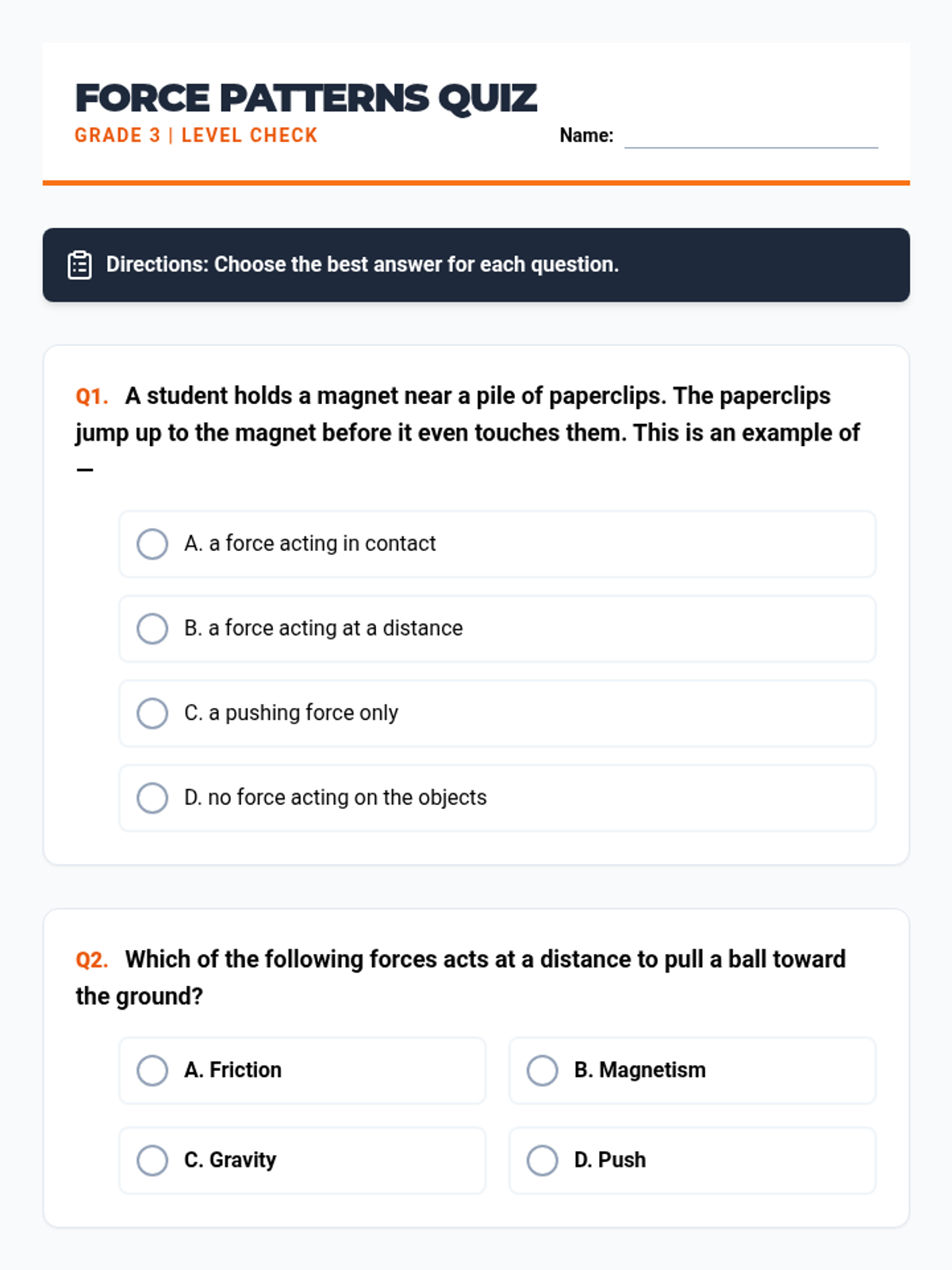
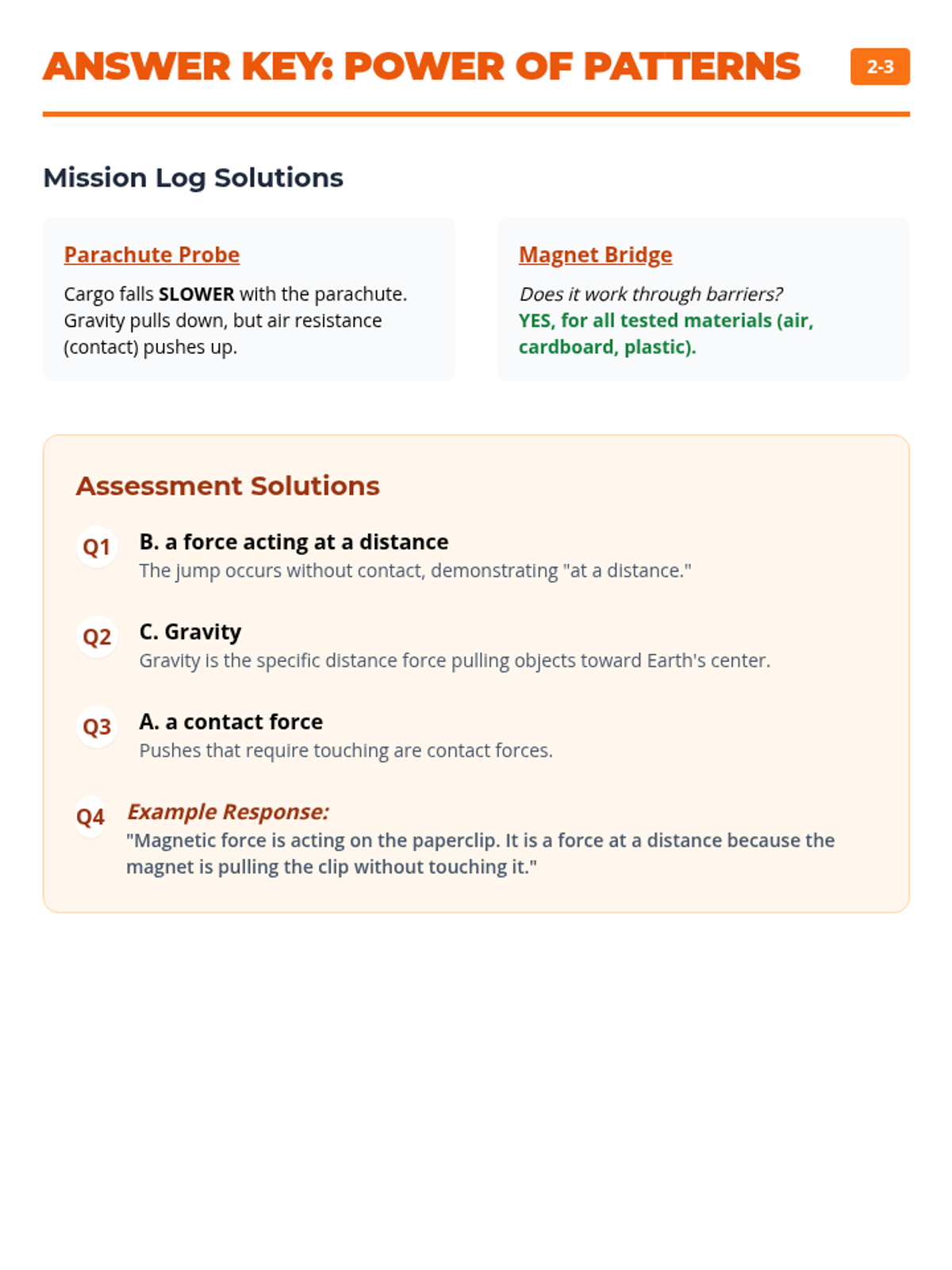
Students demonstrate forces in contact and at a distance, exploring gravity and magnetism through engineering challenges that require precise control of invisible forces. Alignment: TEKS 3.7(A).
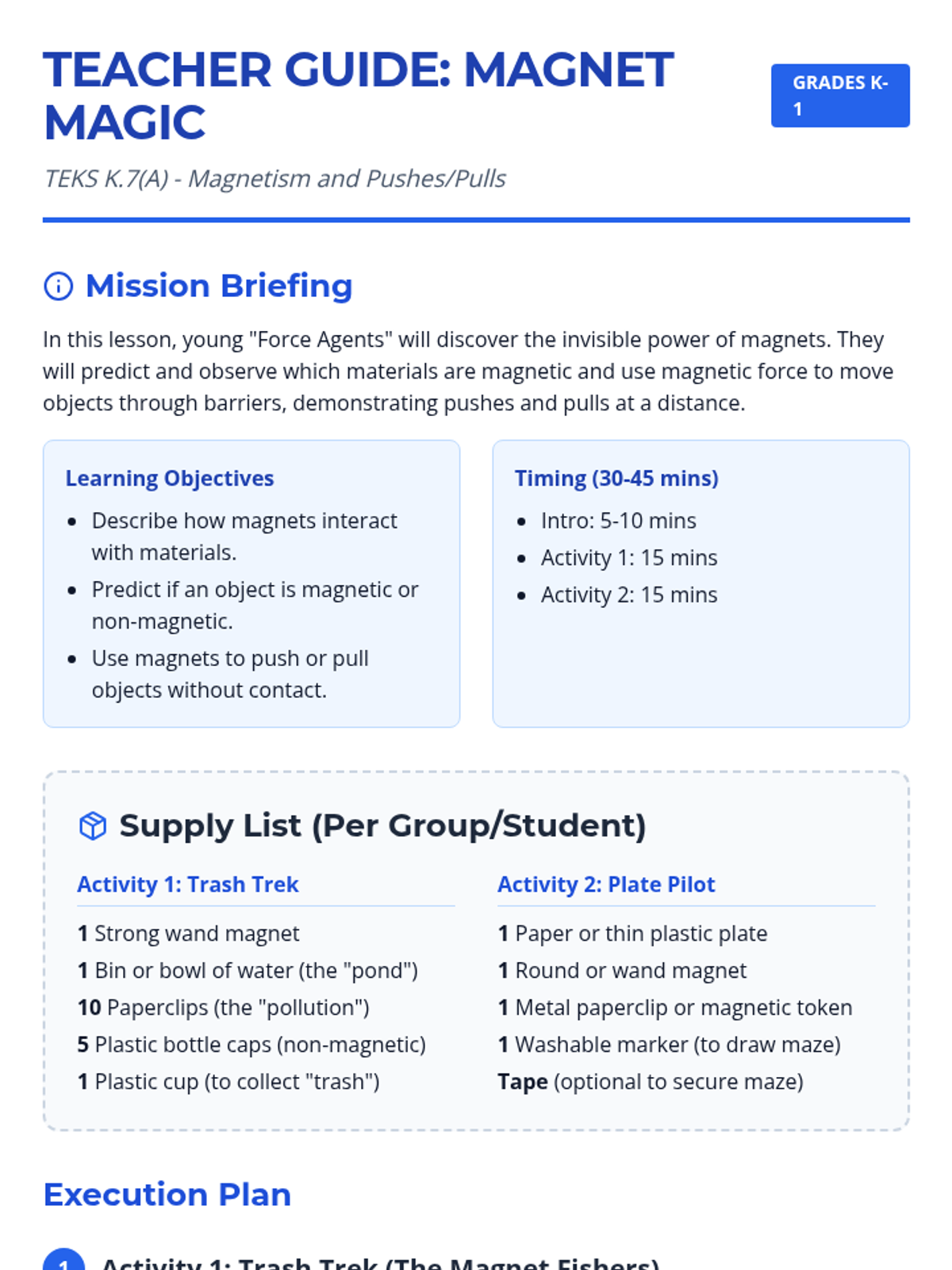
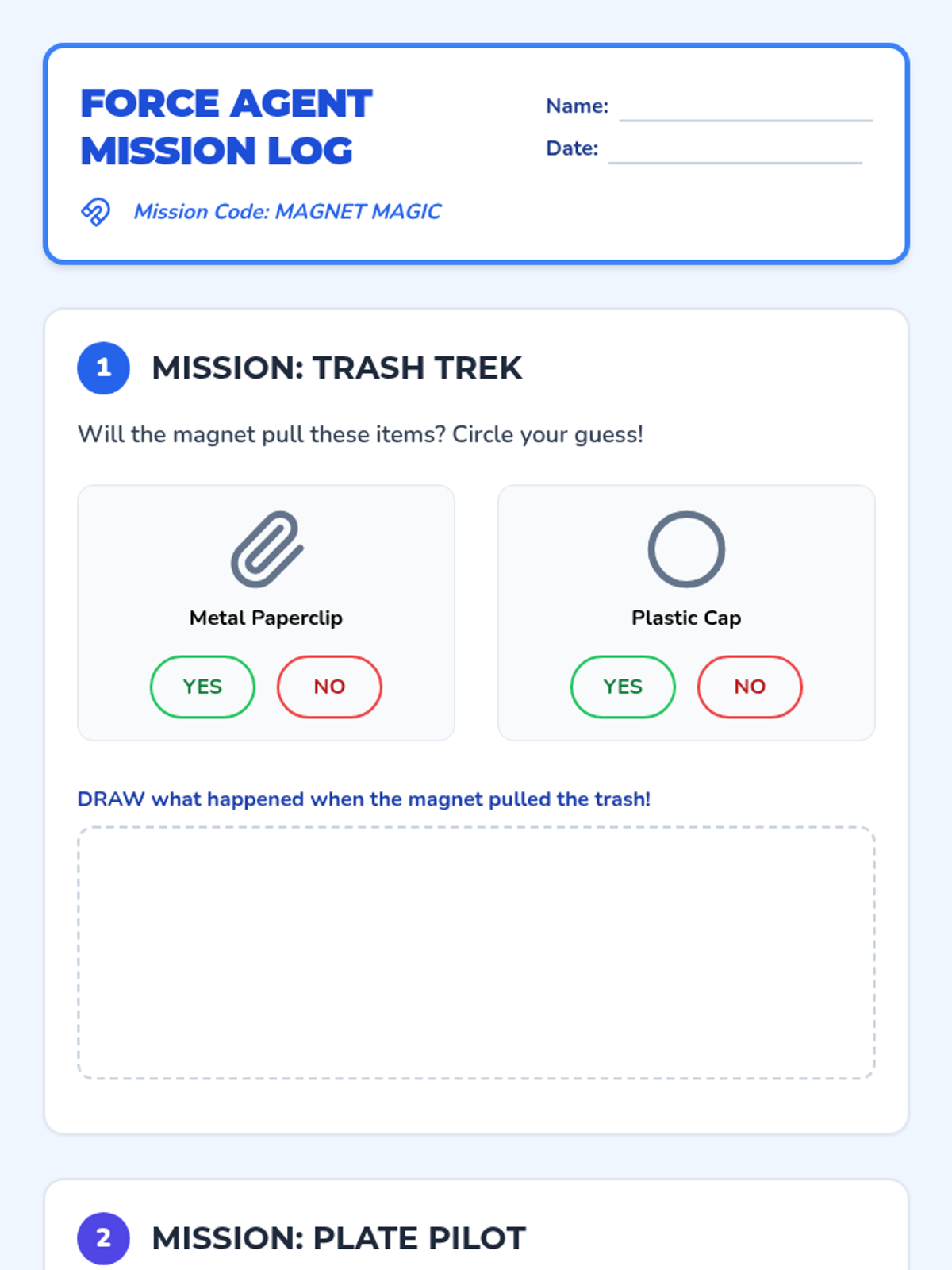
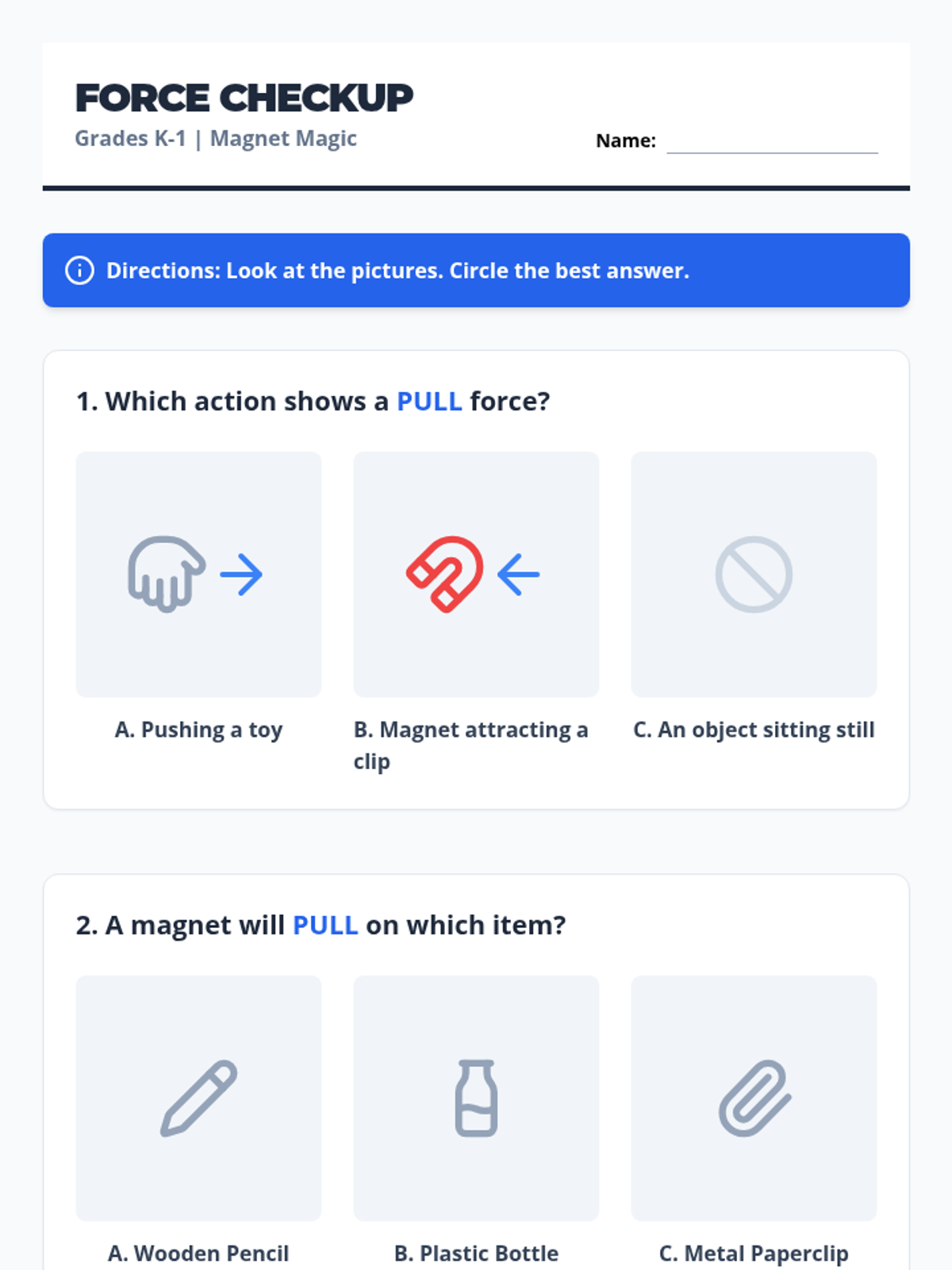
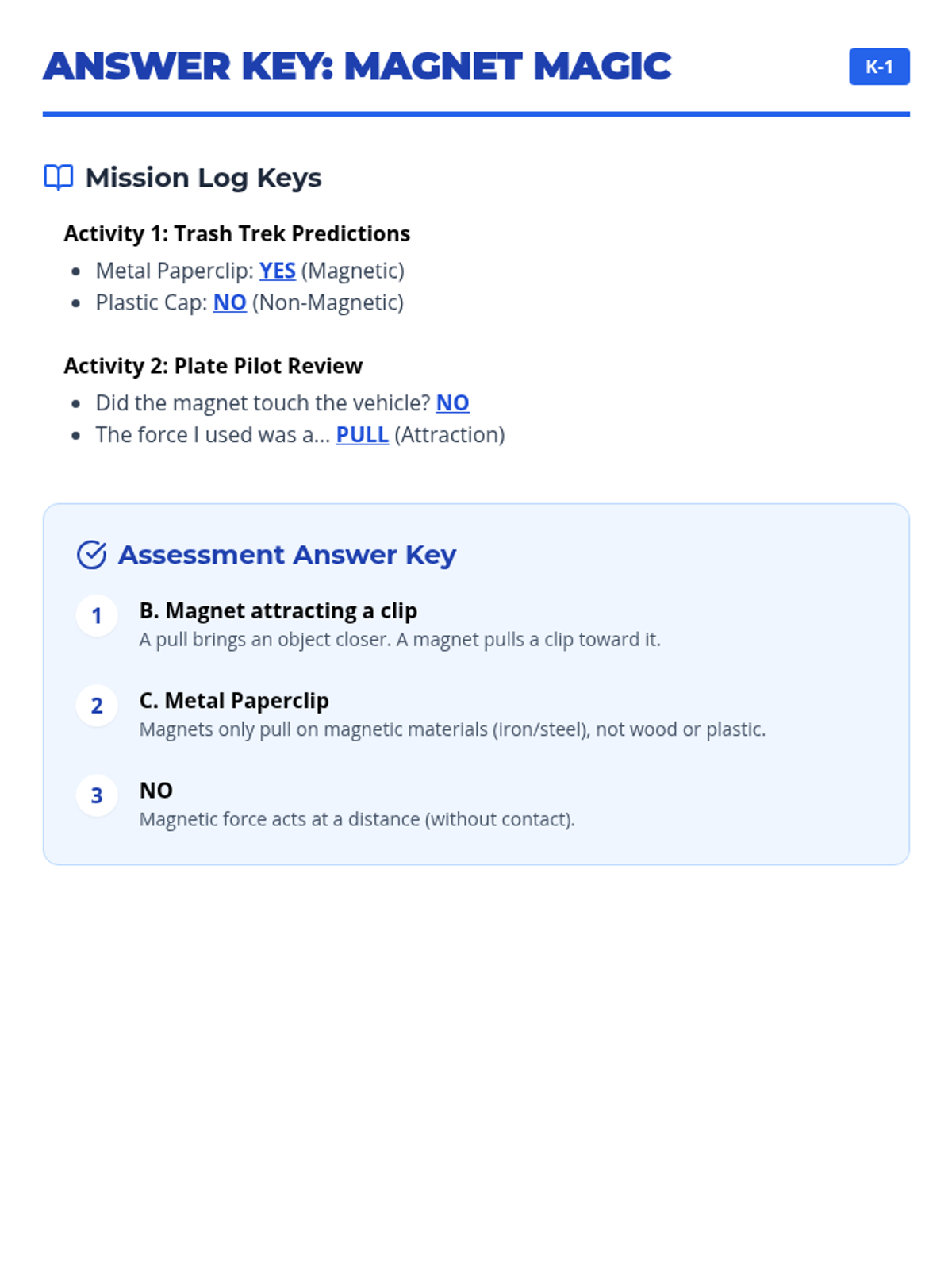
Students explore how magnets interact with various materials and use magnetism to push and pull objects through fun, hands-on challenges. Alignment: TEKS K.7(A).
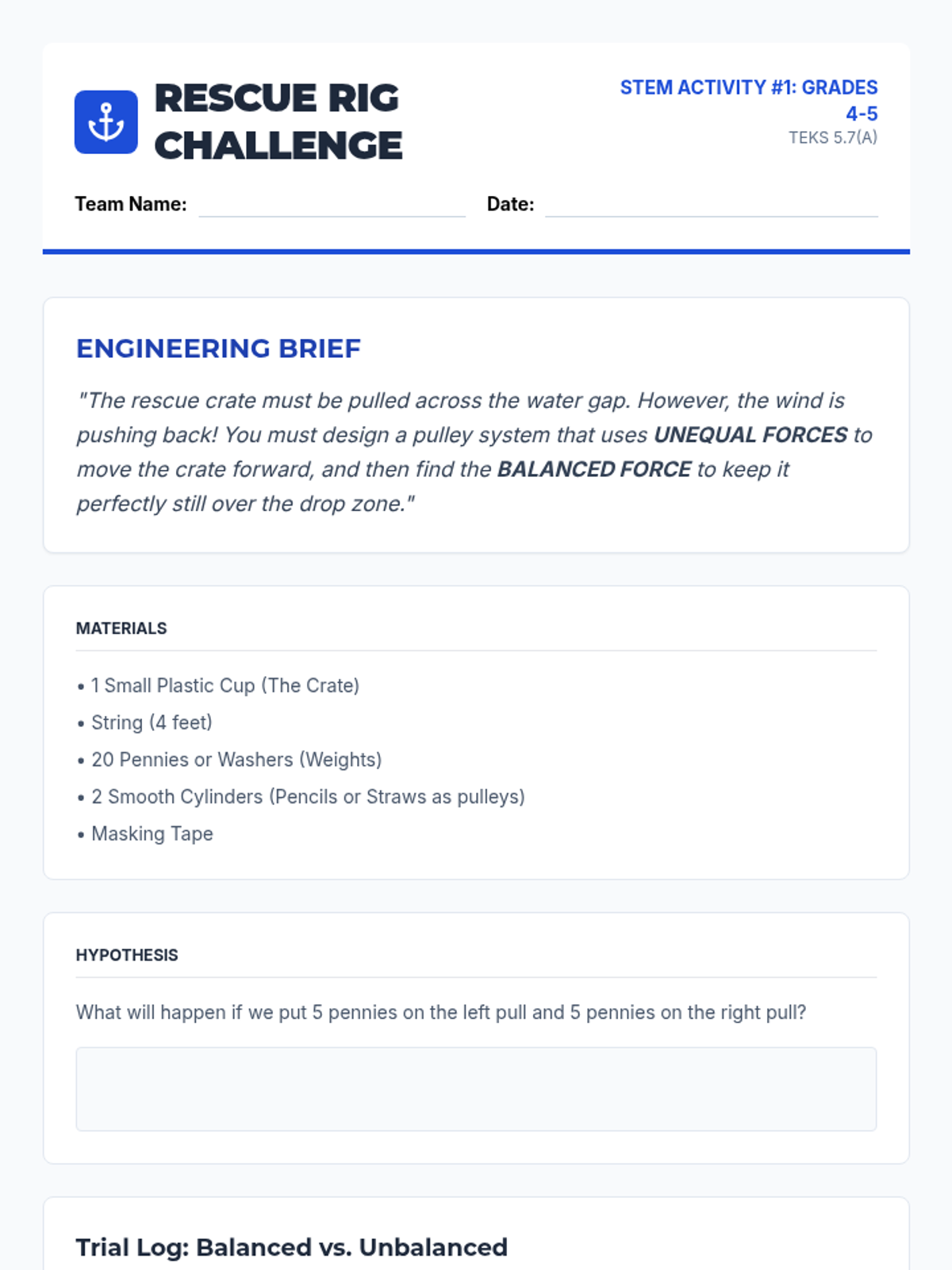
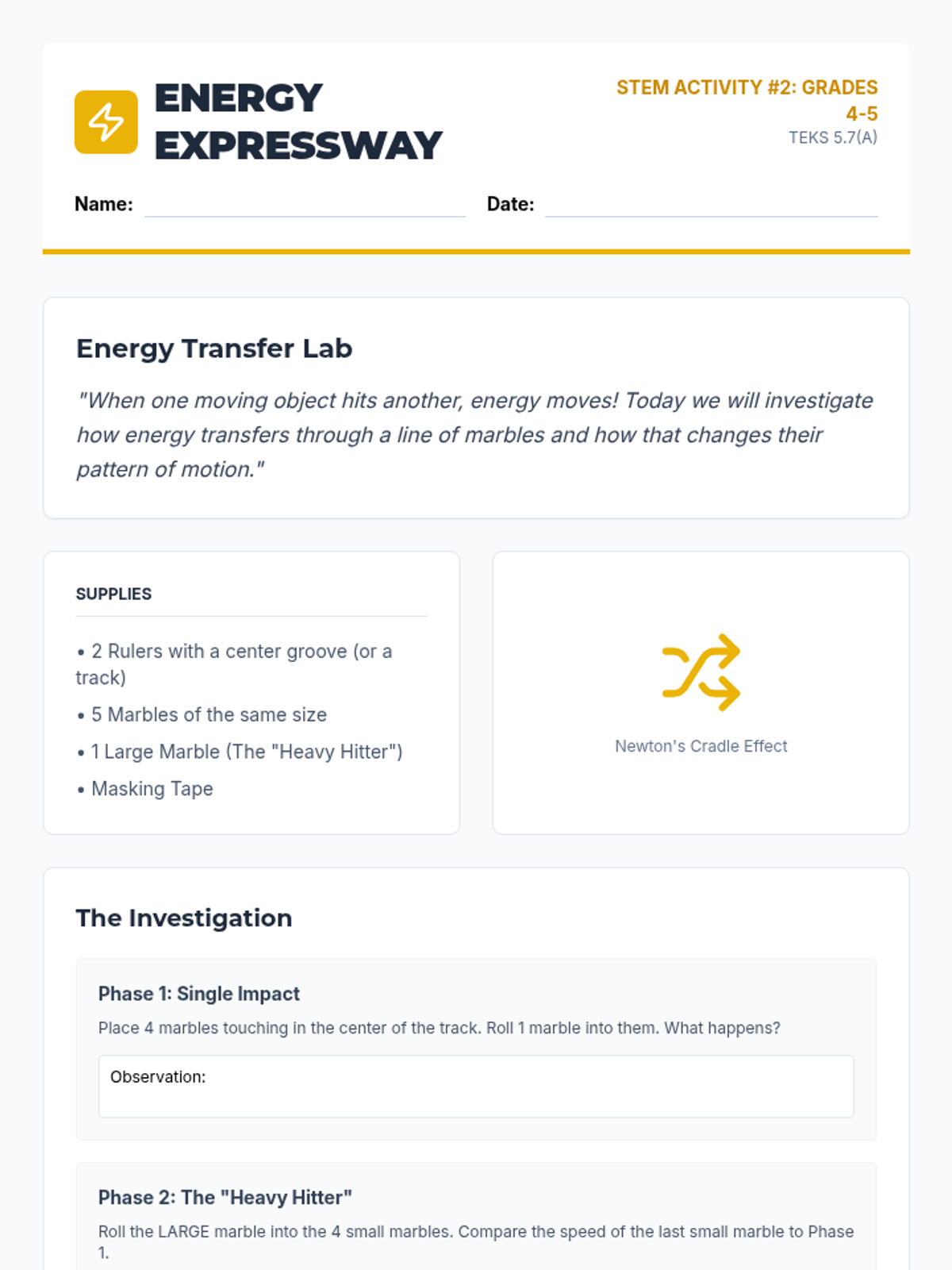
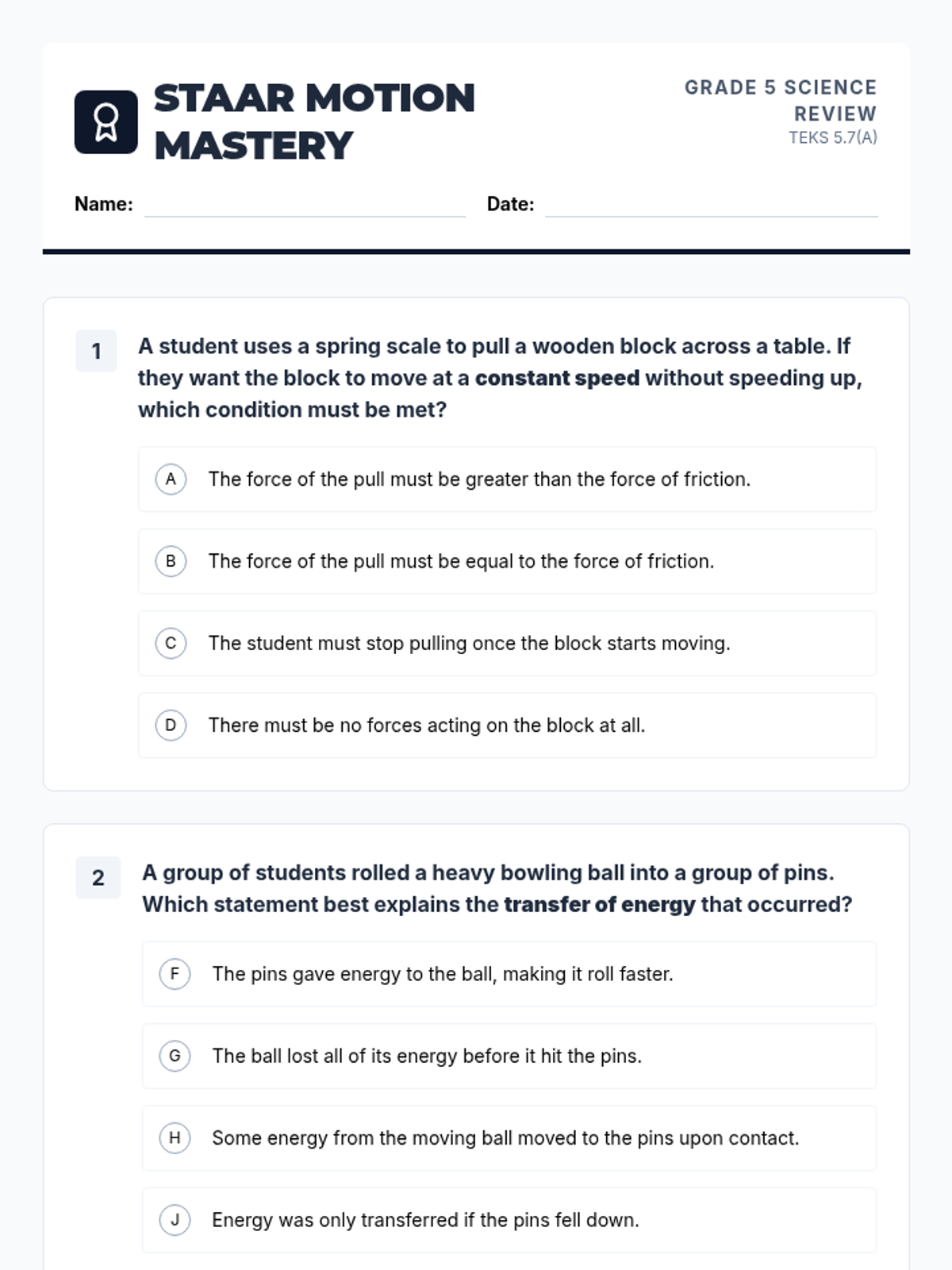
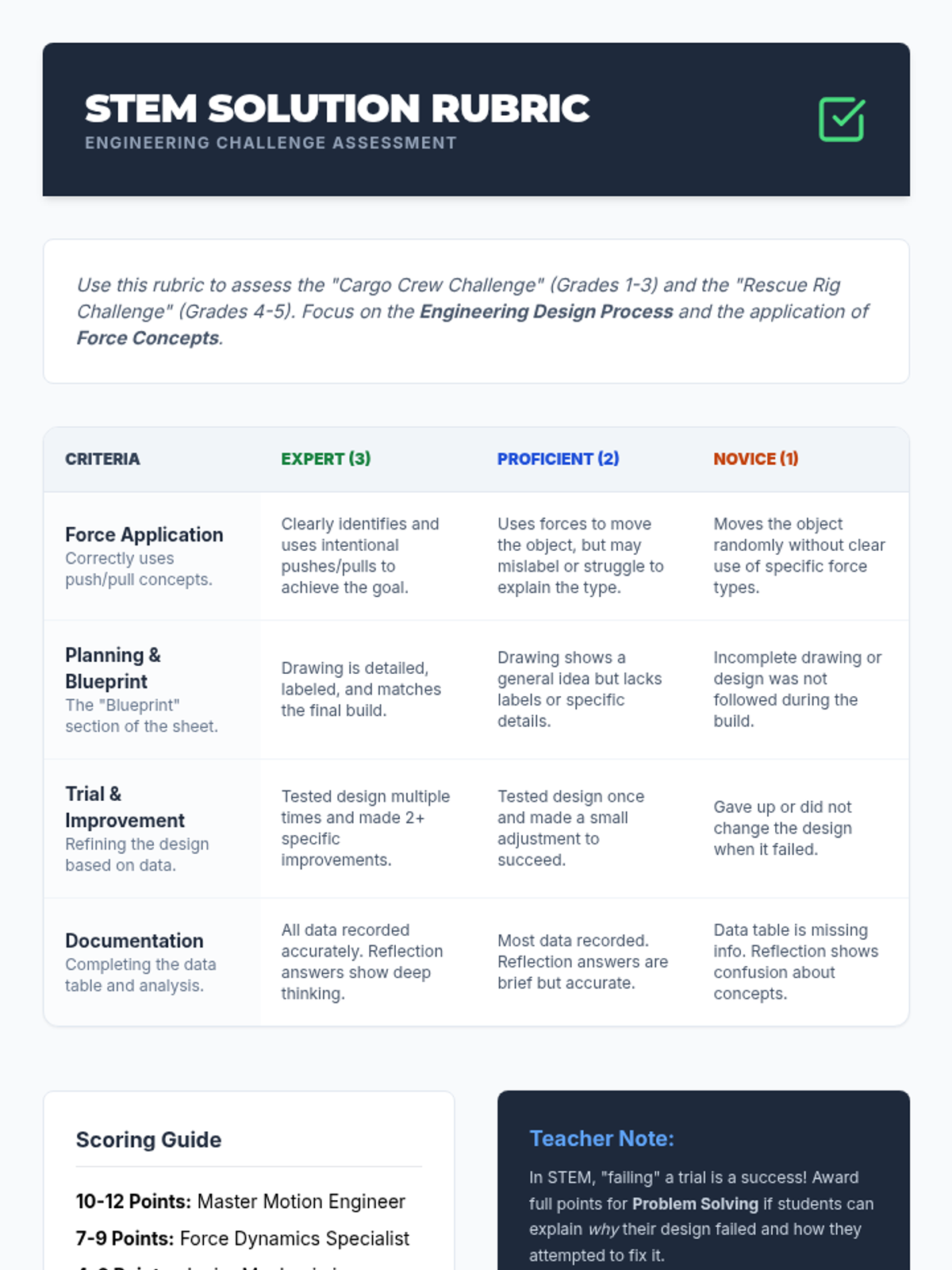
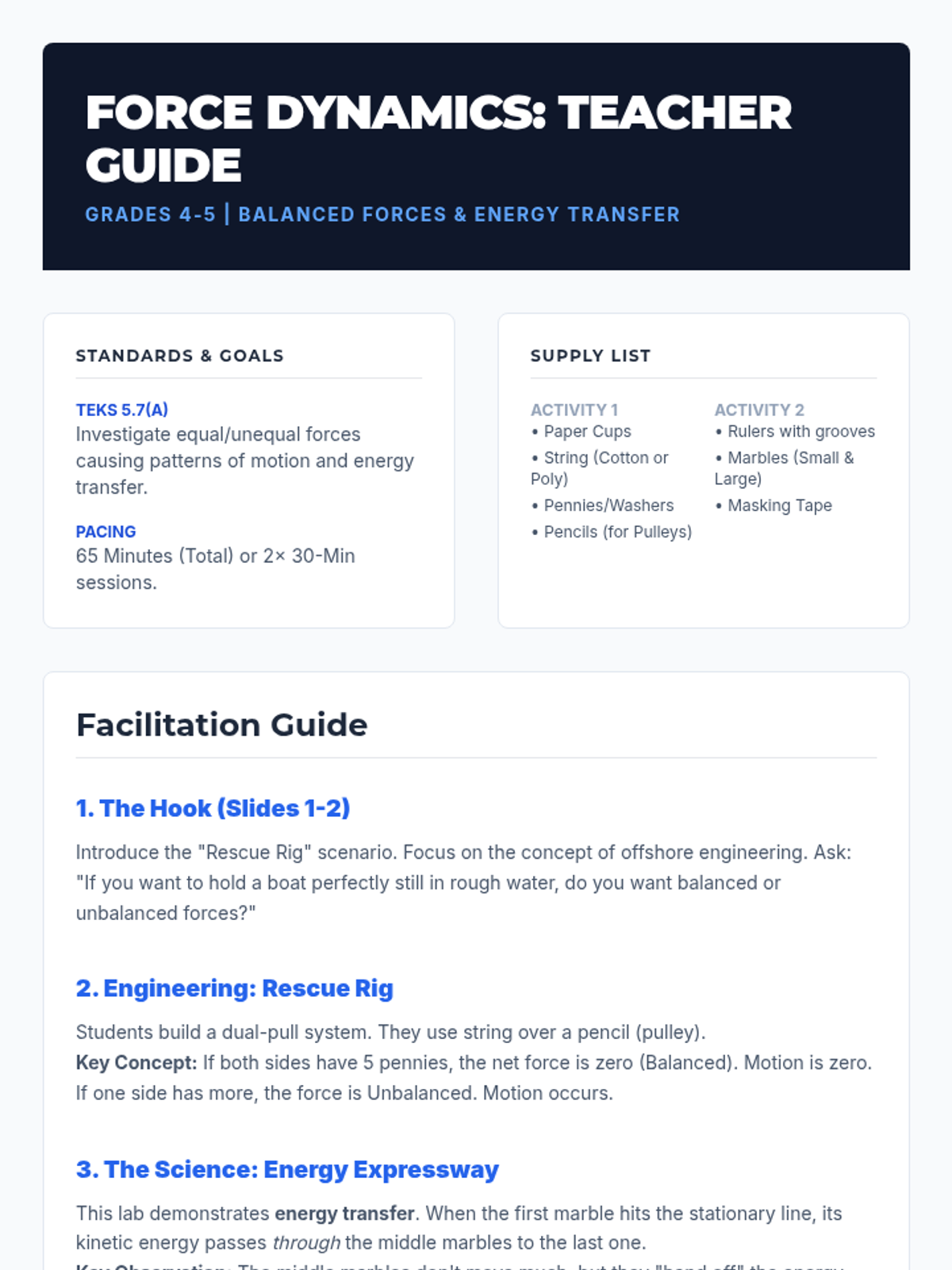
An advanced exploration for grades 4-5 on equal and unequal forces, patterns of motion, and energy transfer. Students solve real-world problems using complex force interactions.
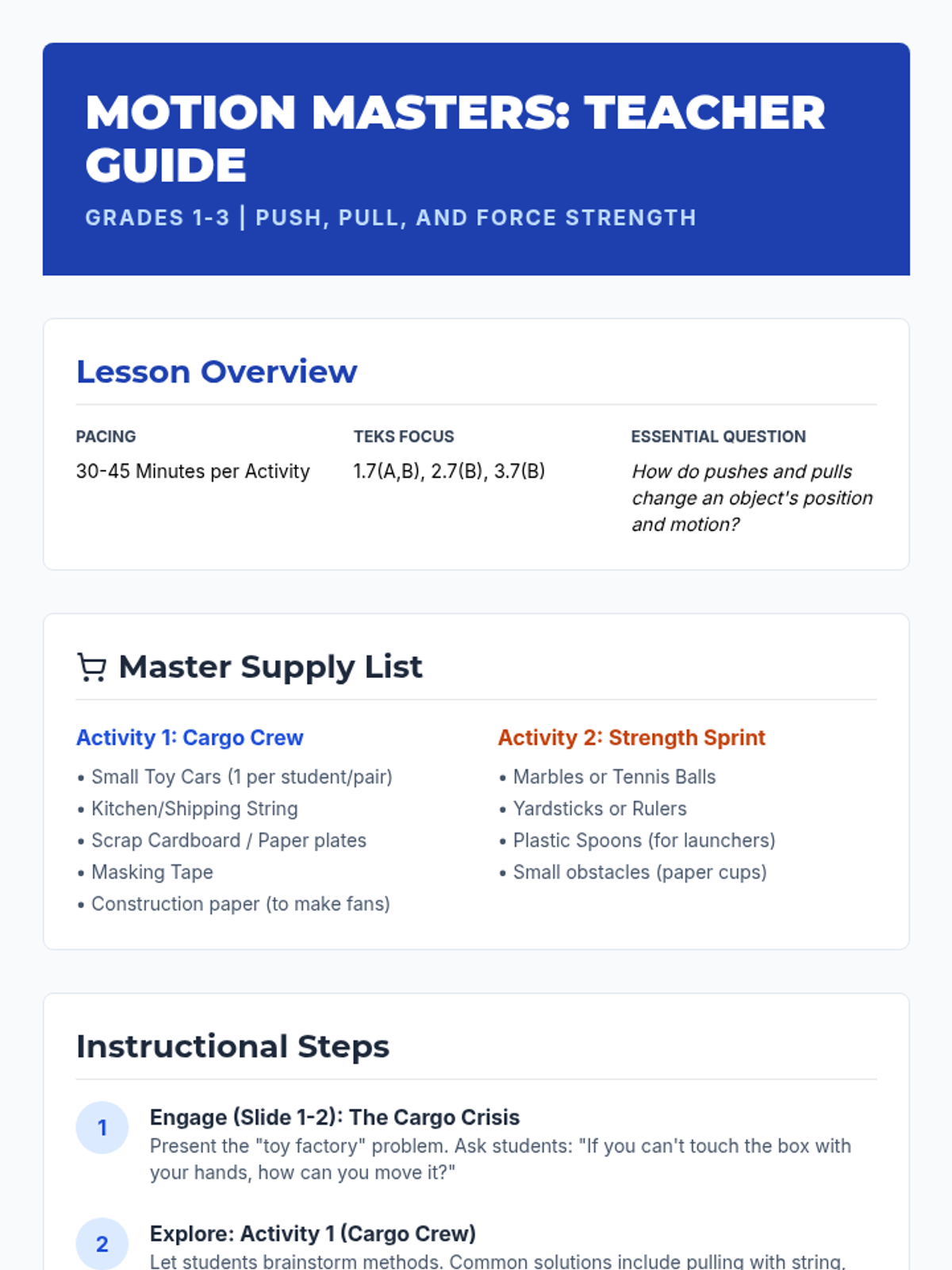
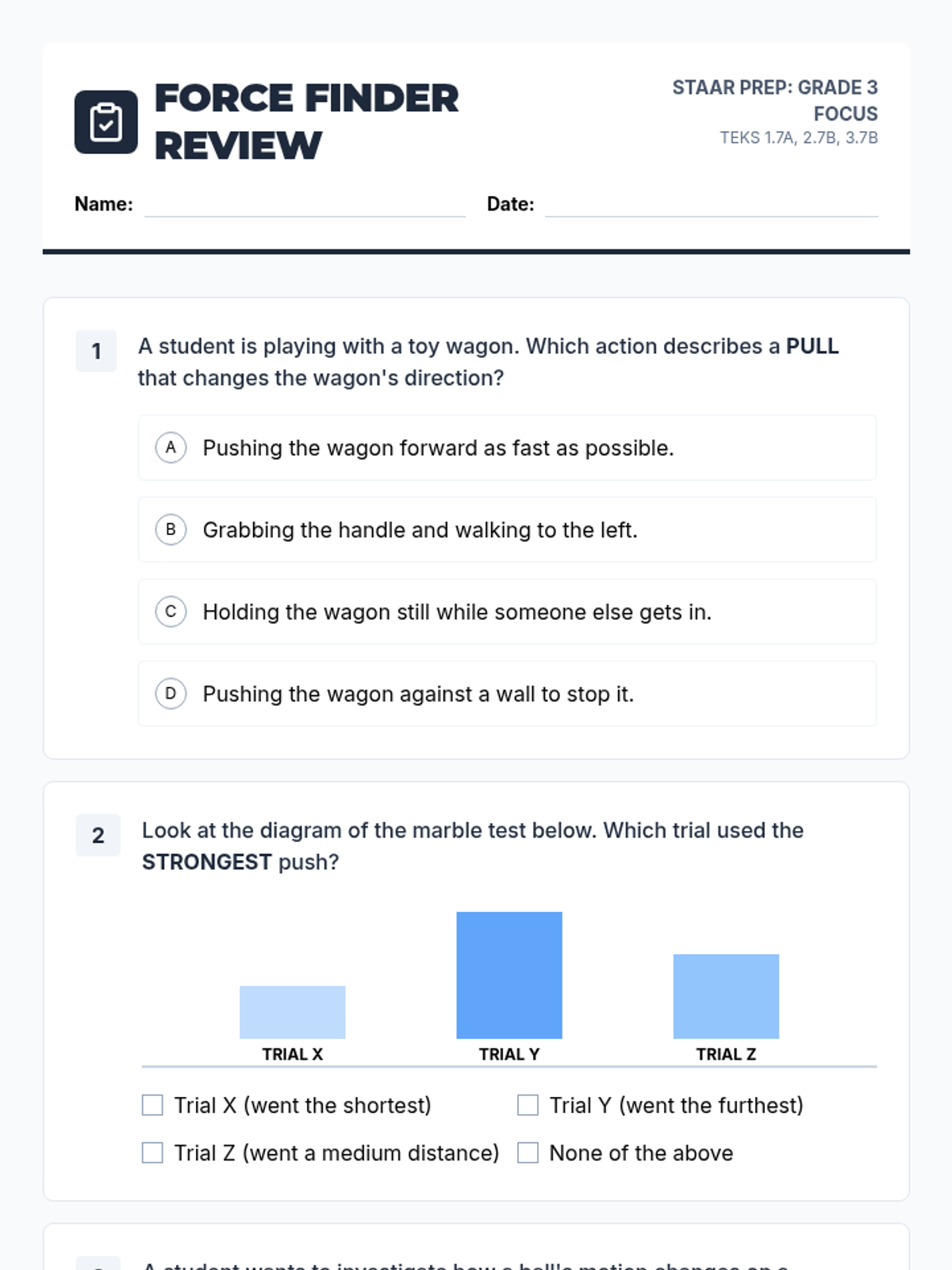
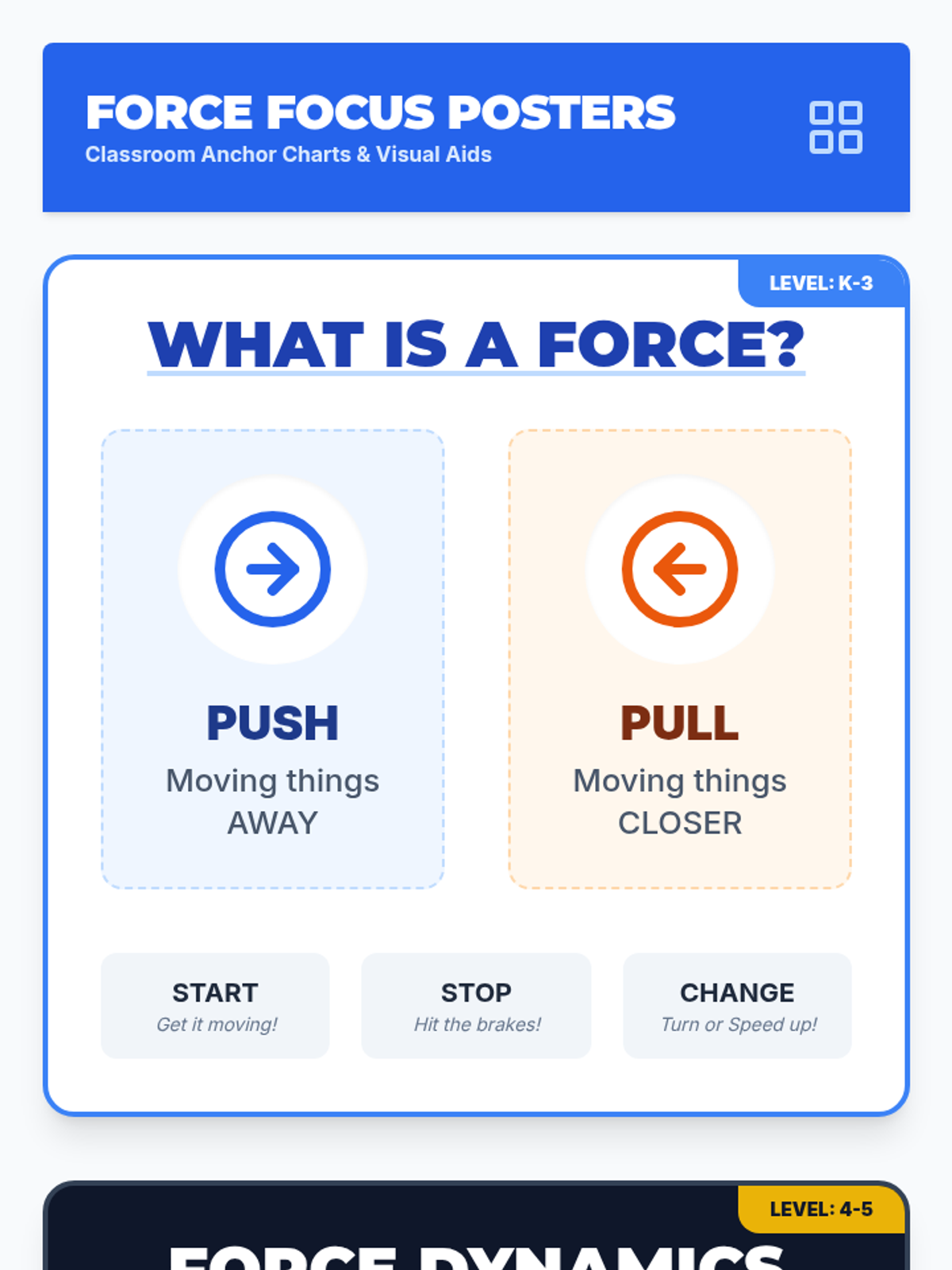
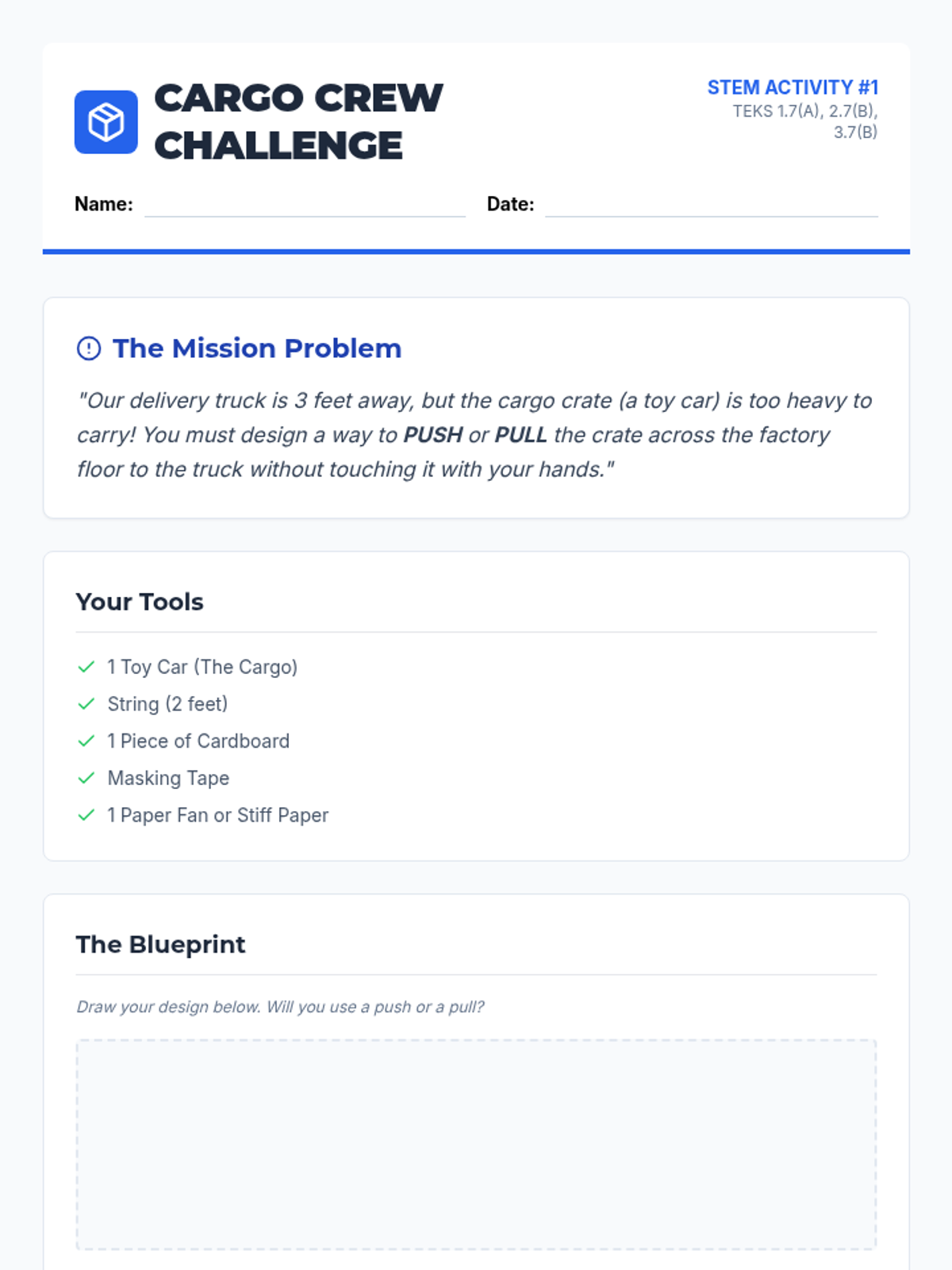
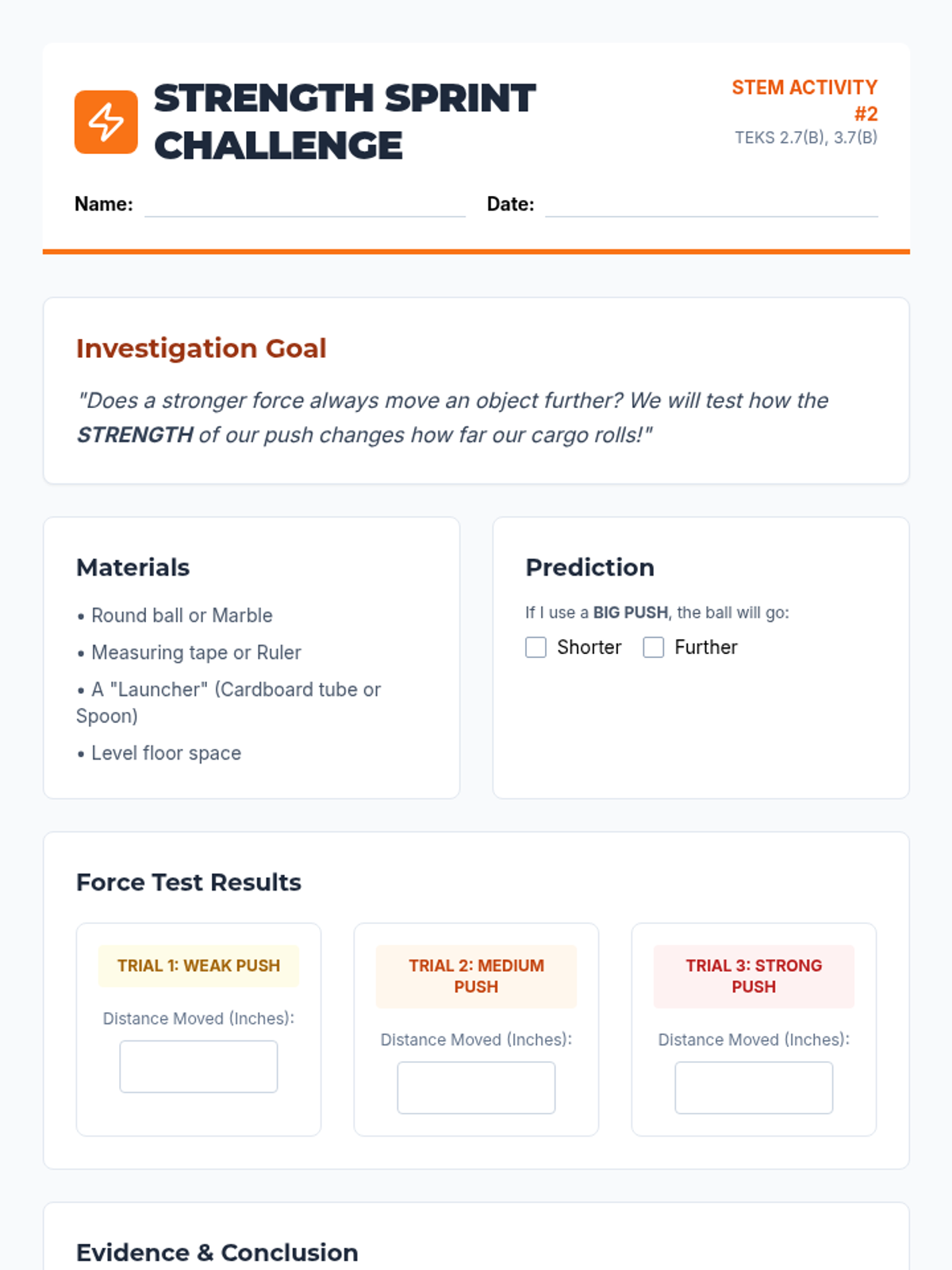
An introductory lesson for grades 1-3 covering the basics of pushes and pulls, how they start and stop motion, and how force strength affects speed. Includes two hands-on STEM activities.
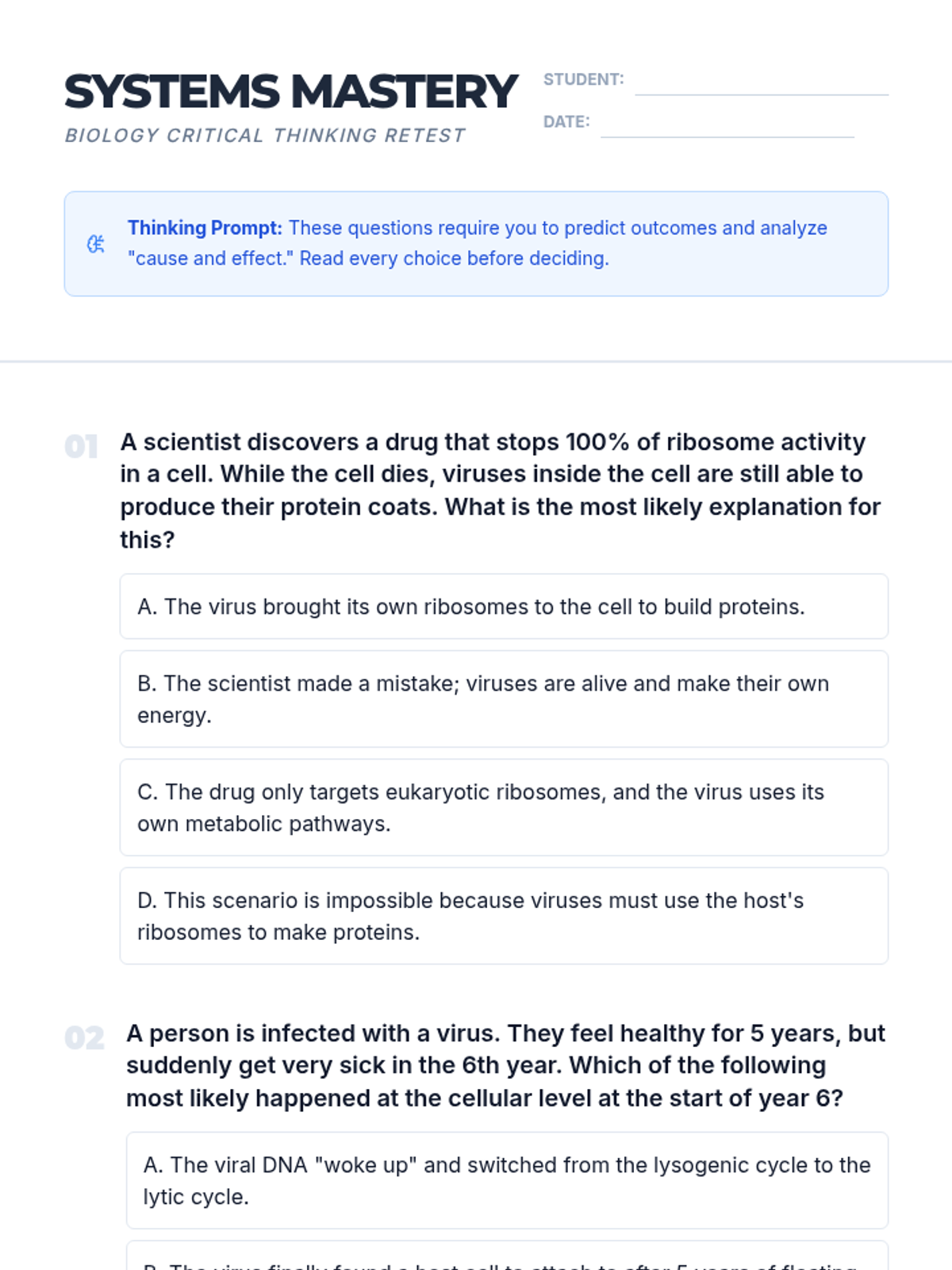
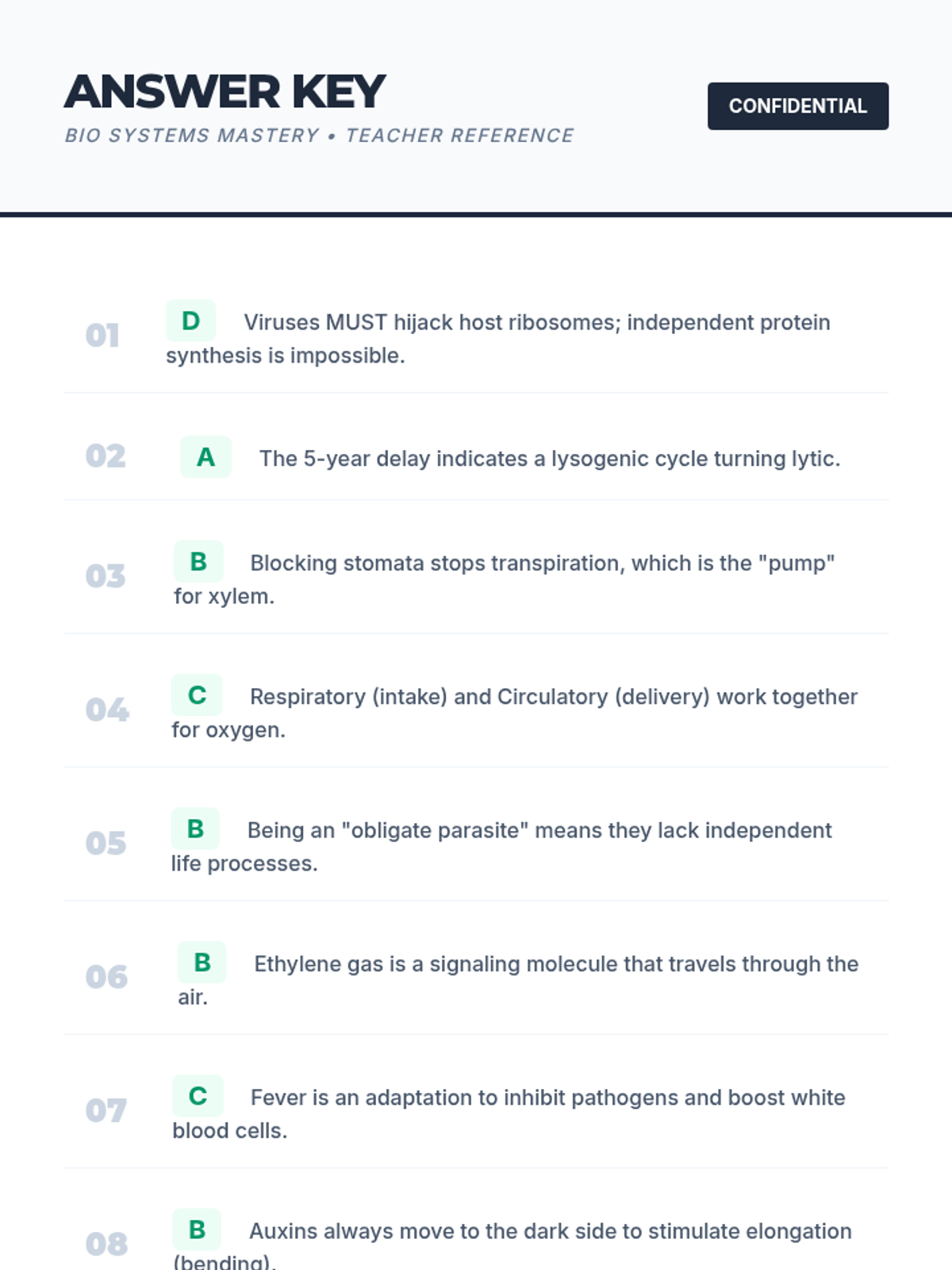
A rigorous assessment covering the intricate workings of plant tissues, human physiological interactions, and the mechanics of viral replication. Designed for 9th-grade biology students needing to demonstrate mastery of complex systems.
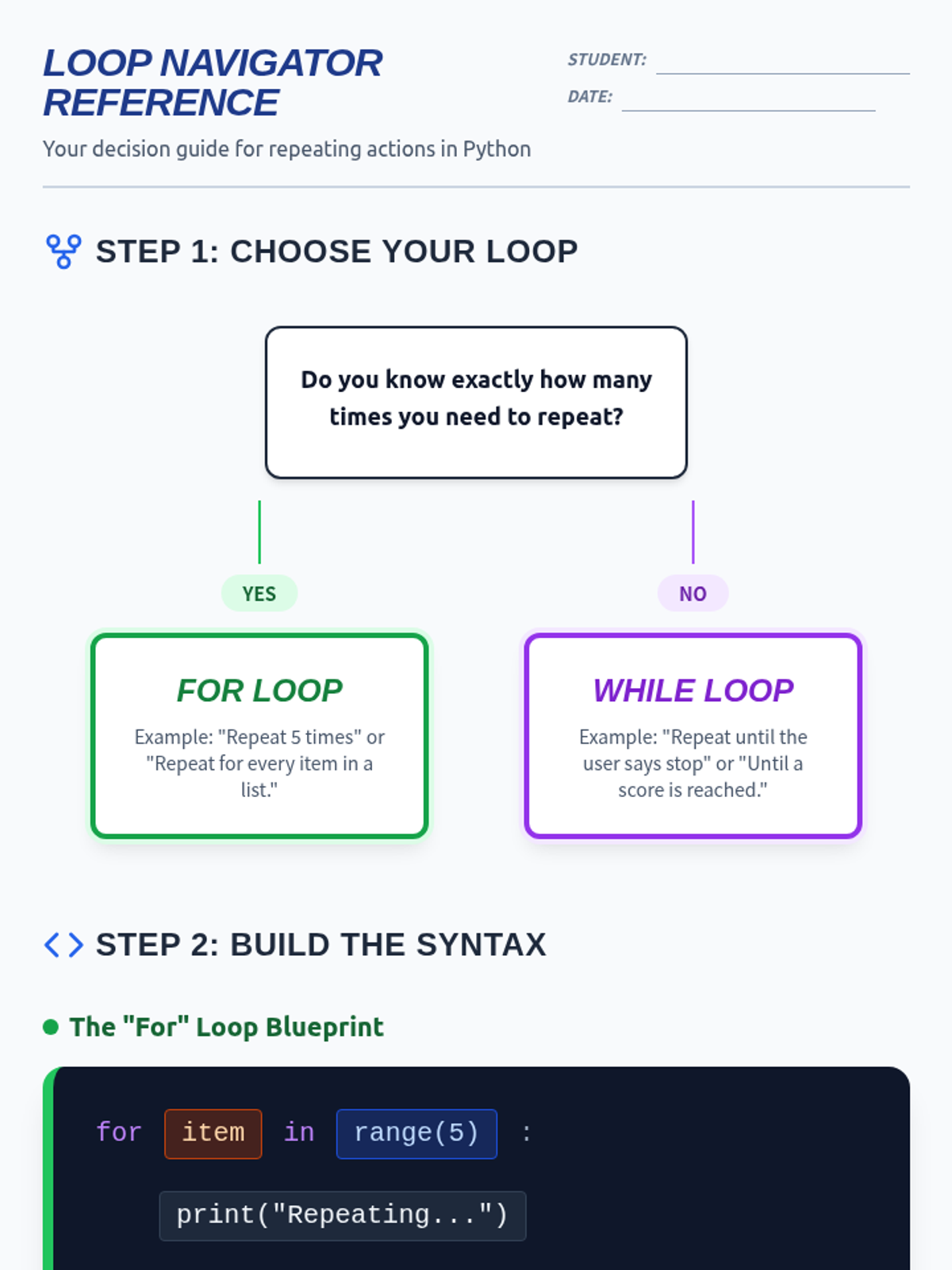
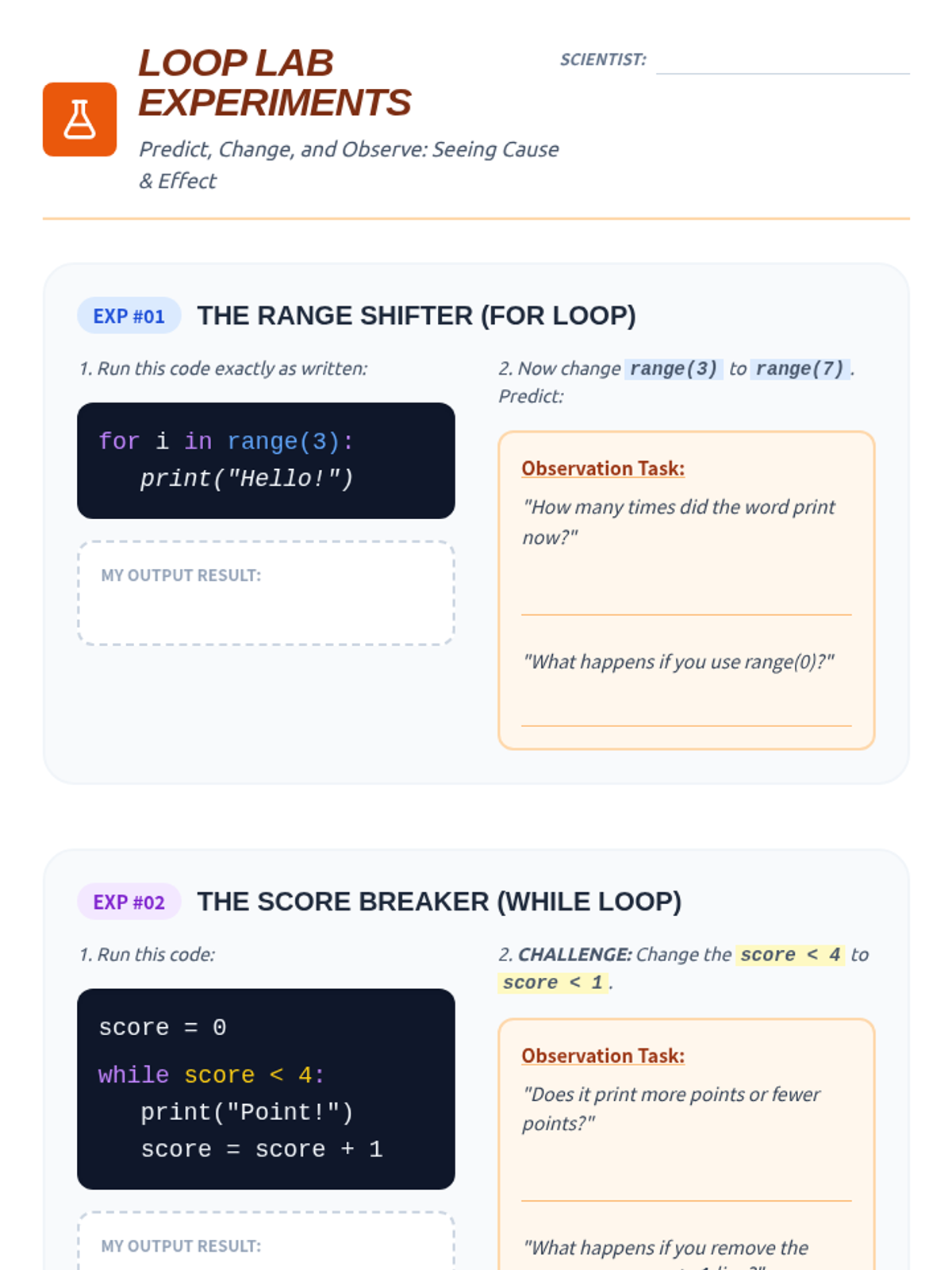
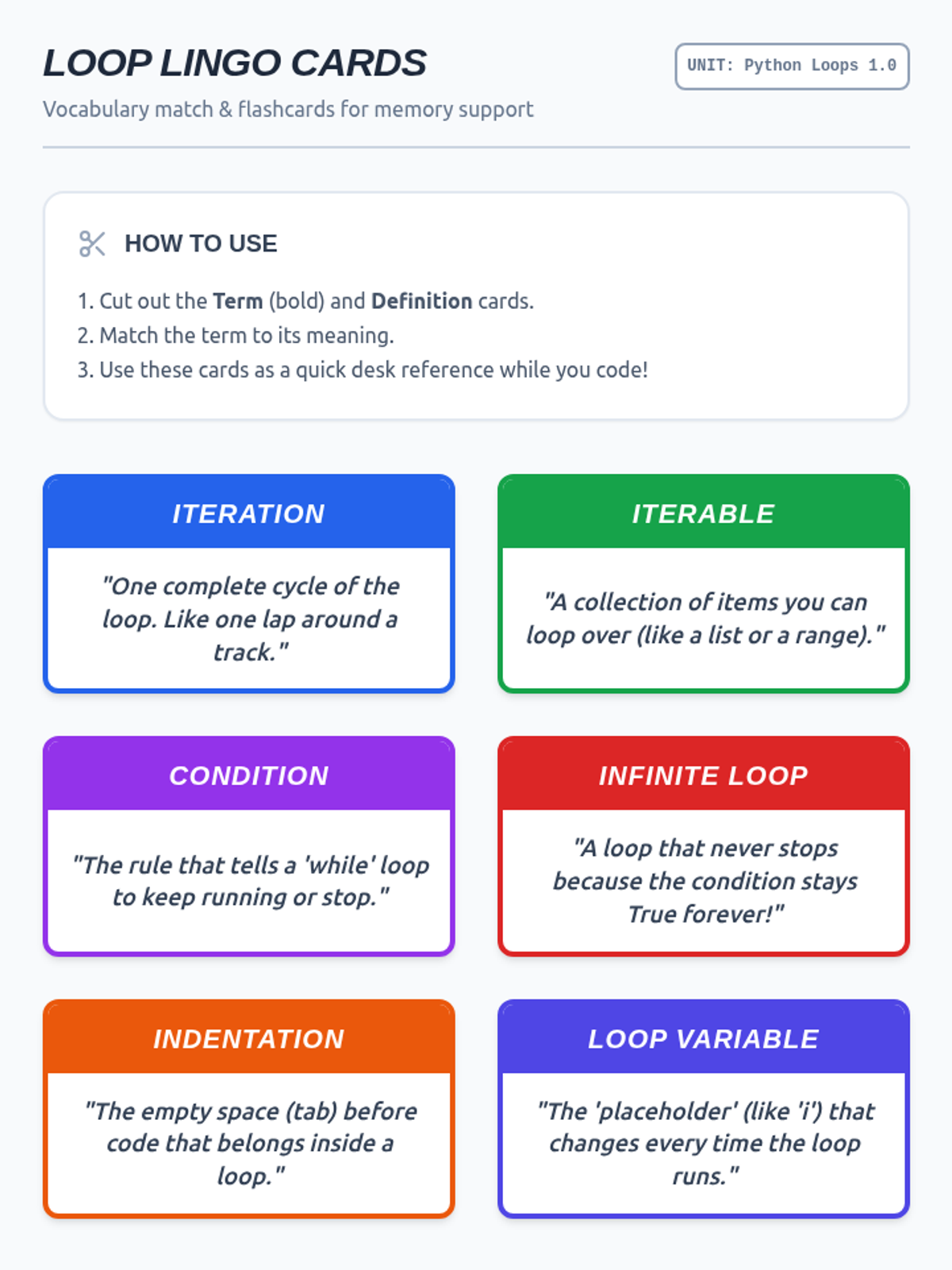
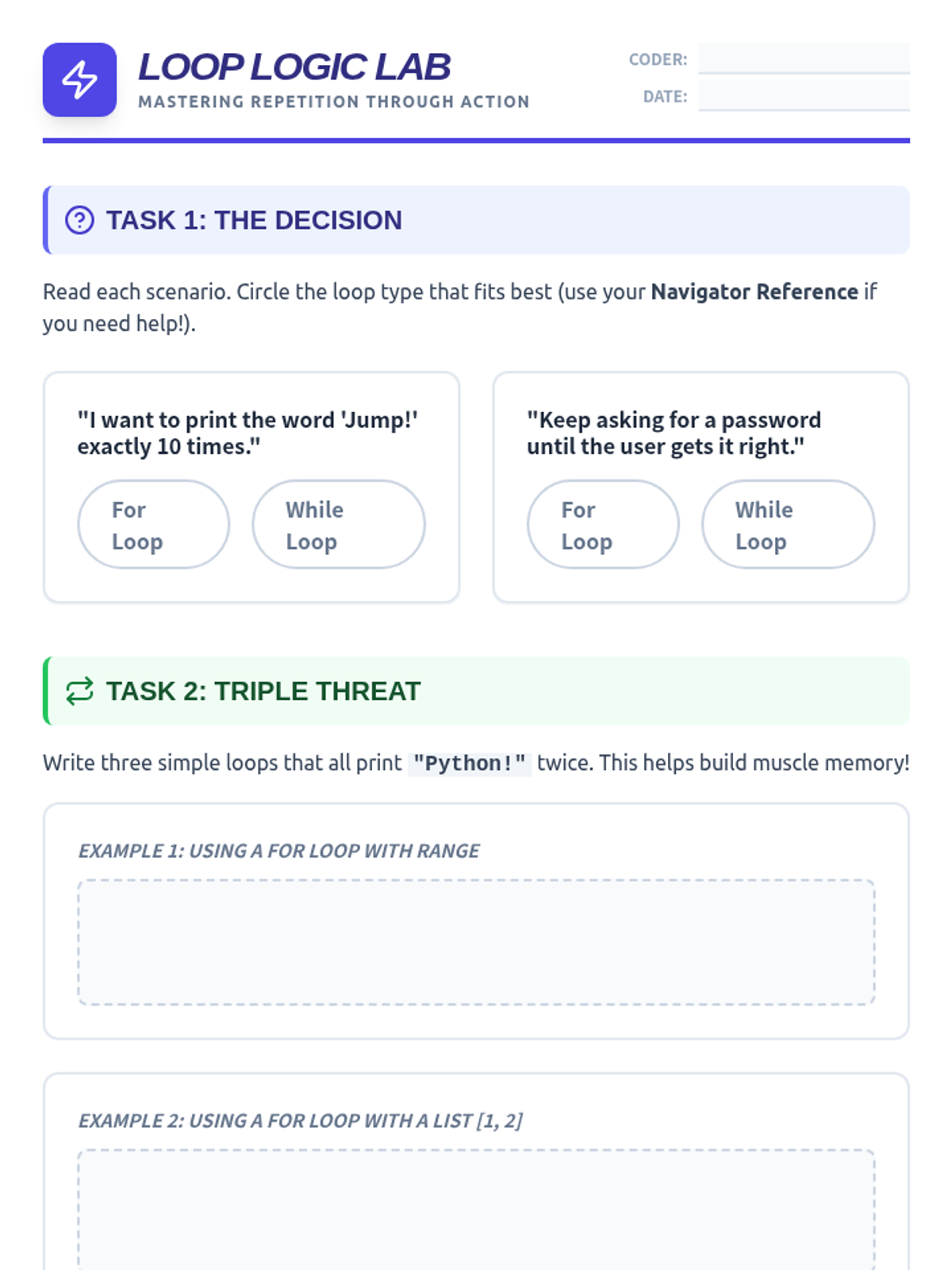
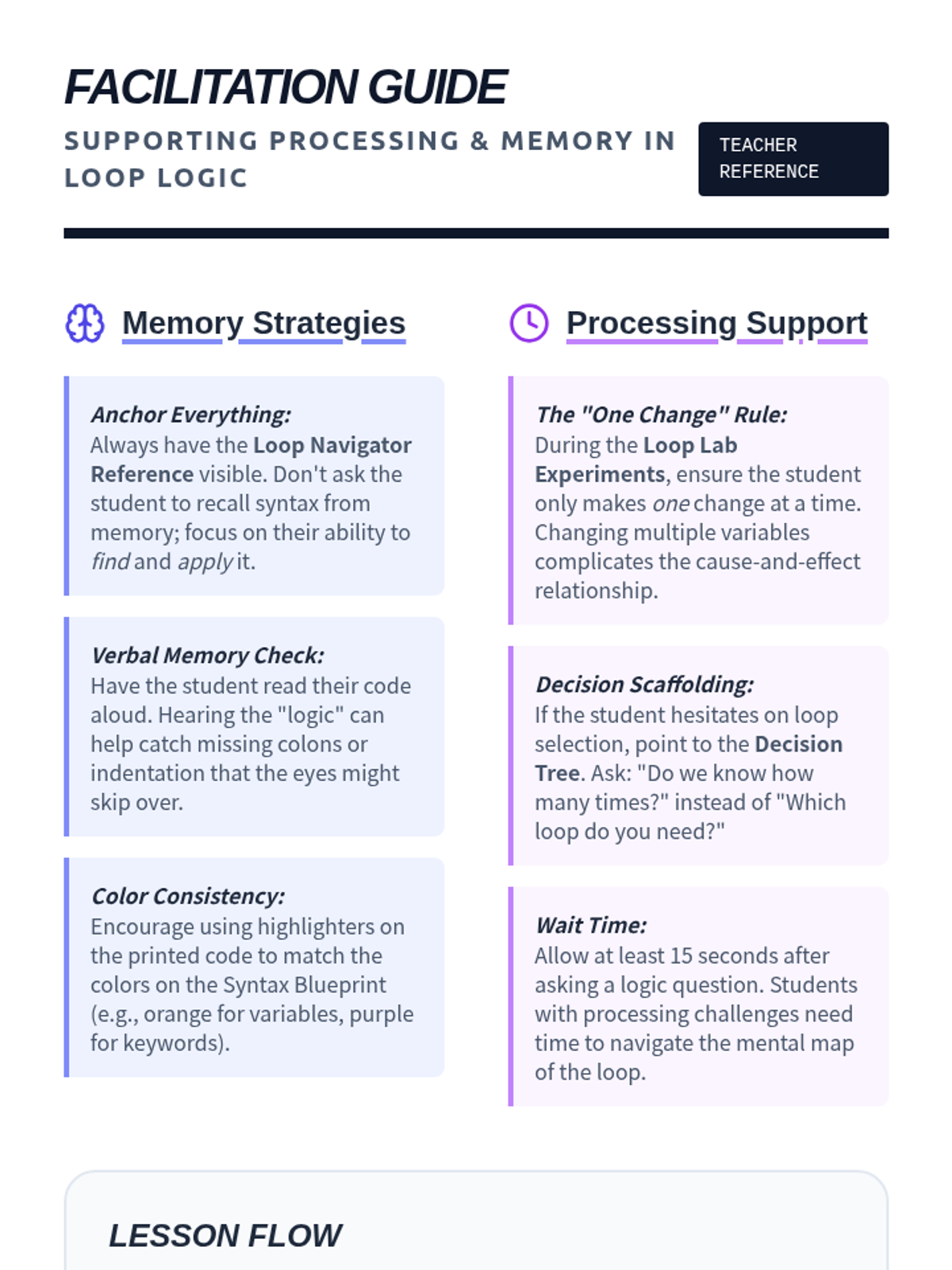
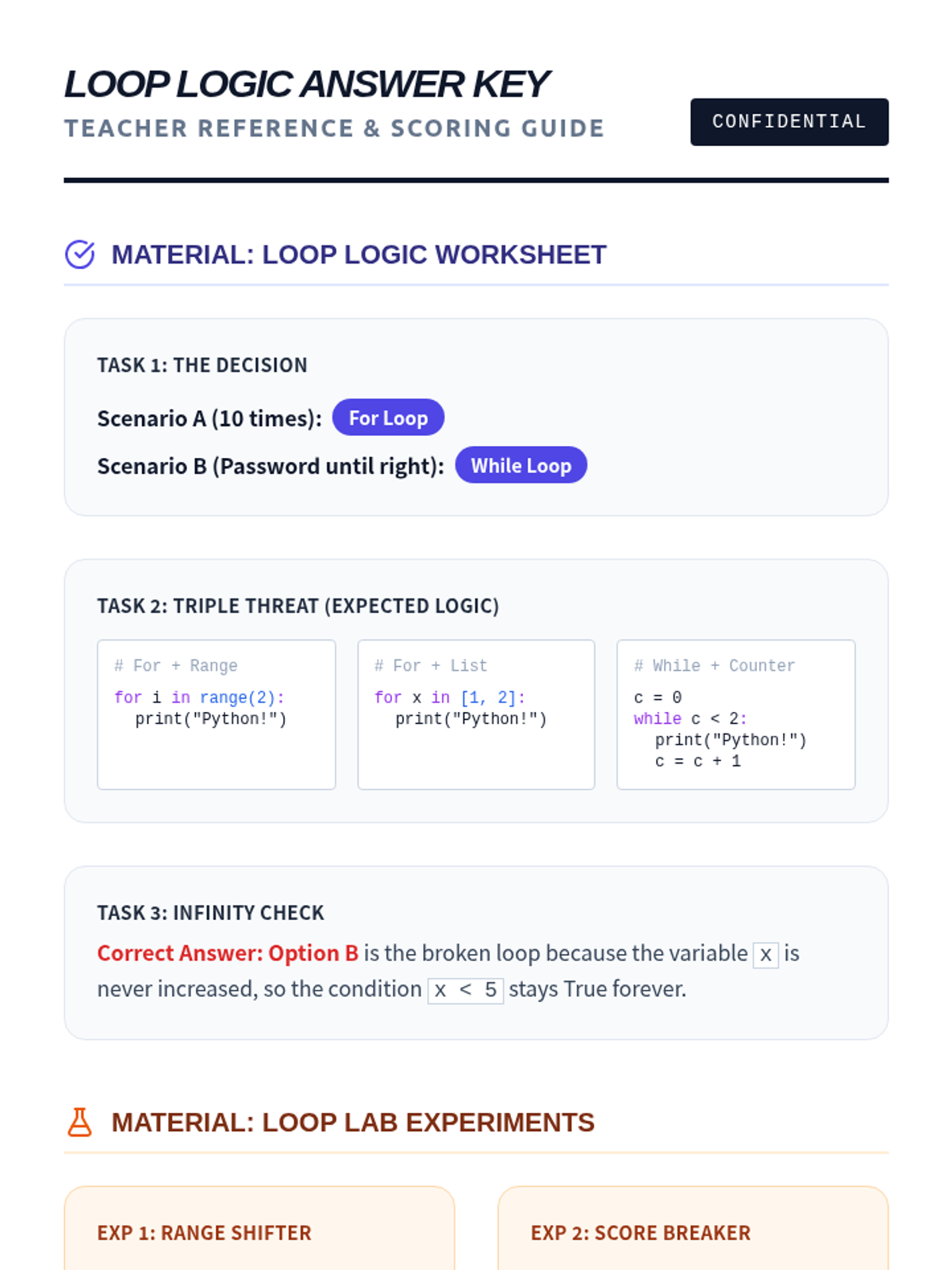
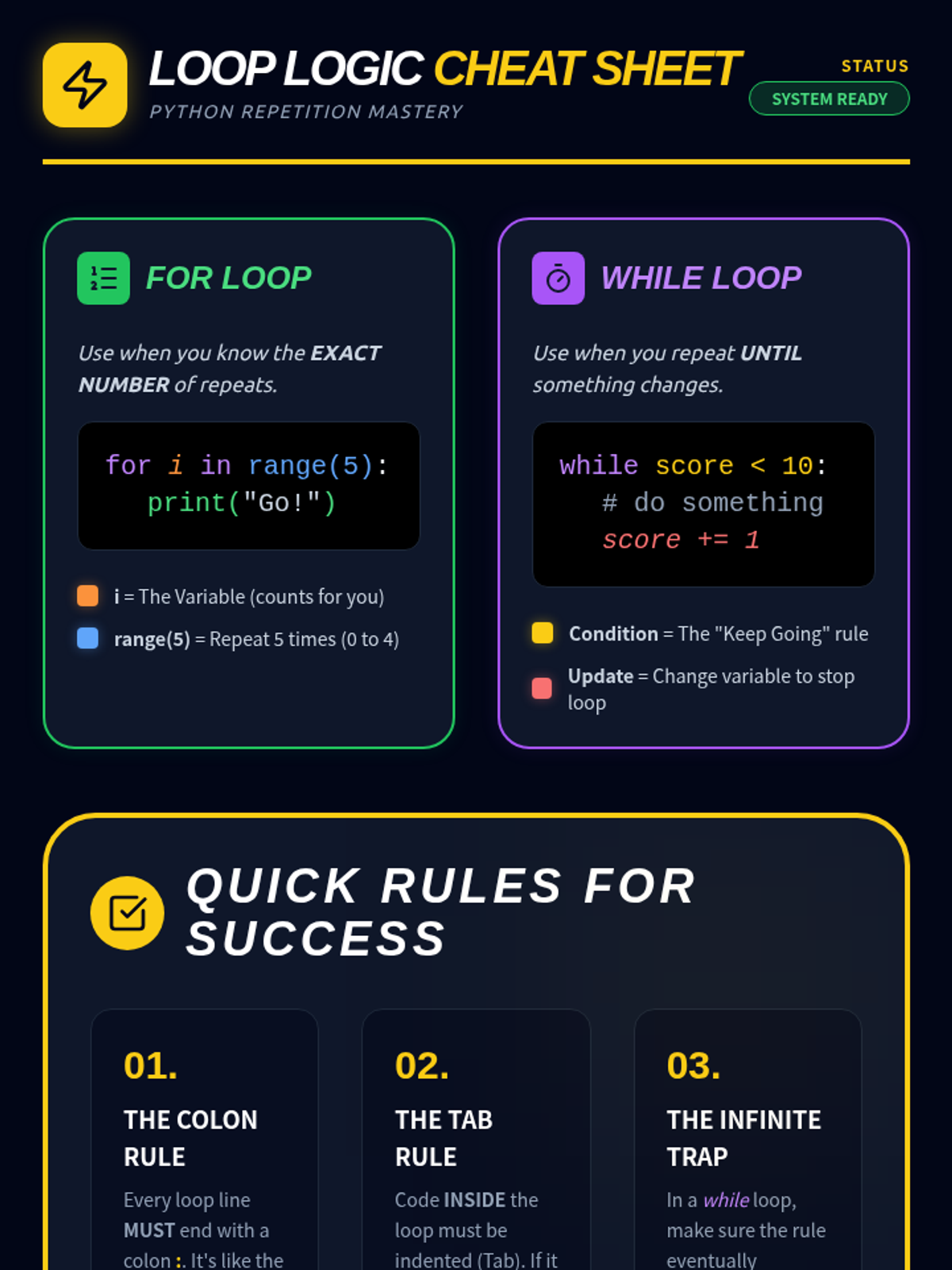
A comprehensive introduction to Python loops designed for students with processing and memory challenges, featuring visual decision trees, color-coded syntax guides, and hands-on cause-and-effect experiments.
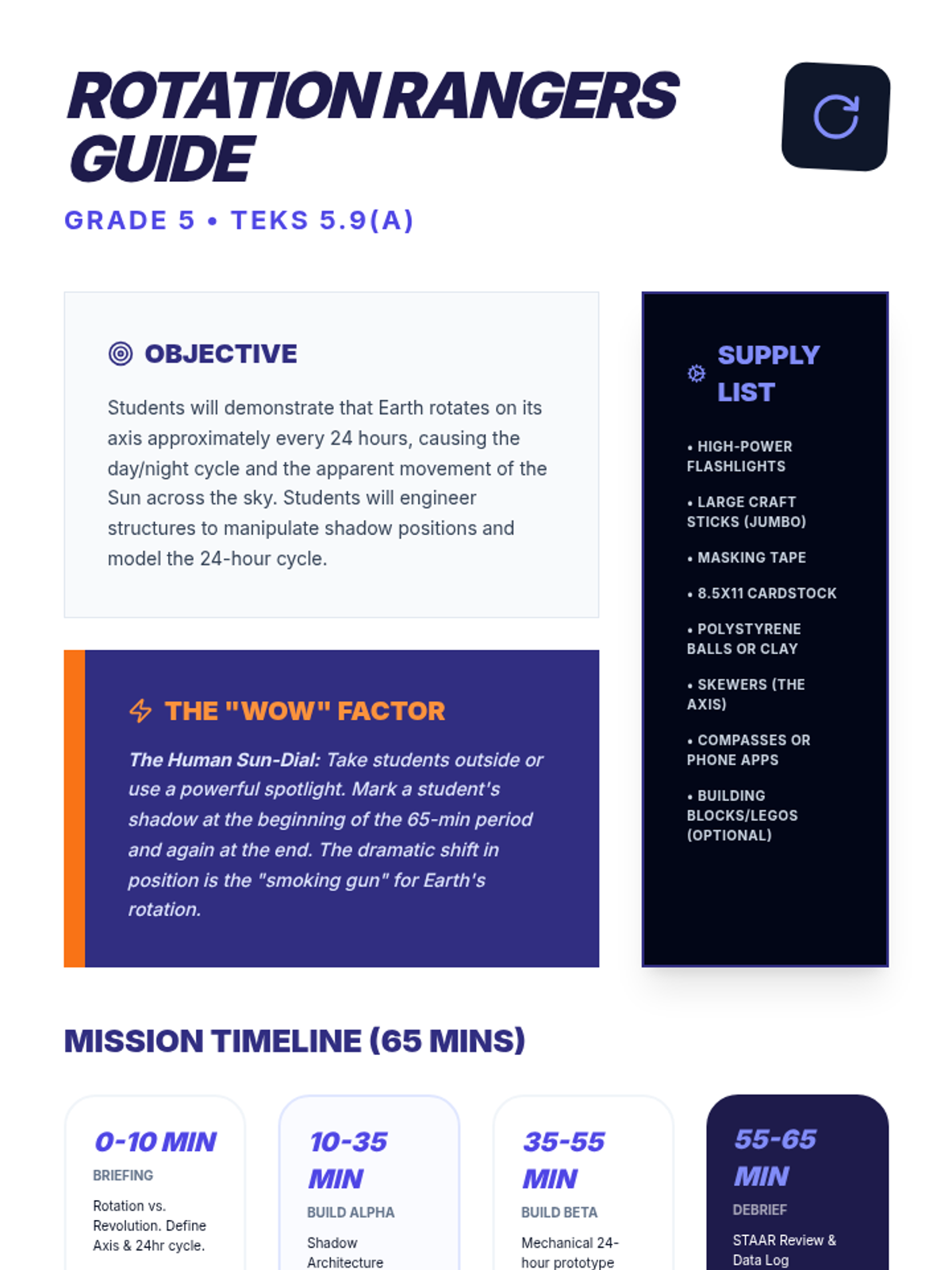
Fifth graders demonstrate Earth's 24-hour rotation and its effect on day/night cycles and shadow movements through architectural engineering challenges. Includes TEKS 5.9(A) alignment and STAAR preparation.
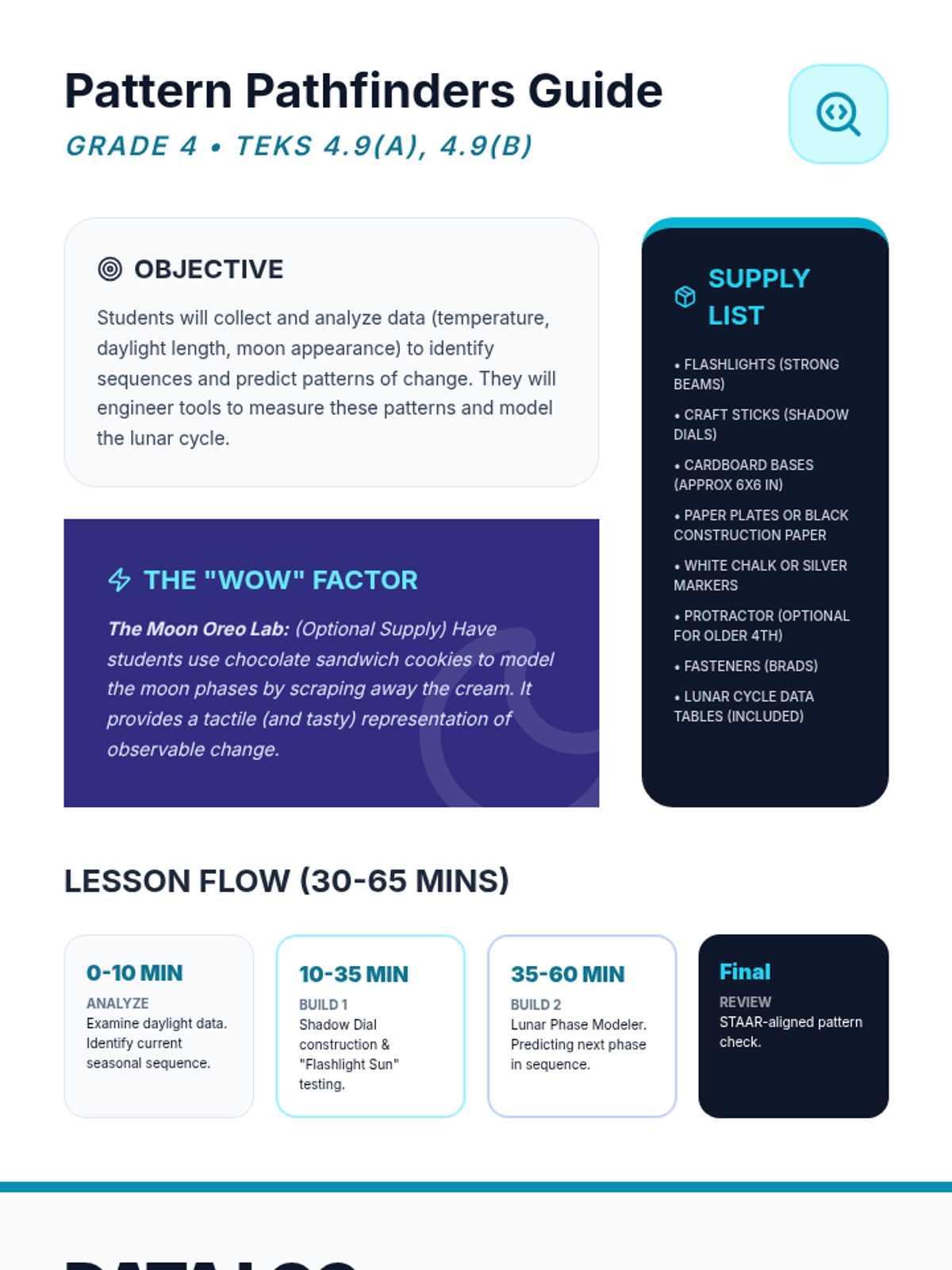
Fourth graders analyze data to predict seasonal daylight patterns and model the observable changes in the Moon's appearance. Includes TEKS 4.9(A) and 4.9(B) alignment.
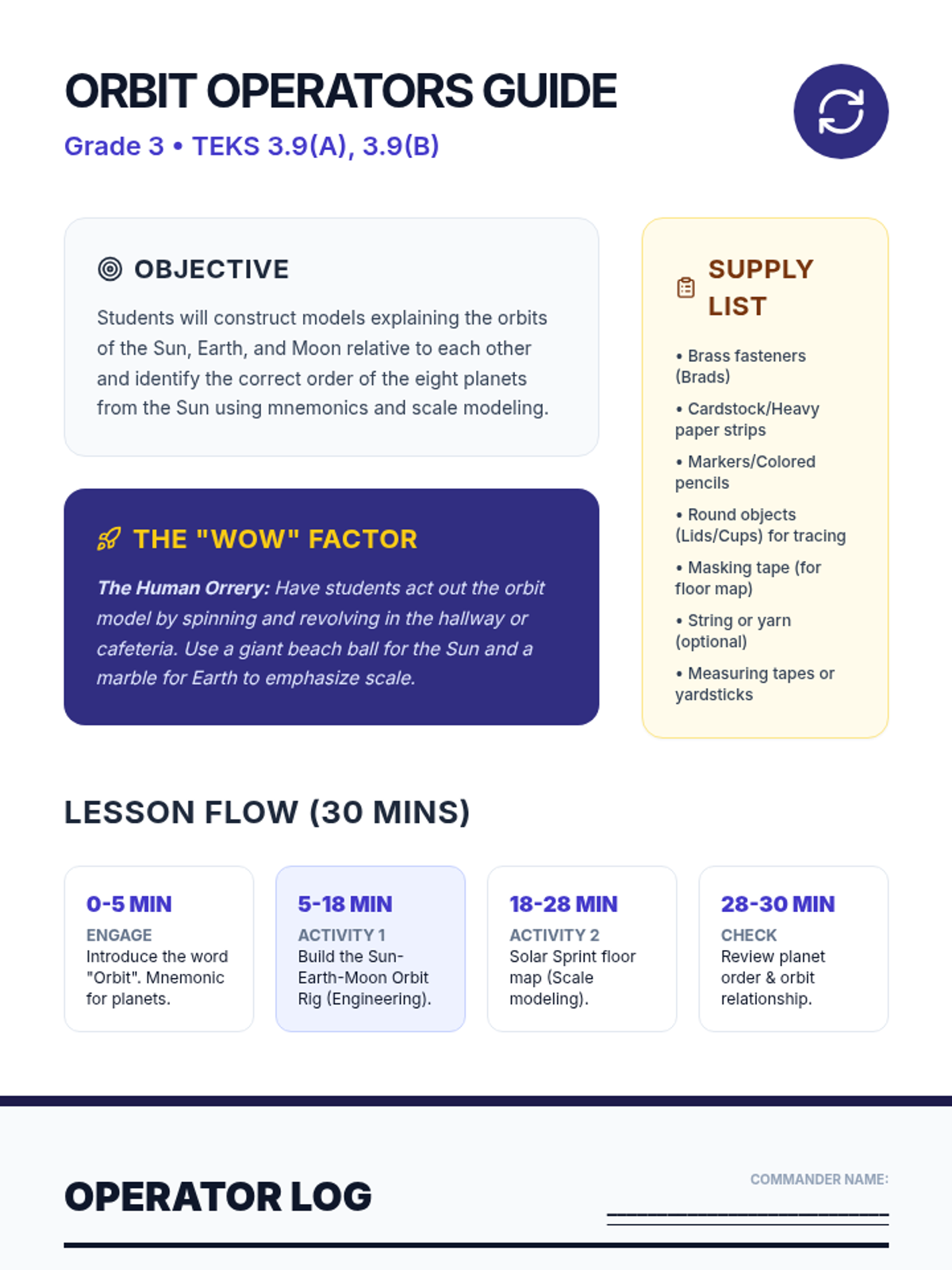
Third graders construct models of the Sun, Earth, and Moon orbits and identify the order of planets in our solar system. Includes TEKS 3.9(A) and 3.9(B) alignment.
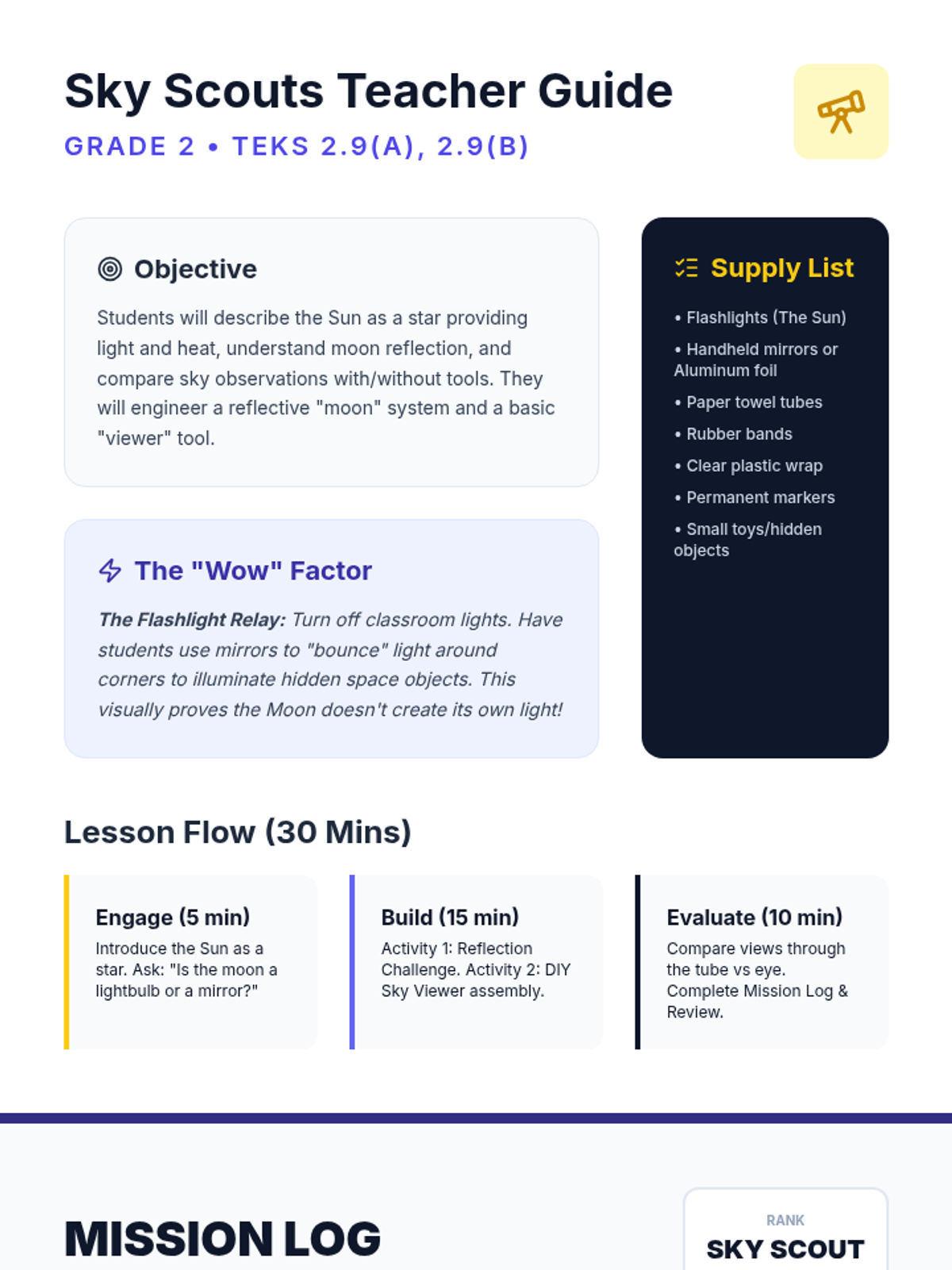
Second graders investigate the Sun as a star and the Moon's reflective properties, including the engineering of sky-viewing tools. Includes TEKS 2.9(A) and 2.9(B) alignment.
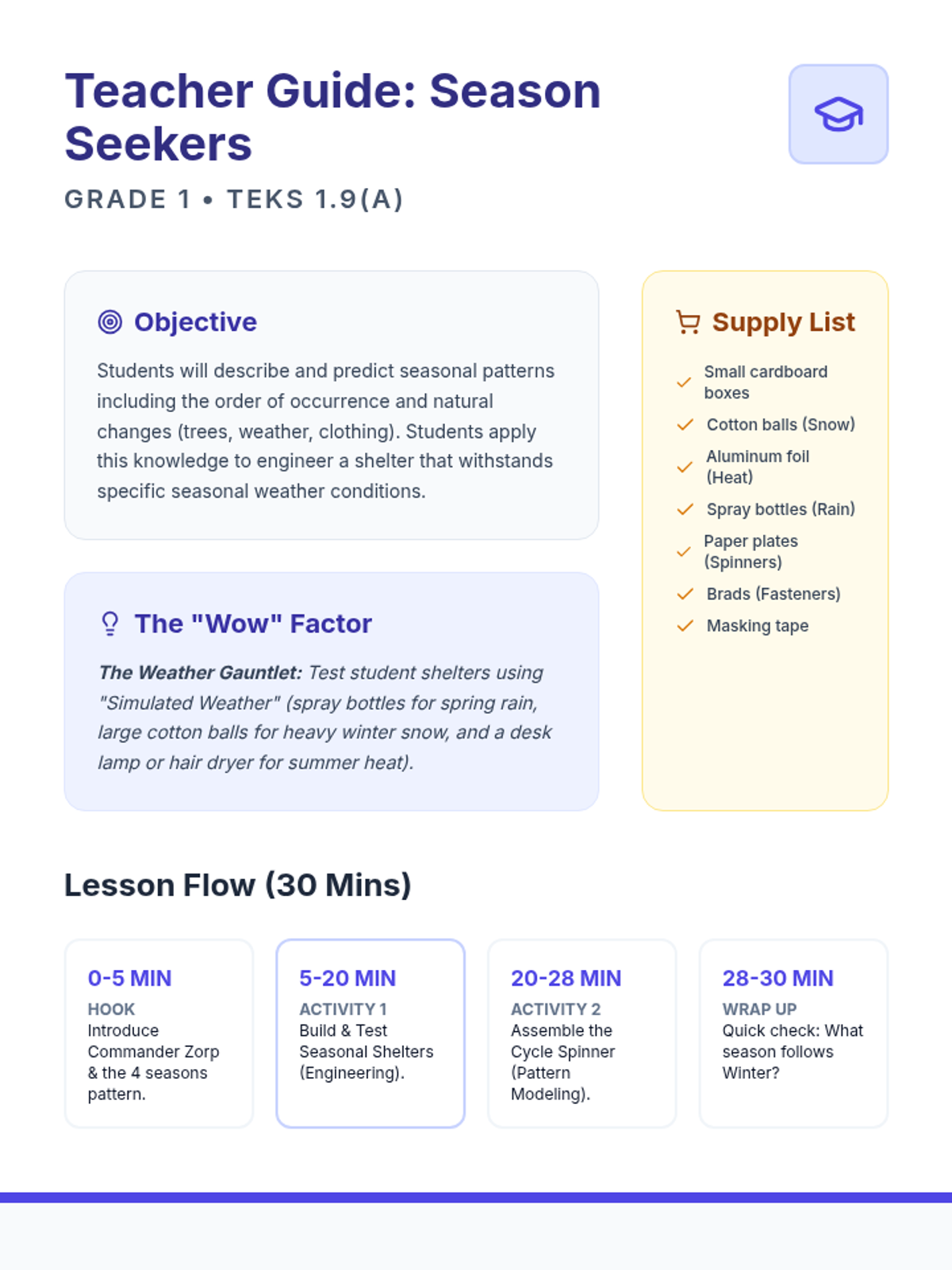
Students explore the four seasons by engineering protective shelters and modeling the seasonal cycle to predict changes in nature. Includes TEKS 1.9(A) alignment for first grade.
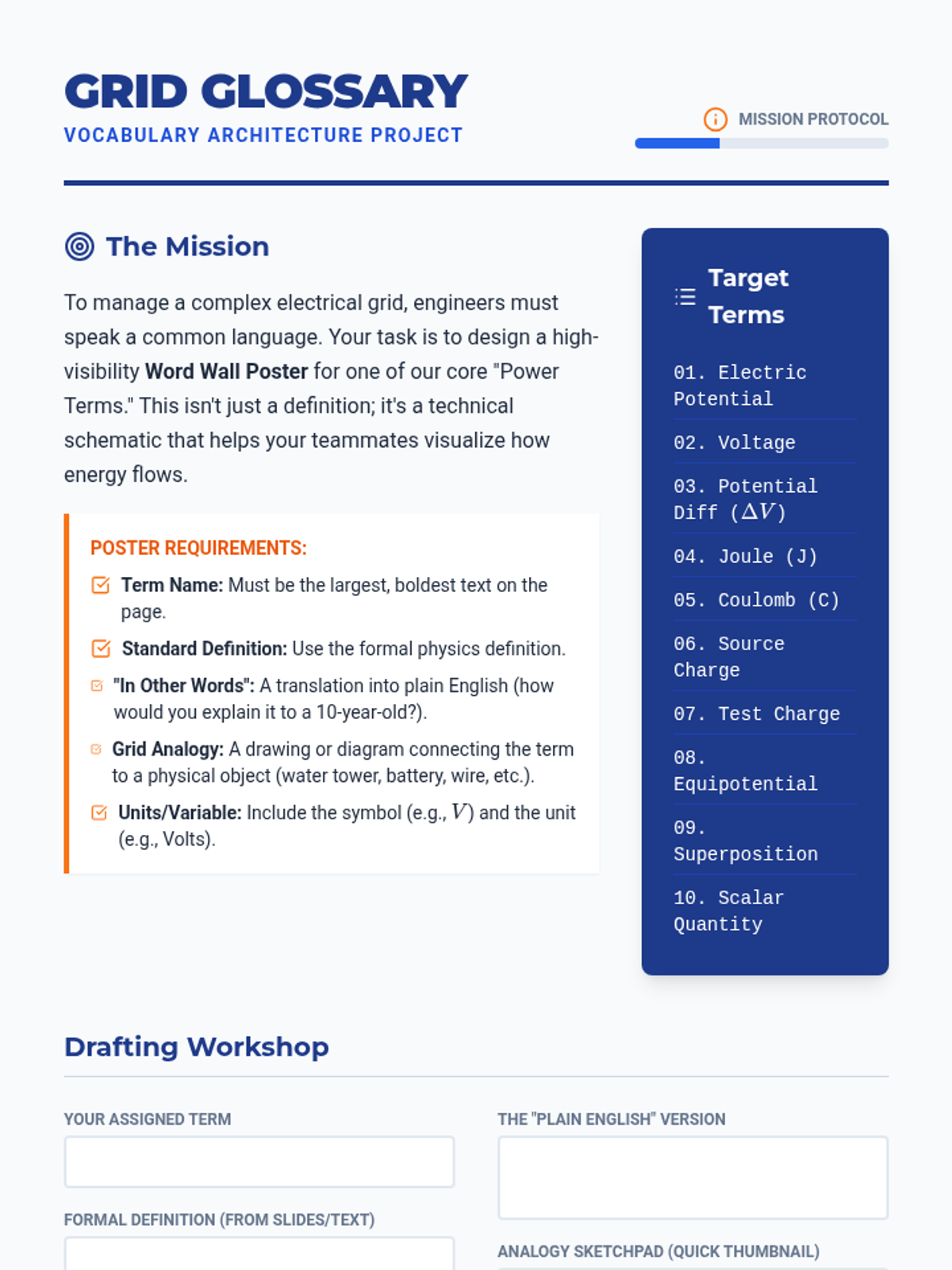
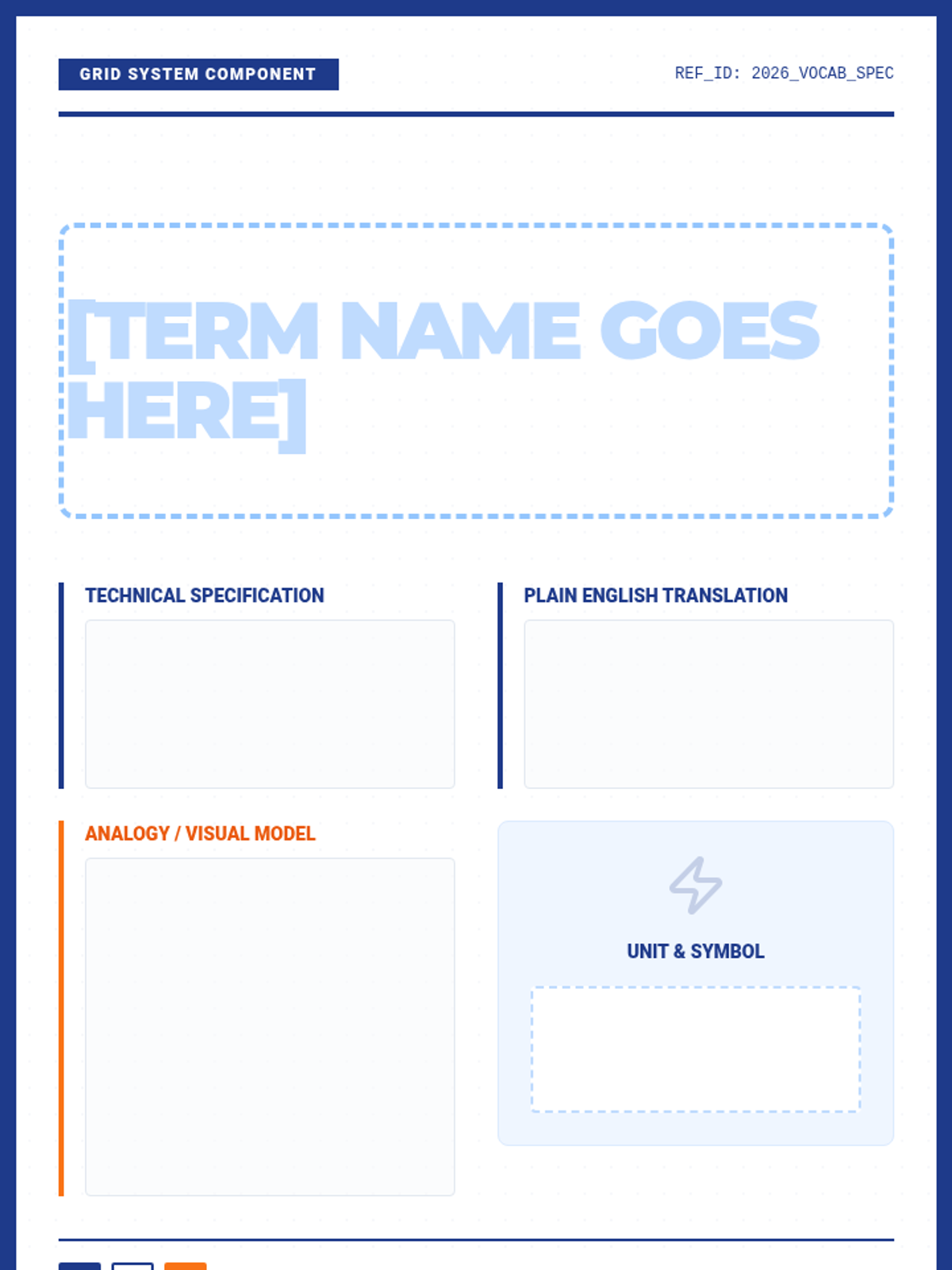
Students master the technical vocabulary of electromagnetism and the power grid by creating visual "Word Wall" posters that connect abstract physics terms to concrete grid components and analogies.
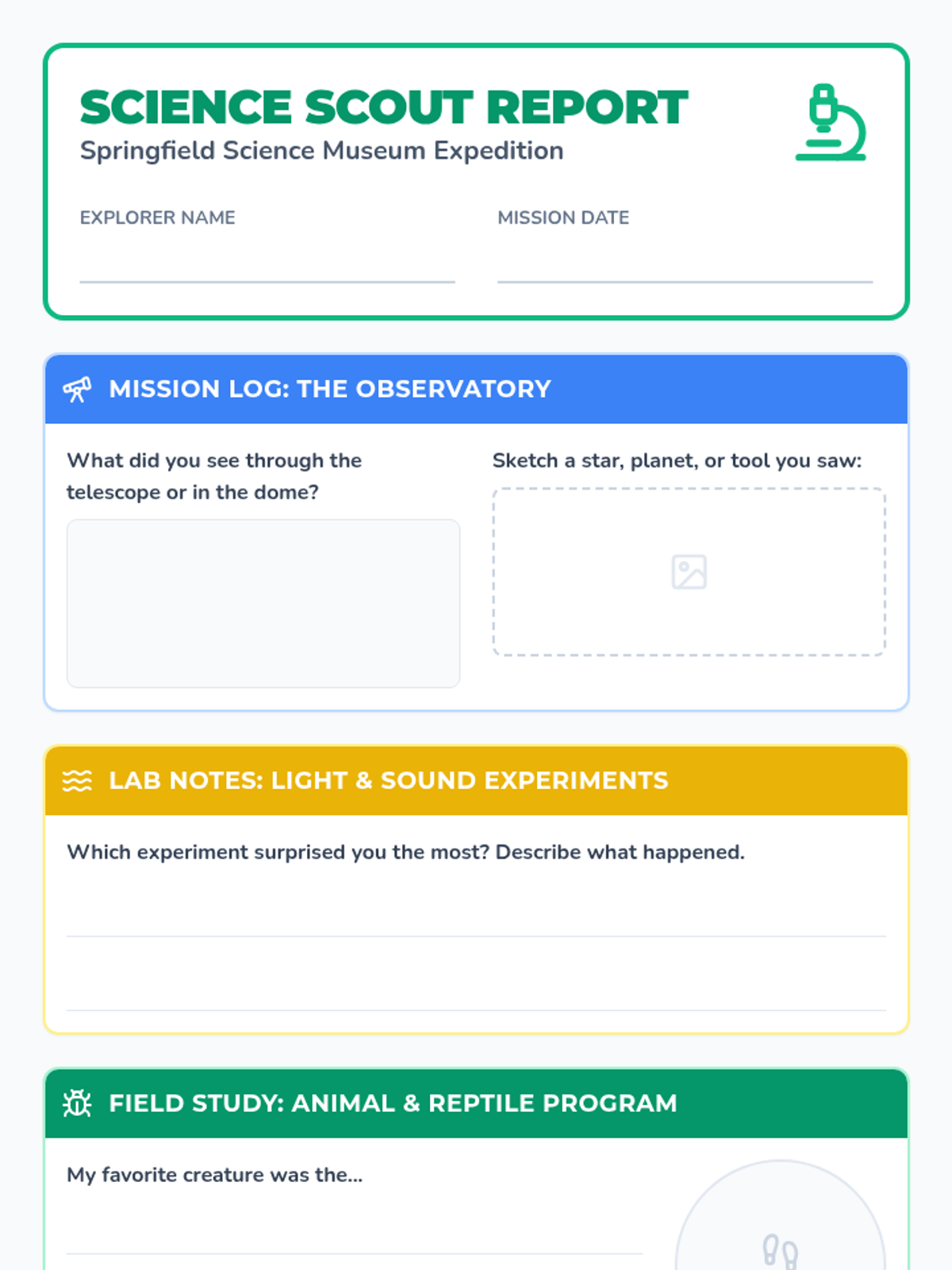
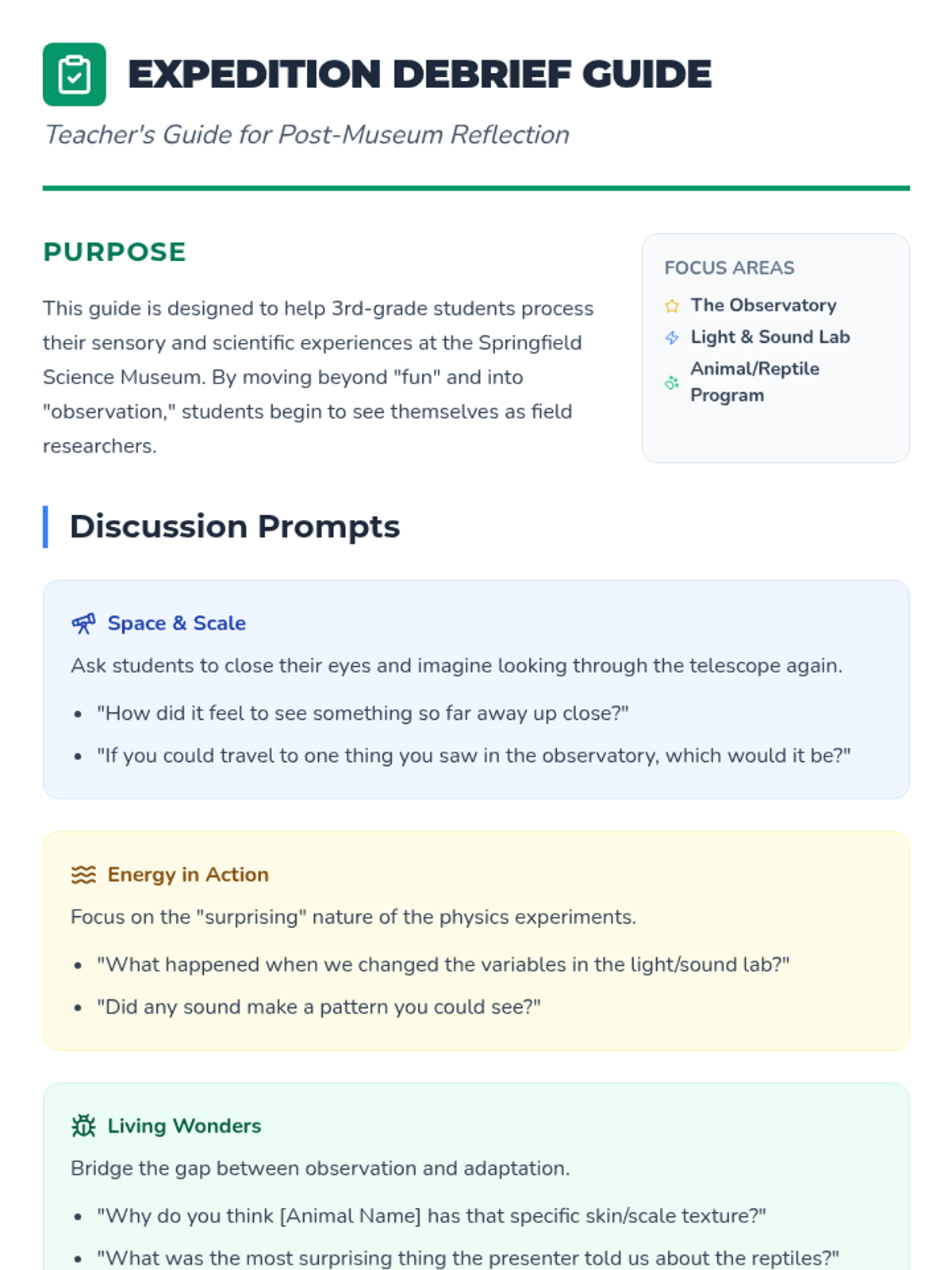
Resources to help 3rd-grade students reflect on their scientific discoveries at the Springfield Science Museum, covering the observatory, light and sound lab, and animal programs.
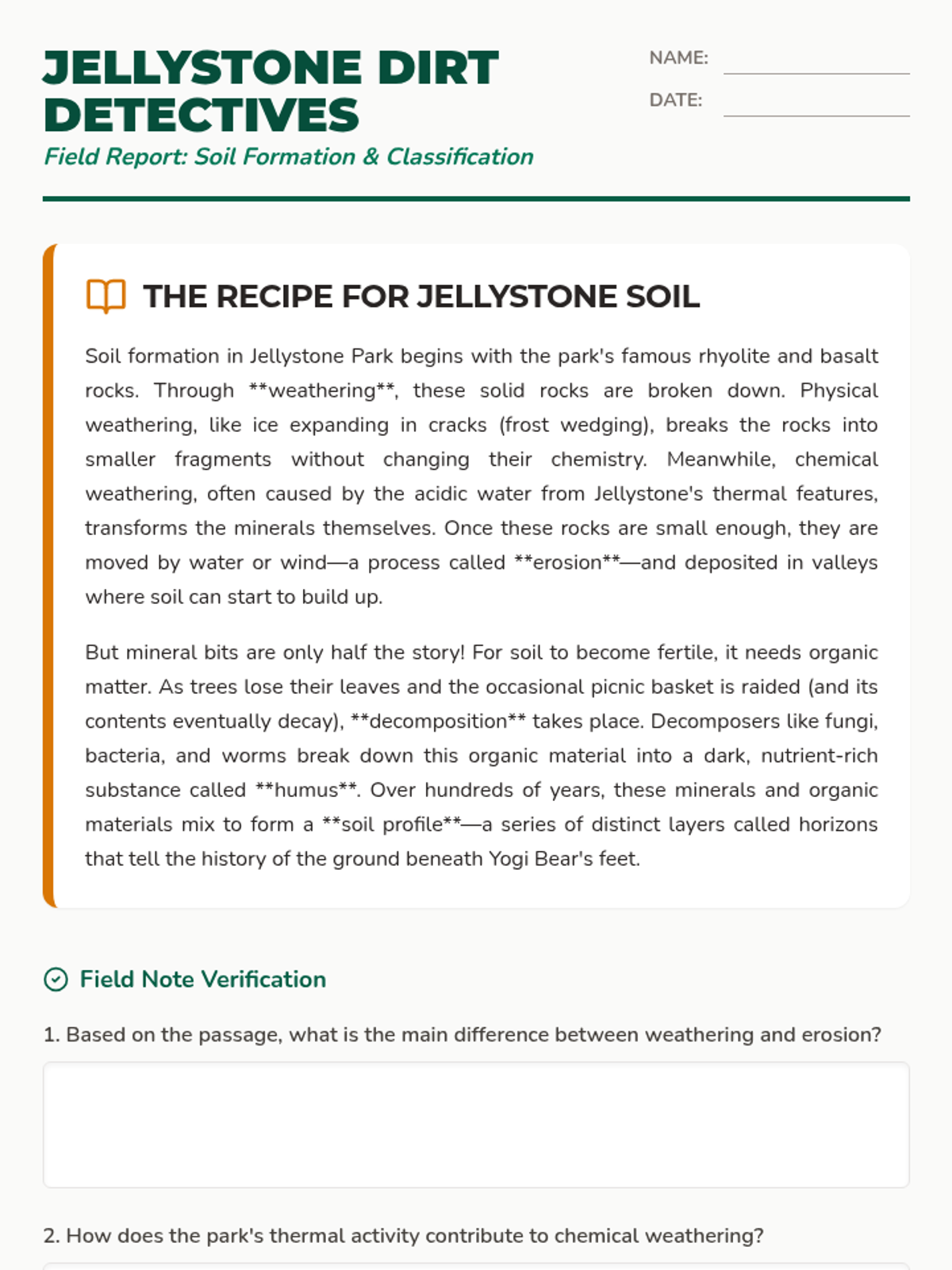
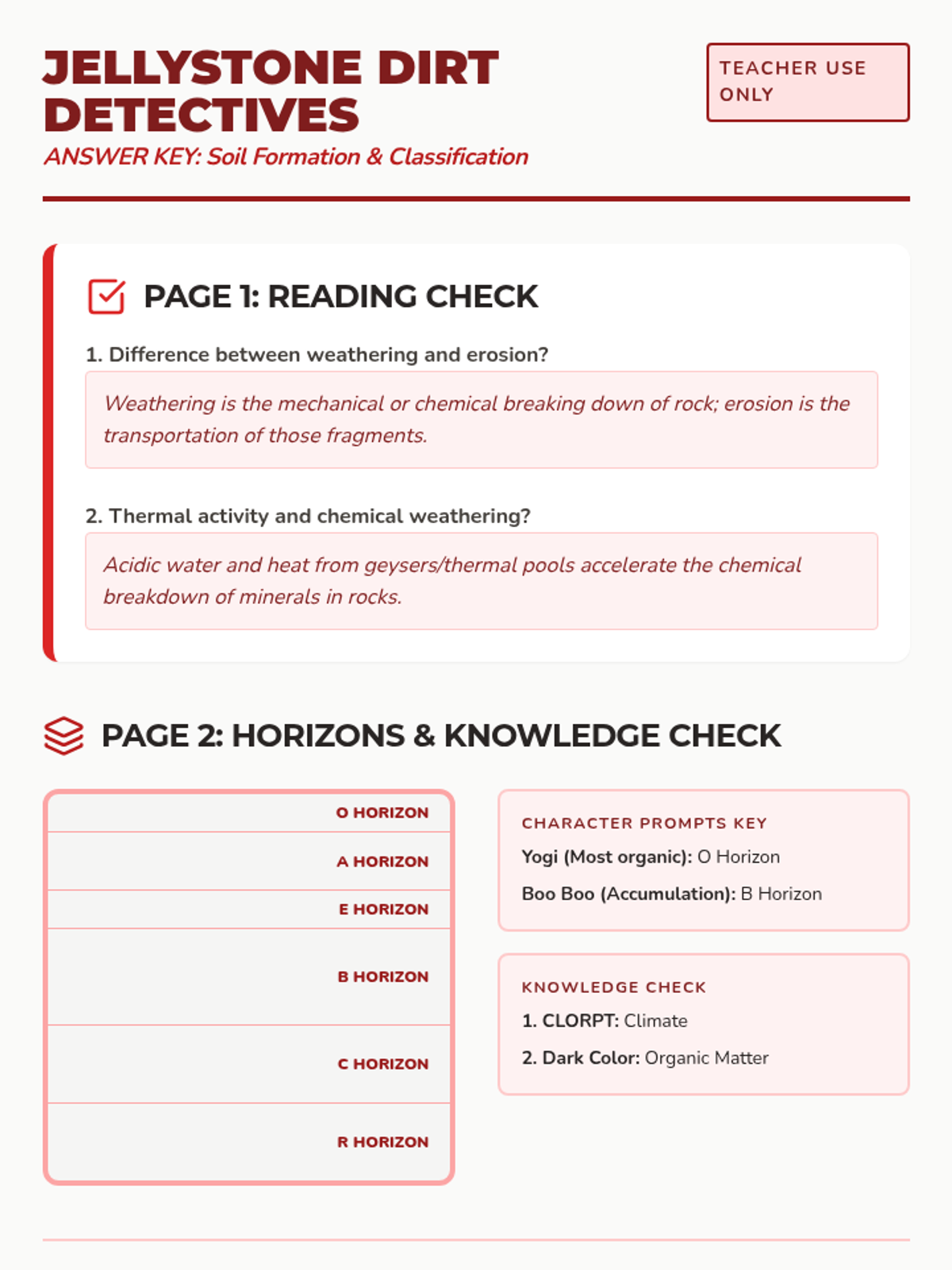
A comprehensive look at soil formation processes, horizons, and classification through the lens of Jellystone Park. Students explore weathering, decomposition, and the factors that turn rock into fertile ground.
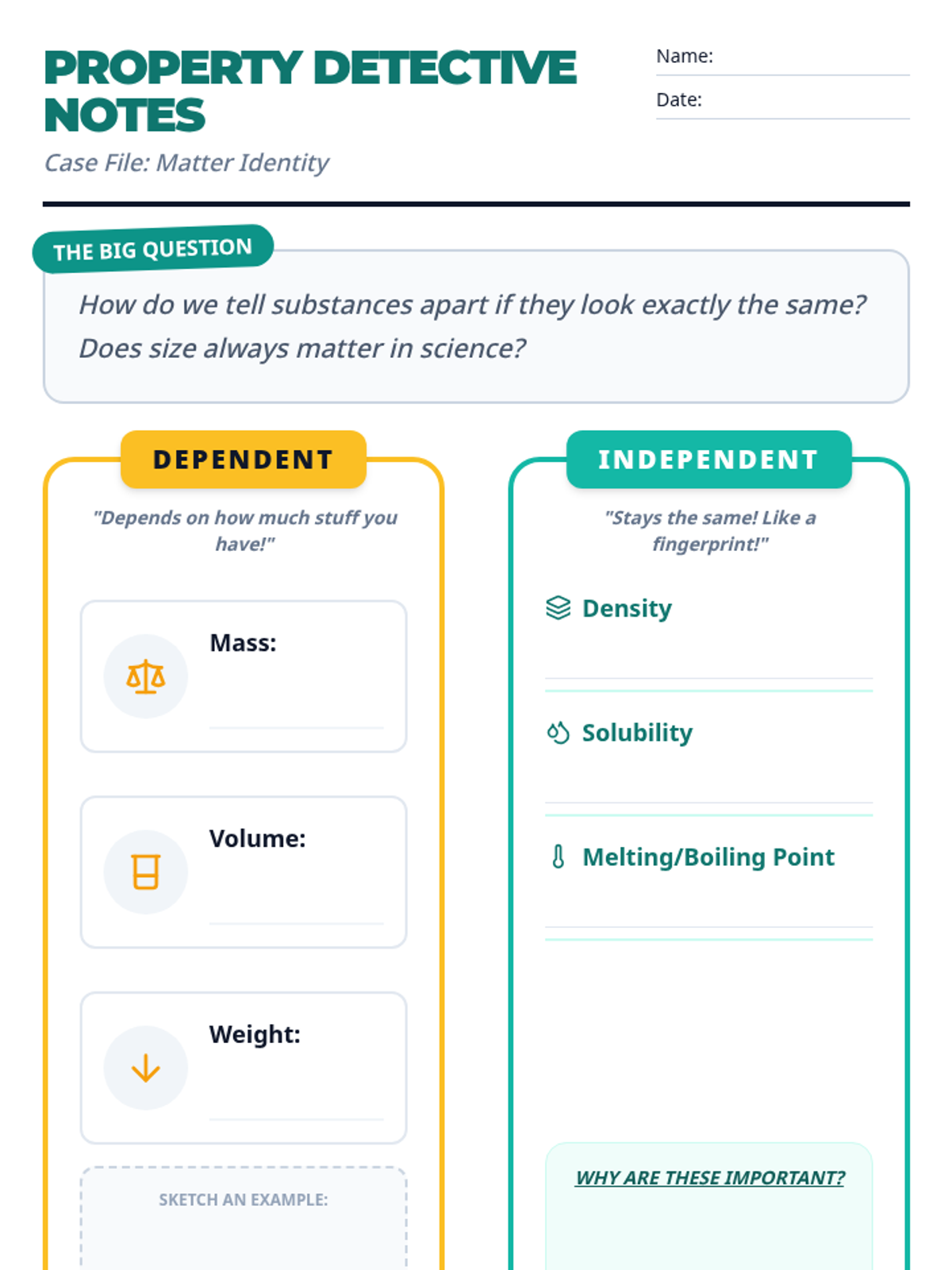
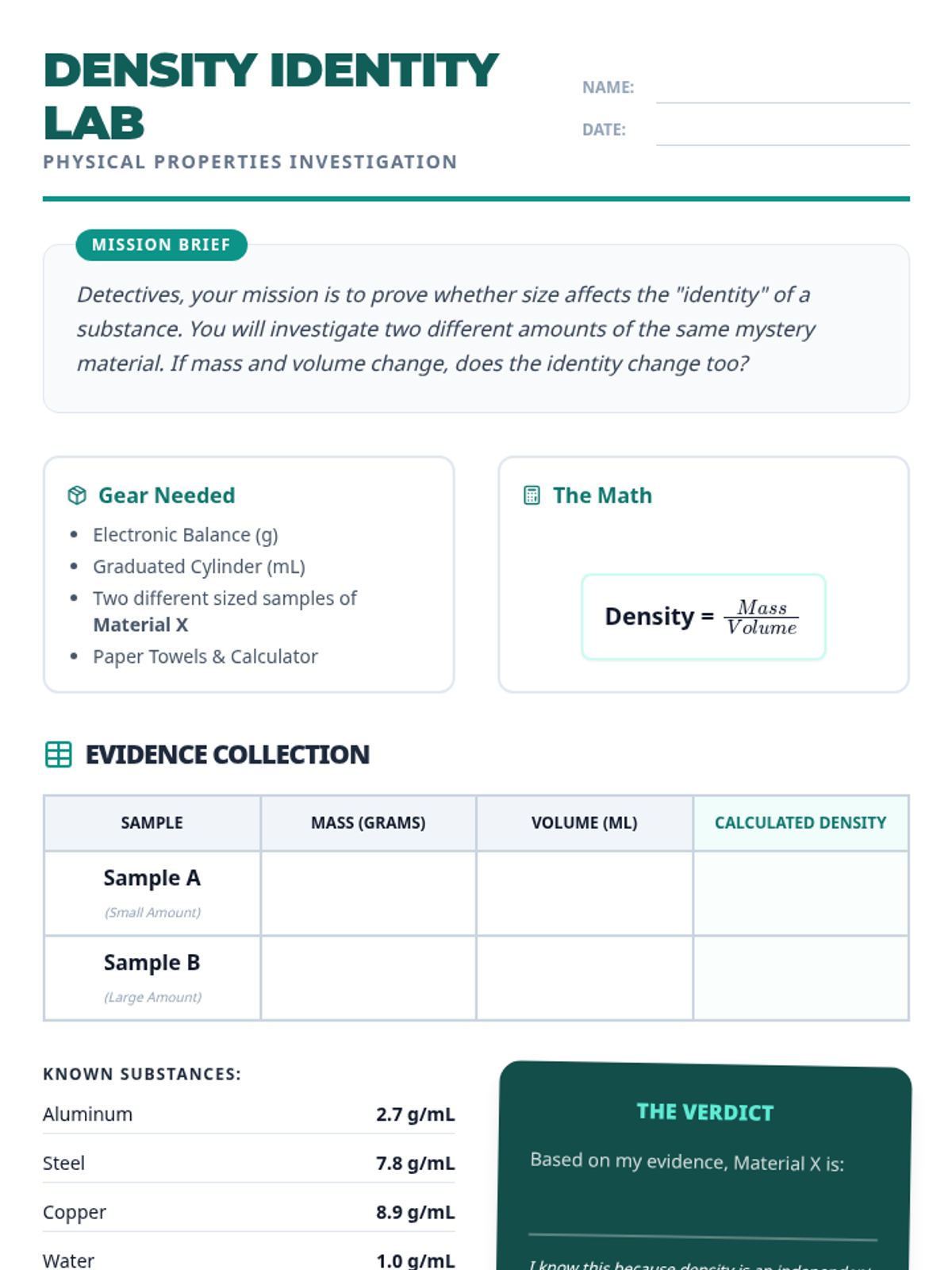
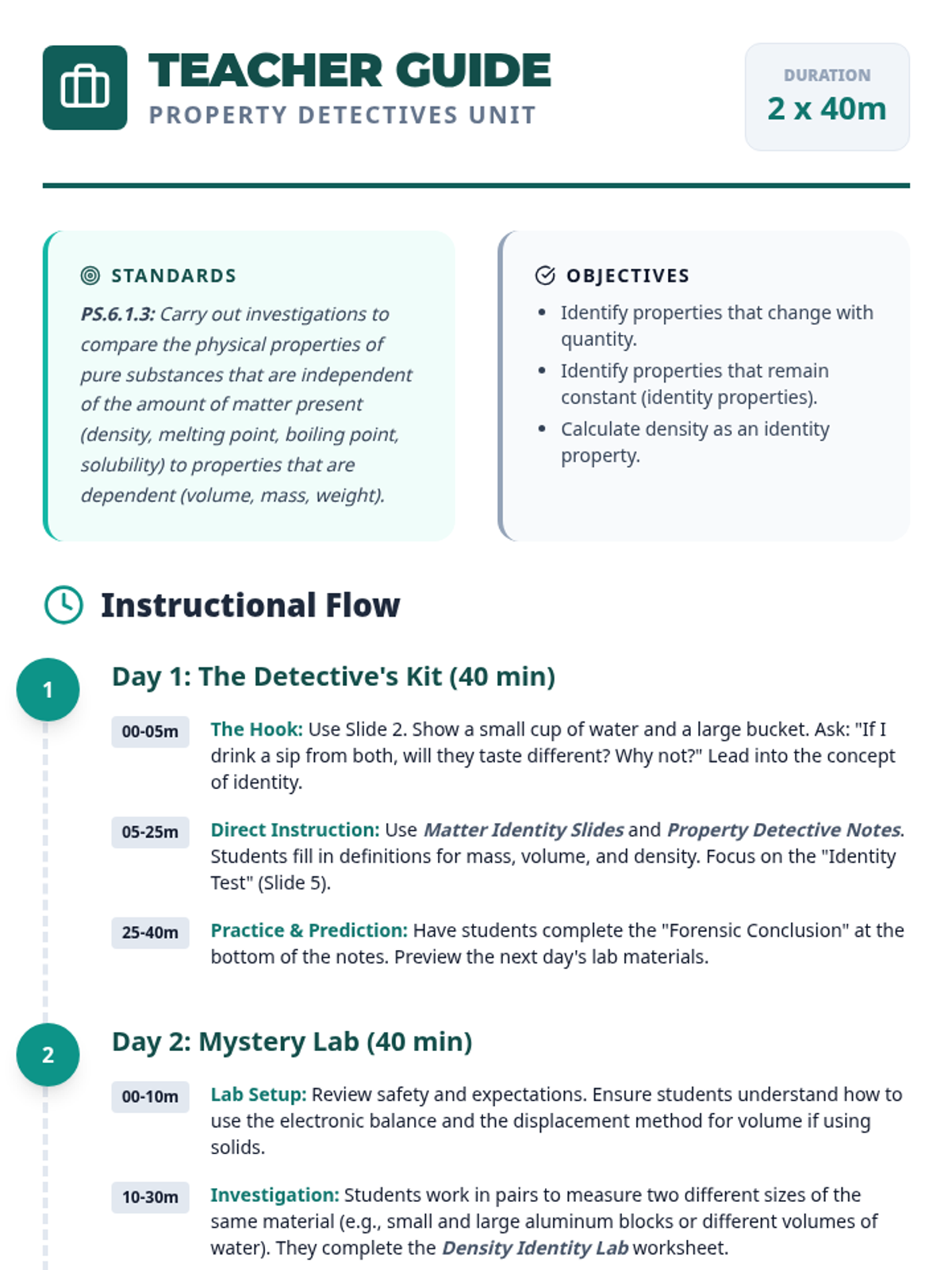
Students investigate how some properties change with quantity while others remain constant, using these 'identity' properties to identify pure substances.
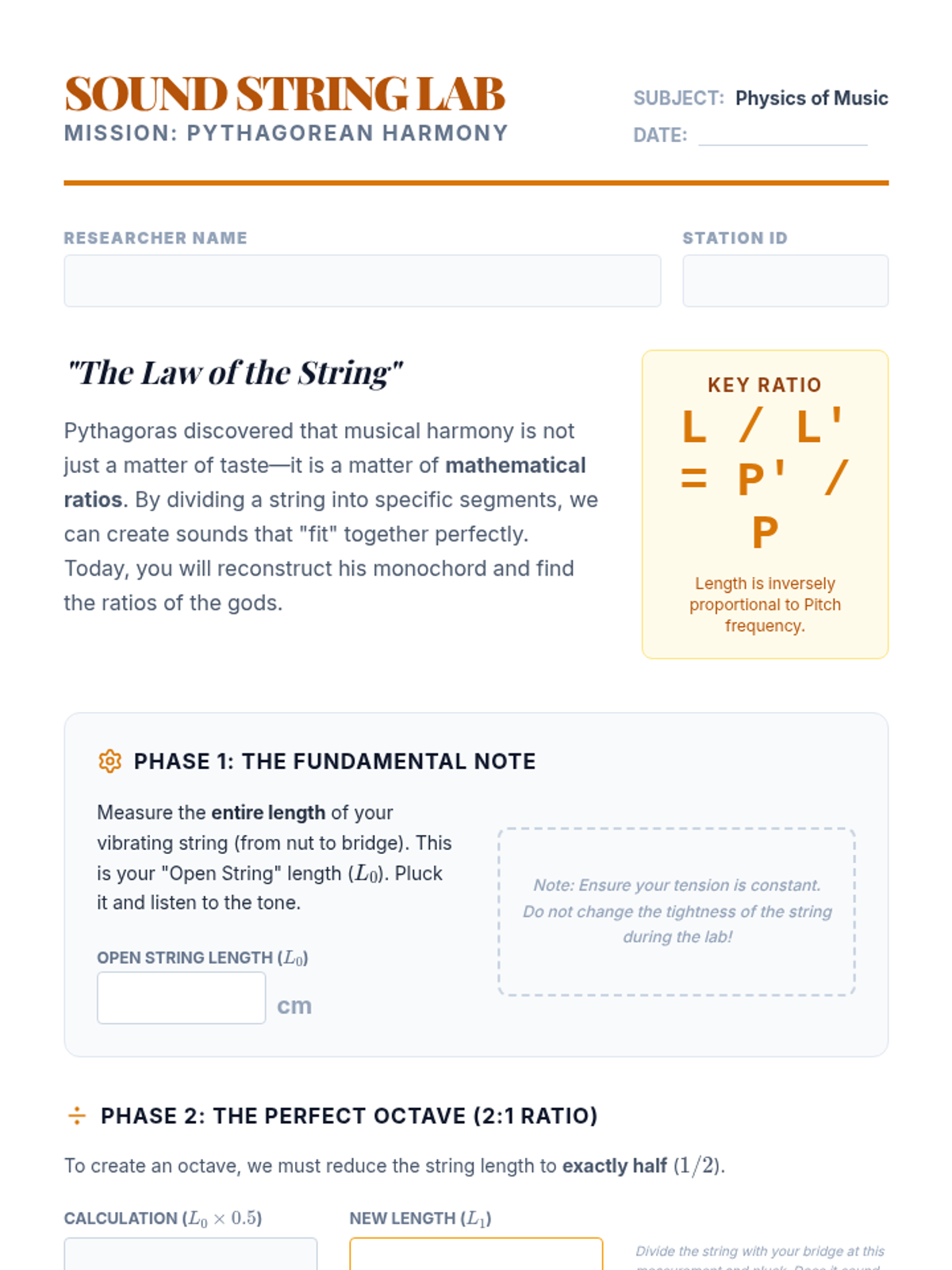
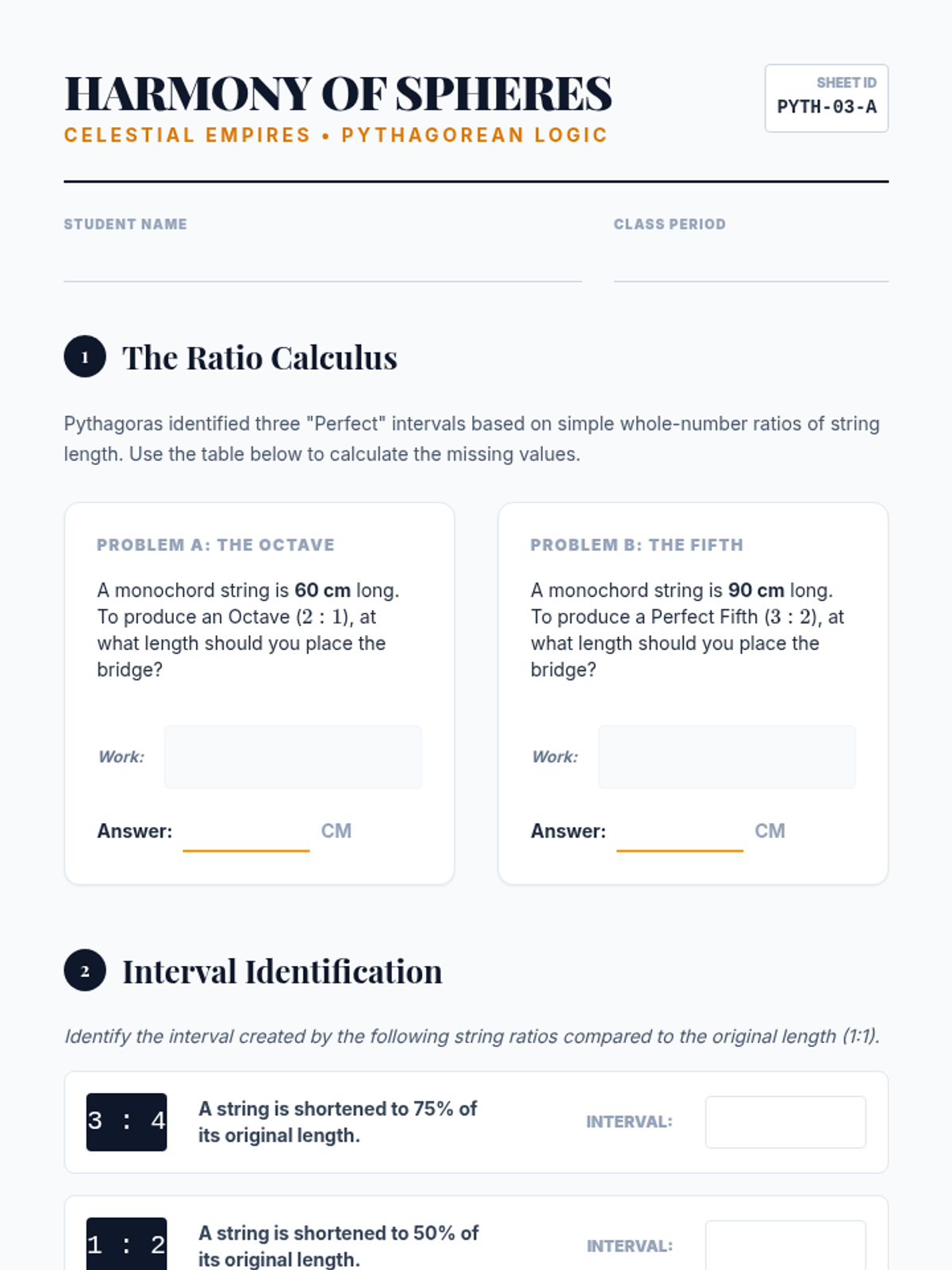
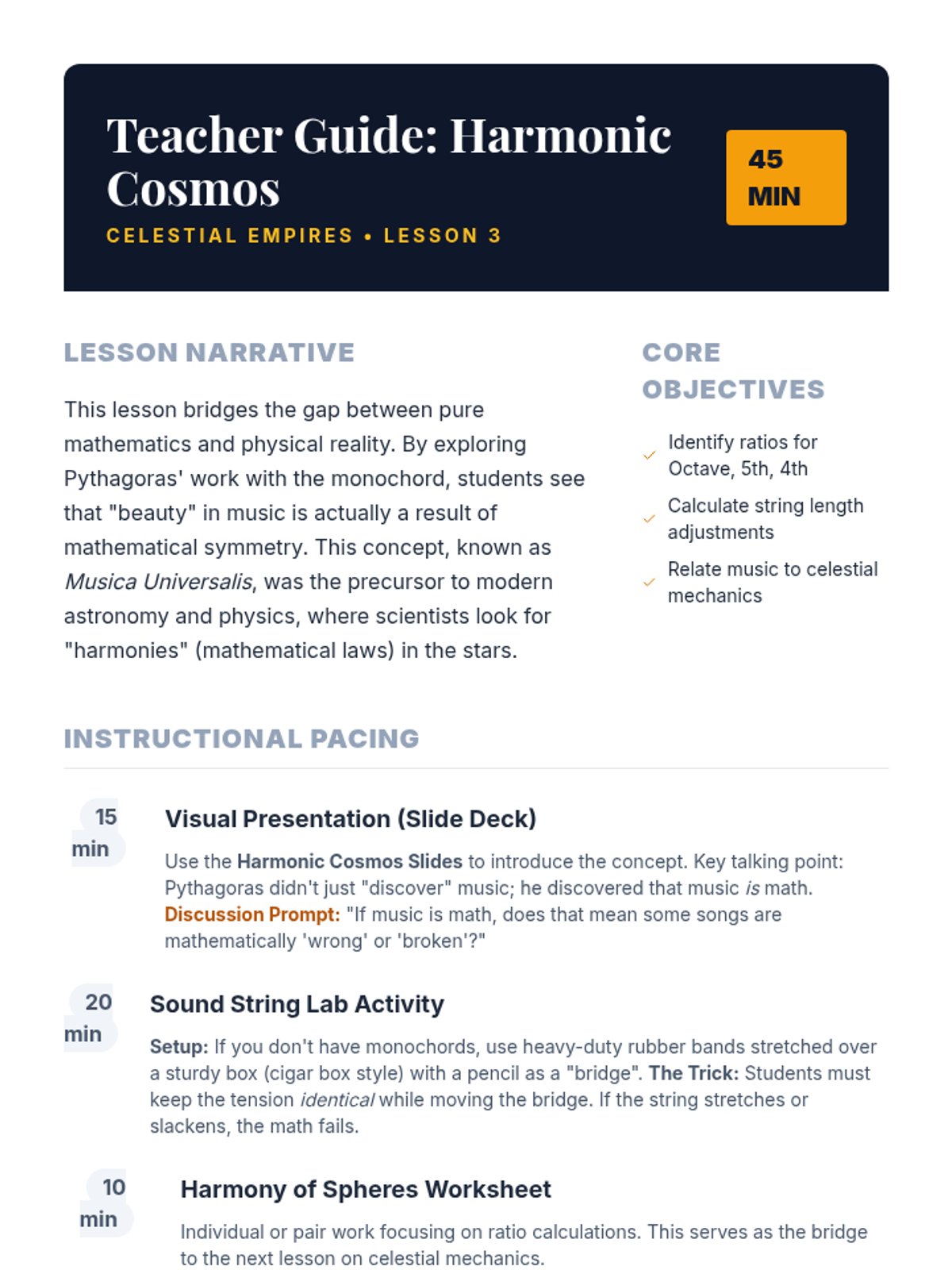
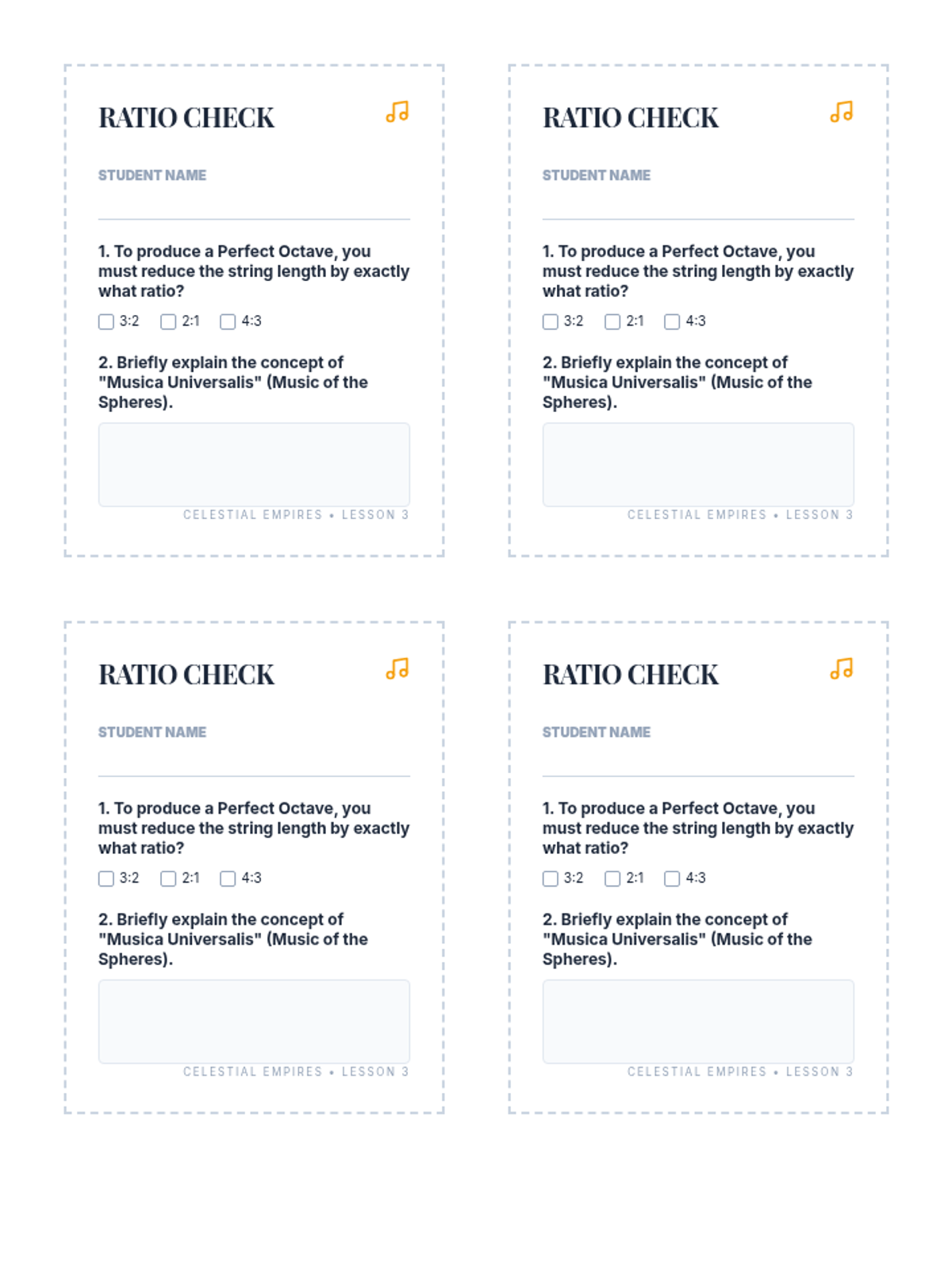
Explores Pythagoras' discovery of the mathematical foundations of music and how he extended this 'harmonic logic' to explain the order of the universe and the 'Music of the Spheres'.
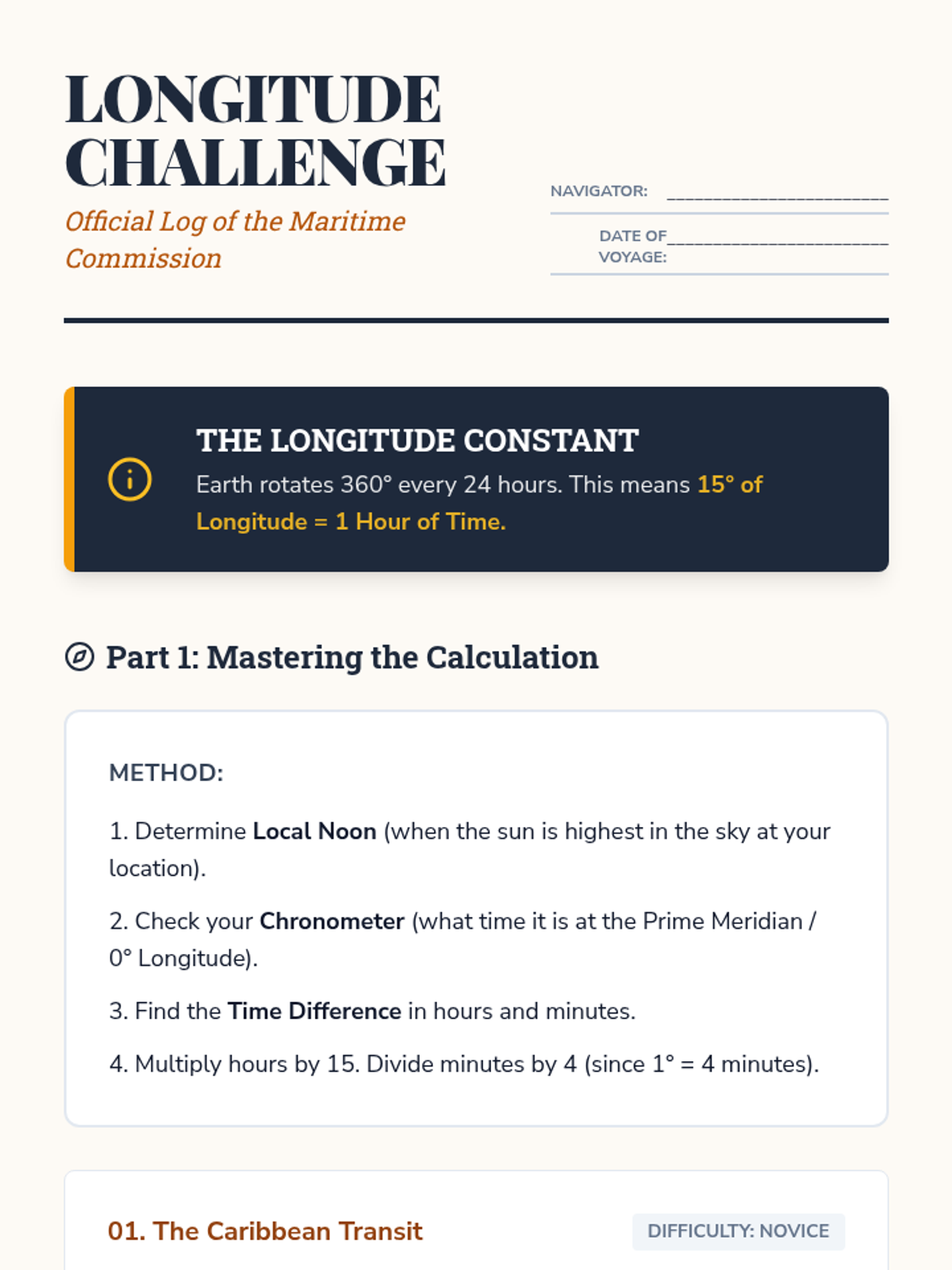
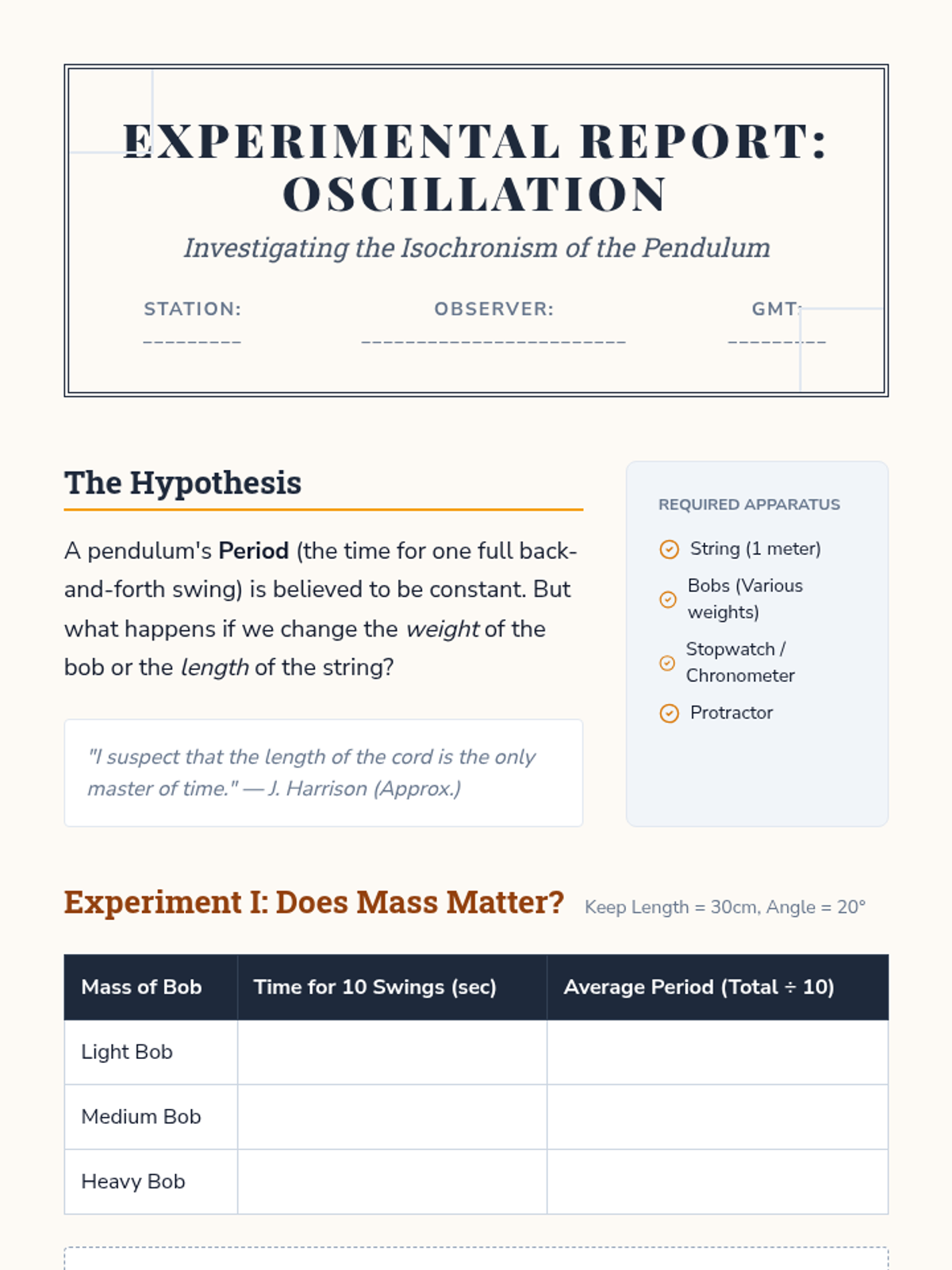
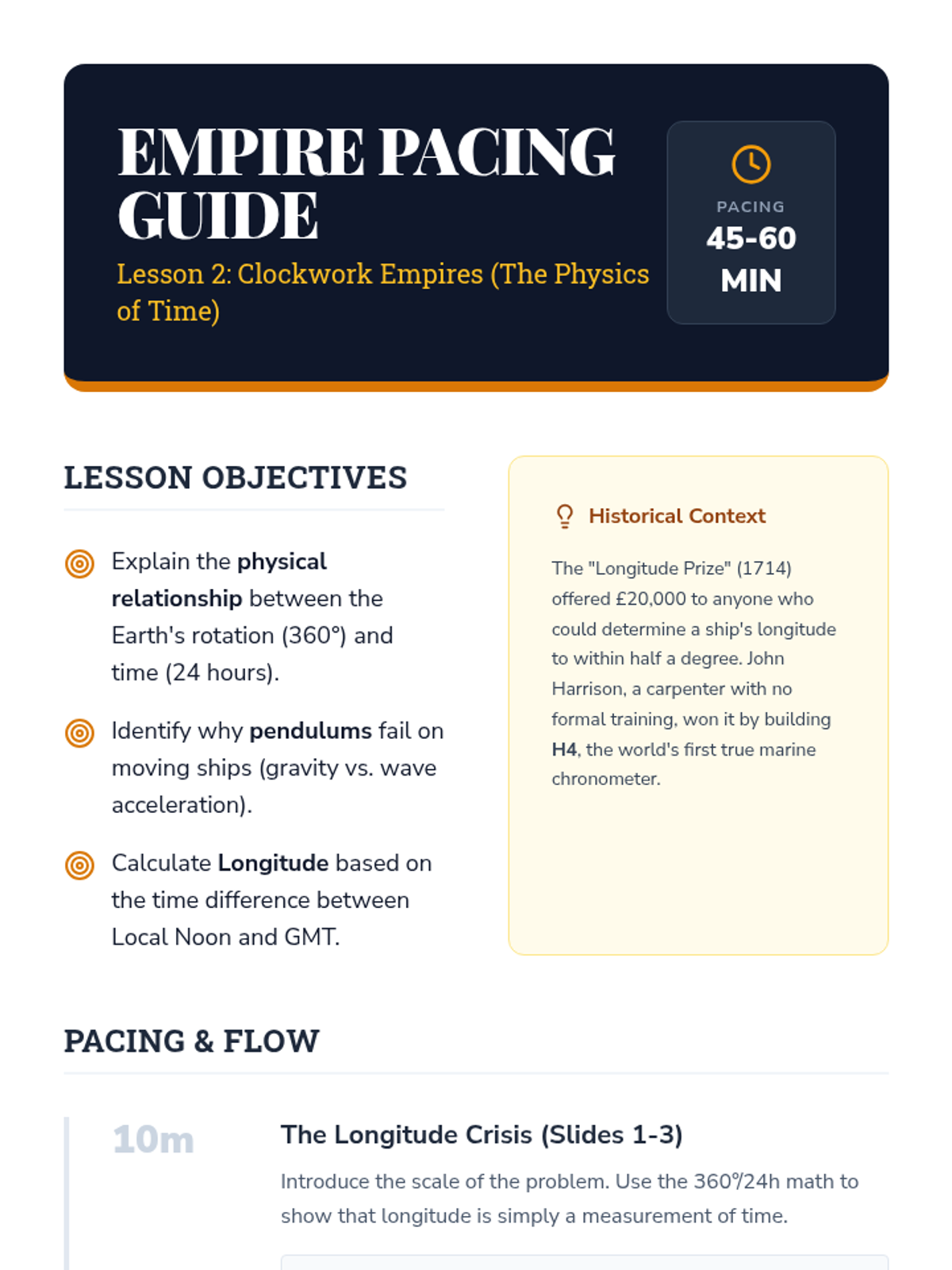
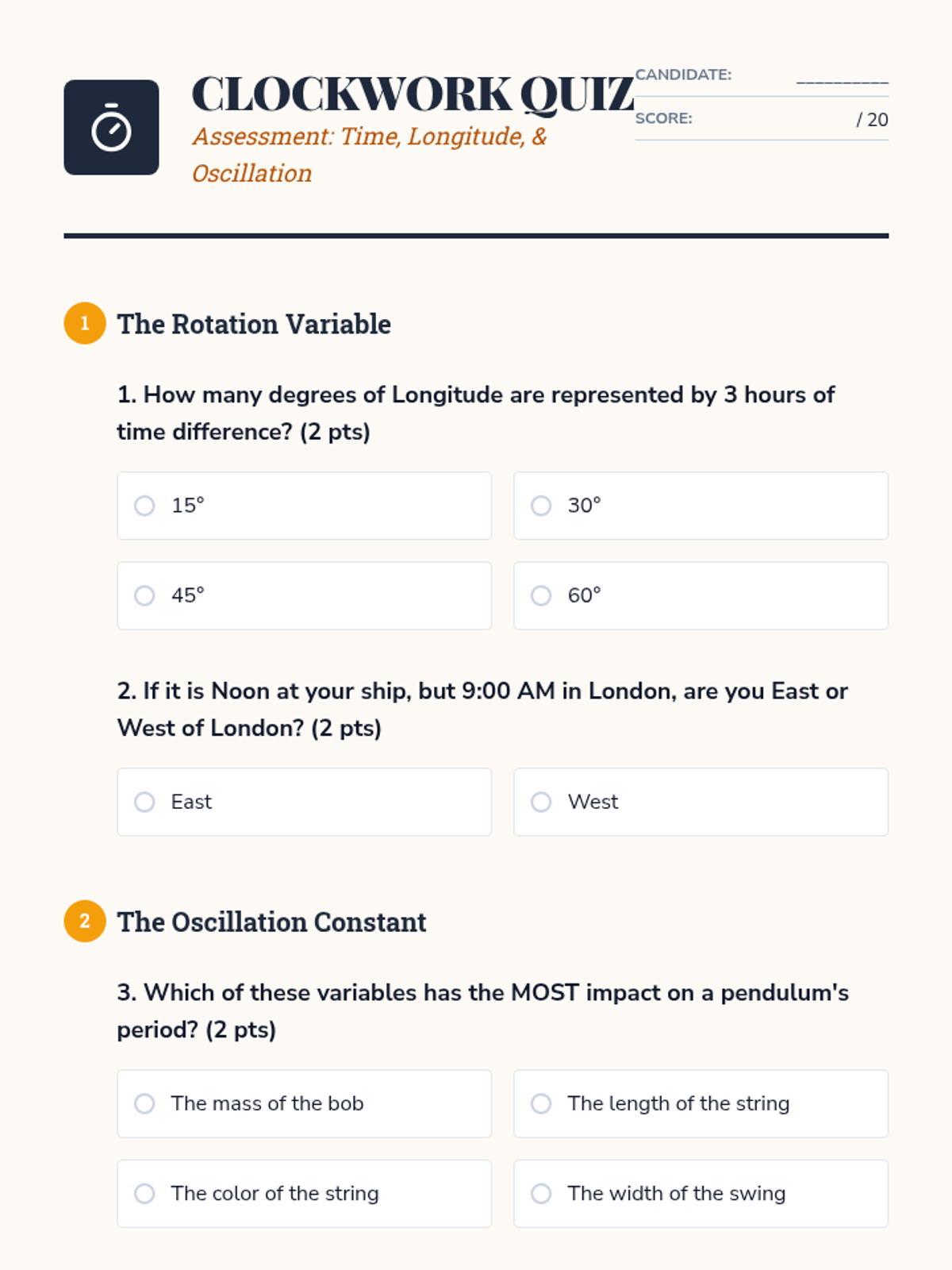
Investigates the "Longitude Problem" and the scientific race to build the first accurate marine chronometers, focusing on the physics of oscillation, friction, and the relationship between time and space.
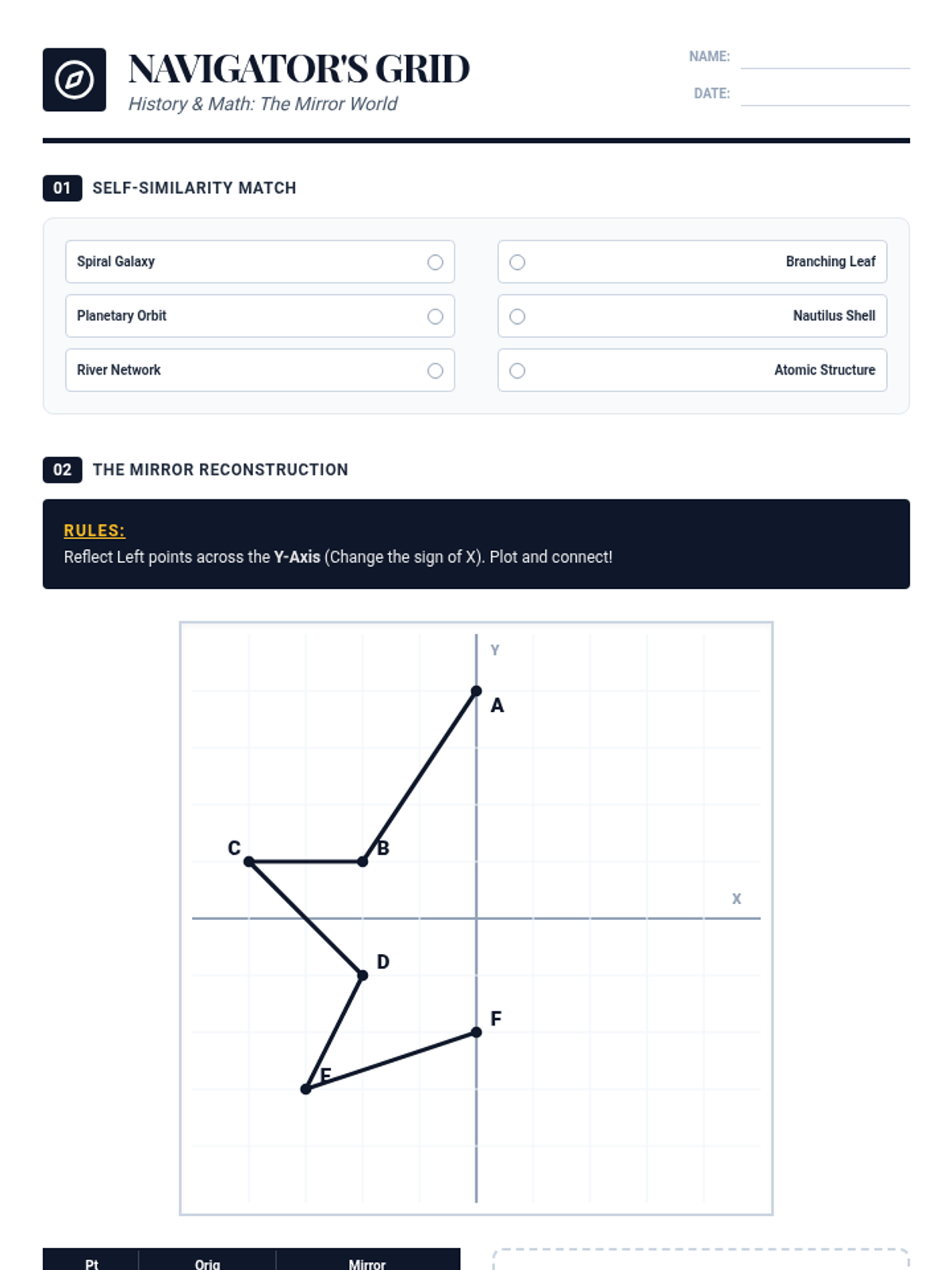
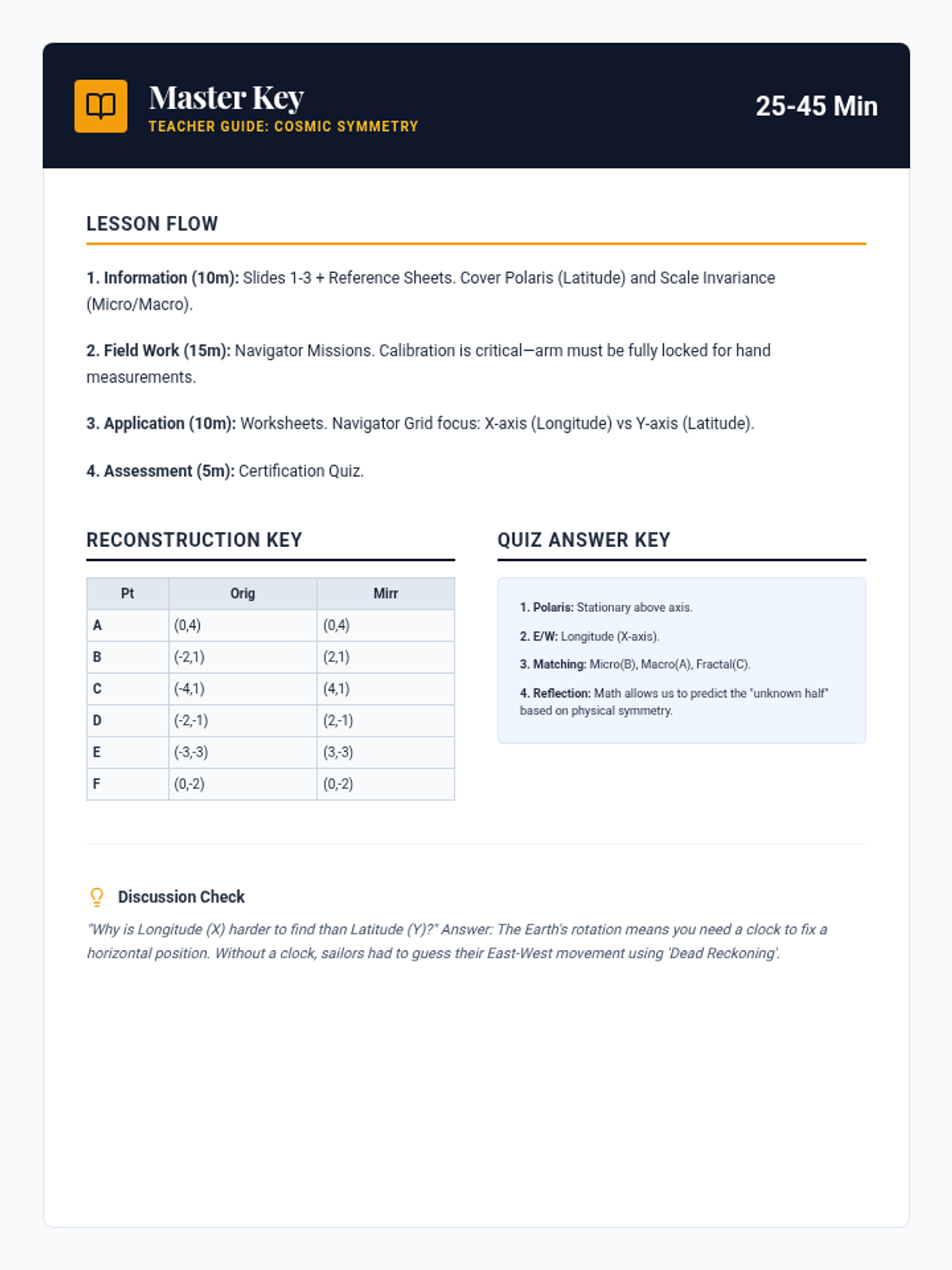
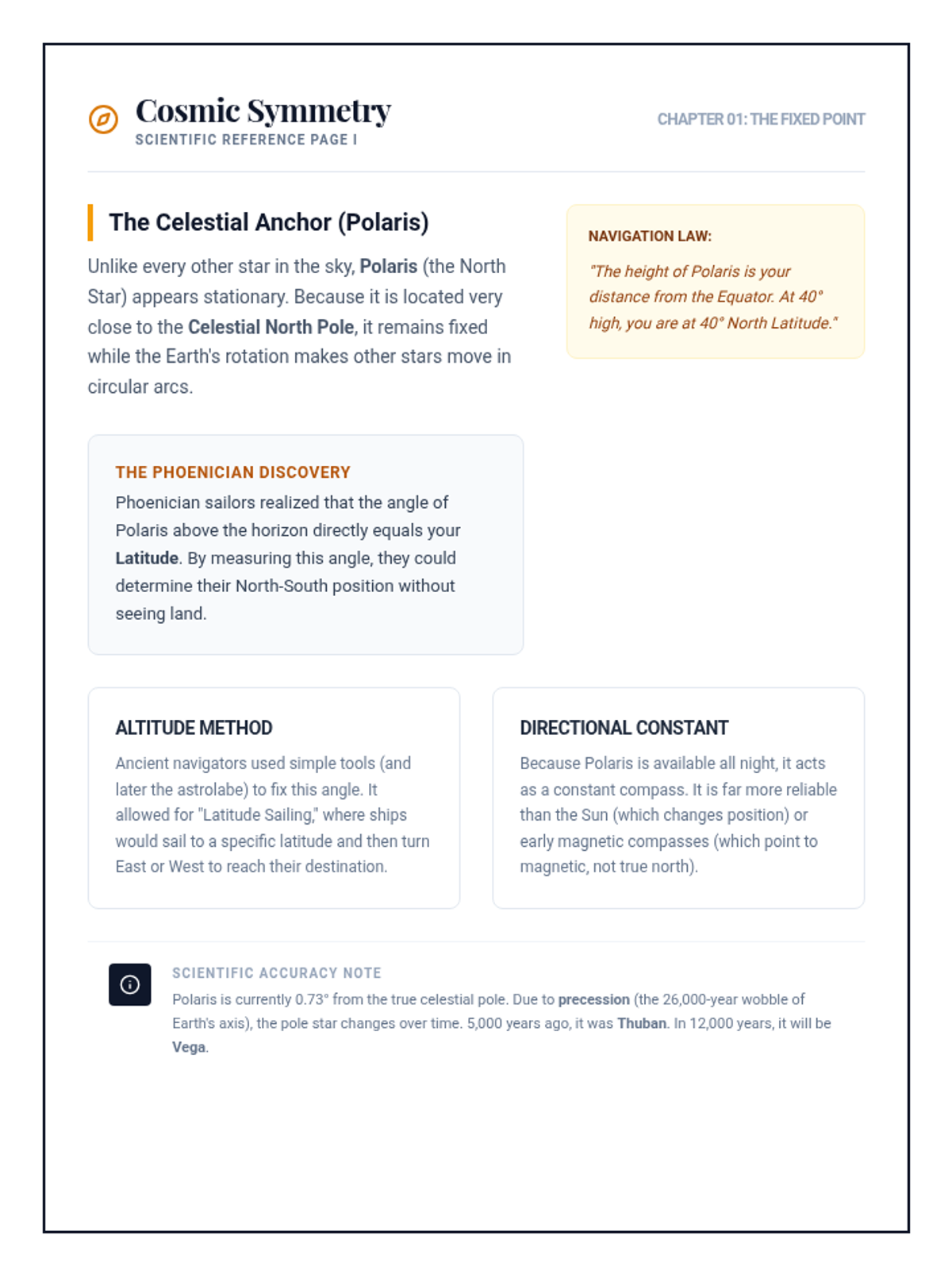
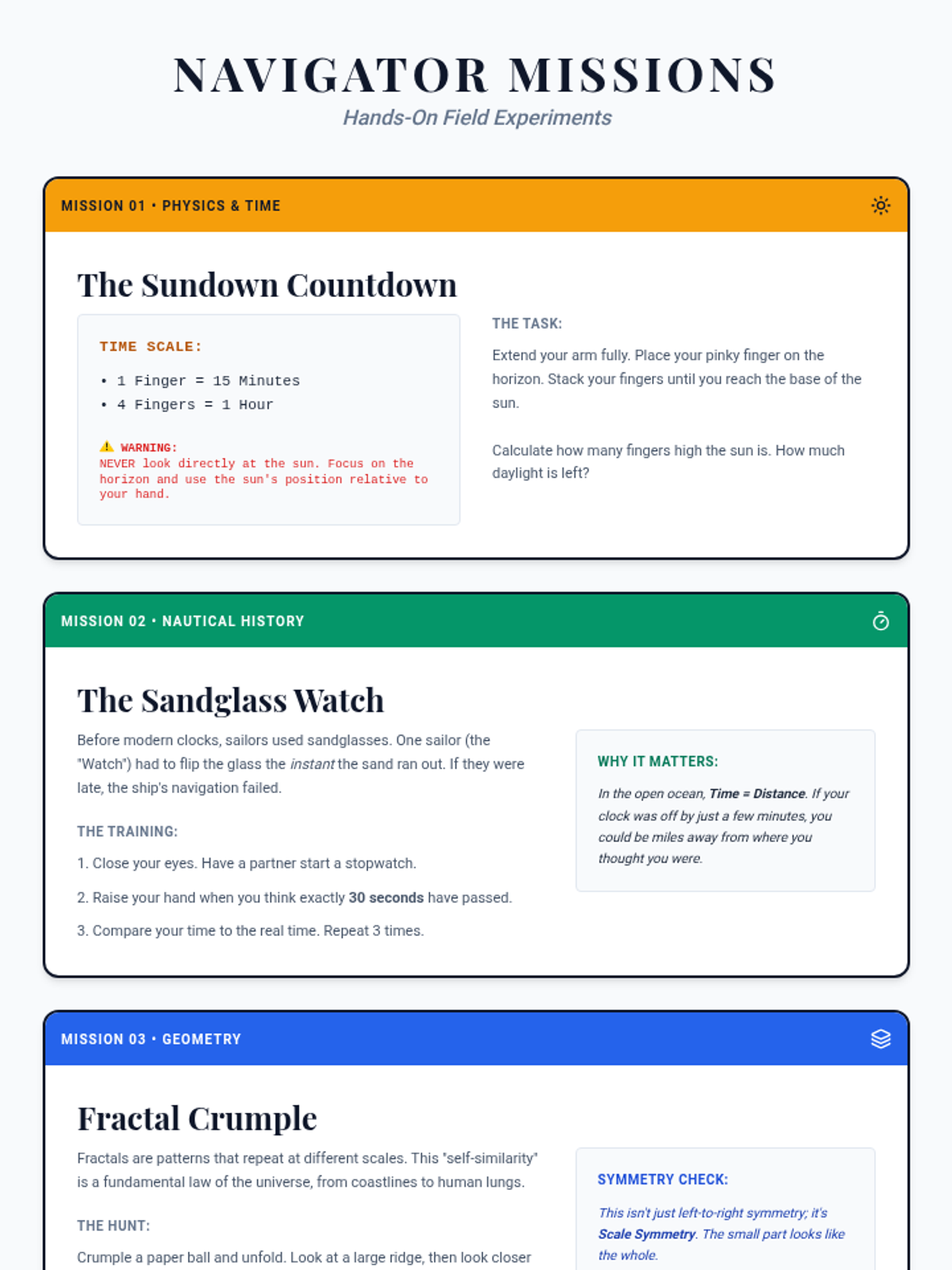
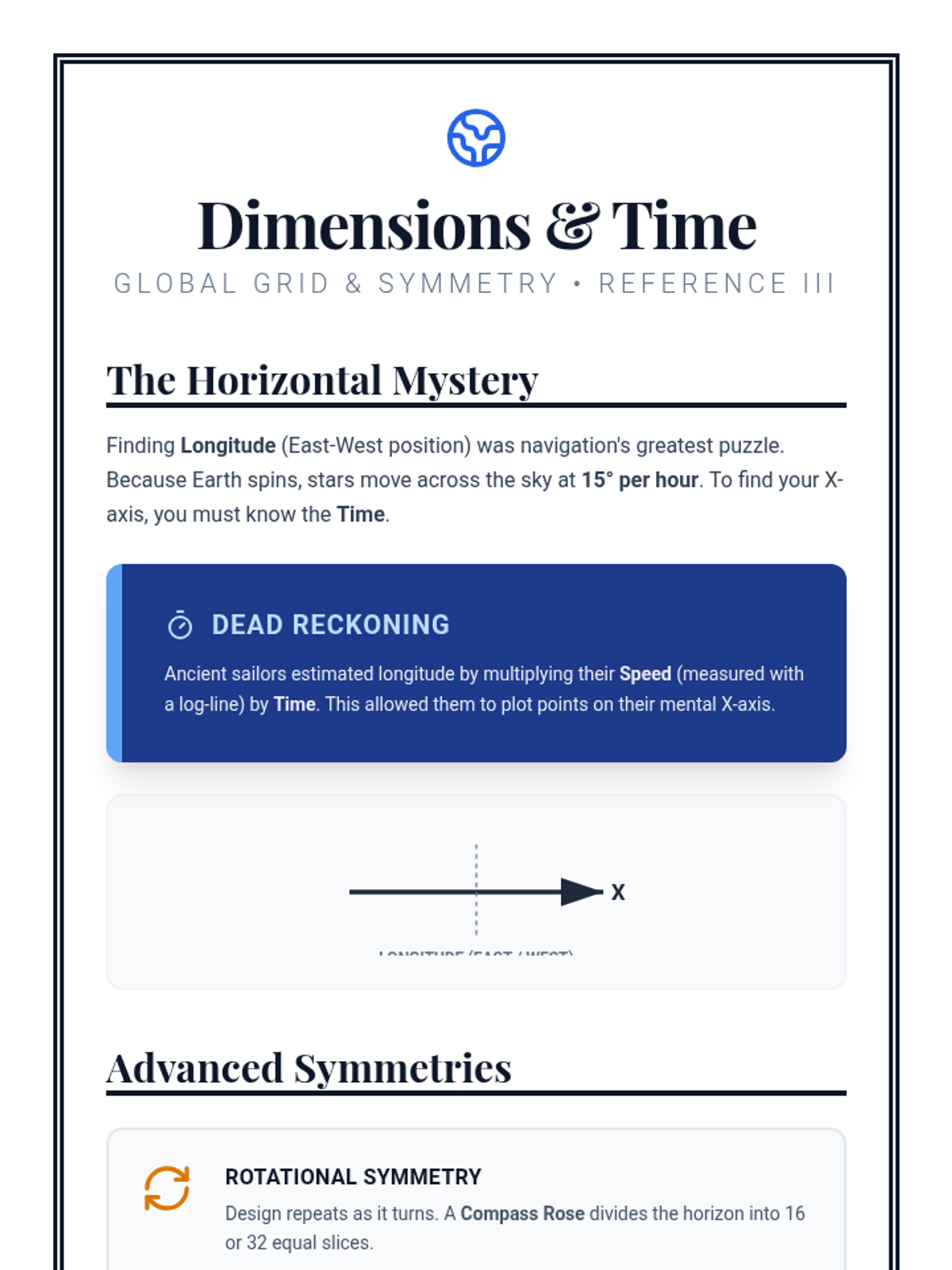
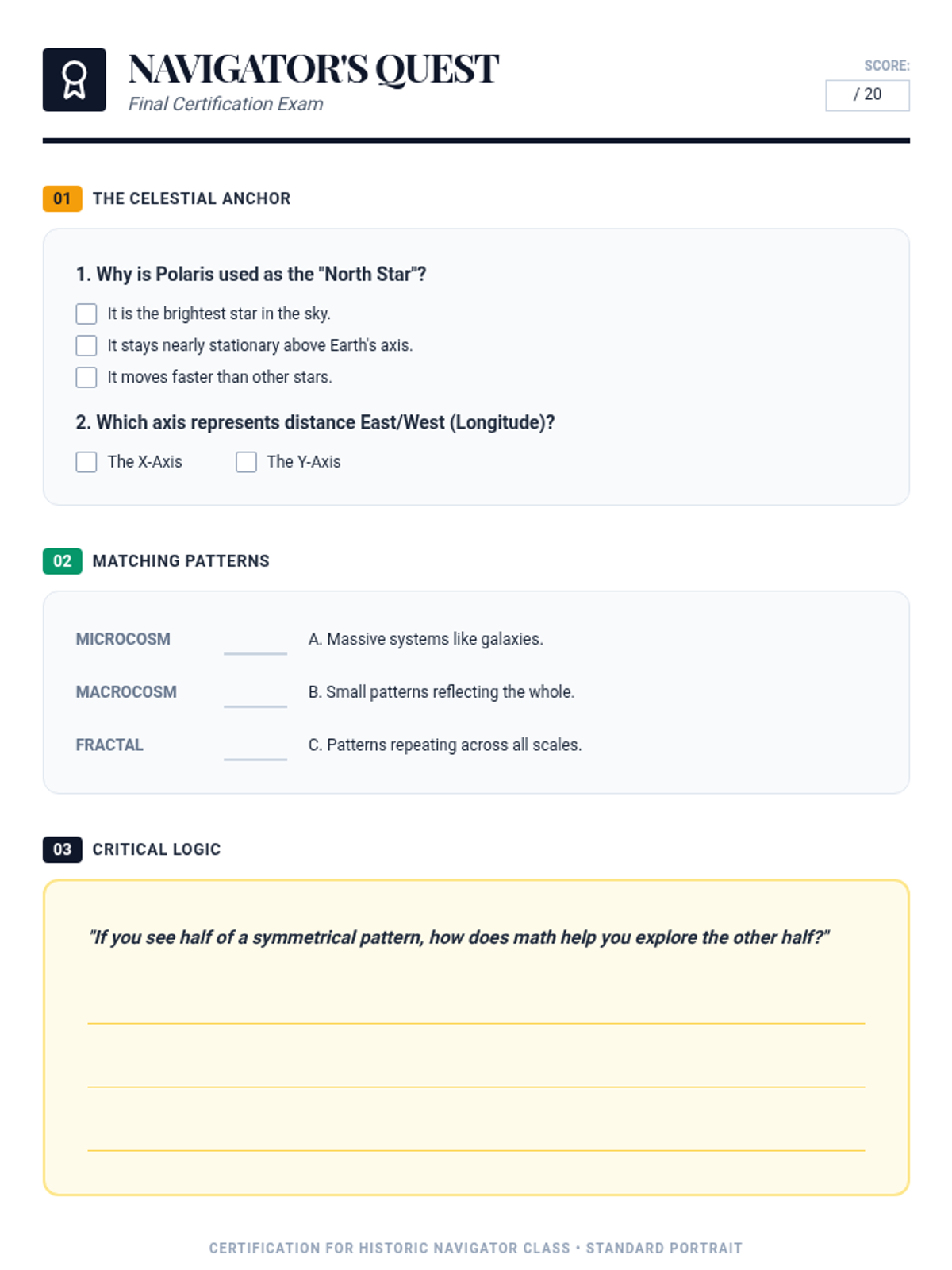
A 15-25 minute exploration into how ancient navigators used fixed points (the North Star) and the repeating patterns of the universe (microcosms, macrocosms, and symmetry) to navigate without modern technology.