Push Pull Power Slides
Visual presentation for grades 1-3 introducing the concepts of push, pull, force strength, and how forces start, stop, or change the direction of motion. Features a cargo-moving theme.
Cargo Crew Activity
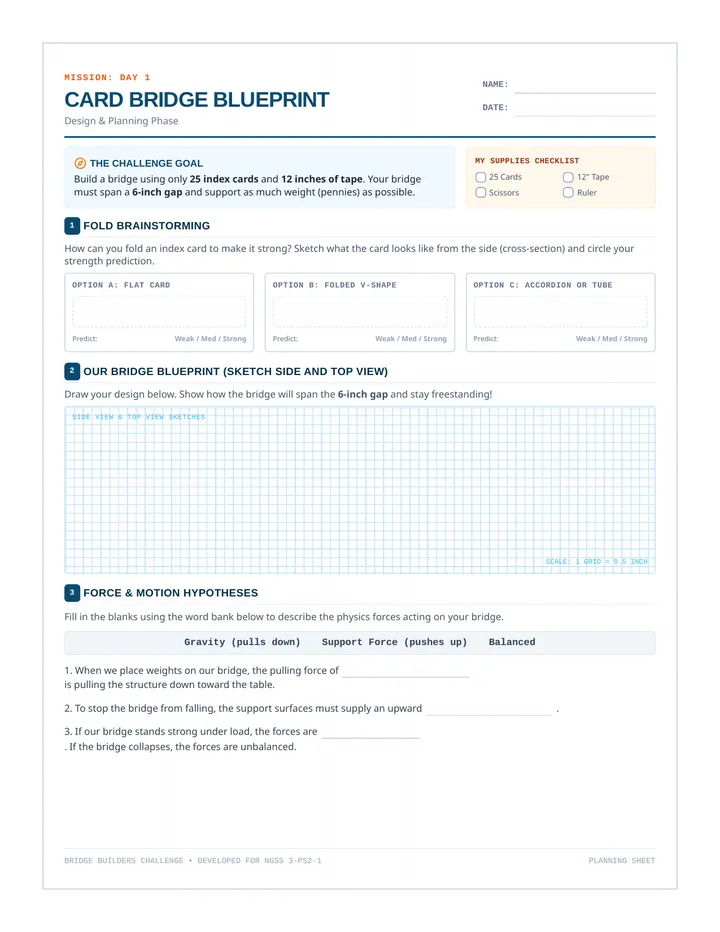
A hands-on engineering activity for grades 1-3 where students design methods to move a 'cargo crate' (toy car) using various pushes and pulls without direct hand contact.
Strength Sprint Activity
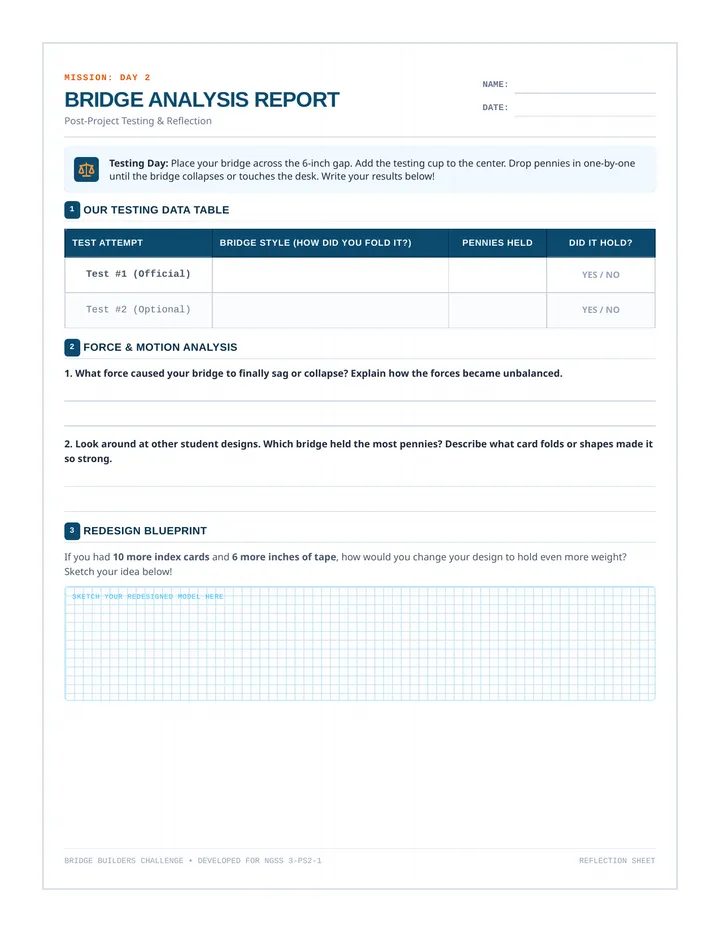
A structured investigation for grades 2-3 focusing on how the strength of a push (weak, medium, strong) affects the distance and speed of a rolling object.
Motion Masters Teacher Guide
Comprehensive teacher guide for grades 1-3 including supply lists, pacing, instructional steps for both activities, common misconceptions, and answer keys.
Force Finder Review Quiz
A STAAR-style review quiz for grade 3 students focusing on force concepts, including multiple-choice questions on push/pull directions and force strength. Includes an answer key.
Force Focus Anchor Charts
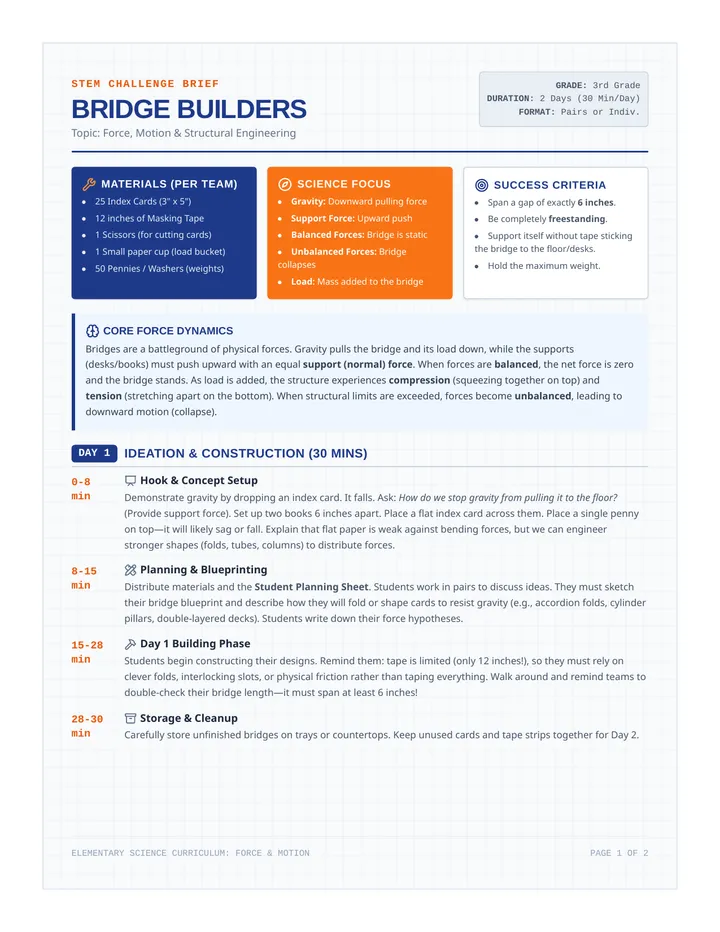
Classroom anchor charts for both K-3 and 4-5 grade levels, providing visual definitions of pushes, pulls, balanced/unbalanced forces, and energy transfer.
Prep Purchase Checklist
A master supply checklist and preparation guide for teachers, including a shopping list, classroom basics, and a timeline for material preparation.