Explores Pythagoras' discovery of the mathematical foundations of music and how he extended this 'harmonic logic' to explain the order of the universe and the 'Music of the Spheres'.
A hands-on science lesson exploring pH and chemical reactions through the lens of Ancient Celtic herbalism and druidic traditions.

Investigates the "Longitude Problem" and the scientific race to build the first accurate marine chronometers, focusing on the physics of oscillation, friction, and the relationship between time and space.

A 15-25 minute exploration into how ancient navigators used fixed points (the North Star) and the repeating patterns of the universe (microcosms, macrocosms, and symmetry) to navigate without modern technology.
A 15-30 minute exploration of how ancient Phoenicians used the macrocosm of the stars to navigate the microcosm of their ships, featuring the root words micro/macro/cosmos and the mathematics of rotational symmetry.
Students explore how gravity affects everyday objects on Earth and compare the gravitational pull of different planets in our solar system through calculations and creative design.
A self-contained sub-friendly lesson covering cell classification, organization, and energy acquisition. Students act as biological detectives to classify "mystery specimens" using core concepts.
Sveobuhvatna lekcija o ljudskom srcu, krvnim žilama, krvnim stanicama i vrstama krvotoka, obogaćena kreativnim mnemotehnikama za lakše pamćenje složenih bioloških pojmova.
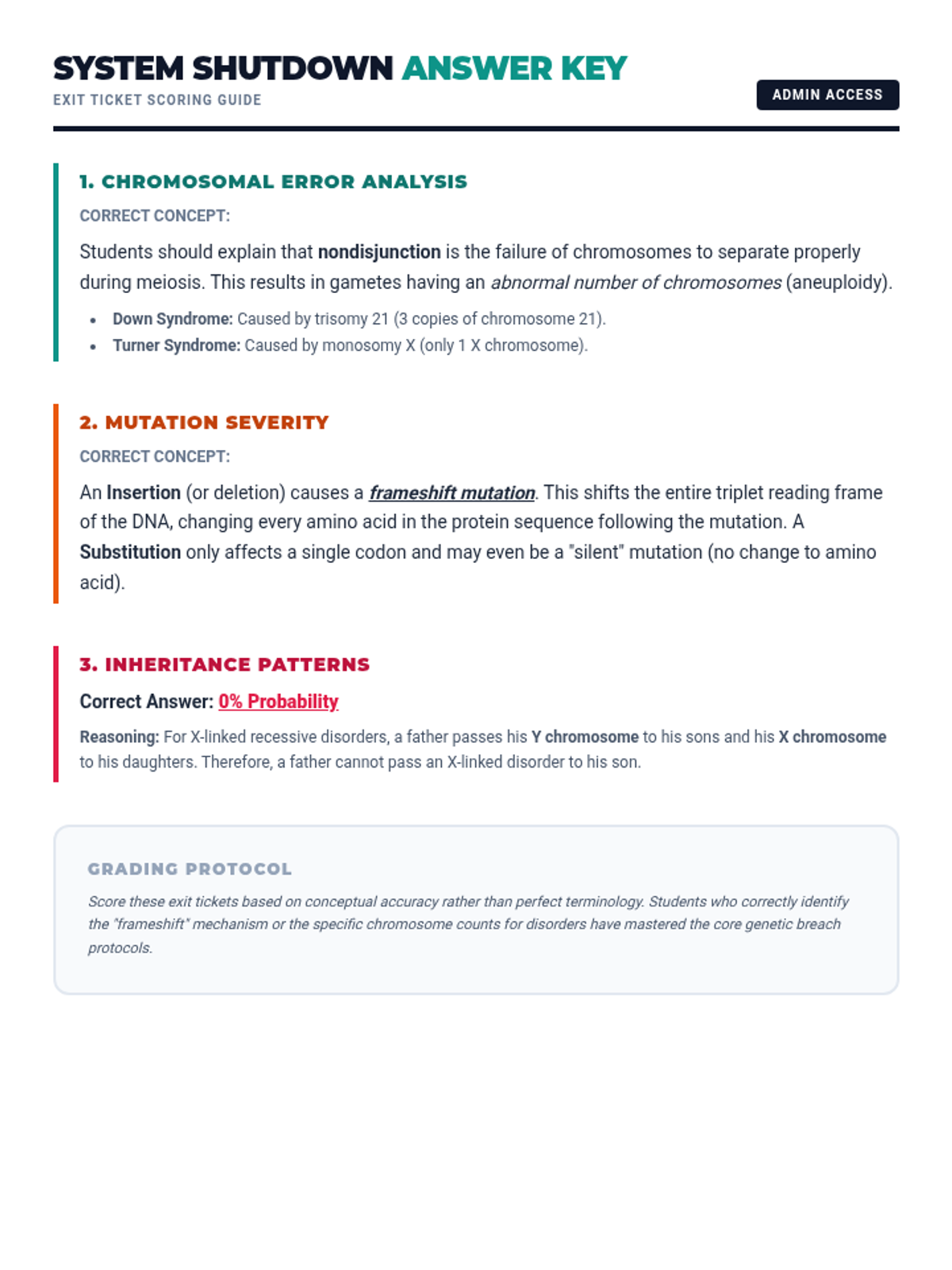
A fast-paced, comprehensive review of middle school physical and life science concepts, featuring diagram analysis, scenario-based problem solving, and a virtual lab demonstration analysis.