A high-flying exploration of kites that integrates long 'i' phonics patterns and multisyllabic decoding strategies for upper elementary and middle school students.
An engaging indoor Easter activity for students to practice reading comprehension and problem-solving through rhyming riddles. The lesson includes printable clue strips designed to fit inside plastic eggs and a teacher's master key for setup.
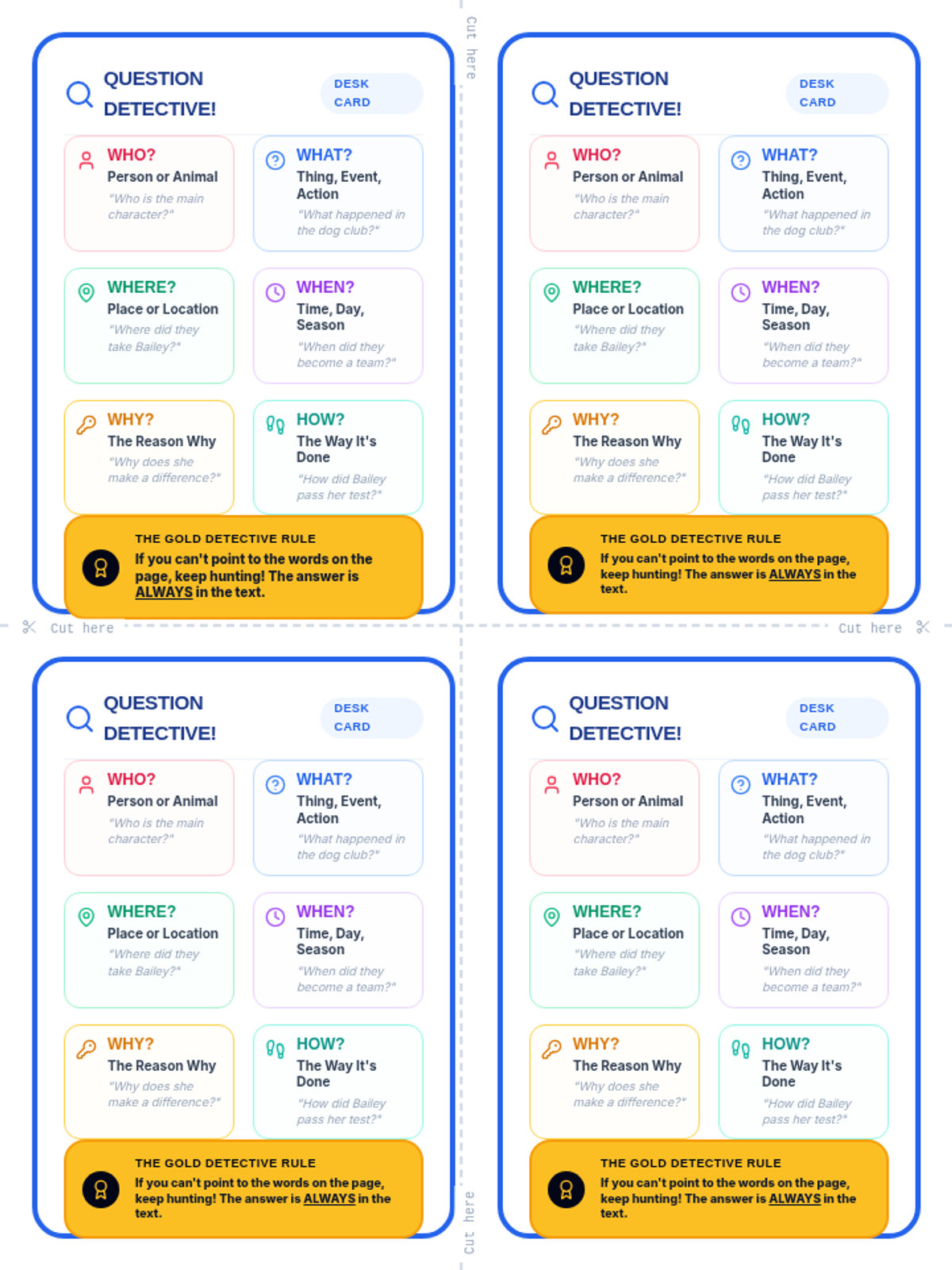
A lesson designed to help students identify 'Right There' questions in text and use specific marking strategies (starring, underlining, and highlighting) to locate evidence directly within the passage.
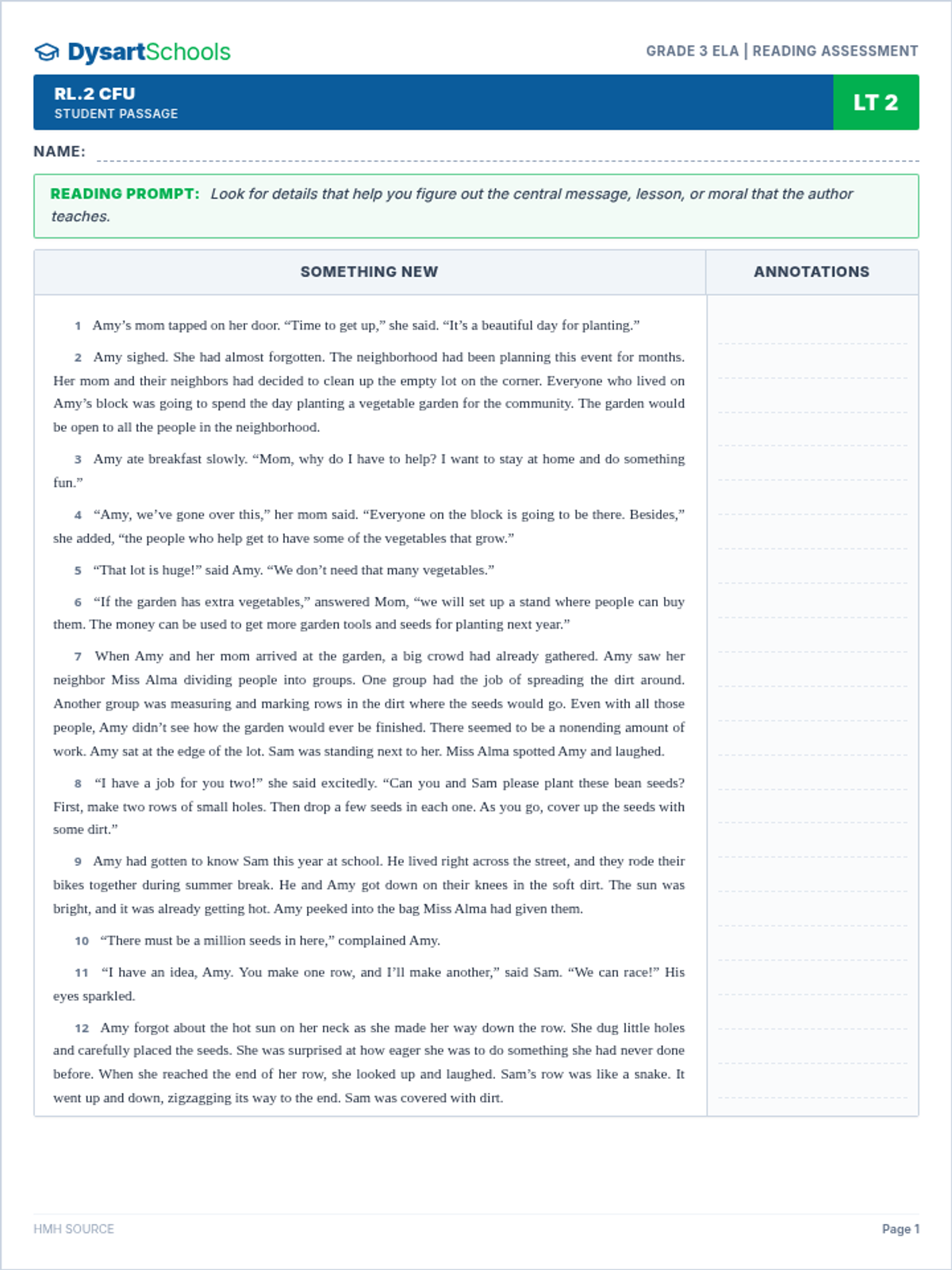
A 5-day spiral review focusing on Arizona 3rd grade ELA standards (RL.1, RL.2, RL.4, RI.1, RI.2, RI.4, RI.9) using a fiction and nonfiction text about the desert.
A strategy-focused lesson teaching students three specific ways to collect text evidence (notetaking, annotating, and underlining) to improve performance on standardized tests, including a practice passage about monarch butterflies.
A 3rd-grade writing lesson focused on enhancing narrative stories through sensory details and precise punctuation editing. Students act as 'Story Architects' to build more vivid and grammatically correct narratives.
A multi-sensory lesson for 6th-grade emergent bilinguals that uses "The Dirt Book" to explore poetry structure and the underground ecosystem, culminating in a hands-on "dirt dessert" activity.
A dedicated hub for sequence-level evaluations, including the Placement Mission (pre-assessment) and the Final Graduation (post-assessment).
Students produce their final 'radiant' copy and share their work with the group.
A guided editing session focused on flow, logic, and checking against the writing criteria.
Students draft their full paragraph about the Zuckerman's State Fair experience using their planning tools.
Using coordinating conjunctions (and, but, so) to create compound sentences that link related farm ideas.
Exploring the rhythm of writing by mixing short, punchy sentences with longer, descriptive ones.
Practicing different ways to start sentences (e.g., with adverbs or prepositional phrases) to avoid repetitive writing.
Learning how to wrap up a paragraph by connecting the final sentence back to the original topic sentence.
Using transition words to sequence three detail sentences in a logical order that makes sense to the reader.
Focus on crafting strong topic sentences that introduce the 'main idea' of the farm-themed paragraph.
Students learn the 1-3-1 paragraph structure (Topic Sentence, 3 Details, Concluding Sentence) using the visual metaphor of a spiderweb.
A comprehensive review of the RACE writing strategy, focusing on analyzing author's purpose and figurative language through guided instruction and highly-scaffolded practice.
Week 5 concludes the series with the consonant-le syllable type. Students learn the rule of counting back three letters from the end of the word to find the syllable break.