Lenny.com
Explore
Create
ActivitiesNewMathEnglish Language ArtsScience & EngineeringSocial StudiesGlobal LanguagesHealth & Physical EducationSpecial EducationCounseling & Life SkillsArts & CreativityESL
Lenny.com
Lenny.com
Explore
Create
ActivitiesNewMathEnglish Language ArtsScience & EngineeringSocial StudiesGlobal LanguagesHealth & Physical EducationSpecial EducationCounseling & Life SkillsArts & CreativityESL
Lenny.com
Lenny.com

Solutions

Lenny for EducatorsLenny for SchoolsLenny for Districts

Product

ExploreSign inCreateSupportAbout

Resources

Getting startedMTSS Acceleration Program

© 2026 Lenny Learning Inc.

TermsPrivacyAccessibility
LinkedInInstagramX
Lenny
English Language ArtsPhonics & Reading FoundationsLetter IdentificationLearn Letters A-ZLowercase and Uppercase LettersConsonants and VowelsLetter-Sound AssociationsLetter-Sound Associations: LowercaseLetter-Sound Associations: UppercaseBeginning and Ending SoundsRhymingBlending And SegmentingShort VowelsShort Vowel SoundsConsonant BlendsConsonant DigraphsBlends, Digraphs, and TrigraphsDigraphs, Blends, and Silent LettersLong Vowel SoundsLong Vowel PatternsShort and Long VowelsShort and Long Vowel PatternsSilent EVowel SoundsVowel TeamsR-Controlled VowelsDiphthongs: Oi, Oy, Ou, OwVariant VowelsVariant, Diphthong, And R Vowel PatternsSoft G And CSight WordsIrregular WordsWord RecognitionSyllablesSyllable TypesTwo-Syllable WordsMultisyllabic WordsPhoneme ManipulationDecodable TextsVocabularyAction WordsQuestion WordsNouns and AdjectivesClassify WordsCompound WordsSynonyms and AntonymsHomophonesHomophones and HomonymsShades of MeaningContext CluesPrefixes and SuffixesGreek and Latin RootsAnalogiesIdioms and AdagesForeign Words and ExpressionsWord Choice and UsageReference SkillsReading ComprehensionRead-Along Literary TextsRead-Along Informational TextsReality vs. FictionStory ElementsCharacterSequenceMain IdeaCause And EffectCompare And ContrastReading StrategiesText StructureAuthor's PurposeAuthor's Purpose And ToneAuthor's PerspectivePoint Of ViewThemeInference And ThemeInference And AnalysisPoetry ElementsLiterary DevicesAnalyzing LiteratureAnalyzing Informational TextsComparing TextsAudience, Purpose, And ToneBusiness DocumentsNovel StudyNonfiction Book StudyGrammar & MechanicsSentencesNounsVerbsAdjectivesPronounsCapitalizationPunctuationContractionsConjunctionsPrepositionsArticlesAdjectives And AdverbsVerb TypesVerb TensePronouns And AntecedentsPronoun TypesSubject-Verb AgreementDirect And Indirect ObjectsSentences, Fragments, And Run-OnsPhrases And ClausesCommasSemicolons, Colons, And CommasDashes, Hyphens, And EllipsesSpellingAbbreviationsFormattingVerb Tense And MoodMisplaced ModifiersWritingDescriptive DetailsCreative WritingOpinion WritingTopic SentencesOrganizing WritingLinking WordsSentence VarietyIntroductions And ConclusionsPersuasive And Opinion WritingExpository WritingPersuasive StrategiesDeveloping And Supporting ArgumentsTopic Sentences And Thesis StatementsSummarizingResearch SkillsEditing And RevisingActive And Passive Voice=Writing Clearly And ConciselyDebate & Public SpeakingPublic Speaking BasicsPersuasive TechniquesClaims and EvidenceTypes of ArgumentsReasoning TypesLogical FallaciesTopic ResearchOrganizing EvidenceDebate Speech OrganizationAttacking and Defending ArgumentsClash and EngagementImpact CalculusQuestioning and Cross-ExaminationCritical ThinkingInformal LogicFormal LogicInductive Reasoning

Silent Tickle Phonics

A tactile phonics lesson for 1st graders focusing on the 'wr' digraph. Students use 'air writing' and sensory materials like sand or shaving cream to reinforce the concept of the silent 'W' through the 'Tickle Test' metaphor.

Silent Tickle Phonics

A tactile phonics lesson for 1st graders focusing on the 'wr' digraph. Students use 'air writing' and sensory materials like sand or shaving cream to reinforce the concept of the silent 'W' through the 'Tickle Test' metaphor.

You might also like

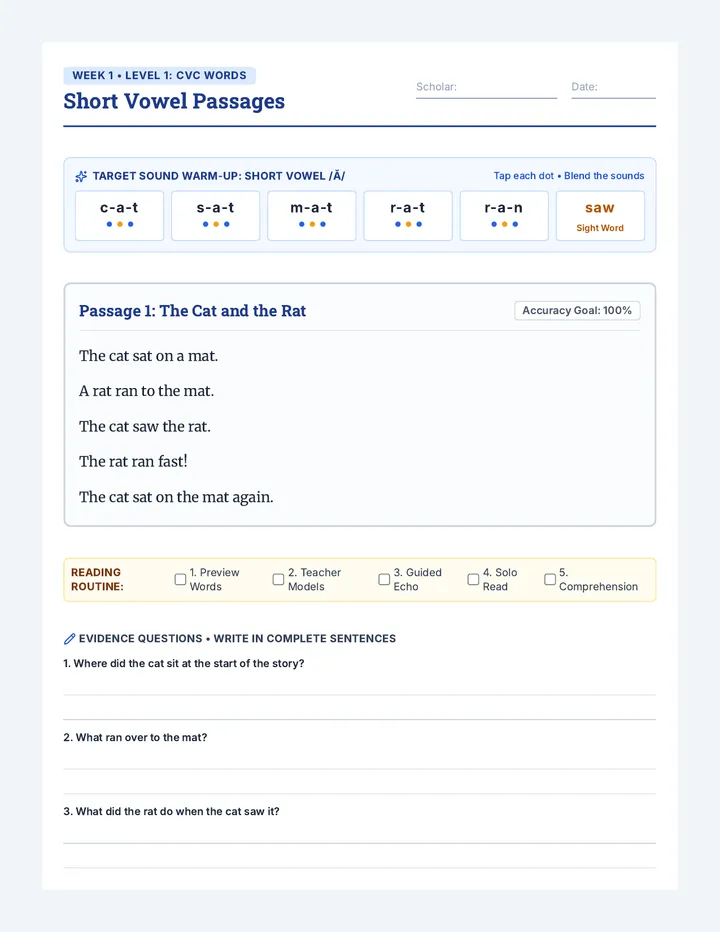
Short Vowel Passages Worksheet

Phonics Scholar Pathway

An eight-week tier-two reading intervention sequence guiding elementary scholars from decodable CVC short vowels through complex multisyllabic words and fluent comprehension. Each week provides structured decodable passages, targeted word banks, text-dependent comprehension questions, and systematic fluency tracking.

B

Bhoovaragavaswamym

8
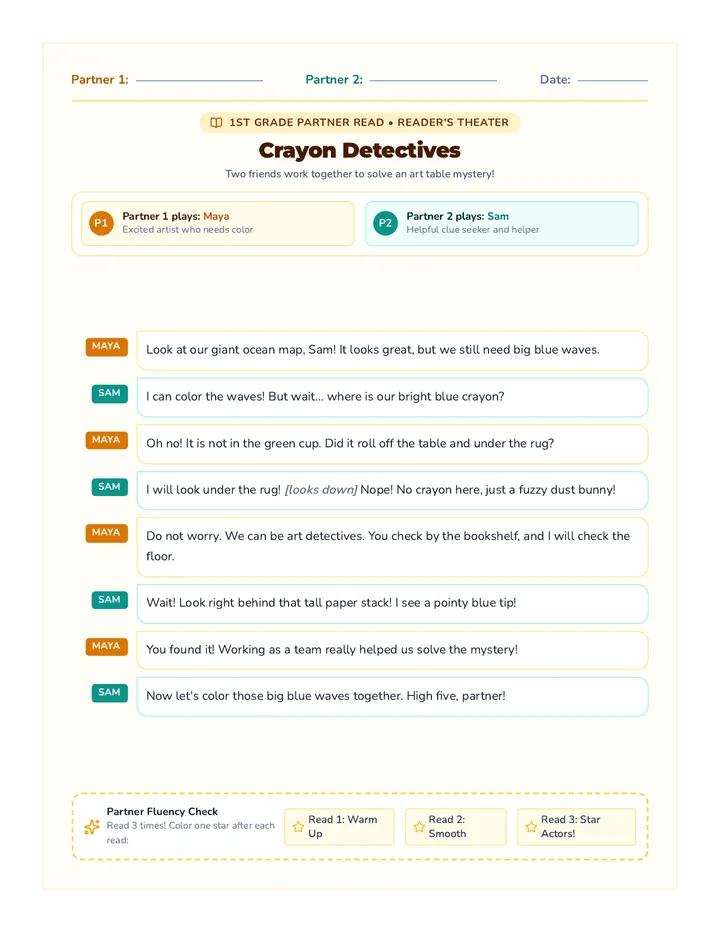
Crayon Detectives Partner Script

Crayon Detectives

A first-grade collaborative partner reading lesson featuring a two-person Reader's Theater script, reading fluency practice, and story comprehension activities.

W

Whitney.Tarry

2
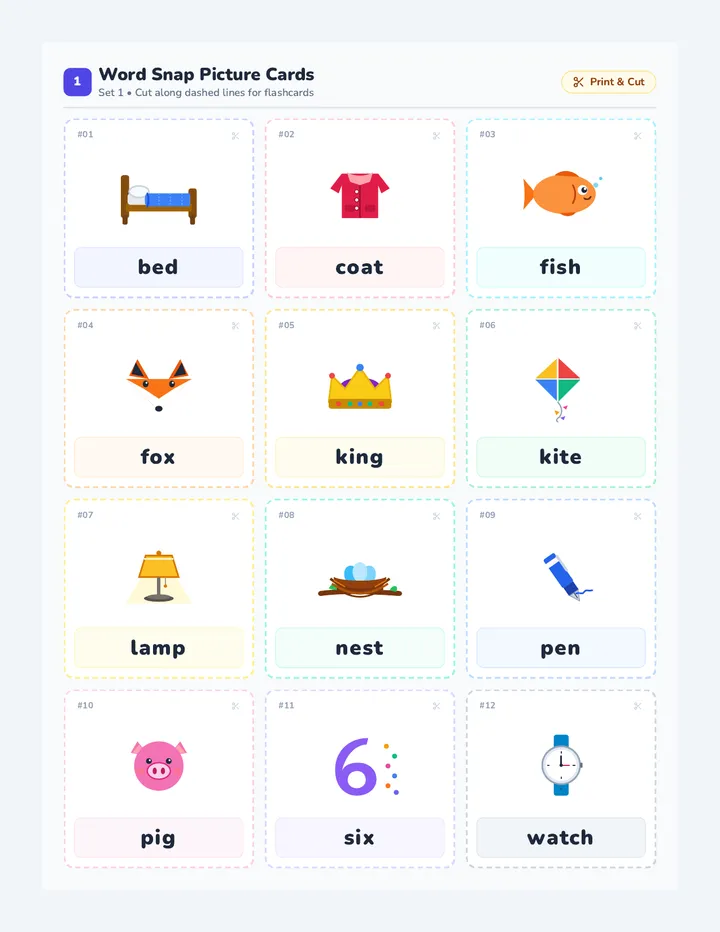
Word Snap Picture Cards

Word Snap Picture Cards

A 24-card printable vocabulary picture flashcard set pairing early-reader words with clear, colorful illustrations and bold typography for hands-on phonics practice.

A

ANDREA.BOYLE

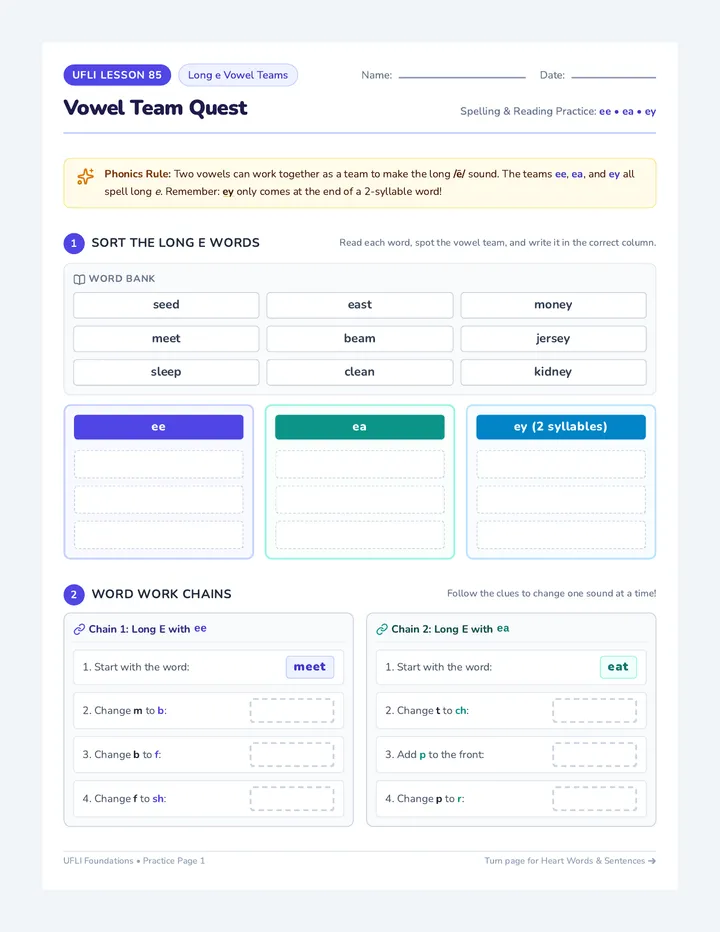
Vowel Team Quest Worksheet

Vowel Team Power

A structured UFLI phonics sequence providing comprehensive individual and full-page practice worksheets for long vowel teams, sound chains, irregular heart words, and decodable sentences.

JW

Jorlian Wynes

17
Suffix Sounds Teacher Guide

Past Tense Power

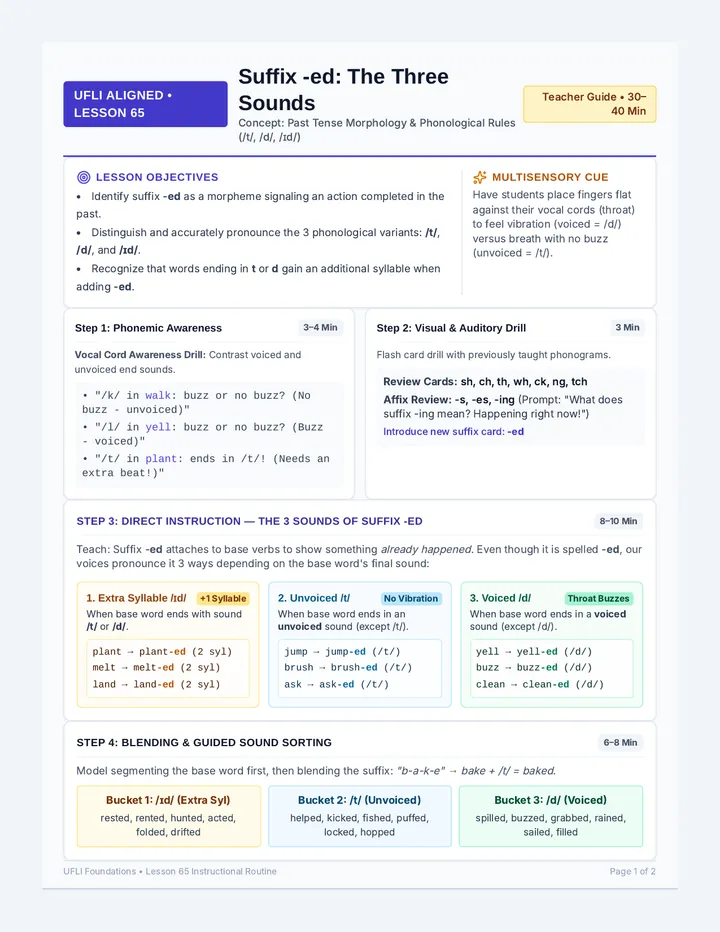
A comprehensive systematic phonics and morphology lesson on suffix -ed aligned with UFLI Lesson 65. Students master past-tense meaning and discover the three phonological pronunciations of -ed (/t/, /d/, /id/) through auditory drills, orthographic mapping, and decodable reading.

AR

Amanda Ramirez

4
Crayon Detectives Answer Key

Crayon Detectives Answer Key

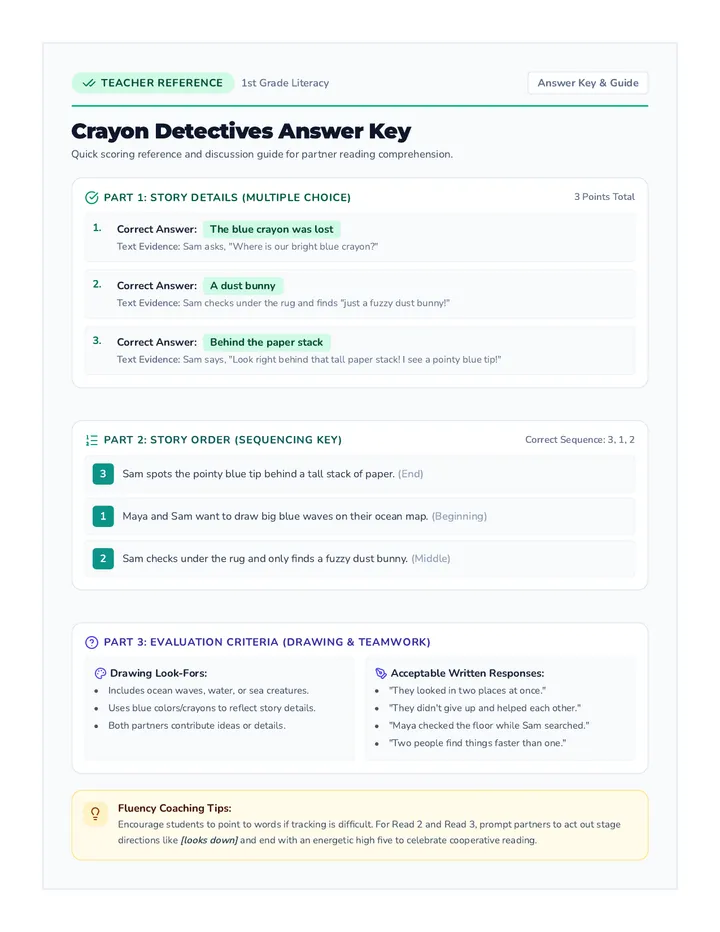
A quick-reference teacher answer key and discussion guide for the Crayon Detectives partner reading script, covering comprehension questions, sequencing, and teamwork reflections.

W

Whitney.Tarry

Solo Sounds Worksheet

Vowel Sound Safari

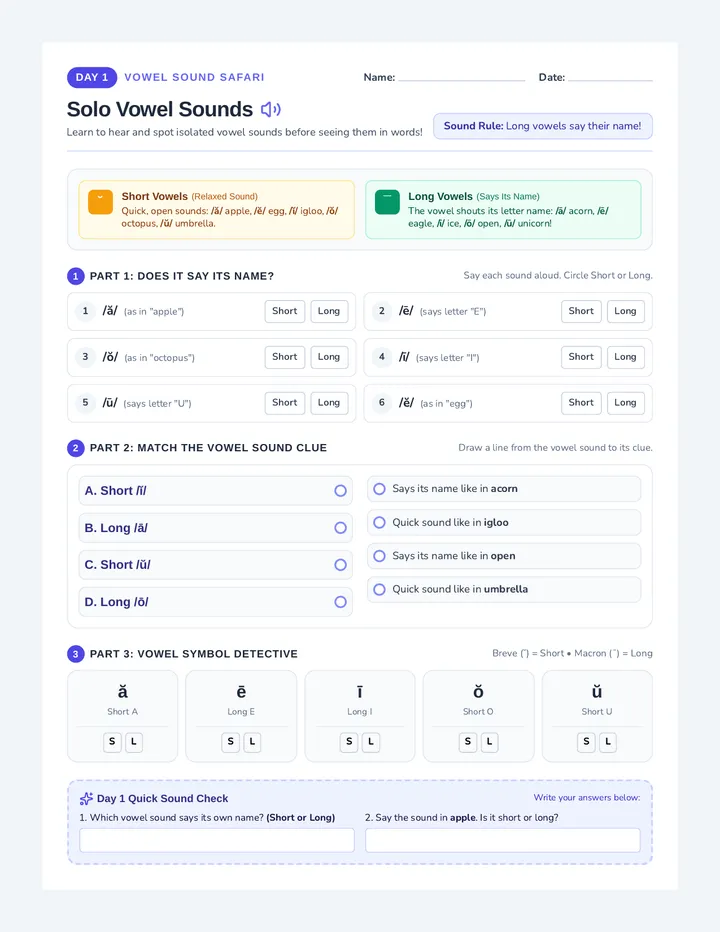
A five-day progressive phonics sequence guiding students from isolated vowel sound recognition to identifying short and long vowel sounds within words and decodable sentences.

K

kconyers

6
Magic E Stories Worksheet

Silent E Comprehension

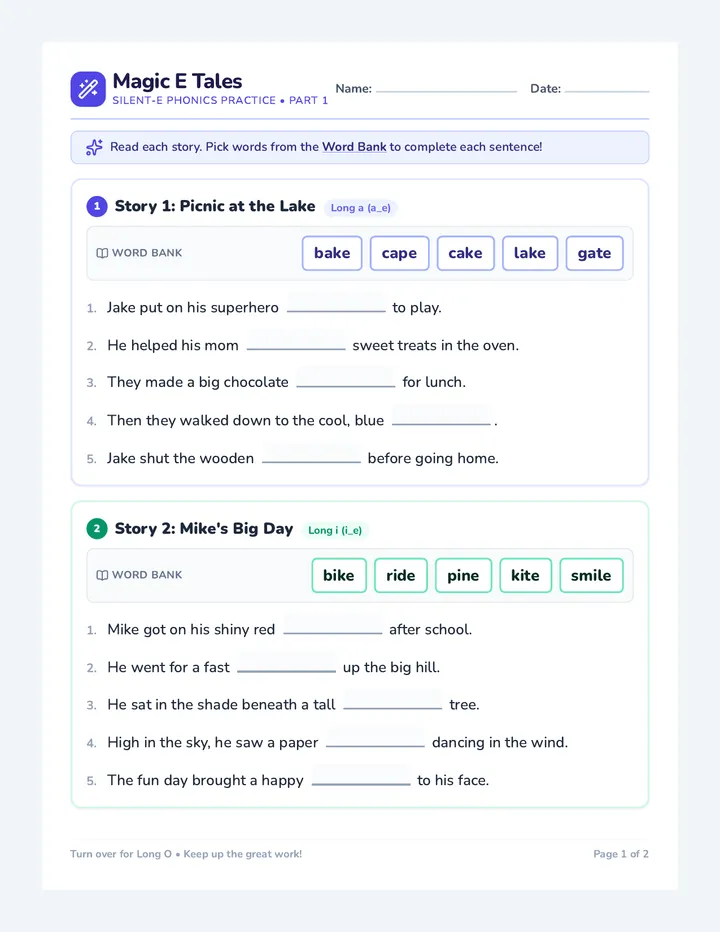
A foundational reading unit featuring silent-e phonics practice, decodable fiction and nonfiction passages, and comprehension exercises focused on main idea, supporting details, and problem and solution.

JA

Jamie Asack

3
Crayon Detectives Partner Script

Crayon Detectives Partner Script

A two-person first-grade Reader's Theater script where partners collaborate to solve the everyday mystery of a missing art crayon. Includes targeted comprehension questions, sequencing practice, and partner fluency tracking.

W

Whitney.Tarry

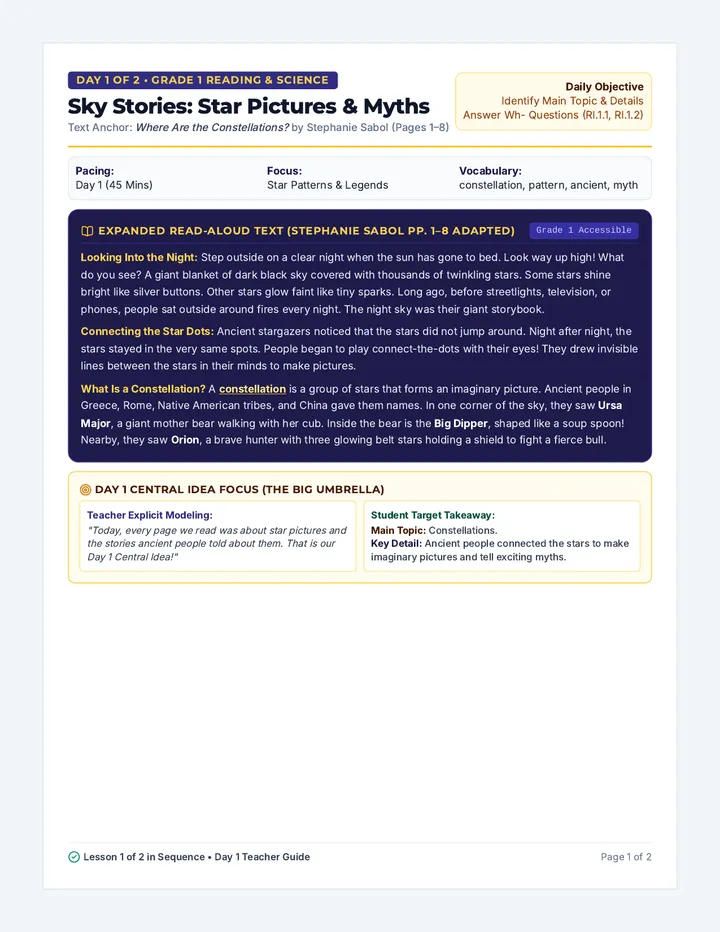
Sky Stories Teacher Guide

Star Watchers

A two-day first-grade reading and astronomy unit adapted from Stephanie Sabol's Where Are the Constellations? (pages 1-15). Students explore star patterns, sky myths, navigational tools, Wh-questions, inferential thinking, and the central idea.

A

awarner1

10
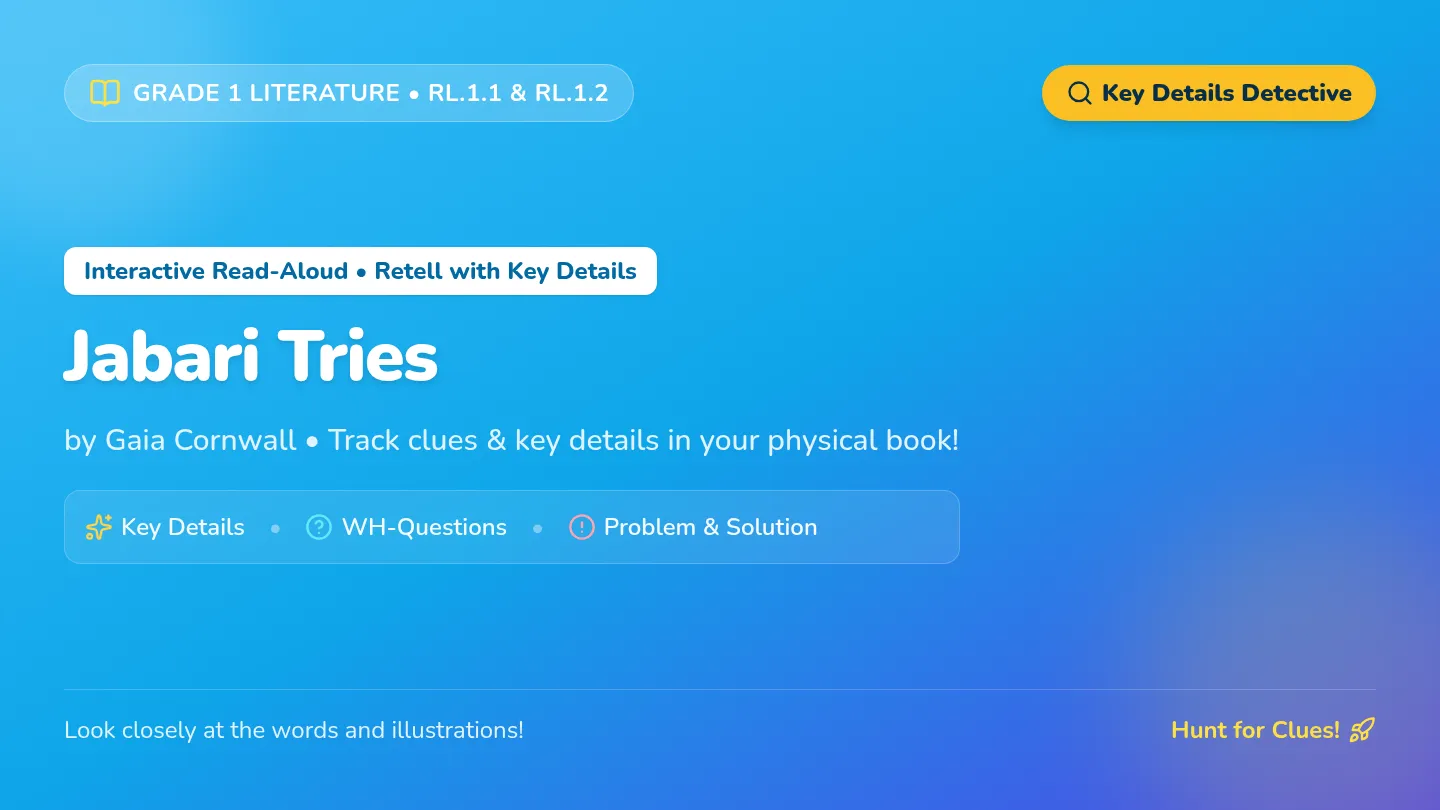
Jabari Launch Slides

Jabari Problem Solvers

A dynamic 1st-grade comprehension lesson centered on *Jabari Tries* by Gaia Cornwall. Students track story elements, master WH questions, analyze problem and solution, and practice retelling Jabari's engineering journey alongside their physical book.

A

awarner1

4
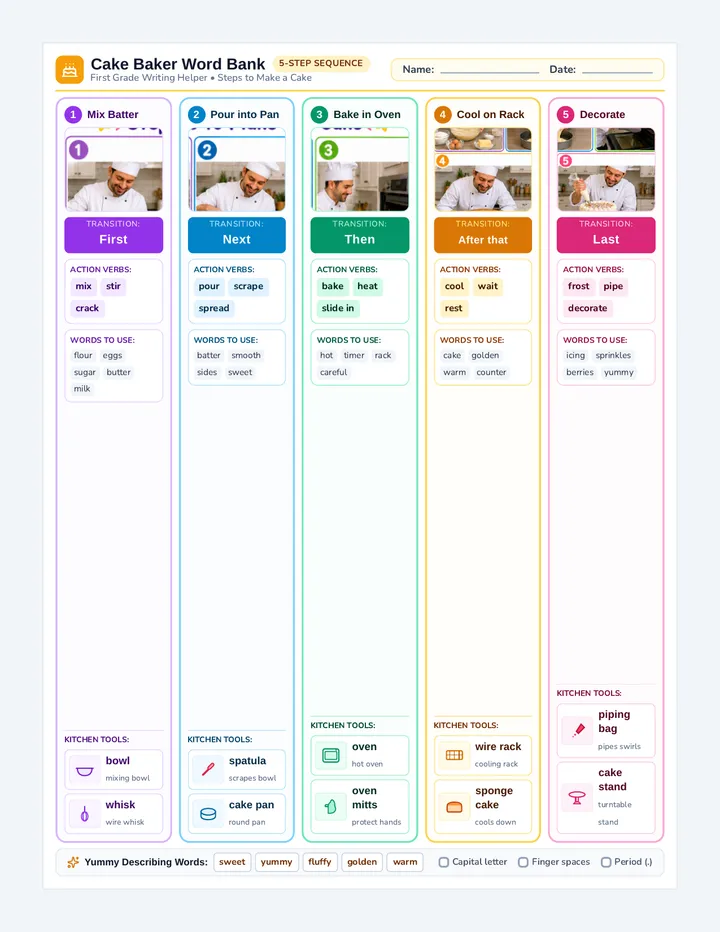
Cake Baker Word Bank

Cake Baker Word Bank

A landscape 5-column sequence writing word bank for first-grade multilingual learners. Features the prompt photo at the top of each step column, clear transition words, essential verbs, key nouns, and illustrated picture cards with labels for each step's kitchen tools.

R

RENEE.ALGER