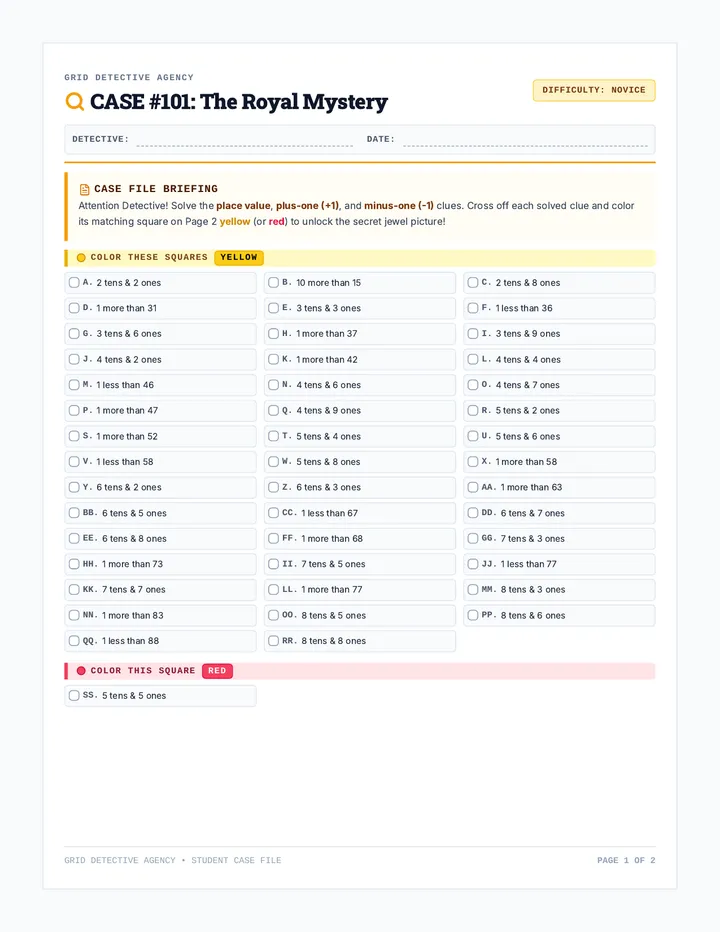
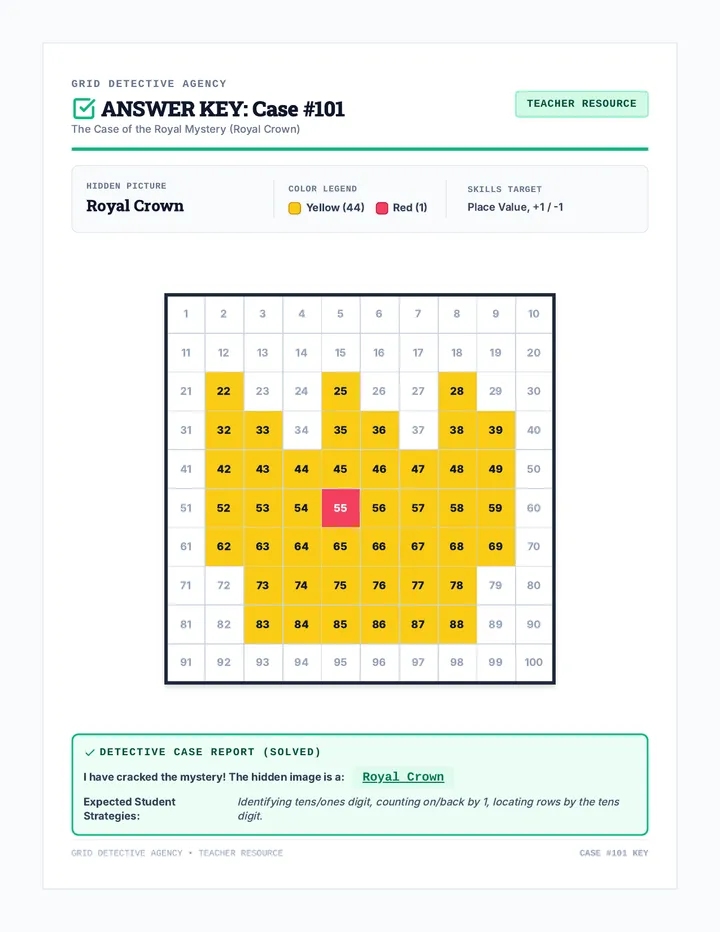
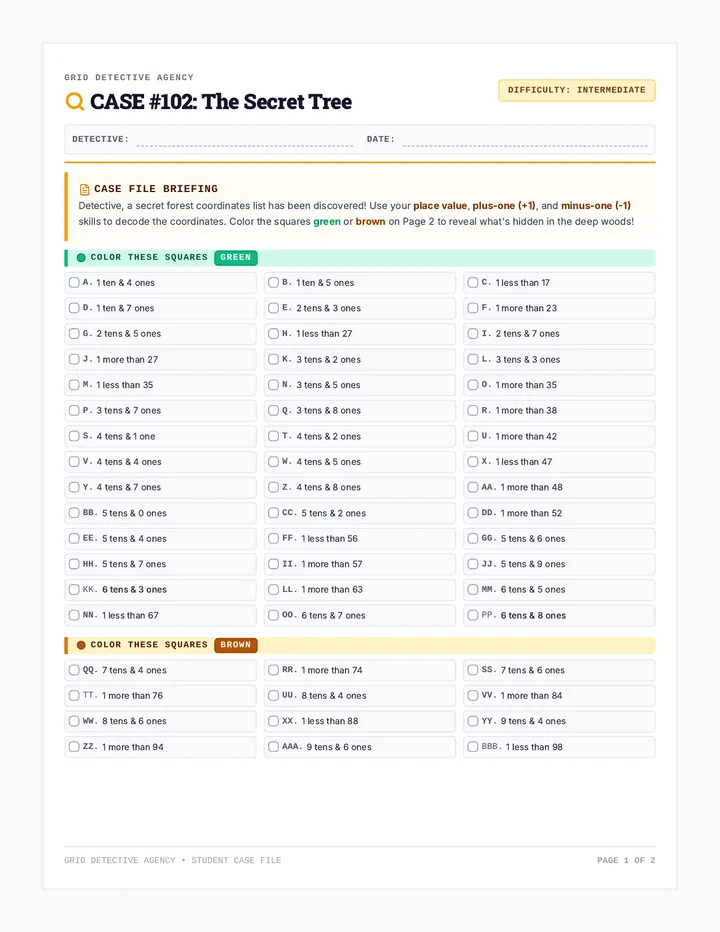
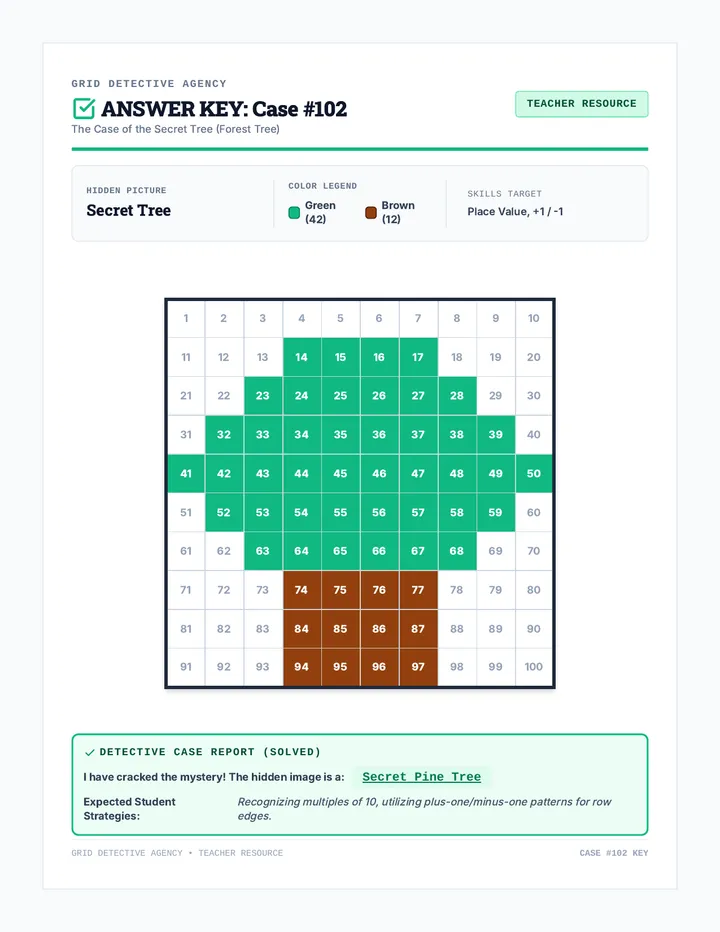
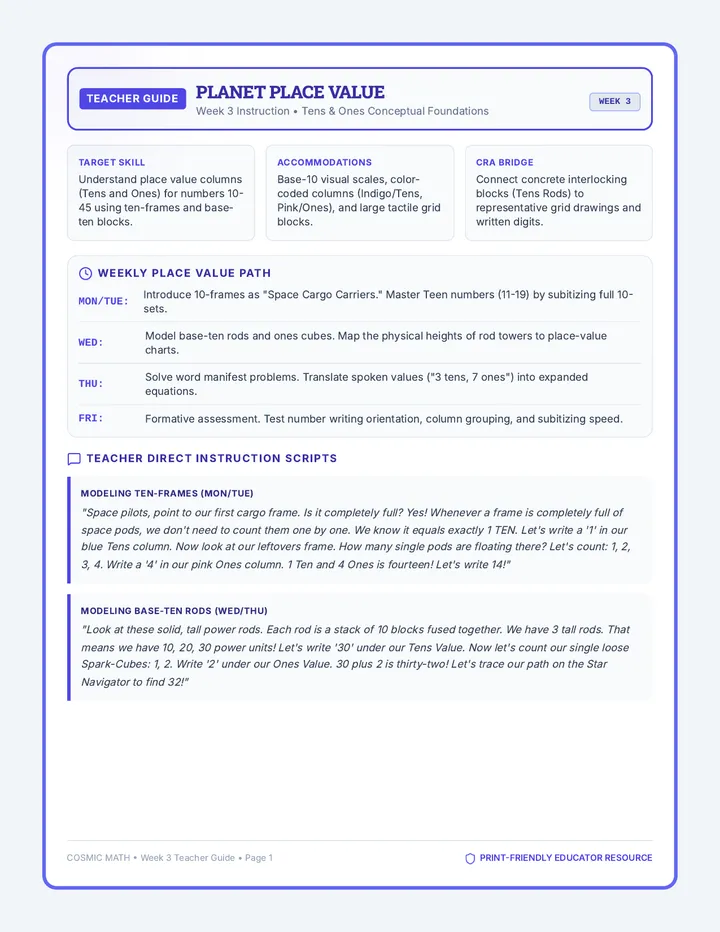
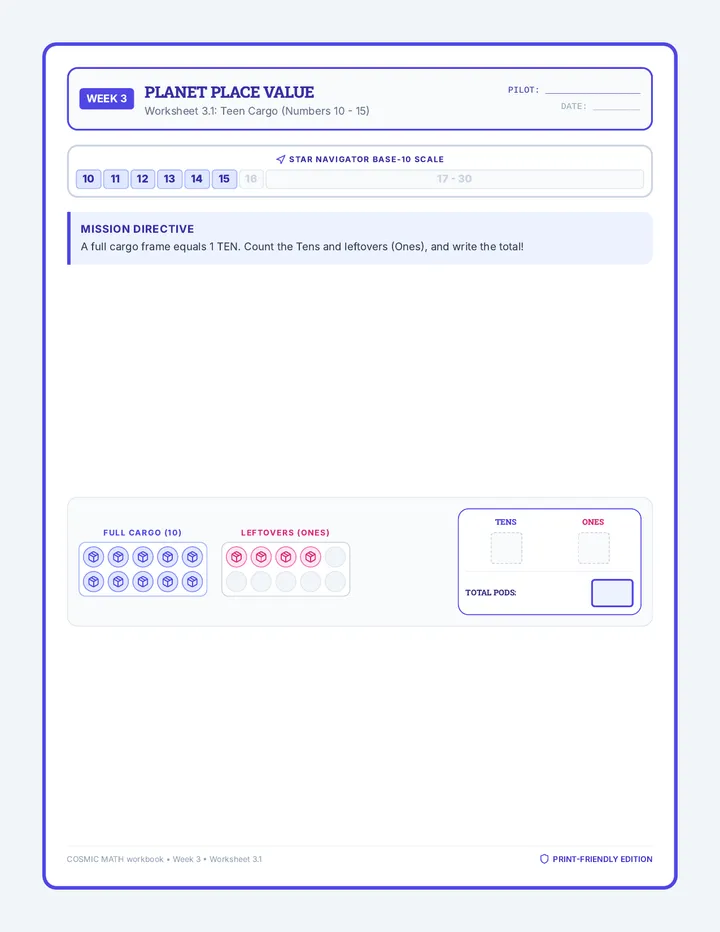
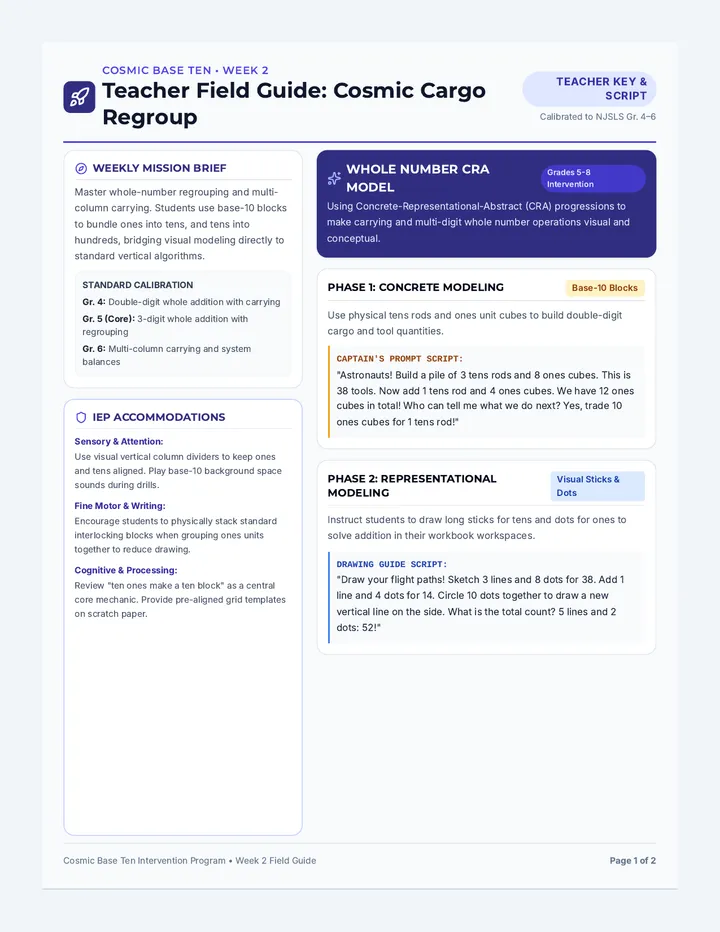
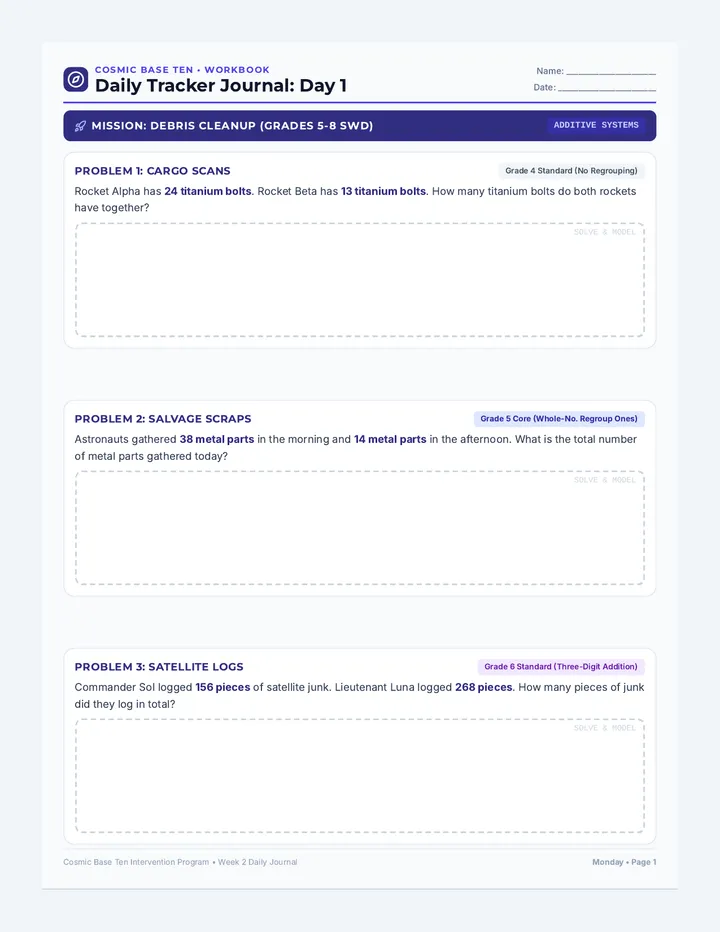
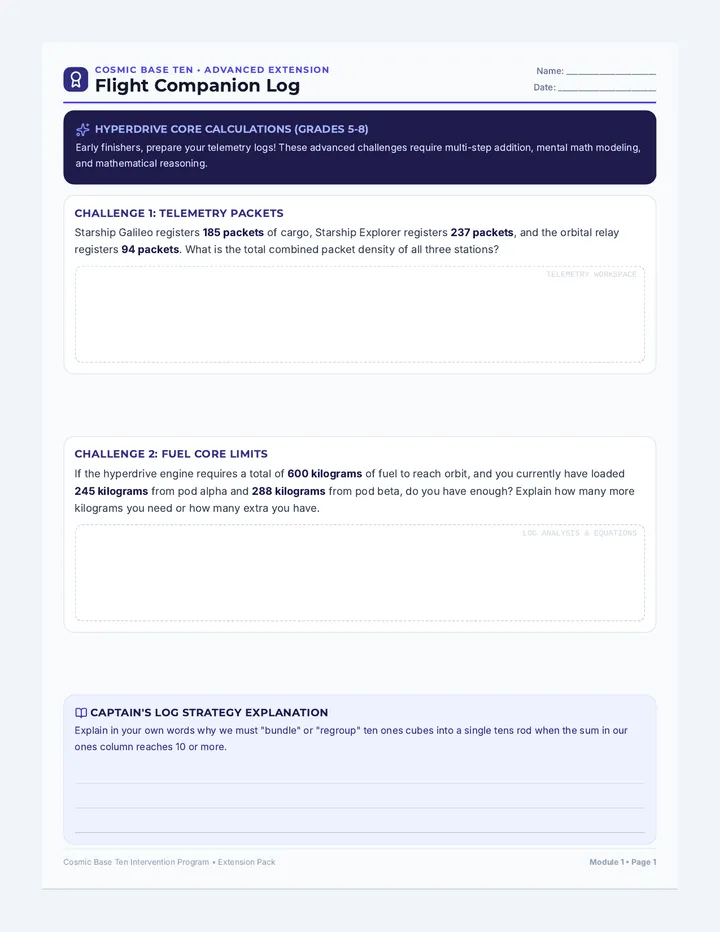
Students investigate the hidden meaning of two-digit numbers, discovering how they are composed of groups of tens and single ones through video observation and hands-on decomposition.

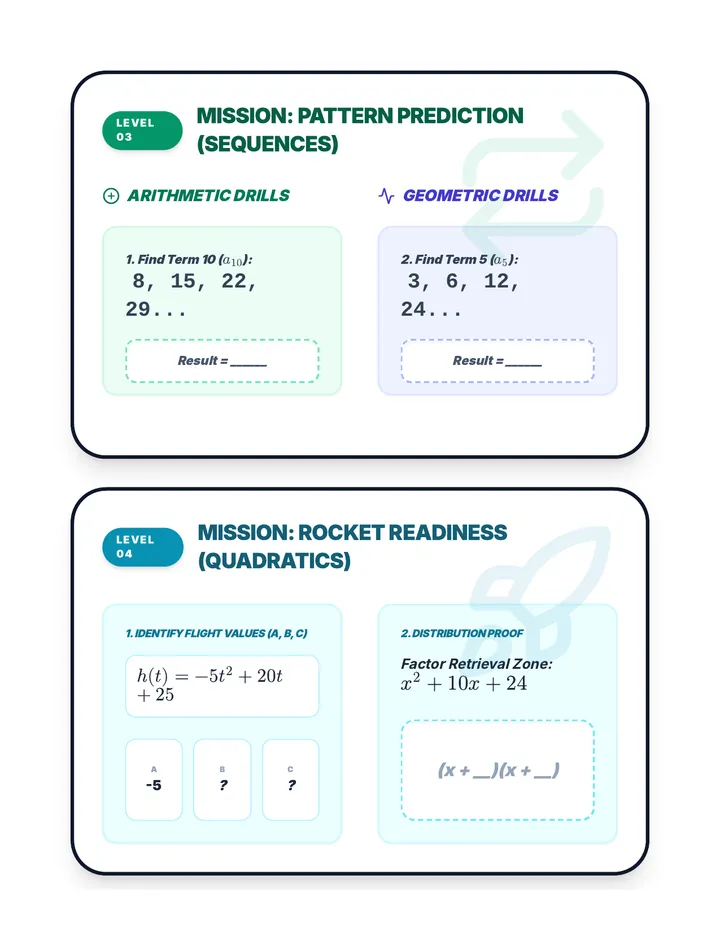
Students will learn to decompose numbers into prime factors, identify the greatest common factor between numbers, and apply these skills to factor simple algebraic expressions.
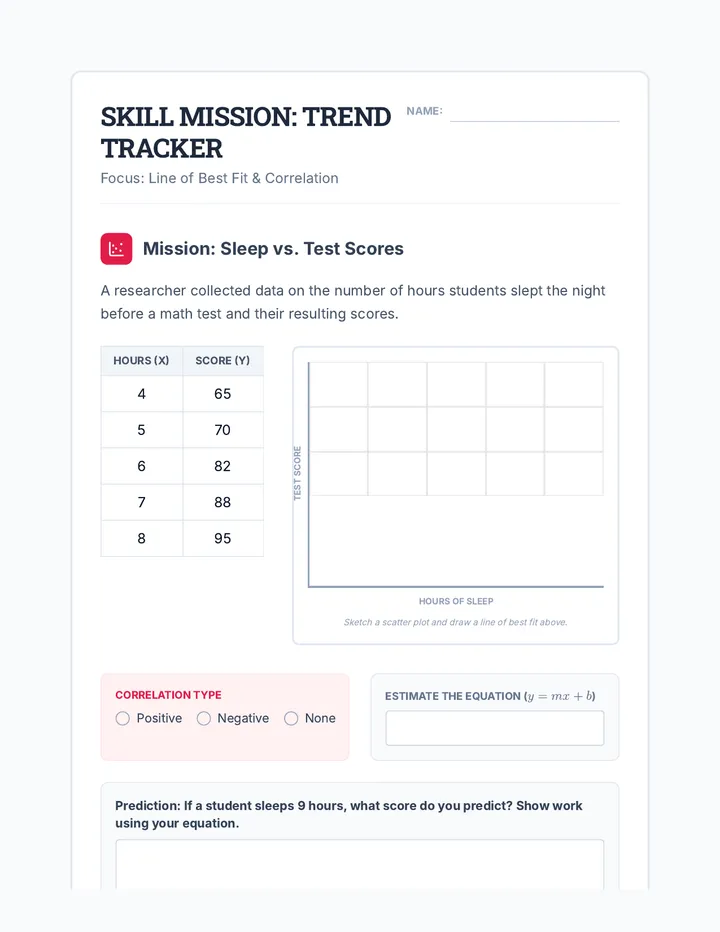
A comprehensive 90-minute math lesson focused on organizing data into intervals and creating/interpreting histograms using test score data. Students act as 'Data Detectives' to uncover trends in numerical information.
A comprehensive introduction to 3D geometric shapes including cubes, spheres, rectangular prisms, cones, pyramids, and cylinders. Students will learn to identify these shapes, count their attributes (faces, edges, vertices), and find them in the real world.
A fun, monster-themed lesson focused on identifying and naming numbers 1-20 through a hands-on 'Roll and Cover' game. Students practice subitizing and number recognition in a playful, low-stakes environment.
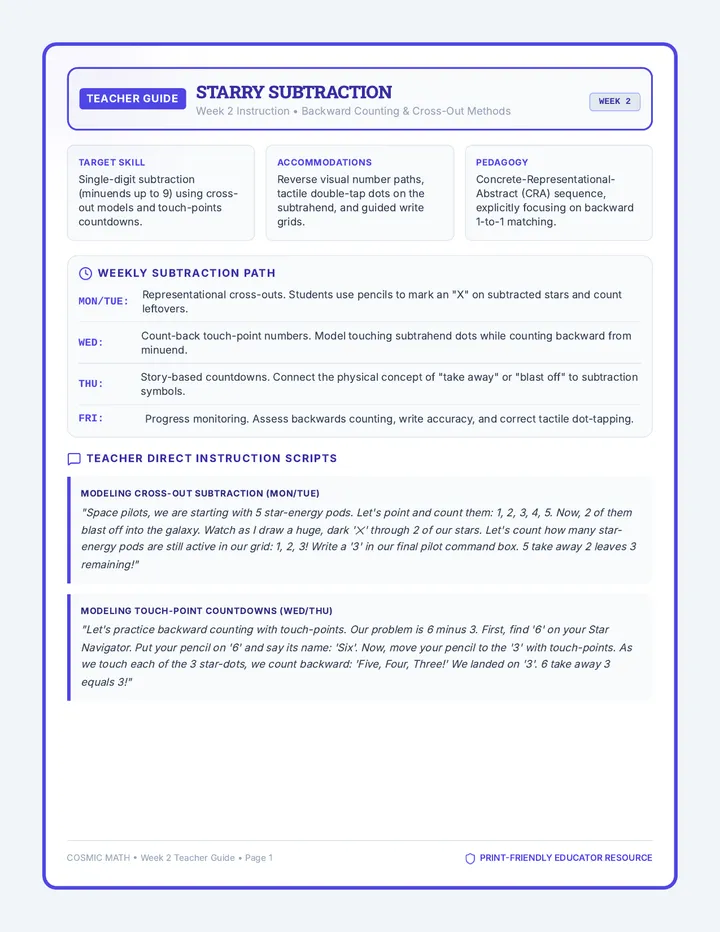
A comprehensive math review lesson designed to reinforce key elementary math skills including logical ordering, 2-digit subtraction, geometric attributes, and equal parts/fractions. This lesson uses a repeated "at-bat" structure to build mastery through multiple variations of the same problem format.
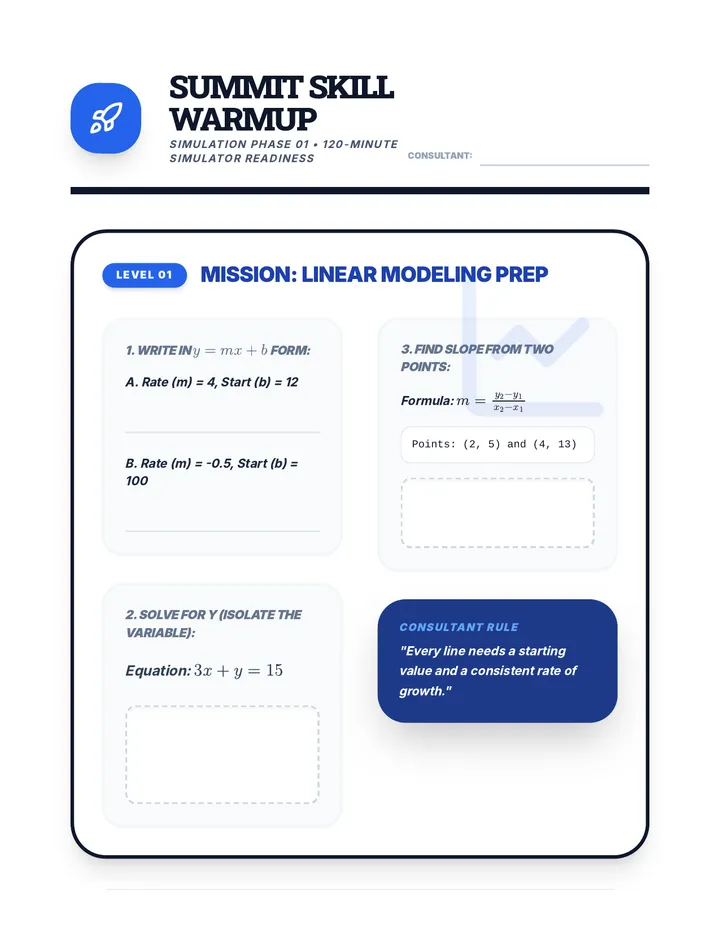
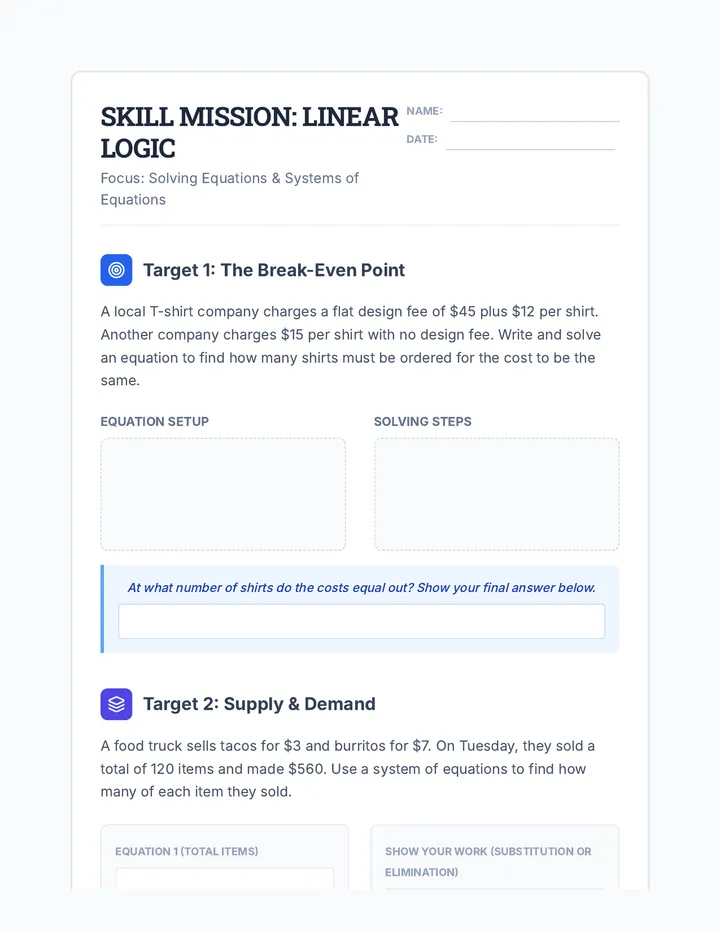
A quick assessment focusing on solving quadratic equations that result in complex solutions using the Quadratic Formula and Completing the Square.
A 6th-grade math review lesson designed specifically for students with IEPs, focusing on foundational concepts in ratios, the number system, expressions, geometry, and statistics with visual scaffolds and simplified language.
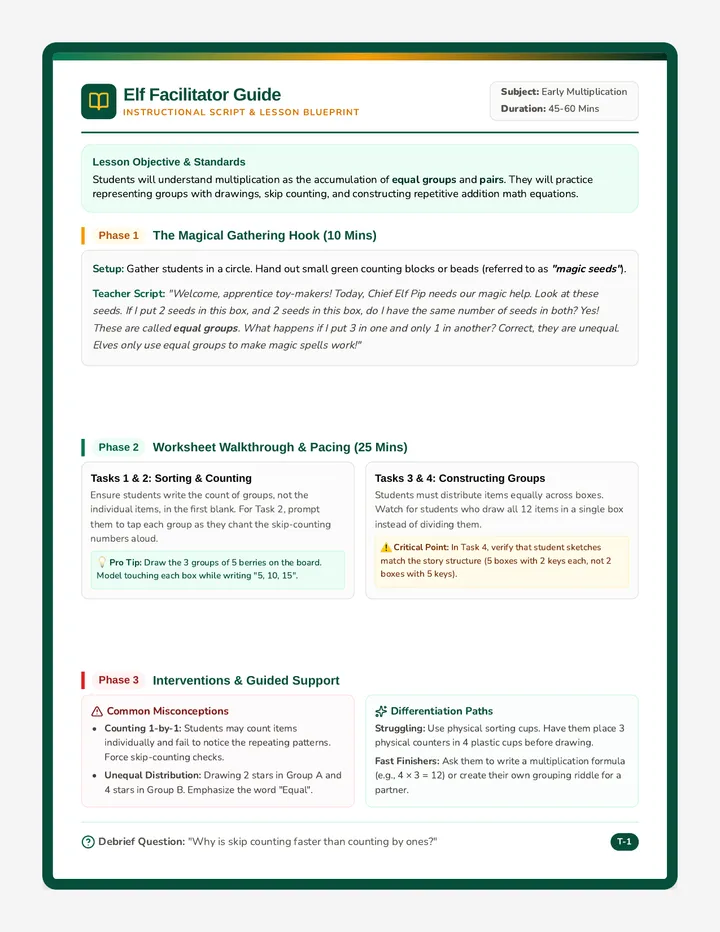
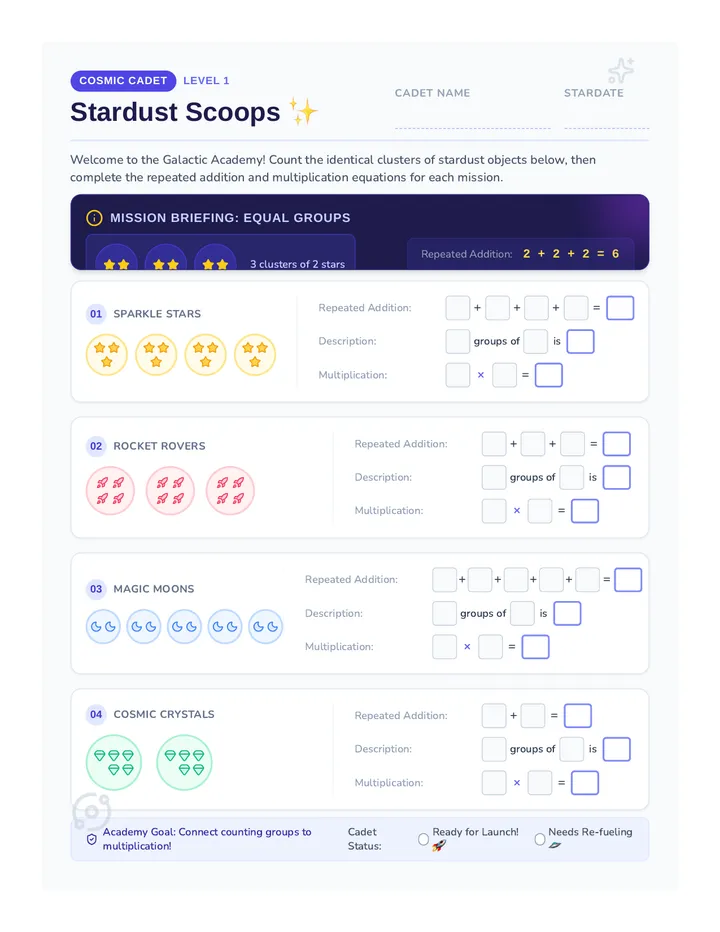
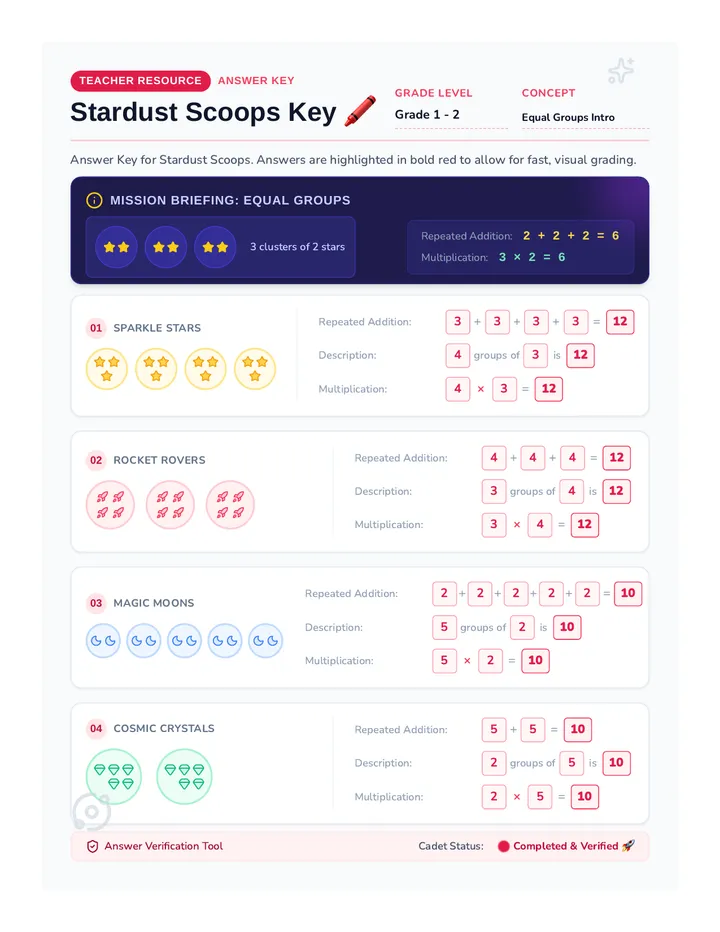
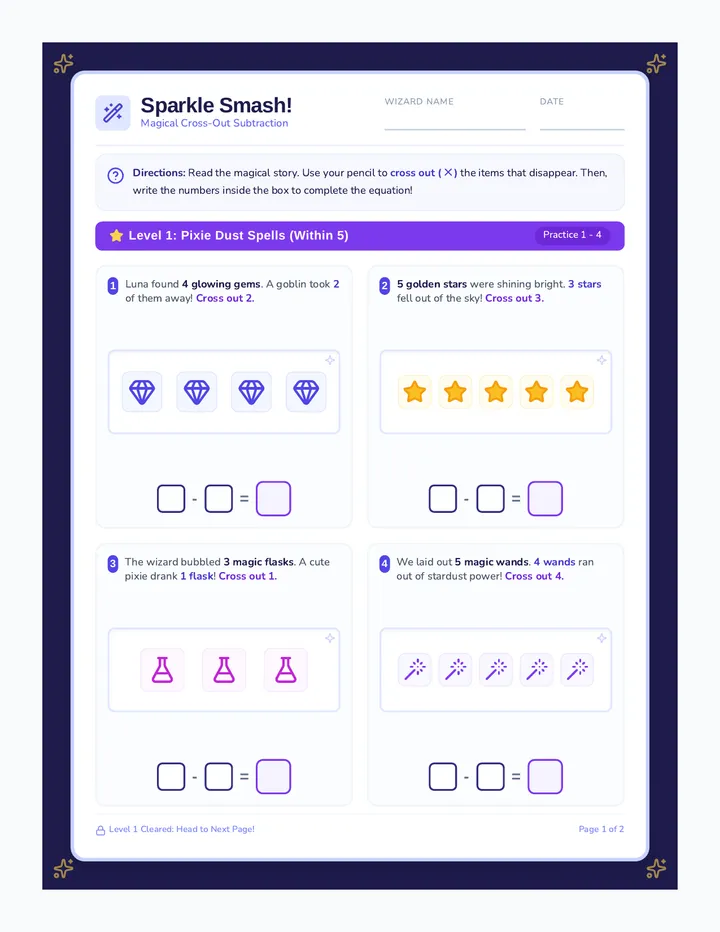
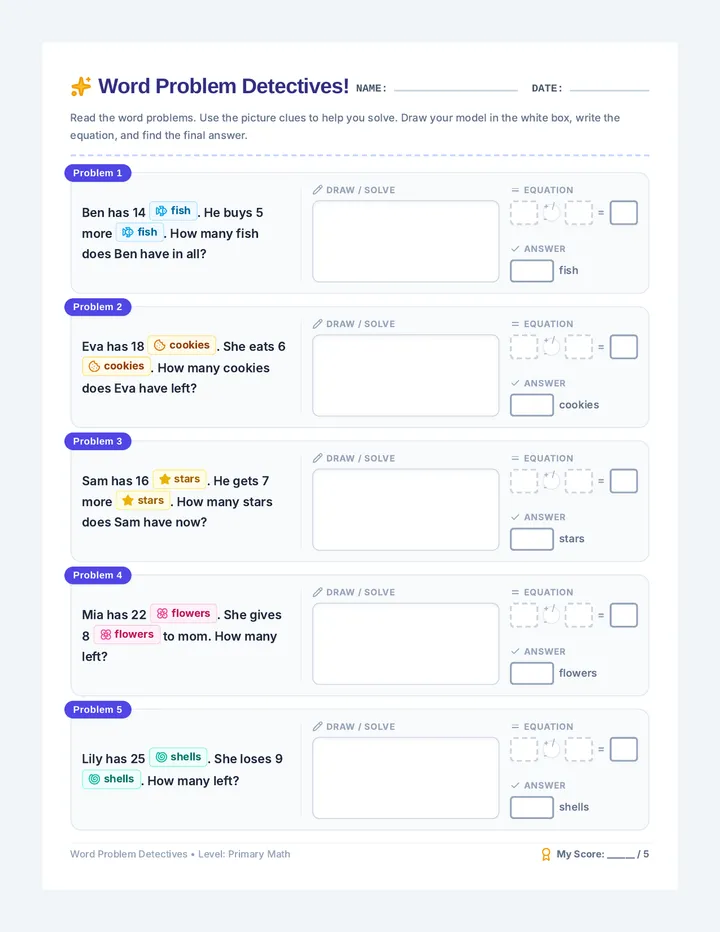
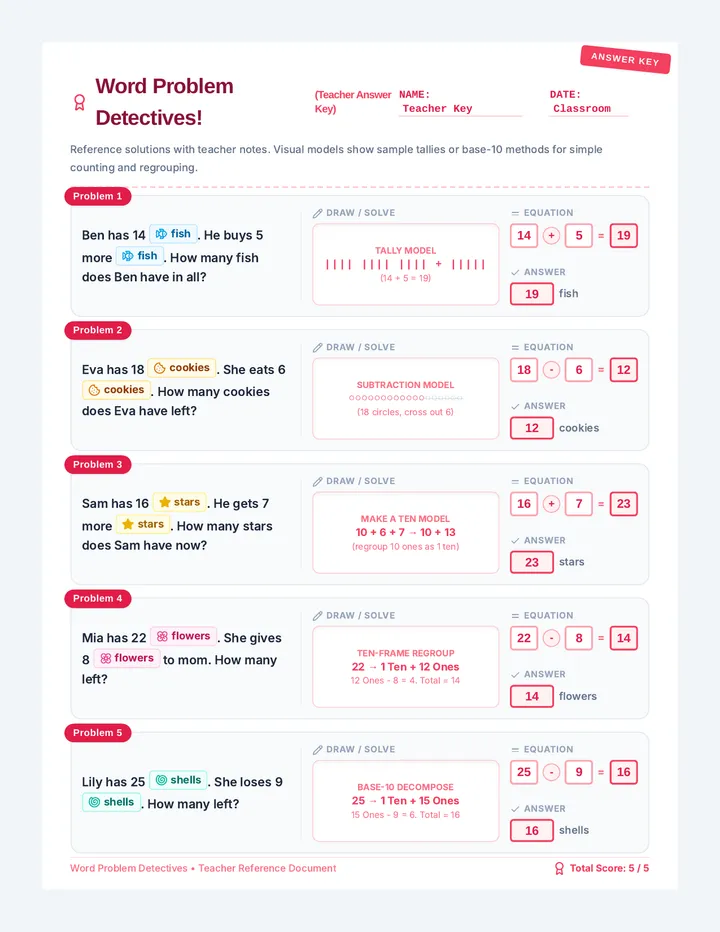
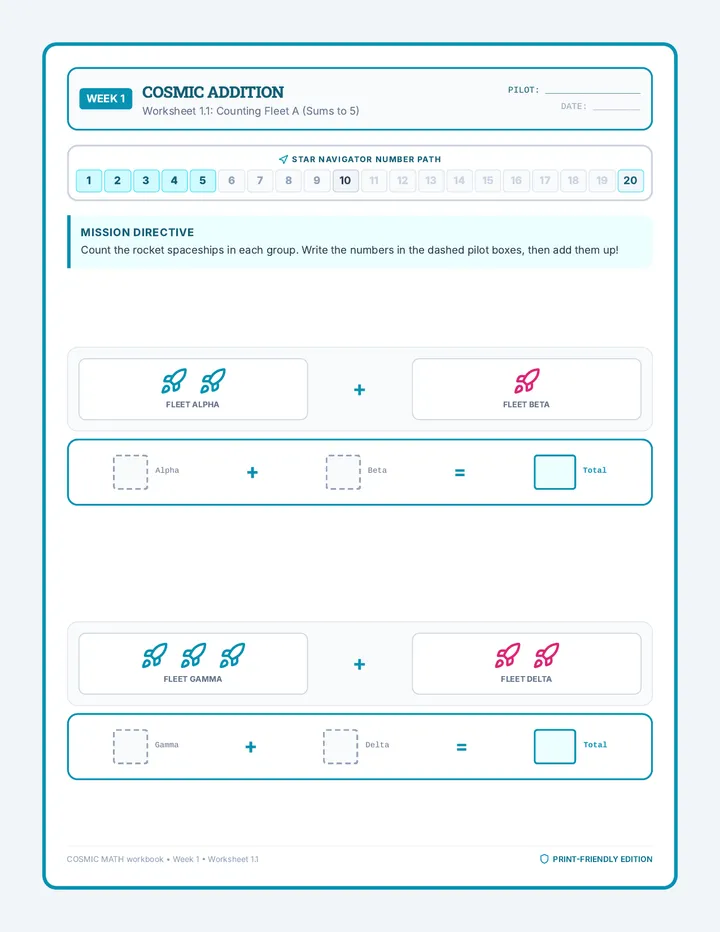
A math review packet focusing on basic addition, subtraction, number combinations, and visual representation of groups, including a student worksheet and an answer key.
A lesson focusing on the practical application of the Distance Formula and the logical structure of SAS and ASA congruence proofs.
A 3-day lesson series covering the partitioning of circles and rectangles into equal shares (halves and fourths/quarters) through baking.
A focused lesson on identifying missing addends within 20 using number bond visual representations to build algebraic thinking and fluency.
A magical math lesson where students count, sort, and graph different types of ponies to practice data representation and comparison skills.
A scaffolded introduction to the four-quadrant coordinate plane, using a navigation theme to help students master plotting points with visual aids and step-by-step guides.
Students will explore the concepts of big, medium, and small by comparing various objects in the museum exhibits, promoting vocabulary development and visual discrimination.
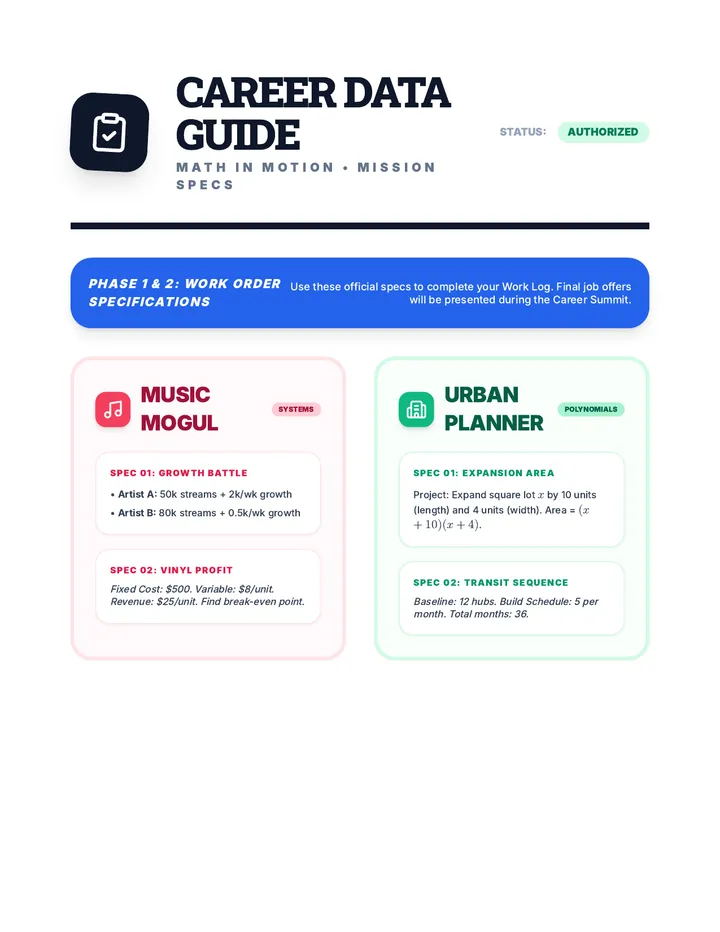
An introduction to simple addition by combining groups of museum objects, focusing on the concept of 'putting together' using visual aids and tactile play scenarios.
Students will practice identifying and counting numbers 1-10 using common items found in a play museum setting, such as grocery items, toy cars, and house windows.
A cumulative review of 2D/3D shapes, positional words, and measurement comparisons to assess mastery.
Students identify 3D shapes (cube, sphere, cone, cylinder) and compare objects based on size and length.
Students identify 2D shapes (circle, square, triangle, rectangle) and use positional language (over, under, beside) to describe location.

Students analyze input-output tables to identify constant addition or subtraction rules and apply those rules to find missing values.
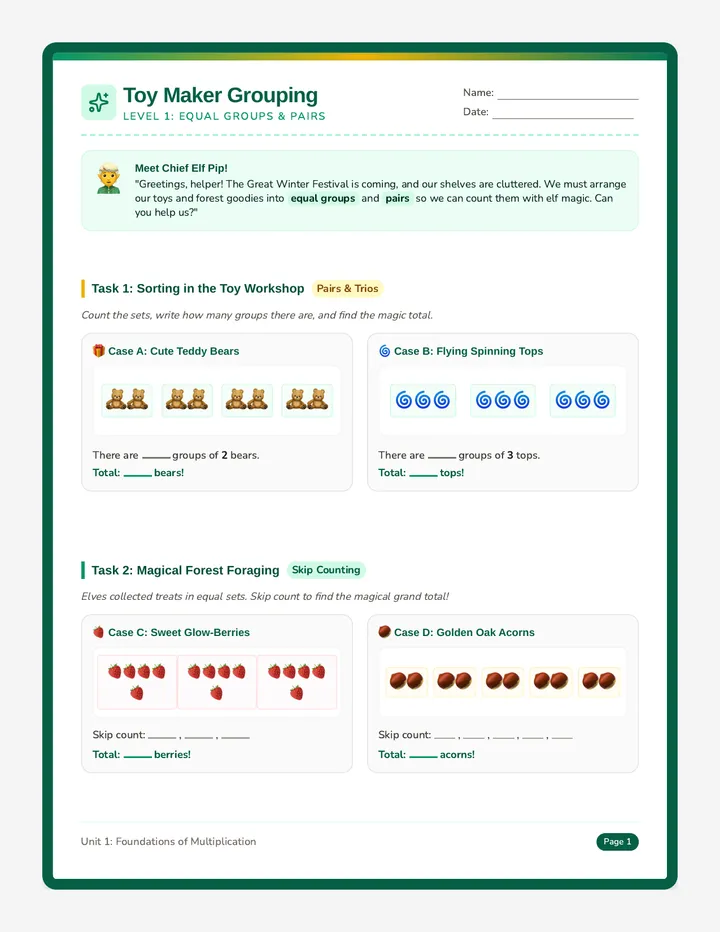
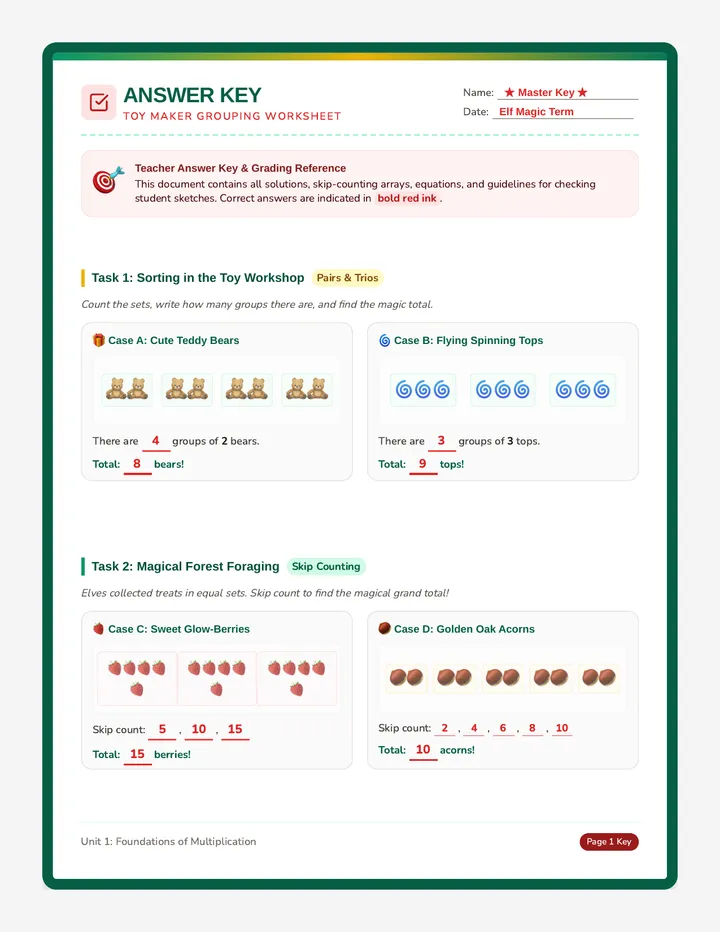
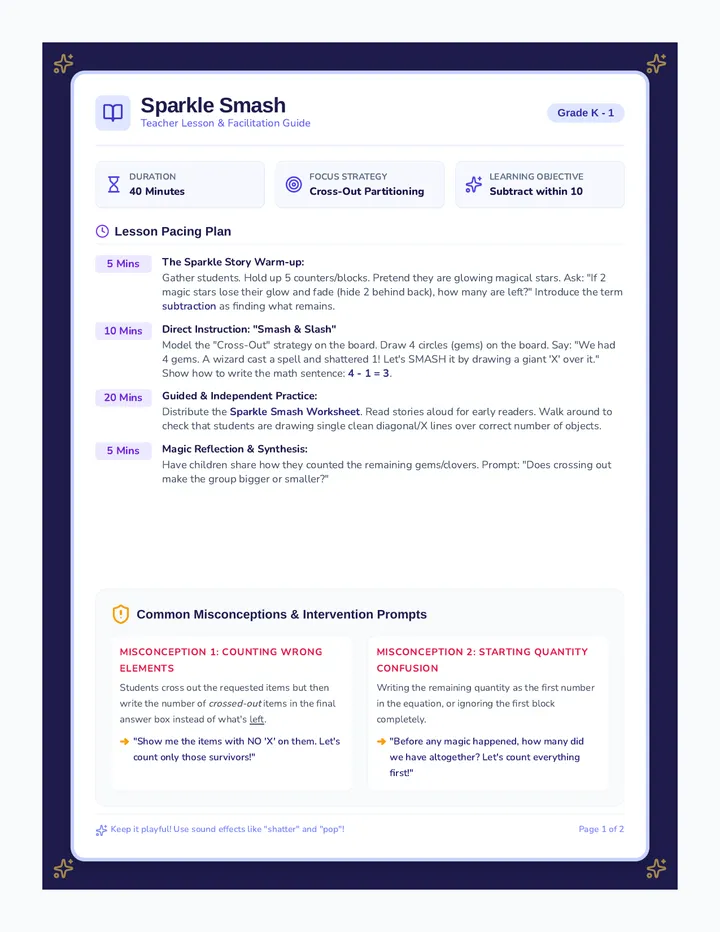
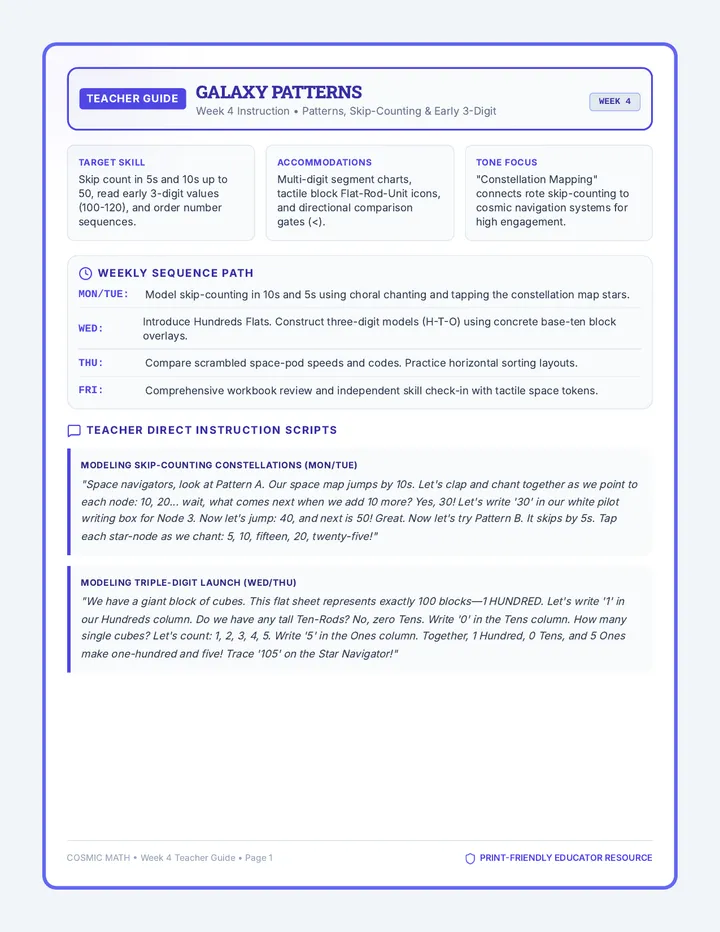
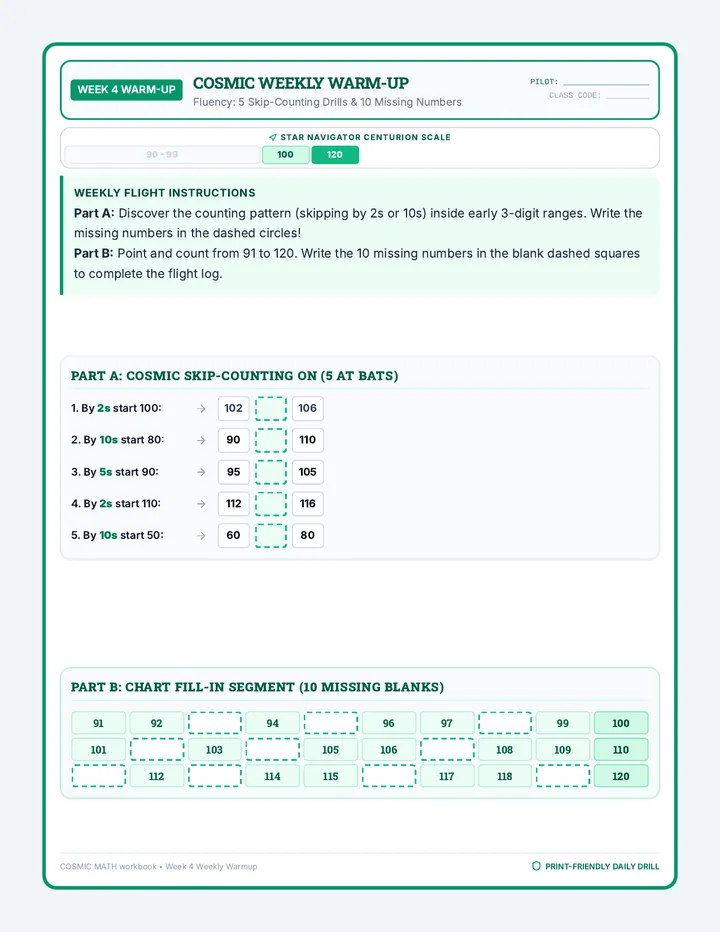
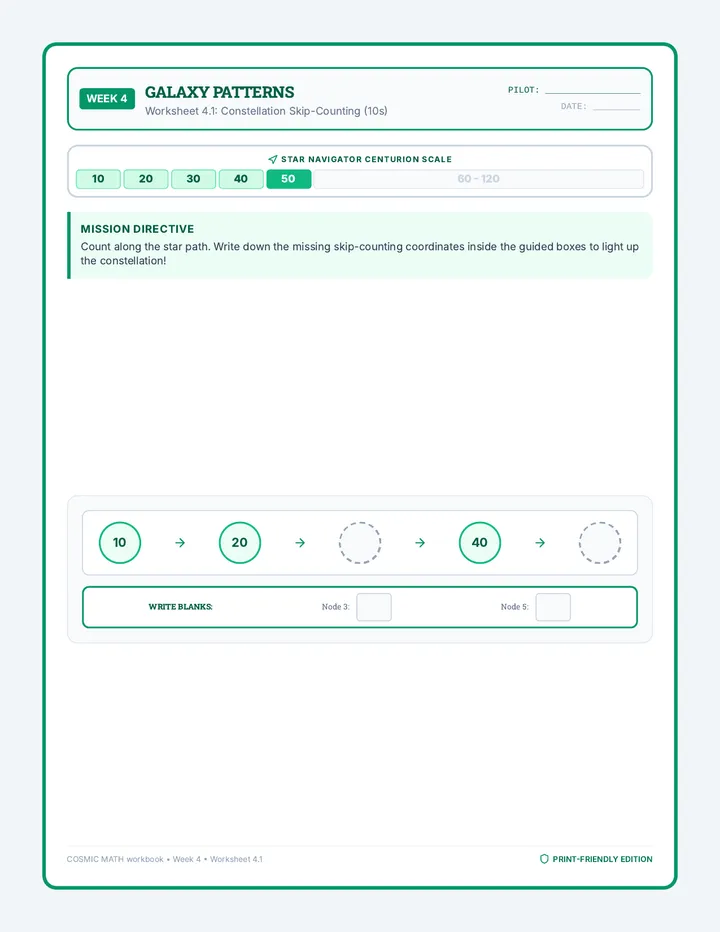
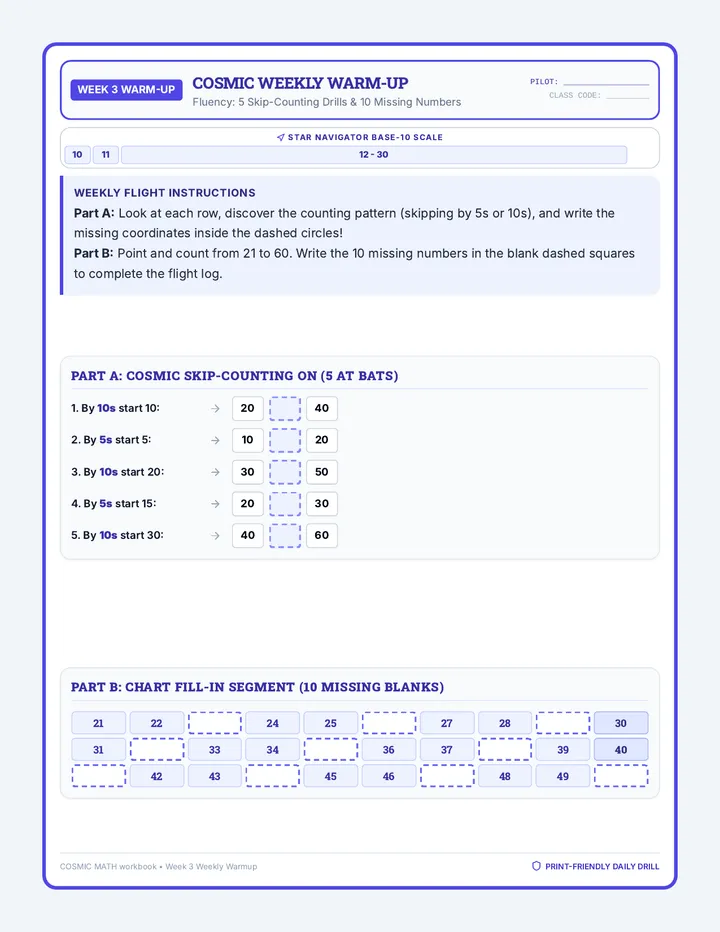
Students identify and extend skip counting patterns by 2s, 5s, and 10s, and practice finding the underlying rule for various number sequences.

Students solve missing addend word problems within 100, focusing on finding the 'change' in a story context using subtraction strategies.
Students apply their knowledge to mixed word problems and real-world money scenarios within 20, demonstrating mastery of result unknown and comparison types.
Students solve comparison word problems to find 'how many more' or 'how many fewer' using visual models.
Students solve result unknown addition and subtraction word problems within 20 using strategies like drawing and number lines.
Integrates all previous word problem types (start-unknown, compare, and mix) using simple bar graphs.
Focuses on comparison word problems (more than/fewer than) and mixed operations using picture graphs.
Focuses on solving start-unknown subtraction and missing addend addition problems using tally mark data.
Students analyze bar graphs representing money values (pennies and nickels) and solve one-step word problems. This lesson integrates money counting with data interpretation to reach higher RIT band objectives.
Students complete picture graphs based on text descriptions and compare data to find 'more' or 'less'. This lesson directly targets the NWEA skill of completing partial graphs and interpreting visual data.